FRED Entertainment

September 7, 2007

Trailer Park: Blair Butler

Filed under: Columns,Interviews,Quickcasts,Trailer Park,Video — admin @ 4:54 am

By Christopher Stipp

Archives? Right Here”¦

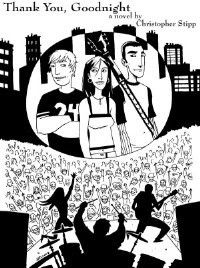
Instead of manning-up and actually going the emotionally hard route of being outrightly rejected by publishers, I’m rejecting them first and allowing you to give my entire book a preview, let you read the whole thing or, if you like, download the whole damn thing at no cost. Download and read my first book “Thank You, Goodnight” for FREE.

One of the nice things about actually going to Comic-Con is that you can sometimes get opinions about comics that don’t come from your average, pale, emaciated comic book shop employee.

Blair Butler, of Fresh Ink on G4’s Attack of the Show, does readers for all genres of comics a great service by being an objective voice about what’s hype and what what’s hot within the illustrated world. Her thoughts are always interesting if for the reasons that they’re always well reasoned and come from a place of genuine affinity for the art form. The selections she chooses to champion and those that get her occasional barb help to sift through the wheat and chafe. Since there isn’t any one single platform where comics are given an objective arena to be talked about on television, and surely there could be the case that Blair could turn the segment into a full-length show with the amount of titles that are out and come out on a weekly basis, it’s her recommendations that hold the greatest weight with me; it’s due to her that I found DMZ, one of the best titles going today.

Prior to the interview she was signing autographs with some of the other members of Attack of the Show and it was interesting to see the number of fans that were clamoring for just a few moments with her. She’s the latter day equivalent of a rock star within the context of the convention but couldn’t have been a more interesting and engaging person to talk to about the state of the comic universe. When I finally sat down with her we talked about what’s been good to read, conventions in general and the nature of the superhero genre.

You can catch Blair with a varying degree of certainty on G4’s Attack of the Show which airs nightly or you can catch all her most recent installment of Fresh Ink over at G4’s website.

line3.gif

blairbutler-01.jpg

Download SDCC Blair Butler Interview:

Large (560 x 420 – QuickTime – 83.27 MB)
Small (320 x 240 – QuickTime – 36.27 MB)

[display_podcast]

August 24, 2007

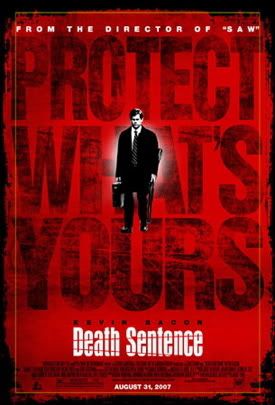
Trailer Park: DEATH SENTENCE

Filed under: Columns,Interviews,Quickcasts,Trailer Park,Video — admin @ 12:16 am

By Christopher Stipp

Archives? Right Here”¦

Instead of manning-up and actually going the emotionally hard route of being outrightly rejected by publishers, I’m rejecting them first and allowing you to give my entire book a preview, let you read the whole thing or, if you like, download the whole damn thing at no cost. Download and read my first book “Thank You, Goodnight” for FREE.

I’ll be upfront about it: it was a really nice breakfast.

Atop a pavilion, overlooking San Diego’s convention center and the trickling of the faithful waiting to get an early jump on the festivities, the intimate breakfast that was hosted to introduce the day’s events for Fox Atomic’s DEATH SENTENCE held the kind of curiosity I could not resist.

Here was a director, James Wan, known for his viscous visuals with the original that started a mega franchise, SAW, the likes of which no one was expecting to happen, and had continued on that trend with his other notable film, DEAD SILENCE before landing on a project that is slightly askew of what people would be expecting next.

The film delves into the kind of revenge convention that spans generations and continents and it was, honestly, the first time I saw a trailer that got me excited about a Kevin Bacon movie since THE WOODSMAN and reinvigorated my belief that a balls-out action film can’t hold a candle to kinetic action if it’s done with a sense of purposeful film making. I could be wrong on all sorts of levels, of course, but from the footage that I saw prior to the interview I was struck by the way Wan has taken the action convention and twisted it just enough to have the sense that there is something at stake for all involved. It’s no longer just one person against the world but what happens when that one person just gives in for once into the restorative power of getting a little payback.

The interviews themselves lend more credence to the idea that this is really a new interpretation of the trope which suggests the what if of a man taking things into his own hands and is really driven to take things to their ultimate end. James Wan couldn’t have been more open and eager to talk about the major things which drove him through the production of the film and Garrett Hedlund was equally engaging talking about what he did in order to find that space where he no longer was just the pretty faced love interest in GEORGIA RULE and had to be the guy that everyone loves to hate.

DEATH SENTENCE opens August 31st. See it and experience the vengeful love.

line3.gif

Clip #1: James Wan talks about the evolution from horror to dramatic action and what he felt should be the essence of the picture.

trailerpark-death-2007-08-24-01.jpg

Download SDCC Death Sentence Interview #1 – James Wan:

Large (560 x 420 – QuickTime – 65.41 MB)
Small (320 x 240 – QuickTime – 29.03 MB)

line3.gif

Clip #2: Garrett Hedlund spins a yarn about achieving a real sense of badass-ness in this film while reflecting on his experience in the picture.

trailerpark-death-2007-08-24-02.jpg

Download SDCC Death Sentence Interview #2 – Garrett Hedlund:

Large (560 x 420 – QuickTime – 83.27 MB)
Small (320 x 240 – QuickTime – 36.27 MB)

line3.gif

August 17, 2007

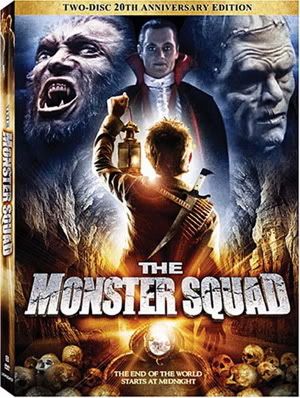
Trailer Park: MONSTER SQUAD

Filed under: Columns,Interviews,Quickcasts,Trailer Park,Video — admin @ 1:11 am

By Christopher Stipp

Archives? Right Here”¦

Instead of manning-up and actually going the emotionally hard route of being outrightly rejected by publishers, I’m rejecting them first and allowing you to give my entire book a preview, let you read the whole thing or, if you like, download the whole damn thing at no cost. Download and read my first book “Thank You, Goodnight” for FREE.

Before the advent of DVD audio rippers made it fun again to listen to a good audio commentary while not enslaved to your La-Z-Boy there was the good old cassette recorder.

When I was old enough to rent movies but not sophisticated enough to know how to rig them up to one another to make a copy of it (not that I ever did that, legally speaking) I used to take a portable boom box and actually *record* the audio of the movies I really liked. I don’t know why I did this, nor why I incessantly looped major portions of POLICE ACADEMY 4: CITIZENS ON PATROL on my GE Walkman. I do know, however, that I filled up a couple of tapes when it came to THE MONSTER SQUAD.

I loved this film.

I recorded the dialog, the up-tempo musical interlude as the squad gets ready to throw down, the great moments Rudy gets as the “tough kid”, everything. I never listened to a recording so many times as I did with my MONSTER SQUAD tape. The film, in an odd way, encapsulated of what it was like to be a goofy young kid admist an ostensibly scary situation; that’s the movie’s appeal all these years later. Fred Dekker walked that line of genuine scariness and abject absurdness with equal parts. You couldn’t have found a more balanced film of this variety and somehow I responded to it with rapt dedication for a while.

I guess, as the years went on, I kind of forgot about the film. I started watching other movies, evolved as a movie consumer, but there was always something about that story; it turned out to be a touchstone, though, and when decades later there was talk about bringing the movie to DVD I just couldn’t wait. The very same feelings I had as a youth came bubbling back when I was given the opportunity to interview director Fred Dekker and cast members Andre Gower, Ryan Lambert and Ashley Bank. It was a surreal moment, to be sure, and it was definitely a satisfying moment knowing that years ago this was a movie I told everyone about and now I’m in the position to be able and tell everyone that this is the DVD to own this year.

Halcyon days of youth don’t have anything on the experience of being able to revel in the geekery of revisiting this film 20 years later with those who made it so good to watch long ago.

line3.gif

Clip #1: Director Fred Dekker talks about the mechanics of getting MONSTER SQUAD filmed and whether the adage of working with kids and animals really holds any truth.

trailerpark-monster-01.jpg

Download SDCC Monster Squad Interview #1 – Fred Dekker:


Large (560 x 420 – QuickTime – 76.11 MB)
Small (320 x 240 – QuickTime – 34.45 MB)


line3.gif

Clip #2: Ashley Bank talks about what memories she has of the production and what it was like to be a part of the resurgence of the movie-that-would-not-die.

trailerpark-monster-02.jpg

Download SDCC Monster Squad Interview #2 – Ashley Bank:


Large (560 x 420 – QuickTime – 34.24 MB)
Small (320 x 240 – QuickTime – 15.60 MB)


line3.gif

Clip #3: Andre Gower and Ryan Lambert remember back about the experience of being young on the set of a major motion picture.


trailerpark-monster-03.jpg

Download SDCC Monster Squad Interview #3 – Andre Gower & Ryan Lambert:


Large (560 x 420 – QuickTime – 114.53 MB)
Small (320 x 240 – QuickTime – 50.23 MB)

##

August 8, 2007

Interview: Derren Brown

Filed under: Interviews — Tags: , , , , , — UncaScroogeMcD @ 4:09 am

derrenbrown-2007-08-08-02.jpg

-by Ken Plume

derrenbrown-2007-08-08-01.jpgDerren Brown is a very dangerous man. In fact, any encounter with Derren – be it on a street or even your own home – is an affair fraught with peril. He is, in addition to being such hazard, one of the most fascinating entertainers currently plying his arcane trade on television today.

What exactly is that trade, you ask?

Derren Brown is – depending on how you look at it – a mentalist, a magician, an illusionist, a hypnotist, a paranormal skeptic… When, in reality, he’s all of these things and more. With an acerbic wit and presentational flair, he’s a riveting performer who’s finally making his way to the US.

A staple in the UK courtesy of multiple series, specials, and live shows, the Sci-Fi Channel has imported Derren via a rejiggered and expanded edition of his initial effort, Derren Brown – Mind Control. It’s a mixture of tricks and mental feats for a generation raised on Penn & Teller, and a must-see affair. As Derren himself describes it, his work is a combination of “magic, suggestion, psychology, misdirection and showmanship.” The US edition of Mind Control is currently berthed on Thursday nights at 10pm EST.

I’d also recommend you pick up the DVDs that are currently available in the UK (the original Mind Control, plus the first two series of Trick of the Mind), as well as his must-read book Derren Brown: Tricks of the Mind.

I got a chance to tempt fate by chatting with Derren, whilst constantly fearing that I would fall under his sway and become nothing more than a puppet in his diabolical schemes…

line.gif

KEN PLUME: It’s a pleasure to be speaking with you.

DERREN BROWN: You too…

KP: It’s something we’ve been wanting to do for, I believe, two years now…

BROWN: Really?

KP: Yes. I’m a huge fan of you and your work.

BROWN: Oh, thank you very much, that’s lovely. Thank you, Ken.

KP: And knowing some statements you’ve made in the past regarding enjoying your anonymity in the U.S. …

BROWN: (laughs)

KP: What suddenly was the change that brought about the transport of the show and yourself into the arena of a U.S. network?

BROWN: Well, yeah. I think it just… it’s one of those things that’s always kind of been on the cards. You know we didn’t sell the show to the States, anticipating that one day we might want to have it commissioned out there. That was just something that was always gonna go in the background, and it’s been seven or eight years that I’ve been on TV, so it seemed like a good time to start asking. In terms of the anonymity, for me, I just don’t know… I mean, the difference is I don’t live in the States. If I do become well known out there for the show, it’s something I’ll have to deal with. I like my privacy, but I don’t know. I just don’t know. I was just talking to a previous interviewer about the slightly odd stalkers and strange reactions I’ve had, and God knows what it’s gonna open up starting up out there. So who knows.

KP: So does that mean at some point you’re going to start hosting America’s Gone Mental with Piers Morgan?

BROWN: (laughs) Yes, that’s the time. I’ll make a note!

KP: Do you still find that you have a shred of anonymity within the UK, or do you think that’s largely disappeared?

BROWN: Well, it’s kind of nice. Channel Four – it’s one of the big channels, but it’s less mainstream. It’s kind of the cooler, edgier kind of programs – which is fantastic for me, because they really support some of the stuff that I do, that I think I’d have trouble getting commissioned on some of the other channels. It’s a mixed sort of audience that watch the show and everything, but it gets – on average – I think about three million people that watch it, which is good figures for that channel. It’s not 20 million that watch the big soap operas. So it feels an okay sort of balance – but I wouldn’t want too much more. I don’t quite have the ambition or the ego of most big flashy magicians, so I’m not gonna be fishing and struggling to be number one magic type mind reading figure out there, so we’ll see. I’m fairly modest about all my expectations. I think it’s a good show and I hope people will want to watch it.

KP: And you also mentioned that you’re not exactly – by your preference – an outsized personality when it comes to the public eye…

BROWN: No. Yeah…. I think most of that comes from your own kind of drive and what you want. I mean, I was already doing what I do, quite happily, but just not on TV. And then I was offered the chance to do it on TV – which of course was great and exciting, but I think if you’re already doing something that you enjoy and it’s about just doing more of what you enjoy, that keeps it all sane. As opposed to just wanting to be on TV and famous for the sake and the appeal of that.

KP: What is that you want?

BROWN: I’d like to have a place in Florence, and retire and paint at some point, to be honest. I love doing this and it’s great fun, and I’ve been able to kind of reinvent the show a few times and I get to tour every year. I love all of that. So I enjoy it enormously. I have no idea how it’ll go in the States, whether it’ll take off and be a big thing or whether it’s something that will kick over for a while. I think it’s a good show. I’m proud of the show, so I’m very happy with that. Depending on what happens in the States, I may have to drastically change my priorities. I try and be relaxed about it and I don’t have any particularly strong ambitions or strong expectations in any areas.

KP: Have you found it more difficult going with each new series, as far as developing material for it?

BROWN: Actually, it’s kind of got easy. I thought it would be more difficult. Very rarely have we felt – I say “we”… it’s me and one other guy, my friend Andy, and we write all this stuff together…

KP: That’s Mr. Nyman right?

BROWN: Andy Nyman that’s right, yeah. Who’s currently touring in Death at a Funeral, this new Frank Oz movie. He’s just gone over to LA for a month. It’s opening sometime this month. So for me, what happened is the show’s progressed and matured here. It’s become about – especially the one hour specials that I’ve done – has sort of become about what I feel I wanted to look at or what’s become an area of interest for me. They’ve grown with me – as opposed to just, “Here’s another series, we need to churn out another 50 routines.” It’s never really felt like that. It’s always quite fresh and different. So somehow I’ve had a clearer sense of the sort of thing that I want to do each time, and that’s actually kept it fairly easy to come up with material that still feels interesting and fresh. It hasn’t been as difficult as I might have anticipated.

KP: Do you feel that you’ve, in lockstep with that, progressed and matured as a performer as well?

BROWN: I think so, yeah. I mean, I’m doing big stage shows and things that I never thought I’d do, and I had to learn how to do that. I had to learn how to perform in front of two thousand people – which is fairly big for our standards.

KP: What are the disciplinary differences between TV and on stage for an audience?

derrenbrown-2007-08-08-03.jpgBROWN: Oh, hugely. You can do stuff on TV but not be particularly much of a live performer. I think it’s just one thing to get something on TV – most of the kind of drama and pace of it will probably come from the editing of the show, and the style and the look of the show. On stage, it’s just me for three hours, and I’ve got to try and keep everybody constantly entertained. That really is just me. So it’s a different set of skills on top of actually making the stuff work. For me, it’s much more exciting, I much more prefer that, and I look forward to hopefully, in time, doing something on Broadway, because it’s a real buzz.

KP: It definitely is more energizing to see you in that longer sustained form, having seen the Something Wicked special you filmed during your last stage tour…

BROWN: That’s cool. Yeah, it is different, isn’t it? And it also means I have to be sort of lighter and funnier, and do things that for some reason never really worked too well in the series. The series is quite solemn in comparison. Not a lot of room for gags.

KP: Would you perceive the character of Derren Brown that you’re performing in those two venues to be different?

BROWN: Yes, I think it is. Still, I think the stage version is more me, because that’s the… if you’re gonna perform at all well – and I’m not saying that I perform that well – but it has to be you. It has to be a theatrically enhanced or tweaked version of yourself. You can’t just sort of fake your personality. That doesn’t really work. It does on TV, because it’s all sort of fairly quick segments, and I’ve just got to get through what I’ve got to do because it’s got to fit into a format on TV. You know, less room for that. Actually performing the piece, you want them to shine and you want them to interest the viewer at home. So yes, I think in terms of the character, there’s certainly two different sides. That’s kind of interesting. If it was me watching the show and I’d seen that guy on TV, I’d be quite interested if I went to see him on stage and he sort of fleshed him out a bit as a character. But I don’t think of it too much as a character… but I suppose, invariably, you have to, to keep on top of it.

KP: Do you perceive him as any different from how you are off stage?

BROWN: I think I’m a lot less the kind of very confident, controlling… It’s a side of me, if I’m comfortably high status (laughs)… I can be like that, but I’m much quieter and more considered, I think. But then it’s really fun if you are like that – and I’m quite indecisive and I’m quiet and private… all those things in real life… so it’s actually quite nice to tap into that side, the more confident aspects of yourself. To do that on stage is a real treat.

KP: So you’re saying the closest thing people would see to the real you is if they’d seen that bonus feature on your second DVD set, with you eating breakfast rather anal retentively?

BROWN: Oh that! Yeah probably, probably. Yes, I thought that was quite fun when I watched that. Yeah, it’s all different parts of me. You have to draw from yourself, and then you kind of have to enhance that and make it interesting. With the TV show, it’s fast-paced – it’s difficult having too many layers to that. But sometimes, certainly the show here has gotten funnier and lighter. It never become a big laugh, but the TV show, as it’s grown up, it’s become a little bit softer around the edges, in a good way. And I think that was something that was important. Whereas, yeah, doing the first series for Sci-Fi, I think it has to be very clear to people exactly who I am and what I’m doing. And then hopefully give it room to grow if it gets recommissioned, and has a chance to do that.

KP: Do you call them tricks? Do you call them performance pieces?

BROWN: Routines? Segments? I don’t mind. Some people have called them tricks – that’s fine, too.

KP: Watching the last series, Trick or Treat, on Channel Four…

BROWN: I’m fascinated that you know the material, that you’ve watched these things. Thank you.

KP: Like I said, I’m one of the people in the US who’ve been trying to show people your work for the last couple years.

BROWN: Oh thank you, Ken…

KP: I’m just glad you’re coming to the US. When you look at those segments, there seems to be both a… you know, obviously because of the concept of the program (where volunteers get to choose what type of piece they’ll be involved in – a trick or a treat), it has a very soft, kind edge, as well as a very, very hard edge with the trick portion of it. Do you see a line that is uncrossable in what kind of segment you’ll do, in terms of what you’ll subject a participant to?

BROWN: I think, for me, the thing of primary importance is the experience of the person that takes part in it. That’s a huge, important part of it. Although some of the pieces, they may be finished in a way that makes them look quite bleak or traumatic or cruel, the reality is that people always are so well taken care of and always invigorated by it. To me, that’s very important. Especially how participants generally are treated in reality shows and things – it’s just criminal and quite upsetting sometimes. So it’s very important to me that it isn’t like that, and that their experiences are authentic and matches what they see on TV when it goes out, but also that it’s enjoyable for them. So with that in mind, it’s our sort of building drama. It’s a question of not just showcasing, “Look at me, look how clever I am, I can do this” – that was maybe more important at the very start when I had to make a name for myself, but now I’m in the shows less… and ideally, I wouldn’t be in them at all, but I still have to make a living. (laughs) Obviously I have to get my skills and what I do in there, but at the same time what I’m interested in is the drama of the situation – which, at home, you’re empathizing with the person that’s taking part. I think we just sort of sit around and talk about it, and that idea, and a couple of others, came like the zombie arcade game – which I guess you must have seen…

KP: Yes.

BROWN: They came out of normally sitting around, talking about smaller sort of tricks, if you like, and ideas, and I go, “Can we just think a bit bigger? What if we… I mean we’d never do this obviously, but what if somebody woke up and they were witnessing their own death in a car crash, and we had a double made of them, or something.” Something like that. And that idea kind of sticks, even though it’s normally said in a spirit of, “Well, obviously we couldn’t do that because that would be really cruel.” And then it sticks, and then…

KP: And then you did it.

BROWN: … and then we find a way to do it that isn’t cruel and irresponsible, and that’s sort of interesting and intriguing and fascinating to the person. If it is a bit cruel, at least by the end of it they’ll feel elated and exhilarated and forgive us. Plus they volunteered to take part in the show, and they know the sort of character that I am.

KP: They know what they’re getting into.

BROWN: Yeah, they know what they’re getting into.

KP: Has there ever been a participant that reacted in a completely surprising manner?

BROWN: It’s never happened. There was one stunt, the staring competition…

KP: Was that the gentleman that was about to hit you?

BROWN: Yeah, that’s right. Exactly. That’s as far as it’s gone, but that was specifically to make somebody angry and troubled. That was full of that, so it was hardly a surprise.

KP: Did you feel, in that situation, that there was the potential for it to get out of control?

BROWN: I think for me… I get asked this a lot, and I understand that. Maybe it’s just that I’m so on top of what’s happening, and that experience – hopefully knowing how they’re kind of framing it in their minds. It’s difficult to explain, but it kind of… in the same way that hypnotized people look like they’re under the control of somebody else, there’s in fact a much more subtle game of behavioral manipulation, and what looks like one person, the hypnotist, controlling – it isn’t about that at all. It’s about a kind of…

KP: A dance, would you say?

BROWN: It is, yes, exactly, it’s more of a dance, so there is… often what it looks like, in terms of that level of cruelty or control, it isn’t really quite like that. And being aware of the subtler aspects of it, I’m utterly comfortable with what I’m doing and how far I’m taking it. Then, in terms of how it’s presented on screen, once the music’s added and whether it’s left on a very bleak note, I like people to feel a bit guilty for having watched it. I think it’s kind of interesting. It’s not the sort of stuff that you necessarily associate with watching, like, a magic show, or something like that, which obviously it’s related to that whole tradition. So I like playing around with all of that – but that’s separate from the person’s experience, which hopefully always comes out very positive. We did this thing called The Heist, which…

KP: Which, honestly – of all your outcomes – was probably the most disturbing to watch…

BROWN: Yeah, it was pretty disturbing. Now there, I had the guys come over and watch the show in its rough edit form to make sure… the guy, Danny, who was the one that kind of seemed most disturbed when he was stopped… the one that’s doubled over…

KP: Who seemed to have a bit of a breakdown…

BROWN: Yeah. We became good friends. I went out to dinner with them all afterwards, and explained to him the whole of the show, and then Danny came over, and he loved it. He was so exhilarated by it, and he came over and watched the rough edit of the show. Because it was two weeks that had to be pulled down into an hour, and I didn’t want them thinking that I’ve reflected them badly or even it doesn’t reflect what really happened, so he came over as the kind of – as the guy who’d been through the worst – just to make sure that he was happy with it. Which he was. He came and saw a screening of it, and they were all happy with it. It was great. They’re always very well taken care of, and I generally tend to keep in touch with them as well, and some of them become friends. That side of it is hugely important. And yeah, that line you talked about is just one of responsibility. Ultimately, the show is put together intelligently and seriously, and not just sensationally. I know people that have been involved in reality shows and the like, and it’s sort of heartbreaking how ruthless that world is. Maybe it’s partly through seeing that, that makes me realize how important that kind of welfare side of it is…

KP: That sense of compassion does come through in the programs. I think it’s a fascinating companion to also read your book…

BROWN: You have done your homework!

KP: I keep hoping that the book will come over to the U.S., because I’m tired of importing copies for people.

BROWN: (laughs) Hopefully it will at some point.

KP: If Louis Theroux can get his book through…

BROWN: Has his show been in the States?

KP: No, in fact his show hasn’t aired in the States at all, but they released his book here in the U.S.. His companion book to Weird Weekends.

BROWN: That’s nice…

KP: But reading your book, I can definitely see where you’re coming from when you do these sort of things. I think anyone who watches the show probably should read the book just to get a better sense of what your head space is and what your foundation is, as a performer…

BROWN: I hope that’s something that will – if further series are commissioned, and so on – I hope that’s something that will be allowed to grow. Understandably with the first series, Sci-Fi is very keen that it just nails it straight down the middle, in terms of what I do and how I do it.

KP: Just out of curiosity, have you seen the “Seven Safety Tips For Dealing With Derren Brown” that’s been circulating the internet?

BROWN: No, I haven’t!

KP: Well, here’s the bullet points of it: First one is “Don’t deal with Derren Brown.” Second one is “Don’t go to the United Kingdom”… Which is now moot, of course.

BROWN: This is something from the States?

KP: Yeah, there’s a site called needcoffee.com

BROWN: Okay…

KP: Number three, “If you suddenly find yourself in the UK and Derren approaches, don’t look at him.” Number four, “If you cannot escape him, do not let him touch you.”

BROWN: (laughs)

KP: Number five, “If he manages to touch you, at least keep him from taking hold of your wrist.” Number six, “If he manages to take hold of your wrist, for the love of baby Jesus don’t let him put his hand over your face.”

BROWN: (laughs)

KP: Number seven, “Even if he doesn’t touch you, don’t let him not touch you either.”

BROWN: (laughs)

KP: And it’s fully illustrated with various clips to back up the assertions.

BROWN: That’s fantastic!

KP: That’s from May of this year.

BROWN: That’s great! I hope you’re going to put those in the article. That’s fantastic.

KP: Oh, definitely. From a performance point of view, I’m wondering which aspect you find most challenging – is it the memory skills, the dexterity, or the interpersonal communication?

BROWN: (laughs) The honest answer to that is remembering people’s names when they come up on stage. I did this thing in my first stage tour – I thought, for each city I go to, I will memorize the phone book for that city, then have people call out names and addresses of themselves or their friends or whatever, and I’ll tell them the phone numbers, or around the other way. And I managed to do it – I didn’t always get them right, but managed to do that. But despite that, I never learned the name of the person that would come up that was going through the same book to double check it… the names of people in the audience when they stood up… I’m terrible with that, because I’m so focused on one thing. So it’s always the little things… And utterly ridiculous, because I do this stunt and then thank the person and then have to say, “What was your name again?” You’re like a gag. It got a laugh every night, and I just found it embarrassing. It’s the little things. All the other stuff kind of… (sigh) I don’t know. I’m making it look more difficult than it is. That’s part of the performance. I don’t find it too difficult to monitor something new… I mean, when I’m doing the stage shows, that’s always kind of hard on the first night, and it gradually gets rolled in. It’s a difficult one to answer, but probably the truthful answer is the more entertaining one, I guess, which is people’s names when they come up. I’m very good – like with journalists, I find that if I sit there and do a bank of 10, 20 journalists and I say I will remember all their names, and I always tell them their names back again, and they always write in the articles how impressed they are. But yeah, if I don’t make a point of doing it, I’m just like everybody else – just terrible, terrible at doing that kind of thing. On stage, when it matters most, is when I’m worst.

KP: It’s fascinating, in watching the first series of Mind Control in the UK, having seen the Devil’s Picture Book tape…

BROWN: Oh yes… gosh. Wow.

KP: … to see some of the things reappearing in different guises within the series…

BROWN: Yeah.

KP: I thought that was fascinating. That and the reaction you got out of Stephen Fry.

BROWN: Yes, that’s right. Oh, he’s lovely. He’s such a nice guy. He’s not that well known in the States, is he?

KP: He is and he isn’t. He’s known to a certain segment, but he’s not everywhere like he is in the UK.

BROWN: Yeah, yeah.

KP: One of the things I did want to touch upon briefly was also your painting.

BROWN: Oh yeah…

KP: I quite enjoy what I’ve seen…

BROWN: Well, thank you.

KP: Your portraits are heavily caricatured, and in capturing the essence of a person, has there been anyone that’s proved particularly difficult for you?

derrenbrown-2007-08-08-04.jpgBROWN: Al Pacino. It’s probably the least successful that I’ve done. I think it’s on the website, if it’s been updated. But yeah, I always found him very difficult. Really wanted to paint him and have that in the collection, but it’s never been in my… you know why it was? You know, he’s got a very kind of expressive face. It’s not for lack of features to exaggerate, but I could never get it right. It’s sort of all right, the one that I’ve done, but I don’t know if it’s…

KP: Do you think it’s a difficulty to exaggerate exaggeration?

BROWN: Yeah. I don’t know what it is, because it’s not a very conscious process. It’s not like you… they are caricatures, even though they’re subtle, but I don’t kind of… you don’t consciously think, “Right, that’s quite a big nose, so I’ll draw a big nose.” You just draw what you see, and then if you naturally see things in an exaggerated way with faces – which I guess I do, which I’ve always had a very good memory for faces because I’ve always seen them and remembered them in this kind of exaggerated way – so you just draw what you have in your head and it just comes out in an exaggerated way. If I try and draw a straight portrait that isn’t exaggerated, I can’t. It just comes out like that. So it’s very difficult, to do it when it isn’t working, it’s kind of hard to make it work. And for some reason I was hung up on that…

KP: Has your self-portraiture changed much over the years?

derrenbrown-2007-08-08-05.jpgBROWN: Yes. It’s only the most recent one that I think works for me. There were quite a few previous ones that were not very good. How you see yourself isn’t how other people see you, so if you’re painting somebody else, and you know when it’s right, because it kind of clicks into place, and I can hear their voice talking when it works. You just look at it and it’s like looking at a photograph, and the picture triggers all the associations that looking at the real person would. Whereas yourself, that click doesn’t happen, because you don’t think of yourself in the same was you think of other people. You don’t hear the person’s voice and you think of them, and all those sorts of things. It’s just guess work, in the end. It’s just, “Yeah, that looks like what’s in the mirror, so I’ll stick with that.” It’s only this last one that…

KP: That’s finally clicked?

BROWN: Yeah. Probably because I see myself on TV now. I’ve actually got an image of that.

KP: Do you think you have a perception of yourself outside of yourself? If that made any sense…

BROWN: Well, I guess more so than before.

KP: Is that perception of you as “you”, or do you perceive that as the “performer” version of you?

BROWN: I think it depends on how messy my hair is, how confidently I’m staring at the camera… all that kind of thing. I think there’s a certain look and dress I associate with the performing me more than… or even having said that, I am wearing a suit at the moment, even though I don’t need to – though I do tend to wear suits in real life, as well. I don’t know…

KP: Well, obviously you’re dressing up for the interviews.

BROWN: (laughs) A perfectionist. In case you have some video thing that I don’t know about…

KP: I saw you rearranging silverware at breakfast on the DVD features, so I know all about your perfectionism…

BROWN: (laughs)

KP: Any plans to take your live tour to the US at any point?

BROWN: Well, I would love to. I mean, that’s certainly something to aim for. I think it’s just a question of if the series builds up a fan base and it feels right, then I would love to do a tour, do a Broadway run if possible. That would be great. They’ll love the way I sing. You’re a very diverse country. You know? I mean, in some ways you’re very homogenous, and in other ways… you’re hardly heterogeneous, if that’s the word. And it’s psychologically interesting as well, so it’s nice, with the show, to go to different areas. I’m sure how New Yorkers react to a camera – let alone what I’m doing – will be very different to going somewhere in kind of the Midwest or deep south. It’s a rich area, I think, and I think useful and good fun for the show, as well.

KP: Hopefully we’ll come across better than we did in Messiah

BROWN: (laughs) Yeah, I think… I don’t know if we’re using bits from that. No, we might just hold that back and have that as a special. Yeah, might need to soften it up a little bit.

KP: Here’s hoping that you do make the transition. I think it’s been a long time coming.

BROWN: Well, thank you, Ken. I really appreciate your support, and thank you for making people read the book. That’s lovely.

KP: I do appreciate your time, and here’s hoping in the future we can finally do that in-depth interview that we’ve been trying to do for years.

BROWN: That would be fantastic. I can’t wait to meet you one day…

##

July 27, 2007

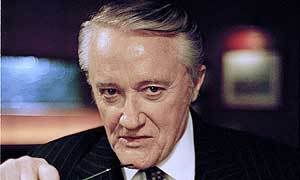
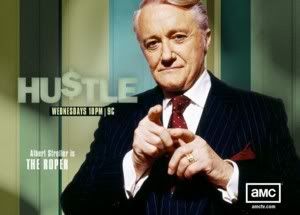
Trailer Park: Robert Vaughn

Filed under: Columns,Interviews,Trailer Park — admin @ 12:53 am

By Christopher Stipp

Archives? Right Here…

Sometimes you just feel you’re in the presence of great knowledge when you talk to someone.

Robert Vaughn has a list of film and television credits that span fifty years and spans multiple generations of people who grew up consuming television. I happen to be one of those people and it wasn’t until the A-TEAM came on in the 80’s when I was introduced to not only Robert but to the kind of history he brings to every production he’s in. Whether it’s acting alongside Mr. T or Steve McQueen or even modern day Gen X actors who are major talents across the pond there are just some things you’re never going to get around asking someone who has seen it all.

And Robert has.

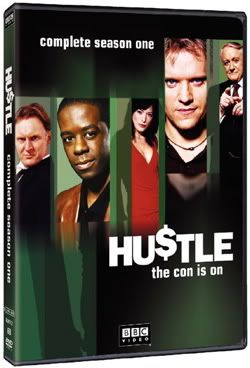
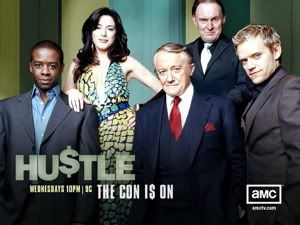
From series that didn’t so well to the ones that did, Robert just will not relent. And it was this sense of enduring determination that has allowed him to strike ratings gold with his long successful series on the BBC with HUSTLE, a program that has finally found an outlet here, stateside, through AMC. Equal parts OCEAN’S ELEVEN, THE STING and a whole lot of snappy writing from the minds that brought the equally successful MI-5 to Americans, HUSTLE brims with intelligence while giving plenty enough to those who are in the mood for a show about modern day Robin Hoods. The show is fast, quick-paced and with four seasons equaling a total of 24 episodes you’re able to catch up with these cats in no time at all.

Robert spoke to me regarding the show, his take on the state of modern television and how much longer he intends on staying in front of the camera.

All four seasons can now be seen playing on AMC every Wednesday night at 10/9C and are now available to be purchased on DVD.

CHRISTOPHER STIPP: Great series. I only learned about HUSTLE a week ago and”¦

[Laughs]

ROBERT VAUGHN: Really? It’s been out for four years.

STIPP: I just don’t happen to live in England and haven’t heard anything about the series being brought over on AMC. I did want to say that the show is quite excellent and the fact that there are four seasons now on AMC really gives people a chance to get ensconced with what’s happening. I am curious to know, if you can answer it, why a full season represents six episodes on the BBC?

VAUGHN: Quite simply, that’s all the United Kingdom can afford, in terms of producing a series to try it out. Let’s say here you shoot a pilot and someone feels strongly about it, really strong about it, they’ll order 22 more. Well, in Britain, the BBC has much lower budgets. They have to wait until they have a group of shows that total 24 before they can sell it internationally. It’s what they’ve done with us. It’s playing all over the Orient, Africa, Eastern Europe and so on.

STIPP: It’s seems like it is here where if you can make it to five seasons, that’s the goal for any television show.

VAUGHN: Right. And AMC didn’t buy HUSTLE for four seasons. They bought three seasons and the fourth one was completed in time for them to show it last year.

STIPP: And what was Robert Wagner’s connection to the program? I saw him listed on IMDB for the show.

VAUGHN: He’s listed as a guest star on the last show we did for the season. Of the 24 shows we’ve done we filmed 2 in America, one in Las Vegas and one in Los Angeles. The one from Los Angeles, RJ, as he’s called by his friends, was a guest star on the show. And we used him in connection with the publicity of the show because I’ve known him since he married Natalie Wood the first time. So they put us all on shows, like The View, where we were brought out as a team.

STIPP: I’m fascinated by the show’s ethos, that you hustle those who don’t deserve it.

VAUGHN: One of the things I learned early on in the first season of the show, and I came in three days after they had started shooting, is that when I started reading about people who have been hustled out of large amounts of money, wealthy people, never report it to police”¦out of embarrassment. These people, most of them, made their money by their wits and they don’t want made known that they’ve been outwitted.

STIPP: So, do you think that’s the allure, that there are people who operate outside of the law, like modern day Robin Hoods, righting wrongs?

VAUGHN: Yeah, the fact that they are living at the highest level possible when they are successful and, when they are not successful, are trying to scrape by, which we have done in the series. We have done shows where living conditions dropped dramatically because they had not been successful, recently, with conning people.

[Laughs]

Kind of like any job.

STIPP: How do you keep things fresh without it seeming gimmicky?

VAUGHN: It’s exactly as you mentioned earlier. It’s not like American television where you have to come up with 20 plus episodes with 20 plus scenarios for one season. It’s much easier for the producers to come up with 6 as opposed to 24.

STIPP: How have you seen these characters evolve?

VAUGHN: I think they got lucky. Casting is everything in TV as it is in movies. If there’s something wrong with 1 or 2 people in the cast, the show doesn’t work. Television is all about attracting people to the personalities within the show. And everybody seemed to like all of us. The black guy who was in the first three seasons, Adrian Lester, he was referred to as the black Olivier in England. He’s the star of theater, he’s done everything and had a huge following even prior to getting into HUSTLE. Marc [Warren] was on his way up and is famous because of this show. He had done some wonderful things prior to this, character work, he had never done something so consistent. And Jamie [Murray], who’s a very pretty girl, and looks like she’s Eurasian, she’s one hundred percent Irish. So, we’ve all caught on.

One strange thing, and I did come into things one week after they started shooing the show, that happened after I began my work was that I started receiving these messages from these people I’ve come to know over the years, largely press people. They all wanted to know about my character, what I thought about it, what research I’ve done on it. And I explained exactly as I just told you, there was no research, I came in at the last minute. I’m getting all these questions and it was then when I started to talk, to myself, and said, “I’ll just make something up.” It was then when I said to people that, “Oh, it’s really like if Napoleon Solo from MAN FROM U.N.C.L.E. went and retired on his government pension but all those years of being exposed to jewelry and wealth and beautiful cars and beautiful women and casinos all over the world, like James Bond, realizes he can’t live on his pension. So, what they do would be in the confines of the law”¦” I was just making it up as I was going along. Everybody wrote it down as what was going on with my character.

STIPP: Was that part of the appeal? That could you revisit this sort of debonair kind of character?

VAUGHN: I get scripts every year”¦Usually after 10 or 15 pages I close it. But I got sent three shows from a production company, called SPOOKS or MI-5 here, that company produced that show. I read the first script for the show and I continued to read the other two and my wife has never seen me read something like this all the way through. I said, “This is something really different.” My guess was right. Sometimes your guess can be wrong but I guess if everybody guessed right there’d be more shows on the air.

STIPP: Are the English different when it comes to what they like out of their television? I guess you could see it from a sociological point of view and see what the two cultures really value but do they respond to things differently?

VAUGHN: Well, the English seem to respond to our comedies but we don’t respond to all of theirs. Usually, comedies are harder to translate from one culture to the next but that’s not the case in England with what America exports over there. Or, in the case of ALL IN THE FAMILY, that was originally a British show.

STIPP: Good point. Now, if you try and compare apples to apples, not that you can do it exactly, but you had a spate of con shows debuting on a variety channels here in America. I’m thinking of Ray Liotta’s failed show and the failed show on ABC, THE KNIGHTS OF PROSPERITY. What was the angle that made this show really connect with the audience?

VAUGHN: I just don’t know. If I did know I could be a mega producer like Dick Wolf and be a billionaire. He’s the one who obviously knows because he has a formula that works.

STIPP: The producers of HUSTLE tip their caps to the older productions like THE STING and even recent movies like OCEAN’S ELEVEN.

VAUGHN: Well, that’s exactly the case of my television show, MAN FROM U.N.C.L.E., which rode the crest of the first three James Bond movies and it came on just as the third movie opened. There was just a huge interest in secret agents and spying.

STIPP: Is there something to when people that the element of luck has something to with the success of a particular program?

VAUGHN: I’m writing an autobiography and it was just last week”¦David McCallum, who was my co-star on U.N.C.L.E., they’re putting a DVD of all four seasons, and Warner Brothers, who are putting out the DVDs asked us to be sat down and be interviewed for this. It lasted about three hours and it was because of this where I went and thought about why U.N.C.L.E. was as successful as it was, when it was. There were a number of reasons. Mainly, it was because of the success of the Bond pictures. Next, David and I were successful in engaging a young audience. And, the next most important reason was the time slot. Because, when we went on the air, in 1964 we were on the verge of being cancelled two months after we started because our Nielsen ratings were so low. They changed our time slots from Tuesday night to Monday night but one of the things about that is that the show caught on with college students who were away at school. In those days, in regular houses, there was just one black and white set so when they came back, during the holidays, they were the ones controlling what was being watched.

And so, the ratings suddenly went through the roof and, by the summer, when they re-ran the entire first season, it wound up being the number one show in the country almost a year after it almost canceled. It was mostly all due to college students and it the time slot was moved once more accordingly and the show remained a huge hit.

STIPP: It’s just these little things that contribute to the overall success and not just one big factor.

VAUGHN: I said yesterday when I was being interviewed for the U.N.C.L.E. DVD that this would not have happened in modern television. If the show is not a hit within the first two airings it is off the air. If the show, if U.N.C.L.E. would have been released now it would have been off the air permanently by October because networks do not take chances like that anymore.

STIPP: How does that sit with you now? That there a possible gems that are simply not given enough room to find an audience?

VAUGHN: And sometimes they’re not the most miserable show, either, but they’re put in one of the most miserable time slots. I mean ALL IN THE FAMILY is a good example of that. They did three pilots before they went on the air before they even had a crack at success. Everyone was terrified of that premise”¦glorify a bigot. But Norman [Campbell] kept coming back because he believed in it. The question of how long you’re willing to hang around, if you’ve got the money as Norman did, you’ve got to consider there are lot of other factors at play. In U.N.C.L.E., David had the ability to attract young girls and I attracted the older women, the women in their 20’s.

[Laughs]

STIPP: One of the other things I’ve found is that some really good television actors have, at one time, been good doing traditional theater. Have you found that to be the case?

VAUGHN: Yeah, very much so. Before movies, before talkies even, almost any actor could be put up on screen but once talkies started to come into play there was a rush to hire traditionally trained actors because there’s a famous story about Valentino opening his mouth for the very first time on the screen and out came [in a high pitched squeal], “Hi, my name is”¦”

[Laughs]

But that was the reason why there was a rush to get well-trained actors on the screen. The whole dynamic changed.

STIPP: In your fifty years as an actor you could be out enjoying your accomplishments away from the lens of a camera. What keeps you coming back?

VAUGHN: Well, I’ve played Hamlet three times, I’d play Hamlet a 100 times if I wasn’t so old but it is the most extraordinary role ever written in the English language for an actor to play. But all my children are grown, I have a lovely home in the Connecticut countryside and I don’t leave it that often but when I find something that I like I leave it because I still enjoy doing the actual process of acting.

As long as I am ambulatory I will be out there acting wherever I can.

[Laughs]

STIPP: That’s about as good as an end as there is. Thank you, Robert.

July 20, 2007

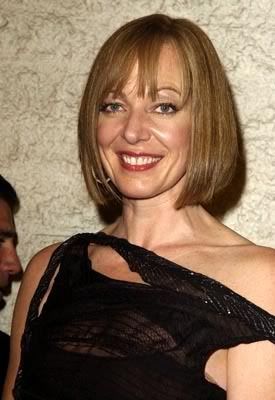
Trailer Park: Allison Janney

Filed under: Columns,Interviews,Trailer Park — admin @ 3:50 am

By Christopher Stipp

Archives? Right Here…

Allison Janney is one of the first people I’ve ever talked to that has radiated a genuine sense of ease and openness. She also takes the cake for being the first person I’ve ever talked to regarding prescription medication for generalized anxiety with regard to flying.

Allison’s career has been punctuated with Emmy wins (four, actually) for her work on The West Wing, is the only cast member from that show who has won more than one for her work, has starred in films like THE HOURS, THE ICE STORM but has integrated FINDING NEMO and PRIVATE PARTS into the mix and she’s managed to build a resume that many of her contemporaries only wish they could possess.

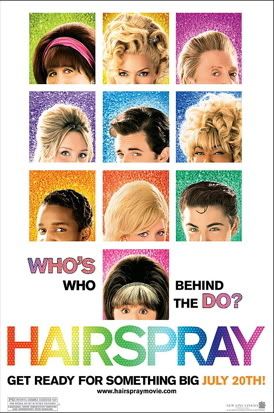
Today, though, Allison’s turn as Prudy Pingleton in the newest incarnation of HAIRSPRAY is one of those parts that demonstrate her ability to draw on her dramatic roots and play a part that is equal measures absurd and comedic. I wish I could say that the conversation ranges from the mundane to the insightful much like every other interview I’ve conducted but Allison was up for some casual conversing regarding the film, about what she still has yet to accomplish in her career and the fact that, yes, she does speak in the 3rd person in a way that is completely endearing when it comes to declaring her ability to sing and dance. The conversation picks up in the midst of an explanation of whether she’s been doing a lot of traveling in support of her next job, a role in The Autumn Garden during the Williamstown Theater Festival.

HAIRSPRAY opens today, July 20th.

line2.gif

ALLISON JANNEY: I’m doing a lot of back and forth these days.

CHRISTOPHER STIPP: Nice flight. Isn’t that a five hour one?

JANNEY: It’s four and a half out and five and a half back.

STIPP: Joy”¦ Do you do well, flying?

JANNEY: I’ve gotten better at it. I used to have a big fear but not anymore. It’s gotten better”¦maybe it’s the drugs. [Laughs] Maybe the drugs have gotten better. No, seriously, I’ve just been doing it so much that I’ve just let go of the fear a little bit.

STIPP: I’m in the opposite position. I was doing well all my life and now, whammo.

JANNEY: Really? Was there an incident or something?

STIPP: I’m pretty sure it stemmed from becoming a father some years ago. I’m equally sure that there’s some psychoanalytical component going on there but the Ativan is the world’s best drug. Ever.

JANNEY: Someone gave me a book, a pilot actually, when I did the Ellen DeGeneres Show, a pilot gave me his book”¦

STIPP: I’ve got that one! It did nothing to help curb the irrationality. I think I’m a lost cause at this point.

JANNEY: You have to ask yourself: Do you want fear or faith? Be fearful or faithful.

STIPP: Yes. You’re absolutely right. But enough about my irrational fears of burning in a wreck of metal”¦Are you doing this flying to help support the film, doing promotions on both coasts?

JANNEY: Actually, no. The premiere is tonight here in LA and I did a workshop in New York, and I did two weeks of that, I’m back for the premiere here tonight and I am going back to New York, renting a car, and heading up to the Williamstown Theater Festival; I’m going to be doing a play called The Autumn Garden. After that I come back here and then, hopefully, I’m going to be doing His Girl Friday at the Roundabout Theater this fall and through the spring. John Guare did an adaptation of it, in conjunction with The Front Page, which was a stage version of His Girl Friday and he kind of did an amalgam of those and we’re going to try and put it on if we can find the man who can play Walter.

STIPP: Keeping busy in the theater.

JANNEY: Yes and it’s making me happy, too. A lot of this movie stuff has been driving me crazy, so many things I’ve been attached to”¦I just wanted to do something that makes me feel good. I haven’t done any plays in seven years so I wanted to get back in doing that.

STIPP: That’s interesting you bring that up. I’ve talked with a few different television actors who’ve said that they enjoy being able to do things like that in their off time when they’re not in production. Were you able to squeeze in any of that during your time on The West Wing?

JANNEY: Well, I did little parts in movies during the break. One time, in the beginning, I did a play of Shakespeare in the Park in New York City but that was just after we filmed the pilot. Maybe it was the year after, I’m terrible with dates”¦but it was never really long enough to do any kind of serious theater because it couldn’t be any longer than a one month commitment.

I just didn’t.

A lot of times I would just get too tired. Work was so great but it was just so”¦so”¦

STIPP: Exhausting?

JANNEY: Yes. Yes. Exhausting”¦ and when you don’t get spend much time with any of your friends or family. So, when you get that time off”¦ you just want to do something other than work.

STIPP: Like any other job, I take it.

JANNEY: Yeah. And I really miss the theater. I’m just really excited to be able and do that again.

STIPP: What’s your passion? Shakespeare, the modern playwrights”¦

JANNEY: Shakespeare, I’ve done it. I went to study Shakespeare in London but I like doing revivals and modern new plays. I don’t have any specific genre that I like”¦But I am just a fan of other playwrights. There are so many different plays I like and there’s no one particular style that I think I excel at. I did Arthur Miller’s play A View from the Bridge and I loved that”¦Shaw I love”¦I can handle style pieces, I tend to like them better. I’d like to do a musical too.

STIPP: Well, being in HAIRSPRAY”¦

JANNEY: I hate to say that I’m the only character that doesn’t get to sing or dance. I can sing and dance but in this incarnation of Prudy they did not have her sing or dance.

STIPP: I have yet to see the film but I’m surprised they changed that.

JANNEY: Yup, they changed it from the play.

STIPP: Why did they do it?

JANNEY: I don’t know. I can’t speak for them. I have no idea why they decided to do that unless it was”¦I think to pad out the other parts they took away some stuff from Prudy”¦.I don’t know, really. You’d have to ask them. I will say that I was disappointed that Prudy Pingleton didn’t sing or dance and I know that Allison Janney is one talented actress.

[Laughs]

STIPP: I’m surprised you didn’t kick down some doors and wield those Emmy’s. I was a fan of the original when Prudy is walking into the wrong side of town. That whole montage is wonderful.

JANNEY: I know! That was one of my favorite scenes and they took it away”¦John Travolta does that part now.

STIPP: Huh?

JANNEY: I know, believe me. They gave that part to John. She’s a little trimmed down in this version.

STIPP: What else, besides cutting the heart out of the original, have they changed”¦

[Laughs]

JANNEY: It’s still there. Prudy still has some very fun moments. It’s really a cameo”¦it’s what I’d call it. Scott Whitman and Marc Shaiman and Adam Shankman, they’re friends of mine, so when Scotty called and asked “Will you come do this?” I just said, “Of course I would. I’d love to.” I hadn’t even read it”¦.Of course I’d do it”¦I kind of remembered what Prudy’s part was so when I read it I was like, “Wow, didn’t she have more to do?”

[Laughs]

I wanted to do it anyway because I love them and I had a great time doing it and I’m really happy to have been a part of it because it was so much fun.

STIPP: How long were you on set?

JANNEY: I literally had three days of shooting and they were each a month apart.

STIPP: Why am I even talking to you? Are you sure you’re actually in the movie?

[Laughs]

JANNEY: I mean I really did just fly there, do one day, and then leave and then came back three weeks later and do another day. So everyone was like, “Oh”¦Yeah, hey!” It was a bizarre experience and I don’t feel like I made my HAIRSPRAY friends but I tell you, Nikki and Amanda were so great. They were the ones I worked with the most and I just adore those girls”¦They were just so great with me. We just bonded and instantly they were so welcoming and appreciative that I was there. They really made me feel welcome. I had a good time.

STIPP: Were you able to see them in other numbers that you weren’t necessarily a part of?

JANNEY: My very first day there I was able to see them do one of those really big numbers, Good Morning Baltimore, which was so exciting. It was thrilling.

I just wanted to run through one take, dance and leap around. It’s great, I loved it.

STIPP: Musicals are really making a comeback.

JANNEY: I know!

STIPP: I don’t know if you’ve seen it, the film called ONCE, it’s a musical that recently came out and has done especially well. It seems like people are genuinely open to seeing these kinds of films.

JANNEY: ONCE? It’s a musical?

STIPP: Yes. It’s a little film from Ireland and it’s perhaps one of the best movies I’ve seen this summer. Plus, it’s like 90 minutes. It’s short.

JANNEY: Hmm, love that too”¦I haven’t seen anything.

STIPP: Are you able to get out and catch a lot films?

JANNEY: I try but I think I’ve gotten spoiled being a voting member of different unions so I get a lot of screeners. I’ve got my nice TV and I love to be at home. I’m a homebody. I’d rather see a movie at home than go out. Unless it’s like to go out and see something like a DIE HARD where the only reason to go is to see it on the big screen.

STIPP: Have you seen anything of note?

JANNEY: I haven’t seen OTHER PEOPLE’S LIVES but I’d like to. I’ve just been working.

STIPP: And speaking of work, why did HAIRSPRAY lend itself to being remade? It seems like the original was especially good already. Did you have any reservations about dipping into the remake?

JANNEY: No, not at all. I love Scott and Marc so much and I saw their Broadway production. No, I totally thought it would be all fun. And I think John Waters, he’s in it, I think he’s happy with it and what they did. But I think it’s one of those movies that”¦I mean look at GREASE. People are less interested in taking a risk and doing something new so why not take something that’s tried and true, put some music to it, stick it on the screen and see what happens.

It seems like the American musical is an original invention so why not bring it to the big screen, that way people won’t have to go to Broadway to see a musical. They can go to their theater in Iowa and see a big Broadway musical.

STIPP: I think, too, that Waters’ original was pretty good with the way he treated segregation. The film comes at a time in history before the pressure cookers of racial change. Is that still at the core of this movie?

JANNEY: Yeah. Yeah, it is. And it still kind of works today too. At its heart it’s about people being afraid of what they don’t know. It’s a microcosm of what still goes on today. With different races, with different religions, different countries, it seems to be a message that people don’t ever learn.

STIPP: Are people just incapable of learning or is this something that will be a part of the human experience?

JANNEY: It just will. It may not be about black and white anymore but it will be something.

STIPP: What keeps people coming back to musicals that are seemingly brought out from the closet year after year?

JANNEY: I think that when you see something, like Grease, it’s a part of your past and when there’s a movie that comes out you have a relationship with it. People are more apt to seeing something that they have in their heart that they had a good experience with and experience it again. Or maybe they’ll feel like taking their kids and say something like, “I love this, maybe you’ll love this too.” There’s history attached to it.

STIPP: Is there more of a leniency with actors being able to move to film, to television, to the theater?

JANNEY: I think so, definitely. Especially as parts become more scarce. Actors might start saying, “You know”¦maybe TV isn’t so bad.” I think that most actors are scared of doing theater.

STIPP: Really?

JANNEY: Yeah. I think that Julia Roberts is brave to go and do theater. That’s how you really prove your weight as an actor is in the theater. And I feel like any great actor would be good in the theater and I think that everyone should do more theater. Most actors should not be afraid to jump in and do it but if you grow up doing television it’s like, “I’ve already done that scene. I don’t want to do it again.” People get lazy. But there’s so much fun in the repetition of the theater, you find new things, and there’s so much freedom in that structure and the relationship with the audience every night.

STIPP: As a woman growing older in this business what do you have to say about the women coming up through this business? The ones who have to look young and act young while you, yourself, try and find the parts that will allow you to keep working in the way you’d like to?

JANNEY: Well, it’s so different for every woman. I, because of my size”¦ I mean, when I was fifteen I was playing forty year-old women. My career has never been dependent on me looking young and beautiful so I don’t know what it’s like for those girls. It’s certainly going to be hard once that’s gone, so I think that the one thing that can be worked on is your acting and not so much what you look like. Really work on the craft of acting and if you really work on that craft time is kind to you, I think. But I think the women that last in this business are the ones that are really great actors. But that’s what I think!

[Laughs]

STIPP: And that’s a great way to end it. Thank you, so much, for the time.

JANNEY: Well thank you, Chris. I’ll think about you on my next flight.

STIPP: I’d say the same thing but the Ativan would wipe out any memory of you.

July 18, 2007

Interview: Kevin Murphy

Filed under: Interviews — UncaScroogeMcD @ 7:38 am

murphy2007-07-18-01.jpg

by Ken Plume

murphy2007-07-18-02.jpg

Though an accomplished author and performer, Kevin Murphy will perhaps be forever known as a wise-cracking robot with a gumball dispenser head, springy arms, a stout body, and an underwear fetish. Barring that, he’ll probably also be remembered as a giant talking monkey.

For 9 seasons, Kevin performed Tom Servo on Mystery Science Theater 3000, expanding his on-screen time with his frighteningly nuanced portrayal of the intelligent simian Professor Bobo, in addition to his writing duties for the series.

Post-MST, Kevin has been a frequent contributor to NPR, and written the cinematic travelogue A Year At The Movies, which chronicled his worldwide journey to experience a film a day in theaters around the globe.

He’s also re-teamed with fellow Satellite of Love refugees Mike Nelson and Bill Corbett as the B-movie quipping Film Crew, plus he’s been a frequent guest-riffer on Mike Nelson & Legend Films’ RiffTrax commentaries (you can check out their full catalog here).

Kevin was sequestered in his palatial, heavily wooded retreat when he deigned to grant us a sizeable fraction of his valuable (and creative) “me” time…

line1.gif

murphy2007-07-18-03.jpgKEVIN MURPHY: Ken?

KEN PLUME: Hey, how are you doing?

MURPHY: I’m doing pretty well, how are you?

KP: I’m doing well. Is this still a good time for you?

MURPHY: Yep. I’m just sitting here watching The Fountain.

KP: Ah…

MURPHY: Everybody’s reaction is the same! “What are you doing?” “Well, today I’ve got to screen The Fountain…” They say, “Ah.”

KP: Well, it’s not exactly a happy-go-lucky, springtime film…

MURPHY: Well, for Aronofsky, it’s a romp. It’s a lark. It’s a spree.

KP: It’s a celebration of happiness and light and the power of love across the centuries.

MURPHY: It’s true.

KP: For everyone else…

MURPHY: It’s the Bataan death march on film.

KP: Have you made it a good chunk of the way through it?

MURPHY: Oh, I just got started. He’s a conquistador and his movie gets invaded by the cast of Apocalypto. Then suddenly finds himself in a sort of outer space Zen monastery, and that’s where I am right now.

KP: Is this recreational viewing?

MURPHY: It goes into the realm of research. First of all, you’ve got to keep on top of these things. Hollywood keeps whipping these things out, and you have to keep your eye on the thing. I’m always suspicious of Darren Aronofsky, so I need to make sure I know what he’s doing at all times.

KP: Do you sometimes feel like the cinematic equivalent of a Buddhist monk with a gas can beside you?

MURPHY: (laughs) Yeah, but you know, those Buddhist monks, they’re sort of like Karma criminals. They’re not supposed to do that sort of thing.

KP: No, but do you feel like,” This is when I finally light the match, on this film…”?

MURPHY: Oh sure, absolutely. But this is not the one. There are worse.

KP: Did you get a chance to look at some of the other pieces we’ve done recently?

MURPHY: Actually I have not. I ought to.

KP: Oh, so you have no idea what people are saying about you.

MURPHY: What are they saying about me?

KP: Oh, wonderful things. Bill was nothing but complimentary with most of he had to say about you. The other stuff was unprintable.

MURPHY: Bill who?

KP: He writes plays.

MURPHY: Oh, that guy.

KP: And I also have a special guest on the line. He’s a bit frail, but Kevin, I’d like to introduce you to Coleman Francis…

MURPHY: (laughs)

KP: Do you ever worry about a This is Your Life coming out of the blue and hitting you with all these things?

MURPHY: I can go on IMDB and make sure Coleman is dead – and if not, that he’s old enough that I could knock him over.

KP: Six years out, I’m curious if your thoughts on the theater going experience had changed any since doing A Year At The Movies.

MURPHY: You know, it’s better and it’s worse. I don’t think, in my mind, it’s any surprise that generally what comes out of Hollywood is still largely very highly polished shit. And yet there are still some excellent alternatives to the regular fare. I’m delighted to report that the small one-screeners that I love here in town have survived. They’re struggling, but they still survive because there’s enough people to keep them populated.

KP: Struggled in the same way they’ve always struggled?

MURPHY: Oh, it’s the same old struggle.

KP: So it’s not like things have gotten worse for them – it’s maintained…

MURPHY: Oh, the Parkway needs a remodeling job. The letters are starting to fall off the sign every now and again, but the popcorn is still excellent. And one of my favorites, the Riverview Theater, is doing quite well. In fact, it’s thriving. And the Heights Theater, which is up north of town, is also thriving, and that’s very heartening. They’re doing reparatory. That’s very encouraging. One of the things that’s changed significantly since I wrote that book is the spread of the small screen. The really, really small screen, in the case of You Tube and such things. And although it’s allowed the entire world to become a bad film director, or at least very derivative, it is changing things. Somehow I think that’s for the better, because people are hungry for alternatives to big giant movies. Except if you’re 12. You still want to go see Shrek on the night it opens.

KP: I find it interesting how much unseen product has made its way onto You Tube. It’s like You Tube is this no man’s land where anything is possible to be screened.

MURPHY: I love it. My house doesn’t have a basement, so thank god there’s You Tube, because it’s really like rummaging around in the basement that I never had. In the basement of my media memory. It’s great fun. There used to be a show called Night Music. It was produced by David Sanborn and it had Jools Holland as the host. It was on weekends. It was an obscure little show, but dear god they had some of the most wonderful performers on it. For several years I’ve wanted to at least see a copy of the one Leonard Cohen was on. He did a version of the song “Who By Fire” with most of the band Was Not Was and David Sanborn, and Sonny Rollins did this amazing, truly amazing solo on the saxophone, and it just came out of nowhere and it disappeared and there was nowhere to find it. Well, of course, now I found it on You Tube. It’s just one of those very rare performances kinda thing that you’d maybe see in a concert and never be able to recapture it, but this was something that was on a very obscure network television show many, many years ago, and now I can see it again. That’s kinda cool.

murphy2007-07-18-04.jpgKP: How often do you spend time plumbing the depths of your memory in front of You Tube?

MURPHY: I don’t spend a lot of time. I’m not a shopper. You know how some people can just go into a secondhand store and look around for hours and hours? My spouse, for one. I love her, and she just loves to do that. I generally have something in mind. I go in, I look for it, if it’s not there, I leave. If I find it, I grab it, and then I leave. I’m not a browser, much. I just don’t have the time for that. My mind is already too full.

KP: Beyond the Leonard Cohen clip, what has been the most obscure or surprising thing you’ve found? Or wish you hadn’t found?

MURPHY: Nothing springs to mind. Again, I don’t spend a lot of time there. I usually go there with a task in mind. Some little psychic lawn darts from my own childhood are these little animated cartoons that used to be on the afternoon cartoon show when I was a small child. Which were already old when I was watching them. At Christmas time there’s an odd little song about Hard Rock, Coco and Joe, three elves that accompany Santa on his sleigh. I’ve always loved that song. I haven’t looked, but I have to look because the other thing that’s always plagued my dreams is this odd TV show called Diver Dan.

KP: Oh yes, my father talks about Diver Dan all the time.

MURPHY: Diver Dan would be in a brass hat – you know, the old navy deep diver brass hat suit – and he’d interact with fish string puppets. And he had this hot babe mermaid that he’d visit every now and again, although he’s in a brass hat so he really couldn’t get it on. And they film the whole thing – this is what I love – they film the whole thing in front of a giant aquarium. So you’d see fish swimming by. It was in an odd way quite brilliant, and that struck me when I was a kid. Are they really under water? And my brother would say, “No, they sat in front of an aquarium, for god sakes, grow up.”

KP: Was he always condescending to you like that?

MURPHY: My brother?

KP: Yes.

MURPHY: Oh no, no, they always tried to elevate me up to their level and bring me out of the depths of my stupidity.

KP: So it was like an aquatic Howdy Doody?

MURPHY: I guess you could say that, except it was much more serious. Diver Dan would get into some real mix ups, and there was a vaguely German, Eastern European sort of bad fish named Baron von Barracuda, who for some reason had a thug from the bowery as his assistant. He was a trigger fish and they called him trigger. And of course there were good fish and bad fish. The whole world’s about the struggle between good fish and bad fish.

KP: The Incredible Mr. Limpet taught us that.

MURPHY: That’s right. But this was really bad puppeteering and crude puppets, so it’s close to my heart.

KP: Have you found it on You Tube?

MURPHY: I haven’t looked for it, but this has inspired me to do such a thing.

KP: I wouldn’t be surprised if there was a DVD release. Is that something that, just for nostalgia’s sake, you would revisit?

MURPHY: Yeah. I wouldn’t spend a whole lot of time.

KP: The set would never grace your shelf.

MURPHY: I think not. I mean, I liked it, but I didn’t like it.

KP: You don’t need the entire 50 hour run.

MURPHY: There it is! I’ll be damned. It’s Diver Dan. It had a great opening theme song. Sort of sounded like the Kingston Trio or something. Here, listen to this. There, you see, and it goes on like that.

KP: Why don’t people do shows like that anymore?

MURPHY: You know, I think people do. Except they’re about eight years old and they do them in their basement.

KP: And now it’s on the net.

MURPHY: That’s right!

KP: And we’re not being facetious when we say those kind of shows are on the net now.

MURPHY: It’s true. Anybody can have a TV show. Truly.

KP: In many ways MST was a throwback to that sort of ethos.

MURPHY: Oh, I think there was no doubt about that. It generated from our childhood memories of having creature features and hosted movies. That was always in my mind, and it certainly led to the choice of movies we had. Because at KTMA, we had a shelf full of… a lot of films we could have done that were truly just dismal 80s films, but we always went for the cornier ones. For the science fiction ones. The Japanese monster movies seemed to be perfect, because that was the throwback I think was to the creature features.

KP: I’ve always been curious what the initial job description was for your time at KTMA. When you first took the job…

MURPHY: I was hired to shoot commercials. Jim (Mallon) actually called me up. I had worked with him at WHA in Madison, the public station there. And we would knock around, have fun. We’d go out on shoots every now and again. I always enjoyed his sense of humor, and he mine.

KP: What would knocking around and having fun with Jim entail?

MURPHY: Madison. Madison’s a college town, so use your imagination. (laughs) We ran in the same social circles, and that was based quite a bit around the university and the station WHA. And I still have a lot of good friends from down there even though I left there almost 20 years ago.

KP: Does it seem like that long?

MURPHY: Some days. Depends. If the humidity’s up.

KP: What was your initial impression of Jim when you first met him?

MURPHY: He had a sort of… what would you say… a status, having been in the Pail and Shovel party, and being the president of the student government and having done these amazingly anarchistic little feats of public exhibition. He was like a public artist, and he and his pal Leon Varjian were always surprising and always delightful. So, I had respect for him as a guy who did these mad quirks of, I guess you’d call them anarchistic comedy. But he was in a student government to do it. And he knew nothing about me, but I found him to be very unassuming and jovial and always great fun to hang around with. We really got to know each other… I went to work as a crew member on the film Muskie Madness, and we got to spend six or seven weeks up in the north woods of Wisconsin just being goofy and shooting a horror movie.

KP: This is what was eventually retitled Blood Hook, right?

MURPHY: Blood Hook, yes. The Troma people got a hold of it and said, “Muskie Madness, what’s that? What’s a Muskie? What are you talking about here? Listen I got a good title for you, it’s gonna be Blood Hook. Who knows for Muskie?” What they didn’t know is that muskie is the number one game fish in the United States, young man. It is tougher to land than the mighty tarpon. It will bite through piano wire. I have a friend who had his hand swallowed by a muskie. He had to pull it back out and it was filled with bite marks.

KP: As if I wasn’t afraid enough of the ocean, inland waterways are now off limits…

MURPHY: (laughs) Don’t go in the northern lakes during October, my friend, because the muskies are hungry then. That’s how we keep the ruffians out. It’s actually gorgeous here all year round.

KP: How long was the shoot?

MURPHY: It was about six weeks. It was Martin Mull who said that making movies was like college with money, or high school with money. I think that’s what it was. And that’s what it felt like. It was like summer camp. Although we really didn’t have any money, because it was an incredibly low budget thing, but we camped out at a local old-fashioned hotel and would shoot day and night and just… I learned so much about the filmmaking process in one shoot, because we had to do everything with nothing.

KP: So, really, titles meant nothing on that production…

MURPHY: Well, they really did. We had a professional crew and everything broke down the way it ought to. And everybody really counted on people to do their jobs and to know their jobs – and if they didn’t, then to learn their jobs damn quick. That’s one of the beauties of independent filmmaking. You can learn really fast, because for some positions… I mean, I’d never been a key grip on a film before. I’d run a dolly and rigged lights and things like that, but I’d always been… I’d done a few jobs as a PA on this film, or that or this commercial or that. I came to Wisconsin and this came along and it just seemed like, “Well, why the hell not? What a wonderful experience.” And it was. It’s the best fun I’ve ever had on a film set.

KP: What was the biggest learning curve for you on the set?

MURPHY: Well, probably, I learned later that some of the things we were doing were really dangerous. Like running wires from the shore out to a floating raft in the middle of this lake, in the rain.

KP: Who’s idea was that?

MURPHY: Well, we had a lighting director, and they needed light from a certain source, and it made sense. It worked. We did it and we didn’t kill ourselves, and we didn’t put ourselves in imminent danger. And we were never crazy stupid dumb about it, we were just… occasionally unsafe, is what I’d say. We had this one set for about a week on a boathouse on this beautiful lake in northern Wisconsin. There was something that wasn’t properly grounded, and so you could actually feel the current through your shoes as you were walking along the dock. It was a little unsettling.

KP: But no one thought to do anything about it.

MURPHY: Well, eventually. I felt the tingle, and I said to Rob, who was the gaffer, “Rob, do you feel a tingle through your shoes?” And he said, “Oh, that’s not good.” So he had somebody run and check the ground and we were fine. We were lacking some of the safety features that union shoots provide, let’s put it that way.

KP: Like death prevention.

MURPHY: But it was an adventure. We built all our sets with Makita screw guns and a chainsaw, pretty much. Truly, it was chainsaw carpentry. Everyone was issued a Makita screw gun, and so when I wasn’t actually on set, I was part of the swing gang putting the new sets up for the next day.

KP: So really it was that flexibility that was the biggest means of learning on that shoot…

MURPHY: Yeah. And also how to work 16 hours a day and still have the energy to drink like a fool at night.

KP: Well, that’s just Midwestern filmmaking, isn’t it?

MURPHY: (laughs) Yes, there were a couple of fine bars there and, at the time, the microbrewery Eau Claire had an all-malt lager, and it was quite a wonderful thing.

KP: That was the real muskie madness.

MURPHY: That truly was the muskie madness. It was a blast. It was the best summer camp I ever had.

KP: When you’re filming a low budget film like that, what are the expectations? Is it just, “We’re doing this because we can…”?

MURPHY: I think the number one reason to do it is because it’s going to be fun. People who make a low budget film thinking that they’re going to get rich are usually naïve and stupid and they’re never going to get rich. If you don’t do it for the fun of it or for the enjoyment of it or for the pleasure of it, then I think it’s kinda stupid otherwise.

KP: Do you think that difference in reasons for doing it shows in the final product? You’ve seen enough low budget films that were made by fertilizer salesmen who are hoping for Hollywood…

MURPHY: (laughs) Well, that’s the thing. That’s what I mean – if you’re looking beyond the movie to what this movie’s going to get you, then you’re probably looking at the wrong thing. That’s shown up over and over again. But that doesn’t mean… one of the things you learn is that, with a few exceptions, when the thing’s low budget, you get what you pay for. So if you don’t have a whole lot of money to dedicate to the script writing and you don’t have a lot of money to dedicate to hiring actors, and so you get a lot of community theater rejects, you have to work with that. If whoever’s in charge has enough talent to hold it together – and, I would say, poise – then yeah, maybe you’ll come out with something that’s fun and interesting.

KP: So what was that first screening of Muskie Madness like?

MURPHY: Oh, it was great fun. It was great fun. We actually had a premier here in Minneapolis. We built a boat dock and people would drive up in their cars and get on the boat dock in their tuxedoes and go into the theater. It was pure showmanship there.

KP: And they were all rented tuxedoes at that point?

MURPHY: Of course! And, you know, the movie was goofy. It was meant to be goofy, and it was meant to look like a goofy low-budget film, and it certainly succeeded in that way.

KP: Is the fact that it’s still out there and available surprising to you?

MURPHY: No, actually, it’s not. Part of it’s probably because of the success that Mystery Science Theater had, that it’s still out there. And another one is that Troma never drops anything from their schedule once they put it on there. So you can always find those things. For me, I honestly don’t know what other people thought of the film, and frankly I don’t care, because for me it was sort of like, we went to camp and we made this movie, and so every time I watch it, I find something in there that I just love because I remember how it happened.

KP: If someone were to do an MST treatment to that, how would you feel?

MURPHY: If there was someone to do it, I’d possibly be involved, but I wouldn’t be involved in that. That’s a little too close to the bone. I mean, I wouldn’t care. The movie’s as ripe for it as a lot of movies have been.

KP: So, if Mike called you up and said, “Kevin, I’m thinking a RiffTrax…”

MURPHY: It would feel a little bit like incest. So it would probably not be good, because I’m not a fan of incest.

KP: Well, it’s good that no one has attempted it yet.

MURPHY: Well, I’m sure they have, in their own private little domains.

KP: Which is where that sort of thing originated anyway.

MURPHY: That’s right, (laughs)

KP: Having finished the film, at what point did the KTMA job enter the picture?

MURPHY: It wasn’t long after. Actually, Jim finished the film and he moved to Minneapolis and was editing it, and that’s where he met Joel (Hodgson). He was in an office space in the warehouse district of downtown Minneapolis, and Joel had a studio in the same building. And so they ran into each other and got to know each other a little bit. It wasn’t long after that Jim got the job at KTMA. And it was all subterfuge. I mean, he brought me out there pretty much telling that the reason to have this job – and we have to shoot the commercials and we have to do the local hosted matinee movies and we have to do the public relations programming – but we have access to tools and we can do anything we want with them. That was the appeal to me – we could make a TV show and we could actually get it on the air. It was truly the month after I got there that Jim and I started putting together these news parodies that we did.

KP: This was the introduction of the Bob Baggadonuts character, right?

MURPHY: Right. Yes, and that was always great fun.

KP: I wonder, having seen those pieces, if things had gone differently and Josh (Weinstein) had not left MST, I really cannot see you as being content behind the camera. Because it seemed like you had a certain joy in performance.

MURPHY: I’m a ham. I’ve always been a ham. I had trouble in grade school for being a ham. I’m made of ham. I’m a walking ham.

KP: What kind of trouble would it cause in grade school?

MURPHY: Well, what kind of trouble does a ham get in? Calling attention to yourself, it’s in the report card, get sent to the principal’s office all the time. Making a nuisance in the class. Cutting up in the back of the room.

KP: So the teachers were not appreciative of your outgoing personality.

MURPHY: Teachers don’t like too many people who actually bust up the class. It doesn’t keep things moving the way it’s supposed to. I remember someone saying to me, “Do you think you’re going to be able to make a living making fun of things?”

KP: And you were only five at the time.

MURPHY: No, I’ll give them the benefit of the doubt. I was probably nine.

KP: Do you remember how you reacted to that statement?

MURPHY: I’m guessing that it was just pure fear, because at that time I was very frightened of authority figures. So I’d only do things behind their backs.

KP: You’re one of how many brothers?

MURPHY: I’ve got four brothers.

KP: So there was a lot of competition in the house.

MURPHY: Well, I suppose. I was smaller, so the competition was decided pretty quickly.

KP: Are they hams, as well, or was that your domain?

MURPHY: My brother Brian has a band called Arranmore, and they do Irish and folk and Americana sort of music. He’s been the front man for that band for many years, so he enjoys it in that way, but he’s not a clown. He’s just an entertaining musician. We all did time on some kind of stage in one fashion or another. But collectively they’re still the funniest people I know, I think. We get together and bust each other up so quickly, it’s wonderful.

KP: Did you pursue that inclination towards performance in high school, at all?

MURPHY: I was in the high school musicals, of course. I played Emile de Beckque in South Pacific… pissed me off because I wanted to play Luther Billis. They said, “No, Luther Billis doesn’t have to sing. You can sing. As a matter of fact, you’re the only one who can sing these songs.” It was a very small high school.

KP: Of six.

MURPHY: No, there were 98 people in my graduating class, I believe.

KP: When you have that small a pool…

MURPHY: I could hit the notes, and I didn’t have acne. So.

KP: Was singing also something that you were immediately drawn to?

MURPHY: That was both my parents’ influence. My dad loved swing music and barbershop quartet, and my mother loved musicals. They always had us singing when we were kids.

KP: How would you describe your pre-teen musical tastes?

MURPHY: Well, that’s odd, because again I had these older brothers and my older sister. So instead of listening to the 1910 Fruitgum Company, my brother Chris brought home Frank Zappa’s first album Freak Out, and this was… what was it, 1966? And here’s this bizarre album, and the first song is “Hungry Freaks, Daddy,” and it’s a double album, and it has bassoons and glockenspiels and just was delightful. It was just weird. One of my first albums when I had the money to buy it was Uncle Meat.

KP: What’s odd is, through the influence of your brothers, you gravitated toward something that actually incorporated at least a knowledge of the kind of music that your parents were fond of… You just don’t go into rock music using a glockenspiel…

MURPHY: True. Conversely, Zappa based a lot of what he did on the work of Edgar Varese, and folks like that, which is very atonal and difficult to listen to. And I think he liked to do that because it put people on edge. I remember him saying in his autobiography that he liked to play the low notes really loud because it always unsettled people more. The high notes would make them irritated and angry but the low notes would make them feel bad and they didn’t know why.

KP: So it was all about forcing people to question what they were listening to…

MURPHY: I guess you could say that. I don’t know. I was never that conscious of it. I just thought it was fun and weird. And I had my pathetically indulgent taste, too. I had Yes albums and Emerson, Lake & Palmer, and that sort of art rock stuff. I did get over that.

KP: Big ELO fan for a time?

MURPHY: No, not ELO. Too poppy for me.

KP: So it was never the pop direction you would go in.

MURPHY: No, I liked Steve Howe because he was a rocket on the guitar. I think Eddie Van Halen learned a lot from Steve Howe.

KP: Rick Wakeman?

MURPHY: Oh jeez, yes, I’m embarrassed to say I passed through my Rick Wakeman phase. It was like having malaria. I got over it. It took a while, but I got over it.

KP: But you never owned a cape…

MURPHY: Never owned a cape. I did own a leather hat.

KP: Which you’ve, through your book, made iconic as the ultimate symbol of a certain sad fellowship…

MURPHY: For me it is, yes. And it is true. That’s the other thread – I wrote about that in the book – is that punk rock saved my ass. It truly did.

KP: Did you know that at the time? Was it a conscious revelation?

MURPHY: It was just so much different than anything that I had experienced. In some ways it was new and scary and wonderful.

KP: What was the album that scared you the most?

MURPHY: Oh, jeez. Well, I’m working at this club, and this was… you know, it was the Midwest, so again – everything was behind everything else to a certain extent, but there’s kids who are launching themselves off the stage and they’re spitting at each other and they’re beating the shit out of each other on the dance floor.

KP: And you’re just timid with a leather hat in the corner?

MURPHY: No, at that time, I had discarded my leather hat. It was really the music more than anything else. You hear a band like The Stranglers, and it’s just so strong. It’s as if they’d say, “Let’s just take the biggest, loudest, creepiest, scariest elements of rock ‘n’ roll and push them to the extreme.” That’s how the New York Dolls struck me when I first heard them. They sounded a little bit… more than you want. Same thing with Iggy Pop. It’s like, “Okay, this is great. I’m really having a blast doing this.” And then suddenly the guy’s shaking his bony ass at you. That’s more than I want. We can ramp it down a little bit. The early punk scene always really pushed that edge, and it wasn’t necessarily about talent, it was just about anger.

KP: So was it the attitude or the music that struck you the hardest?

MURPHY: Ultimately it was the music, always the music. The Sex Pistols were really unpleasant to see on the stage, and they weren’t very good at all. But The Clash, dear god they were good. They were always good. They were wonderful.

KP: You mentioned a period where you saw just about everyone who went through the Midwest…

MURPHY: Yeah, and everybody did. Anybody who went across country would stop in Chicago, and quite often in Madison because it was a college town – and the school’s damn near 50,000 people, so they all came up.

KP: Did you feel – not to make a horrible pun – a sort of clash of cultures? This was a period when this was new to everybody…

MURPHY: Yeah. I guess so…

KP: Or was it just the people that knew and liked it were the ones who were there to see it…

MURPHY: Well, that’s what it was. You could tell. When Black Flag came to town and we were turning people away at the door and they were climbing through the windows, we knew something was going on. When U2 came it was the same thing. We wanted them to do another show, and they couldn’t. They actually played the 18 songs they knew and then played them again, because that’s all they had, but people were so hungry for it. It was wonderful.

KP: What was it like working at the club at that point?

MURPHY: It was a blast.

KP: I would assume it’s a unique experience in crowd control.

MURPHY: (laughs) Well, containment as much as anything else.

KP: Was there any time that you were afraid?

MURPHY: Well, I got lunged at a few times, and people trying to beat me up. They were generally drunk. The kids who were fighting on the dance floor, it was contained and limited to the dance floor. It was really sort of a ritualized sort of contained bit of adolescent boy’s island that stayed on the dance floor, and usually the worst that you get is a bloody lip or somebody’d get their hand stepped on or something like that. Or they’d miss him when he jumped off the stage, or that sort of thing. A couple of drunks lunged at me and tried to beat the hell out of me once or twice. We wrestled one guy out the door and he fell down the stairs. And this was a long flight of stairs. We thought he would have been dead by the time he got to the bottom. The nice thing about drunk people is they’re very flexible.

KP: Was he sober by the time he hit the bottom?

MURPHY: Oh, no, he was still quite drunk. But he had gotten the message and he said something like, “You don’t have to force me to leave, I’m going.” This is after he’d been hurled down the stairs.

KP: What would the cleanup process be like after an event?

MURPHY: Oh, thank god I wasn’t involved in that. No, no. It was quite the… they had sort of this indoor/outdoor carpet, the kind they put on boats. And then the massive dance floor. And you could pretty much hose the club down, and that’s pretty much what you needed to do.

KP: Just a big drain in the center.

MURPHY: Well, the bathrooms were definitely that way. Honestly, they’d take out the disinfectant and sponge everything and then hose it down with hot water and it was ready for the next night.

KP: Did you feel at the time that you were in a scene that was quickly to be co-opted and disappear?

MURPHY: Well, that’s what all the punks told me. They said everything that we do now is going to be commercial tomorrow. If it’s any good, somebody’s going to try to exploit it. That was simply the attitude. And even among the punks, it was…

KP: How many of them hoped for that?

MURPHY: Well you remember the thing about the hippies in San Francisco. Once the word “hippy” got out and used in the common nomenclature, they had a funeral to announce the death of the hippy – and that was in 1967, for crying out loud. So as soon as the word “punk” made it to Wisconsin it was already considered, by the people who consider themselves punk, to be passé.

KP: As soon as something hits the Midwest, it’s culturally dead.

MURPHY: Peoria. If it plays in Peoria, it’s not for me.

KP: What future did you perceive for yourself at that point?

MURPHY: Absolutely no clue.

KP: You were still going to school at this time, right?

MURPHY: Yeah, I was in grad school. I wanted to work in movies. I got myself as many different odd jobs as I could on little things, and I went to every film I could get my hands on, and I was in school to learn directing for film and television, as well as for the stage. That’s when I had a loose idea of what I might want to do. I had a great time. Francis Ford Coppola came to town. He was directing the rally before the Wisconsin Primary for Jerry Brown. And he decided to do it on live, nationwide television. He actually bought and donated the time to the Brown campaign and tried to do this live thing with all kinds of video effects. It was the most disastrous thing I’ve ever seen on live TV. Francis Ford Coppola was not a TV director.

KP: So it’s like SNL at Mardi Gras.

MURPHY: Right! (laughs) It was just a disaster. But I got to meet Barrie Osborne, the guy who eventually produced Lord of the Rings. I can understand how he could do those films. When I heard that it was Barrie Osborne, I said, “Oh, this’ll be no problem, because this guy could sleep through a hurricane.” He was just that calm and that poised. That was very admirable. Coppola was screaming like a lunatic and Barrie was just there trying to hold the whole thing together, very calm and very quiet.

KP: What was your opinion of the “Hollywood director”?

MURPHY: He was an asshole.

KP: Did you get any sense of the odd cheer about him, or just pure asshole?

MURPHY: No, just asshole, pretty much. I mean, I’m sure he is, but it sure wasn’t showing on the days that he was there.

KP: That was also during his incredibly self-destructive period.

MURPHY: I suppose you could call it that. He’d done One From the Heart, I believe. But it was so strange… he wanted to have a soup line set up so he could show pictures of the soup line. He didn’t really think that he needed to feed hungry people, he just wanted to have a soup line. There wasn’t any snow, and he wanted there to be snow. It was actually a beautiful day, but he wanted to bring snow machines in to make snow, since there wasn’t any. So he was sort of a parody of himself. It was Jerry giving his speech, and he’s trying… he put a green screen behind him. A huge green screen, and they put on the Capitol dome. He was projecting pictures of waving fields of wheat and folks in the crowd and farmers, and shit like that. And they didn’t get the key right, so people’s faces were popping through Jerry Brown’s forehead. I wish there was a tape of this. In fact, I should look on You Tube.

KP: This would have been at what time period?

MURPHY: That was the 1980 campaign.

KP: And you’re in college doing your master’s degree…

MURPHY: I was in Madison doing my master’s degree, yeah.

KP: Was school important to you?

MURPHY: Well, I went to the University of Utah for my undergraduate, which means that I spent all my time skiing. So, I really went to graduate school in order to complete my undergraduate education. Because I realized I finished college and I knew nothing about the media or about working in television or in films. So I really had to learn something.

KP: Your undergraduate was in journalism?

MURPHY: Yeah, ostensibly.

KP: Was that the only way you could get media classes, at that point?

MURPHY: Yeah. It was an incredibly easy degree, too. And it allowed me a lot of time to ski. I could take a lot of night classes, so it was great. I could get a season pass to Alta and ski all day long.

KP: Did you think, at the time, that you were sort of coasting through your college period?

MURPHY: (laughs) No, certainly not! I resent the implication, as a matter of fact.

KP: I apologize for any insinuation…

MURPHY: They say there are more important things than college, and when you go to the University of Utah and you go up into the Wasatch range, you realize that’s true.

KP: So when you got that piece of paper, did you think you’d earned it?

MURPHY: From the University of Utah?

KP: Yeah.

MURPHY: Hell no. Paid for it, but I didn’t earn it.

KP: Was the idea of getting an education to go get the master’s?

MURPHY: It’s funny… people say this all the time, and I realize it’s true – You want to be in the media, but you have no idea how to get there. It doesn’t make any sense. There’s the old work-in-the-mailroom thing, but what does that work for, one out of 10,000 people?

KP: And it depends on what part of the media you want to get into…

MURPHY: Yeah. I actually registered in proxy for a friend of mine at the University of Wisconsin and saw that campus and thought, “Wow, this is the real deal here.” It’s wonderful, and they had a public TV station right there on campus. And so it seemed like the perfect place, and as it turns out it was a great place to finish my undergraduate education, and get a master’s degree in the process.

KP: Knowing you could get some practical experience.

MURPHY: Right.

KP: But no skiing.

MURPHY: Let’s say the skiing in Wisconsin’s a few pegs down the ladder from skiing in Utah, and we’ll leave it at that. Much more horizontal.

KP: Was there a lot of student produced material, or was it all structured within the coursework, getting hold of that studio time? Were you guys able to futz around in the studio?

MURPHY: Yeah. At that time it was disappointing to find… well let’s put it this way – the hand held world was still brand new and very expensive. And so it was difficult to do field pieces in video. If you wanted to do that, there was still the film department, and they had wonderful film equipment. A nice equipment catalogue there, so you could get a Bolex camera, and a crystal-sync with a Nagra tape recorder, and go out in the field and make movies. You just had to take the right classes, and then it all depended on how much money you had to buy film stock. So you go without pizza and beer for a week, and you had enough to buy film stock to make movies… and a lot of people did it that way.

KP: Is there anything you made at that point that was purely your own project?

MURPHY: Sure. Nothing that I would ever share with anybody else in the universe ever again, and you can’t see it on You Tube because it’s in my closet somewhere. These are student pieces. I’m not Mozart. Nobody gives a shit about what I did in college.

KP: Someone will put out a DVD called The Lost Works of Kevin Murphy

MURPHY: And the reason they’re lost is that they ought to be lost.

KP: You wouldn’t have a little Murphy Film Festival at some point?

MURPHY: I appreciate what Franz Kafka said – “Burn all of my letters, burn all of my notes, burn everything.”

KP: You realize no one listens to that.

MURPHY: (laughs) I guess by saying it it’s actually a pathetic invitation to burn everything.

KP: Just for that, we’re going to do a Kevin Murphy retrospective at Dragon Con…

MURPHY: Well, most of my student stuff is still in uncut 16 negative cut. One light reversal work print, and magnetic perforated film. So if you can put that together, I’d be impressed.

KP: Have you ever had the urge to go back and look?

MURPHY: No.

KP: Why keep it, then?

MURPHY: I haven’t thrown it away. I actually don’t know exactly where it is. It’s out in the garage somewhere. I actually have not seen it since I was in school, and that’s enough.

KP: There must be some curiosity.

MURPHY: No. I made it… I did it… I’m done.

KP: Where would your creative impulses lie? What would you go out and shoot? Story pieces, sketches?

MURPHY: When I was in school?

KP: Yeah.

MURPHY: They were mainly for classes, and so there was usually at least a genre or a style that we were trying to learn. We had a wonderfully bizarre – he’s still there – experimental filmmaker who was in the film department named JJ Murphy. No relation. And he’d give us a tremendous amount of freedom to go out and shoot, and also learn a lot of what you’d call less conventional film techniques. So I got a lot of exposure to that. And I always tried to have fun with it and, of course, subvert it as much as I could. The one that I enjoyed the most was when we had to do a sync sound piece and actually put together a whole complete short film. That was great fun. It was fictional. It was humorous. At least I intended it to be humorous.

KP: Would you say your creative slant has always been towards comedy?

MURPHY: Yes, definitely. Don’t have a serious bone in my body.

KP: Going through that program, did you feel, “Well, now I have a master’s degree in hand. What now?”…

MURPHY: Oh yeah.

KP: Were there any thoughts of leaving the Midwest?

MURPHY: Well, I did a stint in San Diego that didn’t go too well. I thought about working on… they were shooting Simon and Simon, and I just couldn’t bring myself to go down there and try to be a grunt on Simon and Simon. It didn’t thrill me enough, so I came back to the Midwest and ended up back in Madison, and that’s where the whole thing with WHA started.

KP: Did that seem like a logical place to ply some kind of trade?

MURPHY: Madison is a great town. It’s a very creative place. You look at one of those Chad Vader guys, who came from there, and it’s the kind of ode to the unconventional entertainment that seems to constantly come out of Madison.

KP: This would lead into the various people that would assemble a hotbed of comedy, in many regards.

MURPHY: It’s kind of like Austin, Texas – only with bad weather. All kinds of shit’s going on there at all times, and a lot of creative stuff, and a lot of very smart people, and they found a place to congregate where other people won’t hassle them and they could be weird in their own right and they don’t have to worry about being weird.

KP: Were you aware of the comedy scene at that point?

MURPHY: You mean, like, standup?

KP: Yeah…

MURPHY: I didn’t have much interest in standup. I didn’t want to do standup. I never had the inclination to do standup. I thought you were crazy to do standup. And I’ve met so few people who are good at it. Now, when I came to Minneapolis, then I started meeting people who were really good at it. And, as you said, made a difference because they were really entertaining. I mean, in a small town like Madison, you either get the huge guys who play the theaters downtown, or you get the local people. And they just weren’t that funny. But Minneapolis actually was a place where a lot of people gravitated to work. There were, at the time, several worthy comedy clubs. That’s where I ended up meeting all these clowns on Mystery Science Theater.

KP: What was the initial pitch for doing the mock news pieces for KTMA?

murphy2007-07-18-06.jpgMURPHY: Well, Jim and I put our heads together and said, “What would be fun? What would we both enjoy doing?” The genesis of that is simply that we had both spent many years working in news, in television journalism. A lot of what we did at WHA was go out with these news crews and shoot field pieces for their news magazine shows. And that was the whole genesis. And there was one fellow, whose name I’m not going to mention because he’s a sweet man and I don’t know if he knows that we were making fun of him… That was sort of the personality basis for Bob Bagadonuts.

KP: So there actually is a real world counterpart.

MURPHY: (laughs) Well, he’s an amalgam, but there’s one in particular.

KP: You say that as a way to cover…

MURPHY: Well, I don’t want to hurt his feelings. I really like the guy and I don’t think he ever knew that we were making fun of him. So I’ll leave it at that.

KP: I’m sure there are some redeeming qualities to Bob…

MURPHY: Well yeah, of course. He was clueless but likeable. He was never an asshole, that’s the thing.

KP: He’s very much an SCTV-ish character.

MURPHY: Yes, I guess you’d say that. And that’s a compliment, I’d say.

KP: Was that automatically the go-to, “We’re creating this and I want to perform in it…”?

MURPHY: No, it was because we couldn’t afford to hire anybody. And Jim didn’t shoot. He was a sound guy when he was at WHA. So we’d figure it out. We learned the camera together. I’d done more video when I was there, so we sort of taught each other. And when I wasn’t shooting, he was.

KP: How did it feel to perform in those pieces?

MURPHY: It wasn’t the first time I’d done anything like that. It was just a lot of fun.

KP: And to know this was going out to an audience of 10s of 10s….

MURPHY: Well, that actually made it sort of comforting and safe.

KP: I’m assuming you have copies of all the stuff you did for KTMA…

MURPHY: Probably.

KP: Including that travel agency commercial?

murphy2007-07-18-07.jpgMURPHY: Oh god. Again, they’re somewhere either in the closet or in the garage. I’m not nostalgic. I really hate nostalgia.

KP: Why?

MURPHY: I think it’s stupid and pointless. It’s worse than prognosticating, which is another thing I think is simply mental masturbation.

KP: Do you have a problem with nostalgia on your own work? Because you’re the one who just looked up Diver Dan on You Tube…

MURPHY: (laughs) I think that’s a unique form of nostalgia, because it was so dumb.

KP: Now you’re trying to parse this…

MURPHY: (laughs) Of course I am, are you kidding? I’ll parse and rationalize all day, bitch!

KP: (laughs) Do you think it’s just the difference about being precious about your own work as opposed to that of others?

MURPHY: Yeah, I think that’s definitely it. I’m not self-nostalgic. I don’t keep things. I have too many things. If I had everything I accumulated over my life, I’d have to buy another house.

KP: At what point for you did Joel and MST enter the picture?

MURPHY: Well, we were doing these Bob Bagadonuts pieces, and they were really fun, but they were really, really hard. I mean, single camera work and there were two of us doing everything. I mean everything.

KP: Was that the same method even for something as big as those New Year’s Eve pieces?

MURPHY: Well, you know, we got the whole station involved because that was live TV, and live TV’s like heroin. You can’t get enough of it once you try it. It’s so much fun.

KP: What was the worst disaster that happened to you on live TV?

MURPHY: I forgot what I was doing next while I was on camera. I had a little IFB and I said, “For the love of god, what am I doing next?” And then Jim told me. So it worked out really well. So we’d get the whole station involved and we’d get all our friends involved in the New Year’s Eve thing, so those were a lot easier and a lot more fun. But the grind of doing single camera comedy, it’s a lot of work. I think that was part of it, is that we wanted to branch out from there. Both Jim and I. And we started talking to the folks in the standup community, Joel being one of them, and he came in with the idea, and the rest is already written down somewhere else.

KP: What was the station’s view of these projects?

MURPHY: We got press, so it wasn’t bad. And we didn’t cost them a whole lot of money, so we were able to sneak things in with very meager budgets because we didn’t pay ourselves more than our salaries and we didn’t pay anybody outside very much at all.

KP: Was there any oversight that would come in and go, “What are you guys doing?”

MURPHY: Yeah. The station manager liked us. He was a sweet fellow, and he liked us both, and I think he liked the idea of… when we did the first Melon Drop, it was probably the first time the station got any press outside of just the local business columns, the business pages. It was in the entertainment pages and the guy loved the show, so he wrote something really nice about it. That’s currency for a TV station, I think.

KP: Did you see a shelf life for the way KTMA was being run?

MURPHY: God no. They had reruns and bad movies. They think it’s cool to get Andy of Mayberry. They thought that was really exciting.

KP: What were the promos like that you would produce for things like that?

MURPHY: Oh, it was dreadful. They called them donuts, because it’d be the same on the beginning and the end and then you put in something about the episode in between, and that was the hole that you’d fill. That stuff was a grind. The commercials were a grind. Doing the Ax-Man Surplus Store or the Blaine Flea Market, or the endless used cars and discount furniture places…

KP: How much leeway would you take with those pieces?

MURPHY: As much as we could, which still meant very little. Sometimes you just had to get them done. The salesmen, the ad force, decided that a cool thing to do was if you bought a certain amount of ad space, you’d get a free commercial. Yeah, so we were run ragged. (laughs) It was awful.

KP: How would you describe your average day?

MURPHY: Half in the field, half in the studio or the control room putting together ads. And then doing promos. They were long days. And then we’d have to wedge in any of the extracurricular stuff on top of that. Mystery Science Theater was pretty much extracurricular.

KP: How much were you paid for that?

MURPHY: I wasn’t paid any more than my salary – which was the most I’d ever made, but it still wasn’t a whole hell of a lot.

KP: So, basically, it was considered part of your job to do these things…

MURPHY: Yeah.

KP: It wasn’t an extra thing that you were doing…

MURPHY: Well, it was an extra thing, but it was a labor of love.

KP: It fell within the purview of your paid duties.

MURPHY: Right.

KP: If you chose to waste some more of your time, that was your choice…

MURPHY: Right. The station manager would come back and see the mess we’d made out of Styrofoam and junk and jingle his keys in his pockets and shake his head and chuckle and say, “You crazy guys, what are you up to now?” Then he’d walk away. I don’t think he ever saw the show. But the station was going bankrupt while all this was going on.

KP: Was it known that the days were numbered?

MURPHY: No. It was actually after we finished the show that we started hearing the rumblings, and that was when Jim and Joel shopped it up to New York and tried to get it going, because Jim was saying we’d better get this going because we’re not going to have jobs in another six months, and that’s what it turned out to be. Weeks after we started at Best Brains, the station went bankrupt.

KP: What was the genesis and formation of, “We’re actually going to incorporate as Best Brains…” like?

MURPHY: Well, that was Jim’s and Joel’s when it started, so I wasn’t privy to that. They just decided to make a company. It was Joel’s idea to begin with and Jim was the one who’d produced it, so they were essentially the owners of the thing and declared it as such. Joel had the New York agent, and he had the connections. He was already doing some stuff at the Comedy Channel. You remember, at this time, Joel had already had and come back from a pretty successful standup career on both coasts. He did Saturday Night Live and David Letterman and all those things you’re supposed to do when you’re in the pipeline to become the next cool standup. Then I think it sort of sickened him, so he quit and came back home and started small again, which was probably pretty smart for him.

KP: What other options were you exploring at that point, if things were not going to happen?

MURPHY: I don’t know.

KP: Were you aware that things might be coming to a close?

MURPHY: Yeah, absolutely. It seemed to be sort of natural. It seemed like we were going to get something going with Mystery Science Theater. It was just a matter of negotiation. And so, as the station started to look a little scary, we just pressed a little harder to get Mystery Science Theater up and running. And we did that. In a matter of about eight weeks, I got married, went to Central America for a honeymoon, came back, we built the sets, and had the first show delivered to HBO. So it was a pretty quick transition once it actually happened.

KP: So that was an intense period of time…

MURPHY: Oh yeah. Again, it was like summer camp.

KP: During the KTMA shoots, what would be your responsibilities?

MURPHY: I’d shoot it and sort of supervise the set and supervise the post. Along with Jim.

KP: What were the challenges of doing a single camera shoot like that?

MURPHY: Well, that was easy. You didn’t move the camera. Mystery Science Theater was always a very, very easy show to shoot and produce. The oddest technical thing was getting the silhouette going and getting the little doors going, and that was just a matter of video math, knowing which screen to key through which hole at which time. Something an editor can figure out in five minutes.

KP: And the films were directly out of the library, so there was no real selection process.

MURPHY: Well, there was. I mean, we’d screen them, and say, “This looks dumb.”

KP: But there was no writing process that went into it.

MURPHY: Only the sketches.

KP: How quickly would an episode be put together?

MURPHY: Well, let’s see, Trace and Josh and Joel would come in and we’d sit down, and at that time I wasn’t doing a lot of writing because I’d be doing other things during the day or setting up for the show. They’re write the sketches in the morning, and then they’d go to lunch and then come back and shoot the show in the afternoon. So it was done in one day. And, as a matter of fact, for a while there we were almost doing it in real time, because the editing process – we just didn’t have the time to do it, and at 5:00 we had to turn the cameras around to shoot Saturday Night at Ringside, the wrestling show.

KP: This was a very tiny studio space?

MURPHY: It was pretty small.

KP: How would you compare it to what you eventually had at Best Brains?

MURPHY: Best Brains was roughly twice as big, which was still pretty small.

KP: What was your initial impression of Trace and Josh, when they came in?

MURPHY: I thought they were incredibly funny, and the three of those guys – Josh, Trace, and Joel – meshed very well together. It was just great fun to see how they worked together. They were always a great team, the three of them.

KP: But you felt firmly ensconced as a behind the scenes person?

MURPHY: Well, I loved doing it, and I knew how to do it. None of those guys knew how to do it, so somebody had to do it. It was a contribution I could make at that time.

KP: Then the transition to Best Brain happened…

MURPHY: Mm-hmm.

KP: At what point did you start writing?

MURPHY: Right away. That was one of the things I really wanted to do and asked to be on that crew, so I started writing right away. I couldn’t write all the time, again because there were so many dang things going on, and I was editing the show, as well as shooting it.

KP: You were editing during the first season, as well?

MURPHY: Yeah. That changed quickly as it could…

KP: When was an editor brought in?

MURPHY: I really don’t remember. I think it was for the second season… Well, we brought in a camera guy, is what we did, and that was really great. We had to because I was now running a puppet, and I couldn’t do both. Now that I think of it, I think we did bring that guy in during the first season – but again, it’s a fog. A long time ago. That was 20 years ago.

KP: Does it feel like 20 years ago?

MURPHY: Some days. When the humidty’s up (laughs)

KP: It’s literally, what… Next year it will be 20 years since the first rumblings of putting it all together…

MURPHY: It’s true.

KP: I’m sure you’ll fire a gun into the air, or light off a firecracker to commemorate the moment… Maybe some tequila…

MURPHY: Blow up the puppet…

KP: Now, I’m curious about that… No one I’ve talked to has kept a puppet… Even though you’re not a sentimental person, I’d think you would have kept the puppet…

MURPHY: I’m telling you man, did you ever see Magic?

KP: Yes…

MURPHY: Okay, I don’t have to say anything more.

KP: Trace was pretty intense about not having some puppet in the room, with its eyes following him…

MURPHY: Well, exactly.

KP: Bill seemed to want one, though…

MURPHY: (laughs) Well, you know, Trace is Crow, pretty much. Joel sort of hobbled together this odd thing with fixed eyes, but Trace truly breathed life into that thing from the outset. I think it was probably a lot more intimate and creepy for Trace than it would have been for Bill. Not taking anything away from Bill.

KP: I think Trace likened it to being like him watching himself…

MURPHY: (laughs) Like a Magritte painting, then…

KP: Or just a velvet painting of Crow, where the eyes follow him. Obviously you get presented with all these fan-made Toms to hold at conventions…

MURPHY: I do, and I hold them and have my picture taken, and I’m always amazed at the ingenuity that people have when they put these things together.

KP: Did it surprise you when these things started appearing?

MURPHY: Everything about the show surprised me. Everything. Its success, its continued success, the cult following, the conventions, the fact that people would build puppets that not only looked like them but were exact down to every last part – a complete replica of the puppet…

KP: Am I correct in understanding that the puppets couldn’t be copyrighted?

MURPHY: Well, the characters can.

KP: Right, but as far as the design…

MURPHY: I’m a little light in my puppet law.

KP: Has anyone tried to give you a puppet at one of the conventions?

MURPHY: No, they want me to hold it and have my picture taken with it, and then they want it right back. And they want me to work the mouth, too, and do the voice.

KP: Do you?

MURPHY: If they pay me a thousand dollars. (laughs) I’d consider it…

KP: Done and done.

MURPHY: Wouldn’t you??

KP: For an envelope full of cash, I certainly would. I’d sound like shit, but I’d do it. You know what? For $100, I’d operate a Tom Servo…

MURPHY: (laughs) Why not?

KP: I could be the cut-rate Tom Servo. When you can’t afford the right guy, you get me.

MURPHY: Servo Whore!

KP: Exactly! I’m just fulfiliing a need Does that mean I have your blessing?

MURPHY: There you go…

KP: Now I’m the officially endorsed Servo Whore. Do you miss the process?

MURPHY: I miss the company. It was really a great group. Continues to be great people. And we came together and it was one of those things.

KP: Did it feel like a bubble?

MURPHY: Everybody’s sort of painfully aware that nothing lasts forever. But you never think of that while it’s going on, just when it’s over. And those change all the way through. But in general it was always a good group to work with, and there were always fun people. I don’t regret a minute of it.

KP: Was the decision quick and painless as far as a transition when Josh left, and you took up Tom Servo? Bill mentioned there was an audition process for Crow…

MURPHY: There was. There wasn’t one for Servo. I just went in and talked to Jim and Joel and said, “Hey, I think I could do this and I’d like to have a shot.” And they said, “Okay.” It was pretty easy.

KP: Was anything difficult about that transition?

MURPHY: Well, I was nervous about it. I was about to perform in this show that was starting to get some press attention, and I was replacing a character that had already been established.

KP: Did you feel the momentum building on the show?

murphy2007-07-18-05.jpgMURPHY: It was really like the second or third season…I forget when it happened, but Tom Shales wrote a glowing review in The Washington Post, and then the press started getting wind of the whole thing, and that really sort of propelled it. The thing that always got me from the very beginning is when we put the phone number on the screen and then the next day the answering machine would be jammed.

KP: Well, everyone’s seen the introduction of that on the KTMA episodes that have been preserved… Except for the mythical first three episodes, which nobody has… you probably do.

MURPHY: I don’t.

KP: It’s in a box in the garage. There’s probably a ‘bot in the corner.

MURPHY: I know that I didn’t bring a puppet home. I did that intentionally. Jim actually asked me, “Would you like to keep a puppet?” And I said, “Thank you, no.”

KP: What was your rationale?

MURPHY: Like I said, Anthony Hopkins in Magic.

KP: What’s it going to do to you?

MURPHY: It’s just weird. I wouldn’t call a puppet a transitional object, but at that point it would seem like that.

murphy2007-07-18-08.jpg

KP: Did the character become a solid entity to you over the years, as far as that characterization you developed?

MURPHY: Meaning…

KP: Did you feel it develop into, “This has become a whole character to me…”?

MURPHY: I think so, definitely. And that I attribute to the writers as a whole.

KP: You being one of them.

MURPHY: Yes, definitely. I got to sort of put the actual performance spin on it, but it’s amazing when you have that many people give their perspective of what Servo’s personality is, or any of the characters – what you end up with is fuller. A little bit more schizophrenic, perhaps, but fuller.

KP: How would you describe the atmosphere at Best Brains?

MURPHY: High school with money, man. Once again. We’re playing Doom on our network when we’re supposed to be working. Microsoft had just come out with the text-to-voice thing where you could type something down and have a robot voice say it. So we’d type up these things and then broadcast it, some foul thing about somebody else in the building, over the PA system. We had odd celebrities coming through and taking tours.

KP: Who were the odd celebrities who would come through?

MURPHY: I shouldn’t say odd. I guess you’d call them particular types of celebrities. Like, Roger McGuinn was a big fan of the show. I just love that, because he was a hero of mine. He’s another guy I listened to.

KP: Did he take a tour?

MURPHY: He did take a tour. And I got to sit in and watch him record a song, which was pretty thrilling. He recorded a song with the Jay Hawks, and it was fucking great, it was wonderful.

KP: So, you’re saying there were perks.

MURPHY: Are you kidding? I got to piss next to Leonard Nimoy. Things like this. I got kissed on the mouth by Kim Cattrall. I also met Ray Bradbury and Kurt Vonnegut.

KP: Did you ever have an encounter with Vonnegut outside of the rather awkward one you described in the MST book?

MURPHY: No.

KP: Did you entertain any thought of walking over to his table?

MURPHY: No. I knew then that he might call security.

KP: Or he might say, “You passed the test. Sit down.”

MURPHY: I’ll never know, will I?

KP: Are there any people that just completely shocked you to find out that they enjoyed the show?

MURPHY: I was stunned and floored and flattered… Dan Fogelberg, remember him?

KP: Oh yeah…

MURPHY: He was a fan of the show. He was, like, a real fan. And he invited us all to go to a show, and none of us could make it. It was just so embarrassing.

KP: I’m sure you were all, “Oh, I’ve got a dentist appointment…”

MURPHY: I would have gone. He’d gone from his fun folk rocky phase to his sort of gassy music phase, so I think I wasn’t as impressed anymore. Nobody went, and I think he left a little bit dispirited.

KP: That he had somehow sunk to a level of celebirty below a cow town puppet show that didn’t have time for him…

MURPHY: (laughs) Yeah…

KP: I’m sure he harbors that horrible, horrible hurt to this day…

MURPHY: (laughs). The other big thrill was talking to Frank Zappa on the phone.

KP: How did that call come about?

MURPHY: We got a call from Wally Nicita at Warner Brothers. Wally went on to have, and continues to have, a terrific career as a producer and exec. She was putting this together for Frank. She was a friend of Franks. I think that was part of it, was he had a script. A very, very weird script. You’d expect nothing less. He was dying. He was not even a year away. And he knew he was dying, and he just wanted to have as much fun as he could in his last few months. Then Wally called us up and said, “Frank Zappa has this script and he has watched you guys and he thinks you’re out of your gourds, and he’d like you to consider developing it into a movie.” And I said, “Yeah, uh-huh, that’s neat, that sounds really cool. Who are you again?” She said, “Wally Nicita from Warner Brothers.” And I said, “Okay, tell you what. Why don’t you have Frank call us.” She sounded a little put out, and she said, “Well, I’ll see what I can do.” She hung up, and a half an hour later, over the PA I hear, “Kevin, Frank Zappa’s on the phone for you.”

KP: At what point did your stomach completely go in a knot?

MURPHY: Right then. Absolutely. I didn’t know what to say. I wanted to say, “I started listening to you… it was in summer in Lake Geneva, Wisconsin, and my brother brought home Freak Out and I’d never heard anything so fucking weird in my life.”

KP: Did you say that?

MURPHY: In so many words, but the first thing he said is, “You know, when I knew that you guys were cool was when I turned on the show, and there’s Joel, and he’s wearing a clown outfit and he’s roasting a puppet over an open fire.” And he said, “I knew you guys were too fucking weird for words.” So we had a little mutual compliment for each other.

KP: That’s an incredible compliment, coming from him.

MURPHY: It was! It truly blew me away. And he said, “I’ve got this script, and it’s political and weird and I’d like you guys to consider doing it.” Then he sent the script and he sent some cassettes of some music that he had in mind to do the score for the thing. The essential idea was wonderful. He wanted to completely do the soundtrack and the score first, and then lip synch the entire movie. It was going to sort of be The Queen of Outer Space – you know, the spider lives in a cave on the moon?

KP: Right…

MURPHY: Except told from the spider’s point of view.

KP: How much of the music had he demoed at that point?

MURPHY: Well, it was a lot of songs that he’d either released or was just doing on his beautiful synthesizer machine. At the time he was pretty sophisticated into sampling and sequencing before a lot of people were, so he had stacks and stacks and volumes with music and scores already written. And they were released because he had these contractual obligations. and albums came out like Sleep Dirt and Studio Tan. Then they had some of these orchestral things that he’d done, and they were just wonderful. Sort of splendid weird pageantry. This is what he had in mind. He had already written “Spider of Destiny,” which was one of the songs on there. The spider becomes a sex slave of the queen of outer space, and that’s part of the story. And it just got weirder and weirder and weirder from there. It would have been wonderful. He had actually talked to Terry Gilliam about doing it, too. That would have been quite a combination.

KP: So, already you’re in this rarified air…

MURPHY: Yeah.

KP: What happened after your phone call at BBI?

MURPHY: It was a weird time, and the timing couldn’t have been worse, because this is when Joel was sort of going through the period of determining to leave the show.

KP: Was it known that he was making that decision?

MURPHY: It was being discerned by him, and what that would mean. He had said he didn’t want to be the star of the show for very long, and he was true to his world.

KP: What was the return call back to Frank?

MURPHY: Well, I talked to Frank and asked him to give us a little time, here. We’d like to consider it, but it’s nothing that we can move on right away. And he said, “Well, think about it, because I’d love you to do it,” and that’s when he sent the script and the tapes. We talked to Wally again, and she said, “If you can do it, this is the time to go, because Frank is not a healthy man.” We really, sadly, had to sort of walk away from it because, at that time, we didn’t know where we were going, much less trying to develop a script for Frank Zappa.

KP: Would you say that’s a regret?

MURPHY: It would have been fun. I don’t regret it. There’s very few things I regret. But it would have been fun.

KP: At least you know that you were part of something that impressed one of the people that was quite a formative influence in your youth.

MURPHY: Absolutely, yeah. That was quite fun.

KP: Do you still have the tapes?

MURPHY: Of the music?

KP: Yeah.

MURPHY: Those I have. And I think I know where they are.

KP: When was the last time you listened to those?

MURPHY: (laughs) About 10 years ago.

KP: How do you treat going back and listening to music?

MURPHY: That’s different.

KP: So that’s not nostalgia to you.

MURPHY: I don’t know. Well, there is music that is nostalgic. For me, even in pop music, there are songs that are timeless. When I listen to certain Beatles songs, they don’t remind me of a period – I just like the music. I listen to Bob & Ray not because they remind me of the good old golden days of radio. I could give a shit about the good old golden days of radio. Bob and Ray are funny. I think there’s a difference there. I don’t sit there and say, “Boy, I remember when I was in my pajamas as a child sitting on the couch with a cup of Nestlé’s Quik…” I don’t give a shit about that. It’s funny and it’s enjoyable of its own right. There’s a certain sort of cheese factor built into that.

KP: How do you listen to music? Do you have an iPod?

MURPHY: I still have LPs. I still have a lot of CDs. I actually have a lot of cassette tapes, and I have converted most of them onto my iPod.

KP: I’m sure, because of the amount of traveling you do, its nice to have an iPod.

MURPHY: I love the iPod. For me, it’s like the coolest thing built in the last century. It’s like the mechanical pencil. It’s just one of these things that it seems like life is possibly at least more fun with it in existence.

KP: Are you a shuffle person or a playlist person?

MURPHY: I’m a playlist person. Although I shuffle my playlists. Does that make any sense?

KP: Yes. So you have set lists, but they could come up in random order.

MURPHY: Yes, I do.

KP: How do you normally program a list? By artists or moods?

MURPHY: Has to be sort of moods. I’ve got a mix for baking bread, I’ve got a mix for putting the fishing boat behind the truck and taking it to the lake.

KP: Is it one you will always play for that action?

MURPHY: No. Sometimes I’ll play the bread making list while driving the boat to the lake.

KP: Makes a great loaf.

MURPHY: (laughs)

KP: Are these eclectic, or would you say that they fit within the context of what you were intending for the playlist?

MURPHY: Well, playlists are generally eclectic, aren’t they? Because they reflect the personality of the person that put it together.

KP: Yes, but you can still have a theme that runs through a playlist.

MURPHY: I suppose. I guess you could say that. Let me take a look at this thing here. I have a bunch of different playlists that I take with me when I go to Mexico, and certain ones that I like to play at certain times of day. It’s that sort of weirdness. But right next to… let’s see. Right next to Marc Ribot is Thievery Corporation. Right next to Buckwheat Zydeco is Senor Coconut. Make sense out of that.

KP: There’s a sense to it.

MURPHY: I’ve got Cannonball Adderley and Sergio Mendes. That’s quite a combination.

KP: Now that’s a one-two punch.

MURPHY: They’re playing together.

KP: Are you a one iPod family?

MURPHY: This is going to sound so fucking pretentious I could die. I have two. I don’t have more than two, though. I have one that I keep at home, and one that I travel with and take into potentially harmful situations.

KP: That’s the expendable one…

MURPHY: Yes, it’s the one in the dirty, beat-up case. That’s the one that goes to Mexico with me.

KP: Are these video, or music iPods?

MURPHY: I got the big guns for the one I take and watch movies with, and travel with, and back up files.

KP: How different would writing the book have been if the video iPod was in existence at that time?

MURPHY: Not much. For me, the video iPod’s kind of like having a DVD player. For me, the book was all about the public exhibition of a motion picture. That’s sort of my definition of cinema, there.

KP: But as one of your fallback positions, is what I mean…

MURPHY: Yeah, it would have been an odd decision to make. If I could find a way to project the iPod, it would have been fine. I might have taken that. There was something more tactile and more cinematic at the time about bringing a projector with me.

KP: I remember how heartbreaking it was to read that the Italian portion of the book, when your fallback options broke down…

MURPHY: Yeah, it was a pretty low point.

KP: And you conveyed it effectively through the writing.

MURPHY: Thank you.

KP: I remember writing you an email at the time, that the book had rekindled my interest in going to the theaters.

MURPHY: I love that.

KP: Which I’m sorry to say has died…

MURPHY: (laughs) I guess I’d better get back out there.

KP: All we have are the multiplexes in this area. Although I’ve always thought that if someone were to open a single screen theater in this area with classic programming, it would take off. Sadly, it’s not cheap to open a theater.

MURPHY: Nope.

KP: Maybe that would be something to tackle – what people can do in their home towns to start that sort of thing…

MURPHY: It certainly is possible. There are a lot of small towns around that have defunct theaters that have either become community centers or just sitting empty. There’s one not far from here where my partner Janes’s family is from. The Cameo theater. It used to be one, they split it into three, and now it’s just sitting empty.

KP: They did that here. They closed two of the old style multiplexes, the three screen theaters, to open a 16-plex. But the theaters are sitting empty.

MURPHY: Right.

KP: You’re not going to get a projector back in there cheap. But I guess if there were cheap digital presentations…

MURPHY: That’s true, but the bottom line is you’ve got to love it. You’ve got to really, really love it because it’s… you turn a hobby into a career and suddenly you realize you didn’t really much like your hobby, and that can be a nightmare.

KP: Has anyone presented that to you?

MURPHY: Actually, yeah. One of my brothers-in-law said, “Why don’t you think about getting a loan and opening this theater down in Owatonna?”

KP: What was your initial gut reaction to that?

MURPHY: I think it’s an excellent idea. I don’t know if I’m the guy to do it. I’m not a businessman. It would take a businessman, even if it is a film lover or a lover of independent film, or whatever. I think it would take a businessman to make it run. It’s just the way this country works.

KP: Spending that year traveling the world and going to theaters, what was the biggest revelation you had about the theater experience?

MURPHY: I think it’s still very cool. The movie depends on the theater and the theater depends on the movie, and the experience depends on both being something good or interesting. And it’s not always going to be that way. Sometimes you simply just go into the movies. And I still know a lot of people who just like to go out quote-unquote “to the movies” because it’s a past time. My own brother Brian and his wife go out to the movies about once a week. They just enjoy it. It’s their way of getting away and doing something. And he’s a lot less picky. I’m a snob, I’m a big-ass snob, and he’s a lot less picky about the movies he watches because he likes going to the movies instead of sitting at home and watching a movie.

KP: What are movies that you absolutely, positively, of your own accord will not go near?

MURPHY: Oh, hang on, what’s opening this week? (laughs)

KP: Last week was Shrek 3.

MURPHY: Yeah, I haven’t gone. It’s funny – I haven’t had any interest in seeing that or any of the big films.

KP: You were incredibly critical of the first Harry Potter film and Columbus’s treatment of that. How do you view the films after they shuffled off Columbus and brought actual filmmakers in?

MURPHY: I love Cuaron. I’ve always liked Cuaron. I like what he does with movies. That one I enjoy, I think, more than any of the others. I think it’s because of Cuaron.

KP: Did that set the reset button on your view of the franchise?

MURPHY: No. On that particular film, I’d say. I tried to get involved in the Harry Potter books, but they’re not written for me. They don’t engage me like they do other people, and that’s fine. I appreciate the craft and the whole charming English boarding school world, but I’d rather read Dickens, or Neal Stephenson, for god’s sake.

KP: Was there any franchise that….

MURPHY: No. (laughs) I can’t think of one. If we had The Thin Man, it would be a whole different thing. But we don’t have The Thin Man – we get Ocean’s 11.

KP: I’m sure we’ll have some kind of remake of The Thin Man.

MURPHY: I’m sure we will, but it won’t be The Thin Man. When I say that, I mean here was a series that had some fun to it, some charm, and it seemed like they weren’t just making them to make them. Maybe that’s just my own cynical attitude, but there are TV series that end up being more interesting.

KP: You enjoyed the first Lord of the Rings film…

MURPHY: Oh, I loved them all!

KP: That was a franchise.

MURPHY: No it wasn’t a franchise, it was a series of three films.

KP: In Hollywood, that’s called a franchise…

MURPHY: I think of a franchise as something that’s open ended. They could make Spider-Man 12. That’s a franchise. They could make Ocean’s 25. The notion of that becoming a franchise is absurd. I don’t know if you’d call it a closed world, but it’s a work in and of itself, The Lord of the Rings. Anything else would be derivative, I suppose.

KP: What is it like doing a RiffTrax with Mike on a film that you actually enjoyed?

MURPHY: It’s a blast. It’s just a blast. It’s easier. I said Mystery Science Theater was easy – it was easy, and it was also very difficult in some ways, because it was making television, and television’s always complicated. But RiffTrax is incredibly easy. The writing is always the hardest part. And long movies are difficult to write. Like, the Star Wars movies nearly killed us both. When Bill joins us, it’s always a lot easier. When three of us are working on it, it’s much easier. But the writing is the hardest part of it all, and trying to make these things fun for an audience is the hardest part. But once you go into the studio, it’s just a blast.

KP: Is it a different feeling knowing it’s not characters critiquing these films, it’s Kevin Murphy saying these things?

MURPHY: I suppose there’s a certain liability in there, because there’s a safety with hiding behind a character. Because you truly can hide behind it. You’ve got a puppet in your hand – not only are you portraying a character, you’re portraying a puppet character. So nobody even sees you.

KP: Even Mike was portraying a puppet character…

MURPHY: In a way, I suppose he was. But then when you consider the silhouette, then you remove it at another level.

KP: So you have these layers of distance that you can hide behind…

MURPHY: Yeah. There are several sets of filters between you and what’s going on. I think that’s at the heart of the success of Mystery Science Theater, is that we had these wonderful characters, and people gave them license to make fun of the movies. So yeah, we’re setting ourselves up to be knocked down hard. I think for me, what we found over the course of doing Mystery Science Theater is that the characters and the idea were what really got it going. And I think what kept it going was the fact that these great characters were having so much fun with the films, so in turn the audience was too. The writing is a huge part of what kept that show going for as long as it did. Otherwise it might have been a passing novelty, and once the novelty wore off, what is there for it besides good writing?

KP: Right. Which you’ve seen with the many imitators that have tried to snatch away that idea over the years.

MURPHY: Yeah, I suppose, but I do enjoy the Sklar Brothers, I’ve got to say. They do the show on ESPN…

KP: Oh yes, Cheap Seats

MURPHY: Yes. I enjoy the way that they’re the most idiosyncratic pair of comics I’ve ever seen. And when you see them on stage… (laughs)

KP: But obviously they know what their influences are, since you guys did the appearance with them.

MURPHY: Yeah.

KP: Which must have been odd, after that many years, to go back into it.

MURPHY: It was fun.

KP: Did it feel weird to know that you were Tom Servo again?

MURPHY: When we did the thing on Cheap Seats?

KP: Yeah.

MURPHY: Yes, that was a little weird. But we didn’t actually have to pick up the puppets. I think Jim just borrowed silhouettes from old projects.

KP: Yeah, I noticed things weren’t in sync…

MURPHY: Yeah. Just had to do the voice.

KP: But it shows that people don’t pay attention unless you actually see the difference that you guys did bring to the characters, even in the silhouette sequence.

MURPHY: Yeah. The characters were, like I said… it separates you just from being a smart ass watching a movie. The only way that I think we can do RiffTrax now is the fact that we have this history of having done it on Mystery Science Theater.

KP: It’s clear that the camaraderie is still there.

MURPHY: Yeah. That’s what makes it fun, is that we always had fun playing off each other and working off each other, so it works out well. We’ve got a good sort of jazz shorthand.

KP: It also sounds like it’s pretty open ended, and open to people coming in. Mike was going to ask Trace about doing one.

MURPHY: That would be fun…

KP: Some of the rough cuts of MST3K have leaked out – particularly of the theater segments – so it has your banter in between the breaks during the recording…

MURPHY: Where the hell do you find this, You Tube?

KP: They might be on You Tube. Some of the bit torrent sites have the full rough cuts.

MURPHY: Oh wow.

KP: Apparently, when they had a garage sale when BBI closed, they sold a box of what they thought were blank video tapes, but they were the rough cuts. I think there’s two Joel episodes, the complete theater rough cuts. There’s three from season 10 – including the final episode, which has a lot of nice quips about how you feel about Sci-Fi.

MURPHY: That stuff doesn’t belong out there!

KP: It’s not their fault that they bought a box of tapes…

MURPHY: (laughs) No it ain’t.

KP: And I guess there’s an entire tape of host segment rehearsals, including 35 minutes of season one host segment rehearsals, which are unique…

MURPHY: (laughs) Yeah, I’ll bet they are!

KP: Full of a lot of Josh f-bombs.

MURPHY: Oh yeah, he liked to toss the effenheimer around the room.

KP: But as far as the camaraderie goes, there’s one segment where there’s an extended break halfway through the film, where you three start riffing on “Owner of a Lonely Heart”…

MURPHY: (laughs) Which became a sketch.

KP: Which became a sketch, but you can see the entire development process.

MURPHY: I may be bold, but I think you’ll find that we were never pissing at each other.

KP: No, which was consistent through all of it. The Joel segment recordings you can see you guys were building on each other in an improv fashion.

MURPHY: We really liked working with each other. I think we were better for it and I think that we were always able to jam something out and work well together.

KP: The Coiley stuff is in there, too…

MURPHY: (laughs)

KP: With you guys coming up with euphemisms for… well… for a trip to the bathroom…

MURPHY: Yes, indeed.

KP: And Mike stunning you both with “blowing mud.”

MURPHY: First time I’ve heard that. “Pushing a crayon” and “blowing mud,” I think, both came out of Mike.

KP: At which point you can hear this awed silence, but you can also hear this sort of quiet shift as you try to move away from him.

MURPHY: (laughs) Oh my.

KP: But you can see the camaraderie that’s carried through to RiffTrax. At what point did Mike approach you about doing a RiffTrax?

MURPHY: Almost immediately after he got it up and going, he said one of the reasons he was doing it was he wanted to be able to have his old pals come and join him for these things. And I offered my services right away. It’s just come up in various ways, several times. Mike, not long after the death knell sounded for Mystery Science Theater, was talking about issuing CDs which would go along with a movie, but the CD publishing industry is also pretty rugged. And MP3 comes along and suddenly everything gets a lot easier.

KP: It was a go-to question for the past 20 years when anybody would interview you, is first, “What was the worst movie you guys have done…”, and second, “Why don’t you do Star Trek V?”…

MURPHY: Yeah. And now that’s not a problem anymore. I think that’s one of the great, fun features of it, is that we can do anything. It’s a little odd for some people, because there’s not an actual product that you can hold in your hand. You’d have to be more than mildly technologically impaired not to be able to do RiffTrax. It’s pretty damn easy, and it works pretty damn well.

KP: Is there any film that’s untouchable for you?

MURPHY: There’s films that, out of discretion, we won’t do. The Passion of the Christ is not high on the list.

KP: Not so much content wise, but films that you hold dear enough that you would pass should it ever come up?

MURPHY: I’m sure there are. I haven’t thought of them because I just haven’t considered doing them – because one of the things we’re doing now is taking more current things and things we always wanted to do, first. And there are so many of them.

KP: So where’s Corky Romano?

MURPHY: See, here’s the problem with comedies. It’s difficult to make a comedy out of a comedy, especially when it’s a failed comedy.

KP: Which I believe is why you guys thought of Catalina Caper as one of the hardest ones you’ve ever done.

MURPHY: It was hard because it was supposed to be a comedy, and comedies are…it doesn’t make sense. There’s something about making a joke on a joke that just doesn’t work. Because bad jokes hurt. You can shoot a puppy and it doesn’t hurt as much as a bad joke.

KP: If you were to pick one of the films that you suffered through multiple times… would you say Serendipity would be an acceptable choice?

MURPHY: Definitely. I would tear that to pieces. As a comedy? I don’t know if it was a comedy. It was a romance. It was a chick film. We could have fun with that. It was just dumb.

KP: One thing about A Year At The Movies is that you watch them again and again and again…

MURPHY: Well, I saw Forrest Gump again. That may be the movie that I hate the most on the whole planet, ever.

KP: Just because of how manipulative it is?

MURPHY: Yeah. So cravenly manipulative. It’s a cowardly film in every way. It’s simply out there to milk tears out of the audience like a cow.

KP: So Forrest Gump is a prime candidate, is what you’re saying…

MURPHY: Oh yeah, I think so.

KP: In everything I’ve seen for Film Crew, it seems like the closest thing to being MST as you could get.

MURPHY: I guess it is, because it’s the three of us. There’s no puppets involved, that’s the difference.

KP: But there are framing sequences.

MURPHY: There are. Well, we wanted to have some sort of frame around it.

KP: And you’re playing, essentially, fictionalized versions of yourselves.

MURPHY: I guess you could say that, yes. I would never compare us to the Marx Brothers or the Three Stooges, but I think that’s probably the sort of thing that it’s generated from. It’s just a way for us to stage ourselves and say, “Here we are, here’s how we’re doing it, and here’s why.”

KP: What was the desire to go back and do a thing where you’re on camera?

MURPHY: I never had the desire to do something on camera. It was just we needed to have it. (laughs) When I look at my big, ugly, middle-aged gob on camera, I sort of cringe a little bit, so I have to act as loony as possible.

KP: So you’d be fine if it was covered with, say, a monkey mask…

MURPHY: Well, I’m always less self-conscious when properly masked or bepuppeted.

murphy2007-07-18-09.jpgKP: Everyone I talked to, who talked about the Bobo phase, talked about how uninhibited you were as a performer during that period, in that make-up…

MURPHY: (laughs) Even the Greeks knew they could always be a little bit freer behind the mask.

KP: So that’s an assessment that you wholly agree with?

MURPHY: Oh, absolutely.

KP: Seems like there was nothing that you wouldn’t do as Bobo.

MURPHY: Well, I’ve never actually flung my own crap, if that’s what you mean.

KP: At least not on camera.

MURPHY: Not even off camera.

KP: Mike said different.

MURPHY: No crap, no. I’m not saying that I didn’t fling other people’s crap, but we’ll leave it at that. The fun of the Film Crew is, I think – first of all, it’s a self-contained DVD. And I think people who like Mystery Science Theater for the choices of movies we made will like the Film Crew for that same reason. We combed the world and found the four most perfectly suited films… and let me tell you, it’s difficult to do it. The PD world is difficult to get through.

KP: How did you miss these films during the MST days?

MURPHY: Some of them I think we missed just because there were so many out there. I know we looked at the Peter Graves movie. I’m forgetting the name of it now. I’ll have to look it up on our website. Killers from Space. I know we looked at Killers from Space when we were doing Mystery Science Theater, and for some reason or another we couldn’t get it. So that’s one that we ended up doing. But The Wild Women of Wongo, I don’t think I’d ever seen before, and I sure as hell had not seen Hollywood After Dark. And that’s the one, boy, I don’t know why – it’s in its own way so much cheesy Hollywood. I mean, it actually captured something of cheesy Hollywood in a way it didn’t intend to.

KP: So, in some ways, it’s a very beautiful document of a bygone era.

MURPHY: (laughs) Well, in the way that I guess if you didn’t have your glasses on you could say that toilet paper is a beautiful document.

KP: It certainly is a moment in time, is what you’re saying.

MURPHY: Well, the Rue MacClanahan stripping thing, and the extended scenes of stripping in it, and they just go on…

KP: How does Rue compare to Nichelle Nichols?

MURPHY: (laughs) Nichelle looks graceful compared to Rue. And Rue has the body of a woman from the 50s. Sort of like a Dodge Dart.

KP: So she looks like your aunt getting changed.

MURPHY: Yeah, that’s the thing. Nichelle kind of looked like your grandma. She was too old for that, by the way. Poor woman, god bless her. Great legs – way too old for it. The thing I love about Hollywood After Dark is it had that lurid girlie magazine quality to it, in that you never actually see any of the naughty bits. Just there are pasties, for those who are looking forward to it. Yes, there are feathered pasties.

KP: You’re really building this up for me

MURPHY: I know! (laughs) It could be a big let down, but I don’t think so.

KP: How different is the writing process now that it’s obviously a much smaller group putting these together?

MURPHY: We used to sit and write as a group. And more recently we’ve been writing chunks of the movie separately.

KP: Obviously location plays a role.

MURPHY: That’s the main reason why it became out of necessity. But the thing about having written together for as long as we have – Bill, Mike and I – is that we kind of know each other’s beats and we can at least anticipate each other’s sort of perspective. I don’t try to write like Bill or Mike, nor do they try to write like me. But it ends up… I would dare people to figure out which part I wrote or which part Bill wrote or which part Mike wrote.

KP: If it has a fart joke, it was Bill.

MURPHY: I’m big on the fart jokes. They always accuse me of being the one who goes over the line. Mr. Blow Mud accuses me of going over the line.

KP: When I talked to Mike a few months back he mentioned if there’s anybody who needs to be pulled back, it’s you…

MURPHY: (laughs) Well, part of it is I do that because it seems to horrify Mike so much. There’s not a lot that can horrify Mike, but I can horrify Mike.

KP: Which is odd, considering he’s the king of scat.

MURPHY: (laughs) Well, poop is one thing, but when you start getting into, I guess, the sort of territory I tread in some times, it…

KP: He also mentioned he tends to avoid things of a political nature…

MURPHY: Yeah. He stays out of the political spectrum, and that’s just fine. I think I only go in there when it’s an obvious hand grenade I can drop into the room. Otherwise it’s not worth it, because nobody wants to hear my politics. I’m not a political comic. I can make fun of anybody on any side of the aisle. I can probably whip up a quick François Mitterrand joke if I needed to.

KP: That’s a challenge.

MURPHY: It is a challenge, and I’m not going to do it. I will, but send me a thousand dollars first.

KP: Now I’m torn. Do I want to hear you play with a puppet…

MURPHY: Or do a joke on François Mitterrand.

KP: There must be some thought of an MST reunion, approaching the anniversary…

MURPHY: Not in my mind.

KP: At all?

MURPHY: I don’t see how it would happen.

KP: Some convention, somewhere, must have tried to engineer it.

MURPHY: Not that I have heard, myself.

KP: If you were presented with someone saying, “We’d like to do an MST celebration and get all you guys together to do an event…”

MURPHY: I’d probably have to up my price to a million dollars.

KP: That’s a hell of a jump.

MURPHY: I’d always consider it – again, because of the people involved, whom I’ve had great fun working with over the years.

KP: But obviously, that is a looming specter with the anniversary coming up, that somebody’s going to try to do something, somewhere.

MURPHY: I would need to be invited. I certainly wouldn’t instigate.

KP: But you would not be adverse to that occurring.

MURPHY: Certainly not. I couldn’t stop it from occurring, and I wouldn’t have any reason to stop it from occurring. But this falls, for me, into the realm of nostalgia.

KP: And also the deadly realm of personal nostalgia.

MURPHY: Yeah, that’s the thing. You saw The Return to Gilligan’s Island. I mean, what the fuck? (laughs) It was horrible.

KP: Well, I can’t see you guys welcoming the Harlem Globetrotters…

MURPHY: Number one, we’re older….

KP: Yeah, but you were puppets…

MURPHY: That’s true. The puppets didn’t age. But it does. Nostalgia… even the word sounds like a disease. Suffice it to say, I would be surprised if it happened, let’s put it that way.

KP: But now it’s going to be in print.

MURPHY: I’ll have to eat my words.

KP: Are you still doing pieces for NPR?

MURPHY: I’m not. The three of us, when we first formed the Film Crew, we intended to do a radio show for NPR. We did the pilot, and we had great fun doing it, but it never made it to series. That sort of ended the… we were working on other things, and it seemed like the time for us to move away from each other there.

KP: So who controls the pilot?

MURPHY: Probably NPR, I would imagine. They own the thing. I don’t know. I have to talk to somebody about that.

KP: It might be a fun thing to throw up on the website.

MURPHY: Yeah, you never know. We actually had it for a while, or we had a segment on the Film Crew website, for a while.

KP: If they’re not doing anything with it, you might as well.

MURPHY: Yeah. I don’t know if it’s still up there.

KP: What would you say, then, is your primary focus at this point?

MURPHY: I’m also trying to get another book going, maybe two. Particularly with the subject matter, I’m having a devil of a time finding someone to rep the book, just because most of the agents I have met… the working title of the book is Why Hollywood Sucks.

KP: That’s not incendiary at all.

MURPHY: (laughs) No. It’s a bit of a petition. I have actually come up with 95 theses, in the tradition of Martin Luther, as to why Hollywood sucks, and when the book is sold and released, I plan on nailing a copy of it to the front door of the Chinese Theater.

KP: Could you name one or two of the theses that you are developing?

MURPHY: Oh, absolutely. The first one, not surprisingly, is Thomas Edison. Because I have to go through history. Thomas Edison is one of the large reasons why Hollywood sucks to this day, because he sort of set the trend for the crass, completely commercially driven product that we have today. And trying to milk as much out of the audience as possible, and give them as little as they absolutely need. I believe I discovered the first bad movie, too, which is Thomas Edison’s own electrocution of an elephant.

KP: I believe that was the precedent for the summer blockbuster.

MURPHY: Exactly. (laughs) You’ve got it.

KP: His animal snuff film, which I believe was meant as a swipe at Tesla.

MURPHY: Well, it was a swipe at Westinghouse, really.

KP: But was really an attempt to destroy Tesla’s theories on the safest means of delivering electical current…

MURPHY: As I read it, at that time he was really more pissed off at Westinghouse than he was Tesla, and he came to exact his personal vendetta and character assassination of Tesla along the line.

KP: Because it’s easier to attack a person than an entity, anyway.

MURPHY: Well, it’s kind of difficult when you’ve invested everything in a technology that’s not going to work.

KP: That’s quite deadly, actually.

MURPHY: That’s right.

KP: It’s a fascinating film on so many horrible levels.

MURPHY: Yes it is. And it’s a bad film.

KP: I’ll bet it’s on You Tube.

MURPHY: Of course it is.

KP: What is the resistance you’ve been hitting? What have they told you when you approached them with the book?

MURPHY: I get the same kind of cold reception I think anybody who’s baldly indicting the system that makes so many people so much money would fall upon. I think if I sold it to a small press I could probably get the thing going, but I also have to make a living at the same time, so I don’t know how interested I am in doing that. So, like a lot of books, it just may take some time to find the audience. The thing is I’m trying to keep it as current as possible, so I keep writing new chapters and updating old ones. It’s folly to point out M. Night Shyamalan as one of the reasons why Hollywood sucks now because everybody knows it and it’s no surprise.

KP: Right. So how complete is the book at this point?

MURPHY: I’ve actually written about 135 reasons, and I had to pare it down to 95. It’s pretty complete.

KP: So, other than revisions…

MURPHY: Revisions and updates is what I’d have to continue to do.

KP: But it’s pretty much ready to go.

MURPHY: It’s close. I did the cowardly thing and lumped some things together. Took five directors who you should not watch, and five actors who oughtn’t sing, and five singers who oughtn’t act…

KP: What’s one of the directors on your list?

MURPHY: Oh, let’s see, what would I have here… Pitof. You know Pitof?

KP: Oh yes.

MURPHY: And Mick G, of course. Dennis Dugan. This was a hard list to pare down.

KP: I really hope Brett Ratner’s on that list.

MURPHY: Brett is not. I chose Tom Shadyac, instead. The guy who did Patch Adams.

KP: In a fight, I’d have to go with Ratner. Just as far as pure, unadulterated crassness of filmmaking.

MURPHY: Well, Michael Bay still breaks the mold, as far as I’m concerned. Have you visited his website, “Shoot for the Edit”?

KP: Oh yes. And his musings on the audience are always…

MURPHY: (laughs)

KP: … fascinating.

MURPHY: Yeah.

KP: I’d still vote for Ratner, though.

MURPHY: And there are some easy targets that I threw out, like Uwe Boll. That’s just…

KP: Yeah, but what other filmmaker would challenge his critics to a fistfight?

MURPHY: That’s true. I think he did that out of desperation, because he lost his moneymaking machine. The German public funding moneymaking machine went away.

KP: That made it so he could crank out dozens of films a year.

MURPHY: Yeah. But since that loophole went away, he doesn’t have the investors he used to have. That’s one of the problems. Breasts is one of the reasons I have, too. It’s reason #34 right now.

KP: Yes, but what point are you dating the creation of breasts to?

MURPHY: I don’t think that breasts are a bad thing, but they’re a reason why Hollywood sucks.

KP: As far as the cinematic treatment of breasts?

MURPHY: Well, I invite you to imagine a world without breast obsession. Think about what the culture would be like if we looked at women’s bodies differently than we do right now. Jessica Simpson would have to get a job. Meryl Streep could probably get $50 million a picture.

KP: You saw the reality shows. We don’t want people like Paris Hilton in the workplace.

MURPHY: Oh, God is one of the reasons, of course, why Hollywood sucks.

KP: Go on, I’ve gotta hear this…

MURPHY: Well, because Hollywood’s scared to death of God. Hollywood doesn’t know how to treat God. It sort of goes hand-in-hand with sex, which sounds like an odd combination, but Hollywood’s also scared to death of sex. They don’t mind lurid things, but they really can’t deal directly with sex. And God, it’s almost impossible for Hollywood to do any sort of movie that directly reflects divine experience. What do we get? The Passion of the Christ, which… you know, you can take it for what it is. The DaVinci Code – is this as close as we get to God? Or Constantine? Those are odd examples. God reflected in an action film doesn’t work for me. For me, the best film about God – probably in the last 10 or 12 years – is probably Dogma. It does have action sequences, too, a couple of juicy ones.

KP: So you’re a fan of Dogma

MURPHY: Oh, I love Dogma. It’s my favorite Kevin Smith film.

KP: I’ll have to tell Kevin.

MURPHY: Oh, that’s right, this is on View Askew, right?

KP: Yes, this is his entertainment site…

MURPHY: I’m not just pimpin’ here. That and Jay’s depiction of Jamie Gumm in the last Clerks movie. That’s wonderful. That’s the best two scenes in the movie.

KP: I’m sure Kevin will be happy to hear that. I don’t know how he’s going to feel about the Daredevil RiffTrax…

MURPHY: (laughs) Oh, it’s all in good fun, for crying out loud. Good natured ribbing.

KP: Oh, of course it is…

MURPHY: Every once in a while you’ve got to throw a snowball.

KP: I think Jersey Girl still hurts. That was a film that was close to his heart.

MURPHY: I’m sure it was. You could tell it was heartfelt.

KP: I admit, I did like your riff on Daredevil. That was one of my favorite RiffTrax.

MURPHY: Actually, we performed that live in San Francisco.

KP: Oh, that was part of the Sketch Fest performance…

MURPHY: Yes it was.

KP: So, how do you feel about performing live like that?

MURPHY: It’s a blast.

KP: You did it what, three times in the past, with MST?

MURPHY: Yeah.

KP: What is the setup when you guys are performing live doing the RiffTrax? Are you still facing the screen?

MURPHY: We’ve done it in two venues in two different ways. We’ve done it at the Rafael Film Center, in San Rafael. They’ve got a gorgeous theater out there. We sit looking at a monitor with the screen to our backs and with our faces to the audience. And that was fun to do. The house is dark so we don’t really see the audience, so it’s just like any sort of stage show. When we went to Cobb’s, which is also part of the sketch fest… they do a lot… almost like one of the regular houses for the sketch fest. We were sort of facing the screen. The screen was off to one side of the stage and we were on the other, so sort of facing the audience, but enough so we could see the screen. And we have music stands and our little lights there, so we looked like we’re the three cellists in a chamber ensemble. And we’d perform the film. We’d have a little give and take, a little improvisation. We have to listen to the audience. We have to drop a few things sometimes when the audience is laughing too hard, which is a good thing, when the audience is laughing too hard. But different nights, different performances, different things strike the audience as funny. And that part, you have to be a lot more on your toes than when you’re doing it in a recording studio. But it’s great fun.

KP: Do you feel more comfortable doing it now than you did the first time you did it?

MURPHY: Oh god, the first time, we thought the audience might turn on us, that they all might start throwing comments at the screen, and we’d lose control. But what we learned is – like anybody who’s done standup – if you don’t take control, then you lose control. We performed our material and had fun, and just made the audience have fun.

KP: Was there any point where things might have gotten a bit dicey or someone was in the theater who just thought it was all participatory and, “I’m just going to add a little something…”

MURPHY: Never. From the time we got going… the first time we did Mystery Science Theater live we did a movie called World Without End. Which I always wanted to be a Mystery Science Theater movie, but it never worked out. The first joke, there’s a big nuclear explosion. You see the mushroom cloud. And Crow says, “Ah, Dan Quayle’s first day as president.” And that’s all it took, and then the audience was with us the rest of the time and it was a love fest.

KP: That’s a clip that’s on the Scrapbook tape, I believe.

MURPHY: Ah…

KP: I believe it’s now discontinued, since you guys never got any rights to put all that stuff out.

MURPHY: Probably not.

KP: Does the footage still exist for the sequences cut from This Island Earth, from the MST motion picture?

MURPHY: I’m sure it does. I don’t know if that’s on any of the outtakes.

KP: Because you guys did the entire film, didn’t you? You wrote for the entirety of This Island Earth

MURPHY: You mean did we write the entire script?

KP: Meaning the film, as it runs, was cut by what, about 30 minutes?

MURPHY: Oh yeah, it was chopped to hell. Actually, we did a trimmed version when we first started, because we knew that there were a few things that… in order to keep the thing to feature length, we wanted to chop it down – but then the studio insisted as we went along that we keep chopping and chopping and chopping, until it became shorter than a regular episode of Mystery Science Theater, which I thought was stupid.

KP: So, then, obviously if someone at the studio wanted to do a special edition, theoretically they could do an extended version… That footage still exists…

MURPHY: Theoretically they could, but I think if they wanted to they might have done it already.

KP: I don’t know. Have you seen how much that DVD goes for?

MURPHY: No.

KP: Two or three hundred dollars on eBay, for that original DVD release.

MURPHY: God almighty. I had one for a while. I think I gave it to Jeff Stonehouse, our photographer, because he didn’t have one.

KP: And he put it up on eBay!

MURPHY: (laughs) No, he’s very proud of the work he did, and I’m very proud of the work he did on that. That’s one of the things we gained along the way, was an incredible set of production people – craft people like Jeff and Brad Keeley, our editor… Tom Naunas, a sound man and musician who helped us out along the way all the time… and our staff photographer, Mickey Keinitz. These were really, really talented guys and they just loved to hang out with us, so we were really quite fortunate to have them around.

KP: The film is still spectacular…

MURPHY: Yeah, it’s pretty, isn’t it?

KP: It’s across the board a very nice looking film.

MURPHY: Yeah, thanks.

KP: You’re not the first to praise Jeff.

MURPHY: In his own way, he elevated us at the same time and made us look better. Everybody talked about bringing Mystery Science Theater to quote-unquote “the next level” from our sort of very cheesy beginnings, but he did it in a way, visually, that was very subtle, and that we didn’t ever get too polished. It always still had the handmade quality, and almost all the effects we’d do were in the camera. He’d use all the different photographic tricks, and we’d very rarely do anything in post, except for green screen effects every now and again. Still, when we’d shoot a spaceship, we’d bring out the old star background – a cloth with little flecks of foil on it. And we had a star wall, too.

KP: Just what was accomplished through the years with just that single camera is impressive…

MURPHY: (laughs) It’s true!

KP: It certainly gives a definition to the word innovation.

MURPHY: Yeah. He brought a jib. We always wanted to be able to do some sort of fluid moving crane-like camera shots, and he had this jib that sat on a tripod, and it was just revelatory.

KP: Was that ever proposed? How adamant was Joel about not having things like that early on?

MURPHY: I think we just sort of broadened it and grew up, because it started out there was a rigid set of rules that were sort of the rules of the show, and that was just fine because it was fun to operate within those limitations. And Cambot was actually supposed to be running the camera, and that was Cambot, and Cambot couldn’t move very much. The single camera thing was a very strong intention, and we kept pretty faithful to that. We’d play with our own conventions. After a while we found it enjoyable to break our own rules, and I think that’s just sort of our deviant nature.

KP: Right. But it was never something where there were arguments about it or…

MURPHY: I don’t think so.

KP: Because you were behind the camera during the first season.

MURPHY: Yeah. That’s one of the reasons why I’m happy the camera didn’t have to move.

KP: You mean it’s somewhat easy to get that director credit?

MURPHY: Oh yeah.

KP: You were the main director throughout the years. What was it like directing them as actors?

MURPHY: Very little was needed. Just maybe sometimes some suggestions on tone, but I think we were all… as we took turns being directors, were pretty open minded about what would happen. And a lot of it was worked out before we even got into rehearsal by reading through the scripts and understanding what they meant. One would immediately know what the character was supposed to do and how they were supposed to do it. And since it was a series, occasionally we’d have to, when we had a guest character or something, I’d sort of have to direct somebody into what I thought that should be. We’d have earnest discussions, but I don’t think there was ever a fight on set that I can remember. Nobody ever walked off.

KP: Budget or time-wise, was there ever a drop dead point as far as takes?

MURPHY: Oh absolutely. Well, just fatigue wise. We had to finish it in the time allotted. I think there might have been one time when we actually had to… maybe one time, over the whole course of the thing, where we actually had to have an extra day to do something. It was not that difficult, because we were always in the same set – you know, the same two or three sets. When it became difficult is when we’d write too much for ourselves and put in an incredibly complicated special effects scene that took forever. Every time you’d blow somebody up and they’d disappear, you know? (laughs) That kind of thing took more time than we wanted it to, but you put it down in the writing room, and it’s easy to do when you’re writing it – and then suddenly you realize, “Oh, we gotta direct this shit.”

KP: So would you say the Sci-Fi years were more challenging?

MURPHY: They all had their challenges. I think it was – and I’ll never blame anybody at Sci-Fi for this – it was the creepy people who we had at USA Network, who were sort of the overlords… because Sci-Fi at that time was really not… it was getting its legs. Right now, the thing is a monster. It’s just incredibly successful and it’s got a huge audience. And the folks I worked with at Sci-Fi, some of whom are still there, Tom Vitali in particular, were terrific advocates of our show. As a matter of fact, I think they’re one of the reasons why the show went on longer than it did. I think the folks at USA were ready to cut it after the first season, but Tom kept on going to bat for the show. So we had these overlords at USA who said, “The season has to have an arc. You have to have a story arc.” That’s why suddenly we had to have all these fucking set changes and traveling all over the universe, is that they wanted a seasonal arc for a show that they never ran in sequence. Now tell me that isn’t stupid.

KP: Well, it was USA…

MURPHY: Well, yeah! What was their other big thing at the time? Wrestling. That should tell you everything. The only prestige piece they had at the time, which I loved, was tennis. They had the US open.

KP: You can’t get more of an arc than wrestling.

MURPHY: (laughs) Well, at least they show wrestling in sequence.

KP: I’m surprised they didn’t say, “If you could just get one of our wrestlers in there…”

MURPHY: I’m really glad they didn’t call for that, but it was the one time I even hung up on a network executive, was when they told me to shoot something that I simply refused to do.

KP: Which was…?

MURPHY: Honestly, I don’t remember exactly what it was that I was supposed to do, but it was so stupid. We had an executive, and she was assigned to us, and her job apparently was to piss into the tea and tell us that it tastes like lemon. And do her best to drive the show into the ground before it actually got started at Sci-Fi. She had a toady, this little guy named *****. And I imagine that ***** had bad skin and was sort of paunchy. I don’t think I ever met him, because if I did I would have kicked him in the nuts. ***** was the guy who had to call us up, and *****, at first, had these delusions of grandeur that he could tell us what to do. So one time I said to *****, “Get your mother on the phone.” And he didn’t like that. Then he went and told her essentially that I had made fun of him, and she called me back and said, “Don’t make fun of *****.” Things like that. It was unpleasant. The folks at Sci-Fi – wonderful people. Salt of the earth. Loved the show. The folks at USA – they really just dropped their pants and emptied their bowels on us as much as possible.

KP: Did it make the Comedy Central years seem golden?

MURPHY: It’s a business, and it’s a big business, and it’s a big business run by these companies that are owned by companies that are owned by companies. So you’re always going to run into assholes, because there’s just assholes all over the place in that business. So I don’t blame USA, I blame these particular individuals. And I don’t name them because that wouldn’t be nice.

KP: Except for poor *****.

MURPHY: Well, I didn’t say his last name, and I won’t.

KP: Yeah, but someone who works with him will look at this and go, that’s *****. He is a toady.

MURPHY: He was a toady. And I think he probably knows that he was a toady at the time. We had a wonderful guy – who again, went to bat for us at Comedy Central… John Newton, who ran the network for a while, and he just loved us and we loved him. He did everything he could for us, and so in return we’d do everything we could for them. When it came to the stuff with USA, we didn’t want to do things for them because they were unpleasant. And so we did and we got as creative as we could with that, and that’s why we ended up with Rome and the camping planet and the odd little children, and we had and the ape planet and all of those things. Which were fun, but god it was a lot of work.

KP: Which of the children was based on *****?

MURPHY: (laughs) We never did a character based on *****, which was probably wise. We did do characters based on our execs at Universal when we did the movie. There’s one episode where Pearl and Clayton are the execs in charge of Earth Versus Soup.

KP: Oh, is this the focus group?

MURPHY: Yes. And you’ll see in that, that Trace keeps drinking larger and larger bottles of water, because we’d have this one guy who’d come into screenings with like two three liter bottles of water. And every time we’d see him it seemed like the bottle was getting larger. So by the end Trace is drinking out of one of those 10 gallon jugs that you put in the water cooler.

KP: What was the most ludicrous note that you remember having to deal with on the movie?

MURPHY: Oh, I wish I had kept those things, because there were so many. I think we ended up writing things just so we’d see if we’d get a note on them. That’s one thing I do wish I’d kept, because they were so damn funny. I remember we made the comment that… this was back in the Joel days. We almost never got notes from Comedy Central. We got tons of notes from USA. It was something about we had said Joel was hammered off his scrawny ass. It said, “He’s not really going to be hammered off his scrawny ass, is he?” “No, he’s not really going to be hammered off his scrawny ass.”

KP: How many notes did you get from – what was it, Gramercy that you were dealing with?

MURPHY: Oh god, pages and pages and pages from those people.

KP: Was it mainly to “tone this down,” “who’s Kurt Vonnegut”…

MURPHY: The one that killed me… the one that said to me, “That’s it, whatever happens is fine, I’ve done all I can here, I’m just going to do it and get it done…” At the very end where the monster we called Scrotor appears, with the big lobes and the eyes and the shimmery suit, Crow was supposed to yell out, “It’s Bootsy Collins.” It was perfect for the moment, and it would have busted the house down. And they said, “We don’t know who Bootsy Collins is, so you can’t use the joke.” And I said, “How white do you have to be not to know who Bootsy Collins is?” One was from Canada and the other was from, like, Van Nuys, I think.

KP: Just the self-importance of, “We don’t know the reference, so cut it…”

MURPHY: Yeah, “We don’t know, so I can’t be funny.” And so we had to change it. Small things are sometimes the hardest to accept, and that was one of those small things.

KP: How different was the initial draft of the script?

MURPHY: Oh god, when we first put the movie out there, when we pitched it to Universal, it was sort of an all-singing, all-dancing Mystery Science Theater. We had musical numbers, we had a fantasy scene in which Crow imagines himself to be Steve McQueen in The Great Escape, and he’s trying to rescue Kim Cattrall, who’s sitting on the other side of the barbed wire in a Heidi costume beckoning him. And we were actually going to shoot, shot for shot, the last parts of the chase scene with Steve McQueen, only with Crow on the motorcycle. It would have been sublime. We had a musical number for Gypsy, we had one for Tom. Here’s an irony – the one scene hat we wrote in the first draft that actually made it to film was this scene in which there’s a meteor shower that hits the ship and imperils everybody. And it’s the one scene that they cut from the movie. (laughs) You see, everybody who’s made a movie with a big studio has stories like this. It’s nothing new.

KP: But largely these stories are untold. Maybe that’s a special RiffTrax you can do, for MST: The Movie.

MURPHY: (laughs) I’ve mentioned these things before, and that’s why I’m being candid about them, is that I’ve mentioned them at conventions and things like that.

KP: But to document it, get the guys together, through RiffTrax, but for MST: The Movie, since Universal will never let you do it with any candor.

MURPHY: (laughs)

KP: You did This Island Earth when you were trying to sell the film during the first MST convention, didn’t you?

MURPHY: It was the second convention.

KP: I thought you did a live…

MURPHY: At the first one we did World Without End.

KP: Was that the original script that you used when you did the live This Island Earth?

MURPHY: When we did the live This Island Earth, that’s the script we started with in order to make the movie. And that’s the script that they immediately launched into. And that’s the script that brought the house down, which they never seemed to remember.

KP: Even though they were there.

MURPHY: I don’t know if the execs were there. Our agent was there, and one of the guys who bought the movie. But we were assigned these two people. Sort of like being assigned a locker. You just had to have them. They were there to come along and fuck up your film as much as they possibly could. Oh, this is lovely – and I have talked about this before – one of these guys had worked on Billy Madison. Does that tell you something? So we had the idea of the puppets talking over the credits. Mike and the bots talking over the credits, which seemed like a fun thing to do and an easy way to do the credits. He said, “I don’t think that’s going to scan with our audience. What you ought to think about doing is having a shot of each one of the characters and then freezing and having something underneath that tells what happened to them.”

KP: Did they just watch Animal House?

MURPHY: Well, American Graffiti. That’s what we always called the “Killed in Vietnam” thing. This is what I love – we said, “No, we don’t want to do that, we want to do the thing with the credits.” So they chewed on that for a couple of days and called me late at night one night and said to me, “Well, we talked this over with Casey Silver, who’s the head of production, and he said no, the talking over the credits isn’t going to work. You’re going to have to go with the died in Vietnam thing, the Billy Madison style credits.” And so I called our agent out of frustration and our agent called Casey Silver. And Casey Silver said, “What the fuck are you talking about?” So I caught these two execs in a lie. And after that, they treated us a lot lighter than they had before, which was nice.

KP: Because they knew there were checks & balances beyond just their personal playground?

MURPHY: Well, the one thing I think you don’t want to do if you’re a production exec is get caught lying about your boss. It’s a bad idea.

KP: I hope one day to see more of that footage. Tell Mike, RiffTrax, so you all can vent. Now, did Frank do any writing at all on the film?

MURPHY: On Mystery Science Theater?

KP: Yeah, on the motion picture.

MURPHY: I really don’t believe Frank wrote on the movie beyond the script for the live performance of This Island Earth.

KP: So he was there for the writing process, at least, on that.

MURPHY: Yeah.

KP: When did the decision come down that he wouldn’t be part of the on-camera stuff? Was that his decision?

MURPHY: No, Frank wanted to be out there. He wanted to be on the coast and he wanted to be working in TV out there. He’d always wanted to, and he had a lot of friends who were doing it, so it was just time. And no, he wasn’t part of the scripting of… he was part of the scripting of the live show, so his stamp was on the movie, This Island Earth, when we took that script and made it into the movie script. But no, it was really amicable, and I was sad to see him go. He was ready to move on, and so he did.

KP: He’s made quite a career for himself.

MURPHY: I love the guy. Whenever I see him, it’s always fun to see him.

murphy2007-07-18-10.jpg
Photo by Julian Weiss

KP: Have you ever entertained the idea of moving west?

MURPHY: Not seriously.

KP: I remember having this conversation six years ago with Mike, and Mike said, “Oh, I’ll never move out to the West Coast.”

MURPHY: Well, San Diego is a far, far cry from Los Angeles. It’s more than 100 miles away.

KP: And worlds away.

MURPHY: It’s ten million miles away. Everyone I know who gets stuck in Los Angeles tries to rationalize how much they like it. And they almost all bring up the Farmer’s Market. What the hell is that? “Oh, you gotta come down and have breakfast at the Farmer’s Market.” I’ve had breakfast at the Farmer’s Market. It’s like a county fair without the rides.

KP: Yeah, and you get to watch people lining up for Price is Right.

MURPHY: (laughs) So I don’t know what the big thrill is. It’s a company town. If you want to make breakthroughs in the automobile industry, do you move to Detroit?

KP: Even the ones who go out there… even Trace bought a place back in Minnesota again.

MURPHY: Yeah. It’s just a much more human environment. I don’t know how to say it. Los Angeles is a very difficult place to live unless you have a lot of money. And even then it can be a difficult place to live. You can set yourself up in a comfortable situation, and I know many people have, but I don’t know a lot of people who are truly happy living out there and having to do that commute, and they’d rather live someplace else. And when they’re done with whatever they’re doing out there, they move elsewhere. I know two or three people who love it there and would never move anyplace else. And actually two of those people aren’t even in the entertainment industry. If you’re an accountant, it’s a great place to live, let me tell ya. There’s this town that they profiled on All Things Considered yesterday, in China, which is one of the most polluted towns in the known world. I think I might take that over Los Angeles. Chernobyl actually has charm and appeal that Los Angeles lacks.

KP: It’s far less radioactive.

MURPHY: Bangladesh during the monsoon season.

KP: And the people are nicer.

MURPHY: They are. More real.

KP: How much traveling would you say you do at this point?

MURPHY: I do a lot less than I’d like to, but I do enough. I get out of the country. It’s a wonderful way to keep your perspective on the world. I do that whenever I can, which is not often enough.

KP: Are you the type of traveler that goes out and sightsees, or just relaxes? What is recreational travel for you?

MURPHY: Well, it depends. I like it both ways. Sometimes I like to go someplace and simply relax, sometimes I like to go someplace and immerse myself in the culture.

KP: Are you the type of person who doesn’t bring a camera?

MURPHY: Jane, my spouse, is a brilliant photographer, so I don’t have to bring a camera. It’s very freeing and liberating.

KP: But as far as you personally, could you ever envision yourself carrying a camera when you go on these vacations?

MURPHY: Sometimes when I travel alone, I bring a camera just to send pictures back home. Jane actually takes pictures – I take snapshots. There’s a world of different between them.

KP: I’m assuming you often partake of the local culture.

MURPHY: Especially music and food.

KP: Do you tend to avoid doing something that you could just as easily do at home?

MURPHY: Oh yeah. The only thing that interests me is how different we are from each other. I’m planning on going to Italy again this fall, but I think we’re going to take a train into Slovenia.

KP: What sort of planning is needed for that?

MURPHY: Two things that attract me is that they have drinkable water and I know nothing about it.

KP: I noticed which one you put first.

MURPHY: (laughs) Well, it’s not going to be a long trip. If we’re going to do something like India, you really have to plan for like a month. Or Africa. I’d love to go to Africa with Jane, because she’s been there before. But you have to plan at least a month so you can let the dysentery course through you, or maybe let the first wave of malaria get over you and then you can…

KP: So you can fly back fine, is what you’re saying.

MURPHY: Right. And alive.

KP: That’s always a plus, to know you’re going to come back alive. Is there any place that’s on your “always wanted to, but nothing ever aligns to get there” list of locations?

MURPHY: Well, when I was writing the book, there were two places that killed me I couldn’t go. One was Hong Kong, and the other was Mumbai, which are two of the world’s largest centers for film. And actually, the third was Rio De Janeiro. Three of the largest centers for film production in the world. Besides the little houses and very large cities, there are very few places to see these movies. And thousands of films out of these places that you never get to see.

KP: What prevented Hong Kong?

MURPHY: Time and money is what it came down to. I wanted to do Hong Kong on the way back from Australia, and I probably could have added it onto my ticket, but that of course is when 9/11 happened, and I wanted to get home. So it was just not to be.

KP: So it was largely circumstantial.

MURPHY: Yeah. But India, it just… again, there were only so many places I could go and so much time to do it, and I had already filled my hit list with more than I could possibly do.

KP: Could you envision doing something as jam packed as that again? That project wore you down in many different ways…

MURPHY: Oh god, yeah, but I’m richer for the experience. Always. As long as I’m upright and regular, I’ll be happy to do something like that.

KP: And no kidney stones since?

MURPHY: And no kidney stones, yeah.

KP: I wince just thinking about that chapter. And what was the other… you mentioned two book ideas…

MURPHY: Well, I’ve been sort of writing a novel on and off for a long time here. It’s the story of an American family, a dynasty that starts during the pilgrim years, and it comes all the way up to the present day. Actually, we had, at one time…

KP: Sort of a Michener type of novel?

MURPHY: Well, except they’re really unpleasant people. They’re cowardly and they’re crass and they represent all the things we don’t like about Americans.

KP: So the not terribly magnificent Ambersons…

MURPHY: Exactly. The reprehensible Ambersons. And the family structure stays pretty much the same throughout history. So it’s almost like the same cast of characters moving through history. And I was probably inspired by Black Adder to do something. I said, “Well, there should be an American family that’s just as despicable in their own way.” Delightfully despicable.

KP: Unrepentantly loathsome.

MURPHY: Yes.

KP: See, this is why you’re watching The Fountain

MURPHY: (laughs) Yeah, just that shaved head Hugh Jackman has, has really got me intrigued now.

KP: Just wait. You don’t even know what you’re in store for. And since you’re one of the people who can answer this, what exactly is Jim up to now?

MURPHY: I’m not one of the people who can answer this. I sort of lost touch with Jim.

KP: Really?

MURPHY: Yeah.

KP: Has anyone kept in touch with Jim?

MURPHY: Recently? Well, functionally speaking, I think people have, but I don’t socialize with them, and I haven’t for a while there, and that’s just… our lives are different. He’s got a different family than I do, and Jane and I have been traveling a lot, and the last I heard is that he’s involved with Second Life. And that’s all I know about it. They said he was doing a lot of time on Second Life.

KP: Were there any issues that arose over you all doing Film Crew?

MURPHY: Well, you know, it’s different enough so that it doesn’t really compete with Mystery Science Theater, but part of the fact is we started out… Rhino was actually going to distribute it, but the powers that be at Rhino didn’t think it would be as complimentary as we did. But Shout Factory is very happy to do it, and I think in the long run, if Film Crew does anything, it’s going to re-pique some people’s interest in Mystery Science Theater again, and vice versa. So I think the two are actually going to be mutually beneficial as we go ahead in the future. So I don’t think there’s an issue there.

KP: There’s certainly no shortage of episodes that Rhino still hasn’t released.

MURPHY: Oh yeah. They’ll keep that franchise going for… now there’s a franchise. It’s a series, it’s supposed to be a franchise. A television series.

KP: When was the last time you actually saw an episode?

MURPHY: Of Mystery Science Theater?

KP: Yeah…

MURPHY: A whole episode?

KP: A whole episode.

MURPHY: That’s a really good question. I have no idea. It’s been a few years, I’d say.

KP: And it was because you ran across it, or you were at an event where it was shown, where you had to see it?

MURPHY: No, I’m trying to think of the context. I actually watched it here at home. There was something I was looking for in a particular episode and I ended up watching the whole thing.

KP: Do you remember what your thoughts were while watching it?

MURPHY: Oh, how much fun it was to make. It’s like Jiffy Pop – it’s as much fun to make as it is to eat. It’s the magic treat.

KP: So nothing but good memories about it.

MURPHY: I believe in releasing bad karma and embracing good karma, so I don’t have any bad memories at all. I’m not even thinking of that as brainwashing – it’s just what you choose to hold onto and what you choose to let go.

KP: Is there any residual interest? Were you ever made a partner in Best Brains?

MURPHY: I’ve got a very small stake in there, so I occasionally get a check, and that’s a very nice thing.

KP: So there is something of a legacy beyond it.

MURPHY: Yeah.

KP: So would you say, at this point in time, you’re doing exactly what you want to be doing?

MURPHY: Do you know anybody who is? (laughs) I’m never doing exactly what I want to be doing, but what I’m doing is certainly enough. Life plans, you see, that’s like gazing into the future. Again, it’s like being nostalgic.

KP: We can’t go either way with you!

MURPHY: No, I live for the moment, my man.

KP: So are you enjoying the moment?

MURPHY: I’m enjoying the moment.

KP: Well, I hope that you finish the novel.

MURPHY: Well, thank you.

KP: I desperately want to read it, and I want to know the other directors on that list…

MURPHY: One way or the other.

KP: Well, hopefully this will put the bug in somebody’s ear when they read this, that they should pick it up.

MURPHY: You never know…

##

July 13, 2007

Trailer Park: Adam De La Pena

Filed under: Columns,Interviews,Trailer Park — admin @ 12:03 am

By Christopher Stipp

Archives? Right Here…

I wasted a lot of my life playing video games.

I can tell you the simple joys of beating Castlevania or Metroid or the OG version of Mike Tyson’s Punch-Out and seeing the scroll of names, the designers and producers of the game itself, who I could thank for taking up every ounce of fresh free time I had. There is something rather strange about the time warp one goes through when you look at your watch after getting blasted, again, trying to make it past a level only to see hours evaporated like acetone.

I never thought what it must have been like for the men and women who were behind the keyboard, cranking out the 1’s and 0’s that made up engrossing hours of entertainment. Some of the people who were great went on to create corporations and empires based on the adolescent need to escape while some of the others who were, well, not so great would wind up driving their Ford into the side of their employer’s building in retaliation for them not recognizing their genius. More on that later.

Adam De La Pena, the man and myth behind Minoriteam and the whipping post of every whim that Gary Busey had in I’m With Busey, is back with Code Monkeys, an 8-bit show dedicated to sending up the lives of programmers and the things they have to endure at the hands of ignorant management while forging the path that so many would follow after the 80’s introduced home video gaming to young men everywhere.

Adam was nice enough to take some time out of his hectic schedule, in between his brief stints in taking bets on Super Mario Brothers (more on that, as well, later), to explain how he got Steve Wozniak to add his voice to the program and whether programmers operate on a beta level different from the rest of us.

CHRISTOPHER STIPP: So…Why the hell do I have to see the commercial every time some program on G4 goes to break? Is the show going to take over the network?

ADAM DE LA PENA: I’ll tell you why the commercial is on all the time…It’s the only damn show on that network.

[Laughs]

Like”¦they don’t tell you anything when you’re doing television. It’s, “Hey, how many times is the show going to run?”

The show is going to be running like 20 times! I think at point even I’m going to fucking hate it. But, really, they’re going to run the crap out of it. But at least there’s 13 of them and it’s not like it’s a 6 episode order. And the first episode”¦Did they send you a screener or anything like that?

STIPP: No, no. This was kind of a last minute interview but I did make my way to the G4 site and then to Break.com where I was able to see the offered clips.

DE LA PENA: Oh yeah, Break. The classiest site on the web?

STIPP: Yeah, where you can see clips of Code Monkeys and then catch the brutality of some idiot kid on a skateboard landing on their face after some failed jump.

DE LA PENA: Break”¦I was first like, “Uh”¦what’s this site?” And then I go on to learn that around 200,000 people have seen the whole thing. I was kind of shocked by that.

STIPP: Wow.

DE LA PENA: Yeah, it’s pretty high for people who’ve sat and watched the whole thing.

STIPP: I did and I honestly thought it was really amusing. It’s kinetic but funny at the same time which I thing fits well with the ADD addled youth this program is aimed at.

DE LA PENA: My biggest victory is that Neil Diamond is a character. My biggest victory. That and I’m able to tell the story of two guys, Dave and Jerry, where I play Dave. These guys work at a game company and they’re perfectly comfortable there, they like it, and then the company gets sold to a crazy Texas guy, Larry, who is based on this guy in the early days of the video game industry that didn’t know a thing about video games but then he goes on to own this code factory, his son told him to invest money in it, and it suddenly becomes Atari or ColecoVision.

STIPP: And the episodes have a distinctive look to them; It’s not unlike video games that a lot of us Gen Xers grew up playing”¦

DE LA PENA: Yes”¦ It’s a mixture of Photoshop After Effects and Final Cut. I wanted to do something without interference from anybody so I kind of did it by myself with my friends. We did it and we were going to just throw it up on the Web”¦and we had a 7 minute piece of animation that we were happy with and we showed it around. A bunch of people were actually interested in it but G4 made the best offer of like, “Look, we’re not the biggest network but your show will actually find a home here.” And that was the most important thing to me so we said, “Yeah, give us some money and we’ll do a bunch of episodes.”

The thing is, they gave us money for a pilot, a half-hour pilot, and they were really cool about it. Essentially they made it clear like, “Just don’t screw up the pilot and it’s pretty much a forgone conclusion we’ll pick up the show.” So, the pilot, which is not really the first episode, because they can’t air the pilot because it would get a TV-14, which is something they can’t air on their network, we just went, “Fine, we’ll do another pilot.” I’m sure it’ll end up on the DVD or on the Internet.

I think they had a problem with a scene where this monkey skull humps this girl”¦[I laugh]

Yeah, a lot of horrible things happen in these episodes. But the pilot that does air has Steve Wozniak in it.

STIPP: That must have been a big coup”¦How did you land him of all people?

DE LA PENA: Here’s how I landed it: G4 gave us this list of all these people of we know, tech people, who would want to do the show. I was kind of like, “Yeah, ok, alright. But what about Steve Wozniak?” And they said, “Oh, we don’t know about him. He’s the founder of Apple”¦” Whatever. I literally found his number through some crazy chain on the Internet.

STIPP: You’re kidding.

DE LA PENA: I called it”¦And he answers the phone. Coolest guy in the world. Like no bullshit guy in the world, says he’d do it, and it was like the easiest thing to set up. We basically went to the Sunnyvale area, booked the recording studio, and the whole time I’m thinking, “He’s not going to show up.” He shows up, couldn’t be nicer, does an interview, does everything we ask for, says it’s one of the best things he’s ever done, being animated”¦He said, “It’s like when they asked me to program for Atari.” I was like, “What?!” “Yeah,” he said, “Like when I was making Pong”¦” And luckily I got this all on tape so no one can call “Bullshit” on me.

It’s awesome because Steve is playing himself but, in the show, he wants to concentrate on Apple but Dave is convinced that computers are a passing fad, like MTV”¦And that Dave thinks Wozniak lacks vision.

STIPP: What made you want to render the show’s visual appeal to that 80’s era, Atari/Intellivision style?

DE LA PENA: Well, I spent the vast majority of my childhood, like I’m sure many of those same people who visit your site, watching TV”¦and a lot of people talk about the influences of TV and movies but I also spent a lot of time playing video games when I wasn’t directly watching TV. And I’ve only done 2 animated shows but I’ve always known that you’ve got to have a reason for how it looks, not the other way around. When you do an animated script you’ve to ask, “Why does this have to be animated?” But the reason for me why it was going to be in the style that it’s in is that the games that these guys make are reflective of the way the show progresses. It has a really strong look. For example, when I was doing Minoriteam it had this very strong, Jack Kirby influenced, limited animation style. And even Adult Swim, who was notorious for giving everyone their space was like, “Are you sure want to animate it this way?” The answer was, “Of course! We don’t want it to be Superfriends. This is it.” We stuck to it, we stuck to that animation style and I’m really happy we did because it gave the show the look that it did.

STIPP: It was distinctive! Not to bag on Cartoon Network but after a certain hour of the night you could easily see how a lot of their various Japanimation incarnations could all run together and you wouldn’t even know what’s what.

DE LA PENA: Yeah, and one of the things is that, on paper, if you just read it you would be like, “It’s crazy, I guess, but how is this different from any other office comedy?” And I think once the show comes out you’ll be able to see how the story ideas are really influenced by video games and pop culture more so than the standard sitcom crap that’s on TV.

STIPP: And this show transpires in the 80’s? Are you going to be breaking out all the culture from back then or are you planning on incorporating modern”¦

DE LA PENA: It takes place in the 80’s but it was really important to not be like really overt with it. For example, E.T. That was a huge moment but that game sucked and people were pissed that it sucked and developers made a lot of these kinds of games. It’s incorporating these kinds of things with original ideas like one of the running themes in the show is that Larry fires people who will become the best game programmers, designers, in the world. Like he fires Dave Jaffe, the God of War designer, when he’s a little kid. Dave Jaffe does his voice and says, “Larry, I have this great idea for a game called God of War.” And Larry says “I don’t need no war games” and literally kicks him in the head. So Larry goes on to fire some of the best designers in the world; Nolan Bushnell from Atari, Steve Wozniak, all of them, so that’s one of the running gags. But, also, we’re taking modern video games and putting them in an 80’s context. Like we’ve got the guys from Red vs. Blue and they’re in our prison episode, they play prison guards.

STIPP: How did you sell the people on doing the show? Was it hard for them to go along with the idea?

DE LA PENA: Not really. I hate going through agents or managers so I’ll try and call them up. Like, I called Nolan Bushnell’s number and talked to him and he was totally cool. Setting up the time was the only hard thing. Dave Jaffe couldn’t have been nicer. Dave literally said, “Oh, I think I have time on Saturday”¦I don’t know if I can do it Saturday”¦” The last e-mail he sent me was, “I think I’ll be in town on Saturday.” I was just working on Saturday with my friend and he just shows up and says, “Want to record now?” Uh, yeah, great, thanks for coming”¦Steve Wozniak was relatively easy, the Red Vs. Blue guys”¦they’ve been great. I mean, we’re going to have a lot of other guest stars but those are the real guest stars for us. We’re more about going after the video game designers than we are going after Molly Ringwald.

STIPP: Since you’ve spent so much time surrounded by it, and since you’re probably like me with the way you grew up in the midst of all the evolution in video games, is there any one thing designers or programmers say about what’s changed for them as things have become more complex?
DE LA PENA: Well, I’ve talked to a bunch of designers and they say, “Yeah, we really like the show because, back then, it really was one guy designing a game.” A lot of the guys who came through that are now managers of people who make these games. It used to be 1 or 2 guys putting out a Pitfall or a Castlevania.

So, we have talked to designers who are still in the business that used to be around back in the day. And there’s this one guy who told us a great story that we’re using in the show”¦There was this one designer who was developing this one engine for game. He kept designing and kept designing, working all by himself for like months on end. They kept asking, “When’s it going to be done? When’s it going to be done?” “Ah! It’ll be done when it’s done!” he said. He was really cranky kind of guy. But they couldn’t wait! So, they bought an engine from another company, shipped the game, and never told him. He came out one day and was like, “What’s going on? I’m done with it.” And they said, “Well, we already shipped it.”

The guy lost his mind.

He ran out of the company, literally, and those who were there said all they saw was his tiny little Ford car running into the side of the building. But he kept working there later on. He was just a crazy guy and they put up with it.

STIPP: Are programmers just a different breed of people?

DE LA PENA: I don’t think they’re so different. I come from a directing and writing background and I can relate to locking myself in a room to work.

Like, in Code Monkeys, we have lots of different types of programmers. There’s Todd who does nothing but Quest games; he has a horn helmet and works alone and he’s designed his room like a lair and he’s all about the future of video games. There’s Dave, who’s really the best programmer but who spends his time putting turds in microwaves and blowing them up. There’s Jerry who is always worried about the ship date, the video game industry is all about ship dates. I was told this one story about a bunch of game designers who went to Japan, they were all working like crazy to meet the ship date and once they did they all got hammered and drunk and crazy. Obliterated for like 2 days and then went back to work on the next game. It’s just like any other industry”¦crazy pressure.

STIPP: Is there any loyalty to particular companies”¦

DE LA PENA: What happened, and it’s really interesting, the companies that started out small and would eventually become the players like EA”¦the game designers wanted their names on the boxes like Steven Spielberg. They thought their work was that important and they were right. They did this and they were a one man show. They started wanting more and more and eventually realized they could go and start their own companies. So, I think what happened was that early video game companies didn’t treat them very well.

STIPP: Did any of these guys point to any one thing that changed the industry on the whole?

DE LA PENA: I would have to say that it would probably be the Atari system because it was the first mass distributed home system that everyone had to have. Before then, these guys were designing games for upright cabinets that kids were putting quarters in. Atari opened”¦made it possible for a lot of these guys to work on games in general”¦different types of games, different titles. After that it would probably be the NES. Things took a big leap.

There were also things that were huge but just didn’t sell well for whatever reason. Like, the Sega had the Dreamcast system”¦Everything was incredible on the system but it just didn’t do well. The games, everything. It was just one of those things.

So, I think that’s the kind of thing they would say, when games came into the home. Now I think it’s the ability to be connected with other game players. That’s huge.

STIPP: Yeah. I think I’ve missed the boat on that because I haven’t really had the urge to be connected with kids from Guam.

[Laughs]

DE LA PENA: And you’re yelling at some kid in Puerto Rico you just beat the shit out of in Halo. The Internet is all about community but there’s these game clans that exist within games like Halo…really serious gamers.

STIPP: Some of these people take these things way too seriously.

DE LA PENA: Oh yeah. My friend literally has to, when he works, when he’s on a television show, or if he’s designing, he literally has to take his X-Box or whatever system he’s using”¦put the system in a box, tape the box up and send it to somebody’s house so he doesn’t use it.

STIPP: Seriously?

DE LA PENA: Because he would be consumed with it. One time we’re working and someone brought one in, like a GameCube or something, and he said, “What the fuck is that? Get it out of here! I can’t have it in the office!”

STIPP: Do you still play?

DE LA PENA: I do. Have I played in the last couple of months? No. But what we have been playing is a lot of the old games. I’ve always had an older system but now we’re really getting into the old NES games: Castlevania, Super Mario Brothers. Now we’re taking things a step further and now we’re playing for things like fastest time on the 1st level with the flag. We’re betting money and paychecks, which is getting sad. But it’s keeping everybody sane here so it’s good.

July 12, 2007

Party Favors: Frank Vincent

Filed under: Columns,Interviews,Joe Corey's Party Favors — UncaScroogeMcD @ 12:59 am

partyfavors1.jpg

vincent2007-07-12-01.jpgJERSEY CITY, NJ – After watching A Tale of Two Pizzas, I picked up the phone. In less than thirty minutes, star Frank Vincent delivered an interview to the “Party Favors”. The movie features Frank Vincent and Vincent Pastore as rival pizza parlor owners. Normally a film featuring two Sopranos veterans should climax with their enemies being turned into special sausage toppings. But amazingly enough, this is a date movie. No limbs are hacked off. There’s barely a beatdown.

Frank Vincent laughed when asked if this is one of those rare movies in his filmography that a woman can enjoy without having to hide her eyes to avoid the bloodshed.

“It’s a nice little escape from some of the insanity that they put in the movies these days,” Frank said. “The most violent thing was the fight with the paddles.” If your date can handle Frank and Pastore swatting each other with pizza paddles, you won’t have to worry about her squirming under the seat.

Frank has found himself becoming a bit of a sex symbol thanks to his role on The Sopranos. “Let me tell you something, Joe,” Frank said. “Phil Leotardo has got more women fans than anybody. I don’t understand it, but the women love Phil. Phil is a bad guy. But every woman I met says they love him. I say, ‘Why?’ They say, ‘Cause he’s bad and sexy.'”

But ladies, don’t think you can call up Frank Vincent and sweep him away for a romantic evening in Manhattan at Scott Sartiano’s Butter. He already has a date. “I go out with my wife,” the bad boy confessed.

You might spot Frank Vincent dining out with his wonderful wife. Feel free to give him a polite wave, but don’t be a pest. He’s not going to put up with it.

“If I go out socially with my wife someplace and I’m with people for dinner. somebody will come and say, ‘Can I take a picture with you?’ If I’m out socially, I don’t want to take a picture. Everyone in that room has a camera in their pocket (especially with most cellphones also being cameras). If I take a picture with you and somebody else asks me, and I deny them, then I’m not doing myself a service. If I take one. I got to take them all. If I’m out socially, I’d rather refuse than say yes and stand there for an hour and a half taking pictures. That’s not what I came out to do. I’m not working. If I go to a place that I’m there to sign autographs or whatever, then we take pictures. People don’t realize, but that’s what happens.”

He sounded pretty happy that he isn’t being hounded by the camera hordes that follow fellow sexy actor Brad Pitt. “I don’t have to worry about that level yet. I don’t know if I ever will get to that level. But I don’t particularly care to get to that level.”

For decades, Frank Vincent has been to crime movies what Strother Martin was to the western. Fans of the genre would spot him on the screen like a Where’s Waldo moment. He made his first major splash as a mobster in Raging Bull. He nabbed a quotable role in Goodfellas when, as Billy Bats, he said, “Hey, Tommy, if I was gonna break your balls, I’d tell you to go home and get your shine box.” He became part of Joe Pesci’s crew that terrorized Las Vegas in Casino. But when he assumed the role of hardcore mob boss Phil Leotardo on The Sopranos, Frank became a guest in America’s living room.

“It elevated my visibility a lot. I had some visibility with Raging Bull, Casino, Goodfellas and Spike Lee movies. But you can’t compare film visibility with television visibility,” Frank said. “Fifteen million would watch one episode. A movie couldn’t do that in 10 years.”

In a few weeks, Frank Vincent went from a cult star to a cultural icon. “People know my name now. Wherever I go. They know it’s Phil. They know it’s Frank Vincent. It’s raised my level of visibility a lot.”

vincent2007-07-12-02.jpgThe benefits of this visibility can be immediately seen in A Tale of Two Pizzas finally getting a DVD release after playing festivals a few years ago. For the longest time Frank Vincent made a living as a drummer, but has he ever worked in the world of slices and parmesan?

“No. I have not ever worked in pizza place,” Frank declared. “I was in the pizza place for two weeks making this movie.”

In the film, Frank’s character is trying to come up with a crust that matches his great sauce. He didn’t actually have to learn how to make pizzas to perfect the role of Frank Bianco, the pizzeria proprietor. “We weren’t making them from scratch. The pizza parlor owner was there. He would kneed the dough, lay it out and put it in the oven. During the shot, I had to take it out. I wasn’t actually making pizza dough.”

Did Director Vincent Sassone have him try to toss the pizza dough in the air and catch it like a scene from I Love Lucy?

“No. None of that stuff,” Frank said. “It would mess up my hair.”

A Tale of Two Pizzas has Pastore’s daughter (Robin Paul) and Frank’s son (Conor Dubin) having a Romeo and Juliet relationship. The fathers don’t completely disapprove since they expect their offspring to steal the trade secrets of their rival. While the movie now features two Sopranos legends, at the time of the shooting, only Pastore had the show on his résumé.

“He was in and out already,” Frank said. “I hadn’t gone in yet.”

Did Frank ever accidentally call Pastore by his old Sopranos name? Are there outtakes of him saying Big Pussy?

“No.” Frank said. “You call them by their real names sometimes when we’re shooting. If I’m doing a scene with Tony and I call him by his name, I might say, “Jim.” And they say, ‘Cut. It’s Tony; not Jim.’ When you’re friendly with people, occasionally that’s what happens.”

I proposed the idea that Tony Danza only plays characters named Tony so that his fellow actors don’t have that confusion on the set. Frank laughed. “Tony Danza is a good man,” he said.

While most of the people Frank Vincent went to High School with are pondering how to enjoy retirement, he’s going into career overdrive. “I’m busy. I’m busy. I have a couple of films that I’m waiting to hear about. I have my own cigars that just came out: The Frank Vincent Signature Series. They’re from the Dominican Republic. I sell my t-shirts on my website: Frankvincent.com. I sell Billy Bats “Go Home and Get Your Shinebox” t-shirts. We sell mugs, Phil Leotardo t-shirts and mousepads. We sell them all over the world. They buy them in Australia and Scotland. I’m a spokesman for a bank in Dublin, Ireland.”

Turns out the bank in Ireland uses him to promote their electronic services. Many characters played by Frank Vincent know how painful it can be when you’re late on a payment.

There had been a rumor that on the set of Nothing to Lose, Frank would occasionally juice newbie director Eric Bross by whispering, “That’s exactly what Marty would do” after a take. When confronted with this story, Frank Vincent admitted to doing this. “I would tease him,” Frank said.

Vincent still has a scene with a pre-Oscar Adrien Brody on his reel. But he rarely sends that tape out to casting agents. “I’m offer only. If you want to hire me, call my manager. Tell him what you want. Send the script. If we like the script, then make an offer,” Frank said.

Frank has a done voice work on the successful Grand Theft Auto video games. I asked if he’s ever done any voice over gigs in his pajamas.

“No. Why would I do that?” Frank asked. During every interview with a major star doing an animation voice, they talk about how they like the gig cause they could show up in their pajamas. “No. I do not wear pajamas in public like Vincent Gigante,” Frank said. Gigante was the mob boss who faked being nuts by wandering around Manhattan in his PJs.

Speaking of mobsters in pajamas, Frank almost had to wear pajamas for work.

“I was up for the pilot of The Sopranos. I didn’t get it because David didn’t want me in the show at that point because Billy Bats was too popular.” He almost became Tony’s uncle.

“We all read for the Uncle Junior role. I read it, Tony Sirico read it. And Dominic (Chianese) read it. Chase created the Paulie Walnuts role (for Tony) after it. A lot of times when you read, you don’t read for the role they want you for. You read a generic role. Directors just want to meet you and see what kind of style you have. David created Phil after the third or fourth season. He brought me in and said, ‘I want to find something for you.’ I said, ‘Whenever you’re ready, I’m ready.’ He called me in for season five for a recurring role. They bought me for three episodes. They just kept buying me and buying me. We did 12. The next season I was a regular. He had it planned all the while.”

The subject turns to how Phil proved to be Tony’s toughest rival on the series.

“You had Johnny Sack there before. Vincent Curatola did a nice role. He was respectable and believable in his character. Phil had a little more of an edge than Johnny,” Frank said. The other mobsters went weepy as they showed their human side. Phil might have backed down, but he never broke down. “I never went soft,” Frank said.

Phil kinda went soft when he met his fate in the final episode. Unlike many supporting actors who were taken out to dinner by David Chase prior to discovering their sad demise, Frank didn’t get a dinner with his funeral.

“That was the usual way,” Frank said. But instead he had to discover he’d be a human speed bump without an entree during the table read. “We sat down and read the script,” Frank said. Judging from the body count in the final episodes, they would have had to extend the shoot to squeeze in all the dinners.

Because he was wrapped long before the big finale, there was no need to ask Frank if he was part of any of the “other” final scenes or if the family eating at the restaurant was meant to end that way.

“You tell me what really what went on?” Frank asked. My theory is that the family sits around the table. AJ can’t get the ketchup out of the bottle. Tony grabs it and gives it couple hard slams. We see the onion rings covered in ketchup, blood and brains.

“Why do you think that?” Frank queried. My theory comes from the scene earlier in the episode with Tony forcing ketchup out of the bottle. It seemed like a moment to be replayed with gruesome results.

“You have a very vivid imagination, son,” Frank said. “Now your imagination of that and ten other people will have ten other endings. David (Chase) achieved what he wanted to achieve. He made everyone think what they wanted to think.”

In the past, Frank has acted on several Law and Order episodes. Will he be guesting on one of the CSI series in the near future? “No,” Frank said. “At this point, those shows might be out of reach for me because of the Phil character.”

Frank is in discussions about being part of a reality show. “It’s a question of what the reality show is. How the story is constructed.” He won’t allow a camera crew to live inside his house. “I don’t want none of that nonsense,” Frank said. He’s more up for the competitive reality show rather than challenge Gene Simmons and Hulk Hogan.

Bringing the conversation back to A Tale of Two Pizzas, I asked Frank what he thought of seeing himself turned into an animated character in parts of the film.

“I thought all the animation was great. I thought the music was great. They did a nice job for a little independent movie.”

July 6, 2007

Keneteph’s Corner: An Interview With Cree Summer

Filed under: Columns,Interviews,Keneteph's Korner — UncaScroogeMcD @ 2:26 am

keneteph.gif

The Beauty Right in Front of Us

cree2007-07-06-01.jpgIt has been told to me many times that “the jewels you are looking for are always right in front of your face, you just have to know where to look.” For instance, if one looks closely, they will see an arrow in the Fed Ex symbol. Actress Cree Summer is one of those jewels who have always been in the entertainment business, with viewers bearing witness to this beauty’s talent and not even knowing it. She’s a triple threat, displaying her talents as an actress, singer/songwriter, and most of her entertainment career as a voice actress. In a recent interview I realized her mind and spirit are as free as the characters she’s portrayed.

She got her start into voice acting at the age of 11 as the voice of Penny on the popular show Inspector Gadget, and continued to do cartoon voiceovers even during her stay on the show A Different World as the character Freddie Brooks. As a matter of fact, she brought the voices of Elmyra from Tiny Toons and Susie Carmicheal from Rugrats to life during the last few years A Different World was on the air. In her early career, she was a part of such cartoon classics such as The Real Ghostbusters, The Care Bears Movie, Strawberry Shortcake, and The Ewok Adventures. For a more complete list of her works, just check out her IMDB page, and see that this is one hard working woman!

cree2007-07-06-02.jpgIn comparison to live acting, she said voiceover work has its benefits, but she still enjoys all aspects of the acting craft. “I love doing both voiceovers and on camera acting, but I really like the freedom I get in voice acting,” she explained. “I really get into a character, and use its traits, age, and even jaw and teeth type to determine how I should do its voice.” Another positive aspect of voiceovers, she told me, was the closeness of everyone in the whole community. “It’s like being a part of a unique club, where everyone respects one another. It’s not like the music business, or live acting, where certain people will see others as competition. I am blown away and humbled when I walk in the studio and see a woman who can do eight character voices and none of them sound the same! Another reason there’s no uptight attitude about competition is because all of us are silly people and love our job.”

cree2007-07-06-03.jpgDespite the competitive attitude in the music business, this doesn’t stop her from writing poems and songs, and creating musically. Since her 1999 album Street Faerie – produced by friend Lenny Kravitz – was released, she’s continued to stay inspired. “I get inspired to write songs from many things – fantasy or poetry books I’ve read, or even live performances where there is dancing and other visual art involved.” Musically she has very diverse, colorful taste, as she grew up on a reservation listening to Native American music. In her own collection one will find music from Frank Zappa, Diana Washington, or even music from independent hip hop crews like Freestyle Fellowship. Her own style has changed since her last album as she says she’s not as “angry” as she used to be. “I was such a zealot back then and was raging against the world. I now realize that there is a much softer way to transform the world for the better. I also realized that the more I know, the more I know I don’t know anything!”

cree2007-07-06-04.jpgEven with the diverse amount of roles she’s played, Summer still has things she would like to see and accomplish in the business. “One character I’d like to voice that I haven’t played yet is a fairy, and I’d really love to do that. As far as African-American roles, we’ve come a long way, but I’d still like to see more diverse roles for African Americans and other ethnicities being created in the cartoon world. I’m really excited about the remake of The Swan Prince that Disney is making, in which about half of the cast is black.”


With all the work she does, she is so talented that she can do her job quickly and effectively. A session may only last a couple of hours. Staying humble with her gift, she said that she feels very blessed to be able to do what she does and still have time to herself and her own personal creations.

If you want to know a little more about Cree, check out our recorded interview in the podcast edition of “Keneteph’s Korner”, with some questions asked by people from a Cree Summer myspace fan group

DOWNLOAD: (right click to save)
Keneteph’s Corner: An Interview With Cree Summer (MP3 format) ““ 11.24 MB

##

cree2007-07-06-05.jpg

Copyright 2007 Keneteph Entertainment

June 29, 2007

Trailer Park: Mary Elizabeth Winstead

Filed under: Columns,Interviews,Trailer Park — admin @ 1:13 am

By Christopher Stipp

Archives? Right Here…

It’s just nice to talk to someone who has a firm grasp on things.

Mary Elizabeth Winstead is starring as Lucy McClane, all grown up and ready to become a target for Timothy Olyphant’s crazed masterplan, and is heading into summer that has already seen her starring in Quentin Tarantino’s GRINDHOUSE and now she’s a part of a franchise that has earned Fox hundreds of millions of dollars as one of the most financially profitable film franchises in action movie history.

Much could be made of the tabloid exposure surrounding Bruce Willis’ personal life or how the filmmakers have decided that PG-13 is the way John McClain will be coming into your life but, at the center of it all, there is an actress who is just stepping onto fresh ground as she tries to do her job, and do it well, with those same millions at stake. If she felt any kind of pressure to perform better than usual or is still reeling from being thrust into world of wire cable stunts and maximum violence you won’t be able to read in between the lines here. What does come into view, though, is that Mary has one of the most insightful heads on her shoulders of all her peers even after weathering the Internet scorn of hundreds who think that Yippie Kai-Yay should be followed with a few explicatives and that Death Proof wasn’t as good as Planet Terror.

To hear Elizabeth say it, there’s just too much to be learned when you’re on the set of a big budget bonanza like LIVE FREE OR DIE HARD but there is something to be learned regardless. When you hear of other young actors unable to conform to simply arriving on the set on time Mary just thinks about the part as any other person should: a job. A job that could or could not be there soon after the director has said cut or just as the confetti at last week’s premiere at Radio City Music Hall has been swept away. Mary has nothing to be worried about, however, as she starts work on her leading role in MAKE IT HAPPEN, set to start filming later this summer.

Her role as Lucy McClane can be seen in LIVE FREE OR DIE HARD, which opened on Wednesday.

CHRISTOPHER STIPP: The more I read about your part as Lucy McClane the more I hear that your part was on the verge of not even being part of the movie. What changed?

MARY ELIZABETH WINSTEAD: I’m not really sure. I know that there were some people who really against having that character in the film and then there were a couple of people, including the director, and a couple of the writers who really pushed for there being some family member in peril; that’s what McClane’s about. He’s not necessarily about saving the world. He’s about saving his family, his loved ones, so if you don’t have that then what’s he doing? I also know Len Wiseman really pushed for the character to be in there and”¦I’m glad he did.

[Laughs]

I got a job.

STIPP: And that job, if numbers are to be believed, made you a part of a billion dollar franchise. While you were making this project what made you realize this wasn’t your average independent feature?

WINSTEAD: It was entirely different for me”¦just the whole feel of the set was intimidating. It just felt like this was a big movie. There was so much going on all the time and also there wasn’t that sense, like on a smaller movie, that kind of intense pressure to get it done, get it done on time and get it in a small number of takes. Whereas this felt like we’ve got all the time in the world. “Let’s make it perfect if it takes forever.” There was pressure to get everything right but not so much the time crunch pressure.

There were a lot of days of just hanging out in the trailer, hanging out on set and maybe not even shooting anything until the very last hour of the day. It was a very different environment.

STIPP: I would’ve guessed the exact opposite considering that there was a finite date you had to get this movie out by, July 4th, and even then the movie is opening earlier than originally intended.

WINSTEAD: You would think so but it all worked out. They did it. At times it didn’t seem like anything was getting done because it was such a slow process, like when you have all these action sequences mapped out and if anybody thinks something’s off then”¦you’ve to go home and rethink it. You just can’t change one piece because then everything else falls apart. It was definitely an interesting process to watch.

STIPP: Bruce mentioned this film having a more old-school stunt kind of feel to it. Were you privy to see how Len went about pulling this off?

WINSTEAD: Yeah. I wish I had been there for some of the bigger sequences. I know I didn’t get to be around the bigger stunts because I was in the smaller parts because in the movie I’m kidnapped and trapped in a small space. But really it was so cool to see him in action and see how he works. He really pays attention to every detail and he really liked to make sure that everything that happened in the movie, and every decision was made, every move, was something John McClane would do.

STIPP: And of course, now that I’m thinking about it, what kind of discussion nowadays would be complete if we didn’t discuss how that feeds into Internet nerds crying fowl over the fact that the movie is PG-13.

WINSTEAD: Right.

STIPP: A lot of people, who were probably all dudes in their teens and early 20’s, got real heated over this.

WINSTEAD: You know, I understand”¦part of the initial appeal of DIE HARD was that kind of edge that it had to it. Where it was almost un-P.C. in a way, this character who would say things and do things that were almost shocking, heroic in a way. But I think that he still has that. He still says things that shock you a little bit. And there’s even a scene where he and Maggie Q are fighting to the death”¦and watching him beat this woman”¦

[I laugh]

It’s not a fluffy thing. It’s kind of hard to watch. You’re going, “Wow, this is kind of intense. I’m not sure if I should even be rooting for him at this moment.” He’s beating up a girl. You have to take a moment and wonder if it’s something that’s really P.C. So I feel like that’s all something that’s kind of in the DIE HARD spirit. John McClane is going to do whatever he’s got to do to protect his family and it works. For the people who have seen it, even though it’s PG-13, they’re saying, “I get it. I get it.” You can still make this kind of movie without the F-bomb. And that’s all that’s missing, really, to me. He just doesn’t swear as much. For me, that doesn’t take anything away from the film because I’m not sitting there going, “Man, he should’ve used the F-word! It would’ve been so much better!” You just don’t think of it that way.

STIPP: Even Willis decided to drop your name in an interview recently. To quote Willis: “Mary Elizabeth Winstead really did her homework on the character, and not only shows up with that kind of “˜fuck you’ attitude, she gets some laughs with it.” I’m curious to know”¦did you really show up and bring it with that “˜fuck you’ attitude?
[Laughs]

WINSTEAD: I was really”¦I was cast at the last minute. I didn’t even really meet anyone beforehand: Len, Bruce or anybody. I was just sort of cast from a tape. I went in and saw the casting director months beforehand and suddenly they had seen some of my work and decided they wanted me for the role but I really didn’t know what they wanted. The script was very different from when I initially auditioned. The character was very different and it was a much bigger part. I was unsure of what they saw in me, it was a different casting process, but I knew that I couldn’t be some whiny, teenage daughter. It would have been really uninteresting.

I went back and watched all the other films. I just paid attention to Bruce’s mannerisms and that kind of Jersey attitude and the way he talks and moves. And his smirk, that sparkle in his eye. I knew I couldn’t do all of that. I couldn’t be John McClane but I thought it would be pretty cool if I could incorporate some of that into this young girl character and give her some of that tough, wise-ass attitude. I tried to do what I could.

It’s cool if people notice it because it wasn’t something that we talked about too much beforehand but it’s cool that it came out that way.

STIPP: When you went back to watch the movies”¦much in the same way that there were popular folk heroes of the 19th century”¦What has made John McClane, the impetus for so many rip-offs in the 90’s, such an endearing and enduring character in action movies?

WINSTEAD: There’s just something so entertaining about a character that he created. I think part of it is that he’s the reluctant hero and that, while he’s in the midst of everything, is just really angry that he’s having to save the day, that he’s having to take care of people, that he’s having to kill people. He wasn’t born to do that. It’s not his job but he’s put into this position where no one else is doing it and he has to step up. I also think there’s something entertaining about watching this hero that’s sort of hating it all along the way. Being a wise-ass”¦it’s just a more real character than the typical heroes that we see in action films who are so perfect and they always seem to be bouncing back effortlessly but when he gets knocked down it’s really hard for him to get back up. You can see his pain and you can see, even in this one, he’s getting older and it’s getting more difficult. You see all that and it kind of makes you root for him even more.

STIPP: The learning process on the set. I have to assume that this being one of the biggest films you’ve ever done, and there are some actresses who get soured on the big budget blockbuster once they do them, but what did you take away from the experience.

WINSTEAD:
It was kind of overwhelming while I was in it.

I didn’t see the big picture of it all. I was focused on doing my job and trying to do it well because there was so much more happening on that film than I even understood. It was kind of outside of my realm of understanding. I just had my little part to do and do it well and that was really all I could focus on. Now that I’ve stepped away from it and I’m part of this great”¦huge”¦film that everybody is really loving and going to the premiere and seeing the reactions of the fans and how much they love it and how sort of proud they were to be a part of the premiere. It’s just so amazing to be a part of a film that reaches so many people and excites them so I definitely would love to continue to do a movie every now and then that’s of that kind of stature and scale because it really is an amazing feeling when you get to step back and see what kind of big deal it is.

STIPP: Did Bruce impart anything worthwhile that you could apply to your own acting?

WINSTEAD: Watching him work was amazing to me because he’s incredibly subtle but it seems so much when you watch him on the screen. He’s so charismatic and it conveys so much with just the look in his eyes and that little smirk on his face”¦that sort of deadpan delivery. It’s amazing how effortless it is for him. And then, at the premiere, he would give these small tidbits of knowledge and wisdom. I was really overwhelmed, all I could do was take deep breaths and just say “This is insane”, and he just kept telling me to just take it in and appreciate it because you never know when you’re going to get another experience quite like that”¦and go back to your normal life the next day and you’re going to look back and think, “Wow, I was just at one of the biggest premieres at Radio City Music Hall.”

He’s just a really cool, laidback guy. He doesn’t try to impress himself on to you, try to tell you what you should do with your career, how you should behave but it was nice to be around him, be in awe of him at all times.

STIPP: It’s been a busy year for you with not only this but with GRINDHOUSE as well and has it informed your sense of how you want to take your career, going forward?

WINSTEAD: Yeah. I’ve just been having such a great time sort of playing these supporting roles in these great films where I get to be completely different. I’m just been so appreciative that I’ve had these kind of little nuggets of just really fun, interesting roles to play. I just want to do that as much as I can, find my way onto more great sets. GRINDHOUSE was one of the greatest experiences ever, just to be on the set with Quentin Tarantino who’s the most enthusiastic, joyous person to work with”¦and to see his child-like excitement about being on set and making a movie”¦I just kind of want that same thing. Just to have as much fun as possible and work.

STIPP: How are you handling, then, the preparations as the leading lady for your next film, MAKE IT HAPPEN?

WINSTEAD: It was a character that I was really drawn to”¦being from the dance world myself. Being able to play a dancer was really exciting for me and I feel like a lot of the dance movies that have come out in the last 10 years, not all, but some of them have been airy, sweet and simple. I’m just hoping to bring a more realistic edge to the character and show the more real-life”¦things that happen when you’re trying to become a dancer. My sister is a professional dancer and I used to be a dancer for a lot of my life and it’s really a tough life to live. I just want to show the less sweet side to it even though it will be a classic dance movie, a feel good girl movie. But I think we give it a little more interesting edge to it as well. It’s a challenge I’m taking on and I’ll see whether I can run with it.

STIPP: I was kind of surprised to see that one of your aspirations was to do a romantic comedy. Not surprise as if it’s a bad thing but you usually hear the words “art film” or “passion project” when you ask an actress what she’d like to do, going forward.

WINSTEAD: I think it would be a lot of fun. I also think it’s a lot more challenging than people would think. That’s why it’s really hard to find a really good romantic comedy because it’s really hard. A lot of great actors have a hard time doing that because there’s so much that goes into chemistry and comedic timing and I really kind of want to hone my skills as a comedic actress because I really admire that kind of performing.

And I’d really like to do a great art film but I don’t necessarily think that they’re all that great. Just because something is independent and dark and twisted does it make a good film. I’m not going to search out those kind of films”¦I’m going to search out films that are well written, well-crafted and that have interesting characters.

June 22, 2007

Interview: Bill Corbett

Filed under: Interviews — UncaScroogeMcD @ 5:14 am

corbett-011.jpg

-by Ken Plume

corbett-02.jpgWhen not plying his skills as an acclaimed playwright, Bill Corbett has been known to manipulate a gold robot and walk around, pasty-faced, with his brain in a glass dish.

Okay, so the pasty-facedness of the previous statement actually applies to the character of The Observer that Bill played for 3 seasons during Mystery Science Theater 3000‘s run on the Sci-Fi Channel. As if that weren’t enough, in addition to his writing duties for the series (and his roll as the pasty-faced Observer – BOY was he pasty!), he also took over from Trace Beaulieu as the voice and puppeteer of Crow T. Robot.

His post-MST life has seen him continue to write plays, but he’s also re-teamed with fellow Satellite of Love refugees Mike Nelson and Kevin Murphy as the B-movie quipping Film Crew, plus he’s been a frequent guest-riffer on Mike Nelson & Legend Films’ RiffTrax commentaries (you can check out their full catalog here).

Thanks to the miracle of modern technology, I was able to communicate via telephone with Bill, who was firmly entrenched in his Midwestern stronghold.

line.gif

KEN PLUME: So, did you get a chance to look at some of our other interview disasters?

BILL CORBETT: I did, yeah. Wow. What were you thinking? They’re very nice and they’re very thorough.

KP: Hopefully nothing was enough to scare you off of this…

CORBETT: No, it’s just more… you know, I get worried that my life is just not as interesting as these dudes.

KP: Yeah, but the good thing is that most of what you tell me could be lies and I’d never know the difference.

CORBETT: Beauty.

KP: So, about your time in the RAF…

CORBETT: Damn Gerries! We have them on the run!

KP: We go back as far as we can… It’s either we start with that, or I can just ask you – Pinter, Miller, Simon and you, cage match, who wins?

CORBETT: (laughs) I think Pinter does. He’s an angry old limey at this point. He’s loaded for bear.

KP: Is that who you pick as your tag team partner?

CORBETT: Who are the other choices?

KP: Miller and Simon.

CORBETT: Miller and Simon. Well, Miller’s dead, so he might be a little tough, but I guess I could throw Miller at somebody. Simon, I don’t know. He married Marsha Mason at one point, so he might be pretty used to rumbling.

KP: The calluses alone should mean that he’d be able to stay in the fight for much longer than you expect.

CORBETT: Swinging Arthur Miller at us, yeah.

KP: You never really thought about this. This could happen.

CORBETT: Thank God I do interviews so I can think of the right hypotheticals for my life! (laughing)

KP: If there really were literary cage matches, imagine who it might bring to literature? You might finally capture the youth that have been disenchanted by reading.

corbett-03.jpgCORBETT: I do think that WWE wrestler Mankind…

KP: Mick Foley…

CORBETT: Mick Foley is now a respected New York Times’ bestseller. He’s writing tender paeans to childhood.

KP: Having read both of his books, they’re actually remarkably well written – to give the man some kind of props…

CORBETT: Well, I live in a state where the governor was one of those guys, so I believe anything at this point.

KP: In Minnesota, anything could happen. You could have an ex-SNL pundit as your senator…

CORBETT: It’s quite amazing.

KP: And don’t forget that’ll make the state film Stuart Saves his Family.

CORBETT: I tell you, we’re the new California here. It’s where crackpot ideas get a dry run.

KP: Well, you have to have some kind of California in the middle, don’t you?

CORBETT: It’s true.

KP: I think there’s a per state rule, you can only have a buffer of three or four states before you have to hit an oddball.

CORBETT: Yeah, that’s true, and the Dakotas aren’t going to pick up the challenge anytime soon.

KP: Really, it’s for eccentrics who don’t like the coasts.

CORBETT: Well, this state will tell you that we have more coastline than California. It’s an actual bragging point, I think, of the tourist board. If you actually just took all the lakes and stretched them out like a big rubber band into a line…

KP: Yeah, but for a landlocked area of the country, that strikes me as the equivalent of a fat man saying he’s big boned.

CORBETT: Yeah, I think that’s dead on. The lakes are wonderful, but…

KP: It’s not the coast.

CORBETT: No, come now.

KP: It’s not the Riviera of the Midwest.

CORBETT: Where are you?

KP: I’m in North Carolina, on the coast.

CORBETT: An actual coast.

KP: One with an ocean. Not just something where they say, “Well, it has the same systems and waves as an ocean…”

CORBETT: Well, water meets land at some point.

KP: Yeah, “We have the world’s largest miniature ocean.”

CORBETT: Parceled out in ten thousand little droplets.

KP: Isn’t the Midwest where the euphemism was born?

CORBETT: What euphemism?

KP: Just euphemisms in general.

CORBETT: Yeah, probably. Wow, that’s heavy.

KP: What brought a native of New York, Brooklyn if I remember correctly…

CORBETT: Yeah.

KP: … to the Midwest?

CORBETT: Well, in 1990 I came out here after grad school. I was invited to do a playwriting fellowship out here through a place called the Playwright Center – which makes sense for a playwriting fellowship. It’s a place that kind of gave out money and grants to writers if they would basically hang around for a year and teach a few classes. I had no better offer since. And I was sort of aware of it as a place that had kind of launched August Wilson, the playwright. But I’d never been to the Midwest before. I really only planned on staying a year.

KP: At that time, how did you view the idea of the Midwest, as a New Yorker?

CORBETT: My idea of the Midwest was Ohio. And I thought, “Well, it’s all kind of…” it was a bit of New York snobbery – or idiocy, depending on your point of view – where I really thought, “Oh, you can get anywhere in the Midwest from a couple of miles away.” And Ohio, because my parents had moved out there to Columbus some years before, even though I didn’t go with them, so that to me was the Midwest. There was a vast, vast expanse beyond that and below that and above that.

KP: So it’s not just WKRP.

CORBETT: No. (laughs) I was curious. I was aware of Minneapolis as a great cultural scene… a music scene, like The Replacements and Prince, of course, and all that. And I knew that it had some great theater here. The Guthrie theater, famously one of the best and biggest theaters in the country. And a bunch of other stuff. So I was anxious to spend a year out here, but we’re a little over a year now.

KP: It’s stretched a bit longer than you thought…

CORBETT: Quite a bit. For the first couple of years I was sort of doing double citizenship between New York and here. But I just kept getting work here and I kept enjoying it. The winters are the classic thing that people complain about here, but I don’t even mind that. Until February. I like a little bit of bracing cold and some seasons, but it just goes on too darn long.

KP: You would think that you would miss some of the cultural aspects of New York.

CORBETT: Yeah, I do, but I have to say I lived there until I was 26 years old. I get back there enough and I usually tend to cram a lot of my little cultural joneses in one trip. These days I’m missing it because my wife and I have a young kid and another on the way, so I’m anticipating that the traveling isn’t going to be as frequent.

KP: Not unless they start wondering who their dad is.

CORBETT: Right, right.

KP: “Who is that guy?” As your wife puts them to bed with RiffTrax playing in their ears.

CORBETT: Oh, that would make them so twisted.

KP: It’s better than seeing half the work you did on MST

CORBETT: That’s true. “That guy with the white, hideous…”

KP: “That ghostly demon is my dad.”

CORBETT: “God help you.”

KP: You’ve left them quite a legacy.

CORBETT: I know.

KP: At least with the new project, with the Film Crew, they’ll be able to at least know your face…

CORBETT: Yes.

KP: Unadorned by makeup…

CORBETT: Hopefully they’ll concentrate more on RiffTrax…

KP: Oh no, they’ll get exposed to the rest. That’s what classmates are for. How early did you begin to get a sense that writing was a creative expression that you gravitated towards?

CORBETT: Pretty early, I guess. I had a couple of good teachers along the way in grade school. I remember one who had us writing little skits and things, and they were really a blast to do. I would actually do the homework, which was kind of a minor miracle. I remember one thing he had us do was write a skit involving dialects. He was teaching us regional dialects. All these little kids in Brooklyn trying to put on Southern accents. He would give us creative writing topics. I realized I liked it then, and I never stopped liking it.

KP: What would be the first piece of writing that you can actively remember?

corbett-04.jpgCORBETT: Gosh, let me think. It was probably a total rip off of something else, because I think it’s only last year that I finally started writing anything remotely original that wasn’t influenced heavily…

KP: Usually writers don’t admit that until they’re in their 60s or 70s.

CORBETT: Yeah. The first piece of writing was probably a skit in Mr. Scotto’s class where I think I had Archie Bunker meeting some southern guy, little TV brained kid that I was, and that was the extent of it. And they could barely understand each other because of their dialects.

KP: That’s exactly the kind of character that you’d hope a grade school kid would latch onto.

CORBETT: Yes, exactly. A bigoted New Yorker. That was pretty much everybody who lived on my block. The Irish Catholic version of Archie Bunker.

KP: So you were essentially a pint-sized Norman Lear.

CORBETT: Yeah.

KP: But it’s good that you were already thinking of social issues at such a young age.

CORBETT: I don’t know that I was. I just thought he was funny because he called people “meathead” and “dingbat”. That’s all I knew.

KP: Words you use to this day.

CORBETT: Oh yeah.

KP: What kind of writing style developed during that period?

CORBETT: I think all through my young ‘un days, for some reason I gravitated towards dialogue – plays, for lack of a better word. Anything that can be acted out. So I was getting interested in theater and theatricality at the same time. I had written a few plays, and whatever was available.

KP: Did the acting appeal to you as much as the writing?

CORBETT: It did, actually. I was a… I hesitate to call it a serious actor, but for a while I did a fair amount of it. I just think that when it comes down to it I don’t really have the stomach for an actor’s life, for a performer’s life. I love doing things that are handed to me. I deeply detest having to audition and prepare monologues and things like that. Maybe some combination of laziness and who knows what… inferiority complex. Probably laziness, when it comes right down to it. That can explain a lot about me.

KP: How have you reacted to rejection over the years?

CORBETT: I don’t really bristle at it and stamp my feet. It’s more that I shrug and get kind of an Eyeore, “Oh, what’s the point.” And when it comes to acting it’s a real tough road, psychologically. It’s great if you’re doing well for a while. It just feels like you’re on top of the world… So I hear… But boy, even people who’ve had a measure of success… and I know a lot of actors, and some of them are really smart people… and it’s tough. I did a lot of stage acting at school. I acted in the Guthrie Theater Company for a while as just a plain old member of the company doing Shakespeare and everything. It’s a lot of fun if you can get into a company and have a season of four or five plays. I have to say that, beyond just the feeling of powerlessness of getting the jobs, I’m also like a lot of actors – I don’t want to do what I don’t want to do. That’s not an option sometimes. If I don’t like the part or I don’t think it’s fun enough, I just want to walk away – and that’s not the old team spirit.

KP: Not really… Where everyone’s going, “Where’s Bill?”

CORBETT: Yeah… “He’s supposed to come in with a spear, and he’s not here.” No, you’ve got to be a good soldier.

KP: But it’s got to be the best thing in the world to be cast as your understudy.

CORBETT: I actually did some understudy work at the Guthrie when I first got there. I had, at some point, 20 smallish Shakespeare parts that I was supposed to have ready to go. I went up a few times onstage when somebody got sick, and it’s terrifying. It’s the most terrifying thing in the world. And if you can get through it without killing somebody and actually blurting out a line or two, you get such credit from the stage manager. I managed to.

KP: It’s good to know that, with you, death is always an option.

CORBETT: They should know that.

KP: “You never know when Bill’s just gonna lose it…”

CORBETT: The funny part is, at one point I was in Henry IV. I was understudying this very minor character, but he’s a crazy Scotsman who helps attack Henry IV‘s army. The fight choreographer gave him an axe and a broad sword, and I had to do this part, because the guy was sick. They run you through the fight choreography at the beginning and they say, “We’ll go at half speed or go at quarter speed.” I was just terrified I was going to take off the choregorapher’s head. And it just looked like I was doing it through Elmer’s glue or something.

KP: You were exaggeratedly cautious…

CORBETT: Yeah. What a warrior!

KP: “Slowly he strikes.”

CORBETT: That’s deliberation!

KP: What would you say has been the acting part that you’ve been most comfortable in, or had the most enjoyment from?

CORBETT: I don’t know. I did a lot of crazy experimental stuff in grad school. I was there for playwriting and screenwriting, but I wound up acting a lot. It was fun to act in them. Whether it was fun to see them or not is a whole other matter.

KP: That’s not your concern.

CORBETT: Right, it’s not my problem, it’s the director’s. Like those old German expressionists. Back in the late 80s or early 90s I just liked being in stuff that was kind of crazy and extreme.

KP: Was it just your experimental nature, or the fact that you’re presenting something that audiences had no idea how to deal with it?

CORBETT: Probably the latter. And I like to try to make it somewhat emotionally coherent for them. But I don’t know, once you’ve done that for a while it loses its sting a little bit. It loses its appeal, to me at least. Then I was more into wanting to make people laugh. It’s really the most satisfying reaction you can get, and actually it’s the most palpable outside of getting a tomato thrown at you. I did some cabaret type stand-up and characters. It’s been done a lot now. Doing lots of character and solo shows. But I had my little flirtation with it.

KP: What was the material that you would present?

CORBETT: One of them was, I worked two summers as a door man on the Upper East Side, and then was promoted to concierge at one point. I did a bunch of characters in the lobby, for example. Because some of the doormen I worked with were really quite fascinating characters. One guy was a soldier of fortune who was just as polite as could be.

KP: Just fell on hard times?

CORBETT: Yeah, (laughs) I guess. Yeah, soldier of not so much fortune. Soldier of minimum wage.

KP: But I guess every mission must be a spectacular adventure for him.

CORBETT: I think he just went on them so he could bend people’s ear in the lobby. He was very polite to the people in the building. And this was a pretty snooty building. Keith Richards lived there, and a bunch of people from the UN, ambassadors, lived there. So he would be very deferential, because you could get pretty good tips at Christmas. Then afterwards he would just say the foulest things about people.

KP: Is he thinking, “Oh, I could snap his neck like a twig…”?

CORBETT: Oh, he wasn’t even thinking it, he was saying it! “I could rig a light bulb so that when he turned it on…”

KP: Did you ever dare him to show you this light bulb?

CORBETT: I should have. He’s probably rotting in a jail right now.

KP: Call him on it. “You’re not a soldier of fortune, you’re a doorman.”

CORBETT: “You’re not even a very good doorman. Your technique is lousy!”

KP: What would be the oddest request you got during this period as a doorman?

CORBETT: I think, as expensive New York apartments went, it was pretty tame.

KP: You never had to dispose of a body.

CORBETT: Oh god no! (laughs) To my great disappointment, no.

KP: Keith never asked you to take delivery of a package…

CORBETT: I never worked there long enough to get anything that smelled like Peruvian marching powder. I would have known, believe me.

KP: Or his father…

CORBETT: I tell you, Keith was a very incoherent man. That may surprise you. I wouldn’t have known what he was saying to me.

KP: Was he at least polite in his incoherence?

CORBETT: Yeah. His wife was very nice. I forget her name…

KP: So does he.

CORBETT: A model… yeah, right! (laughs) Good one, good one. (does Keith) “Yeah that… err… lady over there…” He seemed like he just had his blood transfused every day.

KP: Just sort of gliding through life…

CORBETT: Well, he’s about to hit the big screen in Pirates of the Caribbean.

KP: Yes, his big screen debut as himself…

CORBETT: Keithmania is about it reignite itself.

KP: That’s not the only thing that’s ignited itself.

CORBETT: (laughs)

KP: What period were you working this job? In your early 20s?

CORBETT: The doorman’s job was right before I went to go back to school, which was in the late 80s.

KP: So you were what, 21, 22?

CORBETT: No, mid 20s. I’m 46 now. I’m an old codger.

KP: No, there are people who are far older than you.

CORBETT: (laughs) So I hear. I don’t believe them.

KP: Look at that old man, Kevin.

CORBETT: That’s true. But he’s got a timeless quality. I don’t.

KP: Yes, he does have a timeless quality And the beard.

CORBETT: He has a great beard, that man.

KP: A true midwestern beard. You should envy his beard.

CORBETT: I’ve tried a beard. I had a beard for a while. I usually get a little fringe around the chin.

KP: So nowhere near the lumberjack quality that Kevin has…

CORBETT: No, not lumberjack, it’s more like weak Amish quality. They probably wouldn’t even let me into their club…

KP: So very much an Irish beard…

CORBETT: I guess so. I never thought of it that way.

KP: A nice, wispy, elfin quality to it.

CORBETT: (laughs) Leprechaunian.

KP: Is that a word? It is now.

CORBETT: It is now. It’s yours.

KP: Had you ever acted in one of your own plays?

CORBETT: Yeah, I did quite a bit of that in grad school. I did some kind of off-off-off-Broadway in New York, basically in the Hudson River. I’ve done a little bit here, like the Minnesota Fringe, and a couple of other theaters here in Minneapolis.

KP: Have you ever put something up that you’ve written and thought, just from an actor’s perspective, “I really need to change this…”?

CORBETT: Oh yeah. It’s tough to do both things well at once, and I’m not sure that I have. But that didn’t stop the raging ego! More seriously, I would say that since I’ve gotten a little older and wiser I make sure that if I do that – and I really haven’t done that in a while, and I don’t plan to do that again probably anytime soon – I have to have a director or somebody who can call me on the bullshit. I’ve never really gone out there with a three hour BILL! BILL! BILL!: The Show.

KP: It’d be a great marquee.

CORBETT: Yeah, “Bill Bill Bill what?” I like to work with other actors. It’s just too lonely up there. I did a little bit of standup, the tiniest little bit in New York, and it never really appealed to me. Probably because I wasn’t very good.

KP: When you say a little bit…

CORBETT: I’m talking about a handful of times. I got this bee in my bonnet that I wanted to give it a try when I was really young, like 20 years old, and I tried a few…

KP: So this would be during the early part of the comedy boom.

CORBETT: I guess so. That’s probably why I was suckered into it. Everyone was doing it. And I think more to the point there were a whole bunch of comedy clubs popping up all over the place and they were just rallying people in for open mic nights. I think I had an alright act. I have zero technique, though, and I didn’t know my way around a microphone. The guy who was hosting the first open mic I went to was a tall, stretchy guy, probably like six four or five, and my main first act was battling with the microphone and trying to get it down to my level. I gave up at some point and just sort of stepped on my tippy toes and did my act into it. My friend who was in the audience said the effect was, like, you would hear every fourth or fifth word really loudly and then it would go pretty much silent.

KP: You could have made it your own prop comedy moment.

CORBETT: Yeah, or I could have made it sort of anti-comedy.

KP: Is it something that you felt, if circumstances had been slightly different, you could have made a stronger go at?

CORBETT: I’m guessing if I was interested enough, I’m egotistical enough to believe that if I really went for it I would have gotten better at it. Because I have an okay sense of humor. It’s really more about the nerves and standing up there. I don’t really suffer from stage fright. I don’t have the good sense to. I don’t know whether I would have been a good comedian, but I probably could have chugged along for a while until somebody noticed and told me to go away. I just really didn’t have the interest after those first couple of experiences, I guess. I also tended to write a little too thick. I didn’t really know how to get to the joke, and that’s a very bad thing.

KP: So, essentially, you were presenting plays to them.

CORBETT: Yeah, that’s one way of looking at it. It was all set up and very little punch line. (laughs) Premise, premise, premise, premise, premise, premise, bit!

KP: You could have been the premise guy.

CORBETT: The premise guy!

KP: What has been the worst reaction to criticism you’ve had over the years? What stung you the most?

CORBETT: Let me think… When I first started writing plays and having them produced, it takes a while to get the thick skin you really need if your work is going to be reviewed regularly. I think the first time I got a not-so-good review it just felt like a punch in the solar plexus.

KP: Do you remember that review?

CORBETT: I remember sending it to friends of mine saying basically, “Is this true?” And them basically saying, “Deal with it.” (laughs) “Get over it!”

KP: In retrospect, do you feel the assessment was true of the material at that time?

CORBETT: Yes, it was. And it wasn’t even that unkind. I’ve had much more brutal reviews since then. That’s the way it is with criticism. If you’re going to invest in the good you have to allow for the bad, as well. And it’s probably best to ignore most of any of it and just go along with your work. I’ve gotten a good education from critics over the years, because even though it stings for a second, if you can string it together with past reviews you do sort of sense a pattern. You can write off anybody you want, and if someone is just grinding an axe you think is unfair it’s your right to dismiss it. But I do think that it’s made me a little sharper about storytelling. Because a lot of the times I got the reaction of, “Seems to be wandering as a story. It’s got some good lines and characters but the story goes nowhere.” Eventually that hopefully sinks in.

KP: What would you say is your Achilles heel as a writer?

CORBETT: My Achilles heel as I writer… I think it’s changed over the years. I think at present it’s… hmm. Damn you, sir! Damn you and you making me reflect on myself!

KP: That’s what these things are for…

CORBETT: Yeah, truly. I’d say right now my Achilles heel – which I share with, I think, a lot of writers – is telling a good story… still the toughest thing, without it becoming too much of a cliché. Finding a good spin on something. Because I do feel like there’s a lot of great dialogue writers out there. There’s a lot of funny people. But telling a story with it seeming just a little bit original is a difficult one.

KP: Do you think in this pop culture saturated age it’s harder to avoid clichés?

CORBETT: Yeah, I do. I think it’s hard to avoid clichés. It also depends on the medium. It’s really, really hard to avoid – for stage and film, especially when you’re working with producers or… and I’m not talking about anybody in particular, but the culture of Hollywood is that they are screaming for you to give them clichés. But then they’ll be the first people to say, “That’s a cliché.” “I know! You asked for it!” In theater the problem, to my mind right now, is more that… the way theater is now it’s always on the cusp of irrelevance because it’s hard to produce. Just the economics of it don’t work in this country for reasons that are… smarter people than me are trying to figure out. It seems that theater now leads with theme and topic and usually it’s a political or social something or other. Which I like writing about, but I lead more with humor and a humorous treatment of something that seems kind of sensitive or political or social is not always appreciated.

KP: It seems to be a rarity in theater, comparatively, people writing humorous or just out-and-out comedies for presentation.

CORBETT: You sort of leap across this great chasm and then you have the world of Neil Simon. He’s got real talents, and he was apparently a great wrestler, too. Then you leap into this whole world of lite, L-I-T-E – of Broadway musicals and all that. I don’t cotton much to that, either, although who knows, I might if I gave it a try. So I don’t know, theater’s a tough thing to do in this day and age and it’s why it’s not all I do. Probably if things had been a little more satisfying only with that, say 15 years ago, I’d be doing only that.

KP: It seems it has a similarity to the world of independent film, where it’s very rare that you see an independent comedy. You’ll see a coming of age story or a deadly serious drama, but to have a small, intimate comedy is a rarity.

CORBETT: I think you’re right there. Yeah. Comedy tends to be bigger and splashier and dumber. I am all for that on some level, but I do like to keep myself interested and I like to miniaturize and be a little bit more out on the edge here and there. That’s not where I want to live all the time, necessarily.

KP: Do you think it’s more difficult to write comedy than to be serious?

CORBETT: To me no, it isn’t. But I do think that failing in comedy is just such a more obvious failure. (laughs) It’s a subjective reaction, of course, what’s funny and what isn’t. But boy, in that live experience, if something isn’t getting laughs, that just means it’s not funny and it means you failed, whereas an awed silence sounds a lot like an awed boredom.

KP: Do you think it’s easy to fake drama? Like the fake orgasm of theater?

CORBETT: (laughs) Oh, King Lear! I think it shouldn’t be easy to fake drama, but this is maybe where I’m doing the airing of the grievances here, theatrical grievances. I do think it’s too easy to fake it, in theater, at least in this day and age, if you have an important theme that you kind of corral into your play, or if you have an important scene that you treat. And that’s pretty much my problem with theater right now, at least as it exists in the US. It’s not that interesting to me to see a play about something that I could read an essay about, and probably be better informed.

KP: If you’re sitting in another person’s production, and are bored to tears, do you feel that the uninteresting writing is often passed off as a serious literary exercise that should be taken seriously, and not critiqued as an incomprehensible maudlin mess because of how much leeway is given to dramatic presentations?

CORBETT: If I follow what your saying… that was a long sentence, my friend…

KP: I’ve got a flow chart I can send over to you.

CORBETT: (laughs) But I think I get what you’re saying. Yeah, I have felt that way at times, but lest I just sound like a bitter old pill, I’d say that there’s stuff that knocks me off my feet at times, and there are writers that are so very good that I just know that I’m not capable of doing what they do. Especially when there’s a poetic or lyrical dimension. That’s not my strong suit. That may well be my Achilles heel.

KP: How would you describe a poetical or lyrical dimension to something?

CORBETT: Elevated language, language that takes you… there’s a lot of ways of looking at that. There’s Shakespeare, of course, but there’s also George Bernard Shaw and his elevated, very incredibly clever dialectical style. But even David Mamet and his kind of tough guy, fuck you dialogue actually achieves a kind of poetry there.

KP: Would you say it’s a transcendent point that’s difficult to achieve?

CORBETT: Yeah. I think that’s a real skill, and probably not my strong suit.

corbett-05.jpgKP: What do you feel has come close to that, that you’ve written?

CORBETT: Probably nothing… well, I’m sure nothing most people have ever heard of. I wrote a play called Motorcade that I actually performed in myself a bunch of times. For me and another actor, whoever that other actor happened to be. I just didn’t want to be up there alone. I get lonely! It was about a small town in Ohio that was a steel town that was kind of dying out, and set in the 70s and Gerald Ford was coming through the town. It was kind of a cracked comedy on one level, but I do think as close as I’ve come to a poetic sense here. Even in the story structure being a little more freeform and jazz like. Usually I’m a little more conventional. It was fun. I may do it again.

KP: Would you say that was a more or less difficult piece to write than your average piece?

CORBETT: It was… good question. It felt like it was a challenge at the time, but it was one I really enjoyed. Sometimes you just have to do what you think you’re going to enjoy, and if you stop engaging in it, it starts to feel like you’re grinding a gear. Just stop, because it’s probably not going to be very good.

KP: How often would you say that you’ve abandoned a piece?

CORBETT: Oh, I do it all the time. As I’ve gotten a little more experienced I abandon them earlier because I have a better gut check, I think, about whether this is going anywhere, whether I feel any excitement about it. Especially if something is a play or something that’s just on spec – like, no one is paying me to do it or asking me to do it. You might as well do what excites you and gives you a little bit of joy and is challenging in the right way. Because if not, it’s just drudgery.

KP: Are there any pieces that you’ve abandoned but keep coming back to?

CORBETT: Probably not at this point. There was a pretty conscious clearing out, like, two years ago – I just decided to list all my projects and either consign them to the drawer and give up the ghost on them, or see what else is there. The one or two that I decided to pursue, I’m pursuing.

KP: How big would you say your ghost pile is?

CORBETT: Oh, vast. Most of them are ones that I knew were kind of over a while back. I think they were just kind of journeyman efforts in writing… Learning how to write and just a necessary apprenticeship, even if nobody ever sees it.

KP: What do you think has been the easiest piece for you to write?

corbett-11.jpgCORBETT: I’ve written in a whole bunch of different worlds and genres now. I guess I could say that it’s easy, on some level, to work with Kevin and Mike and write a script with them. Because we just kind of know the feeling that we’re going for, we know the type of humor that we all enjoy. It’s exciting to write thinking that we’re all going to get together and top each other and all that. So there’s a real enjoyment to that. But as far as an individual piece, probably the play that has been most successful is called The Big Slam, which has gotten around the U.S. a lot. It came pretty easy. I was working with a really great director when I did it. She was excellent at guiding me to the best instincts of it.

KP: How do you feel – as a writer and as someone who would perform these widely distributed plays when you were in high school – that your productions are now becoming some of those go-to productions for high schools and students?

CORBETT: I don’t think that’s true of me. I think I have one piece that I wrote with a writing partner called Hate Mail which was a pretty silly piece that I wrote in correspondence with a writer named Kira Obolensky. Mike Nelson actually did the premier of it as an actor. He and Mo Collins, who was a Mad TV person eventually. That has a surprising sort of subsequent life in high schools and colleges and all that. Sometimes I cringe a little, because it’s a little naughty in places and I think, “Hmm, do I want a 16 year old saying that?” Not really! Not if it’s my 16 year old!

KP: It’s your own Vagina Monologues.

CORBETT: (laughs) Bill Corbett’s Vagina Monologues.

KP: That could be lucrative for ya!

CORBETT: I tell ya…”Who even knew that Bill Corbett had a…”

KP: I’m not even gonna touch that…

CORBETT: Please don’t…

KP: But Mike did play the female part…

CORBETT: (laughs) Yes, I’m very big into the world of cross-gender casting…

KP: Looking back, what do you think has been the most difficult thing for you to write that you never felt would work but in the end it turned itself around?

CORBETT: I wrote – and it’s only been produced a few times – a play called The Book of Time. It was a really weird meditative piece that slipped in and out of time, oddly enough, and it was about this old woman who used to be kind of a political lefty in the 30s, and her daughter’s coming to visit her. It was stuff I had no business knowing anything about, and really didn’t. It was kind of a researched piece and it took a while to make the people real and have them be real personalities, and make the slipping out of time structure work a little bit. But in the end I thought it did pretty well. It was sort of a little jewel box piece and just was done in a few theaters here and there. Not the kind of thing that you make a ton of dough on. (laughs) Actors like doing it. That’s sometimes the greatest compliment or feeling is when actors really enjoy doing something.

KP: Are you someone who enjoys working outside their comfort zone?

CORBETT: I don’t know where my comfort zone is at this point. I’d say the answer to that is probably that it’s easy to get bored. I think boredom is just the enemy of creativity. I always like to be stretching myself in one way or another. It’s not always going to a further edge of aesthetic craziness. My most recent… (laughs) experience of the last couple of years have been writing a commercial screenplay, and trying to work within that world and see if I can live with myself, and see if I can survive, keep getting the job back, without feeling like I’m doing something awful.

KP: Have you succeeded in that so far?

CORBETT: So far. I’m going at the end of the week to be on set for a while, to watch them film it. I’ll get back to you after that.

KP: Do you have the fear that, in a year’s time, Mike’s going to call you up and say, “I’m thinking of doing Starship Dave on the next RiffTrax.”

CORBETT: I think it would be great, actually. I really do. I think it would be a whole other level of… it would be like the Russian doll, finding new levels out of it. If I could rank out my own writing it would be just delightful.

KP: Yeah, some kind of meta nesting exercise. Maybe it’s time to do a RiffTrax of one of your plays.

CORBETT: Oh, man. A RiffTrax of one of my plays. I don’t know how that would be done.

KP: Just being you, Mike & Kevin sitting in a theater. Can you imagine such a thing?

CORBETT: That would be kind of fun, actually, except I would pity the poor actors who had to put up with us idiots in the front row. It’s kind of great not to feel precious about old stuff that I’ve written. I don’t know about RiffTrax, but if someone did it I wouldn’t hesitate for a second.

KP: Is there anything you’ve written that you wish would just disappear?

CORBETT: (laughs) Well yeah, a lot of stuff has disappeared, so it took care of itself. Nothing made such a great mark. Luckily it rose to its level of quality and went away.

KP: So that’s the stuff that you pawn off on that other Bill Corbett…

CORBETT: Yes. An impossible man.

KP: When exactly did the connections with the guys at Best Brains start to happen?

CORBETT: It started to happen probably in the mid to early 90s. I just started to become pals with a few of them. I’m trying to think exactly how it happened. I got to know Mike and Bridget (Jones) and Mary Jo (Pehl) first, and I think it was mostly through… there’s kind of a tight theater and comedy scene here in Minneapolis. I was writing comic plays. I was teaching some classes, and Mary Jo took a playwriting class of mine, and so did Paul Chaplin.

KP: What kind of students were they?

CORBETT: They totally brown-nosed me. No, they were great. Boy, but some of the other critters in the class.

KP: Now we have to spend a little time on this class…

CORBETT: It wasn’t at the same time. I didn’t have Mary Jo and Paul in the same class.

KP: The two of them would have been problem students.

CORBETT: They would have been fighting in the back, throwing erasers at each other.

KP: With a class like that, there’s really nowhere to send students like that.

CORBETT: No, (laughs) It’s basically adult ed, so you have to either hit them with a mallet or they have to stay.

KP: Knowing that they paid their money…

CORBETT: Yes, pretty much.

KP: Do you almost get the sense, in teaching a course like that, that you’re half dealing with students and half dealing with customers?

CORBETT: Yes. I’ve had some really great students, and then I’ve had students that really should have been in therapy, not in my class.

KP: Do you think that’s what they were treating the class as?

CORBETT: Yeah, kind of. Not to put too fine a point on it, but there were people who had some deep invested need to be a writer. They were finally doing it, and it was just so tremulous. Some of them had their one opus about their life that they’d been saving up, and I’m sad for them, but I was scared to criticize them. Genuinely scared on one level.

KP: Just for fear they would snap?

CORBETT: Yeah. “HOW DARE YOU CRITICIZE MY PAIN!” “I’m just saying that act was a little slow!” “MY FATHER IS YOU!!”

KP: So you didn’t leave anyone huddled in the fetal position in the corner is what you’re saying…

CORBETT: No, that was me huddled in the fetal position. That would have been me. “Make the bad go away!”

KP: For that sort of thing, did you ever feel a difficulty being as intensely critical as you felt you should have been as an instructor to make them better writers?

CORBETT: I don’t see that there’s any point, especially with beginning writers, to being intensely critical. A lot of people just need some gentle encouragement of what they’re doing right, and a very gentle approach to what they might do to improve it. I don’t see the point in the boot camp approach. It usually doesn’t keep people writing. There’s no need for it.

KP: Did you enjoy teaching?

CORBETT: Yeah, I enjoyed teaching, and I still do enjoy it. I haven’t done much in a while. This last fall I did kind of a thing for the Minneapolis children’s theater company here because I like to teach kids. It was semi-volunteer. I got paid a little bit. It mostly gets me out of the room, out of the writing room. I like teaching high school aged kids and college kids a lot. Adults maybe not as much at times, because like I said…

KP: Do you think they have too much baggage?

CORBETT: Too much baggage, yeah. But I do like teaching. I’ve taught college. It’s a little bit of a trap for a writer. I know that’s a cliché, too, because there are plenty of people who do and teach. But I’m a lazy person, so doing and teaching well is sort of out of the question.

KP: At that point, having Mary Jo and Paul in the classes and knowing Mike and Bridget, what was the initial entre into, “Hey, would you like to do some writing for us?”

CORBETT: I think I’m sort of social friends with Bridget and Mike and Mary Jo. My ex-wife, who was a stand-up comedian with some of those guys, was already friends with Bridget and Mike to some degree. So at one point I went with her to a Best Brains party before I even really knew of Mystery Science Theater. It was a couple of years before I worked there, and I was just this guy wandering the hall and wondering what this crazy thing was. I didn’t have cable, I didn’t know about the show. I really didn’t have a clue. But as I got to know those guys a little bit, there was just one point where I watched a Turkey Day marathon with some other friends and I just loved it so much that at one point I worked up the nerve to ask Mike if he needed any help with writing. At that point they actually did. The process was that you were sort of informally auditioning. You would just sort of hang around the writing room and blurt out with them for a while with more established writers.

KP: Do you remember what your first blurt was?

CORBETT: It was probably a fart joke. Comprised about 90% of my work since then, so it stands to reason.

KP: It’s good that you had a hook.

CORBETT: (laughs) Yeah, really! Because no one was taking care of that whole brand of humor.

KP: Until you came along, it was this verboten territory that they feared to tread…

CORBETT: I know… It was all literary references…

KP: And you brought the power of lowbrow…

CORBETT: (laughing) The power of lowbrow! Don’t underestimate me! I really don’t really remember my first comment. I remember the first movie I wrote on was Angel’s Revenge in season six. It was basically about this bunch of hicks who… it was kind of a Charlie’s Angels. Trace was still around and Frank was still around, and I just was kind of writing. I wrote on a few shows at the end of season six, and then season seven was this really stripped down version of MST where… I don’t know the business of it totally, but I think they were just getting through and seeing if they could squeeze out a few more shows with Comedy Central.

KP: Did you feel that change was in the air?

CORBETT: Well, I was never there long enough to know the changes. I was aware that Frank was leaving in the last show, which was disappointing. Frank is just a hilarious character to write for, I mean a hilarious guy. In season seven they just went with a stripped down staff, so I didn’t write for them at all. And I moved to LA at that time and decided to start trying my best in the biz, and then I got a call from Mike at some point asking if I wanted to come and write on season eight. “Well, I’m out in LA and trying to write for TV, but hey – you’re TV, and you’re back in Minneapolis.” So I went back there and then started season eight on Sci-Fi.

KP: What was your initial take on Mike, when you first met him?

CORBETT: Just a very nice, sweet guy. Very funny. Kind of low key. That’s pretty much how he still is… (laughs)

KP: So your first impression of Mike was the impression that you’ve kept to this day.

CORBETT: Yeah. I’ve learned, of course, that he’s incredibly funny, and that his humor has a real dark side to it. For this big all-American looking guy he’s got a real dark side to his humor. But god, he’s one of the funniest people I’ve ever met.

KP: Yeah, he tends to pass off his dark side onto other people.

CORBETT: Yeah, (laughs) like me.

KP: Assigning those dark side quips to anyone else but him so he can maintain his squeaky-clean reputation.

CORBETT: Hey, I’ll take a bullet for him.

KP: The sixth season was them at the end of a very long, solid, comfortable run…

CORBETT: Yeah.

KP: At least toward the beginning of that, that they were loved and respected by the network.

CORBETT: Oh yeah. Those were, in some ways, the end of the real fat days where I think they had just this incredibly generous contract, if I remember it. I came with the lean years.

KP: Within the room setting, the writing session, what was your impression of… let’s start with Frank. What was your impression of the kinds of things that he would say in the room?

CORBETT: Well, it needs to be said that really… I’m talking like literally three shows toward the end of six that I got to overlap with some of those guys. I never overlapped with Joel until he came back to do his…

KP: His guest appearance…

CORBETT: Yeah. Well, I was pretty star struck, really, because I had seen the show, and to me Trace and Frank were like a classic comedy duo. I was pretty star struck. And they were all such nice guys that eventually I would have gotten over it, I think, if I had worked there a bit longer. But I’m not sure that I ever got over that for Frank and Trace, at least. They were gone by the time I got back.

KP: So your initial impression…

CORBETT: My initial impression was that everybody was pretty goddamn funny. And with Frank, he had… there was something… as I recall, I was aware that he was a fellow New Yorker, even though he was a Manhattan boy, and I was more bridge and tunnel trash. He had kind of a snideness and a sarcasm that I liked. And he was also really game. I remember that somebody wrote a skit for one of those shows at the end of six where he’s playing Auntie McFrank or something, and he was the owner of a bed & breakfast. I hope I’m not making this up.

KP: No, no. He looked very similar to Jonathan Winters.

CORBETT: (laughs) Yes, yes, very much so. And as I recall – and if I’m making this up, I’m sorry Frank, if you ever read this – but I think he just accepted it without batting an eye. It’s like, “Oh sure, I’ll be Auntie McFrank. Sure, that’s what I do.” Whereas someone like me might have gone, “Oh, do I really want to be in a dress?”

KP: This from a guy who wore a nurse’s uniform for half a season.

CORBETT: Yeah, I got over that pretty quick. After you worked at Best Brains for awhile, you realized you had to abandon your vanity. You’re going to have funny stuff put on you…

KP: Whereas Kevin seemed to revel in it.

CORBETT: Well, you didn’t know his private life. Mike and I realized at one point that we actually worked actively to get Kevin in a dress whenever we can in our skits. I think he finally caught on. He’s just a big, burly, barrel-chested guy with a beard. Put him in a cocktail dress.

KP: Though I have to admit, in seeing Mike’s various turns, particularly his turn as Janeway in the final season seven episode, that Mike seemed to enjoy it a little too much…

CORBETT: Boy, I don’t know. That was scary. He had her down pat. A slight Katherine Hepburn quality there. He had it!

KP: That stern intensity.

CORBETT: Exactly.

KP: I think he probably would have wanted to live that life a little bit longer. So what was your impression of… I’ve often heard – and in talking to Trace I’ve also found it to be true – that he seems to be quite soft-spoken, but when he does say something, it tends to be quite a cutting remark.

CORBETT: Well, I begin with the caveat that we’re talking like two or three shows. I want to say that those guys were in production or post-production on the movie, which I’m pretty sure is one of the reasons I was hired. They had a television show to take care of. It was all the same guys making the movie and the television show, and I think they were just a little bit burned out. They needed a couple more people collaborating with them. Yeah, Trace – very sweet, very soft-spoken guy, but I remember laughing out loud at a few things he said. He’s a precision guy. Unlike me, in the law of averages I blurt out ten things and one of them just seems to be ready. Mike’s kind of like that, too. Probably in pure tonnage of jokes he wouldn’t be up there with some of the rest of us, but it was always pretty spot on. Wait and pounce! (laughs)

KP: Belying that nice Midwestern aura that you would think he would have…

CORBETT: I know. It’s like… well, I was like the sunny Brooklyn guy. I really don’t think anyone would describe me that way.

KP: Who would be the most verbose in the room?

CORBETT: Oh, I’m right up there.

KP: Second to you.

CORBETT: Second to me… well, I think probably myself, Paul and Kevin. This is just from recall of six or seven years ago. Maybe Mary Jo, too, tended to just dump a lot out there and be willing to kind of use it as… the way the writing worked in the room a lot, as I’m sure other people have told you, is sometimes you just kind of… you went with a bad joke just to get it out there, and then you’re kind of serving it up, and then someone like Mike or Trace or whoever – even, god forbid, me – would come along and just make it a better joke. You’re kind of like suggesting an area for the joke and then someone improves on it. So that was a real function, too.

corbett-06.jpgKP: So you blurt out the first draft and it’s quickly revised…

CORBETT: Yeah, there were all levels… the first draft or second draft of any Mystery Science Theater script was all blurty anyway. And in the end it would just be a big bunch of lines and time codes, and then Mary Jo and Paul and I would winnow it down and do what we called “line assigning”, which was just making sure that each character got a line here and there and choosing the jokes and making them better. But even after that there’d be a couple of other levels of work.

KP: In that process I’m assuming that some consideration will be taken into, “Well, this seems more like a Mike line or a Tom line…”

CORBETT: Surprisingly little, I have to say. I say that even as I was the only one writing at that point who was assigning to myself. It was really more just like a round robin, with a few exceptions. If I knew that there was a song, I would usually give it to Kevin because he’s got a great voice. If it was an imitation that Mike did particularly well, you give it to him, of course.

KP: So how did you get all the angry rants?

CORBETT: (laughs) I don’t know! I really don’t! They were regular lines and they just sounded like an angry rant!

KP: One of the people pointed out that the major difference between your Crow and Trace’s Crow was that yours was very angry.

CORBETT: Well… it could very well be.

KP: Do you think you worked out any demons with the puppet?

CORBETT: I was advised by my hypnotist to work through my demons with my puppet. I think that’s very helpful.

KP: Do you still do that?

CORBETT: I don’t. I don’t have a Crow, I just have a tiny little mockup Crow that Patrick Bransteg did for… I think it was when we did the Gumby short, and he had to make a little miniature Crow and a little miniature Tom. I have him, so I make him talk and rant and yell about taxes and stuff.

KP: Do you ever miss the character?

CORBETT: Oh sure. The bots were so much fun because they were just these tabula rasas, you know? They could be as smart and funny as you want, and they could unlearn it all the next episode, and no one ever questioned it. It’s kinda a rule of comedy, and it’s true of The Simpsons, too, but the more cartoony the characters are, the less real logic there has to be to them. Maybe that’s… it could just be a quality of my voice. I do think that there was a little more collective anger in the Sci-Fi scripts if I compare to some of the early Comedy Centrals. Which was funny because we were all getting along just dandy in the room at that time. I don’t know why that is.

KP: Do you think there was a level of hatred after so many years of viewing these horrible films that you took the gloves off…

CORBETT: I don’t know. I can’t claim I had that excuse. (laughs)

KP: You could say, if you watch the early seasons, that a lot of it was informed by Joel’s sensibility, which was much more easygoing and, I would say, almost an affectionate approach to these corny films.

CORBETT: Mm-hmm.

KP: And that period with Mike towards the latter part of the Comedy Central-era seemed to be informed largely by that, but it tended to get a little bit sharper in its humor.

CORBETT: That would make a lot of sense to me. Not having been there for the Joel years. People have asked me about the angry Crow before, and I kinda shrug. I was mostly just trying not to mess up. Trying not to destroy the character. It started probably with a little bit too much of an imitation of Trace, and then Kevin and Mike just said, “Don’t worry about that. Relax a little bit and make it your own.” It could just be a quality of my voice combined with the writing that it changed a little bit, collectively, in the Sci-Fi era. Who knows.

KP: Do you ever feel weird to be in the situation that you’re suddenly living “The Two Darrens, The Two Fred Flintstones”?

CORBETT: (laughs) I’ve gotten over that. I think, really, classic Mystery Science Theater Crow is Trace. He was there before me, he invented the character, he was great. If I could keep the show going a couple more years and not totally sabotage it, that’s enough for me.

KP: Well, you certainly didn’t sabotage it.

CORBETT: Well shucks, thanks.

KP: So your initial call from Mike was to come back out and write for season eight, right?

CORBETT: Yeah.

KP: So you had no idea at that point that Trace was leaving.

CORBETT: I think they did know that, but as I recall it was all happening pretty quickly because they were getting used to the new network.

KP: You were at the convention when the official announcement came.

CORBETT: Right. And I think at that point I do remember that I didn’t know… I mean, I was just going to be the new writer at that point. I think what was going on – and I wasn’t privy to much of this – but I think Mike and Kevin and Jim and everyone were just getting used to what Sci-Fi expected to be different and not, and all that. I think they had a real question to deal with, like, “What are we going to do now that Trace is going?” At that convention, Trace did get a send-off, as I recall.

KP: I saw video of what seemed like a rather awkward panel with you all on it, and you’re seated down at the very end, kind of a silent with that “What am I doing here?” kind of look on your face…

CORBETT: Glowering. Disturbing presence. Well, I didn’t have much to say at that point! I’d worked on a couple of shows in season six as a writer, and it was nice of them to ask me up there as a writer, but on some level, really, yeah, it wasn’t my show at that point.

KP: But, of course, all the conjecture started happening at that point that you were the replacement, but you at that point didn’t know that you were the replacement?

CORBETT: No, I really didn’t. Because I think that still under consideration was the question, “Do you keep the character of Crow at all? Is it too awkward and is it kind of disrespectful, and frankly would it be unpopular to keep Crow going without Trace?” I think that was a good question.

KP: At what point was it presented to you as, “This is what we’re thinking…”?

CORBETT: When they started auditioning people. Because they did audition people, including me. Local actors, mostly.

KP: Were you privy to any of the other people that came in and auditioned?

CORBETT: I knew some of them. I didn’t get to see their auditions. That would have been interesting. I can only conjecture that being on the inside didn’t hurt, because they kind of knew my sense of humor by then, and frankly they didn’t have to cut another paycheck to anybody. (laughs) I do remember that I was just pathetic with the puppet in the audition. And for the first couple of shows. So they weren’t going by puppetry skills, god knows.

KP: Did they give you some material from an old show, or did they give you some newly written piece to try?

CORBETT: I think it was from an old show. Maybe even part of the movie. I forget.

KP: What was the difficulty when you first held the puppet?

CORBETT: It’s an awkward little bugger. I don’t think in those terms now because I got so used to it, but kind of top heavy. Heavier than I thought.

KP: Comparatively, it seems, Kevin had it easy.

CORBETT: Yeah, Servo’s a little bit of an easier puppet. Smaller, a little more usable. It doesn’t have quite as many moving parts. Less prone to breaking. Crow was sort of a Rube Goldberg-like construction. When he broke, he could really break. If you’ve ever seen a Poopie Tape, he was alawyas waiting to exploe! (laughs)

KP: I can just imagine you down in the hole waiting for what piece would come raining down on you.

CORBETT: Oh, boy. There was those eyes. Those dreaded eyes! Yeah, but, you know, it was strange to audition. I thought they were going to hire an actor – and I would have been fine if I hadn’t gotten it, but boy, it really was great fun eventually.

KP: Did you feel good coming out of the audition?

CORBETT: No, I didn’t, because I just thought my puppetry was horrible, and I assumed that they would see better. I don’t know how they could see worse! (laughs)

KP: So how long after that audition did they give you the news? And who gave you the news?

CORBETT: Real soon, because they… as is so often the case with Best Brains, I think it was such a difficult decision that nobody wanted to make it. But then when they absolutely had to, they had to and then it went really quick. It was like, “Alright, you got the part. Here, take Crow home for the weekend, we’re going to start filming Monday.” It was almost that quick. So I was on my kitchen counter trying to make Crow work, scaring the crap out of my dog..

KP: Laying down on the floor?

CORBETT: Yeah. So I was really, really unprepared for the first couple of shows. And I say that not as an excuse – it’s just pretty obvious if you look at the first few shows.

KP: Did you get any words of encouragement from Kevin, who had to go through the same thing years before?

CORBETT: Oh, yeah. I mean, everyone was great and I got nothing but pats on the back. But still, looking back, it showed what it showed, and I was used to seeing Trace move the puppet around from my experience on the show, and I knew that was not what it looked like.

KP: Did it look like you gave Crow a stroke?

CORBETT: Yeah, that’s absolutely what it looked like. It looked like this thing that used to have such life and verve, suddenly it was this hunk of matter.

KP: I’m sure you’ve heard about Kevin’s “I Hate Tom Servo’s New Voice” banner…

CORBETT: Oh yes. He kept it up in his office all those years. I think it crossed the top of his wall.

KP: But you never got one of those.

CORBETT: I got a self-conscious parody of it from somebody who said, “Just to make you feel welcome…” You know, if I ever got… I’m sure there were people who were pissed and disappointed. I think Best Brains was very gentle on me in shielding me from that stuff, and I didn’t seek it out particularly, either.

KP: Did you ever talk to Trace at all?

CORBETT: Not much, really. Because when he left for California, he was gone, and he was busy.

KP: Have you talked to him since?

CORBETT: I haven’t. I really haven’t talked to him since the convention.

KP: So, in a bare-knuckle fight…

CORBETT: He’d take me. He’s got the reach.

KP: And the manipulation skills.

CORBETT: (laughs) Right. “My nose! You’re making it do very funny things!”

KP: You have a very similar vocal quality to Trace, so it wasn’t as jarring as if some basso profundo guy came in…

CORBETT: Right. I think that Mike and Kevin and Jim were aware of that even if I wasn’t. That helped me, no question about it.

KP: I can tell you, without a doubt, you did not destroy the show.

CORBETT: Oh, thank you. It haunts me to this day.

KP: (laughs) Yes, I’m sure it does…

CORBETT: No, it really doesn’t, because I think it’s… I still think the core of the show… Trace was incredibly missed, I think especially as Dr. F. Actually, both characters, but that’s one you couldn’t replace with just a voice. But the core of the show being the movie segment, really the writing was hopefully as sharp and that was not as hard for me as the host segments, because you’re just kind of sitting there with a guy doing the Shadowrama.

KP: You look at that Shadowrama setup and it looks profoundly uncomfortable to sit and shoot…

CORBETT: It wasn’t the coziest! (laughs) But it really wasn’t that horrible. Kevin and I were just in these….

KP: It looks like by that time you had nice ergonomic chairs to sit in. You look at the earlier stuff and it looks like they’re sitting in beach chairs.

CORBETT: (laughs) No, it was just like… they were plenty comfortable, actually. There were just some awkward moments trying to keep my head out of the shot and move Crow around a little bit just to give him some life. Trying not to be seen. “How not to be seen!”

KP: Some of the rough cuts of some of your episodes have leaked out.

CORBETT: Oh, really?

KP: Some of the rough cuts of the shadow segment, so the banter between you all is still intact.

CORBETT: Oh, really…

KP: Yes, there’s a lot of interesting moments.

CORBETT: Where does one find it?

KP: It’s on the internet.

CORBETT: Oh dear god.

KP: I guess there was a mistake, if I understand correctly, when they had the big sell-off, the auction at the offices – not the eBay auction – that they accidentally sold off what they thought was a box of blank tapes…

CORBETT: (laughs)

KP: … which happened to have all these rough cuts on them.

CORBETT: Wow. How incriminating.

KP: The wonderful thing is that the last episode’s on there. So it’s got you guys talking back and forth about the cancellation.

CORBETT: Oh boy…

KP: And being all, “Boy, yeah, I guess everything went to hell since they cancelled us. We really must have gone downhill.”

CORBETT: That’s hilarious!

KP: And there’s a couple of breakdowns. One episode had a 20 minute breakdown of the footage, so it’s you guys… I forget what song you all were ripping on. Oh, “Owner of a Lonely Heart.”

CORBETT: Oh Jesus.

KP: There’s an entire 10 minute segment of you guys doing that and riffing on it. Doing “Homer of the Odyssey, much better than Homer of the Iliad…”

CORBETT: We would get collective Tourette’s Syndrome frequently there. The poor people who worked with us. We could beat something into the ground. It really was odd at times, but we had a lot of fun.

KP: I love the glee that you, and particularly Kevin, showed when I guess whoever… who would be the one who was cueing up the film for you?

CORBETT: Peter (Rudrud).

KP: He threw on “Owner of a Lonely Heart”…

CORBETT: Oh yeah! (laughs)

KP: … and you guys just went giddy.

CORBETT: There was one point I think we realized… most of America probably doesn’t enjoy sort of obscure riffings on 80s music the way we do. We may want to watch it… As we wrote our seventh skit based on an 80s song! (laughs) The hyper-literal parsing of an 80s song… (laughs)

KP: The other thing that was quite disturbing is you guys riffing on… I guess you had just seen, but hadn’t recorded yet or written fully yet, the short about a world without springs, Spring Fever

CORBETT: Yeah, we beat that into the ground. Coilie. (whistles)

KP: And you guys coming up with riffs that are increasingly more… let’s say “poo-related”…

CORBETT: Yes. That was the nature of all things.

KP: Mike came up with the phrase – and this was while you guys were messing around – “I’m going to go blow some mud.”

CORBETT: (laughs)

KP: Which, to your credit, both you and Kevin were disgusted by.

CORBETT: We were not! We must have been aware a camera was on.

KP: This is just you guys venting…

CORBETT: Hilarious.

KP: You going to Mike, “I’ve never heard that, and that’s just completely disgusting, sir.”

CORBETT: Bear in mind who’s talking there. If I’ve never heard of it, it’s really beyond the pale.

KP: Definitely one gets the sense of the camaraderie the three of you developed over the course of those seasons.

CORBETT: It was great fun. It really was. What’s not to like about it?

KP: And also, you got the chance to play another role within the series.

CORBETT: Yes.

KP: How different was it shooting the “mads” segments?

CORBETT: Well, we did them on different days, as you probably know. They each tended to be events in themselves. It was a little less claustrophobic. I wasn’t down in the hole there, in the trenches with Kevin.

KP: Did you ever feel, if there was ever an emergency, no one would help you out of the hole?

CORBETT: (laughs) It could happen a few times. No, it was all fun, it really was. Different challenges for different sequences. I actually had to memorize Brain Guy’s stuff, whereas with Crow I could kinda tape a script up on the bottom and just concentrate on not breaking the puppet.

KP: Was it a surprise that you were going to be featured in the other segments?

CORBETT: Yeah, it was. It seemed as random – and maybe it’s just my mind is random so I don’t remember these key events as sharply as I should – but it just seemed like it drifted into the idea, “Yeah, we should probably have one of the observers be another character. I don’t know. Bill you want to do it?”

KP: And your response was?

CORBETT: “Yeah, I guess so. I don’t know.”

KP: “Only if I get to wear a nurse’s uniform at some point.”

CORBETT: Well, it’s in my contract as a writer. “If I’m going to do this I must wear a hideous nurse’s costume at some point.”

KP: Nothing seemed to match the enthusiasm that Kevin seemed to have.

CORBETT: No, he’s without peer when it comes for his enthusiasm for dresses.

KP: I don’t know if you’ve ever seen his KTMA watermelon drop footage.

CORBETT: (laughs) No, I haven’t.

KP: You know what the watermelon drop is?

CORBETT: I know it’s like Letterman and all that.

KP: I guess KTMA, being a station with no money, and Jim and Kevin desperate to get their own stuff off the ground – this would have been ’87, ’88 – they both decided that their New Year’s ritual would be to drop a watermelon off the top of the building. Their version of the ball dropping. So they built up this mythology that it was 25 years old, an annual tradition. So he hosted it as a reporter named Bob Bagadonuts, who was straight out of the SCTV school.

CORBETT: Melonville.

KP: Exactly. It is pure SCTV Melonville, with fake commercials and news segments and build up to the melon drops. A couple of tapes exist of him as Bob Bagadonuts.

CORBETT: That’s hilarious. He’s an incredibly multi-talented guy, and I think if he had just decided to become a performer or just an actor or even just a singer he’d be very successful. But he’s got that level of talent in a whole bunch of different areas. Renaissance man.

corbett-07.jpg

KP: Going through that period, how would you describe those years on the show, if you were to describe the arc of it?

CORBETT: I’d say from nervousness and a bit of fear at first, to fun and joy. It really was a lot of show.

KP: What show or period did you feel you hit your groove?

CORBETT: I don’t know that I ever did.

KP: Well, there must have been a period when you stopped being a deer in the headlights.

CORBETT: Yeah. I think it was probably midway through season eight where I just start to feel like, “All right, Crow’s alive again. He’s recovered from his stroke. I’m having fun.” It was more gradual, just being in the writing room for a while and writing enough sketches and doing enough movies, just relaxed into it. It’s all about silliness. It was all about inspired, hopefully somewhat clever, intelligent silliness on that show. And to realize that it’s not curing world hunger or anything like that, it’s just puppets and laughs. I used to really look forward to going to work. Now I sit at home and write, and I like that too, once I’m coffeed up.

KP: Do you miss the camaraderie?

CORBETT: Yeah, I do. I get it now and again with Mike and Kevin, and I write with other people here and there. I’m busy being a dad these days, too, so it would be a little harder to do that now.

KP: If I understand it correctly, one of the unique things about the way they established the office is that you were on a daily schedule… You left at 6:00 like an office job, right?

CORBETT: Yeah, and I don’t think that ever was a matter of regimentation, it just that tended to be most people’s preference there.

KP: My understanding is that during the first season, it wasn’t like that. And it sort of got to a crisis point, and then Joel and Jim went off to sort of like a business therapy thing, and one of the things that came out of that was like, “You know what, we’re going to make this a regular work day and our lives are not about this.”

CORBETT: Well, you know what, that’s entirely possible. I’m surprisingly ignorant about a lot of that stuff. I got the benefit of it, though! I kind of walked into a very sane workplace.

KP: Did you get the feeling that it was a very sane way to do that sort of thing?

CORBETT: Yeah, I did. Because first of all, the system was a pretty well-oiled machine by the time I got there. They basically knew how much time they needed for each kind of stretch of work. And you know there were exceptions to the… (laughs) really, as much as we say it was a nine to five or nine to six job, I do recall that during the time I was there poor Patrick Bransteg and Beez McKeever often were working a lot more hours.

KP: You eventually drove her out of the country…

CORBETT: I know, the poor thing. They worked so hard. They really should have been like five or six people doing what they did. And they worked so hard and did such amazing work… so that was a little… they probably had the hardest job on some level, in terms of just man hours.

KP: While you, the egalitarian aristocratic artiste…

CORBETT: I know, it was a little awful…

KP: Leave the poor plebes behind to toil away…

CORBETT: (laughs) I know. “Build my set! I’m going.” I think it was particularly brutal in the first part of season eight. The strange negotiations with Sci-Fi channel were “Well, how do you make this more sci fi?” and they liked the idea of Mary Jo and company going to different planets. But it was really unsustainable. I don’t know if you’ve ever been to the Best Brains set…

KP: No, but I understand it was one of the most economical uses of spaces one could ever see.

CORBETT: Yeah. I’ve since seen other television studios and I realize that’s a little more… I mean, everything looks bigger… that kind of compression is pretty typical. But it really was a small, all self-contained space. And these guys had to make a new world of it every couple of weeks, with new costumes and often new characters. So the first part of season eight was just brutal on everybody, but especially Patrick and Beez, I think.

KP: Did you ever say, “You can all have a free day. Go see the sun, little ones…”?

CORBETT: I said that, but my word didn’t mean anything. “You’re a big talk, Bill, but you have no authority here.”

corbett-09.jpgKP: I’m curious regarding Joel’s guest appearance. I was wondering what that was like, and the sort of vibe that was around the office knowing that he was coming back.

CORBETT: It was pretty cool, because… I think it was something that a lot of us were, you know, thinking would be a neat thing someday. But had pretty much put to bed any possibility that would happen. I liked the fact that it sort of connected the later years of the show to the founding fathers a little more. I wish we could have had more time to write it and Frank and Joel could have been there a little longer. But again, they were pretty busy out in L.A., and we squeezed them into a pretty short session. The fun of having them there I hope translated to the screen, but with more time it probably would have been better.

KP: How did you feel interacting with them?

CORBETT: Fine. I didn’t have a lot… it was kind of fun to have both of the meat puppets, Joel and Mike, up there at once. It was a little crowded up there. It was cool. And Frank, I didn’t have much to do with. We were just in the one sketch together. But it was a lot of fun to have them hang around and hear about the old days a little bit.

KP: What did you hear about the old days?

CORBETT: That it was a meaningless nightmare of suffering. Woody Allen. I don’t know, I was just kind of listening to the other guys catch up. They all knew each other a little better.

KP: How would you feel if someone organized or funded a return to MST, but they said, “We want Trace back as Crow…”?

CORBETT: Like an eccentric millionaire, and he brings us to an island in the South Pacific for a martial arts tournament and then MST? If they had some guy I’d never heard of who I didn’t think was very talented, that might miff me. But if it’s Trace, he’s the original, so I could hardly take offense. I might feel personal disappointment to not be included if it seemed like a fun project.

KP: What if they said you could still be Brain Guy and write – would that be a consolation?

CORBETT: I don’t know. We’re into hyper-hypothetical now. If they paid me a million dollars a year I could get over it! (laughs)

KP: The way pop culture is now, anything’s possible… Someone could say, “We’re going to do a 20th anniversary thing…”

CORBETT: Well, I think Trace has first dibs on Crow at any time. But I don’t know. I certainly feel awkward being the pale, effeminate alien with his brain in a dish. (laughs) Lucky me!

KP: We know you saved that costume.

CORBETT: I’m sitting in it right now. A brain and everything. (laughs)

KP: There’s been talk of Trace doing a RiffTrax, which I’m assuming is a completely different kind of thing as far as how that vibe would be, since it’s just you guys sitting down and putting those together.

CORBETT: Yeah. And really, I’ve only been peripherally and sort of guest star involved here and there with RiffTrax. I’ve been busy with other stuff, and with a young kid and all that. I love doing the live shows. Thankfully we have a few of those coming up. And I hope to keep doing those. I think RiffTrax is trying to find its place right now, seeing if this model will work over the long haul.

KP: What is the writing process like for RiffTrax?

CORBETT: It’s been a little more segmented. In the movies I’ve done, I only did two movies with Mike solo, and I did a few with Mike and Kevin. And we usually just split the script up and write half of it or write a third of it, and then we mash it together during rehearsal and consider each line. So it’s essentially the same process, just a little bit more solo work and not as many levels of peer review. Just not enough time…

KP: So you’re saying that more fart jokes get in…

CORBETT: Well yeah, that’s the good part.

KP: Although I have to admit, it seems like there’s been a lot of anger from the Bill Corbett character in the RiffTrax…

CORBETT: Really? What’s wrong with that guy?

corbett-10.jpgKP: I’m thinking in particular there’s a nice healthy rant in Battlefield Earth that they had to talk you down from. How much of that is you playing into the pre-established expectations? There’s got to be a point where you’re sitting down with a film that Mike’s chosen, going, “You know, I actually kinda like this movie.”

CORBETT: It hasn’t happened yet. (laughs)

KP: Kevin professed to liking the first Lord of the Rings film.

CORBETT: I think Mike and Kevin both really like the Lord of the Rings film. I think that was a challenge in riffing something that they like.

KP: Do you think it’s a difference, going from writing really positively dreadful movies for MST to movies that aren’t nearly the level of incompetence? Although I’ll admit there’s nothing but incompetence in something like Battlefield Earth. It just looks shinier.

CORBETT: Yeah.

KP: And has more Dutch angles.

CORBETT: Oh dear god, that was vertigo inducing. I think riffing is pretty malleable, so you can do stuff that is almost a good movie, that has good qualities to it, and you can do stuff that’s dreadful. And some people like watching the Plan 9 from Outer Space or the Manos stuff more, and I think some people like to tackle something that is maybe technically slick like Top Gun, which was just sort of ridiculous at the core. And I don’t know which one I like writing better. Mixing it up is fine by me. I don’t think that I’ve ever done a movie I genuinely liked a lot. If I had done the first Lord of the Rings with those guys it would have been a bit of a challenge, because I’m a fan of that movie.

KP: Are there any films that, for you, are untouchable?

CORBETT: No, not untouchable, just things that I wouldn’t bother trying because I don’t think I would be funny doing them.

KP: Would you tell Mike, “I’ve got to pass on this…” ?

CORBETT: No, I think we’re pretty simpatico in terms of what… the range of stuff we think is horrible… (laughs)

KP: What is a film that, if they were to present, you’d go, “Are you crazy?”

CORBETT: Hmm. Schindler’s List. Or Hotel Rwanda, or something like that. Trying to make something out of… a good movie about a harrowing and real situation would seem to go even beyond my skills…

KP: So, the Holocaust is off limits.

CORBETT: That’s big of me, isn’t it?

KP: It’s really not RiffTraxable.

CORBETT: That’s interesting. I’m sure there are others too. I’ve never seen Life Is Beautiful, so I don’t know. I mean, if it was like The Day the Clown Cried – Jerry Lewis… you know, that legendary movie that I think is in a vault somewhere, which is basically the same premise I think as Life Is Beautiful, then that might be worth looking into. I remember we actually had a little bit in X Men

KP: The concentration camp scene at the beginning…

CORBETT: Yeah, it’s the concentration camp scene, and Mike wrote something for it that I thought worked pretty well, where I thought we were going to see this shiny superhero movie and suddenly we’re at Dachau, and I’m complaining. It sort of depends on where you focus your humor, and at that moment, you know I’m complaining to him for choosing the movie – then it’s a different sense of humor.

KP: Instead of critiquing the scene or riffing off the scene itself.

CORBETT: Precisely.

KP: (laughing) So it comes down to a skill in doing these things…

CORBETT: (laughing) Imagine that…

KP: I never would have thought.

CORBETT: I don’t know that it’s an infinitely flexible skill, you can just do anything. But I think we… there are times we wanted to try. A lot of people didn’t like this and I can understand why, but when we did Hamlet in season nine or ten, first of all it was a pretty dreadful, dreary version of Hamlet, but that was what we were trying. It’s just like, “Let’s do the best thing ever in terms of drama, Hamlet.” But it was undercut a lot by the fact that it was this dreary German television version.

KP: So some things are unriffable because they’re just so horrible in tone.

CORBETT: Yeah. It’s a whole bunch of different points of entry and I don’t know… you know, if we sat here and talked about them I might become conscious of our approaches. A little more conscious. I’m not sure that I am totally until we get there. It’s like, “How do you solve this problem?”

KP: Like Maria.

CORBETT: (laughs) That’s one I’d like to do.

KP: As MST was drawing to a close, when was the writing on the wall that Sci-Fi had lost interest in the show?

CORBETT: Ironically enough, it was when they seemed to gain a lot of interest in micromanaging our writing.

KP: When they started asking for scripts…

CORBETT: Yeah, it was a little weird. After years of not having much script problem at all – and even the first part of Sci-Fi, I think, some standards & practices person would look through and make sure we didn’t get too naughty, and then we even learned to preempt those and just not go there in the first place. But suddenly we were on the phone to, like, these two people at Sci-Fi who didn’t seem to have enough to do. They would keep us in these meetings discussing, “Guys, could you just maybe tweak that joke?” It’s like, “Are you kidding? These guys have been doing this for a decade and you’re 22 years old.” But I think it was more… I would confess to being spectacularly clueless about a lot of what was going on in terms of the business, even in Best Brains…

KP: Somewhat intentionally so?

CORBETT: Yeah, somewhat intentionally so, because it… you know, it didn’t do me any good to know some of that stuff, and I didn’t know what to make of it anyway. And certainly at Sci-Fi and USA channels. When a little corporate movement happens it just ripples down, and I think that’s ultimately what engulfed us. I think it wasn’t a bad time to leave anyway, frankly. It would have been nice to have a couple more seasons for me, because I felt like I had just gotten there a few years ago. But clearly there was a pretty healthy body of work.

KP: Did you feel a sense from the others that it felt like a good point to put it aside?

CORBETT: Yeah. Everyone was a little sad, but I also think there was a little feeling of, like, it was a good time to rest for some of the guys who’d been at it for the better part of a decade. So yeah, it wasn’t a happy occasion, but I think every season you’re kind of on borrowed time, anyway. So when we finally learned, we had gotten enough hints about it already.

KP: So what did you walk away with? Everyone took something…

CORBETT: A pencil.

KP: Just a pencil?

CORBETT: No, I walked away with… not much. I mean, because they were being earmarked for eBay. In fact, I went away from the office for a week and was going to come back, and… I can’t remember exactly why, but I came back just to get my final couple of boxes there. Because I think I was moving at the same time, in a masterpiece of great timing. Losing a job and moving at the same time. So I left a couple things in the office and when I came back this little couch that I had actually trucked in there had a tag on it for eBay. (laughs) “This is too much!”

KP: I have visions of Jim (Mallon) walking around with stickers and a marker.

CORBETT: Well yeah, if I’d been in the corner I would have had one on my forehead. I got a couple little things from Patrick, like some drawings that he did and some artwork. And it’s really nice. I wouldn’t mind having a Crow, but those are pretty precious.

KP: I’m sure you read my interview with Trace and saw his thoughts on having a Crow in the house…

CORBETT: Yeah, I thought that was funny. He does have big expressive eyes, Crow, and they do tend to follow you no matter where you are in the room.

KP: I’ll get you a velvet painting of Crow where the eyes follow you…

CORBETT: (laughs) That would be great.

KP: Now that I’ve said it and it’s going to be in print, I will bet you that some fan will do it for you.

CORBETT: Well, thank you in advance, fan.

corbett-08.jpg

KP: Was Timmy Big Hands the first post-cancellation project?

CORBETT: Yeah, during those heady days of the internet boom. Yeah, that was a funny time, because we rented this office, Kevin and Mike and I, and we were just kind of hanging around, thinking of stuff to do, and we just started amusing each other with little bits of writing and graphics and all that, and then it became a website.

KP: Whose idea was it to do the website?

CORBETT: I think Paul (Chaplain) was big in pushing it. He said he had the finances of the internets figured out. He didn’t, because nobody did! We had a lot of fun – it’s just the financial model of it was unsustainable. And we actually didn’t do bad, as it goes. We made a little bit of money, but we were spending as much just kind of keeping ourselves going.

KP: Was it just an intense desire to keep the group together doing something?

CORBETT: I think that’s what it was, more than anything.

KP: Sort of separation anxiety?

CORBETT: (laughs) Yeah. It’s like my dog when I leave for work.

KP: Who was suffering the most empty nest syndrome of you guys?

CORBETT: Oh, I don’t know if it was any one of us more than the other. And we took a lot of time off after the last show and we had a summer, and we hung around with our family. We didn’t want to seem to desperate…

KP: Someone must have cried.

CORBETT: Okay it was me! You bastard!

KP: I knew I’d break you!

CORBETT: I’m just a soft touch! (laughing)

KP: When Timmy Big Hands went away, at what point did the Film Crew come up as a seemingly more valid alternative to that?

CORBETT: I think it was… well, it’s been a while now, and we’ve kind of gone our merry ways at times and just kind of come back together again.

KP: You really can’t get away from each other is what it comes down to.

CORBETT: I know, it’s sad. I think the thing we did after Timmy Big Hands was pitched some shows out in California. And we got plenty of meetings but nothing ever really came of it. We all hate pitching shows. It’s a total…

KP: If you could describe the worst type of executive, the worst meeting that you had, what would you say was the most disastrous…

CORBETT: Well, here’s the thing – at least in our meetings, I don’t think we ever met anyone who wasn’t pleasant to us and wasn’t at least, on the outside, welcoming. But you just get… every now and then you’d just be like, “Oh, the life has gone from that person’s eyes and they’re no longer listening.” I’ve run into more people in Hollywood who are more the cliché – just these soulless automatons. But for the most part, if people wanted to hear something from the MST guys, they at least have heard of us and got us a little bit. But it was just watching an executive try to hammer it into something that he or she understood that was always distressing.

KP: Do you ever wish you had puppets with you at that point?

CORBETT: (laughs) Yeah, we could cast other people as ourselves to go in there. I think we always went in with a little bit of a… it wasn’t really a chip on our shoulders, but it was like, “Eh, we’ll try this only so far and so much, but…”

KP: Do you think you still latched on to that sort of Midwestern distance from Hollywood?

CORBETT: I suppose.

KP: It seemed like a point of pride amongst most of the guys that, “We didn’t have to do this in Hollywood or New York, we did it outside the system…”

CORBETT: We did it outside the system working for USA Network.

KP: Isn’t that always what happens with people who say they’re working in an anti-establishment art movement? Everyone needs a patron…

CORBETT: Well, yes. That’s the truth of the matter, is that it was always within the system, just on the fringes of the system. It wasn’t like… being really outside the system was the KTMA days.

KP: Yeah, but even that…

CORBETT: That was *a* system. *The* system, maybe not.

KP: You were still being paid by the man…

CORBETT: Yeah.

KP: Otherwise it would have been cable access.

CORBETT: Yeah. And eventually porn. Such is the way of all cable access. Porn or religion.

KP: I can see you doing Brain Guy porn.

CORBETT: Stop it! (laughing)

KP: The Shout Factory project seems almost borderline MST

CORBETT: We just talked to the people at… it was originally at Rhino, which releases all the MST tapes, and we produced them through them. They just kind of signed up and went on board. But at some point the lawyers – or marketers, probably more accurately – just decided it wasn’t the direction they were comfortable going. But a bunch of former Rhino people started Shout Factory, and they took it over there.

KP: The concept seems closer to doing proxy MST

CORBETT: Yeah, it’s closer.

KP: Even the Film Crew has a conceit whereby they’re forced to watch these films…

CORBETT: Yeah, it’s a pretty thin rule, though. We just wanted to… as low concept as MST was, this had to be even lower.

KP: Were there any worries of the specter of Jim Mallon descending on the project?

CORBETT: Well, there was more than a worry. And I can’t get into it too much, but that’s ultimately why it’s Shout Factory.

KP: So there was a concern that was dealt with.

CORBETT: There was a concern that was dealt with, as they say in the Jersey mob.

KP: There’s an on-camera host component to Film Crew…

CORBETT: Right.

KP: Someone made the comment that they had trouble getting into RiffTrax as opposed to MST because they felt like you could sort of distance the comments made when they were coming through characters like Crow, Tom and Mike, who were being forced to watch these movies by a mad scientist, as opposed to real people.

CORBETT: That’s an interesting point.

KP: That detachment, they felt, made it seem less mean-spirited… That it seemed more hurtful and sort of vindictive when it was actually coming from real people, even though you are playing slight characters of yourselves in RiffTrax…

CORBETT: Yeah, when we’re guys in our 40s jumping around like fools.

KP: But it’s still Kevin Murphy, Bill Corbett and Mike Nelson making these comments and making them, particularly with RiffTrax, of their own accord. Whereas you could always say that no matter how hurtful MST would get, it’s characters being forced to watch these films…

CORBETT: Yeah. I think those are interesting observations. All I can do – and I like working on this stuff – is be aware of it and question what that means.

KP: Have you ever made a comment that you thought afterwards, “Gosh, I really went after them with knives sharpened… was I too brutal?”

CORBETT: You mean in RiffTrax?

KP: In RiffTrax or even MST.

CORBETT: There are a few in there. I do think it’s possible to just be purely mean without being particularly funny. And I think that’s really worth avoiding. The best MST really rode that pretty well. And never sunk into pure meanness for too long. And I think when we were at our weakest, we were just in that kind of too nasty a gear for too long.

KP: Do you feel that you normally would catch those kind of things on the rewrite process, and say, “Let’s change this to something that’s funny instead of hurtful?”

CORBETT: Well, it’s live and learn to some degree. Sometimes you don’t realize you’re being hurtful until two years later. And with RiffTrax that’s a whole new thing and I really don’t have a great body of experience with it yet. The process is faster so you do have to watch it, probably. There aren’t as many levels of review to catch stuff like that. You have to write it a little more carefully to begin with, I’d say.

KP: You’re obviously dealing with a far higher level of power as far as the creators and producers…

CORBETT: That too.

KP: Particularly since you’re dipping your toes more fully into Hollywood. With RiffTrax, it’s “Bill Corbett” saying these things…

CORBETT: I know, it could happen. I could have one side of my career fighting the other.

KP: All of a sudden you run into Ben Affleck at a party and…

CORBETT: I know… “Hey, dick! You think I’m going to do your next movie, dick?” You accept that. And I kind of feel like, look, if I’m going to work with people who are absolutely offended by that, then so be it. And it’s incumbent on me not just to be a jerk when doing these movie commentaries, either. But you watch Jon Stewart, and he jokes and rips on all kinds of people who come on his show later, and to some degree they have to pay him tribute just to hawk their books and all that, and no one’s ever going to have to pay me tribute. But I guess the feeling is I’ll work with the people who are a good fit with me, and that’ll take care of itself, to some degree.

KP: If you had your druthers as far as a film you’d like to choose, are there any in particular that you wish you could tackle?

CORBETT: Well, this goes back to my childhood. I was a fan of the Billy Jack series. It’s a funny little portrait of myself as a boy that I really liked that. So I would kind of like to go back to those and just see if those would be riffable. I know that they got really outlandish and absurd by the third in the series or so. The Trial of Billy Jack.

KP: That’s when they brought the monkey in.

CORBETT: (laughs) I remember thinking he was so cool when I was a kid. It’s like, “He’s a half breed Indian and he doesn’t want to fight anybody, but man they make him! And then he does it with karate! For peace!” There’s one that I’ve never seen called Billy Jack Goes to Washington which is a take on Mr. Smith Goes to Washington, which I understand is really bizarro.

KP: How could you miss that?

CORBETT: Because I think it was just released very limited, in very limited quantities.

KP: Yeah, but in this day and age, everything’s available.

CORBETT: That’s true, everything’s available. The great part of that whole premise is that you have to believe that a guy who has slaughtered with his bare hands dozens of characters by the time he gets to that movie, and shot as many more, is tapped to go to the Senate. (laughs)

KP: How implausible is that, really? I want to see the collection Billy Jack: A Look Back. If they could treat it that serious, then that’s something that needs to be seen.

CORBETT: Yeah. Anything that’s self-important is usually a pretty good start for our little treatment.

KP: How are you feeling so far about the progress of Starship Dave?

CORBETT: Pretty good. It was rough for a while there. It never started out as anything but kind of a silly commercial script, hopefully done with some modicum of dignity. And we’re sort of geared towards kids, although that’s just come and gone here and there. The challenge is working in Hollywood. I’m not going to say everybody we worked with there was venal and horrible, because mostly people were pleasant and kissed our asses up and down about the script, but it’s just such committee work. There’s so many people, especially when it’s a big budget movie like this. There’s so many people who want their input in there because there’s millions of dollars about to be spent, and some of it is good, some of it is awful. Writers are not that powerful in movies. They are more in TV. My partner is a guy who has worked mostly in TV and he was a little shocked just being the low guy on the totem pole. And yeah, you do reach absurdities and you reach the cliché stuff that you see in all the movies about Hollywood. All the satire. But that being said, we did get our shot at the last draft of it before it was filmed.

KP: That’s a rarity.

CORBETT: It is a rarity. We kind of survived the process. I may be deluded. I’d be the first to admit that I’ve lost the forest for the trees here.

KP: But you’re not Barton Fink yet.

CORBETT: No. (laughs) It doesn’t have that Barton Fink feeling.

KP: Do you ever see yourself making the move out to California?

CORBETT: I’ve lived there for chunks at a time, and I actually lived there last year for a while when I was working on Starship Dave.

KP: But on a more permanent basis…

CORBETT: On a more permanent basis, not right now. We moved back because my wife and I learned we were having another kid, and her parents live here and it’s just so easy. And we wanted to buy a house. So I spent a lot of time flying there and back again, and that’s the trade-off we made. I like it there. I like visiting. I didn’t love living there, but it’s mostly because life with young kids and really no family in the area. It’s just a lot easier.

KP: Mike was always adamant, Bridget more so, about never leaving Minnesota…

CORBETT: I know, how about that, huh?

KP: That was a shock…

CORBETT: The sick part is we, within like the same week or two, basically we left messages with each other, and mine was, “Coming back to Minnesota Mike,” and his was, “We’re about to move to San Diego.” So we were really ships that passed in the night, unfortunately.

KP: How do you view the San Diego area?

CORBETT: I knew it a little bit before doing some stuff with Mike out there. I’ve always kind of liked it. I knew the more downtown parts. Mike lives and works a little more in the suburbs, and it’s very nice. The Pacific Ocean is beautiful. It’s pleasant.

KP: So never say never?

CORBETT: Never say never. But do say probably not soon, since we just bought the house and my wife will strangle me if we move again any time within the next two years.

KP: I don’t know, stranger things have happened.

CORBETT: Oh yeah. Many strange things have happened.

KP: Although I never see Kevin leaving his cabin in the woods.

CORBETT: (lauhging) He doesn’t have a cabin in the woods!

KP: That nice idyllic location that he has…

CORBETT: Oh yeah. Have you ever been there?

KP: No, I’ve just heard stories about it through Kevin and Mike…

CORBETT: It’s a lovely house, yeah.

KP: That it’s the kind of place where you can tell he’s never leaving.

CORBETT: But he and his wife travel so much, and they don’t have children, and they are good and experienced travelers and they really know how to get a good deal. So they expatriate to Mexico for like two or three weeks at a time, and you can’t get in touch with them. So they really know how to balance it.

KP: You know who’s in Minnesota now? Now would be your time to meet him…

CORBETT: Trace.

KP: Meet up with him and discuss all the horrible time you’ve had with this interviewer named Ken Plume…

CORBETT: (laughs)

KP: I guess he bought a house on the river, next to Jeff Stonehouse…

CORBETT: That’s what I heard from Stoney. That’s great.

KP: Hey, there’s a fishing cabin with your name on it…

CORBETT: The walleyes are bitin’!

corbett-12.jpg

##

June 15, 2007

10 Quick Questions: Jim Mahfood

Filed under: 10 Quick Questions,Columns,Interviews,Trailer Park — admin @ 12:27 am

10quickquestions.jpg

by Christopher Stipp

Archives? Right Here…

Note Bene: I have decided that instead of putting off and putting off and putting off my vow to somehow market my first novel I would let people download and read it for free. Give it a preview, read the whole thing or, if you like what you see, send me some kind words or an order for the actual book. Download and read my first book “Thank You, Goodnight” for FREE. [With a cover drawn by Jim Mahfood]

I hated history.

Really, I was homogeneously unable to follow the whole ethos of “those who cannot remember the past somethin’ somethin’ or another” but there was one of only a few things that has always stayed with me since 7th grade World History class: the de’ Medicis.

While I’ll keep the Cliff’s Notes version here brief it is important for the reading of this interview to see that the actions of a once powerful family that lived and reigned around Florence, Italy, around the 13th century and ruled well into the 15th, helped to flood Renaissance art into the streets of that boot-shaped land. They were well-known for a lot of artistic sponsorships, money was no issue for an artist with a whim and a financial need, and it’s something that I’ve always hoped to young talents within the comic book industry, with Mahfood being a recipient of some kind to help keep the man’s art churning out into the world.

You see eggheads get the MacArthur “Genius” grant, a free $500,000 to keep on keepin’ on with your artistic bad ass self, but you never see it bestowed on artisans who choose to toil in the folk art of comic books. I’ve always equated those who possess the ability to transcend the mundane and static into something that can resonate with the human spirit with those who possess a tuning fork for the souls of the rest of us but, unfortunately, bigger eggheads with even bigger checkbooks deem otherwise.
So, that brings us to Jim. An accomplished comic book artist and writer who has a penchant for the askew and whose work is infused with the kind of black and white punch that’s usually reserved for those who have thousands of colors within their artistic quill. His work is funny. It can make you laugh with the absurdity that it sometimes espouses but when Mahfood suggests that more cool people get together to help offset all the straight-lace, right-wingers who seem to be repopulating at bunny-like proportions there is a thin line of truth in the sentiment that you cannot deny.

His work can get political. A weekly contributor to Phoenix’s New Times magazine Jim can take a hot-button topic, peel it back, and get to the quick about what’s really at issue in the community on any given day. He hits more than he misses and, even when he does, it’s just comforting to know that the man who pioneered Smoke Dog and Zombie Kid can still rock the political mic more consistently than the constituents who suppose their elected overlords are doing everything “in their best interest.”

The man who took pity on a lowly novelist who needed a great cover and didn’t want anyone else to create it but him, Jim Mahfood was a class act who laid it out and helped me put a tight cover to my first book. There’s a lot to be said about fanboys but there’s something else entirely to owning mass quantities of one person’s work and just hoping that there could be something you could do someday to say thanks. In a way, being able to interview Jim last year during Comic-Con was a way for me to delve deeper into the reasons why I dig the man’s work so much and, as I hope you see, there’s a real sense of humor, of perspective and drive that hopefully ensures he’s the premiere black and white funkmaster of the comic book scene.

Sure, he can keep going on his own but isn’t there a wealthy family out there that can help this man save the world, one live art event at a time?

CHRISTOPHER STIPP: How many “˜Cons does this make for you?

JIM MAHFOOD: Probably”¦ Probably over a lot. A lot of “˜Cons. 50 or so”¦ I’ve been doing them for about almost 10 years. I do about 5 to 6 a year. It’s starting to wear, the wear and tear is getting to me. I mean, they’re great, San Diego is great but”¦5 days? 5 days is way too long. The other shows, like Chicago, are 3 days and that’s cool; see everybody, you’re in you’re out, you make your money but this is a little obnoxious. However, it’s only once a year so”¦

STIPP: But you’re on the front lines selling your own stuff. There’s a little bit of excitement, I could be way wrong, but you’re the one who’s written and drawn your work and here you are, selling to the public. Like the modern day DJ who’s selling their mix CDs out of the back of their trunk. Is that the way you want to keep it or do you have designs of someday hooking up with a big corporation like a DC or Marvel and have a cush gig just sitting at well-manicured tables for an hour or so just signing things?

MAHFOOD: Well, they don’t have the balls to do anything fun or cool or interesting, I think. Their stuff is OK but I’ve just been on my own, doing my own thing because I have complete control over it; I get to write it, draw it, design it, the way I want and I’ve always been attracted to art and music that’s been driven by one single person.

Like, my favorite musicians and DJs are the guys who write, produce and perform their own music and my favorite artists are the guys who have their own distinct stamp or style like, for example, Crumb or Mignola or Scott Morse. And I think that’s what’s selling this stuff, like the things that they do, what I do, is almost like a brand. The style is the brand. “Oh, I recognize your style,” that’s the kind of thing people say. They aren’t like, “Oh, your Spider-Man is cool.” What they’re saying is, “I like what *you* do.” “I like your vision, your writing, etc”¦” And that’s reflective of my own tastes and personality and sensibility. Certain people are attracted to that and some aren’t but that’s just the kind of art that I’m attracted to: people who have a voice and have something to say.


Unique. Uniqueness is key. Like I will never be the greatest artist of all time, the best storyteller or have the best layouts but that doesn’t matter to me. What matters is being unique. Just being an individual and not drawing like anyone else is what matters. That’s what I’m trying to do.

STIPP: Who are your peers that you look toward for inspiration?

MAHFOOD: Definitely my whole crew of buddies that I do art with like Scott Morse, Dave Crosland, Mike Huddleston, Jose Garibaldi“¦I grew up loving Ninja Turtles when it first came out, it was so different. Crumb stuff, the Hernandez Brothers, Jamie Hewlett who did Tank Girl and all the Gorillaz artwork, just guys who their own unique thing that they alone do.

I’ve never really been into mainstream superhero artists not because those that are working on them are bad artists”¦it just doesn’t strike me. I like things that make you go, “Wow, that’s different.”

STIPP: How are you evolving as an artist? I just finished your Classic 40oz. One thing I noticed about your work years ago was how sharp the artwork was. Not just in the ephemeral sense but, quite literally, the drawings had a tight attention to detail. And now, when you look at your work there is a looseness, a roundish feel, to what you’re doing. Is that something you’re consciously thinking about?

MAHFOOD: Yeah, but it’s also something that unconsciously evolves on its own, too. The more you do it, you hope, the better you get and things start to work themselves out but, yeah, I definitely consciously started going”¦going from portraiture kinds of things to straight up Peanuts style. Where the drawings of me and my friends have round heads and little arms and little legs because I think it looks funnier, for one, and also I don’t take myself seriously enough to do realistic portrait work of me and my friends; it would be too weird.
So, I went and depicted them as these cute little cartoon characters, kind of like as buffoons. It’s cartoony and it’s supposed to be funny. And that’s one of the main things about my work, I am a huge fan of comedy and humor and I try to put comedy and humor into everything I do. I don’t think I could ever do a serious, hardcore detective book or a serious western”¦I mean it’s cool, it’s interesting, but, for me, I just don’t take myself, in my heart, seriously enough to do those sorts of things. I just like humor. I like to make people smile or chuckle. The world is depressing enough as it is but with my art I want people to be, “Oh, that’s interesting”¦It’s funny”¦It has something to say.”

STIPP: On that same token, I like what you’re doing with the weekly space you’re being given every week in the Phoenix New Times. It’s very political in a way; whatever issue is brewing within Phoenix’s border that week you somehow spin it into something amusing or thought-provoking.
MAHFOOD: Yeah, totally.

The weekly is more of an exercise because, since it’s a weekly, I have to throw out an idea every week”¦the idea and the art are done really quickly. I spend about an hour on them. I do them”¦right before they’re due and it’s more like an exercise of, “Here’s something that’s going on and here’s me commenting on it.” It’s literally supposed to be read within five seconds. The art isn’t that detailed because they don’t print them that big and the people who happen to land on that Letters page just glance through it and it’s just gotten to the point that instead of drawing intricate word balloons and lots of dialogue it’s simply five panels and, “Ah, yeah, funny.”

If you look at these things from the beginning there’s like 10 panels, whole lots of word balloons, it’s all very heavy diatribes but now, for me, it’s a looser idea of, “Let’s put out 10 ideas instead of one really detailed, convoluted, idea.” And there’s so much to comment on nowadays.
STIPP: How do you keep up with what’s happening in Phoenix if you don’t really live there anymore?

MAHFOOD: I live in LA and do the local Phoenix weekly, yeah. I just go to the Phoenix New Times.com and just read up on Phoenix news. I’m also good friends with the editor there and she will sometimes just hit me up like, “Would you mind, you should consider having your comic be about this hot topic right now.” She’ll send me the info, I’ll read it and I’ll comment about it.

It’s not heavily researched at all. It’s just me reacting to it. It’s like, here’s this fucked up story about the Phoenix cops and here’s me reacting to it. But it’s cool, man, because it was really challenging in the beginning but now I’m getting used to it and I really enjoy having a weekly because it keeps me on my toes. I’ve never done one before and every week it’s a new idea that gets put out there. Like, if one of them isn’t funny, or it doesn’t work very well, it doesn’t matter because I’ll have another chance next week. So, it’s almost like a safety net because every week I don’t have to blow people’s minds because the next week I can compensate for it”¦.Which”¦.may be a very bad way of looking at it.

(Laughs)

STIPP: Are you finding some political satisfaction in taking a stance every week for the people to interpret?

MAHFOOD: Oh yeah. I’ve always wanted to do that. I’ve always been a huge fan since I was a little kid of political satire in a cartoon-y format. Huge fan of Mad Magazine, Cracked, Saturday Night Live, HUGE fan of Bloom County the comic strip…Opus, Bill the Cat”¦huge fan of all that stuff.

The thing is”¦I’m not that smart or that politically savvy. I don’t watch CNN. I don’t really read the paper but I have an overall idea of all the crazy shit that’s going on and I feel like I am able to comment about it because it’s me writing, drawing and doing it all. People might think I’m crazy or they might agree with me so either way”¦It’s something I really enjoy. I couldn’t imagine doing art and not having a comment on the world and society we live in.

Like, in art school, in illustration class, we had to do shit like paint a shampoo bottle, photo realistically. Exercises like that always drove me crazy because I knew I would never use that in my artistic life. I just could never imagine being just an illustrator”¦illustrating cars or something. For me, it’s always been like, “There has to be a message in it”¦there has to be substance in it”¦there has to be more than just this surface bullshit.” There has to be some substance to it. There has to be something that draws people in and I think that might be one of the selling points to my art: the fan base that I have seem to be interested in the overall picture of, “I dig your art”¦but I also kind of dig the ideas and the humor and the writing”¦I kind of dig your whole vibe.” And, so, that’s what I’ve tried to establish. These are my books, this is my world and it’s not based on anything else.

It’s my funky version of the world.

STIPP: Do you ever question yourself?

MAHFOOD: Oh yeah. All the time. I sometimes think I’m just a huge hack. But something will happen where I do a piece, I’ll do a live art thing or a Stupid Comic and it’ll kind of gel and I’ll look at it the next day and go, “Oh, I’m kind of happy with that.”

The other thing, too, is, looking back, which I hate to do, I hate anything I’ve done that’s over a year old, when I look back at my old stuff the only good thing about doing that is that it lets me know I’ve evolved and that I’m better now. Because I really am trying to evolve the art style, the drawing, and trying to push it, trying to push the design, the compositions of it, just by hanging out with guys, real bad asses, like Scott and Mike Huddleston. If you’re an artist and you surround yourself with guys who are better than you, you just learn and absorb from them. You borrow from them. Like, I used to hang out at Scott’s studio when he lived there in LA. I would just go there and see what he was working on, watch him work, and borrow and absorb what he was doing. Not steal it, take it and apply it to my style and do it differently. It’s like if you’re a DJ and you sample. Don’t just lift and sample the most obvious drum beat”¦go dig into the weird, obscure shit. Take it and make it into something really exciting.

STIPP: What is it about music that seems to be infused within your artwork?

MAHFOOD: Just like the attitude and the feeling of the music. I get a really specific feeling and attitude feeling towards things like hip-hop and hip-hop culture and funk and jazz. It has a particular rhythm and vibe that it gives off to me. I was around it ever since I was a kid. Like my mom raised us on records. She was always playing records like Michael Jackson, Earth, Wind and Fire and also like rock n’ roll, Neil Diamond and Queen”¦it’s just always been”¦I’ve always just sat in my room and drawn and listened to music. I never really watched TV and drew, I’ve never had talk radio on”¦I’ve just always out on music as a kid, locked myself in my room, and drew. And it became a soundtrack to what I was drawing. If I was angry, or doing something aggressive, I’d put on punk rock or if I was doing something more inspired I’d put on hip-hop. Music always has intrigued and fascinated me. So, I’ve tried to develop a visual style that conveys my reaction to music and”¦it might work and it might not work.

And the live art, the live art is a literal reaction to music because we are literally painting and drawing what we’re feeling while the music is going on, loud as fuck, pumping through our bodies, our eardrums, like when Scott and I paint live we don’t talk about what we’re going to do, we don’t plan it out. We just go up and we do it. It just comes out, it’s like an exorcism”¦and it’s like this subconscious, crazy shit just comes out and when a piece is done sometimes you step back and it’s like, “Whoa. Wait. Where did that come from?” But it just came out. It is what it is.

It’s like improvisational jazz. You know, when Miles Davis would just get up there and just play. And freestyle.

STIPP: How do you see yourself progressing as an artist? When you look at yourself, what is driving you day-after-day?

MAHFOOD: Well, I always want to do comics in some form or another, and I always will, but I would love to be able and take the live art thing on an international tour. Get a bunch of artists, get a bunch of DJs, get it sponsored by, like, a shoe company or a marker company or some hip company and literally take it around the world and do comic book stores, signings during the days, and then live art in clubs at night.

It would be a dream for me. So, it’s starting to catch on and blow up and it’s, hopefully, leading to that. It may take a little while to get sponsors but I already have like artists and DJs all ready to go. It’s just organizing it and figuring out how to do it.

June 14, 2007

Party Favors: Corin Nemec & More

Filed under: Columns,Interviews,Joe Corey's Party Favors — UncaScroogeMcD @ 1:53 am

partyfavors1.jpg

nemec-01.jpgCHICAGO – Parker Lewis can scare the shit out of you.

It’s a chilling title performance from Corin Nemec in Chicago Massacre: Richard Speck. Nemec delivers the kind of homicidal action that makes me wonder why he wasn’t cast as either Dick or Perry in the numerous Truman Capote films.

Corin called the Party Favors to discuss going from a child actor traumatized on the set of Webster to the maniac that killed eight student nurses in Chicago on July 14, 1966. What did Corin do to get Speck’s stare?

“The stare?” Corin replied. “The stare that was coming from the character was a product of just finding the beingness of the character. Growing up in the South (Corin was born in Arkansas), there’s a different beingness in the South. It’s a much slower kind of place. When I read the script and realized it was more of a character study than a horror/slasher film, that excited me. Then I Wikipedia-ed him. And I was like, cool, I know exactly who this guy is. It was really just a matter of working with director, Mike Phiffer on finding the correct beats and moments to climax. And then relaxing into being that Southern guy again.”

Toward the end of Speck’s life, he made a videotape showing his party life behind bars. The movie features Corin as the transformed felon. How long did Corin study the tape to nail the nuances?

nemec-02.jpg“I intentionally didn’t want to see it,” Corin said. “Mike said we don’t want to recreate it. We were just going to do our own version of what that was. Anything and everything we said in there, except for the one famous line, ‘If they only knew how much fun I was having, they’d turn me loose,’ was all improv. I certainly wasn’t interested in mimicking the guy.”

The centerpiece of the film is Speck’s gruesome attack on the student nurses. The scene took up most of the production. They spent three days – which is nothing for a Chris Tucker vehicle.

“This was a small independent film and we only had 11 days to shoot it. We made a film that can stand up against a lot of films coming out in theaters right now. We got a full length feature with no holes in the storyline.”

Speck took hours beating, raping and finally stabbing the student nurses to death. It’s an intense part of the film.

“The rape scene is the most disturbing in the film,” Corin said. “Outside of that, the rest of it is fairly palatable when you’re talking about genre specific. The fact that its based on a true story deepens the emotional impact of what you’re seeing. if you’re watching a movie like Saw, it’s not nearly as disturbing because you know its not real.”

How exactly can an actor like Corin, so known for playing nice guys in film and TV show, get into the role of Speck? And how did he get out of this mindset?

“I studied with Manu Tupou, He had his own theater company called the American Repertory Company. He was in the Actor’s Studio when Marilyn Monroe was there. What he taught was his own Method, which was creating the character as it was scripted,” Corin said. “Living the life of the character as the beats and moments suggested in the material. Then finding whatever new and original beats and moments come out of that by working with the director and living the life of the character organically in the moment. As it’s scripted, this is what the character does – not me. That’s how I separate myself from that. I don’t use the Method. I’m not going into my own past to create a psychological condition that would drive me as an actor to create that moment. When you can embrace the life of the character and the environment and the scene that’s taking place, the rest happens naturally if your instrument is tuned.

One role you shouldn’t be seeing Corin taking is himself on VH1’s Celebreality programming.

“I’ve been approached to do some of these VH1 things like I Love the 80s and Where Are They Now. I refuse to do it ’cause you can imdb.com me and see where I am. I’m a working actor,” Corin said. “Just cause I was on a hit show in the 90s and I got an Emmy nomination when I was 15 for I Know My First Name First Name Is Steven, doesn’t mean I stopped the process of being an artist. I was raised by artists and I was raised to be an artist. When the show ended, I went back into theater and started studying at the American Repertory Company and continued doing films, mini-series, independent features, television pilots, guest spots and on and on and on over the next 12 years. Now I’m actively writing, producing my own films as well as starring in them.”

Besides starring in Chicago Massacre, Corin came on board as an Associate Producer. Hen wants to make sure he takes roles that don’t typecast his talents.

“Doing a film like Richard Speck, as an artist, is along the lines of what my spine is. I want to do stuff that is original, deep, moving, shocking, that as an actor is challenging. On the flip side, to have another film like High Hopes, with David Faustino and Jason Mewes, which is a total comedy, that film is just as detailed in terms of character development as Richard Speck, but it’s a comedy. it’s exciting for me to have both of these films coming out one after the other.

“At 13 years old when I saw that I could make $9,500 a week, it was like, ‘Great!’ That’s when I went for money over art. When I finished my run on Webster, I chose to never make that move ever again. Because I have kids and bills to pay, I have made films that I might not normally do, but what I learned from Manu was that it doesn’t matter what the project is. It matters what you bring to it as an artist. No matter what the storyline is, whether it be as silly as SS Doomtroopers or Mansquito or things I’ve done from SciFi Channel, which were a lot of fun, I’m going to bring to that, everything that I have to offer as an artist.”

Corin is in the process of making his own movie for the SciFi Channel. Getting back to his early days on Webster, I pondered what sort of football tips did Alex Karras give a young Corin. Did they throw the pigskin around between takes?

“No. Absolutely not,” Corin said. Turns out that real-life married couple Alex Karras and Susan Clark, were going through a rough patch and playing a happy couple on TV took its toll. “They had to stop working in front of a live studio audience because of the terrible fights and arguments that would happen on the set.” Corin was shocked at the cuss words that were thrown around the set. He holds very few fond memories of the gig. “I didn’t enjoy the half hour multi-camera format. I didn’t enjoy the style of writing. It was forced,” Corin said.

The producers of Parker Lewis Can’t Lose wanted to cast Corin after seeing him in the pilot of What’s Alan Watching? that was produced by Eddie Murphy.

“When Parker Lewis got the green light at Fox, I had just finished a huge $48 million feature film called Solar Crisis with Jack Palance, Peter Boyle and Charlton Heston. I was one of the lead actors in it. I thought that was going to be my film career. I thought that was the way to go,” Corin said. “When Parker Lewis was offered to me, I turned it down a total of six times before I finally sat down with them and they told me they weren’t doing multi-camera. It was going to be shot like the feature film Three O’Clock High. After that meeting, I was in. We did the show and it was great.”

The show lasted three seasons on Fox and has enjoyed a long syndication life across the Atlantic. “I’m more famous in Europe than I am here,” Corin said. According to some reports, Corin is approaching Hoff levels in Prague. For those fans of Parker Lewis Can’t Lewis, there is sad DVD news.

“I was actually working with Shout! Factory to license the rights from Sony for the DVD set,” Corin said. Sony wasn’t willing to license the rights because the didn’t want to share the profit. My excitement was to be able to work with Shout! Factory and be hands on making the extras and be the actual guy to interview the producers, the writers and the cast members. We couldn’t get the nod from Sony so now we’re in a holding pattern.”

Parker Lewis came out the same season that Ferris Bueller’s Day Off was adapted as a series. Small screen Ferris died after 13 episodes. While TV critics at the time called Parker a knock-off of the series, Corin knows better.

“They created the concept of Parker Lewis before Ferris Bueller ever came out in theaters,” Corin said. “A lot of people don’t realize that Parker Lewis wasn’t because of Ferris Bueller.”

With High Hopes on the release horizon, I asked about working with Master Thespian Jason Mewes.

“Having the opportunity to work with him in a buddy film with David Faustino is just perfect. When people see the movie, they’ll see that the relationship seems very real and believable and not forced at all. It’s a kind of a slice of life film. It’s not really your general approach to the marijuana mayhem comedies. You’re watching these guys struggling to get ahead and they come across a million dollars in government weed which they decide to sell to make their own independent film. Jay is the slacker who doesn’t do anything. I’m a struggling actor. David’s a struggling writer. Together we come up with this great plan.”

The film features numerous cameos including Andy Dick, Edward Furlong, Edward Bunker, Danny Trejo, Robert Rodriguez, Ted Raimi and for WCW fans – Diamond Dallas Page.

This isn’t the first dope comedy on Corin’s resume. “I did another one with David Faustino called Killer Bud.” There’s a lot of people hoping this twosome complete the trilogy.

Chicago Massacre: Richard Speck is out on DVD from Lionsgate. High Hopes will also be coming out on DVD from Lionsgate.

WHERE’S ALBERT

After my report from the Full Frame Documentary Film Festival, a few people wrote to ask why Albert Maysles was missing. The Party Favors wrote Albert. Turns out that he’s doing well and being kept extra busy on various projects so that he didn’t have the time to visit Durham. He’s also become the toast of Broadway with Grey Gardens being up for nearly a dozen Tony Awards and winning Best Actress and Best Featured Actress in a Musical. Who knew that the movie he and his brother David made would dominate the Great White Way?

According to rumors, producers are developing the Maysles brothers biggest hit for the 2009 season. Gimme Shelter will be presented in “Beat Around.” During the recreated Rolling Stones performance at Altamont, the actors playing the Hells Angels will come out into the seats and attack audience members with pool cues. You’ll remember to turn off your cellphone after your wife gets stomped into the carpet by Sonny and his crew. Like Will Rogers’ Follies, each show will feature a celebrity playing almost assassin Meredith Hunter. With the excess of reality show stars that want to remain in showbiz, they’ll beg to be the one to attempt to shoot Mick Jagger. What’s a molar to claim a legit stage credit? Imagine that, in one week, we can eliminate the entire cast of Real World: Newark.

The only problem right now is lining up enough hospital beds to treat the audience after each show.

GREATEST COMPETITION SHOW EVER

All bow down and worship at the intense insanity that is Ninja Warrior on G4. It’s MXC for the hardcore desiring a serious obstacle course. A hundred people attempt to tackle these courses that test the skills that only a great ninja warrior can accomplish. Why do the Japanese come up with kick ass gameshows while we’re stuck watching people open suitcases?

Normally this is where I’d blast G4 for running a show that has nothing to do with video games, like The Man Show. But Ninja Warrior is a live action video game. These guys are pretty much performing Pitfall and Super Mario Brothers as they race across the swampy course. I’m hooked.

CARBON NONSENSE

Here’s a little environmental conservation tip that you never hear from Leonardo DiCapio: Instead of wasting gas driving to a movie theater to see his new blockbuster, wait for it to appear on TV. Don’t buy the DVD. Producing DVDs involves mining of metal and the evils of plastic. Plus think of all the fuel used to ship that little box to the store or your post office box. Just wait for it to appear on HBO. And if you have a pedal generator to run your TV set, that would be best, so you are making your own electricity.

BLAH-VO

Every so often, I get bugged that my local cable company refuses to carry Bravo. Normally when they’re hyping a new reality show. But then I visit someone with a dish and get so deflated at their programming. During Memorial Day weekend, I clicked onto the channel in the evening. Instead of interesting and freakish programming, they were running Waterworld. Why the hell should I make a scene to get this channel? I’m better off just waiting for the DVDs of their original programming to get listed on Netflix.

Why is Twin Peaks on Universal’s Chiller channel when it’s got enough cops and FBI agents in the cast to be put on Sleuth?

ICED TRUTH

For the longest time, I swore Tony Sinclair of Tanqueray Gin fame was the DJ on the Ellen DeGeneres Show. He seemed like the kinda guy who could give Ellen a case of happy feet. Was I wrong. Not that I bet money or caused a bar fight based on this misconception. But damn it, how can it be that Tony Sinclair is a creature completely conceived on Madison Avenue? Who thought he’d be like Steven, the Dell Dude? Tony is played by actor Rodney Mason – who doesn’t have too many major credits to his name. He hasn’t even appeared as a witness on a Law and Order or CSI. Hopefully that will all change with The Case of the Missing Limes.

May 22, 2007

Interview: Berkeley Breathed

Filed under: Interviews — UncaScroogeMcD @ 2:01 am

breathed-01.gif

-by Ken Plume

breathed-03.jpgIf you were to make a list of the most influential – and popular – comic strip cartoonists of the last 50 years, Berkeley Breathed would surely hold a place on that list alongside names like Schulz, Kelly, Ketchum, Watterson, Walker, and Larson, just to name a very small number also gracing that particular scroll.

If any one strip defined the 80’s and its socio-political pop culture zeitgeist, I’d have to put my money on Breathed’s Bloom County, which introduced us to the most famous flightless waterfowl with serious mother issues, Opus the penguin. After folding Bloom County after an incredible run, Breathed returned to the comics section with the Sunday-only Outland – which, after another lengthy run, he also brought to a close.

During this period, he began producing lushly illustrated children’s books – A Wish For Wings That Work, The Last Basselope, Edward Fudwupper Fibbed Big, Goodnight Opus, Flawed Dogs, and Red Ranger Came Calling.

The new millennium brought Breathed back to comics with a new Sunday feature, Opus, bringing the loveably angsty little big-schnozzed penguin firmly into the present day without losing any of the sensibilities that made both Bloom County and Outland so memorable.

He’s also just released a brand new children’s book, Mars Needs Moms!, that tells a tale of parental love – one boy’s lack of appreciation for it, and a red planet’s desperate desire for it.

Still on the road promoting the book, Breathed kindly took the time to do a back-and-forth cyber-interview with me… So, without further ado, here’s our conversation with Berke Breathed…

breathed-02.gif

KP: Where did the initial concept for Mars Needs Moms! come from?

BREATHED: I pulled my four year old boy away from some train tracks as the train emerged around the bend. It occurred to me – in that way that things that are obvious suddenly do at the opportune moment – that I would have reflexively dove, pushed him off the tracks, and gotten whacked by the engine if the situation had called for it. This was a revelation. And I immediately mused at the fact that my kids will never really appreciate this sacrificial component to parenting… at moments that it might be helpful. Hence, the book.

KP: It seems parenting is a very consistent throughline in much of your work, from Opus’s search for his mother to the story in Mars Needs Moms!. What does being a parent represent to you?

breathed-04.jpgBREATHED: Deferring self-interest. And hearing the word “poop” more than before.

KP: What is the process like when you’re actually writing a book like Mars or Red Ranger? Do you see it as a visual process, or a verbal process?

BREATHED: The story gets laid out in my head in pictures. Only when I finish the last illustration do I actually write a single word. This, by the way, is exactly opposite as to how the entire industry does its thing. But then, no surprise, given my past.

KP: Does this process only apply to the books, or do you follow the same process in your strip work? Have you ever created a book in the opposite fashion, starting with the text?

BREATHED: Never. And I often do all the art for the strips first now… since I can compose the test digitally and change the art to fit it. This is new.

KP: What do you feel is the single strongest image you had in your mind for any of the books you’ve done so far – what is the one that struck you like a thunderbolt?

breathed-08.jpgBREATHED: In Goodnight Opus, our heroes sail over the China Sea in the moonlight, the boats lifting into the air below them to try fishing for the moon. A rare time that the art turned out how it originally appeared in my head when I thought of it.

KP: How would you describe the method by which you create your art? If I understand correctly, you do it largely in PhotoShop now… When did you make this transition, and what was the appeal?

BREATHED: Speed. My digital paintings are virtually indistinguishable from my airbrushed ones. But I can create 3 books in the time that I painted them previously.

KP: You originally began the Opus strip with the same kind of art style as your children’s books, but have since transitioned it back to a style more reminiscent of Bloom County and Outland. What was the reason for this move back to that more “classic” style?

BREATHED: The newspapers started running them about 6 inches square, due to various market pressures. There’s hardly much reason to spend an entire day putting that much effort in the art when it’s that small. Also, its the rare gag that can benefit from highly finished artwork. It some ways, it can distract. And the humor is king.

KP: Do you still use pen & ink on Opus, or has that moved into the digital realm as well?

BREATHED: Yep. I still like drawing by hand.

KP: You’ve spoken before about the cynical nature of the humor in Bloom County and Outland as being one of the factors that led to your eventual decision to walk away and move onto lighter fare (such as the children’s books). With your return to the strip, how has your attitude to this “negative humor” changed in the intervening years? Are you better able to cope with it, or was the desire to have the daily forum again an overriding factor?

BREATHED: Oh, its not too negative to be unpleasant. But a creative respite to the positive is redemptive. Kids books are good for this.

KP: Is cynicism always destructive?

BREATHED: Dunno about cynicism. Satire is, by its nature.

KP: Has being a father changed your worldview?

BREATHED: No. But it’s changed the emotional landscape, and that changes the imagination and the art.

KP: What do you feel is the first project that reflected the change in your emotional landscape? Do you think the pre-fatherhood you would have been capable of creating some of the projects you’ve done since becoming a father?

BREATHED: Mars Needs Moms! is the only book I’ve done, post kid. Most people could tell.

KP: Compared to the other strips that dominated the comics pages in the 80’s, what do you feel Bloom County brought to the table?

BREATHED: An “up yours” attitude, frankly. Kids were waiting for it. Ubiquitous now.

breathed-09.jpgKP: How does the ubiquitous nature of that attitude affect how you approach Opus?

BREATHED: No reason to try pushing the attitude stuff. We’re awash in edgy attitude now. I want to see humor and heart at this point.

KP: At the time, how big was the financial temptation to tone down the more controversial elements in Bloom County in order expand its appeal?

BREATHED: That presumes a self awareness that I didn’t enjoy at that time. Fortunes would have been reversed if we HAD toned things down, anyway.

KP: Considering your loathing for the ever-hovering deadline, how have you dealt with that pressure with Opus?

BREATHED: Middle age took care of that. Plus leaving extended adolescence.

KP: How fine is the line between making a serious point in a funny way, and making a serious point that’s intended to be funny, but falls flat?

BREATHED: Listen, the line between funny and not funny is whisker thin. A serious point told in a serious unfunny way is a disaster. Many cartoonists think this is okay. It’s not.

KP: Are there any storylines/characters that didn’t live up to your expectations in either Bloom County or Outland?

BREATHED: You mean are there cartoons in the past that didn’t? Good God yes. It’s shocking. There’s some that make absolutely no sense, as I drew them in a near state of sleepless coma. Shocking, frankly. Amazing I wasn’t thrown out of the page every year.

KP: Is there any subject that you never felt qualified to tackle? Any you weren’t comfortable tackling?

BREATHED: There are subjects that I find hilarious that nobody else does. Cosmetic surgery is one. Because, I think, everyone secretly believes that they may indulge in it one day, so laughing at its absurdity is self defeating.

KP: Your brief flirtation with legitimate news reporting early in your career didn’t work out too well. Even then, it seems, you couldn’t resist inserting your own point of view into the pieces. Where do you think that desire to speak out came from?

BREATHED: Its not an issue of needing to speak out. My impulse was to embellish, because everything isn’t usually interesting enough for me. Imagination is a dangerous thing in journalism.

breathed-06.jpgKP: What was the development process for A Wish for Wings That Work as an animated special? I remember it airing one year, then disappearing quickly. Even the VHS of Wings is out of print. I’m actually quite a fan of the special, but I know you weren’t terribly happy with the outcome. What happened, exactly?

BREATHED: Unspectacular ratings. Simple as that. My humor wasn’t meant for network television, even when the show is done right, which that one was not.

KP: What was the development process like for the special? What, in your view, were the stumbling blocks towards it falling short of what you wanted it to be?

BREATHED: In my case, lack of writing experience, as I wrote the script. And the director was way over his head.

breathed-05.jpgKP: You did an animated version of Edwurd Fudwupper Fibbed Big for Nickelodeon – what is the current status of that? I noticed you got quite a stellar cast…

BREATHED: An unmitigated technical disaster. Unfinished and unwatchable.

KP: This is a favorite book of mine, and I admit that your assessment of its abysmal execution disappoints me to no end…

BREATHED: We hired an animation company with 0 experience. But they promised much for the dollar. Classic mistake. It was simply beyond their skills and it never got finished, although for legal reasons, they delivered film. Unshowable.

KP: An Opus film had been announced awhile back – what is its current status? Are plans for it to be live action or animated?

BREATHED: Wonderfully dead. As it shall remain.

KP: Doonesbury was a musical – why not Bloom County?

BREATHED: The first part of that question is the answer.

KP: Who do you hear in your head as the “voice” of Opus?

BREATHED: I always wanted Sterling Holloway for Opus (Winnie the Pooh). He’s unavailable.

KP: Are there plans for any further animated adaptations? Here’s a hearty wish for another go at Opus, as well as Red Ranger Came Calling

BREATHED: Mars Needs Moms! is in development at Disney with Robert Zemeckis producing. Flawed Dogs is also with Disney. Opus shall remain unsullied by another director’s vision. He’s mine.

breathed-10.jpgKP: Are you looking at Moms and Flawed Dogs as traditionally animated, or as Zemeckian CG motion-capture pieces?

BREATHED: It will be Mo Cap. Just to annoy the animation community. But it’s a good candidate for that technology, which, like it or not, is going to grow.

KP: How would you describe working with Zemeckis? Are you on the same page, creatively?

BREATHED: I haven’t started working with him, as he’s finishing Beowulf. But his folks seem dedicated to preserving the look of my art. They were fanatical about this with Polar Express. We’ll see. You never know really. It’s all a gamble in Hollywood.

KP: What elements do you see as being essential to any adaptation of Opus for the big screen? How, essentially, do you define that character and his place in any world that might be created onscreen?

breathed-07.jpgBREATHED: I’m not setting Opus up again. Nobody will give me the control needed to protect him. Miramax wanted to redesign him, if you can believe that. I knew at that point that it was fine that the project was doomed.

KP: How would you sum up how your philosophy towards merchandising and adapting your strip to other mediums – a philosophy that differs from Bill Watterson’s…

BREATHED: I’ve come around to Bill’s view that unless they would let me draw every frame, forget it. More precisely, unless they let me write it, forget it. They never do this. Merchandising is fine, essentially because the fans love it. To pretend that the cartoons are above the sullied ground of commercial products is… getting a bit ahead of the artform, I think. We’re deep in the thick of the pop world. Embrace, I say.

KP: Have you ever been presented with a merchandise proposal that you refused to give permission to?

BREATHED: Ha! Nearly all of them! I only approved things that I would have in my office. And I wanted a Bill The Cat doll as much as the fans!

KP: What are the odds of getting Bloom County action figures into the mix?

BREATHED: 0%

KP: Were you at any time ever worried about negative feedback from the syndicate, editors, or the audience to any strip you’ve done?

BREATHED: I only worry that the readers are unamused. I could care less about editors.

KP: Were you ever censored?

BREATHED: Edited. Which is part of the game. I know where the boundaries are… usually. I am occasionally surprised. And I will probably go out on my sword one day, insisting on a particular strip running despite the furor. One day.

KP: Is there any one strip you can recall that you were surprised did not cause a ruckus? Or any you were surprised that did?

BREATHED: I used a Yiddish word that means “shit” one time. I had no idea. THAT got me a boycott from Christian groups . But many surprised my syndicate when they didn’t cause problems.

KP: What motivated you to engage in winning back your copyright in the late 80’s? How difficult a struggle was it?

BREATHED: It took threats to quit. When I got the rights back, I did quit. It was an ugly game of chicken that they forced us to play. The rules have changed now… and I feel good that I lead the way in this.

KP: How would things be different if you had lost the battle? For one thing, I’m sure we’d have had a Calvin & Hobbes cartoon by now…

BREATHED: Watterson didn’t have the rights when he stopped the merchandising. It was a huge risk for him. But they blinked, as they should have.

KP: Speaking of an animated Calvin & Hobbes, I was wondering if you had seen this student film piece, which just hit the web…

BREATHED: Oh my God. That’s my only reaction. And this: Bill is going to have a cow when he sees this. Not that it isn’t terrific. I think it’s like how we’d feel finding our wives naked on YouTube… no matter how hot they look.

KP: What creative muscles do you utilize while writing your children’s books that you were unable to use during your “stripping” days?

breathed-11.jpgBREATHED: Emotion. Drama. Tears. Good storytelling. I love this far more than evoking a laugh, to tell you the truth.

KP: Which emotional “beat” in your children’s books thus far is the most resonant to you, personally?

BREATHED: Sacrifice. The same in movies. Because people rarely do it, truly, in life. We’re largely selfish machines.

KP: How big of an influence was Dr. Seuss on the tone of your children’s books? They often remind me of Seuss stories without the rhymes…

BREATHED: None, I’m afraid. My influences in the books are more from film I think.

KP: Which films have had the most influence on you?

BREATHED: Lawrence of Arabia. Close Encounters. To Kill a Mockingbird. Gladiator. Field of Dreams. Porky’s 1 and 2… Okay, not the last ones.

KP: Are there currently any plans to bring the Bloom County and Outland books – here’s a vote for Academia Waltz, as well – back into print? Even Watterson hasn’t let his books go out of print… What were the factors that led you to let them lapse from view?

BREATHED: It’s the publishers decision. If they sell, they come to print. My readers are middle aged… and somewhat past the cartoon book stage… for the most part.

KP: Have there been any discussions of doing a massive omnibus edition, such as those for Far Side and Calvin & Hobbes?

BREATHED: Wouldn’t sell. Nada. Zip. My fans are middle aged now… and they don’t buy cartoon books. Bloom County books were meant for dorm rooms and reading while sobering up at 3 am.

KP: What is your relationship to your fans? I know you’ve had issues with privacy in the past, but is there a positive to the continuing fame of both yourself and your characters?

BREATHED: I love the fans, even more now. Their heartfelt expressions of love for the work is deeply moving. It took a few years out of the game to really appreciate it.

KP: You were once quoted as saying that you had a “boring life”. Do you still feel that?

BREATHED: Did I ever say that? Must’ve been drunk.

KP: Where is your Pulitzer right now?

BREATHED: It’s on a bookshelf behind a picture of me meeting Ronald Reagan, but in front of my Bill the Cat doll. You can draw the significance in this.

KP: Do you ever take photos of it and have a mysterious courier leave them on Pat Oliphant’s doorstep?

BREATHED: Pat’s a broken man. Is he alive? Nobody’s killed him yet?

KP: As an aside, I noticed in Mars Needs Moms! that in one panel you have a mother holding bags of groceries that contain two name brands – Trix and Lucky Charms – which seems an odd bit of product placement (one would think you would go with something generic, just for clearance issues). What led to the choice to use real brands?

BREATHED: My children’s choice. Come to think of it, Kelloggs or whoever it is owes me a check.

KP: I know you’re a big collector – what is your most prized vintage ray gun?

BREATHED: That would be like choosing the favorite of my children. But you just can’t improve on the Buck Rogers Classic Disintegrator with the sparking window and genuine pop sound. When toys were really toys. Did I mention that I’d left my extended adolescence? A lie, like everything else.

KP: Have you been able to “hang on to the silly” in your life?

BREATHED: I’m friends with John Cleese. This makes it easier.

breathed-12.gif

May 16, 2007

Interview: Trace Beaulieu

Filed under: Interviews — UncaScroogeMcD @ 4:30 am

tracebeaulieu-01.jpg

– by Ken Plume

tracebeaulieu-02.jpgFor eight seasons (1 on local Minneapolis station KTMA, 1 on the old Comedy Channel, and 6 on Comedy Central), Trace Beaulieu filled triple duty on the cult favorite Mystery Science Theater 3000 – as a writer, the voice/performer of one Crow T. Robot, and as the evil Dr. Clayton Forrester (the mad scientist who stranded hapless Joel Robinson – then Mike Nelson – on the Satellite of Love and subjected them to those awful, awful movies).

Since departing the MST3K fold following the release of the big screen Mystery Science Theater 3000: The Movie (in which Dr. Forrester subjected Mike & the ‘bots to the Universal sci-fi classic This Island Earth), Trace has found gainful employment as one of the writers for America’s Funniest Home Videos (reuniting with AFV head writer J. Elvis Weinstein, MST3K‘s original Tom Servo and Forrester compatriot Dr. Laurence Erhardt). He’s also penned the limited comic series Here Come The Big People and guest-starred on Freaks and Geeks (as science teacher Hector Lacovara) and The West Wing.

What few people may know – and a topic we discuss right off the bat in the interview below – is that Trace also participated in a group called The Sleepers, a Minneapolis based band which holds the world record for the most venues played in one day in one city (112). They released an album called Heart Like a Shield in the early 90’s that has been a rarity ever since. An eclectic mix of music and comedy, it’s currently being prepped for re-release by bandmember/producer Gary Rue (you can keep apprised of its release via www.garyrue.com). To set the stage for my discussion with Mr. Beaulieu, Gary has given Quick Stop permission to share a wonderful pair of tracks that feature Trace. The two tracks – “Trace Intro” & “Point/Ernie” – have been edited together into a single piece. I hope you get a kick out of them, and make sure you pick up a copy of the CD when it drops.

DOWNLOAD: (right click to save)
The Sleepers – “Trace Intro” & “Point/Ernie” (MP3 format) ““ 3.76 MB

And now, let’s chat with the one, the only, Trace Beaulieu…

tracebeaulieu-03.jpg

KEN PLUME: I spoke with Gary, and I have a copy of Sleepers sitting in front of me.

TRACE BEAULIEU: Oh, good! The whole album?

KP: The whole album, which he’s prepping for a re-release.

BEAULIEU: Oh, cool. I had no idea. Did he remaster it?

KP: It’s nice and pristine and sparkly fresh.

BEAULIEU: Cool. I still have some cassettes in the cellophane, which are turning yellow.

KP: Well, those’ll be the eBay collector’s items.

BEAULIEU: Yeah, exactly.

KP: “This is from the original release, still in their wrapping.”

BEAULIEU: Yeah. One of the complaints we got was that… there were 21 or 22 songs or something like that on this thing, and it was in a cassette format then, and the guys wanted every song and all the lyrics on a sheet. So, I mean, that’s a lot of information. And I think we put it into eight point type, and it’s riddled with spelling errors, and one of the complaints we got was you couldn’t get that back in the cassette box. If you folded it, it was like one of those raincoats you buy at the drugstore, you know?

KP: So, in other words, once the insert was out of the case, there’s no going back.

BEAULIEU: No, no. It was hopeless.

KP: So, really, it should have been an album.

BEAULIEU: It should have been. I think albums were going away when we made this thing. We even thought about doing an album, but it was more expensive at that time to do one in vinyl.

KP: Well, especially since you also were in the CD age.

BEAULIEU: That’s right. Oh, that was a long time ago!

KP: Well, at least you’re not talking about, “Well, we could have put it out on 8 track…”

BEAULIEU: Yeah. Well, that would have been cool. There’s actually probably enough for two albums in there, or three really small ones.

KP: Well, it certainly should be well-served by CD then.

BEAULIEU: Yeah. How did you find the two tracks you have?

KP: I don’t know how I came across them. It must have been about 10 years or so ago that someone handed me a tape of the stuff on it, and it was just one of those things were I always wondered what the rest of the album sounded like, but never had any access to it. And I remember asking you at that time about it, and you mentioned having the box in the basement. I think even then it was up in the air as to what the status of it all was.

BEAULIEU: Yeah. Well, it’s been up in the air since we did it.

KP: What an odd occurrence that I should inquire about it just when Gary’s prepping a re-release…

BEAULIEU: Well, you can take credit for bringing it back to life.

KP: Oh good. Can I take that in writing?

BEAULIEU: Uh, no.

KP: “Gary, Trace said I could take credit.”

BEAULIEU: Yeah, good!

KP: I’m just glad that I’ll be able to finally hear it, and so will everyone else.

BEAULIEU: That’ll be cool. And he’s planning to re-release it, so I guess that’s marketing, huh?

KP: Well it’s particularly interesting in this internet age to see how he markets it. You never know – you might be doing press stuff for Sleepers.

BEAULIEU: That would be… you know, it was one of the strangest calls I’ve ever gotten. I wasn’t expecting you to mention Sleepers.

KP: So when you heard that phrase on there, what were you expecting? Like, “This is a Mystery Science Theater call…”?

BEAULIEU: Well yeah, that’s usually what those calls come up to. But Sleepers, that’s even more obscure.

KP: Well, I would never bother you with Mystery Science Theater. (laughing) That’s pretty well documented.

tracebeaulieu-04.jpgBEAULIEU: I was looking at a site on the web the other day – “Tom’s Temple” or something like that. Every tiny scrap of information is up on the web.

KP: Anything that you wish wasn’t out there?

BEAULIEU: No… In fact, it’s very handy. When I can’t remember stuff, I go there and I go, “Oh yeah, yeah, I remember that now. Thank you for remembering that for me.”

KP: So it’s sort of like a separate brain for you.

BEAULIEU: Yeah, exactly. It’s a hard drive.

KP: Storing all of the knowledge and memories that you’ve managed to get rid of over the years.

BEAULIEU: People will ask me questions and I go, “Gee, I don’t remember.” Or I’ll see videotape or something on YouTube and I go, “Wow! I don’t remember that! But there’s Frank and there’s me and we’re dressed as pirates, and I have no memory of doing it at all.”

KP: Yeah, but that was just a Saturday night…

BEAULIEU: Yeah, exactly.

KP: How’d they get those photos?

BEAULIEU: Yeah. (laughing) I’m dressed as Billy Jean King and there’s Frank and we’re playing tennis or something. I have no memory of that. I should, I guess.

KP: I think it’s sort of an “MST syndrome” that you all suffer from. These big informational dumps that you would do after each episode…

BEAULIEU: Yeah. Or just a big dump.

KP: Whatever it took to get by.

BEAULIEU: That’s right.

KP: Otherwise, I think you would have been driven insane.

BEAULIEU: And I think we probably were.

KP: Some of you, to varying degrees. Do you look back on the time fondly?

BEAULIEU: Yeah. You know, we had a lot of fun doing it.

KP: You’re literally now, what, 10 years out…

BEAULIEU: Yeah. And almost… it’ll be 20, in about a year or so, since we started doing it.

KP: The thing I’ve never been entirely clear about, is I’ve always wondered what your stand-up act was like…

BEAULIEU: It was really bad. I never really wanted to do stand-up. It was never my goal, but it sort of happened. I was hanging out with all those guys in Minneapolis doing improv, and I liked that much more. I like working with people rather than just on my own.

KP: When did you start doing improv?

BEAULIEU: Just like ’82, or something like that. There was a club called The Comedy Cabaret which a friend of mine started, Scott Novotne, who was oddly enough my… I think he was like student teacher in my high school theater. So I knew him from way back. And he started this little cabaret with some friends of his, and it was a place where they were just doing really weird shows and fun little super 8 films. That’s where I met Eugene Huddleston. I just really liked working with those guys. Doing little improv shows and weirdness.

KP: Had you always had that sort of inclination, as far as performance and those performance pieces?

BEAULIEU: I think they were closer to things that we were doing in high school. We would do the plays and all that stuff, but we had built a cabaret in our scene shop theater, and it was very kind of bohemian and eclectic and people were doing all kinds of weird stuff, and it was a very freeing and creative space. Another friend of mine and I wanted to do that same kind of thing since we got out of high school – open a cabaret – and then we found that our old instructor had started one, so we just kept hanging out there.

KP: Was it always your own material, or did you sprinkle it with established pieces?

BEAULIEU: It was always our own stuff. It was always… we were creating stuff that we could perform.

KP: How would you characterize a given piece? If you could recall one of the pieces, what was the average type of piece that you went to?

BEAULIEU: I had this weird little act where I’d saw my leg off. And my friend would accompany me on the piano. I would start out playing the saw, and it would appear as though I became possessed. Whatever music my friend was playing, like, The Exorcist would start possessing the saw. I was sitting on these boxes that we had in the theater, these big white cubes, and I would levitate on those cubes. It was all a goofy… I wouldn’t really say magic trick, but my real leg was hidden in these cubes, and then I could levitate.

KP: A stage illusion…

BEAULIEU: Yes, exactly. And I had one fake leg that was appropriately placed for sawing in half.

KP: What were the audiences like that you would play to?

BEAULIEU: It always got a huge reaction. Because, you know, first it’s this stupid, goofy clown bit, you know, someone playing with a saw and, “oh that’s cute” and reacting to this music. And then I’d saw my leg in half. I don’t think they expected it, and it was a very bizarre little theater piece.

KP: Was it a nice pristine cut, or did you get a bit intense with it?

BEAULIEU: It was kind of a jagged cut through the pant leg down in through the fake leg, and sawdust and paper would… initially it looked as if I was really cutting my leg, and then you’d see this stupid thing fall out of my pant leg.

KP: It’s not like you Gallaghered the audience with blood or anything…

BEAULIEU: No no no. I never was into gore or anything like that. It was like, “Okay. The initial shock was enough. Stupid.”

KP: How large were the audiences that you would generally play to?

BEAULIEU: I don’t know… probably the largest maybe 50, 100. On a good night.

KP: Was that capacity?

tracebeaulieu-05.jpgBEAULIEU: Yeah I think so. Mostly we were playing to, like, eight people. And there would be a decision whether or not we would have a show or order pizza. We’d ask the audience what they wanted to do.

KP: Do you miss days of decisions like those?

BEAULIEU: I miss the kind of spontaneity and the wacky anything-is-possible. Now everything is… very little is possible.

KP: Because of outside forces or just the way that life has to be at this point?

BEAULIEU: Well, there’s a certain amount of safety. You kind of want it to work all the time. You don’t experiment too much.

KP: Do you miss performing at all?

BEAULIEU: I do. I do. I miss those days when we would interrupt each other’s act with, like, playing golf from the back of the theater… Bring a car into the theater so when a curtain was drawn into the lobby, you’d see us working on a car. Really absurdist kinds of things.

KP: At that point, how large was the troupe that you were with?

BEAULIEU: Probably maybe five. There was Eugene and myself, and Scott and his wife Stephanie, and Gary… How many is that, five?

KP: Five. Out of that group, how many are still performing at this point or still involved in the creative side of things?

BEAULIEU: Eugene’s still playing piano in Minneapolis. He’s still doing comedy. I see him whenever I get back there. I really enjoyed working with him. He’s a very free and generous performer. and I don’t think appreciated very much. I certainly don’t appreciate him.

KP: If you can’t, then how can anyone else?

BEAULIEU: Yeah. We had this history. We really liked each other and enjoyed performing, but then we got into this stage where neither one of us had seen each other’s act. He’d never seen Mystery Science Theater and I’d never seen his piano playing. For like 15 years we’d just never see each other perform.

KP: So it was just remembrances of times past?

BEAULIEU: I think it was just flat-out avoidance. Then it became, not necessarily a feud, but a challenge. Even if I showed up and he was playing, I’d have to wait until he was finished.

KP: So who won the challenge?

BEAULIEU: Well, I started bringing him in on different things. I had an art show out here a couple of years ago and I brought Eugene out to play piano.

KP: So you lost. So he turned to you and went, “Ha, I won!” At which point you should have presented him with an MST box set.

BEAULIEU: I should have. I think he has a TV now. Yeah, he probably does…

KP: Well, with age you get certain perks.

BEAULIEU: That’s true. Now he’ll reap the benefits of the Sleepers resurgence.

KP: So is he part of the group?

BEAULIEU: Oh yeah, yeah. He played piano. He recruited me into Sleepers because they wanted to do – or he wanted to do – more comedy bits as well as the music. And I know nothing about music. I’m not musical at all.

KP: I’m sure you’d be handy with a triangle.

BEAULIEU: A drawing triangle. That’s about as close…

KP: You could have played with Yoko.

BEAULIEU: It was an odd group. Poets and artists and comedians and musicians… a very eclectic mix of people. Very creative, too. I always really enjoyed working with those guys. Gary and Gregory Bitz, who did the artwork for the album, and Eugene and another fellow that passed away a few years ago, Kent Taylor, who was the bassist.

KP: When were you asked to be a part of the group?

BEAULIEU: This was like ’92. We were already doing Mystery Science, so I would work Mystery Science during the day and then I’d go hang out with these musicians downtown until wee hours of the morning.

KP: How do you remember the actual recording and creation process being? Was it everything that you hoped it would be?

BEAULIEU: It was fraught with personalities, let’s say.

KP: Towards a better goal, eventually?

BEAULIEU: You know, I think we just got really, really lucky a couple of times that things came together as they did.

KP: Was there the feeling that this would be a one-off even while you were doing it?

BEAULIEU: No, I think we all wanted it to continue. But one by one everyone’s lives started to kind of disintegrate. Some of the guys were going through divorces at the time and various, just creative meltdowns. That’s what I have in the box in -well not in the basement anymore, it’s in the closet – of the Sleepers, the performances. And we did a tour, which was Eugene’s idea, called “The Sleepwalker Tour,” in Minneapolis for the Muscular Dystrophy… I guess challenge, or fund… We played 111 clubs in one day trying to raise money for muscular dystrophy, and also to try to break the world’s record.

KP: I can’t imagine the logistics of that.

BEAULIEU: It was kind of remarkable. Eugene put it together, and he called all these places in town and said, “Okay, we will be at your restaurant, club, bar – whatever – at 9 in the morning,” or whatever time of day we got there. And he scheduled it all, coordinated it all. We got some limos donated to us. We got a bunch of guys with video equipment following us around. We started out, I think, at 9 in the morning and wound up at 11 at night.

KP: So, did you make all 111?

BEAULIEU: We did. The goal was 100, but we kept going. It was also Memorial Day weekend, so some places weren’t open, or the manager had failed to tell anyone that we were going to be there, so we’d wind up at the kitchen door and there’d be a guy with a knife and a head of lettuce going, “What?”

KP: Exactly what you’d want to be greeted with.

BEAULIEU: Yeah.

KP: How much material would you play when you hit a club? I’m assuming you could only get a minute or two.

BEAULIEU: Yeah – they’d run in, play like a minute worth of material, and then run out again, run into the limos, and off to the next place.

KP: Being the non-musical portion of the show, what was your function?

BEAULIEU: Once we found that it was kind of a nightmare logistically actually doing it, I’d run ahead and make sure that either A, the building was still there, or it was unlocked. And sometimes I would do something strange like blow bubbles or something, just for something to do.

KP: Something nice and performance arty.

BEAULIEU: Yeah.

KP: Does that footage all still exist?

BEAULIEU: It does. To the large part that and a show that we did still exists. I haven’t looked at it in years. I gave it to a friend of mine to break down and log all the video tape, but I still haven’t really had the stomach to go through it again.

KP: When you say “the stomach,” what is it that makes you uneasy about viewing it again?

BEAULIEU: Oh, memories. Some stuff is best left to memory.

KP: You’re saying it was very much a charged period?

BEAULIEU: It was. It was. I don’t know if I really have enough distance from it to cut it into any kind of documentary, or if there’s anything really there to look at.

KP: When you think back on the actual material that’s on the album, are you proud and content with what the album eventually became?

BEAULIEU: Oh, absolutely. Absolutely.

KP: So the material itself you have no problem with.

BEAULIEU: No, no. The album is… I had very little to do with it, really. I was there when they were doing some of the recording and we were goofing around a lot with stuff. I think there is some stuff… you know, it’d be interesting to hear. Because I don’t remember exactly what I did.

KP: When was the last time you heard the album, or pulled out the cassette?

BEAULIEU: Oh boy, I’d say at least 10, 15 years.

KP: Probably the last time I mentioned it to you.

BEAULIEU: I think probably that’s when it was. You have a better memory than I do. I’d have to go to the website and find out what I remember.

KP: Well, that’s good. You’ll be one of the first downloads. Like I said, it wouldn’t have stuck in my brain for this long if the two tracks I heard weren’t memorable.

BEAULIEU: Well, you know, Gary and Eugene and Gregory and Kent Taylor are extremely talented musicians, and they did a great job.

KP: Which is weird because neither of the tracks I have are music tracks, they’re comedy tracks.

BEAULIEU: Oh really?

KP: One is you running up to the recording session…

BEAULIEU: Oh, I think that started the album. I push a button or something.

KP: Where I guess you’re the pyrotechnics guy, but you show up for the recording…

BEAULIEU: Yeah, I did a lot of that kind of stuff, too.

KP: Which I thought was one of the best performances I’ve ever heard from you. A very natural performance.

BEAULIEU: Oh really? I don’t remember what I was doing.

KP: Just your delivery on some of the lines. Like, “Oh, what does that do? Sorry.” The kind of thing that a lot of people can sound very unnatural delivering, particularly in a prepared comedy bit.

BEAULIEU: Naturally confused, perhaps.

KP: Well, you pulled it off well. And the other one is the dueling stereo conversations.

BEAULIEU: That one I’ve never heard. We did that, and Gary has often commented about how funny that was…

KP: You do your Gregory Peck in it.

tracebeaulieu-06.jpgBEAULIEU: Oh really?

KP: Yes.

BEAULIEU: Oh boy, I don’t even remember. I think we were just goofing around in the booth and we didn’t know he was recording it.

KP: It sounds just like two conversations that were recorded just as conversations…

BEAULIEU: Yeah. Huh…

KP: It’s quite good.

BEAULIEU: That’ll be interesting to hear again.

KP: That’s one of the other ones we were gonna put up.

BEAULIEU: Oh, cool.

KP: Going back to the 80’s, if you were comfortable in that sort of performance bubble, what pushed you into standup?

BEAULIEU: Everyone in our little group started realizing they could make more money doing standup, and I sort of went, “Oh, okay, well I’ll try standup, then.” I really just kind of floundered around with that, and continued doing it because I liked being around all those creative people.

KP: Wat did your act consist of?

BEAULIEU: Oh boy. I think some of it was somewhat improv’d and then beaten to death by trying to make an improv bit into a standup bit. I can’t even remember much of it.

KP: Because you’ve blocked it out?

BEAULIEU: Yeah, that part I did have to put a screwdriver into my forehead and squish it around so I wouldn’t remember.

KP: Are there any gigs around that period that you remember as going particularly well?

BEAULIEU: I had a show in Lincoln, Nebraska that I remember liking. And afterwards going into the men’s room and there was a guy on the toilet who enjoyed it.

KP: From the men’s room?

BEAULIEU: Well, I don’t know if he was in the men’s room…

KP: Or he just felt it was necessary to relieve himself after such a fantastic set?

BEAULIEU: He was working on an epic at the time, and I don’t know if he had heard my act through the wall, or if he had just immediately felt the need to… (laughing) yeah.

KP: That’s good. You’ll always remember Lincoln, then.

BEAULIEU: I’ll remember Lincoln.

KP: During that period of standup, how often did you cross paths with your eventual coworkers?

BEAULIEU: Well, Josh went on his first road tour with me and a guy named Charlie Walker, who’s also out of Minneapolis.

KP: How did that work? Wasn’t Josh still underage at that point?

BEAULIEU: I think he was. I thought Josh was 35, but it turns out he was 15 or 16 or something like that.

KP: So he could comport himself really well.

BEAULIEU: Yes he could. The tour manager, or the tour organizer, said, “I think this kid’s underage. You’re gonna have to watch him in the bars.” And I said, “He knows more about bars than I do. No, I’m pretty sure he’s old enough. What is old enough? He’s that, whatever that is.”

KP: So were there any awkward moments, driving around with a minor? The comedy circuit at that time was not known for being terribly above board.

BEAULIEU: No. Nobody really cared once we were out. That was a fun trip with Josh. Didn’t really work. Mary Jo, we worked together a bit on some sketch comedy stuff at the… I think the club had been called the Ha Ha Club after that. It was the Comedy Cabaret and then the Ha Ha Club. I worked with her there. Never saw Joel’s act live. I always missed him when he was in Minneapolis and I finally saw him on the Letterman show. That’s long before I worked with him.

KP: What was Joel’s reputation in town?

BEAULIEU: He was a genius. He was… you know, he was Joel. Very funny, very creative guy. He had this mystique, because he’d been on SNL and Letterman and had gone out to Hollywood and then come back. He kind of quit show business and then came back to Minneapolis and he was working in a tee shirt factory. And so he had that kinda… you know, that cool reputation of going, “You know, it’s not that great.”

KP: What would you say that your perspective on the future was at that point? What was the goal you were aiming towards, if any?

BEAULIEU: I think just to quit my real job.

KP: What was your real job at that time?

BEAULIEU: I was working for a display company. It was another one of those things where I’d work there during the day, and on my creative outlet at night, at these clubs.

KP: Was it difficult work, or just drudgery?

BEAULIEU: It was interesting. It was a company that started very small, just six people, and had a product that was very successful. So I’ve always been very fortunate to be around stuff that was kind of in the embryonic stages creatively and then had taken off. This company now, I think, is a multimillion dollar company with 350 employees and offices all over the world.

KP: Would you have ever guessed it would become that?

BEAULIEU: No. I left in ’86 or ’87. I still have family members who work there, and now they’re ready for retirement.

KP: That’s got to feel a little odd.

BEAULIEU: Yeah, yeah. I kinda feel like I’ve had a number of different lives. You know, I worked there kind of off and on out of high school, and then I went to Europe and worked in an ice show for a while.

KP: This was the infamous monkey show, right?

BEAULIEU: That was the monkey show, right.

KP: How do you make the decision to go off to Europe and work in an ice show?

BEAULIEU: I had a pal that I’d known since grade school, really, and we became very close in high school. He had gone off that summer after high school. We’d both seen Star Wars together. You know, the good one – the first one.

KP: Right. The only one of two worth mentioning at this point…

BEAULIEU: (laughs) We had both seen that, and we were just high school kids ready to go out into the world, and it was the perfect movie. So he went off and left Tattooine, and I stayed. He went to Europe and got a job with an ice show and toured around the Far East and Australia and came back and said, “Hey, this is really cool. You should come back with me.”

KP: So he was Biggs and you were Luke. And it’s unfortunate that I should make that association…

BEAULIEU: Yeah. Yeah.

KP: He came back to tell you tales of the outside world.

BEAULIEU: That’s right. And I didn’t have the foresight to tell him, “Hey, you’re gonna get cut out of this thing…”

KP: You should have told him that. Poor Biggs.

BEAULIEU: Is it foresight or is it hindsight?

KP: Maybe some kind of insight. Had you had any other thoughts of college or any other direction? Or was it a matter of when that opportunity presented itself, how could you turn it down?

BEAULIEU: Yeah, it was really… I guess I had gone to University of Minnesota for a year when he came back. Or by the time he’d come back. And I was just kinda burned out and didn’t feel like going to school anymore. It was just time.

KP: What’s the audition process for the ice show?

BEAULIEU: Uh, I showed up. (laughs)

KP: “Do you work well with monkeys and can you skate?”

BEAULIEU: Yeah. Actually, I didn’t skate – we were just working crew. We were building props and moving the show from town to town. So I showed up one day thinking, “Hey, if I get a job, that’d be great – and if I don’t, that’s okay, too…” and hung around for a while, and they said, “Okay, we just fired a guy, so you’re in.”

KP: Props have played a large part in your early career. Had you always been crafty in that sort of way?

BEAULIEU: Yeah, always building stuff. I grew up with a very creative family. My mom was a painter and my dad was always fixing something or salvaging something and repairing it. My brother’s an engineer and my sister’s an artist, so there was always that attraction.

KP: So you found that you took really easily to that…

BEAULIEU: Yeah. Or I just outright lied and said, “Yeah, I can do that. How hard can it be?” I think that was always my attitude. I’d look at what somebody was doing and I was too stupid to know I couldn’t do it.

KP: You know, that exact phrase is in one of the Sleepers tracks…

BEAULIEU: Well yeah, I used to say that a lot. Until I found out how hard it is…

KP: At what point did you find that out?

BEAULIEU: I think it was very early on. Once I learned how hard can it be, and it actually was very hard.

KP: What would you say, of all the various lives you’ve had, was the hardest thing you’ve ever done?

BEAULIEU: Hmm… boy that’s… I don’t know. I guess the hardest thing is working in an area where you’re not allowed to be creative. So maybe those early days, when show business was the lure. I think I maybe stayed in the display industry too long.

KP: How many years did you actually spend there?

BEAULIEU: Let’s see, from high school to… maybe off and on 10 years.

KP: Was it something you’d come back to?

BEAULIEU: Yeah, I’d leave and come back. Like I left, went to Europe, came back and got the same thing again. Went back to the same old job.

KP: So how long did the sojourn in Europe last?

BEAULIEU: That was really pretty short. It was about four or five months.

KP: Behind the scenes the entire time?

BEAULIEU: Yeah.

KP: When did the monkey incident happen?

BEAULIEU: Well, we had a barrel jumper – a guy that would jump through a flaming hoop. My job was to soak his hoop with gasoline. And they taught me how to say, “I am out of gasoline” in French, which I don’t remember. “Je ne plus par essence,” I think is what it is. So I’d go up to these guys and say, “Hey, I’m out of gasoline,” and they’d give me a can of gas. I’d bring it backstage and I’d soak this guy’s fire hoop. His instructions to me were, “Put as much on as you can.” And we had the monkey, Mickey, who was also in the show, whose act consisted of playing badminton in a kilt while skating. And he also had a fire hoop that he would skate up to, and it was rigged so he could light it. And one night my friend and I switched duties. For some reason I had to take his side of the stage and work his props, and his prop was the monkey hoop. And I thought, “Well, what’s good for the fire hoop guy is good for the monkey,” so I just soaked that thing with as much gasoline as I could put on it. This was kind of Mickey’s finale. It was his closing bit. And he skates up to the hoop and he triggers the little gimmick that lights it and it was like a tower of flames. And his eyes get big as saucers and he shrieks and skates right offstage and into his dressing room.

KP: Oh, he had his own dressing room?

BEAULIEU: Oh yes, he always had his own dressing room.

KP: So he was a bit of a prima donna.

BEAULIEU: Yes. The crew guys were usually changing in the public bathroom, and Mickey had his own dressing room. In fact, I heard his trainer screaming at him one night. You could hear them through the wall. And they were, like, having a real conversation. The trainer was screaming at him, but Mickey was responding in monkey talk. He was shrieking. He goes, “I don’t care if you don’t want to go on, Mickey! It doesn’t matter if you ate your costume! You’re gonna wear your other costume!”

KP: That’s got to be a little disturbing.

BEAULIEU: It was surreal.

KP: But after the whole hoop stunt, I’ll bet he could never work the same again.

BEAULIEU: He knew it was me.

KP: So he personally asked for his regular crew guy back.

tracebeaulieu-07.jpgBEAULIEU: Yes, he did. We had this grand finale in the show, and I would be backstage prepping scenery or some props while the pyrotechnicians were loading up the flash pots with powder. And I’d be there watching them, and Mickey would skate up to me, and he’s, like, looking up and down and I go, “You know, this monkey – if he wanted to – could crush my testicles.”

KP: Or tear an arm off.

BEAULIEU: Yeah. And he would skate up to me like, “I knew it was you.”

KP: Instead he just asked that they dock your pay.

BEAULIEU: It was terrifying.

KP: I wonder whatever happened to Mickey.

BEAULIEU: I don’t know. He had a little brother, Bobo, who… you can’t make up circus names. He was being groomed to take over the act.

KP: So it was a whole Norma Desmond thing.

BEAULIEU: Yeah.

KP: Mickey knew his days were numbered.

BEAULIEU: Yeah. I don’t know. I don’t know how long chimps… he’d probably still be alive. Chimps live for 30, 40 years, don’t they?

KP: Yes, theoretically Mickey could still be out there, full of bitter memories of you.

BEAULIEU: He’s drawing my picture on his wall with a banana or something.

KP: I hope it’s just with a banana.

BEAULIEU: Oh yeah. Well, you know, highlights. Adding depth and shadow with whatever color he can muster.

KP: It’s good to know that you might still have an impact on a poor aging chimpanzee out there somewhere.

BEAULIEU: Yeah. I hadn’t thought about that. He’s probably still alive.

KP: Well, there’s a reunion for you. Who knows, this many years later after the career’s gone, he might be bitter enough to rip an arm off.

BEAULIEU: He could.

KP: Or he could just feebly try, but with age and infirmary, he can’t hack it.

BEAULIEU: Just gum me.

KP: It’d be a sad, pitiful reunion. You’d feel a little pity for him, wouldn’t you?

BEAULIEU: Yeah. Well, we’d both get on the news.

KP: That’s absolutely true. And then you’d go out for drinks later.

BEAULIEU: Yeah.

KP: Talk about old times at the ice show. So after that couple of months, was it something you expected you would return to the next season? What ended your tenure?

BEAULIEU: Well, the show moved to South America, and I stayed in Europe. And then I just traveled around to some of the other shows, seeing if they had work, and eventually just came back to the States.

KP: Was it a decision that you regretted having to make? Did you want to stay outside the States, or did you feel and urge to return home?

BEAULIEU: No, I was kinda done. I was ready to come home. The hostages had just been taken that November, and it was kinda tense there for Americans.

KP: So it felt like a good time to get back to home base.

BEAULIEU: Yeah. I was wandering around Hyde Park one Sunday and realized I was the only one that wasn’t wearing a turban or a shroud or something… I looked very white and from the Midwest. And I thought, “It’s time to go.”

KP: You could have said you were Canadian.

BEAULIEU: I did that. But people wouldn’t believe me.

KP: Really?

BEAULIEU: No.

KP: How would they call you on that?

BEAULIEU: Well, actually, they called us “North Americans,” which I thought was kinda cool. I took it as more of a compliment.

KP: Did you feel that you had gotten everything that you possibly could out of Europe?

BEAULIEU: For the time being. I always thought I’d go back, but never did.

KP: Do you still feel you’ll go back?

BEAULIEU: At some point. I kinda got tired of being around big wet cities. Big wet cold cities that were full of dog poop.

KP: And yet you returned to the Midwest.

BEAULIEU: That’s true. We’re better at picking up our feces, though.

KP: But not known for being dry most of the year.

BEAULIEU: No.

KP: Or warm.

BEAULIEU: No. Well, that’s why I came here to L.A.

KP: When you made your return, that was when you started increasing the performing?

BEAULIEU: Yeah, that’s really when it started. Started hanging around that club.

KP: At what point did Mystery Science Theater present itself? Since you would have been deep into standup at that point…

BEAULIEU: Yeah, and that’s when I started hanging out more with Josh and Joel. We had a little group that would meet at the library to write bits and work on stuff. Joel started coming to those sessions. Boy, I guess that’s like ’87, round in there. We started Mystery Science in ’88, something like that.

KP: When you talk about writing bits at the library, that’s not exactly where you would assume that a raucous sort of get together would occur.

BEAULIEU: Well, we started working at a bar in Minneapolis on Tuesday nights. It was Eugene and a friend of mine, Paul Williams, and another friend, Paul Kelleher, and other people would drop in. It became known as “Writer’s Block,” because we never got any work done. But it was the only night of the week that Eugene could get out of the house. And then we moved it to the library because we thought we’d get more done – we wouldn’t be able to have a beer and we’d be more focused. We actually, I think, got a lot more done there.

KP: How collaborative were the meetings? Was it each person writing their own thing, or would you workshop it?

BEAULIEU: We’d go around the room and someone would have a bit and we’d help them with it. It was a really collaborative environment. It was fun.

KP: Was Josh the one who invited Joel into the group?

BEAULIEU: I’m not sure how that happened. It might have been. It got known that we were there and a lot of people would come. I think Joel has… I’ve heard him say he remembers seeing something I had drawn in my notebook that made him believe that I could make stuff.

KP: How many of those notebooks had you filled over that period?

BEAULIEU: I’m still working on the one notebook.

KP: What are the contents of that notebook at this point?

BEAULIEU: Well, every page is virtually black by now. But there’s still a little bit of white, and I won’t be happy until every page is completely solid ink.

KP: Is that your life’s goal?

BEAULIEU: Yes.

KP: Then publish them posthumously as the almost DaVinci-like notebooks of Trace Beaulieu…

BEAULIEU: Yes. Well, they’ll be issued as black paper. That’s all.

KP: That’s good. I hope you’ve outlined what should be done with that single notebook.

BEAULIEU: You could probably squeeze it and get a lot of ink out of it.

KP: Or you could expand it into many volumes. It’s sort of like the Tardis of notebooks, is what you’re saying.

BEAULIEU: (laughs) It’s all in there.

KP: Was there a difference between the kind of bits you would develop during the library period and what you did with the improv work earlier?

BEAULIEU: For me, I think it was just… well, I was trying to focus more on doing the standup act, but never really had the discipline to make it work.

KP: Where would the critiques lie if, say, Josh would give you a critique on a performance? What would you generally hear about your performances?

BEAULIEU: I don’t remember him giving me any critiques. Maybe that was the problem. We never really were breaking stuff down like that, at least that I remember. It was more additive than subtractive.

KP: Did you feel confident in front of an audience, regardless of the material?

BEAULIEU: I did more so, I think, than I do now. I think I gradually worked myself out of it.

KP: Out of that comfort level?

BEAULIEU: I don’t know if it’s like a therapy, like after a while I didn’t need it anymore.

KP: Is standup anything you think you could see yourself returning to? Or performance in front of an audience?

BEAULIEU: The latter. I don’t have any interest in standup, really. But performing perhaps sketches or prepared material – well rehearsed, prepared material.

KP: So improv is not really something you’re too keen on.

BEAULIEU: Well, I think it’s a good tool for developing stuff, but I really don’t like… like, there’s all these improv shows now, and I just don’t think it’s a performance piece. I think it’s a good tool for developing stuff.

KP: So it’s like seeing the rehearsals for something.

BEAULIEU: Yeah, it’s so hit and miss. One of the best improv sessions that I experienced was on a Saturday afternoon when we were all just working out bits without an audience. I think it was one of the best cohesive times that I’ve experienced, and it was probably better because we didn’t have an audience.

KP: Would you say, then, that you were never terribly comfortable with the fact that those KTMA MSTs were improv?

BEAULIEU: Well, that was kinda different. You’re not jumping up and changing character…

KP: Or having to have an audience there.

BEAULIEU: Yeah. Our audience was us. For me, my audience was Joel and Josh, and the guys in the control room occasionally would come in and go, “Oh, uh, that segment’s done.”

KP: Well, with that kind of support…

tracebeaulieu-08.jpgBEAULIEU: Yeah, exactly. But I was much more comfortable when we had worked through the bits and we finally got onto Comedy Central, where we had time to develop the lines and the writing, and script everything out. I think the hit rate was higher, and it still had that improvisational element in the way we riffed and wrote initially, but then you could pick the best lines out of all of that and make it a better viewing experience.

KP: So it had that improv, but with a nice revision process built in.

BEAULIEU: Yeah. That’s kinda how we work with America’s Funniest, too, when we’re writing jokes and riffing.

KP: How similar are the two writing rooms, if you were to compare them? You’re still basically sitting down with video material and riffing, right?

BEAULIEU: Yeah. The process is similar in that 80% of our show is provided to us. Any Mystery Science movie was there for us. And similar with the videos. They’re provided to us, so that part’s done. It’s reacting to it that becomes where the work is.

KP: Would you say the revision process is more or less intense?

BEAULIEU: It’s a different kind of work. We don’t have the freedom that we had on basic cable, where you could basically… how many hundreds of jokes are in a Mystery Science two hours? You can be real obscure. It didn’t matter. But now we’ve got, like, 80 clips in a show, and we’re maybe commenting on half that many. We have to be more on the nose and more of a broadcast kind of joke area. Broader and not so… not so clever. (laughs) It’s easy to be clever when you can talk for two hours, but we have to be pretty concise and try to hit a broader audience.

KP: How fulfilled do you feel, creatively, comparing the two processes?

BEAULIEU: It’s a different kind of challenge to craft a thing that is… it’s two different audiences, really.

KP: Do you feel that AFV is in some ways more technical, since you’re having to hit that many marks?

BEAULIEU: Yeah, I guess that’d be a fair assumption. A little more technical. A little more finite in our choices, because how many piñata hits can you see and say something different?

KP: And how many have you seen so far?

BEAULIEU: Oh boy, hundreds. Hundreds of piñatas. Trampolines… you know, it falls into those categories of guys wracking their nuts on a railing after skating or skateboarding…

KP: Do you have a database that you can go to and say, “Did we make this joke?”

BEAULIEU: We don’t have a database for the jokes. We pitched that as an idea but then we realized that if we had a database for the jokes, why would they need us anymore? They’d go, “Uh, we got about 50 nut hit jokes here, why don’t we just use one of those and just change the words around a little bit.”

KP: So, in other words, you would have been creating your own replacement.

BEAULIEU: Yes, exactly.

KP: Although I am kind of intrigued by the AFV bot, sort of Hal-like…

BEAULIEU: Yeah. Well, there is a database for the clips, and you can type in “nut hit” or “groin hit” and you get five thousand different kinds of groin hits.

KP: How much material comes in that’s completely unsuitable for AFV?

BEAULIEU: Well, it’s unsuitable for not maybe the reasons you’re thinking. We get very few that are really that good that we can’t air them.

KP: I’m assuming camera quality sometimes is just atrocious.

BEAULIEU: Yeah, camera quality, or baby sleeping. For a while we were getting a ton of kids sleeping in their high chairs with those bumble balls, those vibrating ball things, and they’d be sleeping on them. And we’d just get a ton of those, and they’re not very interesting or funny.

KP: Only kind of cute if you know the kid.

BEAULIEU: Yeah. But we don’t get that many that are so racy or salacious that… unfortunately, we just don’t get that kind of stuff.

KP: Could you name a clip that you wish desperately could have been on the air? Saying “desperately wish,” I know is hyperbole…

BEAULIEU: Yeah. Well, every couple of shows there’s one that we really… it’ll drop out for… either it’s got a song that we can’t license the music to, or we can’t find the people in it. And then that becomes disappointing. But we get so many in that it’s hard to fall in love with any one clip that doesn’t make it. You kinda forget about those.

KP: How exactly did the transition to AFV happen?

BEAULIEU: I moved out to California about 10 years ago and reestablished contact with Josh. And Josh had… well, actually, I called Josh. Another Star Wars connection – my agent had me read for Jar Jar Binks. I didn’t have any way of recording my voice, so I knew Josh was in a band and he had that kind of equipment, so I called him up and said, “Hey, can I borrow your recording thing? I gotta do this stupid voice for this Star Wars, which could be cool, but I’m reading the script and it’s just… oh, the dialogue is horrible! It’s almost bad Jamaican patois…”

KP: So he had written the patois in there…

BEAULIEU: Yeah, yeah. I got like three pages, and there’s this creature speaking to a Jedi master. And I didn’t know. I thought, “Boy, this is really awful! Oh well, must be good, though!”

KP: How could it not? It’s Star Wars!

BEAULIEU: Yeah! It’s gotta be cool. So, fortunately, that didn’t happen, but I started hanging out with Josh again, and he had this offer to do the reimagined version of AFV after Bob Saget left. They were doing it as a more, I guess, later in the evening thing. It was about 9:00 on a Friday. And they had Daisy Fuentes and John Fugelsang as hosts. So it was a reinvention, you know? And Josh asked me if I wanted to come in and apply for the job – or audition, I guess, for the job – and that’s how that happened.

KP: Was it an interesting dynamic to be working with Josh again after all those years?

BEAULIEU: Yeah, it was. It was a different relationship. He was the head writer. It had been 10 years since we even talked, really, from when he left Mystery Science and he came out to L.A.

KP: My understanding is one of the reasons he left MST was because he wasn’t satisfied with the move to it being a more structured riffing for the movies…

BEAULIEU: I hadn’t heard that. I don’t know if that was ever an issue, because we started scripting it right away, and I thought everybody pretty much agreed that that was a good thing. But I hadn’t heard that.

KP: That’s the story I had always heard. Of course, it could be apocryphal.

BEAULIEU: It could be one of those things.

KP: But obviously he was the first of you all to make the transition out to L.A.

BEAULIEU: Yeah. Joel had already been out here and had established his beachhead, but Josh was the first of that group to leave Best Brains.

KP: How difficult a decision was it for you to leave Minnesota and make that transition? I mean, the last time that I spoke with you would have been as season seven was airing, and it sounded like you were still there for the foreseeable future.

BEAULIEU: I think I was waiting to see how the movie was going to do, and to see if we had a future either doing more movies or anything else. I think I was just looking to do something else. I think even back when the Sleepers were active, that was sort of my “something else” at the time. I think it became clear – probably moments after I talked to you – that we weren’t going to do anything else. That was kind of frustrating.

KP: I remember there was also some personal upheaval that you were going through at the time.

BEAULIEU: Yeah, my life was kind of spinning out of control.

KP: So a change probably looked to be a very good thing.

BEAULIEU: Yeah, yeah. Couldn’t go back to the ice show, so what’s next?

KP: Well, not after what you did to Mickey.

BEAULIEU: No. We also had two really horrible winters in Minnesota. That was probably the last horrible winters that we’ll have with global warming, but they were harsh. And I just couldn’t take it anymore.

KP: Had you been hearing from the West Coast contingent about, “Hey, come on out!” ? When I spoke with Frank years ago, he mentioned that there was a siren call that had been made by those that had already made the transition, that, “Hey, you can probably make a good living out here.” And Mike’s talked about it as well. Of course, he resisted it until last year…

BEAULIEU: Yeah. I hadn’t really kept in touch with a lot of people. We reestablished contact once I got out here. In the Midwest, everyone was talking about how horrible Los Angeles is – and to some degree it is, but people are working here and making a pretty good living. It took me a while to get into the groove. Josh certainly helped a lot in getting me into a pretty steady gig, or what has been… this is my ninth season, going into my tenth season.

KP: It’s a remarkably steady gig.

BEAULIEU: Yeah.

KP: You have a nice fallback position with AFV at this point. Have you felt like straying into other territory? Obviously there was, what, People Traps that came and went…

BEAULIEU: Yeah, People Traps was a very bizarre experience. I kind of felt like I got dropped onto the deck of a pirate ship and had to kind of deal with that. The show was kind of in mid-production when I joined it. I think I mentioned to you before that they had to find me through the guild. I didn’t have any representation at that time. The producer had written a letter to the guild trying to track me down. They offered me lunch, and at lunch I noticed they had a monkey. I said, “Yeah, sure, I’ll work on this.”

KP: It would have been great if it was a relative.

BEAULIEU: Yeah. Well, you know, they’re all related somehow.

KP: That’s true. But it’d be great if it communicated in the monkey-to-trainer talk that only they know, that, “Oh, that’s the one that worked with Uncle Mickey. The bastard.”

BEAULIEU: “That guy’s no good.”

KP: “Watch out for him!” So it just felt like an awkward situation the whole way through?

BEAULIEU: Well, it was very odd. The nature of the show changed as people were working on it. It was called something else when I got there. Animal Traps, or something else, and it was going to be Candid Camera, only with animals. It just seemed like it wasn’t really fully formed, and I was kind of brought in as a Band-Aid to apply some kind of ripping commentary. I was in this van, the control room…

KP: Yes, I remember the uncomfortable looking van from the pilot…

BEAULIEU: We’d be outside a pet store when they were doing bits and I’d be in this van and supposed to be making commentary, but only if they had the camera on me. At one point it would get dark, and so I couldn’t comment. So we reshot a lot of that stuff in another van, which didn’t really make too much sense, and the whole thing was sort of patched together.

KP: Did you feel going through it that this thing probably wouldn’t be going anywhere?

BEAULIEU: Yeah. It had a feel of kind of disintegrating even as we were doing it. It was a very strange production. The director had… I don’t know what the clinical term is, but he had Marty Feldman eyes. They’d look in two different directions. I never knew if he was talking to me.

KP: That’s got to be awkward in dealing with a director…

BEAULIEU: This guy had done thousands of Candid Cameras in Turkey or something like that. It was a strange experience. We were in Vegas for a week working, and there’s one segment where we’re at a petting zoo at an elementary school and they’ve rigged one of the goats with a microphone and a speaker so I can talk to the kids from the van, as the goat. And boy, this bit is really not working well… and I find out that most of the kids speak Spanish!

KP: Did you get the feeling at the time that you were living an anecdote?

BEAULIEU: Yeah, yeah. It was just a very odd, odd experience.

KP: You also did the comic book (Here Comes The Big People) at one point…

BEAULIEU: Yeah, that was fun to do. That was something I kind of talked about and agreed to before I left Minneapolis. It didn’t happen, it didn’t happen, and then finally… as soon as AFV hit and I was working there, then the comic book came through – so I was really kind of tearing myself apart trying to do both things.

KP: Were you happy with the final product?

BEAULIEU: I was happy with the artwork and it was fun to actually have a product. But I didn’t want to do anything that was super violent and I didn’t want to do anything with superheroes in it. (laughs)

KP: Boy, you picked the wrong time in comic book history for that.

BEAULIEU: Yeah. I kind of shot myself in the foot there.

KP: Have you finally sold out of copies?

BEAULIEU: I think I still have a few.

KP: But the PO Box is long gone?

BEAULIEU: No, that’s still there.

KP: So people can still send in their money.

BEAULIEU: What happens is that the post office occasionally will close my box, and I’ll have to go and tell them, “No, in fact I have paid my bill. Why did you close my box?”

KP: And what do they do, just trash the mail that might be sitting in there?

BEAULIEU: I have no idea. I don’t know if they sent it back. Someone told me, “Hey, your PO Box sent my letter back, what’s the deal?” “I don’t know. Thanks for telling me.”

KP: So the offer still stands? People can still send in their money?

BEAULIEU: Oh, absolutely. It’s still there. In fact, I think I’ve been sending three comic books out instead of two. Another one of those overdeliver kind of things. Only because I have them. (NOTE: You can order your signed copies of Here Come The Big People by sending a check or money order for $9.00 – made out to “Trace Beaulieu” – to: PO Box 931357, Los Angeles, CA 90093). Laurie Bradach, who was the publisher, still has I think a warehouse full of them somewhere.

KP: We’ll definitely plug it during the interview, then.

BEAULIEU: That’d be great. She’ll like that. I’ll send her downtown to get her copies for me.

KP: We’ll make sure that product moves.

BEAULIEU: We’ve talked about doing another one.

KP: The market’s in a much better place to do something quirky like that now.

BEAULIEU: Yeah. I think this time I’d like to do something super violent with superheroes.

KP: That audience is still there, too.

BEAULIEU: I think the thing I’m most pleased about is that Geoff Darrow did a cover for the book.

KP: The art looked fantastic.

BEAULIEU: Yeah. I’ve always been a huge fan of his, and he agreed to do the cover. That was before The Matrix and he got really busy.

KP: Are you saying you might not have him back for the sequel?

BEAULIEU: I don’t know if there would be a sequel. We talked about it. In fact, we pitched it as a film idea. Well, animated. Somebody called us up out of the blue and wanted to do an animated version, but that never went anywhere.

KP: I’m surprised you never pitched it to the Henson company.

BEAULIEU: I never did. I only recently took a meeting over there. Josh and Joel and I were pitching an idea a while back, and actually got into those old Chaplin Studios on La Brea, which was pretty cool.

KP: It was great. I was there when they were doing the renovations, when they first bought the studio, so they were excavating underneath some of the buildings, and they were finding all of the prohibition era beer bottles that they would hide under the buildings.

BEAULIEU: That’s cool.

KP: Brian Henson has his offices in Chaplin’s old dressing room. In fact, my boss is right across the street from there in one of Chaplin’s old bungalows.

BEAULIEU: Oh. That’s cool. Who’s your boss?

KP: Kevin Smith.

BEAULIEU: Oh, I’ve heard of him. I think my friend Lori made a cake for his birthday one year.

KP: Oh really?

BEAULIEU: Yeah.

KP: It is an incredibly small world.

BEAULIEU: It is a tiny, tiny… well, you know they shot Mallrats in Eden Prairie Mall. That’s where I grew up… that was close to Best Brains.

KP: They shot that when you guys were still there, didn’t they?

BEAULIEU: Yeah. I think that’s the only reason the studio executives would come out to see us. They were shooting a real movie.

tracebeaulieu-09.jpg

KP: It must be good to know that there’s still a shelf life for the MST movie.

BEAULIEU: Yeah. Someone told me that it’s no longer on DVD, or it’s out of print or something,

KP: It’s been out of print for about five years now in the US…

BEAULIEU: I never got a copy of it. I was buying up the VHS copies when I’d see them at Suncoast, when they’d have the fluorescent green sale price stickers on them.

KP: I had met you originally during the promotion for the film in New York, when you guys were frazzled and doing the Planet Hollywood tour.

BEAULIEU: Yeah. Was that in Planet Hollywood? I remember we did a lot of press kit stuff in a room somewhere in some hotel.

KP: Yeah, the hotel. You did the roundtables at the hotel, and then you did that dontaion of the robots thing for Planet Hollywood. That was followed by the book signing, because the book came out at that same time. So you had a book signing down in the Village.

BEAULIEU: Yeah. I remember the book signing, that was fun. The Planet Hollywood, we did so many of those all over the country that those kind of blur together.

KP: I can imagine they would.

BEAULIEU: And now there’s no Planet Hollywood, right?

KP: No Planet Hollywood. No, it’s changed hands. It’s down to maybe a dozen of them open in the country. Whereas they used to have sometimes four or five in a city back when they thought it was going to be a viable chain.

BEAULIEU: The one here is gone.

KP: Oh, they finally closed the LA one?

BEAULIEU: Yeah, that’s been closed for quite some time. I don’t know if they’re still in Minneapolis or not. We were in Minneapolis and Dallas and… boy, it all blurs together.

KP: As a performer, I’ve always been curious how you felt about having the Crow character continue on beyond you. If you’ve ever had any thoughts about that…

BEAULIEU: It never really bothered me. I never thought much about it after doing it. It was hard to leave two characters that I essentially created. I think that was the hardest thing. That whole environment was kind of… well, it was tailored for us. And we tailored it. So to leave that and to try to duplicate that is impossible. We were very lucky to get that going and to have it successful and to have been embraced. It’s rare. I still run into people who either remember it fondly or are now seeing it on DVD. That’s a hard thing to find again. Joel and Josh and I talked about trying to get something together, but it’s a lot harder. We’d need a lot more money to get a project going.

KP: You would think that the internet age would be tailor made for you all.

BEAULIEU: Yes, but our price is so high now. We know what we’re worth, and we just won’t take any less. Just to call Joel…

KP: It’s a 900 number, isn’t it?

BEAULIEU: Oh, absolutely.

KP: It’s his billable hours that get you.

BEAULIEU: Yeah. I can’t afford it.

KP: Do you ever hear him clicking on the clock when you call?

BEAULIEU: Yeah. (laughs) “Your hour begins now.”

KP: Does he ever give you updates, like, “We’re up to 10 bucks…”

BEAULIEU: I just hear the constant stream of coins in the background. And a cash register.

KP: That’s good. Leave it to him to create something that will give you a nice little audio cue that your greetings are just blowing all kinds of money.

BEAULIEU: Yeah. (laughs) It never bothered me that the character continued. It bothered me that Kermit continued. I think it should have just been Jim Henson and that was it.

KP: Yeah, well, there are various schools of thought regarding that. I’m good friends with some of the Muppeteers, so I’ve heard all kinds of background stories on what actually happened with that.

BEAULIEU: Oh yeah? With something like that, it’s an icon and a brand and you can’t really stop… a character has to live.

KP: I also think you’re underselling what you accomplished over seven years. I mean, the fact that the stuff still exists to this day and still is attracting fans means that you’re every bit a cultural icon as any other character that may have been around for a much longer time.

BEAULIEU: You might be right. A lot of people contributed to all of that. I don’t know. I’d love for it to happen again. (laughs)

KP: Didn’t you build yourself a Crow after your period ended?

BEAULIEU: No, I had…

KP: Or at least you accumulated parts to do so…

BEAULIEU: I had enough parts to do it, but then I’d give parts to people and they’d make molds off of them. I never really put it together, and it’s still in a little suitcase. I still have all the parts. I could if I wanted to, but it would be creepy.

KP: What part of it would be creepy? It’s like having an artifact. It’s not like it talks to you… well, maybe it does. I don’t know, does it?

BEAULIEU: Well, you know, I took Crow home once to put him in a tuxedo for the premier at the Uptown in Minneapolis, and it was just too creepy having him there. Like, “You don’t belong here, you belong on the Satellite, and you’re looking at me and stop looking at me.” So I had to put him in the garment bag.

KP: Do you think he was quietly passing judgment on you?

BEAULIEU: Mocking me silently in his way.

KP: Well, the press tour must have been creepy beyond belief then.

BEAULIEU: The press tour was kind of fun. Aside from sitting on the floor all the time and lifting a puppet up, I enjoyed that.

KP: And it was a nice moment in the spotlight.

BEAULIEU: Yeah.

KP: How do you view things like Mike’s RiffTrax project, or The Film Crew? Have you ever felt the urge to do something like that again?

tracebeaulieu-10.jpgBEAULIEU: Not riffing. Not movie mocking or anything like that. Joel and Josh and I did a little thing… what was it… Star Wait… And we were riffing on footage that a guy had shot of these Star Wars fans waiting for the movie to open. At first it was kind of weird being back with Joel and Josh and mocking something. That had its own strangeness to it. But I realized that without that character, I really didn’t have a reason to mock anything. I actually kinda like stuff. People have talked about, “Oh, you know you should do that again.” It’s like, “Well we did it.” I mean, that’s kind of why I left, was like, “I got it. I did that thing already.” And I haven’t seen what Mike and those guys have done.

KP: I asked Mike about bringing you up to do a guest turn on one of those Rifftrax…

BEAULIEU: You know, I’m not even that familiar with how it works…

KP: Basically, as you know, there was always the conversation for years of, “Why don’t you do Star Trek V, or this big blockbuster,” and of course rights clearances always precluded that. Well, now with the internet, they’re essentially doing audio tracks that you cue up to your own copy of a given movie.

BEAULIEU: Oh, I see.

KP: So it sidesteps all those legalities, and yet you still have a riff track that you can play along to your copy of Star Trek. They’ve done Star Trek V, and he did Roadhouse – which he always wanted to do. I think they’ve got a dozen or two so far…

BEAULIEU: Oh, really? Wow.

KP: They did Phantom Menace. Kevin’s been doing some with him, and so has Bill Corbett. But yes, everyone keeps asking – me included – “When are they gonna get Trace to do one?”

BEAULIEU: I don’t know. Since now I know what it is…

KP: And it’s all written ahead of time, so it’s not like you’re just improv’ing. So it is similar to the MST process.

BEAULIEU: I would have a hard time synching my DVD player up to that.

KP: It actually has a little cue at the beginning that tells you where to start your DVD at.

BEAULIEU: Oh, what marvelous things technology has brought us.

KP: Unless used for evil purposes.

BEAULIEU: Yes.

KP: At this point, you talked about dabbling in performing again. What projects are you working on outside of AFV?

BEAULIEU: You said dabbling in performing, not babbling in performing…

KP: I said dabbling, not babbling.

BEAULIEU: There’s a couple of projects that I’m working on that I’m really slow to get going. Since there is no real pressure to actually make anything, I can kind of noodle on these things as long as I want.

KP: Anything that looks further along than most?

BEAULIEU: Right now AFV is taking up so much time that that’s sort of the focus. Josh and Joel and I, like I said, we’re trying to get something off the ground, and getting something together is tough. We’re not hungry young bucks anymore. We’re old men with families… well, Joel has a family.

KP: Did you ever think you would see that?

BEAULIEU: You know, maybe the robots were sort of a practice for him. I think he’s a pretty good dad.

KP: I know his wife from my New York days.

BEAULIEU: Yes, Tiffany.

KP: So again, what a small world.

BEAULIEU: Yeah. We get together with them quite often. They’re just regular folk.

KP: So, you’d say that you’re in a good place right now?

BEAULIEU: Yeah. I’ve been doing a lot of art in the last, like, 10 years.

KP: You mentioned you had a showing, what, a few years ago?

BEAULIEU: Yeah, that was about… I guess three years ago, now. Since I didn’t have any furniture in my house, I decided to turn it into a gallery, and had a big party, and that’s when I brought Eugene out. Sold a few pieces, and the goal has been to try to get a website together to put it up on the web, so people could see it.

KP: How close are you to having that?

BEAULIEU: Well, since I was trying to do it myself, not very close. And now I’ve enlisted the help of someone else and so I’m much closer. Technical stuff, I don’t care… I just go, “Oh, whatever.” I’d rather just make stuff.

KP: Spoken like an artiste.

BEAULIEU: Yeah. Or just lazy.

KP: See, I was giving you the benefit of the doubt.

BEAULIEU: Oh, well, I appreciate that.

KP: Do you see another gallery show in the offing, or do you think that the online version will be the way you’ll display stuff in the future?

BEAULIEU: Well, if I don’t get the online thing going, then I’ll have another show.

KP: How would you describe the artwork you do?

BEAULIEU: It’s found object. It’s a little bit maybe Mystery Science influenced, as in toys and that kind of assemblage of stuff.

KP: So it’s three dimensional artwork.

BEAULIEU: Yeah, it’s three dimensional. I don’t know how I would describe it.

KP: Would you describe it as playful?

BEAULIEU: Very playful. Very whimsical. I started doing this probably for therapeutic reasons, and because I didn’t have anything on the wall. As I filled the house with this stuff, people would come by and say, “Hey, you should show this stuff. That’s great.” “Oh, really? I just needed to fill that wall because it was blank.” And so people have responded to it and people like it.

KP: How many pieces would you say you’ve done so far?

BEAULIEU: Oh, 50 or 60, probably. If I were to count them all up.

KP: Something I’ve noticed – but would you say, with the creation of eBay, it’s harder to find found objects than it would have been 15 or 20 years ago?

BEAULIEU: Well, I have people giving me things now.

KP: Oh really? So they know, “Hey, this is a great thing for Trace.”

BEAULIEU: Yeah. In fact, a lot of the pieces started that way – from fans who had sent stuff, that I didn’t know why they were sending me stuff. And then suddenly I went, “Oh, okay, I can make this out of it.”

KP: What’s the oddest thing that you were sent?

BEAULIEU: My dad actually found something on the street. One of the areas I work in is stuff that’s smashed beyond recognition, and he sent me this champagne basket that had been run over about 100 times. He said, “I found this in the street and thought of you.” “Oh, I think that’s nice.” But now my niece, when she comes out to visit, she brings me stuff that’s all smashed up. I don’t really know how to feel sometimes.

KP: They’re always thinking of you, then.

BEAULIEU: Yeah. “I found this is the street. Here.”

KP: “Something broken, battered… thought of you. Here, do something with it.”

BEAULIEU: Yeah. And I usually do.

KP: Well, you definitely have to let me know when the website launches.

BEAULIEU: I will do that.

KP: I hope you’ve enjoyed the interview so far, and it hasn’t been too terribly awkward…

BEAULIEU: No, not at all. I’m off this week. We had a little vacation, so I was sitting in the yard…

KP: I’m sure you’re having much better weather than we are.

BEAULIEU: Are you in South Carolina?

KP: North. We just had that incredibly odd dead of spring cold snap, so it’s been freezing.

tracebeaulieu-11.jpgBEAULIEU: I’m sorry to hear that.

KP: And yet there’s no global warming at all.

BEAULIEU: No, not at all. I’m kinda looking forward to global warming, because I’m living part of the year back in Minnesota, and kind of looking forward to tropical weather.

KP: Just sort of equalize between your two locations.

BEAULIEU: Yeah. And I’m a neighbor of Jeff Stonehouse now.

KP: Oh, really?

BEAULIEU: Yeah.

KP: It’s like the group never dissolves.

BEAULIEU: It never does. I’d really love to work with Jeff again, and maybe this is how to do it, is by living here.

KP: I don’t know. I think there’s finally a method for making work on the net profitable. Or at least direct delivery of material.

BEAULIEU: That’s what’s very exciting about it, is that you can bypass all the people that usually say no.

KP: You’re your own distribution network.

BEAULIEU: Yeah, it’s brilliant. I’ve seen a lot of crap, but… it’s also a great place to go to so you don’t have to remember stuff anymore.

KP: Oh, with Wikipedia and IMDB, and Google…

BEAULIEU: Yeah.

KP: How different do you think doing the writing process of MST would have been in that internet era, if you had IMDB and Wikipedia and Google?

BEAULIEU: Um… it certainly would have made us more accurate.

KP: Although your accuracy rate was tremendous for the amount of stuff that you wrote.

BEAULIEU: We were okay. But all those minds were sucking down comedy albums and watching movies whenever we could. There wasn no videotape of, or really ways of recording, TV shows in our younger days.

KP: And forget about obscure items…

BEAULIEU: Yeah, yeah. So I think that was kind of the charm, too, and part of the club of it was that some stuff was so obscure that you had to read a book or you had to listen to an album over and over and over.

KP: Be one of the few people who actually ran across it…

BEAULIEU: Yeah. And then you felt like, “Oh gee, I’m the only guy that knows that. Oh, they know it too!”

KP: “I love this show!”

BEAULIEU: Yeah…

KP: It certainly has proven, even in this age, to be an enduring concept for a show.

BEAULIEU: Yeah… It’s funny, you know? People still get a kick out of it, even on DVD. I’m still running into people that are old fans, and they’re always surprised to hear that I’m still around.

KP: Has it gotten to the point where you finally started getting those people saying, “I loved it when I was a kid…”?

BEAULIEU: Yeah, yeah. Or adults will say, “I was watching this when I was four.” “Oh, and now you’re forty.”

KP: That’s got to make you feel good. But still, hey, it’s enduring. You’re going to be attending those conventions years from now…

BEAULIEU: (laughs) Yeah…

KP: Be sitting next to… well, I guess by that time, Star Trek The Next Generation people will be all that’s left.

BEAULIEU: That’s true.

KP: Oh, and Shatner.

BEAULIEU: I was on a flight with some of the Voyager guys. This was a while back. And George Takei was ordering orange juice from the stewardess, and I was sitting in front of them, and I went, “I can’t believe Sulu is ordering orange juice.”

tracebeaulieu-12.jpg

KP: Do you find that you still have geek moments?

BEAULIEU: I still get some mail now and again. I just got a bunch of movies from a guy in New Jersey that sent me some of these films that he’d made, and they’re rather odd and ambitious. One of them’s got… is it Ted Michaels, or Ray Dennis Steckler… has little guest spots in these movies. That’s pretty cool.

KP: Why did he send them to you?

BEAULIEU: I think just to check them out. He was doing some sort of interviews here with different people like Neil Innes and all these other…

KP: Who’s a good friend of mine.

BEAULIEU: Neil Innes?

KP: Yeah.

BEAULIEU: I just saw him in this little movie.

KP: What’s the name of the film that he was in?

BEAULIEU: Let me see if I can pull it out of the box here. He’s telling these guys basically not to be so arty.

KP: Yeah. Speaking of another one who works in found objects, Neil just had an art exhibition.

BEAULIEU: Oh yeah?

KP: Objets Dada, where he was showing off some of his found artwork.

BEAULIEU: Oh really?

KP: I’ll let you know the next time he’s in town.

BEAULIEU: This guy… Terminal Pictures is his… what’s the movie? One of them was called The Paranoid Show, and this one is Teenage Beatnik or Devil Girl. I think it was Devil Girl that Neil Innes was in.

KP: I’ll have to ask him about it.

BEAULIEU: Is he in this country now?

KP: No. He did a couple of US tours, but they just reunited the Bonzos last year.

BEAULIEU: You’re kidding!?

KP: Fantastic concert. They did a one-off concert for the 40th anniversary, so they had guest people coming in to do Viv Stanshall’s parts…

BEAULIEU: Really?

KP: Like Stephen Fry and Paul Merton and Phil Jupitus, a standup comedian over there. And Ade Edmonson…

BEAULIEU: He did…

KP: The Young Ones

BEAULIEU: Yeah. My manager, I think, used to rep him. No, Lenny Henry. All those guys are friends.

KP: They did a one-off concert, and that was so successful and sold out that they decided to do a tour last year.

tracebeaulieu-13.jpgBEAULIEU: You’re kidding!? I am looking at my Bonzo Dog Doo Dah band album as we speak.

KP: They released a DVD of the concert.

BEAULIEU: Really? That’s amazing. I’m surprised that Death Cab For Cutie… you know that band?

KP: Right.

BEAULIEU: Took the name off… one of the people – one of the young people – at work said, “Oh yeah, Death Cab for Cutie, you gotta listen to them, they’re really cool.” I thought, “Why did they pick such an obscure name… I know what that is!”

KP: Well, there’s this great documentary that they aired on Viv Stanshall last year on the BBC. Really fascinating portrait of him.

BEAULIEU: Oh, cool. My friend Lori, who did the comic book, her husband is Howard Johnson.

KP: Oh, really?

BEAULIEU: He’s the Python biographer.

KP: Right.

BEAULIEU: You must have talked to Howard at some point.

KP: I’ve never talked to him. I know people who are good friends with Howard, like Mark Evanier, but I have never crossed paths with Howard at this point.

BEAULIEU: He used to work in Santa Barbara because he was working with Cleese more closely. But now he’s moved back to Illinois. It just got too expensive to live in Santa Barbara. In fact, I just talked to Howard. We’re looking for writers for AFV and I suggested Howard as a writer.

KP: Did he express interest?

BEAULIEU: Yeah, he did. He sent a sample in. I’m still waiting for word as to whether or not he got the gig, or somebody else did. I’m out of it. Hands off now.

KP: Well, you put the foot in the door, and now it’s beyond your control…

BEAULIEU: That’s right. But Howard’s a cool guy.

KP: I’ve heard nothing but good things about him.

BEAULIEU: He introduced me to Cleese. When he was leaving Santa Barbara, John threw a dinner for Howard and I went up and… very nice… I get to meet a comedy hero.

KP: Everything you expected him to be in person?

BEAULIEU: Yeah. Even beyond expectation. Just a very nice man. He asked me how I got my name. And then he said… (laughs) in his way he said, after dinner, “Well, should we order dessert, or should we order cheese?” And then he started doing the cheese sketch. Not intentionally, he just started ordering cheese. I leaned over to my friend Michael and I said, “He’s doing the cheese sketch!” It was hilarious. A real treat to me.

KP: I don’t know how we got onto this, but I’ll let you know if Neil ever comes back out. I think you two would have a lot of notes to share.

BEAULIEU: Yeah. I’ve always been a fan.

KP: Nicer guy you’ll never talk to. Very down to earth. And definitely let me know when things are coming up – and honestly, I think you guys should explore the internet a bit more.

BEAULIEU: Yeah the internet, I’ve heard of it.

KP: It’s made of tubes.

BEAULIEU: Yes, and it goes right into your house.

KP: There are fascinating, wonderful modes for creative and also financial expression. It’s just a shame you guys don’t get together and do anything.

BEAULIEU: Well, we may get back in that mode.

KP: I’m trying to be subtly motivating.

BEAULIEU: (laughs)

KP: I’m just keen to see whatever you guys can come up with.

BEAULIEU: Well, I’ll let you know.

KP: Now you have an advocate, or at least someone who will blindly plug anything you throw out there.

BEAULIEU: Well, that we love.

KP: I thought that was an offer you couldn’t refuse.

tracebeaulieu-14.jpg

##

May 11, 2007

Party Favors: Dennis Hof returns to the Party Favors!

Filed under: Columns,Interviews,Joe Corey's Party Favors — UncaScroogeMcD @ 4:24 am

partyfavors1.jpg

dennishof.jpgATLANTIC CITY – Dennis Hof called the other day to remind me that the next episode of Cathouse will be on HBO. “Why They Come” starts airing on Friday (May 12) and hits HBO OnDemand shortly thereafter. “The popularity of the show is so huge that rather than giving an 11 week series, they’re giving one show a month,” Hof said.
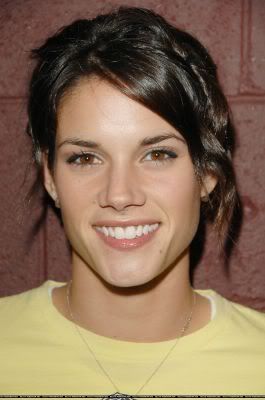
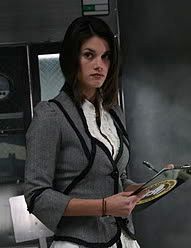
The new installment “interviews couples and guys about why they come to the Bunny Ranch. What’s the reason behind it. One of the things that I loved was a ring toss. That’s what a guy wanted. They have different sized rings and girls stand back and take aim. The girl that gets it, gets it.”

We start discussing how Dr. Ruth once talked about using large onion rings as an erotic ring toss. game. Hof lets me know that the Moonlite Bunny Ranch (in Carson City, Nevada) does cater to the food fetish inclined. He spoke of a regular that enjoys making the Bunny Babes sweeter.

“He will fax us a list and our driver goes down to our local grocery store, Albertsons, and buys about a couple hundred dollars worth of food,” Hof said. “It’s always different things. He spends a lot of time coming up with these ideas. Maintenance empties out a room. They put a plastic tarp down and he goes to work. It’s all fun and partying. Ice cream, sprinkles and syrups. You name it.”

Bunny Love has done the food fetish parties with the regular client. “I really appreciate the banana, ” she purred. “He likes it all. He likes the syrup. Anything that gets really messy.” Lobster? I suggest. “Would you pay to eat a lobster off me?” she asked this reporter. “Think of all the butter. You have to have real butter,” she demanded. Why did this interview have to be done over the phone. Bunny Love has no idea how nasty and messy I can destroy and pick clean a Maine lobster. Although such a moment would allow Anthony Bourdain to finally have a visual definition of Food Porn. Unfortunately the food fetish guy isn’t ready to step in front of the camera to share his dining tips.

A big note to Cathouse director Patti Kaplan: I’ll perform the lobster fest on Bunny if HBO picks up the tab. Have plastic bib, will travel!

How have people been reacting to her appearance on the show? “For the most part, people like me. They think I’m a goofy, buffy, dorky girl. That’s alright. I like it.” Thanks to the internet, Bunny has been keeping touch with old friends. “A lot of people from high school send me Myspace messages and emails. I was a big tomboy and had a mohawk for a majority of high school. They used to say, ‘Why don’t your dress like a girl. You’d be so cute.’ It wasn’t my thing. So now they see me on the show and send me messages saying, ‘I was right!'”

One of the big characters this season was Tiffany, the woman who tried to work as a hooker without having to give blow jobs. Bunny has very brief memories of this woman. “She made me look better. I had to handle her business.” The episodes were taped over a year ago, but some viewers think the show is nearly live. “I get people all the time saying, ‘You should fire that Tiffany girl!’ They think she’s still working here.” Tiffany lasted only two days. Bunny Love will be celebrating her second year at the ranch in July.

The show has made new clients think that the show is always being filmed. “People think we have cameras in our rooms,” she said. They’re always scoping the scene. They’re trying to find out where things are hidden. The only cameras that we have are surveillance for the girls’ protection in the hallways. When HBO is there, you know they’re there. You’re not going to accidentally end up on film.”

“Some people want to be on film. I don’t know if it’s for their 15 seconds of fame or so they can be a porn star and make a little money off it. What’s better than coming to the Bunny Ranch where you were going to pay for sex and in turn you’re getting paid to have sex?”

The big difference between Bunny now and when the shows were filmed can be found in her mouth. “I used to wear my retainer all the time so I sounded like a dork.”

For those of you folks (like myself), begging for an Isabella Soprano update, she’s not working at the Ranch although she is on the series. “She’s pretty much retired and hanging out with her vegetables,” Bunny reported.

Lately Bunny has been pondering entering the world of adult videos. “I’ve talked to people about it before. For a long time I wasn’t considering it. But I’ve been talking to folks in L.A. I’m thinking about seeing what they have to offer. I’m pretty picky. I’ve got it so well at the Bunny Ranch. It’s kinda dumb for me to branch into other areas if it isn’t financially worth it.”

We discuss the rift between hookers and porn stars. Bunny said., “Some of them are cool with us. There’s kind of a beef between porn stars and hookers. Unless you’re a contract girl, porn chicks make in one set what we can make in 30 minutes. There’s a beef there. For the most part I get along with no matter what.”

The Bunny Ranch was noted for being a crossover brothel when a few years back it started featuring porn stars as guest hookers. There was a lot of resistance in the porn community over this “meet your fans” opportunity. But quite a few crossed over.

“They love it, too. That’s why some porn stars are for it. They see all the money that can be made so they hop on the bandwagon. It’s also the same with hookers and strippers. (The Strippers) think they’re better. They think we sleep with more people than they do. It’s all the same. It’s all about money. And we’re getting more,” Bunny said. “We’re giving them satisfaction. We’re not giving them visuals.”

The success of Cathouse was something she saw coming. “I came into the Bunny Ranch right after they had finished the first season. I saw all the media attention. You could tell it was going to blow up. It was kinda a bummer that I missed the first season.”

The brothel hasn’t turned into place where hopeful actors appear to get face time on HBO, “I don’t think customers are concerned about screen time as much as being a part of the experience. I’ve never seen anyone adamant about being on camera,” Bunny said. “If you act like yourself and have fun, they’ll want to film you.”

Cathouse is directed by Patti Kaplan. I asked Bunny what it’s like to work with the most influential director in America. “Patti is a nice handful. She’s fun. She’s a kick in the pants.” Even though Patti has worked for years making HBO’s Real Sex series, she’s not jaded by filming in the Bunny Ranch. “You can tell sometimes that she gets excited when ideas come up. She says “What!” and you can see her jaw drop. I think she has a good time.”

The phone was passed over to Brooke Taylor, the newbie of the show has gone from a semi-innocent girl from Illinois to a queen of the Ranch. How does she react to those episodes showing her arrival in Carson City? “It’s kinda like looking at your junior high yearbook. Why did I wear my hair like that? It’s fun.”

She’s been doing more than just working at the Ranch. She seems to pop up in a variety of places with Dennis and Bunny Love. “It’s nice to travel and meet all the people. Everybody knows what I’m doing so there’s no reason why I can’t be open and honest about what I’m doing. I’m having a great time.”

Brooke appeared on Sean Hannity’s Fox special “I enjoyed it a lot. I felt I got a couple good digs on him.”

One person who had a dig on her was that Tom guy. “I had a Myspace page until it was deleted. I got deleted. They haven’t responded to tell me why. I didn’t have any nudity,” Brooke complained. None of the other Bunny Ranch women had their sites yanked. “The Myspace dude (Tom) is not my friend any more.” You hear that Tom?

Tiffany came up in the conversation. Brooke has finally seen all the footage since our first conversation. She too was taken aback by the blow job-free hooker-wannabe. “I thought she was planted. That’s like me saying I want to be a janitor, but I don’t want to touch trash. Pick a job that you like the job description. I want to be stripper, but I don’t want to dance.”

Stripping is a profession that Brooke had zero interest in pursuing. “There’s something about standing there naked and they don’t have to pay. Plus where I’m from, you get a lap dance for a dollar. I don’t work for a dollar bill. That’s why stripping didn’t appeal to me. If they put a dollar on the stage, you have to put your breasts in their face. Not for a dollar.”

When I ask about how things are going with her and Hof, she calls out, “Dennis, are we dating?” He says something I can’t make out. “Yes,” Brooke replies. “We are.”

The series shows the relationship develop between Hof and Brooke. “It is our courtship on film. HBO was just out there filming again. It was a completely different this time around since I’ve been with him for a little while now. There’s a little more security there then the first time around.

“I was a fan of the show and I was never impressed with Dennis’ choices. I always thought he could do better than that. I didn’t think Sunset Thomas treated him well. I thought the twins were just crazy. No girl that he’s been with is going to come back and be a threat. If the twins were great, they’d still be around. So would Sunset.”

While there’s no crossover episode in the works, the gals from Cathouse have paid a visit to The Girls Next Door. “We were at the Playboy Mansion not too long ago. We met Kendra,” Brooke said, “We told her we were doing a new show called The Girls Next Whore.

Brooke sees her show as having an advantage over Hef and his trio of girlfriends. “They don’t have sex on their show. Sex sells. We got it. They don’t. What people do is watch Girls Next Door to get the tease of it all. Then they come to us to get the release of it all.

“If we were on the E! channel, we wouldn’t be able to show what we are. They push their limits as far as they can. Being on HBO, it’s not television, it’s HBO. There’s not as many boundaries and rules.”

After over a year at the Ranch, Brooke is happy about her career choice. “I have the easiest job in the world. I have the job of being myself. People enjoy or they don’t. So far they enjoy it, so I can’t complain,” Brooke said.

When Hof gets on the phone, we also joke about The Girls Next Door. “We look at ourselves as the fulfillment center for Playboy, Penthouse, Hustler, Vivid and Wicked. let them tease them. We’ll please them,” Hof promised.

Hof’s business book for aspiring brothel owners is still in the works. “I really haven’t had much time cause of the TV show. Harper Collins wants to do a 4 book deal. I just have to sit down and spend some time on it.” A majority of his time lately has been devoted to the show. “HBO is in there 8 or 10 weeks a year and I spend almost as much time promoting it.”

Hof is proud that, unlike a recent trend in Reality shows that are secretly scripted, his show doesn’t outline the action. “We don’t create any drama. Any drama you see is real drama.” We speak of the trend of certain shows that are staged. He hates being compared to them.

“It’s not reality,” Hof declared. “I don’t have any editorial control at all. I didn’t ask for any. The attorney asked if I wanted it. I said no. HBO, they’re the monsters. Let ’em do their deal. Whatever they show they show. I think Brooke had it right; whatever we give ’em, we give ’em. Now I’m smart enough not to explode or go off on somebody during the show. I don’t do that anyway in my real life. If there’s a situation in the house of something negative, like too much alcohol or drugs with a girl, we’re not going to broach it with HBO there with a camera. It’s a personal thing with the girl and it’s my job to help her with it. We just do our deal and just have fun with it. The ratings are incredible and that’s way.”

He sees the segments where the girls and clients learning about new toys and sexual pleasures as vital to the show. “I think education is extremely important. We have shows where they’re educating girls and others where I’m talking to guys. There’s so much people want to learn about sex. They know so little. So it’s our job to give it them.”

He does have very little to give Deborah Jeane Palfrey, the alleged madam who turned over her customers’ phone numbers to ABC news. “She’s Madam Scumbag. That’s what she is. She’s outing her clients. That’s the first rule of our business, is privacy and discretion. She broke the cardinal rule. I hope she ends up with the ugliest girl in the penitentiary.”

Dennis was recently in the headlines when he had the firemen burn down the Mustang Ranch brothel that he had bought from the government.

“It was the right thing to do. It gave fireman many experiences in there that they can’t recreate,” Hof said. “They had a 20,000 square foot building with eight wings. They got to do a bunch of exercises to see how a fire acts within a building. They controlled the burn. Theory is one thing, but practical experience is priceless. It was the right thing to do.”

The burning brothel proved to be a news sensation as Dennis found his name all over the global media. “I was even in the South China Post!” he said. “I did the right thing for the fire department. I got a (tax) write off and I got giant media exposure for being a good guy.” He did get a nasty phone call from the former brothel owner who is hiding from the US government in Brazil. “He did call me and said some threatening things to me after it burned down. I said, ‘Bring it on.’ There’s nothing he can do.” This insures that we won’t be seeing Cathouse: The Rio Vacation.

Remember that each month will bring another episode of Cathouse to HBO. If you want to stop watching the show and live the dream, visit www.bunnyranch.com for details.

##

May 4, 2007

Trailer Park Interview: Missy Peregrym

Filed under: Columns,Interviews,Trailer Park — admin @ 1:43 am

By Christopher Stipp

Archives? Right Here…

One thing that struck me after I hung up the phone with HEROES’ Missy Peregrym is that she simply talks and thinks like someone who has better things to do than shoot the breeze about NBC’s greatest ratings superpowerhouse since MISFITS OF SCIENCE. Missy is just pleased to be working and didn’t show any signs of contemplating what the show means to her career or life right in this moment.

She has more pressing issues on her mind.

From eschewing the typical cookie cutter Actress label and all that entails to really opening up about what it is to be a woman in America, nevermind the fact that one of the unspoken rules of Women’s Fight Club in Hollywood is that you never let on that some of the images and affectations you’re expected to portray in any given role might drive some young lasses to develop an eating disorder.

What is clear, though, is that besides our mutual disdain and revulsion towards television shows like THE BACHELOR, which should be exterminated, not euthanized, Missy is not an evil shapeshifting mind bender in real life but what she is, though, is a woman who is deserving of the kind of accolades you would bestow on someone who does indeed possess a modicum of power and simply chooses to take the road that is not beset with hordes of Yes-Men and ass-kissers.

Missy just wants to live a life that’s free of scrutiny over what she chooses from her closet and free to think that while being on HEROES is a gift it’s what you give back, and what you’re willing to believe in, that makes life worth enjoying. She’s honest, direct and deeply insightful and is everything you wish more people in her line of work could be. From raising awareness to the plight of young women to eloquently iterating how it is that dysmorphia runs rampant through those who sup at the fountain of Cosmo Missy, quite simply, is the kind of woman you would hope every daughter could turn out to be. Makes you wonder whether she does possess something special in her DNA.

CHRISTOPHER STIPP: So, how are you doing?

MISSY PEREGRYM: I’ve been doing really good.

It’s beautiful in LA”¦it’s starting to get warm”¦I’m done filming”¦I don’t know what I’m doing with my life again”¦

(Laughs)

You know, the usual.

STIPP: Well then let me find out, tell me, how HEROES all came about. How long did it take for you to go from interested to having the part itself?

PEREGRYM: It all happened within two weeks. I auditioned”¦I auditioned on a Thursday or Friday, thought I did absolutely terrible, and I left feeling like, “Forget it. This sucks because this is a great show I want to be a part of but I blew it and I’ll just have to get over it.”

And then they called back. They said they wanted to see me again and it was between me and another girl and they wanted me back that following Monday. So, after that I think it was like three days and I found out. It was great. Even then we didn’t know how it was going to work out because we had to get my working papers in order as well.

STIPP: That’s right, you’re from up north.

PEREGRYM: Yeah”¦I’m an immigrant.

(Laughs)

STIPP: And had you been living in LA prior to that?
PEREGRYM: Oh yeah. I’ve been in LA ever since I came to train before filming STICK IT, I’ve been right here.

So, I’ve been staying here and I’ve had working papers but it’s only specific to which studio I’m working with at the time. Just because I have working papers, though, it doesn’t mean I can work every production. It’s tough because I’ve lost jobs over it.

STIPP: Really?

PEREGRYM: Yeah, there are things I can’t go out for because there’s not enough time to get them done. Recently, there was a pilot”¦it happens all the time.

STIPP: It must be an odd thing to contend with.

PEREGRYM: Yeah, it is. It’s incredibly frustrating but it’s so incredibly expensive to get your green card as well and it takes a long time. Eventually that’s really what I have to do and I should be putting in an application but I’m a procrastinator.

STIPP: Can’t you circumvent the whole thing by getting married in this country?

PEREGRYM: Yes, I think, but I don’t know how that all works. I think it’s still difficult but I believe if I get married here I have to stay here and can’t go back home for six months or I can go home but”¦it’s all just really confusing. I looked into it and I was proposing to people on the street. No one said yes.

(Laughs)

So, it didn’t work out that well.

STIPP: Has HEROES worked out a little better? How has filming been for you?

PEREGRYM: It’s been a lot of fun. Sometimes it’s tough because my character”¦I don’t get to do a lot of the stuff. I mean, my scenes, the way they’re written, are amazing. Now, sometimes it’s frustrating because I can’t act them out because everyone else is acting my part and I just pop up at the end and say, “Ha-ha.” So, believe me, it was great to be a part of it”¦I love the show so much and I love my character and I hope I’ll get to do a little more but it’s been a blast and I never thought I could love playing evil so much.
STIPP: I know you’re billed as a Guest Star”¦

PEREGRYM: You know, I don’t know what they’re planning for next season. The idea is that I’m coming back but nothing is contractually binding me to that.

STIPP: Since you’re saying that you don’t get to do much are you on the set a long time out of the shooting day or do you hang out to watch the production as it happens?

PEREGRYM: Well, no, not really. I’ll be around for my scenes. I have to be around for the entire scene whether or not if I’m in it but when you’re on set, you’re on set for 12 hours and that’s for your stuff. So, even though the camera time isn’t a whole lot it’s the process that takes a lot of time. And it’s important that I’m there as they’re there for my stuff because we both have to kind of interact. We have to do the same things and copy each other from the time that I morph to the time that it’s me. It’s fun, though. I think it’s a fun role for everyone else to play to because they get to step out of their character too and play it a little cheekier than usual”¦except for Ali Larter’s character because she’s already got that going on.
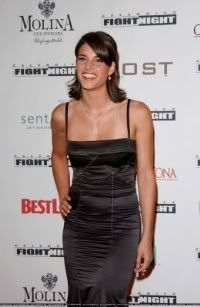
STIPP: Are you able to prospect for new jobs or is HEROES taking all of your time?

PEREGRYM: No, it doesn’t take a lot of my time. When it comes to the dates it’s really great”¦the only thing is because there is so much that’s going on, and since they’re really committed to making this the best show, they like to keep you around. They don’t like you leaving town. They like to keep you close. If a shot doesn’t work out or if they don’t complete their day, which happens a lot”¦why? Because it’s a tough show to film”¦That’s frustrating. Sometimes. Sometimes. But, other than that, it’s so easy and I’m really blessed to be a part of that.

It’s really difficult for those that are the stars of the show because they’re in it all the time and they’re the ones filming 12 hours a day and it’s so tiring but I don’t have to go through any of that. So”¦I kind of scored the best job there.

(Laughs)

STIPP: Now, to bring up a point, weeks and weeks ago when you were contemplating entering the fray with this show did you have an idea for how widespread the viewership for HEROES had become? The fanaticism of it all?

PEREGRYM: When I joined, I knew it was a hit, I knew it was doing really well. But, I don’t think I really understood because I don’t watch a lot of TV. The shows I was a part of LIFE AS WE KNOW IT, shows like that, things I was proud of, they did OK but it’s pretty incredible to be part of a show that’s taking off as much as it is.

What I’m proud of, really, is that everyone works so hard. The cast and crew are so nice. You just want the best for everyone that’s a part of the project. The actors really put in 100% all of the time and the writing is just genius. Every episode is interesting and I cannot even remember what is going on. I watched last night’s episode [.07%]. I had no idea what I was doing! I couldn’t remember anything because the show moves so fast. But the reason why the show is doing so well is because everyone involved is just so dedicated and creative and works hard.

STIPP: Is there extensive writing that’s done on the fly or is the script the script?

PEREGRYM: Yeah. They’re always changes. They’re always rewriting it, all the time. You’ll get the first draft the week before you go to shoot and then you’ll get 500 different colors of all the changes they make. And that’s good because once you’re there to film it, that’s it.

STIPP: This must also be the first time since you’ve been a part of something so big. Are you being recognized yet by geeks or fanboys of the show?

PEREGRYM: I really get recognized everywhere else but LA. They leave you alone out here which is great but it’s weird when I do leave I almost forget that I’ve done things and girls will come up to me and I’ll be, “Oh, yeah, I did do that movie”¦” But it’s cool because I have the best fans in the world.

STIPP: Really? Come on”¦

PEREGRYM: I have the cutest little girls coming up to me.

And you know, I thought about it, the only real comic books I read growing up were Archie comics. Like, I was a dork but I was never into that whole Sci-Fi thing, I didn’t watch a lot of TV but the one show that I really did watch was (Laughs)”¦Star Trek: The Next Generation. Every night, 7 o’clock, after dinner, with my family.

STIPP: No”¦

PEREGRYM: Yes!

It makes me laugh because I totally forgot about it until a couple of days ago. I’m down with Worf!

STIPP: Were you also down with Wesley Crusher, Wil Wheaton?

PEREGRYM: Yup! And it was only the Next Generation.

STIPP: What else, then, are you doing with your time while you’re here? Are you spending your summer doing anything in particular?

PEREGRYM: Well, nothing is confirmed, as of yet but filming for HEROES starts back up at the end of June. There’s not much time to do anything unless it starts right now.
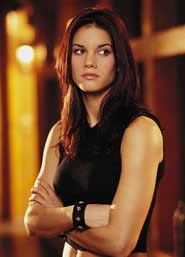
It’s probably the effects work that’s contributing to that timeline; they are just unbelievable, to be able to do that week in and week out.

Incredible. They do such a job with it. It’s impressive.

STIPP: How are they able to churn through all the work that goes into it?

PEREGRYM: They have two crews, really, to be able and handle it. You can’t even call it 1st and 2nd unit. They have two units that are filming simultaneously because there is so much to do and everything takes a long time. It just takes an extra amount of time.

STIPP: So, what’s the lead-time then? From shooting a scene to when it airs”¦let’s take last night’s episode”¦nice boots and skirt combo, by the way”¦

PEREGRYM: Oh my God!

STIPP: I don’t and wouldn’t comment on something like that but it was obvious”¦and that was at the moment when I was telling my wife about who I was interviewing, obviously she doesn’t watch the show, and she had no clue but when you morphed back and you’re standing there”¦

PEREGRYM: That’s funny because”¦my character”¦I don’t have to commit to a lot of things. They can adapt me however they want. It’s funny because the wardrobe started out very different than that. And then, on the day of shooting, they’re like”¦we just improvised the outfit. I got a little confused. I was like, “Whoa! I’m kind of getting confused about my character. What’s going on with her? How old is she?” You kind of just have to go with the flow.

But to get back to when I shot it? Probably a month and a half”¦and not even that because I’m including the production break in-between that”¦when they weren’t airing any new episodes?

STIPP: Right.

I’m not looking for scoop, so let me preface the question like that, but without saying anything specific do you think the creators know where they want to go with the series? I’m just thinking of LOST where there’s a real sense that not even they know what’s happening on the island.

PEREGRYM: I think they have an idea of where they want to go with the characters but realize they don’t tell us very much at all”¦and when I entered they had so many other storylines going”¦and I don’t think they have a lot of time to focus on me when they have all these other things to tie up. I don’t feel my character has alliances with anybody and”¦I can tell you that I honestly have no idea what’s in store with my character.

Did that answer the question?

STIPP: Yeah, it did. I just see things from the angle that there are even more balls, characters, that have now entered the fray and, with the exception of a few quality kills, no one substantial has really exited.

PEREGRYM: And I think that’s why it’s complicated for the writers as well. I really commend them for being able to control that because I think it’s difficult to have intertwining storylines with old characters and new characters while making everything coordinate and make sense. I think it’s tough to do.

I also believe that what makes the show so enticing is that you never know who’s for good and who’s for bad, What makes the show interesting is that all the people have the capability to do good and bad things based on life experiences or temptations or normal human instincts. And it’s whether you’re going to step-up or back down, whatever the case calls for, and I think that’s what they want to do; they want to take something that’s comic book-y but keep it realistic so that people can relate to it. It’s interesting and it’s cool and it has all these effects of people with superpowers”¦but these people have some very personal, relatable issues that are happening which I think are very basic.

STIPP: It toes that line between nerdiness and drama”¦You’ve got a girl who’s adopted, you’ve got another who has daddy issues”¦

PEREGRYM: I think the writers are very good at doing that, keeping the foundation of the show rooted between those two things.

STIPP: Your parents live in Canada, right? Are they able to see your performance up there?

PEREGRYM: Yeah they do. Do you know they get it on Sunday night? They get it a day before it gets released here.

STIPP: I didn’t know that”¦.

PEREGRYM: Yup. My mom called me and said, “I saw you on HEROES” and I said, “What are you talking about? How did you see that?” “Oh, it’s on Sunday nights”¦” It makes no sense to me. I can’t imagine that whoever is in programming is OK with that because people can blog and say things on the Internet and spoil things for Monday night but I guess it’s not a huge problem. I thought for sure, at first, my mom watched the wrong show but she said, “Well, are you doing other things I don’t know about that are entitled HEROES?”

STIPP: Does she appreciate your work on the show?
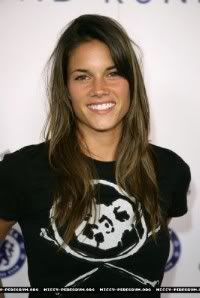
PEREGRYM: Yeah. Both of my parents are incredibly supportive. I try to go back home as much as possible, get away from LA because it’s good for me”¦It’s nice that I have my family and friends to go to.

LA can be a wicked place”¦

You see that kind of thing a lot…I understand why…I can see how that happens but I know LA lives by different rules and standards compared to anywhere else I’ve ever been. I feel more comfortable anywhere else other than here. I just think it’s easy to get caught up in that whether you want to or not.

I mean I had an issue with the way people thought of me as an actress and everything that goes with that. I hated the stereotypes I was getting”¦and I hated telling people that’s what I did”¦and then with publicity, how you can get caught up with what I’m wearing now. As a result I don’t do a lot of publicity events and I eventually realized I had gone to the absolute extreme so now I have relented a little but there’s so little control over anything here. What you audition for and the jobs you get, that’s based on everyone else’s decision. Sometimes you feel like you’ve just got to let go and trust that things are going to work out.

And I’m not really speaking from personal experience but I’ve seen it as something I don’t ever really want to be a part of. It’s hard. The power of influence here is crazy, which can be a good thing, but I think it’s really tough to stand up for really good things here because that’s not what sells.

STIPP: How do you keep from being sucked into that? Is it just the support system that you have around you?

PEREGRYM: I think it’s perspective. It starts with you. What your priorities are”¦your morals and values and what you stand for. I think, with me, I am really careful about the work that I do and there’s not a lot of stuff that I love but my passion and my heart is for young girls.

I want young women to respect themselves. I want them to eat food, for God sakes, but I want them to take care of themselves. I want to inspire athleticism within young women”¦ for them to take care of their bodies and it all starts with how you think of yourself.

For me it’s about being focused on where I want to go and who I am as a person and everything else will fall as it should. But it’s frustrating. It’s definitely hard sometimes. I have my good days and I have my bad days. I live by the ocean and whenever I have a really crazy day I just go to the beach and that pretty much takes care of it.

STIPP: And I see what you mean. As someone now who is personally invested in how messages come across to young women, being the father of two girls, I can’t imagine how it must feel to be bombarded with mixed messages by how a woman should act and be.

PEREGRYM: I am so thankful for my parents, I love them for it, because it wasn’t like I had a lot of issues growing up, which I think a lot of them do now, looking at the magazines”¦how you’ve got to be skinny, so skinny”¦all the focus on the superficial”¦it doesn’t matter. It’s not going to help you grow as a person. It doesn’t help you build character and everything that magazines are talking about now will be irrelevant in five minutes; it’s not about developing as a woman, it’s about looking like one.

(Laughs)

My dad had three girls.

STIPP: Oh my”¦

PEREGRYM: I have two other sisters and we’re all very close. I’ll be 25 in June. So, it’ll be 25, 24 and 22. So”¦good luck. You will be stressed, I can promise you that.

STIPP: Well, no worries. I’ve already started an elopement fund.

PEREGRYM: And I think the reason why I have the standards that I do, especially in finding a companion, a man, I want in my life, a lot of that has to do with how my father was with my mom. He was strict but he loved my mom like crazy and I know all the things he put down in front of us as boundaries were to protect us. And, yeah, I hated it. A lot of the things, he wasn’t going to let me date until I was 16. It was like, “I’m not getting married. Let me have a boyfriend!” “It’s so unnecessary to have a boyfriend at that age,” he would say. Now that I do have one it’s very, very important to me that my parents approve of the person that I’m dating because I believe that they know what’s good for me. They know what it’s going to take to have a strong marriage and they’re going to see that I’m respected and loved and taken care of.

I think it’s important for girls to love and respect themselves and be excited to grow into everything that they are and I think that for them to do that it’s hard because the messages are so construed. I would hope girls try and see what’s really important. I think that when you respect yourself, and you’re happy with yourself, you raise a higher standard for yourself. And when you do that you allow strong people who also believe those things into your life and it’s about quality of life.

Everyone I know is, “If it’s fun, then just do it.” Yeah, it’s permissible but not everything that’s fun is good for you. It’s about women and girls actually caring what they really instead of being told what they want. Figuring those things out will help you meet better men and it’ll hopefully lead to you having better families, better children, it just goes from there. It’s a chain link really.

##

May 1, 2007

Interview: Chuck McCann

Filed under: Interviews,Joe Corey's Party Favors — UncaScroogeMcD @ 12:20 am

mccann-01.jpg

-by Joe Corey

mccann-02.jpgChuck McCann is a stealth superstar of showbiz.

While many of you may not immediately recognize his name, odds are high that you’ve repeated his classic catch phrases: “How about a Hawaiian Punch?” “I’m Cuckoo for Cocopuffs!” “I said lunch, not launch!” And “Kibbles ‘n Bits, Kibbles ‘n Bits. I’m gonna get me some Kibbles ‘n Bits!”

He was on the legendary First Family record. The comedy album about the JFK White House sold 9 million copies and won the Grammy for Album of the Year in 1963. Chuck not only appeared on the record, but put up the money.

You might recognize his face from his 50 years in movies and television. He was in The Heart Is a Lonely Hunter, Herbie Rides Again and Silent Movie on the big screen. And when it comes to TV, he’s appeared with nearly the history of crime fighters including Kojack, Columbo, Starsky and Hutch, CHiPs, Police Woman, Hill Street Blues, Matt Houston, Knight Rider and The Rockford Files. Although for a lot of grown children, he’s remembered for being Barney against Bob Denver’s Junior in the Krofft’s Far Out Space Nuts. Did that help?

He recently appeared on The Girls Next Door teaching Bridget Marquardt how to do voiceover work. Now you know who he is.

mccann-03.jpgThe Party Favors had a chance to call up the man who taught a Playboy covergal how to sell a product with just her voice. Chuck is promoting ,Cool McCool: The Complete Series, a boxset from BCI containing all 20 episodes. The animated series features a superspy with a Jack Benny accent taking on colorful villains. It was a more flamboyant version of Get Smart. The characters were designed by Bob Kane, best known for creating Batman.

McCann did tons of kid shows in the greater New York City area for nearly every channel including a Dumont network affiliate. I asked him if it was a weird experience going from the guy who introduced the cartoons to becoming animated?

“No, because I did puppets on my show, too,” Chuck said. “I did puppets for Paul Ashley. We did Rootie Kazootie for NBC. I wound up doing an act with Paul where I did impressions for the voices of the puppets. I started to create my own puppet voices when we created new characters. They were unique characters like Mr. McNasty, Mildred and Lester. Al Brodax, a great animator, had a bunch of shows for King Syndicate. He wound up hearing me and becoming a fan of mine. He asked me if I’d do the voices for Cool McCool, a new animation series he was doing. There was three of us. Carol Corbett, Bob McFadden and myself. Bob played Cool and I wound up doing 90 percent of the other voices. I could do multi-voices.”

Unlike today’s animation where a voice actor can record all their lines separately and have them digitally edited together without much fuss, Cool McCool was done like a live radio play. Chuck wasn’t given time to get into the various characters.

“We did them at once as they came up on the script. And so you had to change them that fast. That’s why they used me. But I could have done Cool.” Chuck starts repeating a few espionage lines. Chuck did enjoy working with McFadden and their interaction during the recording sessions. “We were like a jazz band. it was almost like a trio. Because you’re at the microphone and we didn’t have the electronic editing. We’re cutting it like an arrangement.”

Bob Kane did more than lend him name to the series and cash a check. “Bob Kane was at the sessions. He created those characters. They’re very Bob Kane-like,” Chuck said. “It was an adult look.” Brodax’s next major project would be the much more adult Yellow Submarine featuring the Beatles. By the way, Peter Max had nothing to do with the art in that movie.

Chuck remembered those days when kids’ programs mixed the levels of humor so it didn’t appeal to a defined demographic. “My show in New York was very much like that. What I did visually, I did for the kids. What I said, I said for adults. I had a big, wide range audience because my stuff was considered broader than most kid shows. It was a comedy show. It certainly wasn’t Captain Kangaroo.” Chuck would know that since he got his start playing Sailor Clyde on Captain Kangaroo.

Chuck was part of the most infamous moment in children’s TV. On New Year’s day 1965 Soupy Sales told the kids that their parents were still sleeping from the night before. He asked the kids to go into their parents’ wallets and purses and find the “little green pieces of paper with pictures of George Washington, Benjamin Franklin, Lincoln, and Jefferson on them, send them to me, and I’ll send you a postcard from Puerto Rico.” Soupy was fired from the show because of this stunt. Chuck’s show at the time aired on the same channel as Soupy.

“When Soupy was fired off the air, they made me go in and apologize for him,” Chuck said. “I went in and said, I can’t do that. The program manager told me that I have to do it. It was in my contract. So I went down to the studio and got on the set. I had Soupy’s crew there. They all knew me. I could see the program manager standing in the back of the studio. I said, ‘A few days ago, Soupy came on the air and told you to take the money from your dad’s pocket, put in envelope and send it to him. This was a terrible, terrible thing. Soupy made a terrible mistake.’ You could see the manager in the back nodding his head like that’s it. The crew looked at me like I was so terrible for saying that. And I said, “It really was a big mistake on Soupy’s part since he forgot to give you the address. It’s WNEW…..” Shit hit the fan. A roar went up from the guy. It was really stupid and Soupy was brought back.”

In the end the management’s fear that somehow the kids took Soupy’s plea for cash seriously was unfounded as the thousands of dollars never arrived at the station. “There was no big money,” Chuck said. “They were getting pennies and nickels.”

But cash would show up in the mail. Chuck told a story about a female fan that would send him hand drawn reproduction of money. “She meticulously sat there and drew every bill.” He discovered that she also sent fellow on TV host Joe Bolton wads of the artistic currency. “He was there before me and would get $100,000 a week from the woman.” In addition to fake money, “She drew the stamps and they were cancelled.”

In addition to doing the various voices on Cool McCool, he contributed a multitude of short vocal roles to The Jetsons. Chuck couldn’t quite remember which bit characters he did. “I forget. I’ve done so many voices for Hanna-Barbara. Everything from The New Schmoo to Drak Pack to CB Bears. I always loved the Schmoo. He looked like tremendous bowling ball with a mustache.”

McCann also served as fill in voice for quite a few famous characters. “When Daws couldn’t come in to New York, I did Yogi Bear. I did an album called Wake Up America With Yogi Bear. I did all the characters.” He does a quick run thought of Yogi, Boo Boo and Ranger Smith that was more entertaining that John K’s Yogi cartoon. “I did Bullwinkle for General Mills. I created the Cuckcoo Bird for Coco Puffs. I was not only Sonny, but I was Gramps.” And with that Chuck breaks into the voices showing he can still push a chocolate coated cereal. You can find several of his Coco Puffs ads on YouTube.

Unlike some showbiz people that fear the internet, Chuck sees it as useful for letting folks follow his resume. “I think its a blessing. When you’re a character actor, you’re buried under make up. I was Oliver Hardy for 40 years for Anco windshield wipers Jim MacGeorge was Stan Laurel, with Stan’s blessing.” Those were the ads that featured Laurel cutting off Hardy’s necktie to help the wiper blades. “I did one with Groucho Marx,” Chuck mentioned.

Remember that if you ever meet anyone with a tale of working with Groucho Marx, you must immediately ask, “What was it like meeting Groucho?”

“Fantastic,” Chuck said. “We really hit it off. We did the commercial in about two hours and we were out of there. They asked me to keep him occupied for a while since he was known for having a short fuse. He didn’t. He had a wonderful time. He said, ‘What are you doing for lunch, McCann?’ We went to a restaurant across the street from my office. About six of the guys working at the studio came with us – they automatically invited themselves. Then we all wound up across the street at my apartment where I had a screening room, ’cause I had a production company. He started talking about Day at the Races. And I said, ‘I have a print of Day at the Races.’ So I ran a 16mm print for him. He would go, ‘Stop it! Stop it! Let me tell you about this.’ And he would talk about the scene we had just seen. He did that with about three of his films. When we finished it was ten o’clock. The phone rings and it was his nurse wondering where he was. She had tracked him down. She was so pissed at me. He had a wonderful time. I later met him at the Playboy Mansion.”

Chuck is friends with Hugh Hefner and gets to enjoy movie nights at the Playboy Mansion. The screening room in the living room is equipped to show 35mm and projected video. “(Hefner) grew up as a kid always saying, ‘I always wanted to be able to show movies in my living room.’ He loves the living room and having people coming in, sitting down and watching the films. That is his dream and that’s what he created for himself.” Chuck’s own screening room is more about the cinema experience. “I grew up in the Roxy Theater. My father was an arranger. I grew up in the dark, sitting in front of a proscenium arch and watching movies that way. That’s what I created in my house. I have a stage. I like the lights and the curtain open.”

mccann-05.jpgChuck and the inner circle of movie lovers that meet at the Mansion are very active in working with UCLA, The Library of Congress and Eastman House in finding films for preservation. They’re a very giving group, including Hef.

Seeing how Chuck was featured on a recent episode of Girls Next Door, I raised the internet rumors that Hef has settled on Holly. This season’s focus seems to be on the girls finding work outside being Hef’s girlfriends as if Bridget and Kendra’s time at the Mansion was coming to an end.

“No. No. No. No,” Chuck said. He doesn’t see the Big Love ending anytime soon in the Holmby Hills or on E!. “The show is a hit and the reactions they’ve gotten this year have been tremendous. It is fun getting to look at the way they live. And believe me, they’re all that way. Bridget is the sweetest kid. Kendra is hysterically funny. I fall down with her. Holly is just a love. She’s Hef’s main squeeze.”

The bigger question is if Bridget has a career doing voiceover work. “I think she has potential. She’s going to class and has a great teacher. Unfortunately they didn’t pick the best takes. She did a very sexy host voice for a perfume. They didn’t use that.”

While taking about Carol Burnett suing Family Guy over using her image, I ask Chuck what would happen to animation if Phil Silvers ever sued all the cartoons that ripped him off as a character. Chuck gives a hearty laugh.

“I loved Phil. He was a good pal. He used to call me up and say let’s do coffee. He was on my show. I did a special with Phil and Pat Morita. He was a funny, intuitive man.”

Another of Chuck’s comedy role models was Jackie Gleason. “He was over at the Adelphi Theater. I used to go over and sit in the balcony and watch him. I idolized him. He idolized Laurel and Hardy. Who didn’t? I had Marlon Brando’s attorney here. He said, ‘You know, Marlon Brando’s biggest love was Laurel and Hardy.’ Go figure.”

Chuck is upset that the cinematic legacy of Laurel and Hardy is being abused by the companies that have the rights to the films. Even in the age of DVD, this comic twosome’s best material has either been kept in the vault or released in substandard prints (such as the TV edited version of Sons of the Desert).

mccann-06.jpgChuck’s cult film The Projectionist is now out on DVD. He plays the projectionist at a large movie theater. He daydreams and daydreams into the various movies he’s playing including Casablanca and Flash Gordon. The evil theater manager was played by Rodney Dangerfield.

“I loved Rodney. We had a couple of laughs on that. He couldn’t believe it. He’d say, ‘What kind of a movie is this where you gotta come to work on the subway?’ We were rebel filmmakers at that time. I had just finished making The Heart is a Lonely Hunter. This guy came out of the woodwork named Harry Hurwitz. He sent my manager a one sheet copy of the premise. My manager told him that I’d never do it. But by law, my manager has to show it to me. I took one look at it and said, “Where is he? This is the best thing I’ve ever read. This is exactly what I want to do. It’s Walter Mitty! Does he have the money to do this?’ We figured out how to do it. It took us a year.”

What’s amazing about the film is the numerous film clips that pop up. How could a film with such a small budget get to use Citizen Kane? “David Picker (at United Artists) was the one who helped us. He loved the idea and did a different version of it with Steve Martin. ” That film was Dead Men Don’t Wear Plaid, which had Martin solve a case while stepping through the best Film Noir flicks.

After being a projectionist, Chuck went on to play a theater manager in Foul Play. This wasn’t supposed to be a case of typecasting. Chuck was lined up to be the cop, but he was booked on another film during part of the shoot. Brian Dennehy landed the badge role. Chuck was able to show up for the smaller role and get to share screen time with Goldie Hawn.

Seeing how Chuck was in Herbie Rides Again and Knight Rider, I had to ask which car was more cooperative on the set. “Actually, I love Herbie,” Chuck declared. “Kitt was fun. I work with David Hasselhoff a lot.” Chuck never worked on Baywatch. “He wanted me to, but I was busy.” Well that’s one less red Speedo on the screen. But this raises the amazing concept that McCann is tight with The Hef & The Hoff. If only Felicity Huffman showed up at the Mansion, he’d be hanging with The Hef, The Hoff and The Huff.

Even with the numerous cop shows on his resume, Chuck has yet to appear on any CSI or Law and Order series. “I haven’t done a CSI. But I’m about to do a Boston Legal. ” He’s going be working with The Shatner. Perhaps we should refer to McCann as “The Chuck”? He’s earned a “The” for his name. But Chuck Norris and Chuck Woolery might put in a cease and desist order.

Every time stars are interviewed about working in animation, they joke about how they don’t have to spend hours in makeup and can do the work in their pajamas. Has Chuck ever run into stars in their PJs in the vocal booth? “No. But Brando showed up in a dress one time to do a voice over. It’s the Gospel truth. He wanted to get into the character and showed up in a dress.”

What does McCann think of the studios that load up with name stars to read for animated films? “Some of them are good, but some of them should stay home. Robin Williams is terrific.”

Chuck is filled with praise for the vocal work of Wally Wingert, who also produced the bonus features on the Cool McCool boxset.

“There are guys out there today that are very talented like Wally Wingert. Wally is the best. He calls himself the modern Chuck McCann. He’s very active and doing a lot of work. He helped me with Bridget. He is in love with the genre. And you have to be to be a superior voiceover artist.”

When Chuck guest starred on Diff’rent Strokes, did he sense that those kids would get into so much adult trouble?

“No,” Chuck said. “I loved Gary Coleman. He was a sweetheart. I didn’t get to know (Todd Bridges). You just wanted to hug Gary. He was a great kid. He’s a good actor. One day he’s going to do something outstanding that’s going to blow everybody away.”

“It’s so tough for a kid in this business. Everything is out of proportion. The popularity and the fame. And one day it goes away. Success is like arsenic in a way. You take a little at time in small doses you build up an immunity. But if you get it all at once it’ll kill you.”

The idea of a child star returning to acting after going through a rough patch brings up Jackie Earle Haley’s Oscar nominated comeback in Little Children (due out on DVD on May 1).

“I want to see more of him,” Chuck said. “He’s a helluva an actor. I was glad to see Alan Arkin win since we’d worked together.” They had co-starred in The Heart Is A Lonely Hunter.

On the topic of the Academy Awards, Chuck has agreed to help with the Party Favors campaign to get Gordon Willis a lifetime achievement Oscar for his ground breaking camera work. Willis wasn’t even nominated for The Godfather and Manhattan. It’s time to give the Prince of Darkness his shining moment. If you’re a member of the Academy, please second Chuck’s request for Gordon Willis to receive a standing ovation at the Kodak Theater in 2008.

mccann-04.jpgAnother thing the Party Favors is pushing is for Rhino to finally put out Far Out Space Nuts. The Saturday morning series featured Chuck and Bob Denver as two food delivery guys who accidentally get shot into outer space. Chuck is eager for a complete collection with all 15 episodes getting released. I’d enjoy hearing Chuck’s commentary tracks for a boxset.

“From your lips to God’s ears,” Chuck said. “I want that not only for myself, but for Bob Denver. I had a lot of fun. I created that show with Earl Dowd. Marty and Sid Krofft were credited, too.” When showing the younger friends H.R. Pufnstuf and Land of the Lost, they all ask the same question: Were the Kroffts on drugs? I ask a man who was there. Was Lidsville really a lidsville?

“No. No. No. No!,” Chuck said. “If you could have only been there.”

According to Chuck the only thing that ever got lit up at Krofft was the Sigmund and the Sea Monsters set. “The studio burned down. The stage exploded and the studio burned. Everybody almost lost their lives. Billy Barty was stuck in his costume. It sucked all the air out the studio. The walls buckled and collapsed. It was started in the foam material.” Luckily no one was harmed. “They wound up building two new stages. And we inaugurated them with Far Out Space Nuts. The stages were huge and gorgeous. We used one for the moonscape.”

With our time growing shorter, I asked for any memories of his time on Fanstasy Island.

“Herve Villechaize was talking about his love of making movies rather than television. Mickey Callan and I are on stage listening to him,” Chuck said. “Ricardo Montalban turns to Herve and says, ‘You know something, Herve. I got a feeling that this Fantasy Island is holding you back.’ Within two weeks he was gone. It was incredible. I don’t think Ricardo had him removed. Before that I worked with Herve in New York. He played one the elves to a Santa Claus I did.” But there would be a third meeting with Herve in the Friendly Skies. “We reunited on a 747. I was walking up the aisle and so was he. The plane hit an air pocket and he literally fell into my arms. He was a sweet guy.” Hard now to hear Herve’s Tattoo yell, “Da Plane! Da Plane!” without seeing him in midair.

The conversation ended with the subject of Lindsay, Spears, Paris and Nicole. He can’t believe the pack of photographers and tabloid journalists chasing after those girls. “I do not envy success,” Chuck said. “I don’t. That’s why I love doing my characters. I don’t have people bugging me. It’s a pleasure to be able to go into a restaurant. These people are hounded. There’s a big price that comes with this.”

Chuck has been a major success as a stealth superstar. He has been a part of our lives without being an overbearing nuisance. He’s the type of guy you pray to have in the seat next to you on a cross country plane flight. When he says “Hello,” you’ll realize how much he’s been a part of your life.

If you are curious about Chuck McCann’s work, click here.

##

April 28, 2007

Interview: Simon Pegg

Filed under: Interviews — UncaScroogeMcD @ 1:05 am

hotfuzzheader.jpg

-by Ken Plume

pegg-01.jpgAfter jobbing as a standup and working in a string of groundbreaking UK TV series (including Asylum, Big Train, and the beloved sitcom Spaced), Simon Pegg – along with co-writer and director Edgar Wright – hit the big screen with the even more beloved Shaun of the Dead.

Their latest is the genre-bending cop flick (and Shaun of the Dead follow-up) Hot Fuzz, currently in theaters.

Pegg stars as a London cop banished to the hinterlands by jealous colleagues, who’s then teamed with a witless partner (Nick Frost) before stumbling on a series of suspicious events that uncover the dark underbelly of the seemingly bucolic village.

We had a chance to chat wth Pegg as literally the last official interview of the Hot Fuzz press rounds…

(Be sure to check out our interview with Edgar Wright here)

wright-03.jpg

KEN PLUME: I assume you’re probably sick of answering Hot Fuzz questions so I thought we’d just talk about Big Train.

SIMON PEGG: (laughs) You’re my last interview, actually, of the whole press tour…

KP: Really?

PEGG: Yeah.

KP: I’m never going to live up to that.

PEGG: You’re the 500th caller.

KP: What do I win?

pegg-09.jpgPEGG: A Big Train DVD.

KP: That’s actually what I was hoping for.

PEGG: (laughs)

KP: You’ve made a small boy’s… well, large man’s dreams come true.

PEGG: You know, they don’t even give me a free Big Train DVD.

KP: That’s unfortunate. But it is the BBC.

PEGG: Yeah.

KP: But you would think that Graham or somebody would send you a set…

PEGG: Yeah, I know. It’s hard to get free stuff from certain people.

KP: I think maybe you just need to start a website, simonsdvdappeal.com. Just “Here’s a list of the stuff I haven’t gotten yet. If anyone can send something from HMV or something, it’d be appreciated.”

PEGG: There’s plenty of it…

KP: It could be your own registry – like for a wedding or a baby shower – but stuff that you want…

PEGG: Well, I was in Dublin recently and I was walking down the street and walked past a shop and, unbeknownst to me, there had been a 12-inch talking me released. A Shaun of the Dead doll that I didn’t actually… I knew it was coming out, but I didn’t know it was already in the shops. So I went into the shop and they actually gave me one, which was sweet. But I don’t want to embarrass Universal by complaining that they set my tiny version free in the shops without even telling me.

KP: And even then, do they send you a box?

PEGG: No.

KP: So, police officers can commandeer a car – you, as a celebrity, should have the ability to go, “You know what? That’s me. I want it.”

PEGG: I know. I wouldn’t ever be so pushy, but I was quite pleased that when I went into the shop they actually did say, “You shouldn’t have to pay for this.” (laughs)

KP: That was good of them.

PEGG: Yeah, I thought it was sweet.

KP: Of course, they went hungry for a month after that because of the loss of that sale…

PEGG: Yeah. Well, what I did is I autographed another couple so they could flog it for five more pounds.

KP: Well, that’s good. I guess if they really want to get on your good side they should have offered you a smoothie along with the doll.

PEGG: Exactly. That’s the way to my heart.

KP: Have you finally fulfilled that dream of having that machine installed in your home?

pegg-03.jpgPEGG: The unlimited smoothie machine?

KP: Yes.

PEGG: No. I think it’s called craft services.

KP: So, you’re going to get a craft services installed in your home.

PEGG: That would be nice – just to have them hanging around providing me with treats. The only thing about craft services I’ve found, working on an America film, is that you’re not hungry when it comes to lunchtime because you’ve just been pecking all morning. They keep putting out peanut butter sandwiches and nuts and stuff.

KP: That’s when they have the most outrageous things available at those mealtimes – so everyone’s full and yet you have lobster and steak…

PEGG: Yeah, and then you get this amazing sort of beautiful pork belly and roast potatoes and you’ve spent all morning eating beef jerky.

KP: So what were the craft services like on Shaun or Hot Fuzz?

PEGG: We don’t really have craft services. We have catering companies that come along. You get your breakfast and then you get a midmorning snack, possibly, and then you have your lunch, and that’s it.

KP: So, it’s literally like you’re in school.

PEGG: Exactly. It’s not like there’s a running buffet – it’s regimented.

KP: You should issue milk cards or something to the cast, and they can go up and get them punched. “I’m awfully sorry, but you’ve had your juice for the day, Nick.”

PEGG: Exactly, (laughs)

KP: “Can I have one more?” “No, you’ve already had your chit.”

PEGG: It is. It’s like Dickens.

KP: So you’re living Oliver Twist.

PEGG: Exactly. That’s what the British film industry’s like, it’s like Oliver Twist!

KP: What was the biggest, besides craft services, sort of culture shock doing a Hollywood production?

PEGG: It was remarkably similar. In fact, that was almost the bigger shock, was that the production structure remains the same. There’s still the director and the 1st AD and the gaffers and the props people and the costume and makeup. It’s all pretty much exactly the same – it’s just happening on a bigger platform. The video village is more high tech and there’s more chairs, but that’s it. I mean generally speaking, you’re doing the same job of work. It’s not like everyone is walking around on gold hoverboards.

KP: Were you expecting that?

PEGG: I don’t know what I was expecting. I kind of arrived in Beverly Hills and stayed there for a few days on my own trying to get over my jet lag, being slightly freaked out because I hadn’t received any script pages. And then…

KP: Welcome to Hollywood…

PEGG: Yeah, and then like received this monstrous monologue the night before I had to shoot it. And turned up extraordinarily disoriented – which is compounded by suddenly being face-to-face with Tom Cruise. So it was a strange but gratifying experience. I went back again and shot some more stuff, and that was a lot easier. I had a much better time because I kind of knew what to expect and I was looking forward to seeing JJ again, who I got on with really well. So it was a good experience.

KP: Well, you and Edgar used to – and it’s more common in the UK, where the rehearsal process is usually a big part of the production.

PEGG: Massively, yeah. It’s absolutely vital to us that we have a period of time where everybody can get together and go through their lines and have time to come up with stuff, as well. I think because the way Edgar shoots, there’s not really much room for impro once we get on the set. It’s pretty regimented when we’re on there because the camera works sort of symbiotically with the script, so the minute you start adding things, the cameraman might not get to his right point at the right time. So we like to have a period where it’s just us. Particularly with Nick. We get Nick a week before anyone else and we go through the whole thing. All his lines. Anything that he wants to bring to it or that he kind of… a joke he thinks of will, if we like it – which is usually yes – we’ll feed it into the script.

KP: Is there anything for which you’ve had to tell Nick, “No, that’s not working…”?

PEGG: Sometimes you do. Edgar and me are quite anal, and obviously Nick is on our wavelength, so pretty much everything he says we love, but sometimes people will suggest things and you kinda go, “Um, yeah, we could try that…” which basically means no.

KP: That’s what you told Bill (Bailey), wasn’t it?

PEGG: Yeah, (laughs)

KP: “I can’t bring the otter?”

PEGG: Yeah, exactly. (laughs)

KP: “People are always saying that to me.”

PEGG: (laughs)

KP: Of course, he was talking about Phil Jupitus.

PEGG: Yes, yes, of course. Yeah, his otter thing was hilarious.

KP: By the way, that was a very good use of Bill in the film…

PEGG: Yeah. We worked with Bill on Spaced a long time ago, and he’s always grateful. I find him very hard to work with because he just makes me laugh. It’s actually slightly shooting yourself in the foot when you employ him for me. But he’s great, and it was lovely to have him in the film. Because we did write him a part in Shaun of the Dead, but he couldn’t do it.

KP: It’s unfortunate that more people haven’t utilized Bill’s talent.

PEGG: I think so. He’s very much still a standup comic, though. He’s still very much a live performer. He does the odd TV and movie, but first and foremost he’s a standup comic. It’ll be nice to see him on the big screen a bit more I think.

pegg-04.jpg

KP: I’ve always been curious exactly what your standup act was like…

PEGG: I would say it was like surreal observationalism. It’s hard to remember.

KP: I’ve heard about what it was through the filter of Nick, when I talked to him a few years ago…

PEGG: Yeah. It was conversational and a bit absurd. It wasn’t a character as much as an extension of me. It’s the most immediate and exhilarating form of performance, I think, because you’re validated immediately. Even more than in theater, because in theater there’s the pressure to just sit and watch rather than actually respond. And also it’s you – generally speaking, if you’re a standup, it’s your material. So it’s like the crack cocaine of performance.

KP: Do you miss it at all?

PEGG: Absolutely. I don’t miss the grind of it. I don’t miss the schlep. People would say, “Oh god, it must be the hardest job in the world,” and I would actually disagree. I think it’s probably one of the best, in terms of how great it is. Because once you get to a point when you know your material’s good and you know you’re good, you’re pretty unflammable, in a way. Even if you have a bad gig and you walk into a room that doesn’t want to listen, you know it’s not your fault. It’s not demoralizing. It doesn’t happen very often, either, when you get to a certain match fitness. So, that, I don’t miss – but what I do miss is the fact that as a jobing standup, you would pretty much have to spend your entire weekend in a pub without drinking. And that’s tough to do. I could now. I could probably, if I had the wherewithal and the time, I could set up like a little stint in a West End theater and do a live show. But I wouldn’t want to go in there half-cocked. I’d want to get back out on the circuit and get an act together that was really good, and then do it.

KP: Do you ever see yourself getting to a point where you would do that?

PEGG: I’ve done a couple of gigs recently. I did a couple of little quick shows at the Comedy Store, and when we were filming Hot Fuzz I did a gig at the local comedy club. It was fun. It reminded me of just how much fun it was. It is. So you never know. Never say never.

KP: So there is, at this point, no video of your act…

PEGG: I did some television appearances in the 90’s…

KP: On the Comedy Store program?

PEGG: A show called The Stand Up Show, for the BBC. Which I have, but I doubt anyone else does. They probably won’t turn up on YouTube or anything.

KP: Are we taking bets?

PEGG: Well, you never know. That’s the weird thing – it’s incredible what does turn up on the internet…

KP: Anything that you’ve been surprised at, or shocked at, or disappointed, that’s turned up on YouTube?

PEGG: Not disappointed… Oh, the one thing – there’s a clip of some guy who supposedly looks like me, playing the guitar, and it says underneath “Simon Pegg Shredding It Up” or something. I just saw it the other day. And it’s just not me. It’s just someone who looks maybe… insultingly like me.

KP: Well, that’s nice. And I bet he gets free drinks and free dolls.

PEGG: Yeah. Everything else… I quite admire the ingenuity of people to bother to put these things up. There are little phone camera segments of us at various things we’ve been to recently in the run-up to Hot Fuzz. Oddly enough, I think the most watched thing that’s up there is a DVD extra that Nick and I did for his…

KP: Danger, 50,000 Volts

PEGG: Yeah. This Danger, 50,000 Zombies. It was this ridiculous bit. The whole thing happened because the company that made Nick’s show lost all the tapes, all the rushes for the show. So when they came to the DVD there was no hope of deleted scenes or outtakes or anything. So we thought, “We have to make this…” And then they were charging a lot of money for this DVD. Nick was saying, “I’ve got to make this worth people’s money, otherwise it’s just insulting.” So we hastily put together this kind of half-improvised survival guide to zombies. It’s just utterly ridiculous anyway, and it’s on YouTube, and it’s had like 150,000 hits or somerhing. It’s quite bizarre.

KP: And now that DVD’s available in the US. I’ll bet half the people don’t even know it’s out here.

PEGG: I know, I know.

KP: Does it disturb you how many people are coming forward claiming to look like you?

PEGG: Yes.

KP: In fact, one of them works for us.

PEGG: Oh really? I have two MySpace impersonators.

KP: He met you a few weeks back and introduced himself as your son.

PEGG: Oh yeah, right, yes. That’s happened a couple of times. Any sort of faintly ginger, potato-headed, snub-nosed person is going to claim to look a bit like me. It’s a cross that they have to bear as well as I do.

pegg-08.jpg

Pegg and Quick Stop’s own Ian Bonds

KP: Does anyone go up to Nick and say that? You never see them showing up with a Nick counterpart…

PEGG: We did a radio show in Seattle recently and there was a guy… the main DJ on the show was a big fan and he had a kind of sidekick who was a hefty guy a bit like Nick, and we were joking about him being Nick’s equivalent. And it turned out they were actually born on the same day, which really freaked us out. There’s an on-air freak-out in Seattle on opening day.

KP: Well, that’s good.

PEGG: Yeah.

KP: I’ll bet that’s on YouTube.

PEGG: Well, you know what, it might be, because there was video footage. It was opening day and it was about 7 in the morning, and we went to this radio station. It was our first press engagement of the day. And everybody was drunk. It was like a big beer celebration and we walked into this bar and it was like, “Hang on, what time of day is it? This is ridiculous.” It was 50% sort of baseball jocks with pitchers of beer and 50% are sort of fans, these lovely colorful geek kind of people that we are.

pegg-05.jpgKP: And by the end of the day you had won them all over.

PEGG: By the end of the day we’d won 50% of them over.

KP: You can’t beat that effort.

PEGG: No it’s pretty good.

KP: And now that you’re working on the road comedy with Nick, you’re finally, fully going to become Kermit the Frog and Fozzie Bear.

PEGG: Absolutely, yeah. We’re trying to. It’s not easy when you’re doing a press tour as intensive as this one. We came away with the best intentions of, like, “We’ll ride on planes and we’ll grab five minutes here and there.” But the second that we can switch off, we literally just, you know, (laughs) don’t want to do anything. We sort of lie on our back in a cold dark room.

KP: I found it interesting – obviously in tackling Shaun of the Dead, and particularly Hot Fuzz as a genre piece – within UK films, you don’t exactly see big action pieces like Hot Fuzz

PEGG: No, not at all.

KP: In fact, I was talking to Edgar about it, that it seems like the entirety of British cinema is in 1:85, and to have a British 2:35 film that isn’t a Bond film is quite rare…

PEGG: Yeah, exactly. Well, Edgar was very specific about that.

KP: He was surprised, and pleased, that I commented on it. But another genre that you don’t really see in the UK is a road picture.

PEGG: Right.

KP: Which I’m assuming is just because of the size difference.

PEGG: Absolutely. There’s no… you can travel the length of the country in eight hours.

KP: I can’t even travel the length of my state in eight hours.

PEGG: Exactly. And you can travel the width of it in less, so that whole thing doesn’t really exist unless you’re doing a film about somebody who’s going up and down.

KP: Or runs a fish & chip van.

PEGG: Yeah, and is trying to circumnavigate the UK. The film we’re writing is set over here, and when we came up with the idea, in the back garden, when we were shooting Shaun of the Dead, it was something that we always envisaged as being set in the U.S. – I mean, it’s about two British guys, but it’s definitely set in the U.S.

KP: What was your perception of the country the first time that you arrived in the U.S. and transversed it at all?

PEGG: Well, we had a little sort of research trip at the beginning of the year. I was utterly floored by the size of it and the crippling emptiness it engenders when you’ve been traveling for an entire day and you haven’t seen a single soul and the road seems to come to a hill and you think, “Okay, well, there’s going to be something over this hill…” and it’s just more road. It’s quite incredible. But then the scenery can be fantastic. We had this day on the trip that we called “awe day”, because it was just… I think we were coming through Utah into Wyoming, past Salt Lake City and over the mountains, and it was really snowing. We’d had a load of snow and it was just… every single corner inspired this awe from us, which was great. It was wonderful. So, that was amazing. But it was incredible to be in a country with such a gigantic population and travel for so long and not see a single human being.

KP: There are certainly different perspectives on the U.S., from a UK point of view. When I was talking with Phil Jupitus, he talked about one of his dreams is to take a road trip across the U.S. And then you hear about the perspective of the U.S. that someone like Jeremy Clarkson has, which isn’t particularly pleasant. I’ve talked to Neil Innes, who did a tour the year before last, and he just was continually baffled in being able to time things right, because he always thought he’d be someplace hours sooner than he actually was.

PEGG: Yeah, because our perspective is just different. Our notion of size and distance is different. It was weird. We’ve had two odd experiences which we kind of hoped might bode well for Hot Fuzz. But on two occasions, both on this trip and when we were doing our road trip, we racked up in a tiny little… it was literally like a kind of a town in Nevada that was just some trailers and a diner. And we went in, and immediately two guys went, “Hey, Shaun of the Dead!” (laughs) But we hadn’t seen a single person for 100 miles. And then we were in Waco, Texas, driving from Dallas to Austin, and stopped off at a gas station, and the same thing happened again. These two guys, “Hey, Shaun of the Dead!” So it was a peculiar thing to be so far away from everything and yet still be spotted. It was both creepy and encouraging, I guess.

KP: What has been your view – as a comedian, as an actor, performer, writer, filmmaker – on what success in the U.S. means? There are UK comedians like Eddie Izzard who chased establishing themselves in the U.S., and there are some that could care less about the U.S. …

PEGG: It has to do with – what kind of fundamentalizes our sort of output, in terms of Shaun and Hot Fuzz, is it’s kind of a diet of American culture, growing up. There is a desire – and it’s nothing to do with finance or even credibility – it’s to do with getting it right. The acceptance of Hot Fuzz or Shaun of the Dead in America means that we’ve done what we set out to do. Do you know what I mean? Because we sort of adopted American archetypes. So, for us, it’s gratifying, because it just means that we got the subject matter right. We’re finding on the press tour that the American audiences seem to respond to Hot Fuzz with even greater enthusiasm than the British, in terms of how they receive it, and that’s amazing. It’s also, obviously – in terms of making movies – it’s the biggest territory in the western world for moviemaking. So you do tend to need to have a presence here in order to progress in the industry.

KP: Why do you think that so few British filmmakers tend to try to attempt a film of this type?

PEGG: I think, generally speaking, British film will be about British things, and there’s a cultural barrier between us, in that we live in different countries and, despite speaking the same language, we have different life experiences and different… the minutia of our cultures are different, and often British films will be about those things. And, you know, what you have essentially is a foreign movie. In this territory, a British film is a foreign film, and a lot of people see it that way. I guess the way that… without ever being divisive or even meaning… using this as a way of doing well here, the thing that we’ve done is kind of take what we’ve learned from American cinema – what’s inspired us growing up – and kind of tried to make those films at home. So, immediately you have the familiarity both home and abroad which seems to have worked quite well.

pegg-06.jpg

KP: It always upsets me when people try to say that these films are spoofs in any way…

PEGG: Yeah.

KP: But is there anything else that you’ve seen – besides a road picture and what you’ve already done – as a sort of American genre that hasn’t been tackled before in British cinema?

PEGG: I don’t think so. The UK had a great tradition of genre cinema leading up to the 70’s. And then America kind of took over in some respects. I think particularly when it came to, like, horror…

KP: Hammer horror being the biggest…

PEGG: Hammer horror was sort of bludgeoned to death by the likes of Landis and Carpenter. That’s not to say that was a bad thing, because they came forward with this new horror, which I love.

KP: You could also say the small, quirky comedy type was basically an Ealing type…

PEGG: Yeah, absolutely. But I think, with us, we just kind of want to make the films that we want to watch. That’s always our starting off point, is that we never… without sounding selfish or exclusive, we never really make films for anybody other than ourselves. It’s like, “What would I want to go and see?” That’s how we judge what we do. It’s like, “Let’s make the film we want to see.” And you can pretty much guarantee that the whole… there are a lot of people around that kind of feel the same way. So it’s never like we think, “Right, let’s do period pics or let’s do this or that.” It’s more like we start with the story or just the feel of the film and go from there. The fact is, we grew up in the VHS age, at a time when we were renting films that were slightly unsuitable for us and watching them in darkened friend’s houses, and grew up on this diet of American cinema. So inevitably it affects our own output. I don’t really want to make a film about inner city problems in Birmingham, you know what I mean?

KP: You say that now…

PEGG: Yeah, I know.

KP: When we talk in five years, “I was really thinking about Birmingham inner city problems…”

PEGG: Yeah… (laughs)

KP: “And I felt I really needed to tackle this with Nick.”

PEGG: That’s never going to play well in… the only place it will play well is in Detroit and Alabama, where there are Birminghams. We might be able to trick people into going into the cinema.

KP: Every place has a Birmingham.

PEGG: Even the moon has a Birmingham.

KP: Yes. It’s on the dark side.

PEGG: That’s right.

KP: Is there any movement on the release of Spaced in the U.S.?

PEGG: Not so far. We’ve been asked a lot on this tour, and the problem remains just a simple clearance issue for six… there are six tracks on the soundtrack which we don’t want to change, which weren’t cleared for North America. Because when we made the show…

KP: I’m assuming some of these are dealing with Lucasfilm properties?

PEGG: No, not at all. We have a very good relationship with Lucasfilm. I don’t know if George has seen it at all, but the people at Lucasfilm, I think, quite enjoy… I think they have a vicarious thrill from the dissent in Spaced. Even to the point where, when they released the new film… I’m sorry, when they released the original trilogy without any augmentation – without any of the special edition stuff – I got a parcel in the post which I opened, and there was an embossed envelope with “Lucasfilm” written on it. And I opened it up and it was a card saying, “We thought you might like these,” and it was the three original films on DVD.

KP: So you can get that, but you can’t get Big Train.

PEGG: Yeah, I know! (laughs) See, that’s it. I’m treated better by Lucasfilm – who I have criticized vocally for their prequels – and the show that I’m in, I don’t get for free.

KP: Well, maybe you need to start criticizing it.

PEGG: Yeah, Big Train was shit.

KP: A box is on its way to you. Here’s hoping the Spaced set eventually comes out. Is the door completely closed on Spaced, as far as you’re concerned?

PEGG: I think so, yeah. I think the worst thing we could do now is spoil it. I’d hate to… you know, time and logistics aside, the notion of actually adding to it and diminishing it frightens me. I think it’s best left now. Because we’d want to kind of pick up where we left off, and we can’t. We’re almost 10 years older and it’s kind of… I think it would look a bit weird.

KP: And you certainly did have that coda in the “behind the scenes” features on the DVD set.

PEGG: Yeah. I’d love to do a kind of… it’d be nice to wrap everything up, but I just honestly don’t know how we possibly could.

KP: Do you see the doors being closed on you returning to TV at any point?

PEGG: I don’t think so. Never say never. TV is as valid as anything. I think the thing is, with films it just feels like you’re working in an arena which is slightly more permanent. One of the heartbreaking things about doing TV was that you’d work your ass off as hard as you would do on a film, and then it’s on and then it’s gone. Sure, DVD’s kind of changing that a bit now, but plenty of times you’d feel like it would be on and then the ratings wouldn’t be that good… like, Spaced only ever got about a million and a half viewers, probably max, when it was on TV. And it was quite soul destroying. And so film it feels like you’re working in a slightly more… in a medium that has a bit more permanence. But yeah, as an actor and a writer, you shouldn’t just say, “Right, I’m doing this now, and everything else is shit.”

KP: Are there any arenas that you haven’t pursued yet that you are keen to? Obviously you’ve done radio, you’ve done TV, you’ve done pictures. When’s your first musical role?

PEGG: I did a musical when I was at college. I don’t know if I have a strong enough voice.

KP: That’s what they all say.

PEGG: I’m not a big fan of musicals, either. That’s a genre that we probably wouldn’t spoof – even though we do’t do spoofs I thought Joss Whedon did it very well in that episode of Buffy. I think what has to be in place before we make a film is an utter devotion and affection for what we’re taking on. Do you know what I mean? Anything less… that’s why I think Mel Brooks’s films, they start to fall away as soon as he starts addressing things he’s not that interested in. Big, big horror movies and Hitchcock films and westerns are brilliantly done by him, but as soon as he starts… like Spaceballs. He hates Star Wars. He doesn’t really like it that much. And you can tell because Spaceballs is shit.

KP: And by then, he also had this feeling that he had to live up to a formula…

PEGG: Exactly.

KP: It’s like Airplane 2 or Naked Gun 3

PEGG: Exactly. Spaceballs is funny, though, because it’s a film that has the distinction of being 10 years too late and 10 years too early.

pegg-07.jpg

KP: Do you worry about falling into the trap of becoming your own cliché?

PEGG: Yeah, but I think people are kind of second guessing us before we’ve had a chance to prove either way. The question we’ve had the most on this tour, the one that I trust you’ll finish with, because it would be a shame if you didn’t, would be, “You’ve done cops, you’ve done zombies, what’s next?”

KP: I wouldn’t ask that.

PEGG: (laughs)

KP: You know what? I’m going to leave you with a nice little sense of openness instead of closure on this. I would feel bad if I asked that.

PEGG: But it’s a fair question, in a way, because even though when you start to break down the two films, they’re actually pretty different – in terms of Shaun of the Dead is simply us kind of appropriating a genre as a context, whereas Hot Fuzz we are actually trying to say something about a specific genre. What links them is the sort of incongruity of seeing Romero-style zombies in Crouch End, North London and seeing Michael Bay sort of pyrotechnics in Somerset. They both take on board a sort of American ideal. Whether we do that for the next one or not, I don’t know.

KP: I thought what was fascinating with the two films is that it took the fantastic – and I don’t mean this as a criticism – and made it pedestrian.

PEGG: Yeah, exactly.

KP: It actually brought these things down – in talking with Edgar, we were talking about the ending in miniature of Hot Fuzz, it’s that you literally take these outsize concepts and place then within this easily manageable, and therefore enjoyable, sort of context.

PEGG: Yeah. It was like, with Shaun of the Dead, the whole idea was to try and highlight the mundanity of zombie invasions. The kind of ordinariness of it. And you just do that by reframing things. We didn’t do that much. In the final sequence of Hot Fuzz, there aren’t really any jokes – it’s just the joke is entirely seeing those kind of events unfolding in a village.

KP: It’s interesting that particularly in British sci-fi, every post apocalyptic British sci-fi film, Britain is the only country left somewhat intact.

PEGG: Yeah. That’s because we’ve got a great infrastructure.

KP: You’ve become fascist, but besides that, you’re still there. We’re a barren wasteland, but Britain is still relatively intact.

PEGG: Big Ben’s still ringing.

KP: When you end in miniature like that, you’re kind of proving that it really is about the characters, the films you make…

PEGG: Yeah, exactly. Exactly.

KP: Well I don’t want to end this with that question so I’m not going to. So I will say that I’m glad that your press tour’s finished and you can finally relax.

PEGG: Yeah, as I put the phone down I’ll fall, and there’ll be a shot from just beneath me falling – like Godzilla felled by a missile.

KP: That’s unfortunate.

PEGG: As you say goodbye, you can just imagine me tumbling like a giant oak.

KP: Goodbye… and “Timber”…

##

April 26, 2007

Interview: Edgar Wright

Filed under: Interviews — UncaScroogeMcD @ 12:41 am

hotfuzzheader.jpg

-by Ken Plume

wright-01.jpgAfter directing a string of groundbreaking UK TV series (including the beloved comedy Spaced), Edgar Wright – along with co-writer and star Simon Pegg – hit the big screen with the even more beloved Shaun of the Dead.

Their latest is the genre-bending cop flick (and Shaun of the Dead follow-up) Hot Fuzz, currently in theaters.

Co-written and directed by Wright, it stars Pegg as a London cop banished to the hinterlands by jealous colleagues, who’s then teamed with a witless partner (Frost) before stumbling on a series of suspicious events that uncover the dark underbelly of the seemingly bucolic village.

We had a chance to chat wth Wright as literally the last official interview of the Hot Fuzz press rounds…

wright-03.jpg

KP: I guess the question that everyone’s asking you – and I should probably start out with – is, what was it like to work with Bill Bailey?

WRIGHT: (laughs) Well, I worked with Bill Bailey before. Bill was in Spaced, and I also did his show back in the late 90’s, Is It Bill Bailey?

wright-05.jpgKP: Oh yes… that was a six episode run, right?

WRIGHT: That’s right. And Simon Pegg was in it, and I directed all of it. It was a lot of fun. One of the sketches in Is It Bill Bailey? is kind of almost like a very similar character to Nicholas Angel, actually. It was about a baggage handler. I don’t know if you’ve seen that. You can actually see it on You Tube, if you look up “Bill Bailey baggage handler sketch.” It’s the spark of inspiration for Nicholas Angel, in that he’s the most dedicated baggage handler of all time.

KP: Now I have to go back and re-watch that sketch. I can’t get the one of Bill as the warlock applying for his unemployment check out of my mind…

WRIGHT: Oh yeah, that’s right.

KP: It’s hard not to notice – and I don’t mean this in a negative way – just how incestuous the British comedy community is…

WRIGHT: Well, to be honest that’s more sort of like a practical aspect of it, in terms of, as you might imagine, it being a smaller country and a smaller industry, there’s only a finite amount of absolutely world class comic actors, and all you do is gravitate towards the best people and the people you want to work with. We’ve been very lucky, between Spaced and Shaun and Hot Fuzz, to work with some of the best. There are still people that we haven’t worked with, but it usually comes down to you’ve got these brilliant comic actors… Spaced, we only did two seasons of – fourteen episodes – and when you’re writing parts you tend to think, “Oh, you know who’d be brilliant playing this? Bill Bailey.” And of course he is brilliant. So why should there not be a reason to cast him? Why wouldn’t you want to work with the best comic actors around?

KP: So when you’re saying “people you haven’t worked with,” does that mean you still get phone calls from Jimmy Carr?

WRIGHT: (laughs) I know Jimmy Carr, actually, and he is just starting to break out into doing acting, so he’s only done a couple of films. But out here he’s a very famous stand-up.

KP: Well, obviously his part in Confetti must have been an audition for you guys…

WRIGHT: I haven’t seen Confetti, actually. (laughs)

KP: You know Jimmy’s going to be heartbroken.

WRIGHT: I’ve been busy. I’ve been making the film.

KP: In writing the film, do you – in the process of writing – go, “This is a part we’re really looking at Bill for,” or, “so-and-so would be great for that role…”?

WRIGHT: In that particular case, yeah, we kind of wrote it with him in mind.

KP: When you’re writing the films, what is your pie in the sky sort of, “God, we wish we could get so-and-so for this part…”?

WRIGHT: Well, I think we have quite a number of those in Hot Fuzz. People like Timothy Dalton, Jim Broadbent, Bill Bailey… people who were our dream cast, actually.

KP: Did you write with Dalton in mind, or you had that character type in mind and Dalton just fell into place?

WRIGHT: I think in the case of Timothy we actually had that character type in mind and then later it occurred to us that we should go after Timothy. So, in that case, it didn’t happen straight away but we had it written in notes “a Timothy Dalton type.”

KP: Has anyone that you’ve really been chasing turned you down flat?

WRIGHT: Yeah, that’s happened a couple of times, but I think it’s bad mojo to mention them by name.

KP: Yeah, that bastard Jonathan Ross. I did want to ask you, having watched the film, were you intending to make a British version of Batman?

WRIGHT: Of Batman?

KP: Of Batman, yes.

WRIGHT: Why do you think it’s like Batman?

KP: It wasn’t until about the 20 minute mark when it started clicking in with me, when I thought, if you were to make a British version of Batman and have that driven character type, he most likely would be a British police officer – because vigilantism isn’t huge in the British mindset. And you introduce Robin in Nick’s character, who grounds Angel. You have the aversion to handguns. To the point where, does he every actually kill somebody?

WRIGHT: No, he doesn’t do that. And that actually is interesting, Simon used that analogy when we were talking about, you know, that Nicholas Angel is such a great cop and such a great shot, and nobody actually dies by gunfire in the film. He kind of takes them out, he disarms them. That’s an interesting analogy.

KP: One that you’re not wholly sold on, I can tell.

WRIGHT: The thing is Nicholas Angel is not a vigilante. In other words, he doesn’t have a secret identity. So, for me, that’s where it slightly falls down.

KP: Right. But like I said, it would be the British version of how you would pull off a character like Batman. I’m going to die with this.

WRIGHT: I’m not one to dismiss a metaphor or anything. I love the idea of it.

KP: It was either that or I was going to say really the two of them, Simon and Nick, are Kermit the Frog and Fozzie Bear.

WRIGHT: (laughs) Well, they mention Kermit the Frog in the film.

KP: Which they do, but never the Fozzie Bear analogy.

WRIGHT: Well he would be Fozzie, and Kermit is who Simon wanted to be when he was a kid.

KP: Well, I hear you’re doing a road picture next…

WRIGHT: That’s something that Simon and Nick are writing… I’m not involved in that.

KP: Yet…

WRIGHT: Well, they’re writing it. I’m not writing that one. I might come on board as an executive producer, but we shall see.

wright-02.jpgKP: You’ve made various statements about the state of British films and certain genres that British films haven’t really done in the past, and in watching Hot Fuzz – and Shaun of the Dead – it always struck me that British films are usually a very 1:85 world…


WRIGHT: Yeah…

KP: I can’t think – outside of the Bond franchise – of any real 2:35, cinemascope British films.

WRIGHT: Well, no. We made a really concerted effort, and we did that with Shaun of the Dead as well. With Shaun of the Dead, having done TV, I really wanted it to look cinematic and I think what’s interesting is that 2:35 is great for action, but it’s also good for comedy as well, because most of your shots end up being two shots – essentially Simon and Nick – and that really works for the comedy. In the case of Shaun, it kind of worked that it had a similar ratio to John Carpenter films. And in Hot Fuzz, we’re kind of making like a prolonged Tony Scott, epic so it worked for that as well. You’re one of the first people who’s actually spotted that, and I appreciate that.

KP: Well, I appreciate you guys doing it. Why do you think that, traditionally, British films have shied away from that sort of grand vista approach to telling a story?

WRIGHT: Well, I think – for the most part – a lot of British films are maybe more concerned with realism. That might be it. That’s a very sweeping generalization, but I would say that’s one of the aspects.

KP: It seems to me that even in comedy, even looking at high and lowbrow comedy – from Ealing to the Carry On films – that British comedy always struck me as being very insular. Even the Carry On films are almost like an in joke for a British audience.

WRIGHT: I think when the Carry On films were made, I think they were making them mostly for the Brits, but the Carry On films were hits in Europe as well. It’s only really in the US that they didn’t really take off. But in Europe, and especially in Australia, the Carry On films were huge.

KP: You’ve made statements about breaking the mold in the past, as far as what a British film could accomplish, and that British film traditionally was largely uninterested in being a hit overseas…

WRIGHT: I don’t think that was necessarily the case with Ealing, but it was when the more recent comedy films have been spinoffs of TV shows that maybe people haven’t seen. What we tried to do with Shaun of the Dead is just kind of start from scratch so anybody could enjoy it and didn’t have to have previous knowledge of previous work.

KP: The one thing I’ve enjoyed about both Shaun and Hot Fuzz is that it’s not just a series of gags strung together. That it does make a point that there is a story, there are solid characters here…

WRIGHT: Yes.

KP: … and the comedy happens naturally within the world you’ve created.

WRIGHT: Yeah. I think that’s very true and hopefully that’s what makes them not spoofs, really, is that they do have a story and characters and the comedy comes out of the characters in the situation rather than just being… I think probably one of the things that people misrepresent Shaun and Hot Fuzz as the most is that they’re spoofs and every scene is from something else – which isn’t really the case. There are nods to things, but the idea is that it comes out of a character structure and characters and friendship. Shaun of the Dead is all about Shaun’s different relations, and in Hot Fuzz the buddy aspect of it is like two kind of disparate people kind of completing each other.

KP: I thought the wink and the nudge isn’t there. In American comedy, it’s all been about it being a pop culture thing. It’s like, “Oh look, you should know what this is, and aren’t we clever for putting it in,” whereas in Shaun and Hot Fuzz, it’s more that it’s in a natural situation in a world in which pop culture exists, and the characters are just going to go, “Oh, that was just like that movie,” and actually reference the fact that “we’re acknowledging the fact that this stuff exists within this world.” Which I think makes the characters much more real than if they were being, again, sly and pop culture savvy in a wink and a nudge kind of way.

WRIGHT: Right.

KP: If that made any sense whatsoever.

WRIGHT: Yeah, I know what you mean.

KP: What was the tougher nut to crack, story wise? Was it Shaun or Hot Fuzz?

WRIGHT: I think probably Hot Fuzz is tougher, because I think that we were working slightly outside our comfort zone in terms of… like, with Spaced and Shaun of the Dead, we were essentially writing about people we knew and experiences that we had – but neither Simon nor I have been police officers, so we had to do a lot of research… and it wasn’t just watching our favorite cop films, but it was basically interviewing police officers and doing a lot of genuine research.

KP: Were you basically looking for strict procedural information when you were doing that, or were you also accumulating anedcotes?

WRIGHT: It’s everything, actually. The greatest thing about it… doing practical research is fantastic, because you just kind of get a sense of people’s characters, and there are elements of a Nicholas Angel and a Danny and Frank Butterman, and some of the other people that we met are based on people, interview subjects that we had. Even though we had an idea for the characters already, when you meet people who are the real people – like you meet an officer who has moved from east London to the country and the difficulties that he had in terms of adapting to a rural life – we already had the idea for the story, but then you actually seek out people who’ve done exactly that. And you just get great information and detail from them. So writing characters and anecdotes, there are several bits in the film that are kind of inspired by real anecdotes. The escaped swan sequence…. The idea of people having to buy cakes as punishment…. The idea of using a local policeman as a translator… that all came from real anecdotes.

KP: One of the other fascinating things – from an American perspective – is to view this sort of action film, and particularly the police force, in a non-gun culture.

WRIGHT: Well, this is the thing, it’s a sort of… and that’s why there haven’t been any British cop films, is because basically the British police are lacking that basic filmic requirement of having a gun. That’s why there have been no British cop films.

KP: But they’re remarkable runners and throwers.

WRIGHT: Yes, exactly. Though that’s not necessarily the case in real life.

KP: Was there any point where Simon was just sick of running?

WRIGHT: No, he really got into shape for it.

KP: When you’re visually trying to conceive of how exactly to pull of and ratchet up the action of a piece like this, knowing that you’re handicapped by not having something visual like a gun, and the ability to use that as either an action piece or a way to end a scene – how do you, in the writing, get around that? What were the discussions that you and Simon would have about, “Okay, well, how are we going to pull this off?”

WRIGHT: I think this is the idea. It’s kind of like with Shaun, but Shaun with budget and time constraints. Part of me always wished the action at the end went a little bit further in Shaun of the Dead. And with Hot Fuzz, I mean, we had double the budget – which is still incredibly modest by Hollywood action budgets, but we really tried to push the boat out as much as we could so the final act goes completely over the top.

KP: In doing that and cutting loose, did you ever find yourself checking how far you let it go, or was it always “What else can we throw in here?”

WRIGHT: Well, I think we just wanted the entire thing to reach a climax and every loose end be tied up. The idea of the climax of the film is – it’s almost like a sort of Russian doll ending in terms of like each set piece kind of comes out of the next and each one gets smaller and smaller to the point – not to give to much away – but the location of the final fight is almost like a scale gag in itself.

KP: A wonderful telescoping effect…

WRIGHT: Absolutely. That’s exactly it. And even, it could be said, like a video game structure. One of the ideas – like, there is even a line when Simon says, “You guys stay here. We’re going after the big boss…” referring to the end of level boss that you have in video games. And obviously video games are mostly based on action films and the idea of like… we really wanted tick every box of having every single action cliché – of every bonus ending and surprise baddy and hostage standoff – that you could possibly have. We really tried to go all-out on that.

KP: I enjoy the fact that it still has quite a British rationale for the criminal motivations of the piece…

WRIGHT: Yeah.

KP: How far off base do you believe the commentary is on that sort of “Little Britain” type of thinking?

WRIGHT: I think even though the film gets quite ridiculous, that a lot of it is based on truth and some stuff that’s quite close to home. You do have that sort of little England sort of mentality of people kind of more interested in a surface gloss than what’s necessarily deep rooted problems. And that probably is quite a universal aspect – kind of people are more worried about graffiti then they are about what goes on behind closed doors, because graffiti is visible to everybody. There are definitely satirical aspects within the film, and the idea that the film can’t truly be slam bang unless it does have a load of guns in it. So there’s lots of aspects to it, in that respect.

KP: I guess you’re also commenting on how outsize and over the top these films are, as you say, by ending up in a tiny version of the world they’re inhabiting.

WRIGHT: Yeah. It’s like a big scale gag.

KP: And you got to do your Godzilla picture.

WRIGHT: In a roundabout way, yeah. I think that idea came… I’m trying to remember when that idea came around, but I think as soon as that came up, as a model village idea, it was, “Wow. That’s the way to end the film.”

wright-06.jpg

KP: How would you describe the conceptualization process, and Simon as a working partner?

WRIGHT: We do write everything together. I think because I’m directing and we’re writing, I don’t really go into a great detail on the visuals in the screenplay, because I don’t need to communicate it to anybody. If I was a screenwriter and it’s been given to a director and I have strong ideas, I try and write them in – but because I’m going to be doing the storyboards, that’s where I can communicate that information. That’s where I’d put that information, really. So if you read the script for Hot Fuzz and Shaun of the Dead, they don’t really give a great indication of what the visuals are going to be like.

KP: When you talk about writing together, is the process the two of you in a room? Or do you go off and write separately and then meet back together…

WRIGHT: In a room thing, opposite each other.

KP: Are you generally on the same page, or do you guys go back and forth often?

WRIGHT: Pretty much. We literally sit opposite each other and just kind of hammer it out. You always have disagreements about everything, but then I think the best way to approach writing is to be completely honest with each other all the time. You never worry about hurting somebody’s feelings. You just be honest the whole time.

KP: In the two films, what would you say was the biggest point of contention you two have had over a story or character point?

WRIGHT: I can’t really think of anything, particularly. Nothing that springs to mind. And even if there was, I probably wouldn’t tell you! (laughs)

KP: I’ll bet Simon would.

WRIGHT: No, I don’t think he would… (laughs)

KP: How fluid, when you actually get on set, is what you’ve written?

WRIGHT: Well, what we do is we write the screenplay, and then we rehearse it with the actors. Firstly with Nick Frost, and then with the whole cast, and basically any good new ideas of improvisation that come out of that we then put in the script.

KP: Who would be the person, besides your core group, who surprised you the most on the day?

WRIGHT: Well, you’ve been in rehearsal, so you kind of know what people are going to do. Has anybody surprised me the most? Usually in that sense it’s kind of tiny parts, because they’re people that you haven’t rehearsed with maybe, like… um… which is very few. There’s only a few people in the whole film that I didn’t rehearse with. Like maybe our mystery, Oscar-winning cameo, for instance. Or the guy, actually, who plays the gas station clerk.

KP: Can you ever envision doing a film without that rehearsal process?

WRIGHT: It would not be a good idea, because I think it’s quite crucial for the… especially if it’s a comedy. If it was an action film it’d be different. If it’s a comedy, I think it’s a really good thing to make sure you rehearse, because you can work out a lot of stuff. If you’re doing it as a drama or a horror film or an action film, you might not need to rehearse.

KP: There’s been an aspect of, after Shaun was a hit outside the UK as well, particularly in the US, that a lot of people were going, “Well, now certainly you have control of the world and everything’s your oyster…”, and both you and Simon were always quick to deflate that by saying, “Well, you know, it did well in the US, but it was not a 400 million dollar blockbuster.” That there was this perception that all of a sudden you two had this immense power, you were leaving the UK, you were going to be Hollywood Edgar Wright and Hollywood Simon Pegg. Do you still feel that people perhaps are overestimating exactly what kind of power a modest success gives to a filmmaker?

WRIGHT: I don’t remember ever saying that. (laughs) No, I think maybe what we said… it sounds like we’ve been misquoted. What we said was… because after Shaun of the Dead we both had offers to do stuff over here. That might still happen, but we wanted to make our second film in the UK. It was as simple as that, really.

KP: What do you think that making a film in the UK, as opposed to the US, allows you? What are the benefits that you see, particularly having made your second film in the UK?

WRIGHT: I don’t know…

KP: Ricky Gervais has been famously dismissive of the British film industry…

WRIGHT: Well, Ricky Gervais is dismissive of everything. (laughs)

KP: That’s the best way to sum it up. Do you see where he’s coming from, in the statements that he makes?

WRIGHT: When he includes Hot Fuzz and Shaun of the Dead in that bargain I disagree. (laughs) He did say that in an interview maybe about a month after Shaun of the Dead had come out. I thought, “Hmm, that’s a bit strange.”

KP: Well, that’s nice of him. Particularly since Stephen Merchant’s in the film.

WRIGHT: Exactly.

KP: But not Ricky. Maybe that’s why.

WRIGHT: Well I don’t think… anyway…

KP: I’m not going to start a feud, I swear. (laughs) So at this point, now that the film is out, are you encouraged by the feedback it’s received? It already did well in the UK…

WRIGHT: Yeah, it’s been great. It’s been really great.

wright-04.jpg

KP: What doors has this one opened up that you’re currently looking into? Obviously Ant-Man‘s on the horizon…

WRIGHT: All of the things that I’m working on are things that I was working on before Hot Fuzz. To be honest, we’ve been doing the press since… I finished doing the film in January. I haven’t even thought… literally tomorrow is the first day when I start thinking about the rest of my life.

KP: And I’ll bet you can’t wait for that.

WRIGHT: I’m looking forward to having a lie in, but I am gonna go and have some fun tonight.

KP: Well, I was definitely encouraged by your statements regarding Ant-Man, that it’s not going to be a tongue in cheek affair.

WRIGHT: No. It will be funny, but it’s not going to be, like, a comedy. It’s not going to be a superhero spoof. That’s not the idea.

KP: A “spoof” is something which you guys have not done yet, even though many people who obviously haven’t been paying attention have tried to say that about both Shaun of the Dead and Hot Fuzz, though neither of them are in any way spoofs of genres.

WRIGHT: Yeah.

KP: But right now, I’m eager to let you go and hopefully start your life anew.

WRIGHT: Thank you.

KP: But as always it’s been a pleasure to speak with you.

WRIGHT: Thank you very much.

##

March 30, 2007

10 Quick Questions: Eren Cannata

Filed under: 10 Quick Questions,Columns,Interviews,Trailer Park — admin @ 2:49 am
10quickquestions.jpg

by Christopher Stipp

Archives? Right Here…

It’s when you hear artists as they’re evolving as musicians that you really respect the talent it takes to be successful in this business. And make no mistake about the nature of this beast: it’s a business.

You need to show how you can be an economical investment for any of the major labels to pay attention to your skills. You can be the greatest show on earth during a festival like SXSW, and you can be the talk of the town, but if you’re not marketable to some necktie wearing stiffs in the back room of some boardroom you can just take your pachouli and go somewhere else.

Eren Cannata’s dedication to his music is one thing but when you listen to how he has found a way to exist without the help of the big label infrastructure that has made good bands sell their creative soul to the material devil he’s an amazingly sharp man who is equally precise when it comes to delivering on the melodic goods.

Eren’s music travels a route that many can relate to but so few have put so well without sounding trite, maudalin or saccharine sweet. His album, Blame It On The City, is his first major release and one that defies convention if you’re taste has been steeped in the false and theatric nihilism of My Chemical Romance or any other number of emo bands that should really be big boys about making their way through the world; suck it up, stop whining and if things are really that bad then get a job and call me when you realize life isn’t supposed to be wine and roses.

I caught up with Eren just days after the release of his full-length album.

CHRISTOPHER STIPP: You had an in-store concert appearance recently, didn’t you?

EREN CANNATA: Yes, the Virgin Megastore in Union Square, New York City. It was a huge performance for us and a milestone for my career, my life. It was a bit surreal, too. There were tons of people there and it was so much fun and for the first time my CD is everywhere, they even had it in the New Release bin, the whole bit was pretty exciting.

STIPP: I would ask if that’s the biggest crowd you’ve played for prior to the release of this album but I’m sure you’ve played for bigger”¦

CANNATA: Yeah, it definitely wasn’t the biggest venue I’ve ever played because I grew up on the road with my dad who was a saxophonist for Billy Joel and The Beach Boys, I was a tour kid, and, at times, all of us would come out and play with the band on the biggest of shows. So, I’m working my way up to that! One day it’ll be my show.

STIPP: When did this all happen?

CANNATA: Well, I was born in 85 and I went out with the Beach Boys in the 90s, because that’s what he was doing around then, and it was just a blast. I got real close with Carl Wilson, who has since passed away since then, and I got very close to him but it was one of those experiences I remember at all times and taught me a lot about music.

STIPP: What was one of the biggest things you took away from it?

CANNATA: Well, Carl Wilson taught me how to warm up my voice. Simple as that. I was one of the only kids allowed in his dressing room at the time, I don’t know why, my dad says it was because every one else was a little more annoying than me, but I would go back there and say “This is how you warm up”¦This is what we do”¦These are my guitars”¦” They also taught me about harmony and how to blend and how to be good to each other on the road and how to write good music. Even if they didn’t personally show me, osmosis picked it up and I’m trying to apply it to my own music making process.

But I took a lot away from it all even though I was simply enjoying myself at the time, just trying to be an annoying little kid.
STIPP: How did your experience, then, shape how you thought about in which direction you wanted to take your own sound?

CANNATA: The Beach Boys and Billy Joel”¦the songwriting, alone, is amazing to me. Pet Sounds was revolutionary in how it was recorded and written. Billy’s The Stranger”¦they’re true songsters. They have ideas and concepts that”¦let’s say about “love.” Everybody talks about love but how are you going talk about love and make it popular, again, and make it something that’s new, fresh and catchy and a lovely piece of art too? So, through them, I’ve shaped my sound”¦find that hook, find that difference, find that harmony part in your vocal that people have done before but you’re saying with your flair and your attitude and that you’re making your own. And that’s something I’ve taken away that’s been invaluable.

STIPP: How does that influence your writing?

CANNATA: Sometimes people will ask, “What’s your passion about the whole thing? Is it performing? Is it playing guitar?” But, really, the thing that I am first and the thing that I love the most, and would never give up in a million years for anything, is writing music. I love writing and listening to great music. That’s where my heat lies, that’s how it’s shaped. I like to start with that.

If my song doesn’t sound good with me and an acoustic guitar in my hand or me and a piano or just me singing a capella”¦if it doesn’t have any meaning or significance when I do any of those then I don’t believe there’s any grounds for me to put it on an album. That’s why I’m so excited about the album because all those songs mean something to me and they say something. They all can be played acoustically.
I was at the University of Maryland and playing for the students there, 600 some odd tickets were sold, and I did the entire show acoustically. It was great and everyone had a really good time. It really shows the bare bones of what I love to do.

STIPP: Especially on a song like “Part of Me” I thought about how the sound of that song represented of what I could compare it to from my own musical experiences. It finally came to me that listening to that song was like hearing the genesis of a band like Toad the Wet Sprocket; a real focus on instrumentation, introspection and a sound that any college kid in the early 90’s could gravitate toward.

CANNATA: Absolutely. And that’s what I want to come out of my music; I want to be as specific enough and say exactly how I feel but yet when people listen to it I hope they can say something like, “Yeah. I’ve been there.” Something that can capture the audience like that as they listen.

STIPP: Who do you admire that’s out there, then, contemporarily speaking, that’s playing right now and speaking to what you’re trying to accomplish with your music?

CANNATA: I think John Mayer. He’s got something magical about him. Not because of his first or second album but because of the way he’s trying to depart from his usual self. I read in an interview about him he said, “I’m more comfortable with a guitar in my hand than a microphone in front of me.” He’s a great songwriter, he’s a decent singer but he really plays guitar and he was able to tell his record label, “I am going in this direction. You need to trust me.” And, personally, I really enjoy that; he’s taking the bull by the horns and doing it like that.

That being said, though, it’s not my most favorite of things I’ve ever heard. People that I admire right now? I listen to old stuff. Things like Tower of Power and I still listen to Billy Joel and The Beach Boys. Right now I am completely hooked on the new Beatles “Love” album. I’m completely hooked on that.

STIPP: And, at this point, John can pretty much call the shots. When you were recording Blame It On The City was there any give and take with what you wanted and what those in charge wanted?

CANNATA: Here’s the brilliant part about that”¦my father has a recording studio here in Glen Cove, Long Island and it was basically that when my dad was on the road with Billy my mom wouldn’t let my dad spend his money on fancy cars or boats or anything. So, she said, “Buy something that will give back”¦something that you can do and love it for the rest of your life.” So, they put a studio together and since I’m an only child I am totally indebted to my parents for that. Being that it was here, my dad produced my album and it was a lovely thing where all the comments that were made were in my best interest. It was like “How do you feel?”, “What do think you should do?”, “What do you think sounds good with this?” That’s why it worked out real well.

We also didn’t have a label hanging over our head telling us what to do and so we started our own indie label, Brown Dog Records, my father and I and an attorney. It’s great. We signed up with Icon Distribution and they got it into stores for us. And, so, the people we answer to is my father and an attorney that is completely in love with the project. If we think we should do something, we do it. If we don’t want to do it, we don’t do it and no one tells us otherwise. It’s one of the most lucky situations we’ve fell into and it’s certainly one of the most lucky things that have happened in my life so far. Being able to have an album in stores and doing it the way I want to do it, by choosing the pictures we want with the CD and not the ones that people would negate or try to airbrush”¦

STIPP: Is that a trap where you see some performers fall into?

CANNATA: A lot of musicians want it so bad that they’re willing to compromise integrity for it”¦which is tough. If I didn’t have this position I might be compromising my integrity too. I want it that bad as well. It’s a dirty game but you’ve got to play by the rules and break some rules at the same time.

STIPP: Speaking of distribution”¦With music companies growing ever more conglomeratized how difficult is it to get your music”¦

CANNATA: Distribution is extremely hard. A) A good distribution deal, in itself, is a hard thing to get and B) some distributors will simply release an album online and say, “Here it is”¦It’s released.” It’s tough but we’re excited because we have a distribution company that believes in us. Just being able to have someone like Josh Kelly, someone who I listen to while I was writing my album, and for us to be on the same roster of distributors is pretty cool.

STIPP: Have you had to be more of a business person than someone who wouldn’t have to be”¦

CANNATA: Yeah, it’s kind of interesting. I never thought I would but when I discovered that I was going to have to wear a few hats, it’s what I had to do. We had to make sure we hired a really good team, a small team but effective, who could push it because we want people to buy it and we want people to listen to it. We know that there are some people who will listen to it and be opinionated about it but, you know what, we think it’s good and if they like it, they like it.

STIPP: You’re going to be touring behind this, right?

CANNATA: We’re probably going to be doing 20 shows in the next month, just by myself, just doing acoustic things, just promoting it out there, doing a lot of college towns and things like that. But a lot of that stuff is up in the air. We’re booking shows 1 by 1 and getting ourselves on the road.

I’m so damn excited to get out there and show everyone every song that I’ve ever written from the beginning of time”¦I’m very comfortable on stage. It’s an exciting moment for me and I can’t wait to share this with everyone.

STIPP: Going back to the recording of the album, I’m curious, did there ever come a time when you felt like you were overproducing a song? You can hear it in how some artists just add layer after layer”¦

CANNATA: Of course. There’s one song on the album that my father and I did not produce, “Part of Me” in fact, and the one thing we worried about was that it was done too many times. We sort of have this concept in the studio”¦everything you lay down, make sure it sounds amazing. Don’t say, “We’ll come back to it.” And that’s just good producing, that’s not over producing. And when you when you over produce something it’s when you keep putting more and more on top of what was there; it gets cluttered. Because here, in the studio, we have the liberty of being able to burn CDs after we’re done every day and we’ll be able to be honest with each other. I might say, “Dad”¦Didn’t really need those background parts,” and he’ll be in a position to be able and say, “Yeah, I agree with you. Take “˜em out.” And we’ll be done just like that. We have a good checks and balances system here.

STIPP: But what happens when you come to a crossroad where you disagree? Are you, ultimately, the president, C.E.O.?

CANNATA: We’re very democratic, diplomatic about it all but if, let’s say, an engineer feels real strongly about something we know something’s wrong because they work with us. These people who are the engineers have been engineers for my dad for 20 years. They learned how we work and a lot of those people who’ve worked here have gone on to be Grammy award winning mixers and engineers themselves. So, their opinions are very valuable to us. If they’re strongly feeling something we take that into consideration. At the end of the day, yeah, we’ll make the decision but, in the back of our mind, we might be thinking, “You know what? They might be right about this so let’s see how we can rework it to make it perfect without making it sound too homogenized and over produced.”

STIPP: In your writing, what comes first: melody or the lyrics?

CANNATA: For me, sometimes, the music comes first or the lyrics come first. It’s always different. But the most successful way, I’ve found, is if I sit down and everything comes out at the same time. “Blame It On The City” came out all at once. It was a streaming thought. Front to back. I didn’t even start with the chorus. Every song, to me, the reason why I would consider a good song for the album has a story like that.

STIPP: And something that I appreciate is the way these moments, these songs, seem honest. It seems like a decision you have to make as an artist as well.

CANNATA: Absolutely. You’ve got to find your true integrity in it and that’s what I really enjoy about what I do. It is believable because it is true. It’s those normal little stories of things that have happened to me and I’ve turned them into something interesting just by phrasing them into a way I think they should be phrased.

STIPP: Your sound seems reminiscent, like I’ve stated, of the college rock that seemed to be so prevalent in the early 90’s; minimal production, thick sound. Has anyone else commented on what this music appears indicative of to them?

CANNATA: There’s a lot of younger fans that I have and what I get from them is that this music is something completely different than what they’ve been exposed to and, from the older fans, a lot of people have said I have an old soul. I get that a lot. I average those two together and think that the music speaks to something that my older fans were listening to when they were the age of my younger fans.

STIPP: My last question, if you don’t mind offering some thoughts on the subject, is when I was reading your bio it said you really began your musical career with cover tunes, something that really helps with all those things necessary to being a good musician. What do you make of those guys who never move beyond that, those dudes who will forever play 25 cent draft and well drinks, damned to jam forever, singing back-to-back ditties like “Sister Christian” and “Panama”?

CANNATA: I find that a lot when I come back home.

Home for me is Long Island, New York and I find that when I come back home and I see all my old friends, they’re the ones at the bar playing those things and they’ll say, “This is life. Why would I ever want to leave here?”

But that’s what it is. It’s like that movie, GARDEN STATE. There are some but I feel like it’s almost a little too foolish to pigeonhole yourself to just do cover songs like that and try to make that your life.

At the Virgin in-store I did one. I did Jimi Hendrix’ “Fire” with Max Weinberg from Bruce Springsteen and Conan O’Brien”¦he came up and played with us.

STIPP: Really?

CANNATA: We rocked it out. I put down my guitar and ran around on stage. It was fantastic and everyone had a really good time. It was the cherry on top of a completely original set. We played a great set, people were so in tune with the signing of the album”¦and we see Max there and we were, “Yo, Max. Come on, come on up.” I brought the horn section up and we played it with horns and made it something really unique that people could enjoy.

STIPP: Eren, thank you so much for making time for me. I hope the album does very, very well.

CANNATA: Thank you, absolutely.

March 12, 2007

Interview: Louis Theroux

Filed under: Interviews — UncaScroogeMcD @ 5:20 am

vaultinterviews.png

by Ken Plume

theroux-01.jpgLong before Comedy Central’s The Daily Show was a glimmer in creator Lizz Winstead’s eye, there was another program that brilliantly satirized programs like 60 Minutes and 20/20 – it was Michael Moore’s TV Nation. One of the TV Nation correspondents was a Brit by the name of Louis Theroux, whose segments included memorable visits with the “new” Klu Klux Klan and NRA rocker Ted Nugent.

In fact, it was exactly those profiles of subculture and celebrity that Theroux would explore with his post-TV Nation series Louis Theroux’s Weird Weekends, which originally aired on Bravo in the US and the BBC in the UK. In it, Louis traveled around America, seeking out and trying to make sense of fascinatingly oddball American subcultures such as professional wrestling, rappers, swingers, UFO enthusiasts, etc. In addition, he’s spent face-to-face time with various unique, somewhat eccentric celebrities in his series When Louis Met….

theroux-02.jpgSadly, the Best of Louis Theroux’s Weird Weekends volumes available in the UK have not made their way to the US yet, but his recent companion book thankfully has.

The Call of the Weird: Travels In American Subcultures (Da Capo Press) finds Theroux following up on some of the subjects of those Weird Weekends, and it’s a positively wonderful read. Here’s hoping that a network in the US sees fit to begin airing his work Stateside – particularly as he’s just begun a brand new series of specials for the BBC, the first of which took him to Las Vegas in an effort to understand the siren call of gambling.

linesm2.gif

KP: Right off the bat, let me say that I’ve been a fan of yours since the TV Nation days…

THEROUX: Wow.

KP: Is if you look back over the past 13 years, do you see anything different about what you’re doing now, compared to what your interests were then, as far as subject matter?

THEROUX: That’s a good question. In terms of subject matter, my interests are very much in the same area. I’m still interested in people whose choices seem, to me, in some way strange. And people who are in some kind of a gray area, perhaps morally, as far as what they do goes. The first segment I ever did for TV Nation was called “Millennium.” It wasn’t the first one that ever went out, but it was the first one I taped when I was 23 in 1994, and it was about different groups that think the end of the world is happening and is about to take place, and the ways in which they saw those prophecies being fulfilled. Over here in London right now, I’m editing a show that we just finished taping – tomorrow’s the last day of the edit – and it’s about the Phelps family, who are a religious group of Christians who basically think we’re in the last of the last days. It probably would have fit fairly comfortably in that original TV Nation segment. So there’s a sense in which I’m still plowing the same furrows, 13 years later. But I think the approach itself has changed a little bit.

KP: How would you define the approach, for a typical TV Nation segment? Or for your early Weird Weekends?

theroux-03.jpgTHEROUX: Back in the TV Nation days… I don’t want to distance myself from anything I’ve done, because they were all things that I had to go through. And some of that stuff still holds up. In those days, really, I was making short segments – six, seven, eight minute segments – and it was about making some jokes, eliciting some outrageous or ludicrous comments from the people that you’re with, thereby to make their beliefs seem strange or ridiculous, and get out. So occasionally it might seem that they could be… when I look at myself in some of them, I was perhaps a little bit callow, a little bit… let me think. Not in all of them, but in a couple of them perhaps, I don’t think maybe I totally leveled with the people I was with, and perhaps I didn’t… maybe, again, it was the notion of it being a shorter segment, but I was facing…

KP: Would you say you went in – you used the word “illicit” – almost with an agenda?

THEROUX: I don’t want to… any journalist, you could argue, has an agenda of some kind. I don’t mean to be reductive, but I suppose in an eight or nine minute segment in a program that is supposed to really be a comedy program, you don’t really have a chance to show people in different moods. And especially you don’t have a moment of, say, pathos for example. And maybe I didn’t always… you know, I’ve done stuff… like, I did a segment on the Ku Klux Klan, where it was really just… I was just trying to make the people… show them to be the poisonous, nasty people that many of those people really are.

KP: This was the segment on the new Klan?

THEROUX: The new Klan, yes. It was about outing them – like, they’re just as bad as the old Klan. And I think that’s valid. And that segment is still, I think, quite funny. But we did a thing more recently about neo-Nazis in California. Similar subject area, but it was at a greater length. It was an hour long documentary. For the new one, we were able to get to show a moment of pathos and bring out how in many respects these marginal, angry people are also victimizing themselves. Their rage comes out of a sense of impotence. And that they are more to be pitied than to be feared, by and large.

KP: Would you say then that the TV Nation pieces weren’t about doing a documentary portrait of these people?

THEROUX: You can’t really do a documentary portrait in eight or nine minutes. So no, they were just sort of… I suppose they were really just comical encounters between a bumbling English person that I was playing, and these offbeat weird Americans that I was interviewing. And so you can sort of take them for what their worth. I think the Ted Nugent one – that one still holds up pretty well, because you do get a sense of him giving me a hard time. He gets pretty angry with me. He calls me a lying sack of shit at one point. And I think that helps, actually.

KP: Would you consider that the first subject that you ever had that was combative in any way?

THEROUX: I’m trying to think. To begin with, I thought it was about sneaking under the radar, almost Borat style, and scoring hits against people. But actually, fairly quickly I learned that if people think they know what you’re up to, or if they just… if you just have a ding dong with someone, where they call you on what they think you’re doing and you go back and forth, it actually can be more powerful and it certainly is a more satisfying way of working.

KP: When you were in your early 20s at that point, and really going out and putting yourself out on a limb for the first time in those situations, with the only safety net being a small crew around even though you’re still out front, was there any point where you had a sort of learning curve in how to deal with those situations?

THEROUX: I’m wary of making it sound as though I was out there risking life and limb. Because certainly in the broad scheme of things, compared with sort of journalists in war zones or reporting from Rwanda or Grozny or somewhere like that, what I do and what I was doing then was very small potatoes. It was really… it was very… I don’t think in those early TV Nation days, I don’t think I ever felt like I was putting my neck on the line at all. I used to get nervous just because I was nervous. I was more nervous of getting in front of the camera, to be honest with you. Because I felt quite shy about… I never thought of myself as a performer, and I got a bit shy about… I don’t know, about stepping in front of the crew and saying things. It was a big step for me because, until then, I had only really done print journalism. I hadn’t even done that for very long. So I felt a little bit illegitimate.

KP: Do you think if TV Nation hadn’t come along you would have just continued down the path of print journalism?

THEROUX: I sometimes wonder about that. I suspect I probably would have. It’s really hard to know, but I think maybe I would have. I owe Michael Moore a debt of gratitude on that, big time.

KP: When you made that transition out of TV Nation… did you only do the first season?

THEROUX: No, I did the second one, as well. The second one I did a few. The Ted Nugent one…

KP: Okay, so that was for the Fox period…

THEROUX: I didn’t make the transition to when TV Nation reincarnated as The Awful Truth. I wasn’t around for that.

KP: At what point were you presented with the idea of doing the Weird Weekends?

theroux-04.jpgTHEROUX: The BBC had been partners in making the TV Nation shows, and they used to have a guy who’d come over called David Mortimer, and he was the BBC’s man in New York who would help produce the show a little bit. He approached me during the second season and said, “We’d love to do something with you if and when the time comes.” When the second season of TV Nation wasn’t picked up, he said, “We’d like to offer you a development deal.” And that’s what I did. I think it was a three month deal where I had to come up with ideas, and one of those ideas was Weird Weekends. Which was really just the idea of covering TV Nation type subjects, or the sorts of subjects I’d been covering at TV Nation, but in greater length and in more depth.

KP: Was that the idea that immediately came to the fore, or were there other ones that you juggled…

THEROUX: There were some other ideas, but I don’t think… I suppose nothing very exciting. I remember saying… this was in 1995 that I was signed to the deal, so I remember the millennium being a big thing at the time, so I had an idea to make a series that would be themed around the idea of millennial type weirdness. And then I had another idea that we did about traveling to dangerous places. The idea I came up with, the only one I thought was really doable, was the Weird Weekends one.

KP: I felt it interesting, having read the UK version of the book, that you wrote an introduction in the American edition distancing yourself from the word “weird”…

THEROUX: I feel like the word “weird” is a word that I’ve had an ambivalent relationship with almost from the inception of the show. It wasn’t my title. It was the title that was given to me by David Mortimer, this BBC guy. He came up with the title Weird Weekends. And the trouble with the word is that… what makes it work and also what makes it difficult is that it’s a pejorative word. Not for everyone, but most people don’t want to be weird and they don’t want to be considered weird. Also, as a critical instrument, the word is not very subtle, and it really more describes a subjective reaction to a phenomenon rather than the phenomenon itself. And I think that was something when I came to write the book I grappled with, too.

KP: It almost pre-packages the material you’re presenting as, “It’s all going to fall under this category…”

THEROUX: That’s right. I mean what else can you do, because how do you describe… you can’t call them Louis Theroux’s Interesting Weekends. Too vague.

KP: What was the title that you originally presented to the subject? Was it Louis Theroux’s America? Or American Adventure?

THEROUX: I think Louis Theroux’s America, yeah. We used it as a working title and I tried to come up with… you know, Weird Weekends had been mooted, and I said, “You know, let’s try and think of something else.” And everything I came up with was shot down. Having said that, let me just say that the documentaries we do, we’re still making, are no longer called Weird Weekends. They’re specials and they just come out as Louis Theroux: Gambling in Las Vegas or Louis Theroux: The Most Hated Family in America.

KP: I enjoyed the gambling special a great deal, by the way…

THEROUX: How did you get to see that?

KP: That’s the beauty of the internet.

THEROUX: That’s good.

KP: Are there any plans for further DVD releases?

THEROUX: It is not in the pipeline at the moment, but I think perhaps in the next year or so we’ll start getting it together. Why not, right? What’s the overhead? You can stick in on a disc and you can sell it from a website or something.

KP: Well, obviously the demand is out there. There are regular requests for your material out on the ‘net…

THEROUX: Well, that’s encouraging. Thank you very much.

KP: It was interesting to see… I guess that transition away from just categorizing them as Weird Weekends really occurred when you started doing the When Louis Met series, right?

THEROUX: Well, that certainly was when we stopped using the Weird Weekends title and rubric. It’s all part of an evolution, if you will, and I certainly feel that there’s a greater subtlety of tone in the Weird Weekends versus the segments that I was doing at TV Nation, and that that kind of has continued onto this day, so we hopefully put more emotional complexity, in terms of the more recent stuff, as well. But yeah, the word “weird” was dropped in the When Louis Met series.

KP: Was it a clear decision on your part to distance yourself from that label being attached to the work you were doing?

THEROUX: Well no, we just changed the title, really. It was more a case of… it wasn’t, “Well, we’re going to stop being weird now.” It just felt like the next thing. I suppose it would have been more odd to try to keep the word “weird” in there without it being warranted. The fact was we did a special about a UK celebrity called Jimmy Savile just before the third series of Weird Weekends went out, and enjoyed doing it, and it got a great reaction. So after the end of the third series of Weird Weekends it was just, “Well, let’s try making more of these UK celebrity type stories.”

KP: What do you find is the clear difference in tackling a celebrity subject as opposed to your average subject, as it were?

THEROUX: What is the difference? I mean certainly…

KP: Do you find your approach is different in actually approaching them, as people?

THEROUX: There’s a couple of things I’d say on that. One is, with Weird Weekends, and with a subject where there’s an activity or lifestyle involved, of which gambling would be one, you can structure a story which involves me participating at some point. And so that’s the first thing that makes it… I guess you’ve got something to fall back on in terms of creating your story. And the other thing, again with a subculture or lifestyle type story, you’ve got a reservoir of people you can draw on who are all representing… you know, if you get turned down by one casino – they won’t film with you – you try another one. And if one gambler doesn’t work out, you try another one. Obviously with a celebrity, once you’ve signed up to doing something with them, you sort of have to make it work. The story is more about charting your relationship with that person over the course of several days or a couple of weeks. So there’s no involvement of a more obviously participatory kind. Having said that, because these are people in the UK who most people will have heard of, there is a sort of immediacy to it that people really react to. Seeing intimate moments with people that they’ve only seen on TV in formal settings.

KP: I thought it was interesting. I’ve never seen you work so hard, and I mean that as a compliment, as you did in the Jimmy Savile piece…

THEROUX: Yes.

KP: You can actually see the sweat, of trying to crack that shell.

theroux-05.jpgTHEROUX: That’s right. And I think… you know, that’s one of my favorites, and I think one of the reasons it’s interesting is because he really… what can I say? He’s working as hard, if not harder, than I am. He’d obviously been thinking about making the documentary, about being elusive and trying to keep things moving and evading my questions and coming back at me with stuff and saying, “Next, next, next,” and all this kind of thing. And I think because that really made a big difference, and I think it’s one of those ones where, because you’re watching it thinking, “What’s going on with this eccentric character, and is he going to give anything away?” It really sustains the story, I think.

KP: He’s made you the focus of his documentary…

THEROUX: That’s right.

KP: How genuine do you feel that the revelation he made was? For someone who had shown himself to be so much playing this game of cat and mouse with you, when he makes this major revelation in that late night conversation…

THEROUX: Oh, I’m convinced that he didn’t realize the camera was rolling, and that he sort of dropped his guard, thinking that because I’d gone to bed, there was no way that we could possibly be filming. Because he never showed that side of him ever again in anything else I’ve ever seen. I’ve never seen him in that mode, where he’s swearing and simply relaxed. So I don’t feel as though that was part of his master strategy, I just think that was him in an unguarded moment.

KP: How difficult was it for you to essentially have the cameras turned on you during the Hamilton piece [NOTE: In When Louis Met The Hamiltons, his subjects – disgraced Tory MP Neil Hamilton and his wife Christine – had charges of a sexual nature brought against them while Louis was filming, which meant he was captured on camera in most of the news footage documenting the proceedings.] ?

theroux-06.jpgTHEROUX: That was pretty awkward, actually. I’ve come to realize in making these documentaries that one of the things I enjoy about being in worlds that are different from the one I inhabit is a kind of invisibility. And that I can escape from my normal life, my day-to-day existence, and just sort of inhabit a parallel existence, whether it’s in a mega casino in Vegas or in a strange religious group in Topeka, Kansas. But when we were making the Hamiltons program suddenly I was in the spotlight. Instead of invisibility I was more exposed. People began writing articles about, “What is Louis Theroux doing in there,” and, “Who is this geeky character in the margins and why is he making a documentary.” And so that part of it was uncomfortable for me.

KP: At certain times there almost seemed to be a point where the Hamiltons were pulling you in front of them like a human shield.

THEROUX: That’s right. I don’t quite know what that was about, except that I think they were a little lost at sea as well, and maybe they felt that perhaps… I mean, I know they’d had a rough ride in the press, and maybe they felt that I could deflect some of the hostility a little bit? I’m really not sure.

KP: It almost seemed to me that you were the human version of when she was debating whether or not to walk out with the flowers in hand to the press conference.

THEROUX: That’s right. I think I was maybe a prop, a little bit. A talking point. And a way of maybe distracting people.

KP: How do you believe that, particularly the celebrity subjects, view participating in a “Louis Theroux” piece? You’ve done enough of them now that they certainly can anticipate what they’re in store for…

THEROUX: I think it varies from person to person. I think as people… there are celebrities who would feel that it would be a great thing for them to do, and it could help to reveal a side of them that they haven’t been able to show before. I think there are other celebrities who cultivate more of a low profile. They try to keep a low profile, and for them it would be less appropriate. I do know that the shows that we’ve done about celebrities, almost all of them, the subjects themselves have come out at the end feeling they did well out of it. That it was a good thing for them to have done.

KP: Who do you think had the clearest sense of agenda about doing the piece?

THEROUX: I would say maybe… because everyone has some kind of an agenda, even if it’s just raising their profile or casting themselves in a better light. Max Clifford, who’s a celebrity publicist over here, who represents celebrities – among them Simon Cowell, I think – and he helps them hurdle the media. He obviously had an agenda – which was to try to show how he could manipulate me and reveal me and sort of beat me at my own game kind of thing. So his was the one where…

KP: He almost seemed vindictive.

THEROUX: He seemed kind of… with Jimmy Savile, you felt like he was battling me, and trying to manipulate me and manipulate the process a bit and, as it were, produce events that showed him in a different light. And that was all fine. It was a lot of fun. With Max Clifford, he did it in a different way. He planted stories about me in the papers and arranged for journalists and paparazzi to be around wherever we were about to turn up and film. And so that was more uncomfortable, definitely.

KP: It almost seemed like he was trying to teach you a lesson.

THEROUX: I think he was trying to teach me a lesson. I think he felt as though I wasn’t playing ball. I wasn’t playing the Max Clifford game. He had a certain way of operating, and I think he must have felt as though I wasn’t cooperating. And so I think he decided, as you say, to teach me a lesson by showing me… just giving me a taste of… well, bad publicity, really.

KP: Looking at that, what do you think the shape of a When Louis Met Louis would take?

THEROUX: That’s an interesting question. I’ve been asked that before. I really don’t think I’d be a great subject for When Louis Met Louis.

KP: Essentially what Clifford was trying to do, and Savile would try, and turn it around on you…

THEROUX: To be fair, with Jimmy Savile, I don’t think he was really interested in exposing me or finding out about me. I think he was just interested in battling me and frustrating me and throwing up smokescreens.

KP: With Savile it almost seemed like that was his way of dealing with anybody, was sort of, “Well, here’s how we’re going to define the relationship…”

THEROUX: Yeah. And I think he just enjoyed being tricky, and being mysterious. With Max Clifford, he was just… I think what he was doing was, as I said, trying to make me uncomfortable and showing me that he could make life difficult for me and that it wasn’t going to be sort of a one way street. You know, the paradox in documentary making is that – certainly in the kind that I do – is that the more awkward and difficult it gets for me, the more interesting it tends to be for the program itself. So the difficult and the more challenging subjects tend to be the most rewarding ones. And that’s definitely true of both Jimmy Savile and Max Clifford. For me as a person, I like to think I’m fairly normal. I’m not a natural interviewee in a sense that I don’t really like talking about myself, my private life, how I live, my choices, my opinions. So When Louis Met Louis, I think I’d find myself pretty frustrating, and perhaps not in a good way. At some level, a good subject has to enjoy the spotlight. They have to feel like, “This is my moment to shine and to show everyone how the world really is and how I really am.” I don’t feel particularly… I don’t feel any great urge to do that.

KP: I found it fascinating, those brief glimpses of yourself that you gave during the introduction to the American edition to the book…

THEROUX: Oh, well, that’s interesting. It’s not something I normally do. I was encouraged to do that by my US publisher – just to say, “Look, it’s different in the UK. You’ve got more of a profile. Over here people won’t know anything about you, so just let people in a little bit.” I always worry if I talk too much about myself I’ll sort of become less interesting as a character in the programs themselves.

KP: I don’t know. I think the few slices that we have seen have always proved fascinating. I mean, obviously, speaking personally, you’ve been interesting to me from the very start with the TV Nation pieces. It’s interesting you brought up, as one of the subject points to try and introduce the American book, the dual nature of your personality, with the combination of the UK and US influences.

THEROUX: Well, that’s true, you know. I definitely feel more American than I come across. I think I say that in the introduction. My dad has had such an impression on me in terms of forming my character and my outlook, that people sometimes assume that I’m more British… and perhaps I’m being more critical, that I’m more distanced from the world that I investigate than I really am. I’ve even been accused in one review of being anti-American. Which really shocked me because I think of myself, if anything, as the opposite. I think of myself as someone who celebrates the American outlook, and celebrates the spirit of can-do, of openness and un-self-consciousness that I find in America.

KP: Do you feel if you tackled these same subjects just in a UK arena that you’d be seen as anti-British?

THEROUX: Well, I don’t think…

KP: I mean, these obsessive personality types are in some ways archetypes…

THEROUX: They wouldn’t exist in Britain in quite the same way. Certainly, I think people in Britain are a bit more careful not to be seen to celebrate themselves and their world in quite the same ways. I think I could do similar stories in Britain, and as you know I’ve done profiles of intriguing British people. But I think it’s a less rich canvas for me. And I think that’s just because of the nature of the culture in America. It’s more open.

KP: It’s interesting that you only attempted to do a US personality once. It was a great documentary, but it failed miserably in actually attaining the person you were going after.

THEROUX: That’s right. And in fact we attempted to do one with Ike Turner, of course. And that’s a chapter in the book where I describe why it didn’t come to fruition. That maybe wasn’t cultural, but it was more the nature of his personality. That was when I wanted him to do a When Louis Met an American celebrity.

KP: In the introduction to the book, you mentioned the idea that your father (famed author and world traveler Paul Theroux) made sure you and your brother would have these sojourns to the US to combat, or to put in the mixture to complement, the Britishness that you were picking up living in the UK…

THEROUX: To deprogram us, you know? Because he even said, at one point, “I want to put you in an American high school for a year, or a junior high for a year,” when I was about 12. I said, “Oh, I don’t think so.” Changing schools is such a wrench. Later on he told me it was because he thought my brother and I were becoming too British. But it kind of did work, I think. At the annual American sojourns that we took, every summer we’d spend a few months on Cape Cod… Spent time with our family and went kayaking and sculpted wax and went camping and stuff like that. Whether or not it was those activities specifically or just… you know, because my mum wouldn’t come over, or she’d come over for a week or two weeks. But just having our dad there for the whole time. There was a touch of Mosquito Coast about the whole thing.

KP: That was the one thing that came my mind when reading the intro, I was like, “So, hacking brush away and such combats Britishness…”

THEROUX: He never took us down to Central America, but there was a little bit of that.

KP: A sort of “Boy’s Own Adventure” deal. What do you feel was the American influence he was trying to impart?

THEROUX: I don’t know that he consciously had an agenda or a checklist of traits that he was attempting to instill in us, but I do think he had a general sense that the boyhood that had formed him – which he was an Eagle Scout, a keen marksman with a gun, a camper…. He listened to outward bound type stuff. All those sorts of activities were things that he felt would be… he was into rowing as well. An oarsman. He felt those would be beneficial to us. I think he felt, perhaps… he wanted to give us a taste of the childhood that he had growing up in Boston in the 50s. 40s, 50s. And just sort of… my dad is a can-do guy. He’s a travel writer. He travels by himself. He’s an independent spirit. He believes in going out and doing things on your own and he doesn’t have a lot of time for people he regards as supine or insufficiently self starting. So I think it was just that kind of spirit of independence and self-sufficiency that he was trying to teach us about.

KP: Which he felt that the British influence would not have delivered properly?

THEROUX: Partly it’s the nature of the environment. If you’re in south London… you know what I mean?

KP: Yes… it’s not exactly the outward bound environment.

THEROUX: It’s not outward bound. You know, you can walk around on Richmond Common, but that’s about it. I think there’s a part egalitarian… from the age of 10 he sent us to a private school in London, which was quite a small-minded little school. It was in some ways out of the 1930s.

KP: Very Tomkinson’s Schooldays

THEROUX: Class riddled and sort of status obsessed, and wasn’t very nice. And inevitably that had an effect on us as kids. We internalized some of that. And I think he wanted us to learn a little about the more egalitarian part of American culture. Which may or may not be a myth. I know there’s a debate, “Is America a classless society,” but definitely there’s a sort of… I think a salutary myth that anyone can be the president, and we’re all equal under the Constitution. And I think part of that was something that he wanted us to learn about.

KP: The ability to embrace the illusion of a classless society?

THEROUX: He wouldn’t have phrased it like that, and it’s not something he every explicitly said, but I think he just felt like… he just didn’t want us to be snobs. It’s as simple as that, really.

KP: Do you ever feel an encroaching snobbishness?

THEROUX: The school that we went to at that time was a snobby little school. All I can say is, I think the trips over to America in the summer were very enjoyable and it was fun… although I didn’t realize it at the time, I think it has more of an effect on me than I knew.

KP: You live in Britain primarily, but you still make these, almost for the same span of time, trips to the U.S. …

THEROUX: That’s true. Although I don’t go over in the summer for two or three months, but I go back and forth quite a bit.

KP: It’s almost like an inoculation, it seems.

THEROUX: Well, that’s one way of looking at it… I don’t know. I have to be careful that I don’t romanticize it. I lived in America for five or six years in the 90s, and any time I go back I tend to really enjoy it. So I have to be careful I don’t sort of overdo it, because I know I find American Anglophiles sometimes… I’m a bit suspicious. I feel like you’re not seeing the whole picture. So I don’t want to go overboard. You’ve got to take the good with the bad, haven’t you?

KP: I would think so. It goes back to your discussion about doing fuller portraits…

THEROUX: That’s right. But I do. I like to go back… whenever I go back I feel like it’s a shot in the arm, really.

KP: Is it the people you encounter, or just the society in general? What do you find is the thing that energizes you when you make that journey, whenever you do?

THEROUX: That’s a good question. I think basically… inevitably, the view is colored by the fact that I’m doing a story. So I’ll be immersed in an interesting world. Whenever I’m traveling for work, I’m plunged into an environment that is in some way unusual and interesting. Having said that, there’s something more which I think is just the sense that life is being lived at a high pitch. The news stories tend to be big. The country itself is big. There’s a sense of scale to the way that life is lived there. So I’ll pick up a New York Times, and in any copy there’ll be three or four stories I’m fascinated by. It’s really hard to put my finger on. I think the other thing is just a sense of… like I was referring to earlier, there’s a sense of invisibility. Whereas in Britain, wherever you go, your accent tends to mark you as being from a certain class and a certain place. In America, I’m invisible because I’m just someone from Britain. I’m an outsider. And people don’t tend to be… there’s a certain level of… people in America aren’t… to make a generalization, but there’s a lot of Americans who aren’t terribly informed about the outside world. So you’re invisible in that way, too. That people don’t tend to know much about where I’m from. I think the other thing is – I think I mentioned this in my introduction – the prejudices that exist in America about British people tend to be very positive ones, by and large.

KP: Perhaps being more intelligent than most…

THEROUX: Yeah. The idea goes that you’re maybe a little more gentlemanly, courteous, maybe well educated. All of which may or may not be true, but that seems to be the prejudice.

KP: It seems like the opinions about Americans are tending to get worse within the UK. Of course, especially if you listen to people like Jeremy Clarkson (laughing)…

THEROUX: That’s right. I don’t know, you may be right about that.

KP: Do you feel an American could come over and do a similar thing in the UK?

THEROUX: That’s a good question. I don’t think the stories are big enough, somehow.

KP: Have you ever mooted the idea of doing, not a celebrity-based, but just a story-based piece within the UK? Like going up to Blackpool to do the gambling special…

THEROUX: We have talked a little bit about that, and there may be a way of doing a show like that, but it would be a different kind of show. I think part of what people, certainly in Britain, enjoy about the show is a sense of discovery and a sense of the exotic. That these are places they’d like to go to. They’re worlds that they’d like to investigate if they had the money or the time or the opportunity. And you wouldn’t get that to the same extent here. Britain is well known to British people, by and large. So I think there would be less appeal, in that sense.

KP: I was speaking with Neil Innes a few months back…

THEROUX: Right, from the Rutles…

KP: We were talking about a tour he’d done in the US the year before last. He and his wife went across the country. He hadn’t realized how long the distances were. What seemed like it would be, “Oh, this will be a couple of hours and we’ll be here…” turned into a day and a half. That America was like the Tardis, to Brits.

THEROUX: That’s true, isn’t it?

KP: That until you’re actually on the ground, it doesn’t seem like it should be as large as it does to traverse these distances.

THEROUX: That’s really true, and that’s one of the great things… the scale of America, the size of it. I think that’s one of the reasons I do like Vegas. As vulgar as it can be and as commercial and money obsessed, you just have to go up to the 25th floor of any of the big hotels and you’ve got a view out to these barren mountains that ring the city and you feel so… I don’t know. There’s something really liberating about it. And however wrong your life went, you have somewhere you could go and hide. I know that’s a slightly weird way of looking at it, but there’s something very comforting in that.

KP: Almost a sense of disconnectedness by means of the sheer vastness of the areas?

THEROUX: Yeah, and also a chance of a second… that you have a second chance in your life to reinvent yourself. I suppose that’s the other part of the American ideal…

KP: That’s sort of a British boyhood dream in many ways, isn’t it? I mean, about going off and remaking yourself as a higher class?

THEROUX: Definitely a higher class, or whatever it is. Even that’s what The Great Gatsby is about, in a sense. This guy, James Gatz, who goes off and sort of reinvents himself as this blue blood multimillionaire.

KP: And having the distance to pull it off and being completely cut off just by means of that distance from anyone who might know the old you.

THEROUX: That’s right. That’s very appealing, I think, in some ways.

KP: You’ve just signed a deal for, what, ten more specials for the BBC?

THEROUX: I’ve got to make ten shows, of which the first one was kind of a compilation show that went out a few weeks ago. And then the second one was the Vegas one. And these are specials, so we just sort of put them out when they’re ready. The one we’re editing at the moment, I mentioned, is about the Phelps family in Topeka, Kansas, who as you may or may not know picket soldiers’ funerals with anti-gay slogans and placards with words like “God Hates Fags” and so on. And after that we’re not really sure. We’ve got a few things bubbling under. And maybe some things outside America, too.

KP: Is there any topic that’s been elusive for you over the years?

THEROUX: That’s an interesting one. You know there’s one… For a long time we wanted to do something on – one of the first ideas I had was to do something on gangsta rap. And then it wasn’t until the third series of Weird Weekends that we sort of got that together and figured out that it would work well if we did it in the American south. You know, there’s a lot of people who I’ve been fascinated to do something with. Personalities I’d love to make documentaries about. Mike Tyson is a name that has come up quite a few times. I would love to get a couple of weeks just to film with him and find out about his life. It’s just a question of trying to build the trust and get the access.

KP: I thought you’ve already done Chris Eubank (laughing)…

THEROUX: We did Chris Eubank, that’s right.

KP: So are we eventually going to see When Louis Met Michael Moore?

THEROUX: I don’t think we’ll see When Louis Met Michael Moore. I think that documentary’s been made a few times, hasn’t it?

KP: No, not that I’ve seen. Or to the level that I think you would be able to present a portrait of him.

THEROUX: I know a guy made one called Michael Moore Hates America, but I never saw it. Did you?

KP: Yes.

THEROUX: What was it like?

KP: It’s like if you were to take the Michael Jackson documentary you did, but throw an agenda into it. This person was trying to make it fit into the pre-determined portrait he already had.

THEROUX: Right.

KP: So it was more of a, “I’m going to expose Michael Moore” piece.

THEROUX: Oh really?

KP: Yes.

THEROUX: Interesting. I wonder if that’s available online anywhere.

KP: Yes, it’s available on DVD I believe.

THEROUX: It is?

KP: Yes.

THEROUX: Oh, I’d like to see that.

KP: It was very much an idea of… It was a conservative piece that pretty much goes in with, “This is going to be our polemic against Michael Moore.”

THEROUX: Interesting. And there were a few other people who talked about doing something like that, including people who worked with him, but I’m not sure they ever came to anything.

KP: As far as I’ve seen, nothing has come down the pike.

THEROUX: Interesting. I’ve really got nothing but good things to say about Michael. One of the surreal aspects of doing my book was that it was sort of the “Year of Michael Moore.” 2004 was when I made the bulk of the trip. Bowling for Columbine had come out the previous year, and then Fahrenheit 9/11 came out that year, if I have my timeline correct. But definitely everywhere I went… in these marginal worlds, he’s really regarded with… I mean, it wasn’t just the mainstream that seemed to be overtaken with him. It was also… his influence permeated every nook and cranny of American culture, so it seemed. So when I did an interview with Richard Butler, who was the Aryan Nation’s ailing leader at that point – he died subsequently – but he even started talking about how much he’d enjoyed Fahrenheit 9/11.

KP: It’s interesting when a person becomes a representative for a belief system. They move beyond being just a person but become a representative of something for someone. Sort of a shorthand to describe something…

THEROUX: That’s right.

KP: And certainly during that period Michael became that.

THEROUX: Have you interviewed him?

KP: Many times. In fact when I was at NYU in ’95, I would fax into the production office looking for a PA position on TV Nation, not realizing it’d already been cancelled.

THEROUX: Really? How funny.

KP: I remember having dinner with him around the time of The Big One. He was doing a college tour at the time and I’d actually gone up and had dinner with him in Raleigh. It was interesting to see how slowly but surely he’s closed off to the public. Because he was always famous for, you know, “Here’s my email address on AOL. Send me an email, contact me.” I remember having instant messenger chats with him about various things during the mid to late 90s. And then all of a sudden, he just sort of dried up. You couldn’t get to him. There was a layer of people before you could even arrange an interview with him. So eventually I just gave up even trying to get an interview with him.

THEROUX: Well, what can you say? He’s like an icon now.

KP: I can imagine when things started getting hairy during that period of 2004, I can see why you might want to put a bit of a buffer zone.

THEROUX: I mentioned it must be very weird to achieve that level of… not just visibility, but to be so identifiable with a worldview.

KP: To the point when you literally become a puppet in someone’s film in order to represent something.

THEROUX: Right…

KP: Well, I can’t tell you how much I look forward to your additional specials down the pike…

THEROUX: Well, I hope you enjoy them. There’s definitely some good stuff coming up.

KP: And I certainly hope that the DVDs make their way out, with the programs that haven’t been released yet.

THEROUX: Yes. Well, we’ll see what we can do on that. There’s definitely some good stuff that needs to come out.

KP: Just the demand from people who are otherwise chasing them down online…

THEROUX: You’d think that would be a good sign, wouldn’t you?

KP: I would hope so! And hopefully there’s another book or two in you. Until then, I’ll just catch whatever’s online… In addition to the gambling special, I also caught you on Jonathan Ross, as well as your episode of The Weakest Link

THEROUX: My word, they’ve got everything. I’m trying to suppress that stuff! (laughing) No, I’m just joking.

KP: I watched the Weakest Link episode. I can see why. I’ve never seen you more uncomfortable.

THEROUX: I know, it was unbelievable.

KP: Hopefully in the future, we’d definitely love to speak with you again and see where things stand…

THEROUX: Well, I would love that. Thank you so much for your time, Ken. I really appreciate it.

theroux-07.jpg

March 7, 2007

Interview: Billy Connolly

Filed under: Interviews — UncaScroogeMcD @ 9:04 am
interviews.gif

-by Ken Plume 

billyconnolly.jpg

To pop cultured Americans, Billy Connolly is probably best known as the teacher with the heavy Scottish accent who replaced Howard Hesseman on Head of the Class. To the rest of the world (and savvy Americans), he’s a comic god. Think of him as the Scottish Robin Williams and you wouldn’t be too far from the mark. As an actor, he made quite a strong impression with his dramatic turn in Mrs. Brown, in addition to a few dozen other film roles (that The Boondock Saints and Muppet Treasure Island are both on his résumé speaks volumes about his range).

During his run of stand-up dates in New York last year, I got the chance to speak with Billy again (we had chatted a few years previous) about his philosophy as a comedian, his work ethic, banjos, film, and much more.

One of the most genuine people I’ve had the chance to speak with over the years, it’s always a pleasure to get the opportunity to do so again.

Billy is currently doing a run of dates in Los Angeles until March 24th at the Brentwood Theater. If you’re in the area and are able, you should definitely make an evening of it.

linesm1.gif

KEN PLUME: You know, there’s a question that I’ve wanted to know the answer to for years – is it true that your beard holds magical powers?

BILLY CONNOLLY: (laughing) It holds many, many things, but I don’t think magic powers is one of them.

KP: Now that I’ve got the worst possible question I could ask out of the way, coming back and playing America – how different has it been for you over the years? Is it something you’ve seen evolve, or is it essentially the same?

CONNOLLY: It’s pretty much the same. I’ve come in and out of America for… well, I’ve lived here for 15 years. And I’ve played here for nearly 30 years. On and off. But I’ve always played to my fan base. And I can come and do two or three nights in New York or two or three nights in L.A., and all that. But when I go away, nobody knows I’ve been gone. You know, I don’t get reviewed or anything like that. So that’s why I’ve come back and done a longer time in a smaller place, in New York. It’s always the people who live here that get a chance to know me.

KP: Is it something that you just avoided in the past, or have circumstances meant that you just didn’t do it?

CONNOLLY: Circumstances have just dictated it. I always thought I was okay here. It was always very good to me, live. But as I say, I was just playing to a very solid fan base.

KP: What is the difference, when you move outside of that comfort zone of audiences that know you? Have you noticed a major difference?

CONNOLLY: Oh yeah. You have to work hard… but you don’t get anything for free.

KP: Is it almost like starting over, in some ways?

CONNOLLY: It’s very, very much like it. It can be uncomfortable because you’re so spoiled after all these years. I don’t really like the thought of working harder than I do. (laughing) It doesn’t appeal to my basic instinct!

KP: When you talk about being spoiled, how does that really affect the work on the stage?

CONNOLLY: Well, basically the only thing it affects is, I usually play much, much larger rooms. I play up to, like, 7,000 seaters. But when you’re playing a 500 seater like I’m doing, you have to speak all the time. People laugh and the laugh stops quicker. (laughing) And you have to, “Oh fuck! I better speak again!” Whereas in the bigger room you can coast through the laugh rolls like a wave, you know?

KP: Would you say you have to work twice as hard then for that smaller audience?

CONNOLLY: Yeah. You don’t get as much time to think.

KP: Having seen some of the stuff you’ve done internationally and in the UK, those are massive arenas and rooms that you normally play…

CONNOLLY: Yes.

KP: Is it a skill that you have to reclaim, in order to work those smaller rooms?

CONNOLLY: Yeah, you have to get used to being on your toes all the time. And there’s no coasting allowed. The downfall from it is, over the years, when the people are live and laughing and applauding, and they take all that time to do it, it gives you time to think of the next thing you’ve got to do. You can think in an inventive way. But you’re not allowed that luxury when there’s only 500 in the room. They laugh and applaud for a shorter length of time. You have to constantly be on your toes. Which makes you less inventive, I find.

KP: To the detriment of the set, or is it just a different skill?

CONNOLLY: It’s going extremely well. I get standing ovations most nights. So it must be going okay. But for my own pleasure, I would rather have the bigger rooms.

KP: Do you find that you almost are falling back on material that you know works in order to fill that space?

CONNOLLY: Yeah, you’re falling back on material and moves that I’m very well acquainted with.

KP: Is there an end goal as far as building up the American audience into something more?

CONNOLLY: No, I don’t really know what I’m doing. I’m playing it very much by ear, to just try and enlarge my ground base.

KP: It almost seems now, in the past 10 years, that this is almost the perfect time for UK comedians to finally achieve mainstream status in the U.S. ….

CONNOLLY: Yeah.

KP: To where you could do the kind of huge Odeon Hammersmith type of shows that you normally do in the UK…

CONNOLLY: Oh yeah. Which I’ve done here. I’ve done that before. You know, for one or two nights. But I want to be better known to the general public in America, rather than just my fan base.

KP: Do you feel the time is right to play to the “middle states” ?

CONNOLLY: Yes.

KP: Is that something that you’ve tried in the past?

CONNOLLY: Yeah, I used to… when I was opening for bands and all, I did a lot of that. But it’s a long time since I did it. But I fully intend to do it.

KP: Do you think that there’s almost… I wouldn’t call it a laziness, because that would be insulting – but do you see a sort of pattern that you get into, performance-wise, when you’re only playing the coasts, as it were?

CONNOLLY: Well, there was that. That in itself took a long time to build up. There was that and then when I started to do film as well. It left me less time to be exploratory in the live field.

KP: Has there ever been a period where you’ve been personally bored with standup?

CONNOLLY: No. No… There’s times I’ve been tired. You know, where I’ve done so many in a row that I just want to walk away from it for a while. But that soon heals itself. It only takes a week of something and then you kinda miss it.

KP: So really it’s from a point of exhaustion, more than anything…

CONNOLLY: Yeah, that’s it. I don’t get mentally bored with it. I don’t get bored in my desire to do it.

KP: Do you feel negative about it at all, when you start to feel exhausted?

CONNOLLY: No. I get that kind of sub… when I start to get exhausted, I tend to get on sort of automatic pilot more. And I find myself replacing inventiveness with energy.

KP: We sent someone up who decided that he would fly himself and his wife up to go see your show.

CONNOLLY: Oh yeah?

KP: On the spur of the moment. He’s like, “See Billy Connolly? I’ll go!” So I think they emptied out their savings to go see you a few weeks back, for us. (laughing)

CONNOLLY: Love it!

KP: He said it was the most brilliant two hours he’d had in years.

CONNOLLY: Oh, I love it.

KP: He said he was so close he could feel the sweat…

CONNOLLY: Yeah, that’s real close. I mean, you’re talking like really, really… like, the furthest person away is only about maybe 20 odd feet away.

KP: Is it a different vibe or preference for you to actually feel that intimacy after having… I mean, I’m assuming when you get to the larger venues the crowd almost becomes a single entity…

CONNOLLY: That’s right. Well, that’s always the desire – no matter what size the room is – to make them into one single entity. I find I’m much more comfortable with the big rooms. I’ve done it for so many years, you know? And in recent years I’ve been doing the big rock and roll rooms. The big rock sheds. And I much, much prefer it to the little room. Little rooms, it’s a bit like a party at your dad’s house, and all your aunts sitting around waiting for you to be funny.

KP: How often do you notice the single audience member? The guy in the third row who’s giving you the weird looks?

CONNOLLY: I don’t notice them at all. I tend to look at the front of the balcony, not the people. I look at inanimate things. I don’t look at people.

KP: So, honestly, the balcony’s getting the best show at all.

CONNOLLY: Yes. And when there’s no balcony, I look at the foreheads of the people.

KP: Has there ever been a forehead that’s just completely distracted you?

CONNOLLY: (laughing)

KP: You’re looking at this shiny object going, “I can’t think of anything else…”

CONNOLLY: No. Hats are weird. When people are wearing hats, it’s kind of strange. You know, because the fast majority of people take off their hats indoors. But in recent years, people wear baseball hats indoors. It seems you’ve gone beyond the normal thing. So sometimes like a white, or a colored hat will just… just take your eye for a second. But not for long.

KP: So, really, if anyone wanted to derail you, they’d just have to wear a big, antlered Viking helmet.

CONNOLLY: Green antlers!

KP: Maybe flashing every once in a while…

CONNOLLY: (laughing)

KP: Maybe that’s what you need to sell at the gift shop now, is the official Billy hat…

CONNOLLY: Those ones on springs, you know, that you wear with a hair bun… That light up…

KP: And it’s saying, “B-I-L-L-Y”…

CONNOLLY: “Hello Billy!” (laughing)

KP: You could start selling these things through the website. They’d fly off the shelf…

CONNOLLY: (laughing) I had a fan last night give me a lovely thing. She gave me a CD with all songs of New York that she had compiled herself. It says, “New York Welcomes Billy Connolly,” and then she’s compiled about 30 New York songs on a CD. I was really moved by it.

KP: Are you in some ways surprised by the level of affection that the audience has for you?

CONNOLLY: I am. I’m constantly surprised. And especially on this run. Because there’s always people waiting for me when I come out. And usually with the big gigs, you come out the back and you’re gone. And so I actually meet them more on this level that I’m doing. I’m totally shocked about how warm the people feel towards me.

KP: How different are audiences that you encounter today to audiences 35 years ago?

CONNOLLY: They’re much more familiar with me. They know me so much better, and they know my children’s names and all that. And attentive. Because of the internet and all this information that’s out there, they tend to know an awful lot. You’re not so mysterious as you once were.

KP: Do you think that increases the onus on you to be unpredictable?

CONNOLLY: No, it doesn’t increase anything on me except on the personal level. You know, when I come out to the end, I hope that they’re… I always hope they’re not disappointed by the real guy. He isn’t as full of funny one liners as the guy they just saw.

KP: Do you think they’d tell you that?

CONNOLLY: I think they might. You might feel the disappointment, but I don’t… it seems to be rather nice. I met a guy last night who’d been here three times, and he’s from Toronto. He flies down from Toronto. And on this run he’s been there three times.

KP: Maybe this is his subtle way of saying you should go to Toronto.

CONNOLLY: That’s what he was saying! And I told him I’m going there in about November or something, and he was quite shocked. Maybe he could have saved some dough by hanging on.

KP: Well, now he’s going to be in the audience going, “Yeah, I saw that part.”

CONNOLLY: “Help me, help me!”

[phone rings]

KP: Do you need to get that phone?

CONNOLLY: Oh yeah, hang on a sec and I’ll see who it is. Oh fuck, I’ve run into the wrong room!… Oh, it’s right next to me, for Christ’s sake… Who is this then? Oh, it’s my boy. Wait a minute…. Hello?… I’ll call him back…. It doesn’t matter, it’s my son.

KP: Oh, I’m sorry about that.

CONNOLLY: Oh, don’t be daft. It’s easy!

KP: Well, I’m still sorry about it.

CONNOLLY: I ran away from it. I ran into the next room and left it beside me.

KP: Are you saying you’re starting to get a bit old?

CONNOLLY: I think I’m starting to get a bit worse. You know, I started bad, but I’m getting worse.

KP: I watched your DVD the other day, from the 2005 “Too Old To Die Young” American tour…

CONNOLLY: Oh yeah…

KP: Obviously, the title of the tour begs the question… Is it harder to do that kind of marathon show length that you’re known for, the older you get? I was talking to a friend of mine who just saw you, and he mentioned that he was shocked by how long the show was and how long you were able to perform at the level at which you perform…

CONNOLLY: Yeah. Well, I’ve been cutting it down. I’ve cut it down to about 2 hours. It was getting closer to three.

KP: I can’t even imagine how much energy that must take…

CONNOLLY: I thought, “What’s the point of this?” You know, it isn’t a bloody marathon. I’m so much more comfortable at two. But it wasn’t because it was too tiring, I just questioned where it was going. And at one point on the Australian tour I did three and a half.

KP: Is that just a fluke of circumstance?

CONNOLLY: Yes, it just sort of flops along. You know, it’s such an odd shape when it comes to that storytelling. You know, I don’t have anything that’s short.

KP: And existing within the moment like you do, it can go in any direction.

CONNOLLY: It can go anywhere, yeah. And it constantly does. So it’s kinda hard to control. And that’s why I dropped the music out of it, because I couldn’t find a place to put it. And then having played the music to start being funny again, I thought, “Oh bollocks,” and I just left the music out of it.

KP: I have to admit, as someone who’s gone back and found all the music, admittedly through the internet, it’s a shame that some of those sort of chestnuts are gone.

CONNOLLY: Yeah.

KP: Have you ever felt the urge to pick the banjo back up and do something with a guitar up or…

CONNOLLY: No, I’ve had the urge, but when I think about it, I think, “Oh Christ,” you know, “What am I gonna do?” And I have to get all miked up for it as well. You know, the banjo or the guitar needs another microphone and it needs to be set up. And it all becomes a sort of pain in the ass. So what I do is I keep my music for, like, folk festivals and things.

KP: Has there ever been a thought to sort of release, the literally, the Billy Connolly concert DVD?

CONNOLLY: Oh yes, I’ve often thought of that. We’ve been talking about that recently.

KP: I was watching the anniversary DVD you did a few years ago…

CONNOLLY: Yeah…

KP: And the one thing I wished was a bonus feature that had the full length versions of things like the music videos you did, like for “In The Brownies”…

CONNOLLY: Oh god, yeah.

KP: The documentary just had the snippets on there, and I’m going, “I want the whole thing!”

CONNOLLY: Oh, that would have been a nice idea. But I’ve often thought, and in recent times I’ve talked a lot with my management, about doing music stuff and, you know, making a CD.

KP: Honestly, I like your version of Van Morrison’s “Irish Heartbeat” even more than Van’s version…

CONNOLLY: Oh, it’s a goodie, isn’t it?

KP: When those bagpipes kick in, how could you not be swept away by that?

CONNOLLY: (laughing) That’s great!

KP: Something like that seems like just such a brilliant thing to do, just a music CD release.

CONNOLLY: Yes, I would like to, and I really have been thinking very seriously about it.

KP: Well, put this as another vote in the please do column.

CONNOLLY: Oh yeah! (laughing)

KP: Like my opinion matters… (laughing)

CONNOLLY: And all the things that you want to do, they all pile up eventually. All the film things you would like to do and all the music stuff, and eventually you… well, with my kind of temperament, I’d say, “Ah bollocks,” and just go, “Oh, look what I’m doing.” I did it live for a while

KP: The subject of you came up yesterday, when I was talking to a good friend of mine, (Muppet writer/director) Kirk Thatcher…

CONNOLLY: Oh yeah…

KP: The last time we had talked, you had mentioned wanting to work together with him again…

CONNOLLY: Aye, that we wanted to do a thing together, but Ozzie kind of preempted us… But being the real thing.

KP: So there must be some kind of thing that would finally draw you back to TV…

CONNOLLY: Yeah, nice writing would draw me back.

KP: Has there been anything in the past couple of years that’s even caught your eye?

CONNOLLY: No, there hasn’t. As a matter of fact, I haven’t been offered a single thing.

KP: You’re kidding me…

CONNOLLY: No, not a sausage.

KP: At some point, do you think that there might be a perception that you’re unapproachable about these things?

CONNOLLY: I think when it comes to film that’s certainly true. People, they see, like, “He’s doing okay.” Because the vast majority of my film work comes from America and Canada, Australia. And Britain I get very little. Although I was offered one the other day, but they don’t have any money or anything like that. Just, would I be interested? I don’t get as many offers as people might imagine I do. I’m at a funny age as well.

KP: As far as…

CONNOLLY: As far as film goes.

KP: Sort of transitioning into that elder role, are you thinking?

CONNOLLY: Aye. You know, you get out of the leading man thing in their mind.

KP: So, you think you’re finally at the age you’ll be playing Sean Connery’s brother?

CONNOLLY: Absolutely! (laughing)

KP: With Ewan McGregor playing your son…

CONNOLLY: Aye!

KP: I’m telling you, that’s a heist comedy waiting to happen.

CONNOLLY: Oh, yeah! (laughing) And a family one would be fun.

KP: A multi-generational kinda thing…

CONNOLLY: Absolutely. It’s just sitting there waiting to be done.

KP: I’m still expecting you to one day do your own production of Braveheart.

CONNOLLY: Oh, god, I would love to! Braveheart: the Truth.

KP: Well, as you’ve said, I’m actually shocked when they had, what, practically every Scotsman in the flick… I think they even had Scrooge McDuck in that movie.

CONNOLLY: (laughing)

KP: I think he’s in one of the long shots in one of the battles.

CONNOLLY: Yeah, it was like A Bridge Too Far. Everybody was in it, you know.

KP: And it’s something that obviously has been coming up in your standup ever since the movie.

CONNOLLY: Absolutely!

KP: I mean, at some point, will it no longer be a thorn in your side?

CONNOLLY: It never has been a thorn in my side. Because I remember at the time being glad I wasn’t in it, because everybody who could walk upright and had a Scottish accent was in it. And that never became a thing I wanted to be in.

KP: And yet you’re still not in a Harry Potter film, either.

CONNOLLY: No, I’m not in Harry Potter. Even with insiders rooting for me.

KP: Well, the friend of mine who flew up to see you was the one who started the quote/unquote web campaign to get you cast as Mad Eye Moody.

CONNOLLY: (laughing) David Thewlis was trying to get me on as some character. I don’t know who he had in mind.

KP: I mean, it’s just a couple of films… maybe a crowd scene or something.

CONNOLLY: (laughing) Yeah!

KP: When they shove everyone else who’s ever been in some way associated with acting in the UK into the films…

CONNOLLY: Absolutely. I’ll get my face in there. Don’t worry about that.

KP: Watch – there’ll be, like, a cardboard cutout of you at some point.

CONNOLLY: And it’s like if I don’t succeed, I’ll spread a rumor about why… I’ll make up a story about why I would never do it.

KP: I think you need to start that rumor.

CONNOLLY: (laughing)

KP: In fact, they’ve been pursuing you for years and you just haven’t cared to do it…

CONNOLLY: “Why do I keep turning down Harry Potter?” (laughing)

KP: I think you were offered the same role that Maggie Smith eventually got…

CONNOLLY: Aye. Well, I was interviewed for the role that Coltrane’s got. What is it? Hagrid?

KP: Yes…

CONNOLLY: Well, they interviewed me for that, but they gave it to him.

KP: I think if you had just bulked up before you went in…

CONNOLLY: Yeah, but only at lunch. If that interview had been after lunch, I would have gotten the gig…

KP: You see, it’s all about circumstance.

CONNOLLY: Oh absolutely. It’s all serendipity. But I think Robby was the choice. I think he was a brilliant choice.

KP: But you’re close to that. Aren’t you playing a zombie in a film coming up?

CONNOLLY: Oh yeah, I’m doing a zombie named Fido. I think it comes out at Halloween. And that’s the weirdest, because they cut my hair and shaved me. So I didn’t look like me. And then I don’t have any dialogue, I just growl. You can’t growl in a Scottish accent, so I don’t sound like me. I said, “You could use somebody much cheaper…”

KP: We talked about how most of your roles come from the US and such. I mean, do you think you achieved that sort of level of pop culture familiarity that people have a real affection for you?

CONNOLLY: Yes. Oh, without question, that comes rolling back. I just did Garfield… you know, the cat thing. I’m in that one, and it’s extraordinary. And with Fido, I didn’t realize these things had the following that they have. Especially with zombie movies. It’s a whole culture in its own. I didn’t know that.

KP: Fido is a bit of a satire, isn’t it?

CONNOLLY: It is, but the whole zombie genre’s very weird, you know. It has a whole audience of its own.

KP: So does that mean you’ll start doing zombie conventions?

CONNOLLY: You know, there are magazines and all that. I did some of that.

KP: Magazines like Fangoria and such…

CONNOLLY: Yeah…

KP: Obviously it’s a culture you hadn’t been exposed to when you did Mrs. Brown

CONNOLLY: Yes! (laughing)

KP: To achieve that sort of cult status as a performer… I mean, I know that you know that people desperately try and pursue talking to you, and you’ve always been described as press shy…

CONNOLLY: Yeah, I don’t like them very much.

KP: And I feel bad about that. (laughing)

CONNOLLY: Oh no, don’t feel bad about it. I just… Particularly with the Scottish and English press, I felt kind of abused over there the last few years, so I decided to stop talking to them.

KP: I’m assuming it also had to do with whatever happened in that event at the airport – which I still don’t fully understand why that was blown out of proportion. Whatever comment that was made at the airport that all of a sudden became this thing that was spread across every paper in the UK.

CONNOLLY: Oh yeah, that was front page all over the fuckin’ place. I couldn’t believe my ears. It’s as if they’ve sort of invented a rule book about what comedians can and can’t speak about, and fuck that. This is anarchy. You know, comedy has always been anarchy, and I like it for that.

KP: And you were one of the early pioneers of that, especially within the UK scene.

CONNOLLY: Absolutely. Saying stuff that actually meant something. But they’ve always been desperate to put a little rule book on it. And so you end up with ludicrous scenes like Larry King and Bill Maher, talking about when is it alright to speak about the twin towers or whatever? There’s no time limit. There’s no fucking rule book.

KP: Have you noticed any chill, even since the 70s, when there were attempts by people to dictate what they believe you should and shouldn’t say?

CONNOLLY: No. I’ve seen various attempts at it, usually by the press. Sort of alluding to the fact that people… bad taste – that speaking about certain subjects at all it bad taste and blah blah blah. But I’ve always regarded that as conservative crap.

KP: Has there ever been anything that you’ve shied away from?

CONNOLLY: No.

KP: Or said “I just won’t talk about that”…

CONNOLLY: No. There’s stuff that I haven’t bothered to talk about, I imagine, but I’ve never… I don’t really think along those lines.

KP: So it’s never been something where you’ve self-censored…

CONNOLLY: No, I don’t… sometimes I do. But there’s a degree to which you can do things and beyond which it becomes… it changes its nature. You know, like supposing you’re talking about a real event, and supposedly it’s like a murder or something that everybody knows about. It becomes a degree when you’re wallowing in it instead of commenting on it. And I try and avoid that.

KP: But that’s not so much a function of not talking about it as just how you talk about it.

CONNOLLY: Yes! So that’s where I censor myself – in the degree that I do it. But I don’t censor myself on the subject matter. I think everything’s fair game.

KP: What’s been the biggest negative response that you’ve ever gotten to something you’ve said?

CONNOLLY: I told a joke about Hitler once and got absolutely nothing. And it was quite a long joke. And I got to the end and absolutely nothing happened.

KP: Was that the more painful aspect of it?

CONNOLLY: No, I thought it was the funniest thing that had ever happened to me. I collapsed on the floor laughing. It was so ludicrous.

KP: Was the audience with you on the failure…

CONNOLLY: Yeah, they started to laugh at me laughing.

KP: Watching you perform, I really get a sense that you’re enjoying it as much as the audience is…

CONNOLLY: I do. I have a really good time.

KP: If it stopped being that, is that the point at which you would walk away?

CONNOLLY: Yes. I think that’s the sign for everything. Whether it’s drinking or whatever you’re doing, if the fun goes away, stop doing it.

KP: Is that something that has become an easier thing over the years for you to notice – that point at which something is no longer fun?

CONNOLLY: Absolutely. And I’ve always enjoyed doing it, you know, and I laugh, and I giggle and stuff. And I don’t care if anybody likes it or not. Some people have said, mainly press guys have said, they’re irritated by it. And the other day, a year or so ago, there was an English comedian said it irritated him, my laughing. Who gives a fuck what irritates him?

KP: I don’t understand that… I mean, I think there’s nothing more infectious than to see someone who’s trying to make you laugh who feels that they want to have just as much a good time as you do.

CONNOLLY: Yeah, yeah. Well, I would have thought so. And I must say the reactions to it are like 99.5% positive over all these years. So it doesn’t really come up as a question.

KP: Is it a fundamentally different feeling walking on a stage now than it was 35 years ago?

CONNOLLY: Well, in New York just now, it’s more a feeling of having to work very hard. But normally it’s exactly the same feeling.

KP: Does playing the smaller venue make you want to do it elsewhere?

CONNOLLY: Yeah, I’d like to do it elsewhere and build my audience up. But when I’ve done that, I’ll be back in the big rooms again.

KP: It’s always fascinating to sort of remember at time when Whoopi Goldberg essentially used her clout at that period to bring you over to the U.S. in a big way. You’d been in the U.S. before, but as a way of saying to the American public at large, “You know, I find this guy funny, and I hope you do to.” Has there ever been a performer that you’ve run across that you felt that you might be able to do that with?

CONNOLLY: No, it’s never crossed my mind, because I think the world changed right after that. You know, it was huge of Whoopi to do that, but I think because of satellite and all that, that’s already happening in the world. I think people… it’s not so difficult to hear of people in other places anymore. Especially because of the internet and all that.

KP: Are there any comedians out there that surprise you, and that you get a huge kick out of?

CONNOLLY: Oh yes. I love Lewis Black.

KP: He’s a great, great guy, too.

CONNOLLY: And I love… do you know Charlie Fleischer?

KP: Yes.

CONNOLLY: I love him.

KP: That’s a good example of someone that hip people know, but the majority of the American public wouldn’t know his name unless you went “Roger Rabbit.”

CONNOLLY: Absolutely. That’s what I have to say when I’m talking about him.

KP: That’s the kind of guy who you would one day hope would be able to pop and people would appreciate…

CONNOLLY: If there was anything I could do to make people more aware of Charlie Fleischer, I would do it in a heartbeat.

KP: I was talking to Alan Davies and Bill Bailey a few months back, and it seems like the time is ripe now to do sort of a “Brit Kings of Comedy” type of film.

CONNOLLY: Oh yeah?

KP: Having a collection of Brit comedians and using that as a way to kind of do a blanket introduction to the U.S….

CONNOLLY: Yeah. I would avoid it like the plague.

KP: (laughing) What about that is unappealing to you?

CONNOLLY: ‘Cause I’ve never felt that I’m in a club or a movement or a crusade of some kind. I’m just me. I don’t care whether I still do it.

KP: But obviously you’re a groundbreaker. Eddie Izzard has cited you as a major influence in how to get into America.

CONNOLLY: Yeah, but that’s got nothing to do with me.

KP: But you’ve been an inspiration…

CONNOLLY: Yeah, well, and I’m delighted to be an inspiration, but I don’t regard myself as part of some kind of movement.

KP: Well, I certainly can’t name another performer that’s like you…

CONNOLLY: No. But I don’t regard myself as part of some British invasion or some shit like that. I never go to the Edinburgh Festival, where all the comedians are and all that. I just… I’ve never been at a comedy festival. I’ve, like, maybe three times in my life ever been in a comedy club.

KP: And when were those three times? Were those early in your career?

CONNOLLY: It was when I first came over to America, I went to the Improv on Melrose. Just to look and see what it was like. And the other times I’ve gone to meet people. But it’s not my favorite surrounding.

KP: It seems almost like sort of a dead zone for a comedian to try and work.

CONNOLLY: Yeah, I think so.

KP: Anytime I’ve been in one, it doesn’t seem like it’s a room, ironically, conducive for comedy.

CONNOLLY: They’re not… they’re not happy places. There’s an air of desperation. Of all those people who want to be in sitcoms.

KP: Particularly when they turn on that spotlight with the bullseye that shines on you.

CONNOLLY: Yeah. Everybody wants to be like Raymond, you know… whatever his name is.

KP: As far as getting that supposed brass ring of getting a TV career out of it?

CONNOLLY: Yeah. And I don’t want a TV career. I never did and I never will.

KP: But it’s certainly something that you flirted with.

CONNOLLY: Yeah, I tried it see if I liked it, got over it, but it was never… my aim was never to be a TV star. I always wanted to be like Victor Borge. I wanted to be an international concert guy.

KP: Well, in any stretch of the imagination, no one can say you haven’t achieved that.

CONNOLLY: Well, that’s what I’ve done, yeah.

KP: Is there any venue, any place, any country that you still feel you haven’t, you know, made your mark in?

CONNOLLY: No. No. I would like my audience here to expand a little, but when you think of the things I’ve done here, like Carnegie Hall and all that, I’ve done okay.

KP: Anyone who’s playing Carnegie Hall can’t be said to be doing poorly.

CONNOLLY: Yeah! (laughing) I’ve done it twice.

KP: I hold a fond hope that I’ll finally get to see you live at some point. I keep hoping that you’ll travel to the hinterlands to tour in the near future.

CONNOLLY: Where are you?

KP: I’m in North Carolina.

CONNOLLY: Oh, that’s my spiritual home!

KP: Oh really?

CONNOLLY: Yeah, I’m a banjo player…I’ve always wanted to go to Asheville.

KP: Beautiful, beautiful area. In fact, one of the most beautiful areas I’ve ever been to is Asheville. And remains remarkably like it’s been for decades…

CONNOLLY: Yeah, I’ve always wanted to go… they have a great festival I’d love to go to.

KP: Is this the storytelling festival?

CONNOLLY: Well, it’s a folk, banjo-y thing. Fiddles and banjos. I’d love to go and play there.

KP: Would it take an invitation from them to get you to go?

CONNOLLY: Oh, no… I’ll go myself.

KP: Well, my fingers are crossed that you do so.

CONNOLLY: Oh, I’d love to. The home of great music I love is from North Carolina.

KP: Well, I keep hoping that somehow, someday, America would get something like the Edinburgh Festival.

CONNOLLY: Oh, yeah…

KP: Because we don’t have anything, particularly for comedy, like that. Aspen is far too elitist and corporate.

CONNOLLY: Yeah, I hope you never have one. I don’t think comedy responds well to that. It’s sort of… Edinburgh Festival comedy just seems to feed television.

KP: Do you think that it’s always been like that?

CONNOLLY: Yeah, from day one.

KP: What’s the last comedy festival that you’ve attended?

CONNOLLY: I’ve never been to a comedy festival.

KP: I thought you’d done Aspen in the past…

CONNOLLY: No, I went there with the… what the hell did I go for? I went with Eric Idle for something. We went on Robin’s plane – Robin Williams. Just to be all together again, because Steve Martin and Robin and Eric and I all hang out together.

KP: That just blows my mind.

CONNOLLY: They come to my house in the summer, in Scotland.

KP: At what point do the guitars come out?

CONNOLLY: Oh, all the time in the evening.

KP: I gotta know, what song is the recurring… there must be a recurring song that you just jam to.

CONNOLLY: “Always Look On The Bright Side Of Life”.

KP: And who does it better in the group?

CONNOLLY: Eric, by far… Eric Idle is the stalwart. He’s the guitars. He’s the solid one of us all who knows most words of songs. The vast majority of us have dabbled all the time. We know bits of things. And of course Steve is a sensational bluegrass picker.

KP: I was thrilled when he did that fundraiser last year, where he actually played the banjo again on stage.

CONNOLLY: Aye. And I’m an old-timey picker. I’m an old frailer. I love the old North Carolina stuff. You know, the old fashioned picking.

KP: So that old bluegrass mountain music.

CONNOLLY: Yeah, the old-timey.

KP: So you and Andy Griffith, together…

CONNOLLY: Absolutely. And I like all that autoharp and Carter family and all that stuff.

KP: So when are we gonna get a bluegrass album out of you?

CONNOLLY: Oh, that would be fun. I’d love to get together with some of my pals and do that.

KP: Just pick some of those great old tunes…

CONNOLLY: Yeah…

KP: It seems almost inevitable that you’re gonna wind up in Nashville then.

CONNOLLY: Oh, I will, without question. Oh, there’s no question about that. I will get there.

KP: So, if you were to pick one of those songs that you just noodle to, that you love dearly, what would you choose?

CONNOLLY: “Little Maggie”.

KP: When did you first encounter that tune?

CONNOLLY: Oh, it was way at the beginning, about 30 years ago. I think I first heard the Stanley Brothers doing it, but almost everyone I know has played it.

KP: Is that one of those things that, when you pick up the banjo, you will eventually find yourself picking?

CONNOLLY: Absolutely, within about an hour or half an hour you’ll find yourself playing “Little Maggie”.

KP: I read an article where Steve recounted how he learned the banjo, and he said that the banjo is this unforgiving instrument that demands you practice or you start to lose your skills on it.

CONNOLLY: That’s why you have to do it every day.

KP: Is it something that you do every day?

CONNOLLY: Oh yeah.

KP: So you travel with the banjo.

CONNOLLY: Yes, I do. If you just hang on a second… I’m walking into the living room. And there, lying on the couch is… (banjo plays)

KP: I can’t tell you how happy that’s made me. And how sad that something like that just gave me so much joy.

CONNOLLY: And I do it every day. I do it in a kind of meditative way.

KP: So is it almost like a Zen kind of thing for you?

CONNOLLY: It is! And it’s an amazing thing. You know, you sit down and you think, “I’ll give it half an hour,” and then you look at your watch and it’s two and a half hours.

KP: Do you find that that’s the closest thing to the same kind of joy and fulfillment that you get from standup?

CONNOLLY: Without question. It’s the nicest… it’s the best thing that every happened to me.

KP: How would you define that…

CONNOLLY: It led to everything, you know. Because when I wanted to be a comedian there wasn’t an obvious way to become one. Most comedians were old guys. There was no such thing as a young comedian in Britain.

KP: Particularly – I mean, this is when you were still in Glasgow, right?

CONNOLLY: Yeah. And so I went into the folk scene – the folk music, coffee house kind of stuff. And put around the banjo. I saw Pete Seeger on television, and then Earl Scruggs, and I picked up the banjo and became a sort of folk singer. But I was funny all the time. And all those banjo songs and stuff led to being funny, ’cause you were always singing about chicken pie or murdering pregnant women…

KP: Do you think it’s hard to get a truly mournful song out of a banjo?

CONNOLLY: No, it isn’t! It can be incredibly mournful. If you listen to people like Dock Boggs and people at that, it can be really mournful…

KP: But it always seems to be… When you get those sort of songs, they always seem to have a tinge of hope to them, though.

CONNOLLY: Oh, yeah.

KP: It doesn’t feel… I mean, some guitar songs you feel like, you know, you want to go shoot yourself…

CONNOLLY: Yeah, but all good stuff, all the great blues players, sing the blues from the outside looking in.

KP: Do you think that that would be sort of the definition of how you felt early in your career?

CONNOLLY: Oh, yeah, definitely. It was lovely. And then if somebody had told me I was gonna be a banjo player and folky for the rest of my life, I would have been quite happy.

KP: Again, just hearing you play that, and even when I heard Steve Martin do his bit last year, it’s just a shame that there isn’t some kind of way to bring that back in…

CONNOLLY: Do you know Kevin Nealon?

KP: Yes…

CONNOLLY: He’s a good picker, too.

KP: Really?

CONNOLLY: Yeah.

KP: Technique-wise, how would you compare your three techniques?

CONNOLLY: Well, Steve is very, as you can imagine, is very clean and crisp bluegrass – just like he is himself. You know, he’s got that clean, crisp look about him.

KP: Right.

CONNOLLY: And Kevin’s a bit the same. And I am more funky. More, uh, strange choices of tunes to play and stuff. And old hillbilly, obscure stuff. I’ve learned songs just because of the titles, you know…

KP: Like?

CONNOLLY: Like “Beasties in the Sugar.”

KP: (laughing) Honestly, going back to some of the songs that you’ve written, I can tell where the influence came in.

CONNOLLY: Absolutely. And the one I used to love introducing’s called “Clench Mountain Back Step”… I just think it sounds great, you know. “Clench Mountain Back Step”. I love introducing it, and I love playing it.

KP: It’s like “Four Flies in the Flour,” or something like that.

CONNOLLY: Absolutely. “Shoo Fly Shoo”. But I love “Beasties in the Sugar”. It’s my favorite title.

KP: When was the last time that you sat down and actually wrote a song?

CONNOLLY: Oh, it’s been a long…oh no, no. I did it quite recently. I wrote a song called “I Wish I Could Be a Little Bit More Like Michael Palin.”

KP: Now, you have to elaborate on that…

CONNOLLY: I just wrote it for Eric Idle, just to give him a laugh. I sang it to him the other night in a restaurant.

KP: And what exactly are you saying within the song?

CONNOLLY: That I wish I was a nicer guy. I wish I was an all around nice guy. You know about that lovely reputation’s Michael’s got…

KP: Oh yes. I was actually talking to Terry Jones about it the other day. We were comparing notes about, you know, we keep fearing that day when the news flash comes across that an international rescue operation is being mounted for the nicest Python…

CONNOLLY: Oh, absolutely.

KP: Who’s lost somewhere in Sumatra on a mountain side or something.

CONNOLLY: I’ve got lines in it like, what is it – “They tell me he never swears, and never puts on airs, and I have it on good authority that he never forgets his prayers.”

KP: So how plucky is the tune for this? I’m assuming it’s a suitably Michael Palin-ish tune.

CONNOLLY: It’s a very banjo-y, it’s (sings) “da diddle-dee dum, dee deedle ee dum, de dum dum dum dum, deedle ee dum, dee deedly die deed um. I wish I could be a little bit more like Michael Palin, I’d like to be a duddly decent chap…

KP: It reminds me of the song that Eric wrote for Harry Nilsson…

CONNOLLY: It’s a lot like that. I met Harry Nilsson once myself.

KP: Oh really?

CONNOLLY: He made me a Knight of Malta.

KP: (laughing) You’re gonna have to explain that.

CONNOLLY: He was making Popeye at the time and I was in Malta for another reason. And we met, and he had a competition… you had to make a mark somewhere in Malta that could be read from a mile away, and if you did you became a Knight of Malta. It was a cigarette lighter he gave you with a little Maltese cross on it. It was one of those cheap plastic ones. So I wrote my name on the side of a castle thing on a hill. And we could see it. So he made me a Knight of Malta, and we went out drinking, and it was one of the best nights of my life.

KP: So do you still have that lighter?

CONNOLLY: No, I don’t. I wish I had. I took it… I just took those things very lightly in those days. Not knowing he wouldn’t always be around.

KP: He was another sort of talent that’s comparable… I mean, it’s interesting how lasting those sort of personalities and perspectives are – those kind of skewed perspectives.

CONNOLLY: Yes.

KP: No one can claim that you’re not a unique thinker, as well.

CONNOLLY: Yeah…

KP: I think that’s part of what leads to longevity. Did you see the new Harry Nilsson documentary?

CONNOLLY: No I didn’t. I wish I could see that.

KP: Eric actually performs his tune about Harry at the end of it.

CONNOLLY: Oh really? Well, I’ll see Eric about it. He’ll get it for me.

KP: It’s Who’s Harry Nilsson and Why is Everybody Talking about Him. It’s got Eric, Van Dyke Parks, Brian Wilson… All telling wonderful Harry stories…

CONNOLLY: Oh, I’d love to see that.

KP: It’s a nice mixture of the profound, the insane, the surreal, the beautiful, and the emotional sides of his life and work. It’s a really powerful documentary.

CONNOLLY: Oh, that’s amazing. The funniest thing was, when I met him, he was doing the music for Popeye, and so was Doug Dillard, the great banjo player from North Carolina. The Dillards…

KP: Oh yeah, who actually were featured on The Andy Griffith Show

CONNOLLY: That’s right. Well, Doug was on the movie as well.

KP: Those Popeye sessions are legendary.

CONNOLLY: Absolutely.

KP: In fact, a tape has surfaced of all of Harry’s Popeye demos.

CONNOLLY: Oh really?

KP: It’s nearly a complete demo reel for it. And it’s amazing to hear that sort of session work, with Harry providing all the vocals.

CONNOLLY: Well, when we were rambling through the night we came to a garage, a gas station that he knew. He knew, he said, that the guy played guitar. And we went into the gas station, and the guy wasn’t there. But there was an old piano there that had been painted green. It was a pale green piano. And he says, “What do you want to hear?” And I said, “Remember Christmas.” Remember that song?

KP: Oh yes.

CONNOLLY: And he sat down and played it for just, it was only me.

KP: I… I mean, when you’re sitting there in that moment, what are you thinking?

CONNOLLY: You’re thinking you’ve died and gone to heaven. It’s just… it’s the nicest thing.

KP: If you could pick one thing that gives you the biggest high, would it be music or would it be comedy?

CONNOLLY: It would be music, I think.

KP: And if you could pick one song that you called closest, what would you choose?

CONNOLLY: Oh, I don’t know. There’s too many, I think.

KP: Well, a clutch of them. Which ones come to mind as ones that always get you in one way or another… Either happy or sad, or…

CONNOLLY: “Across the Universe.” The Beatles song.

KP: Do you remember where you were the first time you heard it?

CONNOLLY: Yeah. I was at home. I’d just bought the album. And I… it was the chorus, “Nothin’s gonna change my world, nothin’s gonna change my world.” And I thought, “Oh, how great is this?” I’ve been trying to play it ever since.

KP: When you say trying to play it…

CONNOLLY: I can never find a key that suits me.

KP: What’s the closest you’ve come?

CONNOLLY: Oh, I get quite close, but I sing like a girl.

KP: What do you mean you sing like a girl?

CONNOLLY: Yeah. The only one that suits me, I’m singing way up high like a soprano.

KP: It almost sounds like a Rex Harrison spoken thing might suit you the best.

CONNOLLY: Oh, (laughing) yeah.

KP: That sort of talk-sing kind of thing. You naturally have a voice that lends itself to the lyrics.

CONNOLLY: Absolutely. I do a mean version of “The Teddy Bear’s Picnic”.

KP: Oh, you do!

CONNOLLY: Oh yeah!

KP: See, why have you not had just a plain music concert?

CONNOLLY: I actually don’t know. It takes so much setting up and getting down to it.

KP: Or just have a jam. You know, go out and give Neil Innes a call…

CONNOLLY: Oh, I’d do that. I don’t give Neil Innes a call, but I go to various pubs and places where people play. And join in.

KP: What about recreating that in a concert setting?

CONNOLLY: Oh yeah. Neil Innes has the best opening line in a song that I ever heard. I don’t know the rest of the song, but the line was, “The champagne was Canadian.”

KP: (laughing) I was just listening to that…

CONNOLLY: Were you?

KP: Actually, ’cause I just talked to Neil last week.

CONNOLLY: Oh, I think he’s great, Neil Innes.

KP: You should have been there for that Bonzo reunion they did a few months back…

CONNOLLY: I love it. I love to see Bonzo Dog getting back together. I would go miles to see that. I used to love Bonzo.

KP: Looking at sort of the body of work going back over 30 years now, is there anything you can point to and say, you know, “If they take away one thing, that you know, defines me…”

CONNOLLY: No. No, I would never…I don’t think along these lines ,and I never will. Now is the hour. I think now is the best time. This is, I think the stuff I do now is the best I’ve ever done.

KP: So, really, the way you live your life is reflected in your comedy.

CONNOLLY: Yes. I think the stuff I do now is by far the best stuff I’ve ever done. And it certainly makes me happier than anything I’ve ever done. And I’m always embarrassed looking back at my stuff.

KP: Well, I know you mentioned when we talked last time that you really detest watching yourself on screen.

CONNOLLY: Oh, I can’t stand it. My god.

KP: What do you see when you look at yourself?

CONNOLLY: Just, just see too many things. I don’t like the way I walk, I don’t like the way my face moves. I don’t… you know, it’s just… it’s just so different from the way I thought I looked.

KP: I mean, has your assessment of yourself softened over the years?

CONNOLLY: I would rather live with my self-assessment than the filmed image of how I looked at that minute on that day.

KP: Has there been anything that’s been palatable to you to look back on?

CONNOLLY: No.

KP: Do you feel yourself softening about that over the years?

CONNOLLY: Yeah. Well, I’m not so… I’m not so aggressive about it. I’ve actually sat through some things, you know, because I was forced to. The premieres, I’ve had to sit through films. But it was agony for me.

KP: So, objectively, you can’t look at a performance say like Mrs. Brown and say, “You know, I was really good in that.”

CONNOLLY: No, I can’t. I thought I was crap in it, anyway. I would do it differently if I was doing that again.

KP: How would you do it differently?

CONNOLLY: I don’t know, it just, it’s kind of small differences. Sometimes, you know, if I see a little clip – when I’m on a show and they show a clip of it, I go, “Oh god, I could have done that better.”

KP: So you hate going on things like Jonathan Ross, then.

CONNOLLY: Oh, aye. I would. I avoid that.

KP: Where he dredges up some clip of you…

CONNOLLY: Yeah. Oh my god, somebody did it the other day. I can’t remember what show I was on, but they had a clip from Head of the Class. Oh, I thought I was gonna die.

KP: It always struck me, particularly during your first season of Head of the Class, that you weren’t really enjoying yourself.

CONNOLLY: Yeah. Well, I was kinda trapped in it.

KP: Was it just a circumstance where you took the job…

CONNOLLY: Oh, no, I was enjoying doing… I like doing it and I liked being in America doing the thing, but I… it was so… they were all so firmly ensconced in what they did that there wasn’t much room for me to maneuver around.

KP: So, essentially, you were just plugged into a machine…

CONNOLLY: It was much better in the second season when I got to stretch a bit.

KP: Is there anything different you would have done about Billy, which was tailored around you?

CONNOLLY: Yeah. I would have had other writers than myself writing it.

KP: If you were to construct a TV or a movie project for yourself, what would it be?

CONNOLLY: Oh, I don’t think I would do that.

KP: Just because it doesn’t appeal to you?

CONNOLLY: No…I don’t have any ambitions in that department.

KP: So really, in essence, what you’re doing right now is, is what you…

CONNOLLY: It’s what I love to do.

KP: I’ve never seen a stand-up performance from you where it doesn’t look like you were giving 100%…

CONNOLLY: Oh yes, and I always do. I have that working man thing, you know, because I’ve been a working guy. You know, I’ve been a welder. And I have a great thing about value for money. You know, when you’ve worked your balls off in some shipyard or coal mine and then you go to spend some of the money, well, it’s so difficult to get the money that you should spend it in the same way. So the person performing for you should be giving the same as you gave.

KP: Well, like I said, the person who saw you in New York was literally stunned that you went two hours, because that’s virtually unheard of from most comedians…

CONNOLLY: I’m glad he felt like that. Yeah, I’m not sure how many other guys do that, but I’m glad I do and I’m glad he felt like that. You know, I’m really proud of it. I don’t tread lightly on it. I mean, I’m really, I’m really proud of any of these achievements. But I’m a real stickler for value for money, you know. As long as they leave thinking that they got more than they spent…

KP: Well, I can tell you right now that you made the vacation for him and his wife…

CONNOLLY: Well, that’s wonderful. I’m really glad to hear that. It’s amazing, you know, the number of Americans who have told me how much they love it. It really pleases me. How original to find that, you know?

KP: I think that every once in a while, a comedy scene gets into a bit of a rut.

CONNOLLY: It does. I think comedians go and see too many other comedians.

KP: In American comedy today, and I don’t know how much of this that you’ve noticed or been aware of, there seems to be this trend towards comedian’s comedians…

CONNOLLY: Yeah.

KP: … being the predominant form, and the type of comedy being what other comedians might find funny at a restaurant at three in the morning.

CONNOLLY: Oh yeah. Well, that’s not so good.

KP: And it’s incredibly inaccessible for the majority of audiences.

CONNOLLY: Well, that renders it dead to me.

KP: Is that something that you’ve noticed in any way?

CONNOLLY: Yeah, I’ve noticed a bit of that. And another thing – people on talk shows saying funny things, and then when they talk and the thing doesn’t go down well, they’ll say, “Well, that didn’t go down very well.” You know, they’ll comment on how the stuff’s going down. They should shut up and say something else.

KP: I think that’s a sort of preciousness about prepared material.

CONNOLLY: Yeah. Or comedians talking about how it is to be a comedian.

KP: Which is a circular entertainment.

CONNOLLY: Yeah. Or talking about, “Oh, life on the road is so hard,” and you say, “I’ve never fuckin’ heard of you, where have you been?” You know? “I’ve been on the road for about three months.”

KP: Well, you do a little comedy, do a little ditch digging…

CONNOLLY: You know, they’re talking like they’re Woody Guthrie, for fuck’s sake!

KP: (laughing) Oh, come on, it’s so hard to be a comedian. You don’t understand what they’ve gone through in those horrible hotels…. All that bad food…

CONNOLLY: Well, nobody forced them at gunpoint, for fuck’s sake!

KP: Well, I think there is that sort of, “If you don’t laugh at this, you’re rejecting every moment I poured over this…”

CONNOLLY: Absolutely, but I think the calling to be a comedian is almost… it’s almost a holy one. You know, a lot of people have been comedians because comedians can get work, you know? People gradually want to be actors on sitcoms. And I think the calling to be a comedian is, as I say, it’s almost holy, because it’s a very painful process.

KP: Do you think have to have an empathy or desire to, you know, “minister to the masses”?

CONNOLLY: Oh, no.

KP: You don’t think so?

CONNOLLY: No, no. Just the belief that you’ve got this thing that can make people laugh. Which is the most desirable thing of them all. I can guarantee if you asked Marlon Brando would he like to make people laugh, he would have said, “Fuck yeah.”

KP: Well, you can look at the majority of his latter career to see that he made that decision.

CONNOLLY: (laughing)

KP: Or people like Leslie Nielsen, who went from 40 years of a dramatic acting career to finally saying, “I’m just gonna enjoy myself for the rest of my career.”

CONNOLLY: Yeah.

KP: No one can say that you haven’t accomplished that.

CONNOLLY: Oh, I love doing it, I must say.

KP: And you’re definitely one of those comedians… I mean, it seems there are two schools of comedy. There are those who embrace and want to take the audience on the ride, and there are those that come out with contempt for the audience and almost are saying, “You know, to hell with you if you don’t laugh at my genius.”

CONNOLLY: Oh, that’s a sad state of affairs. I love my audience. I’m so… I can’t imagine anybody getting a babysitter and parking their car and paying money to actually see me. It’s such an immense compliment.

KP: Well, like I said, I hope eventually I will have the pleasure.

CONNOLLY: Oh, I’ll come to Asheville and do it, then.

KP: If you come to Asheville, I will make the five hour drive over there to see you.

CONNOLLY: And I’ll play my banjo.

KP: See, you know, you got me sold. And you have to play the Michael Palin song.

CONNOLLY: Oh yeah, I’ll sing the Michael Palin song for you!

KP: Maybe you should record that and put it up on the website.

CONNOLLY: Aye, I might do that.

KP: As a fun little thing for people to download.

CONNOLLY: Oh yeah! I’ll get Eric to back me on it, then.

KP: See, now you just made it even better.

CONNOLLY: We could do it together. When I had dinner with him the other night in New York, he was saying, “We’ve gotta play together. When are we gonna play again?”

KP: Well, you know, this is what the web was invented for. A banjo showcase.

CONNOLLY: Yeah, well, we must do it.

KP: I’m gonna hold you to that. I have no possible way of doing so, but I’m gonna hold you to that.

CONNOLLY: Aye, I would love to do it. I’ll put it to Eric.

KP: Looking at the clock, I’ve taken up way, way, way too much of your time.

CONNOLLY: Oh, it’s been a pleasure. Thanks very much.

KP: And I hope that, in the future, we can definitely do this again.

CONNOLLY: Oh, I hope so. I hope we meet again.

KP: See you in Asheville!

CONNOLLY: We’ll meet in Asheville and pick a little!

KP: I’m putting money on it right now.

CONNOLLY: Kick off our shoes and set a spell.

KP: Now, I’ll consider this a very hurtful tease if you never show up.

CONNOLLY: Oh no, I’ll be there.

KP: I’m gonna have to have some personal vendetta going – “That bastard Billy Connolly swore! I had it on tape!”

CONNOLLY: You southern guys are very good at those personal vendettas. I’ve read about them.

KP: See, what happens is, if you don’t show up, I’ll start a website – BillyConnollyScrewedCarolina.com.

CONNOLLY: (laughing) “Why does he hate Carolina so much?”

KP: And I’ll put the audio clip of you going, ‘Yeah, I’m gonna go.” And say, “See? He screwed Carolina. Sign the petition.”

CONNOLLY: I’ll be there!

March 2, 2007

10 Quick Questions: Brandi Engel

Filed under: 10 Quick Questions,Columns,Interviews,Trailer Park — admin @ 12:37 am
10quickquestions.jpg

By Christopher Stipp

Archives? Right Here…

This year we’re already listening to stories about how this could be the first time we get a woman to run for the White House. This year we’ve talked about how this is the first Super Bowl with two black head coaches. These events are just white noise around the fact that no one is talking about: these are all simply Americans who are now afforded an equal playing field that those who came before them had to hoe with their blood, sweat and sacrifice. To ascribe any more importance to the continual struggle we all face in our lives is to forget that there are far more important people who deserve the right to be singled out and BELIEVE IN ME deserves that honor. This is more than just a movie about women’s basketball, it’s a snapshot of how we went from irate and indignant when it came to equal rights for women in the 60’s to indifferent in the era of the WNBA.

Never mind segregation, women and their place in organized sports was also just another way that a specific and directed patriarchal societal bubble, because there are still pockets of them in existence today whether we care to admit it or not, defined what women should be doing with their free time.


No one bothered to ask the women what they wanted and in this film, directed by Robert Collector and starring Jeffrey Donovan as a coach who wants nothing more than to lead a band of boys, only to be saddled with a gaggle of girls who have the drive to want it more than their XY counterparts, you get the story of a man’s definition of what a woman is. By film’s end you see a unique evolution in the man the girls call “Coach” as he sees what everyone else should have known all along: Women deserve to be treated just as savagely on the court as their male counterparts and, if necessary, they can mix it up on the court just as well.

As such, these women are not fragile, even though some of their lives are depressingly fractured, and this film showcases the intrinsic toughness of these players as it’s seen through the eyes of one coach who has to struggle with getting over his own inability to see through a sex barrier that, again, is still appallingly present in more than just a handful of men.

The film’s use of place, Oklahoma in the 1960’s, and cinematography are effective enough to tell the story with accuracy and attention to detail. There is no snappy soundtrack, there is no schmaltzy ending that plagues so many other sports narratives and has single-handedly killed the form, there are no bombastic, self-serving, grandiose monologues where we’re led away from feeling like this is game and, instead, feels like a battle cry for war. Additionally, no, this movie will not change your world view but what it will do, however, is ask you to see where women were so many years ago and how, through fighting and struggling, the reason why you’ve come to enjoy Title IX benefits is because it all goes back to the ladies who had to blaze a path where there wasn’t one.

The story moves quick, we’re not left to meander through meaningless plot lines and what we get is a tightly controlled script that does what it needs to do and gets out when it should. What we get, then, is a movie that simply pays homage to a very real moment in our nation’s time line without it ever feeling pushy or false.

In an age when I wish we all could just see each other as Americans, instead of separate tribes in need of constant back-patting and fluffing by those who think they’re doing us all a favor by pointing out the apparent inequities that we’re all big enough to see for ourselves, this movie just warms you to the marrow when you see how many different ways one man could have walked away from a perceivably bad situation at a very bad time and in a very bad place for it to happen but, instead, just shuts everyone up and allows a team of women to play the same game their male brethren play while accomplishing what the boys could not: winning a championship.

I had the honor of talking to one of the young women who portrays Candy Brown, a pivotal player in the team’s cohesion, and her name is Brandi Engel. She’s a woman who has nary anything else ascribed to her resume and, as such, I took the chance to inquire about her career as an actress in Hollywood, what this film meant to her and where she plans to go from here.

BELIEVE IN ME opens in select cities on March 9th.

CHRISTOPHER STIPP: Now, you have, almost literally, come out of nowhere to star in this new movie BELIEVE IN ME. One of the first questions I had about the film when I did a little research on it was that wasn’t it supposed to come out last year?

BRANDI ENGEL:
Yes, I was surprised it took so long because I’m not really familiar with the post-production of movies, considering this is my first one, but I’m just thrilled that this movie is making it into theaters. People were saying [about whether it was going to play theatrically], “Well, we’re not sure”¦”

I know it made the rounds at festivals and it did fairly well and won a couple of awards but no one was sure about what was going to happen to it. But, FINALLY, it’s going to come out in theaters on March 9th.

STIPP: It’s in limited release but do you know which cities?

ENGEL: On the website, BelieveInMeMovie.com, they list all the cities but I know that, actually, they’re all big basketball cities.

STIPP: The movie was set in Oklahoma, right?

ENGEL: Yes, but we filmed in New Mexico.

STIPP: I heard that but why the odd difference in location?

ENGEL: I’m not sure exactly why but since it takes place in the 60’s and where we filmed, in small towns around Albuquerque, for example we filmed a lot in a town called Clovis, and it looked exactly like the period in which this story takes place.

STIPP: The movie captures that sense of place really well. It’s not ostentatiously thrown in there for effect but it melds the flavor of the time with the story in a nice way. I can see why they decided to film around those parts, as well. I’ve driven through a lot of New Mexico and some parts really are trapped in a time warp. How long did you shoot?

ENGEL: The shoot was about three months.

STIPP: When I watched the film I noticed you were on crutches for a long time. Did the person you portrayed really suffer that long with that injury?

ENGEL: It’s actually a crazy story, about me on crutches”¦Yes, I get hurt in the script but I actually got hurt, for real, while filming the movie. We were filming this basketball scene, I was going for a layup, and I landed on one of the opposing team’s, one of the girl’s, shoes and my ankle just gave out.

So, I got a pretty good sprain. It was my first sprain and they always say that the first sprain is always the worst. So, yeah, it was like, “Oh, great. Perfect.” This just had to be a basketball movie. So I was, sort of, out of commission for the rest of the film but I really lucked out because I was supposed to be on crutches anyway. So, in the end, they just had to rework some of the schedule to give me some time to heal”¦just give me some time to heal before we filmed some of the running scenes. But I was always taped and when we were filming my foot was in a bucket of ice to try and get the swelling down.

STIPP: Well, considering your injury, did any of the pivotal moments in the telling of this team’s story have to be tweaked to accommodate what happened to you?

ENGEL: Well, there were scenes that I should have been in but they just didn’t show me because of what happened. They were on a time schedule and had to get it done. And, you know, I just loved being there. It was my first film and I’m sure anyone else who did their first film just enjoyed every minute of it.

STIPP: Tell me about that. From what little I can read about what you did before all this happened you went to LA for what should have been a seven day jaunt turned into three weeks.

ENGEL: Well, in Pittsburgh, I had a solid theater background. Musical theater, actually. I’ve been singing, dancing and acting for as long as I can remember. So anytime when someone would come and offer a workshop, like an acting workshop, I’d attend. This guy, John Homa, the acting coach for General Hospital, came back several times to offer his workshop and got to know me a bit. He told me that there was something different about me and asked whether I’d ever thought to go out to LA and pursing a career. I thought, my parents would kill me.. “Hey I’m going to Hollywood. Bye!”

No one in my family is in the arts. They’re all business people. It has always been, “Get your education”, “Get your education”, “Get your education.” So, what I told John was that, “As much as I’d love to and as much as I have it in me”¦I don’t know if that’s a good idea.” He ended up calling my parents and said, “Look, just come out for a week. I can show you around, see how it is, I can take you on set for General Hospital”¦” And this is all right before I went to college. At this time I already had my roommate, we had already picked out bedding”¦I was going to school.

But, while I was in LA, I got introduced to this manager somehow and, even after I explained that I was leaving in a few days, for the fun of it, she gave me this cold read for some project and I read it. She said, “Oh my gosh. Wait, don’t go anywhere. Don’t move. They’re casting for this movie, BELIEVE IN ME. I think you’d be good for this part. Here, read the part.” And here I was saying, “Uhhhh, OK.” It was a whirlwind. I connected with the part. The script was just wonderful and it was such an uplifting story.

So, I went in, auditioned, went to the callbacks and the last callback was a basketball tryout, got the film, filmed it and decided to go back to college. I had a scholarship at Duquesne University in Pittsburgh and they could only hold my scholarship for so long. So, I had to go, put that into place and just get started with that. So, now I’m back and the movie is finally coming out.

STIPP: Are you still in school?

ENGEL: I’m taking this semester online.

I have an agent who said that if I could get my classes online I should come out for pilot season”¦Because I figure if I forget about the acting thing and go back to school I would forget about all of this and move on. I mean, everyone wants to be an actress and I can’t stop thinking about it and I just have it in me to do it. I love it.

STIPP: Are you working on anything right now? Anything coming up?

ENGEL: Right now, no. I’ve only actually been in Los Angeles for two weeks so I’m just kind of getting acclimated. I’ve been to some meetings and some auditions but nothing big yet.

STIPP: One of the items I read about your biography was that someone tried to steer you away from doing serial soaps, they called it “bad acting” and that you don’t want to get pigeon holed in that genre. I know a lot of A-list actors who came through the soap system and I’m curious to know if you felt”¦

ENGEL: I don’t think soaps are a form of bad acting, at all. I was told, and I’m still really new at everything, you have to be careful in the way you start your career because it’s easy to get typecasted. I mean I hear different things, of course, because, you’re right, there are all these other actors who have become successful, but some people have told me, “It’s not right you.”

STIPP: So, where’s your focus? School, acting?

ENGEL: I definitely, no matter what, want to finish my degree. But, if something big does come up, and I am thankful that Duquesne is willing to work with me, I am willing to take the work if it’s offered to me.

STIPP: BELIEVE IN ME kind of challenges the genre of the sports film, bucking the kind of trend that you see in movies like REMEMBER THE TITANS or GLORY ROAD, in that the material is treated with reverence and not exploited for that sort of big orchestra moment where the “final game” is where the entire of the focus of the film rests. Did the way they were going to shoot this movie, how they were planning on telling this story, opposed to the “Disney Treatment,” as it were, come across in the script? Did its unique angle immediately jump off the page?

ENGEL: Yes, absolutely. And what really surprised me was that the coach in the film, Jeffery Donovan, he did a fantastic job and he did a nice job in explaining that this was more than just a basketball movie. And what really made us realize, and appreciate, what we were doing was when we met the real team that this movie is based on. We met the real coach, Jim Keith and his wife and all the girls who he influenced and coached, and it really hit home for me. And, when I met the woman who I was playing in the movie, just talking with her about how this man changed her whole life made me see how it paved the way for women’s sports and where they are today.

We were also very much alike. We did this one interview with everybody and we ended up wearing the same thing to the interview. When I met her, when I first met her, we wore the same thing, black pants, a white shirt and a black cardigan. It was a little spooky. And, talking with her, this all was more than just a basketball movie. As well, in the movie when the coach and his wife talk about adoption it hit home for me because my family adopted my brother from Russia. That was an amazing experience and I think that this film helps to also support the idea of adoption.

STIPP: And what the real coach feel about the legacy he’s left for those who have come after him in the realm of women’s sports?

ENGEL: Every scene we did he seemed to have tears in his eyes. You could tell that he definitely wanted this story to be told and he was so supportive and the stories he told us were just”¦he was just full of thankfulness.

I feel like we did this movie for him.

##

« Newer PostsOlder Posts »

Powered by WordPress