FRED Entertainment

May 28, 2008

Video Interview: Rhett & Link

Filed under: Interviews — Tags: , , , , , — UncaScroogeMcD @ 2:05 am

rhettlink-01.jpg

Today, we’ve got a special spotlight on the interweb singer-songwriter/comedy duo, Rhett & Link. Below you’ll find a featurette giving you an overview of the guys and their work, followed by a 4-part interview. Wrapping things up is a music video for their song “All Rising”, made by Quick Stop’s own Bonnie Rose – who you might remember as the winner of the “Colbert Report Green Screen Challenge“.

Bonnie pitched this look at the guys to me, and I said “Sure…” (as is my usual mode of command). Here’s the story behind her video – and the interview – in Bonnie’s own words…

Sometime last year, someone on the neilinnes.org message board started a “What YouTube videos are you currently watching?” thread, and someone posted Rhett & Link’s “Fireworks” song on there. I clicked on it and instantly fell in love with the song.

I thought it was a real country song and they were a real country band.

I recorded it off You Tube into an MP3 and had it there on my rotation for a few months. Then one day, my sister was in the room when it came on and I said, “Sharon, this is a country song I actually like.” She listened to the whole thing and she too instantly fell in love with it. Then we both went off on our separate computers and looked them up to see what else they did.

That’s when I found out they weren’t a country band.

I watched a lot of their videos and loved a lot of them, but I thought the American Idol song was particularly brilliant. I had been wanting to do an animation project, so I thought I’d do an animation to that.

And so I did.

It took me about a month to make it, working 4-10 hours a day. Then I posted it one night as a video response on You Tube to their own American Idol song video. The next morning I got an email from Rhett saying it was the best video response they’d ever had and would I be on their web show that week…

So I did. And that was fun.

But the Rhett & Link muse was still burning strong inside me, and so I came up with the idea to do this thing. Then I asked Ken and he said, “Okay.” Then I interviewed them, they video taped it and sent me the raw footage, and two months later, here you go.

The end.

line1.gif

[flashvideo filename=”videos/rhettlink/rhett_link_feature.flv” width=”480″ height=”360″ image=videos/rhettlink/rhettlinkfeaturette.jpg /]

[flashvideo filename=”videos/rhettlink/rhett_link_interview-01.flv” width=”480″ height=”360″ image=videos/rhettlink/rhettlinkinterview01.jpg /]

[flashvideo filename=”videos/rhettlink/rhett_link_interview-02.flv” width=”480″ height=”360″ image=videos/rhettlink/rhettlinkinterview02.jpg /]

[flashvideo filename=”videos/rhettlink/rhett_link_interview-03.flv” width=”480″ height=”360″ image=videos/rhettlink/rhettlinkinterview03.jpg /]

[flashvideo filename=”videos/rhettlink/rhett_link_interview-04.flv” width=”480″ height=”360″ image=videos/rhettlink/rhettlinkinterview04.jpg /]

[flashvideo filename=”videos/rhettlink/rhett_lin_all_rising.flv” width=”480″ height=”360″ image=videos/rhettlink/rhettlinkallrising.jpg /]

May 9, 2008

Trailer Park: Christian Oliver

By Christopher Stipp

The Archives, Right Here

I’m awesome. I wrote a book. It’s got little to do with movies. Download and read “Thank You, Goodnight” right HERE for free.

Would you leave the Wachowski’s in charge of your children?

The studios hope you do just that this weekend.

In one of the most visually blended mash-up of what every kid would want to see on the screen, think loud lights and enough flashing yellow, blue and reds that you would swear was done by a DOP who wanted to bring a Grateful Dead LSD experience into full Technicolor, SPEED RACER is bringing a decades old comic property to a whole new generation. And if there’s two guys out there who at least know what it would take to bring a cartoon out of Saturday morning and into more relevance it would be Larry and Andy.

christian8.jpgEven though this marks the brothers’ return to the directorial lens, some would take contention with that and point out V FOR VENDETTA as a possible return to form, it is SPEED RACER which is wholly theirs. One of those who are in the thick with the brothers Wachowski, Christian Oliver, stars as Snake Oiler, a rival racer who has his own eye on winning the Casa Cristo Classic cross-country road rally.

Christian is an international actor who doesn’t limit his experience with just acting jobs in the United States. He has starred in the excellently titled, long running series “Alarm für Cobra 11 – Die Autobahnpolizei” in his German home country and it was that very land which played host to SPEED RACER’s production. Further, Christian will also be seen next year in Bryan Singer’s VALKYRIE. A busy working actor, to be sure, Christian also takes time to spend his talents evenly across multiple disciplines and locations, mixing in his television work in Germany with film work in America with theater work in Chicago.

Good looking to be sure, talented being a given, possessing multi-lingual abilities being a marketable asset, by the time I was given the interview I wanted to be completely jealous of the guy.

I couldn’t be.

By the time you’re done reading the interview you’ll see why Christian is one of those guys who you are just rooting for at the end of the day because he is completely without ego and is very realistic about those things which he has been given. His international credentials make him more than a reliable authority on what it means to be a working actor but it’s really his perspective which has catapulted him to the top of my list of the most entertaining celebrities I’ve talked to this year.

SPEED RACER opens today.

CHRISTOPHER STIPP: One of the first questions I have is regarding your role in SPEED RACER. How did that opportunity present itself?

CHRISTIAN OLIVER: ‘Present itself’ sounds so great but I had to really fight for it and go after it. Do an audition, do the casting process like everyone else and at the end of the day I was excited to finally get in the room with the brothers, get to play with them, and that was it. That was the whole casting process and that’s the process that we as actors (I can’t say that people like it) but for me that’s the hardest part and the most unpleasant part. As soon as you have the part it’s all good. You get to play. You have fun and all your insecurities go out the door ““ usually. This was just something I heard of, something I really wanted to be involved in and something I really went for.

christian7.jpgCS: What kind of part are you playing in the movie?

OLIVER: His name is Snake Oiler. And like the name already says, he is a whack job. A fun, fun snake oiler kind of guy who is head of the Hydra-Cell team. In the original cartoon he was the head of the Acrobatic team. So basically, I have my own little crew and want to be the best racer in the world, I think of myself as the best racer in the world and I want to take down anybody who gets in my way. That’s exactly what I do and I do it well.

CS: Tell me this, the trailers came out and it’s a mess of color and action and quick cuts, when you were acting against it ““ I take it there was a lot of green screen – how did you visualize, how did the brothers tell you what they wanted the movie to look like?

OLIVER: I don’t think anyone really knew, the brothers are such geniuses in their own world that nobody could imagine what they were imagining. It was amazing that they kind of already had this digital world created and we did get a peek at some animated stuff but it was way far, far, away from what it would ever look like. When I see it today, I am amazed like anybody else.

I see it as just unreal and very exciting.

We were, like you said, in front of a green screen. My cockpit was all snake wheels, steering wheel of snakes, gear shift ““ it was just the inside of the cockpit ““ I didn’t even know what the car was going to look like because the car wasn’t built. Every driver had a different cockpit. But it was amazing to see already ““ when I realized what an imaginary world it was going to be ““ when I went to costume fitting and put on my costume; it was all snake skin and snake boots and snake buckles and snake tattoos and my hair ““ I literally became like Snake Oiler little by little. It was great to just jump in there and play and have fun with this character.

CS: And that idea ““ this idea that this production was going to be a big summer movie – was every day punctuated with the idea that this was going to be larger than anything you’ve worked on”¦. That it’s supposed to be loud, look loud”¦.did you feel that when you were on the set?

OLIVER: On set I’ve never felt the freedom like I felt before. It’s an amazing cast and I felt that everybody knew they were working on something very special and unique.

Sometimes you go to a job and you just dial it in collect your paycheck and meet some interesting people. This is the opposite. You realize that everybody that was there was there because they want to be a part of something special ““ something unique – something that hasn’t been done before. I think that was the excitement every day at work. And the way the brothers worked with the actors was amazing – so hands on ““ giving me and pushing me to go for it and be over the top and be crazy. I literally felt like I was jumping off a cliff just hoping that somebody was going to catch me. For an actor that’s an amazing freedom but it’s also scary. There was nothing safe. Playing it safe, we actors like to call it ““ we know how to play it safe ““ it’s boring. And this was really exciting because it was just fun. Let’s play ball. It’s what it should be all about.

I would love to work with them again it was exciting to see how enthusiastic they were at work and how well they work together, it was amazing. And then you have Christina Ricci ““ you drive home with her after her day and she’s like, “I think this is the most amazing movie I’ve ever worked on.” And you are like, “Holy shit, this girl ““ ” You look over her resume and how can she say that? You know? So I think for everybody it was really special and unique.

CS: Did you have any preconceptions? I mean, the Wachowski’s are very private ““ they are not out there at all to be studied on a personal, human level. Were you at least intimidated or have any preconceived notions about who they were or what they would be like to work with on set?

OLIVER: To be completely honest, I didn’t know what to expect and I didn’t know what to expect with Speed Racer in my character so I just prepared the hell out of it, you know, did my homework, did all the research and played like this Snake Oiler thing in every possible way you could. And the way it turned out is nothing that I had imagined. So it’s a beauty that it doesn’t matter what my preconceived notions were as long as you are open minded enough to go and be directed and guided ““ it was amazing. And they are amazing to work with.

christian2.jpgLike you said, they are very private. They are very much all about the work. And I love that. I respect that. I think they don’t need to be in the limelight ““ they don’t want to be in the limelight. They are like kids. They want to play. They want to have fun. They want to push the envelope. It’s fun when you get to be a part of that ““ it’s very exciting. And then you want to do whatever you can to bring something to the game. So, it was fun.

CS: It seems that the opportunity really presented itself at the right time. You are going to be in two really big films this year, the second one being VALKYRIE with Tom Cruise. It seems like it is going to be a real banner year, professionally, for you.

OLIVER: Hopefully. All these things present themselves. They all look good on paper, they all look good when you are doing it. The beautiful thing about the movie industry, and the not so beautiful, you have no control. And wherever the waves may take you, they take you. You usually end up on the beach anyway. And it’s about paddling out again and take the next great wave out there – finding the right wave. And now I am very fortunate and happy that I get to ride this wave but I’m sure I’ll be paddling out again trying to find the next one.

(Laughs)

It’s constantly trying to look for other work. I started working with a production company trying to create my own waves so to speak, working with friends that do what these people do with hundreds of million dollar budgets do it in a small, confined independent way. It’s fun. It’s great to do both. I’m very excited about that.

CS: Looking over your resume, you have been doing this for quite a while ““ almost 15 years now as an actor, just working, what has the experience taught you, just from a working point of view, about what it takes to be a working actor?

OLIVER: It’s tough. Like you said, 15 years it sounds like a lifetime and I’m very fortunate in the way I’ve been able to work in different countries. I shot a movie in Ireland over Christmas for the BBC, I shot a TV show in Germany for two years, so it’s great to be able to leave this town as well and come back and not get stuck in a rut. I felt stuck in it from time to time. Just keep on treading water and keep on going forward ““ even if it’s a little tiny step and if someone makes you go five steps back you have to keep fighting for it and keep going and keep going. I’m in waist deep too.

(Laughs)

I love this. I love what I’m doing. I love the business and I love the people that are involved in it. It doesn’t mean all of them ““ there are a lot of egos and a lot of negativity ““ but I’ve been fortunate to work with those few highlights that has showed me it can be amazing even on a level with the George Clooney’s and people that are keeping it real and keeping it fun and keeping it passionate and are in it for the right reasons and I want to be in it for the right reasons. Hopefully just create some more opportunities and inspire others to do the same. It’s a team sport. You can’t fight this by yourself. You have to fight it with everyone around you.

CS: You were obviously born in Germany ““ the movie VALKYRIE ““ were you able to get back to your home country? And were you able to break out some of your native tongue in the movie?

OLIVER: Actually ““ no it was all in English. But the beautiful thing is SPEED RACER was shot in Berlin so I got to spend the whole summer ““ it was back to back ““ it overlapped which was fortunate because I was up for a couple other parts in VALKYRIE and at the end of the day I was just excited to be part of that cast at all. I would do anything and really the casting director had me in mind for some other roles and at the end of the day he invited me to come, while I was shooting SPEED RACER, to come to the set and meet Tom Cruise and Bryan Singer basically I got cast right on the set for a role they still hadn’t cast so I was excited to be a part of that. So, it was amazing that I got to stay another two months in Berlin and really after so many years I was able to combine those two worlds. Big Hollywood blockbusters and my hometown Berlin family, friends, my sister had a baby”¦it was amazing. It was great.

CS: I definitely have to ask about that show you were on for two years in Germany. I’m going to butcher this but I’m going to try and get it right ““ Alarm fur Cobra 11?

OLIVER: Yes.

CS: What a sweet ass show just by name. You’ve got umlauts, you’ve got cobra, you got a prime number in there…

OLIVER: It’s a badass show. It’s really fun. I would do anything to have that kind of show on NBC. It’s still on. It’s the longest running show in Europe in Germany. Over 10 years ““ sold all over the world. It’s like Chips on the Autobahn. It’s two cops chasing bad people ““ drug dealer, pusher anything and I was one of the cops taking them all down.

CS: Really?

OLIVER: It was amazing. It was really fun. A lot of stunts. A lot of explosions. It was like 24.

CS: And you did it for 2 years?

OLIVER: Oh yeah, it was great.

CS: Then did you just cycle out of it, did they write you out of it?

OLIVER: I think I was cast on a Thursday here and I had to be at work in Cologne, Germany on Monday and commit for 2 years. So, to leave LA on that short notice and to leave everything behind ““ it was amazing experience but for me it was always clear that I wanted to come back to LA and wanted to live her and pursue what I was doing here so they replaced me with another guy and he was actually on it before. I actually replaced him. They had one main cop that’s been on there for 10 years and the other guys only last for 2 years before they go on. Yeah, it was perfect. It couldn’t have been better. Literally, I could still be on the show and make some really, really nice money but I would have missed out on the opportunity to work on the Good German and all these movies ““ SPEED RACER. I just want to mix it up. I’m still at the point in my career where I dare to fail gloriously. I want to put myself out there and don’t play it safe yet. If I get on a TV show here I would love to ride that wave as well.

christian5.jpgCS: And certainly it shouldn’t pass without notice that you are a theater buff and I’m very impressed with the kind of credentials and one of my favorite stories, Candide, a brilliant story. I’m utterly fascinated and I want to know how the playwright was able to translate such a big story into a theater length show.

OLIVER: Are you talking about Candide?

CS: Absolutely.

OLIVER: Oh, beautiful. I haven’t spoken about this for years. That was my introduction ““ not really introduction – but I would say my acting bug originates from. That play was done in Frankfurt where I grew up. It was a huge production at the new playhouse in Frankfurt and it was done for students by professionals. Theater professionals. Professional director”¦.. It was done at the main theater in Frankfurt and that was the reason I think I became an actor. It was such a wonderful experience. It was an amazing run, up for a year, and sold out the whole year and I got to play the small Candide, the little Candide ““ literally there were 4 different Candide’s. He grew up during the show. It was his whole lifetime. I got to play 5 other parts. It was great. A lot of people from the theater group went on and become quite well known actors in Germany. The guy that played grown up Candide ““ I followed his career for years and years. He was always an inspiration to me because I started acting with him. So it’s great to have that as a background. Theater is something that I will always go back to. I love it. Your hometown Chicago was probably one of my most surreal and most amazing theatrical experience when I got to be in an opera. The Chicago Opera Theater. Millineum Park, 1500 people and I was shitting in my pants.

(Laughs)

It was with some of the greatest voices in Chicago. It was great.

CS: Did you get to sing in that one?

OLIVER: No, that’s the beauty or I never would have been in an opera.

(Laughs)

Mozart, the abduction from the Seraglio, one of the lead guys, he only speaks. And when you see the opera no one really realizes that he only speaks. After the show people would compliment me on my beautiful voice. People just assume that you sing. But he speaks in these small little amazing scenes. The opera singer loves it when an actor takes those parts because they get to play a little bit as well so it was my first introduction into that world. I had a great time. Just an unbelievable time.

CS: How many times ““ was it just once ““ how long did it run?

OLIVER: No, I was there for the whole season. Three months. It was great. I loved it.

christian6.jpgCS: You have been around ““ it’s obscene how many cities and countries you have been in doing acting. I know a lot of actors just go to LA and just hope to God they can spend their life in LA but you have obviously spread yourself around all over the world and one of my questions is I don’t know if it has played but the BBC mini-series coming up ““

OLIVER: Yes, that’s the one I just shot in Dublin, Ireland.

CS: I would like to know ““ you would be the resident expert in the differences in the way Americans run their productions and people internationally run their productions. Is it pretty same across the board or are the nuances?

OLIVER: Definitely differences. Definitely the best of both worlds and it would be great to have a happy medium. Obviously everybody wants to come here and work here and infatuated with the whole Hollywood scenario. That’s the way it is ““ that’s a fact. So right off the bat, if you come from here people don’t know how to deal with you because they have their pre-conceived notions about Hollywood. With that being said it’s great ““ amazing how taken care of you really are ““ how protected you really are in this country with the unions and stuff. We keep forgetting that. Especially with the strike and then another strike and everyone is freaking out but I’ve seen it and I’ve been on the other side and on a TV show that’s been sold to over 100 countries and I’ve never seen a dime for any of the countries. So it’s great what’s happening here, it’s great being protected, but it’s also limiting because people get to do it cheaper and without the other hassles in the other countries. So I’m essentially a pro American way it’s all done but there is also freedom in Europe that sometimes I wish they had here on productions.

I’m so happy that I’m able to work both worlds and I’m so happy Europe ““ the world ““ China, India ““ all these great movies that we finally get to see over here. And more and more we get to see them. And foreign actors are recognizable here ““ it’s great. The melting of the best of both worlds. It’s very exciting to see that.

CS: How do you choose ““ take for example the BBC series you just shot in Ireland ““ how do you come upon this kind of work? Do you actively look for this or do you have people looking for you?

OLIVER: No, I wish. Tell everybody to look for me.

(Laughs)

Tell them ““ tell them ““ ask that question all over. Unfortunately I am not at that point. I have to go out there and people just think you sit by the phone waiting for it to ring and your agent sends you for auditions. I go after these things. And when I find them, I go after them and really commit. Exactly what happened with the BBC thing. It never would have happened. I was in Germany with SPEED RACER and VALKYRIE and had a lot of time on my hands because of scheduling issues and people were freaking out and decided to call my agent and said I’m going to London and want to meet with agents in London. I want to meet with anyone you can set me up with and meet with. I want to meet with cast directors and be there whenever they want me to be there and pay my flight. So I do that. Just hop on a plane and go for it. I met with the director, the cast director and I auditioned for it. The same thing with the Chicago Opera. I put myself on tape, sent the tape into them, and said I want to play this guy. So it’s things that I find ““ or they find me ““ makes me happy that they find me sometimes. I just did an interesting project for a student film for AFI. I did a graduate film for them ““ short film ““ in Uganda and that’s the same thing. The movie found me. I never would have come up with the idea to go to AFI and ask if you have any great graduate movies this year?

(Laughs)

But it found me in a sense that I heard about this project about the Northern Uganda civil war that’s been going on for the last 20 years ““ about the LRA (Lord’s Resistance Army) and these kids that have been abducted and become child soldiers. There was story that was very close to my heart ““ years ago I went to Uganda to visit and see the country and it struck me that I was so upset and shaken that this thing in the north ““ the horror and can’t always pay attention to all of them ““ but I never understood why nobody paid attention to Uganda and what has gone on for 20 years. Luckily now it’s getting a little bit more under control. The other project, the same thing. It found me. I don’t know. I guess you have to be open in that sense. I’m open to anything. Anything that comes my way I will not close the door and look what’s behind it. You know?

Then I started my own production company and started producing with my friends. Got an HD camera, went up an Aspen mountain, 12,000 feet high in the middle of winter, shot a movie, got very lucky, got invited to Sundance Film Festival, sold it there to First Look. So these are all things I’m just like, you know, keep trying to keep myself creative and not sit by the phone and go crazy.

CS: Just one more question ““ when you are looking for work and it’s something you are willing to go and do, what do you really look for when you weigh whether or not to get into the production?

christian4.jpgOLIVER: For me, personally, I always need to be challenged. In the sense, that if I get to play like ““ I don’t even want to go there ““ but if you put me in a typecast clean machine ““ I can dial it in anytime but make sure you pay me. Other than that I’m looking for something to be challenged.

It doesn’t matter what it pays, who is involved, I want to work with people that are all very passionate about what they are doing and that passion comes for me when I’m putting a foot into territory that I’m not familiar with ““ that I’m not really secure. I get a little insecure, I get scared and I like that. I like to explore ““ you have to. If you don’t take any risks, not just in this business in life I think, where are you going to get all your kicks and thrills? I want to grow as an actor and I want to grow as a person and all these parts and projects have not only done something for my career but also as a human being and I’ve met amazing people.

That’s all that matters.

Going from Steven Soderberg, the Wachowski’s, Bryan Singer, the last two movies were people who have never been behind a camera before ““ never directed anything before. So it doesn’t matter in that sense. I want to feel the heat. I want feel the passion. I want to be a part of it. I want to be challenged.

May 6, 2008

Trailer Park: Garth Jennings

By Christopher Stipp

Archives? Right Here…And The Way Way Back Archives Are Here

I’m awesome. I wrote a book. It’s got little to do with movies. Download and read “Thank You, Goodnight” right HERE for free.

It’s easy to by cynical about films nowadays.

There is a lot of talk about the excesses and bloated nature of some high-budget spectacles, costs spiraling out of control to try and outdo what the last guy did. To say nothing of stories that seem purposely manipulative and out of touch with any reality.

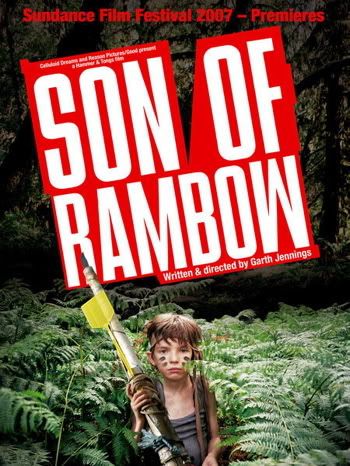
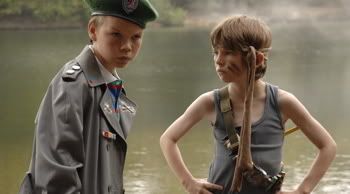
That’s what makes SON OF RAMBOW so disarming. When you watch the film unfold you’re half-expecting there to be some kind of spectacle but it never does come. You have to steep yourself in a narrative where it genuinely is all about the story and the soft nuances that pepper each moment we’re given into the lives of these two young boys on a quest to recreate RAMBO: FIRST BLOOD.

At first glance, even if you read the movie’s description, you wouldn’t expect to find one of the most well-crafted movies this year but the movie is one which will reward each and every viewer if you believe that is possible to make a movie that is both humorous and touching without straying into saccharine sweet territory. The movie that Garth Jennings has made is one that takes the lives of young boys and, without minimizing or patronizing the childhood experience, he has distilled one of the most objective and endearing portraits of what it’s like to be young. Further, the movie works on a level where it’s not constrained by the normal boundaries of culture; it may take place across the pond but the story has a transcendent resonance that it doesn’t matter if it was taking place in England, France, Russia or America.

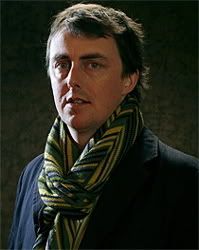
I took some of the time with 1/2 of Hammer and Tongs, Mr. Garth Jennings, to talk about the film, the language of youth and about who else has made videos as a kid.

SON OF RAMBOW is now in theaters.

CHRISTOPHER STIPP: Garth. How are you doing?

GARTH JENNINGS: Pretty good ““ my first cup of tea has just arrived so I’m feeling pretty excited about it.

CS: Thank you for making time for me.

JENNINGS: No problem. It’s my pleasure.

CS: First of all, brilliant, brilliant film. One of the best I’ve seen this year.

JENNINGS: Oh, thank you very much. That’s very kind of you.

CS: Absolutely. I think after I saw it I was wrestling with what I like most and I think the way to kick things off is to ask was it intentional to give these kids sort of a language of their own? They exist in a place that adults just don’t live in.

JENNINGS: Well, I suppose I remember being a kid and you just have this language with one another. You have your own little way of doing things and saying things. It was certainly our intention to capture how we remember being kids. We really tried to find memories of that time. We used to make strange faces and that sort of thing. Is that what you meant?

CS: Yes, I think it’s like a sensibility, maybe I should say it that way.

JENNINGS: I thought you meant that. The whole thing was we were trying to capture how it we remember being when we were 11 or 12 and really felt like all things were possible. It never occurred to us things weren’t. And never thought about the consequences of your actions or ideas. You never really worried about failing or making mistakes until it was too late. That’s definitely what we were trying to do. So I wasn’t at all trying to make a movie on my own experiences. To write about my own experiences would have been quite a bit dull. We tried to conjure up those feelings in people when they watched it.

CS: I have to agree with you. I remember making movies of my own with my own video camera and this movie made me reflect on that and I still don’t have any solid reasons why I did it but I’m finding out that a lot of other people did that as well.

JENNINGS: Yes, when we were making this film 8 years ago we were laughing that so many people we knew made these things ““ kids live in an imaginary world and that’s not a cliché it’s really how it is. It’s only when you get older you think that’s not a good thing anymore and you start to lose that but it’s a lovely period of time in your life.

CS: I don’t think it’s bound by any time or space or anything like that.

JENNINGS: That’s certainly what we were trying to avoid.

CS: It’ s really timeless, almost kind of perfunctory, to think that RAMBOW would only exist in that time but if you looked at it in any time I think it would fit just as well. Additionally, as I watched seeing the effects on the screen, obviously this film has a lower budget, but the cinematography, the photography of the film it looked like you really wanted to capture details. It seemed the physical details were important to capture.

JENNINGS: The detail was just how I remember doing things as well. Whether I was doing the drawings in my books or just the things you notice in films. We never saw the bigger picture ““ at that age I never knew what the Viet Nam War was and that Rambow was being rejected and bullied by other people. I did like the way he sawed off his own arm. He’s not even crying ““ it’s unbelievable. Those are the little things we pick up on, aren’t they? Sometimes we obsess about the details and then it irritates everybody. It’s more about quirky detail than about character and stuff. Hopefully the detail cover the characters and doesn’t become too overbearing. Nostalgia too. People think we have gone out of our way to wake up quirky nostalgia but actually we had no intention of doing that. It was only as things started to come to set with hairstyles ducked and it was like, oh my god, this is getting ridiculous.CS: Certainly within the subplot, the French foreign exchange students. Was that intended to be so absurdly funny?

JENNINGS: Well, the thing was, I remember”¦have you had the French or European Foreign Exchange Program?

CS: Yes.

JENNINGS: We had the French exchange. And I’m sure if I were to go back in time it wasn’t the way I remember it but I remember these kids getting off their coach and the seemed so exhausted compared to us and so much cooler and so European. And then they had mustaches and we thought that was really cool because I was the latest developer in the history of time. We tried to make it so that anyone watching this film would understand that feeling. Obviously in order to get that we played around with it and he becomes a peacock ““ a Pied Piper and everyone can relate to the kid that people follow or are awestruck by even though you look back and say that guy was kind of a jerk ““ what was I thinking? It sorta came out and tried also to capture that when you look back you often realized that things weren’t so straight forward, like I said about RAMBOW. I remember the kids we thought were cool were invariably, they were but also more to it than that. There was always more to it. We were trying to get that across in the film. There was another side to it.

CS: On that, I think the brother issues, the mother issues…It ties things down on a more serious level. I’m curious as to why when you were creating the script, obviously first and foremost, you wanted to create this love of imagination in youth but on the other hand you have something that is quite heavy.

JENNINGS: Yeah. I just wanted to make a proper movie and a lot of movies miss that mark for me. I just like to feel the whole range, especially when you are a kid you feel things more passionately, your friendships, your great disappointments when things go wrong, we wanted to just push those buttons but without pushing people away. When you are telling a story you are kind of manipulating people but do it in a way that doesn’t shut them off and make them uncomfortable.

CS: Right. The budget for the film obviously was not on par with HITCHHIKER’S GUIDE TO THE GALAXY.

JENNINGS: No. 6 million dollars was SON OF RAMBOW and HITCHHIKER’S was $60.

CS: I would imagine that that would absolutely have played in your favor. That the film, itself, is an homage that time in their life. It should be a little rougher around the edges.

JENNINGS: And it’s not that we asked for more money. We budgeted SON OF RAMBOW at that figure. That’s how much we needed to make the film.

CS: Really?

JENNINGS: We’re not really in it to overwhelm ourselves with money and opulence. We like to explain our positions up front and work out the movie before we arrive on the set, very carefully, so that we’re compared and know what we are going for. Because it is very expensive and it is somebody else’s money and it is a lot of time and effort and it’s very important to us to know what we want and that seems to be “¦. I don’t care what the budget is as long as we can do it right. I didn’t find a difference really ““ there is no great difference between music videos and films in some ways because you always try to get what you want in the short space of time that you have and someone always hurt their foot, it’s always raining when you want it to be sunny, there’s always something to be worked out and it doesn’t matter if you’ve got hundreds of monitors and tons of catering ““ the problems are always the same.

CS: Right. And on the subject of the script, at least in previous interviews I’ve read about you talking about fundamental influences coming in where Bill and Will are, do you think things are different today with the speed and access in which kids now are able to be exposed to so many different messages?

JENNINGS: I suppose there must be a bit. But to be honest with you I’m not really sure. I think you get to see more stuff I suppose than we would have done because of the access but most of the kids I’ve spoken to in the last few weeks, certainly when we were screening the movie, kids 8 years old up ““ they get it. They still feel the same way about things ““ they still get excited. If something’s good they’ll respond to it. But I don’t really know ““ I’ve got two of my own and they are very young and haven’t got to that age where they notice all this stuff but I’ve very curious to find out how different it will really be. But everyone thinks their youth was the best, don’t they? We got it right.

(Laughs)

CS: Exactly. Do you think ““ maybe even for yourself or the way you wanted Will and Bill to ultimately come out of the film ““ do you think at the end of this film it’s at that point where the kids are able to reflect on what they’ve done or do you think they still retain that sort of childish sensibility?

JENNINGS: In terms of the film? Or the boys themselves?

CS: No, I was thinking the story itself. It ends perfectly.

JENNINGS: I like those films where you get the sense that it might be alright, things might work out. It like at the end where they’re in the apartment sitting there. It’s not been resolved, not sure where they are going, but you’ve got a good ““ you like these people they might be better for having gone through the experience. Does that make sense?

CS: Yes, it does.

JENNINGS: I still feel that they worked out what was important. I think that’s their friendship. When they did things together, that was when he was the most fun. And they realized what was important at the end of the movie and I like the idea that it was a happy ending. I don’t think I could bear it if one of them had died or one of them didn’t like the other one.

(Laughs)

But it’s perfectly alright. When you are watching it you’re thinking ““ we’ve all had friendships like that at some point and probably around the same age as well. But then it gets dissolved and fades away ““ it’s not by any animosity by any means. You just grow up and you suddenly don’t like the same things ““ something happens. And it’s quite funny to look back and see how rich and how deep that friendship was and then everything changed. Not in a sad way but you can’t help but miss it.

CS: I do. It’s what a lot of people who have seen it have reflected on saying, I remember having friendship like these and all of a sudden you’re in 8th grade, 9th grade and you just turn around and they are not there anymore and you don’t ““ no one is angry at one another ““ it just happens.

JENNINGS: Yeah, and I went through that and I think those two would have separated down the line, only because that was my experience. I can’t imagine it any other way – hopefully with very, very fond memories of each other. And those are the foundations of friendships to come I guess.

CS: I know we are short on time but I want to quickly talk about the animated sequence that comes in the middle of the film ““ the intricate, handmade drawings ““ How long did it take to make that sequence?

JENNINGS: Well, it’s a mixture of live action, isn’t it? It took about 3 hours to shoot the live action element just because of the blue screen and then I think David was drawing all by hand and then scanning the images into the manipulator in 3-D, I think he pretty much remarked, all in all, about 2 weeks work.

CS: Really?

JENNINGS: Yeah.

CS: It’s brilliant. It’s a sequence that fits perfectly within the realm of imagination while it doesn’t, again looking towards HITCHHIKER’S GUIDE, it doesn’t look like an effect that was too polished.

JENNINGS: The thing was that David O’Reilly was doing everything himself. I can’t help but thinking that the fewer people you empower the more focused they are and the more they get on with it. And I don’t mean that in the driving workforce way, purely, it’s just that that’s David’s sequence. It’s his baby in a way. So he puts all of himself into it rather than one guy, doing one scene”¦.you know what I mean?

CS: Yes.

JENNINGS: And he would stay up all night. I would come in some mornings and he’d be waking up from having fallen asleep in his chair. And it’s not that we needed it done in a hurry it’s he loved it and worked very hard on it. It worked out great. I might be wrong, it might have taken a bit longer, it might have been a bit less. But once we got the money, which took forever, the shoot was 40 days and we had the picture 4 weeks after the wrap, which is fast, some films take months to edit, and gave it to David after that. He would give us a mock up of the animation within a few hours. We’d have a rough ““ we both worked out a rough storyboard together and he would do an animatic of that and I’d give it to the editor and wait for a while he was cutting while David was busy making trees.

CS: Does it seem that lower budget means more efficiency?

JENNINGS: Oh yeah. But it’s not just the budget thing. I think you could do a big movie ““ I’m always in favor of post count but you don’t know who you are getting. In every aspect of your film you have to cherry pick your crew. Every member. But once it gets to post production you’re told to go to a big company where they just have loads of people ““ but you don’t know these people and they are doing your things and suddenly it’s changed from one week to another into a different project. I used to find that very irritating. Because you can’t”¦..I just find it irritating.

(Laughs)

And then cherry picking skillful people and then giving it to them ““ it’s their thing ““ they are not just one of many people working on something that we could take or leave ““ it’s absolutely their responsibility ““ the more you make people responsible for it the more creative they are and the better the results I’m sure of it.

CS: Well, I know I have to wrap this up and if I could ask just one more question ““ I think a lot of times when directors make movies they say people can take whatever they want to take from it and give a short answer whenever pushed to explain what their work means but I’d like to hear what you hope people take away from the film.

JENNINGS: Well, Nick and I just wanted to make a film that captures how we felt at that age. It was like I was saying before that I just hope they enjoy it but more than that I hope they go away feeling better for having seen it. Like the old ones ““ get an uplifting feeling at the end ““ like they’ve really been through it and be rewarded at the end ““ it feels good and more of a feeling than I have no real message or anything like that. I don’t want people to come out and say oh the special effects were kinda quirky – that can come later. If they get a good feeling, I’ll be happy.

CS: Brilliant. Brilliant. Garth, thank you very much for your time.

JENNINGS: It’s my pleasure.

May 2, 2008

Trailer Park: Whitney Cummings

By Christopher Stipp

My Complete Archives? Right Here…

I’m awesome. I wrote a book. It’s got little to do with movies. Download and read “Thank You, Goodnight” right HERE for free.

If I could interview subjects, people, like Whitney Cummings I could forever be content with being the guy on the sidelines who simply learns about what happens on the set of a film while trying to understand what the project means to someone’s overarching career goals. Whitney was deftly able to take my questions and give me honest answers in a way that I found genuinely refreshing, person to person. There wasn’t any pretense, there wasn’t a facade, there wasn’t anything between her job as backup to Patrick Dempsey and Michelle Monaghan and my questions about what she felt her place was in the grand scheme of things.

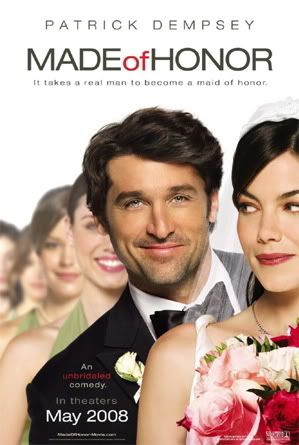
Opening today, MADE OF HONOR simply seems like one of those films which might actually depend more on the talents of the film’s leading man instead of the popular female lead. Dempsey has proven himself more than capable of holding his own in ENCHANTED, one of Disney’s greatest feats on the big screen in recent years, and who among us can argue with the Goliath-ian power it took Patrick to get from CAN’T BUY ME LOVE and LOVERBOY to prime-time prince of relevancy; it should have been an impossibility but it’s that guy’s charm which is proving to be his greatest asset. That’s partially why an interview with Whitney was alluring. The other part of it is that Whitney makes her living touring the country as a practicing comedienne and there isn’t anything more tempting than the opportunity to get an honest taste of what it’s like to step onto a blackened stage and having a pack of people treat you like it’s Roman circuses all over again: We are here. Entertain us!

Whitney and I discuss all sorts of things, like comedy, inspirations, education, why Patrick Dempsey is a gay crush of mine, films, traveling and whether Carrot Top deserves to live. You can’t help but wish all sorts of positive things for Whitney and as she broke down the ways in which she realizes how she fits in to the cosmic order of things, regardless of how big or small the project she’s being paid to be in, she just has the kind of easy breezy attitude I wish I could have just navigating my own job.

We open on a conversation between Whitney and myself, discussing the topic of what films Molly Ringwold has notoriously turned down. One of those, reportedly, was GHOST and the other was the widely well received whore cum (pun intended) princess fairy tale, PRETTY WOMAN. It’s best to just jump right into the middle of the fray.

CUMMINGS: It’s interesting, isn’t it?

CS: Fascinating. I love to hear stories like that of things that people have passed on.

CUMMINGS: She wasn’t really working around that time, was she? PRETTY WOMAN was what, ’92?

CS: Yeah, it was like ’90, ’91, sometime around there.

CUMMINGS: What was she doing with herself? If you think about it, that movie was literally a comedy about a prostitute. That movie would never get made today. Can you imagine a writer going through auditions ““ hilarious comedy about a prostitute who is doing a rich guy and she gets out there and then someone tries to rape her ““ it’s such a dark premise when you think about it.

CS: That’s very true.

CUMMINGS: That’s George from Seinfeld trying to rape her in that movie.

CS: But she’s got a heart of gold.

CUMMINGS: She does have a heart of gold. But in the first script she died at the end. The other movie I saw the other day is DIRTY DANCING. DIRTY DANCING is a movie about abortion. That was the whole reason that Baby needed to learn how to dance. It was an abortion movie.

CS: Just a fool to believe…

CUMMINGS: It’s just kind of funny at how dark the movies were in the late 80’s.

CS: But you know, those guys were salesmen. They were able to convince somebody, “Oh yeah, sounds like a really good idea.”

CUMMINGS: But the movie is about abortion. No, it’s about dancing. Abortion is just why they danced. It’s just so funny when you think about it because that would never fly today. We’ve gotten more conservative I guess.

CS: I would absolutely agree with that. Things have gotten a little more tame. But you got to be in a movie ““ watch this segue ““ you got to be in a movie with a man that embodied that 80’s movie vibe.

CUMMINGS: You know what’s really funny? When I was going in to do voice over after the movie was finished, we were looking at it ““ the movie was shot in England ““ really beautiful shots on film, lush green rolling hills and I’m looking at it and I’m thinking this movie looks like the 80’s. It had that vivid feel of like Robin Hood. It’s amazing the demographic he has because he’s so famous. What was that, 18 years ago? That movie was so meaningful to so many people. And now he has been reborn with his new show, so his demographic literally is 16 to 65. Where with some actors they have the teen audience ““ Zach Efron has the teens, Brad Pitt has the 30 year old women, but he has got every generation. It is so wild.

CS: You know, I have no shame saying this, I think my gay crush would be Patrick Dempsey.

CUMMINGS: You are not alone. Guys would even say Patrick Dempsey or Tom Brady.

(Laughs)

Tom Brady ““ I know guys would even say, “If I had sex with him it doesn’t mean I’m gay.”

CS: But you have to say, “If I HAD to ““ If someone put a gun to my head…”

(Laughs)

CUMMINGS: Yes, Patrick Dempsey ““ women want him, men want to be like him. That’s what I have to say about that. And I totally get it. He’s so charming, so talented, so fun to be with. I think this movie will catapult him back into leading man, opening movies, movie star land again.

CS: I saw him in ENCHANTED and I thought he did a great job in that.

CUMMINGS: I think that ENCHANTED was a tough film for him because he had to play it real but he had to sort of mock her a little bit. He was given a tough task in that movie because he couldn’t make fun of her because she was so likable and I think in the script she wasn’t written as so likeable. He had a lot of challenges in that movie. And Patrick, his charm and likeability can overcome anything.

CS: Like a gigolo pizza guy.

CUMMINGS: Yeah, remember that?

CS: I could go on all day about that guy’s roles.

CUMMINGS: He’s so likable and I think the key to him being a movie star is having women love you and men love you and he is just able to do that. He’s such a pro. He comes and says his stuff and improvises and just has IT. That guy has star quality. He’s got it for sure.

CS: Tell me ““ based on that ““ in the new movie, MADE OF HONOR, how do you compete ““ it’s not competing in that same space but if he’s being funny and you have to be the best friend ““ the funny person ““ how do you navigate that territory to let them be the stars that they are and you provide that backup?

CUMMINGS: It’s interesting and that’s a very good question, because I’m a comedian. I do stand-up every night and doing jokes is my thing. So it’s like going into the ring you have to know what your role is is really important. Are you the singer? Are you the drummer? Are you the bassist? Where you come in is very important. Because when you are doing a movie, especially with talented actors who have been doing it 20 years longer than you it’s important to know you place and to work for the good of the movie, not for the good of you. Selfish acting never gets you anywhere except on the cutting room floor. You don’t come in and try and be funny around Patrick ““ it’s just stupid. It’s best to just trust the writer and their vision instead of your own agenda wanting to be the funniest person. So that was a tough challenge because as a comedian my job is to always be the funniest person all the time and make everybody laugh every 20 seconds. I really did have to restrain myself but after a while ““ after coming in and seeing how funny Patrick was it was best to just leave it to the pro and stick to what the writer wrote for me.

CS: Certainly this differs from TV where you are able to be more fluid ““ this was more set up and practiced and having to channel”¦.

CUMMINGS: I just have to be so conscious of the fact that there are 200 people working on this movie ““ the lighting guys, the grip and the camera guys, the sound guys have set up the theme around what the writer wrote and what the stage directions are and you start messing around trying to be funny and trying to be cute ““ people’s jobs are why is she doing that ““ why is she going off – sometimes, because they knew I was a comedian they would say now we can do a take and you can mess around or now you can improvise but that was different. When all those people are working so hard to create a shot that has been planned out for days, you can’t go in and mess around and give them a damn heart attack.

CS: Right.

CUMMINGS: That was a hard thing for me to accept.

CS: Was it sort of a lesson learned or did you know when you went into things other than television and your stand-up how these unwritten rules play themselves out?

CUMMINGS: Interesting. I was actually blessed to have a job ““ my first job out here in LA was a show called Punk’d on MTV ““ it was a hidden camera prank show with Ashton Kutcher and we would have to do all these hidden pranks to get celebrities in compromised situations and get them to embarrass themselves or whatever and the key was to be very real ““ I did everything from being in the ballet to being a wardrobe stylist to a paramedic to a this or that and created situations where celebrities would really feel the stakes were high that they’re car was stolen or someone got kidnapped or all these crazy things and it had to be so real so they believed it. It would be very easy to give something like that away if you’re trying to make jokes too much because after the 3rd season all celebrities in LA were really paranoid about being punked. Whenever something weird happened, they would be like, “Is this Punk’d?” So we had the challenge to keep it really real and honest and keep it grounded.

I remember my first punk I was doing was with Adam Brody and I was trying to be cute and trying to be funny and doing the wrong thing. He started to catch on and then I had to quickly go back to be real and honest and quickly learned this is not about me, not about my agenda ““ if you just do the task at hand and do the best job at entertaining being honest and trusting the writers and directors, you will succeed, instead of trying to do your own thing and being selfish. So I guess I learned it there and I’m very grateful for that.

So, I learned it on cable instead of in a studio. But it was helpful.

CS: And how was that transitioning from a television atmosphere to a film? Does the scale change?

CUMMINGS: Definitely. I don’t have to bring my own wardrobe that’s for sure. At the end of the day it’s all fulfilling ““ it’s all food for your soul for yourself as an artist. But working on a studio movie ““ granted on every cable thing I’ve ever worked on I’ve always worked with people I admire ““ Ashton Kutcher is extremely talented and such a great guy and all the actors are amazing. But when you work on a studio movie you work with much bigger celebrities. At first I was thinking it was going to be a nightmare ““ working with divas, rude and sure enough they are the nicest people you’d ever want to meet. Patrick, Michelle, Sydney Pollak and everyone that worked on the movie were so great. So wonderful people from cable all the way up to working on big studio movies where the stress is high and pressure is on and instead of shooting in Burbank we were shooting in London and Scotland in all these amazingly beautiful castles. Catering is better.

(Laughs)

CS: How did you get picked? Is this something you went out and auditioned for?

CUMMINGS: They saw a lot of people but I think what set me apart was that I was a comedian and they wanted someone who could add a little bit of comedy to it. It’s really amazing because it’s so hard to get a job in a studio movie if you are not a model or had been working forever because they don’t want to take risks and they are trying to sell it overseas and they need financiers to invest and be able to distribute all over the world and the more famous people that are in it the better and Sony was amazing and I think they were excited about me because I was a comedian and there was this fresh young person and that was really cool.

CS: The story itself ““ I apologize for not knowing a whole lot about it – but why does it take place overseas?

CUMMINGS: Well, there is no way you could know anything about it. Patrick Dempsey has a platonic friend, Michelle Monaghan’s character ““ they are best friends who realizes that he’s in love with her and she goes overseas to Scotland to work, meets a Scottish man and comes back 5 weeks later, engaged, and she asks him to be her Maid of Honor, says she’s marrying a Scottish man and they all have to go over to Scotland for the wedding. So we’re over in Scotland planning the wedding, doing the rehearsal dinner, doing the bridal showers and all this stuff and doing these Scottish games and all these crazy antics over in Scotland so we got to go over there for a month. It was all very, very cool.

CS: So they got to shoot on location?

CUMMINGS: Yes, it was amazing.

CS: Were you basically tagging along for the whole thing?

CUMMINGS: Yeah. They shot in New York for about 2 weeks that I wasn’t there but they didn’t have the bridesmaids. So, we shot in LA for about a week and shot in Scotland for about 6 weeks and London for 3 weeks.

CS: When you’re doing multiple takes is it difficult from the comedy standpoint to make it seem just as witty and just as spontaneous the 3rd, 4th, or 5th take?

CUMMINGS: Yes, and it’s nice to be able to do something different every time unless we are on a major time crunch and we just have to move on. Being a comedian my impulse is to make people laugh, so every time I want to do something different and fresh and make everyone laugh but, again, you just have to know when to be professional and give them just what they need so we can move on. Sometimes in the editing because I’ve done something different every time they can’t cut it ““ that would be my worst nightmare.

CS: I’m also just as curious to find out why ““ I’m reading your condensed bio ““ that you finished college in 3 years vs. 4 yet you chose a career that insures maximum instability.

(Laughs)

CUMMINGS: I love you for that. Well, because I knew that this was going to be my career I knew I wanted to go to college. I got through high school and I knew that every girl who goes out to LA after graduation and doesn’t have an education, they don’t have anything to fall back on but as a performer and having so much training the best thing to do for me would be to not go out to LA and get on a bad sitcom. The best thing I could do was to go improve myself as a person and make myself more interesting and pursue my interests and curiosities and get an education so I have something to say and have a point of view and when I get new material I have some perspective on it and I have some goals, I’m doing a period piece, I’m doing a mystery. And also for my own confidence that when you go into a career that is so unstable the best thing you can do is to have something really solid to fall back on to keep your pride up. And I really wanted to develop as a person. I didn’t want to be an empty person. Not that people that don’t go to college don’t, but it’s something I really wanted to do the compromise was OK I’m going to go to college and do it in 3 years.

CS: Overachieving while being funny. I have to believe it’s one of the hardest things in the world to try to do but do you ever get to the point where you are doing sets every night, obviously some nights go better than others, is being funny a draining thing? Are there times you don’t want to laugh or do anything associated with comedy?

CUMMINGS: Doing stand up is the most enlivening, energizing thing you can possibly do but yes, during the day, it’s really funny because people say for a comedian you are such a serious person. It’s just that, no, I’m off work right now. I don’t always want to be doing jokes, I don’t always want to be on. I can’t always be doing quips. When it’s your job for a living you want to save it for the stage. You don’t see lawyers on their off hours reading paperwork for no reason. After you do it long enough ““ people get into comedy because they like to make people laugh ““ sort of have a need to entertain people and the need to make people laugh so if you’re not doing it on stage they don’t do it all the time. Everyone has their class clown, always making jokes, always on but when you start having 20 minutes, sometimes 40 minutes to an hour a night ““ that need to make people laugh, you get your fix, most of the time, thankfully. So I get it out of my system.

CS: Where did you find your roots? For me, I’ve always been fascinated with comedians ““ one of the first albums I bought was Bob Goldthwait’s album as a kid and I’ve always admired of taking average, normal everyday things and warping the hell out of them. Who were your comedic measuring sticks growing up?

CUMMINGS: My first ever was Paul Reiser. I found a book he wrote called “Couplehood” that he wrote in 89 or 90 and it’s kind of like what Mad About You was based on. It’s all about couples living together and the mundane goofy things that happen. Just like you said, it was about buttering bread in the morning, making coffee all of these little things and made these hysterical, brilliant commentary about the most mundane things and open it up to a hysterical world. The things we take for granted every day ““ you get up, take a shower, get in the car ““ all these things he had such interesting, funny observations. I was so fascinated ““ his sense of humor was so insane. Followed by George Carlin and big for me too was Bill Cosby. I used to watch his show religiously because so much of that was based on his stand up and then later ““ Dave Attell ““ he’s a legend now but he’s very edgy and then I got introduced to Lenny Bruce and then Bill Hicks and it was kind of over.

CS: Oh yeah, Bill Hicks.

CUMMINGS: People are changing the world of comedy. When I was in college I thought I’d change the world and be a journalist. Then I thought the ones that are really making a difference are the ones who do it with a sense of humor. Bill Hicks, George Carlin, those are the people who are making the most profound social commentary followed by Chris Rock, Bill Mahr, Jon Stewart. Humor is a way to endear people.

CS: Now, I am going to ask you a yes or no question and please answer it immediately when I ask: Do prop comedians deserve to live?

(Laughs)

CUMMINGS: Yes. Yes, they do.

(Laughs)

I cannot live without prop comedians. I just think of my jokes as props. That’s my way out. The thing about prop comedians is that ““ Carrot Top makes more than all combined… So I want to get on that train of negativity but you have to respect someone making one hundred million dollars a year with a baton and a teddy bear and some toys.

CS: Actually, I agree with you ““ I think at the end of the day I think the measuring stick is how much money ““ if he’s successful that’s great, it’s game on but why is there such a movement against people perceived as doing easy comedy?

CUMMINGS: Are you kidding? No comedy is easy. No comedy is easy. And guess what, I have to come to his defense, prop comedy is harder than real comedy. Not only is he telling jokes, he is juggling fire, he’s doing a marathon exercise and telling jokes. He does a two hour show with pyrotechnics acrobatically, doing magic, it’s mindblowing, where I just have to sit up there and talk. At the end of the day, funny is a democracy. People are lining up and filling auditoriums and they are making millions and millions of dollars and entertaining people and people are laughing. Carrot Top is sold out every night. People have paid $100 a ticket to go be entertained by him so you can’t say he is not funny. At the end of the day that’s the statistic.

CS: Seriously, I do not want to hijack your whole day so I want to be able to ask you one more question: With whatever kind of success that MADE OF HONOR gets, if indeed it does well and helps propel you forward in your career, what do you hope is the next step in your career progression?

CUMMINGS: I would like a studio project but there are not very many good funny, funny roles for women and it’s sort of hard to find those and I would love to find a role like that. Really big movie directors are doing TV ““ like 30 Rock and Weeds ““ there’s some really good stuff on and I just want to be doing stuff that moves me and makes me laugh. I want it to be meaningful. Stand up is big for me ““ I’d like to do a half hour special.

CS: Anything that might come about in the near future? Comedy Central loves doing those.

CUMMINGS: Yeah, that’s the idea, so check back in a couple months.

(Laughs)

April 9, 2008

Trailer Park: Glenda Pannell

Filed under: Interviews,Trailer Park — Tags: , , , , — admin @ 3:15 am

By Christopher Stipp

Archives? Right Here…And The Way Way Back Archives Are Here

I’m awesome. I wrote a book. It’s got little to do with movies. Download and read “Thank You, Goodnight” right HERE for free.

It’s tough to get a movie made.

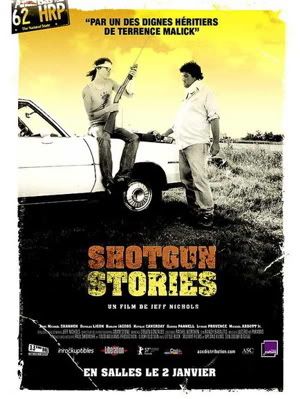
If you don’t have A-List stars attached or a bankroll where you can make the film on your own terms there is a lot you have to look to others for in order to help a production go forward. In writer and director Jeff Nichols’ case the production needed to get to where it needed to go by sheer force of will. The will of the story that needed to be told, the will of those who had to believe in what was being shot, so many different behind-the-scenes hook or by crook moments that never made it in front of the lens. Glenda Pannell is an actress in Nichols’ latest, SHOTGUN STORIES, in which she stands on the sidelines watching two sets of half-brothers rage against one another following the death of the family’s patriarch. The film’s subject matter is a bit heady but the movie is one that has garnered attention from film festivals and ample praise from the likes of Variety and Roger Ebert.

Glenda has made a name for herself playing roles in productions like WALK THE LINE, playing a lead role in MEET THE LUCKY ONES and will next be seen in STREAKER. To say that speaking with an actress who has such an exuberance for a role like this was a pleasure would be a gross understatement. Glenda had a realistic sense of how this role fits into her overall resume and about what you’re willing to do when the story is as good as this. To see the film in the coming weeks check to see when it might be playing at a theater near you:

Laemmle’s Sunset 5: Los Angeles, CA 4/11
Northwest Film Forum: Seattle, WA 5/9
Starz Film Center: Denver, CO 5/16
Olympia Film Society Capitol Theater: Olympia, WA 5/24- 5/29

CHRISTOPHER STIPP: I’ll be honest, you have a one paragraph bio, I haven’t seen this film, I’m not going to ask you to take it from the top and ask you what the movie is about, so the only real recourse I have is to inquire what drew you to this story from a first time director?

GLENDA PANNELL: When I got the script I pretty much knew, the way the script read, the story had a real solid narrative.

Funny thing is I’m from Tennessee and we shot it in Little Rock, Arkansas and that’s where the director was from so I felt a kindred southern connection with Jeff. They are real people to me. Every single character in the film is people I have encountered or in my life and have certain characteristics of people that I knew. Knowing the people in my life and having the story told to me, it was such an easy read. I had no questions and just had a great visual of what the film would look like once it was made. I just knew it was going to be very special.

Shooting a film in the south is always so picturesque. It’s such beautiful country to shoot in. Late afternoon, early evening, it is so beautiful on these wonderful golden fields. It’s a wonderful environment.

CS: The trailer I saw for the film, there is nothing really quirky about the marketing ““ it feels just like a verite kind of film. It doesn’t seem to be anything else but a relationship kind of film. Would that be a close assessment?

PANNELL: Once you see the film, I think you’ll be able to support your thoughts on that. It is a story that is told visually in front of your eyes. You feel great empathy for everybody in the film.

There is a conflict going on between two sets of brothers. It really about the relationship of original set of brothers, Son, Boy and Kid. The lead, Mike Shannon who plays Son, is the first born to a set a parents. They had these children and they split up. The father goes off and starts a family with another lady and those children are raised in a more loving environment. And those children are named, which is a poignant part of the film, one of the children in that set of Boy’s is given his name; that’s a big thing in the South for a father to pass his name to a son. Even though there is conflict between these sets of brothers, because they are blood brothers but not raised in the same family, there’s a lot of unnecessary words exchanged and a lot of bad behavior that most people will look down upon but “¦.. they weren’t raised to love one another so that’s just how they handle things.

It’s difficult to tell the story but it’s a great narration.

CS: How do you factor in to this all? What part do you play?

PANNELL: I’m Annie Hayes and I’m married to Son Hayes in the film. I think she’s Son’s anchor. He wasn’t raised in a loving home. And definitely wasn’t raised with a loving maternal figure and certainly weren’t raised by his father, those boys were left to raise each other on their own to develop their own values and own survival skills. And I think by the time he got married, Annie came along and came from a home that was not broken, had a mother and a father. I think he’s trying to create different values and learn from her because they have a child together ““ he takes off trying to get his stuff together – she loves him and doesn’t want to let go – they need to stay together for the kids ““ but at the same time she doesn’t want to live that way. She wants him to progress and not “f” up.

CS: And do you think Jeff was able to distill everything? From when you read the script, to when you actually shoot it can be two different beasts. Obviously looking at the accolades the film has received already can say he has… but was there anything while he was producing or directing it where things on paper and trying to get it on screen that didn’t quite work?

PANNELL: I think pretty much everything he intended pretty much worked out. If it seemed like something wasn’t going to work, he was always in discussion with us. He was always asking us how do you feel and how we feel about our characters and welcomed opinions but we weren’t running around trying to run the set but very open and we felt very comfortable ““ at least I did, speaking for myself. If I didn’t quite understand something I would try to understand it with questions. It’s really like a novel ““ a great narrative piece of work ““ and you want to show that justice especially when the director is the writer.

CS: Is this really a southern film at heart? I know everyone can make generalizations that this is everyone’s kind of film but is this something unique just to the south?

PANNELL: I don’t think so. The characters are true to the south but pull back and you make a general observation ““ I don’t care what family you are from ““ they might put up this picturesque facade but everyone has a past ““ everybody has a history nobody knows what goes on behind closed doors. I don’t think it’s unique to the south, I think it’s more unique to our generation quite honestly.

CS: How so?

PANNELL: The world isn’t the easiest place to live in at the moment with the economy being what it is and it’s just tough times we are living in. When people go home it’s not always the 9 to 5’er going home with dinner on the table, everybody sits around, eats and watch television and goes to bed. I just think everybody needs comfort. Anybody that goes to see this film can relate.

CS: And the title SHOTGUN STORIES emphases the violence underneath it all.

PANNELL: I’m not saying that everybody is going to go out and grab a gun ““ you don’t settle a conflict that way.

CS: So where does Jeff come in on all of this? I don’t want to say autobiographical, because that would be pretty wild if it was, but where was he coming from when he wrote this story?

PANNELL: I’m not sure if there were certain people in his life that he was drawing from, I can’t speak for him on that, but I would assume that growing up in Little Rock, Arkansas he’s seen people ““ just for analysis doing some people watching those characters are all living around him. So I’m sure there are people that have come into his life that he’s based his characters on.

CS: During the shoot how long were you on set making this film?

PANNELL: You know what, I was commuting back and forth from Memphis. It seems like I was doing it for at least a month. I wasn’t shooting every day. At least a couple times a week I was called on set. I would be there a big chunk of the day and I was pretty much at the beginning and the end process of it. It was a joy. It was very exciting. In the two hour drive going over, I’d think about the character and how I was going to approach it. It was such a pleasure.

CS: Obviously it was different that any mainstream production and you’ve worked on bigger films than this. Really any sort of ““ anything you like more about independent films than the big sort of polished films that Hollywood churns out?

PANNELL: The thing I like about SHOTGUN STORIES is that is was a labor of love for Jeff. He kept us included throughout the entire process. He would just say, not much going on if that was the case but just want to keep you up to date. The thing I liked most about this film is that most of the people that worked on the film he went to school with. He went to school at the North Carolina School of the Arts which has a great filmmaking program and we didn’t have a big budget to work on but his family made dinner for us. Every day dinner would be in his parent’s home. Mr and Mrs. Nichols sitting around the dining room table hanging around with the crew. It was so great to actually sit down and talk to these people and pick their brains about all aspects of production, to ask the crew members “Why do you do that? And why is that necessary?” Just learning the mechanics of things ““ it was about every single person.

CS: Amazing; having dinner made for you every night.

PANNELL: It was wonderful. Chicken pot pie”¦..it was wonderful.

CS: It says you are currently in Los Angeles and I would imagine it’s nice to be able and go back to LA if you were to compare being on jobs, the difference between working on something like this and working on something with tons more money behind it”¦

PANNELL: I really consider myself lucky. This is not the last we are going to hear from Jeff Nichols by any stretch of the imagination. And Mike Shannon is definitely one of those underrated actors that is out there today. He’s such a brilliant guy. To be a part of this project at the beginning of Jeff’s career is something I am very proud of for the rest of my life. I consider myself very fortunate to be able to someday say, “Hey, I was in his very first film.”

CS: It’s won a few awards already.

PANNELL: Yes. It won the Seattle International Film Festival and won a narrative category in Austin, and nominated for the Spirit Award, and I think there was something in Europe we won”¦.

CS: Obviously you did it first of all because it was such a good story but at the time you were making it did you think it was going to be something people were really going to pay attention to and take notice of?

PANNELL: I had a pretty good feeling because every character ““ I would pop on the set and just watch ““ and every character brought something very unique and invaluable to the film. Having wonderful characters he cast in this ““ everybody – I just had this great energy on the set ““ I just knew, don’t know why I knew, but knew that it was going to be something special. We could only dream at the time that it would go as far as it did and thankfully it did. I don’t know, I just had a great feeling after reading the script and it just kept going when we started filming.

CS: You mentioned that while you were on the set ““ learning and observing ““ when you are taking that in, how does that inform the role that you are currently playing? Is it on your shoulders to be in tune with everyone else in your cast?

PANNELL: On my shoulders? This is the biggest part I’ve had to date. I told someone earlier that you don’t have to have a million dollar set to bring professionalism to the set, and handle yourself in a professional manner and I think everyone did that. It worked like clockwork. Jeff was the perfect captain for the film. I hope that I did it justice in Jeff’s eyes. At the end of the day, you say, Oh I should have done it this way, or I should have done it differently. Hopefully I’ve learned from it.

CS: That’s interesting that you take a part like this ““ the conversation starting that it’s not going to pay a whole lot of money or it’s not going to pay any money at all, what’s the process for you when you get a script to look at it and go, “Is this something I really want to invest my time in doing?”

PANNELL: I try my very best and especially tried with Annie to immediately step in her shoes and people watch and be as observant of people as possible so I can say, “I think I get this.” I may not be correct but it’s enough to make a choice and come from someplace that you think will work.

CS: And as you go from job to job, is it an easy lure for an easy paycheck if something is not up to snuff but the money may be right ““ Is there a tug of war in your own mind?

PANNELL: Well, we’re getting a lot of auditions right now so hopefully I’ll get that choice.

(Laughs)

It was never about the money. It was about having”¦. Craft or money. It’s always going to be permanent. People will be able to go back and look at that so you just can’t look at a part with dollar signs rolling in your head. Everyone will know you didn’t put your heart into it and give it your all. You have to make it all or nothing. It’s not fair to anyone ““ cast mates, director.

CS: Parts that you are auditioning for now ““ can you be selective?

PANNELL: I can be selective of certain elements of things you don’t want to do. For instance, nudity. Sometimes violence. But you can’t make it about the money. It’s about building relationships and make it about the work. It should be about the work anyway. I’ve just never wanted to do anything else. I need to support myself and do this for a living.

April 7, 2008

Trailer Park: Dicky Barrett

Filed under: Interviews,Trailer Park — Tags: , , , — admin @ 12:02 am

By Christopher Stipp

Archives? Right Here…

I’m awesome. I wrote a book. It’s got little to do with movies. Download and read “Thank You, Goodnight” right HERE for free.

A lot of superlatives could be used to describe the fierce yet melodic sounds of The Mighty Mighty Bosstones.

A band that has been around longer than many would realize, 1985, has had more members than Kool & The Gang, constructed one of the most durable bridges from punk to ska and fronted by one of the most pronounced vocalists ever to rock a mic The Mighty Mighty Bosstones could never be pigeonholed into anything that they themselves didn’t already anoint their sound with. One of the other pleasures besides their seven studio albums was the pleasure of being able to see them live. Having the OG “Bosstone”, manager and flash dancer Ben Carr, on stage and doing nothing but grooving hard to the music whilst the other members play is something that truly has to be seen to be believed. The energy and heart that the members of the band, guys who would sooner wear a shirt, tie and suit jacket on stage as they would shred through an Operation Ivy cover with blistering thunder, is simply unmatched. One of the more notable events that the Bosstones kept as a tradition within the band was their annual Hometown Throwdown, the latest represented the 10th annual incarnation of the event, which has the Bosstones playing for five sold-out nights in a row at the historic Middle East in Boston. The tradition has been a staple for many fans and its sold-out status every year is emblematic of this band’s allure and reception in the music community.

One of the great things about being a band that has been around for as long as it has, and has weathered the number of band members who have come and gone, is its consistent quality. The albums it has produced, the singles which have been appropriated from mainstream radio to the movies, and the live shows that have never failed to connect means that their latest album, Medium Rare, is a compilation that has put together rarities and three new songs in a way that it doesn’t feel like an empty cash-in. You listen to a song like “Don’t Worry Desmond Decker” and, unless you’re a heartless zombie who deserves to be shoved and locked in a room with a pack of emo pantywastes, there is something instantly toe-tapping about it; you want to bounce around a little, you feel like there should be more to modern music and that it should sound more like this.

It’s hard to put words to reasons why this album deserves some scratch so I’ve obtained a handful of copies to give away plus I’ve turned to Dicky Barrett to give me a little insight into this album’s making. Besides being a part of Jimmy Kimmel’s late night crew, and has a fleeting cameo in “I’m Fu*ing Ben Affleck“, Dicky has kept busy even when the music hasn’t been. Leave a comment below with your e-mail address hyper linked (or send me an e-mail) if you want a chance to win a this album and here’s what Dicky had to say about his latest and greatest.
CHRISTOPHER STIPP: I confess I can’t call myself a hardcore fan because I didn’t know about this album until a few weeks ago.

BARRETT: Yeah, we didn’t put it out with any kind of machine behind us or label support. Minimal distribution. We were in Boston over the Christmas break and we’ve been promising our fans to combine a lot of the B-sides. What’s so difficult about taking songs that are on Bosstones records and putting them on another record and putting them out there? Very often they were on different labels and it requires legal paperwork and red tape. So, we got a good solid collection of these songs, and wrote three new songs and put it out there.

CS: That’s fantastic. It’s sounds like a real cohesive album. It’s not like it’s a bunch of out of left fielders.

BARRETT: It’s a nice sounding record too.

CS: Absolutely. And the three new ones really blend in well with the whole album.

BARRETT: That’s the genius of Joe Gittleman, producer of the Bosstones sound. He knows the Bosstones sound like I know the Bosstones look.

CS: Right. Was he there from day one?

BARRETT: He was there from the beginning. Joe could say he was there before me.

CS: Really?

BARRETT: Yes, he’s the bass player and him and Nate asked me to play in the band that they had when they were still in high school.

CS: And through all these years, the sound has stayed consistent. I’ve never read an interview where you mentioned that you were going in a new direction, a new sound ““ that’s a warning sign it’s a concept album. The sound has always stayed consistent.

BARRETT: What we’ve always tried to do is do exactly what we want. We came out of the gates mixing pop and metal and ska. We had a very wide spectrum to choose from. We never at any time wanted to do a hip-hop record or straight jazz record but there are always elements of everything. We called ourselves ska because we didn’t want to be labeled.

CS: People always tried to pigeon hole you into something.

BARRETT: They need to call something something. They would always ask what kind of music do you call yourselves. It’s Bosstones music. We could tell you our influences and let you know what we are listening to but you can’t call us a metal band, or straight pop band. That’s not fair to the Sex Pistols. After it’s all said and done I think we hold a place in music that holds it own. Whatever we did it was very much The Mighty Mighty Bosstones.

CS: I think that’s absolutely accurate. As a fan, I wish more people would have purchased the records to continue the band’s rise to a higher level but your greatest success came in the late 90’s, and let’s face it, your appearance in CLUELESS helped”¦When you look back at it are you happy with the success you had or do you wish you would have gotten to the place where you were on the cover of every magazine?

BARRETT: I really wouldn’t have minded that but to be the Bosstones is not the Rolling Stones. It’s just not for everyone or easily understood. It’s hard to explain. At the peak of our popularity I really didn’t enjoy that as much as I probably should have. I took it too seriously. It felt to me like, “Oh shit, all these fans that we’ve created throughout the years ““ punk and ska clubs are going to hate this.” It wasn’t like we were trying for those things…things came to us. When Kurt Cobain died and people were feeling pretty miserable we thought it was time for people to feel a little bit better and we happened to be there with bands like Green Day, Rancid”¦it was time for uplifting music, which is what we’ve always been doing. It wasn’t like we flipped our flannel shirts off and put on the suits ““ here we are we’ve been being the Bosstones for 10 years before that. My mask could be off.

(Laughs)

CS: When you guys came back to record new songs, at least the three for the new album, how long did it take”¦.the answer I think you might give is that it clicked immediately, but how long did it take for you guys to get back in the groove to record the songs in classic Bosstone fashion?

BARRETT: Joe sent selected music he wrote at home, I liked it, we wrote some lyrics, he came over to my house, we jammed around in my living room, we went over and taught Lawrence what we were doing at the studio here in LA, taught him the music. It didn’t take long, it didn’t seem hard and it didn’t seem difficult. We’re just going to create some new songs to add to this collection and hopefully they fit it, people like them, they sound good.

It wasn’t a long involved process ““ like we’ll write them, then we’ll rewrite them, try again and then we’ll take them back to the studio. We’ll send them around, we’ll test market them with some different radio stations. We just recorded some songs the way we used to do it.

CS: And then going back for the Hometown Throwdown certainly helped to gel a lot of things, but how was it going back this year?

BARRETT: It was awesome. It was really really great. I was a little nervous beforehand but we had a great time. We are playing in LA and Las Vegas next weekend. So the guys start practicing tomorrow to get ready.

CS: Is it going to be 5 nights in a row at each place?

BARRETT: Nah.

(Laughs)

You got to think of it like – it wasn’t like we played high school football together for four years. We were on the road playing 300 plus shows a year for 16 or 17 years together. It wasn’t hard to get back in the groove once we knew ““ there was a little bit of rust and a little bit of stiffness and a little bit of dust. It just didn’t take too long. This is how it goes and just didn’t take us long.

CS: The reason I bring it up is that Wilco just did a 5 night stint in Chicago. It was called their Winter Residency.

BARRETT: I love that band.

CS: I think they are one of the best playing today that not a lot of people either care about or”¦.

BARRETT: Never really got the attention or notoriety but like I said, be careful what you wish for.

CS: Exactly.

BARRETT: It would suck if Wilco was a household word too.

CS: That’s true.

BARRETT: To everybody but them I’m sure.

CS: If it’s anyone that deserves some kind of mainstream recognition, it’s them. They played 5 nights in a row ““ all of the shows surfaced nightly on the Internet ““ but it was amazing to hear the guys, over the course of 5 nights, getting tighter and tighter. It was sold out and they mentioned they wanted to do it again next year. What’s it like to go out there and do something 5 nights in a row in one place ““ what’s it like by that fifth night?

BARRETT: For me, exhausted, but it’s a huge sense of pride. It’s everything you just described. Holy shit. It’s been five years since we did it. It’s nice to know you still care.

CS: That people still care.

BARRETT: It’s nice to know that people still care. It’s nice to know you can still do it and nice to know that other people still care when you do.

CS: How is it like coming back now to try and balance music with television now that the writers strike is over?

BARRETT: That was – the writers were absolutely ““ I’m a writer myself of music ““ to be robbed the way they were being robbed is unfortunate. I don’t know ““ it’s fine being back. I’m excited. We have shows to play and stuff to do and I certainly like working for Jimmy Kimmel. It’s a great place to work.

CS: And how to you balance ““ you bounced to radio now television ““ all your interests?

BARRETT: I don’t know. None of it is solved. Busy schedules but I’d like to tell you it’s really difficult and I don’t know where it comes from and I’m really gifted and I can spin several plates at the same time but it doesn’t seem like hard work to me. It feels like I’m doing things I like and glad to have the opportunity to do it.

CS: And of course, a lot of people are asking if there is going to be a new album with the guys.

BARRETT: I think we might. We haven’t really sat down to talk about it but I don’t see why not. We certainly enjoyed being in the studio for the songs we recorded so I don’t see why not.

CS: The songs that were chosen for Medium Rare, was there any over guiding or over riding idea of what should go on?

BARRETT: Let me give you the factors that went into it. One was the ones that we could legally put on, that was the first thing. After that it was whether or not it was kind of rare enough or whether it was on ““ a lot of them have been on B sides and stuff and the third was Joe wanted to make it cohesive and feel like a record so those were the three factors. We could have put 10 more songs on if we didn’t follow those guidelines so that’s the way we did it.

March 28, 2008

Trailer Park: Aaron Yoo

Filed under: Interviews,Trailer Park — admin @ 3:36 am

By Christopher Stipp

Archives? Right Here…

I’m awesome. I wrote a book. It’s got little to do with movies. Download and read “Thank You, Goodnight” right HERE for free.

Note Bene: If anyone within the sound of my voice is anywhere near Phoenix next week then I cordially invite you to check out the Phoenix Film Festival. Normally a place where I went to see average or above par films the selection has genuinely ripened with age since its inception.

If you’re around you can see early peeks, and films I am amped to go preview before their actual release date in other theaters across the country, for flicks like Quick Stop’s exclusive THE ART OF TRAVEL, SON OF RAMBOW, FORBIDDEN KINGDOM and even a theatrical screening of FERRIS BUELLER’S DAY OFF.

This will be my 4th year attending what I can only describe as an intimate festival and I am looking forward to finding a gem or two in this desert oasis so if you’re around these parts let me know.

Now, on to the column at hand…

I homogeneously suck at math.

It’s not some false sense of modesty I have about my abilities, believe me, but I am terrible enough at adding and subtracting that in order for me to graduate with my English degree I had to complete the bare minimum of math competency, MAT 101, aka College Algebra. I was, and am, plum terrible at realizing anything that has to do with numbers. That said it is movies like 21 that puts me face to face with this eternal truth about myself and I suck wicked bad at these things.

Opening today, 21, based on Ben Mezrich’s nonfiction book ‘Bringing Down The House’, stars Kevin Spacey, Kate Bosworth, Laurence Fishburne and Aaron Yoo and deals with the Hollywood retelling of how a pack of young upstarts started to turn the proverbial tables on the casinos.

Talking with one of the stars of the film, Aaron Yoo (DISTURBIA, ROCKET SCIENCE), I was reminded how nice it was to talk with an actor who became familiar with the material and just interpreted the role in a way that embraced the nature of what these young men and women were out to accomplish. Further, even beyond 21, Aaron has the kind of casual, breezy conversational way about him that I was struck by how verbose he was. Too many times you can get caught with an actor/actress who wants to stay on point and will not waver and will give you short, pointed answers bereft of anything special. Aaron is a giver. He expounded and I was more than happy to let him run with it. In fact, the conversation doesn’t even begin talking about the movie but his thoughts on Moment of Truth was too good to not include here as it leads into talking about the very real story behind this film.

CHRISTOPHER STIPP: How are you doing?

AARON YOO: I’m doing well. How are you?

CS: I’m doing alright.

YOO: What’s going on? What are we talking about?

CS: Well, I think we’re going to talk about a couple of things. 21 I guess.

YOO: 21 ““ what’s that?

CS: It’s a prime number.

YOO: And legal age in drinking. My first arrest.

CS: Really?YOO: Wouldn’t that be a funny coincidence? Probably should have been for all sorts of things but no, I’ve never been arrested. I’ve managed to get away from them. I lived near Runyon Canyon in West Hollywood and there was this eclipse, full lunar eclipse, one night and we jumped the fence into the canyon and went to a high level on the hills in the park and police helicopters were sent in, and they were yelling, “Get the hell out of the park. You are trespassing.” We were people in a park. Made no sense ““ go chase a car.

CS: Every time I see a car chase on TV it’s usually some dude from LA.

YOO: I remember I was reading about that stuff before I got out here and I felt like obsessed about car chases and how absurd they are. They put these car chases on TV. If you are in a bar it’s on TV so we’re drinking beer and watching the car chase. It’s ridiculous.

CS: Doesn’t anyone get it that there is a 100% failure rate? I almost feel sorry for these ignorant people who try to flee.

YOO: Yeah, they are really stupid or they are the same people who go on that show Moment of Truth. So desperate for attention ““ certain level of stupidity to get on the show.

CS: I’m embarrassed that I watched it last night.

YOO: I seldom see the show, but I’m obsessed with it.

CS: I feel it is the visual decline of western civilization.

YOO: It is. We have hit rock bottom. Sacrifice your child”¦.but no one should ever see it. The original show, the European show”¦.they said that it got canceled because they asked this woman a question “Would you ever put a hit out on your husband?” and the lie detector went nuts. Come to find out that she hired somebody to kill her husband.

(I laugh)It’s ridiculous.

CS: There needs to be more of that. You just have to spin it in your own mind that these people should make us feel better about our lives.

YOO: At least we are not them.

CS: Exactly.

YOO: Rational. But yeah, it sort of speaks to the movie. That sort of thing. If someone gave you an opportunity. Class? Oh, “f” that. Here’s a ticket on the Vegas express, go be a pimp for 3 days and then come back to class…

CS: That launches me into asking you why these students are so special. Why were they so successful? Anyone with a math kind of brain could have figured it out. What made them so different?

YOO: Part of it isn’t just math.

They kept joking ““ I heard a rumor there was some concern from casino owners that those who see the movie would learn how to card count and whatnot. But you can pick up an actual book fully explaining how to card count ““ we just simplify it. The actual rules are still the same but we use a very stripped down version of a plus and minus system. They don’t get that complex but they are very hard to ““ if you’ve ever tried to count through a deck at the speed that a casino dealer is going to deal cards out to you it’s extremely hard. I’ve tried ““ it’s very hard to play and, at the same time, to maintain anonymity. I met someone who works as a producer in LA who has friends who still run a 12 million dollar team. They get 10 to 12 million dollars and, with recommendations, they train people for 6 weeks, like 20 people and do a three day test. If you screw up once in three days you are off. So you just wasted several weeks of your life. But when they end up with the 6 or 8 people that make it and it takes about 4 to 6 months before they are burned out through facial recognition software.

But in those 4 to 6 months they return a minimum of 50 percent ““ sometimes 100 percent. The crazy thing is these guys are being paid like bankers, like investment bankers. They get a base salary and a percentage. They are making money that people make on Wall Street. It’s just a little bit more glamorous. And when they are done they can go to some strip club or open a bottle of Cristal champagne poolside out at the Wynn. That’s really the major difference.

It seems like maybe it’s a combination of simple mathematical intelligence like a way ““ a gamblers demeanor ““ poker face ““ there’s a thing when you know the deck is hot through the roof, blazing hot, and we have this thing when we were shooting…just to kill time…there’s a thing in the movie where they associate numbers with words. Like a plus 8 is pool (like 8 ball) or a plus 12 count would be eggs (like a dozen eggs) so we used to try and come up with ““ there’s a little snippet that we knew would not make it into a Sony Pictures film but what the heck, we got to shoot it anyway, we were just messing around. This little bit ““ we have a new one and Jacob’s character says something to the effect of “What’s that?” and we said “statutory” and when he asks for clarification we said plus 17.

(Laughs)

But it is just one of the things you do.

The reality is these guys go for a week and barely sleep. They fly in Friday after classes and start gambling Friday night, you hit the tables at prime time, 11 PM -Midnight and go all the way through to 10 the next morning ““ cash out, get some sleep, wake up, eat some food, and do it again. In some ways it an unhealthy lifestyle, but by the time you are home you are jetting home late Sunday night thousands of dollars up and really, really short on sleep. But what you’re doing is sitting at these tables for 12 hours sometimes.

Someone asked me if I was a good poker player and I told them truthfully that I’m good for 4 hours but then I don’t have the patience to be a really good poker player. Maybe it is something you learn. But I start taking risks after 4 hours just out of boredom and that is when you get canned. You throw into the pot that you shouldn’t be into that sort of thing. Just like in blackjack. It requires a lot of concentration and patience because, truthfully, for a deck to get hot like a true count of plus 6 or more you get so many shoes ““ even four or five people playing different tables you might get one hot shoe an hour if you are lucky or even two. And you play that in 10 minutes and make a lot of money. You go back in the bar and wait again. You stumble off, you bide your time. You have to keep alert and if you are a counter at a table for 12 hours. You switch tables and switch rooms. You don’t want to make it look like you are sitting at a table for 12 hours. You might even go to a different casino but it takes a lot of decisions. You have to be competitive too. You have to want to win. It becomes a need to make more money this weekend than you did last weekend.

I don’t care how grueling it becomes. We’re going to come out on top.

CS: Did you think that when you started to explore these characters, was it based on greed or was it based on something else underneath it?

YOO: Having met some of the guys and having my own understanding of some of these things, if you are just greedy, there are faster and easier ways to make money.

You can, if you just want money, you actually will make money faster by jumping on currency markets or even playing stocks or hedge funds. You can make really extreme investments with other people’s money that will make you a lot of more money a lot faster. There is just a dangerous thrill to this. Especially when these guys were playing before big corporations were buying up ““ like two thirds or three quarters of casinos are the MGM Grand. Back in the day before there were public traded companies owning all of these things, it was dangerous. It’s a competitive thing.

No one is going to beat the crap out of you for making a killing in the stock market.

But in the casinos, truly, like the amount of money these people take from the casinos ““ I had a friend who used to apprentice with Siegfried and Roy and the two weeks that those guys were not working, the casino grossed 2 million less a night when the show was dark because fewer people were coming in and gambling. They make so much money, these places, that what they were taking from them, as much as it was, which is all the card counters in the world are taking from the casinos, is a drop in the pond.

It’s just a competitive thing. “You are not pulling one over on us.” It’s bulls locking horns in each direction. The card counters go in there with like I don’t care how many cameras you have, I don’t care how many employees you have watching (there’s a security booth, a pit boss, a dealer) ““ and it’s like, “I’m going to beat you.” And then you have the casinos basically saying, “No, I’m smarter than you and there’s no way you are going to pull this off.” The kind of person who would do something like this is the kind of person who is missing something and it’s not money. A lot of the kids who go to MIT come from a lot of money. And what they are missing is ““ the character that I play, Choi, he is trying to find himself by everything that he is not supposed to be.

The person who values the things, how can I put this – he’s the kind of person who doesn’t care how much money you win or what that money is getting you or what that winning of it is doing for you. The game itself is the kind of thing he feeds off of most and I think that most of the people that did this fed off the winnings more than the actual monetary increments of what they were getting.

The majority of the money went back to the investors. So, for them, it’s like if you play basketball you know what your stat line is. It’s not that they don’t know what their scoring average is to the 10th of a point or a hundredth, but at the end of the day you care if you win but a part of you takes a lot of pride in the fact that this is what my scoring average is. So for these guys, yeah, I have to return all this money but part of it was I made X amount of dollars more this weekend than last weekend. That’s all they care about. It’s more money, especially at the age of 19 or 20 that they know what to do with but its more of a top dog kind of thing. So like people like my character, Choi, I think it was the bad ass factor of it. The fact is that you are going to cards because that’s the life you are supposed to have and you have this brain that is good at doing this plus you’re desperate for doing something dangerous.

CS: Did they get their fill at the end? These kids didn’t grow up and continue to be this way so how did everyone cycle out?

YOO: You think they grew up to be normal people?

No.

That’s the weird thing. I bet you ““ I feel like all these guys probably thought I’ll do this for a few years and once I get my fill I’ll go to my normal life and normal job and then I’ll have those four years of craziness from when I was in college. But from what I know about where they are, what they are like”¦

Think about it ““ like you said, there are lot of people who have the brains to handle this…it takes a lot of dedication and takes a lot of other things…you might think you can at least handle the math of it. But, for example, when I was in high school and they wanted to find pole vaulters, they took the entire team and said take this pole and run full speed and then jump. Immediately 95 percent of the kids left. At least you have an option.

There is a scene in the movie where Jim’s character, Ben, gets led by Jacob Pitt’s character, Fisher, to team practice with him for the first time and the door opens and the room is dimly lit and it looks like a conspiracy of sorts. The vast majority of people would say “You people are nuts” and leave but that’s the whole point of it. What you want is people to come into a casino with hundreds of thousands of dollars and have the balls to play with the threat of either A ““ losing all the money or B ““ getting caught. You want the person who is crazy enough to say, “Oh, you want me to go to Vegas and gamble with hundreds, thousands, millions of dollars and doing something that is semi legal though not illegal but they will try to kill you for it if they catch you?” You want that person who would say, “Yeah, I don’t care about that, let’s just do it.” And those kinds of people those people don’t leave a normal life.

I think a couple of them have.

I think the girl that Jill is based off of…she’s a pretty stable one ““ job and everything. But I know a lot of those guys still go back to Vegas all the time. Even if they have normal jobs. Some of them don’t. Like the guy my character is based on is such a sketch ball ““ they love him but it’s like “We can’t get a hold of him. We think he’s in Boston. Maybe he tried to start another team but it’s like we started that way and it’s always going to be that way. ” Some of them did start another team but there is something at the end of the day something is missing.

CS: This opportunity didn’t start it, they already had it in them.

YOO: Yeah. It’s something they’re parents didn’t give them. It’s something their life growing up didn’t give them. Somebody said the same thing about actors in this town recently and they said everyone who comes here to LA chasing a one in a million dream ““ we are all missing something. It’s a little bit insane.

It’s a good point, actually. And I think these people really are missing something. I think they are the kind of person ““ I always look at it as a competitive thing. Someone like Michael Jordan, competitive as he is, is missing something. Probably still is. The hunger comes from somewhere. It’s not that you can’t be fed ““ it’s that you can’t get enough.

CS: Do you think this plan satisfied them? For the people who have written a book about it and come back the other side did it top them off like a fuel tank? Almost as if, “That’s what I needed to move forward.”

YOO: No, man. I know a couple of them and they ““ the fact that they can’t go back to those blackjack tables ““ you can see it in their eyes. They would rather be still playing. The cool thing is the guy that Jim’s character is based on, Ben, they still let him in the casino but they just don’t let him anywhere near the blackjack tables. He’s a high roller and he’ll just run thousands of dollars at a crap table but he would rather be at a blackjack table. It’s like all those things of like, “I used to be the best at this and now I can’t do it anymore.” Can you imagine that? It must just be crazy.

CS: Did these people operate on a different mental level? Like Aspergers syndrome ““ are they completely normal? Are their brains hardwired in a different way?

YOO: They are normal people ““ highly intelligent, but totally normal. It’s funny – you see a visible change when they walk into a casino. They are very charming, amiable people but you walk them into a casino and they are in their element. Something goes off and you see a spark in their eyes. They own the place. It’s really fascinating to see that. It’s one of the things we were playing with in the movie ““ little things like wardrobe and stuff like that ““ I’m pretty sure from what I read and my experiences when they were in Boston, they lived in pajamas. They didn’t brush their hair, they didn’t shower. They were late to class ““ just chilling. They were just normal kids walking the halls and, the characters we play, don’t stand out but you can see that we have a secret ““ the first time we roll into the Hard Rock ““ it’s on. That sort of thing. Not everyone but I think a lot of people get that in different ways. I have friends who are brilliant amazing magnetic actors and awkward in real life but on a stage they are amazing. They are just in their element.

CS: Do they need to be around it?

YOO: Do they need to be around it? I guess. It’s weird to say but someone’s mother said that every job has details and when you find one that you don’t mind the details and actually enjoy them, then that’s what you are supposed to be doing.

Everyone has a place where they are at home. Maybe because they need it or crave it or would you deny them that in a way? Maybe they are in their element when they are at a casino playing the house. They are the reason the casinos have facial recognition software. The shuffle machines ““ in the early 90’s when they were raiding the casinos, they didn’t have any of this stuff. Especially stuff like facial recognition software which was really high end military security technology and way beyond what casinos wanted to spend for security, especially with the amount of cameras and all that stuff. There wasn’t just one team and 6 guys. At MIT I’m told, there was 80 something people. There were a dozen team. They were in and out raiding. It was big business.

A lot of these casinos are old school. Like you’re not going to pull one over. It’s very easy to stop card counting. It’s sort of a game you play. If you are a card counter, hell, if you get a single deck dealer shuffle, but you can’t, but if you can get a four to 8 deck shoe dealer shuffle you can count that.

CS: Is it moot now to try and count cards, then?

YOO: Truly it is”¦ the guy I was talking to about the team they set up with a 10 to 12 million dollar buy-in, they get new people, they pay them and they run them”¦they take them to river boat casinos to the Caribbean and Asia where there is less policing and technology is not as good and will run them and run them until they get recognized and once they get burnt they let them go but they all made a lot of money.

The people made a lot of money, the investors made a lot of money. Then they will wait a while a year and then create a new team. Back in the day, these kids would try and do it for several years. Card counters would make a career out of it. I don’t think you can make a living at it. It’s too difficult. The book I was reading about how to do it explained it in full detail. That guy avoids Vegas ““ the guy that wrote that book he doesn’t play in Vegas but there are places in the world you can go and it won’t be as difficult for you to play. Also, that system he was using was incredibly complex just to master that system. It can make you a lot of money but it takes a lot of brut brain power to wrap your head around just to master that stuff. I mean there are charts about player advantage percentages and all that stuff. We’d be rehearsing and I’d try to throw some of that stuff in and they said I was reading way to much of that book.

It’s difficult to make a career out of this anymore.

If you try to card count by yourself it’s almost impossible to do it successfully. The odds of getting caught are so high. The pattern you have to bet is so obvious. You bet when the count is high in your favor and you play the minimum or close to when it’s not. Any pit boss with half a brain can catch that. What made these guys so great is that they were able to separate the two things. Logically a simple thing but no one had thought about it before 1979 and”¦.so I don’t know. I know people do still make money doing it. There are teams still out there. They don’t want you to think that but the funny thing is, what I’m curious to know is whether people think they can still do this after seeing the movie. There are teams still out there; it’s a lot in strictly an objective sense relative to how many people go to the casinos and gamble a tiny minute fraction of a percent is what people are touting but it takes a lot of work and dedication.

And counting is not illegal and people do it in different degrees.

There are professional blackjack players who are truly counting, even if they say they are not. You have a feeling and general sense of how many face cards have come up and how many low cards have come up, so you can know when the deck is generally in your favor. You can pay a little more attention and know when it’s in your favor and if they think they can catch you doing that they have no legal recourse but they can bar you from the premises. Back in the early 80’s 90’s there was still a big mafia presence in Vegas and there might be still but certainly not to the extent where you hear about people getting backroomed. But they did back then ““ people got backroomed. And that’s part of it too. It’s all happy-go-lucky, they can’t do anything to you but that thug can take you in the back and knock all your teeth out.

CS: Right.

YOO: And if you go to these other places, they may not have face recognition software and may not be quite as savvy but if they catch you there are still places where they will backroom you. People go to Native American casinos and do this sort of thing because in general the casinos are not as high tech or savvy as the ones in Vegas. I know there are triad owned underground casinos in different cities around the world. And if you have the balls to go to one of those places and card count, you should get a prize.

CS: They just don’t have any fear? Or do they think they are better ““ no fear at all?

YOO: I don’t think people that people that do this sort of thing are commando crazy or whatever, I think that fearlessness comes from willful ignorance. If you want something so badly you sort of like in your own head you don’t mind the risk. I don’t think these guys are cliff jumpers and have no sense of self preservation but they want to win so badly they don’t think about the consequences. I think there is something in the movie about that that as well. Especially if you are 19 years old and somebody offers you that and you are hungry enough for it, you don’t even think about”¦.”Yeah, yeah, yeah, we might get caught and blah blah blah we might get caught” and whatever “¦. until you get caught you never think you are going to get caught.

If you read Ben’s book or talk to them you can play two or three years and after a while you get the sense invincibility which is dangerous because then you start to takes risks that you shouldn’t. They guy that Jim’s character, Ben, is based on—we were at the Hard Rock and there’s a scene at the Hard Rock and he goes, “Yeah this is the..” What’s the name of the high roller room? “The Lotus Lounge.” The high stakes room at the Hard Rock, and we were in there doing a scene and he says this is the first place I got burnt out of. Way back in the day when it opened he was playing craps and he had lost 80 grand and was spending his own money and a little bit drunk and they didn’t know what they were doing really, they just opened, they could stretch their own rules because they were taking the Hard Rock to the bank they were still figuring out what they were doing ““ Anyway, he was drunk and walks into the high stakes room and says “I’m going to win my money back” and he sits at the table and knew the count was high, not even caring, and sits at this table and puts $2,000 which was the limit on every available circle and let it go for a few minutes and was raiding this table.

That is, until someone walked up and said, excuse me sir, you have to leave. So he got blacklisted out of the Hard Rock. Just stupidity. He was a little bit drunk and shouldn’t have been playing but he wasn’t being subtle about it. That’s just it”¦.getting a little careless. Maybe you do need a Laurence Fishburne around every once in a while keeping your head on straight.

March 25, 2008

Party Favors: Totally Pauly

Filed under: Interviews,Joe Corey's Party Favors — UncaScroogeMcD @ 2:23 am

partyfavors1.jpg

pauly-01.jpgENCINO – They call him the Weasel! And he finally called the Party Favors.

After nearly twenty years since Pauly Shore decimated MTV with his Totally Pauly, he dialed up the Dynamite Massage hotline for a brief chat about his Pauly Shore: Natural Born Komics Sketch Comedy Movie: Miami DVD. This follow up to Pauly Shore Is Dead has him spoofing various reality shows. He also does a Scarface sketch with Steven Bauer as Manny.

The most controversial of the sketches is his impersonation of John McEnroe as a guest star on To Catch A Predator. He has the tennis superstar demanding young women “goober my balls.” Seeing how John is not exactly known as a guy who takes a joke with a hearty laugh, has Pauly heard from McEnroe or his representatives?

“I’m sure I will. I’m sure I’ll hear from everyone,” Pauly said. He didn’t seem scared about the consequences of making the hotheaded Wimbledon champ the star of NBC’s hottest show. “It turns me on comedically to go to unsafe territory. I’m not Jerry Seinfeld.”

We joked about how MSNBC has 24 hour marathons of To Catch A Predator. Does he get sucked into watching the creeps arrive at the house with their teddy bears and condoms? “I watched it when it first came out. Now I’m bored of it. Now it’s its own sitcom,” Pauly declared.

The discussion turned to Predator‘s host, Chris Hansen. We joked about how Chris almost seems heartbroken when the sexual predators aren’t happy to see him instead of the promised 14 year old boy. In this era of public crusaders turning into perverted culprits (like Eliot Spitzer who busted all those call girl rings, but didn’t mind using their services) is there a potential scandal brewing behind Hansen’s own kitchen door? “It’s almost like he’s getting turned on,” Pauly described the host’s confrontations before the cops apprehend the potential child molesters.

Another segment in the show is “Spunk’d” where Pauly twists around MTV’s now canceled Punk’d. We joked about how Ashton Kutcher’s new Pop Fiction series plays with “Spunk’d.”

“I did it first. He stole that idea from me. They all steal from me, but that’s OK,” Paul joked. “What’s he doing on his show is basically what I did on my show which is the opposite of Punk’d. His (series) is a celebrity punking the paparazzi. Mine is a celebrity punking the average person.”

Pauly has a valet fooled into thinking a thief has stolen Charlie Murphy’s car. The stunt goes into overdrive when the fake cops discover Charlie’s stash, but he goes state’s evidence against the valet. Pauly was amazed at how well the stunt worked on the valet. “We got him good. He was crying.”

Pauly swears that over the last decade the swarms of paparazzi photographers swarming Los Angeles has skyrocketed. I joked that the digital revolution has made being a photographer so easy that the folks who used to panhandle the stars are now stalking them with a camera to make a fast buck.

“I wonder how much a picture of Pauly Shore gets them. It couldn’t be that much,” Pauly pondered.

pauly-02.jpgWhile Natural Born Komics spoofs reality shows, Pauly is a veteran of the genre. Minding the Store dealt with him running The Comedy Store. How real was the reality on the show?

“No reality shows are reality,” Pauly declared. “The only one was the Tom Sizemore show where he’s doing crack on the side of the road. Reality shows are based in reality, but it would be horrible to continually shoot someone with no plan. You got to have some sort of structure.”
?Reality shows are the new version of the sit-com except it doesn’t require true comic timing and a studio audience. During our chat we figure the father of this new “realiticom” was Larry David with his improvising “real moments” using a plot outline.

“I think Curb Your Enthusiasm did a good job of a reality kinda sitcom” Pauly said. He hears the pitches of potential star based reality shows. “Everyone is like ‘It’s like Curb.’ No it’s not. Curb is good.”

Does Pauly have any interest in using a reality show to find a new party pal like Paris Hilton is doing? “No. If they’re going to be my party pal, we’re just going to be watching TV. We’re not going to be really doing anything.” Although sitting back and relaxing with Pauly while watching the widescreen action would be a fun evening. Wonder if he has the missing Lancelot Link: Secret Chimp episodes? They could have a challenge of figure out the remote.

Although speaking of actors who come off as apes barely dressed as human; how freakish was Andy Dick when he co-starred with Pauly while making In the Army Now? Was Andy always as insane or has it built over the years?

“I think it definitely has built. When I had him, I had him directly before he became weird. Everyone I work with always turns weird. (After making Bio-Dome,) Stephen Baldwin found Jesus. Andy Dick lost his mind. I probably have something to it,” Pauly conceded.

While critics and academics scoff at Pauly’s cinematic legacy, there’s plenty of women who secretly embrace Son-in-Law as a guilty-pleasure movie. I know one lady who lists it in her Top 10 next to Dirty Dancing and Ever After. “It’s one of those movies that plays and still holds up. It has a lot of heart. It’s a funny movie with great characters. It was a joy to work on. I’m happy that she amongst others are enjoying it. It’s one of those movies that people just enjoy.”

Did his time on location entice Pauly to start up a farm? “Oh no. I’m a city slicker.”

Occasionally you’ll see Pauly Shore appear amongst the guests at Playboy Mansion parties. What’s it like when he enters the house of Hugh Hefner and The Girls Next Door? “It’s like Willy Wonka and the Chocolate House of Pussy,” Pauly described. The curious mind has to ask about the action in the infamous Grotto. Is it still the watery home to debauchery? “Things don’t really go on in there as much. People go in there as a tourist site. People just stare at it instead of participating in it,” Pauly said.

How sad. James Caan must be crying at this news.

Pauly’s hoping to make a second Natural Born Komics movie in Las Vegas. A project he’s currently putting together is Pauly Shore Adopted in which he tries to follow the lead of Madonna and Angelina Jolie. You can follow the progress at Paulyshoreadopted.com.

As Pauly Shore enters his third decade in showbiz, he’s still as wild as ever. You can’t stop the weasel.

pauly-03.jpg

FRIENDLY FESTIVAL

The Full Frame Documentary Film Festival serves up another healthy dose of truthful filmmaking from April 3-6 in Durham NC. Unlike Sundance, you won’t have to stand in a blizzard praying they have enough seats for you after Paris Hilton’s entourage hordes the best views. It’s just a fine dose of Southern Hospitality in the city that brought you Bull Durham. Plus they serve BBQ near the lobby!

There are three biographical films screening this year that I’ll be doing my best to see. Glass: a portrait of Philip in twelve parts is directed by Scott Hicks. You might remember his last movie about a pianist called Shine. It’ll be interesting to see how he captures live piano action. Gonzo: The Life and Work of Dr. Hunter S. Thompson focuses on the man who made “Fear and Loathing” a buzz word for reaching political truth through the help of pharmaceuticals. Johnny Depp reads Hunter’s works. Good Ol’ Charles Schulz looks at the man who drew Peanuts for 50 years. I’ll attempt to ask the director if he ever found out what happened to Sherman? Did Patty get pissed off when Peppermint Patti arrived on the scene?

This year’s career award goes to William Greaves. They’ll be screening quite a few of his films including Ralph Bunche: An American Odyssey and Symbiopsychotaxiplasm: Take One. Is Symbiopsychotaxiplasm covered under Blue Cross? The big opening night film is Trumbo. The documentary mixes actors reading the blacklisted screenwriter’s scripts with testimonials.

If you’re in the area, drop by Full Frame. For more info such as parking visit www.fullframe.org. This is the friendliest film festival in America.

DVD SHELF

Father Knows Best: Season One shocks with its purity. How often do you turn on a family sitcom only to be barraged by tons of sex jokes? What do we expect with Charlie Sheen playing a “dad?” But once there was a time in America where parents didn’t talk about sex or drugs or even cussing. Robert Young and Jane Wyatt never worried about improving their orgasms during dinner conversation. The kids weren’t smoking dope and taking Prozac. Nobody feared child predators raping their youngest via internet seduction. Dad lit up a cigarette and nobody complained about cancer. Father knew best because there was no worst lurking outside.

The masters used on this Shout! Factory release came from Robert Young’s estate. This unfortunately means that only half of the episodes are their original running length. What’s amazing is “24 Hours in Tyrantland.” This special episode was to promote buying savings bonds. Dad decides to teach the kids the meaning of freedom by adopting the Soviet mindset. He breaks their souls. There’s also new interviews with the daughters, Elinor Donahue and Lauren Chapin. Father Knows Best is a nostalgic good time for people who want a moment of unreality.

Sweeny Todd gives you a great idea of what Edward Scissorhands: The Musical will look like on Broadway. This was the most bloody musical of the year since Hairspray played it safe by removing the song “Baltimore, City of Grizzly Murders.” Don’t show this to small children in the hopes that they’ll embrace musical theater. Johnny Depp plays the title role of a demon barber who gets his revenge on London by giving them an extra close shave. Helena Bonham Carter helps dispose the bodies and make a tidy profit. The Two-Disc Special Edition features a full disc of behind the scenes featurettes. Learn all the movie magic that went into the meat pies.

There Will Be Blood is Daniel Day-Lewis going into overdrive as a pioneer in the oil drilling business. There’s more to the film than the “I drink your milkshake” catchphrase. Day-Lewis is just shocking as he nearly explodes on the screen. It’s an intense experience. You might lose a filling as he confesses in church. Paul Dano continues his career as becoming the next John Cazale. The two DVD set includes “The Story of Petroleum,” a silent documentary from 1923. There’s also plenty of little bonus shorts dealing with the production and a few deleted scenes. Before you play this disc, go down to Hardee’s for a real milkshake.

NO ONE ESCAPES

Ivan Dixon passed away. Even though he went on to have a very successful career as a director of hour long dramas, he’ll always be Sgt. Kinchloe on Hogan’s Heroes to me. He was the radio operator that spent plenty of time in the tunnels beneath Stalag 13.

Dixon was part of a trio of actors who redefined the role of black males on TV. He, Greg Morris on Mission: Impossible and Mod Squad‘s Clarence Williams III made middle America understand they didn’t have to fear minorities in the office.

If you get a chance, witness Dixon’s amazing work in Nothing But a Man.

February 1, 2008

Trailer Park: Joel Moore and Jeremy Boreing

Filed under: Columns,Interviews,Trailer Park — admin @ 12:04 am

By Christopher Stipp

Archives? Right Here…

I’m awesome. I wrote a book. It’s got little to do with movies. Download and read “Thank You, Goodnight” right HERE for free.

I saw SPIRAL months ago.

You never quite know how many movies are out there that languish in the black hole of distribution hell but SPIRAL just felt like a step above a lot of its contemporaries. I wanted to see this one to make it but the odds are never in the favor of a film that has its own voice, its own sense of independence from the norm. That, alone, could have killed its chances but this film has proven itself for what it is: a Hitchcock-ian suspense thriller that delivers on its ability to be a fresh take on a genre that has been replaced in the mainstream by overtly horrific titles like SAW or HOSTEL.

Starring Joel Moore and Zachary Levi this modern tale of a guy who can’t get it together in a world that he has trouble navigating in (Moore) and a boss who has an equal amount of dysfunction in his own life (Levi) SPIRAL looks at what happens when the past is too much to be left there and what can happen when steps are made to move forward beyond it.

The film itself is superbly written and acted in but the real thrust of the film’s beauty is its cinematography and attention to the minute details of these character’s lives. Too often the brush strokes of a script want to accentuate the more visceral, eye-popping details of a character’s existence but SPIRAL takes its time to develop these people’s lives to the point where you start believing their existence, making the ending that much more thrilling.

The movie was one of the best thrillers I saw in 2007 and it was a delight to see that it’s not only going to make its theatrical debut in selected cities on February 8th and on video just a week and a half later on February 19th. The combination of Moore’s directing/writing and of Jeremy Boreing’s writing with Levi and Amber Tamblyn’s performances should prove to be the reason why this movie stands above most of the other independent fare that passes as film. SPIRAL demands to be seen as one of the best mind scramblers you can treat yourself to this winter.

I caught up with Joel Moore and Jeremy Boreing to talk about the process of making this film, about having to share writing duties, of Joel’s directing responsibilities and what it was like to see their written work come to life on the screen .

CHRISTOPHER STIPP: Hey, Joel, Jeremy.

JOEL MOORE: Hey, how are you doing?

CS: Good, good. This must be your third day of press. I can’t imagine how that’s been.

MOORE: Actually like five but it’s all good.

We’re really proud of this movie and we want to get it out to as many places as we can so the people can know about it. It’s really a dream come true for me and a movie that I think people will really enjoy and characters from actors that have spent a lot of time in the comedy world.

CS: Well, I’ve seen the film and I really liked it. Genuinely thrilling.

MOORE: Thanks. I really appreciate it.

CS: After seeing the movie, the character of Mason, which you play, doesn’t seem like a guy who really endears himself to the audience. I think people were supposed to like him in a way but the character tries at every opportunity to make it very tough to sympathize with his personality.

MOORE: It’s an uncomfortable character ““ it’s awkward. The nice thing about it is we went back and forth in the writing, Adam Green and I, the co-director of the film, and wanted to make sure it was a character that could be endearing enough and innocent enough that you could follow. And I think we did a good job.

JEREMY BOREING: When we first sat down to write the movie, the question came up several times ““ how do you write a film where the antagonistic character ““ he is an antagonistic character and he is the one who is the bad guy in the end ““ but we tried to maintain his innocence, not innocent in crime, but in his approach and motivation? I remember several people asked us if there were any fights on set and the truth is there weren’t but the closest thing to it was repeated conversation between Adam Green and myself. It was over (without giving away any spoilers) it was over the climatic scene with Joel and Amber.

And Adam, who brought his experience of HATCHET and love of horror to the film in a really positive way, helped us to really exploit the suspense and the scary moments of the picture. But he wanted that scene to be a certain way. He felt like it would align with Mason if he lost the ability to look back on the journey with any compassion. And the way I wanted to do it was very soft and natural looking. Now, if the scene were you’ve seen it so you know, what he does in that scene is he’s apologizing the entire time and that was sort of the compromise out of that conversation.

It’s one of the really inspired moments of the movie and it was born out of compromise of all the creative parts and our desire to keep Mason as likeable as possible. And then, of course, the other way we tried to do it was making the Berkeley character so outlandish. In the end he’s not the bad guy but we let him be the heavy throughout the film so there is at least a character that seems worse on the surface then Mason so we can balance out Mason and make him more likeable throughout.

CS: Jeremy, I’d like to ask you and Joel, and please jump in by all means since you guys co-wrote it, the character Zach Levi plays seems to be a Lothario. He’s almost a mean-spirited guy but he finds something in Mason and he sees himself almost as a protector. He plays two sides because he’s mean to everybody else but seems to like Mason. Why did you create him to be that way?

MOORE: We wanted to do something interesting with those two characters and have them mirror each other in a way.

Obviously, they’re very lonely characters and also have had some sort of trauma in the past. We give the audience hints of that as the movie progresses. And I think what is interesting is the difference between them is the way they reacted to those traumas. While the character Berkeley reacted by covering it up and trying to be outgoing and chauvinistic and being outgoing and just keeping himself in the spotlight so he cannot think about what’s going on.

Mason, in turn, wears his emotions on his sleeve and obviously reacted to his trauma by retreating into himself, so very neurotic and out of touch and awkward. It’s one of those reasons we put him as a worker in a phone bank because we wanted to put him around tons of people so the audience could see how awkward he is and how he wants to be involved and wants to deal with half these friends but doesn’t know how to because he doesn’t know how to relate to people.

And the other thing about the relationship is that Berkeley needs Mason just as much as Mason needs Berkeley. Mason is Berkeley’s ticket to still feeling like he is a good person. So he can be a jerk to everybody else in his life and he can be a jerk to Mason as well but at least he deals with Mason, whereas other people don’t. The scene between Tricia Helfer who plays Berkeley’s friend and did it wonderfully; I think she is just a class act, she kinda calls him out in the scene and says “He’s like your pet” and I think that is an important scene in the way Berkeley reacts to it. He says, yeah, I’m the same asshole who is a jerk to him from behind his back and in front of him and I am that guy but at least I’m his friend.

BOREING: I think that all three of the main characters deal with loneliness on different levels and as much as Berkeley seems like a cool guy but is abusive to women in his own way too. He is dealing with whatever the upbringing that sort of is implied throughout the picture that maybe the two of them share a similar history. It manifested itself in different ways.

Berkeley’s inability to have meaningful relationships with any of these women throughout the movie I think is part of the reason. And the same with Amber. Why would a girl like Amber wind up with a guy like Mason? I think why these three characters invest in each other is because they are the only three people they have to invest in. And I think that is just born out of the lonliness they have. They are isolated souls in a way and it manifests itself in different ways as it filters through their personalities. One is a womanizer, one is a chatterbox, and one of them may or may not be troubled but they are all dealing with a fundamental issue.

CS: Could you talk about the writing process itself, i.e. co-writing? Where did the process begin?

BOREING: Basically, I wrote the movie but the only way I could convince Joel to be in it was to give him credit.

MOORE: The movie started from a short film I had written and I brought it to Jeremy and he said “Let’s make a picture out of it.” So we took the idea from the short and did a lot of character development. It was an interesting process because we just locked ourselves in my living room and worked around a movie I was shooting at the time. We wanted to fill out the depth of these characters and took a lot from where we were in our life. A great friend of ours, Todd Caldwell is a jazz musician and has a bunch of jazz songs. So we thought it would be great to actually score this as a jazz score. We brought Todd together with Michael Fish Herring and the two of them scored a what I think is the best part of the movie: the score. It’s phenomenal. It’s a full jazz score and digital jazz ““ all live jazz. And you never see that. It’s analog. You don’t see anything except a classical score. So we knew we were taking a chance in scoring with jazz elements. We didn’t know what would fit where and how effective it was ““ it was a hard and difficult process.

CS: And certainly you co-directing, co-producing, writing, what was that process like having to navigate with so many hats on your head? Did it help the performance? Did you find that you were constantly trying to stay one step ahead ““ thinking about things as you were doing them?

MOORE: It was interesting. I knew that I wanted to work with Adam again on something but I didn’t know that as soon as he finished HATCHET, 5 months later, we agreed to do SPIRAL. And we had been talking the whole time about HATCHET and trying to find something we can work on so it was just a delight to grab this. Adam and I worked together very well.

Sometimes you don’t know how co-directing is going to go ““ two different people – but because we did so much work before, looked at shot lists and did everything that we could before we got on the set everything was figured out. And, of course, life and being on set shows you about having to deal with being thrown for loops. But we were prepared for the loops and Adam and I are very creative guys and met at a level of hustle and passion and creativity.

We didn’t not make our days very often. We rarely went into overtime. There were a handful of times we had to push over our normal 12 hours. But it went really well and a lot of that I have to give credit to Craig Borden, our first assistant director who also worked on HATCHET and our local crew in Portland, Oregon, my hometown. I set this in places that I lived in growing up. Mt. Tabor, where Mason played basketball ““ that’s where I played basketball growing up. Amber and Mason would go feed ducks ““ that’s where I would go when I was 4 years old. Portland is a beautiful backdrop for a film and it was wonderful to go to all these places that I knew. And it also helps in writing the film as well because then you know what you are dealing with, you know the locations.

CS: Based on that, and certainly, Jeremy, chime in, after you finished the script and were in the process of creating it while you were shooting, did you find that there were some portions of the script that worked better than others?

MOORE: Basically everything that I wrote in the script stayed and the things that Jeremy wrote were cut.

(Laughs)

Jeremy had written a lot more than I had and is a very talented writer and he knew a page count that made sense for what we were shooting and was able to get the dialogue and a script that we could shoot. One of the things we also did that, again, since it was our first movie, was to create scenes in the same place because we couldn’t shoot in 25 different locations. We needed a solid 4 or 5 main locations and then we could go pop out and do an outside shot or a rain shot or do whatever we needed but it needed to take place in these 4 or 5 locations so that we could shoot for 5 days in one place. We needed to get everything we needed done. And then go 5 days and shoot somewhere else.

It really helped in scheduling for us to get this done in 18 days.

BOREING: I’ve written things and Joel hadn’t done as much as that but he made films and I hadn’t been a part of that process. I probably had more moments of being not so much surprised but interested in the distinctions between the way I thought things would be on the page and the way they wound up being.

One of the coolest moments for me in my life was being not only a writer but a producer of the film too. As a producer of the film I was party to the hiring of the crew and the winding up of equipment and the spending of the money. But until that first day we walked on set, that beautiful cemetery in Portland, Oregon and saw all these trucks and cranes and all these people and extras everywhere ““ even knowing theoretically they were going to be there seeing this fully moving big production of a feature film, it was really surprising in an emotional way to me.

And then also the scare moments ““ Adam and Joel put together a shot list and have a lot of experience in that field ““ in how to create scare and amplify the suspense and there were moments on set where I was just really amazed at how he could take just a few words off the page and turn them into being great. One of the scenes with the homeless guy on the street playing a saxophone and the way Mason flashes back to a moment back earlier in his life with that exact song being played on a record and the girl scared him. That was written in the script but to see that come alive ““ that visual creativity ““ the way Adam and Joel put it together was not surprising, that’s not the right word, but it was inspiring and exceeded my expectations for sure.

CS: Based on that, Joel, coming off of HATCHET with Adam Green ““ these movies are two different kinds of beasts. What was it like taking this script – HATCHET, where you were on one side of the camera and now taking SPIRAL, where you were doing many jobs ““ what was vital to keep things to keep the suspense level up? Was it a try this try that, see what works, what doesn’t work…Did you know doing certain things was the way to keep things suspenseful in creating this movie?

MOORE: We made sure that we didn’t go too long without having a moment of ““ a suspense moment/a scare moment, so that people, the audience wouldn’t just get scared…We just wanted to remind them that while things were going well between Amber and Mason that he’s dealing with some heavy stuff that’s still haunting him. There is just something that is really disturbing him and he can’t get rid of even though he’s met this wonderful gal and is making him normal as he’s ever been. He has, like, 7 lines in the whole movie and goes about 40 minutes without saying much of anything and then just spouts off his idea of painting and art and what it means and there’s this pause at the end and Amber says what has hurt you and it was at that moment you’re like this dude is getting it, this guy is opening up and maybe this is the girl who is going to bring him out of where he is. Right after that we throw in this kind of shocking image of something of a flashback of his that pulls you back.

CS: What was that connection you wanted to make with art and jazz as it relates to Mason’s psychosis?

BOREING: The film starts out as an exploration of loneliness and the way it affects these three people and the world right now is we have more contact with people and we are all better attached and connected than ever before but we are constantly on guard at the superficiality that relationships can become when every thought you have can be instantly communicated and texted…then there’s not that depth of thought and reason.

I think we are all kind of struggling with that and it’s something Joel and I talked a lot about in the writing of the film. I think, in answer to your question specific to Mason is that he, like a lot of us, wants to be the cool guy.

It’s funny, a lot of actors try to define what is cool for the country but none of them would have been considered cool in high school. If they were cool in high school, they would have gotten the girl, gotten married when they were 18 and would not have moved to L.A.

So, there is this interesting phenomenon that the people who are in the arts can sort of relate to this loneliness. Mason can’t do a 9 to 5 job out in the world and with the fluorescent lights and the headset and timecard he can’t be himself, he can’t relate in that environment. And a lot of us who come out here are that way ““ exaggerated to the degree of a Mason but when he’s at home he is immersed in the music that he loves and the art that he loves and thinks that he’s knowledgeable about things that he can relate to and open up to be the artistic, insightful guy and again, that is Joel, or that is Zac and that is Adam Green, even Amber Tamblyn. They are not at this extreme as Mason ““ we are telling a story here that is fiction – but then we can all relate.

The jazz and the oil and canvas is probably the least accessible art forms as far as the general population is concerned and we are not claiming to be those guys either but we wanted to pick the ones that were the least accessible because Mason does relate to them. He is a super intelligent guy. He does understand the nature of jazz and the nature of visual art and that’s where he thrives. And, unfortunately, the world doesn’t know what to do with a guy like Mason and just as unfortunately with his personality traits he doesn’t know what to do with himself either. He can’t find the conformity necessary to function. And I think the reason we picked jazz is because we had those things in our environment. Like Joel said, our friend is a jazz artist and I think they just lent themselves to the story we were telling.

CS: And on the process side of things, with the budget you had as you were shaping the script into an actual movie, did you find roadblocks along the way, things you wanted to do but couldn’t because of the budget or were you able to execute everything to get this story told the way you wanted to see it be told?

MOORE: Um”¦.a mixture of both of them. We wanted the movie to be a small budget movie because we knew we were going to do it ourselves. We wrote it and again, it doesn’t have an incredible amount of locations and we kept the imagery and action scenes at a level that wasn’t a huge car chase ““ that’s million dollar stuff in and of itself. So, we kept it within our budget. We knew what was possible for us. And we even had moments within that budget that I think one of the important things to me was to be able to shoot this on film we shot it on Panavision cameras and Kodak film and I think that’s where a lot of the cinematic beauty comes from. It has a warm feel and you are able to do so much with the film with the lighting because we had a great crew.

But the visuals in this movie are what drives the movie because a lot of this movie are just two people talking and the cameraman is playing a character, a part in this movie ““ voyeuristically speaking. He is watching Mason as he’s going through his struggles. All of that was accessible to us. Because all of that is creating, between Adam and I, how the shot is going to look. We had these long shots of steadicam just moving around the world and one of my favorite shots in the whole movie is when Mason comes in from talking to Amber on the street and not inviting her up because he obviously has paintings of this other woman on his wall and he’s not ready for that transition. Mason looks out, looks at the paintings, and then storms into the bathroom. That shot right there is just one shot. It just moves all the way around and introduces you to the block where Mason spends 90% of his time.

CS: And did it take a long time to get the tracking shot to get something like that to go off? How many takes?

MOORE: Well, thanks to the talents BJ (McDowell), our steadicam operator and Dustin (Pearlman) and Lewis (Fowler), our camera guys ““ the three of them were stolen from the HATCHET set because they did such a great job there and brought them up to Portland. They are the big reason why we could get away with a lot of steadicam shots. We didn’t have to do a lot of wheels and tracking because it takes a lot more time to set that up. We did do all our tracking shots with a steadicam and we did do some tracking shots still, we put some on a dolly and wanted some things to be moving so we put on a three foot slider that we just put up sticks so we could just move the camera back and forth. So there were some tracking shots but 90% of what is assumed to be tracking shots is actually done on a steadicam. It allowed us to move a lot quicker and a lot more fluid and have more creation of the shots. And tracking also sometimes limits. If you are going to set up a dolly that is five feet ““ it only moves one way. If it’s a shot that is coming from Mason to a doll sitting in a chair that is obviously imaginary, we want to pull from that all the way over to Mason and see the chair in the shot. You can’t do that on a dolly. You can but it’s easier to do it with a steadicam. A lot of these shots were tough on BJ, which is good. We tried to be as hard on our steadicam op as we could.

CS: Was this really a movie by committee? Obviously there was a lot of harmony going on between a lot of people but what was that dynamic like having a lot of people having their hands in the process where you have a writer-director-producer being one guy?

MOORE: It really was a movie by committee and it was a special process because it was. While we were able as a team to understand we had limited time every day and only three and a half weeks to do the film, everybody was just on their feet working hard everyday and wearing different hats, our line producer was our UPM, our writer was our producer in Jeremy, and we brought Cory on early in the process because of his strength producing and just came off of HATCHET and the two of them working together just helped the project become so fluid and EVERYBODY would put their hands in whatever way they could, whether it’s just moving a light to try and get a shot done, and somebody running around saying, “OK I’ve got 7 minutes. We got to light this in 7 minutes and just pop it in.” And our crew, Sarge, and the whole crew of electricians, we just had a crew that was really hustling on the set. It was cool and unique because people knew that we were making a unique piece here.

BOREING: And I do consider SPIRAL, which doesn’t mean it isn’t flawed ““ it’s flawed in it’s writing and acting and directing and everything – but it is a piece of art the same way a painting has flaws but it’s still a piece of art. It’s different than an action movie. We knew what we were doing and our hope is that we delivered something that folks would enjoy as one big painting in all different aspects.

MOORE: It was a movie by committee, that’s true but the better way to say that is that as the process went on, our natural gifts emerged in a way that maybe we didn’t know so, not that there weren’t any bumps and bruises along the way, but no collaboration is completely painless but as we went forward we all learned where we can trust each other and didn’t have the right skill sets to deal with certain problems. It wasn’t a committee decision every time a decision needed to be made, it was a collaboration of certain kinds of people making certain decisions. Still, one person made decisions about the picture but there were 10 of us sitting around trying to figure out what something costs and funneled into these natural roles. It’s a lot easier to be collaborative and productive but it was the way we all got through this process successfully.

CS: And gentlemen, if I just had one more question for you both, after the film was done filming and you are now in the editing room, what were some of the greatest surprises you saw when it was finally coming together as a coherent film? We you surprised by things that you didn’t think were present that popped up on the screen?

MOORE: I sort of took the reign in the editing in this movie and it was a great process. I put together this movie wonderfully but it was a two hour cut of it and we knew it had to be an hour and a half so we knew that we had to take 30 minutes out of this movie. So then we went into this frantic mode of everybody trying to give notes and nobody wants to cut any part of it. Nobody wants to cut anything that they have spent money and time on but we made some big cuts early on and lost some things that we wanted to have in this movie. And then I went back and cut things between the scenes here and there ““ cut a scene short here ““ maybe cut some dialogue and as I did that after my first pass of the movie as a whole we ended up 15 minutes shorter. So then we decided that we needed to put those scenes back in and cut the fat out and ended up with a movie that we didn’t lose one single scene that we needed that we wanted to give the audience.

This movie is developed around kicks I guess ““ the mystery of what’s going on ““ what is Berkeley going to do with the waitress, how is he going to deal with Amber’s character ““ all these things ““ all scenes lead to the final shocking end and to get rid of a scene gets rid of the facts that we needed to tell the story. You could actually cut all the fat out between and keep the movie. It was really a nice with what we ended up with and, I hope, entertaining.

To us it’s an accomplishment because it’s what we wanted to tell.

CS: Thank you gentlemen for being able to talk to me today. I appreciate it.

Absolutely.

January 30, 2008

Trailer Park: Dane Cook Interview

Filed under: Columns,Interviews,Trailer Park — admin @ 12:03 am

By Christopher Stipp

Archives? Right Here…

I’m awesome. I wrote a book. It’s got little to do with movies. Download and read “Thank You, Goodnight” right HERE for free.

How do you like your romantic comedies?

Me, the less I have to think and/or engage the better. What made GOOD LUCK CHUCK a solid entry into the genre was that it knew what it was and didn’t over-extend its grasp. It was a breezy film that brought together two notables in pop culture, Dane Cook and Jessica Alba, and smooshed them into an Oreo of gooey love.

Love it or leave it the movie did well enough in its theatrical run and it went on to do well in the international market. When the movie was released on DVD mere weeks ago I had the chance to talk to Dane Cook about everything you wish you could ask him regarding his swift rise to pop consciousness and all the slagging that goes along with being such a high profile target for people like Saturday Night Live during the World Series and the video, Dane Cooks, which showcase why this is best form of flattery for a man who has taken stand-up comedy from the peripheral of society to the mainstream with his best selling CD, television show and concert specials.

If I could pay Dane the best compliment I can it would be that his honesty during this brief, brief interview just cemented my respect for one of the prolific comics in the business today.

*****For those who would like to win a copy of the DVD to taste the GOOD LUCK CHUCK goodness just leave a message below. It can’t get any easier than this…*****

line.gif

CHRISTOPHER STIPP: Hey Dane, quick question regarding your comedic performance in GOOD LUCK CHUCK ““ Did this experience teach you anything at all about how to translate what people love most about your live shows as to what they should be able to appreciate about your film work? Has it changed your philosophy about how to approach romantic comedy or comedy in general?

DANE COOK: Yes, very much so. I definitely feel like, the term, within your wheelhouse, in figuring out how ““ I love guys like Steve Martin, THE JERK, or when Sandler did WATERBOY ““ we can look at so many comedians and ask what role finally put their pin on the map. I don’t know up until GOOD LUCK CHUCK if I found that fit ““ the physicality and language. So when I signed on for GOOD LUCK CHUCK I got to explore a lot of broad comedy ““ physical comedy, slapstick, to bring all the elements of stand up comedy performance together that’s very difficult to do. I don’t think I have done that yet. I don’t think I’ve had that role quite yet that perfectly combines many of the elements I’ve done on stage. I’ll continue to seek that out. It’s great to pick and choose and incorporate bits and pieces.

CS: I am curious as to get your thoughts on the cult of celebrity after doing some high profile projects like EMPLOYEE OF THE MONTH and GOOD LUCK CHUCK, having the media surrounding you and your relationships and parodies of you like Dane Cooks. How do you feel about what celebrity does to a person ““ what a big spotlight can do to you ““ to a person?

COOK: This question is difficult to answer in one felt swoop because celebrity is tricky man. I’ve seen everything happen to people. I’m a person who sticks close to ““ I’ve had the same friends for 20 years, I have a big family ““ I have 5 sisters and a brother in my family. I’m pretty quiet away from performing. I love to create and when I go home I love to just be in the real world.

The celebrity thing is so foolish, so bizarre the way the laser once in a while hits a person and just evaporates them. You see it all the time. These people start to believe the stuff that’s written about them or even become what the media wants you to become. It’s ping-pong. I never had a career that was so instant success-wise that it was like overnight sensation. Although people might say he came from out of no where but for a long time I had a slow steady trajectory and I got to kind of step around some of that.

But to be in a position now where sometimes people take shots it’s always cool to have an SNL or somebody want to send you up but I think when you start becoming a parody of yourself, that’s when things start to spiral out of control. I know my answer is a mess and all over the place but I try to stick around people who are into the create and not the drama because it’s so easy to participate in that and then suddenly you are caught up in lies and crap.

So, yeah, I stay close to home and I don’t want to end up being one of those people sitting on the side of it after the machine chews you up and spits you out. Here’s one thing about the machine that I, and again different for everybody, different answers, you do have control of the machine, you do have your hand on a button or a lever. You can control the speed. There is no one in this industry that can’t, unless they have really crazy people around them, you can be like, “Hey, I think I’m going to hop on a plane and leave for a minute.”

Anyone that stays in it I question that sometimes.

You have the ability to say “You know what, I think I’ll take a break” or go to Europe”¦you don’t have to stay in this bizarre oasis. It’s like if I start feeling weird I go back to Boston, hang out with people who don’t give a crap about Hollywood, I take out the trash, I eat at the old stomping ground. I feel like a regular guy again.

So, good luck with how you handle editing that one!

(Laughs)

There will be a lot of parenthesis in that like (Dean gets very serious). Quite a hypothesis on that answer”¦sorry about that.

CS: Quick question about your comedy as a whole. You said you were taking a break ““ you’re taking a step back, when you do take a break between these sorts of projects and what have you, does it change your overall spin on how you want to change the way you do your comedy when you do come back, or for lack of a better term, do you have a formula regardless of how long or how much you do touring or stand up?

COOK: You are asking a fantastic question because these are things I am exploring in myself. To be really honest, I don’t even really know what a break is.

I love working.

I find that some people say you should take a break and I say I kinda am but I’m still working. I love being on stage and yet after doing it straight through for so many years ““ I’ve done stand up for so many years every night didn’t take a night off unless it was a holiday or I was sick, and then finally to have “boom” kind of broken through it was like, this is my time, I don’t know how long it’s going to last “Can I turn this into a full career?” so I spent three years making movies and still making the families happy so I’m actually at the point right now where stepping back on stage regardless of the 7 hour set I did just a little while ago.

I finished this big tour, I put out my latest CD and now I’m in a period where I’m kind of reinventing the wheel. I’m going back”¦some of the new stuff I have is sort of a departure”¦I’ve always looked at my comedy in general and it should be an evolution ““ that you are never done, so I’m at a point right now that it’s fun to be a little scared of stand up. I hit the reset button. I’m not doing anything old. I’m working on all new ideas. So having stepped away from comedy in that sense doing films I’m bring a new life perspective back. It’ll be interesting here as I’m piecing it together I could probably speak to you more at the end of this year. Right now I’m fitting in with your question in figuring out what is it that I want to say now and how do I want to entertain people in the world of comedy.

CS: Dane, if I could close with the final question ““ I’m paraphrasing but Chris Rock said there’s the Stand Up Comedian’s Success Kit. Included in the kit is a movie, a book, a television show, now while you’ve said you’ve done pilots of a television show do you think that you will write a book? Do you think you will find success in a television show or do you think you’ve honed your craft well enough where you don’t have to spread your brand of comedy over different forms of media?

COOK: I think this is a time for me ““ I just want to – like Steve Martin’s book, for example ““ he’s a guy I really wanted to emulate in certain areas of my career. I’ve achieved this year everything I set out to do in my life that I said I wanted to do. I wanted to make movies, I dreamed about doing an arena tour when I was very young ““ I saw Steve Martin at Madison Square Garden and I had the “Wild and Crazy Guy” album, which I still have and am staring at the original album which I still have in my office right here.

So this year I finally, after many many years, have completed everything I set out to do. And I’ve done a couple movies that have been successful on different levels so now I’m really in a metamorphis now. I have another movie coming out this year with Kate Hudson. I’m really proud of it it’s a greater step in a direction of what I want to do and how I want to do my comedy in film. But I’m really interested in telling all kinds of stories.

So I think yes, you are right, there’s the book, the TV show, the movies, and certainly seems to be the path that has been laid for the successful comic. I’m leaving that path now. I’ve traveled that path, I’ve had different levels from marginal to great successes and now I’m daring myself to do more. Go see me on stage and after this rest I’ll get into the new evolution of my stand up, but I’ve got some irons in the fire that are quite different ““ a couple documentaries that are far from anything comedic and producing. I look at fine young talent and try to nurture this young talent. I’m going to dare myself to get off that path and take some risks that are outside the traditional kit that comes with comedy. So, we’ll go with that and see what comes next.

CS: Brillant ““ thanks so much Dane.

COOK: No worries ““ you got it!

December 25, 2007

Holiday Havoc: QI & Stephen Fry

Filed under: Articles,Holiday Havoc,Interviews,Quickcasts,Video — Tags: , , , — UncaScroogeMcD @ 12:24 am

stephenfry-01.jpg

holly.jpg

Some people hang the holly, others decorate the tree, and a few even terrorize the neighborhood with off-key caroling.

Not us.

Here at Quick Stop Entertainment, we’re celebrating the holiday season by giving a little something back to you, our readers (you know who you are).

Every weekday leading up to the holiday break, we’ve got uber-exclusive gifts provided by a whole range of artists, actors, comedians, and studios. One a day, straight from them to you (and you can check out last year’s fun here).

Ain’t that cool?

Today, not only do we have an extra special holiday sampler of the brilliantly funny UK quiz show QI, but we also chat with host Stephen Fry.

stephenfry-07.jpg

If you’ve never heard of the UK quiz program QI, you’re missing out on one of the funniest “educational” shows ever devised (the devisee being creator/producer John Lloyd, formerly of Blackadder, Not The Nine O’Clock News, and Spitting Image). The key to QI (which stands for “Quite Interesting”) is the central tenet of its philosophy – it’s not always being correct that counts, but interesting (and funny). The interesting nature of a given piece of information spurs conversation and debate, eventually leading round to the learning said informational nugget. Did you know that the Earth has more than one moon, for example? Or that otters kill crocodiles? Hosted by Stephen Fry, it features a rotating panel of four comedians (one of which is mainstay Alan Davies) – and it’s one of the most hilarious shows I’ve ever seen… Honestly, you’ll laugh as much as you learn. Be sure to visit QI on the web at www.QI.com.

holly.jpg

stephenfry-02.jpgFar from being a stuffy intellectual, a loathsome toff, or a smug git, Stephen Fry has managed to walk the fine line of being not only a wonderfully intelligent man who unashamedly exhibits said intelligence, but also a very funny performer and an all-around humble and likeable guy.

From out of the fertile ground of the Cambridge Footlights – alongside fellow ‘lighters Hugh Laurie, Tony Slattery, and Emma Thompson – Fry soon planted himself in the burgeoning comedy scene of the 1980’s alongside comedy partner Laurie, a teaming known by the rather straightforward sobriquet “Fry & Laurie”. By the end of the 1980’s, with Fry & Laurie fast becoming beloved members of the funny firmament, Stephen branched out into playwriting before moving into screenwriting, directing, acting, hosting, just plain bookwriting… Really, there’s not much he hasn’t done.

Since 2003 – and over the course of 5 series and counting – he’s served as host/schoolmaster of the panel show QI.

In the not-to-distant past, I had a chance to chat with Stephen about QI – and as a holiday treat, we finally present that interview to you, the merry masses…

line2.gif

KP: So, I suppose we should start at the beginning – how did QI enter the picture?

stephenfry-04.jpgFRY: Well, through John (Lloyd). Through his remarkable persuasive powers. I’ve known him for years and years. Really, he was a great hero. When I was at university – he had been, like me, at Cambridge in the Footlights club, which is a famous club at Cambridge. It produces comedians, and has done so for over 100 years. John Cleese and Peter Cook and Ali G – and myself, Emma Thompson, and Hugh Laurie were all in the same year at Cambridge, and we were all in the Footlights as well. And as I say, it’s that sort of Python tradition. And John Lloyd had been in about five years before me. Same time as Douglas Adams who wrote The Hitchhiker’s Guide. They were very good friends. John had become well known to those of us aspiring toward the comedic world because of a TV series called Not The Nine O’Clock News, that he produced. When we left university, I sort of got to know him a bit.

KP: There’s somewhat of a history with Footlights of the alumni sort of lifting up and providing opportunities for those that come afterward, isn’t there?

FRY: Yes indeed. It causes extreme annoyance to those who were not at Cambridge. It’s often regarded as a kind of closed shop, a kind of Mafia, but it’s really just because we’re all very insecure and like working with people we know and trust, I suppose. But he did this series Not, as I say, and then Blackadder started and he asked me to be in the second series, where I played a character called Melchett, and then in the third series in one episode, and then did all the fourth series, as well. We just became friends, really. We’d go on skiing holidays together and that sort of thing. And then a few years ago he started to talk about this idea he had about this whole quite interesting thing, and at first I just thought, “Well, that sounds interesting. It’s a bit sort of Ripley’s Believe It or Not.” But knowing his track record as the best comedy producer of his generation, I kind of thought he must have some television ideas – because for him it’s a whole empire. It’s not just television – it’s books, it’s probably films, and god knows what else.

KP: I think it’s an action figure at this point…

FRY: Yeah. (laughing) So, he took me to lunch in a very fine restaurant of my choosing, and…

stephenfry-05.jpgKP: So, you know how to play the game as well…

FRY: Oh, absolutely, absolutely. And he asked if I would be in it. Either as a regular guest or as the host, and I said I’d rather be a regular guest than a host – not really knowing much about hosting and whether it was the kind of thing I wanted to do. And we did a pilot for the BBC, and he said, “Well look, for the pilot, can you be the host? Because we just can’t think of anyone else who could do it.”

KP: So he’s actually quite sly about the way he set this up…

FRY: Absolutely, yeah, indeed. So I did it for the pilot, and then it just seemed natural… everyone seemed to like it and said, “Well look, you must do the series. It goes through June.” So I said, “Well, okay then.” And I did it through the series. And, actually, I quite enjoy doing them, being the sort of beaming host of or, indeed, the vicious host, depending on how you look at it.

KP: Obviously, for years you’ve done panel shows. How would you describe the difference, from your perspective, to now be in the presenter’s seat?

FRY: Well, on the one hand there’s less onus on you to come up with witty remarks. On the other hand, there’s a strange onus on you to keep order. It’s bizarrely like being a schoolteacher, which I was very briefly before going to university. In what we call your gap year – which is the year between school and university where people like to go off usually and do the Inca trail in Peru or lounge around on Leonardo DiCaprio style beaches in Southeast Asia – but I instead taught at a prep school in England. And it’s like that. It’s like having a class of unruly people, and I feel it’s my duty to drag them back to the subject. But, on the other hand, of course, let them be amusing as well. So it’s a peculiar feeling. But it’s fun, and actually that sort of personality distinction between myself and Alan in particular is part of the fun of it, really, is that I treat him like a naughty puppy or a bad school boy.

stephenfry-06.jpgKP: Who knew you would develop into an amazing comedy duo?

FRY: Yes, it does seem like that. It’s great fun. We record… I don’t know how long we record. John probably knows. It’s only about an hour, from which they have to get a half an hour, of course. And because we do 12 in one series – which is a lot for an English series, although it’s nothing for an American series – it gets into a nice rhythm.

KP: Did you know right off the bat that there was a rapport between you and Alan?

FRY: No, no, not at all. I’ve known him – met him at industry parties, award ceremonies and things – and he seemed a very nice chap and I liked him, but no, it just did seem to work. Of course, you know he plays a lot dumber than he really is, and I play a lot smarter than I really am! (laughing)

KP: With the benefit of the prompter, I’m sure.

FRY: Yes, absolutely. I’ve got all the answers, but usually, obviously, the point is not to… if everyone just knew the answer it would be a very dull game. The idea is to vamp and busk and generally, as it were, scatting on the subject. And the great thing is that now it’s well established, people who’ve not done it before will have seen it on television and be less scared of it. Because when it started, when we had a newcomer they were very nervous that they wouldn’t know enough, or that they had to be funny. I think what makes it fun for everyone to be on… well, there are a number of things. One is that it doesn’t address any of the boring issues that other television addresses, i.e. the celebrity culture and pop culture and contemporary politics and so on. It is genuinely… you have weird conversations about strange insects or about the nature of the universe or a chicken that lived five years without its head.

KP: Very much about the tangent…

FRY: Exactly, exactly. And that’s a relief, though. And people don’t have this enormous feeling that they have to come up with smart one-liners all the time. That it’s wonderful when people are funny, but it’s also wonderful if they genuinely know something interesting. You know, and sometimes the audience enjoys that more than anything else. Some odd fact may remind them of another odd fact, because everybody does know odd things. But off the top of their head they won’t know them. You need to be reminded. It’s like priming a pump.

KP: Alan mentioned that Hugh (Laurie) was quite nervous about doing the show…

FRY: Oh yes, indeed he was, yeah. He’s always nervous, Hugh, mind you.

KP: From what Alan related, he had a performance anxiety that he wouldn’t be able to keep up with you…

stephenfry-09.jpgFRY: (Laughing) That’s nonsense! A, he can keep up with me, plus – I mean, he’s so brilliant, Hugh. And also, of course, he has so much charm that he’s always absolutely brilliant anyway.

KP: I think, now – by law – he belongs to us in America now.

FRY: Yeah, he certainly does, doesn’t he? Yeah. I’ve only seen four episodes, I think, but he’s terrific. Really wonderful.

KP: I’m surprised they haven’t scheduled your stunt casting as the hospital administrator, or something…

FRY: Well, funnily enough, when I talked to him he said, “You’ve got to come and do an episode.” I said, “I’d like to be the visiting doctor from London who’s even nastier than you are. Who makes you look like a pussycat.”

KP: I can’t even imagine that… unless you went around performing unnecessary amputations or something, I can’t imagine a more unpleasant sort than what they’ve made his character out to be. But in a loveable way.

FRY: Yeah, exactly. Exactly.

KP: When you look at something like that, as far as a career trajectory, did you ever have a plan for where your career would go, or where you thought it would go?

FRY: Never. I’ve never had a career plan or trajectory in my life. I rather enjoy the fact that I have no idea what’s going to happen next in the world, and everything’s a constant surprise. I’ve never planned more than a few months ahead. I just do or don’t do things according to mood, really. I sometimes think, “Well, if I concentrated on one thing, if I decided to be just a writer, or decided to be just a comedian, or just an actor,” I might have had more conspicuous kind of success, but I don’t regard success as meaning anything… Happiness is the only success I’m interested in, really. Rather than the kind of reputation type of success. And QI‘s just something that is fun, and it’s nice… it gives pleasure to people in a very particular sort of way. I like the fact that taxi drivers talk about it. And they say, “Oh, I thought it was going to be too poncy for me…” This very English word – too kind of “artsy-fartsy”, as you would say, I think. But they enjoy it. Because, as I say, everyone does know things that they don’t know they know, and it’s a good program, and so it gets a huge mailbag, of course, because people would say, “Oh, this reminds me of something I was told…” And, of course, people love telling me that I’m wrong.

KP: Yeah, including Alan.

FRY: Indeed, absolutely! Absolutely.

KP: He mentioned that you were generally uncomfortable with the Boxing Day episode at the end of Series 2, with the tables being turned and you being placed in the hot seat under his questioning…

FRY: Well, I just thought it was a bit… well, not exactly self-indulgent, but I was just worried that it was a bit… yeah, I mean, it looks as if we were too pleased with ourselves in a strange sort of way, as if we were making an assumption in taking for granted that people would so buy into our characters that they would be amused by something that might amuse us. So it was probably oversensitivity on my part.

KP: See, Alan’s take on it was you just desperately didn’t like being put in that position.

FRY: (laughing) Maybe that’s true! Maybe that’s probably the horrible truth of it, is that I don’t like not being boss.

KP: And the problem that Alan had was that you happened to get the first couple of responses correct…

FRY: Yes, quite. He wanted to humiliate me! (laughing) The tradition in grand English country houses is that the Duke and Duchess serve the staff, the servants, their Christmas lunch. That’s a very English tradition, that. So it’s that sort of equivalent. I become the school boy for one episode.

stephenfry-03.jpgKP: Does it feel different to you? For years you’ve done panel shows, but being the host, was it a completely different feeling to then be put on the panel?

FRY: Yes it was, actually. I mean, very strange, because you suddenly feel a whole different part of your comic mind is being asked questions, as it were, that you know you have to come at from a different place. Because you think, “Well now, do I interrupt here? Am I silent? If I’m silent too much people think I’m sulking. If I talk too much, they think I’m trying to take over everything.” So a rather bad bout of self-consciousness comes over one. (laughing)

KP: Do you find that you became slightly more frustrated with the panelists at times during the first series? I remember in particular the “how many moons” episode…

FRY: Oh, (laughing) absolutely! Yes, I see it as partly in a comic sense, but also partly in a quite serious sense to be my function, is to stop this kind of anti-science nonsense that is so prevalent amongst some, and try and sort of bang the drum for rational thought. Which is a bit like Hugh in House, actually. Try and be rational and basically push the palm of your hand hard into the face of those who doubt the value of logical thought.

KP: I think, to some extent, Rich Hall saw a bit of an opening and a way to needle you on that.

FRY: He did indeed. He’s brilliant at that. He’s an extraordinary figure, Rich, isn’t he? I mean, talk about dry. I don’t know anybody who’s dryer than Rich Hall.

KP: Someone I’m glad who has found a life outside of the US.

FRY: Yes, absolutely. Is he well known in America? I’ve never been quite sure.

KP: Well, I remember watching Rich on Not Necessarily the News in the 80s. Which is where he really made his mark. And then, much like the US does with other things, we kind of cast him off unceremoniously.

FRY: Right. And he has his Otis Crenshaw character as well, doesn’t he?

KP: Yes.

FRY: Have you seen that? Yeah, he’s kind of a trailer park character…

KP: I’m quite glad that he has an aftermarket in the UK, and you respect him as much as we foolishly did not.

FRY: Indeed.

KP: We tend to be quite disposable, and you guys actually tend to respect intelligence and talent.

FRY: Oh indeed. Yeah, we do.

KP: Which I’m sure you’ll see, because at some point we’ll even be foolish enough stop liking Hugh, as well.

FRY: Oh ho ho, please. He’s so sweet.

KP: It wouldn’t be my choice.

FRY: No, I hope not. Well he’s got to do another 22 in a few months, so he’s going to be there for a long time.

KP: Can you envision a season lasting that long?

FRY: No. And they work so hard on it. I’m doing this movie at the moment here in Berlin. It’s a studio picture. It’s Warner Brothers and it’s got a big budget and everything. So everything’s nice and slow. Here I am in my dressing room chatting to you. I get a nice Mercedes driving me in every morning and get nicely looked after and my own personal assistant who cleans my ashtray and brings me coffee whenever I want it and books me theater tickets if I’ve got a free evening and so on. Hugh, who is the star – and I’m only just a supporting actor – Hugh, who is the star of his own TV series, he has to drive into work, which all people do in TV. He shares a two-way trailer. I mean, he has his own section of it. And he gets almost no time in his dressing room in his trailer because people between shots are running, the whole crew is running around to do the reverse shot and they’re running to do the next shot. And they’re firing people who are a bit slow because they have so much to do. Eight, nine, ten pages a day. You know, we’re doing half a page today, and this is quite a lot of special… not special effects, but stunt work in the one I’m doing today. But give me films any day. They’re so much more relaxing! (laughing)

KP: Plus he gets to juggle the American accent…

FRY: Yes, which he does a very good job with – at least to my ears he does, and I think to a lot of Americans he really does do a good job.

KP: I think it’s always a nicely disconcerting moment when interviewers actually hear his natural accent in interviews…

FRY: Yes, indeed.

KP: As someone who’s observing it and has occasionally dipped his toe into it, do you see a reticence for the US audience to accept British actors on their own terms?

FRY: I think the fact that Hugh was probably best known to American audiences for Stuart Little, in which he also played an American, has made it quite easier for him, because I think with the exception of the Masteripece Theater-type audience who would have seen him as Bertie Wooster in Jeeves & Wooster, most of them will say, “Oh, that’s the guy who was with Geena Davis in Stuart Little,” and they’ll feel quite sort of… maybe feel he almost is American or, if he is English, then he probably grew up in America. Whereas if it was an obvious English actor like Hugh Grant doing it, I think they would find it rather hard to accept. It’s a tricky one. We love… we don’t mind Renee Zellweger doing an English woman, or Gwyneth Paltrow…

KP: But you did mind Dick Van Dyke.

FRY: That was terrible, because it was just so… Just so bad. An unspeakably bad accent. I mean, he can’t have had a dialogue coach. It was just shocking.

KP: (laughing) But he tried…

FRY: He tried, bless him… yeah, and, you know, he certainly was a good hoofer and he could move around and so on and, you know, I’m a big fan of his and all the rest of it, but dear me. (doing bad accent) “‘Ello Mary Poppins!”

KP: Well, that shows you the full range of what we have to offer.

FRY: (laughing) Yeah. But, you know, don’t… I sometimes get quite cross with Americans for selling themselves short. You’re the country that gives us The Simpsons and West Wing and things like that. There’s some really intelligent writing and performing and brilliant TV going on as well as the dregs. There’s some fantastically smart people working in television. Aaron Sorkin and people like that, David Kelly, and many of the others are really – they’re just incredible, what they put together under the pressure they do. Even things like CSI are so much better than they need to be, if you know what I mean. Obviously, after that fourth and fifth series, they tend to get more sentimental and formulaic and so on, but they’re very well constructed and very impressive pieces of craftsmanship. And at their best, like West Wing and The Simpsons, quite brilliantly written.

KP: Another thing I regret, and QI is an antidote to that, is that we tend to be so intensely disposable because of the glut of information that we have delivered to us…

FRY: Yeah.

KP: Just a all of this mass media coming at us.

FRY: Yeah.

KP: Whereas, especially with performers – and QI being an example of that – there really is an appreciation for solid, intelligent performers in the UK that I just don’t think we have over here.

FRY: Yes, absolutely. That is an advantage we have, no question. Yeah. It would be interesting to see what would happen if the Americans took the format, to see what you would do with it. Whether it would become more a series of one liners, whether there would be script editors. We don’t have that. I get the questions and that’s all I do, and I just say “Hi” and ask them. And the contestants… “Contestant” is not the word… The performers come along and respond to them. Some of them would like to know roughly what subject might come up beforehand, but nobody writes gags for them. Nobody tells them what to say. That’s the fun of it. I think the audiences know that somehow. They know whether something is prepared or not. And I’d be interested to see if American performers would allow that.

KP: It seems – particularly your role within it – a very British thing compared to the US, since we really don’t have the same kind of headmaster-type role in our upbringing.

FRY: No. You have issues with authority.

KP: As you’ve seen with Rich.

FRY: (laughing) Right! Exactly! (laughing)

KP: Can you imagine hosting an American version of the show?

FRY: It would be interesting. I would be treated, probably, like King George the Third, as someone who had to be… you know, have my tea poured over the side of the ship! (laughing) (doing American accent) “We fought a goddamn war to get rid of your kind!”

KP: Yes… The final segment every week would be them switching places with you.

FRY: Yeah, I mean, look at Anne Robinson on The Weakest Link. I mean, it lasted about a series or two, didn’t it, before people got fed up with this bitch from England…

KP: I think it was just the intensity with which it was sold.

FRY: Yeah, I think it was overdone, wasn’t it? It was ridiculously overdone.

KP: To the point where, I think at one point they were airing it three or four times a week.

FRY: Oh, dear god.

KP: Eventually we had The Weakest Link: County Commissioners special.

FRY: (laughing) Yeah, enough already!

KP: You can only have so many variations of a game show.

FRY: Yeah, quite.

KP: But there’s also just the concept of the entertainer-based panel show, which really doesn’t exist here in the US. Bill Maher tried to do it with Politically Incorrect, but we really don’t have… I mean, in the UK there is that deep history of the panel show and game shows.

FRY: Yes, there is. That’s right, absolutely. Lots and lots and lots. And I don’t know what it is. I don’t understand what psychological national characteristic is called in that gives it this kind of obsession, or at least history of it. Who knows what it says about you?

KP: You’re someone who’s endlessly interested in being on these shows… What is the appeal, to you, of the panel show?

FRY: Well, the fact that it’s simple and easy. I turn a lot more down than I do, but I do the odd episode of Have I Got News For You, which is a topical one, and I’ve done it about four times and it’s been going for 12 years. I’ve done a few others. And I love doing them on radio. They are enormously enjoyable.

KP: Like Just A Minute

FRY: Just A Minute, exactly, and I’m Sorry I Haven’t A Clue, which is a wonderfully silly one but very enjoyable. But yeah, I mean, it’s a pleasant way to spend an afternoon in a studio with… you know, (laughing) I don’t know what the answer is, I suppose. It used to be, before television took over the world, that’s how British people would disport themselves after dinner. They would play games. What’s called house party games. Games like Just A Minute all come from that. They were “parlor games” is the phrase, isn’t it? And a lot of the best games on television come from parlor games like that. There’s that play by Noel Coward, Hay Fever, which has got that classic scene in the middle where they all play this game called in the manner of the word where someone goes out of the room and everyone in the room has to think of an adverb – like “slyly”, or “astonishedly”, or whatever it might be. And then the person comes in and they ask questions, and they all have to reply in the manner of that word. And then he has to guess what the word is. And there’s this fantastic scene of violence and emotional sort of thunderstorm in Hay Fever because one of them feels humiliated because he doesn’t know the word “archly” or something, and they get in this terrible fight about it.

KP: So this is what a repressed populace plays during a blackout…

FRY: It would seem exactly that – rather than actually just getting straight down to it, as I’m sure you Americans would.

KP: As opposed to expressing emotions through parlor games…

FRY: Yeah, (laughing) that seems to be it.

stephenfry-08.jpg

Check out the rest of this year’s “Holiday Havoc” HERE

holly.jpg

December 23, 2007

10 Quick Questions: David Paetkau

Filed under: 10 Quick Questions,Columns,Interviews,Trailer Park — admin @ 5:04 pm

10quickquestions.jpg

by Christopher Stipp

Archives? Right Here…

Instead of manning-up and actually going the emotionally hard route of being outrightly rejected by publishers, I’m rejecting them first and allowing you to give my entire book a preview, let you read the whole thing or, if you like, download the whole damn thing at no cost. Download and read my first book “Thank You, Goodnight” for FREE.

Zachary Levi of “Chuck.” Missy Peregrym of “Heroes” and “Reaper.”

It’s always a delight to interview an actor or actress “on the verge,” as it were, and get an opinion on their career and work while they’re still in that stage of being unguarded and still possess a good sense of humor about their place in the food chain of entertainment.

When I was asked whether I’d want to interview David Paetkau for ALIENS VS. PREDATOR: REQUIEM (Opening today, Christmas Day) there wasn’t a moment of hesitation. Apart from thinking I was going to interview a Hawaiian (I mean, come on, look at the name. I should have tossed in a question about Poi…now I’m depressed I didn’t.) I believe that this is exactly the kind of person I really enjoy talking to for a variety of reasons; one of the biggest ones, though, is that for those of you who have ever had the kind of career where you’ve had some success and are making your way up the ladder it is that drive, that hunger to go farther from where you are today, to be better than the other guy, is what’s most interesting. Once you make it, it’s all about reflection and experience and who here hasn’t read an interview with some A-lister that seems less to be about the work and more about how great it is to work with X or how funny X is off the set?

Doesn’t interest me.

What I immediately saw in the prospect of interviewing David by e-mail is that I could not only give the man a little time to think about the answers but that I could stretch the bounds of what I would have normally asked him had we been able to have a proper sit-down conversation. What you see below is the accumulation of less than a days’ worth of familiarizing myself with his work and me thinking of a few things that I might have never asked if I was sitting right in front of him for fear of the response.

I don’t usually do e-mail interviews but as I read his answers I have to believe that this could be my favorite means of getting to know someone. David was a champ for handling my questions with aplomb and I have to be honest by saying when and if I see ALIENS VS. PREDATOR: REQUIEM I’ll be seeing it just to find out if he’s one of those who gets eviscerated.

Much thanks and praise must be given to David for playing along…

1. I researched and found that you were recently nominated for the Canadian equivalent of an Emmy for your work on “Whistler.” Now, I recently heard about some football, the pigskin type and not the footsie femme ball that is somehow loved everywhere else but in America, players who love all the records they break but somehow feel hollow if they have no ring or championship to show for it. What is your take on your profession, that people love to have awards shows and talk about who might win what and the studios that push hard for some films to “win big” or the pundits that somehow feel like an award is validation of someone’s goodness? Or, to put it another way, do you enjoy the thrill of possibly winning something to put on the mantle?

DAVID PAETKAU: Sure I do, but it certainly wouldn’t be for career ‘validation’. I think it would be a rush and a helluva party, that’s why I’d be happy just to get nominated as the saying goes. If acting were a team sport where there was a set goal at the beginning of the season, that goal being the sole purpose of the team, like the stanley cup in hockey then yeah I could see how one might feel hollow if they have no ring or championship to show for it. Luckily acting in itself is not a team sport and the reward I enjoy most is making a living doing something I love (most of the time anyways).

2. Aside from the really sweet chance to be up and close with some of the most recognizable movie creatures ever created, and the sweet payday, were there any reservations about getting involved with the ALIENS VS. PREDATOR sequel to a movie that originally did OK and that some fans thought lacked the kind of bite they were hoping to get?

DAVID PAETKAU: Yeah, there were some definite reservations because they wouldn’t let us read the script. it was ‘locked’ and ‘secret’ … so i had no idea what i was getting into! I still decided to jump onboard, because I figured it’s better to regret something you did do then something you didn’t do. It also helped that Aliens is one of my favorite movies.

3. How difficult is it to sustain genuine fear for multiple takes on a film of this scale? Does your character get killed off early after someone tells you to “Walk down that way real far and keep alert”?

DAVID PAETKAU: It can be difficult to sustain genuine fear. Especially on a long night shoot when it’s pissing rain, you’re soaking wet, you’re cold and you’ve got a million things to think about just to get hit your mark correctly and not mess up the shot. When my character does die it’s not as a result of taking bad advice. Dale’s just trying to get the hell outta dodge, which is quite a sensible plan if you ask me.

4. Canada is best known for its hockey and back bacon. You’ve made a successful name for yourself up north but what’s been the difference between the work you’ve done in Canada versus the work you do here in the U.S. of A?

DAVID PAETKAU: Is there a difference?

Now that the dollars are on par, not much, especially when you shoot in the states outside of L.A., but there is a big difference when you work in Hollywood, in that it’s fricken’ HOLLYWOOD! Nothing beat the first day I drove to work at a Hollywood studio. It was a dream come true.

By the way, Canadians call back bacon, ham. : )

5. On your IMDB page there are a few people who make mention of your “hawtness” or that you’re “gorgeous.” Does seeing this kind of superficial attention validate your decision to make a living by being in front of the camera and, if so, how great is it to be you on Saturday night at a club?

DAVID PAETKAU: I’d be a fool not to be a little flattered. Hasn’t helped me at the clubs though.

6. Talk to me, because I think we’ve gotten to know each other pretty well here, what did you take away from the experience of working on ALIEN VS. PREDATOR: REQUIEM?

DAVID PAETKAU: A year’s worth of anticipation… (and a couple of props, but don’t tell anyone)

7. If you’re a fellow geek then you’ll know where this question is coming from but what was the mood on set as the Strause brothers navigated their way through the takes on this film? Were the Predators and/or Aliens allowed to improvise song and dance routines or did some chug their Starbucks through a straw or did any of them put their arms out saying, “Look at me! I’m a scary alien!”? I’m just saying, sometimes there are directors who take this thing seriously and there are some who have fun with the process of a flick like this.

DAVID PAETKAU: There were some funny moments, and maybe they’ll be a few outtakes in the dvd, but like I said before, we worked mostly nights, cold, impossibly wet nights and if you’re going to slow production with a joke at 4:30 in the morning, it’d better be damn funny, because otherwise you’d have to face the wrath of a soggy crew. I did have a rather surreal moment though when I first saw the seven foot tall Predator. It was at the craft service table and the poor guy was looking for sugar for his coffee, so you were right on with that; Predators drink coffee with a straw, long straws mind you. I, of course, held the sugar at arm’s length and demanded he do a dance number for it. I believe he did an Irish jig.

7. Have you ever, and it’s OK to be honest because it’s just you and I talking, bought a copy of your work on DVD to give either a mate or family member? Buying your run on LAX or a copy of FINAL DESTINATION 2 would be something, I think, you should be doing for your loved ones to prove you’re not slacking but I am always curious to know if there’s any thrill to having your work on sale for the world to see.

DAVID PAETKAU: Nope, but I guess it is kind of nice to know that I could. Those movies are out there forever whether you like it or not.

8. On ALIENS VS. PREDATOR: REQUIEM were you subject to working with green screens, tennis balls or having to react to things that weren’t there and, even if you didn’t, did you at least get a glimpse into how modern day special effects are being done on blockbusters this size?

DAVID PAETKAU: No tennis balls, but I did have to pretend that cold slimy goop was alien blood melting my face off. The toughest thing was the man in suit aspect. A guy dressed in an alien costume with rubber claws isn’t intimidating up close. The cool thing about the Stause brothers was that they edited each scene as we filmed it. They’d have the sequence cut together on the spot, send it to the second unit with notes on exactly what other shots they needed. It was amazingly efficient. It was way beyond just playback.

9. ALIEN VS. PREDATOR: REQUIEM is being opened on Christmas. A little odd, nes’t pas, for a movie like this to be associated with the holiday season but I’d like to know what your thoughts are on release dates with regard to the hubbub about how important they are to some studios’ decisions to release or not release films on certain dates. Obviously, something is afoot in the decision to do this but, in your opinion, does it really matter when a film’s released if it’s good enough?

DAVID PAETKAU: I guess the theory on a Christmas release is that it’s good counter programming to all those damn oscar movies. I’m a little nervous about the release date because i think it’s incredibly important to a film’s success no matter how good it is. Look at the Assassination of Jesse James, a great movie which had a terrible release date (amongst other things) and it flopped miserably. I think they should have released AVP-R it in October before Halloween, but hey, i’m not a studio executive… yet.

10. How do you see your progression as an actor? Is everything a stepping stone to something else you want to accomplish or are you comfortable with how projects come your way or is there something else you hope happens as you take steps forward in your career?

DAVID PAETKAU: Acting is merely a stepping stone to bigger and better things; writing, directing, running a studio, going into politics, and then ruling the world.

December 14, 2007

Trailer Park: Hilary Angelo

Filed under: Columns,Interviews,Trailer Park — admin @ 1:08 am

By Christopher Stipp

Archives? Right Here”¦

Instead of manning-up and actually going the emotionally hard route of being outrightly rejected by publishers, I’m rejecting them first and allowing you to give my entire book a preview, let you read the whole thing or, if you like, download the whole damn thing at no cost. Download and read my first book “Thank You, Goodnight” for FREE.

I was never a fan of Tom Hanks’ catchphrase, “Life is like a box of chocolates…you never know what you’re going to get.”

Obviously, in order for this to be effective you’ve got to drawl it a little bit and affect the posture of a mild mannered southern man. Never believed the genuineness of it. Not once.

Not until I started doing interviews with people who I knew little about, or who I could find even less information about on the Internet, did I realize how apropos this sentiment is when you’re confronted with the prospect of sustaining a conversation with a complete stranger for twenty plus minutes. It genuinely gets into your head and you simply have to rely on your homework to get you through.

Hilary threw all that uncertainty out the proverbial window with her completely disarming personality and whip smart thoughts on subjects that range from middle eastern politics in the early 80’s to her quite alarming shoulder shrug attitude when it comes to realizing what kind of profession she’s chosen. What was really telling, and one of the more genuine moments she shared that I am thinking you won’t hear on Entertainment Tonight, was her relating of the scene she did with Tom Hanks in the upcoming CHARLIE WILSON’S WAR (in theaters December 21st) where she was sitting in a hot tub with the man, trying to complete the scene. Tom, essentially, commented on the sweetness of life and how life’s lottery dealt them the opportunity to be actors, to be there sitting in a hot tub and earning a living while doing it.

Hilary’s frankness about where’s she been, where she’s going and how the writer’s strike is hitting close to home (it has landed right inside it) brought life again, once more, to Tom’s quote. It’s never an easy thing to try and think about what a stranger is going to be like when the digital tape is rolling but it certainly is a blessing to be able and capture humanity as it relates to someone as they talk about a profession where it’s sometimes hard to get real perspective.

Being true to thine self is hard when you’re a working actor and you are faced with the prospect of not having a flood of work coming in during a strike like this but you would never know this is getting anywhere close to rattling Hilary’s psyche. She is persevering regardless and isn’t letting a simple slow period (this has to end sometime) deter her from keeping on, keeping on.

CHRISTOPHER STIPP: So, how are you doing?

HILARY ANGELO: Good. I’m very well.

CS: Am I just another in a series of interviews for you?

ANGELO: Well, you are the second in a series of four today. Not too many. We are just starting to do them because the movie is about five weeks away.

CS: Yes, it is and I finally got a chance to see the trailer last week.

ANGELO: Oh, good! I’m actually in the first frame of the trailer.

CS: Oh, you are?

ANGELO: Yeah, I’m the girl in the hot tub who’s laughing.

CS: I know exactly who you are talking about.

ANGELO: There are three of us ““ there are two blondes and I’m the brunette.

CS: That leads me to my first question for you ““ I don’t know, just by watching the trailer, if I get it still or if I understand what the movie is about.

ANGELO: It’s funny that you say that because my husband was concerned about the same thing after we saw the trailer. He knows what the movie is about but he said I just don’t know if people will understand ““ is the marketing right? Are people really going to go see this? Well, I’ll put the record straight.

I think it’s a very important movie to see. It’s really about this one man, Charlie Wilson, who is passionate about Afghanistan’s fight against the Russians in the early 80’s. And through secret meetings and his congressman’s connections, he funded the war. It is more or less the story of how he helped the mujahideen get weapons and the various twists and turns of how he had to do that. He was known as a playboy congressman who never took his job seriously and he became passionate about this one cause.

And I think it’s a relevant movie today because it really about a man who gets involved in other’s peoples struggle in a foreign country where he doesn’t know any thing about the world of fanaticism. And we are in a place right now that is very similar although it’s in the public eye and not a secret. I don’t want to give away the ending but it’s very relevant to what’s going on today. So, that’s what the movie is about and I play a showgirl/stripper who’s in Vegas with Charlie Wilson.

In real life, she actually existed. She’s partying with Tom Hanks (Charlie Wilson) and she’s trying to seduce him and he really doesn’t want to have anything to do with her. He’s much more interested in Dan Rather on 60 Minutes talk about the Afghan struggle. But then it just introduces the first 15 minutes of the character he was and going into the history of what he is going to become. He gets himself in trouble by being around girls who drink too much and do illicit drugs.

CS: What do you think? If all of a sudden ““ we’ve seen the remunerations of things like that today ““ congressmen who don’t live by any moral laws and certainly this seems like a guy who just keeps doing and doing”¦.what in your opinion changed that made him become consumed by all of this?

ANGELO: I think he just felt sorry for the Afghans who were literally trying to fight the Russians. And of course, this was 1981 when the cold war was the biggest thing we were fighting. You know, the big red curtain. And this was a war that was going on where America wasn’t stepping in and the Russians wanted to make the Afghans communists.

So I really think he was passionate about fighting off communisms for these Afghans and giving them democracy. I mean, literally fighting with dirt and rocks and the Russians were hitting them with missiles and bombs. So I think that’s where Charlie Wilson gets on the bandwagon and said we have to do something.

CS: Do you think he played a part in the Russians giving up? The Russians actually got beaten back.

ANGELO: Right.

CS: Did he play a part in that coming to fruition?

ANGELO: Yes, and that’s why it’s called Charlie Wilson’s War. If it wasn’t for him and Gust L. Avrakotos, a real CIA agent, it was him and two other guys working on this war. They had 1 million dollars to fight this war. And until Charlie Wilson came along there was just no way the Afghans were going to beat the Russians.

So yes, if it wasn’t for Charlie Wilson they would be Communist. So who knows where they would be today. Which is actually the twist.

CS: Yes”¦the twist being they gave rise to Osama Bin Laden.

ANGELO: Yes. I don’t know if you’ve read the book.CS: I did not.

ANGELO: It’s quite interesting and Aaron Sorkin did a great job making that book into a movie.

CS: I apologize that I am completely ignorant of this, but is Charlie Wilson still around today?

ANGELO: No, don’t apologize. Yes, he is. I met him at the wrap party. He wasn’t on the set the day that I was there but he was definitely there for consultation. Tom met him and I met him at the wrap party and asked him about my character and what she was like.

CS: I’m interested ““ what did he have to say about you ““ about your character?

ANGELO: He said in the book she was described as a showgirl, in the script she’s a stripper. He said she was a showgirl at Caesar’s Palace in the bar. It was just her and her friend and she were just so beautiful that he invited them up to a party with him. He doesn’t know what happened to them but they did have a wild night and the book doesn’t go into the truth of the wild night because I think it’s trying to protect Charlie Wilson, but you don’t really know what happened at that party and if Charlie partook of the drugs that was going on because it was the 80’s and he did get in trouble eventually. But he said they were lovely, fun girls.

(Laughs)

He said, “I had a good time with them!”, He’s a big Texas guy. I think he’s been married three times. I met his wife. He’s a character.

CS: Does he have anything to say regarding the periphery of what eventually was the fallout of this skrimish? It must be a hot button with this war eventually allowing Osama Bin Laden to come to where he is.

ANGELO: I didn’t ask him about that. I wished I had. But it was just the wrong place and wrong time because we were at a party celebrating.

CS: Of course.

ANGELO: You know, you have to sleep at night.

If I were him, he thought he was doing the right thing at the time. He didn’t know they were religious fanatics. They just really wasn’t a lot known. There wasn’t a Taliban at that time. There really wasn’t the religious extremism. We weren’t paying attention to them. I’m sure somebody knew about it but didn’t speak up.

CS: You said you were in a few scenes. How long were you on the set?

ANGELO: I was on the set for about two weeks. And we had to do rehearsals so I have a couple days of rehearsals. It was short in that it wasn’t the three months they were shooting but it certainly felt long to me because it was such a momentous work experience for me. I had never worked with the people I worked with and it was very gratifying to learn they are just regular people.

CS: What did you take away from working with Tom Hanks? At least, professionally speaking.

ANGELO: The most important thing I learned from him is that he respects everyone on set.

He knows everyone’s name from the key light’s assistant, the 2nd key light to of course the actors he’s working with in the scene with him. He just knows everyone’s name ““ he welcomes everyone in the morning. He’s just a real good person.

And the other thing he said to me, and I think about it everyday, is that “I am so lucky to have this job. I feel so blessed. Aren’t we blessed? Sitting in a hot tub, saying lines, pretending we are drinking martinis. Isn’t this the best job ever?” He just loves what he does. He knows he is lucky. Even though he is extremely talented, I think he deserves what he has. I think he feels like it’s undeserving. He said he’d be doing community theatre in Podunk, Iowa if he could. He’d still be acting, no matter what.

So, I think the perseverance that all actors need to get through the day ““ is you just have to do just go out and do what you do. He said it’s better than shoveling chicken heads. Yeah, OK, it is better than shoveling chicken heads. Some days it’s really hard when you are working very hard, tightening the belt, and working down the pipeline. For me, I’m not Tom Hanks. I have to still audition and fight the fight. But it was really inspiring.

CS: I looked over your resume and saw what you’ve been in ““ a lot of television, a lot of one episode, one episode, one episode. Going back to what you were talking about, how do you weigh the content of what you are given vs. the need for your to sustain yourself?

ANGELO: I wish I could say that I can pass on projects and say, “I don’t really need to do that,” But I do pass on certain things. I’m not going to do a student film or is barely paying me my pay wage which I feel I deserve. I don’t do things like that, but as far as TV, if I’m right for it, I audition for it. I gotta work.

And jobs like Charlie Wilson’s War ““ that’s a break for me. It’s a big movie. So hopefully with the success of that film my performance is deemed worthy that I will get other work because of it. You just never know. I will say that this part required nudity and I didn’t even think twice about it, where in the past I would definitely say, “No.”

But, because it was Mike Nichols, Aaron Sorkin, Tom Hanks, Phil Hoffman, Julia Roberts”¦I just couldn’t pass it up. So even going on the audition I said, OK, if I get it, I know I’ll have to be topless. So, that’s something I think about. If there’s nudity it has to be relevant to the story. It’s a very vulnerable place to put yourself in. It’s your body and you are an artist so you want to make sure it’s the right kind of project. So, in that sense, yes, I do have some standards”¦

(Laughs)

But I do have to work. I still do commercials and guest star. And I will continue to do it until my agent says, “You don’t have to do that anymore.” But I really do love the work. Even playing a guest star ““ I get to play different characters all the time when it’s a series ““ you do hear actors complain all the time (although I don’t know why they complain about having a series) that they get tired of playing the same character.

CS: I’ll do that.

ANGELO: Me too. I don’t mind playing the same character for four years. So, I just have to keep auditioning and get other people to see my work and that fame expands.

CS: When you do have to do your guest star to do your part, is there anything going on in your mind, like you are going to play the part as it is or is there something that is important to you that you bring to every performance?

ANGELO: Yes, for me it’s always just truth.

I have to find the truth of why and how they react, what’s going on in the scene, what about the other people in the scene ““ just always, always is the truth. I don’t like to fake it ““ I don’t want to fake it. I want to really find the experience of the scene. It’s not perfect. It’s a craft. You call on the techniques that you’ve learned and hopefully it works.

Because, when you are upset, it is very distracting to other people all of a sudden, there’s cameramen, there’s make-up people, there’s hair people, there’s directors. You work off the other actors using techniques and find the truth in the scene. It’s definitely a craft. It’s an art form. But I don’t like to wing it. I try to be as prepared as possible.

CS: On the subject of it being a craft…I saw that you spent a number of years doing ballet. What came first? Performance dance or performance art?

ANGELO: My mom said I used to dance in front of the television when I was two years old. I was always dancing. When I was four years old she put me in dancing school and I just fell in love with it. I loved, loved, loved it. There actually was a time when little girls got away from dance and were into soccer and softball.

But I was very stubborn and into ballet and was so passionate about it. I still am. It got to a point where it was 5 ““ 6 days a week in my early teens and it’s just a grueling art form. It’s hard on your body and you start to have injury to you body at 14 and going to orthopedic surgeons to find out what was wrong with me. Your feet, your hips, it’s just very difficult on your body, especially when you are growing. I stopped only because I was in high school and I wanted to do normal things, like go to football games, be a cheerleader, be in the school play, be class president. I just wanted to have extra curricular activities that weren’t ballet. If you want to be a serious ballet dancer you have to give up everything. Just like if you want to be a professional baseball player, you have to give up everything and just play baseball everyday after school. So I stopped and I think it was a really good decision because I got to do school plays and community theater.

And I just fell in love with the stage all over again but from a different perspective. I got an agent and started working right away.

CS: Really?

ANGELO: Granted…I grew up in Los Angeles so it was much easier for me than maybe other people who don’t live here. You have to come here after high school or college and you start a little bit later in life. I was fortunate to get a chance to start earlier in life, which is good because I think it made me stick around longer than I would have.

CS: And with this writer’s strike going on, are you being affected by that?

ANGELO: Yes, definitely because my husband is a screenwriter and he’s marching along somewhere over at Fox Studio today and he’s not working. But he sent things to Disney, November 1st and I’m crossing my fingers that the movies he has turned in will be green lighted, knock on wood. But as far as my career, I think TV is done. Not too much is going on.

Film-wise, things have to start production March 1st or it looks like the screen actors guild could walk. So, I have a good five months. I would love to get another job next year. I don’t know if we’re going to walk but if it doesn’t get resolved, then we probably will because my contract is up May 31st. It’s just not a good time and this town is really going to suffer. Yes, I guess I am directly affected, through my husband. Not good timing since my movie is coming out so soon.

CS: That’s what’s bizarre. You have this huge A-list movie and, right behind the scenes, you have this real-life thing happening.

ANGELO: Yes!

And I believe in the strike, I really do. It’s just the Wild West on the Internet and the writers need to be compensated and the actors will need to be compensated because we are not compensated either. So we’ll see how it goes. I understand both ends of the story and the producers are saying they just don’t know how the Internet is going to end up making money in the future. But I think they do. I think they have had some guys working on it for 10 years. I don’t know. I hope it gets solved in the next week.

CS: You’re actually the first real person I’ve talked to that has actually been directly affected.

ANGELO: Yes, it’s no fun. But what’s great is that the writers are really standing together and I’m really impressed by the guild itself and how they have really stood tall and how show runners are walking off shows. That to me is really impressive. That’s the only way things will get done with any speed is if they really stand firm.

CS: One last question: When you have things happen like this, when you have a strike going on and these horrible things are going on behind the scenes, is it making you feel that this is really what you are genuinely passionate about no matter what you need to do — dig in your heels, go work at Office Max?

ANGELO: Yes, it’s true. It’s not like I’m thinking I’ll just pack my bags and move to a different country. This is just a bump in the road. We had a commercial strike a few years ago and the actors survived however, the business did change for commercials after that. We are artists and we have to stick up for ourselves.

First of all, without the writers, there is nothing. I think it’s just telling the story of corporate America conglomerates and how they just don’t care. They are not taking care of their own people. But yes, my husband and I were trying to come up with a plan. He’s a wonderful skier so he said he would become a ski instructor and we’ll make it work. We’re coming up with ideas and we’ll make ends meet somehow.

Who knows, maybe we’ll come up with some great invention in the next month. Make a million dollars and then we can make our own movie”¦

(Laughs)

But, yes, it’s not making us say, that’s it for us. This is what we want to do and we love it.

CS: That’s all I have.

ANGELO: It was great to talk to you Christopher.

##

December 10, 2007

Holiday Havoc: Jeff Smith

Filed under: Articles,Holiday Havoc,Interviews — UncaScroogeMcD @ 7:16 am

jeffsmith-01.jpg

holly.jpg

by Ken Plume

jeffsmith-02.jpgNavigating the treacherous waters of launching an independent comic book series into the already crowded marketplace of the early 1990’s – one still dominated by the “Big Two” companies, Marvel & DC – could be seen as a foolhardy endeavor. That said comic would be a success in those circumstances – particularly when it was kid-friendly black & white book in the age of bloody antiheroes – seems even more insane.

But then came Jeff Smith’s Bone. And it was a success, entertaining kids and adults alike with its sweeping tale of the three Bone cousins – Fone, Phoney, & Smiley – who find themselves in the middle of “interesting” (and dangerous) times in a mysterious valley after being run out of their home town of Boneville. Over the course of 55 issues from 1991-2004, Smith told his epic tale from start to finish – a rarity in an industry with so much failure – and told it his way. After wrapping the run, the entire series was released in a massive omnibus edition, before Scholastic picked up the license and has been releasing the 9 “chapters” comprising the tale in beautifully colored volumes (by colorist Steve Hamaker) under their Graphix imprint.

Following Bone, Smith took on one of the cornerstone heroes of the DC Universe – Captain Marvel – for a mini-series titled Shazam: The Monster Society Of Evil… Which was a huge success, as well, and has been collected in a deluxe hardcover edition.

Next up is another creator-owned series, RASL, a stark sci-fi tale about a dimension-hopping art thief, which is due to begin in 2008.

You can visit Jeff and Cartoon Books on the web at www.Boneville.com.

Here now is our chat with the man himself…

line1.gif

jeffsmith-03.jpgKEN PLUME: First off, I wanted to mention that I just saw the hard cover collection of Shazam: The Monster Society Of Evil, which is a beautiful presentation of a wonderful series..

JEFF SMITH: They just really went for it. It was all their idea, too. Just the beautiful… it’s oversized. They actually shot new film for every single page because they enlarged the interior artwork. It’s larger than the original comics. They just really put some care into it, and I was blown away.

KP: Just the idea of doing the dust jacket as a fold-out poster…

SMITH: Again, they came up with that. They kinda liked how I had made a puzzle out of the back covers. Because I was trying to do some old, kinda fun secret codes and puzzles and stuff. And they thought, “Well, how can we repeat that in the collection?” And that’s what they came up with, is that unfold the dust jacket and have it double sided and, oh man, they just really went to town.

KP: I think it’s one of the first trades that I’ve picked up that’s actually *fun* to pick up.

SMITH: Yeah…

KP: Above and beyond just the story.

SMITH: Yeah. Well, good. That’s what a trade should be. Because, of course, it had all the extra stuff in it, too, almost like a DVD behind the scenes extras and stuff. It had like 40 pages of that. That was unbelievable.

KP: The development stuff certainly was fascinating to see, the sort of permutations that it went through. Actually, how little permutation it went through from your original conception…

SMITH: In some ways, yeah. Well, actually, you’re the first person I’ve talked to since it came out. What did you think of all that? You said you liked the package in general…

KP: I liked the package, and it’s great to read the stories again straight through…

SMITH: Does it change it?

KP: The experience itself?

SMITH: Yeah. Bone, when I collected it – I’ve been serializing it for, like, 12 years, so I knew that when somebody sat down and read it all on one go it would be an entirely different experience. But I wondered if even something as short as this, if collecting it together would be the same kind of thing…

KP: Well, I think the difference is that it feels like such a complete package – it’s just these four issues for the whole run. Whereas with Bone, I remember buying the very first collection. That was the way I got into it… you just simply couldn’t find the original issues.

SMITH: Right.

KP: So I remember back in – it would be what, ’92, buying the first collection?

SMITH: Yeah, something like that. ’93.

KP: And knowing that the story was gonna continue for quite a bit after that meant that you really didn’t have a sense of closure.

SMITH: Yeah. So it didn’t change it that much to read it through…

KP: No, I think it was just fun to go straight through – and, obviously, the presentation itself… It’s nice to hold a single volume that’s got a heft to it. But no, I think the story was fun right off the bat.

SMITH: (laughs) Okay.

KP: It’s certainly more satisfaction to know that you’re not gonna have to wait.

SMITH: For 12 years, yeah, no doubt. I feel the same way. I’m very pleased I’m not gonna be working on it for 12 more years.

KP: (laughs) That you know of.

SMITH: That I know of, right.

KP: Well, I think you certainly left the door open for yourself.

SMITH: Yeah. And DC’s made it very clear that the door’s open for the return of the Monster Society of Evil.

KP: Did you enjoy the experience? How did it compare to Bone, since this is the project you did immediately after wrapping that up?

SMITH: I actually enjoyed the experience a lot. When they first approached me with it near the end of Bone, I was a little hesitant. But when I started to do some research into the old golden age comics and tried to figure out what was it about Captain Marvel that clicked with so many people back in the golden age, I got interested in the character and I got interested in kind of the simpler, more clean lines of not only the drawings, but just of how the stories were done. Everything was just much more pared down to, he’s a little boy, he has a magic word, and then he can fly and bullets bounce off of him and he can stop criminals. I mean, it’s just that… that’s they key. And I thought that was… that appealed to me. And as far as coming off of Bone to do something, I needed to do something in between Bone and whatever else I did. Because mentally it would be just very difficult to just stop something that I’ve worked on for 12 years and launch into a new one. Not just for me but, I think, for anybody reading it, because anything I did would be compared to Bone, favorably or unfavorably, and I felt like it would be a good break. It would be a little breather for me if I could do a shorter project. (laughs) A 200 page comic book – which is a shorter project to me, but probably to nobody else. But I felt like that would be a nice little palette cleanser, so to speak, for me. And I enjoyed it quite a bit. Working with DC was good. I had fun. Being a 9-year-old and drawing superheroes who could fly. It was great.

KP: It almost seemed like the equivalent of a band coming off their fantastic debut album and deciding to do an album of covers.

SMITH: Well, not really. It’d be more like just deciding to come out with just a single, a 45. I don’t know what you call them nowadays.

KP: I guess a CD single.

SMITH: Yeah, a CD single. Because, I mean, Captain Marvel compared to Bone is just a sliver. It’s a single compared to an album. That’s exactly what it was. That’s exactly… that’s a really good analogy. I just did my big debut album, and then I just did a little cover single just for fun because it was something I liked and I thought it would be fun.

KP: And less pressure, would you say?

SMITH: Oh yeah. Well, mentally, for me, there was pressure. There probably wasn’t less pressure. I think everybody was ready to pounce on me if I’d have screwed it up. (laughs)

KP: What kind of criticisms did you see as potential coming your way?

SMITH: Oh, I don’t know. Just whatever the criticism… you know, there’s always…

KP: The only thing that I’ve ever heard anyone every say is, “We wish the stuff would come out faster…”

SMITH: Yeah. Well, I can’t do anything about that.

KP: I’ve yet to run across someone criticize the work itself.

SMITH: Oh, that’s good. Let’s just keep it that way.

KP: I think it was good, as far as Monster Society was concerned, that it was planned that nothing would be solicited until it was ready to go.

SMITH: Yeah, and that ended up… I actually asked for that up front. Because I didn’t really know how long Bone would take to finish – and it wasn’t so much that Shazam took me a long time, it was that Bone took me a long time. Because finishing Bone, at the end, was extremely difficult. I wanted to make sure all the story thread – all the plot points – all worked and meshed together at the end but didn’t feel forced or like a Hollywood pat type of an ending. And it actually ended up being very, very difficult and took me about two years longer than I actually thought. One of the reasons I have that reputation for being slow is, especially the end of Bone, where I was… it took me two years to put out, like, five issues.

jeffsmith-04.jpgKP: Well, there was the sense that – almost from a story perspective – that the ending arc was almost like pulling teeth for you.

SMITH: It was, it was. I mean, I think a lot of people thought maybe I just really didn’t want to say goodbye to the characters and the world, but really it was just incredibly complicated to get everything to work out, and work out the way I really wanted it to.

KP: Was there ever a point where you thought that wouldn’t be the case?

SMITH: Yes. Oh yeah. That whole two year period where I was tearing my hair out. I was like… I would write the whole ending, two or three issues, and then… not actually draw it and ink it or anything, but I’d write it. And then I’d realize something very important had been left out, and I couldn’t weave it back in. I’d have to throw it away and start over again. And I would just write it over and over again.

KP: Is there a piece of the puzzle that was particularly difficult to try and get placed?

SMITH: Well, I can’t remember off the top of my head. Yeah, I don’t remember… it was usually Phoney Bone’s little story. Stories were difficult to weave in. But they all were. There were so many relationships that had to be fulfilled, and so many character stories to tie up. And some of them were more important than others. And some, frankly, I couldn’t actually figure out how to make them fit in, and so I just let them go. I actually think that adds to the book’s appeal at the end, because that’s more real. Not everything is resolved.

KP: Right. When you talk about an arc of such an epic length, I certainly didn’t feel that I was unsatisfied at the end. Do you have the same feeling when you reflect back on it, that you pretty much did what you wanted to do?

SMITH: Yeah, I feel pretty good about it. It almost killed me, but I did it as best I possibly could. And I feel a good sense of accomplishment when I can just hold that 1300 page black and white book and then put it on the shelf. Yeah, it was… I just look at it and think, “Damn, that was a lot of work.” (laughs)

KP: When did you get the sense that Bone was becoming a sort of evergreen tale?

SMITH: I actually never had that sense, really, while I was making it. It’s more as I just watched it continually go back to print, and just keep selling. I’m just kind of amazed and happy.

KP: I would assume happiness would be a part of it…

SMITH: Yeah, yeah. And we’re just going back to the 10th printing on the one volume edition – which I can’t remember how many that is, but it’s going to be another 10,000.

KP: One of my big regrets is not having the funds to buy that beautiful hardcover edition that you did.

SMITH: The limited edition, I know. We did the gilded edges with the cloth ribbon and the gold inlay. I don’t think that’s the right word… embossing. We did 2,000 copies of that.

KP: I remember staring at them at Comic-Con. Those wonderful stacks.

SMITH: I forget how much they were. They were like $125 bucks a pop. When we arrived in San Diego and unloaded however many we brought – I can’t remember, like 50 of them that we brought to the show out of the 2,000. And we stacked them up and couldn’t believe how big the pile was. Plus, we had all the paperbacks. And we thought, “Oh man, we’re gonna send all this back home. Nobody’s gonna buy this many books at this price, and it’s gonna cost us an arm and a leg to ship them home,” like, “Ah, man.” Now, of course, we sold them within 2 days, and the limited edition ones – when we put them in the catalogue – I think they sold out the first day. Now I wish we’d have done five thousand. But before, ahead of time, we were really nervous. We didn’t know if we were gonna get stuck with all these.

jeffsmith-05.jpgKP: Are there any thoughts of doing a second edition of the hard cover?

SMITH: No, that was a collector’s edition. And out of respect for the people who bought it, that’s it. That’s for them.

KP: Or maybe not gilded or deluxe to the extent that that edition was, but another hardcover edition of the collection?

SMITH: No. Maybe when we finish the color, we may try to do some kind of a color collection. But of the black & white one volume edition, that’s the baby.

KP: I’ll keep hoping for eBay. It must be nice to have that hefty a volume in existence, knowing you created that…

SMITH: Yeah. Well, that’s what I wanted in the first place. I honestly believed, from the time I was a kid, that comics could support that kind of a long, epic story. When I was a kid, I used to like pulpy adventure things like Conan and Doc Savage and Tarzan or Sherlock Holmes, or whatever, but still – compared to comic book stories, those were pretty long stories. And then as I got a little older, I got into bigger books like The Odyssey and King Arthur and even Lord of the Rings. And I knew that that long-formed story could be sustained in a comic book. But I just didn’t see it anywhere. And, of course, when I was at that age there was nothing in American comics like that. But boy, I wanted it. I wanted an Uncle Scrooge story that was really that big. I wanted it – and now, having done it, yeah, it was something that I felt needed to be done. (laughs) “Okay, check.” (laughs)

KP: And obviously you’ve done quite a few meet & greets and talks and conventions. It seems, from an outside perspective, that everyone was pretty well satisfied with the arc of the story, the conclusion, and it doesn’t seem to me that there’s as major a call of, “Are you going to bring them back, are you going to bring them back, are you going to bring them back?”

SMITH: Well, my experience is not quite that. (laughs) I get asked, “Are you going to do more,” almost on a daily basis. The two questions that I get asked every day almost are, “Are you gonna do more Bone books,” and “Is there gonna be a Bone animated movie?”

KP: That’s because there was that long tease years ago with the whole Nickelodeon thing.

SMITH: No no, I don’t begrudge anybody asking me either of those questions.

KP: That’s what you get for putting out a flip book years ago.

SMITH: Yeah, (laughs) Well, I would love for there to be an animated movie. It could happen. Eventually someone will come up to me who’s the filmmaker that can do it, and I’ll say, “Go.”

KP: That can do it on your terms.

SMITH: It doesn’t have to be on my terms, but it has to be someone who I think will do it justice.

KP: Do you perceive it as an arc of films?

SMITH: I assume so. I don’t see how you could do the whole thing in one movie. You’d have to pick a certain point to get to, and then – if it’s successful – do more.

KP: The film was in development, if I remember correctly, in the late 90s, and obviously the story wasn’t finished in published form yet. It was in your head, at least where you were going with it. What was going to be the arc of that original first film?

SMITH: I think it was going to be like get to the end of the cow race or try to get to the end of the third or fourth book. Something like that. With the idea that it would be a self-contained movie, open for sequels.

KP: Was that the intention on their end as well? Were they looking for a franchise out of it?

SMITH: Yeah, sure, of course they were. (laughs)

KP: At what point in that proceedings did the communications deteriorate as to what everyone’s goals were?

SMITH: Well, you know, everybody gets into it hoping to actually make a really great film. Nobody was trying to scuttle the whole process. You get into these meetings where there’s people with all sorts of interests involved, and you’re not always going in the same direction. It broke down pretty quick, and we just ran out.

KP: What were the warning signs?

SMITH: Well, there were many. I think a couple of big ones were, I started getting notes… I was writing scripts and turning them in and I was getting notes that came from out of the blue. “No character in a Nickelodeon movie will ever say ‘Shut up’ to another character.” And I just think, “Well, that’s a fairly random note.” They say “Shut up” in Disney comics. And then, of course, there was the whole infamous discussion of having pop music, like Britney Spears songs, in the movie. Which I don’t know if Britney Spears had anything to do with it. It was more like a record label talking to Paramount and suggesting such things. But that just wasn’t the kind of movie I wanted to have. So it was that kind of stuff.

KP: Was it an amicable split in the end?

SMITH: Kind of, yeah. They realized we had gone pretty much in different directions by the end. I think we started off kinda heading down the same path, but reality hits when you’ve got to justify millions and million of dollars and the record label offers you millions and millions of dollars towards the production if they can get some of their songs in it. And then the director won’t let you – or me… I wasn’t the director yet, but I was going to be. It just became what it became.

KP: How much work had been done, pre-production wise, on the film?

SMITH: Nothing. Two years just having meetings.

KP: Do you…

SMITH: Do I consider that a monumental waste of time? That’s why I took two years off. I took, like, a sabbatical on Bone. And I was going to take two years off, and I ended up only taking a year off because I thought, “Holy moly, this is a huge waste of time. I’ve got to get back to making comics. I hope I can come back to making comics.” Because a lot of people will get distracted like that, and then they can’t get going again. So I was very lucky to be able to pick up and get my readers back.

jeffsmith-06.jpgKP: So there was definitely concern that any time away might find people moving on?

SMITH: Yes, of course. I mean, why wouldn’t I be worried about that? The readership and the retailer support in this business is fragile and complicated, you know?

KP: Right.

SMITH: And a lot of it’s based on trust. And I don’t have the greatest reputation for timeliness, but I try to be respectful of my reputation of delivering a good comic book of some kind of quality level, and that the retailers will be able to sell it. And I just didn’t want to lose that.

KP: Was there any point, besides that time, that you ever felt that losing that reputation and quality was a possibility?

SMITH: You mean just in the 12 years I was doing Bone?

KP: Yes…

SMITH: Well, sure. I think every issue. I mean, you’re always looking at the sales charts and trying to figure out where you place and are you slipping or are you staying with the pack… That kind of thing. You’re always keeping track of that. I was, anyway.

KP: Was there any time that you seriously thought that things could go under? I mean, obviously Bone was one of the lucky titles that weathered the implosion of the mid 90s.

SMITH: Yeah. Well, there was a bad point in the mid 90s when all the stores were going out of business and the retailers were going out of business and distributors were going out of business. We were selling a lot of Bone comic books directly to individual stores. And as they went out of business, we got left holding a lot of invoices that weren’t going to get paid. So yeah, that was pretty worrisome. I mean, I survived it.

KP: The one good thing that you had going is that you moved very quickly into merchandising, very early on.

SMITH: Yeah.

KP: When the book really started to catch on. So I’m assuming that that was always a nice buffer to have.

SMITH: Yeah. The merchandising has never made tons and tons of money, so it’s never really driven any decisions that Vijaya and I have made. But it’s awful fun. I love having these little Bone statues and toys and lunchboxes. And usually someone will approach us who makes those kind of things and start that all off. And I view it as promotional items. Like, if somebody sees a Bone lunchbox in a comic book store, I think they’re a little more likely to notice it on the book shelves and pick it up.

KP: Is there any piece of merchandise that you still haven’t done that you’ve been wanting for years?

SMITH: We just, just made a Bone stuffed toy. Plush. It’s like 13 inches tall. And I can’t believe we never did that before. And we’re selling them like hotcakes!

KP: Now, was that just circumstantial that it never happened?

SMITH: I don’t know. I don’t remember saying, “Let’s not do it.” It just didn’t really come up. And we just finally thought, “Well, let’s do it.” We’ve got the Scholastic book, which is taking Bone and aiming it more towards kids. It sells not just in comic book stores, but in the children’s sections and the graphic novel sections in Borders and Barnes & Nobles. And, in fact, Borders picked up a huge amount of those stuffed animals and are selling them in their stores.

KP: Are there plans to do a Phony as well?

SMITH: Not yet. We’re still checking to see if that…

KP: That that’s viable?

SMITH: Yeah.

KP: Well, they certainly look nice, and it’s very hard to pull off rounded characters in stuffed form.

SMITH: Oh man, and every show I’ve been to and kids pick them up, I take pictures because the kids just squish ’em. I mean, just smash their faces into them. It’s amazing. I have lots of good pictures of them on my website of kids just clutching him right to their chin. It’s really nice.

KP: Then you have to remind them that they have to pay for them.

SMITH: Yeah! (laughs) Well, usually by the time I see them, mom and dad have already bought it for them and unwrapped it and hugged them and paid for it and everything.

KP: Do you foresee it being difficult to keep up with demand, as far as production, on those?

SMITH: Well, I don’t think it’s quite reached the Garfield suction cup to your car window stage, so I’m not too worried about it yet.

KP: So are you desperately waiting for those “Bone on Board” signs?

SMITH: Yeah, right!

KP: That could be the comeback of the craze. At what point did the convention schedules start being as crazy as they’ve become for you? Because you just completed your big world tour…

SMITH: Well, actually, it’s always been pretty crazy. In, like, ’92 I started going to just about every comic book show that there was. I didn’t go to the little Holiday Inn ones, the swap meet type, but I went to just about every one as much as I could possibly fit into my schedule and still do the comic book. And only recently, in the last five years or so, slowed down and have just gone to like three or four. But still, three or four big shows a year takes it out of you, and of course one or two over in Europe every year, as well. That’s one every other month, at least. You’re referring to the world tour I just went on that was for a whole year. That was exhausting. I went to 11 countries. Spain and France twice. Launched Bone simultaneously in, like, 15 languages in the new color edition. All while I was wrapping up the Shazam miniseries. So I’m beat! It was fun, though. I started the world tour at the Frankfurt book fair in Frankfurt, Germany. And that’s the largest book event on the planet. Every publisher’s there. It’s not just comic books – it’s all books.

KP: It’s literally acres of books and publishers, isn’t it?

SMITH: It’s literally acres of book stalls and publishers and buyers. It’s an amazing thing. In fact, Vijaya went there the year before the tour to meet with publishers in all the different languages and make deals and so she set the whole tour up like a year in advance. Then, when I finally went and launched it, a lot of the publishers were there, and it was really great. And then I ended the tour a year later, just two weeks ago, at SPX. So I went from the world’s largest book fair in Frankfurt to the Small Press Expo in Bethesda.

KP: Yeah, but what was the Karaoke like at Frankfurt?

SMITH: (laughs) They don’t get it.

KP: I can think of no better way to end it.

SMITH: Very good.

KP: So, reaction wise, is there anything that really surprised you on the trip?

SMITH: Well, I’ve slowly been amazed of the changing audience. I know when I let Bone go to Scholastic and colorize it, it would reach more children. But even before that, in the late 90s, there began this change. Neil Gaiman, with the Sandman books, started bringing, like, I remember more goth chicks started coming to conventions. But mostly it was just us guys, right?

KP: Right.

SMITH: I remember being on panels at comic book shows and just looking around and going, “Guys, wouldn’t it be more fun if there were, like, women here?” Because there were just none.

KP: At which point the audience just giggled nervously.

SMITH: Yeah, (laughs) Well, no, I don’t think so. They just kinda looked at me like, “Why? We’re talking comic books!” But something changed in the late 90s, and I just started seeing young couples, and even two girlfriends coming to spend the day getting their comics, and families. Parents bringing their kids. That did not happen in the early 90s. I never saw that. Not even in San Diego. I mean, in San Diego you might see a kid who’s dressed like a Klingon with their dad who is dressed as a Klingon, but that was it. And especially, like, in the last three years it’s really changed. It’s remarkable how mainstream comics have become. A lot of that is because of graphic novels, which are a more familiar form of literature. A square spine with a single story with a beginning, a middle, and an end. That’s something people can pick up and relate to. The material is more diversified. It’s not all just angst ridden superheroes, it’s now all sorts of things.

KP: It’s always been a case with comics that if you build it, they’ll come. And there was nobody building anything for such a long time for a diverse audience.

SMITH: I think that’s true. I think Manga helped, too. Manga proved that kids wanted to read comic books.

KP: Despite what some people like Joe Quesada might say.

SMITH: What did Joe Quesada say?

KP: He made an infamous statement a few years back that he didn’t believe that 10 year olds read comics.

SMITH: Yeah, well, Manga proves that they do read them. And, in fact, with Bone – they’re reading Bone by the millions. It just has to be made for kids. You just have to think about them. But they want to. I don’t want to zero in on Joe. There definitely was a prevailing thought in comics.

KP: From a business perspective, the other stuff sold, and there was an audience for the limited range…

SMITH: Everybody thought that kids were being peeled off by MTV, by video games. And Manga and some of the new graphic novels have proved that’s not the case.

jeffsmith-07.jpgKP: And Bone.

SMITH: If you just give them something… well, yeah, Bone is one of the…

KP: You were, for a long time, a lone island in the sea.

SMITH: Yeah. But kids do like it. Kids just want entertainment, and they want smart entertainment. They don’t want just… well, actually… I don’t know where I was going with that.

KP: Have you ever thought, at any point, as sort of like an introductory thing, doing a pocket Bone?

SMITH: I’m not sure what that means.

KP: Smaller type stories.

SMITH: You mean like drawing some quickie Bone comics and then physically make them small?

KP: Yeah, exactly.

SMITH: No, I never thought of that. (laughs)

KP: I remember, as a kid, there was this period where Marvel did them. You actually had these almost pamphlet size, probably quarter size comic books that literally you could put in your pocket.

SMITH: Interesting. No, I never thought of that. Sounds like work to me.

KP: Or just repurposing of existing material.

SMITH: Yeah, I know what you’re saying. You’re saying, “Think about things kids would like.” I absolutely agree with that. For me, Bone is done. So I’m probably not going to do anything more with Bone beyond finishing coloring it, and that’s about it. But I agree with you; that is the trick. And we did that, in a way, taking the comic book Bone – which is black & white and underground – and colorizing it and shrinking it to, like, Harry Potter size. That is exactly what Scholastic did. They kind of not only redesigned and repackaged, but repurposed the comics with kids in mind. The covers we did on the new Scholastic books are not the way I would have done them at first. If you look at all the Bone collections, or even the comic books, Bone is usually pretty small. He’s usually a little character lost in a big world, a big background. Which is kinda how I think of the book. In even my one volume edition, which is out now, it has a little small guy next to these big giant trees and rocks and stuff. But with Scholastic, they convinced me that I should do it in a more kid-friendly way. “It’s called Bone – show us Bone. Put him big on the cover.” And I just went, “I don’t know what you’re talking about.” So I drew him, like, really big, and I said, “That’s it, thank you.” And these covers – I mean, if you look at the six Scholastic covers that are out and just sit them on the floor in front of you, they’re candy. They’re beautiful. So Scholastic did actually think, and kind of redirected the books towards the kids.

KP: Have you ever received any sort of Dylan going electric reaction to the colorization?

SMITH: I’ve received that all the time for everything I do. (laughs) When I went to Image, going to Scholastic, doing the Trilogy Tour – everything was, “You’re always selling out.” “You’re always doing the quickest, easiest thing,” or whatever. I’ve been catching that hell the whole time.

KP: Where would that generally come from?

SMITH: Just the crowd. Do I remember who said it to me?

KP: No, I mean is there a certain type?

SMITH: No, it was pretty 100% encompassing.

KP: What move generated the most sort of, “What are you doing?!?” reaction?

SMITH: I’d have to say the Image move was huge, because it was during that period when Image had created a certain kind of reputation for itself, and I had created an entirely different reputation for myself, and to me it was just, “There’s, like, six independent guys, I’m an independent guy, and we can work together and do something for each other.” And it was good, because that was that period when everybody was not paying anymore. So Image was able to help me out through that. But yeah, I got a lot of crap for that.

KP: Also, you got some criticism for being in Disney Adventures, which would have been the first time it was colorized.

SMITH: Yeah. It’s just anytime you step out of your box, people are going to go, “What’s he doing?”

KP: “How dare he try and make money.”

SMITH: I definitely never believed that an artist should be starving in the garrote.

KP: Which is what a certain segment of the audience expects from what they deem an independent comic.

SMITH: Well, the comic is the comic. The comic has never been drawn one way or the other or directed one way or the other in any effort to be successful or to make money. It was always only story driven. That’s what it was, and that’s what it was. If that worked, fine. And outside of the actual comic I would try different things… like plugging in my electric guitar, exactly. But, like Dylan, I don’t look back. Don’t look back. This is the direction. Go forward with it.

KP: Has anyone approached you about doing new material for the collections?

SMITH: Well, of course. Oh, you mean actually putting new material in the…

KP: Right.

SMITH: No, no. No, they were quite happy to do whatever I wanted to do, pretty much. They had hired Art Spegelman and Francois Mouly as their consultants on setting up this new children’s book line, Graphix. And, in fact, I was under the impression that Art and Francois were actually going to be the editors of this new group. Although somehow they didn’t work that out. They had a separate deal for me. But in the beginning, I was talking with Art and Francois about how to redo these books, and it was Art who felt that the books should be in color. Just take those original nine books and colorize them.

KP: You had been working with colorist Steve Hamaker before this…

SMITH: Yeah. Steve was a toy designer, though. And although we did do one color thing – the 10th anniversary of Bone #1, we did in color. Just to kinda see. And it was okay. People kinda liked it. But it wasn’t enough to convince me that we should re-launch the whole series in color. But…

KP: Am I correct that he was a designer for Resaurus?

SMITH: Yeah, which was a toy company based in Columbus, Ohio here, but really launched fast and big and got into the toy business almost overnight.

KP: Oh, I remember quite well.

SMITH: Yeah, it was really nice. But they crashed and burned just as quickly.

KP: In fact, Resaurus did the Iron Giant toys…

SMITH: I don’t remember. I think they did Godzilla.

KP: They also did the first wave of Bone toys…

SMITH: Yeah. But then the company went down as fast as it went up, and when that happened we just scooped Steve up. And one of the talents he had was he’s a computer whiz and he’s really good at color. It just all kinda came together.

KP: What was your reaction when you first saw one of his pieces?

SMITH: I liked it at first. I always thought it was good. But to be honest, when we first started coloring it, I kinda thought it was just that. Coloring it. “This is just putting a layer of color on it just because there are some people who just won’t look at a black & white comic.”

KP: Did you feel kinda Ted Turner-ish?

SMITH: Yeah… Well, not that bad. (laughs) Now, though – we’re coloring the eighth one now… even though only six are out, we work way ahead. And at this point, Steve has become so good at it, that I have a very different feeling about the color books. We work together with each scene. We started, in the second one, looking for ways to use the color to be part of the storytelling. To try to put in shadows and different times of day. Golden skies or purple skies. It started to change everything. I got very interested about halfway through the second book when we could suddenly show depth and direct people’s eyes to the right place with color. At this point, the books are… they’re actually better in color than they were in black & white. And I didn’t think I would ever really say that. But they’re a different animal and they’re better. I think the black & white one volume will always be my baby. That’s closest to my heart. But I think the color books are better comics.

KP: So it’s a wonderful addition to the family.

SMITH: Yeah.

KP: Not a replacement, in your eyes.

SMITH: No. That’s been one thing that was kind of unexpected, was being able to have both versions. There’s the black & white one volume for kind of the original Bone audience – the comic book store people or the graphic novel collector. And then there’s this kind of more mainstream mass market version for kids and new readers. And I like them both, and they both sell in the same stores. You can go to a Barnes & Noble and you can see it in the graphic novel section – the big fat one, black & white – and you can go back to the children’s section and find the color one. And the two audiences don’t seem to affect each other. Like, the sales of the one don’t suffer because of the other one. They’re just two different audiences for the same work.

KP: Do you see one or the other as being the definitive edition? If one had to go out of print…

SMITH: For me, it would be the black & white one volume. Because from the beginning, since from the time I was 9 years old, I wanted a big fat black & white comic just like that. Because I would read these collections of Peanuts and Pogo comic strip collections back in the late 60s. And I thought, “That’s what I want.” But I want it, like, three times as fat. So that’s it for me. I did it, and that’s it. That’s what I wanted and that’s it. That’s what it is. And so that, to me, is really the ultimate one. There’s plenty of 200 page color collections, graphic novel collections. But there’s only one 1300 page single story collection, and that’s Bone, the one volume edition.

KP: That could potentially give you a hernia.

SMITH: (laughs) Or you could strap one to each of your feet and you could dust the top shelf.

jeffsmith-08.jpgKP: One thing I do miss in the one volume edition, which was always a fun part of picking up each new issue of Bone, was the letter section.

SMITH: Yeah. To be honest, I miss that also. I mean, I don’t miss it in the collection. I don’t think it really had anything to do with the collection. But I miss it as a cartoonist. When I was working with Bone, it was serialized, and each comic book would come out, and then two or three months later the next one would come out, and I would get feedback and letters in between. So I knew what I was doing that was working – or conversely, if I did something that was not working, people would write me letters and tell me that, too. And I could adjust. I would work towards their expectations – or even to thwart them.

KP: Is there anything in particular you remember as being affected by the response?

SMITH: Oh, everything. I mean, everything was really that way. Bone wasn’t that tightly plotted. I knew what the big turning points were. Bartleby coming back, I think, was… Bartleby is the little Rat Creature cub that befriends Smiley Bone, and Fone Bone takes him up to the mountains to try to give him back to the Rat Creatures to take him home. And I think, in my original outline, they were going to let him go. That was it. Because that story was a whole big arc about meeting this giant mount lion Rock Jaw and learning more of the expository parts of the back story. But the reader reaction to Bartleby was so strong… people just wanted him. Plus, I would go to comic book shows, and people would always ask, “Draw me Fone Bone,” or, “Draw me Smiley Bone,” or, “Draw me Phoney Bone,” and all of a sudden people were like, “Draw me Bartleby.” That reaction, as I’m writing the story, as I’m making the comic pages – to have people react that strongly to a character, that changes it. And I started toying with the idea of, “How can we bring him back?” And he came back in and actually became a huge part of the story, I think. And became one of the strongest events in Smiley Bone’s life. In the book. That’s one example. There’s dozens and dozens of others.

KP: I think that was the first time you saw something beyond being just a sly comic relief out of Smiley.

SMITH: Yeah. Which I think was a really kind of an unexpected, fun thing to have happen. As opposed to that was my experience with Shazam. Where I wrote all four issues up front to show it to DC – to my editor there, Mike Carlin – so they could okay it. “This is your character, are you cool with all this?” And they were. So that’s four issues, the whole story, 200 pages. Written to the panel. And then I drew it. And was done with it. I was working on the last issue when we started publishing them. So it was done. I couldn’t get reactions from people. I had no feedback. Well, I mean, I got lots of feedback. I think, mostly, people liked it. Some people didn’t like it that Captain Marvel and Billy were a little more separate than they’ve usually been portrayed. But things like that – I mean, I didn’t get that feedback and couldn’t roll with it and fold it into the story in any way. It was just, like, “The story’s done. Here it is.” And you know what? Between the two ways of working, I would pick to get the feedback. It was much more fun and organic, and more enjoyable, for me.

KP: Is there anything – now that it’s completely finished and you’ve been hearing what people thought of it – that you would have gone back and adjusted if you’d had that feedback on Shazam?

SMITH: With Shazam? Well, yeah, probably that one thing. I got the idea that people didn’t like it that Billy and Captain Marvel were… I don’t even… how am I… see, it’s so complicated I can’t even explain it.

KP: They wanted the wish fulfillment of essentially Captain Marvel being an older Billy.

SMITH: Yeah. Which I think he is. I still think he is.

KP: There’s nothing in your story that says that he isn’t.

SMITH: You’re right. Exactly. I think people think, “Okay, he’s little Billy Batson. He says “Shazam”, and then he just grows into his older, adult, powerful self. What I didn’t like about that version was then he kept his little kid brain. Which I thought completely went against everything the Captain Marvel comics ever had been. So in my version I was just like, “Well, this power comes to Billy,” and I did think that it was still Billy Batson growing up into an adult. But I just thought that he had the spirit in him of this protector spirit Shazam that has gone through civilizations from the beginning of time. It was in the wizard. And so whoever had the power of the magic word, that would transform them. You know what I mean? I think that when Mary got the power, she didn’t turn into a man. She turned into her, with powers. But she just got a little branch of the lightning, so she didn’t transform into an adult. She just got some of the powers. So, by the same token, when… with the Black Adam character, it’s sort of like an earlier version. He doesn’t look like Captain Marvel. Because he looks like the person he’s in. So there’s something, had I gotten the feedback where people didn’t like the word “host”, I probably would have changed that and made it… I would probably have kept it the same way I have it, but I would have folded it into the story more so that you were aware that this is actually Billy as an adult. He just actually is smart as an adult.

KP: It struck me that as Billy gets older and has been Captain Marvel longer, there will be a merging of that “other”, older, consciousness.

SMITH: Oh yeah, if I kept doing the story… I mean, I was doing that. I thought I was making it very clear that their two personalities were merging. But I did think that the magic power had some personality. There was some…

KP: Some sentience of its own?

SMITH: Yeah, that was moving around. I didn’t think I made that up – I felt like I got that from the original comics. If you watch the old movie serials and stuff, it’s pretty clear that he’s a guardian from the realm of eternity.

KP: Right. This is obviously a preexisting power that’s been passed down and has obviously some kind of sentience of its own.

SMITH: Right, right.

KP: I thought you pulled it off. I can see where some people might have thought that you went in a different direction than you actually did.

SMITH: Right, right. But what we’re talking about is, like, had I been doing it the way I did Bone where I would have gotten letters after each one, I could have addressed it and made it clearer… because I actually agree that it should be Billy. That’s Billy as an adult. And I could have made that more clear.

jeffsmith-09.jpgKP: You talk about how tightly written this already was before you went in. Were there any happy surprises – like a Bartleby – that came in just within your own development of the story?

SMITH: Well, when I wrote it I had a lot of fun discovering things – like Mary being so young. I thought that was kind of exciting and fun. And, of course, then the idea of Tawkey Tawny. I discovered the old Persian myth of the Ifrit, who could just change back and forth. A shape changer from animal to human, human to animal. And those kinda things, I thought, were just fun. But no, there were no surprises, because I had the whole thing all written and just sat down one day and drew it for, like, a year.

KP: I think a lot of people – in the feedback that I’ve read personally – were interested just how political you made the story, as well.

SMITH: That’s a good point you bring up. I think people made too big of a deal out of that, to be honest.

KP: I never got the sense that I was being clubbed over the head with, “Oh no, there’s political overtones to this.”

SMITH: Yeah. No, I thought… part of my whole approach to this character, Captain Marvel – and Billy Batson – is that one’s a little kid, and he’s helpless, homeless… and the other is Captain Marvel. He’s the most powerful being in the world. He can fly, bullets fly off him. They’re complete opposites. So it was interesting from a story idea to put Billy in situations where he had to deal with the adult world. And sometimes it was like, on the business world and with the media – with the reporter and her boss – and then I had him deal with corrupt politicians. So there’s no question that I put in Heartland Security – I am taking some pretty easy shots at some of those things that are happening. And some people just don’t think you should even have that in it.

KP: But it’s one of those things… As with any children’s literature that’s written at a certain level – and I think you do write excellent children’s literature – is that it works on multiple levels. The kids are not going to see who exactly you were alluding to when you talked about how Sivana lost his seat to the widow of his opponent… (laughs)

SMITH: Right, right.

KP: A kid’s not going to know what that references, but an adult reading will go, “Oh, well, I appreciate the extra layer that was put in there.”

SMITH: For me, I just saw that story and I thought, “Now that’s the perfect example of government corruption. And I’ll just use that to set the story up.” I do think you have to talk about things that are going on. What else do you write about? But on the other hand, ten years from now, that is purely going to be a story about a little kid trying to deal with government corruption. It’s not going to be specific at all.

KP: Right. And, like I said, it’s going to be – for the ones who know what you’re alluding to – it’ll be like an extra, “Oh, that’s interesting you worked that in.” But it doesn’t affect the story one way or the other. So I was surprised by some of the criticism. I guess that with anything that deals with that, there are gonna be people that are gonna be touchy on it.

SMITH: Yeah, exactly. And that’s fine with me. I’d be more worried if I didn’t say anything about stuff going on in the world.

KP: Was anyone critical of – in what ostensibly was an all ages book – the use of the word asses?

SMITH: I heard one person tell me that their librarian wouldn’t let it in the school library because of the word ass. But that’s just anecdotal. I don’t know if that was true. That’s pretty lame, though, if it’s true. (laughs)

KP: Yeah, we all know how the occasional school library operates…

SMITH: “No character shall say ‘shut up’ to another character in a Nickelodeon movie.”

KP: Yeah, well, they dropped that rather quickly.

SMITH: Did they?

KP: I’m pretty sure there’s at least a couple of shut ups in Jimmy Neutron.

SMITH: I have no idea.

KP: And I’m pretty sure there’s some in the SpongeBob film. Certainly in the series. But you can never guess, in the roll of the dice, which executives you’ll get…

SMITH: Exactly.

KP: But, back to Shazam, are there ideas percolating as to, if you were to move it on, where it would go?

SMITH: I definitely could picture a return of the Monster Society. That would come back and do the story that’s more like the original serial which is, now that we know who Mr. Mind is, we don’t just chase and battle monsters. That would be fun. Whether or not I’ll really do it, I’m not quite sure. We’ll see.

KP: What aspects of it leave you on the fence? Other than just having the time to do it…

SMITH: (laughs) I have my own things I want to do. DC was very good to work for. I have no complaints. They were patient beyond belief. They were encouraging. They were just great. I had no problem with them at all, and I would do it again – except I want to do my own stuff. They offered me if I would do the series, if I wanted to draw covers or anything I wanted to do. I said what I wanted to say with Captain Marvel in that book, and I think I’m going to do something else now.

jeffsmith-10.jpgKP: And speaking of that something else, where did the initial conceptualization of RASL originate? How far back does that go?

SMITH: Around 2000 I started thinking up a science fiction story. And it was originally what I wanted to do right after Bone. My original idea was this guy who could move forward and backwards in time just a little bit, but between parallel worlds, and he would somehow end up in our world, and warn us that – this is in 2000, mind you – he was gonna meet someone, a woman, and they would fall in love and he was gonna say, “I know what happens in your future. There’s religious fanatics are going to blow up buildings in downtown Manhattan.” And then 9/11 happened, and suddenly I was like, that story was… I couldn’t do that story, obviously, and that kind of threw me off. However, since then, I’ve taken the same character, and sort of the same sci-fi premise, but I’ve completely changed it. It’s no longer about that. About religious fanatics and bombs, or anything like that. But it’s a new scenario that has developed, where he’s an art thief, and for enough money – I’m talking, like, stupid money… like Bill Gates money… you can pay him to go to another parallel world, steal the Mona Lisa, bring it back, and you can hang your own Mona Lisa up in the living room. But it’s expensive because it hurts a lot to go between the worlds. It tears him up to the point where it takes him days to recover. Days of drinking and smoking and womanizing and gambling. Then he can go about his business, make his grab. He can steal whatever he’s after. But then to get back, he has to completely clean his mind and his body and become almost Zen centered in order to come back. And, of course, coming back hurts like hell and he has to start the whole process over again of womanizing and pleasures of the flesh and all that.

KP: At the point that we pick him up, how long has he been doing that?

SMITH: He’s been doing it for about 10 years when we pick it up. But things are starting to go wrong… I’m going to change that…. I’m gonna say he’s been doing it about three years. He gets more time out of it because there’s a little time drift. So he can do some things longer than others. But it’s been really, in reality – if there is such a thing – he’s been doing it for about three years. But things are starting to go wrong.

KP: Wrong physically?

SMITH: He used to be able to go to different worlds and steal the same thing over and over again. Because he knew how to get around everything. He didn’t to like set up the whole gig over and over again. So he could just go to a different world, but he knew how to get past all the alarms and stuff.

KP: Almost like a Groundhog Day sort of thing…

SMITH: Yeah, yeah, but he liked it. That’s how he made his living. But things are starting to go wrong. He’s changing things by doing it. So this starts up, he’s been doing it for about three years, and something’s gone wrong. And it’s a big gone wrong, and that’s what starts the story.

KP: Now, do you have a full arc in mind, or is this just an ongoing series?

SMITH: It’s an ongoing, but like Bone it…

KP: You have an idea of where it’s going…

SMITH: Yes – there is a plan for a beginning, a middle, and an end.

KP: Visually, how different is it from what you tried to do with Bone?

SMITH: To me, it’s no different. I’m just drawing it as good as I can draw it. But I’m pretty sure – with how surprised everybody was at how Shazam – they’ll think this is very different. Do you know what I mean?

KP: For you, personally, how does it feel? Does it feel like it’s still the same wheelhouse?

SMITH: Yeah. I’m just drawing it as good as I can draw it. I can’t draw any better, I can’t draw any different. I’m just drawing it.

KP: Is RASL going out in black & white or color?

SMITH: It’ll start off in black & white. That’s the plan. It’ll come out, like, four times a year in a standard comic book size. It’ll be about 36 pages, and $3.50 is the price we’re gonna put on it. And then once a year we’ll collect it in a large size. Did you see the big… I can’t remember if I saw you in San Diego or not. Did you see the oversized preview of RASL we had?

KP: No. I heard about it, though.

SMITH: Well, it was big. It’s, like, 11×17. I think we’ll do some large black & white collections like that. And then, when the whole thing is done, if I think there’s a market for it, I think we’ll do a one volume in color. We’ll color the whole thing. And then that’ll be sort of like the mass market one we keep in print. But that’s a long ways from now. This is definitely self-published black & white.

KP: Is there anything that’s surprised you about the process so far?

SMITH: No.

jeffsmith-11.jpgKP: Or does it feel like what you’re used to?

SMITH: It’s fun. I’m having fun. Part of the story takes place in the desert, so I went to Arizona for a couple weeks, and I just went out into the desert where it’s just, like, really, really dead quiet, and hot as blazes.

KP: Deserts normally are.

SMITH: Yeah. Well, it didn’t surprise me. The quietness surprised me. I mean, it is quiet. Like, when a bird would fly over you, you hear it. It’s that quiet. Every now and then you’ll scare a grasshopper, and it flutters over and man! It’s so loud.

KP: Like a jackhammer?

SMITH: Yeah. But I was really able to think. So I was looking for… I mean, I had all the story worked out, but there’s always that little something you gotta figure out – “What’s this one little thing that’s gonna really make this story worth telling?” And I thought of something that would make it interesting for me, and I’m ready to go.

KP: And what was that thing?

SMITH: Well, I can’t tell you that.

KP: I was figuring you were setting it up not to tell me.

SMITH: (laughs) Yes, I’m setting it up for you to have to go get the book…

KP: And when’s the first issue out?

SMITH: February.

KP: So it’s going to be a quarterly.

SMITH: Yes. That’s the plan right now. Hopefully 36 pages of black & white story.

KP: Are you bringing back a letters column?

SMITH: Yes, we’ll have a letters column as soon as we get some letters. So if anybody’s reading this, write me.

KP: I guess they could even write in about the preview you put out.

SMITH: Yeah, they absolutely could. And, in some ways, the letters page has kind of gone onto the blogs and the websites and stuff. You can start up a MySpace page for RASL

KP: (laughs) Where people can request for art to be stolen?

SMITH: Yeah.

KP: If there was one piece of art that you could hire him for, what would it be?

SMITH: For me?

KP: For you.

SMITH: There’s a couple of Picassos that I really would love to have. But I think, if I had to, I would ask him to go to the Musee Orsay and get me one of the Monet series, where it’s just like a church steeple in different light. Have you ever seen that?

KP: Yes.

SMITH: That’s what I would want. RASL, go get me some, man.

KP: And where would you hang it?

SMITH: Oh, right in my studio. Right in front of my desk. Right above my Walt Kelly original. I have a Pogo daily strip hanging above my desk.

KP: If there’s a piece of comic strip art that you would hire him for, what would it be?

SMITH: Well, I’ve got a Walt Kelly daily. I guess I’d really love to have a Krazy Kat Sunday.

KP: A big, massive, full piece…

SMITH: Oh yeah.

KP: Sounds like you could keep him busy.

SMITH: Oh yeah. Yeah.

jeffsmith-12.jpgKP: And the complete Pogo collections you’re designing are coming up…

SMITH: Yeah, well, we’re working on that.

KP: Which certainly must be a bit of dream fulfillment for you.

SMITH: Oh, it is. I can’t wait. I’ve been wanting this book since I was a little kid. I always wanted to be able to read the entire run from the beginning. I can’t wait. And I have read the first book, and it holds up. In this first Pogo collection, it starts off with just the silly animal jokes, but it quickly becomes… it talks about suspicion and McCarthy era stuff, and there’s a trial of Albert who is blamed for the disappearance of a little pup dog just because he’s an alligator and everybody assumes that he would eat it. There’s sort of this leading to conclusions…

KP: Yeah, but none of that is relevant today!

SMITH: (laughs) Yeah, none of that. No, it’s absolutely beautiful and it holds up and I can’t wait. We’re behind now. We’re having trouble finding good source material because Kelly’s syndicate went out of business. Unlike Charles Schulz’s – United Features – which is still around. There’s gonna have to be an announcement soon about… because it’s obviously not gonna come out this year like it was originally supposed to. But we’re looking. We’re working on it and we’re not giving up.

KP: Well, it’s better to do it right than to rush it out.

SMITH: That’s exactly right.

KP: And so, I guess the last thing I’d have to ask is, how many ideas would you say you’re still percolating about beyond RASL?

SMITH: I’ve got a couple more. I’ve got a couple more.

jeffsmith-13.jpgKP: Oh, and when are we gonna see more Bone?

SMITH: (laughs)

KP: See, I had to at least throw it out.

SMITH: There’s still three more volumes coming out. If you’re a kid and you read it in color, you’re still waiting. You don’t know how it ends yet.

KP: That should be what, the next year and a half?

SMITH: The last one comes out in 2009, yep.

KP: And how are you going to mark that finale?

SMITH: Oh, I’ll probably do another tour. (laughs)

KP: You’re like a shark now.

SMITH: Yeah. I just swim, promote Bone, and make little sharks.

KP: Well, soon you’re gonna be swimming for RASL.

SMITH: Yeah, that’s right. I’ll have to start doing that very soon. Well, I’ll consider this the first, how about that?

KP: I feel honored. And I wanted to remind you that I’m one of the few people who were ever paid to work for Cartoon Books in flip books. I’m not sure if you remember that.

SMITH: No… What did you do?

KP: I worked your table in Charlotte.

SMITH: Oh, we paid you in flip books?

KP: Paid me in flip books.

SMITH: (laughs) You know what, I am always looking for people that I can pay in flip books.

holly.jpg

November 27, 2007

Interview: David Mitchell

Filed under: Interviews — UncaScroogeMcD @ 6:23 am

mitchell-011.jpg

mitchell-02.jpgChances are, to most Americans, the name David Mitchell means very little… unless, of course, they have a friend, relation, or acquaintance by that name. I speak, however, of a brilliant comedian by that sobriquet who currently plies his trade in the sceptred isle of England.

A cursory glance at the offerings on YouTube will bring you up to speed on Mr. Mitchell, as well as his comedy partner Robert Webb – both of which, since their Cambridge Footlights days, have written and starred in Edinburgh Fringe productions, radio (That Mitchell & Webb Sound), a live tour, and a trio of sketch shows (Bruiser, The Mitchell & Webb Situation, and That Mitchell & Webb Look – the latter two of which are currently available on DVD). They’re also the stars of the Britcom Peep Show (about to begin its 5th season), the feature film Magicians, and were cast as PC (Mitchell) & Mac (Webb) in the British versions of the popular Macintosh ads.

As a solo, Mitchell is quick-witted, erudite guest on such UK panel shows as QI, Have I Got News For You, and 8 Out Of 10 Cats, serves as team captain on Would I Lie To You, and is the host of BBC Radio 4’s The Unbelievable Truth.

I urge anyone smart enough to own a region free DVD player to hunt down everything listed above from your online UK DVD emporium of choice, or at the very least scrounge the internet and YouTube for a splendid sampler. For now, tough, kick back and enjoy our in-depth interview with Mr. Mitchell…

line.gif

mitchell-08.jpgKP: I must say, I’ve been a fan of yours ever since I was a kid…

MITCHELL: Oh really?

KP: No, but I thought I would open with that…

MITCHELL: (laughs) How old are you then? That’s a rude question.

KP: I am 30. So not that far off from being a contemporary.

MITCHELL: No indeed. And I’m sure that I was certainly not doing anything that you could have seen before you’d reached the age of majority.

KP: Yes. Although I did see Bruiser.

MITCHELL: Did you?

KP: Yes.

MITCHELL: Well, that is early. How did you manage to see that?

KP: Well just about anything is available on the internet, if you know where to look.

MITCHELL: Really?

KP: That, and That Mitchell & Web Situation are both out there in the wild…

MITCHELL: Oh right.

KP: And obviously, so has Peep Show

MITCHELL: Yeah.

KP: So now, just about anything you’ve done is available on the web in some way.

MITCHELL: Oh, that’s good.

KP: That, and you have a massive fan base that ferrets out these kind of things.

MITCHELL: (laughs)

KP: Does that in any way surprise you, that that sort of thing is out there?

MITCHELL: Well, nothing about the internet surprises me. I suppose with something like Bruiser, because it got such a brief and unnoted broadcast here, I’m not surprised that people can access it. I’m more surprised that they’ve bothered or noticed.

KP: How do you look back on something like Bruiser?

mitchell-03.jpgMITCHELL: Well, I really enjoyed doing it. It was my first experience of being really involved in a program. Rob and I wrote about half of it and we’re in a lot of it. So we weren’t just writing on the show; we were really involved a lot. And I was sort of relieved to discover that I enjoyed it. Because it was very unlike the theater stuff I’d done before. But it was a really good fun process. You’d write something in a sketch and then people would go and make a room look like that and it was all tremendously gratifying. It was very important in that sense, to have a good experience at that stage. As far as the show was, it was not our finest work, but I think we learned a lot from it, and there are bits of it that I would stand by completely. Given the circumstances and everything, it was a decent piece of work considering our youth and inexperience.

KP: Were you worried about not enjoying it?

MITCHELL: Well, I was. When I first did the first tiny bits of filming things that I’d done before then, I basically couldn’t believe how tedious the process was. I couldn’t believe how many times you had to do it – how tricky… just how fiddly it was. And so how unlike theater, where you do it in front of an audience and you get sort of instant gratification. But I think when you’re involved in a whole show and you’re in every day and you’re involved with the editing process and all that, I think you take a very different view of the individual moments. You realize that the repetitive nature of it is necessary and can be used for good. But I was concerned, yeah.

KP: When you compare a theater and a television piece, how different is that sense of ownership of the material?

MITCHELL: I think in terms of the theater Rob and I’d done, our ownership was complete. In that we were just doing a little show at the Edinburgh Fringe, and so within the parameters of your budget and your venue you have complete creative control, and television is obviously never gonna be like that because you need a much larger team of people. That’s always one of the things about moving into television, that people… you can’t just do exactly what you want. But I think what was good about Bruiser, and The Mitchell and Webb Situation as well, is it was an example early on of having a fair amount of say and a fair sense of control even in the much more necessarily collaborative television environment.

KP: Is there anything in those situations you recall sort of hitting a brick wall on, where there was an obvious disagreement with something that you had wanted to do, either for practical or performance reasons?

MITCHELL: Well, I certainly remember when we did The Mitchell and Webb Situation we had a sketch… not the first sketch we’ve ever written involving some Nazis…

KP: Yes, it does see to be a recurring theme…

MITCHELL: Yeah. And I don’t know why, but I think all British comedians obsess with Hitler. Not in a (laughs) apologetic way, but you know, just there’s something, I don’t know, there’s something funny about the intensity of Nazism. Particularly when you’re lucky enough to come from a background that hasn’t really been affected in a negative way. But we wrote this sketch. It had these Nazi soldiers and they were just having a very normal kind of chat about each other’s ticks and what people did in certain situations who got stressed. This, that, and the other. And we thought it was a funny sketch because it was the contrast between the sort of macabre and evil nature of soldiers on the Eastern Front, and the everyday conversation they were having. And we were told we couldn’t do it as Nazis and we had to rewrite it as contemporary German soldiers. And the sketch was shot and was utterly unusable and pointless.

KP: Yes, contemporary German soldiers on the Eastern Front…

MITCHELL: They weren’t on the… I think we put them in… they were peacekeeping in Yugoslavia or something. It was full of… it was such a fudge it was meaningless.

KP: But you still went ahead and shot it?

MITCHELL: We did. Because the changes sort of came down from on high at the last minute. And you get this sort of tunnel vision about, “No, we can still make it work, we can still make it work. Why not? Why not?” And then you realize about three weeks after you’ve shot it and you’re looking at it in the edit that it’s an unusable fudged bit of material. It just begs so many questions. “Sorry, why are we looking at contemporary German military people talking…?” There are so many questions that no one is ever going to get to the point of laughing at the actual material.

KP: That was for Situation, right?

MITCHELL: Yeah.

KP: Wasn’t there another piece that eliminated from Situation?

MITCHELL: Oh yes, there was. You’re talking about the organic backstreet abortionist sketch…

KP: Yeah, that one.

MITCHELL: Looking back on that sketch, I’m sort of quite glad it was eliminated. Because I think it was quite… I stand by the premise as a sort of solid premise about taking the piss out of bollocky crystals and holistic treatments and all this sort of thing and applying that to the grim world of the back street abortionist. I think there is a proper premise there – there is a proper humorous juxtaposition, but I think unfortunately the subject is just a little bit grim. I think the vast majority of people watching it would be kind of uncomfortable and not in a laughy mood. Though at the time I was sort of irritated that we had to exclude it, in retrospect I think that the, (laughs) the right decision was made.

KP: Do you think that you would have tackled that differently today?

MITCHELL: I don’t know. It’s very odd; having written the sketch as it was to that premise, I think… I would like to do a sketch one day about the whole issue of alternative and mainstream medicine. Because it very much annoys me the way the two sides both trade off each other’s enmity, if you know what I mean.

KP: Oh yes, there’s sort of a parasitic relationship both ways.

MITCHELL: Yes, exactly, and there’s no one… the point is… there’s clearly something to acupuncture. That’s clearly worked for lots of people. But why does it have to remain sort of couched in the mysteries of the east? Can’t it be brought into the mainstream, analyzed, perfected… you know, like antibiotics… or like an operation on a burst appendix. I find the whole division between, “No, you either come into hospital, you take a lot of drugs and you get cut up, or – oh no – it’s all crystals and…”

KP: Spirits and…

MITCHELL: Yeah. If everyone genuinely has people’s health as the priority, then these worlds should merge. And the truth of acupuncture should be incorporated into medicine, and the more dodgy areas should be excluded permanently. It offends my sense of organization that neither side seems to want to do that.

KP: Do you think centuries ago alternative medicine was western medicine being introduced into their system? “It’s not about spirits, it’s about this.”

MITCHELL: (laughs)

KP: “You gonna go to that quack who prescribes ‘medicine’?”

MITCHELL: (laughs) “They think it’s because of bacteria or something, when we all know…”

KP: “These little tiny organisms???”

MITCHELL: “… that the whole evil spirit analysis is a lot more plausible.”

KP: “And is well proven, in fact.”

MITCHELL: Yeah, (laughs)

KP: “It’s like the same spirit that lives in your home.”

MITCHELL: Yeah. (laughs)

KP: There must have been some kind of juxtaposition of that in the past.

MITCHELL: Oh yeah. Well, I think certainly the kind… well, western medicine was in the middle ages. A hell of a lot more dodgy than Chinese medicine then. But I do think however much… there are people who… ’cause I go to a chiropractor. I have a bad back. And he sorts it out to the extent that my life is fine, but I do have to keep going back there, so I don’t know – maybe he’s sort of keeping me in a certain amount of pain to pay for his retirement. But I vaguely think he knows what he’s doing. He will essentially try and pretend that the chiropractic approach is a general approach to all health matters. And I’m sorry, I’m not having it. What he is to me is a back dentist. I will lose a lot of confidence in him if he starts to say that a massive bacterial infection in my system can be treated with his back straightening measures.

KP: In fact, he’s got a plan for it.

MITCHELL: (laughs)

KP: There have been claims that chiropracty is an addictive form of therapy.

MITCHELL: Yeah.

KP: That you’re not really solving anything. It’s just adjustment.

MITCHELL: Yeah.

KP: And it’s unfortunate that they do tend to wrap things up within that. As you said, being a bone straightening form of dentistry.

MITCHELL: Yeah.

KP: Maybe that’s it. He keeps wanting you to come in for a cleaning.

MITCHELL: (laughs)

KP: And the fact that they do have long term plans worked out does not… I thought, if you have a doctor, doctors are supposed to actually try and solve things.

MITCHELL: Yeah.

KP: So this repetitive approach of bringing someone back in for continual adjustments doesn’t seem to be copasetic with that.

MITCHELL: No, absolutely. What they do is they have a… their rhetoric is saying, “What you think the problem is, isn’t the problem. There are underlying other problems that are really the problem.” And if feel like saying, “Well, no. No, actually what I think is the problem is the problem.” I don’t care anything about the iceberg apart from its tip. I’m not sailing through these waters, I just want to look at them uninterrupted. I hate going and giving him 35 quid each time. He has, in some way, won.

KP: Any form of medicine that builds up a mythology around itself probably can’t be terribly good.

MITCHELL: Yeah.

KP: What is it about that that keeps bringing you back, if you have a sense it may not be on the up and up?

MITCHELL: What, with the chiropractor?

KP: Right.

MITCHELL: I think that… I don’t really know. It seems to work a bit, I suppose, and I don’t know what else to do. And they all have something to say. When you say to people that your back’s playing up, they immediately start giving you cards of ten different sorts of people who can help you in ten different sorts of ways. And at least I can say, “No, I’m doing this thing and I do that. That’s my approach. And don’t make me go to your foot massage guy or your acupuncture person or whatever. And maybe I’m going to totally the wrong person, but essentially it’s not so bad that I could be bothered to reverse it fully.”

KP: I’m sure there’s some guy that works out of his shed that has a full body brace he could sell you.

MITCHELL: Yes.

KP: You’re now more machine than man…

MITCHELL: (laughs)

KP: Is there anything that you’ve ever encountered sort of like that, that within the writing process you shoot down ahead of time? Like, “This is too far. This is something we can’t do.”

MITCHELL: Joke wise?

KP: Joke wise or premise wise.

MITCHELL: I’m trying to think. With things like… not many. We did a sketch on our radio show in which the queen was executed. That was an area where we had terrible trouble getting them to agree to put it on. I didn’t think it was such a dodgy idea because so many countries have executed their monarchs and it didn’t seem to me to be a massive or particularly offensive leap of the imagination to say that that could happen here.

KP: Well, it already has.

MITCHELL: Well yeah… exactly. I mean, we’ve executed one, but that’s all brushed under the carpet now, you see. But executing the actual current queen, that seems to genuinely offend people. With that, we had to be quite careful about the way we did it. And, in fact, I was slightly irritated that the way it was cut in the final broadcast took some of the sting out of it. That was something that we were aware it was a touchy area, even though it shouldn’t have been, because having a sketch in which it happens in a funny way is not the same as advocating it.

KP: Right.

MITCHELL: And I’m not a Republican. I’m perfectly happy with the monarchy as a thing to laugh at in the press, and it doesn’t do any harm, and I’m sure it attracts tourists. The fact that we were wanting to do a sketch about it didn’t mean that we were advocating it at all. But nevertheless, that was how some people treated it and it got quite a few complaints. (laughs) So that was one area where we had to be careful.

KP: That’s sort of an external thing. Do you ever find yourself internally self-censoring anything?

MITCHELL: There was one awful joke. A terrible, sick joke that I thought of for one of our Edinburgh shows, and we sort of had a horrible guilty laugh about it, and then realized we couldn’t possibly put it in. And I’m sort of nervous of telling you.

KP: Now you have to.

MITCHELL: I sort of do.

KP: But you’ve already prefaced it. You put the warning that it is, in fact, horrible…

MITCHELL: It is, yeah, so you can’t be offended by this because I’ve said it’s offensive. It was just we were writing… we basically… it’s just a line. And the previous line was “All evil plans have their teething problems.” And then the line I suggested was, “Look at Cyclon A…” And then something hilarious that Cyclon A did to people other than killing them. Do you see what I mean?

KP: I could see where…

MITCHELL: Are you going to now slam the phone down?

KP: My hand is above the cradle as we speak.

MITCHELL: (laughs)

KP: Isn’t comedy about, at the very least – in that sort of writing process – going to the wall?

MITCHELL: Yes I think so. It is joke shaped, if you know what I mean. It is a proper joke. But it’s an area that’s so offensive to people that it sort of made me shudder to have thought of it. It’s frustrating, in a way, when you’ve thought of something, because you’re sort of aware that jokes are in limited supply. You’ve thought of something that is definitely a joke, but it’s definitely poisoned to the point of unusability by its context.

KP: No pun intended.

MITCHELL: Oh sorry, (laughs) oh yes. That is frustrating. But yes, that was one of those clear moments saying, “Yes, that it a joke, and that is a joke we can never tell.”

KP: And now I’ve broken you.

MITCHELL: Yeah, yeah.

KP: What was Robert’s reaction to it?

MITCHELL: Rob was there, and also the director of the show, James Bachman, and we all… we guiltily chuckled. If you write a joke within the context of an area which is potentially offensive, it’s also potentially very funny. And going close to the line does make things funnier. And jokes that are entirely safe, you have to be so much better. A totally safe, warm joke that’s hilarious is a rare thing indeed. And almost no comedy career can be made up exculsively of those, I would argue. There has to be a bit of an edge to it. But yeah, we laughed and then said,” We are evil.”

KP: “That one’s just for us.”

MITCHELL: Yes, exactly. “I mustn’t ever tell someone from a website that.” I made a mental note.

KP: Well, I guess you should think twice about those mental notes, as they seem to be rather useless. When you talk about that warm, fuzzy, safe sort of joke, is there anything you can point to where you’ve gone in that direction and called yourself on it?

MITCHELL: No, I don’t think so. I think we’re very nervous of any sort of warmth in our work. I think it’s… I think that’s quite a common British trait, that we do like comedy to be quite harsh and cold. And I think it’s probably a failing, in the long run, in that the difference between… well, one of the many differences between the American long running sitcoms and the nearest British equivalent seems to me that in a show like The Simpsons, there are moments of genuine warmth. And they don’t compromise the jokes – and they still can have really tough, nasty jokes when they want to. But there’s a love for the characters there. And I think we found that very difficult in Britain. Immediately, everyone gets very cynical about that and goes, “Oh, come off it.”

KP: Do you think British comedy, at its core, is cold?

MITCHELL: Yes, I do, really. Well, certainly cold-er. I can’t imagine… we don’t come up with… it’s the difference between David Brent and Basil Fawlty on one hand and Homer Simpson on the other, really. I think that Seinfeld is almost like a British comedy, because it’s sort of cold. (laughs)

KP: It’s certainly filled with characters that are completely irredeemable.

MITCHELL: Yeah. I think it’s brilliant. But I think a lot of people here make the mistake of calling it the sort of archetypal American sitcom, when I think, in fact, it’s incredibly atypical.

KP: Obviously, since it hasn’t been repeated yet, as far as in premise or tone or style…

MITCHELL: Yeah.

KP: It’s not the natural inclination of the creative process in this country.

MITCHELL: Hmm.

KP: I mean, how influential was something like that the other way around? How do you look at that American landscape of comedy?

MITCHELL: I suppose it’s kind of… just so incredibly impressive in the amount of good stuff that is produced as to be… to sort of not help to think about it. When you’re faced with something like Seinfeld or Cheers or The Simpsons, just as a body of work, it’s just so intimidating. You just think, “Well, I’m not going to think about that.” It doesn’t help. I think the way we make programs here, in batches of six – when we have no really effective team writing process – it’s basically a cottage industry in comparison to what you have over there.

KP: You can almost count on your hands shows that run any real length… even the talk shows are limited runs.

MITCHELL: Here?

KP: Yes.

MITCHELL: Yeah.

KP: Something like a Jonathan Ross, has maybe a run of 20 a year, if they’re lucky.

MITCHELL: Yeah.

KP: What is it that limits the scope of how long something can run?

MITCHELL: I don’t know. It’s always been like that, and so that becomes self-perpetuating. And I suppose if you’re someone like Jonathan Ross, why would you, in an environment where there’s not pressure on your to do a show 50 weeks of the year, why would you? For your own sanity, why not do two batches of 10? I think the competition in America is such that he couldn’t’ get away with that. And also I think, with comedy, you can’t do a season of 23 episodes if it’s just you and your mate writing. The standard would drop. It would be a disaster. So you speculate to accumulate a bit. You have to have a system where you… I mean, I don’t understand the American system, but I imagine where the more investment is up front… where the people who come up with the idea are incentivized to let go of it to a certain extent in order to get other writers involved, in order to be able to produce the volume required. Here, all that would happen if you got other writers involved writing your show is that you’d lose the script commission. And so why would any pair of writers do that? There has to be an upside to the downside of losing creative control. And I don’t think any broadcaster or production company here has ever offered that. Because I don’t think they’ve ever had the nerve to think, “Yes, if we make 100 episodes of this thing in the next four years, then we’ll be on the gravy train for life.” Because there’s never been a British comedy show that’s done that. Successful comedy shows here run for four series of six episodes each, and we should be happy with that, and then maybe it’ll get shown on tiny stations around the rest of the world for hardcore comedy fans.

KP: Do you think that the writing process in the UK – whether it be in teams or writing personally – is rather fragmented? You’ve written for Big Train and Armstrong & Miller, and such. And Bruiser. Was that a group writing scenario? Was it always you and Robert writing independently, and then everything would sort of be put together with the contributions of the other writers to make the show? Was there ever a writing room in any of those series you worked on?

MITCHELL: For Armstrong & Miller, it sort of differed, really. With Armstrong & Miller, we’d have a weekly meeting and chat about ideas. We’d pitch sketches and pitch half sketch ideas and the group would kind of… what was very useful about that – and we’ve tried to emulate that in our own sketch show – is that ideas that aren’t fully formed get turned into ideas that are, by the collective input. But that would just be one morning a week, and the rest of the time you’re writing at home on your own. I worked on The 11 O’Clock Show briefly. I don’t know if you’ve heard of that.

KP: Oh yes. Would this be earlier in its run?

MITCHELL: This was late in its run. There was a big writers room for that. It was not a good environment. The show was failing. The channel had lost faith in it. And it was just a room in which a lot of men would be smartalecks at each other. I’m not one for… I don’t mind that sort of mouthy male environment. I can do alright in that usually. But this was too much for me.

KP: Would you say it was a deconstructive environment?

MITCHELL: It was more sort of… it was just… the thing that characterized it for me was the moment when I was trying to… I came up with half a joke. I can’t remember what it was, but it was about something I said, “Couldn’t we do something about how A is like B and it should be like C…” And somebody just said to me, “That’s not a joke. You can’t put that line in.” And I realized there is a process where I can’t speak until I’ve got a fully formed line in my head. And I thought, “Well, actually, we should all go away, write somewhere else, and then read out these lines to each other if that’s what we’ve been reduced to.”

KP: Because there’s no collaborative process.

MITCHELL: Exactly. It’s just binary. Anything you said either went in or didn’t. Nobody would try and work with you on it. Obviously, writers rooms don’t have to be like that, but that’s what that room quickly became like over here. And it may be that we just haven’t developed the culture of working collaboratively in a way that’s constructive.

KP: There also seems to be a very proprietary, almost auteur, approach to sitcoms and comedy within the UK. That there’s very distinct personalities, compared to that that massive almost group think of an American writers room. Do you think that… I don’t want to say ego, but do you think that sort of singular vision largely drives the UK method?

MITCHELL: Yes, I think so. And I think it does come down to… I don’t think it’s a thing that would necessarily always have to be. But I think when you’re making a short series of things and people can essentially… one writer or two writers can just do it all, and they’re not incentivized to work in a different way. And I think it probably has the advantage that you can produce shows that are quirkier here – but still work – than anything that would be produced in a more collaborative writing environment. But at the same time it does mean you can’t sort of stumble across a real winning formula and then make 200 of them and get all that involved in terms of it being a show that the whole world knows and… and I’m sort of frustrated in a way that no one here has ever really tried to go for that. I suppose the key would be whether or not it would succeed in America.

KP: Where do you think the failing is in something like that? Is it a case of just that no one ever pushes it through?

MITCHELL: Yeah. I mean, I don’t know how…

KP: I mean, if you were to go pitch, say, a Channel 4 or BBC, “This is my idea, this is how we want to construct it, using the American system, and I’d like to get 200 episodes out of it…”

MITCHELL: Yeah.

KP: Do you think it would be ludicrous to try?

MITCHELL: (laughs) I think what they’d say is, they’d look at the idea, decide whether they liked it, and if they liked it they’d say, “Okay, well, we’ll commission a pilot and then a series of six episodes.” That’s what they’d say. Because also… it’s so hand to mouth. There’s no… they wouldn’t… they’re not in the business of spending more money than they can recoup in the first transmission. Because they’ve got no evidence of how much money they could make further down the line if they had 200 episodes syndicated. And American audiences aren’t receptive to British comedies in huge numbers. The Office has done well when remade… I believe that’s right, isn’t it?

KP: Yes.

MITCHELL: And there’ve been plenty of examples of British formats remade succeeding in America, but the actual original British versions tend to be viewed by appreciative but small numbers.

KP: I think that’s more a matter of lack of presentation than the quality or acceptance of the material itself. The fact is, when you can barely find the material… the British Office was quite a success when it was actually presented as, “You should watch this… Oh, and we’re actually giving you the ability to do so.”

MITCHELL: Yeah, right.

KP: I mean, the fact that a lot of this stuff isn’t presented… Peep Show has done well for BBC America, when they’ve actually run it.

MITCHELL: Right.

KP: But I think it’s a matter of getting it… I’ve spoken with John Lloyd quite a bit about this in regards to QI, and I’ve tried to convince him that an American remake and rethink of QI is ridiculous. Because the fact is that humor travels, and funny is funny.

MITCHELL: That’s very reassuring to hear, because it’s kind of what I’ve always thought. On the basis that American shows have been really successful here. They’re all in English.

KP: I think it’s a reticence…

MITCHELL: The original version of a show always tends to be the best version of it, I think.

KP: Oh yes. Well, look how many times we’ve tried to remake Fawlty Towers.

MITCHELL: Hmm. It’s interesting, you saying about going… because I think if there was one example of a British show that had really been big in its original form in America, I think, then, going in and pitching that would be a lot easier. What it needs is it needs one example.

KP: I think it’s just… I mean, you have something like a BBC America that ostensibly is supposed to be a distribution point for the cream of UK material. But when the bulk of their schedule is filled up with Changing Rooms and What Not to Wear and Ground Force, what are they actually accomplishing when they’re actually supposed to be presenting everything?

MITCHELL: Yeah. I occasionally have a look at the schedule on BBC America and I can’t believe how much of that stuff…

KP: Is filler.

MITCHELL: Yeah.

KP: Do we have to see Antiques Roadshow in five hour blocks?

MITCHELL: (laughs) Yeah. And it’s not as if… I mean, there’s so much other stuff they could be showing.

KP: And they have the ability, and they’ve done before, to show Channel 4 and BBC shows. They essentially can pick the best of the best.

MITCHELL: Yeah, because Channel 4 and ITV don’t have equivalent channels. And they’re always glad for the exposure. Peep Show‘s not a BBC show.

KP: Right, it’s Channel 4.

MITCHELL: Yeah.

KP: And the fact that they’ve shown it before… it’s just such a poorly programmed channel. And now they’re trying to branch into original content, and it’s kind of like, “No, you have all this stuff you’re not showing! You could have all this for pennies compared to original content. Why aren’t you using what is essentially original content to an American audience?”

MITCHELL: Yeah.

KP: I think it’ll take a paradigm shift in how the stuff is presented here.

MITCHELL: Yeah.

KP: The thing that concerns and confuses me is how many UK performers are almost… they think that the US market is closed because the stuff isn’t accepted over here or they don’t understand it or there’s not an appetite for it. But nothing ventured, nothing gained. If they’re not gonna come over and actually introduce the audience to themselves – because BBC America, let’s say, is not doing anything to change things. And I think it’s up to the performers to understand that, no, there is an audience. And the audience wants to be entertained. Bill Bailey came over – and I was talking to him around the time he came over – and he played like gangbusters. He sold out in L.A., he sold out in New York. The audience is there.

MITCHELL: Mm.

KP: And I think it’s just a matter of they have to actually see it first. And if they see it, just the same as… I mean, the audience is the same. Again, funny is funny.

MITCHELL: Yeah…

KP: I think something like QI is one of the funniest things that I think has come down the pike. And it’s based almost wholly on an excellent framework within which quite gifted performers can be quite gifted in their performance, presenting fascinating information in a funny way.

MITCHELL: Mm.

KP: And I think to try and reenvision that is a waste of energy and time.

MITCHELL: Yeah.

KP: Because I think it will play as is.

MITCHELL: Mmm.

KP: And Peep Show, when they showed it, played. I mean, it played enough to where BBC released the DVD here in the US. But again, I think it’s just presentation.

MITCHELL: Yeah.

KP: What is your view in sort of… because you’ve never come over and done an American tour, or any kind of American run, have you?

MITCHELL: No. We’ve sort of only done one UK tour, really, properly, and that was at the end of last year. From our days of… before we kind of broke through, we did the Edinburgh Fringe every year, but then when television things started to happen for us we kind of didn’t do any live performing for four or five years. And then we did this tour last autumn which was a great fun, and great sort of suddenly realizing – contrast to our Edinburgh days – that we do have an audience now.

KP: You mean more than 11 people show up?

MITCHELL: Yes, exactly. But no, I mean… we sort of never considered doing anything like that in America, but maybe we should.

KP: What fuels that? How do you perceive performance in America?

MITCHELL: What, live performance?

KP: Yes. Is it something that you’re leery of, or interested in?

MITCHELL: I think probably a bit of both. It would be great fun to do a tour that did well in America. That would be very exciting. Just as a thing to do itself and in terms of what could come from it. But at the same time, I’d be terribly afraid of turning up and no one’s bought any tickets. But I think that’s almost just an exaggerated version of the performer’s constant nightmare, of you’re constantly oscillating between despair and megalomania.

KP: I think it’s one of those things that if you don’t build it, they won’t come.

MITCHELL: Yeah.

KP: And obviously there’s been certain UK performers that have almost pathologically pursued the American audience. You know, Eddie Izzard for example.

MITCHELL: Right.

KP: Where that was a very clear intended goal…

MITCHELL: Yeah.

KP: … that he worked feverishly towards. And definitely he was rewarded with having an audience. It just seems that… I’d spoken with Alan Davies two years ago…

MITCHELL: Right.

KP: I always thought it would be a wonderful thing to do a… are you aware of that Kings of Comedy tour that was done a few years back? It was a whole bunch of performers that got together…

MITCHELL: Oh right.

KP: And did a presentation. Sort of like an all evening kind of thing, geared towards increasing their exposure without it depending on the strength of any one performer.

MITCHELL: Yeah.

KP: And the idea is to do a British comedy tour that way…

MITCHELL: Yeah.

KP: Where you could take a whole bunch of performers. Make a night of it, and with the multiple performers thing you could have comedians swap out when they’re were available. But it’s a themed evening, and use that as a vehicle to introduce American audiences to all these British comedians.

MITCHELL: Yeah… that’s a very good idea…

KP: It’s sort of like a tide floating all boats kind of thing. What is your view of that sort of approach to…

MITCHELL: That, I think, sounds like a very good idea, basically. That would be something I’d be very interested in.

KP: Why do you think there hasn’t been that sort of methodical approach towards breaking into America? And I hate that phrase “breaking in.” It just seems like there’s some kind of wall that’s perceived to be there, when there’s really not.

MITCHELL: Yes… I don’t know. Probably because people perceive that wall, and also because… well, I don’t know. I think a lot of British comedians would like to be able to work in America and be known in America, but wouldn’t necessarily want to live in LA. And wouldn’t indeed want to live in America.

KP: I know, I share that view.

MITCHELL: And I sort of feel…

KP: I don’t want to live in LA either.

MITCHELL: (laughs) And I think maybe the perception here – and I hope it’s the wrong perception – is that in order to “break America”, you have to kind of abandon Britain. And you’re essentially emigrating. And that you could emigrate and fail, and that would be awful. And even if you succeed, you’re a visitor in your own country.

KP: Do you think there’s a real resentment that’s perceived amongst your compatriots that, “If you go to America, don’t come back…”?

MITCHELL: I think it would never be expressed as resentment, but I think it’s probably a very British sort of resentment, which is essentially going, “Well, he took that choice and it’s good luck to him. But I’m very happy here…” kind of thing.

KP: “Even though I’d like to go over, too.”

MITCHELL: Yes, exactly. It’s the whole… I don’t know whether the sort of Peter Cook/Dudley Moore thing defines it.

KP: Are you afraid that Robert would go over and have his 10?

MITCHELL: Oh yes, perpetually.

KP: Just tell him, “Don’t come back.”

MITCHELL: (laughs) No. But yeah, so I think probably… yeah, maybe people are nervous because they think it’s a big risk, it’s a big jump, and it means you’re in some way changing. And I would certainly…

KP: Do you subscribe to that?

MITCHELL: I’d like to think of it as it’s just more audience. It’s just more… it doesn’t in any way invalidate what you do here. It’s just more work, if you want to be a freelance performer.

KP: Have you ever held that sort of view of it?

MITCHELL: I suppose I… yeah, I… I don’t know. I’m a bit frightened by LA.

KP: And rightly so. But I think it’s… if you’re not going there to live…

MITCHELL: Right. What you’ve been saying has been good to hear, in terms of it being not a market you have to think about breaking so much as just…

KP: Showing up.

MITCHELL: … turning up.

KP: And I think that it’s the kind of thing that has a carry back effect. Because if they know that there’s this material out there, they’ll go and seek it out. The material that you’re producing in the UK…

MITCHELL: Hmm.

KP: I mean, if they enjoy you in the performance and you go, “By the way, we star in Peep Show.” People will know what to do. Multi-region players are available. There’s YouTube. This stuff is out there for people to find.

MITCHELL: Yeah.

KP: And it’s the kind of thing that, you know, you could tell them to go to someplace like BBC America and say, “We want to see more of this.”

MITCHELL: Yeah.

KP: It broadens the market. And I think that if there was a more concerted effort on the performers side to broaden that market… like, the thing I was telling Alan about, why not have this sort of mass influx? Because if people find something funny, they’re gonna look for more of it.

MITCHELL: Yeah.

KP: And I think to underestimate or dismiss the American audience… and I don’t know if you’ve encountered that. I’m actually curious if you have encountered an almost sort of dismissal of the American market as not being worth it as long as they’re a success at home…

MITCHELL: No, I’ve not come across that attitude. Because I think to dismiss a market from which such brilliant shows have come, if you see what I mean, is nonsense. How can you dismiss an audience that’s made a hit out of The Simpsons? So yeah, there’s no logic to that. But I think perhaps what people feel is that it’s not so much that the audience’s ability to enjoy British shows is so underestimated by the television people over there as to make trying to get on there an impossibility. Has that torturous sentence made sense?

KP: Yes. I’m diagramming it as we speak.

MITCHELL: (laughs) Because it’s not just… you don’t just have to not underestimate the American audience yourself; you have to be in touch with people on American television channels who don’t underestimate that audience.

KP: It seems like not only that, and in conversations I’ve had with John, even the British production companies like TalkBack underestimate the appeal. If it’s sort of undercut at home, before you even get over to the American side, as, “Let’s not even pursue that. It’s not even worth taking over there… ” Or the assumption at home that things have to be changed before they travel…

MITCHELL: Yeah.

KP: I think it’s destructive.

MITCHELL: I think there’s probably also a kind of negative kind of, “Let’s not try things that we’re afraid might fail…” thing. If you know what I mean.

KP: Is that a view that you share somewhat?

MITCHELL: Oh, definitely, to a certain extent. I think in all sorts of areas. I don’t try to somehow rotate myself from failure. I’m always having to battle that. (laughs)

KP: I know that with the Mitchell and Webb material, I used to program a film fest every year, and I would program a lot of sketches from different UK shows to put into the mix, and they all went over gangbusters.

MITCHELL: Oh great.

KP: And obviously with You Tube it’s much easier to make things viral and spread things around. And some of your stuff from That Mitchell and Webb Look I’ve passed along and it’s gone quite far…

MITCHELL: Oh excellent.

KP: I think the Nazis sketch and the BMX Bandit sketch. The stuff travels.

MITCHELL: Oh marvelous. Well, thank you for doing that.

KP: It’s always my hope that the audience responds. I’ve never had anyone that I’ve shown the stuff to that have gone, “Well, why are you showing this? Can we move onto the funny American stuff?”

MITCHELL: (laughs)

KP: “Oh, they talk funny. You can’t laugh at that. And they’re so intelligent. How dare they!”

MITCHELL: (laughs)

KP: But it just seems that… I wish there was a more concerted effort… or more confidence, I think, is a better way to put it, and less insulting…. to sort of pursue that. Because I think it’s a shame that the material that you and Robert have done hasn’t come over here in the way it should. At what point is that even something that’s sort of within your wheelhouse to control?

MITCHELL: In terms of getting our material to a wider audience?

KP: Or yourselves.

MITCHELL: I think probably one of the reasons we’ve not thought about it very concertedly is because in the last two or three years we’ve been very busy here, and when things are just starting to happen you sort of deal with the things right in front of you, if you know what I mean. And also I think we’re not good at… we’re not our own impresarios. We’re not good at that. We were always, in the days before we had any kind of representation, the process of getting an Edinburgh show on would be a tremendously panicky, hectic process where we basically have to sort of spend all morning trying to put together a letter and get a stamp on it and, you know, we are bad at that. We’re badly organized. And one of the great things about when things start to go right is that those kind of problems get taken away from you to a certain extent. But I suppose the other side of that is then you’re, in terms of how you’re sort of… your area of reach is limited by the sort of capabilities or ambitions of people who are handling that for you.

KP: And if things are going smoothly then they have no real ambition to expand.

MITCHELL: Yeah. So it’s probably something we’ve just not really had serious enough conversations with people about because we’ve been always kind of thinking, “Well, we’ve got this coming up now and then that,” and our main state of panic is always about making sure the next thing we’re doing isn’t going to end up being shit because we haven’t put enough time into it. We do tend to be thinking more about that than about sort of longer term strategic goals.

KP: Have you ever had a conversation like that between the two of you – as far as a long term plan – or has it always been sort of thing-to-thing?

MITCHELL: We haven’t for a long time, I suppose. We used to.

KP: But were those pie in the sky, “We’re going to be fabulously rich one day!” chats?

MITCHELL: Exactly, (laughs). Essentially we used to talk about…

KP: “I’m going to own a gold woman.”

MITCHELL: (laughs) It’s a weird thing, actually. You sometimes get asked, “Did you ever imagine things would go this well?” And you feel like saying, “Do you know what an imagination can do? I imagined I was emperor of the universe!”

KP: “This is all a disappointment to me!”

MITCHELL: “I can certainly go on BBC 2. I can imagine, say, shoving off to BBC 1.” I am genuinely pleased with how things have gone, but I imagined much, much better. And also I feared much, much worse. And I wouldn’t appear half a human if I hadn’t.

KP: When would you say, then, was the last conversation you had about the future like that? Would it be back to the Edinburgh days?

MITCHELL: I don’t know. I think probably not that long ago. Probably about four or five years ago when Peep Show was just starting. Then we were sort of last thinking about… we talked to Sam (Bain) and Jesse (Armstrong) about Peep Show, strategically, in terms of wanting… we all decided we want to keep doing it as long as they’ll let us, which is actually quite an unusual choice to take over here. Things like The Office and Fawlty Towers having famously “quit while they’re ahead.”

KP: How detrimental do you think that sort of precedent has been to British comedy?

MITCHELL: I think it is a shame. I think, in a way, with a sitcom the proof of the pudding is in the sort of repetition.

KP: It seems almost like a badge of honor now that a comedy show will go, “Well, we decided to walk away. Let them want more.”

MITCHELL: Yeah. And I don’t understand it. I can see why it happened with Fawlty Towers, because there might just not have been another six remotely that good. But I don’t see why The Office couldn’t have carried on. Are you aware of The Young Ones?

KP: Oh yes.

MITCHELL: I worked with Adrian Edmonson a few years ago, and he said, “We stopped after two series for the noble Fawlty Towers ‘quit while you’re ahead’ reason,” and he massively regrets it. Because it was a great show. They could easily have done some more. And nothing they’ve worked on subsequently has been quite such a hit. I thought that was very interesting. I think it’s very healthy of him to have admitted it. But also it shows the dangers of just giving up on a successful show out of a weird sense of… I don’t know. A weird sense of pride, I suppose.

KP: Do you think there’s almost a resentment within the community for any show that runs longer than those two golden series?

MITCHELL: I don’t think… no, I don’t think it’s quite like that. But I think there will be… there’s always a sense that if you try and go on, you’re doomed to get worse. And I think that’s probably true in the very long term, but things can get worse a bit and then get better a bit. And a big, long running show like The Simpsons has gone up and down and up and down, but it’s still always been worth continuing with. They’re still creating good stuff. I suppose our feeling with Peep Show is that we don’t mind if the last series isn’t the best, as long as it was worth watching. (laughs) But if you obsess with quitting while you’re at your absolute best, then you’re always going to fear carrying on.

KP: I think the audience, even if there’s a bad season or something ends on a sour note, they’ll stick and rewatch for the stuff that they enjoy.

MITCHELL: Mm.

KP: So even if a bad thing is produced, let’s say, the audience knows well enough that they’ll still… they’re not gonna hate you for it.

MITCHELL: Yeah, you’ve earned a few… you’ve earned a bit of loyalty if they’ve watched a few good episodes. Then a slightly duff one they’ll forgive you.

KP: And it’s all selective anyway. People choose what they want…

MITCHELL: Yeah.

KP: So they’ll just go, “Well, as far as I’m concerned, Season 3 didn’t exist. But 4 was great.” But it almost seems that there is a sort of comedy class system in the UK, to some extent…

MITCHELL: Explain that.

KP: If you look at the perception that there’s some comedians that have sort of “sold out” on certain things. But then there are purists that are somehow higher or elevated because they haven’t… I mean I was surprised and actually a little bit dismayed about all the attacks that you and Robert took for taking the Mac ads.

mitchell-07.jpgMITCHELL: Yeah, we were very surprised as well.

KP: Which seems like, well, if you’re offered a job, you take a job.

MITCHELL: Yeah, yeah.

KP: It’s almost like people believe comedians should be in a garret starving, writing their sketches. Just for the sketches sake.

MITCHELL: I think you’re right. The whole “sold out” sort of rhetoric is essentially damaging and meaningless. The problem is, I think a lot of people who enjoy comedy like to think it’s just for them. It’s their private little joke that they’ve discovered. And that’s not the point of television at all. It’s supposed to be for lots of people. The jokes are put there deliberately and they’re not just found by you. I think that any kind of movement or something, when shows become more popular, the assumption is that they must have become worse, by the people obsessed with this sense of purity.

KP: I remember… I forgot who told me, but they said they thought one of the worst things that happened for comedy was Edinburgh.

MITCHELL: Right.

KP: That it created this belief in comedy purity that was somehow damaged if a comedian wanted to make a living and eat.

MITCHELL: (laughs) Yeah, I think that may very well be true. It’s certainly where the real comedy happens, is in Edinburgh. And actually that’s not the real comedy because it doesn’t pay its way. Television comedy is real comedy.

KP: Did you feel, when you were playing to four or five people at 10 in the morning, that that was the real comedy?

MITCHELL: No. (laughs) Absolutely no sense of being a sort of comic cutting edge. I felt like a failure. And I felt like I was never gonna get on TV.

KP: And it certainly undercuts the whole idea of comedy, which is it’s supposed to entertain. And it’s amplified, obviously, by the amount of people you’re entertaining. And as a performer I can imagine it being quite painful. Bill Bailey talked about he and Sean Locke walking on to do their show, and only one person was there, and they were just, “Well, you wanna just go have a drink?

MITCHELL: (laughs)

KP: It almost undercuts the comedy for it to be this sort of exclusive, exclusionary club.

MITCHELL: Yeah. The thing is, it’s like they say – everyone’s got their mate that’s funnier than any comedian. And that’s because, in a small group, it’s much easier to be funny because you know all the references. And the trick is to find the things that everyone gets. And so being of a wide appeal is very important. And I say that as someone who’s in relatively niche shows. But if lots of people don’t get it, it’s certainly not as good a joke.

KP: There almost seems to be a similar criticism for those comedians who frequent multiple panel shows. Which I don’t understand, because I think the base determiner should always be, “Is it funny?”

MITCHELL: Yeah.

KP: Then if it’s funny, I think there’s a reason for it being extant. I probably found out more than I wanted to find out about you in Would I Lie To You. I’ve never seen someone quite so uncomfortable about the truth and the lies.

MITCHELL: (laughs) Oh, thank you.

KP: But it was funny! Was the show as painful as it seemed?

MITCHELL: No. I enjoyed it mainly, but I think they focused on the pain in the edit. Yeah, I found the truth. The lies I enjoyed doing, though I found the truths about myself awkward.

KP: You kind of present yourself as the perfect mark for a con man, though.

MITCHELL: (laughs)

KP: It seemed like the lies, if genuinely told, you bought into pretty quick.

MITCHELL: (laughs) Oh dear.

KP: Now you’re going to be the target for every confidence man in the UK.

MITCHELL: Yeah.

KP: Derren Brown’s probably knocking on your door right now.

MITCHELL: (laughs) I think the sort of problem, and the reason the format works, is that when I know – you know that the truths they’ve given people are going to sound unlikely. They’re not going to pick obvious truths. And I think that’s what tripped me up many times. “Well, it could be true. It could all be true!” (laughs)

KP: Where else could you have a teammate who collected and ate belly button lint?

MITCHELL: (laughs)

KP: I don’t know how you sat there after that.

MITCHELL: (laughs)

KP: I’m surprised she didn’t ask you for any. How much was actually cut from those tapings?

MITCHELL: Oh, quite. They were long recordings, actually. They were a couple of hours each. So yeah, more on the cutting room floor than in the program.

KP: You certainly made a wonderful team captain, though.

MITCHELL: Oh, thank you.

KP: Mainly deferring to your team going, “Oh, I don’t know. What do you think?” Which, I think, is the best sort of all-inclusive type of captain for a team.

MITCHELL: Yeah. Well, when everything goes wrong, I don’t want to be the only one blamed.

KP: But it seems like there are certain performers who are made for those sort of shows, which obviously require a large bit of attention and interaction and quick wit. Do you feel comfortable slipping into those kinds of programs?

mitchell-05.jpgMITCHELL: Yeah, I enjoy them, actually. I think I probably enjoy… the ones I enjoy doing most would be QI and Have I Got News for You. And I think they’re the best structured ones. But yeah, I find them fun. They’re a sort of outlet for a different kind of way of being funny from scripted material. You can sort of think of something on the hoof, get a laugh, and that’s the process completed. From idea to television in a few seconds rather than several weeks of writing and development and shooting.

KP: What was the first one you ever sat in on? Was it Have I Got News For You?

MITCHELL: No, the first one I did was several years earlier on a show that did not work on Channel 4 called Does Doug Know?, which was hosted by Daisy Donovan, and I did a couple of them. And I didn’t shine. I don’t think anyone shone on it, really.

KP: Do you think that was a format issue?

MITCHELL: Basically it was a format issue. And also it was a practice issue. But then I was not asked on another one for three years. And then I did one on Channel 4 where I was sort of hosting it for a week called FAQ U

KP: Oh yes, I’ve heard of that…

MITCHELL: And that was sort of… Again, I don’t think that was a successful show, overall, but I was perceived to have done well on it. And that kind of got me on the list of people who get asked to do the other ones.

KP: Do you think there is a list that exists, even unofficially?

MITCHELL: I don’t know whether it’s a list that’s written down anywhere, but something changed. As a result of doing that show I was asked on Have I Got News For You, QI, and Armando Iannucci’s radio show within a week of each other. It was quite… something quite definite had changed in my status..

KP: Quite a trifecta…

MITCHELL: Yeah. And I found all three very intimidating but ultimately very enjoyable.

KP: So what was it like going into… because I’m real curious about Have I Got News For You, which always seemed sort of an odd atmosphere. Obviously being as topical as it is…

MITCHELL: Yeah.

KP: And also that, particularly since Angus (Deayton) left, it really is Ian Hislop and Paul Merton’s roost.

MITCHELL: Yeah. I’ve always been on Ian’s team. And he’s always been absolutely lovely. And very supportive. I’ve actually found it a very quite friendly, easy environment. But there are definitely tensions under the surface there that I’ve always been shielded from. But I think probably the most terrifying moment for me, because actually it’s been on since I was at school, and it was sitting there in the studio just listening to the signature tune play in on a show that I’ve watched as a teenager at home, and realizing I was in it, was tremendous in one sense, but absolutely terrifying at the same time. I just kinda, “Blimey, I really am doing this, aren’t I? I’d better not fuck this up.”

KP: How much rehearsal is there prior? There’s at least one camera rehearsal, isn’t there?

MITCHELL: Well, there’s a basic camera rehearsal. You don’t get any of the questions or anything. You get the least on Have I Got News For You and QI. And they are the best shows, and I think that’s sort of… that’s a sign that… I don’t think preparation of the panelist ever really works. Because I think the audience can spot, subconsciously, if some of the material is not off the cuff.

KP: That was one of the criticisms about Unbelievable Truth, wasn’t it?

MITCHELL: The radio one?

KP: Yeah.

MITCHELL: Yeah. Well, that was at least all… well, everyone had their own…

KP: Their prepared…

MITCHELL: Prepared thing.

KP: Their prepared story.

MITCHELL: At least that was openly prepared. And I certainly… it’s a legitimate criticism, but at the same time I think it’s much worse when you’re on a show where people are passing off as wit things that have been written in advance, and sometimes by others. I think when it’s openly read out – as the host’s script on all these things is openly read out from an autocue – I think it’s very different from passing off prepared material as on the spot wit. You can always spot it on They Think it’s All Over when Gary Lineker says a joke. You can sort of see him trying to remember how it goes. And there’s something about the remembering look in the eye is different from the thinking up look in the eye.

KP: That’s why I always feel sorry for, since Angus left, the guest presenters on Have I Got News For You that have been guests prior. When they’re sort of straight jacketed by that teleprompter.

MITCHELL: Yeah.

KP: And you know that they’ve shone as guests in the past but they’re now locked into the vagaries of that teleprompter…

MITCHELL: Yeah, you don’t get the same flexibility when you’re in that chair to join in, really. You just have to do the jokes that have been written for you in the week.

KP: Have they presented you with the opportunity to guest host at any point?

MITCHELL: I was approached last year but I couldn’t because I was on tour. I think I would do it if I was asked again, because I just admire the show so much and I feel that’s kind of a thing to tick off that I haven’t done. But I am sort of aware that if you go on as the host, you’re sort of out of it slightly. You have to deliver your autocue script as well as you can, and you might get to occasionally do a bit of banter, but you’re not primarily there to banter. And the banter’s the most fun.

KP: Obviously, being a fan long before you were on it, how do you perceive the Angus and the post-Angus years? What is your preference?

MITCHELL: I think they should go for a regular host now. I think, personally, it’d be impossible for them to get Angus back because there’s so much enmity there. And I don’t quite understand why. I’ve met all three people, they all seem perfectly nice. But anyway, they don’t like each other any more, (laughs) and there’s nothing to be done about that. But I think the guest hosting worked really well for a couple of series.

KP: As sort of a novelty?

MITCHELL: Yeah. And they were able to create a bit of buzz about as a single show by having interesting guest presenters. But now it’s essentially a rotation of people. It’s not news and it just means that the show is less stable. So yes, I think the novelty of that has thoroughly worn off and they should look to get a new permanent host. But I don’t think they will, because I think Ian and Paul like being in control of it.

KP: Yes, you can definitely see that they step to the fore of that.

MITCHELL: Yeah.

KP: Although I’m sure that they’ll just decide on Boris (Johnson).

MITCHELL: (laughs)

KP: A more pleasurable deer in the headlights I don’t think they’ve ever had.

MITCHELL: No, they get on very well with him. And they’ve probably made sure he’ll never be a mayor of London as well.

KP: Oh yeah. I don’t know, I think there’s something about… people love a novelty, and Boris as Mayor certainly would be that.

MITCHELL: Yeah. (laughs)

KP: I don’t know, Boris for President. After Bush, I’d vote for him.

MITCHELL: (laughs)

KP: I think anything goes at that point.

MITCHELL: (laughs) Yes.

KP: And then something like being a team captain. How, when you’re doing that sort of circuit – and obviously I’m assuming the shooting times really aren’t that long for a lot of these things. How do you juggle that with obviously wanting to do your own material?

MITCHELL: Doing the panel show stuff with Peep Show and the sketch show?

KP: Yes.

MITCHELL: Yeah. Well, as you said, panel shows basically take a lot less time. It’s kind of from middle of… it’s from like 4 or 5:00 in the afternoon into the evening of a day, and that’s your contribution done. So I just fit them in between. My priority is always to do the scripted stuff. Because that’s one of the reasons people want me to be on these panel shows at all. I certainly would never want the panel shows to become my main thing.

KP: Do you worry about that? Because obviously there are some performers that panel shows become the rest of their career.

MITCHELL: Mm. Yeah, well, I’m not worried about it at the moment. While the sketch and Peep Show are both being recommissioned I’m not worried about it. When that ceases to be the case, I’ll have to be careful, I suppose. And I’d also like to do more acting in other people’s things as well as being myself. And that’s… I’d love to be in a costume drama. For some reason I’ve decided that.

KP: Really? What period?

MITCHELL: Dickensian. I’d like to be some nasty Dickensian character in some adaptation. I think it would be fun to be able to do a bit of that kind of character acting as well as comedy.

KP: I’m surprised you haven’t been asked yet.

MITCHELL: Oh, well, thank you very much. So am I. (laughs)

KP: Heck, even Johnny Vegas has been in a Dickensian piece.

MITCHELL: Yeah, exactly. He was great in that. Probably the best thing he’s done.

mitchell-04.jpgKP: I’m actually shocked that more people haven’t offered you acting roles. I thought you and Robert were both very good in Magicians. Which I think was unnecessarily dismissed.

MITCHELL: Oh, thank you.

KP: I’m surprised they never tried again for an American distribution on that.

MITCHELL: Yeah.

KP: How did you feel, doing film? That was the first film you had done, correct?

MITCHELL: Yes. To us, because we were doing it with Sam and Jesse, it felt very like television, really. In terms of, it’s just acting. I think that the real difference for film is the writing challenge, to make the thing work, whatever, an hour and a half, two hours rather than half an hour. And that was Sam & Jesse’s job, and I think they did a good job on it. But yeah, I’m always nervous saying this, but it was just acting for the camera in the same way. It maybe suffers because I didn’t, in some way, raise my game, but it did feel just so similar.

KP: Yes, you really should have at least put in an effort. Come on.

MITCHELL: I should have put on my film cowboy hat or something.

KP: Yes, your magic film underwear.

MITCHELL: (laughs)

KP: That I’m sure they sell in all the special shops.

MITCHELL: Yeah… (laughs)

KP: Do you think that there is a belief that there should be some kind of different dynamic to that?

MITCHELL: Yeah. I think perhaps one of the problems with the British film industry is the perception that there’s some kind of magic trick to film that there isn’t to television. And I think in our fears that we haven’t got that trick, many a straightforward film is fucked up. And I think we just need to make a few more films and calm down about it. Everyone always tries their best in films, as in television. But this sort of weird rictor of panic you get in thinking, “This is a film for god’s sake! Justify the size of the screen!” I don’t think is very helpful.

KP: I’m always surprised by the lack of independent comedies…You look at your average film festival and 90% of them are coming-of-age dramas. The other 9% is some other hand-wringing drama, and you’ll be lucky if a comedy ekes in there.

MITCHELL: And the weird thing is how many people sit at home on a Saturday saying, “I really fancy going to see a coming-of-age drama tonight.” (laughs)

KP: “Oh yes, it was so wonderful last week. When the hell did they come of age?”

MITCHELL: Yeah… (laughs)

KP: “I wonder how the other half comes of age.”

MITCHELL: Yeah.

KP: What do you think it is about that makes that it so difficult… it seems like people don’t even pursue comedy as something to do in a low budget film. When comedy, you would think, is one of the easiest things, if you know what you’re doing, to sort of put together and have a universal appeal.

MITCHELL: Yes, and it’s one of those things that, when the various times when we have made any reasonable numbers of films here, what we have made quite well has been comedy. Yeah, I don’t understand it, really.

KP: Yeah, where is the Ealing of today?

MITCHELL: Well, they sort of tried to relaunch it, didn’t they?

KP: Yeah, well, in the worst possible way.

MITCHELL: I agree with you. We definitely… there are lots of comedy writers, lots of comedians in this country, and yes, a comic film… Magicians didn’t cost a lot of money to make. And I don’t see why we can’t be making two dozen of those a year. As a country. I think some of them would be real classics if we did. Because I think people would… but I think the difficulties of getting a film off the ground here are so overwhelming, it puts a lot of people off.

KP: I thought the lottery was supposed to solve that.

MITCHELL: Well, it hasn’t.

KP: I guess unless you’re a costume drama or a coming-of-age film.

MITCHELL: Well, yeah, so many films are just on a real wing and a prayer. Whereas television, you know where the money’s coming from.

KP: If you were to go in with a comedy to pitch, is comedy almost looked down on as being unworthy?

MITCHELL: Oh no, I don’t think that. I think we’d get a lot of interest, then the vastly slow process of getting these various funding bodies all to commit the money in the same tax year, would again… It took four years for Andrew O’Connor to raise the money for Magicians. And for my and Rob’s point of view, it was a great process because we just came in for the odd read-through over that period while the script was being developed, and then did it. But it’s such a lot… in many ways, one film is not a lot to show for five years work. If you’re in the business of making films, you kinda wanna make one a year, wouldn’t you? But it doesn’t seem to be the system in place. Andrew O’Connor originated that film, got the script together, directed it. I think he did a good job on it. But he’d have to go and start the whole process again. He’d be directing his second feature around the time of the London Olympics. That’s a pretty grim process.

KP: There’s no incentive to go through that grinder again.

MITCHELL: No. There just doesn’t seem to be a system where there are just people who are routinely saying, “Yes, you can make that, you can make that, don’t make that. There we go. There’s the money. It’s fine.” It’s always, “While we’re waiting on the Arts Council, the lottery says they’ll give us £180,000, but that has to be spent by March, and that is only in place if we get the £200 from this weird…” It’s incredibly tedious and inefficient.

KP: “And my uncle is giving a couple thousand…”

MITCHELL: Yeah, exactly. Yeah.

KP: Does writing film even come into your view at this point? Is that even an interest?

MITCHELL: It’s an interest but not an immediate priority, I suppose. Rob and I have got a lot of sketches we need to write. But also we’d like to do a sitcom that we write as well. And I think that’s more of a pressing ambition for us than a film. So I’d like, in the next couple of years, to try and get our own sitcom that we write, as well as the performing, off the ground. Not in place of a feature – hopefully alongside it. I think we sort of feel that we – and I think it would be very different from…it’d be much more kind of heightened, and in a more sort of Father Teddy kind of level of reality…

KP: Sort of a Black Books kind of thing?

MITCHELL: Yeah. I think we’d like to do that.

KP: Do you think there’s still a perception out there that you and Rob write Peep Show?

MITCHELL: Oh yes. Lots of people… I think people still routinely assume that, which I find really embarrassing. Rob and I are pretty good about always making it clear that we don’t. But the look of disappointment on people’s faces when they sort of, when they have to readjust their estimation of you downward. And obviously it’s irritating for Sam & Jesse – and why wouldn’t they be irritated, because it’s brilliantly written.

KP: Do you get the sense that people almost wish they could retract the praise they just gave you?

MITCHELL: (laughs) Yeah. “We write most of our sketch show…” and they go, “Oh. Right.”

KP: “But I love Peep Show.”

MITCHELL: Yeah. “Peep Show made me come over.”

KP: Do you think that people approached That Mitchell and Webb Look as sort of a follow-up to Peep Show, even though it was the first thing that, since Situation, that you guys were doing?

MITCHELL: Yeah, I don’t know. I was worried when it came out that people would just essentially go, “This is nothing like Peep Show. What are they doing?” At the same time, I suppose it’s probably quite good that it was a very obviously different show. Yeah, I think we… a great feeling of justification of the sketch show was when it won its BAFTA – because at that point we kind of felt, “It’s all right now, we can say this show is also doing well. So the one we’re writing is doing well as well as the one we don’t.” And we were probably a bit insecure about it before that point.

KP: And if it hadn’t, would that have put a severe detriment on your enthusiasm to write another show post that?

MITCHELL: No, no. I think we’d definitely have kept it going as long as they’d let us, whatever. But it gave us a bit more of a spring in our step.

KP: Has your writing process changed in any fundamental way over the years?

MITCHELL: Not really. We write a bit more separately than we used to. We used to write absolutely every word both sitting next to each other. And we still do a lot like that. But we can sort of now divide up jobs to do and work separately. So that’s the only major change.

KP: Do you think that your interactions have changed in any way over those years?

MITCHELL: I’d be lying if I said that Rob and I haven’t at certain times felt the pressure of being constantly in each other’s company. I think we’ve had to be quite careful not to row, not to get too angry with each other when it’s essentially just the nature of circumstances. So that sort of pressure has been put on our friendship. But I think it’s weathered the storm quite well.

KP: How does that pressure usually express itself?

MITCHELL: Well, we’re neither of us… we don’t have rows, really. But we get kind of terse and a little bit sarcastic and a little bit quiet. And I think we both sort of fear having the row.

KP: You mean the one that says, “I want you out of here. It’s over…”

MITCHELL: Yeah.

KP: “We’re never going to write again.”

MITCHELL: We’re not experienced rowers, so we might say things… and we don’t like rowing, so we might say things that would be difficult to forget. So our policy is very much to bury things under the carpet.

KP: Maybe it will be some kind of arcane conversation that neither of you will fully understand.

MITCHELL: (laughs) Yeah.

KP: Shouting some kind of 17th century epithets at each other.

MITCHELL: (laughs) Yes, who knows. There might be a sketch in it, anyway.

KP: Yes – that’s the final blowup. Something that’s just so obscure in all of its references and points, that… “Are we actually fighting?”

MITCHELL: (laughs)

KP: Is that an active worry? Is it always in the back of your mind that there might be a ticking time bomb?

MITCHELL: It’s not a massively active worry at the moment. There have been times that it’s been more of an active worry. But I think basically the fundamental strengths of our working relationship is that we really do agree about comedy. And we’ve got a lot of respect for each other’s work. And I think we both feel we’ve never done anything nearly as good without each other as we have together. And I think those are big strengths that we’d have to be very, very unhappy for them to stop.

KP: Would you say that you’re similar or dissimilar in temperament?

MITCHELL: I think we’re pretty similar, really. I think it’s one of the reasons why we work as a double act is that we seem different but are similar. Yeah, Rob’s quieter than me, and probably a bit less of a worrier. But we’re both worriers, really. If I’m stressed about something, I basically know he will be, as well. Even if he doesn’t necessarily moan about it quite as loudly. So yes, I think we are quite similar.

KP: Is there any comedic sensibility that you don’t share? Is there anything that… if you were to find one thing funny, is there any segment where it doesn’t overlap in that sensibility?

MITCHELL: I think, in the sketch world, Rob puts more faith in a character than I do. And I put more faith in an idea. That sounds like I’m just saying it in a way that makes me right. I don’t think it’s a right/wrong thing.

KP: It’s just a different approach.

MITCHELL: Rob sees writing more from performing point of view earlier, I think. There’s a slight difference of emphasis. And also, I think I’m the one that comes up with… well, I came up with the Cyclon A joke. And I occasionally come up with the nastier stuff, that he goes, “I don’t think we should put that in.” It’s not usually that bad. And on that occasion I was thoroughly with him. But if we’re having an argument about whether or not something’s okay to do, I think slightly, usually, I’m the one going, “I think this is fine, this is funny,” and he’s going, “I think that’s just… I see where the joke is but I think it’s just gonna hurt people’s feelings.”

KP: Do you find that you generally go towards the darker areas?

MITCHELL: I think overall we’re not a particularly dark… dark comedy is tremendously fashionable at the moment, and I don’t think we’re really very dark on that scale. But I think between the two of us I’m just… I’m slightly more… I more like to make a sort of horrible joke.

KP: Yeah, I don’t know how many people would do the Donitz sketch.

MITCHELL: Yeah.

KP: Which was brilliant.

MITCHELL: Oh, thank you.

KP: But I don’t know how many people would go into that area.

MITCHELL: (laughs) That kind of sketch I sort of feel is almost quite warm, in a way.

KP: Just the enthusiasm alone, that you would expect when someone gets a promotion – even if it’s to be the post-suicide successor to Hitler. You have him call his wife…

MITCHELL: (laughs)

KP: Which you would assume a person would do in that situation.

MITCHELL: Yeah.

KP: It does take a certain sort of skill in sketch writing to sort of walk that tightrope with material that in the wrong hands could be… I wouldn’t say extremely distasteful, because you would think that comedy should go anywhere. But that sort of button pushing material. And, obviously, stronger comedy is comedy of greater juxtaposition.

MITCHELL: Hmm.

KP: So to have the newly appointed head of the Nazi regime absolutely giddy about it, as everything is coming down around him, and wanting to enjoy just that little moment, and having his little tiny notebook of… “These are my plans.” His happy book.

MITCHELL: (laughs)

KP: I think was sort of wonderful. And I think there were a lot of things within it that sort of pointed to that. It’s obvious that I’m assuming that you get a real sense of elation writing sketches that sort of pull those two opposing sides together.

MITCHELL: Yeah. Yes, I think that’s… as you say, it’s that kind of juxtaposition that I think is very satisfying when you feel it’s coming together and it’s worked.

KP: Would you say that the writing process for you, generally, is difficult? Or does it seem to proceed along at a nice clip?

MITCHELL: I think it varies massively. I think what Rob and I try and do, more over the years, is avoid trying to write when it feels impossible. And try and give yourself enough time and enough space and enough sort of ideas in the bank that you don’t have to succeed that day. I think that’s the kind of danger. When you’re sitting in front of an empty screen and it’s a situation in a show where you kind of have to come up with something great *now*, I think that’s the worst circumstances in which to come up with anything great.

KP: Do you generally find that you’ll throw away any material that you come up with during that situation?

MITCHELL: Yes, I think, quite often. I think with a sketch show, in a way, the proof… the sketch show is as good as the best sketch you don’t include, if you know what I mean.

KP: Right.

MITCHELL: So I think you always want to have surface material. You always want to be feeling, when you’re deciding what to shoot, “That’s a real shame that we can’t do this, this and this. But we absolutely have to prioritize this, this…” And, you know, when you’re feeling like that all the way through, then I think that’s when the show will come together well. Because there’ll always be mistakes. Things you just think are hilarious and aren’t. And you often realize that in the edit. But if you’ve not shot anything you were unsure about at all, you should have enough stuff that really comes off to fill a show.

KP: I thought it was interesting with Look that you went back to sort of a Marx Brothers technique of putting the stuff in front of an audience before you shot it.

MITCHELL: Oh, doing the tryout?

KP: Yes.

MITCHELL: Yeah. Well, we did that with our radio show, as well, and it’s something that our producer, Gareth Edwards, suggested. And I think it’s really handy. It’s very handy with material that you kind of really like but think might just not work at all. And there’s quite a lot of that, usually. There’s quite a lot of stuff that you say, “This is either great or it’s unusable.” I sort of enjoy those tryouts. It’s also very enjoyable how an audience will really join in with the process of, you know – even though we’re just reading out stage directions to them, they will sort of listen and tell you how funny they think it is.

KP: Is there anything that didn’t fly that you’re disappointed didn’t work, that you really thought would work?

MITCHELL: There are things. Yes, well, for the first series we wrote a sketch about a monastery, about some monks. We just thought it was very funny, the idea of two monks in a very civilized, pastoral little monastery kind of environment. And one’s saying to the other, “So, are you getting any?” It just made us howl, just that thought. And these monks who’d come to this monastery thinking it was a great place to get loads of sex.

KP: You have that sketch on the DVD, right?

MITCHELL: Oh, is it on the DVD?

KP: Yes. That sort of Spring Break monastery.

MITCHELL: Yeah. I don’t think it really came together. I’m glad they put it on the DVD.

KP: Treating it like a party college or something.

MITCHELL: Yeah. With the abbot who just has a fantastic time. That was one bit of material we absolutely loved, and we shot it and it didn’t really come together. It didn’t quite work, I don’t think. And so that’s why it’s a DVD extra! (laughs)

KP: I think the premise was strong. How do you feel about those sort of things having an afterlife on the DVDs?

MITCHELL: I’m happy with that. I feel my priority is the program, though. DVDs are so important now, there’s increasingly more pressure to care a lot about the DVD. And I’ve sort of bloody mindedly want to care most about the program. So our stated aim in making it was to make six half-hour episodes. Now, anything on top of that, if people don’t like it, I’m not taking that… that’s not legitimate criticism, if you know what I mean. If people don’t like the monk sketch, fine, they didn’t have to watch it. It’s not in the program. But anything in the program they didn’t like, fair enough. I’m sorry, I’ll try harder… (laughs) Kind of thing.

KP: Do you find that there are any lessons that you took away from the first series that you’re bringing to the second?

MITCHELL: Yes, I think… Well, the sort of main lesson – or the good lesson, which is that we felt that the kind of behind the scenes of us being ourselves bits did work. And so we sort of had the confidence to do them some more. But we sort of felt that people responded to the fact that the sketches didn’t repeat themselves that much and we’ve kind of continued with that.

KP: You mean the sort of Little Britain method of sketch writing?

MITCHELL: Yeah. We very definitely wanted to get away from each episode having the same sketch in every week. That seemed to come off, avoiding that, and people seem to appreciate that. So we’re sticking with that. In fact, we’re not even having the snooker commentators this time. Which I’m sad to see them go, but I think we’ve done all the jokes there.

KP: You kind of run the risk of that running into the ground.

MITCHELL: Yeah, exactly.

KP: Is there any kind of pressure you feel, that if you have something that works, to keep it going because that’s an easy write, or an easy character to slip into?

MITCHELL: Yes, I think there is always that pressure, and I think – touch wood – we’ve sort of avoided it. And I think our producer, Gareth, takes a lot of credit for that because he’s always been very firm on not repeating a sketch more than you should. If you’ve done the joke, then that’s it. Don’t do it again. For the people who missed last week’s episode, they can watch it on DVD.

KP: There’s a sense that there’s an afterlife to all these things.

MITCHELL: Yeah.

KP: Either in digital form or in repeats. Which I’m sure there’ll be more of on the BBC now.

MITCHELL: That’s just day to day! (laughs)

KP: Certainly they’re going to be able to see that material in perpetuity…

MITCHELL: Yeah.

KP: How do you feel, knowing that there is sort of a long life for this material, and that even if it was a one-off series, it would be around for quite a bit?

MITCHELL: Well, I find I like that. A lot of work goes into it, and I’m glad it’s not all disappearing after its first transmission, because the television has less impact now, so I think it takes a while for shows to get into the public consciousness. It is through not just broadcast, but people seeing clips on YouTube, people watching DVDs, and that’s how you get your stuff out there now. It’s more complicated than it used to be. But yes, I think when you’re shivering on a beach in the rain pretending it’s Australasia at five in the morning, you want to think that you’re doing it for a reason. (laughs)

KP: I think you need to go out and film one of those pitch tapes of yourself for one of the Dickensian costume dramas.

MITCHELL: Yeah, (laughs) I should do that, shouldn’t I? Maybe I should start sending photographs of me with mutton chops on.

KP: I think you should. I think you should start your “David for Dickensian” website.

MITCHELL: (laughs)

KP: Just have your head shots in various poses.

MITCHELL: Yeah.

KP: Get yourself an accounting house.

MITCHELL: (laughs)

KP: An orphanage.

MITCHELL: Yes, you’re right. This is just the kind of marketing idea I should be thinking about more seriously.

KP: Just random 8x10s of you with an urchin of some kind.

MITCHELL: (laughs)

KP: I think you’d be a shoe-in at that point.

MITCHELL: (laughs)

KP: Just do a little enquiry button that they can hit – just, you know, “Would you like to cast David? Have you got a production going?”

MITCHELL: (laughs)

KP: “He’ll do day work.” How do you view the internet and that component of being a performer in this day and age?

MITCHELL: I sort of… I don’t know, really. It’s great in terms of people being able to see stuff more easily. But I don’t know what it’s going to do in the long run, and I sort of fear instability in my profession. I don’t find technological advances in my own lifetime inspiring. Because there are so many historical examples of people who’ve been fucked over by perfectly necessary technological change, and I don’t want to be one of them. (laughs)

KP: What’s the piece of technology that you point to as being the clearest example of that?

MITCHELL: In terms of a writer/performer?

KP: Yes.

MITCHELL: Yes, well, I think potentially it’s the internet. The internet threatens the ability to pay people for making stuff.

KP: Do you think the converse of that is it offers a much more direct access to the people that do pay and support you as a performer?

MITCHELL: Oh yes, absolutely. And I think it will… I genuinely think it will all be fine and, indeed, be better. I think it will be something that, in the long run, rewards quality material and brings it to a wider audience and all will be well. My only fear is that the transitional period could be a little bit dicey, and it might last for my whole life.

KP: Well, you said you want to be in some kind of Dickensian thing.

MITCHELL: (laughs)

KP: Some performers have fully embraced the web and have their MySpace page and their Face Book page and monitor the Wikipedia page…

MITCHELL: Yeah. I think I would like to be like that, but I’m just not that… what’s the word?… enterprising. Should I watch now? So I’m always a bit behind with that kind of thing, and I find it difficult to concentrate on two things at once, essentially. This, I think, links in with the whole not having thought about America much. What I’m thinking about usually is making the thing I’m trying to make, rather than the broad issues about our web presence, about our profile in America, all these issues that…

KP: Do you view them as largely esoteric?

MITCHELL: I view them as just as important but utterly beyond me.

KP: When, really, it comes down just to you.

MITCHELL: Yeah.

KP: And you and Robert famously have the most minimalist web presence you possibly can, with a perpetual “coming soon” page.

MITCHELL: Yeah. No, I’m sorry about that.

KP: Well, thank you. Are you going to personally apologize to everyone who’s visited?

MITCHELL: (laughs) We’ve got a MySpace page!

KP: Well, it’s one of those highly impersonal MySpace pages that’s clearly maintained by someone on staff at an agency.

MITCHELL: Okay…

KP: It’s the kind of thing where, like, “Oh, this is the Mitchell and Webb page, and I’m a PA.” It’s the kind of thing that it’s sort of… it’s sad to read the comments on pages like that, when people obviously think they’re interacting with the performer. “I love your work, I love everything you’ve done, I’ve been to all of your shows, you mean the world to me…”

MITCHELL: Oh dear. It’s actually maintained by a friend of ours, not an employee. So I don’t know whether that makes it better or worse. We’re not even paying someone.

KP: (laughs) It just means you’re more of a user. It makes it that much colder. You really are living the Dickensian thing, aren’t you?

MITCHELL: (laughs)

KP: is it something that you’ve ever entertained the idea of taking a more active role in, or it just doesn’t interest you in the least?

MITCHELL: I sort of want to have what we should properly have, but I don’t want to, if I’m honest, spend lots of my day replying to well meaning messages from people I don’t know. I suppose. That sounds bad now.

KP: I don’t think it sounds bad. It’s certainly a practical approach to how much of a time investment it is if there wasn’t a sort of filter.

MITCHELL: Yeah.

KP: There. Although I don’t think that any of those things mean that you have to be there replying to every single message that comes in.

MITCHELL: I think we certainly hope to do better.

KP: Having a web presence like that, when you talked about that sort of paradigm of technology taking money away from performers…

MITCHELL: Yeah.

KP: If you have that sort of portal where they know where to get the material… If you say, “Listen, here’s our DVDs. Here are the projects we have coming up. Here’s our show schedule.” A lot of people don’t like MySpace just because it’s poorly designed and an eyesore to look at…

MITCHELL: Yeah.

KP: … whereas if you have sort of an easily navigable, straightforward, easily maintained web presence, it seems like that’s the perfect portal to say, “Here’s all the ways you can support us as artists.”

MITCHELL: No, you’re right, that’s what we should do.

KP: As far as dissemination of information.

MITCHELL: Yeah.

KP: Maybe there’s another friend that would do it for free.

MITCHELL: (laughs) Yes.

KP: I’ve allowed you to paint a horrible portrait of yourself.

mitchell-06.jpgMITCHELL: (laughs) Horrible, mean spirited, victorian who makes horrible jokes about the holocaust.

KP: I’ve really done a poor job. Now you’ll never give another interview.

MITCHELL: (laughs) My life as a hermit.

KP: Well, you’ll finally have an interest, then, to actively avoid the press.

MITCHELL: (laughs) Yes.

KP: Is that accurate? Your representation of yourself as a man with no interests?

MITCHELL: No, I sort of… I hope not. I don’t have a mad hobby, I suppose, because comedy was that and now it’s my job. But I like reading history books, reading novels, going to the cinema, playing tennis. You know, normal things lots of people like. But none of them are a passion, I suppose, in the way comedy was. But you can’t really call it that. I mean, it is still that, but it becomes less of a legitimate thing to cite as an interest when it’s your job. I can’t say all I want to do on the weekends is go and fish for salmon or anything.

KP: Do you find that, in any ways, you regret the idea that your passion has become your job?

MITCHELL: I think there is a downside to it. Definitely I’m less… I find watching other people’s comedy less enjoyable than I did before.

KP: Because you view it as a professional exercise?

MITCHELL: Yeah, exactly. And I sort of regret that. But the up side is fantastic. Because essentially my job is fun. And I would do it for free. I used to do it for free.

KP: Do you think that UK comedians, as closed as they are, as communal, staying within the UK as they are, with not many making the transition over to the US – do you think that’s potentially why they hold or find the US comedy so dear, is because it seems like a foreign object to them? That they’re not personally involved and that sort of distance is key?

MITCHELL: You mean sort of not threatened by it ’cause it’s so separate?

KP: Right…

MITCHELL: Yes, I think there’s a lot of truth in that. I find, yes, watching a new British comedy show – which will almost certainly involve people I know – is a stressful experience. I’m thinking, “How good is that? Am I angry that it’s so good or angry that it’s so bad? Worried that it’s mediocre.” You know, “What’s my view?” Whereas watching an episode of Seinfeld, I’m just enjoying it.

KP: So you’re completely divorced from a professional mindset, looking at it.

MITCHELL: Yeah. Watching the big American comedy, it’s like the closest I get to my former innocent enjoyment of comedy.

KP: I found it fascinating that so many revere our comedy, whereas from my perspective I obviously get a huge, huge delight out of discovering new UK material.

MITCHELL: Hmm.

KP: I suppose it all comes down to your sort of the perspective on it.

MITCHELL: Yes. I think that’s a very good analysis.

KP: Some kind of familiarity breeding contempt kind of thing.

MITCHELL: (laughs) Yes.

KP: Speaking of interests, it seemed like the biggest shock that anyone had was when you sort of revealed your not particular passion for music on Would I Lie To You

MITCHELL: Yeah. I slightly regret having… I’ve never been that interested in music, but I don’t mind it being on in the room, and I never thought that that was as odd as I now realize it is.

KP: There goes that booking on Buzzcocks.

MITCHELL: Yeah. Well, they still approach me, but I said, “No that wouldn’t be right. I really wouldn’t know what to say.”

KP: So there’s some ethical boundary of, “I’m not a real music fan…”

MITCHELL: Oh, to stop me going on?

KP: Yes.

MITCHELL: Yeah, I sort of think I’d be slightly taking the piss.

KP: I don’t know. You could have a lot of Phil Collins questions. Do you still own the album?

MITCHELL: I do somewhere, yes. I haven’t listened to it for quite a while. I’ve got an iPod which my flat mate put all of his music collection on for me. So I’ve got quite a lot of music on that, I just don’t know what any of it is.

KP: Isn’t that wonderful, to have someone else’s taste programmed onto your iPod?

MITCHELL: Yeah.

KP: What would you fill it up with if you had your druthers to put anything on there? Is there anything you just detest listening to?

MITCHELL: Jazz. I don’t like jazz. What I think is jazz, I don’t like.

KP: What in particular…

MITCHELL: Sort of just generally. The kind of…

KP: Lack of order?

MITCHELL: I actually haven’t even got the vocabulary to describe it. But yeah, the slightly disordered sort of swinging tune crap. I can’t get into that at all. But god knows, that’s fine. I cannot sit in judgment against it.

KP: So now, if someone were to sit here in analysis, they’d go, “So, you distaste something with a lack of structure?”

MITCHELL: (laughs) Yes. I think that would be good analysis. But also analysis I’d be unwilling to pay for.

KP: Oh, so then I should do your website, too! I see a pattern emerging here…

MITCHELL: (laughs) Yes… “Freeloader Mitchell”…

KP: Is that your nickname within the community?

MITCHELL: (laughs)

KP: Do you regret in any ways not fulfilling your childhood dream of being Prime Minister?

MITCHELL: No, I don’t. It was a very quick… My swap from politics to comedy was a very quick experience when I met a few student politicians. I think politics is a tawdry business.

KP: Do you think you could have gone in a different path had you not gone into performing?

MITCHELL: I hope not. I hope, if I tried to be a politician I would have failed, because I think it would reflect quite badly on me if I succeeded. Yes, I think you have to… it seems to me that a lot of modern politicians, I don’t think they’re for a moment evil. Nothing so interesting. But what they are is people who’ve been able to believe logical inconsistencies in their own behavior, and believe that they’re doing things for the common good when they’re doing them out of self interest. And I don’t think it’s healthy to court such powers of self delusion.

KP: Do you think they’re the ultimate rationalizers?

MITCHELL: Yeah. Yeah. Tony Blair is the perfect example of that. He’s someone who’s made himself believe that he’s done no wrong. That’s what’s ultimately untrustworthy about him. I believe he believes that. If you can get to the point where you’re such a developed politician that you don’t even have to lie, that’s not a business I regret not being involved in.

KP: And you can sort of revise your own personal view of your history despite the well-documented reality …

MITCHELL: Yes, exactly.

KP: … of former stances and opinions.

MITCHELL: Yeah (laughs)

KP: It’s an amazing ability to warp reality.

MITCHELL: Yeah.

KP: Almost superhuman.

MITCHELL: (laughs)

KP: Maybe that’s it. Maybe that’s the horrible thing, is they’re some sort of modern mental superheroes.

MITCHELL: (laughs)

KP: With the ability to warp time and space.

MITCHELL: Only inside their own skulls.

KP: Yes. (laughs) Everything’s sunny there. Iraq’s going fine. It was the right thing to do, and one day it’ll be proved.

MITCHELL: The right thing to do, and everyone has always agreed.

KP: “My wife loves me, my kids adore me.”

MITCHELL: (laughs)

KP: “I’m handsome.” It’s amazing to see what other convictions you could convince yourself of.

MITCHELL: Mm.

KP: Do you find that you’re strong in your convictions?

MITCHELL: I don’t know. I think probably… no, probably not in the overall… I’m more inclined to doubt my own opinions now than I used to be. And it’s something I’m wary of in the world of the panel show and the quick remarks, that you have to say something and be very sure of it. I do that a lot, and then afterwards kind of think, “Oh, does that hold together at all, what I was banging on about there?” So I think the older I’ve got the more I come to be not sure about a lot of things.

KP: Do you think that sort of caution can be crippling?

MITCHELL: Yes, it can be, but I think it’s also… it’s all about sort of balance. And I think, certainty, it can be damaging.

KP: Is there anything you regret having said in one of those shows?

MITCHELL: Lots of little things I regret. In general, you regret saying something that doesn’t get a laugh. But I had a massive rant about Ann Robinson. And it sort of went down well, I think. And I don’t like Ann Robinson’s work. I’ve not heard well of her as a person. But I haven’t met her. And she’s not killed anyone.

KP: As far as you know.

MITCHELL: Yeah, as far as we know. So, I did feel afterwards that I… yeah, I felt slightly dirty.

KP: Do you find that… I’ve noticed particularly with Would I Lie to You, that you sort of have almost perfected the art of the rant.

MITCHELL: (laughs)

KP: And can build quite nicely a head of steam into an incredible crescendo.

MITCHELL: I enjoy doing those rants, but they are the things I think… those are the things that sometimes worry me afterwards. If I feel I’m not on as strong a logical ground as I perhaps wished or behaved as if I was.

KP: I think that, with Would I Lie to You, the things that really provoke your massive rants, because of the structure of the show and that you’re telling personal lies, is that you seem to have reacted strongly against people’s perception of what you would or wouldn’t do.

MITCHELL: Right.

KP: I remember the one thing about walking out of the Tarantino film Kill Bill in disgust…

MITCHELL: Oh yes, yeah…

KP: That you took particular umbrage in that anyone would believe that you would be that sort of sheltered.

MITCHELL: Yeah, that the reason they didn’t believe my lie was because they thought I would have never have seen Kill Bill. And that I’m that tweedy that I would have just have been… yeah. And I had seen Kill Bill, and I wanted the credit for that.

KP: Do you think that’s the biggest misconception that people potentially have about you?

MITCHELL: Well, I think people are very quick to… they want to pigeonhole you as a comic type, and that’s something that I’m at least as grateful for as I am irritated by.

KP: And obviously Peep Show has done nothing but encourage that perception of you…

MITCHELL: Yes, exactly. It’s very difficult to come across as a fully rounded person and a lot harder to be funny. So, essentially, stereotyping probably does me more good than harm in terms of helping me get laughs. But it’s always fun if I can then get a few laughs by getting annoyed by it. And obviously everyone wants to… you know nobody… the sort of slow realization of how people perceive you is not always an entirely painless process.

KP: What has been the thing that really draws blood?

MITCHELL: Sorry, what?

KP: What has been the one thing that you can point to that really draws blood when it comes to how people perceive you?

MITCHELL: I don’t know. I think it’s when people… sometimes people sort of slightly angrily assume that I’m massively privileged. That I was very… while my parents are perfectly well off, they’re not rich. And I’m not very posh. I’m certainly no aristocrat. And some people have sort of thought I was born with a silver spoon in my mouth kinda thing. And that’s a bit annoying, because it also implies that nothing you’ve done in your life is a real achievement. And actually, I come from just a normal, middle class background. Like most people who are involved in the media. It’s certainly not… the media are more middle class than the country, but I don’t think I’m more middle class than the media, if you know what I mean.

KP: Right. Do you think coming from that Cambridge Footlights school of comedy, that’s automatically the assumption that people make?

MITCHELL: Yes, I think so. That’s why I think a lot of people who’ve been involved in Footlights don’t mention it too much. But also I slightly resent the association of Cambridge with, say, Eton. Eton is a school that you get into with money. Cambridge is a university that, when I went there, was free. Not anymore, thanks to the supposedly left wing government. So anyone who got the right exams could go there. It’s not a selection based on wealth at all. It’s based on academic success. I think it’s unfair on the institution to label anyone who went there some sort of chinless wonder. And it also discourages people from backgrounds who don’t associate themselves with Eton from applying to universities like Cambridge. And that’s not helpful for either the institutions or the individual.

KP: Do you think Cambridge has done very little to disassociate itself from that?

MITCHELL: I think they’ve tried in some ways, but also the way they are has made them… the thing about it is, when you’re there, it feels like an incredibly posh place. That can be intimidating for some people, but essentially…

KP: That just because of the age and the architecture…

MITCHELL: Yeah, the sort of buildings, the traditions…

KP: It’s definitely not a cinder block college.

MITCHELL: No, exactly.

KP: So, really, people are just wary of anything with ornate masonry.

MITCHELL: (laughs) Architecture has long intimidated many people and will continue to do so. That’s how the medieval church kept all of western Europe under control.

KP: If Cambridge would just throw on some neon. Spice it up a little bit. Dumb it down. Maybe put a McDonald’s.

MITCHELL: There is a McDonald’s.

KP: See, one step in. Maybe take down some of that ivy.

MITCHELL: Yes.

KP: Some color. That’s what it needs. It needs color.

MITCHELL: Yes.

KP: Everything would be… maybe a Tesco’s…

MITCHELL: (laughs) Yeah…

KP: You know, just for that late night student shopping…

MITCHELL: (laughs)

KP: Why don’t they consider that?

MITCHELL: I know. They just need to get those bulldozers in on a couple of medieval chapels, and the whole place will look sort of contemporary.

KP: That should be your big campaign – “Cambridge: Let’s Tart It Up”.

MITCHELL: (laughs)

KP: Schools today are much too posh looking. Let’s make it look homey and inviting by making it look like the academic equivalent of a slut.

MITCHELL: Yeah!

KP: That way, if people think it’s easy, they’ll want to go.

MITCHELL: (laughs)

KP: Are you, overall, satisfied with where things are at right now in your career?

MITCHELL: Yes, I am. We had a great couple of years. I’m doing a sketch show and a sitcom alongside each other. Yeah, I’m very happy. Much as I can be doing this for the next few years, I’d be very, very happy. And if some other opportunities happen, then that’s great as well, but I certainly… I don’t feel… yeah, I feel very happy at the moment. And also, therefore, nervous that it’s all going to go away.

KP: Do you find that that nervousness has abated any as you’ve become successful, or it just increases?

MITCHELL: I think it’s… yeah, I don’t think it’s abated much. I think the constant feelings of nerves are just… well, it’s just how I am. I think if I stopped feeling them, I would in some deeper way become more nervous.

KP: So it’s a self-perpetuating thing.

MITCHELL: Yeah. Yeah.

KP: Do you have any aspirations outside where you’re operating right now? You talked about an interest in history. Do you see yourself going the Terry Jones route?

MITCHELL: Not for a while. But yeah, no, I’d love to do that kind of thing one day. But I sort of feel I’ve got a bit more special comedy to get out of my system. Terry Jones wasn’t doing that when he was my age, so I think it’d be a bit soon to go too deeply into other areas.

KP: Is there any one of the previous generation who’s career path looks appealing to you?

MITCHELL: Oh, lots of people. But by mentioning them it seems like I’m saying I’m as good as they are.

KP: Well, now that we’ve prefaced by you’re not saying that…

MITCHELL: I’m not saying that. Well, I must say, I think you can go a lot further wrong than Stephen Fry’s career path, can’t you?

KP: And even Stephen’s in America right now.

MITCHELL: Is he? There you go.

KP: He’s doing his tour of all 50 states.

MITCHELL: Is he?

KP: He’s driving from state to state.

MITCHELL: Blimey.

KP: In a left hand drive cab.

MITCHELL: Really?

KP: Yes.

MITCHELL: Oh, I look forward to watching that.

KP: And I guess his plan is to actively avoid places like Manhattan and Los Angeles and get sort of an off-the-beaten-track view of America.

MITCHELL: Oh, excellent.

KP: I think he probably misjudges how immense this country is and how difficult that drive will be.

MITCHELL: Yeah. Well, he can always do a follow up series, can’t he?

KP: Yes. Stephen Fry In America: Still Going. Maybe he’ll just film the next few series of QI from whatever state he’s in at the time.

MITCHELL: Yes. Just have a video linkup.

KP: “I’m still not done!” Well, if Alan could pull of his disappearing act… although eventually I think there’s gonna be some kind of robotic Stephen Fry that’s marketed…

MITCHELL: (laughs)

KP: That people can install in their own homes.

MITCHELL: Yes. There’s definitely people who would do that.

KP: Push a button and occasionally it’ll give you a reading of something… some kind of Oscar Wilde short story. Then just tell you a random fact.

MITCHELL: (laughs)

KP: I’m surprised he hasn’t popped up on people’s iPhone’s yet. “A Little Stephen Moment”. Well I hope the conversation hasn’t been too painful.

MITCHELL: No, I’ve really enjoyed it, actually. I’ve really enjoyed talking to you. And you’ve said many wise things that I should do in my life, like not be frightened of America or the internet.

KP: Yes, either, in that order. By the way, have you thought up your Dickensian name?

MITCHELL: No. Now, I should be able to say it to you. If I was Stephen Fry, I’d say a really funny Dickensian name now.

KP: Yes, like Mr. Chiselfig.

MITCHELL: Yes. And you’ve done that for me.

KP: I guess it would be Master Chiselfig.

MITCHELL: Yeah.

KP: That sounds ludicrously Dickensian enough, right?

MITCHELL: Yeah, absolutely.

KP: Well hopefully at some point you will at least do an exploratory venture into the US. Hopefully this conversation has at least prompted the desire to have a conversation with Robert about it.

MITCHELL: Yeah, yeah, absolutely.

KP: Or get a stun gun and just drag him over.

MITCHELL: (laughs)

KP: That would work too, right?

MITCHELL: I’m sure.

KP: Just have him wake up and you’re on some theater on Broadway.

MITCHELL: (laughs) I don’t like it when he talks too much anyway.

KP: See, now is when the truth comes out!

MITCHELL: (laughs)

KP: But I hope you guys have the confidence to know that you have a prospective audience in the US.

MITCHELL: Well that’s certainly good to hear. Yeah.

KP: Really, you guys just need to have like a massive meeting of all the comedians in the UK. You can crack this. It’ll be like an Ocean’s 11 thing.

MITCHELL: (laughs) You’re right, we should do.

KP: There’s strength in numbers. Or at least many places to point the blame.

MITCHELL: (laughs) Yeah.

##

November 16, 2007

Trailer Park: Tony Dovolani

Filed under: Columns,Interviews,Trailer Park — admin @ 8:02 pm

By Christopher Stipp

Archives? Right Here”¦

Instead of manning-up and actually going the emotionally hard route of being outrightly rejected by publishers, I’m rejecting them first and allowing you to give my entire book a preview, let you read the whole thing or, if you like, download the whole damn thing at no cost. Download and read my first book “Thank You, Goodnight” for FREE.

I don’t know what it is about the show.

I will admit that it’s one of those things I simply can’t control, be it the phases of the moon this year or the fact that Tom Bergeron is one of the better television hosts out there, but I can honestly say that the enjoyment I derive from the program is partly due to my four-year-old’s manic transformation when the show is supposed to come on. Thanks to TiVo I can now lord that saved program over her little toddler head but, like Life cereal, dad likes it too. Her exuberance in wanting to see this show (driving me crazy with every day that passes after the Tuesday Results show, asking when the show is coming back on. “Monday! Get that through your non-English reading brain…”)

I believe this reality show trumps many others in its class from the standpoint that it’s not enough to just be a celebrity and be part of the show, they actually have to do something, they have to earn their keep. Will this program change collective perspectives of our Middle Eastern policy or will it raise the bar for television production? No, but that’s not the point and that’s certainly not why this program is the 2nd and 7th program most widely watched by those in America last week, its consistent performance in the ratings only being matched by their creative celebrity choices.

It’s a juggernaut of a show and when approached to interview one of the show’s dancers, Tony Dovolani, I took it as an opportunity to try and get a true insider’s take about why this show works as well as it does. Tony actually got his limelight start on the big screen with his turn in 2004’s SHALL WE DANCE and has since performed in over 50 episodes of Dancing With The Stars.

From being born in Kosovo, Serbia, Tony worked his love for dance into a professional career since arriving in America decades ago and has won his share of World Rhythm championships to demonstrate his prowess as an accomplished performer. His partner, Jane Seymour, suddenly coming down sick with food poisoning to the heartbreaking loss of her mother did not stop the duo from overcoming near elimination a couple of times and the two continued to battle it out on the floor before being leaving the competition almost two weeks ago. Tony took a brief respite from his schedule prior to that to give me an idea of what he’s been up against and tries to explain why America can’t stop watching this program.

When I spoke to Tony he had been spared yet another week of being booted off and was beginning a fresh week anew with getting himself back into the competition. I commented on how everyone was nearly expecting his exodus.
DOVOLANI: It’s been crazy. The amazing thing about it was that I was not expecting it. When it happened I was so stunned. I think everybody in the whole world could see how stunned I was.

CS: I think everyone was. I don’t think anyone was expecting that but how has it been for you this season? How’s the experience been this year?

DOVOLANI: The good thing about it is that it is a feel good show and everybody enjoys it. Dancing is a very interesting thing. God works in mysterious ways and sends joyful things to people who need it the most. And in this case, obviously Jane, a little dancing in their lives and the trauma that has gone on this season. Dancing has been such an escape for her…such a joy”¦something she has always wanted to do but never gotten to it. I just think this is the right thing for her to go through.

CS: She has absolutely been through a lot since it started ““ food poisoning, her mother…
DOVOLANI: Yes, the food poisoning and then Marie passed out in front of her ““ it just seems like it just keeps going. You know things come in three’s and hopefully this is the last and everyone can just enjoy the competition.

CS: And I watch the program. I have to tell you I have a wife and daughter who hooked on this show and I cannot explain why.

DOVOLANI: The funniest story that I tell everybody, is that I was in Las Vegas and this guy who’s about 6 foot 8, about 350 lbs…full of tattoos, and he walks up to me and I’m just like thinking he’s going to just get into a fight with me, I was just scared shitless, and he goes, “Are you Tony?” And I said, “Yes.” And he goes, “I gotta tell you, you guys are just awesome.” And I’m going, “What???” Our audience is so wide ““ A to Z as you call it. It’s an amazing thing. Dancing has taken this country by storm.

CS: You have obviously danced for a long time. You love, you breathe it but what is it that people seem to be attracted to? What is it that made this show so popular? And why can’t I turn away?

DOVOLANI: It’s amazing ““ I’ve watched Fred Astaire and Ginger Rogers movies a thousand times. And I was so disappointed to see that when I came to the United States the legacy that has gone on for 50 years, since the 1920’s, through the 70’s and 80’s had died out because people stopped watching it. But realistically speaking dancing is the only type of program that everyone can watch together ““ kids everybody can watch together. And right now, I call it the second baby boomers, they want convenience. Something they can watch as a family everybody wants to be with the family and everyone can be in the living room and this is the only program that can entertain everyone.

CS: I absolutely agree with you and as proof I have a 4 year old girl who loves to watch this show.

DOVOLANI: Because she can dress up in costume.

CS: That’s it! That’s what she does. She mimics. She is front of the television and she dances around. It’s bizarre.

DOVOLANI: It’s truly amazing.

CS: But you are absolutely right, I can watch this show with her and I know what’s coming around each corner and when everyone reads off the scores she reads the numbers with the kind of zeal I don’t usually see in her around eight at night.

DOVOLANI: Exactly. It’s funny because it’s not just about success…it teaches kids everything from A to Z. Because a lot of times we are surrounded by “You have to succeed.” No, you have to find the positive even in the failure. When celebrities get kicked off, they always talk about how wonderful of an experience this was. They don’t talk about negative. There is nothing negative in life. Don’t talk negative then you will feel negative. You are supposed to enjoy the new experience and that’s what this show is about. About enjoying every single thing you get to do, every character you get to play, it’s fun. And that’s what the essence of this show is. It’s having a good time. Being a child again.

CS: And how is it when you get to work with somebody ““ I know you’ve done this for a few seasons ““ when you have somebody Day 1 to where they eventually go through the process of learning, moving, do you see a transformation in the celebrities themselves?

DOVOLANI: Oh, absolutely. Day 1 is like teaching them the alphabet. And then by week 2 they are starting to put some things together and seeing them much happier and then by week 4 when they do their first dance it’s almost like they are in class giving their first recital and they are talking about it. Do you know what I mean? They work really hard and, at the end of the season, what’s amazing about this is that whoever is left they start looking like dancers. They start acting like dancers. They walk around like dancers. It’s truly amazing the transformation in such a short amount of time. You have to understand they put a lot of hours in, but at the same time the fact that they embrace it and all of a sudden become dancers, it’s truly amazing.

CS: When you start working with someone, what is the core of those you teach should understand first and foremost about any preconceived thought about dancing in general?

DOVOLANI: Dancing is a sport. This is the part that people don’t realize. Dancing is a sport. It takes physical ability, it takes adrenaline, it takes so much. I remember one year Emmit Smith and Jerry Rice, they said that some of these things were harder to do that playing football. Because this is something that you use muscles you’ve never used before in your life. And all of a sudden”¦.that’s why the body changes so much because you use parts you don’t normally use in everyday life. And it works in such a way that you really don’t feel it until you look in the mirror and 4 weeks later you say, “What’s happened to my body?” Because it changed so quickly. It’s not because they are dieting because they aren’t. They are actually eating more than before because they are putting so many hours in and dancing stretches the muscles and elongates and so on. All of a sudden they feel completely different. And it’s funny, Jane said to me the other day, since her operation on her back, and even before, she was never really able to just get off the bed. And now, she bounces off the bed. “I get up and all my muscles just feel youthful again. ” It’s really amazing.

CS: So, you just explained that dancing is a sport and when I was preparing for the interview I just happen to catch Extra last night and I saw something to the effect that you gave Carrie Ann a rule book with regard to dancing rules? I took it as a joke…

DOVOLANI: Oh, Carrie Ann and I are good friends and we joke with each other all the time. Whether there was a lift or not it doesn’t matter. She called me on it and it becomes a debate. The thing is we joke with each. I gave her the real rule book but it was not anything other than joking. She is an incredible person, a knowledgeable person and I have nothing but the utmost respect for her. And as a friend, she is a great friend. And some people took it out of context and twisted my words and made it seem that we had a problem with each other. Which we don’t.

CS: I didn’t think so. But what really struck me was that there actually is a rule book for dancing. Can you talk a little bit about that rule book? In baseball, basketball, football, there are rules and such but dance?

DOVOLANI: There is a body ““ as in skating there is a National Dance Council of America (NDCA) and when you belong to the NDCA there are rules and regulations that you abide by to compete in events. That’s where you get your rankings. That’s where I won my World Championships and so on. You have to have rules of certain things ““ there are too many for me to list but it has rules for lifts, it has rules for what the content of your dance should be and so on. Basically it gives you a guideline that you should not break. It needs to have a certain amount of element in there ““ just like skating. Pretty much it’s just like the skating system. So I think people are surprised that there’s this secret society of dancers and it’s worldwide and all connected.

CS: Yeah, it’s global. It’s not just America. I think back to when I got married…my wife made me go to a Fred Astaire Dance Studio where I had to learn our first dance. It was choreographed and I thought it was a throwback to a bygone era but there were people there learning to dance themselves. I had never been in a situation like that.

DOVOLANI: Fred Astaire Dance Studios have been around for over 60 years. And what’s amazing about them is that they have the system to be able to teach anybody how to dance. And that’s a beautiful thing. That’s why I call it a secret society because they have been able to exist under the radar. Many people who get married know that they have to learn to dance. This is something that is a part of our culture. Part of our etiquette. It is what identifies America, I think. It’s the icons like Fred Astaire or Gene Kelly that is in our history and connects us to World War II or even World War I. During those times it connected us with dance. It is just our culture. It’s about dance.

CS: One thing you can help shed some like on is one of the connections I’ve drawn is that my teacher was from an Eastern Bloc country ““ what is it about the international appeal of dance? It seems to appeal to people overseas and they come here and it’s something that is prevalent in many studios I’ve been in.

DOVOLANI: The one thing about that is that I call dance the universal language. It doesn’t matter what color you are, doesn’t matter what nationality you are, what part of the continent you are, it connects everybody. You can have somebody from China, from Japan, from Russia, the United States or vise versa and we immediately have something in common. Because as human beings we need to have something in common. And dance is something that can unite everybody. It is probably the most joyful thing that anybody can ever do and I feel that our country and everybody needs that more around them. That’s why dancing has become this craze all over the world. It connects people. It connects everyone. It doesn’t matter age, color, race”¦.doesn’t matter. Connects everyone.

CS: You got your start a long time ago ““ 15-16 years ago. What appealed to you to pick it up?DOVOLANI: When I was a kid, I did folk dancing when I was three years old and when I came to the United States when I was 15 I was working for Fred Astaire Studios because I watched Fred Astaire as a kid growing up and I was in America and I went looking for a Fred Astaire Studio because that is where the best dancing was. And luckily for me in the state of Connecticut there was studio and I went there and immediately fell in love and I knew it was what I was meant to do. At 16 years old they hired me as a teacher which was quite an undertaking for me but something that I so thoroughly enjoyed that I just couldn’t imagine me not doing it. So now that I’ve found the connection of how to make a living at it, I just love going to work now.

CS: When did you realize that you could do it and support yourself?

DOVOLANI: For me it was right when I walked in because they could tell I was hungry for it and had a little talent for it and all that because of my dance background they thought they could mold me into a ball dancer. They showed me all the opportunities that ball dancing has. The Fred Astaire Dance Studios is a franchise. It has a way of being able to teach you, not only how to dance but how to support yourself through dance and that way you can dance for the rest of your life. Because dancing – in Europe when you are a dancer you are an artist. Here people that I’ve come across when I was younger would say “What do you do?” And I would say, “I dance.” And they would say, “No, how to you make a living?” And I would say, “I dance.” “No, how to you make money?” “I dance.” It’s hard for people to understand that, just like in anything else, in any business, dancing has become a dance-sport business. It involves dancing, it involves sport, it also involves business. Because, as you know, there is more and more demand for it and the teachers are getting to be able to teach just like tennis, or ice skating and so on. And it has become one of those crazes that everybody wants to be a part of.

CS: And how did you get hooked-up with doing it on television?

DOVOLANI: I did a movie with Jennifer Lopez and Richard Gere where I was also cast as a slick willy which was a mean guy but I trained for that movie for 9 months and I was also the current World Rhythm Champion so they really came after me and interviewed me to see if I would be the right candidate and they told me that my credentials I was the top teacher in the United States for three years in a row, they were like, “OK, we want this guy.” So, they went after me and they were hard to shake off.

CS: So, you say you are also a teacher ““ what makes a good student? Some of these people who come on the show are obviously immediately pegged as going out the first or second round”¦.like I’m thinking Jerry Springer”¦these people who are bereft of any talent when it comes to dance, what do you need to make somebody a dancer? Is it as basic as just listening skills?

DOVOLANI: Just someone who wants it. If these celebrities have desire…When desire meets opportunity and they work with the professionals we have on this show that’s all it takes to be a success. Even if they get kicked out the first show, they always learn something. I’ve been doing this for 18 years and I have yet to find anybody who cannot learn how to dance. So as long as they have the desire and they can walk ““ you’ll learn how to dance.

CS: When I watch the show and see the cut scenes and watch the celebrities doing their routines and watching them failing and getting back up and doing it again ““ weekly ““ how many hours are celebrities (other than last night I heard someone only put 6 hours into it) whereas others worked all week on it.
DOVOLANI: Jane and I put in 5-6 hours a day. Sometimes it has to do with a person’s ability. They need that many hours, some people don’t. It’s hard for someone to make the assumption that just because you put in the hours you are going to get the result. It’s the quality of hours that you put in. Some people need it ““ others don’t. As long as you go out there and perform to the best of your ability and give your mind and your body a chance to perform it properly, you’ll get the reward. But as far as rehearsing, these guys are going nuts – you got people who rehearse 250 hours so far to 180 hr. to 120 hrs. but it’s really amazing what they can accomplish regardless of the amount of hours they put in.

CS: What is it about the dancing”¦I read a quote that ballroom dancing is all about the women ““ framing a picture, as it were. What, on an artistic level, when that celebrity hits the floor what should they be exuding?

DOVOLANI: I feel it is the relationship. The man has to be the man. The woman has to be the woman and actually the man has to frame the woman, exactly. The man needs to be the strong part of the relationship or the man leads the woman across and shows her off. In any relationship…we know, the man is the man and the woman is the woman and dancing is just a reflection of that. And all this junk that the cha-cha is a man’s dance, the rumba is a woman’s dance, the swing is a together dance and on and on…it goes back and forth. There are parts where the man is highlighted and parts where the woman is highlighted but overall the man should always be the frame and the woman always be the picture because the woman is prettier. So you want to showcase her.

CS: When you are finished with the season, do you go back to competing or anything along those lines?

DOVOLANI: I just recently retired from competition. But what I’m going to do, is I’m the dance director of the Fred Astaire Dance Studios studio and I go around the country making sure the quality of the dance is up to par.

CS: Are you always going to stay with the show?

DOVOLANI: The show is amazing and if given the opportunity I would stay with the show. I love what I do and as long as I have the chance to do it I would keep doing it. It’s something…you never know. Obstacles come in the way but I don’t foresee that.

CS: What is it when people are watching, I know my own daughter actually talks about the show with great regard, what are you hoping that people are getting out of it? In the beginning it was sort of a farce just to watch the celebrities but now it’s become a real competition.

DOVOLANI: I hope people can escape from whatever trials and tribulations they have in life. I hope people get to enjoy for however long we have out there, the journey we have and the fact that we are sharing it with the country. And hopefully they are sitting there with their kids and joined together as families to get to share time together.

CS: It’s a great show and I don’t understand why I’m so hooked on it or why I just can’t stop watching it.

[Laughs]

DOVOLANI: Thank you.

October 26, 2007

Trailer Park: Henry Rollins

Filed under: Columns,Interviews,Trailer Park — admin @ 12:04 am

By Christopher Stipp

Archives? Right Here”¦

Instead of manning-up and actually going the emotionally hard route of being outrightly rejected by publishers, I’m rejecting them first and allowing you to give my entire book a preview, let you read the whole thing or, if you like, download the whole damn thing at no cost. Download and read my first book “Thank You, Goodnight” for FREE.

The first time I ever came across Henry Rollins was when I approached a co-worker who was listening to a cassette tape of Black Flag’s. I can’t remember the name of the album, the song or the rhythm or anything having to do with the band but I clearly remember being afraid, actually, of the aggression coming out of his headphones. The music was driving in a way that separated itself from the usual thrash metal I was accustomed to associating with punk. This was before I understood the intracity of lineages, styles and nuances of certain groups but one of the most appealing part of listening to Black Flag, as I would come to understand them, was that it gave rise to my interest in music that came from a visceral place. The message and thrust of the music was visceral.

And now, with his notable appearance in the recently released WRONG TURN 2: DEAD END where he plays, well, himself and does it extraordinarily well, to his program in IFC aptly enough titled THE HENRY ROLLINS SHOW, to his current spoken word tour which you can check out right here Henry is all about keeping things varied. Of all the criticisms that could be leveled at a man who would take constant aim at politicians and their dishonest politicking Henry knows how to stay true to what makes him tick; he gets involved with what makes him feel comfortable. There’s no rhyme or reason to what he chooses but it’s all Henry. To be able and pick and choose and not feel like there is a need to be in this or that seems like a liberating position to be in and, right now, Rollins is in control of his own manifest destiny. Consider me jealous.

Our conversation ranges from the political to the mundane but here’s the hook with any talk with Rollins: he has something to say. Too many times you can find yourself with someone who has nothing more than to chit-chat about irrelevancies. Henry has things on his mind and is not shy about taking them out of his wheelhouse to show you what he makes of them. He’s an absolute sharp fellow, one of the most well versed people I’ve ever had 20 minutes with, and he’s helped me understand my own ignorance about things with regard to the world around me.

CS: First let me say it is really an honor to be able to talk to you.

ROLLINS: Hey, thanks man.

CS: I’ve loved the show since season one. Frankly, it’s one of the freshest film and entertainment programs out there. At its most basic it’s at least an elevation from Jay Leno or Letterman.

ROLLINS: And I’ve been on Jay Leno before. Nice guy. But that’s not a pattern that interests me because it seems so contrived and so static. And, hopefully with our show, we are able to break out of that. We’re not sensitive and it’s a more laid back atmosphere. There’s no live audience so at least the guest can concentrate and so can I. And in a live audience you are always looking for the joke I guess and I’m so glad I’m not in that position. But, I wouldn’t do well in that environment.

CS: Well, I really want to get to the core because I know I only have 20 minutes and I want to hit it hard.

ROLLINS: Sure.

CS: Myself ““ let me give you a little background is I’m a salesman by day for a newspaper and by night I write. I don’t get anytime to do as much reading as you do. It’s hard to keep up with things and but when I’m able to catch up with what you are thinking I’m actually blown away so I’m absolutely intrigued to find out what your thoughts are on the latest with what’s been happening in the last couple weeks – with Alberto Gonzalez, Ted Haggard and of course the Larry Craig thing.

ROLLINS: It’s really interesting. But I think all that stuff it’s crazy. All these headlines coming across the papers, like, “Wow, this is an interesting week, tell me all about it.” But it’s not always the best news.

Larry Craig to me is a peripheral issue that speaks of a bigger issue in that here’s an adult man caught in a restroom, maybe or maybe not soliciting another man for a sexual encounter. I wasn’t there”¦I don’t know, but let’s just pretend he’s a homosexual looking to meet somebody in a bathroom. And it could be that that’s the case and he comes from that older school in the 50’s homosexual where it had to be in the park ““ this clandestine rendezvous. It just goes to show you, that this type of suppression is not good for people. They need to sneak around. And like I said, if he is gay, look at the lie he is living. Even if he’s not gay, there are many men in America watching who do exactly what he’s accused to doing. They are married, they are straight on the outside but on the inside they are something else and they have been living a lie since whenever it is they knew they were gay. And it’s too bad in this land of the free that someone would have to kind of eat that hand grenade and not be who they are because I’m sure you are how you are and you don’t hide it. I’m a heterosexual. I’m on the big team, you know. And ads are geared towards me. Look at all the women showing cleavage. Look at Sports Illustrated. That’s been made for me. That’s for a guy who loves women. And I went all the way through school and I remember a couple of guys saying, “Maybe he’s gay.” He can hide it but she can’t hide it as well. It was interesting watching students and teachers react. Some were cool and some weren’t so cool.

And it was too bad for the gay student when they weren’t so cool because you just had a bunch of guys staring at him calling him names. It must have been a really rotten way to go through school. The Larry Craig thing. No one seems to talk about the bigger problem: that we have a problem with homophobia in this country. But that was interesting.
Gonzalez ““ he was so carrying the letter for this administration that he was laughing through his testimony:”I can’t remember”, “I gotta say this”, “They got my kid in the trunk ready to drive her down to the river if I don’t do this right.” It’s just interesting to watch on that level in front of C-span cameras. The way he was using English: “Who called you? You don’t remember? The call came from the White House. Who called you? Wow, you are not answering very simple, very direct questions which is pretty obvious. ”

If you ever watch your girlfriend or whatever ““ everyone knows when you are lying. And then the fact that the country is watching and weren’t outraged on either side of he aisle. If it was some Democrat up there I’d be saying, “You bastard, tell the truth, man.”

CS: There actually was a news program that actually talked about the fact that every news organization used every other word but “liar”.

ROLLINS: Yeah, “You are not being truthful. You are not being clear.”

CS: Do you think that the word is a value judgment, as some reporters have said, or do you think it is OK to flat out call a spade a spade without it being perceived as a childish, cheap”¦..

ROLLINS: I think there is probably a great desire by the big news guys to not be so black and white to give themselves some wiggle room and to not offend these people they want to put on the Situation Room some day in the future. I also think the Bush administration is very cowed and intimidated by the US media. Because if you ever watch news or listen to news from other countries, like the BBC World News, they are just way more abrupt. They just go, look that, it looked like a lie to me. They just don’t have time to kiss ass like we do.

CS: Maybe this has always been a problem, maybe it’s me just getting older, but why don’t people care? Why doesn’t anybody care?

ROLLINS: Well, some people care. And I’ve been asked that before.

Here’s my answer: I think a lot of people who would be accused of not caring ““ they don’t have the time or the luxury of learning the information so they can be angry about it. And if you wanted to get into a conversation with someone who has three kids, not enough money and who works a shift and a half everyday trying to bring home the proverbial bacon. You say if you read this book or check out that book, the guy looks at you bleary eyed and says, “I got three kids and a wife, this is my crap car I don’t own, I don’t have time to read. I haven’t read a book for 5 years.”

“What do you think about the news? What do you think about what Seymour Hersh said in the Times…” and he says, “Pal, I look at the USA Today in the lunchroom and read the Sports section. ” If they get the news maybe on the radio while they are going through traffic if they listen to it…so they don’t have the time.
In this country, Americans are hard working people. And a lot of times, knowing a thing or two is almost coming from a vantage point of luxury. Like me, I guess I’m doing pretty good. I have the time to read those big books and chew through them the best I can. I study history and read this and that and download that article and I read it but I don’t have any kids or a dog and I will take the weekend and I’ll spend it reading this stuff because I can afford to. A lot of people can’t. So I think a lot of people ““ it’s not always apathy it’s like, “OK, nothing’s on fire, nothing’s blowing up, the President says the economy is strong and maybe that means me. And if I don’t want to do my job right now, I mean my kids crying and I think that’s the problem in America. ”

There is not enough time to know this stuff. That’s why people seem to be angry about gas prices than the things that’s chewing up their countrymen, that would be Iraq. And gas prices went up fifteen cents. When I see gas prices go up I think about what it means globally and what it means for America in the world a year from now. I don’t think today I just spent $4 more at the gas pump. Like it’s not an immediate concern. I look at the bigger picture because I’m privileged to have the vantage point. And to me, at this point, it is just a privilege. Which sucks. It should be if only the salt of the earth, the backbone of America people, you know, Wal-Mart enthusiasts, could be more conversant in global warming and water shortages in other countries then they could have a genuine concern about it because I don’t think any American wants any other person to suffer ““ themselves or strangers or anyone else ““ that’s not how America is wired, I don’t think.

I think people are absolutely altruistic if you give them the chance. But I think that’s what really plagues this country and I think some people have really jumped upon it and use it as an opportunity ““ to propagandize.

CS: Is that why a fifth of Americans can’t locate America on a map?

ROLLINS: Yeah, stuff like that. I love pulling out a map and finding countries. But you can catch me on a whole lot of stuff ““ I’m not any genius. But I work at it. I try to learn stuff everyday.

CS: You brought up a point about the people who are on the front line of this war. How did it affect you when you did the USO Tour when you go to these places and see these troops?

ROLLINS: The most emotionally affecting stuff of the USO Tour is the hospital visits at Walter Reed Medical Hospital in Bethesda. Those are the hardest visits I make. When we’re out amongst troops at a base, everything is moving , and “Hey man, couldn’t wait to see you” and all that but when you go to the hospital, it’s room after quiet room and you make these visits and this guy is missing two legs, this guy is missing an arm, this guy is missing an arm and a leg. It’s like very rare you meet someone who is completely intact who has a back injury. And you meet those people and it’s, “Yeah, I threw my back out I’m here recuperating.” Well, OK. Then in the next room the guy’s forehead has been replaced because it was blown off and those are the hardest visits because you see these people half your age. I’m 46. They are 20 something and sometimes the whole family is crammed into that room. Why can’t they stay in a hotel? They are trying to make it work ““ to be with their boy and keep the job and keep the home and you see what this is doing to their lives and how these people had to make these incredible adjustments to how they do their thing to live their lives because their son, their husband, their dad, is missing limbs or brutally mangled.

You see how amazing the cutting edge of technology is as far as what a surgeon can do re-constructively. These guys get the most amazing care and they deserve it, of course. But it’s hard to take. Do that for 5 to 6 hours and get back to me. And I’ve been to those hospitals many times and hopefully I’ll be there in early October. Whenever I’m in DC, where I come from, I’ll let the USO know a week in advance. “I can give you half the day here or here.” But if you need me, put me in coach, I’m ready to play. And sometimes they can arrange it sometimes they don’t need me. So it’s like a wait and see and they let me know a week before. So it’s made the military, all those voices, a very personal thing to me because now I get their letters. I meet them at shows. Like some guy will write me, “Hey, I met you in Iraq a few years ago and you are coming to my town” ““ hey, give me your name and I’ll put you on the guest list. I always put them on the guest list. But that military ““ of the fifty shows coming up I have military coming to at least 15 so far. And more will write as the tour goes on I’m sure. “Hey you hooked up my buddy man, can you hook me up? ” Yeah, sure. And I’ve been doing that for years now.
CS: This new tour for the fall ““ we can at least talk about that for a moment. Is there any sort of core ““ molten core – around which you are building this tour?

ROLLINS: I usually have one or two centerpiece stories but I have meat on the plate and I have the potato and the vegetable. So a lot of my big centerpiece stories are usually travel stories. Fly from this country to that country to that country and that was my big journey. Last tour the big centerpiece story was the Trans Siberian Express train ride I took from Moscow to Vladivostok. Again, it’s travel stories as it is usually. I get out there in the world, see a thing or two, learn a thing or two and this year it’s when I went to Iran earlier this year and recently I just returned from Syria and Lebanon. And those were interesting places to go.

At least one of them is on the Axis of Evil and when I came back from Syria and Lebanon the customs people at the San Francisco International Airport marched me into a room and asked me a whole lot of questions as to why I went to Damascus and Syria. “Why? I’m just curious. And if you notice, there is a legal visa in my passport and I’ve done nothing wrong.” And, after a while, I was asking them more questions than they were asking me. Basically, “What’s your problem?” “Why are you asking me these dopey questions?” And then, they were like, “OK, you can leave.” I said, “What’s with you guys?”

CS: What was the country like?

ROLLINS: Well, it’s a pretty hot country. You could melt butter on your head it’s so hot. Their government ““ is there a government. Want to get into that topic with me? No? Good, cause I’ll sit here ’til my next flight and talk about it. Don’t tell me we aren’t any better than some of these places. So it was just an interesting bit of language. “Here’s my suitcase, here’s my hard drive, search me”¦” So, they said, “You can go. ” I guess they researched me and said I’m no threat. Which I’m not. But the people I met in those countries were fantastic. Friendly. I’d ask, “What do you think of America? Syrinese and Lebanese are “Like America”¦like you guys.” Oh yeah. I walked all over Beirut and Damascus and no one said get out of here. No one looked at me twice. In Beirut I was invited by the cab driver to come over and meet his wife and join us for some coffee and we’ll hang out. That’s why I came here to meet someone like you. Just people. The whole family.

CS: Do you think that kind of openness that kind of laissez faire ““ come as you go – still exists in America or is this a culture that is now based on fear?
ROLLINS: No, I think you have some areas that are very stressed. Some cities that are very wound tight. But there’s a lot of parts of America where they don’t lock their doors. Essentially America is filled with very good people ““ some very trying times there is no doubt about that but by and large Americans are very cool. It’s just that cities perpetuate their own myths in a way and that’s what we’re up against. That’s why the bad neighborhoods are still pretty bad because some of the inhabitants groove on the fact that that it’s a bad neighborhood. And it might be somewhat resistant if you went in with your school books and your laptops.

So America, in my opinion ““ I’ve gotten arguments about this. I think America, at least parts of it, likes to perpetuate our own myths. We sometimes take the legend of ourselves as much as we like the reality or sometimes we go for the myth of ourselves quicker than what it really is. We have a culture that grew up in the movie theater. I think you can come and go as you please for the most part in America. I think it’s probably a little different than it used to be post 9/11. I’ve noticed America in some places there’s been a shift in the last 6 years. And when the going gets rough, the average gets conservative. You know that. And so there is a lot of good people who are sincerely terrified of things and make them jump to some stupid conclusions. Like we better take that Mosque down, yes, that will solve it.

CS: It’s almost like an adolescence…A phase that we’re going thorough?

ROLLINS: I don’t think America is used to getting attacked. That’s for sure. Every other country in the world can tell you, yea, we got invaded. Alexander came here, Attila the Hun came here, the IRA did this thing here. Every other country has been blown up, shot, raised, invaded, pilfered but not America. Then 9/11 happened and all of a sudden everyone said we got to…it was a wake up call. For those who travel abroad and have a sense of history 9/11 may not have been as surprising as it was to some.

CS: I don’t think it was. To be frankly honest, I don’t think it was. Like you said, people who pay attention to things that are happening in the world, there are other countries that have it a lot worse.

ROLLINS: And more often in the last century. And they can look back over centuries ““ this is our history. It goes back to…whatever. In America, the paint is still drying here. We are very new. And for a new country we sure seem to be hell bent on telling other cultures how it is. Like the young energetic kid at the dinner table with the grown ups saying, “Here’s how it’s going to be. ” And it’s amazing how tolerant the elders have been.

CS: But how does someone like yourself, and again I’m going back to yourself and how you get your own news in a day…A: How do you keep up with the most accurate things that are going on with Fox obviously having it’s own slant, CNN having it’s own slant, etc…how do you keep up with that and B) At the end of the day can you at least formulate for me if President Bush is the worst President we’ve ever had?

ROLLINS: OK, well where I get my information is I love to read printed journalism I like to read stuff on the Internet. I like to listen to the radio and hear other people talk, different politicians. I try to find non agenda journalists. I have to read and read between the lines. I cross reference and think “What’s the motivation? Why does America go into this country and do that? What’s the motivation?” Just follow the money and you can save yourself a lot of aggravation and a lot of time. So, with that in mind, that’s how I read the news. I put it all through a business filter.

Now, as far as how history will judge George W. Bush, I think he has shifted more funds and moved more mountains in his 6 years or soon to be 7 years in office than any president in my recollection. It was very different landscape of America before he came to town and America is a very different place. Americans live differently, he’s taken an amazing amount of money out of the public coffers and shifted to private companies, like billions of dollars, and on our watch and in your face so he’s been very successful and I think he’s done a lot of damage.

And, as far as the worst President, yeah, maybe that will be George W. Bush considering how many generations it’s going to take to undo what he has done. We can rectify a lot of problems quickly if we withdrew from some places in the world. If we pull out they say, “OK, cool”¦that’s all we want was for you to back off.” The genius thing about this administration is the phrase that if we don’t fight them over there we are going to have to fight them over here. And that just keeps the thing going and I think it’s completely untrue. If you stop fighting them over there the thing just kind of ends and drops off.

CS: Thank you, Henry, for your time. I look forward to seeing you perform live.

ROLLINS: I love doing these shows. I really love it. Love being up there. It’s fun.

October 23, 2007

Interview: Monty Python’s Terry Jones

Filed under: Interviews — UncaScroogeMcD @ 9:19 am

terryjones-012.jpg

-by Ken Plume

terryjones-02.jpgOccasionally, an interview will – for various timing and scheduling issues – sit on the shelf for far too long a time. Over the next few months here at FRED, we’ll be dusting off those “too good to let sit any longer” pieces and letting them finally see the light of day. First up is an interview from last year featuring Monty Python alumnus, director, writer, and historian Terry Jones – conducted a few weeks into his documentary series on the Barbarians on BBC2. Barbarians is due to be released on DVD in the US this January, from Koch Lorber.

As a Python, Terry co-directed Monty Python and the Holy Grail with Terry Gilliam before assuming full directorial duties for The Life of Brian and The Meaning of Life .

As an ex-Python, he wrote Jim Henson’s Labyrinth and wrote and directed Erik the Viking (a “Director’s Son’s Cut” of which is currently available in the UK from Arrow Films) and the recent adaptation of Wind in the Willows.

Just as fellow ex-Python Michael Palin has become associated with his frequent travel documentaries, so too Jones has also been connected with the documentary form in recent years – first with his miniseries about the Crusades, followed by a series of programs on ancient inventions, the hidden history of Rome and Egypt, and Medieval Lives, which examined the myths surrounding such historical archetypes as the knight, the damsel, the minstrel, and the monk.

His documentaries present a healthy dose of history within an entertaining (and often humorous) vehicle. As they say, “a spoonful of sugar…”

line.gif

KEN PLUME: I suppose the first thing I have to say is how much I’ve been enjoying your Barbarians series…

TERRY JONES: Are you in the States?

KP: I’m in the States.

JONES: Then how are you seeing it?

KP: The joys of the internet.

JONES: Amazing. I never knew.

KP: So on Friday evenings I’ll watch Have I Got News For You, and then the new Barbarians. In fact, I just watched your appearance on The Paul O’Grady Show

JONES: Amazing!

KP: Well, it’s a shrinking world.

JONES: Yeah…

terryjones-03.jpgKP: It’s quite interesting to get a glimpse into UK life via television, and it goes to show that people are becoming more worldly – if they actually take a chance to look at what’s out there. Barbarians, I think in some ways even tops Crusades as my favorite piece you’ve done so far.

JONES: Really…

KP: It certainly seems that there’s a real love and vitality that you’ve brought to the subject matter.

JONES: Yeah.

KP: At what point did that strike you as a kernel of an idea that you wanted to explore? Because you said in the past that something has to really interest you for you to want to explore it…

JONES: Yeah. Well, partly it was because I didn’t know anything about the classical world. I didn’t know anything about the subject. So that was quite interesting, anyway. But I kind of had a suspicion that the story of the Roman Empire must have some relevance to the world today, and to the sort of situation we have today. So I was kind of looking out for that, in a way, when we started – but it certainly became very clear as we got there was a very curious parallel. Nothing is absolutely the same, of course – history doesn’t really repeat itself, but the same people and the same motivations go on and…

KP: Human nature remains the same.

JONES: Rome was considering itself as the sole superpower for a long time, and it embarked on this policy of preemptive strike to neutralize states around its borders. But it was driven by fear. Their 9/11 happened in 390 BC, when the Celts overran Rome. So, you know, it was different, but there are similarities.

KP: I think the great thing about the pieces that you do is that it really shows that for all the differences there might be, the one thing that does remain constant is human nature.

JONES: Yeah.

KP: And humans will react in certain ways to certain circumstances across the board, no matter what time period you’re in.

JONES: I think that’s right. I think people don’t change. And I think people were the same in 500 BC and 1000 BC, but we just don’t know about them. You had the same kind of people seeking power, and using very similar methods to gain power. I mean, it was laughable when Caesar, driven by political considerations at home – he wants power, and he needs money, so he declares himself Protector of the Gauls. By the time he’s finished protecting them, he’s killed a million of them, and enslaved another million, and he owned all of Gaul and was very rich, thank you very much. Well, it’s not a million miles away from saving the Iraqis from their dreadful dictator, Saddam Hussein. By the time we’ve finished with them… So far, we must have killed about a quarter of a million of them and destroyed their society.

KP: But we bring freedom!

JONES: Right! Freedom! Yeah. But Halliburton and Kellogg Brown and all that lot, they’ve all done extremely well out of it.

KP: I found it fascinating – in the episode last night – regarding the Visigoths…

JONES: Oh yeah…

KP: And the description of… what was the society that was completely wiped out in Germania?

JONES: The Dacians…

KP: Yes. And the gold, and that pursuit of a coffer…

JONES: Yeah, that’s absolutely right. I mean they’re just wiping out the Dacians because they wanted their gold. They built Rome on the proceeds, really. Or what we regard as Rome.

KP: And it’s amazing how many military actions in history have such a base desire that are covered up in loftier stated goals. Although that one was pretty blatant as to what the goal was.

JONES: I mean, to do the Romans justice, they weren’t mealy mouthed about celebrating their acts of violence. I think that was one of the things that became very clear – Trajan celebrates by having his column show all of these pictures of Romans killing Dacians. And there’s a big celebration of an act of genocide.

KP: I found it even more fascinating what was done for the corresponding monument…

JONES: Oh yes, the one at Adamclisi, in Romania…

KP: Which was a threefold statement – that you’ll never pose a threat again, we’ll protect you, and I’m great.

JONES: (laughing) That’s the big difference between the Roman sort of carvings and monuments – which are usually you’re showing Romans killing people in one form or another – and, for instance, the Persian monuments in Persepolis, which are all sort of celebrating peace, and it’s people coming to present the emperor with gifts, and they’re all walking hand in hand. Or they’ve got their hand on the back. It’s not hands around the wrist, which is always the symbol of having captured somebody. But walking hand in hand and so there’s all that celebrating, friendship, and partnership.

KP: Well, peace doesn’t keep people in line!

JONES: (laughing) That’s true!

KP: In the research you’ve done, is there any society that is that forthright and celebratory of conquering as the Romans were?

JONES: To tell the truth, I think all of the societies would be, given the chance. But there is a really huge difference between the Persians – in what is now Iran – and the Romans. There is a cylinder in the British Museum that was uncovered beneath the ruins of Babylon, and it’s in cuneiform. It’s got cuneiform all over it, and the cylinder celebrates Cyrus the Great’s conquest of Babylon. But in it, he says, “I came as a friend.” And he said, “I didn’t allow my troops to terrorize anybody. We didn’t have to carry weapons. We were able to walk around the streets without weapons. And I freed all the slaves, and allowed them to return to their homeland. And I was celebrated as a great benefactor.” It’s almost called the world’s first statement of human rights. You might think, “Well, it’s the kind of thing a tyrant might put on, a bit of spin doctoring…”

KP: Right.

JONES: Except that it’s born out by the Bible. And in Isaiah… and I can’t remember the other book… but in Isaiah, Cyrus the Great is celebrated as the Lord’s anointed. I mean, he was Persian. He has nothing to do with the Israelis. But the slaves he freed are the Israelites. And he sends them back to Israel to rebuild their temple. And he’s a hero to the Jews. So there is corroboration about that. And then Cyrus’s successors – Darius, and then Xerxes – they leave records of what they’ve done, and any monument always starts with, “God is great, who created the world and created yonder skies, who created man, who created happiness for man, and who made Darius or Xerxes king.” But the idea that happiness for man is on the political agenda and there’s a statement of intent from the emperor, it’s kind of something I think we could do with nowadays.

terryjones-07.jpgKP: It’s odd… It’s almost a celebration of philanthropy.

JONES: It is, in a way. I mean, I don’t really know that much about the Persian empire, but certainly it’s got these statements, and there is some corroboration that it was a fairly benign kind of empire. The Persian emperor was king of kings at this time, and so he allowed other kings to stay as long as they paid tribute to him… Not like Rome, trying to turn everybody into Romans…. Into a new image of themselves.

KP: It’s amazing, as you see the deterioration of the empire, how many civilizations – and the people within them – used the Roman system of acclimation against the Romans themselves…

JONES: Yeah.

KP: By playing the double agent…

JONES: In the first two programs you probably noticed a lot of the people who rebel against them, like Arminius, have been brought up by the Romans and they’ve learned Roman military tactics. Because Rome’s big weapon really was the fact that it had this standing army. It had a professional army, and the others didn’t – so the others all had to go off at harvest time. They couldn’t stay the whole year. The Roman army was a professional army and could just hang in there and just win by sheer bloody minded hanging in, which is only what Trajan did in Dacia – he just hung in there and the Datians eventually just couldn’t carry on. So it was that. But then, of course, the army kept on swallowing more and more of the money, and it got costlier and costlier to run for the empire.

KP: Let’s look at a born and bred Roman that rebelled and was later celebrated as a home grown hero, like Herman the German. What is it about history that tends to erase those Roman ties? Is it just a desire to make them fully a home grown hero?

JONES: I think it’s that history changes because we want to tell each other different stories. It’s all part of our critique of the present day, really. And so, as we want to tell a different story, so we look at history differently. I think during the 19th century in England, the stories were very keen to celebrate the British Empire. And they look back to Rome as the great sort of justification, and that the British Empire was going to be greater than the Roman Empire. So they loved the Roman Empire. And I think, you know, that in the Renaissance they loved everything Roman because they were trying to revive Latin, and wanted to go back to Latin. So maybe it’s time for a more critical critique on the Romans.

KP: In Medieval Lives, you went into the myth that the people in the Middle Ages believed the world was flat – which was actually a Washington Irving invention meant to rewrite a bit of history…

JONES: Yeah.

KP: Honestly, after – what is it, four programs that you presented? You’ve done Crusades, Medieval Lives, Ancient Inventions

JONES: Well, I did quite a few for Discovery actually. Ancient Inventions, and then another short series called Surprising Histories. We did The Surprising History of Rome, and The Surprising History of Sex and Love, which has never been shown in the States because I think Discovery Channel found it too disturbing.

KP: I think I have a screener tape of that that they sent out before they decided not to air it.

JONES: Oh really? I think the Sex and Love one is one of the most interesting programs, actually, and it’s sort of about looking at the relationship between love and… I’m sorry, not love. It was really about sex. It was about the relationship between sex and power. And sort of why do you have periods of liberation – liberal sexual morays – and periods of repression. It all seems to be sort of tied up with politics, and particularly with men wanting to take over, to run the roost, and to cut women out – and when you have that happen, you get those periods of heavy sexual repression.

KP: It’s fascinating how often men feel threatened by women. Again and again – and I’ve told you this before – there’s one program I would love for you to do… and it’s a recurring theme in all the programs you’ve done… would just be Terry Jones’s History of History.

JONES: (laughing) That’s interesting.

KP: Analyzing who actually shapes history.

JONES: That’s a pretty good idea.

KP: Because you keep touching on certain accounts – like, “Here’s the Roman version of this…” or, “This Roman historian said this, but here is the opposing view.” So who actually crafts history?

JONES: Yeah…

KP: It’s become a bit of a joke on the program QI about the documents of Pliny the Elder, and the statements that he had made in his chronicles about various subjects, and how laughable they’ve turned out to be when it comes to historical accuracy.

JONES: Yeah.

KP: And then Washington Irving, and how these things become popular knowledge when they are, in fact, myths…

JONES: Yeah…

KP: It’s just one of those things that keeps niggling every time I see one of your programs.

JONES: (laughing) I think it’s a very good idea, Ken. I might have to get back to you…

KP: Well, my fingers are crossed that I eventually get to see it.

JONES: Okay.

terryjones-04.jpgKP: It goes back to the first book that I ever seriously contemplated stealing from a library, I hate to admit… because it was impossible to find, and I found it in my first year in college… which was your Chaucer’s Knight

JONES: Oh right, yeah.

KP: It was that weird sort of eye-opening moment when you realize that your teachers were wrong. ‘Cause I still have my notes about the “Knight’s Tale” from high school, where we were instructed that the Knight was a noble, heroic man… And then you point out that, no, Chaucer was saying the Knight was a less-than-noble mercenary, and the it was all satire…

JONES: Yeah, yeah.

KP: I actually sent a copy of the book to my English teacher, saying, “You might want to read this for future lectures.”

JONES: (laughing)

KP: Do you think understanding history requires certain perspectives to be able to uncover certain aspects? I mean, here you have a 400 year-old joke that scholars could never spot, but you – as a comedy writer – could clearly see…

terryjones-05.jpgJONES: I think it’s all about attitude. For example, I’ve been looking at the Ellesmere illustrations, in the Ellesmere manuscript of The Canterbury Tales, which is in the Huntington Museum. And I wrote to Mary Robinson, who’s the curator of the Huntington Library there, and asked her if she could have a look at the illumination of the monk under a microscope. And she very, very kindly agreed to look at it, and she said, “Well, we backlit it and we could see around the head, but it might just be what the artist was drawing to place the hat on.” And she really didn’t look any more. But then eventually, very kindly, she came and heard me talk about the illumination in Los Angeles, and invited me to come look at the illumination again, in the manuscript. And we went to look at it, and then we looked at its backlit version, and then we put some lights on the front, and as soon as we put lights on the front, you saw this gold under the monk’s chin, and elsewhere. And it’s quite clear that it had been blotted out. The point about the illumination is it doesn’t look anything like the description in the text, because in the text he’s large and mighty, he’s got a bald head, a red nose, he’s very jolly, and wears this gold pin, and all that sort of thing. He has hounds and he loves hunting. And in the illumination, there are the hounds there, but the illumination is of a man covered in black. He’s just covered in black. He’s got, like, a veil over his head. But when you looked at it through the microscope, you could see that he wasn’t jolly. You could see he’s got a gray wash over his face to calm it down – but with a microscope, you could see he’s got rosy cheeks and a red nose, but he’s also got this gold. I thought clearly that the illumination had been blotted out. And the reason why I tell you that, is that Mary Robinson didn’t see those things herself, because she wasn’t looking for that. And she didn’t see it. And it’s just that I was looking for that, and I thought there must be something there. So it was easy for me to see.

KP: It seems that also a certain mindset… I mean, you’ve had centuries of scholars analyzing The Canterbury Tales

JONES: Yeah…

KP: … and coming to the same straightforward, straight laced conclusion about the Knight, but you coming from the perspective of knowing comedy and satire…

JONES: Yeah… I think, yeah… I mean, that’s what I’d like to think about that, because that’s exactly it. That I kind of… you could see where there were joke shapes, and you could tell in the text that that ought to be a joke there, ’cause that’s how Chaucer told a joke very often. He said something every one line and then undercuts it in the next.

KP: So he was the first of the Peter Cook school of fine literature…

JONES: (laughing) I don’t know whether he was that, but you could certainly see that sort of thing going on, yes!

KP: One of the things that’s been remarked on before, and Paul O’Grady mentioned it in the interview that you did, was how there is humor that you bring to the historical programs and books that you do, in analyzing history. And you’d made the comment that people tend to ignore the fact that people have always liked to laugh, and that there is humor in these things. What is the thing that struck you as… and I hesitate to characterize it as such… but what is the greatest joke you’ve run across in historical accounts?

JONES: Oh god, um, ha! Um… I’m sorry, I can’t think…

KP: Certainly, irony abounds everywhere…

JONES: Yeah, but I think the irony… I think the idea is that Trajan’s Column is a monument to genocide is pretty ludicrous. I mean, I quite like the Germans hoodwinking Varus and concocting fictitious lawsuits to keep him busy. That’s a good one.

KP: I can imagine the strategy sessions about who they should send in next…

JONES: Yeah! (laughing)

KP: I thought the story of Attila the Hun’s motivation…

JONES: Yeah, that’s a great one too, the fact that he’s going to rescue a damsel in distress! That’s wonderful…

KP: Who essentially has sent him a missive meant to free her…

JONES: She said, “Please come and rescue me, and if you marry me, I’ll give you half the empire as a dowry.” It was quite a genuine offer. Talk about flimsy excuses for a war. I think Attila’s excuse about rescuing a damsel in distress had a lot more going for it than WMD in Iraq.

KP: See, that’s why men through the centuries have been so fearful of women…

JONES: (laughing)!

KP: Here they have the power to bring on the Huns.

JONES: (laughing)!

KP: You return to certain time periods more often than others. It seems like the Medieval period really fascinates you.

JONES: Well, I think that’s the sort of period I know a little bit about, so I’ve been sort of inhabiting that world, because of Chaucer, for a while. It fascinates me. It’s like with, you know – the more you know about something, the more interested you get sometimes.

KP: And I thought your Chaucer book was wonderful…

terryjones-06.jpgJONES: Oh, Who Murdered Chaucer?… I think that’s one of my favorites, actually.

KP: Has there been any thoughts of turning that into a program?

JONES: I did try the BBC on it when it came out, but they’d done two half hour cartoon versions of The Canterbury Tales, and they said, “No no, that was enough. Enough Chaucer for one year,” you know?

KP: Well, there’s always another year…

JONES: Yeah! (laughing)

KP: I thought it was really engrossing. And again, I think the great thing about what you bring to it is the investigative approach from a humanist point of view.
What was the germ that launched Who Murdered Chaucer?

JONES: I always thought it was odd that he just disappeared and nobody really knows what happened to him. And the fact that he disappeared so soon after Richard II, who I’d always been told was his protector – or he was closely associated with him. I always thought it was odd, so I thought maybe there could be some connection. And especially when an idea like the actual burning of heretics was brought in so soon after Henry IV takes over. And so it does really seem like a turbulent time. And it was sort of like, I could quite imagine Chaucer having sort of gone down in it. I just really wondered whether there was some connection. And I’m sure – I’m absolutely positive – there is, now. I don’t think there can be any doubt about it. Chaucer had just survived the coup of 1387 when the Barons took over, basically. They call it the Appellant Period, but it was actually the Barons taking over this government for about 18 months, I think it was. And Chaucer just disappeared during that time, and doesn’t really reappear until Richard takes over command again in 1389. And then Richard suddenly comes back and Chaucer suddenly gets appointed Clerkship of the King’s works, and things like that. But he got out of it, and survived – whereas a lot of people in his position – sort of civil servants in the regime – they were executed. Eleven of Chaucer’s closest friends were executed during the Appellant Period. So he just survived that, but the coup of 1399 was much more serious business.

KP: And obviously, having survived the first, he had a much higher profile when the field had been cleared a bit, I’m assuming…

JONES: Well, he certainly had a high profile anyway. Chaucer represents Richard’s age, and that’s why Hoccleve was so keen to have a picture of Chaucer in his book, Regiment of Princes – it’s a book of rules for princes on how to rule. And so it’s important to have Chaucer there because he represents Richard’s age.

KP: In which time period was it most dangerous to be a political humorist?

JONES: Well, I suspect it was very dangerous in Henry IV’s rule. I think anybody who had any sort of doubts didn’t muck around with Henry at that point. (laughing) I don’t really know about other periods, really, but you can see what happens to English literature in the 15th century. It’s just destroyed, really. I mean, there’s nothing… you know, you’ve got things really flowering at the end of the 14th century, and then a period of nothing in the early 15th century when, I think, people shut up, basically. The only people who keep writing are the really dull, wordy, non-controversial types.

KP: You touch upon it in most of your series, the sort of history of political comedy and commentary.

JONES: Yeah.

KP: And just how it sort of morphs. Post-Chaucer, it seemed like there was a bit of a lull in any real humor…

JONES: There is, really. I mean, I don’t know much about 15th century literature, but certainly you look at the writings and oh god, it’s so dull. Gower keeps writing until the first ten years of Henry IV’s life, and I’m afraid my good friend Robert Yeager – who worked on the book with me – is a great Gower scholar. He does his best to revive Gower as, but it just kills me.

KP: There’s a reason why it rhymes with dour.

JONES: (laughing)I think could be, yes.

KP: When we spoke previously, you had talked about the anti-Renaissance show that you had done for the radio…

JONES: Oh that’s right, yeah.

KP: And I know one of the suggestions I had made, that you seemed keen on at the time, was including that on the eventual DVD release of Medieval Lives.

JONES: I just think these great ideas go in one ear and out the other. I’ll make a note here… Anti-Renaissance…

KP: And I’ll keep my fingers crossed for The History of History

JONES: Okay! (laughing)

KP: Which begs the question, now that Michael has gotten this huge DVD set chronicling his journeys, where is the Terry Jones set?

JONES: That’s a good point, yeah. I mean, the one thing is whether the BBC can pull their act together. They didn’t put out a DVD of Medieval Lives. Maybe lump the two together, or something like that.

KP: In fact, the only thing that’s really been released of yours is Crusades

JONES: Crusades, yeah. It’s that time. They are talking about that. Actually, we’re talking about at the moment, well they’re not quite sure what’s gonna happen in the States, but because it’s funny, we’re going to put over a new DVD of Erik the Viking.

terryjones-08.jpgKP: Which is a long time coming.

JONES: What’s happened over here is that an English company, Arrow Films… I happened to be doing the director’s commentary, and I was saying I’d really like to re-edit the film – because I was never happy with the edit – and they put up money to re-edit it.

KP: Who says complaining doesn’t get you anything?

JONES: Exactly. Unfortunately, all the original material is lost, so we can’t change the cut – we can reduce it, we can take things out and we can change scenes, but can’t sort of do the way the dialogue goes, because we haven’t got the materials, and we can’t put any other bits in. We can’t put in things.

KP: Where is all that material? Was it just destroyed over the years, or lost?

JONES: I think it’s just been junked by somebody. Whoever owned the library at some point said, “Well, we don’t need that.” But it’s this great pleasure – a threefold pleasure, because A, I’ve been wanting to do it for a long time; B, I was working with the best editor I’ve ever worked with; and C, it was my son. They’re re-releasing “The Director’s Son’s Cut.” It’s down from about 101 minutes to 77 minutes. It really gallops along. I think it’s a really good… it’s getting much more like the movie it was supposed to be.

KP: What are the elements that really niggled you about the original cut?

JONES: Well, it’s just too long. The whole thing had been cut… it was one of those things where… What had happened in the film was that for some reason, I thought – as an experiment, I think it was – I thought I’d keep out of the cutting room and just… and the editor was really keen to keep me out. And I go, “Let’s see what happens…” And I thought, “Oh, this seems to be easy…” Because I’ve always been very hands-on in the editing. I’ve always got really involved in it. And I’ve always edited myself, really – all the Python movies and everything. And it was only about two weeks before it was due to open over here, I said, “No, I really ought to put this on the screen and look at it myself,” and I did it, and as soon as I did it my blood ran cold, because it was just wrong. It was just long. And I could just see… I managed to take out about 10 minutes for the English release, but the American was already printing 250 copies or something, so they didn’t want to change or junk them. So the long version went out in the States and the shorter version went out over here. But I’d really like to change a lot of the way the dialogue’s shot. You know, it’s like, for some reason the editor always cuts off halfway through a line, so somebody starts a line and then it cuts to the person they’re talking to, and when you really start seeing it, you often miss crucial words. I mean, I’d really like to change the whole thing.

KP: It really didn’t seem like it was cut for comedy.

JONES: Well, I think that was the trouble. I mean, what I realized was that the editor didn’t cut in to leave gaps for the laughs. “Oh, what?”

KP: It undercut any of the satire and comedy you were trying to play in the situation. I mean, it’s interesting how certain themes recur in your work. You can see a lot of what you did in Erik the Viking, particularly with the Christian character, play out in the documentary work you’ve done since.

JONES: (laughing) He really was one of my favorite characters, I think. And for him to be a missionary…

KP: Oh, it was brilliant. Then so blind.

JONES: Saved at the end because he was blind.

KP: It’s odd – and obviously you can explain this – the fact that for the most part, that was your last fiction film…

JONES: I did the Wind in the Willows

KP: Which was done for TV though, wasn’t it?

terryjones-09.jpgJONES: No, it was a feature film. It was released over here. But very badly. I’m really pleased with Wind in the Willows. I think that’s the best film I’ve made, in many ways. It’s a really lovely film. It’s won various awards in America, the Chicago Children’s Film Festival, and something else… I can’t remember what it was. It wasn’t distributed. It was just sort of… Disney never really wanted to do it, and they kind of had their arms twisted by Jake Eberts, who’d put the money up for it. And they didn’t really like it, and kind of deliberately lost it.

KP: I remember getting the VHS screener of that as a direct-to-video.

JONES: Oh yeah…

KP: I guess that would be around ’97.

JONES: Yeah. I think they called it Mr. Toad’s Wild Ride in America.

KP: Well, you have to make it like the theme park ride. Otherwise people won’t see it. I thought it was interesting that the one question you got from the audience on The Paul O’Grady Show was someone asking you for a sequel to that.

JONES: Oh yeah. It’s a really lovely film, I think. On the big screen it really works. I just don’t know why they didn’t distribute it over here. What happened was, because it didn’t do anything here, because they didn’t put it out in afternoons, everywhere else, Columbia said the world said, “Well, it’s not gonna work anyway,” so nobody advertised it. What happened, I was in… I was actually doing one of the Ancient Inventions programs, I think. Or something else. I can’t remember. And I was in New York, and John Goldstone, my producer, rang up and said, “They’re showing Wind in the Willows in a couple of cinemas in LA and New York.” And it turned out that Columbia, who had the rest of the world, had got the theatrical rights off Disney. Because they’d realized that some of their deals around the world had to have a theatrical distribution in the States first. Disney didn’t want the theatrical rights, anyway. They just gave them to Columbia for nearly nothing. And so Columbia put it out in a couple of cinemas in LA and a couple of cinemas in New York, with no publicity, really. So I rushed over to the cinema where it was, and it was one of those porno cinemas in Times Square with an awning, and it had Wind in the Willows -m or Mr. Toad’s Wild Ride, I can’t remember – put up in those letters. So I rushed off to get a camera, buy a camera to take a photo of it. By the time I got back, it was gone! (laughing)

KP: And yet oddly, it was replaced by a porno called Mr. Toad’s Wild Ride

JONES: (laughing) And then it got reviewed, like, in The New York Times. It got the best review of any film I’ve ever done. They gave it a whole page. And then Variety gave it a review, and they had editorials two weeks running saying, “Why are Columbia TriStar dumping this lovely film?” But it didn’t do anything, because nobody had any intentions of actually releasing it. So it never got released again.

KP: So has it just been circumstantial that there’s only been two fiction projects in the past 16 years?

JONES: Well, you get disheartened, I suppose, by that. And, you know, I thought I’d made a really nice movie. With Erik, I’d taken my eye off the ball during the editing, stupidly, and with that one, I thought I’d saw it right the way through it. I relaxed when I thought that we’d made a good film, and I should have been pushing when it came to the distribution. I hadn’t really realized that’s what I needed to do. So anyway, then I sort of… I got involved with documentary projects, really. They all seemed very interesting. I guess maybe I didn’t have time to write anything. You can spend time writing things and nothing happens. But I wrote some things that are cooking at the moment. I hope to get some films going.

##

October 22, 2007

Keneteph’s Corner: An Interview With Sarah Barrable-Tishauer

Filed under: Columns,Interviews,Keneteph's Korner — UncaScroogeMcD @ 12:02 am

keneteph.gif

Sarah Barrable-Tishauer: Making A Difference in Many Ways

keneteph2007-10-22-01.jpgI often times notice that artists with the most depth to them hardly get the recognition they deserve. The media would rather inundate us with stories on who is the most flashy, rather than people who have been able advance others lives because of the current place they are in. When I first got turned onto the show Degrassi some two years ago, the character “Liberty” played by actress Sarah Barrable-Tishauer really caught my attention. I sensed there was a certain depth the actress possessed I don’t see too much with young people in the entertainment business. I felt she had a true knowledge of self that she portrayed in her character that stood out. When interviewing Miss Sarah Barrable-Tishauer I smiled in knowing my intuition about her was right. She’s a young woman with a true sense of depth and vision, which will take her far.

One of the things she likes about being on the show is diversity in the cast, and the dynamic changes the characters go through throughout the seasons. “It’s such an amazing opportunity to be written this skeletal character and be able to give her dimension over seven years,” Sarah said. “Before filming, the writers will have ‘read-throughs’ with us so that we can give feedback on how realistic our characters’ actions and development are, so that our audience can better relate to our performance.” Flexibility is key on the set as Sarah originally auditioned for the part of Manny, who was written a bit different at the time. However the writers wrote the character Liberty after initial auditions had taken place and auditioning a girl who had had often pretentious and very organized characteristics. The girl didn’t end up getting cast, instead, they cast Sarah for the new part they wrote. “The joke on set for a while was that I out-Libertied Liberty.” Her self awareness enhanced her ability to tap into that character and further bring Liberty to life. “We are both strong minded, independent people, however I think I have more fun than her and I’m not as jealous as she can be. Being able to break down her characteristics helps me better portray her in front of the camera.”

Sarah’s openness to learn from many mentors has helped her fine tune her craft during her career. The first acting job she had was as the character Young Nala in the Toronto production of the play The Lion King, in which she got to work with some of the creators of the original. She also got to work with the late legend Gregory Hines in The Red Sneakers, which was his directorial debut. “I was the youngest cast member, so I learned a lot from the more experienced actors and crew. I even had the humbling experience of getting a dance class from Gregory Hines himself!” All this experience has made her lean towards wanting to produce her own shows in the future, as she said even Degrassi creator Linda Schuyler, mentioned to her that she would be a good producer one day. Sarah continues to advance herself through her pursuit of a communications and journalism degree at a local university in Canada. “I would like to eventually have my own travel television show. But for now I’m working with the university television station on a collective project where we interview up and coming local bands who are making an impact in music in their own way.” Her interests in traveling stems from seeing many marvelous sites she’s seen across the globe. “The reason why I love to travel is because I like to experience all the cultures that make our world a beautiful mosaic. It also allows me to put my own life in perspective.”

keneteph2007-10-22-02.jpg

Even at her young age, while advancing herself in the acting and academic world, she still makes time to help others. She’s very active in the community, and contributes to many different charitable organizations. “I’ve been very blessed to have parents who instilled in me the strong belief that it is each of our duty to make a difference in the world and the best way to do so is through community activism.” One of the organizations she’s involved with is Dignitas International, which sets up community-based programs and health care systems for those living with HIV/AIDS in Malawi. She also co-founded a project called the Toronto Schools Snowsuit Challenge with Windfall Clothing Service, which encourages children to raise money for winter clothes for their less fortunate peers.

keneteph2007-10-22-03.jpgPositive change is something Sarah always moves towards in all aspects of her life. “I love what I do for a living because it gives me the chance to meet and learn from people I otherwise would not get the chance to encounter.” She owes her open-mindedness to parents who, she says, always encouraged her to consider new ideas and accept others. Not only is she bi-racial, but her parents have different spiritual backgrounds as well. “My mom and dad named me Sarah because it is a name represented by both the Jewish and Christian faiths.” Being raised in a home where differences were looked at as a way to understand others and bring people together has made Sarah eager to see more acceptance and understanding in her profession as well. “One of the more frustrating things about being in the entertainment business is seeing there are still a lot of cultural and racial stereotypes that need to be broken. The media creates stereotypes that reflect only a small portion of a racial group, and yet we are lead to believe that this is a representation of the entire culture. I’d like to see the industry become more color blind and start looking clearly at the world around them to see the diversity and individuality that exists.”
Be on the lookout for many great things to come from Sarah. She’s definitely one whose stardom shines inside and out!

For more information on her show Degrassi, go to www.ctv.com and
www.the-n.com.

October 19, 2007

Trailer Park: Chris Ryall

Filed under: Columns,Interviews,Trailer Park — admin @ 12:03 am

By Christopher Stipp

Archives? Right Here”¦

Instead of manning-up and actually going the emotionally hard route of being outrightly rejected by publishers, I’m rejecting them first and allowing you to give my entire book a preview, let you read the whole thing or, if you like, download the whole damn thing at no cost. Download and read my first book “Thank You, Goodnight” for FREE.

He gave me my first opportunity to write.

Apart from the clever quips that I could make regarding whether Chris Ryall’s decision to allow me to talk at great length about the one thing I still love about making the trek to see a movie, the trailers, was a good one I cannot help but just feel in awe of the level of intelligence Chris brought to a site called MoviePoopShoot.com.

Whether it was his One Hand Clapping columns or his weekly quest to skewer all things television there was a quality control about the site that always made me want to be a better writer. It didn’t help that when I tried to spread out a little bit in the column that PR flunkies would ostensibly hang up on a guy saying he was from a place called Poop Shoot but Chris was always there to offer advice and was always physically quick to turn around every…single…e-mail with blazing quickness.

Chris has now found himself in the envious job of being the Editor-In-Chief of IDW Publishing which, among other things, has put out 30 DAYS OF NIGHT, POPBOT, SCARFACE: DEVIL IN DISGUISE, TRANSFORMERS and scads of other titles that aren’t your daddy’s superhero books. He’s made it great to be a fan of comic books that aren’t nearly as obtuse as the stranger, art for art’s sake, independents that you can find choking any respectable comic book stand. I’ve found more hits than misses coming out of the IDW showroom and the level of artistry that graces some of its pages is genuinely top shelf.

I was able to talk to Chris prior to his appearance at the San Diego Comic-Con and it was a conversation that certainly spans many of the titles that IDW has been publishing lately but this was a conversation that I hope illuminates a little about the day-to-day operations an EIC has to go through in making sure the product that is released is good and how it’s fun to be king when you’re able to visit the set of 30 DAYS OF NIGHT on the underside of the world and witness the comic book finally coming to life.
We got to the point of talking about how the Comic-Con has inflated to a gigantic, almost sentient, beast:

RYALL: It’s all getting really ridiculous.

Christopher Stipp: It is. And you’re obviously going to be part of the ridiculousness. What’s your schedule like?

RYALL: My schedule is horrible. I’m doing a couple signings but I’m doing three different panels and have non-stop meetings for four to five days. The usual….Nonstop hustle from one to the next.

CS: Is it an enjoyable experience for you at this point?

RYALL: Well, it’s fun being there and everything but”¦it’s fun talking to people and I like doing signings and all but you just don’t have enough time to see some of the things I want to see. There’s not enough time to talk to people. I’m able to talk to people for 30 seconds then I have to run off. I don’t like that. That’s why nights are more fun. You can spend more time with people. You don’t have to run from meeting to meeting. It’s alright. It should be a good one for us because we are just coming off Transformers and we have some big announcements to make while we’re there as well.

CS: I have a whole lot of questions for you. And that’s one of them. Are you benefiting from how well TRANSFORMERS has done in the past weeks?

RYALL: Yes, it’s been great for us. It’s been our best year ever. We got to go into places that we’ve never been to before like Target with our book which is pretty cool. Transformers has been pretty good for everybody so far.

CS: I read that in previous interviews….you guys seemed to be able to leverage that ““ the properties being attached to films ““ 30 DAYS OF NIGHT really took off when people were starting to get attached to it and the same thing with TRANSFORMERS. In your opinion, if the movie didn’t do as well, would this”¦.were things in place before or is the book doing as well it is because of the success of TRANSFORMERS?

RYALL: They were in place before. Like when you buy a book at bookstores like Borders or Barnes and Noble ““ those books are returnable. So if the movie didn’t do that well then those books would have come back to us. I think because the movie did do so well, made people want to actually pick them up. We did a special one for Target and that one actually sold out in a couple weeks…We gave away a million and a half copies of the comic of the video game and gave away millions at movie theaters. So, yeah, all those things have just been stuff that we never really had an opportunity to do before on that scale. It’s kinda nice.
CS: Absolutley. And I’m curious to know on that level, when you are taking a property as wide as you have on uncharted waters, how do you tip toe into it and determine what would work or try ““ how do those decisions get made in the end?

RYALL: I think the cool thing is that we didn’t even over think anything. We were like, hey, the movie is coming. Let’s do a prequel and explain some things that were referenced in the screen play or allude to in the movie but don’t necessarily have time to cover in the movie. Let’s do a whole prequel that will answer these questions and explain why Bumblebee can only talk to the radio and that kind of stuff. We sorta jumped in from there. If we do this four part epic story that leads into the movie and then do the movie itself it just creates a huge massive epic Transformers story. And the cool thing about that was we were in the stores in February for the start of the prequel so you got the first official look at the characters and the story line.

CS: It was weeks and weeks before”¦It was a nice little push to at least get people ready for it.

RYALL: And I think it paid off a bit more after you saw the movie and saw the stuff we referenced in the movie but then if you go back and read the prequel after you see the movie, it’s like “Oh yeah…that’s what that was””¦.that’s what they were talking about.

CS: So you were using the screenplay in small bites, here and there, to help bolster the storyline?

RYALL: Yeah. They gave us the screenplay then I went through and developed this four part plan on what we’d like to do with the prequel. Got on the phone with Miramax and got the screen writers involved so everyone had their input involved, do this do that, make sure this happens”¦it was very collaborative which was cool for a project on that scale it can be difficult but it wasn’t the case this time. It was fairly smoothly done for as big a project as it was. You have Hasbro on one side, then you have Paramount, then you have the filmmakers and the writers”¦.there is potential for all that to be egos or different things people want to happen but there was none of that. Everybody was just working toward telling a story. It was pretty fun and very gratifying thing to do.

CS: That’s amazing. Do you credit that to anything in particular why everyone was just able to go forward instead of having Hasbro being a bureaucratic pain in the ass or the screen writers taking umbrage with something nitpicky?

RYALL: I would like to think it was because the proposed outline was so solidly done, but I have no idea. We were just so excited about getting stuff out there and making it work on every level. And I think at some point because we had been doing it for a year and a half there was some trust level, at least with Hasbro and also with Paramount”¦..as far as the comics go it was always our thing so having that previous history, doing the books gave us a trust that we never had before.

CS: And I think during the proposal stage you said before there were other people with more money than you had in getting a licensing agreement and it was all about the quality of the work that made you guys the obvious choice to pick”¦is that the way you approach the proposal process? I mean do you have to play up to your strengths and hope that money just isn’t the bottom line?

RYALL: Yeah, I think just even getting the licenses we’ve shown that we’ve done things like this before and even though we weren’t the biggest publisher we could show that, unlike a huge publisher we could make the property our flagship title whereas Transformers was never going to be a priority for someone making all the Batman, Spider-Man books first. We could, though, put all our energy into it to make it the best we can. So, all those things combined, I think, a year and a half later, Hasbro seems pretty happy at the things that we’ve done so it’s worked out much better than you would have assumed it would from the start.

CS: As Editor-In-Chief, when you have a property like that, myself growing up in comics I’ve been privy to a whole bunch of crappy comic adaptations of films, what’s important to you when you get a property in your hands ““ what’s at the forefront of your mind? What are you thinking?

RYALL: First thing always is, “Do we like it?”

I would never want to do…I don’t want to single anything out that I hate, like American Idol…A big easy money making kind of thing that I can’t stand because it would just take over your life. It’s just work. So we think, “OK, do we like it, do we have an idea for it, what do we think we can do with it?” Like, with Transformers, we have the luxury of looking at what’s been done before. What do we think worked before? What did the fans think worked before? What didn’t work? Then we can just base our plan off of not only what we think that we’d like to do with it but what the fans said they want to see.

CS: So you’ve actually taken that into account as well?

RYALL: Oh yeah. Before we put our whole plan together for Transformers I spent two months lurking on some of the bigger Transformers message boards just learning what they had to say, what they like and what they don’t like. It’s certainly an opinionated crowd. But that’s cool. What mass comics worked for them. It was a good basis ““ a good starting point.

CS: I liked the GI Joe and Transformers story arc circa 1980 something…
(Laughs)

RYALL: Some of it was done well some not so well but”¦.

CS: I was going to ask working in the medium now being Editor-In-Chief are you more critical of the products being sold to kids ““ not even just to kids ““ to comic consumers being more critical of what’s out there?

RYALL: Completely. It’s hard because I know a lot of the people that are creating that stuff too so now I would be more inclined to say hey he’s a nice guy …he probably didn’t mean to hack it. But some of the stuff is so shameless. I’m sure people could look at us and say the same type of things. But it does give you a more critical eye for that type of things.

CS: And you are “hands-on” especially with your adaptations of LAND OF THE DEAD, SHAUN OF THE DEAD, Great Big Secret Show, and now with BEOWULF, I’m curious to know I have not seen an editor in chief take on such an active role with adapting as you have. What’s it been like to try and translate a lot of these projects into actual comic books themselves.

RYALL: The cool thing of just being in this role is allows me the luxury of picking and choosing what I really want. So if something comes along that I just love and I really want to do, I can opt to do it. I do try and make sure not to take work away from other people because I don’t want to be selfish and just do things myself. But some of them ““ like Transformers was pretty cool and Clive Barker, I have a relationship with him ““ it just makes more sense when you are dealing constantly with the studios like Transformers…it’s just easier to deal with it yourself than try and explain it after the fact to writers so that’s kind of my thought process.

I got to say the Clive Barker thing was a bit daunting because it was almost an 800 page book to adapt to 20 comic book pages ““ I guess it’s more than that ““ 22 pages times 12 so I guess 240 pages. But anyway, it’s a lot to condense a novel into a comic book. Movies are a bit more easier because they are set up more visually and the scenes kind of follow the same, whether it’s a movie, screen play or comic book. Try to figure out the breaking point ““ the cliff hangers is the challenge of comic books. Books are a bit more of challenge because the visuals aren’t fully developed and you have to be a bit more presumptuous, like I’m going to cut out the Clive Barker’s dialog because it’s not needed here but then who the heck am I to decide to cut out Clive Barker’s words?

But like anything you have to adapt it to the form that it’s going to be presented and he understands that more than anyone because he’s had his works adapted to comics and moves and each one is different you have to make sure it works for the format. The books, the comics we can condense things here and there and if he’s happy with it then I am and hopefully others will be to. We try not to disrespect the material.

CS: But now you don’t have the author of Beowulf to go back to. How’s that been?

RYALL: Neil Gaiman and Roger Avery are the authors of the screen play.

CS: So, you are basing it on the screenplay then?

RYALL: Yes. Fully movie based.

CS: How’s that been? Have you been working with Gaiman back and forth on your adaptation?

RYALL: Not so much back and forth. I did send over some of the art and showed him what we were doing and he said he loved what we’re doing so that’s good enough for me. If I don’t disappoint the people who originated the material then I feel like I’ve done my job. And he’s the captain of it. 200,000 copies of an 8 page promo to give everybody at the show for free so they can see how it starts anyway. And it’s fun. I’ve never really done any sword and sorcerer stuff before.

CS: Is it difficult to switch mediums? I’m not a big sci-fi guy myself but when you get into an area that you’ve never dabbled in before is there any time when you say, oh I’d be good enough to do this or”¦.

RYALL: I never really thought that. I’m not steeped in it in the way some of the fans are so, in a way, I hope I handle the dialog properly. Especially with the prequel because we developed it on our end and not based on an adaptation so it was like uncharted territory there. But I will say that Zombies Vs. Robots is such a different world. It’s so much easier. Because it’s mine. I don’t have to worry about disappointing anybody if I screw it up.

CS: I read that when you do at something, when you take control of a project, you are really personally invested. You are not just writing for the sheer joy of writing and you are really concerned about getting things right. Do you think that that’s something that people have said about your work that at the very least it’s an honest adaptation?

RYALL: I don’t know. I’ve never really heard that from people ““ but I guess I have with the Clive Barker stuff that I was true to the material and I handled it the way they wanted to see it handled. With that Clive book, it came out in ’89, it’s been some people’s favorite book for 20 years or what have you. Those people have seen that book in their heads for two decades so now we are actually putting a definitive visual down on paper, if it doesn’t measure up to what they expect it to be you really have a chance to disappoint them.

But, so far, everyone seems to be pretty happy. I try not to do too many of these because I really want to take the time and be sure it’s up to the best of my ability. Plus I try to hand-pick the best artist on these things which also helps. It helps carry a script if you got Gabriel Rodriquez or Ashley Wood working for you.

CS: Did you ever make it to the TRANSFORMERS set?

RYALL: No.

CS: No, as in, they didn’t let you go?

RYALL: No, I tried to go but it didn’t work out.

CS: Well, one that you did make it on that I’m really interested about is 30 DAYS OF NIGHT.

RYALL: Yeah, that was cool. That was a lot of fun.

CS: Was it just as a spectator or did you get to offer any input into anything?

RYALL: No. They were well into the shoot at that point. Who am I to be telling David Slade what he should be doing? He was showing up and being respectful to the material. So we just were able to sit back and watch the process without getting involved or anything like that. He had it well in hand anyway so he didn’t really need me getting in the way I think.

CS: And what was that experience like seeing something that year’s ago was just ink and paper. It must have been ““ this stuff being right in front of you live and people trying to bring it to live action. How was that?

RYALL: The coolest part was watching with Ben Templesmith…Because he was there with me and it was his book. He did the visuals and everything like that. It was kind of like bringing your kids to Disneyland for the first time ““ watching through they eyes. Just watching him and seeing how amazed he was by seeing his talent come to life and seeing character shirt designs come to life, he was so ecstatic to see something he did come to life. It was cool for me to see it but I would imagine it would be more fun for him to see something he created brought to life like that.

CS: And David is a curious choice as a director. I think he can be credited with capturing the most agonizing castration scene ever put to cellular.

RYALL: There’s a horror movie for you.

CS: So who ultimately gave that green light to him?

RYALL: Oh, I don’t know. I know somebody talked to him but I wasn’t involved in that part of the process. But I know somebody really liked his work on HARD CANDY.

CS: Great movie.

RYALL: Yeah, it was a pretty uncomfortable movie.

CS: But I think that’s the kind of guy you want. The guy who can make something out of something that’s not really there.

RYALL: Yeah, he also built characters in that movie too. So his ability to handle characters and work with actors to that degree, the thing’s got more potential to be more than just a slasher horror movie. Good characters.

CS: It’s also has a great trailer. I’ve been wanting something good and it’s the little little things. It’s the finger on the record…the little details. And the vampire’s face ““ the actual physicality of a vampire is something I have not seen before.

RYALL: Yeah, it was fun to watch that on the set. Danny Houston was so in character as the lead vampire. It was fun to watch the makeup after they are just sitting there all eating salads with their fangs”¦.

(Laughs)

CS: I listen to Michael Chabon talking about ““ this is a lengthy question so sit down for just a moment. Michael was talking about his new book and somehow they got on the topic of comic books and he has mentioned that one of the best stories he read growing up are the ones that took like Superman what have you and put another type of reality on top of that. Superman goes to bizarre world or dual layered and it got me thinking that when I saw that Ben is coming back with the WWII 30 Days of Night that he’s taking the already fictional world of these vampires and he’s putting on an additional reality of WWII ““ any reason why Ben went with that time period with these vampires or is it just something he’s always been thinking about doing?

RYALL: Well, I know that he’s been talking about that for years. He’s sort of a history buff ““ he’ll tell you about thousands and thousands of troops that marched into Russia and just disappeared. They say because of extreme cold and everything else they faced but there was a chance that vampires had killed them so he thought that playing off the fact that it was based in the circle of fact and the story paralleled the original 30 Days so it was a fun idea for him. I know he didn’t want to do something different. He’s turned into quite a good writer. He’s got a good wicked sense of humor. He’s turned in some good stuff now.

CS: How does Ben try to keep the genre fresh? You talk about vampires ““ just look at how many comic books out there are based on vampires. How does he look at his role as a creator to keep these things from becoming just ho-hum?

RYALL: I think he stepped back from doing the 30 Days the last two to three years because he was worried about that too. He didn’t want to get to the point where he did so much of that that people just take it for granted or only did it for the vampire guy. So he was trying to do other things like Hatter M and Wormwood to try and break out a bit. I think now he can go back and revisit this world and be effective especially when he has a good idea, like he did in this one. People won’t take it for granted. He’ll put something different out there ““ something exciting and new.

CS: I read in a recent interview about the proliferation of people who are downloading scanned comics files ““ is it really something that companies should be moving toward or investigating or is it something that is almost like Chicken Little”¦the sky’s is falling because people aren’t buying the comics, they’re reading them on-line. Are people really downloading at an incredible pace for publishers to start thinking about”¦

RYALL: I just want to say no because I personally don’t want to read comics on-line ““ anything more than just a page strip I find obnoxious to read but I think you can’t ignore big numbers like big torrent sites where there are hundreds and thousands of people downloading comics. So I certainly think it is something that some of us will have to figure out what to do with it.

I don’t know that there is a quick settle ““ I know we’ve all gambled here and there as far as offering up downloadable content but I think it’s still not formatted in a way that is all that palatable, so I don’t know. It something that people just shouldn’t ignore but it’s hard for me because I like to have something tangible in my hands. I’d like to think that they wouldn’t replace the comics themselves any more than they would replace books or magazines but I know there is a growing number of people out there that don’t think along the same lines so we are looking into that, as to what the best kind of approach would be.

CS: And certainly in your job as Editor-in-Chief for the last couple years.

RYALL: It’s been three years now.

CS: How have you ““ what has been your keys to success these last three years? You’ve obviously never run a comic book company before ““ how did you learn as you go?

RYALL: It’s not a whole lot different ““ there’s a lot more deadline pressure but I’ve always kept deadline pressure on myself to come up with new content everyday. That did help a lot as far as just dealing with a lot of different people, a lot of different deadlines, so all that is on a grander scale now. It helps to have a background in comics. I think I have an affinity for it so it makes it a lot less feel like work.

CS: And certainly one of the things that I will publicly say that I admire about you is that you were constantly producing on a deadline whether it was One Hand Clapping or the TV listings that you set the example for everyone else on MoviePoopShoot.com that deadlines can be hit no matter how busy you think you are. Do you think that’s translated to what you are doing over at IDW?

RYALL: I hope so. The one thing that I realize here is that it’s no longer a 9 to 5 job. I pretty much work day and night, and mornings and weekends, year round. But the reason I do it is to stay ahead of these things but also because of the freelancers are working at all times during the day trying to get things done on deadline. I don’t want them out there alone. I want to be accessible to them. I want them to know that we are all doing stuff together no matter what time of the day. So, I try to do the same thing ““ try to set the example. I’m right there with you. Even though no one but me would know that I’m late, I make it a point to never be late just because I think people might be telling somebody else to get there stuff in on time – on deadline. But yes, I put all this undue pressure on myself that I probably don’t have to but it helps me anyway.

CS: And the final question to people out there, you have seen some great success in the last few years but looking ahead where does IDW see itself evolving or does it need to evolve at all, just happy being what it is?

RYALL: I think you have to evolve. When I first started here we did some license stuff and we did a lot of horror stuff that I’ve tried the last three years to help us branch out more than just pigeon holed and I think we need to keep doing that sort of thing. Stuff that’s more kid friendly make sure that we have stuff for different audiences. If you’re ready for horror, we’ve got that, if you’re younger and your sensibilities are younger then we have stuff for you there. Just proceeding that way and vary the content for different people. I want to write more creative rock stuff ““ that’s my big goal. I like to do adaptation but I have some other stuff that I want to try and get to next year.

September 28, 2007

Trailer Park: Missy Peregrym

Filed under: Columns,Interviews,Quickcasts,Trailer Park,Video — admin @ 4:28 am

By Christopher Stipp

Archives? Right Here”¦

Instead of manning-up and actually going the emotionally hard route of being outrightly rejected by publishers, I’m rejecting them first and allowing you to give my entire book a preview, let you read the whole thing or, if you like, download the whole damn thing at no cost. Download and read my first book “Thank You, Goodnight” for FREE.

Here’s how I can tell that I’m getting to know Missy pretty well: I can so spell her name without having to look it up to see if that’s really how you spell P-e-r-e-g-r-y-m. It’s like the back of my hand at this point.

One of the reasons, though, that I genuinely looked forward to Comic-Con this year, and how it was honestly one of the most satisfying trips I’ve taken to San Diego, was that Missy is always an entertaining interview; she’s completely honest about what she’s doing, she’s never at a loss to tell it like it is and I can’t help but be amazed by the joie de vivre she possesses.

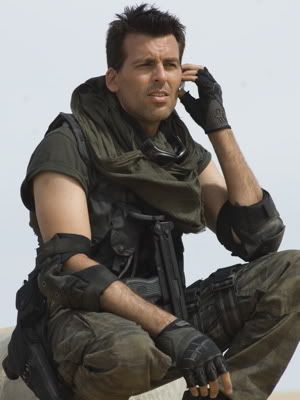
Missy has a way of navigating the cutthroat waters of life in Los Angeles by simply shrugging at the absurdity of it all while carving out a resume that is slowly starting to generate more and more opportunities for the actress. From her stint on HEROES to her current run on the CW’s REAPER, and if you haven’t checked out the goodness that is the pilot episode I am sure those of you who are technically inclined can catch that wave somewhere on the Interwebs, Missy brings a freshness to roles that speak to her personality: charming and disarming.

It’s hard to dismiss the fact that she enjoys what she does and is thankful for what she has but she’s markedly different from any other vapid actress I’ve ever had the misfortune to interview from the standpoint that Missy, at the end of the day, is someone who embodies the axiom of good things happening to good people. With regard to her role as someone who plays opposite of a man who has to keep a day job with the devil Missy can simply do no evil.

To be sure, when Missy took the stage with her fellow REAPER cohorts at the panel in the biggest hall at the Comic-Con, exuding the same nonchalant attitude that has been present with every interview incarnation we’ve had, I had the feeling that if nothing else in life she can at least be someone who can say that she is who she is and isn’t about to compromise anything to get there. However, she could shill for The Ryde and hook a brother up with one of those cryptic “MMM…Burritos” shirts that she was rocking much to the amusement of this journalist during the interview I’m sure her conscious would turn a blind eye…

Now, since this is the last installment of my Comic-Con coverage I have to publicly give much love and many thanks to my anonymous and hardest working PR source that keeps allowing me to talk to Missy and others in her employ. You made the expense of getting to San Diego worth every cent I spent and I appreciate it. I still think you need to dress up better if you ever think about taking a photo with me again but I’m sure we can work on that next year.

line3.gif

trailerpark2007-09-28.jpg

Download SDCC Missy Peregrym Interview:

Large (560 x 420 – QuickTime – 144.45 MB)
Small (320 x 240 – QuickTime – 62.40 MB)

[display_podcast]

September 21, 2007

Trailer Park: Oded Fehr

Filed under: Columns,Interviews,Trailer Park — admin @ 1:41 am

By Christopher Stipp

Archives? Right Here”¦

Instead of manning-up and actually going the emotionally hard route of being outrightly rejected by publishers, I’m rejecting them first and allowing you to give my entire book a preview, let you read the whole thing or, if you like, download the whole damn thing at no cost. Download and read my first book “Thank You, Goodnight” for FREE.

You can’t help but see it as a duality.

With Oded Fehr’s career in Hollywood working out in the exact opposite direction that most other actors build their resumes, his stints in THE MUMMY pictures thrusted him to the front of the line of big budget productions, Oded found himself being quickly established within the acting community. He took his notoriety and actually channeled it into smaller roles on television. This part is important to understand because from Presidio Med, Charmed and even UC: Undercover Oded two-stepped back into the thunderous actioneer, RESIDENT EVIL: APOCALYPSE without so much as missing a beat.

Too many times in this business you talk to people who are vocal about being film actors and nothing but or television actors that only sees television as a way into film. Oded, I think, doesn’t see things that way. As evidenced by his turn in Sleeper Cell on Showtime you can see Oded deliver a tightly packed performance that is definitely an argument as to why film actors need to rethink their stance on the issue.

I believe the other part of this duality about Oded, and this could be pure speculation, is when he’s going to break from playing characters with obviously “international” names like Prince Sadir, Kazim, Amahl Ali Akbar, Zankou, et al. Hopefully you can see where this is leading when you understand that, as Carlos Olivera in the newest RESIDENT EVIL installment, his newest role is yet another step forward for the actor who is constantly looking for roles that will allow him to be seen as an actor who can play roles of varying type.

I talked with Oded regarding the choices he makes with regard to work, whether he’s had it up to here with productions set in the sand and what it’s like to be a working actor with small children.

RESIDENT EVIL: EXTINCTION opens Friday.

ODED FEHR: Hi…is this Christopher Stipp? This is Oded Fehr.

CHRISTOPHER STIPP: How are you doing?

FEHR: I’m very good, how are you?

CS: I’m doing fine. I couldn’t wait to talk to you.

FEHR: I appreciate that.

CS: I know you’ve already been through rounds and rounds and rounds of press and all that…

FEHR: Yeah, but it’s not so bad.

CS: No?

FEHR: I like to talking about movies and the work.

CS: The only reason I bring that up is because I recently saw an interview with Kevin Bacon talking about doing press and junkets and what he thought of junkets. Being on the other side I’ve got to think that answering the same questions again and again and again”¦

FEHR: The junket days are definitely hard. They are a little bit mind numbing because you literally do answer the same questions over and over and I think it gets to the point where the day you can sum up all the answers right off the bat from the first one.

CS: I am absolutely fascinated by that only from your point of view. Obviously in the back of your head you want a memorable, a nice conversation”¦is there things you look for – hope that somebody brings up instead of the “What was it like to work with” kind of questions?

FEHR: No, I was thinking about it myself; what would be the questions that would be most interesting? It’s one of those things that when you are on your side, you know your work really well and sometimes you are surprised by questions some people ask you as far as your work because it’s not the first thing you think of. It is the same with me. I don’t necessarily ““ I’m surprised by the questions or I’m not surprised by the questions. As far as I’m concerned I always afraid I’m boring people. Because I’m not really ““ I live a very simple life. I’m a father first, husband and so on so I’m not nearly as interesting as others might be.

CS: Well, you are to me because I have two girls at home, one’s four and one’s one so when I saw that you had two children of your own.

FEHR: Exactly the same ages.

CS: I was utterly fascinated from the point of view that your world must have changed dramatically. You have a preconceived notion of what life will be like when you say “I am going to be a father and having to balance”…Obviously, at the end of the day, acting is work.
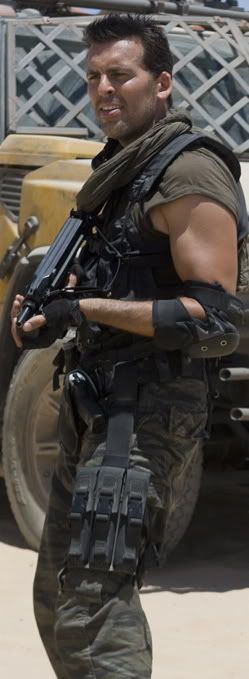
FEHR: It is very much that. The thing about me I think is I was always very ready to have children and looked forward to having children and a family. My wife and I got married and really found a wonderful life with each other and we added it on with children and it never”¦.you know how people always warn you everything will be so different. Everything is upside down, life is completely different and shocking but for it me it always felt as though it was very much a natural progression of things. I love it. It’s the first and foremost most important thing in my life.

And acting is definitely a job. It’s the most wonderful job. I’m the luckiest person on earth to have such a great job and to be able to sustain our life with it”¦ It’s definitely a job. It’s one of those things”¦no body can touch me. If somebody doesn’t want me for a certain role or if somebody doesn’t like the work I do it doesn’t really affect me as far as who I am ““ it just affects me as I just had a bad day at work. Do you know what I mean?

CS: Absolutely. I looked at the shoot you did for the latest RESIDENT EVIL. I thought it said something about 55 days or something to that affect. Almost two months. Does that come into the picture now? All these years now of not having children and now you do”¦or is it “This is what I have to do to be a working father”?

FEHR: You know what? The thing about RESIDENT EVIL was that it was a wonderful shoot for me because we shot most of it in Mexicali which is four hours away. It all definitely, definitely comes into play with my family and I like to bring my family with me whenever I can. I just shot a movie up in Vancouver and spent three and a half weeks away from the family which is extremely difficult but then they came up for the final two weeks. I always have them come join me whenever possible. But, as far as RESIDENT EVIL was concerned, it was great, I used to drive home. Any time I would have at least 24 hours, I would drive home four hours just to see them and drive four hours back. But it was totally worth it. My daughter was only a month and a half old. We went through quite a lot to have her in the sense that my wife was on bed rest for a few months and actually hospitalized for seven weeks. It was really hard.

CS: Oh my…

FEHR: But we have a beautiful baby girl. It was totally worth it. It was great. I had a wonderful time in all aspects of RESIDENT EVIL: EXTINCTION.

CS: One of the first really big questions I have is after looking at the stuff you’ve done for the MUMMY and now RESIDENT EVIL”¦the kinds of shoots that they were, I’m just curious – are you just sick of filming in the sand?

(Laughs)

FEHR: Ha ha, no. I do love it. I’m naturally drawn more to heat than cold. I have a much better time being in 125 degrees than being in zero degrees. I really enjoy it. Personally I think it just looks so fantastic. It looks amazing, that kind of natural beauty you get with dunes, the rolling sand hills, it just the earth colors is extremely beautiful. Very sexy, very adventure like. I think Milla looks better than she ever looked in anything I’ve seen her in. It’s just very exciting and a lot more adventure like.
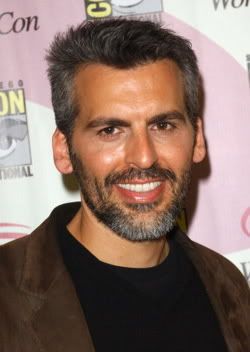
CS: Right, in fact you are leading right into the second thing I was going to bring up. You mentioned the word adventure-like and these movies just lend themselves to feeling sort of epic and I’m just curious from your side of things if there were things you have to do as an actor sort of embody that largess, that bombast of an adventure movie that you need to do. This is not a tiny role. You really have to play it up as it is.

FEHR: Yeah, I mean you try to do everything you can as far as building up the emotional depth of the character in these kinds of movies is not nearly as much work as you would do in a show like Sleeper Cell or Hamlet. But this movie is a lot more passion driven. I certainly spent three months or so working out, trying to build up more, trying to look like someone who is a hired killer, a fighter kind of thing, you know, soldier for hire. Definitely attempted at the same time to loose a lot of fat. Get that lean look ““ lean and hungry look of someone who is living in a post-apocalyptic world. You try to do a lot more physical stuff in these kinds of movies.

CS: Does anything surprise you anymore as to what these writers are coming up with as far as premises for these movies? Does anything go “Oh God…” You say the words post-apocalyptic, a lot of snobs, for lack of a better word would turn up their nose”¦

FEHR: I can’t see anybody turning up their nose or doing any of that with this kind of movie anyway in the sense that this is very much a genre of movie that snobs I don’t think would even look at. It’s the third installment in a genre of a move that was created from a video game and, truthfully, I think it was very well done.

The only other ones that might come close even though I think this is more truthful to the game is Laura Croft. And the thing about this one I believe is that the script is better than the last two, definitely the location, the details. I other two were great it’s just a nice progression, a nice build up from one movie to the next and I definitely think this is the best of all three. It has a lot more of that adventure feel just because of where it’s shot and all the other characters that have been added to it. It has a MAD MAX kind of feel in the sense of what’s left of the world. I think it’s one of those things that’s in all our minds. Are we going to bring this world to an end one day and only a few of us will survive.

CS: When you were reading the script for the third one ““ and I’m really curious to know – that when you are reading a script, even before one frame is shot, was it detailed enough that you could actually see how these individual parts evolve or have evolved since the last film or is there a lot of imagination you have to posses to try and envision if the movie is going to be schlocky?

FEHR: I think one of the hardest things for any actor, actually, not in my case with this one, if an actor is reading a script and is going to read for a certain part ““ your interpretation of what it is and the director’s interpretation could be two totally different things. That being said, reading this one after shooting the second one and seeing the first one you kind of have an idea of what it is that we’re talking about. And it was very clear in the script the vision, the totally different style from the last ones in the sense of the location, where it’s taking place and what the world looks like now. The fact is that the movie happens mostly in daytime, outdoors. The other movies were very much in the dark and felt very closed. So all of that is very different. It read much bigger obviously, bigger sceneries, bigger everything.

You can tell but you never have that 100% vision of the director. You don’t know where he’s going to take it or how he’s going to take it to shoot certain things. Even when you are shooting it you can’t 100% tell what it’s going to look like. You can see with your own eyes and every once in a while you look in a monitor but you still have no idea what it will look like after somebody adds the special effects to it. That’s where it takes me a few times to watch the movie and actually enjoy the story line because what I do the first few times is just go, “Oh my gosh, that is what it looks like, or wow they did that, the girls look fantastic, oh they added””¦..And that’s how you watch the whole thing and you go through it and what your remember is so different.

CS: It’s funny you bring that up. Some people don’t like to ““ it’s an odd thing ““ I encounter some people like to watch what they do, some people say I’ve filmed it and move on and feel very uncomfortable looking at it. But it doesn’t seem like you have a problem with that.
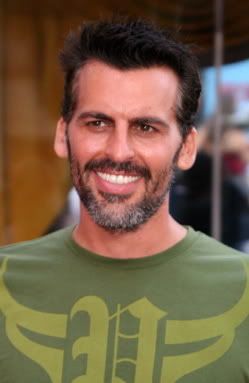
FEHR: I don’t particularly enjoy watching myself. It’s probably the same feeling you must have when you leave a message on your phone. You hear your voice and say oh my gosh, do I really sound like that? 10 times worse.

CS: But you’re a nice looking guy, aesthetically speaking…

FEHR: You’re part of a project ““ and I’m interested in directing one day and I am fascinated by seeing how the complete picture comes together.

CS: Funny you bring that up that you wanted to direct. You mentioned that the MUMMY mostly made your career what it is but most people work in the opposite direction with actors eventually leading to the big time, big budget role. But right out the gate you’ve done the big budget movie. What have you done to try and get the kind of roles like Sleeper Cell to demonstrate your range and that you are not just a big action go-to guy?

FEHR: I wish I could tell you that it’s as easy as oh this is what I want to do and this is what I’m going to do. It never is. The business has become very difficult out there. It’s much harder to get work. You can tell. Huge stars are doing TV shows and you never expect them doing. A very small percentage of actors are in a position that they can shoot exactly what they want to do and even they don’t get the opportunity unless they develop it themselves. So I can’t say that I just chose what I want. On the other hand, I do say no a lot. If there is something that I like, something that I read that I enjoy, for me, 99% of the time it’s the script. If it is something I enjoy – no matter what genre it is in. I’m happy to do it. I do try to do as many different things as I possibly can. DEUCE BIGALOW is a comedy and I’d love to do more comedy and always keep my eye out for a nice comedy to be a part of. Many times I’ll do tiny roles like in DREMER for the opportunity to work with people like Kurt Russell and Kris Kristofferson. So you just try to not do actual crap. (Laughs) But sometimes you just can’t help it for whatever reason. Most of the time you try to do things you enjoy reading.

CS: I’d like to ask you ““ when I was going through your resume a lot of the roles that you played with the exception of the work you did with UC Undercover, your characters names have a very international, ethnic sort of ring to it, is there any sort of frustration on your part, maybe there wasn’t or isn’t…

FEHR: There was a little bit in the beginning, obviously. The MUMMY was a wonderful thing on one hand ““ a double edge sword because it was difficult for anyone to see beyond the long hair, the beard, and the Arab accent. But that being said not being in the TV world there is no ““ I just did a pilot for Fox last season which I play a doctor…

Truthfully, it’s one of those things, you have to, whenever you sell anything whether it’s a product or you as an actor you really have to stand with your feet on the ground and be aware of what it is the people perceive your product is to be. And if your biggest advertisement shows the product as an Arab character it’s going to be hard for anyone to see you as anything else. You have to think of yourself ““ when you see an actor do something that you really enjoy you immediately think of him doing another 15 roles which are exactly the same. Your natural inkling is not to put him in a completely different genre. It a natural thing and you try to keep in mind. I’ve turned down many, many Arab roles. When Sleeper Cell came first, I just read a description of being offered a role of the head terrorist of a terrorist cell the first thing I said was “No, I don’t want to do it” but my representative said “Just read the script” and when I read the script there was no way I could turn it down. It was absolutely wonderful.

CS: I think it was one of your best work. I absolutely agree.

FEHR: And I would have to agree with you. It’s the best thing I’ve ever done. It was an amazing experience all around ““ working the directors we worked with, the cast, the crew, the writers everything. It was almost a family working together to achieve the same goal. It was great.

CS: And what did you bring away from that experience? Because it seemed that it was you, just you, just your acting – it wasn’t this bombastic ““ it wasn’t this large character we’ve come to know. What did it teach you about what you can do with a tiny role?

FEHR: I think it is extremely difficult to say what exactly it is. You learn about the acting aspect about what you can take away for the next time. It’s an internal thing. All of a sudden when you are doing another character you just find it easier to be natural with it.

All I know is that it was extremely important to me that this character be real ““ somebody that could be your neighbor. I felt that I definitely did not want to do some kind of Hollywood bad guy type of character. I wanted to do somebody who is just somebody that you almost, had it not been for the things he did or does, you’d really like the guy. And that’s what I was going for so therefore he had to be extremely natural just very much driven by his ideals and beliefs and he’s 100% convinced that he was doing the right correct thing. So basically, that’s what I was going for. I don’t think I’ve had the opportunity to play somebody for that length and depth that is so natural and I think I’ve learned a lot from it.

CS: One more question ““ going forward where I didn’t see anything else coming up on your horizon but certainly as you are contemplating moving forward as a working actor what are some of the things you are hoping to do with your next project and the next one after that? Is there any career path that you want to try to build on going forward?

FEHR: Well, I just shot a movie with Melissa George up in Vancouver, directed by Amanda Gusack. It’s a very small independent movie for MGM and that was a lot of fun. I’ve never done an independent before. I can’t tell you anything specific.

I do know that one of my dreams after leaving drama school was to do Shakespeare on stage one day. I come from a very classical type of training and for me that was the biggest challenge as a student actor entering drama school because I knew practically nothing about Shakespeare any of that classical theatre and really learn the language and all that. It was a huge challenge for me and still would be a huge challenge. I would love to conquer that one day by doing some sort of a Shakespeare play. Obviously the problem with that is the commitment it so long that you have to be in a place in your career that you could be taken away for practically a year. But I’d like to do anything ““ anything that’s good. I really enjoy doing TV ““ great TV. I enjoy doing film. I don’t really have anything specific. I just hope for great scripts. They are so scarce.

CS: I was just going to say, there are some people, some actors who say I’m just a film actor or look at television in a different way ““ not that it’s a lesser form but just something they do not want to do.

FEHR: It’s rare today that actors do that. There is a very small percentage of actors who do film only. Television today ““ the quality of TV ““ the quality of the story line, writing, the filming, the directing, all of it is so advanced ““ is so close to film now. The challenge on TV nowadays, in my opinion, is as good if not better than film it’s just that you have 8 days to shoot an episode instead of five months to shoot an hour and a half which is a huge difference.

CS: Oded, thank you so much for your time.

Special thanks to MAS for the transcription assist.

September 18, 2007

Interview: Frank Conniff

Filed under: Interviews — UncaScroogeMcD @ 6:21 am

frankconniff-01.jpg

-by Ken Plume

Though he’s worked as a writer in Hollywood for the past 12 years, those outside of the business that know the name Frank Conniff probably know him for a gig that lasted five far-too-brief seasons on a cow town puppet show called Mystery Science Theater 3000.

Even though he was one of the show’s exclusive group of core writers, fans of the show know him as the loveable henchkick to Trace Beaulieu’s Dr. Clayton Forrester, TV’s Frank.

Since leaving the show after its 6th season and moving west, Frank has been a writer/producer on shows including Sabrina The Teenage Witch, Invader Zim, and The Drew Carey Show.

He’s recently launched a brand new creation entitled Cartoon Dump – think of it as a sort of dumpster diving heir to Captain Kangaroo – which is presented by hostess Compost Brite (Erica Doering), who’s surrounded by a colorful menagerie of characters… One of those characters being Moodsy the Owl, played by Frank. During the show, an awful animated short from cartoon historian Jerry Beck’s extensive library of the worst cartoons ever made is also presented. Performed live in LA every month, Cartoon Dump is available as a podcast from CartoonBrewFilms.com, and be sure to visit their MySpace page at myspace.com/cartoondump while you’re at it.

Now, however, here’s my in-depth chat with Mr. Frank Conniff…

line.gif

frankconniff-02.jpgKP: You’re a New York City native, right?

CONNIFF: Yes, I was born and raised in Manhattan.

KP: Would you say that, even at that point, there was a creative inclination, or an inclination towards performance?

CONNIFF: Yeah. Absolutely. For performance, it was just to be in show business – probably from as long back as I can remember, from watching the Ed Sullivan Show. I was staying up late and watching Johnny Carson at a very early age and, you know, I just love comedians and I love television, so I was very inclined. And I was, you know, considered funny by certain people…. Certain misguided people. And so the idea that I could be a comedian – or the idea also that I could be a comedy writer… the minute I knew that that was a job description, I think I always thought, “Oh, I really wanna do that.”

KP: What was it like growing up in Manhattan during that period of the 60s?

CONNIFF: Well, it was very interesting, and I think I might have had kind of a troubled childhood, but at least it was a troubled childhood in New York. Being in Manhattan and growing up in New York was, as far as I’m concerned, one of the positives of my childhood.

KP: I’m assuming – even more so than someone who might have grown up in the Midwest or somewhere outside the northeast or the west coast – that showbusiness, as an entity, must have seemed much more attainable since so much of it originated from New York.

CONNIFF: Well yeah, that’s true, and also my father was a newspaper man, and had a newspaper column in the Journal American newspaper in New York, and he wrote mostly about politics. He wrote about sports, also, and moved in show business circles, as well. He was friends with Jackie Gleason and Phil Silvers, and he knew Ed Sullivan very well, ’cause Ed Sullivan was also a newspaper columnist. So I was very privy… I didn’t get to meet those people, but I was very aware of that world from a very early age.

KP: Where there any encounters that you do remember having?

CONNIFF: Um, not a lot. Every now and then my father would take me to Toots Shor’s, which is where a lot of show business people hung out. I was very young, and I don’t remember specifically meeting those people, but I was very aware of who they were and I was very aware that my father knew them.

KP: During that period, growing up, could you name a single person that, to you, represented show business or what you wanted to do?

CONNIFF: Well that’s hard to say. I mean from as long as I can remember, I guess Woody Allen was always my favorite comedian, you know, from when I was a kid, and I also loved Jonathan Winters and Bill Cosby. But I don’t know. I guess, in a way, Johnny Carson was kind of the passageway into that world – just watching him every night. And also what had a huge impact on me was watching the Mike Douglas show every afternoon. That was a very showbusiness oriented show. So I think those two things, and then everything else, had a big impact on me.

KP: Would these sort of creative instincts ever play themselves out at home or at school? You touched on having some troubles in childhood…

CONNIFF: Well, that has more to do with just my family situation that I had. My father got very ill when I was very young, and my mother also had medical problems. And so we ended up not being a very normal household. It ended up being kind of a chaotic, turbulent existence in many ways. So that’s why I say a troubled childhood.

KP: And were you the only child?

CONNIFF: No, I have three brothers and a sister.

KP: And have any of them pursued a creative career?

CONNIFF: Yes, my brother Tony, my oldest brother, he’s a musician in New York. He plays the bass and he writes music and produces records and works with a lot of different musical artists, and he teaches. My other brother Mike works at a newspaper in Aspen now, and he spent a long time involved with computers, but he started in journalism and he’s recently gone back to journalism. And he’s always written and stuff. Our father was a writer, and we grew up very, very much immersed in newspapers and magazines and writers and literature, to an extent. It was just very prevalent in our household growing up.

KP: I mean, if you were to choose what appealed to you more, would it be the creative aspects or the performance aspects?

CONNIFF: I don’t know. I think I always… I think my main ambition was always to write for television, but I also harbored ambitions to be a comedian as well. But I’ve spent most of my career – I mean, I perform a lot, but I’ve made my living as a writer for almost my entire career. I’ve made a living in show business as a writer. I did make a living as a stand-up comedian in Minneapolis in the late 80s up until when I was on Mystery Science Theater, but other than that, my income always came from writing. And I’ve continued to perform all this time – I perform at a lot of coffee houses and book stores and art galleries in Los Angeles, but I really do it out of a love of it. It hasn’t been really a big source of income for me at all. I love doing it, but I also love being a writer, and being a writer has been my livelihood. You know, being a TV comedy writer has been my livelihood for almost 20 years now.

KP: And it seems the bulk of your jobs – and you can tell me if this is mischaracterizing – it seems like you’re often brought in as something of a fix-it man on a lot of projects…

CONNIFF: Oh, I wouldn’t say that. I mean, I’ve had a couple of jobs like that, which are called consulting jobs, but what that means is usually that you’re not there full time. Like, I was a consultant on The Drew Carey Show, and that was just because I only came in two days a week – a lot of the staff is like that. So I don’t know if I’d call myself a fix-it man. I know that I am good at pitching jokes, and punching up scripts I think I’m very good at, but to say that I fix it could be too grandiose.

KP: So would you say you’re a good tweaker?

CONNIFF: I’m a very good tweaker, and I’m good at if a scene needs a funnier line or something, or needs a funnier exit line. I’m good at stuff like that, but I also like to think that I also have skills at storytelling and character development too, you know?

KP: Was there any point that you could have considered a different career path?

CONNIFF: Um, you know what? Absolutely not.

KP: (laughs)

CONNIFF: For better or worse, this is the only thing I’m good at, you know? So I never really, at any point in my life, ever considered anything else.

KP: Was there ever any pressure to go down a different path?

CONNIFF: I don’t think there was, because I was always just kind of a space case, and not really good at anything. Nobody ever really thought to consider that I’d be capable of anything, you know?

KP: So, you’d say you never really got on people’s radar?

CONNIFF: Yeah, well, that whole fallback position that you mentioned – that it’s a very sensible thing to have – I don’t really have. It’s either show business or work at Arby’s, and I wasn’t even very good at that, so that’s the situation.

KP: (laughs) How would you describe your high school period? Was there any sort of direction then?

CONNIFF: In those years, I really went down a very misguided path. I became, like, a total stoner, and was just kind of a hippie stoner loser kind of a guy, and I didn’t even have the ambition to be a comedian and stuff. That kinda fell by the wayside for awhile. I got involved with drugs and stuff, and I took a really bad detour there for a while. You know that – miraculously, and I’m very grateful that – I came out of that. And once I sobered up and stopped taking drugs and stopped drinking, then I was really able to really pursue my path in life.

KP: Well when you look at that sort of mid-seventies period when you were in high school, where were you culturally at that point? Were you pretty much in synch with where everyone else was in your peer group, or did you see yourself and your influences differently?

CONNIFF: In my peer group. I think I was in synch with my peer group, but that’s like a really pathetic thing to be in synch with my peer group… Those kids, you don’t really want to be in synch with. But, you know, I was very into music and I played in a band. I played drums in a band…

KP: I didn’t know that. How long did you do that?

CONNIFF: When I was in high school I was a drummer. Our band never got any gigs or anything, but it was an excuse to get high…

KP: So was it a garage band or a basement band?

CONNIFF: To call it a garage band is to give it an elegance that it didn’t really have, but it was like your basic garage band…

KP: What type of music was it?

CONNIFF: Oh, you know, we played, like, just bad rock. We did covers of stuff and, um… I mean, it’s so long ago it’s all a blur to me, but the point of it is just that I was playing music and stuff, but I wasn’t really disciplined about it – like the way my older brother was, who really pursued it and was disciplined and actually got a career out of it. Having a career as a musician entails incredible discipline, and I just didn’t have the focus for that, ’cause I was too screwed up back then. So like I said, it was like a big detour.

KP: Have you ever played an instrument since?

CONNIFF: Not really, although I’ve written a lot of songs in my day. At Mystery Science Theater, I wrote a lot of songs, and I’ve written a lot of the lyrics for songs. I’ve written songs that I’ve done in my stand-up act, and I’ve written songs for Cartoon Dump, and I’m writing songs for this other project that I’ve written on. And I actually am in ASCAP as a result of the various things that I’ve written for TV shows through the years. I wrote the words for a couple of songs that were on Sabrina Teenage Witch. I’ve kinda developed, mostly as kind of a dilettante, a songwriting thing, but I haven’t played an instrument.

KP: What kind of inspiration will strike you when it comes to a musical piece? Is it through lyrics or is it through the music – or is it a combination?

frankconniff-03.jpgCONNIFF: No, I’ll come up with lyrical ideas. Like for Cartoon Dump, I wrote a bunch of songs for it and then I hooked up with this guy, Brad Kay, who wrote the music. On Mystery Science Theater, we’d come up with sketch ideas and say, “Hey, this should be a song.” Like the song “If Chauffeurs Ruled the World”, I specifically remember the idea for that song was Joel (Hodgson)’s idea. He actually came up with the title “If Chauffeurs Ruled the World”. and I think he came up with the line, “Everyone would take a back seat to me.” But then I actually wrote the words to the song. And then Mike wrote the music to it, you know? From my memory, Mike (Nelson) would always do the music, and sometimes he’d do the words, sometimes Kevin (Murphy) would do the words. Sometimes Joel would and sometimes I would. So we all kinda contributed in that way.

KP: Were there any other major ones that you remember besides “Chauffeur” that just kinda came?

CONNIFF: I think I wrote the “Pants” song. The tribute to pants. And I wrote a few others, but it’s all a blur to me. I can’t, um… oh, I wrote the janitor song, too. Which I don’t know if you remember…

KP: Oh yeah, definitely…

CONNIFF: I think it’s usually credited in the credits, the person who wrote the lyrics, I think, is usually credited, so if people want to know who wrote which song, I think they can just check the credits on the show.

KP: When you look back at that high school period, did you have any plan whatsoever after exiting high school?

CONNIFF: Um, yeah, as a matter of fact – my plan was so good that I exited it before I graduated.

KP: (laughs) Now that’s a go-get attitude.

CONNIFF: Yeah, exactly.

KP: (laughs) So, was that a difficult decision to make?

CONNIFF: Well, it was a stupid decision to make.

KP: (laughs)

CONNIFF: You know, there wasn’t any Hamlet like thing involved in it, it was just being an idiot, and not really taking care of myself, you know? So that’s how I describe that.

KP: So when you find yourself having exited high school – and I’m assuming the bulk of your peer group is still in high school…

CONNIFF: Mm-hmm.

KP: What do you do then?

CONNIFF: Well, then I went to a high school in Long Island, and my mother, after my father… my father died when I was 14, right before I went into high school. And my mother moved us out of Manhattan to Southampton, which is where her family was from. So I went to high school there. And after I left I kinda came into the city, into Manhattan, with the idea of writing and becoming a comedian. But it took me a long time to really get my focus and get my shit together to where I finally was able to do that. And I wasn’t even… you know, I did do stand-up comedy in New York and stuff. I did open mic. But I really didn’t pursue it in any consistent kind of way until I was sent to drug rehab treatment in Minneapolis, and then I got out, and then I stayed in Minneapolis and then I started doing comedy in Minneapolis and that’s when my life got a lot better and I was really able to start living the life I always should have been living. You know?

KP: Now was this the late 70s, early 80s, or…

CONNIFF: No, no. Well, the early 80s was in New York, but I didn’t get to Minneapolis ’til, like, ’85… In my late 20s.

KP: What led them to send you to a facility that far away?

CONNIFF: Minneapolis, or Minnesota, is actually very well known for its drug rehab community. And I think it was just recommended that I be sent there, and it turned out it was a good idea.

KP: I’m assuming these were quite serious circumstances to be presented with that option. Or was it not an option? Was it, “Well, you have very few choices…

CONNIFF: Yeah I was presented with just like, “You know, this is what you need to do,” and I had reached a point where I was willing to do it.

KP: And was this an institutional recommendation or…

CONNIFF: My family did an intervention on me. And they had a professional drug rehab person do the intervention with them. And on her recommendation they had this intervention and they sent me to Minnesota.

KP: From a performance and a writing perspective, how would you describe yourself during that New York period in stand-up?

CONNIFF: Well, I mean, I think I did some pretty funny things back then, and the people who saw me always remembered. As a matter of fact, Rich Jeni, god rest his soul, who just tragically died, I knew him in New York in the early 80s, when he was an open mic act, and I met him at this club in Brook, in Sheepshead Bay, Brooklyn, called Pip’s, which is like the first ever comedy club. And he was very encouraging to me back then. And then, you know, I drifted into my thing, and in the meantime he became a great comedian and he ended up years later… I didn’t see him for years, he ended up headlining in Minneapolis and I was his opening act. And this was like, you know, seven years or so after I’d last seen him. And he totally remembered everything about my standup act from back then, and he was very complimentary about it. The point is, even though I didn’t really have my shit together back then, I know that I did do some funny things on stage, but I didn’t have the focus then to really develop my act until I’d hit bottom, and then I ended up going to Minneapolis and then just kinda started all over again.

KP: How much of a culture shock was it, making that transition to Minneapolis?

CONNIFF: I don’t think it was a huge culture shock. The Midwest is very different from New York City. It’s not nearly as ethnically diverse and all that, but it wasn’t that much of a culture shock, though, because Minneapolis – and the Twin Cities – is such a great place to be and people there are really smart and, you know, it’s not like I was deprived in any cultural way by being there. On the contrary. Like, I met all these great creative people there, and it was just a wonderful place to be at that time in my life.

KP: And it certainly was a sort of golden age for the comedy scene.

frankconniff-04.jpgCONNIFF: Yeah, it was an incredible scene back then, and that’s where I met Joel and I met Mike and I met Bridget (Nelson) and I met Trace and I met Josh (Weinstein) and we all used to hang out. We all knew each other in the clubs back then, and that whole period in my life, in the late 80s – even before I got on Mystery Science Theater – just that time in Minneapolis doing comedy… and I wasn’t really making any money, I was like practically broke most of the time. But, in my mind, that’s like a golden era to me. That’s one of the great periods in my life.

KP: So were you mainly based in Minneapolis, or did you go on the road as well?

CONNIFF: Well, I was based in Minneapolis, and I did go on the road, but it was all in the Midwest – Iowa and North and South Dakota, and Wisconsin. I would do these one-nighters with other comedians on these little circuits for very little money, but it was a really valuable experience. Although sometimes the shows didn’t go that well…

KP: What would you describe as “not going well”?

CONNIFF: Well, you know, you do these one-nighters and sometimes there’d be really drunk audiences, and not going well is, to put it as simply as possible, bombing…

KP: (laughs)

CONNIFF: People not laughing would be the description of that.

KP: And how would you handle bombing? What would be your mechanism for dealing with that?

CONNIFF: I don’t know, I just… just walk off the stage in utter shame.

KP: Were you the type to blame yourself or blame the audience?

CONNIFF: Well, I would… you know, I mean, if the audience is really drunk and they’re heckling you and they’re noisy and they can’t hear anything you’re saying, then you can’t really blame yourself. It’s not a question of blaming yourself – it’s a question of, like in any gig you do, “Well, which jokes work and which didn’t work?” And the jokes that don’t work you drop and the jokes that work you keep in the act. So that’s just the constant learning curve of being a comedian.

KP: And how would you describe your type of comedy? Was it character, was it situational, was it largely improv…

CONNIFF: Through the years, I’ve kind of gone through different phases. But I think I’ve always been essentially a very silly, shtick based comedian. Silliness has always been the high priority to me. I think I’m a frustrated Burlesque comic, is what it comes down to. Although I do very modern kinds of things, there’s a part of me that’s just a lowdown Burlesque guy. If I ever considered myself a really good Burlesque comedian, that would be something well worth aspiring to as far as I’m concerned.

KP: So you’re like a postmodern Burlesque comedian.

CONNIFF: Well, I wouldn’t say that. Once you say postmodern, there’s an element of pretentiousness, so I don’t wanna say that. But I would just say I’m just a guy who really likes to be silly and goofy on stage.

KP: And, at your tightest, how long would you say your act would’ve run?

CONNIFF: I didn’t really headline that much at all, ever. I was more a middle act, which in those days was like a 30 minute act. There was the opening act, which is 15 minutes, and the middle act would be 30 minutes, then the headliner would be 45 minutes to an hour. And I never rose above middle act.

KP: And were you comfortable as a middle act, or did you aspire to headline?

CONNIFF: It is a comfortable position, because it’s kinda the best time in the show. You’re getting the audience before they have a chance to get tired or before they’re being asked to pay their bills and stuff. But I did aspire to headline, but I always had in my mind that I was gonna end up making a living as a TV comedy writer, and miraculously that happened in a way that I could never have predicted, when I got hired to be on Mystery Science Theater in Minneapolis in 1990. I was a middle act as a comedian then, but once I got on Mystery Science Theater, any ambition that I might have had to become a headliner and tour and play clubs all over the country kind of fell by the wayside, and I’m like, “Well, now I’m really where I want to be.” Like, I’m on a TV show and I’m writing for it and I’m on the show. I still continued to do stand-up comedy, but I think from then on stand-up comedy was always just a creative outlet for me, as opposed to a lifetime career plan. My career goals were being met beyond my expectations once I got on Mystery Science Theater.

KP: How archetypal now is that job you held at Arby’s?

CONNIFF: (laughs) I don’t know. I used to talk about it in my stand-up act a lot, and then I think we referenced it on Mystery Science Theater. I think my character on the show, if I remember right, we mentioned that he worked at Arby’s. And that, unfortunately, was very autobiographical.

KP: Was it merely just a means to make your bill payments and such?

CONNIFF: Yeah. I think when I started doing stand-up in Minneapolis, I was in a halfway house after I got out of rehab, and part of the thing at the halfway house is you had to get a job while you were there. So I went out and saw what was available, and White Castle turned me down but Arby’s hired me.

KP: Did White Castle give a reason?

CONNIFF: (laughs) They just decided to go in a different direction.

KP: They had hired Tom Arnold they week before.

CONNIFF: Right, right. So I had that job at Arby’s, and then at night I was doing stand-up comedy, so that was like a job I had to take. And like I said, I didn’t have any skill to go and work in an office or to work at a computer. I didn’t even type that fast. As a matter of fact, I didn’t learn to type until I joined Mystery Science Theater and management there very kindly bought me a computer program called Mavis Beacon Teaches Typing

KP: I remember it quite well. (laughs)

CONNIFF: Yeah. So That’s where I learned to type, was on the job at Mystery Science Theater.

KP: So you became good friends with the home row.

CONNIFF: Yeah, exactly!

KP: I’m kinda curious… Coming out of rehab during that period, was there ever any concern, with your counselor saying, “You know, maybe the stand-up scene, and what goes on in that, might not be the best atmosphere to stick around in…”?

CONNIFF: There was a concern on my part about it, because I was really worried about being around alcohol which, of course, all comedy clubs have. Although when I first started in Minneapolis there was a club called the Ha Ha Club that was nonalcoholic, just a theater. I started there, but I knew that the Comedy Gallery was really the place to get work and stuff. So it took me a couple months, but I finally decided it’s just very important to me to pursue this, so I’m going to risk it. And then it turned out once I got into the clubs and stuff, the temptation to drink, very fortunately for me, never became an issue.

KP: And as far as when you would go out on the road, did you do it in groups or did you mostly do it alone?

CONNIFF: Yeah, we would always be, like, three comedians. – the headliner, the middle, and the opening act. And I didn’t drive, either…

KP: A true New Yorker. (laughs)

CONNIFF: Yeah. I didn’t learn to drive ’til I moved out to L.A. So it’d always be the three comedians in the car going out on the road.

KP: So who would be the comedians you’d go out with the most?

CONNIFF: I don’t know. It was different. There were headliners… there was a guy named Bill Bauer who was a really funny comedian, and he’d get gigs as a headliner and he’d take me along as his middle. And that would happen to me with Lizz Winstead a lot, who’s basically my oldest friend in stand-up comedy. And Lizz Winstead actually…

KP: Creator of The Daily Show

CONNIFF: Yes. And she actually, literally, discovered me because she saw me on an open mic in Minneapolis. She was headlining at the club that week and she said, “Oh, how would you like to be in my show this weekend?” And that was the first time I ever did a comedy thing that wasn’t an open mic. That was my first real gig. So she would take me on the road with her sometimes and stuff. And then you’d just work with whoever… you know, these comics from out of town. They’d be on the road and they’d be booked and you’d be booked with them, so you’d just meet them when you hooked up to get in the car to go to the gig. That would be when you’d meet them.

KP: So how accurate are the numerous after-the-fact portraits of the horrible comedy condos and road horrors and so forth… (laughs)

CONNIFF: Well, as far as the comedy condos go, I don’t know that much about them. For me personally, as someone who just lived a very financially marginal existence, for me it was always a treat when I’d be on the road and I’d be in a Super 8 Motel room and they’d have cable. That would be like… I would feel like I was living like a king. That was like my favorite part – besides doing the show, if the show went well – but I just loved being in the hotel room and watching cable. That was like a total… it felt like luxury to me. I don’t have those kind of horror stories… I mean, there were a couple of bad places and they’d put you up at crappy accommodations and stuff. But usually, if you put me in a Motel 6 or a Super 8, I was in heaven.

KP: Anything with a “Free HBO” sign.

CONNIFF: Yeah, absolutely.

KP: So who was the first of the sort of MST group that you met? And what were the circumstances?

frankconniff-05.jpgCONNIFF: It was I guess probably… I think I met Bridget. And I may be wrong about this, but I think I met Bridget before I met anyone, and I became friends with her. And I remember – and this was a long time ago so I don’t know if I have all this right – but I met her and then Mike came along. And I think Mike and Bridget met at one of my open mics. I think I might have been there, like, the first time they ever actually met. And so I knew them and I knew Josh. It was all around the same time. I knew Josh. And I knew Joel… I met him a couple times but, you know, I knew him mainly more from reputation, because he was already kind of on another level back then in terms of… he didn’t come down to the open mic because he was writing a TV special with Jerry Seinfeld. He was in our circle, in a way, because he was a great guy and he was very humble and he hung out with everybody, but he wasn’t in our little group at that point. And at one point I was kind of the open mic tsar of Minneapolis. I ran two or three open mics, and so when Mike and Bridget came along, I thought they were really funny, so I always encouraged them and I always gave them really good spots on the open mics. And I did favor them along with the other comedians who I liked. I remember there was resentment from other open mic acts about that.

KP: How would that express itself?

CONNIFF: I don’t know exactly. That’s what happens in comedy – there would be little rivalries and resentments and stuff. And I definitely always gave Mike a good spot in the show. I always gave Bridget a good show. This other guy, Russ Rogers, who was a good friend of Mike’s from college, I always gave him good spots. In my whole career in show business, in a way, that was the most power I ever wielded. When I ran open mics in Minneapolis – and I did have my favorites – we’d do the shows and we’d hang out and stuff. We were like a clique. Like I said, those were really fun times.

KP: Would you associate with anyone outside of the show night?

CONNIFF: Yeah, yeah. We would do a show… you know, we would perform, and we’d always go out afterwards. We’d get something to eat or we’d go and just sit around. And we would have a great time. I think that, partly because of my encouragement of them, and also because of their encouragement of me… like we really encouraged each other – me and Mike and Bridget, at a time when you need all the encouragement you can get. Because you’re not really getting a lot of it from any established authority figures, so we really were very supportive… All of the comedians that we all hung around with back then, we were all very supportive of each other.

KP: There was no group enemy that you fought against? (laughs)

CONNIFF: Well, we had those, but we were on one side and our enemies were on the other side.

KP: So it was very much a mutual support group.

CONNIFF: I think so. I mean, that’s how I remember it. We all were fans of each other. We all thought each other were really funny. And then I know that, when the opportunity came up – when there was an opening at Mystery Science Theater – I know that my name came up right away, and Mike and Joel both knew me and they were the ones… and Trace knew me too. Trace was around back then, too, in the stand-up scene.

KP: What was your initial impression of Trace?

CONNIFF: Oh, I just thought he was hilarious. He was very kind of, like, introspective, not gregarious, but yet very easy to be around – like an easy guy to hang out with and very unpretentious, as he’s always been. And he just really made me laugh, too.

KP: So what was the first inkling you got that they were doing this project called Mystery Science Theater? Were you aware of the KTMA shows?

CONNIFF: Yeah, I’d heard about it. I didn’t really watch it. I don’t remember watching it on KTMA, but I had heard about it. And then Mike went onto the Comedy Channel. Mike got hired for that, for a season on the Comedy Channel, and I remember being really happy about that. In the first season, I remember going over to Mike and Bridget’s apartment and they played me a tape of one of the episodes, and they fast forwarded to the parts that were references to people that we knew. There were just a couple jokes that were in there that only I and maybe two other people would have gotten, and they fast-forwarded and showed me that, and it was, of course, so incredibly delightful to hear that and I just laughed so hard, you know?

KP: So what was your initial impression of the show itself when you finally saw it?

CONNIFF: Yeah, I thought it was really funny. It was totally up my alley, and I liked it a lot.

KP: So when did you first get the call that they wanted to bring you in, and how was it presented to you?

CONNIFF: Well, I actually remember very specifically that I was on the road and I was in, I think… I know I was in North Dakota. I’m not sure which town. Maybe Bismarck, but I’m not sure. And I was in my hotel room, and I got a call from Mike. Maybe he left a message on my machine at my apartment in Minneapolis. And then I remember talking to him in the hotel room and him telling me that the show got picked up for a second season and that they were looking to hire someone and that they had pretty much decided that I was the guy. And I remember that specifically because, I have to say, that that moment was one of the most exciting moments in my whole career. That was a moment of just being on the road doing stand-up comedy and then being told on the phone that I was getting this great opportunity. It was just a really… I’ve had only two or three moments like that since then.

KP: So what was the initial presentation, as to, “This is what we’re bringing you in for…”?

CONNIFF: Well, I was brought in as a writer. That’s what I was officially hired for. I don’t know if those other guys told you this already, but the first month on the job for that second season was just everybody building the set. That was literally the first thing… that was the first job before we could do any writing, was just building the new set for the show.

KP: That’s got to be an odd feeling to come in as a writer, and your first job is to build a set.

CONNIFF: Yeah, I mean, it was… there was nothing… nothing about it seemed weird, because I just knew that this was the kind of way they did things. But the thing, (laughs) about it that was weird is that I… of course, out of everyone, I was the most incompetent at that job. All these other guys that grew up in the Midwest, they grew up with fathers who had garages with tools and stuff, and they all had some kind of natural inclination towards that kind of thing. The only power tool in my father’s house was his martini shaker, so I was just completely out of my element. Although they were really nice about it and they helped me out. But that was probably the only moment on the show that I ever felt like, “God, I’m really not carrying my weight here,” was when we were building the set, because I was pretty bad at it.

KP: Do you remember specific areas you worked on?

CONNIFF: I don’t know. I remember Mike and I had to go get wood one time and we came back with green treated wood and it was the wrong kind of wood. I remember Joel looking at me and going, “We sent a boy to do a man’s job.”

KP: (laughs)

CONNIFF: So just stuff like that, where I would just try to do what I was told and I would try to hammer things, but I just had no talent for it whatsoever. And that was the only moment that I was ever on the show where I was thinking, “God, maybe they’re just gonna decide that I’m not cut out for this.” Once we finished the set and once we were in the writing room, then everything was fine.

KP: So what was that feeling like, if you recall, being in the writing room for the first time, knowing that this was your job?

CONNIFF: Well, it was just a great feeling, and it just felt very comfortable right from the start. It was just really fun right from the start. It was really a case of, “I can’t believe I’m getting paid to do this.” And back then the pay was incredibly low, but it didn’t matter because it was just really fun. I was just waiting for someone to come along and say, “You can’t make your living doing this. We can’t allow this to happen. Something this great can’t happen to you.” You know, and be taken away.

KP: Yes, they were gonna show up at the door and say, “Mr. Conniff you have to come with us.”

CONNIFF: Yeah, exactly. Exactly.

KP: “Everyone else can play but you, you’re coming with us.”

CONNIFF: Yeah. But I think all of us kinda felt the same way, though, like we felt so blessed to have this job.

KP: Do you recall what your first quip was in the room?

CONNIFF: You know what? I really don’t. I remember my first movie was Rocket Ship XM, but honestly, that I don’t remember.

KP: Do you recall it being easy getting into the groove of doing that?

CONNIFF: Yeah, it was, because everyone was like.. You know, I think Joel created this feeling in the room that it wasn’t a high pressure thing. It was really… I think Joel has this attitude that the more fun you have, the better the end product is gonna be.

KP: Right.

CONNIFF: And so that was how it was. And actually, that first year, the writing room was just Joel, Trace, Mike, and myself. Most of the time. Because Kevin was still spending a lot of time editing. I think the writing staff officially was Joel, Mike, me, Trace, Kevin, and Jim. But Jim and Kevin were always really busy with all the other stuff they had to do, so Kevin wasn’t in the writing room as much as he would have liked. But once the next season came and then we had the budget to hire another editor, then Kevin was in the writing room all the time.

KP: So when was it presented to you that it would not just be a writing job, but also a performing job?

frankconniff-06.jpgCONNIFF: That came up pretty quickly. I knew that I was officially replacing Josh as a writer, and I think the general idea is that I was gonna replace him as a performer as well, but it wasn’t a forgone conclusion when I started. I knew that when I was hired, I was being hired as a writer, and I didn’t just take it for granted that I was gonna be on the show. But pretty quickly, once we got around to that – I don’t remember there being any discussion or anything about it – I think it just kind of happened.

KP: Were there any sense or anything related to you about what had prompted Josh’s departure from the show?

CONNIFF: Not that I can remember. He moved out to LA and I think he… Josh was just in a different place at that point, and had other ambitions. He was 16 or 18 years older, something like that. That was my understanding of it.

KP: But you never got a sense of anything beyond that.

CONNIFF: No. I mean, not really. No.

KP: As far as the atmosphere during that second season, did you get a sense of any of the conflicts that were brewing and would arise in later seasons?

CONNIFF: No, not that first year I was there. It seemed like we were all there just having fun.

KP: When TV’s Frank came to the fore, what was that dynamic like the first time being on camera?

CONNIFF: I think, because it was with Trace, it was just always… it was just a very comfortable thing that felt right, and just working with Trace, being part of that team with Trace, was just so great right from the start. I don’t remember feeling a lot of nervousness about it or anything, because he and I just really, as performers and as those characters, we just really clicked with each other. It was totally, totally on the same page as to the kind of vibe we were trying to go for and what we were trying to achieve in those segments.

KP: When you talked about your stand-up sort of being Burlesque, you two were an incredible double act…

CONNIFF: Yeah, yeah, absolutely, and that was… the great thing about that is we were really… not to compare myself to Abbott & Costello or Laurel & Hardy, not for a moment to say that I’m on that level as Three Stooges, but that was exactly the style of performing that Trace and I were doing. In that tradition.

KP: Well, I think you’re underselling your performance. (laughs)

CONNIFF: Well, thank you.

KP: How quickly into the job did the responsibility of choosing the films come in?

CONNIFF: Oh, I don’t know. I don’t remember if that was the next season or the season after that. I don’t remember exactly when that came about, but that just was another thing, too. I don’t think there was a lot of discussion about it or a lot of thought into it. I think that when the day came, they decided, “Well, we should give someone the specific task of looking at the movies before we look at them.” I think it was just a matter of that, just like it seems like it would be the practical thing to do, and it would streamline the process. And then the job was given to me for whatever reason, but I was very willing to do it.

KP: Who was doing that prior to that?

CONNIFF: I think prior to that we just would all look at the movies. You know, we’d get a bunch, and we’d either during lunch, or we’d take some time out, and we’d just pop the videotapes in while we were eating, or whatever, and we’d watch a few minutes. It was usually pretty apparent pretty early in a movie whether it might be a possibility or whether it was absolutely we weren’t gonna do it. So we would watch a few minutes of each movie, and it was pretty much a group thing from what I remember. And then just one day, I think maybe because, as the show grew, maybe there wasn’t as much time for Joel or for Trace or for Kevin or Mike, who were gaining other responsibilities, for them to have the time to just sit down with everyone and watch. I think it was decided that someone should have that job, and then I think I was just the one that didn’t have a lot else on my plate like those other guys did.

KP: Did you ever regret having to look at all that?

CONNIFF: No, no. I always enjoyed that. On the days when I did that, that was my job – was just to come in and watch TV all day. So how could you not like that?

KP: Is there anything you regret never being able to do, either through rights issues or other problems? I know that’s an odd sort of regret. (laughs)

CONNIFF: Yeah. I do know that sometimes I would recommend things and then the other guys wouldn’t sign off on it. And the one specific movie I remember that I really wanted to do and nobody else wanted to do was Bela Lugosi Meets the Brooklyn Gorilla, which I don’t know if you’re familiar with that movie, but it stars Duke Mitchell and Sammy Petrillo, who were a Dean Martin and Jerry Lewis clone rip-off act. It was, like, Sammy Petrillo, who was a total Jerry Lewis rip-off, and Duke Mitchell’s a total Dean Martin rip-off. And I really wanted to do that one, but I was, (laughs) I was overruled.

KP: Who was the most vehement one overruling it?

CONNIFF: Oh, that I don’t remember. I think, for one thing, because it was a comedy. We didn’t like doing comedies.

KP: The only one you ever wound up doing was Catalina Caper, wasn’t it?

CONNIFF: Yeah. I think there might have been one or two others, but that’s the one that jumps out as being a comedy that we did. So I think that was the main reason. And plus, you know, the other guys on the staff were not as enamored as I was of watching a Dean Martin and Jerry Lewis rip-off act – which for me was something very exciting, but nobody else really shared that excitement.

KP: And I guess there were other films that you later regretted choosing – the largest one being, what, Radar Secret Service?

CONNIFF: Oh, I don’t know. I don’t know if I remember that as a big regret. I think it was just because it ended up being… I remember that when we first screened it, and I think that was from the era before I looked at it first. I think that was one I remember we all looked at once, and we were all riffing like crazy on it and having a great time and thought this would be so great. And then I think what happened was we couldn’t get the rights to it. And then a couple years later we did get the rights to it. And it was like, “All right, we can do Radar Secret Service!” and then it was as tedious as any other movie to do. But I don’t remember that as standing out as being a big regret as compared to other movies.

KP: So at what point did MST become a full time job for you?

CONNIFF: Well, it became a full time job right away, although I didn’t make enough money from it in the first year to really make a living, so I had to continue taking gigs as a stand-up comedian to supplement my income.

KP: But you did quit fast-food, though.

CONNIFF: Yeah. I actually had quit fast food several years before that, because even though I made a very meager living as a stand-up comedian, I did make a living as a stand-up comedian.

KP: That threshold was crossed…

CONNIFF: Yeah, so the minute my stand-up comedy income matched my Arby’s income, then I was a professional stand-up comedian. That is something I was really grateful for when it happened. You know, when I was just making an incredibly meager living as a stand-up comedian, I was just so thrilled that I was making even any kind of living at it, you know?

KP: Did you ever worry, during those early times, that you’d have to go back to it? Or that type of job?

CONNIFF: Um, no. I didn’t worry back then… I worry now, but…

KP: (laughs) I’m sure they’d love to have you. You’re one of their MVPs.

CONNIFF: No, actually, I think I did worry about it. From the moment that I first made a living in stand-up comedy and made a living in show business, I think I’ve always felt so grateful and so lucky to be making a living doing this, that there’s always stuff here in the back of my head that it’ll all be taken away at some point. But luckily I’ve been very blessed for 20 years now, so it hasn’t happened yet.

KP: I’m sure they’d be happy to have you back.

CONNIFF: Right.

KP: (laughs) You’re their most famous alumni.

CONNIFF: Oh, I doubt that, but at least I’d get free horsy sauce.

KP: At least.

CONNIFF: Right.

KP: Mozzarella sticks for at least the first week.

CONNIFF: (laughs) Right, right.

KP: Is there anything performance-wise, on camera, that you ever balked at doing?

CONNIFF: That I ever balked at doing?

KP: Yes. Or were not terribly comfortable doing…

CONNIFF: Um… I really don’t think so. If you look at the stuff I did…

KP: (laughs)

CONNIFF: … it’s like, what could I possibly have objected to doing? You know, after all the things I did?

KP: Well, the book (the MST Amazing Colossal Episode Guide) mentioned that you were not terribly comfortable in a dress. Or the thought of being in a dress.

CONNIFF: Yeah, that might have been the case, but I don’t think I raised any kind of big stink about it. Personally, I’ve never been afraid to look silly and ridiculous on camera or onstage.

KP: And certainly you had Trace right along there with you.

CONNIFF: Yeah, yeah, absolutely.

KP: How easy or difficult were those filming days for you?

CONNIFF: They weren’t difficult for me. They were fun, really. I can’t remember anything difficult about it.

frankconniff-07.jpg

KP: At what point did the idea of pursuing the MST feature film enter the picture? Because that certainly was during your period there, that the idea of it came about.

CONNIFF: Yeah, that kind of came in, I think, maybe after the second season. I really don’t remember specifically. I know that it went back to when Joel was there. I remember Joel was involved in the talks about it and stuff like that. So I think it was discussed for a few years before they actually pitched it and sold it to Universal, which I guess was probably ’94 or something like that.

KP: And during that early conception, what was your role in the film? I’m assuming that there are drafts, or at least ideas, that had TV’s Frank in it…

CONNIFF: Well, I mean, I was involved in a lot of discussions. The extent of my involvement with the film really boiled down to the fact that I worked on the live version of This Island Earth. We did it as a live show.

KP: That was during the first convention, wasn’t it?

CONNIFF: I think it was the second convention. I think the first convention we did World Without End was the movie.

KP: I think that was just the live show, wasn’t it? It was just the MST Alive

CONNIFF: Yeah, did we just do a live show?

KP: Yeah.

CONNIFF: I think we did a convention where we did This Island Earth.

KP: Yeah, because I think This Island Earth was the one that you did the dance in.

CONNIFF: Right, right. Yeah, that was the convention. So I was involved in the writing of that movie, but by the time it got to the screen, I think it had probably changed from then. I think there were still a few of my jokes in the movie, but those other guys definitely did all the heavy lifting as far as writing the movie and stuff.

KP: How many of the various attempts at pitching and developing outside shows for Best Brains were you involved in?

CONNIFF: Not any, I don’t think, because developing outside shows for Best Brains was not something that really happened that often while I was there. I think if they did go out and pitch other shows. I think that happened after I left. I don’t remember that being something that was any… I think the movie was always the big part of the agenda, and developing other shows did not come to the forefront until my last few months there, I think.

KP: So what was your perspective on the difficulties that led to Joel’s departure?

CONNIFF: I don’t know. It was a long time ago. I do know that there were conflicts between him and Jim Mallon, and I think they were getting to a point where they were having a hard time working together. So I think that came at a time when I think Joel was ready to move on anyway, and he had other things, other projects, he wanted to work on and he was ready to go back to L.A. But I think that Joel, when he did leave the show, I think that that, in a way, saved the show, because if he had just held his ground and if he and Jim had continued their conflict, it might have made the whole company fall apart. But Joel was willing to say, “Okay, I’m gonna just go and move on and do other things.” That resolved the situation.

KP: Well, Joel did mention when I spoke with him about the fact that he did feel that if he had stayed, he knew it would have torn the show apart.

CONNIFF: Yeah, yeah, it was a bad… it was just one of those things that happened where these conflicts between two people who run a company… I remember we were worried at the time when the conflict was going on that is this gonna end the company, you know, but I think Joel’s decision to just go to L.A. and move on really saved the company.

KP: Did any of that conflict affect you in any way, as far as first hand, or was it all just blowback of concern?

CONNIFF: No, I don’t think it affected… it just was… you know, I was sorry to see Joel go. I think we all were. But I think things kinda calmed down, and then Mike took over and that worked really well, too, so then I think we just were kind of able to get back into a groove.

KP: How different was the dynamic after Joel left?

CONNIFF: In what sense?

KP: I’ve heard various stories of Jim interjecting himself in the writing room at various points.

CONNIFF: I think he did that, but he didn’t do that a lot. I don’t think he did it to a point where it really affected the creativity of the show, because obviously the show was still good.

KP: I have heard the concept of the umbilicus cited as a point of contention.

CONNIFF: I remember there was the umbilicus and we did it, and I think the thing about the umbilicus is it just really didn’t catch on. It didn’t become one of the great icons of the show. But, you know, it was an element that we added, for better or worse.

KP: So when did you start to feel an inkling that you wanted to move on, and what prompted that?

frankconniff-08.jpgCONNIFF: I don’t know if anything specifically prompted it, but I had been at the show for five years and I was just restless, as I tend to get sometimes in my life, and I was just kind of wanted to try something different. As great as it was there. So I just kind of knew that I was gonna make that move at some point, so I just chose a moment to make it and I told everybody in advance. So I felt like it was all handled very professionally and I left on very amicable terms. So I feel like I did it at the right time, because it just all kinda happened. There were no bad feelings, at least on my part, about it. And it seemed like it worked out pretty well.

KP: What was the reaction everyone had when you told them?

CONNIFF: You know, I think, on the one hand, they were sorry to see me go, but on the other hand, I think they understood where I was coming from and they were very supportive of it.

KP: Who had the most extreme sort reaction – sort of, “You can’t do that, please don’t do that…” kind of reaction?

CONNIFF: Nobody. (laughs)

KP: (laughs)

CONNIFF: Nobody really said, “Oh my god, you can’t do this, it’ll ruin the show!”

KP: So no one locked you in a room and just cried in front of you?

CONNIFF: Yeah, and just said, “Please don’t do this.”

KP: If they had, do you think you would have stayed, or do you think your mind was made?

CONNIFF: Oh, I don’t know. That’s such a hypothetical thing.

KP: Of course it is. And if you had super powers at the time, would you… (laughs)

CONNIFF: Right! It’s such an alternate universe kind of concept, but I think that the show… you know, Joel left the show and the show still thrived, and it’s like the show itself was bigger than any one element on the show. And that’s part of the strength of it.

KP: How sentimental were you towards the show and, obviously, the character that you had created?

CONNIFF: Well, I think I was very sentimental then, and I’m still very sentimental about it. That’s never left me.

KP: Was it a decision, at any time in that period after you had made it, that you felt you could have reversed, or that you regretted?

CONNIFF: I don’t know if I could have reversed it. Although, when I came out to LA in my first year, I kind of – as I frequently do in my life – I did it in not the smartest way, in the sense that the amount of money that I had saved up to live on while I was out in L.A. looking for work was, I thought, a substantial amount of money…

KP: So it was substantial if you’d have stayed in the Midwest…

CONNIFF: Yes, exactly. So that my first year in L.A., there was financial stress about, “Oh my god, I had a steady job and now I don’t have a job, and I’m running out of money.” So I did have moments like that. But, as it turned out, I came out to L.A. at a very… it’s like the mid 80s when I started doing comedy in Minneapolis, which was like the boom time for stand-up comedy, and then when I came out to L.A. in the mid 90s that was the boom time for comedy on television.

KP: Sitcoms were all over the place.

CONNIFF: Yeah, and at a certain point, everybody I knew had a writing job. When I got hired to be on Sabrina, everyone else that I knew also had a writing job on a TV show. There was a lot of work, so it was a very fortuitous time for me to come to L.A. – because when I got there, I was very frightened about it, but I didn’t realize at the time that it was actually the best time to go there in terms of there being plenty of opportunities.

KP: So was Sabrina your first job in L.A.?

CONNIFF: No. I had a couple of jobs before. I did this Elvira TV special, this one-time thing, and I wrote an episode of a show on HBO called Perversions of Science. The episode I wrote never was filmed or aired, but I did get paid for writing the script.

KP: Always a good thing. (laughs)

CONNIFF: Yeah, and I wrote a script for Disney TV Animation, a thing that was supposed to be for home video called Twisted Fairy Tales, and I wrote a Three Little Pigs script. The premise was the Three Little Pigs done in the style of the real world, and that was an animated thing that I did. So I did those things before I got the staff job on Sabrina.

KP: How much of a calling card did you find MST to be?

CONNIFF: You know what? It was not a completely effective calling card in Los Angeles. Not as good as say… as far… and I’m just talking, like, from an agent’s point of view…it wasn’t as great a calling card as, say, writing a friend’s spec script. Like, that would be considered a better calling card.

KP: Did you do that at any point? (laughs)

CONNIFF: No, I didn’t, because once again I’m stubborn and I try to do things my own way. But the thing that MST really did open doors for me was in the alternative comedy scene in Los Angeles. When I first moved out here, as far as I was concerned I was retired from stand-up comedy. You know, I was just gonna make my living as a writer. Then I saw there was this great scene out here of great places to do comedy that weren’t comedy clubs, and that were much more fun than comedy clubs. I started performing at these clubs, like Largo and bookstores and stuff – you know, all these alternative comedy rooms. Because of Mystery Science Theater, that door opened wide for me. I got booked in all these rooms. It wasn’t a thing where I made money, but I got to perform and meet all these people. That’s another time that I look at my life – even though I just told you it was kind of stressful financially – but when I first moved out to L.A. and I was going out every night to all these rooms and doing stand-up comedy and meeting all these people, that was another time that I look back on and it’s just a really great period in my life.

KP: Did you get a sense of just how much of a fan base you had and an appreciation for the show?

CONNIFF: It’s just the fact that I had done it. I got booked into rooms that a lot of other comedians – and equally worthy comedians, I might add – were having a hard time getting booked into.

KP: So it gave you a cool cache.

CONNIFF: Yeah, exactly, exactly. I was kind of accepted into that circle very quickly and I made a lot of really great friends with a lot of other L.A. comedians at the time, who are still my friends. So that was a really great thing.

KP: How many people would ask you to push the button?

CONNIFF: (laughs)

KP: (laughs)

CONNIFF: Not many.

KP: (laughs)

CONNIFF: They were geeky, but not that geeky.

KP: (laughs) Would it have been an awkward moment if they had?

CONNIFF: Um, no. You know, the thing is, and I actually… I saw Joel last week. We had breakfast and we were talking about that when we’re approached by fans, it’s almost never an awkward moment. People are always really nice and they always seem very respectful… they’re very cognizant that they don’t want to bother you, they just want to tell you how much they like the show. So it’s always really great when someone comes up. And that’s the nature, also, of cult fame as opposed to fame-fame, where cult fame – I can say from experience – is not only the best kind of fame you can have, it’s really the only kind of fame that you should have, because you get approached by people every now and then. It’s never intrusive. It’s not like you can’t go places without getting mobbed. It’s just every now and then someone comes up to you and says something really nice.

KP: So no one’s taking your picture at dinner…

CONNIFF: Not that I know of, but if they do that, it’s no big deal because it’s not like it happens every day. It happens once a month or something.

KP: So it’s not some onerous burden to bear.

CONNIFF: Yeah, it never is. And Mystery Science Theater fans – and I think the other guys would agree with me about this – they’re just always really pleasant and really nice people. It’s always just delightful when they tell you how much they like the show.

KP: When you went into a staff job on a network show like Sabrina, creatively how different was that from MST?

CONNIFF: Well, creatively it was a lot different. A show like Mystery Science Theater, you know, my sensibilities were very similar to everyone else’s sensibility in the room. We were all very much on the same page. And on a sitcom, there’s this other level of agendas going on from the network and all that stuff, and from the studio. So it’s a different vibe. Although I have to say that the Sabrina experience, while different from Mystery Science Theater, was also mostly a very fun, really happy thing to do.

KP: And, in a weird way, reuniting you with Joel…

CONNIFF: Yeah, ’cause Joel… well, Joel helped me get the job in the first place, because he was the writing partner of Nell Scovell, who ran the show. She’s the one who ultimately hired me, so Nell is the one who I really owe a lot to in terms of her hiring me for that show. But yeah, Joel was around too. And Nick Bakay was on the writing staff, who had worked at the Comedy Channel and was friends with Joel. Nick was someone that we, at Mystery Science Theater, would always talk about as someone we thought was really funny, and Joel would talk about things he did that were hilarious. So then for me to be in a writing room with Nick Bakay was just so much fun, and he made me laugh so hard, it was just great.

KP: And I’d say, if there was any breakout star that Sabrina produced, it would have been him.

CONNIFF: Well, as the cat.

KP: Yeah. (laughs)

CONNIFF: But also Paul Feig was on the show that first year too…

KP: As the science teacher.

CONNIFF: I just ran into him at Joel’s party, and he’s like one of the nicest guys ever. And he went on to create Freaks and Geeks and now he directs movies and stuff…

KP: And he’s just a good guy, to boot.

CONNIFF: Yeah, he’s become a star in his own right, and that’s like a really wonderful thing to see.

KP: So what led to your on-camera appearance on Sabrina? Was that sort of a surprise?

frankconniff-09.jpgCONNIFF: It was a surprise to me, but that was just… it was another thing where, just in the writing room, we were developing this idea, and I think Nell just turned to me one day and said, “You know you’re playing the baby, right?”

KP: (laughs)

CONNIFF: I mean, I think it was literally presented to me that way. And I’m like, “Okay, fine.” And that’s another instance of where there’s nothing too silly or ridiculous for me to do on screen. And actually, when we filmed that episode, some friends of mine came to the set because it was my 40th birthday. So on my 40th birthday I was sitting in a crib on a set wearing a onesy.

KP: You should have felt younger than you’d ever been.

CONNIFF: Yeah, exactly. Exactly. So that’s just the nature of my career.

KP: It could have been worse. You could have been in a onesy at home on your 40th birthday.

CONNIFF: Right. Well, that we won’t go into…

KP: (laughs)

CONNIFF: But yeah, so that was a surprise, but that was another great thing – and I still get checks for that, so that’s another good thing about it.

KP: So what was the reason for your departure from Sabrina?

CONNIFF: Well, Sabrina went through two show runners while I was there. Nell left after the first season, and then I had to get kinda hired all over again for the second season. Then I was there through the fourth season, and then the show went to the WB and they brought in another show runner, and I think that person just hired all new people, or mostly new people. That was a case, too, where I was ready to move on and do other things, but I would have had to have left anyway, I think.

KP: Now, was that around the same time that Joel was developing Statical Planets?

CONNIFF: I think Statical Planets was more like in the first or second year of Sabrina. The first year of Sabrina, I think, is when he was doing Statical Planets. It was around ’95 or ’96, I believe.

KP: Which you would have had quite a pivotal role in.

CONNIFF: Yeah. I barely remember anything about it, ’cause it was so long ago, and I don’t think I’ve ever seen it since then.

KP: I’m sure you must have loved the idea of having an entire army of you.

CONNIFF: I know, how can you not love that?

KP: (laughs) This was also around the same period as Invader ZIM, wasn’t it?

CONNIFF: Right, right. Yeah, right after I left Sabrina, I got hired to work on Invader ZIM.

KP: Now, that was a show that was certainly filled with a bit more conflict, wasn’t it?

CONNIFF: I don’t know. I think there was conflict between Jhonen Vasquez and Nickelodeon, although I wasn’t privy to a lot of that. I was just there for, like, six episodes. I was hired to be the head writer, and I think the thinking on the part of Nickelodeon was, “We’ll bring in an experienced comedy writer guy.” But Jhonen, I think, had just a very singular vision for that show. They didn’t really need me there that much. Although I was there the whole time. I was employed there. But my point is is that, you know, any contribution I made to that show was minimal compared to the contribution of Jhonen, who is brilliant, I think – and the show is really great, but it’s all because of him and because of the artists and the animators and the designers there who, I think, did amazing work on that show, and I can only count my contribution to it as very small compared to all the great stuff that Jhonen and all those other people did.

KP: So when did Drew Carey come into the picture?

CONNIFF: Well, that came after I was done on Invader ZIM. On The Drew Carey Show, the show runner that year was Holly Hester, who had been a show runner on Sabrina and was a really good friend of mine. She brought me in as a consultant, and I was just there the year that she was the show runner there. So that was a really good job, because it was like two days a week, and there was a lot of real talent on that staff, too. A lot of really funny people that were fun to be around.

KP: And then I guess after that was O2Be

CONNIFF: O2Be was a show Lizz Winstead and Brian Unger created on the Oxygen Channel. That was a blast to work on. We did six episodes of that and I have to say it was just… the fact that it didn’t get picked up for more episodes – and it was a very well-received show, it got really good reviews – that was kind of a heartbreaker when that didn’t get picked up, because that was a great experience. That was similar to Mystery Science Theater in the sense that it was a really fun experience with all like-minded people, all my friends. Everyone else who worked on it was already my friend, you know, and I got to be on that show, too.

KP: So what do you think led to its lack of pickup?

CONNIFF: Well, I think if you look at the cable TV landscape – what it was becoming then, and has become since – I think that satirical comedy is just not at the forefront. It’s more reality shows or shows in terms of comedy shows that are much broader, you know?

KP: Right.

CONNIFF: Of course, The Daily Show and The Colbert Report being a huge exception to that… Being like the two beacons of great, intelligent, high level comedy.

KP: Almost the exception that proves the rule.

CONNIFF: Right, right. So that just isn’t the direction that cable – not just the Oxygen network but cable TV in general – has gone. I mean, we premiered on the Oxygen Channel the same night as a show called Girls Behaving Badly premiered, which is just a show of people playing pranks.

KP: Well, that’s a nice one-two…

CONNIFF: I’ve never really seen it, so I’m not saying that it’s bad or anything like that, but I’m just saying that that show went on to have a long run and was very successful for Oxygen. But that’s just a much broader kind of thing, where it’s just hidden camera playing pranks on people, whereas O2Be – which was a very satirical show – the people at Oxygen, for whatever reason, it just wasn’t their cup of tea.

KP: Wrong network, wrong time?

CONNIFF: Yeah, I guess so. But all of us who worked on it look back on it as just something we really treasure a lot.

KP: So how did Tom Green come about then?

CONNIFF: That was just something I got sent out on by my agent. They were looking for people, and the guy who was the head writer, Gabe Abelson, is just a really funny, really nice guy. I had never met him before, but the material that I submitted to him he liked and he hired me. That was a very fun experience. It was very chaotic and we worked under kinda crazy conditions, but I enjoyed it.

KP: Was this also around the same time that you did Dark Star?

frankconniff-111.jpgCONNIFF: I guess so. Dark Star… when you say, “The time I did Dark Star,” you mean the last ten years?

KP: Yeah, (laughs). They just keep bringing you back in for that, don’t they?

CONNIFF: Yeah. Every year or two, I get called in to do a voiceover or something.

KP: So it’s the wine of projects for you.

CONNIFF: Yeah, exactly. (laughs) “We’ll serve no Dark Star before it’s time.” So yeah, that one I’ve just been… that’s been an on and off thing forever.

KP: And literally is probably about as close as people will come to a reunion of MST.

CONNIFF: I guess. You never know, but we’ll see.

KP: How do you view even the thought of… I mean, could you ever perceive of a reunion, creatively?

CONNIFF: I could see it happening in terms of people involved in the show wanting to do it again. I don’t know where it would go on the air now. I don’t know what network would put on a two hour show like that. It’s just a completely basic cable or television world than what it was like 17 or 18 or 19 years ago when the show first went on the air. It’s just completely different now, so I can totally see everyone wanting to do it and everyone being excited about doing a reunion, I just don’t know which network would pick it up in this day and age. I could be completely wrong about that. Maybe there’s people – executives or whatever -who would love to do it. I know that, because of the DVDs, it’s still very popular and stuff.

KP: Well, you would think a network that sort of caters to things like that and has a lot of disposable income, like a G4…

CONNIFF: G4, yeah… although, you know something like G4 is so into what their demographic is, in getting like young males, or whatever, between the ages of 16 and 24. Like, are they really gonna want to put on a show that has a lot of Adlai Stevenson references?

KP: (laughs) You never know until you try.

CONNIFF: Yeah…

KP: Well, Mike, Kevin, and Bill are pursuing the direct-to-video route…

CONNIFF: Yeah, that seems to be working for them…

KP: And Mike obviously has RiffTrax…

CONNIFF: Yeah. So maybe someone at some point would want to do a direct-to-video Mystery Science Theater, but I don’t know if that would work economically. I mean, you’re asking the wrong guy about stuff like that.

KP: Would you still be comfortable on camera, reprising the role?

CONNIFF: Yeah, well, my new show that I’m doing now, Cartoon Dump, I’m on camera on that. I’m still as big a ham as I’ve always been.

frankconniff-10.jpg

KP: (laughs) Could you see working with the guys, in general? Could you see and enjoy doing stuff with Trace again, and Joel, and so on?

CONNIFF: Yeah, well, I actually am kind of in the process of doing something with Joel again right now, because we’re doing Cartoon Dump as a live show on the last Tuesday of every month at the Steve Allen theater. Joel has agreed to build a puppet for the show, so in that sense Joel and I are gonna be working on that together.

KP: So how do you describe Cartoon Dump?

CONNIFF: Cartoon Dump is like a take-off on a low-budget kids’ show from the 60s. But it takes place in a garbage dump, and the cartoons that are shown on it are really awful cartoons. It’s on CartoonBrewFilms.com

KP: It’s also subscribable via iTunes isn’t it?

CONNIFF: I think so, yeah. I think you can pay for it to download it. But it’ll be available to watch for free on that site, and then people can post it wherever they want. So hopefully it’ll be all over the web.

KP: And this is a co-creation of yours and Jerry Beck’s?

CONNIFF: Well, I created it, but it began as Jerry Beck and I having discussions, and he does this show – Worst Cartoons Ever – that he just did at the Comic-Con and that he’s done for years, so we were just trying to figure out a way to turn that into a show, and then I came up with this idea.

KP: Was it always intended to be both a podcast and a live show?

CONNIFF: Yeah, yeah, right from the start. Well, actually we were just gonna do it as a podcast, and then Jerry inquired at the Steve Allen Theater if we could film it there, and the people at the Steve Allen Theater said, “Yeah, you can film it here, but only if you do a live show as well. So that would be our payment, you doing a live show, and our cut of the door.” So we ended up filming six episodes in the daytime and then doing the live show at night, which was an absolutely crazy, insane thing to do. But it ended up working out really well, the live show went really well, and the podcasts are gonna turn out good, too. So far, it’s working out.

KP: How does it feel to be working in the realm of new technology? And new paradigms for distribution?

CONNIFF: Well, I’m, like, so not savvy about that kind of stuff. I’ve always been very incompetent when it comes to technology. I can still barely log on and check my email.

KP: (laughs) Would you rather log on or use power tools?

CONNIFF: You see, now you’re already going over my head. But I do love the internet though, and I’ve actually come to the conclusion that the internet might be the one thing that will save our democracy at this point…

KP: There’s gotta be something.

CONNIFF: Yeah, because the media is just controlled by three companies now, and the only thing that’s really bumping up against that is the internet, where anybody can put anything on. That’s a great thing. That’s the only media going on right now that isn’t controlled by one of just a few corporations. Even though I’m so not technologically savvy, I am very much a big fan of what the internet represents and what it is and what it hopefully will continue to become.

KP: Have you found your mind turning more and more towards creating concepts for that model of distribution?

CONNIFF: Well, the thing about it is, if you want to do a really independent project – which is what Cartoon Dump is – then you kinda have to do it for the internet. It’s an outlet for independent programming and just people using their creativity in the way they want to. But my bread and butter these days is still the stuff that I do for television. I’m currently writing a pilot for Nickelodeon. So stuff like that is still how I make my living, but I’m kind of investing in my own creativity now in doing stuff like Cartoon Dump, and I hope I get the opportunity to continue to do stuff like that while I continue to also work for the man – which, believe me, I’m still doing.

KP: (laughs) Well, anytime that you’re able to get back in front of things is always good.

CONNIFF: Yeah… Thanks. Thanks.

KP: So, at this point, are there any plans to eventually release a Cartoon Dump DVD collection?

CONNIFF: Oh, well that… I think we’ve got to wait until it gets out there and see what the reaction is.

KP: Oh, the internet, if nothing, iss about reckless abandon. Why wait?

CONNIFF: (laughs) Right. Well, as far as Cartoon Dump goes, we’re gonna just see what happens, and then we’re open to anything. I mean, wherever it might lead us.

KP: Could you have perceived, 20 years ago, that you’d be in this position?

CONNIFF: Well, I didn’t even know… I hadn’t even heard of the internet back then, so I doubt it. I didn’t even hear of the internet until a few weeks ago.

KP: Finally, someone told you.

CONNIFF: Yeah, exactly.

KP: So, at this point, would you say that you’re pretty happy with where you are and what you’re doing?

CONNIFF: Yeah, in general. You know, I mean, I feel very blessed. I’ve managed to work steadily for a long time now, and I’m very grateful for that. It’s a real blessing. And I’ve always managed to get work and make a living doing this. I’m very grateful for that, and I’m in a place right now where I’m just very excited about certain projects and what the future holds. I feel like I’m in a very creatively fertile time right now.

KP: So, you’re saying that Arby’s can wait a bit longer for you.

CONNIFF: Um, yeah. (laughs) Although, you know, with all the alternate forms of programming, I might be doing a show that’s broadcast on the Arby’s microwave.

KP: Or they may sponsor Cartoon Dump.

CONNIFF: Right, exactly.

##

September 17, 2007

Shades of Ray: An Interview with Writer/Director Jaffar Mahmood

Filed under: Interviews — UncaScroogeMcD @ 12:02 am

-by David J. Lieto (The Squeeg)

ray-01.jpgNormally, I cover the goings-on of a little town called Las Vegas. Every so often, however, I come across a subject that deserves special attention.

Shades of Ray is a new comedy by director/writer Jaffar Mahmood that is set to hit the festivals this season. Jaffar, a graduate of the Peter Stark Producing Program at USC, has been a friend for some time now, and when I was presented with the opportunity to read his screenplay, I jumped at it.

The story revolves around Ray Rehman, the son of a Pakistani Father and Caucasian Mother. His father, played by Brian George, wants his son to marry a Pakistani woman, but Ray has already asked for the hand of his Caucasian girlfriend. Although she hasn’t given him an answer yet, Ray is fairly certain his Father’s wishes are not going to be met. That is, until his Father and Mother separate and the former shows up on his doorstep.

In order to cheer up his father, Ray agrees to meet with the Pakistani woman his Father has spoken of, Sana. Because she is of mixed decent, like Ray, they hit it off immediately. According to Jaffar, “although he [Ray] didn’t want to have feelings for her [Sana], he can’t deny having a connection with her.” The only problem is that his girlfriend/fiancé, Noel, still wants him. So now Ray is not only trying to reunite his parents, but he’s also contending with the two women in his life.

ray-02.jpg

The film stars some of this year’s new television talent. Zachary Levi, who plays Ray, is the star of the new NBC series Chuck (Premiering Monday, 9/24, at 8pm on NBC). He is joined by Bonnie Somerville, of ABC’s Cashmere Mafia, and Sarah Shahi, from NBC’s Life. Also, as mentioned above, Brian George – remembered for playing Babu Bhatt on Seinfeld – co-Stars along with the Emmy Award-winning Kathy Baker from Picket Fences.

Shades Of Ray is far from being a typical romantic comedy. It’s loosely based on events in Jaffar’s life. Jaffar and the Ray character share the same heritage. Jaffar’s father, a doctor in New Jersey, hails from Pakistan and, like Ray, his Mother is Caucasian. The experience of such a background was the motivating factor behind writing the script.

ray-03.jpg

“There’s been several films that analyze the relationship between two people of different ethnicities – Jungle Fever, for one,” says Jaffar, “But there’s so few American movies, if any… [that examine] what’s it’s like for the product or offspring of two ethnicities coming together – the kid – and how that effects him and the way he sees himself. Shades of Ray is my way of exploring that issue.”

While trying to raise money for the film, Jaffar had been informed by a handful of executives at production companies in Los Angeles that he’d have a much easier time getting his family comedy made if he changed the ethnicity of the main character to being half latino or black. “Those are proven minority markets” is what he was told. In response, Jaffar says, “Maybe we can add South Asian to that mix if Pakistanis and Muslims weren’t only portrayed as three things in American film: the terrorist, the cab driver, or the convenience store owner. Ray is a kid from New Jersey who has conflicting pressure from his parents on who he should marry. He’s struggling to find success at work, struggling to make his parents proud, struggling to make himself happy. These are problems that anyone from any background with any religion can relate to.” Only time will tell if Jaffar is right.

ray-04.jpg

September 14, 2007

Trailer Park: Ted Rall

Filed under: Columns,Interviews,Quickcasts,Trailer Park,Video — admin @ 12:28 am

By Christopher Stipp

Archives? Right Here”¦

Instead of manning-up and actually going the emotionally hard route of being outrightly rejected by publishers, I’m rejecting them first and allowing you to give my entire book a preview, let you read the whole thing or, if you like, download the whole damn thing at no cost. Download and read my first book “Thank You, Goodnight” for FREE.

It feels good to be in the presence of someone who makes you want to be a smarter person.

All through college I appreciated the chance to learn and appreciate what the collegiate system, I thought, was supposed to be about: to sit amidst the free flowing of ideas from various peer groups, the chance to gain wisdom from those who were hardwired to espouse thoughts related to lectures or, ultimately and hopefully, have the possibility to have your knowledge base raised a notch or two after the sixteen weeks was over.

For me, it was exactly like this. I learned and gleaned just as fast as I could. Unfortunately, I paid the social cost of turning my weekends into extended learning time but there’s something I was frustrated I couldn’t do after I was given my bachelor’s in English: tell you why the world has turned out the way it had. I don’t know why this was such a sticking point with me but, through divine intervention, as I crammed in 12 credit hours in one summer I had to take a sociology class entitled Social Problems. It was taught by Professor Pete Padilla at Arizona State University and it pushed my understanding of the underhanded things or government is capable of to its veritable limit. To understanding what Sea Lines of Communication means to our overall military strategy and how it will impact whether we’ll defend Taiwan in the case of a Chinese assault on that island to the blatant and glaring reality that as long as you have the control you can spin any story you want, even if it’s how the ATF and FBI had a hand with what ultimately happened in Waco, Texas some decade ago.

The thing is, though, I had my eyes opened to a whole new world and when the class was finished I felt there wasn’t a way for me to keep the intravenous information flowing into me. I was tossed into the Working World and lost my sense of sifting through the messages I was spoon-fed on a daily basis through all forms of media.

It was about 4 years later when I found Ted Rall.

Ted was an instant touchstone for me from the standpoint that his cartoons, which somehow sounds awfully minute and insulting when I say it aloud as you compare his work to the other funnies out there for your base amusement, represented something more than just jokes. They were actionable in that they reached out and made you agree with what he was saying or it made you want to scribble down a death threat or two as evidenced by his “Terror Widows” comic which ran five months after September 11th:

His thoughts almost always have a heft to them when he has something to say. His book, America Gone Wild, showcases some of his own hits and misses with commentary to tell why he’s more than happy to say when he thinks his point wasn’t a very clear one or when something was written too hastily. Ted’s writing some of the most profound commentary on our modern society, with a voice that is unequaled in its ability to attract thunderous protestations from those on both sides of the political arena but, and here’s the most important part, he’s been an active voice against a presidency, the Bush presidency, that knows no limits with how far it will go to lie, cheat or steal its way into your hearts.

Rall’s disdain for the current administration is certainly out there for all to see in its Generalissimo El Busho glory but it’s also his essays that cut straight to the quick about what’s on his mind with the world or his books on what’s happening in the Mideast or Central Asia. And it’s the latter, entitled Silk Road to Ruin, that I read after picking up at the 2006 San Diego Comic-Con which not only kicked open my closed sensibilities with regard to caring for countries I couldn’t pronounce but it made me acutely and severely aware of what is coming on our political, military and, possibly, environmental horizon with things like Lake Sarez being poised to be our next great world disaster waiting to happen.

I had the privilege to talk to Ted for a few minutes regarding Lake Sarez, politics, whether Bush is, indeed, the worst president ever, airport security and what it takes to develop an acute sense of reading between the lines we’re fed by an anxious media.

line3.gif

trailerpark2007-09-14.jpg

Download SDCC Ted Rall Interview:

Large (560 x 420 – QuickTime – 187.88 MB)
Small (320 x 240 – QuickTime – 83.19 MB)

[display_podcast]

« Newer PostsOlder Posts »

Powered by WordPress