FRED Entertainment

July 31, 2006

Spook’d #88: Extreme Lair Makeover – Bringing Down The House

Filed under: Spook'd — UncaScroogeMcD @ 3:50 am

by Jeffery Stevenson and Seth Damoose with colors by Anthony Lee

Larger sized comic | ARCHIVES | OLDER ARCHIVES

Spook'd #88: Extreme Lair Makeover - Demolition

To see Spook’d host Alastor’s blogging silliness and more fun Spook’d stuff,visit the Spook’d Web site!

Check out the preview to…

E-MAIL WRITER | ABOUT JEFF | ABOUT SETH | SPOOK’D BLOG | SPOOK’D FORUM | ARCHIVES | OLDER ARCHIVES

Disclaimer: All material in Spook’d is fictitious and intended solely for the purpose of entertainment. Names are fabricated and any similarity to real people or places is purely coincidental except in those cases where public figures are being satirized.

Widge Goes Off #6: The Podcast That Lasted 2000 Years!

Filed under: Widge Goes Off — widge @ 3:49 am
widgegoesoff.jpg

widgepic.jpgWelcome back. Thank you for returning once again to my little shoebox in middle of road. Let’s get down to business, shall we?

[CONTENT WARNING] This podcast contains foul language and has been known to make concerned parents’ faces melt off a la final reel of Raiders.

DOWNLOAD: mp3 Format (30.8 MBs)

DJ B-Naut, who I namecheck within, has some of his stuff here. Enjoy.

That’s right, kids, that means it’s time for another session of Monday Morning Box Office Quarterbacking. Make sure you follow along at Box Office Mojo.

Miami Vice finally knocks Pirates off its pedestal, but…not by much. And still, $25 mil isn’t a lot when you consider the damn movie took $135 million to make. So they’ve got a long way to go. And I honestly think it’s going to lose out next weekend to Ricky Bobby. So we’ll see.

Pirates 2 is about to break $600 million worldwide. Je-sus Christ. And it’s probably got three weeks left on the top ten here.

John Tucker Must Die, which I know nothing about except Betty Thomas directed it, was the #2 performer on a per-cinema basis, so rock on with their bad selves and…hey, look at that, with only $18 million invested, they’ll be making profit real soon. What a concept.

Monster House dropped 48% in its second weekend, but it’s got to be feeling better about itself than Ant Bully. Did anyone think that film looked like a good idea? Hey, I know…let’s revisit ants for a third CGI movie! Please.

Dupree dropped and is out on its way out, no doubt due to the outcry of Steely Dan fans. Kidding. But still, it will need to make its money back on video. Again, this is Kate Hudson. What is wrong with you people?

Lady in the Water is sinking like a stone. I had no idea until just this past week that Night cast himself as the most important writer in the world or some such nonsense. Good grief. I would never have cast Night as anything other than “The Writer Who Botched the Ending of Unbreakable.” WTF.

Hey, let’s take a moment to consider: the three biggest mistakes in the top eleven films this weekend…were all from Warner Brothers. Gotta suck to work over there this summer.

The terrifying Little Man isn’t making money yet, but it’ll be one of those “Well, we’ve watching everything else in the video store, let’s grab that,” or as many of my friends these days would term it, “I can’t help it–it was in my NetFlix queue and it showed up. I felt compelled to watch it.” So.

Devil Wears Prada, the best scheduling job of the summer, prepares to exit the Top Ten and more power to them. If they’re smart, they’ll do a really sweet special edition on DVD to nab more coin.

And Clerks 2 is ready to leave the Top Ten as well, but it does so with its head held high: it’s already quite profitable and I’m sure it will have a video shelf life like nobody’s business.

Join us next time for when we’ll see if Will Ferrell will be laughing all the way to the bank as I suspect he will.

Special thanks to Exit Mindbomb for letting me use “Godzilla Will Rule You” from their album Happy Accident for my new WGO music. Check them out on MySpace here and I tried to link up as many songs as I could here.

Widgett Walls is the chief cook and bottle washer for Needcoffee.com. He’s also the author of Mystics on the Road to Vanishing Point and Magnificent Desolation. His personal blog is at OneTusk.com, which he updates when he feels like it. He lives and works in Atlanta, Georgia. He hardly ever sleeps.

Take Me Home Blog #3 – The Sad Burden of Good People

Filed under: Production Blogs,Take Me Home Blog — UncaScroogeMcD @ 3:45 am


takemehomeheader.jpg

“You’re such a good boy, Sam. Such a smart boy.” My mother said this to me once. I was 27. No, I’m not kidding. And she meant it. And who am I to tell her any different? What, disappoint the woman who birthed me?! No, sir! I’d rather stick a red-hot javelin up my ass than let that woman down (six?). And yet, here I am, 29 and consumed by “goodness”. My struggle, nay, my greatest challenge as a first-time director is not going to be setting up shots or retaining the overall scope of the film, etc.. No, sir. My struggle is with THE UNBEARABLE URGE TO BE “GOOD”. 

sammysuppertimesm.jpgI hold doors for people. People half a mile away from the building. It’s cool. I’ll wait. I’ll hold that door so long they have to do a little “jog” up so as not to make me wait any longer. Nothing could sway me from this display of chivalry. My slacks could be on fire. I’d wait. I wait so well, people feel like jerks for not having sprinted to the door. And that’s when I know I’m “good”: when my goodness makes people feel bad. But that’s cool. I swear that’s as close as I get to “bad”. I’ll venture over to the Dark Side ever once in a while. But, hot damn, wouldn’t it be awesome to be full-on “bad”. Why? Because:

THE BAD SEEDS HAVE IT LUCKY. When you’re a bad seed, nobody expects much of you. You can trash-talk, you can put your dirty shoes on the coffee table, you can ruin the vibe at a good party. People are ready for it. They say, “Well, you know how (bad seed’s name) is. We’re just lucky he doesn’t throw a flaming pile of crap at our door.”

No doubt, you Bad Seeds have it good. What’s more, because you’ve set the bar SO low, people are blown away with even the slightest attitude shift; you say “gesundheit” and they’re ready to name a childrens’ library after you. But not the “good people”. Heck no. Why? Because…

GOOD PEOPLE SUCK IN A BIG WAY. They only want your happiness. If you’re happy, they’re happy. They’re happy, in case you were wondering, because your not getting pissed at them. They get to avoid disagreements. AND YET, whenever I choose to avoid confrontation, it always, ALWAYS comes back to haunt me (and, man, I’m good at avoiding; I’ve gone to court several times for unpaid parking tickets. What happened?! Did I lose them? Did I forget about them? No. I simply pretended they didn’t exist… until they towed my car off. THEN they magically appeared.).

Case in point: this week, I realized I may have to replace a key crew member. Mostly because of scheduling concerns. He’s more than just a crew member, though. This guy’s one of my closest friends. I would stab people in the eye for this man. THAT close.
So we met for lunch. We talked about our “ladyfriends”. I blabbed on about weekend plans. I unpeeled the ketchup label on the counter. And then, when the conversation turned to work, I did as all “good people” do: I chickened out.

Brave Sir Robin Ran Away! Bravely Ran Away, Away!

I hemmed and hawed, I gazed out the window. I began listing all the other options except the one we both knew was inevitable; this guy was going to have to leave his post. One of my best friends. And I couldn’t even say, flat out, “this sucks, man. But the best thing for this film is that we part ways and promise to make another film somewhere down the line.” That’s the sensible thing. But NOOOOOOO. Instead, I remained entirely indirect; not the best trait for a “director”, wouldn’t you say?

GOODNESS IS A HARD HABIT TO BREAK, but I think it’s necessary for our film to survive. I’ve got to be able to set my “goodness” aside and DO MY JOB.

Honestly, If I’m clear about what the film needs, what the story needs, the urge to be good can take a back seat. My job is to serve the film in the best way possible. Not the filmmakers. And in the end if the film’s good, they’ll forgive me for venturing over to the Dark Side every once in a while.

“People are simply incapable of prolonged, sustained goodness.”
-Diane Frolov


-Sam Jaeger

jaeger.jpg

July 28, 2006

Noctural Admissions: DVD, A Canterbury Tale, The Tales of Hoffman

Filed under: Nocturnal Admissions — UncaScroogeMcD @ 5:21 pm


nocturnalheader15.gif
Canterbury box


I wonder if Philip Larkin saw  A Canterbury Tale as a youth. He would have been 22 when the film came out. In one of his most famous poems, “The Whitsun Weddings,” he describes the English countryside, as seen from a train, as “postal districts packed like squares of wheat.” And there, in the film’s first few minutes is a landscape shot of Kent, near Canterbury, its fields,  mutatis mutandis,  as Larkin describes them. The film’s opening narration is in the form of rhymed couplets sounding not unlike Larkin, and is read by Esmond Knight in a tone of exaltation that Larkin himself recommended for the reading “The Whitsun Weddings.”

A Canterbury Tale (1944) also evinces some of the bedrock English characteristics which Larkin’s poetry is famous for celebrating. Pluck, generosity, a sense of “getting on with it” in the face of difficulties, an openess to strangers, and a silently held melancholy about one’s state in life. Larkin, on the other hand, could drepress the hell out of you with his meditations on a Godless death.  A Canterbury Tale‘s ostensible project is to “support the war effort” and foster better British – American relations as it tells a modern Canterbury tale in which three travelers at the height of hte war come together in the village of Chillingbourne to solve a puzzle.

The travelers are Alison Smith (Sheila Sim, in a role originally slated to Deborah Kerr), a “widow” who has gone to country to become a Land Girl, Peter Gibbs (Dennis Price, of  Kind Hearts and Coronets), a sergeant in the British army based not far from Chillingbourne, where they are practicing maneuvers for D-Day, and sergeant Bob Johnson (John Sweet, an amateur whom Powell spotted in a production of  Our Town, and who returned to teaching after the war), an American on his way to Canterbury to meet his buddy and see the church. Their first night in Chillingbourne results in Allison being doused by the nefarious Glue Man, who targets women out in the street at night with or near soldiers. The next day the three resolve to solve the crime which the local constabulary seems hesitant or unable to solve.

Each of the three travelers has a flaw or secret wish. Allison believes that she is a widow, that her husband, a pilot, was shot down by the Germans. Their “caravan,” or camper, is stored in Canterbury, and part of her reason for volunteering as a Land Girl was to seek out the camper for sentimental reasons. Johnson, from Johnson County, Oregon, is distraught because his girl has stopped writing to him. Gibbs, who tickles the ivories in a movie theater, always wanted to be a church organist.

It’s difficult to describe the unsettling nature of this film, both cozy and tense at the same time. From its famous cut between a medieval hawk returning to its master to a contemporary British fighter plane in the same sky, indeed the same spot, a cut so reminiscent, as many others have pointed out, of Kubrick’s similar trick in  2001, to the gentle almost non-verbal resolution to the three main characters woes, it is a magical film. The magician at the center of this magic is Thomas Colpeper, JP (Eric Portman, in a role that Roger Livesey turned down). A judge, a gentleman farmer, an archeologist of the local landscape, he has a mystical relationship with the land, and seems to touch people’s lives like a Jesus of Canterbury, drawing people out and turning their instinctive hate into respect. He also almost always appears suddenly, out of no where. Yet he starts out seeming like a homosexual woman-hater who may well be the notorious Glue Man.

The Glue Man plot engine is the most perplexing part of the movie, in that it’s such an odd crime. But it was worse originally, with the Glue Man something like a Canterbury Slasher. It is also very “English,” or at least English movie, for the three new fast friends to drop everything and try to solve the mystery.


The magic of Canterbury


Not all the magic resides within Colpeper. There is a marvelous sequence where Allison and Bob run into each other at the wheelwright’s shop. Since Bob is from Oregon, famous for its forestry, he soon gets on well with the wheelwright, talking wood density and harvesting timing. The wheelwright invites Bob back for lunch and he takes him up on it, but we never see the actual meal, though it is referred to later in dialogue. It’s very touching and delicate the way Powell takes the viewer through different attitudes to arrive at a state of mutual respect. The only analog I can think of in contemporary films is certain scenes in David Lynch’s  The Straight Story, which captures a similar egalitarianism. Another deeply moving moment is when Allison, in close up, hears the “sounds” of medieval Canterbury, and looks like Ingrid Bergman as her hair whips around her. One difference, however, is that there is a pronounced sexual tension throughout the movie, from the unexpressed, or even unacknowledged interest some of the characters have for each other, and the integration of people with “alternative” sexualities into the war effort.

I was so enthralled with the magic of A Canterbury Tale that I watched it three times, putting me even further behind in my DVD reviewing. The Criterion Collection’s two-disc offering, disc No. 341,  gives us a transfer of the 1977 125 minute restoration of the black and white film in a full frame windowboxed transfer.


Canterbury American


Extras on Disc One include an audio commentary by Ian Christie, who is a longtime Powell scholar and who contributed an essay on  Canterbury Tale to the excellent anthology  The Cinema of Michael Powell, edited by Christie and Andrew Moor and published by the BFI. Also on disc one is a small compilation of the American segments made for the shorter US release, featuring Kim Hunter as Mrs. Bob Johnson.

John Sweet today


Disc two has a modest array of very informative supplements. There is a new video interview with Sim (Mrs. Richard Attenborough) who provides some affectionate anecdotes. This is followed by “John Sweet: A Pilgrim’s Journey,” made when Sweet returned to Canterbury in 2000 for a special event. It is interesting to hear his comments on “stardom.” “A Canterbury Trail” is a video record of a walking tour of the film’s sets conducted occasionally by historian Paul Tritton and Powell and Pressburger fan Steve Crook. Finally there  is “Listening to Britain,” a piece of installation by one Victor Burgin that blends images from this film and Humphrey Jenning’s quasi-documentary “Listen to Britain.” The installation piece is a seven minute loop, and the disc also offers Jenning’s film as a counterbalance. There’s also a 24-page  booklet with cast and crew, chapter titles, transfer info, and essays by Fraham Fuller, and Peter von Bagh, with diary entries made by Sweet at the time of filming.  A Canterbury Tale hit the street on Tuesday, July 25 retailing for $39.95.

Tales of Hoffman box


Late in 2005, Criterion also released another Powell and Pressburger “tale,” their adaptation of the opera  The Tales of Hoffman. Released in 1951, is a colorful account of the Jacques Offenbach’s opera adapting three supernatural love tales by E.T.A. Hoffman. Metropolitan opera star  Robert Rounseville is Hoffman, telling the tales in a tavern while Stella (Moria Shearer) finishes up a ballet performance on stage nearby. Hoffman’s nemesis is Councilman Lindorff (Robert Helpmann), who also loves, or at least wants, Stella. It is a very visual film, but the interpretation of the music is a tad on the slow side (or at least so my opera buff experts tell me), and though the visual style has invoked references to Jean Cocteau, to me it feels Disney. Still, I’d rather have this disc than any of the hundred others that came out that day.

Tales of Hoffman


The Criterion Collection’s edition, spine No. 317, is a vivid full frame transfer marred only occasionally by some of the peculiarities of the Technicolor process. Supplements for this disc are unusual. This is the 127 minute version of the movie; supposedly there is an 138 minute original that is lost. There is an  audio commentary with both director Martin Scorsese, a Powell enthusiast,  and music historian Bruce Eder, and there is also an 18-minute interview with George A. Romero, who turns out also to be a longtime fan of the film. Also on hand is “The Sorcerer’s Apprentice” (1956), a short musical film directed by Powell, based on the Goethe story, a gallery of production sketches by production designer Hein Heckroth, a stills galleries, and the theatrical trailer. Finally, there is a 12-page insert with cast and crew, chapter titles, transfer info, and an essay by the always informative Christie.  The Tales of Hoffman retails for $39.95 and hit the street on Tuesday, November 22, 2005.


Sorcerer
 

Addicted to Bad: Dire Strait

Filed under: Addicted to Bad — UncaScroogeMcD @ 5:18 pm
addictedtobad.jpg
No question about it, George Strait is country. The man eats pickup trucks, breathes cattle drivin’, and sleeps dusty boots. And when he dreams, he dreams of belt buckles. Great big belt buckles, bigger ‘n the sky, because real cowboys don’t have the time to muss around with tiny belt prongs and itty-bitty holes, darnit! There’re cattle rustlers afoot, and sticks to whittle! At any moment, someone could start doing the Cactus Cha-Cha, and by God, his belt… Must. Be. Ready.And that, my friends, is why George gets to call his movie PURE COUNTRY. Not “Sorta Country” or “88.5% Country and 11.5% Country By-Product.” No! This is pure, uncut country, man! Industrial-grade country! Do you have any idea what the street value of this movie is?!

Pure Country PosterIn PURE COUNTRY, country music megastar George Strait plays country music megastar Dusty Chandler, who is definitely not George Strait because he has a ponytail. Also, “Dusty” is written everywhere, even on his clothes, as a friendly reminder that he is Dusty, not George. Which is good, because George definitely looks like he could suddenly forget and slip back into George at any moment. And then, how would viewers know who he was? Thank goodness the filmmakers took this valuable and potentially life-saving precaution.

Every night Not George gets on stage in his trademark rhinestone-studded, white “Dusty” cowboy suit with his 12-piece band and his pyrotechnics and lighting rigs, and he sings irony-free songs about being modest and hard-working out in the country for thousands of middle-aged suburban moms with enormous, aerodynamically unsound bangs. If you thought that dressing up like a freak and performing for scores of women each night would make Not George happy (hey, it worked for Wilt Chamberlain), you would be wrong: Not George would much rather be doing the things he sings about; or, at the very least, he would rather sing about them in a slightly less fruity manner.

jacketHis manager/girlfriend, however, will have none of it. Dusty is just giving the people what they want: Men in awful, awful clothes who sing while things blow up, apparently. And she’s right: Take a poll of the average American, and watching fashion-challenged men sing during explosions ranks just above kickboxing but below home videos of testicle trauma. But Not George knows that his shows have not been Pure Country, but rather Artificial Country Substitute, and he will have none of it. He storms off the tour and heads back to the Heartlandâ„¢ where he promptly gets drunk, picks up a bar skank, gets in a fight, oversleeps, and misses work. Yep, that’s pure country all right.

The next day, he wakes up on the bar skank’s ranch, and as he and her leathery father watch her milk a horse, he realizes that she is the bar skank that he wants to spend the rest of the movie with. But what about his career as a rich country star, beloved by bar skanks everywhere? Well, back on the tour, Dusty has been replaced by the absolute dumbest guy on the road crew, and no one seems to have noticed, so everyone’s happy.Unfortunately, however, the skank of his dreams is about to lose her ranch unless she can win first prize at the big rodeo. Not George, being a multimillionaire country star and all, gives her $50 to give him some riding lessons, which is much better than giving her a non-useless amount that could, you know, save her farm. They live cheaply ever after, until his evil manager/girlfriend shows up and tells the skank that Not George actually has boatloads of money. So she does the only logical thing to do: Break up with him. The end….

pict165.jpgNo, of course not. Instead, it all builds to a suspenseful climax (if, that is, you find being bored and annoyed suspenseful) in Las Vegas, because that’s where country singers go to “get back to their roots,” I guess. It’s there that Not George will unveil his new, even purer show. And I know what you’re thinking: How is it possible to make something so pure even purer? I don’t know, but he found a way, and he did it without changing one single thing about the old show.

Wow. If they gave Nobel Prizes for Country, surely George Strait would win, because he just blew our minds, man.

ATB Update: Since the release of PURE COUNTRY in 1992, Not Dusty has chosen to focus on not acting, only he’s no longer letting people film it. Which is a shame, for the world is currently at an all-time “explosions near badly dressed singer” low. In spite of continued war, famine, and natural disasters, and pleas from world leaders, there are currently no plans for a PURE COUNTRY II: PURE HARDER.

Scrubs Blog: Your Friday Commentary

Filed under: Production Blogs,Quickcast Commentaries,Quickcasts,Scrubs Blog — UncaScroogeMcD @ 3:20 am


scrubsheader2.jpg


It may be summer hiatus, but we roll out the next in a series of exclusive episode commentaries to hold you over the long wait for Season 6″¦

BLOG-COMMENTARY #8: Episode 5×20 – “My Lunch” –
John C. McGinley and editor John Michel drop a commentary, just for you. All you have to do is download the mp3 file below, cue up the episode on your TIVO, VHS, DVD, or computer, then hit play on the commentary (or you can download the free Sharecrow DVD player, which allows you to sync up commentaries on your computer). Hope you dig it”¦

DOWNLOAD:
mp3 Format (21 MB)


Weekend Shopping Guide 7/28/06: The Electric Slide

Filed under: Shopping Guides — UncaScroogeMcD @ 3:15 am

weekendshopping.jpg

The weekend’s here. You’ve just been paid, and it’s burning a hole in your pocket. What’s a pop culture geek to do? In hopes of steering you in the right direction to blow some of that hard-earned cash, it’s time for the Quick Stop Weekend Shopping Guide – your spotlight on the things you didn’t even know you wanted…

In all the madness that was Comic-Con 2006, I plum forgot to put up last week’s shopping guide – THAT, my friends, is just how insane San Diego’s annual geekfest has become. So here, now, is 2 weeks worth of stuff…

Before the legendary film and wonderful TV series, Paul Reubens first introduced the world to Pee-Wee Herman via the HBO special The Pee-Wee Herman Show (Image, Not Rated, DVD-$14.99 SRP), an absolutely hilarious document of the live show originated at Hollywood’s Groundlings Theater in 1981. Puppets, music, cartoons, colorful characters and more were the order of the day, in an homage to the classic kiddie shows of the 50’s and 60’s. Center stage, though, was Reubens as Pee-Wee, a whirling dervish of a man-child whose infectious enthusiasm for the world he inhabits sucks the audience in hook, line, and sinker.

It’s no Brisco County, Jr., but Bruce Campbell still shines in the all-too-brief run of Jack of All Trades (Universal, Not Rated, DVD-$39.98 SRP), as a Zorro-esque American Spy named Jack Stiles who is sent to the tiny East Indies island of Palau Palau by Thomas Jefferson and must work to thwart the advances of Napoleon’s France in that region of the world. Teamed with a local British agent and inventor, Emilia Rothschild, Jack occasionally dons the garb of the masked Daring Dragoon to aid in the fight against America’s enemies. The 3-disc set features all 22 episodes, but sadly no extras.

Reno’s finest return for the complete third season of Reno 911! (Paramount, Not Rated, DVD-$26.99 SRP), which finds our favorite deputies released from prison after being framed by the corrupt Reno D.A., and briefly dumped into civilian life. Back in uniform, there’s an awkward appearance on a kiddie show, a SARS scare, a new Hummer, a new deputy, and more. Bonus features include over an hour of outtakes, action figure promos, audio commentaries, and even some easter eggs.

It’s been a long, long, LONG wait for the Steven Spielberg-produced Warner Bros. cartoons to hit DVD, and while Tiny Toons is still MIA, fans will be eagerly snapping up the first volumes of both Animaniacs and Pinky and The Brain (Warner Bros., Not Rated, DVD-$44.98 SRP each). The 5-disc Animaniacs set features the show’s first 25 episodes, plus voice artist Maurice LaMarche interviewing his fellow castmates in the bonus feature Animaniacs Live!. Meanwhile, Pinky and The Brain advance their plans to take over the world with 4-discs and 22 episodes, plus an interview with Rob Paulsen and Maurice LaMarche (Pinky & The Brain) and voice director Andrea Romano. Must have more!

If you were to infuse the touchy-feely, golden-hued “embrace me!”-ness of Steven Spielberg into the sci-fi/fantasy anthology structure of The Twilight Zone (you know, soften all the edges) you’d get Amazing Stories (Universal, Not Rated, DVD-$49.98 SRP). Packed with stars both established and nascent (including Kevin Costner, Tim Robbins, John Lithgow, Charlie Sheen, and Kiefer Sutherland) and helmed by directors like Joe Dante, Robert Zemeckis, and Spielberg himself, it was a mid-80’s experiment that ultimately proved too expensive for television. The 4-disc first season set features all 24 episodes, plus deleted scenes.

Warner’s aptly named Tough Guys Collection (Warner Bros., Not Rated, DVD-$59.98 SRP) features 6 hard-boiled flicks from the studio’s golden era, starring the likes of Cagney, Robinson, Raft, and O’Brien. The films in question are Bullets Or Ballots, Each Dawn I Die, G Men, San Quentin, A Slight Case Of Murder, and City For Conquest. Besides being newly remastered, the set is also loaded with commentaries, vintage newsreels and featurettes, cartoons, and much more.

There are only so many ways to document a live concert experience on film. Leave it to the Beastie Boys (Michael Diamond, Adam Yauch, and Adam Horovitz) to reinvent the hoary genre, distributing 50 DV and Hi-8 cameras to fans and letting them document the Boys’ October 2004 concert in Madison Square Garden as they saw fit. Painstakingly edited together by Yauch, Awesome, I Shot That! (Velocity/Thinkfilm, Rated R, DVD-$29.99 SRP) is a thrilling, altogether new way to take in an event, infused with the energy of fandom and supported by a band who truly gets that the future is about empowering the audience. The DVD features a band commentary, a cappella vocal tracks, a “hidden detours” featurette, world tour intros and shout-outs, and much more.

You’re not going to get a more definitive document of the production and legacy of John Carpenter’s legendary horror flick than Halloween: 25 Years of Terror (Anchor Bay, Not Rated, DVD-$19.98 SRP). The 2-disc set features the in-depth documentary itself, plus panel discussions, galleries, a tour of the filming locations, extended interviews, on-dept footage, and more. Also hitting disc in remastered “Divimax” editions are Halloween 4 and 5 (Anchor Bay, Rated R, DVD-$19.95 SRP each).

I’m a big fan of the recent trend (gaining momentum at numerous studios) of getting plenty of relatively niche catalogue titles out fast and easy via themed box-sets. Case in point is the first volume of the Will Rogers Collection (Fox, Not Rated, DVD-$59.98 SRP), featuring a quartet of the legendary wits feature films, including Life Begins At 40, In Old Kentucky, Doubting Thomas, and Steamboat ‘Round The Bend. What could have been simple bare-bones releases instead sport audio commentaries, restoration comparisons, Fox Movietone news footage of Rogers, and the A&E Biography “Will Rogers: An American Original.”

Trek fans will be pleased to know that Titan Books has begun collecting the long out-of-print late-80’s comic book adventures of the crew of the Starship Enterprise, featuring the crew of both Kirk and Picard. The latest volume of the original Star Trek collects Peter David’s The Trial of James T. Kirk (Titan Books, $19.95 SRP), while The Next Generation contains Michael Jan Friedman’s The Battle Within (Titan Books, $19.95 SRP). Even better, all the Trek releases feature interviews with castmembers.

I love it when one of those often-bastardized childhood mainstays finally gets its proper treatment on DVD, and I’m happy to add the first volume of the newly remastered, completely uncut Ultraman (BCI, Not Rated, DVD-$39.98 SRP) to that list. The 3-disc Series 1: Volume 1 features the first 20 episodes in their original form, plus interviews with the English dub team (who also voiced the original Speed Racer, a monster encyclopedia, the U.S. opening credits, and an 8-page booklet.

They’ve released the pilot and a best-of cross-section in the past, but Universal finally decides to do it right and begin releasing season sets of the original Incredible Hulk series, starring Bill Bixby as Dr. David Banner and Lou Ferrigno as his green-skinned, purple-pantsed alter-ego. The complete first season (Universal, Not Rated, DVD-$39.98 SRP) features all 12 episodes (including the 2-hour pilot film, with commentary from writer/director/producer Kenneth Johnson), plus a bonus episode from season 2 (“Stop the Presses”).

Okay, I can understand giving Road House (MGM/UA, Not Rated, DVD-$19.94 SRP) the special edition treatment – Crow T. Robot was right in his assessment that the Patrick Swayze as consummate bar bouncer flick was cinema gold, and busting kneecaps if bastards ever touch a person’s car is legitimate wisdom to live by. The new edition features an audio commentary from director Rowdy Herrington, “On the Road House” featurette, “What Would Dalton Do?” documentary, and a pretty damn funny “fan” commentary from Kevin Smith and Scott Mosier.

However, I can’t understand the purpose of Road House 2 (MGM/UA, Rated R, DVD-$24.96 SRP), which stars Jonathan Schaech as an undercover DEA agent and… oh, who cares? It does, however, feature Jake Busey, who is morphing ever more into the spitting image of his father, sans the legitimate crazy.

It’s always unfortunate when a browse through a film’s “Art Of” book reveals designs and concepts far better than those that finally wound up on screen. An excellent case in point is The Art of Superman Returns (Chronicle Books, $40.00 SRP), a nicely illustrated book loaded with artwork far more engaging than what we got in the film itself, not the least of which was Superman’s costume. If you don’t believe me, pick up a copy of this handsome volume and see for yourself.

It’s taken a few years and a few tries, but we’ve finally gotten a definitive special edition release of Some Like It Hot (MGM/UA, Not Rated, DVD-$24.96 SRP). Looking and sounding pretty damn spiffy, it’s also packed with a new audio commentary (with both Tony Curtis and Jack Lemmon), a pair of newly-produced documentaries, retrospective featurettes, a pressbook gallery, and the original theatrical trailer.

The improvisational comedy Blackballed: The Bobby Dukes Story (Shout! Factory, Not Rated, DVD-$19.98 SRP) is the story of Bobby Dukes (Rob Corddry), a one-time Paintball hero who becomes a pariah when he cheats during a championship competition (he wiped the paint off and continued playing). Gone for years, he returns a changed man bent on assembling a team and reclaiming his lost honor. Bonus features include both cast and filmmaker commentaries, outtakes, deleted scenes, and Bobby Dukes’s video diary.

Before movie stardom beckoned, Clint Eastwood was Rowdy Yates in Rawhide (Paramount, Not Rated, DVD-$49.99 SRP), the classic Western series making its long-awaited arrival on DVD. The 7-disc set features all 22 episodes, plus a bonus episode from Season 2.

I know, in the rational part of my brain, that I really shouldn’t like Benchwarmers (Sony, Rated PG-13, DVD-$28.95 SRP). In fact, I should think it’s a tacky trifle of a lightweight comedy. Unfortunately, its underdog story of a trio of grown-up losers (Rob Schneider, David Spade, and Jon Heder) who form a 3-man Little Legue team in order reclaim the pride they never had as bullied nerds when they were kids. It’s a slapstick comedy with the same kind of Bad News Bears meets Dodgeball meets Revenge of the Nerds] meets Baseketball heart that always sucker-punches the little logic man in my head. The DVD features audio commentaries, deleted scenes, behind-the-scenes featurettes, and more.

I don’t know how it happened, but creator Aaron McGruder managed to turn his funny, socially-relevant strip The Boondocks into an airless, unfunny cartoon on Cartoon Network’s Adult Swim block. If you don’t believe me, just try and sit through the 15 episodes contained in the complete first season set (Sony, Not Rated, DVD-$49.95 SRP). It’s unfortunate, because I really dig the strip… I just wish its spirit had survived the adaptation. Bonus features include audio & video commentaries, a behind-the-scenes featurette, deleted scenes, animatics, unaired promos, and storyboards.

With nothing but survival on his mind and living on the societal fringe in Johannesburg, a young man named Tsotsi (Miramax, Rated R, DVD-$29.95 SRP) steals a car in the night. In the backseat, however, he finds a baby that may very well be the key to his redemption and the key to a better life. Intense and captivating, it’s a drama I won’t soon forget. The DVD features an audio commentary with writer/director Gavin Hood, deleted scenes and an alternate ending with optional commentary, a making-of featurette, and Hood’s short film The Storekeeper.

Leave it to VH1 to assemble collections tying into their “We Are The 80’s” branding (Sony Legacy, $11.98 SRP each) that strike all the right (yet so wrong) guilty pleasures. The artists getting releases in the initial batch are Loverboy, Eddie Money, the Bangles, Scandal, A Flock of Seagulls, Bow Wow Wow, and Rick Springfield. How sad is it that you are, at the very least, intrigued by what tracks are on each disc?

There are some things that are lost but are treasured when found, and then there are some things that deserve to be lost. In the latter category falls the increasingly mediocre John Kricfalusi’s attempt to resurrect Ren & Stimpy as an “Adult Party Cartoon” – unfortunately, most of the “adult” humor falls into the scatological and sexual category. The 2-disc Ren & Stimpy: The Lost Episodes (Paramount, Not Rated, DVD-$26.99 SRP) contains the complete Spike TV run, plus interviews and episode intros.

I first saw the now iconic multiple personality drama Sybil (Warner Bros., Not Rated, DVD-$24.98 SRP) – based on a true story and starring Sally Field as the titular woman whose life is shattered into multiple pieces as a result of a tortured childhood – in my high school psychology class. The story is just as powerful today, if only for Field’s memorable performance. The new collector’s edition features a retrospective documentary, a Sybil therapy session, and Sybil’s paintings.

Amanda Bynes flirts with Just One of the Boys and Ladybugs territory in She’s The Man (Dreamworks, Rated PG-13, DVD-$29.95 SRP), with a mad plan to get on the high school boys’ soccer team by dressing up as her twin brother Sebastian. And then she proceeds to not only win the big game as Sebastian, but fall in love with the star forward. Oh, the shenanigans that ensue!. The DVD features an audio commentary, deleted scenes, a making-of featurette, a gag reel, a music video, and more.

At least Warner Bros. is relatively upfront that their Television Favorites collections (Warner Bros., Not Rated, DVD-$9.98 SRP each) – a bargain-priced disc featuring a handful of episodes from a given series – is a way of testing whether demand exists for seasonal releases of the series featured. The latest shows to get their shot at the brass ring are the TGIF standby Step By Step and the Linda Lavin classic Alice. Go vote with your wallets, people!

And finally, let’s wrap things up with a look at the latest Pirates of the Caribbean booty you can lay your grubby mitts on, courtesy of the fine folks at Master Replicas. Not only can you still get Elizabeth Swann’s cursed necklace ($15.00 SRP), but also Jack Sparrow’s ring ($15.00 SRP) and Davy Jones’ key ($15.00 SRP). Arrrrrrrrrrr…

weekendpicks20060728-27.jpg

weekendpicks20060728-28.jpg

So there you have it… my humble suggestions for what to watch, listen to, play with, or waste money on this coming weekend. See ya next week…

Trailer Park: High Five…

Filed under: Trailer Park — admin @ 3:10 am

By Christopher Stipp

Archives? Right Here…

It was a testament to how bad I needed to see this movie.

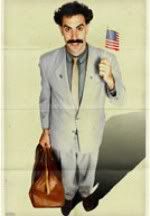
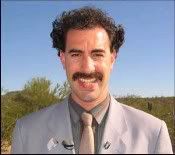
When I reviewed the trailer for BORAT last week the day the review went live I was in sweating in San Diego at the Comic-Con, sitting in the sprawling, and overly expansive, hall H. The SNAKES ON A PLANE roundtable interviews had just let out just a few minutes prior and on my way into the heart of geek darkness that held so many thousands of us to see what 20th Century Fox was going to be offering in the coming months I was handed a button. It was a large button that had a picture on it: Sacha Baren Cohen, as Borat, holding a small American flag. I was caught unaware and completely forgot that BORAT was a film that Fox was distributing but it was a nearly instantaneous knee-jerk reaction to the reception of the button as I asked whether, at 2:03 p.m., the panel that began at 12:45 and was only supposed to run until 2:15 had made any mention of the man who I’ve come to know through Da Ali G Show. It was the nicest “No” I was going to hear all weekend. Further, it was kismet, and almost felt like everyone was waiting for me to arrive, that when I took my seat the moderator of the studio’s panel started in about Sacha.

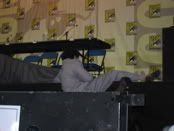
The space erupted in cheers as he was introduced to the stage. When he ended up emerging from the ladies bathroom, and not from the hermetically sealed backstage that kept the steerage well away from the talent, in full character, donning his trademark suit, thick moustache and awkward smile, the masses ate up this bread and circus. His exaggerated attempts to take the stage, pratfalls and all, amused those entertained by such a thing but it wasn’t until Sacha gave his thumbs up and introduced two clips from the film that he really had a well-deserved stranglehold on the audience.

The clips contained such outrageous content and triggered an inordinate amount of howls and laughs from those assembled to witness an ample amount of male nudity that when the lights came up it was already a given this was a movie that needed to be seen to be believed. The moderator satiated that need quick enough by declaring that anyone, anyone at all, who wanted to see the movie had to do nothing more than make their way out of the panel, up to the crosswalks of the convention hall’s front door, cross an already congested strip of traffic, make their way over a pair of trolley tracks, wade their way through an already thick sea of humanity moving in the opposite direction, get to Borat’s “ice cream truck” and claim their free pass to see the movie that night.

Without straying into hyperbole it was honestly a Running of the Nerds moment that rivaled anything Pamplona has ever witnessed, or take credit for, in their streets. Geeks made a break for it in every which direction. The smell of a free movie ticket drove some of these socially addled gimps to feats of bravery as they tried to jaywalk or employ any other means to get around the automotive and human traffic that stood in their way of getting into this screening. There was yelling, scurrying, jumping, pushing, evading, sliding and diving, twisting and turning of dozens. It was scary, dangerous to be sure, hilarious to have been able to behold and completely out-of-control.

I was right there with them.

Thanks to whatever exercise plan I’ve been keeping to the past 13 years I was able to best most of the competition that was half my age but here I was, an adult of 31 years, participating in a free-for-all that I should have known better to even try or even cared about.

“Well, if I’m not on a list or formally invited there is no way I’m debasing myself like some chimp,” I should’ve thought.

But I didn’t care. I wanted and got a ticket and I was going to see this film. I am ultimately glad I did and have explained the initial way I came into seeing this movie as I have because I can categorically state that BORAT was, without question, a movie that has finally, after all these years since STRANGE BREW, defined what it takes to keep me laughing for the entire length of a filmic production.

To state it more succinctly, BORAT is one of the best comedies to have been made in the past few years. It is completely offensive in every way possible, it uses race and ethnicity to further humor that no one has ever dared try to get away with in an amusing context and it is completely unique beast that finally can call itself art; there is no way you can look at this film and not feel completely attached to its aims or diabolically opposed to how it executes its vision. Films don’t posses this kind of edge anymore, before edgy became a catch-all for mediocrity disguised a few ribald bon mots here or there, and its charms took me completely and satisfyingly. Sure, you can sit through this movie and not find a single thing worth laughing at on the screen; that’s just the nature of comedy. But, any person who opens themselves up, and gives themselves into, Borat’s world, his donat, can see that this is a movie worth every gypsy dollar when it emerges in November.

What was especially telling about the movie’s potential as a full-length vehicle was evident in that the movie opens just as the trailer did. The mere fact that the trailer was a solid sell to an audience as an amusing ad was an accomplishment but the opening sequences, extended even further, honestly set the tone and pace for the rest of the film. Just as the opening sequences established the crux and flow of the film evem before we were 10 minutes into the movie is a testament to BORAT’s rapid fire storytelling; you get in, establish only what you need to, cut out any extraneous exposition, get on with whatever gag you initially had in mind for the scene, and get the hell out. You could feel the expediency and you are thankful for it.

This film is ambitious because you can sense that this is a movie where you weren’t going to linger in any one place, something that hampers a lot of comedies in modern cinema. In a television show you are not afforded the luxury of meandering or winding your way to a limp punchline. BORAT understands this notion from the word “Go” and doesn’t relent. Perhaps one of the best examples of keeping immediacy with the audience’s attention spans, or lack of one, is when Sacha explains what it is that he enjoys about his village. The visual gags of “disco dancing” represented with a circle of grown men in the daylight hours, outside, and in full dress is still as funny as it was in the trailer. The other activities represented are also just as effective at setting a comedic tone. Nothing, however, could compare anyone to being introduced to an event that’s quite popular with the people he lives with in Kazakhstan: The Running of the Jew. Apart from knowing what’s coming as soon as this event is uttered, a throng of Borat’s countrymen blazing a trail as quickly as possible, what could prepare someone for the visual representation of a grotesquely oversized head, colored green, hideously shapen in a way that looks like a stand-in for the Green Goblin’s next appearance on film, donning stereotypical accoutrements of Borat’s natural born enemies? Nothing. Absolutely nothing and as you’re wiping the tears from your face, the scene pushing things even further with the inclusion of the town’s children doing something so heinous I am almost at a loss to describe it, you’re simultaneously ashamed at yourself for going along with it but you have to congratulate Sacha for executing an idea that he found intrinsically amusing, no matter how some would initially react to it, hoping we would too.

And the audience loved it.

By the third or fourth time when you find yourself reacting to some of the events on the screen getting that, apart from the wafer thin conceit about Borat’s escapades across America to get to Pamela Anderson, one has to give credit to Sacha for being able to carry this one-dimensional character for the entire length of the movie without it ever seeming tedious. Borat’s initial encounters with people who believe they are trying to teach him new and exciting activities to bring back to his homeland works as well here as it did on the television show. When Borat wants to buy a car that is a real “pussy magnet,” as he’s come to hear the idiomatic expression, the salesperson that helps him, or tires to, reveals that small amount of honesty that most people wouldn’t imagine ever revealing in front of a large audience; it’s the ability to get at people’s openness, and to push hard when need be on someone’s sense of decorum, that takes BORAT a level above just being a spin-off from a television show.

The oft discussed rodeo moment, one where Borat does his best to get a crowd on his side completely and then, just as quickly, gets them completely repulsed in a manner of moments is amusing but it’s really the conversation he has with a gentleman beforehand that’s really telling and should have garnerned more attention. When telling Borat of the things he should do in order to blend in with other Americans, commenting that he should shave his black moustache so he doesn’t look like the kind of guy who Americans are fighting in Iraq, was fairly interesting but when this older gentleman lets his unfounded concerns about the amount of explosives Borat could be mistaken for carrying on his person should be decide to keep the facial hair simply confirms what many of us in this country already should know: we’re a nation that’s kind of comfortable with our deep-seeded prejudices and don’t really care sharing them when we think no one’s listening. And just when you think you’ve seen it all you get man on man nude wrestling in a hotel room with Borat getting a tea bagging in the process.

There has been the criticism, by one reviewer, that at times you don’t know what feels like there’s acting and where there feels like there is real interaction between the participants on the screen. I agree wholeheartedly but I also completely disagree. I think that BORAT vibrates the line between what kind of reality the cameras are catching and what is obviously set-up. Yes, of course, it causes some temporal confusion about what’s really what but who really cares when Larry Charles has an excellent eye and rhythm about how long you can allow people to gaze at an image before they start question it’s validity. Did I question whether or not that bear was going to eat the children who came running up to the ice cream truck expecting frozen treats? No (and it’ll make sense later, I promise.). Did I think to myself of what to really make of the accuracy or validity of the big payoff at the end of the film where you can’t believe if Borat is or isn’t doing what you think he is? No (and I swear even harder that it’ll make sense later).

This is a movie driven by expectations and by surprises within the context of what the plot is trying to accomplish. You could put forth the argument that there really isn’t any hard plot here but that’s neither here nor there when you’re watching Sacha work his comedic techniques without anyone being the wiser. Razor sharp when it comes to manipulation and intuition, finding opportunities within seconds and knowing when it’s time to really lay on those he’s squeezing for comedic juice Sacha Baron Cohen, and Borat, is absolutely dangerous. Borat isn’t looking to bring lessons of cultural teachings from America to his home country. I would submit that he’s fine with who he is, is never going to change, and is more than happy to show Americans for who they ultimately are. For better or, for the people who believe that Iraq should be turned into a glass parking lot, worse.

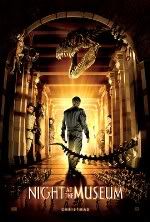
A NIGHT AT THE MUSEUM (2006)

Director: Shawn Levy
Cast: Ben Stiller, Carla Gugino, Robin Williams, Owen Wilson, Paul Rudd, Ricky Gervais, Ernest Borgnine, Mickey Rooney, Dick Van Dyke, Bill Cobbs
Release: December 22, 2006
Synopsis: A bumbling security guard at the Museum of Natural History accidentally lets loose an ancient curse that causes the animals and insects on display to come to life and wreak havoc.

View Trailer:
* Large (Windows Media)

Prognosis: Negative. Take your pick: pre-packaged Adam Sandler or pre-packaged Ben Stiller.

Ben, while I champion his show on Fox on being one of the most egregious firings of all time by a network, has been slipping a little. From the really so-so performance in STARSKY AND HUTCH, to his pretty bad turn in DODGEBALL, to his pretty limp voice work in MADAGASCAR I am still holding out for an acting performance to lift him out of that pit of half-assedness.

I’m not so sure this is it.

As we open on things I am not quite sure if I am coming into a trailer or choir practice as the shot of the Museum of National History where Ben walks into is alive with the sound of two dozen voices lilting away in my ears even before we get word one from Stiller; and, to think of it, it’s not like it’s a very good one as he drops a lead-filled joke regarding a re-creation of Teddy Roosevelt on a horse with him being our 4th president. 26th is the right answer but, man, was that supposed to be funny or is Ben playing someone who is infected with slight mental retardation?

Anyway, we come to meet Dick Van Dyke and Mickey Rooney, Hollywood not being able to do a damn thing with regard to trying make these guys look like they don’t already have one foot in the grave with the other one thinking about making the jump. Don’t know why that was the casting decision but, alas, we are taken on the obligatory tour of the museum along with Ben as we take a look at all the things which are no doubt going to come alive at some point in the evening.

I especially like Van Dyke’s warning not to let anything out of the museum. I would think, at that point, a nice conversation should’ve taken place between employer and employee about what kind of freaky action goes down when the sun does. Nope, of course it doesn’t, but no matter. Ben is on the case.

And what a case it is as the first order of business is finding that the T-Rex is noticeably absent from its place in the museum. It’s off getting a drink of water from the fountain. Ben flips out, drops the flashlight he was using to investigate things with, and provokes the dino into a JURASSIC PARK rage.

It’s then when the juice becomes loose and all sorts of wacky and zany things start happening. Not so much with regard to the exhibits coming to life, you already knew that, but the last third of this trailer is exclusively devoted to showing us all the talent that is in this movie. From Owen Wilson to Carla Gugino, Ricky Gervais and Robin Williams this is a star-studded affair that is really geared to selling the families out there who like their Christ laden holidays filled with guest stars, seeing how holiday variety shows have gone the way of the Chesterfield Cigarette Radio Hour.

Myself? A lot of goofiness without a real compelling reason to care about anyone here. This isn’t a trailer looking to sell. This is a trailer looking to get people to buy on the basis on a little flash.

Melonpool Quickcast #6: Meeting “Johnny Depp”

Filed under: Melonpool Quickcast — admin @ 3:05 am
melonpool1.gif

-By Steve Troop

Based on Steve Troop’s classic webcomic of the same name, the Melonpool Quickcast features puppet versions of Troop’s alien cast, who are desperately trying to make heads or tails out of Earth culture.

Haunted by the claims he made in Melonpool Quickcast #4, Ralph Zinobop interviews Captain Jack Sparrow… or does he?

Don’t forget to comment on this and other Melonpool quickcasts over at the official Melonpool Quickcast Forum!

melonpool-20060728-01.jpg

Melonpool Quickcast #6: Meeting “Johnny Depp”:

  • Large (560 x 420 – QuickTime – 18 MB)
  • Small (320 x 240 – QuickTime – 8 MB)

Comics in Context #139: Superman Returns Twice

Filed under: Comics in Context — admin @ 3:00 am


comicsincontext2.jpg


cic-20060721-01.jpgI really wanted to like Bryan Singer’s new film Superman Returns much more than I did. Yet I was bothered by the very first publicity photo I saw from the film, which turned out to be a sign of the movie’s overall tone. Why was Superman’s cape brown? The traditional reds on Superman’s costume have turned much darker and browner in the new movie. Superman is meant to wear bright colors, matching the spirit of hope he embodies; it’s character like Batman who wear dark colors. Brown is drab and dreary. And Superman Returns is darker and drearier than it should be.

That’s a surprise, since Singer so admires Richard Donner’s original Superman movie from 1978. Now here’s a case of art finally receiving its proper recognition in the course of time. Donner was fired from Superman II (1981), much of which was reshot by director Richard Lester, who did not share Donner’s mythic vision of the character. This led to Lester’s Superman III (1983), an unfunny comedy built around Richard Pryor, and the utterly disastrous Superman IV: The Quest for Peace (1987). But as the years passed, the reputation of Donner’s Superman grew, and fans even managed to piece together an unofficial cut of Superman II, which reincorporated much of Donner’s footage (see “Comics in Context” #90). And now, over a quarter of a century later, Bryan Singer has not only designed Superman Returns as a homage to Donner’s film, but made clear that it is a sequel to Superman II, thereby deleting Superman III and IV from continuity, This does not stop Warners from selling DVDs of III and IV, but Warners is also issuing an official DVD of the Donner cut of Superman II. It seems that sometimes the good guys do indeed win. at least in the world of film history.

Singer follows the letter of Donner’s Superman in terms of continuity, but what I wonder is, does he truly capture the celebratory spirit of that epic adventure film?

Superman Returns’ opening premise is that Superman has been gone from Earth for five years: after Earth scientists determined the location of Krypton, Superman went there via spaceship to see for himself. Of course, he found out what we all know: it had been blown to bits.

I see why Singer and his writers came up with this five year gap. For one thing, metaphorically it stands for the far longer gap in time between Superman II and the new movie. Time in the Superman movies seems not much different than time in the comics. Thanks to recasting, the characters look no older, but now they’re in a world with cell phones, personal computers, and flat screen TVs. (I am now sounding a spoiler alert.)

The five year gap also makes possible the existence of the four-year-old son of Superman and Lois, conceived during their tryst in Superman II. When I first read that Lois would have a young son–born out of wedlock–and a boyfriend in the new Superman movie, I was amazed. Just how much influence over the movies does DC have? Didn’t DC protest? For that matter, wasn’t there any Warners executive who said, maybe a movie aimed at family audiences shouldn’t condone illegitimate births? Or have social mores really changed that much? Somehow, on seeing the movie and realizing that the kid is Superman’s child, it bothers me less. Perhaps it’s that the situation is handled so matter-of-factly.

But the Superman that we know from the comics and even from the Donner movie would never have left Earth for five years. Isn’t one of the points of the Donner movie that Superman made a mistake in giving up his super-powers in order to have a relationship (okay–to be blunt, to have sex) with Lois? Once Superman gives up his powers, the three Phantom Zone villains wreak havoc and nearly take over the world. In Superman II‘s closing moments Superman promises he will never abandon his role as Earth’s guardian again. And yet, according to Superman Returns, that’s just what he did.

Moreover, we are to believe that people started forgetting about superman during his long absence. All right then, what’s happened on Earth in the last five years? Among other things, there have been the 9/11 attacks, the tsunami disaster, and Hurricane Katrina. When such catastrophes struck, wouldn’t people wish that Superman were around to help? Would Superman, after being absent from Earth for five years, ever forgive himself for not being here to cope with these catastrophes? As a wise man has said, with great power must come great responsibility.

While paying homage to Donner’s film in so many ways, Singer’s Superman actually veers very far away from it. Maybe that shouldn’t be surprising. I was recently interviewed by Newsweek’s radio show about Superman Returns, and I was asked how it resembled Singer’s X-Men movies. My answer was that Singer’s Superman, like the X-Men, is an outsider, whose origin and powers separate him from the “normal” human race. Why would Superman spend five years looking for Krypton if he thought of Earth as his home? Singer’s Superman recalls his father Jor-El (in quotes from Marlon Brando in Donner’s movie) instructing him that he can never truly be one of them–the people of Earth. Singer’s movie seems to argue that Superman can never have a relationship with Lois, even though she is the mother of his son. She has moved on, and has a new, human boyfriend. (The boyfriend is played by James Marsden, who was Scott Summers, alias Cyclops, in the X-Men movies. In those movies the romance between Scott and Jean Grey falls flat dramatically, but Marsden’s appealing, sensitive performance in Superman Returns suggests that he and Singer could have treated the Scott-Jean relationship much differently.) Like dateless Clark Kent, Superman must remain alone.

Really? It’s true that Superman II, in both the Donner and Lester versions, contends that Superman cannot have both his superhero career and a life with Lois. It’s like those old pre-feminist movies in which women could not have both a career and marriage, like The Red Shoes (1948). (So this is The Red Boots?)

Yet in the comics Clark and Lois have been married for years now. Singer’s Superman reminded me of how much John Byrne turned the traditional idea of Superman upside down in The Man of Steel (1986). Byrne’s contention was that Clark is more “real” than Superman, that Superman, having been raised on Earth since infancy, considers himself an Earthman. If Superman is an immigrant, then he is thoroughly assimilated. In the comics, Clark’s marriage to Lois is a sign that Superman considers himself part of normal human society. Note too that Smallville takes Man of Steel even further: not only does Smallville’s Clark consider himself first and foremost a member of human society, but he is suspicious and resentful of Jor-El and other Kryptonians.

(By the way, notice that on his return to Earth in Singer’s film, Superman’s first major feat is to rescue a plane that is not only carrying Lois but also a space shuttle. Could this be a homage to the “space plane” rescue in Byrne’s Man of Steel #1. That would be appropriate since Man of Steel and Superman Returns are both “relaunches” of Superman. Similarly, I suspect that Superman’s near-demise in Superman Returns may be inspired by the famous “Death of Superman” storyline in the 1990s comics.)

Donner’s Superman movies now strike me as dated in its contention that Superman and Lois must remain apart. Other Superman stories have now demonstrated that their romance is far from “impossible.”

In fact, I even wonder if Donner’s movies really support the notion of Superman as alienated outsider. There’s the emphasis on Clark’s childhood and adolescence: it was Donner’s Superman that first established that Smallville was in Kansas, and that Clark is a product of the American midwest and traditional heartland values. (By casting Eva Marie Saint as Ma Kent and recycling some of Marlon Brando’s dialogue as Jor-El, Singer has not only reunited the leads of On the Waterfront in a new movie, but made them the hero’s father and mother figure.) There is nothing alien or alienated about Christopher Reeve’s sunny portrayal of Superman as all-American idealist. Reeve’s Superman even memorably carries a flag in one of the final scenes of Superman II. He’s not only one of us, he’s specifically an American. And isn’t the point of the ending of Donner’s first Superman that Superman rejects Jor-El’s thesis of not “interfering” in the lives of Earth people? By extension, doesn’t that mean that Superman no longer regards himself as separate from them, as Jor-El claimed he was?

The triangle in Superman Returns is like that of a screwball comedy, like His Girl Friday (1940), which., appropriately enough, has a reporter as female lead. There’s the hero, the Cary Grant part; there’s the Rosalind Russell part of the woman who used to be involved with the hero, and would be a perfect match for him, but instead has gotten romantically involved with someone else; and then there is the somebody else, who is nice but bland, the Ralph Bellamy part, as here played by James Marsden. And the rules of drama decree that Cary ends up with Roz. But Superman Returns ends with the triangle unchanged: Lois is still with the Marsden character, and Superman will merely watch over his son from afar. No wonder this denouement feels unsatisfactory.

Then again, I found it hard to care much for Brandon Routh’s Superman or Kate Bosworth’s Lois. They’re okay, and Routh is good at recapturing some of Christopher Reeve’s characterization of Clark. But Routh and Bosworth aren’t memorable, and that’s a big problem when audiences can see Tom Welling and Erica Durante give more vivid portrayals of Clark and Lois every week on Smallville, or hear Tim Daly and Dana Delany act the same roles to perfection every night on Boomerang’s animated Superman. Others have commented on how little dialogue Singer’s film gives Superman/Clark and Lois; Kevin Spacey’s Luthor, in contrast, gets plenty. Is it that Routh and Bosworth weren’t good enough to do more dialogue, or did the movie simply deny them the opportunity?

It’s fun to see Jack Larson, who played Jimmy Olsen on the 1950s Superman TV show, as a bartender, complete with Jimmy’s bow tie, in the new movie. That show’s Lois, Noel Neill, is 85 in real life (though to judge from a photo in The New York Times, looks amazingly good), but it’s disturbing that the film casts her in a deathbed scene.

What I liked the best about Superman Returns was the thing I liked least about Donner’s original Superman: the way Lex Luthor is portrayed. My editor Ken Plume and I disagree about Gene Hackman’s Luthor in the first movie. Ken makes the point that this half-comedic version of Luthor represents a necessary transition from the camp super-villainy of the 1960s Batman TV show to super-villainy treated more seriously. I will agree with Ken that beneath the bad wigs and execrable fashion sense (bad even for the 1970s), Hackman does have moments when he conveys a palpable sense of evil and menace. And yes, his aides Miss Teschmacher and, especially, Otis are considerably goofier than he is, although being the straight man to their buffoonery doesn’t make him look more sinister.

But Superman was released in 1978, the year after the original Star Wars, which demonstrated the dramatic impact of a villain who is played entirely seriously, as Darth Vader was. Vader became an icon of evil in popular culture. Significantly, nobody copied the Superman movies’ comedy version of Luthor: not the comics, not Lois and Clark, not the 1990s animated series, and not Smallville. Everyone working on Superman seemed to realize that the movies had gotten Luthor wrong. The somber, imperious menace conveyed by the Luthor of the 1990s animated series, as voiced by Clancy Brown, gets Superman’s greatest nemesis right.

This brings me to the subject of the new animated TV movie, Superman: Brainiac Attacks, which recently premiered on Cartoon Network before being released on DVD. I had been looking forward to this, too: it had been announced that Tim Daly and Dana Delany were returning to voice Superman and Lois, and the promotional art featured the familiar Bruce Timm designs from the 1990s series. So imagine my shock when I watched the movie and discovered this was a case of a wolf in Timm’s clothing, or, rather, designs.
It turned out that people from The Batman, the drastically inferior successor to the 1990s Batman animated series, were behind this TV-movie.
The writer has said in an interview that Superman: Brainiac Attacks was not meant to be in continuity with the 1990s Superman animated show. But if it’s in the same visual style, with the same two lead voice actors, shouldn’t we expect it to be in continuity? But no, though in Justice League Unlimited, which followed the continuity of the other 1990s DC animated show, Luthor had lost control of Lexcorp and had vanished from Earth, here he is back in his office, without explanation. And whereas in the previous animated series it was Luthor who made contact with Brainiac on the latter’s first visit to Earth, and Luthor had been attempting to resurrect Brainiac, according to the TV movie, they’d never met before. It would not have been hard to make the Luthor/Brainiac continuity of the TV movie conform to the previous series.

Even worse, Clancy Brown and Corey Burton were not brought back as the voices of Luthor and Brainiac. Luthor is instead portrayed as a goofball far worse than the Luthor of the Donner movies. I suspect the heavy hand of a Warners corporate decree at work, declaring that from now on Luthor must be a jerk. As for Brainiac, the sinister computer intelligence, he has developed an uncharacteristic tendency to chuckle. In contrast to the imaginative, well-crafted, character-driven storylines of the 1990s Superman series, Brainiac Attacks just turns Brainiac, the ultimate cerebral menace, into a gigantic robot monster, who lumbers about wreaking destruction, and then lumbers some more.

And then there’s Brainiac Attacks’ version of the Phantom Zone, which Superman can fly into and out of at will. But isn’t that ignoring the whole point of the Phantom Zone, which is that it is virtually inescapable (as Clark found out in the last season finale of Smallville)?

Enough about this disaster. Before I embarked on this tangent, I was about to say that I very much liked Kevin Spacey’s depiction of Luthor in Superman Returns. Spacey’s made a specialty of portraying villains that are larger than life yet credibly dangerous, from the first role that won him fame, on the TV series Wiseguy, through Bryan Singer’s The Usual Suspects (1995). It has been reported that Spacey himself insisted on toning down the sillier side of the movies’ Luthor. Certainly it helps that this Luthor displays his trademark baldness (we see the bad wigs, but Spacey’s Luthor almost never wears them), and that he dresses in a far more imposing manner. One might think that a genius like Luthor would prefer a girlfriend with brains, but, no, Donner tradition decrees that he be given a new beautiful bubblehead in the person of Kitty Kowalski, who lacks Miss Teschmacher’s partly redeeming vivacity. Thankfully, Spacey’s Luthor’s henchmen aren’t buffoons like Otis.

But what’s most important is Spacey’s manner as Luthor. He still makes jokes and phrases things humorously. But whereas Hackman’s Luthor
came off as a vulgar clown, a used car salesman wielding nuclear missiles, Spacey’s Luthor is much more persuasively a criminal mastermind, whose surface repartee masks sinister depths. When Spacey’s Luthor cracks a joke, it comes off as a sardonic witticism. And when Spacey’s Luthor confronts Superman, he is pure menace.

From one perspective, Luthor’s schemes in the Singer and Donner films, which amount to killing millions of people in the service of a far-fetched real estate deal, are ludicrous. But I now realize that Donner’s movie contained the seeds of the Luthor of Man of Steel, the 1990s animated series, and Smallville: the businessman who is insensitive to the welfare of the public.

The third act, with Superman’s struggles over Luthor’s new continent, and his subsequent near death, move at a leaden pace. This sequence also makes no sense.

Earlier, Luthor returned to the Fortress of Solitude, where the crystal-computerized (?) version of Jor-El told him all about the attributes of Kryptonian crystals, First, why did Superman leave the Fortress unprotected, when Luthor knows about it? (In Donner’s cut of Superman II, Superman destroys the Fortress, probably for that reason.) Wouldn’t Jor-El have designed the Fortress so that intruding Earthmen couldn’t activate it?
And why doesn’t the movie do something with the fact that the crystal-Jor-El mistakenly addresses Luthor as “my son,” thereby setting up Luthor metaphorically as Superman’s evil brother, even as an Anti-Christ, if you accept the idea of Superman as Christ figure?

So, Luthor tells us that he got the crystals to duplicate the properties of Kryptonite, and then he uses them to create an entire greenish continent. So shouldn’t Superman grow weak and fall down dead as soon as he flies over the Kryptonite continent? But instead he flies down, though he loses enough of his powers so that Luthor can deck him. Luthor impales him with a dagger-like Kryptonite crystal. Lois later removes most of the Kryptonite crystal, but a small chunk remains in Superman’s body. Superman is nevertheless able to lift the entire continent–which, remember, duplicates the properties of Kryptonite–into outer space. Yes, he collapses and nearly dies afterwards, but that feat should have been utterly impossible! And why didn’t the movie do more with the symbolism of Luthor raising a continent that is a negative version of Kryptonian geography?

In contrast, Superman’s encounter with Kryptonite in the first movie is relatively brief. But Superman Returns draws out his agonies. And when Superman recovers, the celebration is muted. We see Martha Kent, his foster mother, in the crowd waiting outside the hospital for news. Where is the joyous reunion scene between mother and foster son?

Remember the traditional finale of the previous Superman movies, with Christopher Reeve flying high above the Earth in space, then breaking the fourth wall by catching sight of us and giving us a big, winning grin, as he soars off? (It’s a more spectacular version of the memorable end of some of the Max Fleischer Superman cartoons, in which Clark winks at the audience.) Singer attempts to duplicate this shot at the end of Superman Returns, but Brandon Routh’s Man of Steel merely looks impassionately forward rather than giving us the smile we expect. It’s a dreary ending to a drab and dark movie. As John Williams’ Superman march sounded during the closing credits, reminding me of all the energy and joyousness in the Richard Donner for which he wrote it, I realized just how much Singer had missed the target.

SUPERMAN RETURNS TO 1960

After years of wondering whether I could fit various examples of DC’s fifty dollar Archives reprint volumes into my budget, and usually deciding no, I was pleased when DC finally started its inexpensively priced Showcase series instead, each offering five hundred pages of reprints in trade paperback form.

In time for the release of Superman Returns, DC has issues Showcase Presents Superman, Volume 2, collecting Silver Age tales from Action Comics and Superman from 1959 through 1961. This was a period of explosive creativity in the seven Superman-related titles edited by the late Mort Weisinger. In many aspects these stories fall far short of the standards of sophistication that readers expect from superhero comics today. But forty-five years ago the audience for comic books was primarily small children, and Weisinger was successfully targeting that market. Editor Julius Schwartz seemed to be aiming at intelligent teenagers as well, and in 1961 Stan Lee would start the revolution in superhero comics that would retain many of his readers into adulthood. But Schwartz and Lee were unusual in pushing the envelope in the early Silver Age.

I first encountered many of the stories in this Showcase volume as reprints in annuals when I was a boy, when my tastes were not yet developed enough to be bothered by the awkwardness in the dialogue or the logical holes in the plots. But i was dazzled by the imagination in these comics, and enthralled by the surprising emotional resonance in the best of Weisinger’s stories. Rereading old favorites in this collection, I still find much to admire amidst the dated dross.

The thing I like best about this Showcase volume is the credits. Although Lee and to a lesser degree Schwartz informed readers who write and drew the stories, again this was unusual at the time. Now, finally, I know who it was who wrote these tales which proved so memorable to me in my childhood, demonstrating to me some of the potential of the superhero genre.

Here in this volume, for example, is “The Old Man of Metropolis” from Action Comics #270 (November 1960), a story I described in one of the earliest installments of this column (see “Comics in Context” #4). The great Curt Swan drew it, bringing out its psychological drama with sensitivity and quiet, but subtly devastating emotional power, and now I know that it was written by the prolific Otto Binder.

Reading it now, it is all too clear that when Clark Kent settles down for a nap, what happens over the main body of the story is a dream, or rather, a nightmare. Clark/Superman finds himself transported into the future, where he has become an elderly man, who has lost all his super-powers. Binder thus masterfully uses the iconic image of Superman, the ultimate icon of strength, power and virility, to dramatize the physical deterioration of old age. Superman spends most of the story in costume, serving to continually remind us of his youth, yet now his hair is turning white, his face is wrinkled, his build is good for an old man but hardly what it was, and he is even forced to wear glasses not as a disguise but in order to see.

What I didn’t notice as a boy is the motivation for Superman’s nightmare about old age: he reads an essay that Supergirl, who hasn’t yet begun her public career, has written envisioning her own heroic career as Superwoman “when my cousin Superman reaches old [age].” The teenage Supergirl looks forward to this time, but the dream shows that Superman himself has subconscious fears that he will physically decline with age as an ordinary mortal does. Moreover, Binder is suggesting that though Superman acts like a father towards his young cousin, protecting and teaching her, he subconsciously fears that she will supplant him when she grows up, as indeed she does in the dream.

One may not expect to find subtlety in a Weisinger-era Superman story, yet here it is. Rereading the story in Showcase for the first time in decades, I was particularly impressed by the scenes between Superwoman and the aged Superman. She never acts with blatant cruelty towards her elder cousin. But, through Binder’s understated dialogue, and Swan’s superb command of facial expressions and body language, Superwoman’s essential insensitivity towards her cousin becomes clear. She folds her arms in impatience towards him, as if controlling her anger towards a misbehaving child. They have reversed their former surrogate parent-child relationship. Later, it turns out that she has even supplanted Clark as a reporter at The Daily Planet. In this guise, she gives him a beaming smile, like a mother trying to make up to her son for being angry. But there’s a certain condescension to her attempts at kindness. She tells him she will restore his fame by writing articles about him, but as she photographs the sad old man changing from Clark into Superman, readers should suspect that she is also exploiting him for her journalistic career. And look at the uncaring expression Swan put on her face as the elderly Superman makes his exit: she has now lost interest in her surrogate father figure.

It’s now part of comics legend that Weisinger used to ask the kids at the barber shop what they wanted to see in the comics. Why would children want to see a story about Superman in old age? I suspect that from time to time writers like Binder used the opportunities they had as comics writers to smuggle thorough themes that concerned them personally. Binder and Swan did such an amazing job with “The Old Man of Metropolis” that even as a boy, when old age and death seemed so far off in the future I need not think about them, it made a lasting impression on me. Perhaps even children have subconscious fears of mortality that this story played upon.

This Showcase volume’s great revelation for me is how often the name of Jerry Siegel, Superman’s co-creator, turns up credited as writer of the stories. So much of what has been written about the work Jerry Siegel and Superman’s other creator, artist Joe Shuster, confines itself to the stories they did in the late 1930s and early 1940s. But here is Siegel, two decades or more after Superman first appeared in comics, still exploring the possibilities of his great creation and further extending the character’s mythos.

When I first saw Siegel’s and Swan’s “The Two Faces of Superman,” from Superman #137 (May 1960), it was reprinted in a Superman Annual and labeled “an imaginary story,” the designation that Weisinger gave to stories that diverged from official continuity, exploring other directions that the characters’ lives could have taken. They were the predecessors of Marvel’s later What If and DC’s Elseworlds. I see from the reprint in Showcase, however, that “Two Faces” was originally called merely an “untold” story. As unusual as the events it recounts may be, they were still meant to be part of canonical continuity.

As its title suggests, Siegel’s “The Two Faces of Superman” is a variation on that perennial theme of superhero comics: the evil twin. Duality itself is a major theme of the genre, as in Siegel’s hero’s dual roles of Superman and Clark Kent, of Kryptonian alien and American citizen. In DC’s new coffee table book Superman Cover to Cover, Alvin Schwartz, the writer who conceived of Bizarro, reveals that he consciously intended Bizarro to represent Superman’s Jungian shadow, his dark side. But Bizarro has been presented as childlike or (dare I say it?) mentally retarded, prone to uncontrolled tantrums but somehow still innocent, much like the traditional 1960s version of the Hulk. He represents the immature child within the adult’s subconscious.

Super-Menace, the villainous version of Superman in Siegel’s “Two Faces,” is more definitely the evil side of Superman’s personality given physical form as a separate entity. The premise of Siegel’s story is that during its journey from Krypton to Earth, the rocket carrying the infant Superman struck an alien space ship. (Considering the inconceivable vastness of outer space, how likely is such a collision? And if the infant Superman’s rocket was slightly deflected by the alien vessel, wouldn’t that have knocked it off course? So does that mean that Jor-El did not intend the rocket to land in Smallville? These are questions we might ask about this story nowadays, but they are irrelevant to the purpose of Siegel’s dark fairy tale.) The collision activates a device that creates a duplicate of the Kryptonian rocket and the baby inside. Both rockets land on Earth, where the duplicate Superbaby is found and raised by gangster “˜Wolf” Derek and his wife Bonnie.

As a boy it never registered on me that the characters in Superboy stories were wearing old-fashioned clothing. Rereading “Two Faces” now I was startled to realize that Swan puts Bonnie the moll in a 1920s flapper outfit. Even though this story was published at the start of the 1960s, since Superman had debuted in 1938, he was still being portrayed as having been a toddler in the early 1920s. (Actually, by this logic, I suppose that baby Kal-El really should have landed on Earth in the late 1910s!) I recall that when Weisinger retired at the end of the 1960s, DC announced in its comics that the time period of Superboy’s adventures was now going to be considerably updated.

The opening caption of the story announces it as a “three-part novel.” Actually, it took up the entire issue, and that is as long as comic book stories got back then. This was a special event, and Siegel’s story has an epic feel, not only spanning settings ranging from Krypton to deep space to Earth, but spanning time, covering the entire length of Superman’s life, from Superbaby to Superboy to adult. From the standpoint of 2006, isn’t it interesting to see Weisinger use of the word “novel” to describe a self-contained comics story of unusual length? In “Two Faces” and other “novel”-length Weisinger stories, we see forebears of today’s graphic novel concept.

Throughout this story Siegel follows the parallels between the life of Superman, from infancy into adulthood, and the life of his literal evil twin over the same period.

There’s a great deal that just doesn’t work by today’s standards. It’s hard enough to believe that Ma and Pa Kent could control a super-powered baby; that’s why, starting with John Byrne’s The Man of Steel, recent versions of the Superman legend have him develop his super-powers after infancy, slowly from childhood through adolescence. How could this gangster and his wife control their super-powerful baby, especially when they actively encourage him to be destructive? Jonathan and Martha Kent did such a good job raising young Clark that he became an obedient, well-behaved Superboy. Wouldn’t his teenage evil counterpart have gone through a period of rebelling against his parents? Maybe we can accept the name of “Super-Menace” for Superman’s evil counterpart as an adult, but “Super-Brat” and “Super-Bully” just sound kitschy as names paralleling “Superbaby” and “Superboy.” And since Superboy was operating publicly in costume in his teens, in the Weisinger-era continuity, why did “Wolf” and Bonnie keep their own super-powered kid under wraps until well until adulthood? In the final chapter, there’s the silver-haired Wolf and Bonnie, who could have had their “Super-Bully” even take over the world for them years before.

These questions didn’t bother me when I first read the story as a boy. As i said, this is a dark fairy tale, and follows a fairy tale’s logic. The mythic power of this story lies in Siegel’s paralleling the life of Superman and the life of his evil counterpart through the decades, through three phases of their lives. Though Weisinger and Siegel surely didn’t think in these terms, one could read “Two Faces” as a metaphor for how the dark side of Superman–his own Dark Phoenix–grew from infancy hidden within the hero’s subconscious, gathering strength to finally emerge in adulthood. In the final chapter Superman’s shadow self finally bursts forth, to challenge Superman’s conscious personality–his Jungian ego–for supremacy. Significantly, even as a teenager, “Super-Bully” tried to frame Superboy for wrongdoing, as if the unconscious shadow self was attempting to corrupt the conscious personality.

There’s also some nice intentional comedy in the story, as with Wolf and Bonnie’s pride in watching their adopted son’s first crimes. “His first safe!” marvels Wolf. “Gosh, it almost makes me feel sentimental!”

Remaining in concealment (and metaphorically, in the subconscious), Super-Bully/Super-Menace grows envious of Superboy/Superman’s life, and wants to take his place. In the final chapter Super-Menace, using his superhuman hearing, discovered that Wolf and Bonnie only pretended to show him parental love; they actually regarded him as a “freak” whom they were out to exploit. “I hate Superman for having had loving foster parents! I’ll kill him!”

When Super-Menace and Superman finally meet, Superman shows him that he isn’t even “real”: Super-Menace is merely “an unearthly force manifested in human form.” You could read this as meaning that Super-Menace doesn’t represent Superman’s true personality, but is merely a formerly buried aspect of his subconscious.

Or, again, though Weisinger and Siegel probably did not consciously think this through, it is noteworthy that Super-Menace has no secret identity, no human identity like Clark Kent that has become a part of society. What they clearly did realize is that Super-Menace has no emotional foundation in parental love. The “love” that Wolf and Bonnie showed him was no more real than his physical body. Hence Super-Menace has no real core to his being: he is a hollow version of Superman. He has also never truly become an adult; he is still effectively an orphaned, unloved baby. Sobbing like a child, the enraged Super-Menace defies Superman: “I hate your human body! I hate all the things that you are that I can never be! I’ve got to destroy you!”

On the point of murdering Superman (his good self), Super-Menace (the shadow self) realizes that his rage is misdirected, and that his entire life was a waste. In realizing this, he has finally achieved a sort of psychological maturity. He confronts Wolf and Bonnie, and accuses them, “My life could have been a blessing, but you, with your rotten cunning, twisted it into . . .something terrible.” Super-Menace then commits suicide, destroying his evil foster parents in the process.

It may be unrealistic to have Super-Menace completely reverse the direction of his life upon learning his parents hated him. But, remember, this is a story that follows the logic of a child’s fable. Consider how much importance the memory of his parents–both his Kryptonian ones and the Kents–have had on Superman, molding this man who could have become humanity’s greatest enemy into its greatest hero, the champion of life. Wolf and Bonnie warped Super-Menace’s mind just as Jonathan and Martha Kent guided the formation of Superman’s personality. Super-Menace’s sense of self is as strongly tied to his foster parents as Superman’s is to the Kents. So there is a poetic justice and logic that learning the harsh truth about his foster parents would lead to Super-Menace’s self-destruction. What would happen to Batman and Spider-Man were they to discover that Thomas Wayne and Uncle Ben had really been criminals?

You surely know about Krypto the Super-Dog and perhaps about the other Super-Pets from Silver Age Superman comics, but have you ever heard of the nasty Kryptonian super-animal? It’s the “Flame Dragon from Krypton” introduced in the story of the same name by Jerry Siegel and artist Wayne Boring, first published in Superman #142 (January 1961), and reprinted in this Showcase. I first saw this story as a reprint in the very first superhero comic I ever read: World’s Finest #142 (by coincidence, the same number), whose cover story was the eerie, even tragic saga of the nobody who briefly became the all-powerful villain, the Composite Superman. I’ve always liked the Flame Dragon, and now I realize one of the reasons why. Perhaps Weisinger and Siegel merely intended to appeal to kids’ fascination with movie monsters. After all, this was the same time that Stan Lee and Jack Kirby gave us their own dragon, Fin Fang Foom, as well as other monsters in the years just before Fantastic Four #1. Hence, the Flame Dragon was the counterpart to Godzilla, just as the better known Titano was Superman’s version of King Kong, complete with the giant ape’s fondness for a beautiful human woman. But pitting Superman against the Flame Dragon also makes him a modern version of the monster slayers, and especially the dragon slayers of mythology, like St. George and Siegfried.

What seems odd about this story is that its finale is not the defeat of the Flame Dragon, which takes place two pages before the end, but yet another of Superman’s schemes to deceive Lois into thinking he is not really Clark Kent. This time Superman puts on a show for Lois with the aid of Batman and Supergirl, who masquerade as a doctor and nurse. So is it that Clark Kent is afraid Lois will prove he is Superman? Or is the unspoken subtext that Superman fears that Lois will find out that he is really the much more mundane Clark Kent in his everyday life?

The Flame Dragon is another example of Weisinger and Siegel’s efforts to depict Krypton as a world of marvels. It turns out that Siegel is credited as writer for the map of Krypton at the end of this Showcase volume, which features such natural wonders as the Fire Falls, the Jewel Mountain, the Scarlet Jungle, the Rainbow Canyon, and the Gold Volcano. Looking at this map is like looking at a map of Oz, with all of its fictional wonders.

As portrayed in the Superman movies and in Byrne’s Man of Steel, Krypton is a forbidding place. Smallville and recent comics depict the Kryptonians as an imperialistic people, bent on conquest. But for Weisinger and Siegel, Krypton was a lost paradise.

This theme is the basis of the best known tale in this Showcase collection, “Superman’s Return to Krypton” written by Siegel and drawn by Boring, and originally published in Superman #141 (November 1960). By accident, Superman finds himself cast back in time and marooned on Krypton shortly before the marriage of his parents, Jor-El and Lara. Calling himself by his Kryptonian name of Kal-El, Superman becomes Jor-El’s friend and assistant, without revealing their true relationship, and helps Jor-El in his efforts to save the Kryptonian people from the catastrophe he foresees. Superman also falls in love with the beautiful Kryptonian actress Lyla Lerrol. (According to Weisinger’s tradition, each of the women Superman loves has two “L’s” in her name. Weisinger did not explain why Lex Luthor also has a double “L.”)

Siegel tries, but he just cannot make the romance between Superman and Lyla touching. And what about Lois? Well, Superman doesn’t think he will ever see her again, but Siegel also suggests that Lois may be somewhat superficial. Superman thinks, “Lois loved me because i was Superman, but Lyla loves me for. . . myself! I’m just an ordinary mortal!”

Certainly this story is founded on the fantasy that one could be reunited with his deceased parents, as Superman is here. But i think that this tale works best as an expression of longing for the past, for a lost paradise that one can never truly regain.

Weisinger insisted in his stories that though Superman could travel through time, it was impossible for him to alter the past. There is one memorable tale in which Superboy goes back in time and attempts to prevent the assassination of Abraham Lincoln, only to be paralyzed by Red Kryptonite wielded by a time-traveling Luthor, who is unaware that this is the night of Lincoln’s murder. In “Superman’s Return to Krypton,” Superman hopes that he can prevent Krypton’s destruction, yet step by step he watches history take its inevitable course. He gives himself over to hs romance with Lyla, knowing that they are both doomed. As it turns out, another accident (and one which isn’t at all credible) spares Superman’s life, but, like Ishmael at the end of Moby Dick, he is the sole survivor who must watch as everyone else perishes. Weisinger’s and Siegel’s vision of the inevitability of time is a tragic one, and hence it is surprising to find it in a children’s story.

Much has been made of Siegel’s and Shuster’s Jewish-American background, as the children of immigrants. The fact that Kryptonian names like “Kal-El” seem to have Hebrew roots suggests that Weisinger and Siegel may have been conscious of Jewish themes in the Superman legend. Thus in “Superman’s Return to Krypton,” Krypton may be a metaphor for the Old Country, the home of Siegel’s ancestors: Europe before the World Wars and the Holocaust, another lost paradise, at least in the memories of those who left, that was doomed to destruction.

It’s too bad that Richard Donner’s Superman movie made Krypton look like such an austere, barren place, instead of the paradise of Siegel’s imagination. Otherwise, wouldn’t “Superman’s Return to Krypton” make the basis of a potentially great movie?

Copyright 2006 Peter Sanderson

July 27, 2006

Ken P. D. Snyde-Cast #14: Club 33

Filed under: Ken P.D. Snydecast — UncaScroogeMcD @ 1:27 am

snydecast-header.png

snydecast-logo2.png

Adult Swim’s Dana Snyder and FRED’s Ken Plume set out to have a literate conversation between two pals, but inevitably devolve into a verbal, and funny, free-for-all full of bickering, infighting, and the special kind of male bonding that comes from conflict expressed through the podcast medium.

Actor/comedian/raconteur Dana Snyder, you’re certainly aware, is Aqua Teen Hunger Force’s Master Shake, Squidbillies‘ Granny, Minoriteam’s Dr. Wang, and The Venture Bros.‘ Alchemist. Available for weddings and bar mitzvahs (bat availability pending), you can keep tabs on him via his website, www.eyeofthesnyder.com.

Ken Plume is the editor-in-chief here at FRED. He is a friend of Dana’s, as well as his arch-nemesis.

VISIT THE SNYDECAST EXPERIENCE

linesm.gif

KEN P.D. SNYDECAST #14: Club 33 – Dana & Ken are on the road, traveling to the happiest place on Earth… or so they think. Anyway, it’s a road trip, and it’s this week’s little slice of lunacy.

[CONTENT WARNING]: This podcast may contain some foul language and horribly off-color jokes. Don’t say we didn’t warn you.

DOWNLOAD: (right click to save)
Episode #14 (MP3 format)

[audio:http://traffic.libsyn.com/snydecast/ken_p_d_snyde_cast-14.mp3]

SUBSCRIBE
Subscribe to this Podcast via iTunes

Got something to say? E-mail Dana & Ken at the Snydecast mailbag.

line.gif

CLICK HERE FOR THE SNYDECAST ARCHIVES

line.gif

##

The Fred Hembeck Show: Episode 67 – Cinematic Kryptonite

Filed under: The Fred Hembeck Show — UncaScroogeMcD @ 12:53 am


fredhembeckheader.jpg

I went to see the big Superman movie recently…

And I DO mean big!

Y’see, we drove down to the Palisades Mall, just little over an hour away, near the New York/New Jersey borderline, so as to witness the film’s potential magnificence on an IMAX screen six stories high AND in 3-D! (Okay, so not ALL of it was in 3-D, just a half-dozen specially selected sequences, but still, who can pass THAT up?…) This took a little extra planning on our part, arranging daughter Julie and wife Lynn’s schedules to coincide with an agreeable to all time for the trip, which is why, rabid Man of Steel fan that I am, we didn’t manage to take it in until a full two weeks following its nationwide premiere. During that time – and in the weeks and months leading up to the film’s noisily heralded release – I did my very best to steer clear of any spoilers that may’ve snuck out in the guise of reviews or commentary, and happily, for the most part, I did pretty well.

(Oh, and if YOU still haven’t seen the flick, but fully intend to, now’s probably as good a time as any to stop reading, as in the course of my ramblings, I’ll inevitably let a few Streakys out of the bag…)

Going in, I knew that, in addition to the late Marlon Brando, Jack Larson and Noel Neill had cameos (but since their names were in the opening credits, this wouldn’t have come as any great surprise anyway), Lois had a kid, and – thanks to MSNBC’s Hardball, apparently desperate to fill airtime in those pre-Middle East crisis days – Perry White used the phrase, “Truth, justice, and all that stuff”, leaving out the words “the American way” in some sort of conspiratorial effort to turn the Last Son of Krypton into a dirty, stinking One-worlder, but the rest was all relatively fresh to me.

hembeck-20060727-01.jpg

So, did I like it?

Well, yeah, I suppose. I didn’t DISLIKE it, and there WAS an awful lot to admire in the film, but as I write this ten days after our journey down to the wilds of the Palisades, a lot of what made an impression on me that afternoon seems to be slowly but inexorably fading.

One thing that did surprise me – and that I liked – was how Superman Returns was structured as such a direct sequel to the very first Christopher Reeve movie (and, I suppose, portions of the inferior second one – happily, the latter two as well as the events in Supergirl appear to have been largely ignored, though I can’t honestly say this with total confidence, as I’ve only ever seen those latter three films once, and Superman 2 but twice…). 1978’s Superman The Movie remains my sentimental favorite of all cinematic comic-book adaptations, and besides shelling out five times during its initial release to see it in a darkened theater – still far and away the most times I’ve ever done THAT, as I can likely count the number of other movies I’ve paid my way into merely twice without even taking my shoes and socks off – I’ve also watched it close to a dozen times on the tube over the years. Oddly, though I bought the DVD that came out a few years back, I haven’t yet cued it up in this latest format, and I know for a fact I haven’t otherwise screened Chris Reeve’s first outing wearing the red cape since before daughter Julie was born, which is (gasp) nearly sixteen years ago now. I guess I’ve always been waiting for her to show some sort of interest in the Man Of Steel’s big screen debut before attempting to foist it on her (a mistake I made with A Hard Day’s Night about five years back, with that Beatles classic called to an abrupt halt after twenty minutes of eye-rolling boredom on her part – but, given her recent blossoming interest in the Fabs, perhaps the time is ripe for another look? Who SAID “not a second time”, hmm?…). All the elements that spilled over from the long-ago original served to peak her interest in the Reeve vehicle, and for my part, made me feel warmly towards this new go at the Superman legend.

For example…

They had me almost immediately by mimicking the original’s opening credits. Yeah, I know they went on way too long – especially back then – but I always savored them if only for the opportunity to bask in the glory of John Williams’ wonderful theme.

And that theme was back!

In a way, though, that really wasn’t fair. Because, y’know, every time it played behind some majestic feat accomplished by our hero, I couldn’t help but get a little choked up, but I had to wonder – was that because of what was happening up on the screen, or was it simply some Pavlovian nostalgic response triggered by hearing that wonderful music? Hard to say – I’ve only seen the movie once, and have no immediate plans to take it in again until the inevitable DVD is issued – but there’s no denying that if that was indeed the filmmakers intention, well, it sure worked.

Marlon Brando’s involvement was admittedly a bit eerie, but effective – especially in his scene with Luthor. A totally unexpected – but nice touch – was seeing the photos of Glenn Ford as Pa Kent on the mantle place at the Kent farm.

Of course, seeing the two veterans of the George Reeves teleseries perform their cameos (in fact, I believe Neill’s voice is the first one you hear, which I interpreted as a fond tip of the hat to the trailblazing program) was fun. And having the first (and the best) Jimmy Olsen share a scene with Sam Huntington, the screen’s latest Daily Planet cub reporter, was a quietly inspired nod to the ongoing changing of the guard that marks Siegel and Shuster’s nigh-immortal creation. (Oh, and while I liked Huntington – he played his part with enthusiasm, managing to provide the audience with some of the movies all too sparse chuckles – I felt he didn’t have quite the right look. While he was a vast improvement over Lois and Clark’s Justin Whalen, the ersatz teen-idol, I feel a more traditionally boyish Jack Larson/Marc McClure look would’ve been preferable to his far less-baby-faced visage.)

The Daily Planet globe – I don’t know if it was an exact replica of the one used in Richard Donner’s film, but it was certainly close enough to satisfyingly recall the one Superman’s seventies era director used.

Then there’s Krypton, ice capital of the universe. Ironically, that was the one aspect of the original movie that threw me at first. And why not? I grew up reading nearly two decades of Superman comics featuring Jor-el in that green sweatshirt of his with the red sun on front, a thin yellow bandanna ringing his Kryptonian cranium, situated in an environment that looked like a sci-fi extrapolation of the Arabian nights. Marlon Brando, all decked out in white, brandishing the iconic “S” symbol on his chest, well, THAT took a little getting used to!

But I did – and NOW, seeing the crystals of Krypton reborn up on the big screen was, in – as they used to say in the funny books – a strange twist of fate, somehow warmly reassuring, nostalgic even! Plus the effects were really, really cool.

And the special effects surrounding that big airplane crash – especially on the giant screen in 3-D – was breathtakingly impressive, particularly when our pal Kal lowers the stricken aircraft gently down on the baseball field to the tumultuous cheers of thousands of fans in the stands. While I didn’t mind the way this mid-air rescue echoed – and improved upon – a similar event in the 1978 film, I was less than thrilled to hear Supes cornball line about flying still being the safest way to travel being repeated almost verbatim (although who knows – maybe we’re to believe that that’s just a bit of prepared patter the Big Guy recites EVERY time he saves a plane?…).

I could’ve done without Superman STILL trying to get Lois to quit smoking – though at least here, there was a new spin offered to this tired bit.

Kevin Spacey? Best Luthor EVER! And unlike the otherwise fine Gene Hackman, he wasn’t afraid to shave his noggin! (Though the way things ended up for him, he appears more likely to resurface in an Aquaman flick before eventually moving onto the next Superman blockbuster…)

hembeck-20060727-02.jpg

Parker Posey wasn’t quite the bombshell Valerie Perrine was (gee, whatever became of her?…), but she played her part with perhaps more convincing emotional underpinning than anyone else in the film. And not having the smooth-domed criminal genius improbably assisted by the likes of Ned Beatty’s buffoonish Otis – the original film’s one glaring misstep – but instead by a cadre of mostly mum but menacing henchmen played much better. Plus, a majority of the time, I walk out of these super-hero flicks, and almost immediately forget the bad guy’s master plan, but not this time! I’m not saying it was completely well thought out, through – Lex would’ve had a heckuva time trying to build condos on top of those displaced Kryptonian crystals I’m thinking – but it WAS both spectacular, cleverly unique to the source material, and memorable. And more than enough to give the conflicted Ms. Posey pause…

Eva Marie Saint added some quiet elegance – as well as some old time Hollywood glamour – to her role as Ma Kent, brief as it was. Frank Langella’s a long way from Transylvania, heading up things at the Daily Planet as Perry White. He did okay, but I’d still peg him fourth on a list comprised of Lane Smith, John Hamilton, and Jackie Cooper. James Marsden’s role was more a plot device than an actual character, an all too obvious obstacle – but not a bona fide bad guy – for the two star-crossed lovers (Lois and Superman, as if I need remind you) to overcome. Serviceable in a thankless role (they don’t have a category to cover that at the Oscars, do they?…).

Then there’s the kid.

He looked all the world like a Caulkin, but he wasn’t, was he? I can’t honestly say he tugged very hard at my heart-strings – and I’m a self-confessed softie. I also admit to not being very swift (SPOILER ALERT): I didn’t even realize what the big reveal was going to be until Luthor himself confronted Lois with his parentage theory! In fact, mere minutes earlier, when Superman and Lois had their first sustained conversation after his return, she ends their uncomfortable tete’ a tete’ by bitterly declaring that it’s been five years and she’s moved on. When she said that, this thought actually entered my clueless mind: “Yeah? Well, by the looks of that kid, how long’d you wait to move on – a whole week?”

D’oh!

So I think I pretty much know what the sequel’s gonna be about! Bob Haney and Murray Boltinoff would be SO proud…

(And what’s all this talk about Superman being gay? Hey, none of those OTHER guys in the tights managed to impregnate Lois Lane – that’s gotta count for SOMETHING? At most, he’s bi…)

And what about that couple anyway?

hembeck-20060727-03.jpg

Both Brandon Routh and Kate Bosworth do acceptable jobs, and evidence a fair amount of chemistry together (at least, when he’s in that bright, shiny costume – Lois treats Clark as if he’s an inconsequential acquaintance, making you long for at least even the raw contempt Phyllis Coates would show George Reeves bespeckled reporter upon occasion), but on any personal list of video Supes and squeezes, these two would find themselves way down at the bottom. (For the record, and ruling out the only briefly seen Kirk Alyn and the various Superboys, my own rankings go like this: Christopher Reeve, George Reeves, Dean Cain, and then the new guy. For Lois. it’d be Teri Hatcher, Ms. Coates, Margot Kidder, Noel Neill, and then Kate Bosworth. Maybe I just need to watch and rewatch this latest film, but I doubt my opinions would change all that much).

Routh looked good in the suit, admittedly, and spoke with the quiet authority of Christopher Reeve. Facially, though, I think he came up just a tad bit short. Hey, he’s a great looking guy – no insult meant here – and normally I wouldn’t dream of putting someone’s mug under the microscope, but this is Superman folks! Routh had the strong jaw, but otherwise, I thought his face was too long, his earlobes too flabby, and his spit curl too phony looking (and Clark’s shaggy doo made Kent look too much like a hillbilly, sorry to say). Plus, his nose was too prominent, at least for Superman. Still, he’s no Nicholas Cage, and thank Rao for THAT! Cage is a fine actor, and he can play Johnny Blaze anytime – heck, he can even play LUKE Cage if he wants! – but when his name was floated as a possible Superman several years back, my blood ran cold! With THAT face? Uh uh, wasn’t gonna work – going for the unknown is always the right move, and Routh was pretty darn close, if no Chris Reeve.

So what’ve we got? Spectacular effects, a movie that doesn’t lag, is respectful of the source material, decent writing and performances, and – according to my daughter – a flick that’s FAR better than the Pirates of the Caribbean follow-up, making it easily the second best Superman movie (if not the second best Superman) lensed thus far. And yet, and yet…

Last year’s Fantastic Four movie was lambasted by comics fans and critics alike, but for all its faults – and there were plenty, both as an adaptation and simply as a film – I remember it as a more enjoyable experience, even without the Imax and the 3-D effects. Because Fantastic Four had something Superman Returns was almost entirely devoid of: good natured humor. But I guess I shouldn’t be surprised – as much as Superman was a favorite of mine as a kid, I always had a better time reading a Fantastic Four comic book (or a Spider-Man one) than I did reading the adventures of the Man of Staid. Still, the Reeve movies – not to mention the Cain and Hatcher series – managed their share of clever chuckles, so it CAN be done. Perhaps director Bryan Singer could’ve spent a little less time figuring out ways to turn Superman’s story into some sort of thinly veiled religious allegory and instead worked in a few lighter, humanizing moments? Oh lord, we can only pray he makes an attempt the next time around…

Go see it if you haven’t already. I pick nits, ’tis true, but in the end, a job well done. It was, to quote my daughter, “emo”.

In the meantime, I’m gonna try and round-up my aforementioned offspring – I think the time has finally come to slip that Superman The Movie disc into the DVD player. You remember – that’s the one where Superman saves Lois at the end, NOT the other way around?…

Visit my own Fortress of Solitude, Hembeck.com! (Or my MySpace page, or even send a personal message).

Copyright 2006 Fred Hembeck

Noctural Admissions: Movies, Miami Vice

Filed under: Nocturnal Admissions — UncaScroogeMcD @ 12:13 am
nocturnalheader14.gif

God, I love Michael Mann.

Miami Vice poster

I love him so much that even abuse from a “screening rat” couldn’t diminish my pleasure in his latest film, Miami Vice.You know what screening rats are, don’t you? They are creatures about two steps up from self-pissing derelicts on a street corner, and slightly less loathsome than cockroaches, though with the same nocturnal habits of feeding. Screening rats are the freeloading trailer park trash who attend advance critics and word-of-mouth screenings on free tickets passed out by radio stations. They arrive en masse, buy no concessions, eat noisily from their plastic sacks of CostCo bulk food, talk all through the movie, get into fights with each other, scramble after posters and t-shirts, and in general make it hard for the reviewers to do their job.

The rats, also called “Passholes,” are famous all across the country, from Seattle to Chicago, but they are particularly virulent in Portland, Oregon, for some reason. Most of them come from Gresham, an outlying city that is the identity theft capital of the world.

For Miami Vice I was at the Lloyd Cinemas, a Regal theater in what is called Northeast Portland, although that doesn’t tell you anything. Having had a minor altercation with another guy over the seating arrangements before the public, i.e., the “rats,” were let in, I moved to another seat. In the new chair, I was soon joined by the onslaught of rats, let in all at once (there are very few civilians at these advance screenings. The rats track down almost all the available tickets and power-pack the theater). The seat behind me was almost instantly occupied by a rat and what appeared to be his family. I was on the aisle and the guy right behind me kept kicking the seat. I figured that if he was doing this before the movie, it was going to be a nightmare while Miami Vice was playing. So I turned, after the 8th bump, and asked him as politely as I could if he could avoid hitting the back of my chair. The guy jumped down my throat, yelling at me.

Now, it has been awfully hot in Portland the last week, sometimes reaching 105. I’ve seen all sorts of incidents, from a bus driver turning into Dirty Harry to fist-fights in normally placid parks after 10 PM. So this fellow’s reaction wasn’t abnormal in context. But he was so virulent in his attack on me that I went and fetched the publicity rep. And it turns out that they knew each other – but this is only because the rats make it a point to memorize the names of the people who hand out the passes.

The patient rep asked him to move; the guy went ballistic again, yelling, saying “Not gonna happen,” and then to me, “You want to go out side and settle this?,” and then pleading to the rep, “You’re gonna believe him and not me?” and calling me fatso (which was the pot calling the kettle black, as this fellow was lugging an extra person in his gut and had a square head not unlike a block of limburger cheese, only with a Russ Meyer mustache in the middle).

I was saying nothing; Limburger was escalating it all by himself. The rep said, “Now you have to leave.” After arguing for another two minutes Limburger said, “I’m just gonna go,” acting as if it was his decision leave, to preserve what shred of dignity he had left.

Colin Farrell in Miami Vice

What was funny about this was that we were about to see (now thankfully without Limburger) a film full of the kind of masculinist posturing that makes Saturday afternoon action films such invigorating fantasies for boys. Here, Colin Farrell plays Sonny Crockett, the part made by the underrated Don Johnson in the seminal 1980s NBC series that Michael Mann produced (but didn’t create nor direct). Jamie Foxx is Rico Tubbs, his partner in undercover drug busting in present day Miami. The two spend a lot of time in the film flashing hard looks, posturing, and moving with efficiency when the tension breaks in front of their drug dealing nemeses, who flash and posture back. It’s a sort of tango.

Shooting

You’re either going to like the posturing or not. I liked it, especially some nice large hole-creating head shots, which put me in mind of Limburger. The sound in either the print or the theater was bad so the dialogue was hard to hear, but the movie is almost a silent film anyway, and the pace is deliberate. I suspect that a lot of people are going to fine it slow or boring.

Miami Vice sky

Miami Vice is shot like Collateral, in high def digital video that leads to somber cityscapes and beautiful skyscapes. Parts of the film were shot in Miami just as Katrina and other storms were on their way and the sky often has an ominous and thick cast about it, with lightning spiking down (I assume that it is real lightning, not CGI effects). Skeptical viewers are going to find the weather more dramatic than the actors. This is a very muted action film, with both lead actors mostly withholding. I especially like the patented Mann shot, with the camera held close to the rear right or left of someone as they walk. He uses it about five times in this movie and the shot is always effective, really bringing you into the action.

Go fast boats

This is the second time that Mann has gone to the well of TV work to fashion a movie. Heat is a masterly re-filming of his TV movie, the 1989 Crimewave (AKA L.A. Takedown). In essence, what Mann has done here is re-write the end of Heat. In that film, crook De Niro and cop Pacino have a face off on a busy airport runway in a sequence that left a lot of people unsatisfied. Here, in a similar situation, a character makes a wholly different decision, and it is indeed much more satisfying. Thus, both because of their roots and because of their contrasting resolutions, Heat and Miami Vice are paired films in Mann’s filmography. Mann tries to balance two entirely different moods, absolute quotidian realism on the one hand, and romanticism on the other. This time he may have got the ending right.

Gong Li in Miami Vice

Personally, I liked it quite a bit. A suspense scene in a trailer park (which must have felt tres familiar to the hoard of screening rats in the auditorium) had me on edge. And I like Mann’s silent men. The movie is well cast in all its subsidiary roles. Mann takes a page from Tarantino and casts an Asian woman, Gong Li, as the right hand CEO. John Hawkes and Ciarán Hinds also appear, and fans of The Wire will enjoy seeing Domenick Lombardozzi in a similar role.

Jamie Foxx in Miami Vice

But it is not Miami Vice the show. There are no flashily stylish clothes, no sessions where the plot stops to indulge in a rock video sequence. It’s a very focused if dense film with no subplots. But I like the director’s Mannerisms; they do for me what movies are in part suppose to do: make me feel good after a trying day.

July 26, 2006

Quick Stop Video Interview: Balls of Fury

Filed under: Interviews — UncaScroogeMcD @ 11:58 pm

While running around like crazy at this year’s San Diego Comic-Con, we got a chance to sit down with Thomas Lennon and Ben Garant, stars/co-creators of Reno 911! (and its upcoming big screen iteration, Reno 911!: Miami), and talk about both Reno and their other upcoming flick, Balls of Fury, which lands on US screens in March 2007.

As to what Balls of Fury is about, let’s just say it’s about ping-pong, the government, organized crime, and a crime boss played by Christopher Walken.

We’ve got nearly 30 minutes of chat time with the pair, presented via the video clips below”¦ Enjoy!PART 1:
Large (150 MB)
Small (61 MB)

PART 2:
Large (114 MB)
Small (47 MB)

ballsoffury-01.jpg


Noctural Admissions: DVD, Asphalt Wars, Scorpius Gigantus

Filed under: Nocturnal Admissions — UncaScroogeMcD @ 11:55 pm


nocturnalheader13.gif
Asphalt Wars box


When in doubt, Roger Corman returns to the race car movie. He didn’t direct  Asphalt Wars (2004), but his named appears at the beginning as producer, and the film was originally released by his third company, New Concorde. It’s directed, edited, and written by Henry Crum, who is something of a cinematic jack of all trades, and I assume that Corman’s company simply picked it up for distribution.


Asphalt Reno


It tells the story of young Reno (Gilbert Chavarria), who by day works in his uncle’s garage, and by night joins illegal street races, which for him is the graduate school where he learns how to drive, in preparation for going pro. Two things happen. Reno annoys and impresses the local gang leader, and he falls for Dina (Calvi Pabon). In the event, the gang leader wants Reno to be the driver for a heist he has in mind, and that job will take Reno as far from the direction he wants to go as it is possible to stray.


Asphalt chick


This is a low budget affair with lots of obviously real people hanging out at what appear to be real off track races. It’s not the best looking film but its lack of frills gives it a certain integrity, at least in those moments when you don’t notice it cutting corners. What’s unusual is that it posits an almost entirely Hispanic world. White people don’t figure in it to any great extent, and as a consequence you feel how on their own the characters are, with no law or institutions to rule over them. It’s also a curse, as the gangs remorselessly rob from their own. Reno is an oddly interior lead character. He is ambitious, but also withholding, and strangely you don’t really get to know him (that may be the actor’s fault).

One virtue that digital video offers is that special effects are relatively easier. The big scorpion looks good, but also very much like a special effect. But that might be the point, as animators like to have their work appreciated.

The disc has a full frame transfer that is rather dark and grainy, possibly shot on 16 milimeter (it doesn’t look like HD digital video), and has no extras.


Scorpius Gigantus box


Released the same day, is another film with Corman’s name on it,  Scorpius Gigantus (2006), an Aliens style horror film with scientifically tampered-with giant bugs taking out a military base.

The second thing you notice about  Scorpius Gigantus is that it is shot in high def video. This causes an interesting reaction in the viewer (or at least one viewer). Part of out pleasure in watching a DVD is that it is a record of a movie going experience, whether we had it directly or not. There is a certain grandeur to the large screen with its towering people and its fine detail. Even if we are experiencing it at second hand there is a mental adjustment to the local TV experience in which we read into it the grandeur.

Scorpius attack


Digital video is “easy.” Anyone can do it. It’s everywhere. Since most of us have actually done a little video shooting, we know that it is a bunch of unglamorous people standing around waiting. Digital video also mentally equals “reporting,” so that a film employing it out of choice rather than necessity is aspiring toward a hyper realism. But the traditional setting and context of  SG belies that. It’s another horror film economically shot in Eastern Europe, in this case Bulgaria, with numerous cast members of distinctly Slavic cast, which is no problem unless you are trying to pretend you are in America.

Jeff Fahey stars as  Major Nick Reynolds who trains and leads a small assault team. Meanwhile, some Russian gangsters end up with a giant scorpion laying waste to them. Reynolds and his team are asked to intervene. They learn that the scorpion is the result of experimentation, and that it is also part metal and part human. As his team is reduced in numbers, Reynolds and scientist Dr. Jane Preston (Jo Bourne-Taylor) must find a way to stop genetically mutated this monster.

Scorpius Jeff Fahey


You will have a feeling that you have seen this film before, and essentially guess everything that is going to happen before it does, even down to lines like, “Major, you’re gonna want to see this.” I am a big fan of Fahey, and have always been puzzled why he never became more famous. Perhaps he is on the level of a Richard Egan, some one ridiculously handsome, almost too good looking for movies. He looks a little weather beaten here, but then the video camera is cruel, especially when there is a dearth of lights and make up.

SG also arrives with no supplements. It is a full frame transfer which suggests that it was originally meant for television, though no one seems to know if it was ever aired thus. The first thing you’ll notice about the film is that it is apparently a part of the Roger Corman collection, but the box makes no claim for it, and the credits indicate that is released by New Horizons. This appears to be another name for Corman’s New Concorde.

Title


Both  Asphalt Wars and Scorpius Gigantus were released by Buena Vista Home Entertainment on Tuesday, July 25th, for $29.95.


Quick Stop Video Interview: Hot Fuzz

Filed under: Interviews — UncaScroogeMcD @ 11:45 pm

hotfuzz-02.jpgWhile running around like crazy at this year’s San Diego Comic-Con, we got a chance to sit down with Edgar Wright and Nick Frost, whose genre-bending cop flick (and Shaun of the Dead follow-up) Hot Fuzz hits US screens in January 2007.
Co-written (with Simon Pegg) and directed by Wright, it stars Pegg as a London cop banished to the hinterlands by jealous colleagues, who’s then teamed with a witless partner (Frost) before stumbling on a series of suspicious events.

We’ve got nearly 30 minutes of chat time with the pair, presented via the video clips below”¦ Enjoy!

PART 1:
Large (116 MB)
Small (50 MB)

PART 2:
Large (123 MB)
Small (52 MB)


hotfuzz-01.jpg


Scrubs Blog: Return to Season One

Filed under: Production Blogs,Scrubs Blog — UncaScroogeMcD @ 9:27 pm

cast photo smaller.jpg

Hello everyone!  Direct from the Scrubs Production Office…our first midweek blog entry! 

Return with us to season one…now we know that the DVD set had audio commentaries for six episodes…

“My First Day”
“My Old Lady”
“My Fifteen Minutes”
“My Blind Date”
“My Sacrificial Clam”
“My Hero”

…but in a burst of fan-based nostalgia, we would like to offer you more season one commentaries.  It’s the least we could do, right?

So pick your favorite three episodes from the following list, and the top three entries will be future blog commentaries…

“My Mentor”
“My Best Friends Mistake”
“My Two Dads”
“My Bad”
“My Super Ego” 
“My Day Off”
“My Nickname”
“My Own Personal Jesus”
“My Balancing Act”
“My Drug Buddy”
“My Bed Bantor & Beyond”
“My Heavy Meddle”
“My Student”
“My Tuscaloosa Heart”
“My Old Man”
“My Way or The Highway”
“My Occurence”
“My Last Day” 

Send your picks to scrubs@asitecalledfred.com  The entry deadline is 11:59 pm, Sunday, August 6th, 2006.

Of course, season two will be getting some love a bit later…so please stay tuned…and as always, a big thanks to our Scrubs fans.


Noctural Admissions: DVD, Dumbo: Big Top Edition

Filed under: Nocturnal Admissions — UncaScroogeMcD @ 6:09 am


nocturnalheader12.gif


Dumbo title

The thing I like best about  Dumbo is that it’s the film that figures in the manic climax to Steven Spielberg’s underrated comedy of excess  1941. There, General Stillwell (Robert Stack) has taken over a downtown theater to watch  Dumbo in private, so that he can weep copiously and out of sight of his minions. His private pleasure is interrupted by the hysteria arising over a presumed attack on Los Angeles by the Japanese, which in reality is a lost sub. 

1941 is one of those strange films in Spielberg’s catalog. The popular critical image of Spielberg is that he celebrates the middle class suburban family, using the pretext of a suspense or sci-fi story to wallow in the comforts of an ideal home with harried parents and messy kids whose kingdom resides everywhere but the parents’ bedroom. But he is just as likely to tear a family apart, as he does in  Close Encounters, Empire of the Sun, Saving Private Ryan, Schindler’s List, and 1941. It’s the reverse of his usual narrative choice ( Jaws, Poltergeist, ET), where the external threat to the family only strengthens it.


Dumbo flying


The family in  Dumbo is torn apart, too. Little Dumbo is separated from his mother, who is confined in a cage in a traveling circus because she has been outraged at the treatment of her child, mocked for having big ears. With the help of Timothy Q. Mouse (voiced by Edward Brophy; Dumbo never speaks), Dumbo discovers that he has the power to fly on oversized wings grants him and mom special status in the circus world after a delicious revenge against the scary clowns who tormented him (could  Dumbo be the source for the widespread fear and / or hatred of clowns?).


Dumbo crows


 Dumbo came out in 1941 at the height of Disney’s war on motherhood. Bambi’s mother is killed by hunters, and Alice’s lonely journal among mean adults. Today, as in the Lion King, the mother figure is as likely to be absent with the father remaining as the spine of the family (in any case, at least one of the parents is always gone). Was Disney directing his writers to dwell on these mother led families because he thuoght they made for better box office, or were his own neuroses plugged into the zeitgeist? Was ’40s and ’50s American culture, and therefore the culture of the civilized world, ambivalent about The Mother at the height of a war, and so therefore erased her? She was certainly the nemesis in most comedies, such  Father of the Bride, where the father is continually emascuated by the machinations of the women around him, completely oblivious to his individuality.


Dumbo poster


But at root,  Dumbo is a salutary tale about self esteem. As Mr. Mouse says, The very thing that held you down are going to carry you up and up!” That’s the congenial message of the film, which Disney said was his favorite of all his productions. Dumbo appeals to the fragile person within us who wishes we had a special talent that would set us apart. Not make us equal, but make us better.

Dumbo (Big Top Edition), which is the second iteration of the film on DVD, comes in a fine full frame image with DD 5.1  sound, manipulated out of the original mono. The film has  English subtitles, and language tracks in French and  Spanish. Curiously, this DVD release has fewer special featuers than the 60th anniversay release of 2001 and the transfer has been criticized has being worse than its predecessor. Close comparisons with the 60 anniversary disc show that the image here is dimmer and flatter.


Walt Disney on Dumbo


Among the extras remaining from the first disc are the commentary by animation historian John Canemaker, “Celebrating Dumbo” with by Roy E. Disney and Don Hahn, Disney’s intro to the movie done for his weekly TV show,  Dumbo art gallery of 167 images, two singalongs, “Look Out For Mr. Stork” (2:28) and “Casey Jr.” (2:27), “DVD storybook: Dumbo’s Big Discovery,” and two bonus shorts, “Elmer Elephant” and “The Flying Mouse,” while erasing “Sound Design,” “Exclusive Look at  Dumbo II“, which never came out anyway, and “Publicity Materials,” which included all the trailers. Disney has something against trailers. Maybe they recognize as much as we that they spoil all their movies. New to the disc are the music video for Jim Brickman and Kassie DePaiva’s rendition of “Baby Mine” (4:00), the unduly complicated “DisneyPedia: ‘My First Circus’.” If you are a completist,  Dumbo hit the street on June 6, and retails for $29.99, but the 60th anniversary edition should continue to satisfy most consumers for now.


Noctural Admissions: DVD, Glory Road

Filed under: Nocturnal Admissions — UncaScroogeMcD @ 6:06 am
nocturnalheader11.gif

Glory Road boxGlory Road is like about 20 sports films you’ve seen since  Hoosiers, most of them about basketball. A man takes a coaching job not because it ays more but because it offers a chance to make a name for himself. His players are troubled and he is as much a life teacher as a coach, giving them “tough love” when it comes to their classes. In the course of a season he battles both the school’s endowers and his own wife. Against impossible odds he takes the team to the state championship (or the Olympics. Or the World Series) and with only seconds left in the last quarter of the final game pull out victory from the jaws of defeat. His wife and the school supporters both come around. All this happens to a non-stop soundtrack of contemporary pop hits.

That Glory Road is fundamentally true makes it no less cornball, and that it makes a bold, if laggard, statement about racism in the 1960s only gives it more opportunities to extrude unearned emotional high points. The film, directed by James Gartner (his first feature after making a short subject called The Last Leaf) and credited to writers Chris Cleveland and Bettina Gilois (the first script, it appears, for each), falls into that broad catagory of film from Hollywood’s vast liberal conscience. As George Clooney said in his Oscar acceptance speech, Hollywood has been out of step with the nation by among other things encouraging equal rights when the rest of the nation practiced easy racism, a laudable stance. And it is still advocating equal rights with the same fervent if old fashioned determination. One suspects, however, that the five African American starters for the 1966 Texas Western team strike the overwhelmingly white producers of Hollywood’s films as “better” Negros that the bejewelled, gun-toting hip hop ganstars of their contemporary imagination and Crash.

Glory Road Josh Lucas

The likable Josh Lucas, a blend of Paul Newman and Kevin Costner with a bit of Peter Coyote’s voice thrown in, plays the real life Don Haskins, who did indeed do all the things the movie says he did. Emily Deschanel (Bones) has the traditonal role of the skeptical wife, and one assumes that that is painfully true. The climax of the film, a televised match with the University of Kentucky for the NCAA title, is also as previously describe, with not even a subtle variation it fits right into the Disney template.

As the credits roll, the real players are shown, now in their dotage, remembering those times, and the viewer realizes that despite the admirable dedication to accuracy of the filmmakers, a better movie along the lines of When We Were Kings might have been forged from this documentary footage.

Glory Road Credits Doc

Glory Road comes to the screen in a fine wide screen trasnfer (2.35:1,enhanced; there is also a full frame release, and a UMD edition) and with DD 5.1 with French and Spanish language tracks and English, French, and Spanish subtitles. Gartner’s audio commentary track is informative, as is the yak track with the two writers, an option I would like to encourage the DVD publishers to continue. In addition there are four deleted scenes (about seven minutes), a profile of the real Haskins (12:36) and a study of his training techniques (4:26), more credit interviews with survivors (22:00), a music video with co-star Alicia Keys (2:00), and trailers for recent or forthcoming Disney releases. Glory Road hit the street on June 6 2006, retailing for $29.95.

Brat-halla #138: Norse Force – Substitutes

Filed under: Brat-Halla — UncaScroogeMcD @ 2:00 am

by Jeffery Stevenson and Seth Damoose with colors by Anthony Lee

Larger Comic Version | ARCHIVES | OLDER ARCHIVES

Brat-halla #138: Norse Force - Substitutes

For extras, visit the Brat-halla Web site!

Check out the preview to the Image comic Jeff writes…

E-MAIL WRITER | ABOUT JEFF | ABOUT SETH | BRAT-HALLA BLOG | BRAT-HALLA FORUM | ARCHIVES | OLDER ARCHIVES

July 25, 2006

DVD Late Show: It’s Hammer Time!

Filed under: DVD Late Show — UncaScroogeMcD @ 2:03 am

dvdlateshow.jpg

July 25, 2006

On July 17, 2006, Mickey Spillane passed away at age 88. Now, I’m guessing that a lot of this column’s readers are too young to remember what a phenomenon Spillane was in the Fifties, Sixties, Seventies and Eighties, but let’s just say he was, for many years, the most recognized fiction author in the world (think Stephen King today).

His Mike Hammer detective novels sold in the millions, he was a frequent guest on TV talk shows, and the star of a hugely successful, 18-year beer commercial campaign. The Mike Hammer character appeared in numerous motion pictures and TV series beginning in the mid-Fifties and continuing up until the late Nineties. He even portrayed his most famous character in a feature film, something no other popular author can claim ““ and he did a good job, too.

Spillane was something of a personal idol to me. I first encountered his novels in high school, and quickly became a fan not only of his books, but of many of his imitators, too. His approach to storytelling ““ raw and vital ““ had a huge impact on me and my writing, and I was fortunate enough to collaborate with him on a comic book project a decade ago called Mickey Spillane’s Mike Danger.

Ironically, I’ve been working on this column for a couple of months now, ever since receiving the DVDs of MIKE HAMMER, PRIVATE EYE and MAX ALLAN COLLINS’ SHADES OF NOIR in the same week. Little did I know that it would end up as a posthumous tribute to one of the most unique entertainment personalities of the last fifty years.

Ladies and gentlemen, may I present Mickey Spillane: author, movie star and the creator of Mike Hammer, private eye”¦

dvdls-july25-ringoffear.jpg

Spillane’s first big-screen appearance was in the 1954, John Wayne-produced circus thriller, RING OF FEAR, directed by James Edward Grant.

In the film, Spillane plays himself, who, with the help of a Mike Hammer-ish sidekick played by Jack Stang (Spillane’s personal choice for Hammer), investigates mysterious going-ons and deadly “accidents” at the famous Clyde Beatty Circus. The somewhat routine story is enlivened by the novelty of celebrities Spillane and Beatty playing themselves, and an effective climax with Spillane facing down the murderous, psychotic saboteur. The movie also has a great, jazzy score.

Paramount has recently released RING OF FEAR in its first legitimate home video edition, on a bare-bones DVD. The disc features a very nice 2.35:1 anamorphic widescreen transfer, clear, sharp stereo, and that’s it.

It’s not a great movie, but it has its moments, and it’s a unique pop culture curio. Recommended only for Spillane completists (like me).

dvdls-july25-girlhunters.jpg

The character of Mike Hammer had already been the subject of three feature films by 1963 (including 1955’s classic KISS ME DEADLY, directed by Robert Aldrich), but Spillane had never been satisfied with his famous shamus’ portrayal. In THE GIRL HUNTERS, directed by Roy Rowland, Spillane decided to take on the Hammer role himself and show Hollywood how it should be done.

Based on the first Mike Hammer book in seven years, THE GIRL HUNTERS begins with Mike Hammer lying drunk in an alley and his beloved secretary, Velda, presumed dead. But when Hammer discovers from a dying FBI agent that his girl Friday is not only still alive, but the target of a Communist assassin code named The Dragon, he pulls himself out of the gutter, slaps on the trenchcoat and porkpie hat, and dusts off his .45, ready to play St. George.

Plagued by a repetitive, annoying musical score and a somewhat over-talky script, THE GIRL HUNTERS is still a decent private eye movie, packed with Cold War paranoia and a powerful last act. Spillane is surprisingly good as Hammer, handling his dialogue ““ and his love scenes ““ with natural confidence. Shirley Eaton (GOLDFINGER, THE GIRL FROM RIO) is an effective femme fatale who looks great in a bikini, and veteran character actor Lloyd Nolan (who’d played P.I. Michael Shayne in a series of 40’s films) is great as Hammer’s FBI ally.

Image Entertainment’s DVD came out early in the DVD era, and is a bare-bones affair that at least presents the movie in its proper 2.35:1 aspect ratio.

I like it.

dvdls-july25-blackbox.jpg

Award-winning mystery writer Max Allan Collins (Road to Perdition and dozens of other novels), has always been a vocal defender of Spillane and has made no bones about Spillane’s influence on his own work. For a decade now, Collins has been supplementing his mystery writing career by directing a number of low-budget independent films, movies that have recently been collected by Troma Entertainment under their new Neo Noir label in the MAX ALLAN COLLINS’ BLACK BOX collection.

BLACK BOX contains a new, two-disc special edition of Collins’ first two suspense films, MOMMY (1995) and MOMMY 2: MOMMY’S DAY (1997), his multi-angle thriller, REAL TIME: SIEGE AT LUCAS STREET MARKET (2000), and his crime anthology film, SHADES OF NOIR (2006).

dvdls-july25-mommyX2.jpg

MOMMY stars Patty McCormack (Oscar winner for her performance as the bad little girl in THE BAD SEED) as a murderous mother who has only her daughter’s (Rachel Lemieux) best interests at heart, even if she has to kill to ensure them. In the sequel, MOMMY’S DAY, she receives a stay of execution for her previous crimes, and continues to look after her little girl ““ but is she still killing?

Both movies were shot on digital video and look like it, but the scripts ““ as one might expect ““ are very good and suspenseful, and Collins has top loaded the films with experienced actors. McCormack is excellent as the over-protective mama, and supporting roles are filled out with familiar faces like Majel Barret (STAR TREK), Brinke Stevens (TEENAGE EXORCIST), Jason Miller (THE EXORCIST), Gary Sandy (WKRP), and Mickey Spillane himself as Mommy’s bemused lawyer.

The new, two-disc set includes the same slightly-letterboxed transfers as the original Troma releases, and are packed with bonus features, many of which are new to this edition. There’s old and new commentary tracks by Collins, cast and crew, an on-screen interview with McCormack, bloopers, the “Making of Mommy” featurette, vintage media coverage, an audio recording of the original “Mommy” short story, and more cool stuff I’m surely forgetting.

Currently, this 2-disc special edition is only available in the BLACK BOX collection.

dvdls-july25-realtime.jpg

You know that “Angle” button on your DVD remote? Bet you haven’t used it much. But if you get your hands on Collins’ REAL TIME: SIEGE AT LUCAS STREET MARKET, you’ll probably give it a real workout.

The story of REAL TIME is simplicity itself: two armed robbers hold up a convenience store, and before long they have a rapidly-escalating hostage situation on their hands. But the genius of the film is not only that it plays out in ““ get this -““ “real time,” but that it is presented as if you’re watching the events unfold on the store’s multiple security cameras. Using that aforementioned “Angle” button, you can choose which camera angle you want to use to watch events unfold, and depending on your vantage point, you may see things you’d miss from another.

Well acted and tensely paced, Collins’ REAL TIME is a “real” achievement, and definitely deserves more notice for being one of the only direct-to-DVD films that actually takes full advantage of the format.

The movie is presented on the Troma DVD in multiple aspect ratios, depending on the scene and angle you use to view it. In all cases, the digital video is sharp and clear. The disc includes three commentary tracks with the filmmakers ands tars, audition tapes, deleted scenes, alternate takes, two trailers, a Ms Tree comic book story, an audio presentation of the short story the film is based on, and cast and crew biograpies.

Highly recommended. REAL TIME is also available separately.

dvdls-july25-shadesofnoir.jpg

The final disc in the set is SHADES OF NOIR, an anthology of short films directed (well, except for one) by the famed mystery author.

The disc starts of with the short, ELIOT NESS: AN UNTOUCHABLE LIFE, which stars Michael Cornelison as Ness, in what is essentially a monologue relating an anecdote from Ness’ life. It’s cute and well made, but too brief. Apparently, this was demonstration film used to raise financing for a feature-length version.

The second film, A MATTER OF PRINCIPAL, is an excellent adaptation of one of Collins’ “Quarry” short stories about a retired hitman getting caught up in a kidnapping scheme. It’s directed by a young filmmaker named Jeffrey Goodman, and it’s very good, with a strong performance by William Makozak as Quarry.

THREE WOMEN is based on a story by Collins’ wife, Barb, and it’s a simple, one-set, one act piece with some decent acting, but no real meat. The story, such as it is, consists of three women being questioned by police in an interrogation room about a murder that all three claim to have committed.

The real heart of the anthology, however, is Collins’ excellent biographical documentary, MIKE HAMMER’S MICKEY SPILLANE. It’s a very well written and professional looking documentary, with on-screen interviews with Spillane himself, as well as actor Stacy Keach, producer Jay Bernstein and many well-known and respected mystery writers. There are also rare clips from the various film and TV adaptations of Mickey’s work, and even a couple of Mickey’s great Lite Beer commercials. It covers Spillane’s life and career in considerable detail and examines the effect his work has had on both pop culture and the mystery genre.

The disc also includes as a Bonus Feature the “lost” MIKE HAMMER pilot from 1954, starring Brian Keith and directed by Blake Edwards. What a find! Keith is excellently cast as Hammer (and even resembles Spillane, somewhat). The direction and writing is on a par with Edwards’ own later PETER GUNN work, and is remarkably violent. This is the real gem of the disc, along with the Spillane documentary and the “Quarry” film.

Other bonus features include a trailer for the 1953 version of I, THE JURY, a behind-the-scenes featurette on the making of A MATTER OF PRINCIPAL, and an audio presentation of a rare Mike Hammer LP narrated by Spillane called “Tonight My Love.”

SHADES OF NOIR is only available as part of the BLACK BOX collection.

MAX ALLAN COLLINS’ BLACK BOX is a great DVD set, with hours of independently produced mystery and suspense. Highly recommended.

dvdls-july25-hammerX2.jpg

Sony has recently released a MICKEY SPILLANE’S MIKE HAMMER DOUBLE FEATURE of the first two Mike Hammer movies starring Stacy Keach from the Eighties ““ MURDER ME, MURDER YOU (1983) and MORE THAN MURDER (1984).

MURDER ME, MURDER YOU was Keach’s first Hammer telefilm, and it’s pretty decent, with a twisty plot revolving around a dead international courier, a briefcase of money and Hammer’s illegitimate 20-year-old daughter. The cast is quite good for a TV movie of the era, and the direction is solid. Personally, I very much enjoy Stacy Keach as an actor, and as Mike Hammer in particular. His affection for the role comes through clearly, and he’s always perfectly in character. It may not be quite the Hammer of the books, but I’ve always separated the TV version from the book version anyway (kinda like James Bond books/movies), and appreciate them both. Tanya Roberts plays Hammer’s secretary Velda in this movie, and I think she’s the actress who most resembles my vision of the character from the books. She even carries a gun and saves Mike’s ass in one scene.

The sequel, MORE THAN MURDER, is better than the first film, and it’s the one that really laid the groundwork for the three(!) Keach/Hammer TV series that followed. The plot is almost too convoluted, but boils down to someone shooting Hammer’s cop pal Pat Chambers (Don Stroud) in the back and framing him with a kilo of cocaine. Hammer sets out to clear his buddy’s name and find out who shot him.

A lot of the series’ gimmicks first appear here: the “mystery woman” that Hammer keeps catching glimpses of, the “I’ll make a note,” comeback, etc. Lindsey Bloom plays Velda here (as she did in the two 80s series) and while she’s a lovely lady, she’s just a little too “nice” for the role. Keach really defines his portrayal of the character in this one.

Sony surprised me, and presented these films on two single-sided, double-layered discs, each packaged in its own slimcase. I thought for sure they’d issue ’em as a single “flipper” disc. Glad I was wrong.

No frills, no extras, just clear, clean full-frame 1:33.1 transfers and Dolby stereo sound. I hope this set sells well and Sony ends up releasing the subsequent 80s TV shows.

dvdls-july25-hammerPI.jpg

But, while I’m waiting for those, the syndicated 90’s revival series, MIKE HAMMER, PRIVATE EYE (1997-98) is available on DVD. This show had Keach reprising the role, this time with a new, younger Velda (the gorgeous Shannon Whirry) and a young, pretty-boy assistant (Shane Conrad, son of veteran TV tough-guy Robert Conrad).

While the show was shot on the cheap ““ and looked it ““ I still liked the episodes I saw when it originally aired in syndication, and found I enjoyed watching the rest of them on DVD.

Like the two 80’s series and TV movies, this syndicated series mines a lot of humor out of playing Hammer as a 40’s-50’s kind of guy a bit out of step with the modern era. This series deals with Internet crimes and similar 90s plots, but, oddly, Hammer’s a bit rougher and more violent here than in the previous series. I’m guessing that’s because it was syndicated, and didn’t have to deal with network censors. The writing’s not too bad, either ““ not great, mind you, but most of the stories are tough and fairly clever.

The hardest thing to get past is the cheap-looking sets, bland photography, and the palm trees that show up in many exterior scenes, even though the show is still supposed to be set in New York City. Sure, they did a bunch of insert shots of Keach wandering around Manhattan, but unlike the 80s shows, this one never quite manages to hide the fact that it was shot in Ventura, CA.

Tango has released the entire, single season series on four double-sided discs. The full frame transfers are generally pretty solid, although the last disc has a couple extra episodes crammed on it and this leads to some obvious compression problems; a few episodes show some distracting pixelation. The set comes in an attractively designed box, and includes a single bonus feature: a short but entertaining on-screen interview with star Keach.

It’s not the best Mike Hammer series, but it’s the only one available. If you’re a fan, you’ll want to pick it up.

Thanks for joining me in this tribute to one of my favorite authors and personal heroes. Go buy or rent one of these discs. Better yet, go buy one of his books. Chances are you’ll thank me later.

Next week, I’ll have a jumbo-sized TV box set round-up for you guys, but before I wrap up this column, I’d like to remind you about the Special Contest going on over at the official DVD Late Show website. Courtesy of Buena Vista Home Video, I have five copies each of the latest instant exploitation classics from Executive Producer and drive-in demigod Roger Corman ““ ASPHALT WARS and SCORPIUS GIGANTUS, starring Jeff Fahey ““ to give away free to a handful of lucky DVD Late Show readers!

Go to the DVD Late Show site for contest details. Note: this is not a Quick-Stop sponsored contest. It’s strictly between you, Disney, and me baby! Another reminder: every review I’ve written for this column is archived at www.dvdlateshow.com, now searchable both by publication date and by title. There’s bonus reviews by pals of mine, and a couple of other features, too.

Comments about this column or DVD-related questions? Feel free to contact me at dvdlateshow@atomicpulp.com.

Interview: Don Jamieson

Filed under: Interviews — UncaScroogeMcD @ 1:29 am

-By David J Lieto (aka The Squeeg)

Mrs. Squeeg and I had the good fortune of scoring tickets to the 2nd Anniversary Celebration at Uncle Vinnie’s Comedy Club in Point Pleasant Beach, NJ.  Uncle Vinnie’s is well known in these parts for excellent food, service and great comedy.  We knew we were going to have a great time which was only increased when we were able to sit down and spend a few minutes with one of the night’s headliners, Don Jamieson.

A frequent guest of Howard Stern, Don, along with partner Jim Florentine, is gearing up to film a pilot for Comedy Central called Meet The Creeps.

don01.jpgDON: Basically it’s a hidden camera show where me and Jim – and a few of our comedian friends – go out and pull pranks on people…

SQUEEG: How do you film them without them catching on?

DON: We’ve got a camera that fits into a pen cap.  The cameraman puts the pen next to his ear and no one ever knows they’re being filmed… And that’s the best part because [someone’s] natural reaction is often the funniest reaction… and we’re able to capture that and it’s great.

There’s certainly truth in that.  If you visit Don’s website, www.DONJAMIESON.com, you can see clips from the first two seasons of Meet The Creeps. The clip entitled “Urban Fishing” is one of my favorites.

DON: We took little Spongebob Squarepants fishing rods and reels, and fishing hats… and went to this store down in Chinatown where they have these live fish tanks and we just started fishing there… the whole idea is we just act like what were doing is normal… they come up to us, you know, tellin’ us we can’t do what we’re doing and we’re like ‘No, no we got it from here.  You can take care of the other customers.’ Our friend K.C. was trying to reel one in… Water was splashin’ all around and the pole was bent over.  And People are standin’ there, in amazement, watching us as we pulled in one of these catfish.  They were just in awe…  But it wasn’t like we just did it in vain, we bought the fish… By the way, no fish were hurt in the making of that video…

SQUEEG: Wait a minute… If you’re just shooting the pilot now, how did you get two seasons of “Meet The Creeps” on DVD?

DON: They [Comedy Central] launched a broadband network, called the Mother Load… [Meet The Creeps] was one of the original shows for that so we did two seasons on there and… now they asked us to do a pilot for a primetime show for tv.

An interesting accolade, an Emmy, was bestowed upon both Don and Jim.  This was the result of appearing on HBO’s Inside The NFL.

DON: They [Inside The NFL Execs] offered us a chance to do some comedy spots on their show…  They had seen our hidden camera stuff and thought it would be funny to do that with some of the players or fans.  So we did some Meet The Creeps style stuff  which they thought was a little too hardcore for what they wanted and they decided we should do some scripted stuff. We did some funny stuff… and got some really good experience because neither one of us did much scripted work before.  We did sports-themed pieces…like we did one on how guys kind of go through like a drug withdrawal in that week between the regular season and the play-offs.  So we did six or seven pieces like that and HBO strung them together and submitted them for an Emmy… We didn’t think we’d ever get it.  We’re just two guys from New Jersey.  We figured all we get is a free dinner and some drinks… So all these respected broadcasters are winning, like Bob Costas and Chris Berman, and we missed it… we were in suits and couldn’t wait to get out of them.  We were planning on going to a Rock concert in Jersey.  And that’s all we were thinkin’ about.  So we ended up not even knowing we won until all these people started coming around shaking our hands and congratulating us.

If you’ve never caught Don’s act you’re really missing out on some great stuff.  The Mrs. and I have seen him 4 times and every time we go it seems we laugh harder than the time before.  On this occasion I laughed so hard I nearly fell out of my wheelchair.  But Don’s humor translates well in any size venue.   He recently opened for Andrew “Dice” Clay at the Borgata in Atlantic City and at the Mandalay Bay in Vegas.

DON: Jim and I are huge Dice fans.  We can recite lines from all his CDs.  Well, Jim met him out in L.A. and they became good friends.  So Jim started opening for him and there was this one time when Jim couldn’t do it and he recommended me which was great. Of course, the Dice-man’s a great comic and his audience is all pumped up so it’s really easy to play.  But the great thing was, here I come off the stage and “Dice” – this guy I’ve idolized for years – he’s back there laughing and repeating some of my lines.  It’s just phenomenal the way something like that makes you feel. 


don02.jpg

When asked about his recent appearances on Stern – the ones since Howard left “terrestrial” radio – Don said: 

“I did a couple of the Roasts and, hopefully, we’ll be on there to promote Meet The Creeps but, yeah, he’s been great.  He lets us come on there to promote our gigs and our merchandise.  He’s played segments from our Terrorizing Telemarketers CD.  He’s been really good to us.”

Mrs. Squeeg and I have known Don since 2002, when he starred in a short film I wrote and directed.  He is one of the most down-to-earth and self-effacing guys I’ve ever met.  I’m proud to know him and to call him a friend.

DON: It’s amazing all the things I’ve accomplished over the ten years I’ve been doing this and, yet, nobody knows my name…

They will, Don.  They most certainly will.

——————————————————————————————
Several years have past since the last time I wrote for any kind of periodical – web-based or otherwise.  The last article I wrote concerned an appearance I did on the Howard Stern Show, 12 years earlier. 

It was triumphant moment for me because an accident 4 years earlier made writing a near impossibility.  But thanks to intense therapy, good doctors, and some REAL good pain meds I regained the practical use of my typing finger. 

So now I’m here.  I have to thank Ming Chen, Ken Plume, and, of course, Kevin Smith for giving me a chance. 

Future articles will feature the Vegas scene with interviews and reviews.


Party Favors: Baby Buggy Wayans

Filed under: Joe Corey's Party Favors — UncaScroogeMcD @ 12:54 am
partyfavors1.jpg

OMAHA – Damn you, Warren Buffett. I thought we had a deal. You were gonna give me your billions and I was going to buy the New York Yankees and move them to Death Valley. Pressing the plunger to implode Yankee Stadium was my dream. I already had the NY Post Headline worked out: “Bronx Bombered!”  It was my “Make A Wish” plea. And you had to give your billions to a billionaire to give ’em away for charity causes. Aren’t I charity?

Who made you rich in the first place? Who drank all that Coke when you profited off the company? Who bought airline tickets on your jets? Did you print that money in your basement? I kicked in on your billions, Buffett! We transfered funds, Wizard. I gave you cash. Time to pay back. Charity starts at home. My home!

I shall curse you, Warren. You shall never be allowed to die. And you’ll lose all your money to Bill and Melinda Gates and be forced to work eternity as a Wal-Mart greeter. Can you handle that curse? There’ s only one to remove it – make the Mets the only team in New York.

I AM INDY

The folks at Indy Racing have hired Kiss’ Gene Simmons to help the sport gain ground on NASCAR. Nothing like trying to get “today’s crowd” with a guy whose career peaked in 1977. And he wrote the league’s new theme song, “I’m Indy.” When was the last time you hummed a Gene Simmons’ song from his last album? Was Paul Anka busy when Gene was hired?

Indy racing got lost in the dust of NASCAR for several reasons. Here’s my four favorites:

1. Indy vs. CART BS. What if we threw a feud and nobody cared? The car owners split up the league and America decided to watch their grass grow.

2. Indy is all about 1 race. The rest of the season is pure filler. At least NASCAR has a few more high profile races that the fans love – including one at the home of the Indy 500. Plus after Indy 500, people tune into the NASCAR action in Charlotte. You’re the opening act, Indy.

3. Who are these drivers? There was a lack of real profile in the racing league until Danica Patrick joined. And even she is getting sick of Indy and wants to leap at NASCAR. At least in NASCAR it’s legal to block and your car can take a bump without shredding. The casual fan of Indy Racing only knows about Danica and David Letterman. I hope that if I ever get on Jeopardy, the Final Jeopardy answer doesn’t involve “he won this year’s Michigan whatever.”

4. Which car is that? Can anyone watch the Indy 500 on TV an instantly tell which car is which? Team cars all have the same paint job in Indy. NASCAR has vivid paint jobs with great sponsor logos on the hoods. You know when it’s Dale Jr. breathing down Tony’s ass. Plus NASCAR gets all those great in-car shots. The Indy race cars are like remote control slot racers. The drivers are jammed in the cockpits so we can’t get any real reaction from them.

A new logo and a lame theme song isn’t going to elevate Indy racing’s profile higher than Gene’s platforms. Forget NASCAR, the league just needs to admit that its real competition for viewership is speed eating.

HEAVY KICKING

Angeline Jolie is going to make another animated flick. Whoopie! Kung-Fu Panda is about a panda (voiced by Jack Black) who dreams of being a martial arts fighter, but his roly poly body type supposedly doesn’t make him a good buttkicker. What? Has anyone seen Sammo Hung?

The sad part is that Jackie Chan is doing a voice in this CGI-schlock. Can’t Jackie say, “Sammo’s a panda shaped guy and he’ll smack your ass around like Zsa Zsa Gabor on a Beverly Hills cop.” And haven’t we seen Jack Black kicking pencil neck geeks around in Nacho Libre? Where’s the fun in thinking he’s a lazy, no fight bear? This is the same reason why it didn’t matter when Daphne kicked ass in that Scooby-Doo movies because we knew Sarah Michelle Gellar was a scrapper every week on Buffy.

WAYANS MAKE THE LIST

The Wayans Brothers have officially gone on the Party Favors shit list. How dare they rip off Baby Buggy Bunny (1954) for their Little Man movie and not even come close to giving props to Chuck Jones and Michael Maltese!  I catch them on various shows refusing to admit where they got their inspiration for this film. Here’s a small hint – it’s The Looney Tunes Golden Collection, Volume Two. See how they stole entire frames including the shot of Baby-Faced Finster using an electric razor while smoking a cigar.

If you wanna rip off a cartoon – go ahead. But remember to mention you got the idea from watching it and taking it to the next level (or whatever direction the Wayans’ creative elevator goes). But don’t steal so obviously from Jones and Maltese.

RESPECT FOR LLOYD

Why doesn’t Rex Lee get his name on a sign at the start of Entourage? His performance of Lloyd, Ari Gold’s assistant makes the show happen. He’s the real character in this make believe world of make believers. The man is gold when he’s on the screen – no matter how short of a moment. I’ve never seen a man take that much abuse outside of Joe Torre. I do hope that in the final episode, he gets to slit Ari’s throat.

LUSTING FOR THE APOCALYPSE

CBS’s Lara Logan is the hottest battlefield reporter to ever alert the world to incoming. If indeed this is start of World War III, it’ll be pure bliss if Lara gets to countdown the final minutes we have on Earth.

JOEL TRIES TO STAY HIP

While watching VH1’s I Love the 70s Part 32, I couldn’t understand why Joel Stein is wearing a softball jersey with a white t-shirt underneath? I understand that he’s trying as hard as possible to look young. How much has he spent to make his hair move forward? Maybe someday he’ll look as pathetic as Bruce Jenner when he tucks away those wrinkles. But a softball jersey is to be worn alone.

ROMAN DENIED

How did Harry Dean Stanton not get an Emmy nomination for Big Love? I won’t deny the Shatner a chance to pull a trio for the mantle. But why did Alan Alda get picked for his stint on West Wing? I didn’t even know that show was still on. Harry Dean was the creep of the year as Roman Grant, the bigamist king. You can believe that Harry would marry a 15 year old. Because of their weird nominating process, the Emmys are a joke. The Best Series is decided by submitting only a single episode. How is that a series? At least they’re not as bad as the Grammys where the board of governors can alter the nominees – no matter what the voters want.

BEAT YOUR MEAT

Have you seen Hardee’s latest campaign where a G.I. talks about having to find someone other than his wife to “smoke my sausage?” With the recent bust of the paratroopers at Ft. Bragg for being on a gay porn website, you’d figure that such a joke would really be in bad taste. Of course it goes with the radio ad featuring a girl calling a Philly cheesesteak joint and saying, “I love meat.” Who is running Hardee’s ad agency? Is it Brian Kinney? It seems to be his “Eat the Meat” campaign from Queer As Folk.

Does anyone in the advertising business know if Kinney is considered an industry icon like Ralph Kramden is with bus drivers? I was shocked when Gale Harold came out as heterosexual when the series ended. If there was one cast member who looked like he could jackhammer his way down Vaseline Alley, it was Harold. How come every actor and singer in showbiz is gay except the guy who we’ve seen fake boffing guys on TV and looking good at it. On the other hand we have Ryan Seacrest who looks really uncomfortable standing next to men on the American Idol set.

PLAY THE KID

I’m weirded out by the love affair with Jason McElwain, the high school basketball kid who deals with austism. He nailed six three-pointers in a short amount of time and became an overnight sensation. Oprah, W and Lance wanted face time with him. He won an ESPY. Jason does deserve praise. The kid had an amazing sniper performance. But why isn’t anyone giving his coach crap for not playing this kid during the season and the playoffs?

This kid’s a sniper and they just made him towel boy except for these rare minutes? Put the kid in the game. He was a little Chris Ford out there. Where’s the interview with the coach from Greece Athena High School explaining why he didn’t play Jason more than that one moment? He held this talented kid back. And then after this shining moment, he put this kid back to passing out water bottles to the players. Maybe the coach figures he has his money moment. He knows a studio will pay him more than his teacher’s salary for his part of the story. He’ll get to cast Dennis Quaid as himself. Why risk it by putting Jason back on the court and diminishing his star power? Magic Johnson is making a movie about them. If Jason had come out for a second game and had an A-Rod 0-4 brick night, would Hollywood be calling?

And why did the kids on the other team not get in his face? I can understand laying off of him for the first few shots. But after the guy sunk the 4th three pointer, where was the deny offense? Who is going to play them in the movie? The children of former Washington Generals?

DEAL ME IN

Jesus and the World Series of Poker is back on ESPN. Don’t call the house when Jesus is bluffing! And remember kids that if you want to win the Tour De France as an American, you must have a messed up situation to overcome. And now we’ll actually follow Floyd Landis next season to see how his bionic hip does in the Alps.

SHUT UP STU!

Can Stewart Scott quit saying, “Holler at a player when you see them on the street?” It’s played out. Seriously, it’s not funny anymore. Nor witty. Why don’t you just say, “Shazam!” like Gomer Pyle?

FIFA FIX?

While I miss the World Cup, there’s nothing to miss about a pack of refs that look like they’re auditioning for Vince McMahon to get cushy WWE gigs.
 

Take Me Home Blog #2 – And now, our FEATURE PRESENTATION

Filed under: Production Blogs,Take Me Home Blog — UncaScroogeMcD @ 12:38 am


blog-takemehome-7-24-06-filmlogo

About an hour and a half into Pirates of the Caribbean: Dead Man’s Chest it dawned on me: I had abso-frickingly no clue what was happening. None. I saw Johnny. Heard Orlando’s breathy dialect. Marveled at Keira seemingly trying to suck the entire Caribbean into her mouth. And still, NO CLUE. Afterwards, I turned to my buddy Jeff Seibenick (also known as “The Great Seib”) who shared the same sentiment. “I couldn’t tell you what happened,” he said, “but how great was that ending!?”

In the aftermath of the film, its onslaught of special effects still reeling in my head, I started wondering where we’re heading. See, as part of my Promise #5 to you guys (TO EXAMINE AMERICA’S DELETERIOUS CONNECTION TO FILM AND THE REFUSAL TO ACCEPT ITS POST-ATOMIC SOCIAL EVOLUTION), I think I owe it to you to say, flat out, I was disappointed by the theme park ride-turned-convoluted sequel. I know! What the hell’s wrong with me?!

Honestly, I’m not here to bash any film. That’s not what this blog is about. It’s about how WE, being the “little guys”, get our movies made and get them SEEN (that last part’s a biggie). What do we have that the majors don’t? What hope is there of some couple getting a babysitter and driving across town on a Saturday night to see a “Take Me Home” over a “Superman Returns”? And here’s the answer, or my answer, at least: There’s got to be something else.

Now, I’ll be honest, I was at Superman Returns opening night. Same for Pirates and X-Men: United. But I was mildly disappointed to majorly bummed-out by all three of those flicks. How is that possible? All I want is to be entertained, right? All I want is a little Keira Knightly pouty-lip thing. And yet…

Summer movies are like chinese food; tastes good, but it goes right through you, doesn’t it? There’s no sustenance. And what’s worse, what nobody wants to admit is that the independents aren’t much better.

Film critic Pauline Kael once remarked about the great divide forming between the majors and indies. The point she was making was really how, back in the 70’s, “small” films still had huge themes (see Coppola’s The Conversation). But nowadays, people go see independent films simply because they want something that doesn’t blow up in their face. You know, something without Bruce Willis.

The bottom line is this: I want something that sticks; something I can’t shake. And whose responsibility is that? The studio that made “Poseidon”? Hardly. Let’s lay blame squarely on the shoulders of schmucks like me: young, independent filmmakers. The aim of the big studios is simple: make the big movies BIGGER (and theoretically, more profitable). But for us, for the wee people, what’s our aim? To make small movies with no boom-boom? To make clever films that will lead to BIGGER second films?

Or, how ’bout this: we try our best to make great films that nobody else would dare to make. I think we can do it; I think we’ve got a lot to say. Maybe we’ve become too apathetic to say it. Maybe you’re not a filmmaker; maybe just a fan. If so, ask yourself this: when was the last time you talked about a movie more than five minutes after the credits rolled?

Now, is Take Me Home going to change the American lexicon? Doubt it. Will it entertain? By gummit’, yes! Will you leave the theater with plenty to say? That’s my hope.

In case you were wondering, Take Me Home is a comedy about a woman who gets into a cab in New York and convinces the driver to take her across the entire United States. That’s really it, in a nutshell. Now, if you wanted to crack that nutshell, you’d find a story about two pathetically lonely people on a trip together, one in a failing marriage, the other in a dwindling career. Two people with nothing in common but the country passing their window. Maybe a little bit about desperation, about how unfulfilling the pursuit of the American Dream can be, about how badly we want to put our trust in someone else. That’s all.

Will those messages come across on the big screen? Will the movie even make it to the big screen? No idea. But we’re trying our damnedest. And we thank you for your support.

And now, back to Poseidon II: Electric Boogaloo!

-Sam Jaeger


jaeger.jpg


Toy Box: The Best… and Worst… of SDCC 2006

Filed under: Toy Box — admin @ 12:25 am

toybox3.jpg

Top Ten Best…and Worst…of the San Diego Comic Con, 2006

Top Ten Best…and Worst…of the San Diego Comic Con, 2006 

Ah, another year gone by, another SDCC passed.  Once again this year I made my annual pilgramage to San Diego to hang with my geek brethren, and to partake in the orgy of pop culture.  And as always, I’m exhausted.

I’m doing general coverage of the various new toys over at my regular site, but here I’d like to chat a bit about what made this year’s con stand out amongst the many years, both good and bad.  Because you can never have the good without the bad – that’d just be boring.


sdcc2006_2.jpg


I’ll throw out my lists, and let’s compare notes:

Number 10 on the good side:  The lottery system for con exclusives.  Ah, no more running nut cases, trampling small children in their path to get an exclusive, or ridiculously long lines of exclusive-craving fanboy zombies, desperate to get that repainted figure of a third rate character.  Now you just pick up a ticket at most booths, and wait for the drawing.  While this practice started several years ago, it’s now almost universal, and makes life a lot easier.  To go along with this, I’d like to commend companies like Sideshow, Mezco and Gentle Giant who allowed you to pre-order your convention exclusives in advance, and pick them up at the show (or in some cases, have them shipped to you).

Number 10 on the bad:  But those convention exclusives can still be tricky to get, and I’m betting everyone has one exclusive on their list of ‘bad’ from the show, one exclusive that no matter how they tried, they just couldn’t get it.  For me, it was the LEGO Batman set, and it now goes on my list of stuff to watch for on ebay in the coming months.

Let’s here it for 9, 9 on the good:  There were some truly amazing costumes this year, and I’m always impressed by the folks that not only take the time and energy to create them, but put themselves out there for public display and, in some cases, dehydration from sweating.  Don’t get me wrong – I wouldn’t want to be them.  But I have to admire the work a really great costume takes, and the pair required to wear it in front of thousands of people.  That, or the complete lack of self awareness.


sdcc2006_costumes_7.jpg


Ah, but what about 9 on the bad:  That goes to the costumes as well.  Or more accurately, the goofy little half assed costumes.  Did you think that you’d look silly dressed up like a Klingon, in full costume and makeup, but a pair of diddy boppers and a raccoon tail on your ass was somehow ‘cool’?  Look, if you’re going to do a costume, do it right – go all out.  You look just as silly in pair of cat ears, and you lack committment.

There’s 8 for the force:  Futurama is back!  Woo-hoo!  It’s about time someone picked up this license again, although I think that the announcement on the continuation of the show (Comedy Central has ordered new episodes) certainly helped get it back on the pegs.  Toynami will be producing a line of figures in scale with the old MAC stuff.  Add to that the tremendously cool line ups that Mezco has planned for their cartoon lines, Family Guy and South Park, and you have a great looking year for fans of action figures based on more adult animated comedies.


sdcc2006_mezco_southpark_3.jpg


And 8 for the dark side:  The price of food and drink at the convention.  Ouch.  Oh, I know, what do I expect.  But you still have to admit that when you pay $2.50 for a bottle of water and more for a bottle of pop, or $2.50 for a chocolate chip cookie just so you don’t pass out from starvation on the convention floor, your wallet cries a little.  Not the wailing it does anytime you get close to the Sideshow or Master Replicas booth, but just a little cry, the kind that breaks your heart.

My number 7 wearing a white hat:  Two words – Ray Guns.  Actually, that’s what Weta is calling the line.  They are producing prop replica-like ray guns, with a very retro sci-fi appearance and style, but they aren’t really prop replicas, because they aren’t based on any particular license.  These are new designs, created specifically for the line up, and they looked terrific.  I’ve been bugging folks for ages now to do a line of replicas of famous B movie weapons, but this idea might even be better.

And my number 7 wearing a black hat: Companies that hold stuff to put out on certain days of the con.  They might put 90% of their stuff out on preview night, but hold back stuff til Friday or Saturday.  Why is that annoying?  Because it ignores that there are people who have one day tickets earlier in the week that would like to see everything, and it ignores that people with multiple day tickets may not be able to make it past the booth a second or third time.  There’s no point either – put out your stuff on Wednesday, all of it.

The big  6 spot goes to: Creativity.  There was plenty of it this year in the smaller companies, and that’s what it’s going to take to keep the specialty market industry alive.  Not all of it spoke to me personally, but that doesn’t mean it won’t find an audience.  And not being mainstream and being for everyone is part of what truly creative products are all about.  Two are worth mentioning – the first is the Smart Bombs from Creatus Maximus.  The designs are based on Fat Boy and Little Man, the two bombs dropped on Japan to end WWII.  But they have little brains sculpted inside the top, and the outer casings are decorated in elaborite satirical ways.  They had convention exclusives featuring a pair of Star Wars look alikes, and a couple based on some famous DC characters – I bet you can tell which ones from the photo below.


sdcc2006_cm_2.jpg


Another company that impressed me was Rocket World.  They are doing a line of vinyl-like figures called I.W.G.  These guys are various animals, mostly those on the endangered species list, that have become sentient with the help of some aliens, and are now armed and fighting back against the evil humans that have done them harm.  The character designs were terrific, part of the proceeds goes to help various wildlife organizations, and this was a line that really caught my eye.  These types of creative lines would never see the front of a peg if we only had the large companies, and they are a great indication of the importance of the specialty market.  I broke down and bought a Sasquatch – the Yeti (see below) and Sasquatch have joined up with their animal friends in the battle.


sdcc2006_igw_1.jpg


And of course, his evil twin number 6:  Redundancy.  Perhaps that’s not the best word to describe it, but there was an awful lot of ‘sameness’ from the past year.  There were many lines at many companies that were also at SDCC last year, and haven’t yet been released.  On top of that, what was new was generally a continuation of already existing lines, with very little in the way of new lines being produced on new licenses.  That’s definitely unfortunate, and doesn’t bode well for the next few years.

The panels provide number 5 on the cool side:  As with every year, there are plenty of nifty panels.  I enjoyed many, including Family Guy, Simpsons, Bones, Lost and Sony.  But my favorite was the panel on Veronica Mars, a show I just recently started to watch.  It just finished up it’s second season, and after many folks had recommended it, I decided to pick up the first season DVD and try it out.  My wife and I are now both hooked, and I’m doing what I can to spread the word.  The panel was made up of several of the key actors, including Kristen Bell, who plays Veronica.  She was as sweet and bright in person as she is on the show, and the panel did a great job of selling me on the new season.  If you want to see a witty, well written show with great character development, give it a chance.

Ah, and but the panels also managed to give us a number 5 on the minus side:  Hmmm, this is Quick Stop Entertainment, and our own Kevin Smith was scheduled for a panel on Saturday afternoon.  Unfortunately, traffic destroyed the best laid plans of mice and Silent Bob, and he had to cancel very late.  He did manage to make it down later in the day, and I believe they moved the schedule around to accomodate, but there were still an awful lot of bummed out fans.

Number 4 goes to an actual toy, rather than a collectible: Sigma 6.  And more specifically, the new vehicles for the Sigma 6 2.5″ figure line.  These vehicles have tremendous play value, with all kinds of cool action features, that allow the vehicles to interact not just with the figures, but with the other vehicles in the line.  Hasbro continues to impress me with their work on the latest incarnation of the classic G.I. Joe.

And no, the photo below isn’t the 2.5″ line, but rather the 8″ line – but I liked the photo.


sdcc2006_hasbro_sigma6_11.jpg


Here’s a weird one for number 4, but a lot of people I know think it’s a bummer: Time.  There’s just not enough, and yet, by the time Sunday comes rolling around, you’re definitely ready to be done.  It’s impossible to see everything in 4.5 days, including all the panels.  Saturday is a seething mass of geeks, so if you can only make it one day, do NOT pick Saturday.  The best panels are on Saturday though, making it tough for a short visit.  Even those of us that stay the entire time can’t see everything and do everything, and this year I never made a single full pass through the dealer areas.  And yet, while I have this lack of time a negative, I’m always more than ready to call it quits by Sunday.

For the number 3 good slot, we have another Star Wars item: Gentle Giant’s Slave Leia statue.  One of the most realistic statues in the Star Wars universe I’ve ever seen, it’s also every drooling fanboys dream.  I have some additional photos here, just to show you how, uh, amazing it is.  It blows away every other version we’ve ever seen, and makes the Kotobukiya version look silly in comparison.  Now, let’s just hope it makes it to the shelf.


sdcc2006_gg_sw_12.jpg


Bad number 3 is one that there really isn’t anyone you can blame, nor is there much you can do: Crowds.  This year’s show is sure to break the attendance records of the previoius years, and Wednesday’s preview night was insane.  The tremendous success of the show is actually becoming one of it’s problems, which is a problem most of us would like to have.  It will be interesting to see if the continued growth leads to any changes…

The number 2 on the good list is a general shout out to the amazing likenesses I saw.  It’s clear that sculpting and paint have become number one across the board, and every company is rising to the challenge.  From Mcfarlane, who showed their Lost line, to Gentle Giant with the Harry Potter and Lord of the Rings busts, and even on to newcomers like Kaching, who had some amazing sixth scale Bruce Lee figures, the ability to capture a likeness has become required, but demonstrated.


sdcc2006_kaching_2.jpg


My bad number 2 is another that you can’t do much about, but that doesn’t make it any better:  The weather.  Damn it was hot this year.  Oh, not as bad as LA, where I stopped off for a couple days before heading down to the show.  When you’re sweating while you’re taking a shower, you know it’s hot.  No, it wasn’t that bad, and the convention folks were great about cranking up the AC, especially on Friday and Saturday.  But the elevator at my hotel was obviously some sort of portal to a Lovecratian Hell dimension, and the ride up and down 22 floors was better than a half hour in the sauna.

But for number 1, let’s switch them up, with bad going first: Traffic.  Hey, we all hate it, but it seems to be getting worse and worse every year.  Now, of course this directly relates to number 2, the huge attendance, but it’s more than that.  You can’t blame someone for lots of people being there – that’s the whole point.  If the place wasn’t going to be packed, you wouldn’t get the huge number of stars, directors, writers and producers coming down from LA to give us all the info.  But the traffic snarls seemed far, far worse this year, and this is something that the city will need to deal with.  It’s not just the amount of traffic, but how it’s dealt with, especially the shuttle buses that are so critical to so many coming in from hotels in the surrounding blocks.  If it takes 45 minutes to an hour just to get a mile to the convention, it’s going to hurt the reputation of both the show and the city.  And yes, there are ways to alleviate and plan for that traffic.

We switched them up, because it’s always good to end on a high note, or in this case, the number 1 of my top ten bests: Last year, Sideshow stole the show by announcing the Star Wars sixth scale license.  Since then, they’ve produced three terrific 12″ figures, with many more already pre-ordered.

Not to be outdone, they stole the show again this year.  And again, they managed to do it with the Star Wars license.  Oh, the full scale Yoda was cool, and the Buffy fans were mighty pleased to see Giles.  But the sixth scale Jabba the Hutt, along with his full throne base, was the number one for me.  Not only will this make a truly amazing museum quality display when added to the Boush Leia, Jedi Luke and Bib Fortuna, but the price was amazing as well.  Just $120 for Jabba?  What’s he made out of, paper mache?  Oh sure, the throne is another couple bills, but it’s a huge hunk of gorgeous polystone, so I’m not surprised.  This is going to be one of the best sixth scale items Sideshow releases in the Star Wars license – and perhaps in anything they ever do.  Can you tell I have my hopes up?


sdcc2006_sideshow_sw_12.jpg


Now you’ll have to excuse me, as I have to get my hotel reservations set up for next year.


Older Posts »

Powered by WordPress