FRED Entertainment

June 29, 2007

Comics in Context #183: The Quality Of Mercy

Filed under: Columns,Comics in Context — admin @ 1:30 am

comicsincontext4.jpg

cic2007-06-18-1.jpgLast week I wrote about how in Spider-Man 3 director Sam Raimi and his collaborators used the alien sentient “black costume” from the comics as a means of investigating the dark side of the title hero’s personality. When he wears it, the black costume draws out and magnifies Spider-Man’s his capacity for rage and violence and his egotism, which Raimi calls his “pride”. Later, Spider-Man’s dark side takes externalized form in the figure of Venom, the bonding of Peter Parker’s rival Eddie Brock (who in the film looks something like him) with the black costume.

The “evil twin” is a standard motif of the superhero genre. But before the Marvel revolution of the 1960s, the heroes of the superhero genres, with few exceptions (such as the Sub-Mariner) were morally perfect, save for trivial faults like Barry Allen’s proclivity to be late whenever he wasn’t in costume as the Silver Age Flash.

It was Marvel that introduced the concept that the superhero had an inner “dark side” against which he must struggle, whether it is the Thing “going bad” in Stan Lee and Jack Kirby’s Fantastic Four in the 1960s or Wolverine striving to overcome his “berserker rages” in Chris Claremont and Frank Miller’s 1982 Wolverine limited series. In the classic Marvel tradition the superhero can overcome his dark side and achieve, or at least progress towards, redemption, as Peter Parker/Spider-Man does in Spider-Man 3.

Sam Raimi and his brother Ivan, who collaborated with him on the story for Spider-Man 3, intended to have the title character reevaluate his conception of both himself and his adversaries. In the previously quoted interview, Sam Raimi states that he and Ivan believe that Peter Parker “considers himself a hero and a sinless person versus these villains that he nabs. We felt it would be a great thing for him to learn a little less black and white view of life and that’s he not above these people. He’s not just the hero and they’re not just the villains. They were all human beings and that he himself might have some sin within him and that other human beings, the ones he calls criminals, have some humanity within them and that the best we can do in this world is to not strive for vengeance, but for forgiveness.”

The need for forgiveness is the great theme of Spider-Man 3, although each review of the film that I’ve read so far ignores it. (Most of the rest of this week’s column is about the ending of Spider-Man 3, so consider yourselves given a spoiler alert.)

Even before he dons the black costume, the Peter Parker of Spider-Man 3 engages in what Sam Raimi calls the sin of “pride,” becoming so swept up in his egocentric pleasure in the fame of his costumed persona to distance him from the woman he loves, Mary Jane Watson.

Perhaps it’s not just pride that is Peter’s failing, but also an inability to see and understand things from another person’s point of view. In the early part of the movie, even as Spider-Man reaches a new height of popularity among the people of New York City, Mary Jane suffers a serious reversal in her career. She is fired from a starring role in a Broadway musical right after opening night, and soon thereafter ends up working as a singing waitress in obscurity, as if she had become a nonperson in the acting profession. The Beat perceptively pointed out the similarity to A Star Is Born (albeit with the sexes reversed), with one lover rising in his career while the other descends.

When Mary Jane tries to explain her feelings about her career reversal to Peter, he cheerfully tells her that it’s not so bad, that it’s like the way Spider-Man used to be unpopular, but his fortunes changed for the better and so will hers. Peter is so swept up by his joy and, yes, pride, in Spider-Man’s new popularity that, despite his good intentions towards her, he is nonetheless oblivious to the emotional pain that she feels, that cannot easily be soothed by a blithe reassurance that things are bound to get better. Peter, as Spider-Man, has achieved the success, fame, and popularity that she presumably sought through her acting career. Now that she has failed, she presumably envies and perhaps resents Peter’s success, and his inadequate empathy for her runs the proverbial salt in her wound.

Perhaps this is the Raimi brothers’ point: that the self-centeredness of pride precludes empathy for the feelings of other people. The prideful man feels that the world revolves around him alone.

Although she does not go to the extremes that Peter does, under the influence of the black costume, Mary Jane arguably has similar character flaws. Why doesn’t she tell him about the bad reviews she received or that she was fired from the Broadway show? Is it her own pride? Moreover, she is so lost in her own sorrow over her failure in her own ambitions, that she doesn’t share Peter’s joy in Spider-Man’s new popularity. She shows him no more empathy and understanding than he does towards her.

Mary Jane’s Broadway catastrophe doesn’t make sense. If her singing voice is supposedly too weak to carry past the first row, wouldn’t the director or producers or conductor or someone have noticed before opening night? Like during her audition? Weren’t there any preview performances? And if no one can hear her past the first row, then why do we see and hear the entire opening night audience applaud after her number? More importantly, don’t the movie’s writers know that for many years all Broadway musical performances have been electronically amplified? Even if Mary Jane had a weak, soft voice, she would have been outfitted with a microphone so that she could be heard clearly even in the back of the balcony.

Furthermore, I’ve been following Broadway theater for decades, and I cannot recall ever reading that an actor was fired from a show immediately after the opening performance. The closest case I can think of was when British actor Henry Goodman was fired as Nathan Lane’s replacement in the Broadway musical version of The Producers, but that wasn’t because of Goodman’s singing ability, and it was during previews, not after the opening night for the new cast. For a leading actress to be fired the day after opening on Broadway is therefore so unusual that it would make headlines in New York newspapers, including The Daily Bugle. Doesn’t Peter Parker, Bugle freelance photojournalist, read the Bugle or some other paper? Wouldn’t he be interested in reading reviews of his girlfriend’s Broadway show? How could he not know that she had been badly reviewed and fired? Don’t Peter and Mary Jane have friends who would ask him about her being fired?

Moreover, Spider-Man 2 established that Mary Jane already had a burgeoning career as a model (with her face omnipresent on posters in one scene) and on stage (as one of the ingenues in that production of The Importance of Being Earnest). It seems odd that she would immediately be reduced to being a singing waitress. Doesn’t she have an agent? And if her voice isn’t that good, why would she be hired as a singing waitress? It’s not as if she would have no competition for the job in a city full of young, unemployed musical performers.

This is a paradox of the superhero genre. I, and moviegoers like me, am willing to suspend my disbelief sufficiently to accept a guy with super-strength who shoots webbing from his hands or a man who has been transformed into a sentient creature made of sand. But I won’t suspend disbelief when it comes to things from real life, like amplification in Broadway theaters.

Furthermore, some coincidences are more credible than others in superhero fiction. One of the coincidences upon which Spider-Man’s origin is founded is that the Burglar whom Spider-Man refused to stop is the same man who later murders his Uncle Ben. This coincidence derives its dramatic power in the origin story from its very unlikeliness. It is improbable that Spider-Man would have previously encountered his uncle’s killer, but it is not impossible. Spider-Man could not have foreseen that the Burglar would kill Uncle Ben, but he should have recognized that the Burglar would have gone on to commit other crimes, perhaps including murder. It is powerfully ironic that the Burglar’s next victim turned out to be Peter’s own uncle. (The first movie implies that the wrestling arena that the Burglar robbed was close to the spot where he encountered Uncle Ben, thus making the coincidence more credible.)

On the other hand, Spider-Man 3 presents a whopper of a coincidence: the meteor bearing the sentient symbiote just happens to land in Central Park right near Peter Parker.

The comics made the symbiote’s presence on Earth seem more logical, at least for a fictional world in which interstellar travel is possible: Spider-Man brought the “black costume” back from the planet that was the setting of Marvel Super Heroes: Secret Wars. One can hardly expect Spider-Man 3 to recap that series; in fact, as far as we know from the Spider-Man movies, the world it depicts has neither interstellar travel nor other superheroes. (With the movie rights to different Marvel heroes parceled out to different studios, as yet we haven’t seen “the Marvel Universe” in which they co-exist depicted in a live action film.) With its three villains Spider-Man 3 is already fairly long, so I can understand that the filmmakers didn’t want to spend time on a lengthy explanation of how the symbiote found Spider-Man. But surely they could have done better than this. Since Peter Parker, in both the comics and the films, is a brilliant science student, what if he had seen the meteorite on display in a laboratory or a museum or even at his alma mater, Columbia University, and the symbiote, hidden within it, emerged upon sensing the presence of a being with superhuman powers?

Even if the Broadway part of the movie’s plot is full of logical holes, what is more important is that it serves as a catalyst for distancing Peter and Mary Jane from one another. It is possible that Mary Jane reads too much into Peter’s friendship with Gwen Stacy in the movie and the fact that, as Spider-Man, he kisses her while suspended upside down, duplicating the famous kiss he gave MJ in the first film. On the other hand, once he is under the spell of the black costume, Peter flirts with Betty Brant and brings Gwen to the restaurant where Mary Jane works to make MJ jealous. Perhaps in watching Spider-Man kiss Gwen, Mary Jane recognized that Peter already was tempted to stray from fidelity, and the black costume amplified this tendency.

It may also be that Mary Jane reacts so strongly to suspicions of Peter’s infidelity because she feels the temptation herself. As she drifts away from Peter, Mary Jane draws closer to her former boyfriend Harry Osborn, although one they kiss, she realizes she has gone too far.

Before that kiss, there’s a charming sequence in which MJ and Harry spontaneously break into dancing the Twist. Both the Beat and The Village Voice have observed a retro feel to Spider-Man 3: consider, for example, that in her Broadway musical MJ sings an Irving Berlin standard, “They Say It’s Wonderful.” The Twist, which was popular from 1960 to 1962, was already dated when Mary Jane made her debut in the comics in 1966.

In the past I have complained that the movies’ Mary Jane lacks an important element of her comics counterpart: the party girl side of her personality, which first attracted Peter to her, and through which she escapes her own sorrows, just as Peter escapes his through the persona of the wisecracking Spider-Man. In the 1960s Stan Lee and John Romita Sr.’s Mary Jane got a job as a go-go dancer, which suited that side of her personality (see the cover to Amazing Spider-Man Vol. 1 #59. I suspect that the Twist scene in Spider-Man 3 is Sam Raimi’s long overdue acknowledgment of that side of the comics’ Mary Jane.

Under pressure from Harry, after he reverts to seeking vengeance on Spider-Man, Mary Jane breaks up with Peter. Harry has threatened to kill Peter if she didn’t, but her rejection still seems like a betrayal? (Why didn’t she just tell Peter that Harry was making her do it? Is this her pride yet again?) Later, after he brings Gwen to the restaurant where she works, Peter strikes MJ so hard she falls to the floor. It was inadvertent, but Peter nonetheless blames himself, and this is the turning point when he decides to rid himself of the black costume.

In the film’s last scene, Peter and Mary Jane make a new start to their relationship. They are thus forgiving each other, and perhaps each is also trying to make up for his or her own behavior towards the other.

More surprisingly, the movie extends forgiveness towards two of its villains.

In the first Spider-Man movie Harry Osborn’s father Norman is the Green Goblin, who dies in combat with Spider-Man when he is inadvertently impaled by his own flying glider, as in the comics. Harry blames Spider-Man for his father’s death. (Note the parallel: Peter and Harry each seek vengeance for the death of a father figure.) In the second movie Doctor Octopus captures Spider-Man for Harry, who unmasks him. Harry also has a vision of his father, who, like the ghost of Hamlet’s father, urges him to avenge his death, and Harry discovers a secret room with the Goblin’s arsenal.

Does Harry only imagine seeing and hearing his father’s ghost, in which case Harry is genuinely nuts? Or is the ghost of Norman Osborn real? I like the fact that Raimi keeps the matter ambiguous, whereas so many comics writers, intolerant of mystery, would insist on answering the question one way or the other. I don’t know if the filmmakers know this, but Norman appeared to Harry as a “ghost” in Spectacular Spider-Man #183 (1991). (At the time the comics writers and editors considered Norman to be dead, although, perhaps inevitably, he turned up alive years later.)

Early in Spider-Man 3 there is a spectacular aerial battle between the vengeful Harry, mounted on one of the Green Goblin’s gliders, and Spider-Man. Although the movie does not give Harry a supervillain alias, licensing tie-ins refer to him as “the New Goblin” (such as in the title of Danny Fingeroth’s children’s book Spider-Man 3: The New Goblin, which you can find here). Once again I find myself wondering why the filmmakers could not do better. They didn’t put Harry in a Green Goblin costume, presumably to keep the emphasis on his true identity: when this Goblin attacks Spider-Man, it is Harry Osborn attacking his longtime friend Peter Parker, who, for the same reason, is unmasked in this fight scene. If he wore the Green Goblin’s mask and costume, Harry would be seen as taking on the identity of his father, instead, as he did in the comics. So that’s why they don’t call Harry the second Green Goblin. But I can’t improve upon New Yorker film critic Anthony Lane’s comment about “the New Goblin, whose name sounds like a small-circulation poetry magazine”. I would have called Harry the Hobgoblin, even though in the comics that was the name of a different imitator of the original Green Goblin.

Severely injured in the battle, Harry develops amnesia, forgetting that Peter is Spider-Man and that Spider-Man supposedly killed his father. This seems too convenient for some reviewers to accept. But it is in the tradition of the Amazing Spider-Man comic books when Stan Lee wrote them, in which Norman Osborn repeatedly suffered amnesia, causing him to forget his Goblin identity and that Peter Parker was Spider-Man. In the comics Harry also blamed Spider-Man for his father’s death. learned that Peter Parker was Spider-Man, and became the second Green Goblin to avenge him; at one point Harry suffered a concussion, causing him to forget Spider-Man’s true identity.

In the comics Norman Osborn had Multiple Personality Disorder: an explosion of a green chemical (that was later credited with endowing him with super-strength) gave Osborn an alternate personality, that of the Green Goblin. When Norman suffered amnesia, that alternate personality disappeared into his subconscious. Notice that when this first happened, in Amazing Spider-Man Vol. 1 #40 (1966), Spider-Man decided not to turn Osborn over to the police, and to conceal the fact that he was the Green Goblin. Spider-Man reasoned that, as the Goblin, Osborn was mentally ill, and that Osborn, now that he has been restored to his normal self, should not be held responsible for the actions of his mad, alternate personality. In other words, Spider-Man showed mercy towards the man who was arguably his greatest foe.

Similarly, in Spider-Man 3, when Harry loses his memory of his actions as “the New Goblin,” Peter shows him forgiveness by once more treating him as his best friend.

Oddly, it appears in the film that Peter had never told Mary Jane that Harry knew he was Spider-Man and posed a danger to him. Why not? Didn’t he think she could handle the knowledge? Didn’t it occur to Peter that Harry might menace Mary Jane as well, as indeed he does later in Spider-Man 3? Another aspect of the self-centeredness of Peter and Mary Jane in Spider-Man 3 is that they don’t communicate with each other about subjects of importance to them both, indicating a lack of trust. After all, at the end of the first movie Peter left MJ at the cemetery, telling himself his unwillingness to share his secret with her was for her own safety. In Spider-Man 2 Mary Jane learns that Peter is Spider-Man by accident, not because he decided to tell her.

After Mary Jane kisses Harry but then immediately rejects him as a lover in Spider-Man 3, Harry’s full memories return, presumably because MJ’s rejection reawakened his resentment towards the man she does love, Peter Parker. Harry again becomes Peter’s enemy, threatening to kill him unless Mary Jane breaks up with Peter; Harry then boasts to Peter that Mary Jane now loves him instead. Under the black costume’s influence, Spider-Man engages in a brutal battle with Harry at his palatial apartment, ending in an explosion that might have killed him. Earlier Spider-Man had tried to kill the Sandman; now we see that Spider-Man has fallen so far into the “dark side” that he would leave his former best friend for dead. Harry survives, but half his face is scarred. Like the black costume for Spider-Man, this is a visual metaphor for the dark side of Harry’s soul, like the scars on Doctor Doom’s face, or, more to the point, the scarred half of Two-Face’s visage in Batman.

Sam Raimi and company blame Harry’s hatred of Spider-Man on yet another lack of communication. In their exchanges with each other, Peter/Spider-Man never explained to Harry exactly how Norman Osborn died. In Spider-Man 3, Harry’s butler, who used to work for Norman, finally tells him that he examined Norman’s lethal wound and discovered it was caused by accident.

This raises a batch of questions. Why did the butler wait until now, presumably years after Norman’s death, to tell Harry this? How could the butler, who presumably is not a physician, tell by looking at the wound that Spider-Man wasn’t responsible for causing it? When Spider-Man brought Norman’s body to the latter’s home, wouldn’t Harry have called doctors and morticians? If a butler could tell Norman was impaled accidentally, wouldn’t they have figured this out, too, and told Harry? What did Harry tell the police about his father’s death, and why didn’t he gave them hunt down Spider-Man as the accused killer? And if you were Norman Osborn’s butler, and knew he was the Green Goblin, wouldn’t you phone the police and then head for the hills?

As a result of the butler’s confession, Harry realizes he was wrong about Spider-Man. Later, Spider-Man persuades Harry to team up with him, as the “New Goblin,” to save the woman they both love, Mary Jane, from her captors, Venom and the Sandman. Harry and Peter effectively forgive one another, help each other during the climactic battle with Sandman and Venom, and Harry dies heroically in combat.

I found the conclusion of Harry’s story more satisfying in Spider-Man 3 than it was in the comics, where by the nature of endless comics continuity, it stretched out for decades, with Harry going back and forth between being Peter’s friend and Spider-Man’s enemy, as new writers and editors came and went. I prefer Harry’s redeeming himself through a heroic death in Spider-Man 3 to his death in bed, poisoned by the formula that had given him the Goblin’s powers, in Spectacular Spider-Man #200 (1993). But in the comics, too, Harry had redeemed himself just before his death by saving Mary Jane’s life, and was reconciled with Peter on his deathbed. Harry asks Peter for forgiveness and receives it in his final moments.

The most dramatic–and surprising–act of forgiveness in Spider-Man 3 comes when Peter/Spider-Man forgives the Sandman for what one might well have considered the most unforgivable act in the Spider-Man mythos: the killing of Uncle Ben. According to Spider-Man 3, it was not the Burglar from the first film –and from Spider-Man’s comics origin in Amazing Fantasy #15 (1962)–who killed Peter’s Uncle Ben, but the Burglar’s partner-in-crime, Flint Marko, who later is accidentally transformed into the Sandman, a being whose body has been converted into a sand-like substance. Upon learning that Marko was the killer, Peter Parker is bent on vengeance, just as he was when he confronted the Burglar in the first movie. Under the influence of the black costume, Spider-Man’s vengeful rage turns literally murderous, and he attempts to kill the Sandman in their battle in the subway. To avenge a murder, Spider-Man is willing to become a murderer himself, although, as noted, the Sandman turns out to be virtually indestructible.

The Sandman likewise tries to kill Spider-Man and in the movie’s final act teams up with Venom to endanger the life of Mary Jane. So Marko is hardly an innocent.

Here I’d like to add that the Sandman is the only case I can think of in which the movie version of a superhero comics character represents an improvement on the comics original. Computer animation gives a better sense of what it would be like to see a human composed of sand (or a substance like it), and despite all the amazing ways that Jack Kirby and Steve Ditko portrayed the uses of Sandman’s powers, I feel that the Kong-sized sand giant of Spider-Man 3 tops them all.

Towards the end of the film, the Sandman explains to Spider-Man, who is at that point unmasked, that he did not mean to kill Ben Parker: he was holding him up, but his partner, the Burglar, startled him, and Marko’s gun went off, killing Ben (as we see in flashback). Moreover, Marko says that he committed crimes in order to get money to pay for the medical treatment of his young daughter Penny, whom we saw earlier in the film. Peter believes Marko’s story, forgives him for Ben’s death, and allows him to escape. (So this time Spider-Man let Ben’s killer escape for what Sam Raimi and his co-writers believe is the right reason.)

Forgiveness may seem to be an odd theme for a work in the superhero genre, which so often features villains who incarnate evil in human form. It is inconceivable that, say, Jack Kirby’s supreme villain Darkseid should ever be forgiven for his crimes.

Nonetheless, forgiveness is a recurring theme in Stan Lee’s Silver Age comics. As I mentioned, there is the mercy that Spider-Man shows to Norman Osborn, once his Green Goblin personality has been suppressed. Before that, Lee and Ditko presented the case of Daily Bugle reporter Frederick Foswell, who was secretly Spider-Man’s foe, the criminal mastermind called the Big Man (in Amazing Spider-Man Vol. 1 #10, 1964). But after Foswell served time in prison, Bugle publisher J. Jonah Jameson gave him a second chance, Foswell went straight, and he ultimately repaid Jameson by dying heroically in saving his life (in Amazing Spider-Man Vol. 1 #52, 1967). But in Marvel’s Silver Age comics redemption did not necessarily require that the repentant character die in expiation of his sins.
Lee also showed forgiveness to three of his early supervillains, Hawkeye, Quicksilver and the Scarlet Witch, by having them reform and become members of his superhero team, the Avengers.

Sam Raimi and company may be aware of the Sandman’s own journey towards redemption in the comics. Various writers have pointed to Tom DeFalco’s story in Marvel Two-in-One #86 (1982), in which the Sandman becomes friends with his former enemy, the Thing. But it was Roy Thomas who first showed a morally decent side to the Sandman by revealing in Marvel Team-Up #1 (1972) this hardened criminal’s devotion to his aged mother, Mrs. Baker. Marko’s young daughter Penny is the movie’s counterpart for Mrs. Baker.

Looking back, we can now see that Raimi’s theme of forgiveness and redemption was emerging in Spider-Man 2. There was Peter’s confession to Aunt May that he had let the Burglar escape before he killed Uncle Ben; stunned at first, May later forgives Peter. Raimi even allows the film’s villain, Doctor Octopus, one of Spider-Man’s greatest archfoes in the comics, to become reconciled with Peter/Spider-Man and to redeem himself through sacrificing his life to save New York City.

If you carefully read Doctor Octopus’s origin story in the comics, you will see that, as with Norman Osborn, the explosive accident that endowed him with super-powers also gave him an alternate, evil personality. Norman Osborn and Dr. Otto Octavius are like Dr. Jekyll; the Green Goblin and Doctor Octopus are their Mr. Hydes (see “Comics in Context” #45). In Spider-Man 3 the black costume draws out a Hyde-like side of Peter Parker’s personality. Both Spider-Man 2 and 3 have as a supporting character Dr. Curt Connors, who in the comics transformed into his own version of Mr. Hyde, the Lizard; presumably this fate likewise awaits him in a future Spider-Man movie.

In the comics the fact that Doctor Octopus has a dual personality has usually been forgotten. A striking exception is Fantastic Four #267 (1984), in which writer/artist John Byrne showed Dr. Otto Octavius having reverted to his original personality and then shifting back into his villainous persona.

In Spider-Man 2 Dr. Octavius likewise has a dual personality. The movie establishes that it is his mechanical tentacles, which have artificial intelligence, which affect his mind, turning him into the villainous Doctor Octopus. This anticipates the way that the black costume affects Spider-Man’s mind in the third movie.

Extending forgiveness to all the Spider-Man films’ villains might suggest a different sort of fantasy world, in which no one is truly evil. But there are exceptions to Raimi’s sense of mercy. In the final act of Spider-Man 3, Eddie Brock is forcibly separated from the “black costume,” but Brock freely chooses to reunite with the symbiote, thereby bringing his final punishment–being obliterated along with the symbiote in an explosion–upon himself. If Norman Osborn’s ghost is real, then Norman is unrepentant even in death.

Watching the movie, I felt that Sandman got off too easily. Spider-Man/Peter believes Marko’s story that he accidentally shot Uncle Ben. But why should Peter take Marko’s word for it? The Sandman had just done his best to kill Spider-Man, though perhaps Peter feels they are even, since Spider-Man tried earlier to destroy Marko. But would a judge let Marko off for accidental murder, or for attempting to kill Spider-Man, or for endangering the life of Mary Jane, or for wreaking havoc in New York City? Even if the Sandman is trying to get money for his daughter’s medical care, that doesn’t legally excuse his robberies. So now Spider-Man has let the Sandman go, as he did the Burglar, and the Sandman may well commit further robberies. And what if the Sandman kills someone else, even if inadvertently, in the course of future battles with the police?

My biggest problem with making the Sandman into Uncle Ben’s killer is that it subverts one of the most important elements of the Spider-Man concept: his motivation.

Stan Lee and Steve Ditko’s first Spider-Man story (Amazing Fantasy#15, August, 1962) is a sort of pop tragedy. Afflicted by hubris, disdaining the problems of other people, Spider-Man allows that fleeing Burglar to escape capture. After Peter’s beloved Uncle Ben is murdered, Spider-Man captures the killer, only to discover that he is the same Burglar he earlier allowed to escape. Looking into the Burglar’s face becomes like looking into a mirror: Spider-Man recognizes that he–Peter Parker–bears partial responsibility for what amounts to patricide, the murder of his own father figure. Raimi contends that Peter Parker regards himself as “sinless”: the whole point of Spider-Man’s origin is that Peter Parker discovers he is a sinner.

But by establishing that it was the Sandman who actually slew Uncle Ben, Raimi and his collaborators absolve Spider-Man of guilt for this primal crime. If the Burglar was responsible for Ben’s death, it was only indirectly and accidentally, by startling Marko, who then fired his gun. If the Burglar had not been present, maybe something else would have startled the clearly nervous Marko. Uncle Ben might well have been killed even if the Burglar hadn’t been present. Capturing the Burglar beforehand might have made no difference.

This undercuts what Stan Lee himself tells Peter Parker in his cameo in Spider-Man 3: that “one man can make a difference.” Instead, this scenario suggests that Ben Parker was doomed to die no matter what Peter had done. (By the way, when I saw the movie, it was gratifying to hear the audience burst into applause as they recognized Stan Lee on screen.)

One of the factors that distinguishes Spider-Man as a character is the fact that he is driven by guilt. His war on crime is a neverending effort to expiate his sin of failing to prevent Ben’s murder. Sam Raimi acknowledged this in an interview: “with each criminal he brings to justice he’s trying to pay down this debt of guilt he feels about the death of Uncle Ben.” Whenever Peter Parker has doubts about his mission, or attempts to abandon it, as in Stan Lee’s own “Spider-Man No More” story in Amazing Spider-Man #50 (July, 1967), he recalls his origin, his failure to act, the death of Uncle Ben, and his discovery of his own guilt. The moment when Spider-Man recognizes Uncle Ben’s killer as the Burglar he previously allowed to escape is the moment of Peter Parker’s true loss of innocence, and the moment that Spider-Man as crimefighter is born. It is such a psychologically powerful story that Spider-Man writers in comics and other media retell it decade after decade for new generations.

In Raimi’s Spider-Man 2 Peter Parker gives up being Spider-Man, but returns to his costumed role when he realizes that he cannot stand by and allow innocent people to come to harm. So perhaps Raimi would argue that Peter does not need Uncle Ben’s death as his motivation to remain committed to his mission. But certainly Peter’s guilt over his father figure’s murder is more dramatically and psychologically powerful.

Raimi also stated that in Spider-Man 3 Peter Parker learns that life is less simple than he believed: “There are so many more truths than the simple truths of good or bad. . . . For instance, that man didn’t kill his uncle as he had thought. It was another man.” But Spider-Man 3 actually makes its hero’s psychology simpler than it is in the comics. Since “it was another man” whom he had never met who killed Uncle Ben, Spider-Man bears no responsibility for his uncle’s death.

In the movie Peter/Spider-Man symbolically exorcises the dark side of his personality when he tears off the black costume, it attaches itself to his “evil twin” Eddie Brock, and Venom is blown up into nothingness. It is as if Peter Parker has regained his lost innocence, something that never happens in reality. But in the comics it was indeed the Burglar who killed Uncle Ben, Peter recognizes his own sinful part in being the Burglar’s enabler, and Peter will carry the burden of that guilt for the rest of his life. In the comics Spider-Man learned that with great power must come great responsibility, not only to do good, but to acknowledge and expiate the evil within himself.

Copyright 2007 Peter Sanderson

Weekend Shopping Guide 6/29/07: Next Sunday AD

Filed under: Shopping Guides — UncaScroogeMcD @ 1:18 am

weekendshopping.jpg

The weekend’s here. You’ve just been paid, and it’s burning a hole in your pocket. What’s a pop culture geek to do? In hopes of steering you in the right direction to blow some of that hard-earned cash, it’s time for the Quick Stop Weekend Shopping Guide – your spotlight on the things you didn’t even know you wanted…

Just when the withdrawal is starting to set in and the worry that securing release rights for the films involved has finally reached an insurmountable wall, Rhino is able to pull together another wonderful Mystery Science Theater 3000 collection. Volume 4 (Rhino, Not Rated, DVD-$59.95 SRP) is mostly a Joel-centric affair, with season 2’s Ring of Terror and season 4’s Indestructible Man & Tormented, with the sole Mike outing being season 10’s Horrors of Spider Island. Bonus features include a Tormented reunion and the episode’s “Jack Perkins” host segments from the short-lived syndicated MST3K Hour, the original theatrical trailers, and the second “MST3K Jukebox”. More, Rhino, more!

blankguide.gif

Though Neal Gabler’s massive Walt Disney: The Triumph of The American Imagination was hailed as the definitive biography of one of the 20th century’s most fascinating personalities, it’s animation historian Michael Barrier’s much more concise and researched The Animated Man: A Life of Walt Disney (University of California Press, $29.95 SRP) that truly deserves the title. Utilizing almost 40 years worth of his own personal interview archives, and those of associates, he presents a much more accurate representation of a complicated creative visionary and businessman as a regular human being full of quirks, foibles, failings, and genius that never falls prey to any of the prevailing myths and clichés that have attached themselves to Disney like barnacles over the years.

blankguide.gif

The 12 films comprising Warners new 4-volume Cult Camp Classics line (Warner Bros., Not Rated, DVD-$ SRP each) certainly live up to the “Cult Camp Classics” moniker. Arranged according to genre, Volume 1 features a trio of “Sci-Fi Thrillers” – Attack Of The 50 Ft. Woman, The Giant Behemoth, and Queen Of Outer Space. Volume 2 is “Women In Peril” – The Big Cube, Caged, and Trog. Volume 3 brings “Terrorized Travelers” – Hot Rods To Hell, Skyjacked, and Zero Hour! (the film that inspired Airplane!). And finally, there’s “Historical Epics” – The Colossus Of Rhodes, Land Of The Pharaohs, and The Prodigal. Bonus features in the sets include “expert commentaries” (from the likes of Dennis Muren, Phil Tippett, Tom Weaver, and more), plus the original theatrical trailers. More! Must have more!

blankguide.gif

The Rise and Rise of Michael Rimmer (Digital Classics, Not Rated, DVD-£14.99) is one of those small, shamefully obscure comedic gems that was produced in Britain in the late 60’s and early 70’s. Much like the more well-known Bedazzled, it’s a surreal morality comedy, again starring Peter Cook, who plays the upwardly mobile and incredibly manipulative title character, who shows up at an ad agency one day and soon takes over the place, before moving into the world of politics. A sly must-see for comedy aficionados, now wonderfully restored with a director’s commentary and a picture gallery – but only available in the UK so far. Get it.

blankguide.gif

Even though I thought his no-holds-barred HBO sitcom, Lucky Louie, was a bit hit-or-miss, Louis C.K.’s stand-up is brilliant. And by “brilliant,” I mean very funny and very, very filthy. If you think I’m being hyperbolic, check out Louis C.K.: Shameless (HBO, Not Rated, DVD-$19.98 SRP) for yourself and see. The disc also features his original HBO Comedy Half-Hour special.

blankguide.gif

While many dismissed it and it did nothing at the box office, Black Snake Moan (Paramount, Rated R, DVD-$29.99 SRP) is one of those sweaty southern cinematic gothics (like Wild Things before it) that are either overblown trash or sublime trash. Either way, it’s got Samuel L. Jackson and Christina Ricci in an unlikely friendship that involves sex, chains, and the blues. Intrigued, no? Bonus features include an audio commentary, a trio of behind-the-scenes featurettes, and deleted scenes.

blankguide.gif

Well gooooollyyyy, it’s another season of Gomer Pyle, USMC (Paramount, Not Rated, DVD-$38.99 SRP). The second season, to be exact, featuring all 30 episodes jam-packed with Jim Nabors aw-shucks hick icon and his nemesis, Sgt. Carter.

blankguide.gif

If you’re anything like my good friend Dana and are enamored with Tiki culture, then you’ll want to pick yourself up a copy of Tiki Road Trip: A Guide To Tiki Culture In North America (Santa Monica Press, $16.95 SRP). As the title suggests, it’s a complete overview of the burgeoning Tiki movement, featuring art, prose, poetry, drink recipes, and Tiki restaurants and landmarks worth a stop.

blankguide.gif

Previously available separately, the critical reviews of both Queen and Bob Dylan are now available via a pair of career-comprehensive box sets (Chrome Dreams, Not Rated, DVD-$24.95 SRP each), and are worth picking up if you’re a fan, if only for some of the rare footage featured in each.

blankguide.gif

There’s nothing quite like the joyously salty experience of pure, unadulterated, uncensored R. Lee Ermey, and that’s exactly what you’ll get in Mail Call: S.N.A.F.U. (History Channel, Not Rated, DVD-$14.95 SRP), a one-hour collection of foul-ups from Ermey’s History Channel show. You get the option of viewing it in either family-friendly or “Xtra-salty” versions… You know which one is better.

blankguide.gif

Now that the Bruce Timm animated DC universe has been fully released on DVD, Warners has dipped into the vaults to release older series starring Batman & Superman. First up is The New Adventures of Superman (Warner Bros., Not Rated, DVD-$26.98 SRP), the 1966 Filmation treatment of the Man of Steel that ran for 36 episodes, all of which are contained here (with a bonus “Superman in ’66” featurette). The second title is The New Adventures of Batman (Warner Bros., Not Rated, DVD-$26.98 SRP), which took its cue from the live action series, and featured the voices of Adam West & Burt Ward. The 2-disc set also contains a retrospective featurette, “The Dark Knight Revisited”.

blankguide.gif

While it’s a fair bet that you’re aware of Lucille Ball’s iconic role as Lucy Ricardo in the classic sitcom I Love Lucy, her feature film work is less well known. You can easily rectify that with Warners new Lucille Ball Film Collection (Warner Bros., Not Rated, DVD-$49.98 SRP), which contains 5 of the faux-redhead’s flicks – The Big Street, Critic’s Choice, Dance, Girl, Dance, Du Barry Was A Lady, and Mame. All the flicks sport vintage shorts and cartoons.

blankguide.gif

Yeah yeah yeah, I’m an old school Nintendo geek. Even though it could never be called stellar, there was a goofball fun about the animated tie-in to Super Mario Bros. 3 (Shout Factory, Not Rated, DVD-$29.99 SRP), even if it was an unashamed long-form commercial . All 26 episodes are contained in the 3-disc box set. And while it’s not Nintendo, the only Sega game I ever had any affinity for was Sonic – so it’s no surprise that I’d also mention that the complete run of the animated Sonic The Hedgehog is also available now (Shout! Factory, Not Rated, DVD-$29.99 SRP).

blankguide.gif

Sergio Leone’s films have just gotten a nice box set, and the perfect complement to those flicks is the documentary The Spaghetti West (Docurama, Not Rated, DVD-$26.95 SRP), which chronicles the history of the Italian westerns, and the filmmakers and stars that brought them to life.

blankguide.gif

If you’re feeling like a bit of martial arts action this weekend, give a spin to the new Masutatsu Oyama Trilogy box set (BCI, Not Rated, DVD-$29.98 SRP), featuring Sonny Chiba in Karate Bull Fighter, Karate Bear Fighter, and Karate For Life.

blankguide.gif

Fans of muscle-bound, long-haired criminal catchers will probably want to pick up the new Dog The Bounty Hunter box set (A&E, Not Rated, DVD-$34.95 SRP), which collects all 3 previously released best-of collections from seasons 1-3, plus the wedding special.

blankguide.gif

So there you have it… my humble suggestions for what to watch, listen to, play with, or waste money on this coming weekend. See ya next week…

-Ken Plume

##

Trailer Park: Mary Elizabeth Winstead

Filed under: Columns,Interviews,Trailer Park — admin @ 1:13 am

By Christopher Stipp

Archives? Right Here…

It’s just nice to talk to someone who has a firm grasp on things.

Mary Elizabeth Winstead is starring as Lucy McClane, all grown up and ready to become a target for Timothy Olyphant’s crazed masterplan, and is heading into summer that has already seen her starring in Quentin Tarantino’s GRINDHOUSE and now she’s a part of a franchise that has earned Fox hundreds of millions of dollars as one of the most financially profitable film franchises in action movie history.

Much could be made of the tabloid exposure surrounding Bruce Willis’ personal life or how the filmmakers have decided that PG-13 is the way John McClain will be coming into your life but, at the center of it all, there is an actress who is just stepping onto fresh ground as she tries to do her job, and do it well, with those same millions at stake. If she felt any kind of pressure to perform better than usual or is still reeling from being thrust into world of wire cable stunts and maximum violence you won’t be able to read in between the lines here. What does come into view, though, is that Mary has one of the most insightful heads on her shoulders of all her peers even after weathering the Internet scorn of hundreds who think that Yippie Kai-Yay should be followed with a few explicatives and that Death Proof wasn’t as good as Planet Terror.

To hear Elizabeth say it, there’s just too much to be learned when you’re on the set of a big budget bonanza like LIVE FREE OR DIE HARD but there is something to be learned regardless. When you hear of other young actors unable to conform to simply arriving on the set on time Mary just thinks about the part as any other person should: a job. A job that could or could not be there soon after the director has said cut or just as the confetti at last week’s premiere at Radio City Music Hall has been swept away. Mary has nothing to be worried about, however, as she starts work on her leading role in MAKE IT HAPPEN, set to start filming later this summer.

Her role as Lucy McClane can be seen in LIVE FREE OR DIE HARD, which opened on Wednesday.

CHRISTOPHER STIPP: The more I read about your part as Lucy McClane the more I hear that your part was on the verge of not even being part of the movie. What changed?

MARY ELIZABETH WINSTEAD: I’m not really sure. I know that there were some people who really against having that character in the film and then there were a couple of people, including the director, and a couple of the writers who really pushed for there being some family member in peril; that’s what McClane’s about. He’s not necessarily about saving the world. He’s about saving his family, his loved ones, so if you don’t have that then what’s he doing? I also know Len Wiseman really pushed for the character to be in there and”¦I’m glad he did.

[Laughs]

I got a job.

STIPP: And that job, if numbers are to be believed, made you a part of a billion dollar franchise. While you were making this project what made you realize this wasn’t your average independent feature?

WINSTEAD: It was entirely different for me”¦just the whole feel of the set was intimidating. It just felt like this was a big movie. There was so much going on all the time and also there wasn’t that sense, like on a smaller movie, that kind of intense pressure to get it done, get it done on time and get it in a small number of takes. Whereas this felt like we’ve got all the time in the world. “Let’s make it perfect if it takes forever.” There was pressure to get everything right but not so much the time crunch pressure.

There were a lot of days of just hanging out in the trailer, hanging out on set and maybe not even shooting anything until the very last hour of the day. It was a very different environment.

STIPP: I would’ve guessed the exact opposite considering that there was a finite date you had to get this movie out by, July 4th, and even then the movie is opening earlier than originally intended.

WINSTEAD: You would think so but it all worked out. They did it. At times it didn’t seem like anything was getting done because it was such a slow process, like when you have all these action sequences mapped out and if anybody thinks something’s off then”¦you’ve to go home and rethink it. You just can’t change one piece because then everything else falls apart. It was definitely an interesting process to watch.

STIPP: Bruce mentioned this film having a more old-school stunt kind of feel to it. Were you privy to see how Len went about pulling this off?

WINSTEAD: Yeah. I wish I had been there for some of the bigger sequences. I know I didn’t get to be around the bigger stunts because I was in the smaller parts because in the movie I’m kidnapped and trapped in a small space. But really it was so cool to see him in action and see how he works. He really pays attention to every detail and he really liked to make sure that everything that happened in the movie, and every decision was made, every move, was something John McClane would do.

STIPP: And of course, now that I’m thinking about it, what kind of discussion nowadays would be complete if we didn’t discuss how that feeds into Internet nerds crying fowl over the fact that the movie is PG-13.

WINSTEAD: Right.

STIPP: A lot of people, who were probably all dudes in their teens and early 20’s, got real heated over this.

WINSTEAD: You know, I understand”¦part of the initial appeal of DIE HARD was that kind of edge that it had to it. Where it was almost un-P.C. in a way, this character who would say things and do things that were almost shocking, heroic in a way. But I think that he still has that. He still says things that shock you a little bit. And there’s even a scene where he and Maggie Q are fighting to the death”¦and watching him beat this woman”¦

[I laugh]

It’s not a fluffy thing. It’s kind of hard to watch. You’re going, “Wow, this is kind of intense. I’m not sure if I should even be rooting for him at this moment.” He’s beating up a girl. You have to take a moment and wonder if it’s something that’s really P.C. So I feel like that’s all something that’s kind of in the DIE HARD spirit. John McClane is going to do whatever he’s got to do to protect his family and it works. For the people who have seen it, even though it’s PG-13, they’re saying, “I get it. I get it.” You can still make this kind of movie without the F-bomb. And that’s all that’s missing, really, to me. He just doesn’t swear as much. For me, that doesn’t take anything away from the film because I’m not sitting there going, “Man, he should’ve used the F-word! It would’ve been so much better!” You just don’t think of it that way.

STIPP: Even Willis decided to drop your name in an interview recently. To quote Willis: “Mary Elizabeth Winstead really did her homework on the character, and not only shows up with that kind of “˜fuck you’ attitude, she gets some laughs with it.” I’m curious to know”¦did you really show up and bring it with that “˜fuck you’ attitude?

[Laughs]

WINSTEAD: I was really”¦I was cast at the last minute. I didn’t even really meet anyone beforehand: Len, Bruce or anybody. I was just sort of cast from a tape. I went in and saw the casting director months beforehand and suddenly they had seen some of my work and decided they wanted me for the role but I really didn’t know what they wanted. The script was very different from when I initially auditioned. The character was very different and it was a much bigger part. I was unsure of what they saw in me, it was a different casting process, but I knew that I couldn’t be some whiny, teenage daughter. It would have been really uninteresting.

I went back and watched all the other films. I just paid attention to Bruce’s mannerisms and that kind of Jersey attitude and the way he talks and moves. And his smirk, that sparkle in his eye. I knew I couldn’t do all of that. I couldn’t be John McClane but I thought it would be pretty cool if I could incorporate some of that into this young girl character and give her some of that tough, wise-ass attitude. I tried to do what I could.

It’s cool if people notice it because it wasn’t something that we talked about too much beforehand but it’s cool that it came out that way.

STIPP: When you went back to watch the movies”¦much in the same way that there were popular folk heroes of the 19th century”¦What has made John McClane, the impetus for so many rip-offs in the 90’s, such an endearing and enduring character in action movies?

WINSTEAD: There’s just something so entertaining about a character that he created. I think part of it is that he’s the reluctant hero and that, while he’s in the midst of everything, is just really angry that he’s having to save the day, that he’s having to take care of people, that he’s having to kill people. He wasn’t born to do that. It’s not his job but he’s put into this position where no one else is doing it and he has to step up. I also think there’s something entertaining about watching this hero that’s sort of hating it all along the way. Being a wise-ass”¦it’s just a more real character than the typical heroes that we see in action films who are so perfect and they always seem to be bouncing back effortlessly but when he gets knocked down it’s really hard for him to get back up. You can see his pain and you can see, even in this one, he’s getting older and it’s getting more difficult. You see all that and it kind of makes you root for him even more.

STIPP: The learning process on the set. I have to assume that this being one of the biggest films you’ve ever done, and there are some actresses who get soured on the big budget blockbuster once they do them, but what did you take away from the experience.

WINSTEAD:
It was kind of overwhelming while I was in it.

I didn’t see the big picture of it all. I was focused on doing my job and trying to do it well because there was so much more happening on that film than I even understood. It was kind of outside of my realm of understanding. I just had my little part to do and do it well and that was really all I could focus on. Now that I’ve stepped away from it and I’m part of this great”¦huge”¦film that everybody is really loving and going to the premiere and seeing the reactions of the fans and how much they love it and how sort of proud they were to be a part of the premiere. It’s just so amazing to be a part of a film that reaches so many people and excites them so I definitely would love to continue to do a movie every now and then that’s of that kind of stature and scale because it really is an amazing feeling when you get to step back and see what kind of big deal it is.

STIPP: Did Bruce impart anything worthwhile that you could apply to your own acting?

WINSTEAD: Watching him work was amazing to me because he’s incredibly subtle but it seems so much when you watch him on the screen. He’s so charismatic and it conveys so much with just the look in his eyes and that little smirk on his face”¦that sort of deadpan delivery. It’s amazing how effortless it is for him. And then, at the premiere, he would give these small tidbits of knowledge and wisdom. I was really overwhelmed, all I could do was take deep breaths and just say “This is insane”, and he just kept telling me to just take it in and appreciate it because you never know when you’re going to get another experience quite like that”¦and go back to your normal life the next day and you’re going to look back and think, “Wow, I was just at one of the biggest premieres at Radio City Music Hall.”

He’s just a really cool, laidback guy. He doesn’t try to impress himself on to you, try to tell you what you should do with your career, how you should behave but it was nice to be around him, be in awe of him at all times.

STIPP: It’s been a busy year for you with not only this but with GRINDHOUSE as well and has it informed your sense of how you want to take your career, going forward?

WINSTEAD: Yeah. I’ve just been having such a great time sort of playing these supporting roles in these great films where I get to be completely different. I’m just been so appreciative that I’ve had these kind of little nuggets of just really fun, interesting roles to play. I just want to do that as much as I can, find my way onto more great sets. GRINDHOUSE was one of the greatest experiences ever, just to be on the set with Quentin Tarantino who’s the most enthusiastic, joyous person to work with”¦and to see his child-like excitement about being on set and making a movie”¦I just kind of want that same thing. Just to have as much fun as possible and work.

STIPP: How are you handling, then, the preparations as the leading lady for your next film, MAKE IT HAPPEN?

WINSTEAD: It was a character that I was really drawn to”¦being from the dance world myself. Being able to play a dancer was really exciting for me and I feel like a lot of the dance movies that have come out in the last 10 years, not all, but some of them have been airy, sweet and simple. I’m just hoping to bring a more realistic edge to the character and show the more real-life”¦things that happen when you’re trying to become a dancer. My sister is a professional dancer and I used to be a dancer for a lot of my life and it’s really a tough life to live. I just want to show the less sweet side to it even though it will be a classic dance movie, a feel good girl movie. But I think we give it a little more interesting edge to it as well. It’s a challenge I’m taking on and I’ll see whether I can run with it.

STIPP: I was kind of surprised to see that one of your aspirations was to do a romantic comedy. Not surprise as if it’s a bad thing but you usually hear the words “art film” or “passion project” when you ask an actress what she’d like to do, going forward.

WINSTEAD: I think it would be a lot of fun. I also think it’s a lot more challenging than people would think. That’s why it’s really hard to find a really good romantic comedy because it’s really hard. A lot of great actors have a hard time doing that because there’s so much that goes into chemistry and comedic timing and I really kind of want to hone my skills as a comedic actress because I really admire that kind of performing.

And I’d really like to do a great art film but I don’t necessarily think that they’re all that great. Just because something is independent and dark and twisted does it make a good film. I’m not going to search out those kind of films”¦I’m going to search out films that are well written, well-crafted and that have interesting characters.

QSE News: 6/28/2007

Filed under: Columns,News — UncaScroogeMcD @ 12:50 am

quickstopnews.jpg

line1.gif

Here are today’s top entertainment headlines:

  • qsnews.jpgThe Spice Girls have announced that they will be reuniting and touring. The group will perform 11 shows in December and January. Religion has warned for centuries that there were four horsemen of the apocalypse. They were wrong – there’s five.
  • Fashion designer Liz Claiborne died Tuesday, at 78. Claiborne is credited with revolutionizing the working woman’s wardrobe. Claiborne died doing what she loved most… whipping 10-year-old Taiwanese children, while yelling at them, “So sew faster!”
  • Dark Horse Comics has joined forces with eBay for a chance to win dinner with superstar writer Joss Whedon.  Whedon, who’s best known for creating the character of Buffy the Vampire Slayer, will have dinner with the winning bidder during this year’s San Diego Comic Convention.  It is expected that the final bid on the dinner will be over $1000, or whatever the winner’s parents are willing to pay to finally get their 30-year-old child out of their basement.

line1.gif

That’s all for today’s news, stay tuned to this channel for all the news that matters least but you still care about.

(Compiled by J. Allen)

##

Quick Stop Thingamabobs: 6/29/2007

Filed under: Columns,Thingamabobs — UncaScroogeMcD @ 12:45 am

thingamabobs.jpg

The web. It’s a big place, full of plenty of distractions ““ some funny, some informative, some ludicrous, some disturbing, some inane, some profound. Each and every weekday, we present links to a few of our favorite finds”¦

————————————————

  • Wallace & Gromit in “Bully Proof Vest”… (Thingamabob)
  • A little clip from the Friday Night Project(Thingamabob)

Have a THINGAMABOB? Send it in!

##

June 28, 2007

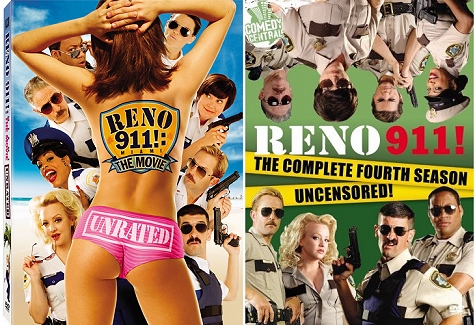
Contest: Reno 911! – The Contest

Filed under: Contests — widge @ 12:36 pm


In conjunction with Fox Home Entertainment and Comedy Central, we’re celebrating the DVD releases of both the complete fourth season of RENO 911! and the big screen adventures of of the Reno Sherriff’s Department’s finest, RENO 911!: MIAMI, by giving away 5 combo-packs of RENO 911!: MIAMI and RENO 911: SEASON 4.

All you have to do is fill out the entry form below”¦

Contest ends at midnight EST on Tuesday, July 3rd.

Enter the contest!
Email:
First name:
Last name:
Street Address:
Address Line 2 (if needed):
City:
State/Province/Whatever:
Zip Code/Postal Code:
Country:
Birth Month:
Birth Day:
Birth Year:

Official Rules

No member of Quick Stop Entertainment or their immediate families may enter.

No Purchase necessary to win.

Must be 18 years of age or older to enter.

All submitted entries must be received by 11:59pm EST on Tuesday, July 3rd.

The winner must allow 4-6 weeks after announcement of win to receive the product.

DVD Late Show: Return of the Killer B’s

Filed under: DVD Late Show — UncaScroogeMcD @ 1:41 am

dvdlateshow.jpg

6/28/07

It’s an interesting time to be a movie buff. Even with new HD formats battling for supremacy, the studios continue putting out amazing stuff on DVD. With all of the older library titles and more obscure, rarer films making their way to disc lately, there’s a lot to choose from out there. Titles that have never been previously available on home video and television series that you never imagined you’d actually be able to own, as well as intriguing oddities you’ve never heard of before.

And I love it!

You’ve noticed, no doubt, that I’m still struggling to balance the demands of my various commitments and carve out a regular niche for this column. Still, I’m hopeful that I’ll soon be on track. For now, though, I’ve got a bunch of new reviews for your DVD purchasing/renting guidance”¦

jetlisfearless.jpg

He claims it’s his last “martial arts” movie, and if that turns out to be true, then JET LI’S FEARLESS (HUO YUAN JIA, 2006) certainly allows the titular martial arts master to go out on a high note, with one of the finest films in the genre.

Directed by Ronny Yu (FREDDY VS. JASON), FEARLESS is based on the true story of Martial arts legend Huo Yuanjia (Li) founder and spiritual guru of the Jin Wu Sports Federation. When an ill-advised fight destroys the reputation of the arrogant martial arts champion and his family, he must set out on a spiritual quest for redemption. Ultimately, this quest brings him to an exhibition match with the most accomplished fighters in the world ““ a British boxer, a Spanish swordsman, a Belgian soldier, and a Japanese martial artist ““ a match intended to crush the spirit of the Chinese people.

Li’s performance is flawless, and the martial arts choreography by Yuen Wo Ping (THE MATRIX, KILL BILL) is astounding. The story is engrossing, and the cinematography is gorgeous. This is arguably one of the greatest martial arts films ever made.

Universal’s DVD includes both the theatrical cut of the film as well as an unrated director’s cut, both presented in sparkling 2.40:1 anamorphic widescreen. The disc is light on extra features, but there is a deleted scene and a short featurette in which Li talks about the project, and what he means when he says it’s last martial arts movie.

Universal’s JET LI’S FEARLESS is a great movie with a disappointingly average presentation.

circleofironse.jpg

Blue Underground has recently re-visited a project originally intended as a vehicle for a young Bruce Lee (ENTER THE DRAGON) and his pal James Coburn (OUR MAN FLINT, THE MAGNIFICENT SEVEN), but ultimately realized years after Lee’s death by other filmmakers, with the CIRCLE OF IRON ““ 2-DISC SPECIAL EDITION (1978).

A young martial artist known as Cord the Seeker (Jeff Cooper), competes for and loses the right to go on a quest for the Book of All Knowlege held by a wizard named Zetan (Christopher Lee, LORD OF THE RINGS), but he stubbornly sets out to find Zetan anyway. Along the way, he meets a stranger with a flute (David Carradine, KILL BILL, DEATH RACE 2000) and faces a series of tests and challenges by several warriors (also played by Carradine) before he can achieve his goal.

Based on a screenplay called “The Silent Flute,” by Lee and Academy Award-winning screenwriter Stirling Silliphant (IN THE HEAT OF THE NIGHT), the script was eventually purchased and produced by exploitation specialist Sandy Frank. It was filmed in Israel by cinematographer Richard Moore (his only directing credit) with Carradine and TV actor Cooper in the lead roles.

The film is beautifully shot, but pretty horridly acted, with the exception of a handful of well-known character actors, (Roddy McDowell, Eli Wallach and the aforementioned Lee) in supporting roles. Carradine isn’t terrible, either, obviously relishing his multiple roles, but Jeff Cooper is awful; unconvincing as a martial artist or as an emoting human being.

The Blue Underground DVD is virtually identical to their previous release, with more bonus features and split across two discs. The first disc contains a gorgeous, 1.66:1 anamorphic widescreen transfer and both DTS and Dolby 5.1 Surround sound. Also on Disc One is a audio commentary track by director Richard Moore, theatrical trailers and TV spots. Disc Two features on-screen interview segments with Carradine, producer Paul Maslansky, martial artist Joe Lewis (FORCE FIVE, JAGUAR LIVES) and a vintage audio interview with screenwriter Silliphant. There’s also a text history of the project, poster and still galleries, and the original screenplay on DVD-ROM.

A cult film more famous for what it isn’t than for what it is, CIRCLE OF IRON is a deeply flawed but still entertaining martial arts film that takes a more philosophical approach to the genre. Other movies have better martial arts scenes and acting, but CIRCLE OF IRON still remains a tantalizing glimpse at the thoughts and philosophies of the late Bruce Lee, and tour de force for Carradine.

For fans of the film, this new edition is a worthy upgrade.

hundra.jpg

Athletic Laurene Landon (I THE JURY, MANIAC COP) portrays female barbarian warrior HUNDRA in the 1983 sword & sorcery flick of the same name, now available as a special edition DVD from Subversive Cinema.

When an all-female Amazon tribe is wiped out by marauders (in a scene similar to and nearly as well executed as the opening of the first CONAN picture), man-hating tribal huntress Hundra is the sole survivor. To ensure that her tribe does not completely die out, she sets out (with her faithful horse and dog) into the savage world beyond her forest home in search of a worthy man to impregnate her with a daughter.

Pretty much a feminist-slanted remake of the first CONAN film, Matt Cimber’s HUNDRA boasts some fine cinematography, great Spanish locations, a brisk pace, a nice Ennio Morricone score, impressive stunts (many performed by Landon herself) and plenty of bizarre bits, including Hundra’s battle with a blue-painted midget. But there’s also bizarrely twisted sexual politics, some bad swordfighting, terrible dubbing and a lead actress who cannot act.

Subversive’s DVD presentation is really excellent, with a surprisingly sharp 2.35:1 anamorphic widescreen transfer, that’s a little grainy in places, but otherwise more than acceptable. There’s also a full-length audio commentary track by director Cimber and star Landon, An interesting behind-the-scenes featurette with on-screen Cimber and Landon interviews, cast & crew text bios, and an original HUNDRA comic book. (It’s pretty crappy, though.) The first 5,000 copies also include a bonus soundtrack CD of Morricone’s (A FISTFUL OF DOLLARS, THE UNTOUCHABLES, RED SONJA) rousing film score.

A sword & sorcery movie that’s decidedly short on sorcery, HUNDRA is, nonetheless, one of the better entries in the early 80’s fantasy cycle, and is worth checking out for fans of the genre.

dejavu.jpg

A sorta sci-fi take on the immortal film noir classic, LAURA, Touchstone’s DÉJÀ VU (2006) is a satisfyingly slick little time travel thriller, one of the best treatments of the subject since Terry Gilliam’s 12 MONKEYS.

Denzel Washington (TRAINING DAY) is a federal agent called to New Orleans after a terrorist bomb attack on a ferry. Soon, a new weapon on the war on terror is revealed to him: a time-shifting surveillance device that can see exactly four and a half days into the past. The investigation is soon complicated by his growing emotional attachment to a woman he observes with the device ““ a woman who is apparently a victim of the bomb blast.

DÉJÀ VU is a big-budget, A-list studio thriller with the heart of a B-movie. It’s relatively smart and involving, trotting out the usual paradoxes and twists inherent in the time travel genre. Washington and the supporting the cast ““ including Val Kilmer, Bruce Greenwood and Jim Caviezel ““ are fine; each turning in exactly the performances you’d expect, with no notable flourishes or individual style. Veteran Tony Scott (TOP GUN, CRIMSON TIDE) turns in his usual, souless, slick directorial job, although the editing on this one’s a bit more coherent than usual.

The Touchstone DVD is solid, with a pristine 2.35: anamorphic widescreen transfer, a thundering Dolby Digital 5.1 surround sound track, and a handful of slick behind-the-scenes featurettes and the usual deleted and extended scenes. There are also trailers for other current Touchstone/Disney releases.

A decent sci-fi thriller, worth a rental.

nightofthewerewolf.jpg

I’ve only seen a couple of Spanish genre filmmaker Paul Naschy’s (real name: Jacinto Molina) horror films, and frankly, those didn’t exactly make me a fan. Of course, I respected that he wrote and directed many of his films as well as starring in them (often in multiple roles), and I liked that he stuck to tried-and-true gothic formulas right out of the old Universal and Hammer monster flicks. In fact, his most famous role is that of tortured werewolf Waldemar Daninsky ““ a fur-faced wolfman who appeared in at least thirteen films ““ including 1980’s NIGHT OF THE WEREWOLF (EL RETORNO DEL HOMBRE-LOBO).

Also distributed under the inexplicable but very 80’s title of THE CRAVING, RETURN OF THE WEREWOLF is a great little gothic Euro-horror, with all the classic elements of the genre, executed with style and some sly humor.

The film is a pseudo-remake of Naschy’s earlier WEREWOLF SHADOW, pitting the immortal wolfman against the equally immortal vampire Countess Elizabeth Bathory, in a sanguinary battle of fangs and claws. The film is loaded with great sets and medieval locations, hot babes ““ both good and evil ““ some decent old-school werewolf attacks, and even a zombie!

This is the best performance I’ve seen from the often-wooden auteur, who, in this film, is surprisingly charismatic with lots of star quality. The perfectly-cast Julia Saly’s Countess Bathory is disturbingly otherworldly and still oddly sexy ““ a perfect vampire queen.

Deimos/BCI’s excellent new DVD edition offers the complete, uncut version of the film with a very nice and nearly-flawless 1.85:1 anamorphic widescreen presentation. It looks gorgeous, with only a few small instances of wear or grain. Audio is provided in both Spanish and a lousy English dub, and there are optional English subtitles. Extra features include some classy and creepy menu screens, a deleted scene, a charming, on-screen introduction from Naschy himself, the original Spanish credits sequence and international trailer, and, finally, an extensive still gallery. The disc also includes informative liner notes by Naschy expert Mirek Lipinski.

For Naschy fans and fans of traditional gothic monster bashes, NIGHT OF THE WEREWOLF is highly recommended.

hellboybloodiron.jpg

The Elizabeth Bathory legend also makes an appearance in the second and latest of Starz Media’s direct-to-DVD series, HELLBOY ANIMATED: BLOOD & IRON (2007).

Once again, the feature film cast of Ron Perlman, Selma Blair and Doug Jones ““ this time joined by John Hurt ““ recreate their live action roles in a cartoon thriller that draws its inspiration from Mike Mignola’s acclaimed graphic novel series.

In this one, the B.P.R.D. (Bureau of paranormal Research and Defense) team of good-guy demon Hellboy (Perlman), pyrokinetic Liz (Blair), and fish guy Abe (Jones) are joined by their mentor Professor Broom (Hurt) in investigating a haunted New England mansion that entrepreneurs intend to make into a tourist attraction. Soon the B.P.R.D. team is up to their necks in witches, ghosts and vampires ““ including one the Professor has battled before.

While I enjoyed BLOOD & IRON, it seemed to be a bit of step down from the first Hellboy Animated feature, SWORD OF STORMS. In fact, it felt rather like one of the better SCOOBY DOO direct-to-vid movies ““ not bad, but not all that great, either.

The animation is solid and decently designed, and the voice performances are dead-on, but the script seems a little too predictable and formulaic for a Hellboy adventure. With all of the great horror menaces and stories in the graphic novels, we get another New England haunted house and retelling of the Bathory legend?

Starz Media (formerly Anchor Bay) gives HELLBOY ANIMATED: BLOOD & IRON a very nice DVD presentation with a beautiful, perfect 1.78:1 anamorphic widescreen transfer and robust Dolby Digital 5.1 and Stereo tracks. There’s the usual ton of behind-the-scenes featurettes, an extra cartoon short, an E-Comic, and a commentary track by Mike Mignola, and directors Tad Stones and Vic Cook.

BLOOD & IRON is good, but not great. Hopefully, this is just a sophomore slump, and the next entry will have a stronger and more original story. And since it appears that it will feature one of Mignola’s more imaginative creations ““ the hero known as Lobster Johnson ““ I’m very hopeful.

ghidorah.jpg

From Classic Media/Genius Products comes another excellent Toho kaiju classic, GHIDORAH THE THREE-HEADED MONSTER (1964).

In this exciting entry in the long-running Godzilla series, the Big G, Rodan and larval Mothra must team up to protect Earth from the invading golden space dragon known as Ghidorah. It’s with this film that Godzilla first becomes a good guy (albeit reluctantly), and it’s the first of Toho’s giant monster flicks to feature more than two monsters in the main action.

The DVD is another fantastic package from the Classic Media folks, containing both the original Japanese cut of the film, and the somewhat altered and shorter U.S. version (GHIDRAH). Both transfers are very nice: sharp, clean and colorful, with only minor print damage. Both versions are presented in their correct anamorphic 2.40:1 widescreen aspect ratio. Bonus features include an audio commentary by author and G-fan David Kalat, a movie poster slide show, the original theatrical trailer, and a text biography of effects maestro Eiji Tsuburaya.

Highly recommended.

piratesuniversal.jpg

Universal’s PIRATES OF THE GOLDEN AGE collects four Fifties swashbucklers in one low-priced, 2-disc collection. All four films are presented in crisp, colorful, full-frame transfers, with clear mono sound. There are no extras aside from a couple of trailers.

AGAINST ALL FLAGS (1952) is the best film in this set, with an aging Errol Flynn returning to the genre that made him a star as a British naval officer who goes undercover to infiltrate a pirate enclave on Madagascar. There he meets and woos buccaneer beauty Maureen O’Hara (hotter than ever) and incurs the wrath of sly Anthony Quinn. Despite the low budget, heavyset hero and stage-bound action, FLAGS is a great little b-movie swashbuckler and alone worth the price of the set.

BUCCANEER’S GIRL (1950) is more of a bodice-ripping period romance than a pirate film, with a young and sexy Yvonne De Carlo (THE MUNSTERS) as a feisty New Orleans saloon entertainer who falls for a legendary pirate captain. It’s a decent little B-film, if you’re in the right mood.

YANKEE BUCCANEER (1952) re-uses most of the FLAGS sets and sea footage in an overly talky tale about the crew of an American naval vessel pretending to be pirates of the Caribbean. A good, likeable cast, led by Jeff Chandler, can’t quite make up for the lack of thrills, but they try.

DOUBLE CROSSBONES (1950) is the other gem of the GOLDEN AGE set, a kid-friendly spoof of pirate flicks with Donald O’Connor (the FRANCIS THE TALKING MULE series, SINGING IN THE RAIN) as a bumbling shopkeeper’s assistant who inadvertently becomes a pirate captain. It’s fun and funny, and a cheerfully silly diversion.

Thanks to Johnny Depp and his friends, Universal has unearthed this affordable chest of minor treasures, and as a fan of the genre, I’m grateful. I’m especially pleased to finally have AGAINST ALL FLAGS on DVD ““ it’s long overdue.

primeval.jpg

Sort of a big-budget, smarter version of those made-for-SciFi Channel “giant reptile” flicks, Michael Katleman’s PRIMEVAL (2006) has just a little bit more going for it than your average formula creature feature. For one thing, it’s true.

Sort of.

The film, which is “inspired by” true events, follows a news team as it sets out for a war-torn African nation in search of a giant man-eating crocodile called “Gustave” by the natives. (Do a Google search and be stunned.) The beastie’s grown gigantic on the war-created carcasses dumped into its river and has developed a taste for human flesh. But catching the croc isn’t going to be easy, and there are plenty of other dangers ““ of the human variety ““ around.

In PRIMEVAL, a talented cast led by Dominic Purcell (BLADE: TRINITY), sexy Brooke Langton (MELROSE PLACE) and Orlando Jones (EVOLUTION) end up playing second fiddle to an expertly-rendered CGI crocodile. Katleman’s direction is tight and suspenseful, and even though the terrible “Gustave” doesn’t make his first appearance until well into the picture, the characters and set-up are intriguing enough to hold the viewer’s interest.

The Buena Vista DVD features a rock-solid 2.35:1 enhanced widescreen transfer that maintains its integrity even during the numerous dark scenes. There’s an excellent 5.1 Dolby Surround track and an audio commentary with the director and effects supervisor. The disc also includes the obligatory “Behind-the-scenes” featurette showing the always-exciting sight of computer geeks sitting at their monitors while the humming machines slowly render the animation, and brief interviews with the cast and crew. There are a few deleted scenes and trailers/promos for other Disney empire releases.

An exciting, well-made monster flick with a sheen of verisimilitude, PRIMEVAL is worth an evening’s rental.

DVD LATE SHOW CAPSULE REVIEWS!

In another attempt to catch up with the mountain of notable discs that piled up during the last few months, I’m once again providing a handful of “Capsule Reviews” ““short, sweet and to the point! Here’s a few more DVDs that are long overdue for some Late Show attention:

peterpan.jpg

PETER PAN ““ 2-DISC PLATINUM EDITION (1953). The latest video incarnation of the Disney cartoon classic is a marvelous package, with an absolutely stunning, restored presentation of the film. Die-hard animation buffs may debate the accuracy of the colors or the sharpness of the picture, but to these fannish eyes, the movie has never looked better. Disney has provided, along with the new transfer, a new Dolby 5.1 sound mix, as well as the original mono track. Loaded with bonus features ““ games and stuff for the kiddies, along with archival and behind-the-scenes materials for the adult animation buffs (and an absolutely pointless music video) ““ this “Platinum Edition” really delivers.

laure.jpg

LAURE. (1976) A beautifully-shot (in the Phillipines) bit of otherwise dreary erotica, LAURE’s claim to fame is that it was written, directed and stars the original Emmanuelle -““ Emmanuelle Arsan. Actually, it’s written & directed by her husband (the real author of the Emmanuelle novel), Louis Jacques, and Arsan plays only a supporting role to Euro-cutie Annie Belle, who stars as the titular character. The dialogue is ridiculous, the sex scenes mostly unmemorable, and aside from the gorgeous location photography, the only redeeming feature of the film is Miss Belle’s near-constant nudity. Severin Films nonetheless gives the flaccid flick a beautiful 1.78:1 anamorphic widescreen transfer and a couple of interesting extras (more interesting than the feature in fact): interviews with producer Ovidio Assonitis and stars Annie Belle and Al Cliver.

phantasmab.jpg

PHANTASM. (1978) The second classic re-issue in “The Anchor Bay Collection,” is this new, and greatly improved edition of the nightmarish Don Coscarelli (BUBBA-HO-TEP, BEASTMASTER) horror classic about macabre alien shenanigans in a mortuary. With a new widescreen anamorphic 1.85:1 transfer that’s vastly superior to the previous MGM disc, and a hearse-load of supplemental features, including a new 30-minute documentary, and a bunch of material (interviews, commentaries, rare TV clips) ported over from the old Image laserdisc, this edition is a must-have for PHANTASM and classic horror fans. Highly recommended.

raptorisland.jpg

RAPTOR ISLAND (2004) is another Sci-Fi Channel “classic,” starring Lorenzo Lamas (SNAKEATER) as the leader of a Navy SEALS unit pursuing a terrorist leader in the South China Sea. Through a series of contrived incidents, the SEALS, the terrorist, and a female CIA agent, all end up on an uncharted island inexplicably inhabited by a horde of bloodthirsty velociraptors. So, what’s wrong with this film? Nearly everything ““ from the shoddy CGI dinos to the Canadian forest unconvincingly standing in for a tropical jungle isle. Yet, the pace is brisk, the raptor attacks fairly violent, and I didn’t feel like clawing my eyes out before the climax. Could be worse, I guess. Anchor Bay gives this dino dropping a sharp, 1.85 anamorphic transfer and that’s it.

blacksheep02.jpg

BAA BAA BLACK SHEEP ““ Vol. 2. (1976) The second half of the first season of this WWII adventure series has finally made it to DVD, several years after Volume 1, and still a bit overpriced. This 3-disc set includes 12 exciting and entertaining episodes of the Robert Conrad (THE WILD WILD WEST)-starring series, filled with familiar TV faces (John Larroquette, Larry Manetti, Dirk Blocker, Simon Oakland, Robert Ginty), some thrilling aerial combat footage (both stock and staged), and manly tales of camaraderie under fire. Occasionally hokey, but fun, BAA BAA is given an adequate, no-frills presentation, with clean, full-frame transfers and clear mono sound. Commercials for other Universal TV-on-DVD releases are included. BAA BAA BLACK SHEEP is one vintage television show that would be perfect for a modern feature film treatment.

refinementsinlove.jpg

REFINEMENTS IN LOVE (1971). Director Carlos Tobalina’s incoherent sexploitation film disguised as a meaningful documentary on changing sexual mores in America liberally mixes faux documentary footage and staged interviews with fake experts with scenes of hardcore Triple-X sex. As a movie, it’s impossible to follow ““ it almost seems as if the reels are mixed up (although Impulse Pictures insists that it’s correct on the DVD). Narrated by cult actress Liz Renay (THE THRILL-KILLERS) and featuring an early, uncredited appearance by porn starlet Rene Bond, REFINEMENTS IN LOVE is recommended only for die-hard fans of “mondo” and sexploitation flicks of the era.

DVD LATE SHOW GUEST REVIEW: ALTERED

James Chambers is a good pal, an occasional collaborator, a contributor to the DVD Late Show website, and a talented writer of horror fiction. He recently sent along this review of the Universal DVD release, ALTERED and I thought I’d share it with you. Jim’s website is James Chambers Online.

altered.jpg

The fact that ALTERED (2007) did not get a theatrical release is a sad glimpse into the state of horror cinema these days. But then I guess this flick had a few things going against it: a lack of big stars, a modest use of CGI (at least as far as I could tell), a distinctive style and vision, and a healthy respect for its audience and genre. ALTERED is a monster movie, the likes of which we haven’t seen in a long, long time, and while it’s not perfect, it does deliver a tight, atmospheric, creepy, and fast-paced horror story. Considering today’s Hollywood brain trust seems to think that “horror” equals star-powered crap like GODSEND or HIDE AND SEEK or unjustifiable remakes like BLACK CHRISTMAS, THE FOG, and THE WICKER MAN, it’s no surprise that the mainstream movie industry might not get something like ALTERED. But then, really, the best horror movies have almost universally come from independent filmmakers for going on close to four decades now.

What surprises me most, though, is that the word-of-mouth I’d heard about ALTERED was all negative. Maybe Sanchez’s pedigree as one of THE BLAIR WITCH PROJECT creators drove expectations sky high and people simply couldn’t be satisfied no matter what he delivered. In my case the opposite held true. I never thought much of BLAIR WITCH PROJECT, beyond being impressed with the massive hype that manufactured its status as a horror icon. For my money both the CURSE OF THE BLAIR WITCH and BLAIR WITCH 2: BOOK OF SHADOWS hands down beat the original, which I’ve only ever found to be entertaining at best.

So to some extent I watched ALTERED in search of proof that Sanchez had the chops to tell an actual horror story sans gimmicks and marketing madness. And, yes, he does.

The premise of ALTERED is simple: Years ago a group of friends were abducted by aliens. Most of them were soon released, but two were kept for several days, and one of them died. Three of the abductees have been staking out the woods where they were taken ever since, and now they have actually captured one of the aliens. With revenge on their minds, they bring the creature to the compound of the other surviving abductee, where they’ll determine the fate of their prisoner. But the alien is not going down without a fight.

The extraterrestrials in ALTERED are no knobby-limbed puppets who come in peace; they’re vaguely reptilian, mean as hell, and downright scary. Their motives are inhuman and thus unclear, but they’re unmistakably malicious. The movie makes no bones about the fact they’ve been screwing with these guys for years, leaving them little choice but to hit back even though the battle may ultimately be hopeless.

ALTERED quickly revs up to a suspense-charged, claustrophobic night terror seasoned with the kind of surreality that characterizes so many real-world reports of alien encounters and abduction experiences. It draws effectively on alien/UFO lore as it plays out its “turning-the-tables” twist that makes the otherworldly visitor the prisoner this time. And, as in so many alien accounts, there is a fair amount left unexplained here.

And that perhaps marks both the movie’s greatest weaknesses and one of its greatest strengths.

Audiences looking for a neat explanation for everything they see on-screen will be disappointed. ALTERED is very much a slice out of a larger story that is mainly alluded to; it is one night in the lives of people involved in a phenomenon that has been going on for years and will clearly continue even after the credits roll. Unaccountable strangeness occurs. Answers and explanations are ambiguous. Characters learn only fragments of the truth, and maybe, if they live long enough, they’ll someday come to know the whole picture.

Therein lays the horror of ALTERED – to be isolated and caught in the grip of an unending nightmare, only vaguely aware of the part you are meant to play, and unable to every fully escape it. That’s not to say that there is no logic to the story. There is, but the filmmakers have wisely chosen not to make us privy to it all – all the better to preserve the mystery. They also avoid the pitfall so many other movies stumble into of offering step-by-step explanations of things the audience can better deduce on their own. There are, however, some minor plot holes, which I’ll refrain from describing for fear of giving too much away, but they didn’t spoil things.

Suffice it to say that ALTERED is a genuine horror flick, rich in mood and unflinching without being gratuitously gore-drenched. Among its many virtues is the fact that the alien is played by an actor decked out in practical SFX rather than a glorified, motion capture, CGI video game character. And what a wonderful difference that makes.

Given its direct-to-DVD release it’s unlikely ALTERED will immediately find the audience it deserves, but I hold out hope that, with time, it will come to be recognized as the important genre entry that it is. I also hope Sanchez doesn’t take another eight years to deliver his next feature.

Thanks, Jim.

That’s it for this time. More reviews coming soon.

For older Late Show columns (adding up to well over 200 reviews!), visit the newly updated-and-revamped DVD Late Show website and archive. For additional pop culture musings, occasional DVD previews and lots of shameless self-promotion, you might try checking out my blog.

Comments, DVD questions, review requests and offers of money can be sent to: dvdlateshow@atomicpulp.com

Noctural Admissions: Movie Review – Live Free or Die Hard

Filed under: Columns,Nocturnal Admissions — UncaScroogeMcD @ 1:37 am

nocturnalheader5.gif

Die Hard poster

In Buster Keaton’s silent masterpiece, the civil war comedy The General from 1927, there is a marvelous scene where Buster gets himself out of yet another jam.

Contrary to popular belief, Keaton’s screen persona was not a sad sack constantly beaten down by life (later comics bore that responsibility). Rather, Keaton was an athletic, versatile, creative character, constantly innovating and thinking. In the scene in question, Keaton is engineering a train in an effort to catch up with his girlfriend, who has been kidnapped by the Northern army forces. Knowing that Keaton is behind them, the Northerners lay impediments on the track before him. At one point they are laying timber on the tracks. Keaton puts the train in first gear, so to speak, runs out, and picks up the first piece of lumber. But the train is still moving behind him, and before he can cast it aside, the cattle scoop plucks him up and carries him along. And there is another derailing piece of lumber just a head. What to do? We don’t know what is going to happen. But Keaton figures something out. He uses the lumber in his hand to catapult the one on the tracks out of the way, dispensing with both impediments simultaneously.

The audience response to this moment is to laugh. It’s a joyous laughter, an appreciation of Keaton’s cleverness. In essence, that what we are always doing when we laugh at a great witticism or muscular comeback in a comedy, admiring the speaker’s (or writer’s) achievement. Keaton and the other silent comedians took it to the physical level, speaking through their bodies and actions, a form of comedy that couldn’t really have existed before.

Die Hard Bruce

That’s why the Die Hard series and its new entry Live Free or Die Hard need to be viewed as fundamentally comedies. They hark back to Keaton and the physical comedians as improvisers out of cunningly constructed binds, where mind is as important as the body, where indeed it fuels the body.

Die Hard stunt

In Live Free or Die Hard Bruce Willis’s John McClane must: evade a helicopter chasing him through the canyons of DC, fight his way out of a SUV dangling down an elevator shaft, elude a jet fighter that is trying to blow him in in a semi, and get off the wings of said plane after it spins pilotlessly out of control. How he gets out of these and numerous other hair raising jams is the essence of the series, and of that type of comedy. Note at one point his use of a fire hydrant as chopper repellent. It’s a cartoon, the kind in a whole automobile can be used as a flying weapon.

Originally based on a Roderick Thorp novel, the series (which didn’t know yet that it was a series) established itself as a series in which a lone man in an enclosed setting uses only the improvised tools at hand to basically rescue his wife. The second film shifted the locale to an airport, maintaining the same decorum. But No. 3 went horizontal, spreading the area McClane has to manage to a whole city, New York. Now Live Free or Die Hard turns the whole eastern seaboard into Nakatomi Plaza, with McClane running from Rutgers to Camden to DC, to Virginia and Baltimore (what will the next film be? Live Fast, Die Hard, and Leave a Beautiful Corpse, with McClane globally fighting bad guys from outer space?). While the first film played with then current notions of terrorists (more German Eurotrash than true believers) and fears of Japanese encroachment upon the American economy, the second one was a take on Iran-Contra.

Die Hard Tim

The third film was a bit at sea, but this new entry is on more solid ground, with an acknowledgment of a post 9/11 world, with the villain Thomas Gabriel (Timothy Olyphant) presented as a variation on Robert Hanssen, with prime hacker Gabriel turning the system on itself to make about political point about the vulnerability of the system (or at least so it seems in the beginning). And here, McClane’s adult sized daughter Lucy (Mary Elizabeth Winstead) is the imperiled McClane who provides the plot’s engine in the final quarter.

Die Hard Justin Long

Like the third film, though, McClane has an unwanted partner, in this case a hacker named Matt Farrell, played by Justin Long, the Mac guy in the television commercials. But here he is John Hodgeman to McClane’s cool customer. It is Farrell who relates the essential premise of the film, the “fire sale” computer fiasco probably described in the news story on which the film is credited as being based (John Carlin’s piece “A Farewell to Arms”). It’s called virtual terrorism.

Die Hard Maggie

McClane, it turns out, doesn’t want to be a hero, he doesn’t like it, but he’s the guy who’s there at the time. McClane says this is a car as they are driving from one predicament to another as yet unknown one. It’s one of the few moments of tranquility and reflection in the film, and one of the few moments that really evokes the original Die Hard. In that film, McClane was an ordinary guy, an average Joe who ends up having to save a building, his wife, et cetera. Subtly with 2 and even more obviously with 3, McClane became an action hero, with all that means about circumscribing McClane’s character and what he feels about things.

Die Hard Maggie Q 2

Other random observations: There is an Agent Johnson joke “¦ Cliff Curtis (in the Reginald Veljohnson role) is, as usual, great, but not quite given enough to do “¦ Why do choppers get to fly around with impunity in movies such as this one and Lethal Weapon? If there is gunfire, don’t people complain, and anyway, isn’t all air traffic monitored? (though the situation is slightly different in this film, however) “¦ The secondary and tertiary villains aren’t as vivid as they were in Die Hard “¦ However, Maggie Q is excellent (though I doubt that fetish boots are standard issue when she is impersonating an FBI agent) and her fight scene with McClane is great “¦ Long’s characterization is perfect, ranging from his smart aleckyness, his living like a college student, his propensity to conspiracy theories, and his eating habits “¦ Zeljko Ivanek should play Vincent Bugliosi in a movie “¦ Is it unseemly to mention that Kevin Smith is great in a cameo? “¦ Director Len Wiseman (the Underworld series) does a satisfactory job, but does anyone really direct movies like this or like, say, Bad Boys 2? Don’t you really just have a meeting with the second unit director, then go off to walk Justin Long and Bruce Willis through a scene before clocking out for the day? “¦ The film has a hard, blue, grainy look throughout, like James Mangold’s Cop Land “¦ among the movies “quoted” are Speed, Independence Day, Jurassic Park 2, and Casino Royale (if that is humanly possible) “¦ The film has the best “knocked down stairs” moment since Joe Kidd “¦ This is a “modes of transportation” movie, in which McClane gets to drive about five different types of automobiles, including a chopper “¦ “Ode to Joy” does not appear in the film.

QSE News: 6/28/2007

Filed under: Columns,News — UncaScroogeMcD @ 1:32 am

quickstopnews.jpg

line1.gif

Here are today’s top entertainment headlines:

  • qsnews.jpgRock group Weezer is back in the studio recording its 6th album. Singer slash guitarist, Rivers Cuomo, posted a message on the band’s website. The bad news for fans is that the band is still not as good as they were 10 years ago.
  • During last night’s interview with former Beatles Paul McCartney, Ringo Starr and former-living Beatles wives Yoko Ono and Olivia Harrison, Larry King called Starr “George.” The mistake came as King asked about the passing of John Lennon. King recovered from the error by saying “what I meant was, why couldn’t it have been you?”

line1.gif

That’s all for today’s news, stay tuned to this channel for all the news that matters least but you still care about.

(Compiled by J. Allen)

##

Quick Stop Thingamabobs: 6/28/2007

Filed under: Columns,Thingamabobs — UncaScroogeMcD @ 1:31 am

thingamabobs.jpg

The web. It’s a big place, full of plenty of distractions ““ some funny, some informative, some ludicrous, some disturbing, some inane, some profound. Each and every weekday, we present links to a few of our favorite finds”¦

————————————————

Have a THINGAMABOB? Send it in!

##

June 27, 2007

QSE News: 6/27/2007

Filed under: Columns,News — UncaScroogeMcD @ 3:01 am

quickstopnews.jpg

line1.gif

Here are today’s top entertainment headlines:

  • qsnews.jpgIn a post on his Myspace blog, director Jon Favreau has seemingly confirmed that actress Hilary Swank will have a cameo role in the upcoming comic book movie Iron Man.  According to Favreau, Swanks’s scenes were filmed in Las Vegas at the Caesar’s Palace Casino.  While her official role is being kept a secret, many comic fans believe that Swank will be playing the role of the villain Horseface McGee.

line1.gif

That’s all for today’s news, stay tuned to this channel for all the news that matters least but you still care about.

(Compiled by J. Allen)

##

Quick Stop Thingamabobs: 6/27/2007

Filed under: Columns,Thingamabobs — UncaScroogeMcD @ 2:57 am

thingamabobs.jpg

The web. It’s a big place, full of plenty of distractions ““ some funny, some informative, some ludicrous, some disturbing, some inane, some profound. Each and every weekday, we present links to a few of our favorite finds”¦

————————————————

Have a THINGAMABOB? Send it in!

##

June 26, 2007

The Art Of Travel Blog #3: Ladrones

Filed under: Art of Travel Blog,Production Blogs,Quickcasts,Video — UncaScroogeMcD @ 12:10 am

artoftravel.jpg

We are happy to present the exclusive web only trailer and first of seven behind the scenes webisodes of The Art of Travel. Each month, we’ll premiere a new webisode – and in-between, we’ll have biweekly blogs from the actors and filmmakers, plus cool image captures from the movie.

This story has been three years in the making, and shooting the film over 7 weeks in 5 countries was an adventure for the entire cast and crew.

No, The Art of Travel is not a documentary or the retelling of the bestselling philosophy book with the same title – It is the story of Conner Layne, a high school grad with a full ride to college who finds his plans interrupted by a life changing moment… a moment which becomes the spring board to a travel adventure that ultimately changes Conner’s hopes and dreams.

line.gif

For seven weeks cast and crew of The Art of Travel filmed the adventure of a lifetime, hoping that audiences would enjoy taking a journey with a character like Conner, a high school graduate who finds himself, through his own doing, on a year long trip through Central and South America. Conner Layne makes his first destination Nicaragua, and much like Conner’s first days in the city of Managua, the cast and crew encountered culture shock.

Anyone who travels knows the drill – anything can happen anywhere. You can get robbed in Atlanta almost easier then getting robbed in Managua, Nicaragua. But it is those first few days in a new place – whether it’s New York or Bogota – that you feel vulnerable.

Webisode 3, “Ladrones”, is a cool look into the first few days of shooting inside an amazing country where extreme beauty and poverty somehow coexist.

Check out Webisode 3: “Ladrones”!

artoftravel2007-06-26-02.jpg

Thomas Whelan, Angelika Baran, Brian La Belle, Emyr G. Graciano, Christopher Kennedy Masterson (Cusco, Peru)

Salude from the Filmmakers!

Thomas Whelan
Brian LaBelle
Emyr G. Graciano
Christopher Kennedy Masterson

line3.gif

THE ART OF TRAVEL TRAILER ““
Before you dive into the webisodes, check out the trailer for The Art of Travel

line3.gif

artoftravel2007-04-02-01.jpg

Download The Art of Travel Trailer:


  • Large (560 x 420 – QuickTime – 28.04 MB)
  • Small (320 x 240 – QuickTime – 11.63 MB)

line3.gif

THE ART OF TRAVEL VIDEO BLOG #3: “Ladrones” ““
How exactly do you woo a cast willing to travel into the wilds of Central America…

line3.gif

artoftravel2007-06-26-01.jpg

Download The Art Of Travel Video Blog #3:


  • Large (560 x 420 – QuickTime – 40.02 MB)
  • Small (320 x 240 – QuickTime – 17.56 MB)

line3.gif

THE ART OF TRAVEL VIDEO BLOG #2: “Casting The Net” ““
How exactly do you woo a cast willing to travel into the wilds of Central America…

line3.gif

artoftravel2007-05-14-01.jpg

Download The Art Of Travel Video Blog #2:


  • Large (560 x 420 – QuickTime – 31.97 MB)
  • Small (320 x 240 – QuickTime – 17.95 MB)

line3.gif

THE ART OF TRAVEL VIDEO BLOG #1: “Gonzo Filmmaking” ““
Dive into the process of pulling together the film, and the unique insanity of transporting a cast and crew into the wilds of Central America…

line3.gif

artoftravel2007-04-02-02.jpg

Download The Art Of Travel Video Blog #1:


  • Large (560 x 420 – QuickTime – 41.03 MB)
  • Small (320 x 240 – QuickTime – 17.95 MB)

##

Toy Box: Ratatouille PVC figures

Filed under: Columns,Toy Box — admin @ 12:09 am

toybox.jpg

There are a lot of big movies hitting this summer. Which is sort of like the doctor saying ‘This might sting a bit’ before he amputates your right leg with nothing but a rag in your mouth and a bottle of whisky to make you feel better. Most (but not all) of these big summer blockbusters are sequels. And most are going to suck golf balls through a straw.

But hitting this weekend is one I’ve really been looking forward to, Ratatouille. Pixar’s latest film comes with less hype than last year’s Cars, and comes down a far less traveled story road. This is all about Remy, a little rat who longs to be a great chef in the city of great chefs, Paris. Early reviews are in, and so far every one loves it.

Last year’s Cars produced one of the hottest line of movie toys in years. Mattel continues to crank out the die cast cars, and kids and collectors continue to snap them up, a year after the movie hit. I don’t think Pixar and Mattel have any hopes that Ratatouille could possible produce the same situation, but you never know – remember how quickly that damn talking Buzz Lightyear disappeared after Toy Story hit movie screens.

Mattel has gone light with this movie, producing a basic set of action figures that look more like oversized Happy Meal toys than seven dollar figures, some animatronic Remy’s (including a RC version), and some PVC sets. I’ll be looking at the main PVC set tonight. Disney is doing another set of action figures to be sold only at their stores, but from early photos, I’m not holding my breathe on these.

If you have any comments or questions, feel free to drop me a line at mwc@mwctoys.com. Now let’s look at those little buggers:

Ratatouille PVC set

toybox_062607_1b.jpg

This PVC set contains 7 characters – Remy, Emile and Django (rats), and Linguini, Colette, Skinner and Gusteau (humans). There are also two playsets so far, which include another PVC each and which appear to be in scale (sort of) with these. I can’t comment for sure yet though, because I haven’t gotten one of these sets yet. I suspect I will though this week, along with the main animatronic Remy. I think once the movie hits, Remy is going to disappear quickly.

toybox_062607_1.jpg

Packaging – ***
While the box isn’t fancy, it does match up to the license well in color and graphics. It’s also collector friendly without trying, and you can easily remove the figures and put them back later if you are so inclined. I like boxes as well for the ability to store them, and there’s very little wasted space here.

toybox_062607_2.jpg

Sculpting – People ***1/2; Rats ***
I have to say that I haven’t seen any of the product so far capture the look of the rats perfectly. That being said, these PVC’s are the best I’ve seen so far. The rats aren’t in scale of course, standing about up to the waist of the humans, but considering how small the PVC’s are to begin with, that’s certainly forgivable. The expressions are good, and there’s decent detail here for the material and scale.

toybox_062607_3a.jpg

The humans are better than the rats, and look much more like their on screen counterparts. Like the Incredibles, this is a Pixar movie with a lot more humans in it than usual, but it looks like the style of animation is up to the task.

Overall the figures range in height from Remy, the shortest at about 2 inches tall in the chef hat, to the tallest, Linquini, at 4 1/2 inches.

Paint – ***
There are a ton of paint ops here, and you won’t see any serious small detail work. But the eyes are uniformly clean and straight, there’s little to no bleed between colors, and there’s even some nice dry brushing on the fur of Django. The paint work isn’t perfect, and there’s the usual sloppy lines around some of the shoelaces, eyebrows and hair lines. But considering the scale and the cost, the paint work ain’t bad.

toybox_062607_1c.jpg

Gusteau is a bit different. He’s cast in a translucent plastic, due to his, uh, ‘nature’ in the film. If you don’t know about him yet though, I won’t spoil it for you. Clear figures are always cool looking, but the downside is that the sculpt is very hard to make out.

Articulation – Bupkis
Did I mention these were PVC’s? Yea, I know, but I also like to include this category because occasionally there is a point or two of articulation, even with small PVC’s. That’s not the case here though, but this lack of articulation will have no effect on my personal overall score.

toybox_062607_6.jpg

It does appear that the neck on Colette and Linquini *might* be meant to turn, but mine seemed a bit stuck. The PVC is soft enough that tearing the head off is a very likely outcome, so I left things alone and figured it was best that way.

Accessories – **
Yep, these are PVC’s with accessories, so even a low score adds to the overall, since a Bupkis is assumed. The humans each include a small plastic display base, which is good since they can’t really stand without it. Making this a separate piece instead of part of the basic mold is also good, because if I’m a kid I might not want the base with me all the time. Of course, this also gives them one more thing to lose.

The fork and pile of…pickles? Tomato slices? Whatever it is…both of these come out of the hands of the other rats, and are also technically accessories. Sure, they look a *little* funny in those poses without them, but it’s not so far off that you actually couldn’t use them that way.

toybox_062607_5.jpg

Fun Factor – ***1/2
PVC’s are fun stuff, even without any articulation. Little green army men were the play staple of many a kid’s toybox, and they were even posed in some God awful ways. Did anyone like the ones that were laying down?

toybox_062607_4.jpg

There isn’t a lot of conflict with these characters, so action figures wouldn’t do all that well. These decorative figures, which can also be fun out in the sandbox or in the bathtub, are probably the best bet. They also go well with playsets, and I’m hoping we see more than just the two currently out.

Value – **1/2
At $15 for 7 PVC figures, you’re getting a pretty average value. These aren’t exceptional by no means, but they’re a sight better than those PVC sets that are so popular at the Disney stores and just as expensive (unless they’re having a sale) as these are.

toybox_062607_7.jpg

Things to Watch Out For –
Not a thing. They’re sturdy, well made, and very consistent.

Overall – ***
If you’re looking for some decent Ratatouille merchandise, I think your best bet are these PVC’s along with the playsets, at least at this point. The larger Mattel action figures are sad at best, and the early photos of the Disney figures doesn’t do much to alter my opinion on those either. You get a decent bang for your buck with these smaller figures, and both kids and adult fans can enjoy them.

Where to Buy –
I picked them up at Toys R Us, which appears to be the only retailer carrying much of anything for this flick. If you love the movie, I’d pick up the talking Remy early. I suspect he’s going to pull a Buzz Lightyear and disappear quick once the masses figure out how good the film is.

Nocturnal Admissions: DVD Review – This is Tom Jones: Rock ‘n’ Roll Legends

Filed under: Columns,Nocturnal Admissions — UncaScroogeMcD @ 12:06 am

nocturnalheader5.gif

OK, admit it. You love Tom Jones. How could you not? He is the “stage author” of at least five hit songs (“It’s Not Unusual” [1965], “What’s New Pussycat?” [1965], “The Green, Green Grass of Home” [1966], “Delilah” [1968], “She’s A Lady” [1971]), and his stage act is a blend of power balladry, sexual braggadocio, and good natured “I can’t believe this is happening to me” wonderment. If the self-mockery comes ultimately from Elvis, the forceful voice is wholly his own. Like many singers he was a force for only a short window of time, but the songs were so perfect, or he was so perfect for them, that he was able to dine out on them for decades. If the Wales-born coal miner’s son has an American equivalent it is Johnny Rivers, whose creative bulb burned brightly for a brief time with numerous late 1960s covers of ’50s hits, along with tunes such as “Poor Side of Town” and “Secret Agent Man,” but who then fell out of fashion or favor while yet still being able to have a career touring.

Jones is probably someone you need to see live. He is one of those rare performers whose voice outmatches the physical source. You can’t believe that a sound that powerful is coming out of a human being. But it is not a crude, inflexible instrument. As the new box set, This is Tom Jones, shows, the man, who had been singing since he was three years old, could belt out “What’s New Pussycat?” but also old standards such as “Danny Boy” and modern quiet numbers such as “I’ll Never Fall in Love Again.” Though by the time he began appearing in his own show Jones had been somewhat desexualized and turned into a Vegas style showman, This is Tom Jones‘s array of guests show that Jones could hold his own with Janis Joplin, Joe Cocker, and even Little Richard.

Despite his jokey-serious sexual swagger, Jones can’t help enjoying himself and his good luck, and while bejeweled and decked out like a ’50s crooner he has the virtue of sincerity. You can tell as he claps along and watches his guests that he really likes them. And they appreciated him. According to the box’s liner notes, Joplin normally hated doing television but consented to appear on his show because she liked his voice, a high compliment coming from a fellow power belter.

Tom Jones Box

This is Tom Jones (Time Life, Tuesday, June 26, 2007, three discs, $39.95) offers eight episodes of the variety show, which aired on ABC on starting Fridays from early 1969 through 1971. Guests that appear on the selected shows include Mary Hopkin, The Who, Burt Bacharach, Glen Campbell, Janis Joplin, Joe Cocker, Stevie Wonder, The Moody Blues, and Aretha Franklin (according to the Wikipedia, Crosby, Stills, Nash and Young were originally going to appear on the set, but due to rights issues, were replaced by Little Richard, which, as stated above, only serves to highlight Jones’s range better). Comedy acts include an early Richard Pryor appearance (which starts out awkward but gains speed), Peter Sellers, Anne Bancroft, Bob Hope, and the comedy troupes The Ace Trucking Company and the Committee, each troupe filled with now-familiar faces.

Tom Jones and Joe Cocker

As with other compilations, such as those of the Dick Cavett Show, half the joy of the set is the guest stars who often perform with more commitment than you’d expect. The Who really tear into “Pinball Wizard,” with the busy, brilliant Keith Moon in the background “mooning” the band itself by singing along with the song. Janis Joplin is also fully committed, and Jones acquits himself well in a later “duet” with her, if that term can be used for two vocal cannons aimed at each other. And I have to admit that when Jones joined Joe Cocker for “Delta Lady” I felt chills of appreciation and nostalgia. As shown on the show, they could have kept riffing on the song forever, and eventually time constraints lead a fade out. It was considered something of a joke back in the 1990s when Art of Noise tapped Jones for collaboration but as usual he surprised people who had forgotten that Jones’s singing roots were in R&B, soul, and blues ballads and that he was up to date with current songwriting. Other performers are Burt Bacharach (who, when he sings, does so into his chest cavity), and Glen Campbell, whose ephemeral appearance doesn’t even constitute a full song.

The other half of joy comes from Jones’s persona itself. The “concert” section of the show, which constituted the final portion of each episode and recreated Jones’s stage act (and which usually began with him waiting “backstage” with a “bird” in silhouette until announced, kissing her before grabbing a microphone [so that he would bounce onto the stage with a partial erection?]), shows the full range of his vocal ability, and Jones is one of the few singers who can do African-American music convincingly. He is also a fantastic dancer, and nerds who practice their moves in the bedroom mirror would do well to cut a few moves from Jones’s playbook.

Seeing Jones’s easeful screen presence – remarkable given that he had only broken into the business a few years earlier – I began to wonder why he didn’t make more of a go of it as a movie actor, the way his predecessors such as Sinatra (and by the way Jones does a terrific version of “Angel Eyes” on the disc) or his later friend Elvis did. With his swagger and gold chains and dashing appearance in a tux, Jones would have been terrific in any number of British crime dramas, and I can easily visualize him as the gangster in The Long Good Friday, or even as James Bond. I am guessing that the deal is that Jones wasn’t much interested in performing for a camera. He needs the juice of an audience. He hasn’t even recorded all that many records, relatively speaking. However, he has a real jones about being on stage, and his career has been almost wholly live performances since the 1980s.

The transfers are taken from original source materials but nothing was done to spruce them up, so they tend to be rather soft looking, and one episode only survives in a black and white version. It can be said for the English 2.0 mono audio track that it is audible.

Tom Jones extra

The extras are much more successful, however. Jones introduces most of the shows with an amusing anecdote and its airdate. Disc one contains three items. First, a short ABC commercial for the premiere that also cites the now forgotten The Generation Gap and Let’s Make a Deal game show the same night. Next, there’s one of those faked TV interviews, where the answers are shipped to local affiliates with the anchor reading from a list of questions (as also seen, for example, on the Dr. Strangelove extras). On this occasion, the noon time anchor for KATU-TV in my home town of Portland, Oregon, got the questions mixed up. Finally for disc one there is a new video interview with Jones in which he tells the story behind how he came to sing Burt Bacharach’s him to “What’s New, Pussycat?,” something he alludes to in one of the episodes. There are no supplements on disc two, but disc three offers a 30 minute video interview with Jones (shot on February 11, 2007), in which he discusses his own musical roots and the birth of the show. Finally, there is a 12-page illustrated insert with further information on each episode included.

QSE News: 6/26/2007

Filed under: Columns,News — UncaScroogeMcD @ 12:04 am

quickstopnews.jpg

line1.gif

Here are today’s top entertainment headlines:

  • qsnews.jpgTroubled actor Tom Sizemore has been sentenced to 16 months in jail for violating his probation on a prior drug arrest.  Sizemore, best known for his roles in Saving Private Ryan and Black Hawk Down, was arrested again last month on suspicion of possessing meth.  It is expected that while Sizemore is in jail, he will continue to act in such films as Dropping the Soap: Holing the New Guy and Tom Sizemore Becomes a Prison Bitch.
  • Singer Christina Aguilera is ready to make her film debut. According to the singer, she is actively reviewing scripts to find the right fit for her. Those closest to her reveal that she is looking for a totally unique script where a woman finds herself through either a road trip with her girlfriends or friends who encourage her to follow her dreams of singing.
  • It has been announced that Germany has banned the filming of the new movie Valkyrie because of the Scientology beliefs of the film’s star, Tom Cruise.  In a statement released to the press by the German Defense Ministry, officials have said that no filming will take place in Germany as long as Cruise is attached to star.  We here at QSE News applaud Germany for taking a stand against Mr. Cruise but warn them that Lord Xenu sees all and he will totally [EXPLETIVE DELETED] up your country. If you guys thought 1945 was bad… What? Too soon?

line1.gif

That’s all for today’s news, stay tuned to this channel for all the news that matters least but you still care about.

(Compiled by J. Allen)

##

Quick Stop Thingamabobs: 6/26/2007

Filed under: Columns,Thingamabobs — UncaScroogeMcD @ 12:02 am

thingamabobs.jpg

The web. It’s a big place, full of plenty of distractions ““ some funny, some informative, some ludicrous, some disturbing, some inane, some profound. Each and every weekday, we present links to a few of our favorite finds”¦

————————————————

  • A cereal called Twinkles… In color… (Thingamabob)

Have a THINGAMABOB? Send it in!

##

June 25, 2007

SModcast 17

Filed under: SModcast — UncaScroogeMcD @ 1:08 pm

newhead2.jpg

SModcast is the meandering palaver of a pair of dudes whose voices are so dull, they don’t deserve to be on the radio (and, hence, aren’t). Kevin Smith and Scott Mosier are SModcast.

The best thing about SModcast? It don’t cost nothing.

line.gif

SModcast 17: Doctor Poo –

In which our heroes accept the fact that they listen to “the oldies”, reminisce about a non-dry “Strike Back” set, figure out how they got west, toy with the notion of buying their childhood home, prematurely bury Ed McMahon, pull a multi-person Matt Hooper, and wrap up with a lot of scat-chat.

[CONTENT WARNING] SModcast features harsh language and even harsher notions of propriety. Listener discretion is advised.

DOWNLOAD: (right click to save)
SModcast 17 (MP3 format) – 36.32 MB

[display_podcast]

SUBSCRIBE
Subscribe to this Podcast via iTunes
Subscribe to this Podcast via FeedBurner

Wanna add your two cents? Spend it here, in the SModcast mailbag.

line.gif

CLICK HERE FOR THE SMODCAST ARCHIVES

line.gif

##

Monkey Talk with Paul Dini: Stuffed Animal Stand-Up with Rashy #2

Filed under: Monkey Talk,Quickcasts,Video — UncaScroogeMcD @ 12:10 am

monkeytalkheader.jpg

-By Paul Dini & Rashy

Paul Dini’s “Monkey Talk” (co-hosted by his irrepressible sock monkey son, Rashy) returns with Rashy’s continued attempts to break into the dog-eat-dog world of Stuffed Animal Stand-Up. Be sure to check out Rashy’s official site at LittleRashy.com

monkeytalk2007-06-12.jpg

DOWNLOAD:
Large
(560 x 420 – QuickTime – 9.23 MB)
Small (320 x 240 – QuickTime – 4.02 MB)

##

Comics in Context #182: The Red And The Black

Filed under: Columns,Comics in Context — admin @ 12:08 am

comicsincontext4.jpg

cic2007-06-18-1.jpgWriting this column nearly every week, I continually notice things that relate to installments I’ve already written, or to ones I’m planning to write.

For example, in the June 20 issue of The New York Times, columnist Thomas J. Friedman wrote about the masked members of Hamas, and about how masks can be both empowering and intimidating. Friedman also included a quotation by Oscar Wilde about masks that I found applicable to secret identities in the superhero genre. Here’s a longer version of Wilde’s characteristically paradoxical observation: “Man is least himself when he talks in his own person. Give him a mask, and he will tell you the truth”. Hence the Batman is more “real” than Bruce Wayne, and through their costumed personas, Clark Kent and Peter Parker can express aspects of their personalities that are concealed in their everyday lives.

This week I also watched Fritz Lang’s RKO film While the City Sleeps (1956) on Turner Classic Movies. The villain is a serial killer (played by Drew Barrymore’s dad) who turns out to be a fan of “so-called comic books,” a phrase used in the movie twice. It is one thing to be informed by books and documentaries about the attacks on comic books in the 1950s (see “Comics in Context” #95, 180). It is quite another to be ambushed unexpectedly with a slander against comics readers while watching a movie from that period. In the same year that DC Comics editor Julius Schwartz launched comics’ Silver Age, RKO Radio Pictures was instructing the moviegoing public that reading crime comics could turn you into a serial killer.

This seems a wee bit hypocritical of RKO and Mr. Lang. It is explained in the film that “comic books” are bad because they show readers how to commit crimes. The movie repeatedly demonstrates how one can surreptitiously adjust the “button lock” on an apartment door in order to break into the apartment later and kill the lady who lives there.

It’s also ironic that Fritz Lang, the director of this anti-comics movie, was the pioneer of the supervillain (as defined by Dr. Peter Coogan) in cinema (see “Comics in Context” #165) and his most celebrated film, Metropolis (1927), apparently inspired the name of Superman’s home city. (And would the name of Superboy‘s leading lady have been devised by combining the names of Fritz Lang and 1940s movie star Lana Turner?)

It turns out that Paul Dini was right (see “Comics in Context” #180): Boomerang has stopped showing even the pre-1948 Warner Brothers animated cartoons that the network’s parent Turner Broadcasting bought years ago, and has replaced its nightly Looney Tunes show with an MGM cartoon anthology. In the past I’ve praised Turner Classic Movies’ Cartoon Alley, which showcases classic Hollywood cartoons, including pre-1948 Warners shorts. I see from TCM’s online schedules that Cartoon Alley will cease at the end of July. Is this ominous?

Perhaps not. Recently on the Internet radio program Stu’s Show, animation historian Jerry Beck indicated that the classic Warners cartoons vanished from Boomerang because negotiations are afoot to show them Somewhere Else. But where?

In the season finale of NBC’s 30 Rock, Tina Fey’s character, Liz, has a cell phone that rings to the tune of the “Ride of the Valkyries.” Hearing this, another character, Phoebe, asks Liz if she likes Wagner. Liz says no, it’s a reference to Bugs Bunny, whereupon she and her friend Jenna merrily start chanting “Kill the wabbit!” I wonder, since the classic Warners cartoons are no longer on TV every day, if in twenty years a sitcom would portray two thirtysomething women knowing who Bugs Bunny is, much less quoting a specific Bugs Bunny cartoon (Chuck Jones’s 1957 What’s Opera, Doc?; see “Comics in Context” #102). At least these cartoons have been coming out on DVD, enabling parents to introduce them to their kids.

I am pleased that, after running the first two seasons of the animated Justice League series on a seemingly endless loop, Boomerang has finally begun showing its superior continuation, Justice League Unlimited. I hadn’t seen any of the “Cadmus” arc episodes before, in which the American government regards the Justice League as a possible menace. The episode I saw several days ago, “The Doomsday Sanction,” lived up to the arc’s high reputation. I was surprised and especially impressed by its conclusion, in which Batman agrees that the League could become a threat to the world, thus echoing the Batman of Kingdom Come and his counterpart, Nighthawk, in Mark Gruenwald’s Squadron Supreme (see “Comics in Context” #150), all of them wary of even well-intentioned individuals possessing near-absolute power.

This week I also realized I had forgotten to mention one of the celebrities I sighted at the premiere for Spider-Man 3 in Astoria, Queens (see “Comics in Context” #181): Micky Dolenz, who first came to fame in the same decade that Spider-Man did, the 1960s, as a member of the Monkees. (You can find pictures of Dolenz at the premiere at www.gettyimages.com). I suppose this supports J. Michael Straczynski’s theory in his run writing Amazing Spider-Man that Spider-Man keeps attracting other characters with animal totems.

The premiere was on Monday, April 30, as part of both the Tribeca Film Festival and “Spider-Man Week in New York,” as officially declared by New York Mayor (and possible presidential candidate) Michael Bloomberg. I resumed attending “Spider-Man Week” activities on Saturday.

The New York Public Library’s Humanities and Social Sciences Library (the famed building on 42nd Street and Fifth Avenue, guarded by the iconic lion statues) was displaying what was billed as “The Ultimate Spider-Man Comic Collection.” (No, there were no copies of Marvel’s Ultimate Spider-Man on exhibit.) The building is visible in the first Spider-Man movie, when Uncle Ben drops Peter off in front of the library, but I was still surprised that the library was participating in this big public relations spectacular promoting Spider-Man 3.

It was even more of a surprise because back in the mid-1990s I did research into the number of American libraries that collected comic books, and there were relatively few, with only a few noteworthy collections such as those at Ohio State and Michigan State Universities. Back then the New York Public Library’s website conceded it had a few boxes of old comics, but otherwise discouraged people from researching comics there. Matters have radically changed at America’s libraries over the following years.

In the McGraw Rotunda, a few flights up and outside the main reading room stood a few glass cases holding seventeen vintage Spider-Man comic books, primarily copies of those written by Stan Lee during the Silver Age of the 1960s: Amazing Spider-Man Vol. 1 #32 (January, 1966) was the earliest, and Amazing Spider-Man Annual #21 (1987), featuring the wedding of Peter Parker and Mary Jane Watson, was the most recent. You could easily see many of these comics in the dealer’s room in a large convention. I own copies of many of these comics. I again found myself reflecting that since nowadays museums and libraries display original printed comic books, why, I could turn my own comics collection into a museum exhibit! Moreover, the labels I’d write for my books would be more informative and analytical than the ones that the New York Public Library provided, which were content to credit the writer and artist, summarize the story, and quote some dialogue. As for literary or artistic analysis, there was none. In short, the New York Library’s exhibit was far from “ultimate.” I also found myself wishing that the people crowded around these glass cases knew about my Stan Lee retrospective exhibit down at the Museum of Comic and Cartoon Art, which is far more enlightening about the cultural import of Marvel in the 1960s, if I do say so myself (www.moccany.org).

My visit to the Library and perusal of the “Ultimate” exhibit took maybe fifteen minutes tops, much of which was consumed going up and down staircases. But upon exiting the Library, I entered a nearby discount DVD store, where I found and bought The Jean Renoir Collector’s Edition, an inexpensive three-disc collection of seven of the great director’s lesser-known films. So, visiting the Library hadn’t been a waste of time, after all.

Then I headed up to the American Museum of Natural History, which was contributing to “Spider-Man Week” with an exhibit called “Spiders: Alive!“ in what the museum now calls its “Grand Gallery” (it’s well designed, but hardly grand) on the first floor. On Tuesday the Beat, who always knows about such matters in advance, saw “Spiders: Alive!” when Tobey Maguire, Spidey himself, was making a personal appearance there. When I got there on Saturday afternoon, I had to content myself with the exhibit itself consisting of a row of glass cases holding rather large tarantulas. One of them was called the “Goliath birdeater tarantula,” which should give you some idea of its size.

A lengthy wall text asserted, among other things, that in endowing Spider-Man with the ability to shoot webbing, Spider-Man’s creators “must” have been inspired by a relatively little known kind of spider that can cast its webbing over a victim. Couldn’t the museum have contacted Stan Lee and asked him?
I rather think that if Stan Lee and Steve Ditko had been aware of this particular species of spider, Lee would have mentioned it in an interview, or even in “Secrets of Spider-Man” in the first Amazing Spider-Man Annual (1964).

Just because a scholar can find a real-world analogue to something in a creative writer’s work doesn’t mean that the writer “must” have been aware of the connection. Frank Miller put a scientist named Beaker in Elektra: Assassin. Years ago, I asked him if he named Elektra‘s Beaker after Dr. Bunsen Honeydew’s assistant Beaker on The Muppet Show: Miller replied he had never heard of the Muppet Beaker.

Unfortunately, as comics attract more interest from mainstream culture, we are probably going to see more of these unfounded scholarly assumptions.

For the magazine of Britain’s Tate art museums, academic John Carlin, co-curator of the “Masters of American Comics” exhibition, wrote a mostly excellent essay about members of the high art canon whose work foreshadows that of twentieth century comics artists. Like Alan Moore, artist Bryan Talbot, and myself (see “Comics in Context” #72), Carlin has noticed the similarities between the godlike and heroic figures drawn by the British artist William Blake (1757-1827) and those of contemporary comics. Ignoring Joe Simon’s and Stan Lee’s roles as co-creators, Carlin writes that “Echoes of his [Blake’s] flattened muscular style reverberate throughout the comic’s heroic phase, particularly by artists such as Jack Kirby (1917-1994), creator of Captain America, The Hulk, X-Men and the overall look of Marvel Comics. . . .Kirby used techniques pioneered by Blake to create a realistic sense of epic action through the combination of muscular figures with exaggerated patterned backgrounds. . . .” Was Kirby aware of Blake’s work? If so, it hasn’t yet been revealed in print, to my knowledge. Read that passage carefully, and you’ll see that Carlin is saying that Kirby and Blake used the same “techniques,” and not necessarily that Kirby was aware that Blake had used them. But someone could easily misread this to draw the latter conclusion. Carlin also misses a major (if probably coincidental) similarity between Blake and Kirby: each created his own mythology of fictional deities and heroes.

On the other hand, Danny Fingeroth recently pointed out to me that the full name of the Sub-Mariner’s creator Bill Everett was William Blake Everett. It turns out he was William Blake’s descendant, so perhaps Blake influenced the creation of one of Marvel’s first superheroes. (See this).

Going through “Spiders: Alive!” likewise took no more than ten to fifteen minutes, much of which was spent waiting for people in front of each glass case to move aside so I could get a look. The big spiders were interesting for a short look, but not worth the long trip into Manhattan.

However, just off the Grand Gallery was the newly opened Spitzer Hall of Human Origins, a handsomely designed new exhibit of fossils of mankind’s prehistoric ancestors, which I visited for the first time. (Over the decades since I first visited the museum, this is the third version of this gallery, which was once devoted to human biology, but it is by the far the best.) Up on the fourth floor I visited for the first time the museum’s newly opened and restored Audubon Gallery, which retains the look of a museum hall from the 1930s. John James Audubon is famous as a painter of birds, but the gallery displayed his lesser known but remarkable portraits of North American mammals, and as an X-Men enthusiast, I was delighted to see a stuffed wolverine, mounted as if roaring at the visitors. So the trip to the Museum had been well worth it, after all.

I intended the high point of this particular Saturday to be my viewing Spider-Man 3 itself, which I saw at Manhattan’s enormous Ziegfeld Theatre, and this time I was not disappointed. Director Sam Raimi’s Spider-Man movies are by far the best of the early 21st century wave of superhero genre movies. Richard Donner’s Superman movies (including the excellent new Superman II: The Richard Donner Cut on DVD) and Tim Burton’s first Batman film give the Raimi Spider-Man movies heavy competition for the honor of the best live action movie based on superheroes that originated in comics. I’m tempted to name The Incredibles, an animated film which is not based on a comics series, as the most successful realization of the superhero genre in a feature film (see “Comics in Context” #62). But the Raimi Spider-Man has now maintained its high level of achievement for three films in a row, whereas Warners’ 1980s Superman and 1990s Batman live action film series plummeted into uninspired camp by their third installments.

Much as I loved the first two Spider-Man films, I had trepidations before seeing the third. Sam Raimi is clearly a devotee of the Spider-Man comics of the 1960s, when Stan Lee, Steve Ditko and John Romita., Sr. defined the character, his world, and the series’ themes. Perhaps Raimi is an enthusiast for the superhero comics of the Silver Age, the years from 1956 to 1970, in general. To me Spider-Man and Spider-Man 2 were standard bearers for what I have dubbed the neo-Silver movement in the genre, the effort to resurrect the heroic, inspiring, entertaining spirit of the Silver Age comics while updating it for a 21st century audience. But Spider-Man 3 was said to feature Venom, one of the iconic figures of the darker comics of the 1990s, when the genre, to my mind, was losing its way. With Spider-Man 3, it looked as if the movie series might be taking a leap from the Silver Age into the era of the Grim and the Gritty.

For readers who do not already know, in the comics Venom ultimately derives from the new black costume that Spider-Man acquired on an alien planet in the landmark 1984-1985 crossover series Marvel Super Heroes: Secret Wars. Whether or not the Powers That Be originally intended the black costume to replace Spider-Man’s traditional red and blue one permanently, I have no idea But it certainly seemed that way at the time, boosting sales of Amazing Spider-Man #252, in which it first appeared, as surely they had intended. The black costume was nevertheless a mistake: not only was it less interesting than Steve Ditko’s original design, but the wisecracking, web-slinging Spider-Man should be represented by brighter colors than a somber black. It was yet another instance in which the discerning superheroes aficionado had to wait patiently for the Rubber Band Theory of Cartoon Art (see “Comics in Context” #75) to take effect. Eventually, Spider-Man got his original costume design back.

The black costume was revealed to be a sentient alien creature which bonded to its host and was taking mental control of Peter Parker as he slept, though it did not affect his personality when he was awake. Parker finally rid himself of the alien symbiote, and eventually reassumed his red and blue costume whenever he went into action as Spider-Man. Hating Parker for rejecting it, the symbiote bonded with disgruntled reporter Eddie Brock, who also hated Parker, forming the menace called Venom.

Visually Venom was a new variation on that archetypal figure, the superhero’s evil twin. But in the comics Venom was more massive than Spider-Man, with the steroid-style musculature seen on so many superhero genre characters in the 1990s. Venom also had a long, lascivious tongue, and students of the subtext of the cover for Heroes for Hire #13 (see “Comics in Context” #179) should be able to work out what that means. Venom also used to fantasize about not only killing Spider-Man and other victims, but also devouring them. In short, Venom was an utterly repulsive villain, and such was the mindset of tens of thousands of Marvel readers in the 1990s that they therefore embraced him as a hero. Apparently readers identified with this vicious, insane, musclebound cannibal. (Would I want to associate with readers like this? I don’t think so.) Venom starred in one miniseries after another, and since Venom had become a hero of sorts, Marvel felt obliged to create a new, even nastier version of the character, Carnage, whose human host was a serial killer. Now, you may think that it was harmless for Venom to talk about cannibalism, since he didn’t actually practice it. But in retrospect we can see that Venom set the stage for The Ultimates‘ version of the Hulk, who really does eat his enemies.

So you can see why I was not happy that Venom had found his way into Sam Raimi’s movie trilogy. It turns out that this wasn’t Raimi’s idea, either. According to Raimi’s interview at Comic Book Resources, he and his brother Ivan had already concocted a story for the third movie with the Sandman as the main villain. “When we were done, Avi Arad, my partner and president of Marvel at the time, came to me and said “˜Sam, you’re not paying attention to the fans enough.. . .You’ve made two movies now with your favorite villains and now you’re about to make another one with your favorite villains. The fans love Venom. He is the fan-favorite. All Spider-Man readers love Venom. Even though you came from ’70s Spider-Man, this is what the kids are thinking about. . . .'” Raimi told the Hall H crowd last year that “I had been objecting to the lack of humanity [in Venom].” But Arad and Alvin Sargent, a screenwriter on Spider-Man 2 and 3, educated Raimi in Venom lore, with the result that “‘”¦ in studying him I gained an appreciation for him,’ said Raimi. “˜Venom has always been a character that the fans love”¦ that’s why he’s in here'”.

I’m a Spider-Man fan, and I don’t love Venom, and I believe I have company in this respect. Moreover, Venom debuted in Amazing Spider-Man #299 (April, 1988) and his heyday was in the 1990s, when most of his miniseries were published. Raimi has reported that he did see e-mails from fans who wanted Venom to have a big role in the movie. But although the character is still around in the comics, I notice that a 2000 attempt to relaunch him in a regular series lasted only eighteen issues. Venom is really a creature of the period of the comics speculator boom, which now seems long ago. In contrast, Raimi’s choices for the villains of the first two Spider-Man movies, the original Green Goblin and Doctor Octopus, both Lee-Ditko creations, retain their hold on comics fans’ imaginations after over forty years.

Spider-Man 3 ends up with three major villains–the Sandman, presumably to satisfy Raimi’s fondness for the Lee-Ditko characters; Harry Osborn as “the New Goblin,” continuing Harry’s character arc from the first two movies (and echoing the 1970s Spider-Man comics, in which Harry succeeded his father as the Green Goblin); and Venom, whose presence keeps Avi Arad happy. Some reviewers thought this was too many villains for a single film, but I think that the screenplay makes them all fit, giving a part of satisfactory size to each. Then again, I’m not an admirer of Brock/Venom, and I can see that his fans might think that he got insufficient time and development onscreen: Eddie doesn’t become Venom until the film’s final act.

But had Arad not pushed Raimi to include Venom, Spider-Man 3 would have been a very different movie. The black costume–the symbiote–drives the plot. Peter Parker in the black costume plays a much more significant role in the story than Eddie Brock in the black costume does. Arguably Spider-Man 3 actually has four villains, and the foremost of these is Spider-Man himself in the black costume.

One of the principal themes of the superhero genre is the duality of the human personality. This duality can take the form of the division between the conventional introvert who blends into society (Clark Kent, Peter Parker) and his other identity, the heroic individualist who stands out from the society he protects (Superman, Spider-Man). Often the duality is that of the “good” and “evil” or violent sides within the same individual, as exemplified by characters like the Hulk and Two-Face. In other cases, a superhero’s “evil twin” or counterpart represents the hero’s own dark, evil or violent side. Thus, Venom, as noted above, is metaphorically Spider-Man’s “evil twin.”

Raimi makes the “evil twin” connection visually stronger by depicting his Venom without the exaggerated, gargantuan physique, making him look the same size as Spider-Man. (Though Raimi retains Venom’s sharp teeth, he omits Venom’s serpentine tongue and cannibalistic tendencies, probably out of good taste.) Moreover, Raimi cast Topher Grace, an actor who somewhat resembles Tobey Maguire, as Eddie Brock, further reinforcing the “evil twin” visual imagery. Did any of you see Maguire’s appearance on the Late Show with David Letterman on May 1 to promote Spider-Man 3? Initially Grace came out, pretending to be Maguire, until the real Maguire appeared, feigning anger, and supplanted him in Letterman’s guest chair. Whether or not they consciously intended it, the gag reinforced the “evil twin” imagery of the film.

For the middle section of Spider-Man 3, however, Spider-Man becomes his own evil twin when he dons the black costume. The black costume gives Raimi an opportunity that the Spider-Man comics writers did not take back in the 1980s: the sentient costume affects Peter Parker’s mind, drawing out the darker side of his personality.

This “Dark Spider-Man” storyline fits into Marvel tradition: it does not just resemble X-Men‘s “Dark Phoenix Saga” from the 1980s, which was adapted into X-Men: The Last Stand (see “Comics in Context” #134-135), but also Stan Lee and Jack Kirby’s own work from the Silver Age of the 1960s. The duality of Bruce Banner and the Hulk provide an obvious example. But I think especially of the two Lee-Kirby Fantastic Four storylines in which Ben Grimm, the Thing, temporarily went “bad” after his mind was tampered with (first by the Wizard in issues #41-43, and then by the Mad Thinker in #68-71).

The “Dark Spider-Man” storyline can also be seen as an extrapolation of an aspect of Stan Lee and Steve Ditko’s Spider-Man origin tale in Amazing Fantasy #15 (1962) that Raimi had omitted in adapting it in his first Spider-Man movie. In the movie when Peter Parker first encounters the Burglar (who will later be identified as the killer of Peter’s Uncle Ben), Peter has just been cheated out of the money due him from a wrestling promoter. After the Burglar robs the promoter, Peter lets him escape, as a petty act of vengeance against the promoter. In Lee and Ditko’s origin story, Spider-Man’s motivation for refusing to halt the Burglar is quite different. Having become a show business sensation in his masked identity, the formerly introverted, humble Peter Parker has let Spider-Man’s newfound fame go to his head. The egotistical Spider-Man simply can’t be bothered to (minimally) risk his neck by using his powers to try to stop a mundane robbery. In Lee and Ditko’s compact origin tale, this phase of Spider-Man’s personality lasts only a few pages: the murder of Uncle Ben, and the subsequent discovery that the same Burglar he let escape had killed him, shocks Peter out of his moral complacency. In Marvel’s What If. . .? Vol. 1 #46 (August,1984), Peter B. Gillis wrote a remarkable story, “What If Spider-Man’s Uncle Ben Had Lived?”, in which the swell-headed Spider-Man stays in show biz and evolves into a full-fledged, archetypal Hollywood asshole.

In effect, Raimi uses Spider-Man 3 to go back and explore the effects of fame’s temptations on Peter Parker. Raimi told one interviewer that “in this story, Peter Parker falls victim to his own pride. He starts to believe all the press clippings about himself, that he’s really this hero and someone great”. It’s interesting that Raimi characterizes Peter’s Achilles heel as pride. Pride was the sin that brought about the fall of Lucifer; overweening pride, or hubris, is the characteristic flaw of the protagonists of classical Greek tragedy.

In part because Spider-Man is now acclaimed as a hero in New York City (which rarely happens in the comics), Peter doesn’t sufficiently empathize with his girlfriend Mary Jane over the sudden downturn in her career. At first Peter seems touchingly overwhelmed at watching the enthusiastic crowds gathering for the city’s celebration of Spider-Man, hosted by Gwen Stacy, but once he’s in costume, he gets carried away by the occasion, letting Gwen kiss him as he hangs upside down, shocking Mary Jane, who considers that to be “their” kiss (from the first movie). At this point Raimi’s Peter/Spider-Man is not as self-centered as Lee and Ditko’s Spider-Man was at the midpoint of his origin story, but he’s lost perspective enough to be oblivious to the serious damage he is wreaking on his relationship with Mary Jane.

The black costume’s psychological effect intensifies these egotistical tendencies in Peter/Spider-Man: it loosens his moral inhibitions, and reduces his empathy towards others, so much that in a subterranean battle with the Sandman, Spider-Man actually tries to kill him. The dialogue makes this explicit. Of course, the Sandman, whose body has been converted to a sand-like substance, is virtually indestructible, so Spider-Man’s effort is in vain. Nonetheless, I was surprised that the movie allowed Spider-Man to go that far: he would have succeeded in killing almost anyone else in the same situation. Raimi seems surprised, too, telling an interviewer that “I didn’t like watching Spider-Man go bad. It was unpleasant and I kept worrying, “˜Gee, do I really have to do this to show how rageful and vengeful he is? Do we really have to show how pride can destroy you?’ But, my brother kept telling me, “˜Yes, because he’s going to find himself again.'”.

Recently I rewatched portions of Ethan and Joel Coen’s The Hudsucker Proxy (1994), which they co-write with Sam Raimi. Set in the late 1950s, its protagonist is Norvell Barnes, an innocent young man (and something of a fool) who becomes the head of a major company and unexpectedly becomes a great success, thanks to his invention, the wildly popular hula hoop. Barnes gets carried away with his power and success, unwittingly distancing himself from the woman who loves him. Graduate students of the future, here is the link between Raimi the screenwriter of The Hudsucker Proxy and Sam Raimi the auteur of Spider-Man 3! And although Danny Fingeroth has cautioned me against quoting Wikipedia, I feel I should mention that its entry on The Hudsucker Proxy observes that “A scene in the Sam Raimi directed film Spider-Man in which Norman Osborn (Willem Dafoe) addresses his board members is shot in an almost identical fashion to a similar scene in The Hudsucker Proxy and even reuses the same dialogue from the film: “˜Costs are down, revenues are up, and our stock has never been higher.'”

After Peter angrily strikes Mary Jane (which drew a gasp from the audience when I saw the movie), the damage he has been doing to their relationship takes a physical form. Like his recognition of the captured Burglar in the Lee-Ditko origin story, this shocks Peter out of his previous pattern of behavior. In a church, Peter literally tears the black costume from his body, as church bells sound. This scene echoes a sequence from the original black costume storyline in the comics, in which the sound of church bells weakens the symbiote. In the movie, however, since the black costume represents Spider-Man’s own “dark side,” the church bells sequence comes off more as a metaphorical exorcism of evil.

But it’s only a partial exorcism. The evil that was within Peter Parker now takes physical form as something outside him when the black costume attaches itself to his rival and semi-lookalike Eddie Brock, becoming Venom. (I suppose that you could say that in the movie, Peter in the black costume was the first Venom, and Brock in black is the second.) Peter’s internal struggle against his dark side, which ended with his rearing off the costume, is succeeded by an external struggle against his dark side, as metaphorically incarnated by Brock as Venom. Separated from Peter, the “dark side” embodied by Venom is now free of his conscience. Brock, the symbiote’s new host, is portrayed throughout the film as having a shallower personality than Parker. This makes Brock less interesting and developed as a character, but it fits his role in the movie. Whether as Venom or as his normal human self, the movie’s Brock is less a person than a representation of Peter Parker without his strong moral sense.

Since Peter, in the black costume, wreaked emotional harm on Mary Jane and finally physically struck her, it makes sense that his dark side, now represented by Brock/Venom, endangers her very life. Ultimately, using the church bells’ sounds again, Spider-Man performs a further “exorcism,” this time utterly destroying Venom, who is literally blown into nothingness.

In the comics of the late 1980s and early 1990s, Venom became a hero of sorts, reflecting the depressed moral standards of the Grim and Gritty era. In contrast, Spider-Man 3 introduces Venom in order to exorcise him. Peter Parker descends into the hell within his own psyche, represented by the black costume, only to reemerge and win redemption. That potential for redemption is what keeps Spider-Man 3 firmly in the neo-Silver movement, just like the previous two Spider-films.

In the previously quoted interview, Raimi states that he and his brother Ivan, who collaborated on Spider-Man 3‘s story, wanted their protagonist to learn that “he himself might have some sin within him and that other human beings, the ones he calls criminals, have some humanity within them”. In Spider-Man 3 the black costume brings out the “sin” within Peter Parker.

But why would this be a new discovery for Peter? In the comics Peter Parker has recognized the “sin” within himself since the end of Amazing Fantasy #15, as I shall explain next time.

ADVERTISEMENTS FOR MYSELF

I will be appearing at the Big Apple Con (www.bigapplecon.com) at Manhattan’s Penn Plaza Pavilion on Saturday, June 23, where I will be interviewing comics writer/artist Walter Simonson (Thor, Elric, Hawkgirl, Fantastic Four and more) and possibly artist Paul Gulacy (Master of Kung Fu, Catwoman, Sabre, Squadron Supreme, and others). Big Apple attendees will be able to take a shuttle bus down to the annual MoCCA Art Fest (www.moccany.org) at the Puck Building. Fest attendees, in turn, can walk two blocks to MOCCA itself, where the Fest’s panels will be held, and can look in on the exhibit I co-curated there, “Stan Lee: A Retrospective.” (I will probably drop in there myself!)

Copyright 2007 Peter Sanderson

Noctural Admissions: 2007 Season TV Roundup – The Hoarse Whisperers

Filed under: Columns,Nocturnal Admissions — UncaScroogeMcD @ 12:06 am

nocturnalheader5.gif

In late April, Alec Baldwin stunned both his fans and the followers of Tina Fey’s show 30 Rock when he announced to audiences on The View that, in the words of the USA Today headline, “I want off this show.”

The reasons for his distraction are now famous: an excoriating audiotape of a telephone message he left his daughter after a missed ‘phone call, all part of an ongoing custody battle between Baldwin and his ex-wife, Kim Basinger. Basically Baldwin, pled with NBC executives to release him from his contract.

Baldwin

To their credit, NBC’s honchos, as quoted in USA Today, said, “Alec Baldwin remains an important part of 30 Rock. We look forward to having him continue his role in the show,” sensibly ignoring the troubled actor, who also that week quit his agency, Creative Artists Management, which also represented his wife, Kim Basinger (Baldwin rejoined CAA just this week, late May).

But it’s not just for the sake of 30 Rock that fans rejoiced at the idea of Baldwin’s continual presence on the show. Baldwin is a member of a small, select group of actors who have but one thing in common. They all speak in a low, hushed, tone, all the better to attract attention to themselves within the hubbub of the moving image frame. We like to call them The Hoarse Whisperers.

Olmos

There are more Hoarse Whisperers than you suspect. If Baldwin is the granddaddy of the technique, its Pied Piper and its Pope, he has numerous followers and acolytes. Another key practitioner of this oral tradition is Edward James Olmos, who must drive the sound technicians on the set of Battlestar Galactica mad with his low rumblings, so similar to the constant roar of the Galactica itself. Another nominee is Anthony LaPaglia on Without a Trace. LaPaglia low tones may be sparked by the fact that he is really Australian (like seemingly everyone else on this New York-set show), and a growly, gravelly tone masks his struggle with the American accent.

Sutherland

But perhaps the king of the Hoarse Whisperers is Kiefer Sutherland in 24. His sonorous tones never rise above the level of a kat’s purr, even when he is applying electrodes to the testicles to his girlfriend’s brother on the off chance he knows something about terrorism.

More of an honorary Hoarse Whisper is David Caruso in CSI: Miami. Caruso is more of a low talker than a whisperer, or at least his whispering isn’t particularly hoarse. Caruso keeps his voice low because it lends his noble character gravitas and moral superiority. Michael Chiklis, on The Shield, is also of this school, the whispering elevated to a higher level by a lethal growl. James Spader on Boston Legal goes in and out of hoarse whispering. He can yell in a court room when he needs to, but for the most part, he likes to sit back, his oval face impassive, and hoarsely intone his lines – which, if they could be transcribed to a musical scale or a graph would resemble a swan’s neck, starting high and high pitched before cascading down to a punchline. Also in this league is Patrick Warburton on Rules of Engagement. The former Puddy on Seinfeld only occasionally lowers the register to a whisper, preferring for the most part to adopt a Slow Talkers of America pace. Warburton, who had the brilliance to realize that, looking like a cartoon character, he should only play such, carries to technique to his vocal instrument, which has also enhanced characters in shows such as The Tick and The Venture Brothers.

The phenomenon of the television Hoarse Whisperer mirrors a more dire trend in movies. There, older actors of some repute such as Paul Newman, Clint Eastwood and Al Pacino have been using faulty instruments in recent years, their voices curiously shredded (curiously because normally actors train their voices to last). These rasping actors have effectively cut down on their range thanks to these changes in their vocal cords. Even Clint Eastwood, whose career was staked on a lack of range, has had trouble uttering the simplest lines lately, thanks to the impediment of his scratchy throat. And Eastwood was the king of all Hoarse Whisperers since way back in the 1960s and the series of monosyllabic spaghetti westerns he made for Sergio Leone. Fortunately, his heir on big screen hoarse whispering, Sam Elliott, has evinced little difficulty in speech despite his own doddering age.

But the small screen is the proper venue for a Hoarse Whisperer. There, the practitioners of this near-silent art can plume new depths of hoarseness and quietude, in tones so low the viewer feels inclined to lean forward desperately in their Barcaloungers (that, or turn on the subtitles).

Alec and Will

Another great Hoarse Whisperer is Canadian comedian Will Arnett, late of Arrested Development, who adds an arch aggression to his low hum. An apotheosis of sorts, a croaking chorus of Hoarse Whisperers, was achieved in the April 5 episode of 30 Rock when Arnett showed up as Jack Donaghy’s corporate nemesis, Devon Banks, the Vice President of West Coast News, Web Content, and Theme Park Talent Relations, whom Jack thinks is gunning for his job. At a key moment toward the end of the show, where Jack and Devon face off on the set of The Girly Show, Tina Fey’s Liz Lemmon, acknowledging the existence of the Hoarse Whisperers, says, “Wow, if this turns into a showdown, you guys could settle it with a [switching to a coarse whisper] ‘talking like this’ contest.” At last! Someone within the media has finally stated the obvious! Ah, a very satisfying movement for students of the Hoarse Whisperers.

QSE News: 6/25/2007

Filed under: Columns,News — UncaScroogeMcD @ 12:04 am

quickstopnews.jpg

line1.gif

Here are today’s top entertainment headlines:

  • qsnews.jpgEvan Almighty debuted in the number one spot at this weekend’s box office. The film, which stars comedian Steve Carrell, pulled in $32.1 million. The film did not do as well as expected despite warnings from Christian leaders that if people do not see the film, they would go to hell.
  • Rapper 50 Cent is back in court but this time, it’s for child support. Marquise Jackson, the mother of Cent’s 10-year-old son is asking for more child support. Cent said that while he wouldn’t offer Jackson any more money, he would give her “a cap in her ass.”
  • Organizers for the Live Earth concert series have canceled the planned performance in Istanbul, Turkey.  The show was to be part of an eight site concert happening in different cities all over the world and featuring such artists as Snoop Dogg and Shakira.  According to insiders, the show was canceled due to confusion surrounding the location.  Istanbul was Constantinople, now it’s Istanbul not Constantinople, been a long time gone, why did Constantinople get the works?  That’s nobody’s business but the Turks.

line1.gif

That’s all for today’s news, stay tuned to this channel for all the news that matters least but you still care about.

(Compiled by J. Allen)

##

Quick Stop Thingamabobs: 6/25/2007

Filed under: Columns,Thingamabobs — UncaScroogeMcD @ 12:02 am

thingamabobs.jpg

The web. It’s a big place, full of plenty of distractions ““ some funny, some informative, some ludicrous, some disturbing, some inane, some profound. Each and every weekday, we present links to a few of our favorite finds”¦

————————————————

  • Jackie Gleason on LSD… Damn you, Otto Preminger!!… (Thingamabob)

Have a THINGAMABOB? Send it in!

##

June 22, 2007

Interview: Bill Corbett

Filed under: Interviews — UncaScroogeMcD @ 5:14 am

corbett-011.jpg

-by Ken Plume

corbett-02.jpgWhen not plying his skills as an acclaimed playwright, Bill Corbett has been known to manipulate a gold robot and walk around, pasty-faced, with his brain in a glass dish.

Okay, so the pasty-facedness of the previous statement actually applies to the character of The Observer that Bill played for 3 seasons during Mystery Science Theater 3000‘s run on the Sci-Fi Channel. As if that weren’t enough, in addition to his writing duties for the series (and his roll as the pasty-faced Observer – BOY was he pasty!), he also took over from Trace Beaulieu as the voice and puppeteer of Crow T. Robot.

His post-MST life has seen him continue to write plays, but he’s also re-teamed with fellow Satellite of Love refugees Mike Nelson and Kevin Murphy as the B-movie quipping Film Crew, plus he’s been a frequent guest-riffer on Mike Nelson & Legend Films’ RiffTrax commentaries (you can check out their full catalog here).

Thanks to the miracle of modern technology, I was able to communicate via telephone with Bill, who was firmly entrenched in his Midwestern stronghold.

line.gif

KEN PLUME: So, did you get a chance to look at some of our other interview disasters?

BILL CORBETT: I did, yeah. Wow. What were you thinking? They’re very nice and they’re very thorough.

KP: Hopefully nothing was enough to scare you off of this…

CORBETT: No, it’s just more… you know, I get worried that my life is just not as interesting as these dudes.

KP: Yeah, but the good thing is that most of what you tell me could be lies and I’d never know the difference.

CORBETT: Beauty.

KP: So, about your time in the RAF…

CORBETT: Damn Gerries! We have them on the run!

KP: We go back as far as we can… It’s either we start with that, or I can just ask you – Pinter, Miller, Simon and you, cage match, who wins?

CORBETT: (laughs) I think Pinter does. He’s an angry old limey at this point. He’s loaded for bear.

KP: Is that who you pick as your tag team partner?

CORBETT: Who are the other choices?

KP: Miller and Simon.

CORBETT: Miller and Simon. Well, Miller’s dead, so he might be a little tough, but I guess I could throw Miller at somebody. Simon, I don’t know. He married Marsha Mason at one point, so he might be pretty used to rumbling.

KP: The calluses alone should mean that he’d be able to stay in the fight for much longer than you expect.

CORBETT: Swinging Arthur Miller at us, yeah.

KP: You never really thought about this. This could happen.

CORBETT: Thank God I do interviews so I can think of the right hypotheticals for my life! (laughing)

KP: If there really were literary cage matches, imagine who it might bring to literature? You might finally capture the youth that have been disenchanted by reading.

corbett-03.jpgCORBETT: I do think that WWE wrestler Mankind…

KP: Mick Foley…

CORBETT: Mick Foley is now a respected New York Times’ bestseller. He’s writing tender paeans to childhood.

KP: Having read both of his books, they’re actually remarkably well written – to give the man some kind of props…

CORBETT: Well, I live in a state where the governor was one of those guys, so I believe anything at this point.

KP: In Minnesota, anything could happen. You could have an ex-SNL pundit as your senator…

CORBETT: It’s quite amazing.

KP: And don’t forget that’ll make the state film Stuart Saves his Family.

CORBETT: I tell you, we’re the new California here. It’s where crackpot ideas get a dry run.

KP: Well, you have to have some kind of California in the middle, don’t you?

CORBETT: It’s true.

KP: I think there’s a per state rule, you can only have a buffer of three or four states before you have to hit an oddball.

CORBETT: Yeah, that’s true, and the Dakotas aren’t going to pick up the challenge anytime soon.

KP: Really, it’s for eccentrics who don’t like the coasts.

CORBETT: Well, this state will tell you that we have more coastline than California. It’s an actual bragging point, I think, of the tourist board. If you actually just took all the lakes and stretched them out like a big rubber band into a line…

KP: Yeah, but for a landlocked area of the country, that strikes me as the equivalent of a fat man saying he’s big boned.

CORBETT: Yeah, I think that’s dead on. The lakes are wonderful, but…

KP: It’s not the coast.

CORBETT: No, come now.

KP: It’s not the Riviera of the Midwest.

CORBETT: Where are you?

KP: I’m in North Carolina, on the coast.

CORBETT: An actual coast.

KP: One with an ocean. Not just something where they say, “Well, it has the same systems and waves as an ocean…”

CORBETT: Well, water meets land at some point.

KP: Yeah, “We have the world’s largest miniature ocean.”

CORBETT: Parceled out in ten thousand little droplets.

KP: Isn’t the Midwest where the euphemism was born?

CORBETT: What euphemism?

KP: Just euphemisms in general.

CORBETT: Yeah, probably. Wow, that’s heavy.

KP: What brought a native of New York, Brooklyn if I remember correctly…

CORBETT: Yeah.

KP: … to the Midwest?

CORBETT: Well, in 1990 I came out here after grad school. I was invited to do a playwriting fellowship out here through a place called the Playwright Center – which makes sense for a playwriting fellowship. It’s a place that kind of gave out money and grants to writers if they would basically hang around for a year and teach a few classes. I had no better offer since. And I was sort of aware of it as a place that had kind of launched August Wilson, the playwright. But I’d never been to the Midwest before. I really only planned on staying a year.

KP: At that time, how did you view the idea of the Midwest, as a New Yorker?

CORBETT: My idea of the Midwest was Ohio. And I thought, “Well, it’s all kind of…” it was a bit of New York snobbery – or idiocy, depending on your point of view – where I really thought, “Oh, you can get anywhere in the Midwest from a couple of miles away.” And Ohio, because my parents had moved out there to Columbus some years before, even though I didn’t go with them, so that to me was the Midwest. There was a vast, vast expanse beyond that and below that and above that.

KP: So it’s not just WKRP.

CORBETT: No. (laughs) I was curious. I was aware of Minneapolis as a great cultural scene… a music scene, like The Replacements and Prince, of course, and all that. And I knew that it had some great theater here. The Guthrie theater, famously one of the best and biggest theaters in the country. And a bunch of other stuff. So I was anxious to spend a year out here, but we’re a little over a year now.

KP: It’s stretched a bit longer than you thought…

CORBETT: Quite a bit. For the first couple of years I was sort of doing double citizenship between New York and here. But I just kept getting work here and I kept enjoying it. The winters are the classic thing that people complain about here, but I don’t even mind that. Until February. I like a little bit of bracing cold and some seasons, but it just goes on too darn long.

KP: You would think that you would miss some of the cultural aspects of New York.

CORBETT: Yeah, I do, but I have to say I lived there until I was 26 years old. I get back there enough and I usually tend to cram a lot of my little cultural joneses in one trip. These days I’m missing it because my wife and I have a young kid and another on the way, so I’m anticipating that the traveling isn’t going to be as frequent.

KP: Not unless they start wondering who their dad is.

CORBETT: Right, right.

KP: “Who is that guy?” As your wife puts them to bed with RiffTrax playing in their ears.

CORBETT: Oh, that would make them so twisted.

KP: It’s better than seeing half the work you did on MST

CORBETT: That’s true. “That guy with the white, hideous…”

KP: “That ghostly demon is my dad.”

CORBETT: “God help you.”

KP: You’ve left them quite a legacy.

CORBETT: I know.

KP: At least with the new project, with the Film Crew, they’ll be able to at least know your face…

CORBETT: Yes.

KP: Unadorned by makeup…

CORBETT: Hopefully they’ll concentrate more on RiffTrax…

KP: Oh no, they’ll get exposed to the rest. That’s what classmates are for. How early did you begin to get a sense that writing was a creative expression that you gravitated towards?

CORBETT: Pretty early, I guess. I had a couple of good teachers along the way in grade school. I remember one who had us writing little skits and things, and they were really a blast to do. I would actually do the homework, which was kind of a minor miracle. I remember one thing he had us do was write a skit involving dialects. He was teaching us regional dialects. All these little kids in Brooklyn trying to put on Southern accents. He would give us creative writing topics. I realized I liked it then, and I never stopped liking it.

KP: What would be the first piece of writing that you can actively remember?

corbett-04.jpgCORBETT: Gosh, let me think. It was probably a total rip off of something else, because I think it’s only last year that I finally started writing anything remotely original that wasn’t influenced heavily…

KP: Usually writers don’t admit that until they’re in their 60s or 70s.

CORBETT: Yeah. The first piece of writing was probably a skit in Mr. Scotto’s class where I think I had Archie Bunker meeting some southern guy, little TV brained kid that I was, and that was the extent of it. And they could barely understand each other because of their dialects.

KP: That’s exactly the kind of character that you’d hope a grade school kid would latch onto.

CORBETT: Yes, exactly. A bigoted New Yorker. That was pretty much everybody who lived on my block. The Irish Catholic version of Archie Bunker.

KP: So you were essentially a pint-sized Norman Lear.

CORBETT: Yeah.

KP: But it’s good that you were already thinking of social issues at such a young age.

CORBETT: I don’t know that I was. I just thought he was funny because he called people “meathead” and “dingbat”. That’s all I knew.

KP: Words you use to this day.

CORBETT: Oh yeah.

KP: What kind of writing style developed during that period?

CORBETT: I think all through my young ‘un days, for some reason I gravitated towards dialogue – plays, for lack of a better word. Anything that can be acted out. So I was getting interested in theater and theatricality at the same time. I had written a few plays, and whatever was available.

KP: Did the acting appeal to you as much as the writing?

CORBETT: It did, actually. I was a… I hesitate to call it a serious actor, but for a while I did a fair amount of it. I just think that when it comes down to it I don’t really have the stomach for an actor’s life, for a performer’s life. I love doing things that are handed to me. I deeply detest having to audition and prepare monologues and things like that. Maybe some combination of laziness and who knows what… inferiority complex. Probably laziness, when it comes right down to it. That can explain a lot about me.

KP: How have you reacted to rejection over the years?

CORBETT: I don’t really bristle at it and stamp my feet. It’s more that I shrug and get kind of an Eyeore, “Oh, what’s the point.” And when it comes to acting it’s a real tough road, psychologically. It’s great if you’re doing well for a while. It just feels like you’re on top of the world… So I hear… But boy, even people who’ve had a measure of success… and I know a lot of actors, and some of them are really smart people… and it’s tough. I did a lot of stage acting at school. I acted in the Guthrie Theater Company for a while as just a plain old member of the company doing Shakespeare and everything. It’s a lot of fun if you can get into a company and have a season of four or five plays. I have to say that, beyond just the feeling of powerlessness of getting the jobs, I’m also like a lot of actors – I don’t want to do what I don’t want to do. That’s not an option sometimes. If I don’t like the part or I don’t think it’s fun enough, I just want to walk away – and that’s not the old team spirit.

KP: Not really… Where everyone’s going, “Where’s Bill?”

CORBETT: Yeah… “He’s supposed to come in with a spear, and he’s not here.” No, you’ve got to be a good soldier.

KP: But it’s got to be the best thing in the world to be cast as your understudy.

CORBETT: I actually did some understudy work at the Guthrie when I first got there. I had, at some point, 20 smallish Shakespeare parts that I was supposed to have ready to go. I went up a few times onstage when somebody got sick, and it’s terrifying. It’s the most terrifying thing in the world. And if you can get through it without killing somebody and actually blurting out a line or two, you get such credit from the stage manager. I managed to.

KP: It’s good to know that, with you, death is always an option.

CORBETT: They should know that.

KP: “You never know when Bill’s just gonna lose it…”

CORBETT: The funny part is, at one point I was in Henry IV. I was understudying this very minor character, but he’s a crazy Scotsman who helps attack Henry IV‘s army. The fight choreographer gave him an axe and a broad sword, and I had to do this part, because the guy was sick. They run you through the fight choreography at the beginning and they say, “We’ll go at half speed or go at quarter speed.” I was just terrified I was going to take off the choregorapher’s head. And it just looked like I was doing it through Elmer’s glue or something.

KP: You were exaggeratedly cautious…

CORBETT: Yeah. What a warrior!

KP: “Slowly he strikes.”

CORBETT: That’s deliberation!

KP: What would you say has been the acting part that you’ve been most comfortable in, or had the most enjoyment from?

CORBETT: I don’t know. I did a lot of crazy experimental stuff in grad school. I was there for playwriting and screenwriting, but I wound up acting a lot. It was fun to act in them. Whether it was fun to see them or not is a whole other matter.

KP: That’s not your concern.

CORBETT: Right, it’s not my problem, it’s the director’s. Like those old German expressionists. Back in the late 80s or early 90s I just liked being in stuff that was kind of crazy and extreme.

KP: Was it just your experimental nature, or the fact that you’re presenting something that audiences had no idea how to deal with it?

CORBETT: Probably the latter. And I like to try to make it somewhat emotionally coherent for them. But I don’t know, once you’ve done that for a while it loses its sting a little bit. It loses its appeal, to me at least. Then I was more into wanting to make people laugh. It’s really the most satisfying reaction you can get, and actually it’s the most palpable outside of getting a tomato thrown at you. I did some cabaret type stand-up and characters. It’s been done a lot now. Doing lots of character and solo shows. But I had my little flirtation with it.

KP: What was the material that you would present?

CORBETT: One of them was, I worked two summers as a door man on the Upper East Side, and then was promoted to concierge at one point. I did a bunch of characters in the lobby, for example. Because some of the doormen I worked with were really quite fascinating characters. One guy was a soldier of fortune who was just as polite as could be.

KP: Just fell on hard times?

CORBETT: Yeah, (laughs) I guess. Yeah, soldier of not so much fortune. Soldier of minimum wage.

KP: But I guess every mission must be a spectacular adventure for him.

CORBETT: I think he just went on them so he could bend people’s ear in the lobby. He was very polite to the people in the building. And this was a pretty snooty building. Keith Richards lived there, and a bunch of people from the UN, ambassadors, lived there. So he would be very deferential, because you could get pretty good tips at Christmas. Then afterwards he would just say the foulest things about people.

KP: Is he thinking, “Oh, I could snap his neck like a twig…”?

CORBETT: Oh, he wasn’t even thinking it, he was saying it! “I could rig a light bulb so that when he turned it on…”

KP: Did you ever dare him to show you this light bulb?

CORBETT: I should have. He’s probably rotting in a jail right now.

KP: Call him on it. “You’re not a soldier of fortune, you’re a doorman.”

CORBETT: “You’re not even a very good doorman. Your technique is lousy!”

KP: What would be the oddest request you got during this period as a doorman?

CORBETT: I think, as expensive New York apartments went, it was pretty tame.

KP: You never had to dispose of a body.

CORBETT: Oh god no! (laughs) To my great disappointment, no.

KP: Keith never asked you to take delivery of a package…

CORBETT: I never worked there long enough to get anything that smelled like Peruvian marching powder. I would have known, believe me.

KP: Or his father…

CORBETT: I tell you, Keith was a very incoherent man. That may surprise you. I wouldn’t have known what he was saying to me.

KP: Was he at least polite in his incoherence?

CORBETT: Yeah. His wife was very nice. I forget her name…

KP: So does he.

CORBETT: A model… yeah, right! (laughs) Good one, good one. (does Keith) “Yeah that… err… lady over there…” He seemed like he just had his blood transfused every day.

KP: Just sort of gliding through life…

CORBETT: Well, he’s about to hit the big screen in Pirates of the Caribbean.

KP: Yes, his big screen debut as himself…

CORBETT: Keithmania is about it reignite itself.

KP: That’s not the only thing that’s ignited itself.

CORBETT: (laughs)

KP: What period were you working this job? In your early 20s?

CORBETT: The doorman’s job was right before I went to go back to school, which was in the late 80s.

KP: So you were what, 21, 22?

CORBETT: No, mid 20s. I’m 46 now. I’m an old codger.

KP: No, there are people who are far older than you.

CORBETT: (laughs) So I hear. I don’t believe them.

KP: Look at that old man, Kevin.

CORBETT: That’s true. But he’s got a timeless quality. I don’t.

KP: Yes, he does have a timeless quality And the beard.

CORBETT: He has a great beard, that man.

KP: A true midwestern beard. You should envy his beard.

CORBETT: I’ve tried a beard. I had a beard for a while. I usually get a little fringe around the chin.

KP: So nowhere near the lumberjack quality that Kevin has…

CORBETT: No, not lumberjack, it’s more like weak Amish quality. They probably wouldn’t even let me into their club…

KP: So very much an Irish beard…

CORBETT: I guess so. I never thought of it that way.

KP: A nice, wispy, elfin quality to it.

CORBETT: (laughs) Leprechaunian.

KP: Is that a word? It is now.

CORBETT: It is now. It’s yours.

KP: Had you ever acted in one of your own plays?

CORBETT: Yeah, I did quite a bit of that in grad school. I did some kind of off-off-off-Broadway in New York, basically in the Hudson River. I’ve done a little bit here, like the Minnesota Fringe, and a couple of other theaters here in Minneapolis.

KP: Have you ever put something up that you’ve written and thought, just from an actor’s perspective, “I really need to change this…”?

CORBETT: Oh yeah. It’s tough to do both things well at once, and I’m not sure that I have. But that didn’t stop the raging ego! More seriously, I would say that since I’ve gotten a little older and wiser I make sure that if I do that – and I really haven’t done that in a while, and I don’t plan to do that again probably anytime soon – I have to have a director or somebody who can call me on the bullshit. I’ve never really gone out there with a three hour BILL! BILL! BILL!: The Show.

KP: It’d be a great marquee.

CORBETT: Yeah, “Bill Bill Bill what?” I like to work with other actors. It’s just too lonely up there. I did a little bit of standup, the tiniest little bit in New York, and it never really appealed to me. Probably because I wasn’t very good.

KP: When you say a little bit…

CORBETT: I’m talking about a handful of times. I got this bee in my bonnet that I wanted to give it a try when I was really young, like 20 years old, and I tried a few…

KP: So this would be during the early part of the comedy boom.

CORBETT: I guess so. That’s probably why I was suckered into it. Everyone was doing it. And I think more to the point there were a whole bunch of comedy clubs popping up all over the place and they were just rallying people in for open mic nights. I think I had an alright act. I have zero technique, though, and I didn’t know my way around a microphone. The guy who was hosting the first open mic I went to was a tall, stretchy guy, probably like six four or five, and my main first act was battling with the microphone and trying to get it down to my level. I gave up at some point and just sort of stepped on my tippy toes and did my act into it. My friend who was in the audience said the effect was, like, you would hear every fourth or fifth word really loudly and then it would go pretty much silent.

KP: You could have made it your own prop comedy moment.

CORBETT: Yeah, or I could have made it sort of anti-comedy.

KP: Is it something that you felt, if circumstances had been slightly different, you could have made a stronger go at?

CORBETT: I’m guessing if I was interested enough, I’m egotistical enough to believe that if I really went for it I would have gotten better at it. Because I have an okay sense of humor. It’s really more about the nerves and standing up there. I don’t really suffer from stage fright. I don’t have the good sense to. I don’t know whether I would have been a good comedian, but I probably could have chugged along for a while until somebody noticed and told me to go away. I just really didn’t have the interest after those first couple of experiences, I guess. I also tended to write a little too thick. I didn’t really know how to get to the joke, and that’s a very bad thing.

KP: So, essentially, you were presenting plays to them.

CORBETT: Yeah, that’s one way of looking at it. It was all set up and very little punch line. (laughs) Premise, premise, premise, premise, premise, premise, bit!

KP: You could have been the premise guy.

CORBETT: The premise guy!

KP: What has been the worst reaction to criticism you’ve had over the years? What stung you the most?

CORBETT: Let me think… When I first started writing plays and having them produced, it takes a while to get the thick skin you really need if your work is going to be reviewed regularly. I think the first time I got a not-so-good review it just felt like a punch in the solar plexus.

KP: Do you remember that review?

CORBETT: I remember sending it to friends of mine saying basically, “Is this true?” And them basically saying, “Deal with it.” (laughs) “Get over it!”

KP: In retrospect, do you feel the assessment was true of the material at that time?

CORBETT: Yes, it was. And it wasn’t even that unkind. I’ve had much more brutal reviews since then. That’s the way it is with criticism. If you’re going to invest in the good you have to allow for the bad, as well. And it’s probably best to ignore most of any of it and just go along with your work. I’ve gotten a good education from critics over the years, because even though it stings for a second, if you can string it together with past reviews you do sort of sense a pattern. You can write off anybody you want, and if someone is just grinding an axe you think is unfair it’s your right to dismiss it. But I do think that it’s made me a little sharper about storytelling. Because a lot of the times I got the reaction of, “Seems to be wandering as a story. It’s got some good lines and characters but the story goes nowhere.” Eventually that hopefully sinks in.

KP: What would you say is your Achilles heel as a writer?

CORBETT: My Achilles heel as I writer… I think it’s changed over the years. I think at present it’s… hmm. Damn you, sir! Damn you and you making me reflect on myself!

KP: That’s what these things are for…

CORBETT: Yeah, truly. I’d say right now my Achilles heel – which I share with, I think, a lot of writers – is telling a good story… still the toughest thing, without it becoming too much of a cliché. Finding a good spin on something. Because I do feel like there’s a lot of great dialogue writers out there. There’s a lot of funny people. But telling a story with it seeming just a little bit original is a difficult one.

KP: Do you think in this pop culture saturated age it’s harder to avoid clichés?

CORBETT: Yeah, I do. I think it’s hard to avoid clichés. It also depends on the medium. It’s really, really hard to avoid – for stage and film, especially when you’re working with producers or… and I’m not talking about anybody in particular, but the culture of Hollywood is that they are screaming for you to give them clichés. But then they’ll be the first people to say, “That’s a cliché.” “I know! You asked for it!” In theater the problem, to my mind right now, is more that… the way theater is now it’s always on the cusp of irrelevance because it’s hard to produce. Just the economics of it don’t work in this country for reasons that are… smarter people than me are trying to figure out. It seems that theater now leads with theme and topic and usually it’s a political or social something or other. Which I like writing about, but I lead more with humor and a humorous treatment of something that seems kind of sensitive or political or social is not always appreciated.

KP: It seems to be a rarity in theater, comparatively, people writing humorous or just out-and-out comedies for presentation.

CORBETT: You sort of leap across this great chasm and then you have the world of Neil Simon. He’s got real talents, and he was apparently a great wrestler, too. Then you leap into this whole world of lite, L-I-T-E – of Broadway musicals and all that. I don’t cotton much to that, either, although who knows, I might if I gave it a try. So I don’t know, theater’s a tough thing to do in this day and age and it’s why it’s not all I do. Probably if things had been a little more satisfying only with that, say 15 years ago, I’d be doing only that.

KP: It seems it has a similarity to the world of independent film, where it’s very rare that you see an independent comedy. You’ll see a coming of age story or a deadly serious drama, but to have a small, intimate comedy is a rarity.

CORBETT: I think you’re right there. Yeah. Comedy tends to be bigger and splashier and dumber. I am all for that on some level, but I do like to keep myself interested and I like to miniaturize and be a little bit more out on the edge here and there. That’s not where I want to live all the time, necessarily.

KP: Do you think it’s more difficult to write comedy than to be serious?

CORBETT: To me no, it isn’t. But I do think that failing in comedy is just such a more obvious failure. (laughs) It’s a subjective reaction, of course, what’s funny and what isn’t. But boy, in that live experience, if something isn’t getting laughs, that just means it’s not funny and it means you failed, whereas an awed silence sounds a lot like an awed boredom.

KP: Do you think it’s easy to fake drama? Like the fake orgasm of theater?

CORBETT: (laughs) Oh, King Lear! I think it shouldn’t be easy to fake drama, but this is maybe where I’m doing the airing of the grievances here, theatrical grievances. I do think it’s too easy to fake it, in theater, at least in this day and age, if you have an important theme that you kind of corral into your play, or if you have an important scene that you treat. And that’s pretty much my problem with theater right now, at least as it exists in the US. It’s not that interesting to me to see a play about something that I could read an essay about, and probably be better informed.

KP: If you’re sitting in another person’s production, and are bored to tears, do you feel that the uninteresting writing is often passed off as a serious literary exercise that should be taken seriously, and not critiqued as an incomprehensible maudlin mess because of how much leeway is given to dramatic presentations?

CORBETT: If I follow what your saying… that was a long sentence, my friend…

KP: I’ve got a flow chart I can send over to you.

CORBETT: (laughs) But I think I get what you’re saying. Yeah, I have felt that way at times, but lest I just sound like a bitter old pill, I’d say that there’s stuff that knocks me off my feet at times, and there are writers that are so very good that I just know that I’m not capable of doing what they do. Especially when there’s a poetic or lyrical dimension. That’s not my strong suit. That may well be my Achilles heel.

KP: How would you describe a poetical or lyrical dimension to something?

CORBETT: Elevated language, language that takes you… there’s a lot of ways of looking at that. There’s Shakespeare, of course, but there’s also George Bernard Shaw and his elevated, very incredibly clever dialectical style. But even David Mamet and his kind of tough guy, fuck you dialogue actually achieves a kind of poetry there.

KP: Would you say it’s a transcendent point that’s difficult to achieve?

CORBETT: Yeah. I think that’s a real skill, and probably not my strong suit.

corbett-05.jpgKP: What do you feel has come close to that, that you’ve written?

CORBETT: Probably nothing… well, I’m sure nothing most people have ever heard of. I wrote a play called Motorcade that I actually performed in myself a bunch of times. For me and another actor, whoever that other actor happened to be. I just didn’t want to be up there alone. I get lonely! It was about a small town in Ohio that was a steel town that was kind of dying out, and set in the 70s and Gerald Ford was coming through the town. It was kind of a cracked comedy on one level, but I do think as close as I’ve come to a poetic sense here. Even in the story structure being a little more freeform and jazz like. Usually I’m a little more conventional. It was fun. I may do it again.

KP: Would you say that was a more or less difficult piece to write than your average piece?

CORBETT: It was… good question. It felt like it was a challenge at the time, but it was one I really enjoyed. Sometimes you just have to do what you think you’re going to enjoy, and if you stop engaging in it, it starts to feel like you’re grinding a gear. Just stop, because it’s probably not going to be very good.

KP: How often would you say that you’ve abandoned a piece?

CORBETT: Oh, I do it all the time. As I’ve gotten a little more experienced I abandon them earlier because I have a better gut check, I think, about whether this is going anywhere, whether I feel any excitement about it. Especially if something is a play or something that’s just on spec – like, no one is paying me to do it or asking me to do it. You might as well do what excites you and gives you a little bit of joy and is challenging in the right way. Because if not, it’s just drudgery.

KP: Are there any pieces that you’ve abandoned but keep coming back to?

CORBETT: Probably not at this point. There was a pretty conscious clearing out, like, two years ago – I just decided to list all my projects and either consign them to the drawer and give up the ghost on them, or see what else is there. The one or two that I decided to pursue, I’m pursuing.

KP: How big would you say your ghost pile is?

CORBETT: Oh, vast. Most of them are ones that I knew were kind of over a while back. I think they were just kind of journeyman efforts in writing… Learning how to write and just a necessary apprenticeship, even if nobody ever sees it.

KP: What do you think has been the easiest piece for you to write?

corbett-11.jpgCORBETT: I’ve written in a whole bunch of different worlds and genres now. I guess I could say that it’s easy, on some level, to work with Kevin and Mike and write a script with them. Because we just kind of know the feeling that we’re going for, we know the type of humor that we all enjoy. It’s exciting to write thinking that we’re all going to get together and top each other and all that. So there’s a real enjoyment to that. But as far as an individual piece, probably the play that has been most successful is called The Big Slam, which has gotten around the U.S. a lot. It came pretty easy. I was working with a really great director when I did it. She was excellent at guiding me to the best instincts of it.

KP: How do you feel – as a writer and as someone who would perform these widely distributed plays when you were in high school – that your productions are now becoming some of those go-to productions for high schools and students?

CORBETT: I don’t think that’s true of me. I think I have one piece that I wrote with a writing partner called Hate Mail which was a pretty silly piece that I wrote in correspondence with a writer named Kira Obolensky. Mike Nelson actually did the premier of it as an actor. He and Mo Collins, who was a Mad TV person eventually. That has a surprising sort of subsequent life in high schools and colleges and all that. Sometimes I cringe a little, because it’s a little naughty in places and I think, “Hmm, do I want a 16 year old saying that?” Not really! Not if it’s my 16 year old!

KP: It’s your own Vagina Monologues.

CORBETT: (laughs) Bill Corbett’s Vagina Monologues.

KP: That could be lucrative for ya!

CORBETT: I tell ya…”Who even knew that Bill Corbett had a…”

KP: I’m not even gonna touch that…

CORBETT: Please don’t…

KP: But Mike did play the female part…

CORBETT: (laughs) Yes, I’m very big into the world of cross-gender casting…

KP: Looking back, what do you think has been the most difficult thing for you to write that you never felt would work but in the end it turned itself around?

CORBETT: I wrote – and it’s only been produced a few times – a play called The Book of Time. It was a really weird meditative piece that slipped in and out of time, oddly enough, and it was about this old woman who used to be kind of a political lefty in the 30s, and her daughter’s coming to visit her. It was stuff I had no business knowing anything about, and really didn’t. It was kind of a researched piece and it took a while to make the people real and have them be real personalities, and make the slipping out of time structure work a little bit. But in the end I thought it did pretty well. It was sort of a little jewel box piece and just was done in a few theaters here and there. Not the kind of thing that you make a ton of dough on. (laughs) Actors like doing it. That’s sometimes the greatest compliment or feeling is when actors really enjoy doing something.

KP: Are you someone who enjoys working outside their comfort zone?

CORBETT: I don’t know where my comfort zone is at this point. I’d say the answer to that is probably that it’s easy to get bored. I think boredom is just the enemy of creativity. I always like to be stretching myself in one way or another. It’s not always going to a further edge of aesthetic craziness. My most recent… (laughs) experience of the last couple of years have been writing a commercial screenplay, and trying to work within that world and see if I can live with myself, and see if I can survive, keep getting the job back, without feeling like I’m doing something awful.

KP: Have you succeeded in that so far?

CORBETT: So far. I’m going at the end of the week to be on set for a while, to watch them film it. I’ll get back to you after that.

KP: Do you have the fear that, in a year’s time, Mike’s going to call you up and say, “I’m thinking of doing Starship Dave on the next RiffTrax.”

CORBETT: I think it would be great, actually. I really do. I think it would be a whole other level of… it would be like the Russian doll, finding new levels out of it. If I could rank out my own writing it would be just delightful.

KP: Yeah, some kind of meta nesting exercise. Maybe it’s time to do a RiffTrax of one of your plays.

CORBETT: Oh, man. A RiffTrax of one of my plays. I don’t know how that would be done.

KP: Just being you, Mike & Kevin sitting in a theater. Can you imagine such a thing?

CORBETT: That would be kind of fun, actually, except I would pity the poor actors who had to put up with us idiots in the front row. It’s kind of great not to feel precious about old stuff that I’ve written. I don’t know about RiffTrax, but if someone did it I wouldn’t hesitate for a second.

KP: Is there anything you’ve written that you wish would just disappear?

CORBETT: (laughs) Well yeah, a lot of stuff has disappeared, so it took care of itself. Nothing made such a great mark. Luckily it rose to its level of quality and went away.

KP: So that’s the stuff that you pawn off on that other Bill Corbett…

CORBETT: Yes. An impossible man.

KP: When exactly did the connections with the guys at Best Brains start to happen?

CORBETT: It started to happen probably in the mid to early 90s. I just started to become pals with a few of them. I’m trying to think exactly how it happened. I got to know Mike and Bridget (Jones) and Mary Jo (Pehl) first, and I think it was mostly through… there’s kind of a tight theater and comedy scene here in Minneapolis. I was writing comic plays. I was teaching some classes, and Mary Jo took a playwriting class of mine, and so did Paul Chaplin.

KP: What kind of students were they?

CORBETT: They totally brown-nosed me. No, they were great. Boy, but some of the other critters in the class.

KP: Now we have to spend a little time on this class…

CORBETT: It wasn’t at the same time. I didn’t have Mary Jo and Paul in the same class.

KP: The two of them would have been problem students.

CORBETT: They would have been fighting in the back, throwing erasers at each other.

KP: With a class like that, there’s really nowhere to send students like that.

CORBETT: No, (laughs) It’s basically adult ed, so you have to either hit them with a mallet or they have to stay.

KP: Knowing that they paid their money…

CORBETT: Yes, pretty much.

KP: Do you almost get the sense, in teaching a course like that, that you’re half dealing with students and half dealing with customers?

CORBETT: Yes. I’ve had some really great students, and then I’ve had students that really should have been in therapy, not in my class.

KP: Do you think that’s what they were treating the class as?

CORBETT: Yeah, kind of. Not to put too fine a point on it, but there were people who had some deep invested need to be a writer. They were finally doing it, and it was just so tremulous. Some of them had their one opus about their life that they’d been saving up, and I’m sad for them, but I was scared to criticize them. Genuinely scared on one level.

KP: Just for fear they would snap?

CORBETT: Yeah. “HOW DARE YOU CRITICIZE MY PAIN!” “I’m just saying that act was a little slow!” “MY FATHER IS YOU!!”

KP: So you didn’t leave anyone huddled in the fetal position in the corner is what you’re saying…

CORBETT: No, that was me huddled in the fetal position. That would have been me. “Make the bad go away!”

KP: For that sort of thing, did you ever feel a difficulty being as intensely critical as you felt you should have been as an instructor to make them better writers?

CORBETT: I don’t see that there’s any point, especially with beginning writers, to being intensely critical. A lot of people just need some gentle encouragement of what they’re doing right, and a very gentle approach to what they might do to improve it. I don’t see the point in the boot camp approach. It usually doesn’t keep people writing. There’s no need for it.

KP: Did you enjoy teaching?

CORBETT: Yeah, I enjoyed teaching, and I still do enjoy it. I haven’t done much in a while. This last fall I did kind of a thing for the Minneapolis children’s theater company here because I like to teach kids. It was semi-volunteer. I got paid a little bit. It mostly gets me out of the room, out of the writing room. I like teaching high school aged kids and college kids a lot. Adults maybe not as much at times, because like I said…

KP: Do you think they have too much baggage?

CORBETT: Too much baggage, yeah. But I do like teaching. I’ve taught college. It’s a little bit of a trap for a writer. I know that’s a cliché, too, because there are plenty of people who do and teach. But I’m a lazy person, so doing and teaching well is sort of out of the question.

KP: At that point, having Mary Jo and Paul in the classes and knowing Mike and Bridget, what was the initial entre into, “Hey, would you like to do some writing for us?”

CORBETT: I think I’m sort of social friends with Bridget and Mike and Mary Jo. My ex-wife, who was a stand-up comedian with some of those guys, was already friends with Bridget and Mike to some degree. So at one point I went with her to a Best Brains party before I even really knew of Mystery Science Theater. It was a couple of years before I worked there, and I was just this guy wandering the hall and wondering what this crazy thing was. I didn’t have cable, I didn’t know about the show. I really didn’t have a clue. But as I got to know those guys a little bit, there was just one point where I watched a Turkey Day marathon with some other friends and I just loved it so much that at one point I worked up the nerve to ask Mike if he needed any help with writing. At that point they actually did. The process was that you were sort of informally auditioning. You would just sort of hang around the writing room and blurt out with them for a while with more established writers.

KP: Do you remember what your first blurt was?

CORBETT: It was probably a fart joke. Comprised about 90% of my work since then, so it stands to reason.

KP: It’s good that you had a hook.

CORBETT: (laughs) Yeah, really! Because no one was taking care of that whole brand of humor.

KP: Until you came along, it was this verboten territory that they feared to tread…

CORBETT: I know… It was all literary references…

KP: And you brought the power of lowbrow…

CORBETT: (laughing) The power of lowbrow! Don’t underestimate me! I really don’t really remember my first comment. I remember the first movie I wrote on was Angel’s Revenge in season six. It was basically about this bunch of hicks who… it was kind of a Charlie’s Angels. Trace was still around and Frank was still around, and I just was kind of writing. I wrote on a few shows at the end of season six, and then season seven was this really stripped down version of MST where… I don’t know the business of it totally, but I think they were just getting through and seeing if they could squeeze out a few more shows with Comedy Central.

KP: Did you feel that change was in the air?

CORBETT: Well, I was never there long enough to know the changes. I was aware that Frank was leaving in the last show, which was disappointing. Frank is just a hilarious character to write for, I mean a hilarious guy. In season seven they just went with a stripped down staff, so I didn’t write for them at all. And I moved to LA at that time and decided to start trying my best in the biz, and then I got a call from Mike at some point asking if I wanted to come and write on season eight. “Well, I’m out in LA and trying to write for TV, but hey – you’re TV, and you’re back in Minneapolis.” So I went back there and then started season eight on Sci-Fi.

KP: What was your initial take on Mike, when you first met him?

CORBETT: Just a very nice, sweet guy. Very funny. Kind of low key. That’s pretty much how he still is… (laughs)

KP: So your first impression of Mike was the impression that you’ve kept to this day.

CORBETT: Yeah. I’ve learned, of course, that he’s incredibly funny, and that his humor has a real dark side to it. For this big all-American looking guy he’s got a real dark side to his humor. But god, he’s one of the funniest people I’ve ever met.

KP: Yeah, he tends to pass off his dark side onto other people.

CORBETT: Yeah, (laughs) like me.

KP: Assigning those dark side quips to anyone else but him so he can maintain his squeaky-clean reputation.

CORBETT: Hey, I’ll take a bullet for him.

KP: The sixth season was them at the end of a very long, solid, comfortable run…

CORBETT: Yeah.

KP: At least toward the beginning of that, that they were loved and respected by the network.

CORBETT: Oh yeah. Those were, in some ways, the end of the real fat days where I think they had just this incredibly generous contract, if I remember it. I came with the lean years.

KP: Within the room setting, the writing session, what was your impression of… let’s start with Frank. What was your impression of the kinds of things that he would say in the room?

CORBETT: Well, it needs to be said that really… I’m talking like literally three shows toward the end of six that I got to overlap with some of those guys. I never overlapped with Joel until he came back to do his…

KP: His guest appearance…

CORBETT: Yeah. Well, I was pretty star struck, really, because I had seen the show, and to me Trace and Frank were like a classic comedy duo. I was pretty star struck. And they were all such nice guys that eventually I would have gotten over it, I think, if I had worked there a bit longer. But I’m not sure that I ever got over that for Frank and Trace, at least. They were gone by the time I got back.

KP: So your initial impression…

CORBETT: My initial impression was that everybody was pretty goddamn funny. And with Frank, he had… there was something… as I recall, I was aware that he was a fellow New Yorker, even though he was a Manhattan boy, and I was more bridge and tunnel trash. He had kind of a snideness and a sarcasm that I liked. And he was also really game. I remember that somebody wrote a skit for one of those shows at the end of six where he’s playing Auntie McFrank or something, and he was the owner of a bed & breakfast. I hope I’m not making this up.

KP: No, no. He looked very similar to Jonathan Winters.

CORBETT: (laughs) Yes, yes, very much so. And as I recall – and if I’m making this up, I’m sorry Frank, if you ever read this – but I think he just accepted it without batting an eye. It’s like, “Oh sure, I’ll be Auntie McFrank. Sure, that’s what I do.” Whereas someone like me might have gone, “Oh, do I really want to be in a dress?”

KP: This from a guy who wore a nurse’s uniform for half a season.

CORBETT: Yeah, I got over that pretty quick. After you worked at Best Brains for awhile, you realized you had to abandon your vanity. You’re going to have funny stuff put on you…

KP: Whereas Kevin seemed to revel in it.

CORBETT: Well, you didn’t know his private life. Mike and I realized at one point that we actually worked actively to get Kevin in a dress whenever we can in our skits. I think he finally caught on. He’s just a big, burly, barrel-chested guy with a beard. Put him in a cocktail dress.

KP: Though I have to admit, in seeing Mike’s various turns, particularly his turn as Janeway in the final season seven episode, that Mike seemed to enjoy it a little too much…

CORBETT: Boy, I don’t know. That was scary. He had her down pat. A slight Katherine Hepburn quality there. He had it!

KP: That stern intensity.

CORBETT: Exactly.

KP: I think he probably would have wanted to live that life a little bit longer. So what was your impression of… I’ve often heard – and in talking to Trace I’ve also found it to be true – that he seems to be quite soft-spoken, but when he does say something, it tends to be quite a cutting remark.

CORBETT: Well, I begin with the caveat that we’re talking like two or three shows. I want to say that those guys were in production or post-production on the movie, which I’m pretty sure is one of the reasons I was hired. They had a television show to take care of. It was all the same guys making the movie and the television show, and I think they were just a little bit burned out. They needed a couple more people collaborating with them. Yeah, Trace – very sweet, very soft-spoken guy, but I remember laughing out loud at a few things he said. He’s a precision guy. Unlike me, in the law of averages I blurt out ten things and one of them just seems to be ready. Mike’s kind of like that, too. Probably in pure tonnage of jokes he wouldn’t be up there with some of the rest of us, but it was always pretty spot on. Wait and pounce! (laughs)

KP: Belying that nice Midwestern aura that you would think he would have…

CORBETT: I know. It’s like… well, I was like the sunny Brooklyn guy. I really don’t think anyone would describe me that way.

KP: Who would be the most verbose in the room?

CORBETT: Oh, I’m right up there.

KP: Second to you.

CORBETT: Second to me… well, I think probably myself, Paul and Kevin. This is just from recall of six or seven years ago. Maybe Mary Jo, too, tended to just dump a lot out there and be willing to kind of use it as… the way the writing worked in the room a lot, as I’m sure other people have told you, is sometimes you just kind of… you went with a bad joke just to get it out there, and then you’re kind of serving it up, and then someone like Mike or Trace or whoever – even, god forbid, me – would come along and just make it a better joke. You’re kind of like suggesting an area for the joke and then someone improves on it. So that was a real function, too.

corbett-06.jpgKP: So you blurt out the first draft and it’s quickly revised…

CORBETT: Yeah, there were all levels… the first draft or second draft of any Mystery Science Theater script was all blurty anyway. And in the end it would just be a big bunch of lines and time codes, and then Mary Jo and Paul and I would winnow it down and do what we called “line assigning”, which was just making sure that each character got a line here and there and choosing the jokes and making them better. But even after that there’d be a couple of other levels of work.

KP: In that process I’m assuming that some consideration will be taken into, “Well, this seems more like a Mike line or a Tom line…”

CORBETT: Surprisingly little, I have to say. I say that even as I was the only one writing at that point who was assigning to myself. It was really more just like a round robin, with a few exceptions. If I knew that there was a song, I would usually give it to Kevin because he’s got a great voice. If it was an imitation that Mike did particularly well, you give it to him, of course.

KP: So how did you get all the angry rants?

CORBETT: (laughs) I don’t know! I really don’t! They were regular lines and they just sounded like an angry rant!

KP: One of the people pointed out that the major difference between your Crow and Trace’s Crow was that yours was very angry.

CORBETT: Well… it could very well be.

KP: Do you think you worked out any demons with the puppet?

CORBETT: I was advised by my hypnotist to work through my demons with my puppet. I think that’s very helpful.

KP: Do you still do that?

CORBETT: I don’t. I don’t have a Crow, I just have a tiny little mockup Crow that Patrick Bransteg did for… I think it was when we did the Gumby short, and he had to make a little miniature Crow and a little miniature Tom. I have him, so I make him talk and rant and yell about taxes and stuff.

KP: Do you ever miss the character?

CORBETT: Oh sure. The bots were so much fun because they were just these tabula rasas, you know? They could be as smart and funny as you want, and they could unlearn it all the next episode, and no one ever questioned it. It’s kinda a rule of comedy, and it’s true of The Simpsons, too, but the more cartoony the characters are, the less real logic there has to be to them. Maybe that’s… it could just be a quality of my voice. I do think that there was a little more collective anger in the Sci-Fi scripts if I compare to some of the early Comedy Centrals. Which was funny because we were all getting along just dandy in the room at that time. I don’t know why that is.

KP: Do you think there was a level of hatred after so many years of viewing these horrible films that you took the gloves off…

CORBETT: I don’t know. I can’t claim I had that excuse. (laughs)

KP: You could say, if you watch the early seasons, that a lot of it was informed by Joel’s sensibility, which was much more easygoing and, I would say, almost an affectionate approach to these corny films.

CORBETT: Mm-hmm.

KP: And that period with Mike towards the latter part of the Comedy Central-era seemed to be informed largely by that, but it tended to get a little bit sharper in its humor.

CORBETT: That would make a lot of sense to me. Not having been there for the Joel years. People have asked me about the angry Crow before, and I kinda shrug. I was mostly just trying not to mess up. Trying not to destroy the character. It started probably with a little bit too much of an imitation of Trace, and then Kevin and Mike just said, “Don’t worry about that. Relax a little bit and make it your own.” It could just be a quality of my voice combined with the writing that it changed a little bit, collectively, in the Sci-Fi era. Who knows.

KP: Do you ever feel weird to be in the situation that you’re suddenly living “The Two Darrens, The Two Fred Flintstones”?

CORBETT: (laughs) I’ve gotten over that. I think, really, classic Mystery Science Theater Crow is Trace. He was there before me, he invented the character, he was great. If I could keep the show going a couple more years and not totally sabotage it, that’s enough for me.

KP: Well, you certainly didn’t sabotage it.

CORBETT: Well shucks, thanks.

KP: So your initial call from Mike was to come back out and write for season eight, right?

CORBETT: Yeah.

KP: So you had no idea at that point that Trace was leaving.

CORBETT: I think they did know that, but as I recall it was all happening pretty quickly because they were getting used to the new network.

KP: You were at the convention when the official announcement came.

CORBETT: Right. And I think at that point I do remember that I didn’t know… I mean, I was just going to be the new writer at that point. I think what was going on – and I wasn’t privy to much of this – but I think Mike and Kevin and Jim and everyone were just getting used to what Sci-Fi expected to be different and not, and all that. I think they had a real question to deal with, like, “What are we going to do now that Trace is going?” At that convention, Trace did get a send-off, as I recall.

KP: I saw video of what seemed like a rather awkward panel with you all on it, and you’re seated down at the very end, kind of a silent with that “What am I doing here?” kind of look on your face…

CORBETT: Glowering. Disturbing presence. Well, I didn’t have much to say at that point! I’d worked on a couple of shows in season six as a writer, and it was nice of them to ask me up there as a writer, but on some level, really, yeah, it wasn’t my show at that point.

KP: But, of course, all the conjecture started happening at that point that you were the replacement, but you at that point didn’t know that you were the replacement?

CORBETT: No, I really didn’t. Because I think that still under consideration was the question, “Do you keep the character of Crow at all? Is it too awkward and is it kind of disrespectful, and frankly would it be unpopular to keep Crow going without Trace?” I think that was a good question.

KP: At what point was it presented to you as, “This is what we’re thinking…”?

CORBETT: When they started auditioning people. Because they did audition people, including me. Local actors, mostly.

KP: Were you privy to any of the other people that came in and auditioned?

CORBETT: I knew some of them. I didn’t get to see their auditions. That would have been interesting. I can only conjecture that being on the inside didn’t hurt, because they kind of knew my sense of humor by then, and frankly they didn’t have to cut another paycheck to anybody. (laughs) I do remember that I was just pathetic with the puppet in the audition. And for the first couple of shows. So they weren’t going by puppetry skills, god knows.

KP: Did they give you some material from an old show, or did they give you some newly written piece to try?

CORBETT: I think it was from an old show. Maybe even part of the movie. I forget.

KP: What was the difficulty when you first held the puppet?

CORBETT: It’s an awkward little bugger. I don’t think in those terms now because I got so used to it, but kind of top heavy. Heavier than I thought.

KP: Comparatively, it seems, Kevin had it easy.

CORBETT: Yeah, Servo’s a little bit of an easier puppet. Smaller, a little more usable. It doesn’t have quite as many moving parts. Less prone to breaking. Crow was sort of a Rube Goldberg-like construction. When he broke, he could really break. If you’ve ever seen a Poopie Tape, he was alawyas waiting to exploe! (laughs)

KP: I can just imagine you down in the hole waiting for what piece would come raining down on you.

CORBETT: Oh, boy. There was those eyes. Those dreaded eyes! Yeah, but, you know, it was strange to audition. I thought they were going to hire an actor – and I would have been fine if I hadn’t gotten it, but boy, it really was great fun eventually.

KP: Did you feel good coming out of the audition?

CORBETT: No, I didn’t, because I just thought my puppetry was horrible, and I assumed that they would see better. I don’t know how they could see worse! (laughs)

KP: So how long after that audition did they give you the news? And who gave you the news?

CORBETT: Real soon, because they… as is so often the case with Best Brains, I think it was such a difficult decision that nobody wanted to make it. But then when they absolutely had to, they had to and then it went really quick. It was like, “Alright, you got the part. Here, take Crow home for the weekend, we’re going to start filming Monday.” It was almost that quick. So I was on my kitchen counter trying to make Crow work, scaring the crap out of my dog..

KP: Laying down on the floor?

CORBETT: Yeah. So I was really, really unprepared for the first couple of shows. And I say that not as an excuse – it’s just pretty obvious if you look at the first few shows.

KP: Did you get any words of encouragement from Kevin, who had to go through the same thing years before?

CORBETT: Oh, yeah. I mean, everyone was great and I got nothing but pats on the back. But still, looking back, it showed what it showed, and I was used to seeing Trace move the puppet around from my experience on the show, and I knew that was not what it looked like.

KP: Did it look like you gave Crow a stroke?

CORBETT: Yeah, that’s absolutely what it looked like. It looked like this thing that used to have such life and verve, suddenly it was this hunk of matter.

KP: I’m sure you’ve heard about Kevin’s “I Hate Tom Servo’s New Voice” banner…

CORBETT: Oh yes. He kept it up in his office all those years. I think it crossed the top of his wall.

KP: But you never got one of those.

CORBETT: I got a self-conscious parody of it from somebody who said, “Just to make you feel welcome…” You know, if I ever got… I’m sure there were people who were pissed and disappointed. I think Best Brains was very gentle on me in shielding me from that stuff, and I didn’t seek it out particularly, either.

KP: Did you ever talk to Trace at all?

CORBETT: Not much, really. Because when he left for California, he was gone, and he was busy.

KP: Have you talked to him since?

CORBETT: I haven’t. I really haven’t talked to him since the convention.

KP: So, in a bare-knuckle fight…

CORBETT: He’d take me. He’s got the reach.

KP: And the manipulation skills.

CORBETT: (laughs) Right. “My nose! You’re making it do very funny things!”

KP: You have a very similar vocal quality to Trace, so it wasn’t as jarring as if some basso profundo guy came in…

CORBETT: Right. I think that Mike and Kevin and Jim were aware of that even if I wasn’t. That helped me, no question about it.

KP: I can tell you, without a doubt, you did not destroy the show.

CORBETT: Oh, thank you. It haunts me to this day.

KP: (laughs) Yes, I’m sure it does…

CORBETT: No, it really doesn’t, because I think it’s… I still think the core of the show… Trace was incredibly missed, I think especially as Dr. F. Actually, both characters, but that’s one you couldn’t replace with just a voice. But the core of the show being the movie segment, really the writing was hopefully as sharp and that was not as hard for me as the host segments, because you’re just kind of sitting there with a guy doing the Shadowrama.

KP: You look at that Shadowrama setup and it looks profoundly uncomfortable to sit and shoot…

CORBETT: It wasn’t the coziest! (laughs) But it really wasn’t that horrible. Kevin and I were just in these….

KP: It looks like by that time you had nice ergonomic chairs to sit in. You look at the earlier stuff and it looks like they’re sitting in beach chairs.

CORBETT: (laughs) No, it was just like… they were plenty comfortable, actually. There were just some awkward moments trying to keep my head out of the shot and move Crow around a little bit just to give him some life. Trying not to be seen. “How not to be seen!”

KP: Some of the rough cuts of some of your episodes have leaked out.

CORBETT: Oh, really?

KP: Some of the rough cuts of the shadow segment, so the banter between you all is still intact.

CORBETT: Oh, really…

KP: Yes, there’s a lot of interesting moments.

CORBETT: Where does one find it?

KP: It’s on the internet.

CORBETT: Oh dear god.

KP: I guess there was a mistake, if I understand correctly, when they had the big sell-off, the auction at the offices – not the eBay auction – that they accidentally sold off what they thought was a box of blank tapes…

CORBETT: (laughs)

KP: … which happened to have all these rough cuts on them.

CORBETT: Wow. How incriminating.

KP: The wonderful thing is that the last episode’s on there. So it’s got you guys talking back and forth about the cancellation.

CORBETT: Oh boy…

KP: And being all, “Boy, yeah, I guess everything went to hell since they cancelled us. We really must have gone downhill.”

CORBETT: That’s hilarious!

KP: And there’s a couple of breakdowns. One episode had a 20 minute breakdown of the footage, so it’s you guys… I forget what song you all were ripping on. Oh, “Owner of a Lonely Heart.”

CORBETT: Oh Jesus.

KP: There’s an entire 10 minute segment of you guys doing that and riffing on it. Doing “Homer of the Odyssey, much better than Homer of the Iliad…”

CORBETT: We would get collective Tourette’s Syndrome frequently there. The poor people who worked with us. We could beat something into the ground. It really was odd at times, but we had a lot of fun.

KP: I love the glee that you, and particularly Kevin, showed when I guess whoever… who would be the one who was cueing up the film for you?

CORBETT: Peter (Rudrud).

KP: He threw on “Owner of a Lonely Heart”…

CORBETT: Oh yeah! (laughs)

KP: … and you guys just went giddy.

CORBETT: There was one point I think we realized… most of America probably doesn’t enjoy sort of obscure riffings on 80s music the way we do. We may want to watch it… As we wrote our seventh skit based on an 80s song! (laughs) The hyper-literal parsing of an 80s song… (laughs)

KP: The other thing that was quite disturbing is you guys riffing on… I guess you had just seen, but hadn’t recorded yet or written fully yet, the short about a world without springs, Spring Fever

CORBETT: Yeah, we beat that into the ground. Coilie. (whistles)

KP: And you guys coming up with riffs that are increasingly more… let’s say “poo-related”…

CORBETT: Yes. That was the nature of all things.

KP: Mike came up with the phrase – and this was while you guys were messing around – “I’m going to go blow some mud.”

CORBETT: (laughs)

KP: Which, to your credit, both you and Kevin were disgusted by.

CORBETT: We were not! We must have been aware a camera was on.

KP: This is just you guys venting…

CORBETT: Hilarious.

KP: You going to Mike, “I’ve never heard that, and that’s just completely disgusting, sir.”

CORBETT: Bear in mind who’s talking there. If I’ve never heard of it, it’s really beyond the pale.

KP: Definitely one gets the sense of the camaraderie the three of you developed over the course of those seasons.

CORBETT: It was great fun. It really was. What’s not to like about it?

KP: And also, you got the chance to play another role within the series.

CORBETT: Yes.

KP: How different was it shooting the “mads” segments?

CORBETT: Well, we did them on different days, as you probably know. They each tended to be events in themselves. It was a little less claustrophobic. I wasn’t down in the hole there, in the trenches with Kevin.

KP: Did you ever feel, if there was ever an emergency, no one would help you out of the hole?

CORBETT: (laughs) It could happen a few times. No, it was all fun, it really was. Different challenges for different sequences. I actually had to memorize Brain Guy’s stuff, whereas with Crow I could kinda tape a script up on the bottom and just concentrate on not breaking the puppet.

KP: Was it a surprise that you were going to be featured in the other segments?

CORBETT: Yeah, it was. It seemed as random – and maybe it’s just my mind is random so I don’t remember these key events as sharply as I should – but it just seemed like it drifted into the idea, “Yeah, we should probably have one of the observers be another character. I don’t know. Bill you want to do it?”

KP: And your response was?

CORBETT: “Yeah, I guess so. I don’t know.”

KP: “Only if I get to wear a nurse’s uniform at some point.”

CORBETT: Well, it’s in my contract as a writer. “If I’m going to do this I must wear a hideous nurse’s costume at some point.”

KP: Nothing seemed to match the enthusiasm that Kevin seemed to have.

CORBETT: No, he’s without peer when it comes for his enthusiasm for dresses.

KP: I don’t know if you’ve ever seen his KTMA watermelon drop footage.

CORBETT: (laughs) No, I haven’t.

KP: You know what the watermelon drop is?

CORBETT: I know it’s like Letterman and all that.

KP: I guess KTMA, being a station with no money, and Jim and Kevin desperate to get their own stuff off the ground – this would have been ’87, ’88 – they both decided that their New Year’s ritual would be to drop a watermelon off the top of the building. Their version of the ball dropping. So they built up this mythology that it was 25 years old, an annual tradition. So he hosted it as a reporter named Bob Bagadonuts, who was straight out of the SCTV school.

CORBETT: Melonville.

KP: Exactly. It is pure SCTV Melonville, with fake commercials and news segments and build up to the melon drops. A couple of tapes exist of him as Bob Bagadonuts.

CORBETT: That’s hilarious. He’s an incredibly multi-talented guy, and I think if he had just decided to become a performer or just an actor or even just a singer he’d be very successful. But he’s got that level of talent in a whole bunch of different areas. Renaissance man.

corbett-07.jpg

KP: Going through that period, how would you describe those years on the show, if you were to describe the arc of it?

CORBETT: I’d say from nervousness and a bit of fear at first, to fun and joy. It really was a lot of show.

KP: What show or period did you feel you hit your groove?

CORBETT: I don’t know that I ever did.

KP: Well, there must have been a period when you stopped being a deer in the headlights.

CORBETT: Yeah. I think it was probably midway through season eight where I just start to feel like, “All right, Crow’s alive again. He’s recovered from his stroke. I’m having fun.” It was more gradual, just being in the writing room for a while and writing enough sketches and doing enough movies, just relaxed into it. It’s all about silliness. It was all about inspired, hopefully somewhat clever, intelligent silliness on that show. And to realize that it’s not curing world hunger or anything like that, it’s just puppets and laughs. I used to really look forward to going to work. Now I sit at home and write, and I like that too, once I’m coffeed up.

KP: Do you miss the camaraderie?

CORBETT: Yeah, I do. I get it now and again with Mike and Kevin, and I write with other people here and there. I’m busy being a dad these days, too, so it would be a little harder to do that now.

KP: If I understand it correctly, one of the unique things about the way they established the office is that you were on a daily schedule… You left at 6:00 like an office job, right?

CORBETT: Yeah, and I don’t think that ever was a matter of regimentation, it just that tended to be most people’s preference there.

KP: My understanding is that during the first season, it wasn’t like that. And it sort of got to a crisis point, and then Joel and Jim went off to sort of like a business therapy thing, and one of the things that came out of that was like, “You know what, we’re going to make this a regular work day and our lives are not about this.”

CORBETT: Well, you know what, that’s entirely possible. I’m surprisingly ignorant about a lot of that stuff. I got the benefit of it, though! I kind of walked into a very sane workplace.

KP: Did you get the feeling that it was a very sane way to do that sort of thing?

CORBETT: Yeah, I did. Because first of all, the system was a pretty well-oiled machine by the time I got there. They basically knew how much time they needed for each kind of stretch of work. And you know there were exceptions to the… (laughs) really, as much as we say it was a nine to five or nine to six job, I do recall that during the time I was there poor Patrick Bransteg and Beez McKeever often were working a lot more hours.

KP: You eventually drove her out of the country…

CORBETT: I know, the poor thing. They worked so hard. They really should have been like five or six people doing what they did. And they worked so hard and did such amazing work… so that was a little… they probably had the hardest job on some level, in terms of just man hours.

KP: While you, the egalitarian aristocratic artiste…

CORBETT: I know, it was a little awful…

KP: Leave the poor plebes behind to toil away…

CORBETT: (laughs) I know. “Build my set! I’m going.” I think it was particularly brutal in the first part of season eight. The strange negotiations with Sci-Fi channel were “Well, how do you make this more sci fi?” and they liked the idea of Mary Jo and company going to different planets. But it was really unsustainable. I don’t know if you’ve ever been to the Best Brains set…

KP: No, but I understand it was one of the most economical uses of spaces one could ever see.

CORBETT: Yeah. I’ve since seen other television studios and I realize that’s a little more… I mean, everything looks bigger… that kind of compression is pretty typical. But it really was a small, all self-contained space. And these guys had to make a new world of it every couple of weeks, with new costumes and often new characters. So the first part of season eight was just brutal on everybody, but especially Patrick and Beez, I think.

KP: Did you ever say, “You can all have a free day. Go see the sun, little ones…”?

CORBETT: I said that, but my word didn’t mean anything. “You’re a big talk, Bill, but you have no authority here.”

corbett-09.jpgKP: I’m curious regarding Joel’s guest appearance. I was wondering what that was like, and the sort of vibe that was around the office knowing that he was coming back.

CORBETT: It was pretty cool, because… I think it was something that a lot of us were, you know, thinking would be a neat thing someday. But had pretty much put to bed any possibility that would happen. I liked the fact that it sort of connected the later years of the show to the founding fathers a little more. I wish we could have had more time to write it and Frank and Joel could have been there a little longer. But again, they were pretty busy out in L.A., and we squeezed them into a pretty short session. The fun of having them there I hope translated to the screen, but with more time it probably would have been better.

KP: How did you feel interacting with them?

CORBETT: Fine. I didn’t have a lot… it was kind of fun to have both of the meat puppets, Joel and Mike, up there at once. It was a little crowded up there. It was cool. And Frank, I didn’t have much to do with. We were just in the one sketch together. But it was a lot of fun to have them hang around and hear about the old days a little bit.

KP: What did you hear about the old days?

CORBETT: That it was a meaningless nightmare of suffering. Woody Allen. I don’t know, I was just kind of listening to the other guys catch up. They all knew each other a little better.

KP: How would you feel if someone organized or funded a return to MST, but they said, “We want Trace back as Crow…”?

CORBETT: Like an eccentric millionaire, and he brings us to an island in the South Pacific for a martial arts tournament and then MST? If they had some guy I’d never heard of who I didn’t think was very talented, that might miff me. But if it’s Trace, he’s the original, so I could hardly take offense. I might feel personal disappointment to not be included if it seemed like a fun project.

KP: What if they said you could still be Brain Guy and write – would that be a consolation?

CORBETT: I don’t know. We’re into hyper-hypothetical now. If they paid me a million dollars a year I could get over it! (laughs)

KP: The way pop culture is now, anything’s possible… Someone could say, “We’re going to do a 20th anniversary thing…”

CORBETT: Well, I think Trace has first dibs on Crow at any time. But I don’t know. I certainly feel awkward being the pale, effeminate alien with his brain in a dish. (laughs) Lucky me!

KP: We know you saved that costume.

CORBETT: I’m sitting in it right now. A brain and everything. (laughs)

KP: There’s been talk of Trace doing a RiffTrax, which I’m assuming is a completely different kind of thing as far as how that vibe would be, since it’s just you guys sitting down and putting those together.

CORBETT: Yeah. And really, I’ve only been peripherally and sort of guest star involved here and there with RiffTrax. I’ve been busy with other stuff, and with a young kid and all that. I love doing the live shows. Thankfully we have a few of those coming up. And I hope to keep doing those. I think RiffTrax is trying to find its place right now, seeing if this model will work over the long haul.

KP: What is the writing process like for RiffTrax?

CORBETT: It’s been a little more segmented. In the movies I’ve done, I only did two movies with Mike solo, and I did a few with Mike and Kevin. And we usually just split the script up and write half of it or write a third of it, and then we mash it together during rehearsal and consider each line. So it’s essentially the same process, just a little bit more solo work and not as many levels of peer review. Just not enough time…

KP: So you’re saying that more fart jokes get in…

CORBETT: Well yeah, that’s the good part.

KP: Although I have to admit, it seems like there’s been a lot of anger from the Bill Corbett character in the RiffTrax…

CORBETT: Really? What’s wrong with that guy?

corbett-10.jpgKP: I’m thinking in particular there’s a nice healthy rant in Battlefield Earth that they had to talk you down from. How much of that is you playing into the pre-established expectations? There’s got to be a point where you’re sitting down with a film that Mike’s chosen, going, “You know, I actually kinda like this movie.”

CORBETT: It hasn’t happened yet. (laughs)

KP: Kevin professed to liking the first Lord of the Rings film.

CORBETT: I think Mike and Kevin both really like the Lord of the Rings film. I think that was a challenge in riffing something that they like.

KP: Do you think it’s a difference, going from writing really positively dreadful movies for MST to movies that aren’t nearly the level of incompetence? Although I’ll admit there’s nothing but incompetence in something like Battlefield Earth. It just looks shinier.

CORBETT: Yeah.

KP: And has more Dutch angles.

CORBETT: Oh dear god, that was vertigo inducing. I think riffing is pretty malleable, so you can do stuff that is almost a good movie, that has good qualities to it, and you can do stuff that’s dreadful. And some people like watching the Plan 9 from Outer Space or the Manos stuff more, and I think some people like to tackle something that is maybe technically slick like Top Gun, which was just sort of ridiculous at the core. And I don’t know which one I like writing better. Mixing it up is fine by me. I don’t think that I’ve ever done a movie I genuinely liked a lot. If I had done the first Lord of the Rings with those guys it would have been a bit of a challenge, because I’m a fan of that movie.

KP: Are there any films that, for you, are untouchable?

CORBETT: No, not untouchable, just things that I wouldn’t bother trying because I don’t think I would be funny doing them.

KP: Would you tell Mike, “I’ve got to pass on this…” ?

CORBETT: No, I think we’re pretty simpatico in terms of what… the range of stuff we think is horrible… (laughs)

KP: What is a film that, if they were to present, you’d go, “Are you crazy?”

CORBETT: Hmm. Schindler’s List. Or Hotel Rwanda, or something like that. Trying to make something out of… a good movie about a harrowing and real situation would seem to go even beyond my skills…

KP: So, the Holocaust is off limits.

CORBETT: That’s big of me, isn’t it?

KP: It’s really not RiffTraxable.

CORBETT: That’s interesting. I’m sure there are others too. I’ve never seen Life Is Beautiful, so I don’t know. I mean, if it was like The Day the Clown Cried – Jerry Lewis… you know, that legendary movie that I think is in a vault somewhere, which is basically the same premise I think as Life Is Beautiful, then that might be worth looking into. I remember we actually had a little bit in X Men

KP: The concentration camp scene at the beginning…

CORBETT: Yeah, it’s the concentration camp scene, and Mike wrote something for it that I thought worked pretty well, where I thought we were going to see this shiny superhero movie and suddenly we’re at Dachau, and I’m complaining. It sort of depends on where you focus your humor, and at that moment, you know I’m complaining to him for choosing the movie – then it’s a different sense of humor.

KP: Instead of critiquing the scene or riffing off the scene itself.

CORBETT: Precisely.

KP: (laughing) So it comes down to a skill in doing these things…

CORBETT: (laughing) Imagine that…

KP: I never would have thought.

CORBETT: I don’t know that it’s an infinitely flexible skill, you can just do anything. But I think we… there are times we wanted to try. A lot of people didn’t like this and I can understand why, but when we did Hamlet in season nine or ten, first of all it was a pretty dreadful, dreary version of Hamlet, but that was what we were trying. It’s just like, “Let’s do the best thing ever in terms of drama, Hamlet.” But it was undercut a lot by the fact that it was this dreary German television version.

KP: So some things are unriffable because they’re just so horrible in tone.

CORBETT: Yeah. It’s a whole bunch of different points of entry and I don’t know… you know, if we sat here and talked about them I might become conscious of our approaches. A little more conscious. I’m not sure that I am totally until we get there. It’s like, “How do you solve this problem?”

KP: Like Maria.

CORBETT: (laughs) That’s one I’d like to do.

KP: As MST was drawing to a close, when was the writing on the wall that Sci-Fi had lost interest in the show?

CORBETT: Ironically enough, it was when they seemed to gain a lot of interest in micromanaging our writing.

KP: When they started asking for scripts…

CORBETT: Yeah, it was a little weird. After years of not having much script problem at all – and even the first part of Sci-Fi, I think, some standards & practices person would look through and make sure we didn’t get too naughty, and then we even learned to preempt those and just not go there in the first place. But suddenly we were on the phone to, like, these two people at Sci-Fi who didn’t seem to have enough to do. They would keep us in these meetings discussing, “Guys, could you just maybe tweak that joke?” It’s like, “Are you kidding? These guys have been doing this for a decade and you’re 22 years old.” But I think it was more… I would confess to being spectacularly clueless about a lot of what was going on in terms of the business, even in Best Brains…

KP: Somewhat intentionally so?

CORBETT: Yeah, somewhat intentionally so, because it… you know, it didn’t do me any good to know some of that stuff, and I didn’t know what to make of it anyway. And certainly at Sci-Fi and USA channels. When a little corporate movement happens it just ripples down, and I think that’s ultimately what engulfed us. I think it wasn’t a bad time to leave anyway, frankly. It would have been nice to have a couple more seasons for me, because I felt like I had just gotten there a few years ago. But clearly there was a pretty healthy body of work.

KP: Did you feel a sense from the others that it felt like a good point to put it aside?

CORBETT: Yeah. Everyone was a little sad, but I also think there was a little feeling of, like, it was a good time to rest for some of the guys who’d been at it for the better part of a decade. So yeah, it wasn’t a happy occasion, but I think every season you’re kind of on borrowed time, anyway. So when we finally learned, we had gotten enough hints about it already.

KP: So what did you walk away with? Everyone took something…

CORBETT: A pencil.

KP: Just a pencil?

CORBETT: No, I walked away with… not much. I mean, because they were being earmarked for eBay. In fact, I went away from the office for a week and was going to come back, and… I can’t remember exactly why, but I came back just to get my final couple of boxes there. Because I think I was moving at the same time, in a masterpiece of great timing. Losing a job and moving at the same time. So I left a couple things in the office and when I came back this little couch that I had actually trucked in there had a tag on it for eBay. (laughs) “This is too much!”

KP: I have visions of Jim (Mallon) walking around with stickers and a marker.

CORBETT: Well yeah, if I’d been in the corner I would have had one on my forehead. I got a couple little things from Patrick, like some drawings that he did and some artwork. And it’s really nice. I wouldn’t mind having a Crow, but those are pretty precious.

KP: I’m sure you read my interview with Trace and saw his thoughts on having a Crow in the house…

CORBETT: Yeah, I thought that was funny. He does have big expressive eyes, Crow, and they do tend to follow you no matter where you are in the room.

KP: I’ll get you a velvet painting of Crow where the eyes follow you…

CORBETT: (laughs) That would be great.

KP: Now that I’ve said it and it’s going to be in print, I will bet you that some fan will do it for you.

CORBETT: Well, thank you in advance, fan.

corbett-08.jpg

KP: Was Timmy Big Hands the first post-cancellation project?

CORBETT: Yeah, during those heady days of the internet boom. Yeah, that was a funny time, because we rented this office, Kevin and Mike and I, and we were just kind of hanging around, thinking of stuff to do, and we just started amusing each other with little bits of writing and graphics and all that, and then it became a website.

KP: Whose idea was it to do the website?

CORBETT: I think Paul (Chaplain) was big in pushing it. He said he had the finances of the internets figured out. He didn’t, because nobody did! We had a lot of fun – it’s just the financial model of it was unsustainable. And we actually didn’t do bad, as it goes. We made a little bit of money, but we were spending as much just kind of keeping ourselves going.

KP: Was it just an intense desire to keep the group together doing something?

CORBETT: I think that’s what it was, more than anything.

KP: Sort of separation anxiety?

CORBETT: (laughs) Yeah. It’s like my dog when I leave for work.

KP: Who was suffering the most empty nest syndrome of you guys?

CORBETT: Oh, I don’t know if it was any one of us more than the other. And we took a lot of time off after the last show and we had a summer, and we hung around with our family. We didn’t want to seem to desperate…

KP: Someone must have cried.

CORBETT: Okay it was me! You bastard!

KP: I knew I’d break you!

CORBETT: I’m just a soft touch! (laughing)

KP: When Timmy Big Hands went away, at what point did the Film Crew come up as a seemingly more valid alternative to that?

CORBETT: I think it was… well, it’s been a while now, and we’ve kind of gone our merry ways at times and just kind of come back together again.

KP: You really can’t get away from each other is what it comes down to.

CORBETT: I know, it’s sad. I think the thing we did after Timmy Big Hands was pitched some shows out in California. And we got plenty of meetings but nothing ever really came of it. We all hate pitching shows. It’s a total…

KP: If you could describe the worst type of executive, the worst meeting that you had, what would you say was the most disastrous…

CORBETT: Well, here’s the thing – at least in our meetings, I don’t think we ever met anyone who wasn’t pleasant to us and wasn’t at least, on the outside, welcoming. But you just get… every now and then you’d just be like, “Oh, the life has gone from that person’s eyes and they’re no longer listening.” I’ve run into more people in Hollywood who are more the cliché – just these soulless automatons. But for the most part, if people wanted to hear something from the MST guys, they at least have heard of us and got us a little bit. But it was just watching an executive try to hammer it into something that he or she understood that was always distressing.

KP: Do you ever wish you had puppets with you at that point?

CORBETT: (laughs) Yeah, we could cast other people as ourselves to go in there. I think we always went in with a little bit of a… it wasn’t really a chip on our shoulders, but it was like, “Eh, we’ll try this only so far and so much, but…”

KP: Do you think you still latched on to that sort of Midwestern distance from Hollywood?

CORBETT: I suppose.

KP: It seemed like a point of pride amongst most of the guys that, “We didn’t have to do this in Hollywood or New York, we did it outside the system…”

CORBETT: We did it outside the system working for USA Network.

KP: Isn’t that always what happens with people who say they’re working in an anti-establishment art movement? Everyone needs a patron…

CORBETT: Well, yes. That’s the truth of the matter, is that it was always within the system, just on the fringes of the system. It wasn’t like… being really outside the system was the KTMA days.

KP: Yeah, but even that…

CORBETT: That was *a* system. *The* system, maybe not.

KP: You were still being paid by the man…

CORBETT: Yeah.

KP: Otherwise it would have been cable access.

CORBETT: Yeah. And eventually porn. Such is the way of all cable access. Porn or religion.

KP: I can see you doing Brain Guy porn.

CORBETT: Stop it! (laughing)

KP: The Shout Factory project seems almost borderline MST

CORBETT: We just talked to the people at… it was originally at Rhino, which releases all the MST tapes, and we produced them through them. They just kind of signed up and went on board. But at some point the lawyers – or marketers, probably more accurately – just decided it wasn’t the direction they were comfortable going. But a bunch of former Rhino people started Shout Factory, and they took it over there.

KP: The concept seems closer to doing proxy MST

CORBETT: Yeah, it’s closer.

KP: Even the Film Crew has a conceit whereby they’re forced to watch these films…

CORBETT: Yeah, it’s a pretty thin rule, though. We just wanted to… as low concept as MST was, this had to be even lower.

KP: Were there any worries of the specter of Jim Mallon descending on the project?

CORBETT: Well, there was more than a worry. And I can’t get into it too much, but that’s ultimately why it’s Shout Factory.

KP: So there was a concern that was dealt with.

CORBETT: There was a concern that was dealt with, as they say in the Jersey mob.

KP: There’s an on-camera host component to Film Crew…

CORBETT: Right.

KP: Someone made the comment that they had trouble getting into RiffTrax as opposed to MST because they felt like you could sort of distance the comments made when they were coming through characters like Crow, Tom and Mike, who were being forced to watch these movies by a mad scientist, as opposed to real people.

CORBETT: That’s an interesting point.

KP: That detachment, they felt, made it seem less mean-spirited… That it seemed more hurtful and sort of vindictive when it was actually coming from real people, even though you are playing slight characters of yourselves in RiffTrax…

CORBETT: Yeah, when we’re guys in our 40s jumping around like fools.

KP: But it’s still Kevin Murphy, Bill Corbett and Mike Nelson making these comments and making them, particularly with RiffTrax, of their own accord. Whereas you could always say that no matter how hurtful MST would get, it’s characters being forced to watch these films…

CORBETT: Yeah. I think those are interesting observations. All I can do – and I like working on this stuff – is be aware of it and question what that means.

KP: Have you ever made a comment that you thought afterwards, “Gosh, I really went after them with knives sharpened… was I too brutal?”

CORBETT: You mean in RiffTrax?

KP: In RiffTrax or even MST.

CORBETT: There are a few in there. I do think it’s possible to just be purely mean without being particularly funny. And I think that’s really worth avoiding. The best MST really rode that pretty well. And never sunk into pure meanness for too long. And I think when we were at our weakest, we were just in that kind of too nasty a gear for too long.

KP: Do you feel that you normally would catch those kind of things on the rewrite process, and say, “Let’s change this to something that’s funny instead of hurtful?”

CORBETT: Well, it’s live and learn to some degree. Sometimes you don’t realize you’re being hurtful until two years later. And with RiffTrax that’s a whole new thing and I really don’t have a great body of experience with it yet. The process is faster so you do have to watch it, probably. There aren’t as many levels of review to catch stuff like that. You have to write it a little more carefully to begin with, I’d say.

KP: You’re obviously dealing with a far higher level of power as far as the creators and producers…

CORBETT: That too.

KP: Particularly since you’re dipping your toes more fully into Hollywood. With RiffTrax, it’s “Bill Corbett” saying these things…

CORBETT: I know, it could happen. I could have one side of my career fighting the other.

KP: All of a sudden you run into Ben Affleck at a party and…

CORBETT: I know… “Hey, dick! You think I’m going to do your next movie, dick?” You accept that. And I kind of feel like, look, if I’m going to work with people who are absolutely offended by that, then so be it. And it’s incumbent on me not just to be a jerk when doing these movie commentaries, either. But you watch Jon Stewart, and he jokes and rips on all kinds of people who come on his show later, and to some degree they have to pay him tribute just to hawk their books and all that, and no one’s ever going to have to pay me tribute. But I guess the feeling is I’ll work with the people who are a good fit with me, and that’ll take care of itself, to some degree.

KP: If you had your druthers as far as a film you’d like to choose, are there any in particular that you wish you could tackle?

CORBETT: Well, this goes back to my childhood. I was a fan of the Billy Jack series. It’s a funny little portrait of myself as a boy that I really liked that. So I would kind of like to go back to those and just see if those would be riffable. I know that they got really outlandish and absurd by the third in the series or so. The Trial of Billy Jack.

KP: That’s when they brought the monkey in.

CORBETT: (laughs) I remember thinking he was so cool when I was a kid. It’s like, “He’s a half breed Indian and he doesn’t want to fight anybody, but man they make him! And then he does it with karate! For peace!” There’s one that I’ve never seen called Billy Jack Goes to Washington which is a take on Mr. Smith Goes to Washington, which I understand is really bizarro.

KP: How could you miss that?

CORBETT: Because I think it was just released very limited, in very limited quantities.

KP: Yeah, but in this day and age, everything’s available.

CORBETT: That’s true, everything’s available. The great part of that whole premise is that you have to believe that a guy who has slaughtered with his bare hands dozens of characters by the time he gets to that movie, and shot as many more, is tapped to go to the Senate. (laughs)

KP: How implausible is that, really? I want to see the collection Billy Jack: A Look Back. If they could treat it that serious, then that’s something that needs to be seen.

CORBETT: Yeah. Anything that’s self-important is usually a pretty good start for our little treatment.

KP: How are you feeling so far about the progress of Starship Dave?

CORBETT: Pretty good. It was rough for a while there. It never started out as anything but kind of a silly commercial script, hopefully done with some modicum of dignity. And we’re sort of geared towards kids, although that’s just come and gone here and there. The challenge is working in Hollywood. I’m not going to say everybody we worked with there was venal and horrible, because mostly people were pleasant and kissed our asses up and down about the script, but it’s just such committee work. There’s so many people, especially when it’s a big budget movie like this. There’s so many people who want their input in there because there’s millions of dollars about to be spent, and some of it is good, some of it is awful. Writers are not that powerful in movies. They are more in TV. My partner is a guy who has worked mostly in TV and he was a little shocked just being the low guy on the totem pole. And yeah, you do reach absurdities and you reach the cliché stuff that you see in all the movies about Hollywood. All the satire. But that being said, we did get our shot at the last draft of it before it was filmed.

KP: That’s a rarity.

CORBETT: It is a rarity. We kind of survived the process. I may be deluded. I’d be the first to admit that I’ve lost the forest for the trees here.

KP: But you’re not Barton Fink yet.

CORBETT: No. (laughs) It doesn’t have that Barton Fink feeling.

KP: Do you ever see yourself making the move out to California?

CORBETT: I’ve lived there for chunks at a time, and I actually lived there last year for a while when I was working on Starship Dave.

KP: But on a more permanent basis…

CORBETT: On a more permanent basis, not right now. We moved back because my wife and I learned we were having another kid, and her parents live here and it’s just so easy. And we wanted to buy a house. So I spent a lot of time flying there and back again, and that’s the trade-off we made. I like it there. I like visiting. I didn’t love living there, but it’s mostly because life with young kids and really no family in the area. It’s just a lot easier.

KP: Mike was always adamant, Bridget more so, about never leaving Minnesota…

CORBETT: I know, how about that, huh?

KP: That was a shock…

CORBETT: The sick part is we, within like the same week or two, basically we left messages with each other, and mine was, “Coming back to Minnesota Mike,” and his was, “We’re about to move to San Diego.” So we were really ships that passed in the night, unfortunately.

KP: How do you view the San Diego area?

CORBETT: I knew it a little bit before doing some stuff with Mike out there. I’ve always kind of liked it. I knew the more downtown parts. Mike lives and works a little more in the suburbs, and it’s very nice. The Pacific Ocean is beautiful. It’s pleasant.

KP: So never say never?

CORBETT: Never say never. But do say probably not soon, since we just bought the house and my wife will strangle me if we move again any time within the next two years.

KP: I don’t know, stranger things have happened.

CORBETT: Oh yeah. Many strange things have happened.

KP: Although I never see Kevin leaving his cabin in the woods.

CORBETT: (lauhging) He doesn’t have a cabin in the woods!

KP: That nice idyllic location that he has…

CORBETT: Oh yeah. Have you ever been there?

KP: No, I’ve just heard stories about it through Kevin and Mike…

CORBETT: It’s a lovely house, yeah.

KP: That it’s the kind of place where you can tell he’s never leaving.

CORBETT: But he and his wife travel so much, and they don’t have children, and they are good and experienced travelers and they really know how to get a good deal. So they expatriate to Mexico for like two or three weeks at a time, and you can’t get in touch with them. So they really know how to balance it.

KP: You know who’s in Minnesota now? Now would be your time to meet him…

CORBETT: Trace.

KP: Meet up with him and discuss all the horrible time you’ve had with this interviewer named Ken Plume…

CORBETT: (laughs)

KP: I guess he bought a house on the river, next to Jeff Stonehouse…

CORBETT: That’s what I heard from Stoney. That’s great.

KP: Hey, there’s a fishing cabin with your name on it…

CORBETT: The walleyes are bitin’!

corbett-12.jpg

##

Nocturnal Admissions: Book Review – Reclaiming History

Filed under: Columns,Nocturnal Admissions — UncaScroogeMcD @ 1:58 am

nocturnalheader5.gif

If at first it seems unlikely that Vincent Bugliosi’s new book on the JFK assassination, Reclaiming History (W. W. Norton, 1632 pages [yes, 1632 pages], plus CD, $49.95, ISBN 978-0393045253), otherwise known as the Norton Anthology of Conspiracy Theories Debunked, is an unlikely subject for a movie column, note that Mr. Bugliosi has included a chapter – if a section of a book that is itself book length can be called merely a chapter – that is devoted solely to Oliver Stone’s JFK and its perceived sins against history and truth about the national nightmare that occurred on Elm Street in 1963. Also, Bugliosi plans a TV documentary about the contents of the book.

Reclaiing History cover

I haven’t read the whole book yet, mostly the JFK chapter (and I suspect that an early reviewer of the book writing in a national monthly also only read this chapter, as most of the lines quoted come from it), plus some random sections read while poking around in the rest of the book, but I suspect that the JFK chapter gives a good example of Mr. Bugliosi’s strategy throughout Reclaiming History. What he has created is four books in one, and if Norton weren’t such a refined firm, I’d suggest that when the book goes paperback that they plug it on the cover with the words, “Four Books in One: Four Days in November! The Life of Lee Harvey Oswald! Stone’s JFK! All Conspiracy Theories Debunked.

It is true that conspiracy theories are easy to weave regarding the JFK case. For example, reading Bugliosi’s book, I was reminded of the fact that on the floor below Oswald at the Book Depository, there were several African American co-workers, hanging out the window and watching the procession. Now, what if they did it, rather than Oswald? Then, what if the assassination of Martin Luther King was a revenge on African-Americans by the government that couldn’t do anything about the real JFK killers because it would have started a race riot. Then, later that year, African-Americans struck back by killing RFK (a black security guard is charged in some conspiracy books with shooting RFK in the kitchen). This is all nonsense, of course. Why would African-Americans kill Kennedy, the closet thing they had ever had to an ally in the White House? But there. I’ve put it out there. How long will it be before a book based on it comes out?

I’m loathed to contradict Mr. Bugliosi. In most other ways I am a fan. He is the author of the best true crime book, Helter Skelter, so superior to Truman Capote’s “nonfiction novel” In Cold Blood. His book on the Simpson trial is an endlessly fascinating read, if for no other reason than the peek it offers about what goes through a good prosecutor’s mind. He is a fine writer, and Reclaiming History is a sterling example of good, solid, impassioned American rhetoric (though he acknowledges some assistance). The footnotes (and the footnotes within footnotes) are as interesting, and more detailed, than the book itself, and there are further notes on the CD. Over 20 years in the making, and sparked by a Showtime-sponsored 1986 mock trial that Mr. Bugliosi appeared in as a prosecutor opposite Gerry Spence as Oswald’s defense lawyer, Reclaiming History is the perfect book to crawl into a warm bed with on a long cold winter night – or at least it would if you didn’t feel like you were dragging a piece of luggage instead of a book into bed with you.

But let’s look more closely at his JFK chapter, which occupies pages 1347 through 1436. First Mr. Bugliosi begins with a summary of the Garrison case against Clay Shaw. As he might to a jury, Mr. Bugliosi paints Shaw as a literate, modest, New Orleans booster. Opponents to Shaw, such as Garrison, Perry Russo, or David Ferry are all painted in prosecutorial terms, in heavily biased thumbnail portraits using words like “cartoonish.” In fact, my main criticism of the book is that instead of weighing and sifting facts before coming to a reasoned conclusion, Bugliosi went into it with his mind made up, seeing everything through the Warren Report’s eyes, tilting his arguments toward the accounts that happen to support his bias. When that fails, he makes a plea to the reader’s (i.e., the juror’s) common sense, with rhetorical questions such as “Does that seem plausible to you?”

Stone's JFK

Bugliosi then goes on to “dismantle” Stone’s film via 32 specific points or inaccuracies: 1 That in real life, Garrison wasn’t the saint the movie portrays; 2 Stone’s Rose Cherami episode is full of errors and exaggerations; 3 Stone presents Oswald as a right winger posing as a Marxist because he is an undercover agent, for which, Bugliosi says, there is no evidence (and when Bugliosi says this, he means there is no evidence presented in the Warren Report or the later House Committee hearing); 4 Stone drops all evidence of Oswald’s culpability in the assassination (such as being seen carrying a rifle sized package into the Book Depository); 5 Stone offers biased Dealey Plaza witnesses; 6 Stone “lies” about the number of Tippit witnesses; 7 Dealey Plaza witness Bowers’s testimony is more inconsistent over time than the movie allows; 8 Julia Mercer and “¦ 9 Jean Hill are not credible witnesses; 10 Senator Russell Long’s statement about the FBI’s inability to replicate Oswald’s shooting pattern is “a lie”; 11 There were no foliage “¦ 12 nor tree obstructions at Dealey Plaza at the time of the shooting; 13 Despite what Stone says, Oswald was rated a sharpshooter by the Marines; 14 The bolt action of Oswald’s rifle is only slow if you use a telescopic sight; 15 Contra Stone, there weren’t three teams of shooters in Dealey Plaza; 16 Connally was not seated directly in front of Kennedy; 17 There is no evidence that the magic bullet was planted; 18 The Umbrella Man was not a spotter; 19 No warning was teletyped to the FBI days before the event; 20 Dean Andrews was a poor witness; 21 There is no evidence that Shaw and Ferrie knew each other; 22 There is no evidence that Ferrie died of anything but natural causes; 23 Jack Martin was not a credible witness; 24 There is no evidence that Guy Bannister was involved in the assassination; 25 Beverly Oliver is not a credible witness to any Oswald-Ruby sightings; 26 The film distorts what Ruby said to Earl Warren; 27 Stone’s composite character Willie O’Keefe disguises flaws in Perry Russo’s testimony that Stone didn’t want to acknowledge; 28 The character X didn’t exist and in the film gives a distorted account of Kennedy administration history; 29 The New Zealand newspaper report is not as outlandish as Stone and X make it seem; 30 Bugliosi maintains that the Washington, D. C. phone lines did not go dead for an hour; 31 Stone is inconsistent about who Oswald was working for; 32 Stone wants the viewer not only to believe that Oswald was innocent, but to feel sorry for him.

What this litany of errors fails to acknowledge is that Stone himself often inserts counter arguments against his own thesis, such as when Garrison’s wife complains that Garrison is only going after Shaw because he is gay. Nor does Bugliosi take on all of Stone’s charges, only some of them (at least in this chapter). And he doesn’t do nuance well. He has a straight arrow cop type attitude toward human psychology that denies ambiguity of motivation or that people can remember different, new things at different times. If it is not on the record and under oath, he doesn’t want to hear about it. Moreover, he lambasts Stone for suggesting that Shaw was a CIA agent without any proof, and then goes on to admit in a footnote that, well, yeah, he did report to the more or less informal domestic service division, where prominent Americans who had gone abroad would report back interesting intel.

What it may come down to in this chapter is that Bugliosi doesn’t understand movies much. He frets over the virtual crime of blending documentary footage with recreated moments, as if the audience can’t tell the difference or grasp that there is a higher purpose involved. He thinks that Joe Pesci has “marquee value.” In his unwillingness to concede even one point to the conspiratologists he fails to clarify simple if always vexing points, such as, Was Oswald a good shot or not, and what does the sharpshooter ranking really mean in the Marines?

Still, Bugliosi has marshaled several file cabinets worth of facts and figures, enough to keep the conspirotologists busy composing refutations for the next decade, or at least until 2013, the 50th anniversary of the assassination. If it is not yet the definitive book on the JFK assassination, it’s only because his prosecutorial tone prevents some readers from fully trusting him.

Older Posts »

Powered by WordPress