Tag: Trailer Park

  • Trailer Park: Christian Oliver

    By Christopher Stipp

    The Archives, Right Here

    I’m awesome. I wrote a book. It’s got little to do with movies. Download and read “Thank You, Goodnight” right HERE for free.

    Would you leave the Wachowski’s in charge of your children?

    The studios hope you do just that this weekend.

    In one of the most visually blended mash-up of what every kid would want to see on the screen, think loud lights and enough flashing yellow, blue and reds that you would swear was done by a DOP who wanted to bring a Grateful Dead LSD experience into full Technicolor, SPEED RACER is bringing a decades old comic property to a whole new generation. And if there’s two guys out there who at least know what it would take to bring a cartoon out of Saturday morning and into more relevance it would be Larry and Andy.

    christian8.jpgEven though this marks the brothers’ return to the directorial lens, some would take contention with that and point out V FOR VENDETTA as a possible return to form, it is SPEED RACER which is wholly theirs. One of those who are in the thick with the brothers Wachowski, Christian Oliver, stars as Snake Oiler, a rival racer who has his own eye on winning the Casa Cristo Classic cross-country road rally.

    Christian is an international actor who doesn’t limit his experience with just acting jobs in the United States. He has starred in the excellently titled, long running series “Alarm für Cobra 11 – Die Autobahnpolizei” in his German home country and it was that very land which played host to SPEED RACER’s production. Further, Christian will also be seen next year in Bryan Singer’s VALKYRIE. A busy working actor, to be sure, Christian also takes time to spend his talents evenly across multiple disciplines and locations, mixing in his television work in Germany with film work in America with theater work in Chicago.

    Good looking to be sure, talented being a given, possessing multi-lingual abilities being a marketable asset, by the time I was given the interview I wanted to be completely jealous of the guy.

    I couldn’t be.

    By the time you’re done reading the interview you’ll see why Christian is one of those guys who you are just rooting for at the end of the day because he is completely without ego and is very realistic about those things which he has been given. His international credentials make him more than a reliable authority on what it means to be a working actor but it’s really his perspective which has catapulted him to the top of my list of the most entertaining celebrities I’ve talked to this year.

    SPEED RACER opens today.

    CHRISTOPHER STIPP: One of the first questions I have is regarding your role in SPEED RACER. How did that opportunity present itself?

    CHRISTIAN OLIVER: ‘Present itself’ sounds so great but I had to really fight for it and go after it. Do an audition, do the casting process like everyone else and at the end of the day I was excited to finally get in the room with the brothers, get to play with them, and that was it. That was the whole casting process and that’s the process that we as actors (I can’t say that people like it) but for me that’s the hardest part and the most unpleasant part. As soon as you have the part it’s all good. You get to play. You have fun and all your insecurities go out the door ““ usually. This was just something I heard of, something I really wanted to be involved in and something I really went for.

    christian7.jpgCS: What kind of part are you playing in the movie?

    OLIVER: His name is Snake Oiler. And like the name already says, he is a whack job. A fun, fun snake oiler kind of guy who is head of the Hydra-Cell team. In the original cartoon he was the head of the Acrobatic team. So basically, I have my own little crew and want to be the best racer in the world, I think of myself as the best racer in the world and I want to take down anybody who gets in my way. That’s exactly what I do and I do it well.

    CS: Tell me this, the trailers came out and it’s a mess of color and action and quick cuts, when you were acting against it ““ I take it there was a lot of green screen – how did you visualize, how did the brothers tell you what they wanted the movie to look like?

    OLIVER: I don’t think anyone really knew, the brothers are such geniuses in their own world that nobody could imagine what they were imagining. It was amazing that they kind of already had this digital world created and we did get a peek at some animated stuff but it was way far, far, away from what it would ever look like. When I see it today, I am amazed like anybody else.

    I see it as just unreal and very exciting.

    We were, like you said, in front of a green screen. My cockpit was all snake wheels, steering wheel of snakes, gear shift ““ it was just the inside of the cockpit ““ I didn’t even know what the car was going to look like because the car wasn’t built. Every driver had a different cockpit. But it was amazing to see already ““ when I realized what an imaginary world it was going to be ““ when I went to costume fitting and put on my costume; it was all snake skin and snake boots and snake buckles and snake tattoos and my hair ““ I literally became like Snake Oiler little by little. It was great to just jump in there and play and have fun with this character.

    CS: And that idea ““ this idea that this production was going to be a big summer movie – was every day punctuated with the idea that this was going to be larger than anything you’ve worked on”¦. That it’s supposed to be loud, look loud”¦.did you feel that when you were on the set?

    OLIVER: On set I’ve never felt the freedom like I felt before. It’s an amazing cast and I felt that everybody knew they were working on something very special and unique.

    Sometimes you go to a job and you just dial it in collect your paycheck and meet some interesting people. This is the opposite. You realize that everybody that was there was there because they want to be a part of something special ““ something unique – something that hasn’t been done before. I think that was the excitement every day at work. And the way the brothers worked with the actors was amazing – so hands on ““ giving me and pushing me to go for it and be over the top and be crazy. I literally felt like I was jumping off a cliff just hoping that somebody was going to catch me. For an actor that’s an amazing freedom but it’s also scary. There was nothing safe. Playing it safe, we actors like to call it ““ we know how to play it safe ““ it’s boring. And this was really exciting because it was just fun. Let’s play ball. It’s what it should be all about.

    I would love to work with them again it was exciting to see how enthusiastic they were at work and how well they work together, it was amazing. And then you have Christina Ricci ““ you drive home with her after her day and she’s like, “I think this is the most amazing movie I’ve ever worked on.” And you are like, “Holy shit, this girl ““ ” You look over her resume and how can she say that? You know? So I think for everybody it was really special and unique.

    CS: Did you have any preconceptions? I mean, the Wachowski’s are very private ““ they are not out there at all to be studied on a personal, human level. Were you at least intimidated or have any preconceived notions about who they were or what they would be like to work with on set?

    OLIVER: To be completely honest, I didn’t know what to expect and I didn’t know what to expect with Speed Racer in my character so I just prepared the hell out of it, you know, did my homework, did all the research and played like this Snake Oiler thing in every possible way you could. And the way it turned out is nothing that I had imagined. So it’s a beauty that it doesn’t matter what my preconceived notions were as long as you are open minded enough to go and be directed and guided ““ it was amazing. And they are amazing to work with.

    christian2.jpgLike you said, they are very private. They are very much all about the work. And I love that. I respect that. I think they don’t need to be in the limelight ““ they don’t want to be in the limelight. They are like kids. They want to play. They want to have fun. They want to push the envelope. It’s fun when you get to be a part of that ““ it’s very exciting. And then you want to do whatever you can to bring something to the game. So, it was fun.

    CS: It seems that the opportunity really presented itself at the right time. You are going to be in two really big films this year, the second one being VALKYRIE with Tom Cruise. It seems like it is going to be a real banner year, professionally, for you.

    OLIVER: Hopefully. All these things present themselves. They all look good on paper, they all look good when you are doing it. The beautiful thing about the movie industry, and the not so beautiful, you have no control. And wherever the waves may take you, they take you. You usually end up on the beach anyway. And it’s about paddling out again and take the next great wave out there – finding the right wave. And now I am very fortunate and happy that I get to ride this wave but I’m sure I’ll be paddling out again trying to find the next one.

    (Laughs)

    It’s constantly trying to look for other work. I started working with a production company trying to create my own waves so to speak, working with friends that do what these people do with hundreds of million dollar budgets do it in a small, confined independent way. It’s fun. It’s great to do both. I’m very excited about that.

    CS: Looking over your resume, you have been doing this for quite a while ““ almost 15 years now as an actor, just working, what has the experience taught you, just from a working point of view, about what it takes to be a working actor?

    OLIVER: It’s tough. Like you said, 15 years it sounds like a lifetime and I’m very fortunate in the way I’ve been able to work in different countries. I shot a movie in Ireland over Christmas for the BBC, I shot a TV show in Germany for two years, so it’s great to be able to leave this town as well and come back and not get stuck in a rut. I felt stuck in it from time to time. Just keep on treading water and keep on going forward ““ even if it’s a little tiny step and if someone makes you go five steps back you have to keep fighting for it and keep going and keep going. I’m in waist deep too.

    (Laughs)

    I love this. I love what I’m doing. I love the business and I love the people that are involved in it. It doesn’t mean all of them ““ there are a lot of egos and a lot of negativity ““ but I’ve been fortunate to work with those few highlights that has showed me it can be amazing even on a level with the George Clooney’s and people that are keeping it real and keeping it fun and keeping it passionate and are in it for the right reasons and I want to be in it for the right reasons. Hopefully just create some more opportunities and inspire others to do the same. It’s a team sport. You can’t fight this by yourself. You have to fight it with everyone around you.

    CS: You were obviously born in Germany ““ the movie VALKYRIE ““ were you able to get back to your home country? And were you able to break out some of your native tongue in the movie?

    OLIVER: Actually ““ no it was all in English. But the beautiful thing is SPEED RACER was shot in Berlin so I got to spend the whole summer ““ it was back to back ““ it overlapped which was fortunate because I was up for a couple other parts in VALKYRIE and at the end of the day I was just excited to be part of that cast at all. I would do anything and really the casting director had me in mind for some other roles and at the end of the day he invited me to come, while I was shooting SPEED RACER, to come to the set and meet Tom Cruise and Bryan Singer basically I got cast right on the set for a role they still hadn’t cast so I was excited to be a part of that. So, it was amazing that I got to stay another two months in Berlin and really after so many years I was able to combine those two worlds. Big Hollywood blockbusters and my hometown Berlin family, friends, my sister had a baby”¦it was amazing. It was great.

    CS: I definitely have to ask about that show you were on for two years in Germany. I’m going to butcher this but I’m going to try and get it right ““ Alarm fur Cobra 11?

    OLIVER: Yes.

    CS: What a sweet ass show just by name. You’ve got umlauts, you’ve got cobra, you got a prime number in there…

    OLIVER: It’s a badass show. It’s really fun. I would do anything to have that kind of show on NBC. It’s still on. It’s the longest running show in Europe in Germany. Over 10 years ““ sold all over the world. It’s like Chips on the Autobahn. It’s two cops chasing bad people ““ drug dealer, pusher anything and I was one of the cops taking them all down.

    CS: Really?

    OLIVER: It was amazing. It was really fun. A lot of stunts. A lot of explosions. It was like 24.

    CS: And you did it for 2 years?

    OLIVER: Oh yeah, it was great.

    CS: Then did you just cycle out of it, did they write you out of it?

    OLIVER: I think I was cast on a Thursday here and I had to be at work in Cologne, Germany on Monday and commit for 2 years. So, to leave LA on that short notice and to leave everything behind ““ it was amazing experience but for me it was always clear that I wanted to come back to LA and wanted to live her and pursue what I was doing here so they replaced me with another guy and he was actually on it before. I actually replaced him. They had one main cop that’s been on there for 10 years and the other guys only last for 2 years before they go on. Yeah, it was perfect. It couldn’t have been better. Literally, I could still be on the show and make some really, really nice money but I would have missed out on the opportunity to work on the Good German and all these movies ““ SPEED RACER. I just want to mix it up. I’m still at the point in my career where I dare to fail gloriously. I want to put myself out there and don’t play it safe yet. If I get on a TV show here I would love to ride that wave as well.

    christian5.jpgCS: And certainly it shouldn’t pass without notice that you are a theater buff and I’m very impressed with the kind of credentials and one of my favorite stories, Candide, a brilliant story. I’m utterly fascinated and I want to know how the playwright was able to translate such a big story into a theater length show.

    OLIVER: Are you talking about Candide?

    CS: Absolutely.

    OLIVER: Oh, beautiful. I haven’t spoken about this for years. That was my introduction ““ not really introduction – but I would say my acting bug originates from. That play was done in Frankfurt where I grew up. It was a huge production at the new playhouse in Frankfurt and it was done for students by professionals. Theater professionals. Professional director”¦.. It was done at the main theater in Frankfurt and that was the reason I think I became an actor. It was such a wonderful experience. It was an amazing run, up for a year, and sold out the whole year and I got to play the small Candide, the little Candide ““ literally there were 4 different Candide’s. He grew up during the show. It was his whole lifetime. I got to play 5 other parts. It was great. A lot of people from the theater group went on and become quite well known actors in Germany. The guy that played grown up Candide ““ I followed his career for years and years. He was always an inspiration to me because I started acting with him. So it’s great to have that as a background. Theater is something that I will always go back to. I love it. Your hometown Chicago was probably one of my most surreal and most amazing theatrical experience when I got to be in an opera. The Chicago Opera Theater. Millineum Park, 1500 people and I was shitting in my pants.

    (Laughs)

    It was with some of the greatest voices in Chicago. It was great.

    CS: Did you get to sing in that one?

    OLIVER: No, that’s the beauty or I never would have been in an opera.

    (Laughs)

    Mozart, the abduction from the Seraglio, one of the lead guys, he only speaks. And when you see the opera no one really realizes that he only speaks. After the show people would compliment me on my beautiful voice. People just assume that you sing. But he speaks in these small little amazing scenes. The opera singer loves it when an actor takes those parts because they get to play a little bit as well so it was my first introduction into that world. I had a great time. Just an unbelievable time.

    CS: How many times ““ was it just once ““ how long did it run?

    OLIVER: No, I was there for the whole season. Three months. It was great. I loved it.

    christian6.jpgCS: You have been around ““ it’s obscene how many cities and countries you have been in doing acting. I know a lot of actors just go to LA and just hope to God they can spend their life in LA but you have obviously spread yourself around all over the world and one of my questions is I don’t know if it has played but the BBC mini-series coming up ““

    OLIVER: Yes, that’s the one I just shot in Dublin, Ireland.

    CS: I would like to know ““ you would be the resident expert in the differences in the way Americans run their productions and people internationally run their productions. Is it pretty same across the board or are the nuances?

    OLIVER: Definitely differences. Definitely the best of both worlds and it would be great to have a happy medium. Obviously everybody wants to come here and work here and infatuated with the whole Hollywood scenario. That’s the way it is ““ that’s a fact. So right off the bat, if you come from here people don’t know how to deal with you because they have their pre-conceived notions about Hollywood. With that being said it’s great ““ amazing how taken care of you really are ““ how protected you really are in this country with the unions and stuff. We keep forgetting that. Especially with the strike and then another strike and everyone is freaking out but I’ve seen it and I’ve been on the other side and on a TV show that’s been sold to over 100 countries and I’ve never seen a dime for any of the countries. So it’s great what’s happening here, it’s great being protected, but it’s also limiting because people get to do it cheaper and without the other hassles in the other countries. So I’m essentially a pro American way it’s all done but there is also freedom in Europe that sometimes I wish they had here on productions.

    I’m so happy that I’m able to work both worlds and I’m so happy Europe ““ the world ““ China, India ““ all these great movies that we finally get to see over here. And more and more we get to see them. And foreign actors are recognizable here ““ it’s great. The melting of the best of both worlds. It’s very exciting to see that.

    CS: How do you choose ““ take for example the BBC series you just shot in Ireland ““ how do you come upon this kind of work? Do you actively look for this or do you have people looking for you?

    OLIVER: No, I wish. Tell everybody to look for me.

    (Laughs)

    Tell them ““ tell them ““ ask that question all over. Unfortunately I am not at that point. I have to go out there and people just think you sit by the phone waiting for it to ring and your agent sends you for auditions. I go after these things. And when I find them, I go after them and really commit. Exactly what happened with the BBC thing. It never would have happened. I was in Germany with SPEED RACER and VALKYRIE and had a lot of time on my hands because of scheduling issues and people were freaking out and decided to call my agent and said I’m going to London and want to meet with agents in London. I want to meet with anyone you can set me up with and meet with. I want to meet with cast directors and be there whenever they want me to be there and pay my flight. So I do that. Just hop on a plane and go for it. I met with the director, the cast director and I auditioned for it. The same thing with the Chicago Opera. I put myself on tape, sent the tape into them, and said I want to play this guy. So it’s things that I find ““ or they find me ““ makes me happy that they find me sometimes. I just did an interesting project for a student film for AFI. I did a graduate film for them ““ short film ““ in Uganda and that’s the same thing. The movie found me. I never would have come up with the idea to go to AFI and ask if you have any great graduate movies this year?

    (Laughs)

    But it found me in a sense that I heard about this project about the Northern Uganda civil war that’s been going on for the last 20 years ““ about the LRA (Lord’s Resistance Army) and these kids that have been abducted and become child soldiers. There was story that was very close to my heart ““ years ago I went to Uganda to visit and see the country and it struck me that I was so upset and shaken that this thing in the north ““ the horror and can’t always pay attention to all of them ““ but I never understood why nobody paid attention to Uganda and what has gone on for 20 years. Luckily now it’s getting a little bit more under control. The other project, the same thing. It found me. I don’t know. I guess you have to be open in that sense. I’m open to anything. Anything that comes my way I will not close the door and look what’s behind it. You know?

    Then I started my own production company and started producing with my friends. Got an HD camera, went up an Aspen mountain, 12,000 feet high in the middle of winter, shot a movie, got very lucky, got invited to Sundance Film Festival, sold it there to First Look. So these are all things I’m just like, you know, keep trying to keep myself creative and not sit by the phone and go crazy.

    CS: Just one more question ““ when you are looking for work and it’s something you are willing to go and do, what do you really look for when you weigh whether or not to get into the production?

    christian4.jpgOLIVER: For me, personally, I always need to be challenged. In the sense, that if I get to play like ““ I don’t even want to go there ““ but if you put me in a typecast clean machine ““ I can dial it in anytime but make sure you pay me. Other than that I’m looking for something to be challenged.

    It doesn’t matter what it pays, who is involved, I want to work with people that are all very passionate about what they are doing and that passion comes for me when I’m putting a foot into territory that I’m not familiar with ““ that I’m not really secure. I get a little insecure, I get scared and I like that. I like to explore ““ you have to. If you don’t take any risks, not just in this business in life I think, where are you going to get all your kicks and thrills? I want to grow as an actor and I want to grow as a person and all these parts and projects have not only done something for my career but also as a human being and I’ve met amazing people.

    That’s all that matters.

    Going from Steven Soderberg, the Wachowski’s, Bryan Singer, the last two movies were people who have never been behind a camera before ““ never directed anything before. So it doesn’t matter in that sense. I want to feel the heat. I want feel the passion. I want to be a part of it. I want to be challenged.
  • Trailer Park: Garth Jennings

    By Christopher Stipp

    Archives? Right Here…And The Way Way Back Archives Are Here

    I’m awesome. I wrote a book. It’s got little to do with movies. Download and read “Thank You, Goodnight” right HERE for free.

    It’s easy to by cynical about films nowadays.
    There is a lot of talk about the excesses and bloated nature of some high-budget spectacles, costs spiraling out of control to try and outdo what the last guy did. To say nothing of stories that seem purposely manipulative and out of touch with any reality.

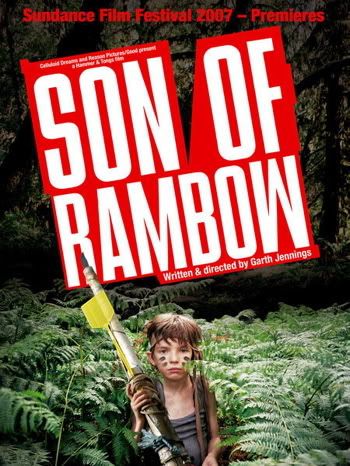
    That’s what makes SON OF RAMBOW so disarming. When you watch the film unfold you’re half-expecting there to be some kind of spectacle but it never does come. You have to steep yourself in a narrative where it genuinely is all about the story and the soft nuances that pepper each moment we’re given into the lives of these two young boys on a quest to recreate RAMBO: FIRST BLOOD.

    At first glance, even if you read the movie’s description, you wouldn’t expect to find one of the most well-crafted movies this year but the movie is one which will reward each and every viewer if you believe that is possible to make a movie that is both humorous and touching without straying into saccharine sweet territory. The movie that Garth Jennings has made is one that takes the lives of young boys and, without minimizing or patronizing the childhood experience, he has distilled one of the most objective and endearing portraits of what it’s like to be young. Further, the movie works on a level where it’s not constrained by the normal boundaries of culture; it may take place across the pond but the story has a transcendent resonance that it doesn’t matter if it was taking place in England, France, Russia or America.

    I took some of the time with 1/2 of Hammer and Tongs, Mr. Garth Jennings, to talk about the film, the language of youth and about who else has made videos as a kid.

    SON OF RAMBOW is now in theaters.

    CHRISTOPHER STIPP: Garth. How are you doing?

    GARTH JENNINGS: Pretty good ““ my first cup of tea has just arrived so I’m feeling pretty excited about it.

    CS: Thank you for making time for me.

    JENNINGS: No problem. It’s my pleasure.

    CS: First of all, brilliant, brilliant film. One of the best I’ve seen this year.

    JENNINGS: Oh, thank you very much. That’s very kind of you.

    CS: Absolutely. I think after I saw it I was wrestling with what I like most and I think the way to kick things off is to ask was it intentional to give these kids sort of a language of their own? They exist in a place that adults just don’t live in.

    JENNINGS: Well, I suppose I remember being a kid and you just have this language with one another. You have your own little way of doing things and saying things. It was certainly our intention to capture how we remember being kids. We really tried to find memories of that time. We used to make strange faces and that sort of thing. Is that what you meant?

    CS: Yes, I think it’s like a sensibility, maybe I should say it that way.

    JENNINGS: I thought you meant that. The whole thing was we were trying to capture how it we remember being when we were 11 or 12 and really felt like all things were possible. It never occurred to us things weren’t. And never thought about the consequences of your actions or ideas. You never really worried about failing or making mistakes until it was too late. That’s definitely what we were trying to do. So I wasn’t at all trying to make a movie on my own experiences. To write about my own experiences would have been quite a bit dull. We tried to conjure up those feelings in people when they watched it.

    CS: I have to agree with you. I remember making movies of my own with my own video camera and this movie made me reflect on that and I still don’t have any solid reasons why I did it but I’m finding out that a lot of other people did that as well.

    JENNINGS: Yes, when we were making this film 8 years ago we were laughing that so many people we knew made these things ““ kids live in an imaginary world and that’s not a cliché it’s really how it is. It’s only when you get older you think that’s not a good thing anymore and you start to lose that but it’s a lovely period of time in your life.

    CS: I don’t think it’s bound by any time or space or anything like that.

    JENNINGS: That’s certainly what we were trying to avoid.

    CS: It’ s really timeless, almost kind of perfunctory, to think that RAMBOW would only exist in that time but if you looked at it in any time I think it would fit just as well. Additionally, as I watched seeing the effects on the screen, obviously this film has a lower budget, but the cinematography, the photography of the film it looked like you really wanted to capture details. It seemed the physical details were important to capture.

    JENNINGS: The detail was just how I remember doing things as well. Whether I was doing the drawings in my books or just the things you notice in films. We never saw the bigger picture ““ at that age I never knew what the Viet Nam War was and that Rambow was being rejected and bullied by other people. I did like the way he sawed off his own arm. He’s not even crying ““ it’s unbelievable. Those are the little things we pick up on, aren’t they? Sometimes we obsess about the details and then it irritates everybody. It’s more about quirky detail than about character and stuff. Hopefully the detail cover the characters and doesn’t become too overbearing. Nostalgia too. People think we have gone out of our way to wake up quirky nostalgia but actually we had no intention of doing that. It was only as things started to come to set with hairstyles ducked and it was like, oh my god, this is getting ridiculous.CS: Certainly within the subplot, the French foreign exchange students. Was that intended to be so absurdly funny?

    JENNINGS: Well, the thing was, I remember”¦have you had the French or European Foreign Exchange Program?

    CS: Yes.

    JENNINGS: We had the French exchange. And I’m sure if I were to go back in time it wasn’t the way I remember it but I remember these kids getting off their coach and the seemed so exhausted compared to us and so much cooler and so European. And then they had mustaches and we thought that was really cool because I was the latest developer in the history of time. We tried to make it so that anyone watching this film would understand that feeling. Obviously in order to get that we played around with it and he becomes a peacock ““ a Pied Piper and everyone can relate to the kid that people follow or are awestruck by even though you look back and say that guy was kind of a jerk ““ what was I thinking? It sorta came out and tried also to capture that when you look back you often realized that things weren’t so straight forward, like I said about RAMBOW. I remember the kids we thought were cool were invariably, they were but also more to it than that. There was always more to it. We were trying to get that across in the film. There was another side to it.
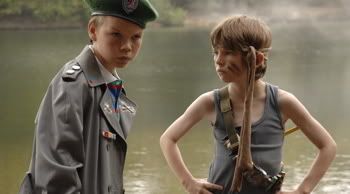
    CS: On that, I think the brother issues, the mother issues…It ties things down on a more serious level. I’m curious as to why when you were creating the script, obviously first and foremost, you wanted to create this love of imagination in youth but on the other hand you have something that is quite heavy.

    JENNINGS: Yeah. I just wanted to make a proper movie and a lot of movies miss that mark for me. I just like to feel the whole range, especially when you are a kid you feel things more passionately, your friendships, your great disappointments when things go wrong, we wanted to just push those buttons but without pushing people away. When you are telling a story you are kind of manipulating people but do it in a way that doesn’t shut them off and make them uncomfortable.

    CS: Right. The budget for the film obviously was not on par with HITCHHIKER’S GUIDE TO THE GALAXY.

    JENNINGS: No. 6 million dollars was SON OF RAMBOW and HITCHHIKER’S was $60.

    CS: I would imagine that that would absolutely have played in your favor. That the film, itself, is an homage that time in their life. It should be a little rougher around the edges.

    JENNINGS: And it’s not that we asked for more money. We budgeted SON OF RAMBOW at that figure. That’s how much we needed to make the film.

    CS: Really?

    JENNINGS: We’re not really in it to overwhelm ourselves with money and opulence. We like to explain our positions up front and work out the movie before we arrive on the set, very carefully, so that we’re compared and know what we are going for. Because it is very expensive and it is somebody else’s money and it is a lot of time and effort and it’s very important to us to know what we want and that seems to be “¦. I don’t care what the budget is as long as we can do it right. I didn’t find a difference really ““ there is no great difference between music videos and films in some ways because you always try to get what you want in the short space of time that you have and someone always hurt their foot, it’s always raining when you want it to be sunny, there’s always something to be worked out and it doesn’t matter if you’ve got hundreds of monitors and tons of catering ““ the problems are always the same.

    CS: Right. And on the subject of the script, at least in previous interviews I’ve read about you talking about fundamental influences coming in where Bill and Will are, do you think things are different today with the speed and access in which kids now are able to be exposed to so many different messages?
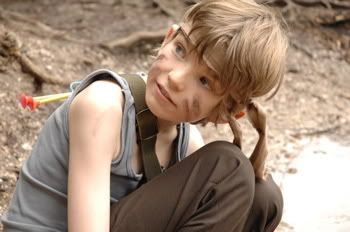
    JENNINGS: I suppose there must be a bit. But to be honest with you I’m not really sure. I think you get to see more stuff I suppose than we would have done because of the access but most of the kids I’ve spoken to in the last few weeks, certainly when we were screening the movie, kids 8 years old up ““ they get it. They still feel the same way about things ““ they still get excited. If something’s good they’ll respond to it. But I don’t really know ““ I’ve got two of my own and they are very young and haven’t got to that age where they notice all this stuff but I’ve very curious to find out how different it will really be. But everyone thinks their youth was the best, don’t they? We got it right.

    (Laughs)

    CS: Exactly. Do you think ““ maybe even for yourself or the way you wanted Will and Bill to ultimately come out of the film ““ do you think at the end of this film it’s at that point where the kids are able to reflect on what they’ve done or do you think they still retain that sort of childish sensibility?

    JENNINGS: In terms of the film? Or the boys themselves?

    CS: No, I was thinking the story itself. It ends perfectly.

    JENNINGS: I like those films where you get the sense that it might be alright, things might work out. It like at the end where they’re in the apartment sitting there. It’s not been resolved, not sure where they are going, but you’ve got a good ““ you like these people they might be better for having gone through the experience. Does that make sense?

    CS: Yes, it does.

    JENNINGS: I still feel that they worked out what was important. I think that’s their friendship. When they did things together, that was when he was the most fun. And they realized what was important at the end of the movie and I like the idea that it was a happy ending. I don’t think I could bear it if one of them had died or one of them didn’t like the other one.

    (Laughs)

    But it’s perfectly alright. When you are watching it you’re thinking ““ we’ve all had friendships like that at some point and probably around the same age as well. But then it gets dissolved and fades away ““ it’s not by any animosity by any means. You just grow up and you suddenly don’t like the same things ““ something happens. And it’s quite funny to look back and see how rich and how deep that friendship was and then everything changed. Not in a sad way but you can’t help but miss it.

    CS: I do. It’s what a lot of people who have seen it have reflected on saying, I remember having friendship like these and all of a sudden you’re in 8th grade, 9th grade and you just turn around and they are not there anymore and you don’t ““ no one is angry at one another ““ it just happens.

    JENNINGS: Yeah, and I went through that and I think those two would have separated down the line, only because that was my experience. I can’t imagine it any other way – hopefully with very, very fond memories of each other. And those are the foundations of friendships to come I guess.

    CS: I know we are short on time but I want to quickly talk about the animated sequence that comes in the middle of the film ““ the intricate, handmade drawings ““ How long did it take to make that sequence?

    JENNINGS: Well, it’s a mixture of live action, isn’t it? It took about 3 hours to shoot the live action element just because of the blue screen and then I think David was drawing all by hand and then scanning the images into the manipulator in 3-D, I think he pretty much remarked, all in all, about 2 weeks work.

    CS: Really?

    JENNINGS: Yeah.

    CS: It’s brilliant. It’s a sequence that fits perfectly within the realm of imagination while it doesn’t, again looking towards HITCHHIKER’S GUIDE, it doesn’t look like an effect that was too polished.

    JENNINGS: The thing was that David O’Reilly was doing everything himself. I can’t help but thinking that the fewer people you empower the more focused they are and the more they get on with it. And I don’t mean that in the driving workforce way, purely, it’s just that that’s David’s sequence. It’s his baby in a way. So he puts all of himself into it rather than one guy, doing one scene”¦.you know what I mean?

    CS: Yes.

    JENNINGS: And he would stay up all night. I would come in some mornings and he’d be waking up from having fallen asleep in his chair. And it’s not that we needed it done in a hurry it’s he loved it and worked very hard on it. It worked out great. I might be wrong, it might have taken a bit longer, it might have been a bit less. But once we got the money, which took forever, the shoot was 40 days and we had the picture 4 weeks after the wrap, which is fast, some films take months to edit, and gave it to David after that. He would give us a mock up of the animation within a few hours. We’d have a rough ““ we both worked out a rough storyboard together and he would do an animatic of that and I’d give it to the editor and wait for a while he was cutting while David was busy making trees.

    CS: Does it seem that lower budget means more efficiency?

    JENNINGS: Oh yeah. But it’s not just the budget thing. I think you could do a big movie ““ I’m always in favor of post count but you don’t know who you are getting. In every aspect of your film you have to cherry pick your crew. Every member. But once it gets to post production you’re told to go to a big company where they just have loads of people ““ but you don’t know these people and they are doing your things and suddenly it’s changed from one week to another into a different project. I used to find that very irritating. Because you can’t”¦..I just find it irritating.

    (Laughs)

    And then cherry picking skillful people and then giving it to them ““ it’s their thing ““ they are not just one of many people working on something that we could take or leave ““ it’s absolutely their responsibility ““ the more you make people responsible for it the more creative they are and the better the results I’m sure of it.

    CS: Well, I know I have to wrap this up and if I could ask just one more question ““ I think a lot of times when directors make movies they say people can take whatever they want to take from it and give a short answer whenever pushed to explain what their work means but I’d like to hear what you hope people take away from the film.

    JENNINGS: Well, Nick and I just wanted to make a film that captures how we felt at that age. It was like I was saying before that I just hope they enjoy it but more than that I hope they go away feeling better for having seen it. Like the old ones ““ get an uplifting feeling at the end ““ like they’ve really been through it and be rewarded at the end ““ it feels good and more of a feeling than I have no real message or anything like that. I don’t want people to come out and say oh the special effects were kinda quirky – that can come later. If they get a good feeling, I’ll be happy.

    CS: Brilliant. Brilliant. Garth, thank you very much for your time.

    JENNINGS: It’s my pleasure.

  • Trailer Park: Whitney Cummings

    By Christopher Stipp

    My Complete Archives? Right Here…

    I’m awesome. I wrote a book. It’s got little to do with movies. Download and read “Thank You, Goodnight” right HERE for free.

    If I could interview subjects, people, like Whitney Cummings I could forever be content with being the guy on the sidelines who simply learns about what happens on the set of a film while trying to understand what the project means to someone’s overarching career goals. Whitney was deftly able to take my questions and give me honest answers in a way that I found genuinely refreshing, person to person. There wasn’t any pretense, there wasn’t a facade, there wasn’t anything between her job as backup to Patrick Dempsey and Michelle Monaghan and my questions about what she felt her place was in the grand scheme of things.

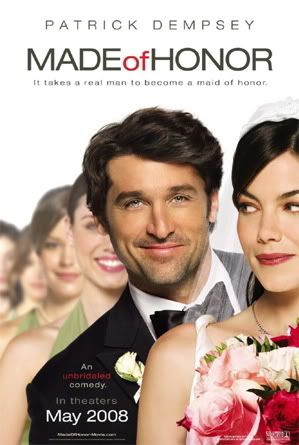
    Opening today, MADE OF HONOR simply seems like one of those films which might actually depend more on the talents of the film’s leading man instead of the popular female lead. Dempsey has proven himself more than capable of holding his own in ENCHANTED, one of Disney’s greatest feats on the big screen in recent years, and who among us can argue with the Goliath-ian power it took Patrick to get from CAN’T BUY ME LOVE and LOVERBOY to prime-time prince of relevancy; it should have been an impossibility but it’s that guy’s charm which is proving to be his greatest asset. That’s partially why an interview with Whitney was alluring. The other part of it is that Whitney makes her living touring the country as a practicing comedienne and there isn’t anything more tempting than the opportunity to get an honest taste of what it’s like to step onto a blackened stage and having a pack of people treat you like it’s Roman circuses all over again: We are here. Entertain us!

    Whitney and I discuss all sorts of things, like comedy, inspirations, education, why Patrick Dempsey is a gay crush of mine, films, traveling and whether Carrot Top deserves to live. You can’t help but wish all sorts of positive things for Whitney and as she broke down the ways in which she realizes how she fits in to the cosmic order of things, regardless of how big or small the project she’s being paid to be in, she just has the kind of easy breezy attitude I wish I could have just navigating my own job.

    We open on a conversation between Whitney and myself, discussing the topic of what films Molly Ringwold has notoriously turned down. One of those, reportedly, was GHOST and the other was the widely well received whore cum (pun intended) princess fairy tale, PRETTY WOMAN. It’s best to just jump right into the middle of the fray.

    CUMMINGS: It’s interesting, isn’t it?

    CS: Fascinating. I love to hear stories like that of things that people have passed on.

    CUMMINGS: She wasn’t really working around that time, was she? PRETTY WOMAN was what, ’92?

    CS: Yeah, it was like ’90, ’91, sometime around there.

    CUMMINGS: What was she doing with herself? If you think about it, that movie was literally a comedy about a prostitute. That movie would never get made today. Can you imagine a writer going through auditions ““ hilarious comedy about a prostitute who is doing a rich guy and she gets out there and then someone tries to rape her ““ it’s such a dark premise when you think about it.

    CS: That’s very true.

    CUMMINGS: That’s George from Seinfeld trying to rape her in that movie.

    CS: But she’s got a heart of gold.

    CUMMINGS: She does have a heart of gold. But in the first script she died at the end. The other movie I saw the other day is DIRTY DANCING. DIRTY DANCING is a movie about abortion. That was the whole reason that Baby needed to learn how to dance. It was an abortion movie.

    CS: Just a fool to believe…

    CUMMINGS: It’s just kind of funny at how dark the movies were in the late 80’s.

    CS: But you know, those guys were salesmen. They were able to convince somebody, “Oh yeah, sounds like a really good idea.”

    CUMMINGS: But the movie is about abortion. No, it’s about dancing. Abortion is just why they danced. It’s just so funny when you think about it because that would never fly today. We’ve gotten more conservative I guess.

    CS: I would absolutely agree with that. Things have gotten a little more tame. But you got to be in a movie ““ watch this segue ““ you got to be in a movie with a man that embodied that 80’s movie vibe.

    CUMMINGS: You know what’s really funny? When I was going in to do voice over after the movie was finished, we were looking at it ““ the movie was shot in England ““ really beautiful shots on film, lush green rolling hills and I’m looking at it and I’m thinking this movie looks like the 80’s. It had that vivid feel of like Robin Hood. It’s amazing the demographic he has because he’s so famous. What was that, 18 years ago? That movie was so meaningful to so many people. And now he has been reborn with his new show, so his demographic literally is 16 to 65. Where with some actors they have the teen audience ““ Zach Efron has the teens, Brad Pitt has the 30 year old women, but he has got every generation. It is so wild.

    CS: You know, I have no shame saying this, I think my gay crush would be Patrick Dempsey.

    CUMMINGS: You are not alone. Guys would even say Patrick Dempsey or Tom Brady.

    (Laughs)

    Tom Brady ““ I know guys would even say, “If I had sex with him it doesn’t mean I’m gay.”

    CS: But you have to say, “If I HAD to ““ If someone put a gun to my head…”
    (Laughs)

    CUMMINGS: Yes, Patrick Dempsey ““ women want him, men want to be like him. That’s what I have to say about that. And I totally get it. He’s so charming, so talented, so fun to be with. I think this movie will catapult him back into leading man, opening movies, movie star land again.

    CS: I saw him in ENCHANTED and I thought he did a great job in that.

    CUMMINGS: I think that ENCHANTED was a tough film for him because he had to play it real but he had to sort of mock her a little bit. He was given a tough task in that movie because he couldn’t make fun of her because she was so likable and I think in the script she wasn’t written as so likeable. He had a lot of challenges in that movie. And Patrick, his charm and likeability can overcome anything.

    CS: Like a gigolo pizza guy.

    CUMMINGS: Yeah, remember that?

    CS: I could go on all day about that guy’s roles.

    CUMMINGS: He’s so likable and I think the key to him being a movie star is having women love you and men love you and he is just able to do that. He’s such a pro. He comes and says his stuff and improvises and just has IT. That guy has star quality. He’s got it for sure.

    CS: Tell me ““ based on that ““ in the new movie, MADE OF HONOR, how do you compete ““ it’s not competing in that same space but if he’s being funny and you have to be the best friend ““ the funny person ““ how do you navigate that territory to let them be the stars that they are and you provide that backup?

    CUMMINGS: It’s interesting and that’s a very good question, because I’m a comedian. I do stand-up every night and doing jokes is my thing. So it’s like going into the ring you have to know what your role is is really important. Are you the singer? Are you the drummer? Are you the bassist? Where you come in is very important. Because when you are doing a movie, especially with talented actors who have been doing it 20 years longer than you it’s important to know you place and to work for the good of the movie, not for the good of you. Selfish acting never gets you anywhere except on the cutting room floor. You don’t come in and try and be funny around Patrick ““ it’s just stupid. It’s best to just trust the writer and their vision instead of your own agenda wanting to be the funniest person. So that was a tough challenge because as a comedian my job is to always be the funniest person all the time and make everybody laugh every 20 seconds. I really did have to restrain myself but after a while ““ after coming in and seeing how funny Patrick was it was best to just leave it to the pro and stick to what the writer wrote for me.

    CS: Certainly this differs from TV where you are able to be more fluid ““ this was more set up and practiced and having to channel”¦.

    CUMMINGS: I just have to be so conscious of the fact that there are 200 people working on this movie ““ the lighting guys, the grip and the camera guys, the sound guys have set up the theme around what the writer wrote and what the stage directions are and you start messing around trying to be funny and trying to be cute ““ people’s jobs are why is she doing that ““ why is she going off – sometimes, because they knew I was a comedian they would say now we can do a take and you can mess around or now you can improvise but that was different. When all those people are working so hard to create a shot that has been planned out for days, you can’t go in and mess around and give them a damn heart attack.

    CS: Right.

    CUMMINGS: That was a hard thing for me to accept.

    CS: Was it sort of a lesson learned or did you know when you went into things other than television and your stand-up how these unwritten rules play themselves out?

    CUMMINGS: Interesting. I was actually blessed to have a job ““ my first job out here in LA was a show called Punk’d on MTV ““ it was a hidden camera prank show with Ashton Kutcher and we would have to do all these hidden pranks to get celebrities in compromised situations and get them to embarrass themselves or whatever and the key was to be very real ““ I did everything from being in the ballet to being a wardrobe stylist to a paramedic to a this or that and created situations where celebrities would really feel the stakes were high that they’re car was stolen or someone got kidnapped or all these crazy things and it had to be so real so they believed it. It would be very easy to give something like that away if you’re trying to make jokes too much because after the 3rd season all celebrities in LA were really paranoid about being punked. Whenever something weird happened, they would be like, “Is this Punk’d?” So we had the challenge to keep it really real and honest and keep it grounded.

    I remember my first punk I was doing was with Adam Brody and I was trying to be cute and trying to be funny and doing the wrong thing. He started to catch on and then I had to quickly go back to be real and honest and quickly learned this is not about me, not about my agenda ““ if you just do the task at hand and do the best job at entertaining being honest and trusting the writers and directors, you will succeed, instead of trying to do your own thing and being selfish. So I guess I learned it there and I’m very grateful for that.

    So, I learned it on cable instead of in a studio. But it was helpful.

    CS: And how was that transitioning from a television atmosphere to a film? Does the scale change?

    CUMMINGS: Definitely. I don’t have to bring my own wardrobe that’s for sure. At the end of the day it’s all fulfilling ““ it’s all food for your soul for yourself as an artist. But working on a studio movie ““ granted on every cable thing I’ve ever worked on I’ve always worked with people I admire ““ Ashton Kutcher is extremely talented and such a great guy and all the actors are amazing. But when you work on a studio movie you work with much bigger celebrities. At first I was thinking it was going to be a nightmare ““ working with divas, rude and sure enough they are the nicest people you’d ever want to meet. Patrick, Michelle, Sydney Pollak and everyone that worked on the movie were so great. So wonderful people from cable all the way up to working on big studio movies where the stress is high and pressure is on and instead of shooting in Burbank we were shooting in London and Scotland in all these amazingly beautiful castles. Catering is better.

    (Laughs)

    CS: How did you get picked? Is this something you went out and auditioned for?

    CUMMINGS: They saw a lot of people but I think what set me apart was that I was a comedian and they wanted someone who could add a little bit of comedy to it. It’s really amazing because it’s so hard to get a job in a studio movie if you are not a model or had been working forever because they don’t want to take risks and they are trying to sell it overseas and they need financiers to invest and be able to distribute all over the world and the more famous people that are in it the better and Sony was amazing and I think they were excited about me because I was a comedian and there was this fresh young person and that was really cool.

    CS: The story itself ““ I apologize for not knowing a whole lot about it – but why does it take place overseas?

    CUMMINGS: Well, there is no way you could know anything about it. Patrick Dempsey has a platonic friend, Michelle Monaghan’s character ““ they are best friends who realizes that he’s in love with her and she goes overseas to Scotland to work, meets a Scottish man and comes back 5 weeks later, engaged, and she asks him to be her Maid of Honor, says she’s marrying a Scottish man and they all have to go over to Scotland for the wedding. So we’re over in Scotland planning the wedding, doing the rehearsal dinner, doing the bridal showers and all this stuff and doing these Scottish games and all these crazy antics over in Scotland so we got to go over there for a month. It was all very, very cool.

    CS: So they got to shoot on location?

    CUMMINGS: Yes, it was amazing.

    CS: Were you basically tagging along for the whole thing?

    CUMMINGS: Yeah. They shot in New York for about 2 weeks that I wasn’t there but they didn’t have the bridesmaids. So, we shot in LA for about a week and shot in Scotland for about 6 weeks and London for 3 weeks.

    CS: When you’re doing multiple takes is it difficult from the comedy standpoint to make it seem just as witty and just as spontaneous the 3rd, 4th, or 5th take?

    CUMMINGS: Yes, and it’s nice to be able to do something different every time unless we are on a major time crunch and we just have to move on. Being a comedian my impulse is to make people laugh, so every time I want to do something different and fresh and make everyone laugh but, again, you just have to know when to be professional and give them just what they need so we can move on. Sometimes in the editing because I’ve done something different every time they can’t cut it ““ that would be my worst nightmare.

    CS: I’m also just as curious to find out why ““ I’m reading your condensed bio ““ that you finished college in 3 years vs. 4 yet you chose a career that insures maximum instability.

    (Laughs)

    CUMMINGS: I love you for that. Well, because I knew that this was going to be my career I knew I wanted to go to college. I got through high school and I knew that every girl who goes out to LA after graduation and doesn’t have an education, they don’t have anything to fall back on but as a performer and having so much training the best thing to do for me would be to not go out to LA and get on a bad sitcom. The best thing I could do was to go improve myself as a person and make myself more interesting and pursue my interests and curiosities and get an education so I have something to say and have a point of view and when I get new material I have some perspective on it and I have some goals, I’m doing a period piece, I’m doing a mystery. And also for my own confidence that when you go into a career that is so unstable the best thing you can do is to have something really solid to fall back on to keep your pride up. And I really wanted to develop as a person. I didn’t want to be an empty person. Not that people that don’t go to college don’t, but it’s something I really wanted to do the compromise was OK I’m going to go to college and do it in 3 years.

    CS: Overachieving while being funny. I have to believe it’s one of the hardest things in the world to try to do but do you ever get to the point where you are doing sets every night, obviously some nights go better than others, is being funny a draining thing? Are there times you don’t want to laugh or do anything associated with comedy?

    CUMMINGS: Doing stand up is the most enlivening, energizing thing you can possibly do but yes, during the day, it’s really funny because people say for a comedian you are such a serious person. It’s just that, no, I’m off work right now. I don’t always want to be doing jokes, I don’t always want to be on. I can’t always be doing quips. When it’s your job for a living you want to save it for the stage. You don’t see lawyers on their off hours reading paperwork for no reason. After you do it long enough ““ people get into comedy because they like to make people laugh ““ sort of have a need to entertain people and the need to make people laugh so if you’re not doing it on stage they don’t do it all the time. Everyone has their class clown, always making jokes, always on but when you start having 20 minutes, sometimes 40 minutes to an hour a night ““ that need to make people laugh, you get your fix, most of the time, thankfully. So I get it out of my system.

    CS: Where did you find your roots? For me, I’ve always been fascinated with comedians ““ one of the first albums I bought was Bob Goldthwait’s album as a kid and I’ve always admired of taking average, normal everyday things and warping the hell out of them. Who were your comedic measuring sticks growing up?

    CUMMINGS: My first ever was Paul Reiser. I found a book he wrote called “Couplehood” that he wrote in 89 or 90 and it’s kind of like what Mad About You was based on. It’s all about couples living together and the mundane goofy things that happen. Just like you said, it was about buttering bread in the morning, making coffee all of these little things and made these hysterical, brilliant commentary about the most mundane things and open it up to a hysterical world. The things we take for granted every day ““ you get up, take a shower, get in the car ““ all these things he had such interesting, funny observations. I was so fascinated ““ his sense of humor was so insane. Followed by George Carlin and big for me too was Bill Cosby. I used to watch his show religiously because so much of that was based on his stand up and then later ““ Dave Attell ““ he’s a legend now but he’s very edgy and then I got introduced to Lenny Bruce and then Bill Hicks and it was kind of over.

    CS: Oh yeah, Bill Hicks.

    CUMMINGS: People are changing the world of comedy. When I was in college I thought I’d change the world and be a journalist. Then I thought the ones that are really making a difference are the ones who do it with a sense of humor. Bill Hicks, George Carlin, those are the people who are making the most profound social commentary followed by Chris Rock, Bill Mahr, Jon Stewart. Humor is a way to endear people.

    CS: Now, I am going to ask you a yes or no question and please answer it immediately when I ask: Do prop comedians deserve to live?

    (Laughs)

    CUMMINGS: Yes. Yes, they do.

    (Laughs)

    I cannot live without prop comedians. I just think of my jokes as props. That’s my way out. The thing about prop comedians is that ““ Carrot Top makes more than all combined… So I want to get on that train of negativity but you have to respect someone making one hundred million dollars a year with a baton and a teddy bear and some toys.

    CS: Actually, I agree with you ““ I think at the end of the day I think the measuring stick is how much money ““ if he’s successful that’s great, it’s game on but why is there such a movement against people perceived as doing easy comedy?

    CUMMINGS: Are you kidding? No comedy is easy. No comedy is easy. And guess what, I have to come to his defense, prop comedy is harder than real comedy. Not only is he telling jokes, he is juggling fire, he’s doing a marathon exercise and telling jokes. He does a two hour show with pyrotechnics acrobatically, doing magic, it’s mindblowing, where I just have to sit up there and talk. At the end of the day, funny is a democracy. People are lining up and filling auditoriums and they are making millions and millions of dollars and entertaining people and people are laughing. Carrot Top is sold out every night. People have paid $100 a ticket to go be entertained by him so you can’t say he is not funny. At the end of the day that’s the statistic.

    CS: Seriously, I do not want to hijack your whole day so I want to be able to ask you one more question: With whatever kind of success that MADE OF HONOR gets, if indeed it does well and helps propel you forward in your career, what do you hope is the next step in your career progression?

    CUMMINGS: I would like a studio project but there are not very many good funny, funny roles for women and it’s sort of hard to find those and I would love to find a role like that. Really big movie directors are doing TV ““ like 30 Rock and Weeds ““ there’s some really good stuff on and I just want to be doing stuff that moves me and makes me laugh. I want it to be meaningful. Stand up is big for me ““ I’d like to do a half hour special.

    CS: Anything that might come about in the near future? Comedy Central loves doing those.

    CUMMINGS: Yeah, that’s the idea, so check back in a couple months.

    (Laughs)

  • Trailer Park: Glenda Pannell

    By Christopher Stipp

    Archives? Right Here…And The Way Way Back Archives Are Here

    I’m awesome. I wrote a book. It’s got little to do with movies. Download and read “Thank You, Goodnight” right HERE for free.

    It’s tough to get a movie made.

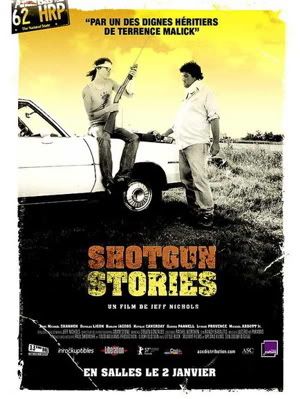
    If you don’t have A-List stars attached or a bankroll where you can make the film on your own terms there is a lot you have to look to others for in order to help a production go forward. In writer and director Jeff Nichols’ case the production needed to get to where it needed to go by sheer force of will. The will of the story that needed to be told, the will of those who had to believe in what was being shot, so many different behind-the-scenes hook or by crook moments that never made it in front of the lens. Glenda Pannell is an actress in Nichols’ latest, SHOTGUN STORIES, in which she stands on the sidelines watching two sets of half-brothers rage against one another following the death of the family’s patriarch. The film’s subject matter is a bit heady but the movie is one that has garnered attention from film festivals and ample praise from the likes of Variety and Roger Ebert.

    Glenda has made a name for herself playing roles in productions like WALK THE LINE, playing a lead role in MEET THE LUCKY ONES and will next be seen in STREAKER. To say that speaking with an actress who has such an exuberance for a role like this was a pleasure would be a gross understatement. Glenda had a realistic sense of how this role fits into her overall resume and about what you’re willing to do when the story is as good as this. To see the film in the coming weeks check to see when it might be playing at a theater near you:

    Laemmle’s Sunset 5: Los Angeles, CA 4/11
    Northwest Film Forum: Seattle, WA 5/9
    Starz Film Center: Denver, CO 5/16
    Olympia Film Society Capitol Theater: Olympia, WA 5/24- 5/29

    CHRISTOPHER STIPP: I’ll be honest, you have a one paragraph bio, I haven’t seen this film, I’m not going to ask you to take it from the top and ask you what the movie is about, so the only real recourse I have is to inquire what drew you to this story from a first time director?

    GLENDA PANNELL: When I got the script I pretty much knew, the way the script read, the story had a real solid narrative.

    Funny thing is I’m from Tennessee and we shot it in Little Rock, Arkansas and that’s where the director was from so I felt a kindred southern connection with Jeff. They are real people to me. Every single character in the film is people I have encountered or in my life and have certain characteristics of people that I knew. Knowing the people in my life and having the story told to me, it was such an easy read. I had no questions and just had a great visual of what the film would look like once it was made. I just knew it was going to be very special.

    Shooting a film in the south is always so picturesque. It’s such beautiful country to shoot in. Late afternoon, early evening, it is so beautiful on these wonderful golden fields. It’s a wonderful environment.

    CS: The trailer I saw for the film, there is nothing really quirky about the marketing ““ it feels just like a verite kind of film. It doesn’t seem to be anything else but a relationship kind of film. Would that be a close assessment?

    PANNELL: Once you see the film, I think you’ll be able to support your thoughts on that. It is a story that is told visually in front of your eyes. You feel great empathy for everybody in the film.

    There is a conflict going on between two sets of brothers. It really about the relationship of original set of brothers, Son, Boy and Kid. The lead, Mike Shannon who plays Son, is the first born to a set a parents. They had these children and they split up. The father goes off and starts a family with another lady and those children are raised in a more loving environment. And those children are named, which is a poignant part of the film, one of the children in that set of Boy’s is given his name; that’s a big thing in the South for a father to pass his name to a son. Even though there is conflict between these sets of brothers, because they are blood brothers but not raised in the same family, there’s a lot of unnecessary words exchanged and a lot of bad behavior that most people will look down upon but “¦.. they weren’t raised to love one another so that’s just how they handle things.

    It’s difficult to tell the story but it’s a great narration.

    CS: How do you factor in to this all? What part do you play?

    PANNELL: I’m Annie Hayes and I’m married to Son Hayes in the film. I think she’s Son’s anchor. He wasn’t raised in a loving home. And definitely wasn’t raised with a loving maternal figure and certainly weren’t raised by his father, those boys were left to raise each other on their own to develop their own values and own survival skills. And I think by the time he got married, Annie came along and came from a home that was not broken, had a mother and a father. I think he’s trying to create different values and learn from her because they have a child together ““ he takes off trying to get his stuff together – she loves him and doesn’t want to let go – they need to stay together for the kids ““ but at the same time she doesn’t want to live that way. She wants him to progress and not “f” up.

    CS: And do you think Jeff was able to distill everything? From when you read the script, to when you actually shoot it can be two different beasts. Obviously looking at the accolades the film has received already can say he has… but was there anything while he was producing or directing it where things on paper and trying to get it on screen that didn’t quite work?

    PANNELL: I think pretty much everything he intended pretty much worked out. If it seemed like something wasn’t going to work, he was always in discussion with us. He was always asking us how do you feel and how we feel about our characters and welcomed opinions but we weren’t running around trying to run the set but very open and we felt very comfortable ““ at least I did, speaking for myself. If I didn’t quite understand something I would try to understand it with questions. It’s really like a novel ““ a great narrative piece of work ““ and you want to show that justice especially when the director is the writer.

    CS: Is this really a southern film at heart? I know everyone can make generalizations that this is everyone’s kind of film but is this something unique just to the south?

    PANNELL: I don’t think so. The characters are true to the south but pull back and you make a general observation ““ I don’t care what family you are from ““ they might put up this picturesque facade but everyone has a past ““ everybody has a history nobody knows what goes on behind closed doors. I don’t think it’s unique to the south, I think it’s more unique to our generation quite honestly.

    CS: How so?

    PANNELL: The world isn’t the easiest place to live in at the moment with the economy being what it is and it’s just tough times we are living in. When people go home it’s not always the 9 to 5’er going home with dinner on the table, everybody sits around, eats and watch television and goes to bed. I just think everybody needs comfort. Anybody that goes to see this film can relate.

    CS: And the title SHOTGUN STORIES emphases the violence underneath it all.

    PANNELL: I’m not saying that everybody is going to go out and grab a gun ““ you don’t settle a conflict that way.

    CS: So where does Jeff come in on all of this? I don’t want to say autobiographical, because that would be pretty wild if it was, but where was he coming from when he wrote this story?

    PANNELL: I’m not sure if there were certain people in his life that he was drawing from, I can’t speak for him on that, but I would assume that growing up in Little Rock, Arkansas he’s seen people ““ just for analysis doing some people watching those characters are all living around him. So I’m sure there are people that have come into his life that he’s based his characters on.

    CS: During the shoot how long were you on set making this film?

    PANNELL: You know what, I was commuting back and forth from Memphis. It seems like I was doing it for at least a month. I wasn’t shooting every day. At least a couple times a week I was called on set. I would be there a big chunk of the day and I was pretty much at the beginning and the end process of it. It was a joy. It was very exciting. In the two hour drive going over, I’d think about the character and how I was going to approach it. It was such a pleasure.

    CS: Obviously it was different that any mainstream production and you’ve worked on bigger films than this. Really any sort of ““ anything you like more about independent films than the big sort of polished films that Hollywood churns out?

    PANNELL: The thing I like about SHOTGUN STORIES is that is was a labor of love for Jeff. He kept us included throughout the entire process. He would just say, not much going on if that was the case but just want to keep you up to date. The thing I liked most about this film is that most of the people that worked on the film he went to school with. He went to school at the North Carolina School of the Arts which has a great filmmaking program and we didn’t have a big budget to work on but his family made dinner for us. Every day dinner would be in his parent’s home. Mr and Mrs. Nichols sitting around the dining room table hanging around with the crew. It was so great to actually sit down and talk to these people and pick their brains about all aspects of production, to ask the crew members “Why do you do that? And why is that necessary?” Just learning the mechanics of things ““ it was about every single person.

    CS: Amazing; having dinner made for you every night.

    PANNELL: It was wonderful. Chicken pot pie”¦..it was wonderful.

    CS: It says you are currently in Los Angeles and I would imagine it’s nice to be able and go back to LA if you were to compare being on jobs, the difference between working on something like this and working on something with tons more money behind it”¦
    PANNELL: I really consider myself lucky. This is not the last we are going to hear from Jeff Nichols by any stretch of the imagination. And Mike Shannon is definitely one of those underrated actors that is out there today. He’s such a brilliant guy. To be a part of this project at the beginning of Jeff’s career is something I am very proud of for the rest of my life. I consider myself very fortunate to be able to someday say, “Hey, I was in his very first film.”

    CS: It’s won a few awards already.

    PANNELL: Yes. It won the Seattle International Film Festival and won a narrative category in Austin, and nominated for the Spirit Award, and I think there was something in Europe we won”¦.

    CS: Obviously you did it first of all because it was such a good story but at the time you were making it did you think it was going to be something people were really going to pay attention to and take notice of?

    PANNELL: I had a pretty good feeling because every character ““ I would pop on the set and just watch ““ and every character brought something very unique and invaluable to the film. Having wonderful characters he cast in this ““ everybody – I just had this great energy on the set ““ I just knew, don’t know why I knew, but knew that it was going to be something special. We could only dream at the time that it would go as far as it did and thankfully it did. I don’t know, I just had a great feeling after reading the script and it just kept going when we started filming.

    CS: You mentioned that while you were on the set ““ learning and observing ““ when you are taking that in, how does that inform the role that you are currently playing? Is it on your shoulders to be in tune with everyone else in your cast?

    PANNELL: On my shoulders? This is the biggest part I’ve had to date. I told someone earlier that you don’t have to have a million dollar set to bring professionalism to the set, and handle yourself in a professional manner and I think everyone did that. It worked like clockwork. Jeff was the perfect captain for the film. I hope that I did it justice in Jeff’s eyes. At the end of the day, you say, Oh I should have done it this way, or I should have done it differently. Hopefully I’ve learned from it.

    CS: That’s interesting that you take a part like this ““ the conversation starting that it’s not going to pay a whole lot of money or it’s not going to pay any money at all, what’s the process for you when you get a script to look at it and go, “Is this something I really want to invest my time in doing?”

    PANNELL: I try my very best and especially tried with Annie to immediately step in her shoes and people watch and be as observant of people as possible so I can say, “I think I get this.” I may not be correct but it’s enough to make a choice and come from someplace that you think will work.

    CS: And as you go from job to job, is it an easy lure for an easy paycheck if something is not up to snuff but the money may be right ““ Is there a tug of war in your own mind?

    PANNELL: Well, we’re getting a lot of auditions right now so hopefully I’ll get that choice.

    (Laughs)

    It was never about the money. It was about having”¦. Craft or money. It’s always going to be permanent. People will be able to go back and look at that so you just can’t look at a part with dollar signs rolling in your head. Everyone will know you didn’t put your heart into it and give it your all. You have to make it all or nothing. It’s not fair to anyone ““ cast mates, director.

    CS: Parts that you are auditioning for now ““ can you be selective?

    PANNELL: I can be selective of certain elements of things you don’t want to do. For instance, nudity. Sometimes violence. But you can’t make it about the money. It’s about building relationships and make it about the work. It should be about the work anyway. I’ve just never wanted to do anything else. I need to support myself and do this for a living.