
It’s that time of year again, when sites the web-over compile helpful holiday shopping lists to guide you into the deepest, darkest pits of retail with a map that will hopefully get you out alive. Here now, without further ado, is the 2012 FRED Holiday Shopping Guide.
(If you see anything you like, please support FRED by using the links below to make your holiday purchases – it’s appreciated!)

 I am a sucker for feature film restorations that bring a film back from the brink, and Paramount has done truly amazing work on the first feature film to win the Best Picture Academy Award in 1927, William A. Wellman’s World War I aeronautical masterpiece Wings (Paramount, Not Rated, Blu-Ray-$29.99 SRP). And not only does it look pretty damn good, but it’s actually an enjoyable, often stunning film – particularly the aerial dogfights. Bonus materials include a documentary and a restoration featurette.

 Every once in awhile, the fine folks at Thinkgeek conjure up a specially-produced item that strikes just the right geek nerve, and such is the case with the Star Trek Electronic Door Chime ($29.99), which makes the original series wall communicators into an interactive motion sensor. Now come on – How cool is that?
 As part of their 100th anniversary celebration, Universal has cleaned up and presented a pretty-damn definitive high definition edition of To Kill A Mockingbird (Universal, Not Rated, Blu-Ray-$39.98 SRP), looking and sounding truly spiffy. The stunning quality of the film itself remains intact as an unassailable classic. Bonus materials include a feature-length making-of documentary, an audio commentary, interviews, featurettes, a look at Universal’s restoration process, and more.
 If Monty Python defined British comedy for the 70’s, it was Channel 4’s inaugural comedy show The Comic Strip Presents that set the tone for the strident comedy of the 1980’s. Featuring the likes of Dawn French, Jennifer Saunders, Rik Mayall, Ade Edmondson, Alexei Sayle, and Robbie Coltrane, the short comedic films are absolute gems and required viewing for anyone who considers themselves a comedy lover. The Complete Comic Strip Presents Collection (E1, Not Rated, DVD-$89.98 SRP) contains all 5 seasons, plus a hefty clutch of bonus materials.
 I’m a massive fan of the legendary Marvel Comics series Fantastic Four, which means I dove into the exquisite history of the book’s creation and golden age – Lee & Kirby: The Wonder Years (Twomorrows, $19.95) – with gusto. Well-researched and well-presented, author Mark Alexander makes the brilliant creative alchemy and circumstance between Stan Lee & Jack Kirby come alive.
 It’s a little slow-going at times and uneven, but the good of The Fades (BBC, Not Rated, Blu-Ray-$39.98 SRP) far outweighs any deficiencies as it’s a clever take on ghosts and vampire mythology with a nice post-modern twist and an incredible performance from co-star Daniel Kaluuya as the pop-literate friend of our supernatural protagonist who’s faced with the end of the world. Bonus materials include interviews, deleted scenes, outtakes, and more.
So you loved The Hobbit: An Unexpected Journey and want to own a piece of the film. However, you want to own a piece of the film without breaking the bank. What are you to do? SORTED. The fine folks at Weta have created the Key To Erebor (Weta, $29.99 SRP). Cast from the original mould, hefty, and hand-finished, it’s your chance to own the key to the lost Dwarven realm beneath the Lonely Mountain (at a reasonable price).

 And as you would hope from a film with an extensive design process, Peter Jackson’s latest trip to Middle Earth gets the lavishly illustrated The Hobbit: An Unexpected Journey, Chronicles: Art and Design (Harper Design, $39.99 SRP), packed with the altogether expected amount of sketches, renderings, and information chronicling the process of realizing the tale.
 Those that know me know that one of my lifelong four-favorites has been the Fantastic Four. Sadly, many of the somewhat limited amount of products that have come out over the years have been awful representations of the characters, often turning them into steroidal monstrosities. And then, every once in awhile, you get the Fantastic Four 3-Pack ($424.99) from Bowen Designs, which gets the essence of the characters more right than wrong. The characters all stand around 12″, and you’ll notice that you only get Mister Fantastic, The Invisible Woman, and The Human Torch in this set – you’ll have to get The Thing separately.

And if you’re just as keen on the classic Kirby designs of the Fantastic Four from the 60’s, Dark Horse has Mister Fantastic, The Invisible Woman, & The Human Torch ($49.99 SRP each) captured in their lovely retro Sirocco figurine line. Standing about 6″ tall and looking vintage, they come packed in a lovely tin case with a button.

And speaking of Dark Horse’s beautiful retro Sirocco line, they’ve been steadily adding to their Disney Duck characters from classic Carl Barks tales, the latest being Donald Duck ($49.99 SRP), specifically Donald holding the square egg from Plain Awful.

 Are you steampunky? Have you ever wished you could wear a tiny little folding telescope on your ring finger? So you could feel all steampunky and adventurous and ingenious? Well, Thinkgeek brings you Captain Jules’ Extraordinary Telescope Ring ($29.99), which is exactly what you need – a collapsible telescope (and compass!) that you can wear on your finger. Yeah. That’s cool.
 It feels a little odd to be writing about a children’s picture from Martin Scorsese, so it’s probably easier to understand when you realize that one of the key figures in Hugo (Paramount, Rated PG, Blu-Ray-$54.99 SRP) is pioneering French filmmaker Georges Melies, best known for his legendary “Journey To The Moon”. The film finds Georges as a toy shop owner in a railway station who aids the young title character’s attempt to unlock a mystery left by his father. The film is a fun and – yes – heartwarming pic that makes fine use of the 3D canvas, playing very nicely in the home theater. Bonus materials include making-of featurettes and a look at the real Melies.
 After being pressured into reading the books by the taskmaster John Hodgman, I quickly became a fan of George RR Martin’s sprawling fantasy series A Song Of Ice & Fire. It was with excitement and some trepidation that I awaited the arrival of HBO’s adaptation of the first book, taking its title as the title of the overall television series – Game Of Thrones (HBO, Not Rated, Blu-Ray-$79.98 SRP). Thankfully, my concerns about adapting such a massive character, plot, & location filled tome were quickly assuaged as the series manages to pull it all off with only a few minor bumps here and there. The Blu-Ray release of the first season is absolutely jam-packed with bonus materials, from audio commentaries and featurettes to detailed histories of the world the show exists in and the houses and characters that inhabit it. Highly recommended.
 I’m still not sold on the exaggerated realistic character design they chose for Herge’s famous characters, but there’s enough verve and energy to make Spielberg & Jackson’s The Adventures Of Tintin (Paramount, Rated PG, 3D Blu-Ray-$54.99 SRP) a fun watch, careening from one set piece to the next in a similar vein to Spielberg’s Raiders Of The Lost Ark. And really, the only way to watch this at home, if you have the capability, is in 3D – they did a great job of making the environments immersive, particularly during the big chase near the end. Bonus materials include making-of featurettes and much more.
 While James Cameron’s film has the edge in the effects and actual mechanics of the sinking, the far more accurate portrayal of the real people and events leading up to the disaster – and the exclusion of saccharine fiction – makes A Night To Remember (Criterion, Not Rated, Blu-Ray-$39.95 SRP) the so-far definitive cinematic take on the voyage of the RMS Titanic. The new Criterion release is a glorious high-def remaster, featuring an audio commentary, a making-of documentary, an archival survivor interview, and additional historical documentaries. A must-have.
 I’m delighted that my goof buddy Loren Bouchard’s brilliant Bob’s Burgers (Fox, Not Rated, DVD-$19.99 SRP) caught on in its debut season, because like all of Loren’s previous work, right back to Home Movies, his naturalistic, character-based comedy shines through the giddy absurdity of Bob Belcher and his family-run burger restaurant. Just pick this up, and watch it. Bonus materials include audio commentary, outtakes, featurettes, the original demo, a music video, and more.
 Just when you thought it was safe to assume that David Attenborough and the BBC’s nature documentary team couldn’t possibly top themselves comes the incredible beauty of Frozen Planet (BBC, Not Rated, Blu-Ray-$24.98 SRP), which – as you can probably guess – explores Earth’s Arctic and Antarctic regions. Bonus materials include bonus featurettes and video diaries.
 It’s a true loss that Nat Hiken’s Car 54: Where Are You? (Shanachie, Not Rated, DVD-$ SRP) only made it to two seasons, as it’s truly one of the most grossly underappreciated television comedies ever made. Thankfully, we now have both of those seasons on DVD, thanks to the fine folks at Shanachie. Go. Get them both, and watch the merry misadventures of Officers Toody and Muldoon.
 Even if you’re not steampunky, it’s hard to resist the charm of the positively beautiful Solar Powered Turbine Fob Watch ($129.99). Styled in pewter and copper with many a steampunk accent – right down to the turbine-like inset on the lid – it doesn’t quite go all the way, featuring instead of mechanics a reliable battery-powered quartz movement.
 I would say that Patton Oswalt: Finest Hour (Comedy Central, Not Rated, DVD-$16.99 SRP) is a pretty accurate title when it comes to Patton’s latest stand-up special, which certainly finds him at the top of his game , even if sweatpants don’t make it out unscathed. Bonus materials include an encore and a pair of featurettes.
 The best way to describe the brilliant new stand-up special from the brilliant Paul F. Tompkins is that it’s an oral history of the career of comedian Paul F. Tompkins. Suffice to say, you would regret it for the rest of your days if you do not purchase Paul F. Tompkins: Laboring Under Delusions (Comedy Central, Not Rated, DVD-$14.95 SRP). Bonus materials include an audio commentary with a director, an encore, and an episode of his Pod F. Tompkast.
 If you’ve been champing at the bit to determine whether you’ll be sorted into Gryffindor, Hufflepuff, Ravenclaw, or Slytherin, you can find out whether you’ll be a hero or a zero with your very own Harry Potter Sorting Hat ($24.99). It’s not an exact replica of the screen prop, but it’s a close enough representation for the price to be a lot of fun. Just don’t expect to be pulling any swords from it.
 I shouldn’t have to tell you that Reggie Watts is brilliant, but I suppose I just did. And since I did, I may as well tell you that his latest special/album, Reggie Watts: A Live At Central Park (Comedy Central, $12.41 SRP) is also brilliant. And a must-see/hear. So go do it already.
 TV doesn’t get more perfect than the story and character bliss found in the second series of Steven Moffat & Mark Gatiss’s brilliant Sherlock (BBC, Not Rated, Blu-Ray-$39.98 SRP). While “The Hounds of Baskerville” is a bit shaky, both “A Scandal In Belgravia” and ” The Reichenbach Fall” are just stunning. Bonus materials include audio commentaries and a behind-the-scenes featurette.
 As brilliant as the author himself – who happens to be quite brilliant – Dave Hill’s collection of autobiographical essays, Tasteful Nudes: …and Other Misguided Attempts at Personal Growth and Validation (St. Martin’s Press, $24.99 SRP), is a slice of recursive brilliance. Go ahead and buy it, but only if you like to laugh. And if you don’t like to laugh, let this change your life. With laughter.
 What’s wonderful about The Woman In Black (Sony, Rated PG-13, Blu-Ray-$35.99 SRP) is that it feels like a proper gothic ghost story, full of bumps and chills and none of the lazy gore and grisly grotesquerie that passes for modern horror. Blood and violence on screen is too easy, but the suspense and release that’s at play in this film, about a widowed lawyer (Daniel Radcliffe) sent to re mote village to save his career by putting the affairs of a recently deceased eccentric in order, only to find the town, and house, are full of secrets – is textbook proper. Bonus materials include an audio commentary and a pair of featurettes.
 In the age of digital delivery, Paul McCartney is making the special edition purchase of traditional media truly desirable with exquisitely put together and very affordable deluxe catalogue releases for the true fan. Case in point is the Ram: Deluxe Book Edition (Hear Music, $94.19 SRP). Not only does it contain a beautifully restored version of the classic album, but also contains an additional 3 CDs full of rarities, demos, and live tracks, plus a DVD of videos, live performances, and a newly-produced documentary. If that weren’t enough, there’s also book, 5 8 x10 photos in a vintage-style photographic wallet, 8 full size facsimiles of Paul’s original handwritten lyric sheets, a mini photographic book of outtakes from the original album cover photo shoot, a Ram photo flip book, a free download card, and a year’s access to the member section of his website. This is the set to get.
 Bill Murray’s big breakout theatrical comedy gets a face lift and a high definition debut with the release of Meatballs (Lionsgate, Rated PG, Blu-Ray-$14.99 SRP). While it’s not on par with some of his later flicks, or other comedies of the period, it’s still a lovely, often funny picture that still holds up almost 35 years later. Bonus materials include an audio commentary and trailers.
 While there may be the occasional element that seems dated, Hal Ashby’s deliciously black comedy of unconventional love Harold And Maude (Criterion, Not Rated, Blu-Ray-$39.95 SRP) is a welcome addition to Criterion’s catalogue of merit, and arrives not only with a sparkling new high-def transfer and improved sound (perfect for the iconic Cat Stevens soundtrack), but also an audio commentary, illustrated audio excerpts from seminars by Ashby & writer-producer Colin Higgins, an interview w/ Yusuf Islam/Cat Stevens, and the usual must-read supplemental booklet.
 As brilliant as the first season was, the second season of Louis CK’s Louie (Fox, Not Rated, Blu-Ray-$39.99 SRP) was even more so, plussing across the board with episodes that included Louie confronting Dane Cook, sleeping with Joan Rivers, and even traveling to Iraq. Just watch the damn thing already. Bonus materials include audio commentaries on select episodes.
 As its original run was airing, I would rarely miss a new episode of Star Trek: The Next Generation (Paramount, Not Rated, Blu-Ray-$129.99 SRP). As years have gone by, my love of the show has waned, and I find more and more flaws in its stories with the truly outstanding episodes dwindling to a handful. But I must applaud and support the phenomenal effort that has been put into making the show available in HD, which includes going back to the actual film source and constructing the show from all of the original elements in HD, rather than the original video mastering… Which means the show has never, ever looked as good and, frankly, modern as it does now. So for that reason alone, I recommend these sets, especially in hopes that their success will ensure Deep Space Nine gets the same treatment. As far as bonus features go, not only do we get the original DVD features, but also brand new documentaries, and the now-legendary blooper reel.
 And, just in time for the holidays, Paramount has also released Star Trek: The Next Generation: Season Two (Paramount, Not Rated, Blu-Ray-$129.99 SRP), remastered in high definition. Not as awkward as the first season but still finding its sea legs, we did get some high water marks, including the “Should Data have the same rights as sentient beings” episode “Measure Of A Man”, which gets an extended cut in one of the many lovely bonus features, which also includes a charming (and revelatory) cast reunion, almost 90 minutes of documentaries, and outtakes.
 The gap between releases is an endurance test, but when a new Cinematic Titanic Live DVD arrives, the beautiful little comedy gem makes you forget just how long it’s been since the last one. And oh, does Rattlers (Cinema Titans, Not Rated, DVD-$14.99) deliver some comedy gold, as a discount Ken Doll (and tenured herpetologist) intones his way through a ham-fisted entry in that honored 70’s genre – animals gone scholockily wild. Get this, and hope that the wait for the next release is far shorter.
 Yes, American Masters: Johnny Carson – King of Late (PBS, Not Rated, Blu-Ray-$29.99) is just as brilliant and welcome and ultimately unsatisfying as I hoped it would be. Really, any attempt to paint a portrait of the famously private Carson was going to leave a viewer left wanting, but I’m delighted that a portrait even exists, which is a brilliant appreciation of what made Johnny king – a crown no one else has come to claiming.
 If you’d asked a fan a few years back if they’d ever see the notorious Sandy Frank episodes – episodes which Frank supposedly loathed – on DVD, they probably would have sighed and said “No. Probably not.” Well, never say never, because the Sandy Frank films begin their roll out in Mystery Science Theater 3000: Volume XXIV (Shout Factory, Not Rated, DVD-$59.97 SRP), which features Fugitive Alien, Fugitive Alien II, The Sword And The Dragon, and Samson Vs The Vampire Women, plus a clutch of featurettes… Including an interview with Sandy Frank himself.
 It’s not a great film, but the thing I love so much about Clue (Paramount, Rated PG, Blu-Ray-$22.99 SRP) is that it’s just a fun film. And a large part of that is that the brilliant cast – Tim Curry, Christopher Lloyd, Martin Mull, Eileen Brennan, Madeline Kahn, Michael McKean, and Lesley Ann Warren – all came to play. And now it’s finally available in high definition.
 It’s a bittersweet affair, listening to the audio commentaries on the Community: Season 3 (Sony, Not Rated, DVD-$45.99 SRP) set and hearing creator Dan Harmon talk about all of the things the show would be tackling if they got a 4th season (which they have) just a few short weeks before he was informed by Sony that he was fired as showrunner. Still, the season is a fitting send off for his era of the show, containing all of the whimsy and sincerity that has made it beloved. The set is also loaded with bonus features, including audio commentaries on every episode, featurettes, deleted scenes, and actually funny outtakes.
While it’s a camp “classic” I would often see at 6am during the holiday season, and the fine folks at [Mystery Science Theater 3000] elevated it into a comedy classic, I never believed that a prestige high definition presentation from the cineastes at Kino would ever be bestowed upon… [Santa Claus Conquers The Martians] (Kino, Not Rated, Blu-Ray-$24.95 SRP). But you know what? I’m glad they did, because it looks and sounds leaps and bounds better than it EVER has, and still remains a goofy fun watch. It even features a 45-minute archival footage reel, trailer, and stills gallery.
 And speaking of MST3K-alum, pass the holiday time with a clutch of holiday-themed riffing with the fine folks at Rifftrax with the brand-new Christmas With Rifftrax Featuring Magic Christmas Tree (Legend Films, Not Rated, DVD-$9.95), plus the equally new shorts collection Shorts To Astonish (Rifftrax, Not Rated, DVD-$9.95), featuring a dozen new slices of hilarity.
 Tick another one of the list of classic Disney films that haven’t made it to high definition, as the Mouse House polishes up the glass slipper and drops Cinderella (Walt Disney, Rated G, Blu-Ray-$89.99 SRP) in their patented never looked or sounded better fashion. In addition to a brand new Tangled short, most of the bonus features from the previous DVD Platinum Edition carry over, including an alternate opening sequence, featurettes, and more. If that weren’t enough, this special gift set comes with a jewelry box for the kids, plus Blu-Rays of the two direct-to-video sequels which are only available in this set.
 It’s become an annual tradition to get another fun and fascinating volume of interesting information from the fine folks at QI, and this year is no exception, as I urge you to pick up your very own copy of the accurately titled QI: 1,227 Facts To Blow Your Socks Off (Faber & Faber, £9.99 SRP). So hurry up and get your copy!
 If you’ve yet to experience the magic – and lovely music – of Harry Nilsson’s utterly charming children’s cartoon special The Point (MVD, Not Rated, DVD-$12.99 SRP), about a little boy who is ostracized for having no point at the top of his head, then this is the way to do it. Why? Because it’s been cleaned up and remastered in a collector’s edition that puts the special in context as an overlooked gem worth rediscovering.
 Fans of Bloom County had been teased when that strip ended that Berkley Breathed’s humor and beloved penguin, Opus, would live on in a new strip. That tease became a reality a few months later with the introduction of the Sundays-only Outland (IDW, $39.99 SRP), which has gotten its own much-deserved release in its entirety as the next hardcover collection from the fine folks at IDW.
 And after he walked away from the comic strip world (for the second time), I admit to being one of the many equal parts surprised and delighted when I heard Berkeley Breathed was returning to newspapers with his penguin hero in the titular Opus (IDW, $39.99 SRP) – which also happens to be the last in IDW’s wonderful hardbound collections of his output, from [Bloom County] and [Outland] to this final Sundays-only run that he walked away from in 2008. He came back twice – Here’s hoping for another go.
 They’re not the artistic achievement of a Pixar film, but much like the Madagascar franchise for Dreamworks, Fox’s Ice Age films are cinematic comfort food – a reliable good time with no pretense to be anything but that. The latest adventure, Ice Age: Continental Drift (Fox, Rated PG, 3D Blu-Ray-$49.99SRP) takes us into the third dimension as our heroes are cast adrift aboard the break up of the titular age – an iceberg. Bonus materials include featurettes, deleted scenes, and more.
 While it doesn’t quite reach the legendary crowd-pleasing heights of Harry Potter or Lord Of The Rings, I’d take The Hunger Games (Lionsgate, Rated PG-13, Blu-Ray-$39.99 SRP) over a dozen Twilights, as Suzanne Collins’ tale of a future society that pits its children against each other to win survival for themselves and food for their region is very much in the vein of classic social commentary sci-fi of yore (think Logan’s Run with a modern soap opera skin. Bonus materials include a clutch of featurettes and interviews.
 I’m a sucker for the band Queen and its dynamic frontman Freddie Mercury, and Rhys Thomas has produced a pair of brilliant docs that should be on your viewing list – Queen: Days Of Our Lives (Eagle Vision, Not Rated, Blu-Ray-$19.98 SRP) and the Freddie-specific Freddie Mercury: The Great Pretender (Eagle Vision, Not Rated, Blu-Ray-$19.98 SRP). Both are absolutely brilliant. Loving, unflinchingly honest, celebratory portraits.
 Post their Live Aid resurgence and at the absolute top of their game, Hungarian Rhapsody: Queen Live In Budapest (Eagle Vision, Not Rated, Blu-Ray-$19.98 SRP) find the quartet transitioned to stadium tours and holding the massive audience in thrall – all of which translates perfectly to home viewing via a brand new high definition remaster and brilliant 5.1 surround sound. If that weren’t enough, the set also include a bonus documentary, plus the entire concert on CD. It most definitely is a kind of magic.
 There are plenty of new-to-Blu-Ray catalogue releases I’ve been looking forward to this year, and right near the top has been the near-unbearable anticipation for the fully restored and remastered Jaws (Universal, Rated PG, Blu-Ray-$29.98 SRP). And the work they’ve done on the film doesn’t disappoint. It’s become cliché to say a film has never looked better, but it’s absolutely true here, as film looks even better than brand new, considering the printing and projection shortcomings of its original release. As far as bonus features go, you get all of the features from the previous DVD special addition, plus the addition of the troubled documentary fan-produced The Shark Is Still Working, which has been floating around the festival circuit for years and finally finds a home here. So overall, yes – Yes, you must get this Blu-Ray. Now.
 Though it’s sometimes been derided by comedy purists who claim it’s a corpse-heavy lowbrow sketch show, but I’ll openly declare those unfortunate souls snobbish fools, because The Carol Burnett Show is one of the best comedy sketch shows ever to hit the small screen. It may not have been as intellectually clever as Monty Python, but the writing was sharp, the comedy was funny, and the performers – Burnett, Harvey Korman, Tim Conway, Vicki Lawrence, & Lyle Waggoner – were a dream ensemble. Most of all, though, you got the sense that the main cast, and all of the guest stars who would pop up over the years, were genuinely enjoying the experience of performing this comedy together for the audience there in the studio and at home. And the only way to experience it is via the long overdue 22-disc box set The Carol Burnett Show: The Ultimate Collection (Time Life, Not Rated, DVD-$199.95 SRP), featuring 50 uncut episodes, episodes of the The Garry Moore Show (including Carol’s TV debut), rare comedy sketches, interviews (from the cast as well as guests & fans like Betty White, Carl Reiner, Bernadette Peters, and Amy Poehler), and 13 featurettes looking at specific sketches and more. Honestly, this is a set you should give your eye teeth for, but seeing as how you can buy it instead, do that.
 First it was Star Wars, and we were all delighted. Then came Harry Potter and Indiana Jones, and we were all ecstatic. And Batman and Superman? Giddy. But I never anticipated that one day the fine folks at LEGO would give us brick versions of the Lord of the Rings films. I doubt Tolkien ever envisioned it, either, but here we are, with playsets aplenty featuring everyone’s favorite Fellowship. Right off the bat we’ve got some major highlights – Gandalf Arrives ($12.99), Attack On Weathertop ($59.99), The Mines Of Moria ($79.99), The Battle Of Helm’s Deep ($129.99) against the Uruk-hai Army ($29.99), and Shelob Attacks ($19.99). Can a LEGO Balrog be far behind? If it is, you can be sure Thinkgeek will stock it.
 Go inside HBO’s hit adaptation of George RR Martin’s epic Game Of Thrones with the lushly illustrated and info-packed Inside HBO’s Game Of Thrones (Chronicle Books, $40.00 SRP), which will take you to Westeros and beyond, explaining how all of the players fit together into the larger story and how the show was produced.
 After years of pale impressions of brilliant piss-takes Airplane! and Police Squad!, Charlie Brooker does an equally pitch-perfect parody of the TV detective genre with A Touch Of Cloth (Channel 4, Not Rated, DVD-£12.99 SRP), which manages the delicate balance of smart writing, deft direction, and actors who are up to the challenge. Just watch the damn thing already, and delight in the fact that more episodes are coming down the pike soon. Bonus materials include a clutch of interviews.
 While the criticisms of emotional button-pushing remain, time has only increased my estimation of E.T. (Universal, Rated PG, Blu-Ray-$34.98 SRP), which plays more and more as a gruff view of a broken family being brought together… admittedly by an extra-terrestrial. This high definition restoration is really quite beautiful, trumping the DVD anniversary edition from almost a decade ago. And missing from this release? The atrocious “walkie-talkie” version. Good riddance. Bonus materials include deleted scenes and a handful of featurettes.
 It seems long overdue, but Richard Schickel’s Steven Spielberg: A Retrospective (Sterling, $35.00 SRP) is a beautifully put-together overview of Spielberg’s directing career, made so by Spielberg’s involvement in discussing his films and putting them within a personal context. A brilliant book for fans and cinephiles alike.
 It’s a mess in many ways, but there’s a bizarre zeal to the Beatles’ underappreciated TV special Magical Mystery Tour (Apple, Not Rated, Blu-Ray-$29.98 SRP), which gets a startlingly brilliant treatment in high definition. If you’ve never seen this televisual fever dream, you owe it a spin. Bonus materials include a McCartney audio commentary, featurettes, rare footage, and more.
 It can get a bit draggy, but I admit that dozens of childhood cable viewings has endeared John Huston’s wonderfully off-key Annie (Sony, Rated PG, Blu-Ray-$14.99 SRP) to me. The actors all came to play, especially noteworthy being Carol Burnett’s turn as the wonderfully boozy yet still horrible Miss Hannigan. And after years of sub-par pan & scan DVD releases, we finally get an anamorphic remastered print that looks and sounds great. Bonus materials include a clutch of featurettes.
 A long, long, long time ago, at the birth of DVD, one of the earliest releases was a cult classic musical comedy that happened to have had its original downer ending reshot and replaced with a happy ending right before it was originally released in theaters. For the DVD, a black & white workprint of the original ending – which featured spectacular practical miniature effects as the film’s monsters took over the world – was included. And then the DVD was pulled, the original ending was removed, and the film was re-released on DVD, making the first DVD release a collector’s item. Over a dozen years later, that ending has been completely restored and finished off for the Little Shop Of Horrors: Director’s Cut (Warner Bros., Rated PG-13, Blu-Ray-$34.99 SRP), available in lovely high definition for both the original and theatrical cuts, plus a new introduction from Frank Oz and the brilliant effects supervisor who created the now restored sequence, Richard Conway. It also carries over the audio commentaries, deleted scenes, and featurette from the original release. Get this, already.
 I don’t know what I was expecting from the documentary Nina Conti: Her Master’s Voice (Virgil Films, Not Rated, DVD-$19.99 SRP), but what we get is a fascinating, heartfelt, and sometimes brutally honest tale of inspiration and obligation, as ventriloquist comedian Conti makes a journey to the US in order to take the puppets bequeathed to her by her late mentor Ken Campbell to their own final resting place. Instead, we see Conti coming to grips both with the complex man who inspired her, and her relationship with her own creations. Just watch it. Bonus materials include an audio commentary, a performance, an interview, and even a séance.
 While many an armchair collector will snatch up animation cells as some sort of investment, or will cover the idea that they own what is actually seen in the final product, I am a much bigger fan of original production art – the true expression of the artist’s craft, while cells are merely a tracing of that spark. A lot of that very beautiful original production art, from sketches and layouts to model sheets and doodles, is captured in the beautifully conceived A Disney Sketchbook (Disney Editions, $50.00 SRP), which presents all of this art as if you are flipping through actual art pages full of pencil drawings. More volumes of this, please, as this merely whets the appetite.
 Disney in the 70’s was an awkward company, desperately trying to maintain the magic post-Walt while churning out a massive amount of live action family films. A few, like Bedknobs & Broomsticks, combined live action, animation, and music in an attempt to repeat the alchemy of Mary Poppins. One attempt that is flawed but is a dear, dear favorite of mine is Pete’s Dragon (Walt Disney, Rated G, Blu-Ray-$29.99 SRP), the tale of an orphaned boy named Pete, on the run from an evil foster family with his dragon Elliott by his side, who arrives in a sleepy seaside town and turns things on their ear. The music’s fun, the performances are a hoot, and there’s some genuine sentiment in there. Oh, and the new Blu-Ray remastering looks stunning. Get it.
 I haven’t really been taken with a Wes Anderson film since Rushmore, as each of his subsequent efforts come across as increasingly affected in attempt to capture a Hal Ashbyian ideal. That said, the most enjoyable film so far has to be Moonrise Kingdom (Universal, Rated PG-13, Blu-Ray-$34.98 SRP), which at its very base is a simple love story between a pair of kids running from a lot of problems on a small, isolated island. Yup, that’s pretty much it. It’s quaint and affecting. Bonus materials include a clutch of featurettes.
 It’s a growing trend to create books packed with reproductions of ephemera, and you can add the Harry Potter film franchise to that list with the re-release of Harry Potter Film Wizardry (Collins Design, $45.00 SRP) – newly revised and expanded to include the last two films in the series – which provides an overview of the tremendous amount of design work that went into the costuming, sets, props, and effects contained in the films, and includes reproductions of some of those props (like Harry’s acceptance letter, a Marauders Map, Yule Ball Ticket, and more). A perfect gift for the Potter fan on your list.
 Have you noticed which much-desired films have been largely absent on Blu-Ray until now? Don’t worry – I’ll tell you, because that gross oversight has been rectified in wonderful fashion with the 15-film Alfred Hitchcock: Masterpiece Collection (Universal, $299.98 SRP), which re-creates in glorious high-definition the excellent DVD gathering of the famed director’s American output in one easy-as-pie package. The restoration and mastering done for the films included here – Saboteur, Shadow Of A Doubt, Rope, Rear Window, The Trouble With Harry, The Man Who Knew Too Much, Vertigo, North By Northwest, Psycho, The Birds, Marnie, Torn Curtain, Topaz, Frenzy, and Family Plot – is top notch, trumping the lovely work done for the old DVD release. And thankfully, the bonus features from that set are also carried over, which include audio commentaries, featurettes, screen tests, interviews, storyboards, and more. Getting this is a no-brainer, so do it.
 I’m not a fan of the Sam Raimi Spider-Man films, and less so of Tobey Maguire’s DOA-delivery as the titular hero (and those godawaful organic webshooters). The only thing they did get right was the costume, which was just about perfect. With the rebooted Amazing Spider-Man (Sony, Rated PG-13, 3D Blu-Ray-$55.99 SRP), Andrew Garfield’s Peter Parker/Spider-Man is pretty damn good, and the story and direction are energetic, with a real nice use of 3D in the city swinging. Hell, we even get genius Peter designing his web shooters. What doesn’t work is the pointless redesign of the costume, which is overly busy and awkward, and hopefully will be ditched in the sequel. Bonus materials include an audio commentary, featurettes, deleted scenes, rehearsals, pre-viz and progression reels, a second screen app, and a 3D film school.
 Formerly available as just a retailer exclusive, John Hughes still-brilliant Planes, Trains And Automobiles (Paramount, Rated R, Blu-Ray-$22.98 SRP) is finally available in high definition in wide release, and it’s perfect viewing for the holiday season. The Blu-Ray carries over the DVD special features, including a retrospective featurette, tributes to Hughes and John Candy, and a deleted scene.
 While its had holiday episodes in the past, It’s A Spongebob Christmas! (Nickelodeon, Not Rated, DVD-$14.98 SRP) is the first truly special holiday event, as it’s a beautiful stop-motion affair that presents Bikini Bottom in widescreen for the first time since the Spongebob feature film. Also? The tunes from Tom Kenny are fantastically fun. Bonus materials include featurettes, an animatic, a Yule Log, and mp3s.
 It’s not their usual stop-motion fare, but Aardman Animation’s festive holiday CG feature Arthur Christmas (Sony, Rated PG, 3D Blu-Ray-$55.99 SRP) is still an appealing, good looking little tale about Santa’s son’s desperate quest to deliver one child’s present that was left behind. Bonus materials include featurettes, an Elf Recruitment Video, and progression reels detailing the production process.
 While it looked as lush and lavish as we’ve come to expect from Pixar, the trailers for Brave (Walt Disney, Rated PG, 3D Blu-Ray-$49.99 SRP) didn’t leave me with a great desire to actually see the film, or any real idea of what exactly it was about. Having finally seen it, though, the film itself was done a disservice by its marketing, because it’s an absolute gem of a story in both conception and execution, focusing on the all-too-rare relationship between a daughter and her mother – in this case the headstrong Princess Merida who chafes against the expectations of her courtly mother, Queen Elinor, who disapproves of her daughter’s tomboyish demeanor. Everything comes to a head when Merida finds out about her upcoming nuptials – a long-standing social convention that is a foregone conclusion leaving her at the mercy of whichever pre-selected suitor from three clans should succeed at a challenge of her choosing. And… well.. no spoilers. Just see it. Bonus materials include the new Pixar short “La Luna”, audio commentary, featurettes, extended scenes, an alternate opening, galleries, and more.
 Flick by flick, Pixar is converting their entire catalogue to 3D, and you can strike another modern classic from the list as we get the 3D conversion (and its debut in high definition, to boot!) of Finding Nemo (Walt Disney, Rated G, 3D Blu-Ray-$49.99 SRP) plus the welcome bonus of Up (Walt Disney, Rated PG, 3D Blu-Ray-$49.99 SRP), which finally gets a 3D home video release to match its original theatrical presentation. As its CG, the conversion process for Finding Nemo is entirely organic, and freshens the film nicely (not that it needed it, but it’s a pleasant bonus to be able to see it this way). All of the bonus features from the original Blu-Ray releases have carried over for both titles, including commentaries, featurettes, shorts, and more. As with Disney’s previous deluxe editions, both 5-disc sets contain the 3D, standard Blu-Ray, and DVD versions of the films. Here’s hoping we get the final clutch of Pixar flicks – including The Incredibles, Wall-E, Ratatouille, and A Bug’s Life – are converted soon.
 Already long-available as a spectacular, feature-laden special edition DVD set, never did I imagine that the great Dick Van Dyke Show (Image, Not Rated, Blu-Ray-$349.98 SRP) would make its way to high definition. But considering the show was show on film, the results are truly stunning. If that weren’t enough, not only does the set port over all of the previous bonus features, but also adds the TV Academy tribute to Carl Reiner, a 50th anniversary Q&A, a color test for the legendary “It May Look Like A Walnut”, cast appearances on The Danny Thomas Show, a “Kick The Habit” radio spot with Dick Van Dyke, and a safety council reel. Get this set immediately.
 It’s the third complete collection of Father Ted (Channel 4, Not Rated, DVD-£29.99 SRP) we’ve gotten, but 3 time’s the charm as this set supplements the bonus features available in previous sets with a brand new retrospective documentary and newly-recorded audio commentaries with both Graham Linehan and Arthur Matthews (the previous set feature the duo only on the 3rd series, leaving Graham to go solo on Series 1 & 2). So yes, this is the one to get. Again.
 Peter Serafinowicz is brilliant. He just is. If you’re following him on Twitter (you should be), you know that Peter will periodically go on joke runs based on prompts from his followers, coming back with compact, economical jokes that are sublime. A Billion Jokes! (Volume One) (Boxtree, £12.99 SRP) brings many of those together into the perfect gift for that special someone in your life. Who likes to laugh. If they don’t like to laugh, THIS WILL CHANGE THEIR LIFE.
 One of my absolute favorite Carl Barks Donald Duck stories also happens to be a holiday tale, and it forms the centerpiece of the latest collection from the fine folks at Fantagraphics Books. Donald Duck: A Christmas For Shacktown (Fantagraphics, $28.99 SRP) is a beauty, as are the other handful of tales included, along with some wonderful essays and informational articles.
 And since you’ve picked up the Donald collection, make sure you pick up the equally as lovingly presented 4th volume of Floyd Gottfredson’s run on the Mickey Mouse newspaper strip, House Of The Seven Haunts (Fantagraphics, $29.99 SRP). Alongside the Peanuts collection, these books reinforce the assessment that no one is doing archival comic collections as well as Fantagraphics.
 We’ve had Bridge On The River Kwai and Dr. Zhivago for years, but the David Lean film most have desired to see in full high definition glory in their home theater was the epic of epics, and finally – FINALLY – Lawrence Of Arabia (Sony, Rated PG, Blu-Ray-$26.99 SRP) has arrived. And the wait was worth it, because the restoration work done on the film is simply remarkable, blowing away the already lovely DVD of yore. The 2-disc set also includes a making-of documentary, retrospective featurettes, interviews with Peter O’Toole and Steven Spielberg, newsreel footage, theatrical trailers, and more. I shouldn’t have to convince you – so go get it.
 Nothing says “Happy Holidays!” like the Francis Ford Coppola 5-Film Collection (Lionsgate, Rated R, Blu-Ray-$39.99 SRP), which brings together in one package the recent high-definition masters of Coppola’s Apocalypse Now, Apocalypse Now Redux, The Conversation, Tetro, and One From The Heart (which is exclusive to this set).
 One of the nicest holiday surprises was the addition of a new set of characters and specials to the seasonal viewing rotation in the form of a pair of elves who are part of the team that makes people’s homes ready for Santa’s arrival. Now you can get all of the specials in one place – and high definition! – via the Prep & Landing: Totally Tinsel Collection (Walt Disney, Not Rated, Blu-Ray-$20.00 SRP), which also sports bonus featurettes and more.
 So influential is its dynamic of a single event having many different interpretations based on the observer that the very title of Akira Kurosawa’s classic Rashomon (Criterion, Not Rated, Blu-Ray-$39.95 SRP) has become a shorthand to represent in the subjective nature of human observation. As a film, its exploration of truth and justice in the wake of a murder remains a masterwork, heightened by a beautiful sound and picture restoration from the folks at Criterion. Bonus materials include an audio commentary, an interview with Robert Altman, documentaries, interviews, trailers, and Criterion’s standard booklet of essays and ephemera.
 I hope you’ve got plenty of bubblegum to chew, because there’s more than enough kick ass to be found in the long-awaited high definition arrival of John Carpenter’s They Live (Shout Factory, Rated R, Blu-Ray-$29.93 SRP), starring Rowdy Roddy Piper as an everyman who finds a unique pair of sunglasses that allow him to see that some of the people around him are actually aliens bent on enslaving humanity. Oh, it’s just fantastic, and now it looks great, too. Bonus materials include an audio commentary, an interview, featurettes, and more.
 How do you know an entire generation has come of age? When their childhoods are packaged up and sold back to them as nostalgia. The consumer nostalgia machine has just laid claim to Saban’s Japanese perpetual repurposing machine with Mighty Morphin Power Rangers: The Complete Series (Shout Factory, Not Rated, DVD-$119.99 SRP), which contains all 3 seasons of the original run, plus the Alien Rangers mini-series and a pair of bonus discs featuring rare archival materials and retrospectives. And if those 19 discs weren’t enough, you can pick up the complimentary Power Rangers: Seasons 4-7 Collection (Shout Factory, Not Rated, DVD-SRP), which picks up where the last set left off with the successor seasons Zeo, Turbo, In Space, and Lost Galaxy, plus EVEN MORE archival materials and retrospectives, and is available only from powerrangersondvd.com. So yes, former kiddies now all grown up, this is the way to snap up your lost youth and sit your own children down in front of it, knowing that you’re right and that Adventure Time they seem to love so much doesn’t make any damn sense.
 I wasn’t sure what to expect from the kid vs. zombies flick ParaNorman (Universal, Rated PG, 3D Blu-Ray-$49.98 SRP), but I knew it was from the same studio that realized Neil Gaiman’s brilliant Coraline as a modern animated classic. Well, not only is this a fun, heartfelt story with a lot of punch, it’s also a visually stunning triumph of modern stop-motion techniques that only reinforce there’s still a place in this CG world for hand-crafted animation. And do get the 3D edition, because as with Coraline before it, the filmmakers use it with flair. Bonus materials include an audio commentary, featurettes, and animatics.
 I do believe I have almost as many copies of Blade Runner (Warner Bros., Rated R, Blu-Ray-$64.99 SRP) as I do of Goldfinger, but I hope the new 30th Anniversary Collector’s Edition is as definitive as it seems to be, incorporating as it does Ridley Scott’s final cut, the original theatrical cut, the international theatrical cut, and Scott’s 1991 director’s cut. If four versions of the same film weren’t enough, you also get a rare workprint, the documentary Dangerous Days, and a massive still; gallery. To make it all perfect holiday gift material, the set also contains a collector’s book packed with info, art, & images, as well as your very own toy version of Deckard’s Spinner vehicle.
 There were some that had issues with it, but I played through and enjoyed the first Epic Mickey, which not only brought Mickey Mouse into the modern video game era, but managed to bring Walt Disney’s first major character, Oswald the Lucky Rabbit, and a lot of Disney history along for the ride. And now we have Epic Mickey 2 (WiiU, Disney Interactive Studios, $59.99 SRP), which brings Mickey, Oswald, and all that Disney history back in a new adventure that takes full advantage of the WiiU with HD visuals plus a much-appreciated vocal experience from the characters. And if you’re into taking Mickey on the go, you can snag Epic Mickey: Power Of Illusion (Nintendo 3DS, Disney Interactive Studios, $39.99 SRP), featuring the Mouse in a fun platformer that’s just as equally packed with Disney nostalgia as its console brother.
 If you’ve been steadily dropping a not-insubstantial amount of money on the massive Ultimate Editions of the Harry Potter films on Blu-Ray, you know that you don’t yet have the big sets for the final two Deathly Hallows films. To those fans, the absolutely gigantic Harry Potter Wizard’s Collection (Warner Bros., Rated PG/PG-13, Blu-Ray-$499.99 SRP) may be a bit of a frustration, as it contains not only all of the currently available Ultimate Editions, but also the ones you’ve been waiting on (with the final two bonus documentaries, “Story” and “Growing Up”), plus a new bonus disc with exclusive interviews and featurettes. To try and lure the uberfans in, the set is loaded with collectibles, including a cloth map, blueprints to Hogwarts, books of labels and favorite props, design sketches, and even a replica of the Horcrux locket, all housed within a box that unfolds much like the traveling case of Horace Slughorn. So should you get it? You’ll probably find it hard not to. The bastards.
 We’ve been repeating the same waiting game we played when DVD first debuted – the game of waiting for beloved films to finally hit the format – with Blu-Ray. We’ve gotten Star Wars (sort of), Jaws, Superman Blade Runner – just about all of the geek pantheon, really – but one of the most glaring omissions now gets its time to shine, and boy does it ever. To say that the restoration and mastering work done for Indiana Jones: The Complete Adventures (Paramount, Rated PG, Blu-Ray-$99.98 SRP) presents high definition presentations of the 3 classic adventures (and that awful 4th adventure we won’t speak of again) that are the best ever seen, and are a textbook example of how to lovingly bring classic films to the format. In addition to all of the bonus materials from the previous DVD editions, the set also includes brand-new behind-the-scenes footage from the production of Raiders, which is absolutely must-see for fans. Are you going to get this set? Why am I even asking? Of course you are. So go on.
 I’m all for Shout Factory’s recent forays into archive collections of an artist’s disparate work, starting with their must-have Ernie Kovacs set, and now Steve Martin: The Television Stuff (Shout Factory, Not Rated, DVD-$34.93 SRP), which collects and presents (for the first time since they aired) Steve Martin’s two stand-up specials, his 4 NBC specials, and a bonus disc of bits and pieces, from awards show speeches and tributes to Carson & Letterman appearances and SNL sketches. You even get his very first TV appearance in 1966 on a local children’s show. So, yes. Get.
 It’s been over a decade since Rhino released a handful of episodes, but all these years later hell has frozen over and you can now get your very own complete series set of Chris Elliott’s short-lived cult classic Get A Life (Shout Factory, Not Rated, DVD-$59.97 SRP). That’s all 35 episodes, uncut, plus audio commentaries, featurettes, the 2000 Paletyfest panel, and more. Get it before we all realize it’s a fever dream.
-Ken Plume

 I was genuinely wary about how good Red Dwarf X (BBC, Not Rated, Blu-Ray-$39.98 SRP) would be. It had been over 10 years since the last actual series, and while it had its moments, the recent Back To Earth was a relatively dry affair. Thankfully, the Dwarfers return to a studio audience and the character comedy that I fell in love with from the show’s early seasons. Bonus materials include deleted scenes, a gag reel, and an absolutely incredible feature-length documentary chronicling the difficult journey in producing the show’s return.
 Thinkgeek time! Whether it be for travel purposes or just emergencies, having battery backups able to recharge mobile devices is a plus, and one of the newer ones to consider is the iGeek Large Capacity Portable Charger ($69.95), which has the unique distinction of being able to recharge the power hungry iPad.
 Much has been said about the genius of Looper (Sony, Rated R, Blu-Ray-$35.99 SRP). But, truth be told, I don’t share the hyperbolic enthusiasm – rather, I’ll just say it’s en enjoyably solid time travel flick anchored by wonderful performances from Joseph Gordon Levitt & Bruce Willis, and leave it at that. Bonus materials include an audio commentary, featurettes, and deleted scenes.
 Making the transition from TV to feature film is an often tricky proposition, and its quite a rare thing for it to be a comedy making that transition. To do it and to do it well is nearly unprecedented, which makes the success of The Inbetweeners Movie (Lionsgate, Rated R, DVD-$26.98 SRP) worth celebrating. And it’s also a great film, which finds the 4 lads out of school and having a decidedly awkward holiday. There’s also hours of bonus materials, from featurettes and deleted scenes to a gag reel and 24 takes of walking out of a door.
 It was quite a surprise to hear that Tim Burton’s nigh-legendary stop-motion short made during his brief tenure at Disney would be turned into a full-fledged feature, but then it shouldn’t have been, since Frankenweenie (Walt Disney, Rated PG, 3D Blu-Ray-$49.99 SRP) was a charmer, and the expended film largely manages to keep that charm of a young boy using science to bring his dearly departed dog back to life intact. Bonus materials include the original live action short, a making-of documentary, and a brand-new short subject, to boot.
 If you’re curious about how moderate John McCain compromised his principles and ultimately threw away his chance at the Presidency, take a look at HBO’s Game Change (HBO, Not Rated, Blu-Ray-$24.99 SRP), which dramatizes the machinations of the 2008 election that led to such a downfall in principles. Bonus materials include a pair of featurettes.
 If you enjoyed the first series of Ricky Gervais and Stephen Merchant torturing the hapless Karl Pilkington by sending him to exotic locales within which to moan, then expect more of the same with An Idiot Abroad 2 (BBC, Not Rated, DVD-$34.98 SRP). Just don’t expect him to bungee jump. Bonus materials include featurettes and deleted scenes.
 Though I wasn’t expecting much from it, it was a pleasant surprise to a find a fun outing in Episodes (Paramount, Not Rated, DVD-$39.98 SRP), the tale of a husband-and-wife UK writing team whose delight at having their hit show adapted for the US market turns to despair as the adaptation of their intelligent show turns into a dumbed-down sitcom starring Matt LeBlanc (hilariously sending himself up). The 2-disc set contains the first and second season, but sadly no bonus features.
 As long as teenage girls go crazy at the sight & sound of the latest pop sensation, much to the confusion and consternation of adults, then the musical Bye Bye Birdie (Masterworks Broadway, $11.99 SRP) will still be as relevant today as it was 50 years ago, as the tunes in this newly remastered version of the original soundtrack recording (starring Janet Leigh, Dick Van Dyke, Ann Margaret, & Paul Lynde).
 It’s saccharine sweet, but there’s something in how matter-of-factly The Odd Life Of Timothy Green (Walt Disney, Rated PG-13, Blu-Ray-$39.99 SRP) presents its simple little fable of a mysterious boy who arrives one night to be a barren couple’s perfect son that caught me off guard enough to accept its sweetness at face value. Fancy that, eh? Bonus materials include an audio commentary, featurettes, deleted scenes, and a music video.
 In the rush to dramatize the killing of Bin Laden, the first film out of the gate was Seal Team Six: The Raid On Osama Bin Laden (Anchor Bay, Rated R, Blu-Ray-$24.99 SRP), which – while lacking the Oscar pretensions of the more recent take on events – is a solid look at the dangerous operation and the servicemen that carried it out. Bonus materials include a making-of featurette.
 Combining the best of Mad Men and Newsroom, the BBC period drama returns in The Hour 2 (BBC, Not Rated, Blu-Ray-$34.98 SRP), which brings the team to 1957 and rapid change, both social and from within the office.
 I know it’s got a rapid fan following, and for those rabid fans, the arrival of Archer: Season Three (Fox, Not Rated, Blu-Ray-$39.99 SRP) is probably a cause for celebration, as it brings with it audio commentary on select episodes, featurettes, and an enhanced version of the “Heart Of Archness” Trilogy.

 I’m Ken Plume, and soon you’ll be listening to “A Bit Of A Chat” with me, Ken Plume.

 I’m Ken Plume, and soon you’ll be listening to “A Bit Of A Chat” with me, Ken Plume.
 I’m Ken Plume, and soon you’ll be listening to “A Bit Of A Chat” with me, Ken Plume.


 I wasn’t sure what to expect from
  Thinkgeek time! Googly eyes are fun. You know it. I know it. And you know what’s even more gun than googly eyes?
  It doesn’t have the flash bang of a Harry Potter, but the Diary Of A Wimpy Kid series continues to get soplidly entertaining adaptations with its aging cast, the latest being the summer-themed
  Mike Birbiglia’s
  I find Seth MacFarlane’s humor to be hot & cold, but for the most part, the be-careful-what-you-wish-for comedy
  Even after watching the entire first season, I’m still not sure if I like Lena Dunham’s celebration of privileged naval-gazing,
  As a kid watching the early days of The Disney Channel, I must have seen
  I’m all for Jeremy Renner, but I think he got the short end of the stick in trying to follow up an absent Matt Damon in
  If you’ve only ever seen Gordon Ramsay being all shouty and sweary in his various programs, you should try seeing him in a more relaxed mood, just doing what he loves, and does well. And hey, you can see exactly that on
  It’s a messy failure, but Warren Beatty certainly seemed to be genuinely interested in trying to bring
  Though I still find Robert Pattinson to be a cipher as an actor, that works for his role in David Cronenberg’s
  You’ve got to hand it to director Gordon Liu – if you want a non-stop adrenaline rush of martial arts fury, look no further than the bombastically-titled
  So what happens if you combine the adrenaline rush of Run Lola Run with the dangerous world of New York City bike messengers by giving a messenger a delivery that results in deadly chase through the streets? You get the surprisingly enjoyable thriller
  Also making their high definition debut this week are the catalogue titles
  Forget every memory you’ve etched in your brain about the Schwarzenegger flick, because the new
  This week also brings a pair of Showtime series to DVD, including the first season of the Don Cheadle vehicle
  After his awkward piece of performance art at the Republican National Convention, it’s a shame that the next time we saw Clint Eastwood on film it’s in the turgid
  Various elements are certainly dated, but there are some genuine scares to be found in the classic UK television anthology
  It’s not the recent 25th anniversary concert that brought the house down at the O2, but
  US Marshal Matt Dillon (James Arness) is back in the saddle for
  Serious baseball nuts with disposable cash will probably want to pick up the official Major League Baseball
  They’ve become as regular as the seasons, but
  Not nearly as polarizing as his son, it’s easy to watch the documentary about George Herbert Walker Bush,
  It can be very Lifetime Movie “Up With People”, but at least the History Channel’s miniseries
  Get a whole new clutch of short attention span comedy with the complete second season of
  In 1964, James Whitmore starred in a powerful adaptation of John Howard Griffin’s


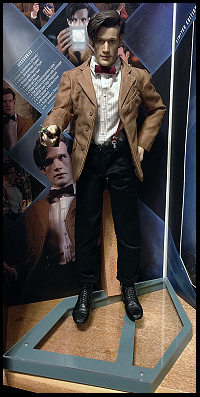 Though Character Options had a go at it a few years back – the [Doctor Who] universe has been largely absent from all of the utterly fantastic 12″-scale figures that have been coming out from the likes of Hot Toys and Sideshow. Finally, though, the good Doctor has arrived on the scene in truly fine fashion thanks to the folks at Big Chief Studios, whose initial offering is a

 The TARDIS really is the workhorse of [Doctor Who] merchandising. You can do just about anything with it, and licensors have. Why don’t we taker a look at some of the permutations currently available this holiday season – starting with the
  I don’t know if I’m quite ready to wear one, but you can take your Who-fandom to bed, bath, and beyond with a TARDIS bathrobe($69.99), made of super-soft 100% cotton terry cloth, with embroidered details.
 Of course, when you go to bed, you can rest assured that you can ward off complete darkness with the
  But what if you can’t sleep? THE TARDIS HAS YOU COVERED. You can pop yourself up and reach over to turn on your very own
  And if you still can’t seem to get some shuteye, you can head off into the kitchen and fix yourself a bit of relaxing tea, which you can then serve in your very own ceramic
  If you want to fill that free time with even more geekiness, you can take notes in the still available 10th Doctor’s
  But what if you just want to leave yourself a reminder? GOT YOU COVERED. Covered with
  When traveling through time (as we all do, albeit in a linear fashion), it helps to know when you are, which is why you can hang the special
  And if you might need to keep more detailed track of your day-to-day affairs while celebrating the 50th Anniversary, then the
  But if you’re into old school Who, then you can jot down your itinerary in the Doctor’s
  Keep warm in classic 4th Doctor style with a replica of his trademark neckware via the
  Speaking of style, let’s fast-forward to the 11th Doctor, because you can now replicate a slice of his sartorial panache with the
  Save a little scratch (now that you’ve spent most of it on all of these products) by packing your own lunch in your very own modern-style
  Though if you’re having some friends over, you might want to crack out your set of 5
  And once you’ve nogged, would you believe you can practice good oral hygiene with an actual battery-powered
  With 100% of the royalties going to support Alzheimer’s Research UK, it’s easy to justify the decision to pick up a copy of
  When the box blurb explains that the product is “An epic struggle for the balance of taste in the universe!”, how can you not pick up a
  Oh, hey! I almost forgot that for all of you retro Whovians, they’ve got a classic
  Place all of the small [Who] doodads and whatsits you’re gifting (either to others or yourself) this holiday season in a
  I wish the design of the bricks made them hold together as well as LEGOs, but at least we have a close approximation for [Doctor Who] fans with the sets from Character Building, with the latest being the sure-to-delight
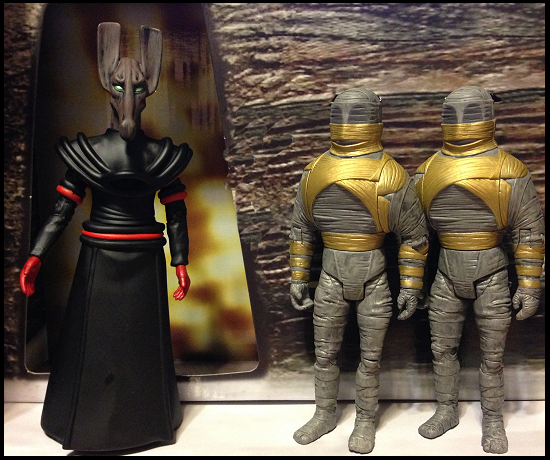
 The next blast from the past comes from 5th Doctor Peter Davison’s era – literally the start of that era, with the
  And our final classic release propels us forward to Colin Baker’s 6th Doctor as featured in
  Okay, maybe not quite our final classic release, as Underground Toys has decided to help out fans frustrated by trying to find standalone Daleks that are either no longer being produced or are just in larger themed sets. So what have they done? They’ve plussed the whole affair by bringing out episode-specific
  Layabout over the holiday break like a Time Lord with your own very incredible
 I’m Ken Plume, and soon you’ll be listening to “A Bit Of A Chat” with me, Ken Plume.
 Though the plot machinations don’t make a lick of sense if you think about them and it feels like more of a slog than the entire Lord of the Rings trilogy, there’s just enough bombast and verve to make Christopher Nolan’s button on his Batman trilogy,
  Thinkgeek time! We all know the awkward impossibility of trying to get a pair of massive power bricks plugged into the same wall outlet. Well, accomplish that feat and charge a pair of USB devices to boot with the brilliant little
  ‘Tis the season to mock and riff with the residents of the Satellite of Love, as
  After a few years of less-than-appealing films, Steven Spielberg rebounded with the enjoyable chase flick
  Would you expect butter carving to be the root of all evil – from sex and blackmail to scandal and greed? Well, that’s just what it is in the enjoyably Midwestern-askew
  I don’t know if we’ve ever seen a synchronicity where both of Matt Groening’s animated ventures have seen home video releases on the same date, but we’ve got it with
  If you’ve never heard of one of Australia’s best-kept comedy secrets, dive into the character comedy of Chris Lilley’s
  And spinning off from Lilley’s We Can Be Heroes is his arrival in the US with the series
  When a film comes along that’s just beautiful and unique and yes, magical, I hesitate to make it smaller by trying to describe it.
  Every so often, a film comes along that’s unafraid of operating on a purely senior adult audience, hanging its drama – and comedy – on seasoned performers playing their actual age. Such is the case with
  After a sojourn south of the border Danny McBride’s crude Kenny Powers comes almost full circle as he heads to Myrtle Beach, SC to try and resuscitate his baseball career in the 3rd season of
  After the piecemeal releases, you can now pick up
  I’m Ken Plume, and soon you’ll be listening to “A Bit Of A Chat” with me, Ken Plume.

