FRED Entertainment

December 28, 2007

Party Favors: Bunny Wrangling

Filed under: Columns,Joe Corey's Party Favors — UncaScroogeMcD @ 1:05 am

partyfavors1.jpg

VIRGINIA CITY, NV – Why start off the New Year by staring at the skeletal remains of The Crypt Keeper and his son (Dick Clark & Carson Daly) or the skanky duo of Ryan Seacrest and Tila Tequila? HBO is giving you a sexy reason to drop your ball at 12:05 a.m. with Cathouse: The Musical.

Dennis Hof has allowed America a peak behind curtain of his Moonlite Bunny Ranch to see how a legal brothel runs. This year he’s raising the curtain and putting on a show worthy of a Mickey Rooney-Judy Garland movie. This isn’t an amateur hour production as evidenced by this clip.

Who came up with the brilliant idea of a musical that’s geared toward heterosexual men? Hof and a few of the Bunnies phoned up the Party Favors to explain this entertainment spectacular. “Sheila Nivens calls me and says, ‘Cathouse: the Musical.‘ I said, ‘Great! Let’s do it.’ And she said, ‘Can you sing?’ “Sing? I banged 11 out of 13 girls in the church choir. Of course I can sing. Hell ya, I can sing.’ ‘What about the girls?’ ‘They can sing, too. If they can’t we’ll make ’em sing. We’ll teach ’em.’ That’s what happened.

Nivens picked out a special song from 42nd Street for Dennis to croon. He was up for the challenge. “They started sending out singing coaches and choreographers to teach the girls and me. We’ve been in the process of this special for ten months at least.”

This wasn’t merely having a girls lip synch around the Bunny Ranch while servicing V.I.P customers. “They really spent the money on this,” Dennis declared. “For the filming of the musical, I had them go to Piper’s Opera House. It’s a historic place in Virginia City. Five or six presidents have been there for events. Mark Twain was in a play there. HBO paid a year’s rent on the building. They spent a fortune building all the set. As much effort has gone into this one show that has gone into the entire 11 week series.”

There would be more musical accompaniment than the proverbial piano player in a whorehouse. “We’ve got a whole band. We have a whole orchestra,” Dennis said.

Patti Kaplan, the most influential director in America, tapped into her inner Bob Fosse to capture this spectacular. The hour-long special mixes the women singing and dancing with their everyday work. This isn’t just a cut and paste musical performances that you’d catch on PBS during pledge month. Dennis is still amazed at the transitions.

“We used my nightclub as a rehearsal space. The decor is a little bit like the Ranch. When you’re watching the rehearsal it looks like we’re in a different part of the Ranch. They filmed all the tryouts, the dance rehearsal and they mixed all this stuff up. You’ll be seeing at the Ranch a bunch of girls sitting around a Sybian. Brooke comes out, gets on the Sybian and has this earth shattering orgasm. It flips into her song. It’s a beautiful set and she looks like a million dollars. It’s amazing how they led into all this stuff.”

Brooke is proud of her song, but can’t let her mother see the whole performance. “Right before I do my solo, which I want her to see, I do a sybian ride which I don’t want her to see. I told her that she’s going to have close her eyes until that point and she’ll just have to guess when to open her eyes. But I lied to her and told her that I faked it so she’ll think it isn’t real anyhow. There’s no way you can have a fake orgasm on a sybian. It’s impossible. They’re good for a couple times a year, otherwise I lose feeling.”

There was a lot of other non-fake sexual moments captured by the cameras. “It’s just an amazing undertaking and it was fun,” Dennis said. “Here we are on these sets and the girls are doing their thing. During the breaks they’re having sex with each other in the corner. It was like Chorus Line in the Cathouse.

Bunny Love swears she wasn’t part of the off stage hanky panky. “No. I’m gay for pay. So there wasn’t anyone there that I was interested in touching.”

During the sound mixing, the head of post production facility told Dennis that on the average “live concert” by singing superstars they make dozens of pitch tone corrections. “On Brooke’s songs they made three,” Dennis proudly reported. “They’re pushing her to do a pop album.”

Brooke was up to the challenge of being in a musical. “I have a degree in music,” she said. “It was exciting and then daunting that first came to my mind. It was a lot fun and a lot of work. I did the most songs. I had one day off in the three weeks they were up here filming. That was only because I said, ‘I had to have today off.’ It was tough. It was a whirlwind. When it was all done, I wish I could gone back and done it all over again.”

Was she more nervous seeing this special or the first time she partied with a Bunny Ranch guest? “I have a deep rooted background in music,” Brooke said. “I had to live up to my education and my background. This was more personal for me. I was more nervous about this. ‘Can’t I just give a blow job? Can’t I just get naked? Isn’t there someone I could have sex with?””

Brooke does seem amazed that she’s been able to pull off a career move that will set her college career advisors in a tizzy. Has anyone else been able to land an HBO musical special while working at a legal brothel?

“I’m an entertainer,” Brooke said. “I’m using all of my oral skills.”

This has been a fascinating life for her as she puts her college degree to work. “I’ve been really lucky to bring in all aspects of my life that I enjoy sex, music, meeting people and traveling,” Brooke declared. “People are telling me that I’m exploited in this job, but I’m doing great. I’m doing everything that I want to do and I’m getting everything out of life that I’m putting into it. (The Musical) is one aspect of the job that I never imagined and I’m very thankful for.”

She does wish that they could perform the show live. “We’ll let you know if we start touring. We’ll definitely come to your city,” Brooke promised.

Bunny Love wasn’t overwhelmed at the concept of the special. “I thought it was pretty amusing of an idea. I’d seen it done before on Buffy the Vampire Slayer and Scrubs. I thought it was a crazy idea, but if anybody can make it work, we can.”

Her background prepared her for the experience. “It wasn’t that big of a deal for me,” Bunny Love said. “I’ve done productions with ballet and theater so the lights and the cameras didn’t effect me so much. It was just about learning my routines and steps.”

Bunny and the others still had to put in hours at the Ranch, but it didn’t wear them out. “It’s not like I was doing something for a different employer. They understood that you needed rehearsal time and can’t be on the floor for your normal shift. It was stressful and tiring, but we pulled through it.”

Will the experience lead Bunny Love to appear on Dancing with the Stars? “Lord, no,” she said.

Air Force Amy was game for performing. “You never say ‘no’ to anything around here cause you never know what it’ll develop into. I said, ‘If you want me and think you can do something with it, go ahead. I’ll be available.'”

She’s been working at the Bunny Ranch for quite a bit of time. How weird was it to realize that she was going to be singing and dancing instead of her normal duties for the show? “It’s all weird. It’s absolutely hilarious,” she said.

During our conversation, we remembered the cinematic joy that was Burt Reynolds and Dolly Parton in The Best Little Whorehouse in Texas. “This ain’t the first musical to come out of a brothel,” she said. Although Cathouse: The Musical should be the better of the two.

The only artistic difference that Air Force Amy had with the production came down to footwear. She discarded the shoes provided by the wardrobe mistress. ” I brought my own shoes. I’m wearing Chanel. I’m not doing a musical that’s going to DVD without wearing my Chanel.”

Air Force Amy really did serve in the military. While stationed in the Philippines, she saw Bob Hope’s USO show. It’s nice to know that troops around the globe will have a little holiday entertainment when she and other bunnies perform “I Know What Boys Want.”

I’m sadden to report that Isabella Soprano is not part of the musical. She’s still at her organic farm in New England. I was hoping to see her solo with Spinal Tap’s “Sex Farm.”

Dennis is juiced about the upcoming special. “People are going to be amazed. You expect hooker to suck and fuck and satisfy a man. You don’t expect them to be educated, articulate and talented.”

He sees this special as altering the way folks will enjoy the New Year after the Time Square ball drops.

“HBO has given us the prime slot. I’m getting hundreds of emails from people saying they’re having Cathouse parties at their homes. They want us to send them menus. I’m going to spend my whole New Year’s Eve calling various parties and saying hello to people. It used to be Dick Clark from Time Square, now it’s Big Dick Daddy from the Bunny Ranch on New Year’s Eve on HBO.”

Why would anybody want to watch a pack of whores like Carson Daly and Ryan Seacrest when there’s a chance to watch the fine ladies of the Bunny Ranch? After a year of having to endure your kids endless viewing of High School Musical and High School Musical 2, it’s time to put them to bed, pop the second bottle of champagne and remember that New Year’s Eve is an adult holiday.

HOW TO HAVE A FUNDRAISER

Dennis Hof has been amazed at all the coverage he’s received for his endorsement of Republican presidential candidate Ron Paul. Dennis has helped Paul get nearly as much press as Oprah’s done for Obama. “Every newspaper in New York City wrote about it,” Dennis said. Until the Iowa Caucus, if you drop by the Bunny Ranch and declare, “I’m pimping for Ron Paul,” you get the services of two women for the price of one.

Brooke Taylor doesn’t mind the campaign fundraiser. “I love it. I’ve never had so much help giving blowjobs. I get to pull one of my friends in to help me out. It’s great.

“There’s nothing I like better than a man and a woman together with me in the middle. You get the best of both worlds. Everyone has something to do. Everyone always has a mouthful. Couples are a big part of my business. It’s so great to be able spice up their sex life. There’s nothing better than the next time I masturbate thinking about the great sex they’re having after having been with me. I know they are talking about it and fantasizing about the next visit. I love that.”

This is much better than paying $2,000 to eat a rubber chicken and get a Polaroid with the candidate.

STRIKE RELIEF

Damn this Writer’s Strike. I’m sick of what’s being offered on network TV. Why are the rules of ABC’s Duel more difficult than the questions? Enough of the broadcast, it’s time to dip back into the latest DVDs of older shows in order to be entertained.

The Tudors – The Complete First Season contains combines the educational influence of The History Channel with the adult entertainment value of classic Showtime. The Tudors could have turned into Henry VIII Babies, but the series played smart. Natalie Dormer’s performance of Anne Boleyn reminds us how a King could start his own church. While Jonathan Rhys Meyers is great as the young English monarch, you want to see him break into an Elvis snarl that he rocked in the miniseries Elvis.

Gunsmoke, The Second Season, Volume 1 gives up the first 20 episodes of the sophomore outing. While this is still Chester-era, Festus appears in “Brush at Elkader.” Sheriff Matt Dillon still enjoys mingling with the hookers at Miss Kitty’s bar. The bonus on the collection is the sponsor spots for L&M Cigarettes. James Arness made smoking look so sexy when he took a drag and said, “Light up, Free up. Live Modern.” Is there a sense of irony in that ad campaign? Best one is him and Miss Kitty sharing a light.

The Odd Couple: The Third Season contains the roommates visits to the set of Password and The Price Is Right. Nothing says great ’70s TV moment than Jack Klugman rubbing elbows with Monty Hall. Although some may want to view the show to check out Tony Randall’s amazing fashion sense. That man know how to look suave. No wonder he was the neat freak.

Hawaii Five-O: The Third Season brings more criminals to the 50th State for Steve McGarrett to book. The series kicks off with Wo Fat terrorizing a neurosurgeon with “And A Time to Die.” “The Double Wall” brings Boss Hogg (Sorrell Booke) to the island. How do criminals not surrender when they encounter Jack Lord’s defiant hair? The show was still clicking at a high level for season three.

BAD SANTA

NBC sunk to a new low with its Yule Time edition of To Catch A Predator. The show started of innocent enough with a little girl discovering Santa Claus in front of her Christmas tree.

“You made it!” she exclaims.

Santa gives a jolly laugh and puts down his sack. “You want to give Santa a hug?”

The girl smiles. “Wait a minute. I need to get your cookies and milk!” The girl disappears into the kitchen.

“Don’t wake up your parents,” Santa warns. “Or you won’t get a pony.”

From behind the refrigerator steps Chris Hansen.

“Don’t you think you’re a little too old to be showing up in the middle of the night to see 10 year old girls?” Chris asks. Santa looks pretty damn startled that the girl is gone.

“It’s my job,” Santa says. “I bring gifts to all the good little boys and girls on Christmas Eve.”

“Gifts? What do you expect to be given for your gifts?”

“They have to be nice.”

“What does it take for a naughty girl to get on your nice list?”
?”What are you insinuating?’

Hansen waves a pile of papers. “I have your emails. If she’s a nice girl; you promise to come down her chimney. You like coming down the chimneys of little girls and boys while they sleep? Is that how you get your kicks?”

“That’s not what it means!” Santa waves his finger at Chris. “You’re not getting a pony this year.”

Santa races towards the fireplaces. The cops pounce on his ass. He’s hauled away. The SPCA takes control of the reindeer on the roof. It’s just sad how NBC stoops.

THE GAME CONTINUES

This is that unique time of the season when movie critics attempt to blow their favorite directors while attempting to impress us with their huge balls. Do we really care what the Boise Radio Reviewers ordain a film as the greatest of the year?

What we also get is flooded with diatribes about how TV is ruining movies. I’ve had it with these Cinema Bigots. For some reason anything that’s not projected at a multiplex for $12 a head is inferior entertainment. As if 24 frames per second is superior to 30 frames per second. This of course is complete crap. Is Larry the Cable Guy: Health Inspector funnier than an episode of Hogan’s Heroes? Are any of the Mission: Impossible movies better than the series? Is there any American cinematic drama of the past decade equal to HBO’s The Wire?

The good news about the writer’s strike is that The Wire might finally get decent ratings for its fifth season that starts January 6 at 9 p.m. (eastern time). This year the focus will be on how the media plays a role in the urban warfare in Baltimore. You might want to get caught up either by DVD or reruns on BET. I recommend the DVDs since BET has to take out the hardcore gangster action.

ROCKIN’ W/ LEONARD

Congratulations go out to Leonard Cohen for making the Rock N’ Roll Hall of Fame. This has to be the upset victory of 2007 when he bumped the Beastie Boys from the glory of Cleveland. How did the Mystic of Montreal pull it off? His voice has the range of Mack Truck engine. He sings about spacey ladies who like tea and oranges that come all the way from China. By the way, both the tea and oranges have been recalled. Is he rock? Leonard isn’t a complete folkie. He recorded “Don’t Go Home With Your Hard-On” with Phil Spector diddling the knobs. “First We Take Manhattan” has a classy rage.

It’s strange to think that Leonard Cohen got into the Rock N Roll Hall of Fame before Steve Miller. Isn’t Rock n Roll all about the Space Cowboy and the Gangster of Love? I only hope Leonard is inducted by 50 Cent – since they’re both pimps.

Quick Stop Thingamabobs: 12/28/2007

Filed under: Columns,Thingamabobs — UncaScroogeMcD @ 12:25 am

thingamabobs.jpg

The web. It’s a big place, full of plenty of distractions ““ some funny, some informative, some ludicrous, some disturbing, some inane, some profound. Each and every weekday, we present links to a few of our favorite finds”¦

————————————————

  • Everybody Knows You Cried Last Night… (Thingamabob)
  • Why don’t you come on over Valerie… (Thingamabob)

December 24, 2007

“Oooooh”¦ Shiny.”: The Real Miracle on 34th Street

Filed under: Columns,Oooooh Shiny — UncaScroogeMcD @ 1:07 pm

shinylogo.gif


holly.jpg

“The Real Miracle on 34th Street”

T’was two weeks before Christmas,
When all through the nation,
Former UPN outlets…
Showed a true aberration.

The street was the same,
But it wasn’t as good.
This Miracle’s color –
And no Natalie Wood.

shiny2007-12-25-01.jpg

Look! There’s David Hartman
Of the old G.M.A.
And Jane Alexander…
Who once ran N.E.A.

shiny2007-12-25-02.jpg

All the character actors…
Do I see Roddy McDowall?
And as Mr. Shellhammer,
None other than Thurston Howell!

shiny2007-12-25-03.jpg

And the big man in red
May have been a real mensch.
But he’s sure not Kris Kringle.
He’s Brian Keith’s butler named French.

shiny2007-12-25-04.jpg

If you look past the color,
You’ll see something quite lyrical.
It’s not about Santa’s mail,
But, I’d still call it a miracle.

For, up to that moment,
It was safe to assume…
Messrs. Doyle and Bosley
Were never in the same room.

The same roundish tummy.
The same roundish pan.
I’m not the first to believe
Dave and Tom the same man.

shiny2007-12-25-05.jpg

And to make things confusing
While Bosley was Fonzie’s foil.
On the very same network,
The Angels’ Bosley was Doyle.

For your comic relief,
And 70’s ABC fun…
Two lovable cherubs.
Or was there just ONE?

Is there a Bosley?
And ALSO a Doyle?
Which of these guys
Is according to Hoyle?

shiny2007-12-25-06.jpg

For an answer to this
Grand contradiction…
Look no further than this
Ersatz “Miracle” depiction.

On the bench sat Judge Tom
In Kringle’s hearing for fitness.
David Hartman called Macy.
And, in walked the witness.

shiny2007-12-25-07.jpg

The courtroom door opened…
And I gasped, at a loss.
David Doyle took the stand
As Kris Kringle’s boss.

shiny2007-12-25-08.jpg

There they were for a moment,
Although it was brief.
It was more than sufficient
To debunk a belief.
When the movie was over,
I could hear all exclaim…
Merry Christmas to all
From Bosleys one and the same.

shiny2007-12-25-09.jpg

holly.jpg

December 23, 2007

10 Quick Questions: David Paetkau

Filed under: 10 Quick Questions,Columns,Interviews,Trailer Park — admin @ 5:04 pm

10quickquestions.jpg

by Christopher Stipp

Archives? Right Here…

Instead of manning-up and actually going the emotionally hard route of being outrightly rejected by publishers, I’m rejecting them first and allowing you to give my entire book a preview, let you read the whole thing or, if you like, download the whole damn thing at no cost. Download and read my first book “Thank You, Goodnight” for FREE.

Zachary Levi of “Chuck.” Missy Peregrym of “Heroes” and “Reaper.”

It’s always a delight to interview an actor or actress “on the verge,” as it were, and get an opinion on their career and work while they’re still in that stage of being unguarded and still possess a good sense of humor about their place in the food chain of entertainment.

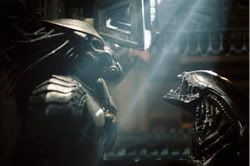
When I was asked whether I’d want to interview David Paetkau for ALIENS VS. PREDATOR: REQUIEM (Opening today, Christmas Day) there wasn’t a moment of hesitation. Apart from thinking I was going to interview a Hawaiian (I mean, come on, look at the name. I should have tossed in a question about Poi…now I’m depressed I didn’t.) I believe that this is exactly the kind of person I really enjoy talking to for a variety of reasons; one of the biggest ones, though, is that for those of you who have ever had the kind of career where you’ve had some success and are making your way up the ladder it is that drive, that hunger to go farther from where you are today, to be better than the other guy, is what’s most interesting. Once you make it, it’s all about reflection and experience and who here hasn’t read an interview with some A-lister that seems less to be about the work and more about how great it is to work with X or how funny X is off the set?

Doesn’t interest me.

What I immediately saw in the prospect of interviewing David by e-mail is that I could not only give the man a little time to think about the answers but that I could stretch the bounds of what I would have normally asked him had we been able to have a proper sit-down conversation. What you see below is the accumulation of less than a days’ worth of familiarizing myself with his work and me thinking of a few things that I might have never asked if I was sitting right in front of him for fear of the response.

I don’t usually do e-mail interviews but as I read his answers I have to believe that this could be my favorite means of getting to know someone. David was a champ for handling my questions with aplomb and I have to be honest by saying when and if I see ALIENS VS. PREDATOR: REQUIEM I’ll be seeing it just to find out if he’s one of those who gets eviscerated.

Much thanks and praise must be given to David for playing along…

1. I researched and found that you were recently nominated for the Canadian equivalent of an Emmy for your work on “Whistler.” Now, I recently heard about some football, the pigskin type and not the footsie femme ball that is somehow loved everywhere else but in America, players who love all the records they break but somehow feel hollow if they have no ring or championship to show for it. What is your take on your profession, that people love to have awards shows and talk about who might win what and the studios that push hard for some films to “win big” or the pundits that somehow feel like an award is validation of someone’s goodness? Or, to put it another way, do you enjoy the thrill of possibly winning something to put on the mantle?

DAVID PAETKAU: Sure I do, but it certainly wouldn’t be for career ‘validation’. I think it would be a rush and a helluva party, that’s why I’d be happy just to get nominated as the saying goes. If acting were a team sport where there was a set goal at the beginning of the season, that goal being the sole purpose of the team, like the stanley cup in hockey then yeah I could see how one might feel hollow if they have no ring or championship to show for it. Luckily acting in itself is not a team sport and the reward I enjoy most is making a living doing something I love (most of the time anyways).

2. Aside from the really sweet chance to be up and close with some of the most recognizable movie creatures ever created, and the sweet payday, were there any reservations about getting involved with the ALIENS VS. PREDATOR sequel to a movie that originally did OK and that some fans thought lacked the kind of bite they were hoping to get?

DAVID PAETKAU: Yeah, there were some definite reservations because they wouldn’t let us read the script. it was ‘locked’ and ‘secret’ … so i had no idea what i was getting into! I still decided to jump onboard, because I figured it’s better to regret something you did do then something you didn’t do. It also helped that Aliens is one of my favorite movies.

3. How difficult is it to sustain genuine fear for multiple takes on a film of this scale? Does your character get killed off early after someone tells you to “Walk down that way real far and keep alert”?

DAVID PAETKAU: It can be difficult to sustain genuine fear. Especially on a long night shoot when it’s pissing rain, you’re soaking wet, you’re cold and you’ve got a million things to think about just to get hit your mark correctly and not mess up the shot. When my character does die it’s not as a result of taking bad advice. Dale’s just trying to get the hell outta dodge, which is quite a sensible plan if you ask me.

4. Canada is best known for its hockey and back bacon. You’ve made a successful name for yourself up north but what’s been the difference between the work you’ve done in Canada versus the work you do here in the U.S. of A?

DAVID PAETKAU: Is there a difference?

Now that the dollars are on par, not much, especially when you shoot in the states outside of L.A., but there is a big difference when you work in Hollywood, in that it’s fricken’ HOLLYWOOD! Nothing beat the first day I drove to work at a Hollywood studio. It was a dream come true.

By the way, Canadians call back bacon, ham. : )

5. On your IMDB page there are a few people who make mention of your “hawtness” or that you’re “gorgeous.” Does seeing this kind of superficial attention validate your decision to make a living by being in front of the camera and, if so, how great is it to be you on Saturday night at a club?

DAVID PAETKAU: I’d be a fool not to be a little flattered. Hasn’t helped me at the clubs though.

6. Talk to me, because I think we’ve gotten to know each other pretty well here, what did you take away from the experience of working on ALIEN VS. PREDATOR: REQUIEM?

DAVID PAETKAU: A year’s worth of anticipation… (and a couple of props, but don’t tell anyone)

7. If you’re a fellow geek then you’ll know where this question is coming from but what was the mood on set as the Strause brothers navigated their way through the takes on this film? Were the Predators and/or Aliens allowed to improvise song and dance routines or did some chug their Starbucks through a straw or did any of them put their arms out saying, “Look at me! I’m a scary alien!”? I’m just saying, sometimes there are directors who take this thing seriously and there are some who have fun with the process of a flick like this.

DAVID PAETKAU: There were some funny moments, and maybe they’ll be a few outtakes in the dvd, but like I said before, we worked mostly nights, cold, impossibly wet nights and if you’re going to slow production with a joke at 4:30 in the morning, it’d better be damn funny, because otherwise you’d have to face the wrath of a soggy crew. I did have a rather surreal moment though when I first saw the seven foot tall Predator. It was at the craft service table and the poor guy was looking for sugar for his coffee, so you were right on with that; Predators drink coffee with a straw, long straws mind you. I, of course, held the sugar at arm’s length and demanded he do a dance number for it. I believe he did an Irish jig.

7. Have you ever, and it’s OK to be honest because it’s just you and I talking, bought a copy of your work on DVD to give either a mate or family member? Buying your run on LAX or a copy of FINAL DESTINATION 2 would be something, I think, you should be doing for your loved ones to prove you’re not slacking but I am always curious to know if there’s any thrill to having your work on sale for the world to see.

DAVID PAETKAU: Nope, but I guess it is kind of nice to know that I could. Those movies are out there forever whether you like it or not.

8. On ALIENS VS. PREDATOR: REQUIEM were you subject to working with green screens, tennis balls or having to react to things that weren’t there and, even if you didn’t, did you at least get a glimpse into how modern day special effects are being done on blockbusters this size?

DAVID PAETKAU: No tennis balls, but I did have to pretend that cold slimy goop was alien blood melting my face off. The toughest thing was the man in suit aspect. A guy dressed in an alien costume with rubber claws isn’t intimidating up close. The cool thing about the Stause brothers was that they edited each scene as we filmed it. They’d have the sequence cut together on the spot, send it to the second unit with notes on exactly what other shots they needed. It was amazingly efficient. It was way beyond just playback.

9. ALIEN VS. PREDATOR: REQUIEM is being opened on Christmas. A little odd, nes’t pas, for a movie like this to be associated with the holiday season but I’d like to know what your thoughts are on release dates with regard to the hubbub about how important they are to some studios’ decisions to release or not release films on certain dates. Obviously, something is afoot in the decision to do this but, in your opinion, does it really matter when a film’s released if it’s good enough?

DAVID PAETKAU: I guess the theory on a Christmas release is that it’s good counter programming to all those damn oscar movies. I’m a little nervous about the release date because i think it’s incredibly important to a film’s success no matter how good it is. Look at the Assassination of Jesse James, a great movie which had a terrible release date (amongst other things) and it flopped miserably. I think they should have released AVP-R it in October before Halloween, but hey, i’m not a studio executive… yet.

10. How do you see your progression as an actor? Is everything a stepping stone to something else you want to accomplish or are you comfortable with how projects come your way or is there something else you hope happens as you take steps forward in your career?

DAVID PAETKAU: Acting is merely a stepping stone to bigger and better things; writing, directing, running a studio, going into politics, and then ruling the world.

December 22, 2007

Comics in Context #207: Royal Retrospective

Filed under: Columns,Comics in Context — admin @ 12:26 am

comicsincontext4.jpg

cic2007-12-21.jpgFor this last installment of “Comics in Context” before Christmas, I was considering a good number of possible topics. There is the wonderful new Disney film Enchanted, which combines live action, computer animation, and good old traditional hand-drawn animation. There’s the new DVD set Walt Disney Treasures: The Adventures of Oswald the Lucky Rabbit, collecting the cartoons featuring Disney’s cartoon star before the creation of Mickey Mouse. There’s Fantagraphics’ new second volume of their Popeye reprint series, featuring the debut of my favorite E. C. Segar character, J. Wellington Wimpy, and IDW’s first volume of Milton Caniff’s Terry and the Pirates. And now that the Broadway stagehands’ strike is over, I could go see the stage version of Disney’s The Little Mermaid.

I promise you that I will get to all of these subjects early next year. But last week, I unexpectedly received a review copy of a book whose publication will be one of the landmark events of 2008 in the world of comics. This is Mark Evanier’s long-awaited Kirby: King of Comics, a beautifully produced art book devoted to the career of the late Jack Kirby, co-creator of the Fantastic Four, X-Men, Captain America, and so many more, that also serves as his biography, which Harry N. Abrams, Inc. will publish in February, 2008. For me, Christmas came early this year.

The visual excitement begins even before you get to the book’s title page, with several pages of art showing Kirby’s work at its peak, that serve as the equivalent of an overture to a longer piece of music. The initial page, showing a determined, powerful Captain America, his fist clenched, hurtling towards the reader, from Captain America #112 (April 1969), carries the balloon, “And so, a legend lived again!!”, which is equally applicable to this book about Kirby. Across from the title page is one of Kirby’s astounding collages, this one showing Reed Richards of the Fantastic Four entering the otherdimensional Negative Zone in Fantastic Four #51 (June 1966). (Evanier reveals later in the book that Kirby originally intended to portray Negative Zone sequences entirely through collage, but this proved to be impractical; see Evanier p. 171). Reed marvels that “I’ve done it!! I’m drifting into a world of limitless dimensions!!” and this seems an apt description of the incredible worlds of fantasy that Kirby envisioned and captured in his art. And at the bottom of the title page is a small picture of the Thing, whose personality, as the book later tells is, Kirby based upon his own. The text hasn’t even begun, and yet the reader can already see how much careful thought went into putting together this book.

It was wise for numerous reasons to select Neil Gaiman to write the introduction. As regular readers of this column know, Gaiman wrote the recent revival of Kirby’s Eternals (see “Comics in Context” #194, 195, 196, 197, 198, 199), such demonstrated both his admiration and his genuine understanding of Kirby’s work (as opposed to those who claim to be Kirby admirers and then proceed to twist his characters out of shape). Moreover, Gaiman, with his high standing among readers of graphic novels, can attract the attention of those among them who may know little about the superhero genre in which Kirby spent most of his career, or even disdain it, and alert them through this introduction that Kirby deserves their attention.

Gaiman starts his introduction by protesting that “a thousand other people” would be more qualified to write the introduction, since he never met Kirby, and recounts how he once could have spoken to him in a hotel lobby, but had to catch a plane, and never got another chance to meet him (p. 11). Yet this too makes Gaiman a good choice to write the introduction. Evanier knew Kirby better than nearly anyone; Gaiman represents everyone–comics professionals and fans–who only knows Kirby through his work. Since Kirby passed away in 1994, there is already an enormous audience of fans of Kirby’s work who will never have the opportunity to see or meet him at a convention, especially when one considers the higher profile that comics have been receiving in mainstream culture in the early 21st century and the extraordinary commercial success of recent films based on Kirby co-creations, notably the X-Men and Fantastic Four movies. Though Gaiman is a Boomer who grew up reading Kirby’s Silver Age comics, anyone who has discovered and come to admire Kirby’s work over the last dozen years or so can identify with the feelings he expresses in this introduction.

“It was grand and huge and magnificent,” Gaiman enthuses about Kirby’s imagination (p. 12). You can sense the excitement that Kirby’s work inspires in Gaiman from the way that these adjectives burst forth in rapid succession. Gaiman’s comparison of the visceral power of Kirby’s art to rock music is well taken. As a student of Gaiman’s oeuvre, I was pleased by his unexpected revelation that Kirby’s Thor series is “where my own obsession with myth probably began” (p. 11). Gaiman also notes his fondness for the 1974 Joe Simon-Jack Kirby version of DC’s Sandman, and its “influence on the rest of my life” (p. 12). And, yes, the main illustration for Gaiman’s introduction is a handsome 1981 Kirby drawing of the 1940s version of the Sandman. Its not the 1974 Sandman, who was the ruler of a dreamworld and thus had a clearer influence on Gaiman’s own Sandman series: you can find the cover of 1974’s Sandman #1 on page 184. But the “˜40s Simon-Kirby Sandman had a dream motif, as well, so his presence on the page is appropriate.

Within a relatively short piece Gaiman manages to sound themes that will resurface in the rest of the book, such as the lack of appreciation Kirby’s creativity received from some of his publishers. Notably, Gaiman directs the reader’s attention to the “small, human moments” in Kirby’s work, that contrasted with the epic scale of his fantasy, particularly “Moments of people being good to one another, helping or reaching out to others” (p. 13). Now take a moment to try to think of any similar moments in new superhero comics from 2007. I drew a blank, too. Many artists attempt to copy the visual flash of Kirby’s work, but how many contemporary comics pros match the emotional substance?

The best part of Gaiman’s introduction comes in a postscript at the end, in which he wishes there were a museum of Kirby art and that Evanier would be there to give you a guided tour. (There is the Jack Kirby Museum & Research Center, mentioned in Evanier’s acknowledgments page, but so far it exists only online here). Gaiman notes that a physical Kirby museum does not exist “yet” but that Evanier’s book will serve as a substitute till then (p. 13).

When I interviewed Evanier about Kirby: King of Comics for Publishers Weekly‘s online newsletter Comics Week, he also compared the book to a museum exhibition of Kirby’s art. I like to think of Kirby: King of Comics as the coffee table book published to accompany a museum retrospective of Kirby’s work that exists only on the printed page. Every phase of Kirby’s artistic career, starting with childhood sketches, is visually represented. Drawings of his world-famous characters are here, but so are relatively obscure creations like Stuntman and the Western hero Bullseye. Whereas other writers might have given short shrift to the period between the Golden and Silver Ages of superheroes, Evanier demonstrates how creatively productive a period the 1950s was for Kirby. Many of the celebrated iconic images that one would expect are here, like a cover reproduction of the cover of Fantastic Four #1 (November 1961) (p. 115) and, amazingly, the original artwork for the monumental splash page to “This Man, This Monster” in Fantastic Four #51 (June 1966) (p. 146), with the quietly distraught Thing, standing with sculptural stillness amidst a driving rain that serves as a metaphor for his inner grief. But so are other familiar pages from comics of the 60s and 70s, reproduced from Kirby’s original penciled artwork, as well as art from every decade of his career that even a longtime aficionado like myself finds new and surprising. Unlike the authors of other Abrams coffee table books on art, Evanier does not delve much into critical analysis. But as the reader moves through Kirby: King of Comics, he can see for himself how Kirby’s art evolved over time from brilliant promise to unquestionable mastery of his artform.

Catalogues for museum retrospectives are also usually written in academic prose, but not this one. A writer for television, film, comics and more, including his popular blog (http://www.newsfromme.com/), Evanier is a well practiced, witty and skillful storyteller, an artist of anecdotes. In Kirby: King of Comics Evanier quickly sets an informal, entertaining tone, establishing a personal bond with the reader. Gaiman is right: reading this book is very much like having Evanier escort you through a Kirby show, spinning the tale of the great cartoonist’s life.

Indeed, Evanier sets the tone as early as his masterful preface, which starts out recounting an anecdote about the days back in 1939 when the twenty-one-year-old Jack Kirby saved away in the comics sweatshop of publisher Victor Fox. Then, suddenly, it’s as if Evanier had caught the reader in a judo hold and flipped him over, because the tale of the tyrannical Mr. Fox unexpectedly transforms into an explanation for the title of Evanier’s book and of why Jack Kirby, however much he deserved it, could never take his nickname as comics’ “King” entirely seriously.

But there’s lot more to this preface. On his blog and elsewhere, Evanier has made clear his disagreements with David Michaelis’s biography of Charles M. Schulz, Schulz and Peanuts (see “Comics in Context” #204: “Was It a Dark and Stormy Life?” and I recommend that you read Schulz’s widow Jeannie’s recent criticism of the book). Nonetheless, in Kirby’s case Evanier seems to agree with one of Michaelis’s basic premises, that the artist’s body of work expresses his personality. At his book’s close, Evanier writes that “The stories of intergalactic visitations–of subterranean civilizations and small g gods striding across terra firma–they were all autobiographical, in emotion if not in deed” (p. 218). In contrast with Michaelis, Evanier does not delve deeply into his subject’s psychology. Yet, far more effectively than Michaelis does with Schulz, Evanier vividly portrays Kirby’s personality on the printed page.

Thus, for example, the preface depicts Kirby as a “truly modest man,” “embarrassed” at first by being hailed as “king of comics” by his admirers. In the description of Kirby’s time working for Fox, Evanier shows how Kirby and his fellow artists would find relief from the pressure their dictatorial boss exerted by doing impressions of him in his absence. I’ve been in a situation like that and known people who reacted similarly. This little story gives us an insight into the kind of guy that the young Jack Kirby was, like someone we might have known in our twenties, someone who would have been fun to be around, and, significantly, someone who had the resilience not only to endure a bad situation, but to rise above it through humor. And yet the immensely talented Kirby didn’t turn his resentment of his oppressors into arrogance, but remained “truly modest.”

The preface even provides sharp cameo appearances by its supporting cast. This is the first time I’ve read something about Bill Everett, who went created the Sub-Mariner that same year of 1939, that allowed me to feel why people liked him. And the preface is Evanier’s first step in his book’s generally sympathetic portrait of Stan Lee as a man who genuinely recognized and valued Kirby’s talents–an attitude that was less common from the 1940s into the 1970s than you might have imagined–and yet repeatedly seemed unable to read Kirby’s feelings, thereby exacerbating the rift that grew between them.

Moreover, in the preface Evanier introduces one of the major themes that runs throughout his book. Having grown up in New York tenements during the Great Depression of the 1930s, Kirby knew what poverty was like, and was determined not to let his wife and children fall into it. “He wants to do great stories and express himself and share his incredible imagination with the world, and all that is fine,” writes Evanier. “But being a good provider is still Job One for him and always will be” (p. 17).

Yet standing in the way of Goal Number One for most of Kirby’s career are the likes of Victor Fox, who, Evanier scathingly writes, felt “that since he’s paying [his artists], he’s going to experience the joy of treating them like dirt every day” (p. 15). Evanier’s book shows that for nearly his entire career in comics, Kirby was continually contending against clueless executives and close-minded editors who failed to show him or his work the respect they deserved. In the 1970s even much of the comics readership seemed to desert him. As the book recounts, for much of his life Kirby was struggling simply to support himself and his family. By the mid-1970s Kirby was no longer able to find work in comics. It’s like reading that Vincent Van Gogh only sold one of his paintings during his lifetime. How could this be? From the vantage point of 2007, when Kirby is widely recognized as one of the foremost artists in the history of American comics, this blindness to his greatness seems astounding. How could so many people not see what was right in front of their eyes?

There was something else that was astounding at the start of the first chapter: as artist and writer, Kirby was wholly self-taught. “As he later explained,” Evanier writes, “The pulps were my writing school. Movies and newspaper strips were my drawing school. I learned from everything'” (p. 19). Over and over I’ve seen the admonition that comic book artists shouldn’t just look at comics in learning how to draw, but I suppose that one difference was the illustrative style of comics like Hal Foster’s Prince Valiant and Alex Raymond’s Flash Gordon in that time. Certainly it’s significant that Kirby said that he learned to draw from the movies: this certainly helps explain his emphasis on action and movement.

On page 20 are nine sketches of famous people of the 1930s that Kirby drew as a boy, ranging from Stalin to Katharine Hepburn. The sketches vary in quality, some are better likenesses than others, and in some one can see Kirby experimenting with caricature. All. the sketches are striking, but they are juvenilia, nevertheless. But on the opposite page is another boyhood drawing, portraying Andy Clyde, a now forgotten comic actor who adopted the persona of an old man. (I know who Clyde is because I dimly remember seeing his Columbia theatrical shorts on TV in my childhood.) This drawing captures Clyde’s screen likeness (complete with old man makeup) realistically, while creating appealingly semi-abstract patterning in much of the linework, and, best of all, conveying through subtle means the personality of a serious, contemplative man behind the comedic facade. This is really good! Later in the book Evanier shows us sensitive, naturalistic portraits that Kirby did of himself (p. 66) and his wife Roz (p. 67) during his military service in World War II: they show a different stylistic path that Kirby could well have pursued, had he not chosen instead to do comics in which there was less time or room for detailed portraiture.

I never expected Andy Clyde, whom I hadn’t thought about in years, to turn up in a book about Jack Kirby. So, too, it is surprising to discover from Evanier’s book that, from boyhood on, Kirby was friends with Leon Klinghoffer, who was infamously murdered by terrorists in 1985. I already knew of Klinghoffer because of something that Evanier does not mention: he posthumously became the title character of an opera: John Adams’ The Death of Klinghoffer. How strange that two boyhood friends who worked together on a club newsletter ended up as the famous subjects of very different biographical works.

Next Evanier runs “Street Code,” a brief story that Kirby wrote and drew late in his career, in 1983, for the short-lived revival of the pulp magazine Argosy. The story is placed here since it deals with life on Manhattan’s Lower East Side during the period of Kirby’s boyhood. In introducing it, Evanier observes that Kirby ordinarily “wrote and drew what others wanted” and had to confine “moments of autobiography” to the subtext” (p. 23). “Street Code” is another marker showing an alternate path that Kirby could have taken, perhaps, had he lived long enough, and not suffered physical problems that handicapped his drawing skills, in order to attempt the kind of autobiographical graphic novels that his former boss, Will Eisner, pioneered in the final decades of the last century. Another benefit of placing “Street Code early in the book is that, amidst the many examples of Kirby’s early, immature work, when he was still developing his craft, “Street Code” allows the reader to see Kirby work at his peak, both as artist and as writer. This is where the crude early work, as Kirby learns in the job, is heading, so the reader should study the early work to find glimpses of the greatness that is to come.

The boy protagonist of “Street Code” is never named, but we first see him, pulling on a sweater, reflected in a mirror: it’s a clever signal to the reader that this story is autobiographical, fictionalized though it may or may not be.

I was likewise impressed with the large panel atop the following page, depicting the boy and his mother in their tenement apartment. Kirby shows us the cramped quarters of this impoverished pair, with food cooking atop the same stove used for heating the room, which also holds not only the dinner table but also a bathtub in which the mother, in the foreground, is washing the laundry. Simultaneously Kirby conveys a sense of confinenent and a paradoxical sense of space, filled with detail: this is the private world of these two characters.

Later in the book Evanier will describe Kirby’s scripting of his series from the 1970s onward as being done “in a florid, theatrical voice that did to linguistics what his art had always done to the rules of anatomy and physics” (p. 165). Actually, Stan Lee continually used heightened, operatic language in his scripts; the difference is that he was far better at it than Kirby was. Even so, as I mentioned in my recent columns about The Eternals, Kirby’s scripting is better than he is given credit for. But, apart from his weird mannerism of unnecessarily putting words into quotation marks, “Street Code” shows Kirby’s writing at its best: simple and emotionally evocative.

The first person narration, presumably delivered by the protagonist as an adult, looking back on his boyhood, describes how his mother’s “odd, lingering glance,” which he can nevertheless feel “warm my back” as he leaves the apartment (p. 25). And Kirby shows that glance on her face, too, understated and perhaps weary, but prompted by his description, one can see it is loving, as well. One is so used to Kirby’s prowess in devising spectacular effects that his skill in subtle facial expressions and body language can come as a surprise. But not, perhaps, to Neil Gaiman: this is an example of one of the “moments of tenderness” he mentioned in his introduction.

At the bottom of the stairs the protagonist encounters two bullies, one of whom calls him a “cockroach” (p. 26). I was reminded of Forager in Kirby’s The New Gods, who belonged to a humanoid race that the gods of New Genesis once disparagingly referred to as “bugs.” Later in “Street Code,” when a “block fight” begins, one of the combatants addresses the other side as “y’lice” (p. 30).

A fight ensues between the protagonist and the bullies, that Kirby resents with the same palpable energy and violence as any of his superhero battles. I suspect that through the many fight scenes he drew in superhero comics, Kirby may well have been drawing upon and channeling the rage he would have felt in situations like this in his actual boyhood, and perhaps his anger at the bullies and oppressors he encountered in his adult career, as well.

Over the following two pages, 28 and 29, is an incredible double-page spread depicting the world just outside the protagonist’s tenement: cars race past a wagon slowly being drawn forward by two trudging horses, kids play catch anid the puddles in the street, while along the sidewalk, packed with pedestrians, customers peruse the goods at fruit stands, and a formidable-looking policeman angrily raises his nightstick, apparently shouting at the unseen malefactor responsible for a hurtling bag from above, its contents about to rain down upon the head of an unsuspecting man, seated on the sidewalk, reading his newspaper, while the tenement buildings loom towards the sky, linked by clotheslines that span the length of the street. This panorama of a Lower East Side street, suffused with activity, has just as much epic quality as any of Kirby’s science fiction vistas.

On the following page the protagonist’s battle against the bullies segues into a “block fight.” “Invasion from the adjoining street!” proclaims the narrator, as if he were describing a war between nations. “The face of the enemy was different! His speech was different! His roots were different! All we shared was American birth and clothes–and a fiery hate imported from the “˜old’ country!” (p. 30). Those lines would not seem out of place in X-Men, the superhero series that Kirby co-created that famously centers on the theme of racism. In his book Disguised as Clark Kent (see “Comics in Context” #200, 201, 202, 203), Danny Fingeroth shows how the immigrant experience and the accompanying sense of being an outsider influenced the work of Kirby and other early superhero comics creators. Here is yet another example.

Then comes time for the protagonist and his alliues to perform their combat ritual of rubbing the “misshapen spine” of a boy naned Georgie for good luck. Georgie does not appear to mind, but the ritual troubles the protagonist for reasons he has difficulty defining: “Something inside me was spilling. . . something the Street Code couldn’t touch. . . something only God and my parents knew about. . . “ (p. 33). Was it that the rubbing hurt Georgie, as it certainly does when the protagonist, overcompensating for his sense of guilt, does it? Does the protagonist realize that he and his allies are treating Georgie as some kind of freak? Or does the protagonist sense that Georgie’s deformity–“the terrible thing that nature had done to Georgie’s back”–was a sign of something immense: the universe’s capacity for cruelty? Georgie is actually far from lucky in life.

“Street Code” concludes with the narrator linking his own participation in gang violence to Georgie’s lot in life, as the narrator’s younger self stares directly out of the panel as if looking straight at the readers, confronting us with his epiphany: “I was hurting,” the narrator tells us, “hurting for Georgie and me–and the lousy things we had to do for the Street Code. . .” (p. 33). (Why, look: another reference to lice.) It is as if he feels that by participating in gang violence, he collaborates in the cruelty in the world that Georgie’s misshapen back symbolizes. Through this reminiscence about life on the Lower East Side nearly a lifetime before, Kirby succeeds in finding cosmic significance.

Next come two bits of information in the book to be filed under the heading, “If Only They Had Known.”

Kirby claimed that he enrolled in the Pratt Institute, a New York art school, but had to quit after only one day; Evanier casts doubt on the story (p. 34). Longtime readers may recall that last year the Pratt Institute held an exhibition of the work of nine contemporary alternative comics artists (see “Comics in Context” #122, which I originally titled “Gallery of Gloom”). I wonder if any comics aficionado at Pratt has any idea that Jack Kirby may have just barely qualified as one of their alumni.

Atop page 35 is a delightful surprise: a drawing of Popeye, that forebear of the superheroes, that Kirby did when he tried out to be an assistant animator at the Max Fleischer Studio. Evanier writes that the first Popeye cartoon on which Kirby worked in that capacity was “A Clean-Shaven Man” (1936) (You can see it here). That’s the cartoon for which Quick Stop contributor Paul Dini did the commentary track in Warner Home Video’s recent Popeye Vol. 1 DVD set (see “Comics in Context” #190: “Pop Eye-Con”). If only Paul had known about Kirby’s involvement, he could have mentioned it!

I also quite like the 1939 editorial cartoon that Kirby did for the Lincoln Features Syndicate, demonstrating his opposition to Hitler years before America entered World War II (something else that Danny Fingeroth will find interesting): it shows British Prime Minister Neville Chamberlain, now infamous for his policy of appeasement, petting a large serpent with the head of Hitler who has just swallowed the nation of Czechoslovakia whole (p. 37).

It seems that when he was at Lincoln, Kirby believed that if he did right by the syndicate, doing the best work he then could, the syndicate would do right by him. Evanier comments, “It was his spin on the American Dream. You make your boss rich and he’ll take care of you. All Jack’s life he believed in that, no matter how many times the bosses got rich and he didn’t” (p. 37).

I can understand why Kirby thought that. It would seem to be a basic rule of human interaction that if you show loyalty to someone, he or she will show loyalty to you. Treat people fairly and they will treat you fairly. Isn’t that the Golden Rule: do under others as you would have them do unto you?

But Kirby’s idealism continually clashed with the real world of incompetence, insensitivity, and greed. Evanier observes that “Either he’d work for men who didn’t know how to exploit what he gave them”–which seems to have been the case at Lincoln– “or for men who did and wouldn’t share” (p. 38).

Treading his biography of Jack Kirby, I keep thinking if Mark Evanier’s continuing reports at his blog on the Writers Guild of America’s current strike against movie and television studios and producers. The latter side, subscribing to Ralph Waldo Emerson’s maxim that “A foolish consistency is the hobgoblin of little minds,” has been simultaneously arguing that (A) distributing movies and TV shows over the Internet will be the cash cow of the 21st century, and (B) they can’t pay royalties to the writers of said movies and TV shows because no one will make money distributing them over the Internet. Maybe it depends on which side Two-Face’s coin comes down on.

Well, at least the movie and TV writers have a union that looks out for their interests and can challenge the policies of management. But there was no union for comic book professionals in Jack Kirby’s day, and still isn’t. He was on his own: the man who may be the one true genius in the history of American comic books, continually forced to struggle just to support himself and his family.

Kirby: King of Comics is so full of riches, both in artwork and in biographical information and insights, that it demands more than one week’s installment of this column. So I’m leaving off here, with Kirby in 1939, just about to enter the new comic book industry, and I’ll resume my review at the start of 2008.

ADVERTISEMENTS FOR MYSELF

Are you still looking for a last minute Christmas present to give a Marvel fan you know–or perhaps to yourself? Why not head over to Amazon.com and order Simon & Schuster’s new Marvel Travel Guide to New York City, which was written by yours truly? This little guidebook will show you just how important New York has been as the primary setting for Marvel stories from 1939 through the present. There are the fictional places, like the Baxter Building, where the Fantastic Four are headquartered, and Daily Bugle Building. and this book sill show you just where they would be located, if they really existed. Then there are the real places where Marvel stories have been set, like when future Daredevil Matt Murdock first met Elektra when they were students at my alma mater, Columbia University, or the time the Statue of Liberty came to life. (That’s right: you’ll have to read the book to find out more.) And then there are real places that Marvel fictionalized, like the art museum called the Frick Collection, which inspired Avengers Mansion. If you’re a Marvel fan and you’re coming to New York for the New York Comic Con or any other reason, you might well want to pick up this book. Using this Marvel Travel Guide, you can spend a day waking around Manhattan and locating the sites–real, fictionalized, and imaginary–of the adventures of your favorite characters.

I am also pleased to announce that New York University’s School of Continuing & Professional Studies will be offering my course, “The Graphic Novel as Literature” in the spring 2008 semester, starting in February, and my new course, “The Superhero as American Icon,” in the summer 2008 semester, beginning in May. But if not enough people sign up for them, NYU will cancel the courses. Let’s prove to them that there really is academic interest in the comics medium!

I’m currently collaborating on another book, and I am working on several book proposals in various stages of development. However, books on comics history pay less than you may think, and teaching a course at NYU for semester doesn’t quite cover a month’s rent. My New Year’s resolution for 2008 is that, partly due to new medical expenses in my family, I will renew the search for a steady full-time or part time job. If you know of any opportunities for a comics historian, reviewer and teacher, preferably in New York City, with Boston as my next choice, please let me know here at comicsincontext@aol.com.

Copyright 2007 Peter Sanderson

December 21, 2007

Trailer Park: Best of 2007 Part 1

Filed under: Columns,Trailer Park — admin @ 12:05 am

By Christopher Stipp

Archives? Right Here”¦

Instead of manning-up and actually going the emotionally hard route of being outrightly rejected by publishers, I’m rejecting them first and allowing you to give my entire book a preview, let you read the whole thing or, if you like, download the whole damn thing at no cost. Download and read my first book “Thank You, Goodnight” for FREE.

Before I let you animals loose to do what animals do during their Christmas break I’d like to share a recipe for some alcoholic delight this holiday season.

It’s called the Oatmeal Cookie and it is, perhaps, one of the most satisfying aperitifs you could ever toss down your gullet as you navigate your way through treacherous social graces. It’s simple enough to shake up but it’s wonderfully dangerous and delicious:

2 shots butterscotch schnapps

2 shots Bailey’s

1 shot Goldschlager

Stick all three ingredients into a tumbler with ice and shake. Add a spritz of Coke and serve. – Special Thanks to Trafton Nicholls for the recipe

Yummy and lethal. Be sure it’s represented at all your holiday shindigs. You’ll be thanking me as your stomach feels the warm goodness of a drink that’s akin to wrapping your insides with a fuzzy sweater.

Now, as we wrap up the year that was 2007 for trailers it is time to look back and see who managed to actually create something out of nothing and tease us all while doing it. This was a year where I saw more of the same being passed off as exciting fare but if you are any kind of reader of this column you should know that this is really a matter of the studio’s needing to impress us, to entertain us, to dance, monkey.

Trailers have become such an integral part of how a movie gets marketed and released (por ejemplo: How many of you there were all sorts of excited after figuring out that the newest DARK KNIGHT trailer debuted last Sunday night? Yeah, this is how much power they wield) but there still is a vacuum needing to be filled about how well the companies out there are doing their jobs right. I like to let the world know when there’s a trailer people should be watching and appreciating for its intimate goodness but there’s only so much I can do. Not to mention difficult when people ask what I do for this site. Sure, it may sound all hip and cool to drop that you review movie trailers while trying to infuse pithy remarks here and there but it’s hard to do it with a straight face when in the presence of a complete stranger.

It doesn’t exactly bring boys to the yard, if you catch the drift.

However, that hasn’t stopped me from doing this thing week after week and year after year (more on that in the coming weeks) and the Greatest 2007 Trailer Awards countdown is no different than any other needless, disposable countdown list that you’re no doubt seeing all over the place. So, without anymore hesitation here are my picks for the best of ’07. I’m counting down 10-6 this week, stay tuned for the rest in seven days:

10. THE LIVES OF OTHERS: Where else has reading been so engaging? It’s just a tough sell when you have a foreign language film you’re trying to get people to see but we’re so isolationist here in the States that when we see words pop on the screen we’re all but debilitated in ways that Kryponite can’t even hope of doing. You have a mixture here, though, of pure drama and the thin sense of real foreboding. The trailer succeeds where others failed because it doesn’t sell its genuinely engaging story; it takes the next step of playing into what makes us all human and what can happen when our humanity becomes the very thing that is the object of someone’s interest. Creepy and highly effective.

9. RENO 911: MIAMI: Brilliant. I wasn’t bullshitting the boys of RENO when I said on camera during my interview with Thomas Lennon and Robert Ben Garant when I said that RENO 911: MIAMI was one of the only movies I actually watched more than once this year. The reason that I was brought to the trough of this film’s offerings was its highly amusing and creative trailer. It doesn’t try to hook us with a pop soundtrack that would try and mask the funk of shit comedy like others tried to do this year. This trailer gets by on its own strength and its the opening sequence that not only sets the tone but its everything that comes out of Deputy Junior’s mouth and body that hooked me clean. Walking into doors, getting tazered bro’ by some minx and even the cars peeling out of the garage only to ram into one another was just a peek at what was one of the best ads for a good time at the movies this year.

8. LITTLE CHILDREN: You can have FATAL ATTRACTION. You can keep that film and boil it if it means that this movie could take its psychological place as a reason why you should never, ever cheat on your lady. This trailer is sparse but that’s the real treat. The train chugging in the background with a heavy dependence on mood evokes the exact kind of emotion that you’re going to feel throughout this film. It sells itself without ever having to pitch itself if that makes any sense at all. The audio of the train careening by as we build up to what should be obvious to anyone with any sense at all, that there is no way anyone is going to get out of this unscathed like the train that will demolish anything in its path, is not only palatable but it reaffirmed my notion that you should never, ever cheat on your lady. She’ll cut your balls off. I have come back to this trailer many times this year if only to try and understand that quiet greatness of this trailer’s power.

7. TRADE: See this movie? No? Don’t worry, I didn’t either and, from the looks of it, not a lot of other people did. One of the best things about reviewing movie trailers is that I can basically say whatever I want without having to ever see the film to see if I’m right. Usually I have a pretty good barometer for what really stinks and what should have a decent chance of surviving but I can’t place this film in any sort of those boxes. The story seemed to spring from a rather interesting place and its premise doesn’t strike me, and still doesn’t, that would appeal to a lot of people across a wide swath. That’s irrelevant, though, as this trailer showed how you can have a good premise, explain yourself with a little bit of exposition and leave me wanting more with a great back beat. “Agnus Dei” by Rufus Wainright is one of the superlative uses of music that ever was this year. The trailer tugs at you while demanding you keep up with the story.

6. DAY NIGHT DAY NIGHT: For anyone who wants to talk about trailers always giving away too much of a film I’d like to introduce you to this trailer. Without so much of a scrap of background or context we’re given nothing to base any reason why we should go out and spend money to see this movie but it does not matter in the slightest. This trailer is eerie in ways that I can’t explain but I will say that it’s use of a voiceover is actually well-used and understated to the point of us feeling like interlopers into a moment we feel compelled to try and stop. We don’t know why we feel like something is going to happen, and it’s going to be bad, but the trailer takes the chance to not say anything one way or the other. It’s wonderfully daring and evocative. I can’t stand watching this trailer and not feeling a sense of unease. Mission accomplished in every sense of the word.

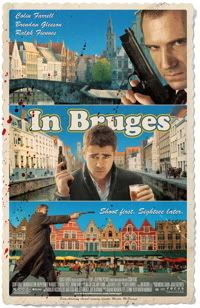
IN BRUGES (2008)

Director: Martin McDonagh Cast: Brendan Gleeson, Ralph Fiennes, Colin Farrell Release: February 8, 2008 Synopsis: IN BRUGES is the darkly comedic tale of the fates of hit men Ray (Farrell)and Ken (Gleeson). After a difficult job in London, the team is ordered by their boss Harry (Fiennes) to cool their heels in Bruges. Very much out of their comfort zones, the men find themselves drawn into increasingly dangerous entanglements with locals, tourists, and a film shoot. Soon, their perspectives on life and death are violently skewed.

View Trailer:
* Large (QuickTime)

Prognosis: Positive. I have great affinity for this trailer for a couple of reasons.

One, I think we finally are given Colin Farrell in his natural habitat. You watch this thing and wonder what the hell happened with S.W.A.T., ALEXANDER, DAREDEVIL but then remember why MIAMI VICE and INTERMISSION were good examples of what he’s able to do. The guy has something but it just hasn’t blossomed in ways that some pretty boys turn that acting corner like Brad Pitt showed he could do after FIGHT CLUB and 12 MONKEYS.

Two, anyone who can use the word “retarded” and make it sound funny has got my vote.

I appreciate the way this trailer begins with a flash. There isn’t a quick cut or a thumping beat to make me feel like I’ve stepped into an MTV video for the movie. This trailer begins with a quite benign back and forth with a priest and Colin. It seems innocuous enough until Colin pops him.

Interesting.

The trailer slides easily into putting everything into context. In does it so well that by the time that Colin unleashes his comedic artistry it’s a wonder why there hasn’t been more said about why the It’s a Small World ride at Disneyland had to be “adjusted” due to the increasing weight of people (I’ll go on the record and say it’s mostly Americans). Colin glides right through this thing. Equal parts violent, amusing.

The whole idea of the film, that Colin has to wait two weeks in Belgium with his fellow hit man and await instructions of what to do, is so basic that it begs an answer as to why someone thought it was ripe for comedy.

Big-ups, huge praise, needs to be heaped on the narrative voice-over with regard to the letter that Colin reads from the big boss wondering where the two of them are (a case of cabin fever obviously set in and they wanted to take in some sights, insult the locals, that sort of thing) in a bleeped manner that I have never heard before during a narrative. It just made me appreciate the creativity.

What’s more is that when Ralph Fiennes enters the picture he just adds to what amounts to a true madcap adventure. The cat and mouse shootout that ensues is enough to make you wonder whether this is a comedy or an action/comedy or an action/comedy/adventure or something else entirely.

I would usually loathe the expression “And what’s more”¦” but I am going to employ it here to sum up what makes this film look like a real treat if, for nothing more than to hear Colin, in his Irish lip, talk about Bruges: “If I had grown up on a farm”¦and was retarded”¦Bruges might impress me. But I didn’t so it doesn’t”. The lilt in his voice is what really makes the dialogue snappy.

And, one more thing: Jordan Prentice. I know a lot of you didn’t get a chance to see one of my favorite independent movies of 2007, WEIRDSVILLE, he played a mall cop with a thirst for medieval vengeance but he plays the part of a man in this trailer that not only has an amusing quip about where to find a prostitute in Bruges but then becomes a hilarious punch line, literally, when he gets a karate chop to his neck.

I need to see this movie; I just hope to God all the best parts weren’t employed in the making of the trailer.

Quick Stop Thingamabobs: 12/21/2007

Filed under: Columns,Thingamabobs — UncaScroogeMcD @ 12:01 am

thingamabobs.jpg

The web. It’s a big place, full of plenty of distractions ““ some funny, some informative, some ludicrous, some disturbing, some inane, some profound. Each and every weekday, we present links to a few of our favorite finds”¦

————————————————

  • I Wish It Could Be Christmas Everyday… (Thingamabob)

December 20, 2007

Party Favors: Malibu-Bye

Filed under: Columns,Joe Corey's Party Favors — UncaScroogeMcD @ 12:05 am

partyfavors1.jpg

MALIBU – Thankfully the Santa Ana flamed fires have spared my latest business venture. Having Satan for a silent partner has its advantages.

I’ve decided to give Promises and Dr. Drew a run for the star detox business by offering a revolutionary approach at The Party Favors Rehab Center and Hardcore Fighting Academy. We believe you can’t clean up your life until your clock is cleaned.

While other rehab centers will baby you with meatball psychiatry and compassion, your first day at PFRCHFC is all about wailing on your ass. You think your old man was hard on you, wait till our staff of trained “therapists” take you down into the Tyler Durden Memorial Basement for intense small group sessions. You won’t care about withdrawal pains since you’ll be too concerned about how many teeth you have left. Other rehab centers have you cleaning toilets. We’re going to use your head as a bowl brush. You’ll be gargling with Mr. Clean. We won’t have you making beds or doing laundry. You’re sleeping on the basement floor in a loin cloth. When you get out of our rehab center, the TMZ pests will dash away since you’ll smell like an animal that has been locked in the basement for six weeks.

Will you be cured? Not quite. You’ll still be addicted to alcohol, although now it will be applied to your flesh with cottonballs after your “break through” sessions.

For those of you who can “handle” your drinking, Party Favors is pleased to announce that it’s getting into premium booze business. We’ll be joining Jay-Z and Donald Trump on the top shelf. Instead of getting into the fancy vodka business, the Party Favors Distillery squeezes out high quality Moonshine.

Our two signature brands that’ll be clogging the aisles at Macy’s Liquor store are Granny’s XXX and Otis’ Secret Stash. Granny’s XXX comes in an authentic little brown jug. Originally the bottle was going to mention that it’s for medicinal purposes, but the FDA told us it wasn’t a cure for legitimate diseases. As if Restless Leg Syndrome is a real disease. If you suffer from drinking too much house paint, Granny’s XXX is guaranteed to peel the semi-gloss off your small intestine. Granny’s XXX comes in one flavor: harsh. We recommend you dilute it with Ronson lighter fluid.

Otis’ Secret Stash has a variety of flavors including Cherry, Peach, Strawberry and Pineapple. Instead of using bunch of artificial ingredients, we chop up the fruits and squeeze ’em into the bottle. You can put the diced delights on your morning pancakes as a hangover cure. The Pineapple is my favorite. If you eat a chunk of the shine soaked golden fruit, you’ll get a vision of Jack Lord.

While we use an authentic Southern recipe, our bottles promise that we don’t resort to an old car radiator as a condenser. Does Donald Trump promise that he doesn’t use his old Rolls Royce radiator on Trump Vodka? If the Donald drank a little Granny’s XXX, he’d grow a real haircut.

These are only the first two points of the Party Favors triangle of pleasure. We’re proud to announce our new bar at Las Vegas’s Zanzibar Casino and Hotel. ReTox opens on the 4th of July, 2008. The club’s slogan is “When you’re ready to fall off the wagon, we’ll catch you.” I can’t give too many details except we are in negotiations to lure Lindsay Lohan and Britney Spears to host our “Screw the Chip” opening night. Plus we’ll be the future home to the Little Miss Booze pageant. Mondays will be 2 for 1 drink night for “graduates” of PFRCHFC.

We do offer gift cards in case you want to give a friend the present of booze, decadence or sobriety this holiday season. Party Favors wants to be your full-service alcohol abuse destination.

HATIN’ THE HOBBIT

Peter Jackson didn’t get any brotherly love in Philadelphia. My sources on the set of The Lovely Bones said the local crew was frustrated with the Oscar winning director. He’s described as being unprepared for the film.

The local crew members are used to working on M. Night Shyamalan’s films. He’s meticulous in his production work. He knows what he wants and they give it to him. They expected the same from Jackson seeing how he pulled off Lord of the Rings and King Kong. They joked that Jackson would have a CGI version of the film that they’d capture in the flesh.

Instead Jackson became notorious for arriving at the location without the rush to make movie history. When he did make a “artiste” decision, it didn’t produce applause. One incident described how Jackson demand a complicated multi-camera set up. The crew warned him that the moves weren’t going to work in the tight location space. He wouldn’t alter his plans. They spent hours setting it up. They were quietly hoping to be proven wrong by the man. They wanted to bask in his genius. After the first take; Jackson declared it a dud and scrapped his initial vision for the shot. He didn’t inspire trust amongst the natives.

Could this explain why Ryan Gosling is no longer the lead in the film? Rumors spread that Jackson found Gosling “demanding.” Perhaps Gosling was expecting Jackson to be more demanding?

Does Jackson always work like an anti-Roman Polanski? Did he wander onto the set and wait for the cinematic inspiration on Lord of the Rings? Or maybe leaving the land of Kiwis has thrown off his game. Philadelphia is a town that can suck the life out of you – just ask Terrell Owens and Santa. All that cheese steak can clog your mind. Does sound like Jackson’s tombstone will pay homage to W.C. Fields’ epitaph.

HOLLY GOLLY DVDS

The screenwriter’s strike continues so that means more time to spend with my DVD collection. Do I really need to see stars promote films that stunk up the screen last year? Here’s a few titles I’ve been enjoying and might great Christmas gifts for your special friends that aren’t happy with donations to the Human Fund.

Gomer Pyle, U.S.M.C. The Third Season takes us back to Camp Henderson. While 1966 to 67 marked an escalation of the war in Vietnam, Gomer hadn’t a care about battling the Cong in a rice patty. His only wanted to keep Sgt. Carter happy. There’s not even a subtext of Vietnam in the scripts. It’s a beautiful alternate America that has Gomer defending it. “Gomer and the Little Green Men From Outer Space” has our favorite private receive a close encounter of the third kind. Naturally everyone thinks he’s gone nuts. The closest Gomer comes to shipped out to Asia is his tenure in a tiki bar watching Lou-Ann Poovie sing. Even though the nightclub has a Pacific island feel, we’re told it’s the Congo Club. Gomer Pyle’s basic mission was to entertain without making the viewers remember the evening news from Southeast Asia. Mission Accomplished.

Mod Squad, Season One, Volume One brings us the grooviest cops on the beat. Three troubled teens become undercover cops because of a strange plea deal. They’re sort of like La Femme Nikita as a ménage à trois minus the sexual tension. Linc’s a Watts revolutionary. Peter’s a rich kid from Beverly Hills. Julie’s a hippie chick from San Francisco. They infiltrate operations that the normal undercover cop couldn’t handle. Who would expect sweet little Julie to be the Man? The show has aged with a comic charm. There’s something hilarious about the prime time attitude towards the subculture. “A Time to Love – A Time to Cry” has a photographer tripping on LSD. While coming down, he discovers his model is dead. The Mod Squad sneak into an artists’ colony to discover the truth. If your only exposure to Mod Squad was that crapfest movie with Claire Danes, flush it from your mind. The series is so much better. Peggy Lipton is cutier. She’s perfect as the blonde California beach girl. This boxset contains the first 13 episodes that aired in the Fall of 1968.

Rawhide, Season Two, Volume Two brings us another heaping spoonful of Clint Eastwood on the range. The endless cattle drive continues with sixteen more episodes. “Incident of the Stargazer” has Buddy Ebsen which means you’ll see Barnaby Jones tangle with Dirty Harry. “Incident of the Dancing Death” gives Sam Peckinpah regular Warren Oates time with the cattle. “Incident of the Deserter” has the cook falls in love and start a restaurant in the wilderness. Can the crew live on Clint’s meals? What makes Rawhide great is they didn’t fake the show. They really are moving a herd of cows across the range. Clint isn’t standing by a rear projection screen faking it on a plastic horse.

Midnight Movies explores cult cinema that took hold when the clock struck twelve. We see how El Topo, Night of the Living Dead, Freaks, Reefer Madness, The Harder They Come, Pink Flamingos, Rocky Horror Picture Show and Eraserhead took hold in an era before VCRs. All the major people related to the films are interviewed. They all point out that Midnight Moviegoers preferred to smoke dope and use popcorn for their munchies. You might want to have a few of the featured films on DVD so you can launch into the late night magic afterward.

There’s no review for Saturday Night Live Season – The Complete Second Season since it has been whisked to a secure and secret location and won’t be revealed until Christmas morning. All you need to know is that this is the arrival of Bill Murray and the departure of Chevy Chase. A comedic win-win.

Any exercise video that begins with Carmen Electra saying, “Thank you so much for bringing me into your bedroom. I’m so happy to be here” moves to the top of the workout pile. Carmen Electra’s Aerobic Striptease – In the Bedroom is more enjoyable than Todd Field’s In the Bedroom. The routine starts out with stretching on the floor in front of the bed. After ten minutes, Carmen moves the action onto the mattress. The isometric holds made me break a sweat. Carmen does wear her sneakers into bed, but that’s probably a gym rule. The second half workout features her in a Las Vegas hotel room with a view of the Wynn. She’s wearing a pair of heels for this more involved routine. To help her feel the burn, she slaps her butt. Did she clear that move with a physician? Carmen Electra’s Aerobic Striptease – Vegas Strip has her start off the workout by saying, “The whole point of this series is to really feel your body. Don’t be afraid to touch yourself.” I’m overwhelmed with emotion at this affirmation. This routine is performed on the dance floor of the MGM Grand’s Studio 54. Carmen brought along two girlfriends. Once you’ve mastered these motions, you’ll be ready to tryout for the Pussycat Dolls. This DVD is more fun than my last stay on the Vegas Strip and nobody pesters you into visiting a time share resort.

The seventh wave of Disney Treasures DVDs are a must buy for Magic Kingdom freaks. The Adventures of Oswalt the Lucky Rabbit contains the surviving 13 cartoons featuring Walt’s pre-Mickey Mouse animated hero. He’s pretty much Mickey Mouse with longer ears. The second disc in the tin is dedicated to Ub Iwerks, the man who animated Disney’s early cartoons. The Chronological Donald Duck, Volume Three (1947 – 50) has 30 shorts featuring the squawking waterfowl. This collection features the introduction of Chip n Dale to torture Donald. The quality of the restoration on these shorts is better than Volume 2. Disneyland – Secrets, Stories & Magic skimps on the secrets. There’s zero talk of Club 33 – the hidden bar near Pirates of the Caribbean. The main film is about as probing as a Travel Channel special. The bonus features rule on this set especially Disneyland U.S.A, a cinemascope tour of the park from 1956. Annette Funicello twirls around in “The Golden Horseshoe Revue.” They throw a reproduction of the old ticket book in the tin. For folks who make pilgrimage’s to Anaheim and Orlando, you better grab this for your collection since they only pressed 50,000.

EVEL’S LAST JUMP

The true cause of Evel Knievel’s death won’t appear in the coroner’s report. What brought down the legendary daredevil was a fatal stunt he performed two days before his final sleep. He announced to the press that he had settled his public feud with Kanye West. They were friends. His peace with the rapper became the ramp that aimed him into the grave.

Evel broke every bone in his body. What kept him together for 69 years? Pure spite. Watch any interview with Evel and you’ll see him hold grudges against anyone he perceived screwed him over. A few years back on the Jim Rome radio show, Evel was ready to kick the ass of a kid from his elementary school days. In documentaries, there are hours of him cussing about the guy who engineered his rocket-cycle at Snake River. Once a person went on Evel’s list, they feared him showing up on their doorstep with a baseball bat.

Evel sued Kayne for ripping off the story of Snake River for the “Touch the Sky” video featuring “Evel Kaynevel.” Evel was pissed off that Kayne had used his daredevil image to “promote his filth to the world.” Two days before his passing, Evel announced they had settled the lawsuit. They posed for a picture as if they were best of pals. Evel told the press, “I thought he was a wonderful guy and quite a gentleman.” When Evel forgave Kayne, his body couldn’t deal with it since his heart was fueled with spite. Like putting sugar in the gas tank, Evel’s engine locked up. He overdosed on bygones.

Perhaps in heaven Evel will be reunited with the sharks from the tank in Chicago? Or maybe he’s swapping sucker punches with Norman Mailer? What we do know is that his ghost won’t be swinging a Louisville Slugger at Kanye’s dome.

SOUND OF THE SEASON

There are three 24/7 Christmas radio stations in my town. Why? There’s more Christmas music on the dial than rock. They started the “Jingle Bell Rock” a week before Thanksgiving. What’s irritating is the simple fact that there might be thousands of Christmas records, but each on of them has the same 15 songs. Did you know you can program a solid nine days of nothing but “The Little Drummer Boy” without repeating an artist? Bet the guys in Gitmo don’t get the aural torture that greets a mall employee for their 10 hour shift at the Sunglass Hut.

RANDOM TV NOTES

When will ATT run a commercial with Dick Cheney telling us how he spends his time in secure and secret locations, meeting with people that must remain private, attending off-the-record conferences and relaxing in his man-sized safe? Dick declares at the end, “I need a phone that works where I live. A place I call Noneofyourfnbusinessaholes.”

When is John Cho going to end up on Dancing With the Stars? The Harold and Kumar Go to the White Castle star must seduce America with his twinkle toes.

Lifetime’s America’s Psychic Challenge needs to have the ultimate final test: Pick the winning numbers of all the major lotteries for that week. Wouldn’t you want to tune in for that episode? You give me the Powerball digits and you’ve earned the title. Lifetime’s got a great new title for a show: How to Look Good Naked. Why isn’t this series on HBO? These people won’t be naked cause they’ll always have those blur splotches on their bodies. We don’t need more teaser TV.

This gives me hope for my upcoming series: Do You Mind If I Put My Private Parts In Your Mouth? It’s based off the BBC 4 show Schlong Along My Ding Dong. We’re hoping to land Andy Dick as the host. He’s already developing our new MTV series, How Bad Are You Willing to Break Into Showbiz. As Art Linkloser once said, “Desperate attention whores make the best contestants.”

How come for all the publicity for I Am Legend not one of the suck up infotainment shows are willing to admit this film is a remake of Last Man on Earth and Omega Man? Is the Fresh Prince ashamed of being connected to Vincent Price and Charlton Heston? On Entertainment Tonight, the director of the film claimed that an element of Will’s character was something they created. Note to Francis Lawrence: you didn’t think that hard. Your genius idea was featured in the earlier films. Will Smith is the third last person on the planet.

Did Tom Hanks think he was playing Dean Martin in Charlie Wilson’s War? The shot of him in the tux with the tumbler is only short Jerry Lewis to be a full Dino impersonation.

I’m still irritated that certain cable channels run the closing credits of movies beneath the opening of their next movie. They shrink and squish the already tiny type. What’s the point? Can you really read any of that. Even used car dealers can’t defend that font size and crawl speed. It’s Morse code in fast forward. It’s time they just kill the credits instead of allowing this farce to continue.

What’s the point of seeing the Spice Girls reunion if they won’t wear their old outfits? Didn’t Scary Spice’s name come from her wardrobe that even Beyonce’s mom wouldn’t design? Is she really Sporty Spice without sneakers? Can we embrace a mature Baby Spice? What’s the point in watching Ginger perform without her Union Jack corset and platform boots? Do we need to see them as five fashionable ladies – as if they all morphed into Posh Spice? Were they really about the music and not the marketing?

WHY BUZZ ON THE HORNET?

For the past five years The Green Hornet has been near the top of my most wanted TV shows on DVD. I had never seen a complete episode outside of the Batman crossover episode, but I wanted to see Bruce Lee in action. Plus the show was made by the folks who produced Batman. How could it not amaze me? American Life channel now runs the show on Friday nights. After watching four episodes, it’s off the buy list.

There was a reason this series lasted only one season. It’s lackluster. Bruce Lee gets completely misused. Bruce has great moves, but he only gets put in a kick or two before his opponent falls to the ground like an Italian soccer player. Capt. Kirk and James West didn’t have such fragile villains. Why does Kato work for the Green Hornet? He spends the whole day working as the houseboy for Britt Reid, the communications emperor. Then at night, he has to change uniforms and drive the millionaire around town hunting for bad guys. Can’t Britt pay Kato enough cash so that he only has to work one job. Bruce Wayne didn’t make Dick Grayson work two gigs. Alfred kept Wayne manor in order. Kato should have kicked Green Hornet in the head for being such a cheap ass taskmaster.

Why does Hollywood want to bring this character to the big screen? The only way I can see this film working is Green Hornet vs. Kato. The plot can revolve on Kato finally getting sick of Green Hornet’s “Time to lean, time to clean up the city” policy. Green Hornet tries to use his media empire to ruin Kato’s reputation since it’s obvious that sidekick is the real force of the operation.

TYLER PERRY VS TYLER PERRY

When will Tyler Perry sue the makers of This Christmas for making a Tyler Perry film that didn’t involve Tyler Perry? There had to be at least one person per screening wondering where’s the guy dressed up as an old woman.

TV STAR OF 2007!

Why don’t they change the name of Rule of Engagement to the The Patrick Warburton Show? Patrick Warburton owns the series. Why exactly is David Spade in the cast? To insure a cameo from Rob Schnider for season three? Whenever Warburton is off the screen, the show loses steam. Two consecutive scenes without him and I’m writing my Congressman to get Warburton back on the screen. It’s torture! Does Donal Logue get jealous when he turns on the show and sees Warburton getting frisky with Megyn Price? She looks sexier without the burden of three TV children and Kevin Corrigan creeping around the house.
Between Rules of Engagement and The Venture Brothers, Warburton is the king of TV comedy for 2007. When’s he going to have an HBO show so we can hear him cuss up a storm?

TV’s Crossover star of the year is Lexington Steele. One of the big studs of the porn world (and less hairy than Ron Jeremy) has snuck on the rather adult shows of Nip/Tuck and Weeds in the last few months. Lex seems to be poised to get a Saturday morning show in Brazil at this rate.

Moving the doctors of Nip/Tuck to Los Angeles has goosed the show. Not that things were getting to staid in Miami, but the plastic people of Hollywood are perfect fodder for McNamara-Troy. What can be better than casting a Bo Duke as a porn producer? A tribute to the infamous hottub poop clip showed how it can be faked.

BITE STEVE

Is Steve Buscemi really voicing a gingerbread man in a Go Phone commercial? He’s funny looking gingerbread man, you know?

BUMP HER

How come you never see the tabloids spreading rumors that Janeane Garofalo is pregnant? They fight to spot the bulge on Angelina Jolie and Jessica Simpson. But why not start a pregnancy watch on Sarah Silverman? Why isn’t Winona Ryder assumed to be hiding triplets beneath her trenchcoat? How about Bea Arthur? Why aren’t her “sources” claiming she’s eager to put a bun in her oven. What man does she has want to coat her in baby batter? That guy from High School Musical 2. I’d buy that copy of US Weekly. If Jennifer Lopez can get knocked up, why not Maude?

Quick Stop Thingamabobs: 12/20/2007

Filed under: Columns,Thingamabobs — UncaScroogeMcD @ 12:01 am

thingamabobs.jpg

The web. It’s a big place, full of plenty of distractions ““ some funny, some informative, some ludicrous, some disturbing, some inane, some profound. Each and every weekday, we present links to a few of our favorite finds”¦

————————————————

  • Let’s have a Patrick Swayze Christmas this year… (Thingamabob)

December 19, 2007

Quick Stop Thingamabobs: 12/19/2007

Filed under: Columns,Thingamabobs — UncaScroogeMcD @ 12:01 am

thingamabobs.jpg

The web. It’s a big place, full of plenty of distractions ““ some funny, some informative, some ludicrous, some disturbing, some inane, some profound. Each and every weekday, we present links to a few of our favorite finds”¦

————————————————

  • Grandma got run over by a… Well, you know… (Thingamabob)

December 18, 2007

Toy Box: It’s beginning to look a lot like… zombies!

Filed under: Columns,Toy Box — admin @ 12:26 am

toybox.jpg

If you have one of those hard to buy for pop culture addicts on your list, or maybe someone with a twisted appreciation for the undead, or just somebody that loves horror, then I have the perfect gift idea for you!

A few years ago, Sideshow Collectibles started a line of 12″ in house designed zombies called The Dead. Since then, they’ve released an ever increasing number of the undead into our lives, each one better than the last. They also have other items that proclaim your love of all things flesh eating, like t-shirts and sweat shirts with The Dead logo on the front.

But for Christmas, they decided to go all out and produce a very nifty The Dead zombie ornament. For just $10 plus shipping, you can bring home this delightful yuletide brain eater.

If you have any questions or comments, drop me a line at mwc@mwctoys.com. On to the review!

The Undead Christmas Ornament

I have this guy already on my tree. And he gets a lot more attention and comments than Winnie the Pooh!

toybox_121807_1.jpg

Packaging – **
Normally, Sideshow does amazing packaging. The Dead line tends to be very minimalist though, and that’s the route they went here. There’s actually a sticker on the back that has The Dead logo on it, but the front, sides and top are completely white. The window shows off the ornament well enough though, so I’m not bothered by the plain white container.

toybox_121807_2.jpg

What does bug the crap out of me is the styrofoam insert. This time they went with the cheaper, lighter stuff that falls apart in your hands, and I hate this stuff. By next Christmas, it’s going to be in several pieces, and useless for storing the ornament.

Sculpting – ****
Wow! This might just be an ornament, but this is my favorite zombie head sculpt they’ve produced!

The nice thing is that it’s done in sixth scale, so it actually fits in with the figures. The detail work on it is amazing, with some truly realistic rot around the exposed skull and nasal cavity. It’s not all the sculpt – the paint goes a long way too – but this head sculpt has some of the best detail we’ve seen in the line.

toybox_121807_3.jpg

The zombie is coming up over and out of the ornament itself. The right hand is reaching out menacingly, while the bared teeth show his true intent. And it’s to eat Carols, not sing them. The bulb itself is actually plastic, and not glass, but the seam along the side is fairly tight and difficult to see unless you inspect it closely.

toybox_121807_4.jpg

Now here’s the real beauty part – the head and hand can be removed from the bulb with a little effort! That means you can grab yourself a spare body, tear up some extra clothes, and put together ANOTHER zombie in your The Dead line! Sounds like you better buy two of these guys, one for the tree and one for a custom.

Paint – ****
Great sculpts can be ruined by mediocre paint. But great paint can take the sculpt to a whole new level, elevating the realism and life-like nature. And while this guy wouldn’t technically be ‘alive’, the paint does bring out the detail and the coloring in a way that’s truly life-like.

toybox_121807_5.jpg

The glassy right eye looks amazing. The subtle difference in color between the graying skin and exposed skull is remarkable. Even the work on the teeth and nose are above average, even for companies like Medicom or Hot Toys. If every sixth scale figure produced by Sideshow had paint that looked like this, they’d have no competition in the category.

Design – ***1/2
I have to admit that the plastic ball ends up pulling a half star off this category, along with the lack of anything particularly ‘Christmasy’ about it. On the one hand, I’m quite happy that he lacks a silly Santa hat (for example), because that makes it much easier to produce a nifty custom with the head and hand. OTOH, I really would like it to be more festive, and besides – if he was wearing a Santa hat, wouldn’t he make a terrific zombie Santa custom? In fact, I just might have to try that out anyway…

toybox_121807_6.jpg

Still, he’s going to look terrific on just about anyone’s tree.

toybox_121807_7.jpg

Value – ***
If you’ve been in a Hallmark store lately, you know how damn expensive good ornaments are. Most of the regular ones cost $12 – $15, and are rarely this large – or this detailed in sculpt and paint. At $10, he’s a solid value, even after you add in the extra shipping cost.

Things to Watch Out For –
Not a thing. Other than your wife freakin’ out when she see’s it hanging between her 2006 Barbie and the ‘Our First Christmas’ ornaments.

Overall – ****
This was one of the best surprises I’ve had in quite awhile, at least when it comes to pop culture collectibles. It really did turn out amazingly well, and is going to be a perennial addition to my tree. Unless my wife ‘accidently’ breaks it. I ordered two though, just in case.

If you do pick up one or two to make custom zombies, please drop me a photo. I’d love to see your creativity in action! And steal your ideas for myself, of course.

Where to Buy –
You can pick him up at Sideshow right now for $10!

Related Links –
I’ve reviewed only one of the previous The Dead figures, although I’ve bought the whole line. I covered Subject 5, the zombie security guard. If you’re a zombie fan in general, you should also check out:

– the Peril Unlimited 12″ zombie, the GITD Flesh Eating Zombies, and the recent Shaun of the Dead 2 pack.

– my review of Cult Classics 4 that included the plaid shirt zombie from Dawn of the Dead and the zombie fighter Shaun from Shaun of the Dead; and the Cult Classics 3 Flyboy Zombie from Night of the Living Dead.

– then there’s my review of Earl, from Mezco’s line Attack of the Living Dead.

– check out the Marvel Legends monster boxed set that included the zombie from Tales of the Zombie.

– SOTA recently released the Land of the Dead figures.

– and don’t forget the cool (but expensive) zombies from the sixth scale Dust series.

Quick Stop Thingamabobs: 12/18/2007

Filed under: Columns,Thingamabobs — UncaScroogeMcD @ 12:01 am

thingamabobs.jpg

The web. It’s a big place, full of plenty of distractions ““ some funny, some informative, some ludicrous, some disturbing, some inane, some profound. Each and every weekday, we present links to a few of our favorite finds”¦

————————————————

December 17, 2007

Quick Stop Thingamabobs: 12/17/2007

Filed under: Columns,Thingamabobs — UncaScroogeMcD @ 12:01 am

thingamabobs.jpg

The web. It’s a big place, full of plenty of distractions ““ some funny, some informative, some ludicrous, some disturbing, some inane, some profound. Each and every weekday, we present links to a few of our favorite finds”¦

————————————————

  • Watch it while it lasts – A Charlie Brown Christmas, Part 1… (Thingamabob)

December 14, 2007

Comics in Context #206: Blaze Of Glory

Filed under: Columns,Comics in Context — admin @ 1:23 am

comicsincontext4.jpg

cic2007-12-14.jpgLike many of you, I used to visit my local comic book store every week, usually on the day that the new comics went on sale. Nowadays, though, my visits are more likely once a month. Part of the reason is that I work out of home, but even so, if I wanted to, I could make the effort to stop by a comics store on each of my weekend prowls about Manhattan. The real reason I go to comics stores infrequently (by comics culture standards) is that I long ago lost that fannish eagerness to see the latest issue of an ongoing series. Every once in awhile, I check in to a longrunning Marvel or DC series to find out what’s going on, or to judge the work of its current writer for myself. And in almost every instance I find myself disappointed and unmotivated to pick up the following issue.

But last month brought an exception to what has become the rule. On the day that Alan Moore and Kevin O’Neill’s League of Extraordinary Gentlemen: Black Dossier went on sake, I made a special trip into Manhattan, with no other reason than to pick up a copy of the book. I started reading the Dossier on the subway trip home. Once back home I went into lockdown mode, as I hadn’t since the last Harry Potter book (see “Comics in Context #187: “All Hallows Eve”).

I read continuously to about the halfway point, when I abruptly wondered if Jess Nevins had already begun annotating the Black Dossier on his website. An authority on Victorian popular literature, Nevins has written two “unofficial” companion books to the League, published by MonkeyBrain Press: Heroes and Monsters, about the first volume of League (see “Comics in Context” #37: “High Noon for Mutants”), and A Blazing World, about the second volume (see “Comics in Context” #66: “A Christmas Potpourri”), each containing an enormous list of annotations plus essays about the source material for League, and interviews with Moore.

Checking Nevins’ website I discovered that, yes, he had: as it turned out, Nevins had been sent an advance copy of the Dossier. So then I began plowing through Nevins’ astonishingly lengthy list of annotations for the first half of Dossier, before finishing the second half and its annotations on the following day.

Not only that, but I spotted two gaps in the Dossier annotations. League heroine Mina Murray has a music hall poster that gives top billing to the team of Lewis and Clark (not the famous explorers of the same names). I fired off an e-mail to Jess Nevins, explaining that “Lewis and Clark” were the vaudeville team from Neil Simon’s play The Sunshine Boys. For the following two weeks I sent additional annotations to Nevins, most of which he accepted for use on his site. And I was far from alone: there was a veritable League of Extraordinary Annotators who sent in supplementary annotations to Nevins’ list, including artist Kevin O’Neill and even the legendary fantasy writer Michael Moorcock, some of whose own characters are alluded to by Moore in the Dossier. You can see the massive annotations list here, and Nevins will further expand it for his Black Dossier companion book, Impossible Territories, which MonkeyBrain Press will publish in July 2008. And good heavens, I just checked, and Nevins has updated the Dossier annotations yet again (as of December 10)!

Longtime readers of this column already know about my enthusiasm for Moore and O’Neill’s League of Extraordinary Gentlemen (see “Comics in Context” #22 : “Major League” and Comics in Context” #23: “An Extraordinary Trio”). For those who came in late, the League postulates an alternate history in which the characters of fiction–from both literary classics and popular culture–exist and interact. Every character with a speaking role in League is either a character from a preexisting work of fiction or a relative of such a character. In the original series, set in the 1890s, Moore and O’Neill introduced a “League of Extraordinary Gentlemen,” comprised of Mina Murray from Bram Stoker’s Dracula, Allan Quatermain from H. Rider Haggard’s King Solomon’s Mines and other works, Captain Nemo of Jules Verne’s Twenty Thousand Leagues under the Sea, Mr. Hyde from Robert Louis Stevenson’s The Strange Case of Dr. Jekyll and Mr. Hyde, and the title character of H. G. Wells’ The Invisible Man, as a team of special operatives for the British government. In the first series the League intervened in a war between the criminal masterminds Professor Moriarty (from Conan Doyle’s Sherlock Holmes stories) and Dr. Fu Manchu (who went unnamed since he is still under copyright); in the second series followed the League’s role in combating the archetypal Martian invasion chronicled in H. G. Wells’ The War of the Worlds.

Moore’s original motive in co-creating the League was to explore the roots of the superhero genre. Hence, the 1890s League resembles a superhero team, and even includes a few members with super-powers (Hyde and the Invisible Man); even the series’ title seems to allude to the Justice League and the X-Men with their “extraordinary” abilities.

Moore realized that League provided him with the opportunity to explore the entire history of fiction. In the second League series, by means of a continuing text feature, “The New Traveller’s Almanac,” Moore laid out much of the history of this alternate Earth, incorporating fictional characters from works ranging as far back as ancient classical literature, and other characters from beyond the 1890s, well into the twentieth century.

The principal story in Black Dossier is set in the Britain of 1958. Founding League members Mina Murray and Allan Quatermain, who are lovers, have become eternally young immortals, thanks to their immersion in the Fires of Life from H. Rider Haggard’s “She” novels, as suggested in the Almanac in the second series. (And yes, getting Mina out of her previous Victorian costumes provides O’Neill with numerous occasions to demonstrate his skill at attractively drawing the female form.) Warned by Winston Churchill, Mina and Allan severed their ties with the British government following World War II and left for America. In the postwar years, Britain fell under the totalitarian dictatorship described by George Orwell in hs novel 1984: since 1984 was actually published in 1948, that’s when the events of the novel took place in League‘s world. By 1958 the 1984 regime has fallen, and Mina and Allan return to England to locate and steal British intelligence’s “Black Dossier,” its file of reports on the League’s history.

But British intelligence is now headed by Harry Lime, the amoral mastermind created by writer Graham Greene in the 1949 film The Third Man, and one of his foremost operatives is a ruthless, womanizing assassin who calls himself “Jimmy.” The latter is a thinly veiled version of James Bond, who teams up with a very young female operative who is skilled in martial arts named Emma Night. Dedicated fans of the 1960s television series The Avengers may know that the episode “The House that Jack Built” established that the maiden name of the series foremost heroine, Mrs. Emma Peel, is Knight (see “Comics in Context” #52: “Mod as a Hornet” and #53: “The A-Files”). One couple, “Jimmy” and Miss Knight, is out to stop their counterparts, Allan and Mina.

Though this storyline is the heart of Black Dossier, it also serves as a frame for excerpts from the “Black Dossier” itself. Black Dossier the graphic novel is an postmodern collage of different formats. Moore and O’Neill recount the 1958 exploits of Allan and Mina in familiar comics form, no different from that of League Volumes 1 and 2, save for the final pages..

But various documents from the Black-Dossier-within-the-Black-Dossier take the form of O’Neill’s recreations of earlier styles of comics and cartoon art, from a political cartoon in the style of the 18th century cartoonist James Gillray (see “Comics in Context” #72: “F. O. G.”) to a comics version of a sequence from Orwell’s 1984 presented in the style of a pornographic “Tijuana Bible.” Other visual experiments by Moore and O’Neill range from picture postcards to credits pages in the form of a parody of the London Underground map. The most spectacular visual tour de force in Dossier comes in its final pages, in which Mina and Allan’s visit to the fourth-dimensional “Blazing World” is depicted in a 3-D comics sequence, with 3-D glasses attached to the inside back cover.

Other Dossier documents are text pieces in which Moore utilizes different styles, formats, and narrative voices, presenting, for example, government reports on the League and an excerpt from the memoirs of Campion Bond, James’s grandfather, who was a character in League volumes 1 and 2. More significantly, Moore experiments with recreating the styles of other authors: William Shakespeare in two scenes from a “lost” play Faeries’ Fortunes Founded, part of a sequel to the 18th century erotic novel Fanny Hill, a P. G. Wodehouse pastiche in which Jeeves and Bertie Wooster encounter not only the League but also a supernatural menace out of the H. P. Lovecraft mythos, and The Crazy Wide Forever, an imitation of Jack Kerouac’s Beat novel On the Road, which marks its fiftieth anniversary this year.

Through such “documents” in the dossier-within-the-Dossier, Moore further explores and establishes the history of the League’s world, both before and after the stories of League‘s first two volumes. For example, Prospero, the sorcerer who is the protagonist of Shakespeare’s The Tempest, also appears in Faeries’ Fortunes Founded; in the Almanac Moore had already established that Prospero was the founder of the original League of Extraordinary Gentlemen in the 17th century. The second incarnation of the League, in the 18th century, was headed by Lemuel Gulliver of Jonathan Swift’s Gulliver’s Travels, and included Fanny Hill, who appears in another of the Dossier‘s pastiches.

Initially I found the pseudo-Kerouac style in which Moore wrote The Crazy Wide Forever nearly impenetrable, although once some of the Extraordinary Annotators supplied keys to its plot, the pastiche finally made sense to me on my third try at reading it.

I’ve never read Kerouac, but the stream of conscuousness style of The Crazy Wide Forever, and its profusion of puns, reminded me of James Joyce. This is no accident, since Kerouac was greatly influenced by Joyce’s work (see the excerpt from Kerouac: The Definitive Biography by Paul Maher). I see that there is even an academic essay, “”˜I Dig Joyce’: Jack Kerouac and Finnegans Wake“ by Michael H. Begnal, from the March 22, 1998 Philological Quarterly.
I wonder if Alan Moore is also consciously following the lead of Joyce in his Black Dossier. In his landmark novel Ulysses Joyce not only employs the stream of consciousness technique, most famously in Molly Bloom’s soliloquy in the concluding “Penelope” chapter, but employs a variety of formats and styles in other chapters. For example, the “Ithaca” chapter is modeled on a catechism. with questions and answers. The “Circe” chapter is written as a script for a play, which grows increasingly surreal. The “Cyclops” chapter is primarily narrated in the first person, but includes extended passages in over thirty different narrative styles which Joyce utilizes for satiric purposes.

Moreover, in Ulysses and even more so in Finnegans Wake, Joyce fills his work with allusions and references that academics have been busily tracking down for decades. Similarly, the League books seem like bottomless pits filled with literary and historical references that a good number of us have been striving to decode. Jess Nevins is to Alan Moore on League what Stuart Gilbert was to James Joyce on Ulysses: the first person to publish a key to the mysteries of a book, that was unofficial yet had the author’s approval.

It is evident that Moore is attempting to do Shakespeare pastiches in two sections of the book. Whereas, as far as I’m concerned, Moore does a perfect mimicry of P. G. Wodehouse in Dossier, imitating Shakespeare is a far harder task. To my mind, Moore skillfully copies the form of a Shakespeare play in Faeries’ Fortunes Founded, but it comes off as hollow; he does not, perhaps cannot, come close to matching the poetic heights one expects from actual Shakespeare. But I think Moore is much more successful in the speech he gives Prospero in the concluding pages of Black Dossier, perhaps because it fervently expresses what appear to be Moore’s own ideas on the importance of the imagination. Ironically, Prospero’s last speech in Dossier seems to contradict some of what Prospero says in Shakespeare’s The Tempest.

Towards the end of the Black Dossier, Mina and Allan journey to “the Blazing World,” which first appeared in a work published in 1666 as an archipelago of islands extending from the North Pole nearly down to the British Isles. Moore presents the Blazing World as a single island that, though accessible from three-dimensional Earth, apparently exists on another plane of reality share time is “a physical dimension, so it’s all happening at once” (Dossier p. 184, panel 1). The Blazing World therefore exists beyond conventional time, in what may be eternity. Within the Blazing World sequence Moore and O’Neill depict Prospero and Fanny Hill, both members of former incarnations of the League, and both alive and well. All sorts of other characters from literature and even comics make cameos in the Dossier‘s Blazing World sequence.

Moore’s version of the Blazing World is therefore like a heaven for the fictional characters of our world, who are real people in the world of League. Apparently they can exist there for eternity. This raises the question as to why Alan and Mina, or anyone else who is allowed entry to the Blazing World, would return to the mortal world, where they might die.

Inhabited by fictional characters, the Blazing World is metaphorically and perhaps literally a realm of the imagination. “I’m sure I used to dream about this place, when I was a little girl,” says Mina. Allan responds, “I think I caught a glimpse of the Blazing World in a vision once, during my opium years.” (Dossier, p. 178, panel 1). As I observe in Nevins’ Black Dossier annotations, O’Neill’s depiction of the Blazing World bears resemblances to the literal dream world of Winsor McCay’s Little Nemo in Slumberland. You could think of the Blazing World as a more joyous version of the Dreaming in Neil Gaiman’s Sandman.

The Black Dossier concludes with a speech by Prospero, the founder of the original League, who begins, “For truly is our cavalcade now done. . . “ (Dossier p. 190, panel 1). This evokes the first line of Prospero’s most famous speech in The Tempest, following a play-within-a-play, like the masques of the early Jacobean period, that was enacted by spirits he had conjured up:

“Our revels are now ended. These our actors
As I foretold you, were all spirits, and
Are melted into air, into thin air;
And. like the baseless fabric of this vision,
The cloud-capped towers, the gorgeous palaces,
The solemn temples, the great globe itself,
Yea, all which it inherit, shall dissolve,
And, like the insubstantial pageant faded,
Leave not a rack behind. We are such stuff
As dreams are made of, and our little life
Is rounded with a sleep.” (Act IV, Scene i, lines 162-172)

Prospero likes to refer to his prowess in magic as his “art.” In this speech Prospero (who admittedly is in a foul mood at this point) dismisses the creation of his “art,” the masque performed by the spirits, as an “insubstantial pageant,” a “vision” with a baseless fabric,” an illusion lacking in reality. Thus, perhaps, Shakespeare, if he is speaking his own mind through Prospero, perceives the creations of art, including his own as playwright, as transitory, perhaps even empty of lasting substance. Moreover, Prospero observes that the real world is not eternal, either, and that not only the “gorgeous “palaces”–man’s architectural works–but even “the great globe itself” will someday come to an end. (The “great globe” may have a double meaning, both to the earth and to the Globe Theatre, where most of Shakespeare’s plays were performed. Thus Shakespeare may be reiterating a belief that art does not last forever.)

Furthermore, Prospero points out that people are mortal, as well. The “sleep” that rounds each person’s “little”–meaning short–life is nonexistence, before his birth and after his death. “We are such stuff as dreams are made of” has multiple meanings. If nonexistence is sleep, then life is like a waking dream, an illusion that lasts but a brief time. The “dreams” that are “made” upon us might be a reference to art, such as The Tempest itself. One might also argue that our lives are “dreams” in the imagination of the ultimate creative artist, God.

The Tempest is the final play that Shakespeare composed without collaborators. Traditionally, it has been interpreted as bidding his farewell to the stage through the character of Prospero, who regards his magic as his “art,” and who acts as a sort of playwright and director in The Tempest, staging situations through which he manipulates the other characters. (It suddenly occurs to me that The Tempest is like a high art version of Survivor.) Just as Shakespeare was heading into retirement, so too Prospero decides to return from exile and give up the practice of his art, magic:

“But this rough magic
I here abjure, and, when I have required
Some heavenly music, which even now I do,
To work mine end upon their senses that
This airy charm is for, I’ll break my staff,
Bury it certain fathoms in the earth,
And deeper than did ever plummet sound
I’ll drown my book.” (Act V Scene i, lines 54-58)

The book is his book of spells, and his staff is like his magic wand, like Gandalf’s staff in Lord of the Rings.

Christianity doesn’t approve of magic, so presumably Prospero would have to give up sorcery upon returning to society as Duke of Milan. If we interpret Prospero’s “art” as a metaphor for Shakespeare’s own, then Shakespeare appears to regard his art as a burden which he is relieved to surrender upon retirement.

Neil Gaiman’s Sandman series concluded with “The Tempest” in issue 75, in which Gaiman and artist Charles Vess not only depicted scenes from the play but told a story of Shakespeare himself meeting once more with Morpheus, the Sandman, who “opened a door” to Shakespeare’s imagination, enabling him to put the “great stories” in the form of enduring plays. Prospero’s speech in Shakespeare’s Tempest may suggest that even art fades away . In Gaiman’s “Tempest,” fellow playwright Ben Jonson predicts that Shakespeare’s plays will not last, but Morpheus truthfully declares that they will, that he endowed Shakespeare with “the power to give men dreams that would live on, after you were gone.”

Despite acknowledging the greatness if Shakespeare’s works, Gaiman’s “Tempest” also depicts art as a burden to its creators, a kind of servitude. Gaiman’s Shakespeare tells Morpheus, “For a goodly part of my life I have been in your service.” Shakespeare must repay Morpheus by writing two plays about dreams, A Midsummer Night’s Dream and The Tempest), from which Shakespeare, well into middle age, is satisfied to give up. Gaiman has Shakespeare refer to it as the “burden of words.”

Gaiman’s Shakespeare laments that his preoccupation with his art distanced him from normal life: “I’d fall in love, or fall in lust, and at the height of my passion, I would think, “˜So this is how it feels’ and I would tie it up in pretty words, I watched my life as if it were happening to someone else., My son died, and I was hurt, but I watched my hurt. and even relished it, a little, for now I could write a real death, a true loss.”

After Morpheus removes Shakespeare’s ability to access his full creative powers, Gaiman shows Shakespeare writing Prospero’s concluding speech in The Tempest, in which he asks the audience, “as you from crimes would pardoned be,” to “set me free” by applauding his efforts. (By comparing himself to an imprisoned criminal, Prospero–and perhaps Shakespeare–shows just how oppressive his service to his art has felt.)

In this issue Shakespeare’s longing for release from servitude to his own creativity parallels Morpheus’s dissatisfaction with his own existence and even his personality. Morpheus explicitly compares himself to a Prospero who was not set free from his island of exile: “Because I will never leave my island. . . I am. . .in my fashion. . .an island. . . .” He tells Shakespeare, “I do not [change]. I may not. I am Prince of Stories, Will, but I have no story of my own. Nor shall I ever.”

But, of course, Gaiman’s Sandman series is indeed Morpheus’s story. Moreover, describing Shakespeare’s Tempest, the Sandman says, “I wanted a tale of graceful ends. I wanted a play about a King who drowns his books, and breaks his staff, and leaves his kingdom. About a magician who becomes a man. About a man who turns his back on magic.” This is what Morpheus does: he learns humanity, he allows himself to be killed in expiation for his past, thereby surrendering his kingdom, to the new Dream Morpheus does indeed change, and, arguably, the new Dream can be seen as both a new Sandman and as Morpheus himself reborn.

Perhaps Gaiman himself regarded Sandman as both a work of lasting merit and one that had become a burden, so he brought it to an end. Of course, Gaiman has gone on to write many other things, but perhaps he anticipates that someday he too will tire of serving his muses.

Prospero’s concluding speech in Black Dossier does not just take a more positive attitude towards art than the Shakespeare and Gaiman versions of The Tempest; it is outright celebratory. As Peter Svensson notes in a contribution to Nevins’ annotations, “rather than rejecting his magic to return to a normal life, here Prospero praises the greatest magic of all. The Imagination” (Black Dossier Annotations, p. 192).

Moore’s Prospero calls the Blazing World “this shining soil beyond life’s mummied grip” (Dossier, p. 190, panel 1). Moore may have designed this phrase to echo John of Gaunt’s encomium to England in Shakespeare’s Richard II:

“This royal throne of kings, this scepter’d isle,
This earth of majesty, this seat of Mars,
This other Eden, demi-paradise,
This fortress built by Nature for herself
Against infection and the hand of war,
This happy breed of men, this little world,
This precious stone set in the silver sea,
Which serves it in the office of a wall,
Or as a moat defensive to a house,
Against the envy of less happier lands,
This blessed plot, this earth, this realm,
this England.” (Richard II, Act II, scene ii)

Moore’s Blazing World does seem like a modern Eden and “demi-paradise.” Prospero states that in the Blazing World “Our direst yearnings and our fondest fears [are] at sport, made safe from time’s iniquity” (Dossier, p. 190, panel 1). In other words, here art, and the emotions and aspirations that it expresses, last eternally, free from “time’s iniquity” and “life’s mummied grip.”

Next Prospero tells us, “We are the tales that soothed our infant brow, the roles you wore for childhood’s alley-play,” that supplied a “paper paramour” for “your youth,” and that provide “thy consolation, thy escape” when we are “grown to grey responsibility” (Dossier, p. 190, panel 2). This means that art fulfills our emotional and psychological needs throughout our lives. Here Moore is also echoing the famous “Seven Ages of Man” speech from Shakespeare’s As You Like It (Act II scene vii, lines 139-166), which includes the “infant,” the “school-boy,” the “lover,” and four “ages of adulthood, growing increasingly aged.

That speech starts with the lines:

“All the world’s a stage,
And all the men and women merely players;
They have their exits and their entrances,
And one man in his time plays many parts,
His acts being seven ages.” (As You Like It, Act II scene vii, lines 139-143)

This metaphor fits the theme of Prospero’s Black Dossier speech, which inextricably links the world of the imagination with “real” life.

As in his concluding speech to the audience in Shakespeare’s play, in Black Dossier Prospero breaks the fourth wall and addresses the readers directly. He makes this clear when he speaks of “the very personality that scrys this epilogue” (Dossier p. 190, panel 3), namely, you the reader.

Prospero points out that in forming our personalities as we grow up, we often model ourselves after inspirational fictional characters. “Did fictional examples not prevail? Holmes’ intellect? The might of Hercules? Our virtues, our intoxicating vice: while fashioning thyself, were these not clay?” (Dossier, p. 190, panel 3).

In Shakespeare’s Tempest Prospero likened people to the spirits in his art, all of whom are destined to “dissolve” into nothingness. In the Dossier Prospero likewise connects us real people to the fictional characters whom we imitate: “If we mere insubstantial fancies be, how more so thee, who from us substance stole?” (Dossier p. 190, panel 3). The phrase “insubstantial fancies” echoes Prospero’s “insubstantial pageant” from The Tempest.

But by stating that we stole “substance” from the characters of fiction, Moore’s Prospero indicates that fiction and its characters are not “insubstantial” at all, but possess a sort of “substance” and reality. Hence, Moore’s Prospero continues, “Your trustiest companions since the cave, we apparitions guided mankind’s tread, our planet, unseen counterpart to thine, as permanent, as ven’rable, as true.” (Dossier p. 191, panel 1). In referring to the characters of fiction as “apparitions,” Moore’s Prospero reminds the reader of the “spirits” of Shakespeare’s Prospero’s masque in The Tempest. Prospero’s statement works as a metaphor: that humanity’s body of stories over the length of human history make up a whole “planet” that is a “counterpart of thine.” Moore’s League of Extraordinary Gentlemen books present this metaphor as literal, depicting an alternate Earth in which, seemingly, virtually all fictional characters are real. In terms of the continuity of the League series, Moore’s Prospero may be establishing that the world of League is a parallel world to our own. (Perhaps we should call the League’s world “Earth-L.”)

But let’s leave considerations of story continuity aside. Moore, through Prospero, is contending that the world of fiction is “as permanent, as ven’rable, as true” as the real world in which we readers exist. As a metaphor, this means that art–even in the form of enduring popular fiction, such as the books from which he draws most of League’s characters–is not trivial or transitory, but has genuine importance in that it inspires us, molds our personalities, and expresses our ideas and our emotions.

It is even possible that Moore means the statement to be literally true in the following sense. Moore is not saying that, say, Mina Murray and Allan Quatermain actually exist. But he may be stating that the “virtues” and “vices” that we find in fiction, and that inspire us, these ideals, have a kind of reality, comparable to that of the universal ideas in Plato’s philosophy. When Moore’s Prospero says that fictional characters have been “your trustiest companions since the cave,” you may first think of our caveman ancestors. Aren’t the first known works of art the prehistoric paintings on cave walls? In the interview about Black Dossier that he gave to Comic Book Resources, Moore confirms this: “The planet of the imagination is as old as we are. It has been humanity’s constant companion with all of its fictional locations, like Mount Olympus and the gods, and since we first came down from the trees, basically. . .  Fiction is clearly one of the first things that we do when we stand upright as a species–we tell each other stories.”

But possibly Moore is also alluding to Plato’s allegory of the cave (here and here). According to the allegory, we are like prisoners in a cave, who perceive only shadows; similarly, the characters of fiction, which Moore’s Prospero calls “apparitions,” are like shadows representing the ideas they embody.

Moore’s Prospero continues, “On Dream’s foundation matter’s mudyards rest, two sketching hands, each one the other draws: the fantasies thou’ve fashioned fashion thee” (Dossier p. 191 panel 1). Here Prospero and Moore refer to the creative, storytelling imagination as “Dream,” thereby reinforcing the visual allusions to Little Nemo‘s Slumberland; again, Moore’s Blazing World is comparable to Gaiman’s Dreaming.

If “Dream” provides the “foundation” for “matter’s mudyards,” then stories must have a sort of reality, even if metaphorical, in order to support the weight of actual matter. the stuff that composes the real world. Notice the contrast between the ugly, concrete image that the word “mudyards” evokes and the ethereal connotation of the word “Dream.”

“Mudyards” may also suggest a place where material things are constructed from mud. People–artists, scientists, anyone who creates ideas–conceives of something in their imaginations and then attempt to implement those ideas in real life. For example, an architect must imagine a building before it is built.

The idea of creation underlies the following lines: “two sketching hands, each one the other draws: the fantasies thou’ve fashioned fashion thee.” Here Moore’s Prospero comes up with a poetic image to reiterate and elaborate upon an idea that he expressed earlier, that we model ourselves upon ideals that we find in fiction. In the aforementioned interview, Moore told Comic Book Resources, “A lot of the dreams that shape us and, presumably, our world leaders, are fictions. When we’re growing up, we perhaps base ourselves on an ideal, and even if that ideal is a real living person, there is every chance that living person may have based themselves on a fictional ideal.” Just as Moore refers to “us” and “we” in that quotation, his version of Prospero may be speaking of people in general when he says that we create fantasies–stories–which in turn influence what we become.

In this case I wonder of Moore may also be referring to the individual creative artist: that the fiction that a writer creates helps shape the personality of the writer himself. Therefore either to read or to write fiction is to open oneself to its influence.

The image of the two sketching hands drawing each other suggests that what each represents–the real world and the world of fiction–is equally important. Each shapes the other. In the interview Moore states that “This is actually ground that we do cover in the Black Dossier, and in the final soliloquy, which is delivered by Duke Prospero. We’re talking about this very thing: the interdependence between the world of fiction and the world of fact.”

(In the December 10 update of Jess Nevins’ Dossier annotations, Janes Morrison and Jon Balcerak each traces Moore’s image of two hands drawing each other to M. C. Escher’s lithograoh “Drawing Hands.”)

Remember that Moore’s Prospero has broken the fourth wall to address this speech directly to the reader. Therefore, it should not be surprising that he acknowledges himself and the rest of the Dossier cast to be fictional characters. He continues, “Intangible, we are life’s secret soul. its guiding lantern principle, its best, untarnished by all subterfuge or spies, unshackled from mundane authorities” (Dossier, p. 191 panel 2). Since the real world is matter, then the world of imagination, represented by fictional characters, is spirit, “life’s secret soul.”

In Dossier and, indeed, throughout the League series, Moore opposes the world of the imagination, representing freedom, to the world of “mundane authorities,” “subterfuge, and “spies,” representing the suppression of freedom. Hence, the British government, as represented by Campion Bond (James’s grandfather) proved to be untrustworthy and ruthless in the first two volumes of League, and why Allan and Mina increasingly distance themselves from their government superiors, until by Black Dossier they have become outlaws, This explains why the fallen dictatorship of Orwell’s 1984 remains such a presence in the background of Black Dossier, and why Dossier puts Mina and Allan in opposition to the British secret service, as represented by James Bond and Harry Lime. The development of totalitarianism in the twentieth century, as Orwell demonstrated, provides powerful means for crushing both liberty and the imagination. Note that Moore’s Prospero speaks of the imagination being “unshackled” by the authorities, implying that authorities are in the business of shackling it, and perhaps by extension literally imprisoning those who conceive of things beyond the status quo. It was Orwell in 1984 who coined the phrase “thought crimes.” The word “mundane” may allude to Hannah Arendt’s phrase for describing Nazi totalitarianism, “the banality of evil”.

The reference to a “guiding lantern” suggests that the works of the creative imagination can provide us with guidance of various sorts, probably including moral and political, since Moore contrasts the “lantern” with “authorities” who “shackle” the imagination. At the end of Prospero’s speech, Moore uses similar images of objects that cast light: “pyre” and “beacon” and, of course, the metaphorical “blaze” of the “Blazing World” itself.

Moore’s Prospero next tells us that “Life’s certainties erode, yet we endure. Whilst tyrants topple, yet Quixote rides with the companions of thy cradle nights in glorious pasture Coleridge never glimpsed.” (Dossier p. 191, panel 2) Thus Prospero points out that great works of fiction survive through the ages, whereas oppressive governments (which may seek to ban such works) rise and fall. Moore’s reference to “life’s certainties” may be ironic: the political certitudes under a tyrannical regime “erode” when that regime falls. Or perhaps Moore means how the “certainties” of age and death “erode” and destroy mortal beings, yet the classic characters of fiction go on and on.

Why mention Don Quixote, whom Dossier establishes as a member of an earlier incarnation of the League? Perhaps because Quixote’s attempts to be a heroic knight continually proved ineffectual. He literally “tilted at windmills,” believing then to be marauding giants, and his name inspired the English language word “quixotic,” meaning unreasonably, impracticably idealistic. Yet, Moore points out, Quixote ultimately has triumphed, since Cervantes’ book about him is still read centuries after its was written, and the character is still known by millions, while tyrannies have come and gone. Franco’s fascist Spanish government fell, but Don Quixote “lives” on.

By “companions of thy cradle” Moore specifically refers to the fictional characters of children’s bedtime stories, and, perhaps, to all fictional characters by extension, since each adult’s love of fiction began in his childhood. Moore ironically contrasts these “companions of thy cradle” to “tyrants”: the fictional “companions” of childhood outlast the oppressive governments formed by adults, and thus childhood innocence and idealism triumphs over adult evil.

The phrase “in glorious pasture Coleridge never glimpsed” is puzzling. “Coleridge” is surely the 19th century British poet Samuel Taylor Coleridge. Does Moore mean that Coleridge, author of The Rime of the Ancient Mariner (1798), had too bleak and pessimistic a vision of life to conceive of this metaphorical “glorious pasture”? Or that even the splendors of the “pleasure-dome” of Xanadu in Coleridge’s poem Kubla Khan (1816) cannot match the glories of this simple “pasture” in which Quixote and other fictional characters ride?

The word “pasture” turns up in various Coleridge works, but one that may be relevant is The Wanderings of Cain (1834), in which the ghost of Abel accuses his brother, ” I was feeding my flocks in green pastures by the side of quiet rivers, and thou killedst me; and now I am in misery”. These “pastures” have been tainted by murder, unlike Quixote’s “glorious pasture.” Quixote dies in Cervantes’ book, but he rides for eternity in the pasture of Prospero’s speech.

In other words, Quixote’s “pasture” is metaphorically the same as the Blazing World: an eternal paradise inhabited by the enduring characters of fiction.

Moore’s Prospero then launches into a summation of his speech (Dossier p. 191, panel 3), beginning with a single word, an exclamation, “Rejoice!” Rather than “drown his book,” representing his art and imagination, as Shakespeare’s Prospero did in The Tempest, Moore’s Prospero joyfully declares that “Imagination’s quenchless pyre burns on”: no water can “drown” this flame. Continuing the imagery of light from his reference to the “guiding lantern,” Moore’s Prospero thus speaks of a “pyre” that “burns,” “a beacon to eternity,” perhaps meaning both that it will remain a beacon into eternity and that it shows us the way to eternity.
He continues, “its triumphs culture’s proudest pinnacles when great wars are ingloriously forgot”; not only does great art outlasts tyrannies, but art is the “proudest pinnacle” of culture, rather than even a “great” war. (So there, simply put, is the difference between Black Dossier and 300.)

Prospero goes on, in metafictional mode, “Here is our narrative made paradise, brief tales made glorious continuity” (Dossier p. 191, panel 3). This seems to confirms that Moore intends the Blazing World to be a heaven for the characters of fiction. In the League series Moore links fictional works by numerous writers into a single, all-encompassing continuity. But his reference to “continuity” may also be metaphorical. If life is a “brief tale,” then the afterlife is a limitless, “glorious continuity.” Notice, too, how Moore repeats variations on “glorious” (even “inglorious”) in Prospero’s concluding speech, making it the key word in these concluding pages.

Prospero goes on, “Here champions and lovers are made safe from bowdlerizer’s quill, or fad, or fact” (Dossier p. 109, panel 3). Having disapproved of past movie adaptations of his work, Moore has a personal motivation for disapproving of those who tamper with someone else’s artistic creation. Anyone who studies the history of longrunning characters in pop culture, including Marvel and DC comics, will see how a passing “fad” can distort the treatment of characters and series. As for “fact,” perhaps Moore means that works of fiction are not bound by the rules of reality. Obviously, works of fantasy and science fiction depict worlds which differ from our own. But fiction generally depicts a world with a sense of order (since the author has constructed the plot) that the real world lacks. Or perhaps Moore means that in fictional characters are potentially immortal and thus need not succumb to the “facts” of aging and death as real people do.

Moore’s Prospero refers to both “champions and lovers.” This may serve to remind the readers that Allan and Mina are not just important as action-adventure heroes in Dossier, upholding the cause of liberty by contending against authoritarian agents like Moore’s version of James Bond. Allan and Mina are also idealized lovers, whose love may be as immortal as they have become. This is one reason for the emphasis on Allan and Mina’s sexuality, and for that matter, that of League members Fanny Hill and Orlando in Black Dossier. Allan and Mina contrast with the womanizing James Bond and Emma Night, who is oblivious to Bond’s true nature, as the traitorous killer if her father.

Moore’s Prospero ends both his speech and the book with a rhyming couplet, complete with alliteration and further examples of light imagery. It starts, “Here are brave banners of romance unfurled. . .” (p. 191, panel 3). Moore probably intends “romance” both in the sense of love, such as between Allan and Mina, and in the sense of heroic adventure, as in Northrup Frye’s Anatomy of Criticism.

And on the Dossier‘s final page, Prospero exultingly concludes the couplet, ” . . .to blaze forever in a Blazing World!” (Dossier p. 192). It is a triumphantly celebratory ending, and you can see that reading and exploring the Black Dossier made me happy indeed to be an independent scholar in the comics medium.

And then this week I received a book which made me even happier, and you will read about that in this column’s next installment.

Copyright 2007 Peter Sanderson

Trailer Park: Hilary Angelo

Filed under: Columns,Interviews,Trailer Park — admin @ 1:08 am

By Christopher Stipp

Archives? Right Here”¦

Instead of manning-up and actually going the emotionally hard route of being outrightly rejected by publishers, I’m rejecting them first and allowing you to give my entire book a preview, let you read the whole thing or, if you like, download the whole damn thing at no cost. Download and read my first book “Thank You, Goodnight” for FREE.

I was never a fan of Tom Hanks’ catchphrase, “Life is like a box of chocolates…you never know what you’re going to get.”

Obviously, in order for this to be effective you’ve got to drawl it a little bit and affect the posture of a mild mannered southern man. Never believed the genuineness of it. Not once.

Not until I started doing interviews with people who I knew little about, or who I could find even less information about on the Internet, did I realize how apropos this sentiment is when you’re confronted with the prospect of sustaining a conversation with a complete stranger for twenty plus minutes. It genuinely gets into your head and you simply have to rely on your homework to get you through.

Hilary threw all that uncertainty out the proverbial window with her completely disarming personality and whip smart thoughts on subjects that range from middle eastern politics in the early 80’s to her quite alarming shoulder shrug attitude when it comes to realizing what kind of profession she’s chosen. What was really telling, and one of the more genuine moments she shared that I am thinking you won’t hear on Entertainment Tonight, was her relating of the scene she did with Tom Hanks in the upcoming CHARLIE WILSON’S WAR (in theaters December 21st) where she was sitting in a hot tub with the man, trying to complete the scene. Tom, essentially, commented on the sweetness of life and how life’s lottery dealt them the opportunity to be actors, to be there sitting in a hot tub and earning a living while doing it.

Hilary’s frankness about where’s she been, where she’s going and how the writer’s strike is hitting close to home (it has landed right inside it) brought life again, once more, to Tom’s quote. It’s never an easy thing to try and think about what a stranger is going to be like when the digital tape is rolling but it certainly is a blessing to be able and capture humanity as it relates to someone as they talk about a profession where it’s sometimes hard to get real perspective.

Being true to thine self is hard when you’re a working actor and you are faced with the prospect of not having a flood of work coming in during a strike like this but you would never know this is getting anywhere close to rattling Hilary’s psyche. She is persevering regardless and isn’t letting a simple slow period (this has to end sometime) deter her from keeping on, keeping on.

CHRISTOPHER STIPP: So, how are you doing?

HILARY ANGELO: Good. I’m very well.

CS: Am I just another in a series of interviews for you?

ANGELO: Well, you are the second in a series of four today. Not too many. We are just starting to do them because the movie is about five weeks away.

CS: Yes, it is and I finally got a chance to see the trailer last week.

ANGELO: Oh, good! I’m actually in the first frame of the trailer.

CS: Oh, you are?

ANGELO: Yeah, I’m the girl in the hot tub who’s laughing.

CS: I know exactly who you are talking about.

ANGELO: There are three of us ““ there are two blondes and I’m the brunette.

CS: That leads me to my first question for you ““ I don’t know, just by watching the trailer, if I get it still or if I understand what the movie is about.

ANGELO: It’s funny that you say that because my husband was concerned about the same thing after we saw the trailer. He knows what the movie is about but he said I just don’t know if people will understand ““ is the marketing right? Are people really going to go see this? Well, I’ll put the record straight.

I think it’s a very important movie to see. It’s really about this one man, Charlie Wilson, who is passionate about Afghanistan’s fight against the Russians in the early 80’s. And through secret meetings and his congressman’s connections, he funded the war. It is more or less the story of how he helped the mujahideen get weapons and the various twists and turns of how he had to do that. He was known as a playboy congressman who never took his job seriously and he became passionate about this one cause.

And I think it’s a relevant movie today because it really about a man who gets involved in other’s peoples struggle in a foreign country where he doesn’t know any thing about the world of fanaticism. And we are in a place right now that is very similar although it’s in the public eye and not a secret. I don’t want to give away the ending but it’s very relevant to what’s going on today. So, that’s what the movie is about and I play a showgirl/stripper who’s in Vegas with Charlie Wilson.

In real life, she actually existed. She’s partying with Tom Hanks (Charlie Wilson) and she’s trying to seduce him and he really doesn’t want to have anything to do with her. He’s much more interested in Dan Rather on 60 Minutes talk about the Afghan struggle. But then it just introduces the first 15 minutes of the character he was and going into the history of what he is going to become. He gets himself in trouble by being around girls who drink too much and do illicit drugs.

CS: What do you think? If all of a sudden ““ we’ve seen the remunerations of things like that today ““ congressmen who don’t live by any moral laws and certainly this seems like a guy who just keeps doing and doing”¦.what in your opinion changed that made him become consumed by all of this?

ANGELO: I think he just felt sorry for the Afghans who were literally trying to fight the Russians. And of course, this was 1981 when the cold war was the biggest thing we were fighting. You know, the big red curtain. And this was a war that was going on where America wasn’t stepping in and the Russians wanted to make the Afghans communists.

So I really think he was passionate about fighting off communisms for these Afghans and giving them democracy. I mean, literally fighting with dirt and rocks and the Russians were hitting them with missiles and bombs. So I think that’s where Charlie Wilson gets on the bandwagon and said we have to do something.

CS: Do you think he played a part in the Russians giving up? The Russians actually got beaten back.

ANGELO: Right.

CS: Did he play a part in that coming to fruition?

ANGELO: Yes, and that’s why it’s called Charlie Wilson’s War. If it wasn’t for him and Gust L. Avrakotos, a real CIA agent, it was him and two other guys working on this war. They had 1 million dollars to fight this war. And until Charlie Wilson came along there was just no way the Afghans were going to beat the Russians.

So yes, if it wasn’t for Charlie Wilson they would be Communist. So who knows where they would be today. Which is actually the twist.

CS: Yes”¦the twist being they gave rise to Osama Bin Laden.

ANGELO: Yes. I don’t know if you’ve read the book.CS: I did not.

ANGELO: It’s quite interesting and Aaron Sorkin did a great job making that book into a movie.

CS: I apologize that I am completely ignorant of this, but is Charlie Wilson still around today?

ANGELO: No, don’t apologize. Yes, he is. I met him at the wrap party. He wasn’t on the set the day that I was there but he was definitely there for consultation. Tom met him and I met him at the wrap party and asked him about my character and what she was like.

CS: I’m interested ““ what did he have to say about you ““ about your character?

ANGELO: He said in the book she was described as a showgirl, in the script she’s a stripper. He said she was a showgirl at Caesar’s Palace in the bar. It was just her and her friend and she were just so beautiful that he invited them up to a party with him. He doesn’t know what happened to them but they did have a wild night and the book doesn’t go into the truth of the wild night because I think it’s trying to protect Charlie Wilson, but you don’t really know what happened at that party and if Charlie partook of the drugs that was going on because it was the 80’s and he did get in trouble eventually. But he said they were lovely, fun girls.

(Laughs)

He said, “I had a good time with them!”, He’s a big Texas guy. I think he’s been married three times. I met his wife. He’s a character.

CS: Does he have anything to say regarding the periphery of what eventually was the fallout of this skrimish? It must be a hot button with this war eventually allowing Osama Bin Laden to come to where he is.

ANGELO: I didn’t ask him about that. I wished I had. But it was just the wrong place and wrong time because we were at a party celebrating.

CS: Of course.

ANGELO: You know, you have to sleep at night.

If I were him, he thought he was doing the right thing at the time. He didn’t know they were religious fanatics. They just really wasn’t a lot known. There wasn’t a Taliban at that time. There really wasn’t the religious extremism. We weren’t paying attention to them. I’m sure somebody knew about it but didn’t speak up.

CS: You said you were in a few scenes. How long were you on the set?

ANGELO: I was on the set for about two weeks. And we had to do rehearsals so I have a couple days of rehearsals. It was short in that it wasn’t the three months they were shooting but it certainly felt long to me because it was such a momentous work experience for me. I had never worked with the people I worked with and it was very gratifying to learn they are just regular people.

CS: What did you take away from working with Tom Hanks? At least, professionally speaking.

ANGELO: The most important thing I learned from him is that he respects everyone on set.

He knows everyone’s name from the key light’s assistant, the 2nd key light to of course the actors he’s working with in the scene with him. He just knows everyone’s name ““ he welcomes everyone in the morning. He’s just a real good person.

And the other thing he said to me, and I think about it everyday, is that “I am so lucky to have this job. I feel so blessed. Aren’t we blessed? Sitting in a hot tub, saying lines, pretending we are drinking martinis. Isn’t this the best job ever?” He just loves what he does. He knows he is lucky. Even though he is extremely talented, I think he deserves what he has. I think he feels like it’s undeserving. He said he’d be doing community theatre in Podunk, Iowa if he could. He’d still be acting, no matter what.

So, I think the perseverance that all actors need to get through the day ““ is you just have to do just go out and do what you do. He said it’s better than shoveling chicken heads. Yeah, OK, it is better than shoveling chicken heads. Some days it’s really hard when you are working very hard, tightening the belt, and working down the pipeline. For me, I’m not Tom Hanks. I have to still audition and fight the fight. But it was really inspiring.

CS: I looked over your resume and saw what you’ve been in ““ a lot of television, a lot of one episode, one episode, one episode. Going back to what you were talking about, how do you weigh the content of what you are given vs. the need for your to sustain yourself?

ANGELO: I wish I could say that I can pass on projects and say, “I don’t really need to do that,” But I do pass on certain things. I’m not going to do a student film or is barely paying me my pay wage which I feel I deserve. I don’t do things like that, but as far as TV, if I’m right for it, I audition for it. I gotta work.

And jobs like Charlie Wilson’s War ““ that’s a break for me. It’s a big movie. So hopefully with the success of that film my performance is deemed worthy that I will get other work because of it. You just never know. I will say that this part required nudity and I didn’t even think twice about it, where in the past I would definitely say, “No.”

But, because it was Mike Nichols, Aaron Sorkin, Tom Hanks, Phil Hoffman, Julia Roberts”¦I just couldn’t pass it up. So even going on the audition I said, OK, if I get it, I know I’ll have to be topless. So, that’s something I think about. If there’s nudity it has to be relevant to the story. It’s a very vulnerable place to put yourself in. It’s your body and you are an artist so you want to make sure it’s the right kind of project. So, in that sense, yes, I do have some standards”¦

(Laughs)

But I do have to work. I still do commercials and guest star. And I will continue to do it until my agent says, “You don’t have to do that anymore.” But I really do love the work. Even playing a guest star ““ I get to play different characters all the time when it’s a series ““ you do hear actors complain all the time (although I don’t know why they complain about having a series) that they get tired of playing the same character.

CS: I’ll do that.

ANGELO: Me too. I don’t mind playing the same character for four years. So, I just have to keep auditioning and get other people to see my work and that fame expands.

CS: When you do have to do your guest star to do your part, is there anything going on in your mind, like you are going to play the part as it is or is there something that is important to you that you bring to every performance?

ANGELO: Yes, for me it’s always just truth.

I have to find the truth of why and how they react, what’s going on in the scene, what about the other people in the scene ““ just always, always is the truth. I don’t like to fake it ““ I don’t want to fake it. I want to really find the experience of the scene. It’s not perfect. It’s a craft. You call on the techniques that you’ve learned and hopefully it works.

Because, when you are upset, it is very distracting to other people all of a sudden, there’s cameramen, there’s make-up people, there’s hair people, there’s directors. You work off the other actors using techniques and find the truth in the scene. It’s definitely a craft. It’s an art form. But I don’t like to wing it. I try to be as prepared as possible.

CS: On the subject of it being a craft…I saw that you spent a number of years doing ballet. What came first? Performance dance or performance art?

ANGELO: My mom said I used to dance in front of the television when I was two years old. I was always dancing. When I was four years old she put me in dancing school and I just fell in love with it. I loved, loved, loved it. There actually was a time when little girls got away from dance and were into soccer and softball.

But I was very stubborn and into ballet and was so passionate about it. I still am. It got to a point where it was 5 ““ 6 days a week in my early teens and it’s just a grueling art form. It’s hard on your body and you start to have injury to you body at 14 and going to orthopedic surgeons to find out what was wrong with me. Your feet, your hips, it’s just very difficult on your body, especially when you are growing. I stopped only because I was in high school and I wanted to do normal things, like go to football games, be a cheerleader, be in the school play, be class president. I just wanted to have extra curricular activities that weren’t ballet. If you want to be a serious ballet dancer you have to give up everything. Just like if you want to be a professional baseball player, you have to give up everything and just play baseball everyday after school. So I stopped and I think it was a really good decision because I got to do school plays and community theater.

And I just fell in love with the stage all over again but from a different perspective. I got an agent and started working right away.

CS: Really?

ANGELO: Granted…I grew up in Los Angeles so it was much easier for me than maybe other people who don’t live here. You have to come here after high school or college and you start a little bit later in life. I was fortunate to get a chance to start earlier in life, which is good because I think it made me stick around longer than I would have.

CS: And with this writer’s strike going on, are you being affected by that?

ANGELO: Yes, definitely because my husband is a screenwriter and he’s marching along somewhere over at Fox Studio today and he’s not working. But he sent things to Disney, November 1st and I’m crossing my fingers that the movies he has turned in will be green lighted, knock on wood. But as far as my career, I think TV is done. Not too much is going on.

Film-wise, things have to start production March 1st or it looks like the screen actors guild could walk. So, I have a good five months. I would love to get another job next year. I don’t know if we’re going to walk but if it doesn’t get resolved, then we probably will because my contract is up May 31st. It’s just not a good time and this town is really going to suffer. Yes, I guess I am directly affected, through my husband. Not good timing since my movie is coming out so soon.

CS: That’s what’s bizarre. You have this huge A-list movie and, right behind the scenes, you have this real-life thing happening.

ANGELO: Yes!

And I believe in the strike, I really do. It’s just the Wild West on the Internet and the writers need to be compensated and the actors will need to be compensated because we are not compensated either. So we’ll see how it goes. I understand both ends of the story and the producers are saying they just don’t know how the Internet is going to end up making money in the future. But I think they do. I think they have had some guys working on it for 10 years. I don’t know. I hope it gets solved in the next week.

CS: You’re actually the first real person I’ve talked to that has actually been directly affected.

ANGELO: Yes, it’s no fun. But what’s great is that the writers are really standing together and I’m really impressed by the guild itself and how they have really stood tall and how show runners are walking off shows. That to me is really impressive. That’s the only way things will get done with any speed is if they really stand firm.

CS: One last question: When you have things happen like this, when you have a strike going on and these horrible things are going on behind the scenes, is it making you feel that this is really what you are genuinely passionate about no matter what you need to do — dig in your heels, go work at Office Max?

ANGELO: Yes, it’s true. It’s not like I’m thinking I’ll just pack my bags and move to a different country. This is just a bump in the road. We had a commercial strike a few years ago and the actors survived however, the business did change for commercials after that. We are artists and we have to stick up for ourselves.

First of all, without the writers, there is nothing. I think it’s just telling the story of corporate America conglomerates and how they just don’t care. They are not taking care of their own people. But yes, my husband and I were trying to come up with a plan. He’s a wonderful skier so he said he would become a ski instructor and we’ll make it work. We’re coming up with ideas and we’ll make ends meet somehow.

Who knows, maybe we’ll come up with some great invention in the next month. Make a million dollars and then we can make our own movie”¦

(Laughs)

But, yes, it’s not making us say, that’s it for us. This is what we want to do and we love it.

CS: That’s all I have.

ANGELO: It was great to talk to you Christopher.

##

Quick Stop Thingamabobs: 12/14/2007

Filed under: Columns,Thingamabobs — UncaScroogeMcD @ 12:01 am

thingamabobs.jpg

The web. It’s a big place, full of plenty of distractions ““ some funny, some informative, some ludicrous, some disturbing, some inane, some profound. Each and every weekday, we present links to a few of our favorite finds”¦

————————————————

  • Bilko tries to convince the platoon to eat oats… (Thingamabob)
  • Bilko and the camp bet on how many times Mrs Whitney twitches during her Beethoven talk… (Thingamabob)

December 13, 2007

Quick Stop Thingamabobs: 12/13/2007

Filed under: Columns,Thingamabobs — UncaScroogeMcD @ 1:56 am

thingamabobs.jpg

The web. It’s a big place, full of plenty of distractions ““ some funny, some informative, some ludicrous, some disturbing, some inane, some profound. Each and every weekday, we present links to a few of our favorite finds”¦

————————————————

  • The Indian definition of “homage”… (Thingamabob)

December 12, 2007

Quick Stop Thingamabobs: 12/12/2007

Filed under: Columns,Comic Strips,Thingamabobs — UncaScroogeMcD @ 12:01 am

thingamabobs.jpg

The web. It’s a big place, full of plenty of distractions ““ some funny, some informative, some ludicrous, some disturbing, some inane, some profound. Each and every weekday, we present links to a few of our favorite finds”¦

————————————————

  • Video from the Futurama cast’s live comic book readthrough… (Thingamabob)
  • Another Never Mind The Buzzcocks – episode 21×03 – featuring Phill Jupitus, Noel Fielding, Dappy, Keith Chegwin, Tahita Bulmer, & Rich Fulcher, Part 1… (Thingamabob)

December 11, 2007

Toy Box: Iorek and Ragnar – A Tale Of Two Ians

Filed under: Columns,Toy Box — admin @ 2:29 am

toybox.jpg

I managed to make it out to the movies this weekend, catching the much anticipated (by me, anyway) film adaptation of The Golden Compass. I am a fan of the books, and was very pleased by the line of toys, which I reviewed last week. After seeing the film, I’ve come to a rather unique conclusion – I like the toys better than the movie.

That’s not to say the film is bad. I’d give it a B, if you forced me to do such a thing as grade it. The effects are fantastic, and there’s some great acting from Nicole Kidman, Sam Elliot (hey, he’s always great!), and the newcomer Dakota Blue Richards. The bear fight alone is worth the price of admission. Oh, I thought it felt rushed, there was too much exposition and explanation, and they veer from the book on some key points, but it was a decent film.

The toys are great though, at least the regular releases so far. Tonight I’m looking at the two bears, which are sold individually, Ragnar (King of the Bears) and Iorek (our hero). Ragnar is voice by Ian McShane in the film, while Ian McKellen does Iorek. I wasn’t thrilled with his version of Iorek, but you just have to see that damn bear fight.

If you have any questions or comments, drop me a line at mwc@mwctoys.com. On to the review!

Iorek and Ragnar – the Golden Compass from Popco

toybox_121107_1.jpg

These guys are hitting Toys R Us stores first, but I’d expect to see them at other retailers soon. The smaller figures are just $6 each, but the larger bears (with action features that the regular figures lack) are $10 each.

Packaging – ***1/2
The packages are decent, and don’t waste space, which is a big plus these days. The nice square shape also makes them easy for MOCers with storage. There is also some personalization too, which is a big plus for me.

toybox_121197_2.jpg

Sculpting – ***1/2
The sculpting work is actually quite good, and can be better appreciated after seeing the movie. Let’s face it – these are bears, and the general sculpt isn’t all that difficult to capture. The trick is getting some of the personality of the two specific bears into the face and body sculpts, and they actually managed to pull that off.

There were two things I was particularly happy to see. First, the scale here is pretty good. Place them with the human figures, and you’ll get a pretty accurate representation of how they appeared on film in terms of size. I say pretty accurate, because even in the movie their size in relation to the humans altered from time to time. Gotta blame that CGI.

toybox_121197_4.jpg

The other thing that impresses me is that their size in relation to each other is quite accurate. Ragnar is the bigger bear in the film, with a wider body and wider more grizzly like head. Iorek has a more traditional polar bear body and head, thinner and less square. They could have cheated – hey, these are mass market toys after all – and just used the same bear body for both with different head sculpts, but they didn’t.

toybox_121197_5.jpg

The front paw sculpts aren’t my favorite, particularly the right paws which are flat. The armor isn’t exactly screen accurate (for example, Ragnar lacks the chain mail on his belly), so they aren’t perfect. But they are surprisingly good considering the price and the intended audience.

Paint – ***
There’s nothing about the paint to get excited about, but it’s decent mass market quality. Unlike the small figures, the bears don’t have a whole lot of small detail work. They’re white, they have eyes, noses and some paw details, but that’s about it. Even the armor is a consistent color, but they did manage to make it pretty realistic in appearance. The work is fairly clean, with only a few spots or sloppy cuts.

toybox_121197_3.jpg

Articulation – **1/2
Unfortunately, the articulation is once again the weakest link. This was true with the regular figures, and it remains the case with the bears.

There are a couple high notes though. They have a ball jointed neck that works surprisingly well, and in combination with the jointed lower jaw, gives you a chance to add a lot of personality to the figure. Once you’ve seen the film, you might decide to customize your Ragnar too.

The four hips have regular cut joints, but the front hips are limited by the silly action feature. They aren’t designed to walk on all fours due to the front paws being sculpted in specific ways, once again for the silly action feature. That ends up hurting the number of poses you can actually do, outside of the upright fighting stance.

The front paws both have ball joints though, so you can exhibit at least a little creativity with the fighting pose.

toybox_121197_7.jpg

Accessories – ***
Both bears come with small stands, and their armor. The armor is completely removable, although both come wearing the major pieces in the package. Most of it pops together to stay in place, but there’s actually a clear plastic chin strap to hold Ragnar’s helmet in place (which isn’t really necessary), and his arm pieces snap in place. The armor sculpts are good, and the metallic apperance is relatively realistic.

toybox_121197_6.jpg

The bears are clearly more interesting wearing the armor, but making it removable adds to the fun. And since the bears aren’t always armored in the film, it matches the source material as well.

Action Feature – **
My feelings about 90% of the action features out there are pretty well known. I think action features on toys are to kids what a lot of options on cars are to adults. They might actually seem nifty, and they might actually make the sale – but the novelty wears off quickly.

For these two, you press a button on their back and they swipe with their arms. On it’s own, it’s harmless enough. It’s not particularly useful after you’ve tried it once or twice, and most kids will make their own version of a swatting action and just skip the button. But if it didn’t negatively effect the sculpt and articulation, it wouldn’t be a big deal.

Unfortunately it does effect both. Because of this action feature, the toy is actually less fun than had they just skipped it. And when the world is better without you than with you, that’s never a good thing.

toybox_121197_8.jpg

Fun Factor – ***
These two would actually be more fun without the action feature, which just gets in the way. Without it they would have been more posable, and kids could have supplied their own ‘slashing’ action.

Value – **1/2
The six dollar regular figures are an excellent value, but the larger bears are really pretty much in line with the usual mass market pricing these days. You won’t feel ripped, because they have some nice size to them and the armor is well done, but you’re not going to be amazed by the price either.

Things to Watch Out For –
There’s really no issues. You might find that once you take the armor off, it’s a tad tricky to get back on, so small kids may need your help.

Overall – ***
The sculpts, paint and armor on these guys is quite good, especially when you consider that it’s a mass market line aimed at kids. Had they skipped the silly action feature and given us a bit better articulation, I could have easily seen these guys getting the extra half star.

Even with the faults, they both look terrific posed together or with the other humans from the regular line up. Considering how important Ioker is to the story line, you really can’t skip him. And while he’s a cool bear, it’s Ragnar that gets the better looking set of armor. He is King of the Bears after all! Pick up both, pose them in battle, and they’ll add quite a bit to your Golden Compass display.

Where to Buy –
Toys R Us is your best bet right now, but I think you’ll see other major retailers stocking them soon.

Related Links –
I covered the rest of the first wave last week, and I’ll have a review of the flying machine coming soon as well.

Quick Stop Thingamabobs: 12/11/2007

Filed under: Columns,Thingamabobs — UncaScroogeMcD @ 1:54 am

thingamabobs.jpg

The web. It’s a big place, full of plenty of distractions ““ some funny, some informative, some ludicrous, some disturbing, some inane, some profound. Each and every weekday, we present links to a few of our favorite finds”¦

————————————————

December 10, 2007

Quick Stop Thingamabobs: 12/10/2007

Filed under: Columns,Thingamabobs — UncaScroogeMcD @ 12:01 am

thingamabobs.jpg

The web. It’s a big place, full of plenty of distractions ““ some funny, some informative, some ludicrous, some disturbing, some inane, some profound. Each and every weekday, we present links to a few of our favorite finds”¦

————————————————

  • Simon Amstell, host of Never Mind The Buzzcocks, as a notty little child… (Thingamabob)
  • The finale song to the game Portal, “Still Alive”… (Thingamabob)
  • “Still Alive”, as sung by a robot girl… (Thingamabob)

December 7, 2007

Trailer Park: THE POLAR EXCESS Part Two

Filed under: Columns,Trailer Park — admin @ 3:36 am

By Christopher Stipp

Archives? Right Here”¦

Instead of manning-up and actually going the emotionally hard route of being outrightly rejected by publishers, I’m rejecting them first and allowing you to give my entire book a preview, let you read the whole thing or, if you like, download the whole damn thing at no cost. Download and read my first book “Thank You, Goodnight” for FREE.

How much is that franchise in the window?

I rode the Polar Express last night. While the obvious assumption here is that I dropped a fistful of acid and took a ride akin to experiencing the full color oddity that was Robert Zemeckis’ 2004 nascent, in some mindless circles, classic.

The experience itself could best be described as a mind scrambler for my four and almost-two year old. They had read the book enough times to associate the physical reality of the decked out, velvety train car with that of the book. I can’t imagine the conceit that led these kids to believe that what they were seeing and hearing was real could have been any worse than leading them to believe that Santa Claus is real (I apologize to my children publicly right now when they’re old enough to employ Google-Fu on their own) but there was something about the construction of the experience that I not only found intriguing but fairly shameless.
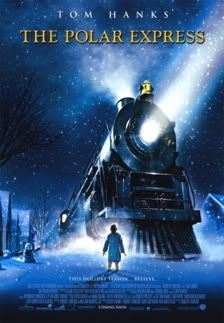
If I had any gumption or was paid any kind of money to actually put an effort to researching things for my column I would find out what division of Warner Bros. is responsible for the licensing/franchising of the POLAR EXPRESS “experience” but a cursory search of a real train ride near you that harnesses the story’s saccharine mythos yields this badly designed website in New Hampshire for the ride of a lifetime which ultimately led me to the official site for the POLAR EXPRESS train ride experience.

Taken from the website, the company leading the way for little boys and girls (and the parents, like me, who brought along a little Bailey’s) says:

Rail Events, Inc. has signed a license agreement with Warner Bros. Entertainment Inc. to license and help coordinate train ride events around the country based on the hit movie and award-winning book The Polar Expressâ„¢ written by Chris Van Allsburg.

Further, “Families are sure to enjoy their trip to the North Pole, complete with cocoa and cookies served on board the train, followed by a reading of The Polar Expressâ„¢ (ed. note – Love the TM usage) by Chris Van Allsburg.

Upon arrival at the North Pole, Santa will greet the children and each child will receive their own jingle bell, just like in the story. There will be caroling on board the train as your trip returns to the depot. This is a holiday ride the entire family will enjoy.” By all means, see if a train is departing soon from a depot near you.


Now, I would never begrudge anyone to make a dollar; I would support any half-baked idea to create a buck. (All hail and praise the assholes who plopped down any money for those Billy Bass animatronic plasticine fishes.) However, what I think irks me slightly is the co-optioning of the book as a means to extend a revenue stream a little further into the pockets of parents and rubes who don’t know better.

Por ejemplo, after you’re sold with a nauseating Josh Grobin, slo-mo trailer, resplendent with all the trickey that makes mothers weep at Hallmark commercials or that one coffee commercial where that douche Peter, with his perfect coif, comes home Christmas morning and brews up some Folgers, there’s a kind of sleaziness to the idea that there’s this ride you can pay money for that’s been endorsed by the suits at Warner Bros. and/or by some marketer.

I paid the price of admission and I have no problems with it. My kids loved it, they were happy, my wife was happy that they were happy and daddy was happy because of the fine people who make after dinner liqueurs; in some way I feel vindicated in sullying the experience by spiking my hot chocolate, and the hot chocolates of some fellow parents, with something taboo I shouldn’t have brought aboard. By the end of the night my kids had believed that Santa, indeed, visited the train car in which we chugged along for our hour and a half ride and were genuinely amazed by the uniqueness of the experience.

I think I’m going back again next year if it means I can spend a day or two extra with my family by ourselves.

At the end of my day I hate to be a part of some ancillary revenue stream of a movie studio that thinks nothing of pimping its properties out under the guise of it bringing families close together. Please. Warners would sooner enjoy my family being driven to divorce if it meant it could make a few more shareholders happy. I’m simply a cynical person when it comes to shameless marketing and plugging and the incessant push to consume the brand even further (Buy the book! Buy the movie! Buy a shirt or hat to commemorate the experience!) and I was honestly shocked as we drove away from the train station and didn’t see one mark on the jingle ball that every kid was given that would somehow let anyone who looked at know that this is was an Officially Branded Polar Express Jingle Ball. I guess that was the cynic in me.

I’m just happy my kids don’t yet know when they’re the unwitting audience of a Warner Brothers sales pitch.

Now, on to much more funny news: Pixar most definitely cribbed its plot for its newest film, WALL-E, from 1986’s SHORT CIRCUIT. After I made the accusation there was a curious letter that I received which I just had to share with the rest of the world that just sort of solidified the fact that I hope Fisher Stevens gets himself a good lawyer; it could be payday city.

“Chris,

So, as has been my Friday routine for many years now, I read your article while sitting at my desk & drinking my coffee…during which time, I probably should be working. More often than not, I’ll completely agree with your prognoses (on a side note, the notion that prognoses is the plural of prognosis, just seem grammatically incorrect… shouldn’t it be prognosises or prognosi?). Anyway, back to my point.

I was a little disappointed of your scathing review of Wall-E.

Although, I completely agree that it holds a not so subtle resemblance to Short Circuit, don’t consider this just another blatant rip-off from an industry who’s seemingly incapable of coming up with an original idea…look at is an homage to one of the late, great, bad, cheesy 80’s movies. Even though it starred Steve Gutenberg, Short Circuit gave every teenaged boy the opportunity so confirm that, yes indeed Ally Sheedy was hot and gave one last chance to see her before she disappeared into obscurity. If Wall-E can flash everybody in their 30’s to a simpler time when, unlike Paris Hilton & Britney Spears, pop culture icons had enough sense to keeps their drug abuse and sexual deviance behind closed doors, isn’t that a good thing?

All that said, I’m holding out hope that Wall-E is a box office blockbuster…’cause that can only encourage studios to rip-off…I mean, homages to more of the really bad 80’s movies, that although they had almost no artistic merit or any other redeeming qualities, were wildly entertaining. It’ll only be a matter of time before we see feature length, animated versions of Remo Williams, Tremors or Weekend at Bernie’s…and wouldn’t that make the world a better place?

Keep up the good work.”

The only portion of that letter I take umbrage with is the very resolute fact that if any red-blooded American tried to steal the story of Fred Ward’s greatest cinematic achievement there would be blood flowing in the street; it would be anarchy.

WALK HARD: THE DEWEY COX STORY (2007)

Director: Jake Kasdan
Cast: Jenna Fischer, John C. Reilly, Kristen Wiig, Tim Meadows, Angela Little Mackenzie, Matt Besser, David Krumholtz
Release: December 20, 2007
Synopsis: America loves Cox! But behind the music is the up-and-down-and-up-again story of a musician whose songs would change a nation. On his rock “˜n roll spiral, Cox sleeps with 411 women, marries three times, has 22 kids and 14 stepkids, stars in his own 70s TV show, collects friends ranging from Elvis to the Beatles to a chimp, and gets addicted to — and then kicks — every drug known to man… but despite it all, Cox grows into a national icon and eventually earns the love of a good woman — longtime backup singer Darlene (Jenna Fischer).

View Trailer:
* Large (QuickTime)

Prognosis: Negative. No.

Here’s the problem I have with this movie: there seems to be confusion on the part of either the filmmakers or the marketers. With only the trailer to go off of I can’t be sure whether this biopic that is a goof on biopics is going to be Zucker-like in nature or played for straight laughs. As it stands there seems like to be a lot of reaching going on in order to be funny or to essentially scream, “See what we’ve distilled from every single story about musicians”¦and how we’ve funnily poked fun of them!” I hate it when people want to club you over the head to make a point and that seems exactly like what’s happening here right from the beginning.

The 6 year old Dewey grabbing a guitar and with a faux voice singing the blues I think is supposed to make fun of the stories of musicians who say they’ve had it in them since they were little but even after we roll on this obvious gag the older Dewey making ladies strip their clothes, the priest who decries it and gets sucker punched for it, the guy puking from being overcome and the wife who plays the part of the Doubting Thomas (a common theme in the stories of people trying to make it big) is just grating for its obviousness.

They’re looking to lampoon these films but with Reilly’s character tongue flicking ice cream, his creation of a character that is oblivious and obnoxious, his protestation to his wife about walking hard (Ooh, his theme!) and his eventual demand to keep his monkey versus his kids just isn’t funny. I think it might play well to young men in their teens and twenties but they’re not useful for others, like me, who might want to have the comedy thrown at us in more subtle ways.

I mean, one of the best parts of this trailer is not Paul Rudd’s pathetic display of a character that just panders, but it’s Jack White’s appearance and talk about being able to chop a man in half with his hands that is amusing as all hell. He manages to be the greatest reason why this trailer just seems to be sticking its tongue in its cheek so much, being so ironic and making sure to wink at us as it does so, that it loses its ability to simply be funny.

The quicker we get to the end I think there is some redemption to be made of this movie. The aging Cox and his run ins with Patrick Duffy, his eventual Disco phase, the sad pitchman moment he has to go through, all these things add up to something for me that gives me a moment of pause. Yes, there could be all the aforementioned obviousness but if it can be smarter than that, if it can be more than just one of those SCARY MOVIE or NOT ANOTHER TEEN MOVIE flicks, if it can be more intelligent with its satire, there could be more hits than there could be misses; a mark of a great screwball comedy.

Quick Stop Thingamabobs: 12/07/2007

Filed under: Columns,Thingamabobs — UncaScroogeMcD @ 3:14 am

thingamabobs.jpg

The web. It’s a big place, full of plenty of distractions ““ some funny, some informative, some ludicrous, some disturbing, some inane, some profound. Each and every weekday, we present links to a few of our favorite finds”¦

————————————————

  • Never Mind The Buzzcocks, with guests Noel Fielding, Alfie Jackson, Philip Olivier & Donny Tourette, Part 1… (Thingamabob)
  • Russell Brand, Noel Fielding, & Steve The Goth… (Thingamabob)

December 6, 2007

Quick Stop Thingamabobs: 12/06/2007

Filed under: Columns,Thingamabobs — UncaScroogeMcD @ 1:28 am

thingamabobs.jpg

The web. It’s a big place, full of plenty of distractions ““ some funny, some informative, some ludicrous, some disturbing, some inane, some profound. Each and every weekday, we present links to a few of our favorite finds”¦

————————————————

  • Russell Brand on Friday Night With Jonathan Ross, Part 1… (Thingamabob)

December 5, 2007

Toy Box: Royal Guard

Filed under: Columns,Toy Box — admin @ 3:54 am

toybox.jpg

Everyone – good guys and bad guys alike – need their posse. They need a cadre of dudes around them to protect and guide, otherwise they end up like Britney. And nobody wants that.

In the original trilogy (and you know which trilogy I’m talking about without my having to say it, so don’t act so puzzled), Emperor Palpatine has these cool, deadly looking red robed guards. Now, it has to be a bit of a bummer being this guy’s guard, since he could clearly kick your ass with his little finger, but at least you get to wear the cool red robe.

In later films, which are actually earlier stories, Palpatine was just a lowly Senator. His guards were the guards of all the Senate as well, appropriately called Senate Guards (rather than Royal Guards). They dressed in blue robes with a slightly different helmet. When Sidious rose to power, becoming Emperor, he gradually phased them out with the red version, and renamed the group.

If you have any questions or comments, just drop me a line at mwc@mwctoys.com. On to the review!

Royal Guard mini-busts from Gentle Giant

toybox_120407_3.jpg

Gentle Giant produced a whopping 10,000 of the guards, but split it up into red ones and blue ones. The red, classic look is the majority of the run, with the blue version put in as a chase. I’m not sure of the actual numbers, but it looks like there was a blue for every two or three red, similar to what we’ve seen with some of the early Clonetrooper color variations.

toybox_120407_1.jpg

Packaging – ***
These come in the usual, bland, black packaging that we’ve seen dictated out of Lucasfilm for awhile now. On the upside though, they have windows to see the contents, and those nifty GG baseball card style Certificates of Authenticity. On an interesting side note, they used the exact same base foam shell for both busts, even though only the red has the removable weapon.

toybox_120407_2.jpg

Sculpting – ***1/2
While neither of these are extremly complex, it’s not really the fault of Gentle Giant. On certain characters in the past, I’ve complained about GG’s lack of texturing, but here it makes complete sense. These costumes always appear very smooth, very clean, and very ominous. The outfit itself lacks detail by design, so complaining about the smooth robes and helmet would be a tad disengenious.

toybox_120407_5.jpg

Other key aspects are right on target, like the scale of the helmeted heads to the body, arms and hands, and the stoic poses. Put a couple of the red guys behind your Emperor bust, and a couple of the blue behind the Palpatine bust, and you’ll have an excellent display.

toybox_120407_4.jpg

It’s worth noting here that the weapon on the Senate Guard is part of the permenant sculpt and is not removable. However, the majority of the weapon and left hand on the Royal Guard comes as a separate attachment, held tightly in place with magnets. It stays in plce quite well, and is much easier to get lined up and attached than some of the other recent busts.

Paint – ***1/2
Like the sculpt, the paint is going to be pretty basic on these. Lots of red or blue, a little black, and a dash here or there of some other color with the weapons perhaps.

toybox_120407_6.jpg

The paint work is extremely clean, and to make up for the lack of detail, they used a nice high gloss finish on the helmets, and a matte finish on the robes. This does an excellent job of setting the two apart, and adding visual pop to the otherwise consistent color.

Design – ***1/2
While neither of these busts is in a particularly dynamic pose, that fits the characters perfectly. Like the guard at the Tomb of the Unknown Soldier or Buckingham Palace, these guys were stoic bordering on statue. They made for nice set dressing, and added a bit of ‘royal’ to the look of the Senate (and later to the Emperor), but they weren’t men of action in the films. Creating a bust like this, where only the upper body is visible, in some sort of extreme action pose wouldn’t have fit the character well. Also, since the main display option is as a guard(s) to a Palpatine mini-bust in one form or another, an action pose would have made that impossible.

toybox_120407_8.jpg

toybox_120407_7.jpg

Value – red **1/2; blue **
The busts will run you the usual $45 each or so, except if you’re trying to get a Blue version. Since these were the smaller run, retailers had little choice but to either charge more, or set up package deals where you purchase two reds and you can also buy a blue at the normal cost.

Things to Watch Out For –
Not much. While the weapon on the Royal Guard is held very tightly by the magnets, I still wouldn’t carry him around or handle him without one hand keeping it savely in place.

toybox_120407_9.jpg

Overall – ***1/2
Gentle Giant’s track record with the monsters and masked characters in their Star Wars mini-bust line has been extremely good, certainly better than the overall quality of the human likenesses. These two continue that tradition, and will make an excellent addition to your collection. However, if you don’t already have the Emperor or Senator Palpaltine mini-busts, you will most likely be less inclined to take the plunge on buying one or more Guards.

Where to Buy –
There are plenty of great online options:

– the best deal around is at Urban-Collector, at least if you’re looking for both red and blue. You can buy them as a pair for $89. And if you’re just looking for the red, he’s just $37!

Andrew’s Toyz has a slightly higher price than some on just the red – $45 – but you can get a good price on the blue if you buy him as part of a set of three, two reds and one blue, for $135.

Amazing Toyz has a great price on the red at $40, or you can get the red AND blue together as a set for $120.

CornerStoreComics has just the red for $42, or the red AND a blue for $120 as a set.

Dark Shadow Collectibles is all out of the blue but has the red for $42.00

Alter Ego has just the red version, available for $42.50

Related Liniks –
Other reviews include the Jawas,
Dengar
,
Zuckuss
, Chewbacca and Darth Maul, Jedi Luke, Qui-Gon Jinn, Palpatine and Skiff Lando

« Newer PostsOlder Posts »

Powered by WordPress