FRED Entertainment

December 5, 2007

Quick Stop Thingamabobs: 12/05/2007

Filed under: Columns,Thingamabobs — UncaScroogeMcD @ 3:31 am

thingamabobs.jpg

The web. It’s a big place, full of plenty of distractions ““ some funny, some informative, some ludicrous, some disturbing, some inane, some profound. Each and every weekday, we present links to a few of our favorite finds”¦

————————————————

  • Ricky Gervais on another fine UK show, Room 101, Part 1… (Thingamabob)

December 4, 2007

Comics in Context #205: Identity Theft

Filed under: Columns,Comics in Context — admin @ 2:59 am

comicsincontext4.jpg

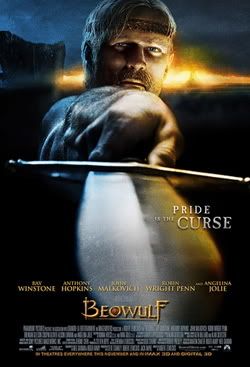
cic2007-12-04.jpgOne of this column’s frequent subjects, Neil Gaiman, and Roger Avary, best known as the co-writer of the 1994 film Pulp Fiction gave collaborated on the screenplay for the new Beowulf movie, directed by Robert Zemeckis. IDW has been publishing a four-issue comics adaptation of the movie. Zemeckis’s Beowulf is a sort-of-animated movie, employing the “performance-capture” he previously used for his 2004 Christmas-themed film The Polar Express (see “Comics in Context” #66: “A Christmas Potpourri”).

Their Beowulf movie is based on the epic poem of the same name which was written by an unknown author between the seventh and tenth centuries A. D. in Anglo-Saxon, also known as Old English. Hence Beowulf is one of the earliest known works in the history of the English language. The title character is the first great hero of the adventure genre that critic Northrop Frye calls “romance” in the English language. Beowulf therefore is our language’s first great example of the kind of character whom I call a “megahero,” who can justly be regarded as a forebear of the superheroes of the twentieth and twenty-first centuries. Indeed, Beowulf’s ability to hold his own in hand-to-hand combat with Grendel, a monster who is described as larger than human. may even suggest he possesses superhuman strength, as Samson and Hercules did.

Therefore, for many reasons, the Beowulf movie is a proper subject for this column.

Certainly Beowulf is a considerable advance over The Polar Express in utilizing performance capture technology to translate the performances of real actors into the actions and facial expressions of persuasively realistic computer-generated characters onscreen. Whether or not this technology will continue to advance, and Beowulf will one day look comparatively primitive, remains to be seen. Watching the film I was usually impressed by its mimicking of reality, although there were still many times throughout the film when the characters looked to me too much like waxen figures, breaking the illusion.

In retrospect, perhaps the technology’s limitations were most exposed by the notorious depiction of Grendel’s mother as a nude version of Angelina Jolie, the actress on whose performance the character was based. (Hereafter I shall refer to the movie’s Ma Grendel as Grendelina Jolie. Readers with time to spare are encouraged to write her a theme song to the tune of Frank Loesser’s song “Thumbelina” from the 1952 movie musical Hans Christian Andersen.) I didn’t find the sight of Grendelina as erotic as it should have been, and I believe that the difference is that the sight of actual flesh can be considerably more sensual than Zemeckis’s cinematic wax.

Although there are film critics who argue that a movie must diverge from a literary work that it adapts, I suspect that the general public assumes that a
movie adaptation is faithful to the original book. Moreover, a movie adaptation may displace the original work in the public imagination: I expect that more people know MGM’s Wizard of Oz than L. Frank Baum’s book.

Neil Gaiman confronted these problems in discussing an “educational pack” for the Beowulf movie in the Tuesday, November 6, 2007 entry in his blog: “Incidentally, I think the educational pack done for Beowulf is simply wrong. Part of the point of the Beowulf movie that Roger and I wrote is the places it diverges from the story of Beowulf, and the ways it explores the relationship between a person and a story about a person. I don’t think they should be putting the stuff we made up on material intended for schools — it seems like a way of justifiably irritating teachers, who have enough to put up with when they try to teach Beowulf without us making their lives harder. It would have been much more interesting to have put up either the original, or one that talked about the differences — I’d absolutely encourage high schoolers to see our version and talk about what changed and why.”

I didn’t encounter the original Beowulf until I was in college, and it is a subject that has occupied scholars who are long past their student days. One of my regular strategies in writing “Comics in Context” is to compare an adaptation to the original work to discover what has been changed, what hs been gained, and what has been lost. In the case of Beowulf, I turned to poet Seamus Heaney’s recent verse translation of the original Old English poem, which, surprisingly, became a best seller in 2000. I obtained a copy of the 2002 Norton Critical Edition of Heaney’s Beowulf: A Verse Translation, which includes numerous critical and historical essays, including J. R. R. Tolkien’s celebrated “Beowulf: The Monsters and the Critics.”

The poem begins by speaking of the Danes, “and the kings who ruled them had courage and greatness” (Heaney translation, line 2; Norton edition, p. 3). Among those kings was Shield Sheafson, whom the poet describes thus: That was one good king” (Heaney line 11, p. 3).

Shield had a son, Beow, who was “a comfort sent by God to that nation” (Heaney lines 13-14, p. 3). The poet praises Beow for his “prudent” course of action:
“giving freely while his father lives
so that afterward in age when fighting starts
steadfast companions will stand by him
and hold the line. Behavior that’s admired
is the path to power among people everywhere.” (Heaney lines 21-25, p. 3)

Thus in the first page of the translation, the Beowulf poet establishes some of the work’s major themes. One of them is to describe and commend the behavior of the “good king,” the good leader of men, and, perhaps, the good man in general. The poet points out that “behavior that’s admired” wins the loyalty of others.

Moreover, whereas the Beowulf legend has its roots in pre-Christian culture, the poem Beowulf, as it has come down to us, was written from a Christian perspective. A benevolent God, “the Lord of life, the glorious Almighty” (Heaney lines 16-17, p. 3), watches over the human race, and sent Beow into the world to be a “leader” to the Danes.

Beow was the grandfather of Hrothgar, the king who commanded the construction of Heorot,
“a great mead-hall
meant to be a wonder of the world forever;
it would be his throne-room and there he would dispense
his God-given goods to young and old–
but not the common land or people’s lives.” (Heaney lines 69-73, pgs. 405)

I assume that in choosing the phrase he did, Heaney sought to link Heorot with the legendary Seven Wonders of the World, of which the Great Pyramid of Giza is the sole survivor. So Heorot is presented as a great monument of civilization. Presumably it is also a triumph of art, as a work of architecture.

Moreover, Heorot is Hrothgar’s “throne-room”; it symbolizes Hrothgar’s government, as, say, the White House does the American presidency. Hrothgar is a good king. Rather than hoarding his wealth (like the dragon later in the epic), Hrothgar would “dispense his God-given goods to young and old.” A Norton edition footnote points out that Hrothgar could not “dispose of land used in common” or “unlawfully kill his subjects” (Norton p. 5): again, Hrothgar is a good king. Moreover, he is a king who follows God’s will: his goods are “God-given,” and in distributing them to his people, he performs the Christian act of charity. Hrothgar is “the wise king” (Heaney, line 1400, p. 38).

Hrothgar intends Heorot to be “a wonder of the world forever” (Heaney line 70. p. 5). But here, at the outset of the work, the Beowulf poet introduces another of his major themes: that no one and nothing lasts forever in this mortal world.

“The hall towered,
its gables wide and high and awaiting
a barbarous burning. That doom abided,
bit in time it would come: the killer instinct
unleashed among in-laws, the blood-lust rampant.” (Heaney lines 81-85, p. 5).

A footnote (Norton p. 5) explains that Heorot is doomed one day to be burned as a result of a feud between the Danes and the Heatho-Bards. Neither man nor his works are immortal in this world. The foretold destruction of Heorot may parallel Ragnarok, the twilight of the gods, with the destruction of Valhalla, or the Christian concept of the Apocalypse, the end of the world.

Heorot will eventually meet its end as a result of “barbarous” action, resulting from “the blood-lust rampant.” The nature of the good king and the true hero seems to be important to the Beowulf poet because he is well aware of the evil of which humanity is capable. Through their good and wise reigns as rulers, Hrothgar and later Beowulf triumph over the dark side of humanity. Their reigns represent the victory of civilization–and Christian virtue–over barbarism and “blood-lust.” But that triumph, too, will not last forever. Hence Heorot is also like King Arthur’s Camelot, a mythic high point of Western civilization that was doomed to fall.

That barbarism and blood-lust is incarnated in the monstrous figure of Grendel, “a powerful demon, a prowler through the dark” (Heaney line 86, p. 5). That description links Grendel to both the Jungian shadow and the Christian concept of hell.

In the movie it seems that Grendel has super-sensitive hearing, so that even though he dwells miles away from Heorot, he can hear the noise from the partying in the mead-hall. The sound infuriates Grendel, as if he were the stereotypical cranky old man insisting that the kids next door turn their stereo down.

Perhaps, too, he is like Dr. Seuss’s Grinch, living on his mountaintop, angered by the sound of the Whos down in Whoville celebrating Christmas. (Wait a minute: “Grinch” and “Grendel” start with the same letters. You don’t suppose that Dr. Seuss [aka Theodor Seuss Geisel] was inspired by Beowulf in creating the Grinch? A quick Google search demonstrates that the idea has occurred to other people as well: see Robert L. Schichler, “Understanding the Outsider: Grendel, Geisel, and the Grinch,” Popular Culture Review 11.1 [Feb. 2000], 99-105. and here)

But there’s more to Grendel’s motivation than overly sensitive ears.

“It harrowed him
to hear the din of the loud banquet
every day in the hall, the harp being struck
and the clear song of a skilled poet
telling with mastery of man’s beginnings,
how the Almighty had made the earth
a gleaming plain girdled with waters;
in His splendor He set the sun and the moon
to be earth’s lamplight, lanterns for men. . .
. . .and quickened life
in every other thing that moved.” (Heaney, lines 87-98, p. 5)

The banquet represents civilization and community as well as happiness, all of which the monstrous outsider Grendel opposes. But notice that Grendel also hates the music of the harp and the “song of a skilled poet,” who is not unlike the author of Beowulf itself. In other words, Grendel is opposed to one of civilization’s achievements, the arts. Further, the poet’s song recounts how the benevolent God, who conforms to the Christian image of the deity, created the earth, at least in large part as a home for humankind. Like the devil, Grendel is opposed to God. We can also see that Grendel opposes creation in any form, whether it is the idea of God creating the world, or humanity’s artistic creation. The song is also about how God “quickened life in every other thing that moved.” Ultimately, Grendel is opposed to life other than his own: Grendel is the bringer of death.

Whatever the non-Christian origins of the Beowulf myth, the Beowulf poet certainly roots Grendel firmly in the Christian mythos. Grendel is described as “a fiend out of hell” (Heaney, line 100, p. 5) who once dwelled among “the banished monsters” who are the descendants of Cain, the Biblical first murderer. Thus the poet links Grendel with both Cain and Satan. (Lines 1265-1266, on page 34, clearly establish Grendel as Cain’s descendant.)

Grendel invades Heorot, killing Hrothgar’s people, not just once, but over and over, for a dozen years. The poet depicts Grendel not just as a killer but as a usurper.

“So Grendel ruled in defiance of right
one against all, until the greatest house
in the world stood empty, a deserted wallstead.” (Heaney, lines 144-146, p. 6)

Not only is Grendel the enemy of civilization, but he also represents a nightmarish vision of the bad king or leader. The poet condemns Grendel for his refusal to negotiate with his adversaries or pay reparations to the families of his victims!

“Sad lays were sung about. . .
the vicious raids and ravages of Grendel,
his long and unrelenting feud,
nothing but war; how he would never
parley or make peace with any Dane
nor stop his death-dealing nor pay the death-price,
No counselor could ever expect
fair reparation from those rabid hands.” (Heaney, lines 151-158, p. 7)

Hearing of what Grendel had done, Beowulf, “like the leader he was” (Heaney, line 206, p. 8), gathers together men in his country of Geatland and sets sail to go to Hrothgar’s aid. Beowulf seeks glory, which is a virtue in the world of this poem, but he is also extending help to people in distress, a Christian virtue. As we shall see, Beowulf is the poet’s foremost example of the good man, the good leader, and, eventually, the good king. Upon landing, Beowulf and his men “thanked God for that easy crossing on a calm sea” (Heaney, lines 227-228, pgs. 8-9), demonstrating their allegiance to a deity whom the poet surely intends to be the Christian God, even if the poem is set in a time before Christianity came to Denmark.

Then they are confronted by Hrothgar’s watchman, who “challenged them in formal terms” (Heaney, lines 235-6, p. 9). The formal language of the watchman’s speech and Beowulf’s response demonstrates that they are highly civilized men, more comparable to Arthurian knights than to barbarian warriors. Even before Beowulf speaks, the watchman recognizes that “he is truly noble” (Heaney, line 250, p. 9).

Impressed by Beowulf’s heroism, the watchman escorts him to Heorot, which seems nothing like the gray, dark, depressingly primitive structure in Zemeckis’s movie.

“. . .till the timbered hall
rose before them, radiant with gold.
Nobody on earth knew of another
building like it. Majesty lodged there,
its light shone over many lands.” (Heaney, lines 307-311, p. 10)

Why, it seems like an earthly heaven, even despite Grendel’s assaults. Whereas Grendel embodies darkness, Heorot shines with golden light. Moreover, it seems that the civilization that Heorot represents inspires the people of many lands. Again I am reminded of King Arthur’s Camelot.

Beowulf undergoes another challenge in formal language from another Campbellian threshold guardian, Wulfgar, and responds eloquently. Then Hrothgar welcomes Beowulf, recognizing him as an emissary of God:

“Now Holy God
has, in His goodness, guided him here
to the West-Danes, to defend us from Grendel.” (Heaney, lines 381-383, p. 12)

Beowulf asks Hrothgar for “the privilege of purifying Heorot” (Heaney, line 431, p. 13); the choice of words conveys a religious subtext. Indeed, Beowulf acknowledges his belief in God: “And the Geat placed complete trust in his strength of limb and the Lord’s favor” (Heaney, lines 669-670, p. 19).

By the way, in Heaney’s version, Beowulf removes his armor and says he will not use weapons against Grendel (who turns out to be magically invulnerable to them, anyway), but there is no indication that Beowulf is actually naked during the battle with Grendel, as he is in the movie, wherein Beowulf’s nudity seems, shall we say, ostentatiously odd.

Beowulf wrenches off Grendel’s arm. fatally wounding the monster, who retreats to his lair to die. Soon afterwards, a singing storyteller delivers a recitation about another legendary hero, Sigemond, the slayer of a dragon, to whom Beowulf is compared. (Beowulf will also slay a dragon later in the epic.) The recitation ends with what may seem an inexplicable reference to another monarch: “But evil entered into Heremod” (Heaney, line 914, p. 24).
But since the Beowulf poet is out to describe the “good king” and the great hero, it makes sense that he invokes not only another great hero of the past, Sigemund, who parallels Beowulf, but also Beowulf’s opposite, the evil Heremod, an example of a bad king.

Hrothgar makes it clear that the Christian God worked through Beowulf to rid them of Grendel:

“First and foremost, let the Almighty Father
be thanked for this sight. I suffered a long
harrowing by Grendel. But the Heavenly Shepherd
can work his wonders always and everywhere.” (Heaney, lines 927-930, p. 25)
“But now a man,
with the Lord’s assistance, has accomplished something
none of us could manage before now. . . .(Heaney, lines 938-940, p. 25).

The word “harrowing” reminds me of Christ’s “Harrowing of Hell.” Hrothgar also reminds me of the mythic Fisher-King, the wounded monarch who is figuratively impotent, and whose realm declines into a wasteland. Beowulf is the younger, more virile hero who saves the kingdom. Hrothgar adopts Beowulf as a son, making him heir to the restored kingdom.

Indeed, later, the poet describes how Beowulf behaved as a Christian hero in defeating Grendel:

“The monster wrenched and wrestled with him,
but Beowulf was mindful of his mighty strength,
the wondrous gifts God had showered on him:
he relied for help on the Lord of All.
on His care and favor. So he overcame the foe. . . .” (Heaney, lines 1269-1273, p. 35)

Beowulf is rather like the Biblical Samson, combining his great strength with his faith in God.

In a seeming digression, “the king’s poet”–notice how frequently poets and storytellers turn up in Beowulf–tells the story of “the gallant Finn slain in his home” (Heaney, lines 1147-1148, p. 31). Amidst the celebration of Beowulf’s victory this comes a memento mori, a reminder that even heroes can eventually fall victim to the violence of the world.

And the Beowulf poet considers his title character a true hero. He tells us, simply, “that good man, Beowulf the Geat, sat between the brothers,” Hrothgar’s sons (Heaney, lines 1189-1190, p. 33).

Yet the poet even restates his theme of inevitable mortality by putting it in the mouth of his victorious young hero. Before setting out on the trail of Grendel’s mother, Beowulf observes that “For every one of us, living in this world means waiting for our end. Let whoever can win glory before death.” (Heaney, lines 1386-1388, p. 37).

According to the poem Ma Grendel may be a “monstrous hell-bride” (Heaney, line 1259, p. 34), but she also “as far as anyone ever can discern looks like a woman” whereas Grendel was “warped in the shape of a man” (Heaney, lines 1350-1352, p. 36), so Zemeckis is justified in making Grendel’s mother look like Angelina Jolie rather than a repellent monster.

Again, in the poem Beowulf fulfills the role of the Christian hero in defeating and beheading Grendel’s mother: “holy God decided the victory” (Heaney, lines 1553-1554, p. 41).

During the celebration of Beowulf’s triumph over Grendel’s mother, Hrothgar returns to the subject of the evil king Heremod, who “killed his own comrades, a pariah king who cut himself off from his own kind” (Heaney, lines 1714-1715, p. 45). Hrothgar argues that a leader who loses sight of his own mortality will be corrupted by power:

“He [God] permits him to lord it in many lands
until the man in his unthinkingness
forgets that it will ever end for him. . . .
The whole world
conforms to his will, he is kept from the world
until an element of overweening
enters him and takes hold. . . .” (Heaney, lines 1732-1734, 1739-1741, p. 45)

Hrothgar them warns Beowulf:

“Choose, dear Beowulf, the better part,
eternal rewards. Do not give way to pride.
For a brief while your strength is in bloom
but it fades quickly. . . .
. . . and death will arrive,
dear warrior, to sweep you away.” (Heaney, lines 1759-1762, 1767-1768, p. 46)

The corruption of power and of heroes is a theme of Zemeckis’s Beowulf, but in the poem Beowulf never succumbs to this temptation. Soon after Hrothgar’s speech comes another reference to a bad monarch who did, Queen Modthyth, and who provides yet another contrast with the incorruptible leaders Hrothgar and Beowulf.

Beowulf eventually becomes king of his homeland Geatland (whereas in the movie he becomes king of Denmark): “He was a good king” (Heaney, line 2390, p. 60).

But outside Beowulf’s realm violence and evil still ravage the world: “Pillage and slaughter have emptied the earth of entire peoples” (Heaney, lines 2265-2266, p. 58). Not even Beowulf’s counterpart to Heorot (and Camelot) is permanent. A dragon, another monster that embodies the world’s violence, devastates Geatland, and even incinerates Beowulf’s own home, “the best of buildings” (Heaney, line 2326, p. 59).

Moreover, Beowulf recognizes that even his long, heroic life has come to its end, and that he will not survive his combat with the dragon: “He was sad at heart, unsettled yet ready, sensing his death” (Heaney, lines 2419-2420, p. 61). He cannot escape the inevitability of old age and death.

Indeed, the aged Beowulf, like Hrothgar before him, has, to an extent, become the impotent king: look what happens in the battle with the dragon to that obvious phallic symbol, his sword:

“The glittering sword
infallible before that day,
failed when he unsheathed it, as it never should have,
For the son of Ecgtheow [meaning Beowulf], it was no easy thing
to have to give ground like that and go
unwillingly to inhabit another home
in a place beyond [meaning heaven]; so every man must yield
the leasehold of his days.” (Heaney, lines 2584-2591, p. 65)

As the battle continues, Beowulf’s “ancient iron-gray sword” even “snapped” in two (Heaney, lines 2680-2681, p. 67).

Out of pride, Beowulf insisted on battling the dragon alone. The troops who accompanied him fled the scene of the battle out of cowardice. The sole exception was a young warrior named Wiglaf, who goes to Beowulf’s aid, and who clearly is intended by the poet to be Beowulf’s spiritual heir, a hero of the next generation. Working together as “partners in nobility” (Heaney, line 2707, p. 68), Wiglaf and Beowulf succeed in killing the dragon.

Mortally wounded in his combat with the dragon, the dying Beowulf reflects on his life:

“I took what came,
cared for and stood by things in my keeping,
never fomented quarrels, never
swore to a lie. All this consoles me,
doomed as I am and sickening for death;
because of my right ways, the Ruler of mankind
need never blame me when the breath leaves my body
for murder of kinsmen.” (Heaney, lines 2736-2743, p. 68)

In a mark of honor, Wiglaf and others burn Beowulf’s body on what the poet calls simply “the good man’s pyre” (Heaney, line 3113, p. 77). In Beowulf‘s final lines, the poet sums up,

“They said that of all the kings upon earth
he was the man most gracious and fair-minded,
kindest to his people and keenest to win fame.” (Heaney, lines 3180-3182, p. 78)

So, yes, indeed, the Zemeckis-Avary-Gaiman Beowulf certainly “diverges from the story of Beowulf,” the original poem. (And here I issue a spoiler warning for those who have not yet seen the movie.) Rather than depicting a proto-Christian hero, the movie indicates that the rise of Christianity put an end to the age of heroes. Although the movie’s Beowulf grows older, the film fails to convey the sense that age has weakened him, that his death in combat with the dragon is inevitable, or that his tragedy is that of all humanity: the inevitability of old age and death.

Moreover, the Beowulf poet is clearly intent both on creating images of the ideal hero, leader and ruler and on urging his readers to aspire to the high standards that his ideal leaders set. But the Beowulf movie refuses to believe in the poet’s “good kings,” instead depicting both Hrothgar and Beowulf as deeply, morally flawed men. The Hrothgar of the movie is a drunken boor, who can barely manage to keep his clothing on during the celebration at the film’s start, and whose young wife shrinks from his touch. The Beowulf poet tells us that his title character “never swore to a lie,” yet the triumphs of the Beowulf of the movie in slaying monsters are marred by the fact that he is a liar. The movie’s Beowulf claims to have slain Grendelina, whereas he instead became her lover and let her live, thereby not just compromising with evil but becoming its enabler. He follows a pattern set by Hrothgar, who has likewise concealed his own tryst with Grendelina, which spawned the monstrous Grendel, a living representation of the consequences of his liaison with evil. Similarly, the dragon proves to be the son of Beowulf and Grendelina, representing his own dark side, unleashed to wreak destruction. In the movie Beowulf perishes not so much due to the inevitability of human mortality but because he cannot destroy the evil he has created without destroying himself. And is there any hope for the future? At the film’s end, Wiglaf, who is not depicted as a young man, is left staring at Grendelina, leaving the audience to wonder of he will continue the cycle by becoming her lover and fathering yet another monster.

Neil Gaiman says that the Beowulf movie “explores the relationship between a person and a story about a person.” But why should the movie’s deeply pessimistic and cynical depiction of Beowulf be more credible than the original poet’s portrayal of Beowulf as a truly good and noble man? Over a millennium ago the Beowulf poet could extol the human potential for moral greatness. The Beowulf movie dismisses the possibility. This is not progress.

Besides, the original Beowulf is a fictional character as depicted in the epic poem. It is that poem that defines Beowulf’s character. The Beowulf of the Zemeckis movie may have the same name and perform many of the same actions, but he does not have the same personality, and certainly not the same moral code, as the Beowulf of the poem. To put it another way, the Beowulf of the movie has a different characterization than the Beowulf of the poem. Or to put it bluntly, the movie’s Beowulf is not the same person as the poem’s Beowulf.

You cannot faithfully adapt or interpret a work if you turn the central character into a different person. However interesting the Zemeckis movie may be, it might as well be called something like Fred the Dragon-Slayer; it’s not about the Beowulf readers have known for centuries.

Copyright 2007 Peter Sanderson

Quick Stop Thingamabobs: 12/04/2007

Filed under: Columns,Thingamabobs — UncaScroogeMcD @ 2:13 am

thingamabobs.jpg

The web. It’s a big place, full of plenty of distractions ““ some funny, some informative, some ludicrous, some disturbing, some inane, some profound. Each and every weekday, we present links to a few of our favorite finds”¦

————————————————

  • When Shia says “No”, he means “NO No no no nonononono”… (Thingamabob)
  • Who doesn’t want Ben Franklin for Christmas this year?… (Thingamabob)

December 3, 2007

Quick Stop Thingamabobs: 12/03/2007

Filed under: Columns,Thingamabobs — UncaScroogeMcD @ 1:02 am

thingamabobs.jpg

The web. It’s a big place, full of plenty of distractions ““ some funny, some informative, some ludicrous, some disturbing, some inane, some profound. Each and every weekday, we present links to a few of our favorite finds”¦

————————————————

  • Alvin & The Chipmunks celebrate Christmas… (Thingamabob)
  • We Three Kings & Star Of Wonder, Claymation-style… (Thingamabob)
  • Not quite Christmas, but I still love it… (Thingamabob)

December 1, 2007

Trailer Park: BEOWULF and Looking Beyond The Numbers

Filed under: Columns,Trailer Park — admin @ 12:08 am

By Christopher Stipp

Archives? Right Here”¦

Instead of manning-up and actually going the emotionally hard route of being outrightly rejected by publishers, I’m rejecting them first and allowing you to give my entire book a preview, let you read the whole thing or, if you like, download the whole damn thing at no cost. Download and read my first book “Thank You, Goodnight” for FREE.

I do realize that the there will always be big, bloated movies that will always haunt my local cineplex.

After seeing the haul that BEOWULF, the movie where this is the penultimate example of a book being better than the film based on it, took last week it was hard not to believe that there is nothing that Hollywood can’t turn into a bona fide hit at the box office.

The problem, though, is that its second week drop of over 40%, its cumulative total around 56 million at this point, means that it has a long road to hoe to get it into the black beyond its predicted budget of around 150 million. Yes, you’ve got those IMAX screenings and all those other kitschy 3-D offerings, to say nothing of international box office, DVD, blah, blah, blah but it doesn’t take away from the obvious point that there is a steep climb ahead for this investment to pay off. I can’t say I’m surprised by the drop when you see that this is Zemeckis second dip into the well of “motion capture” (he gets a little testy when you mention the words animation for reasons I can’t understand) and it has the same bizarre look that THE POLAR EXPRESS had when you compare the two; the same vacant look in the characters’ eyes, the less than fluid movement of the people in the frame and the people’s mouth movements border on dubbed kung-fu imports all contribute as to why this is movie that is good but not earth shattering as some would have you believe.

The point here isn’t to point a finger at a movie that did solid box office but when you hear about the comparisons of other movies of its kind, the one I heard a few times being A SCANNER DARKLY, there is something I hope to try and figure out about what the difference is between movies of this variety.

I know that what DARKLY did was use rotoscoping, digitally capturing the movements beforehand and then doing everything else in post, its Wikipedia entry even mentioning the word “animate” (Gasp!), but the one glaring difference I didn’t know before investigating these productions was that DARKLY cost around 6 to 8 million to produce compared to the 150 million that BEOWULF took to get it to the big screen.

Now, these are apple and orange comparisons although I think Variety would like to have a few words about what constitutes animation. However, and I would posit, if you’re talking about the budgets of movies of similar films and want to have a discussion of economies of scale what on earth was Zemeckis doing that would explain the gap in this creative endeavor? THE POLAR EXPRESS was an OK movie, it wasn’t superb, but with a production budget that went upwards of about 170 million wouldn’t it be safe to assume that there have been more than 20 million dollars of savings that could have been made to BEOWULF to try and get this number down but, even excluding that, there is something about the process of marketing this film that couldn’t bring people to the trough. True, it was number one last week and I am sure there are people who still believe that the opening weekend is the end-all-be-all benchmark but in an age of strikes and shareholders who are demanding more value from their corporate overlords there is just the sense I have about the What If’s that come along with thinking about how many variations of how many different stories could have been had for the same amount of money.

SCANNER DARKLY didn’t blow the air up anyone’s skirts, yes, but when you talk to those filmmakers who have the penny pincher mentality of being able to make more with less there is something inherently timely about the argument for films that bloat to this size and have nothing more to show for it than a few choice pull quotes and the promise that the 32% drop POLAR experienced in the second week (its third release saw a surge in positive gains, it was Thanksgiving weekend) will most likely ensure a downward trend from here on out. That is, unless, Zemeckis animates a Santa cap on old Ray Winstone…which I don’t think is likely to happen.

It would be nice if people could learn from past experiences but it looks like the more things change, there are those who want to keep it the same. But it’s not Zemeckis’ fault, either, if any of you think I’m pointing a finger. Again, this is the movie…business. He was slick and smart enough to convince someone to pour money into this movie and if there are any kudos he deserves it is for having a great business acumen, convincing those with a checkbook that this was going to be a lock.

Now, if anyone out there wants to listen to me I have a brilliant idea of converting some works of Proust into an animated (I have no problems with the word) adventure filled with violence, guns and butt secks. Who cares if this strays from the text, it certainly didn’t stop Bob.

From the I Love Boobs file: A special thanks has to go out to MAS for their help in getting some of these interviews up on the site. Lord knows I need it and their donations of time and effort is always appreciated.

>

CLOVERFIELD (2008)

Director: Matt Reeves
Cast: Mike Vogel, Michael Stahl-David
Release: January 18, 2008
Synopsis: Secrecy surrounds this monster movie from producer J.J. Abrams (LOST). A mysterious creature attacks New York City, sending the metropolis into chaos.

View Trailer:
* Large (QuickTime)

Prognosis: Negative. Nope, I just don’t see what the fuss is about, this modern day BLAIR WITCH PROJECT. The hype doesn’t equate to anything I can see in this trailer.

Usually, pre-movie release hype centers around a script or a director or even controversy that revolves around a movie’s production yet here, when all anyone had to go off of was a blurry picture of the poster for the film and the doubt whether the flick was going to be called MONSTROUS or the now titled CLOVERFIELD. I am constantly amazed by how much ink some people are willing to spill on nothing more than some clever marketing.

As it stands, this looks like a mesh between GODZILLA and any number of fauxmentaries, the quite unbelievable drama has the sheen of a YouTube lonelygirl15 stench on it, that pass as entertainment. Simply put, if you’re going to lie to me at least grant me the chance to make it feel like you’re not blatantly trying to suspend my disbelief.

For starters, the card that reads that there was a “found camera” that captured everything we’re about to see is just a modern hack tool that would’ve been novel a decade ago; thanks for trying, though, as this just starts me thinking like everything from this point has been purposely rigged to make it feel real. Thanks for spoiling my interest.

The perfectly framed shot of the Statue of Liberty’s head bouncing down the street, I will admit, is pretty keen but the “Oh my God!”s just make me laugh more than anything else because”¦it is all false even in the movie magic sense.

Hey, a perfectly lit video message for anyone who might stumble upon his camcorder later! What a nice companion piece to go with all this other really good video footage of this attack on New York.

“Whatever it is…it’s winning”

From here, I take it, we’re supposed to be assaulted with disjointed shakey-cam footage to increase the tension of what we’re seeing but because we’re already aware, or should be aware, that this is a mix of what we’re supposed to believe is real it just feels needlessly hysterical and over the top. The pixilation of the American soldier’s face is a goofy ass accent that shouldn’t have been done because what comes out of his mouth only does a disservice to the film’s chance of eliciting genuine “oohs” rather than laughing at what they’re doing.

See, what I hope is being understood is that this movie could be very interesting. The dozen or so troops opening fire in a walking line towards the unseen beast that is attacking New York, should I even mention what happened to GODZILLA when its marketing did all it could to not show you the lizard, is a cool shot. That part is actually interesting but the extended scene of these goofballs screaming their heads off in an obvious soundstage that looks like a quickie mart just takes back any goodwill I’m giving it.

Same thing goes for the helicopter shot; it’s intense as fuck but when you have the lead actor saying this is a record so people know what happened I can’t help but think that when I try to record anything so people can know what happened at a birthday or a holiday event my camcorder usually craps out after an hour. Unless this guy is weighed down with a Chewbacca like battery belt any explanation of how he can get all this done will just feel well”¦false.

BE KIND REWIND (2008)

Director: Michel Gondry
Cast:
Mos Def, Jack Black, Danny Glover
Release: January 25th, 2008
Synopsis: Jerry (Jack Black) is a junkyard worker who attempts to sabotage a power plant he suspects of causing his headaches. But he inadvertently causes his brain to become magnetized, leading to the unintentional destruction of all the movies in his friend’s (Mos Def) store. In order to keep the store’s one loyal customer, an elderly lady with a tenuous grasp on reality, the pair re-create a long line of films including The Lion King, Rush Hour, Ghostbusters, When We Were Kings, Back to the Future, Driving Miss Daisy, and Robocop , putting themselves and their townspeople into it. They become the biggest stars in their neighborhood.

View Trailer:
* Large (QuickTime)

Prognosis: Negative. Sometimes it just pays to be ignorant.

It wasn’t until I was through the mid point of this trailer when I realized it was Michel Gondry who directed this film. I hadn’t ever heard of the film, I didn’t keep up with the production of the film and it wasn’t until later in the trailer when I read Michel’s name did I put it all together.

It didn’t take away from the oddness that is his style and, in fact, I was perplexed by what this movie was supposed to be about up until that point.

I was mesmerized by the premise, mostly. The trailer opens up, innocuously enough, with people coming in to a video store asking about their seemingly erased tapes. I thought it was a unique way to introduce a movie with its insistence on having an extended moment where you have what is a bit of strangeness from the perspective of trying to determine where we are and what time it is. Gondry has a way of pushing that 4th wall ever so slightly and he gets kudos from me for the small, yet effective, visual trick of bending the screen with static.

Where this trailer eventually goes, with the GHOSTBUSTERS soundtrack beneath it, is a wondrous take-off as Jack Black for once throttles it back a smidge and actually engages me as a viewer. The lo-fi reenactment of the actual GHOSTBUSTERS film, in an effort to somehow salvage his VHS video operation, is equally catchy. I would have no idea that Mos Def had it in him to play such a straight man but that’s the brilliance of Gondry, to take conventional actors and mold them into something more than what we’re used to.

The second half of the trailer is equally strange but it’s engaging. The recreation of modern films could seem like a one trick gimmick but there’s something more at play if you’re paying hard enough attention.

There is a sense that this is a film built on how other films can filter their way through reinterpretation. It’s the modern equivalent of a modern cover song; you have what was there before and, if you’re honest and faithful to the source material, there could be something that wasn’t immediately there before you heard it. There’s something new and fresh about the perspective it has and the trailer here expresses some of that between-the-lines love for film. I’m not quite sure the remake of DRIVING MISS DAISY does a lot for my confidence in the success of the film, it gets too “Jack Black-y” for my taste, but hopefully it’s just one moment in a slew of other films they recreate.

Some of what could immediately be taken for a gimmick surely could be there within the final cut. But, what’s clear by the end of this trailer is that if there is a fair amount of thoughtfulness put into the idea then there could be another reason to just enjoy what Gondry does best.

If I have any issue at all with this trailer it is that I’m just not sure if this is a movie I feel I need to see immediately; my final impression is tinged with the idea that you have these schlubs who have a old and busted video store, create mini movies to stay alive, Jack Black does his shtick, Mos Def looks like the weigh holding everything down and they all rise to prominence within the community.

I think the biggest sum of all these parts is: so what? There’s nothing compelling about this trailer and that’s the most disappointing part about this preview.

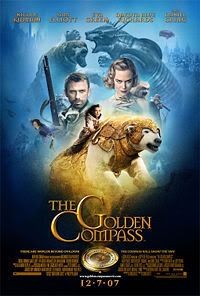
THE GOLDEN COMPASS (2007)

Director(s): Chris Weitz, Bob Shaye
Cast: Nicole Kidman, Dakota Blue Richards, Sam Elliott, Eva Green, Daniel Craig
Release: December 7th, 2007
Synopsis: Based on author Philip Pullman’s bestselling and award-winning novel, The Golden Compass tells the first story in Pullman’s His Dark Materials trilogy. The Golden Compass is an exciting fantasy adventure, set in an alternative world where people’s souls manifest themselves as animals, talking bears fight wars, and Gyptians and witches co-exist.

View Trailer:
* Large (YouTube)

Prognosis: Positive. This could possibly be the best return to greatness I have ever seen for a trailer.

Based on this shitageous trailer for the film eons ago when it did nothing for me and only served to aggravate my sense that this was going to be nothing more than a lighter version of the CHRONICLES OF NARNIA and that I should just find another indie to indulge myself in because of the bloated nature of this awful looking film, this trailer came out and has changed my attitude 100%.

Just because it’s going to be an epic it doesn’t mean you have to market it as so.

Someone got this through their fat skull and realized that trailers were meant to lie to people and, even if your film is six and a half hours you have two minutes and twenty nine seconds to sex it up a bit. The first trailer, which you can see any number of places, is OK. It’s nothing great; it certainly didn’t excite me enough to even talk about. The reason why it lacks in ways too numerous to list is exactly because there are too many things to list. The trailer challenges you to keep a running tab on all the things that are going on.

Now, I don’t purport to be an expert on the source material. I know a lot of geeks and nerds get their wide panties in a bunch when adaptations stray from the literary text from which they originated. What these dweebs don’t realize is that it is called the movie business for a reason. There are just some elements that have to go by the wayside and some that have to be included. THE LORD OF THE RINGS trilogy excelled simply because of its faithful adaptation, and the company behind the franchise is smart, wickedly smart, for stamping that message within seconds of this television spot. This does a few things but it does one thing in particular that’s important to keep in mind: establishes credibility.

Once it does this it is the reeling in of all the sleepy elements that made the first trailer so unwieldy. You had so much territory to cover, so much of it went to making it seem like they were saying “Look how careful we’re being with this story too!” when it did nothing for illiterate wags like me who could not have cared less about the source material but needed a brain dead reason to spend the money to see the movie. I wasn’t given it with the theatrical trailer but I’ll be damned if the 33 seconds this spot spans doesn’t make me yearn with abject glee.

The way it works so well, then, is after its explanation that this company did the deed with the RINGS trilogy and will do it again with this one we’re launched into a screamingly fast rock track that gets right to the quick.

It’s my base need to be thrilled and excited that genuinely pays off. You’ve got some babushka bobbing bearded dudes with long swords ready to slice and dice, you’ve got Nicole Kidman doing what she really can only do well, look hot and not saying much, toss in some polar bears that are losing their shit right in the middle of a square (who cares about the reasons why this is even happening), toss in a brunette who is doing some of her own battling in the middle of a dark wasteland, also looking hot and not saying anything, get excited by some animals going to town on one another as they try and kill one another and top it off with Daniel Craig dueling it out with the butt of a rifle.

I am happy I am an illiterate slob with regard to knowing what’s happening here because I have no clue how this all fits together. I am sure the book is a wonderful piece of literature that kids everywhere appreciated with regard to pointing fingers at organized religion.

I also have no reason why I am especially giddy by a polar bear swatting some canine but if this is an allegory of what people are feeling about predatory, pedophile priests then I am so in.

This is, head and shoulders, the exact M.O. that should be employed when trying to sell another epic to a public that has been sold on multiple variants of the RINGS trilogy ever since it was shown that it can be successful; there needs to be a reason to go and spend the money.

November 29, 2007

Toy Box: It’s The Time Of Year For… Toys For Tots!

Filed under: Columns,Toy Box — admin @ 2:13 am

toybox.jpg

As adults collecting toys, we really have it made. We can eat our cake and have it too – we’re reliving the joy of our childhoods through our collecting habits of our old age. But there are lots of children out there who don’t have the kind of childhood we had – or the kind of childhood we wish we’d had. These children are less fortunate than we were, or at least most certainly less fortunate than we are now.

trainlogo.gif

In 1947, a woman named Diane Hicks had made a Raggedy Ann doll as a craft project, and decided that it should go to a less fortunate child at Christmas time. She asked her husband, Bill Hendricks, a major in the Marine Corp Reserves in Los Angeles, to find an agency that could deliver this toy appropriately. When he found that none existed, she suggested that he start one. That first year, he collected and distributed 5000 toys to needy children. And thus was born Toys for Tots.

The program was so successful that in 1948, the Marine Corp adopted it and turned it nationwide. It’s been delivering on it’s goal to bring the joy of Christmas to America’s needy children ever since.

During the 2006 Toys for Tots Campaign, local Toys for Tots Coordinators distributed 19.2 million toys to 7.6 million needy children.Concurrently, local campaigns were conducted in 558 communities covering all 50 states, the District of Columbia, Puerto Rico, and the Virgin Islands – the most extensive coverage ever.

Over the 59 years of the U.S. Marine Corps Reserve Toys for Tots Program, Marines have distributed more than 370 million toys to more than 173 million needy children. This charitable endeavor has made U.S. Marines the unchallenged leaders in looking after needy children at Christmas. Over its 16 year life span, the Marine Toys for Tots Foundation has supplemented local toy collections with more than 70.2 million toys valued at more than $387 million; plus has provided promotion and support materials valued at over $4.7 million. I’m proud to say that I’ve helped in those numbers for the past decade, and I’d like you to consider giving back some of your love of toys to children that might not ever realize just how wonderful it can be.

2007poster.jpg

So here’s your call to arms. You collect toys because of the love you developed for those silly playthings of your youth. By giving new, unopened toys to your local Toys for Tots campaigns, you can give other children the chance to develop that same bond, to have that special friend in Pooh or Tigger, or to learn just how much fun they can have with a couple G.I. Joes and an empty lot.

When you see those toys on clearance, think about it. Is it really all that much to spend a little on bringing the joy to a child on Christmas morning? I’d think most of us would agree that helping kids is the greatest work we can do.

To get further information on the program, and contact information for local coordinators, check the official web site at www.toysfortots.org. There will be drop off bins at many of your local stores, including Toys R Us again this year. Do what you can, even if it’s only a little – every bit helps.

And now back to your regularly scheduled programming!

Quick Stop Thingamabobs: 11/29/2007

Filed under: Columns,Thingamabobs — UncaScroogeMcD @ 2:09 am

thingamabobs.jpg

The web. It’s a big place, full of plenty of distractions ““ some funny, some informative, some ludicrous, some disturbing, some inane, some profound. Each and every weekday, we present links to a few of our favorite finds”¦

————————————————

  • Count Floyd’s Scary Little Christmas Special… (Thingamabob)
  • The fella who couldn’t wait for Christmas… (Thingamabob)
  • A Christmas message from Mayor Tommy Shanks… (Thingamabob)

November 28, 2007

Quick Stop Thingamabobs: 11/28/2007

Filed under: Columns,Thingamabobs — UncaScroogeMcD @ 2:25 am

thingamabobs.jpg

The web. It’s a big place, full of plenty of distractions ““ some funny, some informative, some ludicrous, some disturbing, some inane, some profound. Each and every weekday, we present links to a few of our favorite finds”¦

————————————————

  • Neil Innes sings “Shangri-La” on Saturday Night Live(Thingamabob)
  • Aykroyd & Belushi drag Brian Wilson out of the house… (Thingamabob)

November 27, 2007

Comics in Context #204: Was It A Dark And Stormy Life?

Filed under: Columns,Comics in Context — admin @ 5:32 am

comicsincontext4.jpg

cic2007-11-27.jpgOn the day before Thanksgiving I once again headed to New York City’s American Museum of Natural History, in large part to see the gigantic balloons for the Macy’s Thanksgiving Day Parade, which are inflated on the side streets alongside the museum and lie there all night, awaiting the start of the festivities. I regard the Macy’s parade as, in part, a celebration of cartoon art, since many of the balloons represent iconic figures from comics and animation. In past years for example, there have been balloons of Spider-Man and SpongeBob SquarePants.
The first time I went to see the balloons being inflated, several years ago, was pleasantly enjoyable, perhaps because I did it during the late afternoon. But this year I stayed on the museum, looking at new exhibits, until closing time, when the balloons were fully inflated, night had fallen, and people had gotten home from work following the usual early holiday closing. The sidewalks surrounding the museum were flooded with a sea of people. moving slowly but inexorably along. In other words, it was not unlike trying to move through the main aisles at the San Diego Comic Con. This year there were even crowds on the sidewalks across from the museum! Don’t believe anyone who tells you that all New Yorkers leave the city for Thanksgiving. Afterwards, I marveled at how many people were out on Broadway, several blocks away from the museum.

For much of my time looking at the balloons, I was behind parents who were pushing a baby carriage containing a infant who was obviously too young to appreciate the balloons and was wailing loudly–perhaps frightened by being hemmed in by these strange adults towering over him?

Along 81st Street, near the intersection with Central Park West, lay the new balloon of Shrek, the movie version, of course, who was smiling benevolently at the passersby. I reflected that the misanthropic Shrek of William Steig’s original book would be horrified at being surrounded by so many children (see “Comics in Context” #186: “Le Petit Chef”).

Behind him was great Cthulhu–I mean, Pikachu of Pokemon, at a greater size even than his manifestations at the New York and San Diego Comic Cons, where I suspect he feasts upon the brains of attendees. Luckily for us, this Pikachu/Cthulhu looked sound asleep as he lay on the street, as if Manhattan reminded him of his home town of R’leyh.

Then there was a silvery balloon in the somewhat abstracted form of a rabbit which may have puzzled onlookers that evening, but turned out to have been designed by contemporary artist Jeff Koons, whose work I’ve seen at the Museum of Modern Art. Koons’ “Rabbit“ provides another example of the blurring of the boundaries between high and low at: here is a significant artist in the fine art world working in a supposed children’s medium, that of the giant Macy’s balloon. It’s not unlike what’s been happening in comics and animation.

On the opposite side of the museum, along 77th Street, was another rabbit, the familiar Energizer Bunny, who, unlike his fellow balloon creatures, stood upright. It was an enjoyably amusing sight, despite my qualms that the Energizer Bunny, who appears only in commercials, was too much of a corporate icon to be in the parade.

Heading down 77th Street back towards Central Park West, I passed a brobdingnagian Scooby Doo, whose colossal facial features projected a goofy joyousness rather than his more celebrated look of sheer terror. Beyond him was another dog, whose big smile was quieter, even beatific: Snoopy, wearing his Flying Ace helmet and holding binoculars, as if he would be gazing at the paradegoers even as they looked upward at him.

Snoopy’s presence in the parade testifies to the continued hold that the comic strip Peanuts exerts on the American imagination, seven years after the death of its creator Charles M. Schulz, after which no more new Peanuts strips appeared.

Further evidence is provided by David Michaelis’s new biography, Schulz and Peanuts, and the considerable attention that it has received in the news media. Based upon years of research and over two hundred interviews (listed in the back of the book), Michaelis demonstrates how elements of Schulz’s life–his emotionally reserved father, the early, painful death of his mother from cancer, romantic rejection, lack of appreciation for his artistic talents, his dysfunctional first marriage–are reflected in his work on Peanuts.

I had forgotten that I first wrote about Michaelis three years ago in the course of reviewing the first of Fantagraphics’ series of Peanuts reprint collections, for which Michaelis supplied an introductory essay (see “Comics in Context” #66: “A Christmas Potpourri”). Back then I wrote that “Michaelis contends that the darkness within Peanuts was a projection of “˜the private, quiet, depressed Scandinavian part of Schulz’s character. . . .’ Michaelis asserts that “˜Schulz dared to use his own quirks–a lifelong sense of alienation, insecurity and inferiority–to draw the real feelings of his life and time.'” According to Michaelis’s book, Schulz remained emotionally distant in various respects even from friends and family throughout his life. Michaelis quotes Schulz as saying that “depression” was “the wrong term” for his condition and that “I would say “˜melancholy’ would be a better term for myself. Perhaps “˜fearful.’ Perhaps “˜anxious.’ Although this may make life itself rather uncomfortable, it is certainly a good and maybe even necessary trait for a cartoonist to have” (Michaelis p. 435).

Months ago I interviewed Michaelis for Publishers Weekly‘s Comics Week. When I asked him about the Schulz family’s reaction to his portrait of the cartoonist, Michaelis spoke about their generous cooperation with him. When I spoke with him in early September, members of the Schulz family had not yet gone public with their disagreements with the book (as they did in The New York Times, October 8, 2007. Michaelis must have known about their disapproval, but arguably it was justifiable for him not to tell me about it if I didn’t already know. Then again, when I interviewed Mark Evanier about his forthcoming book Kirby: King of Comics, Mark told me about “stormy” periods in his relationship with Kirby without my even asking.

Several of Schulz’s children have explained why they disagree with the book on the animation blog “Cartoon Brew.” Schulz’s son Monte sums it up at one point: “I can tell you absolutely that he was not a depressed, melancholy person, nor was he unaffectionate and absent as a parent”.

Various people have written into Cartoon Brew expressing outrage that Michaelis would have a different perspective on Schulz than his children, as if Michaelis were some sort of monster, willfully distorting the truth. In the October 14, 2007 New York Times, Randy Kennedy observed, perhaps wearily, that “Such arguments are nothing particularly new in the world of biography. Writers and loved ones often end up staring each other down across a big chasm separating substantially different versions of a subject both claim to know intimately.”

Who is more correct–Michaelis or the Schulz children? I never met Schulz, so I can’t testify from personal experience. Some of Michaelis’s critics even claim that they met Schulz once and he was pleasant and witty, so how could he possibly be distant and melancholic? But of course any individual has multiple facets to his personality, and a person’s public persona does not necessarily reflect his private emotions.

Nevertheless, I recommend that readers listen to a podcast interview with Michaelis that was conducted in connection with BookExpo America 2007. Michaelis comes across here as he did in my interview with him: his respect for Schulz and his work, and his earnestness in seeking to understand both, are evident.

I wasn’t shocked by reading Schulz and Peanuts because I had already gone through the disillusionment of discovering that Charles Schulz was different from his public image when I reviewed the aforementioned first volume of Fantagraphics’ Peanuts reprints. As I wrote at the time, “Indeed, Schulz as he himself appears in this book provides evidence for Michaelis’s thesis. Michaelis quotes Schulz as saying, “˜I think life is full of anxieties and fears and tears. It has a lot of grief in it, and it can be very grim.’ The book includes an interview that comics historian Rick Marschall and Fantagraphics publisher Gary Groth conducted with Schulz in 1987, in which Schulz comes off as both artistically ambitious and curmudgeonly. Schulz had a reputation for being staunchly religious: in last year’s Christmas column, I marveled at how explicitly Christian the ending of A Charlie Brown Christmas, in contrast to so many other Christmas TV specials that deal only with the secular side of the holiday (see “Comics in Context” #24). So it’s a surprise that in the interview Schulz admits, “˜I have no idea why we’re here and I have no idea what happens after you die.'” (See “Comics in Context” #66: “A Christmas Potpourri.”) Moreover, though Schulz is said to have been generous towards various younger cartoonists, and befriended some of them, in the Groth-Marschall interview he comes off as downright mean-spirited towards the younger generation of comic strip artists. In the interview Schulz contends that he likes none of the newer comic strips (circa 1987), although when asked specifically about Gary Larson’s The Far Side, he concedes that he likes that one.

Heidi MacDonald, the ubiquitous Beat, has famously met seemingly everyone in comics, including, once, Charles M. Schulz. But her shock of disillusionment seems to have been greater than my own. “I can’t pretend that I knew Charles Schulz at all, but I did interview him once over a decade ago, and the impression I got from a half hour conversation was that the guy never ever let go of anything sad that had happened to him. (The sadness in his voice when he talked about the death of his dog 50 years previously was heartbreaking.) If that was the takeaway from a short talk with a complete stranger, I would suspect that this profound melancholy was a regular part of his character, and it certainly was reflected in his work. I’m sure there were other aspects of his character (his kindness was also well known) but the melancholy was so pronounced that once I got over the shock of actually talking to Charles Schulz, I never forgot it. “ She correctly points out that “This view is not incompatible with the kind, caring father remembered by his kids”¦great artists are complex, and Schulz was both.”

Some people posting on the Net furiously condemn Michaelis and his book without having read it. Before writing this week’s column, I reread much of Schulz and Peanuts and was impressed with how thoroughly Michaelis backs up his depiction of Schulz with footnoted quotations from his numerous sources, including members of the Schulz family. Although Michaelis has been accused of getting various facts wrong, which are of relatively minor importance, no one to my knowledge has accused him of misquoting his interviewees. The glowing reviews that the book has received from the likes of novelist John Updike in The New Yorker, The New York Times‘ lead book critic Michiko Kakutani, and even Calvin and Hobbes creator Bill Watterson in The Wall Street Journal testify to how strongly Michaelis makes his case: all of them find his portrait of the man behind Peanuts wholly persuasive.

Moreover, Michaelis does provide occasional glimpses of the side of Schulz that several Schulz children claim that he overlooked. For example, Michaelis reports that Schulz and his first wife Joyce “could still let go and have fun. One never-to-be-forgotten time became known in the family as the Huge Water Fight. It started when [daughter] Meredith, doing the dishes, sprayed her father, and he wrestled the sprayer away and doused Joyce. [Sons] Monte and Craig entered the fray with squirt guns. . .and soon everyone was spraying everybody else, using any receptacle they could find” (Michaelis p. 333).

Later Michaelis states that Schulz “took deep pleasure in his role as family chauffeur,” and that the family station wagon “was the place he felt most intimate with his children. “˜That was the joy of my life,’ he later mused. “˜I discovered that my place was to be with the kids” (Michaelis pgs. 364-365). Soon afterwards Michaelis declares that Schulz was “devoted to the children” (Michaelis p. 366).

Later, Michaelis writes about Schulz, “With his children he had been fun and silly. . .correct and courteous, considerate and kind, amusing and witty. “˜Each one of us will tell you that our dad was wonderful company at every stage of our lives,’ said Monte. “˜He was such a fun dad to have'” (Michaelis, p. 539). Perhaps Michaelis does not devote enough space to Schulz’s love for his children, but he does not utterly ignore it.

People who accuse Michaelis of portraying Schulz as unlikable and unsympathetic are misreading the book. Michaelis makes it plain that Schulz could be quite charming, and that, indeed, when he reached seventy, “Women adored him, found him attractive, loved being with him” (Michaelis p. 536), leading to his various platonic relationships with younger female friends. By illuminating the causes of Schulz’s insecurities and doubts and melancholy in his youth, Michaelis won my sympathy for Schulz. In fact, for me the controversial section about Schulz’s one extramarital affair with a young woman named Tracey, during his dysfunctional marriage with Joyce, to be the highlight of the book. Through Michaelis’s skillful account, the reader can see why Tracey would find Schulz charming and even lovable. After all of his past miseries, I thought that Schulz deserved to find happiness with Tracey, and I found myself rooting for Schulz to stay with her, although that was not to be.

As regular readers know, I’ve been writing about Danny Fingeroth’s book Disguised as Clark Kent this month, and in the course of discussing the secret identity motif, he refers to the autobiography of movie director Samuel Fuller, A Third Face. As Fingeroth states, Fuller “explains the book’s title as referring to the three “˜faces’–identities–an individual exhibits: the one he shows the world, the one he shows his family and friends, and the “˜third face,’ the one that only he himself sees” (Fingeroth, Dressed as Clark Kent, p. 101).

That makes sense, and it’s applicable to Schulz’s case. Isn’t it possible that Schulz generally showed a cheerful, charming “face” to the world but suffered from doubts and inner turmoil that he usually kept hidden? This doesn’t mean that his public persona was a hollow facade; it probably represented a genuine side of his personality, but not the only side.

Further, upon consideration, it does not surprise me that some of his children saw a different side of Schulz than the side upon which Michaelis focuses. I cam see parallels in my own life. My father was in combat during World War II, but apart from acknowledging that fact, he never speaks about it. In the war he obviously underwent emotions and experiences that he does not wish his children to know about. Instead, we know him as a cheerful, caring parent.

Good parents tend to want their children to have better lives than they did. So it’s surely possible that Schulz could have been a caring father in various ways, in reaction against the unhappiness in his own childhood.

I also recall talking with a relative about our relationships with a third member of our family, and discovering that she had a completely different impression of his behavior than I did. Was he showing her a different side of his personality than he showed me? Or do she and I interpret his behavior differently?

That leads to another question: how would any of us and our families look from an outsider’s perspective? Have you ever been in a situation in which you are talking to someone who badmouths a friend of yours? I have, and in some cases I can understand why my friend is being criticized, but in others I am surprised and bewildered: how could this person so dislike a person I care about? Family members or close friends may well tend to excuse or overlook each other’s faults. At his October 18, 2007 appearance at the Barnes & Noble in Manhattan’s Lincoln Square, Michaelis told the audience that on many occasions when he was interviewing someone who knew Schulz, the interviewee would mention some incident in which Schulz behaved unpleasantly, but would then immediately add that that wasn’t the way Schulz ordinarily behaved. Michaelis’s point was that those examples of bad behavior did happen from time to time and did reveal an aspect of Schulz’s character.

As a creative artist, Schulz revealed his “third face” in his work. What I find most fascinating about Schulz and Peanuts is that Michaelis finds and reprints specific examples of Peanuts strips that reflect people, events, and emotions in the course of Schulz’s life. One of the governing principles of Michaelis’s book is that Schulz’s Peanuts is to a large degree an autobiographical work. Sometimes Schulz may have been consciously aware of the autobiographical implications of one of his strips; other times he may not have been, but the subtexts were present nonetheless.

There seemed to be a new critical reevaluation of Schulz’s work soon after his death, when he was no longer around to disagree with it. The emphasis was on the angst in Peanuts, especially in its early years, and especially as personified by Charlie Brown. And it’s true, the melancholy and sense of alienation are there in the strips.

But I suspect that underlying this reevaluation may be a critical bias that comics, or perhaps work in any medium, has to be dark in mood in order to be taken seriously as art. I keep seeing Schulz depicted as the forebear of Chris Ware and Daniel Clowes. Certainly, their work is influenced by Schulz’s. sometimes even making rather explicit references to Peanuts. But characteristically the misery and alienation in Ware and Clowes’ work outweighs the humor. But aren’t a wide range of genuinely humorous newspaper strips, spanning the period from Johnny Hart’s B. C. to Patrick McDonnell’s Mutts and beyond just as clearly influenced by Peanuts and Schulz’s style of humor?

Michaelis correctly sees and shows how Schulz’s work in Peanuts reveals the cartoonist’s inner demons. Indeed, the strips demonstrate the truth in Michaelis’s portrait of Schulz.

But the strips also show another side of Schulz’s personality that Michaelis does not sufficiently emphasize. In his book Michaelis acknowledges that Charlie Brown and Snoopy are the Peanuts characters who most represent their creator. Describing a strip in which Schulz’s two characters lie with their heads propped against opposite sides of a tree, Michaelis refers to “Charlie Brown and Snoopy, his own two personae, on either side of the tree of life (Michaelis, p. 473).

(Michaelis also insightfully points out that Schroeder, who conjures classical music from a toy piano, represents Schulz, the cartoonist who created great art through the “children’s” medium of the comic strip. Michaelis also persuasively asserts that Schroeder’s ignoring Lucy’s advances to concentrate on his music demonstrates Schulz’s own priorities when it came to his work and to emotional involvement with others.)

Michaelis also maintains that from 1967 onward Snoopy displaced Charlie Brown as the real lead character in the strip. But he does not sufficiently explore the implications of this shift.

Three years ago this month I wrote the following in my review of Fantagraphics’ first Peanuts reprint volume (see “Comics in Context” #66: “A Christmas Potpourri”): “. . .as the strip evolved, it became clear that it had not one star but two: the other was Snoopy, the dog with a human consciousness, who is yin to Charlie Brown’s yang. Charlie Brown can be morose; Snoopy is often jolly, even exuberantly dancing on his hind legs. Charlie Brown frets about his role in life; Snoopy can, too, but the simple pleasures of being fed at suppertime are enough to make him happy, even ecstatic. Charlie Brown is the Everyman as mediocrity, trapped by his own limitations, doomed to failure. Snoopy is a dog who transcends his own canine nature: he thinks like a human being, he walks upright on his hind legs, he writes novels (bad ones, true, but as Dr. Samuel Johnson would say, the miracle is that he writes at all), and he is even the only good player on Charlie Brown’s infamously incompetent baseball team. Charlie Brown’s wishes almost never come true, and his friend Linus awaits the coming of the Great Pumpkin (Schulz’s counterpart to Beckett’s Godot) in vain. But Snoopy easily adopts other personae (ranging from other animals to Charlie Brown’s opposite number, “Joe Cool”) and can even escape into a fantasy world, famously the one in which he is a heroic World War I pilot battling the Red Baron. (Sometimes when Snoopy fantasizes being in a World War I French tavern, for example, Schulz draws the tavern around him, as if Snoopy somehow actually is there.)”

I summed up, “Snoopy is the spirit of optimism that balances Charlie Brown’s pessimism. They represent the two poles of Peanuts‘ worldview. If Charles Schulz could feel as depressed as his semi-namesake Charlie Brown, then surely he must have also found an emotional outlet in Snoopy’s joie de vivre.”

If Snoopy took over the star role in Peanuts as the decades passed, does that indicate that the optimistic side of Schulz’s personality was becoming dominant? Michaelis observes that Snoopy’s role as scoutmaster to Woodstock and his fellow birds resembles the role of a parent. Might the strips with Snoopy and the birds reflect the side of Schulz’s personality that some of his children insist that Michaelis ignores? In his review of Schulz and Peanuts in The New Yorker (October 22, 2007), John Updike observes that “With the introduction, in 1970, of Snoopy’s friend the tiny yellow bird Woodstock, Schulz gave himself access to a whole fresh realm of tenderness; a sort of parenthood at last crept into the strip, where human parents are invisible.”

Julie Phillips, in her review of Schulz and Peanuts in the Sunday Nov. 11, 2007 Washington Post, writes, “One thing that might be missing from this otherwise fascinating book–and maybe this is what the [Schulz’s] children feel–is an explanation for the joy and pleasure that shine through his work. Where, in his lonely Minnesota upbringing, did Charles Schulz learn to let Snoopy dance?”

Michaelis writes that “Snoopy’s spontaneous, soul-satisfying dances made him a genuine free spirit whose only commitment was to ecstasy itself.” (Michaelis, p. 395) He adds that “Peanuts in the new age of Snoopy was bolder but still quietly dissident, laying claim to joy, pleasure, naturalness and a self-glorifying spontaneity.” Michaelis declares that “Snoopy’s basic desire” is “to transcend his existence as a dog by altering his state of mind,” which Michaelis correctly links to the spirit of the late Sixties (Michaelis, p. 396).

Might it be that Schulz also “altered” his “state of mind” as time passed? Yes, in Peanuts Schulz expressed his sense of isolation and melancholy and failure, most of all through Charlie Brown. But isn’t the larger point that in Peanuts Schulz usually presents his characters’ angst and alienation from a comedic perspective? Doesn’t this demonstrate that Schulz, at least to degree, could, through his creativity, rise above his inner demons and laugh at them, and laugh sympathetically at the side of himself who, like Charlie Brown, suffered from them? (In sharp contrast, Ware and Clowes often seem mired in depression in their work.)

But still, Michaelis presents evidence that Schulz’s inner demons tormented him to the end of his life. Although he had served in Europe during World War II, Schulz was terrified by the prospect of travel. “His fear, as he explained it to [his second wife] Jeannie in 1973, “˜was that he would panic on the plane–that he would lose control, start screaming'” (Michaelis p. 515). His friend, fellow cartoonist Cathy Guisewite, said that “You never felt like anything you said or did would ever make him feel really loved” (Michaelis p. 532).

Michaelis describes an incident when Schulz was in the hospital during the final months of his life.

“”No one loves me,’ he [Schulz] said to Chuck Bartley.

” “˜Sparky [Schulz’s nickname], everyone loves you,’ said Chuck.

“”˜That’s right,’ said Cousin Patty. “˜And you know why?’ she said to Bartley.

“‘Why?”

“”˜Because they don’t know him.” At which Sparky let out a big laugh.” (Michaelis, pages 557-557).

And there is further evidence, though Michaelis does not say so, of Schulz’s characteristic ability to laugh at his personal demons and himself.

Shortly after Schulz and Peanuts was published, PBS’s American Masters series presented the new documentary “Good Ol’ Charles Schulz,” for which Michaelis served as a consultant and appeared on camera. (Could this be the first American Masters dedicated to a comics creator?) But Michaelis wasn’t in charge of the film, which, though it portrayed Schulz as a caring father, nonetheless reached conclusions about his melancholic personality that were similar to Michaelis’s book. The documentary likewise showed Peanuts strips that seemed to relate to events in Schulz’s life, often choosing selections that do not appear in the Michaelis book. Members of the Schulz family are reportedly unhappy about this documentary as well, but it may set you wondering whether the documentary confirms Michaelis’s take on their mutual subject.

Michaelis’s Schulz and Peanuts is surely only the first book to be written about Charles Schulz following the latter’s death. There will be more, and it is likely that some of Schulz’s colleagues in comics and animation will eventually wrote their own memoirs, in which they will give their impressions of Schulz. So in ten or twenty years we should be able to evaluate whether Schulz and Peanuts was on the wrong track or whether it was an important pioneering book in providing a better understanding of Charles Schulz and his body of work. I suspect that Schulz and Peanuts provides an incomplete portrait of its title subjects, but that it will nonetheless prove to be a landmark work in biographical studies of the great figures of the comics medium.

ADVERTISEMENTS FOR MYSELF

I recently interviewed Quick Stop contributor Fred Hembeck about his forthcoming massive retrospective collection of his work, The Nearly Complete Essential Hembeck Archives Omnibus, for Publishers Weekly‘s weekly online newsletter Comics Week. You can find the interview in the November 20 edition here.

A copy of Jess Nevins’ annotations to Alan Moore and Kevin O’Neill’s The League of Extraordinary Gentlemen: Black Dossier (including contributions by myself and others) has been posted at the Comic Book Resources website. But there have been several new versions of Nevins’ list since then, as numerous League enthusiasts, including myself, continue to add further annotations. I advise League aficionados that if they’ve already read Nevins’ Black Dossier list, go back to its site and take another look. Each time you go back you’ll find still more (with the more recent annotations in blue type).

Copyright 2007 Peter Sanderson

Quick Stop Thingamabobs: 11/27/2007

Filed under: Columns,Thingamabobs — UncaScroogeMcD @ 5:00 am

thingamabobs.jpg

The web. It’s a big place, full of plenty of distractions ““ some funny, some informative, some ludicrous, some disturbing, some inane, some profound. Each and every weekday, we present links to a few of our favorite finds”¦

————————————————

  • Today we have one of my favorite UK panel shows, Have I Got News For You, guest-hosted by loveably flustered MP Boris Johnson, Part 1… (Thingamabob)

November 26, 2007

Quick Stop Thingamabobs: 11/26/2007

Filed under: Columns,Thingamabobs — UncaScroogeMcD @ 3:19 am

thingamabobs.jpg

The web. It’s a big place, full of plenty of distractions ““ some funny, some informative, some ludicrous, some disturbing, some inane, some profound. Each and every weekday, we present links to a few of our favorite finds”¦

————————————————

  • Take off to the Great White North, and learn how to get free beer… (Thingamabob)

November 23, 2007

Quick Stop Thingamabobs: 11/23/2007

Filed under: Columns,Thingamabobs — UncaScroogeMcD @ 12:01 am

thingamabobs.jpg

The web. It’s a big place, full of plenty of distractions ““ some funny, some informative, some ludicrous, some disturbing, some inane, some profound. Each and every weekday, we present links to a few of our favorite finds”¦

————————————————

November 22, 2007

Trailer Park: KING OF CARS and A Thanksgiving Classic

Filed under: Columns,Trailer Park — admin @ 12:02 am

By Christopher Stipp

Archives? Right Here”¦

Instead of manning-up and actually going the emotionally hard route of being outrightly rejected by publishers, I’m rejecting them first and allowing you to give my entire book a preview, let you read the whole thing or, if you like, download the whole damn thing at no cost. Download and read my first book “Thank You, Goodnight” for FREE.

This is one DVD I don’t have to wish for this year and I couldn’t be more pleased. It’s A&E’s original series, KING OF CARS, and they’ve finally released the first season on DVD. The show’s real attraction isn’t in its plot line, there isn’t one, nor is it for any larger than life individual that so many other “reality” programs tries to lull you into believing was the cause for them getting their own show; it’s the averageness of everyone you see in this show that makes it a standout series and it’s why it is still one of my only favorites out there today.
One of the things that struck me as I re-watched this unbeleivably engaging series about a car lot on the outskirts of Las Vegas was how much you could identify with these men and women who are out to sell a few people on some deals. You’ve got the ringleader, Chop, who lords over his business with a flair for the extraordinary in order to motivate the unmotivated and for his constant quest to find ways to amuse every last worker under his employ to sell…just…one…more…car.

You get to know the salespeople by name, by their tactics, their catchphrases. For every single one of us who have ever had to sell anything to stay afloat (some of us still do and you get a lot of people’s stories as to why they’re selling cars) you can identify with these human beings who you see have down on their luck stories and are just trying to survive. While some are just blatantly ill equipped to sell anything more than a box of Chicklets there is genuineness in every person that crosses the lot in order to get an “up” or for every deal that goes south for no good reason.

And that’s the point here with the DVD: there isn’t any covering up for the deals that don’t get made or for why sometimes even a bad situation can be made into a learning situation. There are no scripted, ham fisted attempts to make a logical plot line fit into a round hole and there are moments when you see salespeople who you follow get told that they’re not good enough to have around because they’re causing the business money and I think this is where the series succeeds.

Chop is the old fashioned huckster who believes genuinely in what he sells and he’s not out to take anyone’s money who aren’t willing to part with it willingly. He creates an atmosphere of part pressure cooker, part circus sideshow and another part of passion that he hopes rubs off on those he’s trying to make into seasoned sales professionals. The problem with this is that people who dedicate their lives to the sales profession give themselves to a lifestyle that brims with a little obnoxiousness that others who sit behind a desk and push a pencil will never understand.

Want to know why you’re still allowed to push that pencil? It’s due to a salesperson’s success and any organization that wants to scoff at those who hunt after that feeling you get when your prey takes up a pen and scrawls their name at the bottom of a contract (there is *nothing* like it) deserves everything it gets. And Chop knows this. He treats the job as an un-job. There are no two ways of doing the same deal and this series continues to be a draw for me both casually and professionally.

Also, I just received word that you can buy this from A&E’s video store at a severely discounted price in honor of Black Friday and Cyber Monday; Christmas came a little earlier.

Now, it’s also about that time of the year when my thoughts turn to Del Griffith and Neal Page.

TRAINS, PLANES AND AUTOMOBILES still remains in the top 5 of my personal holiday movies and, really, for good reason; it’s a film that transcends the normal sappy crap and pap that you get with other holiday flicks that normally flirt with the shtick that only after adversity can there be a happily ever after scenario where all is right with the world. TPA took that step beyond any preconception that a holiday movie had to be wacky, goofy and tied up with enough schmaltz to make it abundantly clear you would never come close in real life to comparing with the characters on the screen. TPA made you believe that Thanksgiving was just the means to an end that seemingly had no end and that those of us in the real world who are hucksters, sellers or businesspeople could easily relate to these goofballs who end up with one another. John Hughes finally gave the adults something worth watching, as evidenced by my father who took me to see it when I was still too young to see it myself (Steve Martin’s F-bomb laced tirade to Mrs. Patty Poole was honestly etched into my mind as one of the most shockingly fabulous moments I was ever allowed to witness), and secured his place as a dynamic filmmaker who transitioned out of kid/adolescent specialist and into the purveyor of Holiday Classic goodness.

TPA stands up to age. It stands up simply because of its faithfulness to its characters and its story. There could be any number of directions where the movie could have slid into Movie of the Week territory but it’s a flick that bucks every effort to put it in Hallmark territory. If you forgive the odd ending that seems to put a too fine a point on a story that could have ended on a more serious note, but it’s still an ending that works, then there isn’t any reason why this movie shouldn’t be a beloved tradition right next to the Macy’s Thanksgiving Parade.

It’s part of mine.

Enjoy the holiday…

WALL-E (2008)

Director: Andrew Stanton
Cast: Fred Willard, Jeff Garlin (Voices)
Release: June 27, 2008
Synopsis: The year is 2700. WALL*E, a robot, spends every day doing what he was made for. But soon, he will discover what he was meant for.

View Trailer:
* Large (QuickTime)

Prognosis: Negative. You’ve just got to be kidding me here.

One of the first things I was on the record as saying, long before anyone else decided to go along with the theory, was that the concept of Pixar’s CARS was redundant. Seemingly based on visuals and an idea that had come along decades before in a cartoon that had cars that had headlights for eyes and talked out of their mouths where the bumpers are located, the concept was done. It was truly old hat and when Pixar got their mittens on it they did nothing more than add some talent behind the voices and viola.

RATATOUILLE similarly suffered but only insofar as the marketing went. It happened to be a great story that had less to do with an entire movie focused on a rat but was, at its core, had more to do with the humans in it than the trailers would have led myself and the rest of you in on; it was a pleasant surprise, mind you, and the eventual movie was received well because of its well-rounded storyline.

Now you’ve got a trailer that, and please correct me if I’m wrong, looks like someone deep in the bowels at Pixar thought that Fisher Stevens’ turn as the world’s greatest Hindi this side of such cross-national emulations like C. Thomas Howell’s twist on the black face in SOUL MAN or Anthony Hopkins’ bucket-o-bronzer for his debonair twist as a Spaniard in ZORRO. Yes, what you’ve got here is a movie, on the surface, that wants to resurrect the look and feel for SHORT CIRCUIT with a little *BATTERIES NOT INCLUDED for emotional measure.

I mean, really, just LOOK at that robot we’re introduced to in the opening sequence! I usually don’t get emotional about things in a trailer but as the little robot wheels on the screen to change out the light bulb on the Pixar lamp there is really only one reasonable, sound and educated deduction you can make as a rational human being: that’s Johnny Fucking 5! It’s like someone compacted the damn thing and he’s now a quarter of the size.

I can’t concentrate on what else we have to try and consume here in the trailer as I’m just reeling from the whole binoculars for a head looking alike, the tank tread that makes the robot go forward, all of it. If there ever was a case to be made as to why there needs to be a better vetting process when it comes to stories being eerily similar to something else which was already done and pounded in the ground this would be it.

Now, don’t take my shock for this concept as being somehow disappointed in the Pixar brand. I bet you all dollars to doughnuts that when this little trash-compactor-that-could finds out what he was really meant for in life that this could be the greatest story since Leviticus. What I am saying is that when you watch this teaser and you are hit with the “whoa” of the diminutive little robot, resplendent with doe eyes, natch, any person over the age of 30 has to scratch their head and wonder why this all seems familiar.

I didn’t mean to break bad on CARS last year but I still can’t get over how hackneyed the visuals were when you consider that it was done decades ago. Here, as well, we have a visual palate that hearkens back to a terribly done comedy and there doesn’t seem to be anything to take away that would inform me otherwise.

As far as it stands this just feels like another entry into the SHORT CIRCUIT franchise.

LAKE OF FIRE (2007)

Director: Tony Kaye
Cast:
Flip Benham, Dr. John Britton, Pat Buchanan, Noam Chomsky, Alan M. Dershowitz
Release: October 3rd, 2007 (Limited)
Synopsis: A graphic documentary on both sides of the abortion debate.

View Trailer:
* Large (Flash)

Prognosis: Positive. The trailer demands your attention even before you have a moment to judge.

One of the things that I really enjoy about finding trailers like this is that you have the expectation that the only way you’re going to have a documentary be accepted into the social consciousness as a project worth commenting on is to have the flash and substance of its fictitious brothers and sisters. A little baiting, a little sizzle, a little Michael Moore-ish type of bravado, is all one thinks they would need in order to turn a human interest piece into a marketing peddler’s dream.

Not so here.

What we get is a rather slow and methodical opening that goes against what you would probably expect from a powder keg. We’re given a static but effective “From the Acclaimed Director”¦” jazz that we would expect any good trailer to begin with but it’s the “18 Years in the Making” that starts me wondering. What could have taken 18 years to do?

Before I can answer I am thrust into the quote given to us by Time Out New York and, frankly, I didn’t think you could toss up that many polysyllabic fricatives without causing the general public to explode from the effort of reading the screen. It’s almost too much to say that there could no way the film could live up to the superlatives hurled upon it.

Now, when we get to the actual film, the first scene being allowed to play out wherein an older gentleman talks about the impact of education that supports the teaching of using condoms with regard to a little girl who stands right before him the entire time, you’re immediately pushed forward to thinking about what is really being discussed.

Some protester shouts out that Jeffrey Dahmer was pro-choice.

You have a wonderfully composed man talking about what is at the core of the debate surrounding abortion.

Some dude sings God Bless America (I’m thinking he’s on the side of pro-life), some rock and roll woman wearing black X’s on her nipples and donning some leather undergoods vamps on a stage, a person hoisting a sign dressed as Skeletor with the words “Abortion” scrawled on his chest as it carrys a sickle and a doll and then there’s a clinical worker who cleaves the meaning between miscarriage and abortion for a woman who looks scared as all get out.

Then there’s the woman who talks about three physicians she’s worked for in abortion clinics, all three of them murdered, as we see one of their prostrated bodies on the ground. And who would have thought that Alan Dershowitz would come correct with one of the more profound messages regarding this whole issue: Everybody is right when it comes to the issue of abortion.

The sheer ambiguity of the angles that usually infuse this argument, be it pro, hyphen, life or choice, is what makes this an interesting trailer that deserves some attention. No doubt that this movie will ignite the passions in all of us regarding this issue but this trailer does an excellent job in presenting its wares without pushing us to buy.

WHAT WOULD JESUS BUY? (2007)

Director(s): Rob VanAlkemade
Cast: Bill Talen, Savitri D, James Solomon Benne
Release: November 16, 2007 (Limited)
Synopsis: From producer Morgan Spurlock (Super Size Me) and director Rob VanAlkemade, “What Would Jesus Buy?” examines the commercialization of Christmas in America while following Reverend Billy and the Church of Stop Shopping Gospel Choir on a cross-country mission to save Christmas from the Shopocalypse (the end of humankind from consumerism, over-consumption and the fires of eternal debt.) The film also delves into issues such as the role sweatshops play in America’s mass consumerism and Big-Box Culture. From the humble beginnings of preaching at his portable pulpit on New York City subways, to having a congregation of thousands – Bill Talen (aka Rev. Billy) has become the leader of not just a church, but a national movement. Rev. Billy’s epic journey takes us to chilling exorcisms at Wal-Mart headquarters, to retail interventions at the Mall of America, and all the way to the Promised Land on Christmas Day. The Stop Shopping mission reminds us that even though we may be “hypnotized and consumerized,” we still have a chance to save ourselves this Christmas.

View Trailer:
* Large (QuickTime)

Prognosis: Positive. Here’s the deal: we all know the message that Christmas has been commercialized beyond any veil of propriety. It’s immutably tacit every Sunday when you get the circulars in the paper, it’s on every channel on the televison when programs go to commercial and it permeates the environment with billboards, radio spots and everything else that can tell you that Christmas is only X days away.

We all know this and yet we consume. It seems to be more an issue of us trying to ignore what’s really at the core than it is our apparent consumerism.

Thanks be to the Lord, then, for Morgan Spurlock showing us what this holiday really, financially, represents. I really think it’s appropriate that we start this trailer with a man at a gas pump asking some deity for forgiveness for something. It’s bizarre but entirely appropriate as we launch into what the hell is going on.

It’s the montage we’ve all seen when any film fades into the holidays: visages of Santa, copious amount of lights and flickering tinsel, the ramping up of electronic cash registers and the passing of dollar bills.

“Last year Americans spent $455 billion during the holidays”

I don’t know why Spurlock has chosen the Disney font for the above quote but it’s oddly comforting when you see the actual factoid roll across the screen; it’s at once sickening and enjoyable.

We get smacked with some other sobering data regarding consumer spending, get some dude talking about the Christmas spirit and how he gets into the holidays by making sure he has some sweet ass rims on his hooptie. Things feel strange when we get interview footage of people talking about what this time of year does to the frail or meek when it comes to trying have the latest and greatest under the tree for young kids. (I swear, do those of the Jewish faith have these kinds of gluttony issues in the month of December? Would a first step in stopping this problem be that we all convert to Judaism and, therefore, be limited to only 7 presents each?)

No, that’s no solution but there is Reverend Billy.

I understand that Billy is part sociological extension of all our greed and avarice, and part carnival sideshow, but there is something about his presence that I just can’t explain. He’s at once obvious but oddly engaging as the personification of what we all know to be true: We spend too much on needless shit.

I like Billy’s point during one event, on Main Street inside Disney, that all that Americana is coming to you from China is one that resonates even louder with all the issues we’re having with our human-rights bending, manufacturing monolith at the expense of worker abuse, free speech oppressing neighbors to the east.

While I can’t square my own purchasing habits come this time of the year I do know that we’ve got to throttle spending if we’re ever going to claim to be better than the marketers who know they’ve got us beat.

Quick Stop Thingamabobs: 11/22/2007

Filed under: Columns,Thingamabobs — UncaScroogeMcD @ 12:01 am

thingamabobs.jpg

The web. It’s a big place, full of plenty of distractions ““ some funny, some informative, some ludicrous, some disturbing, some inane, some profound. Each and every weekday, we present links to a few of our favorite finds”¦

————————————————

November 21, 2007

Quick Stop Thingamabobs: 11/21/2007

Filed under: Columns,Thingamabobs — UncaScroogeMcD @ 2:22 am

thingamabobs.jpg

The web. It’s a big place, full of plenty of distractions ““ some funny, some informative, some ludicrous, some disturbing, some inane, some profound. Each and every weekday, we present links to a few of our favorite finds”¦

————————————————

November 20, 2007

Party Favors: Turkey Talk

Filed under: Columns,Joe Corey's Party Favors — UncaScroogeMcD @ 2:44 am

partyfavors1.jpg

MALL OF AMERICA, MN – Help me! I’m trapped in line at the Pottery Barn and if this line doesn’t move faster my coupon will expire. They don’t always have two-for-one pickle fork deals. Sometimes I need to two-fist my dills.

Remember when stores had this concept known as customer service? When the folks working the register actually registered you as a customer? Half the time when I push my cart up, the person behind the counter is chatting with a co-worker. They will blindly start scanning my stuff without looking me in the eye or stopping their conversation. The machine with the money inside is not a watercooler. Look at me. Say, “Hello.” We don’t have to engage in a deep intellectual conversation about what’s the deal with Britney. At some point in our time together, you’re going to ask for money. When I open my wallet, I want to know that I’m handing my cash to someone who can at least fake that our time together mattered.

I’ve run a cash register before. I don’t expect you to do anything that I haven’t done for customers. The only reason you should be talking to a co-worker during “our time” is to get a price check. That’s it. You do not answer your cellphone when you’re scanning my stuff. If it is an important call, you can call them back when I’ve picked up my bags and said, “Thanks.”You can say, “Happy Holidays” to me since there’s so many damn holidays during this season. I’m not going to go John Gibson on your ass. Odds are that the stuff going in my bag is for this year’s Festivus dinner.

I don’t want have to take my action to the self service checkout. You know what that means? Why do they need to pay you to be customer service when customers can service themselves? You get laid off. The deal is simple. Say, “Hello” and act like I exist and I’ll make sure that you don’t get replaced by a computer.

HAPPY DVDS

With your favorite shows sliding into reruns thanks to the writers strike and Broadway going dark thanks to the stagehands taking to their own picket lines, it’s time to check out the DVD shelf. There’s a trio of TV shows that have released their third seasons. “Three of the Third” sounds like a new series on Lifetime starring Heather Locklear. But I won’t discuss my ideas for that show since that might be construed as pitching scab material by the SWG. Don’t want Brett Meisner deleting my column.

Happy Days: The Third Season brought the first major change to the long running series. No longer would this show be about The Cunningham family dealing with American life in the ’50s. Happy Days transformed into The Fonzie Show…featuring The Cunninghams. The first episode sets up the major changes with the title “Fonzie Moves In.” They come up with a real lame excuse to have Fonzie take residence in the space above the Cunningham’s garage. Now Fonzie could hang out in their living room every night. In the first season Fonzie was a semi-mysterious greaser who occasionally bestowed wisdom on Richie. He filled in for big brother Chip (who was always off at basketball practice). In season three, Fonzie said he was cool, but he spent way too much time with nerds like Richie, Potsie and Ralph. Instead of being dark and brooding, Fonzie became a comic character in a leather jacket instead of a shady outsider.

It’s hard to condemn this move since it elevated the show to the top of the ratings chart. People wanted more Fonz and less hardware stories. America was glued when “Fearless Fonzarelli” aired as a two parter. Fonz fears he’s lost his cool so he decides to jump 14 garbage cans on a slightly altered version of the You Asked For It TV show. The first episode finished with the Fonz frozen in mid-jump. America feared for a week that he’d be killed. Those of us in elementary school who didn’t understand that networks don’t kill stars swore Fonz would bite the asphalt like Evel Knievel. In season five they would repeat this plot when Fonzie jumps the shark. The big bonus in the DVD set is “The Second Anniversary Special” which was a clip show from episodes early in this season.

Mission: Impossible: The Third TV Season is considered by most as the pinnacle of the series seven seasons. This was the final year for Martin Landau (Rollin Hand) and Barbara Bain (Cinnamon Carter). They split the show over a salary dispute since Landau was supposed to be paid the same as Peter Graves. This final season of the master of disguise and the supermodel didn’t kill the espionage suspense that had been building from the first two seasons. They were a crack team and the off-camera animosity didn’t seep onto the film.

Greg Morris needs to be hailed for his groundbreaking work in the role of Barney Collier. He changed the course of espionage shows. Before Barney, the gadget guru was always a dweeb in a white lab coat who merely demonstrated the weapons to the sexy field agent. They were clones of James Bond’s Q. Barney’s character ran Collier Electronics as his day job. Instead of devising devices and passing them on to others, Collier operated them on the mission. He did as much heavy lifting as strongman Willy Armitage (Peter Lupus). Barney was the father of McGuyver. There should be a since award given out in Barney’s name to those that can concoct and execute.

My favorite episode of this season is “The Execution” where they construct a gas chamber to get a mobster to make an execution room confession. “The Freeze” has them trick a prisoner into blabbing about his hidden loot by a cryogenic subterfuge. The schemes they have to pull on their missions go beyond the first two seasons. For those of you with a foul taste in your mouth from the Tom Cruise movies, let me assure you that a majority of their missions do not involve them hunting down rogue former-Impossible Mission Force members. If you have fond memories of Mission Impossible, this is the season to snag and rekindle the passion.

The Wild Wild West: Season Three delivers the penultimate round of adventures. The series twisted the western by giving us two Secret Service agents with James Bond style espionage gadgets and buttkicking. And James West’s butt was what brought the ladies to the show. Robert Conrad’s pants were designed by NASA. Even in a long shot, his tight pants are obvious. Artemis Gordon (played by Ross Martin) was a bit of a Barney Collier with his creation of gadgets, but the duo seemed to get most of their prime weapons shipped in from the geek lab in D.C. Artemis was more concerned with being a master of disguise.

There’s only one episode featuring the diabolical Dr. Loveless, but it’s a good one. Jim and Artemis arrive at a funeral for “The Night Dr. Loveless Died.” They have to go through a series of clues to uncover the small villain’s final plot. “The Night of the Samurai” has them encounter Khigh Dhiegh, best feared as Wo Fat on Hawaii Five-O. Conrad looks great working the sword. Toshiro Mifune’s ass never looked as good.

The Paul Lynde Halloween Specialwins an award for the cheesiest DVD release of the year. The special starts off with Lynde thinking he’s hosting a Christmas special so you can play it this holiday season. This is pure ’70s bad variety show with Lynde doing a musical sketch dressed as a trucker. Check out his Paul’s chest hair. He’s joined by two legendary witches and Billy Barty. The big reason people will be buying this DVD is Kiss as the musical guests. Paul jokes about what their name really means. This should be essential holiday viewing with Pee Wee’s Playhouse Christmas Special.

ENOUGH OSMONDS!

During a musical number in the Paul Lynde Halloween Special, Donny and Marie Osmond make a surprise cameo. Why is it that I can’t turn on the TV without seeing Donny and Marie? She’s on Dancing with the Stars. He’s always on Entertainment Tonight. They were Larry King and Oprah. There’s rumors that they might get an offer to revive the Donny and Marie Show.

Let this be a showbiz lie.

Recently I rented The Best of Donny and Marie to refresh my childhood memories. This 2 DVD set promised 4 episodes. But each episode was sliced in half. This should have been a single DVD. The editing was disappointing, but ten minutes into the show, I was relieved that it would be ending soon. How was I entertained by this show? The sketches were corny. The music selections were worse than American Idol. Why did I panic to get home in time to see the show? Like everyone in the ’70s, I must have been on huge amounts of drugs. There’s no other excuse.

While people might complain about the number of reality shows clogging up TV, this nothing compared to the torture dished out in the ’60s and ’70s in the guise of variety shows. While there were exceptions (Dean Martin and Paul Lynde knew how to ham it up), the variety show is best remembered and not revived. These things were written by the same schmucks that scratched out the witty exchanges given at award shows.

YOU’RE TIRED!

After Donald Trump bragged about all the A-List talent that was going to be calling his hotline to take part in Celebrity Apprentice, the sourpuss billionaire announced the 14 Superstars.

First off, how did he get Omarosa? She didn’t even come close to winning in her first attempt. Jeopardy doesn’t have a “Mediocre Former Players Tournament.” He got Big Pussy from The Sopranos. Will he last longer than his tenure on Dancing with the Stars? Marilu Henner from Taxi.Shouldn’t she be praying for the salvation of Shemp’s soul? Stephen Baldwin? He’s the nutty Baldwin brother. That doesn’t narrow it down for you? He’s the Baldwin brother who loves being on Fox News. Model Carol Alt was hot property in the early 80s.

Gene Simmons took a break from being A&E’s superstar! Hopefully him and Trump will have a prick off. What’s longer, Gene’s tongue or Trump’s combover? Odds are all his projects will involve a Kiss logo and topless girls in thongs. How is Nely Galan, who had something to do with The Swan, considered a celebrity? We’ll all be amazed to see Olympic gymnastics gold medalist Nadia Comaneci three decades after her glory. Trump couldn’t land Mary Lou Retton? There’s country singer Trace Adkins. He sticks out since he has an active career as a performer. Playboy Playmate of the Year Tiffany Fallon will attempt to impress the judges with her cleavage. We’ll know if Ivanka Trump is a wild girl by following her eyeline when she dresses down Tiffany in the Boardroom. Olympic softball gold medalist Jennie Finch will hamburger helper her career by switching to reality TV. “America’s Got Talent” judge Piers Morgan will try to prove he’s not a Simon Cowell wannabe. Does Piers have talent?

Heavyweight boxing champ Lennox Lewis has found another excuse to duck a rematch with Klitschko. Another battler on the show is UFC’s Tito Ortiz. Has he won a match since I learned his name? Will Jenna Jameson help him out on challenges? Why didn’t she get chosen? She’s a star. Although she might be lined up for a very special season of Nip/Tuck.

These are 14 celebrities you can lock down when you need star power to open a Chuck E. Cheese in Las Vegas. Trump was promising Oscar winners and Headline makers. He was talking crap about wanting Rosie O’Donnell for the show. Instead he gives us Omorosa leftovers. Way to drop the ball, Trump. Celebrity Fit Club has more star power. Instead of playing for a job in the Trump empire, the winning “star” gets $250,000 to donate to their favorite charity. That’s a prize? These “celebrities” are their own charity.

TVBLAND

Who the hell did the voting for TVLand’s 100 Greatest TV Icons? How the hell did Don Knotts end up at 58 while Simon Cowell ends up at 47? Cowell has been phoning it in for the last four seasons on American Idol. He’s a parody of people who parody him. Don Knotts was comic gold. And Farrah Fawcett at 26? She’s an icon. But she was only on Charlie’s Angels for a single season. And why lump all the “Not Ready for Prime Time Players” into one vote. So Jim Belushi rates up there with John Belushi?

TVLand should just rank their 100 Greatest Reasons they’re getting out of showing vintage TV shows.

And what a lame easy list this Icon list is. Why doesn’t TVLand have 100 Greatest Character Actors in TV history? Where’s a tribute to Charles Lane? Blow us away with the various guest spots of James Hong! King of the creepy cameo: Bruce Dern! Rank the Landers sisters!

Remember that a good list shouldn’t repeat the obvious to the informed. It should shine a light on those that don’t have a publicity machine cranking their mega-watt empires.

My next list will have to be “100 Greatest Faces With No Names.” Or “Wasn’t that Guy killed in last night’s episode of Columbo?”

SPORTS HOTTY

Playboy Magazine is conducting a poll to determine the sexiest sports reporters on TV. They have the usual suspects of ESPN, Fox Sports and network ladies. When I think of sexy sports reporters – there’s only one: ESPN’s Tony Reali. The host of Around the Horn and beloved as Stat Boy on Pardon the Interruption can’t be denied that he’s got what Ashton Kutcher calls, “Man Pretty.” Reali also has the advantage of sharing a screen with Woody Paige and Tony Kornheiser. But he’d look hot around Jillian Barberie.

Hugh Hefner needs to put Reali on the ballot. How can you deny him his birthright?

CRUSH CRUNCH

Doesn’t Pringles in a bag completely defeat the purpose of being Pringles?

LINDSAY UNBARRED

What was the point of Lindsay Lohan serving 84 minutes in jail? The judge should have at least had her watch all 105 minutes of I Know Who Killed Me as part of her time behind bars. Or is that defined as torture by the Justice Department?

Quick Stop Thingamabobs: 11/20/2007

Filed under: Columns,Thingamabobs — UncaScroogeMcD @ 12:01 am

thingamabobs.jpg

The web. It’s a big place, full of plenty of distractions ““ some funny, some informative, some ludicrous, some disturbing, some inane, some profound. Each and every weekday, we present links to a few of our favorite finds”¦

————————————————

  • Jimmy Carr on his letter to Stephen Hawking… (Thingamabob)
  • Jimmy Carr behind the scenes of Top Gear(Thingamabob)

November 19, 2007

Comics in Context #203: Paradise Lost

Filed under: Columns,Comics in Context — admin @ 12:02 am

comicsincontext4.jpg

cic2007-11-19-01.jpgIn his book Disguised as Clark Kent, which I’ve been reviewing over the last several weeks, Danny Fingeroth writes about the effect of Jewish-American culture in originating and developing the superhero genre. But this does not account for every major superhero of the Golden Age (1930s-1940s) and Silver Age (1950s-1960s) of American comic books.
For instance, Fingeroth contends that the closest that the original Captain Marvel, whose creators weren’t Jewish, comes to embodying “a Jewish concept” is the fact that the “S” in his magic word “Shazam” stands for King Solomon, whose wisdom the hero possesses (Fingeroth, Disguised as Clark Kent, p. 64) . The other letters stand for deities and heroes in Greek and Roman mythology. Perhaps Solomon was included because the god of wisdom in the Olympian pantheon is female, Athena, called Minerva by the Romans, so maybe the captain’s creators wanted him to derive all his powers from male mythic figures. Of course, Solomon is part of the Christian Bible as a figure in the Old Testament.

Captain Marvel’s mentor Shazam, with his robes and long white beard, conforms to the archetypal image of an old wizard, such as Merlin. Shazam also looks like the common image of an Old Testament prophet. But the fact that Shazam was eventually identified as a sorcerer from ancient Egypt complicates that interpretation.

Fingeroth states that “In the post-World War II era of Superman stories, the metaphorical relationship between the Holocaust of European Jewry and the destruction of Krypton can more clearly be seen. He continues that “the longing for a lost world that could not be returned to was, of course, part and parcel of the exodus of the Jews from Eastern Europe” (Fingeroth p. 44).

Under the editorship of Mort Weisinger, Krypton was portrayed as a futuristic paradise, combining the benefits of advanced science with natural wonders, such as the Jewel Mountains and the Fire Falls. Fingeroth points out that Weisinger edited “Superman Returns to Krypton” (Superman #61, 1949), in which Superman not only first discovered his alien origin, but also “became an untouchable phantom returning to Krypton for a brief glimpse of his parents’ life in the past” (Fingeroth p. 66). Later, Fingeroth recalls, Weisinger and writer Jerry Siegel, Superman’s co-creator, “elaborated on” the theme in the similarly titled “Superman’s Return to Krypton” in Superman #141 (1960). As Fingeroth recounts that in the latter story Superman falls in love with “a Kryptonian woman”–beautiful actress Lyla Lerrol– whom “he would be unable to save when the doomed planet inevitably exploded” (Fingeroth p. 83).

There’s even more to the story than that. Through a trick of fate, Superman finds himself on the planet Krypton at a point before his own birth. Thus Superman is able to fulfill the fantasy of being reunited with his parents and leading the kind of life he would have had if he had grown up on Krypton: although he does not tell Jor-El and Lara he is their son from the future, he becomes Jor-El’s assistant and thus a member of their household. Superman seems to forget all about Lois Lane when he romances Lyla Lerrol, but then again, at this point Superman thinks he will never see Lois again. Superman thus falls in love instead with a fellow Kryptonian, a member of his own community. Of course, he also resumes his Kryptonian name, Kal-El, giving up both of his Earth identities.

Although Fingeroth points out that Lyla Lerrol is doomed, he overlooks the chilling point that in this story, Superman himself seems doomed to perish in the destruction of Krypton. Back on Krypton, with its red sun. Superman has lost his super-powers and is unable to leave the planet. Hence he is metaphorically like a Jew who has been transported back in time and space to Europe in the 1930s, knowing that the Holocaust is coming and unable to prevent himself from becoming its victim. Only through another improbable twist of fate does Superman escape Krypton before its annihilation.

Later in the book, Fingeroth discusses a Silver Age contribution to the Superman mythos: the Bottle City of Kandor, a Kryptonian city that had been reduced in size and stolen by the evil Brainiac, and thus survived the destruction of the planet. Superman recovered the miniaturized city and placed it in his Fortress of Solitude (whose name arguably alludes to Superman’s status as an alien on Earth), which Fingeroth correctly describes as “the survivor’s living museum to the memory of Krypton. He was now no longer fully alone and could revisit a piece of the culture and society from which he had been simultaneously saved and exiled” (Fingeroth p. 83).

Two years ago when I was listening to a BBC radio program “Is Superman Jewish?” (see “Comics in Context” #75: “The Rubber Band Theory of Cartoon Art”). I was startled when it made the argument that Kandor represented the nation of Israel: a community of Jews, small compared to the millions who once lived in Europe, that survived after the Holocaust.

Something that Fingeroth does not address is that the Weisinger-era Superman exhibits mixed feelings towards the “Old Country” of Krypton? What, after all, is Superman’s greatest weakness? It’s Kryptonite, which literally consists of chunks of his alien homeland, radically transformed into a substance whose very presence can kill him. Did Weisinger and Siegel subconsciously think of Kryptonite as representing Europe, which once was home but had transformed into the site of the Holocaust, a place of death?

What about the familiar trope in Superman stories in which Clark Kent becomes weakened by the presence of Kryptonite, which thus threatens not only to kill him but to expose his dual identity as Superman? In other words, the Kryptonite would metaphorically destroy the disguise by which Superman had assimilated into American society, revealing Kent’s true racial background as a Kryptonian, and literally bring about his death.

Then there’s the Phantom Zone, which is a science fiction analogue to hell, in which immaterial phantoms of Kryptonian criminals–science fictional versions of damned souls–wait for the opportunity to escape back to the world of the living and wreak havoc on Earth. If Superman mourns the loss of his parents and of the Kryptonian population in general, here are Kryptonians whom he does not want to see return to “life.”

But it was also important in the Weisinger-era stories that Superman could, from time to time, visit the people of his native race in Kandor, and that he
discovered and bonded with a relative who had also miraculously escaped the end of Krypton: his cousin Kara, alias Supergirl.

Yet in the mid-1980s the powers that be at DC Comics decreed that Superman must be the sole survivor of Krypton. Supergirl was brutally killed off in Crisis on Infinite Earths (1985), and in the reboot of the Superman mythos, Supergirl was an artificially created being, not a Kryptonian, Kandor was no longer a city of Kryptonians, and when three Kryptonians from the Phantom Zone showed up, they were swiftly executed by Superman himself.

Arguably, making Superman the sole living member of his native race strengthens the theme of holocaust survivor that has such cultural resonance for Jewish-Americans. But perhaps deleting the other Kryptonian survivors from official continuity actually demonstrates how far Superman had moved from its Jewish-American roots by the mid-1980s. The new generation of editors and writers felt no motivation to show Superman longing for his homeworld or bonding with fellow survivors of his race.

Had the Superman creative teams of the 1980s and 1990s missed out on an important element of Superman’s appeal? Isn’t Superman and Supergirl bonding together as family members and fellow immigrants like, say, the X-Men as minority members who band together to form their own community?

According to my “Rubber Band Theory” of comics, if a character or series is stretched too far away from its essential concepts, it will eventually snap back into something resembling its original shape. Thus, DC has reintroduced a Supergirl who is Superman’s Kryptonian cousin into the official continuity, brought back the Phantom Zone criminals, and has even reinstated Superman’s Kryptonian-born Superdog, Krypto, into the current canon.

But I notice that the current versions of the Superman mythos still have not truly returned to the Weisinger-era treatment of the Man of Steel’s Kryptonian heritage. In Mark Waid’s revisionist Superman: Birthright, Krypton had an aggressively militaristic culture, though this is not considered canonical, if it ever truly was. (It is hard to tell what DC currently considers to be canonical regarding Superman’s origin.)

In the television series Smallville the young Clark Kent has recently met two positive Kryptonian figures: his cousin Kara and his mother Lara (or some sort of reasonable facsimile thereof; the show contends that the real Lara is dead, but the Lara who showed up in the November 15, 2007 episode titled “Blue” seems indistinguishable from the real thing). But almost every other Kryptonian who has shown up in Smallville has been a menace, including Kara’s dad Zor-El (or a reasonable facsimile thereof), who in that same episode attempted to carry out the genocide of the human race. Even Clark’s birth father Jor-El (or the you-know-what thereof) seems to be there primarily to make arbitrary demands and impose punishments on Clark. It’s no wonder that Smallville’s Clark feels no loyalty or connection to Krypton.

Fingeroth moves on to the subject of Marvel in the 1960s, which began its Silver Age with the Fantastic Four. He correctly observes that Ben Grimm, the Thing, demonstrates “the classic Jewish use of humor to offset tragedy,” which takes the form of his entrapment within a monstrous body (Fingeroth p. 97).

Doesn’t the Thing’s body, which looks as if it were made of rocks or bricks, also link him with the golem, which is made of clay? Stan Lee and Jack Kirby may not have consciously intended such a connection. But consider the Thing’s savage temper in the early issues of Fantastic Four, and the fact that Lee and Kirby did two long storylines in which the Thing temporarily went bad, turning violently against his teammates (in FF #41-43 and 68-71). Weren’t these reminiscent of the uncontrollable, destructive potential of the golem?

In recent years Marvel has explicitly identified Ben Grimm as Jewish. Fingeroth notes that the “evidence” that Grimm is Jewish was a celebrated drawing that Kirby had done showing the Thing wearing a yarmulke and prayer shawl. Fingeroth persuasively argues that Kirby may have intended the drawing simply as a joke, and observes that he did a similar drawing of the Hulk similarly garbed. Still, Kirby and Lee did establish that the Thing was somehow connected with “Yancy Street,” which was obviously based on Delancey Street, which is in what was a largely Jewish section of Manhattan. John Byrne not only established that Ben was once a member of the Yancy Street Gang (in The Thing #1, July 1983), but also hinted that he was Jewish by giving him an Uncle Jake (short for Jacob), and establishing that Ben’s middle initial, J.,” likewise stood for Jacob.

I was quite surprised when Fingeroth revealed the Jewish themes behind Lee and Kirby’s Fantastic Four storylines concerning Prince Namor the Sub-Mariner: “He began a quest to find his people [the Atlanteans] in their diaspora and lead them back to some renewed version of their “˜ancient homeland,’ echoing the biblical Jews’ search for their God-promised land, as well as their expulsion from that land and the Zionist quest to re-find it” (Fingeroth p. 97).

Fingeroth also draws the readers’ attention to the romantic triangle in the early Fantastic Four, with Namor and FF leader Reed Richards as rivals for “the blond-haired, blue-eyed Susan Storm” (Fingeroth, p. 97). Let me spell it out further: here was Namor, the racial outsider, competing for the affections of an (apparent) WASP, and being portrayed as a more virile and passionate Alpha Male than the rather introverted (apparent) WASP Reed Richards.

And there’s still more that Fingeroth does not get into here. In Fantastic Four #4, Namor finds what he considers evidence that his Atlantean people were at least partly wiped out by nuclear tests conducted by humans of the surface world. In other words, the Atlanteans may have been the victims of genocide. (Later stories not only established that much of the Atlantean race had survived but that it was a single human supervillain named Destiny who was responsible for the massacre of the Atlanteans, not Americans or the surface world in general.)

And how does Namor react to the evidence of genocide? He launches an attack on New York City, raising a monster from the ocean depths to level buildings in Manhattan. (Nowadays, of course, Namor would be termed a terrorist.) Although Lee and Kirby clearly sympathize with Namor’s anger over the loss of his people, they also are clearly opposed to his assault on New York City.

Consciously or not, Lee and Kirby were dealing with a recurring theme in their early Silver Age Marvel stories: how does one morally combat persecution?
Obviously, Lee and Kirby presented Captain America as heroic in battling the Nazis. But they also indicate that Namor went too far in attacking Manhattan in FF #4, and later in leading an Atlantean invasion of the surface world in Fantastic Four Annual #1.

This issue underlies Fingeroth’s discussion of the Fantastic Four’s archenemy Doctor Doom, whom Lee and Kirby establish in Fantastic Four Annual #2 as having been born a gypsy in the fictional Eastern European country of Latveria. Both of Doom’s parents died as a result of persecution. Fingeroth points out that in real life the gypsies suffered “collective persecution similar to the Jews, including destruction in Nazi death camps”; hence Doom is “a surrogate sufferer on behalf of his American Jewish creators’ European counterparts” (Fingeroth pgs. 97-98).

In response to the persecution of his people, “Doom took on the tactics of his oppressors, deciding that the only way to save the world was to dominate it. This is a fantasy of power–of refusing ever again to be a victim–which, coming from Jewish creators, is tinged with meaning” (Fingeroth p. 98).

In Doom’s origin story, it was a Latverian baron who drove Doom’s father to his death; as an adult Doom makes himself monarch of Latveria. Yet although Doom regards himself as a benevolent ruler of the Latverian people, he is nonetheless a tyrant bent on world conquest. If the Latverian aristocracy regarded gypsies as inferiors, Doctor Doom regards the entire human race as his inferiors, whom he deserves to rule. Believing that he was battling his enemy, Doctor Doom became the enemy of all humanity.

To my mind Doctor Doom represents the dark side of the Old World attempting to conquer the New World as represented by the Fantastic Four. Doom is Europe; the FF are America. Doom represents the old order of absolute monarchy–or absolute dictatorship; the Fantastic Four embody freedom. This explains why Doom, although he is the master of advanced science, nonetheless wears a suit of armor, vaguely medieval robes, and lives in a castle: he embodies the repressive forces of the past, which Europeans fled to America to escape.

Of course, Lee and Kirby made this theme about extremism in response to persecution most explicit through the character of Magneto in X-Men. Fingeroth points to the scene in X-Men #4 (March 1964) in which Magneto rescues his fellow mutants Quicksilver and the Scarlet Witch from an angry Eastern European mob. Fingeroth asserts that this “”˜raging villagers” motif. . . would resonate especially with Jews in view of the history of Eastern European anti-Semitism, specifically the mob violence of the pogroms, as well as the Holocaust in general” (Fingeroth p. 117).

But Magneto decides that the only way to assure the freedom of his people, the emerging race of mutants, is to seize control of the planet from the majority population. Like the Nazis, Magneto believes in a “master race”: they believed it was Aryans, Magneto believes it is mutants. Therefore, it should be no surprise that, as Fingeroth points out, Magneto even adopts the trappings of Nazism: in X-Men #4 Magneto has his underling Mastermind create the illusion of “a jackbooted army, garbed in Nazi-like uniforms” to help them conquer a small country (Fingeroth p. 117).

In this same issue Lee and Kirby present their alternative to Magneto’s strategy for overcoming racial persecution: Magneto and Professor Charles Xavier, founder of the X-Men, debate their differing approaches. Xavier has what was later called his “dream” of a society in which mutants and non-mutants coexist in harmony. The X-Men famously fight to protect non-mutant humans from “evil mutants” like Magneto who seek to harm or dominate them. Moreover, the 1960s issues of X-Men continually tell the readers that the X-Men risk their lives to protect “normal” humans even though those “normal” humans “fear and distrust” mutants. That reminds me of the Christian maxim to “turn the other cheek”: to return good for evil. Xavier’s optimistic strategy is that by helping the majority of the human race, mutants will finally win their acceptance.

Back on the subject of the Fantastic Four, Fingeroth perceives that in Lee and Kirby’s great “Galactus trilogy” (FF #48-50), Galactus is like “the vengeful deity of the Old Testament, preparing to unleash the flood of the Noah story” (Fingeroth p. 98). I found it interesting that Fingeroth refers to the Watcher in that storyline as a rabbinically wise entity” (Fingeroth p. 98). As regular readers know, I think that in the trilogy the Watcher instead represents an alternative vision of God as a benevolent paternal figure (see “Comics in Context” #184: “Clobbered Again” and #185: “Get Off of My Cloud”).

Fingeroth briefly refers to the “Hebraic-sounding names” like Arishem in Jack Kirby’s The Eternals, a series that was recently one of the subjects of “Comics in Context” #194, 195, 196, 197, 198, 199. It’s amusing to learn that Zuras’s name is a blend of Zeus and “the Hebrew/Yiddish tsuris (the ts is pronounced like a z) meaning trouble or woe” (Fingeroth p. 98), though I don’t know if that combination has any special meaning. Perhaps it means that you’d better not get Zuras angry at you. Fingeroth also states that the name of one of the Celestials, Oneg, means “joy or pleasure” in Hebrew. It’s too bad that Kirby never showed us why he gave Oneg that particular name. (Could Oneg be Sersi’s Celestial patron?)

Fingeroth also deals briefly with Kirby’s “Fourth World” books such as The New Gods at DC Comics, pointing out that the character Izaya (better known as Highfather) is named after the Old Testament prophet Isaiah. Fingeroth doesn’t mention that Izaya also looks very much the part of an Old Testament prophet, complete with white beard, robes, and staff, and that he communicates with “the Source,” who, at least metaphorically, is God Himself.

Fingeroth also claims that in the “Fourth World” books Darkseid’s planet Apokolips resembles “Nazi-dominated Europe,” and notes Kirby’s name for a place called “Armagetto” (Fingeroth p. 99). The latter combines “Armageddon” and “ghetto” into what Lewis Carroll would call a portmanteau word, and should alert us that Kirby makes use of Christian as well as Jewish cultural references. I believe that Darkseid is an analogue to both Satan and fascist dictators like Hitler, and that Apokolips is both a planetwide forced labor camp and a metaphor for hell. The flames of Apokolips’s fire pits evoke factories, hell, and perhaps even the Nazi death camps.

Here’s something else about the Fourth World books: Kirby created Forager and his people, who were long considered to be an inferior race by the New Gods of New Genesis. Here’s a clear parallel to the experience of being in a minority group. Kirby called Forager’s people the “bugs,” which may renmind you abo ut last week’s column, in which I explained how Jerry Seinfeld uses bees as metaphorical Jews in Bee Movie.

In turning to Spider-Man, Fingeroth initially diappointed me by repeating the contemporary conventional line that Spider-Man’s civilian self, Peter Parker “was a nerd” (Fingeroth p. 99). Back in 1962, when Spider-Man debuted, the words “nerd” and “geek” were not nearly as commonly used as they are now and certainly never turned up in Stan Lee’s Spider-Man scripts in the 1960s. Oh, the introverted, studious Peter Parker could be described back then as a bookworm or a wallflower, but such terms didn’t carry the nasty implications of being somehow subhuman that “nerd” and “geek” do. (And for those of you who think that “nerd” and “geek” are complimentary terms, I have no patience with you.) Years ago John Byrne told me that the early Peter Parker wasn’t depicted as a “nerd” but as the “good son,” who did what he was supposed to at school and at home. Indeed, take a look at the opening page of Stan Lee and Steve Ditko’s first Spider-Man story in Amazing Fantasy #15 (1962), and it’s clear that the supposedly cool kids who are mocking Parker are superficial fools.

But then Fingeroth more than redeems himself by going right to the heart of Spider-Man’s appeal: “But what Lee and Ditko understood was that to any outsider–nerd, Jew, teenager–in his own eyes, and in the eyes of those who love him, he is not a freak, but is perfectly normal (as Jack Kerouac put it, the hero of his own movie), with a good reason for every seemingly odd thing that he does. . . . It was an exhortation to not judge anyone until you understand what he has been through. Spider-Man is a call to not give in to prejudice, to literally not “˜pre-judge’ anyone” (Fingeroth pgs. 99-100) This is the best written and most insightful paragraph in the entire book.

Next Fingeroth writes about the similarity between Spider-Man and Charles Schulz’s Charlie Brown. Now, this interests me because Fingeroth’s book is about New York Jewish creators of superheroes and Schulz was famously a Midwestern Protestant. Yet Peter Parker and Charlie Brown are very much alike: continually suffering from bad luck and lack of appreciation and angst. Different cultural influences produced similar results.

As David Michaelis’s new biography Schulz and Peanuts reveals, Schulz had his own reasons for feeling himself to be an outsider, who was insufficiently appreciated or loved. Fingeroth states that Spider-Man artist Steve Ditko and his successor John Romita, Sr., “both of whom were significantly involved in plotting the Spider-Man stories they worked on–weren’t Jews, but they were of immigrant descent–Slavic and Italian, respectively”–and hence could comprehend the same feeling of alienation from society, which, after all, “is individually a part of the human condition” to one extent or another for everyone (Fingeroth p. 101).

Perhaps, too, there was something about the zeitgeist of the conformist, consumerist 1950s that led Stan Lee, Steve Ditko and Charles Schulz to create such similar protagonists as Peter Parker and Charlie Brown. In a culture that glorified success as the American dream, Charlie Brown and Peter Parker personified the supposed loser as hero, who struggles on despite failure, self-doubt, lack of appreciation, and endless hard luck.

In his book Michaelis shows that Charlie Brown and Snoopy represent the two poles of Charles Schulz’s creative persona, but he does not efficiently emphasize how Snoopy’s joie de vivre and ability to transcend the limitations of his role in life (as a dog) balance out Charlie Brown’s melancholy and continual frustrations.

A former Spider-Man editor and writer, Fingeroth points out a similar balance in Stan Lee’s Silver Age Spider-Man stories, not between two different characters but between the ups and downs of Spider-Man’s existence. “Despite the dramatics, he was having fun. in Spider-Man the balance between angst and action, between introspection and exuberance, was skillfully maintained. It was a balance that succeeding generations of comics creators and filmmakers would struggle to get right” (Fingeroth p. 101). I believe that Sam Raimi gets the balance right in his Spider-Man movies, but the balance has long been lost in this grim and gritty world of 21st century superhero comics.

As for the Hulk, although Fingeroth comments “that the Hulk wanders from place to place, seeking acceptance, like the proverbial Wandering Jew, there seems little else about the character that one can identify as evoking Jewish themes, despite the fact that he is sometimes referred to as “˜the Green Golem'” (Fingeroth p. 102). I haven’t seen that many references to the Hulk as a “golem,” although Roy Thomas should be credited with drawing an explicit parallel between the Hulk and the golem way back in Incredible Hulk #134 (December 1970). Of course, the Hulk has frequently been called the Green Goliath,” and hey, that’s an Old Testament reference! And so is Henry Pym’ former identity as the giant-size Goliath.

Returning to Captain America, Fingeroth explains that Lee and Kirby established that the Captain had been in suspended animation since the last days of World War II in Europe. “The ostensibly WASP superhero had metamorphosed into the most metaphorically Jewish aspect of his existence,” Fingeroth writes: “Captain America was a survivor. The people he had known before the war, especially the comrade he cared so much about, were gone” (Fingeroth p. 104).

That “comrade” is Captain America’s young sidekick Bucky Barnes, who was (as far as Lee and Kirby were concerned) killed before the Captain’s eyes just before he went into suspended animation. Fingeroth could have done more with this. Captain America was like a surrogate father to Bucky. In losing him, Captain America is like any World War II survivor who lost a member of his family in the war or in the Holocaust. And, as Fingeroth remarks, Captain America unmistakably suffers from survivor’s guilt in Lee and Kirby’s stories, mourning the loss of Bucky and blaming himself. (This, by the way, is one reason why it was a mistake to resurrect Bucky: that survivor’s guilt is key to the characterization of Captain America in modern comics.)

Fingeroth explains further that due to spending years in suspended animation, the revived Captain America is “physically in his twenties, but his alienation and psychological trauma make him older” (Fingeroth p. 104). Fingeroth sees the Captain’s condition as a metaphor for the situation that that Lee and Kirby found themselves in in the 1960s, as men who “even if you feel energetic and enthused by life,” have nevertheless become middle-aged and find a new generation arising that questions the value system of their elders (Fingeroth, p. 106).

This, of course, doesn’t specifically reflect Jewish culture, but the universal condition of growing older, something that Danny and I can now better understand than we did when we entered the comics profession. It strikes me, though, that Captain America was revived in the 1960s by two middle-aged men, Stan Lee and Jack Kirby, as a child of the Great Depression who came of age in World War II, was thrust by fate into the radically different world of the 1960s, but holds fast to the patriotic vision of his youth. But since then, Captain America has usually been written by young men who haven’t experienced moving into middle age. Can younger writers really understand the personality that Lee and Kirby gave the Captain? I cannot imagine Lee and Kirby writing that infamous recent scene in which a young reporter told the soon-to-be-seemingly-assassinated Captain that he did not understand America because he didn’t frequent YouTube or NASCAR events.

Captain America is like Rip Van Winkle as a superhero: the man who awoke after sleeping for years to find that the world had changed almost unrecognizably. Then again, Hawkeye used to call him “Methuselah,” and hey, there’s another Old Testament reference!

I still have more to say about Danny Fingeroth’s Disguised as Clark Kent (and you can read my interview with him) . But other subjects, like the new Beowulf movie, clamor for my attention, so I shall turn to some of them after Thanksgiving.

ADVERTISEMENTS FOR MYSELF

One of the highlights of 2008 in the world of comics art is bound to be the February publication of Kirby: King of Comics by Mark Evanier. You can read my interview with Mark about his book in the November 13, 2007 edition of Publishers Weekly‘s Comics Week.

In the near future I will be reviewing Alan Moore and Kevin O’Neill’s new The League of Extraordinary Gentlemen: Black Dossier here in “Comics in Context.” For help in understanding Moore’s profusion of cultural and historical references, be sure to consult Jess Nevins’s indispensable list of Black Dossier annotations. (I’ve contributed several annotations to his list myself!) The annotations will become part of Nevins’ forthcoming Impossible Territories: The Unofficial Companion to the Black Dossier, which MonkeyBrain Press will publish in July 2008.

One of my own cultural references is the title of the section of “Comics in Context” about my own current projects, “Advertisements for Myself,” which I named after a 1959 book by Norman Mailer, who passed away on Saturday, November 10 of this year. In my student days I was greatly impressed by Mailer’s ventures into “New Journalism” with his 1968 books The Armies of the Night and Miami and the Siege of Chicago. Thinking about him after his death, I realized that these books, without my consciously realizing it, had influenced my own novelistic approach to writing reports about comics conventions, memorials, and other events in “Comics in Context”–even waiting in line (and in vain) on a frigid day to try to get into a theater to watch a discussion between Joss Whedon and Stephen Sondheim (see “Comics in Context” #77: “Gone with the Steam”).

Copyright 2007 Peter Sanderson

Quick Stop Thingamabobs: 11/19/2007

Filed under: Columns,Thingamabobs — UncaScroogeMcD @ 12:01 am

thingamabobs.jpg

The web. It’s a big place, full of plenty of distractions ““ some funny, some informative, some ludicrous, some disturbing, some inane, some profound. Each and every weekday, we present links to a few of our favorite finds”¦

————————————————

November 16, 2007

Trailer Park: Tony Dovolani

Filed under: Columns,Interviews,Trailer Park — admin @ 8:02 pm

By Christopher Stipp

Archives? Right Here”¦

Instead of manning-up and actually going the emotionally hard route of being outrightly rejected by publishers, I’m rejecting them first and allowing you to give my entire book a preview, let you read the whole thing or, if you like, download the whole damn thing at no cost. Download and read my first book “Thank You, Goodnight” for FREE.

I don’t know what it is about the show.

I will admit that it’s one of those things I simply can’t control, be it the phases of the moon this year or the fact that Tom Bergeron is one of the better television hosts out there, but I can honestly say that the enjoyment I derive from the program is partly due to my four-year-old’s manic transformation when the show is supposed to come on. Thanks to TiVo I can now lord that saved program over her little toddler head but, like Life cereal, dad likes it too. Her exuberance in wanting to see this show (driving me crazy with every day that passes after the Tuesday Results show, asking when the show is coming back on. “Monday! Get that through your non-English reading brain…”)

I believe this reality show trumps many others in its class from the standpoint that it’s not enough to just be a celebrity and be part of the show, they actually have to do something, they have to earn their keep. Will this program change collective perspectives of our Middle Eastern policy or will it raise the bar for television production? No, but that’s not the point and that’s certainly not why this program is the 2nd and 7th program most widely watched by those in America last week, its consistent performance in the ratings only being matched by their creative celebrity choices.

It’s a juggernaut of a show and when approached to interview one of the show’s dancers, Tony Dovolani, I took it as an opportunity to try and get a true insider’s take about why this show works as well as it does. Tony actually got his limelight start on the big screen with his turn in 2004’s SHALL WE DANCE and has since performed in over 50 episodes of Dancing With The Stars.

From being born in Kosovo, Serbia, Tony worked his love for dance into a professional career since arriving in America decades ago and has won his share of World Rhythm championships to demonstrate his prowess as an accomplished performer. His partner, Jane Seymour, suddenly coming down sick with food poisoning to the heartbreaking loss of her mother did not stop the duo from overcoming near elimination a couple of times and the two continued to battle it out on the floor before being leaving the competition almost two weeks ago. Tony took a brief respite from his schedule prior to that to give me an idea of what he’s been up against and tries to explain why America can’t stop watching this program.

When I spoke to Tony he had been spared yet another week of being booted off and was beginning a fresh week anew with getting himself back into the competition. I commented on how everyone was nearly expecting his exodus.
DOVOLANI: It’s been crazy. The amazing thing about it was that I was not expecting it. When it happened I was so stunned. I think everybody in the whole world could see how stunned I was.

CS: I think everyone was. I don’t think anyone was expecting that but how has it been for you this season? How’s the experience been this year?

DOVOLANI: The good thing about it is that it is a feel good show and everybody enjoys it. Dancing is a very interesting thing. God works in mysterious ways and sends joyful things to people who need it the most. And in this case, obviously Jane, a little dancing in their lives and the trauma that has gone on this season. Dancing has been such an escape for her…such a joy”¦something she has always wanted to do but never gotten to it. I just think this is the right thing for her to go through.

CS: She has absolutely been through a lot since it started ““ food poisoning, her mother…
DOVOLANI: Yes, the food poisoning and then Marie passed out in front of her ““ it just seems like it just keeps going. You know things come in three’s and hopefully this is the last and everyone can just enjoy the competition.

CS: And I watch the program. I have to tell you I have a wife and daughter who hooked on this show and I cannot explain why.

DOVOLANI: The funniest story that I tell everybody, is that I was in Las Vegas and this guy who’s about 6 foot 8, about 350 lbs…full of tattoos, and he walks up to me and I’m just like thinking he’s going to just get into a fight with me, I was just scared shitless, and he goes, “Are you Tony?” And I said, “Yes.” And he goes, “I gotta tell you, you guys are just awesome.” And I’m going, “What???” Our audience is so wide ““ A to Z as you call it. It’s an amazing thing. Dancing has taken this country by storm.

CS: You have obviously danced for a long time. You love, you breathe it but what is it that people seem to be attracted to? What is it that made this show so popular? And why can’t I turn away?

DOVOLANI: It’s amazing ““ I’ve watched Fred Astaire and Ginger Rogers movies a thousand times. And I was so disappointed to see that when I came to the United States the legacy that has gone on for 50 years, since the 1920’s, through the 70’s and 80’s had died out because people stopped watching it. But realistically speaking dancing is the only type of program that everyone can watch together ““ kids everybody can watch together. And right now, I call it the second baby boomers, they want convenience. Something they can watch as a family everybody wants to be with the family and everyone can be in the living room and this is the only program that can entertain everyone.

CS: I absolutely agree with you and as proof I have a 4 year old girl who loves to watch this show.

DOVOLANI: Because she can dress up in costume.

CS: That’s it! That’s what she does. She mimics. She is front of the television and she dances around. It’s bizarre.

DOVOLANI: It’s truly amazing.

CS: But you are absolutely right, I can watch this show with her and I know what’s coming around each corner and when everyone reads off the scores she reads the numbers with the kind of zeal I don’t usually see in her around eight at night.

DOVOLANI: Exactly. It’s funny because it’s not just about success…it teaches kids everything from A to Z. Because a lot of times we are surrounded by “You have to succeed.” No, you have to find the positive even in the failure. When celebrities get kicked off, they always talk about how wonderful of an experience this was. They don’t talk about negative. There is nothing negative in life. Don’t talk negative then you will feel negative. You are supposed to enjoy the new experience and that’s what this show is about. About enjoying every single thing you get to do, every character you get to play, it’s fun. And that’s what the essence of this show is. It’s having a good time. Being a child again.

CS: And how is it when you get to work with somebody ““ I know you’ve done this for a few seasons ““ when you have somebody Day 1 to where they eventually go through the process of learning, moving, do you see a transformation in the celebrities themselves?

DOVOLANI: Oh, absolutely. Day 1 is like teaching them the alphabet. And then by week 2 they are starting to put some things together and seeing them much happier and then by week 4 when they do their first dance it’s almost like they are in class giving their first recital and they are talking about it. Do you know what I mean? They work really hard and, at the end of the season, what’s amazing about this is that whoever is left they start looking like dancers. They start acting like dancers. They walk around like dancers. It’s truly amazing the transformation in such a short amount of time. You have to understand they put a lot of hours in, but at the same time the fact that they embrace it and all of a sudden become dancers, it’s truly amazing.

CS: When you start working with someone, what is the core of those you teach should understand first and foremost about any preconceived thought about dancing in general?

DOVOLANI: Dancing is a sport. This is the part that people don’t realize. Dancing is a sport. It takes physical ability, it takes adrenaline, it takes so much. I remember one year Emmit Smith and Jerry Rice, they said that some of these things were harder to do that playing football. Because this is something that you use muscles you’ve never used before in your life. And all of a sudden”¦.that’s why the body changes so much because you use parts you don’t normally use in everyday life. And it works in such a way that you really don’t feel it until you look in the mirror and 4 weeks later you say, “What’s happened to my body?” Because it changed so quickly. It’s not because they are dieting because they aren’t. They are actually eating more than before because they are putting so many hours in and dancing stretches the muscles and elongates and so on. All of a sudden they feel completely different. And it’s funny, Jane said to me the other day, since her operation on her back, and even before, she was never really able to just get off the bed. And now, she bounces off the bed. “I get up and all my muscles just feel youthful again. ” It’s really amazing.

CS: So, you just explained that dancing is a sport and when I was preparing for the interview I just happen to catch Extra last night and I saw something to the effect that you gave Carrie Ann a rule book with regard to dancing rules? I took it as a joke…

DOVOLANI: Oh, Carrie Ann and I are good friends and we joke with each other all the time. Whether there was a lift or not it doesn’t matter. She called me on it and it becomes a debate. The thing is we joke with each. I gave her the real rule book but it was not anything other than joking. She is an incredible person, a knowledgeable person and I have nothing but the utmost respect for her. And as a friend, she is a great friend. And some people took it out of context and twisted my words and made it seem that we had a problem with each other. Which we don’t.

CS: I didn’t think so. But what really struck me was that there actually is a rule book for dancing. Can you talk a little bit about that rule book? In baseball, basketball, football, there are rules and such but dance?

DOVOLANI: There is a body ““ as in skating there is a National Dance Council of America (NDCA) and when you belong to the NDCA there are rules and regulations that you abide by to compete in events. That’s where you get your rankings. That’s where I won my World Championships and so on. You have to have rules of certain things ““ there are too many for me to list but it has rules for lifts, it has rules for what the content of your dance should be and so on. Basically it gives you a guideline that you should not break. It needs to have a certain amount of element in there ““ just like skating. Pretty much it’s just like the skating system. So I think people are surprised that there’s this secret society of dancers and it’s worldwide and all connected.

CS: Yeah, it’s global. It’s not just America. I think back to when I got married…my wife made me go to a Fred Astaire Dance Studio where I had to learn our first dance. It was choreographed and I thought it was a throwback to a bygone era but there were people there learning to dance themselves. I had never been in a situation like that.

DOVOLANI: Fred Astaire Dance Studios have been around for over 60 years. And what’s amazing about them is that they have the system to be able to teach anybody how to dance. And that’s a beautiful thing. That’s why I call it a secret society because they have been able to exist under the radar. Many people who get married know that they have to learn to dance. This is something that is a part of our culture. Part of our etiquette. It is what identifies America, I think. It’s the icons like Fred Astaire or Gene Kelly that is in our history and connects us to World War II or even World War I. During those times it connected us with dance. It is just our culture. It’s about dance.

CS: One thing you can help shed some like on is one of the connections I’ve drawn is that my teacher was from an Eastern Bloc country ““ what is it about the international appeal of dance? It seems to appeal to people overseas and they come here and it’s something that is prevalent in many studios I’ve been in.

DOVOLANI: The one thing about that is that I call dance the universal language. It doesn’t matter what color you are, doesn’t matter what nationality you are, what part of the continent you are, it connects everybody. You can have somebody from China, from Japan, from Russia, the United States or vise versa and we immediately have something in common. Because as human beings we need to have something in common. And dance is something that can unite everybody. It is probably the most joyful thing that anybody can ever do and I feel that our country and everybody needs that more around them. That’s why dancing has become this craze all over the world. It connects people. It connects everyone. It doesn’t matter age, color, race”¦.doesn’t matter. Connects everyone.

CS: You got your start a long time ago ““ 15-16 years ago. What appealed to you to pick it up?DOVOLANI: When I was a kid, I did folk dancing when I was three years old and when I came to the United States when I was 15 I was working for Fred Astaire Studios because I watched Fred Astaire as a kid growing up and I was in America and I went looking for a Fred Astaire Studio because that is where the best dancing was. And luckily for me in the state of Connecticut there was studio and I went there and immediately fell in love and I knew it was what I was meant to do. At 16 years old they hired me as a teacher which was quite an undertaking for me but something that I so thoroughly enjoyed that I just couldn’t imagine me not doing it. So now that I’ve found the connection of how to make a living at it, I just love going to work now.

CS: When did you realize that you could do it and support yourself?

DOVOLANI: For me it was right when I walked in because they could tell I was hungry for it and had a little talent for it and all that because of my dance background they thought they could mold me into a ball dancer. They showed me all the opportunities that ball dancing has. The Fred Astaire Dance Studios is a franchise. It has a way of being able to teach you, not only how to dance but how to support yourself through dance and that way you can dance for the rest of your life. Because dancing – in Europe when you are a dancer you are an artist. Here people that I’ve come across when I was younger would say “What do you do?” And I would say, “I dance.” And they would say, “No, how to you make a living?” And I would say, “I dance.” “No, how to you make money?” “I dance.” It’s hard for people to understand that, just like in anything else, in any business, dancing has become a dance-sport business. It involves dancing, it involves sport, it also involves business. Because, as you know, there is more and more demand for it and the teachers are getting to be able to teach just like tennis, or ice skating and so on. And it has become one of those crazes that everybody wants to be a part of.

CS: And how did you get hooked-up with doing it on television?

DOVOLANI: I did a movie with Jennifer Lopez and Richard Gere where I was also cast as a slick willy which was a mean guy but I trained for that movie for 9 months and I was also the current World Rhythm Champion so they really came after me and interviewed me to see if I would be the right candidate and they told me that my credentials I was the top teacher in the United States for three years in a row, they were like, “OK, we want this guy.” So, they went after me and they were hard to shake off.

CS: So, you say you are also a teacher ““ what makes a good student? Some of these people who come on the show are obviously immediately pegged as going out the first or second round”¦.like I’m thinking Jerry Springer”¦these people who are bereft of any talent when it comes to dance, what do you need to make somebody a dancer? Is it as basic as just listening skills?

DOVOLANI: Just someone who wants it. If these celebrities have desire…When desire meets opportunity and they work with the professionals we have on this show that’s all it takes to be a success. Even if they get kicked out the first show, they always learn something. I’ve been doing this for 18 years and I have yet to find anybody who cannot learn how to dance. So as long as they have the desire and they can walk ““ you’ll learn how to dance.

CS: When I watch the show and see the cut scenes and watch the celebrities doing their routines and watching them failing and getting back up and doing it again ““ weekly ““ how many hours are celebrities (other than last night I heard someone only put 6 hours into it) whereas others worked all week on it.

DOVOLANI: Jane and I put in 5-6 hours a day. Sometimes it has to do with a person’s ability. They need that many hours, some people don’t. It’s hard for someone to make the assumption that just because you put in the hours you are going to get the result. It’s the quality of hours that you put in. Some people need it ““ others don’t. As long as you go out there and perform to the best of your ability and give your mind and your body a chance to perform it properly, you’ll get the reward. But as far as rehearsing, these guys are going nuts – you got people who rehearse 250 hours so far to 180 hr. to 120 hrs. but it’s really amazing what they can accomplish regardless of the amount of hours they put in.

CS: What is it about the dancing”¦I read a quote that ballroom dancing is all about the women ““ framing a picture, as it were. What, on an artistic level, when that celebrity hits the floor what should they be exuding?

DOVOLANI: I feel it is the relationship. The man has to be the man. The woman has to be the woman and actually the man has to frame the woman, exactly. The man needs to be the strong part of the relationship or the man leads the woman across and shows her off. In any relationship…we know, the man is the man and the woman is the woman and dancing is just a reflection of that. And all this junk that the cha-cha is a man’s dance, the rumba is a woman’s dance, the swing is a together dance and on and on…it goes back and forth. There are parts where the man is highlighted and parts where the woman is highlighted but overall the man should always be the frame and the woman always be the picture because the woman is prettier. So you want to showcase her.

CS: When you are finished with the season, do you go back to competing or anything along those lines?

DOVOLANI: I just recently retired from competition. But what I’m going to do, is I’m the dance director of the Fred Astaire Dance Studios studio and I go around the country making sure the quality of the dance is up to par.

CS: Are you always going to stay with the show?

DOVOLANI: The show is amazing and if given the opportunity I would stay with the show. I love what I do and as long as I have the chance to do it I would keep doing it. It’s something…you never know. Obstacles come in the way but I don’t foresee that.

CS: What is it when people are watching, I know my own daughter actually talks about the show with great regard, what are you hoping that people are getting out of it? In the beginning it was sort of a farce just to watch the celebrities but now it’s become a real competition.

DOVOLANI: I hope people can escape from whatever trials and tribulations they have in life. I hope people get to enjoy for however long we have out there, the journey we have and the fact that we are sharing it with the country. And hopefully they are sitting there with their kids and joined together as families to get to share time together.

CS: It’s a great show and I don’t understand why I’m so hooked on it or why I just can’t stop watching it.

[Laughs]

DOVOLANI: Thank you.

Quick Stop Thingamabobs: 11/16/2007

Filed under: Columns,Thingamabobs — UncaScroogeMcD @ 12:01 am

thingamabobs.jpg

The web. It’s a big place, full of plenty of distractions ““ some funny, some informative, some ludicrous, some disturbing, some inane, some profound. Each and every weekday, we present links to a few of our favorite finds”¦

————————————————

  • Would I Lie To You episode 4, Part 1… (Thingamabob)
  • Rich Hall Live At The Apollo, Part 1… (Thingamabob)

November 15, 2007

Quick Stop Thingamabobs: 11/15/2007

Filed under: Columns,Thingamabobs — UncaScroogeMcD @ 12:01 am

thingamabobs.jpg

The web. It’s a big place, full of plenty of distractions ““ some funny, some informative, some ludicrous, some disturbing, some inane, some profound. Each and every weekday, we present links to a few of our favorite finds”¦

————————————————

  • Would I Lie To You episode 3, Part 1… (Thingamabob)

November 14, 2007

Quick Stop Thingamabobs: 11/14/2007

Filed under: Columns,Thingamabobs — UncaScroogeMcD @ 12:01 am

thingamabobs.jpg

The web. It’s a big place, full of plenty of distractions ““ some funny, some informative, some ludicrous, some disturbing, some inane, some profound. Each and every weekday, we present links to a few of our favorite finds”¦

————————————————

  • Here’s another one of those Brit panel shows that any comedy fan should check out – Would I Lie To You. This is episode 2, Part 1… (Thingamabob)
  • Dara O’Briain on controlling children… (Thingamabob)

November 13, 2007

Toy Box: Back to the Future, in mini-mate style!

Filed under: Columns,Toy Box — admin @ 4:47 am

toybox.jpg

If you’ve been collecting any form of toy over the last decade, you know all about mini-mates. Born out of the mini-figure boom of a few years back, the figures produced by Art Asylum were an instant hit. The Marvel figures were clearly the most popular, but the style was applied to all kinds of licenses.

Diamond Select took over the mini-mate line last year, and are now producing not only the Marvel and DC characters, but some truly unique and unusual licenses. One of those is the classic Back to the future. This set includes Marty McFly, Biff, Doc Brown and Lorraine McFly, and is hitting your LCS and online stores now.

Back to the Future mini-mates!

With all the time travel shows on right now – between Journeyman, and Hiro on Heroes, and even Lost, where time might be a question – you have to admit that while BTTF wasn’t exactly great science fiction, it was at least entertaining. If you’re looking for the more sci-fi version, I suggest Primer. But there’s no Marty McFly in that flick!

toybox_111307_1.jpg

Packaging – ***
All four figures come packed together on a bubble/cardback style of package. The graphics are decent, and the size is good (no wasted space!), but you won’t get all hot and bothered over it.

toybox_111307_2.jpg

Sculpting – ***
The mini-mates aren’t exactly the most specificly sculpted figures – they’re pretty basic, even by basic standards. And yet, somehow, they managed to get these pretty recognizable. It’s partly due to the hair sculpts, which are particularly unique, but also for some of the clothing. Marty is so recognizable as Marty because of the red down vest, and Doc Brown has that wild funky hair.

toybox_111307_3.jpg

As usual, you can swap the various body parts if you’d like, but with a character specific series like this I don’t know that it’s all that important. Of the set of four, Biff is the least recognizable, followed by Lorraine, but there’s no doubt about Marty and Doc Brown.

Paint – ***1/2
The quality of the paint ops are always critical for the mini-mates, due to the simplistic sculpts. Much of the recognizable look of the figures depends on the quality of the paint work, particularly the tampo painting of the faces. Fortunately, the work here is generally great. There’s a little slop, but it’s so minor that it’s not going to be an issue for any but the most anal.

toybox_111307_4.jpg

There’s quite a bit more detail here than usual as well. Biff actually mirrors the usual work, with the face having the most detail, and just some basic details on the clothing. However, the other three figures here have much more detail, from the pattern on Marty and Doc’s shirts, to the cool giraffe on Lorraine’s skirt.

Articulation – ***
These are very articulated for small mini-figures, but I’ve never been completely thrilled with the actual mobility of the joints.

toybox_111307_5.jpg

Each of the figures has a ball jointed neck, ball jointed shoulders and hips, pin jointed elbows and knees, and cut joints at the wrists, ankles and waist. That’s quite a bit for a figure that stands about 3″ tall. However, most of the joints are a bit limited in their range of movement.

toybox_111307_6.jpg

The best part of these joints is that most of them – like the shoulders, hips, wrists, waist and ankles – allow for the body parts to pop off and be swapped around. I’m not sure that it works particularly well with this license, but it’s always a nifty idea. All the figures stand up great on their own too, which is always important.

Accessories – Marty, Doc Brown **1/2; the rest Bupkis
While the hands on the mini-mates can certainly work with accessories, there are often very few included with the figures. That’s the case with Biff and Lorraine, but Marty and Doc Brown both have one addition.

toybox_111307_7.jpg

Doc Brown comes with his funky invention/hat, which is actually attached to a whole new head. That’s a nice touch, since he can have a different expression entirely. But it’s still not quite as cool as Marty’s included skateboard, which he can stand on with the help of a post on the board and a hole in his foot. And yes, the wheels turn.

Fun Factor – ****
Yep, they’re plenty of fun. These are the kind of figures that you can put on your desk at work, and you’ll see people actually playing with them while they talk to you. It’s just a natural thing!

toybox_111307_8.jpg

Value – ***
One of the problems with mini-mates has often been price, but you can pick up this full set of 4 for around $12 – $13 if you’re careful. That’s a good deal on the current specialty market, especially for something this…unique.

Things to Watch Out For –
Not a thing. They’re sturdy, can handle play, and have little issue with paint consistency.

toybox_111307_9.jpg

Overall – ***
Okay, I’m not sure how many of these little guys they can really sell – is BTTF really a license that can sell anything, let alone mini-figures? – but at least they gave it a good shot. If they don’t sell well, it won’t be because they aren’t well done, but rather that the license just doesn’t have the appeal they thought.

Where to Buy –
Online retailers include:

Alter Ego Comics has the set for $12.74.

Quick Stop Thingamabobs: 11/13/2007

Filed under: Columns,Thingamabobs — UncaScroogeMcD @ 4:05 am

thingamabobs.jpg

The web. It’s a big place, full of plenty of distractions ““ some funny, some informative, some ludicrous, some disturbing, some inane, some profound. Each and every weekday, we present links to a few of our favorite finds”¦

————————————————

  • Today is a special edition of “Thingamabobs”, as we show our solidarity with the Writer’s Guild as they fught the good fight. Speaking of that good fight, here’s a clip which nicely demonstrates how little water the studios’ claim that there’s no moey in the internet is… (Thingamabob)
  • Moonlighting addresses the Writer’s Strike of ’88… (Thingamabob)
« Newer PostsOlder Posts »

Powered by WordPress