FRED Entertainment

January 24, 2008

The Greatest Movie Blog Of All Time: Prepare For Greatness

Filed under: Columns,The Greatest Movie Blog of All Time — UncaScroogeMcD @ 3:53 am

greatestmovieblog.jpg

Okay, maybe it’s not the greatest of all time. It may very well be the worst, but it’s the one you’re reading now so you can decide how ironic the title is. I’m a movie freak (a movie super-freak actually). I’m such a movie freak that a few months ago I did the unthinkable: I packed up all of my belongings and moved them west from Chicago to Los Angeles. I know, unheard of right? But films have been a big part of my life and for a film junkie there is no better town to live in.

There’s a quote from Lawrence Kasdan’s underrated film, “Grand Canyon” in which the character of Davis (a film producer played Steve Martin) imparts these words of advice to a friend: “That’s part of your problem: you haven’t seen enough movies. All of life’s riddles are answered in the movies.” I’ve always taken those words to heart (probably to a fault).

In this column I’ll provide many unsolicited opinions, you’ll just have to deal with it. There’ll be reviews, commentary, observations, and whatever else they get away with (hopefully I won’t have to resort to hard core nudity). So as they say in the business, on with the show.

CLOVERFIELD
Director: Matt Reeves

“Cloverfield” is a high-concept movie which claims to be simply an unedited tape found in the area that used to be known as Central Park. And we know it’s a used tape because it begins with footage a month prior to the events that apparently wiped out Central Park, a simple morning between young Manhattenites Rob and Beth. Cut to (or rather the tape jumps to) one month later and it’s Rob’s going away party. We learn Rob and Beth have broken up and he’s been promoted to a new job in Japan. His best friend Hud begrudgingly takes on the task of recording testimonials from Rob’s friends. A clever device that enables us to be introduced to most of the main characters before a 200 foot creature quite literally crashes the party. From then on, it’s a survival story as we follow these young 20-somethings as they try to escape the island of Manhattan (a task that is much harder than “I Am Legend” would lead you to believe).

cloverfield monster
The Cloverfield Monster. Maybe.

The execution of the concept is a little too slick. We’re lead to believe that the footage is presented to us unedited and if this was really the case, the in-camera editing is way too convenient. Plus, at several points during the film, the tape “cuts back” to Rob & Beth’s date on Coney Island. And the events take place over 7 hours, yet there is only one tape lasting 84 minutes. In the midst of a monster attack on New York City, Hud manages to capture every key dramatic moment. But hey, it’s a movie about yuppies trying to survive a monster attack, these are the least of the logistical problems.

The movie is genuinely entertaining, gripping, and the effects are nothing short of jaw-dropping. The script is smart and the characters are likeable. I particularly enjoyed the party scene at the beginning (which would’ve been an entertaining film if itself it weren’t for the monster attack and all.) And I liked how they never explain what the monster is or why it came to wreak havoc (it doesn’t really matter). “Cloverfield” is never boring and the concept does make the events seem more personable than any other monster attack in cinema history.

THE BUCKET LIST
Director: Rob Reiner

Auto mechanic Carter Chambers (Morgan Freeman) has been diagnosed with terminal cancer, but has the good fortunate to be roomed with the hospital’s owner Edward Cole (Jack Nicholson). Edward has lived a selfish, greedy life but rooming with Carter and facing his own death makes him become quick friends and when Edward learns of Carter’s “Bucket List” he encourages Carter to accompany on a once in a lifetime (and as it so happens last of a lifetime) trip around the world to see and do everything they wanted to do in their lives before kicking the bucket.

bucket list pic
“We’re too talented for this shit.”

The Bucket List is the cutest movie about death I’ve ever seen. And therein lies the problem because it lacks the depth and sadness that a film dealing with terminal illness should carry. Morgan Freeman is rock solid (as always), but always seems to be running away from his problems rather than dealing with them. Jack Nicholson is entertaining but a bit of a goof. Their trip doesn’t reveal any great truths about life and death, but rather plays like a travelogue show you’d see on The Discovery Channel (though I suspect such a show would deal with more human insight). There are some genuinely funny moments in the film, but again it’s too cute for its own good.

Speaking of lists, and this may seem odd seeing as how this is my first column, here are my top 10 favorite films of 2007.

1. No Country For Old Men – As close to perfect as any film has been in recent memory (though I still have a few issues with the third act, they’re minor quibbles at best.) And Javier Bardem’s Anton is perhaps the most terrifying and cold-blooded villain in recent film history.

2. Juno ““ In a year that seemed to be dominated by fantastic male performances, Ellen Page’s effort in this film’s title role was as good if not better than any of them. This is a rare film that manages to balance honest humor, sharp dialogue, and heart. We need more of these.

3. Gone Baby Gone ““ A brilliant debut by Ben Affleck and terrific performance by his brother Casey Affleck. A lot has been said about it’s gritty, realistic depiction of Boston, but I appreciated the overall tone of the film, which in my opinion is the hardest thing for a director to pull off and Affleck did a phenomenal job.

4. There Will Be Blood ““ A great film anchored by an iconic performance by Daniel Day-Lewis, old-fashioned direction by Paul Thomas Anderson (who remembers that this guy directed “Boogie Nights”?) and a mesmerizing original score from Radiohead’s Johnny Greenwood. It’s perhaps a bit too long, but it does have my favorite last line in any movie this year.

5. Charlie Wilson’s War ““ It’s great to see Aaron Sorkin back writing screenplays, though the script may be a little too glib for its own good. A highly entertaining film. Tom Hanks and Phillip Seymour Hoffman had fantastic chemistry.

6. 3:10 to Yuma ““ One of my favorite trends of 2007 was the return of the Westerns and the remake of “3:10 to Yuma” pulled off the rare achievement of being better than the original, anchored largely by an incredible performance by Russell Crowe as one of cinema’s bad guys you like to root for.

7. 300 ““ Visually the most impressive film of the year also the most ass-kickiest (see now if I had an editor, he would’ve flagged that word). This is the film I hoped Gladiator would’ve been.

8. Ratatouille ““ I went into this film with low expectations. I know, it’s Brad Bird and it’s Pixar, but it’s also a film about a rat in Paris who can cook. But I should’ve known better as it has a lot of heart, great voice performances, and features incredible animation (Pixar still produces far and away the best computer animation out there). And Anton Ego’s solemn monologue about criticism was particularly memorable.

9. The Kingdom ““ Some may dub it “CSI: Saudi Arabia”, but I thought it was the best political thriller of the year. The first and last 20 minutes of this film were absolutely fantastic. I know, that’s only 40 minutes, but they were really that good and the bits in the middle weren’t half bad either.

10. Michael Clayton ““ Another strong directorial debut this year, this one from Tony Gilroy (writer of this film along with the Bourne films). Who knew he had this in him? Anchored by a strong cast, George Clooney continues to show a knack for finding the right projects for him, something which more actors should take note.

I also really enjoyed “Live Free or Die Hard” (in a very weak summer for so-called blockbusters, this was one that really delivered), “Knocked Up”, “The Bourne Ultimatum”, “Sicko”, “Seraphim Falls” (another great and overlooked Western this year), “Hot Fuzz”, “Waitress” (outstanding performance from Keri Russell and a heartbreaking reminder of Adrienne Shelly’s tragic death), “American Gangster”, and “The Savages”.

A few films that I did not see that may very well have made this list include: “The Assassination of Jesse James by the Coward Robert Ford”, “Once”, “Rescue Dawn”, “In The Valley of Elah”, “Into The Wild”, and “I’m Not There”. Give me a break, I just started. I’ll get to them eventually.

Anyway, that’s all I’ve got for a first swing. I hope you dug it and I hope you continue checking back in with this inappropriately named column.

All the best.

Brett Deacon continues to plug away in Los Angeles despite having the foresight to arrive in the middle of the Writer’s Strike. He spends his ample free time ducking deadlines, spending way too much time in line waiting for In-N-Out burgers, and trying to remember where he left his Thomas Guide.

Quick Stop Thingamabobs: 1/24/2008

Filed under: Columns,Thingamabobs — UncaScroogeMcD @ 2:49 am

thingamabobs.jpg

The web. It’s a big place, full of plenty of distractions ““ some funny, some informative, some ludicrous, some disturbing, some inane, some profound. Each and every weekday, we present links to a few of our favorite finds”¦

————————————————

  • Today is Groucho Marx Thursday, just because. Starting with the 7 cent nickel… (Thingamabob)

January 23, 2008

Quick Stop Thingamabobs: 1/23/2008

Filed under: Columns,Thingamabobs — UncaScroogeMcD @ 3:35 am

thingamabobs.jpg

The web. It’s a big place, full of plenty of distractions ““ some funny, some informative, some ludicrous, some disturbing, some inane, some profound. Each and every weekday, we present links to a few of our favorite finds”¦

————————————————

  • And now, it’s Orson Welles Wednesday – starting with a few drunken takes… (Thingamabob)

January 22, 2008

Toy Box: Batman Black and White – Andy Kubert

Filed under: Columns,Toy Box — admin @ 3:43 am

toybox.jpg

One of the most successful lines of statues for DC Direct has been the Batman Black and White series. The concept is simple enough – have different comic book artists design a Batman in black and white that is then translated into a 6″ scale statue by a capable sculptor. I’ve lost count of how many they’ve done so far, but almost every one has been interesting and unique, if not always to your personal taste.

The latest was released last week, and is based off the artwork of Andy Kubert. Andy comes from the extremely well known family of comic book artists that includes his dad Joe and his brother Adam. He’s been working on the Batman titles for a couple years now, and his art style has been widely acclaimed by fans. As I said, this came out to your LCS last week, and should be available there, or you can pick it up from one of the fine folks in my Where To Buy section.

Any comments or questions, just drop me an email. Now on to the review!

Batman Black and White Andy Kubert

toybox_011508_1.jpg

Packaging – ***
This is one of the most carefully packaged statues or busts I’ve ever seen. There’s foam stuffed between every crevasse, wrapped around the cape and body, and tucked in places you wouldn’t want to go. They’ve done all they can to reduce the chance of any sort of damage in transit, and it’s very much appreciated.

toybox_011508_2.jpg

Unlike some companies, DCD doesn’t do Certificates of Authenticity, but they do put the edition number on the bottom of the statue. This is an edition size of 4000.

Sculpting – ****
While this is based on Andy’s design, the actual sculpting was done by Jonathan Matthews, one of my favorite DCD sculptors. He’s done a fantastic job capturing the feel of Andy’s work and translating it into three dimensions, and I think this is now one of my top 3 or 4 statues in the series.

toybox_011508_4.jpg

Paint – ***1/2
The paint is generally clean, with no bleed and very clean cut lines. There was a hint of slop around the eyes and mouth, but it’s still quite a bit above average for a statue in this price range.

toybox_011508_8.jpg

The color scheme that is the theme of this line is fairly restrictive of course, but DCD has found ways to make even the basic colors more appealing. I particularly like the use of the high gloss black on the gloves and boots, while the cape and cowl are matte finish. This gives the impression of different materials, and adds to the visual interest.

Design – ***1/2
This was a statue that I had really no expectations about going in. Early photos hadn’t done much to sway me one way or the other, and so it was a very pleasant surprise to open it up. The design turns out to be very strong, with a very dynamic and fluid pose. Nothing about it appears excessive, extreme, or inhuman, avoiding those pitfalls in many ‘action’ poses. But it’s certainly not static either, and there’s just the right amount of fluid movement implied to give it a ‘split second in time’ quality.

toybox_011508_3.jpg

Value – **
DC Direct is going to have to be careful here – they’re edging the price up, but the edition sizes are still huge. They’ve jumped up from around $45 – $50 to the $50 – $55 range, hurting the overall value a bit. If you can still get this guy for around $50, add another half star, but I’m grading it on the $5 hike.

toybox_011508_7.jpg

Things to Watch Out For –
This is one you’ll want to take care freeing from his prison. The foam is packed in tight around the cape, and for good reason. Don’t go nuts pulling and tearing it out – take your time, as the cape could easily be broken by excessive force.

Overall – ***1/2
I was very pleasnatly surprised by this statue. As I said, I was expecting it just to end up one of those middle of the road versions, not bad, but certainly not outstanding. Instead, what I got was one of my favorites of the series. He’s not going to unseat Mignola or Jones, but for a relatively straight version of Bats, they managed to make him unique and interesting.

toybox_011508_6.jpg

Where to Buy –
If your LCS is lacking or too expensive, your online options include:

Alter Ego has him at $55.25.

CornerStoreComics has him for $51.

Amazing Toyz has him in stock for $51.

Related Links –
I’ve covered a few of these, including the Jim Lee, Matt Wagner version, Mike Mignola version, and Kelly Jones version.

Also, one of the better action figure lines from DC Direct was Batman and Son, also based on Andy’s art.

Quick Stop Thingamabobs: 1/22/2008

Filed under: Columns,Thingamabobs — UncaScroogeMcD @ 3:33 am

thingamabobs.jpg

The web. It’s a big place, full of plenty of distractions ““ some funny, some informative, some ludicrous, some disturbing, some inane, some profound. Each and every weekday, we present links to a few of our favorite finds”¦

————————————————

  • How about Neil Innes Tuesday? Here’s “I’m The Urban Spaceman”, jazz-style… (Thingamabob)
  • “Mr. Eurovision Song Contest Man”… (Thingamabob)

January 21, 2008

Comics in Context #210: Divorce, Marvel Style

Filed under: Columns,Comics in Context — admin @ 2:00 am

comicsincontext4.jpg

cic2008-01-21.jpgBack in 1987 there was a party at a Manhattan nightclub called the Tunnel to publicize the wedding of Peter Parker, better known as Spider-Man, to Mary Jane Watson. Actors portraying Spidey (in mask and tuxedo) and MJ (in wedding gown) were present as was Stan Lee, as himself, and I attended as well. This week I informed my companion for that evening that Marvel had just retconned Peter Parker’s life so that he had never been married. So, I told her, I guess we never attended that party either. Too bad, because she was really proud of the dress she wore for the occasion. I then explained to her that Peter Parker had made a deal with the devil to save his aunt’s life, and the price was changing history so his marriage never happened. Not a comics fan, her reaction was, in effect, say what? Exactly.

It was Stan Lee’s idea to have Peter Parker marry Mary Jane Watson. As Marvel editor in chief Joe Quesada told Comic Book Resources, “It was a stunt.” Quesada explained to CBR that “Around 1986, circulation on the Spider-Man newspaper strip had begun to drop.” So Stan Lee and an editor from King Features Syndicate came up with the idea of having Peter marry Mary Jane to boost circulation.

Quesada continued, “So, at a certain point, Stan called up Marvel and let the folks there know that he was planning to marry Peter and Mary Jane in the newspaper strip at such-and-such a point. At the time, Mary Jane wasn’t even dating Peter in the series, but [then editor in chief] Jim Shooter, not wanting the comics to get scooped by the newspaper strip or whatever, decided that the publicity surrounding the marriage (there was talk of a faux wedding ceremony taking place at Shea Stadium to commemorate the event) and the fact that this was Stan made it worth doing in the books as well.” (And I wonder if Peter and Mary Jane will remain married in the Spider-Man comic strip, and if not, how Stan will explain it.)

But after Peter and Mary Jane got hitched, Marvel editors and writers regretted the decision. But why? After twenty-plus years of Spider-Man stories, wasn’t it about time for Peter Parker to get married?

When Stan Lee was writing The Amazing Spider-Man comic book in the 1960s, Peter Parker started out as a 15-year-old high school student who eventually graduated and entered college. Later writers had Peter graduate college and enter graduate school where (as I know from firsthand experience) people can remain students for years and years. Spider-Man/Peter Parker was supposed to be a young guy, a student who had not yet begun an adult career. This distinguished him from “adult” superheroes like Daredevil, who in his secret identity was one of Manhattan’s leading lawyers, and certainly from Iron Man, who was really multimillionaire C. E. O. Tony Stark. If Peter Parker was married, the argument ran, that made him seem too old.

That, it was argued, was a problem because Marvel’s target audience was perceived as being high school and college age kids, who, supposedly would be less able to identify with a Spider-Man who was older than they were. (By that logic, I suppose, they couldn’t identify with Daredevil or Iron Man because they weren’t kids. And for a brief, terrible time in the 1990s Iron Man was indeed replaced with a “teen Tony” version.)

But what is the median age of Marvel readers nowadays? Looking around at comics stores and conventions, I see mostly adults. The owner of one Manhattan comics store tells me that he never sees customers who are kids.

Yet I can see the point that readers well into their twenties, thirties, or middle age might prefer that Peter Parker remain fixed in his early twenties, because he reminds them of themselves when they were that age.

Another, probably greater problem with Peter’s marriage is that the essence of Spider-Man is that he is the “hard luck Harry” (to use Stan Lee’s phrase) of the superhero world. Despite his triumphs over his supervillain adversaries, nothing else ever goes right for Spider-Man either in his costumed identity or as Peter Parker. Therefore, it is argued, the marriage is a mistake because being married to a gorgeous supermodel makes Peter Parker just too happy.

I agree that it was a mistake in the immediate aftermath of Peter and MJ’s wedding to portray her as a wealthy, famous and highly successful model and actress. Peter Parker has always suffered from money problems, and this removed them. Later writers and editors recognized this and gave MJ considerable career setbacks; Todd McFarlane drew an amusing symbolic cover of Spider-Man being literally kicked out of an upscale apartment building where the Parkers were living in the lap of luxury (Amazing Spider-Man #314, April 1989).

It’s certainly a naive view of married life to picture it as a constant source of blissfulness. I suspect there may even have been a certain sexism in this attitude towards Peter’s marriage, as if MJ were defined principally by her looks and her presumed prowess in bed. Why couldn’t Peter and Mary Jane be portrayed as partners in the struggles, personal, financial, and so forth, that Peter had formerly faced on his own? This is the direction in which Sam Raimi’s Spider-Man movies appear to be moving.

But is nostalgia the real reason that these Baby Boomer editors and writers prefer that Peter Parker be single? Peter was single when they were growing up reading Spider-Man, so they feel that he shouldn’t be married now. I confess that I wonder if this sort of nostalgia clouds my judgment in the issue.

After all, Peter and MJ got married in Amazing Spider-Man Annual # 21, published in 1987. In real time they were married for twenty years, nearly half of the Spider-Man series’ nearly forty-six (!) year history. So that means that anyone who started reading Spider-Man comics (apart from reprints) in the last two decades only knows the character as a married man. Yet Spider-Man remained highly popular among comics readers over that period. Isn’t it possible that post-Boomer generations of Spider-Man readers consider Peter’s marriage to MJ one of the sources of the series’ appeal? Since the comic book audience has been much older over the last twenty years than it was back in the 1960s, isn’t it possible that male readers aren’t put off by the marriage? Young kids might think that a married superhero is more like their father than like themselves. (Reed Richards is the father figure of the Fantastic Four, so Stan Lee and Jack Kirby probably had no qualms about alienating FF readers by having him marry Sue; there was still Johnny Storm to serve as an identification figure for the kids.) But wouldn’t many teenage and twentysomething male readers wish they had a girlfriend or wife like Mary Jane themselves? Spider-Man’s marriage might therefore make the character more appealing to them.

Moreover, there has been a visible growth of the numbers of female readers for American comic books in recent years. Last year’s uproar over the allegedly lurid statuette of Mary Jane pointed to how important and iconic the character has become to female fans of Spider-Man comics–and the Spider-Man movies, in which Mary Jane plays such an important role (see Comics in Context” #178: “The Whole World Is Watching”). To what extent is that role responsible for a significant portion of the blockbuster commercial success of those films? Don’t the love story and Kirsten Dunst’s performance as MJ bring in a considerable female audience who might not otherwise be interested in superhero movies?

If so, then is Marvel alienating present and potential women readers by putting an end to Peter and MJ’s marriage, thereby arguably suggesting that the marriage wasn’t a positive development, that MJ was an inessential character, and even that the heroic male is better off alone?

Then again, one could argue that the essence of Spider-Man is that he is loner, and not by choice. As both Spider-Man and Peter Parker, he continually strives to do the right thing, only to be rewarded with mistrust, misunderstanding, lack of appreciation, and even hatred. In the classic Stan Lee Spider-Man stories of the Silver Age, Peter/Spider-Man was operating entirely on his own, unable to confide in anyone else: even Gwen Stacy, his first great love, turned against Spider-Man, mistakenly holding him responsible for her father’s death.

Therefore, it makes sense to me that Spider-Man/Peter Parker should be single, and that the series works best when he must face his troubles on his own. Peter/Spider-Man would meet mistrust and lack of appreciation wherever he turned, whether it was the public at large, or J. Jonah Jameson, or even, at times, from his girlfriends.

One of the traditional themes of the series is that carrying out his responsibility to do good as Spider-Man continually complicates and damages Peter Parker’s personal life, and this would be true of his romantic relationships as well. This point was most powerfully made by the death of Gwen Stacy at the hands of the original Green Goblin.

Well then, if Peter’s marriage to Mary Jane was a mistake, why not just find a reason for them to get divorced? They could still remain friends, and possibly at some point return to being lovers. This was the simplest solution, and yet Marvel editors refused to take it.

Thankfully, Marvel did not go for the other obvious solution, which was to kill off Mary Jane. Perhaps this was a case of Been There, Done That, since Peter’s first true love, Gwen Stacy, had been killed off. Perhaps Marvel editors and writers over the last twenty years recognized that she was too appealing a character to kill off.

If Spider-Man were published by DC Comics, DC would simply have done of its long series of reboots, casting all past continuity into oblivion and starting the series over from scratch. Traditionally, though, Marvel keeps its continuity intact perhaps because it is founded in the classic stories that Stan Lee, Jack Kirby, Steve Ditko and company created in the 1960s, and which no new version is likely to equal or surpass. I agree with this policy. As the late Mark Gruenwald used to say about reboots, Marvel got its characters right the first time.

So, rather than use any simple solutions, Marvel has resorted to complicated and convoluted schemes to undo Peter and MJ’s marriage.

A decade ago there was the now infamous Clone Saga in the Spider-Man books, founded upon a story in Amazing Spider-Man #149 (1975) in which the criminal geneticist, the Jackal, had created a clone of his foe, Spider-Man. By the end of that issue the clone had seemingly been killed. But in the 1990s a Peter Parker lookalike named Ben Reilly surfaced. The readers were made to wonder, was Ben the Spider-Man clone–or was he the original Spider-Man? Could it be that the Peter Parker who had starred in Spider-Man comics from 1975 onward was actually the clone?

As the Clone Saga evolved, the Spider-Man editors and writers saw it as a means of simplifying Spider-Man continuity and eliminating the marriage. They identified the Peter who married MJ as the clone and shipped them off to Portland, Oregon to live happily ever after; MJ even became pregnant. Ben Reilly was identified as the original Spider-Man and reassumed his Spider-Man identity. Hence, the “Spider-Man” who starred in stories from Amazing Spider-Man #150 into the mid-1990s was an unwitting impostor.

And readers rebelled, quite understandably. The Baby Boomer writers and editors of the Spider-Man books might have been happy since the Spider-Man stories from 1962 into 1975, which they had grown up with, were left intact.

But what if you had started reading Spider-Man in 1976 or later, and Marvel had just told you that you had been reading about a phony Spider-Man? Even if you were a Boomer Spider-Man fan you might be outraged. The Clone Saga was effectively discarding twenty years of Spider-Man comics. Unintentionally, Marvel was telling its audience that they had wasted the last two decades reading about the wrong character!

So Marvel hurriedly sought to undo the damage. Peter and MJ rushed back to New York, Ben was proven to be the the clone and was killed off, and Peter returned to his role as Spider-Man. As for MJ’s pregnancy, she gave birth and was told the baby was stillborn, and the baby was abducted by an operative of the original Green Goblin. Was the baby live or dead? There was no answer, and thus the baby became a continuity time bomb, liable to detonate at some point in the future.

The Clone Saga also failed in its objective of providing a Spider-Man who was unmarried. And so Peter and MJ’s marriage survived for another decade, not alienating readers, as far as I know, until editor in chief Joe Quesada and company devised their solution to the alleged problem in the recent “One More Day” story arc which culminated in Amazing Spider-Man #545, whose writing is credited to J. Michael Straczynski and Joe Quesada.

During Civil War, which, as regular readers know, is not my favorite series, Spider-Man publicly revealed his other identity of Peter Parker. He was subsequently reminded of the reason he had a secret identity in the first place, when his Aunt May was shot and fatally wounded. It seemed that there was no way to save he life until the demon Mephisto, Marvel’s counterpart to the Biblical Satan, made Peter and Mary Jane an offer: he would save her life if they agreed to allow him to alter history so that they had never been married. Realizing that May’s life would still be in danger if the world knew that Peter was Spider-Man, Mary Jane insisted that Mephisto make Peter’s dual identity secret once more. Mephisto, Peter and Mary Jane agreed to the terms of this bargain, and history was changed. Peter and Mary Jane no longer remembered being married, and no one knew that Peter was Spider-Man. (It’s now obvious that Marvel only publicly revealed Spider-Man’s double identity in Civil War because they intended to restore it to secrecy again in “One More Day.”)

Oddly, Mephisto threw in some bonuses. He further altered history so that Harry Osborn had never died. Well, since Harry once followed in his father’s footsteps as the second Green Goblin, perhaps Mephisto intends for Harry to cause trouble in the future.

But what motivation did Mephisto have for removing Peter’s new “organic web-shooters” and having him return to his original, mechanical ones? I assume that Marvel gave Spider-Man the power to shoot webbing out of his hands because he can do so in the Raimi movies. Was Marvel’s comics division under pressure from the movie division to make the comics Spider-Man conform to the movie version? (That could well be yet another reason why Marvel put an end to the Peter-MJ marriage, since they’re not married in the movies.) Did the comics division restore the mechanical web-shooters because that pressure was off, or because fans–or even Marvel pros–had protested?

I applaud the fact that Quesada and company did not kill off Mary Jane. Now that the world knows about the character from the movies, if they killed her off there would be outrage in the mainstream media. And besides, she may be in future Spider-Man movies and certainly in licensing and merchandising spinoffs of the movies and comics.

I’m also glad that Quesada and company didn’t do a reboot of Spider-Man. I wish that they’d refrain from reboots altogether. Is J. Michael Straczynski’s Strange miniseries that radically revised the Lee-Ditko Doctor Strange stories (without coming close to matching them) meant to be canonical?

Although I’d prefer not altering past continuity at all, I am relieved that the changes to past Spider-Man stories are less than I’d expected:

COMIC BOOK RESOURCES: So, to get this straight, OMD [One More Day”] doesn’t actually negate the previous 20 years of Spider-Man stories?

QUESADA: Exactly, that’s precisely what we wanted to avoid. What didn’t occur was the marriage. Peter and MJ were together, they loved each other–they just didn’t pull the trigger on the wedding day. All the books count, all the stories count–except in the minds of the people within the Marvel U, Peter and MJ were a couple, not a married couple. To me, that’s a much fairer thing to do to those of us who have been reading Spider-Man for all these years. Like I said, is it perfect? No. As far as we investigated, short of divorcing Peter, nothing really is.”

(http://www.comicbookresources.com/news/newsitem.cgi?id=12681)

Thus Marvel avoided making the Clone Saga’s mistake of telling readers that the previous two decades of Spider-Man stories are now irrelevant.

But if a divorce would be the “perfect” solution, why didn’t Marvel go for it? Quesada claims to be protecting Spider-Man’s younger readers. He told Newsarama last year, “divorcing them to me sends out completely the wrong message. Imagine you’re a mom and you’re buying little Bobby or little Betty Spidey Adventures or maybe Spidey Loves MJ and you’re watching the news one day and the broadcaster looks right at you and says, “˜Spider-Man is getting divorced, more on that after these messages.’ Let’s just say that as a parent, I’d be upset by the sound bite, I could only imagine how the rest of the world would feel”.

Well, yes, I can see that small children might be afraid that their own parents would split up, so the idea of Spider-Man getting divorced might disconcert them. Then again, small children who are Spider-Man fans might be even more upset if they found out that his eye had been brutally gouged out, as it was in 2006 (see “Comics in Context” #118: “O Other, Where Art Thou?”). Okay, that wasn’t widely reported in the mainstream media, and Marvel was lucky that it wasn’t. But what the mainstream media did make a big fuss over was the assassination of Captain America in 2007 (see “Comics in Context” #168: “O Captain! My Captain!”). Gee, if I were a small child who read comics about Captain America, I bet that would upset me. Why, reading about Cap’s death might even be the first time that little Bobby and little Betty grapple with the meaning of death. And Cap’s still dead in the comics.

Here’s something else. Divorce is far more widespread and accepted in this country than it was back when we Boomers were children. I recall when people claimed that Nelson Rockefeller’s campaign to be nominated for President in the 1960s wouldn’t succeed because he’d been divorced, and it didn’t. But two decades later Ronald Reagan was elected president, and no one cared that he had been divorced and remarried.

I expect that little Bobby and little Betty who read Spidey Adventures may well have friends whose parents are divorced. Maybe little Bobby and little Betty have an aunt or uncle who is divorced, or maybe their own parents are divorced. The traditional nuclear family unit is not as common as it used to be. So maybe these children wouldn’t be as upset by the idea of divorce as Joe Quesada thinks they would be.

But you know what? I bet that if little Bobby and little Betty are being brought up to be religious, they might be really upset by Peter Parker making a deal with the devil. Mommy, mommy, is Spider-Man going to hell?

Spider-Man has a tradition of dealing with disturbing subjects. Consider that Spider-Man’s origin not only centers on the death of Uncle Ben, Peter’s father figure, but makes clear that Spider-Man feels responsible for allowing the murder to happen. And yet somehow for over four decades kids have been able to handle the notion that their hero Spider-Man is partly guilty of patricide. Spider-Man likewise feels guilty for the death of Gwen: the Green Goblin pushed her off the bridge, but her neck snapped when Spider-Man caught her.

Besides, have we forgotten how Stan Lee defied the Comics Code to publish his groundbreaking anti-drug storyline in Amazing Spider-Man #96-98 (1971), which showed Peter’s friend Harry deathly ill from drug addiction? What about that 1986 Spider-Man & Power Pack special, aimed at small children, that revealed that as a young boy Peter Parker was a victim of child abuse? Marvel has a tradition of dealing with such hard issues. Is divorce, then, really too much for Spider-Man’s young readers to handle?

In the year 2008 Quesada’s attitude towards divorce seems, at the very least, quaint. He told Comic Book Resources, “Sure, divorce is a reality of life, but Peter Parker and Spider-Man are not the types of characters that would do that. Spider-Man is a worldwide icon and is considered one of the good guys, like Superman”. So the “good guys” don’t get divorced, presumably because divorce is evil. So anyone who gets divorced is a bad guy?

Quesada has also said that he opposed divorcing Peter and Mary Jane because he wanted to present them as a “strong loving couple”. Well, by breaking them up via Mephisto’s magic, Marvel has put an end to that theme, at least for now. Isn’t it possible that Peter and Mary Jane could continue to love each other but still get a divorce because it is simply too dangerous for Spider-Man to be married, as the assault on another of his loved ones, Aunt May, demonstrated?

Isn’t it also possible that Marvel’s writers could have crafted a storyline that maturely and sensitively handed a divorce between Peter and Mary Jane, written in a way that could explain to younger readers that divorce is sad but sometimes necessary? Maybe reading such a storyline could actually help children of divorced parents reconcile themselves to the idea of divorce.

On reading the conclusion of “One More Day” in Amazing Spider-Man #545, I wasn’t as upset about Peter Parker’s deal with Mephisto as I thought I’d be. Spider-Man is the everyman as superhero, and how would you or I react if the only way to save a loved one’s life was to make a bargain with the devil? Could you justify allowing a loved one to die by refusing to make such a deal?

Moreover, I like the grand, operatic romanticism of Mary Jane’s speech to Peter that not even the devil can destroy their love for one another, and that even if he makes them forget what they meant to each other, they will inevitably be reunited. It puts me in mind of the 2004 film Eternal Sunshine of the Spotless Mind, or stories about reincarnated lovers reunited, from Hawkman to Dark Shadows, which deal with a similar concept.

But still, I remain repulsed by the idea of Spider-Man making a deal with the devil. In his CBR interview Quesada points out that “One More Day” is based on the myth of Faust. Yes, indeed, and the point of Faust and the many variations on it is that making a deal with the devil is always wrong.

Just look at Marvel’s previous leading version of the Faust myth: the origin of Ghost Rider (in Marvel Spotlight #5, 1972). Like Peter Parker, Johnny Blaze was desperate to save the life of the person who had acted as a parent to him: “Crash” Simpson, who was succumbing to cancer. Blaze made a bargain with the devil, who was subsequently identified as Mephisto, and who did indeed prevent Simpson from dying of cancer, only to let him die soon thereafter performing a motorcycle stunt. Then Mephisto transformed Blaze into the human host of the demon Zarathos, turning him into the Ghost Rider. The Ghost Rider’s origin follows the standard pattern of the Faust myth. The moral is that making a deal with the devil leaves you far worse off than you were before, and that you do not even gain the original goal for which you sacrificed your principles and perhaps your soul.

Therefore, the truly heroic choice for Spider-Man to make may have been to resign himself to letting Aunt May die rather than provide Mephisto with the opportunity to wreak even greater harm.

Indeed, as soon as Peter and Mary Jane agree to the bargain, Mephisto shows them a vision of the daughter that he claims they now will not have. This, presumably, is Marvel’s way of disposing of that “time bomb’ baby: if Peter and Mary Jane were never married, they never had that child. In Tom DeFalco’s Spider-Girl series, set in the future, that child grew up to become the teenage title heroine. But “One More Day” suggests that Spider-Girl takes place in the future if an alternate reality, not that of the “mainstream” Spider-Man.

So there is one consequence of Peter and Mary Jane’s satanic bargain that is arguably worse than the death of his elderly aunt: it’s like an abortion via black magic. And just how many lives would Spider-Girl have saved if she existed in the “mainstream” Spider-Man’s reality? You can expect that Spider-Man writers will be tempted to do still more stories about how far Mephisto has sunk his claws into Spider-Man’s life, if not now, then in the future.

How dense do Peter and Mary Jane have to be not to realize any of this? Have they never seen any version of the Faust story–not even something like Damn Yankees or Bedazzled? There are already mainstream media reports about “One More Day.” How can making a deal with the devil possibly be good for the public image of Marvel’s flagship hero?

Furthermore, to my knowledge, Mephisto has never before demonstrated such power to restructure reality and even resurrect the dead (Harry). But there are plenty of Marvel characters who do, who could have been used to retcon the marriage without morally sullying Peter and Mary Jane’s characters. Over at his online forum, John Byrne has explained how he and writer Howard Mackie would have used the alien Shaper of Worlds to undo the marriage. I find myself leaning towards using the Grandmaster, who has been established as having powers to control time, space, life and death.

For twenty years Marvel writers and editors thought that Peter and Mary Jane’s marriage was a mistake and longer to undo it, and finally Marvel did. And you know what? Right now I expect there are people who are professional comics writers and editors, and people who will someday become professional comics writers and editors, who are outraged that Marvel had Spider-Man make a deal with the devil. And these present and future writers and editors will be determined to undo it. We shall see whether it takes twenty years this time, or much less.

Still, despite my qualms about Marvel brought it about, maybe Peter Parker and Spider-Man should be single. But I don’t feel any enthusiasm about this. Over the last twenty years I have grown very, very weary of reboots, resets, and revisionism.

One reads fiction on two levels. The reader knows that it is fiction and can admire and analyze the craft of the author. But the fiction should also persuade the reader simultaneously to suspend his or her disbelief, to pretend that the story and its characters are real, and to become emotionally involved with them.

But why should we invest ourselves emotionally in the Marvel Universe–or the DC Universe, for that matter–any longer?

For twenty years Marvel has sought to make its readers care about the marriage–and about the love–between Peter Parker and Mary Jane Watson. Did they succeed with you? Too bad, because they just retconned the characters’ past so that their marriage never happened. So why should you care about any other romance in Marvel stories, since it too could disappear from Marvel history with the snapping of an editor’s fingers?

When Spider-Man revealed his secret identity in Civil War, did you think that this would change his life permanently? Did you wonder if and how Spider-Man could ever find a new secret identity? Well, Mephisto just wiped out everyone’s knowledge of Spider-Man’s dual identity through magic. So why should we ever care about any disastrous situation that befalls a Marvel character in the future? All they have to do is hit the magical reset button.

Did you feel moved by J. M. DeMatteis’s well-crafted story of the death of Harry Osborn in Spectacular Spider-Man #200 (1993)? Surprise! Harry’s death was retconned away! Now that Bucky has turned up alive, it is clear that no death is sacrosanct at Marvel. It’s as if every character had a version of Wolverine’s fast healing power; it just takes some of them longer to recover from the dreaded deading (as The Goon Show used to put it) than others. Death has just turned into a means of demeaning noble characters–like, say, Captain America, symbol of our nation–and exasperating longtime readers we wait, sometimes years, for Marvel to get around to bringing them back.

One of the main points of the Marvel Revolution was that Stan Lee wanted to explore what would happen if a superhero existed in what was basically our world. In the real world death is irreversible, one’s problems cannot be made to disappear by magic, and reality is not malleable, capable of being shaped and reshaped at will.

How can a reader continue to suspend disbelief when the stories make it all too clear that the characters are merely puppets, and we are all too aware of the puppeteers pulling their strings?

ADVERTISEMENTS FOR MYSELF

To my astonishment, Marvel has just released Essential Marvel Saga Vol. 1! This is a paperback collection of a series that I wrote in the 1980s which outlined the history of the Marvel Universe from Fantastic Four #1 through the Galactus trilogy, with appropriate illustrations from the original stories. It was abruptly canceled with issue 25, back when conventional wisdom had begun to decree that no one wanted books like Marvel Saga and The Official Handbook of the Marvel Universe. i am glad to see that history has proven them wrong.

Copyright 2008 Peter Sanderson

Quick Stop Thingamabobs: 1/21/2008

Filed under: Columns,Thingamabobs — UncaScroogeMcD @ 12:35 am

thingamabobs.jpg

The web. It’s a big place, full of plenty of distractions ““ some funny, some informative, some ludicrous, some disturbing, some inane, some profound. Each and every weekday, we present links to a few of our favorite finds”¦

————————————————

  • “Bitchin’ In The Kitchen” from Shock Treatment(Thingamabob)

January 18, 2008

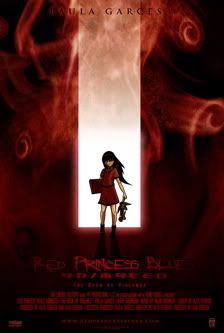
Trailer Park: Red Princess Blues

Filed under: Columns,Trailer Park — admin @ 12:03 am

By Christopher Stipp

Archives? Right Here…

Instead of putting off and putting off and putting off my vow to somehow market my first book I am letting people download my first book for free. Give it a preview or read the whole thing for free. Download and read my “Thank You, Goodnight” right HERE.

One of the utterly delightful things about this column (going on five years and still flying deep under the radar…An omen, to be sure) is that I always wanted to use it for the greater good. I just don’t have an encyclopedic sense of cinema like some geeks do; I simply enjoy lots of movies but don’t purport to possess any academic knowledge or deep understanding what made Fellini so remarkable or why THE LAST WALTZ is anything more than the film of some jug band which I have no interest in ever seeing.

Hence, I always like to throw lots against the wall to see what sticks with regard to new talent, any talent, which wanders into my INBOX. A long time ago one such filmmaker wanted to get my Average Joe opinion about a film he had done. That person was Alex Ferrari and his movie was called BROKEN. I was stunned by the level of sophistication that short film possessed and I was eager to see what else this guy could churn out with his next entry. It scares me, sometimes, to see that people really are capable of only good idea in their lifetime and that everything that comes after sometimes pales to that one good effort. Alex, though, has something far more compelling to give the world than his breakthrough short which, in and of itself was the true definition of independence with regard to making an action movie on a budget, and that is RED PRINCESS BLUES.

This animated short pushes the boundaries of what traditional animation is capable of when you don’t have a budget like Pixar and when you don’t want your film to look like it came out of a Disney back alley. Alex not only employs a different medium, his last being live action, but he incorporates what he’s learned from his first film as it relates to pacing, direction and ambiance. The latter can make or break a film like this, the entire production is less than ten minutes long but it never feels like a short, and Alex masterfully orchestrates a voice-over by Paula Garces (HAROLD & KUMAR GO TO WHITE CASTLE) whose voice drips delicately, and deceptively, with animation that looks like it was tightly polished with a shoe boy’s rag.

It’s visually arresting and engaging in a post-modern homage to reflecting the kind of animated, hard boiled crime tales that have been employed in films like KILL BILL. It’s no longer acceptable to only have animation sing and dance to music set by Broadway, it’s now the domain for gritty fiction and stories that don’t use chatty crabs or talking toys.

What makes RED PRINCESS BLUES a delight is the use of Paula’s natural voice talent as it pertains, and as it’s juxtaposed against, to our young hero’s predilection for violence. It’s not that we’re already talking about a girl younger than most middle schoolers, but it’s her story and the obfuscation of what’s really going on that keeps the viewer wondering what is really happening. Good, don’t tell me everything; I think it’s the one thing that mires so many lesser talented filmmakers who think that everything needs to be set up and explained within the first five minutes of a film. It’s OK to slowly set things up and Alex gets that and it’s damn near painful to have to sit through as he builds up to what is a climax of Prelude proportions.

The director, Dan Cregan, deserves a lot of credit for developing the manner in which the animation doesn’t depend on mumbling mouths but on dramatic movements that speak louder than anything that could be measured on a script. The weight that the overall piece has as a result of this style of animation can’t be understated when compared to other shorts of its kind. Where some lean too heavily on set pieces that are bathed in wanton violence this short excels by being understated, calm, about its execution.

This is the definition of what a good tease should be: a little exposition, a little mystery and a whole lot of heart. This little movie that could, has, and it shows in every frame.

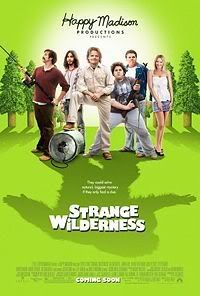
STRANGE WILDERNESS (2008)

Director: Fred Wolf
Cast:
Steve Zahn, Allen Covert, Jonah Hill, Justin Long, Jeff Garlin, Kevin Heffernan
Release: February 1, 2008
Synopsis:
The story follows the hosts (Zahn and Covert) of fictional wildlife TV show “Strange Wilderness,” which is headed toward extinction because of bad ratings; they hatch a scheme to find the one animal that can save the show — Bigfoot.

View Trailer:
* Large (QuickTime)

Prognosis: Negative. What a miserable looking movie.

I don’t to be too hard on a film that has Justin Long, Steve Zahn, Jonah Hill, that fat guy from the SUPER TROOPERS flick, and those two other perfunctory additions to every Adam Sandler movie, but this looks painfully miserable. The trailer itself isn’t even slightly provocative in a way that would tempt me to see one of the guys who made SUPERBAD so damn good and the other guy who has a nice way about slamming Microsoft.

One of the problems, I think, is that the trailer lingers too long, way too long, on the opening sequence where we’re supposed to find funny that there’s this nature show which is narrated with a lot of bad information. I mean, that’s funny, right? Bears are named after a football team in Chicago? I mean, who wouldn’t find that screechingly hilarious? Salmon attacks on bears are rare. We’re not talking comedy gold, we’re hip deep in platinum folks!

Seriously, this is excruciatingly painful to see play out even if there’s Ernest Borgnine, ½ of the greatest television show ever created, Airwolf, playing a silent second fiddle. There’s an amazing cast of potential funny people, even those who graduated with a degree in physics can attest to the law of potential energy, but instead of dropping that ball off a roof to have its power unleashed we’ve got Jeff Garlin for a split second telling Zahn and Co. that their show sucks the big balloon knot and that they’re cancelled. No shit, Sherlock?

The one shining moment in this trailer comes through a passive visual gag, literally, with Justin Long’s tattoo on his eyelids. If PIRATES OF THE CARIBBEAN hadn’t already employed the trick in a dramatic moment of its trailer last year this would’ve been even funnier but this is a bright spot in an otherwise crap preview. Justin plays it well and he seems like the best suited for a role where he has to play the requisite stoner everyone will find amusing.

What’s even more odd is that the trailer makers employ the tactic of shoving a bunch of cut scenes together for one long giggle reel but without knowing what they’re all laughing at for any given moment it has the effect of looking rather pathetic and feeling like it’s pandering for smiles. Jonah’s visual gag (what the fuck is with all the physical humor in this thing?) of wearing women’s underwear, again, has been used elsewhere and it just doesn’t seem like something that’s a worthy explanation of why I would want to burn a ten spot to see this tripe.

And, for a hundred dollars, can anyone give me a logical explanation why we’re subjected to a good percentage of running time just to hear someone goofing on a shark’s set of teeth? I mean, literally, we get the reel running again and again with the same goofy ass audio, I guess it’s an effort to show how fucking funny this movie is going to be, with absolutely no payoff whatsoever. If this movie didn’t look so shitty I would say it’s a pretty ballsy move.

Instead, I hope this movie catches the plague at the box office.

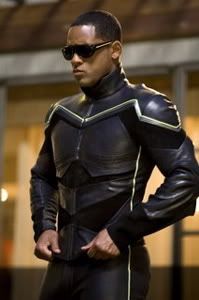
HANCOCK (2008)

Director: Peter Berg
Cast:
Will Smith, Charlize Theron, Jason Bateman
Release: July 2, 2008
Synopsis:
There are heroes”¦ there are superheroes”¦ and then there’s Hancock (Will Smith). With great power comes great responsibility ““ everyone knows that ““ everyone, that is, but Hancock. Edgy, conflicted, sarcastic, and misunderstood, Hancock’s well-intentioned heroics might get the job done and save countless lives, but always seem to leave jaw-dropping damage in their wake. The public has finally had enough ““ as grateful as they are to have their local hero, the good citizens of Los Angeles are wondering what they ever did to deserve this guy. Hancock isn’t the kind of man who cares what other people think ““ until the day that he saves the life of PR executive Ray Embrey (Jason Bateman), and the sardonic superhero begins to realize that he may have a vulnerable side after all. Facing that will be Hancock’s greatest challenge yet ““ and a task that may prove impossible as Ray’s wife, Mary (Charlize Theron), insists that he’s a lost cause.

View Trailer:
* Large (QuickTime)

Prognosis: Positive. Damn you, Will Smith, for your magnetic charisma and debonair good looks!

I really tried not to like this trailer after seeing the theater standee for this movie at my local Cineplex; I mean the thing was 15 fucking feet tall of just his face, all puckered up and bristly, with his pores exposed to the world. I really didn’t know what this was all about but I was determined not to like it for the visual assault on my senses.

Then I saw the trailer and thought better of it.

The movie really does look like something new and different in the superhero genre. I realize some are talking about it as the next logical step in exploring what it is to be a superhero in the movies but with films that already stepped gently into the post-modern superhero genre, MY SUPER EX-GIRLFRIEND being a miserable example, I think a movie like this is different. We’re not going to be seeing the superhero story being told differently from the sheer standpoint that the scale this movie seems to be on, the massively popular summer movie, is ill-equipped to deal with a real examination of what it means to be a superhero in the 21st century. You could certainly see how a comic book like Powers could be a smashing independent feature by dealing with some of the peculiarities of the modern hero mythos but this just looks like it’s going to do it in broad strokes.

And that’s fine! Will is a box office juggernaut whenever he flashes those white pearlies on the screen in his Will Smithian way and his appearance here is perfectly suited to his personality.

When we’re introduced to him and what he’s all about, the obligatory cards prepping us with the idea of there being heroes, superheroes and, you guessed it, Hancock, you have to be impressed with the thought of there being this guy who is homeless yet is able to fly off the cement bench he slept on the night before is intriguing.

Cue hip-hop soundtrack.

I like the visuals, of him whizzing by a passing airliner, him crashing into a road sign, him taking out a cop car of two in the process (reminds me of a great comic book series in 1989, Damage Control, which dealt with the physical aftermath of what heroes did to a city after they were done battling in it) and it establishes quite effectively the character’s persona. Why should I care about this guy? Because he seems infinitely flawed yet troubled in ways I haven’t seen before. Like I said before, this movie is going to paint things with a rather wide, mainstream brush but seeing Smith stop a train only to react to the damage he creates because of what he did and to see him toss a beached whale off a beach only for it to careen into someone’s sailboat makes me smile.

Cue more hip-hop as we dissolve to black.

Consider me intrigued.

Quick Stop Thingamabobs: 1/18/2008

Filed under: Columns,Thingamabobs — UncaScroogeMcD @ 12:01 am

thingamabobs.jpg

The web. It’s a big place, full of plenty of distractions ““ some funny, some informative, some ludicrous, some disturbing, some inane, some profound. Each and every weekday, we present links to a few of our favorite finds”¦

————————————————

  • TV Heaven, Telly Hell with guest Bill Bailey, Part 1… (Thingamabob)
  • Peter Cook & Dudley Moore – In The Pub… (Thingamabob)
  • Peter Cook & Dudley Moore – Goodbye… (Thingamabob)

January 17, 2008

Quick Stop Thingamabobs: 1/17/2008

Filed under: Columns,Thingamabobs — UncaScroogeMcD @ 12:32 am

thingamabobs.jpg

The web. It’s a big place, full of plenty of distractions ““ some funny, some informative, some ludicrous, some disturbing, some inane, some profound. Each and every weekday, we present links to a few of our favorite finds”¦

————————————————

  • More Mock The Week – Season 2 Episode 1, Part 1… (Thingamabob)

January 16, 2008

Quick Stop Thingamabobs: 1/16/2008

Filed under: Columns,Thingamabobs — UncaScroogeMcD @ 2:39 am

thingamabobs.jpg

The web. It’s a big place, full of plenty of distractions ““ some funny, some informative, some ludicrous, some disturbing, some inane, some profound. Each and every weekday, we present links to a few of our favorite finds”¦

————————————————

  • More Mock The Week – Season 1 Episode 6, Part 1… (Thingamabob)
  • And Ed Byrne’s take on Alanis Morrissette… (Thingamabob)

January 15, 2008

Comics in Context #209: Down in the Dump

Filed under: Columns,Comics in Context — admin @ 3:17 am

comicsincontext4.jpg

cic2008-01-15.jpgOne of the pleasures in previewing Mark Evanier’s Kirby: King of Comics over the last two installments of this column was realizing that work in cartoon art that I had first discovered when I was growing up was now considered significant enough to be honored in art books and museums. In the eight hands comics and cartoon art can achieve greatness. I will return to my commentary on the Kirby book when it is published in March. Now, however, I intend to look at the other end of the spectrum: cartoons from my boyhood that demonstrate the depths to which the artform can sink. I’m not talking about the merely mediocre, of which there is plenty all around us, but the truly awful. Last week we ascended to the summit; now prepare to descend into the abyss.

There can be a certain fascination in looking at cartoons that are utter crap: watching them inspires a certain kind of stunned awe that anyone would put anything so atrocious on screen. But it certainly helps if these aesthetic outrages are presented within the proper ironic format, encouraging us to laugh at their sheer awfulness.

And so it was that I attended the New York City premiere of Cartoon Dump, an comedy stage show that showcases the worst that television animation of the 1950s and 1960s had to offer (http://www.cartoondump.com/). Presented every fourth Tuesday at the Steve Allen Theater in Los Angeles, Cartoon Dump made its Manhattan debut at the comedy club Comix (353 West 14th St.) on January 8 of this year, and will return to Comix on February 19 and March 11.

Like Krusty the Clown’s show-within-a-show on The Simpsons or Patchy the Pirate’s live action segments on SpongeBob SquarePants specials, Cartoon Dump satirizes a kind of television show that is familiar to Baby Boomers from their childhoods but which no longer seems to exist: the low budget local TV kiddie show in which a costumed host introduces animated cartoons.

Cartoon Dump separates itself from other such parodies through an intriguing twist: its live action cast of characters are themselves fans of these brain-dead cartoons, who love them rather too much. Emotionally damaged in various comical ways, Cartoon Dump‘s main characters have retreated from adult life by attempting to transform themselves into real life cartoon characters. The show’s host, Compost Brite (played by Erica Doering), is perky and cheerful, even over inappropriate topics, like her anorexia: she happily boasts of going for so long without food that she falls into delirium. One of her friends is Moodsy the Clinically Depressed Owl (played by Frank Conniff), whose other problem include alcoholism, auto-erotic asphyxiation, and other vices that can only be hinted at. Another is Buf Badger, the “rageaholic animation historian” (played by Kathleen Roll), unable and unwilling to conceal her furious contempt for anyone who doesn’t share her encyclopedic knowledge of cartoon history. (It strikes me that she’s be the dream date for The Simpsons‘ Comic Book Guy.) The concept appears to be that if these sorts of kiddie shows still existed on TV, these would be the sort of people, who grew up loving bad cartoons, who would get jobs working on them. It makes me wonder about some of the people engaging in “cosplay” that I see wandering around comics conventions. (Like those young women in “Gothic Lolita” outfits at the recent New York Anime Con: what are they thinking?)

Then again, such obsessives don’t necessarily wear costumes. In the New York show there was a character named Cissy Kafka, the alleged winner of a Cartoon Dump essay contest, who outwardly seemed to be a normal, presentable young woman in a business suit, but soon confessed that she had based her life on Cartoon Dump and considered Compost Brite, whom she’d never before met, to be her only friend. The performance at Comix also had as a guest stand-up comedian Mike Dobbins, who likewise wasn’t in costume, but the weirdness of whose act–including an impersonation of the Hamburglar performing pilates–fit the show.

Cartoon Dump is the creation of Frank Conniff, who was formerly one of the writer/performers on Mystery Science Theater 3000 (and was interviewed by Quick Stop editor Ken Plume here). MST3K likewise used the format of a low budget kiddie show, in its case, complete with puppets, in order to mock the old live action movies it presented. Cartoon Dump is this another example of the MSTie diaspora, in which the show’s ex-writer/performers devise and appear in new variations on the theme, such as Michael J. Nelson’s RiffTrax (see “Comics in Context” #185; “Get Off of My Cloud” and www.rifftrax.com) and MST3K creator Joel Hodgson’s brand new Cinematic Titanic, in which Conniff is a participant.

Cartoon Dump‘s execrable cartoons are supplied by animation historian Jerry Beck, who introduced the New York performance, supplying background information about the evening’s selections. Beck presents an assortment of such anti-masterpieces on his own at his “Worst Cartoons Ever” show, which he gives every year at the San Diego Comic Con, although I finally saw it last fall at New York University. Beck also hosts the Worst Cartoons Ever! DVD, which is available from Rembrandt Films, although the animated tripe within–including Sir Gee Whiz, which the Dump showed shown at Comix– is about as far from Rembrandt as is imaginable. (Jerry Beck is better known for his expertise on the masterpieces of classic animation, and he played a major role in putting together the recent Popeye and Woody Woodpecker DVD sets which I so highly praised: see “Comics in Context” #189: “Woody’s Woodpeccadillos” and #190: “Pop Eye-Con.”)

You can also see video podcast versions of Cartoon Dump segments, complete with cartoons, at Beck’s Cartoon Brew Films website. Watching the Dump performers on the videos, their comedy comes across as more drily ironic. To get the full impact, you need to see them with an audience, where both they and the cartoons get enthusiastic laughter. The audience at the Comix performance, which included comics and animation professionals, was particularly good, knowledgeable enough to burst into laughter at the sight of particularly terrible animation.

Actually, while I was waiting for the Cartoon Dump show to begin at Comix, I was delighted to listen to the good examples of early television animation. Over the sound system was played a mini-retrospective of Hanna-Barbera theme songs and background music, including, during the time I was there, the theme songs to Yogi Bear, The Flintstones, Wally Gator, Magilla Gorilla and Peter Potamus. These were the work of composer Hoyt Curtin (with a few spoken lines performed by the great voice actor Daws Butler as Yogi Bear and Peter Potamus), and presumably came from the extensive CD collection Hanna-Barbera’s Pic-a-Nic Basket of Cartoon Classics. My Quick Stop colleague Fred Hembeck wold correctly point out that SpongeBob has featured some remarkably good musical numbers. Still, I found myself reflecting that as a boy I took for granted the jaunty, energetic, funny and memorable tunes that Curtin continually turned out for Hanna-Barbera, and how rare that level of excellence is in “children’s” animation today.

Having reminded us of some of the true classics of early TV animation, the Cartoon Dump show proceeded to introduce us to its collection of animated garbage. I must have had a happy childhood, since I can’t remember ever having seen any of these four cartoons when I was a boy. But in adulthood one learns that it’s impossible to escape life’s horrors forever.

The first cartoon was an episode of The Mighty Mr. Titan, a 1965 series of cartoons from Soundac Productions, which, Beck informed us, was inspired by the Kennedy administration’s promotion of physical fitness for children and adults. (Mr. Titan‘s theme song instructs us, “Your country needs an active crew/Of healthy boys and girls like you.”) President Kennedy may have responsibility for the failure of the Bay of Pigs invasion, but I doubt that he would have accepted the blame for The Mighty Mr. Titan.

Beck refers to Mr. Titan as a superhero. Well, the character’s name and his short with the “T” insignia suggest that Mr. Titan’s creators wanted the audience to think of him as one. But Mr. Titan is really like a poorly animated cartoon version of Jack La Lanne, who hosted a TV exercise show in the 1960s and is still active today, except for the fact that La Lanne possesses real charisma whereas behind his unchanging smile, Mr. Titan has no personality whatsoever.

Nearly all that happens in his cartoons is that Mr. Titan demonstrates some simple calisthenics and encourages his audience to exercise along with him. And just why did Mr. Titan’s creators think that kids watch cartoons in the first place? Is it to work themselves into a sweat, or to goof off and have a good time? If kids want to exercise, they’d go outside and play baseball or anything else that is more involving and fun than joining Mr. Titan in his dreary workout routines.

So the Mr. Titan cartoons would be doomed by their premise, even if they didn’t have bargain basement limited animation. In the cartoon at the Dump show, I watched in bewilderment as Mr. Titan repeatedly performed the same exercise while counting, “One, two, three, four!” But the exercise involved only two positions: whenever he called “two” or “four” he did absolutely nothing. At least Mr. Titan’s wooden movements match his personality.

But the Mr. Titan cartoons aren’t totally devoid of interest. Mr. Titan has a sidekick, Tip Top, a stick figure with an expressive, oval face, who moves in a sprightly manner in the few moments he gets on screen; he doesn’t talk, but he has far more personality than his robot-like boss. If only these cartoons had been about Tip Top instead!

Then there was, “King of the Sea,” a cartoon from the 1967-1968 NBC series Super President, whose title character, James Norcross, is indeed the President of the United States who gains superpowers and secretly becomes a superhero.

The creators of this show stumbled over an interesting idea, linking the American pop culture icon of the superhero with America’s status as a world super-power. The late Mark Gruenwald insightfully explored this concept in his 1986 Squadron Supreme series, in which superheroes take control of the United States, and today DC Comics publishes Ex Machina, writer Brian K. Vaughn’s critically acclaimed series about a superhero as mayor of post-9/11 New York City. I wonder if Super President was the inspiration for Robert Smigel’s X-Presidents cartoons that burlesque politics on Saturday Night Live. But, you see, Gruenwald, Vaughn and Smigel all treated the idea with intelligence; Super President‘s creators stumbled over the idea and fell flat on their faces.

People forever ask, how come nobody recognizes Clark Kent as Superman with a pair of glasses on? Ah, but Clark Kent is a master of disguise compared to President Norcross, who may wear a mask but calls himself “Super President.” And yet nobody realizes that they are one and the same! (Marvel fans may find it disturbing that Super-President’s costume looks uncomfortably similar to that of Guardian’s from Alpha Flight, though I would hope this is merely a coincidence.)

And just how old does a kid have to be to realize that the President cannot just disappear for hours at a time to go on secret missions? Not only would the Secret Service notice, but so would the White House staff.

In classic superhero tradition, Super President has a sidekick, but he’s not a kid in costume, but a pudgy, bespectacled adult in a business suit: presidential aide Jerry Sayles. Jerry Beck keeps calling this other Jerry a Karl Rove lookalike, but I think he looks like a young Dick Cheney before he went over to the dark side. (Longtime comics pros might think that Super President‘s Jerry looks a little like the late DC editor E. Nelson Bridwell. Take a look at Jerry’s picture accompanying this satiric Salon piece in which Super President comments about our current less-than-super President)

It would be nice to think that the perpetrators of Super President were consciously making a joke by pairing their superhero with this chubby, mild-mannered bureaucrat. But since the cartoons are devoid of any sense of humor or any sense of minds working at more than half capacity, I’d say no.

All this dumbness might be more forgivable if Super President at least gave its characters memorable, vivid personalities or provided thrilling action sequences, but no. Like all the cartoons in Cartoon Dump, their cardinal sin is dullness. Even considering the limitations on the animation imposed by the low budgets, Fred Flintstone running past the same cave wall over and over is more exciting than any of the action in this Super President cartoon. The villain has the same number of dimensions to his personality as Super President and Jerry, which is to say, negative three.

The only spark of life in this cartoon comes from the fact that Super President’s voice was supplied by the great Paul Frees. It’s a pleasure to hear him, but even Frees could not do much with the character’s bland dialogue and minimal personality.

Super President was produced by the animation company DePatie-Freleng, one of whose heads, as Beck noted, was Friz Freleng, the great director of so many classic Warner Brothers cartoons of the 1940s and 1950s. Freleng apparently did not work on Super President himself. Still, it’s a cautionary tale about how corporate demands can seduce even a great creative artist into permitting godawful hack work to go out under his name.

In the 1960s Freleng was still capable of producing good work, like the animated title sequence for The Pink Panther (1964) and the spinoff series of animated cartoon shorts. The third cartoon in the Cartoon Dump, “Lindy’s Dream,” is the result of a downright appalling story of creative decline. This was the pilot for the stillborn series The Adventures of Sir Gee Whiz on the Other Side of the Moon (1960), which is one ludicrous mouthful, and was produced by the team of Hugh Harmon and Rudolf Ising, who started out working alongside Freleng in the earliest days of Walt Disney’s animation studio, then produced and directed the earliest Looney Tunes for Warner Brothers, and later went to MGM, creating some cartoons, like Peace on Earth (1939) (see “Comics in Context” #66 : “A Christmas Potpourri”) that are now considered classics.

But most of their cartoons that I’ve seen fall far short of enduring greatness, and Harmon and Ising seem to fall into that sad but familiar category of creative artists who are left behind by changing times. Whereas their former colleagues Disney and Freleng went on to create important work in the 1940s and beyond, Harmon and Ising’s heyday ended at the start of the 1940s. Jerry Beck wrote on his blog, “Hugh and Rudy gave it up to support the effort during World War II, creating instructional animated films for the Armed Services. They spent the rest of their careers creating educational, industrial and commercial films, never achieving the public fame they once enjoyed during the 1930s. Not that they didn’t try.” But they were already out of the creative mainstream. Sir Gee Whiz was an attempt to make a comeback, but instead demonstrates just how out of touch they had become. Beck continued, “Limited animation was not something Harman and Ising could grasp easily. This short shows just how badly Hugh and Rudy didn’t get it.”

I interpret that as meaning, in part, that Harmon and Ising didn’t recognize, as Hanna and Barbera and Jay Ward already had by 1960, how clever scripts, good voice acting, and vivid musical scores could compensate for limited movement. Beck has also suggested that the concept behind Sir Gee Whiz was something Harmon and Ising could have used in the 1930s but had grown dated by 1960. Indeed, by then America was in the Space Age, and kids fantasized about going to the moon by rocket and encountering aliens, not floating up there hand in hand with an elderly elf.

The main reason why Sir Gee Whiz seems to be a signature piece for the Dump is the creepiness of its premise. An old bearded gnome, Sir Gee Whiz (And how did he receive a knighthood? Especially since his accent marks him as Irish?), puts an underage girl’s nanny to sleep and then takes the little girl, Lindy, off with him to his home on the other side of the moon. In other words, what if Humbert Humbert had been a lunar leprechaun?

Should we accept this set-up as innocent? In The Wizard of Oz underage Dorothy goes on a road trip to the Emerald City with three adult males and no one thinks there’s anything wrong with this. Then again, the Scarecrow, Tin Woodman and Cowardly Lion don’t invite her back to their lairs to look at their etchings or whatever.

Or is this a case of creators of works intended for children who so lack perspective on their work that they are blind to the highly inappropriate subtext of their stories? No one bought the pilot for Sir Gee Whiz, so perhaps that subtext didn’t escape everyone’s notice at the time.

“Lindy’s Party” ends with a look at characters that Sir Gee Whiz‘s creators intended to use in later episodes. The Dump audience burst into loud, astonished laughter at the sight of one such character, Senor Ropo, who is indeed an enormous (and somewhat phallic) piece of rope, with eyes, a mouth, a mustache, a sombrero, and a stereotypical Mexican accent. Just what could Harmon, Ising and company have possibly been thinking?

The fourth and final cartoon in the Dump performance was “The Black Vapor,” an installment of the 1967 series Johnny Cypher in Dimension Zero: the names “cipher” and “zero” are all too appropriate in grading this cartoon.

Beck pointed out that Johnny Cypher was produced by the Oriolo Studio, headed by Joseph Oriolo, who produced the 1960s Felix the Cat cartoons and the animated series The Mighty Hercules. I haven’t seen the 1960s version of Felix–the one in which he had a literal “bag of tricks,” contended against nemeses like the Professor, the thuggish Rock Bottom, and the alien Master Cylinder (a sort of Dalek predecessor), and had an intellectual young friend, Poindexter–in decades, but I recall my fondness for them from my childhood, and for the colorful voice acting, which I now know was performed by Jack Mercer, the classic voice of Popeye.

I liked The Mighty Hercules even more as a boy; in recent years I watched a batch of them for free on one of Time Warner Cable’s “on demand” channels, and they’re not bad at all. Certainly I have more sophisticated tastes by now, but I still appreciate how Hercules transforms the stuff of Greek mythology into what amounts to a superhero series set in ancient times, with Herc as Superman, his girlfriend Helena standing in Lois, the young centaur Newton (whose falsetto voice I now find annoying) as Jimmy Olsen, and a pack of fine supervillain-like menaces like the sorcerer Daedalus. The analogues to the superhero genre are hardly accidental, since the series was written by DC Comics veterans George Kashdan and Jack Miller. Despite the limited animation, the Hercules cartoons still succeed in creating a sense of action and momentum that demonstrate how much could be done even within the low budgets of early “˜60s cartoons. And Hercules had a great, unforgettable theme song! Indeed, Oriolo and company seemed to have consciously designed elements of the series to be iconic: each episode builds to a high point when Hercules dons the magic ring that endows him with superhuman strength, to the accompaniment of thunder and lightning, the equivalent of Popeye downing his spinach while his theme music plays triumphantly. But did I wonder, even as a child, why Herc just didn’t keep the ring on full time?

The difference between Oriolo’s Felix and Hercules on one side and Johnny Cypher on the other is that Felix and Herc are good, and Johnny is very, very bad. Part of the problem, as Beck explained, was that Oriolo farmed the animation of Cypher out to Japan, making this an early example of anime. But, unlike, say, Osamu Tezuka’s Astro Boy, this isn’t some enduring landmark in anime history. Whereas Oriolo’s Hercules propulsively carries its young viewers along for the ride, Cypher leaves them mired as if in a pool of molasses. In “The Black Vapor,” the vapor turns people to stone, thereby, as Beck pointed out, eliminating any need to spend any effort animating them.

But the real reason that “The Black Vapor” was included in the Dump show seems to be its two villains, who, at one point, break into a frenzied dance of joy, which is not only badly animated but comes off as a presumably unintended burst of over-the-top homoerotic ecstasy.

On the Worst Cartoons Ever! DVD (which I may review at length in the future) Jerry Beck starts out by telling us that “no one sets out to make bad cartoons.” This is a kind and generous thing for him to say, but I disagree. Perhaps the makers of the cartoons in Cartoon Dump didn’t consciously think of their work as bad. But I don’t get the impression from these cartoons that they were striving towards goodness, either.

Back in the 1990s, when I was continuity cop at Marvel (before the present tidal wave of lawlessness in that area), I was speaking with a writer, advising him about the continuity-related holes in his storyline. His continual rejoinder was that “the kids” wouldn’t notice and wouldn’t care. What he really meant was that he didn’t care, and this was his rationalization for his own sloppiness in his craft. Of course by the 1990s Marvel’s readership was mostly adults, the series on which this writer worked soon bombed, and, as far as I know, the writer has since vanished from the comics business.

I suspect that the makers of the cartoons in Cartoon Dump or Worst Cartoons Ever! told themselves much the same thing about their audience. Yes, the animators and other artists at Disney studied the works of great illustrators, and the animators at UPA studied modern art and design, and each group in its on way sought to treat animation as art. And I suspect that many of the makers of the Dump‘s cartoons thought that Walt Disney and the UPA guys were nuts. Why put so much time and effort into cartoons? Aren’t cartoons just time-killing junk for small children? Won’t little kids watch anything that we put on their TV screen? Why should anyone take cartoons seriously?

Many other talented people who worked in animation for early television–Hanna and Barbera, Jay Ward, Bob Clampett, the makers of numerous animated commercials-strove against the limitations imposed by the low budgets they had to work with, and even created work that attracted intelligent adult viewers But not the perpetrators of many of the cartoons destined for the Dump.

In the course of the Cartoon Dump stage show, Compost Brite warned us that people who strive for excellence lead “stressed-out” lives, but that plenty of people who deal in “mediocrity” turn out to be successful. Reminding us that “D is a passing grade,” Ms. Brite leads cast members in singing the praises of making only a “minimal effort” in life. The cartoons in the Dump exemplify that very philosophy, except that the actors playing Ms. Brite and company are just kidding, and the cartoons aren’t.

Wondering whether other cartoon series I hadn’t seen since my grade school days would prove to be as awful as those in Cartoon Dump, I tracked down episodes of some of them on YouTube.

The same people who inflicted The Mighty Mr. Titan on innocent children–creator Robert D. Buchanan and Soundac Productions–were also responsible for the earlier 1957 series Colonel Bleep (and http://www.toontracker.com/bleep/bleep.htm). Like Mr. Titan’s sidekick Tip Top, Colonel Bleep is basically a stick figure, only the Colonel has a triangular-shaped head encircled by transparent, round space helmet. This time Buchanan and Soundac had the wisdom to make the stick figure into the star of the show. Since Mr. Titan was basically an exercise instructor, he had to resemble a real human being, but the extremely limited animation turns Mr. Titan’s actions into laughable caricatures of actual human movement. But the limited animation suits the simplified figures of Colonel Bleep and Tip Top, whose movements are comparatively energetic.

Indeed, one of the delights of Colonel Bleep is its emphasis on graphic design. As noted, the Colonel is a semiabstract figure, composed of a triangle, circle and straight lines. His sidekick, Scratch the caveman, has a figure shaped like an oval. (The other sidekick, a puppet resembling a young boy dressed as a cowboy, is named Squeak because he cannot talk but merely squeaks; this just seems weird.)

The characters in Colonel Bleep have no dialogue, but there is a narrator who adopts a tone like that of an adult reading from a storybook to children. But whereas the fantasy of Sir Gee Whiz seems dreadfully dated, Colonel Bleep capitalizes on the growing interest kids in the late 1950s had in science fiction and the emerging Space Age. Colonel Bleep, then, is an early example of what must have been a new phenomenon: science fiction aimed at small children.

The opening episode, “Colonel Bleep Arrives on Earth“ establishes that the Colonel is an extraterrestrial from the planet Futura, and that the Futurans see themselves as responsible for maintaining order and justice in the universe. It rather reminds me of DC Comics’ Green Lantern Corps, and perhaps reflects the United States’ emerging sense that as a world superpower it had the duty to police the world. The first episode further explains that the Futurans decided to send Colonel Bleep to Earth when they detected the first atomic explosion on Earth in 1945 and then observed how Earth had begun firing rockets into space; this suggested to them that Earth posed a potential threat to the rest of the universe.

I hadn’t expected to find concerns about nuclear war crop up in a children’s cartoon from the late 1950s. But this is a key to understanding why the Colonel Bleep cartoons have more life and imagination than many other animated series of early television. The writers on Bleep were working themes with relevance to their adult lives into the backstory. Similarly, in designing the characters, the artists were creating forms that would be appealing to kids, easy to animate, but also aesthetically satisfying to themselves.

I also located an episode of Courageous Cat and Minute Mouse (and http://www.toontracker.com/courcat/courcat.htm), an animated series whose creation is credited to Batman creator Bob Kane. My regular readers know that Kane may have come up with the idea of a superhero costumed as a bat, but that writer Bill Finger cane up with most of the other basic elements of the early Batman mythos. I wonder how much imaginative effort was necessary to devise the concept for Courageous Cat and Minute Mouse, who are basically Batman and Robin as a talking cat and mouse. It’s as if Kane crossed Batman with Tom and Jerry. I wouldn’t be surprised if Roy Thomas and Scott Shaw! had Courageous Cat partly in mind when they created their funny animal superhero team, Captain Carrot and His Amazing Zoo Crew, which DC Comics has recently revived.

One of the best things about Courageous Cat is the theme music, which conjures the feel of an urban crime thriller of the period, seeming to promise a much more adult sensibility than these kiddie cartoons actually possess.

In the episode I found on YouTube, “The Case of the Big Movie Star” (1960), the series’ premier villain, the Frog, intends to abduct Marilyn Mouse, a movie actress whom he compels to star in the movie he is making. Our heroes, Courageous Cat and Minute Mouse, have virtually blank personalities. Minute, however, speaks in a falsetto voice, suggesting he is meant to be a prepubescent child. So it’s a little weird and creepy when Minute becomes dazzled by the charms of Marilyn Mouse.

The cartoon becomes way kinkier when Courageous Cat disguises himself as Marilyn Mouse, leading to a sequence in which the Frog attempts to seduce her. Yes, there are plenty of instances of Bugs Bunny in drag, but his disguises are always transparent to anyone with a higher I. Q. than Elmer Fudd’s. Courageous Cat turns himself into an exact lookalike of Marilyn Mouse, which somehow seems weirder. Dr. Fredric Wertham thought Batman was kinky; what would he have thought of this?

But I was amused by the fact that Marilyn Mouse spoke in a breathy voice, reminiscent of Marilyn Monroe’s. And what I remembered most fondly about Courageous Cat cartoons proved to be as good as ever: the Frog himself, whose voice is a superb imitation of that of Edward G. Robinson, the actor best known for his iconic gangster roles in the 1930s and 1940s. When I first saw Courageous Cat I probably did not know anything about Robinson, but that voice gives the Frog a vivid, memorable personality: he’s like Robinson crossed with Mr. Toad from The Wind in the Willows. It’s too bad no one thought to cast such distinctive voices for Courageous and Minute.

Watching this Courageous Cat cartoon, I got the feeling that some people connected with it–the writers and the voice actors–were having fun, even if the rest of the cartoon was uninspired hackwork.

And that’s the sort of thing that makes the difference. Those writers and artists and actors who smuggled sparks of imagination into their cartoons turned out work that still shows some virtues today. Cartoons that just seem to have been ground out as mindless time wasters for kids end up only as specimens of creative bankruptcy, interred in the Cartoon Dump.

Copyright 2008 Peter Sanderson

Quick Stop Thingamabobs: 1/15/2008

Filed under: Columns,Thingamabobs — UncaScroogeMcD @ 1:20 am

thingamabobs.jpg

The web. It’s a big place, full of plenty of distractions ““ some funny, some informative, some ludicrous, some disturbing, some inane, some profound. Each and every weekday, we present links to a few of our favorite finds”¦

————————————————

  • More Mock The Week – Season 1 Episode 5, Part 1… (Thingamabob)

January 14, 2008

Party Favors: Attack Of The DVD Smudge

Filed under: Columns,Joe Corey's Party Favors — UncaScroogeMcD @ 2:50 am

partyfavors1.jpg

WILMINGTON, DELAWARE – Did you know your DVDs might be getting ruined by their plastic storage cases? They’re not completely safe on the shelf. While you sleep, your beloved shiny discs could be clouding up.

For creepy and scientific reasons, a residue has been found growing on DVDs secured in clear plastic slim cases. Why? Nobody has a definitive answer. While I can’t find any industry articles discussing this latest ugliness, I can assure you this is real and not an internet rumor. I’m a victim of this crap. I have a Hogan’s Heroes: The Second Season that looks like a Bob Guccione camera lens after a Pet of the Year photo shoot. A strange Vaseline-like smudge splotches the shiny side of the DVD.

The good news is that nobody has reported this residue rendering their DVDs unplayable. So don’t completely panic. Since this is residue on the outside of the plastic, people have reported being able to clean it away with 97% alcohol. But no one is sure if there is a critical exposure time to this residue that will make a permanent bond with the surface of the DVD. Or if it will eventually render your DVD to beer coasters. Remember that this is not a case of disc rot or clouding inside the DVD from a poor sealing job.

Where is the residue coming from?

From most reports the culprits of this catastrophe are clear plastic slim cases that have an oily feel. The first warnings on hometheaterforum dealt with people finding this residue linked to Scanavo’s clear slim cases that hold two DVDs. You could immediately know they were Scanavo since the company’s name was inside the box. They also have a nasty hubs that seem to shred the plastic off the hole in your DVD. There have been reports of the residue growing on DVDs in clear cases not manufactured by Scanavo.

What all these cases have in common is the oily feel. Some theorize that residue is from this oily plastic being so close to the playing surface of the DVDs. Having flunked organic chemistry while majoring in textiles, it is my expert opinion that plastics are evil and unpredictable. They’ll do unforeseen things after being extruded and exposed to an environment outside a sterile and climate control lab. They don’t breakdown in a conventional biodegradable manner, but they’ll convert into dangerous polymers. This would explain the residue transfer from case to DVD surface.

What’s curious is that the black double DVD slim cases in my collection do not affect the DVDs in the same way. My first season of Futurama has the issue. The first season of King of the Hill that’s in black plastic is pristine.

A few people think that the residue is prompted by humidity levels. While this may be true, it’s a pain in the ass for those of us who don’t want to turn our house into the baseball storage space at Coors Field. The best thing you can do if you discover the residue issue is to remove your DVD from the clear plastic slim cases. My collection has gone into paper envelopes to be stored in faux library card catalog cabinets.

Titles in my collection that were afflicted by residue include Bewitched, I Dream of Jeanie, Hazel, Titus, Perry Mason, Hawaii Five-0, The Jerry Lewis Collection, Gomer Pyle & Futurama. Others have reported Have Gun Will Travel.

When these slim DVD cases that held 2 DVDs were first introduced, I applauded them. Anything that allows four DVDs to fit in the space of a single old black box was a major relief for my packed video cabinet. How was I to know this advance would become the DVDs equivalent of Eastman Color in the world of 35mm films? Luckily at this moment, you can clean up your DVDs and put them in a safer environment. There’s no cure for red shifting.

Please don’t completely panic. It will do you good to inspect your collection and take action. Just because you have them tucked safely on the shelf doesn’t mean they’re going to be playable forever or for the next few years. Beware of the residue.

PARTY VIDEO

If you get a party started right, head over to youtube and bring up the Yatta video. If Frankie Goes to Hollywood and the Village People were stranded on the Island of Dr. Moreau, they’d be transformed in Yatta. The group features six Japanese guys wearing diapers with leaves on the front. Their Japanglish lyrics to “Swedish Leaves” helped me set the clock on my VCR.

LET ME SEE RICHARD DAWSON

All Star Family Feud is this winter’s “Cheese Doodle” DVD award. You just can’t stop watching no matter how orange your fingers get. Fans of TV from three decades ago will binge on these four DVDs until they hit the final episode. Why? Because it’s got Richard Dawson kissing Richard Deacon! It reminds us that Jeff Altman was considered a cast member of The Dukes of Hazzard. It reunited Peter Lupus and Greg Morris from Mission: Impossible. It lets us know who would win in a battle between Family versus Eight Is Enough. Plus they have Batman versus Batgirl when Adam West stares down Yvonne Craig. Heather Locklear bumps up against Heather Thomas!

This is the greatest fix a TV junky could ever crave. The source video is rough in places, but the historic nature of these battles shine through the glitches. They even have Bowser from Sha-Na-Na. Bowser!

Plus it’s educational. Did you know that Richard Deacon wrote a microwave cookbook? Lumpy Rutherford’s dad was an atomic chef. You can still find used copies on amazon.

HOWARD-MANIA

Howard Cosell has been sneaking back from the grave thanks to DVDs. The Bronx Is Burning: World Championship Limited Edition has a bonus disc with ABC’s original coverage of the 1977 World Series with Howard and Keith Jackson in the booth. Those two knew how to sport a mustard blazer. While they have highlights of the games, they also include the complete Game Six broadcast. Howard was so much better behind the microphone than Joe Buck and Tim McCarver. I was wrong to hate Howard. He might have been a loudmouth, but he was entertaining.

Howard also knew how to play himself on TV. The Odd Couple: The Third Season has entire episode dedicated to him. “Big Mouth” has Howard in a jerk-off with Oscar Madison. It’s rare to see a personality hang with Jack Klugman, but Howard pulled it off. Also this boxset features football superstars Bubba Smith and Deacon Jones.

Sadly there is no cameo of Howard on Hawaii Five-O: The Third Season. Who would win in a battle of Jack Lord and Cosell? Imagine their hair in the tropical breeze. There are other reasons to enjoy this season of island justice. The episode “The Late John Lousiana” should be ripped off for a film. A hitman falls for his target and they secretly get married after he fakes her death so he can collect the bounty as a wedding present. There’s a nasty piece of trivia going around that Jack Lord never said, “Book ’em, Danno” on the show. While Bogart never said, “Play it again, Sam” in Casablanca, Jack Lord decreed “Book ’em, Danno” on several occasions in the Third Season boxset.

PUMPED DOWN

In a cable universe that gives us Ninja Warrior and Most Extreme Elimination Challenge, the revival of American Gladiators is pathetic. We get to watch semi-normal people take on the Gladiators as Hulk Hogan does his normal rants. That’s entertainment?

The producers appear to have lifted a few obstacles from Ninja Warrior. They put the obstacles over water like Ninja Warrior. But there’s no Nagano in the contestant pool.

Congress is nuts about steroids in baseball. Mark McGwire gets denied entry into the Hall of Fame. But NBC has no problem making a buck off the folks that “spotted” Barry Bonds at the BALCO gym. Did NBC-Universal test Wolf and Hellga to make sure they pee pure? What are the odds we’ll be seeing Hellga in the tabloids as the new Chyna? The network didn’t do too many background checks since it was exposed that Militia posed naked in solo pics for a gay porn site. Is how the network discovers their new talent? Ever wonder how NBC talent scouted Carson Daly and Billy Bush? Visit greasedanchorstuds.com to see NBC’s Stars of Tomorrow. Hulk Hogan didn’t get his body from merely eating his vegetables and saying his prayers, brotha! Get the Roids out of NBC-Universal. And this means no more free HGH for Bob Costas.

You want to put real fear in the competitors, let them know that the losers will be driven home by Nick Hogan. When will we get a true version of Ninja Warriors in America? Bet Titan couldn’t match Nagno.

HE’D PUT AN END TO IT

Why did Vern Schillinger let his 16 year old daughter get knocked up? Seeing how Vern already snuffed his other offspring on Oz; what kept him from making Juno disappear? Is Vern turning into a softie? Where’s the parental evil?

ARGH

The worst film of 2007 was Pirates of the Caribbean: At World’s End. If only the camera truck had fallen off the end of the world and plummeted into the abyss, we’d all be better off. Maybe there were crappier films, but none were as completely disappointing and made me sit through two crappy films. While Pirates of the Caribbean: Curse of the Black Pearl ran long, it was mostly entertaining. Johnny Depp nailed his Keith Richards pirate act. He earned his Oscar nomination.

Pirates of the Caribbean: Dead Man’s Chest ended without an ending. Was it a good film? Was it a bad film? What did we see for two and a half hours? It was like the last two Matrix films and Kill Bill. How can you truly know if you’ve seen a good movie until you see both movies? Pirates of the Caribbean: At World’s End was nearly three hours long. This means that Gore Verbinski and Jerry Bruckheimer had over five hours of screen time on these films. When it was over, it wasn’t an epic. It was septic. This was like taking the hottest girl in high school to the prom. You’re extra patient and behaved the entire night in hopes of a kiss. As Donna Summer’s “Last Dance” plays, you discover her in the janitor closet blowing the chauffeur – and he still expects a tip for the ride.

Depp’s Captain Jack Sparrow became more annoying than conniving. They kept having multiple Sparrows on the screen to exponentially increase the suck. Why couldn’t everyone die at the end of the film? What prevented the guy at the lab from pouring acid onto the negative instead of fixer?

After these two Pirate films, Depp needs to return his Oscar nomination. Perhaps during the ceremony, he should be forced to walk a plank into the orchestra pit. His ultimate punishment is to co-star in a buddy cop film with Dane Cook.

THAT YOU, LOUIE?

Louis C.K. refused my invitation to lunch while he was performing in my neighborhood during New Year’s Eve. I was even going to pick up the check. But no dice. He needed more time to fine tune his material for an upcoming HBO special where Rick Baker will transform him into Dane Cook. This means there’s no inside scoop on Pootie Tang 2. No insight into love scenes with the voice of Bobby Hill. And zero reflections on seeing his full head of hair on the early Dr. Katz cartoons. The free lunch if off the table, Louis C.K. You’ll be lucky to get a Fresca from the Party Favors petty cash fund.

Coincidentally, the petty cash fund is funded by selling vintage Tom Petty 8-tracks on ebay.

KICKIN’ FOREVER

What sport has the shortest off-season: Hockey, NASCAR, Tennis, Golf or Soccer? It’s early January and there’s fresh soccer on the Fox Soccer Channel. Wonder why there’s not as many soccer fans in America? Cause we’re all about “wait till next season!” But when there’s no real off-season, what’s the point of waiting? The games just keep coming and they keep having weird exhibitions and tournaments and friendlies during the season. It’s on par with your neighborhood Wiffleball league.

Soccer needs to quit letting the sponsor’s name dominate their shirt. The casual fan in a noisy bar stares at the game on a TV and can’t match the teams with players. Why not call them the Manchester AIGs? Or the LA Herbalife? Make it simple for the less-than devoted.

I do like seeing soccer fans hurl smoke bombs on the field. Whenever I go to a sporting event in America, I get probed as if I’m Osama Bin Party with IEVodkas tucked in my ass. In England, you can waltz into a soccer stadium with road flares in your mouth as long as you’re wearing your team scarf.

AWARD WINNER RESPONDS!

After naming Patrick Warburton the King of TV Comedy for 2007, he actually sent the Party Favors an acceptance e-mail.

Warburton wrote, “Thanks bro, that was a riot! Happy holidays!”

Take that Golden Globes and People’s Choice Awards. We got stars accepting their cyber hardware.

Now who were the other stars of 2007 according to this column?

Who was the biggest movie star of the year? Jason Lee wins the prize. How did Underdog not completely dog out at the box office? Who isn’t shocked that Alvin and the Chipmunks might make $200 million? The mark of a true movie star isn’t being good in a great film, but carrying a complete turd into box office nirvana. Jason Lee is the new Tom Cruise.

The Most Beautiful Film of the Year goes to Once. While it’s not a perfect film, it’s so damn charming with great musical performances that these Broadway adaptations can’t touch. Glen Hansard and Marketa Irglova timidly duet on “Falling Slowly” in the music store is cinema magic. It’s what an emotional music moment should achieve. If you’re on a date watching Once, and your companion doesn’t impulsively kiss you at the end of that scene, dump ’em. They’re androids. What’s extra thrilling is this is a film about a musician that avoids turning into an episode VH1 Behind the Music. Glen has woman problems. He’s fixing vacuums and playing his guitar in the street. But he’s not strung out on smack or killing a bandmate in a drunk driving accident. It’s a nice film about people who sing. It restored my faith that you can make a musical without it turning into Disney Broadway Bound Production. When watching it on DVD, you might want to turn on the English captions so you can figure out what the extreme Irish characters are saying.

DVD of the year is a tie between Idiocracy and Caligula (Three Disc Imperial Edition). Idiocracy dares to probe what will happen to America if we continue on a path of letting the Freakshow from Madison Avenue dictate our culture. Caligula reminds us of how naughty Helen Mirren can be. The fact that she did a commentary track for this film shows she’s not as prudish as Queen Elizabeth. Malcolm McDowell’s commentary track explains how this project went out of control. An alternate cut of the film is much better than the theatrical although it lacks the hardcore moments.

BOURDAIN IS BACK

Talk about twice the travel treats each week. Anthony Bourdain returns with a fresh batch of No Reservations on the Travel Channel. The man knows how to find the good eating around the globe. I’m ready to book a trip to Singapore to eat at the hotel’s buffet. Also the Food Network is rerunning his Cook’s Tour series that ran at the dawn of the 21st Century. After all the trash talking Bourdain has done about the Food Network’s programming, the channel has resurrected his show to keep the ladies drooling every Tuesday at 10:30 p.m.

Bourdain is the only travel show host that I’d care to bump into on vacation. Cause you know if you’re cool around him, he’s going to show you best dinner spot and get you liquored up.

In a sad food story, the Underground is no more. The greatest place to eat in Raleigh has shut down and we’re orphans looking for a new place to truly dine. The final meal I ordered there was a rabbit loin wrapped around collards and bacon. It was divine and only cost $9. We’ve tried a few places with similar approaches, but none have given us Foodgasms. We’re close to hibernating until Chef Daniel Taylor opens a new restaurant that delivers the goodness.

GET ‘EM OFF THE FLOOR

Why is BBCAmerica running repeats of the American version of Dancing with the Stars? The whole point of this channel is to let us poor uncultured souls in the states get a glimpse of British entertainment. But now they’re feeding us back Master P in his dancing sneakers. This is an outrage! Why don’t they just start showing reruns of Dukes of Hazzard and Dallas? Those shows were popular in England. This is a disgrace and further proof that the Boston Tea Party was a good thing.

GIMME A FIX

How dare Dr. Drew refuse to check me into Celebrity Rehab. Doesn’t he understand that addiction to Sudoku is serious? I’m a prisoner to numbers and boxes! I can be an emotional trainwreck like a lost Baldwin brother. Cure me of this sickness, Dr. Drew!

What is the point of curing Mary Carey of her sex addiction? What else does she have to offer the world of showbiz? Would you want to fix Harvey Keitel’s accent? Would Dr. Drew remove Mel Tillis’ stutter? Would he make that kid from High School Musical macho? If this woman goes on the saltpeter diet, she’s screwed out of her career. Nobody fast forwards through a Mary Carey video to get to the emoting. Will being cured of her libido make her the perfect candidate for California governor? She needs to stop getting liquored up like Foster Brook’s designated driver, but for the sake of the children, keep her horny.

In order to cure these celebrities, Dr. Drew needs to use a few of the techniques developed at the Party Favors Rehab Center and Hardcore Fighting Academy. Remove the cameras from their faces. If you must film them, do it through those spy mirrors so they don’t play to the cameras. They need to be purified of airtime. Make them abstain from TMZ coverage. Remind them that the tabloids should not be used as a substitute for a family photo album. Make them pay for their drinks. Nothing sobers up a star faster than having to pay $15 for a Bud at ReTox.

Quick Stop Thingamabobs: 1/14/2008

Filed under: Columns,Thingamabobs — UncaScroogeMcD @ 12:01 am

thingamabobs.jpg

The web. It’s a big place, full of plenty of distractions ““ some funny, some informative, some ludicrous, some disturbing, some inane, some profound. Each and every weekday, we present links to a few of our favorite finds”¦

————————————————

  • More Mock The Week – Season 1 Episode 4, Part 1… (Thingamabob)

January 11, 2008

Quick Stop Thingamabobs: 1/11/2008

Filed under: Columns,Thingamabobs — UncaScroogeMcD @ 12:01 am

thingamabobs.jpg

The web. It’s a big place, full of plenty of distractions ““ some funny, some informative, some ludicrous, some disturbing, some inane, some profound. Each and every weekday, we present links to a few of our favorite finds”¦

————————————————

  • More Mock The Week – Season 1 Episode 3, Part 1… (Thingamabob)

January 10, 2008

Quick Stop Thingamabobs: 1/10/2008

Filed under: Columns,Thingamabobs — UncaScroogeMcD @ 4:01 am

thingamabobs.jpg

The web. It’s a big place, full of plenty of distractions ““ some funny, some informative, some ludicrous, some disturbing, some inane, some profound. Each and every weekday, we present links to a few of our favorite finds”¦

————————————————

  • More Mock The Week – Season 1 Episode 2, Part 1… (Thingamabob)

January 9, 2008

Quick Stop Thingamabobs: 1/9/2008

Filed under: Columns,Thingamabobs — UncaScroogeMcD @ 1:54 am

thingamabobs.jpg

The web. It’s a big place, full of plenty of distractions ““ some funny, some informative, some ludicrous, some disturbing, some inane, some profound. Each and every weekday, we present links to a few of our favorite finds”¦

————————————————

  • Another great UK series, Mock The Week, Season 1 Episode 1, Part 1… (Thingamabob)
  • A little too hot for TV Mock The Week(Thingamabob)

January 8, 2008

Toy Box: Boba Fett Mighty Mugg

Filed under: Columns,Toy Box — admin @ 6:30 am

toybox.jpg

Old Boba has been immortalized in just about every way possible. It’s not bad for a guy with only a handful of lines and an embarrassing death.

The latest incarnation is on the shelves at your local Target. It’s called a “Mighty Mugg”, and is a series of Star Wars figures done in a designer vinyl style. You know what I’m talking about – hollow rotocast smooth vinyl figures that use paint as their main source of definition.

There are several in the first wave, including Han Solo, Chewbacca, Darth Vader…and of course, Boba Fett. As a big collector of all things Fett, I couldn’t pass him up, particularly at the ten buck price tag.

If you have any questions, just drop me an email at mwc@mwctoys.com. Now on with the review…

Boba Fett Mighty Mugg

The designer vinyl figure craze has been in full swing for a couple years, and yet I’m still surprised to see major retailers take a chance on it. If anything seems clearly a collector focused line, it’s something like this, but it’s nice to see the mass market folks trying to tap into the market a bit more.

toybox_010808_1.jpg

Packaging – ***
The boxes are a tad flimsy, but at least the graphics are clean and vibrant. They do look like most every other vinyl specialty line, but most folks seeing these at Target aren’t going to realize that. There’s also a window in the box to allow you to see the figure, and the packaging can be opened and resealed without damage (aka ‘collector friendly’).

toybox_010808_2.jpg

Sculpting – **1/2
‘Sculpting’ is a bit of a misnomer here, since there really isn’t any. With this type of figure (much like the mini block figures), the body, limbs and head all have one general shape, size and style, and it’s the paint that makes the characters truly unique.

Unfortunately, the style here ain’t really flippin’ my patties. The head approximates a helmet I suppose, but it actually looks much better with the human characters (like Han) than it does with the helmeted characters (like Vader and Fett). For someone like Boba, the style is simply too rounded for my tastes.

He does stand up great on his own though, and the hands COULD hold something if something was available. The jetpack isn’t removable, but it’s a decent looking addition. Whether you really consider this a ‘vinyl’ figure or not is debatable, as the material they’ve used seems a lot more like a very hard plastic, but they’re still trying to piggy back on the vinyl popularity with the style.

toybox_010808_3.jpg

Paint – ***1/2
The paint is critical, and it’s nice to see that it’s very clean and neat. The cut lines are razor sharp, and there’s no bleed and almost no slop. In fact, the quality reminds me of some much more expensive vinyl specialty market stuff, which surprised me considering the cost.

toybox_010808_4.jpg

Articulation – **
Vinyl figures aren’t known for their articulation, but even then this one is a tad lacking. He has a neck joint and cut shoulders. The legs appear to have cut joints at the top, but mine don’t want to turn. Even if they did, there wouldn’t be much point, since turning them wouldn’t have any appreciable effect on the pose.

If you’re a regular buyer of designer vinyl stuff, this lack of articulation won’t be much of a surprise.

toybox_010808_5.jpg

Accessories – Bupkis
Yep, nothing here. A blaster would have gone a long way to improving this guy for me.

Fun Factor – **
This isn’t for kids, and not because they’d break it. In fact, they’d be able to show it some pretty serious abuse, and it would be fine. No, this isn’t for them because there’s not much point to playing with him.

Value – ***1/2
Designer vinyl figures tend to be expensive, and in some cases, very expensive. Even the specialty market stuff that’s produced in moderate quantity can run $40 or $50 a pop easy, and the more limited stuff runs in the hundreds. When I picked this guy up off the shelf at Target, I was therefore expecting twenty bucks to be on the tag, and was quite happily surprised to see just $10.

Now, on the flip side, let’s keep in mind that there’s not much to any vinyl figure like this. The high end pricing gets driven by artist demand, not actual cost. But with a mass market item like this, actual cost is much more a factor…and that cost is relatively low.

Things to Watch Out For –
Zippo!

Overall – ***
I liked this guy better in the package than out – that’s never a good sign. He actually would have lost another half star on my overall if not for the excellent value, particularly for folks that are accostumed to paying 4, 5 or more times the price. I think that most folks that are really into these will pick up the whole series, because that’s how they really look best – as a set together on the shelf. Individual figures don’t really don’t do as much for you.

Where to Buy –
Target and Toys R Us are getting these in at around $10 a pop.

Quick Stop Thingamabobs: 1/8/2008

Filed under: Columns,Thingamabobs — UncaScroogeMcD @ 2:42 am

thingamabobs.jpg

The web. It’s a big place, full of plenty of distractions ““ some funny, some informative, some ludicrous, some disturbing, some inane, some profound. Each and every weekday, we present links to a few of our favorite finds”¦

————————————————

  • The Madness has a new track out… “NW5″… (Thingamabob)
  • The Feeling – “Never Be Lonely”… (Thingamabob)
  • Adrian Edmondson – “Anarchy In The UK”… (Thingamabob)

January 7, 2008

Comics in Context #208: Creative Differences

Filed under: Columns,Comics in Context — admin @ 5:06 am

comicsincontext4.jpg

cic2007-12-21.jpgOne of the major events in the world of comics in 2008 is certain to be Harry N. Abrams’ publication of Mark Evanier’s Kirby: King of Comics, a combination of a biography of the late Jack Kirby and a coffee table art book devoted to his work.

In the last installment of this column, just before Christmas, I began my advance review of this book, covering the section about Kirby’s early life and career, just before he entered the comic book industry, then itself young. In this section Evanier includes “Street Code,” a late work by Kirby about life in New York during his boyhood in the Great Depression. Comics writer Peter B. Gillis recently told me that he considered Kirby’s extraordinary double-page panorama of a Lower East Side Street in “Street Code” to be as good as the work of George Bellows or any other member of the “Ashcan School,” the group of New York City realist painters of the early 20th century. He may well be right.

This week I pick up Kirby’s story in the year 1938, when he entered the comic book business by going to work for the studio jointly run by Will Eisner and Jerry Iger. As Evanier explains, earlier in the 1930s comic books had consisted of reprints of newspaper comic strips. “No one had yet really thought how to design a comic book page in any way other than to replicate the reconfigured newspaper reprints,” comments Evanier. “But then, Jack Kirby hadn’t started drawing comic books yet” (Evanier, Kirby: King of Comics, p. 40). Almost immediately, Evanier adds that Eisner, who would soon go on to create The Spirit, would “be the other great innovator of the form–the guy besides Kirby leading the way, making comic books different from strips” (Evanier, p. 40). I’d put more emphasis on Eisner, who achieved greatness as a comics artist and innovative graphic storyteller in The Spirit years before Kirby reached his own peak. But notice that here Evanier, in an understated way, is asserting that it was Eisner and Kirby who effectively invented the modern comic book medium, in that it was they who discovered the means of differentiating comic books from comic strips. (I added the word “modern” since there were early forebears of graphic novels, notably Rodophe Topffer’s, that preceded the rise if the American newspaper strip.) I’m reminded of how Picasso and Braque simultaneously devised cubism. Kirby isn’t just one of the great masters of the comic book art; he and Eisner were the foremost creators of the graphic language of the comic book medium.

Eisner and Kirby got along well, but Evanier doesn’t explain why Kirby left what seems to have been a good job with the Eisner-Iger studio only to end up working for the dreaded Victor Fox, whom Evanier already introduced to the readers in the book’s preface. (How would comics history have been different had Kirby done a backup feature for Eisner’s Spirit sections in Sunday newspapers?)

But at Fox Kirby met its editor in chief, Joe Simon, and they soon formed a creative partnership that lasted sixteen years. They soon left Fox and went to work for Martin Goodman, publisher of Timely Comics, the company that evolved into today’s Marvel.

Again in understated fashion, Evanier nonetheless devastatingly critiques Goodman in introducing him. He quotes another comics veteran, Don Rico, as saying that Goodman “usually arrived on the tail end of a trend. Martin got into pulps just as the pulps started to lose popularity” (Evanier, p. 47). Thus Goodman becomes the representative of the sort of corporate mentality that clings to old ideas and fails to recognize the cultural shifts pointing to the future. This is the sort of businessman who fails to recognize the true value of the artistic visionary, the man who can see and create the future, and Kirby, the visionary, would run up against this kind of blind opposition time and again throughout his career.

Well, at least Goodman knew enough to get into publishing comics as early as 1939, though even he could hardly have missed noticing the immediate, extraordinary popularity of Superman, who had debuted only a year before.

So at the beginning of Chapter Two, Evanier delves into the creation of the Simon-and-Kirby team’s most famous character, Captain America, for Timely.

In another book I recently critiqued at great length, Disguised As Clark Kent, author Danny Fingeroth examines the creation of Captain America as a reflection of Simon and Kirby’s Jewish-American background (see “Comics in Context” #202: “Stung”). In Fingeroth’s view, Simon and Kirby meant Steve Rogers, a. k. a. Captain America, to be “a kind of surrogate Jew” (Fingeroth, p. 58) who battles the anti-Semitic Nazis. It’s interesting, then, that in Evanier’s telling, Simon’s conscious motivations in co-creating Captain America were commercial. “‘Writing super hero comics,’ Simon recalled, “˜we were always looking for that great villain. It was becoming hard to think of a better villain than Adolf Hitler” (Evanier p. 49). Peter Coogan argues in his book, Superhero: The Secret Origin of a Genre, that Hitler was a real life “super-villain” (see “Comics in Context” #165: “The Supervillain Defined”); Simon apparently would agree. “Kids on the street, he [Simon] told the publisher [Goodman] were already playing soldiers, firing pretend weapons at a pretend Hitler. Why not put that into a comic book?” (Evanier p. 50). This indicates that Simon was acting–consciously, anyway–not so much as a Jew who was opposed to Hitler even before the attack on Pearl Harbor, when most of America was isolationist, but as a perceptive businessman who recognized growing anti-Nazi sentiment in this country, even among children, and wanted to capitalize on it in the comics.

This may be misleading.  Danny Fingeroth has informed me that Simon has been repeatedly quoted as saying that he and Goodman intended Captain America as a means of propagandizing against the Nazis.

Moreover, Evanier reports that Simon and Kirby received anti-Semitic hate mail and threats over Captain America, but the team bravely continued (Evanier p. 54). Presumably it wasn’t just bigots in 1941 who recognized Simon and Kirby’s Captain  America as the protest of two Jewish-Americans against Nazi tyranny.

And so Evanier and Abrams provide a reproduction of the celebrated cover of Captain America Comics #1 (1941), which deservedly takes up a full page of the book, and in which the iconic figure of Captain America lands a powerful punch on the jaw of Adolf Hitler. Both Simon and Kirby were artists, but Evanier credits the cover to Kirby and inker Syd Shores: in other words, this cover is a pure example of the sheer force of Kirby’s early superhero artwork.

That dynamism, captured on the printed page, is even more palpable in the Kirby-Shores cover to Captain America #9 (1941), which serves as the chapter’s frontispiece: an enraged Captain America hurtles powerfully through a window at the ghastly villain, the Black Talon, who holds Cap’s partner Bucky at bay with an outstretched arm, while an underling recoils from Cap, and a hooded figure fires a bullet at Cap’s shield. The entire cover explodes with energy.

Any biography of Jack Kirby must address certain controversial issues, and the creation of Captain America is the first of these. Evanier writes, “Simon would later claim to have had the initial notion for the star-spangled hero and to have worked out the format and costuming before Kirby was involved. Jack would recall contributing from the outset” (Evanier, p. 50). Typically in this book, Evanier is evenhanded on such matters, giving both sides’ versions of the case.

But who actually did create Captain America? This is the book’s first major example of the Rashomon syndrome, in which each party involved has a different story of what happened, and may actually, honestly, remember the events differently. Moreover, in contrast to the Kurosawa film, there was no objective observer to present the truth. No one in 1941 knew how important the matter of who created Captain America would be over sixty years later, and there is no evidence apart from Simon and Kirby’s differing recollections, which may well have been distorted by the passing years.

On his website, discussing the even more controversial question of who did what in the Stan Lee-Jack Kirby collaborations, Evanier writes that “Messrs. Lee and Kirby both have/had notoriously poor memories. You also have the fact that, when two creative talents get together and come up with an idea, each of them might honestly believe that he suggested at least the core of the concept if not the entire thing. This happens in any collaboration anywhere and, ultimately, you usually have to just say that they both had the idea”.

Recently I saw another new and important biographical celebration of a major comics artist, the BBC’s documentary In Search of Steve Ditko (2006), presented by Jonathan Ross, a leading British television host and personality. (Ross doing a show about Ditko seems to be the British equivalent of Johnny Carson hosting and producing a show about whoever his favorite cartoonist was.) A knowledgeable comics aficionado, Ross infuses the documentary with his passion for Ditko and American Silver Age comics. The show has an amazing roster of interviewees, including Stan Lee, Alan Moore, Neil Gaiman, John Romita Sr., Jerry Robinson, and even Silver Age Marvel secretary Flo Steinberg (who has clearly overcome her past aversion to interviews); the reclusive Ditko does not show up on camera, of course. Wittily and intelligently written, without a trace of condescension towards comics, this program is a model of what documentaries about comics should be like. It’s too bad that the program is not commercially available in the United States. It’s also a shame that art from news, BBC America runs mostly commercial comedies, crime dramas, and reality shows. Why can’t BBC America run In Search of Steve Ditko? Doesn’t anyone at the network think that there might be some popular interest in a show about the co-creator of the title character of the biggest grossing movie of 2006, Spider-Man 3?

Before watching the show, I had already read reports that in it Stan Lee laid claim to being sole creator of Spider-Man. How, I wondered, could Lee say such a thing? He scripted the first Spider-Man story, but he didn’t draw it; Ditko did. It was suggested to me that Lee, as a Marvel employee, had to say what he did for legal reasons, and that Marvel did not want to give Ditko, a freelancer, legal grounds for claiming to be Spider-Man’s co-creator. On his blog Evanier has observed that “What it says on the Spider-Man movies is, “˜Based on the comic book by Stan Lee and Steve Ditko.’ Unless something has changed – and I don’t think it has – Marvel’s recent position is that Stan Lee created Spider-Man. What they are acknowledging with the credit is that Steve Ditko worked on issues of the comic from which the movie drew material”.

Watching In Search of Steve Ditko, I thought Stan Lee made a more reasonable case for his position than I had expected–even if I still disagree with it. In the documentary Lee states that Ditko contributed a great deal to Spider-Man, readily acknowledges that Ditko contributed to the plots from the beginning, and says that if Ditko wants to be called Spider-Man’s co-creator, that’s fine with him. Lee reveals that he sent Ditko a letter stating that he “considered him to be the co-creator of Spider-Man,” but says that he heard that Ditko was dissatisfied with this. Hearing that, I first thought Ditko was being unreasonable but perhaps he had a point. Ross then presses Lee to say whether he really believes that Ditko is Spider-Man’s co-creator.

JONATHAN ROSS: Do you yourself believe that he co-created it?
STAN LEE: I’m willing to say so.
ROSS: That’s not what I’m asking you, Stan.
LEE: No, and that’s the best answer I can give you.
ROSS: So it’s a “˜no’ then, really?
LEE: Pardon me?
ROSS: It’s really “˜no’?
LEE: I really think the guy who dreams the thing up created it. You dream it up and then you give it to anybody to draw it.

(See transcript of this exchange here)

Through all of this, Stan Lee comes across as open and friendly, apparently saying what he indeed believes about the subject, has only praise for Ditko, and makes clear that he was willing to let Ditko be called Spider-Man’s co-creator out of generosity, “because I could see it meant a lot to him.”

As Evanier’s book shows, there is a question as to whether Stan Lee actually was the first person to propose that Marvel do a spider-themed superhero. But for now I’m going to give Lee the benefit of the doubt. Ditko himself has credited Lee with originating the name “Spider-Man.”

The question of who created Spider-Man therefore depends, as Bill Clinton would say, on the definition of the word “create.” I know that the issue of who created Marvel’s classic characters inflames tempers, but let’s play devil’s advocate (and no, I’m not accusing anyone of being the devil).

Lee’s definition of the creator as the person who conceived of the initial idea is a reasonable one, and possibly most people (outside of comics) would agree with him. By this definition, Ditko, in designing the visual appearance of Spider-Man and, quite possibly contributing to the plot and characterization in the first Spider-Man story, was developing and helping to execute an idea initially conceived by Stan Lee.

This is also relevant to the controversy over who created Batman (see “Comics in Context” #94: “Back to Brigadoon”). It now appears clear that writer Bill Finger came up with most of the core Batman mythos, even making important suggestions about the design and colors of Batman’s costume. But if Bob Kane was the one who had the initial idea of a bat-themed superhero, then by Lee’s definition, he is Batman’s sole creator, and Finger elaborated on Kane’s basic concept.

But as the comics industry evolved, it became generally accepted that the writer and artist of the original story in which the character first appeared were the character’s creators. This makes sense, too. Comics is a medium that combines words and pictures. The visualization of the character that the original artist devises is therefore equally as important as the writer’s concept for the character.

Think of collaborations in other media. No one questions that, say, W. S. Gilbert came up with the ideas for the story and characters in comic operettas like H. M. S. Pinafore and The Mikado, wrote the scripts and lyrics, and then handed the completed libretto over to Arthur Sullivan, who then composed the music. But no one would claim that Gilbert is the sole creator of the Gilbert and Sullivan comic operas. Sullivan’s music is judged to be of equal importance to Gilbert’s scripts.

In fact, in some other collaborative media, it is the writer who often gets insufficient credit. Gilbert gets more attention in the world of opera and musicals than most librettists, since the composers are generally believed to be of more importance. All operagoers know that Puccini write the music for La Boheme, but I suspect the majority of them can’t name the librettist off the top of their heads, and I’ve seen various interviews with lyricist/composer Stephen Sondheim in which he reminds his interviewer that he didn’t write the books of musicals like Company and Follies and gives credit to the men who did.

And then there’s the world of film, in which directors get far more attention, even from movie critics, than the screenwriters who may have conceived of the idea for the film being reviewed.

Perhaps one reason why the mainstream media have repeatedly given Stan Lee more credit than Kirby or Ditko for his collaborations with them is that in other media–books, plays, movies, and even operas and musicals–people are used to thinking of a single author, or auteur, a primary creator, for the work. But in comics the tradition has developed of giving writer and artist equal credit.

It also makes sense to me that in a collaboration between two people, one of the partners will get the initial spark of an idea, but that both partners deserve credit as co-creators for their roles in developing the creative work into the form in which the audience first experiences it.

Earlier in Ross’s interview with Lee, the latter recounts that Ditko thinks along these lines. Lee recalls that Ditko “had complained to me a number of times when there were articles . . . .which called me the creator of Spider-Man. I had always thought I was, because I am the guy who said, “˜I have an idea for a strip called Spider-Man and so forth.’ Steve had said, having an idea is nothing, because until it becomes a physical thing, it’s just an idea. He said it took him to draw the strip and to give it life, so to speak, and to make it actual, something tangible; otherwise all I had was an idea. So I said to him, “˜Well, I think the person with the idea is the person who creates it,’ and he said, “˜No, because I drew it.'”

But Lee also developed the initial idea for Spider-Man. We don’t know how much of the plot of the first Spider-Man story in Amazing Fantasy #15 (1962) is Lee’s and how much is Ditko’s. But Lee scripted the dialogue and narration, using them to define the personalities of the characters and the themes of the series. Does anyone doubt that Lee composed the line “With great power there must also come–great responsibility”? If the initial concept is not as important as the way in which it is molded and developed, then both Lee and Ditko deserve credit for creating Spider-Man, for making the “idea” into something “actual.”

Ross could have gone still farther in questioning Lee about his definition of creating a character. At another point in In Search of Steve Ditko, Paul Gambaccini, one of the early contributors to comics letters columns, talks about a letter that Lee sent him describing a new story about a magician that Lee, in the letter, states is entirely Ditko’s idea. This turned out to be the first Doctor Strange story, from Strange Tales #110 (1963), and Gambaccini notes that Marvel even printed that letter in its Marvel Visionaries: Steve Ditko collection. (Somehow I doubt that there was any high level discussion at Marvel about the implications of printing that letter in the book, and thereby seemingly officially crediting Steve Ditko as the sole creator of Doctor Strange.) So, shouldn’t Ross have asked Lee if he was the co-creator of Doctor Strange? By Lee’s definition of creating a character, the answer would be no.

But I’d say the answer should be yes, because, even if Ditko entirely plotted that first Doctor Strange story, it was still Lee who created the way in which Doctor Strange speaks, thereby helping to define his personality.

By his own definition of character creation. Stan Lee is the creator of Spider-Man but not a creator or co-creator of Doctor Strange. But I believe that the people who plotted, scripted and drew a character’s original appearance should all be credited as the character’s co-creators. By that definition, Lee and Ditko were the co-creators of both Spider-Man and Doctor Strange. For that matter, Larry Lieber, who scripted the first Thor story in Journey into Mystery #83 (1962), should be listed alongside Lee and Kirby as co-creators of Marvel’s Thor.

On his website Evanier concludes that “the Lee-Kirby creations are Lee-Kirby creations”, refusing to credit either man as sole creator. Similarly, in Kirby: King of Comics, Evanier notes with regard to the Simon-Kirby partnership, “To the eternal question of who did what, Jack had a simple answer: “˜We both did everything'” (Evanier, p. 45).

Therefore, the perspicacious reader of Kirby: King of Comics should conclude that, inasmuch as Simon and Kirby collaborated on the graphic stories that appeared in Captain America Comics#1, they should both be credited as the co-creators of Captain America.

Evanier includes a two-page sequence from Captain America Comics #3 (1941) with art by Simon and Kirby, featuring a confrontation of Captain America and his sidekick Bucky with their perennial Nazi nemesis, the Red Skull (Evanier pgs. 52-53). The figure drawing is crude compared to Kirby’s later standards; later in the book Evanier offers a page from another Captain America-Red Skull battle in Tales of Suspense #80 (1966) that demonstrates how far Kirby had progressed as an artist in a quarter century (Evanier p. 150). But in the 1941 story, Kirby already conveys a sense of movement, energy and power that is still startling in panels in which the Skull swiftly strikes Bucky over the head with a fallen chair, a low shot of the Captain and Bucky racing through a cavern, and a brilliant explosion that hurls the bodies of the two superheroes in opposite directions.

Evanier then runs a quotation from the late Harvey Kurtzman, who explains the revolutionary impact of Kirby’s work: “There was such fury and energy in the work that it couldn’t be contained, Kirby was an absolute force.”

Kurtzman continues, “Before Simon and Kirby, the super hero was, in a sense, realistically oriented. Despite the characters’ superhuman powers, they were not drawn in action in ways that suggested how extraordinary they were. When Simon and Kirby drew Captain America, though, they depicted his super-action through opposing lines that clashed and exploded all over the panels. Alongside of Simon and Kirby’s work, everything else was static, pale, anemic” (Evanier, p. 56).

In other words, Joe Shuster may have drawn the first superhero, Superman, but it was Simon and Kirby, with Kirby as what Kurtzman terms “the critical element,” who invented the way to draw a superhero to look truly superhuman in action.

This is an important quotation that illuminates the importance of Kirby’s work. I wish I knew where Evanier got it from. This book needs footnotes, since it will surely be used as a source for future books and academic papers about Jack Kirby. Evanier has plans to do a far longer, far more detailed biography of Kirby for the hard core Kirbyite. Perhaps in that book he’ll provide a list of sources for all the quotations and other information he has gathered about Kirby’s life and career.

Simon and Kirby came to realize that they were being cheated by Goodman in ways that Evanier aptly compares to “Hollywood accounting”: “”˜Martin was making a fortune and bragging about it,’ Jack recalled. “˜At the same time, he was claiming his best selling book [Captain America Comics] was making only a tiny profit'” (Evanier, p. 58). It also seems apt that Kirby: King of Comics is being printed during the current movie and television writers’ strike. in which Evanier is involved, and which revolves around similar corporate behavior.

So Simon and Kirby ended up at DC Comics, where they proved prolific indeed, revitalizing the Golden Age Sandman, rebooting Manhunter, and creating The Newsboy Legion and the Guardian (obviously drawing on Kirby’s own Lower East Side boyhood as well as the movie exploits of the Dead End Kids) and Boy Commandos. Though one DC editor, Mort Weisinger, resented Simon and Kirby’s status as “outside suppliers” beyond his control, “Jack would later recall the period as one of his happiest: “˜They tried for a while to control us, but we knew how to do comics. Finally, they let us do whatever we wanted. They were thrilled with everything we did, and the readers were thrilled. Weisinger was the only one not thrilled” (Evanier, p. 60).

Simon and Kirby’s four Golden Age DC series may not hold up to today’s more sophisticated standards as Eisner’s Spirit does, but they are nonetheless classics of their period, showing vitality and imagination. My first professional comics gig came when DC hired me to read through their library of back issues in the early 1980s and take notes. So believe me when I tell you that most Golden Age DC stories are dismally mediocre and dated, but the Simon and Kirby series are delightful exceptions to that rule.

For example, take the two page Boy Commandos sequence that Evanier reprints (Evanier, pgs. 64-65), which begins with Simon and Kirby in their studio, working on the next story. Enter three self-important DC executives, who seem to share Weisinger’s attitude towards Simon and Kirby: one of them sneers, “Hymph! Them and their ideas!” The DC execs show Simon and Kirby a newspaper that alleges that the Boy Commandos were killed in action (It’s not true, of course; these are the days before DC and Marvel mowed down characters on a regular basis.), and Kirby breaks down in tears. (And why not? One of the teammates, Brooklyn, “sounded and acted a lot like Kirby,” according to Evanier.) Then the Sandman shows up to help Simon and Kirby out.

This is an amusing and inventive foray into what nowadays academics would call metafiction and postmodernism: a comics story about writing a comics story, with the creators interacting with their characters long before Grant Morrison met Animal Man or She-Hulk harangued John Byrne. You wouldn’t see something like this in any other comic book series of the time, except Eisner’s Spirit sections, of course. Later in the book, Evanier reproduces the original art from a page of Fantastic Four #10 (1963), in which Doctor Doom visits Stan Lee and Jack Kirby at the Marvel office (Evanier, p. 120). I think it’s fair to deduce that since Kirby had already dabbled in metacomics in Boy Commandos, that this FF sequence may have been his idea.

By the way, Mark Evanier has informed me that the splash page from Fantastic Four #51 (“This Man, This Monster”) was not reproduced in Kirby: King of Comics from a stat: he located the original artwork, and Abrams shot from that.

So Kirby regarded this period at DC as “the best time in my life apart from one minor detail,” namely being drafted to serve in World War II (Evanier, p. 62). But what strikes me is how very short this period of creative freedom and fulfillment proved to be. Simon and Kirby started doing work for DC in 1942 and turned out a backlog of material that could be run while they were serving in the military. But when Kirby left the army in 1945, “Things had changed at DC Comics. The Simon-Kirby features were losing steam. . . “ (Evanier, p. 69). Well, then, why couldn’t DC trust Simon and Kirby to come up with new ideas to reenergize their series once they were both back in civilian life, or to devise new series? Hadn’t they proved themselves to be successful and brilliantly inventive comics creators?

But then there’s this: “Worse, there was little enthusiasm [at DC] for letting anyone, even Joe and Jack, be outside suppliers any longer. The editors there now wanted everything to go through them” (Evanier, p. 69).

This reminds me of the “writer-editors” at DC and Marvel in the 1970s and early 1980s: creators who had proven themselves to be commercial successes, including Kirby himself, who were given virtually free rein over the comics they did. Writer-editors were considered to be Good Things until the mid-1980s, when suddenly they became Bad Things, and they were stripped of editorial power, which reverted to the hierarchies at the main offices. This may have been a necessary step as the major comics companies expanded and grew more corporate. But certainly the creative freedom of the 1970s and early produced many classic runs of comics that express more personal visions than the corporate “event” comics of the present decade.

Following World War II not only war comics but also superhero comics started declining in popularity. Perhaps DC pigeonholed Simon and Kirby as capable only of working in those genres; it wouldn’t be the last time that a company was blind to the full range of employees’ talents. So Simon and Kirby went off to work for other, smaller companies, like Harvey and Hillman, and scored another major success by inventing a new comics genre. But I’ll have more to say about that when I continue my commentary on Kirby: King of Comics next week.

ADVERTISEMENTS FOR MYSELF

Every January the Beat runs a survey to determine what was the “big story” in comics during the previous year and what will be the “big story” of the new year.

In my opinion the leading story in comics during this current decade is the major paradigm shift in American cultural attitudes towards the medium. As the Beat recently commented on her blog, it’s no longer surprising that Entertainment Weekly, Salon and Time all ran lists of the top ten graphic novels of 2007. Yet ten years ago, or even five, how many of us would have imagined this would happen?

So this year, as my contribution to the Beat’s survey, I’ve identified six number of major comics-related news stories, past and future, many of which deal with the growing mainstream acceptance of comics–including Kirby: King of Comics. And you can find what I wrote about them here. But I’ll have more to say about that when I continue my commentary on Kirby: King of Comics when it comes out in March.

Copyright 2008 Peter Sanderson

Quick Stop Thingamabobs: 1/7/2008

Filed under: Columns,Thingamabobs — UncaScroogeMcD @ 12:01 am

thingamabobs.jpg

The web. It’s a big place, full of plenty of distractions ““ some funny, some informative, some ludicrous, some disturbing, some inane, some profound. Each and every weekday, we present links to a few of our favorite finds”¦

————————————————

  • Want to take a look at the cut scenes from the new Simpsons game without having to play it? Of course you do – particularly since it’s funnier than any episode that’s come down the pike in the last 10 years… Part 1… (Thingamabob)

January 4, 2008

Trailer Park: Best of 2007 Part 2

Filed under: Columns,Trailer Park — admin @ 4:28 am

By Christopher Stipp

Archives? Right Here”¦

Instead of manning-up and actually going the emotionally hard route of being outrightly rejected by publishers, I’m rejecting them first and allowing you to give my entire book a preview, let you read the whole thing or, if you like, download the whole damn thing at no cost. Download and read my first book “Thank You, Goodnight” for FREE.

Did you know there is a Comments section below? Feel free to leave an opinion or two. I have been known to leave a rebuttal so, by all means, let your freak flag fly.

However, now that we’re deep into 2008 by a good three days there is the matter of wrapping up old 2007 business. I have been thinking over and over again about the trailers I saw this year and wondered what it was that qualified the top 5.
There are the old stand-by arguments, kind of like the R S T L on Wheel of Fortune, about the showing of too much of the story, the copious use of voiceovers, the use of superlatives that not even your most fear-mongering newscast could employ but I think the list of the remaining 5 trailers of 2007 have certain qualities that really express the best of what it is to be a solid preview:

5. PARIS JE T’AIME: I can’t remember a more earnest and compelling trailer that made me feel good about paying attention in reading class. There is a certain sense of global community when you can see a movie packed tight with so many different styles, tossing out the requisite “there were more hits than misses” quip when you have to explain this is a movie of short stories, essentially. The trailer, though, is gorgeously composed of all these competing styles and you will find yourself humming along with Feist’s “We’re All In The Dance” if you give into the trailer’s tractor beam. There could have been a train wreck of mish-mash proportions if you tried to explain what the hell this movie was going to be about but it was the trailer’s dependence on selling a macro view on what the film was about that allowed it to create an ambiguous portrait of what it was; it paid off, as well, if you tried to hunt it down like the dodo bird it was while it was playing in small art houses across America. Do yourself a favor and rent the film. Just be ready to read, and be pleased.

4. HE WAS A QUIET MAN: If you could sum up about what I call the Grey’s Effect (Patent pending) this trailer would exemplify it. The use of smart rhythms and appropriate music can actually bring the overall effectiveness of a trailer to greater heights. Not only have I been playing this trailer over and over again because it hits the right notes, literally, at just the right time but I’ve had Bloc Party and Keane on repeat on my iPod ever since I saw this thing. As well, how bizarre is the premise? Not only are we not really given a super clear idea of what’s happening this trailer deftly straddled surrealism and point blank drama with some of the sharpest edges you could ever lay on someone within 2 and a half minutes. I am especially taken with Christian Slater’s performance and that’s saying something after I’ve had to endure some of his direct-to-DVD arsenal as of late.

3. THE KING OF KONG: A FISTFUL OF QUARTERS: Can you all give me one “I told you so”? This trailer just unscrewed all the hinges on my door and then kicked it in, karate style. Some people remember odd things about where they were when things happened and I’m not joking when I say that I remember stumbling onto Yahoo!’s trailer site (which blows harder than a hungry crack whore, for what it’s worth) and finding this gem. It had all the elements of a great documentary trailer: a little goofiness, a little heart and a whole lot of showcasing these people and letting their nerdery hang themselves with the rope they were given. These people were so strange but you couldn’t help but stare, the graphics were hilariously on point, the crux of the film was clear and not muddled with anything superfluous and it managed to leave you with the taste that you wanted more. To wit, the trailer leaves you thinking: What happens next? The very fact it can do this shows you how great this preview is.

2. ONCE: One of the best movies I saw all last year. I would have never, ever seen this film if it hadn’t been for the trailer. I think that when you are able to transcend the relationship of viewer and performance there has to be an explanation of how that was possible. With the trailer for ONCE there is just an immediate kinship that’s formed with this man, this woman, and you just bounce on the lilting vocals of these two people. And that ending! “Who the fuck is she running toward? The dude who was trying to get her, someone else? Who???” I can’t imagine anything worse this year than rushing out to see this movie only to find myself gripped with tension to get to the ending of a film. The music still gets me as the words of brilliance from other critics, a usual red flag to me whenever it’s employed, ring absolutely true each and every time I see this trailer. The movie is brilliant and, honestly, if you don’t think it is then…I really don’t respect your opinion; you’re wrong.

1. IRON MAN: Is there no one out there who would deny that this trailer is everything that we weren’t given this year by any other of its variety? What made this trailer so special and why it made the number one slot isn’t for its musical miscues with the Filter and Black Sabbath remixes but it’s the visuals and the unmistakable idea that Robert Downey Jr. is indeed Tony Stark in all his glib glory as he initially brushes off a reporter and then deadpans his way through a military presentation that just oozed geek delight. Beyond the small touches it was really the creation of a trailer that expressed everything a summer movie trailer (the reason why trailers are excellent when they’re allowed to do it) should be: loud, fantastical and barely giving a hint about where the movie’s going. It eschews Voiceover Guy, doesn’t deal with cards in between the scenes, allows the movie to just be seen and experienced and, best of all, gives you a peek of what the modern day Iron Man is going to look like as it’s in the air. I know it doesn’t seem like much but everything about the trailer builds up to the payoff that it rightfully deserves. If the last few moments don’t make you want to see the film then I’m not sure what you like in trailers; at the end of the day these previews are looking to get you spend your money. We all want to buy but we hate to be sold. This trailer does both effortlessly without any of the animosity.

THE DARK KNIGHT (2008)

Director: Christopher Nolan
Cast: Christian Bale, Heath Ledger, Aaron Eckhart, Gary Oldman
Release: July 18, 2008
Synopsis: Christian Bale once again embodies the man behind the mask in “The Dark Knight.” The film reunites Bale with director Christopher Nolan and takes Batman across the world in his quest to fight a growing criminal threat. With the help of Lieutenant Jim Gordon (Gary Oldman) and District Attorney Harvey Dent (Aaron Eckhart), Batman has been making headway against local crime…until a rising criminal mastermind known as The Joker (Heath Ledger) unleashes a fresh reign of chaos across Gotham City. To stop this devious new menace–Batman’s most personal and vicious enemy yet–he will have to use every high-tech weapon in his arsenal and confront everything he believes.

View Trailer:
* Large (QuickTime)

Prognosis: Positive. Yes, I think we all can agree it doesn’t need my gushing to label this an amazing feat of trailer construction but let’s try to analyze why it works so well and why, dare I say, this is going to be the best trailer you’ll see in 2008.

I will dare to say that and I’ll dare even more to put out there that this is best argument, watershed and precedent as to why Voiceover Guy should be put on the street with the rest of the other cheap tricks and gimmicks to get you to see a film or spend your money. The reason why, you see, is because this trailer pulls in close and doesn’t let you look away for any reason at all; not a lame voiceover, not some hackneyed one-liner in-between the scenes and certainly there isn’t any inclusion of material that would make this trailer all things to all people. This is for geeks and it goes the distance with embracing what it felt was the right direction, eschewing mediocrity.

It’s the opening, really, that hooks you like one of those flashy lures you see on the Outdoor Channel that catches all kinds of fishes who happen by it. It’s subtle with the camera shot that is riding on the lower back end of that low-rider motorcycle, his cape flapping behind him. It’s the pensive, minimalist moment as Bale contemplates something (Why I was right about his need to inhale deeply among his bats, thus causing acute histoplasmosis, why downtown Chicago needs to be in more movies like this one and why Katie Holmes was such an obviously bad choice for a romantic lead”¦) that’s really engaging in a different way, While Routh had the Superman-itis which caused him to neither be able to act or show any definitive emotion Bale is able to loudly convey a sense of exhaustion. The drop down into a parked car, fluorescent light making it look deliciously real, and the standing with his bat-binoculars is stark, to say nothing of the Chicago landmarks you can see from that angle from the Chase building to the very slanted structure that Elizabeth Shue’s young ward dangled outside of in ADVENTURES IN BABYSITTING. It makes me homesick.

Beyond that, though, the Joker’s monologue that ends with seeing Heath, head askew and quite small compared to the composed shot behind him, and a building going up in flames with explosions was just the kind of thing that took this from an 8 to an 11.

The tick-tick-tick score behind the action on the screen, men with guns at the ready, the anticipation that this is a major deal, and the breakdown of the villainy that this psychopath is capable of is handled too good for words. Nolan creates less of the comic book environment that made Burton’s BATMAN so good, Nolan steps beyond that by making this SILENCE OF THE LAMBS meets Vertigo and it is all there to see.

Then we get the smeared face of Ledger’s Joker and it should quash any misgivings many of you had, myself included, that it was a bad idea. This is a very good idea.

We get more of the batcycle, a little Bale being bombastic, but we also get more of that introspection that we saw earlier where Wayne seems divided about what to do. Michael Caine provides the perfect parry to Bale’s morose defeatism and we’re given the new and improved batcave which seems like it took a page from Dwell modern living and made sure it was nothing but clean lines and bright light; it’s gorgeous.

Moving on to more of the confusing, but perfectly placed cut scenes, we’re given a police processional that is broken up for some chaotic reason, we’re introduced to Maggie the new love interest or Vicki Vale hit-it-and-quit-it, and an extended moment with the Joker’s mannerisms and patois. The fisticuffs between the psycho and the bat suited one is a welcome diversion as we’re led to more cut scenes of destruction.

The clap of the Joker’s hands, Bale flashing the smile that no doubt gets all the ladies to shed unwanted pounds, the semi that does a one-over on itself before thunderously crashing down and the eventual showdown between the Joker and Batman on the streets of Chicago (Schaumburg, Palatine, Barrington, Northwest Suburbs representin’, yo) seemingly feels close to Burtons denouement but this is so much better with the way that the reality of the moment seems so much more dire.

What’s ultimately wonderful about this trailer is that it not only whets the appetite for more of Ledger, more action, more moments to dissect this is an example, or should be anyway, why classic textbook cases of people being coy or secretive about the work (STAR TREK and CLOVERFIELD are but two obvious examples) aren’t being creative by holding back, they’re only frustrating those who could start buzzing about the film months before its release. Case in point: I’ve shown this trailer and/or passed the link on to handfuls of people just because I had to share my excitement with someone. You want viral marketing, you want to create fake websites, you want people to become involved in your brand, and make no mistake these are corporate brands, you have to give them more than just thrills, you need to excite people and this is the perfect way to do it and not once did I mention the absence of Anthony Michael Hall or Harvey Dent. Completely irrelevant.

Quick Stop Thingamabobs: 1/4/2008

Filed under: Columns,Thingamabobs — UncaScroogeMcD @ 12:01 am

thingamabobs.jpg

The web. It’s a big place, full of plenty of distractions ““ some funny, some informative, some ludicrous, some disturbing, some inane, some profound. Each and every weekday, we present links to a few of our favorite finds”¦

————————————————

  • Fawlty Towers – “The Kipper & The Corpse”, Part 1… (Thingamabob)

January 2, 2008

Quick Stop Thingamabobs: 1/3/2008

Filed under: Columns,Thingamabobs — UncaScroogeMcD @ 11:52 pm

thingamabobs.jpg

The web. It’s a big place, full of plenty of distractions ““ some funny, some informative, some ludicrous, some disturbing, some inane, some profound. Each and every weekday, we present links to a few of our favorite finds”¦

————————————————

  • The Big Fat Quiz Of The Year 2007, Part 1… (Thingamabob)
« Newer PostsOlder Posts »

Powered by WordPress