FRED Entertainment

January 31, 2007

Quick Stop Thingamabobs: 1/31/2007

Filed under: Columns,Thingamabobs — UncaScroogeMcD @ 5:11 am
thingamabobs.jpg

The web. It’s a big place, full of plenty of distractions ““ some funny, some informative, some ludicrous, some disturbing, some inane, some profound. Each and every weekday, we present links to a few of our favorite finds”¦

————————————————
gorilla.gif

————————————————
  • Grapes, microwaves, and science can be both fun and beautiful… and, granted, a trifle dangerous… (Thingamabob)
  • He sure picked a hell of a day to give up drinking… (Thingamabob)
  • The trailer to the Aqua Teen Hunger Force movie…. (Thingamabob)
  • And finally, the official theme song of National Gorilla Suit Day… (Thingamabob)

Have a THINGAMABOB? Send it in!

##

January 30, 2007

Toy Box: Fullmetal Alchemist – Alphonse Elric

Filed under: Columns,Toy Box — admin @ 2:53 am
toybox.jpg

So you say you’re not into anime or manga. Can’t get past the oversized puppy dog eyes, almost non-existent nose, and freakishly blocky hair. Or maybe you just don’t like to read when your watching a movie. Hey, I get it. I’m not a huge anime fan either. But even if you hate horror movies, youi know who Jason is. Even if you hate fantasy films, you best be able to indentify a Hobbit. And even when you hate anime, you oughtta know who the Fullmetal Alchemist is.

If you don’t, I’ll give you the thirty second version. You remember the idea of alchemy? That was this wacky theory that you could transform other substances – most notably lead – into gold. In reality though, it was really the beginning of science, and the idea of turning lead into gold just happened to be the most obvious thing to try first.

In the story of the Fullmetal Alchemist, two young boys live in a land called Ametris, where alchemy is a combination of real science and magic. The transmutation of many things into other things is possible, particularly when dealing with the most adept and capable alchemists. Edward and Alphonse Elric are two brothers, who at a young age, lose their mother to illness. They decide to pull a mighty tough act – human transmutation – to bring their mother back. They fail however, and Ed loses his left leg and Al loses his whole body in the attempt. Ed then tries desperately to save his brother, transmutating him into a suit of armor. He succeeds, but loses his right arm in the process. Ed gets prosthetic versions, and Al gets to be truly ‘full metal’. However, when Edward becomes an official alchemist, he gets the name “fullmetal” because of his stubborn attitude. Confused yet?

Southern Island has partnered with Medicom to distribute their high end sixth scale versions of the brothers here in the States. These were out in the fall in Japan, but SI is now shipping them to buyers in the U.S. I reviewed the exceptional Edward figure earlier this week at MROTW, and tonight I’ll be looking at Al.

Fullmetal Alchemist – Alphonse Edwards

toybox_013007_1.jpg


Packaging – ***1/2
Medicom packaging tends to always be short on text, which is my biggest issue with it. Okay, so even what text it has I can’t actually read, but I’d like to see them giving a little better background on the characters.Still, this box has a terrific mechanical appearance in the color and graphics. The steel color works great with the license, and the collector friendly packaging – you can easily remove Al without any damage to the box or trays – is a basic expectation with figures in this price range.

There’s some extra packaging material around Al’s neck, so be sure to pull that chunk of plastic out. It’s in there to protect the black paint from rubs, and it works well in that regard.

toybox_013007_2.jpg

Sculpting – ****
Al is part of the VCD line from Medicom – Vinyl Collectible Doll. This line is predominately made up of superdeformed style figures, so many people mistakenly assume all VCD’s are super deformed. Not so, and Yoda is probably the best example of that NOT being true. Al is another in that same vein, designed in sixth scale but under the VCD logo because they’ve used the vinyl rotocast style of manufacturing.

So yes, that means Al is hollow. Technically, so is the actual character, since he’s a suit of armor. That reduces his weight significantly, which is a huge plus when it comes to keeping him standing. However, like most rotocast toys, he does not have the same level of articulation.

Back in the old days, another negative to rotocast was a lack in overall definition in the sculpt. Small details were lost, and figures came out looking more like dog chew toys. However, in recent years that’s not been the case. Companies like Mezco, Toybiz and Medicom have pioneered new methods of rotocast that have significantly improved the look of the sculpts. Al is a perfect example.

toybox_013007_9.jpg

While most of the armor is going to have a smooth texture – of course – the sharp points and lines are absolutely spot on. There’s nothing soft about this sculpt, from the feel of the materials to the definition of the details. And a great sculpt it is, capturing Al’s appearance extremely well.

The sculpt is also designed with the limited articulation in mind, and the two work quite well together. The proportions are generally good, and his height is about 12 1/4 inches. This is perfect for the Ed figure that Medicom released, and he should stand about head height at Al’s elbow. Check out the end of the review for a comparison shot of these two together.

However, because Ed is actually a little short (by about an inch), Al is also a little short. He’s supposed to be over 7′ tall, and in sixth scale this would really be around 14″. Still, because of his sheer bulk, he still looks great next to other sixth scale figures.

toybox_013007_7.jpg

Paint – ****
When it comes to paint, there’s not a lot of variety here, but the important colors are done consistently and very cleanly.

Of course, the steel color of his armor is the most critical, and it is bright, solid and very consistent. There’s no blemishes or variations in thickness, and this gives it a much more realistic appearance. While much of the figure is this blued steel color, there’s also some browns, whites and blacks mixed in. Everything has sharp clean lines, and excellent definition.

toybox_013007_3.jpg

Articulation – ***
Being rotocast, there’s obviously less articulation than a standard sixth scale style figure. However, Medicom has done a great job getting enough joints in here to make him plenty poseable.

The neck is a ball joint at the top, and can also turn inside the torso. The range is a bit limited by the design of the armor, but it still worked better than I had expected.

Likewise, the cut shoulders and cut hips are designed in such a way as to provide a greater range of movement than you’d assume. Combine these joints with the pin knees and elbows, cut wrists, cut waist, and ball jointed ankles, and you get quite a bit of posing choices, including deep stances. The large feet and light weight nature of the figure allow him to stay standing without any additional support or assistance.

toybox_013007_4.jpg

Accessories – ***
Unlike Edward, there’s not a lot in the extras department here. What is here is extremely well done however.

There’s an extra set of hands, done in a knife hand style. The hands pop on easy enough, but be careful with the many points on Al’s armor. You won’t damage them, but they may damage you! They’re very sharp, and there’s a lot of them.

There’s also the extra cylindrical head, and the head’s go on and off easier than you might first realize. I know I was trying very hard at first, but when you get them lined up just right, they slide right on and off. There’s no need to get cranking on them, but rather take your time and they’ll lift straight off and drop right back on again.

There’s no display stand with this figure, but none is actually required. There’s also the loin cloth, which attaches to either hip, but is not removable. And no, I have no idea why he needs a loin cloth.

toybox_013007_6.jpg

Fun Factor – ***
This is actually a great toy, and not just a pop culture collectible. Then again, any great pop culture collectibe based on action figures shouldn’t forget its roots. Medicom knows that, and has done a terrific job translating that understanding with this figure.

Of course, the odds that this guy will end up in the backyard battling Spider-man are pretty slim. And if he did, the kid would probably put his eye out with one of the spikes. But that doesn’t mean he wouldn’t have a ton of fun before the terrible accident.

toybox_013007_5.jpg

Value – **
Both Ed and Al are expensive figures, running about $25 more than you probably expect. Well, more than I expect. For regular buyers of imported Japanese figures, the price tag won’t be a shock – for buyers of $8 action figures, it might give them pause.

We’ve seen some truly amazing rotocast work in the $70 – $80 range, and those were figures in a much larger scale and much smaller production runs. While you can’t deny the cool that is this figure, the price tag is going to be tough to swallow.

Things to Watch Out For –
Not much here. Try not to puncture yourself with his armor – and don’t let the kids hit the cat with him.

Overall – ***
Of this pair, Al is probably the more visually impressive figure, especially at first glance. He has bulk, he has shine, and who doesn’t love a suit of armor? But the hollow rotocast figure, with fewer accessories and less articulation, becomes less substantial in person. Of the pair, I’m more impressed with Ed.

toybox_013007_8.jpg

That being said, both are pretty damn cool collectibles for the big FMA fan. It’s unlikely you’ll ever find a better representation of these guys produced by anyone, but be prepared to part with some serious cash to add them to the collection.

Where to Buy –
Southern Island is the place to pick this guy up if you’re in the States. They have him as the exclusive distributors at $125.

Related Links –
Don’t miss my review of Edward as well!

QSE News: 1/30/2007

Filed under: Columns,News — UncaScroogeMcD @ 2:52 am
quickstopnews.jpg
line1.gif

Here are today’s top entertainment headlines:

  • qsnews.jpgThe seminal rap group Wu Tang Clan has announced plans to release a new album this summer.  The release will be the first group album since 2001.  To prepare for the outing, the remaining members of the group have been getting their voices ready by smoking a lot of pot/crack.
  • This past weekend, the Screen Actors Guild presented it’s top award to the “little indie” film, Little Miss Sunshine.  The SAG awards are voted on by the Guild members and are more than “just an excuse to give out meaningless awards while patting themselves on the back.”  The award for “Best Movie About Stuff” went to The Departed while the award for “Best Use of Their Natural Good Looks” went to Scarlett Johannsen.
  • And finally, legendary bluesman, B.B. King, was hospitalized last Friday for undisclosed reasons, however, police have not ruled out foul play.  According to the police report, King was spotted “playing” another guitar just prior to being found unconscious in his dressing room at the Grand Opera House in Galveston.  Due to “suspicious circumstances” and “evidence found at the scene,” authorities have arrested King’s longtime guitar, Lucille.
line1.gif

That’s all for today’s news, stay tuned to this channel for all the news that matters least but you still care about.

(Compiled by J. Allen)

##

Quick Stop Thingamabobs: 1/30/2007

Filed under: Columns,Thingamabobs — UncaScroogeMcD @ 2:50 am
thingamabobs.jpg

The web. It’s a big place, full of plenty of distractions ““ some funny, some informative, some ludicrous, some disturbing, some inane, some profound. Each and every weekday, we present links to a few of our favorite finds”¦

————————————————
gorilla.gif

————————————————
  • New to the Disney Studios, circa 1943? Be sure to learn the ropes! (Thingamabob)
  • Why weren’t talent shows like this when I was in school? (Thingamabob)
  • Apparently, John Hodgman is not good enough for the UK. Curse you, David Mitchell, and your little Webb, too! (Thingamabob)
  • Fans of 24 will probably want to keep an eye on this…. (Thingamabob)
  • And some vaguely creepy age-map photography… (Thingamabob)

Have a THINGAMABOB? Send it in!

##

January 29, 2007

QSE News: 1/29/2007

Filed under: Columns,News — UncaScroogeMcD @ 12:07 am
quickstopnews.jpg
line1.gif

Here are today’s top entertainment headlines:

  • qsnews.jpg
  • The spoof film Epic Movie was the number one film in the country this past weekend. Perhaps less surprisingly, the movie’s popularity is proof, once again, that Americans have ABSOLUTELY no idea what constitutes “quality entertainment” and for that, QSE News is exceedingly grateful.
  • It has been reported that Katie Holmes will not be reprising her role of Rachel Dawes in the next Batman film. When asked for comment, Holmes simply stated that she wanted to do “what was best for my TOTALLY HETEROSEXUAL husband, new baby and this freaky, [EXPLETIVE DELETED] religion that my TOTALLY HETEROSEXUAL husband roped me into.”
  • For her next album, Jennifer Lopez will sing all of the songs in Spanish. This album marks the 15th time in her career that the Brooklyn born Lopez has exploited her “heritage” for her personal gain.
  • And finally today, the band Pearl Jam has announced that it will be playing gigs in 13 European cities this summer.  The announcement came as a “total surprise” to music insiders as many of them didn’t realize the band was making “music,” let alone, “still around” so many years after the release of Ten.
line1.gif

That’s all for today’s news, stay tuned to this channel for all the news that matters least but you still care about.

(Compiled by J. Allen)

##

Comics in Context #162: The Superhero Defined

Filed under: Columns,Comics in Context — admin @ 12:06 am
comicsincontext4.jpg

cic2007-01-29.jpgOn January 10, 2007 The New York Sun ran an article titled “Bonding with a Superhero,” which turned out to be a review of Simon Binder’s book The Man Who Saved Britain, a study of James Bond. Is James Bond a superhero? The Sun copy editor who wrote that headline isn’t the only one who thinks so. The introduction to The Rough Guide to James Bond calls Bond “a superhero without superpowers,” a description that would place him in the same category as Batman and Captain America.

Well, you might think, the people who labeled Bond a superhero haven’t thought seriously about what the word means. Nor has New York Post writer Brian Niemietz, who recently began a fashion article (Jan. 25, 2007) thus: “Joe Namath. Bruce Lee. Superman. Cher. All superheroes. All men in tights.” (Cher?)

But then there’s the case of scholar John Shelton Lawrence, who, with Robert Jewett, wrote the book The Myth of the American Superhero (2002). In an interview for his publisher, Lawrence states that “Many of the great American superstars and superhero characters have built their franchises on roles that, like Spider-Man’s, show them circumventing laws and the leaders so that they can be saviors. Our book discusses Clint Eastwood, Mel Gibson, Sylvester Stallone, Charles Bronson, John Wayne, and many others.” (What, no Arnold Schwarzenegger?) Superman is on the cover of the book, but so is Eastwood in his Western guise as the Man with No Name. Lawrence even goes on to say, “We also discuss the more overtly religious program Touched by [an] Angel, which highlights psychological manipulation rather than violence. We don’t find Touched healthy either, because it is just one more way of dramatizing failed institutions and calling for intervention by disguised superheroes who will leave after they exercise their special powers.” If Lawrence has extended the definition of “superhero” to include not only Rambo and Western heroes, but the angels in the television series Touched by an Angel, then the term has become so broad as to lose any practical meaning. Is Harry Potter a superhero? Or Luke Skywalker? Or Aragorn? Or Jack Bauer? Or Dirty Harry? Or Yojimbo? Or Austin Powers?

That’s one reason that Peter Coogan’s book Superhero: The Secret Origin of a Genre (MonkeyBrain Press, 2006) is a welcome and necessary addition to comics scholarship. Coogan’s name should be familiar to regular readers of this column, since he is one of the organizers of the Comic Arts Conference, an academic conference about comics that is held each year at the San Diego Comic Con. For many years he worked on his dissertation, which he revised and expanded into this Superhero book, whose principal purpose is to define the superhero genre.

As Coogan writes, “The term superhero is often applied to all sorts of characters and people from Beowulf and Luke Skywalker to Tiger Woods and Michael Jordan. These applications come out of a metaphoric use of the term to describe characters and people who seem a step above others in their class, whether epic, science fiction, or sports.” Coogan notes that people metaphorically refer to George W. Bush as a “cowboy,” referencing the Western genre, but that “many people do not understand that referring to Tiger Woods as a superhero is similarly metaphoric. The difference [is that] the Western is well defined scholarly and popularly, but the superhero genre is not” (Coogan, Superhero, p. 259).

This problem requires further explanation. Jordan and Woods are metaphorically superheroes because their athletic prowess is so far beyond that of ordinary people, or even of the majority of professional athletes in their field. But Woods and Jordan are not superhumans: they are actual people in the real world who cannot transcend the natural capabilities of a human being.

Larger than life heroes of adventure fiction, whether it is Beowulf or a classic Western hero played by John Wayne, may not be explicitly portrayed as superhuman, but they nonetheless perform feats that real people would be unlikely to duplicate. For example, in the new season of 24, Jack Bauer arrives shortly after 6 AM from being tortured for twenty months in a Chinese prison; within the hour, terrorist mastermind Abu Fayed is jamming a knife into one of Jack’s nerve centers. But towards the end of the hour Jack kills his guard by biting his neck (Hey, was this an in-joke reference to Kiefer Sutherland’s role as a vampire in The Lost Boys?), and by the next hour Jack is back to racing around Los Angeles, battling terrorists, seemingly back at his physical and mental peak!

In the case of Luke Skywalker, he literally, explicitly has super-powers, thanks to the Force. And so do the angels in Touched by an Angel, although their powers are supernatural in origin.

So just how do we differentiate the characters whom we normally think of as superheroes, like Superman and Batman and Spider-Man, from these pretenders to the title? That is Coogan’s self-imposed mission: to provide “a look at that scholarly lacuna, an examination of the superhero genre as a genre” (Foreword p. iv) in order to “provide a basis for the study of superheroes and help to make more studies possible in the future” (p. 60).

This is another reason that I find Coogan’s Superhero so welcome is that the current enthusiasm in mainstream cultural circles for comics tends to focus on alternative comics; in the main, with exceptions such as Watchmen, superhero comics, which make up the majority of American comic books over the last forty years, still aren’t taken seriously. So it is a joy for me to see Coogan devote this entire book to an academic (but highly accessible) study of the superhero genre: he simply accepts the idea that this body of work is worthy of serious study, without apologies or condescension. Although I disagree with it in certain areas, I believe that Coogan’s Superhero succeeds in being the essential basic text for studies of this genre. In clearly defining the genre, he better enables us to comprehend it.

In the past I’ve wondered myself how exactly to define a superhero. The most obvious idea–that a superhero has superhuman powers–doesn’t work, inasmuch as the second best known comics superhero, Batman, has none. My solution was that a superhero is a protagonist who is either literally or figuratively superhuman: he or she either has super-powers or takes on the figurative aspect of the superhuman. For example, the Batman costumes himself as a bat: he is figuratively a bat in human form, and hence, figuratively, a being greater than an ordinary human being. Thus Batman is like a tribal shaman who dons a mask and costume resembling the appearance of an animal in order to figuratively take on that animal’s abilities. Similarly, Captain America has no super-powers (with a few minor exceptions: the “super-soldier serum” he took enabled him to survive for decades in suspended animation). But his costume and shield evoke the colors, stars, and stripes of the American flag. Figuratively, Captain America is the American flag in human form. Indeed, Captain America sees his mission as upholding and preserving what he considers American values. (Of course, there are also superheroes who are normal humans who wield artificial super-powers. Tony Stark dons the armor of Iron Man, whoch endows him with superpowers. Green Lantern has no physical super-powers, but commands the powers of his ring through metal concentration.)

In classical mythology, figures like Hercules were demigods: sons an daughters of humans and gods, they were literally half-divine and half-human.
Similarly, superheroes are combinations of the (literally or figuratively) superhuman and the (literally or figuratively) human.

Spider-Man is Peter Parker, an otherwise ordinary human being who acquired superhuman powers. His is a typical case.

But not all superheroes are literally human beings. Even the first, archetypal superhero, Superman, is an extraterrestrial, albeit one who looks exactly like an Earth human. Other superheroes include aliens who don’t look entirely human (the Silver Surfer, the Martian Manhunter), androids (the original Human Torch, the Vision), gods (Thor, Orion), and even animals (Mighty Mouse).

Nonetheless, all of these non-human superheroes possess qualities that we associate with humanity. In most cases they look humanoid, if not exactly human: even Mighty Mouse is built more like a tiny human being than an actual mouse. Superman chooses to live among humanity as Clark Kent, an outwardly ordinary human being; the Martian Manhunter even uses his shapechanging powers to devise his own human persona, J’onn J’onzz. (In DC’s post-Crisis continuity, the Manhunter’s true form isn’t even humanoid, but, significantly, he shapeshifts into a green humanoid to serve as a superhero.) In Stan Lee and Jack Kirby’s stories, Thor literally became the human Don Blake in order to live among mortals. The original Human Torch and Orion may be an android and a “god,” respectively, but they look and act like humans with superpowers. When Jack Kirby introduced the Silver Surfer in Fantastic Four #48-50 (1966), the Surfer was an alien who discovered the value of humanity, and, arguably, began developing human emotions and sensitivity himself; significantly, Stan Lee subsequently retconned the Surfer into a very human-like alien who had been transformed into Kirby’s superpowered creation. Mighty Mouse has human intelligence and can talk (and sing); in Silver Age comics Krypto the Superdog had a human-level intellect, and on his animated TV series, he too can talk, even if humans can’t understand him. (Since in the Silver Age comics Krypto expressed himself through thought balloons, I thought of him as being like a superpowered Snoopy.)

My own definition meant that I could even include Neil Gaiman’s Morpheus as a superhero. He is a superhuman protagonist of his series, he appears in human-like form, and one could regard Gaiman’s Sandman series as tracing Morpheus’s discovery of his own “humanity,” in the sense of his ability to empathize with others. At the beginning of the series the superhuman being Morpheus has been reduced to what his captor figuratively calls “a naked man in a cage.” At the series’ end Morpheus sacrifices his own life, and his successor as Dream is, significantly, a being who is simultaneously the former human Daniel Hall and Morpheus himself reborn, god and man as one. (I know that in his series Gaiman differentiates his Endless, like Dream, from “gods.” But if we specify only two categories, gods and humans, the endless fit into the former.)

My definition decisively excludes the likes of Bond and Bauer and any hero played by John Wayne. However extraordinary James Bond’s talents may be, he is not presented as either literally or figuratively superhuman: he is a man with an ordinary name who is a salaried employee of the British government. Bond may have a codename, but he can’t dress up as a “007” the way that Bruce Wayne can costume himself as a bat in human form.

My definition also enables me to differentiate between characters like Captain America and Nick Fury. Look at Silver Age Marvel stories by Lee, Kirby, and Jim Steranko, and you will find that Fury is capable of feats of combat that are just as spectacular as Cap’s. But Cap is a superhero, and Fury is not. Why? It’s a matter of self-presentation. As previously stated, Captain America is presented as the costumed personification of the American flag. But in Nick Fury, Agent of SHIELD, Lee, Kirby, and Steranko presented Fury as being as far from the conventional image of a glamorous Bondian superspy or a costumed superhero as possible. Lee and Kirby put him in ordinary business suits, not Bondian tuxedos; Steranko put Fury into skin-tight jumpsuits, but they still weren’t anything like superhero costumes. The point of the SHIELD series, which subsequent writers and artists appear to have forgotten, is that Fury is the proverbial fish out of water. Fury remains the unshaven, cigar-chomping, vulgar and unrefined, foul-mouthed (within Comics Code limitations), ill-mannered Army sergeant from Hell’s Kitchen, who has been thrust into a world of science fictional technology, costumed terrorists, and global conspiracies. Yet through his street smarts and the fisticuffs he learned growing up in the slums, Fury not only masters SHIELD but bests the likes of the Imperial Hydra. Fury is not a superman; he is the common man who triumphs over bureaucrats, elitists, and would-be dictators.

While it was tempting to include Morpheus in the category of superheroes, I was uneasy about it, since if he is a superhero, he is of a very different sort than the costumed crimefighters we usually associate with the term. Moreover, my own definition would still include characters with superhuman abilities like Luke Skywalker and Harry Potter, and, alas, even those Touched by an Angel heroines.

In defining the superhero I was focusing solely on the character of the superhero. What was eye-opening to me about Coogan’s book was that he looks not just at the character but at that character’s role and function in the story. Coogan is seeking not just to define the superhero but also to define the superhero genre. Hence, what makes a superhero is not just the character’s personal attributes but also the kind of story he or she is in. As Coogan states in his own definition, the superhero “is generically distinct, i.e., can be distinguished from characters of related genres (fantasy, science fiction, detective, etc.) by a preponderance of genre conventions” (p. 30).

In formulating his own definition, Coogan refers to DC’s lawsuit against Victor Fox, who in 1939 published Wonder Man, whose title character was an imitation of Superman (and not to be confused with Marvel’s later character of the same name). The wonderfully named Judge Learned Hand, in ruling on the lawsuit, identified three defining characteristics of that new creation, the superhero. “These three elements–mission, powers, and identity,” according to Coogan, “establish the core of the genre” (p. 39).

Hand stated that Superman and Wonder Man were each a “champion of the oppressed” who battles “evil and injustice” (p. 30). Coogan asserts that the superhero’s mission must be “prosocial and selfless” and “must not be intended to benefit or further his own agenda” (p. 31). Most superheroes do not combat wrongdoing in order to make money or gain some other kind of personal reward. Coogan points out that Hugo Danner, the protagonist of Philip Wylie’s 1930 novel Gladiator and a precursor of Superman, “uses his super-strength to earn a living as a circus strongman” (p. 31). Here’s another way of distinguishing Bond from a true superhero: however patriotic Bond is, he is assigned by his employer to combat the likes of Goldfinger.

Coogan also maintains that the superhero has a “generalized mission” to safeguard all people from danger and to combat all criminals, and hence “to do good for the sake of doing good” (p. 254). If James Bond were fired by British intelligence, he presumably would not continue to combat international conspiracies on his own. Once Luke Skywalker and his allies overthrew the Empire, their mission was complete. But Bruce Wayne did not become the Batman to capture his parents’ killer, but to war on all criminals. In pre-Crisis continuity, when that killer, Joe Chill, was murdered, that did not make any difference to Batman’s commitment to continue fighting crime. Even more significantly, it was after he caught his uncle’s killer that Spider-Man chose to become a crimefighter. In the typical form of Joseph Campbell’s monomyth, the hero completes his mission and returns to his community. The superhero typically pursues a mission that will never end for him, as long as he is physically capable of continuing it: once the superhero captures one bad guy, he moves on to pursuing the next one.

Coogan notes that this sort of mission is not unique to the superhero genre, and that it is shared by another of Superman’s precursors, the pulp hero Doc Savage. I’d add that Batman’s war on crime is just as endless as that of one of his own precursors, the Shadow, a crimefighting hero of both the pulps and radio, or that of another pulpish radio hero, the Green Hornet. Moreover, we can move beyond the pulps to find contemporary examples of the hero who does “good for the sake of doing good” in more contemporary material outside the superhero genre. Jack Bauer battles terrorists whether or not he is officially employed by CTU, the Counter-Terrorist Unit; in Season 6 he quits at the end of the 9 AM-to-10 AM episode, and then voluntarily resumes his mission once he sees the mushroom cloud from a nuclear bomb the terrorists set off. In the classic British television series The Avengers (see “Comics in Context” #52), John Steed may be a government agent, but Mrs. Emma Peel is described as a “talented amateur,” who therefore presumably combats threats to British security simply because she considers it the right thing to do. There’s even a tradition of the fictional gentleman detective, like Lord Peter Wimsey or The Thin Man‘s Nick Charles, who solves murders not for financial recompense but for the intellectual challenge and to right the scales of justice. So, as Coogan states, this sense of mission does not by itself separate the superhero genre from the others.

Coogan’s next defining characteristic is superpowers, but, as I have already observed, superheroes need not possess actual superpowers. (Indeed, only one of the superheroes in Watchmen has super-powers.) Here I think my principle about superheroes either being literally or figuratively superhuman applies. And so does Coogan’s emphasis on the story in which the superhero protagonist appears. Batman has no super-powers, but some of his adversaries, like the shapeshifter Clayface, do, and they do not seem out of place in his stories. Captain America regularly battles superpowered opponents.

It’s important that Coogan comments here on “the exaggeration inherent in the superhero genre” (p. 31). Coogan is referring specifically to superpowers, which don’t exist in the real world; elsewhere in the book he refers to “superhero physics,” meaning the ways in which scientific laws operate differently in superhero stories than they do in real life. (For example, just where does all that extra mass come from when Bruce Banner turns into the much larger and heavier Hulk?) I’d add that the “exaggeration” turns up in other forms as well. No one in the real world would dress up as a bat and devise all that high-tech equipment to fight crime for the rest of his life, but in the superhero genre, it is a reasonable choice of career. Hence even psychology is somewhat different in the world of superheroes. From Stan Lee onward, superhero writers have sought to show what would happen if superheroes existed in the real world. But despite any realistic elements, ultimately and necessarily the superhero genre portrays a world of the fantastic, far less naturalistic that of many other action-adventure subgenres.

The superhero reader must accept these departures from strict realism as
necessary conventions of the genre, just as the Looney Tunes fan accepts the convention that animals can talk (my colleague Fred Hembeck can’t accept that, so he’s not a Bugs Bunny fan), or the opera buff accepts the premise that people sing, rather than speak.

One of those conventions that get in the way of some people’s acceptance of the superhero genre is the costume. The creators of the Smallville television series took as their guiding motto, “No flights, no tights.” (However, their version of Clark Kent eventually did fly, and this season they have introduced Green Arrow, in full costume; the demands of Superman history and the genre will out.) The makers of the X-Men movies outfitted them in undistinguished black uniforms rather than individualized, colorful costumes. SInce the villains in the first X-Men movie wore the same thing, there wasn’t even a visual distinction between the good guys and the bad guys. The absence of superhero-style costumes makes the X-Men movies look more like science fiction films, in visual terms, which, presumably, the filmmakers thought had a wider potential audience than superhero movies. And yet, the most critically and commercially successful Marvel movies are the Spider-Man films, which keep the title character in his familiar and distinctive red and blue costume. Maybe movie audiences aren’t as averse to costumes as filmmakers fear. (Unsurprisingly, Marvel Comics switched the X-Men into black uniforms after the first X-Men movie, but at least they had big “X” insignia, and inevitably Marvel ended up putting them back in superhero-style costumes. Similarly, in the 1980s Marvel put Spider-Man in a simple black costume with a white spider insignia, supposedly permanently, but thankfully, it did not last long.)

Yet even Stan Lee and Jack Kirby initially decided not to put the Fantastic Four in costumes, in order to make the characters seem more realistic: Coogan quotes Lee as saying, “If our heroes were to live in the real world, then let them dress like real people” (p. 43). But as Coogan points out, Lee and Kirby quickly gave in to what Lee claimed was pressure from fan letters, and the F. F. acquired their costumes as soon as issue three. Even so, these costumes were simple blue uniforms, with the team’s “4” symbol as their only distinguishing feature. In the early 1960s Stan Lee seemed determined to find rationales for his new heroes wearing costumes. Iron Man’s costume was the source of his powers. The original X-Men all wore yellow and black (later blue) costumes that were effectively school uniforms. Spider-Man wore a fantastical costume because he initially went into show business. Thor’s costume was actually what passed for ordinary garb in Asgard. Doctor Strange’s robes suggest the Asian culture in which he trained, and his cloak and amulet are sources of mystical power. The Hulk just wore torn purple pants. The first new Marvel star who donned a superhero-style costume for crimefighting was Daredevil, the last of the major new heroes to be created in the early 1960s. By 1964, it appears, Lee had finally fully given in to the genre’s demands that superheroes wear distinctive costumes.

According to Coogan, the third defining characteristic of the superhero genre is “the identity element,” which “comprises the codename and the costume, with the secret identity being a customary counterpart to the codename” (p. 32).

This indicates that the superhero must have a “heroic identity” and a normal, everyday identity. Coogan focuses more on the heroic persona, but I believe that the other side of the dual identity may be almost as important. The dual identity fits my idea that the superhero is a contemporary version of the mythological demigod, who was half divine and half human. The typical superhero is superhuman in one identity, and is an ordinary human in his alternate persona. It is the superhero’s non-heroic identity, the fact that he identifies himself as being “one of us,” that presumably prevents him from using his powers to dominate “normal” people.

Coogan holds that the heroic identity must express itself through the codename and costume: as he puts it, “heroic identities” must “firmly externalize either their alter ego’s inner character or biography” (p. 32).

Hence, though the Scarlet Pimpernel pioneered the concept of the double identity in heroic adventure fiction, Coogan points out that “The Scarlet Pimpernel does not resemble the little roadside flower whose name he takes” (p. 32). Certainly the flower seems an unlikely symbol for the Pimpernel’s daring deeds, and though the Pimpernel is a master of disguise, he does not actually wear a distinctive costume that signifies his heroic persona.

Johnston McCulley’s creation, Zorro, prefigures superheroes in many ways, including wearing a distinctive costume, and naming himself after an animal he has adopted as his personal symbol. But Coogan contends that “Zorro does not resemble the fox whose Spanish name he has taken, except perhaps in his ability to escape his pursuers” (p. 32). Well, certainly Zorro’s costume does not make him look like a fox, but Coogan has missed the main connection between Zorro and his personal fox totem: the fox, in fables, is the archetypal trickster, and Zorro is a trickster figure, as well. Not only does Zorro continually outwit his adversaries, but in the original The Mark of Zorro movie (1920), he even performs magic tricks in his everyday identity of Don Diego. Moreover, just as a real fox is a predatory animal, Zorro can be regarded as a figurative predator on evildoers. Certainly Zorro’s trademark “Z” is as much a symbol of his heroic identity as Superman’s “S” symbol or Batman’s bat symbol.

Coogan credits the two leading pulp heroes, the Shadow and Doc Savage, with having names that express their character or biography: the Shadow is “a shadowy presence behind events” and “Doc Savage’s name combines. . .the skill and rationality of a doctor and the strength and fighting ability of a wild savage” (pgs. 32-33). But, Coogan declares, “A pulp hero’s costume does not emblematize the character’s identity” (p. 33), and though he acknowledges exceptions to this rule, Doc Savage and the Shadow are not among them.

Then again, illustrator James Bama’s portraits of Doc Savage, with his close-cropped hair emphasizing his cranium, and his perennially ripped shirts, captures both the “doc’s” intellect and the “savage’s” combat ability. (Though Bama’s paintings came after the rise of the comics superhero, Doc’s ripped shirts go all the way back to the cover of Doc Savage Magazine #1 in 1933.) As for the Shadow, his black hat and costume not only make him look more like a living shadow, but black is also the symbolic color of death, which the Shadow metes out to criminals; the Shadow’s trademark red scarf adds the color of blood. Furthermore, the Shadow’s implacable, staring eyes and prominent, aquiline nose visually liken him to a bird of prey, hunting his victims, and this convey his personality. So Doc Savage and the Shadow were moving towards the idea of a costume which represents the hero’s personality and/or biography.

As Coogan states, Superman and Batman each had both a codename and a costume that expressed his identity. Superman is indeed a superhuman man,
and the “S” emblem on his costume symbolizes this fact. “Similarly, Batman’s costume proclaims him a bat man, just as Spider-Man’s webbed costume proclaims him a spider man. These costumes are iconic representations of the superhero identity” (p. 33).

Borrowing a term from Jim Steranko, Coogan refers to the insignia on a superhero’s costume as a “chevron” and insists on its importance. “The chevron especially emphasizes the character’s codename and is itself a simplified statement of that identity” (p. 33). This makes sense. As one-time Superman editor Mike Carlin has pointed out, Superman’s costume is basically that of a circus strongman. It’s the chevron, the “S” insignia, that makes it a superhero costume, and perhaps the cape as well. “Capes” have become iconic signifiers for superheroes, as exemplified by the use of the term “cape killers” in Marvel’s Civil War.

Similarly, it’s the “4” chevron that turns the Fantastic Four’s nondescript uniforms, which otherwise look like fairly normal clothing, into superhero costumes. The original X-Men’s 1960s uniforms don’t look like ordinary clothes, and the masks suggested they were superheroes, but it was the “X” insignia on their belts that expressed their identity. “X” suggested mystery, it was the first letter of founder Charles Xavier’s last name, and as Xavier explained in the first issue, each team member had an “x-tra” mutant power.
In the case of the FF and X-Men, the chevron identifies the heroes as members of a team. Notice that Pixar’s The Incredibles (see “Comics in Context”#62) likewise puts its team members into similar costumes, each with an “i” chevron standing for “Incredibles,” and the final shot of the film, preceding the credits, is a close-up of Mr. Incredible’s chevron.

Coogan points to Scott McCloud’s assertion in Understanding Comics that cartoons are more abstract than photorealistic pictures. Coogan states that “The superhero costume removes the specific details of a character’s ordinary appearance, leaving only a simplified idea that is represented in the colors and design of the costume” (p. 33). The chevron is a visual symbol of the superhero’s identity, and so is the costume. Even the colors become iconic symbols of the superhero’s identity. Coogan quotes McCloud directly: “Because costume colors remained exactly the same, panel after panel, they came to symbolize the characters in the mind of the readers” (Understanding Comics, p. 188). Hence, red and blue, and to a lesser extent yellow, are Superman’s colors.

This suggests to me a reason why certain costumes changed color. Spider-Man’s costume was originally intended to be red and black, with blue highlights, but it soon evolved into red and deep blue; similarly, the original X-Men’s uniforms started out as black and yellow, and became blue and yellow. Perhaps the brighter red/blue and blue/yellow combinations made more impact on the readers in a color medium, and hence proved more memorable and iconic. Daredevil switched from a drab combination of yellow and black to red, which is not only more visually striking but also underlines the “devil” aspect of his name, just as his horns do.

Coogan points out that a superhero’s body, if distinctive enough, can serve the same purpose as a costume. He quotes Stan Lee writing in his autobiography that in co-creating the Hulk, “Instead of a colorful costume, I’d give him colorful skin” (Lee, Excelsior! The Amazing Life of Stan Lee, p. 122). Stan Lee quickly altered the Hulk’s color from the dull gray of the first issue to bright green, which proved memorable and iconic: the Hulk has been called old Greenskin and the Green Goliath, indicating that the color is part of his identity. This explains why Marvel’s shifting the Hulk back to this gray color in the mid-1980s did not last. As I’ve stated in by “Rubber Band Theory of Cartoon Art” (see “Comics in Context” #75), if you stretch a character too far away from its core concepts, it will eventually snap back.

Other superheroes whose distinctive physical appearances serve as the iconic equivalent of costumes include the Thing, the Beast, the Silver Surfer, and Metamorpho. Colossus and Nightcrawler of the X-Men don’t have costumes that proclaim their identity or biography, but Colossus’s metallic skin and Nightcrawler’s demonic physical appearance do.

In contrast to the superheroes, Coogan asserts that the Shadow’s face “contains too many details to reach the level of the chevron’s abstraction” (p. 34). Perhaps this suggests a rationale for filmmakers’ aversion to superhero costumes. Live action film is less abstract than cartoons, and the iconic representation of a movie star’s persona is his actual face. But still, the Superman, Batman and Spider-Man movies demonstrate the iconic power of “abstract” costumes even in the realistic world of live action film.

Coogan’s three defining elements–mission, powers, and identity–are extremely useful in distinguishing true superheroes from similar larger-than-life characters. Harry Potter and Luke Skywalker don’t have codenames, nor do they have costumes that express their identity. While they have goals (defeat Voldemort, defeat the Empire), they do not have lifelong missions like those of Superman (protect the Earth) or Batman (make war on all criminals). Morpheus lacks the prosocial mission, and though “Dream” is a sort of codename, it does not define a “heroic identity”. His black robes are not a costume that proclaims his identity; his helmet from the early issues perhaps did, but the series quickly discarded it. The angels from Touched by an Angel don’t come close to meeting the “MPI” standards.

The three elements also may explain ways in which superhero movies and comics can go wrong. When filmmakers put the X-Men into those dreary black uniforms, they lost the characters’ iconic colors. Does the current trend of exposing superheroes’ secret identities, as with Spider-Man in Civil War, make sense considering the importance of dual identities to the genre?

There are exceptions to Coogan’s rules, and there is another rule that I’ve picked up from another student of the superhero genre. And while I agree with Coogan’s definition for the superhero, I disagree strongly with his definition for the supervillain. Come back next week and you will see what I mean.

ADVERTISEMENTS FOR MYSELF
I have nothing new to publicize this week, but I thought instead I would address the criticism that I sometimes get that these columns are too long. On Thursday, January 25, I went to hear novelist Norman Mailer speak at a New York City Barnes & Noble. It was Mailer who wrote the 1959 collection of essays, Advertisements for Myself, whose title I have borrowed for this section of my column. At the reading, Mailer was asked how he knew when to stop writing. He replied that it was the same principle that he used in “boxing, Making love and climbing stairs”: when you’re “out of wind,” stop. Exactly right.

Copyright 2007 Peter Sanderson

Nocturnal Admissions: DVD Review Green for Danger

Filed under: Columns,Nocturnal Admissions — UncaScroogeMcD @ 12:02 am
nocturnalheader5.gif

Ultimately I think that my favorite film genre is That Really Great Film I Saw on TV Last Night But I Can’t Remember the Title or Who’s In It.

If you have even a modest reputation as a film buff you become the go-to guy whenever someone wants to be reminded of the name of an actress in an obscure ’30s film, or what won the Oscar for Best Picture in 1978, or the title of a film that they saw on TV late last night that they had never heard of but turned out to be really, really good. When the person asks me about these kinds of films, I get really excited to. Confronting a blank slate, one’s mind paints on it all the inchoate images that you have always wanted to see in a film. A few hints and scraps from the confused viewer open up a vast terrain at the end of which is cinematic valhalla.

What’s always puzzled me, though, is why can’t people remember the titles of movies they just saw last night? When they come to me with these queries in the old days, before the Internet and the IMDB, I could never find the answer. Now, of course, I can usually find the answer in a few seconds and take all the credit from backward people who still haven’t caught on to the vast resources of the world wide web.

Among the aides du memoires that have proved handy is the Criterion Collection, which has solved two puzzles. Backs in the 1980s an elderly couple of anglophiles were extolling the virtues of a film they’d seen the night before, one starring Alec Guinness as a lonely soldier. They remembered it as having a title like Paths of Glory, Something of Glory. Since one could not at that time look up a title by its last word, I could never find it in skimpy Guinness filmographies. Later they asked me about a British thriller they thought was called The Green Light or The Green Ray, with Alaistar Sim. It’s too late to tell them now, but the real titles were Tunes of Glory, a CC release of a few years ago, and Green for Danger, due out from Criterion on Tuesday, February 13th, 2007, for $39.95. Green for Danger proves to be every bit as fun as they elders proclaimed.

Green box

Directed by Sidney Gilliat and released in 1946, Green for Danger is a murder mystery in a wartime medical setting.

Green team

The narrative begins precisely, with an exterior image of a postman on deliveries struggling up a hill. The at-first unidentified narrator says that the time is August the 17th 1944. Then in the very next sequence, this narrator points out that of a group of doctors and nurses and a patient in a surgery theater, three of them will be dead in the course of a few days.

The point of the dateline precision is to tell the audience that the story is taking place at the height of the German V-1 bomb campaign against the British. Known as the “Vergeltungswaffe” or reprisal weapon, and known colloquially as a doodlebug and buzz bomb, among other names, these were pilotless missiles bearing a large payload, the aircraft flying until it ran out of gas and then tumbled to the earth, where it destroyed random locations. About 10,000 were launched against Great Britain between June 12th, 1944, and March 29, 1945, killing at least 6, 000 people and injuring an additional 18, 000.

In the context of Green for Danger, the buzz bombs add to the air of tension and assault as doctors work on casualties at a military hospital. One patient brought in is Higgins (Moore Marriott), the postman. He seems particularly alarmed by two of his helpers, the anesthesiologist Dr. Barnes (Trevor Howard), who has a black mark in his past, and a nurse (Megs Jenkins), whose voice frightens him. When he dies on the operating table, his demise is viewed at first as another mishap of war, but later when one of the nurses falls apart in public and announces that Higgins’s death was the result of murder, and then is herself killed, outside help arrives in the form of Inspector Cockrill (Alastair Sim ) from Scotland Yard.

That Inspector Cockrill doesn’t make his presence known in the film until about 37 minutes in (though, it turns out, he is also that narrator), and that when we do meet him is a blend of buffoonishness and arrogance are among the many signs that this is an anti-detective film. It’s not told in a conventional manner and the presumed detective “hero” is a very unlikable man.

The first forty minutes is a whole lot of backstory. We learn that one nurse, Marion Bates (Judy Campbell) still carries a torch for Lothario Dr. Eden (Leo Genn). Bates is a character in Mrs. Danvers mode, with arched eyebrows that pierce the screen with contempt and suspicion. Nurse Esther Sanson (Rosamund John) feels guilty for leaving her mother behind to be bombed by a V-1, and nurse “Freddie” Linley (Sally Gray) is trying to weasel out of an engagement to the hyper-jealous Barnes.

Green Sim

Into this hash of Earl Grey’s Anatomy, walks Cockrill, who revels in making his suspects nervous and in causing fist fights between them. With his slouch hat and recklessly wielded cane, he is frightening, and Sim was a scary actor to begin with, several notches up from Boris Karloff in his capacity for physical ghastliness. In Gilliat’s vision, Cockrill ends up less being Columbo than Clouseau.

greennoir.jpg

Gilliat, co-writing the script with Claud Gurney from a novel by Christianna Brand, one of the pseudonyms of Mary Milne, skirts many reservations from the British censorship board in almost operations and presenting the doctors as a randy bunch. And shot almost wholly in the Rank studios, the film has a beautiful controlled, British noir look, of wind-swept groves and little streams gushing through small rolling hills, of long hallways and small doors whose windows frame the odd corpse, a visual style that evokes Val Lewton’s movies. It’s a fantastic look and well worth a viewing in and of itself. As a parody of detective fiction, Gilliat starts out encouraging his actors to act as suspiciously as possible, with guilt-proclaiming glances at each other, but soon the film settles down and takes itself and its story seriously.

Green for Danger is a real find, one which Criterion has plucked out of its Janus Films catalog. It was previously released in the early 1990s as a laser disc, and one of the supplements is Bruce Eder’s audio commentary track from that disc. It’s a highly informative account of the film, its makers and its stars, who are likely to be unknown to most viewers given the general lack of attention to British post war cinema from anywhere else besides Criterion. Eder concludes that Gilliat wanted to parody the detective genre, but instead made “one of the best ever.”

Green title

Gilliat enjoyed a 30-year partnership with Frank Launder that took them from film scripts such as The Lady Vanishes to a series of popular success in the mid-1960s. New to the disc is a 14-minute video interview with Geoff Brown, the author of books on both Launder and Gilliat and Michael Balcon, and he walks the viewer through a thumbnail account of Gilliat and Launder’s career and points out some telling details about Green for Danger itself. In addition there is a 20-page booklet with cast, crew, chapter tiles, transfer info, and an essay by Geoffrey O’Brien and a brief statement by Gilliat, taken from Brown’s book. The static, musical menu offers 21-chapter scene selection. The disc is a fine account of an unusual film from an interesting period of film history.

Quick Stop Thingamabobs: 1/29/2007

Filed under: Columns,Thingamabobs — UncaScroogeMcD @ 12:01 am
thingamabobs.jpg

The web. It’s a big place, full of plenty of distractions ““ some funny, some informative, some ludicrous, some disturbing, some inane, some profound. Each and every weekday, we present links to a few of our favorite finds”¦

————————————————
gorilla.gif

————————————————
  • Randy Newman performing “My Old Kentucky Home” on German TV in November 1974… (Thingamabob)
  • Who wouldn’t want to get this wish from Jeannie? (Thingamabob)
  • To those who say Jerry Lewis was never funny… (Thingamabob)

Have a THINGAMABOB? Send it in!

##

January 26, 2007

Nocturnal Admissions: DVD Review Unknown, Prey, The Gathering

Filed under: Columns,Nocturnal Admissions — UncaScroogeMcD @ 2:00 am
nocturnalheader5.gif

It seems like every week I read about, receive in the mail, or enter a theater to view a movie that I’d never heard of. Running Scared (with Vera Farmiga), The Dark (with Maria Bello), Edison Force (with Justin Timberlake), and Bandidas are just three such recent examples. Now comes Unknown, which shouldn’t be unknown because it has an all-star cast that includes Jim Caviezel, Greg Kinnear, Joe Pantoliano, Barry Pepper, Jeremy Sisto, Peter Stormare, Chris Mulkey, and Bridget Moynahan, plus several recognizable faces from TV.

Unknown box

Apparently never released to the theaters, Unknown now comes to us as a Weinstein Company – IFC co-release on DVD. One can instantly see why the Weinstein Company might have been drawn to it. The film begins with a quasi-Tarantino-esque congregation of guys’ guys coming to in a warehouse somewhere. One is handcuffed to a railing (Sisto), another is tied to a chair (Pantoliano), and the other three are lying on the concrete floor. Caviezel is the first one to wake up, to the ringing of a telephone. He answers but because he has no memory of who he is or why he is in the warehouse he fakes it. Soon the others start to arise and they engage in long, rambling, repetitious conversations about who they are and how they got there. A rather clever premise is almost instantly pissed away with bad dialogue.The pissing is compounded by almost immediate cuts to the outside world where a woman (Moynahan) is trying to appease both some men who have kidnapped her wealthy husband and the FBI agents trying to “help” her. Thus we begin to learn a bit more about the background of these men through these cutaways.

Unknown Greg

Still, the film remains eminently watchable thanks to the great if wasted cast. But few such like clever movies can live up to their premises, and inevitably the more we know or begin to piece the puzzle together the electricity is zapped out of the project, and it may well be that there was no other way to bring us up to date on the overall plot without the mystery-quashing cutaways. Directed by Simon Brand and written by Matthew Waynee, for both of whom this is a first feature, there are warehouse bathroom scenes to evoke Reservoir Dogs and the presence of Joe Pantoliano to remind us of Memento and other films soleil. The surprises, turnabouts, and reversals continue on up to the film’s last minute, and I have to say that I was puzzled by its final revelation (DON’T READ THIS: Does Caviezel’s character turn himself in at the film’s last seconds, or is he doing something else that is inexplicable to me, something that might be telling us “this movie’s plot will carry on beyond its tangible climax,” like Sorcerer?).

Unknown Bridget

Unknown arrives on DVD on Tuesday, January 30th, 2007, for a mere $19.95. It comes in a fine wide screen transfer (2.35:1, enhanced) and for extras contains about six minutes of deleted or extended scenes, most having to do with the secondary characters.

Prey box

Bridget Moynahan is also in Prey, released the same day by the same company, and in this one she has to anchor the movie, unlike ** Unknown, in which she is window dressing.

Prey team

Prey takes place in African veldt, where a drought has caused dire changes in the feeding habits of lions. Newman (Peter Weller) is an engineer in charge of the new damn. He’s arrived with his second wife Amy (Moynahan), and two kids from his first marriage the resentful and sulky Jessica (Carly Schroeder) and David (Conner Dowds). While Newman is off to survey the damn, Amy and the kids head out for the tour of the land. When David has to take a pee, their guide walks him off to some bare trees, whereupon the guide (carrying the car keys) is attacked and killed by a lion. The three survivors spend the next three days and nights trapped in the Range Rover as a pride of lions hovers outside.

Prey Bridget

We know when the lions are there because the film slips into “leonine vision” that is a desaturated and distorted version of the same shots we just saw. A cross between Hitchcock’s Lifeboat and Jaws, this is a film in which human beings can outrun lions, and where ** deus ex machine characters, such as a hunter and his son, are handy when the scripters (Beau Bauman and Jeff Wadlow) have penned themselves into a corner. Director Darrell Roodt (Cry, the Beloved Country) tries to make this essentially static film “active” with a camera that swirls all around its characters, but that ends up just a distraction. The plot also requires that someone drive recklessly at the worst possible moment and to drop precious water when startled. Prey requires that Moynahan (who resembles Famke Jannsen) look haggard and dehydrated but even that can’t quell her inherent beauty, even under the relentless close ups of the movie’s tight quarters (one notices that she has a mole on her lower left lip). The other cast members do the job expected of them. The film ends with a nice family pose by the four survivors with Newman saying, just after the viewer does, “Let’s go home.” Moynahan is about the only reason to watch the film.

Like Unknown, Prey comes out on January 30 for $19.95, in a nice widescreen transfer (2.35:1) and with no extras.

Gathering box

Also out the same day from the same people for the same price also in (2.35:1) and with no extras, is The Gathering, a horror film set on the Isle of Man. Directed by Brian Gilbert (Wilde) and originally released in 2002, The Gathering is written by Anthony Horowitz, which makes this, after Stormbreaker, makes this the second lousy Horowitz film in a season. This saddens me because his show Foyle’s War, is one of the best things on TV.

Unlike Stormbreaker, The Gathering isn’t atrocious, just rather predictable and derivative. It evokes memories of Friedkin’s The Guardian, Don’t Look Now, and the tradition of British films about home invaders, of strangers invading the sanctity of the British home and refusing to leave, such as Dennis Potter’s Brimstone and Treacle.

Ricci

The invader is Cassie (Christina Ricci), who materializes outside the town of Ashby Wake where she is instantly struck down by the car driven by Marion Kirkman (Kerry Fox). Since the girl is relatively unhurt, and she can’t remember much about her past, Marion takes her into the family estate, where there are already two children and a husband, Simon (Stephen Dillane) who restores religious and art artifacts. His latest project is a buried church nearby, whose dire statuary Cassie sees in the faces of the villagers at Ashby Wake.

As Simon and his colleagues learn more about the nature of the buried church, Cassie is alerted to the fact that something is wrong by the fact that people stare at her and dogs bark ominously and she has hallucinations in which normal people have gaping holes in their heads. As she wanders around the village in her copious free time, she meets and is aided by a helpful fellow stranger, Dan Blakeley (Ioan Gruffudd) who is house sitting another estate. We instantly know he is up to know good because he is too nice and helpful to be true, and this is otherwise the kind of movie in which cars on the highway blithely pass by where there is a (ridiculously contrived) car accident occurs, an accident that ends, by the way, in a variation of the new, more violent version of the old Val Lewton “bus” as seen in Final Destination and Meet Joe Black.

Gathering death

Meanwhile, to Anne Dudley’s sea-saw music, Cassie rescues the Kirkman son several times and also stops a bomb from taking out most of Ashby Wake. The central mysteries, which are who is Cassie and who are the strange figures she sees watching her, burble in the background to know real resolution as far as I can tell. Either that, or I just didn’t get it, as the villains seem to be a blend of some kind of tale about these evil watchers born of early Christian times who thrive throughout the bad scenes of history (one of them is watching the motorcade at the JFK assassination) and revengers for child abuse. To its credit, though, the film actually ends, rather than leaving things open ended for a sequel.

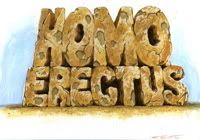
Trailer Park: HOMO ERECTUS and the Evolution of Modern Independent Film

Filed under: Columns,Trailer Park — admin @ 1:51 am

By Christopher Stipp

Archives? Right Here”¦

I am a fan of advertising.

In the three plus years that I have been writing this column I have tried, desperately so, to deconstruct movie advertising’s biggest lasso that’s aimed at your wallets: trailers. I’ve always been attracted to this woefully neglected segment of the movie business as I’m constantly amazed we can have meaningful dialogue sessions about what this or that actor is getting paid or how much a production cost to shoot but we all might as well be troglodytes when it comes to having a meaning discussion about the obscene monies that are spent to try and get your attention.

It warms the sub-cockles of my heart to see a trailer, then, like the one for HOMO ERECTUS: THE MOVIE that only balances the needs of an audience to know what the movie is about but to infuse some genuinely earned laughs and also warm that special region of our corporal vessels that can now appreciate an Ali Larter from Heroes in what I can only say is the greatest cavegirl costume in, well, ever. And the trailer has good laughs. When you don’t have a corporate sized budget you are handicapped in that your wallet can’t afford to have a Don LaFontaine voiceover your preview or have a house like Trailer Park to produce it. What’s here, then, is a solid representative sample of a little film that not only could, it looks like it has.

What follows is a conversation I had with the film’s director, writer and actor, Adam Rifkin, after seeing the trailer and talking about things that caught my eye as well as letting Adam have the chance to explain about why he would visit a genre that really hasn’t been done since money-grubbing corporate ooze dripped over THE FLINTSTONES and hasn’t been funny since HISTORY OF THE WORLD and Sid Caesar showed how you could make the pre-historic amusing. You’ve also got elements of Woody Allen absurdity, dumb bo-hunk hilarity, the clubbing of ladies like seals which is always a good comedic device regardless of the time period and Gary Busey. Gary Busey, by the way, needs no modifiers; he is like the dice in a Yahtzee! tumbler after a vigorous shake: completely unpredictable when it comes to the outcome.

It was my pleasure to talk to the man behind not only this film but of THE CHASE, THE DARK BACKWARD, PSYCHO COP RETURNS and scads of other productions that range from completely normal to films that obviously display his passion for the medium. When you have Ron Jeremy, David Carradine, Talia Shire, Busey, Larter and a cast that well exceeds a few dozen I imagine there are some stories behind how this little movie was an exercise in moviemaking, expediency, balancing and how it ended up being a part of Slamdance.

See the trailer and believe that a man has the power to evolve”¦and take a beating, clubbing and a whooping for thinking he can.

And, while you’re at it, take a look at a very special “video” cut by Mattt Potter for HOMO ERECTUS entitled “That Homo Ishbo” as it will re-affirm your very belief in the power of hot love, humanity, homo-eroticism and dingle berries.


CHRISTOPHER STIPP: First of all, thank you for talking with me before you took off for Slamdance and, secondly, I really liked the trailer for the movie. It actually made me want to see the movie without giving away too much.

ADAM RIFKIN: I appreciate it, thank you.

STIPP: Seeing how it was an independent picture did you have to cut that trailer yourself or did you get help from Mr. Potter…

RIFKIN: Mattt cut it. He’s been cutting all the media for us and he’s been doing a great job.

STIPP: That guy. He initially sent me one of the trailers that was bat-shit crazy. It’s got all the quick clips”¦.

RIFKIN: Right, right”¦

STIPP: And it’s all, “DIRECTED BY”, “WRITTEN BY,” with completely unrelated action movies tossed in there and it drove me nuts. He’s asking me to look into this film and I couldn’t tell anything by the initial trailer he sent. So, thankfully, after he sent me over to your MySpace page I was thankfully able to get a great look at this movie. So after all this rigmarole of establishing what this film looks to be, tell me what this movie is really about.

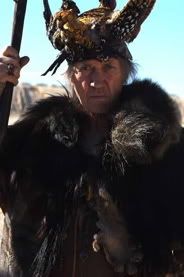
RIFKIN: The basic idea of the movie is that I play a somewhat philosophical, somewhat neurotic caveman who believes that we as a species have the ability to evolve way beyond sticks and stones to possibly great heights”¦but the rest of my tribe thinks I’m an idiot. I’ve got all these ideas for these inventions, all these ways I think I could make life better for ourselves and they just think I am out of my mind; because they like it the way it’s always been. And I’m madly in love with the beautiful cavegirl who is, in turn, madly in love with my big, great-looking, really dumb brother which has me completely heart-broken. Basically, it’s like navigating all those minefields but, at the same time, the whole tribe is gearing-up for war against a tribe on the other side of the mountain that is plotting an attack”¦so everything leads up to that.

The idea, essentially, is that nothing has changed.

Everything is the same then as it is now but hopefully it’s real funny. Also, there’s no grunting or anything like cavemen-speak. We talk completely normal dialogue, I wear my glasses in the movie, which is never mentioned”¦and it’s just inspired, as when I was young, loving the older Woody Allen movies, Mel Brooks movies”¦just inspired by those kinds of movies.

STIPP: I was going to say it reminded me of HISTORY OF THE WORLD when I saw the trailer.

RIFKIN: Yeah, HISTORY OF THE WORLD, exactly”¦HISTORY OF THE WORLD and BLAZING SADDLES, and BANANAS, LOVE AND DEATH, SLEEPER all those movies and just loving those movies is what gave me the kind of idea to do this movie.

STIPP: And, on a sidebar, what happened to Woody Allen’s zanier sensibility? I think movies like PROOF and MATCH POINT and good, they’re decent, but they’re no BANANAS.

RIFKIN: He even comments on that a lot in his own stuff, STARDUST MEMORIES in particular, and I am a huge Woody Allen fan by the way, huge fan, and LOVE AND DEATH is his transitional movie; it was still wacky but it started to get a little philosophical. And, right after that, he made ANNIE HALL, which won Best Picture, and it changed his career.

I think, knowing what I know of him, just by being a fan of his, I think he needs to do what he feels inspired to do.

STIPP: And are you trying to capture some of that Woody Allen absurdity in HOMO ERECTUS?

RIFKIN: I don’t know if I would ever be able to do that but just loving those movies is what inspired me to want to make this movie.

STIPP: And quite a big cast. This is not your average, no name, no recognition, independent movie. You’ve got Ron Jeremy, Ali Larter”¦and Gary Busey of all people!

(Adam Laughs)

RIFKIN: Yeah. David Carradine and Talia Shire play my parents. And, yup, Gary Busey plays the villain. Tom Arnold plays the first gay caveman to come out.

STIPP: Oh, that’s him in the trailer! I thought that guy looked familiar.

RIFKIN: That was Tom Arnold. Ali Larter, who is now in Heroes, which is great timing.

It’s shocking to me that anyone showed up”¦in a movie opposite me because I’m not an actor. I never considered pursuing acting but, again, out of my love for Mel Brooks and Woody Allen I felt that in order to go for it and to do this movie in the way they made their movies I had to do it they way they did it. I mean, they always made these movies that they wrote and they directed and they starred in. That was the formula and I wanted to see if I could do it.

It was a load of fun.

Like I said, I’m not an actor and anyone who sees the movie will get evidence of that but everyone around me IS a real actor and they’re all real good and they helped me be better.

STIPP: I am curious to know, being someone who saw one of your earlier films that I paid to see in the theaters and enjoyed in high school, THE CHASE, talk about how the difference between having a bigger budget for that than you doubt had for this movie. Any outside studio financing beyond what you kicked in?

RIFKIN: No, not at all. This was made totally independent.

(Laughs)

Nobody would be crazy enough at a studio to put money behind a movie starring me. Maybe someday, hopefully, but not quite yet.

What happened was this company out of Texas called Burnt Orange financed the movie and they are affiliated with the University of Texas in Austin. The film department there gets to work on the movies that come through this company. So, the basic idea is that they’ll finance a movie as long as you come and shoot it in Austin and, in exchange, they’ll give you all kinds of free PA’s and interns and things. All of the students get to work on the movie and they get to learn how movies get made at the same time. So, it all sort of works out real well. Austin was perfect for the setting because Austin has all kinds of caveman/nature settings and, what was funny, was we lucked out.

Their production schedule is directly linked to the semester schedule so they needed to greenlight a movie by a certain date and they didn’t have (Laughs) a different movie in time. Our movie, by luck, they needed to greenlight something, otherwise they would’ve missed their semester, the timing was perfect.

STIPP: Was there an oversight committee that watched what you were doing with their resources?

RIFKIN: Oh yeah, they’re all down with it now but, at the beginning, they were like, “Well, we’ve got to a movie.” It’s just funny how it all worked out, timing wise, because if they had the luxury of time I am sure they would’ve talked themselves out of our movie.

STIPP: With a cast this large, and with the budget being the size it was, how did you coordinate everyone’s schedules with regard you having to be done within a certain period?

RIFKIN: That is an amazing question that I don’t really have a good answer for because I am as shocked as anybody that we got people to show up.

I mean, David Carradine, for God’s sake; he’s legendary. And it wasn’t like anyone was saying, “OK, I’ll do it for the cash.” That’s not how it happened. Maybe”¦you know what”¦Maybe people got into the idea of dressing up like cavepeople. I don’t know.

Listen, I’d like to believe they did it because they read the script and they thought it was funny but I HAVE to believe there was more at play here than meets the eye. If I was an actor, and I’m not, but if I were I would think, “Hey, this is a pretty short schedule, it would be fun to dress up in a caveman costume, I’ve got nothing to do for the next six weeks, I’ll do it.” I’d like to think this is how it went down but I don’t really know how I got them to show up, I swear to God.

STIPP: And did everyone have to come from L.A.?

RIFKIN: Some of them came from L.A. and some of them we cast in Austin.

STIPP: And how long was the shoot?

RIFKIN:
It was four weeks in Austin and then we did a week of pick-ups in L.A. It was quick, I mean we had to move fast. And here’s what was really crazy….The locations were, every one of them, at least an hour or two hours outside of town. We had to drive two hours outside of town before the sun came up every morning and then, every location beyond that, we had to hike, like sometimes miles, in to these remote areas to get to where we actually shot”¦All done in the dark because we shot late in the year and we had very few hours of sun. We had to make sure that the second the sun started coming up we were shooting. It was crazy but somehow we pulled it all together. People just got into it. It was a mindset. They just became maniacs about just getting out there, getting on location and getting as much shot as possible. I didn’t have time to be nervous about the acting part because before I got down there I thought, “Jesus, how am I going to pull this off?” But, because we were so pressed for time, and racing against the clock so much, I just did not have the time to get nervous. I would just jump in front of the camera and do the lines, and jump behind the camera again and watch what we just shot and move on, and run to another location and “Ok, let’s shoot this” and then jump in front of the camera and say a line and it was insane. But it was fun.

STIPP: And at anytime did the process of moviemaking turn into personal motivator after all this hustling?

RIFKIN: Yeah, you know, but not a lot. For the most part everyone was pretty down for the challenge because we all had a big powwow before it started and we basically all said, “This is going to be like four weeks of insane hell but let’s all just go for it. Let’s just be maniacs and get it done. We can rest when it’s over.” For the most part, everyone was pretty down with it.

And I will say that the locations were so pretty, and I’m not even like a nature guy, I’m from Chicago, I like the city, but the locations were so great that everyone was digging being out there in these nice locals.

STIPP: I usually don’t ask the question, because I know I’ll get a pat answer, but what was it like working with Mr. Joshua, Gary Busey?

RIFKIN: Oh my God, Gary Busey”¦ the best way I can describe him, of working with him, and he comes off really funny in the movie”¦ he’s difficult to wrangle. The best way to describe it would be what would happen if you brought a homeless person onto the set and tried to make him act professionally? I mean the guy has been in eight zillion movies but he’s”¦ a little bit kooky and it’s tough to know what you’re going to get and he doesn’t quite do the same thing twice and marches to the beat of his own drummer and, suffice to say, there’s some pretty crazy footage of him that didn’t make it into the movie, maybe we’ll cut something together.

STIPP: And, Ali Larter. Who would’ve thought?

RIFKIN: We totally lucked out. Aside from the fact we were thrilled to get her because she was perfect for the part, because she’s a legitimately good actress, but as soon as we finished the movie she booked Heroes which is obviously one of the biggest shows on TV right now. Amazing luck on everyone’s part.

STIPP: Was she the one you wanted right from the get go?

RIFKIN: When you’re going into a situation, casting a role like that, and you don’t have the money to pay whatever someone wants to have someone show up, you never know who is or is not going to be open to it. So, with our L.A. casting person we put the word out that we were making this movie to the agents of the people we thought were good for the role. And we got word back about whether we would open to Ali Larter, she was high on our list, would we be open to her because she was tickled by the idea that it was a caveman movie. I immediately said, “One-hundred percent. Absolutely. Stop sending it to anybody else and let’s play this out because she’s perfect for the role.” She’s been in a lot of things and I’ve always thought she was really solid. I was in Texas, though, while this was going on and Brad Wyman, the producer, in L.A. was the one who sat with her, explained to her who I was, what we were up to and then she and I had several phone conversations as she had some questions and I made her watch movies like LOVE AND DEATH, SLEEPER because she hadn’t seen those”¦and we got really lucky. She got the script, she said, “I’m game, let’s do it, what the hell. I’ve never done a movie like this before. It seems like fun.”

STIPP: Now, I want to be able and see the whole thing. Where can we see the film?

RIFKIN: Here’s where we stand right now: the movie was selected to premiere at the Slamdance film festival and it premieres this Wednesday night. Now, because it was made independently obviously we need to sell it to a distributor who’ll put the money up to release it at a theater near you.

One place to get attention for an independent film is at a film festival like Slamdance. So, what we’re hoping is that we get some positive feedback, some positive attention, some positive buzz from our Slamdance screening and the more people who can check out the trailer, the better, because the more people that the distributor see are checking out the trailer, the higher the numbers are, in terms of views, and we can say, “Look at how many people are watching the trailer for a movie that’s just come out of the blue, that’s a small movie that doesn’t even have a distributor.” That’s big.

STIPP: Now, I was told, by someone in the know, to ask about what Blumps are in your films. They seem to be like Sam Raimi’s yellow 1973 Oldsmobile Delta 88 cameos. Can you explain what Blumps are and why they’ve been a fixation in your films?

RIFKIN:
Blumps is a fictitious company that manufactures everything. Like Blumps Squeezable Bacon, Blumps Accordions or Blumps Washing Machines or Blumps Suppositories, whatever, and so the logo, the character, the face of Blumps is actually a painting of my grandmother’s face but it’s got that 1950’s smiley, happy, like everything’s happy if you buy our product kind of 1950’s vibe. So, since THE DARK BACKWARDS I have put Blumps, some sort of Blumps product, in every movie, to a lesser or greater degree.

The challenge in HOMO ERECTUS, then, is that it is set in caveman times so where would you ever stick a product of any kind?

STIPP: Right.

RIFKIN: So, it is prominently displayed in HOMO ERECTUS but I can’t tell you where it is.

STIPP: I have to find it.

RIFKIN: Oh, it’s easy to find. You’ll see it, plain as day.

STIPP: And when is THE DARK BACKWARD coming out on DVD?

RIFKIN: DARK BACKWARD will finally come out in October of this year.

STIPP: Really?

RIFKIN: It’s been years but it is finally coming out October, 2007 and the disc is going to be loaded with extras.

STIPP: Did you get Bill Paxton and Judd Nelson to contribute?

RIFKIN:
Absolutely. They did interviews and we made a documentary on the making of it and we did a screening and a Q&A afterwards and a whole bunch of other cool stuff.

STIPP: Adam, that’s it from me. Thank you kindly for talking with me before you take off for Slamdance. Good luck to you on Wednesday.

RIFKIN: Thank you so much.

##

QSE News: 1/26/2007

Filed under: Columns,News — UncaScroogeMcD @ 1:41 am
quickstopnews.jpg
line1.gif

Here are today’s top entertainment headlines:

  • qsnews.jpgIn (apparently unending) reunion news, reports out of the Van Halen clan state that the band is planning to tour with original singer David Lee Roth. Eddie Van Halen has also said that former bassist Michael Anthony is no longer part of the band and will be replaced by Eddie’s 15-year-old son Wolfgang. However, some close to the band are saying Eddie only plans on having Wolfgang around so he has quick access to blood transfusions and possible organ transplants.
  • 20th Century Fox has served the owners of YouTube with subpoena asking for the identity of a user that is posting entire episodes of the TV series 24 on the site. YouTube responded that the request may be difficult but told 20th Century Fox that they could send over a video of a “Jedi in Training,” a dorky-looking kid dancing to “Mi Ya Hi” or Saturday Night Live‘s “**** In A Box” skit.
  • This week the satirist-supreme, Stephen Colbert, threatened to burn his honorary degree from Knox College if the school gave the same degree to former President Bill Clinton at this year’s graduation ceremony. Knox college officials said Clinton will receive a different degree but the school has also asked for help in “getting the former President to move out of a girl’s dormitory and to stop pestering students about “˜scoring’ some “˜ganj.'”
  • Actress Nichole Kidman was involved in a car wreck while filming the new sci-fi movie The Invasion. Kidman was released from the hospital with no injuries, and before heading home stated, “I’ve been involved with bigger wrecks than that. Right off the top of my head I can think of two: Bewitched and Tom Cruise.”
  • In movie news, Tim Hill has been approached to direct a live action/CGI version of The Chipmunks, the popular cartoon about a group of singing chipmunks.  Producers are looking to cast a well-known comedian in the role of Dave Seville, the Chipmunks’ manager and surrogate father.  Producers are also planning on an “˜R’ rating as the current script calls for adult language, several nude scenes (three featuring a chipmunk) and 112 acts of violence.
line1.gif

That’s all for today’s news, stay tuned to this channel for all the news that matters least but you still care about.

(Compiled by J. Allen)

##

Quick Stop Thingamabobs: 1/26/2007

Filed under: Columns,Thingamabobs — UncaScroogeMcD @ 1:27 am
thingamabobs.jpg

The web. It’s a big place, full of plenty of distractions ““ some funny, some informative, some ludicrous, some disturbing, some inane, some profound. Each and every weekday, we present links to a few of our favorite finds”¦

————————————————
gorilla.gif

————————————————
  • Otis Lee Crenshaw (aka Rich Hall) sings “Like a Woman”… (Thingamabob)
  • Dr. Katz and Dave Atell discuss monkeys…. (Thingamabob)
  • The Rutles’ “Shangri-La” video… (Thingamabob)

Have a THINGAMABOB? Send it in!

##

January 25, 2007

Music For The Masses: 1/25/07

Filed under: Columns,Music for the Masses — UncaScroogeMcD @ 4:17 am
musicmasses2.jpg

Hello again! “˜Tis I, your old pal M.C… back with a SUPER-SIZED edition of “Music for the Masses.” This week, I “whips out” a gnarly, Big Cock and slam it against the bedpost a couple of times to “warm it up a bit” before sticking it in your ear. Meanwhile, Double A checks in with the new one from Nas and proclaims that Hip Hop Is Dead and we “class the joint up a bit” by adding a new voice to the proceedings, “Reverb. . .with J.D.” Sound like fun? Well, what do you say we find out?

m4m-cock

BIG COCK
Album: Big Cock
Sounds Like? The Whiskey on Sunset… circa 1987.

m4m-rooster

There ain’t no blockin’ THESE Cocks…

Before I begin any type of review for the new, self-titled album from Scottsdale, Arizona’s Big Cock, I would like to personally thank them… again… for naming their band after me. You’re too kind, boys… too kind. And since you were obviously using me as your naming inspiration, I would also like to thank you for avoiding the band names “BackHair,” “Halitosis” and “Un-descended Left Nut.” You guys fucking rock, in a very “don some acid-wash, crimp your hair and hop in the “˜Z’ to head to the tracks to slam some Matilda Bay” kinda way, and I’m reserving a special place in heaven for you boys… smack-ass between the guy who invented the “day-glo pink” wife beater and this hell-cat.. GRRRRR!!!!

M4M-ITCH-1/24

Jesus… hope this guy never has an itch on his balls.

But seriously, folks, I’m here to tell you that, obvious “big dick jokes” aside, Big Cock is a group of HARD rockers in the VEIN of Deep PURPLE and HELMET. In fact, even a ONE EYED SNAKE could see how HARD these guy’s rock. Okay… I lied. Those were still some OBVIOUS jokes and perhaps… PERHAPS… that last one was a “bit” of a stretch. Whatever. Let’s just suffice it to say that Big Cock is one of the best non-hair “hair metal” band that you have ever heard… like an AquaNet “wetdream”… sans the AquaNet.

m4m-aqua

AquaNet… the first choice for dudes dressing like chicks.©

That’s right, Mr. Brett Michaels!! Keep your fingers crossed!! I smell an “opening act” opportunity for you on the horizon!!

m4m-brett

Pamela Anderso… wait… I mean, Brett Michaels… wait. Good lord. I wish they’d wear name tags or something… it’s like trying to tell the fucking Olsen twins apart.

All joking aside, this new disc from the Arizona 4-piece is cock-full, I mean, chock-full of ass-ripping power chords, blistering solos, nut-thudding base, head-pounding drums and enough euphemisms for male genitalia to make Lance Bass lick his lips. Check out some of these song titles: “Ride On Me,” “Rock Hard,” “Every Inch Of My Love” and “Fucked Up!” Oh yeah, and there’s a cover of the Paul Anka song, “She’s A Lady.” My particular favorites, though, are the riff-laden songs “Real Man” and “Scottsdale Girls,” the later of which I am dedicating, right here and now, to Christopher Stipp from Quick Stop’s very own “Trailer Park” because of the line “make a mess in your blonde curls, my Scottsdale Girls.” See, I’m thinking that’s how Stipp rolls. “Naw, baby, you don’t have to worry. I’ll tell you when I’m about to… AHHH… OHHHH… damn, baby… I’m sorry. Sit right there. I’ll go get you a wet nap.” Oh yeah, and he’s from Scottsdale.

m4m-stipp

Stipp’s ride, “the PenetrateHer.”

Is this the most original music that you’ll ever hear? Hell no. But who fucking cares? Seriously. That’s not the point of having Big Cock. The point of having Big Cock is to pump some fun back into the tight-assed, “American Idol-loving” music scene, to slap on the foreheads of the punk and “screamo” crowds and to give the world back it’s arena rock. And that, my friends, is EXACTLY what this Big Cock does. Fuck yeah!! Can I hear an “Amen?” Damn straight.

Sure, it wouldn’t have killed these guys to change the tempo from song to song and the lyrics are not going to win any literary awards, but hey… screw it! I give nothing but kudos to these guys for gearing this baby for maximum, sustained head-bangage. I’ll say it again, this CD is pure, “Devil Horn” pumping fun, plain and simple, so go ahead… take this Big Cock for a spin and see how it fits. I’m confident that you’ll think it’s one hell of a ride.

m4m-hung

(No Shit, fun stuff!).

m4m-doublea

m4m-nas

Well, I’ve said it before and I’ll say it again. There hasn’t been a damn thing worth a shit to come out this year. Granted, the year is only in its third week, but in the time that I’ve been doing these here reviews, I’ve NEVER had this much trouble finding something to review. So instead of picking up something completely random, I decided to go with an album that came out towards the end of last year. That album is Nas’ Hip Hop is Dead. I’d heard that the album was pretty good, but I avoided it at first because I’m just not into Nas. After listening to this album, I can honestly tell you… I’m STILL not into Nas.

Don’t get me wrong, this album isn’t bad, it’s just not my cup of tea. Or cup of crunk juice if you will, cus you know, rappers these days are all about the crunk juice. Anyways, Hip Hop is Dead just seems to be going through the motions. None of the songs are bad, but none of them are really great. There were a few times when I found myself getting into a song, but for the most part, all the songs are just kind of plain. Songs like “Where Are they Now?” and “Who Killed It?” offer up some good rhymes and are probably the best tracks on the album.

m4m-nas2

If you’re like me, you want an album that you can really get into. Like Buffalo Bill from The Silence of the Lambs or, I guess, Jay in Clerks II. You know what I mean? Unfortunately this album doesn’t make me want to wear it like a hat. I can see why a lot of mainstream outlets called this the best rap album of last year. It’s safe and non-threatening and, in my opinion, not all that great. If you haven’t picked this up yet… don’t go out of your way. Save your money for some future releases that (hopefully) will be coming out in the next few week.

m4m-chair

Reverb… with J.D.

One of the great things about living in Denver is the volume of high-quality of live music that comes through town. As the only “˜major’ city between the West Coast and the Midwest, pretty much every band on tour makes a stop here”¦ as such, you can catch a solid show seemingly every week.

The past couple of weekends I hit two excellent concerts: My Morning Jacket (1/12) and G. Love (1/19). Actually, though, it’s not really appropriate to group those two together in the “˜excellence’ category. MMJ was indeed stellar: they are a tight band clearly living up to the hype, filling their live show with aural explorations that consistently swell to mesmerizing, kick-ass guitar crescendos. G. Love, on the other hand, was pretty sloppy. The sound at the Fillmore sucked that night and it definitely appeared that G. and his crew had been hitting the “Special Sauce”. But like every other G. Love show I’ve been to, it was still a blast. Good music, good times, and for the most part, good peeps.

My only complaint about the show actually came from the crowd. During the acoustic part of G’s encore (two songs) some stupid chick standing directly behind me randomly let out howling, eardrum-piercing screams. Now I can appreciate that G. Love, via soulful lyrics and his whitey-hop boogie stylings, consistently hits the “G.” spot of the ladies in his audience”¦ but not to the point where can I appreciate losing a couple of years hearing off the back end of my life.

My first inclination was to turn around, walk up to her, and scream right the f*ck back in her ear”¦ kinda like the narrator in Edgar Allan Poe’s “The Cask of Amontillado“, of course without the satisfaction horror of silencing her for good. But instead I got to thinking of the most annoying crowd behavior I’ve encountered in my years as a serial concert-goer, and came up with a little rulebook for attending live shows:

The Concertgoers Manifesto

Rule #1: Shut The Fuck Up

–Chances are, I paid good money (plus Ticketmaster gouges) to see this show. So did everyone else around you. And that’s the deal, boys and girls. We paid to listen to the music, not to you. So shut your damn piehole already. If you have a story to tell, save it til’ set-break, take it to the concourses, do whatever you have to do”¦just shut the f*ck up. (Two Notes– First, there are obvious exceptions: brief/discreet/reasonably quiet chats with your friends”¦and/or making time with the person next to you. This rule is more intended for the non-stop jabberers who talk during the entire show (and whose population is distressingly large). Second, the importance of this rule increases proportionally to the intimacy of the show you are attending. Large, loud rock show: not as important (since we probably can’t hear you). Cozy, acoustic-type show: Mandatory).

Rule #2: Loosen Up, Meat

–You know this guy, right? He’s standing right in front of you at a G.A. show, likely muscle-bound, and he ain’t moving one inch of his being”¦ except to pound your a** if you keep touching him. Hey Jockstrap, nothing personal”¦ it’s just a little crowded, and oh by the way there’s some music being played that is making every other person in this crowd, you know, dance a little. But sorry for brushing up against you”¦ maybe next concert you’ll get lucky and everyone around you will also hate life and not want to have fun.

Rule #3: Head Up (or Down) With Your Outbursts

–See G. Love explanation. Many of us, myself included, are given to cheering/whistling/hollering when we are excited/having fun/drunk at shows. But do your neighbor a favor and point your head up (or down) when cutting loose with your chosen outbursts. Because doing so directly in your neighbors ear? Es muy mal.

Rule #4: If You Spill Someone’s Drink, You Owe Them a New One


–Self-explanatory. Kindly ask what you spilled, and kindly hurry up and get them a new one.

Rule #5: Leave the Accessories at Home

–This rule applies mostly to crunchy, uber jam-type shows where sometimes fans like to accessorize and become a part of the show. Two prime examples are bringing in shakers to “jam along with the band” and hula hoops. Shakers are just inexcusable. Remember, everyone paid to listen to the band, NOT you and your little sand-filled egg. And if you are over 18 and hula-hooping at a show, I have this little pearl of wisdom for you:

Q: What’s the toughest thing about hula-hooping?
A: Telling your dad you’re gay.

So there you have it, folks. Five simple, easy-to-follow rules that will make EVERYONE’S concert-going experience a lot more fun. Learn it, live it, share it with your friends!

E-MAIL THE AUTHOR

m4m-love

Well, as the tens of you probably heard on the J. Allen/Double A “fill-in podcast” last week, I was on a cruise. No… that’s not “code” for “rehab.” Seriously… it was a cruise. And, contrary to their claims, this was NOT a “big, gay boat ride”… however, someone forgot to tell these guys… seriously… they were on the cruise…

m4m-curtis

In all actuality, it was the “Ships & Dip” excursion featuring the Barenaked Ladies and Guster. Now, I realize that for some of you, my “puss factor” just shot through the roof, but hey, whatever… I’m comfortable in my own skin, dammit… just like the two “seamen” up above there… and there was no way in hell that I was going to miss an opportunity to hang out with two of my “most favortist” bands in the world while cruising the Bahamas. You fucking high? Nope, wouldn’t have missed it for the world and I gotta tell you… I’m glad I didn’t because it was an absolutely REMARKABLE experience. Sure, my requests for interviews where shit on like a prostitute at a Duke Lacross party (yes, I know they were innocent… relax), but all of the other experiences I had on the boat more than made up for that.

22[1].jpg

First and foremost, we (me and the little lady) were lucky enough to have met some really cool people including one couple that said they were “swingers.” I told them that I didn’t realize that the ship HAD a playground on it, but that maybe we could meet there later. Never found that damn playground, though. Oh, we also met a TON, literally, of people who were under the mistaken impression this little boat ride was, in fact, a Jenny Craig “Cruise to Lose” jaunt. I shit you not… as we were boarding, or rather, herding onto the boat, I wouldn’t have been surprised to see Kirstie Alley listed as one of the “entertainers”… or Richard Simmons. In a weird way, I was comforted by the fact that if the boat sank, there were PLENTY of fat people I could use as a floatation device.

m4m-whale

Man rubbing lotion on BNL fan: Turks and Caicos, 1/17/07

We also discovered something called “alcohol.” You guys ever hear of this stuff? Wowie wow… good shit! The waiters would bring it right to you. You didn’t even have to move which, as I noted above, was a VERY good thing for some people and a good thing for me as it kept the boat from rocking. Oh, and let’s not forget the AMAZING shows. In fact, the shows I saw with the big boys, especially Guster, rank with some of the best live shows that I have ever seen. No kidding. But the real unexpected treat here, the thing that just pushed this cruise over the top for me, was seeing all of the incredible collaborations between the various artists and getting clued in to some lesser known acts. In fact, I was SOOOOO impressed by some of these bands and how hard they worked on this cruise that I thought I would help them out a bit by telling you a bit about them. Believe me, after all that they gave to me… it’s the least I could do.

M4M-JOE-1/24

Now Joe Pisapia doesn’t need me to pimp anything for him because he is doing JUST FINE as one of the members of Guster. He’s the “New Guy,” if you will. But before Joe joined the band, he made an outstanding solo disc that I think you guys should check out called Daydreams.

m4m-daydreams

I respect the hell out of Joe Pisapia because he is an artist driven more by the act of making music and being appreciated for it than he is by fame and fortune and that attitude shines the brightest on Daydreams. Borrowing equal parts from Dylan and Davies, Daydreams is an entertaining collection of multi-layered songs that reveal more and more each time you listen. The instrumentation and arrangements are sublime and the lyrics are both touching and poignant, especially on tracks like “River Song” and “Dancing Partner.” I was fortunate to catch Joe’s “solo” performance (on stage with him were members from Oakhurst, who we’ll get to in a minute, BNL and, of course, Guster) on the ship, during which he played most of Daydreams. I can honestly say THAT performance was EASILY my favorite moment of the cruise and his heartfelt rendition of “Dancing Partner” literally brought the little lady to tears. It was THAT moving. You know, I kid around A LOT on this site, but I’m not kidding when I say that there are times when you are watching a show, and I’m sure many of you have experienced this, when the chemistry on stage is so mesmerizing, you get swept away. This was one of those moments. Simply amazing. I highly recommend Daydreams. It’s folksy and mellow, but it is an outstanding album and well worth your time.

1525686886_l[1].jpg

Another band that impressed the hell out of me was a band from right here in Denver, Oakhurst. Oakhurst easily gets the award for “Hardest Working Band” on the cruise as these guys where, literally, EVERYWHERE. Whether they were picking their way through a set of their highly entertaining, bluegrass infused folk-pop or lending support to the other bands and their various side projects, members of this band worked constantly. In fact, I heard that these guys (A.P. Hill on vocals/guitar, Johnny Qualley on bass, Adam Smith on guitar, Chris Budin on drums and Zach Daniels on banjo) paid their own way onto the boat just to get a little exposure and at the beginning of the cruise had NO set gigs. Obviously, they didn’t just impress me because they were a part of virtually every show, so take that for what it’s worth. Again, Oakhurst’s music is a bit on the mellow side, but this is a great group of guys and they are all exceptionally talented musicians so stop by and show them a little love at www.myspace.com/oakhurst.

M4M-PLUMB-1/24

And last, but definitely not least, is Jason Plumb. You see Jason is a bit of a contradiction in that he looks like a trucker… the kind with a dead hooker in the back of the refrigeration unit… but has this voice that is just remarkable, especially when you consider the source. When I first saw him hit the stage, I was honestly waiting for him to let loose with a mighty “Breaker, breaker… c’mon back now!! This is Hooker Hauler… what’s your 20??” Of course, some of you may know Jason as the ex-lead singer of the Canadian band, The Waltons. You may also know him from his numerous producing credits or from some of his soundtrack credits. I didn’t know any of this. All I knew his last album, 2003’s Under and Over, was produced by Ed Robertson, of BNL fame, and is a very understated and passionate affair. The songs on the disc are disarming in their honesty and immediately accessible. Great stuff, all around. Additionally, I gotta say that Jason was one of the coolest people that I met on the ship. Check him out at www.myspace.com/jasonplumbandthewilling.

UPCOMING RELEASES. . .

ARTIST TITLE GENRE
Allen, Lily
Still Alright POP
Beats International
Let Them Eat Bingo POP
Clap Your Hands Say Yeah
Some Loud Thunder ROCK
Clarke, Gilby
Gilby Clarke ROCK
Connick, Jr.,Harry
Oh, My Nola POP
Dead Voices On Air
From Labrador To Madagascar ROCK
Deftones
Saturday Night Wrist ROCK
Diabolical Masquerade
Nightwork POP
Disincarnate
Dreams of the Carrion Kid POP
Dodsferd
Fucking Your Creation (2 CD) ROCK
Downlord
Random Dictionary of the Damned POP
Early Years, The
The Early Years ROCK
Edenbridge
Grand Design, The ROCK
End of Destiny
Thoughtless Existence, The POP
Everscathed, The
Razors of Unrest POP
Gandalf
Gandalf II ROCK
Grave Digger
Liberty Or Death ROCK
Greylevel
Opus One ROCK
Hart, Roddy
Bookmarks ROCK
Horna
Aania Yossa ROCK
Howe, Catherine
What A Beautiful Place ROCK
Jones, Norah
Not Too Late POP
Khallice
Journey, The ROCK
Khymera
New Promise, A ROCK
Kirchen, Bill
Hammer Of The Honky-Tonk Gods ROCK
Koz, Dave
At The Movies POP
Lane, Lana
Gemini ROCK
Look Down
24/7 Dance Force POP
Loureiro, Kiko
No Gravity ROCK
Love Me Destroyer
The Things Around Us Burn POP
McPhee, Katharine
Katharine McPhee POP
Mercury Rev
Back To Mine POP
Necrodemon
Ice Fields of Hyperion POP
Nelly
The Prelude RAP
Neurosonic
Drama Queen ROCK
Nikki Puppet
Puppet On A String ROCK
Norlander, Erik
Hommage Symphonique ROCK
One for the Team
Good Boys Don’t Make Noise POP
Pain Of Salvation
Scarsick ROCK
Plagiarists, The
Veto! POP
Rounders, The
Wish I Had You ROCK
Rudd, Xavier
Food In The Belly ROCK
Ruth’s Hat
Nostalgic for Right Now POP
Sean Price
Jesus Price Supastar RAP
Sidley,Annie
Diamond in the sand POP
Skinny Puppy
Mythmaker ROCK
Smitty
Voice of the Ghetto RAP
Static Thought
In The Trenches ROCK
Sylvian, David / Nine Horses
Money For All ROCK
T.I. & P$C
In Da Streets RAP
Ta’Raach & The Lovelution
The Fevers RAP
Taylor, Lewis
Lost Album, The Pop
The Roadside Graves
What Happened To Him Could Happen To Anyone POP
The Sneakers
Nonsequitur Of Silence POP
Theatre of Hate
Ten Years After POP
Trail Of Tears
Existentia ROCK
Traveling Wilbury’s
Strumming Wilbury’s POP
Tristania
Illumination ROCK
Trucks, The
Trucks, The ROCK
Turner’s, Nik Sphynx
Xitintoday ROCK
Valient Thorr
Legend of the World ROCK
Warm In The Wake
Gold Dust Trail ROCK
Webster, Chris
Something In The Water ROCK
X-Clan
Return From Mecca RAP
Yorkston, James
The Year of the Leopard ROCK
Young Dro
Young and the Restless RAP
Young Love
Too Young To Fight It POP
Young Stally
Young & Flashy RAP
Youth Group
Casino Twilight Dogs ROCK
Yung Ro
Go Hard Texas RAP

Well… there you have it folks. Thanks for hanging in there and, until next time, keep wearing it proud and playing it loud!!

Send sexual inuendos, review copies, presents and assorted hate mail to:
M.C. Bell
P.O. Box 1222
Arvada, CO 80001

E-MAIL THE AUTHOR

QSE News: 1/25/2007

Filed under: Columns,News — UncaScroogeMcD @ 3:59 am
quickstopnews.jpg
line1.gif

Here are today’s top entertainment headlines:

  • qsnews.jpgKid Rock is putting together a new album that he hopes will hit stores this year. Rock, who partially blames the character of Borat for the end of his marriage with Pamela Anderson, has enlisted the help of Rick Rubin to assist with production duties. The new album will likely continue to further Rock’s unique blend of Rock “˜n Roll and suck.
  • Writer/Director Mitchell Lichtenstein, whose debut horror film, Teeth, just hit the festival circuit, is already making plans for a sequel.  The movie, which centers around a woman who attacks men with the tiny teeth in her vagina, is generating huge buzz amongst viewers.  When asked where he got such an idea, Lichtenstein said that he “saw that picture of Britney Spears [EXPLETIVE DELETED]” and thought that “it just looked hungry.”
  • Insiders are reporting that Nicholas Cage is the leading contender to play musician Liberace in a new biopic.  While this may seem like odd casting, the two do have several things in common – Cage is known for action movies such as The Rock and Con Air where his characters kick ass whereas Liberace was a flamboyant piano player who… well, you finish the joke.
  • The National Restaurant Association is asking Nationwide Insurance to pull the plug on a planned Super Bowl ad featuring Kevin Federline.  The non-gun toting NRA claims that the commercial, which features Federline working as a fast food cook, is demeaning and unpleasant to restaurant employees.  Nationwide released a statement defending the ad stating “working in a fast food restaurant is not nearly as demeaning and unpleasant as actually being Kevin Federline.”
line1.gif

That’s all for today’s news, stay tuned to this channel for all the news that matters least but you still care about.

(Compiled by J. Allen)

##

Quick Stop Thingamabobs: 1/25/2007

Filed under: Columns,Thingamabobs — UncaScroogeMcD @ 3:31 am
thingamabobs.jpg

The web. It’s a big place, full of plenty of distractions ““ some funny, some informative, some ludicrous, some disturbing, some inane, some profound. Each and every weekday, we present links to a few of our favorite finds”¦

————————————————

  • For look at one of the most talented up-and-coming cartoonists I’ve come across, check out the work of Emmy Cicierega… (Thingamabob)
  • Jim Steinman has a blog. Yes, that Jim Steinman…. (Thingamabob)

Have a THINGAMABOB? Send it in!

##

January 24, 2007

QSE News: 1/24/2007

Filed under: Columns,News — UncaScroogeMcD @ 1:04 am
quickstopnews.jpg
line1.gif

Here are today’s top entertainment headlines:

  • qsnews.jpgReports are coming out of Hollywood that director M. Night Shyamalan is having a hard time finding a buyer for his new movie, Green Planet.  Insiders say that every studio has turned the movie down, although Fox is said to be “considering” it.  Studio executives insist that the script isn’t bad, they just can’t spell or pronounce Shyamalan’s name correctly and are sick of confusing him with the doo wop group Sha-na-na.
  • The Oscar nominations have been announced with the Eddie Murphy vehicle Dreamgirlsleading the pack with a whopping eight nominations. Surprisingly, at least to those outside of the Jewish community, Mel Gibson’s Mayan epic, Apocalypto, was overlooked primarily because, as one Academy voter put it, there is no Oscar for “Best Portrayal of a Lying, Misogynistic, Anti-Semitic, Alcoholic Dick.”
  • A reunited The Police are rumored to be appearing at this year’s Grammy Awards in February. Grammy organizers are hoping that the audience will remember that Sting wasn’t always a wussie, easy-listening musician and that he was, in fact, in a post-punk rock band.
  • In continued reunion news, James, the band that had the mega-hit “Laid,” is reuniting for a string of shows in the UK. It’s rumored that the band will be performing songs from its entire catalog, with “Laid” being the only song that anyone will recognize.
line1.gif

That’s all for today’s news, stay tuned to this channel for all the news that matters least but you still care about.

(Compiled by J. Allen)

##

Quick Stop Thingamabobs: 1/24/2007

Filed under: Columns,Thingamabobs — UncaScroogeMcD @ 12:57 am
thingamabobs.jpg

The web. It’s a big place, full of plenty of distractions ““ some funny, some informative, some ludicrous, some disturbing, some inane, some profound. Each and every weekday, we present links to a few of our favorite finds”¦

————————————————

  • National Gorilla Suit Day is still coming… You have been duly notified… again… (Thingamabob)
  • Would you like to turn your car into one from Cars? Here’s how… (Thingamabob)
  • Oh, those magnificent Norwegians in their driving machines… (Thingamabob)
  • Go listen to episode 8 of Jordan, Jesse GO! Do it NOW!… (Thingamabob)

Have a THINGAMABOB? Send it in!

##

January 23, 2007

Party Favors: R.E.M. Sleep

Filed under: Columns,Joe Corey's Party Favors — UncaScroogeMcD @ 3:48 am
partyfavors1.jpg

CLEVELAND – Once again the losers that control the Rock and Roll Hall of Fame have chosen a few names out of the nearly 100 groups that deserve such an honor. While it’s nice they named Patti Smith and Van Halen, how can they not slide in Iggy and the Stooges? Where’s Thin Lizzy or Kiss?

What’s outrageous is the inclusion of R.E.M.

R.E.M. does not deserve the honor on the first ballot. I’m not an original hater of the band. One of my prized records is an original Hibtone 45 of “Radio Free Europe.” I hung out backstage with them during the Fables of the Reconstruction Tour. But R.E.M. has been running on their reputation fumes for nearly 15 years. When was the last time you really wanted to hear Monster? Is “Shiny Happy People” really Rock and Roll? Or a lost Soupy Sales single?

R.E.M. started out as that scrappy jangle pop band that challenged the bloated rock dinosaurs. But 25 years later, they are the rock stars they hated. Peter Buck’s antics on the airplane weren’t part of that awe shucks movement. It was a Tommy Lee moment. A lawyer has asked me to avoid any mention of Michael Stipe’s ventures. Beyond their personal lives, is the group’s recent recording history. R.E.M. has done more damage than good for the music industry. Everyone loves to rag on Axl Rose and how much he’s cost his label to create the still not released Chinese Democracy. Allegedly the costs topped $12 million before the label stopped picking up the studio bills. R.E.M. signed a 5 album contract that pays $80 million. That’s $16 million per record that Warners has to pony up. And the three records they’ve turned over to Warners have sold half a million copies each in America. They’ve produced Glitter three times for Warners. Yet nobody gives Stipe the same crap that Axl gets for outrageous costs. When Chinese Democracy comes out, it will sell as much as Up, Reveal and Around the Sun combined. Which isn’t that much a number.

How many Warner acts have been screwed because of R.E.M.’s outrageous contract and pathetic returns? There’s only so much pie on the dessert cart and it seems earmarked for Athens, GA. How many people had to eat Ramen noodles because Up went down? Rock is dead and R.E.M. killed it.

It’s not even like the R.E.M. catalog sells like Steve Miller. You’re more likely to hear them on The Simpsons than your radio dial. They had their glory days in the early 90s, but so did Hootie and the Blowfish.

At some point, R.E.M. should go into the Hall of Fame. But are they first ballot? No. If they were up for the Baseball Hall of Fame, they’d be sitting next to Mark McGwire. They’re the Ken Griffey, Jr. of baseball. But ultimately R.E.M. got elected for that single reason that matters to the Hall – rubes willing to pay thousands of bucks to eat rubber chicken and watch two songs. I doubt during their induction we will be reminded how they’ve made $48 million on three records that hardly anyone hums on the subway. We’ll hear about their charitable ways and noble causes, but there’s no greater charitable person than the guy who has to cut the $16 million check to Buck, Mills and Stipe.

SNARK THE CRAP BOX

Shame on the living members of The Clash for allowing Cingular to use “Rock the Casbah.” One of the defiant power songs of the ’80s has been reduced down to two goofs arguing if it’s about rockin’ the cashbox or the catbox. Remember when the Clash had a rebel dignity to their ways? Now they’d rather be jokes of the Western World. This is worse than when their music was used to pimp Jags and booze. At least those ads tried to make their subjects as cool as the songs. The Cingular advertisement is pure dork. Is this Mick Jones’ revenge on the late Joe Strummer?

Someone needs to be publicly executed for Target’s butchering of the Beatles’ “Hello Goodbye.” I’ve always enjoyed Target’s use of songs in their ads. They’ve got better taste than any Clear Channel robotron programmer. But all that good will has been pissed away when a woman sings, “Good Buy” while products flash across the screen.  Why? Why did they have to inflict damage on a song? I’d expect this from Wal-Mart or K-Mart. Not Target. What’s next? “The Crazy Eddie on the Hill?” “I Am the Half-Priced Walrus?” “IKEA’s Norwegian Wood Suite?”  SNL‘s Sold Out Gold continues.

SMELL THE SUCK

If the first big sketch on SNL is MTV 4, turn the channel. The show is bound to suck if this piece of filler is considered “A” material.

SEC CAVUTO

The Magic 8 Ball says “It Is Certain” that Fox’s business maven Neil Cavuto will be splitting the network to be Secretary of the Treasury for presidential candidate Mitt Romney.

Even though Neil is in the process of setting up the Fox Business Channel, he’s been cultivating his relationship with Mitt. The ex-Gov. is a favorite guest on his My World show. By 2009, the network should be online and Cavuto will be ready to jump to D.C.  Fox Chief Roger Ailes has let his employees know that if they split the network to serve a GOP president, they can always come back.

The Magic 8 Ball confirms that Neil can’t give up the shot at being the man whose signature is on the U.S. dollar. Expect to see more Mitt exclusives on Fox News in the coming two years.

BLACK LIKE HE

Larry Wilmore, known for his black perspective moments on Comedy Central’s Daily Show, deserves his own show. The man has me howling with every visit. His take on Martin Luther King Day was gold. Why don’t white folks feel guilty if they don’t spend George Washington’s birthday reading about the Father of Our Country?

YUMMY LENTILS

Kudos for E!’s The Soup host Joel McHale getting to be a judge on Iron Chef America. Damn shame he got stuck on “Battle Lentils.” I can’t help but remember Neil and his lentils on The Young Ones. But Joel put the insanity into the US version that is essential to enjoying the Japanese version. His best line was telling Chef Mario Batali that he’d order an entree without even using a coupon.  The folks at the Food Channel need more off the wall judges on the show instead of foodsie owls. Book Larry Wilmore, now!

HOW LONG IS TODAY?

Why doesn’t NBC just change its name to TodayBC? A fourth hour of Today Show is coming up. That means local stations can have a whole hour of programming before it’s time to start the noon news. And then in some markets the evening news starts at 4 p.m. Does every station want to turn into CNN & Fox News? What’s the point of being a sick kid when all that’s on TV at home is the news? If you want to hear people talk crap you don’t understand, why not go to school? Whatever happened to gameshows with Nipsy Russell?

Soon all NBC will be is Today Show, Law & Order and Deal or No Deal. Guess that keeps Jeff Zucker’s life simple. Maybe they’ll have a crossover episode where joggers outside 30 Rock have to figure out which suitcase has the body.

NBC has proceeded to destroy cable TV with their crappy programming philosophy of “Marathons are the bestest!” While it might be nice to have Bravo on my cable box, their schedule seems loaded with marathons of Top Chefand Project Runway. You’re better off just waiting for the DVD sets to come out. Who needs Bravo when you can just play at home with Netflix?

WORST FATHER OF THE YEAR

Down in Raleigh, there’s an annual tradition of The Christmas Carol being put on by Ira David Wood. It’s the big family entertainment moment of the season. Now you might not know Ira David Wood, but his daughter is Evan Rachel Wood, star of Thirteen. She’s now being accused in the scandal rags of alienating the affection between Marilyn Manson and Dita Von Teese.

It must be great to wake up knowing that your daughter is sleeping with a rumored drug addict, washed up aging shock rocker who dumped his hot fetish model wife after less than a year of marriage. Here’s a tip, after she and Marilyn visit your house, replace the toilet seat. Don’t spray it with Scrubbing Bubbles. Yank it out and screw fresh plastic down to the bowl. Or better yet, just replace the entire fixture. And sterilize everything in the house with a flame thrower.

I apologize to the parents whose sons are now on I Love New York.  At least your kids aren’t sucking face with a nostalgia act.

How could a girl who grew up performing clean family shows find herself attracted to Manson? I blame her father. All those years she was backstage at A Christmas Carol, she probably developed a fetish for the creepy Ghost of Christmas Future. He’s the spooky ghost with the boney fingers, pale face, dark eyes and the black shroudy clothes. Daddy inadvertently put her on the road to meet the man who wrote The Long Road Out of Hell. The trouble is that Manson at this point of his career is more like the Ghost of Christmas Past. He’s got a standing invite to move into The Surreal Life house.

What really cracks me up is that Marilyn Manson sold himself as Mr. Debauchery. He’s beyond the uptight morality of Bible Thumpers that used to make an effort to picket his show. But yet, he sneaks off and bangs a young gal while his wife stays at home. He’s no better than those losers he disdained from high school that got jobs selling real estate. You’d figure the stories would be how Miss Wood crawled into the bed with him and Dita and a petting zoo and a tub of pudding. You’d expect there to be holiday cards with the two gals wrapped in red ribbons beneath a Black Christmas tree. But no. He’s no smoother than the manager of a Taco Bell in Canton, Ohio that uses the “working late” excuse to bang a community college drop out cashier.

Who are we supposed to idolize as evil anti-heroes in America when Mr. Antichrist Superstar has to pay for a divorce lawyer like KFed?

BURNING PUCKS

When will the New Jersey Devils make the greatest trade in the history of sports to get Miroslav Satan? Now Satan is playing for the Islanders – so at least he’s ruling in a Hellhole. Can the folks in the Meadowlands not see how much cash they’d get from Satan’s Devil’s jersey? I’d buy one and I hate Jersey (screw you, Scott Stevens). Pull the trigger and give the Dark Lord his moment at the rink. You’ll move product.

DRINK UP

If actors who had small roles in The Sopranos and Law & Order played each other in softball, it might look like Beer League (out on DVD).  This is about a bunch of folks who love to drink and play softball. The film stars Artie Lange, so you know this is not family entertainment.

It co-stars Ralph Macchio as Artie’s sober buddy. How does the Karate Kid play second bill to Howard Stern’s chuckle buddy? It would have been better if the producers had begged Ralph to pull a Raging Bull and pack on 100 pounds to take the lead. Hopefully this movie will get Ralph a little more attention so that he can become a regular actor on Law & Order.

Anthony DeSando is hilarious as Artie’s nemesis. When he prances around in his Speedo while directing Artie where to mow his yard, you almost buy this film as a comedy. Seymour Cassel also gets a laugh now and then as Artie’s coach. Not to be missed is porn veteran Keisha as “the Pitching Machine” during the bachelor party.

Perhaps this is supposed to be Artie’s version of Ernest Borginine’s Marty. But there’s less meat in this film. Artie’s best acting moments involve him sucking down booze. He has a natural chemistry with shot glasses and beer mugs.  While the film is far from Oscar-worthy, it’s more entertaining than Beerfest and Benchwarmers. Don’t watch this movie sober.

The bonus features should be outtakes from an upcoming episode of Intervention. It’s amazing how much they cleaned up Artie to act in the film versus how he appears during his press tour. Oddly enough, no clips from Artie plugging the movie on Howard’s radio show.

BRING ON THE VICE

I’m stoked to see seasons 3 & 4 of Miami Vice coming out on March 20th. These are episodes I didn’t watch since they aired when I had an actual social life and didn’t linger around the dorms on Friday nights. I’m told that this is when they blew up Sonny’s black faux-Ferrari. I don’t know if I can handle such a tragic sight. Does anyone know if Philip Michael Thomas sings in these episodes. Why isn’t he in the Rock N Roll Hall of Fame with Don Johnson? Jann Werner once said that Don Johnson was a “Rock & Roll star” on the cover of the Rolling Stone.

Coming out on DVD at the end of the month is the sixth and final installment of Benny Hill’s Thames series. These are episodes that never aired in my neighborhood so it’ll be interesting to see how Benny’s final days played out. The sad part is there was no farewell episode since the rat bastards at Thames sacked Benny after an episode, without warning.

Lucky Louie, Louis CK’s HBO series gets the complete series package. It’s a shame that they pulled the plug on the show. I’ve sent out questions to Louis CK to plug the DVD, but he hasn’t responded. However, porn legend Keisha replied to my questions about her ping pong ball work in Beer League:

No, I can’t really do that, the a.d. was down by my pussy throwing the balls by hand. But it was really fun to be in the movie.

Kisses,
Keisha

QSE News: 1/23/2007

Filed under: Columns,News — UncaScroogeMcD @ 2:26 am
quickstopnews.jpg
line1.gif

Here are today’s top entertainment headlines:

  • qsnews.jpgPam Anderson is fighting mad over a proposal by the U.S. Postal Service to honor Colonel Sanders with a stamp.  The “finger-licking good” PETA hottie has fired off an angry letter to the Post Master General stating her displeasure. We here at QSE News would like to congratulate Miss Anderson for taking a stand against an issue that is important to her, and for actually spelling “KFC” correctly.
  • This year’s Razzie Awards nominees have been announced, and leading the way with seven nominations is the film Basic Instinct 2. The Razzie Awards honor the worst Hollywood has to offer each year. After Sharon Stone was notified that she had been nominated, she promptly dusted off her vagina in preparation for her acceptance speech.
  • Actress/Model/Frustrated Participant In A Butt Kicking Contest Heather Mills is denying reports that say she has settled her divorce with former Beatle, Sir Paul McCartney.  It was leaked that the pair had come to an agreement that Mills would receive a settlement that totaled 63 million dollars, including two mansions.  Mills representatives stated, emphatically, that these reports are simply not true adding “if you REALLY knew (Mills) you’d know that she would never settle for this because she simply can’t survive on such a piddly amount.”
  • The Australian band Crowded House is reuniting for a new album and a subsequent tour this Spring. The band will play both new and old songs as they try to let the audience know they did not sing “Who Can It Be Now” and “Down Under.”
  • Actress/singer Mandy Moore recently told Jane Magazine that she is suffering from depression. Moore plans to counteract her depression by becoming even more rich, even more popular and even more good looking. “If that doesn’t work then I’ll just start doing drugs and banging everything that moves”¦ like my good friends the Olson Twins,” said Moore.
line1.gif

That’s all for today’s news, stay tuned to this channel for all the news that matters least but you still care about.

(Compiled by J. Allen)

##

Quick Stop Thingamabobs: 1/23/2006

Filed under: Columns,Thingamabobs — UncaScroogeMcD @ 2:00 am
thingamabobs.jpg

The web. It’s a big place, full of plenty of distractions ““ some funny, some informative, some ludicrous, some disturbing, some inane, some profound. Each and every weekday, we present links to a few of our favorite finds”¦

————————————————

  • National Gorilla Suit Day is coming… You have been duly notified… (Thingamabob)
  • “While My Guitar Gently Weeps,” on ukulele… (Thingamabob)
  • A live Rutles montage, featuring Neil Innes and John Halsey… (Thingamabob)

Have a THINGAMABOB? Send it in!

##

January 22, 2007

Quick Stop Thingamabobs: 1/22/2006

Filed under: Columns,Thingamabobs — UncaScroogeMcD @ 1:42 am
thingamabobs.jpg

The web. It’s a big place, full of plenty of distractions ““ some funny, some informative, some ludicrous, some disturbing, some inane, some profound. Each and every weekday, we present links to a few of our favorite finds”¦

————————————————

  • How to ruin a day, Vehicular Category… (Thingamabob)
  • Flight of The Conchords sing “Business Time”… (Thingamabob)
  • A hi-res version of that freakin’ creepy Orville Redenbacher ad… (Thingamabob)

Have a THINGAMABOB? Send it in!

##

QSE News: 1/22/2007

Filed under: Columns,News — UncaScroogeMcD @ 1:41 am
quickstopnews.jpg
line1.gif

Here are today’s top entertainment headlines:

  • qsnews.jpgFamous animal killer and rockstar Ted Nugent offended several people at an inauguration party for Texas Governor Rick Perry. Attendees of the party were upset by Nugent sporting a confederate flag t-shirt and spouting racially charged comments about non-English speaking people. More people were originally offended by the comments until they realized they were in Texas.
  • Several prominent American Muslim groups are protesting the TV show 24 because of the show’s portrayal of Muslims. The show features a Muslim terrorist organization carrying out attacks on United States soil. Producers of the show said they only used Muslims as the “bad guys” because Richard Simmons was unavailable.
  • In celebrity baby news, Keri Russell has announced that she is pregnant.  Russell, best known as the title character on the show Felicity, has vowed to never, ever let her child get a haircut.
  • After watching an early cut of Spider-Man 3, Sony executives are so impressed that they are already in negations with David Koepp to write a fourth movie.  In order to appeal to a younger audience, Koepp plans on introducing a new, all CGI sidekick – Peter Porker, The Spectacular Spider-Ham.
  • And finally today, according to sources close to the band, Rage Against the Machine may be reuniting for this year’s Coachella Valley Music & Arts Festival. With the news of a possible reunion, several large corporations including Starbucks, Pepsi and Nike have been contacted to sponsor the band’s set at singer Zach de la Rocha’s request”¦ because he’s broke.
line1.gif

That’s all for today’s news, stay tuned to this channel for all the news that matters least but you still care about.

(Compiled by J. Allen)

##

January 21, 2007

Comics in Context #161: Walt The Auteur

Filed under: Columns,Comics in Context — admin @ 5:48 am
comicsincontext4.jpg

cic2007-01-21.jpgThe new Mary Poppins stage musical is playing in Manhattan at the New Amsterdam Theatre, the former home of the legendary Ziegfeld Follies. The interior of the theater, beautifully restored by the Walt Disney Company, is a miracle of Art Nouveau splendor: my only regret when I saw Mary Poppins there was that I didn’t have the opportunity to explore the theater itself as I did when I saw The Lion King musical there a decade ago. In the theater’s lobby and elsewhere, Disney has placed photographs of various performers who appeared at the New Amsterdam in the Ziegfeld days, from W. C. Fields to Louise Brooks. But what most impresses me about the lobby are the relief sculptures along the walls, illustrating scenes from Shakespeare’s plays and Wagner’s cycle of operas, The Ring of the Nibelung. In short, at the New Amsterdam one finds the juxtaposition of high art and popular art, which is the theme of this week’s column.

Every year the Beat conducts a year-end survey at her blog and asks what the biggest story of that year was: I responded that for 2006 it was the considerable number of museum and gallery exhibitions devoted to comic and cartoon art. I’ve written extensively about the shows at the Jewish and Newark Museums and the Library of Congress. Here’s yet another one that I just learned about: “Il etait une fois,” translated as “Once upon a Time–Walt Disney: The Sources of Inspiration for the Disney Studios” which opened at the Grand Palais in Paris on September 16 of last year and just closed on January 15. The show reopens at the Montreal Museum of Fine Arts (or, if you prefer, the Musee des Beaux-Arts, Montreal) on March 8 and runs there until June 24.

I doubt that I’ll be able to get up to Montreal to see it, and, as yet, there has been no announcement that the exhibition will travel to the United States. But an English language version of the show’s catalogue will be published by Prestel Publishing on February 28, and there are articles on the Internet that provide glimpses of the exhibit, such as the one at “Mice Age”.

The fact that this Disney exhibition appeared at one of Paris’s leading museums but not in the United States seems to underline the old maxim that comics and cartoon art are taken more seriously in France than in America. But maybe France isn’t quite the enlightened paradise it may seem to comics aficionados from afar. I see that in the “Animated Views” interview with the show’s curator, Bruno Girveau, writer Ben Simon points out that “Bruno has fought long and hard to stage the show, coming up against the highbrow French art critics who were initially horrified to hear that, in the place which usually hangs works by Poussin and Chardin on the walls, he planned to excerpt Mickey Mouse clips!” Girveau contends that most of the critics liked the show once they saw it, but that those who didn’t like it could not get past their loathing of the contemporary Walt Disney Company to recognize the achievements of its founder: “So it’s difficult for them to forget all that ideology and see Disney as an artist.”

In an article inspired by his viewing of the Grand Palais exhibition, Jonathan Jones, a writer for the British newspaper The Guardian, maintained that “to many people, buying a toy Pinocchio is as bad as feeding your child burgers” (Hey, wait a minute: I love hamburgers) and that “Hating Disney has become a cliche.” Jones asserts that “beneath the all-American facade, Walt Disney had a terrible secret: he was a true artist.”

Moreover, Jones points out, as with any significant creative artist, one can find and follow personal themes that run through the body of his or her work. “You only have to watch a few Disney films, widely separated across the decades of his career, to recognize the consistent obsessions that can only have been the product of one man’s mind.”

In his extraordinary new biography, Walt Disney: The Triumph of the American imagination (which I wrote about in last week’s column), Neal Gabler contends that Walt Disney had relatively little to do with the films, animated or not, that his studio made after Bambi (1942) until Mary Poppins (1964). It does appear that Disney did not devote anywhere near the degree of hands-on attention to those films that he did to the classics of the 1930s and early 1940s. But isn’t the real test of his involvement the degree to which the postwar films reflect his personal themes and concerns? When I heard Gabler speak about his book at the Barnes and Noble near Lincoln Center last December 5, he cautioned the audience that “as much as you might love” Disney’s 1950s animated films Alice in Wonderland (1951), Peter Pan (1953), Lady and the Tramp (1955), and Sleeping Beauty (1959), Disney himself has little to do with them. Has anyone done a serious critical analysis comparing the thematic content of the 1950s animated features to Disney’s earlier animated features? This is something that’s missing from Gabler’s book. Don’t most Disney aficionados sense, as I do, that the 1950s animated films reflect the same consistent artistic sensibility as the features from Snow White (1937) through Bambi, and that Walt Disney, even if he did not actually direct or write any of them, was the auteur of them all (to use the term from film criticism)? (I will concede that the 1960s animated features produced during the last years of Walt Disney’s life demonstrate increasingly less of his own sensibility.)

Jones also argues that people do not look beyond the conventional stereotypical view of Disney’s work to give him credit for its true complexity of mood and vision. Jones points to the first “Silly Symphony” cartoon, Skeleton Dance (1929) “is American, deeply so, in the vein of Washington Irving and Edgar Allan Poe–a jazz-age honk of American gothic that brilliantly uses black and white silhouettes to create an archetypal midnight churchyard where the skeletons get out of their graves and dance.” Jones insightfully observes that “When Tim Burton does this sort of thing [as in The Nightmare before Christmas (1993) for the Disney studio, I presume], it’s hailed as a gothic subversion of the homeliness of Disney, but Disney subverted himself first.” And, illustrating his thesis that Disney’s personal obsessions, themes, and imagery persist through his oeuvre, Jones then notes that “When later he came to make Fantasia, the skeleton dance was echoed in the march of the mops carrying their buckets of water until Mickey chops, chops, chops them up.”

The thesis of the “Once upon a Time” show is that in creating his great animated films, Walt Disney and his collaborators drew upon artistic influences from outside the animation medium. The Grand Palais’ website states that “Popular culture and highbrow culture typically ignore one another and the links between them have seldom been explored. Walt Disney’s feature-length animated films, from Snow White and the Seven Dwarfs in 1937, until The Jungle Book in 1967, are striking examples of reciprocal influence of these two cultures.” Note that the “Once upon a Time” show treats all the animated features the Disney studio produced during Walt Disney’s lifetimes as works of Walt Disney the auteur.

According to the Grand Palais’ website “In 1935, Disney spent several weeks in Europe. . . . and took back to California as many illustrated books as he could, to build up a stock of images meant to inspire the Studios’ productions. . . .Original editions of the works of the illustrator J.J. Granville figured prominently, along with drawings by Gustave Doré and German artists such as Ludwig Richter Moritz von Schwind and Heinrich Kley. The English were represented by editions of Alice in Wonderland by Lewis Carroll and Peter Pan and Wendy by James M. Barrie, illustrated by Arthur Rackham or John Tenniel.”

Likewise the exhibit finds links between live action films of the 1920s and 1930s and Walt Disney’s animated features. The website states that “German expressionist cinema had a more profound impact on Disney’s first long features: the influence of Friedrich Murnau’s Faust (1926) is omnipresent in several sequences of Fantasia,” notably the Night on Bald Mountain sequence. It seems that the Faust film too has a sequence in which a devil figure towers over a city while demons rise towards him. Over the last several years each time I’ve gone to see a rare screening of F. W. Murnau’s Faust at a New York revival theater, it’s been sold out. When Tower Records held its going out of business sale last year, the DVD of Murnau’s Faust was on my want list, but other bargain hunters had already snapped it up. Now that I know Murnau’s Faust was an influence on Fantasia (1940), I am even more intent on finally seeing it.

Neither illustration nor film were widely considered to be serious art back in the 1930s and 1940s. But film is certainly considered an artform today, and illustration has increasing been gaining cultural respectability (see “Comics in Context” #132), and it does Walt Disney and his collaborators credit that they recognized their artistic importance well over a half century ago.

Disney and his artists were also studying works that were then unquestionably in the realm of fine art. Like Gabler, “Once upon a Time” devotes considerable attention to Destino, Walt Disney’s 1940s collaboration with Surrealist artist Salvador Dali, which was finally completed in 2003 and will be released on DVD this year. According to the Grand Palais website, “Sleeping Beauty‘s castle was a cross between the illuminations of the Très Riches Heures du Duc de Berry, drawings by Viollet-le-Duc and the extravagant castles of Louis II of Bavaria. Forests took their inspiration from 15th-century Chinese painting, Japanese prints or American or English forests. Bird’s-eye views drew on the work of the American regionalist painters Grant Wood and Thomas Hart Benton. The influence of Gaspard Friedrich and Arnold Böcklin’s landscapes can be seen in Fantasia, and that of the Flemish and Italian primitives in the décors for Sleeping Beauty.” The exhibition even proposes that the “general silhouette” of the Wicked Queen from Snow White “seems to be derived from the column statue at the entrance to Naumberg Cathedral in Germany.” Not having visited the exhibit or read the catalogue, I cannot judge whether some of these resemblances between Disney’s animated films and works of fine art may be coincidental, but where there is this much artistic smoke, there must be fire.

“Once upon a Time” appears to be arguing that if Disney and his artists studied so much artwork in other mediums, then their animated films must also be works of art. That doesn’t necessarily follow, but it does demonstrate that Disney and his collaborators had a more sophisticated appreciation of art than they have generally been given credit for, and that they had genuine artistic ambitions of their own.

Reviewers of Gabler’s book have been amazed at his reminders of the high cultural esteem in which Walt Disney was held in his most creative period, the 1930s and early 1940s. Gabler recounts that Soviet film director Sergei Eisenstein “wrote that he was sometimes frightened watching Disney’s films–‘frightened because of some absolute perfection in what he does’ and because Disney seemed to know “˜all the most secret strands of human thought, images, ideas, feelings.’ Later, among other notables, architect Frank Lloyd Wright, novelist Aldous Huxley, and composer Igor Stravinsky would also visit [Disney and his studio]” (Gabler p. 204). Gabler notes that critic Gilbert Seldes, the champion of George Herriman’s Krazy Kat, wrote in Esquire in 1937 about that year’s Mickey Mouse cartoon The Band Concert “that none of “˜dozens of works produced in America at the same time in all the other arts can stand comparison with this one'” (p. 195). Gabler also quotes New York Times film critic Frank Nugent writing in 1937 that Snow White “is a classic, as important cinematically as The Birth of a Nation or the birth of Mickey Mouse” (p. 273). In 1943 Disney was even made a trustee of New York’s Museum of Modern Art. (MoMA did a wonderful Pixar retrospective recently, so why don’t they host “Once upon a Time” in New York?)

This is indeed astounding: it seems that in the 1930s much of the cultural establishment was perfectly willing to recognize animation as art. In this chorus of praise for Disney, there is no sign of the prejudice that cartoon art is junk for kids that has been prevalent throughout my lifetime. Gabler chronicles how critics turned against Disney in the 1940s, and argues that Disney’s films had indeed suffered in quality. On the television program Theater Talk, shown in New York early January 13, Gabler theorized that the critics condescendingly considered Disney a latter-day “folk artist” and turned against him when he showed he had conscious artistic ambitions, as in Fantasia. I don’t know that either of these explanations is sufficient. Just why the cultural establishment turned so radically against Disney’s animated films in the 1940s and 1950s, and even animation in general (with exceptions such as the early UPA shorts, which were perceived as having what we might now call an indie sensibility) puzzles me. It also makes me wonder about the current new artistic respectability of the comics medium. Is this new attitude here to stay, or will a backlash eventually set in here, too?

The greatest lesson I took from Gabler’s book is that Walt Disney, from the late 1920s into the early 1940s, thought and acted as a genuine artist, even if he did not use the term. “‘I can’t get into a rut or let my boys get into ruts,’ he would tell a reporter. “˜If we quit growing mentally and artistically, we will begin to die’. . . .Asked by one storyman if Walt felt they were taking full advantage of the cartoon medium, he riposted, “˜This is not the cartoon medium. It should not be limited to cartoons. We have worlds to conquer here. . . .We’ve got more in this medium than making people laugh” (p 300).
With Fantasia (which was originally called The Concert Feature at the studio), Gabler declares, “This time he was explicitly bidding to join forces with high art and pry the cartoon from its origins in popular culture, where he felt it was doomed to be crude and juvenile. Walt would never have called himself an artist–he was too skeptical of culture and too plainspoken for that–but he did want to make art, if only because that was the natural evolution for him, and The Concert Feature was, he thought, certifiably art” (pgs. 300-301).

This reminds me of Jules Feiffer’s contention that in the 1940s cartoonists working in comics, even Will Eisner, did not think of themselves as artists or of their work as art. At “The Golden Age of Comics,” a panel discussion held at the Jewish Museum last November 2, Feiffer explained that comics artists back then considered it pretentious and somehow unmanly to think of themselves as creating art. But the best of these cartoonists did indeed create art of enduring aesthetic worth, and examples of Golden Age artwork were hanging in the Museum as part of the exhibition “Superheroes: Good and Evil in American Comics.” Similarly, in the 1930s and 1940s Walt Disney may not have used the word “art” but that was what he was intent on creating through his animated films.

As Gabler repeatedly shows, Walt Disney could be dictatorial, even tyrannical, and actually frightened his employees. In my experiences in the comics industry I’ve witnessed examples of how authoritarian bosses can wreck the morale of the creative end of a company. But another major point that Gabler makes about Walt Disney is how, in the 1930s and early 1940s, the studio’s most imaginative and innovative period, Disney more than compensated for his flawed people skills through impressing his co-workers as a visionary leader, even a “muse” according to Gabler (p. 242). “Despite the occasional griping and resentment that Walt was overbearing, mercurial, ungrateful, and impossible to please, all of which he was, no one at the studio doubted the overriding importance of his contribution” (p. 207). For one thing, “he was a superb storyteller, and Walt himself seemed to think it was his primary attribute” (p. 207). He was a master of gags and plot structure, and moreover, he had “the uncanny ability to inhabit the character and enter the situation” (p. 209). At story meetings Walt Disney would spontaneously perform the characters, and “everyone at the studio marveled ar his acting” (p. 209). Co-workers “cited Walt as an inspiration, setting standards, expecting perfection, drumming up enthusiasm, buoying spirits” (p. 210). “Finally, and perhaps most important,” Gabler concludes, “there was Walt’s ability not just to supervise but to coordinate the entire studio apparatus” to create a work of art along the lines he envisioned (p. 210-211). “Almost everyone at the studio admired how Walt, in either conducting then or flitting among them, forged them into a unit. . . .Among his employees, the sum total of all these attributes evoked unbounded admiration for the young man who possessed them” (p. 211).

Gabler asserts that “By the mid-1930s the Disney studio operated like a cult, with a messianic figure inspiring a group of devoted, sometimes frenzied acolytes” (p. 212). This strikes me as too harsh an appraisal. I’m more kindly disposed, having glimpsed–and felt–in my own experience some of this sort of creative fervor that a community of young artists and writers can generate.

What Gabler reveals about Walt Disney persuades me that Disney was a genuine creative genius. Yes, the word “genius” is too often applied to people who do not truly measure up in the strict definition of that term. But after reading Gabler’s book, I now believe that Disney was the real thing: a true genius, and most of his co-workers of the 1930s, consciously or unconsciously, seem to have recognized it.

The Guardian‘s Jonathan Jones refers to the Mary Poppins movie as “this magical, and totally unAmerican child’s-eye vision of London as one of the films on which he lavished most attention, a film he was obsessed with making for 20 years, and turned into his final testament. If you want to know the real Walt Disney, watch Mary Poppins.” Gabler believes that Disney saw himself in the character of George Banks, the workaholic executive who rediscovers the child within himself. In last week’s column I delved further into this idea. Gabler recounts how as he grew older and his studio grew larger, Walt Disney increasingly became a corporate executive rather than a creative visionary. But towards the end of his life, Disney found renewed energy and inspiration in working on Mary Poppins. Gabler quotes Karen Dotrice, who played one of the children, as describing Disney as being “like a big kid” (p. 598). The parody court martial of Mr. Banks by the bank executives turns out to be an exorcism of the repressed, stodgy, corporate side of his personality. Banks’s old self dies, and a new self is born, who, appropriately, initially acts like a giddy “big kid” and returns home to “go fly a kite” with his family. Last week I wrote that this reminded me of the section of Gabler’s biography in which he describes Disney’s own midlife crisis: his disillusionment with animation and filmmaking following the studio strike and the financial failures of ambitious films like Fantasia. Disney discovered a new enthusiasm for trains big and small, and Gabler significantly refers to “the kind of delayed childhood he was now enjoying” (p. 475).

Mr. Banks seizes the day and finds his own “delayed childhood.” But despite what New York Times critic Edward Rothstein says (Nov. 20, 2006), he doesn’t remain in emotional childhood, though the movie does not underscore this point. While flying the kite with his family, Mr. Banks encounters other bank executives who are also flying kites. (Mr. Banks’ psychological regeneration appears to have spread to his whole community.) They inform him that Mr. Dawes, Sr.. the ancient personification of the heartless world of the bank, has died, but though Mr. Banks immediately expresses regret, the other executives, including Mr. Dawes Sr.’s own son, aren’t at all unhappy about it. Mr. Dawes, Sr. died happy, as a result of laughing convulsively (and levitating, like Mary Poppins’ Uncle Albert) over the bad joke Mr. Banks told him (also from the Uncle Albert scene). Unlikely as it seems, the bank executives seem to think that Mr. Dawes, Sr.’s cheerful demise outweighs Mr. Banks’ alleged responsibility for the panic, and so they offer Mr. Banks a new, higher position at the bank, which he gratefully accepts.

So Mr. Banks hasn’t ditched the responsibilities of adulthood, making a living and supporting his family, after all. Following the Joseph Campbell monomyth, Mr. Banks has undergone symbolic death (of his old workaholic, emotionally inhibited self) and rebirth (as a man more in touch with his emotions, a better husband and father, and even a more successful banker). It makes a certain sense that psychological rebirth would entail a brief return to symbolic childhood (flying the kite) before resuming the role of adult.

Watching the movie again in December, I had not remembered the death of Mr. Dawes, Sr. and was amazed by the insertion of this dark note (even if the executives make light of it) into the film’s concluding festive mood. (A more noticeable disturbance of the general festivity comes with Mary Poppins’ acknowledgment that she has been utterly forgotten by their children in their joy at reconnecting with their redeemed father and mother. If Mr. Banks has regained his job and family, Mary Poppins has lost hers, for the moment, anyway. Suddenly I see Mary Poppins flying off at the end of the movie as an image similar to that of the door closing upon John Wayne at the end of The Searchers [1956]: each is a protagonist whose success in reuniting a family results in his or her own exclusion from it.) In effect Mr. Banks has inadvertently murdered Mr. Dawes, Sr. by telling him that killer joke. (Comedians do talk about “killing” the audience by making them laugh, an idiom that presumably helped inspire Monty Python’s “killer joke” sketch.) Here’s the mythic motif of the new ruler rising to power by slaying the old, only flimsily disguised. The new generation (well, middle-aged), represented by Mr. Banks, has seized power from the declining older generation, represented by Mr. Dawes, Sr.. But it’s significant that Mr. Banks did not intentionally seize power: he was not motivated by greed or ambition, but merited success by discovering his true self. Moreover, whether or not Disney and his collaborators intended it, Mr. Banks “slays” the old tyrant, thereby symbolically overcoming death, not by brute force but by a work of popular art, however humble, that embodies the spirit of comedy: a simple joke.

On one level, the death of Mr. Dawes, Sr. could have represented for Disney his triumph over the bankers who for so long had controlled his fate and prevented him from doing the work he wanted. On another level, the death of Mr. Dawes, Sr. could represent the “death” of the side of Walt Disney that accepted corporate thinking but was also cruel and insensitive to his subordinates. Whether any of this was conscious on Disney’s part is a mystery.

The Mary Poppins stage musical handles the Banks/bank subplot very differently: there is no Mr. Dawes, Sr. and therefore no implication that Mr. Banks is an unwitting murderer. The revision suggests that Julian Fellowes, who write the stage version’s book, may also be aware of the parallels between Walt Disney and Mr. Banks. Rothstein describes Fellowes’ version thus: Mr. Banks “ends up learning. . . that it is far better to approve loans for a kind factory builder who boasts of having no collateral other than his workers, than for a selfish oaf who simply plans to make money. Eventually everyone is convinced by Mary Poppins that anything is possible if you let it, nothing is ever set in stone, and that everyone should have fun and do good works. They join forces in a paean to this narcissistic cartoon of liberalism.” How about that last line? Rothstein succeeds in sounding like Stephen Colbert on one of his rants, except that Rothstein means it. What happens in the stage version is that Mr. Banks turns down a loan to a financial manipulator who has no goal greater than increasing his own wealth, and instead approves a loan to a visionary entrepreneur who intends to build a business that will benefit his workers as well as himself. In other words, the man who gets the loan is like the young Walt Disney himself, a man of vision who values and rewards his workers. In approving this loan, Mr. Banks demonstrates to the audience that he has a heart and thus the potential for redemption. But Mr. Banks is taking a gamble with this entrepreneur, and In the stage version, it is because the bank’s hierarchy disapproves of this decision that Mr. Banks’ job is in jeopardy. But at the show’s end it is revealed that the gamble paid off, and the visionary entrepreneur proved to be wildly successful. Now the bank’s promotion of Mr. Banks makes more sense. Doesn’t the entrepreneur’s success mirror the ultimate financial success of Walt Disney himself? Isn’t the attitude that Mr. Banks takes towards the loan in the stage musical just the sort of attitude that Walt Disney would have wished the banks would have taken towards him in the 1940s?

Walt Disney did not remain stuck in his “delayed childhood” either. His passion for trains unexpectedly led him in a new creative direction. He wanted to build train tracks at his studio, then he wanted to build a small village that the train could travel around, and, ultimately, he conceived of Disneyland, a creation that rivals his animated features in importance. So that’s why that old-fashioned train chugs around Disneyland’s perimeter; this explains the monorail as well.

In Disney’s Mary Poppins, both the movie and the stage version, flight becomes a symbol of transcendence, of rising above the rut in which one finds himself and achieving a new freedom. When Mr. Dawes, Sr. learns to laugh, he levitates. Liberated from the self-imposed structures of his old self, Mr. Banks flies a kite. As for Bert and Mary Poppins, they don;t have to achieve liberation; they already have it. Bert and his fellow chimney sweeps in the movie are propelled out of the chimneys like rockets. In one of the high points of the stage musical, Bert, played by Gavin Lee from the original London production, dances up the side of the proscenium, and then upside down along the top. (It’s true! And without the trickery employed by Fred Astaire when he danced on the ceiling in the 1951 movie Royal Wedding. This is really happening!)

Now there’s one of the advantages of sitting up in the balcony of the New Amsterdam. Broadway prices have skyrocketed over the last several years: and now a normally priced orchestra seat can cost $110 and “premium” seats can cost twice or even four times as much! Thankfully, the New Amsterdam holds a very large number of seats, and so the balcony seats can be had for reasonable, and even surprisingly inexpensive, prices. So, sitting up towards the top of the theater, I had a really good view of Bert’s dance up, across, and back down the proscenium. But there was an even bigger surprise in store.

At the end of the first act of the Mary Poppins musical at the New Amsterdam, she rises above the stage in flight, holding onto her umbrella, in the iconic image from Mary Shepard’s original illustrations from P. L. Travers’ book and from the end of the movie. Well, I wondered, why did they choose to use what I would have thought would be the climactic special effect of the show only halfway through? They must have something more spectacular in mind for the finale.

And so they did. At the very end Mary Poppins again rises into the air, holding her umbrella. But this time she ascends outward over the audience, and to everyone’s amazement, rises higher and higher, and passed directly in front of the balcony, virtually right in front on my own seat, and little more than arm’s length away from me, and continued to ascend until she made her exit, somewhere at the very top of the theater! Now that is an unforgettable coup de theatre! (And I am almost as amazed by the fact that Ashley Brown, the actress playing Mary Poppins, somehow managed to get back on stage mere moments later for the curtain calls!)

ADVERTISEMENTS FOR MYSELF
“1986: The Year That Changed Comics,” my yearlong lecture series at the Museum of Comic and Cartoon Art in Manhattan, finally comes to an end on Monday evening, January 22, with Neil Gaiman’s first work in comics, Violent Cases, illustrated by Dave McKean. (It was actually published in 1987, but I figure they must have been working on it in 1986.) MoCCA and I are discussing possibilities for other lectures–either one-shots or series–that I could do there in the future. But for now, this is the last of my monthly MoCCA talks, so if you’re in the area, please stop by. (It’s free!)

Copyright 2007 Peter Sanderson

January 19, 2007

Trailer Park: Alright, Already, With The Fountain…

Filed under: Columns,Trailer Park — admin @ 2:03 am

By Christopher Stipp

Archives? Right Here”¦

I swear as HEY-SOOS is my Lord and Saviour, he isn’t but I think saying that carries a lot of sachet with my Blue State constituency, this is the last time you’re going to hear anything from me regarding THE FOUNTAIN.

Never mind that the interview I posted on Monday with Golden Globe nominated composer Clint Mansell was heartbreaking if for no other reason than having to endure Pepe Le Peu’s acceptance speech about why his middling little flick was even deserving of an award much less my attention as that croissant-eatin’ , baguette schmearin’, Virginia Slim smokin’ frog tried to appear all humble as we all know Clint was robbed in a Louisiana Purchase sort of way out of that meaningless globe thinggy.

However, there is one award left in my possession that I won’t be giving away to anyone of French descent and that is the winner of a signed FOUNTAIN poster that I’ve unbelievably managed to keep in pristine condition since taking possession of it in November. I am not only glad to be getting rid of it but I am glad that is one more neuroses I won’t have to tend to once it leaves my home.

There does need to be a winner, after all, and I have to tell you that this was a great contest for me if for no other reason than I was comforted by all the entries that let me know there WERE people who went to see this movie when it was in wide release. I am tired of the blank stares from people who don’t know what I am talking about when I mention THE FOUNTAIN’s merits as my top film for 2006 and I am hopeful that the DVD release of this movie will help people understand why it was a crime that there wasn’t more of a swell in support when there was a chance to save it from box office obscurity.

Every one of you out there know what kind of pole-smokin’ I’ve done for this movie but what did other people say they appreciated about this little film that could so they could swipe an Aronofsky original from me? Read and appreciate the sentiments…Each one of you who entered gets a little blue foil star next to your name from me. I know it sucks cock that you didn’t win something but I am over the moon, to borrow such a crap phrase, that so many of you took the time to hammer out a response. I love you all. Sorta. Not really.

2nd Runner-Up is John M. (Short, concise and captures the one singular moment in the movie where it all coalesces very well…)

I’m sure you’ve gotten a lot of entries with this and I’m also sure that someone else has done a better job of putting it into words but I’m going with the scene where he buries the seed at her grave. For me it’s just the moment when the whole film comes together and simply kicks you in the gut more than the scene with Izzi’s death ever could.
John M.

1st Runner-Up is Jesse R. (Why couldn’t have Jesse been in my creative writing classes? No, instead I get people who think death is this finite emotion that only AFI or My Chemical Romance can capture. Pure brilliance here…)

This is a movie that I have been watching the development from almost day one. I have the graphic novel and from reading that and watching the movie you can clearly see that this was a huge labor of love. There are short comings in the graphic novel namely how you can’t quite tell why the flash backs are important to the story except on a purely metaphorical stance.

I do agree with you that The Fountain is one of the very best movies of 2006. There are very few movies currently created that transcend entertainment and become art, and not even art that gets the reply “that is pretty,” but real art that you gain more appreciation upon days after you have see it. It is impossible for me pick just one scene from the movie, that is like stating that eggs are the most important part of a cake. A movie is not just single scene as I am sure you know, but it is how they all interconnect that make them great. The Fountain is a perfect example of such a movie where every scene could be written in great detail describing the importance of it, and the psyche of how men think. Upon reflection of the movie I can narrow it down to two scenes at least that strikes me the most emotionally.

The first one is when his wife wanted him to go for their traditional first walk in the snow, and instead he didn’t go because of his righteous duty to find her a cure. You see him there in the hallway about to leave; cocking his head to see his wife head out alone, the choice creep across the face and it silently hurts when he turns the other way.

The scene shows the struggle men have with wanting to enjoy the moment verses fixing the current issue.

The second scene is where he finishes reading her story, puts the book down and begins weeping. It reminds you of every time you realize what you had, what you gave up for your own selfish desires, and then it is too late. He grabs pen the she gave him, and starts redoing the wedding ring he lost. He is now committed completely to her and will not let anything else come between their love.

In essence this movie is the epitome of the man’s emotional struggle when faced with losing his very soul mate.

Jesse R.

And The Big Weiner, 1st Place Winner, is Dave M. (What’s unique about Dave’s point of view is that he has the same level of passion for this film that I do and he’s able to not only look at one moment but how small pieces fit into the larger whole of this movie. I swear to God, ’cause I think there is some kind of God but I don’t think there was really a HEY-SOOS, if I have only a fraction of AintItCool’s readership I am thankful because I am pretty fucking sure there aren’t as many people as articulate and well-punctuated as Dave here; he really wasn’t exception, either. He’s the norm. Thank you, Dave, for being smart enough to string sentences together coherently and your comments are well appreciated.)

As someone who loves the film, you know it’s impossible to pick one scene, so I’ll give you a couple and why they resonated with me.

-The entire story thread where Tommy is trying to find a cure for Izzi. I’ve never been put in the position of losing someone as close to me as a spouse, but the thought of not only having to watch your wife die, but also being smart enough to possibly find a cure bring a heart-wrenching question. Do you spend the time left racing the clock for a cure, or do you spend it as quality time with that person and build memories. The scene where he takes Izzi’s book into the other room and just has a moment of collapse truly brought me to tears. For me, that one scene they play several times of her in long hair running is a glimpse of the picture he has of her and will always hold. When she passes, the complete deconstruction of the man is heartbreaking.

-On the other side of the coin, at the end of the film when he resigns himself to dying was very powerful. A few people I know saw it as supremely depressing. I saw it as the ultimate release for Tommy. He’s been miserable being alive for so many years trying to save Izzi/The Tree that when he finally realizes that not only is he going to die, but he’s going to join Izzi again and that death isn’t necessarily the end of the road, he is truly relieved and happy. This is one point of the movie that is very open to interpretation, and that’s mine.

-One other thing that must be mentioned is the score by Clint Mansell. After the emotional grinder that The Fountain is, to listen to the piano piece during the credits was a release for myself and really allowed me to process the movie. Absolutely beautiful.

Dave M.

QSE News: 1/19/2007

Filed under: Columns,News — UncaScroogeMcD @ 2:01 am
quickstopnews.jpg
line1.gif

Here are today’s top entertainment headlines:

  • qsnews.jpgFirstly today, GLAAD, Gay & Lesbian Alliance Against Defamation, is demanding an apology for alleged anti-gay slurs made by Grey’s Anatomy star Isaiah Washington. The comments were directed at Washington’s costar T.R. Knight, who has recently announced that he is gay. Washington maintains that he was simply asking Knight for a bundle of sticks.
  • Kevin Federline will appear in a Super Bowl ad poking fun at his own celebrity. In the ad, Federline will go from a famous rap star to a fast food worker in a moment illustrating how quickly life can change. In related news, Federline has an interview with Burger King next Friday at 3 pm.
  • Actor Timothy Olyphant has been cast as Agent 47 in the movie version of the hit video game, Hitman.  Twentieth Century Fox, the studio behind the film is hoping that Hitman will deliver the same movie magic that other video game films such as BloodRayne, Alone In The Dark and Super Mario Brothers, have seen in recent years.
  • NBC has announced the network will not be brining back the soap-opera Passions.  Grandmas across the country are extremely upset and would plan a strike if they could remember where they put their good “pickitin’ shoes.”
  • And finally, in a sad bit of news, singer Pink is reported to be devastated after her beloved bulldog, Elvis, passed away.  The dog, which was fond of swimming, was found by the singer floating in her pool.  Those close to Pink reveal that Elvis did leave a suicide note, claiming he “couldn’t take the embarrassment of being Pink’s dog anymore.”
line1.gif

That’s all for today’s news, stay tuned to this channel for all the news that matters least but you still care about.

(Compiled by J. Allen)

##

« Newer PostsOlder Posts »

Powered by WordPress