FRED Entertainment

February 12, 2007

Quick Stop Thingamabobs: 2/12/2007

Filed under: Columns,Thingamabobs — UncaScroogeMcD @ 1:43 am
thingamabobs.jpg

The web. It’s a big place, full of plenty of distractions ““ some funny, some informative, some ludicrous, some disturbing, some inane, some profound. Each and every weekday, we present links to a few of our favorite finds”¦

————————————————

  • Chaz Chase and an act made for vaudeville… (Thingamabob)
  • Peter Cook & Dudley Moore – “Superthunderstingraycar”… (Thingamabob)
  • And Pete & Dud chatting with Michael Parkinson… (Thingamabob)
  • terry Gilliam on The Last Resort from 1987… (Thingamabob)

Have a THINGAMABOB? Send it in!

##

February 10, 2007

Comics in Context #165: Super Slayer

Filed under: Columns,Comics in Context — admin @ 2:27 am
comicsincontext4.jpg

cic2007-02-09.jpgWhen Dr. Peter Coogan appeared at New York’s Museum of Comic and Cartoon Art last September to talk about his book Superhero: The Secret Origin of a Genre (MonkeyBrain Press, 2006), he said that of all the characters who possibly might be superheroes, he was most asked whether the Shadow and Joss Whedon’s Buffy the Vampire Slayer qualified under his definition. Coogan’s answer in both cases was no.

I agree that the Shadow fits under the heading of pulp novel mystery men, rather than superheroes; indeed, he and Doc Savage are the foremost exemplars of the heroes of that genre.

But what about Buffy? With her new Dark Horse comics series, recounting what Whedon says represents what could have been the “eighth season” of her seven-season television series, on the horizon, that question takes on new relevance. Now that her primary venue is comics, is Buffy a comics superhero?

For the last two weeks I’ve been examining Coogan’s definition of the superhero in my column. Coogan establishes three major criteria for determining whether or not a character is a true superhero: a mission, which is altruistic, benefiting society rather than the hero, and long term; the super-powers; and a heroic identity, expressed through a codename and costume, and usually involving a secret identity.

Buffy has a mission, certainly: she is the Slayer, the “Chosen One,” selected by destiny to battle vampires and other supernatural menaces. At the end of her television series, she succeeded in activating the super-powers of all other potential Slayers in the world. But even though there are now other people who can follow the Slayer’s mission, she continues to do so, from choice, and has become the other Slayers’ leader.

Buffy has super-powers, which include superhuman strength and agility, and even that power Wolverine popularized, the ability to recover from injuries at superhuman speed.

It’s in the area of identity that Coogan believes that Buffy falls short. He states that “Buffy has an identity as the Slayer. But this identity is not a superhero identity like Superman or Batman. This identity is not separate from her ordinary Buffy identity the way Superman is from Clark Kent, whose mild-mannered personality differs greatly from Superman’s heroic character. The Slayer is not a public identity in the ordinary superhero sense. . . .Buffy does not wear a costume, and while such a costume is not necessary, it is typical” (Superhero, p. 48).

In discussing in his book why Luke Cage is a superhero, Coogan uncovered a precept which I have dubbed “declaration of intent”: Coogan demonstrated not only that Cage’s early editors and writers intended to make Cage a superhero, but the character himself expressed the intent to be a superhero. Last week I showed that a creator’s “declaration of intent” does not mean that his creation really is a superhero. The creator’s understanding of what a superhero is may be flawed. Hence, Tim Kring, the creator of NBC’s Heroes, believes it is a superhero show, but by Coogan’s definition, it isn’t. Nevertheless, as Coogan showed in his examination of Luke Cage, the intent of both the creator and the creation, as expressed in the work, is worth looking into.

Coogan claims that “The producers of Buffy the Vampire Slayer do not seem to regard it as a superhero show” (p. 48). Perhaps that is so, but do they consider Buffy a superhero? Buffy’s creator, Joss Whedon, clearly thinks of her as a superhero. Consider this exchange from the interview that Brian Bendis recently conducted with Whedon for Wizard. First, Whedon says that, “People long before I started writing Astonishing X-Men pointed out the similarities between Buffy and the X-Men that I hadn’t even noticed. I hadn’t even noticed that all her friends had turned into superheroes.” (Whedon is referring to the fact that several of Buffy’s friends, who aided her in combatting supernatural foes, had supernatural powers as well; hence they formed a super-powered team.) A little later, Bendis says, “I actually, in the first seasons of Buffy, saw the similarities between Buffy and Spider-Man.” Whedon replies, “Yes,” and Bendis clarifies, “The early [Steve] Ditko years of Spider-Man,” and Whedon does not disagree.

But it’s not just in retrospect that Whedon regards Buffy as a superhero. In interviews Whedon gave around the time he began writing the Astonishing X-Men comic (see “Comics in Context” #42-43), he stated that he has based Buffy in part on X-Men‘s teenage heroine Kitty Pryde. He told New York Magazine (June 7, 2004), “If there’s a bigger influence on Buffy than Kitty, I don’t know what it was. . . .She was an adolescent girl finding out she has great power and dealing with it”.

In the Buffy television series there are frequent references to Buffy’s “super-powers,” as when in the episode “End of Days” her fellow Slayer Faith memorably and truthfully commented to Buffy, “Thank God we’re hot chicks with super-powers.” Buffy is explicitly called a “superhero” by her friend (and superhero comics buff) Xander in “The Harvest” (the second half of the two-parter that started the TV series) and by her mother Joyce in “Dead Man’s Party,” and is called “a superhero or something” by a supporting character in “Tabula Rasa.”

In the episode “Inca Mummy Girl” Buffy’s “Watcher,” her mentor Giles, tells her, “Your secret identity is gonna be difficult enough to maintain while this exchange student is living with you.” (Since Whedon is a known Marvel aficionado, his use of the term “Watcher” seems to be a homage to Stan Lee and Jack Kirby’s Uatu the Watcher, a character from the superhero genre.)

So Whedon explicitly endowed Buffy with a “secret identity.” As Coogan states, Buffy’s dual identity is not as clearly defined as Superman’s. Coogan notes that “The Slayer is not a public identity”; the public is not aware that there is a Slayer, or that vampires are real. But Whedon’s point is that Buffy leads an alternate life as the Slayer that she has to keep secret from public knowledge. Whereas Clark Kent has to prevent the public from learning he is Superman, Buffy is like a Clark Kent who has to prevent the public from even knowing there is a Superman. In the show’s early seasons Buffy even kept her Slayer career secret from her oblivious mom, Joyce. At the time this reminded me of Peter Parker’s efforts for years to conceal his Spider-Man identity from his equally oblivious Aunt May. Whedon’s acknowledgment of similarities between Buffy and Spider-Man may mean that this specific parallel was intentional.

It strikes me that Buffy’s situation is also somewhat like that of Marvel’s Doctor Strange. Former surgeon Dr. Stephen Strange uses his real name in as Doctor Strange, Master of the Mystic Arts; again, his everyday identity and heroic persona are not as sharply differentiated as those of Superman and Clark Kent. But the general public of Marvel-Earth does not believe in magic, and considers Doctor Strange to be an eccentric, or even a charlatan. Only Strange’s allies–and enemies–know that he has actual magical abilities, and Strange considers it part of his mission to prevent the general populace from learning about the supernatural terrors from which he protects them.

Buffy’s adversaries, notably the vampires, usually know her “civilian” name but refer to her as the Slayer; this further underlines the idea that she has a dual identity.

Coogan contends that whereas Clark Kent and Superman have distinctly different personalities, Buffy’s personality is the same in her everyday life as it is when she acts as the Slayer. First, although the “mild-mannered” persona of Clark Kent is traditional (as in the Superman movies), there have been successful versions of Superman in which his personality is not noticeably different in his Clark Kent and Man of Steel personae: neither George Reeves on television nor John Byrne’s Superman in the comics feigned timidity or shyness as Clark. Second, there was a difference between Buffy’s personality as the Slayer and the way she behaved as an ordinary student. In high school and college, Buffy was usually more insecure and less assertive than she was as the independent, aggressive Slayer. In fact, I suspect it may have been a mistake when Whedon had Buffy drop out of college in the later seasons: without a “normal ” life to balance her Slayer career, her personality grew harder-edged, more solitary, and less appealing.

Of course Buffy does not wear a distinctive costume, but she does characteristically wear a cross around her neck, which to some extent fills the functions of the superhero insignia that Coogan terms a “chevron.” Since vampires are repelled by the sight of a cross, Buffy’s cross signifies her role as vampire slayer. Moreover, although Whedon is not religious, Buffy’s cross inescapably suggests that she is on God’s side, or at least on the side of moral right, and perhaps even that her Slayer career is a spiritual quest.

Let me tentatively suggest the following classifications for superhero double identities. Superman has a First Level Dual Identity, in which his heroic persona and everyday persona are clearly defined, distinct public identities: the general public does not know that Superman and Clark Kent are one and the same person. Mister Fantastic has a Second Level Dual Identity, in that the general public knows that his heroic identity (Mister Fantastic) and everyday identity (Reed Richards) belong to the same person. Buffy has a Third Level Dual Identity, in that the general public not only does not know that Buffy has a heroic persona (the Slayer), but does not even know that that heroic identity exists.

In Superhero Coogan establishes that a genre can exert what he likens to a gravitational pull. Notice the effect of such “gravity” on the vampires that Buffy battles. In various ways Whedon downplays the supernatural nature of vampires. Compare Whedon’s vampires to that more traditional pop culture vampire, Barnabas Collins of Dark Shadows (see “Comics in Context” #11, 149). Barnabas can transform into a bat, and, by staring into people’s eyes, can place them under his mental control; Whedon’s vampires lack these powers. Even more importantly, Barnabas, as a vampire, is literally dead during the daylight hours, during which time he must lie in his coffin, and returns to his undead sort of life at dusk. Whedon’s vampires remain active during the day, although they must avoid direct sunlight, have no dependence on coffins (although Spike still made his home in a cemetery crypt), and can actually sleep rather than revert to true death during the daytime. But Barnabas, while his grip was indeed strong, was not usually portrayed as superhumanly strong. In contrast, Whedon continually emphasized that his vampires were superhumanly strong and agile, and nearly invulnerable. In other words, Whedon treated his vampires as if they were super-strong super-villains. While Buffy uses her stake to deliver the coup de grace, her principal weapon in combat is her own superhuman strength. Hence Buffy’s battles with vampires resemble fight scenes from the superhero genre. (The episode “Buffy vs. Dracula,” which pitted Buffy against a vampire with traditional supernatural attributes, was the exception to the rule that underlined how very different Whedon’s vampires are from the conventional model.)

Then there are explicit references to the superhero genre within the Buffy television series. The “Trio” of wannabe villains in the sixth season refer to themselves as “supervillains,” and even invent a freeze gun reminiscent of the weaponry of numerous comics supervillains, notably Batman‘s Mr. Freeze and Flash‘s Captain Cold. In the sixth season Buffy’s friend Willow, a witch, becomes addicted to magic and turns into a villain. Not only has Whedon repeatedly referred to this version of Willow as “Dark Willow,” but one of the Trio, Andrew, explicitly says in one episode that Willow has gone “Dark Phoenix.” Hence the “Dark Willow” arc is an explicit homage to X-Men‘s “Dark Phoenix Saga,” one of the most celebrated storylines in the history of the superhero genre (see “Comics in Context” #134-135).

I believe that Buffy the character does fit the definition of superhero. Nonetheless, Buffy the television series (or movie or comics series) is not part of the superhero genre.

Earlier in his book Coogan stated that “If a character basically fits the mission-powers-identity definition, even with significant qualifications, and cannot be easily placed into another genre because of the preponderance of superhero conventions, the character is a superhero” (p. 40). This means that, according to Coogan’s rules, a character could fit the “MPI” definition yet still not be a superhero, if this character can indeed be “easily placed into another genre.” Therefore we must examine which genre provides the “preponderance” of genre conventions in the character’s series. We must not simply study the character, but the context in which that character exists. “Generic distinction,” Coogan asserts, “is a crucial element of the superhero. . . .” (p. 48).

Coogan correctly argues that “the Slayer is a hero-type that predates the superhero, fitting firmly within the larger horror genre and specifically within the vampire sub-genre” (p. 48), and cites Dr. Van Helsing from Bram Stoker’s Dracula as the first version of this hero-type in literature. Marvel buff Whedon credits Kitty Pryde as an inspiration for Buffy, but surely the blonde vampire slayer Rachel Van Helsing from Marvel’s Tomb of Dracula was a direct influence. Come to think of it, Tomb of Dracula‘s small band of vampire hunters, led by an older British man, Quincy Harker, and including Rachel, resembles Buffy’s own vampire-hunting “Scooby Gang,” whose father figure is another Englishman, Giles. Coogan points out that “historically, the [vampire hunter] hero-type descends from actual vampire hunters, including the dhampir, the supposed male progeny of a vampire who is particularly able to detect and destroy vampires” (p. 48). That sounds like a sometime member of Harker’s band, Blade, who mother was attacked by a vampire while giving birth to him, and who wields stakes as weapons the same way that Buffy does. Janus, Dracula’s son in Tomb of Dracula who became his adversary, would also fall into this category of modern day dhampir.

Though Coogan concedes that “the writers of Buffy draw on superhero conventions,” he also points out that “They also make references to Scooby Doo and the show fits within the Scooby Doo formula” (p. 48). Well, it does to the extent that Buffy has a band of friends and allies, all of whom are young, who help her combat supernatural evil; in a stroke of metafictional wit, they even refer to themselves as “Scoobies.” But the Scooby Doo formula entails a solving a mystery, and Buffy doesn’t follow the detective story pattern. The Scooby formula also entails exposing the supposed supernatural menace as a fraud, but in Buffy supernatural evil is indeed real.

What Coogan is getting at is that the Buffy writers draw on conventions from various genres, including the superhero genre. Whedon has described Buffy as “My So-Called Life meets The X-Files“, and the show obviously draws on the high school/college comedy and “dramady” for its setting during the first four seasons. There are elements of science fiction, such as the cyborg Adam and robots like the Buffybot, and the Bondian superspy subgenre through the Initiative. Buffy is not just a vampire slayer, but a monster slayer, and thereby fits into a long line of characters going back to Gilgamesh and encompassing dragon slayers like St. George. Buffy is a television version of a bildungsroman, which is defied by the American Heritage Dictionary as “A novel whose principal subject is the moral, psychological, and intellectual development of a usually youthful main character.” Buffy’s fight scenes are obviously influenced by Asian martial arts movies. Wikipedia’s Buffy entry correctly observes that “The show blends different genres, including horror, martial arts, romance, melodrama, farce, comedy, and even, in one episode, musical comedy.” As noted on the BBC’s Buffy website, in the fifth season episode “Spiral,” the sequence in which Buffy, standing atop a moving RV, combats pursuing knights on horseback “is reportedly the Buffy production team’s homage to [the] classic Western film Stagecoach [1939].”

Combining elements of different genres is a Joss Whedon trademark; his television series Firefly and its movie spinoff Serenity (2005) are fusions of science fiction with the Western genre. Whedon was more explicit in incorporating Western elements than was Gene Roddenberry, who famously pitched Star Trek as “Wagon Train to the stars”.

But the “preponderant” genre conventions are those of the genre of supernatural horror and fantasy. Whedon has made that clear in his repeated descriptions of his original concept for Buffy, explaining that he took the genre formula of “the little blonde girl who goes into a dark alley and gets killed in every horror movie” and intended “to subvert that idea and create someone who was a hero.” (Billson, Anne, Buffy the Vampire Slayer [BFI TV Classics series] pp. 24-25).

Whereas Coogan believes that Buffy is not a superhero, I’ve invented a special category for her, which I suspect reflects Whedon’s intentions for the character. To my mind, Buffy is a Displaced Superhero, which is to say that she is a superhero who operates outside the superhero genre. If someday, somehow, Whedon manages to do a Buffy-Batman or a Buffy-X-Men crossover, it will be interesting to see how well she fits into an actual superhero genre story.

Having defined what he considers to be a true superhero, what then does Coogan do with all the characters, like Buffy, who have super-powers but don’t fit his definition? Having declared that Buffy is not a “superhero” (one word), Coogan states that she is instead a “super hero” (two words), “as are heroic characters from other genres that have extraordinary abilities such as the Shadow, the Phantom, Beowulf, or Luke Skywalker. They are superior to ordinary human beings and ordinary protagonists of more realistic fiction in significant ways.” However, “they are not superheroes, that is they are not the protagonists of superhero genre narratives” (pages 48-49).

I see the point of Coogan’s distinction between “superheroes” (one word) and “super heroes” (two words), but his terminology presents problems. For one thing, the difference between the two terms does not work in spoken conversation, since you cannot hear whether there is a gap between the “super” and the “heroes.” Even in print (or on the computer screen), a simple typographical error can turn “super heroes” into “superheroes” or vice versa. Second, I understand that DC and Marvel have jointly trademarked both “superhero” (as one word) and “super hero” (as two words). DC and Marvel perceive no difference in meaning between the two forms of the term, so there is no legal distinction between them, either.

At this point Coogan does something in his book that delighted me: he quotes from the late literary critic Northrop Frye’s Anatomy of Criticism (1957). I first encountered this book when I was in college and immediately recognized that his ideas could be applied to superhero fiction. (Another academic turned comics pro, Peter Gillis, paid tribute to Professor Frye by giving him a posthumous cameo in Defenders #133 [July 1984].)

As Coogan recounts, Frye identified the hero of myth as “superior in kind both to other men and to the environment.” Then there is what Frye terms the literary mode of romance. Among the definitions that the American Heritage Dictionary gives for “romance” are “A long fictitious tale of heroes and extraordinary or mysterious events, usually set in a distant time or place” and “The class of literature constituted by such tales”; this is what Frye meant by the term. According to Frye, the hero of romance is “superior in degree to other men and to his environment,” but is still a human being, who “moves in a world in which the ordinary laws of nature are slightly suspended.” In the high mimetic mode, the hero is “superior in degree to other men but not to his natural environment,” the hero of the low mimetic mode is “one of us,” and the hero of the ironic mode is “inferior in power or intelligence to ourselves” (Anatomy of Criticism, pgs. 33-34).

Coogan then declares that his “super heroes” (two words) are all “romance heroes.” Since, as he points out, nowadays the meaning of “romance” as love story is more common than its meaning as a tale of extraordinary adventure, calling these characters “romance heroes” would be confusing. So he calls them “super heroes” (two words) instead, which, as I’ve pointed out, is perhaps even more confusing.

Moreover, by stating that his “super heroes” (two words) are “romance heroes,” Coogan may, perhaps inadvertently, be leading readers to think that true superheroes are not romance heroes. But I think that Frye’s definition of the romance hero as a human being who is “superior in degree to other men and to his environment,” and who “moves in a world in which the ordinary laws of nature are slightly suspended” is a nearly perfect description of the true superhero.

A superhero’s superpowers account for his superiority to his “environment.” This slight “suspension” of the laws of nature could account for what Coogan calls “superhero physics,” whereby superpowers, which do not exist in the real world, can exist in the Marvel Universe, for example. Hence, for example, thanks to the way that physics works in the DC Universe, Superman can fly, thereby demonstrating his superiority to an element of his environment, the law of gravity.

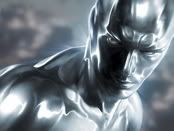
Frye’s description of the romance hero needs to be modified slightly to include those superheroes who are not literally human beings (like Superman, or the Silver Surfer, or the Vision), but all of them resemble Earth humans sufficiently, physically and psychologically, to be included. Also, as I’ve pointed out in previous installments, some superheroes, like Batman, lack actual super-powers; these characters are figuratively “superior in degree”: to other humans and to their environment.

Frye’s theory of modes also enables me to show further why Neil Gaiman’s Morpheus is not a superhero. Morpheus fits Frye’s description of the hero of myth, who is “superior in kind both to other men and to the environment.” A superhero is “superior in degree” to other humans, due to his powers, but is still a human being. Morpheus is “superior in kind” to humans: he is not human, but is one of the Endless, a different, higher form of being.

Elements of the superhero genre turn up at times in Gaiman’s Sandman, such as Element Girl and Doctor Dee (Justice League villain Doctor Destiny) in early issues, Batman and Clark Kent in “The Wake,” and the references to the Green Lantern and Superman mythos in Sandman: Endless Nights (see “Comics in Context” #17). But the predominant conventions in Gaiman’s Sandman are those of the fantasy genre.

Notice how Gaiman treats the character of Lyta Hall, who was the superheroine Fury in Roy Thomas’s Infinity, Inc. series. The “gravitational” pull of the fantasy genre is so strong in Sandman that Lyta’s superheroic identity is never mentioned in Gaiman’s series, nor her superpowers. Perhaps, however, Gaiman made an unspoken in joke by having Lyta (a. k. a. Fury) send the Furies of Greek mythology to punish Morpheus.

I also realized that the typical superhero is “superior in degree” to ordinary humans in his heroic identity, but in his alternate identity he is “one of us.” Superman is a romance hero, but as Clark Kent he is a “low mimetic” hero. Buffy is a romance hero when she acts as the Slayer, but when she is attending high school classes, she is acting as a low mimetic heroine.

While Morpheus is a hero of myth, different in kind than humans, Gaiman’s Sandman series can be read as the story of how Morpheus discovers he has an emotional capacity that is not so different from that of humankind. The series begins with Morpheus as a captive, reduced to being a “naked man” in a glass cage. He comes to acknowledge his friendship for the human Hob Gadling; he feels guilt and responsibility over the fate of his human son Orpheus. Ultimately Morpheus forfeits an aspect of his godhood by surrendering to death (or his sister Death, if you prefer). His successor, the new Dream, is somehow simultaneously Lyta’s human son Daniel and Morpheus himself reborn.

This is not to say that either Morpheus or the new Dream are superheroes. But notice that whereas a superhero typically has a double identity, one heroic and one that of a low mimetic “ordinary” human, the new Dream has a dual nature, making him simultaneously god and man. In the course of Sandman Morpheus discovers a “high mimetic” side to his nature, complete with a tragic flaw, enabling him to make himself vulnerable to death, sacrificing his life and becoming a tragic hero in the end.

Jack Bauer of television’s 24 presents an interesting case. On the surface he is a low mimetic hero, “one of us,” an operative of a United States government agency. Audience members who prefer realism to explicit fantasy would therefore be more likely to accept Bauer; thus Bauer also fits into the democratic ideal of American society, wherein everyone is equal.

In practice, however, Bauer is a high mimetic figure, “superior in degree to other men but not to his natural environment.” Bauer is unquestionably CTU’s top operative, who usually takes a leadership position in field operations. Bauer has saved America for five seasons going on six, and, though the show never actually says so out loud, it consistently presents Bauer as the only one who can defeat each season’s terrorist conspiracy. (Like Buffy or Anakin Skywalker or Neo in The Matrix, Bauer is, in effect, the Chosen One.) Since Bauer is not superior “to his natural environment,” he can be severely injured (as we have seen time and again on the show) or even killed. According to Frye, the hero of tragedy, such as Hamlet, is a high mimetic figure. This helps explain why each season of 24 usually ends tragically for Bauer: for example, his wife is killed, or he is forced into hiding, or he is captured and tortured by enemies.

Ultimately, though, I think that Bauer is a romance hero, “superior in degree to other men and to his environment,” who “moves in a world in which the ordinary laws of nature are slightly suspended.” Not only does he repeatedly outfight and outshoot his opponents, but he recovers from even severe injuries at unusual speed. In one season Bauer was tortured so badly that his heart actually stopped: he literally died and returned to life. Heck, the “suspension” of the “ordinary laws of nature” even explains how Bauer can drive back in forth in Los Angeles so quickly, as if its notorious traffic didn’t exist!

At present 24 and Heroes are on at the same time on Monday nights. One reason that I watch 24 rather than Heroes is that 24 feels to me much more like a heroic “romance” than Heroes, the supposed superhero series.

Until and unless I find a better term, I am going to call the heroes of romance (as Frye defines it) “megaheroes.” This category encompasses all the characters that Coogan calls “super heroes” (two words) as well as true “superheroes” (one word). Superheroes therefore form a subset within the larger category of megaheroes.

Having defined superheroes in his book, Coogan goes on to define supervillains. Here he takes what strikes me as a very different approach. In defining the superhero, Coogan went taken the approach that Superman is the first true superhero, who inaugurated the superhero genre. Therefore, Coogan sought to discover what distinguished Superman from his many megaheroic predecessors (drawing upon Judge Learned Hand’s perceptive court decision). In contrast, Coogan’s definition of the supervillain embraces characters from various different genres.

In Coogan’s view the supervillain long predates the first superhero (Superman) and the superhero genre. Indeed, Coogan counts the monsters Khumbaba and the Bull of Heaven, both slain by the title character of the Babylonian Epic of Gilgamesh, as supervillains, thereby making the super-villain concept at least over three thousand years old! Another of Coogan’s supervillains is the monster Grendel from the Old English poem Beowulf (circa 700-1000 A. D.). (When the Beowulf movie co-written by Neil Gaiman comes out this fall, I will surely have much more to say about this early romance.) Coogan also identifies as a supervillain Sherlock Holmes’s archenemy Professor Moriarty, who was introduced in Arthur Conan Doyle’s “The Final Problem” (1893). (Oddly, Coogan states that Moriarty only appears in “The Final Problem” and “is mentioned again only in the novel The Valley of Fear“ [p. 71]. Rather, besides “The Final Problem,” Moriarty plays an active role, albeit behind the scenes, in The Valley of Fear, and is mentioned in five other Sherlock Holmes stories by Doyle, most notably “The Adventure of the Empty House” [1903], which describes how Holmes survived his battle with Moriarty at the Reichenbach Falls.)

In his introduction to Superhero, Coogan explains that its chapter on “The Supervillain” grew out of his contribution to The Supervillain Book, which was published last year by Visible Ink Press; I was another of The Supervillain Book‘s contributing writers. The Supervillain Book likewise took the approach that supervillans are not restricted to the superhero genre, and included not just Professor Moriarty but James Bond villains like Blofeld and Goldfinger. When I was working on the book, I agreed with this idea.

However, now that I’ve read Coogan’s Superhero, I’m not so sure. I suspect that just as true superheroes represent a subset of the category metaheroes, there are true supervillains who are part of the overall category of what I’ll call megavillains. Next week I’ll explain the distinction.

ADVERTISEMENTS FOR MYSELF
Now on sale from Image Comics is the second issue of The Official Handbook of the Invincible Universe, to which I was a contributing writer. Just seeing the cover, which is a homage to the covers to Mark Gruenwald’s original version of The Official Handbook of the Marvel Universe, made me smile.

Copyright 2007 Peter Sanderson

February 9, 2007

Interview: Tanya Donelly

Filed under: Columns,Interviews,Trailer Park — admin @ 2:20 am

By Christopher Stipp

Archives? Right Here…

In the end the letter would sit there until I finished this piece. More on that in just a moment.

When I stumbled upon Belly, most known to many as the group who made “Feed The Tree” a part of so many mix tapes in the early 90’s, I was emerging from my chrysalis of musical ignorance. My diet, until then, consisted of a milquetoast cadre of hip-hop, rap, R&B and every bland, vanilla, soul-crushing Top 40 hit you could ostensibly name. It was my senior year in high school and I was, understandably so, teased and publicly harangued for my taste in music. When other students pined for tickets to see U2 during their Zooropa tour I was steeped in the rhythm and soul of the musical choreography put on by Janet Jackson when she came through town in support of her JANET album.

It wasn’t until after I graduated high school, nearly 18 years of age, in the spring of 1993 when a friend took me to see 10,000 Maniacs at a huge outdoor amphitheater in Illinois. You want a definition of “watershed”? That was it. The musicianship, lyrical richness, passion, energy, all these things collided in my body and I knew I had a conversion of some profound kind.

It wasn’t until a few weeks had passed when I leaned of the Maniacs’ demise. Just as I thought it would be a good idea to dip a toe into this brave new world it was all I could do to try and keep myself from slipping back into old BPM habits. You have to understand that it is not a joke when I say that I still hadn’t yet purchased a Rock album, not even after the Maniacs show, once in my life. Ever.

But, it was Tanya Donelly who wrested my wallet free from my stingy pocket and it couldn’t have happened in the most odd way.
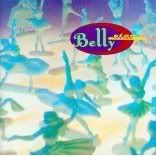
It was strange but as I was channel surfing one afternoon Tanya gave an interview to a local reporter in Chicago about an upcoming show she was getting ready to do with her band Belly. During the story they played a clip from the “Feed The Tree” video. While I took enough notice that I’ve never forgotten about it, and this is the important part of the story, it didn’t do a whole lot for me. Nothing, in fact. What happened, though, during the following weeks is notable in that the news segment stayed with me. The clip replayed over and over again in my head. I was humming “Feed The Tree” to myself every now and then when it played on the radio. The tune had such internal resonance for me that Belly’s STAR would be the very first Rock album I would ever purchase in the USED section of a small record store and, to this day, represents where my musical renaissance began.

I started purchasing mass quantities of CDs, eschewing the latest urban additions as if they were the ugly girlfriend I was happy to have cheated on, and I can tell you there has never been a time in my life, from the Summer of 1993 to the Summer of 1995 where I assimilated so many different variations on an alternative theme. From Juliana Hatfield, The Blake Babies, The Mighty Mighty Bosstones, Stone Temple Pilots, Pearl Jam, Soundgarden, Alice in Chains, to KMFDM, Curve, Elastica, Rage Against The Machine, I was just insatiable. Although, I never forgot about Belly and, in fact, I was voracious in my consumption. From $30 imports from Japan, a special order vinyl that had just one notable song on it that I just had to have and pestered some poor record store owner as to whether it arrived, rough sounding bootlegs of Belly shows, to say nothing of the singles, magazines, tickets, of buying everything at their merchandise table when they finally came back to Chicago, I was enamored to the point of fiscal bankruptcy when it came to Belly. The music just did something to me that I still can’t explain very well without sounding like a complete geek. It was the mixture of lyrics and melody that defied you to listen to a world that wasn’t controlled by Cock Rock Neanderthals who only wanted to sing about the superfluous nature of their “dark” and “misunderstood” lives. Tanya had a grip on these things and, instead, used her music to work out more thought-provoking issues.

I remember standing in line, a line of one actually, during a bitterly cold October afternoon in 1995 as I kept my place in line for a show that would be one of Belly’s last. Determined to be the first person through that door to see the General Admission show, only to recede to the back bar area after the first song, it was at show I learned I had a condition that I didn’t know about: claustrophobia. However, I still remember the three times I did see the band to be on par with the arena rockers I would later measure everyone else against; being in a small club didn’t matter, it was more intimate and I remember Tanya always leaving the stage with a smile, not a sneer and splintered musical equipment, in her wake.

The band’s demise shortly after the tour that year and Tanya’s eventual solo career has been one, for me anyway, of evolution. I think I would’ve grown embarrassed as I reflect on the amount of my spending, my stumping, my need to collect everything, my unadulterated support for a band that just played musical notes and chords if it wasn’t for the book I wrote that was inspired by those two years of self-exploration and unwavering devotion. Tanya evolved as well. She got married to the bassist of Juliana Hatfield’s band, Dean Fisher, had two children, Grace Bee Fisher and little Harriet Pearl Fisher, and still turns out some of the most evocative and melodic that no one I know seems to be listening to.
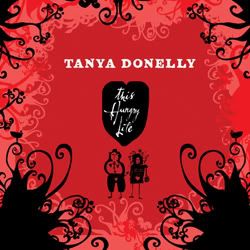
Her latest, THIS HUNGRY LIFE, is a live album that puts to shame any live album you have in your collection for the simple fact that this is sold as a live album, yes, but it sounds unbelievably sharp. I would dare any casual listener to try and take a taste test of this album and, save for the clapping at the end of songs, try and pick out the imperfections. It’s that precise and it was good enough to get me riled up enough after sensing, again, no one cared about me talking about it in public, and I decided to see what I could do in devoting an entire column to Tanya and this work.

It’s not often I get to talk to someone who has been the basis for so much of my own creative endeavors, who really is at the core, the nexus, of who I hold up as the litmus test for any artist who wants to preen, whine, play dress-up, break a guitar or two or do anything less than make great music and enjoy the station they’ve been given in life. In fact, I count this interview as the completion of a circle she started drawing for me in the ephemera almost 14 years ago; damn near ½ of my entire life on this planet.

She was an absolute joy and delight to talk to, my hand was getting numb from inserting so many “(Laughs)” into the piece, as I played the part of journalist and geeky fanboy all at the same time; she managed to top Lost’s Josh Holloway as the person who exuded the greatest sense of joy while talking to me, a complete stranger. We talk about her music, her passions, her kids, her inspirations and I even manage to take a jab at her procrastination that, unless it was just great timing, yielded the motherload of every Belly nerd out there.

It was at the end of the conversation, though, that Tanya inquired about the book I wrote and it’s involvement of her music in it. She insisted that she send payment for a copy of her own even after my heart sank as I tried to stop that nonsense (I would’ve sent every other copy I had for free), feeling not only like I was the kid in the Mean Joe Green Coke commercial who is overcome with gratitude for that sweaty jersey, but when that envelope came to my house it sat on my desk unopened until this week, only after the construction of this piece had been completed. It was only after the work was done did I ever feel entitled to enjoy the spoils of my labor and thankfully with Tanya’s consistent output of music she is still amazing me in a way that makes me feel 18 again when I wait for that special New Music Tuesday to roll around in anticipation of a new album and I can see what else is on her mind this time.

Here’s to hoping she never stops trying to part me with my money.

CHRISTOPHER STIPP: Hi, is Tanya there?

TANYA DONELLY: Yup, that’s me.

CS: This is Chris.

DONELLY: Hi, how are you?

CS: I’m fine. How are you doing?

DONELLY: Doing very well, thanks”¦I’ve got a new baby.

CS: Yes, congratulations on that.

DONELLY: Thank you so much. There’s a lot of juggling going on in that department.

CS: I just put my one-year old down for her morning nap.

(Laughs)

DONELLY: That’s what mine is doing right now.

CS: And I don’t think she was really ready yet, either. I just knew this interview was coming up and said to her, “You’re going down within the next twenty minutes.”

DONELLY: That’s what I did too. Hopefully that’ll work out.

CS: It’s an odd thing, trying to coordinate their schedules around my schedule. Life doesn’t feel like it’s about me anymore but I’m fine with that. But let’s get into it with the fact that this album, THIS HUNGRY LIFE, has been out for a few months. I bought it the day it came out and have been loving listening to it ever since.

DONELLY: Thank you very much.

CS: And it’s weird insofar that when I heard this was going to be a live album I was expecting something less than what this record actually is. The clarity, sharpness and precision on THIS HUNGRY LIFE trumps any live recording in my collection.

DONELLY: Well, we did the multiple takes of things. It was more that we wanted people to be there while we were recording so they suffered through us starting over sometimes, multiple takes and lots of tuning because that’s what I really wanted to do rather than just taping a show. I really wanted it to be people in the studio with me, sort of speak. It was fun.

CS: Now, was it the ten core songs that eventually made it onto the album or were there other”¦

DONELLY: No, we also did a set”¦We also recorded a set of”¦Because we went straight to Bellows Falls from touring the record before that so there’s actually live recordings of WHISKEY TANGO that we did on tour which I will probably put up on the site.

CS: You know, since you went there, I did my homework preparing this interview and I know I’ve read that in a few places. “When I get to it”¦” “When I get to it”¦” What is up with”¦.

(Laughs)

DONELLY: I just have to give my web mistress just a ton of stuff and let her struggle with it. I’ll find some of the archived material and hand it over and”¦she can deal with it.

CS: And, because I am an uber nerd, and I’ve been a fan for a long time, I’ve known that you’ve said you were looking to put out a children’s album. Where is that? I have a child that’s nearly four and I flatly REFUSE to allow the Wiggles anywhere near my stereo.

DONELLY: I know!

(Sighs)

It’s just been”¦It’s the kind of thing where we put it together, a bunch of us, and then we were really excited about it at the time and then it just got passed over and passed over and passed over and everybody started losing their enthusiasm, which happens”¦The main thing people are saying is that it is all over the place. Too much different”¦I mean that’s what we liked about it.

CS: Right.

DONELLY: It’s very varied but it’s what labels don’t like. I guess”¦I don’t know”¦Children’s music, so we’re told, except for a few very lucky instances, children’s music doesn’t really sell well. Stuff like The Wiggles will because it’s completely catered”¦and this is not at all. This is like regular rock music with just lyrics that are appropriate. So, people are just having a hard time figuring out just how to market it. At this point, the woman who started the whole project, Chris Tappin, she’s probably going to put it up on CD Baby and we’re waiting to hear”¦she’s going to let me know if that happens and then I’m going to let people know.

CS: Good. Good to hear. I am just not down with a lot of children’s music that’s out there.

DONELLY: I know”¦

Well, neither is my daughter. She just listened to what we listened to”¦she never really listened to the kids music, per se. In fact, the other day, just to give you a little window into her perspective on the world, I said as we were looking at something to listen to, I said, “Do you want to listen to The Beatles?” And she said, “Mom, that’s a little baby-ish for me.”

CS: Geez”¦What is she really into then nowadays?

DONELLY: She likes Blondie a lot. She likes Smoosh. You know who they are?

CS: No.

DONELLY: Is your oldest a girl?

CS: Yup.

DONELLY: You should check them out. It’s S-M-O-O-S-H. They’re an indie band of two sisters”¦and I don’t even want to say they’re four kids because they have a huge adult following. I wouldn’t even say it’s kid’s music, it’s just music that just happens to be made by kids. And they’re great.

[Chris’ note: I hope this doesn’t get me on NBC’s To Catch A Predator but I checked them out and this is a really great band of girls who know how to rock the mic.]

CS: Was that important to you as a parent when you became one, coming from a fairly rich musical pedigree, to give your kids a full exposure to different kinds of music?

DONELLY: I was less focused on what I wanted her to listen to than what I did NOT want her to listen to. Our attitude from the beginning was if it’s driving us crazy, it’s not good for the family. (Laughs)

So, we sort of played her the stuff we liked and she likes that. She likes that stuff”¦She’s a big Vic Chesnutt fan. She loved him”¦When she was little she called him “Vic Ketchup.” And Big Star, she really likes, and she also has her”¦she and her friends listen to things like “High School Musical.” She has to have SOMETHING that doesn’t belong to”¦has nothing to do with us.

CS: Of course.

DONELLY: Hanna Montana.

CS: Not Hanna Montana. The child of Tanya Donelly and Dean Fisher “¦Hanna Montana.

DONELLY: I just don’t say anything. You know, I listened to Shaun Cassidy when I was her age so”¦That’s the kind of stuff that you laugh at affectionately. It’s not harmful; there’s no harm in it. It doesn’t really bug me as long as she still”¦she’s good at compartmentalizing. (Laughs)

CS: And that wasn’t difficult? Exposing her to that kind of music as a kid? I only ask because I’m thinking of mounting some kind of campaign to get my kid to listen to Wilco, Neko Case”¦

DONELLY: No! It’s amazing how they get it. Like Gracie loves the fact that David Bowie is always dressed up. He’s cool, he’s a different person all the time, he dresses up, he has all these songs and characters. They get into that you know what I mean? They way that she listens to stuff”¦I find things in it that I had forgotten about when I was a kid. There’s so much that they can re-introduce YOU to when you’re introducing music to them.

CS: One of the things, and it makes me feel old to say it, of being a fan now for fifteen years, the lyrical content of your music, while it has always been rich and melodic, there has always been a dark undercurrent of things you’ve said have been auto-biographical, things you’re dealing with, I’m speaking here presently of a great example off of THIS HUNGRY LIFE, “Kundalini Slide”. That’s a dark song but unbelievably deceptive with how delicate it sounds. Is motherhood helping to make sense of the world, life, in general?

DONELLY: I think motherhood makes me focus on hope more than I did but it doesn’t but”¦it’s not a cure-all for what ails me or anyone in this world. I don’t know, that’s a tough one because sometimes I feel like it really changes the way I write and, other times, when I actually sit down and listen to stuff I’m like, “Nah, not really.” (Laughs) “Not so much.” But, I think that stuff stays in my music more than it used to now that I am functioning for people other than myself.

And it still comes out. On a song like “Kundalini Slide” those concerns, I think, are more global than just my own little”¦shit. And I do tend to think more outside of myself, obviously, that’s what happens, as you know, so that manifests itself rather differently now, it’s more concerned for everyone else. “How can I fix things for my children?” It’s making sure that I function well for my children and do what I can to make this a better place.

CS: And how is the writing process for you now? Do you have the same kind of groove, methodology, you’ve always had?

DONELLY: No, it’s completely different because it’s so much more structured. Especially with two kids there’s no such thing as “˜drop everything and write’ anymore. I have no books in my diaper bag.

(Laughs)

I do what I can! You just don’t have the luxury anymore of saying, “I think I’ll write today.” It’s more like little scraps of paper everywhere and when I have time in the evening, if I’m not exhausted, I’ll put it together.

CS: I believe you’re deserving of a lot of credit. Not so much for just creating the music you did that put you in the public sphere years ago but because you’ve been so prolific since then with your recordings you’ve released with the amount of responsibility you’ve had in the last few years. Has that been a conscious decision, to stay on top of your art?

DONELLY: Yeah. We are very fortunate in that we’re still are managing to get by without day jobs. And I think that being the case it gives us the opportunity to still make this work. As a result, I can still release more than I might if I had to be working all the time.

It sounds like you have a day that’s similar to mine”¦

CS: Yeah, you’re right. I absolutely find that I am able to write better after everyone has gone to sleep. I do my column late at night or trade in eating a lunch to get in some good, solid writing. Just with trying to start my second book it has been very difficult because I just don’t have that kind of quality time anymore.

DONELLY: Yeah, I know, I know. You just have to mourn that and go, “Alright, how do I get it done now?”

And, speaking of that, I heard about your book but I haven’t had the chance to hunt it down”¦

CS: Oh”¦You know, I’ll make this a brief story: It was written about six years ago, it had Belly as a sub-plot but only in the sense that I had the germ to write it when I learned of Belly’s demise. I almost am loathe to admit that my iPod is jammed full of Belly bootlegs, B-Sides, Singles, albums, tribute albums from other fans circa 1995, everything and anything; the band meant a lot, artistically, to me as a listener of music.

DONELLY: Oh, that’s cool.

CS: Yeah, but that’s also strays into Uber Nerd territory. The story itself, the core of which deals with the demise of things you never know about until it’s too late to do anything about, was just too tempting not to weave the band into the narrative.

DONELLY: Wow, that’s amazing.

CS: I self-published it, got a well-known artist to draw the cover for me and when it was all said and done I sent a copy your way, just as a cosmic way to say “Thanks” for the muse-like inspiration.

DONELLY: You know, things used to be so”¦I’ll say that there isn’t hardly any filter between my mail and me.

What is it called?

CS: “Thank You, Goodnight.” At the end of the day it’s a story of people when it’s post-coming of age and they’re in that nebulous area of when it’s pre-adulthood. It was kismet when I wrote it because I did this all right before my first daughter was born.

DONELLY: That is so great.

CS: It’s amusing…We actually talked, twice before this, during Belly’s last tour in 1995. You did a show at the University of Illinois and then a show in Chicago a few days later in late October. The first time, at UOI, you were enjoying a book and I intruded lightly. And then, in Chicago, I was standing in line, the first, from about noon until show time. That’s borderline lame and sad at the same time. It’s damn near embarrassing for me to even think about.

DONELLY: No, believe me. I have had plenty of those.

(Laughs)

I just spent the weekend with Gail [Greenwood, Belly’s former bassist] and we had a big, mushy, sentimental time so it’s completely ripe for this conversation.

CS: How is she doing?

DONELLY: She’s awesome. She’s great. She’s still making music with her mate but mostly she’s doing graphic design right now. They have a graphic design company that’s extremely successful. She’s just busy, busy, busy.

CS: Since we’re kind of on the topic, I know you’ve said that there were so many other songs Belly has done that no one has heard and it’s come back to the line, “When I get the time”¦”

DONELLY: Well, the main thing that I want to release are the demos. For STAR, which are actually Breeder’s demos, which, unfortunately, when I went back to try to mix it down the integrity of the tape is a little bit compromised”¦because they’re so freakin’ old”¦but I think Ivo Watts-Russell, who used to run 4AD, I think he has a CD of it. I’m going to see if I can wrestle that away from him and just put it up as-is.

CS: I’d like to know…When I was looking back at the period when Belly was nominated for a Grammy, when you were probably at that critical and media saturation point where it was nonstop attention, and now you’re at the point where you can comfortably do whatever you want is there some acceptance of that time for what it was?

DONELLY: Oh yeah. I do and for a long time I wrestled”¦there were a few years there where I was like, “Why am I so OK with this?” With the fact that I’m not famous anymore because I do have a tendency to push things down until they”¦start to form cysts.

(Laughs)

And so I thought, “Oh, here I go”¦” where I go around with my hippy-dippy face on and just say, “Oh, it’s OK. The universe has given me so much and I’m fine”¦” And I was trying to just, “Let’s get this out. Let’s weep. Let’s grieve.” And I did. Briefly.

But, I am fine.

And it took me years to kind of figure out, “Oh, I’m just fine and let’s accept the fact.” It’s not like I couldn’t handle fame anyway. I mean, that was so cool that I got to do that and we had such a blast and now I get to do other stuff that I wouldn’t be able to do if I was still doing that. I’m a full-time mother to my children and I still get to make music”¦I have time to write and time to do other things that I want to do and do projects with other people. And, you know, I really do feel like I’m fine and especially with raising kids I would rather do that under the radar, so to speak. I think everything has worked out.

The only thing is”¦is sometimes I wish I could get this music to more people. That’s the only thing but it’s never a lifestyle issue for a second.

CS: I think that’s one of the nicest things of being in the place I’m in today, after following the band as long as I have, for as much as I care about the music and what it means to me, is that I can honestly state that I don’t know of an artist who has matured and evolved as well as you have.

DONELLY: Well, thank you. My gosh”¦

CS: When you get down to it, you can be as experimental as you want, but it does all come down to the music and the quality of it.

DONELLY: Yeah, I know, and that’s definitely true. And when you are in the thick of it and you’ve got A LOT of people involved in your music, it gets convoluted. You can have as much integrity as a person can have and you still have twenty people constantly in your ear telling you what’s going to happen next and your process and how you’re going to do it and when they need it and how they need it. It doesn’t matter how shut-in you try to be, it gets in there. And I don’t have to deal with that.

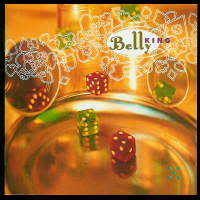
CS: Did that happen with KING‘s creation?

DONELLY: KING was not so much”¦not so much with KING because, at that point, everyone just trusted us implicitly because STAR was such a fluke. There was no buzz around STAR until it happened. The label was not like, “Oooh, this is going to be so amazing.” And because that was such a big surprise they essentially said, “Ok, just do it again.”

And when Belly broke up, and with my first solo record, they sent me back in a few times, it was mixed a couple of times, they made me write more and take songs off and put songs on. They were very”¦on top of that one. Which, at the time, I was kind of in a panic myself, that was my year of panic, and then after that I calmed down.

CS: Do you think you’re calmer about the process?

DONELLY: Yeah, because music is in a very different place in my life now. It’s a part of my life, it’s not the theme anymore; it’s in there, it’s a part of a larger holistic picture now and it’s not the only thing that I have.

CS: Is the process as therapeutic as it has been or is there a shift in it’s ability to”¦

DONELLY: Oh, definitely. Absolutely therapeutic.

Writing a song is still one of my greatest joys and it’s how I stay healthy”¦it’s like anything you do for your health. I need to do that and I enjoy doing it. It’s weird, and it’s such a great position to be in too, as the whole family is in on it. Dean and I write together and play together and Gracie is right there with her suggestions. It’s really nice because it’s part of our life together.

CS: To that point, on one of my favorite songs “White Belly” is just saturated in darkness but it’s so melodic and peaceful to listen to. Do you take a song like that, something that’s really quite heavy and then try to find a way, pushing the content aside, to make it digestible?

DONELLY: Yeah, you know, that’s a really good question because for years”¦and I think this one of those un-self-aware things that, when you’re young, because I said, “Oh, no, no, no, it’s just natural. It’s the way I write.” And I do think that to a certain extent that’s true. I’m much more attracted to melody even though the stuff I’m interested in singing about is not always pretty but I’m very attracted to melody. But, as a person”¦(Laughs)”¦the older I get the more I realize as a person I tend to, when I’m dealing with something, past or present, I do tend to do it in a very “How can we make this easy?” sort of way. I’m not a head-on, confrontational person. I’m more of a “Let’s all sit down and talk about it”, “Let’s go to the beach”, “Let’s figure this out,” kind of person. So, musically, that’s how it happens for me too. It goes, “I have to say something very ugly right now so I’m going to make it really pretty to listen to.”

CS: And your husband, Dean, is an amazing musician as well. I remember seeing him play live when he toured with Juliana Hatfield, has he been a good sounding board for your music or do you have your own way of doing things?

DONELLY: It depends on the song. He’s a great arranger.

Some of the things I do pop out full-blown and there it is, that’s it, it’s done. And sometimes I definitely will say “Can you help me with this one?” and more and more, I have to say, he has become sort of the musical director when we’re recording. Like he and I will hash things out at home and he’ll actually do a lot of the showing people the song, what’s going on with it, because I’ve always got a baby on the hip or”¦I mean I haven’t handed it over completely but, to be honest, the places where I excel are more during the songwriting process and playing live and, as far as being in the studio goes, I have shorter and shorter patience with it.

I’ll go in on the first day and say, “This is the song, this is what I kind of want to do”¦” and then Dean will hash things through and bring it back to me. He’s become sort of liaison in a way. Which works out GREAT for both of us because that the stuff he loves and I get to do the things I love and it just works out real well; it’s been very fortuitous that we have the kind of strength and interest we have.

CS: You mentioned playing live. I know you’ve said you’ve had issues with stage fright in the past. Has that waned a little bit?

DONELLY: It has, a little bit. I still get very nervous but I don’t get”¦(Laughs)”¦It’s not a pathological condition. I think it’s just more natural stage fright that anyone would have and it’s not so horrible as it used to be.

CS: Any hint that you’re going to be touring a little bit more than you have been?

DONELLY: Well, we’re going to do something in the summer, is what we’re going to do and I’m hoping”¦and I don’t know if I should”¦Kristen and I are sort of talking”¦ it’s SO beginning stages”¦and probably silly”¦but we’re trying to hash out something to experience something together this summer. Manly, because we miss each other and, also, I just think it would be fun for people and fun for us. I can’t see why it wouldn’t work out at this point. It would be mid- to late-summer we’re thinking.

CS: And where is that children’s book of yours?

DONELLY: That has fallen so far”¦

CS: D.O.A?

DONELLY: I just took it out a few weeks ago and I wrote another chapter and I kind of worked on some stuff and then I put it back and, at this point, that’s how it’s going. I have this image of myself, breastfeeding on the couch while I write my book. (Laughs) It’s not quite panning out.

CS: Oh, come on. Did you really think that would work? I could have told you that years ago!

DONELLY: It’s not going to work at all.

CS: Then what’s the deal? They’re like ten pages long. I read them every night. It’s the biggest con in the book business. Just write ten sentences and you’re golden, you’re done”¦

DONELLY: Right! But this is a young adults book.

CS: Ah, OK”¦

DONELLY: Not even young adults, more like ten to twelve year-old girls. Adventure girls kind of stuff. That one’s going to be a long time coming”¦Actually, at one point I was thinking, “I wonder if could make this a much littler kids book?” but there’s too much I wanted to do in it.

CS: Any good inspirations, then? I know you’re a voracious reader”¦

DONELLY: Yeah, Gracie is at the point where she’s starting to read really interesting stuff so I have been reading a lot of, I pre-read things for her, so I read a lot of interesting”¦There’s a lot of good young adult work out there.

CS: Lemony Snicket?

DONELLY: She doesn’t like that….She’s not crazy about that yet. She really wants to be but she gets creeped out.

CS: What have you been into?

DONELLY: I’ve been reading a lot of travel non-fiction lately just because I’m interested in the world right now and”¦I’ve been reading just really weird, weird stuff. Like I just finished a book on the Moors of al-Andalus. Something will pique my interest and I’ll go to the library and read a book on it. I’m mostly into non-fiction right now but the last real good piece of fiction I read was “The Curious Incident of the Dog in the Night-Time.” And I was just going to start the new John Irving book my mom just got me, “Until I Find You.”

CS: Irving has been a rather strong writer. He’s produced a lot of good work.

DONELLY: He wrote one of my very favorite books, “A Prayer for Owen Meany.” Some of his stuff I just really love.

CS: Since I only had a couple more questions I just wanted to know, because I’m getting older and these things are getting harder to find, what new music should I be listening to? What has rocked your boat lately?

DONELLY: What a bad question”¦only because it makes me feel so guilty. I really like the new Cat Power record.

CS: I’m a huge Mazzy Star fan and a friend said based on that I should find something enjoyable on the album.

DONELLY: Oh, you would. Absolutely. And, Joanna Newsom; I like all her stuff, actually.

[Tanya asks Hattie what mom listens to. Other than a gurgle and a coo, no new information is forthcoming.]

I know that my husband is a big jazz fan. He is a big everything fan.

CS: Does he have like the big, expensive high fidelity set-up in the house?

DONELLY: No. No, no, no. He’s not like that but he has been collecting a lot of stuff lately. What else? Hmm”¦What else? Those two are really the only things I can think of. I know, though, as soon as I get off the phone I am going to think”¦

CS: Of a few, right. Gary Smith asked me that question and it put me in such a quandary because it’s hard for me, nowadays, to find good music. The musical landscape, when I open Rolling Stone [Evidenced by the current issue with Panic! At the Disco on the cover] and realize that I can’t relate to the mascara wearing boys preening and emo’ing their hearts out.

DONELLY: Yeah, Dean keeps up with it. He’s impressive because he listens to all”¦he just got an iPod and he listens to everything, all kinds of stuff but, me, I don’t really as much. It’s annoying to say but I’ve been listening to a lot of African music.

CS: Really? Like Ladysmith Black Mambazo?

DONELLY: No, no”¦Yeah, a lot of compilations because, what I am doing right now, is trying to figure out what I like”¦OH! I know something! Joan as Police Woman. It’s my friend, Joan, Joan Wasser, who played violin on the record, the new record of mine and she has her own record out which is really beautiful. It’s called REAL LIFE. So, I have been, actually, listening to that. A lot of nepotism going on in our house.

CS: Where do you see yourself evolving in the next few years, musically? To read your lyrics you’ve already run the gamut of life, death, religion and everything in between. Is there light at the end of all this or are there always those things which will gnaw at you?

DONELLY: Oh everything, that’s going to happen. For the most part I am a person who walks in the sun in my daily life and the only place where I can process, aside from conversations with my husband, that’s where I process my anger. One thing I have been doing, though, is doing a project here and there with other people which may or may not see the light of day so I have to stop talking about all these possibilities.

CS: Because it’s evident you can’t follow-up on anything you talk about!

(Laughs)

DONELLY: Exactly!

(I laugh)

CS: You’re awful and I have no problem saying that from the side of a frustrated fan who needs more good music in their lives. You’re a disappointment as a woman of inspiration to so many, namely me.

DONELLY: It just takes me years to do these things but it’s fun because it brings out stuff I don’t usually do, that wouldn’t come out of me otherwise. More collaborations, maybe, in my future.

CS: Well, thank you so much for talking with me, Tanya.

DONELLY: Thank you so much.

QSE News: 2/9/2007

Filed under: Columns,News — UncaScroogeMcD @ 12:06 am
quickstopnews.jpg
line1.gif

Here are today’s top entertainment headlines:

  • qsnews.jpg
  • PBS and Discovery Kids have received the most nominations for this year’s Children’s Programming Emmy’s, receiving 18 and 15 nominations respectively. Not surprisingly, the two shows garnering the lion’s share of the nominations are PBS’s Here… Watch This Until Your Father Gets Home So Mommy Can Take A Nap and Discovery Kids’ Stop Crying You Little [EXPLETIVE DELETED] And Watch The Furry Animals.
  • Ruport Murdoch has proven, once again, that he has the “testisatchels” to take on a little controversy. Murdoch announced today that his film division, 20th Century Fox, has acquired the rights to a second Borat film. In response to the announcement, racists, misogynists and homophobes across the nation filled lawsuits against Murdoch, 20th Century Fox and Borat himself, Sacha Baron Cohen, in anticipation of the comedian “making them look like total, [EXPLETIVE DELETED] [EXPLETIVE DELETED]!”
  • In TV news, Mitchell Hurwitz, creator of Arrested Development, is doing a new show called The Thick of It for ABC. For the show, which is based on a sitcom from England, Hurwitz plans on using the same formula that he used on Arrested Development. The Thick of It will premier in the fall and will not be understood by the American public, leading to its cancellation in December.
  • Daniel Baldwin, known to many as “the other completely and utterly talent-less Baldwin,” has found himself in hot water after failing to appear in a Newport Beach court. Police issued a $25,000 bench warrant for the actor on charges of unlawfully taking a vehicle and receiving stolen property. Baldwin’s manager issued a statement that said Baldwin “can’t talk about the case at this time, but it sure is nice to finally see his name getting mentioned more than Alec’s.”
line1.gif

That’s all for today’s news, stay tuned to this channel for all the news that matters least but you still care about.

(Compiled by J. Allen)

##

Quick Stop Thingamabobs: 2/9/2007

Filed under: Columns,Thingamabobs — UncaScroogeMcD @ 12:04 am
thingamabobs.jpg

The web. It’s a big place, full of plenty of distractions ““ some funny, some informative, some ludicrous, some disturbing, some inane, some profound. Each and every weekday, we present links to a few of our favorite finds”¦

————————————————

  • I want this. I want this so much. Somebody please buy it for me. (Thingamabob)
  • Learn how to ink Popeye with this 1934 Fleischer Studios inking chart, courtesy of those fine animation historians over at Cartoon Brew (Hi, Jerry!)… (Thingamabob)
  • And because it’s Friday, let’s close out the week with some nifty pool shots… (Thingamabob)

Have a THINGAMABOB? Send it in!

##

February 8, 2007

QSE News: 2/8/2007

Filed under: Columns,News — UncaScroogeMcD @ 2:14 am
quickstopnews.jpg
line1.gif

Here are today’s top entertainment headlines:

  • qsnews.jpg
  • Prince, who is widely known for his family-friendly music videos and lyrics, caused a stir at this year’s Super Bowl as critics and internet bloggers are condemning his performance as both rude and crude. During the performance, the singer was silhouetted against a large sheet while playing his guitar that many say appeared to simulate the stroking a giant penis.  Prince was asked for his opinion of the criticism but was unavailable as he was busy polishing his “guitar neck.”
  • The Smashing Pumpkins have released the name of their upcoming album ““ Zeitgeist. This album name comes as a shock to many as the album was expected to be titled “[EXPLATIVE DELETED] James Iha and D’arcy Wretzky/Who Needs Them?”
  • Actor Jeff Bridges has joined the already star-studded cast of the upcoming Iron Man film. In related news, Jeff’s brother, Beau Bridges, auditioned for a role in the film Iron Wang, but is still waiting for a call back.
  • Indiana Jones 4 has a tentative release date of My 22, 2008. While the story line is being kept a secret, insiders say that in this final installment, Indy will be looking for his lost shaker of salt.
line1.gif

That’s all for today’s news, stay tuned to this channel for all the news that matters least but you still care about.

(Compiled by J. Allen)

##

Quick Stop Thingamabobs: 2/8/2007

Filed under: Columns,Thingamabobs — UncaScroogeMcD @ 2:02 am
thingamabobs.jpg

The web. It’s a big place, full of plenty of distractions ““ some funny, some informative, some ludicrous, some disturbing, some inane, some profound. Each and every weekday, we present links to a few of our favorite finds”¦

————————————————

  • Will you be the lucky winner of McDonald’s $1,000,000 Menu Song contest? (Thingamabob)
  • The 1938 Disney artist’s try-out book… (Thingamabob)

Have a THINGAMABOB? Send it in!

##

February 6, 2007

QSE News: 2/7/2007

Filed under: Columns,News — UncaScroogeMcD @ 11:59 pm
quickstopnews.jpg
line1.gif

Here are today’s top entertainment headlines:

  • qsnews.jpg
  • In movie news, Tom Cruise is in talks to join Ben Stiller in a new movie called The Hardy Men, a send off to the Hardy Boys detective series.  Little is known of the plot to the film, but insiders say that the film will revolve around a man (Cruise) who keeps his wife locked up in a basement and forces her to pretend he’s not bat-shit crazy.
  • Despite his own legal troubles surrounding the shooting death of Lana Clarkson, Phil Spector has been awarded $900,000 from a former assistant.  Spector claimed that the assistant, Michelle Blaine, embezzled $425,000 from him and never repaid a $635,000 loan.  When asked for comment about the case, Spector claimed that he knew he would get his money back eventually, because if he didn’t he’d have “shot the [EXPLETIVE DELETED].”
  • Organizers of this year’s Ozzfest have announced that tickets for the festival will be completely free.  When asked why there would be no charge for admission, tour creator Sharon Osbourne was quoted as saying “we had to do something drastic, because no one was actually going to pay for any of this crap.”
  • Proving that it’s not only a place to meet underage girls, MySpace has announced that it has partnered with Film 4 and Vertigo Films to produce a full length feature film.  The movie will be directed by an amateur filmmaker and will be found by a reality show-esque search on Myspace.  Despite wanting to insert an unknown into the directing chair, many of the potential directors have already been featured on NBC’s “To Catch A Predator.”
line1.gif

That’s all for today’s news, stay tuned to this channel for all the news that matters least but you still care about.

(Compiled by J. Allen)

##

Quick Stop Thingamabobs: 2/7/2007

Filed under: Columns,Thingamabobs — UncaScroogeMcD @ 11:52 pm
thingamabobs.jpg

The web. It’s a big place, full of plenty of distractions ““ some funny, some informative, some ludicrous, some disturbing, some inane, some profound. Each and every weekday, we present links to a few of our favorite finds”¦

————————————————

  • You have listened to the Kevin Smith/Scott Mosier SModcast, right? (Thingamabob)
  • Did Budweiser rip this skit off for their Super Bowl ad? (Thingamabob)

Have a THINGAMABOB? Send it in!

##

Toy Box: Sideshow 12″ Legolas

Filed under: Columns,Toy Box — admin @ 12:31 am
toybox.jpg

Call me crazy, but I think the ladies of Sideshow are in charge of the sixth scale Lord of the Rings line. Why? Well, if the manly men were in charge the character selection might have started out a little different. Perhaps we would have seen Gimli, Gandalf, or Orc…most definitely an Arwen would have been in the early contention. But with Aragorn, Legolas, Boromir and Faramir starting things out, it’s like Middleearth as interpreted by the Chippendale dancers. Hey, I’m just saying.

But even if they are the hunks of Hobbiton (and were featured in a calendar of the same name that was quite popular in the Shire), they’re still pretty damn key to the story. And they make for some great looking sixth scale figures.

Legolas is the second figure to hit, just shipping over the last couple weeks. As usual, there’s a regular and an exclusive version, with the exclusive having not one but TWO extras this time: the Lothlorien cloak complete with elven broach, and an extra hand sculpted to hold an arrow in a stabbing pose.

Expect to pay around $55 for Legolas, at least for the time being. While the exclusive is long gone from Sideshow’s site, you can get on the wait list, or find the regular version at a number of online stores. Check my Where To Buy section for some suggestions.

If you have any comments or suggestions, just drop me a line at mwc@mwctoys.com. On to the review!

Sideshow LOTR 12″ Legolas

toybox_020607_1a.jpg

Packaging – ****
Once again, Sideshow pulls out all the stops. While all their packages are great, the work on the Star Wars and LOTR lines is exceptional. Plenty of photos, lots of text on both the general story line and specifics on Legolas’ background, and a beautiful presentation using a die cut flap on the front all add up to a great box.

And yes, it’s collector friendly too. You can take Legolas out, play around with him, display him, and put him back some day for storage or sale if you so desire.

My one complaint is the velcro closures on the flaps. Yep, I’ve been spoiled by the magnetic closures on the Star Wars boxes, and these are simply not as good. The top two velcro ‘dots’ pulled free from the box almost immediately, and that’s a fairly common problem. Still, you got to give them credit for producing some truly beautiful packages.

toybox_020607_2.jpg

Sculpting – ***1/2
The sculpt is from Andy Bergholtz, one of Sideshow’s best sculptors. He’s since moved over to work exclusively for DC Direct, and I for one will miss his work on the sixth scale and Premium Format lines.

This is some of his best work, which is saying quite a bit. Orlando Bloom as Legolas has been a consistently difficult likeness for companies to capture. Toybiz tried a number of times, including a sixth scale version, but never quite pulled off the perfect version. Weta tried as well with the Legolas bust, and I thought it was, well, weak. And you thought I was going to say “a bust”, didn’t you? Even NECA tried in the quarter scale figure line, and it was not the success their earlier Aragorn was.

I’m going to lay down the claim that this is the best version we’ve gotten so far in any scale, and any format. That’s not to say he’s not without any issues, and he is a bit harder looking than in the films, especially Fellowship when Bloom was still quite young. If you look at him straight on, his ears do appear pushed out to far from his head, and the chin is slightly large. He also has a thin mold line across the top of his head, something that bugs me particularly at this price point and expectation level. While this might sound like a lot of problems – ears, chin, age – each is very minor, and the overall effect is not as great as I’d imagined. You do have to assume this Legolas is an older version than you’re used to though, which might be tough for some fans.

The regular version also has four hand sculpts, each with a slightly different positioning of the fingers and thumbs. These are all designed to hold the weapons though, and there are no open hand poses.

toybox_020607_3.jpg

Paint – ****
When Sideshow has production problems with the paint on their figures, I’m one that always complains. No matter how good the sculpt is, if you don’t back it up with amazing paint ops, you’ll disappoint the buyers. And the poor sculptors.

This time, the paint work is excellent. First, there’s no slop what so ever. The hair line is perfect, the eyes are clean and straight, the lips are just the right shade, and the skin has just enough shading to add to the angular lines of the sculpt without becoming too obvious.

Some folks may think Legolas is a little too tan, but I think that works better in this scale than light skin. Even if he is paler in the movie, pale skin in this smaller scale tends to look cheap and unrealistic.

I’d also like to thank them for not putting any dark paint in the nostrils. That’s been a common thing lately for Gentle Giant with their mini-busts, and I really don’t like it. Here you can see that it’s not necessary to add that dark color to get the right amount of shadow.

toybox_020607_12.jpg

Articulation – ***
The bulky tunic helps the underlying body here quite a bit, at least in terms of appearance. But the leggings simply can’t hide those skinny legs. Now, I realize that Orlando Bloom isn’t Ahnold, but he’s not Kermit either.

The body does have all the articulation you’ve come to expect, with the exception of a good ball jointed neck. They really do need to improve this joint, if they expect to give us a body that rivals companies like Hot Toys or Medicom.

toybox_020607_4.jpg

The future of sixth scale bodies is NOT in more articulation though. Given all the standard joints (including a good ball jointed neck), and you have the expected body that will keep you even with the competition, but not give you the advantage. The advantage is going to come from developing the best body in terms of how that body ‘hangs’.

You can have the exact same number of joints, but the better designed joints hang and pose more naturally. And it’s this natural appearance that will be the next big advancement in the market. Hot Toys, Medicom and Takara are working hard in this area, and have made some great strides. They have some work still to go, but Sideshow needs to begin pushing the envelope in this area to bring them up to the competition, and then hopefully take them to the next level.

toybox_020607_5.jpg

Outfit – ***1/2
The outfit starts out with the nifty well made leggings, which fit tightly. Unfortunately, a tight fit does tend to mean that the appearance of the skinny Sideshow legs is highlighted.

The shirt is made from a silk-like material, and is extremely well tailored. It has to be to fit well under the tunic, and not make the overall figure look too fat. The tunic, made from a very thin suede, is a bit poofy, but it’s not the fault of the shirt.

The tunic has high quality snaps in front, and a great combination of light and dark colors. It’s not quite as tight of a fit as I’d like, but that’s a minor nit. It’s held tight at the waist with a thin leather belt, that has a plastic sculpted buckle and imprinted pattern.

The boot and gauntlet sculpts look terrific, especially the boots. Sideshow has done some amazing boot sculpts in both the LOTR and Sideshow lines, and this pair does not disappointment. The intricate details are highlighted with some nice paint work on the silver designs.

The right gauntlet is sculpted to hang down slightly over the right hand. This looks terrific. The left gauntlet is sculpted tighter at the wrist so that it can’t reach down onto the hand. This is another minor nit, but the difference in appearance bugs me. I’m not sure that it’s inaccurate from the films, but in person it looks odd to me.

toybox_020607_6.jpg

The Lothlorien cloak is perhaps my favorite cloak of the LOTR and Star Wars lines so far. It’s made from very thin cloth, and includes the thin wire in the hood for posing. The tailoring is excellent, and the hood poses well both on the shoulders and over the head. The big problem is the cheap looking elven brooch, which stands out against the green cloth. It’s not the quality of sculpt or paint detail that you’d expect, and is perhaps the one real disappointment here.

toybox_020607_10.jpg

Accessories – ****
The figure comes with the standard base, emblazoned with the LOTR emblem. But you’ll be happy to know, if you’re like me, that the stand isn’t necessary to keep him standing in poses.

toybox_020607_8.jpg

The exclusive version comes with three hands, while the regular comes with two. These are sculpted in various finger/thumb poses, and are designed to hold the various weapons. They come off and go on easily, but the posts are long enough and tight enough to avoid the problems with them falling off with basic posing.

The exclusive hand is designed to hold a single arrow in a stabbing pose, similar to what he did in the films. It’s a good sculpt, and looks quite a bit better in practice than I expected, but it’s probably not going to be the key pose for most folks.

toybox_020607_11.jpg

Legolas needs weapons of course, and he has his standard ones here. There’s a nicely scaled bow, with five individual arrows. There’s also his pair of elven knives, which are done in a rather unique way.

There’s a pair that are full size, and there’s a pair of cut off knives, that are really just handles with stubs. These are designed to fit in the scabbards, and look good doing it. By doing this, they could make the scabbards and swords look terrific on his back, and yet give him a pair to hold as well. They aren’t quite perfect though, as they are scaled a little too small, and the handles are the incorrect silver color. Still, the sculpt detail is good, and the pair fitted into the back of his pack look great.

toybox_020607_7.jpg

Speaking of the quiver, it fits nicely on his back either with or without the cloak. The pleater straps fit over his left shoulder, with the single strap running around his body under his right arm and attaching to the quiver again on his back. There’s a small hook at the base of the quiver on the right side, and there’s a small hole punched in the single strap. Attach the quiver there, and it will look just like it does on the box.

toybox_020607_9.jpg

The bow and arrows are better scaled, with the exception of the string. It’s quite thin, and much smaller than it would be in reality in proportion to his hands and body. Still, it has enough bend to it to work with some interesting ‘aiming’ poses, and is affixed tightly to both end of the bow.

The arrows fit easily in the quiver, and the actually look great threaded on the bow. Each has the small notch With the various hand sculpts, you can get some terrific poses with the bow and arrows.

Fun Factor – **1/2
These figures aren’t really designed to be toys, so a lower fun factor should be no surprise. Small parts like the belts and straps aren’t going to hold up to normal play, and these are designed to look great on the shelf, not the sandbox.

Value – ***
Most of the other LOTR figures coming out from Sideshow are $65. I’m not sure why Legolas managed to come in ten bucks cheaper, but he’s an excellent value. On top of just running $55 at the official site, the regular version can be hand for as little as $47 at many online stores. Considering the number of accessories and the quality of the outfit, that’s an excellent value, and could very well be worth another half star in this category.

Things to Watch Out For –
I’ve already gone over how to attach the sling on his back, but be mighty careful doing it. That itty bitty hole and small hook can easily get damaged. Other than that, this is a very sturdy figure for the level of detail and quality.

toybox_020607_12.jpg

Overall – ***1/2
I had some issues with Aragorn’s sculpt and paint, issues that were largely due to manufacturing problems. It didn’t help that his leather jacket didn’t come out as well as the prototype, or his hair looked a bit like tootsie rolls. Still, he was a better figure in person than most photos made him appear.

Legolas is a big step up from Aragorn. The excellent head sculpt is improved, not hurt, by the paint work, and there doesn’t appear to be any of the manufacturing quality issues. The costume and accessories have a few minor nits that hold him back from a perfect score – and I’ll keep harping on joint improvements – but if Faramir and Boromir are this good, fans are going to be mighty pleased.

This line doesn’t seem to be selling as well as the Star Wars line, nor as well as you might expect a license like this to do. The exclusive Legolas was a run of just 1750, and the regular edition is just 3500. I’m betting that this is a line that collectors will be kicking themselves over in a few years, especially if the quality stays like this.

Where to Buy –
You’re going to most likely look to the online stores to pick this guy up, unless you want to pay inflated toy show prices:

– Sideshow still has regular Boromir ( ) and the regular Legolas ( ) available, or you can get on the wait list for the exclusives.

CornerStoreComics has Legolas at $46.74, which is a steal for this figure.

Amazing Toyz matches that terrific price of $46.74!

– and not to be outdone, Alter Ego Comics also has him at $46.74.

– at only a penny more, you can pick him up for $46.75 at Fireside Collectibles.

Dark Shadow Collectibles also has him at $46.75, in stock.

Dark Figures has him for just $49.99.

– and for those of you in the U.K., Forbidden Planet has him on sale at 35 pounds.

Related Links:
I’ve had a share of Legolas reviews, as well as other Sideshow LOTR reviews:

– first, check out the sixth scale Aragorn and Premium Format Lurtz from Sideshow.

– Dragons in Dreams did a version of Legolas in this scale as well. Some of the costume or accessories from that figure would do well with this Sideshow version.

– Toybiz also did a nice rotocast 10″ version, that was very well done for the price point. They also did several 6″ scale versions, including this very early one, and a Two Towers style. I also reviewed their 12″ version over at the old Movie Poop Shoot.

– And if you like you’re Legolas cute and tiny, check out the Mini-mates version.

Party Favors: Jackie Earle Haley Appreciation Society

Filed under: Columns,Joe Corey's Party Favors — UncaScroogeMcD @ 12:28 am
partyfavors1.jpg

CHICO, CA – He did it! The Great Jackie Earle Haley is now Oscar nominated for Best Supporting Actor.

When his name was announced, I felt a joyful rush. I’ve had acquaintances get nominated for Oscars and not been that elated. I would have cried, but my tears are reserved for Dick Clark’s funeral.

On the big board, behind Salma Hayek, was Jackie Earle Haley’s face. Luckily his name was called early so there was no gritting of teeth for the final name. This column has been spreading Oscar buzz back in October when Little Children ran at Toronto. And the buzz wasn’t merely marketing hype. Jackie Earle Haley had the goods.

What are the odds of him beating the Eddie Murphy juggernaut? It could be very good. Eddie has pissed off a lot people in Tinseltown. He’s notorious for being a pain on the set. Where do you think Martin Lawrence learned how to be a soundstage diva? On top of it, the airwaves are flooded with ads for Norbit. It’s another unfunny Eddie Murphy movie with him in a fat suit. A few years ago, Bill Murray had his Lost In Translation nomination derailed thanks to his voice being abused in Garfield. Murphy could suffer the Garfield Effect.

There’s also hope that Peter O’Toole and Kate Winslet might be walking up the stairs. Plus Jennifer Hudson grousing about American Idol might backfire. The Academy Awards can’t afford to be seen as the victory lap for the usual winners. Are viewers going to stick around to see the same folks that collected hardware at the Golden Globes and the SAG awards? Expect to see “upsets.” Jackie’s best bet is that he gets Jim Broadbent action – since Jim won the Best Supporting Actor award for his work in Iris, a film starring Kate Winslet.

The cool thing about Jackie Earle Haley is that he didn’t end up having to launch his comeback by appearing on Celebrity Justice or The Surreal Life. He didn’t have to embarrass himself in order to get back in the spotlight. He was able to land serious acting gigs. I can’t wait to see him take on Joan Rivers. Although best would be if he beats the crap out of Ryan Seacrest on the Red Carpet. He’d win the Presidential Medal of Freedom for popping American Idol boy. Or at least Angelina Jolie’s undying love.

LITTLE MISS BOOZE

Do you know what I call a 20 year old girl that likes to get drunk, takes a sniff or two of cocaine and sucks face with hot girls? A sophomore in college.

Are we really supposed to get a message out of Tara Connor’s new sober ways? After seeing her fresh out of rehab on every TV channel, here’s my message to her: We don’t care. The only reason a vast majority of America knows about you was because you came off as Tara Reid’s less skanky, but still slutty younger sister. But now that you’re all clean and sober, you bore the crap out of us. You can now vamoose like nearly every other woman that has won Miss USA.

High profile rehab centers have invented a 13th step that declares, “You must appear on every major talk show to promote your new life.” Who didn’t watch her tell-all interview on The Insider and begged for Pat O’Brien to lapse into his voicemail rant?

I do hope that rehab didn’t make her want to stop humping Miss Teen USA. America needs to know that girl-girl action doesn’t always involve Rosie O’Donnell. We need to dream that those pictorials in Penthouse had a basis in reality. If Miss America and Miss Teen USA aren’t getting nasty, then the terrorists have won.

WORST MOTHER OF THE MONTH

Dina Lohan has lowered the bar for bad motherhood with her recent antics. While her daughter Lindsay is in rehab, Dina has turned the spotlight onto herself. Instead of making Lindsay’s recovery a private family matter, she made an exclusive deal to have a reporter and camera crew record her motherly plight. Nothing was more pathetic than her rushing from New York to Hollywood to reunite with her troubled daughter as an exclusive for a certain infotainment show.

Dina has the nerve to complain about the photographers hounding her meeting with Lindsay at a ritzy store. She despises how the media dares to exploit her daughter. Yet there she is turning home movies into an easy profit source. Is she just upset that the paparazzi have hounded in on her exclusive moment?

Dina is just a step above the mother who sells her daughter’s panties to Japanese businessmen. But Dina might be willing to stoop if the price is right.

NO MORE EXTREME ACTION?

While I was wandering around on the Raleigh location of Extreme Makeover: Home Edition, I overheard a rumor that the show has only one more season before ABC-Disney gives it the axe.

Pretty much Ty Pennington will be putting down the megaphone after the 2007-08 season, according to the water cooler chatter. Why? The show still pulls in good ratings. People still love to come out and see the houses being built by volunteers. But the suits at the Mouse network are upset that it’s not really their property – even though each episode promotes various Disney properties. The Rat must be fed.

Write the network and complain now.

GATES TV

Why is the press drooling over Bill Gates’ vision of television five years from now? While the internet has already changed how people watch TV, his examples are rather clueless.

Gates declares that TV is terrible when it comes to the Olympics. Why? Because it has fixed times for the various events being broadcast. He envisions a split signal that will allow people to just watch their favorite events at the proper time. But it can’t go down that way. Why?

Because NBC is paying billions of dollars to run the Olympics in America. They need top dollar for commercials. And they won’t get top dollar if they splinter-cast the various events through the internet. They don’t want you to merely watch your sport. They want you to watch the show. If you really gave a crap about certain events, wouldn’t you just go see the Olympics in person? NBC has to run women’s gymnastics in prime time cause that’s where the money is at.

“Internet presentation of these things is vastly superior,” declares Bill. Really? Who is footing the bill for all this content? The networks and cable channels barely want to pay anyone for content right now. NBC pays billions to the NFL, but they’ve decided sound guys are unnecessary for news reporters. It’s just going to turn into the Al Franken SNL joke where he had the camera attached to him along with the Sat dish. The big question is who will be paying his expenses to collect the truth? Even though Mark Cuban has hired an investigative business reporter, the stories are tilted to giving Cuban stock tips. Of course media news is now being used as corporate football. Did you notice how Fox News and the Boston Herald (owned by Rupes) went after Ted Turner for the Cartoon Network’s publicity stunt that went bad? Ted doesn’t own the Cartoon Network anymore. But that didn’t stop Rupert Murdoch’s minions perform an around the clock character assassination. Heaven forbid a news organization check their facts.

The biggest problem with the narrowcasting vision of Bill Gates is that viewers are allowed to avoid being informed about the outside world. “You have to wait for the guy to talk about the thing you care about,” Gates says. Maybe while waiting, a person has to listen to something they don’t know about to hear something that needs to be heard. Bill and his buddy Bono keep going on about Africa. But under Bill’s vision of tomorrow, I can exist in an information world where I don’t have to know a damn thing about Africa. Dafur for all I care is another specialty cup served at Starbucks. And who is going to tell me differently in Bill Gates’ Five Years into the Future?

What regular TV offers us is the ability to stumble across stuff. We are a society that loves to flip channels. But if we have to pay for each channel we click, are you really going to be that adventurous? We don’t want to think that hard to be entertained. I’ve a wall full DVDs, but I’d rather not have to get up, decide on a title, open the box, load the DVD player, wait for the “don’t download movies” crap, and finally click on the movie. I’d prefer to channel surf to Green Acres.

Leave it to a billionaire to tell us how we should watch TV. When is the last time Bill sat down and watched HBO’s Cathouse: The Series on his 110 inch flat screen plasma TV? Isn’t this guy too busy saving the world with his foundation and figuring out ways to give you more Blue Screens of Death on your PCs to watch Charlie’s Angels and Gilligan’s Island? Go save the world, Bill. I’ll keep the sofa warm.

MORE CATHOUSE!

Cathouse, my favorite reality show, returns to HBO this Friday (Feb. 10). Get a sense of what it’s like to hang around a legal Nevada brothel with the lovely ladies as they service their customers. It’ll also be on the HBO OnDemand channel so you can watch it whenever you get the urge.

We’re hoping to get a few questions answered from Shelly Dushell in an upcoming column. She had told me earlier that while she’s now working at the Wildhorse Rance, she was at the Moonlite Bunny Ranch during the recent tapings.

The highlight of the show will be the return of Isabella Soprano, America’s Sweetwhore. After the first series aired, Isabella become a sensation as an internet fetish model. She knows her way around a ball gag. The things they do to her with a water hose would melt a fireman. She even made a guest appearance on Seymore Butts’ Family Business series on Showtime. Even when she’s strapped down to a bed with various mechanical devices working her private parts, she still has that true girl next door appeal. She’s like an extra sexy graduate assistant teacher.  I want help refine her oral thesis. For those curious about the tattoo on her back, it reads, “Dream out loud.” And I’ve got a couple dreams involving her – although most of them end with my wife opening up the credit card bill and wondering what cost $13,000 in Nevada?

The amazing part about Cathouse is that if you really want to meet the “stars,” you can fly out to Reno and book time. This isn’t like The Girls Next Door where Hef teases you from behind the Playboy Mansion gates with his ladies. Bunny Ranch owner Dennis Hof is eager to welcome you into his life – as long you can pay in advance and be nice to the ladies.VERN IS YELLOW!

The “find the sticks of fake dynamite with the Party Favors logo in Boston” promotion has been canceled because I don’t want to be butt raped in jail by Vern Schillinger.

Here’s a strange piece of trivia, did you know that Vern Schillinger from Oz is the voice of the Yellow M&M? Yes, America’s favorite leader of the Arayan Brotherhood (played by actor J.K. Simmons) is our beloved candy icon. Can you imagine what’s been done to the Red M&M after all these years? Did Vern burn a swastika into the Red M&M’s butt like he did Tobias? Are red M&Ms the candy of choice for cellblock bitches?

The weird thing is that on an early episode of Oz, Vern experienced a chocolate coating. Simmons was able to connect the two roles on the gym floor.

An extra creepy moment is when Bill Fagerbakke arrived at Oz to play an Arayan prison guard. He’s the voice of Patrick on Spongebob Squarepants. If you close your eyes, it’s the Yellow M&M and Patrick the starfish talking about white power. Forget all the buzz about Harry Potter getting naked and nasty with horses on stage. Here’s two childhood icons that took on very daring roles and I’m scarred for it.

IS SHE FUNNY YET?

Has it really been 4 1/2 years since Jimmy Kimmel hooked up with Sarah Silverman? Some view this “power couple” as the comedy version of John and Yoko. I prefer to think of them as a super group featuring Yoko and Linda McCartney.

PRESIDENTIAL POOP

President Brownback? Come on. That sounds like character in a German fetish video. Does this guy really expect to run for president when his name sounds like a UPS slogan? Damn shame he can’t name Scatman Crothers as his Vice President. I’d put a “Brownback & Scatman ’08” bumpersticker on my Yugo.

And Gov. Huckabee is doomed because I Heart Huckabees put me to sleep. If people ignored the film, why are they going to care about the live act? Likewise, I’d never vote for Sen. Jurassic Park III.

And what is Gov. Pataki waiting for? Can’t you hear the corn growing? Can’t bother to run until you discover all the secrets of Lost?

With only two more years before the real presidential election, I’m already sick of these people and their hats in the ring. These goofs will mouth off about people taking advantage of welfare programs, but they’re the biggest welfare moochers in Americas. They need to con hundreds of millions of dollars from us for their campaigns. The winning candidate needs $100 million to win a job that pays $300K. It’s disgusting. Do we allow aspiring pizza delivery boys the right to raise millions so they can land a gig at the Pizza Transit Authority?

And I’m sick of Iowa and their caucuses. For three years out of the year, we only care about Iowa if they can beat the spread when Michigan stomps them. But for the next year, all we’ll see on TV is Sen. John McCain standing in a corn field. Whoopie.

Here’s a scoop: Saudi Arabia is in the process of building an ethanol plant on their soil. Why? Where does Saudi Arabia grow their corn?

And why is “Al Franken Considers Run For Minnesota Senate Seat” considered a new story? They made a two hour movie about his positioning for the job. Unless Franken puts his name on the ballot – it’s a non-story. You want an exclusive, I’m thinking about having an affair with Angelina Jolie. Put that on the cover of the New York Times. Or maybe Weekly World News.

LET’S GO COVERING

Why did Prince have to cover the Foo Fighters during the Super Bowl? I mean, here’s Prince and he’s doing covers of Hendrix and Ike and Tina Turner at halftime. And the Foo Fighters? Why no Sublime tribute? At least they didn’t try to force My Chemical Romance onto the bill. It was a great mini-show, but somehow it would have been nice if Prince had played something newer of his own than 23 year old material from Purple Rain.

It is amazing how he doesn’t completely come off as a nostalgia act. If the 1984 Super Bowl had Frankie Avalon, we’d think they were behind the times. Well at least they chose an American act this year instead of their First wave British invasion acts. Herman’s Hermits must have booked for a cockfight.

WHERE’S THE DVD?

When is The Fish That Saved Pittsburgh coming out on DVD? With all the talk about Pittsburgh getting a new arena for Mario and the Penguins, it’s hard to think of them trashing the old arena. It’s cinema history for the shot of the balloon with Dr. J in the basket floating down through the opening in the Mellon Arena’s retractable roof. If Orca and Gymkata can get released, then it’s time for the greatest basketball film to get shiny disc love. Plus it’s time for a James Bond III revival.

Gymkata is this month’s must see DVD. Director Robert Clouse helped define Bruce Lee when he directed Enter the Dragon. A decade later he was given the weirdest task in filmmaking – transform a male gymnastics star into an international action hero. And don’t play it for laughs. Kurt Thomas, the diminutive star who missed his chance to shine in the boycotted 1980 Moscow Olympics, is sent on a secret mission to a small Eastern European country. He has to win a brutal competition in order to get the US a site for a defense project. Instead of being buried under secret gadgets, Thomas has to use a mixture of gymnastics and karate against the opposition. And thus the world was introduced to Gymkata.

The greatest moment in the movie is when Thomas uses a town monument to score a perfect 10 in the Pummeling Horse. This film is pure unintended hilarity. It’s like a pilot for a show to follow Sledge Hammer. Shockingly enough, there would be no Gymkata 2: Vault of Death.

If you have a bottle of Jack Daniels, you need to watch this film as part of Really Dumb Action movie night. This would be the perfect double bill with John Cena’s The Marine. Did anyone else laugh during the film when they kept claiming Australian countryside was really South Carolina? I kept waiting for them to have Kangaroo-shaped possums.

QSE News: 2/6/2007

Filed under: Columns,News — UncaScroogeMcD @ 12:09 am
quickstopnews.jpg
line1.gif

Here are today’s top entertainment headlines:

  • qsnews.jpgRick Rubin, the man behind the most recent and crappiest The Cure album, has been offered a job as co-chairman of Columbia Records. Rubin has yet to commit to the job but has told friends and family that he looks forward to ruining albums for a whole new group of artists.
  • In legal news, singer Whitney Houston has asked a judge to speed up her divorce proceedings from fellow singer Bobby Brown.  Whitney’s prerogative is to have divorce end quickly so that she can ascertain exactly how much money she will need to give “that mother-[EXPLETIVE DELETED] deadbeat.” Custody of the couple’s children and crack has yet to be decided.
  • It appears that Steve Jobs and the Beatles have settled their long-simmering battle over the “Apple” brand name. According to sources close to situation, Jobs and ex-Beatle, Paul McCartney, settled their dispute in a back room where both men threw their gigantic bank accounts on the table to see “whose was bigger.”  After news of the deal hit, Heather Mills was overheard saying that she is “totally going to marry that Steve guy.”
  • In a case of life imitating art, Granville Adams, who appeared in the hit HBO series, Oz, was arrested Sunday night after allegedly pushing a man into an elevator shaft.  The man, Orlando Vale, later died of his injuries. Adams agent released a statement stating the actor is looking forward to his new role as “bitch” and is excited for the opportunity to stretch his acting skills while practicing his “Doesn’t Hurt face” for his upcoming love scenes.
  • Justin Timberlake has been tapped to host this year’s Kid Choice Awards. Timberlake, known for songs such as “Future Sex/Love Sound” and “Rock Your Body,” hopes to entertain the awards show attendees with suggestive lyrics, sultry dances and several crotch grabs.
line1.gif

That’s all for today’s news, stay tuned to this channel for all the news that matters least but you still care about.

(Compiled by J. Allen)

##

Quick Stop Thingamabobs: 2/6/2007

Filed under: Columns,Thingamabobs — UncaScroogeMcD @ 12:08 am
thingamabobs.jpg

The web. It’s a big place, full of plenty of distractions ““ some funny, some informative, some ludicrous, some disturbing, some inane, some profound. Each and every weekday, we present links to a few of our favorite finds”¦

————————————————

  • And after you see that, you know you want watch the second half of Ms. Dickson’s delusional video… (Thingamabob)

Have a THINGAMABOB? Send it in!

##

February 5, 2007

QSE News: 2/5/2007

Filed under: Columns,News — UncaScroogeMcD @ 1:17 am
quickstopnews.jpg
line1.gif

Here are today’s top entertainment headlines:

  • qsnews.jpgActor Ryan O’Neal, the star of the film Paper Moon, was arrested for allegedly assaulting his son. According to police reports, O’Neal assaulted his son by forcing him to watch his film The Assault of the Killer Bimbos 13 times in a row.
  • According to the man himself, Joss Whedon is no longer attached to write or direct the upcoming Wonder Woman film. Rather than capitalizing on the fanatical, built in audience Whedon brings with him, DC hopes to move in a direction similar to that of the blockbuster Catwoman film.
  • In additional comic to movie news, David Goyer, will not be helming a Flash feature film. Rather than capitalizing on the fanatical, built in audience Goyer brings with him, DC hopes to move in a direction similar to that of the blockbuster Catwoman film.
  • Clint Eastwood is being honored by the Motion Picture Association of America. Eastwood will receive a Jack Valenti Humanitarian Award. The MPAA has promised to keep the ceremony a family affair by removing all “indecent” language and sexual situations. Extreme violence will be shown in full.
  • Acclaimed director Roman Polanski has said his next film will be a tale of the events before and after the eruption of Mt. Vesuvius.  While casting is still a way’s off, Polanski is said to be interested in working with some of today’s hottest young actresses and then sleeping with them.
line1.gif

That’s all for today’s news, stay tuned to this channel for all the news that matters least but you still care about.

(Compiled by J. Allen)

##

Quick Stop Thingamabobs: 2/5/2007

Filed under: Columns,Thingamabobs — UncaScroogeMcD @ 1:08 am
thingamabobs.jpg

The web. It’s a big place, full of plenty of distractions ““ some funny, some informative, some ludicrous, some disturbing, some inane, some profound. Each and every weekday, we present links to a few of our favorite finds”¦

————————————————

  • And now, your Monday morning Shatner… (Thingamabob)

Have a THINGAMABOB? Send it in!

##

February 2, 2007

Comics in Context #163: Are They On The List?

Filed under: Columns,Comics in Context — admin @ 9:06 pm
comicsincontext4.jpg

cic2007-02-02.jpgLast week I began my commentary on Peter Coogan’s book Superhero: The Secret Origin of a Genre (MonkeyBrain Press, 2006), in which he attempts to define both the superhero as a literary character and the superhero genre. He identifies three basic elements of the superhero, which he abbreviates as MPI: the mission, which benefits society and will typically last the length of the hero’s career; the powers; and the heroic identity, which is signified by a codename and costume, and which is usually accompanied by an alternate, secret identity.

Coogan makes one important point almost in passing. Wondering what made the cover of Action Comics #1 (1938), featuring Superman lifting a car, so different from past pulp and comics covers, which featured “outlandish action,” he theorizes that “Most likely, it was Superman’s costume in conjunction with the display of superpowers in a contemporary setting. This setting did not distance the action as a more exotic setting, such as an African jungle or an alien world, would have done” (Superhero p. 36). Coogan’s emphasis here is on the costume as “marker” of the superhero genre. But the setting is important, too. A cover featuring a man without a superhero costume who was lifting a large object on an alien planet would indicate a science fiction adventure story, not a superhero tale.

Over at his blog recently, former Marvel and DC writer Peter B. Gillis wondered about the Marvel and DC Universes: “How is it possible, I’d say, that in a world with antigravity, FTL travel, time travel, conscious computers, an alien contact every 2 1/2 weeks, and teleportation, that people still run around in gasoline powered cars with rubber tires?” Indeed, instead of using his anti-gravity discs for crime, why doesn’t the Wizard, one of the Fantastic Four’s enemies, mass produce them for sale to the general public? He’d become as rich as Bill Gates, and honestly. The Wizard would have also transformed the lives of ordinary people on Marvel-Earth possibly even more than the personal computer transformed our lives in the real world.

Gillis propounds what he calls “the Fundamental Theorem of Superheroes: that A superhero strip is a story in which, whatever the science fiction or fantasy elements are in the main premise, the background is always everyday reality.” He then explains that if you “change the background too much, and the strip becomes science fiction or fantasy. Not that there’s anything wrong with that, but it stops being a superhero strip.” Moreover, superheroes “embody our myths and our self-images, or they fail. And therefore, for maximum effect, they should be us. And it gets harder to be us if you have a vastly different backdrop.” Gillis concludes that “you can play with the tensions all you want (and to good effect), but there’s no solving it. The superhero strip is basically like opera: there’s a contradiction built in to the form itself.”

Last week I referred to opera as an artform in which one must accept the non-naturalistic convention that people sing rather than speak. The superhero genre is similarly founded on nonrealistic conventions, including the idea that superheroes and supervillains possess technology that is unavailable to the common man.

For example, in Alan Moore’s recent series Albion, in which he resurrects characters from comics published by Britain’s IPC Media, the British government has locked up the various heroes and villains, as well as their advanced technology. It is explained that the government considered the technology too valuable to destroy, but too potentially dangerous to make publicly available. So here is Moore abiding by Gillis’s rule without even knowing about it, to ensure that the background of Albion remains an “everyday reality” like our own.

So here’s another defining rule of the superhero genre, and I’d take it even further: a superhero story is typically set in an urban environment on Earth in the 20th or 21st century. Time travel stories and “Elseworlds” sagas that place superheroes in past centuries are by their very nature exceptions to the rule; they are not the normal settings for ongoing superhero series.

One reason that Zorro is not a true superhero is that his stories are set in early 19th century California, and hence are historical romances. Zorro’s time is therefore not our own “everyday reality.” Zorro fits specifically into the tradition of the swashbuckler, a type of adventure hero associated with period settings, like Robin Hood and Captain Blood. There are even elements of Zorro stories which overlap with the Western (the California setting and pursuits by horseback, for example).

Neil Gaiman’s 1602 (see “Comics in Context” #13, 18, 21, 25, 28, 33, 35, 36) transplants familiar Marvel superheroes and supervillains into the early 17th century, and persuasively shows how they could fit into the culture of that period. This is indeed a superhero series, but 1602‘s premise is that 17th century superheroes are anachronisms: the superheroes don’t belong there, and time must be set aright. 1602 thus acknowledges that it is an exception to a rule that is otherwise strict.

The first two volumes of Alan Moore’s League of Extraordinary Gentlemen (see “Comics in Context” #22, 23) are set mainly in late Victorian London, another urban environment which serves as an effective counterpart to the New York (and such fictionalized analogues as Gotham City) in the modern superhero genre. The League has an overall mission (though some members–Mr. Hyde and Griffin, the Invisible Man–don’t have altruistic motives), some (Hyde and Griffin) have actual super-powers (while Captain Nemo has super-advanced technology), and some (Hyde and Griffin, and even Nemo) have codenames and dual identities. None of them wear unusual costumes, although Griffin’s bandages and Hyde’s bestial appearance are sufficiently iconic to count as substitutes. Significantly, Allan Quatermain and Mina Murray, the two core members, who will star in future installments, have neither codenames nor costumes nor superpowers (though they will acquire immortality). Moore intentionally portrays that the Victorian League as a precursor of modern superhero teams. But the League members are not true superheroes, though they are “extraordinary gentlemen” (and an extraordinary lady).

The prime example of a superhero series set in a future time is DC’s Legion of Super-Heroes. Coogan points out that Legion is actually a “cross-genre” series that “blends the superhero and science fiction genres. It is set in the thirtieth century and features futuristic technology, space travel, alien races, other worlds, and a variety of other SF elements. . . . But it is clearly a superhero book” inasmuch as “The characters all have superpowers, wear costumes, have codenames, and the group’s founders sought to emulate. . .Superboy and Supergirl” (p. 52). Coogan might have added that the Legionnaires have an ongoing altruistic mission, and that many of their primary adversaries (such as the Fatal Five and Time Trapper) clearly qualify as supervillains.

These various examples of series demonstrate that determining whether or not a certain character is a superhero may be a complex task. Coogan observes that “specific superheroes can exist who do not fully demonstrate these three elements [mission, powers, and identity], and heroes from other genres may exist who display all three elements to some degree but should not be regarded as superheroes” (pp. 39-40). It may be necessary to examine the context in which the character under examination exists. Coogan states that “If a character basically fits the mission-powers-identity definition, even with significant qualifications, and cannot easily be placed into another genre because of the preponderance of superhero-genre conventions, the character is a superhero” (p. 40). On the other hand, he asserts, “if a character largely fits the MPI qualifications of the definition, but can firmly and sensibly be placed within another genre, then the character is not a superhero. Typically, the identity convention (codename and costume) plays the greatest role of the three elements in helping to rule characters in or out” of the superhero genre (pp. 43-44).

Hence, the “preponderance of superhero genre conventions” makes the Legion a superhero series perhaps more than a science fiction series. But the weakness of the “identity” element in League means its first two volumes are a pastiche of Victorian science fiction, but not a true superhero series.

Since this column is titled “Comics in Context,” it should be no surprise that I quite like the idea of examining the context of a character in the story to determine whether or not he or she is a superhero. As I stated last week, this was the most eye-opening insight I got from Coogan’s book.

For example, Coogan asserts that the Hulk is a superhero without a mission. In the traditional portrayal of the Hulk, he has not dedicated himself to fighting criminals and protecting the innocent: he merely seeks solitude and survival. What happens is that supervillains attack the Hulk, or he inadvertently stumbles across them, so he ends up battling them. Of course, the Hulk qualifies under the Identity and Powers categories. Moreover, Coogan points out, Hulk stories “are suffused with the conventions of the superhero genre: supervillains. . .superhero physics–the transformative power of gamma rays;” a sidekick “—Rick Jones, superteams-the Avengers and the Defenders,” and more (p. 41).

But this poses the interesting dilemma of whether or not The Incredible Hulk live action television series of the 1970s was a true superhero show. There were no supervillains or superteams or sidekicks. Apart from the presence of the Hulk, the series seemed to be set in a thoroughly realistic world. What if we did not know that the Hulk was a lead character in Marvel’s line of superhero comics? Isn’t it possible that viewers of the show who did not read Marvel comics might have considered The Incredible Hulk to be a science fiction series, or even a horror series, since the Hulk is so obviously a variation on Dr. Jekyll and Mr. Hyde? Arguably, it was not until the later Hulk TV movies that guest starred Daredevil and Thor that the live action TV Hulk more clearly became a superhero series.

Batman has no actual super-powers, but Coogan observes, he has the Mission and Identity, and “operates in a world brimming with the conventions of the superhero genre,” including supervillains, sidekicks, superteams, and the helpful authority figure, Commissioner Gordon. Here is where my own theory about non-superpowered superheroes comes into play. As I explained last time, Batman has adopted a persona and modus operandi that figuratively cast him as a superhuman being: he is metaphorically a bat in human form.

In the case of the Fantastic Four, they have mission and powers, but Coogan contends that “elements of the identity convention [are] absent or weak” (p. 41): although they have codenames, they do not have secret identities. Coogan concludes that “The secret identity is a typical, but not necessary, convention for the genre” (p. 42). I would say that in the FF’s case, what is important is that the characters have real names and code names that signify the two sides of their lives: they are superheroes as well as people who are members of a family and have to contend with everyday problems. This duality is what is more important than actual secret identities, although a secret identity is often a practical measure necessary to ensure that the superhero can lead an everyday life as “one of us.”

Coogan then provides an extended case study of Marvel’s Luke Cage, alias Power Man, who on first glance seems to be a 1970s-style blaxploitation hero with super-powers. Coogan notes that a superstrong character like Cage “could operate a detective/security agency within a science fiction or horror/SF milieu and not be considered a superhero” (p. 44). But Coogan then demonstrates in detail just why Cage is a true superhero.

Cage has super-powers, and he acquires a code name, “Power Man,” which, as Coogan points out, not only denotes his superpowers, but includes the “racial subtext” of “black power” (p. 47). Oddly, Coogan overlooks the fact that Cage does not have a purely altruistic mission as most superheroes do: as the original title of his series stated, he is a “hero for hire,” a mercenary. Still, by this point, Cage has demonstrated he will not accept unethical assignments, and that he will risk his life to combat evil even when he isn’t being paid to do so.

In Cage’s case Coogan makes an important point perhaps without fully realizing its significance. He observes that “The editors and writers at Marvel Comics took great care to place Luke Cage within the superhero genre by surrounding the character with superhero conventions and foregrounding these conventions” (p. 44). In the first story, a man who witnesses Cage stopping a criminal tells him that he “nailed him like a real super-hero!” Cage then goes to a costume shop where he acquires his familiar outfit. Although it does not look like a conventional superhero costume, Cage thinks of it that way, commenting, “It’s all part of the super-hero scene.” In a later issue Cage even adopts his codename “Power Man” explicitly in order to be taken as seriously as the more traditional superheroes.

All of this suggests to me that another factor in determining whether or not a character is a superhero could be called “declaration of intent.” What Coogan has demonstrated here is that not only the editors and writers of the Luke Cage series, but also Luke Cage the character explicitly stated their intent that Cage would be a superhero.

Reading Coogan’s book, I realized that there are other characters who do not strictly fit his three main criteria for superherodom, but who are unquestionably superheroes. Take Rogue of the X-Men. She has super-powers, and upon joining the X-Men, she accepted their mission (protecting “normal” humans from evil mutants, etc.) as her own. But her “identity” also seems weak. Not until her 2004 limited series, decades after her debut, was Rogue’s real name, Anna Marie, established, and her last name is still a mystery. According to Dictionary.com, her codename “Rogue” can mean “a dishonest, knavish person,” “a playfully mischievous person,” or “a tramp or vagabond.” The first and third definitions fit Rogue at earlier stages of her life, and the second only describes one aspect of her personality. So her codename doesn’t tell you much about her present personality and nothing about her powers.

Her colorful skintight costumes suggest she is in the superhero business, but do not indicate her powers or mission or persona. Often she does not even wear an “X” insignia to denote her membership in the X-Men. (And what kind of insignia could possibly indicate her absorption powers?: A sponge?) She has changed costumes so often that one cannot identify specific colors with her costume as one can with Superman. Rogue’s iconic visual trademark is instead the white streak through her brown hair, but that indicates nothing that makes her a superhero.

Not only does Rogue effectively lack a full “real name,” but she does not truly have a life apart from her role as a member of the X-Men. The personas of the victims of her absorption powers provided Rogue with a kind of alternate identities. Still, Rogue lacks the true sort of dual identity that conventionally characterizes the superhero.

Obviously Rogue, as a super-powered member of the X-Men, is a superhero. But perhaps these inadequacies in “identity” are part of the reason that Rogue remains a supporting character in X-Men, and not a star. Rogue can star in occasional limited series, but not in her own ongoing series as Wolverine does. She is simply not as iconic a character as he is.

In his book Coogan examines a number of characters, such as Adam Strange, the Punisher, and Shang-Chi, to determine whether or not they fall within the definition of superheroes. Inspired by his example, I decided to apply his approach to some other characters, in and out of comic books.

What about DC Comics’ Zatanna? She has a costume, but it’s not a superhero costume. Her top hat, tails, and net stockings comprise a leggy feminine counterpart to the traditional stage magician’s costume. But like a superhero costume, Zatanna’s outfit denotes her biography, powers, and personality: she’s the daughter of a magician, wields magic herself, she’s a performer, and she’s sexy. Over the years there have been attempts to give her a superhero costume, but they’ve failed, in part because they did not convey her identity as well as her magician’s outfit does.

Zatanna’s got powers, but she doesn’t have a codename or dual identity: Zatanna is her actual first name. As for mission, she is altruistic enough to fight alongside the Justice League, but she seems to spend most of her time as a stage performer; she doesn’t patrol cities looking for criminals as Batman and Spider-Man do. So just what makes her a superhero?

I’d say it’s context. Coogan makes the intriguing point that Shang-Chi, the the protagonist of Marvel’s Master of Kung Fu, is “a martial arts hero operating in an older pulp-style universe as the son and enemy of Dr. Fu Manchu” (p. 55). I would add that Master of Kung Fu writer Doug Moench and artist Paul Gulacy updated that “pulp-style universe” into a world resembling that of the James Bond novels. However, Coogan asserts, when Shang-Chi operates as part of the Marvel Knights superhero team, he becomes a superhero. I’m not sure that membership in a superhero team is necessarily sufficient to make Shang-Chi a superhero; he still lacks actual super-powers, a codename, or a superhero-style costume. (Shang-Chi’s outfit is supposed to be traditional Chinese clothing.) But certainly being a member of Marvel Knights puts him in the superhero genre in those stories.

Similarly, though the Punisher wears a costume, complete with chevron, and has a codename, Coogan believes that in his own stories he fits more into the subgenre of vengeful vigilantes that was founded by Don Pendleton’s The Executioner. And it’s true that even though the Punisher usually wears a costume, he has no super-powers and his solo stories usually are comparatively realistic crime stories, minus the exaggerations of the superhero genre. But when the Punisher appears in a superhero series like Daredevil or Spider-Man, Coogan contends that he too becomes a superhero (or, I’d say, a superantihero, or maybe a supervillain). Here I agree. When the Punisher interacts with superheroes, his own costume takes on more importance than it does in his solo stories, since it now marks him as one of the same kind as the likes of Spider-Man. Borrowing a metaphor from his colleague Randy Duncan, Coogan compares Shang-Chi and the Punisher to planetoids that can “get pulled by the gravity of writers and publishers into the superhero genre and out of their own genre systems” (p. 55).

Coogan’s law of gravity applies well to Zatanna. First, Zatanna is the daughter of Zatara, a crimefighting magician from comics’ Golden Age, and who is not a true superhero but a knockoff of the comic strip character Mandrake the Magician. She was created to be Zatara’s younger, female counterpart, so she wasn’t truly conceived as being a superhero. Editor Julius Schwartz and writer Gardner Fox introduced Zatanna as a featured character in various superhero series: Hawkman, The Atom, Green Lantern, Elongated Man, and finally Justice League. She even became a member of the Justice League. So, following Coogan’s rule, Zatanna is a superhero because of the company she keeps. But significantly, Zatanna also functions well in DC’s Vertigo line of titles, not only because her powers are supernatural, but also because her costume is a variation on conventional formal wear, and does not necessarily mark her as a superhero. Hence, Zatanna is a superhero when she’s in a superhero story, but isn’t when she’s in a Vertigo book.

How about the Spirit? His creator, Will Eisner, repeatedly contended that the Spirit was not a superhero. Interviewed in The Jack Kirby Collector #16 (1997), Eisner asserted that “They wanted an heroic character, a costumed character. They asked me if he’d have a costume. And I put a mask on him and said, “˜Yes, he has a costume!’ “ (Superman had debuted only two years before, in 1938, and was an enormous success.) So here is Eisner’s “declaration of intent” NOT to make the Spirit a superhero! But the author’s intent is not necessarily the decisive factor, as far as I’m concerned.

Just giving the Spirit a mask doesn’t necessarily make him a superhero, either; he could be a masked avenger from the pulps, like the Shadow, or radio drama, like the Green Hornet, or even the comics, like the Golden Age Sandman in his original hat, suit and gas mask.

How does Eisner’s Spirit fit Coogan’s three principal criteria? He has mission: the Spirit combats criminals purely for altruistic reasons. He’s not a member of the police force, and he makes no money off crimefighting. (Actually, I’m rather puzzled as to how he supports himself.)

The Spirit also has a secret identity: his real name is Denny Colt. His codename, the Spirit, signifies his origin: seemingly killed by Dr. Cobra’s formula, Colt actually fell into suspended animation and then “returned” to life. One could say that the mysterious “Spirit” is haunting the criminals he pursues. The name “Spirit” might also suggest the character’s commitment to his ideals; he is not in crimefighting for material gain. (It occurs to me that the name “the Spirit” might even have been a knockoff of the name of the Saint, Leslie Charteris’s amateur sleuth who had been appearing in novels since 1928 and films since 1938, again only two years before the Spirit’s debut.)

The Spirit’s costume does not signify his biography, powers, or mission. It’s not a typical superhero costume, anyway: it’s a conventional hat and suit, along with a mask and gloves, all blue, except for his tie, which is usually red.

Ah, but here we can apply Coogan’s observation that a superhero’s costume typically has iconic colors, so that, for example, the combination of red, blue and yellow signify Superman. Isn’t the Spirit’s blue outfit similarly iconic?

The Spirit, of course, lacks super-powers. Moreover, whereas, say, Batman is clearly superior in athletic ability and combat skills to most ordinary people. In contrast, Eisner repeatedly showed the Spirit getting beaten up, as if he were not that much better at fighting than his adversaries.

Nevertheless, the Spirit’s origin story casts him as figuratively superhuman: as noted, he seemingly rises from the dead. Moreover, he continues the ghost motif by making his home underground in Wildwood Cemetery, as if he were an avenging spirit from the hereafter.

Sometimes Eisner even depicts the Spirit as if he somehow has superhuman qualities. In reviewing Eisner’s story “Ten Minutes” about a hapless criminal named Freddy (in “Comics in Context” #68) I wrote, “But then Freddy sees the Spirit approaching in a mirror; the Spirit even calls Freddy by name. How does he know?” How did the Spirit know his name, or where to find him? I concluded, “This is the Spirit as the spirit of nemesis, all-knowing, unrelenting, inescapable.”

Darwyn Cooke’s recent Batman/Spirit comic book surprised me by revealing so many similarities between the two heroes and their series: both have supervillains, secret underground lairs, fatherly authority figures in the police department, urban settings. In other words, Cooke emphasizes that the Spirit’s world has the same “preponderance of superhero-genre conventions” as Batman’s. Indeed (and here I issue a spoiler alert for the remainder of the paragraph), when the Spirit and Batman exchange masked identities towards the story’s end, Cooke makes his thesis plain.

Moreover, the fact that the Spirit does not seem out of place interacting with Batman and his supporting cast of friends and foes may be an example of the “gravitational force” of the superhero genre. Even if the Spirit is not a superhero in Eisner’s stories, perhaps he becomes one when he interacts with Batman.

If Eisner had lived long enough to see Cooke’s Batman/Spirit crossover, it would have been interesting to see how he would have reacted to it. Eisner did not always adamantly deny that the Spirit was a superhero. In the introduction to The Spirit Casebook, Eisner wrote that “The Spirit was for real; he was human, made of flesh and blood and therefore killable,” and yet also asserted that “He was simply a guy who had a perfectly acceptable trade–that of chasing and catching crooks. He was good at it. He got into the superhero business by accident; stumbled into it, you might say.” Just as Eisner perhaps stumbled into realizing that the Spirit is indeed a superhero.

How about the successful new NBC series Heroes, whose title characters all possess superhuman powers? As far as Declaration of Intent goes, the show’s creator, Tim Kring, believes that Heroes is in the superhero genre. But, he told The New York Times (October 30, 2006), he had little knowledge of superhero comics, the prime source of superhero stories. “‘I was not a comic book nerd,’ Mr. Kring said, sipping an iced tea with lemonade in a restaurant near the studio lot here where Heroes is shot. ‘But the truth is that nowadays that world is so pervasive, especially when you have kids, that you go to movies in the summertime and that’s what you see. I didn’t really feel like I had to come from that world.'” (And just why do some people gratuitously insult part of their core audience?)

So Kring taught himself about the superhero genre from film adaptations of comics series, rather than the primary sources themselves. Then it’s not surprising that his understanding of the genre is somewhat flawed. (Nonetheless, I’m amused to discover that the show’s official fan website, 9th Wonders, is done in the style of Stan Lee’s Marvel Bullpen Bulletins pages from the 1960s.)

According to the Times article, Kring believed that “the idea of heroes” was “missing” from today’s world, and “That’s where the notion of superheroes came in, though he had no interest in anybody “˜donning a costume.’ Instead, he said, he wanted to make ordinary people suddenly extraordinary. “ Well, of course, Peter Parker was an “ordinary” person who became “suddenly extraordinary” when he gained the powers of Spider-Man, so in this respect Heroes isn’t different from traditional superhero sagas.

How does Heroes fit Coogan’s three main criteria? Powers, yes. But identity, no. Although the super-powered characters keep their powers secret from the general public, they do not have secret identities, codenames, or costumes. More importantly, they don’t have heroic identities distinct from their everyday selves. Coogan mentions “the exaggeration inherent in the superhero genre” (p. 31). Part of that exaggeration lies in the concept that the adoption of alternate, heroic identities is a reasonable choice in the world of the superhero genre. In the world of Heroes, it seems, it isn’t.

And what about mission? In Heroes some of the title characters are famously out to “Save the cheerleader, save the world,” presumably meaning saving New York City from being blown up, as has been prophesied. But these are only immediate goals. Another example of the larger than life exaggeration in the superhero genre is that the heroes are dedicated to career-long tasks of protecting other people and combatting injustice, at great risk to themselves and without recompense; there aren’t many people in the real world who are this selfless. As far as I know from the episodes I’ve seen, the title characters in Heroes don’t have that sort of ongoing mission as yet.

To my mind, Heroes isn’t truly in the superhero genre; it’s actually a science fiction series. As far as superheroes are concerned, Heroes does not make the list.

Next week I will turn to a particularly controversial question about who’s a superhero and who’s not: what about Buffy? And, for that matter, who’s a supervillain and who’s not?

ADVERTISEMENTS FOR MYSELF
Believe it or not, I have yet another book out. This is the Marvel Vault, from Becker and Mayer, and is a project similar to the Marvel Classic Super Heroes book I previously wrote for the company. Marvel Vault contains a history of Marvel Comics, written by Roy Thomas (who covered up to 1974) and myself (who did the rest), as well as reproductions of rare collectibles from the Golden Age onward. And the book is already in its second printing!

-Copyright 2007 Peter Sanderson

Noctural Admissions: Movie review Smokin’ Aces

Filed under: Columns,Nocturnal Admissions — UncaScroogeMcD @ 5:57 am
nocturnalheader5.gif

Smokin’ Aces has only a 28 per cent approval rating from Rotten Tomatoes and that pisses me off.

Aces poster

Why must every movie I like be reviled? And why must every bad, inept movie be number one at the box office for four weeks in a row?

Even the “positive” reviews at RT are backhanded. “Will not disappoint fans of mayhem and bloody contract killing madmen,” writes another internet reviewer. The consensus derived from all these critiques seems to be that the film starts out wild and crazy, but is sure to wear out the viewer as it gets more and more absurd and out of control. “Overstays its welcome,” is how Variety put it. But I think these reviews have it all wrong. It is at this point of supposed absurdity that Smokin’ Aces actually gets good, as amid the gunplay there is an overpowering sense of sadness as various unorthodox “couples” in the film lose their partners as all those around them are losing their heads.

Aces Gun

Another thing that pisses me off is the phrase Tarantinoesque, which I am always careful to try and use properly. These days the term is used promiscuously for just about any crime film that has young people in it, or that features older stars resurrected for a bit part, or has lengthy sequences of pop culture dialogue, or scenes of gross unexpected violence alternating with clashing black humor, none of which are qualities necessarily invented by Tarantino, by the way. But really, if anything isn’t the film more like Lock Stock and Two Smoking Barrels, making it “¦ Ritchiesque?

Aces Piven

But does the following description sound Tarantinoesque or even Ritchiesque? Many years ago, the FBI took a raw recruit, pretended to kill him, and then altered his face and sent him undercover in order to spy on the mob, where surprisingly he rose to the rank of a Mafia don. Along the way he had an illegitimate son. Named Buddy Israel, the son grew up to become a Las Vegas magician. While working in Vegas he grew friendly with various mobsters. Inspired by their example, Israel embarks on his own life of crime, financing various robberies. But eventually he is cornered by the law, and in order to escape various penalties, he has agreed to rat out his former mentors and his closest advisor among the mobsters. Meanwhile, his biological father suffers in a hospital ward for want of a key organ transplat. Knowing that Israel is about to snitch, the mob leaders agree among themselves that Israel must be killed. Since he is under protective custody in a Lake Tahoe penthouse suite, the mob believe that he is something of an easy target and proceed to acquire a hit squad to assassinate him. Word of the million dollar price on his head leaks out, and freelance hit people and bounty hunters plan to converge on the hotel. The gangsters are reckless, however, and discuss the matter openly on their telephones, within earshot of two FBI surveillance officers.

Aces Reynolds

At this point, the film begins. But the rest of the film is not solely gunplay and black humor with bits of backstory plastered into the cracks. It’s a story that transforms from delirium to dirge as bodies drop, and the expense of loyalty is added up. The film, in fact, is about clashing loyalties, an agency’s to its own versus individual agents to each other, hired killers to each other, bosses to their body guards, men of crime to their underlings. With careful applications of poignant music some of it borrowed from Ennio Morricone, director Joe Carnahan’s film turns elegiac, particularly when focused on the canvas of Ryan Reynolds’s face. He’s one of the two FBI agents listening in on the gangsters and his partner is played by Rat Liotta. The anguish and anger Reynolds evinces in the wake of Liotta’s fate is the point of the movie.

Aces nazi

Yes, Smokin’ Aces is fast paced. It is hectic and multilayered and demands that you keep up. The film is all about transitions as Carnahan links scenes by asking questions in a shot or location that are answered at the start of the next scene. And it has a vast cast that partially includes Ben Affleck, Jason Bateman, Common, Peter Berg, Andy Garcia, Alex Rocco, and Alicia Keys among many others, making the movie one we will probably look upon years hence and say, “Wow, was he in that, too?”

Aces Keys

I don’t know if Smokin’s Aces is a great movie. All I know is that the film surprised me (the trailer is a tad misleading), and that it requires multiple viewings just to begin to digest it. And I also know that like other past films denigrated as mere Tarantino rip offs, such as Way of the Gun, it has a spirit and atmosphere that is increasingly rare in films, an exploration of the glue that holds society together, as manifested in the unspoken loyalty of people to each other and its cost as the society contrives to undermine it.

Trailer Park: Celebrate 3 Years Straight of Trailer Park Columns With Something Zany.

Filed under: Columns,Trailer Park — admin @ 12:10 am

By Christopher Stipp

Archives? Right Here…

“What’s in a name? That which we call a rose
By any other word would smell as sweet.”

–From Romeo and Juliet (II, ii, 1-2)

Back again.

It’s been a busy time around these parts for a while with all the interviewing I have been doing, Lord knows I need to actually get on the stick to find a new day job that can pay my light bill (One of the perks of unemployment? Watching tons of Arrested Development on my TiVo), but I hope at least some of you found some merit in getting to know a lot of different people in the industry called film.

It’s been a wild month and it actually sums up perfectly about why I have enjoyed my three years here at Quick Stop Entertainment/Poop Shoot. (Yeah, I liked the old name too but after hearing how the moniker hindered access to certain people I’ve now been able to talk to I am now in full agreement with Bill up there.) Gertrude Stein had nothing on Poop Shoot, I will tell you that much.

Some of the greatest developments of my writing career came in 2006 and I have no one to thank more than my wife who has showed her constant support for the Sunday nights I spend working on this column by only asking “So, do you think you’ll actually get paid for this someday?” every once in a while. (Lord knows that having the chance to spend 1:1 time with some of my most inspiring artisans is almost compensation enough. Almost. Really.) Last year rocked my insignificant world fairly hard with everything I did and along with my lady I have to give thanks to every one of you who continue to make me a pit-stop on your Fridays/weekends/whenever you’ve read everything else on the Internet. I hope to continue with the work that has gone on ignored by most every film/entertainment based periodical I have sent samples to (More on that in the coming weeks) and am eager to see what unsuspecting entertainer I can foist my interviewing skills upon in the new year.

I am eager, more than anything else I’ve done in years, to tease next week’s column where I was humbly thankful to speak to one of rock’s alternative contributors in the early 1990’s: Tanya Donelly. From The Throwing Muses, The Breeders, Belly to her own solo work I can’t remember a more satisfying conversation with someone that went on for as long as it did. I initially believed that interviewing musicians would necessitate a different approach than I take with other kinds of people but I am absolutely floored by how well the discussion went; one of the best interviews I’ve ever had the pleasure to participate in, without question. I wouldn’t normally be giving everyone reason to start their plans to avoid my column next week so early but consider this an early Christmas present.

Now, before getting on with this week’s trailers I absolutely had this email with regard to the review I ran about the DREAMGIRLS trailer a few weeks ago. I admired this guy’s passion so much I just had to include it here for your perusal. Enjoy!

Brandon C. writes:

Mr. Stipp,

Although I’m sure (or rather, I hope) I won’t be the first person to inform you of this, Dreamgirls is in no way based upon the story of Destiny’s Child. The film is an adaptation of a successful Broadway musical first staged in 1981, which was inspired by the history of Diana Ross & the Supremes and deals with the assimilation of black artists into the white pop music mainstream (similar to the days of Motown). The film’s script holds closer to its Supremes inspiration than the stage musical, and was not retooled to include any references to Destiny’s Child.

The use of Beyoncé Knowles as the character of Deena Jones (essentially a Diana Ross pastiche) hasn’t much to do with her parallel experience as lead singer of Destiny’s Child, although it is alarming just how similar the Destiny’s Child story is to the Supremes’ story. This plot, and that character, were first presented when Knowles was only a few months old. On top of that, Beyoncé’s Deena character isn’t even the plot’s central figure: Jennifer Hudson’s character Effie is the character with most of the emotional weight and the big solo musical numbers.

I have already seen the film and, while I enjoyed it very much (Hudson does a fine debut, and Eddie Murphy gives his best performance in at least a decade), I don’t assume you’d want to see the film any more after you’ve read all this, as its subject matter doesn’t seem to be within your scope of interests in the first place. I know your review is based upon only the trailer (which isn’t quite an accurate reflection of the actual film), and you’ve probably never heard of Dreamgirls before, but I would at least have assumed you’d heard of Diana Ross and/or the Supremes. For all I know, however, you may have already known all of this (especially after the plethora of media coverage of the film), and you may have just been attempting a comedic dismissal of the film.

Regards,
Brandon C.

P.S. The hairstyle you referenced in your article as a “Jheri curl” is in fact a “conk”: a pompadour created by using lye to straighten an African-American male’s natural hair. A Jheri curl is a different hairstyle altogether (it is what Michael Jackson wore back when he was “Michael Jackson”). Conks were popular up until the late-1960s, while the chemicals used to create the Jheri curl hairstyle weren’t invented until the late 1970s.

Some highlights from my letter back to Brandon:

Brandon,

I wanted to let you know that I really do appreciate your comments on the film proper. Additionally, I wanted to let you know that everything I wrote about what my impressions were of the movie were solely based on 1) the trailer/marketing department’s ability to convey what the movie is about and why I should see it and 2) to point out what a piss poor job they did in getting me excited about this musical.

The column I write on trailers is supposed to point out the absurdity in what companies think is the best way to market a film, there are excellent examples of what I think when they do it right, but when they do it wrong I open up the sarcasm box and just unload on everything and anything I can make fun of.

I am actually a huge fan of musicals. Hugh Jackman’s Oklahoma was a *fantastic* example of theater done right and certainly movies like CHICAGO helped bring musicals back into modern moviegoers’ consciousness when movies like WEST SIDE STORY dazzled as well as made money at the box office. I do plan on watching DREAMGIRLS, just so you know.

So, long story short, I really do appreciate you writing in with your knowledge of the film and the origins of Jheri Curl; that really amazed me you either knew that off the top of your head or that you took the time to check that out.

What I didn’t write back in the response is that his was the real in-depth response to a stance I took on a trailer. It’s amazing that a lot of people just take my opinion at face value for what I think but I am always appreciative when there is a little dissent within the ranks.

Ooo…and what father would I be if I didn’t give a WGCI-old-school shout-out (“Yeah, this is Dawanna from the south side givin’ it up to my mannn, Shaun. Can you play “Rub Me The Right Way” by Johnny Gill….”) if I didn’t say Happy Birthday to my daughter, Ella, who turned 1 today. I happen to love this picture in all its raw natural-ness and it also happens to be one my wife is never too keen on me displaying in public BUT it is my column after all, not hers, so here you go. Happy Birthday, little lady, from dad.

FANTASTIC FOUR: RISE OF THE SILVER SURFER (2007)

Director: Tim Story
Cast:
Jessica Alba, Michael Chiklis, Chris Evans, Ioan Gruffudd, Andre Braugher
Release: June 15, 2007
Synopsis:
Marvel’s first family of superheroes, The Fantastic Four, meets their greatest challenge yet in FANTASTIC FOUR: RISE OF THE SILVER SURFER as the enigmatic, intergalactic herald, The Silver Surfer, comes to Earth to prepare it for destruction. As the Silver Surfer races around the globe wreaking havoc, Reed, Sue, Johnny and Ben must unravel the mystery of the Silver Surfer and confront the surprising return of their mortal enemy, Dr. Doom, before all hope is lost.

View Trailer:
* Large (QuickTime)

Prognosis: Not A Chance. I loved this film when it was called TERMINATOR 2.

Really, have effects not evolved further than this kind of rendering that looks like it was cribbed from James Cameron’s outtakes?

Let me try and cut and slice through what seems to be at issue with the way this trailer is executed. First and foremost, props to the trailer for creating an air of mystery right out of the gate with the mysterious flash entering the Earth’s atmosphere. Even if you don’t know that’s the Silver Surfer it still is fairly exciting with the uncertainty that bodes for the F4.

Now, we pull back a bit, which is a bit jarring, and witness the wedding of Jessica Alba and that dude, with the elastic body, who I don’t know, really don’t know what else he’s been in, being married by Brian Posehn, hopefully he’ll serenade the duo later with a scorching rendition of “Metal by Numbers.”

Now, things, obviously, turn to pot when the mystery blob does a fly-by, close enough to the wedding party, how convenient, and Mr. Guy Who I Don’t Know tells Chris Evans to go check that shit out. I will heartily admit that I have had no love for Chris Evans, I mean, really, am I the only person who hoped that Kim Basinger really would’ve received a bullet or two from Jason Statham, but Chris made F4 #1 watchable; he was genuinely humorous and self-centered, the way Johnny Storm should be played.

Here, again, his quip is just as smart, if not predictable when asked to get his “flame on” while wearing a tux. It’s cheeky. And, just for a moment, I am hopeful that something unique is going to come out of this. I get my hopes up when the camera movement through a series of banks and turns races through skyscrapers of all sizes. It’s a genuinely fluid chase scene but seeing the Surfer plow straight into the side of a building, only to materialize a la T-1000, it’s like I had my nuts slapped by Andre The Giant; it hurts.

The dogfight through a tunnel looks awfully animated and I don’t mean that in a cheerful exuberance sort of way, either. You can see the camera is blatenly sped-up as the two sliders and divers jockey for pole position over one another. The Surfer is further shown in all of his liquid metal glory, I am now convinced they got a cut rate on the software that can render anything to look like shimmering metal, T-2 is 15 years old so they MUST have got a screaming deal.

I’m not really sure whether this application of an old technology really gets me going like I thought it would when the mere mention of The Silver Surfer in a movie, for me anyway, in the 1989 classic HOW I GOT INTO COLLEGE got me kind of excited to think of how this could have been only to figure out in 2007 that it could have looked like it does way back in 1991.

Of course, T-2 didn’t ride a metallic surfboard that could have been used to asphyxiate his opponents into submission and I have to admit that does look like one advantage I’ve never pondered until Mr. Evans is led away from the ground and is allowed to free fall after he’s properly extinguished. We could have a movie here, people, if Evans is allowed to die but since this IS a franchise, don’t let your banker tell you otherwise, I am sure there is some explanation as to why his head didn’t explode from the compression and lack of oxygen.

One can dream, though”¦

EVAN ALMIGHTY (2007)

Director: Tom Shadyac
Cast: Steve Carell, Morgan Freeman, Lauren Graham, John Goodman, John Michael Higgins, Wanda Sykes, Jonah Hill, Johnny Simmons, Jimmy Bennett, Graham Phillips
Release: June 22, 2007
Synopsis: The last time we saw Evan Baxter (Steve Carell), he was being tormented by rival Bruce Nolan onscreen, live from their Buffalo TV station. But as time passed and Evan has made up with Bruce, he’s gone onto bigger and better things. Newly elected to Washington D.C. as a congressman, Evan has left Buffalo, New York in pursuit of a greater calling. But that calling isn’t serving in the illustrious ranks of America’s politics, but being summoned by the Almighty himself (Morgan Freeman), who has handed Evan the task of building a new ark, much as Noah did before. With time passing by and his family belittled by Evan’s newfound realization, Evan will have to do the work that God has given him in what promises to be an unusual adventure for a man who just wanted to serve his country, might actually be serving humanity.

View Trailer:
* Large (QuickTime)

Prognosis: Nope. You know those movies where you start off with a bias and then by end you’re completely amazed that you honestly were won over by a singular performance?

As you may have guessed, yeah, this isn’t one of them.

I just haven’t been able to jump on the Steve Carell bandwagon or become a member of the He Can Do No Wrong superfan club and I don’t think it’s because there’s isn’t anything to like about him. He seems like a genuinely funny dude to a lot of people but sometimes comedy is like a musk given off by some people and I just do not like the funk he leaves in my nose. The Office, ANCHORMAN, everything just ricochets off my funny bone like high velocity dodge balls. Unfortunately, even this teaser trailer misses the mark with me.

“Throughout history the Almighty has appeared unto a very few”¦”

I am, as well, taking this thing to task for the idiotic presentation. Is there no other way to start a comedy trailer than getting that one Voiceover Guy to try and secretly give us his verbal left hook as we stare at his other curled fist, telling us of noble people who God has supposedly “talked” to personally. Flashes of Moses, Abraham, Joan of Arc and even Bruce flash by, too bad they didn’t have the low hanging balls to mention Muhammad, but we’re all waiting to see it, waiting, waiting, waiting and then, Steve pops up on the screen doing that tongue thing that my father thought was piss-your-pants hilarious from BRUCE ALMIGHTY.

Cue Norman Greenbaum’s “Spirit In the Sky.”

So, we’re supposed to believe that God has chosen Steve Carell, I would too if I saw what Jim Carrey would’ve demanded to be paid, and I guess it’s appropriate enough that this is the sweetest middle finger Universal could’ve ever given anyone but the slapstick here doesn’t seem funny.

“Are you starting a Bee Gees tribute band?”

Steve knows how to flop around in ways the Three Stooges would’ve been proud of but if this is supposed to be the costliest comedy in movie history I don’t see how Wanda Sykes, the greatest go-to comedienne that any studio could’ve asked for, she seems to be in so many movies as the brash loudmouth it almost appears to be scrawled on her resume as that’s the only part she ever plays, delivers the best line in this trailer.

Even John Michael Higgins has a tough time with even making me grin. I don’t know if this due to the crap line he delivers or the poor choice of scene to display how he can really deliver but I’m disappointed.

The disappointment only continues further by the end when Steve is trying to explain to his wife that the boat he’s been asked to build how it’s going to come in handy. Mumbling that it would be great to put on a lake or, as he sticks in “in case it floods or something” does not a joke make.

I’m trying here, I really am. A lot of you have made The Office something for NBC to hang their hat on and Steve has really become the “It” jokester as of late but I just can’t see it. This trailer certainly doesn’t help.

NORBIT (2007)

Director: Brian Robbins
Cast:
Eddie Murphy, Thandie Newton, Eddie Griffin, Terry Crews, Clifton Powell, Cuba Gooding, Jr.
Release: February 9, 2007
Synopsis: Norbit (Eddie Murphy) has never had it easy. As a baby, he was abandoned on the steps of a Chinese restaurant/orphanage and raised by Mr. Wong (Eddie Murphy). Things get worse when he’s forced into marriage by the mean, junk food-chugging queen, Rasputia (Eddie Murphy). Just when Norbit’s hanging by his last thread, his childhood sweetheart, Kate (Thandie Newton), moves back to town. In the comedy “Norbit,” he’ll show them all that nice guys sometimes finish first.

View Trailer:
* Large (QuickTime)

Prognosis: Not Even Close. What the hell happened to Eddie Murphy?

I mean, seriously, I don’t like to seem I am just echoing what everyone else already knows but is dressing up like fat people the only way for him to really stretch his comedic reach? I know he probably made a lot of coin for his DADDY DAY CARE and that THE NUTTY PROFESSOR has bankrolled any other transvestite proclivities he may want to indulge in by offering this segment of the population rides to nowhere in particular, that is if you believe what the Globe and National Enquirer have reported. But, where is the Eddie Murphy that made DELIRIOUS or RAW?

He’s gone and we have this pod person taking his place: an unfunny shill who’s on par with Tim Allen as the king and drag queen of crap film fare.

That all said, however, it’s important to be impartial and as we open up I am all sorts of available to accept that there might be a funny or two in here. As we quickly go through Eddie’s history as a youth who is ditched out of a car, picked up by a Chinese proprietor of a restaurant/orphanage, yeah, real funny those writers are, I did laugh when Eddie’s younger self plays with a little duck only to have it taken away. It dies on the chopping block, the head tumbling down to his feet as he’s told to play with that instead.

He’s then playing in the sandbox, some ruffians destroying what he built, only to have a very large girl take the twin attackers to task for doing so. She forces him to be his girlfriend as Peter Gabriel’s “Big Time” chimes in.

I get it. The fat angle is where we’re going with this, right?

Yeah, it is. For those needing some inclination of what this movie really is I can tell you just by seeing the first split screen: think of this flick as the unholy union of the unfunny parts of BOWFINGER and the gelatinous make-up that made the NUTTY PROFESSOR such a hit around the world.

We’re then treated to Eddie’s fat woman character as she’s lounging in her bikini, yeah, it’s that bad, talking to her friend about how she’s all sorts of sexual as we’re treated to Eddie getting body slammed into his bed by his airborne lover, crushing their bed every single time. I don’t know whether to laugh or be afraid.

The fat joke is then taken a notch higher as we’re treated to a rendition of the Pussycat Dolls’ “Don’t Cha” as Eddie’s fat lady hand washes a car and her plump make-up breasts push their way onto the car’s windshield. I guess it’s supposed to be funny.

I did enjoy watching the She Eddie picking up her gut when asked at the entrance of a water park if she’s wearing bottoms; you get a full-on look that confirms, yes, she/he is. I don’t know whether I need to be disgusted or find it horrifying. I settled on disgusted.

The sing-along at the very end of this trailer seems quite unnecessary to why I would want to pay to see this but, I guess, this whole trailer seems like a fair warning of what’s to come than anything else.

Sigh. Eddie, we hardly knew ye.

DAS LEBEN DER ANDEREEN, THE LIVES OF OTHERS (2006)

Director: Florian Henckel von Donnersmarck
Cast: Martina Gedeck, Ulrich Mühe, Sebastian Koch
Release: February 9, 2007 (Limited)
Synopsis: Florian Henckel von Donnersmarck’s movie debut focuses on the horrifying, sometimes unintentionally funny system of observation in the former East Germany. In the early 1980s, the successful dramatist Georg Dreyman and his longtime companion Christa-Maria Sieland, a popular actress, are big intellectual stars in the socialist state, although they secretly don’t always think loyal to the party line. One day, the Minister of Culture becomes interested in Christa, so the secret service agent Wiesler is instructed to observe and sound out the couple, but their life fascinates him more and more…

View Trailer:
* Large (QuickTime)

Prognosis: Very Positive. I need to see this film.

Sure, there seems to be a little similarity between what happened with that island girl and Tom Cruise in THE FIRM, if you ask me he was probably really disinterested from what I could tell talking to people in the know, but, beyond that, this is pure electricity.

The only thing I really knew about what was going on in East Germany versus what was happening in West Germany is only what my media told me. It was all Communism, totalitarianism, oppression, repression and every other evil ““ssion you can link into a sentence. What leaped out at me, then, was not the awards that this film has won, and they’re especially well-placed, but the color palate and weight of the images that follows the initial moments of this trailer.

If I am able to say it I would mention that the whole feel of this movie is like an onomatopoeia for what it was like in East Germany. The manhandling of an individual, no doubt the Stasi who took a page from Adolf Hitlers’s Book of Fashion and How To Look Good While Killing Fellow Countrymen, and the score that ripples right below the action on the screen is haunting.

We get a few good words about what the police there were really in the business of doing, and it certainly helps those of us trying to determine to see this foreign flick whether it’s worth our time, and it nicely leads us to the crux of what this film is about in a way. Sure, we don’t know particulars but we know our protagonist is a playwright who has a hottie for a lady and the Stasi want then bugged, wired and everything else that help them delve into their lives.

So, events are in motion: the man is followed, you have a perv on the other line who is drinking in these stranger’s private moments and we get a few well-chosen blurbs from the American media about why this film stands out against the rest.

I think it’s also worth noting that the use of subtitles in the trailer is a bold choice; I, for one, do not have a problem with it but it certainly defines itself as a foreign language movie and hopefully prevents some dope from going and thinking it’s all in English.

What intrigues me more about this film is that one of the listeners on the other end of this surveillance campaign seems genuinely moved by what he’s hearing and learning. A lot more is going on underneath the surface of some police officials wanting to keep tabs on a anti-government dissident but there’s the sense this movie is a dramatic piece wrapped up in a cat-and-mouse game. One of the last that would happen before the East Germans figured out what the rest of us already knew: oppression of a population can only last so long before change comes. Too bad North Korea, Turkmenistan and a lot of other Central Asian nation-states haven’t figured this out but a movie like this one could illustrate the absurdity of how futile it is to try and keep rose colored glasses on their society.

QSE News: 2/2/2007

Filed under: Columns,News — UncaScroogeMcD @ 12:05 am
quickstopnews.jpg
line1.gif

Here are today’s top entertainment headlines:

  • qsnews.jpgAuthor J.K. Rowling has set a date for the last installment of her insanely popular series of Harry Potter books. The final book, Harry Potter and the Deathly Hallows, will hit stores on July 21. Rowling has refused to say whether or not Harry Potter will die in the final book, but QSE has learned that Lord Voldemort will reveal that he is Harry’s father, fuzzy little bears will help Harry and his friends defeat an evil army and the Death Star will finally be destroyed.
  • Daniel Radcliffe, the titular star of the Harry Potter movie franchise, has caused quite a stir in his native England by posing for nude pictures, with a horse no less, to promote the upcoming play, Equus.  It appears that many fans aren’t shocked so much by the pictures themselves, but rather by the size of “Harry’s wand.”
  • Contrary to rumors that circulated around the internet yesterday, singer Courtney Love will not be replacing Paula Abdul on American Idol. When asked for comment, Love said that she was not intending to join the TV show as it would greatly interfere with her scheduled tour of rehab clinics across the United States.
  • It appears that there is a good reason a sex scene between Sienna Miller and Hayden Christensen in the new movie Factory Girl looks real… apparently it was.  According to an “inside-her” on the set, the couple really engaged in some on-camera coitus.  The unnamed source backed up this assertion by adding, “C’mon… we’ve all seen Hayden act.  There is NO WAY he could be THAT convincing otherwise.”
  • A new report from the New England Journal of Medicine shows that lavender and tea tree oils can cause enlarged breasts in young boys.  The link between the oils and the hormonal condition was discovered after singer/amateur proctologist Michael Jackson was caught purchasing large quantities of Lavender-scented soaps and shampoos.
line1.gif

That’s all for today’s news, stay tuned to this channel for all the news that matters least but you still care about.

(Compiled by J. Allen)

##

Quick Stop Thingamabobs: 2/2/2007

Filed under: Columns,Thingamabobs — UncaScroogeMcD @ 12:01 am
thingamabobs.jpg

The web. It’s a big place, full of plenty of distractions ““ some funny, some informative, some ludicrous, some disturbing, some inane, some profound. Each and every weekday, we present links to a few of our favorite finds”¦

————————————————

  • Remember the remix contest we did a few month’s back for Jonathan Coulton‘s “Code Monkey”? Well, here’s the winner, bringing her uke on stage and dueting with Mr. Coulton at a recent live gig in NY… (Thingamabob)
  • And also joining him for “Tom Cruise Crazy”… (Thingamabob)
  • So, wearing an electric dog collar around your neck and deciding to test it is probably not the act of a smart man… (Thingamabob)
  • An “homage” (read: rotoscoped aimation) of the classic Gene Kelly/Jerry the Mouse dance sequence, with Stewie Griffen… (Thingamabob)

Have a THINGAMABOB? Send it in!

##

February 1, 2007

“Oooooh”¦ Shiny.” #3: Let’s Play The Match Game

Filed under: Columns,Oooooh Shiny — UncaScroogeMcD @ 5:46 am
shinylogo.gif

shiny2007-02-01-01.jpgThe average life expectancy for men in 2004 was 73.4 years of age.  With that in mind, let us look at a few unique facts.

Bob Barker is 83 years old.

Monty Hall is 85.

Peter Marshall is 76.

Hugh Downs is 85

Ed McMahon is 83

Regis Philbin is 75.

Chuck Barris is 77

Dick Clark is 77

Tom Kennedy is 79 and his older brother Jack Narz is 84.

Garry Moore was 77 when he passed away, as was What’s My Line‘s John Charles Daly.  Steve Allen was 78.  Groucho Marx lived till 86.

What do we learn from this?  The only explanation is that game show hosts live longer than normal people.  Sure, there may be a few exceptions due to illness (Bert Convy & Allen Ludden) and suicide (Ray Combs), but it appears that game show hosts live longer than those not fortunate enough to stand on a stage at CBS Television City or the NBC studios in Burbank.

Now, this is no clinical study, but I have my own theories.  From a psychological view, game show hosts play games for a living.  It is still a job, but playing games is indeed fun.  Most of us do it to have fun and relax, but to do it and get paid – hey that’s like you’re getting a salary to indulge in recreation – kinda like professional sports.  And, don’t forget the laughter – game show hosts laugh a lot and, as some people say, laughter is the best medicine.  (Although, if I have an infection, I’d just as soon forget the laughter and stick with the antibiotics).

From a medical point of view, game show hosts meet thousands more people than we do during the course of their lives.  Now, I’m not a doctor, but I have visited the set of Scrubs, and met all of those TV doctors, so that makes me more than qualified to deduce that our every day encounters with people and their personal bacteria helps improve our resistance to disease.  It stands to reason that since a game show host meets more people than the average individual, a host encounters more germs and hence, builds a higher resistance to disease.

Finally, we must examine the workload.  Most non-emcee folks work five days – in excess of 40 hours – per week.  Since the dawn of video tape in the 1960’s, game show hosts have been able to work one day to produce a full week of five shows.  (Some hosts like Dick Clark would do more).  A host could do a daytime and nighttime version of one show and host another and still only work three times a week.  Now, I’m not diminishing the rigors of the job – one must be entertaining and charming, while making sure the game is played properly, but fewer work days mean fewer commutes, and fewer treks to the office mean less stress, and so forth.  Also, fewer workdays mean more days for rest, golf, charity, reading, sex and all of those other things that make us feel good.

One last thing we must look at is vanity.  Game show hosts must take care of themselves.  The camera adds ten pounds (although you’d think that with technology, they could take them back off), and hosts tend to stay slender and in good general health.  With the exception of Louie Anderson and the slightly portly Art Fleming, you don’t see a lot of overweight game show hosts.

So, Tom Bergeron, Howie Mandell, Todd Newton, you have long happy lives to look forward to.  William Shatner, your recent game show credit may extend your already rich, long life.

shiny2007-02-01-02.jpgNow, speaking of game show hosts, Gene Rayburn lived to the age of 81, and probably gained a few extra years from the laughs generated by the classic Match Game ’73 and its subsequent numbered and non-numbered incarnations.  Although these shows are 30 years old, they continue to be loved by fans on the Game Show Network (or GSN, as they want you to call it now).

BCI-Eclipse saw a good opportunity with a built-in fan base and decided to release a Best of The Match Game DVD set.  The package consists of four discs filled with 30 episodes, and while there are a few bonus features, the unedited, unsped-up, uncredit-crunched episodes are the main attraction.

Here is the good news — the shows look great – with that bright CBS glow of tube cameras and 2″ quad video tape.  And, the episodes are uncut, which means you can listen to the glorious voice of the one and only Johnny Olson as he plugs Turtle Wax, Rice-A-Roni and all of the other staples of seventies game show parting gifts.  Also included (on the episodes containing them) are the original “Ticket Announcements,” which Johnny announced as the parts of the panelists and contestants’ faces were electronically mismatched to great comedic effect.  Technically, there is one big problem with the set.  The final episode on Disc 1 loses sync mid-way through, then recovers.  We hear BCI is working on a fix.

More good stuff – the addition of the original 1963 pilot is a real treat. The black and white episode is also hosted by Gene Rayburn, but the very ordinary fill-in-the-blank questions allow no real opportunity for humor.  It would be ten years until Dumb Dora and Old Man Periwinkle would rock the world.

While it is wonderful to see Brett Somers and hear her introduce the best moments, her segments were awkwardly produced, and could have been improved just by repositioning of the cue cards closer to the camera.  She is looking offscreen the entire time, the way a person appears in an on-camera interview, rather than looking towards the camera as one should during an introduction.

Also slightly disappointing was the selection of episodes.  I realize the challenge of choosing 30 episodes from a vast library of hundreds, but I think some of the selections could have been more interesting.  We are given not one, but three episodes featuring Kirstie Alley as a contestant, at the expense of not seeing the show in which the entire cast of The Carol Burnett Show stops by unannounced and sits down and joins in a round.  And, what about Burt Reynolds’ surprise drop-in?  Oh, and there’s the time Charles was late to the set so Mark Goodson had to sit in.  (Not to mention Johnny Olson’s day on the panel when Charles forgot to adjust his clock for daylight savings and missed showtime).

shiny2007-02-01-04.jpgDon’t get me started on “Slide it” Earl, the stagehand – we should have seen his emergence from the door in the set.  Richard Dawson’s arguments with producer Ira Skutch, and of course, each year, Match Game made a big production out of changing the year on their sign – not one of these episodes is included.

Maybe they’re saving this for volume 2.

One other draw-back, the “Best Moments” featurettes are culled from the episodes contained on the discs, and are not stand-alone compilations.

But, I must say, all of the episodes are enjoyable to watch, and a real treat to see.  I would still recommend this DVD highly, (assuming the disc 1 technical glitch is fixed).  Television fans will enjoy it, but big game show fans may be disappointed (they’ll buy it anyway).  A wise DVD marketing person once told me that the best way to see a volume 2 or a season 2 of anything is to buy the first one.  While BCI could have done a little better here, let’s try to encourage them to do volume 2.  Go buy one (or more – they make great holiday gifts) and let’s look forward to additional volumes.

And speaking of more, here are a few unsolicited suggestions for volume 2:

Add some extra “mis-matched face” ticket announcements.  These are a crowd pleaser – and something that can’t be seen on the 137 or so daily broadcasts of Match Game on the Game Show Network.

A few months back, for a short time, GSN included the show “slates” with Johnny reading the show number and tape date at the start of their “Match Game” telecasts.  This would be a wonderful little bonus that would not cost anything.

An episode of the Match Game/Hollywood Squares hour might serve as a cautionary tale for the entire world.

The actual pilot for Match Game ’73 should be located and released on volume 2.  Now, I don’t want people to think I’m some kind of game show nerd (even though my current hobby is constructing game show sets out of Lego – see below for some work in progress photos of my Match Game ’74 set), but the show presented as the pilot on this DVD is actually the first episode.  The pilot was announced by Johnny as “The 1973 edition of Match Game” and the set’s sign did not carry a number.  The contestants sat at one large desk, not individual podiums.

I would love to see a compilation of Gene’s entrances, and other fun moments.  This might take some research, but there are plenty of people who can guide BCI in the right direction.

If this DVD does well, I encourage BCI to continue in the game genre.  They recently announced a deal to release Price is Right and Family Feud DVD’s but I think the classic Hollywood Squares would be a more logical follow-up to Match Game.   And, if the BCI folks read this, and they do manage to get the rights to the “Squares,”  I invite them to check with me for some ideas on how to select the episodes.  Let’s see, there should be one whole disc of “Storybook Squares…” and don’t forget the one-hour specials…

This edition of Oooooh Shiny has been a Mark Goodson-Bill Todman-Merrill Heatter-Bob Quigley-Stefan Hatos-Monty Hall Production.

shiny2007-02-01-05.jpg
shiny2007-02-01-06.jpg
shiny2007-02-01-07.jpg
shiny2007-02-01-08.jpg
shiny2007-02-01-09.jpg

##

Music For The Masses: 2/1/07

Filed under: Columns,Music for the Masses — UncaScroogeMcD @ 4:36 am
musicmasses2.jpg

Welcome back, my friends, to another edition of “Music for the Masses.” This week, we duck and cover for fear of Fall Out Boy, wonder silently to ourselves “just how tasty are the Tastydactyls?” and watch in awe as Double A takes on the Afro Samurai. Oh yeah, and the guy that mows my lawn and “blows out my sprinklers” reviews the new one from Saliva. Sound like fun? Well, what do you say we find out?

m4m-fab

Fall Out Boy

Album: Infinity On High

Sounds like: From Under A Cork Tree… Now with 20% more suck!!

m4m-geek

Fall Out Boy (From Left): Wentz and 3 of the “writer” characters from 30 Rock.

I hate to be the bearer of bad news here, kids, but Fall Out Boy’s “new” album, Infinity On High, will NOT be carried at your local Hot Topic store. No, sparky… that’s not a joke. It was breaking news today on Fall Out Boy’s web-site. Seriously. Now, if you are anything like me, and with the exception of that “pesky” third nipple and over-abundance of ass hair, I know you are EXACTLY like me, you’re thinking “No Fall Out Boy at Hot Topic!! That’s insane!! What is this world coming to?? Why that would be like Hollister refusing to sell ‘whore’s clothes’ to ‘Tweeners’ or Wal-Mart refusing to carry sleeve-less denim shirts!” But hey… buck up, little camper. It’s not THAT big of a deal. You’re just going to have to have your mom make TWO stops at the mall… one to pick up your cleverly ironic, “old school” rock T-Shirts, Family Guyâ„¢ “Freakin’ Sweet!” belt buckle and “You Are Soooo Gonna Get Your Ass Kicked At High School Wearing That” fedora© and one trip to buy Infinity On High or, as I like it to call it, “From Under The Cork Tree II: Electric Bunghole.”

m4m-fab2

Hey Pete… which one is your “Lindsay finger.” Nice. Flipping people off is SO punk.

To quote Peter Noone of Herman’s Hermits fame, the “Second verse” is the “same as the first!” so feel free, kids, to sing along with Infinity On High as it dishes up more of the same from Chicago’s own, Fall Out Boy. For instance, you want more of that slightly self-deprecating, “wink wink, nudge nudge” pop/punk? Check. More of those rousing and hook-heavy, group-sung choruses? Check. More intros by Jay-Z? Wait… okay, maybe THAT’s new, but do you want more of those lengthy, yet clever, song titles? Well… you get more of that, too. And speaking of that, I have to tell you that I am more than a little pissed that the band passed on the song titles that I sent them because “I Dated Lindsay Lohan And All I Got Out Of It Was A Rash On My Tongue And An Empty Lick-Her Cabinet” and “There’s A Party In Pete’s Mouth And Everyone’s Coming!” would have fit in nicely with the other track listings. Thanks for nothing, Pete. You fucker.

m4m-fire

The “All You Can Pete” Buffet… open 24/7… HA!

Now, obviously, I’m not the biggest fan of these “guys” but, that being said, I would be a bit disingenuous if I said that I completely dislike this album. On the contrary, some of the songs on here are catchy as the “Clap,” especially “The Take Over, The Break’s Over” and “Thnks Fr Th Mmrs,” and why wouldn’t they be? After all, to bastardize a quote from M.C. Lars, “[Fall Out Boy] is a contrived identification with youth subcultures to manufacture an anti-authoritarian identity and make millions.” Yep… that pretty much nails it because who doesn’t want to nurture their anti-authoritarian identity? “Who,” I ask!?

This baby has all the “wanna-be” punk attitude that the discriminating “wanna-be” punk demands from his “wanna-be” punk-pop bands. So, if you are already a fan of Fall Out Boy, by which, I mean that you bought a Dropkick Murphy and Operation Ivy shirt from Hot Topic but you don’t have any music from either band, you are going to be more tickled with this album than Paula Abdul with a belly full of her “relaxin'” pills. If you’re not a fan and you actually understand the reference I just made to the Dropkick Murphy’s and Operation Ivy… man… you are going to hate this more than that one time your uncle gave you a colonoscopy with his “weiner cam.” But hey… regardless of where you fall in this “love ’em/hate ’em” debate, just remember this: Hot Topic and Fall Out Boy ARE NOT punk rock.

m4m-hot

Now, kids, if you’ll kindly turn to page 110 in your M.C. Lars handbook and repeat after me (from his song “Hot Topic IS NOT Punk Rock”):

Go!
Books about Evanescence (Are not punk rock!)
Guns ‘n Roses watches (Are not punk rock!)
Hello Kitty iPod cases (Are not punk rock!)
Rob Zombie lunch boxes (Are not punk rock!)
Slipknot binder paper (Is not punk rock!)
Tinkerbell pillow cases (Are not punk rock!)
Led Zeppelin air fresheners (Are not punk rock!)
Tupac incense burners (Are not punk rock!)

Hot Topic is not punk rock! (Hot Topic!)

Misfits candle tins (Are not punk rock!)
ICP throw blankets (Are not punk rock!)
Beaded Elvis curtains (Are not punk rock!)
Talking Lambchop plush dolls (Are not punk rock!)
AC/DC hair clips (Are not punk rock!)
Spongebob wristbands (Are not punk rock!)
Sex Pistols boxer shorts (Are not punk rock!)
Dischord back catalog (Okay. Maybe that’s punk rock.)

Hot Topic is not punk rock! (Hot Topic!)

Hot Topic is a contrived identification with youth subcultures to manufacture an anti-authoritarian identity and make millions. The $8 you paid for the Mudvayne poster would be better spent used to see your brother’s friend’s band.

DIY ethics are punk rock
Starting your own label is punk rock
G.G. Allin was punk rock.

But when a crass corporate vulture feeds on mass-consumer culture, this spending mommy’s money is not punk rock!

m4m-mc

Amen, brother.

m4m-hung3

QUICKEE OF THE WEEK…

m4m-tasty

The Tastydactyls

Album: One & Nine (We Had A Hell Of A Run)

Does this band sound familiar to you? Well, assuming you’ve eased up a bit on your paint-huffing dalliances, you may recall that I featured the Tastydactyls in my “Pimp Your Band” portion of this here column. To refresh your mammary, the Tasties (as I like to call them for no particular reason) hail from deep in the heart o’ Tex-Ass and have been on one hell of a roll, as of late. For starters, they are coming off a glorious victory at their local battle of the bands competition where they treated the competition like the “small guy in prison.” They are also readying themselves for their first ever “World Tour” (okay, actually the are going to go play some gigs in Ireland) and recently released a kick-ass EP, One & Nine (We Had A Hell Of A Run). The music on this disc is down-right infectious. With it’s herky-jerky rhythms and quirky/clever instrumentation (accordions, train whistles and glockenspiels), One & Nine comes off as a wonderfully weird mix of Cursive (“Clockwork”) and Jimmy Eat World (“Like A Bear”). If you are looking for some truly imaginative alternative, look no further. Check them out over at www.myspace.com/thetastydactyls.

m4m-hung4
m4m-doublea

m4m-afro

Let me clear the air on a few things before we get started with this here review. I’m not down with the whole Anime thing. I just don’t dig it. I don’t understand it, and everything I’ve seen is just plain dumb. With that said, imagine my surprise as I sat in a room at the San Diego Comic Con watching the end of the Afro Samurai TV show panel. I truly dug what I saw, I mean how can you go wrong with a project that involves Samuel L. Jackson, Ron Pearlman and the Wu Tang Clan’s The RZA? I submit that you cannot. And now that the show is on the air, though you better hurry as the run is almost over, I am still impressed with what I see. Now, I’m equally impressed with what I hear, as The RZA has finally released the soundtrack to the show.

m4m-afrocd

Shortly after seeing the presentation, I heard that the album was going to be coming long before the show ever made it to the air. I was excited. You could even say that I was as excited as the proverbial schoolgirl. But then I got the news that the album was delayed. Then it was delayed again. And again. I cried like a fat guy when the all you can eat Chinese restaurant closes. But now the album is actually out and it’s pretty good. I wouldn’t say that it’s a great album, but it is definitely worth a listen. The albums isn’t just a straight up rap album, which is one of the reasons why it’s not great. Mixed in with the raps are a few R&B type songs and instrumentals that are featured in the show. The raps are good and the instrumentals are great. The R&B songs? Not so much. I mean they might be good, but they just seem a little out of place on this album.

m4m-rza

If you’re a rap fan, or a fan of the show, pick this album up. Like I said, all of the instrumentals from the show are great, and the raps are all pretty good too, especially “Who Is The Man” and “Fury In My Eyes/Revenge.” This album also features four tracks with RZA’s Bobby Digital alter ego, and everyone is good. It’s really hard to beat The RZA’s delivery. If you haven’t ever heard him rap, do yourself a favor and check him out. Oh, and with that said, I just want it to be known that indeed, Wu Tang Clan ain’t nothing to fuck with. Bitches!

m4m-flava

REVIEWS BY…

m4m-jose

Jose

Jose Can You See… My Muy Bueno Landscaping, LLC.

Cuándo yo oí primero el nuevo álbum de la Saliva yo gozaba una tarde agradable que repantiga en mi traspatio. El sol fue brillante, los niños se divertían jugando y mi esposa inventaba una sopa maravillosa. La saliva vino en la radio y todo arruinado.

Si esto es lo que América llama la música, entonces quizás sea tiempo para mí volver a casa. Si queriendo que esta basura es lo que toma para ser Americano entonces yo no quiero ninguna parte de ello. Algunos de mi landscapers prójimo gozan realmente esta mierda y me hace triste para sus niños.

m4m-mower

Mi cortacéspedes es más agradable que mi coche y por lo tanto, debe cabalgar en el estilo.

Saliva es una banda terrible y es casi completamente irreconocible de todas las otras bandas inventadas de piedra que circulan este país. Nickleback, yo le miro.

Este CD no tiene las calidades compensatorias. La banda ha vendido completamente en una tentativa para vender como muchos álbumes como Nickleback. Para la consideración de Dios la canción “Black Sheep” suena exactamente como “Animals” por Nickleback. No hay una canción en este álbum que usted no ha oído hecho antes de y hecho mejor.

m4m-moon

Recorté este arbusto para el Señor M.C. informar a su vecino que él es, verdaderamente, un fucker de mono de asshole.

Uno de mis clientes, M.C. Bell me dio este CD a revisar para él y no yo sé por qué. El está tan triste para su propio país que él esperó que alguien con un par fresco de orejas quizás encontrara que algo redimiendo en ello. Lo siento de decir Senior Bell pero fallé.

Yo me golpearía más bien en la cabeza con mi rastrillo que escucho otra canción de este álbum.

UPCOMING RELEASES… 2/6/2007

ARTIST TITLE GENRE
FALL OUT BOY INFINITY ON HIGH ROCK
THE CAT EMPIRE TWO SHOES ROCK
TRICLOPS CAFETERIA BRUTALIA ROCK
TYRONNE WELLS HOLD ON POP
AEREOGRAMME MY HEART HAS A WISH THAT YOU WOULD NOT GO Not Provided
AGUST, DANIEL SWALLOWED A STAR Not Provided
AMNESTY FREE YOUR MIND Not Provided
ANGELS AND AGONY UNISON POP
BARENAKED LADIES Barenaked Ladies Are Men POP
BEIRUT LON GISLAND Not Provided
BIOMECHANICAL EMPIRES OF THE WORLD Not Provided
BLOC PARTY A WEEKEND IN THE CITY ROCK
BRACKEN WE KNOW ABOUT THE NEED Not Provided
CLOUDS LEGENDARY DEMO ROCK
COHEN, DANNY SHADES OF DORIAN GRAY ROCK
COLOUR, THE BETWEEN EARTH & SKY ALTERNATIVE
CRAIG, CARL ALBUM FORMERLY KNOWN AS. . . Not Provided
CULT, THE DREAMTIME ROCK
DEAD CHILD DEAD CHILD Not Provided
DEERHUNTER CRYPTOGRAMS Not Provided
DISINCARNATE DREAMS OF THE CARRION KIND Not Provided
DONELLY, TANYA WHISKEY TANGO GHOSTS ROCK
FORWARD, RUSSIA! EIGHTEEN Not Provided
GETO BOYS DA GOOD, DA BAD & DA UGLY RAP
GOLDFRAPP RIDE A WHITE HORSE Not Provided
HALTER, ERNIE CONGRESS HOTEL ROCK
KELLER WILLIAMS Dream ROCK
KISS KISS REALITY VS. THE OPTIMIST ROCK
KOOL KEITH ULTRA-OCTO-DOOM RAP
LERCHE SONDRE PHANTOM PUNCH Not Provided
LIFETIME LIFETIME ROCK
LONEY, DEAR LONEY, NOIR ROCK
LOVE ARCADE Love Arcade POP
MARKS, GARY GATHERING Not Provided
MNEMIC PASSENGER Not Provided
ONO, YOKO YES I’M A WITCH Not Provided
OVER THE RHINE DISCOUNT FIREWORKS ALTERNATIVE
POSTMARKS POSTMARKS Not Provided
REFRIGERATOR BOTTLES OF MAKE UP Not Provided
ROSENVINGE, CHRISTINA CONTINENTAL 62 Not Provided
ROTTING CHRIST THEOGONIA Not Provided
SANDS, J. BREAKS VOL.2 Not Provided
SECONDHAND SERENADE AWAKE ROCK
SHANNON, SARAH CITY MORNING SONG POP
SOFT CIRCLE FULL BLOOM Not Provided
TEDDYBEARS SOFT MACHINE POP
THE SLEEPING BELIEVE WHAT WE TELL YOU ROCK
THERION GOTHIC KABBALAH Not Provided
TISDALE, ASHLEY HEADSTRONG POP
TITAN A RAINING SUN OF LIGHT AND LOVE, FOR YOU AND YOU.. Not Provided
TIVOL EARLY TEETH Not Provided
WHITE MICE BLASSSTPHLEGMEICE Not Provided
WILLIAMSON, ASTRID DAY OF THE LONE WOLF Not Provided
WOODS AT REAR HOUSE Not Provided
WU-TANG & FRIENDS UNRELEASED Not Provided

Well… there you have it folks. Until next week… keep wearing it proud and playing it loud!

Send your cleverly ironic T-Shirts, review copies, presents and assorted hate mail to:

M.C. Bell
P.O. Box 1222
Arvada, CO 80001

E-MAIL THE AUTHOR

QSE News: 2/1/2007

Filed under: Columns,News — UncaScroogeMcD @ 4:20 am
quickstopnews.jpg
line1.gif

Here are today’s top entertainment headlines:

  • qsnews.jpgBilly Joel is releasing a new pop song on February 7th. Joel had previously sworn off pop music promising to only work within the classical music genre. Joel stated that performing only classical music “sounded like a great idea until it came time to pay the rent.”
  • Reports are beginning to surface that say the Eagles are close to releasing their first album of new music in 30 years. Among the song titles rumored to be included on the new album are Hotel South Dakota, Take It Even Easier, Desperadillo.
  • Russell Crowe has signed a $20 million deal to star in a new film entitled Nottingham. The film is a re-imagining of the Robin Hood story.  There is no report on which role Crowe will play but there is speculation that he will be difficult to work with, demanding, drunk and physically abusive during the shoot. PAs have been told to hid all phones.
  • Promotions for the Cartoon Network show Aqua Teen Hunger Force were mistaken for bombs by residents of Boston.  The advertisements were placed in cities all over the country and included light boards that featured a character from the show, but only in Boston were the promotional boxes thought to be bombs. Most Boston citizens knew there was no real bomb threat because Ben Affleck was nowhere near the city.
line1.gif

That’s all for today’s news, stay tuned to this channel for all the news that matters least but you still care about.

(Compiled by J. Allen)

##

Quick Stop Thingamabobs: 2/1/2007

Filed under: Columns,Thingamabobs — UncaScroogeMcD @ 4:03 am
thingamabobs.jpg

The web. It’s a big place, full of plenty of distractions ““ some funny, some informative, some ludicrous, some disturbing, some inane, some profound. Each and every weekday, we present links to a few of our favorite finds”¦

————————————————

  • How about we kick things off with a rarely seen bit of Disney animation? (Thingamabob)
  • I don’t know how smart it is to pull a prank at a phone booth in this day and age… (Thingamabob)
  • Just because, it’s the intro to Darkwing Duck(Thingamabob)
  • And finally, the opening to DuckTales(Thingamabob)

Have a THINGAMABOB? Send it in!

##

January 31, 2007

QSE News: 1/31/2007

Filed under: Columns,News — UncaScroogeMcD @ 5:21 am
quickstopnews.jpg
line1.gif

Here are today’s top entertainment headlines:

  • qsnews.jpgThe popular online video website YouTube may begin paying users for uploading their own videos. The company is working on a revenue sharing program that will reward users’ creativity. Initial reports discuss a sliding scale where videos akin to a monkey drinking its own urine would be worth $100 while a video similar to that of a drunk chick falling outside of a club will be worth 10 cents.
  • The reality TV show Armed and Famous has been canceled after only four episodes. Contrary to the show’s poor performance, CBS is still planning on moving forward with a similar show entitled Busey With a Gun, which will follow Hollywood loony Gary Busey as he babbles incoherently, chases innocent people through the streets in his underwear and shoots at random strangers.
  • Dreamworks and Aardman Animation, the studios that brought the world movies such as Chicken Run and Wallace and Gromit: Curse of the Were-Rabbit, have parted ways.  Reasons for the separation were not immediately made clear, but sources close to the companies confirm that Aardman will retain custody of the dog the studios adopted while together.
  • Oprah Winfrey has announced her selection for her next Book of the Month pick.  The book, Sidney Poitier’s The Measure of a Man, tells anecdotes from Poitier’s life and is described by the author as a “spiritual biography.”  According to the book and to Poitier, the true measure of a man is “how many hot chicks you bang.”  Poitier is up to 357.
line1.gif

That’s all for today’s news, stay tuned to this channel for all the news that matters least but you still care about.

(Compiled by J. Allen)

##

« Newer PostsOlder Posts »

Powered by WordPress