Tag: comics

  • A Bit Of A Chat with Ken Plume & Matt Fraction 2

    bitofachat-header.png

    lucyline.gif

    I’m Ken Plume, and soon you’ll be listening to “A Bit Of A Chat” with me, Ken Plume.

    In this episode, I have a chat with writer Matt Fraction, about quarantimes, Orson couching, Lou’s drawings, Paul’s Pony, Ringo’s pogo, Elton’s rocket, Dead reckoning, Blazing Olsen, zdarsky Knights, Criminal ends, Disney Superego, and cheeseburger wellingtons.

    Hope you enjoy…

    Download “A Bit of a Chat with Ken Plume & Matt Fraction 2“:

    [audio:http://traffic.libsyn.com/bitofachat/bit_of_a_chat-matt_fraction_2.mp3]

    (PREVIOUSLY: A Bit Of A Chat with Matt Fraction)

    SUBSCRIBE
    Subscribe to this Podcast via iTunes

    ##

    patreon-fred.png

    Drop Ken a line HERE.

    ##

    You can also find more of my interviews by clicking HERE.

    lucyline.gif

  • A Bit Of A Chat with Ken Plume & Chip Zdarsky

    bitofachat-header.png

    lucyline.gif

    I’m Ken Plume, and soon you’ll be listening to “A Bit Of A Chat” with me, Ken Plume.

    In this episode, I have a chat with writer/artist/certified genius Chip Zdarsky, about deadlines, nothing pits, working holidays, maritime adventures, Spider-Man rules, columnists, Extremely Bad Advice, studio dorms, oil paintings, Tintin hooligans, self-awareness, illustration, copycats, romantic hooky, focus, Sex Criminals, Zdarsky legends, work wives, second acts, Fantastic Four, X-Men, ego, Daredevil, life stories, and no clones.

    Hope you enjoy…

    Download “A Bit of a Chat with Ken Plume & Chip Zdarsky“:

    [audio:http://traffic.libsyn.com/bitofachat/bit_of_a_chat-chip_zdarsky.mp3]

    SUBSCRIBE
    Subscribe to this Podcast via iTunes

    ##

    patreon-fred.png

    Drop Ken a line HERE.

    ##

    You can also find more of my interviews by clicking HERE.

    lucyline.gif

  • A Bit Of A Chat with Ken Plume & Matt Fraction

    bitofachat-header.png

    lucyline.gif

    I’m Ken Plume, and soon you’ll be listening to “A Bit Of A Chat” with me, Ken Plume.

    In this episode, I have a chat with writer Matt Fraction, about dark humor, cold comfort, sponsors, great courses, shingles, Canadian hips, Uncle Chip, stress, Lynchian pizza, processing emotion, deep Sex Criminals, embracing Jimmy Olsen, Steve Lieber’s dinosaur, lightness, and Hawkeye’s dog.

    Hope you enjoy…

    Download “A Bit of a Chat with Ken Plume & Matt Fraction“:

    [audio:http://traffic.libsyn.com/bitofachat/bit_of_a_chat-matt_fraction.mp3]

    SUBSCRIBE
    Subscribe to this Podcast via iTunes

    ##

    patreon-fred.png

    Drop Ken a line HERE.

    ##

    You can also find more of my interviews by clicking HERE.

    lucyline.gif

  • A Bit Of A Chat with Ken Plume & Robert Popper 3

    bitofachat-header.png

    lucyline.gif

    I’m Ken Plume, and soon you’ll be listening to “A Bit Of A Chat” with me, Ken Plume.

    In this episode, I have another chat with the creator of FRIDAY NIGHT DINNER and the man behind Timewaster Robin Cooper, Robert Popper, about chicken in a basket, Emo Phillips, notes, whispering, and Robin Cooper Walking Tours. Recorded live at Bill’s pub in London, England.

    Hope you enjoy…

    Download “A Bit of a Chat with Ken Plume & Robert Popper 3“:

    [audio:http://traffic.libsyn.com/bitofachat/bit_of_a_chat-robert_popper_3.mp3]

    SUBSCRIBE
    Subscribe to this Podcast via iTunes

    ##

    patreon-fred.png

    Drop Ken a line HERE.

    ##

    You can also find more of my interviews by clicking HERE.

    lucyline.gif

  • A Bit Of A Chat with Ken Plume & Robert Popper 2

    bitofachat-header.png

    lucyline.gif

    I’m Ken Plume, and soon you’ll be listening to “A Bit Of A Chat” with me, Ken Plume.

    In this episode, I have another chat with the creator of FRIDAY NIGHT DINNER and the man behind Timewaster Robin Cooper, Robert Popper, about Thatcher pranks, fleas, injuries, mutt birds, pawns, dinners, and Simon Death.

    popperharm.png

    Hope you enjoy…

    Download “A Bit of a Chat with Ken Plume & Robert Popper 2“:

    [audio:http://traffic.libsyn.com/bitofachat/bit_of_a_chat-robert_popper_2.mp3]

    SUBSCRIBE
    Subscribe to this Podcast via iTunes

    ##

    patreon-fred.png

    Drop Ken a line HERE.

    ##

    You can also find more of my interviews by clicking HERE.

    lucyline.gif

  • Comics in Context: Cabin (in the Woods) Fever

    comicsincontext4.jpg

    CABIN (IN THE WOODS) FEVER

    Here we are again, at long last. For those who came in late, as they say in The Phantom, I’m Peter Sanderson, and I’ve been writing about comics since I was a contributor to Silver Age DC Comics editor Julius Schwartz’s letter columns in the 1960s. After doing graduate studies at Columbia University, I planned to become a teacher, but got diverted into the comics business, where I researched and helped write the original DC Who’s Who and Official Handbook of the Marvel Universe. Since then I became Marvel’s first archivist, taught about comics at New York University, helped curate exhibits at the Museum of Comic and Cartoon Art in New York, worked on documentaries about comics, and write and co-wrote a lot of books about comics. There’s even a new one that is just coming out now. Years ago I reviewed the first edition of The Superhero Book, an encyclopedia of superheroes in comics, movies and television, edited by Gina Misiroglu. Years later, Gina invited me to help her revise and update the second edition, and I ended up writing lots of new entries and updating nearly all the rest. You can find the new edition on Amazon here: The Superhero Book.

    In 2003 I started writing a weekly online column “Comics in Context” for my friend and editor Ken Plume, originally at IGN. I followed Ken to Kevin Smith’s Quick Stop Entertainment and then to Ken’s own A Site Called FRED and ended up writing two hundred and forty installments on comics, animation, movies based on comics, and anything else that I thought might relate to these subjects. Eventually, though, I suspended the column, due to various upheavals in my life, including my father’s final few years, the necessity of moving twice, and the Great Recession. I’m still dealing with the problems caused by the last, and, as you will see, looking for a job. But friends have persuaded me that I should start up the column again to increase my visibility and show people examples of my writing. So here I am, and writing the column again feels good. I already have a batch of subjects I want to write about, and I hope you stick around for the ride. And please spread the word!

    WHAT THE OUTSIDE WORLD (STILL) THINKS

    Those of you who read my first “Comics in Context” column a decade ago may recall that one of my motives for starting this column was anger. The current wave of movies based on comics, especially superhero comics, began in with the first X-Men movie, and I was appalled by the incomprehension and condescension with which some movie reviewers greeted them. Besides its alliterative catchiness, that was the reason I named the column “Comics in Context”: to criticize comics and related works in the media from an informed perspective, based on my years of studying the comics artform, the superhero genre, and other fields.

    Lately, in need of paying work, I’ve joined two local support groups for job seekers. At the first meeting of the night group, each of us was asked to tell the group about his or her career. So I spoke about being a comics historian, writing books on the subject, teaching about comics at New York University, curating museum exhibitions on comics, writing reviews of graphic novels for Publishers Weekly, and so forth. The rest of the group was silent, and I got the impression that the founder of the group commented that comics had entertained him in the past. But I got the sense that no one really knew anything about my chosen field. After the meeting ended, my spirits were brightened a little when one of the other participants came up to me and said he had been a big Marvel fan when he was growing up. But he hasn’t come to any of the subsequent meetings.

    At one of these later meetings, with only a small number of people present, we were all asked to do our “elevator pitch” about what we do and what kind of job we’re looking for. I again talked about being a writer about comics and graphic novels. Again most people said nothing, but one of them asked, “What’s a graphic novel? We know what comics are.” I explained, and talked about how over the last few decades comics and graphic novels had received serious attention in mainstream publications like The New York Times and in academia and in libraries (including the one where we were meeting). The man who didn’t know what a graphic novel was said, somewhat disbelievingly, that I was talking in “general” terms and wanted a specific example. So I talked about Art Spiegelman’s Maus, his graphic novel about the Holocaust, and how it had come out over a quarter century ago, had won the Pulitzer Prize, and was widely taught in schools. This came as news to everyone there. “How do you spell that?” the man asked about the title. (There was a copy in that same library!)

    I was finding it hard to keep my temper, and apologized. It was dismaying. It seemed that nobody there had heard of the graphic novel revolution or really understood or appreciated what I did. I mentioned this on Facebook, and one of my Facebook friends asked, in effect, what did you expect?

    I had naively expected more. For a dozen years there has been a wave of movies based on comic books and graphic novels, including blockbusters like Christopher Nolan’s Batman movies and Sam Raimi’s Spider-Man trilogy. But there have also been successful films based on indie comics, like American Splendor. Newspapers including The New York Times, The Washington Post, The Los Angeles Times, and USA Today regularly cover news in the comics industry, so frequently that it has ceased to be surprising. San Diego’s annual Comic Con has become an event covered by mass media throughout the country. The Sunday before this meeting The New York Times had run an article on the front page of its Sunday Arts & Leisure section about a museum retrospective of alternative cartoonist Daniel Clowes’ work; the Times subsequently ran an article about a retrospective of Robert Crumb’s career in Paris. Just last Sunday, as I write this, the Times did a long article about office politics at Archie Comics in its business section, and two pages of graphic novel reviews by Douglas Wolk in its Sunday Book Review. Only a few weekends before I attended “Comic New York,” a two-day academic symposium on comics at my alma mater Columbia University, marking the donation of longtime X-Men writer Chris Claremont’s archives (including my old fan letters to X-Men!) to the Columbia University library. There are graphic novel sections in public libraries now, as well as major bookstores. And how can anyone in America or various other countries avoid seeing the trailers and commercials and magazine covers for this summer’s movies, Joss Whedon’s The Avengers and Christopher Nolan’s The Dark Knight Rises? When I was a student at Columbia, decades ago, that all of these things would happen seemed impossible and unimaginable. Indeed, even when I wrote my first “Comics in Context,” I would not have thought that comics would have this much impact on American culture only a decade hence.

    And yet, in other ways, it seems as if nothing has changed at all, and as if I’m back at Columbia in my student days, trying unsuccessfully to persuade people (even some in the comics industry!) that, yes, comics is an artform and that superhero stories can be taken seriously. As astoundingly successful as various comics-based movies are commercially, and as enormous as the major comics conventions have grown, in other ways comics seem to be in a bad state. So many of my contemporaries have left the business. When comics were below the mainstream cultural radar, I got more paying work consistently than I do now.

    Much of my dilemma is in trying to continue a career writing about comics history, and more importantly, doing comics criticism. Oh, yes, now there are academic conferences on comics, but my impression is that academics may get to include graphic novels in a course that is mainly about non-comics works, or may even be able to teach a course on comics, but that the latter are still rarities. Back when I was a graduate student, Columbia would never have let me do a dissertation on comics; I’d love to do one now, but have yet to find a way back into academia to do it.

    I’ve proposed teaching courses on literary criticism of comics, or on the superhero genre, or on the bodies of work by major comics creators. But I’ve been told that people will not pay money to take such a course. There are plenty of courses about comics, but they’re mostly about how to write or draw comics. I keep seeking to write books about critically interpreting comics, but one editor has told me that no one wants to read books like this. Some academic presses may publish such books, but my former literary agents didn’t want me to deal with them. And, of course, it’s more likely to be alternative cartoonists who receive serious attention than comics writers and artists who work on genre material.

    I am amazed by all of this. I earned three degrees in English literature at Columbia University’s Graduate School of Arts and Sciences, concentrating on the drama of Shakespeare’s time and the 20th century. None if my courses were about how to write plays or novels; if I wanted to do that, I would have gone to Columbia’s School of the Arts. No, these were courses in critically analyzing great works of literature, the sort of courses you will find in English departments at any college or university.

    Similarly, I like to think that comics studies will pursue a route like film studies. In the early 1960s, I’m told, film courses at universities, when there were any, were only about how to make movies, more likely industrial training films that art films. This rapidly changed in the late 1960s. Now walk through the film section of a bookstore, and, yes, there will be some technical books about filmmaking, and certainly books on how to write screenplays. But the majority of the books will be studies of film genres, biographies of actors and directors, tomes on cinema history, guides to films on home video, and, of course, critical writings on the works of significant filmmakers.

    Another important factor in the development of American film criticism is that it had to learn to take genre films seriously. It was the French critics who wrote for Cahiers du Cinema in the 1950s, many of whom became filmmakers in France’s “New Wave,” who pioneered the serious analysis of Hollywood studio films. “Auteurist” critics like Andrew Sarris (one of my teachers at Columbia) and Peter Bogdanovich carried on this work in the United States in the 1960s. And now it is generally accepted that Hollywood entertainments like John Ford’s Westerns and Alfred Hitchcock’s thrillers can be art.

    I would like to think that comics studies will someday reach a similar point. But they haven’t yet. I’ve been working my whole life, from my letters to Silver Age letter columns – my first attempts at comics criticism – to the present, preparing for a kind of career that doesn’t seem to exist yet.

    Well, I can’t wait. I am returning to doing “Comics in Context,” whenever I can find time, because those of us who can do this sort of writing about comics should, to lay the foundation for the golden age of comics studies that I hope will someday come. I’ve done 240 “Comics in Context” columns in the past, all of which you can find on the Internet by Googling. I wish they had a wider audience, but someday perhaps they will. The age of social networking is much more advanced now than when I left off doing “Comics in Context”; maybe some of my new columns will go viral.

    THE CABINET OF DR. WHEDON

    As longtime “Comics in Context” readers know, I use my blog to cover not just comics but all forms of cartoon art, including animation, and also live action movies based on cartoon art. So you can expect over the coming weeks to see me do critiques of Joss Whedon’s The Avengers, Christopher Nolan’s The Dark Knight Returns, the reboot of the Spider-Man movies in The Amazing Spider-Man and Pixar’s first heroine-centric film Brave. I’ll also cover museum exhibitions of cartoon art, and stage versions of comics properties: I expect to write down my memories of seeing the infamous Spider-Man musical sooner or later. Sometimes I will delve into subjects that don’t belong in a column on comics, strictly speaking, if I can find some excuse. I’ve dealt with the classic television series Dark Shadows in the past, with the excuse that it has served as source material for comic books and comic strips over the decades, and plan to review Tim Burton’s controversial forthcoming film version. And I will sometimes critique non-comics works by writers who are also known for their work in comics or animation. So Joss Whedon, creator of Buffy the Vampire Slayer, and overseer and sometime writer of Dark Horse’s Buffy comics, has been a recurring past topic in “Comics in Context,” notably in my critique of the start of his run writing Marvel’s Astonishing X-Men comic.

    And that brings me to this week’s topic. As a prelude to writing about Whedon’s Avengers movie, I want to examine his other film that recently came out: the metafictional horror film The Cabin in the Woods, directed by Whedon’s longtime collaborator Drew Goddard, produced by Whedon, and co-written by both of them.

    Publicity for the movie and many reviewers have cautioned that they dare not reveal any of the plot, apart from the basic premise of teenagers going to stay in a cabin in the woods where Bad Things happen, lest they give away the many plot twists and surprises. As a result I ended up somewhat disappointed, since there were fewer twists and surprises than this secrecy had led me to expect. There is one big casting surprise towards the end though, that I never saw coming and really liked.

    But longtime “Comics in Context” readers know that I can’t do a thorough analysis of a story unless I deal with the whole plot. So consider this your spoiler warning, and let us proceed.

    The first big revelation, which some reviewers have given away, is that the five hapless teenagers are being watched and manipulated by some mysterious high-tech organization, whose principal figures are played by actors Bradley Whitford and Richard Jenkins. There are echoes here of past Whedon projects, such as the Initiative in Buffy, the secret government operation – located beneath a university full of teens instead of a cabin hideaway for only five teens – that held monsters captive, who eventually escape and wreak bloody havoc. Then there’s the Dollhouse, in the TV series of the same name, a secret corporate organization that manipulates young people as if they were slaves. The high-tech organization in Cabin even includes actress Amy Acker in a lab coat, visually echoing her roles in Whedon’s Angel and Dollhouse.

    Who is running this high-tech organization that seems to be experimenting on these victimized teens without their knowledge? If that question was answered in the film, I missed it. Was it the Big Bad Government or the Big Bad Corporation, both of which seem like cliches, albeit effective ones. As a Boomer who recalls the 1960s, I used to think of the Big Bad Government Agency as a bogeyman for the anti-establishment left wing. Chris Carter’s The X-Files did a great deal with the Big Bad Government Conspiracy, headed by the Cigarette-Smoking Man; heroes Mulder and Scully and their boss and ally Skinner seemed to be among the very few truly trustworthy people in the federal government in this series. The limitations of government intelligence and power became clearer in the post-9/11 period. I think it is now harder to imagine an X-Files-style all-powerful government conspiracy that succeeds in remaining secret from the public. The government isn’t that omnicompetent, and the bigger the supposed conspiracy, the more likely people are to talk. In watching 24 I began to think that the Big Bad Government might really nowadays be a bogeyman for the right wing, and maybe, in retrospect, The X-Files had played on such fears from the right. So nowadays we have a left wing that wants to expand the services of government, like through universal health care, and a right wing that insists on shrinking government and that government cannot operate as well as an less regulated free market. In the first X-Files movie we were told that FEMA was the means by which the Big Bad Government would take control of the country; this was before FEMA so famously blundered during Hurricane Katrina. Now in real life there are Republicans who claim that Obamacare is an attack on freedom.

    Since it’s hard for me to imagine a corporation tormenting Cabin‘s teen protagonists without any obvious financial benefit, then I presume that it’s the government running the Cabin experiment; indeed, we are shown that other countries, notably Japan, have their own versions. So I find the Big Bad Secret Government Project something of a cliché, although arguably Whedon and Goddard are counting on its very familiarity. Cabin is a movie that deals with archetypes and tropes of horror fiction, so why not include tropes from other forms of genre fiction as well, like the scientists who manipulate and victimize unwilling subjects as if they were lab rats?

    What Whedon and Goddard have created in Cabin is a work of metafiction, in other words, a work of fiction about the creation of fiction. The five teen protagonists, isolated in a creepy house in the wilderness, beset by threats to their lives, are archetypal figures in an archetypal situation common to a large subgenre of contemporary horror films. Whedon and Goddard appear to be very much aware that they are bringing a different perspective to what have become contemporary horror film archetypes.

    Hence, Whedon said in a recent interview for Salon: “‘Cabin in the Woods is, for me, a way of making the kind of movie that I love and at the same time making another kind of movie that I love. It’s a way of taking the cabin and – not blowing it up, but kind of exploding it. Not just enjoying it, but turning it over in your hand over and over and looking at it. I know that’s not a great sell, but that’s really what it is to me. If you take the premise, and then you take the idea that the premise is a premise – without losing the audience, without winking at them – how much can you do? How far can you take it?”

    So the movie treats the “premise” as “a premise”: the scientists are creating a narrative, using their teen victims as their cast. The scientists put them into this horror movie scenario, watch how they react, and subject them to terrors that cause the teens to suffer and die. And it is indicated that the scientists do this over and over to different sets of young victims, thus staging this narrative, this drama, on a recurring basis.

    The scientists, therefore, can be interpreted as stand-ins for the creators of horror films, who devise these fantasies in which young victims are subjected to suffering and death for the entertainment of the horror film audience. Take the analogy further, and the Whitford and Jenkins characters become stand-ins for Whedon and Goddard themselves, at least in part. In the Salon interview Whedon admits this: “Besides being lovely guys and great actors, Bradley and Richard represent a completely different kind of identification. We are them – and not just me and Drew, although specifically me and Drew – but they are the people who have chosen for what happens to happen.”

    Moreover, the Whitford and Jenkins characters are not only the creators of the horrific story, but also its audience. They and the other members of their team watch what happens to the teens on large viewing screens, as if they were watching a horror movie in a theater or on television. One of the things that most struck me about the Whitford and Jenkins characters was how jaded and even bored they often look, watching these screens. They have apparently watched these horror scenarios they devise so many times that they are inured to the horror, and even the sexuality that they observe. Whitford’s character, for example, waits, seemingly bored, for one of the girls to perform that standard trope of such films, going topless, is disappointed when she doesn’t, and seems mildly relieved when she finally does but more as if he’s checking off a list than being actually aroused by the sight.

    Portraying Whitford and Jenkins’ characters as audience implicates the film’s actual audience in their willingness to torment innocents for its supposed entertainment value. Whedon points this out to Salon as well: “And you, as the viewer, are the person who chooses that, if you have gone to see this movie. The act of walking into the movie makes you the one to see these people suffer. It does not happen if you do not watch.” The interviewer then compares the situation to Heisenberg’s uncertainty principle. Agreeing, Whedon notes that “If you don’t go to the movie, maybe those kids have a really nice weekend.”

    The real target of Cabin, it seems to me, is lack of empathy towards other people. Specifically, it is the lack of empathy by those in power towards those who are out of power, by establishment insiders towards outsiders, by the old towards the young. The scientists have no sympathy for their teenage victims, and no sense of identification with them; they make the kids suffer for the minimal entertainment it provides to their jaded psyches. They even take bets on the outcome. As far as they are concerned, the five teens are the Other, who exist merely to be destroyed in a demonstration of their power to manipulate events.

    This too is an archetypal situation: human history is full of examples of one group in power tormenting a powerless group who serve as unwilling scapegoats. Take, for example, the Romans in the Colosseum taking enjoyment in seeing Christians thrown to the lions. Moreover, it strikes me that this theme of lack of empathy is particularly appropriate to the present day, with politicians campaigning to shred the social safety net, reduce the availability of medical care to the less prosperous, cut Social Security and Medicare for the elderly. Remember in one of the Republican presidential candidates’ debates when people cheered at the idea of letting someone without medical insurance die?

    In Cabin Whedon and Goddard are questioning the motivations of horror film makers, and their audience, including themselves in both categories. Why do you take pleasure in seeing these young people suffer? Why do you enjoy seeing people killed off one by one?

    Perhaps Whedon and Goddard point to a possible answer through the third act’s big twist. It turns out that the scientists are not just staging these horrific scenarios for their own perverse pleasure. Each of the five teens is revealed to be a representative of an archetypal figure: the Athlete, the Whore, Student, the Virgin, ad the Fool. Metafictionally speaking, these are character types in this horror subgenre. Moreover, the scientists’ repeated scenario of having menaces of different sorts attack and kill an isolated group of teenagers is revealed to be a ritual, that has presumably been enacted for millennia. Here Whedon and Goddard are indicating that they are not just dealing with the conventions of a certain type of horror film; they are showing that these conventions are actually modern versions of a mythic pattern involving similarly mythic archetypes. Thus this “cabin-in-the-woods” horror subgenre is a contemporary version of a mythic ritual of human sacrifice, in which the innocent young perish at the hands of dark forces.

    According to Cabin, this ritual is conducted over and over in order to appease ancient H. P. Lovecraftian gods so they will refrain from destroying all of humanity. Does this have any figurative meaning with regard to Whedon and Goddard’s metafictional exploration of horror films? In this case I couldn’t find any clues in Whedon’s recent interviews. Perhaps, though, Whedon and Goddard are suggesting that horror films are the filmmakers’ and audience’s way of dealing with greater terrors than those the films evoke, such as the inevitability of mortality. We cope with our awareness and fears of death by watching inflicted on other people who are Not Us, while we remain safe, like Whitford and Jenkins’ characters watching on their screens.

    At the end of Cabin, the two surviving protagonists decide to allow the Lovecraftian gods to exterminate humanity rather than keep playing the scientists’ game. Can the deaths of billions, the genocide of the human race, really be the preferable solution? The end of the film seems not a victory or restoration of order, but an expression of exhaustion: let the world die, give in to darkness.

    As such, Cabin seems to me to be the most extreme step yet in the continuing darkening of Whedon’s work, ever since the latter seasons of Buffy. Whedon first won his devoted audience through the early seasons of Buffy, which succeeded in combining intense, operatic drama and genuine darkness with a compensating humor and optimism; Buffy was a tormented teen, doomed to be unhappy in love, and yet she was embarked on a heroine’s journey of empowerment, providing a source of hope. The Whedonverse has steadily grown darker and even more despairing at times. I followed Dollhouse but never truly found it appealing; Whedon’s trademark wit was absent or misfired, and the plight of the heroine, unaware of her true identity, manipulated as a slave and prostitute by her masters, seemed dismayingly unpleasant to watch, far removed from the heroism of past Whedon characters. In Cabin even though two protagonists defy the ritual and survive, hope and heroism are absent. (Anyway, the those two protagonists will only survive until the Lovecraftian monsters get around to killing them. too.)

    I wonder if Whedon and Goddard’s revisionist take on horror films even loses its way in Cabin‘s third act. The movie ends with chaos, with monsters loosed from their cages, slaughtering everyone , including all but two of the principals. Blood is literally everywhere. If the filmmakers are questioning why the audience should enjoy watching people suffer and die, then why fill the end of the film with so much suffering and death? Whedon told Salon that he intends for the viewers to care about not only the teen protagonists but also even Whitford and Jenkins’ characters. But recall that he also noted that “Cabin in the Woods is, for me, a way of making the kind of movie that I love.” Maybe the love gets in the way of the critique at the end, since it ends in a universal bloodbath, and the film seems impassive towards the deaths of all the scientists. Just more bloody slaughter to entertain jaded moviegoers.

    Telling The New York Times about his next project, a web series called Wastelanders,-created with Warren Ellis, Whedon said “”It’s very dark and very grown-up,” he said. “But it’s the next thing that I want to say, so I can’t worry about “˜Well, where’s the empowerment narrative that people love?’ “. So the journey into darkness continues. But will this affect the Avengers film, which I would like to think will ultimately be a celebration of the superhero genre?

    Interestingly, Whedon told Salon about Cabin and Avengers, “There’s going to be the people trying to manipulate a situation and controlling it from above, and the people who are actually in the trenches. In that sense, Cabin in the Woods and The Avengers are oddly similar.” Later, he added, “I’m incredibly excited and proud of both of these movies and they have many similarities, but they really couldn’t be more different in so many ways It’s nice to be able to do that.” Well, after I get to see The Avengers movie, you may expect to see me compare and contrast it with Cabin here in “Comics in Context.”

    Thinking about Cabin‘s critique of horror filmmakers;’ motives, I wonder if the same approach can be applied to superhero comics. Take the common contemporary trope of continually killing off long-running, beloved characters, sometimes horrifically (consider Supergirl’s demise in Crisis on Infinite Earths, for an early example). Usually the character is eventually resurrected, although readers may have to wait decades for this, as with the Silver Age Flash. Death and resurrection, real or symbolic, are part of the mythic hero’s journey, but how triumphant are many of these resurrections in contemporary comics? Indeed, more and more, these killings and resurrections seem to be devised as cynical ploys to appeal to the jaded palates of fans who have seen too many supposedly shocking scenarios in latter-day comics. Surely no one at Marvel really intended the recent demise of Captain America, whose body was then show decaying on panel, to be permanent, and yet readers fell for it, and even after Cap’s return, readers fell for the seeming demise of the Human Torch in yet another cynical scenario that inevitably resulted in his return. Sometimes I have found myself wondering about the mindset that devises these storylines. When did the superhero soap operatics that Stan Lee pioneered turn into this cold manipulation of heroic icons, dragging them through death and degradation for the entertainment of a generation of readers of “grim and gritty” comics? Are these iconic superheroes inspiring figures, or merely puppets manipulated into increasingly dark and despairing narratives by an industry desperate to keep sales from falling any further?

    “Comics in Context” #241
    Copyright 2012 Peter Sanderson

    CLICK HERE FOR THE COMICS IN CONTEXT ARCHIVES

  • My Favourite Things – August 2011

    my-favourite-things

    August

    lucyline.gif

    I don’t know about your area, but the weather this summer has been crap. August especially so. Which means there is no better reason to revel in some of the madness the internet has brought us in the last month.

    It beats going outside.

    1) Astronaut Suicides

    No, I’m not sick. I don’t revel in the death of others. This is actually the title of an art project by Neil Dacosta, a photographer with a point to make about NASA’s lack of moon exploration.

    It’s a series of photographs taken of an astronaut who isn’t taking the news very well. Here we see the astronaut reading about the story.

    astronaut_suicides_neil_dacosta_01

    Then, as the title suggests, we are shown a number of different attempts to end it all. Here are two of my favourites.

    astronaut_suicides_neil_dacosta_03

    astronaut_suicides_neil_dacosta_12

    You can see all the pictures and in their full size by clicking THIS LINK. Despite the dark subject matter, they’re really fantastic looking photos and make an interesting protest towards the NASA budget cuts.

    2) The Lonely Island – Threw It on The Ground

    I’m probably not exposing a hidden gem, considering that at the point of writing this the video has accumulated 4,444,404 views (wow, that is a lot of fours) but this is a list of my favourite things after all and for that reason, it qualifies.

    It’s not the best Lonely Island song either, not by a long stretch, but like others it is an ear-worm that you’ll find yourself humming a lot. I also actually laughed out loud at the phone bit. Enjoy!

    3) Mattias Inks

    Remember Jesse Lonergan and his comic sketches I had talked about before? Well he tipped me off to another sketch blog which he adores and now I do to. http://mattiasa.blogspot.com/ is the home of Mattias a Swedish illustrator with an amazing talent.

    Just check out this “doodle” in his moleskin book.

    cookingchannel

    Click here for the large size so you can really see all the detail.

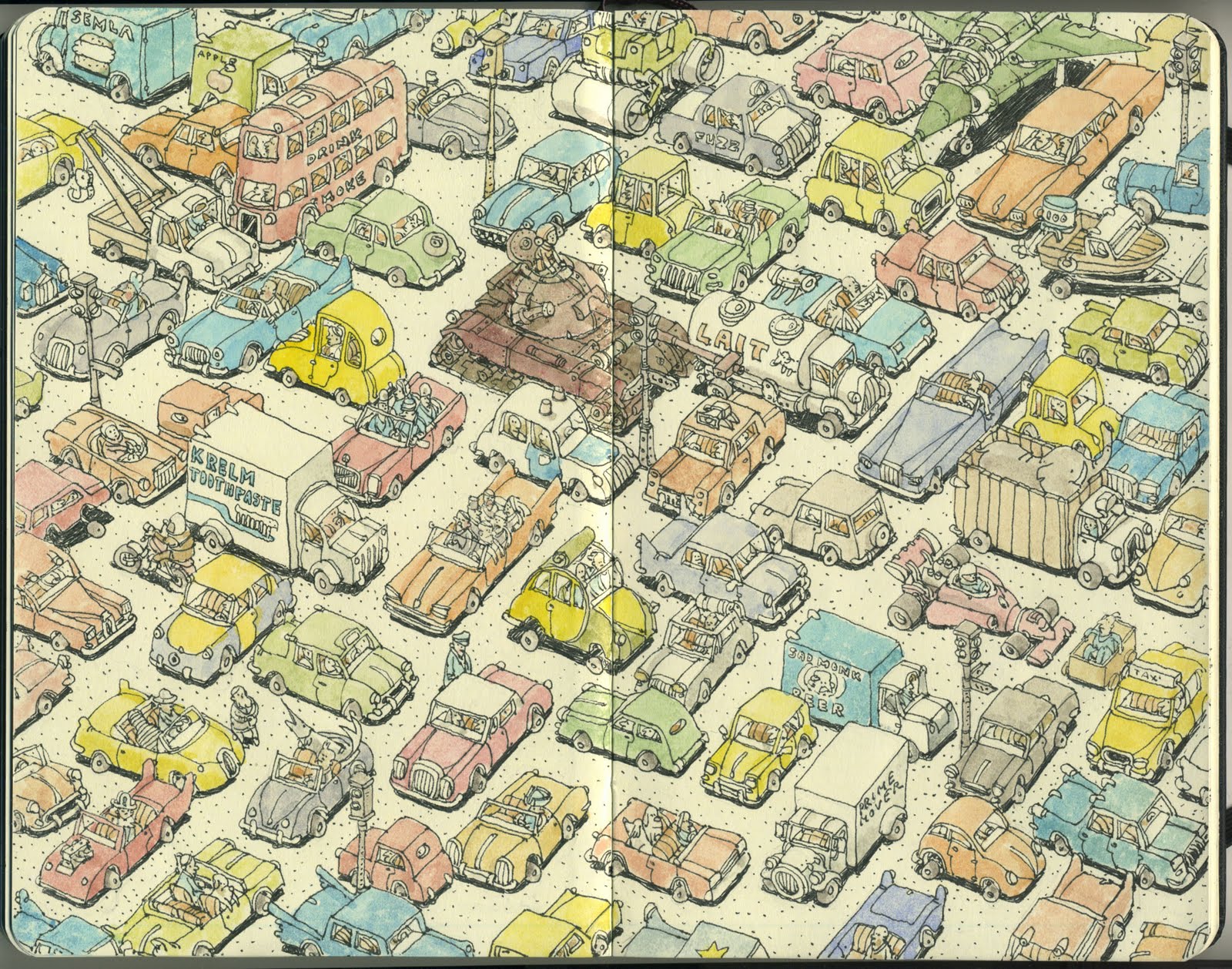
    And this traffic scene. Look at all the car designs and other crazy things.

    crowded

    Click here for the large version.

    Or how about this for insane design?

    tintin

    Click for enormo vision. Find the hidden crocodile.

    For more of this brilliance go to his blog!.

    4) Civilization Wars

    Miniclip has created another game this month worthy of wasting your time. This strategy game is based around the idea of raiding buildings and controlling the land. It pits the Aztecs, the Romans and the Chinese empire against eachother in some sort of strange alternate universe where this was going to happen.

    game1

    Unlike some stategy games, you have to be quick on your toes if you want to win. Each level starts with a mad dash to cover as much ground as possible and steal the empty buildings before your enemy does. Then it’s time to try and take your opponent’s base with an attack dependant on having the most troops.

    game2

    You can employ some magic attacks too but I found that building up the stats of your troops after each round can be sufficient in taking down most enemies.

    There are some big bosses which are quite difficult because they are timed challenges. So again, a frantic gameplay experience can be found at every turn with this one.

    game3

    There are lots of extra modes that you can unlock along the way, like Zombie mode, which really stretches the replay-ability of the game. To give it a go and waste away the hours, like I did, click this link here!

    5) Shameless Self-Promotion Time!

    Coming up very soon is Dragon*Con in Atlanta, Georgia. This year once again both myself and Ken Plume will be doing some panels for your entertainment. I’ll just quickly plug the two we’re doing together as to give you the full list of our individual ones would take far too long.

    So if you’re there please pop in to say hello at the following:

    FRED Panel-Palooza-Extrava-Thingee-a-Doodle
    Time: Fri 04:00 pm (Length: 1 Hour)
    Location: Regency V – Hyatt

    FRED Presents Yet Another Panel About Doctor Who
    Time: Sun 01:00 pm (Length: 1 Hour)
    Location: International North – Hyatt

    Rumour has it we’ll even have an actual dragon there. Rumours.

    ——————————————————————

    And that’s it! My favourite things of the last month.

    Aaron Poole is the creator of birthday balloons. He is also more acurately an internet whore and rarely leaves the house. If you like what you read here check out his blog http://aaronfever.blogspot.com

  • A Bit Of A Chat with Ken Plume & Robert Popper

    bitofachat-header.png

    lucyline.gif

    I’m Ken Plume, and soon you’ll be listening to “A Bit Of A Chat” with me, Ken Plume.

    In this episode, I chat with the co-creator/co-writer of LOOK AROUND YOU, creator/writer of FRIDAY NIGHT DINNER, and the man behind Timewaster Robin Cooper, Robert Popper, as we explore birdsong, feces, flowers, and cell-napping.

    Hope you enjoy…

    Download “A Bit of a Chat with Ken Plume & Robert Popper“:

    [audio:http://traffic.libsyn.com/bitofachat/bit_of_a_chat-robert_popper.mp3]

    SUBSCRIBE
    Subscribe to this Podcast via iTunes

    ##

    patreon-fred.png

    Drop Ken a line HERE.

    ##

    You can also find more of my interviews by clicking HERE.

    lucyline.gif

  • Interview: Anthony Del Col

    soapbox-header.png

    Kill Shakespeare Interview: Anthony Del Col

    lucyline.gif

    killshakespeareissue1Meet Anthony Del Col, writer & co-creator of Kill Shakespeare, a new comic from IDW which has been featured at Toronto Wizard Con, Comic Con and Wonder Con in San Francisco.

    Kill Shakespeare is a daring new comic which follows Shakespeare’s most loved characters on a quest to kill a reclusive wizard… William Shakespeare himself. To view the official IDW trailer for Kill Shakespeare, click here. Follow these links for previews of Issue #1 and Issue #2.

    Can you tell me a little about yourself and the team behind Kill Shakespeare? I understand you are the Shakespeare geek of the bunch.

    It’s funny that I’ve been labeled the ‘Shakespeare geek’ while Conor is the ‘comic geek’ because we both trade off at various times (at this precise moment Conor is reading ‘Richard III’ while I’m going through the latest ‘Fables’ adventures). Conor and I both enter this project with various experiences in the business and media worlds: myself as the producer of some indie films, a music manager and entrepreneur; Conor as a writer, producer and journalist. We work well because of these various backgrounds and our ability to trade off when necessary ““ we both balance the creative and the business at various points.

    Was it a challenge to combine your very diverse skill set?

    Well, we have to play rock-paper-scissors to make some decisions when there’s a stalemate… Seriously, though, there hasn’t been much of a challenge at all. Our strong partnership comes from a shared story sensibility ““ we both like similar films, books, games, etc. And as mentioned above, we have the ability to trade off on the various aspects of our venture, between the creative and the business. It’s an incredibly challenging and time-consuming endeavor to create, release and market a comic book series like this and it makes it a hell of a lot easier when you have a co-pilot.

    In a recent article featured on Bleeding Cool, graphic novelist and Shakespeare expert Kimberly Cox gives a fairly scathing review of the first issue of KILL SHAKESPEARE. How do you respond to her claims that these days everyone hates Shakespeare?

    Methinks she doth protest too much… Ms. Cox may have been exaggerating this point but it was still well made… The general perception is that most people hate Shakespeare. This is not true. Most people are not fans of the way that Shakespeare is taught these days. However, when taught or presented properly (as a kinetic, entertaining story) the Bard’s work can come alive and speak to everyone. As we’ve been talking to people over the last year about this project we’re amazed by how many fans of the Bard there are ““ from all walks of life, and all demographics. We’d love the opportunity to bring some of these people together as a community with this project.

    How do you think academia as a whole will respond to these comics?

    For the most part academics LOVE this project. We’ve heard from librarians, academics and teachers that they see this as a great gateway into the world of Shakespeare ““ a unique way of introducing him to a new generation and set of audiences. However, there have been some purists (such as Ms. Cox) who object to this. That’s okay ““ we delight in the discussion and feel that ol’ Shakey himself would embrace this project (though would be upset that we beat him to the punch).

    Was it your aim to make William Shakespeare’s works more accessible through these comics or will it just a positive side effect if they do?

    Our top priority at all times is to create an entertaining story. If we don’t do this then we’ve failed completely. However, our second goal is indeed to make the Bard accessible. We want this project to speak to audiences that shudder at the thought of being forced to read or watch Shakespeare ““ whether it’s a fifteen-year-old boy in class forced to study Romeo & Juliet or a fifty-year-old woman who has never had the time.

    You and the other Kill Shakespeare creators have often talked of the emerging literary mashup genre (such as Bill Willingham’s Fables) as a source of inspiration. What is it about this genre that has so intrigued you?

    It’s the possibility of the “what if” question… What if a character that you’ve read about, analyzed and loved suddenly found him/herself in a new scenario? Or found themselves in the same world as another classic character? What would happen in these scenarios? I’m really intrigued by taking well-known characters (such as the Bard’s) and placing them into a new world and having them come alive to new and unique audiences.

    connorandyanthony

    The Kill Shakespeare Creative Team (L to R) : Conor McCreery, Andy Belanger, Anthony Del Col.

    In terms of comics, your debut issue was fantastic in each and every regard. Can you tell us a little bit about the process involved in making Kill Shakespeare happen?

    Glad to hear that you liked it! We first came up with the idea six years ago in a brainstorming exercise but after developing it for a while we had to shelve it because Conor and I became busy with some other projects/activities. It was about two years ago when we decided that our story was best served in the comics medium that it started to take flight… We then went out and raised some private money to fund the project, brought IDW Publishing on board, and now our project is really starting to take flight…

    I understand the first issue of Kill Shakespeare took 16 drafts to get right. How difficult was it to incorporate such dense reading material into a comic book?

    Conor and I actually made a conscious decision to NOT re-read the plays line-by-line because we wanted a fresh take on the characters and their stories. We also did not want to become too caught up in the minute details of each play. We’re trying to write the comics to work on two levels ““ the first level is a straight entertaining tale that everyone can enjoy, whether you’ve studied the plays or not. The second level is to put in little references and Easter Eggs that Shakespeare devotees can appreciate and sink their teeth into (such as naming a brothel that Falstaff takes Hamlet to as ‘The Merry Wives of Windsor’).

    How much did you experiment with the mix of modern and Shakespearian language?

    Well, we’re getting really good at writing “thee” and “thou”… We made a decision early on that we wanted to go the modern-language route with this project and we haven’t looked back. I know that some Shakespeare scholars (such as Ms. Cox) have blasted us for this decision, but it worked well for Tom Stoppard (Shakespeare in Love, Rosencrantz and Guildenstern are Dead), did it not? The element that most makes Shakespeare’s plays inaccessible today is the language ““ don’t get me wrong, it’s beautiful and poetic, but it was written four hundred years ago and is often tough to understand.

    Is there anything you can tell us about where this project is going after the initial run of 12 issues?

    Fishing for spoilers, are you now?… If the positive reaction continues like it has, Conor and I have a lot of ideas for future installments of our story. We have a trilogy mapped out in our heads which will really dazzle readers and put the characters in some really interesting scenarios. There have been so many characters that we wanted to put into this first series but couldn’t find the room. We’d love to grow out our universe and ’cause there are so many things we’d love to do.

    Your co-writer, Connor McCreery said in an interview with Wired.com that if Shakespeare were alive today, he would be J.J Abrams. Is it safe to assume that Kill Shakespeare will keep us guessing until the last minute?

    Seeing as how this is the final question in the interview, should I actually answer this, or continue to keep you guessing until the next one?…

    Guessing it is! Thank you Anthony for taking the time out of your busy schedule to chat with me.

    To order your copy of Kill Shakespeare, click here.

    Follow Kill Shakespeare on Facebook or visit the official site.

    Mary Hoffman

  • Soapbox: A Day Behind

    soapbox-header.png

    A Day Behind

    lucyline.gif

    It’s with no small amount of eagerness and curiosity that I await the finale of Lost which is airing in America on the 23rd of May this year. For the past five and a half years, I’ve followed the events that have been happening on and off the island. And in a little over a month from now, the show will end, but I suspect that speculation about some of the inevitable unsolved mysteries will continue long after the credits roll on the final episode.

    But as much as I’m looking forward to seeing the finale of Lost, what I’m dreading is the in-between time. It’s that span of time that stretches from when Lost airs in America until the evening of the following day when I’ve done a full day’s work, am able to stream the episode on-line and play catch up with America, hoping the whole time not to accidentally see something posted on line by a friend where they give information about what happened. You can be guaranteed that at least one person will post very publicly something to the effect of “Oh Jack, why did you die?”

    This situation isn’t just specific to Lost, though the impending finale has brought that programme to the forefront. It’s a situation that I find myself in with all of my favourite American shows and it happens with comic books too but to a much lesser extent. The day that Ted Mosby announces who The Mother is, I’m going fully internet dark until I can stream the episode.

    To be a nerd in Ireland, or indeed anywhere that’s not America, is to live a day behind.

    Growing up in Ireland as a nerd was a strange thing. BBC showed re runs of Star Trek and SKY1 showed The Next Generation as well as Quantum Leap if you were really lucky. Thinking back, the shows were probably months or maybe even a year behind the original American airdate, though with no frame of reference at the time it was never a cause for concern. But no one else watched these shows or cared in the slightest that they were on. Eventually I became convinced that the shows were scheduled just for me in a weird kind of nerd solipsism. But then, something big and amazing come along in the form of the world’s biggest double edged sword… the internet.

    The internet is an amazing social tool and has allowed the world to connect in ways that were never thought possible before and it showed me very quickly that there were far more people like me out there than I realised. But at times, the best thing about the internet can be the worst thing about the internet because the internet contains all the knowledge in the world.

    Knowledge and wisdom are two very different things.

    The internet gave everyone a voice and as time goes on, the outlets for that voice become more numerous and easier to access. People love to talk about what they like or in some cases about what they hate. And people really love to talk about what they love or hate almost immediately after they’ve seen it or read it.

    But it is the internet that allows us to be only one day behind America and gives us a chance to see our favourite shows before they air on TV on this side of the Atlantic.

    The good news is that not all forms of media are subject to delays that are imposed by the world of television. Traditionally, movies come out in America long before they see the light of day in the rest of the world but that too is changing. In recent memory, movies like Taken, Dr Parnassus, Kick-Ass and the recently released Iron Man 2 have seen release dates in Ireland and the UK ahead of America.

    The comic book world has always treated us with more dignity though, and we only have to wait one solitary day to “properly” catch up on our American cousins without having to cheat by reading online. New Comic Book Day in America is Wednesday and in Ireland it’s Thursday. This is a fact that most comic professionals in America aren’t actually aware of, but when they do find out it pleases them that their work gets to its audience the entire world over that quickly.

    There is still some discrepancy in terms of the prices being charged for the books owing to freight costs and foreign exchange fluctuations. This discrepancy can be overcome though by shopping online, where prices are much more reasonable but the cheaper price comes with an extended timeline. It’s a trade-off that a lot of monthly collectors aren’t willing to make possibly due to the fact that they are afraid of having their enjoyment spoiled by friends in distant lands who have already read the comics, or possibly because it’s not pleasant to have to wait to have a cliff hanger resolved.

    Marketers will classify this situation as “cash rich, time poor”, saying that we have the money to spend and don’t have the time to wait. But most of us will readily admit that it’s just down to plain old obsession. Though every once in a while the matter will be taken out of our hands and we’ll be forced to wait longer than normal due to Bank Holiday or an inconvenient ash cloud.

    Being a day behind isn’t the worst thing in the world, and like anything else it has it’s good points and it’s bad points. There’s no pressure to have to live to a network-imposed timeline and the fact that you’re going to be behind to a certain degree no matter what you do does give you the freedom to live life on your own schedule. The internet sure ain’t going anywhere and though it can be dangerous during the in-between time, the benefits and the connection to the wider world outweigh any potential drawbacks.

    Simon Fitzgerald

  • Comics in Context #240: Wimpy in Love

    comicsincontext4.jpg

    # 240 (VOL. 2 #12): WIMPY IN LOVE

    cic-wimpy-01In his introduction to one of Fantagraphics Books’ earlier set of volumes reprinting E. C. Segar’s Popeye comic strips, comics historian Rick Marschall argues that Popeye’s supporting player J. Wellington Wimpy is a “scoundrel” with a “lack of conscience” who can and does “betray” everyone. But in reviewing the Sunday strips in Volume 3 of Fantagraphics’ current series of Segar Popeye reprints, I’ve discovered that Wimpy is more complex than that. He does indeed have a conscience, though it is repeatedly overwhelmed by his animalistic appetite for hamburgers.

    There are a month of 1933 Sunday strips about Popeye’s boxing match with the enormous Bullo Oxheart, in which Wimpy acts as referee, though he keeps being distracted from the fight by his efforts to mooch a meal off a friend, Eddie, who is sitting in the audience off-panel. But Popeye is the central character of this sequence of Sundays, each of which Segar uses to underline how “the well known weed called spinach” boosts his strength. Indeed, at this point Popeye’s strength has clearly reached superhuman levels. At the end of the June 18, 1933 strip Popeye, with apparent ease, lifts an entire house up from its foundation. “”˜Sa good thing I been eatin’ spinach lately,” Popeye comments, laughing. In the June 25, 1933 strip Popeye commends a boy who yells “I want spinach!” so Segar may be emphasizing spinach to induce his younger readers to follow their hero’s example. Popeye has become a role model, whereas Wimpy decidedly has not.

    After winning the fight, Popeye tells Wimpy in the July 16, 1933 strip that he intends to donate half of the prize money “to a institution wich’ll buy spinach and cod liver oil for poor kids.” Wimpy asks him “Pardon me for being so personal, but how does it feel to give away money like that?” Note Wimpy’s unusual level of politeness here. He seems genuinely intrigued by Popeye’s generous nature, and has enough insight to recognize that this is a very personal matter to the sailor. Wimpy’s politeness may also be another sign that he genuinely regards Popeye as his friend.

    When Popeye asks him, Wimpy implies that he has never given away anything himself. (For the purposes of this particular Sunday strip Segar has intentionally or not ignored the earlier sequence in which Wimpy selflessly gave his mother thousands of dollars.)

    Though he isn’t articulate in a conventional manner, Popeye’s way with language has its own sort of vivid poetry. Popeye tells Wimpy that “Givin’ charity makes ya feel swell inside. . .It’s hard to explain, but right now I got tickles in me chest wich tells me I done sumpin wort’ while, see?”

    Surprisingly, Wimpy decides to experiment: he says he has a dime (an unusual occurrence for him) and will use it to buy a hamburger for an impoverished man sitting at the counter in Rough-House’s diner. (Now there’s a sign of how much inflation there has been since 1933!) There is no reason to doubt Wimpy’s sincerity: he could easily buy a hamburger for himself instead. Moreover, Wimpy’s portly build is evidence of his continual success in feeding himself. In contrast, the thin stranger sitting at the counter has his tongue hanging out; Wimpy notes that this is a symptom of starvation. Indeed, the stranger seems genuinely to be in a sad state: “I have no money and no friends,” he tells Wimpy, and “I haven’t had a bite for days.” Keep in mind that this is 1933, so the stranger may very well be intended as a victim of the Great Depression.

    Wimpy puts his hand on the stranger’s shoulder, tells him, “You may not have money, but you have a friend. J. Wellington Wimpy is your friend,” and orders a hamburger for him. Again, there is no reason to doubt Wimpy’s sincerity at this point.

    But matters change when the hamburger arrives. Holding the burger, Wimpy begins snapping his teeth furiously, like a wild animal. Yet he simultaneously speaks in a calm tone, as if he were dispassionately observing his own behavior: “Isn’t it odd how my teeth snap at it? I have to hold it with both hands to keep it from going into my mouth.” He speaks as if the hamburger would force itself into his mouth if he didn’t stop it.

    It’s also as if Wimpy’s appetite, his animal nature, is at odds with his conscious mind and better nature, as if he has a kind of split personality. Since Wimpy is a variation on the archetype of the glutton, it should be no surprise which side of his personality wins. The surprise lies in how quickly and completely that battle is won. Distraught, his tongue hanging out once more in hunger, the stranger asks his newfound friend, “Didn’t you buy that hamburger for me?”

    Expressionless as usual, Wimpy replies, “I beg pardon? What’s the name, please?” It sees that Wimpy is pretending not to know his new supposed friend in order to keep the burger for himself. But is it possible that the gluttonous side of Wimpy’s personality has submerged his weaker, charitable side, and that Wimpy has to some extent actually forgotten about his promise to feed his starving acquaintance? Wimpy’s conscience had briefly awakened, but once he is exposed to the presence of a hamburger, his hunger proves dominant. Wimpy’s id overrules his superego.

    Then Wimpy begins licking the hamburger with his tongue. In part this may be to partially satisfy his hunger, but it may also be that the trickster aspect of Wimpy is surfacing. Now he has an excuse for not giving the hamburger to the stranger, but the starving stranger says he still wants it. “What kind of fellow are you, anyway?” Wimpy asks, acting shocked at what he clearly considers the starving man’s loose attitude towards hygiene.

    Once again putting his hand on the stranger’s shoulder, as if reverting to his former attitude of friendliness, Wimpy says he will just take one bite of the burger and then give it to him. Perhaps Wimpy still means to be generous, by his own standards, but then he opens his mouth wide, devours virtually the whole burger in a single bite, and hands the stranger what amounts to a mere scrap.

    This wouldn’t be funny if the stranger were left to starve, but the genuinely generous Popeye gives him some money. Popeye scowls disapprovingly at Wimpy, who says, as if nothing had gone wrong, “I don’t know whether it was the bite of the hamburger or the charity–but I feel very lovely inside.”

    I like Wimpy’s use of the word “lovely.” Popeye says two Sundays later about Wimpy that “No use gettin’ mad at him–he jus’ don’t know no better.”

    When his mother came to visit, Wimpy’s conscience and sense of shame did overrule his usual greed for food. But ordinarily Wimpy doesn’t have an ordinary kind of conscience; he sees nothing wrong in mooching food from his friends, or starving strangers, or anyone else. He idealizes food, especially hamburgers, so satisfying his hunger is to him “lovely.” Perhaps Wimpy also finds it “lovely” to exercise his trickster skills in procuring food; mooching is his talent, his vocation, and perhaps even his artform.

    In the July 23, 1933 strip Wimpy goes to the aquarium “for some relaxation,” and Popeye comes along. While Wimpy distracts a guard with chitchat, he surreptitiously hooks a fish in a tank behind his back; Wimpy then smuggles the fish out of the aquarium in the back of his pants. Was Wimpy lying to Popeye when he said his goal at the aquarium was “relaxation”? Maybe Wimpy does find employing his trickster skills in this way relaxing, just as other people do fishing where it’s legal to do so. It’s notable, too, that Wimpy ends this strip by inviting Popeye to dine on the fish with him. After all, Wimpy does indeed seem to regard Popeye as his friend, although he also wants Popeye to supply the tartar sauce for dinner himself.

    So far Popeye feels both disgust and amusement at Wimpy’s mooching ways. But now Wimpy, surprisingly, becomes an antagonist to Popeye. Just as Wimpy does not allow friendship to get in the way of his quest for burgers, it is no barrier to his sex drive, either. You might have thought that Wimpy had sublimated his libido into his lust for hamburgers, but no. In the July 30, 1933 strip Rough-House has hired a pretty new waitress, who, we learn the following Sunday, is named Lucy Brown. Popeye immediately starts flirting with her, whereupon Wimpy literally comes between them and starts chatting with her himself.

    In my research on tricksters, I’ve learned that the trickster is typically himself susceptible to being tricked. That may seem unlikely, since tricksters are so clever, but it appears to be true. For example, Superman traditionally thwarts his own trickster nemesis, Mr. Mxyzptlk, by tricking him into saying his name backwards. Perhaps the point is that the trickster can be so confident of his own cleverness that he underestimates his target’s ability to best him at his own game. So here Popeye tells Wimpy he’s wanted on the phone, and Wimpy not only believes him, but says hello into the phone over and over again before finally giving up. Apparently it never occurred to Wimpy that he hadn’t heard the phone ring.

    So Wimpy returns to Popeye and Lucy the waitress. Popeye in effect tells Wimpy to go away, Wimpy turns his back, as if in defeat, and then Popeye proposes marriage to this woman he just met!

    In the Fleischer and Famous Studios Popeye animated cartoons, it is Olive Oyl who often comes off as fickle, switching her affections between Popeye and Bluto. So it is quite a surprise to see from the original Segar comic strips that, early on, at least, it is Popeye who is the fickle one.

    Hearing Popeye propose, Wimpy immediately sees his opportunity, turns around, and simply asks, “How’s Olive Oyl?”, shocking Popeye. Wimpy may not be able to fight the super-strong Popeye physically, but Wimpy can fight effectively with words. Wimpy quickly moves in, bending over the startled Lucy, as if enacting a love scene out of a movie, although Wimpy’s idea of romantic dialogue is distorted by his usual preoccupation: he invites her to duck dinner, adding “You bring the ducks.”

    Then Popeye plays trickster again, advising Wimpy that he has forgotten to put on his pants, and wrapping a tablecloth around Wimpy’s waist. The trusting Wimpy believes Popeye, feels too embarrassed even to look down to see if Popeye is right, and rushes out of the diner. Once again, Popeye’s amusement supplants any anger he may have felt at Wimpy: laughing, he tells Lucy, “I was go’ner ast ya to marry me, but I kin not get serious on account of laughin’ at ol’ Wimpy.” It would seem that Popeye’s attraction to Lucy wasn’t that serious since his amusement at Wimpy proves the stronger emotion.

    At the beginning of the following Sunday strip, August 6, 1933, Wimpy asks Popeye why he won’t let him talk with Lucy Brown. “Is this not a free country?” By Wimpy’s lights, it seems he thinks he merely wants a fair chance to compete for Lucy’s attentions. Alpha male Popeye declares “she’s gon’er be my sweety” and tells Wimpy to “beat it.” (Since this is 1933, neither man considers Lucy’s opinion about this.)

    So Wimpy seeks out Olive Oyl and tells her that Popeye has a “new sweetheart,” Lucy Brown. You might think that Wimpy intends to get Lucy for himself. But no: sticking his nose literally in Olive’s face, Wimpy declares, “If he don’t want you, I want you.” Having decided “it is time I should take unto myself a wife,” Wimpy is determined to get one, and it doesn’t seem to matter whom. (It does appear as if Wimpy is only going after women whom Popeye has already picked out, as if he considers Popeye a guide in such matters.) But the comics Olive is considerably less fickle than her animated counterpart, and far from being as passive as Lucy: she knocks Wimpy down (So that’s why she’s such a good match for Popeye!) and declares, “I want Popeye and nobody but.”

    Olive races to the diner and angrily confronts Popeye, who, shaken, resorts to the Wimpyesque tactic of denial: “What girl?” Popeye asks, though Lucy is standing right there. Seemingly guilt-ridden, Popeye pleads the Fifth Amendment, but Wimpy urges Olive, “Let’s you and her fight”: maybe Wimpy considers two women fighting to be a turn-on. He soon gets his wish, and Popeye, seemingly forgetting his rivalry with Wimpy, asks him to help break the fight up but each taking hold of one of the women. Perhaps showing his true loyalty, Popeye grabs Olive, and advises her not to start fights; Olive looks bewildered and distraught, now that she’s coming out of her fit of rage. And then both Popeye and Olive discover that Wimpy not only took hold of Lucy but now has clasped her in his loving embrace, as he radiates cartoon hearts. He’s back to fixating on Lucy as his sweetheart. (Lucy looks somewhat annoyed.)

    But on the following Sunday, August 13, 1933, we learn that Popeye is now conducting a clandestine romance with Lucy. Back to treating Wimpy as his friend, Popeye asks him to act as if Lucy is Wimpy’s girlfriend if Olive Oyl turns up. This is a big mistake. Olive does indeed turn up at the home of Lucy and her father, whereupon Wimpy, radiating more cartoon hearts, begins cuddling Lucy. But whenever Olive attempts to leave, Wimpy persuades her to stay. So Wimpy gets to cuddle Lucy for hours, until Olive finally leaves at midnight. “Popeye, you are, indeed, a fine fellow,” says Wimpy. “There aren’t any men who’d allow me to pet their sweeties.” Possibly Wimpy is just trying to placate Popeye. But it also seems quite possible that Wimpy sees nothing wrong with manipulating the situation with Lucy and Olive and that he genuinely considers Popeye to have shown generosity in letting him hug Lucy for hours. (Again, Lucy’s own opinions are not consulted.) But this time Popeye erupts in rage, punches Wimpy in the jaw, and throws him out the window. And thus begins a series of Sundays in which Segar physically punishes Wimpy for his trickery.

    But in the following Sunday strip, for August 20, 1933, Wimpy is back to mooching food from Popeye. Wimpy keeps calling him. “Old pal of mine,” but Popeye, perhaps reacting to the last few Sunday strips, angrily refuses to give him any food. But then Popeye holds up a potato, which appears to have two eyes and a nose, and Wimpy claims it is the image of his late Uncle Hymie. Breaking down in tears, Wimpy goes on and on about what a wonderful man Uncle Hymie was. “Surely you would not eat that potato,” Wimpy says. Popeye, now in tears himself, agrees to give Wimpy the potato as a memento of his uncle. The final panel finds Wimpy sitting under a tree, eating the potato: “‘Tis a pity that I have no gravy to put upon Uncle Hymie.”

    The simplest interpretation of this episode is that Wimpy was simply conning Popeye out of the potato and made up the whole Uncle Hymie story. But I’ve come to think of Wimpy as a complex, ambiguous figure. I think it is entirely possible that Wimpy did have a beloved Uncle Hymie and was genuinely moved to tears by his memory, but that still would not stop Wimpy from devouring a potato that looked like his dead uncle. As usual, Wimpy’s appetite overrules his emotions.

    Wimpy referees Popeye’s next prize fight in the Sunday strips, which is noteworthy for the way that Popeye’s opponent literally twists Popeye’s body out of shape, but without causing him any real harm, in a further display of Popeye’s superhuman power.

    In the September 17, 1933 Sunday strip, Wimpy returns to the aquarium, having accepted Rough-House’s bet that he can’t catch another fish there. This time Wimpy has overreached, perhaps because he is trying to win a wager. He hooks an eel, which slithers in and out of his pants, in a weirdly phallic gag (which is shown on the cover of Popeye Vol. 3). The guards see this, and they start kicking Wimpy. It’s as if Segar now feels that Wimpy can’t always get away with his trickery, even though these punishments don’t deter Wimpy at all.

    Just how far will Wimpy go in the service of his appetite? In the September 24, 1933 strip Wimpy tries his usual mooching tricks on Popeye, Rough-House, Geezil and other diner customers, who all furiously refuse. Unperturbed, Wimpy starts reading the paper and then, uncharacteristically, his eyes go wide. Then, even more uncharacteristically, he punches Geezil in the face. As a policeman arrives, Geezil reacts with his usual angry bluster (“Could he smush me in the schnozzle? Could he? Could he? COULD HE?). But after Wimpy hits the policeman too, Wimpy is taken to jail. And then Rough-House, Popeye and Geezil see what Wimpy read in the newspaper: hamburgers are now on the jailhouse menu. Wimpy has exchanged his own freedom for a steady supply of burgers!

    By the following Sunday, October 1, 1933, Wimpy has regained his freedom. So how can his appetite drive him still further? Wimpy has just inherited a cow, and attempts to trade it to Popeye, who is substituting for Rough-House at running the diner for a day, for hamburgers. But Popeye keeps saying no, even as Wimpy whittles down his request from ten burgers down to one, and keeps calling Popeye, with increasing emphasis, “old pal of mine.” Nothing works, and for once Wimpy, despite his deadpan demeanor, seems desperate. Finally Popeye agrees to lend Wimpy some bread, an axe and some kitchen utensils. After Wimpy leaves Popeye says, “I kin not help feelin’ sorry for ol’ Wimpy” and leaves to invite him to have a hamburger. But it is too late. In the final panel Popeye is so surprised, perhaps shocked, that he levitates off the ground. Wimpy has killed and butchered the cow, whose head lies grotesquely on the ground, and turned its body into a tall mound of hamburgers! Of course we all know that hamburgers are made from dead cattle, but it’s still startling, and even macabre, that Wimpy would kill the cow himself and grind it up into food.

    Segar must have liked the idea of Popeye running Rough-House’s diner in this Sunday strip, because on the following Sunday strip he and Olive open their own cafe. But after the first month of this new storyline, Wimpy reclaims center stage. When Olive gets sick, Popeye hires Wimpy to fill in for her as a waiter. Initially, Wimpy resolves to do the right thing, even when serving a hamburger steak to a customer: “Get behind me, Satan. . . it is my duty to deliver this bit of beef to our patron.” But once again, the id of Wimpy’s appetite overwhelms the superego of his conscience. He talks the customer into thinking the hamburger is infected with bugs, and after the shaken patron leaves, Popeye lets Wimpy eat the steak. “He is, no doubt, a peculiar person,” Wimpy tells Popeye about their lost customer. In this case Wimpy is clearly, consciously deceiving his “old pal of mine.”

    Popeye’s charitable feelings towards Wimpy have resurfaced, and the following Sunday, November 12, 1933, Popeye gives Wimpy a tryout for a job as a waiter, but this time carefully keeps an eye on him. Wimpy again tries to do the right thing, repeating his “Get thee behind me, Satan” mantra while bringing a hamburger to a customer. But once again, when one side of Wimpy consciously resists his hunger, his unconscious forcefully emerges, and he finds himself instinctively snapping his teeth at the burger and then devouring it, seemingly in one gulp. “Sorry, sir, I’m indeed sorry this had to happen,” Wimpy says, and he may indeed mean it. Wimpy tries to bring him another burger, but says, “Heavens! I feel that great desire again–the urge to gobble it down!” Is Wimpy putting on an act, or is he in the grip of a comedic but real addiction to food? He gobbles this burger, too. Finally, the disgruntled customer fetches his own burger, whereupon Wimpy hurls a pot at him, knocking him out. “A hundred percent,” says Wimpy, holding the burger; “Not a single one got away from me.” Watching all of this, Popeye confesses, “I kin not bawl “˜im out on account of laughin’.”

    But by the following Sunday, Popeye has grown so angry at Wimpy’s mooching that he pays a policeman to put him in jail. “It isn’t right to treat poor old Wimpy that way,” says Olive. “Shame on you, Popeye.” But Popeye goes down to the prison to literally laugh in Wimpy’s face.

    Then Wimpy begins weeping: “You laugh at my sorrow. You hurt me.” As Wimpy goes on, talking about his mother, and about how “life hasn’t been very kind to me,” Popeye finds himself weeping in sympathy, and finally bails Wimpy out of jail. Wimpy expresses his gratitude to “my friend” and then resumes trying to mooch a hamburger from him. Once again the reader may wonder to what extent Wimpy is consciously manipulating Popeye’s emotions and to what extent Wimpy’s sadness at being “hurt” by a friend is real. My hypothesis is that both possibilities are true and that they coexist. I suspect that Wimpy’s stoic, expressionless demeanor covers real pain over his poverty and loneliness. Popeye may be Wimpy’s dupe, but he also really is Wimpy’s only friend.

    Segar’s exploration of Wimpy’s character reaches a climax with the November 26, 1933 Sunday strip, the last in this volume. Popeye’s friend Bill Squid bets Popeye that Wimpy would “choke his grandmother for a hamburger.” Despite Popeye’s disgust and even cruelty towards Wimpy in past strips, Popeye seems more naturally to look on the bright side, and contends that Wimpy has “good qualities, too.” Popeye even tells Wimpy, “ever’body seems to be down on ya an’ tha’s why I got sympthity for ya–I yam always for the underdog.”

    Popeye goes so far as to dress up as an old lady and pose as Wimpy’s grandmother, whom Wimpy hasn’t seen in thirty years. Bill is amazed that Wimpy cannot see through Popeye’s obvious disguise (“Is he dumb?”), but Wimpy is a trickster who is easily susceptible to being tricked.

    As Wimpy’s grandma, Popeye sits down to eat a hamburger. Wimpy flatters her and asks for a “bite” of the burger but “she” says no. Then Wimpy begins snapping his teeth at the burger, and “Grandmother” is outraged that Wimpy has “absolukely no self-control.” Thwarted again, Wimpy goes further than we’ve seen before in this book and, yes, actually begins choking his “grandmother.” His id is in full control: Dark Wimpy is unleashed. “Grandmother” rebukes Wimpy, who begins weeping with shame: “I’m sorry! Heavens! What did I almost do?” But his dark side overwhelms Wimpy again: he snaps at the burger, jumps on “grandmother,” demanding the burger: “Curse you, grandmother!” The disguised and disgusted Popeye finally stops Wimpy by hitting him.

    However rough and violent in his manners, Popeye is an idealist and a true hero who adheres to and enforces his code of morality. Wimpy is neither hero nor idealist, but a flawed man driven by his natural drives, notably his appetite. Yet somehow they belong together as a team, like the similar pairings of Cervantes’ Don Quixote and Sancho Panza, or Tamino and Papageno in Mozart’s The Magic Flute.

    And in the grand finale to my Wimpython, I will turn to the renowned “Plunder Island” storyline in Fantagraphics’ Popeye Vol. 4, in which the team of Popeye and Wimpy faces its ultimate test when both confront the strip’s archvillainess, the Sea Hag.

    Warning to my faithful readers: I am in the process of moving from New York City back to my home town near Boston. So there may be a week or two when I won’t be posting a new “Comics in Context.” But rest assured that once I have Internet access set up at my new home, “Comics in Context” will be back!

    Copyright 2010 Peter Sanderson

    Follow me on Twitter (@PeterJSanderson) and at Facebook Comic Con.

  • Comics in Context #239: Scrooge’s Lost Horizon

    comicsincontext4.jpg

    #239 (Vol. 2 #11): SCROOGE’S LOST HORIZON

    scrooge-01In their Toon Treasury of Classic Children’s Comics, editors Art Spiegelman and Francoise Mouly of course included the pinnacle of the form, writer/artist Carl Barks’ Uncle Scrooge, but they chose a rather unusual example of the series. “Tralla La,” from Walt Disney’s Uncle Scrooge #6 (1954), is a typical Scrooge story in that Scrooge McDuck leads his nephew Donald and grandnephews Huey, Dewey and Louie on an adventure to a distant land. But it is highly atypical in that for once the miserly Scrooge, who famously loves his money so much that he swims around in his sea of cash, has become disillusioned with his vast wealth. For once, instead of taking his relatives on a treasure hunt, Scrooge takes them on a quest for a place where material treasures do not exist.

    The story opens with Barks showing the demands that Scrooge faces due to his great wealth: dealing with foreign leaders, taxes, requests from charities, being investigated by the government, being beset by a radical agitator. Visibly, comically shaking, Scrooge believes he needs to take his “nerve medicine” or else he will “crack up.” looking exhausted, drinking his nerve medicine right out of the bottle, Scrooge looks not unlike someone taking a very different kind of drink. Scrooge thinks “Oh, how I envy that carefree squirrel” he sees sleeping on a tree branch.

    Bu the next page Scrooge has indeed cracked up, shouting “I’m mad! Mad! Mad!” As if turning into the Bizarro version of himself, Scrooge declares, “I hate my money! It’s brought me nothing but work, labor, toil, and jeers!. . .Get out of my sight, you ugly stuff!” as he kicks coins out of his path. Then Scrooge seems to go over the brink into insanity: he scampers about, chattering like the squirrel he earlier admired.

    scrooge-02

    One of Scrooge’s employees summons his nephew Donald Duck, who finds the frazzled-looking Scrooge wearily sticking his head out of a hole in a tree. “You’re not a squirrel,” Donald tells him. “I know it! But I can want to be one, can’t I”?” replies Scrooge. Barks seems to be making the point that Scrooge hasn’t really gone insane (or if he had, he’s crossed back over the brink to sanity) perhaps because though Barks portrayed Scrooge’s “squirrely” behavior for laughs, true insanity wouldn’t be funny.

    Donald diagnoses Scrooge as suffering from overwork. Agreeing, Scrooge asserts that “˜I want to go someplace where there is no money, and wealth means nothing!” Yes, this is certainly different from the Scrooge McDuck with whom we are familiar, whose identity is expressed through his pride in his lifelong career accumulating his seemingly limitless fortune. This story is from only the fifth issue of Scrooge’s own comic book, so perhaps Barks was still experimenting with the character.

    Scrooge consults a doctor, who tells him about “a strange valley in the Himalaya mountains” that is “called Tralla La, and nobody has ever seen it, but it is said to be a place without money!” Thrilled by the idea, Scrooge immediately seems revitalized, leaps from his sickbed (in a symbolic resurrection) and declares he is heading for Tralla La.

    Tralla La is an obvious reference to Shangri-La, the idyllic realm introduced in James Hilton’s 1933 novel Lost Horizon, which was adapted into the 1937 film version directed by Frank Capra.

    Hilton’s Shangri-La appears to be the template for hidden Asian paradises in popular fiction. One prominent example is K’un-L’un, the mystical realm in Marvel Comics’ Iron Fist series, which is named after the real Kunlun mountain range in which Shangri-La was supposedly located. Even Stan Lee and Steve Ditko’s origin of Doctor Strange seems to owe a large debt to Lost Horizon: the hidden Himalayan land of Kamar-Taj parallels Shangri-La, the Ancient One is reminiscent of Lost Horizon‘s High Lama, and Stephen Strange, with his trademark mustache, looks like Ronald Colman, the star of Capra’s film adaptation. (It’s amusing to imagine Doctor Strange uttering his spells in Colman’s distinctive voice.) The television series Lost may also owe a debt to Lost Horizon. In both Lost and Lost Horizon a collection of travelers end up in a hidden, seemingly mystical realm after their plane goes astray from its proper route. Certain denizens of the island in Lost have greatly extended life spans, like characters in Lost Horizon‘s Shangri-La. Moreover (spoiler for those who haven’t started watching the final season), Jacob’s search for a “candidate” to replace him as the island’s protector in Lost echoes the High Lama’s attempt to recruit Robert Conway, the character Colman plays in the movie, as his successor. Conway leaves Shangri-La, recognizes his mistake, and attempts to return; similarly Jack and other castaways in Lost succeeded in escaping the island only to go back.

    The last time that I saw the Capra film of Lost Horizon on TCM, it struck me that it was a benign isolationist fantasy. In a world that, in the story and in real life, was moving towards World War II, Shangri-La was a peaceful paradise to which one could escape, where the highest achievements of civilization (represented by Shangri-La’s extensive library and art collection) would endure as the outside world fell into chaos. Shangri-La was a place where greed and lust for power–the motives for conflict–simply did not exist. Human nature seemed to have been purified of such vices in Shangri-La’s culture. Significantly for Barks’ purposes, there is no money there.

    In the film, initially the passengers on the plane that is hijacked to Shangri-La want to get back to Western civilization. But most of them come to love Shangri-La, even Henry Barnard, an American criminal, who reforms and starts his life anew there. The good influence of the community and culture of Shangri-La makes the passengers into better people. Only Conway’s brother George resists and remains intent on leaving. When Robert Conway mistakenly becomes disillusioned with Shangri-La, he joins his brother in leaving. But, significantly, George ends up dying in an avalanche, and Robert, on returning to Western civilization, realizes how gravely he erred in leaving Shangri-La and, through nearly superhuman efforts, succeeds in returning there.

    Arriving at the base of the Himalayas, Scrooge questions a native who tells him he knows of no one who knows how to get to Tralla La. Here’s another curiosity in this story. Barks’s duck tales seem to take place on an alternate Earth populated by anthropomorphic dogs, birds and pigs, but he draws this tall native in a turban as a human being. In the Donald Duck story “Bee Bumble” earlier in this collection, there is a large panel showing numerous residents of Duckburg, some of whom are drawn as anthropomorphic dogs (who have black canine noses) and others as humans (who do not).

    Donald and his nephews Huey, Dewey and Louie have accompanied Scrooge on his expedition. Aided by their Junior Woodchucks’ Guidebook, Huey, Dewey and Louie figure out the way to get to Tralla La that apparently no one else has figured out for centuries. Typically, Barks portrays Huey, Dewey and Louie as being smarter in finding solutions for various problems than the adults. Surely this is part of the appeal of Barks’s stories for children, showing them that they can perceive answers that adults cannot, and resolve problems and conflicts that the older generation cannot, as we shall see again at the end of this story.

    Barks fans are familiar with the Junior Woodchucks’ Guidebook, a thin tome that nonetheless apparently contains all the knowledge in the world. It strikes me that nowadays kids might carry around a laptop computer with wi-fi, with which they could Google any information they sought. Barks’ recurring gag from my childhood has become a reality! I wonder what he would have thought of this.

    Barks’ narrator apparently notices how much Scrooge is acting out of his usual miserly character: “Uncle Scrooge unfreezes his purse and hires a plane! He’s that anxious to find Tralla La!” Scrooge even pays the pilot two million dollars!

    Barks then provides a splash-size panel, covering half a page, for an aerial shot of the mountains and waterfalls towering over the valley of Tralla La far below. For the last two decades comic book artists have devalued the full-page and half-page panel, using them as poster shots for characters without any real storytelling purpose. But in this Barks tale, the sudden shift to a panel four times as big as one of the typical panels in the story, with this superbly drawn mountain vista, still carries dramatic force, lending an epic scope to this adventure tale.

    Descending by parachute, Scrooge and his relatives first meet the people of Tralla La, whom Barks draws as ducks, most of them taller than Scrooge. The colorist for this anthology, and, I presume, for the original story, colors the ducks of Tralla La yellow: had Barks drawn these Tralla Lallians as humans, that would certainly be a politically incorrect color choice, to put it mildly.

    We soon see Scrooge talking with a Tralla Lallian who is seated on a chair like a throne; he does not look ancient, but perhaps he is intended to be a counterpart of Shangri-La’s High Lama. This Tralla Lallian says that “We Tralla Lallians have never known greed!” Several pages ago Donald was greedily offering to take Scrooge’s fortune if Scrooge no longer wanted it. But, like the Western visitors to Shangri-La, Donald seems changed by the good example set by the community he sees around him. Impressed, Donald tells his nephews, “It is wonderful here! Nobody wants anything that belongs to anybody else!” A few panels later Scrooge adds, “Yessir! All we have to do is bear our share of the work. . . .” Why, it’s even beginning to sound like an idealized communist society! But don’t worry: such a society doesn’t exist in real life, and it doesn’t in this story, either. Come to think of it, you should worry about that latter point!

    A Tralla Lallian farmer named Hop Sing finds something he has never seen before: a bottle cap from a bottle of Scrooge’s nerve medicine. Honest like everyone else in Tralla La, Hop Sing returns it to Scrooge, who tells him to keep it.

    And now two familiar themes from Barks stories resurface: greed and temptation. Other Tralla Lallians become fascinated with Hop Sing’s bottle cap, the first one ever seen in Tralla La. Two Tralla Lallians each offer to “buy” the bottle cap, giving Hop Sing sheep in return. Hop Sing’s wife, with an evil look worthy of a Barksian version of Lady Macbeth, advises Hop Sing to hold out for even more sheep, and he then sells the bottle cap for ten sheep. Its new owner then resells the bottle cap for twenty sheep.

    Barks’ narrator then informs us that “By noon the next day the bottle cap has changed hands many times. And its price has become fantastic!” I find myself suddenly thinking of the recent news report about a copy of Action Comics #1 selling for a million dollars. More ominously, I also think of the tech stocks bubble of the 1990s and the housing bubble of the 2000s, and the resulting Great Recession. Perhaps Barks was thinking of the stock market crash of 1929 and the resulting Great Depression.

    “The pride of owning the only bottle cap in Tralla La is worth more to me than food!” says its most recent owner, cradling the cap in his hand like the old money-loving Scrooge with his lucky “number one” dime. But this counterpart of Scrooge is fanatical enough to prize wealth over his own life. And that reminds me of the famous gag in which a holdup man tells Jack Benny, “Your money or your life,” and the miserly Benny pauses before exclaiming “I’m thinking about it!”

    Soon afterwards some Tralla Lallians discover Scrooge with a crate of nerve medicine bottles and realize he has five bottle caps, making him “the richest duck in all Tralla La!” Scrooge looks shocked. It is as if he cannot escape the identity–the world’s richest duck–that he had tried to leave behind him in the outside world.

    Tralla Lallians start making extravagant offers to buy the bottle caps. One Tralla Lallian even offers to “be your servant for forty years!”; wealth is more important to him than his own freedom. When Scrooge does not immediately sell the bottle caps, the gathering crowd turns angry and potentially threatening. One of them demands that Scrooge’s taxes be raised. But presumably there weren’t any taxes in Tralla La before this! Look at how fast this once idyllic society is changing!

    Scrooge had found peace of mind in Tralla La, but now the stress returns, and he finds himself his nerves are “going to pieces” again. He shoots a bottle cap at the crowd of Tralla Lallians, who begin fighting each other over it.

    So thus Barks turns Hilton and Capra’s Shangri-La upside down. In Lost Horizon most of the people from the Western outside world are converted to the peaceful ways of Shangri-La, giving up greed and other vices. But in Barks’ story the ways of the West corrupt the people of Tralla La. Scrooge and his relatives inadvertently became the serpent in Tralla La’s Garden of Eden, with the bottle cap serving as the forbidden fruit, the temptation to sin, the means by which a whole society loses its innocence. Hilton and Capra’s Shangri-La was a refuge from war in the outside world. But Barks shows us the people of Tralla La fighting over bottle caps: violence, battle and hatred have come to their formerly peaceful valley.

    The saga of Tralla La could be interpreted as a parable about the spread of Western civilization–perhaps specifically American capitalism–around the globe and its destructive effects on other cultures. Nowadays we could consider it a cautionary tale about the negative effects of globalization.

    Huey, Dewey and Louie suggest that Donald return to the outside world to fetch enough bottle caps to satisfy everyone in Tralla La. Scrooge embraces the idea but overreaches, deciding that Donald will send back a billion bottle caps. By doing so, Scrooge thinks “This place will be perfect again!” But he has committed that American fault of meddling in a culture without fully thinking through the consequences. You could also say that Scrooge is committing an act of hubris, and that any effort to make a society “perfect” is doomed to fail.

    The Tralla Lallians give up working, waiting for riches–in the form of the promised bottle caps–to “rain” down from the heavens. Keep in mind that Scrooge, in other stories, works hard to maintain and increase his wealth. But the promise of easily achieved riches warps the values of the Tralla Lallians, turning them indolent. Their idyllic society has become decadent.

    A plane drops a million bottle caps into Tralla La, and the Tralla Lallians are initially overjoyed. But then they discover that now that there are so many bottle caps, they have become worthless. Barks has here cleverly satirized inflation, perhaps thinking of the incredible inflation in Europe during the 1930s in which, for example, Germany’s currency became virtually worthless.

    But, without thinking it through carefully, Scrooge had ordered a billion bottle caps dropped into Tralla La by planes (and clearly Tralla La is now no longer isolated from then outside world), damaging the crops and threatening to block a whirlpool, flooding the valley. Yes, this story has become a cautionary tale about environmental damage, as well. The unceasing rain of bottle caps seems like a parody of manna from heaven, or a variation on the army of animate brooms from The Sorcerer’s Apprentice in Disney’s Fantasia (1940).

    Whereas pages earlier a Tralla Lallian asserted that his people prized “friendship” above all things, now the Tralla Lallians turn into an angry “mob” hunting Scrooge and his relatives. Before the story is finished, one Tralla Lallian will demand that Scrooge be thrown into the whirlpool. In other words, this Tralla Lallian has demanded Scrooge’s death. The earthly paradise of Tralla La thus completes its transformation into an earthly hell.

    In the end Huey, Dewey and Louie come up with a solution for the problem that their elders, Scrooge and Donald, created. But it is only a partial solution. They find a way to save themselves, Scrooge and Donald, from punishment–and perhaps death–at the hands of the Tralla Lallians, and safely escape from Tralla La. Huey, Dewey and Louie also find the means to save Tralla La from the ultimate “calamity” if the flooding of the valley.

    As in this anthology’s Donald Duck stories, Barks thus provides us with what is technically a happy ending. What he calls the “scare” of his experience in Tralla La has caused Scrooge to re-embrace his life as the world’s wealthiest duck. But when Huey, Dewey and Louie ask to be paid their miniscule wages (thirty cents an hour), Scrooge begins shaking with nerves again. You could say that this reaction is simply a manifestation of his usual miserly personality, unwilling to part with even tiny sums. But it also indicates that Scrooge’s quest in this story–to find peace of mind–has proven futile. This is a truly ironic ending: rather than finding resolution, Scrooge is caught in a loop. As he himself says in the story’s closing line, “Here I go again!”

    The ultimate theme of this story is a surprising one for a story aimed at children, but a valuable one for them to learn. The adults who read or watch Lost Horizon dream of utopia; they want to believe that the perfect human community is possible, and that human beings can aspire to perfection. But Carl Barks tells their children this is wrong. The fable of “Tralla La” tells us that human nature is fallible and cannot be improved, and that vices like greed are inescapable in society. Utopias cannot exist. Through his fantasy of talking ducks and a faraway hidden valley, Carl Barks shows his readership what reality is like.

    Copyright 2010 Peter Sanderson

    Follow me on Twitter (@PeterJSanderson) and at Facebook Comic Con.

  • Comics in Context #238: Popeye vs. Wimpy

    comicsincontext4.jpg

    # 238 (VOL. 2 #10): POPEYE VS. WIMPY

    cic-wimpy-01In his newspaper strip Thimble Theatre, which starred his creation Popeye, E.C. Segar realized that the comedy would work better if his own trickster, J. Wellington Wimpy, had formidable opponents to overcome. As I mentioned weeks ago, one of my problems with Hanna-Barbera’s Top Cat as a trickster is that his schemes often seem too transparent, and his targets too gullible, to be convincing.

    Lately I have been exploring the Sunday strips in Fantagraphics Books’ Popeye Volume 3 collection, most of which center on Wimpy and his continuing efforts to mooch hamburgers from his friends and neighbors.

    Typically Wimpy uses his trademark lines in mooching food, like “I will gladly pay you Tuesday for a hamburger today,” or inviting someone to a duck dinner, adding “you bring the ducks.” Moreover, Wimpy repeatedly goes after the same targets–Popeye, Rough-House, George W. Geezil–who are to different degrees exasperated with his mooching, and determined to resist it. But Wimpy nevertheless succeeds in eating every day. Segar indicates that Wimpy actually has an inexhaustible bag of tricks.

    In the Sunday March 19, 1933 strip cafe owner Rough-House convinces Popeye that “you’re wasting your time trying to reform Wimpy.” As they complain about Wimpy, in comes a stranger with glasses and a thick black mustache, as well as a familiar build and outfit, who orders a porterhouse steak. He agrees with Popeye and Rough-House about Wimpy (“”˜Tis a pity they did not drown him when a pup.”). Rough-House is delighted with his new customer and boasts, “Here’s one guy he [Wimpy] can’t work.” Popeye likewise overreaches, becoming egotistical: “It’s the bad eggs which makes us real folks shine.” But when the new customer says he forgot his wallet and will pay Rough-House Tuesday, Popeye and Rough-House finally see through Wimpy’s disguise, and Popeye has to restrain Rough-House, who seems to be in a berserker rage, from severing Wimpy’s head with a cleaver!

    But on the following Sunday, March 26, 1933, Rough-House’s customers are laughing at how Wimpy fooled Rough-House and Popeye with his disguise. Rough-House says if Wimpy tries that stunt again, “I’ll half-murder him.” The angered Popeye, who says he hates “gettin’ hoomiliated,” says he’ll help Rough-House. In comes a man with glasses, a long white beard, and a build and outfit like Wimpy’s, and Popeye and Rough-House grab him. Again losing control of his temper, Rough-House even tries to use the cleaver on him. Then in walks Wimpy, who asks, simply, “My friend, why are you pulling the old man’s whiskers?” To his credit, Popeye erupts into laughter and says, “Aw, forget it, Rough-House. Ain’t ya got no sense o’hoomer?” But today Rough-House doesn’t, and he grimaces in fury. Wimpy meanwhile maintains his usual deadpan calm. Wimpy’s control of his emotions and usual calm contrast favorably with Rough-House’s inability to keep his cool and murderous but infantile rages. It is a point in Popeye’s favor that his resentment of Wimpy and self-centered sense of humiliation are outweighed by his appreciation of the humorous side of life. He simply can’t stay angry at Wimpy.

    So in the Sunday, April 2, 1933 strip Popeye takes his revenge on Wimpy in a humorous way, giving Wimpy a fake hamburger made of rubber. Popeye, Rough-House, and other cafe customers burst into laughter. But Wimpy remains dignified and serious throughout. When Popeye gives him the “burger,” Wimpy says, “I am very. very hungry. You have saved my life.” Surely Wimpy wasn’t literally on the point of death, but he has just reminded Popeye and us that he does need to eat to live. Oddly, Wimpy does not notice that he is eating rubber, not meat: “Again, I have lived. . .again, I have tasted of heaven.” It’s not just that Wimpy needs to eat hamburgers to survive; he is a kind of connoisseur of hamburgers, who likens them to “tasting” of “heaven.” It’s as if his idea of hamburgers–his idealization of them–is more important than the reality. Rough-House, Geezil, and the other customers are disgusted that the prank failed and that Wimpy “didn’t even know the difference” between a real burger and the fake. “Where’s the joke?” asks one customer, and he has a point. The strip ends with Wimpy profusely praising Popeye, telling him that out of millions of people, “you are the only one who buys for me hamburgers,” and that is true. Popeye looks angry and uncomfortable, and perhaps feels guilty over playing this misfired prank on someone who actually does regard him as his only friend.

    This Sunday strip also suggests that Wimpy has a certain degree of obliviousness to the bad side of life. As I’ve noted before, Wimpy is very much an optimist, living in hope, and seemingly it does not occur to him that Popeye, whom he considers a friend, would play a prank on him. It is tradition that a trickster is himself capable of being tricked. But Wimpy’s obliviousness serves him as a shield. Even when he is fed the rubber burger, he seemingly doesn’t realize he has been tricked.

    Arguably, Rough-House is a much bigger problem than Wimpy. The April 9, 1933 Sunday strip opens with a close-up of Rough-House, his teeth bared, perspiring, growling in rage as if he were a wild animal. Popeye’s concern over Rough-House (“he’s almost crazy”) again shifts his sympathies against Wimpy. Rough-House really needs psychiatric help at this point, but Popeye lets himself be persuaded by Wimpy’s foremost nemesis, George W. Geezil, that “What he [Wimpy] needs should be chasing from town.” And so, amazingly, Popeye leas a mob, with Rough-House and Geezil in front, that literally chases Wimpy out of town. Significantly, Wimpy cannot believe that this is happening to him: “They must think I’m somebody else!” One of the mob gloats, “We scared him plenty.” But Wimpy, with his usual deadpan dignity, simply follows them back to town, unobserved until they get back to Rough-House’s cafe and he orders a burger. He’s like a loyal dog that returns to its master even after being mistreated. This is Wimpy’s way of not giving up: he simply refuses to acknowledge defeat, or even that people dislike him.

    By the following Sunday, April 16, 1933, Rough-House has suffered a nervous breakdown. So obsessed is he with Wimpy, that Rough-House furiously repeats Wimpy’s catchphrases. Popeye and others visit the hospital and bring Rough-House flowers. “When a man gets sick,” Rough-House observes, “he soon learns who his real friends are.” But then Wimpy comes in, offering a wild flower, “with all good wishes.” Rough-House faints, and, perhaps shockingly, Popeye and Rough-House’s other visitors beat Wimpy up off-panel. Wimpy, needing to recuperate, commands Rough-House to “move over” but then becomes is concerned for his antagonist (“Why, the poor man has fainted.”) and lies next to him in bed, comforting him. It is very revealing that Wimpy cares more about Rough-House’s state than his own pain. Perhaps this is partly another side of his characteristic obliviousness to misfortune: he is ignoring his own pain. But Wimpy is genuinely concerned for Rough-House. This can’t be an attempt to con Rough-House, because Rough-House is unconscious. It seems that Wimpy regards even Rough-House as a friend, or at least as a potential friend, and is consciously or unconsciously ignoring the fact that Rough-House hates him. There’s a sort of innocence to Wimpy, as if he can’t believe that the victims of his mooching resent him.

    The following Sunday strip, April 23, 1933, addresses the question of just how unconscious Wimpy is of opposition towards him. Still in the hospital and still seething, Rough-House complains that Wimpy “ain’t got sense enough to know that he’s the cause of my nervous breakdown.” So Popeye confronts Wimpy, who is bringing another flower to the man Wimpy calls “my old friend Rough-House.” Popeye threatens to hit Wimpy if he doesn’t stop, and then turns his back on Wimpy, not expecting what happens next. Neither, probably, do the readers. Wimpy hits Popeye from behind with a boulder, actually knocking the superhuman sailor down. Then, though Wimpy retains his calm, deadpan look, he points his finger, as if instructing Popeye, and speaks words that are lettered larger and darker than usual, suggesting that he is speaking with more emphasis, and more loudly, than usual. “And now, my friend,” Wimpy states, “I am going to the hospital.” Wimpy is clearly aware that Popeye is opposing him, and has proved he will take violent measures to get his way. Wimpy is insistent on carrying out his mission of charity. It’s also important that Wimpy, though speaking emphatically, remains civil in what he tells Popeye, and even calls him “my friend.” I believe that Wimpy is indicating that although he had to employ violence, he would prefer that he and Popeye stay at peace, and that he even continues to regard Popeye as a friend. Indeed, Wimpy even seems to be trying to will Popeye to remain his friend, despite their dispute. It doesn’t work, and Popeye beats Wimpy, on panel, so badly that Wimpy is hospitalized. But Wimpy nonetheless triumphs; he is put in the bed next to Rough-House’s and offers the flower to Rough-House, who growls in frustrated anger. Again, Wimpy simply does not give up. He will treat Popeye and Rough-House as his friends despite their resentment of him–and despite the fact that he continually mooches from them. Wimpy doesn’t have contempt for the people he tricks into feeding him, but seems to like them–at least Popeye and Rough-House. It’s a little like the way that Bugs Bunny kisses Elmer Fudd: Bugs is another trickster who is fond of the person he tricks. But arguably Bugs is also mocking Elmer with the kiss; Wimpy, in contrast, seems sincere in bringing Rough-House flowers.

    Popeye seems the embodiment of the virtue of charity when he gives away his money to the needy. But even though Wimpy usually takes rather than gives, he is arguably even more purely a figure of charity since Wimpy will treat an adversary like Rough-House with such kindness.

    It seems shocking that the April 30, 1933 strip opens with Popeye, Geezil and others planning to beat up Wimpy so badly as to hospitalize him “for a week.” Rough-House, out of the hospital, urges them on. Wimpy may not be so oblivious to enmity that he comes unprepared. Popeye and the others are charmed by hearing beautiful violin music. When Wimpy walks in, playing the violin, Geezil erupts in rage. But Popeye prefers the music to his own resentment of Wimpy, and beats up Rough-House and the others to keep them from laying a finger on Wimpy. Not only does Wimpy seemingly lack the rages that overcome Popeye, Rough-House, Geezil and the others, but Wimpy is even capable of creating beauty through music.

    In responding to beautiful music, Popeye shows what separates him from other cafe regulars, even though Popeye can be just as violent as they. As Olive Oyl observes in the April 30, 1933 strip, “If music affects you, it shows you have fine sensibilities.”

    In a previous strip Popeye said Rough-House, who so quickly flies into rages at Wimpy, was “too sensitive.” Popeye may be too sensitive in his own way. In the April 30 strip Wimpy is able to change Popeye’s moods and behavior by playing different kinds of music. When Wimpy plays love music, Popeye kisses Olive repeatedly, saying “I kin not help it”; when Wimpy plays dance music, Popeye “got to do that dance.” It’s as if Popeye has become Wimpy’s puppet. But when Wimpy plays “Song of War,” Popeye starts growling, hits Olive, and chases Wimpy to the edge of a cliff. Wimpy turns and saves himself by playing “Hearts and Flowers,” which makes Popeye weep, and then a lullaby to put him to sleep.

    This could be seen as a metaphor for Wimpy’s trickster ability to manipulate other people. But it also demonstrates Wimpy’s command of his own emotions. Rough-House has anger management problems so severe that they risk his sanity. Geezil goes into angry tirades against Wimpy if he merely thinks of him. Popeye proves so susceptible to his emotions that he cannot resist the effects music has on them. But Wimpy remains calm and deadpan, even as he plays the music that affects Popeye so strongly. Again, I’m reminded of Chuck Jones’ cartoons like Rabbit Fire, in which Bugs Bunny, maintaining his cool and calm, easily manipulates not only the violent but stupid Elmer Fudd but also the angry, egotistical Daffy Duck, who so quickly falls prey to his own emotions.

    In the May 14, 1933 strip Segar has Popeye revert to his previous appreciation of Wimpy as a comedic figure. Rough-House has taken a business partner, Mr. Soppy, and goes on vacation, leaving him in charge of the cafe. In fact, this time Popeye even helped Wimpy out by telling Mr. Soppy that Wimpy was “Prince Wellington of Nazilia.” Wimpy was surprised when Mr. Soppy addressed him as “Prince,” but took full advantage of it, conning Mr. Soppy out of a free meal, while Popeye and other customers go into gales of laughter. Popeye is now siding with Wimpy so much that he aids in Wimpy’s con without even being asked! But, as we shall see, Popeye seems more interested in staging comedic situations than in helping Wimpy.

    Wimpy is not only a trickster but a variation on another traditional comedy archetype, the glutton. In the May 21, 1933 strip Wimpy has proved so easily able to con meals out of Mr. Soppy that Wimpy has grown too fat to be able to walk unassisted, so Popeye equips him with a wheelbarrow for supporting his enormous tummy!

    In the May 28, 1933 strip Rough-House returns from vacation, and Popeye encourages him in thinking that the cafe has a prince as a new customer: again, Popeye seems interested in setting up situations for comedy and watching what results, and he laughs in expectation. His face buried in a menu, Wimpy overreaches by not taking a look at who is serving at the counter. When Wimpy finally sees that it’s the angry Rough-House, Wimpy’s eyes widen in surprise and perhaps disbelief. As Rough-House readies to punch him, Wimpy realizes this time he’s caught and puts his hands together in prayer: “Now I lay me down to sleep.” Wimpy tries to talk his way out of the fix, denying his identity, but taken by surprise and flustered, the trickster fails this time, and Rough-House beats him up off-panel, as Popeye seems amused.

    Segar has already shown us that there are limits to Wimpy’s usual psychological and emotional balance. In the June 4, 1933 Sunday strip Rough-House needs to drum up more customers, and Popeye suggests hiring a scientist to devise a formula to increase someone’s appetite so much “a man’ll steal the spinach off’n his own kid’s plate.” Just from that description Popeye and Rough-House should have noticed they were overreaching. Not knowing what it is, Popeye drinks the formula, which pushes Wimpy’s constant hunger beyond his ability to manage it. Wimpy becomes a more frenetic version of himself, shouting, “I’m starving!” With no hamburger available, Wimpy eats fish out of a fish bowl; when Wimpy is on the brink of devouring a cat, Rough-House gives up and gives him food instead. This soothes Wimpy’s inner demons, though eating gets in the way of his ability to talk, as Segar suggests by dropping letters from his dialogue. Wimpy invites Rough-House to a duck dinner, adding, “You ing e ucks,” which looks suspiciously like Wimpy getting something past the censors.

    In the June 11, 1933 strip a man named Rex Bicker arrives to try to get Popeye to fight the boxer he manages, Bullo Oxheart. Spotting a new target, Wimpy introduces himself to Bicker and proceeds to deluge him with a nonstop flood of words. Significantly, one of Wimpy’s tactics is to keep getting Bicker’s name wrong, until finally, Bicker is so dazed and confused by Wimpy’s verbal assault that he forgets his own name, and calls himself “Mr. Jones.” Popeye and Rough-House recognize that Wimpy is setting Bicker up to mooch a hamburger off him and burst into laughter when Wimpy delivers the coup de grace (“Come have a hamburger WITH ME on you.”). Since this time they’re not Wimpy’s targets, Popeye and, surprisingly, Rough-House can laugh at Wimpy’s con artistry, betraying a certain appreciation of his trickster abilities.

    Copyright 2010 Peter Sanderson

    Follow me on Twitter (@PeterJSanderson) and at Facebook Comic Con.

  • Comics in Context #237: Donald the Dad

    comicsincontext4.jpg

    #237 (Vol. 2 #9): DONALD THE DAD

    cic-donald-01This week I return to the book with which I launched this revival of “Comics in Context,” The Toon Treasury of Classic Children’s Comics, edited by Art Spiegelman and Francoise Mouly. As you might expect, many of the stories inside, like John Stanley’s Little Lulu tales, have children as their central characters and reflect their perspectives. Sheldon Mayer’s Sugar and Spike stories in this anthology go so far as to postulate that infants have their own language that adults cannot comprehend.

    But look at this book’s stories by the contributor who may be the greatest creator of “children’s comics”: Carl Barks, longtime writer and artist of Donald Duck comic book tales and creator of Donald’s Uncle Scrooge. In Barks’ three stories in this collection, children appear in the persons of Donald’s nephews Huey, Dewey and Louie, but they are supporting characters. In two of the stories the nephews prove to be wiser than Donald and Scrooge, but in the third, surprisingly, they first appear wailing in tears like babies. Although these three stories were aimed at an audience of children, their real concerns are the foibles and misadventures of the adult characters, Donald and Scrooge. (As usual, when I do a detailed analysis of comics stories, I issue a spoiler alert. I will deal with the Uncle Scrooge story in a future column.)

    The first Barks story in this anthology is “Hypno-Gun” from Walt Disney’s Comics and Stories #145, and first published in 1952. Donald sees his nephews Huey, Dewey and Louie aiming a strange gun at each other, each time claiming to hypnotize one of them into thinking he is a dog or a cat. Angered, Donald takes the gun away from them, declaring that hypnotizing people is dangerous. “You might do it to somebody with a gullible mind sometime, and that person would never recover!” Refusing to listen to the nephews’ protests, Donald stalks off. One of the nephews laments, “He’ll never believe that we were only pretending.” The gun is merely a toy, and the kids were playing, exercising their imaginations.

    Now consider the logic of Donald, who seems to be claiming to be an authority on the dangers of gullibility. If you saw kids pretending to hypnotize each other with a weird-looking gun, you’d assume they were just playing. Why would you assume, as Donald does, that their hypnosis gun was real–or that there even is such a thing as a hypnosis gun? But it seems that Donald doesn’t look beyond surface appearances. Since the nephews claimed this was a hypnosis gun, Donald simply accepts what they say, without questioning it, or stopping to consider how absurd it is.

    Since this story was originally published in the early 1950s, I wonder if Barks had a specific satirical purpose in mind. This was the period when comic books came under attack, even by a congressional committee, for allegedly corrupting the impressionable minds of children. As you can read in the recent book The Ten Cent Plague, the comics industry was in dire trouble then, and hundreds of people lost their jobs in comic books, never to return to the business. Similar arguments have been made that other media influence children in negative ways: movies, television, rock music, rap music, video games. This sort of controversy continues right into the present, with the recent accusations that James Cameron’s Avatar encourages young viewers to smoke because Sigourney Weaver’s character in the film smokes. (Really, however hot we Baby Boomers may still consider Ms. Weaver, are impressionable teenagers really going to start smoking because a woman pushing sixty when she made the film smokes on screen?) Some of these accusers would like to see “R” ratings put on any movie in which a character smokes. (What, even Casablanca and A Night at the Opera?)

    Seeing his nephews using their supposed hypnosis gun, Donald never stops to consider that, as they say, they are only “pretending.” The kids are playing; they wouldn’t actually hypnotize a victim into thinking he was a dog. Similarly, just because a kid reads about a murderer in EC’s Tales from the Crypt comic book doesn’t mean he will become a murderer himself, Huey, Dewey and Louie are using their imaginations for play. They can tell the difference between fantasy and reality. Donald obviously can’t. Moreover, he is so lacking in imagination (in his conscious mind, as we shall see) that it doesn’t occur to him that what seems to be a hypnosis gun is only a harmless toy. Barks may be arguing in this story that it is the adults who claim that children are corrupted by such things as toys who have the actual problems in distinguishing between fantasy and reality.

    Indeed, as Donald prepares to throw the supposedly dangerous hypnosis gun off a bridge, he thinks that the gun might also affect impressionable adults. And then Barks introduces two of his recurring themes: temptation and greed. Donald gets the idea of using the gun to hypnotize his wealthy Uncle Scrooge.

    It now looks as if Donald was warning his nephews against causing harm with the hypnosis gun because he subconsciously realized that’s what he’d do with the gun. Donald’s greed makes him a hypocrite: he won’t let the nephews misuse the gun, but he has no qualms about using the gun himself to rob a rich relative! And again, Donald demonstrates his own lack of imagination and the limits of his own intelligence. Since when would Scrooge McDuck, who was clever enough to amass the world’s greatest fortune, be impressionable enough to fall under the spell of a hypnosis gun–if such a thing even existed?

    One of the indications of Barks’ skill as a storyteller comes when Donald barges into Scrooge’s office. Although neither Donald nor Scrooge nor the narrator mentions it, Scrooge has a black eye and bandages on his head. But why? Patience, readers: this will be explained in due course. But note that Barks is not dealing in entirely linear storytelling here, and trusts that his young readers won’t be confused. (Barks has considerably more faith in kids’ imaginations than Donald has.)

    Donald aims the gun at Scrooge and declares he has hypnotized him. Scrooge just looks at Donald quietly, while Barks lets us look into Scrooge’s mind with thought balloons. (Thought balloons have fallen from favor among today’s comics professionals, but a master like Barks demonstrates how to use this tool effectively.) We see in Scrooge’s thoughts that he is not disturbed by Donald’s nonsense, but simply wonders what he’s up to, and decides to play along in order to find out.

    When Donald orders Scrooge to give him a sack full of money, Scrooge looks over his shoulder at us, the readers, and thinks, “I could have guessed it.” At that point Scrooge is “breaking the fourth wall,” acknowledging not only the presence of the readers, but also acknowledging that we can read his thoughts. Thus Scrooge forges a bond with the readers. This makes Scrooge even more superior to the unimaginative Donald, who shows no sign of knowing he is being observed by us readers.

    Scrooge pretends to be hypnotized, and it never occurs to Donald that Scrooge is faking–playing, in his own way, like the nephews. Scrooge gives Donald a sack of money, whereupon Donald, not truly a bad guy, uses the gun to “unhypnotize” him. Then Scrooge, acting as if he has no memory of what just happened, asks Donald if he could take a look at that odd gun. Donald, utterly gullible, hands him the gun, whereupon Scrooge aims it at him and cries, “Bing! You’re hypnotized!”

    Now Scrooge thinks that this will teach Donald a lesson when Donald realizes that the gun has no effect. Scrooge even commands Donald to turn into a woodpecker. (Could this be a sly joke about a competing cartoon character, Woody Woodpecker?) Then Scrooge is shocked when Donald starts pecking at his desk. It is the adult Donald, not the kids, who proved to be so easily impressionable. Donald actually has been hypnotized! Actually, Donald has in effect hypnotized himself.

    Now greed and temptation rear their heads once more, as Scrooge’s shock gives way to his considering how he can exploit his own nephew’s sad state for his financial gain. Inserting a caption, the omniscient narrator introduces a flashback to show how Scrooge got his black eye and bandages earlier that day. (Captions and narrators are also out of favor in today’s comics, but look how sparingly but skillfully Barks uses them.) Scrooge had spent time earlier that day collecting bills. Being a comic miser on the order of Jack Benny, Scrooge is too cheap to hire someone to collect bills (even as little as a dollar!) for him, although presumably Scrooge also gets pleasure out of dunning debtors for money. A bully named Rockjaw Bumrisk owes Scrooge the aforementioned dollar, and not only refused to pay this piddling sum, but threw Scrooge (a senior citizen, albeit a feisty one!) into briars and then hit him with a book, hence Scrooge’s injuries.

    Back in the present, Scrooge hypnotizes Donald to become a bill collector, intending him to collect the debt from Bumrisk. If course this means that Scrooge is exposing his own nephew to the danger of being roughed up by Bumrisk. Not only does Donald accept this “hypnotic” command, but he gets a wild look in his eyes and seemingly levitates into the air, declaring, “I’m the toughest bill collector that ever lived!” It’s as if Scrooge has unleashed Donald’s inner Hulk. Although Scrooge is pleased with this result, note that he did not tell Donald to become the “toughest” bill collector alive. It appears that the hypnosis has unleashed Donald’s imagination from his subconscious, and Donald has imagined himself as being “the toughest bill collector that ever lived.”

    The hypnosis has also unleashed Donald’s dark side. An evil look coming over his face, Donald boasts, “I’ll kick widows out in the cold! I’ll snatch toys from weeping children!” Scrooge approves; Donald has effectively become like Scrooge himself at his worst. Scrooge gives Donald the hypnosis gun and sends him after Bumrisk. In condoning this evil version of Donald, Scrooge has crossed a moral line. Like Donald and, as we shall see, Bumrisk, Scrooge has overreached and will pay for it.

    Donald tries over and over to hypnotize Bumrisk, to no avail, and Bumrisk subjects him to all sorts of comedic violence, like sticking Donald in a trash can and rolling it downhill. This kind of slapstick in film depends on timing for its comedic impact. This sequence demonstrates Barks’ skill at staging slapstick effectively in the static medium of comics, conveying a sense of action over a succession of unmoving panels.

    Exasperated at Donald’s persistence, Bumrisk uses the supposed hypnosis gun to make Donald think he is a gopher, and to his astonishment, it works.

    But ultimately Bumrisk overreaches, hypnotizing Donald into thinking he is a gorilla. “At last!” thinks Donald, whereupon he overpowers Bumrisk.

    Then Donald, still acting like a gorilla, menacingly advances into Scrooge’s office and slams the collected dollar down on his desk. Scrooge is frightened (“I don’t know what he thinks he is, but he looks dangerous!”) and uses the gun to release Donald from his hypnotic state. The measure of how scared Scrooge must have been lies in the fact that he gives Donald a sack of money–far more than the dollar collected from Bumrisk, and just what Donald wanted from Scrooge–as a reward. Perhaps Donald deserves it, too, not for trying to hypnotize Scrooge into giving him money, but for surviving his mental transformations and physical perils in this story.

    But if Scrooge and Bumrisk recognize they have overreached, Donald does not gain an iota of self-knowledge from this story. It concludes with Donald throwing the gun off the bridge (so at least he isn’t planning to use it again), finally completing the action with which the story began, boasting of his supposed victory over Scrooge, oblivious to what actually happened, and self-righteously telling his nephews it “just goes to show what this thing will do to somebody with a gullible mind.” Indeed.

    These two Donald Duck stories remind me of the Seinfeld TV series, in that the initial, minor event leads to steadily escalating consequences, and in the way that disparate storylines (Donald trying to hypnotize Scrooge, Scrooge trying to collect a debt from Bumrisk) join together in unexpected ways.

    The second Donald Duck story is “Bee Bumble” from Walt Disney’s Comics and Stories # 158 from 1953. This one begins with Donald being stung by a single bee. Then two more bees show up, and then four, as if to illustrate this principle of escalating complications. In an unusual effect for Barks, Donald elongates his head, first vertically and then horizontally, as if he were Jack Cole’s Plastic Man, in his attempt to keep out of the way of the bees flying near his head. Donald ends up fleeing outside, only to collide with an artificial hive full of bees, that he had no idea was out there!

    So Donald rather cleverly improvises creating a protective outfit for himself. It’s called a “sheet” in the story, but it looks more like old-fashioned long red flannel underwear that completely covers Donald’s head and body. Thus protected, Donald picks up the hive and carries it off his property.

    Wearing this red protective garment, Donald is unrecognizable: he could be any duck in the city of Duckburg. In effect he has taken on a costumed secret identity. Moreover, rather than being the victim of the bees, Donald has now in effect merged with the bees as a potential threat to the people of Duckburg. In his costumed role, all of Donald’s previous fear of the bees has vanished.

    In a splash-sized panel Barks shows chaos ensuing in Duckburg as people flee or climb up street lights or a wall to get away from the bees as the disguised Donald nonchalantly totes the hive along a city street. Donald seems utterly oblivious to the menace he has become. It does not even seem to occur to him that perhaps taking the bees down a main street in the midst of the city is not an appropriate course of action. Barks gets comedy out of a nervous rookie policeman’s attempts to stop Donald, who politely complies, comically unaware of his distress, but only makes the situation just as bad or worse.

    After discarding the hive in the city dump, Donald realizes that “Half the people in town are mad at me! Its best that I don’t let “˜em know who I am!” and hides the red costume in the dump.

    Returning home, Donald finds nephews Huey, Dewey and Louie wailing, because the hive was theirs: it was part of a project for the Junior Woodchucks, Barks’ parody of the Boy Scouts. Furious, Donald chases the nephews, wielding a stick with which he intends to spank them. Spanking was more widely accepted as a disciplinary measure back then, but it still seems to me startling to see Donald threatening violence against his nephews. It’s also a link to the Donald Duck animated cartoons, which often pit Donald against his nephews in a kind of battle. And, of course, Donald’s best known personality trait in the animated cartoons is his explosive temper.

    The nephews save themselves by leading Donald to the Junior Woodchucks’ Supreme Instructor, who proves too formidable an authority figure for him to oppose. The Supreme Instructor lectures Donald that “Parents worthy of being parents want their children to learn about nature!” This does seem to strike a nerve in Donald.

    The Disney Studio had actually designated Donald as Huey, Dewey and Louie’s uncle. This kept Donald single, enabling him to continue to court Daisy. But it also somewhat disguised the Oedipal essence of the conflicts between Donald and the nephews in the animated cartoons, in which the kids were trying to defeat their hot-tempered, potentially violent father figure. So it’s interesting that in this story Barks drops the Freudian fig leaf and explicitly acknowledges that Donald is, in effect, the “parent” of Huey, Dewey and Louie.

    Perhaps subconsciously Huey, Dewey and Louie’s bees represent what Donald finds annoying about his nephews. Giving in to the Supreme Instructor, Donald decides he has to retrieve the bees “and learn to love them!” Donning his red long johns disguise again, Donald carries the hive back through the city. But this time the townspeople are prepared for the costumed menace, and Donald is hit from four sides by blasts of water from fire hoses.

    I’m disappointed that Barks did not do more with the promising concept of Donald’s masked identity in this story, but instead Barks discards it, while telling us that it was days before Donald could return home after hiding in “the hills.”

    In the meantime the nephews somehow got hold of the hive and set it up in their yard, but the bees gave continued to cause trouble (including some weird examples of genetic engineering via pollinating one plant species with pollen from another!). Angry again, Donald orders the nephews to put a screen around the hive so the bees can’t get out. It’s as if he is trying to repress the powerful id that the bees might represent, and that trick never works. And then Donald overreaches: preparing for a date with Daisy, Donald sprays himself with “attar of tiger lilies” to drown out the stench of the bees. (Popeye tried a similar trick with perfume in a Thimble Theatre strip I described in a previous column, and it backfired on him, too.) Donald passes by the hive, whereupon the bees, drawn by the tiger lily scent, lift the hive up, screen and all, and attack Donald. The story opened with Donald being stung by one bee, continued through his efforts to stave off being stung, and has built this catastrophe in which he is stung buy an entire hive.

    At the start of this story Barks’ narrator said it began in summer; now, the narrator says, it is fall. The nephews have won first prize for their beehive, and go visit Donald, who is covered almost completely by bandages, lying in a hospital bed, where he has presumably been for months! But Donald is genuinely pleased that his nephews won the prize, and they offer him bread with honey from the hive, and he happily munches on it. “Ah, we parents!” Donald says, “What rich rewards we reap!”

    Perhaps Donald is pleased that he has indeed proved “worthy” of being a parent, as the Supreme Instructor instructed him to be. As in the previous story, perhaps Barks is rewarding Donald for surviving all the trouble heaped upon him, even by his own doing. But Barks is also wryly commenting on the efforts that Donald makes on behalf of his nephews–and perhaps by extension on the sacrifices that parents make for their children. Huey, Dewey and Louie have succeeded, but considering all the pain that Donald must have suffered, this one slice of bread with honey seems a pitiful reward.

    Both of these Donald Duck stories have supposedly happy endings, with Donald receiving a reward, whether it is the bag of money or the bread with honey. But in each case Barks has subverted Donald’s triumph, by showing how self-deluded he is, or by turning him into a living mummy, wrapped in bandages, in a hospital bed. Through his children’s stories Carl Barks was introducing his young readers to the adult perspective of irony.

    Copyright 2010 Peter Sanderson

    Follow me on Twitter (@PeterJSanderson) and at Facebook Comic Con.

  • Comics in Context #236: Wimpy Redeemed

    comicsincontext4.jpg

    # 236 (VOL. 2 #8): WIMPY REDEEMED

    cic-wimpy-01Next to Popeye himself, J. Wellington Wimpy is the greatest character that cartoonist E. C. Segar created for his Thimble Theatre comic strip. That may surprise those of you who know Popeye and Wimpy basically from animated cartoons. But Wimpy is a character who expresses himself not through action like Popeye–indeed, Wimpy usually remains still and seemingly expressionless–but through dialogue. Aficionados of the Max Fleischer Popeye cartoons of the 1930s and 1940s love the comments that Jack Mercer, the voice of Popeye, seemingly ad libbed in recording the dialogue. (By the way, 2010 is the centennial of Mercer’s birth.) Nevertheless, dialogue is not a strong point of Fleischer cartoons, so it shouldn’t be surprising that they reduced the very verbal Wimpy to a mere moocher of hamburgers. But to read Segar’s comic strips about the character is to continually discover new and surprising layers to Wimpy’s personality.

    A few weeks ago I began critiquing the Sunday strips featuring Wimpy in Fantagraphics Books’ Popeye Vol. 3, which reprints Segar’s Thimble Theatre from the 1930s. One of Wimpy’s catchphrases in the strip is inviting someone to a duck dinner, adding “You bring the ducks.” In the January 15, 1933 strip Popeye is again amused when Wimpy pulls this on Rough-House for the umpteenth time. Enraged, Rough-House challenges Wimpy to a fight. “It’s men like you who start wars and cause the downfall of nations,” replies Wimpy. That seems a rather grandiose claim, but this strip first ran in the 1930s, when World War I was a recent memory and Europe was moving towards World War II, and wimpy may have a point. Befitting his name, Rough-House does want to settle disputes with violence, and he has difficulty controlling his intense rages. Wimpy, in contrast, not only usually avoids violence, although, as we shall soon see, Segar will experiment with Wimpy as a fighter, but will even treat his adversaries as friends: when Rough-House ends up in the hospital in later strips, Wimpy brings him flowers.

    Popeye suggests that Wimpy and Rough-House settle their dispute through a prize fight for charity; presumably Popeye thinks that this will set rules for the fight, and do some good as well.

    Trying to train for the fight, Wimpy proves unable to lift a barbell. Popeye persuades Rough-House to give Wimpy some hamburgers and spinach to eat. “Ya wouldn’t fight a man which is weak from hunger,” says Popeye, providing another indication of the real suffering at the basis of Wimpy’s comedy.

    I keep reading that Segar rarely mentioned spinach as the source of Popeye’s strength in the comic strip. Certainly spinach turns up less frequently than in the animated cartoons, in which part of the formula is having Popeye boost his strength at a crucial point by eating spinach. But I see spinach being mentioned repeatedly in Popeye Vol. 3: even the profits from the Wimpy-Rough-House prize fight are to “go for buyin’ spinach for poor kids.”

    Upon eating the burgers and spinach, Wimpy becomes superhumanly strong, and bounces the barbell off his bicep: tonnage is nothing to me now.” Does spinach make even Wimpy strong like Popeye? (If it works like that on everyone in Popeye’s world, why don’t his enemies eat any?) Or is Segar suggesting that hamburgers are to Wimpy what spinach is to Popeye? Whatever the case, Segar obviously decided this was a mistake and immediately dropped the notion of a super-strong Wimpy.

    So when the prize fight begins in the November 2, 1934 Sunday strip, Wimpy relies not on super-strength but on iron concealed in his boxing gloves. Rough-House has iron in his gloves, too: “You’re just as crooked as I am,” Wimpy observes. Popeye gets rid of their iron, but then Wimpy punches Rough-House from behind. It’s certainly in character for Wimpy to cheat, but it seems odd to see Wimpy acting so violently. Perhaps Segar had once again gone down the wrong road.

    So in the following Sunday strip, January 29, 1933, as the prize fight continues, Wimpy instead leans against a post, faking being hurt. This seems more true to Wimpy’s generally peaceful personality. In fact, by the end of this Sunday strip, we learn that Wimpy has even bet on Rough-House to win the fight.

    Exasperated, Popeye demands that Wimpy fight, and points out that the fight is being broadcast on radio, and that Wimpy’s mother might be listening: “What’ll she think of her boy?” Perhaps unexpectedly, Wimpy begins weeping: again, Segar is showing the pain beneath Wimpy’s clownish facade. “Popeye, I am broken-hearted! I have disgraced the name of Wimpy–do you really think Mother is listening in?” Certainly we have seen that Wimpy is fully capable of lying, but this seems sincere. This Wimpy is not a violent person at all, but “for mother’s sake” he takes a swing at Rough-House, and, to his surprise, knocks him out.

    cic-wimpy-02After the fight, in the February 5, 1933 strip, Wimpy is back at Rough-House’s cafe and, ever persistent, pulls his usual trick of inviting him to a duck dinner, “you bring the ducks.” Furious, Rough-House punches Wimpy, and Popeye, who comments later in the strip that Wimpy is “a frien’ of mine,” retaliates by hitting Rough-House hard. “The trouble with you is yer too blasted sensitiff,” says Popeye. That suggests that Rough-House’s hot temper is due to being overly sensitive, having too little control of his emotions, and that the usually deadpan Wimpy and Popeye are rather stoical in comparison. While Wimpy may not be a violent person himself, he’s something of a voyeur of violence. When Rough-House’s friends object to Popeye hitting him, Wimpy comments, “Let’s you and them fight,” and so they do, as Wimpy settles in for a big burger dinner, served by a woozy Rough-House.

    In that strip Popeye declared that “Rough-House can’t hit Wimpy. . .cause he’s a frien’ of mine.” But by the following Sunday, Feb. 12, 1933, Segar seems to have changed his mind about Popeye’s attitude towards Wimpy. Now Popeye decides, “I guess Rough-House was right.” Popeye criticizes Wimpy to his face for having “no blasted self-respeck.” He continues, “Ever’ man on Eart’ is susposed to do sumpin’ important” but “Yer a hooman flop–ya ain’t got absolukely no egocism. How kin ya have self-respeck without ya got some egocism,” by which, I expect, Popeye means that Wimpy has no ambitions: “Ya wants to be jus’ mediocum,” which means “mediocre” in Popeye-speak. “I ain’t got no sympathy for a loafer–yer lower’n a worm, tha’s what,” Popeye concludes.

    Wimpy characteristically seems immune to insults, whether he consciously ignores them or is oblivious to them. In later strips, no matter how much his nemesis George W. Geezil thunders insults and threats at him, Wimpy remains unmoved. But Geezil deals in empty bluster; Popeye is giving Wimpy a piercing critique of his personality. As a result, Wimpy again begins to weep: “You hurt my feelings,” he says simply. Popeye immediately feels guilty and sorry: “Yer okay. Why, yer a swell guy.” Then Popeye returns to his original attitude to Wimpy at the start of this series of Sunday strips: “When they ride ya, jus’ say “I yam what I yam an’ that’s all I yam.” Of course, that is Popeye’s catchphrase about himself. Not only is Popeye accepting Wimpy, faults and all, but he even seems to be suggesting that Wimpy is like himself, that they are each true to their nature. Popeye and Wimpy end up at Rough-House’s cafe, where Popeye apparently buys him a big dinner, complete with spinach. Wimpy lavishes “my friend” Popeye with praise, inviting him to a duck dinner. “You bring the ducks, Popeye,” Rough-House comments cynically. And yes, Wimpy has once again succeeded in getting someone–Popeye–to feed him. But does that mean that Wimpy was faking when he broke down in tears? He could have been, but I suspect that Wimpy really does regard Popeye as his friend, and was genuinely hurt by his criticism. Remember, Wimpy claims to have no other friends, and, as we saw in the prize fight, Wimpy does seem to have a sense of guilt over being such a passive failure in life.

    In the following Sundays Segar demonstrates that this second interpretation is correct. At the start of the February 19, 1933 strip, Popeye is again sharply criticizing Wimpy, but this time not out of disgust but a kind of tough love: “I ain’t tryin’ to hurt your feelin’s–I’m bawlin’ ya out on account of I wants ya to change yer ways an’ be a man.” Wimpy replies, “But you say such awful things about me.” When Wimpy is conning someone, he uses grandiose, flowery language. The fact that his reply to Popeye is so simply phrased indicates that Wimpy is not pretending here: he really is hurt, and perhaps realizes what Popeye is telling him is largely true.

    Then, surprisingly, Wimpy’s mother, whom he hasn’t seen in fifteen years, arrives. Segar could have drawn her as a caricature, looking like Wimpy in drag, but no, he draws her as realistically as he can, and treats her seriously. She has recently lost the cottage where they lived; this may be an allusion to the Great Depression. Wimpy embraces his mother, and they clearly love each other. To his credit, Popeye will not let Wimpy’s mother know what a failure her son is. “He’s the finest man I knows!” Popeye declares, saying, rather over the top, “He should been a presidink like Georgia Washenting.” But in between those statements Popeye adds what he may truly believe: “I knows they’s good stuff in him.”

    But maybe Popeye doesn’t fully realize how true that is. In the February 26, 1933 a narrator in a caption, presumably voicing Segar’s own beliefs, calls Wimpy “the most complete loafer who ever lived.” But now Wimpy confronts his own guilty conscience over his life: “What will poor Mother think when she learns I’ve amounted to nothing?” Still covering for him, Popeye tells Mrs. Wimpy that he would “trust Wimpy with anything I got,” whereupon Wimpy seizes the opportunity to borrow five dollars from him. Out of Mrs. Wimpy’s presence, Popeye, enraged at Wimpy’s mooching (“I’ll make a man out of him for his mother’s sake or bust his blasted head.”) hits him. But then Rough-House reveals that Wimpy spent only ten cents on a burger and spent the other $4.90 on flowers for his mother. This surprises Popeye, and probably surprises the readers as well.

    It is unusual for Wimpy to give gifts. In the February 12, 1933 strip Popeye had complained to Wimpy that “Yer jus’ like a octopipuss–ya takes what ya kin reach but ya don’t never give nothin’.” Despite his violence, Popeye is the opposite: a highly generous man. In the March 5, 1933 strip Popeye buys a hamburger stand for Wimpy as a means to make enough money to support his impoverished mother. “I don’t do good deeds to get credick,” Popeye explains, “I does “˜em on account of they oughter get done.” Perhaps surprisingly, Popeye then reveals that he is religious, but that’s not his motive for charity. “An’ if ya does good deeds jus’ to get yerself a swell seat in heaven, yer selfish. The only reward ya should expeck for doin’ right is the sort of cumfertable feelin’ which ya gets from doin’ it.”

    Running a hamburger stand, though, is the wrong job for a comedy glutton like Wimpy, because he can’t stop himself from devouring all the burgers. Although Wimpy usually has a placid, gentlemanly, even erudite manner, when his hunger overpowers him, he starts acting like an animal. He explains to Popeye that a customer ordered a burger, “but when I tried to hand it to the customer, my teeth would snap at it–snap at it, sir, like a dog.” Segar is thus comically exposing the animal passions that may lie beneath a person’s civilized surface. I wonder if he may also be satirizing addiction in Wimpy’s uncontrollable lust for burgers.

    Popeye, the embodiment of selfless charity, gives Wimpy nearly all the money he has, five thousand dollars, so she can buy back her house. Popeye is not simply helping out Mrs. Wimpy but Wimpy as well: “If she stays here she’ll find out what a arful thing ya are.” Typically, Wimpy reacts by pretending he doesn’t need charity: “I’ll not accept it as a gift–I’ll pay you back Tuesday.”

    But hasn’t Popeye made a colossal mistake by giving Wimpy the parasite five thousand dollars? Actually, no: Popeye may think that Wimpy is an “arful thing,” but Wimpy does indeed give his mother the full five thousand dollars, enough for her to buy back her home “and have plenty to live on.” (Five thousand dollars was worth far more in 1933 than it is today.) Typically, Wimpy does borrow two nickels from her “for telephoning purposes” and then uses it instead to buy a burger. But mooching ten cents out of five thousand dollars is easily excusable.

    cic-wimpy-03Perhaps Wimpy, who lacks “egocism,” simply has no desire to be rich, and is content just surviving from burger to burger. Similarly, though Popeye repeatedly earns or finds fortunes in Segar’s strips, he typically gives the money away as charity. Again, I remind myself that these strips first appeared in the depths of the Great Depression. By not caring about money, Popeye and Wimpy, each in his own way, triumph over the Depression. They not only survive in this time of hardship, but they do not fall victim to depression in the Depression. Part of Popeye’s heroism lies in his willingness to give away large sums of money to help the less fortunate. Popeye’s own “egocism” does not involve becoming wealthy. And Wimpy, in selflessly turning all that money over to his mother, proves surprisingly heroic as well. However much Popeye feels “disgusk” at Wimpy, one can see why Popeye nonetheless regards Wimpy as his friend.

    But friendship, oddly, does not stop Wimpy from becoming Popeye’s rival in love, surprising as that may seem. In the Sunday, March 13, 1933 strip, Wimpy declares to Olive Oyl that he has fallen in love with her. Reading her personality correctly, Wimpy tells her that he has a million dollars worth of gold, something that indeed interests her. But as Wimpy embroiders his story of how he lost the million in gold in the Arctic snows, Olive refuses to believe it, and turns to Popeye when he arrives. But then out walks Wimpy, telling Olive, “I thank you for a pleasant evening,” as Popeye reacts in shock, reading who knows how much into Wimpy’s simple statement. But this is only the beginning of Popeye and Wimpy’s competition in romance, as we shall see when I return to this Wimpython in coming weeks.

    Copyright 2010 Peter Sanderson

    Follow me on Twitter (@PeterJSanderson) and at Facebook Comic Con.

  • Comics in Context #235: The Chief and the King

    comicsincontext4.jpg

    #235 (Vol. 2 #7): THE CHIEF AND THE KING

    cic-stang2When I was a child I enjoyed all sorts of animated cartoon series I saw on television, perhaps more or less equally. But as an adult, watching these cartoons again, I discovered that some, notably Warner Bros.’ Looney Tunes grew in my estimation, while others, notably the Hanna-Barbera television cartoons of the late 50s through the 1960s, dropped considerably. I still find the early Hanna-Barbera characters–Yogi Bear, et al.–appealing, thanks to their visual design, primarily by the late animator Ed Benedict, and especially the great voice acting by Daws Butler and his colleagues. But while I can name numerous Warners cartoons whose direction and writing make them great and classic–What’s Opera, Doc?, One Froggy Evening, and on and on–are there individual Hanna-Barbera TV cartoons from the 50s and 60s that are anywhere near that league?

    That’s why I was surprised watching the Hanna-Barbera Hokey Wolf cartoons I wrote about a few weeks ago. Usually nowadays when I catch a Hanna-Barbera cartoon of that vintage on Boomerang, I’m disappointed by what now seems to me the weak stories and dialogue. The Hokey Wolf cartoons proved to be surprisingly inventive, leading me to wonder if there is some other Hanna-Barbera series of that period that deserves critical reevaluation. (Someday I’ll get around to writing about The Perils of Penelope Pitstop, Hanna-Barbera’s combined parody of silent movie serials and Disney’s Snow White, for example.)

    This brings me back to a long-promised topic, Hanna-Barbera’s Top Cat, which debuted on ABC back in 1961, and starred the voice of character actor Arnold Stang, who had earlier voiced Herman, the tough little New Yorker mouse in the Herman and Katnip cartoons of the 1950s. (Watch animation writer Earl Kress interview Stang about Top Cat here:

    Following the success of Hanna-Barbera’s The Flintstones in prime time, Top Cat was also made for evening viewing and aimed at an adult audience that included adults. It lasted only one season, for a total of thirty episodes (TV seasons were longer back then), but has been rerun ever since, first on Saturday mornings and nowadays on the cable network Boomerang.

    Top Cat and Herman were part of the Baby Boomers’ childhoods, and today their cartoons can be found on DVD collections and online. They are further proof of my Eternal Present theory of cartoon art in the 21st century: so much classic material is now easily accessible that the significant work of the past has once more part of the present, for those who care to look.

    cic-bilkoAs I mentioned in a previous installment, both Hokey Wolf and Top Cat were inspired by Phil Silvers’ performance as comedic con man supreme Sgt. Bilko on the classic 1950s television series You’ll Never Get Rich a. k. a. The Phil Silvers Show a. k. a. Sgt. Bilko. The dead giveaway that Top Cat was inspired by Bilko was the casting of Maurice Gosfield, who played Private Doberman on Bilko, as a similar character on Top Cat, Benny the Ball.

    It’s also been observed that Top Cat, a. k. a. T.C., with his gang of alley dwellers is reminiscent of the team of young actors who started out on film as the Dead End Kids and were later known by various names, most famously as the Bowery Boys. Although Top Cat and his gang are all adults, they are all considerably shorter than their friendly nemesis, Officer Dibble, who comes across as a surrogate father figure trying to keep a bunch of mischievous kids in line. (It strikes me that Dibble, Top Cat and gang are like fun house mirror reflections of Joe Simon and Jack Kirby’s Guardian and the Newsboy Legion, another cartoon variant on the street gang idea.)

    Beyond this, I think that the names of some of Top Cat’s gang–Benny the ball, Fancy Fancy–signal that yet another source for the series was the work of Damon Runyon, who is today best known as the author of the stories that were adapted into the musical Guys and Dolls, about likable small-time gamblers and crooks in New York City. It’s notable that Top Cat is the only classic early Hanna-Barbera series that is explicitly located in a real place: New York City. Hoyt Curtin’s score for the series even at moments evokes the music of George Gershwin.

    Apparently Top Cat, which was originally shown in prime time, was meant to be written with more adult sophistication than Hanna-Barbera cartoons like Yogi Bear and Quick Draw McGraw. But as a child I watched Top Cat avidly, and the series did have a long afterlife on Saturday morning TV. It’s not written above the heads of smart kids.

    Producer-director Joseph Barbera repeatedly said that he believed the reason why Top Cat, unlike The Flintstones, lasted only one season in prime time was the adult prime time audience would not accept talking animals in a cartoon series. This seems right. A generation later, The Simpsons, which just celebrated its 20th anniversary, proved that a prime time animated series could be a tremendous success, and significantly, it excludes talking animals.

    But The Simpsons is also sharp and satirical enough to amuse sophisticated adults. But it seems to me that, despite its origin as a series supposedly for adults, Top Cat really is a kids’ show. Unlike The Simpsons, Top Cat doesn’t delve into politics or social satire or adult relationships like marriage, and certainly not sex. Looking at Yogi Bear cartoons on Boomerang, it now seems obvious to me that Yogi is like a clever and mischievous but goodhearted boy trying to get away with his pranks, notably stealing picnic baskets, under the nose of Ranger Smith, a stand-in for a father as authority figure. Top Cat is wilier and acts more mature than Yogi, and Officer Dibble more gullible than the often formidable Ranger Smith, but essentially T. C. and his gang are still like kids trying to outwit their father figure. So the appeal this show would have for kids is clear.

    What surprises me in re-watching Top Cat episodes now are subtexts that I ignored as a child because this was indeed a show about “funny animals.” In discussing Hokey Wolf and Fantastic Mr. Fox weeks ago, I pointed out that both had protagonists who are anthropomorphic talking animals, essentially humans disguised as animals. But what if you think of them–or of Top Cat–as actual humans? It seems to me that if Hanna and Barbera had done Top Cat as a series about a gang of humans, not cats, it would have had to be radically different or it wouldn’t have worked. Watching episodes of Top Cat recently, I was struck by how grim the premise of the series would be if Top Cat and his friends humans and not funny talking alley cats. (I will be discussing specific episodes, so I issue spoiler alerts.)

    Top Cat not only lives in an alley but in a trash can (years before Oscar the Grouch did the same). He uses Officer Dibble’s police phone, presumably because he can’t afford one of his own. He has no job or source of income apart from his various schemes. Early in one episode, “Rafeefleas,” Top Cat collects what money the gang has. T. C. himself has none, the other five have only a little over sixty cents among them. In short, beneath their comic banter, they are desperately poor. If Top Cat were human, nowadays we’d call him one of the homeless.

    But I don’t recall the term “homeless” being commonly used back then: the homeless poor were still referred to as tramps and hobos and bums. Moreover, the hobo was then often a comedic figure rather than a sad one, perhaps following the tradition of Chaplin’s Little Tramp. When Top Cat was first on television, for example, one of comedian Red Skelton’s signature characters was Freddy the Freeloader, a charming clown-like tramp who seemed happy and satisfied with his life. Similarly, although they would love to make a fortune, Top Cat and company do not seem unhappy about their lifestyles.

    But imagine if Top Cat and his gang had been depicted as humans rather than cats. Wouldn’t it seem pathetic rather than amusing to have them living in an alley and even in trash cans? If Top Cat and company were truly homeless humans, they would surely be dressed in rags. As cats, following the conventions of cartoons, they instead wear minimal clothing which somehow proves suitable in most places they go. Sgt. Bilko aimed for and lost fortunes, but he had the safety net of his low but secure income as an army sergeant. In contrast, Top Cat and company have absolutely nothing. If he were human, Top Cat’s sunny confidence in his own talents, despite the squalor of his surroundings, would make him seem to be deep in denial of reality. In another episode, “A Visit from Mother,” Benny is distraught because he has told his mother he is not only successful but has become mayor of New York, but now she is coming to visit him and he fears she will learn the truth. For a moment the viewers may stop to consider just how far from successful Top Cat and company are. (And again, a story about a son playing pretend, in effect, to please his mother seems more like a subject for a children’s show.)

    I wonder if Top Cat reflects memories of the Great Depression, which its creators had lived through, transformed into a comedy about a heroic conniver whose wit, self-confidence and persistence enables him to rise above, and indeed, ignore the poverty around him. As in the show’s celebrated opening credit sequence, with the title character pretending to ride in a limousine and dining at a fancy restaurant (by stealing a sewer worker’s lunch), Top Cat acts as if he is rich and successful. Penniless he may be, but as the title song goes, he is nonetheless the chief and the king of his world, its top cat.

    Like Sgt. Bilko, Top Cat and his accomplices manage to scale the heights before returning to their status quo as alley dwellers. In “A Visit from Mother”, Top Cat succeeds in convincing Benny’s mother, aided by her naivete and nearsightedness, that her son is indeed mayor, and even succeeds in faking a ticker tape parade:

    In “˜The Maharajah of Pookajee”, Top Cat ends up impersonating the wealthy maharajah and getting to stay in a palatial hotel suite–until the real maharajah inevitably turns up, of course:

    In “The $1,000,00 Derby”, Top Cat not only comes close to winning a million dollars but manages to fool not only the news media but even the city and federal government into thinking he is “the richest man in the world,” oil-rich sheik Ali Khat:

    Now there is a premise with the potential for a real satire on the media and politics, but the episode really only scratches the surface. That’s typical of Top Cat: hinting at greater satiric implications without delving into them. Even back then, Jay Ward’s Bullwinkle and Bob Clampett’s Beany and Cecil would have gone further! If only someone would someday revive Top Cat and explore its potential!

    My favorite episode, in my childhood and now, is “All That Jazz”, which had that title before either the Kander and Ebb song from Chicago and Bob Fosse’s semi-autobiographical film. The title is the full name of another trickster cat, A. T. Jazz, who is voiced by Daws Butler, possibly performing the voice he would have given Top Cat. (I recalled Butler using his Hokey Wolf voice for Jazz, but that’s not quite right: he gives Jazz a somewhat different voice, much like Hokey’s but also with traces of another Hanna-Barbera character, the hipster cat Mr. Jinks.) Having come all the way from Syracuse (a reference to another city in New York State I hadn’t noticed as a child), Jazz sets about to supplant T. C. as head of his gang, ladies’ man, master con artist, and, in short, “the top cat” of the area. (According to this episode, “top cat” is a title, suggesting that T. C. has an unrevealed real name.) Thus begins a war of the tricksters:

    I think one factor that keeps Top Cat from being a truly adult series is that Top Cat’s cunning schemes are so often so transparently obvious to adult viewers. That is true in “All That Jazz.” For example, T. C. tricks Jazz into thinking diamonds have been discovered in a distant country, but he invents a name for the locale that Jazz is easily able to discover is phony. Retaliating, Jazz fakes a radio broadcast declaring that the diamond discovery is real, but watching as an adult, I found it hard to believe that Top Cat didn’t recognize Jazz’s undisguised voice.

    In researching tricksters, I learned that one aspect of this character archetype is that he often ends up being tricked himself. That’s one of the pleasures of “All That Jazz,” as Jazz and Top Cat take turns manipulating the other and then proving gullible to his rival’s tricks. In the last act of the story, Jazz and Top Cat each even succeeds in tricking himself. A Hollywood producer and his lackey arrive, looking for a new discovery to cast in their movie The Thing from the Alley. On separate occasions they invite Top Cat and Jazz to be their new star. But Top Cat thinks this is one of Jazz’s tricks, and Jazz thinks this is one of Top Cat’s tricks, with the result that each turns down this offer of potential fame and fortune. This is a recurring pattern on Top Cat. When T. C. masquerades as the Maharajah of Pookajee, he hands out “rubies” that are really cheap costume jewelry. Not once but twice in the episode, Top Cat is offered real rubies, but he assumes they are more costumed jewelry, outsmarting himself. Jazz outsmarted himself in another way as well: having successfully gotten Top Cat’s gang to switch their loyalties to him, he then thoughtlessly proceeded to alienate them, one by one, while investigating T. C.’s diamond scam.

    At the end of “All That Jazz” the childlike, trusting Benny the Ball accepts the producer’s offer, and Top Cat and Jazz both realize that the producer was just what he claimed to be. Now Top Cat finally triumphs over his rival by proving to have quicker trickster reflexes. On learning of Benny’s deal, Top Cat immediately tells the producer he is Benny’s agent, and recruits the rest of the gang as Benny’s entourage. Top Cat and company then drive off in the producer’s limousine, literally leaving Jazz in the dust of the alley, which Dibble demands he clean up.

    Even as a child I recognized and enjoyed the fact that the rivals were played by two stars of cartoon voice acting. Both in my boyhood and now, my principal pleasure in watching the classic Hanna-Barbera cartoons of the late 1950s and 1960s–the pre-Scooby-Doo era, if you will–is not so much watching as listening to them. Chuck Jones famously called TV cartoon shows of this period “illustrated radio,” because of their severely limited animation. The phrase is apt in another respect, too: like classic radio comedies, the Hanna-Barbera cartoons of this period remain showcases for wonderful cartoon voice acting.

    Copyright 2010 Peter Sanderson

    Follow me on Twitter (@PeterJSanderson) and at Facebook Comic Con.

  • Comics in Context #234: Diary of a Wimpy Con Man

    comicsincontext4.jpg

    #234 (VOL. 2 #6): DIARY OF A WIMPY CON MAN

    cic-wimpy-01Most of us probably first saw Popeye in one of his hundreds of animated cartoons., but he originated in Elzie (E. C.) Segar’s newspaper comic strip Thimble Theatre in 1928. Although Thimble Theatre had been running for ten years when he made his debut, seemingly as a minor player for a single story arc, Popeye quickly became the lead in Segar’s large and colorful cast of characters. But only a handful of those characters made it to the screen in the animated cartoons produced by the Max Fleischer Studio in the 1930s and early 1940s, and by Paramount’s Famous Studios (the Fleischer Studio minus the Fleischers) in the 1940s and 1950s. Most of these cartoons followed a formula in which Popeye competed for Thimble Theatre leading lady Olive Oyl against his rival Bluto, who appeared relatively briefly in only a single storyline during Segar’s run on the strip. Popeye’s adopted baby Swee’pea, Poopdeck Pappy, Eugene the Jeep, and even, in one cartoon, the monstrous Goons also made it into some of the Fleischer cartoons.

    But apart from the central Popeye-Olive-Bluto triangle, the Segar character who appeared most frequently onscreen was hamburger aficionado J. Wellington Wimpy. He even plays prominent roles in two of the Fleischers’ animated Popeye featurettes, Popeye Meets Sindbad the Sailor (1936) and Popeye the Sailor Meets Ali Baba’s Forty Thieves (1937). This surely testifies to Wimpy’s popularity in the Popeye newspaper strip.

    But Wimpy in the animated cartoons is only a superficial shadow of Segar’s great creation in the comic strip. Wimpy certainly acts in character in the Fleischer cartoons: he devours hamburgers when he has them, tries to mooch them when he doesn’t, using his trademark line “I will gladly pay you Tuesday for a hamburger today,” and will even trail after a small bird in the hope of turning it into a meal. Basically the cartoons reduce Wimpy to the familiar stock comedy character of the glutton.

    Recently Fantagraphics Books has been reprinting Segar’s Thimble Theatre from the storyline introducing Popeye in a handsome series of hardcover books, at the rate of one volume per year: they are now up to Volume Four. The cover of Volume Three features Wimpy himself, and I was surprised to discover that Wimpy dominates virtually all the Sunday strips included in this volume. Although Popeye is the lead character in the daily strips in this volume, he is more often than not Wimpy’s straight man in the Sunday strips in this collection. Indeed, it is clear that while Wimpy may be a minor supporting character in the animated cartoons. he is the second most important character in the Thimble Theatre newspaper strip, playing far more of a role than even Olive Oyl.

    Wimpy is a variation on a character archetype that goes back to the ancient Roman comedies of Plautus and Terence: the parasite. This character type can be fixated on food and on trying to get food. But he does not turn to work to get his meal; rather, he lives off the charity of others, often deluging them with empty flattery to get what he wants.

    One can see this aspect of Wimpy in the first Sunday in Fantagraphics’ Popeye Volume 3, from October 9, 1932. (As usual in these analytical essays, I issue a spoiler alert.) Popeye has been invited to Olive’s party, but realizes that he carries the odor from all the onions he has been eating. So Popeye sprays himself with perfume to compensate, but goes too far. At the party Olive and the guests are repelled by the overdose of perfume. Popeye leaves the party and retreats to his hangout, Rough-House’s restaurant, afflicted by melancholy: “I yam a misfit. I tries to do the right thing, but I yam always wrong.” This is an important part of Popeye’s appeal as a character. He may be the super-strong hero of the strip, but he is an outsider in society, ugly, uneducated, and maladroit at various social proprieties, with whom we can empathize. As a combination of proto-superhero and social misfit, Segar’s Popeye foreshadows the later Marvel superheroes.

    cic-wimpy-02In this moment of Popeye’s vulnerability, Wimpy showers him with praise. “My friend, you are heavenly,” Wimpy tells him, loudly sniffing his scent. “Your fragrance takes me back to childhood when I lay among the geraniums in my mother’s garden.” As Wimpy pours on the flowery flattery, he seemingly cannot help but reveal what is really on his mind, and what his true icon of beauty is: “Your most delightful perfume reminds me of blooming pastures wherein dwell cows, of which are made ground beef sandwiches.” And then Wimpy makes his pitch: “My friend, will you buy for me a hamburger?”

    Popeye doesn’t fall for it: “No!” So Wimpy moves away from Popeye, takes a clothespin, affixes it on his nose to block the smell of Popeye’s perfume, and then looks over at Popeye with a deadpan expression on his face. Since Wimpy’s strategy didn’t work, he drops the flatterer’s mask. Popeye reacts in shock while Wimpy remains cool and quiet: if he can’t get a free hamburger out of Popeye he will take his revenge by letting Popeye know what he really thinks of his “heavenly” fragrance. And thus we see that Wimpy is no ordinary version of the comedy parasite.

    Wimpy is also a variation on another comedy archetype that often turns up here in “Comics in Context,” and in the August 27, 1933 Sunday strip in this collection, he seems well aware of it. The strip opens with Popeye and Rough-House discussing how they are both fed up with Wimpy’s continual mooching. But soon they are instead puzzled as to why Wimpy hasn’t tried to mooch any burgers today. Wimpy explains that he injured his jaw and therefore can’t open his mouth wide enough to eat. Rather than feel sorry for him, Rough-House decides to take this opportunity to play “a mean trick” on Wimpy, and Popeye, Wimpy’s nemesis George W. Geezil (more about him later), and other patrons of Rough-House’s establishment gather to watch. Rough-House then presents Wimpy with “the finest hamburger I ever made,” a large burger indeed, for free. The other customers look on in amusement at the idea that Wimpy can see this burger but can’t eat it. With his usual deadpan expression, seemingly unwounded by this “mean trick,” Wimpy says he expected this from “my tricky friend.” Then he adds, “But as you can see, I too am quite tricky,” and he opens his mouth enormously wide, as if in a great, triumphant grin, and shoves the giant hamburger right in. J. Wellington Wimpy is, after all, one of the greatest trickster figures in comic and cartoon art.

    In these early Sunday strips from 1932 and 1933 we can see Segar experimenting with Wimpy, developing the character, sometimes changing his mind about him, and experimenting with Popeye as well. Popeye has an ambivalent attitude towards Wimpy in these early strips, shifting back and forth, perhaps reflecting an ambivalence in Segar’s own attitude towards Wimpy.

    In the October 20, 1932 strip Rough-House has grown so infuriated with Wimpy’s mooching that he pulls out a gun. But Popeye stops him, saying, “I sez ya ain’t gon’er shoot “˜im! He’s okay–it takes all kinds of people to make a world.” Nevertheless, there are already limits to Popeye’s tolerance. Rough-House’s restaurant is infested with flies as well as Wimpy (another kind of pest?). Popeye sprays Wimpy with sugar syrup, so the flies will swarm around him, lures Wimpy outside with a hamburger, but then puts the burger on the branch of a tree, out of Wimpy’s grasp. Back at Rough-House’s Popeye laughs at having rid Rough-House of both his problems.

    But in the following Sunday, Nov. 6, 1932, Wimpy returns, with the flies still following him. One of Wimpy’s admirable qualities is his persistence; like Popeye, he (usually) doesn’t give up. Rough-House puts a hamburger in a basket attached to a dog, which then runs out of the restaurant, with Wimpy in pursuit. Popeye is displeased, apparently feeling that Rough-House has gone too far. But Popeye is amused when Wimpy returns with both the dog and the burger. “As a rule, gentlemen,” Wimpy declares, “I am an inactive man, but when there’s a sandwich at stake, I am both limber of leg and fleet of foot.”

    Popeye seems to admire Wimpy’s triumph here. For one thing, Popeye tends to sympathize with underdogs, and for another, Popeye has much more of a sense of humor than Wimpy’s adversaries Rough-House and Geezil. Moreover, Wimpy has pulled off a feat of sorts here by catching up with the dog. In these strips Wimpy is repeatedly called a “loafer,” but as he himself observes, he is very willing to exert himself in pursuit of his goal, the hamburger. Wimpy has no regular job, but perhaps his true vocation is trickery: he certainly works to persuade people to feed him.

    Something else notable about Wimpy is his sense of dignity. Notice his elegant use of language in that previous quotation. He is an unemployed man who is continually, in effect, begging for food. But there does not come off as an aggressive beggar who might repel the readers, nor does he seem pathetic. Even as he does undignified things he has a certain dignity in his manner and his speech, as if what he is doing is utterly respectable, as if his attempts to con people out of hamburgers is a job like any other. There are exceptions, as we shall see, when his hunger gets the better of him.

    Significantly, in the January 15, 1933 strip, when, urged by Popeye, Rough-House offers Wimpy hamburgers and spinach for free, Wimpy protests, “I cannot accept charity, my friend. Charge this to my account.” Rough-House points out, “You ain’t got no account.” Wimpy proudly replies, “Then take it away,” before his hunger gets the better of him, and he ads, “Leave it here.” This suggests that Wimpy’s sense of dignity prevents him from admitting to being a beggar or a charity case. Hence, when Wimpy promises to pay somebody Tuesday for a hamburger today, he isn’t just conning someone: Wimpy is trying to maintain the fiction that he is not the desperately impoverished man he actually is. (As Rough-House notes at one point, Wimpy never shows up on Tuesdays.)

    Though Wimpy does not actively seek out work, he is not opposed to employment. He regularly serves as the referee in Popeye’s boxing matches, and in these strips when someone offers Wimpy a job, he accepts. For example, in the Nov 27, 1932 strip Popeye suggests that Rough-House give Wimpy a job shooting the mice infesting the restaurant. (Rough-House’s diner is clearly not of the highest caliber.) Wimpy accepts but then keeps missing the mice when he shoots and fears he will never succeed. But then Wimpy finds a mouse caught in a mousetrap, shoots it, and turns it in to Rough-House in exchange for a hamburger. Wimpy continues to show Rough-House the sane mouse over and over, pretending it is a different one each time, and getting a burger each time. Popeye is about to tell Rough-House that Wimpy is cheating when Wimpy looks fixedly at Popeye and says emphatically, “My good friend–I am hungry–very hungry.” Popeye shuts up.

    cic-wimpy-03Reading this strip, I felt as if the comedian, Wimpy, had suddenly revealed the pain behind his comedy. Segar created Wimpy during the Great Depression; these strips were published in the early 1930s, when many people were indeed jobless and going hungry. Maybe this fact helps explain Wimpy’s popularity with newspaper strip readers of the 1930s: here is a penniless man who is a survivor, who lives by his wits, persists and retains his dignity, even though he is reduced to living on the charity of others. Wimpy’s mooching may make us smile, but it is something he must do to survive.

    So in the next Sunday strip, December 4, 1932, when Rough-House complains that Wimpy is just a “loafer,” Popeye retorts, “Rough-House, ya got to take people for what they are–Wimpy is what he is–the same as I yam what I yam.” Wimpy may not pursue getting work, but Popeye, at this point, is not about to penalize Wimpy for that. Popeye recognizes that Wimpy is simply behaving according to his essential character, and wants Rough-House to be more tolerant of that, perhaps implying that Rough-House should indeed help feed him.

    This strip too raises the curtain on the sadder aspect of Wimpy’s existence. Wimpy notes that he has “no friends, no pals.” Perhaps, then, when he elsewhere calls Popeye “my friend,” Wimpy isn’t just flattering him: he seems to long for friends to help him, indeed, for companionship. In this Sunday strip Wimpy even declares, perhaps alluding to the Depression, “It’s a cruel world. Better I should be dead–no longer can I stand my hunger.” Seeing Wimpy head for a pier, Popeye even fears that Wimpy will commit suicide. But instead he finds Wimpy simply fishing for food. Once again, this is a a source of Wimpy’s appeal: he doesn’t let this “cruel world” destroy him but keeps trying to survive in it, hoping for the best. Maybe he will catch a fish.

    In the January 1, 1933 Sunday strip Rough-House complains that if he shoots Wimpy, he’ll be hanged. Again Popeye counsels tolerance, and perhaps having a sense of humor, telling Rough-House that he “takes life too serious.”

    In this Sunday installment Wimpy discovers he has just inherited $25 from an uncle, a tiny sum that nonetheless seems huge in the context of this strip. Nos that Wimpy can actually afford to pay him, Rough-House plies him with food. But while Wimpy is eating, he is besieged by bill collectors, who claim all of his inheritance. And so when it comes time to pay for his dinner, Wimpy once again resorts to his trademark pledge of paying you next Tuesday. Rough-House seethes with angry frustration but Popeye is amused by the absurdity of it all. Wimpy, seemingly sincere, tries to comfort Rough-House by saying, “Cheer up, my friend–I have another uncle.” Again, Wimpy is characteristically optimistic: maybe someday he will get another inheritance.

    In the October 30, 1932 strip, not only was Wimpy not bothered by the flies in Rough-House’s cafe, but he said that flies liked him: “That’s because I’m sympathetic to all dumb animals.” At the start of the January 8, 1933 Sunday strip, Popeye too feels sympathy for an animal when he sees a man kick a dog. “Poor little swab,” Popeye says, comforting the dog; then, outraged, he calls to the dog’s tormentor, addressing him as if he were the real animal–“Ahoy, ya beask!”–and then beating him up. Popeye then takes the dog to Rough-House’s to feed him hamburgers. Wimpy begins barking at the dog, who then brings the burgers to Wimpy. “Lissen, Wimpy, the first time was funny,” says Popeye in annoyance, “but now yer tryin’ to take advantage of a dumb animal.” Popeye has sympathy towards “dumb animals,” but it appears that Wimpy actually speaks the dog’s language. That implies that Wimpy is somehow closer to the world of nature than even Popeye is, though each is an outsider in his own way in the world of human society.

    So there is a lot more to Wimpy’s character than first meets the eye, and we shall see still more in weeks to come.

    Copyright 2010 Peter Sanderson

    Follow me on Twitter (@PeterJSanderson) and at Facebook Comic Con.

  • Comics in Context #232: David Levine On Stage

    comicsincontext4.jpg

    #232 (Vol. 2 #4): DAVID LEVINE ON STAGE

    cic-levine-01The great caricaturist David Levine, who passed away at the close of 2009, was the subject of a sad profile article, “Levine in Winter“, written by David Margolick in Vanity Fair in November of the previous year. It was yet another variation on what has become an all too familiar theme: the troubles of the comics or cartoon art professional when, for whatever reason, his career goes into decline. Levine’s brilliant caricatures of politicians, authors, and other notables had regularly appeared in The New York Review of Books for over forty years. His work appeared in other publications as well, but the Review published half his work over the years. But, in his eighties, Levine suffered from macular degeneration, which greatly dimmed his vision, hence handicapping his ability to draw. This led to an awkward situation: though Levine believed he could adapt and continue working, the Review no longer gave him assignments.

    But was Levine’s later work really that bad or beyond improving? In 2008 Fantagraphics Books published American Presidents, a book of Levine’s caricatures. which closed with a recent portrait of Barack Obama that, while not in Levine’s classic style, was nonetheless good.

    But Levine was cast adrift, and believed he had been fired. In his article Margolick asserted that “Without his work, he [Levine] has lost the structure of his life – sometimes, it’s hard for him to remember the day of the week – and his chief means of self-expression.”

    He remained under contract to the Review, which accordingly continued to pay him a four figure salary per month, for reprinting his older work, enough to make some people happy, but a comedown from the over $12,000 per month he used to get. He did not get health insurance or a pension from the Review, though it seems that longtime writers for the review didn’t, either. Moreover, although original art for Levine’s caricatures is owned by museums, Levine was having trouble selling his original artwork for his caricatures, even though many have been acquired by art museums in the past. According to the article, “”˜Nobody’s been asking,’ says Levine. “Maybe I have to die first.’”

    The Presidents book had reawakened my interest in Levine’s work, and following his death, I explored parts of the virtual gallery of his caricatures on The New York Review of Books web site. I spent most of my time looking through sections devoted to figures from the performing arts, which proved particularly enlightening to me. These drawings demonstrated just how insightful Levine was in using the art of caricature to portray the complexities of a man or woman’s personality within a single image.

    cic-levine-02I began with a section on literary characters, in which I found only Levine’s picture of Shakespeare’s King Lear, from June 25, 1964, and demonstrated Levine’s ability to provide insights through depicting contrast and paradox. The conventional strategy for depicting Lear would be to show him as a grand, tragic monarch. Instead, Levine shows him as the head of an old man, warily peering out from a trash can. It’s an image that might perhaps remind readers of comedy characters who similarly live in trash cans: Hanna-Barbera’s Top Cat, who will be the subject of a future column, and Sesame Street’s Oscar the Grouch, who debuted years after this caricature was first published. But Levine more likely has in mind the character of Hamm, who lives in a trash can in Samuel Beckett’s play Endgame. I would not be surprised if Levine’s caricature was a reference to director Peter Brook’s production of King Lear, starring Paul Scofield in the title role, which was greatly influenced by Beckett’s works. (Brook and Scofield later made a film version of King Lear in 1971, which TCM will telecast in March.) Levine has made Lear look something like a clown, hiding in a trash can, presumably because, like Brook, he sees Beckett and the theater of the absurd as a modern means of interpreting the grim absurdity of Lear’s fate, the king who is reduced to a madman wandering the heath. That trash can not only emphasizes how far Lear has fallen, from monarch to tramp, but also suggests that fate, and his ungrateful daughters, are treating Lear as if he were trash. Levine could have portrayed Lear in his famous scenes in which he rages at his daughters or even at the elements during the storm on the heath. But instead he shows Lear’s vulnerability: the old man fearfully hiding from his abusers.

    cic-levine-03The picture of Lear also shows two of his young tormentors on either side of the trash can, berating him. These figures and their costumes remind me of characters that Sir John Tenniel might have drawn into his illustrations for the original editions of Lewis Carroll’s Alice books. As one of the great political caricaturists of the 19th century, Tenniel was an artistic forebear of Levine, and this portrait of Lear and two of his tormentors thus becomes Levine’s homage to Tenniel, making the stylistic influence of Tenniel on Levine clear. Most noticeably, Levine, like Tenniel, gives his subjects enormous, caricatured heads and tiny bodies.

    cic-levine-04I then turned to a section called “Actors, Film and Theatre Personalities“. The first picture that caught my eye here was of another tramp: Charlie Chaplin in his most famous screen persona, from October 22, 1964. Here Levine goes in the opposite direction than he did with Lear. The conventional choice would have been to present Chaplin’s tramp as a joyous figure of comedy, waddling with his cane or performing some slapstick gag. Or perhaps Levine could have shown the Tramp as rebel, fighting back against some bully or authority figure, or the familiar image of the Tramp as a figure of pathos, walking off alone towards the horizon. But instead Levine makes the Tramp look like, well, a real tramp, sitting on the ground, looking up with wariness and perhaps frustration at a policeman, a literally faceless figure of authority (his head is out of the frame) towering over him, while nudging him with a nightstick. Here Levine is pointing to the underlying source of the Tramp’s comedy and appeal: the genuine poverty and suffering which Chaplin’s Tramp fights and sometimes defeats through his humor and courage.

    cic-levine-05Charles Laughton, in a portrait published February 15, 1990, seems to be depicted in his costume and persona as the wily but benevolent Senator Gracchus of ancient Rome in Stanley Kubrick’s Spartacus (1960), with a toga, laurel wreath, and big, beaming smile. Of the many performances I’ve seen Laughton give in films, this is my favorite–perhaps it was Levine’s as well–with his U. S. Senator in Otto Preminger’s Advise and Consent (1962), a very similar part, as runner-up. Perhaps Levine chose to portray Laughton thus also as a tribute to his professional stature, as if he were a member of a pantheon of great actors in a classic tradition. Levine shows Laughton leaning on one arm, at ease, a pose that suits both Gracchus and one’s image of Laughton: so masterful at what he does that he made it look easy, and he can relax and enjoy himself.

    cic-levine-06In his portrait of Humphrey Bogart (May 18, 1972), Levine makes the gun he holds look tiny, but his bow tie look enormous. Bogart often wears bow ties in his later films, which, by today’s fashions, look rather peculiar. One might expect to see a tweedy academic wear a bow tie (yes, I used to, decades ago), but not the movies’ preeminent tough guy. But Levine chooses to emphasize another aspect of Bogart than the tough guy image. He draws Bogart with a particularly immense head, emphasizing his sad eyes, with slated eyebrows reinforcing this sense of sorrow. Levine emphasizes the crinkles beneath Bogart’s eyes, showing his age and perhaps weariness. Bogart’s lips, rather than tightly curling in a characteristic scowl, look loose and uneven, again like those of an aging man. Rather than show us Bogart’s familiar aggressiveness, Levine instead chooses to show us the vulnerability in Bogart’s screen character, the melancholy that is just as much a part of his familiar persona. Levine also thus reminds us that Bogart was not a young man when he became a true star, that, from High Sierra (1941) on, he played heroes in mid-life who were grappling with the choices they had made in life and aware of their mortality.

    cic-levine-07Levine’s picture of film director Ingmar Bergman from March 8, 1973, turns him into a deeply unhappy man the size of a child, cradled in the lap of a monumental woman. This is a satiric variation on a memorable image from Bergman’s then-new film Cries and Whispers (1973), in which the dying woman played by Harriet Andersson lies in the lap of the large woman who is her devoted nurse. That, in turn, seems to be an obvious allusion to Michelangelo’s Pieta, the statue of the dead Christ lying in the lap of his mother. Levine seems to be cleverly and cuttingly commenting on the way that Bergman poured out his emotional turmoil in his films and often, as in Cries and Whispers, made women his leading characters. Here Levine seems to be caricaturing Bergman as someone who hasn’t truly grown up, who is an emotional wreck who seeks solace from women he views as idealized mother figures.

    cic-levine-08Levine’s portrait of Jerry Seinfeld, from August 14, 1997, at first looks wholly positive. Seinfeld looks directly at us, confidence in his eyes and grin, and he seems to be standing in a relaxed position, one leg crossed over the other. But his arms are folded in front of his chest, a classic defensive gesture. Does this mean that the crossing of his legs is likewise defensive? Is Levine signaling that Seinfeld’s public image as extroverted comedian is a public facade, and that he is hiding the true self from us?

    cic-levine-09Levine presents Richard Burton in an April 27, 1989 drawing playing one of his most famous stage roles, as Hamlet. But Burton is posed standing precariously with one foot atop a skull–presumably that of the jester Yorick–while holding a bottle, signifying Burton’s notorious alcoholism. So Levine presents Burton as trying to strike a similarly precarious balance between his artistic achievements and his flaws. Did Burton succeed? Or did he reduce his career as an arguably great classical actor to something akin to a jester doing a balancing act? He gives Burton a wistful, yearning look, like that of a young man searching for his artistic goal, or like Hamlet himself, but gives Burton oddly empty-looking eyes, with mere dots for pupils, as if Burton’s artistic vision is clouded by an alcoholic haze. Yorick’s skull is one of the most memorable images of mortality in literature. By having Burton stand atop Yorick’s skull, Levine likens him to Yorick as well as Hamlet, while reminding the viewer of Burton’s own early demise.

    cic-levine-10Levine’s portrait of Fred Astaire from Nov. 29, 1993, is a prime example of his technique of drawing contradictions. Astaire looks old, but he has a big, happy smile, and extends one arm gracefully outward; the top half of his body is still. Beneath the waist Levine shows multiple images of legs, as if Astaire is moving in a frenzy. And there is the paradox: serenity coexisting with speed. Astaire is dancing with a female partner, whose face is concealed, but has lots of what seems blonde hair, and who wears a long gown. She has many, many feet, so she too is moving at great speed, though, significantly, she does not raise them as high as Astaire. Her hair and costume and speed suggest Ginger Rogers, but by hiding her face Levine makes her into every dance partner Astaire ever had, while making clear that Astaire is the dominant figure in the partnership and the portrait.

    cic-levine-11Levine’s method of portraying contradiction and contrast is very apparent in his October 21, 1982 caricature of Louise Brooks, a star of silent films an early talkies, most famously in G. W. Pabst’s Pandora’s Box (1929), whose acting career plunged into oblivion, but who resurfaced late in life as a talented memoirist. Levine pictures her as virtually naked, but crossing her arms over her bust, an exhibitionist but vulnerable, part of her still modest. Levine gives her her trademark hairdo but huge, sad eyes, as if she is distressed at her typecasting as sex symbol.

    cic-levine-12Levine clearly likes Preston Sturges, the writer and director of such great and classic comedies as The Lady Eve (1941), Sullivan’s Travels (1941), The Palm Beach Story (1942), and The Miracle of Morgan’s Creek (1944). Levine gives Sturges an impish look through his eyes and smile, indicating the wit and high comedic spirits of his films, puts him in a suit with wide lapels, and puts what may be a traveler’s scarf or a well-dressed man’s ascot around his neck, and has him carrying a bag at the end of a stick, a classic prop for a hobo. This probably refers to the film often considered Sturges’ best, the seriocomic Sullivan’s Travels, whose film director protagonist spends time living as a homeless tramp to study the dark side of life and ends up discovering the importance of comedy to lift people’s spirits in hard times. so Levine thus casts Sturges as Sullivan. Perhaps Levine was also hinting at the collapse of Sturges’ short, brilliant filmmaking career, and suggesting that the wit of his comedies nonetheless lives on. This image certainly casts Sturges as the artist/comedian as outsider, able to take a comic perspective from being an outsider. Levine’s Sturges as tramp is thus more typically Chaplinesque than Levine’s own aforementioned portrait of Chaplin.

    cic-levine-13But then there are the people whom Levine clearly did not like. Levine’s his March 6, 1997 portrait of John Wayne casting him in his iconic cinematic image as western gunfighter, but disturbingly alters that image. Under grim eyes; Wayne smiles, but that smile hardly seems benevolent. Instead Wayne’s expression looks disconcerting and ominous, and his face seems distorted in some way that is hard to define. Was Levine portraying the John Wayne of The Searchers (1956), in which he played a dangerous, obsessed figure? Or was this the leftist Levine’s comment on Wayne’s real life right wing politics?

    cic-levine-14The most devastating of these portraits is that of Leni Riefenstahl, director of the infamous Nazi propaganda film Triumph of the Will (1934), who lived to be 101 years old, spending the last half of her life downplaying her allegiance to the Third Reich. In his Feb. 6, 1975 picture of her, drawn while she was still very much alive, Levine portrays her with a fanatical look, a disconcertingly fixed smile, and snakelike locks of hair, as if she were a modern Medusa, holding a camera, garbed in a Nazi uniform, sitting atop a pile of skulls.

    cic-levine-15This is reminiscent of Levine’s most biting caricatures of presidents, which you can find in another section of this online gallery, as well as in Fantagraphics’ book. Here too is Levine’s use of contrast: the smiling face of Harry Truman emerging in dark irony from the mushroom cloud of Hiroshima (July 9, 1964). Levine has his heroes: Thomas Jefferson is shown in heroic profile (Aug. 13, 1981), and though Levine portrays George Washington (Aug. 12, 1982) and Abraham Lincoln (Oct. 25, 1979) in their ugliness, they nonetheless have a certain directness and nobility about them. Franklin Roosevelt was Levine’s hero, and he generally conveys Roosevelt’s jauntiness and joy in his various portraits of him (as in an October 25, 1979 picture). He can be devastating in portraying those he dislikes: Richard Nixon becomes an enormous rat (Nov. 29, 1973).

    cic-levine-16And then there is perhaps Levine’s most famous caricature, from May 12, 1966, inspired by the incident when Lyndon Johnson revealed his operation scar to reporters: Levine turned the scar into the shape of Vietnam. This is an indictment of Johnson’s role in the war, which had metaphorically become part of him, but it also shows a certain sympathy for him: the Vietnam war had become his self-inflicted wound. Caricature is usually thought to work by reducing a figure to a comedic figure, but Levine’s work at its best portrayed his subjects in their complexity, mixing comedy with pathos and even tragedy.

    Copyright 2010 Peter Sanderson

    Follow me on Twitter (@PeterJSanderson) and at Facebook Comic Con.

  • Comics in Context #231: Killing Katnip

    comicsincontext4.jpg

    #231 (Vol. 2 #3): KILLING KATNIP

    cic-stangDuring my lengthy leave of absence from writing “Comics in Context,” the Museum of Comic and Cartoon Art in New York City and the Cartoon Art Museum of San Francisco jointly held a traveling exhibition on the art of Harvey Comics, many of whose most celebrated characters, such as Casper the Friendly Ghost, originated in animated cartoons produced by Paramount’s Famous Studios. I’m not that interested in Casper or Richie Rich, but the exhibit did reawaken my interest in some of the less famous animated stars of the Famous cartoons.

    Towards the end of 2009, character actor Arnold Stang passed away, and I decided to write columns about two of the most memorable characters he voiced in animated cartoons. The first, starting in 1944, was Famous Studios’ Herman the mouse, who was eventually teamed with perennial antagonist Katnip the cat, voiced by the late Sid Raymond, for a series of theatrical cartoons that ran till 1959. (Owned by the Paramount studio, Famous was later reorganized and renamed Paramount Cartoon Studios.)

    Only two years later, in 1961, Stang starred as Top Cat in the Hanna-Barbera animated television series of the same name. Following the success of Hanna-Barbera’s The Flintstones in prime time, Top Cat was also made for evening viewing and aimed at an adult audience that included adults. It lasted only one season, for a total of thirty episodes (TV seasons were longer back then), but has been rerun ever since, first on Saturday mornings and nowadays on the cable network Boomerang. Similarly, Paramount sold Herman and Katnip and the other characters Famous originated, and their animated shorts, to Harvey Comics, which put its logo on the cartoons when they turned up on television.

    So Top Cat and Herman were part of the Baby Boomers’ childhoods, and today their cartoons can be found on DVD collections and online. They are further proof of my Eternal Present theory of cartoon art in the 21st century: so much classic material is now easily accessible that the significant work of the past has once more part of the present, for those who care to look.

    cic-stang2In one of his blog entries following Stang’s passing, cartoon/comics historian Mark Evanier notes that Stang was producer/director Bill Hanna and Joe Barbera’s third choice to play Top Cat, and comments that “Arnold Stang was an odd choice, as he was usually associated with milquetoast, whiny characters and Top Cat was a cool, confident fellow”. Short, scrawny, and bespectacled, Arnold Stang onscreen indeed usually played what would now be called nerds. Maybe today his best known role onscreen is as one of the two hapless gas station attendants who are literally thrown about by Jonathan Winters as he demolishes their station in It’s a Mad Mad Mad Mad World (1963). (Marvin Kaplan, the voice of Choo Choo on Top Cat, played the other attendant.)

    Surely in casting Top Cat Hanna and Barbera were aware that Stang had long been voicing a similar character, Herman. In various onscreen “milquetoast” roles, Stang used a high-pitched voice. But as Herman and Top Cat, Stang spoke at a lower pitch. Ironically, as a cartoon mouse or cat, he could project the personality of a tough guy: self-confidence, keen intelligence, a formidable will, and sheer cool. Herman and Top Cat sound basically alike, although Top Cat’s voice tends to be smoother and warmer.

    I observe that sources disagree as to whether the first Herman and Katnip cartoon was Naughty but Mice (1947), which establishes the series formula by pitting Herman against a cat:

    Or Mice Meeting You (1950):

    The earlier cartoon establishes the series formula by pitting Herman against a cat, but this black cat doesn’t quite look like the familiar Katnip of the 1950s, with his red fur. (All of the cartoons with Herman that I mention in this week’s column are credited to Seymour Kneitel as director.)

    The Herman and Katnip series appears to be Famous’s response to Hanna and Barbera’s highly successful Tom and Jerry cartoons for MGM. The major difference between these two cat-and-mouse series is that Tom and Jerry (usually) don’t talk, whereas Herman and Katnip do. Stang gives Herman an old-style New York City accent. I noticed among the comments on a Herman and Katnip cartoon posted on YouTube that one person pointed out that Herman pronounces “furnace” as “foinace,” and asked, “Who talks like this any more?” But that was a stereotypical Brooklynese accent in the mid-20th century, familiar in so many movies and television shows of the period.

    cic-stang3Maybe Famous was attempting to have Herman mimic Bugs Bunny: Mel Blanc, who originated Bugs’s voice, claimed it was a combination of Brooklyn and Bronx accents. So Bugs Bunny is a wisecracking, feisty, sharp-witted New Yorker, transplanted by director Tex Avery in the first true Bugs Bunny cartoon, A Wild Hare (1940), into the woods. Only occasionally do the Warners cartoons make it explicit that Bugs is a New Yorker, as in Friz Freleng’s A Hare Grows in Manhattan (1947), which recounts his growing upon the Lower East Side. Herman has an even stronger New York accent. Famous Studios originated as the legendary Max Fleischer animation studios, which Paramount took over. Apart from a relatively brief sojourn in Florida, the Fleischer and Famous Studios were based in New York City, so it makes sense that Famous would develop a character who was clearly a New Yorker.

    In Naughty but Mice Herman is explicitly referred to as a “cousin” from the “city” who is visiting mice living on a farm in the country. Maybe this is an allusion to Aesop’s fable about the town mouse and the country mouse who visit each other’s homes, which had served as the basis for Walt Disney’s Oscar-winning “Silly Symphony” cartoon The Country Cousin (1936) in which the title character visits his relation in the city. Herman proceeds to save his country cousins from the proto-Katnip cat who persecutes them by outwitting him. In another cartoon I saw on YouTube, Mice Capades (1952), which pits Herman against a fully evolved Katnip, Herman is again presented as a visitor who liberates mice from their oppressor, Katnip. In the series Herman is even drawn as something of a leading man mouse, handsomer than the goofier-looking mice in the supporting cast.

    So it seems to me that Herman is Famous Studios’ salute to New Yorkers. Whereas other filmmakers, like, say, Frank Capra, might extol the virtues of the country man against the cynicism and corruption of the city, Herman embodies the smartness and persistence of the native New Yorker.

    I had long assumed that “Itchy and Scratchy,” the cartoon-series-within-a-cartoon-series in The Simpsons, with its over the top violence, was intended as a parody of Tom and Jerry. After all, the Tom and Jerry cartoons are also known for their violence. I recall reading Warner Bros. cartoon director Chuck Jones saying that when Wile E. Coyote’s Roadrunner-catching schemes backfired on him, and he fell off a cliff or was caught in an explosion, he suffered more humiliation than pain. That is a principle that generally seems to apply to the Warners cartoons. When Elmer Fudd shoots Daffy Duck in the face, his beak might spin around, but Daffy seems more disgruntled than hurt. There’s something abstract about the violence in the Warners cartoons. In contrast, Hanna and Barbera often stage the violence in their Tom and Jerry cartoons to emphasize the pain Tom feels, and to thereby give the audience some sense of what that pain must be like.

    But I recently read that the true inspiration for “Itchy and Scratchy” is the Herman and Katnip series, and that, as Katnip would say, seems logical. Longtime Simpsons producer David Silverman says, “People say it’s like an insane Tom and Jerry, but it’s really more of an insane Herman and Katnip. Herman and Katnip is hilarious because it’s just bad. It’s painfully bad.” Oh, I disagree that they’re bad cartoons, but painful, yes. These cartoons push the envelope on violence still further, with results that can be downright macabre. (And as usual, I issue a spoiler warning for those who do not want to know the details of these cartoons.)

    When Herman arrives in Naughty but Mice, he learns that several of the country mice–presumably his relatives–are dead, and “the new cat” is a “killer.” Now, obviously, in many funny animal animated cartoons, one animal is attempting to catch, kill and devour the other, but normally the predator never succeeds, and so death remains an abstraction in these cartoons. It is therefore startling to see these clearly distraught country mice in Naughty but Mice talk about actual killings, and how the surviving mice are “starving” because the cat keeps them from finding food Of course, in the context of animated cartoons in which animals have human intelligence and can talk, the death of a mouse can be as shocking as the death of a human being.

    So Herman takes action against the cat, including giving him whiffs from a bottle of “quick-acting catnip” marked “100 proof.” Is this how Katnip got his name? The cat immediately gets high, moving around in a daze, following Herman, who holds a rose doused with catnip. “Love in Bloom” is played on the sound track, and the pupils in the cat’s eyes turn to hearts. I suppose that many viewers might have interpreted the cat’s behavior as a kind of drunkenness. But I wonder if, by using catnip as a substitute, Famous Studios thus managed to get drug humor past the censors. Is there even an implication that Herman has turned the cat gay, as he wanders after the mouse and his rose, seemingly in love?

    The seduction is followed by destruction. The cat falls down a well, Herman grows in a huge stick of dynamite, and startlingly, actually kills the cat: Chopin’s Funeral March even turns up briefly on the sound track. Since the cat was established as a killer, this does balance the dramatic scales, but it still seems shocking in the context of a cartoon directed at children. It would be worse if the cat had ceased to be, but, following another convention in cartoons of that period, nine ghosts rise from his body, one for each of the cat’s traditional nine lives. This trope is most amusingly presented in director Friz Freleng and writer Michael Maltese’s Back Alley Oproar (1948) in which when singing cat Sylvester dies, his nine ghosts rise towards heaven singing the sextet from the opera Lucia di Lammermorr. But Naughty but Mice closes with the nine angry ghosts of the murdered cat pursuing Herman, who waves the catnip-doused rose at them without effect. He seemingly has no way to fight them off. That is a downright weird and very dark ending.

    In Mice Meeting You Katnip has acquired his familiar red-furred visual design, but not yet his name: in the cartoon proper (as opposed to the logo later added by Harvey) he is called Kitty. This is an example of what I call counter-Christmas viewing: though the mice sing happily over Christmas dinner at the end, the overall tone of this holiday cartoon, with its war between Herman and Katnip, hardly seems Christmas-like. Once again Herman is introduced as a visitor, though this time the other mice live in a big, impressive expensive-looking house rather than a barn. Usually in cat and mouse cartoons, the cat is guardian of the house, keeping the mice from stealing food. This cartoon, though, reverses the situation: the mice are presented as if they are the rightful residents of the house, and the cat is an invading outsider who gains entrance by pretending to be Santa Claus. (Herman later impersonates Santa as well in this short.) As usual Herman heroically does battle with the cat on behalf of the other mice.

    At one point during their war, Herman points to mistletoe, and Katnip puckers up for a kiss. Is the not-too-bright Katnip simply responding to the mistletoe tradition without stopping to realize that (A) he hates Herman and (B) Herman is male? Bugs Bunny famously and repeatedly masqueraded in drag to allure and trick Elmer Fudd, but the premise of those gags seemed to be that Elmer was attracted to women. But Herman doesn’t pretend to be female and still gets a sexual response from Katnip. So, again, is Katnip gay? In any case, Katnip gets “kissed” by the suction cup of a plumber’s helper that Herman thrusts at his face.

    At the finale the defeated Katnip has been reduced to immobility. Ornaments have been hung on his body, and Herman plugs Katnip’s tail into an electric socket, causing them to light up. Katnip, though presumably he’s been electrocuted, still does not move. Is Katnip dead? I suppose at least symbolically he is: he’s been turned from a cat into a Christmas tree.

    In Mice Capades Herman tricks Katnip into thinking that a bottle of vinegar he drank is actually poison. Katnip is persuaded that he has died, lies in a coffin-like box, and Herman, dressed as an angel, and the other mice, stage an elaborate charade to convince Katnip that he has awakened in heaven. But then Herman, as the angel, decrees that Katnip has been condemned to go to the “other place,” represented by that aforementioned “foinace.” Terrified, Katnip promises to reform and no longer chase mice. But then Katnip discovers that the bottle labeled poison was actually vinegar, sees through the trickery, and goes after Herman with a shotgun. Herman manages to bend the gun barrels so that Katnip shoots himself–dead! Katnip’s ghost (only one this time) rises from his body, bent on revenge. But Herman warns him about hell again, Katnip panics, and the cartoon closes, rather eerily if one thinks about it, with Katnip’s ghost acting as a servant waiting on Herman and the other mice. Of course Katnip will be back alive in his next cartoon, but this ending still seems a little disturbing.

    Katnip is neither killed nor immobilized in Mouseum (1956), but its ending is both macabre and in dubious taste:

    In a museum, Herman hides in a mounted elephant’s head. Katnip sticks his gun barrels up the elephant’s trunk; Herman (who seems unusually strong) bends the barrels, and when Katnip fires, the elephant’s glass eyes shoot out from its head. Seeing the glass eyes on the floor, Katnip leaps to the illogical conclusion that these are his own eyes, picks them up, and screws them into his own eye sockets, with the result that Katnip really can’t see, and he runs out of the museum, continually smashing into things, thinking he’s gone blind.

    So the Herman and Katnip cartoons are much edgier than I recalled from my childhood. It is often said that theatrical cartoons from the 1930s through the 1950s were shown with feature films, and hence were intended for audiences of all ages. I suspect that adults at that time often considered the cartoons on the bill as something specifically for the children in the audience. But, as with much of the material in the Classic Children’s Comics collection I’ve been writing about, it looks as if Hollywood animated cartoons at the time traveled under the adults’ radar. The Herman and Katnip cartoons get away with having the protagonist murder the antagonist and go unpunished, drug humor and hints of homosexuality. None of that would be allowed in live action movies aimed at adults at the time. But because Herman and Katnip are funny animals in kiddie cartoons, they get away with it. The Max Fleischer studio may have been turned into Paramount’s Famous Studio, with its outwardly blander output, but perhaps the characteristic Fleischer subversiveness survived and kept cropping up in Famous cartoons like these.

    In one of my upcoming columns, I will turn to Mr. Stang’s other celebrated character, Top Cat, and return to a longtime theme in “Comics in Context,” the tradition of the trickster.

    Copyright 2010 Peter Sanderson

  • Comics in Context #230: The Dark Lulu Saga

    comicsincontext4.jpg

    #230 (Vol. 2 #2): THE DARK LULU SAGA

    depIn my childhood I ignored Little Lulu comics: since a little girl was the title character, I probably assumed they were for little girls, and not me. But as a middle-aged adult I became increasingly aware that Little Lulu comic book stories by the the late writer/artist John Stanley (1914-1993) were considered classics.

    I am starting out my relaunch of “Comics in Context” by reviewing some of the stories in The Toon Treasury of Classic Children’s Comics, selected and edited by Art Spiegelman and Francoise Mouly, and published by Harry N. Abrams’ ComicArts imprint. In their introduction, Spiegelman and Mouly praise Stanley as “one of [Uncle Scrooge’s creator Carl] Barks’ few equals as a comics storyteller.” Since I greatly admire Barks’ work (I’ll get to him in the near future), it’s long past time I paid attention to Stanley, so let’s start with his work in this collection.

    Little Lulu was created by cartoonist Marge Henderson Buell for a series of gag cartoons in The Saturday Evening Post from 1935 to 1944. An enormous success, Lulu starred in animated cartoons produced by Paramount’s Famous Studios from 1943 to 1948. When Little Lulu got her own comic book series in 1945, Stanley wrote and drew the stories, creating most of the supporting cast. Several years later, he began collaborating with artist Irving Tripp (who just passed away in December 2009 at the age of 88). Stanley continued to write the stories and did sketches of the panels, and then Tripp did the final artwork. (Mark Evanier explains in his Tripp obituary that it is unclear how closely Tripp followed Stanley’s layouts. Stanley continued working on Little Lulu until 1961.

    depI must say I was startled by the Stanley stories in Classic Children’s Comics. Take the first one in the collection, “Five Little Babies,” by Stanley and Tripp from Marge’s Little Lulu #38 (1951). (As usual, I hereby issue a spoiler warning, since my critical essays discuss stories in detail.) Snotty rich kid Wilbur Van Snobbe is boasting to Tubby and other boys about his supposed irresistible appeal to girls. He claims that he could even get the feisty Lulu (who, as the other boys point out, hates him) “to do anything I wanted,” and, getting carried away, declares that he could make her follow him around on her hands and knees as if she were a dog. Wilbur makes a bargain with the boys that if he can actually get Lulu to do this, they will admit him to their club. Stanley leaves it to his young readers to note his subtle ironies. Although Wilbur started out in this story by playing a trick on Tubby and the other boys, and boasts how all girls are attracted to him, he is probably actually rather lonely, since he really wants to be a part of Tubby’s club. Moreover, although Tubby and his pals do not believe Lulu will do what Wilbur wants, none of these boys seems to think there is anything wrong in Wilbur getting girls to humiliate themselves; in fact, they are all quite amused by the idea. (When we are shown their clubhouse a few pages later, it bears the graffiti “No Girls Allowed.”) So much for Wilbur’s self-proclaimed image as a ladies’ man: he really doesn’t seem to think of girls as more than status symbols he can manipulate.

    Tricksters, successful or otherwise, abound in this collection. Wilbur tricks Lulu by playing on her sympathies, pretending to be upset because his dog is lost. When Lulu kindly overlooks her dislike of Wilbur and offers to help, he persuades her to pretend to be another dog on his lash, in the hope that his real dog will get jealous and return. (Wilbur’s scenario may indicate further how distorted his view of affection between people-or between a person and pet–is, seeing it in terms of angry jealousy.) So, somewhat reluctantly, Lulu ends up crawling on her hands and knees, wearing a dog collar, being led on a leash by a boy, and even holding a ball in her teeth, interfering with her ability to talk.

    This is staged as comedy in a supposedly innocent children’s comic. But you can tell from my description that this is also a rather disturbing image, if you bother to look past the light, comedic outward tone of the dialogue and art. If Lulu and Wilbur were adults, the sexual implications would be plain.

    Tubby and his pals watch, initially with deadpan expressions, and then explode in disbelief. The boys seem angry when Wilbur shows up at their clubhouse to demand they honor their promise to make him a member. But, significantly, they don’t condemn him for humiliating Lulu, either. what seems more important to Tubby and company is their own power struggle with Wilbur: they resist acknowledging that he was able to back up his boast. “Lulu’s just crazy, period,” says Tubby: he prefers demeaning Lulu’s sanity. Ultimately, they admit Wilbur to their club.

    Then Lulu’s friend Annie berates her for letting “them” humiliate her–pointedly, she blames all the boys, not just Wilbur–and reveals how she was tricked. So Lulu, infuriated, concocts a scheme to get even, making Annie her accomplice. Significantly, after her initial burst of anger, Lulu smiles while she carries out her plot, telling Annie, “we’re going to have some fun.” She can balance the scales without succumbing to hatred.

    At first her scheme seems rather conventional: while Tubby, Wilbur and the other boys go skinny-dipping, Lulu and Annie steal their clothes. But then Lulu’s plan is revealed as more elaborate: claiming not to know who the thief was, Lulu brings the boys something to wear–diapers–and tells them to hide in a toy wagon under a blanket and she will pull them wagon to their homes. The boys naively comply, but Lulu instead pulls the wagon into the center of town, and then shoves it down a hill.

    At the bottom of the hill, other kids pull up one end of the blanket, see the boys’ bare feet, and leap to the conclusion that it’s “a whole wagon load of feet!” That’s a rather macabre image–a wagon full of severed feet–and an enormous crowd–possibly everyone in town–gathers around the wagon for the grand unveiling by a policeman: he pulls off the blanket, revealing the five boys, naked except for diapers, in a sort of human pyramid.

    So Lulu has just humiliated her humiliators, and topped them by exposing them in front of a far wider group of spectators. The diapers infantilize Tubby and company, symbolically reducing them to babies (hence the story’s title). But again, beneath the comedy, there’s an element of sexual humiliation here, due to the near-nudity; if the boys were adults, drawn in a less cartoony style, that would be more evident. Indeed, in the post-9/11 era, a human pyramid of (nearly) naked males might remind readers of a rather infamous image.

    Pointedly, Stanley shows that this humiliation does not open the boys; eyes to their own misogyny. In fact, they are bewildered as to why she would pull such a prank on them, as if they still see nothing wrong with what they did to her: “She’s just mean, that’s all!” says Tubby.

    Now, I’m not complaining about the subtexts in this story; rather, I think they are what make it so strong. Stanley puts potentially disturbing things in this story, but by using children as his characters, presenting it in a “cartoony” visual style, and keeping the overall tone of the storytelling light, he makes the misogyny and humiliations funny and palatable.

    It strikes me that what Stanley is doing is not that different from the tellers of classic fairy tales, which may contain potential and actual violence, and the threat of death, and yet, because moral balance is achieved at the end, are regarded as proper fare for young children. that even teaches them important lessons. So Stanley’s “Five Little Babies” becomes a pop fable warning against misogyny, pride, overreaching, and even the dangers of naive trust.

    depI am also struck by Stanley’s pacing. For example, he could have easily cut from Wilbur’s first encounter with the boys to his conversation with Lulu, without taking the time and space to show him going home to fetch the collar and leash in between these two events. The action in this story is continuous, without any editing, as if this were a film sequence done all in one take. It’s decompressed storytelling done right, since Stanley keeps the action going throughout. Nor is there a narrator, interposing himself between the readers and the characters. It’s as if the readers is watching it all happen for real, without a break or pause, right in front of them; this must be part of the appeal of Stanley’s stories for children.

    Note that after Lulu and Annie steal the boys’ clothes, they lie back and wait for the boys to discover their clothes are gone and to react. Lulu makes a point of cautioning, we’ll wait just a little while longer, Annie!”: Lulu wants the boys’ panic to reach a particular level before she intervenes. Now she is the master trickster in the story, who knows that timing is everything, just as a master comedian does–or a master storyteller like Stanley.

    The next Lulu story in the collection is “Two Foots Is Feet!” by Stanley and Tripp from Marge’s Little Lulu #94 (1956). In it a loudly complaining little boy named Alvin Jones forces his company on Lulu. But they soon bond over their mutual recognition that any word, if one thinks long enough about it, seems like a nonsensical jumble of letters. Soon they are repeating the words “foot” and “feet” over and over in uncontrollable fits of laughter.

    What is particularly interesting here is the adults’ reaction. They don’t get the joke, and Lulu’s father complains that they are making too much “noise.” Unable to quiet them, Lulu’s father picks them up and dumps them inside the house of Mr. Jones, Alvin’s father. Mr. Jones doesn’t like all this laughing either, picks the kids up, and brings them back to Lulu’s father’s house. For a page and a half the two fathers go back and forth, each trying to hand over the two kids–including his own child–to the other. The emotions between the two fathers grow so great that Mr. Jones tackles Lulu’s father, who has to warn him, “Look out, Jones! You’ll hurt the kids!” But soon the two fathers are locked in physical combat, while the two kids obliviously and merrily keep on laughing away.

    So here we have a story about two fathers who are trying to get rid of their own children, an ominous subject. But Lulu and Alvin’s constant laughter makes it a comedy: they are too happy to have their feelings hurt by their fathers’ insensitivity.

    Tubby is the star of the next Stanley story in this book, “The Guest in the Ghost-House” from Marge’s Tubby #7 (1954), written and entirely drawn by Stanley. (Despite the comic’s title, it was Stanley who created Tubby.) Heading to a swamp to catch frogs, Tubby says, “Anybody who’d step in that quicksand should have his head examined!” Tubby proceeds to violate his own rule, leading to disaster: he begins sinking into the quicksand. He yells for help over and over, night falls, and by midnight, he is nearly wholly submerged: “It’s… almost up to my nose!” In other words, he is on the brink of death!

    But at midnight instead of going down into the quicksand, Tubby finds himself going up, as if he were on an elevator. He discovers he is standing atop a house rising out of the quicksand at the witching hour. Going inside through a window, Tubby says the air inside is cold and damp “l-like a tomb!” It appears that he is making a metaphorical descent into the underworld, and indeed, the house proves to be a hotel populated by ghosts.

    Here Stanley strikes a balance between humor and terror. The ghosts, which he draws with even more cartoonish stylization than Tubby and other human characters, look funny rather than ghastly. They behave like ordinary staffers and guests at an ordinary hotel, who just happen to be dead. They act more friendly than frightening, but they nonetheless say things in their matter-of-fact way that terrify Tubby. The desk clerk asks Tubby to sign the register, noting that “Once you sign the register, you will become a ghost. And Mr. Frite has ways of making you sign the register.” When Tubby tells Mr. Frite, who is apparently the hotel manager, that he refuses to sign, Mr., Frite calmly introduces Tubby to Feer, a living furnace with a face, who chews a piece of coal in his mouth. Mr. Frite repeatedly hints that he will feed Tubby to Feer if Tubby persists in refusing to sign the register. Faced with the prospect of being devoured. Tubby gives in, and, wailing, signs the register. Like a kindly parent, Mr. Frite assures him that the process of turning into a ghost is “painless,” and the desk clerk observes, “Getting vaccinated is much worse.”

    None of this reassures Tubby. Though Stanley draws him to look funny as he bawls with his tongue hanging out of his mouth, Tubby’s terror and anguish are clear. This is a haunted house comedy that forces Tubby–and the reader–to confront his own mortality. The house has again sunk beneath the quicksand, as if Tubby has been buried alive. As Tubby sits alone in his hotel room, the narration in a caption tells us, “By the light of the flickering candle, Tub waits in terror for the change to overcome him,” his transition from life to death. That doesn’t seem funny at all, does it? Death here may mean transformation into a ghost rather than oblivion, but it still seems surprisingly real for a comic for children.

    Tubby falls asleep and awakens in utter darkness, in which only his eyes are visible, as if his body had ceased to exist. But then the moon illuminates his face. Miraculously, he has been saved: the house has risen, and as it begins sinking yet again, Tubby escapes. Once again he is up to his neck in quicksand, but this time he is found and rescued.

    I wonder how I would have reacted to this story had I read it as a young boy. As an adult I can distance myself from the story and concentrate on its humorous aspects. But for a child, would it have seemed disturbing, even frightening, like a nightmare set down on paper? I suspect that Stanley’s humor would have appealed to my younger self. But I think that I would have also found the darkness in this tale intriguingly eerie. Readers would identify with Tubby, and he escapes and survives at the end, but I think that the story’s evocations of real fears of isolation, helplessness and death would have stayed with me. If you ever wondered what a horror story appropriate for young children would be like, this is it. Once again, Stanley constructs comedy around a core of darkness.

    So is this a standard modus operandi for Stanley, or do Spiegelman and Mouly just prefer Lulu and Tubby stories that have these dark subtexts?

    The Classic Children’s Comics collection also includes a story written and drawn by Stanley that has nothing to do with the Luluverse: “Mice Business” from Melvin Monster #3 (1965). I’d never heard of this character, Stanley’s own creation, before. From the date I’d make a guess that this series might have been inspired by The Munsters and The Addams Family on television: two shows about spooky families, one of which–The Munsters–was made up of characters who resembled classic movie monsters. But whereas their two father figures–Herman Munster, who looked like Frankenstein’s Monster, and Gomez Addams–were both quite affable, young Melvin Monster’s enormous, monstrous father clearly has anger management issues. Melvin calls his daddy “Baddy,” and Baddy is continually angry, shouting at everyone, clearly intimidating his son in this story. Baddy roars with rage; at one point his fury is so great that it literally raises the roof of their house. Baddy is a caricature of the fearsome parent.

    In the collection’s introduction, Spiegelman and Mouly write that in this tale Stanley “manages to build sympathetic comedy around something as genuinely horrific as child abuse.” That may be something of an overstatement, since Baddy does not physically harm young Melvin. But it is easy to imagine that Baddy is just a few steps away from lashing out at his son. At one point in this story he angrily rips apart a wall of the house. Melvin reports in the story that Baddy used him to plug up a mouse hole.

    On the other hand, Melvin’s Mummy looks like an ordinary 1960s housewife whose face happens to be wrapped in bandages–like a mummy. So in effect she is faceless, and that seems symbolically appropriate for this quiet mother in a household dominated by this aggressive, raging father.

    In the story Melvin says he is afraid to go into the mouse hole after the mice. Baddy roars at him, insisting he go in: “Are you a mouse or a monster?” frightening the boy further. Baddy is a caricature of raging machismo, insisting that his son live up to his insane standard of behavior.

    Ultimately, Baddy, ripping apart that wall, goes in after the mouse himself, only to discover the mouse is bigger than he is (and he is also a French chef, as if in anticipation of Pixar’s Ratatouille). Like a typical bully, Baddy is thus cowed into submission.

    Thus this story seems founded on a child’s wish fulfillment fantasy of finding someone big and strong enough to stand up to an oppressive parent. Maybe the fact that it’s a mouse, a small creature that has grown to great size, means it’s subconsciously a metaphor for a child growing into an adult strong enough to stand up to his patents.

    This story seems to confirm that it is a recurring motif in John Stanley’s comics work: to shine a light of comedy to dispel the very real fears among the children who made up his audience.

    Copyright 2010 Peter Sanderson

  • Comics & Comics: The Road to Gilead Part 2

    COMics & Comics 31208- lOGO

    Howdy Interwebbers. I’m Matt Cohen, and I’m semi- consistent this week.

    I hope you all got a chance to check out part one of this column (which can be found here) and are ready to jump right into the thinny and come out on the other side. So if you’ll kindly allow me to skip formalities, let’s get right into part 2 of the DARK TOWER fantasy casting session, this time taking a look at the characters from Roland’s past, featured in the fourth book in the series, THE WIZARD AND THE GLASS”

    ————————

    YOUNG ROLAND DESCHAIN = UNKNOWN (or with a time machine, River Phoenix)

    I can’t do it. I’m sorry gang, I tried. I really did. But I can’t… Just can’t. I cannot think of a young actor to fill in the “early” shoes of Roland Deschain. Outside of the elder Roland casting, I really think this is one of the more important roles in the books (and thereby and adaptation of them). I am ashamed and sorry to say I have failed you all. But rather fail purposely then fail by mistake (or hubris). If River Phoenix was alive and 18 years old, I’d say lock it down now. But really, this is a great opportunity to find that next star, that next career that COULD be where River’s was undoubtedly heading. General casting, nationwide/worldwide search, kidnapping. Whatever. Young Roland is out there somewhere. Now we just gotta find him.

    SUSANNAH DELGADO = AMBER HEARD

    The woman who would steal Roland’s heart, and unintentionally set him on his true quest. I think any male fan can cop to being a little bit in love with the tragic Ms. Delgado, so in casting the role you would need, in my opinion, a young lady who possesses both the looks and charm to make so many men fall in love with her. And I, am hardcore in love with Amber Heard. You may have seen her as Seth Rogen’s high school aged girlfriend in PINEAPPLE EXPRESS, but if you want a real indication of her chops, which she does very much possess, check out the soon to be re-released ALL THE BOYS LOVE MANDY LANE. There is a sadness to her performance in that film that makes me think she’d be able to carry Susanna, and not just looks wise. Also, I want to marry her and make like 14 babies.

    CORTLAND “CORT” ANDRUS = TERRY O’QUINN

    Roland’s teacher and first “enemy” Cort should be as wise as he is intimidating. Described as a bald man with a scar… Hmmm. I wonder. JOHN, M’FING LOCKE, that’s who. I’ve been a huge fan of Terry O’Quinn for years, going back to his work on MILLENNIUM, but he certainly put his stamp on the world with his portrayal of everyone favorite crazy old man on ABC’S (and J.J’s… hint hint) LOST. Though not the most physically impressive man in the world, one would only need to see a few minutes of John Locke to know that his eyes can at the same time be soul piercingly frightening, and yet as warm and friendly (and wise) as could be. Also, I want to see him kick some mini gunslinger ass, if you will Sai’.

    CUTHBERT ALLGOOD = EMILE HIRSCH/ALAIN JOHNS = JAMIE BELL/JAMIE De CURRIE = DOMINIC MONAGHAN

    Why these three actors for these three characters, you may be asking yourself. Well, yourself, here’s my answer. I am cheating. To tell truths, Bert, Alain and Jamie get sort of muddled in my memory, making it hard to really differentiate the personalities of the respective young men. I always remember the important stuff, though. Brave, strong, and would die for Roland. For this reason I chose these three young men, who I think are at the top of their games. Though drastically different in style (less so in look), I think casting these guys would create a fantastic onscreen support system for whoever gets ultimately cast as young Roland. A star in each of their own rights, who would lend untold depth and, in terms of box office appeal, tremendous draw to the series – more specifically to the part of the series that may seem “slow” or “boring” when compared to the tales of Roland’s current Ka-Tet.

    RHEA OF THE COOS = HELENA BONHAM CARTER

    Imagine the most disgusting, decrepit hag of a witch that you’ve seen in movies, and then multiply that by 10. You have Rhea of the Coos. Impossible to age, impossible to resist (for some), Rhea is King’s most stereotypical “baddie” and yet one of his most effective. Basically, you need to cast the witch to end all witches. And I really can’t think of a woman who can play scary as well as Carter can. Yes, she’s played similar roles before, but never anything THIS outwardly dark and evil. For a woman who seems to pride herself on her range and ability to be more then a pretty face, this role would certainly appeal to her sensibilities. As long as she can promise her husband won’t get involved, I say this is damn near perfect casting (If i do say so myself… which I just did).

    ROY DEPAPE = BRAD DOURIF

    Eldred Jonas’ right hand man and quite arguably the most “unhinged” of the Big Coffin Hunters. Roy, unlike his handsome friend Clay, is all about two things… Following Jonas’s every order, and causing massive amounts of pain along the way. Now, this character can be read as a young man, as I read Clay, but I also think that an older casting choice would add a dynamic to the strange, almost bully-bullied relationship of Roy and Eldred that, though glossed over in the book, would flesh out these men’s respective backstories very nicely. On that trend, I’d go with old faithful, Brad Dourif. One of the creepiest and yet fantastic character actors I can think of. Imagine the role as a cross between his “baddie” work and his gig on DEADWOOD as a lovable country doctor (STAR TREK, what up!). For my money there’s not many who can play “crazy” like Mr. Dourif can.

    CLAY REYNOLDS = BEN FOSTER

    The ladykiller of the Big Coffin Hunters (mankiller, too… believe me Sai’). Smarter, better looking then Roy, but with ambitions that make him less trustworthy an associate. I’d go with a younger actor, to widen the gap between Roy and Clay even more. This has to be a man who appears smart, friendly, even downright likable – but when one’s back is turned will gladly stick the knife in. Foster, in his burgeoning career, has played a nice range of roles, showing that he can handle drastically different material. The movie to watch for a sample of what I see in this young man is 3:10 TO YUMA, in which he pretty much plays a sociopathic version of Clay.

    SHEEMIE RUIZ = UNKNOWN

    Sheemie is an extremely difficult casting choice, possibly the toughest in the series. How can you portray a mentally handicapped individual without appearing offensive or “jokey”. It often doesn’t work in films and, personally, an over the top mentally handicapped portrayal immediately takes me out of the film. So a character as important and loved as Sheemie deserves to be shown with the full grace and truth that King intended. I really think the only way to go with this is to do a open casting call for mentally challenged actors. It would also give a young man a chance to perform at a level they most likely never thought possible due to limitations. I think this is the way to do it.

    CORAL THORIN = PATRICIA CLARKSON

    Ah, the Thorins. There aren’t many families in fiction that I loathe more then these two out of Mejis. And though the Mayor is repugnant to the max, his sister can be said to be the true evil sibling. Manipulative, cunning, heartless, Coral Thorin is very much the Flagg character during the prequel portion of the series, and though this woman doesn’t strike me as anything as warm and genuine in real life, I really can see her “baddy’ing” out.  Anyone unfamiliar with Ms. Clarkson’s work only need see a few films she is in, in particular her performance in THE STATION AGENT. Also, lady can ROCK a southern accent, which in my head is the only way I have ever heard Coral. She may not be as old or ugly as written, but hey, we live in the age of BENJAMIN BUTTON. I think she’ll be fine.

    HART THORIN = DENNIS HOPPER

    Creepy, old, and perverted.  And he was in SPEED. I jest, but honestly, this to me is a no-brainer. Though he’s fallen into TV commercial territory lately, there are not many actors who just ooze the vibe that Hopper does, and has been doing for years. If I saw this man on the street, I’d cross the other way. A tad campy, but that would work for the visciously over the top Hart, who only want’s to “Get to know” the alluring Ms. Delgado a bit better. Now he wouldn’t need to go to Frank in BLUE VELVET levels, but if handled (read: directed) right, I think ole’ Dennis could legitimize himself yet again.

    STEVEN DESCHAIN = JAMES BROLIN

    Who could play the father of Roland? How ’bout… the father of the actor who plays Roland? History is full of father-son acting teams, but rarely are we given the chance to see two generations of the same “theater” family work together. How about we seize the opportunity, and at the same time throw some work to a dude who has fallen out of the game as of late, but still very much exudes “Badass movie star” with every ounce of his being? A bit older, a bit grayer then he may have been years ago, but looking now more then ever like a man who really could control a kingdom. I don’t extensively know the senior Brolin’s work, but just looking at a recent picture convinces me that this guy could really bring something, at least physically, to his role.

    GABRIELLE DESCHAIN = MARY McDONNELL

    Laura M’Fing Roslin yo. While Gabrielle is beautiful, there is an intangible sadness about her, almost as if she already knew the dastardly deeds Marten would coerce her into committing. In casting this role, I would go for someone who can carry that sense of grace and power, and yet an overwhelming sense of despair. Mary McDonnell has been doing it for years, in both forms. Pride/power (BATTLESTAR GALACTICA) and a crazy level of low (DONNIE DARKO). McDonnell would be visually stunning, but also age appropriate and a good match, I feel, for the choices of Brolin and Henricksen as Steven and Marten, respectively. And at the end of the day… It’s Roslin. So say we all. At least I do.

    —————————–

    Tis’ all for this week, my friends and neigbors, but you know what? I’m digging this Tower talk so much, let’s stretch this bad boy out to one more column. Cover ALL the characters (and anyone I forgot) in the saga (or at least as many as I think are “important”). So please, check back next week for the conclusion (I promise this time) of “The Road To Gilead”.

    Until then,

    “Long Days and Pleasant Nights”…

    (Oh, and keep em’ Bagged and Boarded!)

    Matt Cohen is currently dressing his dog Hellmutt up like a billy-bumbler

    Twitter, YouTube

  • Comics & Comics: The Road to Gilead Part 1

    COMics & Comics 31208- lOGO

    Howdy Inter-Webbers, I’m Matt Cohen and I’m gonna pretend that I haven’t been away for a while. Or, I’ll lie about it.

    Yeah, the second one.

    Let’s try that again…

    Howdy Inter-Webbers, I’m Matt Cohen and I’m finally back from the Arctic. It was cold, kinda boring, but surprisingly good bagels.

    Let’s skip through all the pleasantries and get to a subject near and dear to my heart – Stephen King’s THE DARK TOWER series. Since around the age of 11 I have been obsessed with these books, the characters, and the worlds they inhabit.  Like every other good Tower geek, I have dreamed about the day when the books would be adapted to a more visual format. Well, in Peter David’s comic series for Marvel, we got just that. A new, fresh blast of life has been pumped into an honored but very (and purposefully so) dead series. I assumed once I finished the final book, that Roland and his Ka-Tet would no longer grace the world in new mediums. Thankfully, I was wrong. Along with the comic book which is now in it’s second series, writer, director, producer and Hollywood “It” guy J.J Abrams has announced the acquiring of the rights to adapt the book to film (or television… only time will tell). With this sudden and, quite frankly, awesome news I thought it would be fun to pretend I had the job of casting the films, bringing my cherished childhood  (and beyond) memories to life.

    So, without further ado (or adont), I present my dream cast choices for the DARK TOWER films (or television series… Again, J.J’s all about the vagueness).

    Also, if you haven’t read the books, do it… Now. Turn off your computer, go to a bookstore or library, and do it.

    SPOILER ZONE BELOW, Thankee Sai.

    ———————-

    ROLAND DESCHAIN = JOSH BROLIN

    tower-01

    The main man. The last son of Gilead. The last of the Gunslingers. One of the single most iconic and, quite frankly, fantastic characters in the realm of fiction. This is the big one. Cast this wrong, and the whole project falls apart. Roland has been one of the hottest “characters” that actors like to attach themselves to for years, and I’m sure a war is ensuing right now in the talent agencies of Hollywood. I’ve heard Bale, I’ve heard Jackman, and while they both and many others would LOOK like Roland, I think Josh Brolin would bring the sense of solemn pride and years and years worth of pain that Roland carries with every step of his weary feet. Look at his work in NO COUNTRY FOR OLD MEN as a sort of model for how Roland’s tone and demeanor should be. Lots of thoughts going on, but you can’t read it in his face. And maybe that’s what it comes down to. That blank, reading your soul type poker face that Brolin can rock so perfectly. Also, I tend to think Roland is closer in age to 50 then 40, so Brolin would work perfectly in that respect, as well. And, on a nitpicking note, though Bale and Wolvie can do a convincing American accent, there’s no substitute for the real thing. Anyone who doesn’t see this should just wait for JONAH HEX which is almost a Roland audition in my mind.

    Runner Up: Viggo Mortensen – Would make a fine Roland if not a little to pretty, but I do think our collective memories of Aragorn cloud our judgement a bit.

    EDDIE DEAN = JOSEPH GORDON LEVITT

    tower-02

    The second member of the Palaver and our first link as readers to our own world, worthless, weak, addicted Eddie – in the course of 6 books – goes from helpless junkie to a hero only rivaled by Roland himself. Eddie is 23, a NYC native, and badly addicted to heroin when we meet him, so casting wise I think I would go for a guy who can play both “junkie” and “heartthrob” to carry the entire arc believably. If you haven’t caught this young man’s work since 3’RD ROCK FROM THE SUN, you may be a bit puzzled right now. If you caught flicks such as the phenomenal BRICK, then you would know that Levitt is obviously one of the finest young actors working today, and could easily pull off the pathos needed for Eddie. And I know we’ve never really seen what Eddie is supposed to look like, but in my mind, this is pretty much it.

    Runner Up: Shia Lebouf – I do genuinely see the appeal in Shia and think he will have a long and great career, but this may be a bit too “hard” for his current sensibilities.

    ODETTA HOLMES/DETTA WALKER = GINA TORRES

    tower-03

    The trickiest bit of casting in my opinion. This actress would have to portray three distinct characters, different ages, and DRASTICALLY divergent personalities. My one exposure to Torres was her work on FIREFLY and SERENITY, but anyone who’s seen her act know that she plays a strong female character, to say the least. You would need to capture the fire of Detta, the wisdom of Odetta,  and the beauty and love of Susannah. I think Ms. Torres is definitely able to meet the challenge. Also, we know for sure that she can handle a weapon.

    Runner Up: Zoe Saldana – I haven’t seen STAR TREK yet so my only experience with her is her bit parts in the PIRATES movies, but man, is she gorgeous… Yeah, that’s all I got.

    JAKE CHAMBERS = DAEG FAERCH

    tower-04

    A cry of “who? rings out across the internet. If anyone saw Rob Zombie’s mediocre HALLOWEEN reboot, they may remember the one entertaining aspect of the film – the kid who played young Michael Myers. I really dig this kid’s look, which is far from your conventional “pretty boy” child actors. Rather, Daeg looks like an actual kid, something I think would tremendously boost our attachment to the tragic and tragically wonderful character of Roland’s “adopted” son, Jake Chambers. Now, we don’t know if this kid quite has the chops, but the look works and he’s age appropriate. I say give him a shot. Also, because I refuse to cast Freddy Highmore in literally every single role meant for a male between the ages of 9 and 15.

    Runner Up: Unknown general casting call…

    MARTEN/WALTER/RANDALL FLAGG = LANCE HENRIKSEN

    tower-05

    The baddie to end all baddies. Stephen King’s version of the devil, or if not the devil himself, certainly his main trickster demon. Randall Flagg, or some derivation of him, has appeared in too many Stephen King books to count. Most notably THE STAND, but certainly at the forefront of the Tower series as well. I mean, it all started when the man in black fled across the desert… so we would need an actor who can give off a sense of pure evil while at the same time a strange charm. Someone who could be ageless and just “reborn” all at once. Basically, a badass mo’fo. And if you know me, theres only one man who that could be – Lance…. Henriksen. Yes, that Lance Henriksen. The man who gave us Bishop, Frank Black, and Ed Harley. One of the coolest, most iconic, but sadly underused and overlooked actors alive today. THIS would be the role to define his career. A chance to channel all that swagger and mystery into a character finally worthy of his talents, rather then whatever sci-fi channel movie of the week he’s done recently. Look at those eyes – shark eyes… doll’s eyes…

    Flagg’s eyes.

    Runner Up: None needed. This is the role he was born to play.

    PERE CALLAHAN = BRENDAN GLEESON

    tower-06

    One of the fan’s favorite characters, the priest we knew and loved in SALEM’S LOT returns from apparent death to save and join Roland’s Ka-Tet and to play a bigger role in the sage than anyone could have foreseen. Lovable, noble, trustworthy. A stand up guy. And for as long as I’ve been a fan of the man’s work, I get that exact vibe off of the fantastic Brendan Gleeson. Though he may not look like the traditional image of Callhan, this man’s range is so wide and varied that he’d have no problem stepping into the vamp hunting priest’s shoes. His casting would add an air of “esteem” to the project as well, because it’s only a matter of time that critics and award voters recognize him as one of the greatest actors of his generation.

    Runner Up: James Cromwell – Because I like crappy Stephen King TV miniseries. If it wasn’t TOO broke, I guess don’t fix it.

    CRIMSON KING = DOUG JONES

    tower-07

    The Pale Man. The Fawn. The Angel of Death. Abe Sapien. Silver Surfer. ______ Hobbit Role. The modern king of creature performances. And the Crimson King is about as far from a human as you can get. This, my friends, is what they call a no-brainer (cue PLANET TERROR reference)

    Runner Up: Zach Efron – He creeps me out. In the sense that I think he wants to murder me and do terrible things to my soul. A la the Crimson King

    ———————————————

    Now, the remainder of the characters, though “secondary”, are extremely important and cherished to Tower fans like myself, and I’ll be back next week for part 2 of this column, with a look at who I would cast to fill out the rest of the DARK TOWER universe. So please, if you enjoyed this little venture, check back next week for the conclusion. All of your friends are doing it… PEER PRESSURE!!!!

    And, as always, please give a listen to BAGGED & BOARDED w/ Matt and Jesse and MEWESCAST, exclusively here at QUICK STOP ENTERTAINMENT.

    Until next time friends,

    “Long days and pleasant nights”

    MATT COHEN is currently dancing the Commala!”

    Twitter= CamelToad (cause everybody’s doing it!)

  • Win BONE: CROWN OF HORNS!

    contestheader.jpg

    In conjunction with Scholastic Books, we’re giving away five (5) softcover copies and one (1) hardcover copy of BONE: CROWN OF HORNS.

    Contest ends at 11:59pm EST on Wednesday, March 4th.

    CLOSED! THANKS FOR ENTERING!

    Official Rules

    No member of Quick Stop Entertainment or their immediate families may enter.

    No Purchase necessary to win.

    Must be 18 years of age or older to enter.

    One entry per day, per person.

    All submitted entries must be received by 11:59pm EST on Wednesday, March 4th.

    The winner must allow 4-6 weeks after notification of win to receive the product.