FRED Entertainment

February 2, 2007

Weekend Shopping Guide 2/2/07: Sexy Party!

Filed under: Shopping Guides — UncaScroogeMcD @ 12:00 am

weekendshopping.jpg

The weekend’s here. You’ve just been paid, and it’s burning a hole in your pocket. What’s a pop culture geek to do? In hopes of steering you in the right direction to blow some of that hard-earned cash, it’s time for the Quick Stop Weekend Shopping Guide – your spotlight on the things you didn’t even know you wanted…

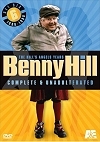
The advent and ubiquity of DVD has created many surreal moments of the past few years, one o which most certainly has to be that, with the release of its sixth set, the entire Thames run of Benny Hill (A&E, Not Rated, DVD-$49.95 SRP) has now been released on DVD, uncut and in its original form. Never could I possibly fathom that such a day would come that I would own the whole bawdy comedic enchilada, but here it is. The 3-disc box-set features an exclusive interview with a trio of “Hill’s Angels.”

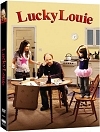
Considering what a comedic genius I consider Louis CK to be, I admit to being disappointed when I saw the first few episodes of his HBO sitcom Lucky Louie (HBO, Not Rated, DVD-$29.98 SRP). At first, I thought it to be nothing but a crass, largely unfunny exploitation of HBO’s “anything goes” standards – just an expletive & nudity filled sitcom version of kids seeing what they could get away with in the schoolyard. As the series built, however, I came around to what Louis was building with his dysfunctional extended family unit – a little post-modern sitcom that actually tried to present a truer-to-life version of what having a family is like, with its money troubles and frustrations with spouses, kids, families, friends, and work. It took me awhile to see the light, Louis, and I’m glad I did. I’m just sorry that HBO chose not to renew it, depriving me of the ability to see how he’d develop these characters further. The 2-disc set features all 13 episodes (one of which never aired), plus audio commentaries on 4 episodes, and a behind-the-scenes look at the taping of the show.

In what is fast becoming a welcome annual tradition, Warner Bros. has been partnering up for an online poll to determine which catalogue titles will get released on DVD. This year, they partnered with Amazon, and the winners were Clark Gable & Yvonne DeCarlo in Band of Angels, Michael Crichton’s Looker, Greer Garson as Madam Curie, The Arrangement, and Gymkata (Warner Bros., Not Rated/Rated PG, DVD-$19.97 SRP each). Bonus features include audio commentaries, featurettes, and the original theatrical trailers.

Re-watching the episodes (thoroughly burned into my mind courtesy of endless Nick at Night repeats ages ago) the comprise the third season of I Dream of Jeannie (Sony, Not Rated, DVD-$39.95 SRP), I’m reminded just how much the show remains a nice slice of comfort food. It’s no intellectual or artistic triumph, but it’s an affable and enjoyable way to pass the time, and both Larry Hagman and Barbara Eden remain a timeless comedic pairing surpassed only by the duos of Dick Van Dyke/Mary Tyler Moore and Dick York/Elizabeth Montgomery. This season found Jeannie saddled with a trainee, transferring her powers to Tony for a day, is trapped in a safe bound for the moon, and must tussle with her jealous sister, Jeannie 2. Sadly, there are no bonus features – just 26 light but fun episodes.

In the mood for some Pillow Talk-esque 60’s comedy? Fox has dusted off a trio of entries that fit the bill, just for you – Move Over, Darling, Caprice, and Do Not Disturb (Fox, Not Rated, DVD-$19.98 SRP each). All three star Doris Day, alongside costars like James Garner, Richard Harris, Rod Taylor, and even Ray Walston. All three flicks feature brand new featurettes and interviews (Caprice also gets an audio commentary), as well as a look at the restoration process.

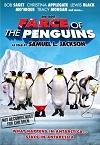
If you think that his performance in The Aristocrats was the outermost limits of Bob Saget’s sexual scatological comedy, than his March of the Penguins spoof Farce of the Penguins (ThinkFilm, Rated R, DVD-$19.99 SRP) should quickly dispel that assumption – with a vengeance. Narrated by Samuel L. Jackson, it features a pair of penguins (Saget & Lewis Black) who are just out to get some penguin lovin’ – a buddy road trip quest that takes them on a cross-continent trek across Antarctica. Bonus features include a commentary with Saget, bonus footage, behind-the-scenes featurettes, trailers, and more.

J.R. loses his presidency of Ewing Oil as the contentious, back-biting sixth season of Dallas (Warner Bros., Not Rated, DVD-$39.98 SRP) gets underway. As if that weren’t enough, J.R. and Bobby go head-to-head for control of the company, J.R. and Sue Ellen reconcile, Pam & Bobby are splitsville, and there’s even a stop off in Cuba along the way. Bonus materials include a featurette focusing on the show’s pop culture legacy.

Author, sleuth, and closet grim reaper Jessica Fletcher returns in the complete fifth season of Murder, She Wrote (Universal, Not Rated, DVD-$49.98 SRP). The 5-disc set features all 22 episodes, plus a newly-produced featurette, “Origin of a Series,” with a brand new interview with Angela Lansbury.

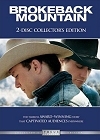
Newly-expanded to a 2-disc collector’s edition, Brokeback Mountain (Universal, Rated R, DVD-$26.98 SRP) packs on extra bonus features, including 7 featurettes, detailing everything from the score to the actual construction of the script, plus the process of teaching actors Gyllenhaal and Ledger how to be cowboys.

After seeing producer Dean Devlin’s high-flying WWI movie based on the true-life exploits of dogfighting pilot Lafayette Escadrille (James Franco), I can only assume that most of the story, heart (such as it were) and enjoyability of flicks like Independence Day and Stargate must have come from Devlin’s former collaborator, director Roland Emmerich. Sadly, Flyboys (Fox, Rated PG-13, DVD-$39.98 SRP) never really seems to take flight, even though it’s got some impressive visuals to give it some teeth. The 2-disc set features an audio commentary, behind-the-scenes featurettes, and deleted scenes.

If you want something cool to adorn your desk – or give as a pretty nifty gift to a cherished friend or loved one – look no further than Mezco’s 6″ “Sexy Party” talking Stewie Griffen figure ($24.00 SRP). With a dozen phrases and a sculpt right out of the “Sexy Party” sequence of Family Guy, it’s a great little collectible. Here’s hoping they make the Shatner-esque “Rocket Man” Stewie next…

weekendpicks20070202-11.jpg

So there you have it… my humble suggestions for what to watch, listen to, play with, or waste money on this coming weekend. See ya next week…

-Ken Plume

##

February 1, 2007

“Oooooh”¦ Shiny.” #3: Let’s Play The Match Game

Filed under: Columns,Oooooh Shiny — UncaScroogeMcD @ 5:46 am
shinylogo.gif

shiny2007-02-01-01.jpgThe average life expectancy for men in 2004 was 73.4 years of age.  With that in mind, let us look at a few unique facts.

Bob Barker is 83 years old.

Monty Hall is 85.

Peter Marshall is 76.

Hugh Downs is 85

Ed McMahon is 83

Regis Philbin is 75.

Chuck Barris is 77

Dick Clark is 77

Tom Kennedy is 79 and his older brother Jack Narz is 84.

Garry Moore was 77 when he passed away, as was What’s My Line‘s John Charles Daly.  Steve Allen was 78.  Groucho Marx lived till 86.

What do we learn from this?  The only explanation is that game show hosts live longer than normal people.  Sure, there may be a few exceptions due to illness (Bert Convy & Allen Ludden) and suicide (Ray Combs), but it appears that game show hosts live longer than those not fortunate enough to stand on a stage at CBS Television City or the NBC studios in Burbank.

Now, this is no clinical study, but I have my own theories.  From a psychological view, game show hosts play games for a living.  It is still a job, but playing games is indeed fun.  Most of us do it to have fun and relax, but to do it and get paid – hey that’s like you’re getting a salary to indulge in recreation – kinda like professional sports.  And, don’t forget the laughter – game show hosts laugh a lot and, as some people say, laughter is the best medicine.  (Although, if I have an infection, I’d just as soon forget the laughter and stick with the antibiotics).

From a medical point of view, game show hosts meet thousands more people than we do during the course of their lives.  Now, I’m not a doctor, but I have visited the set of Scrubs, and met all of those TV doctors, so that makes me more than qualified to deduce that our every day encounters with people and their personal bacteria helps improve our resistance to disease.  It stands to reason that since a game show host meets more people than the average individual, a host encounters more germs and hence, builds a higher resistance to disease.

Finally, we must examine the workload.  Most non-emcee folks work five days – in excess of 40 hours – per week.  Since the dawn of video tape in the 1960’s, game show hosts have been able to work one day to produce a full week of five shows.  (Some hosts like Dick Clark would do more).  A host could do a daytime and nighttime version of one show and host another and still only work three times a week.  Now, I’m not diminishing the rigors of the job – one must be entertaining and charming, while making sure the game is played properly, but fewer work days mean fewer commutes, and fewer treks to the office mean less stress, and so forth.  Also, fewer workdays mean more days for rest, golf, charity, reading, sex and all of those other things that make us feel good.

One last thing we must look at is vanity.  Game show hosts must take care of themselves.  The camera adds ten pounds (although you’d think that with technology, they could take them back off), and hosts tend to stay slender and in good general health.  With the exception of Louie Anderson and the slightly portly Art Fleming, you don’t see a lot of overweight game show hosts.

So, Tom Bergeron, Howie Mandell, Todd Newton, you have long happy lives to look forward to.  William Shatner, your recent game show credit may extend your already rich, long life.

shiny2007-02-01-02.jpgNow, speaking of game show hosts, Gene Rayburn lived to the age of 81, and probably gained a few extra years from the laughs generated by the classic Match Game ’73 and its subsequent numbered and non-numbered incarnations.  Although these shows are 30 years old, they continue to be loved by fans on the Game Show Network (or GSN, as they want you to call it now).

BCI-Eclipse saw a good opportunity with a built-in fan base and decided to release a Best of The Match Game DVD set.  The package consists of four discs filled with 30 episodes, and while there are a few bonus features, the unedited, unsped-up, uncredit-crunched episodes are the main attraction.

Here is the good news — the shows look great – with that bright CBS glow of tube cameras and 2″ quad video tape.  And, the episodes are uncut, which means you can listen to the glorious voice of the one and only Johnny Olson as he plugs Turtle Wax, Rice-A-Roni and all of the other staples of seventies game show parting gifts.  Also included (on the episodes containing them) are the original “Ticket Announcements,” which Johnny announced as the parts of the panelists and contestants’ faces were electronically mismatched to great comedic effect.  Technically, there is one big problem with the set.  The final episode on Disc 1 loses sync mid-way through, then recovers.  We hear BCI is working on a fix.

More good stuff – the addition of the original 1963 pilot is a real treat. The black and white episode is also hosted by Gene Rayburn, but the very ordinary fill-in-the-blank questions allow no real opportunity for humor.  It would be ten years until Dumb Dora and Old Man Periwinkle would rock the world.

While it is wonderful to see Brett Somers and hear her introduce the best moments, her segments were awkwardly produced, and could have been improved just by repositioning of the cue cards closer to the camera.  She is looking offscreen the entire time, the way a person appears in an on-camera interview, rather than looking towards the camera as one should during an introduction.

Also slightly disappointing was the selection of episodes.  I realize the challenge of choosing 30 episodes from a vast library of hundreds, but I think some of the selections could have been more interesting.  We are given not one, but three episodes featuring Kirstie Alley as a contestant, at the expense of not seeing the show in which the entire cast of The Carol Burnett Show stops by unannounced and sits down and joins in a round.  And, what about Burt Reynolds’ surprise drop-in?  Oh, and there’s the time Charles was late to the set so Mark Goodson had to sit in.  (Not to mention Johnny Olson’s day on the panel when Charles forgot to adjust his clock for daylight savings and missed showtime).

shiny2007-02-01-04.jpgDon’t get me started on “Slide it” Earl, the stagehand – we should have seen his emergence from the door in the set.  Richard Dawson’s arguments with producer Ira Skutch, and of course, each year, Match Game made a big production out of changing the year on their sign – not one of these episodes is included.

Maybe they’re saving this for volume 2.

One other draw-back, the “Best Moments” featurettes are culled from the episodes contained on the discs, and are not stand-alone compilations.

But, I must say, all of the episodes are enjoyable to watch, and a real treat to see.  I would still recommend this DVD highly, (assuming the disc 1 technical glitch is fixed).  Television fans will enjoy it, but big game show fans may be disappointed (they’ll buy it anyway).  A wise DVD marketing person once told me that the best way to see a volume 2 or a season 2 of anything is to buy the first one.  While BCI could have done a little better here, let’s try to encourage them to do volume 2.  Go buy one (or more – they make great holiday gifts) and let’s look forward to additional volumes.

And speaking of more, here are a few unsolicited suggestions for volume 2:

Add some extra “mis-matched face” ticket announcements.  These are a crowd pleaser – and something that can’t be seen on the 137 or so daily broadcasts of Match Game on the Game Show Network.

A few months back, for a short time, GSN included the show “slates” with Johnny reading the show number and tape date at the start of their “Match Game” telecasts.  This would be a wonderful little bonus that would not cost anything.

An episode of the Match Game/Hollywood Squares hour might serve as a cautionary tale for the entire world.

The actual pilot for Match Game ’73 should be located and released on volume 2.  Now, I don’t want people to think I’m some kind of game show nerd (even though my current hobby is constructing game show sets out of Lego – see below for some work in progress photos of my Match Game ’74 set), but the show presented as the pilot on this DVD is actually the first episode.  The pilot was announced by Johnny as “The 1973 edition of Match Game” and the set’s sign did not carry a number.  The contestants sat at one large desk, not individual podiums.

I would love to see a compilation of Gene’s entrances, and other fun moments.  This might take some research, but there are plenty of people who can guide BCI in the right direction.

If this DVD does well, I encourage BCI to continue in the game genre.  They recently announced a deal to release Price is Right and Family Feud DVD’s but I think the classic Hollywood Squares would be a more logical follow-up to Match Game.   And, if the BCI folks read this, and they do manage to get the rights to the “Squares,”  I invite them to check with me for some ideas on how to select the episodes.  Let’s see, there should be one whole disc of “Storybook Squares…” and don’t forget the one-hour specials…

This edition of Oooooh Shiny has been a Mark Goodson-Bill Todman-Merrill Heatter-Bob Quigley-Stefan Hatos-Monty Hall Production.

shiny2007-02-01-05.jpg
shiny2007-02-01-06.jpg
shiny2007-02-01-07.jpg
shiny2007-02-01-08.jpg
shiny2007-02-01-09.jpg

##

The Fred Hembeck Show: Episode 89 – Please, Mr. Lumpkin

Filed under: The Fred Hembeck Show — UncaScroogeMcD @ 5:11 am

fredhembeckheader.jpg

I was 16 years old in 1969, but oh, was I ever wise beyond my years.

Or so I liked to think.

Y’see, I’d been digging on comics since nearly the beginning of the decade, and by 1969, I figured that qualified me as a stone-cold expert. And not only had I been reading these not-so-funny books since Ike was in the White House, but I’d been amassing a pretty impressive collection of fanzines over the past two years, and the knowledge I’d garnered from these products of like-minded – and clearly impassioned – individuals only infused me with more confidence in my own considered opinions.

So when I sent in a letter to the leading adzine of the day, RBCC (Rocket’s Blast and Comic-Collector being two earlier zines that had, long before I came along, fused together to successfully – and regularly – serve as one of the main focal points of the fandom of the time), with my less than complimentary comments regarding the results of the 1968 Alley Awards (the Eisner/Harvey Awards of their day – and the originals, at that). Apparently, I had voted, and I WASN’T at all happy with the way things came out!…

The letter appeared in RBCC 68, which arrived in my mailbox early in 1970. This wasn’t my first epistle to wind up inside the pages of RBCC – I’d had at least two others appear previously, including one in which I chime in regarding my recent discovery that comics were no longer being sold in New York’s Penn Station, a bit of news I reported with such hysteria, one could’ve easily been convinced that the whole field was teetering on the brink of extinction based solely on the fact that commuter’s could no longer score a copy of Little Lotta to read on their suburban-bound train trip homewards!

hembeck2007-02-01-01.jpg

But that was nothing compared to my most controversial RBCC contribution. You won’t have to take my word for it, friends – you can judge for yourself. Below – sans a pair of short opening and closing paragraphs essentially saying, “Good job, RBCC” – are the thoughts regarding 1968’s comics crop courtesy of 16-year-old Fred. And yes, I winced on more than one occasion while retyping these “pearls” of wisdom, but hang with me – as we shall see, there’s MORE to the story than a know-it-all teenager making some typically clueless statements.

Ready? Here it comes…

Well, the results of the 1968 Alley Awards are in, and for a large part I’m disappointed. What happened was that too many Marvel fans answered the plug in the Bullpen pages. And, voting on a straight Marvel ticket, they slanted it unjustly. How else would Sgt. Fury beat Enemy Ace by 69 votes? How else would Stan Lee beat Dick Giordano by 185 votes? Granted, in a tally of strictly fandom, Lee still might have won (I voted for Giordano myself), but hardly by such a great margin. Lee also won by a tremendous (150 votes) amount in the best writer category. Of the fans I know, most agree Stan had an off year in 1968. Here’s another example: Joe Sinnott won by 118 votes over Wally Wood. Granted, Joe did some fine work with Steranko and on the FF, but 1968 was Wood’s year. His return to comics helped rejuvenate the whole DC line. Shouldn’t the voting have been a bit closer? That shuck from Lee about “King ” Kirby enabled Jack to finish second in the best artist category – ahead of Neal Adams! I have nothing against Jack – he’s a good artist, but not THAT great. Luckily, talent won out and Jim Steranko won almost everything in sight: best artist, Hall of Fame Award (for Nick Fury), numbers one, two, four and five of the best covers, numbers one and four in best short story, plus the fact that the character Nick Fury finished quite high in several categories due to Steranko. Real talent will out! Mark (Hanerfeld) says next year it will be a straight fandom vote, which is good. Like you say in the RB&CC: don’t be a Marvel fan, don’t be a DC fan, but be a comic fan. Look for quality, not Stan Lee’s name. I wish more people would think that way when they cast their Alley vote.

hembeck2007-02-01-02.jpg

Ouch.

That is WAY difficult to read – especially since, in subsequent years, three of the nicest folks I’ve had the privilege of meeting (and dare I say, befriending, however casually) go by the names of Lee, Kirby, and Sinnott? Clearly, I needed someone to – as the vernacular would have it – “tear me a new one”!

Don’t worry, gang – my comeuppance wasn’t long in coming…

Only a matter of days after fishing the latest RBCC out of the mailbox in our front yard, a neatly typed envelope turned up in that selfsame governmental canister. As I rifled through the day’s Lumpkinesque arrivals, I stopped dead in my tracks when I spied the letter’s return address.

It was from Roy Thomas.

Huh?…

Of course I knew who Roy was, but how would he know who I was – and WHY would in the world would he care?

Obviously I had forgotten about my tacky little tirade, so I hastily opened up this unexpected communiqué from Marvel’s number two man, and proceeded to absorb the contents.

(Roy apparently sent along a copy of his thoughts to the staff of RBCC as well, and the following letter – which I’ve reproduced in its entirety – ran in the very next issue, number 69…)

Dear Fred Hembeck and RB&CC,

Fred’s letter in the last RB&CC issue (just out as I write this) stated his disappointment with the topheavy Marvel vote in the 1968 Alley Award poll. His viewpoint has, I suppose, its merits; however, it was so steeped in misconceptions that I had to take typewriter in hand… in an unofficial capacity, of course. Why I do this, I’m not quite sure. Certainly Marvel – whether winning or losing – has nothing to do with the poll, and while we’re flattered to receive any award, we know – as surely as fandom must – that any award dispensed by only a few hundred fanzine readers (or even a larger group) is at worst meaningless, at best a pleasant ephemera. I say this, by the way, remembering that I NAMED the Alleys back in the early 60s, and counted the very first ballots – and knowing that I usually finish well in the running myself. But still, rather meaningless, more’s the pity. But onward…

One of Fred’s allegations, at least, is true. Marvel did probably benefit from straight-ticket voting by readers who read the Bullpen Bulletins item. But this in itself merely proves that fans (read “readers”) in 1968 preferred in general Marvel’s product to National’s, despite the undeniable improvement in quality wrought by Infantino and others. After all, DC itself plugged the Alleys (in larger type, yet) in a sizable number of magazines, and if anything more prominently than did Marvel – which used it merely as a bottom-of-the-page throwaway item. (In fact, this was only done as a favor to Mark, and after he had written a plug for it in the DC books which otherwise would have made it completely DC TOPHEAVY.) If Marvel readers responded with greater numbers and enthusiasm than anyone else, then it merely proves Marvel deserved the awards – that year.

It’s really all a matter, Fred, of semantics and one’s definition of a FAN. Unfortunately, that of the Academy has changed almost every year. In 1968 a fan was anyone who cared to vote – and who saw the poll advertised in a fanzine or a comic book. In 1969, a fan was anyone who cared enough to vote – but who saw the poll advertised only in a fanzine. Neither, I think, has much validity. No fannish poll is ever likely to gain any real respect until it is definitely tied to some fan group or event. The Academy doesn’t seem to be that group, as it’s moribund despite the best efforts of Mark Hanerfeld and Dave Kaler before him. My own choice, influenced by s-f fandom as I am, would be to have all the members of the New York Comicon each year be the voters – and the votes would both mean something AND help support the only real national event there is.

But nobody’s asked me to settle the anarchical state of comics fandom, and since I now consider comics fandom a nice place to visit but I wouldn’t want to live there, I’ll push my views no further… except to assure Fred et all, that I don’t SCORN the Alleys; indeed, I still own and treasure the one I won some years ago for my fan work. But that the awards should have any meaning to professionals – not until the fans can show that they can organize for something more constructive than a comic-trading session.

I meant for this letter to comment at length on some of the more asinine statements by Fred with regards to the 1968 awards, but the press of work beckons, so I’ll keep this part brief by quoting Fred’s statements and my own disagreements:

1) “In a tally of strictly fandom, Lee still might have won… but hardly by such a great margin.” Quite possibly true, and I yield to no one in my liking and admiration for Dick Giordano (among other editors). But Stan is editor over more than two dozen titles of undisputed fannish popularity, Dick over only a handful. Thus Stan has even more POTENTIAL fans than Dick, in the loosest sense of the word. Besides, nothing except actual voting can prove statements like Fred’s – and the voting just didn’t. And since it will never be 1968 again, Fred will never be able to prove his unsupported assertion.

2) “1968 was Wood’s year.” Not so’s anybody noticed. I like Wally’s work, especially his inking, as evinced by the fact that he and I are now at work on a Dr. Doom strip for Marvel. But he didn’t do enough significant work in 1968 to affect anyone but the most rabid fan. Wally’s winning an award made more sense several years ago, when he was doing Dynamo; don’t try giving him one every time he enters the list. (Now, in 1970, with quite a few Dr. Doom strips under his belt, it might be something else again – and it would make SENSE.)

3) “That shuck from Lee about ‘King’ Kirby enabled Jack to finish second.” If Jack never got a vote from the hordes of fandom, he would still be THE super hero artist; the “epitome”, as Gil Kane called him in A/E 10. I don’t vote for him each and every year myself for various reasons – but the thoughts of some fans that Jack is overrated by Stan and Marvel is ludicrous. I’m sure Neal Adams (who’ll do better in the future, never fear, Fred) would hardly mind finishing second or third to Jack Kirby, since he agrees with Gil’s statement – as do most other action artists.

4) Re: Steranko’s winning : “Real talent will out!” By this snide statement, Fred, waving a triumphant sword aloft, is saying that justice has won the day – or, to be more precise, that one of his choices won the poll. I’ve been a Steranko fan far longer than most people (since I saw his work long before any of it was printed), but Kirby is still the King, in the sense that his superhero art has set the standard for the field since the early 60s. Other styles are beginning to alter that somewhat today, including Steranko’s, Adam’s, even Buscema’s. But Jack will remain as the superhero artist par excellence of the 1960s – and a thousand Alleys to such great talents as Steranko, Adams, Williamson, Wood, et al, will hardly change that – any more than voting, say, Denny O’Neil or myself best writers would make us better that Stan. It wouldn’t.

Okay, I’ve had my say. Sorry to go at even greater length than Fred did in RB&CC, and I assure you that there’s nothing personal in my remarks – but I thought someone might like to hear the opinions of a comics fan who is also a working professional – and who, incidentally, DIDN’T vote a straight ticket in 1968 or any other year.

Roy Thomas
Editor, Alter Ego

Well, THAT was sure like a bucket of cold water applied directly to the face!

Not that it wasn’t warranted – and not that it could’ve been far less civil, cuz it certainly could’ve been! – but still. Whew…

As you might well imagine, Roy’s letter had a sobering effect on our young Mr. Know-It-All. After the initial shock of being singled out for a well-deserved verbal reprimand from one of my favorite funny book scribes finally wore off, I sat back and seriously considered what Mr. T had to say (not all that stuff about coming up with a better way of choosing the year’s best in the field – since that only peripherally concerned yours truly, it pretty much went in one ear and out the other. Fact is, I’d forgotten all about Roy’s various modest voting proposals until I sat down at the keyboard today to reproduce his letter. Things didn’t quite work out as he envisioned along those lines, huh?…).

Well, while he may’ve been off-base with his look into the future of comics’ award balloting, Roy was one hundred percent on the money regarding my aptly characterized “asinine statements”. Stan really DID deserve a tremendous amount of admiration for keeping his ever growing stable of titles heading inexorably towards the top, all the while maintaining an impressive level of quality across the entire line. And in all my years of going on record regarding matters four-color related, have I EVER uttered a STUPIDER sentence than “I have nothing against Jack – he’s a good artist, but not THAT great.”?

No.

No, I have not.

I may’ve come close at times, granted, but nothing quite approaches dismissing the immortal Jack Kirby as “a good artist, but not THAT great”! In my defense, what was going on in my addled teen-age head wasn’t so much disrespect for the mighty triumvirate of Lee, Kirby, and Sinnott, but a situation where I unconsciously began to take their always top-notch efforts for granted. After all, I’d been reading Stan and Jack’s books for a half-dozen years by then – and Joe, nearly as long. Good as they remained at their job, a certain surface sameness couldn’t help turn up each month. Neal Adams and Jim Steranko – not to mention some of the offbeat books DC assigned editor Giordano – were, in comparison, so fresh and different, they won my affection on those grounds alone! Hey, I was 16 – can you blame me for wanting something a little more flashy than what had been the norm up to that point?

hembeck2007-02-01-03.jpg

But still – “not THAT great”? Oy…

So I sat down, gathered my thoughts, and wrote back a fairly lengthy reply to Roy, pointing out essentially what I said above – the ol’ hypnotized-by-pretty-colors defense. But what I also said was that his letter had truly put Jack Kirby’s career in its proper place for me. I can honestly say that, since Roy set me straight all those years ago, I have NEVER again thought of Jack as anything less than great! While I may not have been completely taken with everything he did subsequently, I always maintained the utmost respect for the man, and what he managed to accomplish overall in the less than ideal circumstances afforded him by the not-always-friendly confines of the comics biz. Hopefully, I would’ve figured that out on my own eventually, but I’m eternally indebted to Roy Thomas for getting me there all the sooner!

hembeck2007-02-01-04.jpg

(Oh, and that phrase where I use the word “shuck” just makes me want to go crawl under a rock! I don’t think I’ve ever used that word in such a manner in all the years since, and lemme tell ya, I literally grimaced when I came upon it while reviewing my ill-advised comments! Bleh – I’m even gonna avoid the subject of corn just to make sure I never have to use that word ever again!…)

Happily, Roy accepted my sincere mea culpa, and the ever busy Marvel staffer kindly took a few minutes to dash off another note to tell me so (unhappily, for a guy who still has all his old fanzines – not to mention virtually every comic book he ever bought while he as a kid – my fannish correspondence from the late sixties, including Roy’s notes and an extensive collection of letters from my three primary pen-pals (a story onto it’s own, albeit one for another time), have all apparently disappeared over the years. A shame, really…). This time, our postal communications weren’t marked for RBCC eyes as well, so there’s no way for me to reproduce Mr. Thomas’s follow-up (the only thing I clearly recall – aside from him graciously letting me off the hook for being a big-mouthed teen-ager – was him plugging an upcoming issue of Iron Man written by Archie Goodwin featuring a new character named Firebrand that Roy figured might be a bit on the controversial side, since he was meant to reflect the social upheaval then occurring in the country. Guess he thought I’d dig something like that, punky little firebrand that I was myself!…)

I wrote yet another letter to Roy – hey, what 17 year old comics geek wouldn’t have wanted Roy Thomas as their pen-pal in 1970? – but that turned out to be the last of our correspondence, as I never heard back from Roy after that. Fair enough – the man had Kree/Skrull Wars to stage and Hyborian Ages to bring to life, after all.

He taught me at least two valuable lessons, the first regarding having a proper appreciation of Jack Kirby, and second being, don’t be such a blowhard, especially when it comes to negative stuff! SOMEONE clearly had to clue me into the fact that my opinions certainly aren’t the ONLY opinions, and I was lucky enough to have someone I admired as much as Roy Thomas be the one to straighten me out! Thanks, Roy – I remain forever grateful!

(That said, I STILL think Enemy Ace had a better year than Sgt. Fury!…)

The votes are in! Hembeck.com has been voted the website most likely to dredge up inconsequential old letters from quarter-century old fanzines – and proud of it, too!

-Copyright 2007 Fred Hembeck (save for Roy’s words, which are his own, now and forever)

Music For The Masses: 2/1/07

Filed under: Columns,Music for the Masses — UncaScroogeMcD @ 4:36 am
musicmasses2.jpg

Welcome back, my friends, to another edition of “Music for the Masses.” This week, we duck and cover for fear of Fall Out Boy, wonder silently to ourselves “just how tasty are the Tastydactyls?” and watch in awe as Double A takes on the Afro Samurai. Oh yeah, and the guy that mows my lawn and “blows out my sprinklers” reviews the new one from Saliva. Sound like fun? Well, what do you say we find out?

m4m-fab

Fall Out Boy

Album: Infinity On High

Sounds like: From Under A Cork Tree… Now with 20% more suck!!

m4m-geek

Fall Out Boy (From Left): Wentz and 3 of the “writer” characters from 30 Rock.

I hate to be the bearer of bad news here, kids, but Fall Out Boy’s “new” album, Infinity On High, will NOT be carried at your local Hot Topic store. No, sparky… that’s not a joke. It was breaking news today on Fall Out Boy’s web-site. Seriously. Now, if you are anything like me, and with the exception of that “pesky” third nipple and over-abundance of ass hair, I know you are EXACTLY like me, you’re thinking “No Fall Out Boy at Hot Topic!! That’s insane!! What is this world coming to?? Why that would be like Hollister refusing to sell ‘whore’s clothes’ to ‘Tweeners’ or Wal-Mart refusing to carry sleeve-less denim shirts!” But hey… buck up, little camper. It’s not THAT big of a deal. You’re just going to have to have your mom make TWO stops at the mall… one to pick up your cleverly ironic, “old school” rock T-Shirts, Family Guyâ„¢ “Freakin’ Sweet!” belt buckle and “You Are Soooo Gonna Get Your Ass Kicked At High School Wearing That” fedora© and one trip to buy Infinity On High or, as I like it to call it, “From Under The Cork Tree II: Electric Bunghole.”

m4m-fab2

Hey Pete… which one is your “Lindsay finger.” Nice. Flipping people off is SO punk.

To quote Peter Noone of Herman’s Hermits fame, the “Second verse” is the “same as the first!” so feel free, kids, to sing along with Infinity On High as it dishes up more of the same from Chicago’s own, Fall Out Boy. For instance, you want more of that slightly self-deprecating, “wink wink, nudge nudge” pop/punk? Check. More of those rousing and hook-heavy, group-sung choruses? Check. More intros by Jay-Z? Wait… okay, maybe THAT’s new, but do you want more of those lengthy, yet clever, song titles? Well… you get more of that, too. And speaking of that, I have to tell you that I am more than a little pissed that the band passed on the song titles that I sent them because “I Dated Lindsay Lohan And All I Got Out Of It Was A Rash On My Tongue And An Empty Lick-Her Cabinet” and “There’s A Party In Pete’s Mouth And Everyone’s Coming!” would have fit in nicely with the other track listings. Thanks for nothing, Pete. You fucker.

m4m-fire

The “All You Can Pete” Buffet… open 24/7… HA!

Now, obviously, I’m not the biggest fan of these “guys” but, that being said, I would be a bit disingenuous if I said that I completely dislike this album. On the contrary, some of the songs on here are catchy as the “Clap,” especially “The Take Over, The Break’s Over” and “Thnks Fr Th Mmrs,” and why wouldn’t they be? After all, to bastardize a quote from M.C. Lars, “[Fall Out Boy] is a contrived identification with youth subcultures to manufacture an anti-authoritarian identity and make millions.” Yep… that pretty much nails it because who doesn’t want to nurture their anti-authoritarian identity? “Who,” I ask!?

This baby has all the “wanna-be” punk attitude that the discriminating “wanna-be” punk demands from his “wanna-be” punk-pop bands. So, if you are already a fan of Fall Out Boy, by which, I mean that you bought a Dropkick Murphy and Operation Ivy shirt from Hot Topic but you don’t have any music from either band, you are going to be more tickled with this album than Paula Abdul with a belly full of her “relaxin'” pills. If you’re not a fan and you actually understand the reference I just made to the Dropkick Murphy’s and Operation Ivy… man… you are going to hate this more than that one time your uncle gave you a colonoscopy with his “weiner cam.” But hey… regardless of where you fall in this “love ’em/hate ’em” debate, just remember this: Hot Topic and Fall Out Boy ARE NOT punk rock.

m4m-hot

Now, kids, if you’ll kindly turn to page 110 in your M.C. Lars handbook and repeat after me (from his song “Hot Topic IS NOT Punk Rock”):

Go!
Books about Evanescence (Are not punk rock!)
Guns ‘n Roses watches (Are not punk rock!)
Hello Kitty iPod cases (Are not punk rock!)
Rob Zombie lunch boxes (Are not punk rock!)
Slipknot binder paper (Is not punk rock!)
Tinkerbell pillow cases (Are not punk rock!)
Led Zeppelin air fresheners (Are not punk rock!)
Tupac incense burners (Are not punk rock!)

Hot Topic is not punk rock! (Hot Topic!)

Misfits candle tins (Are not punk rock!)
ICP throw blankets (Are not punk rock!)
Beaded Elvis curtains (Are not punk rock!)
Talking Lambchop plush dolls (Are not punk rock!)
AC/DC hair clips (Are not punk rock!)
Spongebob wristbands (Are not punk rock!)
Sex Pistols boxer shorts (Are not punk rock!)
Dischord back catalog (Okay. Maybe that’s punk rock.)

Hot Topic is not punk rock! (Hot Topic!)

Hot Topic is a contrived identification with youth subcultures to manufacture an anti-authoritarian identity and make millions. The $8 you paid for the Mudvayne poster would be better spent used to see your brother’s friend’s band.

DIY ethics are punk rock
Starting your own label is punk rock
G.G. Allin was punk rock.

But when a crass corporate vulture feeds on mass-consumer culture, this spending mommy’s money is not punk rock!

m4m-mc

Amen, brother.

m4m-hung3

QUICKEE OF THE WEEK…

m4m-tasty

The Tastydactyls

Album: One & Nine (We Had A Hell Of A Run)

Does this band sound familiar to you? Well, assuming you’ve eased up a bit on your paint-huffing dalliances, you may recall that I featured the Tastydactyls in my “Pimp Your Band” portion of this here column. To refresh your mammary, the Tasties (as I like to call them for no particular reason) hail from deep in the heart o’ Tex-Ass and have been on one hell of a roll, as of late. For starters, they are coming off a glorious victory at their local battle of the bands competition where they treated the competition like the “small guy in prison.” They are also readying themselves for their first ever “World Tour” (okay, actually the are going to go play some gigs in Ireland) and recently released a kick-ass EP, One & Nine (We Had A Hell Of A Run). The music on this disc is down-right infectious. With it’s herky-jerky rhythms and quirky/clever instrumentation (accordions, train whistles and glockenspiels), One & Nine comes off as a wonderfully weird mix of Cursive (“Clockwork”) and Jimmy Eat World (“Like A Bear”). If you are looking for some truly imaginative alternative, look no further. Check them out over at www.myspace.com/thetastydactyls.

m4m-hung4
m4m-doublea

m4m-afro

Let me clear the air on a few things before we get started with this here review. I’m not down with the whole Anime thing. I just don’t dig it. I don’t understand it, and everything I’ve seen is just plain dumb. With that said, imagine my surprise as I sat in a room at the San Diego Comic Con watching the end of the Afro Samurai TV show panel. I truly dug what I saw, I mean how can you go wrong with a project that involves Samuel L. Jackson, Ron Pearlman and the Wu Tang Clan’s The RZA? I submit that you cannot. And now that the show is on the air, though you better hurry as the run is almost over, I am still impressed with what I see. Now, I’m equally impressed with what I hear, as The RZA has finally released the soundtrack to the show.

m4m-afrocd

Shortly after seeing the presentation, I heard that the album was going to be coming long before the show ever made it to the air. I was excited. You could even say that I was as excited as the proverbial schoolgirl. But then I got the news that the album was delayed. Then it was delayed again. And again. I cried like a fat guy when the all you can eat Chinese restaurant closes. But now the album is actually out and it’s pretty good. I wouldn’t say that it’s a great album, but it is definitely worth a listen. The albums isn’t just a straight up rap album, which is one of the reasons why it’s not great. Mixed in with the raps are a few R&B type songs and instrumentals that are featured in the show. The raps are good and the instrumentals are great. The R&B songs? Not so much. I mean they might be good, but they just seem a little out of place on this album.

m4m-rza

If you’re a rap fan, or a fan of the show, pick this album up. Like I said, all of the instrumentals from the show are great, and the raps are all pretty good too, especially “Who Is The Man” and “Fury In My Eyes/Revenge.” This album also features four tracks with RZA’s Bobby Digital alter ego, and everyone is good. It’s really hard to beat The RZA’s delivery. If you haven’t ever heard him rap, do yourself a favor and check him out. Oh, and with that said, I just want it to be known that indeed, Wu Tang Clan ain’t nothing to fuck with. Bitches!

m4m-flava

REVIEWS BY…

m4m-jose

Jose

Jose Can You See… My Muy Bueno Landscaping, LLC.

Cuándo yo oí primero el nuevo álbum de la Saliva yo gozaba una tarde agradable que repantiga en mi traspatio. El sol fue brillante, los niños se divertían jugando y mi esposa inventaba una sopa maravillosa. La saliva vino en la radio y todo arruinado.

Si esto es lo que América llama la música, entonces quizás sea tiempo para mí volver a casa. Si queriendo que esta basura es lo que toma para ser Americano entonces yo no quiero ninguna parte de ello. Algunos de mi landscapers prójimo gozan realmente esta mierda y me hace triste para sus niños.

m4m-mower

Mi cortacéspedes es más agradable que mi coche y por lo tanto, debe cabalgar en el estilo.

Saliva es una banda terrible y es casi completamente irreconocible de todas las otras bandas inventadas de piedra que circulan este país. Nickleback, yo le miro.

Este CD no tiene las calidades compensatorias. La banda ha vendido completamente en una tentativa para vender como muchos álbumes como Nickleback. Para la consideración de Dios la canción “Black Sheep” suena exactamente como “Animals” por Nickleback. No hay una canción en este álbum que usted no ha oído hecho antes de y hecho mejor.

m4m-moon

Recorté este arbusto para el Señor M.C. informar a su vecino que él es, verdaderamente, un fucker de mono de asshole.

Uno de mis clientes, M.C. Bell me dio este CD a revisar para él y no yo sé por qué. El está tan triste para su propio país que él esperó que alguien con un par fresco de orejas quizás encontrara que algo redimiendo en ello. Lo siento de decir Senior Bell pero fallé.

Yo me golpearía más bien en la cabeza con mi rastrillo que escucho otra canción de este álbum.

UPCOMING RELEASES… 2/6/2007

ARTIST TITLE GENRE
FALL OUT BOY INFINITY ON HIGH ROCK
THE CAT EMPIRE TWO SHOES ROCK
TRICLOPS CAFETERIA BRUTALIA ROCK
TYRONNE WELLS HOLD ON POP
AEREOGRAMME MY HEART HAS A WISH THAT YOU WOULD NOT GO Not Provided
AGUST, DANIEL SWALLOWED A STAR Not Provided
AMNESTY FREE YOUR MIND Not Provided
ANGELS AND AGONY UNISON POP
BARENAKED LADIES Barenaked Ladies Are Men POP
BEIRUT LON GISLAND Not Provided
BIOMECHANICAL EMPIRES OF THE WORLD Not Provided
BLOC PARTY A WEEKEND IN THE CITY ROCK
BRACKEN WE KNOW ABOUT THE NEED Not Provided
CLOUDS LEGENDARY DEMO ROCK
COHEN, DANNY SHADES OF DORIAN GRAY ROCK
COLOUR, THE BETWEEN EARTH & SKY ALTERNATIVE
CRAIG, CARL ALBUM FORMERLY KNOWN AS. . . Not Provided
CULT, THE DREAMTIME ROCK
DEAD CHILD DEAD CHILD Not Provided
DEERHUNTER CRYPTOGRAMS Not Provided
DISINCARNATE DREAMS OF THE CARRION KIND Not Provided
DONELLY, TANYA WHISKEY TANGO GHOSTS ROCK
FORWARD, RUSSIA! EIGHTEEN Not Provided
GETO BOYS DA GOOD, DA BAD & DA UGLY RAP
GOLDFRAPP RIDE A WHITE HORSE Not Provided
HALTER, ERNIE CONGRESS HOTEL ROCK
KELLER WILLIAMS Dream ROCK
KISS KISS REALITY VS. THE OPTIMIST ROCK
KOOL KEITH ULTRA-OCTO-DOOM RAP
LERCHE SONDRE PHANTOM PUNCH Not Provided
LIFETIME LIFETIME ROCK
LONEY, DEAR LONEY, NOIR ROCK
LOVE ARCADE Love Arcade POP
MARKS, GARY GATHERING Not Provided
MNEMIC PASSENGER Not Provided
ONO, YOKO YES I’M A WITCH Not Provided
OVER THE RHINE DISCOUNT FIREWORKS ALTERNATIVE
POSTMARKS POSTMARKS Not Provided
REFRIGERATOR BOTTLES OF MAKE UP Not Provided
ROSENVINGE, CHRISTINA CONTINENTAL 62 Not Provided
ROTTING CHRIST THEOGONIA Not Provided
SANDS, J. BREAKS VOL.2 Not Provided
SECONDHAND SERENADE AWAKE ROCK
SHANNON, SARAH CITY MORNING SONG POP
SOFT CIRCLE FULL BLOOM Not Provided
TEDDYBEARS SOFT MACHINE POP
THE SLEEPING BELIEVE WHAT WE TELL YOU ROCK
THERION GOTHIC KABBALAH Not Provided
TISDALE, ASHLEY HEADSTRONG POP
TITAN A RAINING SUN OF LIGHT AND LOVE, FOR YOU AND YOU.. Not Provided
TIVOL EARLY TEETH Not Provided
WHITE MICE BLASSSTPHLEGMEICE Not Provided
WILLIAMSON, ASTRID DAY OF THE LONE WOLF Not Provided
WOODS AT REAR HOUSE Not Provided
WU-TANG & FRIENDS UNRELEASED Not Provided

Well… there you have it folks. Until next week… keep wearing it proud and playing it loud!

Send your cleverly ironic T-Shirts, review copies, presents and assorted hate mail to:

M.C. Bell
P.O. Box 1222
Arvada, CO 80001

E-MAIL THE AUTHOR

QSE News: 2/1/2007

Filed under: Columns,News — UncaScroogeMcD @ 4:20 am
quickstopnews.jpg
line1.gif

Here are today’s top entertainment headlines:

  • qsnews.jpgBilly Joel is releasing a new pop song on February 7th. Joel had previously sworn off pop music promising to only work within the classical music genre. Joel stated that performing only classical music “sounded like a great idea until it came time to pay the rent.”
  • Reports are beginning to surface that say the Eagles are close to releasing their first album of new music in 30 years. Among the song titles rumored to be included on the new album are Hotel South Dakota, Take It Even Easier, Desperadillo.
  • Russell Crowe has signed a $20 million deal to star in a new film entitled Nottingham. The film is a re-imagining of the Robin Hood story.  There is no report on which role Crowe will play but there is speculation that he will be difficult to work with, demanding, drunk and physically abusive during the shoot. PAs have been told to hid all phones.
  • Promotions for the Cartoon Network show Aqua Teen Hunger Force were mistaken for bombs by residents of Boston.  The advertisements were placed in cities all over the country and included light boards that featured a character from the show, but only in Boston were the promotional boxes thought to be bombs. Most Boston citizens knew there was no real bomb threat because Ben Affleck was nowhere near the city.
line1.gif

That’s all for today’s news, stay tuned to this channel for all the news that matters least but you still care about.

(Compiled by J. Allen)

##

Quick Stop Thingamabobs: 2/1/2007

Filed under: Columns,Thingamabobs — UncaScroogeMcD @ 4:03 am
thingamabobs.jpg

The web. It’s a big place, full of plenty of distractions ““ some funny, some informative, some ludicrous, some disturbing, some inane, some profound. Each and every weekday, we present links to a few of our favorite finds”¦

————————————————

  • How about we kick things off with a rarely seen bit of Disney animation? (Thingamabob)
  • I don’t know how smart it is to pull a prank at a phone booth in this day and age… (Thingamabob)
  • Just because, it’s the intro to Darkwing Duck… (Thingamabob)
  • And finally, the opening to DuckTales… (Thingamabob)

Have a THINGAMABOB? Send it in!

##

Contest: Win Darth Maul From Sideshow

Filed under: Contests — widge @ 4:00 am

Quick Stop Entertainment, in partnership with Sideshow Collectibles, is giving away a standard edition Darth Maul 12-inch figure, courtesy of the fine folks at Sideshow. Don’t miss your chance to win this premium format figure. And if you do miss the figure, ten of you will still be walking away with a Star Wars Sideshow t-shirt.


Contest Closed!

January 31, 2007

Take Me Home Blog #19: THE WEIGHT IS OVER!!!

Filed under: Production Blogs,Take Me Home Blog — UncaScroogeMcD @ 5:27 am
takemehomeheader.jpg

WORST-CASE SCENARIO
You know your friend called you eight times last week. The red light’s flashing on the machine. You know it’s him. It’s clearly your turn to show some love, yet another week goes by. The obligation to call begins to haunt you. Had you called that first week, there’s no way you’d be this plagued by guilt. But by now it’s clear… the guilt has won. You stop checking your machine. You stop answering your phone, entirely. Two weeks later, there you are: in a corner of the apartment, eating the last of the Cheez-Its and conversing with the blue gnome you’ve discovered living in your sock drawer.

MAYBE NOT THE GNOME
Okay, may it hasn’t gotten that bad. But still, I’ve been playing the role of “bad friend” to all of you for the past two months. And you deserve an explanation.

NO, I’M NOT SEEING ANOTHER BLOG.
It’s just that ours is so damn complicated for me. You could say I’m not the blogging type (no pun intended). You see, it takes me THREE HOURS to write one blog. This may overwhelm many of you, considering the tripe you’ve been subjected to in the eight months I’ve been writing for this website. But it’s true. Three hours for maybe five paragraphs. What’s even more baffling is that I still have no idea who’s reading this besides my father. I feel like the words are getting sucked into a void. And yet, I’m a man of my word. I have no intention of giving up on Quick Stop Entertainment staff nor the three, possibly four fans (dad included) who’ve given their valuable time to reading this blog.

A SOLUTION
As a result, I’ve decided to rearrange the format of this blog. Starting in February, I will begin podcasting my tripe. You heard it correctly, I’m letting go of the writing reigns to focus on an AUDIO PODCAST for QSE. My aim is to get more entries out to all of you wonderful people on a more consistent basis. I’ll also be able to get the rest of the Take Me Home cast and crew involved. Rather than listening to my drivel alone, you’ll be able to hear from the likes of Mike Hobert (Lonnie on Scrubs and the producer of Take Me Home) and Jeff Seibenick (director of Advantage Hart, our film’s editor, and the most aggravating man you’ll ever love). I think you’re going to dig the results. It’s better for you, it’s better for me. Gnomes be damned!!

TALK AT YOU SOON!

-Sam Jaeger

jaeger.jpg

QSE News: 1/31/2007

Filed under: Columns,News — UncaScroogeMcD @ 5:21 am
quickstopnews.jpg
line1.gif

Here are today’s top entertainment headlines:

  • qsnews.jpgThe popular online video website YouTube may begin paying users for uploading their own videos. The company is working on a revenue sharing program that will reward users’ creativity. Initial reports discuss a sliding scale where videos akin to a monkey drinking its own urine would be worth $100 while a video similar to that of a drunk chick falling outside of a club will be worth 10 cents.
  • The reality TV show Armed and Famous has been canceled after only four episodes. Contrary to the show’s poor performance, CBS is still planning on moving forward with a similar show entitled Busey With a Gun, which will follow Hollywood loony Gary Busey as he babbles incoherently, chases innocent people through the streets in his underwear and shoots at random strangers.
  • Dreamworks and Aardman Animation, the studios that brought the world movies such as Chicken Run and Wallace and Gromit: Curse of the Were-Rabbit, have parted ways.  Reasons for the separation were not immediately made clear, but sources close to the companies confirm that Aardman will retain custody of the dog the studios adopted while together.
  • Oprah Winfrey has announced her selection for her next Book of the Month pick.  The book, Sidney Poitier’s The Measure of a Man, tells anecdotes from Poitier’s life and is described by the author as a “spiritual biography.”  According to the book and to Poitier, the true measure of a man is “how many hot chicks you bang.”  Poitier is up to 357.
line1.gif

That’s all for today’s news, stay tuned to this channel for all the news that matters least but you still care about.

(Compiled by J. Allen)

##

Quick Stop Thingamabobs: 1/31/2007

Filed under: Columns,Thingamabobs — UncaScroogeMcD @ 5:11 am
thingamabobs.jpg

The web. It’s a big place, full of plenty of distractions ““ some funny, some informative, some ludicrous, some disturbing, some inane, some profound. Each and every weekday, we present links to a few of our favorite finds”¦

————————————————
gorilla.gif

————————————————
  • Grapes, microwaves, and science can be both fun and beautiful… and, granted, a trifle dangerous… (Thingamabob)
  • He sure picked a hell of a day to give up drinking… (Thingamabob)
  • The trailer to the Aqua Teen Hunger Force movie…. (Thingamabob)
  • And finally, the official theme song of National Gorilla Suit Day… (Thingamabob)

Have a THINGAMABOB? Send it in!

##

Interview: Mike Nelson

Filed under: Interviews — UncaScroogeMcD @ 4:42 am

-by Ken Plume

nelson-02.jpg

If you’ve ever seen an episode of the critically acclaimed cult series – and self-proclaimed “Cow Town Puppet Show” – Mystery Science Theater 3000, then you probably know Mike Nelson as the “meat puppet” host of the show’s last five seasons (in addition to serving as the show’s head writer during the entirety of its run).

MST3K ended in 1999 after its 10th season, and Mike left behind a career of riffing on bad movies alongside robots Crow T. Robot and Tom Servo. Greener pastures awaited him, including authoring two books – the first of which was a collection of film-themed essays entitled Mike Nelson’s Movie Megacheese. His second collection of essays, Mike Nelson’s Mind Over Matters, delved into the little idiosyncrasies of life – including the perils of the musical as an art form, navigating the city-size acreage of mega-stores, and the (skewed) history of TV. He also wrote his first novel, Death Rat

The call of bad movies eventually drew him back to collaborating with cohorts Kevin Murphy and Bill Corbett as the “Film Crew,” and also providing commentaries for Legend Film’s restored editions of flicks like Plan 9 From Outer Space and Little Shop Of Horrors. There’s even a series of Film Crew DVD releases coming up from the folks at Shout Factory.

This association with Legend Films, however, actually got the Midwest-based Nelson to leave behind the snowy climes of his longtime home in Minnesota for sunny San Diego with the launch of RiffTrax.

If you’re unfamiliar with RiffTrax, they’re essentially downloadable audio commentaries that you can play back on your mp3 player of choice, which you then sync up to your very own DVDs of such classic (and not-so-classic) films as Lord of the Rings, The Phantom Menace, Road House, The Fifth Element, and even Star Trek V. Even better, the commentaries feature that patented Mike Nelson humor we’ve all been so desperately needing back in our lives (and you can’t beat the tracks featuring Mike’s special guest riffers, Kevin and Bill).

You can purchase these commentaries and many more directly from Rifftrax.com for only a few dollars, and additional titles are being added to the library constantly.

I recently got a chance to chat with Mike (something I’ve been doing every few years going back over a decade) about all of these things, plus Dom Deluise. Seriously. Read on…

nelson-01.jpg
linesm.gif

MIKE NELSON: Hey, this is Mike.

KEN PLUME: Hey Mike, this is Ken Plume.

NELSON: Hey, how are you?

KP: I’m doing well. I hope you’re doing well.

NELSON: Yeah. Doing great.

KP: Apologies for the slight delay.

NELSON: Oh, no problem at all. Sorry for the transfer problems.

KP: I was about to have a great interview with whoever picked up in the hall.

NELSON: That was Erik. He would have gone on for hours.

KP: Well I’m sure that it would have been a tremendously less awkward than this is going to go. It’s a pleasure to be speaking with you again.

NELSON: Nice to talk to you again.

KP: I can’t remember when the last time was. 2002?

NELSON: Yeah, it’s been a while.

KP: I think around Death Rat. Maybe it was even earlier than that.

NELSON: It probably was… well, I can’t remember. It could have been Death Rat.

KP: All those projects tend to blur together.

NELSON: Yeah, yeah. My whole life is a blur.

KP: I never, ever thought that I would hear of a day when you moved out of Minnesota…

NELSON: Yeah, it took a lot. It took a lot to get me out of there.

KP: Was it just dump trucks full of money? Or just a stunning offer?

NELSON: I’m always awoken by the backwards beeping sound of the trucks backing up with the money.

KP: There must have been so many false alarms though, when it was just a trash truck or UPS…

NELSON: Yeah, exactly. No, I’d been sort of casting about for a move or just more regular work and I spent some time in L.A., and it taught me that I’d rather live anywhere than L.A. I’d done a couple of things for Legend Films before, and I drove down from L.A. to do some other project, and I just kind of drove into San Diego and went, “Oh, that’s right, this place isn’t a crap hole! It’s actually really nice!” And then David Martin, the CEO of Legend, just started talking to me like, “Yeah, we could do stuff on a regular basis. Let’s do stuff down here. Don’t move to L.A.” So he kinda rescued me.

KP: Was there a moment when you were actually contemplating that L.A. transition?

NELSON: Oh yeah. Yeah. ‘Cause I just kind of… the freelance world, it worked for me well. I really had a good thing going. But it gets to be really hard to… when you’ve got to keep drumming up your own stuff and you’re always wondering what’s next out there. I was always lucky – there was always… not always, but usually something coming up. But I kinda wanted to, as I got a little older, I wanted to get some regular work for a little while, and the only place to do regular work is kind of in L.A. So that’s what I did. I did a little exploratory tour out there and ended up here.

KP: Who was the big cheerleader for trying to get you out to L.A.? There are plenty of people you know that have made the transition…

nelson-08.jpgNELSON: Yeah, no, it was just sort of… there were a couple of projects that I was working on freelance that brought me out there anyway. So it was kinda like, you know, if those could be extended or maybe if I could find some really good TV work, then we’d have a go of it. It was just kinda, “Let’s see what happens.” And I was probably 50/50 on the fence of, can I even do this or not?

KP: The living in L.A. part of it?

NELSON: Yeah, the living in L.A. part.

KP: What was the leanest that times ever got? Was there any point where you went, “These are really dire straights, I need to make a decision now…”?

NELSON: No, no. That’s never an issue, really. It’s just sort of the… no, it was just more, again, regular work. Yeah, just patching together a year with freelance stuff is tough.

KP: You’re preaching to the choir on that.

NELSON: Yeah.

KP: Creatively, what appealed to you about the Legend offer?

NELSON: Well, working again with films in kind of the thing that I do best or that I’m best known for just seems to make the most sense. My foray into writing books, it wasn’t particularly a happy time for me just because it’s so… it has it’s own rewards, but it’s so much work. And then you give your work to someone else and you have no more control over it. That gets frustrating. And Legend being a small company and me… if I do a commentary and then there’s any artistic discussion of it, I pick up the phone and would call David, “Hey, what do you think about this?” That’s just the way it goes out there, and I know that it’s going to go out into the world and I know that it’s gonna get sold. So that’s mostly it – the frustrating end of not being in control of your own work is… it wears on you.

KP: How often would you bump up against editorial control that was a little too harsh when you were doing freelance?

NELSON: Well, all the time. I mean, you’re always satisfying a certain client, I guess, if you can call it that. Like I do…

KP: I think the word is “John.”

NELSON: Yeah, exactly. I still do my magazine work and everything, and that’s pretty… I’ve worked long enough where it’s kinda hands off.

KP: Was there any point where the feedback really just grated on you? Something that was just… you had no idea where they were coming from on it?

NELSON: Oh, you know what, I did a couple of things sort of against my better judgment. It was a friend of mine, or an acquaintance, who suggested me for some advertising work. But it was just, “Yeah, just write in your own voice. They know it’ll be sort of under your name. This is not anonymous work – this is like ‘Nelson says…’ kinda stuff.” And I thought, “Well, I don’t know. It never seems to work out that way.” But assurances were made, and then it didn’t work out that way. The client had no idea what was going on. A team of people descended on my work like vultures and ripped it to shreds. That part doesn’t bother me all that much. I’ve written so much, and I don’t have a lot of ego invested in stuff like that.

KP: It was that it went out as “Kevin Murphy says…” that really hurt…

NELSON: Yeah. Well, it’s more the when you just can’t figure out what they want. You know, I’m happy to accommodate, but it’s the whole contradictory notes – where the notes end up making a black hole where you get sucked into it…like, there’s no way to satisfy these contradictory notes. I can’t do it. No human can do it.

KP: So there’s the cognitive dissonance of it all.

NELSON: Yeah, that’s when it gets tough.

KP: Was it difficult to make that transition to freelance after MST3K ended? You went from having MST3K as a brand, to having to make “Mike Nelson” a brand. Which you were able to do, popping up in various articles and, really, selling yourself.

NELSON: Yeah. Well, it hasn’t been that tough. I was just talking to somebody the other day, that I’ve been really blessed to be able to do most of the stuff that I wanted to do – if I would knock on a particular door, it usually opened. And I only say that, I’m really fortunate in that regard. And so I’ve done a little radio, I’ve done magazines and books. I’m writing a children’s book and I’m working on a play. So I’ve been able to do pretty much everything that I wanted to do. The only thing about forming the “Mike Nelson” brand is all the stuff that you don’t really see which is me turning down a whole bunch of stuff. That’s where you really get into shaping what you do. And for me it’s not creating a brand, it’s simply what is in my wheel house…. “What does it make sense for me to do?”

KP: But essentially, just by the fact that you’re out there, you’re having to create some kind of expectation that people have when they see your name attached to something.

NELSON: Yeah. I think that’s definitely true. There were a couple of projects that I did. A couple of TV pilots that, you know, it’s kinda like, “Ah, this really isn’t right in the middle of what I do, but you know, it’s kinda fun.” Then when they got killed, I could only see sort of afterwards. like, “I’m really glad that didn’t turn into a huge successful hit.”

KP: You have to give an example of at least one of those that you’re glad went nowhere.

NELSON: Well, there was one I really loved. It was a friend of mine who ran a production company and said, “You know, you should submit an audition tape for this new show we’re doing where they kinda drive around to different towns where iconic movies were shot, and just give kind of a comic informational tour of those cities and what the people thought of having movies come there to shoot.” And I thought, “Oh, that sounds like a lot of fun.” And it was. It was shot and it was a lot of fun. And then the executives, I don’t know, got fired and some other people came in, they recut it and then they recut it again, and then they cut out the humor, then they cut out me looking dignified in any way, and pretty soon it was just this ugly sludge of just me looking like a moron. So when that didn’t make it I was happy. But it was delightful to shoot and everything, it’s just that whole idea of, man, it goes out there and then you just have no control.

KP: So really it’s just, if you were able to retain control of it, the concept and the execution was fine for you.

NELSON: Yeah, it would have been great fun if it had stayed the way that it was supposed to be.

KP: Is that something that within Legend could ever be resuscitated in some permutation?

NELSON: I think the idea… well, I don’t know who… I would probably not revisit it. It wasn’t my idea. But yeah, I’ve always thought of something like that. Me sort of a man on the street, I’ve always enjoyed doing that kind of stuff. Even though a few of the projects I’ve done, none of them have gotten through to the production stage. But I do like them.

KP: Nothing can be as epic as the pilot for Stupid Human Tricks.

NELSON: Yeah, right.

KP: So count your blessings. Was there any point where you thought about moving beyond the MST-style riffing wheel house? Like, “I’m limiting myself by staying in just this,” or was it always that you fully embraced, “Well, this is what I do…”?

NELSON: More the latter. It’s never bothered me. I’ve never felt constrained by it. I absolutely love crafting comedy. And I still do so many other things. New projects come along all the time. I’ll do college speaking, or I do my magazines and, like I said, all the other writing projects. So I’ve never felt like, “Man, I’m stuck in this dead end.” It’s always been fun and I’ve always had the opportunity to work with people who make you laugh, and that’s like gold.

KP: How different is the actual writing process … because Mystery Science Theater was very tightly scripted. How tightly scripted is RiffTrax?

NELSON: Just as. Just as tightly scripted. The only difference is there’s not the room full of writers experience that you get to have. But as I look back over it, that was less efficient than the way that I write now.

KP: Do you miss that camaraderie at all?

NELSON: Yeah. The camaraderie was what kept the show going for… forever. I mean, if we had written the way that I write RiffTrax, we all would have killed each other and the show would have been over in minutes. But I have a high tolerance for pain, and I can do this and I enjoy it and I actually… the first thing that I did when I was at Mystery Science was get handed the pile full of jokes for the show, and told “Here, make this work.” And so that’s kind of what I did from the very start as the head writer, was just sort of poke those jokes in there and decide which was the best one and edit them. So all that kind of work is what goes into RiffTrax, so it’s kinda what I do anyway.

KP: If you were to compare the ratio of written to discarded, between the two, how much unused material was generated between the MST and RiffTrax?

NELSON: Oh, Mystery Science, scads of material was created. Big reams of material. They would be pretty funny when you’d look at the raw script and you’d see a couple of paragraphs of jokes, and then you get to that spot in the film and there actually wasn’t even in a spot for you to make any joke at all. So we stopped and had tremendous fun for about half an hour writing joke after joke, and we didn’t actually need a joke. So those were the times were… as the show went on we got a little better at figuring out, “Hey guys, you know, as fun as this is, this won’t actually end up in the show.”

KP: How much of that was just to keep your sanity, though?

NELSON: Oh, a lot of it was. That’s why I never, never really tried to curtail it too much. It definitely was. And then also you could generate a whole concept or a thread of jokes in that moment that you could use later. It doesn’t mean we couldn’t use it anywhere. So it wasn’t as wasted as all that. But it still generated a lot of stuff that didn’t get in the show.

KP: Content wise, as far as the types of jokes… because, obviously, you were on basic cable at that point… Was there anything or anyone in particular who was very good at generating material that would never be able to make it to air?

NELSON: Oh, everyone had their talent.

KP: Who would you say is the worst offender?

NELSON: I wouldn’t want to point that person out, Kevin.

KP: Would you say Kevin tends to work a little blue?

NELSON: No, I wouldn’t say that. I mean, we always had a… in a comedy writing room, there’s always going to be a certain amount of that. I remember watching with amusement the case of the woman who I guess was a typist or something in the Friends writing room…

KP: That brought the suit?

NELSON: Yeah, that brought the suit and it just made me laugh, like, “Oh, come on. I doubt it.” In any writing room in the world, anyone who’d been in there for 10 minutes could claim that they had been harassed and abused beyond all measure, because it’s the nature of it. And especially when you’re dealing with these bad films that you had to get so close to and intimate with. You got pretty angry at the film, so that ended up coming out sometimes in jokes.

KP: I heard you used to make Trace cry all the time.

NELSON: (laughs) I did.

KP: But I heard you were just a bit weepy anyway.

NELSON: He was a little bit of a woman. No… (laughing)

KP: Was there any thought then, going to RiffTrax when you don’t have that sort of outside imposition to continue working the same mode, of expanding the boundaries? One of the great things, obviously, is the accessibility that both MST3K and RiffTrax have. Where do you set your personal limits?

nelson-05.jpgNELSON: Mine are throttled pretty low. My thought is that there was a certain audience for Mystery Science, that we got so many letters from families and kids, mothers and fathers and daughters watching together. An astounding amount of people, for whatever reason, would say, “My father was sick,” or something, or “He was recuperating from this, and I brought tapes in, and he’d never seen it. And we watched and we loved it.” So I always have this thought of generations of people watching. That’s always in the back of my mind. I really want to keep it accessible to as many people as possible. And I love writing around problems where a certain joke, if you got a little blue might be good, but to solve the problem of, “Can there be just as good or better of a joke without that?” And I love that challenge.

KP: Is there any point where you’ll go one direction and then circle back to, “You know what? I’m not going to push that level.”

NELSON: Oh yeah. But by now I know it pretty well. But when I’m working with Kevin and Bill, there’s always a little bit of… we have different thresholds by a little bit.

KP: What is the compromise process like on things like that?

NELSON: Oh, it’s pretty easy. We’ve got such an easygoing working relationship that there’s never really any issue on that.

KP: Would you say that there’s recurring themes for both Bill and Kevin that keep popping up?

NELSON: There probably is if you could break it down. One of the things that I think our producer Jim Mallon used to like to do to keep a spark in the writing room was to always, always, always ask, after he laughed at a joke, “That was funny. Whose was that?” And early on, very early on, we learned – even though everybody probably knew whose it was – was to say, “It came out of the writing room.” That is always the attitude of just if it came out of the writing room, we all wrote it. That’s just the way it is. So I wouldn’t say… I suppose there is a way you could break down if you had all the raw material and looked at it that you could figure it out. But we’re sort of writing for the same purpose, so we tend to… it would be a little difficult to pick out who wrote what or how.

KP: Do you find the writing rhythms are different or very similar to what they were going back, what, almost 10 years now?

NELSON: Yeah, they’re pretty similar. I know the way now that certain jokes work, and you know how much space you have. The only thing that is different is the movies are of purportedly better quality. That may just mean better in terms of…

KP: You mean they have better equipment…

NELSON: They actually used lights, yeah. The microphone worked.

KP: They weren’t working from cut film stock…

NELSON: Yeah, and they weren’t piecing together three unfinished monster movies into one.

KP: One of the biggest surprises obviously was when the commentary came out for Plan 9, since that was for years quoted as something like, “How can we possibly go in and do something for that?”

NELSON: Yeah…

KP: That it kinda parodied itself. So when you finally were confronted with doing that, did you find the going a bit slogful?

NELSON: No, actually, it wasn’t. I can’t really remember what the thought process was for Plan 9 when we said that we wouldn’t do it. What I think I remember most is that we thought there was too much narration in it. There was sort of an idea that was just kind of a dogma that we would never do it but I don’t think anybody really thought about it much. I think sometimes when you have to answer a question a lot in the press, somebody says something that sounds good and then you just repeat it and it kinda echoes because you… you know, the question comes up a few times and then you don’t want to think too hard so you say what somebody else said. And I honestly don’t think if you asked anyone, would they say today that Plan 9 was just one of those we wouldn’t touch. I think there was a couple reasons why we didn’t do it, but the fact that it was untouchable probably isn’t the truth to that.

KP: I’m sure if it had popped up as being licensable during one of those desperate times when you were really searching for a film that you guys could latch onto, you would have been on it in a flash…

NELSON: Oh, yeah. You look at some of the films, the really bottom of the barrel ones, if somebody had in one hand Plan 9 and then they had in the other a Coleman Francis film, at least I know I would have been ripping the Plan 9 out of his hand.

KP: When you look at that, and obviously many people have asked you in the past about the most memorable ones, or the ones you enjoy the least or the most, and knowing that most of it is a blur just because of how many you did over the years – Do any of them flashback, sort of like ‘Nam flashbacks, where suddenly there’s some portion of one of those films that just pops into your head?

NELSON: Not too many. If I see them again… my kids have some of the DVDs, and they’ll occasionally turn one on. I often have to leave the room. First of all, there’s the whole idea of seeing yourself. You’re never comfortable with that. And hearing your voice. Like, “Who’s that idiot? Oh, that’s me again.” But there’s also the… yeah, the movies. When I see a little flash of it in person, I say, “Oh god, I remember that.” I can sorta get that feeling of 2:00 in the afternoon when the glory of lunch was long past and you’re tired and you’re sinking down in the couch and nothing’s coming easily and you just begin to hate the film. Yeah, I can remember it then.

KP: So it’s really a sensory issue more than anything else.

NELSON: Yeah. And I can’t even remember some of the catch phrases. There were things that we didn’t use too much in the actual writing of the film but would sort of circulate around the writing room. Just little moments of movies that we’d use to drive each other crazy. Somebody reminded me of a few of those the other day and I’m like, “Oh god, yeah. It still hurts.”

KP: Any that you still remember at this point?

NELSON: Our editor Brad Keely, for our final show, made a little collection of them and strung them all together just to amuse and annoy us.

KP: Did it accomplish both those goals?

NELSON: It accomplished that. We used to inflate certain moments. Like there was a moment in… oh I forget. See, this is the problem. They’ve hurt me so much. All my useable memory storage is gone.

KP: I almost feel bad asking you now. Almost.

NELSON: (laughs) The one where the guy, they’re riding around in little golf carts. It’s a late 80s movie, I think, in space. Cameron Mitchell is in it looking like Santa Claus. Anyway, he had a line about, he just did a really strange reading when somebody asked him a really straightforward question and he very haltingly said, “I’m thinking of the possible motive” and made a strange inflection on it. And for some reason that whole thing, like, “Why did he read it that way? What is he saying? Why did he suddenly become slightly Russian? What the hell is that?” And the fact that you have to see it 30 times, it just drives you nuts. Anyone else watching the movie might not even notice it. Or they pass it over once and think, “That was kind of amusing.” Whereas it killed my soul.

KP: But come on, how many times over the years was your soul killed?

NELSON: My soul is actually a raisin now. Just a small, shriveled raisin.

KP: I’m surprised it didn’t ask for some kind of legal separation from you at some point. Like it couldn’t take it any more, all the abuse you heaped on it over the years.

NELSON: Yeah.

KP: How different would it be then, in performance, when you sit down and do a RiffTrax compared to sitting down to do an MST3K performance? Because with MST, you’re the Mike Nelson character largely interacting with two characters…

NELSON: I’m pretty fortunate that Mike Nelson was not a heavy character. I probably couldn’t pull off a heavy character. But mostly it’s just that I had that certain persona, and it kinda is what it is. So that’s pretty easy that I don’t have to change or I don’t have to… if I would have had a big handlebar mustache and a cockney accent on the show it probably would have been a little…

KP: There probably were discussions during that first episode, weren’t there?

NELSON: (laughs) Yeah. Well, there kinda was. You kinda had to be for the long haul. You don’t want to keep up a character like that.

KP: No, especially when you feel like shaving eventually. Which is ironic, that we’re discussing that – Didn’t Trace go through that in the final season that he was on the show? Wasn’t that a fake mustache?

NELSON: He did, yeah. For a time, he did. That’s right.

KP: That could have been you.

NELSON: Yeah, that’s right. I’d forgotten that. See, I’m tellin’ you. It’s like someone put the bulk eraser to my…

KP: I’m surprised you’re not going, “Trace who? What?”

NELSON: Trace…

KP: “I barely remember Kevin. His name was… Kevin.” Was it in any way an odd experience doing the first commentary for Legend? Having to sit down there and do a straight commentary?

NELSON: Yeah, there was some choosing about how you… when you’re sitting by yourself in a booth commenting on a film, you can’t be too wacky or people will go, “What the hell’s wrong with that guy?”

KP: Did you find yourself gesturing at all?

NELSON: Yeah… not a lot of insane moving around and pointing at the screen, because first of all they can’t see it. But yeah, it’s a slightly different kind of thing, and mostly it just affects the kind of joke that you write and a little bit but not all of them. Occasionally I’d have to think, “You know, that’s a joke that probably I couldn’t do here,” or can’t quite sell it, or it might sound too over the top for a guy sitting by himself.

KP: Was it in any way an interesting or odd experience when you start bringing Kevin and Bill in, and to actually be doing commentaries with Kevin and Bill?

NELSON: Yeah, as opposed to the small robots?

KP: Yes. I wasn’t gonna say that, but yeah.

NELSON: Not a lot. Once again, we built their characters pretty close to who they were. In Kevin’s case, he slightly lowered his voice. But you know the bit of hamminess and the fact that he’ll sing at the drop of a hat, that’s Kevin as well. And Bill is, you know he just I think just did a slight character voice. He raised his voice a little bit. But otherwise, we tried to follow fairly closely to who they were.

KP: In any ways do you miss the escape of being able to think of these as characters as opposed to being yourself out there?

NELSON: I think it’s sort of a natural transition – as you get a little older, you feel a little silly about… there are certain things where you don’t want to be addressing a puppet every day.

KP: At what point did that really hit home for you?

NELSON: I think when we’re doing these DVDs for… we did them for Rhino and now on Shout Factory, as these Film Crew DVDs that we did – Kevin, Bill and I. And to kinda come up with a persona for the Film Crew, we had to do a lot of thinking about, “Well, who are these guys? Are we the Three Stooges, three guys who live together?” That seems rather undignified.

KP: Yeah, that basement skit was a little bit creepy.

NELSON: (laughs) That’s because Kevin was in a dress.

KP: I thought that’s just Kevin.

NELSON: Yeah. You caught him in a rare candid moment.

KP: It’s the only way he can get comfortable on camera.

NELSON: Yeah. No, so having to think about that and how as you get a little older, what kind of characters can you do. I’ve never been comfortable doing characters myself, so it’s actually somewhat freeing to figure that out. It’s a little bit more of a muted kind of writing, but you could still accomplish what you need to accomplish.

KP: Do you think that you’ve fully shaken off the Mystery Science Theater legacy?

NELSON: Well, it’s not a thing that I worry about shaking off.

KP: Do you worry in ten years’ time that, like the Beatles, someone’s going to come up and offer you scads of cash to reunite for a one-off?

NELSON: I don’t worry about that, I long for it.

KP: It’s like, “Well, we bought the puppets!”

NELSON: I don’t think that’ll happen. I don’t think we were popular enough for that frankly.

KP: Well, can you really say that, though?

NELSON: Yeah. I don’t think that that’s possible. I guess it’s possible. I don’t think it’s probable.

KP: So we’re taking bets on this now.

NELSON: I’ll put some money on it.

KP: I’ll put a nice gentleman’s dollar bet on it.

NELSON: I think I have $4.50 of lunch money in my pocket.

KP: Done and done. That’ll be almost equal to the five dollars I made off of Avi Arad after he claimed that I would cry at his Fantastic Four.

NELSON: Wow.

KP: I did, but not for the reasons that he was going to win the bet for. It was kind of awkward to sit down and interview him at Comic-Con. The first thing I said was, “You owe me a dollar.”

NELSON: Did he remember that?

KP: He did remember it and said, “Well, I don’t agree with you, but all I have is five dollars.” I said, “Well, I can make change.” He said, “No no, I can afford it.”

NELSON: Oh, sweet.

KP: So he pulled out the five, and then I just had to really make him pay, so I said, “I have a sharpie – can you sign it?” At that point, after that film, you really have to get some kind of emotional revenge, right?

NELSON: I think you’re owed that and much more.

KP: That bill has a place of honor stuck somewhere that I don’t remember at this point. But yes, I’m more than willing to take up the bet that the show has more of a legacy than you’re giving it.

NELSON: Well, we’ll see. How long do we have?

KP: Ten year span?

NELSON: Alright, that’s good.

KP: That’ll give it enough time to sink into another generation that will elevate you.

NELSON: Alright. I’ll see if that happens.

KP: When they start having the action figures come out, and the anniversary editions of the various things.

NELSON: Well, it hasn’t come up yet, so I’m safe. But we’ll see.

nelson-09.jpgKP: You tell me it’s not a glimmer in the back of Jim Mallon’s mind?

NELSON: Well, that could be.

KP: Stranger things have happened.

NELSON: Yeah, yeah.

KP: At what point was it decided to bring Bill and Kevin into RiffTrax? Because you did the initial ones yourself…

NELSON: Yeah. Well, I think almost right away. That was kind of a goal. Especially the work that we had done with Film Crew. So it was kind of a goal to see – first of all, to see, “Can this thing work? Technically does it work, do people know where to get it, and will anyone bother to do it?” And once that was answered yes on most counts, then, “Oh, we gotta get Kevin and Bill out here.

KP: And those questions were answered in the affirmative rather quickly. You’ve only launched, what, six months ago now?

NELSON: Yeah, yeah it was. It did sort of work from the get go. And people were interested and it sold well.

KP: It’s one of the few things on the net that really isn’t widely bootlegged.

NELSON: Yeah, I think so, and I think people understand that if it is widely bootlegged it’ll just go away.

KP: And it’s so incredibly cheap.

NELSON: Yeah. The other day I accidentally bought a ring tone for my phone that expires in three months. And it was $2.50, and I thought, “Now that’s a rip-off, man.”

KP: You’re just throwing that money away.

NELSON: It’s just right down the tubes.

KP: What was the tone?

NELSON: The ring tone was a Van Morrison song, the only one that they had, which was “Brown Eyed Girl.”

KP: What was the one you wanted?

NELSON: I was looking for something maybe off of Astral Weeks or something.

KP: Something that you could have not been somewhat embarrassed to walk around with…

NELSON: Yeah, exactly.

KP: But yet you still bought it – so it was an impulse buy, then.

NELSON: Well no, it was accidental. I was pressing the button to say, like, “How much do they charge and what’s it like to go through the process of buying one of these dogs?” And then it just said, “Congratulations, you’ve purchased one of these dogs.” So it was a mistake.

KP: So you’re fine for it to expire in a couple of months.

NELSON: I’m fine, yeah. I really figured out I’m not the ring tone kinda guy. I’m comfortable with the bell-like sound that has been servicing us well these many years.

KP: That’s just practical.

NELSON: Yes.

KP: I’m sure if someone came up with one of the tracks on Astral Weeks you’d snap it up.

NELSON: I’m not sure I would still want to, you know… I’m not one of those persons that I need to express myself through my phone or my car. God knows my car doesn’t express anything other than I couldn’t really afford a better car.

KP: Does that mean I should scratch the novelty horn off your Christmas list?

NELSON: (laughs) Unless it’s… I think “Dixie” would be worth it out here in San Diego.

KP: I can see you driving around playing “Dixie.”

NELSON: Yeah.

KP: Just so people will know you’re coming. It’s a nice little tip of the hat town. “Oh, it’s that Mike Nelson.”

NELSON: “There he is again.”

KP: “He works over in the Legend plant.”

NELSON: Which reminds me of another embarrassing thing that the uh… there was a guy in Minneapolis who had a big white van that he painted with the silhouettes, and he used to drive around. He was somewhere in my neighborhood, and constantly people would tell my wife, “Hey, I saw your husband riding around today.” They don’t know me at all, clearly, if they think that I would drive around in a large Econoline van with my own image painted on it…

KP: Well, it should worry you even more that they have this image that you would be that guy.

NELSON: That’s what was troubling. And for all I know it had a novelty horn of the theme song or something.

KP: Did they say it with some sort of pity, like, “Yeah, I saw your husband driving around.”

NELSON: I think it was just sort of a…

KP: “Is he doing well?”

NELSON: I think it was informational, but there could have been a sort of sneer in there. Like, “I saw that idiot husband of yours driving around.”

KP: “Why did you marry him? You can still get out. It’s not too late.” Well it’s a good thing they didn’t know that you lived in the neighborhood.

NELSON: Yeah. I think there was even more than one of them. That was the other thing, too.

KP: They had a whole fleet of them?

NELSON: I don’t think it was a fleet, but there was another incarnation of it on a different van or something. So there was even twice the chance that people could think that I was acting like an idiot.

KP: So, you know, now he’s got that Reign of Fire RiffTrax image airbrushed on there…

NELSON: (laughs) Oh dear god. That’s why I moved out.

KP: Oh, he’ll follow you. Every once in a while you’ll hear that sort of siren song of that horn passing through the neighborhood.

NELSON: Yeah. Well, I was at a college speaking gig a little while ago, and a kid came up in line and he had a pretty sizeable tattoo of the silhouette on his body. And I thought, “Now, that’s commitment.”

KP: Should I ask where it was?

NELSON: Well, you can ask, because I think it was across his chest and arm.

KP: Was it your silhouette or the Joel silhouette?

NELSON: I think it was mine. I didn’t want to look close. His nipple was my head, so I didn’t want…

KP: I’m surprised he didn’t want you to sign it.

NELSON: Yeah. Well, I’ve had that, too. I’d say, “Flat goods only, sir, please.”

KP: I hear you’re doing Comic-Con this year…

NELSON: Yeah. I’m going to be there probably with Legend, and also with Shout Factory.

KP: So you’re gonna see everybody now.

NELSON: Yeah.

KP: You think that the guy with the tattoo was a little odd…

NELSON: Yeah, well, I strolled around Comic-Con this last year, and I found all in all, pound for pound, it was one of the least weird, if you can believe that, of the conventions that I’ve been at.

KP: Well, considering that two of those were ones that were themed just to your show…

NELSON: Yeah. Well… I have to hold conventions for my own show just so that occasionally people recognize me.

KP: Yeah. So when’s the first RiffTrax one, then?

NELSON: Yeah, we’ve got to get one going. I think we could hold it in my office at this point, though.

KP: You could. Well, it’d just be Erik with a party hat on. And you’re doing, what, the Sketch Fest coming up.

NELSON: Yeah. We’re doing a live movie there, live RiffTrax.

KP: Is this the first time you’ve done a live commentary at a screen since the convention in the 90s?

NELSON: Yes, it would be.

KP: Are you looking forward to it?

NELSON: Yeah. It should be great fun. As always, when you get the immediacy of performance, it’s always fun to do it. It’s always a little riskier and everything, but this should be great fun.

KP: Any part of you miss your stand-up days?

NELSON: No. Not at all. Not at all.

KP: If it’s the immediacy of the response…

NELSON: That’s the problem with stand-up, is that I was threatened to be killed more times than people actually laughed.

KP: Yeah, but you survived touring with Tom Arnold.

NELSON: I did. It was one of my first big tours. And that was right when it was hitting that he and Rosie were an item. So he was particularly strange at that time.

KP: I think you mentioned to me that he was on one of his unique diets at that point, as well…

NELSON: Yeah, he was on some sort of liquid diet that made him particularly cantankerous and jittery. The diet also consisted of him going into a gas station and pulling snack items off the shelf in great armfuls and piling them on the front counter. “How much do I owe ya, captain?” What the hell kind of a diet are you on, here?

KP: I just like the affectation. Have you ever taken up some kind of nautical affectation to call people, like “mate” or “matey”?

NELSON: That puts me in mind of another great Kevin story. We were doing… you know how people throw out the nicknames when they can’t remember your own name? “How you doing there, sports fan?” “You don’t remember who I am.” I was at a critics convention and there was a guy there who had sort of… he kept asking me a lot of questions, and he kept revisiting me again and again. I think he was just sort of palling around with me. Then one day, the next day after spending nearly a day with the guy, he said, “You know what? I don’t think Kevin likes me and I don’t think he even knows who I am.” And I said, “Nonsense, of course, everybody loves you.” And Kevin walked into the room and looked at him and goes, “There he is.” (laughs) “Kevin, you are so busted.”

KP: Did you side with Kevin and go, “You know what, I’m gonna make sure I can smooth this over.” Or did you go, “Hey, Kevin, what’s his name?”

NELSON: No, I just said, “Kevin, come on, you know this is sports fan… come on.”

KP: And, of course, he said, “Uh, where’s the buffet? Gotta go. Do you hear the phone ringing in the other room? It’s for me.”

NELSON: Yeah…

KP: So, now that you’ve pulled Kevin and Bill into it, are there any plans to lure anyone else down to San Diego?

NELSON: There’s talk. I’d love to… there are many people beyond the MST universe that I think it’d be fun to pull into the booth. We’ve got some names of people who are interested and now it’s just about scheduling those celebrities, and that can be an extremely difficult thing. So I’ll only throw out those names when they’re actually in the can.

KP: I know Erik was talking about trying to ask Kevin Smith about it.

NELSON: Oh yeah. I have to admit I don’t know much about him.

KP: So, you haven’t heard his Road House commentary…

nelson-06.jpgNELSON: No. See, I was a little too miffed about that. I mean, come on, I’m far more closely associated with Road House than him…

KP: You wrote a Christmas song about it.

NELSON: Yeah…

KP: You should have made the case. See, now I’m going to have this awkwardness when I talk to Kevin next. I’m going to go, “Mike’s got a beef with you.”

NELSON: That bastard stole my Road House commentary gig.

KP: But now it’s a cornerstone of RiffTrax, as well.

NELSON: I did want to… when I heard that Road House 2 was coming out, I made a gesture toward asking for a part in the film. But then I just kinda lost my nerve.

KP: Much like all the actors in it.

NELSON: I confess I haven’t seen it yet. We timed Road House the commentary to come out with the special edition of Road House, which came out with Road House 2. But even given that, I still haven’t seen Road House 2.

KP: It’s hard to think of a film that has less in common with its first film than Road House 2.

NELSON: What about Havana Nights?

KP: Yeah, but Havana Nights at least had dancing.

NELSON: (laughs) Oh, okay. This doesn’t have punching people in the head?

KP: Not in any way that you would call it a Road House picture. It’s more like they tried to make an action adventure thriller… sort of like Miami Vice meets Road House.

NELSON: Were there monster cars?

KP: I don’t recall any monster cars, no.

NELSON: Oh, you’re right then. They’ve lost what their core competencies are.

KP: When you have someone going undercover at the Road House bar, and it’s more about that…

NELSON: Yeah.

KP: Then you know that… it’s kinda like if you were to make Road House into Donnie Brasco.

NELSON: Yeah, that doesn’t make a lot of sense.

KP: That’s what you got under Road House 2. But now that should just really pique your interest to see just how far they went off what was a clear template they could have followed.

NELSON: A clear and beautiful template. But I don’t think – ultimately, can you ever replicate Ben Gazarra and Sam Elliot? To me. We were just watching the scene where Ben Gazarra sort of interrogates his hoods after their failed performance. It truly is one of my favorite scenes in all of film. I smile every time I watch it.

KP: I just love how beautifully un-self-conscious it is.

NELSON: Oh, yeah. It’s straightforward.

KP: I love in the commentary… have you delved into the director commentary that’s on the special edition?

NELSON: A little bit.

KP: That he just clearly doesn’t understand why they film is a joke.

NELSON: No, that was astounding. I thought surely there would be a lot of smiling his way through that, but not at all.

KP: In fact, I’m sure that he was insulted by Road House 2 for far different reasons than anyone else would be.

NELSON: Yeah.

KP: But it’s good to live with a delusion that long.

NELSON: (laughs)

KP: What is the current plan as far as the frequency of the RiffTrax? How long does the writing process actually take you?

NELSON: It takes about a week to write one. And reviewing and going over it. Ultimately, when we get this thing geared up, it would be nice to have one a week. I don’t think that’s realistic for just a little while here.

KP: Not if you want to have any family time or a life.

NELSON: Yeah, to actually live my life. Yeah, I was up with a movie that I had to keep secret. But I was up late. It was about 2:30 in the morning, and I emailed somebody at that point and saw them the next day and they’re like, “What the hell are you doing up at 2:30 in the morning with…” because I made reference to this film. And I had to think to myself, “What has my life come to that I’m doing that at 2:30 in the morning?”

KP: Do you feel it’s somewhat different than the MST days, when you all kept office hours?

NELSON: Yeah, but this is fine with me. Again, having sort of control over your own stuff and building something for the future and building something that people actually like and seek out, it’s a lot of fun. It’s a lot of fun to do it, so it doesn’t trouble me. Some day I will want to not be up at 2:30 in the morning with Road House 2, but for the time being, it’s great.

KP: Of the ones you’ve done so far, are there any that were particularly hard going for you?

nelson-04.jpgNELSON: I really, really, truly hated Star Wars: Episode I. I can’t even describe how angry it made me.

KP: Had you seen it prior to that? Did you follow that whole debacle in real time as they were released? Or did you know enough to avoid them even then?

NELSON: I think Kevin at the time called me up and said we should go at the premier of this new Star Wars movie and laugh at the people. And I said, “That sounds fun.” I think we couldn’t get to one… they were all sold out, so we had to get to the one where only like 20% of the audience is dressed up instead of 95%.

KP: That’ll keep down the light saber battles before the show starts.

NELSON: Yeah, you keep getting poked in the eye with light sabers and stuff. So we went to that and it was in the middle of the day, and I don’t know why but I fell asleep during the middle of it. And I also, it was so loud, it was the loudest experience I’d ever had outside a Who concert. It was so loud that I couldn’t even comprehend what was going on. So the memory of it was not coherent.

KP: Don’t worry, neither was the execution…

NELSON: (laughs) Then when I saw it again… I just could not believe how incompetent it is in every way. Storytelling – non existent. Acting – god awful, horrendous, terrible acting. It’s just astounding how bad it is.

KP: And yet made so much money. Do you ever worry about your fellow man when you view some of these huge successes?

NELSON: It does trouble me. It troubles me. But I fully accept that there are certain things that I am immune to. And I try not to make judgments on those. I am immune to the charm of comic books. And I understand that very many talented and smart people make them and read them, so it’s something in me. But with Star Wars, I don’t think I can be that charitable. I can maybe go halfway on that.

KP: Have you ever been offered to write a comic book?

NELSON: I have. I say no because I don’t know enough about it, and it’s not my world.

KP: Is Kevin still living in the Midwest?

NELSON: Yeah, he’s still living in Minnesota.

KP: Is he contemplating the move?

NELSON: I don’t think so. I don’t think so.

KP: Or is he too fond of cutting wood for the winter?

NELSON: He likes it there. Kevin’s got a sweet little home out in a little woodsy neighborhood. He’s got about nine million oak trees, so most of his life is raking and getting hit in the head with acorns.

KP: And that’s just his wife. I guess you can’t turn down a nice bucolic existence like that.

NELSON: Yeah.

KP: When he comes out, do you hit a chunk of stuff, recording wise?

NELSON: Yeah. I worked him like a mule last time he came out.

KP: But that was at his request.

NELSON: Yeah. Yeah. No, I just figured, as long as we – to extend the metaphor, as long as he’s out here, let’s saddle him out and ride him.

KP: Make sure he goes home broken.

NELSON: Make sure he goes home… yeah, ride him hard and put him away wet.

KP: What is the writing process like when you bring in others? Is it still you writing the entire thing and they just come in?

NELSON: When Kevin and I do it, we hack it up into pieces. I give him the hard sections, and he gives me the easy section.

KP: So things haven’t really changed.

NELSON: Nothing has changed. And we come together, then we go over it. And that’s where it’s most like the old process. Because there are still going to be a lot of moments where you just weren’t able to solve it. Which we did at Mystery Science as well. Until the very last moment, we would just go over and over and over the movie. There was always that moment where you have to admit that the joke that you just passed over isn’t funny. It’s a really hard moment. You have to hit the remote and go, “Well, what do you think of that one?” Everyone agrees, of course, that they hate you. “I don’t know, I didn’t think it was that bad.” And then finally, “Okay, it sucks, it sucks!” And then you’ve got to sit there and stare for another 20 minutes.

KP: How far will, say, Kevin go to fight for a joke?

NELSON: Kevin will physically intimidate me. But that’s why I keep a weapon and a blackjack. No, it’s pretty… we’ve gotten so good at it. There’s such a give and take. We’re easygoing people for the most part.

KP: I’m assuming Bill will only write if there’s a bottle of port and his literary awards scattered about.

NELSON: Yes. Yes, he only writes on his battered Underwood in his little apartment on the Upper West Side.

KP: And he makes sure he puts in the light bulb that flickers…

NELSON: (laughs) And he has a visor on for some reason. I don’t know why.

KP: Well, it’s the only way he can write. You can’t question a man’s methods.

NELSON: Actually we had a writer, Mike Dodge, who’s an old friend and a brilliantly funny guy, and he wrote for a couple of seasons with us. And he would write his sketches, and they were always… when he would explain his sketch ideas, they would be utterly and fully formed and nearly written, which is unusual in a writing room. He didn’t have as many ideas, but they would always be fully formed. And he had never come across a computer in his life, so he would go and hammer out his sketches on a typewriter and hand them back to me. And I would have to enter them into a computer. But I suggested, I go, “Mike, you sit down, and you type. It’s like a typewriter, the keys.” “No, no, no. Couldn’t possibly.” So yeah, for years I would have to type his sketches into the computer.

KP: Did he do it just to see if you would?

NELSON: I think… I tried to test that ground. “Is this his affectation and he has to hold onto it? Is this Tom Wolf’s white suit, or…”

KP: Linus’ security blanket.

NELSON: Yeah. I probed around the edges of that, and he was so adamant about it, and he had other quirks that made it seem like no, this is built into the personality. Like, he would read – every day he would read, religiously, Mark Trail, and then he’d show you, “Now lookit, today’s is brilliant,” and he’d have a fully formed case for why Mark Trail is the greatest comic ever.

KP: It’s got to have one reader.

NELSON: (laughs) Well, Mike Dodge is it.

KP: Did you ever try swapping out the typewriter just to see if he’d notice?

nelson-07.jpgNELSON: It was in his home, too. Because there were only computers in our office, so he would go home and type his thing out. And actually sometimes he would, if he had to write at work, he would longhand it. So then I just had longhand sketches.

KP: So what was the only affectation you had at that point, Doom?

NELSON: That was pretty heavy, but that wasn’t an affectation, that was a pure addiction.

KP: When did you crack that addiction?

NELSON: It was quite a few years ago.

KP: It got pretty bad at one point.

NELSON: Well, when we did the feature film, when you see me on camera, I’m no more than 11 seconds away from having just been in a fierce firefight in Doom.

KP: You used to play Prince, right?

NELSON: Yes. Yeah…

KP: He used to come down in his purple pajamas just to see how things were going in the studio.

NELSON: And we couldn’t look him in the eye and we had to say, “Hey man.” I believe that is the official name for Prince when you work with him, because nobody knows what to call him. So it was kind of that, “There he is…” kind of a thing again. Everyone just says… they put their eyes down, they give a little nod as they pass, and go, “Hey man.” Because what do you call him? You can’t call him Prince, because that’s not his name.

KP: I would go with “sport,” just to see how he reacts.

NELSON: I would add the “O” to that. “Hey, Sport-O.”

KP: He’d probably enjoy it.

NELSON: “Skeeziks,” maybe…

KP: He might even let you live. Was that Doom addiction replaced with anything, or did you manage to grow out of that and never look back?

NELSON: No, I haven’t done anything else. Mostly what that was about, I think that was a very… it was a sophisticated game of tag, really. And the fact that you could taunt in the game was the only thing that made it worthwhile. Well, it wasn’t the only thing. But you could kill and then taunt your opponent live. It’s so beautiful.

KP: I just loved how it got to the point where you would actually, with no regret whatsoever, completely destroy your fans at the convention.

NELSON: That was great fun. And I have to say, no one was even within light years of my skill.

KP: How could they be? I’m sure the designers couldn’t play you at that point.

NELSON: Well, I had heard that the best Doom player at the company played with a mouse, and everyone was, “Oh, that can’t be true. That seems so awkward. No way.” So I spent a few days getting killed a lot, and learned to play with a mouse. It was lights out after that. And still no one made the jump, so I don’t know.

KP: Was there anyone else in the office as addicted to it as you?

NELSON: Oh, I think nearly everyone. Nearly everyone.

KP: There must have been someone in the office who looked down on it like, “Oh, those are children’s games. I don’t understand you.”

NELSON: Oh yes, every female in the office. Every single one.

KP: You can’t tell me that Mary Jo wasn’t secretly wanting to sit down and play.

NELSON: She would do stuff… like, girly stuff… like read books while we were playing these games.

KP: Or paint Kevin’s nails.

NELSON: (laughs)

KP: Maybe braid his hair. That’s what her and Paul used to do. Now that whole thing makes sense. You’re doing RiffTrax right now. You said you’re still doing the writing on the side…

NELSON: Yeah.

KP: You’ve got the thing coming up with Shout Factory…

NELSON: Yeah.

KP: Which is quite a big step. Naturally one can draw the conclusion that you’re not completely exclusive with RiffTrax and Legend…

NELSON: No no, I’m also working… I have a TV pilot in the works. That’s built into the plan of working with Legend, is to be not full time here on any particular thing.

KP: So, really, you’ve got an unbelievably sweet deal.

NELSON: I do.

KP: An almost envious deal.

NELSON: It’s pretty nice. I think that David Martin, he recognized that… being in the business of putting out DVDs, we share the frustration of not controlling your distribution. Of making something that you’re really proud of, working really hard on it, and then having it just not hit the store shelves or not come out. So sharing that, I said, “We’ve got to do something where we can go directly to the people, because people like what you do, so let’s find the people.” So that made sense to me, so that’s kinda what it is. It’s about saying to all of these distributors in the world, “Ha ha! We got a way to actually reach people!”

KP: Is this the most creatively fulfilled that you feel you’ve been in your career thus far?

NELSON: Well, this is gonna sound crass, but I’ve never had an urge to feel creatively fulfilled. I really… I don’t quite know what that means.

KP: I guess I should ask, “Do you feel happy at this point?”

NELSON: (laughs) Ah, thank you for translating that. Yes, I do. What I’m saying is, taking your question seriously, I don’t have a need for that. I know there’s many writers who, when they’re not working, will be writing, and I always think, “Why in god’s name would you do that? Writing hurts! It’s really hard!” You know, I like to do it when there’s a paycheck, but I can’t imagine doing it when there’s not.

KP: I think that’s the best way to sum that up.

NELSON: I think people who are… a surgeon doesn’t go operate on people for fun. I don’t think anyone likes to do their profession in their spare time. Even Brett Favre, or somebody who loves it – still, when you’re off the clock, you don’t want to do it.

KP: In the past 20 years, is there any point where you reached a breaking point -“You know what, maybe I want to do something different?”…

NELSON: Uh, no. No. Part of the problem is I’m not qualified, literally, to do anything but what I do.

KP: I heard you could serve some really great nachos, though.

NELSON: Actually, I could do that. Alright, I’m qualified for two things. What I do and maybe, maybe being… oh, and I could expedite. Where you sit in back and you take the plates and you garnish them, and you arrange them for the waitresses. I could do that. I was pretty good at that.

KP: You gotta admit, the tips were better then.

NELSON: Yeah. You know, I haven’t been tipped since then. I don’t know what’s going on.

KP: You should put just a tip jar on RiffTrax.

NELSON: Yeah. Yeah. There’s a cup on my desk. I could seed that with some tips.

KP: I would love to see what that experiment would do. Now that we’ve put it out there, that if people see you at Sketch Fest or at Comic-Con, if there’s a tip jar there, make sure you tip your Riffer.

NELSON: Should I start with the one dollar bill? Because it seems like if you seed your own tip jar with a five, people just go, “Oh, come on. Please.”

KP: No, I think you seed with a dollar bill, and the rest of the five in quarters.

NELSON: Okay.

KP: That way you got some heft to it, that’s not just a single bill, which looks like an obvious seed.

NELSON: And then I’ll have the five dollars I lift off of you ten years down the road.

KP: Yeah, yeah, we’ll see if that happens. More like I’ll be there collecting when you’re sitting beside a puppet, going, “Mike, could you sign this? I’ll even loan you the five.”

NELSON: Well, we’ll see. We’ll see.

KP: If I see you at any convention, I would definitely put a tip in the jar. And it’s between you, Bill and Kevin as to how you split it.

NELSON: I’ll decide that.

KP: I’m sure that’s a fight in and of itself.

NELSON: (laughs)

KP: And you have to, at some point, just because it hurts me to think that he’s locked in an AFV purgatory, but are there any plans to bring Trace down to do a RiffTrax?

NELSON: Oh I would love to, yeah. I talked to him a few months ago.

KP: I know it’s a nice gig and a steady gig, but it kinda hurts inside to know that he’s on that show…

NELSON: Yeah, he wouldn’t have to travel far. I could go up to L.A. to see him. That’s definitely on the list.

nelson-03.jpgKP: I’m surprised you haven’t done the MST movie yet.

NELSON: I don’t know. The three layers of commentary… at what point does it just collapse on itself?

KP: Even if it’s not a straight RiffTrax, but actually a legitimate track that Universal will never let you guys do.

NELSON: Yeah, well, here’s the other problem, is the movie’s not out there for anyone to get.

KP: Well, of course it is. It’s all over the internet.

NELSON: Oh. Well.

KP: But legitimately, it’s out there. And actually legitimately, legally, it’s available in, what, that edition in Germany that just came out that everyone’s been snapping up…

NELSON: Oh yeah, I’ve heard about that.

KP: So see, you can actually say that there is a legal edition that all the fans would be purchasing at this point.

NELSON: Right. So I can just do a German commentary track.

KP: You could. You’d probably enjoy it. And you know that, just for the songs alone, Kevin would snap that up.

NELSON: Yeah, that’s true.

KP: I’m sure he’s got at least a couple of drinking songs that would easily slot in there.

NELSON: Yeah.

KP: And just the catering alone for that commentary should make it worth doing.

NELSON: Now you’re talking.

KP: See, I just had to make the pitch. I already gave you the tip jar idea.

NELSON: Man. This has been a boon for me…

KP: Now you’ve got the entire Oktoberfest commentary. But eventually you’re going to lose the five dollars on the other bet, which I’m sorry about.

NELSON: Oh, man, well… Hopefully your suggestions will have more than made up for it.

KP: You should think about doing some on the road podcasts or videos for your trip up to Sketch Fest…

NELSON: Yeah, I think some of the people here are gonna tag along with digital videos and things like that, so we’ll put together something. And maybe some fictionalized pieces or some little sketches or something, too.

KP: Or you can just make that trip over to the gates of the Presidio to make a little journey to Lucasland.

NELSON: Yeah…

KP: Now that they’ve formally moved in over there…

NELSON: Yeah, that’s right.

KP: Maybe you could lay a wreath and a copy of the RiffTrax.

NELSON: (laughs) I’ll just demand answers. Just storm in.

KP: Have the picket signs. The RiffTrax.com picket signs. “Give us something else, George.”

NELSON: Do a drape of the whole place with the RiffTrax logo all around it.

KP: Or just leave the official RiffTrax tip jar in front of the gate.

NELSON: Nice.

KP: See, that could work, too.

NELSON: This is paying, to talk to you.

KP: Sometimes, occasionally, it does. It’s very rare though. Only you and Dom Deluise, so far. And Dom probably not so much. There’s someone you could bring down.

NELSON: Where is he?

KP: Dom is right on the coast, I think in Malibu.

NELSON: Okay. Well, yeah, I can get him.

KP: So he’s very local. And actually legitimately you probably could get him.

NELSON: I’m going to look into it.

KP: Just for the conversation alone, and the fact that I found out he keeps all his memorabilia.

NELSON: Really?

KP: So he has his Captain Chaos outfit and some fake tooth he had for some other role. And I think at least one of the twelve chairs.

NELSON: No kidding?

KP: And you get a free meal out of it.

NELSON: Out of him?

KP: Of course.

NELSON: Wow. I have an Italian-American cookbook with a lot of his recipes in it.

KP: Well, now, at this point…

NELSON: We’re pretty much brothers.

KP: You just have to reach out to him. He may even show up with Burt. You never know.

NELSON: Whom I’ve also met.

KP: That’s right, you have.

NELSON: He had a particularly good wig on the day that I saw him.

KP: Did you resist the urge to kinda shake it?

NELSON: I did, totally. He was very… he cut an impressive figure.

KP: Was this the bearded Burt or shaven Burt?

NELSON: He was, I think, mustachioed at the time. And yeah, very gregarious, and all you could do was shake his hand and say, “Wow, you’re Burt.” But my eyes darted to the wig. I could not see the seams on that thing. It was amazing.

KP: Are you sure it’s not a graft by this point, or a transplant?

NELSON: Well, I think it was different than the ones… it was poofier and more… I don’t know. It seemed as though it was definitely a wig.

KP: Does it look like a mood affectation, like he has different ones for different moods? Was it a leathery kind of thing?

NELSON: I think it was mood related, because he seemed really comfortable and self-assured. The hair was high.

KP: So he’s got the upbeat wig.

NELSON: Yeah.

KP: Maybe he borrows them from Charles Nelson Reilly.

NELSON: That could be, (laughs)

KP: Maybe they have a support group where they trade. Kinda like a coffee klatch or something.

NELSON: Yeah.

KP: Well I’ve kept you far too long and I’m sure you’re actually eyeing the clock to get the heck out of the office for the day.

NELSON: No, I’m eyeing a pile of movies that I have to review.

KP: Even worse.

NELSON: So any time away is good time.

KP: Well, hopefully the conversation hasn’t been to uncomfortable.

NELSON: It’s been good, as always.

KP: And definitely keep us apprised of what you’re doing and what we can do to further your cause.

NELSON: I’d love to. I appreciate it.

KP: And we can certainly do whatever the heck we can. But please – save Trace.

NELSON: I will.

KP: Even for a day. Then you can kinda put him back and say, you know, “We tried.”

NELSON: I will. He’s very comfortable at what he’s doing.

KP: How can you not be? I think they drugged him.

NELSON: I think so. But we’ll get him down here.

KP: And tell Kevin that I said hello.

NELSON: Will do.

##

January 30, 2007

Toy Box: Fullmetal Alchemist – Alphonse Elric

Filed under: Columns,Toy Box — admin @ 2:53 am
toybox.jpg

So you say you’re not into anime or manga. Can’t get past the oversized puppy dog eyes, almost non-existent nose, and freakishly blocky hair. Or maybe you just don’t like to read when your watching a movie. Hey, I get it. I’m not a huge anime fan either. But even if you hate horror movies, youi know who Jason is. Even if you hate fantasy films, you best be able to indentify a Hobbit. And even when you hate anime, you oughtta know who the Fullmetal Alchemist is.

If you don’t, I’ll give you the thirty second version. You remember the idea of alchemy? That was this wacky theory that you could transform other substances – most notably lead – into gold. In reality though, it was really the beginning of science, and the idea of turning lead into gold just happened to be the most obvious thing to try first.

In the story of the Fullmetal Alchemist, two young boys live in a land called Ametris, where alchemy is a combination of real science and magic. The transmutation of many things into other things is possible, particularly when dealing with the most adept and capable alchemists. Edward and Alphonse Elric are two brothers, who at a young age, lose their mother to illness. They decide to pull a mighty tough act – human transmutation – to bring their mother back. They fail however, and Ed loses his left leg and Al loses his whole body in the attempt. Ed then tries desperately to save his brother, transmutating him into a suit of armor. He succeeds, but loses his right arm in the process. Ed gets prosthetic versions, and Al gets to be truly ‘full metal’. However, when Edward becomes an official alchemist, he gets the name “fullmetal” because of his stubborn attitude. Confused yet?

Southern Island has partnered with Medicom to distribute their high end sixth scale versions of the brothers here in the States. These were out in the fall in Japan, but SI is now shipping them to buyers in the U.S. I reviewed the exceptional Edward figure earlier this week at MROTW, and tonight I’ll be looking at Al.

Fullmetal Alchemist – Alphonse Edwards

toybox_013007_1.jpg


Packaging – ***1/2
Medicom packaging tends to always be short on text, which is my biggest issue with it. Okay, so even what text it has I can’t actually read, but I’d like to see them giving a little better background on the characters.Still, this box has a terrific mechanical appearance in the color and graphics. The steel color works great with the license, and the collector friendly packaging – you can easily remove Al without any damage to the box or trays – is a basic expectation with figures in this price range.

There’s some extra packaging material around Al’s neck, so be sure to pull that chunk of plastic out. It’s in there to protect the black paint from rubs, and it works well in that regard.

toybox_013007_2.jpg

Sculpting – ****
Al is part of the VCD line from Medicom – Vinyl Collectible Doll. This line is predominately made up of superdeformed style figures, so many people mistakenly assume all VCD’s are super deformed. Not so, and Yoda is probably the best example of that NOT being true. Al is another in that same vein, designed in sixth scale but under the VCD logo because they’ve used the vinyl rotocast style of manufacturing.

So yes, that means Al is hollow. Technically, so is the actual character, since he’s a suit of armor. That reduces his weight significantly, which is a huge plus when it comes to keeping him standing. However, like most rotocast toys, he does not have the same level of articulation.

Back in the old days, another negative to rotocast was a lack in overall definition in the sculpt. Small details were lost, and figures came out looking more like dog chew toys. However, in recent years that’s not been the case. Companies like Mezco, Toybiz and Medicom have pioneered new methods of rotocast that have significantly improved the look of the sculpts. Al is a perfect example.

toybox_013007_9.jpg

While most of the armor is going to have a smooth texture – of course – the sharp points and lines are absolutely spot on. There’s nothing soft about this sculpt, from the feel of the materials to the definition of the details. And a great sculpt it is, capturing Al’s appearance extremely well.

The sculpt is also designed with the limited articulation in mind, and the two work quite well together. The proportions are generally good, and his height is about 12 1/4 inches. This is perfect for the Ed figure that Medicom released, and he should stand about head height at Al’s elbow. Check out the end of the review for a comparison shot of these two together.

However, because Ed is actually a little short (by about an inch), Al is also a little short. He’s supposed to be over 7′ tall, and in sixth scale this would really be around 14″. Still, because of his sheer bulk, he still looks great next to other sixth scale figures.

toybox_013007_7.jpg

Paint – ****
When it comes to paint, there’s not a lot of variety here, but the important colors are done consistently and very cleanly.

Of course, the steel color of his armor is the most critical, and it is bright, solid and very consistent. There’s no blemishes or variations in thickness, and this gives it a much more realistic appearance. While much of the figure is this blued steel color, there’s also some browns, whites and blacks mixed in. Everything has sharp clean lines, and excellent definition.

toybox_013007_3.jpg

Articulation – ***
Being rotocast, there’s obviously less articulation than a standard sixth scale style figure. However, Medicom has done a great job getting enough joints in here to make him plenty poseable.

The neck is a ball joint at the top, and can also turn inside the torso. The range is a bit limited by the design of the armor, but it still worked better than I had expected.

Likewise, the cut shoulders and cut hips are designed in such a way as to provide a greater range of movement than you’d assume. Combine these joints with the pin knees and elbows, cut wrists, cut waist, and ball jointed ankles, and you get quite a bit of posing choices, including deep stances. The large feet and light weight nature of the figure allow him to stay standing without any additional support or assistance.

toybox_013007_4.jpg

Accessories – ***
Unlike Edward, there’s not a lot in the extras department here. What is here is extremely well done however.

There’s an extra set of hands, done in a knife hand style. The hands pop on easy enough, but be careful with the many points on Al’s armor. You won’t damage them, but they may damage you! They’re very sharp, and there’s a lot of them.

There’s also the extra cylindrical head, and the head’s go on and off easier than you might first realize. I know I was trying very hard at first, but when you get them lined up just right, they slide right on and off. There’s no need to get cranking on them, but rather take your time and they’ll lift straight off and drop right back on again.

There’s no display stand with this figure, but none is actually required. There’s also the loin cloth, which attaches to either hip, but is not removable. And no, I have no idea why he needs a loin cloth.

toybox_013007_6.jpg

Fun Factor – ***
This is actually a great toy, and not just a pop culture collectible. Then again, any great pop culture collectibe based on action figures shouldn’t forget its roots. Medicom knows that, and has done a terrific job translating that understanding with this figure.

Of course, the odds that this guy will end up in the backyard battling Spider-man are pretty slim. And if he did, the kid would probably put his eye out with one of the spikes. But that doesn’t mean he wouldn’t have a ton of fun before the terrible accident.

toybox_013007_5.jpg

Value – **
Both Ed and Al are expensive figures, running about $25 more than you probably expect. Well, more than I expect. For regular buyers of imported Japanese figures, the price tag won’t be a shock – for buyers of $8 action figures, it might give them pause.

We’ve seen some truly amazing rotocast work in the $70 – $80 range, and those were figures in a much larger scale and much smaller production runs. While you can’t deny the cool that is this figure, the price tag is going to be tough to swallow.

Things to Watch Out For –
Not much here. Try not to puncture yourself with his armor – and don’t let the kids hit the cat with him.

Overall – ***
Of this pair, Al is probably the more visually impressive figure, especially at first glance. He has bulk, he has shine, and who doesn’t love a suit of armor? But the hollow rotocast figure, with fewer accessories and less articulation, becomes less substantial in person. Of the pair, I’m more impressed with Ed.

toybox_013007_8.jpg

That being said, both are pretty damn cool collectibles for the big FMA fan. It’s unlikely you’ll ever find a better representation of these guys produced by anyone, but be prepared to part with some serious cash to add them to the collection.

Where to Buy –
Southern Island is the place to pick this guy up if you’re in the States. They have him as the exclusive distributors at $125.

Related Links –
Don’t miss my review of Edward as well!

QSE News: 1/30/2007

Filed under: Columns,News — UncaScroogeMcD @ 2:52 am
quickstopnews.jpg
line1.gif

Here are today’s top entertainment headlines:

  • qsnews.jpgThe seminal rap group Wu Tang Clan has announced plans to release a new album this summer.  The release will be the first group album since 2001.  To prepare for the outing, the remaining members of the group have been getting their voices ready by smoking a lot of pot/crack.
  • This past weekend, the Screen Actors Guild presented it’s top award to the “little indie” film, Little Miss Sunshine.  The SAG awards are voted on by the Guild members and are more than “just an excuse to give out meaningless awards while patting themselves on the back.”  The award for “Best Movie About Stuff” went to The Departed while the award for “Best Use of Their Natural Good Looks” went to Scarlett Johannsen.
  • And finally, legendary bluesman, B.B. King, was hospitalized last Friday for undisclosed reasons, however, police have not ruled out foul play.  According to the police report, King was spotted “playing” another guitar just prior to being found unconscious in his dressing room at the Grand Opera House in Galveston.  Due to “suspicious circumstances” and “evidence found at the scene,” authorities have arrested King’s longtime guitar, Lucille.
line1.gif

That’s all for today’s news, stay tuned to this channel for all the news that matters least but you still care about.

(Compiled by J. Allen)

##

Quick Stop Thingamabobs: 1/30/2007

Filed under: Columns,Thingamabobs — UncaScroogeMcD @ 2:50 am
thingamabobs.jpg

The web. It’s a big place, full of plenty of distractions ““ some funny, some informative, some ludicrous, some disturbing, some inane, some profound. Each and every weekday, we present links to a few of our favorite finds”¦

————————————————
gorilla.gif

————————————————
  • New to the Disney Studios, circa 1943? Be sure to learn the ropes! (Thingamabob)
  • Why weren’t talent shows like this when I was in school? (Thingamabob)
  • Apparently, John Hodgman is not good enough for the UK. Curse you, David Mitchell, and your little Webb, too! (Thingamabob)
  • Fans of 24 will probably want to keep an eye on this…. (Thingamabob)
  • And some vaguely creepy age-map photography… (Thingamabob)

Have a THINGAMABOB? Send it in!

##

January 29, 2007

Widge Goes Off #21: Do Not Pierce or Burn, Even After Use

Filed under: Widge Goes Off — widge @ 6:59 am

wgoheader.jpg

[CONTENT WARNING] This podcast contains foul language and a strobe light effect that has been shown to cause spontaneous outbreaks of Tourette’s in groups of nuns.

DOWNLOAD: The link is below. Scroll, my minions. Scroll.

widgepic.jpgAll the box office nonsense I could tolerate is in the podcast. For more, check out Box Office Mojo.

Here’s the hilarious rant about Speedball/Penance, that’s funny because it’s true. That was found via The Beat.

Special thanks to Exit Mindbomb for letting me use “Godzilla Will Rule You” from their album Happy Accident for my new WGO music. Check them out on MySpace here and I tried to link up as many songs as I could here.

Widgett Walls is the chief cook and bottle washer for Needcoffee.com. He’s also the author of Mystics on the Road to Vanishing Point and Magnificent Desolation. His personal blog is at WidgettWalls.com, which he updates when he feels like it. He lives and works in Atlanta, Georgia. He hardly ever sleeps.
[display_podcast]

Scrubs Blog: The Cast & Crew

Filed under: Production Blogs,Scrubs Blog — UncaScroogeMcD @ 12:10 am
scrubsheader.jpg


THE CAST & CREW ““
We’ve had a lot of requests for it over the past year, so for all of those who wanted it, here’s the hi-res version of the cast & crew pic from Episode #5×07: “My Missed Perception”…

line3.gif
scrubs2007-01-29.jpg

Click on the image above for the hi-res version

line3.gif

##

QSE News: 1/29/2007

Filed under: Columns,News — UncaScroogeMcD @ 12:07 am
quickstopnews.jpg
line1.gif

Here are today’s top entertainment headlines:

  • qsnews.jpg
  • The spoof film Epic Movie was the number one film in the country this past weekend. Perhaps less surprisingly, the movie’s popularity is proof, once again, that Americans have ABSOLUTELY no idea what constitutes “quality entertainment” and for that, QSE News is exceedingly grateful.
  • It has been reported that Katie Holmes will not be reprising her role of Rachel Dawes in the next Batman film. When asked for comment, Holmes simply stated that she wanted to do “what was best for my TOTALLY HETEROSEXUAL husband, new baby and this freaky, [EXPLETIVE DELETED] religion that my TOTALLY HETEROSEXUAL husband roped me into.”
  • For her next album, Jennifer Lopez will sing all of the songs in Spanish. This album marks the 15th time in her career that the Brooklyn born Lopez has exploited her “heritage” for her personal gain.
  • And finally today, the band Pearl Jam has announced that it will be playing gigs in 13 European cities this summer.  The announcement came as a “total surprise” to music insiders as many of them didn’t realize the band was making “music,” let alone, “still around” so many years after the release of Ten.
line1.gif

That’s all for today’s news, stay tuned to this channel for all the news that matters least but you still care about.

(Compiled by J. Allen)

##

Comics in Context #162: The Superhero Defined

Filed under: Columns,Comics in Context — admin @ 12:06 am
comicsincontext4.jpg

cic2007-01-29.jpgOn January 10, 2007 The New York Sun ran an article titled “Bonding with a Superhero,” which turned out to be a review of Simon Binder’s book The Man Who Saved Britain, a study of James Bond. Is James Bond a superhero? The Sun copy editor who wrote that headline isn’t the only one who thinks so. The introduction to The Rough Guide to James Bond calls Bond “a superhero without superpowers,” a description that would place him in the same category as Batman and Captain America.

Well, you might think, the people who labeled Bond a superhero haven’t thought seriously about what the word means. Nor has New York Post writer Brian Niemietz, who recently began a fashion article (Jan. 25, 2007) thus: “Joe Namath. Bruce Lee. Superman. Cher. All superheroes. All men in tights.” (Cher?)

But then there’s the case of scholar John Shelton Lawrence, who, with Robert Jewett, wrote the book The Myth of the American Superhero (2002). In an interview for his publisher, Lawrence states that “Many of the great American superstars and superhero characters have built their franchises on roles that, like Spider-Man’s, show them circumventing laws and the leaders so that they can be saviors. Our book discusses Clint Eastwood, Mel Gibson, Sylvester Stallone, Charles Bronson, John Wayne, and many others.” (What, no Arnold Schwarzenegger?) Superman is on the cover of the book, but so is Eastwood in his Western guise as the Man with No Name. Lawrence even goes on to say, “We also discuss the more overtly religious program Touched by [an] Angel, which highlights psychological manipulation rather than violence. We don’t find Touched healthy either, because it is just one more way of dramatizing failed institutions and calling for intervention by disguised superheroes who will leave after they exercise their special powers.” If Lawrence has extended the definition of “superhero” to include not only Rambo and Western heroes, but the angels in the television series Touched by an Angel, then the term has become so broad as to lose any practical meaning. Is Harry Potter a superhero? Or Luke Skywalker? Or Aragorn? Or Jack Bauer? Or Dirty Harry? Or Yojimbo? Or Austin Powers?

That’s one reason that Peter Coogan’s book Superhero: The Secret Origin of a Genre (MonkeyBrain Press, 2006) is a welcome and necessary addition to comics scholarship. Coogan’s name should be familiar to regular readers of this column, since he is one of the organizers of the Comic Arts Conference, an academic conference about comics that is held each year at the San Diego Comic Con. For many years he worked on his dissertation, which he revised and expanded into this Superhero book, whose principal purpose is to define the superhero genre.

As Coogan writes, “The term superhero is often applied to all sorts of characters and people from Beowulf and Luke Skywalker to Tiger Woods and Michael Jordan. These applications come out of a metaphoric use of the term to describe characters and people who seem a step above others in their class, whether epic, science fiction, or sports.” Coogan notes that people metaphorically refer to George W. Bush as a “cowboy,” referencing the Western genre, but that “many people do not understand that referring to Tiger Woods as a superhero is similarly metaphoric. The difference [is that] the Western is well defined scholarly and popularly, but the superhero genre is not” (Coogan, Superhero, p. 259).

This problem requires further explanation. Jordan and Woods are metaphorically superheroes because their athletic prowess is so far beyond that of ordinary people, or even of the majority of professional athletes in their field. But Woods and Jordan are not superhumans: they are actual people in the real world who cannot transcend the natural capabilities of a human being.

Larger than life heroes of adventure fiction, whether it is Beowulf or a classic Western hero played by John Wayne, may not be explicitly portrayed as superhuman, but they nonetheless perform feats that real people would be unlikely to duplicate. For example, in the new season of 24, Jack Bauer arrives shortly after 6 AM from being tortured for twenty months in a Chinese prison; within the hour, terrorist mastermind Abu Fayed is jamming a knife into one of Jack’s nerve centers. But towards the end of the hour Jack kills his guard by biting his neck (Hey, was this an in-joke reference to Kiefer Sutherland’s role as a vampire in The Lost Boys?), and by the next hour Jack is back to racing around Los Angeles, battling terrorists, seemingly back at his physical and mental peak!

In the case of Luke Skywalker, he literally, explicitly has super-powers, thanks to the Force. And so do the angels in Touched by an Angel, although their powers are supernatural in origin.

So just how do we differentiate the characters whom we normally think of as superheroes, like Superman and Batman and Spider-Man, from these pretenders to the title? That is Coogan’s self-imposed mission: to provide “a look at that scholarly lacuna, an examination of the superhero genre as a genre” (Foreword p. iv) in order to “provide a basis for the study of superheroes and help to make more studies possible in the future” (p. 60).

This is another reason that I find Coogan’s Superhero so welcome is that the current enthusiasm in mainstream cultural circles for comics tends to focus on alternative comics; in the main, with exceptions such as Watchmen, superhero comics, which make up the majority of American comic books over the last forty years, still aren’t taken seriously. So it is a joy for me to see Coogan devote this entire book to an academic (but highly accessible) study of the superhero genre: he simply accepts the idea that this body of work is worthy of serious study, without apologies or condescension. Although I disagree with it in certain areas, I believe that Coogan’s Superhero succeeds in being the essential basic text for studies of this genre. In clearly defining the genre, he better enables us to comprehend it.

In the past I’ve wondered myself how exactly to define a superhero. The most obvious idea–that a superhero has superhuman powers–doesn’t work, inasmuch as the second best known comics superhero, Batman, has none. My solution was that a superhero is a protagonist who is either literally or figuratively superhuman: he or she either has super-powers or takes on the figurative aspect of the superhuman. For example, the Batman costumes himself as a bat: he is figuratively a bat in human form, and hence, figuratively, a being greater than an ordinary human being. Thus Batman is like a tribal shaman who dons a mask and costume resembling the appearance of an animal in order to figuratively take on that animal’s abilities. Similarly, Captain America has no super-powers (with a few minor exceptions: the “super-soldier serum” he took enabled him to survive for decades in suspended animation). But his costume and shield evoke the colors, stars, and stripes of the American flag. Figuratively, Captain America is the American flag in human form. Indeed, Captain America sees his mission as upholding and preserving what he considers American values. (Of course, there are also superheroes who are normal humans who wield artificial super-powers. Tony Stark dons the armor of Iron Man, whoch endows him with superpowers. Green Lantern has no physical super-powers, but commands the powers of his ring through metal concentration.)

In classical mythology, figures like Hercules were demigods: sons an daughters of humans and gods, they were literally half-divine and half-human.
Similarly, superheroes are combinations of the (literally or figuratively) superhuman and the (literally or figuratively) human.

Spider-Man is Peter Parker, an otherwise ordinary human being who acquired superhuman powers. His is a typical case.

But not all superheroes are literally human beings. Even the first, archetypal superhero, Superman, is an extraterrestrial, albeit one who looks exactly like an Earth human. Other superheroes include aliens who don’t look entirely human (the Silver Surfer, the Martian Manhunter), androids (the original Human Torch, the Vision), gods (Thor, Orion), and even animals (Mighty Mouse).

Nonetheless, all of these non-human superheroes possess qualities that we associate with humanity. In most cases they look humanoid, if not exactly human: even Mighty Mouse is built more like a tiny human being than an actual mouse. Superman chooses to live among humanity as Clark Kent, an outwardly ordinary human being; the Martian Manhunter even uses his shapechanging powers to devise his own human persona, J’onn J’onzz. (In DC’s post-Crisis continuity, the Manhunter’s true form isn’t even humanoid, but, significantly, he shapeshifts into a green humanoid to serve as a superhero.) In Stan Lee and Jack Kirby’s stories, Thor literally became the human Don Blake in order to live among mortals. The original Human Torch and Orion may be an android and a “god,” respectively, but they look and act like humans with superpowers. When Jack Kirby introduced the Silver Surfer in Fantastic Four #48-50 (1966), the Surfer was an alien who discovered the value of humanity, and, arguably, began developing human emotions and sensitivity himself; significantly, Stan Lee subsequently retconned the Surfer into a very human-like alien who had been transformed into Kirby’s superpowered creation. Mighty Mouse has human intelligence and can talk (and sing); in Silver Age comics Krypto the Superdog had a human-level intellect, and on his animated TV series, he too can talk, even if humans can’t understand him. (Since in the Silver Age comics Krypto expressed himself through thought balloons, I thought of him as being like a superpowered Snoopy.)

My own definition meant that I could even include Neil Gaiman’s Morpheus as a superhero. He is a superhuman protagonist of his series, he appears in human-like form, and one could regard Gaiman’s Sandman series as tracing Morpheus’s discovery of his own “humanity,” in the sense of his ability to empathize with others. At the beginning of the series the superhuman being Morpheus has been reduced to what his captor figuratively calls “a naked man in a cage.” At the series’ end Morpheus sacrifices his own life, and his successor as Dream is, significantly, a being who is simultaneously the former human Daniel Hall and Morpheus himself reborn, god and man as one. (I know that in his series Gaiman differentiates his Endless, like Dream, from “gods.” But if we specify only two categories, gods and humans, the endless fit into the former.)

My definition decisively excludes the likes of Bond and Bauer and any hero played by John Wayne. However extraordinary James Bond’s talents may be, he is not presented as either literally or figuratively superhuman: he is a man with an ordinary name who is a salaried employee of the British government. Bond may have a codename, but he can’t dress up as a “007” the way that Bruce Wayne can costume himself as a bat in human form.

My definition also enables me to differentiate between characters like Captain America and Nick Fury. Look at Silver Age Marvel stories by Lee, Kirby, and Jim Steranko, and you will find that Fury is capable of feats of combat that are just as spectacular as Cap’s. But Cap is a superhero, and Fury is not. Why? It’s a matter of self-presentation. As previously stated, Captain America is presented as the costumed personification of the American flag. But in Nick Fury, Agent of SHIELD, Lee, Kirby, and Steranko presented Fury as being as far from the conventional image of a glamorous Bondian superspy or a costumed superhero as possible. Lee and Kirby put him in ordinary business suits, not Bondian tuxedos; Steranko put Fury into skin-tight jumpsuits, but they still weren’t anything like superhero costumes. The point of the SHIELD series, which subsequent writers and artists appear to have forgotten, is that Fury is the proverbial fish out of water. Fury remains the unshaven, cigar-chomping, vulgar and unrefined, foul-mouthed (within Comics Code limitations), ill-mannered Army sergeant from Hell’s Kitchen, who has been thrust into a world of science fictional technology, costumed terrorists, and global conspiracies. Yet through his street smarts and the fisticuffs he learned growing up in the slums, Fury not only masters SHIELD but bests the likes of the Imperial Hydra. Fury is not a superman; he is the common man who triumphs over bureaucrats, elitists, and would-be dictators.

While it was tempting to include Morpheus in the category of superheroes, I was uneasy about it, since if he is a superhero, he is of a very different sort than the costumed crimefighters we usually associate with the term. Moreover, my own definition would still include characters with superhuman abilities like Luke Skywalker and Harry Potter, and, alas, even those Touched by an Angel heroines.

In defining the superhero I was focusing solely on the character of the superhero. What was eye-opening to me about Coogan’s book was that he looks not just at the character but at that character’s role and function in the story. Coogan is seeking not just to define the superhero but also to define the superhero genre. Hence, what makes a superhero is not just the character’s personal attributes but also the kind of story he or she is in. As Coogan states in his own definition, the superhero “is generically distinct, i.e., can be distinguished from characters of related genres (fantasy, science fiction, detective, etc.) by a preponderance of genre conventions” (p. 30).

In formulating his own definition, Coogan refers to DC’s lawsuit against Victor Fox, who in 1939 published Wonder Man, whose title character was an imitation of Superman (and not to be confused with Marvel’s later character of the same name). The wonderfully named Judge Learned Hand, in ruling on the lawsuit, identified three defining characteristics of that new creation, the superhero. “These three elements–mission, powers, and identity,” according to Coogan, “establish the core of the genre” (p. 39).

Hand stated that Superman and Wonder Man were each a “champion of the oppressed” who battles “evil and injustice” (p. 30). Coogan asserts that the superhero’s mission must be “prosocial and selfless” and “must not be intended to benefit or further his own agenda” (p. 31). Most superheroes do not combat wrongdoing in order to make money or gain some other kind of personal reward. Coogan points out that Hugo Danner, the protagonist of Philip Wylie’s 1930 novel Gladiator and a precursor of Superman, “uses his super-strength to earn a living as a circus strongman” (p. 31). Here’s another way of distinguishing Bond from a true superhero: however patriotic Bond is, he is assigned by his employer to combat the likes of Goldfinger.

Coogan also maintains that the superhero has a “generalized mission” to safeguard all people from danger and to combat all criminals, and hence “to do good for the sake of doing good” (p. 254). If James Bond were fired by British intelligence, he presumably would not continue to combat international conspiracies on his own. Once Luke Skywalker and his allies overthrew the Empire, their mission was complete. But Bruce Wayne did not become the Batman to capture his parents’ killer, but to war on all criminals. In pre-Crisis continuity, when that killer, Joe Chill, was murdered, that did not make any difference to Batman’s commitment to continue fighting crime. Even more significantly, it was after he caught his uncle’s killer that Spider-Man chose to become a crimefighter. In the typical form of Joseph Campbell’s monomyth, the hero completes his mission and returns to his community. The superhero typically pursues a mission that will never end for him, as long as he is physically capable of continuing it: once the superhero captures one bad guy, he moves on to pursuing the next one.

Coogan notes that this sort of mission is not unique to the superhero genre, and that it is shared by another of Superman’s precursors, the pulp hero Doc Savage. I’d add that Batman’s war on crime is just as endless as that of one of his own precursors, the Shadow, a crimefighting hero of both the pulps and radio, or that of another pulpish radio hero, the Green Hornet. Moreover, we can move beyond the pulps to find contemporary examples of the hero who does “good for the sake of doing good” in more contemporary material outside the superhero genre. Jack Bauer battles terrorists whether or not he is officially employed by CTU, the Counter-Terrorist Unit; in Season 6 he quits at the end of the 9 AM-to-10 AM episode, and then voluntarily resumes his mission once he sees the mushroom cloud from a nuclear bomb the terrorists set off. In the classic British television series The Avengers (see “Comics in Context” #52), John Steed may be a government agent, but Mrs. Emma Peel is described as a “talented amateur,” who therefore presumably combats threats to British security simply because she considers it the right thing to do. There’s even a tradition of the fictional gentleman detective, like Lord Peter Wimsey or The Thin Man‘s Nick Charles, who solves murders not for financial recompense but for the intellectual challenge and to right the scales of justice. So, as Coogan states, this sense of mission does not by itself separate the superhero genre from the others.

Coogan’s next defining characteristic is superpowers, but, as I have already observed, superheroes need not possess actual superpowers. (Indeed, only one of the superheroes in Watchmen has super-powers.) Here I think my principle about superheroes either being literally or figuratively superhuman applies. And so does Coogan’s emphasis on the story in which the superhero protagonist appears. Batman has no super-powers, but some of his adversaries, like the shapeshifter Clayface, do, and they do not seem out of place in his stories. Captain America regularly battles superpowered opponents.

It’s important that Coogan comments here on “the exaggeration inherent in the superhero genre” (p. 31). Coogan is referring specifically to superpowers, which don’t exist in the real world; elsewhere in the book he refers to “superhero physics,” meaning the ways in which scientific laws operate differently in superhero stories than they do in real life. (For example, just where does all that extra mass come from when Bruce Banner turns into the much larger and heavier Hulk?) I’d add that the “exaggeration” turns up in other forms as well. No one in the real world would dress up as a bat and devise all that high-tech equipment to fight crime for the rest of his life, but in the superhero genre, it is a reasonable choice of career. Hence even psychology is somewhat different in the world of superheroes. From Stan Lee onward, superhero writers have sought to show what would happen if superheroes existed in the real world. But despite any realistic elements, ultimately and necessarily the superhero genre portrays a world of the fantastic, far less naturalistic that of many other action-adventure subgenres.

The superhero reader must accept these departures from strict realism as
necessary conventions of the genre, just as the Looney Tunes fan accepts the convention that animals can talk (my colleague Fred Hembeck can’t accept that, so he’s not a Bugs Bunny fan), or the opera buff accepts the premise that people sing, rather than speak.

One of those conventions that get in the way of some people’s acceptance of the superhero genre is the costume. The creators of the Smallville television series took as their guiding motto, “No flights, no tights.” (However, their version of Clark Kent eventually did fly, and this season they have introduced Green Arrow, in full costume; the demands of Superman history and the genre will out.) The makers of the X-Men movies outfitted them in undistinguished black uniforms rather than individualized, colorful costumes. SInce the villains in the first X-Men movie wore the same thing, there wasn’t even a visual distinction between the good guys and the bad guys. The absence of superhero-style costumes makes the X-Men movies look more like science fiction films, in visual terms, which, presumably, the filmmakers thought had a wider potential audience than superhero movies. And yet, the most critically and commercially successful Marvel movies are the Spider-Man films, which keep the title character in his familiar and distinctive red and blue costume. Maybe movie audiences aren’t as averse to costumes as filmmakers fear. (Unsurprisingly, Marvel Comics switched the X-Men into black uniforms after the first X-Men movie, but at least they had big “X” insignia, and inevitably Marvel ended up putting them back in superhero-style costumes. Similarly, in the 1980s Marvel put Spider-Man in a simple black costume with a white spider insignia, supposedly permanently, but thankfully, it did not last long.)

Yet even Stan Lee and Jack Kirby initially decided not to put the Fantastic Four in costumes, in order to make the characters seem more realistic: Coogan quotes Lee as saying, “If our heroes were to live in the real world, then let them dress like real people” (p. 43). But as Coogan points out, Lee and Kirby quickly gave in to what Lee claimed was pressure from fan letters, and the F. F. acquired their costumes as soon as issue three. Even so, these costumes were simple blue uniforms, with the team’s “4” symbol as their only distinguishing feature. In the early 1960s Stan Lee seemed determined to find rationales for his new heroes wearing costumes. Iron Man’s costume was the source of his powers. The original X-Men all wore yellow and black (later blue) costumes that were effectively school uniforms. Spider-Man wore a fantastical costume because he initially went into show business. Thor’s costume was actually what passed for ordinary garb in Asgard. Doctor Strange’s robes suggest the Asian culture in which he trained, and his cloak and amulet are sources of mystical power. The Hulk just wore torn purple pants. The first new Marvel star who donned a superhero-style costume for crimefighting was Daredevil, the last of the major new heroes to be created in the early 1960s. By 1964, it appears, Lee had finally fully given in to the genre’s demands that superheroes wear distinctive costumes.

According to Coogan, the third defining characteristic of the superhero genre is “the identity element,” which “comprises the codename and the costume, with the secret identity being a customary counterpart to the codename” (p. 32).

This indicates that the superhero must have a “heroic identity” and a normal, everyday identity. Coogan focuses more on the heroic persona, but I believe that the other side of the dual identity may be almost as important. The dual identity fits my idea that the superhero is a contemporary version of the mythological demigod, who was half divine and half human. The typical superhero is superhuman in one identity, and is an ordinary human in his alternate persona. It is the superhero’s non-heroic identity, the fact that he identifies himself as being “one of us,” that presumably prevents him from using his powers to dominate “normal” people.

Coogan holds that the heroic identity must express itself through the codename and costume: as he puts it, “heroic identities” must “firmly externalize either their alter ego’s inner character or biography” (p. 32).

Hence, though the Scarlet Pimpernel pioneered the concept of the double identity in heroic adventure fiction, Coogan points out that “The Scarlet Pimpernel does not resemble the little roadside flower whose name he takes” (p. 32). Certainly the flower seems an unlikely symbol for the Pimpernel’s daring deeds, and though the Pimpernel is a master of disguise, he does not actually wear a distinctive costume that signifies his heroic persona.

Johnston McCulley’s creation, Zorro, prefigures superheroes in many ways, including wearing a distinctive costume, and naming himself after an animal he has adopted as his personal symbol. But Coogan contends that “Zorro does not resemble the fox whose Spanish name he has taken, except perhaps in his ability to escape his pursuers” (p. 32). Well, certainly Zorro’s costume does not make him look like a fox, but Coogan has missed the main connection between Zorro and his personal fox totem: the fox, in fables, is the archetypal trickster, and Zorro is a trickster figure, as well. Not only does Zorro continually outwit his adversaries, but in the original The Mark of Zorro movie (1920), he even performs magic tricks in his everyday identity of Don Diego. Moreover, just as a real fox is a predatory animal, Zorro can be regarded as a figurative predator on evildoers. Certainly Zorro’s trademark “Z” is as much a symbol of his heroic identity as Superman’s “S” symbol or Batman’s bat symbol.

Coogan credits the two leading pulp heroes, the Shadow and Doc Savage, with having names that express their character or biography: the Shadow is “a shadowy presence behind events” and “Doc Savage’s name combines. . .the skill and rationality of a doctor and the strength and fighting ability of a wild savage” (pgs. 32-33). But, Coogan declares, “A pulp hero’s costume does not emblematize the character’s identity” (p. 33), and though he acknowledges exceptions to this rule, Doc Savage and the Shadow are not among them.

Then again, illustrator James Bama’s portraits of Doc Savage, with his close-cropped hair emphasizing his cranium, and his perennially ripped shirts, captures both the “doc’s” intellect and the “savage’s” combat ability. (Though Bama’s paintings came after the rise of the comics superhero, Doc’s ripped shirts go all the way back to the cover of Doc Savage Magazine #1 in 1933.) As for the Shadow, his black hat and costume not only make him look more like a living shadow, but black is also the symbolic color of death, which the Shadow metes out to criminals; the Shadow’s trademark red scarf adds the color of blood. Furthermore, the Shadow’s implacable, staring eyes and prominent, aquiline nose visually liken him to a bird of prey, hunting his victims, and this convey his personality. So Doc Savage and the Shadow were moving towards the idea of a costume which represents the hero’s personality and/or biography.

As Coogan states, Superman and Batman each had both a codename and a costume that expressed his identity. Superman is indeed a superhuman man,
and the “S” emblem on his costume symbolizes this fact. “Similarly, Batman’s costume proclaims him a bat man, just as Spider-Man’s webbed costume proclaims him a spider man. These costumes are iconic representations of the superhero identity” (p. 33).

Borrowing a term from Jim Steranko, Coogan refers to the insignia on a superhero’s costume as a “chevron” and insists on its importance. “The chevron especially emphasizes the character’s codename and is itself a simplified statement of that identity” (p. 33). This makes sense. As one-time Superman editor Mike Carlin has pointed out, Superman’s costume is basically that of a circus strongman. It’s the chevron, the “S” insignia, that makes it a superhero costume, and perhaps the cape as well. “Capes” have become iconic signifiers for superheroes, as exemplified by the use of the term “cape killers” in Marvel’s Civil War.

Similarly, it’s the “4” chevron that turns the Fantastic Four’s nondescript uniforms, which otherwise look like fairly normal clothing, into superhero costumes. The original X-Men’s 1960s uniforms don’t look like ordinary clothes, and the masks suggested they were superheroes, but it was the “X” insignia on their belts that expressed their identity. “X” suggested mystery, it was the first letter of founder Charles Xavier’s last name, and as Xavier explained in the first issue, each team member had an “x-tra” mutant power.
In the case of the FF and X-Men, the chevron identifies the heroes as members of a team. Notice that Pixar’s The Incredibles (see “Comics in Context”#62) likewise puts its team members into similar costumes, each with an “i” chevron standing for “Incredibles,” and the final shot of the film, preceding the credits, is a close-up of Mr. Incredible’s chevron.

Coogan points to Scott McCloud’s assertion in Understanding Comics that cartoons are more abstract than photorealistic pictures. Coogan states that “The superhero costume removes the specific details of a character’s ordinary appearance, leaving only a simplified idea that is represented in the colors and design of the costume” (p. 33). The chevron is a visual symbol of the superhero’s identity, and so is the costume. Even the colors become iconic symbols of the superhero’s identity. Coogan quotes McCloud directly: “Because costume colors remained exactly the same, panel after panel, they came to symbolize the characters in the mind of the readers” (Understanding Comics, p. 188). Hence, red and blue, and to a lesser extent yellow, are Superman’s colors.

This suggests to me a reason why certain costumes changed color. Spider-Man’s costume was originally intended to be red and black, with blue highlights, but it soon evolved into red and deep blue; similarly, the original X-Men’s uniforms started out as black and yellow, and became blue and yellow. Perhaps the brighter red/blue and blue/yellow combinations made more impact on the readers in a color medium, and hence proved more memorable and iconic. Daredevil switched from a drab combination of yellow and black to red, which is not only more visually striking but also underlines the “devil” aspect of his name, just as his horns do.

Coogan points out that a superhero’s body, if distinctive enough, can serve the same purpose as a costume. He quotes Stan Lee writing in his autobiography that in co-creating the Hulk, “Instead of a colorful costume, I’d give him colorful skin” (Lee, Excelsior! The Amazing Life of Stan Lee, p. 122). Stan Lee quickly altered the Hulk’s color from the dull gray of the first issue to bright green, which proved memorable and iconic: the Hulk has been called old Greenskin and the Green Goliath, indicating that the color is part of his identity. This explains why Marvel’s shifting the Hulk back to this gray color in the mid-1980s did not last. As I’ve stated in by “Rubber Band Theory of Cartoon Art” (see “Comics in Context” #75), if you stretch a character too far away from its core concepts, it will eventually snap back.

Other superheroes whose distinctive physical appearances serve as the iconic equivalent of costumes include the Thing, the Beast, the Silver Surfer, and Metamorpho. Colossus and Nightcrawler of the X-Men don’t have costumes that proclaim their identity or biography, but Colossus’s metallic skin and Nightcrawler’s demonic physical appearance do.

In contrast to the superheroes, Coogan asserts that the Shadow’s face “contains too many details to reach the level of the chevron’s abstraction” (p. 34). Perhaps this suggests a rationale for filmmakers’ aversion to superhero costumes. Live action film is less abstract than cartoons, and the iconic representation of a movie star’s persona is his actual face. But still, the Superman, Batman and Spider-Man movies demonstrate the iconic power of “abstract” costumes even in the realistic world of live action film.

Coogan’s three defining elements–mission, powers, and identity–are extremely useful in distinguishing true superheroes from similar larger-than-life characters. Harry Potter and Luke Skywalker don’t have codenames, nor do they have costumes that express their identity. While they have goals (defeat Voldemort, defeat the Empire), they do not have lifelong missions like those of Superman (protect the Earth) or Batman (make war on all criminals). Morpheus lacks the prosocial mission, and though “Dream” is a sort of codename, it does not define a “heroic identity”. His black robes are not a costume that proclaims his identity; his helmet from the early issues perhaps did, but the series quickly discarded it. The angels from Touched by an Angel don’t come close to meeting the “MPI” standards.

The three elements also may explain ways in which superhero movies and comics can go wrong. When filmmakers put the X-Men into those dreary black uniforms, they lost the characters’ iconic colors. Does the current trend of exposing superheroes’ secret identities, as with Spider-Man in Civil War, make sense considering the importance of dual identities to the genre?

There are exceptions to Coogan’s rules, and there is another rule that I’ve picked up from another student of the superhero genre. And while I agree with Coogan’s definition for the superhero, I disagree strongly with his definition for the supervillain. Come back next week and you will see what I mean.

ADVERTISEMENTS FOR MYSELF
I have nothing new to publicize this week, but I thought instead I would address the criticism that I sometimes get that these columns are too long. On Thursday, January 25, I went to hear novelist Norman Mailer speak at a New York City Barnes & Noble. It was Mailer who wrote the 1959 collection of essays, Advertisements for Myself, whose title I have borrowed for this section of my column. At the reading, Mailer was asked how he knew when to stop writing. He replied that it was the same principle that he used in “boxing, Making love and climbing stairs”: when you’re “out of wind,” stop. Exactly right.

–Copyright 2007 Peter Sanderson

Nocturnal Admissions: DVD Review Green for Danger

Filed under: Columns,Nocturnal Admissions — UncaScroogeMcD @ 12:02 am
nocturnalheader5.gif

Ultimately I think that my favorite film genre is That Really Great Film I Saw on TV Last Night But I Can’t Remember the Title or Who’s In It.

If you have even a modest reputation as a film buff you become the go-to guy whenever someone wants to be reminded of the name of an actress in an obscure ’30s film, or what won the Oscar for Best Picture in 1978, or the title of a film that they saw on TV late last night that they had never heard of but turned out to be really, really good. When the person asks me about these kinds of films, I get really excited to. Confronting a blank slate, one’s mind paints on it all the inchoate images that you have always wanted to see in a film. A few hints and scraps from the confused viewer open up a vast terrain at the end of which is cinematic valhalla.

What’s always puzzled me, though, is why can’t people remember the titles of movies they just saw last night? When they come to me with these queries in the old days, before the Internet and the IMDB, I could never find the answer. Now, of course, I can usually find the answer in a few seconds and take all the credit from backward people who still haven’t caught on to the vast resources of the world wide web.

Among the aides du memoires that have proved handy is the Criterion Collection, which has solved two puzzles. Backs in the 1980s an elderly couple of anglophiles were extolling the virtues of a film they’d seen the night before, one starring Alec Guinness as a lonely soldier. They remembered it as having a title like Paths of Glory, Something of Glory. Since one could not at that time look up a title by its last word, I could never find it in skimpy Guinness filmographies. Later they asked me about a British thriller they thought was called The Green Light or The Green Ray, with Alaistar Sim. It’s too late to tell them now, but the real titles were Tunes of Glory, a CC release of a few years ago, and Green for Danger, due out from Criterion on Tuesday, February 13th, 2007, for $39.95. Green for Danger proves to be every bit as fun as they elders proclaimed.

Green box

Directed by Sidney Gilliat and released in 1946, Green for Danger is a murder mystery in a wartime medical setting.

Green team

The narrative begins precisely, with an exterior image of a postman on deliveries struggling up a hill. The at-first unidentified narrator says that the time is August the 17th 1944. Then in the very next sequence, this narrator points out that of a group of doctors and nurses and a patient in a surgery theater, three of them will be dead in the course of a few days.

The point of the dateline precision is to tell the audience that the story is taking place at the height of the German V-1 bomb campaign against the British. Known as the “Vergeltungswaffe” or reprisal weapon, and known colloquially as a doodlebug and buzz bomb, among other names, these were pilotless missiles bearing a large payload, the aircraft flying until it ran out of gas and then tumbled to the earth, where it destroyed random locations. About 10,000 were launched against Great Britain between June 12th, 1944, and March 29, 1945, killing at least 6, 000 people and injuring an additional 18, 000.

In the context of Green for Danger, the buzz bombs add to the air of tension and assault as doctors work on casualties at a military hospital. One patient brought in is Higgins (Moore Marriott), the postman. He seems particularly alarmed by two of his helpers, the anesthesiologist Dr. Barnes (Trevor Howard), who has a black mark in his past, and a nurse (Megs Jenkins), whose voice frightens him. When he dies on the operating table, his demise is viewed at first as another mishap of war, but later when one of the nurses falls apart in public and announces that Higgins’s death was the result of murder, and then is herself killed, outside help arrives in the form of Inspector Cockrill (Alastair Sim ) from Scotland Yard.

That Inspector Cockrill doesn’t make his presence known in the film until about 37 minutes in (though, it turns out, he is also that narrator), and that when we do meet him is a blend of buffoonishness and arrogance are among the many signs that this is an anti-detective film. It’s not told in a conventional manner and the presumed detective “hero” is a very unlikable man.

The first forty minutes is a whole lot of backstory. We learn that one nurse, Marion Bates (Judy Campbell) still carries a torch for Lothario Dr. Eden (Leo Genn). Bates is a character in Mrs. Danvers mode, with arched eyebrows that pierce the screen with contempt and suspicion. Nurse Esther Sanson (Rosamund John) feels guilty for leaving her mother behind to be bombed by a V-1, and nurse “Freddie” Linley (Sally Gray) is trying to weasel out of an engagement to the hyper-jealous Barnes.

Green Sim

Into this hash of Earl Grey’s Anatomy, walks Cockrill, who revels in making his suspects nervous and in causing fist fights between them. With his slouch hat and recklessly wielded cane, he is frightening, and Sim was a scary actor to begin with, several notches up from Boris Karloff in his capacity for physical ghastliness. In Gilliat’s vision, Cockrill ends up less being Columbo than Clouseau.

greennoir.jpg

Gilliat, co-writing the script with Claud Gurney from a novel by Christianna Brand, one of the pseudonyms of Mary Milne, skirts many reservations from the British censorship board in almost operations and presenting the doctors as a randy bunch. And shot almost wholly in the Rank studios, the film has a beautiful controlled, British noir look, of wind-swept groves and little streams gushing through small rolling hills, of long hallways and small doors whose windows frame the odd corpse, a visual style that evokes Val Lewton’s movies. It’s a fantastic look and well worth a viewing in and of itself. As a parody of detective fiction, Gilliat starts out encouraging his actors to act as suspiciously as possible, with guilt-proclaiming glances at each other, but soon the film settles down and takes itself and its story seriously.

Green for Danger is a real find, one which Criterion has plucked out of its Janus Films catalog. It was previously released in the early 1990s as a laser disc, and one of the supplements is Bruce Eder’s audio commentary track from that disc. It’s a highly informative account of the film, its makers and its stars, who are likely to be unknown to most viewers given the general lack of attention to British post war cinema from anywhere else besides Criterion. Eder concludes that Gilliat wanted to parody the detective genre, but instead made “one of the best ever.”

Green title

Gilliat enjoyed a 30-year partnership with Frank Launder that took them from film scripts such as The Lady Vanishes to a series of popular success in the mid-1960s. New to the disc is a 14-minute video interview with Geoff Brown, the author of books on both Launder and Gilliat and Michael Balcon, and he walks the viewer through a thumbnail account of Gilliat and Launder’s career and points out some telling details about Green for Danger itself. In addition there is a 20-page booklet with cast, crew, chapter tiles, transfer info, and an essay by Geoffrey O’Brien and a brief statement by Gilliat, taken from Brown’s book. The static, musical menu offers 21-chapter scene selection. The disc is a fine account of an unusual film from an interesting period of film history.

Quick Stop Thingamabobs: 1/29/2007

Filed under: Columns,Thingamabobs — UncaScroogeMcD @ 12:01 am
thingamabobs.jpg

The web. It’s a big place, full of plenty of distractions ““ some funny, some informative, some ludicrous, some disturbing, some inane, some profound. Each and every weekday, we present links to a few of our favorite finds”¦

————————————————
gorilla.gif

————————————————
  • Randy Newman performing “My Old Kentucky Home” on German TV in November 1974… (Thingamabob)
  • Who wouldn’t want to get this wish from Jeannie? (Thingamabob)
  • To those who say Jerry Lewis was never funny… (Thingamabob)

Have a THINGAMABOB? Send it in!

##

January 26, 2007

Ken P. D. Snyde-Cast #23: Are You Having Any Fun?

Filed under: Ken P.D. Snydecast — UncaScroogeMcD @ 3:46 am

snydecast-header.png

snydecast-logo2.png

Adult Swim’s Dana Snyder and FRED’s Ken Plume set out to have a literate conversation between two pals, but inevitably devolve into a verbal, and funny, free-for-all full of bickering, infighting, and the special kind of male bonding that comes from conflict expressed through the podcast medium.

Actor/comedian/raconteur Dana Snyder, you’re certainly aware, is Aqua Teen Hunger Force’s Master Shake, Squidbillies‘ Granny, Minoriteam’s Dr. Wang, and The Venture Bros.‘ Alchemist. Available for weddings and bar mitzvahs (bat availability pending), you can keep tabs on him via his website, www.eyeofthesnyder.com.

Ken Plume is the editor-in-chief here at FRED. He is a friend of Dana’s, as well as his arch-nemesis.

VISIT THE SNYDECAST EXPERIENCE

linesm.gif

KEN P.D. SNYDECAST #23: Are You Having Any Fun? – [adult swim]’s Dana Snyder and Ken Plume’s weekly chat podcast returns with discussions of obscure menu items at landmark Hollywood restaurants, some movie that Dana has coming up, Ken’s attempts to conquer the ukulele, and more…

[CONTENT WARNING]: This podcast may contain some foul language and horribly off-color jokes. Don’t say we didn’t warn you.

DOWNLOAD: (right click to save)
Episode #23 (MP3 format)

[audio:http://traffic.libsyn.com/snydecast/ken_p_d_snyde_cast-23.mp3]

SUBSCRIBE
Subscribe to this Podcast via iTunes

Got something to say? E-mail Dana & Ken at the Snydecast mailbag.

line.gif

CLICK HERE FOR THE SNYDECAST ARCHIVES

line.gif

##

Nocturnal Admissions: DVD Review Unknown, Prey, The Gathering

Filed under: Columns,Nocturnal Admissions — UncaScroogeMcD @ 2:00 am
nocturnalheader5.gif

It seems like every week I read about, receive in the mail, or enter a theater to view a movie that I’d never heard of. Running Scared (with Vera Farmiga), The Dark (with Maria Bello), Edison Force (with Justin Timberlake), and Bandidas are just three such recent examples. Now comes Unknown, which shouldn’t be unknown because it has an all-star cast that includes Jim Caviezel, Greg Kinnear, Joe Pantoliano, Barry Pepper, Jeremy Sisto, Peter Stormare, Chris Mulkey, and Bridget Moynahan, plus several recognizable faces from TV.

Unknown box

Apparently never released to the theaters, Unknown now comes to us as a Weinstein Company – IFC co-release on DVD. One can instantly see why the Weinstein Company might have been drawn to it. The film begins with a quasi-Tarantino-esque congregation of guys’ guys coming to in a warehouse somewhere. One is handcuffed to a railing (Sisto), another is tied to a chair (Pantoliano), and the other three are lying on the concrete floor. Caviezel is the first one to wake up, to the ringing of a telephone. He answers but because he has no memory of who he is or why he is in the warehouse he fakes it. Soon the others start to arise and they engage in long, rambling, repetitious conversations about who they are and how they got there. A rather clever premise is almost instantly pissed away with bad dialogue.The pissing is compounded by almost immediate cuts to the outside world where a woman (Moynahan) is trying to appease both some men who have kidnapped her wealthy husband and the FBI agents trying to “help” her. Thus we begin to learn a bit more about the background of these men through these cutaways.

Unknown Greg

Still, the film remains eminently watchable thanks to the great if wasted cast. But few such like clever movies can live up to their premises, and inevitably the more we know or begin to piece the puzzle together the electricity is zapped out of the project, and it may well be that there was no other way to bring us up to date on the overall plot without the mystery-quashing cutaways. Directed by Simon Brand and written by Matthew Waynee, for both of whom this is a first feature, there are warehouse bathroom scenes to evoke Reservoir Dogs and the presence of Joe Pantoliano to remind us of Memento and other films soleil. The surprises, turnabouts, and reversals continue on up to the film’s last minute, and I have to say that I was puzzled by its final revelation (DON’T READ THIS: Does Caviezel’s character turn himself in at the film’s last seconds, or is he doing something else that is inexplicable to me, something that might be telling us “this movie’s plot will carry on beyond its tangible climax,” like Sorcerer?).

Unknown Bridget

Unknown arrives on DVD on Tuesday, January 30th, 2007, for a mere $19.95. It comes in a fine wide screen transfer (2.35:1, enhanced) and for extras contains about six minutes of deleted or extended scenes, most having to do with the secondary characters.

Prey box

Bridget Moynahan is also in Prey, released the same day by the same company, and in this one she has to anchor the movie, unlike ** Unknown, in which she is window dressing.

Prey team

Prey takes place in African veldt, where a drought has caused dire changes in the feeding habits of lions. Newman (Peter Weller) is an engineer in charge of the new damn. He’s arrived with his second wife Amy (Moynahan), and two kids from his first marriage the resentful and sulky Jessica (Carly Schroeder) and David (Conner Dowds). While Newman is off to survey the damn, Amy and the kids head out for the tour of the land. When David has to take a pee, their guide walks him off to some bare trees, whereupon the guide (carrying the car keys) is attacked and killed by a lion. The three survivors spend the next three days and nights trapped in the Range Rover as a pride of lions hovers outside.

Prey Bridget

We know when the lions are there because the film slips into “leonine vision” that is a desaturated and distorted version of the same shots we just saw. A cross between Hitchcock’s Lifeboat and Jaws, this is a film in which human beings can outrun lions, and where ** deus ex machine characters, such as a hunter and his son, are handy when the scripters (Beau Bauman and Jeff Wadlow) have penned themselves into a corner. Director Darrell Roodt (Cry, the Beloved Country) tries to make this essentially static film “active” with a camera that swirls all around its characters, but that ends up just a distraction. The plot also requires that someone drive recklessly at the worst possible moment and to drop precious water when startled. Prey requires that Moynahan (who resembles Famke Jannsen) look haggard and dehydrated but even that can’t quell her inherent beauty, even under the relentless close ups of the movie’s tight quarters (one notices that she has a mole on her lower left lip). The other cast members do the job expected of them. The film ends with a nice family pose by the four survivors with Newman saying, just after the viewer does, “Let’s go home.” Moynahan is about the only reason to watch the film.

Like Unknown, Prey comes out on January 30 for $19.95, in a nice widescreen transfer (2.35:1) and with no extras.

Gathering box

Also out the same day from the same people for the same price also in (2.35:1) and with no extras, is The Gathering, a horror film set on the Isle of Man. Directed by Brian Gilbert (Wilde) and originally released in 2002, The Gathering is written by Anthony Horowitz, which makes this, after Stormbreaker, makes this the second lousy Horowitz film in a season. This saddens me because his show Foyle’s War, is one of the best things on TV.

Unlike Stormbreaker, The Gathering isn’t atrocious, just rather predictable and derivative. It evokes memories of Friedkin’s The Guardian, Don’t Look Now, and the tradition of British films about home invaders, of strangers invading the sanctity of the British home and refusing to leave, such as Dennis Potter’s Brimstone and Treacle.

Ricci

The invader is Cassie (Christina Ricci), who materializes outside the town of Ashby Wake where she is instantly struck down by the car driven by Marion Kirkman (Kerry Fox). Since the girl is relatively unhurt, and she can’t remember much about her past, Marion takes her into the family estate, where there are already two children and a husband, Simon (Stephen Dillane) who restores religious and art artifacts. His latest project is a buried church nearby, whose dire statuary Cassie sees in the faces of the villagers at Ashby Wake.

As Simon and his colleagues learn more about the nature of the buried church, Cassie is alerted to the fact that something is wrong by the fact that people stare at her and dogs bark ominously and she has hallucinations in which normal people have gaping holes in their heads. As she wanders around the village in her copious free time, she meets and is aided by a helpful fellow stranger, Dan Blakeley (Ioan Gruffudd) who is house sitting another estate. We instantly know he is up to know good because he is too nice and helpful to be true, and this is otherwise the kind of movie in which cars on the highway blithely pass by where there is a (ridiculously contrived) car accident occurs, an accident that ends, by the way, in a variation of the new, more violent version of the old Val Lewton “bus” as seen in Final Destination and Meet Joe Black.

Gathering death

Meanwhile, to Anne Dudley’s sea-saw music, Cassie rescues the Kirkman son several times and also stops a bomb from taking out most of Ashby Wake. The central mysteries, which are who is Cassie and who are the strange figures she sees watching her, burble in the background to know real resolution as far as I can tell. Either that, or I just didn’t get it, as the villains seem to be a blend of some kind of tale about these evil watchers born of early Christian times who thrive throughout the bad scenes of history (one of them is watching the motorcade at the JFK assassination) and revengers for child abuse. To its credit, though, the film actually ends, rather than leaving things open ended for a sequel.

Trailer Park: HOMO ERECTUS and the Evolution of Modern Independent Film

Filed under: Columns,Trailer Park — admin @ 1:51 am

By Christopher Stipp

Archives? Right Here”¦

I am a fan of advertising.

In the three plus years that I have been writing this column I have tried, desperately so, to deconstruct movie advertising’s biggest lasso that’s aimed at your wallets: trailers. I’ve always been attracted to this woefully neglected segment of the movie business as I’m constantly amazed we can have meaningful dialogue sessions about what this or that actor is getting paid or how much a production cost to shoot but we all might as well be troglodytes when it comes to having a meaning discussion about the obscene monies that are spent to try and get your attention.

It warms the sub-cockles of my heart to see a trailer, then, like the one for HOMO ERECTUS: THE MOVIE that only balances the needs of an audience to know what the movie is about but to infuse some genuinely earned laughs and also warm that special region of our corporal vessels that can now appreciate an Ali Larter from Heroes in what I can only say is the greatest cavegirl costume in, well, ever. And the trailer has good laughs. When you don’t have a corporate sized budget you are handicapped in that your wallet can’t afford to have a Don LaFontaine voiceover your preview or have a house like Trailer Park to produce it. What’s here, then, is a solid representative sample of a little film that not only could, it looks like it has.

What follows is a conversation I had with the film’s director, writer and actor, Adam Rifkin, after seeing the trailer and talking about things that caught my eye as well as letting Adam have the chance to explain about why he would visit a genre that really hasn’t been done since money-grubbing corporate ooze dripped over THE FLINTSTONES and hasn’t been funny since HISTORY OF THE WORLD and Sid Caesar showed how you could make the pre-historic amusing. You’ve also got elements of Woody Allen absurdity, dumb bo-hunk hilarity, the clubbing of ladies like seals which is always a good comedic device regardless of the time period and Gary Busey. Gary Busey, by the way, needs no modifiers; he is like the dice in a Yahtzee! tumbler after a vigorous shake: completely unpredictable when it comes to the outcome.

It was my pleasure to talk to the man behind not only this film but of THE CHASE, THE DARK BACKWARD, PSYCHO COP RETURNS and scads of other productions that range from completely normal to films that obviously display his passion for the medium. When you have Ron Jeremy, David Carradine, Talia Shire, Busey, Larter and a cast that well exceeds a few dozen I imagine there are some stories behind how this little movie was an exercise in moviemaking, expediency, balancing and how it ended up being a part of Slamdance.

See the trailer and believe that a man has the power to evolve”¦and take a beating, clubbing and a whooping for thinking he can.

And, while you’re at it, take a look at a very special “video” cut by Mattt Potter for HOMO ERECTUS entitled “That Homo Ishbo” as it will re-affirm your very belief in the power of hot love, humanity, homo-eroticism and dingle berries.


CHRISTOPHER STIPP: First of all, thank you for talking with me before you took off for Slamdance and, secondly, I really liked the trailer for the movie. It actually made me want to see the movie without giving away too much.

ADAM RIFKIN: I appreciate it, thank you.

STIPP: Seeing how it was an independent picture did you have to cut that trailer yourself or did you get help from Mr. Potter…

RIFKIN: Mattt cut it. He’s been cutting all the media for us and he’s been doing a great job.

STIPP: That guy. He initially sent me one of the trailers that was bat-shit crazy. It’s got all the quick clips”¦.

RIFKIN: Right, right”¦

STIPP: And it’s all, “DIRECTED BY”, “WRITTEN BY,” with completely unrelated action movies tossed in there and it drove me nuts. He’s asking me to look into this film and I couldn’t tell anything by the initial trailer he sent. So, thankfully, after he sent me over to your MySpace page I was thankfully able to get a great look at this movie. So after all this rigmarole of establishing what this film looks to be, tell me what this movie is really about.

RIFKIN: The basic idea of the movie is that I play a somewhat philosophical, somewhat neurotic caveman who believes that we as a species have the ability to evolve way beyond sticks and stones to possibly great heights”¦but the rest of my tribe thinks I’m an idiot. I’ve got all these ideas for these inventions, all these ways I think I could make life better for ourselves and they just think I am out of my mind; because they like it the way it’s always been. And I’m madly in love with the beautiful cavegirl who is, in turn, madly in love with my big, great-looking, really dumb brother which has me completely heart-broken. Basically, it’s like navigating all those minefields but, at the same time, the whole tribe is gearing-up for war against a tribe on the other side of the mountain that is plotting an attack”¦so everything leads up to that.

The idea, essentially, is that nothing has changed.

Everything is the same then as it is now but hopefully it’s real funny. Also, there’s no grunting or anything like cavemen-speak. We talk completely normal dialogue, I wear my glasses in the movie, which is never mentioned”¦and it’s just inspired, as when I was young, loving the older Woody Allen movies, Mel Brooks movies”¦just inspired by those kinds of movies.

STIPP: I was going to say it reminded me of HISTORY OF THE WORLD when I saw the trailer.

RIFKIN: Yeah, HISTORY OF THE WORLD, exactly”¦HISTORY OF THE WORLD and BLAZING SADDLES, and BANANAS, LOVE AND DEATH, SLEEPER all those movies and just loving those movies is what gave me the kind of idea to do this movie.
STIPP: And, on a sidebar, what happened to Woody Allen’s zanier sensibility? I think movies like PROOF and MATCH POINT and good, they’re decent, but they’re no BANANAS.

RIFKIN: He even comments on that a lot in his own stuff, STARDUST MEMORIES in particular, and I am a huge Woody Allen fan by the way, huge fan, and LOVE AND DEATH is his transitional movie; it was still wacky but it started to get a little philosophical. And, right after that, he made ANNIE HALL, which won Best Picture, and it changed his career.

I think, knowing what I know of him, just by being a fan of his, I think he needs to do what he feels inspired to do.

STIPP: And are you trying to capture some of that Woody Allen absurdity in HOMO ERECTUS?

RIFKIN: I don’t know if I would ever be able to do that but just loving those movies is what inspired me to want to make this movie.

STIPP: And quite a big cast. This is not your average, no name, no recognition, independent movie. You’ve got Ron Jeremy, Ali Larter”¦and Gary Busey of all people!

(Adam Laughs)

RIFKIN: Yeah. David Carradine and Talia Shire play my parents. And, yup, Gary Busey plays the villain. Tom Arnold plays the first gay caveman to come out.

STIPP: Oh, that’s him in the trailer! I thought that guy looked familiar.

RIFKIN: That was Tom Arnold. Ali Larter, who is now in Heroes, which is great timing.

It’s shocking to me that anyone showed up”¦in a movie opposite me because I’m not an actor. I never considered pursuing acting but, again, out of my love for Mel Brooks and Woody Allen I felt that in order to go for it and to do this movie in the way they made their movies I had to do it they way they did it. I mean, they always made these movies that they wrote and they directed and they starred in. That was the formula and I wanted to see if I could do it.

It was a load of fun.

Like I said, I’m not an actor and anyone who sees the movie will get evidence of that but everyone around me IS a real actor and they’re all real good and they helped me be better.

STIPP: I am curious to know, being someone who saw one of your earlier films that I paid to see in the theaters and enjoyed in high school, THE CHASE, talk about how the difference between having a bigger budget for that than you doubt had for this movie. Any outside studio financing beyond what you kicked in?

RIFKIN: No, not at all. This was made totally independent.

(Laughs)

Nobody would be crazy enough at a studio to put money behind a movie starring me. Maybe someday, hopefully, but not quite yet.

What happened was this company out of Texas called Burnt Orange financed the movie and they are affiliated with the University of Texas in Austin. The film department there gets to work on the movies that come through this company. So, the basic idea is that they’ll finance a movie as long as you come and shoot it in Austin and, in exchange, they’ll give you all kinds of free PA’s and interns and things. All of the students get to work on the movie and they get to learn how movies get made at the same time. So, it all sort of works out real well. Austin was perfect for the setting because Austin has all kinds of caveman/nature settings and, what was funny, was we lucked out.

Their production schedule is directly linked to the semester schedule so they needed to greenlight a movie by a certain date and they didn’t have (Laughs) a different movie in time. Our movie, by luck, they needed to greenlight something, otherwise they would’ve missed their semester, the timing was perfect.

STIPP: Was there an oversight committee that watched what you were doing with their resources?

RIFKIN: Oh yeah, they’re all down with it now but, at the beginning, they were like, “Well, we’ve got to a movie.” It’s just funny how it all worked out, timing wise, because if they had the luxury of time I am sure they would’ve talked themselves out of our movie.

STIPP: With a cast this large, and with the budget being the size it was, how did you coordinate everyone’s schedules with regard you having to be done within a certain period?

RIFKIN: That is an amazing question that I don’t really have a good answer for because I am as shocked as anybody that we got people to show up.

I mean, David Carradine, for God’s sake; he’s legendary. And it wasn’t like anyone was saying, “OK, I’ll do it for the cash.” That’s not how it happened. Maybe”¦you know what”¦Maybe people got into the idea of dressing up like cavepeople. I don’t know.

Listen, I’d like to believe they did it because they read the script and they thought it was funny but I HAVE to believe there was more at play here than meets the eye. If I was an actor, and I’m not, but if I were I would think, “Hey, this is a pretty short schedule, it would be fun to dress up in a caveman costume, I’ve got nothing to do for the next six weeks, I’ll do it.” I’d like to think this is how it went down but I don’t really know how I got them to show up, I swear to God.

STIPP: And did everyone have to come from L.A.?

RIFKIN: Some of them came from L.A. and some of them we cast in Austin.

STIPP: And how long was the shoot?

RIFKIN:
It was four weeks in Austin and then we did a week of pick-ups in L.A. It was quick, I mean we had to move fast. And here’s what was really crazy….The locations were, every one of them, at least an hour or two hours outside of town. We had to drive two hours outside of town before the sun came up every morning and then, every location beyond that, we had to hike, like sometimes miles, in to these remote areas to get to where we actually shot”¦All done in the dark because we shot late in the year and we had very few hours of sun. We had to make sure that the second the sun started coming up we were shooting. It was crazy but somehow we pulled it all together. People just got into it. It was a mindset. They just became maniacs about just getting out there, getting on location and getting as much shot as possible. I didn’t have time to be nervous about the acting part because before I got down there I thought, “Jesus, how am I going to pull this off?” But, because we were so pressed for time, and racing against the clock so much, I just did not have the time to get nervous. I would just jump in front of the camera and do the lines, and jump behind the camera again and watch what we just shot and move on, and run to another location and “Ok, let’s shoot this” and then jump in front of the camera and say a line and it was insane. But it was fun.

STIPP: And at anytime did the process of moviemaking turn into personal motivator after all this hustling?

RIFKIN: Yeah, you know, but not a lot. For the most part everyone was pretty down for the challenge because we all had a big powwow before it started and we basically all said, “This is going to be like four weeks of insane hell but let’s all just go for it. Let’s just be maniacs and get it done. We can rest when it’s over.” For the most part, everyone was pretty down with it.

And I will say that the locations were so pretty, and I’m not even like a nature guy, I’m from Chicago, I like the city, but the locations were so great that everyone was digging being out there in these nice locals.

STIPP: I usually don’t ask the question, because I know I’ll get a pat answer, but what was it like working with Mr. Joshua, Gary Busey?

RIFKIN: Oh my God, Gary Busey”¦ the best way I can describe him, of working with him, and he comes off really funny in the movie”¦ he’s difficult to wrangle. The best way to describe it would be what would happen if you brought a homeless person onto the set and tried to make him act professionally? I mean the guy has been in eight zillion movies but he’s”¦ a little bit kooky and it’s tough to know what you’re going to get and he doesn’t quite do the same thing twice and marches to the beat of his own drummer and, suffice to say, there’s some pretty crazy footage of him that didn’t make it into the movie, maybe we’ll cut something together.

STIPP: And, Ali Larter. Who would’ve thought?

RIFKIN: We totally lucked out. Aside from the fact we were thrilled to get her because she was perfect for the part, because she’s a legitimately good actress, but as soon as we finished the movie she booked Heroes which is obviously one of the biggest shows on TV right now. Amazing luck on everyone’s part.

STIPP: Was she the one you wanted right from the get go?

RIFKIN: When you’re going into a situation, casting a role like that, and you don’t have the money to pay whatever someone wants to have someone show up, you never know who is or is not going to be open to it. So, with our L.A. casting person we put the word out that we were making this movie to the agents of the people we thought were good for the role. And we got word back about whether we would open to Ali Larter, she was high on our list, would we be open to her because she was tickled by the idea that it was a caveman movie. I immediately said, “One-hundred percent. Absolutely. Stop sending it to anybody else and let’s play this out because she’s perfect for the role.” She’s been in a lot of things and I’ve always thought she was really solid. I was in Texas, though, while this was going on and Brad Wyman, the producer, in L.A. was the one who sat with her, explained to her who I was, what we were up to and then she and I had several phone conversations as she had some questions and I made her watch movies like LOVE AND DEATH, SLEEPER because she hadn’t seen those”¦and we got really lucky. She got the script, she said, “I’m game, let’s do it, what the hell. I’ve never done a movie like this before. It seems like fun.”

STIPP: Now, I want to be able and see the whole thing. Where can we see the film?

RIFKIN: Here’s where we stand right now: the movie was selected to premiere at the Slamdance film festival and it premieres this Wednesday night. Now, because it was made independently obviously we need to sell it to a distributor who’ll put the money up to release it at a theater near you.

One place to get attention for an independent film is at a film festival like Slamdance. So, what we’re hoping is that we get some positive feedback, some positive attention, some positive buzz from our Slamdance screening and the more people who can check out the trailer, the better, because the more people that the distributor see are checking out the trailer, the higher the numbers are, in terms of views, and we can say, “Look at how many people are watching the trailer for a movie that’s just come out of the blue, that’s a small movie that doesn’t even have a distributor.” That’s big.

STIPP: Now, I was told, by someone in the know, to ask about what Blumps are in your films. They seem to be like Sam Raimi’s yellow 1973 Oldsmobile Delta 88 cameos. Can you explain what Blumps are and why they’ve been a fixation in your films?

RIFKIN:
Blumps is a fictitious company that manufactures everything. Like Blumps Squeezable Bacon, Blumps Accordions or Blumps Washing Machines or Blumps Suppositories, whatever, and so the logo, the character, the face of Blumps is actually a painting of my grandmother’s face but it’s got that 1950’s smiley, happy, like everything’s happy if you buy our product kind of 1950’s vibe. So, since THE DARK BACKWARDS I have put Blumps, some sort of Blumps product, in every movie, to a lesser or greater degree.

The challenge in HOMO ERECTUS, then, is that it is set in caveman times so where would you ever stick a product of any kind?

STIPP: Right.

RIFKIN: So, it is prominently displayed in HOMO ERECTUS but I can’t tell you where it is.

STIPP: I have to find it.

RIFKIN: Oh, it’s easy to find. You’ll see it, plain as day.

STIPP: And when is THE DARK BACKWARD coming out on DVD?

RIFKIN: DARK BACKWARD will finally come out in October of this year.

STIPP: Really?

RIFKIN: It’s been years but it is finally coming out October, 2007 and the disc is going to be loaded with extras.

STIPP: Did you get Bill Paxton and Judd Nelson to contribute?

RIFKIN:
Absolutely. They did interviews and we made a documentary on the making of it and we did a screening and a Q&A afterwards and a whole bunch of other cool stuff.

STIPP: Adam, that’s it from me. Thank you kindly for talking with me before you take off for Slamdance. Good luck to you on Wednesday.

RIFKIN: Thank you so much.

##

QSE News: 1/26/2007

Filed under: Columns,News — UncaScroogeMcD @ 1:41 am
quickstopnews.jpg
line1.gif

Here are today’s top entertainment headlines:

  • qsnews.jpgIn (apparently unending) reunion news, reports out of the Van Halen clan state that the band is planning to tour with original singer David Lee Roth. Eddie Van Halen has also said that former bassist Michael Anthony is no longer part of the band and will be replaced by Eddie’s 15-year-old son Wolfgang. However, some close to the band are saying Eddie only plans on having Wolfgang around so he has quick access to blood transfusions and possible organ transplants.
  • 20th Century Fox has served the owners of YouTube with subpoena asking for the identity of a user that is posting entire episodes of the TV series 24 on the site. YouTube responded that the request may be difficult but told 20th Century Fox that they could send over a video of a “Jedi in Training,” a dorky-looking kid dancing to “Mi Ya Hi” or Saturday Night Live‘s “**** In A Box” skit.
  • This week the satirist-supreme, Stephen Colbert, threatened to burn his honorary degree from Knox College if the school gave the same degree to former President Bill Clinton at this year’s graduation ceremony. Knox college officials said Clinton will receive a different degree but the school has also asked for help in “getting the former President to move out of a girl’s dormitory and to stop pestering students about “˜scoring’ some “˜ganj.'”
  • Actress Nichole Kidman was involved in a car wreck while filming the new sci-fi movie The Invasion. Kidman was released from the hospital with no injuries, and before heading home stated, “I’ve been involved with bigger wrecks than that. Right off the top of my head I can think of two: Bewitched and Tom Cruise.”
  • In movie news, Tim Hill has been approached to direct a live action/CGI version of The Chipmunks, the popular cartoon about a group of singing chipmunks.  Producers are looking to cast a well-known comedian in the role of Dave Seville, the Chipmunks’ manager and surrogate father.  Producers are also planning on an “˜R’ rating as the current script calls for adult language, several nude scenes (three featuring a chipmunk) and 112 acts of violence.
line1.gif

That’s all for today’s news, stay tuned to this channel for all the news that matters least but you still care about.

(Compiled by J. Allen)

##

Quick Stop Thingamabobs: 1/26/2007

Filed under: Columns,Thingamabobs — UncaScroogeMcD @ 1:27 am
thingamabobs.jpg

The web. It’s a big place, full of plenty of distractions ““ some funny, some informative, some ludicrous, some disturbing, some inane, some profound. Each and every weekday, we present links to a few of our favorite finds”¦

————————————————
gorilla.gif

————————————————
  • Otis Lee Crenshaw (aka Rich Hall) sings “Like a Woman”… (Thingamabob)
  • Dr. Katz and Dave Atell discuss monkeys…. (Thingamabob)
  • The Rutles’ “Shangri-La” video… (Thingamabob)

Have a THINGAMABOB? Send it in!

##

« Newer Posts — Older Posts »

Powered by WordPress