Category: Columns

  • Comics in Context #216: The Omega Enigma

    comicsincontext4.jpg

    cic200834-01.jpgMonths before comics writer Steve Gerber passed away, I had already been planning to write about him in “Comics in Context” this year. My subject was going to be the original Omega the Unknown comic book series, which Gerber and his collaborator Mary Skrenes jointly conceived and wrote for Marvel over three decades ago.

    I first read Omega when it was originally published in 1976, but I didn’t particularly like or understand what Gerber and Skrenes were getting at. Still, I was a devoted follower of Gerber’s work and kept reading the series till its abrupt end with only its tenth issue. A few years later in 1979, after Gerber had left Marvel, writer Steven Grant devised an ending for Omega in the pages of The Defenders, whereupon the character sank into nearly total obscurity, remembered only in an entry in the 1980s version of The Official Handbook of the Marvel Universe‘s “Book of the Dead.” (Rereading that entry, I realized that I probably wrote it: the style seems like my own.)

    Probably Omega would have remained forgotten had it not been for the highly acclaimed mainstream novelist Jonathan Lethem, whose past work, including a 2003 book titled The Fortress of Solitude, after Superman’s arctic headquarters, demonstrates his knowledge and love of superhero comics. Fortress also mentions Omega, whose series Lethem read as a boy, and when Marvel invited Lethem to write for the company, he chose to revive Omega. The project was announced in 2005, although the new series did not appear until late 2007. Marvel’s editor in chief explained that “winning the MacArthur Grant”–known as the “genius” grant–“put additional and unexpected demands on [Lethem’s] time”. Here’s yet another way the world of comics has changed in the 21st century: how often has winning a “genius” grant served as an excuse for a writer delaying a comics project?

    But the fact that Lethem would be doing a high profile revival of the character provided sufficient impetus for Marvel to reprint the entire original series, and even the Defenders wrap-up and my Handbook entry, in a full color trade paperback titled Omega the Unknown Classic in 2005. Had it not been for Lethem’s interest, Marvel would not have awarded “Classic” status to Gerber and Skrenes’ original Omega stories. They would surely have remained neglected rarities in back issue bins, just as I expect that Marvel finally got around to reprinting Jack Kirby’s Eternals after three decades because Neil Gaiman was going to revive them.

    Moreover, I notice that Gerber and Skrenes’ names don’t appear on the front cover or spine of the paperback. I presume Marvel’s rationale is that if it listed Gerber and Skrenes and Mooney, they’d have to list Scott Edelman and Roger Stern, who each wrote a fill-in issue, and Grant for the Defenders issues, and every artist who worked on any of these stories. I see the point, but Gerber, Skrenes and Mooney created the series and did the majority of work on the stories in this book. When Marvel has been trumpeting its association with mainstream novelists like Lethem and Stephen King, it seems unfortunate to me that the “Classic” Omega paperback’s front cover and spine treat the series creators as if they were anonymous.

    I had decided to wait until Lethem’s ten-issue series ended later this year, and then write a “Comics in Context” installment comparing and contrasting Lethem’s series with Gerber and Skrenes’. But since Gerber died a few weeks ago, it makes more sense for me to write about the original Omega now, thereby concluding my trilogy about his groundbreaking comics work in the 1970s.

    Rereading the original Omega after so many years was eye-opening: I had grossly underrated the series, and I can understand why Lethem found it so intriguing.

    Perhaps what made Omega most challenging to the comics audience of the mid-1970s was that it depended upon mysteries that Gerber and Skrenes were in no hurry to resolve, and that, indeed, were left unsolved when the series met its untimely end.

    The central enigma was the nature of the connection between Omega‘s two protagonists: the mysterious title character, an alien humanoid who rarely spoke and became a superhero on Earth, and a strange, precocious yet emotionally distant 12-year-old American boy, James-Michael Starling (named after comics writer/artist Jim Starlin). Gerber and Skrenes continually offered tantalizing hints and suggestions in their scripts but never an explanation.

    Perhaps Gerber and Skrenes were attempting to draw their readers more fully into the stories and the characters through Omega‘s riddles, inducing the members of the audience to devise their own, personal readings of Omega‘s mysteries and metaphors. For years comics readers and even many comics pros have insisted on exposing secrets, even when the mystery is far more dramatically resonant than the rather prosaic eventual solution (as in Wolverine: Origin). Perhaps television series such as Twin Peaks, The X-Files and Lost have now made the popular culture more appreciative of works that draw dramatic and thematic power from their ongoing conceptual puzzles. This is one of the ways in which Gerber and Skrenes were ahead of their time in Omega. (On the other hand, Omega followed the television series The Prisoner, whose meaning continues to be debated four decades later.)

    For the sake of argument, I’m going to ignore the Defenders‘ explanation of the Omega mysteries, which Gerber and Lethem both reportedly disliked. I prefer to speculate about other, more rewarding possible solutions, for which Gerber and Skrenes laid the groundwork.

    The opening pages of the first issue (March 1976) show the costumed figure of Omega, on a clearly alien world, running towards the unseen source of destructive ray blasts. On the next page we will discover that Omega’s assailants are robots. Captions have fallen out of favor in today’s comics industry, but in Omega Gerber and Skrenes demonstrate one of the ways they can be used effectively. Omega‘s omniscient narrator provides a running commentary offering an interpretation of the characters and events we witness, thereby provoking us to raise further questions about them. The first caption tells us, “Some unforeseen factor interrupts the orderly flow of events, and without warning, a finely-tuned organism erupts in discord, violence.” In other words, Omega existed in a state of peace and order, which was suddenly disrupted by something–the robots’ attack–beyond his control. Not only do his enemies indulge in violence, but Omega must also turn violent in order to stop them. Although violence is a familiar, perhaps essential element of the superhero genre, Gerber and Skrenes nonetheless continually question the use of violence in their Omega series. In this opening scene, Omega may need to employ violence to defend himself, but the “finely tuned” is nonetheless thrown into “discord” by using it.

    But why refer to Omega as an “organism,” rather than as a person? Gerber and Skrenes are distancing their narrator–and us–from both Omega and the action, encouraging us to adopt an analytic perspective–not unlike that of Omega and James-Michael, as we shall soon see.

    Atop page two, as Omega hurtles at the robots, as the caption tells us, “The mind searches furiously for a key to it all: what is it? What went wrong? Why? How?” As noted, Gerber and Skrenes deny the readers such keys to the series, forcing them to hypothesize their own.

    The narrator continues, “The body, meanwhile, does what it must, to survive!” as we see Omega smashing some of the robots with his superhuman strength. Notice that the narrator describes Omega’s body as if it operates independently of his mind.

    That mind is portrayed as questioning and analyzing, while the body is driven by the primal need to survive, which animals share. That is an emotion, and, as we shall see, both Omega and James-Michael have analytical minds that usually seem disconnected from their capacities for emotion. One of Gerber’s recurring themes is that of the human being who distances himself or herself from certain emotions. Remember that in Gerber’s Man-Thing classic “Song-Cry of the Living Dead Man” (see “Comics in Context” #214: “The Essential Steve Gerber”), protagonist Brian Lazarus, despite the terrors that overwhelmed him, believed that he was becoming like a “computer,” unable to connect emotionally with others. The story’s female lead, Sybil Mills, made a habit of suppressing her own capacity for empathy and love. Are the attacking robots, with their inhumanly analytical, emotionless minds meant as metaphorical mirror images of Omega?

    Next the narrator describes this black-haired, super-strong costumed alien as “this last of his superior breed.” Did Gerber intend Omega to be a variation on Superman, just as his earlier character Wundarr, from Adventure into Fear #17 (October 1973), more explicitly had been? Omega too will escape to Earth in a spacecraft, although as an adult, and live on his adopted planet as the sole survivor of his race.

    Puzzlingly, the narrator then informs us that the “chaos” surrounding Omega is the result of “the pain and the passion and the fire“ (all terms indicating emotions) “to which he alone remains heir.” Do Gerber and Skrenes mean that Omega somehow induced the robots to attempt to destroy him? Or did they intend the robots to be externalized representations of the capacity for violence within Omega himself?

    As Omega shoots energy blasts from his hands, the narrator continues, “The energy–the creative force–could be disciplined only so strictly, held seething in check only so long, before it burst forth–ravaging, mindless, uncontrollable.” Gerber and Skrenes seem to be saying that Omega only has a limited ability to discipline and even suppress his capacity for violence, which will inevitably “burst forth,” overwhelming his rational control.

    What do Gerber and Skrenes mean by referring to Omega’s energy as “the creative force”? I confess I feel perplexed by this. Does Omega somehow represent the creative artist, whose abilities can either be used constructively or twisted to negative ends?

    Omega realizes that there is a solution. He falls to his knees, rendering himself vulnerable to attack, as the omniscient narrator, apparently describing Omega’s thoughts, informs us that “An organism ceases to live when it ceases to grow.” In the next panel a robot blasts Omega with its ray gun. The narrator, unperturbed, goes on: “The element of change, which loomed so terrifying”–like a robot assassin, or death itself?–“was in fact the only hope of salvation.” So as the robot launches a attack on the hero, the narrator invokes a term that could refer to Omega’s fate in the hereafter. “To resist, to dam the flow, to go rigid“–as in repressing emotion?–“was to abandon all hope,” a phrase associated with Dante’s gateway to hell. This sequence closes with a close-up of Omega screaming in pain, as the narrator tells us that Omega must “wait for the ordeal to be over.”

    What sort of “growth” and “change” is it that entails an “ordeal” that seems to entail submitting to possible death? Of course, the Joseph Campbell “hero’s journey” involves symbolic–or even real–deaths and resurrections. In submitting to the robot’s attack, Omega may be crossing a Campbellian threshold from his old life through actual or metaphorical death into a new sort of existence.

    This sequence also reminds me of the climax of Neil Gaiman’s Sandman, a decade and a half later (and if you haven’t read it, skip the rest of this paragraph). Responsible for the death of his son, and incapable of change (in conventional terms, anyway), Morpheus allows himself to be slain in punishment. A new embodiment of Dream, a young boy, takes his place. Gaiman depicts the new Dream ambiguously: the new Dream is simultaneously Daniel, a human boy who has been elevated to this supernatural status, and is the old Dream reborn under what is termed another “aspect.” What coincidental relevance might this have to Omega?

    Gerber, Skrenes and Mooney segue from the close-up of Omega screaming to the panel that introduces James-Michael Starling, in the exact same pose, wearing the exact same facial expression, “shouting,” as the narrator tells us that “the agony,” meaning Omega’s, “may span a universe.” James-Michael awakes, but cannot remember his dream apart from the “feeling” of “cold and “desolation.” But the implication is that through that dream James-Michael saw and perhaps somehow experienced what just happened to Omega. The series will explicitly confirm that James-Michael sees Omega in his dreams. So, at the very least, there is a psychic bond linking them.

    But is there more than that? If James-Michael sees Omega in his dreams, is it possible that James-Michael somehow “dreamed” Omega into existence? Were Gerber and Skrenes commenting on the way that young boys imagine themselves to be the superheroes they read about in comics? Is Omega a projection of James-Michael’s fantasies of the ideal hero?

    Certainly there are similarities between Omega and James-Michael. Omega is the last of his kind, and therefore has presumably been leading a solitary existence. James-Michael has been living in a home in the mountains with his parents, who have home schooled him. He says he has met other children, but they “bored” him. Hence, apart from his parents, James-Michael has likewise led a solitary life.

    But now James-Michael’s parents are leaving the mountains and moving to New York, and they insist that he attend school there. His father tells him, “You must begin to interact with other children. . .meet other kinds of people. . . .” (With his black hair and glasses, James-Michael’s father looks something like Omega disguised as Clark Kent.) Later his mother asks him, “But the prospect of facing the unknown–learning, growing–don’t you find that exciting?” There’s that notion of growing, again. Omega and James-Michael each resists the idea of changing until outside factors abruptly alter his peaceful status quo.

    James-Michael is precociously intelligent, and speaks in a formal, adult manner. As we shall see, like Omega he has an analytical intellect that is divorced from his capacity for emotion. In nearly her last words, James-Michael’s mother tells him, “The intellectual needn’t exist in scholarly isolation.” James-Michael may be only a boy, but Gerber and Skrenes seem to be signaling that he also represents the cerebral adult who cuts himself off from social interaction or experiences beyond his own, safe ivory tower. Remember that Brian Lazarus was a writer who lived alone.

    James-Michael’s mother advises him, “Open up, James Michael. Your life is just beginning.” Gerber and Skrenes put that entire last sentence in bold lettering. I wonder if they might have intended it to be not just figuratively but literally true. There is no proof in the comics that James-Michael existed before that moment he woke up screaming like Omega. James-Michael may recall leading his life before that, but how can we be certain that those memories are real?

    The narrator told us that the serene state in which Omega lived changed abruptly due to “some unforeseen factor.” You could describe what next happens to James-Michael the same way. A truck collides with the Starling family’s car. James-Michael revives to see the severed head of his mother, who turns out to be a robot. She warns him not to listen to “the voices,” and then her head melts into metal sludge before his eyes. The deaths of parental figures play a role in many superhero origin stories, but this is one of the weirdest and most horrifying.

    Presumably James-Michael’s “father” was also a robot who met a similar fate, though, perhaps significantly, Gerber and Skrenes never show us the father’s remains. Is it possible that he was not a robot and survived? Is it possible that the mother who was in the car was human and survived, and left a robot duplicate of her head with her unconscious son. But why would they abandon James-Michael like this? And if James-Michael’s “parents” really were both robots, who were his real parents? Or didn’t he have any parents?

    The newly orphaned James-Michael is understandably unable to cope mentally with the horror, and hs “body succumbs to its state of shock“; again, Gerber points to a disconnect between a character’s mind/logic and his body/emotions. “One reality recedes, another takes its place, equally grim, equally horrifying,” the narrator states, as the scene shifts from James-Michael to Omega. Is the narration implying that James-Michael and Omega share the same consciousness, which has just shifted from James-Michael’s world to Omega’s? (Think of Desmond in the February 28, 2008 episode of Lost, “The Constant,” in which his consciousness shifts between two different locations in time and space.)

    James-Michael saw flames rise from the scene of his automobile accident. On Omega’s world “Here, too, columns of flame shoot skyward.” Throughout the original series, Omega and James-Michael’s lives repeatedly parallel each other in various ways. Forced to leave his homeworld, Omega has figuratively become an orphan like James-Michael. Both have unwillingly embarked on journeys to a strange new place, which, in both cases, turns out to be New York City.

    The story again segues from a close-up of Omega to a close-up of James-Michael, as he awakens in he Barrow Clinic in New York City. Here he is attended by a nurse, Ruth Hart, whom attentive Marvel readers of the 1970s would recognize as the girlfriend of Gerber’s fictional surrogate, Richard Rory from Man-Thing. Although James-Michael was “thrashing” in his sleep, once he wakes up he is abnormally “calm” and “analytical.” Moreover, whereas a normal boy would be anguished over losing his parents, James-Michael seems to be almost indifferent to their deaths. He is capable of feeling emotion, as his dreams demonstrate, but in his waking life he seems cut off from his own feelings.

    The solitary James-Michael also refuses to talk to Ruth, who confesses to clinic head Dr. Barrow that she has difficulty “relating” to people. Nonetheless, since Dr. Barrow is unable to keep James-Michael in the clinic as a charity case, Ruth agrees to let him live at the apartment she shares with her roommate Amber Grant.

    Amber is a wonderful character: feisty, funny, liberated and sexy, she immediately hits it off with James-Michael and becomes his mentor in the ways of the world. (Is it a coincidence that Amber is originally depicted with the same color hair as James-Michael’s mother?) She’s such a good character that it’s surprising that, as far as I know, Marvel has not used her since the original Omega storyline, even though her job as a freelance photographer for The Daily Bugle could easily lead to appearances in Spider-Man and other series. In these dark and dismal times for the superhero genre, though, it may be a blessing in disguise for a character to remain safely in obscurity, lest one of today’s writers subject her to fates like rape, mutilation, madness, and murder.

    When Amber first meets James-Michael, he is playing chess with himself. “I can’t play chess alone anymore,” Amber tells him. “I keep anticipating the other me’s next move before I turn the board around.”

    James-Michael responds, “It’s easier. . .when you feel like two people all the time, anyway.” Aha. The divided self is one of the great themes of the superhero genre, with such famous examples as Clark Kent and Superman or Bruce Banner and the Hulk. You don’t have to have a literal secret identity to relate to the idea that there are different sides to your personality, as Amber indicates.

    When James-Michael talks about feeling “like two people,” Amber replies, “Yeah, I can dig that. The voices get pretty loud sometimes, don’t they?” James-Michael becomes excited that she too hears the “voices.” James-Michael may indeed be “hearing” voices in his mind, as the story has previously indicated, whereas Amber is speaking figuratively. Presumably she is referring to the subconscious mind. Again Gerber and Skrenes are pointing out that the fact that certain characters in the superhuman genre literally have multiple selves is a metaphor for the multiple aspects of any person’s psyche.

    So James-Michael and Amber have something in common, and they quickly bond. Not only that, but meeting Amber has aroused another sensation in the 12-year old James-Michael, on the verge of puberty: “Who is she?. . .Why does he feel. . .ever so slightly. . .aglow?”

    His reverie is interrupted when one of the robots from his dreams invades his bedroom. In the manner of comic book robots, it talks aloud to itself: “Unmistakably the correct target. Yet it has altered its proportions. Smaller. . .more compact. . . .”

    This is close as Gerber and Skrenes come in the series to explicitly defining the connection between Omega and James-Michael. The robots’ target, obviously, has been Omega. This robot identifies James-Michael as Omega, albeit in “smaller” form. In other words, James-Michael is Omega in a different form.

    Yet the adult Omega immediately arrives and battles the robot, who notes, “Re-evaluation is called for.” The adult Omega and the child James-Michael exist simultaneously.

    Yet they still seem to be, somehow, the same person in separate forms. There is another key passage in the next issue, in which Amber and James-Michael walk by Omega, who is wearing ordinary Earth clothing (and is unrecognized by the boy). “Grow up to look like that,” Amber tells James-Michael, “and I’ll forget my position on monogamy and marry you!” James-Michael is bewildered, asking, “Merely because I would resemble that man?” There we have it: Omega looks like an adult version of James-Michael.

    Maybe the resemblance could be explained if James-Michael were Omega’s son, somehow displaced through time and space. But Gerber and Skrenes seem to be pointing in a different direction.

    I wonder if Omega is Gerber and Skrenes’ variation on the original Captain Marvel. The child Billy Batson can magically transform into the super-powered adult hero Captain Marvel, who presumably looks like Billy all grown up. (In the original stories he cannot simultaneously exist in his Billy and Captain Marvel forms, although in Jeff Smith’s recent Shazam series, they can in certain circumstances.)

    Gerber and Skrenes may supply another hint in issue 3 when they introduce Freddie, a crippled boy who heroically hits the supervillain Electro in the shin with his crutch, giving Omega the opportunity to defeat him. One of the original Captain Marvel’s allies is the crippled boy Freddy Freeman, who can magically transform into the superhero Captain Marvel Jr.

    Let’s return to the final pages of issue 1. As Omega battles the robot, James-Michael, watching, “feels” a “cold, calculated loathing“ “as though it were his own“: “And yet, it is not his own. . .and yet, it is. . . .” James-Michael must be sharing Omega’s “loathing” of the robot, just as he feels the same pain that the robot inflicts on the costumed adult. (It’s like the title characters of Alexandre Dumas’ 1845 novella The Corsican Brothers, who share an empathic bond. Remember, too, how the Man-Thing’s empathic power enables him to feel the emotions of others.) James-Michael’s analytical mind is bewildered by this unexpected emotion. Finally, James-Michael unleashes energy blasts from his hands, just as Omega can, destroying the robot, and leaving burn marks on his hands resembling the Greek letter omega! If Omega and James-Michael are somehow the same person, these connections make more sense.

    In the opening pages of issue 4 the narration makes clear that Omega does not know why he feels compelled to remain on Earth when he could leave in his spaceship at any time. (Indeed, of all the planets in the cosmos, why did Omega come to Earth if not for James-Michael’s presence there?) But the series repeatedly shows that Omega feels a responsibility to protect James-Michael. Why? Does Omega subconsciously sense a fatherly obligation to shield his younger counterpart from harm?

    In the opening pages of issue 1, the narrator told us that “An organism ceases to live when it ceases to grow,” and that “the element of change” was “the only hope of salvation.” Had the adult Omega “ceased to grow” so he somehow triggered the creation of a new, younger self–James-Michael? It’s as if, instead of sending his son to Earth, Superman’s father Jor-El was himself reincarnated as a child on Earth. Was that the “change” that Omega found necessary?

    In issue 2 James-Michael and Omega each finds a place to live in the dangerously downscale Manhattan neighborhood called Hell’s Kitchen. (This was years before Frank Miller turned Hell’s Kitchen into the main locale for Daredevil or its subsequent gentrification.) In general, in each story what happens to Omega somehow parallels what happens to James-Michael.

    This hall of mirrors effect extends to other characters, as well. In the second issue James-Michael encounters Bruce Banner, who transforms into the Hulk and battles Omega. Banner/Hulk, of course, is a prime case of duality in the superhero genre, having two physical forms, one an emotionally repressed intellectual and the other embodying uncontrollable power. So it is very appropriate that the Hulk is the first guest star in the Omega series.

    The original Omega series abruptly ended in issue 10 with a shocking cliffhanger (spoiler alert through the end of this paragraph), as Omega was gunned down by police. Steven Grant’s wrap-up of the Omega saga in Defenders cleverly connected the dots to solve the mysteries in a way that was true to the letter of the series but not its spirit. For example. he established that Omega and James-Michael were separate beings, artificially created by those alien robots. Omega really was dead (although he had easily survived a bullet to the head in issue 6!). James-Michael, unable to contain the “uncontrollable” Omega energies, went into an insane rage but finally incinerated himself rather than harm his friend Dian. (It’s rather like the later “Dark Phoenix Saga” ending, isn’t it?) For readers who cared about Gerber and Skrenes’ two protagonists, this was surely unsatisfactory and depressing.

    In 2005, after Marvel announced that Lethem would be writing the new Omega series, Gerber wrote in his blog that “Omega was one of only two series from my early days at Marvel that I really did care about in a personal way. The other, of course, was Howard the Duck.” He explained that “Much of Omega‘s content was derived from personal experience, both mine and Mary’s. We drew heavily on our own childhoods for aspects of James-Michael’s story and on observation of our neighborhood – Hell’s Kitchen in New York, circa 1975 – for the setting of the book.”

    Gerber was infuriated that Marvel planned to have someone other than himself and Skrenes revive Omega. His anger at Lethem subsided after he and Skrenes were put in contact with him. Gerber stated that “As best I can tell, Jonathan is a very nice guy who was acting with the best of intentions.” and that Lethem “claims he was unaware of my history with Marvel, including the lawsuit over Howard the Duck, until the present incident arose; I choose to believe him.”

    But I find this disturbing. In the world of corporate comics, it seems that often it does not even occur to editors or writers that maybe the original writer of a property should get first crack at working on a revival. Or that it would be unwise for the company to alienate important creators from its past. Yet I know of case after case in which comics writers are slighted in this fashion. Didn’t Lethem ever wonder what Gerber and Skrenes would think of his writing the series they originated?

    Despite making peace with Lethem, Gerber still contended “that writers and artists who claim to respect the work of creators past should demonstrate that respect by leaving the work alone — particularly if the original creator is still alive, still active in the industry, and, as is typically the case in comics, excluded from any financial participation in the use of the work.”

    How workable would such a policy be? Should every Batman story have to receive the approval of Bob Kane’s widow? On the other hand, DC Comics doesn’t allow anyone to do new stories with Neil Gaiman’s Morpheus or commission sequels to Watchmen or V for Vendetta, even though Alan Moore is unlikely to work for DC ever again. (Sometimes, though, I wonder if some future DC administration will decide to do a Watchmen sequel or new Sandman series about Morpheus without the original creators. And I would bet that there would be writers lining up to work on them, while professing admiration for Gaiman and Moore.)

    Gerber publicly proposed that Lethem “simply retitle the story and rename the characters”: “Make the book your own, and I’ll have nothing to complain about”. Lethem’s series is still titled Omega the Unknown, but whether because of Gerber’s request or not, he has renamed other characters: for example, the boy protagonist is called Alex, and his nurse is Edie. I would be unhappy if Lethem’s Omega is meant to supplant Gerber and Skrenes’ version in Marvel’s official continuity. But perhaps the use of different names means that Lethem intends these to be different characters than the original cast, and that history is now mysteriously repeating itself with variations.

    I’ve only read the first four issues of the Lethem Omega so far, so it’s still too early to judge what he intends to do with the concept. So far, however, I am disappointed. The new version lacks the original’s rich subtext of metaphors, its psychological complexity, and its vivid characterizations and dialogue.

    But I am grateful that Lethem’s revival of Omega redirected my attention to Steve Gerber and Mary Skrenes’ original version, which impresses me far more today than it did when I read it over thirty years ago. As Lethem described it at the 2007 New Yorker Festival, the original Omega does indeed seem like a potentially great work, left in a fragmented state. And “the Omega flap,” as Gerber called it, reminds me that Steve Gerber’s legacy to American comic books is not simply his collection of memorable characters and stories, but also his pioneering work throughout his career fighting for comics creators’ rights.

    Copyright 2008 Peter Sanderson

  • Quick Stop Thingamabobs: 3/4/2008

    thingamabobs.jpg

    The web. It’s a big place, full of plenty of distractions ““ some funny, some informative, some ludicrous, some disturbing, some inane, some profound. Each and every weekday, we present links to a few of our favorite finds”¦

    ————————————————

    • Harry Chapin Tuesday! Let’s kick it off with “Cat’s In The Cradle”… (Thingamabob)
  • Quick Stop Thingamabobs: 3/3/2008

    thingamabobs.jpg

    The web. It’s a big place, full of plenty of distractions ““ some funny, some informative, some ludicrous, some disturbing, some inane, some profound. Each and every weekday, we present links to a few of our favorite finds”¦

    ————————————————

    • Charlie Chaplin and the globe scene from The Great Dictator(Thingamabob)
  • Trailer Park: Oscar Party C-Block

    By Christopher Stipp

    Archives? Right Here…

    I’m awesome. I wrote a book. It’s got little to do with movies. Download and read “Thank You, Goodnight” right HERE for free.

    Every year I try and believe that the Academy Awards are going to be different, that there’s going to be something new to finally love about this stroke-fest, but I should know better because there is nothing that I can ever see ever making this pomp and circumstantial production any more palatable. Apart from all the digs that one could make at Jon Stewart’s middle-of-the-road comedy, and it’s really not his fault that he has to keep the jokes in vanilla territory, it’s really just the fact that this show is essentially a political exercise that will prevent it from ever really evolving.

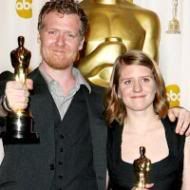
    The one stand out moment has to be, without question, ONCE’s “Falling Slowly” winning an Academy Award; it was the best reason why you should believe in the Academy voting every now and then. It certainly filled me with the kind of armchair happiness for this film that I haven’t felt for a lot of films being entered into these contests in quite a while. And, to boot, Jon Stewart’s insistence to allow Marketa Irglova to give her speech after Bill Conti’s Gestapo Noise Brigade shuffled them the hell off the stage after Glen Hansard spoke so passionately about the experience. I had a sense of validation for being so vocal in this column for people to get out and see this little film that could and, most importantly, it represented the choice on my ballot that meant I tied the leader for the most number of correct guesses: my wife.

    Now, I’m calling bullshit, throwing the yellow flag, falling on the floor and throwing a hissy fit because, really, I think that if you’re going to play the Oscar game the wild card choices of Best Editing, Best Sound, Best Costume (Sorry, I’m not a femme, and I always lose this one) shouldn’t be part of the overall picture. However, I can see that the inclusion of these are like handicaps for those of us who are hopeful that we can at least get one answer right out of the couple dozen choices.

    I think I’m just Monday Morning Quarterbacking the fact that I could not shake my bride’s choke hold on this contest after getting those throwaways right out of the gate. Alas, my dominance was not meant to be this year, and Sherry deserves the annual shout-out as the co-winner, but I have every gun set on next year’s petition to keep Best Art Direction (I mean, really, who’s to say what is art? Why not just have a fucking Am I Hot Or Not contest thrown in there too?)

    As well, now that we all can stop stroking the legend of stripper cum scribe, Brook Busey-Hunt (Diablo Cody. Seriously, every journalist can stuff their pieces about this being an inevitable backlash because of how edgy she was and how she is really “fringe” and you’re not supposed to be successful if you’re “edgy” can go suck a pickle.), can we all talk about other movies now that are a little more deserving of some attention? I would appreciate that greatly. JUNO’s backlash is only happening because JUNO’s patois is so incredibly painful to listen to as a viewer looking for something that isn’t contrived because that first 20 minutes is absolutely contrived in ways that people just are finally coming to understand. I’m happy she’s going to be flooded with offers to keep working and I hope she finds some really good material because I would be open to seeing something new from Brook. Something genuine. Something that doesn’t sound like it was put in an E-Z Bake Oven of Witticism.

    In other, more important news, I took my 4 year-old to see U2-3D on Sunday afternoon.

    I was curious to expose her to some of the most cutting edge technology being employed at IMAX and there was some delight on my part to try and give her a taste for the theatrics and pomp that Bono and company employ so well. One of the things that U2 understand well is how commerce and technology blend together.

    As an aside, Chuck Klosterman wrote a piece on Bono which should be required reading for any person interested in what makes this band so prodigious. If you understand that U2 merely understands what it takes to be one of the biggest independent bands in the world and it’s what holds a lot of bands back: if you make the money men happy they will leave you the hell alone. It’s not a sellout if no one’s willing to buy it and U2 figured out that equation a long time ago.

    And thankfully they have because they decided to put their band’s brand into the capable hands of Mark Pellington, a guy who could wow on the video screen, a little questionable for his full-length work, but the perfect choice for this blend of 3-D, concert footage and the little artistic touches he made to this beautiful movie.

    I would dare anyone to not be moved by the song “Where The Streets Have No Name” where it’s not the band that does the moving, but the audience. The pogo-ing, the perspective we’re given from the audience, Mark eschewing the sterile “band only” shots some concert films suffer for having, the deft editing, it all factors nicely as to why this film needs to be seen and experienced.

    My daughter, never seeing a full-length 3-D film, wasn’t wowed by Adam Clayton, Larry Mullen, Bono or the Edge doing their best to display their prowess as multi million dollar captains of the musical world but it was the fans being hoisted on their companion’s shoulders that promoted her to try and reach out with them. It was a strange but telling moment that what made this film so groundbreaking was its attention to the fans.

    It was the fan at the beginning of “Streets” and you can’t miss him; he’s the one with curly black hair who looks very happy to be there. It’s seeing people like that peppered throughout the film that blends the 3-D uniqueness with the humanity of a documentary.

    I know I don’t say it much but really, truly, get out to see this movie at the theater if you’re any kind of fan, casual or otherwise.

    BABY MAMA (2008)

    Director: Michael McCullers
    Cast: Tina Fey, Amy Poehler, Greg Kinnear, Dax Shepard, Romany Malco, Maura Tierney, Holland Taylor, Sigourney Weaver
    Release: April 25, 2008
    Synopsis: Successful and single businesswoman Kate Holbrook (Tina Fey) has long put her career ahead of a personal life. Now 37, she’s finally determined to have a kid on her own. But her plan is thrown a curve ball after she discovers she has only a million-to-one chance of getting pregnant. Undaunted, the driven Kate allows South Philly working girl Angie Ostrowiski (Amy Poehler) to become her unlikely surrogate. Simple enough”¦ After learning from the steely head (Sigourney Weaver) of their surrogacy center that Angie is pregnant, Kate goes into precision nesting mode: reading childcare books, baby-proofing the apartment and researching top pre-schools. But the executive’s well-organized strategy is turned upside down when her Baby Mama shows up at her doorstep with no place to live.

    An unstoppable force meets an immovable object as structured Kate tries to turn vibrant Angie into the perfect expectant mom. In a comic battle of wills, they will struggle their way through preparation for the baby’s arrival. And in the middle of this tug-of-war, they’ll discover two kinds of family: the one you’re born to and the one you make.

    View Trailer:
    * Large (QuickTime)

    Prognosis: Negative. Want to see where the JUNO comparisons are going to begin?

    Welcome to BABY MAMA, a miserably titled film which wants to have the cache of being a witty take on the many incarnations of Maury Povich rejects who are cattle called onto his show just to see which unemployment earner has sperminated a hapless welfare taker.

    I could live with the title if it wasn’t such a hard movie to try and get over with regard to we all having seen this already. I’m not positive if this is trying to be like JUNO-lite, a more mainstream syrup for middle-America to swallow but I think this trailer does a disservice to itself on a number of levels.

    First, Tina “I loved to laugh at all my own jokes on SNL” Fey sets this yarn up with the following idea: she’s 37 and in need of a child. I’m a little confused how this woman had an adoption attorney shake his head with regard to her being able to adopt a young one; was she homogenously a wreck of a person and, if so, shouldn’t this be the focus of the film?

    The joke, as well, of her talking about inseminating herself, her adoption woes and everything else she’s trying to do to get a kid, all the while being on a first date (Ha Ha!) isn’t funny. It’s something I would expect from a badly produced sitcom but there’s obviously more going on here.

    I will say that the bright spot of having Sigourney Weaver and Fey doing a tête-à-tête with regard to the price of having a surrogate versus having someone killed is funny, and gave me a bit of hope, was dashed by the introduction of the usually hilarious Amy Poehler and the never amusing Dax Sheppard; the two of them are stereotypes of the lowest common denominator and I can see why they’re easily employed to provide the easiest of all jokes, the low-brow finger pointing.

    (By the way, the Tracey Morgan joke about “put a baby in you” is wretchedly employed and even if Tracey thought it would be great for them to use his oft-quoted line it’s pretty hard on the ears here.)

    Romany Malco’s inclusion here should have been great but I’ve seen this character before in 40 YEAR-OLD VIRGIN. I guess it’s not a big deal for him to have collected a check when asked to do what made that movie great but it’s distracting when you know you’ve seen this before. Example: his thoughts on the surrogate baby listening to DMX and what will happen if the womb is exposed to it. Thanks, what a winner of a joke.

    But even in this mess of pastiches there is one joke that succeeds to go beyond the usual mainstream fare. The baby proofing of the house in which Poehler and Fey share and what happens when Amy needs to take a leak. I know it’s not much to see Amy crouched in a sink as she urinates but it was one of those jokes that actually managed to make me like this film. It’s just unfortunate, though, that the trailer ends with a train wreck of a set-up with a gag involving water breaking and a moment where a clever quip regarding using Pam on the vagina is what we’re left with.

    JUNO comparisons, without a question, will dog this turkey but I can say that even for all the problems I have with that film at least JUNO didn’t feel as plastic and false as this film does.
    SMART PEOPLE (2008)

    Director: Noam Murro
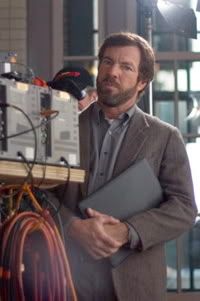
    Cast: Dennis Quaid, Ellen Page, Thomas Haden Church, Sarah Jessica Parker
    Release:
    April 11, 2008
    Synopsis: Into the life of a widowed professor comes a new love and an unexpected visit from his adopted brother.

    View Trailer:
    * Large (QuickTime)

    Prognosis: Positive. Ever feel like you’ve stepped onto a branch that might not hold the weight?

    It’s not often that I would whole heartedly say I would willingly see a movie with Dennis Quaid (If INNERSPACE would come back into theaters I would so be there) and Sarah Jessica Parker and an Ellen Page that seems less HARD CANDY and more like the acerbic JUNO which I still can’t stand. But I like this trailer and I like the feel of this film.

    We’ve come to expect, and I’ve expected, my films to mean something, to be something more than they are, and it takes a film like this to recalibrate everything in way that will make me appreciate “slices of life” films that aren’t out to angle for anything more than to just be good.

    I like the cheeky beginning, not so much for the Ellen Page bit about self-absorption and its place in the modern society, but it’s the simplicity of Dennis looking haggard and his inability to connect with others that feels endearing. This trailer eschews the voiceover, the spoon fed stills that shove information in our minds so we don’t have to think about the story, and it lets things just happen.

    Again, Ellen Page pops in to add some of that JUNO-esque levity but what really made me take notice of this trailer is the introduction of Thomas Haden Church.

    What once was just a run of the mill family drama turns into something more when the drama now shifts from father/daughter to smart brother/loser brother. Needing a chauffer because he suffers seizures and can’t drive himself this looks like a film, and it’s beautiful to look at, where it’s about the relationships between siblings that will dominate.

    I like the inclusion of the words “socially retarded” and the shift from a melodrama to a fill-on UNCLE BUCK meets MY TWO DADS meets every story where it takes a down on his luck loser to shift everyone’s paradigm.

    I have to give a legitimate high five to the trailer maker in the sky for including Paul Westerberg’s “Dyslexic Heart” into the mix of things. I love the song in ways that make me reflect on the reasons why SINGLES stands as the most excellent romantic comedy my generation has ever produced but it really is Thomas Haden that brings this kind of deadpan legitimacy to a movie that looks like it would die a February death if it didn’t have him in it.

    I’m not keen on SJP, I can’t really remember anything that I’ve liked her in but I am hopeful that this trailer making it out to seem like she’s just window dressing on a larger story between brothers is actually true. Like I said, it’s not often when I’m enamored with a cream puff movie like this but it’s a good trailer that does everything right and even throws a little “edginess” (yeah, I hate that word too) to make it feel like a legitimate movie you could break even for if you’re having to go to the movies with the ol’ ball and chain link and she’s not into watching and exploring the peculiarities of how Javier Bardem is such a bad ass in NO COUNTRY FOR OLD MEN.

  • Comics & Comics: All The Leaves Are Brown

    comicsoncomicsheader.jpg

    Howdy Inter-webbers, Matt Cohen here, and welcome to the day after. I’m reporting from the new headquarters of “Comics & Comics” in sunny southern California. If you’re anything like me (if you are, please email me”¦ I need some friends) Wednesday is the biggest day of your week. Us few, us proud, us unashamed and loyal Wednesday Warriors make treks to our respective shops, brave the lines, try to select choice copies of our favorite books and snag all the variants that strike our collective fancy. It’s a tough gig, but someone’s got to do it. So if you’re a fellow diehard, here is the column to see if other fans vibe with your opinions. If you’re new to the world of funny books, Ill try and provide a bit of a primer to the good, the bad, and the ugly (Chris Claremont anyone?). So strap in, lock on, and get ready to rock and roll.

    Oh, and spoiler warning.

    Comics for the week of 2/26/08

    ComicsandComics-20708-DCLOGO.jpg


    DC

    Countdown # 9: 8 weeks away, and I cant wait! Not because I’m excited for the finale, but because I’m excited to stop buying this book. Somewhere around issue 30, Countdown became almost unbearably bad, but after that much of a committal, who would drop the series? Damn you D.C, you clever tricksters. And speaking of Tricksters, his and Pipers storyline will go down as being the only worthwhile thing Countdown had to offer. I really don’t even know what to say at this point, the story is so disjointed and confusing. All I know is, at some point, Karate Kid became the main character in the series, Brother Eye came back and Jason Todd became the Red Robin (which is actually kinda cool). Everyone somehow got to Apokolips, and its obvious the grand showdown is forthcoming, but I for one, don’t really care. The art is mediocre, the writing is pretty bad, all in all this series is pretty terrible. 8 weeks till I’m free (to start buying the next monthly, like the mark I am)

    Allstar Batman and Robin # 9: Color me surprised, but I actually really enjoyed this issue! It’s such a shock, because the previous eight issues have been painfully horrible in my not so humble opinion. Not the art, mind you. Jim Lee is at the top of his form. Rather, Miller’s writing has been like a bad parody of his own work. Don’t even get me started on “I’m the Freaking Batman, you retard” or the excessive usage of the phrase “Little Snot”. Terrible. So imagine how pleased I was to find myself laughing and smiling from panel one. The entire issue is basically a stand off between Miller’s versions of Bats and Hal Jordan, with Robin providing hilarious quips in the background. Even the concept for the issue is great. Batman and Robin paint the Batcave yellow, thereby rendering Hal powerless. Batman and Robin proceed to basically bully Hal around for an entire issue, and honestly, its one of the more fun books I’ve read in a long time. Lee’s art is, as always, perfect, but the yellow tint to the entire issue makes this book take on almost an abstract art quality, something I found very cool. Yes, the rest of the series pretty much blows, but by some random play of fate, Issue 9 is freaking awesome… If you dropped the book, pick this one up, and if you never read it in the first place, this may be a good place to start. Lets hope this wasn’t a one-time fluke, and maybe this series will finally become worth reading.

    JSA #13: The first issue in a new arc does not disappoint. In fact, JSA has surpassed Justice League, in my opinion, as being the best “big” team book at D.C. Yes; the roster is almost laughably large and each week is pretty much a crap shoot in regards to who will be starring in the books, but month after month this is one of the most consistently great reads at any company. The inclusion of the Kingdom Come Superman in particular is one of the more intriguing and exciting plot ideas I’ve read in a long while. Speaking of Kingdom Come, Mogo makes his triumphant return in this issue to cause havoc on Earth 3 like he did the K.C Earth. This issue is mostly told from Superman Come’s perspective, and personally, I find the character endearing and fresh, and in particular whenever he talks with our Supes, I get geek goose bumps. The crossover between the mainstay DCU and Kingdom Come could’ve been disastrous or even worse, gimmicky, rather the meeting of these characters seems organic and logical, and it makes for exciting storytelling. This issue is a solid introductory take to what seems to be shaping up to be a great arc. Check it out.

    Teen Titans # 56: Since its conception, the Teen Titans, like any other big family, have had their squabbles (Terra, anyone?). The newest incarnation of the team is no different. Though they’ve been through a lot together, there is still a large amount of distrust running through the team’s ranks. This week, that dissension comes to a head, with a great issue that puts Kid Devil (the “outsider” Titan) in the spotlight. Eddie has never been the smartest or most skilled Titan, but what he lacks in experience he usually makes up for with heart. His lack of experience got the better of him this week, when he caused a villain to escape, creating a rift between him and his teammates. (You don’t want Robin pissed at you”¦). When things cant seem to get any worse for Eddie, he decides to invite a group of fans to Titans Island, for an impromptu party. (When the Titans are away, Kid Devil will play). Needless to say, stuff gets crazy pretty quick, and Eddie begins to question who he really is, hero or demon in waiting. Just when things seem to be at their most dire, it goes from bad to worse, with the introduction of the team’s newest foes, the cleverly named “Terror Titans”. After a quick battle, Eddie is down and Ravager is next up. Seems like its going to be a fun arc, with far reaching ramifications, so if you are a Titan fan, definitely consider picking this one up.

    Notable: Blue Beetle V.7 #24, Batman #674, Action Comics #862

    ComicsandComics-20708-Marvellogo.jpg
    Marvel

    Captain America # 35: So, about four issues into the arc, and Bucky has quickly proved himself to be a worthy successor to Steve Rogers. I can’t help but get psyched when I see the new costume, complete with gun holster and utility packs. It’s like Captain America for the new generation. I know that sounds cliché, and I do miss Steve, but in my opinion the character grew stagnant long ago, which is a shame considering Cap’s pedigree. With Bucky’s ascension to the shield, new life has been breathed into the series and I find myself actually excited to read a Captain America book for the first time in a long time. Brubaker’s previous run was good and all, but it was still pretty tame compared to the other hero’s of the Marvel Universe. Now, Captain America is back at the top of the heap, as he very well should be. Red Skull and the Baron continue to make trouble for all involved, but Bucky’s getting closer, and you know the inevitable showdown will be forty-six kinds of awesome. There is also a last panel surprise that is too good to mention here, and quite frankly worth the price of admission alone. A new Captain for a new America”¦. I like.

    Marvel Zombies 2 # 5: Robert Kirkman returns, with the sequel to the bestselling (and great) mini, Marvel Zombies. This time around, Kirkman can’t manage to pack the same punch he did with his first effort. I know the first run sold like hot cakes, and anything Zombie related is pretty much guaranteed to move product, but maybe Marvel should’ve waited until they had a unique story idea, as opposed to basically rehashing everything that happened in the first series. Still, you read these books for the horror and humor, and like its predecessor, Marvel Zombies 2 is full of both. The biggest disappointment to the series is the ending, or in particular, the last 2 pages or so. The series wasn’t great, but the ending was flat out terrible. A random deus ex machina does not make fans happy, as Marvel should’ve learned by now, and though well inevitably see Marvel Zombies 3, lets hope the guys over there put some thought into it first, this time around. (Also, Sydham’s covers are extremely missed).

    Thor # 6: This book has been more about Asgard and its mid western neighbors, then the lightning god himself, and I for one am fine with that. JMS has hit upon a unique and intriguing approach to resurrecting the fallen of Ragnarok. For some reason, this book reminds me of a TV show, one of those high concept action/comedy/drama/epics that the networks have been pumping out the last few seasons. The pacing, the humor, the absurdist/sci fi storyline. It reads like a “big” comic, and that’s pretty impressive considering there hasn’t even been a battle yet. Donald Blake remains likable as always, and the new interaction he has with Thor himself makes for some pretty interesting comic reading. Sooner or later, you know lightning will fly and hammers will strike, but until then enjoy what may be the only time in the Thor books history where it could be described as “quirky”. I’m sure most Thor fans are already picking up this title, but I think people who haven’t read the adventures of the Blonde bombshell, or people who stopped reading them long ago should give the book a chance. It’s definitely a fun read.

    Thunderbolts International Incident: In this one shot, the Thunderbolts team is called to deal with seminal Marvel baddie, Arnim Zola, but the real crux of the issue is Radioactive Man, and his status as a Thunderbolt. The book is a decent one-shot, but really nothing spectacular. It does read very much like an issue of Radioactive Man comics though, not enough Penance, too much talking and no Venom eating people to make it feel like a true Thunderbolts book. I’ve been reading the Thunderbolts one shots, because I like the characters, but this issue is unfortunately, not a must read. Consider for true fans only.

    Notable: X-Men Legacy #208, DareDevil V.2 #105, X-Men First Class V.2 #9

    Comicsandcomics-22808-Indy.jpg
    Indy

    Freddy Vs. Jason Vs. Ash # 5: I’ll put it out there on Front Street, I’m not that big into horror comics. Sure, I read a few Zombie titles every now and again, and Ill pick up a random book if it looks interesting but for the most part it is a genre that goes largely ignored by yours truly. I am a huge horror novel buff, and love horror movies, but for some reason that don’t typically extend into comicdom. Being such a horror movie buff though, it was hard for me to ignore a series that featured three of my favorite all time horror characters (in the freaking title, none the less), and for the most part, I’m glad I decided to give it a chance. The most successful aspect of the mini is that Jeff Katz has managed to find a voice for Ash, the hero of the tale, which keeps very much in theme with the Ashley Williams we know and love from the Evil Dead trilogy. And though this issue doesn’t go much into the way of storyline progression, it’s a fun read that sets up what looks to be a pretty exciting finale, to be released soon in part 6 of the mini. If you are a fan of the flicks, check out the book. I think you’ll enjoy what you find.

    ————————————-

    Check back soon for my angry missive entitled “One More Month: Or why Marvel has 30 days before I quit Spider-Man”. As always, Ill be back next week for a comedy report on all things live/stand up. Should be fun”¦ So much fun, your brain will fall out of your head, land on the floor and start dancing its little brain legs off! Catch ya on the Flip Wilson.
    And as always,

    “Keep ’em bagged and boarded”

    Matt Cohen is currently redecorating his new apartment as the Savage Land. His tiger is on back-order

  • Keneteph’s Corner: Experiencing The Power of Mentorship

    keneteph.gif

    Experiencing The Power of Mentorship

    keneteph2008-02-29.jpgLast December I attended my first Hollywood movie premier. It was for the independent film, The Power of Mentorship. This phenomenal film, is about the importance of having a mentor in life, to help one get where they want to go. It is based on the life of the film’s producer, Don Boyer, how he became a self-made millionaire, by following certain steps his own mentor gave him. It stars many of the top people in the personal development industry, such as Bob Proctor, and Marie Diamond, from the hit movie, The Secret. The ideas presented in the film truly get ones thinking going in the direction of pursuing their goals, and fulfilling their dreams. What made my attendance even more special was that I wasn’t only going as a fan or one interested in the personal development industry, but as a fellow cast member. No, I don’t make a physical appearance in the film, but a song I wrote, A Matter of Choice, plays during the credits of the film.

    Don, and his wife, Melinda, put in a lot of hard work to make the premier the success it was. The same dynamic time and energy they put into the movie premier, they put into the people they work with. They are authentic people that truly want to see the world succeed. Through their company Real Life Teachings, they give everyday people the chance to mentor others, and be published alongside the top names in the personal development industry. Overall, I was inspired by the feeling of increase for all that radiated throughout the event, and want to use this opportunity to thank Don Boyer personally for adding me to his team. I recently had the chance to pick Mr. Boyer’s brain, and ask him about his successes and future plans.

    Thaahum: How did you get your start as an author?

    keneteph2008-02-29-02.jpgDon Boyer: I had a desire to be a writer since I was 12 years old when I sent away for a course that I saw in a comic book called “how to become a writer”. Although it would not be for another 20 years I did see that dream come true in 1991. I wrote my first book called 7 keys to increase. I self published that book but it was soon picked up by a major Christian publishing company.

    It was a good selling book and made its way into Christian book stores. For some strange reason I did not write or publish again until 2004 when I wrote a book called Legends of Thithers and Givers. Once again, I found that to be a great seller that sold around the world. In 2006 I got the idea to do a book on mentorship and wanted to have both local writers as well as some of the best speakers in the personal growth industry. That came out in February, 2006 and I only planned to publish that one. It sold 4000 copies in the first 90 days and people starting me to contacting me to do another one. Today we have 11 books in that Power of Mentorship series and have over 90,000 copies in the market place world wide.

    Thaahum: How did you get your stat as a mentor?

    Don Boyer: I think I evolved in to mentorship by first becoming a good follower and student. I had the good fortune to have great mentors in my life starting at the age of 19. Today I still have great mentors in my life, people like my good friend Bob Proctor and Vic Johnson. I started mentoring, which means I started my speaking and coaching career back in 1984. From that point until today I still make it my life calling to mentor people. In fact, we just opened up our new Power of Mentorship training center in So. California so that we have people come here to be mentored and trained.

    Thaahum: When did you get the idea for the film?

    Don Boyer: People laugh when they find out, but I got the idea to do the film at a restaurant in May 2007 and put it all together in 7 months and had our Premier on Dec. 6,2007 at the Land Mark Theatre in Los Angeles. We had the movie cast there including Bob Proctor. People ask me all the time how I did this? My answer is always the same, it never crossed my mind that I could not do it! The truth is, we can all do what we can’t do if we don’t know we can’t do it.

    Thaahum: What is your goal with this film?

    Don Boyer: My goal for the film is the same from the start-to bring freedom to billions! I feel the film has so much power and holds the answer for people all over the world to learn how to live a better life. To have more, be more and do more. What is your dream? Whatever it is you can have it.

    Thaahum: How did you get the different teachers/mentors involved in the film?

    Don Boyer: Law of attraction. There is no other way I could have brought these kind of individuals into a film project from someone who really was not known (speaking of myself of course} Big name people are booked years in advance and they have to be very careful to who they agree to work with. Once I set the intent to do the film and who was going to be in it, it was the job of the universe to make it happen not mine.

    Thaahum: What do you like best about being in the personal development industry?

    Don Boyer: Helping people. My life changed completely for the better because of mentorship. I was a young lost 19 year old boy when I first met my mentor who forever changed my life. Besides that, the personal growth industry is my passion, and my life calling.

    Thaahum: What are your future goals and ambitions?

    keneteph2008-02-29-03.jpgDon Boyer: The future holds more books, more movies and more trainings. I will be doing this as long as I live. .

    Thaahum: Will you be making any more films?

    Don Boyer: Yes we are now working on our next film project called The Network Marketing Entrepreneur. It will be a combination of personal growth and how mentorship plays are role in this great industry.

    Thaahum: How can people find out more about you and your work?

    Don Boyer: People can reach us at www.DonBoyerAuthor.com

    Copyright 2008 Keneteph Entertainment

  • Quick Stop Thingamabobs: 2/29/2008

    thingamabobs.jpg

    The web. It’s a big place, full of plenty of distractions ““ some funny, some informative, some ludicrous, some disturbing, some inane, some profound. Each and every weekday, we present links to a few of our favorite finds”¦

    ————————————————

  • Opinion In A Haystack: 2008 – A Retrospective

    haystackheader.jpg

    This column, OPINION IN A HAYSTACK, will have a very lax format. In fact, one could say my format is that I have no single format. I shall review movies not on the basis of them being released, but on the basis of how much I feel I have something viable to say that needs to be said. Also, I have many ideas in mind for columns looking back at the films of yesteryears in different ways. I promise to always explain what I’m doing beforehand, or during hand, or post-hand”¦some form of hand-explanation will always take place. This first column will be called 2008: A Retrospective. I need to say a few things about some movies that came out before this chance to let out steam. Yes, I do realize that most of these movies came out in 2007 (thus negating the comedy of the title) but let’s run with it and be best friends, ok? The following reviews/rants are written with the assumption that you’ve seen the movies already, which you most likely have considering they’ve been out for a while. If you haven’t, please be aware of a ***SPOILER WARNING*** for the following movies: I Am Legend, Juno, Cloverfield, Diary of the Dead.

    I didn’t hate 28 Days Later. Everything technical about it was beyond cool. The only reason it garnered ill will from the horror crowd was the “fast-moving zombies” stigma. However, once we all calmed down and realized that they weren’t zombies, just sick living people filled with uncontrollable rage, then the entire legacy we thought it was stepping on suddenly disappeared and it could be viewed as something more than an exercise in pissing on George Romero’s genius. The remake of Dawn of the Dead made by Zach “300“ Snyder had the gull to actually be good, while also introducing the world to reanimated corpses that could run, which showered blue piss all over Romero. Why blue piss? Because while it was sacrilege, it was still kind of fun to partake in and watch. If only they could have just changed the title to Mall of the Dead, or Zombiefest! A namesake that would disassociate it with the Dead Trilogy would have been nice.

    iamlegendphoto31.jpg

    This leads me to I Am Legend. This movie introduces us to Hollywood’s next bat-shit crazy legion of zombie-esque-former-humans known as dark-seekers. You know why they’re called that: because no one knows what to call them. They are vampires, well maybe zombies, or they could be zompires, or perhaps vombies. How about we just name they after what they like? Darkness. They seek it. How does that sound, Board Room of Studio Heads? Anyway, I truly loved 75% of I Am Legend. I have never read Richard Matheson’s book mind you, nor seen either the Vincent Price or Chuck Heston versions of the movie, so my critiques are solely based on two viewings of the new Fresh Prince classic (I apologize, the joke of calling Will Smith the Fresh Prince is almost as worn as calling Keanu Reeves “Ted”).

    The majority of the movie was completely awesome, namely the first hour and change. Will Smith’s castaway performance was a new step in the megastar’s career, coupled with the fact that he had a very psychological relationship with his sidekick, who happened to be a dog. Francis Lawrence, the director who brought us the “it could have been much worse” Constantine, really knew how play to play up Smith’s strengths, and build the tension. I am talking particularly about the scene in which Sam, the dog, runs into a building after a stray deer and, turns out, it’s filled with dark-seekers. In 2007, that is pretty much the best you’re going to get for an intense moment. I even loved the whole bit where Robert Neville, Smith’s character, was talking to mannequins he had set up in the video store. The movie even made my stone cold heart pump blood and forced me to hold back tears when Sam was dying in Neville’s arms. I even, somehow miraculously, didn’t feel the need to complain that the dark-seekers were all CGI-ed to hell, which for me is rare. Then they had to bring in the woman and the boy. I should have known that the movie was going to have a Sisyphus-dilemma in terms of quality, and the woman and her son were most certainly a thousand-ton boulder (look it up). Do people really need a happy convenient ending this badly these days?

    Actually, that question can be answered with another 2007 film, this one more of a financial flop”¦Frank Darabont’s The Mist, which had an ending so gloriously depressing that people in my theater actually yelled out how much the movie sucked only because of that fact alone. Introducing the woman and her little “angelic” piss-ant sucked all of the unique marrow out of the great “last man on the planet” storyline that they were elegantly following. We didn’t need the human race to be saved. We didn’t need some convoluted message about God working His magic through butterflies, and we most certainly didn’t need to take away the true meaning of the title. Upon doing limited research on why exactly the book is called I Am Legend, I found out that Robert Neville is not a “legend” among the humans for being a savior. His self made title is in fact because he is a legend among the vampires (in the novel they are straight up vamps apparently) for being their destroyer, an evil menace that lurks in the daylight and hunts their kind. Since the dark-seeking-vampire-zombies are now the majority populace on the planet, they create a civilized society between them, and Neville is the enemy of their new way of life.

    THAT IS BEYOND BAD ASS!

    Why wasn’t that on the screen? How come the scene after Sam dies wasn’t Robert Neville suiting up Rambo-style and going out to become the legend that he truly, and foundationally, was meant to be. He should have become the hunter, the dark menace lurking in the daylight, all his hatred and loss poured into hunting down the seekers and making them pay for a lost world. Instead the exact opposite happens; he gets stupid, drives his car into a pole, and then conveniently gets saved by a 100 lb. chick during an attack of at least twenty of these extremely fast, extremely savage seekers and saves humanity and all the happy little babies of the world. The last fourth of this film proves to me that they really have forgotten what makes a classic, or an iconic hero, these days. At least Frank Darabont has the balls to try.

    How do you go about becoming a filmmaker when everybody looks at you and says “Hey, didn’t your dad direct Ghostbusters?” The answer is simple: Make good movies. I really do think that Jason Reitman does exactly that, he makes goods movies that are completely different from the type his pop used to make. Thank You For Smoking was pretty genius, and Juno, while not nearly as biting, isn’t without its positives. I enjoyed it for what it was, not really understanding where all this Oscar business came from, and besides the teen dialogue being so unique it almost seems forced, I only really have one major problem with the movie. Before I tell you that problem, I want to make it clear I am not part of the Juno-backlash which I read about on several websites, or the Juno-backlash-backlash, which apparently can exist. I honestly don’t think the movie isn’t worth all this fuss. Severely hating it or unreasonably loving it seems like overkill either way.

    juno2.jpg

    The main meat (or is it beef? Hmm?) I have with the film is who the true “villain” of the piece is. My significant other says it’s obviously Jason Bateman’s character, her reasons being that his character wanted to be with Juno sexually, thus making him a pedophile, and making all other arguments null and void. I can see where she is coming from, but don’t agree at all. I can honestly say that while watching the movie, I felt as though Jennifer Garner was the villain and Bateman was the victim, Juno’s story arc aside. I did not even really think that Bateman wanted to sleep with Juno entirely.

    I’ll explain.

    Garner’s character (I can’t remember their names) was a mentally distressed and misguided person. All her banal goals, personality traits, and home furnishing/cleaning habits were basically the enemy of creative thought and the very definition of denial. She wanted a baby simply because that was put into her mind as what it is she’s supposed to want, what it is she’s supposed to do. She had no unique thoughts of her own and frankly, the mere act of her talking disgusted me. The way I saw it, she was everything wrong with the planet, not to mention her husband’s life. He, on the other hand, was still a person free of mind who had the ability to venture outside the American suburban nightmare. He thought as an individual and admitted to himself that he didn’t want to live a cookie cutter life raising an annoying miniature human because Norman Rockwell said so.

    Along came Juno, this new person in his completely boring cut-off-from-the-world existence with his bland wife, and she sparked the fight inside of him to remember all the reasons why he used to love life and how much his wife’s Clorox prison is the very enemy of all the creative things he used to make and absorb. Juno wasn’t a sexual conquest; she was a street lamp hovering over a once darkened road sign toward a life that didn’t involve living in a house adorned with Ikea’s best selections and Oprah ideology. Sure, some sexual thoughts will come to pass when your are dealing with someone that gets you as much as Juno obviously did, especially when she is your only escape from a nightmarish relationship with a cerebrally stunted automaton like Garner’s character. In my opinion, he was the hero by leaving the marriage and the house before things got any worse and a child was brought into the mix. People are flawed, we make mistakes, his mistake was getting married and he corrected it as best he could. As to whether or not he would have gotten intimate with Juno, I agree that he would have, but it wasn’t because he was cruising the streets for barley legal poon, it was because she just happened to be the only person in his life that he could talk to anymore without having to edit his thoughts or silence his dreams.

    To be very clear, I’m not saying I am for him having sex with a teenager, I am just saying that his reasons for having the attraction are not the normal sick-minded variety we would usually be dealing with. He didn’t do it, he left like he should have, and it’s not illegal to think about it. I guess making the semi-offer for her to come to his new place might be pushing it, but still, it never happened. I didn’t want them to have sex. If you want a clearer picture of this type of story, check out Ted Demme’s Beautiful Girls, it covers almost the same territory, just replace Juno with a really young Queen Amidala.

    425_cloverfield_011108.jpg

    I missed out on the theatrical run of The Blair Witch Project. About a year later I borrowed the VHS (VHS”¦never forget) from a friend and watched it in the middle of the day when the sun was shining, bright and beautiful. I was scared absolutely shitless, like to the point of not wanting to move. The only explanation as to why I could have had this reaction, to a movie that most of my friends said they laughed at, was that back in the olden days (a.k.a. the 90s) I was a very avid camper and was used to hearing far off sounds in the woods during the wee morning hours. Take that and couple it with the fact that the only movies that truly scare the living piss out of me are the ones that allude to a far off danger that I can barely see, a la Jaws or those scenes in the Exorcist when they are downstairs just listening to the possessed girl screaming. Other then that, I’m pretty hard to scare with special effects and jump cuts, but make it cerebral and I will melt into a puddle of wussy stew. I still to this day don’t know if I like The Blair Witch Project. All I know is that three hippies getting lost in the woods with video cameras is apparently my vision of hell. Yeah, I was surprised too.

    Two movies of recent theatrical run have proved to me that is was not the style of Blair Witch that scared me; it was the execution through and through. The two movies of which I speak are, of course, Cloverfield and George Romero’s Diary of the Dead. I just have a few things to say about Matt Reeves’s (or J.J. “why am I popular at all?” Abrams’s) Cloverfield. There was not a single character in the entirety of the “found footage” that I didn’t loathe. They were all WB rejects that looked as though Dawson’s Creek vomited into a loft apartment and reformed pretty faces from the chunks, and then dredged their personalities from the goopy-stomach-acid-residue in between said chunks. Rob, our main character and supposed hero, was like a shining bright beacon calling out to all college stereotypes to run to the theater and get a taste of what their successful post-college life of being trendy would be like if Godzilla suddenly interrupted their photo shoots and text-messages. Am I a bitter old man? Dam straight I am. Excuse me if I sit there and see an amazing concept, amazingly executed, with amazing effects only to have to deal with characters that deserved an apocalypse happening to them two decades or more ago when they were all traveling up the urethra with a cell-phone tightly hugged by their sperm tale.

    I mean seriously, can we get a Kurt Russell, a Bruce Willis, or a Clint Eastwood type in there? Hell, I would even settle for a Steven Seagal type, just so long as I don’t have to deal with moronic trendy youngins that deserve death right off the bat. Look, I have nothing against new, young talent, it’s just I have a very difficult time digesting what passes for actors and especially leading men/leading characters in today’s Hollywood. Get a real hero, and please for the love of God, get one that gives at least two shits about his friends and companions and doesn’t act like those with him on his journey are meaningless hunks of monster-chow compared to his true love that is almost 98% certainly dead and not awaiting his daring rescue. Rob was almost indifferent to Hud’s (the camera guy) safety, and if he gave a shit about any of the others, I wouldn’t have noticed. The whole plot of the movie was an exercise in complete selfish stupidity and was more then I could handle. Everything else about it was fucking great, I didn’t even have a problem (as an amateur videographer myself) with the camera being almost unbreakable. My only complaint is with the awful characters that I hated, and the fact that they all died still didn’t convince me the movie had merit, their very existence being on the screen just made all the bitter hatred fly out. Next time get Kurt Russell to kick some monster ass, instead of Dawson slip-n-sliding down the streets over his tears of true love while generic bug monsters eat all his friends.

    diarynew1.jpg

    It’s always good to see REAL zombies on the screen. Slow, deceased, re-animated zombies in the hands of the master himself George A. Romero is statistically a good thing. Now ironically enough, the first movie discussed in this column was I Am Legend, and I have heard several fans and critics alike, even Richard Matheson himself, claim that it’s possible Romero aped the whole idea of Night Of The Living Dead from the novel/Vincent Price film. I have no knowledge of whether or not that is true, especially considering that one is vampires and the other is zombies, but for our purposes here let’s consider Romero to be undisputed king and creator of our rotting brethren. Having seen the Dead Trilogy several times in my life, especially the original Dawn Of The Dead and the great Tom Savini (better known as Sex Machine) remake of Night Of The Living Dead, I have to say that I fear Romero may be losing his touch, or perhaps my expectations for a master are too high.

    Diary Of The Dead, as stated above, is another in the new line of “found footage” movies. However, it was in development and in George’s mind way before Cloverfield was a twinkle in Abram’s eye. In the past week I have been describing Diary as “Cloverfield with zombies” which is a disservice that I apologize for, for in truth Cloverfield is “Diary Of The Dead with Godzilla.” In no way is this movie a case of Romero selling out, In fact, it is him doing what he has always done, which is use zombies to their full potential and give up some serious social satire, something that the Dawn remake was sorely lacking (sadly not for the general public). This time around, instead of targeting consumerism, Romero sets his sites heavily on the, what’s the word”¦Blogosphere? The new world of interconnectivity and the common person’s newfound ability to control and give information that would normally be fully handled and possibly twisted by the government.

    There is also a strong message about camera worship and the walls put up between the cameraman and his “cast of characters” a.k.a. the real world. These are great topics to cover no doubt, I guess my only complaint is, and it’s a small one, is how heavy handed they are. The movie is “shot” by a film student. In fact, the zombie uprising takes place during the shooting of a B-horror movie about a mummy, which births a “dead things movie slow” conversation. The footage has music and is edited to be more compelling. This is because, unlike Cloverfield, we are seeing the found footage in post production made by the surviving students at the end of the movie who give their editing up as an excuse to make the actual movie (the one we’re watching) better. Once again, very heavy handed. The entirety of the movie feels like Romero rubbing ideas in your face, even the short, but funny, conversation I mentioned above on why dead things wouldn’t move fast seems like him saying “Hey, zombies are slow, I should know, I made the first movie!!!”

    None of this makes the movie unwatchable or bad, mind you, just perhaps trying to hard. As for the zombies themselves, it’s simply another one of the exact same scenarios as featured in the Dead Trilogy, zombies wake up and all hell breaks loose. They only exist to drive the story and characters forward, which isn’t a bad thing at all. I would say that many a great film, book, or play use the villain or monster for that very purpose instead of cheap Transformers-esque thrills that insult an audience. All the cast here is comprised of unknowns, none of them are great, none of them are awful, mostly they are forgettable and sadly generic, sort of living zombies themselves, I guess. There were times that the movie kind of meanders, and the only real things I remember are the bouts of dialogue that critique the Blogosphere (I’ve used that twice now, is that even an official word?) and how it can change the world, especially in a time of crisis.

    Those of you who want gore, Diary has got it. It even has a few new interesting zombie kills (the acid dissolving away the head stands out for me.) The one thing you can always count on is Romero delivering humor and inventive kills. My favorite part of the whole movie was the drunkard of a teacher that gets caught up with the cavalcade of college film students. He might be a painful, old, grizzled drunk cliché, but hell the guy knew how to make grizzled depression work. All in all, Romero has made a pretty sturdy movie with only one or two wobbly legs, but he gets full props for a scene involving an elderly mute Amish man. Sadly, he dies quickly, but his time on screen is more precious then David Letterman’s cameo in Cabin Boy. Yes, you read that last sentence right. That’s my opinion”¦ deal with it.

  • Quick Stop Thingamabobs: 2/28/2008

    thingamabobs.jpg

    The web. It’s a big place, full of plenty of distractions ““ some funny, some informative, some ludicrous, some disturbing, some inane, some profound. Each and every weekday, we present links to a few of our favorite finds”¦

    ————————————————

  • Quick Stop Thingamabobs: 2/27/2008

    thingamabobs.jpg

    The web. It’s a big place, full of plenty of distractions ““ some funny, some informative, some ludicrous, some disturbing, some inane, some profound. Each and every weekday, we present links to a few of our favorite finds”¦

    ————————————————

    • It’s the calls home to dad that are always the most awkward… (Thingamabob)
    • Bruce Forsyth hosting Have I Got News For You, Part 1… (Thingamabob)
  • Comics in Context #215: Wauugh and Remembrance

    comicsincontext4.jpg

    cic2008219-01.jpgInevitably when I write about the late Steve Gerber’s most celebrated comics series, I feel I have to make the following statement. Yes, most people only know Howard the Duck from the dreadful 1986 movie adaptation, which is one of the most notorious disasters in Hollywood history. Yet Steve Gerber’s Howard the Duck comics series was one of the most brilliant achievements in the medium of its time.

    Introduced by writer Gerber and artist Val Mayerik in the Man-Thing story in Adventure into Fear #19 (December 1973), Howard immediately captured the imaginations of Marvel readers, and of Gerber, as well. The duck won his own backup series in Giant-Size Man-Thing, and soon graduated to his own comic book, which was a tremendous, if short-lived, hit.

    Though he was a bad-tempered talking duck, like Donald and Daffy, Howard was also a cleverly conceived variation on the type of Marvel hero pioneered by Stan Lee. If Spider-Man felt alienated from society, Howard’s situation was even worse. Displaced from his otherdimensional world of talking waterfowl, Howard was marooned on the world of humans, or “˜hairless apes,” as he called them. According to his series’ catchphrase, Howard was “trapped in a world he never made.”

    In his book Disguised as Clark Kent, Danny Fingeroth explores how Jewish-American comics writers’ sense of being outsiders informed the superhero series they wrote (see “Comics in Context” #200, 201, 202, 203, 204). Gerber shared this background and Howard is the ultimate outsider. Wherever he went, Howard encountered startled humans who disbelievingly exclaimed, “You–you’re a duck!” as if Howard was not already well aware of the fact. In other words, everyone he encounters reminds Howard that he is not like them. The principal exception is his companion Beverly Switzler, who accepts and loves Howard, despite the difference in their species.

    Moreover, Howard is a talking duck, like those we see in animated cartoons and comics in our childhood, who has been transplanted into a world of adult humans. I suspect that Howard represents our inner child, thrust into the world of adulthood. As such, he had special relevance for Baby Boomers who continued reading comics as they grew into adults, shifting away from the innocence of children’s comics into material for more mature audiences.

    Whereas so many humor comics produced by the mainstream comics companies for this maturing audience were second or third-rate imitations of Harvey Kurtzman’s MAD, Gerber’s Howard the Duck was a superb ongoing satire on various comics genres, American culture, politics, and even the human condition. Confronted by nonsense all about him, Howard vented his feelings through his favorite expletive, a quacking sound transcribed as “Wauugh!” which could express exasperation, dismay, anger, fury, and even despair. That last emotion might be surprising in a “funny animal” comic, but Howard was a funny animal comic aimed at discerning adults, and through comedy it dealt with many if the same themes that Gerber explored in his genre melodramas like Man-Thing and Omega the Unknown.

    One test of great satire is its longevity. Will a satire on topical events and issues still be relevant, meaningful and funny years later to a new generation of readers? I decided to see for myself. In Howard’s most celebrated storyline, he ran for president in 1976 against real life candidates, incumbent president Gerald Ford and the eventual winner, Jimmy Carter. Marvel’s Essential Howard the Duck Vol. 1 paperback enables new audiences to read Gerber’s entire original run on the series, including the presidential campaign. Will the storyline hold up, over thirty years later?

    The election story arc begins in Howard the Duck #7, cover-dated December 1976, although the issue came out months before the November election). But Gerber had to spend the first part of the issue wrapping up the story he began in the previous issue. So let’s start with the beginning of that storyline in Howard the Duck #6 (November 1976, the first monthly issue), “The Secret House of Forbidden Cookies!”

    Part of Gerber’s modus operandi on Howard was to parody other genres in comics and popular fiction: hence, Howard the Duck #1 burlesqued sword and sorcery. This time the target is the Gothic romance, and so, of course, it begins in a dark and stormy night. Following the Joseph Campbell monomyth pattern, the story starts out with our protagonist, Howard, and his companion Beverly at a low point. Having embarked on that particularly American form of quest, the road trip, Howard and Beverly have been reduced to hitchhiking in a torrential rainstorm. The lone passing motorist on the road at that time of night might have given Beverly a ride, but he panicked upon seeing her companion, reacting as if he’d seen a monster out of, yes, a Gothic horror novel: “It–it’s hideous–inhuman–not a man at all.” In other words, it’s a duck. The driver would have killed Howard and Beverly had they not leapt inside–into the mud. Beverly, usually the more optimistic of the two, postulates that the driver “lost control” of the car. Howard, more cynical about human attitudes towards him, is sure that the driver intended to kill them. And this is far from the last attempt on his life in the course of these four issues.

    But then Beverly understandably turns distraught, and she and Howard reverse roles. Now he is the optimist, assuring her that “somebody is bound to come along.” But right now their situation resembles a wetter version of Waiting for Godot. Furious at Howard for getting them into their plight (and giving him a good kick), Beverly turns to hyperbole (“Nobody’ll ever use this road again!”) and evokes a fate worse than death. “We’ll have to eat each other to survive!” she asserts, not explaining just how they could manage to simultaneously devour one another. “That’d be understandable in the Andes,” Beverly says, grappling with the ironically humdrum nature of their predicament, “but not in the Poconos!”

    Their plight is ridiculous, yet suddenly Gerber and Colan succeed in making it affectingly real. Fed up with the turmoil of her life since she met Howard, Beverly leaves him. Her parting words are “I can’t tolerate your stubbornness or petty fits of rage anymore!” That could be a line from an entirely serious story about lovers breaking up. Howard’s reaction is both credible and nuanced. At first, emotionally devastated, he seeks to placate her by hesitatingly agreeing with her decision (“if that’s what ya really want“) and admitting his faults (“I can’t deny I’m hell to live with”), perhaps in the hope that his concessions will change her mind. But Howard is too brokenhearted to adhere to his strategy, and suddenly calls out after her. She answers, but this time her anger triggers Howard’s temper, and he literally turns his back on her.

    Frank Brunner drew Howard’s initial solo stories, but to my mind Gene Colan is Howard’s foremost artist. From the first time I saw his work, I’ve admired Gene Colan’s handsomely realistic style, which surely owes a debt to the great American illustrators. Yet he also draws Howard with the proper cartooniness. What amazes me about his work on Howard the Duck is that he somehow seamlessly blends the cartooniness of the duck and the naturalism of the people and backgrounds into a credible whole, so that you can believe that Howard and Beverly exist in the same world.

    Beyond that, Gerber’s Howard the Duck provided opportunities for Colan to demonstrate his ability to make the characters he drew “act.” In the aforementioned breakup sequence, Colan captures the shifts in Howard’s emotions from sympathy over Beverly’s despair to irritation to being stunned when she says she’s leaving him to a look of vulnerability with a hint of desperation, to his final angry resignation, captured in both the look in his eyes and his body language.

    Wandering through the rain, Beverly eventually reaches the archetypal Gothic mansion in the middle of nowhere, where she is mistaken for the new governess, a role played by Gothic heroines from Jane Eyre to Dark Shadows‘ Victoria Winters. Having, in effect, walked into a Gothic novel, the exhausted Beverly accepts the role that is assigned to her (“Oh, heck–why not? Anything that’ll get me in the door!”).

    The next morning Howard awakens to the latest variation on Gerber’s “You’re a duck!” trope. This time he is found by Reverend Joon Moon Yuc and his young followers, the “Yucchies,” who regard Howard as a “devil-duck,” a creature of Satan, and a sign that “the last days” are upon them. Reverend Yuc and his followers are parodies of Reverend Sun Myung Moon, who moved to the United States in 1971, and the members of his Unification Church, called the “Moonies.” Reverend Moon is no longer as prominent in the news as he was in the 1970s, but Reverend Yuc and the Yucchies still work as parodies of religious cultists and fanatics.

    Professing to be “a servant of the Lord,” Reverend Yuc abandons his feigned humility a few panels later, asserting that he knows the will of God. “My word is as the Lord’s,” he declares, and he begins to lead his acolytes in praying to God “to strike this creature dead with a bolt from heaven!” Howard gulps nervously, doubtless fearing what will happen if lightning does not strike and the Reverend decides to take divine vengeance into his own hands.

    Who would be the contemporary counterpart of Reverend Yuc? I am reminded of Jerry Falwell and Pat Robertson’s infamous agreement that the 9/11 terrorist attacks were God’s punishment on America for harboring feminists, gays, and pro-abortion activists.

    In bringing Reverend Yuc onstage, Gerber has not diverged from this issue’s overall satiric theme. Reverend Yuc fills the role of the fanatical clergyman who leads the witch hunt (like the Reverend Trask in Dark Shadows), and the Yucchies are his congregation.

    Luckily, the Yucchies are diverted from attempting to destroy Howard by the arrival of a bearded horseman in period dress, Heathcliff Rochester (whose names reference the brooding leading men of Wuthering Heights and Jane Eyre), who turns out to be a representative of the Seven Gables real estate company (in a shout out to Nathaniel Hawthorne). Having apparently been misinformed as to the name of his prospective client, Rochester addresses Howard as “Reverend Duck.” Like Beverly, Howard accepts the proffered role, which at least enables him to escape Reverend Yuc’s clutches.

    Meanwhile, Beverly and her new pupil. Patsy, are having breakfast at opposite ends of the typical long table in the mansion’s typically immense dining room, forcing them to shout in order to hear each other. Patsy’s mad mother (another allusion to Jane Eyre, and other Gothic and romantic works) alerts her that the local villagers are charging up the hill to destroy her. (Rochester later explains that they regard Patsy as “some sort of witch.”) Beverly comments that it reminds her of Frankenstein “with a few contemporary touches”: the leader wears a hard hat, and they’ve brought a crane with a wrecking ball to demolish the mansion. To protect the house, Rochester unleashes the hounds, who proceed to trample Howard in pursuing the villagers.

    Watching this, Beverly initially reacts with concern for Howard and rushes out to him, before remembering they had split up and striking an appropriately defiant pose. Mirroring her anger, Howard launches into an inner monologue in thought balloons: “Why should I care if I never see her again? What possible mutual attraction could rationally exist between a duck and–that? It defies every law of nature!” Howard continually faces bigotry from the humans he encounters; now he is giving in to anti-human prejudice against Beverly.

    But then Beverly provides him with an opening (“I’m not inflexible. I might be persuaded. . .or charmed. . .”), and Howard immediately seizes it (“On the other hand, I’ve never felt constrained to follow convention”) and rushes into the equally overjoyed Beverly’s arms. Howard’s anger and even anti-human bigotry towards Beverly were merely defense mechanisms for coping with the pain of her rejection. As they hug, Howard thinks, “How could this be wrong–or insane–when it feels so good?” Absurd as the relationship between a woman and a talking duck may be on the surface, this scene is surprisingly moving. Through it Gerber has mounted a touching defense of any unconventional form of love. Readers may choose to interpret the bond between Howard and Beverly as a metaphor for whatever kind of relationship they like. As both Beverly and Howard weep with joy, he tells her, “I know how it goes. Love is strange, an’ all that!”

    Howard and Beverly return to the mansion, where Reverend Yuc and his witch-hunting cultists soon arrive to “exorcise” the mansion. Patsy leads everyone to (where else?) the mansion’s tower room, which contains equipment out of a Frankenstein movie and an ominous, enormous figure concealed beneath a sheet. Patsy contends that she is “just baking cookies” and “this whole set-up is nothing more than a glorified Suzy Homemaker oven!” Gerber has hit upon a sharp satiric idea here, comparing the archetypal mad scientist creating his monster to a child baking cookies or playing with dolls. A little girl will pretend that her Barbie doll is real, and Dr. Frankenstein brings his own “plaything” to life. And so this issue concludes with Patsy, defying the “ignorant, unscientific rabble” in the best mad scientist tradition, pulling the archetypal lever, and bringing to life–her gigantic Gingerbread Man! (This, by the way, is eight years before the 1984 movie Ghostbusters and its colossal Stay-Puft Marshmallow Man.)

    Gerber quickly winds up this storyline within the first five pages of the following issue. Howard has a knack for pursuing different strategies than you might expect from the conventional genre hero. Faced with the enormous walking Gingerbread Man, Howard reasons that “It can’t eat usif we eat it first!” and begins “ruthlessly chomping” through the creature’s leg. Soon thereafter the Gothic mansion, like Rebecca‘s Manderlay and Dr. Frankenstein’s laboratory, has gone up in smoke, and Howard and Beverly resume their road trip to the Big Apple.

    They get a ride from country western singer Dreyfuss Gultch, a country singer who has been invited to sing the National Anthem at the convention for a third political party, called (get this) the All-Night Party. Gerber had obviously noticed how presidential campaigns enlist popular singers to perform at rallies and conventions, using country singers to appeal to the South.

    Beverly asks Gultch if he can get them jobs at the convention, and he complies, although not from a sense of charity: Gerber and Colan visually make it plain that when he offers to do a favor for “such an exceptional pair as you,” he’s not thinking of Howard and Beverly, but of Beverly’s decolletage.

    Beyond Gultch’s leering, Gerber continues to make a point of the sexism underlying the male-dominated world of politics. He gets Beverly a job as “Bev, your hospitality girl,” complete with miniskirted costume. “How’s that sound?” she asks Howard, “Like a come-on,” he replied, and indeed, by evening she’s been pinched so much she can’t sit down. Gultch gets Howard a job as a security guard, but when he reports for duty, his superior has a female employee on his lap.

    So here are Howard and Beverly in newly assigned roles once again, and Howard’s might seem an unlikely fit. “You know I’m uncomfortable as an authority figure,” he tells Beverly, who knows better: “That’s what they all say–till they put on the uniform! You revel in that sense of power–and you know it.” Howard mulls this over, reflecting, “Sure, even on my world folks costumed themselves to achieve or reinforce a sought-after self-image. . . !” That’s interesting phrasing Gerber used, describing a guard’s uniform as if it were a superhero costume. But that’s something that is important to understand about costumes in the superhero genre: they are like uniforms that people wear in real life to convey an impression of authority. You could say that policemen put on costumes in order to fight crime. Moreover, in general people create a “self-image” through the clothes they choose to wear.

    Dismissing the idea that clothes make the duck, Howard tells himself, “ya don’t immediately internalize–“ presumably meaning the image projected by a uniform. Waterfowl, know thyself! Garbed as an authority figure, Howard starts acting the part, imposing common sense solutions on the quarreling politicians he encounters. He has “internalized” his new role, after all.

    First Howard wanders into a committee meeting, where a conservative is insisting that “This is the real world–where the Russkies will kill their own people in the name of national security! Our intelligence agencies must have the same freedom to operate. . . .” What, to kill our own people in the name of national security, that all-purpose rationale? A liberal rebuts him, declaring that “our men in mufti deserve our support” (as if anticipating the standard early 21st century rhetorical boilerplate about “supporting the troops”) but contending that “we cannot stoop to condone assassination. . . .” That’s a strong stand that the liberal immediately undercuts by adding, “except in self-defense!”, another all-purpose excuse. Gerber was writing this scene in 1976 about the Cold War, but with just a few alterations it could be a 2008 debate about terrorism between a hard-line right-winger favoring torture “in the name of national security” and a liberal who blusters about human rights but still lets the administration violate them at will.

    Exasperated, Howard asks the committee members, “Any of you turkeys know anything about intelligence?” “Not firsthand,” one admits, as if he were in 2008 talking about alleged weapons of mass destruction in Iraq.

    Later, Howard breaks up an actual physical fight between delegates for presidential candidate Wauldrap (with two “a’s”) and delegates for the rival candidate Wauldrop (with one “a” and an “o”) over who will vote for whom on the third ballot. Gerber was writing about when ballots taken at the Democratic and Republican conventions determined who their presidential candidate would be. After the 1970s one candidate from each of the two parties had accumulated enough delegates in the primaries that his nomination was a foregone conclusion going into the convention. But Gerber’s sequence turns out not to be dated. after all, inasmuch as political commentators have lately been predicting that neither Barack Obama nor Hillary Clinton will have enough delegates before the convention to win on the first ballot. So the political horse-trading that Gerber mocks here will play a role in the 2008 Democratic convention. And, of course, there are few policy differences between Clinton and Obama: in that sense they are the Wauldrap and Wauldrop of the 21st century.

    Despite his characteristic desire not to get involved, Howard heroically saves Wauldrop (the one with the “o”) from being killed by a bomb planted on the convention floor (“I can’t knowingly let even a politician die!”). Gerber was doubtlessly thinking of the political assassinations of the 1960s, but now this sequence will make readers think of the current threat of terrorist attacks. Wauldrop understandably resigns as the All-Night Party’s presidential candidate, and Gultch nominates their new hero Howard to take his place. And if some individuial singlehandedy thwarted a terrorist attack at a national poliical convention in real life, wouldn’t there be a move afoot to promote him for political office?

    It’s interesting that, as much as Howard agonizes over making decisions, and as much as he wants to avoid getting involved in other people’s trouble, when someone presents him with a new role to fill in life, whether it’s a reverend or a guard or President of the United States–he passively, unenthusiastically goes along with it. It’s as if he’s drifting through life, taking whatever opportunities present themselves. “I guess I got nothin’ planned between now and November,” Howard says, “but–“ No buts. Howard didn’t say no, and he is nominated by acclamation. Thus a political legend is born.

    Recall that in Gerber’s story about the life of Darrel Daniel in Man-Thing #5 and 6 (1974), Darrel reacted to the assassination of Robert Kennedy during the 1968 presidential campaign by deciding to become a clown, to try to make people laugh again. The assassinations of the 1960s must have haunted Gerber, as well, but in Howard the Duck #8 (January 1977) he blows the threat up to absurd propottions. Rival assassins kill one another for the chance to assassinate the duck, and a street in Greenwich Village turns into a sort of shooting gallery as Howard and Bev make their escape in Gultch’s bulletproof limousine.

    Mind you, according to Howard’s campaign manager, G. Q. Studley (whose name denotes a preoccupation with fashionable images), the fact that “Howard’s assassination quotient” is higher than the Democratic and Republican candidates for president is a plus: “it means that people care!” There’s nothing dated about Gerber’s satire on professional political consultants like Studley, who insists that candidates recite “nice, safe, pre-tested bromidic bombasts,” which were “compiled by out expert equivocators.” Howard contemptuously bites Studley on the nose and walks out to conduct his campaign his own way.

    Gerber and Colan segue to a newscast by a familiar-looking anchorman called “Walter Klondike,” who reports on the astonishing success of Howard’s presidential campaign. “According to Klondike, “his relentless candor set him apart at once. In the words of one astonished listener: “˜My God, he’s telling the truth! He’ll be dead in a week!’”

    Howard has become a new incarnation of that archetypal American figure, the political outsider who hasn’t been corrupted by the system and who speaks the plain truth. This is a figure of such appeal to Americans that politicians from Eugene McCarthy to Ronald Reagan to Bill Clinton to George W. Bush to John McCain to Barack Obama have all presented themselves as this sort of candidate at some point during their careers. Howard is like a Frank Capra hero, only with feathers and without the naivete. And in bad times the American public fervently responds to a candidate who convincingly stands for change from a rotten status quo; Klondike reports that Howard has won “millions” of supporters.

    Howard also proves to be a political performance artist who anticipates Michael Moore. (Gerber even has President Ford comment about Howard’s “theatrics.”) For example, to make his point against pollution, Howard “collected a steam-shovelful of non-returnable containers” and dumped them on their manufacturer’s property.

    Klondike presents (fictional) comments on the HTD candidacy from the real life 1976 candidates: Jimmy Carter, depicted as a Democrat uncomfortably straddling both sides of the issue, and Gerard Ford, who seems a clueless Republican president. The names may have changed by 2008, but the character types that Gerber pinpoints here are still with us.

    What makes Howard decidedly different from other candidates, apart from his species, is that he really isn’t motivated by the lust for power that drives other politicians. Again mixing his media, Gerber inserts a prose transcript of one of Howard’s press conferences, in which he explains that “I didn’t particularly wanna be president of this coast-to-coast funny farm you hairless apes have set up. When they asked me to run, I’d just been hit on the head an’ didn’t really understand what I was agreein’ to.” But as he tells a fat cat lobbyist, “Well, s’pose I toldja I don’t care if I’m elected? That I’d rather lose than sell out to you oily guys with steel brains and exhaust pipe mouths?” Free from personal ambition, Howard’s candidacy has a purity that other politicians don’t match.

    In Howard’s press conference, Gerber continues to rework themes that we examined last week in his Man-Thing stories, but from a comedic perspective. Darrel the clown and Brian Lazarus both rejected the rat race of the business world and its goals of material success. Lazarus feared he had lost his capacity for emotion. Darrel found his true vocation in making people laugh in an unhappy world. Howard tells his audience, “you’ve fashioned an emotionally and intellectually sterile culture. . . .If an individual is unwilling to spend his life in the plodding pursuit of possessions, there’s nothing for “˜im to do! The United States is one big dateless Saturday night! If I’m elected, I’m gonna inject a little life back into you anesthetized Americans! For four years this country’s gonna get down an’ boogie, see?” Indeed, the campaign slogan on the real Howard the Duck campaign buttons that Gerber sold in 1976 was “Get down, America!” which also was a sly reference to the candidate’s downy feathers.

    In the concluding pages of issue 8, Howard and Beverly run a “gauntlet” of assassination attempts by “special interest” groups. Whether Gerber thought that special interests would really resort to murdering a candidate they opposed, I do not know. I prefer to think of this sequence as employing hyperbole to satirize the lengths to which political “attack machines” will go to figuratively destroy a candidate.

    What finally does in Howard’s candidacy is, beneath its comedic aspect, believable indeed, as politicians such as Gary Hart, Bill Clinton, and now maybe John McCain could attest: a sex scandal. The media publishes a (faked) photograph of Howard and Beverly taking a bath together.

    Exactly why this is so scandalous is left up to the readers. Is it because Howard and Bev aren’t married? Here Gerber is puncturing the hypocrisy of the political world, since he took pains to depict the convention as a hotbed of covert sex. Or is Gerber suggesting that the general public is less open-minded than Howard and Beverly about the unconventional relationship between a human and a waterfowl?

    Beneath the bathtub photo, Gerber ran a caption promoting the title of the next issue’s story: “The Bite of the Beaver! (Chomp!)” I confess that in 1976 this reference to vagina dentata went right over my head–and obviously, over the heads of Marvel editorial and the Comics Code as well!

    In the next issue, Howard the Duck #9 (Feb. 1977), it turns out that the photo was faked by a hotel bellboy, a fanatical youth who is in the employ of Pierre Dentifris, an even more fanatical foreign mastermind from, of all places, Canada. So Howard and Beverly head up north, where they meet a square-jawed Mountie named Sergeant Preston Dudley, whose name alludes both to Jay Ward’s Dudley Do-Right and to the now nearly forgotten radio and television series, Sgt. Preston of the Yukon (which was–what a small world!–originally produced by George W. Trendle, who also presided over the creation of The Lone Ranger and The Green Hornet).

    When Howard and company finally encounter Pierre Dentifris, “Canada’s only super-patriot,” he turns out to be a bearded recluse who rants against America and the “way you barbarians invaded and polluted us with your industry, your so-called culture–!” Surely Gerber was satirizing rabidly anti-American foreign critics. But in 2008, I think that Dentifris has a new relevance that Gerber could not have anticipated. Now to me Dentifris looks like a satiric foreshadowing of Osama bin Laden, raving from his isolated hideaway against American culture and employing fanatical youths to carry out his plots against the United States. Dentifris is conducting his own sort of secular jihad against America. Coincidentally, he even takes control of an airplane as part of his scheme; Sgt. Dudley comments that this is “his modus operandi. . .Pierre always uses bellboys and robot planes.”

    Ultimately Dentifris, costumed as “Le Beaver,” has a showdown with Howard on a rope suspended over Niagara Falls. And yes, Gerber even makes an allusion (“Slowly he turns. . . .”) to the classic vaudeville routine about Niagara Falls, probably best known to Baby Boomers from the 1944 Three Stooges short Gents without Cents. Once again choosing a rational but unexpected alternative to standard heroic behavior, Howard decides that the fight is stupid and waddles off the rope back to safety, while Le Beaver falls to his apparent demise. (But considering that the Canadian dollar is now worth more than the American one, I’d say that Le Beaver has finally gotten his revenge.)

    Howard’s harrowing experiences leave him on the brink of a nervous breakdown, and Howard the Duck #10 (March 1976) consists of an issue-long surrealistic dream sequence which Gerber titled “Song-Cry of the Living Dead Duck,” kidding his own Man-Thing classic. I could easily keep on going analyzing this brilliant series, but this week’s column is long enough, and this is a good place to stop.

    So, yes, Gerber’s Howard the Duck not only stands the test of time, but its satire even proves unexpectedly relevant to current events.

    In the 1950s and 1960s Walt Kelly’s Pogo ran for President every four years, and over the decades I hoped that Howard would likewise run–or waddle– again for the Presidency, but he never did, Mind you, this would only have worked if Steve Gerber had written the stories. Others have tried, but Howard is so personal a creation that no one but Gerber ever truly captured the character or the feel of his series. Some years back, Gerber wrote a new Howard the Duck miniseries for Marvel’s MAX line, and I worried that, after so many years, he would be unable to recapture the magic of the original. But he did, and the MAX series matched the standards Gerber set in his 1970s Howard stories. One of my only regrets was that Gene Colan didn’t draw the mini-series.

    My other regret was that Gerber never did a follow-up Howard series, for reasons I do not know. And now it’s too late.

    Its like the new Batman mini-series that Steve Englehart and Marshall Rogers were working on when Rogers passed away, and that now will never come to be. It’s disconcerting to think of the stories that could have been done by comics creators who died too early, if only they had been asked when they were still here.

    Imagine if Steve Gerber had written about a new Howard presidential run during the Reagan years, or the Clinton administration, or during the regime of George W. Bush? But the point is that we can’t. No one else as yet has fully recreated Gerber’s unique satiric vision.

    Copyright 2008 Peter Sanderson

  • Quick Stop Thingamabobs: 2/26/2008

    thingamabobs.jpg

    The web. It’s a big place, full of plenty of distractions ““ some funny, some informative, some ludicrous, some disturbing, some inane, some profound. Each and every weekday, we present links to a few of our favorite finds”¦

    ————————————————

    • Mel’s Rock Pile Gives a Tribute to Punk Music, Part 1… (Thingamabob)
  • The Greatest Movie Blog Of All Time: The Oscar Running Man

    greatestmovieblog.jpg

    Well it’s Oscar night”¦ again. In past websites and incarnations of my bull I’ve done a recap of the show after the fact but this year I thought maybe I’d try something new, a “live” recap blog. Yes, I’ll do my best to articulate my thoughts as they come to me. This will likely be boring as all get out, but you knew that was a possibility when you started reading something written by me, right? It’s on YOU!

    5:27 PM PT ““ The pre-show is just ending and America’s new favorite old fart Regis (sorry Andy Rooney) is in the front row pointing out celebrities he recognizes including “Xavier” Bardem seated right next to Jack Nicholson. Jack has courtside seats to Lakers games and the Oscars every year it seems. Also of note, I missed all the fashion reporting. YAY ME!

    5:30 PM PT ““ And the show begins”¦ with about the oddest opening I’ve seen yet. What appears to be a UPS trucks races through “Hollywood” dodging a variety of “classic” characters. Um”¦ huh?

    5:32 PM PT ““ Jon Stewart emerges from a tube. “Tonight, welcome to the makeup sex!”

    5:34 PM PT- Stewart is really in his element. Referring to the number of bleak characters and films nominated this year: “Does this town need a hug?” “All I can say is thank God for teen pregnancy.”

    5:41 PM PT ““ Jennifer Garner strolls out to present the first award of the night: Best Costume Design. My pick: La Vie En Rose. The winner: Elizabeth ““ The Golden Age. 0 for 1. Crap. I mean, yay for the women in the funky glasses who gave a 3 second acceptance speech. That was classy.

    5:47 PM PT ““ George Clooney is so cool he doesn’t ever need ice cubes in his drinks. Okay that was dumb, but now he’s on stage to present a 80 years of Oscar retrospective montage. Retrospective pieces like this are usually my favorite part of the show but I gotta say, this one sucks. It’s an absolute mess. I mean editing it to “My Heart Will Go On?” C’mon. Some nice moments but really not well thought out.

    5:51 PM PT ““ Anne Hathaway (hubba) and Steve Carrell (stars of the upcoming Get Smart movie, hence the theme music) arrive to present the award for Best Animated Feature. My Pick: Ratatouille. Winner: Ratatouille. HA! 1 for 2. Brad Bird really does look a bit like a bird. Nice acceptance speech though.

    5:56 PM PT ““ Katherine Heigl (hubba) is out to”¦ I’m sorry lost my concentration”¦ Where was I? Oh right, she’s there to present the award for Best Makeup. My Pick: La Vie En Rose. Winner: La Vie En Rose. Don’t call it a come back, I’ve been here for 30 minutes. I’m now 2 for 3. Wait! Why did Katherine have to leave the frame?! Come back!

    5:59 PM PT ““ “Happy Working Song” song by Amy Adams. I love Amy Adams, but I’ll never understand having musical and dance numbers at the Oscars. Why is she on stage all by herself?

    6:06 PM PT ““ Stewart: “Welcome back to the 80th Academy Awards. In case you’re wondering what we all do here during the commercial break, mostly we just sit around making catty remarks about the outfits you’re all wearing at home.”

    6:07 PM PT ““ Dwayne “The Rock” Johnson presents for Best Visual Effects. My pick: Transformers. Winner: The Golden Compass. 2 for 4. First time winners, interesting. One of the winners reads a quote from Walt Disney: “It’s kinda fun to do the impossible.” Indeed.

    6:10 PM PT ““ Cate Blanchett arrives to present the award for Achievement in Art Direction. My pick: Sweeney Todd. Winner: Sweeney Todd. 3 for 5. Okay, I’m back over 50%, there’s hope for me yet.

    6:13 PM PT ““ A retrospective montage on the Best Supporting Actor award.

    6:15 PM PT ““ Jennifer Hudson comes out to present the award for Best Supporting Actor (didn’t see that one coming). Really strong field this year. My pick: Javier Bardem for No Country for Old Men. Winner: Javier Bardem. 4 for 6! No big surprise, Javier was the odds on favorite. Classy acceptance speech. Right about now Regis is going, “Javier?! What’d I say?”

    6:23 PM PT ““ Oscar’s salute to binoculars and periscopes. Kinda funny, kinda stupid. “Bad Dreams: An Oscar Salute.” Funnier.

    6:24 PM PT ““ Keri Russell (who was fantastic in “Waitress”) introduces the nominee for Best Original Song, “Raise It Up” from August Rush in which she starred.

    6:28 PM PT ““ Owen Wilson arrives to present the award for Best Live Action Short Film. My pick: The Tonto Woman. Winner: Le Mozart Des Pickpockets. 4 for 7. I had no shot really, that clip from The Tonto Woman looked terrible.

    6:31 PM PT ““ Jerry Seinfeld’s bee from Bee Movie (a film that was not nominated) presents a short clip on bees in cinema. Kinda cute, kinda stupid. The bee also presents the award for Best Animated Short Film. My pick: Peter & The Wolf. I’m in real trouble here. Winner: Peter & The Wolf. HA! 5 for 8. Totally pulled that one out of my ass.

    6:34 PM PT ““ A retrospective on Best Supporting Actress. Now, these are retrospectives are on the winners receiving the award and no footage of the performances that won them the award. I guess this year it’s all about remembering the award and not the work.

    6:35 PM PT- Alan Arkin comes out to present the award. My pick: Cate Blanchett for I’m Not There. Winner: Tilda Swinton for Michael Clayton. Wow, first surprise of the night? She was great in Michael Clayton. Of course, now I’m 5 for 9. This is payback for Peter & The Wolf.

    6:40 PM PT ““ Sidney Poitier reflects on the experience of winning an Academy Award. Now that was kinda cool. Not amazing, but at least somewhat interesting. So far these retrospectives are really terrible. I’m not impressed by any of them.

    6:44 PM PT ““ Pregnant Jessica Alba comes out to talk about the Nerd Oscars (I mean the Scientific and Technical Awards). I wish they would televise those awards.

    6:45 PM PT ““ Josh Brolin and James McAvoy present the award for Best Adapted Screenplay. Seems a bit of a conflict of to have Brolin up there given that No Country For Old Men is nominated. Brolin and Nicholson joke about Brolin’s terrible Nicholson impression. When in trouble, bounce a joke off of Jack. I suppose that’s really why he sits in the front row. On to the award. My Pick: No Country For Old Men. Winner: No Country For Old Men. 6 for 10. Back in the saddle again”¦

    6:50 PM PT ““ Finally! Something interesting! A short, behind the scenes piece about the nomination and award process. This is actually kinda funny and informative! And Michael Bay’s only chance of getting on the show!

    6:52 PM PT ““ Miley Cyrus comes out to introduce the 3rd nominated song, “That’s How You Know” from Enchanted. Bathroom break time!

    7:00 PM PT ““ “And the baby goes to”¦” Jon Stewart is on fire.

    7:01 PM PT ““ Dame Judi Densch and Halle Berry ““ oh wait it’s actually Jonah Hill and Seth Rogen riffing on who’s gives off a more Halle Berry vibe. Funny. The award is for Best Sound Editing. My Pick: Ratatouille. Winner: The Bourne Ultimatum. 6 for 11. I really suck at this. I mean I’m amazingly bad. It’s only dumb luck I got 6 right. My two year old niece could do a better job of picking winners than me at this point.

    7:05 PM PT ““ Rogen and Hill back at it again. The award is Achievement in Sound Mixing. My pick: Transformers. Winner: The Bourne Ultimatum. 6 for 12. Man, it’s like Jason Bourne came into my living room and kicked me in the balls.

    7:08 PM PT ““ Best Actress winners montage. Guess what’s coming next!!!

    7:09 PM PT ““ Forrest Whitaker presents the award for Best Actress. My pick: Ellen Page for Juno. I’m sorry Ellen, at the rate I’m going, it’s not looking good for you. Winner: Marion Cotillard for La Vie En Rose. Come here Ellen, let me console you (she doesn’t look that upset, actually). I’m now 6 for 13, including missing the past 3 winners.

    7:18 PM PT ““ Back from commercials and Jon Stewart playing Wii on the big screen. Hysterical. Colin Farrell comes out to introduce the 4th nominated song, “Falling Slowly” from Once (this was my pick, by the way. So it clearly hasn’t a snowball’s chance in hell.) This is a beautiful song, I’m off to iTunes.

    7:22 PM PT ““ Jack Nicholson earns his seat by presenting a retrospective on the Best Picture winners. Wow, I can’t believe they ran through them all. This might be the best montage of the night. Is it just me or do the winners from the last 10 years or so been less than memorable?

    7:28 PM PT ““ Renee Zellweger presents the award for Best Editing. My pick (sigh): No Country For Old Men. Winner: The Bourne Ultimatum (third win). I’m an embarrassing 6 for 14.

    7:31 PM PT ““ Nicole Kidman presents an honorary award to legendary production designer Robert Boyle (who is 98!!!). He was 18 when the Oscars started. This guy has done some amazing work. While I’m quite familiar with the films he’s worked on, I’m embarrassed to say I had no idea it was him.

    7:35 PM PT ““ Sharp as a tack, Robert Boyle comes out to a standing ovation: “That’s the great part about getting old. I don’t recommend the other part.” Ha! This is my favorite moment of the night.

    7:42 PM PT ““ Penelope Cruz presents the award for Best Foreign Language Film. My pick (and sure loser): The Counterfeiters. Winner: The Counterfeiters. Well okay I’m now 7 for 15 but that’s a pick I stole from Entertainment Weekly. I mean I’ll take it but I’m not proud of it.

    7:44 PM PT ““ Patrick Dempsey introduces the 5th nominated song, “So Close” from Enchanted. Another bathroom break!

    7:48 PM PT ““ John Travolta hams his way on to the stage so he can present the winner for Best Original Song. My Pick: “Falling Slowly” from Once. Winner: “Falling Slowly”. Fantastic. 8 for 16 and I’m back at .500. It’s a beautiful song (update from iTunes, it’s not available by itself, you have to spend $10 for the whole album”¦ which is probably a good idea). The orchestra plays before Market Irglova can give her thanks.

    7:56 PM PT ““ After the break, Jon Stewart brings Marketa Irglova back on stage to say her thank yous, which she didn’t get to do before due to time constraints. Wow, classy moment and an awards first. And she fucking NAILS it.

    7:58 PM PT ““ “Our next presenter is talented and beautiful. Apparently that’s what it takes to get ahead in this town”. Cameron Diaz presents the award for Best Cinematography. Will my streak continue?! My pick: Robert Elswitt for There Will Be Blood. Winner Robert Elswitt for There Will Be Blood. Someone must’ve cued the rally monkey! I’ve snagged the last 3 and stand at 9 for 17.

    8:01 PM PT ““ Hillary Swank introduces the In Memoriam montage. This year they added the dates (February 1st 2007 to January 31st 2008). The house remains dark and silent as ABC cuts to a goofy GMC commercial.

    8:08 PM PT ““ Amy Adams presents the award for Best Original Score. My pick: Dario Marianelli for Atonement. Winner: Dario Marianelli for Atonement. I am, dare I say, en fuego. 4 in a row and now standing at 10 for 18.

    8:11 PM PT ““ Tom Hanks introduces six soldiers live from Baghdad who present the award for Best Documentary (Short Subject). My pick: Salim Baba. Winner: Freeheld. I got cocky and fate struck me down. Now 10 for 19.

    8:15 PM PT ““ Tom Hanks presents the award for Best Documentary Feature. My pick: No End In Sight. Winner: Taxi to the Dark Side. I’m shocked (and now 10 for 20). I’m really surprised by this as No End in Sight was an amazing film (forget documentary) and Taxi To The Dark Side is a goofy title. But admittedly I’ve never seen and now I’ll have to check it out.

    8:19 PM PT – Only four awards left as the show approaches the 3 hour mark. You know the real reason the awards show is often so long? The 5 minute commercial breaks.

    8:23 PM PT ““ (4 minutes later!) Harrison Ford arrives to present the award for Best Original Screenplay. My Pick: Diablo Cody for Juno. Winner: Diablo Cody. 11 for 21. (be humble, be humble, be humble). Diablo Cody gives a very touching acceptance speech.

    8:26 PM PT – ANOTHER COMMERCIAL! 4 minutes of commercial. 3 minutes of show.

    8:29 PM PT ““ Montage of Best Actor award presentations. Let me guess what’s comin’ up”¦

    8:30 PM PT ““ The always classy Helen Mirren presents the award for Best Actor. My pick (and virtually everyone else’s): Daniel Day-Lewis for There Will Be Blood. Winner: Daniel Day-Lewis. Day-Lewis bows before Helen Mirren. For those still keeping score, I’m at 12 for 22.

    8:40 PM PT ““ Montage of Best Director award presentations.

    8:42 PM PT ““ The great Martin Scorsese presents the award for Best Director. My pick: Joel & Ethan Coen for No Country For Old Men. Winner: Joel & Ethan Coen. 13 for 23.

    8:44 PM PT ““ Denzel Washington presents the 80th award for Best Picture. My pick: No Country For Old Men. Winner: No Country For Old Men. I finish the night 14 for 24. Terrible.

    Well that about wraps it up. I thought Jon Stewart did a phenomenal job as host but many of the montages and additional pieces seemed rushed, whether that be because of the limited time frame provided by the writer’s strike or poor production overall I don’t know.

    Thanks again for reading my bull.


    Brett Deacon was voted least likely to win an Academy Award in high school, but was in fact voted most likely to write an Oscar blog, a good 10 years before anyone knew what a blog was

  • Quick Stop Thingamabobs: 2/25/2008

    thingamabobs.jpg

    The web. It’s a big place, full of plenty of distractions ““ some funny, some informative, some ludicrous, some disturbing, some inane, some profound. Each and every weekday, we present links to a few of our favorite finds”¦

    ————————————————

    • Sarah Silverman is copulating with Matt Damon… (Thingamabob)
  • The Greatest Movie Blog Of All Time: Golden Statues Of Naked Men

    greatestmovieblog.jpg

    A bit of a disclaimer: If you use this list to cheat on your office pool and then lose, don’t blame me. I don’t need that kind of pressure. These are my best educated guesses. I haven’t seen every film nominated this year, though I have seen all five best picture nominees. And like a hypocrite, I will also be cheating (but at least referencing my source). So if you do use my picks you are hereby required to pay me a royalty (as for the sources I copied off of, let me deal with that).

    And on with the picks (my picks in italics):

    Best animated feature film

    • “Persepolis” – Marjane Satrapi and Vincent Paronnaud
    • * “Ratatouille” – Brad Bird
    • “Surf’s Up” – Ash Brannon and Chris Buck

    Comments: Why is “Surf’s Up” nominated? How did that one sneak past the goalkeeper? Anyway, Ratatouille is the easy pick here being the most popular of the films (though don’t be too surprised if “Persepolis” pulls off an upset).

    Achievement in Art Direction

    • “American Gangster” – Art Direction: Arthur Max; Set Decoration: Beth A. Rubino
    • “Atonement” – Art Direction: Sarah Greenwood; Set Decoration: Katie Spencer
    • “The Golden Compass” – Art Direction: Dennis Gassner; Set Decoration: Anna Pinnock
    • * “Sweeney Todd: The Demon Barber of Fleet Street” – Art Direction: Dante Ferretti; Set Decoration: Francesca Lo Schiavo
    • “There Will Be Blood” – Art Direction: Jack Fisk; Set Decoration: Jim Erickson

    Comments: “Sweeney Todd” has to win somewhere and this is its best shot.

    Achievement in Costume Design

    • “Across the Universe” – Albert Wolsky
    • “Atonement” – Jacqueline Durran
    • “Elizabeth: The Golden Age” – Alexandra Byrne
    • * “La Vie en Rose” – Marit Allen
    • “Sweeney Todd: The Demon Barber of Fleet Street” – Colleen Atwood

    Comments: Tough category as all films are period pieces (period films often being a shoo-in for this award). Still, never forget that the overall quality of the film can overshadow the contributions of any individual area and that applies here. I’m going with “La Vie en Rose”.

    Best Documentary Feature

    • * “No End in Sight” – Charles Ferguson and Audrey Marrs
    • “Operation Homecoming: Writing the Wartime Experience” – Richard E. Robbins
    • “Sicko” – Michael Moore and Meghan O’Hara
    • “Taxi to the Dark Side” – Alex Gibney and Eva Orner
    • “War/Dance” – Andrea Nix Fine and Sean Fine

    Comments: Do you remember when “Hoop Dreams” wasn’t nominated for best documentary deature 14 years ago (and judging by the looks on your faces you probably don’t)? Everyone went apeshit like it was a national tragedy and the Academy reworked its nomination process for this category. Well, there’s another glaring omission this year. There are four films here about the war in Iraq and one film about our ridiculous healthcare system. All relevant issues but none of them were as thrilling as “In The Shadow of The Moon” (a film I talked about in last week’s blog). Still, “No End In Sight” was a refreshingly bipartisan take on the war in Iraq and should be the clear winner.

    Best Documentary (Short subject)

    • “Freeheld” A Lieutenant Films Production: Cynthia Wade and Vanessa Roth
    • “La Corona (The Crown)” A Runaway Films and Vega Films Production: Amanda Micheli and Isabel Vega
    • * “Salim Baba” A Ropa Vieja Films and Paradox Smoke Production: Tim Sternberg and Francisco Bello
    • “Sari’s Mother” (Cinema Guild) A Daylight Factory Production: James Longley

    Comments: Haven’t seen any of these. Entertainment Weekly says “Freeheld” and “Sari’s Mother” are strong contenders. Coin flipping “¦ tails! “Salim Baba” is my pick.

    Best Foreign Language Film of the Year

    • “Beaufort” Israel
    • * “The Counterfeiters” Austria
    • “Katyn” Poland
    • “Mongol” Kazakhstan
    • “12” Russia

    Comments: This is where I cheat. I haven’t seen any of these films. Entertainment Weekly says “The Counterfeiters” is a shoo-in. I’m sold.

    Achievement in Makeup

    • * “La Vie en Rose” – Didier Lavergne and Jan Archibald
    • “Norbit” – Rick Baker and Kazuhiro Tsuji
    • “Pirates of the Caribbean: At World’s End” – Ve Neill and Martin Samuel

    Comments: Here’s where you go with the best reviewed film. I don’t think Academy voters can in good conscience make “Norbit” an Academy Award-winning film no matter how good Rick Baker is.

    Achievement in Music Written for Motion Pictures (Original Score)

    • *”Atonement” – Dario Marianelli
    • “The Kite Runner” – Alberto Iglesias
    • “Michael Clayton” – James Newton Howard
    • “Ratatouille” – Michael Giacchino
    • “3:10 to Yuma” – Marco Beltrami

    Comments: Johnny Greenwood’s haunting score for “There Will Be Blood” should’ve been nominated (and would far and away be my choice). But it wasn’t, so my pick is “Atonement” as the score was one of the few memorable things about that movie.

    Achievement in Music Written for Motion Pictures (Original Song)

    • * “Falling Slowly” from “Once” – Music and Lyric by Glen Hansard and Marketa Irglova
    • “Happy Working Song” from “Enchanted” – Music by Alan Menken; Lyric by Stephen Schwartz
    • “Raise It Up” from “August Rush” – Music and Lyric by Jamal Joseph, Charles Mack and Tevin Thomas
    • “So Close” from “Enchanted” – Music by Alan Menken; Lyric by Stephen Schwartz
    • “That’s How You Know” from “Enchanted” – Music by Alan Menken; Lyric by Stephen Schwartz

    Comments: I haven’t seen “Once” or “Enchanted” but I’m going to play the “split-the-vote” card (the belief that 3 nominations from one film will cancel each other out) and pick “Falling Slowly” from “Once” to win.

    Best Animated Short Film

    • “I Met the Walrus” A Kids & Explosions Production: Josh Raskin
    • “Madame Tutli-Putli” (National Film Board of Canada) A National Film Board of Canada Production Chris Lavis and Maciek Szczerbowski
    • “Même les Pigeons Vont au Paradis (Even Pigeons Go to Heaven)” (Premium Films) A BUF Compagnie Production Samuel Tourneux and Simon Vanesse
    • “My Love (Moya Lyubov)” (Channel One Russia) A Dago-Film Studio, Channel One Russia and Dentsu Tec Production Alexander Petrov
    • * “Peter & the Wolf” (BreakThru Films) A BreakThru Films/Se-ma-for Studios Production Suzie Templeton and Hugh Welchman

    Comments: I haven’t seen any of these films, but I know the story of Peter & The Wolf so that’s my pick.

    Best Live Action Short Film

    • “At Night” A Zentropa Entertainments 10 Production: Christian E. Christiansen and Louise Vesth
    • “Il Supplente (The Substitute)” (Sky Cinema Italia) A Frame by Frame Italia Production: Andrea Jublin
    • “Le Mozart des Pickpockets (The Mozart of Pickpockets)” (Premium Films) A Karé Production: Philippe Pollet-Villard
    • “Tanghi Argentini” (Premium Films) An Another Dimension of an Idea Production: Guido Thys and Anja Daelemans
    • *”The Tonto Woman” A Knucklehead, Little Mo and Rose Hackney Barber Production: Daniel Barber and Matthew Brown

    Comments: I like the title “The Tonto Woman”. No idea what it means. I’ll pick it (this is how people lose at the track)

    Achievement in Sound Editing

    • “The Bourne Ultimatum” – Karen Baker Landers and Per Hallberg
    • “No Country for Old Men” – Skip Lievsay
    • *”Ratatouille” – Randy Thom and Michael Silvers
    • “There Will Be Blood” – Christopher Scarabosio and Matthew Wood
    • “Transformers” – Ethan Van der Ryn and Mike Hopkins

    Comments: I always say that there’s nothing more difficult than creating sound for an animated film because all sounds have to be imagined and created. I’m going with “Ratatouille”.

    Achievement in Sound Mixing

    • “The Bourne Ultimatum” – Scott Millan, David Parker and Kirk Francis
    • “No Country for Old Men” – Skip Lievsay, Craig Berkey, Greg Orloff and Peter Kurland
    • “Ratatouille” – Randy Thom, Michael Semanick and Doc Kane
    • “3:10 to Yuma” – Paul Massey, David Giammarco and Jim Stuebe
    • * “Transformers” – Kevin O’Connell, Greg P. Russell and Peter J. Devlin

    Comments: Kevin O’Connell has been nominated 20 times and has never won. He is the Susan Lucci of this category. It’s his time.

    Achievement in Visual Effects

    • “The Golden Compass” – Michael Fink, Bill Westenhofer, Ben Morris and Trevor Wood
    • “Pirates of the Caribbean: At World’s End” – John Knoll, Hal Hickel, Charles Gibson and John Frazier
    • * “Transformers” – Scott Farrar, Scott Benza, Russell Earl and John Frazier

    Comments: You can’t say many good things about “Transformers”, but one thing you can say is that the special effects were indeed amazing. Bit of useless trivia: Nominee and ILM wonderboy John Knoll co-created Photoshop.

    Achievement in Film Editing

    • “The Bourne Ultimatum” – Christopher Rouse
    • “The Diving Bell and the Butterfly” – Juliette Welfling
    • “Into the Wild” – Jay Cassidy
    • * “No Country for Old Men” – Roderick Jaynes
    • “There Will Be Blood” – Dylan Tichenor

    Comments: I’m going with Roderick Jaynes and I hope he makes an appearance. (There is no Roderick Jaynes, he is a figment of the Coen Brothers’ imagination.)

    Achievement in Cinematography

    • “The Assassination of Jesse James by the Coward Robert Ford” – Roger Deakins
    • “Atonement” – Seamus McGarvey
    • “The Diving Bell and the Butterfly” – Janusz Kaminski
    • “No Country for Old Men” – Roger Deakins
    • *”There Will Be Blood” – Robert Elswit

    Comments: Tough choices here. I’ve heard there’s a lot of sentiment for Janusz Kaminski’s work on “The Diving Bell and The Butterfly”. “Atonement” has that one amazing five-minute tracking shot going for it, so that’s a possibility. And then you have Roger Deakins nominated twice. All that considered, I’m going to go with Robert Elswit’s work on “There Will Be Blood”.

    Performance by an Actress in a Supporting Role

    • * Cate Blanchett in “I’m Not There”
    • Ruby Dee in “American Gangster”
    • Saoirse Ronan in “Atonement”
    • Amy Ryan in “Gone Baby Gone”
    • Tilda Swinton in “Michael Clayton”

    Comments: Wide open field. Ruby Dee has never won and could be a legacy pick. Cate Blanchett and Amy Ryan gave stand-out performances in films that weren’t otherwise nominated. I’m going with Blanchett based on popularity, though I think Amy Ryan is probably more deserving.

    Performance by an Actor in a Supporting Role

    • Casey Affleck in “The Assassination of Jesse James by the Coward Robert Ford”
    • * Javier Bardem in “No Country for Old Men”
    • Philip Seymour Hoffman in “Charlie Wilson’s War”
    • Hal Holbrook in “Into the Wild”
    • Tom Wilkinson in “Michael Clayton”

    Comments: Second easiest pick of the night, Javier Bardem’s hitman character Anton is a performance for the ages. The only other performance that can match him is Daniel Day-Lewis’s, and he’s in another category.

    Performance by an Actress in a Leading Role

    • Cate Blanchett in “Elizabeth: The Golden Age”
    • Julie Christie in “Away from Her”
    • Marion Cotillard in “La Vie en Rose”
    • Laura Linney in “The Savages”
    • * Ellen Page in “Juno”

    Comments: Tough call. I’m going with Ellen Page because she really carries that film. Plus, I think Julie Christie and Marion Cotillard could steal votes from each other.

    Performance by an Actor in a Leading Role

    • George Clooney in “Michael Clayton”
    • * Daniel Day-Lewis in “There Will Be Blood”
    • Johnny Depp in “Sweeney Todd: The Demon Barber of Fleet Street”
    • Tommy Lee Jones in “In the Valley of Elah”
    • Viggo Mortensen in “Eastern Promises”

    Comments: Easiest pick of the night. Daniel Day-Lewis’s performance drinks every other performance’s milkshake.

    Adapted Screenplay

    • “Atonement”, Screenplay by Christopher Hampton
    • “Away from Her”, Written by Sarah Polley
    • “The Diving Bell and the Butterfly”, Screenplay by Ronald Harwood
    • * “No Country for Old Men”, Written for the screen by Joel Coen & Ethan Coen
    • “There Will Be Blood”, Written for the screen by Paul Thomas Anderson

    Comments: I really want to think Sarah Polley can win this, but in the end, it’ll probably be “No Country For Old Men”.

    Original Screenplay

    • * “Juno”, Written by Diablo Cody
    • “Lars and the Real Girl”, Written by Nancy Oliver
    • “Michael Clayton”, Written by Tony Gilroy
    • “Ratatouille”, Screenplay by Brad Bird; Story by Jan Pinkava, Jim Capobianco, Brad Bird
    • “The Savages”, Written by Tamara Jenkins

    Comments: It’s Diablo Cody’s moment.

    Achievement in Directing

    • “The Diving Bell and the Butterfly”, Julian Schnabel
    • “Juno”, Jason Reitman
    • “Michael Clayton”, Tony Gilroy
    • * “No Country for Old Men”, Joel Coen and Ethan Coen
    • “There Will Be Blood”, Paul Thomas Anderson

    Comments: I really want to think that Jason Reitman and Paul Thomas Anderson have a shot here, but “Juno” is probably a bit too cute and “There Will Be Blood” is probably a bit too long.

    Best Motion Picture of the Year

    • “Atonement” (Focus Features) A Working Title Production: Tim Bevan, Eric Fellner and Paul Webster, Producers
    • “Juno” (A Mandate Pictures/Mr. Mudd Production) A Mandate Pictures/Mr. Mudd Production: Lianne Halfon, Mason Novick and Russell Smith, Producers
    • “Michael Clayton” (Warner Bros.) A Clayton Productions, LLC Production: Sydney Pollack, Jennifer Fox and Kerry Orent, Producers
    • *”No Country for Old Men” (Miramax and Paramount Vantage) A Scott Rudin/Mike Zoss Production: Scott Rudin, Ethan Coen and Joel Coen, Producers
    • “There Will Be Blood” (Paramount Vantage and Miramax) A JoAnne Sellar/Ghoulardi Film Company Production: JoAnne Sellar, Paul Thomas Anderson and Daniel Lupi, Producers

    Comments: Two months ago I would’ve said that “No Country For Old Men” was a shoo-in. But lately I think that “There Will Be Blood” with its more epic scope and likability of “Juno” are going to give it a run for its money. And “Michael Clayton” was very well received criticially. However, I don’t think anything can stop “No Country For Old Men” from walking away with the night’s top prize.

    And those are my picks. I’ll be keeping a running blog of the night while I sit in my jammies, munching on popcorn and chocolate-covered pretzels (you know, basically living the dream), and watching the festivities. Check back Monday!

    Brett Deacon, clearly, has no life.

  • Comics & Comics: Is This Thing On? Part 2

    ComicsandComics-20708-banner.jpg

    Is this thing on?

    Howdy Inter-Webbers, I’m Matt Cohen. And I dig comedy. Always have. From the earliest age, comedy has been a major part of my life. I grew up on the likes of Saturday Night Live and Seinfeld, Simspons and South Park, Monty Python and Mr. Show. When other kids my age were watching He Man and G.I Joe, I was watching the Marx Brothers and Woody Allen movies. Its no surprise that I turned out to be the comedy fan I am today, or that I have in my own life attempted to create worthwhile comedy, be it with sketches Ive written and shot, or Improv I’ve (attempted, miserably) performed. With this background in all things funny,I hope to be able to provide to you a look into the world of Comedy, all the people, places and things that make the scene what it is today. Hope you like. And if not, I can hold a grudge.

    ComicsandComics-22108-oldtvset.jpg

    Small Screen
    ——————————————-

    Human Giant: The title refers to Michael Clarke Duncan, and you should expect a Green Mile sized belly full of laughs (I couldn’t help myself.). Aziz Ansari, Paul Scheer and Rob Huebel (Upright Citizens Brigade alumni) are the stars of one of the most bizarre, subversive and hilarious sketch comedy shows in a long time. Maybe not even since the days of The State, which also aired on MTV, have television audiences received such a fresh and unique take on what is historically a pretty sub standard genre. The creators have said in interviews that the sketches are so short in length, as to provide more content per episode, and a higher ratio of laughs to sketches. Simply put “If you don’t like one sketch, wait a minute or two and you’ll have a brand new one to try”. My personal favorites are the whimsically dark “Old Fashioned Fun”, “Blood Oath” and the ongoing saga set at a burger joint, “Space Lords”. The first season of the show was near flawless and with MTV priming the Giant boys to be their new comedy mainstay, hopes are extremely high for their sophomore effort, which premieres on MTV on March 11th. In preparation for the season’s debut and the first seasons DVD release on March 4th, the Giant boys are doing a two-week tour across the country, performing their live, original stage show made famous on the stage of the Upright Citizens Brigade Theatre in New York City. If they come to your town, I demand you go”¦ Don’t question it”¦ That’s how demands work.

    Flight of the Conchords: Oh, Conchords, how I love thee. New Zealand duo Jemaine Clements and Bret Mckenzie have taken a trip from their native Kiwi land, and have invaded America’s shores, and I for one couldn’t be more thankful. Compared by many to the Tenacious D HBO show of the early nineties, but infinitely funnier, (And I’m a big fan of the D) Conchords is a rare kind of comedic genius, which comes along only once in a long while. It’s a tough sell at first. A Musical/Comedy ( or Comusical, if you will be so kind) starring New Zealand’s “Fourth most popular folk parody duo in which they basically hang around their Lower East Side neighborhood, occasionally playing music at some low rent venue. The bulk of the show is split between dry situational comedy, and brilliant songs, that often times are better music wise then many bands who claim to be “professional” musicians. In fact, Conchords tunes have found a permanent spot on my iTunes play list, and I often find myself driving down the road, singing “Brett you got it going on” or “Most Beautiful girl in the room” at the top of my lungs. This show can be enjoyed on two levels, one for its high level of “Thinking man’s” comedy, which is some of the funniest that has graced our television screens in many years, or, as a straight up musical showcase, with an average of three original, funny, and pretty damn good songs in each episode. With a debut album looming, and the second season ready to go, there is no better time to be a Conchord fan… Do it.

    comicsandComics-22108-ConchordsPromo.jpg

    Conchords are New Zealand’s best export since… Conchords are New Zealand’s best export.

    The Whitest Kids U Know: They may not be the whitest kids you know (after all, some of you probably live in the Midwest), but they certainly are some of the funniest. With a great mix of traditional sketches, and bizarre but often time hilarious short films, the Kids have hit on a great formula for laughs. The five Kids appear in almost every sketch together, with the exception of Trevor Moore who is the defacto leader (and quite possibly funniest member) of the troupe, and stars in many solo sketches, often framed as messages to the audience, or public service announcements with twists. The ensemble works extremely well together, the viewer can see that these guys are friends in real life. Like any sketch comedy program, Whitest Kids is hit or miss, some sketches missing extremely widely as well. The ratio of laughs to failed jokes in ridiculously in favor of the funny though, so the occasional mediocre or even poor sketch is worthwhile, knowing the comedy gems that wait around the corner. Though this is far from a perfect show, its one of the funniest on television, and I definitely would recommend it to anyone who likes to laugh.

    30 Rock: The second season of 30 Rock, the fictional behind the scenes of a NBC late night sketch comedy show, lived up to the amazingly high standard of comedy the first season set , and then some. Week after week 30 Rock is definitely one of the funniest things on Television today. The entire ensemble cast is hilarious, but particularly the parts played by Alec Baldwin, Tracy Morgan and Jack Mcbrayer stand out. Tina Fey though the obvious creative force behind the show, takes a back seat performance wise to the zany characters she helped to create. Its not that Liz Lemon isn’t funny, its just that on a sitcom made up a of circus like personalities, the straight man (or in this case, woman) will always get overshadowed. But that’s not to say Fey isn’t the centerpiece of the show. Without the Liz character, none of these comedy greats would have anyone to bounce off of, which is one of the greater aspects of the show, the interaction between Liz and her hopelessly bizarre work staff. Simply put, this show works… really well. The cast is perfect, the writing is brilliant, and it’s established a style for itself that is unique and extremely fun to watch. 30 Rock will be one of those shows people talk about years later, and I for one am along for the ride.

    comicsandComics-22108-30rockpromo.jpg

    What the inside of Aaron Sorkin’s nightmares look like

    The Office: Michael Scott and the rest of his staff at Dunder Mifflin Scranton branch were back in our homes this year, for the fourth consecutive season, and though the show is not the same hilarious product it used to be, its still a consistently laugh filled half hour, which is rare on network television these days. With last season’s finale revelation about the relationship status of everyone’s favorite star crossed lovers, Jim and Pam, the American version has now officially gone beyond the original arch of the British show, further proving that with some hard work and creative writing, The Office can stay fresh for a long run, something Gervais was afraid of attempting in the original UK series. Yes, it fairly watered down compared to its brilliant first two seasons, but its still one of the funnier shows on TV, and network TV at that. If you’re new to the show, get the box sets, study up, and join the club. You wont regret it.

    Extras: Ricky Gervais, along with soccer stars and trashy tabloids, is one of England’s most sought after resources. And the final season of Ricky and writing partner Stephan Merchant’s sophomore sitcom effort only reinforces why Gervais is primed to be the next international funny guy. Ricky, or Andy Milman in this case, is an enigma, instantly likable, and yet cringe worthy in his pettiness. Extras is a very worthy successor to one of the funniest comedies ever made, The Office, sometimes even elapsing its predecessor in the chances its willing to take, and levels and lines its willing to push. This season found Andy in a position of “power” as star of his own widely watched, but critically panned sitcom, When the Whistle Blows, adding a whole different layer of complexity and inevitable despair to the man we love to feel bad for. HBO (by way of the fine folks at the BBC) has thrown its hat into the comedy ring full stop, with shows like Curb your Enthusiasm, and David Cross’ upcoming sitcom, and if Extras is any indication, it shows that the channel may be the undisputed king, of “real” comedy, for years to come.

    Honorable Mentions: Reno 911, Aqua Teen Hunger Force, South Park, Saturday Night Live, The Sarah Silverman Program, Curb Your Enthusiasm

    ——————————————–

    comicsandComics-22108-bigscreen.jpg

    Big Screen
    ——————————————–

    Knocked Up: Judd Apatow’s follow-up to the tremendously successful and equally funny 40 Year Old Virgin had some pretty big footsteps to walk in, and I am happy to say, it did that and more. Knocked Up is a rare mix of laugh-out loud funny and genuine emotion filled, and often touching, moments. Before this flick, I was pretty unfamiliar with Seth Rogen’s work, having never seen Freaks and Geeks, and only seeing 40 Year Old Virgin once, but after my first of many viewings of Knocked Up, I was completely sold on this young man. Rogen carries the flick, with such a charm and down to earth personality, its almost impossible not to immediately identify with his character. Backed up by a great supporting cast, including Katherine Heigl, Jonah Hill, Martin Star, and in my opinion, the scene-stealer of the movie, stand up comedian, Dr. Ken, Knocked Up delivers on all fronts, premise, laughs, and heart. Knocked Up is one of the better comedies in many years, and proof positive why Apatow and Rogen are two of today’s comedy greats. Expect very funny things in the near future.

    comicsandComics-22108-Knockedup.jpg


    “You know how I know you’re gay?”

    Superbad: Done listen to the title. The first script from comic dynamo Seth Rogen (and writing partner Evan Goldberg) was definitely the surprise hit of the season. A main factor for this seemingly random success may have been on screen chemistry of its stars Michael Cera and Jonah Hill (and to a large extent, the McLovin scene in the trailer, which was quoted ad-nausem, many months before the films release) which played into both the Arrested Development set, and fans of any of the multiple Apatow flicks Hill has appeared in. Cera and Hill play two of the most realistic high-schoolers ever portrayed on film, in my opinion. They don’t act or speak like clichés, rather they cant help but remind viewers of at least one kid they knew while they attended school, if not of himself or herself. Greg Mottola helms, and for the most part the movie is consistently funny. There are some choppy points, particularly at the first party the boys attend, and the ending is a bit awkward with first viewing, but overall Superbad stands out as a great comedy, in a year that seemed to be full of great comedies.

    Juno: Who knew Kitty Pryde could bring the funny (not Brett Ratner, or he would’ve given her more then fifteen minutes of screen time)? In the second film by director Jason Reitman (Thank you for not smoking) and the debut screenplay from stripper turned writer Diablo Cody, Ellen Page (Shadowcat) gives one of the freshest and most layered comedic performances seen by a young female actress in many years. Playing the title role of Juno, Page is a dark and too wise for her years sixteen year old girl, who finds herself pregnant by high school dweeb Michael Cera. In a year that seemed to be full of “comedies with heart” (see Superbad, Knocked Up,) Juno managed to achieve a level of sincerity and realism that none of its counterparts could match. Juno also gained a critical acclaim none of its counterparts could match, garners numerous awards for its star Ellen Page, including a Best Actress Oscar nomination, along with Oscar noms for Jason Reitman and Best Picture. Though this is a “smart” film, it is a comedy nonetheless, and it is pretty impressive that a comedy could reach this many people, and gain this level of notoriety. If you see the film, you will soon realize why. Juno is just that good. Hollywood has apparently caught on, because both Cody and Page are signed up to about 2,000 (hyperbole is fun) projects a-piece. In 2007, Juno was the little movie that could, and for good reason. It’s a genuinely great film.

    Walk Hard – The Legend of Dewey Cox: The film that proved that the Judd Apatow mafia wasn’t infallible. John C. Reilly stars (his first leading role) as the titular character, in this “spoof” on the recent string of music bio-pics, like Ray and Walk the Line, that have been hitting theatres and charming critics over the last few movie seasons. Unfortunately, this film is an extremely mixed bag, with some laughs strewn throughout but overall a boring and frankly disappointing watch. Reilly is good enough in a fairly one note role, but the jokes are mostly flat and the songs almost pretty much entirely devoid of humor. Not that the film is completely laugh free, in particular I cracked up at every Tim Meadows “Drug” scene, which were spot on to the genre they were spoofing. The supporting cast is funny in spots, and the movie isn’t “painful” to watch, like some other comedies that got released this year (Odenkirk… Why?), it’s just that with this dynamic a cast, and such a talented creative staff, the viewer expects (and deserves) more than Walk Hard has to deliver. A rental flick, if anything.

    comicsandComics-22108-walkhard.jpg

    When did studio executives start dressing like cops?

    Hot Fuzz: The second feature film by the creative super duo of Brits Edgar Wright and Simon Pegg did the near impossible. It managed to be funnier then their first foray into movies, Shaun of the Dead, which, in my not so humble opinion, is one of the funniest movies ever made. That should let you know how strongly I feel about Hot Fuzz. Hot Fuzz is not a simple or an easy comedy. This is smart humor at its highest form, but thats not to say the flick is completely devoid of low brow laughs or slapstick. The performances, the editing, the set design, all these things come together to create such a richness and sense of realism, that when outlandish or outrageous things do happen, they shock and delight the viewer even more so then if they were watching a straight out comedy. When one watches Hot Fuzz, one is lulled into a sense of familiarity, with the content, the themes, the acting, that the comedy is such a wonderful contrast. Not enough can be said about the amazing cast, starting with seminal favorites Pegg and Frost, and including such greats as Jim Broadbent, Paddy Considine and Roger Daltry (with cameos by more stars then can be listed here, but including Cate Blanchett, Martin Freeman, and Bill Nighy) that round out this film, and create such a lush and real world palette in which our stars can play. If the first two films from Edgar Wright are any indication of his future career, then we have a bona fide comedy genius on our hands, and I for one can’t wait for him to attempt to out-do himself again. I read a review of the film a lot like this one once, very much like it indeed. In fact, it was almost the same in every way, except it had one thing this one hasn’t got. What’s that you ask? A great,big, bushy beard!!!!! (I really, really couldn’t help myself)

    Honorable Mentions: Aqua Teen Hunger Force CMFFT, Blades of Glory, The Ten

    —————————————————

    1st Annual Super Awesome Fun Comedy Time Goodness Awards
    (I gotta work on that title)

    Best Sketch Comedy = Human Giant
    Runner Up = Whitest Kids U Know

    Best Sitcom= Flight of the Conchords
    Runner Up= Extras

    Best Movie= Hot Fuzz
    Runner Up= Knocked Up

    Best Actor: Seth Rogen (Knocked Up, Superbad)
    Runner Up: Tie between Simon Pegg and Nick Frost (Hot Fuzz, GrindHouse)

    Best Actress:Jenna Fischer (The Office, Blades of Glory, Walk Hard, The Brothers Solomon)
    Runner Up: Amy Poehler (SNL, Upright Citizens Brigade, Blades of Glory, Southland Tales)

    Best Supporting Actor: Paul Rudd (Knocked Up, Walk Hard, The Ten, Reno 911 Miami)
    Runner Up: Bill Hader (Knocked Up, SuperBad, Hot Rod, The Brothers Solomon, SNL)

    Best Supporting Actress: Kristen Wiig (Knocked Up, Walk Hard, Brothers Solomon, SNL)
    Runner Up: Sarah Silverman (The Sarah Silverman Program)

    Best Web Sketch: The Landlord (FunnyorDie.Com, Will Ferrell and Pearl Mckay)
    Runner Up: Between Two Ferns with Zach Galifianakis (FunnyorDie.Com, Zach Galifianakis and Michael Cera)

    comicsandComics-22108-pearl.jpg
    “Wheres my SAG card?”

    ————————————-

    Well, wasn’t that fun? Check back next week when we flip over the the funny book side of things again, with a look at Wednesday’s releases, and a short treatise to Marvel entitled “One More Month: Or “Why you have 30 days before I quit Spidey”. Then tune in the following week for a look at the current Stand Up and Live comedy scene. It’ll blow your corneas from your retinas (I never payed attention in biology).

    And as always,

    “Keep em’ bagged and boarded”

    Matt Cohen is currently in transit to his new home in Los Angeles. Wave if you see him.

    * Column dedicated to the memories of Steve Gerber and Roy Scheider

  • Trailer Park: The Darjeeling Feeling

    By Christopher Stipp

    Archives? Right Here…

    I’m awesome. I wrote a book. It’s got little to do with movies. Download and read “Thank You, Goodnight” right HERE for free.

    Before we get started could Erika and John Mah please e-mail me their addresses? I’ve got some GOOD LUCK CHUCK prizes awaiting you…Thanks…

    I had to see for myself what everyone else was talking about but I never got the chance to actually do it as it was here and gone within weeks.

    One of the things about THE DARJEELING LIMITED that I heard a lot of was that it was Wes Anderson at his most common, that it felt like he was going through the motions, that there was nothing new to see here and that, overall, there was a sense that there were these people, three brothers, who deserved every pain inflicted on them.

    It was a fairly common complaint and before I had a chance to see whether the critics’ teeth had any merit, poof, it was gone from my one art theater here in brutally sunny Phoenix. Fast forward a few months and the chance to see this film on DVD, with Anderson’s HOTEL CHEVALIER intact and given life/context to the larger narrative, presented itself and I couldn’t be more pleased to have found a movie that naysayers couldn’t have been more wrong about for all the wrong reasons.

    One of the gripes, I feel, that many have echoed was that these characters are interminable; their journey seems to go on and on without any reason why you or i should give them any regard. I can see that but I can’t agree for the simple reason that when we are introduced to these brothers, played deftly by Jason Schwartzman, Owen Wilson and Adrien Brody, they are really broken men. The story gives the sense that these three have lived their life infighting and conniving against one another but we’re never quite sure of any these things; that is what’s so alluring about this particular Anderson film. In previous films we’re given cutaways to previous moments in his characters’ lives, the scene where Gene Hackman takes a potshot at his own son with a BB gun is the reason why the flashback can be a good tool if used appropriately, but he does none of that here.
    It feels like Anderson is actually reigning himself in a bit, working against type by not falling into his old filmmaking tricks, and instead only gives us a story that works progressively forward and never once looks back. To be sure, we could have had a gloriously hilarious cut scene with Owen Wilson’s horrific motorcycle accident that damn near demands we see what caused such damage to the poor man’s face but we’re not indulged. That’s Anderson’s charm here in ways that makes it more like a Mamet/SPANISH PRISONER type of story, pushing us forward and going along with the oddity of the experience along with the other brothers who can’t understand what they’re doing there either. It’s brilliant in ways that I don’t think other critics give Anderson credit for doing. For example, in HOTEL CHEVALIER we aren’t given any context for Schwartzman’s and Portman’s relationship. Not a single detail that doesn’t pertain to the progressive narrative is given to us; it’s quite un-Anderson and it’s beautifully employed in this very short story that is at once touching and disarming.

    The movie’s denouement is completely informed by what came before and if you’ve been paying attention to what has been happening in this story of traveling brothers who at once want to love one another and don’t trust one another it is as a satisfying ending as you’ll get in Anderson’s world here. It shouldn’t be a let down or a dismal ending by any stretch because everything that has been told of what these three men have been struggling with and the veiled finger-pointing about what happened to their father is quite human.

    Yes, these are spoiled kids who don’t know better and have no real responsibility beyond globe trotting or living in hotel rooms in France but that doesn’t negate their charm as human beings who have to face something quite human. They can’t buy themselves the inner peace they all concede to find while on their spiritual journey and it is their very same history that will damn them in the end.

    An easy cop-out would be to say “this is by no mean a perfect movie” because I would posit that this is a beautiful portrait of a few men who try hard to deal with their own inner turmoils and how zaniness and wackiness can ensue in awfully absurd ways along the way. Anderson weaves humor into this human tapestry in just the right way; it never feels too much and it adds much needed levity in a story about what happens when a patriarch is taken away and nothing but a void takes its place.

    It’s an Anderson film at its greatest and most subtle.

    The DVD is available on February 26th.

    THE GRAND (2008)

    Director: Zac Penn
    Cast: Woody Harrelson, David Cross, Shannon Elizabeth, Ray Romano, Michael McKean
    Release: March 21, 2008
    Synopsis: Set around an international poker tournament. A middle-aged guy goes all-in to save his dead grandfather’s hotel-casino from a real estate developer. His master plan is to win the world’s most famous high stakes tournament, the Grand Championship of Poker.

    View Trailer:
    * Large (Flash)

    Prognosis: Positive. I remember seeing PCU in the theater.

    At the time I really had no basis for picking apart the film as critics to me, at that age, were ancient, solipsistic windbags who needed to find meaning in things which needed no meaning other than it was pure entertainment.

    That’s what PCU is; a should-have-been mediocre comedy yet somehow ballasted to the surface and pushed to prominence by nuanced comedic performances from Jon Favreau, Jeremy Piven and even David Spade. It was a genuinely good movie and Zac Penn deserves credit for understanding how to balance multiple characters, making them each different and endearing in their own way, and for knowing how to make it all balance out. Luckily, this was noticed by some of the good folks at Fox and it was Zac’s script that X2 which made it one of the best super hero movies this side of SPIDER-MAN 2. Too bad X-MEN: THE LAST STAND shit the bed, it was dreadfully crafted and executed on all levels, but after seeing the trailer for THE GRAND I am all too willing to move past my feelings and promise to stop writing Fox for my $10 back for what I paid for LAST STAND.

    After LUCKY YOU I felt that this poker craze has definitely run its course in pop culture and seeing Bana and Barrymore whore themselves for a paycheck for a crap film just solidified my thoughts on the subject. However, this trailer is just one hell of a hoot when you start with the concept of the poker culture, I damn near stopped the trailer in its tracks based on this this, and just rush into meeting Woody Harrelson who is hitting on a waitress.

    We figure out that he was already married to her at one time as we blaze through a series of dozens of ladies who he’s been married to, I howled when the inclusion of Jennifer Wilbanks was flashed on the screen with her “crazy” eyes fixed on the camera, which just endeared me to this character.

    Chris Parnell is not someone who I would immediately herald as a vanguard of modern comedy but his monotone delivery, and odd behavior, during this introduction was pitch perfect as was David Cross who navigates, and knows how to vacillate, how to ease back his acerbic wit when he’s on stage opposed to when he’s drawing a paycheck. The Muslim comment he makes and the subsequent donning of a burqa in his character’s profile does enough to let us know where he’s coming from.

    Richard Kind’s buffoonery is always a pleasure when he’s used in an ensemble and that’s his strength; he knows how to operate when he’s not the one as the center of attention. He just makes everyone else better. A mature Fred Willard, if you will.

    Cheryl Hines is a delight just from the standpoint that she is adept at working against anyone she’s put with in a scene, Lord help me I am saying that Ray Romano’s brief appearance is actually entertaining as we learn that Cheryl is the one who wears the pants in the relationship and, my stars and garters, Dennis Farina.

    What can you say about a character who rolls in a Rascal and points to a corner near where the MGM stands and says he stabbed a bum near that location? Nothing. Absolutely nothing and it’s no longer than a few seconds before we meet Werner Herzog (Huh?) and his odd personality.

    I can’t say that this looks like the next coming of Christ but as I yearn to find something close to what BEST IN SHOW did for me when I saw it in the theaters, to find a movie that knows what it needs to be and just runs with it without trying too hard, this looks like a really solid comedy.

    INDIANA JONES AND THE KINGDOM OF THE CRYSTAL SKULL (2008)

    Director: Steven Spielberg
    Cast: Harrison Ford, Shia LaBeouf, Cate Blanchett, John Hurt, Ray Winstone
    Release:
    May 22, 2008
    Synopsis: For more than 25 years, audiences have been enraptured by the exploits of Indiana Jones. The film trilogy — Raiders of the Lost Ark, Indiana Jones and the Temple of Doom, and Indiana Jones and the Last Crusade — garnered 14 Academy Award nominations, won 7 Oscars, and grossed over $1,182,000,000 at the box office. The films are among the most popular films ever made and have become a legendary part of film history. This movie is the 4th installment in the series.

    View Trailer:
    * Large (QuickTime)

    Prognosis: Negative. I don’t like this trailer.

    It’s not because I want to be contrary to all those who think this supercedes the second coming of Christ, because we all know Jesus wouldn’t know how to handle a bull whip in the same way that an open-shirted Harrison Ford with his dusty man-mane poking out from his chest can, but it’s really not that great. This trailer suffers from the same crutches that you would expect out of a LEATHAL WEAPON entry or a NAKED GUN promotional spot.

    Yes, I realize that it has been quite some time since we last checked in on the octogenarian and his crew but that doesn’t give anyone license to plumb the archives of old footage in order for us to feel a little “Squee!” at the sight of RAIDERS.

    What I think is a little disingenuous on the marketing is that we’re leading off this new movie’s campaign by rehashing all the good bits from RAIDERS, TEMPLE and CRUSASE is that it does nothing to really give us a fresh look at the character, Dr. Jones, and, I would posit, only make his current visage a little depressing.

    As we lead into the first 1/3rd of the trailer we are led down halcyon lane with clips from all the movies we’ve come to revere in this franchise. The grandiose nature of the trailer steps lightly on self parody with the superimposed image of the swastika and the American flag as we transition to the new film. One of the best things about these films is that they were at once goofy and suave at the same time. This intro makes it seem like none of that jokey spirit (can anyone point to a better moment to laugh in CRUSADE when Sean Connery stared at Ford after the younger Jones expressed an interest in communicating more with the old man?) exists at all.

    To wit, Ray Winstone’s “This isn’t going to be easy” is perhaps one of the biggest understatements this year as Ford, unfortunately, looks like he’s been put through life’s blender and has come out the other side looking nothing like the roustabout he’s come to embody. He’s a little puffy, doughy and I can’t really feel inspired by seeing his fragile looking frame on the screen; employing some Vaseline on the camera lens doesn’t seem like such a bad idea after all.

    The fight that ensues in a large warehouse that looks like the one that housed the Ark from the first film is a little strange. I don’t know if it’s Cate Blanchett’s strange jet black hair or the odd soundstage quality to the scene where Ford is swinging and elbowing his way though a fight with some baddies. I think if one of those ruffians took Ford’s walking stick and tapped his hip they would end the fight right quick by shattering it.

    The Roswell box that seems magnetized “Squee!” and the car chase that looks like it’s going to take someone precipitously close to the edge of the blue screen it was shot against “Double Squee!” doesn’t really get me going as does the laughter that’s created when we get a shot of Ford standing at the top of some stairs. He’s trying to be funny about the “part-time” status of him being a teacher but look how those clothes hang on his body. I can’t place it but it’s just not cool in the way that it used to be.

    Is it my own sense of childhood that doesn’t square? No, because we’ve all seen what happens when you employ and older icon, a BATMAN let’s say, and then take the time to do the character some justice.

    In summation, this trailer points to one fact that people are going to be reminded of all throughout this film: Harrison is simply looks too old to inspire the same youthful joie de vie that Indiana Jones once did and it’s going to take the rest of the cast to elevate this film from a pity party to a movie that should be one of the greatest entries due to how long everyone took to make this film happen.

    P.S. – Could anyone out there toss me an obvious bone here and tell me who in God’s name is supposed to believe that the above movie poster for this film has any resemblance to this image of a waist-high, belt wearin’, Ford that looks awfully close to advertisement in AARP for Docker’s HighWaters than it does an action movie? Oy…Photoshop never worked so hard on jowls like that…

  • Quick Stop Thingamabobs: 2/22/2008

    thingamabobs.jpg

    The web. It’s a big place, full of plenty of distractions ““ some funny, some informative, some ludicrous, some disturbing, some inane, some profound. Each and every weekday, we present links to a few of our favorite finds”¦

    ————————————————

  • Party Favors: Stone Cold

    partyfavors1.jpg

    partyfavors2008-02-21-01.jpgWACO, TEXAS – The gruff voice on the other end of the phone is unmistakable. Stone Cold Steve Austin is ready to talk.

    He’s pumped up at the release of The Legacy of Stone Cold Steve Austin, a 3 DVD set with 9 hours of his time in and around the ring. It’s an amazing reverse Samson transformation as his popularity grows as his hair disappears.

    Because of time limitations and he’s f’n Stone Cold, the interview was done as part of a conference call with other writers. We’re limited to asking two questions, but can listen into dozens of Stone Cold’s answers. This is what it must be like to hang with the Buddha if he wore knee braces while in repose.

    The first Party Favors question: How do you feel when a fan says you inspired him to give his boss the finger and throw a beer at the guy?

    “I’ve never got that,” Stone Cold said. Turns out most of his fans say he inspired them to do positive things in their life.

    The second question: What does Stone Cold do to keep his shaved head looking so good?

    “I’ll go three to five days and let if get scruffy if I don’t have any meetings. When it comes time to shave, I always go with the grain. I use shaving cream and those Bic disposable razors. I don’t use a fancy razor. I can get a couple shaves out of one and toss it away. Go with the grain, my friend. Go with the grain,” the wise grappler said.

    He did reveal later in the talk that he has an ashy complexion. He douses himself with water before appearing on Monday Night Raw to look good for the camera. He hated wrestlers that oiled themselves up since it was hard to get a good grip on them.

    The following are answers he gave other reporters. The question of Stone Cold’s legacy comes up and the man with the leather vest and ripped jeans is quick to describe how he views himself.

    “These days when I do an appearance for WWE, it’s a light hearted affair. Cut a cute promo, slap a couple beers together and give somebody a Stone Cold Stunner. That’s not what I want to be remembered for. I want to be remembered as the guy who brought home a gray area into a black and white business of good and bad. Here was a bad guy that everybody ended up loving. I never said I was a good guy and transformed into the biggest babyface in the business. I’m a guy who stood for something…who knows what he stood for other than Steve Austin. He did a lot of things that should have been construed as heel-like, but for some reason, the way society was going, the people ended up loving that guy. I want to be remembered as that guy, not the guy who goes out there and does that light hearted stuff these days.”

    Later another writer asks what Stone Cold thinks when he hears the crowd go nuts. “When you hear that explosion and you know that’s the result of the 10 years in the WWE that you busted your ass and did everything you could to entertain those people. That means getting beat up, stitched up, cut up to the nth degree and making everything 120 percent real that’s the result of all that hard work. But for me and the limited capacity that I come back for, I feel like I’m ripping the people off. I know can cut a slick promo, but I can’t be the old Stone Cold.”

    This however does not mean that he’s tempted to make a full fledged comeback. He’s asked what it would take to make him go beyond the cute promos.

    “If really needed the money, I’d probably go back,” Stone Cold said. “Thankfully I’ve been very, very conservative with my money. I don’t spend my money. I’ve invested it wisely. I love the business. I’ve always loved the business. But I don’t miss it. I’ve got fond memories when I think about that stuff, but I’ve been out long enough.”

    While Legacy has plenty of matches from across his career, Stone Cold pointed out that many of his great matches have previously been released on DVD. “It was a good try. There’s really too much for three DVDs to cover. Because we’ve put out so many other DVDs in the past, they didn’t use a lot of that footage, so there’s a lot of holes. You kind of have to have all of them. And there really could have been more extras and commentary. But if you have the other DVDs, this does a good job of filling in the gaps,” Stone Cold said.

    One of the highlights of Legacy is seeing the moment when Steve gained his X Factor and became a sensation with the crowds. He won King of the Ring in 1996 and proclaimed Austin 3:16 for the first time. During the interview, he disclosed that he only got that break because Triple H was suspended for taking part in the farewell at Madison Square Garden for the trio that defected to the WCW. After years of being a middle card performer, he was at the top of the food chain with the perfect persona.

    His advice for up and coming wrestlers searching for their X Factor: “Don’t pretend to be anything. When I turned into Stone Cold Steve Austin, I just let it all hang out. That’s just me turned up to 10.” What gets him is watching young wrestlers who don’t believe the role forced on them by promoters. He can sense that their hearts and souls aren’t in their performances. And their brains can’t even fake reading the speeches from the WWE’s writers.

    When the subject comes up about Shark Boy impersonating Stone Cold on TNA, the original isn’t miffed. “If a guy is able to make a living off a Stone Cold rip-off or spoof, more power to him,” Stone Cold said.

    What wrestlers he wished he could have battled; Stone Cold listed, “Randy ‘Macho Man’ Savage, Andre the Giant, Harley Race, Jack Brisco and Dusty Rhodes.” Judging from Stone Cold’s ECW promo about his time on WCW (featured on Legacy), the Dusty match would have been good and bloody.

    Who is the best wrestler in Stone Cold’s eyes? “Nature Boy Ric Flair is my favorite pro wrestler in the history of the business. Ric Flair has the ability to go out there with an opponent of any talent level and have a five star match,” Stone Cold declared. He said that Hulk Hogan was more showbizzy.

    While Stone Cold plans on being at Wrestlemania as a spectator, his career is now focused on acting. He did well in Adam Sandler’s Longest Yard remake and took a starring role in The Condemned. He is slated to appear in two action films in the near future. But he wouldn’t mind getting involved in TV. He mentioned a desire to host a hunting show. Could Versus revive the American Sportsman? I want to see Stone Cold put the stunner on moose.

    At the end of the talk, a writer asked Stone Cold that since Chuck Norris was supporting Mike Huckabee, who was he backing for president. “John McCain,” Steve declared. Does this means we’ll be treated to a GOP debate with Walker, Texas Ranger mixing blows with the Texas Rattlesnake?

    UNCLE AL RETURNS!

    Fans of the original Comedy Channel have fond memories of Night After Night with Allan Havey. Since those days, Havey has done plenty of other shows including Fox’s Free Ride and a great guest appearance on Curb Your Enthusiasm. He also made Brandy cry on Punk’d. Now he’s finally adapting his great nightclub routine about being Uncle Al into a TV show. But instead of being stuck in development hell, Havey’s workshopping Life Lessons with Uncle Al on Youtube.

    The premise is an adaptation of Family Affair except without rich Uncle Bill with his lavish Manhattan apartment and Mr. French. These orphaned kids are stuck with Uncle Al. He’s a scam artist and a hustler who has no business being allowed near kids. But he sees moving in with the kids as a perfect chance to keep up his irresponsible ways. It’s a perfect role for Havey.

    Two episodes stand out as my favorites. Part 3 has Uncle Al explain to his nephew that he needs to rethink his college education dreams.

    Part 9 has the teenage niece confide her sex life with Uncle Al. He gives a response that is not Dr. Phil approved.

    It’s great to see Havey and his group use Youtube to expose their undiluted vision before the network suits decimate the concept with their notes. By the time a show like Life Lessons with Uncle Al gets on the TV, they’ll water it down until it becomes the second coming of Uncle Buck: The Series .

    PAINT OF GREATNESS

    My cousin Bill Gormley went over to the National Portrait Gallery in Washington D.C. to absorb the greatest art exhibit since King Tut. The triple portrait of Stephen Colbert really was hanging up near the bathrooms in the building.

    partyfavors2008-02-21-02.jpg

    Bill reported that the area around the Colbert was packed with admirers. There were more people trying to get a view of TV’s favorite pundit than in the rest of the gallery. The guards had to keep making paths for the people who actually did have to use the bathroom.

    The painting will remain on display until April 1. After that, the National Portrait Gallery will return to obscurity.

    COME CLEAN SIMON

    Is American Idol shaping up to be the biggest rigged contest on TV since the 21 scandal? The premise of the show is that hundreds of thousands of aspiring singers spend days camped out in football stadiums for that longshot chance to become the next Clay Aiken if Paula, Randy and Simon give them a ticket to Hollywood.

    This season has pretty much tossed that myth out the window. American Idol is as “real” as The Hills. While producer Simon Fuller gives us tons of short bio clips about these “unknowns,” the internet is buzzing that he’s packed his show with ringers. Here’s a quick rundown of stuff Fuller has hidden from viewers:

    David Archuleta won the junior singer category of ‘Star Search’ in 2003. Joanne Borgella won Mo’Nique’s Fat Chance in 2005. Robbie Carrico was a member of Boyz N Girlz United and dated Britney Spears in 1999. Jason Castro starred as the love interest in the MTV series Cheyenne. David Cook released a solo album, Analog Heart, but it’s no longer for sale at payplay. Kristy Lee Cook was signed by Arista and managed by Britney Spears’ production company. Amy Davis was on 2007’s Nashville Star. Michael Johns fronted a band, The Rising, which was signed to Maverick. Alexandria Lushington performed at the Apollo Theater and competed on Star Search. Syesha Mercado appeared on ABC’s The One: Making a Music Star. Brooke White released an album, Songs From the Attic, in 2005 and opened for Phil Vassar on tour. Jason Yeager was a finalist on the first season of Making the Band.

    Was there really an open contestant search or did Fuller cast this season from other reality shows? This is like a VH1 sub-Surreal Life. It’s a miracle he didn’t find a Baldwin brother to be in the final 24. Did these people really audition or were they flown by Fuller to the various locations to look real?

    I don’t want to deny any of these people a second chance at stardom, but Fuller needs to come clean. Quit trying to fool the viewers into thinking that these kids have never performed under pressure. One girl performed at the Apollo Theater. Think that crowd is harder to please than Paula? A kid won Star Search, but Fuller wants us to think that an empty stage in Hollywood is overwhelming to him?

    The queen of the ringers is the Irish tattooed diva who now goes by Carly Smithson. In 2001 she was Carly Hennessy and released a record, Ultimate High, for MCA. Don’t remember it? The bean counters at MCA do. The label burned $2 million on the album. It sold under 400 copies. What’s very interesting is reports have Randy Jackson working on the project since he was the head of A&R at MCA before getting the fat bucks from American Idol. Dog, that sounds pretty pitchy to me. Fuller wants us to think that she’s this simple Irish girl married to a tattoo faced guy. We’re supposed to feel bad that she lost her big chance in season 5 when she was denied a visa to be on the show. Carly has already had $2 million worth of a shot at stardom. Hasn’t she lived the dream of being a pop star? She even had the same songwriter as Kelly Clarkson and Clay Aiken on the album that cost more than Fleetwood Mac’s Tusk.

    If Congress can force football and baseball to swear on the Bible, it’s time those under the Dome to haul Simon Fuller and demand real answers. Where’s Sen. Kennedy demanding to know how Ryan Seacrest can promise viewers “Fresh, untapped talent” and then give us Carly? I don’t know the rules of game shows are in England, but in America we have a very simple one: contestants can’t have a previous relationship with employees of the show. Carly was signed to MCA during Randy Jackson’s tenure. He knows her from those days. If you had a business relationship or friendship with one of the stars on Hollywood Squares, you weren’t allowed to play. If you worked for Alex Trebek on High Rollers, you aren’t allowed to be a contestant on Jeopardy. For Randy to vote on an act that was signed to his label during his tenure at MCA is unethical and must be against the laws that govern TV gameshows.

    If this is true, American Idol is a game show fraud. Of course don’t expect to see the FCC and Congress nail the show. Why? Cause Rupert Murdoch owns those D.C. bitches. Maybe next season Randy will have his kids win the show.

    DVDs FOR RUNNERS

    The writer’s strike is over, but that’s no excuse to give up enjoying DVDs instead of broadcast tripe.

    The Fugitive: Season One, Volume 2 continues Dr. Richard Kimble’s search for the one-armed killer. Lt Philip Gerard was given the thankless task of hunting down Kimble. He has slowly come around to thinking that Kimble is innocent of killing his wife, but he can’t let the guy go free. He’s got to bring Kimble in to at least face justice a second time. Like all great TV shows of the ’60s, Bruce Dern appears in “Come Watch Me Die.” Telly Savalas plays a Reno hotel operator in “Where the Action Is.” Did his hotel accepted the Players Club Gold Card? Claude Akins kidnaps a rich man’s son in “Never Stop Running.” Barry Morse, who played Gerard, recently passed away. He did have a thankless role being assigned to bring most innocent man on TV to the electric chair. This second half of the first season keeps the good stories coming.

    George of the Jungle: The Complete Series brings together all 17 of the original cartoons along with Tom Slick and Super Chicken. This was the prize of Jay Ward’s animation career. Instead of using the Mexican paint factory, Ward was given the budget to use the animators who did his Cap’n Crunch commercials. George is an extraordinarily dumb apeman. His favorite gorilla is the brains of the operation. Tom Slick is Dudley Do-Right with wheels instead of horse. Super Chicken is great since he gets his amazing powers from mixing up cocktails. Now that’s a Saturday morning cartoon worthy of adult viewing. They also have the original pilot as a bonus feature. Can Classic Media please now come out with the final set of Rocky and Bullwinkle adventures?

    The Equalizer: Season One is proving to be a hardcore laugh around the house. How did Edward Woodward keep a straight face during his fight scenes? This is beautiful ’80s cheese. He’s a retired superspy who has put a personal ad in the paper offering his services to help out people. Each week he kicks another loser’s ass as penance for all the sins he’s done around the world as a spook. Don’t watch this without a gin and tonic.

    REDRAW DREW

    Drew Carey has been hosting The Price Is Right for a few months so it’s time to give him an evaluation. No need to jump on a guy in the first week as he attempts to find his spots on the floor. Now that Drew knows his way around the Bob Barker soundstage, he deserves a critique.

    The verdict: He’s extraordinarily the wrong man for the thin microphone. He is not a game show animal even though he’s hosted three of them. He’s perfunctory at best. He’s pathetic at worse. He has only one expression that covers his face. He has only one tone to his voice. He’s the definition of one note. Half of the games just crumble away towards the end as he stumbles to wrap things up. He has zero ability to build suspense. He won’t let contestants sweat.

    He needs to understand that he doesn’t have to give away every prize. The simple fact is that when the announcer calls their name, a contestant has already been made a winner. The cars and the living room sets are gravy. The audience at home won’t feel cheated if people lose. This is The Price Is Right and not Extreme Makeover: Home Edition. Drew needs to tease the animals. He doesn’t need to be extra cruel to them like a DMV employee. They act like Drew’s going to give them the trip to Las Vegas either way. If Drew needs a role model, think of Gene Wilder as Willy Wonka.

    Even after all these weeks, Carey seems like he’s been rushed in as a substitute host rather than anointed the new host. Is his name on the dressing room door written in masking tape? Having the folks say, “Alakazam” before exposing the winning price isn’t cutting it, Drew. Don’t leave it up to luck. Make these people fear that it’s their choice to win or go head to the Showcase Showdown as the first spinner. Play upon their fears that their friends steered them wrong. Or they’ve been shopping in the wrong stores. Don’t be their best friend. Be the host of the show!

    Drew’s inability to register any expression on his face besides his goofy grin also hurts the show. He might have made millions with those birth control glasses and buzz cut, but they’re doing too much of the heavy work. A husky guy wearing a Drew Carey mask can do Drew’s job.

    The also need to get him out of black suits. Since the show isn’t in HD, he nearly blots out half the screen when he turns. He’s a walking black hole. Go bright! This is a game show, not a funeral service. Make Drew look like he’s really having fun on the show. Quit shopping in the Alfred Hitchcock section of Botany 500. The suits worked on Barker because he was an old man. Stick Drew in freakish sports jackets that makes people stare at the patterns. Dare to flaunt design.

    Drew also needs to interact more with the women formerly known as Barker’s Beauties. Who are these women? Or is this an order from his fiancée that he needs to quit staring at their racks as they show off a diamond necklace?

    Drew Carey needs to understand that at this point The Price Is Right survives in spite of him. He needs to bring more game to the show instead of just sleepwalking through the hour.

    PG-13 TUDORS

    Scarlett Johansson and Natalie Portman promoting The Other Boleyn Girl is pretty funny. Three times I’ve heard reporters try to describe this twisted romance about the ladies of Henry VIII. They mention Desperate Housewives, Dynasty and a few other shows, but none dare utter Showtime’s The Tudors. Why not speak the obvious comparison? Am I to believe the producers of NBC’s Today Show only have access to HBO?

    Does uber-producer Scott Rudin force the media interviewing the Boleyn girls to sign an agreement to not cross-promote that other show that dares to give a steamy interpretation of the sultry English monarch? Does he think that nobody will compare Eric Bana to John Rhys Meyers? Who looks better on the throne: The Hulk or Elvis?

    While the trailer looks juicy with plenty of dorsal nudity and lips on neck action, The Other Boleyn Girl racked up a quaint PG-13. This means neither Scarlett or Natalie is going to equal the carnal Boleyn performance of Natalie Dormer on The Tudors. That woman knows how to make her King think he’s worthy of running a religion since she gives good worship. If Scarlett and Natalie approached the role like Dormer, plenty of guys would be buying season tickets to the film.

    Fans of The Tudors that skipped English history might want to avoid The Other Boleyn Girl until the relationship between Henry VIII and Boleyn sisters is resolved on the TV series. Will Scott Rudin use that blurb on the New York Times ad. Perhaps he should have a big “SPOILER ALERT!” before the opening credits?

  • Quick Stop Thingamabobs: 2/21/2008

    thingamabobs.jpg

    The web. It’s a big place, full of plenty of distractions ““ some funny, some informative, some ludicrous, some disturbing, some inane, some profound. Each and every weekday, we present links to a few of our favorite finds”¦

    ————————————————

  • Toy Box: Toy Fair 2008

    toybox.jpg

    It’s that time of year once again when the toy companies gather in New York to show off their upcoming 2008 lines to retailers and press. I’m not attending this year due to family plans that conflict, and family always comes first of course. But I thought I’d do the readers a favor and compile some of the ‘best’ news out of the show. Of course, it depends on how you define ‘best’.

    If you’d like even more toy and collectible info and coverage, check out my regular review site at Michael’s Review of the Week. So let’s talk a look at what some of my favorite companies are planning for 2008…

    Sideshow Collectibles

    Sideshow is not attending Toy Fair this year either. That’s not too much of a surprise, since they don’t depend too much on retailers selling their product, opting to sell it themselves. With that kind of business plan, and with their fans attending shows like SDCC to see their product, the cost of something like Toy Fair is hard to justify.

    But they are doing their own version of Toy Fair at their site. They’ve announced several new products, including a second John Wayne Premium Format figure and a Zombie Babysitter in their Dead line, but the first big news was the 12″ Gandalf. Of course, there’s an Sideshow Exclusive Edition, as well as the non-exclusive version. This is big news for sixth scale LOTR collectors, since this gets them one figure closer to having the complete Fellowship (c’mon, Gimli, Merry and Pippen!), but the $90 price tag has some folks reeling.

    What I’ve been waiting for is their Indiana Jones announcements. They started out with a shot of their 12″ Indy (on this month’s Tomart’s cover), and today the exclusive and regular versions of the first figure went up for pre-order. Wow! Okay, so we’ll see if the head sculpt turns out in the final production version, but you have to admit that the costume, new body (they’re calling it the “Prometheus”) and TON of accessories are fantastic. There’s a bunch of swappable hands, both gloved and bare, two versions of the whip (one for the belt, one to pose in action), two guns, TWO HEADS (one wearing a sculpted on hat, one without), a separate hat for him to hold, the idol, the bag of sand…and the list goes on. This is going to be Sideshow’s flagship line for ’08.

    In the Star Wars sixth scale world, they also made a big announcement – their first armored figure! It will be Obi-Wan Kenobi in Clone Trooper armor, and the Priority Pre-Order starts at 10am PST on February 22nd. The pre-production figure looks terrific, and the armor looks very similar to Medicom’s earlier work. But the headsculpt is fantastic, and looks to continue their current 2008 level of quality.

    They announced several new lines, including 12″ figures based on G.I. Joe Real American Hero, statues and dioramas around Jurassic Park, and one more that will be announced tomorrow.

    Hasbro

    Speaking of Indiana Jones, the other company that will be raping my wallet this year is Hasbro. My son (who is seven) has fallen in love with Indiana Jones, and I couldn’t be happier. I’ll be splurging on all the toys for him and me, spending mad green on Hasbro’s toy offerings. And they are going all out with the license, with everything from 3 3/4″ and 12″ figures, to Mighty Muggs, Mr. Potato Head, Titanium series vehicles….they’re pulling out all the stops on this one.

    Hasbro has put up their own website for Indy toys, but Cool Toy Review has done a bang up job covering them at Toy Fair. There are 3 3/4″ figures of course, including some nifty deluxe sets and vehicles, and an interesting 12″ series as well. My son is going to love the Adventure Heroes too, done in the same style as Star Wars Galactic Heroes.

    The buzz is also going around a mail in promotion that Hasbro will have as well. Send in 4 POPs and get the special mail away item, and there are mail away items in each of the three main lines. So you can get a scaled Ark for the 12″ line, a ‘mystery figure’ from the 3 3/4″ line, and an Indy with white horse from the Adventure Heroes.

    Hasbro added some more Marvel Legends news as well, but I gotta tell you…I’m losing the love. However, if you’d like to see more info on the ML stuff, I suggest checking out the coverage at Action Figure Insider.

    And how can I not mention Star Wars? For some terrific coverage and photos, head over to RebelScum. For me, the animated Clone Wars figures might just suck me back into the 3 3/4″ world after years of avoiding it.

    NECA

    NECA has been hitting me up with their Pirates of the Caribbean, Harry Potter and Cult Classics lines. It looks like they’ll be getting plenty more of my money in ’08. Figures.com has some great coverage of their stuff, and I’ll be linking to them for photos.

    The first line that interests me is the Harry Potter series, of course. They’re adding figures of characters like Lucious Malfoy, Bellatrix Lestrange, the Weasley twins, and Mad Eye Moody to their 7″ line, and all of them look terrific. There also doing what they are refering to as 7″ dioramas, adding a small backdrop to several key characters in the 7″ scale.

    The are continuing the Cult Classics line with some very strong additions, including Beetlejuice, Megan from the Exorcist, and several others.

    Most folks will be very excited about their Teenage Mutant Ninja Turtles series, based on the original comic book appearance, but I’m more interested in what they do with the Princess Bride. So far only Wesley has been shown, but other figures have been discussed as well. They also surprised folks with the license to do Arnie Conan figures.

    Mezco

    Mezco has been getting a ton of press in recent weeks for their announcement of the 7″ series of Heroes action figures. We might have to wait til next fall for new shows, but at least we’ll get some nifty figures to go with them. The Fwoosh has some nice coverage up, including figures from waves 2 and 3. Characters like Nathan, Elle, Linderman, Niki and others will be getting their plastic representation.

    This also looks to be the year for 3 3/4″ figures, with not just the aforementioned Star Wars and Indiana Jones, but a ton of other licenses going this scale. Heroes is one of those, as is another Mezco line, Hellboy 2. While they will also be doing the figures for the second film in scale with the original film, they are adding a 3 3/4″ line to the mix. Again, check the Fwoosh for some great photos.

    The big new license for them is The Spirit, a film based on the old comic book hero. There wasn’t much for them to show yet, but expectations are high.

    Mattel

    One of the oddest things this year is that the big two – Mattel and Hasbro – who make mass market toys are the ones that will be getting most of my money this year, rather than the smalle companies making the more expensive specialty market stuff. Let’s check out Toy News International’s coverage of Mattel.

    The most interesting announcement for me was the new 3 3/4″ DC line called DC Universe Infinite Heroes. Toy News International has some nice shots of what was on display, but they will have added articulation since these are early prorotype sculpts. I know I’ll be picking up this whole series, along with the DCUC figures. They had Wonder Woman and Cyborg on display from that series, and they are looking great.

    Mattel is doing figures for The Dark Knight as well, and you can see some photos of their display here. I have higher hopes for this movie line, but I’m remaining cautious.

    The DC Super Friends line continues, and includes a nifty Joker, and Mattel is expanding the ‘kids’ DC theme with their Imaginext series, including a cool Batcave!

    In other movie lines, they’re doing Speed Racer as well, but I’m more interested in their Kung Fu Panda line. I like the promos for this movie so far (and the funny movie intro bit they’re doing to tell you to turn off your cell phones, etc.), and the toys look terrific.

    Mattel will have more coverage today, as that’s when they will do their big Internet press coverage, or ‘Nerd Herd’. Check the various sites I have listed at the end for even more interesting news, especially around The Batman.

    Gentle Giant

    Gentle Giant is hitting the Lucas Film licenses hard, of course, including Indiana Jones and Star Wars. For some great coverage on the Star Wars statues, busts, etc. hit RebelScum. And the biggest news is that Rebelscum will have their own exclusive mini-bust this year – Lt. Rinz! He’ll even talk, saying “You rebel scum!”. How cool is that?

    GG had the already announced HP busts on display, but it didn’t look like anything we haven’t already seen, from what I can tell. We’ve seen most of the LOTR stuff already too, and I don’t have too high of hopes for either of these lines seeing the end of ’08.

    The Indy bust and statues have already been announced, and nothing new was added that I’ve seen. But the ‘desk accessories’ look like sixth scale goodies that you could use with your figures…except the rumor is that these will be exclusives, blind boxed, and a royal pain in the ass. Worst news of Toy Fair.

    And if you’d like to see more pretty pictures of GG’s stuff, hit Millionaire Playboy, where they have some great coverage as well.

    DC Direct

    Let’s head back over to Action Figure Insider to check out some of the DCD releases.

    Of course, they had a ton of stuff to show in all formats, but some things really stood out for me. Last year they announced a 1:1 Batman bust, and they’re following that up with a very interesting 1:1 Joker. Definitely creepy.

    In their quarter scale line, they’ve added Wonder Woman, and in the prop replicas there’s a very cool Superman cape. I’m a big fan of their Batman Black and White statues, and the Frank Miller version looks terrific, and they’re reissuing the 13″ Green Lantern with some upgrades. I was a little disappointed there were no other 13″ announcements for the year, but I’m sure we’ll see more this summer. Series like Justice, Teen Titans, Secret Files (which look terrific!), Green Lantern, and Smallville keep cranking along, with new series like Showcase, All Star Batman and New Gods hitting.

    Like I said, Action Figure Insider has some terrific photos of these and all the DC Direct offerings.

    Diamond Select Toys

    Now we’ll stop by several spots to check out the DST offerings. Cool Toy Review has a good coverage of their Star Trek offerings, but I have to say that none of it blew me away. Perhaps that’s because I’d hoped for some Playmates Toys news on the movie line, which is pushed back to 09 now.

    Perhaps the most unique news from DST was their die cast 1/12 (6″) scale Power Loader from Aliens! It’s actually a Medicom product, but DST is distributing in the US. It ain’t cheap at a $125 SRP, but it looks pretty sweet. Action Figure Insider has some photos.

    They are really doing up the mini-mates this year, with licenses like Desperately Seeking Susan, Silence of the Lambs, Platoon, Star Trek, Battlestar Galactica (modern and classic), 24, For a Few Dollars More, and others. And of course, they’ll be doing up the BSG and Stargate action figure lines with a several more waves each. Unfortunately though, they don’t have plans to solicit past wave 8 for the DC mini-mates, so you best start the petitions!

    But the biggest news is that DST is moving into the 18″ scale, with mixed media figures that are ARTICULATED! Supposedly 21 points, and they are supposedly keeping the price at $75. They’re releasing big figures for Star Trek, Star Wars and Indiana Jones. Will they be giving Sideshow a run for their money?

    Mcfarlane Toys

    Mcfarlane hasn’t been to a Toy Fair in awhile, but they went back to attending this year. Most of their stuff, like Halo, Spawn 33 and 34, Legend of the Bladehunters, and Warriors of the Zodiac have already been shown at their site, but some of the sites I have listed at the end have additional photos of the figures for your enjoyment.

    Lego

    My son is a huge Lego fan, and I have to admit that their Star Wars, Batman and Indiana Jones stuff has been terrific so far. They have plenty more planned for this year, and Millionaire Playboy has up some great coverage of their booth.

    The Other Guys

    There are several smaller companies that had some interesting product and announcements. One of those is Amok Time Toys, who used to be a retailer, but is getting into the manufacturing gig for 2008. They’ve taking over some of the old Majestic Toy lines, like the 12″ Lost In Space (Yes!), as well as doing some new 12″ and 7″ monster figures, like The Day the Earth Stood Still, The Night of the Living Dead. But the coolest is their “Monsters HD” series that has all kinds of cool old B movie beasties. Check out this page at Figures.com for some photos of what’s to come!

    Another smaller company with some cool looking goodies is Unimax. These guys are behind the Forces of Valor military sets and 3 3/4″ figures at your local Target, and now they are branching into ancient warriors. The line is called Ages in Action, and has some real potential!

    My Key Take Aways

    There are several interesting trends this year. First, it’s clear that everyone is hitting the 3 3/4″ format. With Star Wars, Indiana Jones, Prince Caspian, Hellboy 2, Heroes, both Marvel and DC, it looks like this format is going to be booming. Of course, the introduction of this scale came in the late 70’s, as the price of oil drove toy manufacturers to use less product, so it’s not a surprsie to see it again. It also means we should see more vehicles and playsets than usual this year.

    Oil prices don’t seem to be slowing down the larger scales though. Sixth scale will be booming this year, with Sideshow, Hasbro, DC Direct, Amok Time, and of course Hot Toys and Medicom cranking out the stuff. Even Gentle Giant and Diamond Select will be doing more 12″ in ’08.

    And the quarter scale seems to be making a comeback. Sideshow never left of course, making their Premium Format 18″ figures the ones to beat, but now DST is coming in with Star Trek and others, going the articulated route, while DC Direct, Mezco and NECA will add be doing figures in that scale.

    While there’s clearly less specialty market product than in past years, what is being shown is extremely high quality. Even the mass market boys have upped the ante in terms of quality, and this should be an excellent year for the collector…and the kid.

    Where to Go Now

    I’d suggest that you do some serious perusing of the Toy Fair Coverage at the following sites. They all have lots of photos and plenty of additional information:

    Action Figure Insider
    Cool Toy Review
    Figures.com
    Fwoosh.com
    Millionaire Playboy
    RebelScum
    Toy News International

    You can also pre-order many of the goodies that were shown at these retailers:

    Alter Ego Comics
    Amazing Toyz
    Andrew’s Toyz
    Circle Red
    Clark Toys
    CornerStoreComics
    Dark Shadow Collectibles
    Fireside Collectibles
    Time and Space Toys
    Urban-Collector

  • Quick Stop Thingamabobs: 2/20/2008

    thingamabobs.jpg

    The web. It’s a big place, full of plenty of distractions ““ some funny, some informative, some ludicrous, some disturbing, some inane, some profound. Each and every weekday, we present links to a few of our favorite finds”¦

    ————————————————

    • Lee Mack – Live At The Apollo, Part 1… (Thingamabob)
  • Comics in Context #214: The Essential Steve Gerber

    comicsincontext4.jpg

    cic2008219-01.jpgLong, long ago, I attempted to persuade my high school English teacher that comics could be a means of serious artistic expression, just like prose fiction or film. She looked at me with disbelief, for this was the 1970s, and in those pre-Internet days, I knew no one who thought that comics could be serious literature. But I was certain that they could, and I brought evidence to my high school teacher to prove my case. Exhibit One was a Man-Thing story written by Steve Gerber, who passed away last week after a lengthy illness.

    According to one school of thought, the 1970s was a dreadful decade for Marvel. It is true that in the 1970s most of Marvel’s top tier titles, such as Fantastic Four and Amazing Spider-Man, ran well-intentioned but second or third-rate imitations of Stan Lee’s superhero sagas of the 1960s. But if you knew where to look, the 1970s was an extraordinary innovative period in Marvel history. Away from the flagship titles, a new wave of young writers, their imaginations fired by the great comics of the Silver Age, were taking Marvel and the comic book medium in new directions, putting the stamp of their own creative personalities on genres from superheroes to sword and sorcery to horror and more. There were Roy Thomas’s Conan the Barbarian, Steve Englehart’s Avengers, Captain America and Doctor Strange, Doug Moench’s Master Of Kung Fu, Jim Starlin’s Captain Marvel and Warlock, Don McGregor’s Black Panther and Killraven, Marv Wolfman’s Tomb of Dracula, and the resurrected series that would transform the industry: Len Wein, Dave Cockrum, Chris Claremont and John Byrne’s “new” X-Men.

    Of all of the 1970s new wave writers, perhaps Steve Gerber had the most distinctly individual voice. Gerber continued working in comics on and off over the decades, and was writing a new series about DC’s Doctor Fate at the time of his death. But his groundbreaking, most influential work was in the 1970s, when he wrote an eclectic assortment of series for Marvel, including Defenders, Guardians of the Galaxy, Tales of the Zombie, and his co-creation, Omega the Unknown.

    Gerber did not create Marvel’s swamp monster, the Man-Thing, but it was he who made the series memorable. Anyone who has subsequently worked on the character has labored in Gerber’s shadow. It was a horror series, but the nature of its title character, a creature lacking human intelligence, gave Gerber the opportunity to shift its focus to the human characters who wandered into the Man-Thing. More than any other mainstream comics series of its day, Gerber’s Man-Thing focused on psychological drama, and not just on individual character studies but on portraits of American society in the 1970s. Other Marvel “new wave” writers gave personal touches and viewpoints to genre stories, but Gerber’s best work of the period was so personal as to verge on the autobiographical, however fictionalized.

    Marvel has collected Gerber’s early Man-Thing work in Essential Man-Thing Vol. 1. Looking through this thick paperback, you will see Gerber’s rapid development as a comics writer. By the time the Man-Thing series spun out of Adventure into Fear into a comic book of its own, Gerber had become a master of comics storytelling. This week I am examining two of these tales, which I believe to be enduring classics.

    Let’s begin with the two-parter, “Night of the Laughing Dead” and “And When I Died!” from Man-Thing Vol. 1 #5 (May 1974) and 6 (June 1974), drawn by the foremost Man-Thing artist, Mike Ploog, and inked by Frank Chiaramonte.

    In the opening pages Man-Thing rises from the waters of the swamp, as if from the subconscious mind, and trudges forward. Gerber’s narration recounts that this monster was once a human scientist, Ted Sallis, whose one little experiment went awry.”

    Like Bruce Banner, Sallis was working on a military project, heedless of its potentially destructive consequences: in Sallis’s case, he was working on: recreating the “super-soldier” formula, to create a race of superhuman soldiers for the government. (I wonder what Gerber thought of Marvel’s Civil War, which led to the U. S. government coercing superheroes into its service.) Just as Banner’s gamma bomb turned him into the Hulk, a monstrous embodiment of destructive power, Sallis’s experimental formula transformed him into a nearly mindless swamp creature, a distorted caricature of a superhuman.

    Through his Faustian bargain, Sallis forfeited his prized intellect. The Man-Thing is a being of physical power but only primitive consciousness. Gerber was particularly interested in this theme of the disconnect between the mind and the body in contemporary humankind.

    Further, as Gerber’s narration informs us, “as if to compensate for all it stole from you, the swamp gave you back an ability mankind lost in its infancy. . .that of psychic empathy.” The Man-Thing is a creature governed by emotions: he senses and even shares the feelings of others and responds to them. Reduced to a minimal level of intellect, the Man-Thing ironically has greater comprehension of the emotions of others than normal human beings do, a kind of empathy that the human Ted Sallis sorely lacked. Gerber’s narrator tells the Man-Thing, “You can feel what others feel. . .You can understand those feelings. . .And the mote of humanness left within you can act on that understanding.”

    As the narration tells us this, we see instead another figure trudging forward: a circus clown, who looks utterly miserable. Gerber seems to be suggesting that the Man-Thing will be capable of understanding this clown. Moreover, perhaps Gerber meant for us to identify the Man-Thing with the clown, both pitiable figures walking through the swamp, and both, as we shall see, brought to the bottommost point of human existence. This swamp, “the festering marshland,” as Gerber puts it, is a visual metaphor for a world of despair.

    Of course, the image of the weeping clown is a familiar archetype from I Pagliacci and so many other works. But Gerber, as we shall seem went beyond cliché in his handling of the archetype. For one thing, he surprises the reader by having the clown, merely a page after his entrance, commit suicide.

    His counterpart in misery, the Man-Thing, is the only creature who hears and responds to the gunshot. As the creature stares at the corpse, Gerber’s narration concisely and affectingly contemplates how much killing there is in the world, for a variety of reasons, “even, incredibly, for. . . pleasure.” The Man-Thing becomes the clown’s sole mourner. Dimly recalling the ritual of funeral, the creature lifts up the clown’s corpse, in Ploog’s macabre variation on the Pieta, and seeks a place to bury him.

    No longer capable of reading, the Man-Thing is mystified by the clown’s suicide note: “Laughter is dead, futility!” This may seem at first a cliche. But, again, Gerber moves beyond the obvious. Another of his themes is whether art–not just comedy–offers a means of transcending the sorrows of existence.

    The scene shifts to Richard Rory, Gerber’s semi-autobiographical character, and his friend Ruth Hart, who are being hassled by a motel clerk. Reading this scene now is a reminder that society did not always accept the idea of unmarried couples rooming together. There’s another reason that the clerk objects to Rory, whom he sneeringly calls “Joe College.” Rory complains, “I hate people who make “˜education’ sound like a dirty word.” Gerber’s comics did not indulge in the anti-intellectualism of American pop culture.

    Soon Rory encounters a circus owner named Garvey, who brutally strikes down a high wire performer named Ayla Prentiss when she insists they go looking for their missing clown. Rory goes to her defense, but this is not a superhero story, and his heroic moment is short-lived: another circus performer, a strongman named Tragg, overpowers him. Ayla accompanies Rory and Hart and tries to persuade them to help her find “my clown,” whose name is Darrel Daniel. “I loved Darrel. . but I betrayed him,” she confesses, and as a result “He stopped laughing. . .stopped living. . .just wanted to die. . . .”

    Then Darrel’s spirit, still in clown costume and make-up, appears, first to Ayla, Rory and Hart, and then to Garvey and Tragg, causing the latter two to crash their truck as the spectral clown watches “gleefully.” So here are more familiar archetypes: the vengeful ghost and the scary clown, most famously embodied in comics by the Joker, merged into a single figure.

    But Gerber develops the figure of Darrel yet further. As part one of this story ends, the clown’s spirit appears before the cast of characters–Rory, Prentiss, Hart, Tragg, the Man-Thing, too, and Garvey, who joins them in the following issue–and proclaims, as if he is now the circus’s ringmaster, that “we’re going to have a little show, my friends! And you–all of you–are going to be the actors! We’re going to play out the story of my life–and death–with the swamp as our stage–and my soul at the mercy of the critics!”

    There are so many tales of ghosts who remain on Earth because of traumatic events in their mortal lives, which they reenact over and over as spirits. Here Gerber combined this idea with the Shakespearean concept of the world as a stage and ourselves as players upon it.

    But Gerber goes still further, for at this point his story takes on a metafictional dimension. As a clown, Darrel is a kind of artist, and here he becomes a playwright and director as well, staging the story of his life. It is implied that every man is the author of his life, that each of our lives are works in progress, completed with our deaths, when our lives are judged by any higher powers that may exist. Thus through Darrel’s “play,” Gerber presented a variation on the idea of judgment after death.

    When a person dies, his or her fellow human beings look back upon the life of the deceased and judge its value; indeed, this is what we are doing right now in reading and contributing to appreciations of Steve Gerber upon his passing. But even during our lives, we are continually being judged by the people around us. What sort of public impression do we make? How truthfully does it reflect our inner selves?

    Furthermore, Darrel the clown is like the author of any work of art that contains personal, even autobiographical themes, and thus, certainly like Steve Gerber himself. The artist creates his work of art out of his ideas, emotions, and elements of his or her own life, and then presents them to the public, to the world at large, his audience and the critics.

    It’s interesting that Gerber, then a full time comics writer, should put such emphasis in critics in this story, since back in the 1970s mainstream critics did not write reviews of comics; the only comics “critics” were writing for comic book letter columns (like myself) and early fanzines. But of course, in a sense, everyone in the audience is a critic, who decides whether what he or she sees is good or bad. When the artist creates a work with such personal meaning to him and presents it to the audience, he or she is not only offering the work up for judgment, but himself or herself as well.

    So the play of Darrel the clown is a powerful dramatic metaphor, indeed. It begins in the following issue, in which Darrel announces that his “set” will be the circus. Life as a mad circus is another familiar trope, and Gerber would use it again in his final storyline for the original run of Howard the Duck, casting Howard as a clown who fights back against his oppressors.

    Darrel explicitly casts the Man-Thing as a visual metaphor: “You, Man-Thing, shall portray my inner demon–the force within me that laced my laughter with bitter tears–and drove me to self-destruction.” The narrator observes that though the Man-Thing cannot comprehend language, “the swamp beast seems to nod.” The Man-Thing comprehends emotions, you see, and feels repelled by evil. Therefore, it is significant that he sides with Darrel, signaling that the clown is not the villain he might seem to readers at this point.

    Darrel then transforms his other “actors” into figures from his childhood. Ruth explains that they’re not just playing these characters: “we’re actually going to be these people from Darrel’s past!” As I observed earlier, in ghost stories the specters are often obsessed with repeating events from their past. I am reminded of how in Dark Shadows ghosts sought to mesmerize mortals into thinking themselves to be people from the ghosts’ own mortal lives. Gerber just makes the role-playing metaphor explicit.

    Darrel casts Rory in the role of the clown’s boyhood self. Since Rory is considered Gerber’s stand-in, this may suggest that Darrel, too, is to some degree an autobiographical figure, emotionally and psychologically.

    Through the clown’s casting of other roles, Gerber makes an acute psychological observation: relationships that one has an adult can mirror those he or she had as a child. Hence Darrel casts the brutal Tragg as “the bully who was my bane in youth,” and Garvey, his cruel boss at the circus, as his insensitive father. Perhaps the real point is that Darrel, consciously or not, perceives Garvey, whom he blames for his suicide, as another father figure who failed him.

    In “Act I” of the clown’s play, Darrel the child hints that he wants to go to the circus. His father Milo forbids it and insists on forcing Darrel into a way of life that the boy finds anathema: constantly working to become rich. Milo condemns the circus as “dirty,” “foolishness,” and “fit for animals only.” Since we know that Darrel grew up to be a circus performer, Milo is condemning his son’s creative ambitions. Milo is bent in forcing Darrel into an identity, a role in life, that is not true to the boy’s nature. If the father succeeded in imposing his will on Darrel, he would stifle the boy’s spirit. “I’m not allowed to have fun,” Darrel the boy tells his father. Later, afflicted with self-doubt, the boy wonders, “Nobody else is laughin’–why should I be able to?”

    One of Gerber’s recurring themes is his rebellion against society’s attempts to compel everyone into a sterile, soul-destroying conformity. Like many who grew up in the 1960s, Gerber opposed the American mindset that prized monetary success as a measure of personal worth. The boy Darrell bitterly tells his father, “All you know how to do is count your money!”

    Darrel becomes so estranged from his father that, as a teenager, he laughs at Milo’s funeral. A psychiatrist diagnoses Darrel as “a tortured soul. obviously in turmoil over a multiplicity of moral and emotional crises.” But, the shrink adds, “this is America–1951! That makes you normal!” Darrel’s sense of alienation thus becomes a malaise afflicting postwar conformist American society.

    Darrel reached a turning point in his life on “the day after Robert Kennedy was shot–the day I went looking for a circus.” In 1974 Gerber did not have to explain to his readers that this was the third of the political assassinations of the 1960s–the murders of John Kennedy and Martin Luther King–that shocked and disillusioned Americans. At this low point Darrel embraced his vocation: “I had at last decided what I wanted what I thought the world needed most”–to make people laugh again.

    In real life, after working unhappily in advertising, Gerber figuratively joined the circus by moving to New York and becoming a comic book writer, back in the days when mainstream American culture accorded no respect to the comic book medium.

    Darrel succeeded for a time in his chosen artform. He won an appreciative audience, perhaps symbolized by the love of his fellow performer Ayla. “It made me feel good about myself for the first time,” the clown declares.

    But then Darrel learned that his supposed benefactor, Garvey was coldly exploiting him (You can’t buy laughter,” asserts the clown), and worse, came to believe that Ayla merely pretended to love him on Garvey’s orders. You would expect that this would drive Darrel to despair. But look at the specific form that despair takes: it affects his vision of the world, and therefore his art. “I changed my act–made it evil!” recalls Darrel, to such a degree that Ayla says that it was “frightening the customers.”

    In the end, Darrel says, “The act was scaring me, too–showing me a part of myself I hated.” Art had been his salvation; now it was destroying him. “The laughter in me was dead,” which is what his father had wanted. Unable to accept life without laughter or love, the clown killed himself.

    Darrel’s ghost had already characterized this play of his life as a “tragedy.” But the three mysterious, hooded critics do not agree. They now cast off their robes and stand revealed as representatives of heaven, hell, “and the realm between.” Speaking as if they were drama (or comics?) critics, they “judge your [Darrel’s] drama –your life–a moral and artistic failure,” accusing him of not showing “sufficient motivation” for his suicide. Claiming he is “neither a good man nor bad” they sentence him to “oblivion.” By coincidence or not, this is reminiscent of the Button-Molder’s scene in Henrik Ibsen’s 1867 play Peer Gynt. Since Peer, too, is adjudged to be worthy neither of heaven nor hell, the unearthly Button Molder decrees that his soul will be melted down like other flawed goods. Although Ibsen leaves Peer’s ultimate fate uncertain, what may save him is the redemptive love of a woman named Solveig.

    How does one truly judge the success of a dramatic work of art? Though Brecht might disagree, isn’t one measure the degree to which the audience members identify with the lead character and see themselves reflected in his or her personality? And doesn’t an actor attempt to comprehend the psyche of the character he or she plays? Gerber’s surrogate, Richard Rory, not only portrayed Darrel in his play but “became” Darrel. Moreover, Rory was in a sense an audience member as well, watching the play take place around him. Now he protests the “critics’” decision: “I lived his life! I can vouch for him! His soul doesn’t deserve to perish!”

    Moreover, Darrel’s play is still going on: the Man-Thing, still playing his part, “still acting as Darrel’s inner demon,” battles the three “critics.” The Man-Thing has an advantage to playing a part: the narrator informs us that his “empathic nature enabled him, for a time, to become [Darrel’s] soul.” Moreover, the Man-Thing has specifically become Darrel’s “inner demon,” his spirit of rebellion against repression, fighting back against this unjust judgment. The Man-Thing is also an audience member for Darrel’s play; the narrator says that Darrel’s soul “touched” the Man-Thing, as if it were a touching performance.

    Characteristically, Gerber, in his narration, dismisses the three unearthly “critics” as “bureaucrats,” as if even the management of the hereafter has become yet another system unresponsive to individuals’ needs.

    It it would be a shallow superhero comics cliche if it were the Man-Thing’s sheer brute force that saved Darrel. Instead, as in Peer Gynt, possible redemption comes through a woman’s love for the protagonist. But Gerber’s Ayla is not a moral paragon like Ibsen’s Solveig. Ayla confesses not only her love for Darrel but also her guilt for lacking “the courage to defy Garvey” and to admit her love to Darrel. Remember, she remained silent when Garvey claimed she only pretended to love Darrel, not realizing the clown was eavesdropping; had she told Garvey then and there that she did love Darrel, he would not have fallen into his downward spiral. Now Ayla offers to sacrifice her own soul to the “critics” in exchange for Darrel’s. This is enough to placate the critics, and the judge from heaven signals that Darrel has been redeemed. The clown’s autobiographical drama succeeded by touching the heart of the key member of its audience, Ayla. (And this ending, in which a woman’s sacrifice, motivated by love, saves the seemingly damned hero, reminds me of Richard Wagner’s The Flying Dutchman.)

    Gerber’s narration leaves the other witnesses to Darrel’s play–and the readers–with a chilling warning: “to wonder what sort of drama they will be able to stage when each meets his own circle of critics.” Each of us is the playwright/director of his or her own life.

    As Ploog shows the Man-Thing submerging back into the waters of the swamp, Ayla delivers the story’s final lines, memorializing Darrel by asserting “That a man who can inspire laughter. . .and joy. . .is the holiest man of all.” That’s rather over the top, but Gerber’s belief in the importance of laughter and joy is surely the motivating force behind his most celebrated comics series, a comedy about a talking waterfowl.

    Gerber reworked and reexamined themes from the clown storyline in a later story with a memorable title: “Song-Cry of the Living Dead Man,” with art by John Buscema and Klaus Janson, from Man-Thing Vol. 1#12 (December 1974).

    Sensing “the dull, muted agony of a mind in torment,” the Man-Thing is drawn to an abandoned insane asylum, where he sees “a lone man, pale and wan,” unshaven, writing by candlelight, “living on beans and canned meat. . .rarely sleeping, rarely leaving this one tiny room.” It is an archetypal image of the lonely life of the writer, although this one is particularly, self-destructively driven by his inner demons.

    This man is named Brian Lazarus, whose Biblical last name suggests that this will be a story of spiritual death and resurrection. But at this point in the story, there is no glimmer of hope.

    Darrel the clown’s art turned so “evil” that it frightened even himself. Lazarus is struggling to express himself through his writing, but he is unable to achieve control over his art; “It’s no good–its not right,” he soliloquizes. “No matter how I try, the words just won’t say what I want them to. Or maybe they do–and I just can’t tell anymore!” But Lazarus feels he must continue to try, because writing is his means of defense against a growing pain. “The hurt is afraid of truth,” he declares.

    There enters a well-dressed man, who might be a servant, since he has come to escort Lazarus to “them,” yet he calls Lazarus “Brian” and exudes a sinister authority. Lazarus resigns himself to meeting with “them,” and his guide significantly says, “you know you can’t escape them. You don’t even want to, deep down–or you’d never have brought them with you.”

    Then the Man-Thing sees Lazarus beset by a horde of figures–all everyday people, but with wild expressions on their faces, tearing at Brian’s clothes, as his head tilts back, eyes bulging in terror, mouth agape in a silent scream. Brian’s agony is no longer “dull” or “muted.” And what do these human vultures want? They demand that Lazarus pay his bills, pay the rent, or pay a parking ticket. This is the constant barrage of the everyday demands of living in contemporary American capitalist society, the necessity to earn and pay out money for the necessities of life, and they are driving Brian Lazarus insane, “each demanding a bit of soul or flesh.”

    Watching, dimly recalling his former human existence, the empathic Man-Thing recognizes that “he has had the same experience, felt the same way Brian Lazarus feels now.” Seeking to aid Lazarus, the Man-Thing seizes one of Brian’s assailants, only to see the figure literally fade into nothingness.

    Brian Lazarus is a creative artist who not only suffers from emotional and psychological turmoil but who has lost control of his art. So his creative imagination instead produces these apparitions that embody the demands of society and torment him. Even his well-dressed guide was a figment of his imagination, which has turned against Brian, the creator himself.

    As an empath, the Man-Thing is capable of perceiving Brian’s hallucinations. Indeed, since the Man-Thing recalls somehow once having the same experience and emotions, Gerber is establishing Lazarus as a kind of double or counterpart to the Man-Thing. Perhaps, by extension, Gerber is suggesting that everyone feels some of Lazarus’s anguish and fear of the the burdens of everyday existence in modern times. But most of us don’t react in the extreme way that Brian Lazarus does. We must probe more deeply for the source of his madness, as the story proceeds to do.

    The hallucinatory assailants vanish, and, after his initial fright, Lazarus strangely accepts the silent Man-Thing as his confidant (but inasmuch as they are counterparts of one another, this seems right). Lazarus speaks of the work he is writing, his “Song-Cry,” and, again significantly, acknowledges his responsibility for the torments he is suffering. “I had to explain how iI let the hurt get me,” Brian tells the Man-Thing. As an artist, and like Darrel, Lazarus seeks an audience for his art–even if it’s only one person–who will understand what he wants to express: “somebody who’d listen without asking for something. . . if I just got the words down. . . they’d find their way to someone. . . .” (Why, it’s rather like those of us who write blogs and columns on the Internet, hoping that our ideal readers will find them.)

    Gerber then segues to the familiar figure of Richard Rory, with his new friend Sybil Mills. This sequence reminds the reader that Rory too is connected with the arts: he is a disc jockey, selecting rock music to play for his own audience of listeners, and he promises to dedicate a song to Sybil. But though he kissed Sybil goodbye, she has no intention of pursuing a relationship with Rory: “I make it a practice not to involve myself too deeply with anyone–ever.” Sybil distances herself from her own emotions.

    Thus, when she sees Lazarus staggering along the street in the driving rain, Sybil’s initial reaction is to keep her distance. But when Sybil realizes “he is on the verge of collapse,” her better nature prevails, and she “rushes to his side” and “guides him to her quarters.” So now Brian has a new guide who is neither imaginary nor sinister.

    Lazarus the writer has led such an isolated life that all he initially says he wants from Sybil is to hear somebody’s voice.” But it soon becomes clear he needs to talk, and to talk to someone who (unlike Man-Thing) can talk with him.

    What Brian begins talking about is his love of art, in this case. music. (Notice that Brian calls the text he us writing his “song-cry.” Remember, too, that Gerber earlier reminded his readers about Rory’s connection with music.) “I used to love music–more than anything else,” Brian tells Sybil. “I used to say that anybody that didn’t like music was dead.”

    Although Sybil earlier was unresponsive to Rory’s offer of a song, this time a shared love of music forges a closer connection between Sybil and Brian. “I like music, too. Very much,” Sybil tells Lazarus, adding, “I’m a dancer.” Indeed, she spends the whole story wearing her dancer’s leotard. Dance and music are important parts of Sybil’s identity. Like Brian. she too is a creative artist.

    It seems that the first symptom of Brian’s growing psychological anguish was losing his ability to appreciate art. He tells Sybil that one day, significantly, upon coming home from his job, he started playing the Beatles’ Rubber Soul, “and it just sounded like noise to me. Ugly, ugly, ugly noise. That’s when I knew. . .I was dying.” Art–his ability to appreciate it and his ability to create it–is at of the core of Brian’s identity, too. But he is losing his capacity to perceive the beauty, the order, and the literal and figurative harmony in art.

    The problem was that his alienation from the rest of life has hampered his artistic capabilities. “My whole life. . .became one gigantic, impenetrable wall of noise.” It’s not just the demands that his boss and others out on him. Lazarus tells Sybil that “the lies were the worst. . .by far.” Before he worked for Marvel. Steve Gerber was an advertising copywriter, and so is Brian Lazarus. Brian took the road that Darrel forsook: the path to riches in the business world. But for Brian that meant lying about the destructive product he was paid to sell, even though an artist’s duty is to tell the truth. “I was on my way to being a very rich liar,” Lazarus confesses, before he “ran out screaming.”

    Then comes Brian Lazarus’s manifesto, the “Song-Cry of the Living Dead Man” itself, which Gerber presents as a text piece, accompanied by Buscema and Janson’s somewhat surreal illustrations (including one of Brian with an arrow through his skull, crying out in agony, like the later Steve Martin gag, but played for horror). This was not the only time that Gerber experimented with the comic book format like this, introducing text passages in the midst of a sequential art narrative, mixing his media.

    The point of the “Song-Cry’ is that the pursuit of money in the rat race in the business world destroys the author’s identity as an artist, turning him into “a living dead man,” a corporate zombie. “Sleep, synapses. The world has no use for you today. Or ever,” Lazarus writes, as if his career of telling “lies” for profit has rendered him as mindless as the Man-Thing. “Kill your mind!” Lazarus exclaims in his “Song-Cry.” He writes that he has become “a crumb in the loaf of industry, makin’ life without identity, on the river island of eternity,” suggesting the insignificance of such a life when weighed on a cosmic scale.

    Brian’s “Song-Cry” is like Darrel’s play: a deeply personal work of art through which its creator reaches out, seeking understanding from his audience. “There was no one to tell, no one who wanted to listen. No one who could really understand,” laments Lazarus. He asks Sybil (though he is also looking out towards us, the readers), “What about you? Do you understand?” Sybil admits that she doesn’t, “but that doesn’t mean I won’t try. . .or listen,” as she takes Brian’s hand. His “Song-Cry” has succeeded in moving Sybil, his audience of one: “You touched something in me. . .that I wasn’t even sure was there. I think. . . care about you.” Brian’s “Song-Cry” has awakened emotions in Sybil that she formerly tried to suppress.

    The late Ingmar Bergman made a film, Hour of the Wolf (1968), about an artist who was going mad and who hallucinated seeing various tormentors. By the film’s end, the artist’s wife, because she cares for him so deeply, has begun to see his hallucinations as well. The same thing happens here. On the brink of overcoming his insanity, Lazarus suffers an abrupt relapse, and this time Sybil sees the phantasms as well, and the demonic apparitions attack them both.

    Again suffering psychic pain through his empathic power, the Man-Thing returns to combat the apparitions, only to recognize that “the phantasms are not the enemy. His assailant is Brian!” This reminds me of Number Six’s discovery in the surreal last episode of The Prisoner, in which he finally confronts his mysterious nemesis Number One. Of course the apparitions embodying Brian’s fears spring from his own psyche. The fact that he is a writer with a creative imagination presumably enables them to take such vivid form.

    But these phantasms and the terrors they represent are not beyond Lazarus’s control: the well-dressed man said that Brian did not want to escape them.

    As the Man-Thing battled the phantasms, “thought-bursts” erupted in Lazarus’s mind. One was “To survive among them. . .you must become them. . . .To survive, you must die.” Lazarus considers himself the “living dead man”: he has figuratively “died.” It was really his true identity as artist, as individual, as a person with a capacity for love, who “died.” Another of the “˜thought-bursts” makes another allusion to the Beatles: “You can’t be the Walrus if they want you to be the system. They are I!!” That is the point at which the Man-Thing turned to attack Brian. Lazarus had persuaded himself that he had to become part of the “system” to survive in life, rather than remain true to himself. The phantasms are really Brian punishing himself for his decision.

    Brian needs a psychic shock to break free of his inner demons. and he receives it when Sybil risks her life to shield him from the Man-Thing’s wrath. Suddenly Brian is concerned for someone other than himself. Earlier Lazarus wrote that he thought he had become “like a burned-out machine. . .a dead computer.” Thus Gerber returned to his theme of the mind disconnected from emotion. Lazarus certainly feels terror and despair, but not empathy (the Man-Thing’s specialty) or love for others, until Sybil is nearly killed before his eyes.

    Lazarus tells Sybil, “You should’ve let him hit me. I’m already dead.” But Sybil tells him he’s wrong: “You feel–you care. Dead men can’t do that!” Sybil is Lazarus’s counterpart: she would not allow herself to empathize or love, either. “I wasn’t sure I could care that much. . .even about you,” she tells Brian, but by risking her life for him, “now I know I can.”

    It is the recognition that someone cares deeply about him, and, surely, Brian’s own response towards her, that resurrects Gerber’s Lazarus from his “living dead” state. The narration tells us that “Brian’s attackers vanish, along with the madness that gave them life.” People don’t overcome insanity so quickly in real life, of course, but in the context of this tale, this exorcism of Brian’s inner demons seems right.

    It is appropriate that Steve Gerber did comics for DC’s Vertigo line later in his career, because the best Marvel horror series of the 1970s, and Gerber’s Man-Thing most of all, foreshadowed the sophisticated, character-driven approach that Alan Moore’s Swamp Thing, Neil Gaiman’s Sandman, and other Vertigo series would take to supernatural fantasy in the 1980s and 1990s. (You can see Neil credit Steve’s work as an inspiration here) Even so, there was nothing else in the 1970s like Steve Gerber’s psychologically acute, intimately personal, powerfully emotional work in comics, and there is nothing else quite like it today.

    But that’s not what Steve Gerber will be best remembered for. Steve Gerber was also unequaled in modern American mainstream comic books as a master satirist, as we shall see next week when we will turn to his most iconic creation, Howard the Duck.

    Copyright 2008 Peter Sanderson

  • The Greatest Movie Blog Of All Time: Part III

    greatestmovieblog.jpg

    Part III

    Sorry for the delay. Um, my dog ate my blog.

    Where I have been? I’ve been at the movies, naturally. I caught a screening of “National Treasure: Book of Secrets”, the sequel to “National Treasure” (in case you were not aware). Nicolas Cage is back as Benjamin Franklin Gates, along with his nerdy sidekick Riley Poole, on a mission to clear the Gates family name (an ancestor has been implicated in the Lincoln assassination “¦ an investigation one would’ve thought had been long over) and in the process finds the lost City of Gold. Yes, that’s a lot. Too much, you might ask? You would be asking the right question.

    The key to finding the lost City of Gold (and clearing the family name – never forget that) is the President’s Book of Secrets, which as legend has it contains every secret our nation has and is for the President’s eyes only. Much like the first film Gates and company rely on a ridiculous amount of historical knowledge and even more ridiculous technology to fumble through the somewhat corny plot. The movie tries to do everything the first one did, only it comes off as stale and predictable (which the first one really wasn’t).

    Of course there’s a lot of winking to the previous film. For example, at the end of “National Treaure” Riley drives off in a Ferrari, which was a throwaway joke at best. In the sequel, it’s a full-blown running gag.

    Sequels are a great idea on paper. Who doesn’t want to see our heroes in more adventures? Studios like sequels because they feature built-in audiences and mark the beginning of possibly lucrative franchises. But they’re a tricky game. Every film ever made should at least be fresh, and sequels will always be compared to the previous film. Sequels almost always follow a very popular film so expectations are high. Naturally it may seem smart to just take what worked in the first film and do that again, sometimes doing exactly that again which is, in my opinion, the worst thing a sequel can do. The two Back to the Future sequels did this ad nauseum, much to their detriment. Better to let the characters grow naturally in a new story than be anchored by the last one. Of course, that doesn’t always work either. Neither Indiana Jones film is as great as Raiders of The Lost Ark and even The Godfather Part II (which some consider the best sequel ever) isn’t quite as good as the originator. But at least those are good films that stand on their own. Nodding to previous films is so lame and tired. We’ve seen that movie, show us something new.

    Indiana Jones Trailer

    Speaking of sequels, John McClane and John Rambo have made comebacks so why not Indiana Jones, right? In Hollywood, everything old is new again I suppose so why not dust off the ol’ fedora and trot out Henry Jones Jr for another run at fortune and glory? I’m an Indiana Jones freak and “Raiders of the Lost Ark” is one of my favorite films of all time so naturally when I heard there would be a fourth Indiana Jones movie I thought, “Harrison Ford is 65 years old but so what? It’s god damn Indiana Jones!” And then I saw the trailer and I started to get worried.

    Much like the James Bond series, the Indiana Jones movies were great at transporting us to exotic locales as Indiana puts his fear of snakes aside in the interest of bare-knuckled archeology. And then we get this trailer where there’s an exciting car chase “¦ in a warehouse. Yes, I realize it very well may be the warehouse which was the final resting place of the Ark of the Covenant, but so what? Yes, there are teases of an ancient temple in a jungle (and some bad green-screen work of a car chase in said jungle). And some of the humor is still there (though a lot of it seems to be of the aforementioned “wink wink, remember the old films?” variety), so it didn’t get me excited as I had hoped it would.

    indy4.jpg

    After last summer’s horrible run of sequels (admitted obvious exception: Bruce Willis bringing John McClane back strong in “Live Free or Die Hard”), my pessimism is at an all-time high. And I have to be honest, the teaser for “Indiana Jones and The Kingdom of the Crystal Skull” did not get me jonesing.

    Fool’s Gold

    Here’s a movie that I hope never gets a sequel. Matthew McConaughey plays Finn, a fun-loving underwater treasure hunter who has severe problems with both responsibility and keeping his shirt on. He’s recently divorced from Tess (played by the very cute Kate Hudson), who left him most likely because of his problem with responsibility and not because he couldn’t seem to keep his shirt on. Finn enlists the help of billionaire Nigel Honeycutt and his nails-on-a-chalkboard-annoying spoiled brat daughter Gemma to fund a hunt for the Queen’s Dowry, a legendary treasure lost over 300 years ago. Unfortunately, said treasure is trapped off the coast of an island owned by a rap mogul named (and I’m not making this up) Bigg Bunny. Despite owning his own Bahamian island, Bigg Bunny can’t seem to let the thug lifestyle so he becomes the defacto heavy, refusing to let someone pull treasure off the coast of his island.

    This is a really dopey movie that suffers from what I consider the “filmmaking vacation” syndrome. See, sometimes when movies go to vacation-friendly destinations like the Bahamas (as is the case here), it looks like everyone had a great time making the film but never put a whole lot into actually making a good film. The Farrelly Brothers’ remake of “The Heartbreak Kid” from last year suffers from the same problem. The obvious side effect is you wish you were at these locations, just not with these characters (and certainly not in the movie theater you’re stuck in).

    foolsgold.jpg

    “You left your shirt WHERE?”

    I like all the actors from this movie. I just don’t like them IN this movie. And Donald Sutherland looks regretful that he’s even in the movie, with a “they told me this would be fun” look about him in just about every scene. Almost every character is a stereotype, from the surfer-dude-like Finn to the two gay chefs and the Paris Hilton-esque Gemma. Even Ray Winstone shows up as a crusty old treasure hunter who taught Finn everything he knows (and is now his greatest rival). And yes, you may think, “Didn’t I already see this movie when it was titled “˜Into The Blue’?” Trust me, “Into The Blue” is “The Godfather” compared to this movie.

    In The Shadow of the Moon

    Ah, salvation.

    Just when you thought you knew everything about the Apollo missions from Ron Howard and Tom Hanks along comes “In The Shadow of The Moon”, a new documentary (“presented” by Ron Howard) about the Apollo missions featuring new interviews with 10 Apollo astronauts and newly uncovered archive footage. This is amazing stuff.

    shadowmoon.jpg

    “You’ll believe man can fly.”

    The astronauts who orbited and landed on the moon are the only people to have ever gazed upon the earth in its entirety with their own eyes. Imagine that. Imagine seeing the whole of everything you’ve known before in what looks like a small marble in a black sea. And the Apollo missions may have been the last time our country did something that made the rest of the world stand up in awe of our achievement.

    Each of the 10 astronauts interviewed bring an amazing perspective on the events nearly 40 years later. Michael Collins stands out in particular with his humor and good-natured “aw shucks” fondness for the historic event he was a part of. You’ll laugh, you’ll cheer, you may cry. It’s a brilliant film and out on DVD now.

    Roy Scheider

    royscheider.jpg

    Venerable, salty actor Roy Scheider died last week and I would be remiss if I didn’t mention it. Obviously his best known character was as Chief Martin Brody in Jaws, a man with a crippling fear of the water who moves his family out to Amity Island so his kids wouldn’t be brought up in the crime-riddled streets of New York. His character was not without faults (using a tumbler for a wine glass, for example, showed more than just a lack of etiquette) but bound by duty he was going to get that shark.

    I never knew much of Roy Scheider personally, but I suspect he was a lot like that. I’ve always enjoyed his work from “The French Connection” to “Jaws” to “The Rainmaker” to “RKO 281″. He never seemed to lose the sense of play as an actor and that translated to the screen. IMDB.com lists this quote in his biography (unattributed): “The important thing is to do good work, no matter what medium you do it in.” That’s sage advice. He was an icon and he’ll be missed.

    Coming up”¦

    Later in the week I’ll offer up my Oscar predictions. Take them as you will, I’ve rarely won an office pool.

    Brett Deacon does not, in fact, own a dog

  • Quick Stop Thingamabobs: 2/19/2008

    thingamabobs.jpg

    The web. It’s a big place, full of plenty of distractions ““ some funny, some informative, some ludicrous, some disturbing, some inane, some profound. Each and every weekday, we present links to a few of our favorite finds”¦

    ————————————————

    • Michael McIntyre & Rufus Hound with Richard & Judy, Part 1… (Thingamabob)
    • Michael McIntyre at the Comedy Store, Part 1… (Thingamabob)