Category: Columns

  • Quick Stop Thingamabobs: 2/18/2008

    thingamabobs.jpg

    The web. It’s a big place, full of plenty of distractions ““ some funny, some informative, some ludicrous, some disturbing, some inane, some profound. Each and every weekday, we present links to a few of our favorite finds”¦

    ————————————————

  • Trailer Park: Needing Some Of That Indiana Jones – Visual Spoilers Ahead

    By Christopher Stipp

    Archives? Right Here…

    I’m awesome. I wrote a book. It’s got little to do with movies. Download and read “Thank You, Goodnight” right HERE for free.

    I was thinking about the debate about all information wanting to be free, inherently, and how that translates to the modern machines of the motion picture trying to do all it can to prevent piracy.

    Studio 360, a bitchin’ ass radio program you can find near the low end of every person’s radio dial on your NPR station, as well as brilliant, recently did a story on Media Defender, a respectable corporation that sought to infiltrate the Internet sharing culture. Through a series of uploading false files and trying to frustrate normal consumers into capitulation to actually go out there and buy films the business model looked like it was doing a brilliant job of trying to plug the leaking dike.

    Leave it to a young pubescent hacker with a lot of technical computer skillz and an inquisitive nature to crack open that company’s operations, along with getting the drop on some rather sensitive information with regard to operating costs, salaries, social security numbers, etc… Long story short, and I would push you all to look at the story at Portfolio’s article by Wired’s Daniel Roth on this whole situation to get a better grasp on what this war on piracy is really trying to do to those who would try to plump up their movie collection by downloading some torrents. (As an aside, if anything I want takes longer than 10 minutes to get it’s just worth it for me to go buy/rent/legally get it. But that’s just me…)

    That said, though, I am wondering what the Cease and Desist letters going out to Action Figure Insider and MovieWeb for publishing the following pictures is a bit odd to me. These aren’t trade secrets for one. Those at Movie Web credit a scooper who gave them the following picture (and I swear to all that’s holy to the 1st Amendment if a C&D letter makes it my way I’ll post the screen shot from Google’s Image search result for this story) and subsequently took the image down by request of the studio. Does request mean threat or does request mean quid pro quo for doing so? It’s an interesting quandary in the land of whether Bloggers are afforded the same rights as regular journalists who find themselves in possession of newsworthy information.
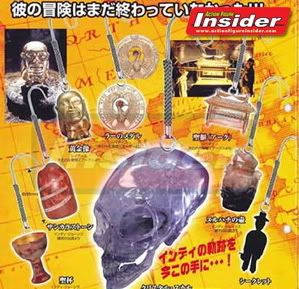
    The second part of this story revolves around Action Figure Insider this month who put up a neat flier, check it, and accompanied it with the following information, “Takara Neduke, makers of necklaces and trinkets, has released a picture of their upcoming 1.5 inch mini PVC figures of props, relics and treasures from Indiana Jones movie series.” So, it was Takara’s mistake for putting it out there for people to look at yet Paramount, again, only requests for the images to be taken down. Whether it’s a tersely worded missive or some sort of legal push to have it taken down I am at a loss as to why any site would allow it to be pushed around for publishing information that is factual, correct and only makes Paramount look like the bully.

    The only thing I can square in my own head is that there was an offer of some kind for these webmasters to take their information down. I can’t believe any law office worth its slimy salt would send an injunction against BlowHardDaily.com for publishing pictures that have already become part of the public domain (Again, just try to amend my right to discuss this story, with pictorial goodness), thanks Google Archive!, and, just like the story that led things off what it means to the overall picture of real threats to Hollywood’s content delivery stranglehold.

    So, what is stopping from an entertainment journalist from reporting on the requests for Paramount to have these pictures taken down or from writing a story on this bit of news for a mainstream publication, with picture goodness as well? I’m not sure but it just feels like yet another reason why New Media is having a rough time trying to be respected like Old Media.

    FORGETTING SARAH MARSHALL (2008)

    Director: Nicholas Stoller
    Cast: Jason Segal, Kristen Bell, Mila Kunis, Kristen Wiig, Bill Hader, Jonah Hill, Paul Rudd
    Release: April 18, 2008
    Synopsis: Struggling musician Peter Bretter (Jason Segel, Knocked Up, How I Met Your Mother) has spent six years idolizing his girlfriend, television star Sarah Marshall (Kristen Bell, Veronica Mars). He’s the guy left holding her purse in paparazzi photos and accidentally omitted from acceptance award speeches. But his world is rocked when she dumps him and Peter finds himself alone. After an unsuccessful bout of womanizing and an on-the-job nervous breakdown, he sees that not having Sarah may just ruin his life.

    To clear his head, Peter takes an impulsive trip to Oahu, where he is confronted by his worst nightmare: his ex and her tragically hip new British-rocker boyfriend, Aldous (Russell Brand), are sharing his hotel. But as he torments himself with the reality of Sarah’s new life, he finds relief in a flirtation with Rachel (Mila Kunis), a beautiful resort employee whose laid-back approach tempts him to rejoin the world. He also finds relief in several hundred embarrassing, fruity cocktails.

    View Trailer:
    * Large (QuickTime)

    Prognosis: Negative. Swing and a miss.

    I never saw Veronica Mars and I still can’t account for the amount of gushing many young pre- and post-pubescents hoist upon the shrine of Kristen Bell. Sure, she was cute as a button and sassy like a firecracker in her role on Heroes but I didn’t immediately want to see her taking on anything and everything she could star in so I could get more of her. It looks like in this case, as was her role in Heroes, she plays the role of the punch line instead of the starring role she was accustomed to playing whilst on the WB/UPN.

    That said, I am a little more warm to the thought of Jason Segel who’s best scene to date with me was his conjunctivitis moment in KNOCKED-UP; it was a refreshing, yet hilariously poignant, moment of an Everyman. He has that quality and it was that very sameness, Seth Rogan and Jonah Hill had it as well, that sent dudes and ladies alike to the mass box office it eventually claimed. His appearance here in the opening sequence not only made me scratch my head as did the Heigl/Rogan pair-up (Everyone still talks about whether that hook-up could ever have happened. The consensus being not a chance in hell.) but the nudity, the absence of his clothing as Bell tries to let him go at least gets my attention.

    I like the absurdity of the moment and I can appreciate the needs of the producers getting in the cards in-between, telling us that this is being brought to you by the dudes who gave us 40-YEAR-OLD VIRGIN and KNOCKED-UP, one of those things that people need to be told time and time and time again, but it starts to slowly recede from its funniness as we make our way deeper into the story.

    Although it doesn’t immediately lose its steam, I like the crying on the part of Segel after he fires a load into a one-night stand and his insistence that he might have an STD because of it, him making the admission in a pediatrician’s office. I thought that there is no way this could be anything less than a good time at the movies but something happens here. He goes to Hawaii to get away from it all only to have his ex staying in the same hotel.

    It’s almost like I can hear “Let the wackiness ensue!” and I’m not sure I want to listen.

    Then we get”¦Kenny Loggins? The CADDYSHACK song? Huh? Whose idea was this to insert this golden oldie in a trailer that it has no business in?

    Besides that we’ve got Segel playing the part of the dumpee in all those awkward moments, the running into the new guy, the avoiding each other and the ever popular Hollywood-ization of relationships: What happens when you find someone new and your ex finds out only to want you back like a buttered piece of sizzling Kobe beef?

    Let the wackiness continue!

    We’ve got Hill involved in some kind of weird subplot that completely derails the main thrust of this film which, I believe, is all about Segel trying to move past the relationship he had with Bell and into the new one with an even hotter chick than what he had before. Bell, true to Hollywood form, shows an irrational interest in the new relationship Segel is having with his new, saucy looking interest (Shit, if only I had as good of luck like this whenever some shrew dumped me”¦) and Hill’s subplot is shoehorned further into the film’s trailer.

    It’s almost as awkward as the moment when two ex’s meet for the first time after a break-up.

    Toss in the real wretched ending to this trailer, a little blow job joke tossed in with some reference to a pearl necklace, with it all feeling rather contrived and false and you’ve got yourself one crap looking movie that will probably do as well as THE HEARTBREAK KID.

    I really wish I could be more positive about this film but as it ends with Loggins’ shrill cackle I can’t be anything but turned off by the prospect of this awfully constructed trailer and sub-par looking film.

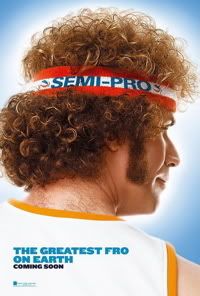
    SEMI-PRO (2008)

    Director: Kent Alterman
    Cast: Will Ferrell, Woody Harrelson, Andre Benjamin, Will Arnett, Rob Corddry, Jackie Earle Haley
    Release:
    February 28, 2008
    Synopsis: Will Ferrell stars in Semi-Pro, an outrageous comedy set in 1976 against the backdrop of the maverick ABA – a fast-paced, wild and crazy basketball league that rivaled the NBA and made a name for itself with innovations like the three-point shot and slam dunk contest. Ferrell plays Jackie Moon, a one-hit wonder who used the profits from the success of his chart-topping song “Love Me Sexy” to achieve his dream of owning a basketball team. But Moon’s franchise, the Flint Michigan Tropics, is the worst team in the league and in danger of folding when the ABA announces its plans to merge with the NBA. If they want to survive, Jackie and the Tropics must now do the seemingly impossible – win. Semi-Pro co-stars Woody Harrelson (Anger Management, White Men Can’t Jump), Andre Benjamin (Four Brothers, music group Outkast), Maura Tierney, Will Arnett (Blades of Glory, “Arrested Development”), Andy Richter, Rob Corddry, DeRay Davis, Josh Braaten, Jay Phillips, and Jackie Earle Haley. The film is written by Scot Armstrong (Old School), directed by Kent Alterman, produced by Jimmy Miller, and will be released on February 29, 2008.

    View Trailer:
    * Large (Flash)

    Prognosis: Positive. I had a boss once who was a major league pitcher.

    The stories he had shared with us regarding the mind blowingly funny shit that happened on the road was worth every miserable day I spent at that place. He would tell us of times when he would be in the locker room before a big game and one of the players would have shots lined up for every player to take on their way out onto the field. That, if you’re interested in knowing, there is a ballpark out there which has two entrances: one for the players’ wives and another one for the same players’ girlfriends.

    That’s why you’ve got to love this red band trailer.

    Where else but in Europe and the rest of the civilized world can you hear a little bad language, a little salacious innuendo and pretty much everything that the Bush administration would love for you not to be able to view. I’m kind of torn on the idea of using the red band trailer as a way to seem like you’re really “on the edge” but this is a film that kind of could go either way, an element of all of Will Ferrell’s movies. However, it’s inclusion here is really a testament to other elements that I think play well when taken as a whole.

    As we open on a poker game where Will talks about there not being a rule against playing drunk and the ensuing back and forth between the straight man of the joke was really good. What’s more is that as the always good CADDYSHACK classical ditty, “Waltz of the Flowers”, plays in the background we’re thrusted into a talk about a little oral satisfaction which gets a rousing swell of support from fellow players.

    It’s enough that this trailer genuinely pushes the boundaries of what’s acceptable in our marketing here in the US of A but I am beyond giddy at the exchange Will has with one woman about whether he’s ever been to an orgy and the subsequent exchange he has with a referee where he tells him to wrap his referee lips around his member and that he’ll kill his family. A priest, no less.

    Ferrell’s drop kick of the game ball and an announcer’s calm comment about a member of the audience going home with said ball just adds a little extra funny to the moment which I appreciate. So many times we’re forced to just see quick clips with no context but this trailer takes the risk of staying with the movie for a little bit, letting us feel what this movie is going to be and it pays off well.

    Like I mentioned, the red band usage can sometimes be a little pernicious for a film that genuinely isn’t that good, thinking that a little swearing will sell the film to scads of fans. However, here, it pays off because the swearing isn’t the hook, it’s the funny that sells itself.

  • Toy Box: Transformers Grimlock Mini-bust

    toybox.jpg

    The Transformers film might not have been high cinema, but it sure did make the bucks. Not only that, but Hasbro’s Transformers line of toys has been one of the very, very few hit toy lines based on a movie in the past decade. But if you’re looking for something a bit more than toys, and perhaps a bit more old school that the Michael Bay interpretation, you should check out some of the cool busts and statues currently on the market.

    One of those is the Action Figure Express exclusive mini-bust of Grimlock. The bust was sculpted by Art Asylum and produced by Diamond Select Toys, and at 6″ fits in nicely not only with their other Transformer mini-busts (of which there are quite a few), but with some of the past busts done by other companies as well.

    Grimlock is a limited edition of 600 mini-busts, and runs around $50. If you have any questions or comments, drop me a line at mwc@mwctoys.com, or visit my website Michael’s Review of the Week. Now on to the review!

    The War Within Grimlock exclusive mini-bust

    toybox_020508_1.jpg

    This version of Grimlock is based on the comic book series “The War Within”, published back in 2002. These comics were grittier than the old show, with a more ‘adult’ feel. The writer, Simon Furman, now works for IDW Publishing who hold the rights for Transformer comics, so the rumor (and it’s just a rumor) is that we might see the series continue.

    Packaging – ***
    On the plus side, the packages keep the busts quite safe, they’ve used the nice, sturdy styrofoam for the interior trays, and there’s a great Certificate of Authenticty that comes in the box. On the negative side, there’s no windo, so you’ll be flying blind til you get him home.

    toybox_020508_2.jpg

    Sculpting – ***
    Grimlock sports a reasonable amount of detail, very typical of this style of mini-bust. He’ll fit in nicely with the rest of the gang if you’ve been picking these up over time, and he’s relatively realistic. Or as realistic as a Transformer can be.

    toybox_020508_4.jpg

    One of the keys to a robot sculpt like this is a sharpness to the lines and angles. Robots aren’t soft and round – they have hard edges, better to slice you up. Sometimes it’s hard to get that metallic sharp appearance in a material like resin, but they’ve done a decent job.

    Paint – ***
    The paint work is fairly clean, although not outstanding. Grimlock is a character with a nice, broad pallette, which makes him a visually interesting guy on the shelf. Most of the cut lines are clean between these colors, and there’s very little slop. Some of the silver was a bit inconsistent in the coverage, but it was a minor issue, as were the few areas where the colors bleed into each other.

    toybox_020508_3.jpg

    Design – ***
    Grimlock is ready for battle, looking like he just walked off the pages of the comic. The War Within Grimlock (and actually, Grimlock in general) is a character that likes hand to hand battle, and prefers using his Energon sword. Here, he’s preparing to take your head off with it, a fitting pose for the character.

    toybox_020508_6.jpg

    Value – **1/2
    Bust prices have crept up about $5 – $10 over the last year, going from the old $40 – $45 to $45 – $50. Sad as that is, I can’t say it’s surprising considering the current economy. And at that price, this guy is a pretty average value.

    Things to Watch Out For –
    Be careful attaching the left arm and the ‘wings’ on his back. Both of these fit with metal posts inserted into the resin body, and it is very easy to break the resin if you don’t take your time.

    Overall – ***
    For fans of the license, this is a solid contender. He fits in well with most of the rest of the busts, even with him being done in the slightly different War Within style. If you’re a big fan of Transformers, I recommend giving him a look.

    Where to Buy –
    He was an Action Figure Express exclusive, but they may already be sold out. You can do an ebay search with MyAuctionLinks as well.

  • Comics in Context #213: Your Obedient Serpent

    comicsincontext4.jpg

    cic20080212-01.jpgIn last week’s column I embarked on a mission: to track down animated cartoons that had made an impression on me when I was in grade school, but which I hadn’t seen since, and watch them again through adult eyes. I wanted to see how many of them I could find on the Internet, and what other animated cartoons of note might be there as well.

    My quest proved to be more successful than I’d imagined. I found a lot of vintage cartoons that I recalled as mediocre or worse, and which lived down to my memories: King Leonardo and Friends, Linus the Lionhearted, Silly Sidney and Deputy Dawg and more. But there were also plenty that proved to be true classics.

    Although I’ve seen many of the 1940s Superman animated cartoons as an adult, somehow I never caught up with the one I found perhaps most memorable from my childhood, in which Superman battles a gigantic tyrannosaur. But now I’ve found it: it’s called The Arctic Giant, produced by the Fleischer Studios, directed by Dave Fleischer, and released by Paramount in 1942.

    Like the other Fleischer Superman cartoons, The Arctic Giant is remarkable for its dramatic lighting, “camera” angles and visual compositions and its sheer energy and momentum. The superhero genre was only four years old in 1942, yet the Fleischer studio caught its spirit perfectly. But what I didn’t expect from The Arctic Giant were the little touches that the Fleischer team added to the cartoon.

    A prologue sequence recounts how the colossal dinosaur was found frozen in the Arctic and was transported south in a freighter with similarly colossal refrigeration facilities. A new wing is built for the “Museum of Natural Science” in Superman’s home city specifically to exhibit the frozen creature. The cartoon never names this city, but the museum’s main building is clearly the actual American Museum of Natural History in New York City, with its towers that make the 77th St. facade look like a storybook castle. The Fleischer Studios were originally located in New York, so perhaps they thought of Superman as based there, too.

    There’s not much dialogue in the Fleischer Superman cartoons, but the few words pay off in this one. Assigned by The Daily Planet editor to cover the dinosaur exhibit, Lois stops by Clark Kent’s desk to kid him that he’s so timid the sight of the monster would make him faint. This may be condescending, but it seems more witty than cruel, and Clark, once Lois has left, seems amused by it. It’s the sort of repartee I’d expect from the Lois of the 1990s Superman animated series; how interesting to see that the Fleischers had already caught the Lois and Clark relationship so well a half century earlier.

    Of course, the dinosaur is not dead but in suspended animation, and, of course, he wakes up. Lois interviews a workman at the museum who sets down an oil can, which accidentally topples into machinery, cutting off the refrigeration that keeps the dinosaur comatose. In this high tech present, I’ve had enough experience with equipment that malfunctions because one little thing unexpectedly went wrong, so it seemed just right to me that to little falling oil can would end up releasing the monster.

    When I first got to the real American Museum of Natural History, I think I was slightly disappointed with the size of the dinosaur skeletons. Big as a real tyrannosaur is, it still fits within a room on the museum’s fourth floor, whereas in my childhood, pop culture tended to make a dinosaur at least as tall as the entire museum. So the awakened “Arctic Giant” is far bigger than a real tyrannosaur: his foot is so big that he simultaneously steps on and flattens two police cars. Marauding through the city, this tyrannosaur looks like he is the size of Godzilla, and that’s pretty amazing, considering that The Arctic Giant came out twelve years before the first Godzilla movie (1954)!

    Watching Arctic Giant, I wondered, if Godzilla wasn’t the Fleischers’ model for their “Arctic Giant,” could it have been King Kong? That makes sense: they are both gigantic monsters that stalk through a major city; like the dinosaur, Kong too was transported to New York by boat; Kong and the “Arctic Giant” both wreck an elevated subway line. And, of course, the dinosaur also menaces a young woman: at one point the tyrannosaur scoops Lois up in his mouth!

    Superman goes to the city’s–and Lois’s–rescue, and there is a striking sequence in which Superman leaps to the tops of a succession of skyscrapers. Even though Superman streaks across the sky in the opening credits, this cartoon was definitely made before it was decided that Superman could fly. On the other hand, on the cover of Action Comics #1 Superman raises a car above his head; by Arctic Giant his strength has grown tremendously. The monster demolished the museum wing in escaping, and in order to rescue Lois, Superman lifts enormous chunks of rubble that dwarf him in size. This looks astounding to me in 2008; what must it have looked like to audiences in 1942, long before the recent rise of CGI, back when the superhero genre was still brand new?

    Upon rescuing her from the rubble, Superman warns Lois to stay out of danger, but once he’s gone, she says she’s not giving up on this story. She doesn’t seem foolhardy, as she often does in these cartoons, but rather dedicated to her job. She isn’t the least bit shaken after her close encounter with the dinosaur, and that seems appropriate for Superman’s leading lady, and should have strongly impressed audiences in this pre-feminist period: she wasn’t continually screaming like Fay Wray did at Kong.

    The Arctic Giant mostly seems to take place in New York City, but the marauding monster soon crashes his way through a dam as big as Hoover Dam, flooding what seems to be a country setting with small houses. Superman topples a mammoth mass of rock to seal the gap in the dam. Then the monster is back in the city, wrecking a bridge that looks very much like one of New York’s (with Superman lifting an entire span, with trucks and cars on top, back into place!) and finally stalking towards what could be Yankee Stadium. This is where the dinosaur scoops Lois up in his mouth, and Superman has to go in after her. It’s not quite the “belly of the beast” in Joseph Campbell’s phrase, but close enough to fit the archetype. Once Superman rescues her (again), Lois again shows nerves of steel, whereas you or I, after spending time in a dinosaur’s maw, might be in the verge of nervous collapse; after Superman again cautions her, she even jokingly addresses him as “milord.” She kids Clark Kent abut fainting, but this Lois seems incapable of doing the same.

    I recalled Superman killing the tyrannosaur in Arctic Giant and my disapproving: kids, after all, love dinosaurs. On seeing the cartoon again, I am pleased to say my memory was wrong. Superman topples the dinosaur, and there’s a Daily Planet front page with a photograph that seems at first glance to show the tyrannosaur lying prone, but this time I saw the headlines saying that Superman “subdued” the creature, what is now in the “park zoo” (Central Park? Bronx Park?). So it seems that the Fleischers anticipated Jurassic Park here.

    And so the cartoon ends with Lois and Clark at the Planet, with Lois sitting on Clark’s desk, showing off her legs (the Fleischer team clearly regarding her as a sex symbol for the adults in the audience), and Clark doing what was a trademark of these Superman cartoons, breaking the fourth wall by giving a wink to the audience. The Arctic Giant lasts only a little over eight minutes, but it has thrills, spectacle, humor, sex appeal, and a “meta” touch at the end. What more could one want?

    More than once, upon hearing volunteers at the Museum of Comic and Cartoon Art ask visitors to become MoCCA members that they ought to play the musical question from Max and Dave Fleischer’s Bimbo’s Initiation (1931): “Wanna be a member? Wanna be a member?”

    I don’t recall seeing Bimbo’s Initiation as a child, but it certainly and deservedly turned up in Fleischer retrospectives I saw in the 1980s, and it’s about as different from the Fleischers’ Arctic Giant as can be.

    “Bimbo” is certainly an odd name for a male anthropomorphic dog, who is now best known for his supporting roles in Betty Boop cartoons. In this cartoon, however, Bimbo is the lead and Betty the supporting cast member. Not only that, but this is one of her earliest appearances, when she was supposed to be a dog, not a human. She looks like the familiar later version, except for her doglike ears.

    Watching Bimbo’s Initiation again on YouTube, I decided to apply the Joseph Campbell approach to this infamous cartoon. Walking along a city street, Bimbo tumbles down a manhole, thus inadvertently crossing a Campbellian threshold and descending into an underworld. This might also be an allusion to Alice falling down the rabbit hole into Wonderland. Bimbo, however, finds himself in a sort of hell.

    Bimbo lands in the subterranean headquarters of a strangely garbed secret society, who chant in deep male voices, “Wanna be a member? Wanna be a member?” “No!” protests Bimbo. But their invitation is a Campbellian “call to adventure,” and according to Campbell’s monomyth, denying the call always leads to dire consequences. So Bimbo finds himself in a series of seeming death traps, often involving sharp, phallic blades, one of which comes to life and tries to bite him. If the dangers weren’t treated in a somewhat comedic manner, this could easily be a horror story.

    As the cartoon’s title indicates, Bimbo is being put through an initiation ritual by this secret society. Presumably these traps are intended as a test of manhood. But whenever the society members return to pose their musical question, “Wanna be a member?” Bimbo persists in refusing to join, and yet more danger ensues.

    Midway through the cartoon, the dog-eared Betty Boop appears and beckons to Bimbo. This time Bimbo, sexually aroused, happily accepts the invitation and he follows Betty through a doorway only to lose her and be subjected to yet more traps. Ultimately Bimbo is confronted once more by the leader of the secret society, who poses his question “Wanna be a member?” yet again. Bimbo still refuses, until the leader unmasks, revealing “himself” to be Betty. Now Bimbo definitely wants to be a member, the other secret society members reveal themselves to be Betty lookalikes, and the cartoon ends with Bimbo and Betty dancing hand in hand, while the Boop lookalikes provide a backup chorus line. The subterranean hell has become a romantic heaven.

    So, if Bimbo is being initiated into masculinity, he refuses as long as he perceives it as requiring submission to alpha males upon threat of violence. Achieving adult masculinity becomes much more appealing to Bimbo when he comes to see it as the means for making a sexual connection with Betty. (So perhaps the word “member” in this cartoon is also a sexual allusion.) At the cartoon’s end Bimbo has passed the initiation, but instead of participating in power games with other males, he instead wins the hand of the leading lady.

    Long before I read my first DC superhero comic, I was a staunch fan of another DC Comics title, The Fox and the Crow, a funny animal series which had an impressively successful run from 1951 to 1968. Although I was pleased to see the Fox and Crow turn up in cameos in the first issue of DC’s new revival of Captain Carrot, DC didn’t own these characters. Not until the 1980s, when I read Of Mice and Magic, Leonard Maltin’s pioneering history of animation during the Hollywood studio system years, did I learn that the Fox and Crow first appeared in Fox and Grapes, a 1941 cartoon directed by Frank Tashlin, who later and briefly made memorable cartoons for Warners. Tashlin would go on to direct live action comedies starring Bob Hope and Jerry Lewis (who, coincidentally, also starred in DC Comics series in the 1950s and 1960s).

    Despite all the classic cartoon retrospectives I’ve attended over the decades, Fox and Grapes never turned up and remained a mystery to me. But now YouTube has finally given me the chance to see it, and it is surprising from start to finish.

    Surprise #1: The Fox and the Crow are unmistakably voiced by none other than supreme Warners voice artist Mel Blanc!

    Surprise #2: Maybe this shouldn’t have been so surprising, since I remembered from the comics that the Crow’s first name was Crawford and the Fox’s first name was, of all things, Fauntleroy, as in Little Lord Fauntleroy. When the Fox makes his entrance in Fox and Grapes, he is skipping along a bridge, virtually dancing, wearing a straw hat and enormous bow tie, whistling or singing “la la la” to the tune of a Strauss waltz, his rear end swinging back and forth. Later, Blanc elaborately rolls his “r’s” when the Fox speaks of grapes. Could it be that Tashlin intended the Fox to be gay? (In that same year, 1941, Disney released The Reluctant Dragon, whose title character also seems to be as stereotypically gay.)

    Reportedly, Chuck Jones credited Fox and Grapes as a major inspiration for his Roadrunner series, which began in 1948. I expected to find some vague similarities. But now that I’ve finally seen this cartoon, my Surprise #3 is how astonishingly close Fox and Grapes is to the Roadrunners.

    First, there’s the Fox’s obsessiveness, which is arguably greater than Wile E. Coyote’s. The premise of the cartoon is that the Crow is trying to get hold of the Fox’s picnic lunch, and learns from the fable of the fox and the crow in “Eslops Fables” that foxes love grapes. (There’s a “meta” dimension to this cartoon.) So, the Crow hangs a bunch if grapes from a branch high on a tree, and offers to exchange them for the Fox’s picnic food. The Fox refuses to trade and says he will simply jump up and seize the grapes. This leads to a long series of blackout gags in which the Fox tries over and over to reach the grapes and fails every time. Like his fellow canine predator, Wile E. Coyote, the Fox will not give up. But unlike Jones’s Coyote, the Fox already has lots of food right there, and, in fact, had already consumed plenty before he even saw the grapes. The Fox isn’t motivated by hunger; he’s simply after a particular delicacy, and yet despite continual failures, he won’t cut his losses and be satisfied with the food he already has. The Fox and Coyote are both obsessive compulsives, and they both suffer from hubris and overreaching.

    Still more surprisingly, many of the gags in Fox and Grapes will be familiar to any Roadrunner aficionados. The Fox repeatedly ends up falling from great heights. At one point the impact literally flattens him, compressing him as if he were an accordion. As with the Coyote, most of the Fox’s failures come from overlooking the one little thing that could go wrong with his plans. At another point, the Fox stands on one end of a kind of teeter-totter, strains to lift an enormous rock, and then, with great effort, hurls it into the air. His intention is that the rock will hit the other end of the seesaw, catapulting him upward towards the grapes. Instead, of course, the rock falls directly back down, crushing the Fox beneath. How often have we seen variations in that gag in Roadrunner cartoons?

    Fox and Grapes isn’t just an inspiration for the Roadrunner series; it’s virtually a blueprint! But Chuck Jones and writer Michael Maltese elaborated on this basic structure in numerous ways, turning the Roadrunner series into something conceptually superior to the Tashlin cartoon, and even more profound, as I will explain in some future column.

    Who was the first superhero I ever saw on television? I can’t be sure. Was it Superman in the Fleischer cartoons, or Mighty Mouse? Or was it Tom Terrific? He was the title character of a Terrytoons series created by Gene Deitch that ran for years on CBS’s Captain Kangaroo show, back when CBS programmed for children on weekday mornings rather than try to compete with the Today show (here and here).

    Tom arguably qualifies as a superhero by the standards established by Peter Coogan in his book Superhero: The Secret Origin of a Genre (See “Comics in Context” #162). First of all, he has super-powers: he wears a “thinking cap” that not only augments his intellect but also enables him to transform into anything. Distinctively shaped like a funnel, the thinking cap also acts as a symbol of his superheroic identity, as much as the chevron or insignia on the typical superhero’s costume. Of course, he also has a mission, to do good.

    On the Internet I found a complete five-episode Tom Terrific serial. Alas, it does not feature Tom’s archnemesis, Crabby Appleton, whom I haven’t seen in decades, but instead substitutes a worthy opponent who seems newly relevant in the wake of the popularity of the Pirates of the Caribbean movies: the piratical Captain Kidney Bean.

    The Tom Terrific cartoons turned their miniscule budget to heir stylistic advantage. The characters an backgrounds are simple line drawings, devoid of color: in fact, you can even see the background lines through the characters. But I suspect that graphic simplicity was appealing to very small children, as was Tom’s strikingly visual shapeshifting power.

    Like so many superheroes, Tom has a sidekick: his case, his talking pet, whom he calls “Mighty Manfred the Wonder Dog,” Tom insists that Manfred is as heroic as himself, but as surely even the youngest viewers could tell, Manfred is actually sleepy, stupid and virtually immobile. This may be a clever satire on the way that many pet owners project personality traits onto their pets that the animals don’t actually have.

    Seeing Tom Terrific now, I wondered, is it possible that Deitch and his colleagues named “Mighty Manfred” after the title character of Lord Byron’s 1816-1817 romantic poem Manfred? If so, Deitch and his writers were amusing themselves in this instance, knowing that the full irony of Mighty Manfred’s name would never be grasped by their target audience.

    Though little kids would understand that Tom is mistaken about his dog’s heroic qualities, perhaps they would not realize that the cartoons also poke understated fun at their boy hero’s innocence about the world in general. The “Captain Kidney Bean” serial makes it clear that its pirate villain is considerably nastier than its naive hero realizes. In this regard Tom Terrific reminds me of the Batman TV show later in the 1960s. In both cases this is a joke that grows old quickly. Tom Terrific was aimed at very young children, and has little to sustain adult interest.

    But I am impressed on the cartoons’ emphasis on Tom using his “thinking cap” to think his way out of dilemmas rather than resorting to violence. How often do kids’ cartoons make being smart seem cool?

    The vintage cartoons that proved to be better than I had remembered were from Bob Clampett’s legendary Beany and Cecil series. I expect that one reason is that, like Jay Ward’s The Bullwinkle Show, made during the same period of late 1950s and early 1960s, Beany and Cecil worked on two levels: these series had colorful characters and plenty of slapstick action that would appeal to the target audience of little children, but also simultaneously aimed verbal humor and satire at an older audience. Significantly, both Beany and Cecil and Bullwinkle ran on prime time television before settling into Saturday morning berths. The smarter children would pick up enough of that upper level of humor to recognize that Beany and Cecil and Bullwinkle didn’t condescend to them, but instead respected their intelligence and even initiated them into appreciating more sophisticated kinds of wit.

    Beany and Cecil are, respectively, a young boy who wears a beany cap, which, in the cartoons, enables him to fly, and his best friend, a “seasick sea serpent.” (That new movie, The Water Horse, has hit upon a similar pairing.) They travel the world with Beany’s “Uncle Captain,” Horatio Huffenpuff, an amusingly ineffectual and cowardly father figure, in his ship, the Leakin’ Lena, and frequently run afoul of perennial nemesis Dishonest John.

    The animated Beany and Cecil was a follow-up to Clampett’s more child-oriented Time for Beany, a puppet show on local television in Los Angeles. There are examples of this show on the Web, too, such as Episode 241 from 1951, which I found disappointing. lacking the energy and sharp verbal wit of the later cartoon series. Even so, this installment finds the regular cast of characters in Hollywood, where the villainous Dishonest John persuades Cecil to get himself some publicity by jumping of the roof of a building–and Cecil does! It’s a kids’ puppet show, so Cecil survives, but nonetheless gets badly banged up. The publicity stunt works, and a producer hires Cecil to be in a movie–and wants him to jump off another building. Thus a startling dose of adult cynicism about show business turns up in what is supposedly just an innocuous show for children.

    Maybe the sign that Clampett ultimately wasn’t interested in doing a show just for small children is his treatment of Beany. Tom Terrific is also a young boy, but he’s the dominant character in his cartoons. In contrast, Beany is a blank, registering little personality beyond his characteristic smile, which sometimes seems as if it is as permanently affixed as Jack Nicholson’s Joker’s. It’s as if Clampett decided that since the audience is primarily made up of kids, there has to be a kid on the show for them to identify with. But really, was wearing a beany cap EVER cool?

    One of the main reasons that Boomers loved this show was Beany’s unlikely costar, Cecil, the Seasick Sea Serpent. Think about it: Cecil is actually a gigantic snake! It seems to me that Clampett and the other writers set themselves a formidable task in having to do cartoon scripts about a major character who could only pick things up with his mouth!

    But rather than being creepy, Cecil is wholly lovable. Watching these cartoons online, I realized that Cecil had much the same appeal as Ben Grimm, the Thing in Fantastic Four. Both of them, when in combat, are superhumanly powerful, courageous, and nearly unstoppable. (The Thing shouts, “It’s clobberin’ time,” while Cecil’s battle cry is “I’m comin’, Beany boy!”) But both of them also work superbly as comedy characters. They have similar personalities: hot-tempered but loyally devoted to their friends, prone to insecurity and embarrassment, with a ready sense of humor. (Ben mutters, “What a revoltin’ development this is,” while Cecil, faced with a similar situation, simply exclaims, “What the heck!”) Cecil’s voice would sound just as appropriate coming from the Thing.

    The other true star of these cartoons is Dishonest John, familiarly known as D. J.. Dressed all in black, with a mustache long enough that he could twirl it, were he so inclined, Dishonest John looks like an updated version of a villain from a silent movie melodrama (and, indeed, an ominously tinkling piano theme accompanies his entrances). Sometimes the cartoons give D. J. a specific motive for his villainy in that particular adventure, like getting filthy rich. But it eventually becomes apparent that his real motivation is his sheer joy in nasty mischief. Although Clampett probably didn’t realize it, D. J. is a descendant of the “vice” figures of medieval drama, who were both evildoers and comedians, who often spoke directly to the audience. So does D. J., who seems well aware that he is in a cartoon. His trademark line (“Nya ha ha”) demonstrates that no one is more amused by his evil antics than he is.

    Once I saw which Beany and Cecil cartoons were available on YouTube, I went straight to “Super Cecil,” Clampett’s comedic venture into the superhero genre. Cecil has sent away for a mail order superhero costume, which he dons to become “Super Cecil.” He doesn’t gain any super-powers in the process, but perhaps Clampett was here acknowledging that Cecil often plays a role like a superhero in these cartoons, overpowering the bad guys with his colossal strength.

    Determined to outdo Cecil, Dishonest John switches to his own costumed identity, the Bilious Beetle–and his costume enables him to fly! The insect-themed name and the use of Rimsky-Korsakov’s “Flight of the Bumblebee” as the Bilious Beetle’s theme music suggest that Clampett was alluding to the Green Hornet. But it wasn’t until years after “Super Cecil” that the Batman TV show of the mid-1960s firmly impressed the concept of the costumed super-villain on the minds of the general public. I’m impressed that Clampett was thus parodying super-villains years earlier.

    The Bilious Beetle tricks Super Cecil into thinking he’s kidnapped Beany, the perennial abductee in these cartoons, but actually D. J. is using a hand puppet in Beany’s image. This is a “meta” joke for anyone who knows that Beany and Cecil originated as a puppet show (as is the fact that the cartoons never show the end of Cecil’s tail, as if he were still a hand puppet). I suspect it may also be Clampett’s comment on how empty Beany was as a character. The cartoon didn’t even need the “real” Beany to lure Cecil into action. D. J.’s Beany puppet is no more than a Hitchcockian MacGuffin, a plot device of no inherent worth!

    There are plenty of visual gags as the Bilious Beetle leads Super Cecil on a merry chase, giving the cartoon strong comic momentum. But it struck me that whereas in Clampett’s cartoons for Warner Brothers, the slapstick would have been the main source of laughs, in this cartoon the comedy principally comes from the personalities of D. J. and Cecil. First D. J. is wittily triumphant, while Cecil is repeatedly frustrated, setting up the cartoon’s payoff in which Cecil turns the tables on his adversary, culminating in a great gag in which Cecil unleashes a swarm of actual “bilious beetles” on their costumed namesake, whom they regard in a way I will not disclose here: go see the cartoon yourselves.

    The title of “The Phantom of the Horse Opera“ evokes Lon Chaney, but he’s actually a Western outlaw who has the power of invisibility. (Coincidentally, he thus resembles Marvel Comics’ Western version of Ghost Rider, now known as the Phantom Rider.) When the Phantom first appears in this cartoon, he does indeed seem menacing, until Clampett undercuts the ominous tone by having him speak: he sounds like the 1940s comedian Jerry Colonna. Nowadays Colonna’s most enduring work is probably his vocal performance as the March Hare in Disney’s Alice in Wonderland (1951). Watching “Phantom” on YouTube, I wasn’t at first sure whom the Phantom was imitating, (The cartoon’s final gag makes it clear by revealing the Phantom’s face as a Colonna caricature.) Beany and Cecil cartoons continually engage in such references to the pop culture of their day. But I find that this cartoon captures Colonna’s comic persona so well that even if you’ve never heard of Colonna, you should still find the Phantom’s dialogue funny.

    Since Cecil is so enormous, how can human-sized adversaries get the better of him? In “Phantom” the answer comes in the cartoon’s high point, a well constructed comedy set piece in which the Phantom, step by step ruins Cecil’s lunch, spraying him with ketchup, smearing his face with mustard, and dousing him with pepper to make him sneeze, bewildering the sea serpent, who can’t see his invisible tormentor.

    Inevitably, the Phantom kidnaps Beany, who just as predictably calls, “Help, Cecil, help!”, but even the Phantom seems exasperated with Cecil’s one-dimensional co-star: “Who writes your dialogue, kid?”

    The cartoon climaxes when the Phantom’s “invisible paint” turns Cecil invisible, too, and he has a knock-down, drag-out battle with the Phantom that literally shakes the landscape around them. Breaking the fourth wall, Cecil briefly pauses to tell the audience this is “the greatest fight ever filmed” but “it’s too bad you can’t see it.” I wonder if Clampett and company are joking here that their budget wouldn’t allow them to actually show such a fight, or maybe that the television censors wouldn’t let them show anything this violent.

    Better still is “The Wildman of Wildsville“, whose title character is a beatnik artist presented as if he were a “wild man” living in the jungle. This is a topical reference to the Beat movement of the 1950s, and yet, again, Clampett and company make the character so vividly funny that the cartoon has not dated.

    The cartoon opens with Captain Huffenpuff presenting one of his typically pun-filled maps. He intends to capture the “ferocious wild man” on the “Hungry I-land,” a reference to the “hungry i,” a famous San Francisco night club of the time. Among the locations on the map are “Mort Soil”–an allusion to political satirist Mort Sahl, who performed at the hungry i–and the “Lenny Spruce.” Wait a minute! A cartoon that was shown to children on Saturday mornings in the 1960s actually made a not-so-veiled reference to Lenny Bruce!?! What the heck!! And that’s not all: later on the Wildman refers to Oscar Wilde!

    Once the Captain and company arrive on the island, the backgrounds begin evoking the Abstract Expressionist art of the period. To my astonishment, some of these backgrounds even imitated the “drip” paintings of Jackson Pollack! Which children in the 1960s could possibly have recognized that? And yet Clampett and company put it in, laying a surprise for any adult who knew Pollack’s work and saw their cartoon.

    The Captain, Beany and Cecil are out to capture the Wildman, as if he were a wild animal. Clampett and his collaborators are thus satirizing the way that mainstream culture regards people on the radical avant-garde as if they were part of an alien culture, potentially dangerous. The mainstream wants to tame these radical innovators. But in Clampett’s cartoon, it’s the Wildman who wins, just as so many once-controversial artistic movements end up being accepted into mainstream culture (like, say, taking the comics medium seriously). Using his paint, he endows Cecil, Beany and the Captain with berets, dark glasses, and goatees. As Cecil wisely observes, “If you can’t beatnik “˜em, join “˜em,” and the cartoon ends with the nouveau-Beat Beany, Cecil and Captain dancing along with the Wildman to a jazz beat. They’ve gone “wild,” too.

    In 1988, four years after Bob Clampett’s death, The New Adventures of Beany and Cecil arrived on television, only to vanish after five episodes. It came and went so fast I don’t think I even knew about it at the time. But one of the delights of MoCCA’s 2006 “Saturday Morning” retrospective was a looseleaf notebook of photocopies of Bruce Timm’s storyboards for one of the new cartoons, “The Courtship of Cecilia,” written by Quick Stop contributor Paul Dini! Now I’ve found this cartoon on YouTube as well (in two parts: here and here). In Clampett’s own “Cecil Meets Cecilia,” Dishonest John disguised himself as a “she-serpent” to humiliate Cecil, and the real Cecilia only showed up at the end. The new cartoon builds upon the original’s premise, by having Cecil alternatively interact with the real Cecilia and with D. J. as the phony Cecilia, thoroughly confusing our serpentine hero. The new cartoon also follows Clampett’s lead in concocting awesomely awful puns (D. J. laments, “Cecil’s singing is giving me a haddock. I wish I was hard of herring.”), metafictional gags (D. J. exults, “I love being a cartoon bad guy–nya ha ha!”), and surreal visual metaphors. Describing what it feels like to be in love, Cecil says he feels “burning hot,” whereupon his face melts and feels as if he is “coming apart,” at which point his body shatters into fragments. This is pretty good! It’s too bad the series didn’t last, apparently in large part due to network interference.

    Looking over these old cartoons over the last two weeks, it seems to me that many of those I remember most strongly were the ones that didn’t conform to the conventional notion of what Saturday morning animation should be like. They were wilder and subversive in some way. Matt Groening cites Bullwinkle as an influence on The Simpsons (see “Comics in Context” #8: “San Diego 2003: Day Three: Gaiman, Groening and Bradbury”), so perhaps today’s prime time animation is the true heir of the subversive classics of Saturday mornings of the 1960s.

    Copyright 2008 Peter Sanderson

  • Quick Stop Thingamabobs: 2/11/2008

    thingamabobs.jpg

    The web. It’s a big place, full of plenty of distractions ““ some funny, some informative, some ludicrous, some disturbing, some inane, some profound. Each and every weekday, we present links to a few of our favorite finds”¦

    ————————————————

    • The Pythons in one of their more uncomfortable appearances… (Thingamabob)
    • The rarely seen opening to the also rarely seen The Good Guys(Thingamabob)
  • Comics & Comics: Is This Thing On? Part 1

    comicsoncomicsheader.jpg

    Is this thing on?

    Howdy inter-webbers. I’m Matt Cohen”¦ And I dig comics. Always have. In my twenty-three years on this spinning mud-ball we call Earth, I have read a lot of comic books. Like”¦ a lot. Most Friday nights, when other kids my age could be found out running amok all over town, chances are I’d be huddled up in my bedroom, a stack of comics on the floor, a package of Dunkaroos in my hand and a Ghostbusters movie on the TV (I was really popular, in case you were wondering). Comics have grown with me, and I, in turn, have grown with them. They have, scarily enough, made me the man child I am today. And, I think its about time I gave back. Unfortunately (for you), the only thing I have to offer is my years of obsessive comic book knowledge, coupled with my own strange little slant on life. I hope what I have to say, is what you want to hear. If not, can you at least lie to me, to protect my very fragile ego?

    If 2007 will be remembered as anything it will be as the year of the return to blockbuster event comic books. Both of the big two pumped out at least three different company spanning epics that lasted for months, and spun off into a seemingly endless (and possibly needless) amount of one shots and mini’s released each week, much to the dismay of Wednesday warriors the world over. Though the books sold like hotcakes, most fans were not thrilled with the final products. Not to say all the comics were disappointing. It was just that after so much hype and anticipation, it was very difficult to reach fans expectations. D.C seemed to fare a bit better then Marvel, who caught a tremendous amount of flak for the anti-climatic endings of both their Civil War and World War Hulk series. And even though Sinestro Corps, D.C’s answer to the intergalactic epic was a very enjoyable read, I think most of these events will be remembered as mediocre and way over hyped, at best. As far as the non event titles, each company put out a plethora of brand new minis, revamps and one shots. Some hit, some missed wide. 2007 also marked the return of a bizarre stable of characters at both companies. It was odd, and oddly great to read the comic book misadventures of Slap Stick, Howard The Duck, Captain Carrot, Rocket Raccoon, and Ambush Bug again. Not much of this matters now though, because 2007 is gone, and the show rolls on, but before we burn too much asphalt, lets take a peek at what we read in the year that was.

    So, with that, lets make like bakers, and roll (I bet you didn’t see that coming) into 2007

    ComicsandComics-20708-DCLOGO.jpg

    Infinite Crisis (Infinite Variants): After Brad Meltzer’s brilliant “Identity Crisis” the writers of the follow-up series had some big shoes to fill into. In a decisive move to clean up the Multiverse continuity once and for all, Geoff Johns and the boys launched head first into a fairly basic series, when compared to the book it was following. Mired in plot holes and random explanations (the punch heard round the worlds), what was promised to be the event to end all events, quickly became a confusing exercise in continuity destruction. I don’t know about most fans, but it seems like to clear up the Multiverse “problems” the company had been facing for years, DC first made it more confusing then it ever had been. Most casual readers were immediately lost, and even the more die hard fans found the Crisis hard to follow. Yes, the ending did simplify the multiverse situation in many ways, but it also led readers to ask themselves if they would’ve rather had the multiverse done away with entirely. I think many would’ve preferred the latter. The event that kicked off all DC events in 07 may be remembered as the run that made DC reader friendly again. Or, it will be known as the turning point into a new era of confusion and seemingly random explanations. Only time will tell.

    ComicsandComics-20708-MRMIND.jpg52 (X $3.50): In what will go down as one of the more ambitious (and financially fruitful) ideas in recent years, DC decided it was time to bring back the much loved and sometime lauded, weekly series. With a writing staff compiled by some of DC’s most talented, and most popular artists, and a storyline full of b listers and characters yet to get their time in the spotlight, 52 was a gamble, both artistically and financially. What really made this series stand out from the rest of the other events this year, was its emphasis on characters, which historically have been relegated to sidekicks, or in a rogue capacity. Readers got the chance to know characters that went unnoticed for years and many fans found themselves with new favorites due to this, such as Steel, Sobek (my personal fave) Black Adam, and the late great Ralph Dibny. . With any series that runs 52 issues, pacing will always become a problem, as it was for 52, time and again. With a book released every week, it’s hard to solidify a tone for the work, and with 52, this unfortunately proved to be one of the series biggest downfalls. Individually the issues are all right, but read together as one work 52 comes of disjointed and extremely scattered. (Mr. Mind equals comic book greatness, though, so two kudos for that DC… The most evil villian in the DC universe… is a be-spectacled caterpillar. And they said stoners can’t write comics.)

    Countdown (to the next event): Could DC catch lightning twice in the same bottle. After the tremendous sales of 52, of course another weekly was a logical choice from the company. Unfortunately, the new series lacks what made 52 so much fun. Primarily, the characters. With the focus of Countdown on a rag tag group of Multiverse dodgers (Jason Todd, Kyle Rainer and Donna Troy) most other characters are left in the way side, especially Forerunner, the character created exclusively for Countdown. Whereas 52 was made of sub stories that fit together in an overall scheme, Countdown’s sole purpose it seems, was to rediscover Ray Palmer (formally The Atom,). So much time is spent searching for Ray Palmer, so many near misses and close calls, that by the time he’s actually found, I couldn’t really care less and I doubt other readers were very excited by it either. Another interesting idea that never seemed to pan out was Jimmy Olsen’s “Action Man” storyline. After Olsen spent so many years on the sideline though, it doesn’t matter what kind of powers you give him, he still comes off as goofy and incompetent as ever. Marvel seems to be continuing this trend with long time also ran, Rick Jones, taking on the mantle of Hulk (Red Hulk). If Snapper Carr becomes a hero I may quit. Apart from the Trickster/Piper subplot, which was immensely entertaining, all in all a pretty forgettable series that led to a mind-numbing amount of spin offs each week. With the nature of these events, many fans felt the need to purchase all tie in books, as to really get a complete look at the story. With Final Countdown looming near, DC better raise the stakes and focus more on “important” characters and plot lines, lest leave fans with another lackluster event. (Oh, and if Kamandi is not involved somehow, Dan Didio and Paul Levitz will be hearing from my lawyer”¦ Well, Id have to get a lawyer first, but as soon as that was done, believe you me, DC’s gonna be in a world of hurt).

    Sinestro Corps (Green Lanterns 2: Blackest Night Bugaloo): 3 words”¦ 3 little words single handedly made me interested in all things Lantern again. “Lethal Force Activated”. And with that, the war to end all wars had begun, as had the best event of the year. As of recent times, the GL books had grown stagnant in my opinion. There were just too many lanterns, not enough action and not enough cohesiveness between issues and series. Sinestro Corps did away with all that. Raise the stakes, throw in every Lantern we’ve ever seen and raise the body count level to one rarely seen in mainstream comic books. It was a recipe for success. Sinestro Corps managed to make its namesake, Sinestro, one of the most feared and prominent baddies in comics again, a position he had not held for a long time. Fan favorites like Kilowag and Mogo were present, and enjoyed, as always, but another one of Sinestro Corps great qualities is that it also managed to bring new life to what has been a pretty stagnant GL four (Jordan, Rayner, Stewart, Gardner), in particular John Stewart, who finally seems to have come into his own, and displaced the stigma of being a fourth rate lantern, or as many critics have asserted “The token Black Lantern”. Possibly the most exciting thing to come out of the series, is the hint that comic fans will soon see Alan Moore’s fateful prophecy, “Blackest Night” become a reality. There is no better time to be a Lantern fan then right now, and if fans have dropped any GL titles recently, I suggest they remedy that situation immediately, lest miss out on the all the fun.

    ComicsandComics-20708-sinestro.jpg
    Sinestro’s ultimate S+M fantasy, finally becomes a reality

    Best of the Rest

    Detective Comics: QSE’s very own Paul Dini finally got a chance to write an ongoing series this year, and hits a home run first time up at bat. The fully contained, one issue archs, allow Dini to worry less about continuity and cannon, and more about content and fun. Striking art by Wayne Kramer also helps to keep the book fresh. If the current issue doesn’t strike your fancy, fans know that in only four weeks, they’ll be introduced to a brand new adventure, one that can be read, enjoyed, and in a rare but I think important aspect of comics, forgotten. These are stories that will never lose their appeal, regardless of the current state of Bat Affairs.

    Booster Gold: Skeets is, in my not so humble opinion, the greatest sidekick in comic history. Lets just get that out of the way. I would’ve fully supported a Skeets title, and most likely, it would’ve wound up here anyway, so the inclusion (and reintroduction) of Booster Gold, back into the DC universe, was just icing on the cake. All jokes aside, this series is fantastic. In each issue, Geoff Johns and Jeff Katz bring Booster and Co. to another famous story in DC lore, everything from “Killing Joke” to “Identity Crisis” – something the Countdown spin off “Search for Ray Palmer” tried to do as well, but couldn’t measure up to in quality. With the series restarting at #0 with the reintroduction of “Blue and Gold” (a brilliant idea), I think this will be a book to read for a very long time.

    Honorable Mentions: Shadowpact, Shazam and the Monster Society of Evil, Salvation Run, Infinite Halloween Special

    ComicsandComics-20708-Marvellogo.jpg

    Civil War (Or Tony Stark is an A-Hole): Who’s side were you on? But more importantly, did any side really win? What was billed as Marvels biggest event since Secret Wars, turned out to be the main even of what was already an event filled summer. Cap vs. Iron Man. Hero vs. Hero. The Marvel universe as we knew it was going to be torn apart. Starting with the Stanford explosion and continuing into almost every mainstream Marvel title available. With after effects as far reaching as Civil War’s were, I think it’d be better to break down my feelings into positive and negative.

    ——————————————————–

    PRO

    The Creation of Penance: Speedball (Robbie Williams) has quickly become an awesome, psychotic, deadly new character, an archetype Marvel seems to be able to get right more then its competitors. With obvious shades of the albino Opus Dei member, Silas, from “The Da Vinci Code”, Robbie Wilson, former New Outlaw and current Thunderbolt, would never be the same. And I personally, am glad for that. Penance is currently one of the most “hardcore” characters in the Marvel arsenal. Even on the Thunderbolts, a team assembled of madmen and killers, Penance’s predilection for pain and torment make him stand out from the rest. This is definitely a character to watch in the near future.

    comicsandComics-20708-Penance.jpg
    Sure, sure, we know… You cut to feel. Crazy emo kids.

    Bucky Reborn: Who would’ve thought Cap’s diminutive sidekick would be one of the most vicious and frankly, badass characters the Marvel Universe has seen in a long time. Remove all former traces of his previous life, add in some guns and knives, factor in some post resurrection craziness, and you’ve got the new Bucky Barnes (or Captain America, if you will). If anyone is more appropriate to take over the mantle of the New Cap, the Captain for the modern age we live in, then I cant think of him or her. Yes, its a bit of a trade off, seeing as Steve Rogers had to die, for this new version of Bucky to exist, and yes, in the scheme of things there will always only be one true Cap, but I think this current Bucky is breathing new life into what had become a stagnant Marvel Universe. Now, with the shield en tow, Bucky stands high above the Marvel heap, and I think its a fitting place for him to be.

    CON

    The Death of Steve Rogers: Did we really need this? Time and time again, the big “Deaths” have been more about comic sales then creative integrity. Most famously, Superman Doomdsay, left fans disappointed and feeling more like walking dollar signs than loyal readers. This time up was Marvel heavy hitter Steve Rogers, the figurehead of all things Marvel. Steve had for years, been the most cookie cutter hero in comics, and unfortunately for this reason, (just like in early 90’s Super books) became extremely boring to read about. That all changed in the past few years, with Ed Brubaker’s great run on Captain America. For the first time in decades, Steve was cool again. So what did the higher ups at Marvel decide to do? I think we all know”¦. And none of us cared. As stated above, the one positive thing to come from Steve’s death is Bucky’s ascension to hero, but even that is not enough to make this death a memorable plot point, as opposed to a marketing stunt.

    The Mighty Avengers: Dare I say, the most unlikable hero team in comic book history. I don’t know if every fan is as low on all things Stark related right now as I am, but his new team certainly doesn’t help that negative image. With the exception of Carol Danvers, who is always a likable character, there’s honestly not one compelling or fan friendly member of the group. Ares, in particular, makes me cringe every time he appears on-panel. I once was a great fan of Bendis, but I think overextending himself has really begun to catch up with him. And the thought bubbles, though pretty clever in concept, are extremely confusing, poorly executed, and detract from the reading experience in my opinion. This book, along with the Initiative titles, are unfortunately, the mediocre fallout of Civil War’s mediocre resolution.

    ——————————————————–

    World War Hulk (Green Gamma Guy Goes Gaga): Puny humans shoot Hulk into Space”¦ Hulk fight war.. Hulk become king. Hulk fall in love, have family. Puny Humans blow up Hulks planet. Hulk Pissed. Marvel had launched into its big follow-up to Civil War. And part of World War Hulks ultimate failure may be due to its close proximity in release to Civil War. After months of “blockbuster” events books, World War Hulk couldn’t raise the stakes in terms of scope or scale. It’s like the sequel rule. Most follow-ups should elevate and heighten. World War Hulk is almost a watered down version of Civil War, in terms of stakes and company wide ramifications. I think Marvel readers were tired of this; “All or Nothing” attitude this summer, and it shows when you ask fans what they thought of World War Hulk. Most will echo the same sentiment. Over-hyped, under-developed, and mostly disappointing. Continuing this trend, Marvel has relaunched their seminal goon, this time, with Red skin. This color change doesn’t fool me, and I doubt it fools the rest of the fans. New color does not equal new direction for the series. This isn’t the early nineties. You cant wow em’ with holo-foil or a die-cut cover anymore, and a marketing stunt like green to red isn’t gonna do much either. On the plus side though, WWH did lead to The Incredible Herc, which I’m enjoying quite a bit. So, swings and roundabouts, folks.

    comicsandComics-20708-Miek.jpg
    “Miek wishes Miek was in The Exterminators…”

    Annihilation (Big Trouble in Outer Space): With the exception of Nova and Drax, I was extremely bored by this series. Starting with a ridiculous and non threatening bad guy and going downhill from there, Marvels attempt to bring fans back to their cosmic stable of books, failed pretty miserably overall. This series had too many spin-offs each week, too many characters and almost no direct relation to the rest of the goings on in the Marvel Universe. With the stakes this low, and sales to match, Annihilation will be looked on as the mini event that couldn’t. A truly forgettable series.

    Best of the Rest

    Nova: Richard Ryder is a pimp. A few fans have known this for years, but it wasn’t until Nova’s re-launch did readers rediscover everyone’s favorite space cop with an attitude. Stricken with the deadly Worldmind virus, Ryder finds himself alone (with the exception of WorldMind, Marvel’s answer to Skeets), ravaged by a virus he cannot control, and basically free floating in deep outer space. Through this adversity, Ryder has “found himself” and the self that he found, just happens to be a colossal badass. This is the one Marvel book set in space that really connects with me. I could care less about Star Lord, and I personally thought Annihilation was more then enough, and don’t feel the need to read the current “Conquest” storyline. Nova, however, is a book I really enjoy reading each month.It doesn’t matter that it plays like a sidepiece to the rest of the Marvel comics, because the book itself is great in a standalone nature. I hope an inevitable staff change doesn’t alter the current course this book is running on, because its honestly one of the Marvel comics I enjoy reading the most.

    X-Factor: In what may be Peter David’s finest work in years, the folks of X-Factor Investigations, have become cool again. With film noir plotting, and beautiful artwork by, Madrox and the gang has been brought to the forefront of the Marvel Universe once again, and it’s a role many fans are glad to have them in. Since its conception in, the various X-Factor teams have never really found their role amongst the other heavy hitters. Always more of an X-Men B team then anything else. With this run David has managed to include the X-Factor in the big events, without them losing their individual voice and team personality. I think this is a title that will remain strong for a while to come. Add it to your pull list. I know stuff”¦.

    Honorable Mentions: NextWave:Agents of H.A.T.E, Marvel Zombies, X-Men First Class, ______ & Deadpool, Franklin Richards: Son of a Genius, The Dark Tower:The Gunslinger Born

    comicsandComics-20708-nextwave.jpg
    NextWave: The most fun someone can legally have with a crayon.

    Indie Report: A look at the best books the “Other” guys had to offer

    Mike Mignola: Mignola took a side seat this year, mostly staying in a co writing capacity, but that doesn’t mean the house that Mike built wasn’t churning out great books every month. “Darkness Falls” Hellboy’s first foray into comics in about three years, was a very good read, which helped to expound on Hellboy’s intriguing mythology. Duncan Fegredo took over the reigns of art, the first time someone but Mike has drawn HB on the run, and his work is similar enough to Mignola’s, and yet spectacular in its own right. On the B.P.R.D front, Guy Davis and Jon Arcudi keep putting out great stuff, particularly building Ape Sapiens back story, which timing couldn’t work out better for, since Abe is getting his first solo mini next month. Lobster Johnson’s first solo mini was great as well, very Mignola, very 20’s, very visual, very fitting for the man with the claw.

    The Goon: Eric Powell’s zombie noir masterpiece was back in full effect this year. The Goon, with all his lack of flair and flavor, has quickly solidified himself as one of the best and most interesting characters in comicdom. Goon doest need powers, or flashy weapons. Hes got his fists and Frankie, which is enough for him. This, month after month, is one of the down right funniest books published by any company. Powell has nailed a style of humor for this comic, and it’s truly a pleasure to be able to read a book that knows so well what it is trying to be. Particularly the arc “Chinatown” was a fantastic read this year; in fact, the trade outsold single Goon issues by far. Dark Horse is the undisputed leader for gritty, funny, different, non-super books, and The Goon is a great running mate to President Hellboy.

    comicsandComics-20708-TheGoon.jpg
    Mickey Rourke, keep your work calendar clear (As if that was difficult to do).

    Usagi Yojimbo: Stan Sakai’s samurai road story is in its 23rd year of publication (same as your not so humble columnist) and shows no signs of getting stale. Usagi is a fairly straightforward book, something refreshing in the age of crisis and crossover. Usagi Yojimbo, is, and always will be, a samurai comic. Actually, it may be the only mainstream comic book to ever pick a genre and stick with it over decades. Usagi has never strayed into crossovers (unless you count Space Usagi on the TMNT cartoon, which was ten kinds of awesome), never “put down his sword and picked up a gun”. In a world of anti-heroes, Usagi may be the most pure and noble character in comics. With twenty years plus of back-story to draw on, every issue of Usagi feels like revisiting old friends. I can’t help but smile when I see Gen, or Spot, or (my personal late, favorite) Zato-Oinko. This book feels like a loyal pal, who never lets you down, and stops by for a visit about once a month. Who would’ve thought a comic book about a samurai rabbit and his various animal pals, would last two decades and make Stan Sakai comic book royalty? I think Sakai san may have had an idea. And the world of comic fans are richer for it.

    The Exterminators: Where the hell did this book come from? And what did I do before I found it? I love this freaking comic. Simon Oliver’s gross-out epic is in its second year of publication, and the books have only been getting better and more bizarre. This title is more MAX, then any MAX imprint book could ever hope to be. This one isn’t for kids. This is adult storytelling at its best. Vertigo has proven itself to be the premier imprint for cutting edge “dangerous” storytelling, and Exterminators sits pretty at the top of that illustrious heap. The tales of the boys at “Bug Bee Gone” are funny, disgusting, and eerily disturbing sometimes. Exterminators is not a superhero book, or a book like any other comic fans have read. . Since its inception, Exterminators has stuck to an ongoing arch that draws fans deeper into the mythology each month and with art work by Tony Moore, which rivals his early Walking Dead art, this is a book that will remain “Must Read” until the fine folks at Vertigo decide (insanely) to stop publishing it.

    Honorable Mentions: The Mice Templar, Archenemies, Craig and Todd’s The Perhapnauts, Groo: Hell on Earth

    And last, but certainly not least,

    OVERALL COMIC BOOK OF THE YEAR

    Visual drum roll please”¦”¦”¦.

    Comicsandcomics-20608-Fables.jpg

    Fables: Bill Willingham, I bow down to you sir. Every single issue of this book so far has been near perfect. The book is genius, the art, the writing, and the entire experience. Fables, is a rare piece of art, something that comes along only a few times in ones life. A work, where every single component comes together seamlessly, to create a comic book that is more then any superhero book can possibly offer these days. With the creation of Bigby Wolf and gang, Willingham has brought to life characters and stories that will stay in the popular consciousness for a long time to come. Read in single issues, or solely in trades, I cannot think of a more enriching and down right brilliant comic book as Fables. Willingham takes a page out of Alan Moore’s (the single greatest comic book writer of all time, in my not so humble opinion) playbook, and populates his book with characters from literature and popular culture, an act that immediately draws fans to certain characters, ones they’ve known and enjoyed since they were children. There is no getting to know you period with Fables. Willigham builds on our imagination and memories, and it never feels false or put upon for a moment. This is the logical path for these characters. What would our favorite fairy tale folks do if confronted with the modern world? Willingham answers this question each issue, and then some. The only continuity a fan might have to worry themselves about, is if they’re caught up on all their childhood fairy tales. No prior comic book knowledge required. And this is the reason I think Fables is such a great introductory read to non-Comic fans. Its not threatening, not “geek” inclusive like some other books, just a purely enjoyable, timeless read. Fables is simply, one of the greatest comic books ever written, and if you haven’t experienced it yet, its time to.Now, on to the glitz and glamor that makes comic books what they are,

    First Annual Paper Cut Awards: Awarding excellence in comics since this sentence was typed
    ———————————————————-

    Best comic (Ongoing):Fables
    Runner Up: Detective Comics

    Best comic (Mini or Cancelled): NextWave: Agents of H.A.T.E
    Runner Up: Shazam and the Monster Society of Evil

    Best graphic novel: League of Extraordinary Gentlemen: Black Dossier
    Runner Up: Heroes:Volume One

    Best writer
    : Bill Willingham (Fables, Jack of Fables, Shadowpact)
    Runner Up: Brian K. Vaughan (Dr. Strange: The Oath, Ex Machina, Y The last man)

    Best artist
    : Andy Kubert (Batman)
    Runner Up: Jae Lee (Dark Tower: The Gunslinger Born)

    Best event: Sinestro Corps
    Runner Up: 52

    Best one shot: DCU Infinite Halloween Special
    Runner Up: Deadpool/Great Lakes Initiative Summer Fun Spectacular

    Best new character: Penance (Thunderbolts)
    Runner Up: Warpath (X-Force)

    Best comic book merchandise
    : Bigby Wolf and Snow White statue (D.C Direct)
    Runner Up: Sinestro Corps T-Shirt (Graphitti Designs)

    comicsandComics-20708-sinestroshirt.jpg
    “In blackest day, in brightest night, in a soft, durable cotton weave…”

    Lifetime achievement award: Peter David (X-Factor, Dark Tower: The Gunslinger Born)

    ——————————————————————-

    Well, thats it for funny books. Check back next week for Part 2 of “Is This Thing On?” when I take a look back at the year in Comedy… All the people and shows that made you laugh, cry, and then laugh while crying. (I bet that second Comics in the title of this column is beginning to make more sense now).

    So keep it tuned. And, as always,

    “Keep em’ bagged and boarded.”

    Matt Cohen is currently writing “Kara Zor-El Cohen” in magic marker all over his spiral notebooks.

  • Quick Stop Thingamabobs: 2/8/2008

    thingamabobs.jpg

    The web. It’s a big place, full of plenty of distractions ““ some funny, some informative, some ludicrous, some disturbing, some inane, some profound. Each and every weekday, we present links to a few of our favorite finds”¦

    ————————————————

    • Ah, what the hell – It’s Fraggle Friday…(Thingamabob)
  • Quick Stop Thingamabobs: 2/7/2008

    thingamabobs.jpg

    The web. It’s a big place, full of plenty of distractions ““ some funny, some informative, some ludicrous, some disturbing, some inane, some profound. Each and every weekday, we present links to a few of our favorite finds”¦

    ————————————————

  • Quick Stop Thingamabobs: 2/6/2008

    thingamabobs.jpg

    The web. It’s a big place, full of plenty of distractions ““ some funny, some informative, some ludicrous, some disturbing, some inane, some profound. Each and every weekday, we present links to a few of our favorite finds”¦

    ————————————————

  • Comics in Context #212: Finally Felix

    comicsincontext4.jpg

    cic2008-02-05.jpgRecently I attended a performance of Frank Conniff and Jerry Beck’s Cartoon Dump stage show, featuring screenings of atrocious cartoons from 1950s and 1960s television, and then watched more of the same sort on the Worst Cartoons Ever! DVD, which Beck hosts (see “Comics in Context” #209: “Down in the Dump”). That set me wondering how I would react to seeing other cartoons from my childhood. As an adult I’ve watched Warner Brothers and Popeye theatrical cartoons. which are available on DVD, and seen Hanna-Barbera TV cartoons on Boomerang. But what about the more obscure cartoons that don’t get shown on television anymore, that I have not seen since I was in grade school? I decided to start hunting them down on YouTube and other Internet video sites.

    One of the first that I located was “Master Cylinder, King of the Moon“ (1959), an episode of producer Joseph Oriolo’s Felix the Cat cartoon series. Herein Felix and his friend Poindexter, the genius nephew of Felix’s archfoe, the Professor, journey into a jungle environment beneath the surface of the moon, where they first encounter the villainous Master Cylinder. I remembered the Master Cylinder as being a sinister alien robot, which proved not quite true. It turns out that he’s a cyborg: indeed, he’s a former student of the Professor, who accidentally destroyed his body in an explosion, and his brain was transplanted into this cylindrical robot form. That’s rather a ghastly concept to inflict upon child viewers, but the cartoon doesn’t play the revelation for horror. Something else I didn’t remember was that the Master Cylinder is also a rather goofy villain. His eyes appear in what is essentially a thin television screen, and he keeps losing the vertical hold. Moreover, despite all of the Master Cylinder’s blustering threats, he is defeated quite easily, when his robot body is simply unplugged from a nearby electrical outlet while he is busily ranting away.

    As you can see, this cartoon is an adventure story with some clever comedy elements. In another example, the Professor, piloting a spaceship to the moon to rescue his nephew, sights an alien hitchhiker in space and puts up a sign reading “No Passengers.”

    As for Felix, he speaks in a falsetto voice and seems blandly nice; he’s given to laughing and his trademark line is “Righty-O.” In short, he’s boring, and it’s lucky that the presence of characters like the bad-tempered Professor, the cheerfully brilliant Poindexter, and the monomaniacal Master Cylinder compensate for his lack of personality. Watching this cartoon I realized that this version of Felix is really a watered-down Mickey Mouse with pointy ears.

    I was in grade school when I saw Oriolo’s color Felix cartoons, but, before that, among the very first cartoons I recall seeing on television were from the original, silent Felix the Cat series of the 1930s, which are credited to their producer Pat Sullivan but were actually the work of the brilliant early animator Otto Messmer (1892-1983). Since they are now in the public domain, you can find plenty of these cartoons on the Net, and their Felix is far more interesting than the talking late 1950s version: he’s got a mean streak.

    Take, for example, Felix Revolts (1923). This early animated cartoon demonstrates that its makers thought of it as an outgrowth of newspaper comic strips: dialogue for Felix and other characters appears on-screen in rectangles that are equivalent to word balloons. Felix looks much more like a real cat in this cartoon, and is frequently shown walking on all fours. Nevertheless, even in this early cartoon, Felix also engages in his characteristic walk, pacing back and forth on his hind legs, his front paws clasped behind his back, wearing a grimly thoughtful expression. After Winsor McCay’s Gertie the Dinosaur, Felix was the first great star of animated cartoons, and like Gertie, he vividly registered personality on-screen.

    In this cartoon Felix undergoes a series of humiliations at the hands of humans. First shown foraging for food in a barrel, Felix swipes a fish from a fish market, only to be beaten up by the owner. Later, another man cruelly feeds Felix red hot mustard, causing the cat to spin about like a propeller: he has to drink an entire small pond to relieve the agony. Subsequently, Felix passes by the town hall, where he hears the town officials declare that “Cats are useless” and plan to “starve ” the cats “out of town.” Like later cartoon characters such as Bugs Bunny, Felix has been pushed to the brink and now unleashes comic vengeance on his oppressors.

    Felix summons the town’s other cats, a horde mostly consisting of Felix lookalikes and delivers a rabble-rousing speech. “We’ve had a dirty deal long enough!” Felix declares, “So let’s make life miserable for them!”

    That night Felix keeps the whole town awake by leading a chorus of felines in coordinated yowling. Yes, it’s another example of the image of the conductor that I’ve found in so many classic animated cartoons, as well as a forebear of later cartoons about noisy cats “singing” at night, like Friz Freleng’s Back Alley Oproar (1948). Felix’s initial move may have been counterproductive though: the angry townspeople shout things like “Kill those cats!”

    But Felix is far from finished. Next he takes personal revenge on the fish market owner by using worms as bait to lure the store’s fish, who come back to life (if indeed they were dead) and dive off a pier. Felix laughs triumphantly, but, unlike the laughing of his late 1950s TV counterpart, this is laughter with an edge of aggressiveness.

    Finally, holding a white flag of truce, Felix meets with a bunch of mice–or are they rats? “The town is yours,” he tells them, adding, “We’re all on strike.” Yes, this is a cartoon about the importance of unions. (It’s also an inspired variation on the fable of the Pied Piper.) This is the perfect cartoon for sympathizers with the current Writers Guild of America strike.

    According to the cartoon, the “ruthless rats run rampant” through town. We see rats chasing a policeman, a visual symbol of the rule of law disintegrating into chaos. So perhaps Messmer is signaling that the cats’ strike is not wholly a good thing.

    The strike ultimately forces the town officials to surrender to the cats’ demands. The mayor presents Felix with a document guaranteeing that cats will be treated with “courtesy” and afforded access to kitchens and garbage cans. Amazingly, Felix Revolts concludes with Felix and his fellow cats victoriously raising clenched fists into the air, a traditional signifier of radical politics and revolution.

    A few years later, Felix has evolved into the more familiar, round-headed figure walking on his hind legs in Felix Trifles with Time (1925). This cartoon also opens with Felix scrounging for food, this time in a garbage can. This cartoon likewise emphasizes humans’ cruelty to cats: one man throws him off the roof of a building, resulting in an amazing overhead shot of Felix plunging towards the ground, reminiscent of Wile E. Coyote’s later vertiginous falls. Upon landing, Felix, as a typical silent cartoon character, is unharmed, and even temporarily detaches one of his legs to examine it for injury. But he is angry.

    This time, rather than attempting to change the system, Felix escapes from it. Felix encounters the allegorical figure of Father Time, an elderly, bearded man carrying a clock, persuades him to send him back to “a better age” for a day, and thus Felix ends up in prehistoric times. In sending Felix into outer space, the Oriolo series was true to the original silent series, which likewise placed Felix in fantastic settings.

    But Felix discovers that prehistoric times are far worse than his own period. Felix discovers a gigantic dinosaur bone, the answer to his hunger, only to be chased away by a doglike dinosaur.

    Worse, Felix encounters a Stone Age tailor, who beckons to him. Here Messmer gives us a close-up of Felix looking sadly wary and vulnerable. For a long moment Felix is no longer the combative trickster but the pathetic perennial victim of man’s cruelty: no wonder Felix won audiences’ hearts. Felix’s fears prove justified. The tailor strips him of his fur, and his caveman customer walks out in a new black fur coat. You might expect the typical gag of the hairless animal shown wearing underwear. But no, instead Felix, except for his intact head, has become a living skeleton! This is the sort of grotesque gag you are far less likely to see after the silent era, with its characters whose bodies easily come apart and reassemble. Luckily for Felix, the tailor’s customer soon goes skinny-dipping at a nearby beach, and Felix reclaims his fur.

    But Felix is still not out of trouble, as he is next menaced by an elephant as colossal as those in the Lord of the Rings movies. Luckily, it is now that Father Time returns Felix to his own time. The cartoon ends with Felix back in the garbage can from the beginning, happily finding a tiny bone to eat. “No more Stone Age for me,” says Felix in a title card; “Give me the garbage.” If Felix Revolts advocated revolutionary change, Felix Trifles with Time takes the opposite position, preaching satisfaction with what you have, even if it amounts to “garbage.”

    At the end of the silent movie era comes a little masterpiece for Felix: Comicalamities (1928), an exercise in animated metafiction. Not only is Felix very much aware in this cartoon that he is a cartoon character, but he even participates in the creation of the cartoon.

    Comicalamities opens with a live action artist’s hand (or, rather, an animated photograph of one) drawing Felix, just the way that Koko the Clown first appears in the Out of the Inkwell cartoons. Felix acknowledges the audience by bowing to us, but then characteristically gets angry when he realizes that the artist failed to draw his tail, and shouts at him. in response, the artist draws Felix’s tail; in effect, Felix has started “directing” the cartoon he is in. Felix breaks into a happy smile until he notices that the black areas of his body haven’t been filled in with ink. Again Felix angrily calls to the off-screen artist, but this time receives no response. The cat walks off the blank background of this scene into the next scene, set on a city street, where he employs a “bootblack” to color in his fur, as if he were polishing shoes.

    Subsequently, Felix encounters a female cat sitting on a park bench, her hands covering her face as she weeps. When she removes her hands, Felix is visibly revolted on seeing how ugly she is. But then he turns sympathetic again, and beckons to the off-screen artist, who hands Felix an eraser. Felix then uses the (photograph of a) real eraser to obliterate the female cat’s face. The artist next hands Felix a (photograph of a) pen, which Felix uses to redraw the girl cat’s face to look considerably prettier. So now Felix has become a cartoonist himself, altering reality within his cartoon world.

    Felix then uses a mirror, the traditional symbol of vanity, to show the female cat what she now looks like: this proves to be a mistake. Earlier in the cartoon Felix turned a small fir tree into an umbrella. This is a standard gag in the series by which one object is used as a similar-looking but different one. Similarly, Felix finds an enormous lily and turns it into a dress for the girl cat.

    But now she starts making demands: she wants jewelry. Felix goes to the edge of the sea and beckons to the off-screen artist, who creates a line of ink with his on; Felix then climbs down the line into the sea. There he finds an oyster bed, consisting of oysters in actual beds, a gag that will recur in Disney’s Alice in Wonderland (1951). Tickling the “baby” oysters, Felix finds one whose teeth’ are actually pearls and steaks them. Then we see the oysters’ mother, who has a human body but an enormous oyster shell for a head. The detached head goes after Felix, who encounters other sea monsters as well. Felix gestures upward for help, as if beseeching aid from God; in response, the animator pours ink into the ocean, turning it pitch black, and Felix escapes back to land under cover of darkness.

    Felix gives the pearls to the female cat, but now she wants a fur coat. So Felix finds himself in the Arctic, where he sights a rather friendly-looking bear, wrestles with him, but gets overpowered. The screen begins doing an “iris out,” with the aperture closing around Felix, as if his defeat marked the end of the cartoon. But Felix hasn’t given up “directing” his own cartoon, and holds onto the closing iris with both hands (like Daffy Duck in a similar situation in Chuck Jones’s 1951 Duck Amuck), shouting (silently) to the cartoonist. The hand of the cartoonist, as if it were the giant hand of God, picks up the bear, who falls out of his fur (but not, thankfully, in skeletal form), and then presents the fur to Felix, who returns to the female cat.

    Wrapped in her new fur coat, the female cat snubs her benefactor Felix. Enraged after all the effort he went to, Felix does something I’ve never seen Koko do. As if everything on screen were a single drawing, Felix tears off the part containing the female cat and rips it into shreds! It’s a startlingly misogynistic ending that one would never see in a contemporary cartoon intended for kids. Moreover, although Comicalamities, like the Inkwell shorts, openly acknowledges it is an animated cartoon, this climactic act by Felix shatters the illusion of the on-screen “reality” more shockingly than any other animated film I know. More than any other silent cartoon I’m aware of, Comicalamities dramatizes the paradox of animated films of that period: they invite the audience to suspend disbelief in the reality of the characters on-screen, while simultaneously flaunting the artificiality and unreality of the animation medium.

    You see, I told you back in column 200 that I would eventually get around to the silent Felix the Cat cartoons, and I keep my word to my readership!

    What other silent cartoon classics could I find on the Internet? Several examples of the work of animation’s–and comics’–first great master, Winsor McCay, are available on YouTube, including the celebrated Gertie the Dinosaur and the animated documentary The Sinking of the Lusitania. I chose to watch one of McCay’s animated versions of his Dreams of the Rarebit Fiend comic strip, Bug Vaudeville (1921). While a rather torpid man sleeps in a lovely wooden glade, he dreams of himself watching and applauding, with youthful enthusiasm, a circus with giant insects as performers; there are bug acrobats, bugs who engage in a boxing match, and even a butterfly standing atop a giant beetle, like a bareback rider on a circus horse. We see the dreamer in silhouette, sitting in a row of seats in the foreground, as if he were seated in front of us in a vaudeville–or movie–theater. The final act on the “bug vaudeville” bill is an immense spider, who, instead on remaining on-stage, swings out over the seats and attacking the dreamer, who, of course, wakes up.

    Have any of you attended a circus or live theater of some sort in which one of the performers comes down into the audience to inveigle someone to become part of the performance. If you don’t want to be picked, this can be scary. Bug Vaudeville builds upon that sort of fear. What if the wonders–and horrors–that we safely watch on the movie screen came down from the screen?

    I wrote about a number of early examples of Max and Dave Fleischer’s silent Out of the Inkwell series, starring Koko the Clown, when I reviewed Warner Home Video’s Popeye Vol. 1 DVD set last year (see “Comics in Context” #190: “Pop Eye-Con”). My favorite cartoon in this series, though, is one of the last, Koko’s Earth Control (1928), starring “The Inkwell Imps,” Koko and a dog named Fitz.

    According to the usual Inkwell formula, the cartoon begins with Max Fleischer (in live action) drawing Koko, who comes to animated life. Max and Koko interact, with Max acting as a dictatorial father/superego figure and Koko as a rebellious child–or the id incarnate.

    Although Koko’s Earth Control begins with a live action artist’s hand (or, rather, an animated photo thereof) drawing Koko and Fitz, Max never appears on-screen. Perhaps that’s because he’s not needed. In this cartoon Fitz becomes the embodiment of id, while Koko attempts, unsuccessfully, to restrain Fitz’s rebellious impulses.

    At the start of the cartoon, the animator’s hand draws Koko, in his clown outfit, and Fitz wearily trudging along the rim of a rotating Earth. If Samuel Beckett had done animated cartoons, maybe this is what he’d draw.

    But the emptiness of Koko and Fitz’s existence ends when they come across the “Earth Control” building. Koko experiments with levers that control the weather or turn day into night. Meanwhile Fitz discovers a lever with a sign warning forbidding anyone to touch it, since pulling this lever will bring about the end of the world. But Fitz represents the side of ourselves that rebels against authority, that wants to do what we are forbidden to do, exactly because it is forbidden, no matter what the consequences. This lever is like the forbidden fruit in the Garden of Eden, and Fitz needs no serpent to urge him on. Despite heroic efforts, Koko cannot stop Fitz from pulling the forbidden lever.

    As I have written before in this column, there is a large body of works, in comics and other media, that deals with the end of the world. Koko’s Earth Control is one of the relatively few tales of the apocalypse that is a comedy.

    First the animated world around Koko and Fitz is thrown into chaos. These are literally unnatural disasters: the cartoon is making the point that the rules of reality have been overturned. Inanimate things come to life: Koko sees an erupting volcano that, before his horrified eyes, transforms into the gigantic face of a man puffing on a cigar.

    Whereas in the typical Inkwell cartoon, Koko escapes into the real world to pull pranks, this time the worldwide chaos in the animated world spreads into the real one. In a shot I’ve always found amusing, two men on a sidewalk desperately hold onto each other as the ground beneath them tilts in one direction and then the other. What’s clearly actually happening is that the camera is being tilted, and I wonder if the Fleischers expected the audience to realize that, and thus were giving an ironic wink to their viewers. More startling is a shot in which Koko watches out the window as New York City skyscrapers (or cut-out photos thereof) collapse against each other.

    At the end of the short, Koko and Fitz try to keep their balance on a real world table as it rocks back and forth, and finally collapse into immobile pools of ink. It’s as if they had died: ashes to ashes, and ink to ink. Maybe Beckett would have liked this ending, too.

    Returning to my search for cartoons that have stick in my head since boyhood, I located Tulips Shall Grow (1942), part of George Pal’s series of Puppetoons, stop-motion animated films that employ wooden puppets. This short is set in Holland, and the lead puppet characters are the cutely named Jan and his girlfriend Janette. They both traditional native Dutch costumes, complete with wooden shoes, and perform a charming clog dance together. To complete the charming stereotypical image, Janette lives in a windmill, and there are tulips everywhere. As a small boy I thought, yes, this must be what life in the Netherlands is like.

    But it wasn’t Jan and Janette I remembered from this short; it was the Screwball Army, an implacably advancing legion of literal screwballs–metal balls with screws for heads. They had a threatening, robotic way of marching, and Pal made clear to his 1940s audience what they were doing: he shoes us one of the marching Screwballs and then shows a goose waddling right behind it. Yes, the Screwballs represent a goose-stepping Nazi army, invading the Netherlands, just as the actual Germans did. But as a child I didn’t make the connection, and probably didn’t even know about the Nazis when I first saw Tulips Shall Grow. Instead I regarded the screwballs as if they were the Terminators of their day. Today, watching the short again, the Screwballs seem absurd and ominous in equal measure. When I was a child, they weren’t funny at all, but truly alarming.

    I didn’t recall that the Screwballs weren’t alone; there were also enemy planes that resemble birds of prey, which drop bombs, and tanks, one of which smashes through Janette’s windmill. The tulip fields are devastated and, once the windmill is wrecked, Jan searches for Janette in vain. To my astonishment, Pal makes it seem as if she perished in the onslaught.

    Next comes an even greater surprise. Pal shows the mournful Jan kneeling in prayer. Then a massive storm erupts overhead. it is as if God Himself is responding to Jan’s prayer and wreaking an Old Testament style of vengeance upon the evildoers. Lightning strikes down the warplanes. Torrential rains cause the mechanical Screwballs to rust, incapacitating them. Then comes an image I still remember after decades: one of the tanks, bearing the Screwball army flag, slowly sinks into the mud–and oblivion.

    With the invading forces defeated, sunshine returns, and Jan finds Janette back at the windmill, which miraculously reconstructs itself before their eyes. They reprise their clog dance off towards the horizon, as row upon row of tulips sprouts up behind them. It’s as if the love between the hero and heroine restored fertility to the devastated land of Holland, and as if the rain that brought destruction to the Screwballs brought new life to the countryside. I may no longer find the Screwballs scary, but I appreciate Tulips Shall Grow more now than I did as a boy.

    I decided to see just how good a tool the Internet is at locating obscure cartoons from my childhood. There is one that particularly haunted me in my early grade school days. I didn’t know its name, but it was about a mad musician who stole a dinosaur skeleton and kept shouting a rhymed couplet that I still remember in middle age: “The best bones of all/Go to Symphony Hall!” whereupon he launched into long, insane laughter.

    One thing that the Internet quickly teaches you is that you are not alone. Googling, i discovered that others vividly recalled that cartoon’s catchphrase, although they, too, did not necessarily know its name. But finally I tracked it down, and its title proved to be as inexplicably absurd as its plot: The Case of the Screaming Bishop, released by Columbia Pictures in 1944.

    What the hell could this title mean? My further research suggests that the title The Case of the Screaming Bishop parodies that of one of Erle Stanley Gardner’s Perry Mason novels, The Case of the Stuttering Bishop, which Warners turned into a movie in 1937. However, there is no bishop, screaming or otherwise, in this cartoon, though everything else but the kitchen sink seems to be.

    Watching the cartoon again after so long, I can understand why it seemed so strange to me as a child, not frightening but fascinatingly bizarre and disconcerting. Instead if the bright palette of most animated cartoons of this period, Screaming Bishop is literally dark, taking place almost entirely at night, mostly in nearly deserted streets or in rooms nearly empty of people.

    Soon after the start of the cartoon, the villain appears crying “I did it!” and uttering that boast for the first time, “The best bones of all/Go to Symphony Hall” and laughing hysterically. What does he mean? “Bones” certainly sounds macabre. And who is this? His physical appearance, with a mane of hair like Bozo’s and grotesquely comic features, is at once clownlike and sinister. I first saw this cartoon years before I first learned about Batman’s foe, the Joker, but Bishop’s bad guy seems like his distant relative.

    Moreover, this cartoon turns out to be a spoof on Sherlock Holmes, whose counterpart in Bishop is named Hairlock Combs. If I heard correctly, the detective’s sidekick, who acts and sounds like Nigel Bruce’s classic portrayal of Dr. Watson, is named Gotsome. (You can see them at here) When I saw this cartoon repeatedly as a child, it was years before I first knew about Holmes. Since I was unaware of the foundation for these caricatures of Holmes and Watson, their behavior must have seemed all the stranger to me.

    When Gotsome arrives at Combs’s Baker Street home to tell him about the theft of the dinosaur skeleton, he finds the flat seemingly deserted, and yet he hears Combs’s voice. Finally, Combs’ head emerges from a lamp (presumably parodying Holmes’s mastery of disguise). Combs warns Gotsome that they are being watched, and the “camera” searches Combs’ darkened flat, showing all manner of things with staring eyes: a stuffed bird, a fish mounted on a wall, a Chinese lion statue, a bear rug, a moose head. Finally, there is a portrait of a man from a previous century, and as we watch, the mad villain knocks him out and usurps his place.

    Later, Combs answers his front door and the villain is there and hands Combs a telegram reading, of course, “The best bones of all/Go to Symphony Hall.” The villain then literally fades away into nothingness. Combs looks for him and we see a huge target on his back. Arms reach out from behind a wall, holding a bow, and fire an arrow. Gotsome cries out a warning, we see the arrow hit the target, and then see Combs standing to one side, admiring the shot. Now imagine that you are a second grader trying to make sense out of this. One deduction you might reach is that in the world of this cartoon, potential death and madness lurk everywhere.

    Disguised as a pantomime horse, Combs and Gotsome visit the scene of the crime, the Museum of Unnatural History. (I’ve been to London’s real Natural History Museum, and the exterior in this cartoon bears no resemblance to the real thing, but the old-fashioned exhibit cases shown within are dead on.) There Combs and Gotsome (removing their disguise) decide to reconstruct the crime by building a imitation dinosaur skeleton, at full scale, out of a pile of scraps of wood. (The real skeleton resembles the Diplodocus skeleton in the entrance hall of London’s real Natural History Museum, but this may be mere coincidence.) Somehow lifting the enormous fake skeleton, they rush with it towards the door, which is way too small, and the skeleton smashes into bits with a sound like that of a bowling ball hitting tenpins. Somehow Combs and Gotsome do not find this discouraging, hurriedly rebuild the fake dinosaur, and try to take it out through a window, which is even smaller. The bowling ball sounds again. Gleeful in his obsessiveness, Combs has them rebuild the fake dinosaur again, and this time proves to be the charm. He still hasn’t figured out how the villain got the real dinosaur skeleton out of the museum. but he has discovered that, when struck, the “bones” of the fake skeleton sound like the keys of a xylophone (which he pronounces “sillyphone”). Eureka!

    And so the scene shifts to a concert at London’s “Symphony Hall” (which probably should be the Royal Albert Hall, but never mind) where we find the villain, identified as Professor Streptokowsky (a combination of Leopold Stokowski and a strep throat?) onstage playing “the world’s largest xylophone”–the real dinosaur skeleton. Combs and Gotsome rush in with a bobby, who puts Streptokowsky under arrest.

    Back at Baker Street, Gotsome asks Combs how he solved the mystery. “Elementary, my dear Gotsome,” Combs replies, removing his mask to reveal the face of Streptokowsky’s face who reiterates, “The best bones of all/Go to Symphony Hall!” That’s the end, which never failed to leave my grade school self in a state of befuddlement. It’s as if law and logic have been supplanted by absurdity, anarchy, and–since the villain is a musician–art.

    This is still the strangest theatrical cartoon from the Hollywood studio era that I’ve ever seen. Even the most surreal Tex Avery and Bob Clampett cartoons follow their own sort of logic. But now, as in my childhood, I admire this cartoon’s sheer imaginativeness and its absolute commitment to the idea that anything goes, as long as it’s funny. It is a monument to utter comedic absurdity.

    But, as Daffy Duck asks at the end of Duck Amuck, who is responsible for this? Screaming Bishop was written by John McLeish, who also, it seems, performed the voice of Combs, and was directed by Howard Swift, about whom I knew nothing–until I took my Google search still further.

    It turns out that Howard Swift directed another cartoon that I saw over and over again in my early grade school years: Kickapoo Juice (1944), from Columbia’s short-lived attempt to adapt Al Capp’s Li’l Abner comic strip into animation. Abner and his leading lady Daisy Mae only appear briefly in a framing sequence for this cartoon. Its real stars are Abner’s mother, the feisty Mammy Yokum, and two of the strip’s supporting characters: the ironically named Hairless Joe, a shaggy hillbilly, and Lonesome Polecat, a politically incorrect caricature of a Native American, who specialize in brewing their literally explosive “Kickapoo Joy Juice.” Here is further evidence that Hollywood theatrical cartoons were aimed at adults as well as children. Not only is this cartoon center on alcohol, but Hairless Joe and Lonesome Polecat spend a good part of it sampling their own wares. Believing that they’re setting a bad example to Abner, the apparently super-strong Mammy attempts to steal the colossal vat of Kickapoo Juice. This leads to sequences with either Mammy or HJ and LP running back and forth, carrying the enormous vat. Yep, it’s just like Combs and Gotsome carrying their wooden dinosaur skeleton mock-up. The animation auteurists among us here can find a gag that serves as Swift’s directorial signature.

    Kickapoo Juice has the same propulsive energy as Screaming Bishop, but it doesn’t plunge into utter, reality-shattering nonsense the way that Bishop does.

    To me the most remarkable thing about Kickapoo Juice is its subject. Most of the audience for its original theatrical run may have been adults. But when Kickapoo Juice was part of a package of Columbia animated shorts sold to television, its new audience was small children like myself. And this is a cartoon that memorably shows two of its lead characters joyously getting drunk! Recently a DVD collection of early Sesame Street episodes was designated for adults only, because some of its humor is no longer considered fit for children: for example, allegedly, the Cookie Monster’s obsession with cookies is now regarded as an inducement to childhood obesity. Is it even imaginable that Nickelodeon or PBS or Cartoon Network (before 11 PM) would run a cartoon about two backwoods brewmasters getting bombed?

    And yet I survived seeing Kickapoo Juice over and over in my early grade school years, though, of course, back then I probably had no idea what alcohol was. Next week I’ll look at still more cartoons from my early memories.

    Copyright 2008 Peter Sanderson

  • Quick Stop Thingamabobs: 2/5/2008

    thingamabobs.jpg

    The web. It’s a big place, full of plenty of distractions ““ some funny, some informative, some ludicrous, some disturbing, some inane, some profound. Each and every weekday, we present links to a few of our favorite finds”¦

    ————————————————

    • Today, let’s do an episode of the Graham Norton Show, Part 1… (Thingamabob)
  • Quick Stop Thingamabobs: 2/4/2008

    thingamabobs.jpg

    The web. It’s a big place, full of plenty of distractions ““ some funny, some informative, some ludicrous, some disturbing, some inane, some profound. Each and every weekday, we present links to a few of our favorite finds”¦

    ————————————————

    • ah, Rutles Monday… Kicking off with a little “Get Up And Go”… (Thingamabob)
  • Party Favors: The Story Of A Mock And Roll Band

    partyfavors1.jpg

    DETROIT – Augie called on Thursday afternoon to cancel out on attending the Norman Taurog film festival. He didn’t have his usual family emergency excuse which normally meant his ex-girlfriend was drunk and horny. This time he bailed because of band practice.

    Never had Augie talked about playing music. This was a surprise. Not only was he in a band, but they had three gigs already lined up. His combo had to get extra tight so they could be impressive at the battle of the bands. He was curious about getting tour t-shirts made since that’s where the money is in the biz. He had big plans for Goldenrod.

    I gave him the classic advice to make never sign away their publishing to wannabe managers. That’s how those record weasels rip you off. Pack your own rubbers cause they don’t call them skanks as sign of respect. He laughed. I asked where they’re playing and what time do they go on. It’s always good to support your local music scene. Augie wasn’t sure about the time. He was nervous because the first venue was Playstation 3 and all their gear is X-Box 360. What?

    His group wasn’t a true rock band, but four people playing the Rock Band video game. He was bailing on me so he could practice a video game. We’re taking practice. I had to crank out the Allen Iverson: “I mean listen, we’re sitting here talking about practice, not a game, not a game, not a game, but we’re talking about practice.” Augie and three other dweebs were practicing pressing buttons on fake instruments. There would be no blistering solo riffing. They’d be typing. Even Kraftwerk wouldn’t consider this being in a band. Goldenrod didn’t need tour t-shirts, but the duct tape of reality to rip the denial off their eyes.

    My old band opened up for the Flaming Lips. While it doesn’t make me a rock star, it does link me to Beverly Hills 90210. When you’re in a group, it’s all about duct tape, 9V batteries and deli trays — Not orange slices and rebooting. We rocked the world with instruments that made noise. We rocked out. This Rock Band seems to be four people playing that old Simon game except they want an audience to cheer them on. And the want adoration not merely because they are amazing at playing a video game, but that they are somehow rockin’ the world like The Strokes. After a little research, it seems that Augie isn’t the first guy with a Rock Band group that wants to sell t-shirts as if they’re the second coming of Super Tramp. There’s tons of faux-bands lurking in the rumpus rooms across America. I haven’t seen this much detachment from reality since Rob & Fab thought they were responsible for Milli Vanilli’s sound. If you want to play Rock Band, go ahead. But don’t act like you’re in a real rock band. Until you wake up in a puddle of vomit on the bathroom floor with a needle stuck in your vein and contemplating suicide, you aren’t in a band.

    After playing Super Mario Brothers, I didn’t get business cards declaring myself an Italian Plumber. Did my friends believe that I captured giant gorillas that abduct royalty? Although after catching a severe case of Pac-Man Fever, I was banned from West Roxbury’s Osco Drugstore for tossing an open bottle of Geritol and eating the pills off the floor. Wakkka Wakkka Wakkkka.

    If Guitar Hero is a wankfest, than Rock Band is a circle jerk. MTV games ought to include a jumbo jar of mayonnaise in the box. (Ask any former-McDonald’s employee about “special sauce” night.) When will we be overwhelmed with commercials for the latest “cool” fake disease: ADD 2.0? They must market pills to treat Adult Dork Disorder. They could hire Placebo to create the jingle.

    A simple test to know if you suffer from ADD 2.0 is to buy the DVD for The King of Kong. If you envy the lives of Billy Mitchell, Brian Kuh, Steve Wiebe or Walter Day, you are afflicted. If you wish you could ignore a child’s plea for an ass wiping to keep Mario leaping over barrels, you have ADD 2.0.

    The documentary exposes the ugly world of video arcade high scores. For over 20 years Billy Mitchell held the record for the greatest Donkey Kong game. But then out of a garage in Washington came Steve Wiebe’s score that destroyed Mitchell’s plateau. But nothing is simple as Billy’s longtime pals attempt to discredit Wiebe. They even resort to breaking into his house and taking his Donkey Kong game apart to see if he doctored the parts. Why exactly didn’t they get hauled off by the cops? These people are in their own universe and frighten me.

    There’s tons of drama and bitchiness. It’s amazing how these people love to remember a time when hundreds would hover around an arcade to see amazing scores. Most of the kids I know that hung out at the video arcade did it to score smokes from the change guy and practice to be hoodlums. The bonus features on the DVD let us know that Billy Mitchell is not happy with how he came off in the edit. He’s a major prick during the 78 minutes. The scene where he tries to distract Steve’s record attempt by parading his busty wife past the machine is gold. This is the perfect geek out movie if you don’t feel like enduring your pals Rock Band faux show.

    They strange news is that The King of Kong is being turned into a fictional movie. Why? Do they not remember what happened when Dogtown and the Z-Boys was dramatically transformed into Lords of Dogtown? How can Hollywood recreate the perfect hair of Billy Mitchell? They’ll cast Josh Brolin as Billy and call it No Country For Old Marios. Or if they go younger with Paul Dano in There Will Be Quarters.

    LOST IN TRANSLATION

    For the Harvard Square showing of There Will Be Blood, Daniel Day Lewis declares, “I drink your frappe!”

    GOOD GAMES

    While pretending to be a rock star via a video game is lame, I’m fully supportive of concept that boxing on Wii is a great cardio work out. After knocking out six opponents, I was a dripping ball of sweat. My hosts sent me off to the shower before they would let me sit on the sofa. I’m tempted to get a tattoo on my face to get some Mike Tyson respect.

    While it’s not the same as getting your jaw knocked around the ring, my arms were sore from all the punches I gave those cyber pugilists. Next on the “to play” list is the Godzilla game. My claws want to tear apart Tokyo.

    NEW SPRING FASHION?

    While hanging out with pals and their newborn baby, I’m stuck by the thought: Why don’t they make Onesies in adult sizes? It’s the perfect summer wear. You just snap on your “shirt/shorts” and hit the party circuit with Paris, Sean Combs and Ms. Lohan. Time to call up my man in Hong Kong to get Party Favors back in the fashion industry. In a few months you’ll see Bea Arthur and Ned Beatty shaking their groove things in the Hamptons in their Onesies. Wonder if we can get Mickey Rourke as our spokesmodel?
    Marc Jacobs better not steal this idea or I’ll brand an asterisk on his rawhide.

    HOW THE GAME ENDS

    Not to spoil the finale of The Wire, but I’m predicting the series will end with Baltimore in burning ruins and the only survivors being John Waters and the crew from Ace of Cakes. If Marlo has Chris and Snoop pay a midnight visit to Peter Angelos, he’ll be a hero in Charm City.

    DVD SHELF TIME

    The writer’s strike has kept the DVD player whirring during prime time. Thankfully there’s plenty of fresh stuff to explore when The Wire, Nip/Tuck and No Reservations isn’t scheduled.

    This American Life is further proof that Showtime is beating HBO in developing exciting new shows. This is a video version of the NPR show hosted by Ira Glass. Each of the six episodes on This American Life: Season One‘s DVD focuses on various life stories. This the smoothest transition from radio to TV since Jack Benny went from aural to visual. Glass takes his desk into strange terrain in order to set the mood. It’s like how John Cleese opened Monty Python’s Flying Circus. The visual element of the show is top notch. These are more than Real People reports. Even though most of the stories are about people, my favorite two are about animals. One deals with a prized bull that was cloned. Turns out that the “son” might look like his dad, but he doesn’t share the same temperament. There’s a dramatic rush to the hospital when things go extremely wrong. The second best segment has a camera crew visit a modern hog farm. This had even me a bit disgusted at what science has wrought. Not that I’m giving up pork, but I now appreciate devouring mud raised pigs. This American Life: Season One is only available at Borders bookstores. Which makes sense since people who listen to the radio show probably read books.

    Family Ties: The Third Season is best known as that period when Michael J. Fox was pulling double duty as Alex P. Keaton by day and Marty McFly at night. Luckily the show was shot on videotape so you can’t see his bleary eyes from his hours on Back the Future. This season provides the surprise of a baby on the way. Most of the season features the swelling Meredith Baxter Birney along with her popping out Andrew Keaton. This would be the final season for Tina Yothers to play the cute youngest child. Meredith looks extra sexy when she goes nuts at an Atlantic City casino.

    Walker Texas Ranger: The Fourth Season reminds us what justice will look like when Mike Huckabee wins the presidential election. Chuck Norris will become the Secretary of Law and Order and Asswaxing in 2008. This season he goes undercover in “El Coyote” to stop illegal immigration. He snuffs out the drug trade in “Deep Cover.” Walker even deals with underbelly of high school athletics on “Point After.” This isn’t merely a TV show, this boxset is Chuck Norris’ vision for America. He’s dishing out his credentials with ever round house kick. Besides national issues, “The Avenger” has major buttkicking when the brother of an illegal arms deal sends an army of martial artists after Norris. As long as one of them isn’t Bruce Lee, how dare they think they can stop Walker!

    Oswald’s Ghost is an investigation of JFK’s assassin from PBS’s American Experience series. For those who are new to the subject of Kennedy conspiracy theories, this is a concise and informative documentary. They dug up plenty of vintage footage to give a sense of what it was like as the presidential motorcade cruised through Dallas. There’s plenty of time spent exploring the cottage industry that has sprung up to exploit the various conspiracy theories. Too many people think that either Oswald was part of a group or a major patsy. The late Norman Mailer explains why he thinks that Oswald was the solo shooter, but couldn’t admit to his crime when he was abducted. Oswald’s Ghost debunks Oliver Stone’s JFK by point out Jimmy Garrison’s codecracking skills.

    If you’re looking for a great series from the ’80s, Sledge Hammer! is perfect for Night Owl viewing. The show is about a cop who think Dirty Harry was a training film. David Rasche is hilarious as Sledge Hammer when he has tender moments with his .44 Magnum. Even though it was stuck against Miami Vice and Dallas, Sledge Hammer! lasted two years which is more than Police Squad. Both seasons are out on DVD. If you hunt around, you can often find them as part of a buy one get one free deal.

    For hockey fans, I recommend The Rocket (Palm Pictures), a biopic about the great Montreal Canadians player Maurice “The Rocket Richard.” The film has an amazing cold feeling to the images. You might want to break out a sweater and a couple wool blankets before you hit play on the DVD. I almost got frost bite during the outdoor hockey rink action. Roy Dupuis brings out the beauty and brutality in Richard’s game. The Rocket was old school hockey in his ability to take control of the game with amazing stick play and grace on blades. Plus he could drop his gloves and beat the crap out of anyone. Imagine Wayne Gretzky with a right hook. Richard didn’t need a private enforcer. The ratings explanation warns of “historic smoking throughout.” Does this mean soon we’ll have people making money as “historical smoking consultants” on films?

    GORILLA FOR SALE

    Allan Melvin recently transferred into syndication heaven. While most of the world remembers him as Sam the Butcher (brother of Abdullah the Butcher), around the Party Favors World Headquarters, Melvin is beloved as the voice of Magilla Gorilla. He was also the voice of Drooper on the Banana Splits. His was great on military comedies. He was part of Sgt. Bilko’s crew and Sgt. Carter’s nemesis on Gomer Pyle, U.S.M.C. We’ll think of Melvin every time we put a T-Bone on the grill. Why wasn’t he honored by the Kennedy Center?

    Also it saddens us that Suzanne Pleshette won’t be greeting us at the door of a Chicago apartment. Pleshette seemed like the kinda woman that had a fun, saucy streak. Hopefully the folks at Fox will release the final two seasons The Bob Newhart Show. Her legacy must be preserved.

    OOH THAT CHIN HAIR

    Is Britney’s new scummy man, Adnan Ghalib, going to make the Brazilian wax popular as the new beard style? Are all the cool kids growing ’em? If Adnan stood on his head and spoke, you’d think he was auditioning to be a new Vivid girl. After watching previews of Adnan’s Entertainment Tonight exclusive interview, there’s no need to discuss “What’s Britney thinking?” How can we talk brain power with a woman who has been out thought by KFed? It’s a miracle she can get the chips out of a can of Pringles.

    Now that the new campaign slogan is “Your Vegas Is Showing,” you really should get a fresh waxing before flying into Nevada.

    AMERICAN ROLES FOR AMERICANS?

    Are we out of American actors for TV shows? It was bad enough when all those Canadians snuck onto the screen in the 20th century. We thought Lorne Greene and Michael J. Fox were like us, but they eventually showed their 55 yard line loyalty. We ultimately accepted them since Canada is the 51st state. But now we’re being overwhelmed with too many network shows that have folks from across the ocean pretending to be us. With Eli Stone on ABC, everyone in Trainspotting now has a network deal. Even the mechanical baby that walked on the ceiling has a CW series in development.

    Are we supposed to believe that the latest batch of English dramas star the cast of American History X?

    This is a national emergency. The Department of Education needs to go into overdrive to get acting schools to produce a finer grade of native thespian. We once put an American on the moon, can we at least get true a American back on the dial at 8 p.m.?

    TROJAN TROUBLE

    According to my Magic-8 Ball, the USC Trojans will be hit with major penalties this summer thanks to Reggie Bush’s time as a student-athlete-ATM. The school shall receive a Michigan basketball bitchslap vs. the SMU shut down. All of Reggie Bush’s games will be taken off the record books. The BCS will pile onto the ugliness. USC will have to hand back the hardware accumulated during his three seasons including the BSC trophy. The student bookstore will no longer be able to sell their National Champions t-shirts with those years included. The major hurt will be when the organizations demand the return of the BCS bowl money for the three prime games that featured Bush. There will be fireworks over a penalty check that totals more than $40 million.

  • Trailer Park: Joel Moore and Jeremy Boreing

    By Christopher Stipp

    Archives? Right Here…

    I’m awesome. I wrote a book. It’s got little to do with movies. Download and read “Thank You, Goodnight” right HERE for free.

    I saw SPIRAL months ago.

    You never quite know how many movies are out there that languish in the black hole of distribution hell but SPIRAL just felt like a step above a lot of its contemporaries. I wanted to see this one to make it but the odds are never in the favor of a film that has its own voice, its own sense of independence from the norm. That, alone, could have killed its chances but this film has proven itself for what it is: a Hitchcock-ian suspense thriller that delivers on its ability to be a fresh take on a genre that has been replaced in the mainstream by overtly horrific titles like SAW or HOSTEL.

    Starring Joel Moore and Zachary Levi this modern tale of a guy who can’t get it together in a world that he has trouble navigating in (Moore) and a boss who has an equal amount of dysfunction in his own life (Levi) SPIRAL looks at what happens when the past is too much to be left there and what can happen when steps are made to move forward beyond it.

    The film itself is superbly written and acted in but the real thrust of the film’s beauty is its cinematography and attention to the minute details of these character’s lives. Too often the brush strokes of a script want to accentuate the more visceral, eye-popping details of a character’s existence but SPIRAL takes its time to develop these people’s lives to the point where you start believing their existence, making the ending that much more thrilling.

    The movie was one of the best thrillers I saw in 2007 and it was a delight to see that it’s not only going to make its theatrical debut in selected cities on February 8th and on video just a week and a half later on February 19th. The combination of Moore’s directing/writing and of Jeremy Boreing’s writing with Levi and Amber Tamblyn’s performances should prove to be the reason why this movie stands above most of the other independent fare that passes as film. SPIRAL demands to be seen as one of the best mind scramblers you can treat yourself to this winter.

    I caught up with Joel Moore and Jeremy Boreing to talk about the process of making this film, about having to share writing duties, of Joel’s directing responsibilities and what it was like to see their written work come to life on the screen .

    CHRISTOPHER STIPP: Hey, Joel, Jeremy.

    JOEL MOORE: Hey, how are you doing?

    CS: Good, good. This must be your third day of press. I can’t imagine how that’s been.

    MOORE: Actually like five but it’s all good.

    We’re really proud of this movie and we want to get it out to as many places as we can so the people can know about it. It’s really a dream come true for me and a movie that I think people will really enjoy and characters from actors that have spent a lot of time in the comedy world.

    CS: Well, I’ve seen the film and I really liked it. Genuinely thrilling.

    MOORE: Thanks. I really appreciate it.

    CS: After seeing the movie, the character of Mason, which you play, doesn’t seem like a guy who really endears himself to the audience. I think people were supposed to like him in a way but the character tries at every opportunity to make it very tough to sympathize with his personality.

    MOORE: It’s an uncomfortable character ““ it’s awkward. The nice thing about it is we went back and forth in the writing, Adam Green and I, the co-director of the film, and wanted to make sure it was a character that could be endearing enough and innocent enough that you could follow. And I think we did a good job.

    JEREMY BOREING: When we first sat down to write the movie, the question came up several times ““ how do you write a film where the antagonistic character ““ he is an antagonistic character and he is the one who is the bad guy in the end ““ but we tried to maintain his innocence, not innocent in crime, but in his approach and motivation? I remember several people asked us if there were any fights on set and the truth is there weren’t but the closest thing to it was repeated conversation between Adam Green and myself. It was over (without giving away any spoilers) it was over the climatic scene with Joel and Amber.

    And Adam, who brought his experience of HATCHET and love of horror to the film in a really positive way, helped us to really exploit the suspense and the scary moments of the picture. But he wanted that scene to be a certain way. He felt like it would align with Mason if he lost the ability to look back on the journey with any compassion. And the way I wanted to do it was very soft and natural looking. Now, if the scene were you’ve seen it so you know, what he does in that scene is he’s apologizing the entire time and that was sort of the compromise out of that conversation.

    It’s one of the really inspired moments of the movie and it was born out of compromise of all the creative parts and our desire to keep Mason as likeable as possible. And then, of course, the other way we tried to do it was making the Berkeley character so outlandish. In the end he’s not the bad guy but we let him be the heavy throughout the film so there is at least a character that seems worse on the surface then Mason so we can balance out Mason and make him more likeable throughout.

    CS: Jeremy, I’d like to ask you and Joel, and please jump in by all means since you guys co-wrote it, the character Zach Levi plays seems to be a Lothario. He’s almost a mean-spirited guy but he finds something in Mason and he sees himself almost as a protector. He plays two sides because he’s mean to everybody else but seems to like Mason. Why did you create him to be that way?

    MOORE: We wanted to do something interesting with those two characters and have them mirror each other in a way.

    Obviously, they’re very lonely characters and also have had some sort of trauma in the past. We give the audience hints of that as the movie progresses. And I think what is interesting is the difference between them is the way they reacted to those traumas. While the character Berkeley reacted by covering it up and trying to be outgoing and chauvinistic and being outgoing and just keeping himself in the spotlight so he cannot think about what’s going on.

    Mason, in turn, wears his emotions on his sleeve and obviously reacted to his trauma by retreating into himself, so very neurotic and out of touch and awkward. It’s one of those reasons we put him as a worker in a phone bank because we wanted to put him around tons of people so the audience could see how awkward he is and how he wants to be involved and wants to deal with half these friends but doesn’t know how to because he doesn’t know how to relate to people.

    And the other thing about the relationship is that Berkeley needs Mason just as much as Mason needs Berkeley. Mason is Berkeley’s ticket to still feeling like he is a good person. So he can be a jerk to everybody else in his life and he can be a jerk to Mason as well but at least he deals with Mason, whereas other people don’t. The scene between Tricia Helfer who plays Berkeley’s friend and did it wonderfully; I think she is just a class act, she kinda calls him out in the scene and says “He’s like your pet” and I think that is an important scene in the way Berkeley reacts to it. He says, yeah, I’m the same asshole who is a jerk to him from behind his back and in front of him and I am that guy but at least I’m his friend.

    BOREING: I think that all three of the main characters deal with loneliness on different levels and as much as Berkeley seems like a cool guy but is abusive to women in his own way too. He is dealing with whatever the upbringing that sort of is implied throughout the picture that maybe the two of them share a similar history. It manifested itself in different ways.

    Berkeley’s inability to have meaningful relationships with any of these women throughout the movie I think is part of the reason. And the same with Amber. Why would a girl like Amber wind up with a guy like Mason? I think why these three characters invest in each other is because they are the only three people they have to invest in. And I think that is just born out of the lonliness they have. They are isolated souls in a way and it manifests itself in different ways as it filters through their personalities. One is a womanizer, one is a chatterbox, and one of them may or may not be troubled but they are all dealing with a fundamental issue.

    CS: Could you talk about the writing process itself, i.e. co-writing? Where did the process begin?
    BOREING: Basically, I wrote the movie but the only way I could convince Joel to be in it was to give him credit.

    MOORE: The movie started from a short film I had written and I brought it to Jeremy and he said “Let’s make a picture out of it.” So we took the idea from the short and did a lot of character development. It was an interesting process because we just locked ourselves in my living room and worked around a movie I was shooting at the time. We wanted to fill out the depth of these characters and took a lot from where we were in our life. A great friend of ours, Todd Caldwell is a jazz musician and has a bunch of jazz songs. So we thought it would be great to actually score this as a jazz score. We brought Todd together with Michael Fish Herring and the two of them scored a what I think is the best part of the movie: the score. It’s phenomenal. It’s a full jazz score and digital jazz ““ all live jazz. And you never see that. It’s analog. You don’t see anything except a classical score. So we knew we were taking a chance in scoring with jazz elements. We didn’t know what would fit where and how effective it was ““ it was a hard and difficult process.

    CS: And certainly you co-directing, co-producing, writing, what was that process like having to navigate with so many hats on your head? Did it help the performance? Did you find that you were constantly trying to stay one step ahead ““ thinking about things as you were doing them?

    MOORE: It was interesting. I knew that I wanted to work with Adam again on something but I didn’t know that as soon as he finished HATCHET, 5 months later, we agreed to do SPIRAL. And we had been talking the whole time about HATCHET and trying to find something we can work on so it was just a delight to grab this. Adam and I worked together very well.

    Sometimes you don’t know how co-directing is going to go ““ two different people – but because we did so much work before, looked at shot lists and did everything that we could before we got on the set everything was figured out. And, of course, life and being on set shows you about having to deal with being thrown for loops. But we were prepared for the loops and Adam and I are very creative guys and met at a level of hustle and passion and creativity.

    We didn’t not make our days very often. We rarely went into overtime. There were a handful of times we had to push over our normal 12 hours. But it went really well and a lot of that I have to give credit to Craig Borden, our first assistant director who also worked on HATCHET and our local crew in Portland, Oregon, my hometown. I set this in places that I lived in growing up. Mt. Tabor, where Mason played basketball ““ that’s where I played basketball growing up. Amber and Mason would go feed ducks ““ that’s where I would go when I was 4 years old. Portland is a beautiful backdrop for a film and it was wonderful to go to all these places that I knew. And it also helps in writing the film as well because then you know what you are dealing with, you know the locations.

    CS: Based on that, and certainly, Jeremy, chime in, after you finished the script and were in the process of creating it while you were shooting, did you find that there were some portions of the script that worked better than others?

    MOORE: Basically everything that I wrote in the script stayed and the things that Jeremy wrote were cut.

    (Laughs)

    Jeremy had written a lot more than I had and is a very talented writer and he knew a page count that made sense for what we were shooting and was able to get the dialogue and a script that we could shoot. One of the things we also did that, again, since it was our first movie, was to create scenes in the same place because we couldn’t shoot in 25 different locations. We needed a solid 4 or 5 main locations and then we could go pop out and do an outside shot or a rain shot or do whatever we needed but it needed to take place in these 4 or 5 locations so that we could shoot for 5 days in one place. We needed to get everything we needed done. And then go 5 days and shoot somewhere else.

    It really helped in scheduling for us to get this done in 18 days.

    BOREING: I’ve written things and Joel hadn’t done as much as that but he made films and I hadn’t been a part of that process. I probably had more moments of being not so much surprised but interested in the distinctions between the way I thought things would be on the page and the way they wound up being.

    One of the coolest moments for me in my life was being not only a writer but a producer of the film too. As a producer of the film I was party to the hiring of the crew and the winding up of equipment and the spending of the money. But until that first day we walked on set, that beautiful cemetery in Portland, Oregon and saw all these trucks and cranes and all these people and extras everywhere ““ even knowing theoretically they were going to be there seeing this fully moving big production of a feature film, it was really surprising in an emotional way to me.

    And then also the scare moments ““ Adam and Joel put together a shot list and have a lot of experience in that field ““ in how to create scare and amplify the suspense and there were moments on set where I was just really amazed at how he could take just a few words off the page and turn them into being great. One of the scenes with the homeless guy on the street playing a saxophone and the way Mason flashes back to a moment back earlier in his life with that exact song being played on a record and the girl scared him. That was written in the script but to see that come alive ““ that visual creativity ““ the way Adam and Joel put it together was not surprising, that’s not the right word, but it was inspiring and exceeded my expectations for sure.

    CS: Based on that, Joel, coming off of HATCHET with Adam Green ““ these movies are two different kinds of beasts. What was it like taking this script – HATCHET, where you were on one side of the camera and now taking SPIRAL, where you were doing many jobs ““ what was vital to keep things to keep the suspense level up? Was it a try this try that, see what works, what doesn’t work…Did you know doing certain things was the way to keep things suspenseful in creating this movie?

    MOORE: We made sure that we didn’t go too long without having a moment of ““ a suspense moment/a scare moment, so that people, the audience wouldn’t just get scared…We just wanted to remind them that while things were going well between Amber and Mason that he’s dealing with some heavy stuff that’s still haunting him. There is just something that is really disturbing him and he can’t get rid of even though he’s met this wonderful gal and is making him normal as he’s ever been. He has, like, 7 lines in the whole movie and goes about 40 minutes without saying much of anything and then just spouts off his idea of painting and art and what it means and there’s this pause at the end and Amber says what has hurt you and it was at that moment you’re like this dude is getting it, this guy is opening up and maybe this is the girl who is going to bring him out of where he is. Right after that we throw in this kind of shocking image of something of a flashback of his that pulls you back.

    CS: What was that connection you wanted to make with art and jazz as it relates to Mason’s psychosis?

    BOREING: The film starts out as an exploration of loneliness and the way it affects these three people and the world right now is we have more contact with people and we are all better attached and connected than ever before but we are constantly on guard at the superficiality that relationships can become when every thought you have can be instantly communicated and texted…then there’s not that depth of thought and reason.

    I think we are all kind of struggling with that and it’s something Joel and I talked a lot about in the writing of the film. I think, in answer to your question specific to Mason is that he, like a lot of us, wants to be the cool guy.

    It’s funny, a lot of actors try to define what is cool for the country but none of them would have been considered cool in high school. If they were cool in high school, they would have gotten the girl, gotten married when they were 18 and would not have moved to L.A.

    So, there is this interesting phenomenon that the people who are in the arts can sort of relate to this loneliness. Mason can’t do a 9 to 5 job out in the world and with the fluorescent lights and the headset and timecard he can’t be himself, he can’t relate in that environment. And a lot of us who come out here are that way ““ exaggerated to the degree of a Mason but when he’s at home he is immersed in the music that he loves and the art that he loves and thinks that he’s knowledgeable about things that he can relate to and open up to be the artistic, insightful guy and again, that is Joel, or that is Zac and that is Adam Green, even Amber Tamblyn. They are not at this extreme as Mason ““ we are telling a story here that is fiction – but then we can all relate.

    The jazz and the oil and canvas is probably the least accessible art forms as far as the general population is concerned and we are not claiming to be those guys either but we wanted to pick the ones that were the least accessible because Mason does relate to them. He is a super intelligent guy. He does understand the nature of jazz and the nature of visual art and that’s where he thrives. And, unfortunately, the world doesn’t know what to do with a guy like Mason and just as unfortunately with his personality traits he doesn’t know what to do with himself either. He can’t find the conformity necessary to function. And I think the reason we picked jazz is because we had those things in our environment. Like Joel said, our friend is a jazz artist and I think they just lent themselves to the story we were telling.

    CS: And on the process side of things, with the budget you had as you were shaping the script into an actual movie, did you find roadblocks along the way, things you wanted to do but couldn’t because of the budget or were you able to execute everything to get this story told the way you wanted to see it be told?

    MOORE: Um”¦.a mixture of both of them. We wanted the movie to be a small budget movie because we knew we were going to do it ourselves. We wrote it and again, it doesn’t have an incredible amount of locations and we kept the imagery and action scenes at a level that wasn’t a huge car chase ““ that’s million dollar stuff in and of itself. So, we kept it within our budget. We knew what was possible for us. And we even had moments within that budget that I think one of the important things to me was to be able to shoot this on film we shot it on Panavision cameras and Kodak film and I think that’s where a lot of the cinematic beauty comes from. It has a warm feel and you are able to do so much with the film with the lighting because we had a great crew.

    But the visuals in this movie are what drives the movie because a lot of this movie are just two people talking and the cameraman is playing a character, a part in this movie ““ voyeuristically speaking. He is watching Mason as he’s going through his struggles. All of that was accessible to us. Because all of that is creating, between Adam and I, how the shot is going to look. We had these long shots of steadicam just moving around the world and one of my favorite shots in the whole movie is when Mason comes in from talking to Amber on the street and not inviting her up because he obviously has paintings of this other woman on his wall and he’s not ready for that transition. Mason looks out, looks at the paintings, and then storms into the bathroom. That shot right there is just one shot. It just moves all the way around and introduces you to the block where Mason spends 90% of his time.
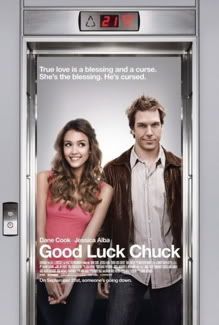
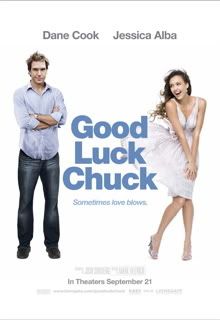
    CS: And did it take a long time to get the tracking shot to get something like that to go off? How many takes?

    MOORE: Well, thanks to the talents BJ (McDowell), our steadicam operator and Dustin (Pearlman) and Lewis (Fowler), our camera guys ““ the three of them were stolen from the HATCHET set because they did such a great job there and brought them up to Portland. They are the big reason why we could get away with a lot of steadicam shots. We didn’t have to do a lot of wheels and tracking because it takes a lot more time to set that up. We did do all our tracking shots with a steadicam and we did do some tracking shots still, we put some on a dolly and wanted some things to be moving so we put on a three foot slider that we just put up sticks so we could just move the camera back and forth. So there were some tracking shots but 90% of what is assumed to be tracking shots is actually done on a steadicam. It allowed us to move a lot quicker and a lot more fluid and have more creation of the shots. And tracking also sometimes limits. If you are going to set up a dolly that is five feet ““ it only moves one way. If it’s a shot that is coming from Mason to a doll sitting in a chair that is obviously imaginary, we want to pull from that all the way over to Mason and see the chair in the shot. You can’t do that on a dolly. You can but it’s easier to do it with a steadicam. A lot of these shots were tough on BJ, which is good. We tried to be as hard on our steadicam op as we could.

    CS: Was this really a movie by committee? Obviously there was a lot of harmony going on between a lot of people but what was that dynamic like having a lot of people having their hands in the process where you have a writer-director-producer being one guy?

    MOORE: It really was a movie by committee and it was a special process because it was. While we were able as a team to understand we had limited time every day and only three and a half weeks to do the film, everybody was just on their feet working hard everyday and wearing different hats, our line producer was our UPM, our writer was our producer in Jeremy, and we brought Cory on early in the process because of his strength producing and just came off of HATCHET and the two of them working together just helped the project become so fluid and EVERYBODY would put their hands in whatever way they could, whether it’s just moving a light to try and get a shot done, and somebody running around saying, “OK I’ve got 7 minutes. We got to light this in 7 minutes and just pop it in.” And our crew, Sarge, and the whole crew of electricians, we just had a crew that was really hustling on the set. It was cool and unique because people knew that we were making a unique piece here.

    BOREING: And I do consider SPIRAL, which doesn’t mean it isn’t flawed ““ it’s flawed in it’s writing and acting and directing and everything – but it is a piece of art the same way a painting has flaws but it’s still a piece of art. It’s different than an action movie. We knew what we were doing and our hope is that we delivered something that folks would enjoy as one big painting in all different aspects.

    MOORE: It was a movie by committee, that’s true but the better way to say that is that as the process went on, our natural gifts emerged in a way that maybe we didn’t know so, not that there weren’t any bumps and bruises along the way, but no collaboration is completely painless but as we went forward we all learned where we can trust each other and didn’t have the right skill sets to deal with certain problems. It wasn’t a committee decision every time a decision needed to be made, it was a collaboration of certain kinds of people making certain decisions. Still, one person made decisions about the picture but there were 10 of us sitting around trying to figure out what something costs and funneled into these natural roles. It’s a lot easier to be collaborative and productive but it was the way we all got through this process successfully.

    CS: And gentlemen, if I just had one more question for you both, after the film was done filming and you are now in the editing room, what were some of the greatest surprises you saw when it was finally coming together as a coherent film? We you surprised by things that you didn’t think were present that popped up on the screen?

    MOORE: I sort of took the reign in the editing in this movie and it was a great process. I put together this movie wonderfully but it was a two hour cut of it and we knew it had to be an hour and a half so we knew that we had to take 30 minutes out of this movie. So then we went into this frantic mode of everybody trying to give notes and nobody wants to cut any part of it. Nobody wants to cut anything that they have spent money and time on but we made some big cuts early on and lost some things that we wanted to have in this movie. And then I went back and cut things between the scenes here and there ““ cut a scene short here ““ maybe cut some dialogue and as I did that after my first pass of the movie as a whole we ended up 15 minutes shorter. So then we decided that we needed to put those scenes back in and cut the fat out and ended up with a movie that we didn’t lose one single scene that we needed that we wanted to give the audience.

    This movie is developed around kicks I guess ““ the mystery of what’s going on ““ what is Berkeley going to do with the waitress, how is he going to deal with Amber’s character ““ all these things ““ all scenes lead to the final shocking end and to get rid of a scene gets rid of the facts that we needed to tell the story. You could actually cut all the fat out between and keep the movie. It was really a nice with what we ended up with and, I hope, entertaining.

    To us it’s an accomplishment because it’s what we wanted to tell.

    CS: Thank you gentlemen for being able to talk to me today. I appreciate it.

    Absolutely.

  • Quick Stop Thingamabobs: 2/1/2008

    thingamabobs.jpg

    The web. It’s a big place, full of plenty of distractions ““ some funny, some informative, some ludicrous, some disturbing, some inane, some profound. Each and every weekday, we present links to a few of our favorite finds”¦

    ————————————————

  • Quick Stop Thingamabobs: 1/31/2008

    thingamabobs.jpg

    The web. It’s a big place, full of plenty of distractions ““ some funny, some informative, some ludicrous, some disturbing, some inane, some profound. Each and every weekday, we present links to a few of our favorite finds”¦

    ————————————————

    • Craig Ferguson takes his citizenship test… (Thingamabob)
  • Trailer Park: Dane Cook Interview

    By Christopher Stipp

    Archives? Right Here…

    I’m awesome. I wrote a book. It’s got little to do with movies. Download and read “Thank You, Goodnight” right HERE for free.

    How do you like your romantic comedies?

    Me, the less I have to think and/or engage the better. What made GOOD LUCK CHUCK a solid entry into the genre was that it knew what it was and didn’t over-extend its grasp. It was a breezy film that brought together two notables in pop culture, Dane Cook and Jessica Alba, and smooshed them into an Oreo of gooey love.

    Love it or leave it the movie did well enough in its theatrical run and it went on to do well in the international market. When the movie was released on DVD mere weeks ago I had the chance to talk to Dane Cook about everything you wish you could ask him regarding his swift rise to pop consciousness and all the slagging that goes along with being such a high profile target for people like Saturday Night Live during the World Series and the video, Dane Cooks, which showcase why this is best form of flattery for a man who has taken stand-up comedy from the peripheral of society to the mainstream with his best selling CD, television show and concert specials.

    If I could pay Dane the best compliment I can it would be that his honesty during this brief, brief interview just cemented my respect for one of the prolific comics in the business today.

    *****For those who would like to win a copy of the DVD to taste the GOOD LUCK CHUCK goodness just leave a message below. It can’t get any easier than this…*****

    line.gif

    CHRISTOPHER STIPP: Hey Dane, quick question regarding your comedic performance in GOOD LUCK CHUCK ““ Did this experience teach you anything at all about how to translate what people love most about your live shows as to what they should be able to appreciate about your film work? Has it changed your philosophy about how to approach romantic comedy or comedy in general?

    DANE COOK: Yes, very much so. I definitely feel like, the term, within your wheelhouse, in figuring out how ““ I love guys like Steve Martin, THE JERK, or when Sandler did WATERBOY ““ we can look at so many comedians and ask what role finally put their pin on the map. I don’t know up until GOOD LUCK CHUCK if I found that fit ““ the physicality and language. So when I signed on for GOOD LUCK CHUCK I got to explore a lot of broad comedy ““ physical comedy, slapstick, to bring all the elements of stand up comedy performance together that’s very difficult to do. I don’t think I have done that yet. I don’t think I’ve had that role quite yet that perfectly combines many of the elements I’ve done on stage. I’ll continue to seek that out. It’s great to pick and choose and incorporate bits and pieces.

    CS: I am curious as to get your thoughts on the cult of celebrity after doing some high profile projects like EMPLOYEE OF THE MONTH and GOOD LUCK CHUCK, having the media surrounding you and your relationships and parodies of you like Dane Cooks. How do you feel about what celebrity does to a person ““ what a big spotlight can do to you ““ to a person?

    COOK: This question is difficult to answer in one felt swoop because celebrity is tricky man. I’ve seen everything happen to people. I’m a person who sticks close to ““ I’ve had the same friends for 20 years, I have a big family ““ I have 5 sisters and a brother in my family. I’m pretty quiet away from performing. I love to create and when I go home I love to just be in the real world.

    The celebrity thing is so foolish, so bizarre the way the laser once in a while hits a person and just evaporates them. You see it all the time. These people start to believe the stuff that’s written about them or even become what the media wants you to become. It’s ping-pong. I never had a career that was so instant success-wise that it was like overnight sensation. Although people might say he came from out of no where but for a long time I had a slow steady trajectory and I got to kind of step around some of that.

    But to be in a position now where sometimes people take shots it’s always cool to have an SNL or somebody want to send you up but I think when you start becoming a parody of yourself, that’s when things start to spiral out of control. I know my answer is a mess and all over the place but I try to stick around people who are into the create and not the drama because it’s so easy to participate in that and then suddenly you are caught up in lies and crap.

    So, yeah, I stay close to home and I don’t want to end up being one of those people sitting on the side of it after the machine chews you up and spits you out. Here’s one thing about the machine that I, and again different for everybody, different answers, you do have control of the machine, you do have your hand on a button or a lever. You can control the speed. There is no one in this industry that can’t, unless they have really crazy people around them, you can be like, “Hey, I think I’m going to hop on a plane and leave for a minute.”

    Anyone that stays in it I question that sometimes.

    You have the ability to say “You know what, I think I’ll take a break” or go to Europe”¦you don’t have to stay in this bizarre oasis. It’s like if I start feeling weird I go back to Boston, hang out with people who don’t give a crap about Hollywood, I take out the trash, I eat at the old stomping ground. I feel like a regular guy again.

    So, good luck with how you handle editing that one!

    (Laughs)

    There will be a lot of parenthesis in that like (Dean gets very serious). Quite a hypothesis on that answer”¦sorry about that.

    CS: Quick question about your comedy as a whole. You said you were taking a break ““ you’re taking a step back, when you do take a break between these sorts of projects and what have you, does it change your overall spin on how you want to change the way you do your comedy when you do come back, or for lack of a better term, do you have a formula regardless of how long or how much you do touring or stand up?

    COOK: You are asking a fantastic question because these are things I am exploring in myself. To be really honest, I don’t even really know what a break is.

    I love working.

    I find that some people say you should take a break and I say I kinda am but I’m still working. I love being on stage and yet after doing it straight through for so many years ““ I’ve done stand up for so many years every night didn’t take a night off unless it was a holiday or I was sick, and then finally to have “boom” kind of broken through it was like, this is my time, I don’t know how long it’s going to last “Can I turn this into a full career?” so I spent three years making movies and still making the families happy so I’m actually at the point right now where stepping back on stage regardless of the 7 hour set I did just a little while ago.

    I finished this big tour, I put out my latest CD and now I’m in a period where I’m kind of reinventing the wheel. I’m going back”¦some of the new stuff I have is sort of a departure”¦I’ve always looked at my comedy in general and it should be an evolution ““ that you are never done, so I’m at a point right now that it’s fun to be a little scared of stand up. I hit the reset button. I’m not doing anything old. I’m working on all new ideas. So having stepped away from comedy in that sense doing films I’m bring a new life perspective back. It’ll be interesting here as I’m piecing it together I could probably speak to you more at the end of this year. Right now I’m fitting in with your question in figuring out what is it that I want to say now and how do I want to entertain people in the world of comedy.

    CS: Dane, if I could close with the final question ““ I’m paraphrasing but Chris Rock said there’s the Stand Up Comedian’s Success Kit. Included in the kit is a movie, a book, a television show, now while you’ve said you’ve done pilots of a television show do you think that you will write a book? Do you think you will find success in a television show or do you think you’ve honed your craft well enough where you don’t have to spread your brand of comedy over different forms of media?

    COOK: I think this is a time for me ““ I just want to – like Steve Martin’s book, for example ““ he’s a guy I really wanted to emulate in certain areas of my career. I’ve achieved this year everything I set out to do in my life that I said I wanted to do. I wanted to make movies, I dreamed about doing an arena tour when I was very young ““ I saw Steve Martin at Madison Square Garden and I had the “Wild and Crazy Guy” album, which I still have and am staring at the original album which I still have in my office right here.

    So this year I finally, after many many years, have completed everything I set out to do. And I’ve done a couple movies that have been successful on different levels so now I’m really in a metamorphis now. I have another movie coming out this year with Kate Hudson. I’m really proud of it it’s a greater step in a direction of what I want to do and how I want to do my comedy in film. But I’m really interested in telling all kinds of stories.

    So I think yes, you are right, there’s the book, the TV show, the movies, and certainly seems to be the path that has been laid for the successful comic. I’m leaving that path now. I’ve traveled that path, I’ve had different levels from marginal to great successes and now I’m daring myself to do more. Go see me on stage and after this rest I’ll get into the new evolution of my stand up, but I’ve got some irons in the fire that are quite different ““ a couple documentaries that are far from anything comedic and producing. I look at fine young talent and try to nurture this young talent. I’m going to dare myself to get off that path and take some risks that are outside the traditional kit that comes with comedy. So, we’ll go with that and see what comes next.

    CS: Brillant ““ thanks so much Dane.

    COOK: No worries ““ you got it!

  • Quick Stop Thingamabobs: 1/30/2008

    thingamabobs.jpg

    The web. It’s a big place, full of plenty of distractions ““ some funny, some informative, some ludicrous, some disturbing, some inane, some profound. Each and every weekday, we present links to a few of our favorite finds”¦

    ————————————————

    • Prepare for Chuck Jones Tuesday… And where better than with “Rabbit Seasoning”… (Thingamabob)
  • Comics in Context #211: The Silent Rabbit

    comicsincontext4.jpg

    cic2008-01-291.gifOne of the questions on The Beat’s annual survey for her Publishers Weekly blog is to ask what “guilty pleasures” her contributors are anticipating in the new year. Last year I named the forthcoming Disney DVD release of The Adventures of Oswald the Lucky Rabbit, collecting the silent cartoon series that Walt Disney made just before the creation of Mickey Mouse. This DVD set finally came out in December, and I now realize that there’s nothing “guilty” about the pleasures these cartoons provide. I expected they’d be interesting as foreshadowings of Disney’s later work, but not particularly good in and of themselves. But the Oswald cartoons turned out to delightful period pieces from the early history of animation. Watching these, you can see that Disney was already well on his way to the success he would achieve only a year later with Mickey Mouse.

    The Disney company hadn’t released the Oswald series on home video earlier because it didn’t own the cartoons or the character until recently. Back in the 1920s Walt Disney made the Oswald series for distribution by Universal. But then, as a featurette on the DVD explains, Universal sprang surprises on the young Disney: not only did they own Oswald, but they had also hired Disney’s animation staff away from him–except for his best animator, Ub Iwerks, who remained loyal–and would produce the Oswald series without him. This proved to be a blessing in disguise, since Disney was now determined to remain independent and own his own intellectual property; soon he and Iwerks jointly created Mickey Mouse, and Disney was on his way to becoming a cultural colossus. Recently, Disney’s new, enlightened management made a deal with NBC Universal in which Disney regained control of Oswald, and this DVD set soon followed.

    Not only does the Oswald DVD set contain copies of all the extent Disney Oswald cartoons (which apparently took some hunting), but also some 1920s Disney cartoons that preceded and followed the making of the Oswald shorts.

    The three cartoons that preceded Oswald are from Disney’s Alice Comedies series. Whereas in Max and Dave Fleischer’s silent animated series Out of the Inkwell, a cartoon character, Koko the Clown, entered the real (live action) world, in the Alice shorts a live action girl, Alice, appears within a cartoon world populated by anthropomorphic animals. Hence the evocation of Lewis Carroll’s Alice in the series’ title is quite appropriate.

    In watching the first Alice short included in this set, Alice Gets Stung (1925), I was initially surprised by how little Alice appeared in it, though perhaps I shouldn’t have been, since I presume that it was harder and more expensive to combine live action footage of the girl portraying Alice with the animation than it was to do the animation alone.

    Making Alice’s regular costar, Julius, a cat who looks an awful lot like Felix the Cat seems too much like imitating the competition. (It seems that Disney’s distributor insisted on having a cat in the cartoons: see here) But, as noted, even the premise of Alice is simply taking the Fleischers’ idea for Inkwell and reversing it. At this point Disney is still reacting to his competitors’ ideas rather than heading in a brand new direction.

    Alice Gets Stung begins with a lengthy sequence with Julius the cat chasing a rabbit (which doesn’t strike me as being a cat’s natural prey) and the rabbit’s efforts at thwarting him. For example, Julius reaches down into one rabbit hole, while the rabbit emerges from another hole behind him. This is a variation on what became a standard gag in Bugs Bunny-Elmer Fudd encounters. Watching this cartoon, I felt that Disney had stumbled onto the idea of the rabbit as trickster–but perhaps didn’t yet know what he had. Shouldn’t the rabbit be the star animal of this cartoon, not the cat, who, as the predator, seems to be playing the bad guy? Maybe this rabbit points to the creation of Oswald, though it would be Warners that perfected the idea of the animated trickster rabbit with Bugs Bunny.

    Even though Daffy Duck can get blasted by Elmer Fudd over and over without suffering greater harm than a temporarily displaced beak, many classic Warners cartoons still depend on the audience’s belief that the hunter or predator could potentially do harm to the animal hero: Wile E. Coyote does indeed want to eat the Roadrunner, and Elmer Fudd does indeed want to kill the wabbit. In the world of Alice Gets Stung, there seems to be no real threat of death or even injury. At one point Julius pulls off the lower half of the rabbit, but the halves soon rejoin, and the rabbit seemingly suffers no pain whatsoever. Later, Julius removes his own eyes and mouth and positions them over one of the rabbit holes; when the rabbit emerges from the other hole, the eyeless cat captures her. This is a rather grotesque extension of the convention of the Felix the Cat silent cartoons, whereby Felix can detach part of his body, like his tail: at another point in this cartoon, the rabbit uses her tail to powder her face. Amusing as this sort of thing can be in silent cartoons, it also makes the characters seem overly unreal, and one can see why later funny animal cartoons mostly disposed of this convention of detachable body parts.

    You’ll notice I refer to the rabbit as “she”: this was a surprise, too. Once caught, the rabbit pours out a sob story about her infant children–whom we see in a brief vignette, all in the same cradle and wailing for “Mama”–as two other rabbits play violins, with heart and flowers appearing onscreen as substitutes for music. Moved, Julius lets the rabbit go, whereupon the rabbit laughs at the cat–presumably her story was all a lie–and the chase resumes. This time Julius pursues the rabbit down the rabbit hole where, with no evident cause, the rabbit suddenly grows to giant size and the tables are turned. There is no logical reason why this should happen, but I suppose the rabbit’s increased size might be a metaphor for growing braver and more aggressive, having gaining the advantage once she is on her home ground.

    The live action Alice shows up and, in a neat trick, is shown carrying a cartoon fire hydrant. which she and Julius then use literally to flush the rabbit out of her hole. But again this struck me as misjudgment by Disney. Why is our heroine joining the cat in pursuing the rabbit? Shouldn’t we root for the rabbit, as the predator’s potential victim, and admire her cleverness?

    The “hearts and flowers” sequence suggests that Disney might already have been longing for the opportunities that sound could provide for his cartoons. So does the next major sequence in Alice Gets Stung, which shows animals playing music as members of a band. This prefigures Disney’s The Band Concert a decade later. Moreover, in Alice Gets Stung animals’ tails get pulled to cause them to emit musical notes, a gag that would be much more famously used in the first Mickey Mouse cartoon to be released, Steamboat Willie. Alice Gets Stung also uses the image of the conductor–in this case, a bear-that would keep recurring in classic Hollywood theatrical cartoons, including The Band Concert.

    Alice shoots a gun at one of a pair of dancing bears. This is another misjudgment by Disney; why should the heroine attack an animal that has been entertaining the audience? In the world of the Alice shorts, however, even being shot repeatedly does not harm the bear, who begins dancing in time to the (silent) gunshots. But after bullets sever his head and limbs, once his body parts rejoin, the bear is understandably enraged. Frightened, Alice and Julius shrink in size (reversing the previous bit of the rabbit growing gigantic with courage) and Alice becomes a cartoon character herself. In the end she and the cat are beset by bees, thus finally providing an explanation for the cartoon’s title.

    Death seems to be real in the next Alice cartoon included, Alice in the Wooly West (1926), although the rules by which it operates are unclear. This time Julius looks even more like Felix and he is cast as a Western gunfighter. Bandit mice hold up the passengers of a stagecoach, but Julius rides to the rescue and shoots the mice dead. This is even more startling if you consider that with the creation of Mickey Mouse, Disney would soon firmly establish the convention that in funny animal cartoons, mice are the good guys and cats are the bad guys.

    The head of the bandits looks like a bear in a top hat, who seems to be, yea, the forebear of the principal villain in the Oswald cartoons, the top-hatted Putrid Pete. The bear kidnaps Alice, and in the ensuing battle, Julius separates the bear’s head from his body with repeated blows. This causes the bear no harm, his head and body rejoin, and the conflict continues.

    In a reworking of a gag from the previous cartoon, this time Julius removes not his eyes but his black fur to use as a decoy. Julius not only clobbers the bear from behind but actually buries him on camera, leaving a flower on his grave! It’s as if Bugs Bunny literally killed Yosemite Sam! So here’s another mistake that Disney would avoid in years to come.

    But Alice rejoices, although Julius is embarrassed at her seeing him in his underwear. It’s an odd gag if you think about it, since it evokes the human taboo on nudity by using an animal, to which the taboo would not apply. Variations on this gag would get stranger still in the Oswald series.

    The third Alice cartoon in the set, Alice’s Balloon Race (1925), foreshadows the airplane race in the Oswald cartoon, and in both the villain is a bear in a top hat whom the Oswald series would call Putrid Pete. (What an unfortunate adjective to apply to someone with such an appealing first name!)

    I was particularly impressed by a bit in which Alice’s balloon crashes in the background and she bounces out into the foreground. Running the sequence back on my DVD player, I could see the point at which the tiny cartoon Alice who is bounced out of the balloon turns into the live action Alice who lands in the foreground. But it happens so quickly that the audience surely had the illusion that it was the real Alice all the time.

    Bodies are even more malleable and unkillable in this short than in the others. Falling from the sky, Julius smashes into bits upon hitting the ground, and immediately resumes shape and life. Later Julius enacts a typical Felix-style gag, detaching his tail and turning it into an umbrella. But then this cat goes way further into the grotesque: he eats his tail, which then emerges from the back of his head and then slides down his back until it reaches its proper position. Even the animation experts on this cartoon’s commentary track reacted as if they nearly couldn’t believe their eyes.

    The first Oswald cartoon in the DVD set, Trolley Troubles (1927) presents its hero as the driver of a means of public transportation, picking up passengers, just as Steamboat Willie does with Mickey. Oswald looks chubbier here than heroes in the other cartoons. He’s also the visual missing link between Felix the Cat and Mickey Mouse. All three are short and black, with white “faces,” black noses, and round heads: the major difference is in the shape of the ears. In Trolley Troubles Oswald also proves to have detachable body parts, using his tail as a brush. More disturbingly, he detaches his lucky rabbit’s foot and rubs it on his head for luck.

    In these cartoons Oswald displays a range of emotions that foreshadows Mickey and later animated characters. Unlike many later animated stars, with the major exceptions of Donald and Daffy Duck, Felix, Oswald and the early Mickey were easily prone to anger. In Trolley Troubles Oswald literally hits an obese passenger off the vehicle.

    In the most striking sequence, Oswald’s trolley plummets through a series of tunnels. Oswald stands in the foreground, his back to the audience, so we are essentially watching the sequence from his point of view, or, to put it differently, it is as if we are riding the trolley along with him, as the cavernous openings to the tunnels engulf the screen. It’s reminiscent of riding a roller coaster; it’s an early version of the sort of effect that today one might expect to find in a video game.

    With the next cartoon, Oh Teacher (1927) Oswald embarks upon a theme that was not often to be found in Felix or Inkwell cartoons: love. here Oswald has a girlfriend, a female rabbit; this obviously prefigures the relationship between Mickey and Minnie Mouse, which is so important to the early Mickey cartoons.

    When she accidentally tumbles into a lake, the unnamed girlfriend cries “HELP!”; not only do the letters appear onscreen, but Oswald rides them. as if they were a horse, to the lake to try to rescue her. Earlier in the short a question mark, used to denote a character’s puzzlement, was employed as a hook by the cartoon’s villain. These silent cartoons thus emphasize their own artificiality by taking an written word or a punctuation mark and turning it into a physical object. Maybe the detachable body parts in these cartoons serve a similar purpose: reminding the audience that Oswald and company are pen and ink creations, just as when Koko devolves back into ink at the end of his cartoons.

    The girlfriend mistakenly thinks that it was the cat who saved her and snubs Oswald. The cat literally knocks Oswald’s head off, and though the head bounces back onto Oswald’s body, this still seems unintentionally disturbing. It is somehow easier to suspend disbelief and accept an anthropomorphic rabbit as real than it is to accept the idea that a living being can survive beheading.

    In the standout sequence of Oh Teacher, Oswald angrily waits behind a schoolhouse to clobber the bullying cat with a brick. The cat unexpectedly comes up behind him, and Oswald nervously tries to hide the brick behind his back, switching it from one hand to the other. When the cat spots the brick, Oswald desperately starts lifting the brick with one hand, as if he is using it for weightlifting exercise. All of this happens in pantomime without a single word onscreen. This is real animated acting; the three Alice cartoons did not even attempt anything like this.

    The next cartoon, Great Guns! (1927), suggests that even a decade after the devastation of World War I, Americans had a different attitude towards war than they do today. When war is declared in this cartoon, animals immediately enlist in the armed forces en masse, including Oswald.

    Oswald is very much in love in this cartoon: in its most astonishing segment, the shot of Oswald kissing his girlfriend goodbye dissolves into a shot of Oswald kissing a photograph of his girlfriend, as he sits in a World War I-style trench, with rain pouring down around him.

    There’s a good touch of Fleischer-style risqué visual humor that I hadn’t expected to find in a Disney cartoon: as soon as the enormous war cannons fire, they immediately collapse into a flaccid state.

    Most of the cartoon is taken up by an aerial battle between Oswald and an enemy combatant, each piloting a plane; once again, Disney has cast a mouse as the bad guy.

    At this cartoon’s end Oswald is reduced to what looks like shrapnel by a cannonball. His girlfriend, serving as a nurse, sweeps up Oswald’s remains, pours them into a giant shaker, as if she were mixing a drink, and pours out a pool of black ink, which (in the manner of Koko in the Inkwell cartoons) takes form as Oswald. Thus Oswald undergoes death and resurrection, and he gets the girl!

    Walt Disney and his principal animators came from Kansas City, and the early Mickey cartoons have rural or barnyard settings. So it’s not a surprise that the next Oswald cartoon teams the rabbit with a cow, but the title character of The Mechanical Cow (1927) is, inexplicably, also a robot! Can we see the seeds of Disney’s future interest in audio-animatronics here? The flaccid cannon joke is repeated here, and Oswald again has a rabbit girlfriend, who is abducted by the bad guys.

    In this cartoon the bad guys are ultimately devoured by sharks. I suppose that, considering that characters can survive dismemberment and beheading in the silent Disney cartoons, we shouldn’t take deaths in them seriously. Still, the Alice and Oswald cartoons certainly operate on a harsh moral code.

    In The Ocean Hop (1927) Oswald competes against Putrid Pete, with top hat and peg leg, and others in an airplane race across the Atlantic. This updates the theme from Alice’s Balloon Race while probably alluding to Charles Lindbergh’s groundbreaking transatlantic flight, which also inspired the later Mickey Mouse cartoon Plane Crazy. Putrid Pete uses chewing gum to glue Oswald’s plane to the runway so it can’t take off. Instead, Oswald and some mice–friendly ones, this time–turn an unusually long dachshund into a substitute plane, utilizing balloons to lift him into the air. In another Felix-style gag, Oswald uses a word balloon containing a question mark as one of the balloons, employing the question mark to hook it onto the dachshund. (This is a more elaborate version of a similar flying dachshund gag from Alice’s Balloon Race.)

    In the best moment of this film, a title card announces, “Then Night Falls,” and we see huge black raindrops falling around Oswald’s plane, which then merge into a sort of black sea of night. This has nothing to do with how night falls in the real world, but it makes a lovely alternative.

    At the end Oswald falls from the sky to land safely in Paris, where he looks distinctly uncomfortable as Frenchmen congratulate him by kissing him on the cheek. Was Disney hinting at homosexuality here?

    In All Wet (1927), set at the beach, Disney tries an interesting experiment with Oswald’s leading lady. Usually Oswald’s girlfriends, who are sometimes rabbits and sometimes, strangely, cats, are flat-chested; lacking breasts, they tend to go topless, like the early Minnie Mouse. What identifies them as female are things like hats with flowers or skirts and even visible panties. But the lady rabbit in All Wet not only wears a dress but is drawn with the suggestion of a bust. Indeed, at one point in the cartoon, she hides from the camera in order to change from her dress into a one-piece swimsuit. She even strikes flirtatious poses. She’s by no means built like a Jessica Rabbit or even Betty Boop, but she’s certainly preferable to the androgynous female leads of so many early cartoons.

    Trying to impress her, Oswald bribes (!) the lifeguard into letting him substitute for him; she rows out to sea and feigns distress, but ends up in real danger. In a clever sequence, Oswald and the girl rabbit are continually being separated as waves lift him or her high up out of the other’s reach. But the girl rabbit seems less than real when Oswald, in giving her artificial respiration, rolls up her body and legs, as if she were a rug!

    The Rival Romeos (1927) are Oswald and Putrid Pete, this time without a peg leg. Early Fleischer cartoons depict a world in which everything could be alive and mobile. The silent Disney cartoons in this set generally steer away from this approach, but in Rival Romeos Oswald and Putrid Pete drive cars with faces and personalities. Putrid Pete’s car refuses to drive into mud, and Oswald’s car joins Oswald in laughing at Pete.

    With the opening of Bright Lights (1928), Disney and his team are obviously setting themselves new visual challenges and meeting them. This short opens with an animated version of an electric sign such as one might have seen in Times Square, with dancing stick figures, advertising “Mlle. Zulu, shimmy queen,” an exotic dancer. Then we go inside the theater to find yet another example of a conductor in classic animation, this time an ape leading an animal orchestra. There’s a chorus line of scantily clad dancing girl cats, followed by Mlle. Zulu herself, who performs her shimmy dance in an impressively animated serpentine manner.

    All of this is before Oswald even makes his entrance. When he does, Oswald proceeds to demonstrate his growing range as an animated actor. His heart bulges from his chest as he thinks about the sensuous Mlle. Zulu, and he grows embarrassed when he unconsciously rests his hand on the derriere of a poster image of Mlle. Zulu, which then angrily comes to life.

    Though Oswald’s personality grows fuller and more believable, the characters bodies remain unbelievably malleable. A theater guard hits Oswald so hard that he turns into a mass of tiny Oswalds, which merge back into the full size version; this is a recurring gag in the Oswald series. Oswald retaliates by tying the guard’s legs around a lamppost, as if he were made of rubber. I also like the clever bit in which Oswald tries to sneak into the theater by hiding under a patron’s enormous shadow as if it were a carpet.

    With Ozzie of the Mounted (1928) Disney shows ambition as a storyteller by moving away from familiar rural and urban settings into the Canadian wilderness, parodying the same tales of the Royal Canadian Mounted Police that later served as fodder for Jay Ward’s Dudley Do-Right. In this cartoon the familiar furry villain in the top hat is identified as Putrid Pete alias Kid Pete alias Peg Leg Pete, a name later given to Mickey Mouse’s feline adversary. Oswald’s horse is another robot, although why Disney was so interested in mechanical farm animals remains a mystery.

    My favorite of the Oswald cartoons in this set is Oh What a Knight (1928). On the commentary track Leonard Maltin and Mark Kausler suggest that this is a parody of Douglas Fairbanks’ Robin Hood (1923), which makes sense since the early, adventurous Mickey has also been compared to Fairbanks. So Oh What a Knight is a parody of the swashbuckler genre in film, with Oswald as a kind of heroic singing troubadour: we can’t hear him sing, but there are plenty of musical notes drawn on screen, as Oswald makes his entrance, singing, while his donkey dances along. Robert Israel, a veteran composer of scores for silent films on video, created the musical accompaniment for the Oswald cartoons. I’m especially pleased that he sets Oswald’s singing entrance in Oh What a Knight to music from Richard Wagner’s Die Meistersinger von Nurnberg, which deals with medieval singers. Later in the cartoon, Israel quotes from Tannhauser, another Wagner opera about a singing knight (and possibly Israel’s nod to Chuck Jones’s What’s Opera, Doc?, which extensively uses music from Tannhauser).

    It’s been two decades since I saw Fairbanks’ Robin Hood, but the most astounding segment in Oh What a Knight reminds me of Errol Flynn’s much more familiar The Adventures of Robin Hood (1938), co-directed by Michael Curtiz, which was made a full decade after this cartoon. Both the Flynn Robin Hood and Curtiz’s The Sea Hawk (1940) culminate with swordfights in which the combatants cast enormous shadows on the walks behind them. Was this a swashbuckler movie tradition that predated Curtiz’s films? For, lo, in the greatest segment of Oh What a Knight, Oswald and an armored Putrid Pete wage a swordfight complete with ominous shadows behind them. Moreover, at one point Oswald exits the battle to go kiss the leading lady, while his shadow continues the duel with Putrid Pete in his place!

    As the cartoon’s commentary track says, Oswald “recharges” his energies during the battle by continually returning to his lady love for a kiss. In this cartoon and some others, Oswald’s leading lady is not a rabbit but a cat. It would seem strange if Mickey Mouse’s girlfriend were not also a mouse, but then again, in more recent times Kermit the Frog and Miss Piggy have gotten away with interspecies romance. I like the way that Disney and his animators kept devising new ways in these cartoons to portray Oswald’s sexual arousal. For example, at one point in Knight, his leading lady’s kiss causes Oswald’s feet to rotate in ecstasy.

    Like Bright Lights, Sky Scrappers (1928) places Oswald in a then-contemporary urban setting: a skyscraper under construction. Putrid Pete sexually harasses Oswald’s girlfriend, a female cat, leading to an energetically staged battle between Oswald and Pete on a girder suspended high above the ground. Still, the cartoon disappointingly fails to evoke the suspense of the live action “thrill comedies” with similar settings that surely inspired it, like Harold Lloyd’s Never Weaken (1921) and Safety Last (1923) or Laurel and Hardy’s later Liberty (1929). It certainly pales in comparison to the split second timing of Popeye and company sleepwalking on and off girders in A Dream Walking (1934), whose complex visual choreography and split second timing was presumably beyond the capability of animators in the 1920s. The main problem, though, is that there’ not enough sense of potential sense of danger from falling in Sky Scrappers. At one point Oswald, climbing a rope, falls several stories, squashes on impact, but immediately resumes normal form, seemingly feeling no pain. He’s so rubbery that if he fell off the girder, one wouldn’t be surprised if he bounced.

    The Fox Chase (1928) is another example of misjudging audience sympathies. Surely the audience would side not with Oswald the fox hunter but with his intended victim, the clever fox who outwits him. This fox is not only a trickster but a shapeshifter, adopting a disguise in the cartoon’s final moments that thwarts his hunters once and for all. In the high point here, Oswald tries to drive the fox out of a log by rolling it up like a rug–or like his leading lady from All Wet.

    The last Oswald short, Tall Timber (1928), utilizes another ambitious setting, opening with Oswald rowing a canoe down a river, past a wilderness, down waterfall and, excitingly, through rapids. This time Oswald is a duck hunter, but, once again, I found my sympathies going to the duck. But then the cartoon resumes thrill comedy mode. Oswald finds himself riding a moose and being catapulted towards the screen–and the audience–until his face fills the frame. Then Oswald flees from an onrushing, rolling boulder, which finally, literally flattens him against a tree. The result is that Oswald is literally rail thin, but far taller. Oswald tries to restore his true shape by hitting himself with another heavy rock, but this impact distorts his body to the opposite extreme. An amazingly weird closeup shows Oswald’s head, inflated like a balloon. In long shot Oswald now looks short and obese, and his ears are no longer long but rounded: in fact, he looks like a fat Mickey Mouse! Two bear cubs seize either end of Oswald and pull, finally causing the rubbery rabbit to snap back to normal shape. Nevertheless angry, Oswald pursues the bear cubs to what looks like an immense black rock, but proves to be their huge, ferocious mother. But after an offscreen battle in a cave, the mother bear flees, with a furless body in bra and panties (yet another of the various animal “nudity” gags in the Oswald series that falls flat). Oswald then reenters, wearing a resplendent fur coat; he dons a top hat and lights a cigar in triumph. That seems an appropriate final image for what amounts to his curtain call in this final Oswald cartoon.

    On the second disc are three key cartoons, animated by Ub Iwerks, that Walt Disney made independently, after Universal took Oswald away from him. They include the Mickey Mouse cartoons, Plane Crazy (1928) and Steamboat Willie (1928). The opening credits for each cartoon call it “a Walt Disney comic by Ub Iwerks,” a description that’s interesting for two reasons. First, the phrasing indicates that Walt Disney was in charge, but that Iwerks was the actual hands-on creator of the film. Second, the phrase “Walt Disney comic” suggests that at this point Disney–and perhaps his audience, as well– regarded the animated cartoon as a cinematic kind of comic strip, rather than as a separate artform.

    Plane Crazy was the first Mickey Mouse cartoon that Disney made, and it was originally created as a silent cartoon. But it was the third Mickey cartoon, Steamboat Willie, with its groundbreaking synchronized sound track of music, dialogue and sound effects, that was the first to be released. But watching Plane Crazy, I found myself thinking that even apart from the question of sound, it was a good thing that Mickey actually made his debut in Steamboat Willie instead.

    Opening in a barnyard, Plane Crazy presents Mickey as rural rodent who, with hep from other animals, builds his own plane and models himself after Charles Lindbergh, the first pilot to fly solo across the Atlantic. (We even see a surprisingly realistic picture of Lindbergh in the film, which sharply contrasts with the “cartoony” style in which the animal characters are drawn; Mickey even musses his hair in imitation of Lindbergh’s.) Mickey invites Minnie Mouse to join him on his flight. Eventually Mickey starts flirting with her and puts his arm around her; she wags her finger and tells him no. Looking devilish, Mickey speeds up the plane and puts it through aerial maneuvers that frighten Minnie. then he forcibly kisses her, Minnie slaps his face and she jumps out of the plane to escape him, her skirt billowing into a makeshift parachute. In other words, Plane Crazy portrays Mickey Mouse as guilty of sexual harassment, acting no differently than Putrid Pete in Sky Scrappers!

    Watching Steamboat Willie after the Oswalds, I realized that much of the first half of the cartoon and its final scenes is conventional for its time, nowhere nearly as inspired as the best of Felix, Inkwell and Oswald. Mickey is the pilot of a steamboat, and his boss is an enormous cat with a high hat, an early version of his archfoe Black Pete (whom we can now see as Putrid Pete’s descendant). The bullying Pete pulls Mickey’s body, as malleable as Oswald’s, out of shape, stretching it till Mickey’s midsection looks like a rubber hose. There’s some vulgar comedy business with Pete spitting. Too late to board the steamboat, Minnie runs alongside it until Mickey uses a winch and hook to lift hold of her panties, a rather demeaning way to treat the leading lady, and deposit her on the boat. At the end of the cartoon Pete forces Mickey to peel potatoes, a parrot laughs mockingly at the mouse, and Mickey gets angry, beans the parrot with at grown potato, and laughs. This material seems all too conventional. sometimes crass and even mean-spirited.

    But the opening image of Mickey at the wheel of the steamboat shows why Steamboat Willie fired the public imagination. Mickey is smiling, happy, and whistles a tune we hear on the soundtrack. It’s not just the fact that Steamboat Willie had synchronized sound that made it a breakthrough: it’s the way that Disney adapted his characterizations and stories to the opportunities that music provided. By making music, either by whistling or by playing his improvised instruments later in the cartoon, Mickey becomes a source of pure joy.

    The middle of the cartoon has no story: it’s just Mickey playing his instruments, whether they are spoons and pots or various animals. For example, the musical sequence begins when a goat eats the sheet music for “Turkey in the Straw”; Mickey discovers that by turning the goat’s tail like a crank, the goat becomes a living gramophone, with the music coming from his mouth. Steamboat Willie has incurred criticism for Mickey’s supposed sadism, pulling a cat’s tail, or stretching a goose’s neck, or, startlingly, pressing a female pig’s udders in order to produce musical sounds. But in the context of the Oswald cartoons, in which characters’ rubbery bodies rarely sustain any harm, this doesn’t seem so bad to me. Presumably viewers in the 1920s would accept the convention of the period’s cartoons that these animals are not really being hurt. Instead, the audience would be carried along by the music Mickey is playing with these animals, in an effect that is simultaneously comedic and pleasurable simply as music. The cartoon’s ending, with the reversion to expressions of violent anger, is a letdown: it would have been better had Steamboat Willie ended with a musical gag of some sort. It’s Mickey the music maker who first won audience’s hearts.

    The final cartoon in this DVD set is The Skeleton Dance (1929), animated by Ub Iwerks, the first of Disney’s Silly Symphonies series. This cartoon is a little masterpiece even though it has no actual story. Whereas the “Turkey in the Straw” segment in Steamboat Willie was an extended interlude between more conventional story sequences, The Skeleton Dance is entirely founded on music. The cartoon begins as a sort of visual tone poem, establishing an eerie mood both through the music and through classic visual elements from horror tales: lightning, the ominous eyes of an owl, a seemingly deserted church and graveyard, a howling dog (who looks like Pluto in silhouette!), and flying bats. Soon the cartoon introduces notes of humor as well, with black cats battling by pulling each other’s noses as if they were rubber bands. This reversion to Oswald-style visual humor is abruptly interrupted when a skeleton looms from behind a tombstone separating the cats and then leaps directly at the “camera,” invading the viewer’s space. Four skeletons then begin their dance, which takes up the rest of the cartoon, sometimes entertainingly silly, sometimes macabre, sometimes both at once.

    The success of The Skeleton Dance led to Disney’s long series of Silly Symphonies which were built around music, frequently classical music. I’ve written about a number of Silly Symphonies before after seeing them at Lincoln Center (see “Comics in Context” #136: “Before There Were Cars”). Last December I attended the Museum of the Moving Image’s four-part retrospective of Silly Symphonies, including The Skeleton Dance and demonstrating how Disney further developed his new invention, the musical cartoon, but that is a topic for a future installment.

    Copyright 2008 Peter Sanderson

  • The Greatest Movie Blog Of All Time: No Joke

    greatestmovieblog.jpg

    It’s No Joke

    When I first heard that Heath Ledger would be playing The Joker in the upcoming Batman movie, “The Dark Knight” I was less than thrilled. He seemed too serious, his voice was too deep, too grounded, too brawny. To me this wasn’t ideal casting for a character we’ve often thought of as lanky, psychotic, and with a high-pitched giggle. Really? Ennis Del Mar is the Joker? I didn’t see. Then I saw the trailer and realized I knew nothing and Christopher Nolan knew everything. In those 2 ½ minutes Ledger’s Joker was everything I thought he wouldn’t be and more. And that was just 2 ½ minutes! I was stoked (and still am).

    ledger.jpg

    This week Heath Ledger gave us a reason to be so serious.

    Last Tuesday afternoon, on the day the Oscar nominations were announced, the man who I was now eagerly awaiting to see play the clown prince of crime was found dead in his NYC apartment. He was only 28 years old.

    I’ll admit it the first thing that popped into my head was what a cruel publicity campaign Warner’s was trying to run. Now I wish that had been true. He was truly becoming a master of his craft. He was just beginning to produce some truly remarkable work. Sadly, thats all gone now. And more importantly, a family has lost a father and a son.

    Warner’s has said that all of Ledger’s work on “The Dark Knight” was completed before his death. So come July we’ll all get to enjoy his complete performance and try to forget that it was his last. Life is sadly temporary, but film is immortal. My thoughts go out to his friends and family. He will be missed.

    The 2007 Oscar Nominations

    As I said above, the Oscar nominations came out last Tuesday. I can’t say I’m surprised by any of the nominations. Two of my favorite films of 2007, “Gone Baby Gone” and “Charlie Wilson’s War”, only managed get 1 nomination each (well deserved supporting nods for Amy Ryan and Philip Seymour Hoffman). “300” was shut out completely (a film I would’ve thought would be a shoo-in for technical awards at the very least).

    But none of it truly bothers me. I still dig the movies I put on my top 10 list and stand by them. The Academy Awards are a very political process because studios believe that an Oscar nomination gives their film credibility (“Transformers” got three nominations, by the way). Nominations and awards are stamped onto DVD packaging so the average consumer will be “informed” as to what are the “good” movies. It’s ridiculous.

    prime

    Star of a 3-time Oscar nominated film.

    Steven Spielberg didn’t win a Best Director award until 1993. Martin Scorsese got his first last year. Alfred Hitchcock never won an award for one of his films (he was given a lifetime achievement award).

    It’s impossible to choose one great film over another as being the best (or one actor or actress, or one screenplay, and so on). Some years, one film or performance truly does stand above the rest but most years there are easily a half dozen films that are all on the same level. Just because your favorite film of the year wasn’t nominated for an award doesn’t mean it wasn’t a good film. It entertained the hell out of you, didn’t it? That should be success enough for you. Besides, might not even be an Academy Awards show this year.

    The Room

    Onto the lighter side of things. There’s an odd phenomenon going on at the Sunset 5 theaters here in LA on the last Saturday of every month. At midnight, one of their theaters is packed for this little (and quiet terrible) movie called, “The Room” which was made in 2003. I set out in a rare Los Angeles monsoon to give it a look.

    Make no mistake, this movie is AWFUL. A true vanity project for writer-director-star Tommy Wiseau. Wiseau plays Johnny, a creepy looking guy with long black hair and pale skin whose fiancee Lisa cheats on him. Plot elements and characters come out of left field. The dialogue is cringingly bad, the performances even worse. Wiseau’s Johnny looks easily 20 years older than his costars and appears sedated through most of the movie. It’s misogynistic. It’s discombobulated. It’s often out of focus. I’ve rarely had a better time watching a movie.

    This is a rare film that you HAVE to see it in a crowded theater. It’s an experience where shouting at the screen is downright encouraged (don’t worry, you won’t miss any crucial plot twists, there aren’t any). Most of the loyal fans have seen the movie dozens of times. They shout out lines, point out obvious plot holes, and inexplicably throw plastic spoons in the air. And they cheer from the moment the film starts and stay right through the end credits. It’s really a great time.

    All the best.

    (and Godspeed, Heath).

    Brett Deacon has spent much of his spare time this week in Los Angeles lining up animals two by two.

  • Toy Box: Masters of the Universe – King Randor Classic Colors

    toybox.jpg

    NECA and the Four Horsemen have been producing the very cool series of ‘staction’ figures (better known as ‘statues’) based on the Masters of the Universe line for the past few years. In 2005 at Comic-Con, they had an exclusive of King Randor. Those sold out long, long ago, but now Action Figure Express has a slight variant called the Classic Colors version.

    Along with slightly different paint (in a 1980’s scheme), there’s a new head sculpt, new cape, and new shield accessory! This is much more than the usual repaint variant, with plenty to make it unique. It’s a limited edition of 2500, and is $30.

    If you have any questions, drop me a line at mwc@mwctoys.com, or swing by and check out my website at mwctoys.com. Now on to the review!

    NECA Masters of the Universe King Randor exclusive statue

    toybox_012908_1.jpg

    Packaging – **1/2
    Unlike the regular release ‘stactions’ which came carded, these come in a box. The styrofoam insert is one of the annoying ones though. You know, the type with the soft big chunk styrofoam that falls apart when you try to pull it out of the box and makes a mess all over the carpet that requires a Dyson to get out. But at least it keeps him safe til you do pull him out!

    toybox_012908_2.jpg

    Sculpting – ****
    As usual, the sculpting is top notch. The Four Horsemen do an outstanding job on this series, and this one is no different.

    The new head sculpt looks good, with some very nice detail work. The battle damaged shield looks terrific, and the new cape has actual fur! Yes, it’s fake real fur, but it’s certainly unique. He might shed a bit more than the normal statue, but he makes up for it by looking far more realistic.

    toybox_012908_3.jpg

    The stance and pose are dynamic enough to be interesting, but aren’t over done or extreme. He’s done in a 6″ scale, and looks terrific with the other figures released previously in the series.

    Paint – ***1/2
    The paint isn’t quite as nice as the excellent sculpt, but it’s close. These are quite well done for the price point.

    There’s a bit of a slip up around the beard on mine, where the hair line isn’t quite as clean as it should be, but considering the $30 price, I’m not complaining too much. The 80’s colors are pretty cool, and he sports a nice combination of flat and gloss finishes to give the impression of different materials.

    toybox_012908_4.jpg

    Accessories – ***
    Oddly enough, he’s a statue with accessories. The sword, shield and base are all removable.

    The base fits in with the rest of the line, sporting a similar design. His feet fit well on the pegs, and there’s no danger of him toppling over under normal circumstances. The bases are a little dull, but they do make sense in the context of the series.

    toybox_012908_5.jpg

    The sword fits easily in the left hand, while the shield attachs to the wrist of the right. The sculpts and paint on both are in line with the rest of the statue.

    Value – ***
    Statues, even 6″ statues, don’t cost $30. Compare these to the similarly styled Batman Black and White statues from DC Direct, which cost $45 – $55 a pop, and you can see what I mean. And this guy even has a fuzzy cape!

    toybox_012908_6.jpg

    Things To Watch Out For –
    Not much. Take your time putting the feet on the base, just to make sure you don’t chip anything.

    Overall – ***1/2
    Had the paint been just a hair better (pun intended), this guy would have hit the four stars. I really do like the MOTU stactions, even not being a huge MOTU guy. Fans of the 80’s show will appreciate this repainted King Randor, and I’d suggest picking it up while you can. These will be statues that folks will wish they’d picked up a few years down the road.

    Where to Buy –
    This is a limited edition exclusive to Action Figure Express, so that’s your best bet right now.

    Related Links –
    I have a few other reviews of past MOTU Stactions:

    – this guest review covered the series 5 figures, while this one covers series 2, and this one on series 1.

  • Quick Stop Thingamabobs: 1/29/2008

    thingamabobs.jpg

    The web. It’s a big place, full of plenty of distractions ““ some funny, some informative, some ludicrous, some disturbing, some inane, some profound. Each and every weekday, we present links to a few of our favorite finds”¦

    ————————————————

    • Today, we’ve got Donald Duck Tuesday… Starting with Donald & his nephews in “Sea Scouts”… (Thingamabob)
  • Quick Stop Thingamabobs: 1/28/2008

    thingamabobs.jpg

    The web. It’s a big place, full of plenty of distractions ““ some funny, some informative, some ludicrous, some disturbing, some inane, some profound. Each and every weekday, we present links to a few of our favorite finds”¦

    ————————————————

    • What the hell… Let’s make it Gonzo Monday, starting with some dancing cheese… (Thingamabob)
    • I’m Going To Go Back There Someday… (Thingamabob)
  • Trailer Park: THE HOLLYWOOD REPORTER’s James Greenberg Seems To Have No Problem With Polanski’s Pedophilia

    By Christopher Stipp

    Archives? Right Here…

    I’m awesome. I wrote a book. It’s got little to do with movies. Download and read “Thank You, Goodnight” right HERE for free.

    There is little I take contention with when people talk about what’s on their minds.

    I appreciate that we live in a country where people can say what they want and not fear that their government will put them in jail or, worse yet, put them to death for expressing themselves. However, James Greenberg of the Hollywood Reporter is genuinely testing my tolerance for ignorant, stupid, misinformed, shallow and despicable scribblings. How one person can be given a platform where he can can say that Roman Polanski has done his time by having to leave this country, fleeing his rightful (however of a gross miscarriage of justice one person thinks has happened to another) conviction for having sex with a minor.

    I wanted this to be a column about a film that’s rocking the Sundance boat, ROMAN POLANSKI: WANTED AND DESIRED, how it was nice that there was a documentary out there that explored the effects of media attention and the way in which justice is meted out. No one would argue the effects of this during the O.J. Simpson case in the 90’s where prime time punditry, media spotlights, the legal system and the insatiable need some have for celebrity caused such a hallmark for academics who are still discussing its effects today.

    Even though I haven’t seen this film I have read that filmmaker Marina Zenovich’s documentary opens on the predatory pedophile who, as Yahoo! reports, is shown in archival footage talking about his predilection for really young girls. I initially thought this would be an excellent story about someone has finally taken the time to examine the way the justice system and media have coalesced in this odd amalgam of the saying “separate but equal” with regard to people getting a fair trial but then I read what James Greenberg had to say about the film’s message. And, to my satisfaction, he takes an admirably tough peek at what the film’s thrust actually is but then the guy has to say this:

    Most people remember that Polanski left the country, but few know why and under what circumstances. “Wanted and Desired” finally sets the record straight, and, if there is any justice in the world, Polanski will be allowed to return to this country not as a pariah but as someone who made a mistake and has more than paid for it.

    What fucking country do you live in James where it’s OK to have sex with a little girl and, all you have to do to be absolved of it, is to leave the country for a while without ever having to step into a prison to atone for the crime? Better yet, you ignorant asshole, how about you stop thinking like a media whore who thinks that because this guy had a media circus to deal with but then fled like the pussy he is because he knew he was going to jail where, if I’m not mistaken, they don’t look too kindly on men who pump and dump into little kids that he has “more than paid for it”? No, that would be asking too much because even though his victim has long since reconciled the event in her life and, because of that, there should be a de facto kind of settlement between the rapist and his victim it I am sure you would be better served getting the opinion of the many women’s organizations whose sole mission is to help young women deal with traumatic events like this, some of whom never get over it. I believe a lot of these groups would love to be able and sit you down to talk you about how twisted and poor your thought process is if you were to hear the stories of other women who might of had this happen if only once in their lives.

    I get it.

    You’re willing to look past this monster’s past in order to have this human reject grace the soil of America as a free man. I wish I could say something else about the kind of life he’s been allowed to live “in exile” but there is a problem with your flawed, broken logic: he’s never served his time. He’s been allowed to roam free all these years, living the kind of life those who are convicted sex offenders never get the chance to do because they don’t have well-heeled friends help then ESCAPE this country. I may think I’m getting a raw deal if I’m famous and am being treated too harshly but, if I’m not mistaken, having the book thrown at you only means that any and all things you can rightfully be charged with are applied; they’re not making up shit.

    I could go on and on about how utterly shitty your 2nd grade logic is by comparing rape of a 13 year-old is to a “mistake” but it’s obvious that even if you are the parent of little girls I weep for their fate if any of them are dealt the same fate as Samantha Geimer. I think you wouldn’t be calling it a “mistake” but calling it for what it was: rape.

    You, along with a lot of other critical eggheads who love Polanski’s work without weighing this aspect of his life fairly, are what’s truly amazing about this country. I may not like what you have to say but it’s a delight that you are allowed to speak your mind without the repercussions if you were to say these things in a country where they actually do care about the safety and welfare of their women.

    Soooo….I heard the U2-3D film is all sorts of awesome.

    You may not like the Messiah Bono but I have read review after review extolling this movie’s immersing sensation. I happen to be a marginally big U2 fan but I understand where someone might get the notion that Bono needs a little throttling every now and then. I happen to also understand when you’ve got to look at something like this as an opportunity to see this movie as a step forward in movie going and it could make the argument as to what it would take to get people back into the theater.

    New opportunities.

    Few know and even less care but I have been listening to some of the comments below (Yes, you can now publicly call me out if you’d like to. I’m an equal opportunity offender) and some of the e-mail I’ve received about the deluge of interviews I’ve been doing in lieu of the trailer column here. As an aside, really, of all those I’ve come in contact with who wield some kind of power at the various studios or PR houses, no one really seems to care that I have been doing this now for over 4 years.

    I have been approached where all I’m needed to do is churn out interviews (1 a month or so) with directors, writers and/or actors. The best part is that it’s for the writer of Fight Club’s Chuck Palahniuk’s web site, The Cult.

    This not only represents more work I’ll be doing on the side when not properly employed at my day job but it’ll also mark the chance for me to finally be writing for the same site as Joshua Jabcuga, writer extraordinaire of the latest and greatest Scarface graphic novel “Scarface: Devil in Disguise” from IDW, and again represents the chance for the Wonder Twins to churn out some of the greatest milquetoast writing since the days of MoviePoopShoot.com.

    This is truly a blessing to be a part of a site which is owned by the kung-fu master of explosive, focused fiction and I hope it shows you how multi-faceted my musings actually are; at the very least I hope you don’t think it sucks.

    Have you seen the slow build-up for Sam Rockwell’s CHOKE? You should. I hope to bring you something big out of it.

    SPEED RACER (2008)

    Director: Andy Wachowski, Larry Wachowki
    Cast:
    Emile Hirsch, Christina Ricci, John Goodman, Susan Sarandon, Matthew Fox, Hiroyuki Sanada, Richard Roundtree, Ji Hoon Jung (aka “Rain”)
    Release: May 9, 2008
    Synopsis:
    Born to race cars, Speed Racer (Emile Hirsch) is aggressive, instinctive and, most of all, fearless. His only real competition is the memory of the brother he idolized – the legendary Rex Racer, whose death in a race has left behind a legacy that Speed is driven to fulfill. Speed is loyal to the family racing business, led by his father, Pops Racer (John Goodman), the designer of Speed’s thundering Mach 5. When Speed turns down a lucrative and tempting offer from Royalton Industries, he not only infuriates the company’s maniacal owner (Roger Allam) but uncovers a terrible secret – some of the biggest races are being fixed by a handful of ruthless moguls who manipulate the top drivers to boost profits. If Speed won’t drive for Royalton, Royalton will see to it that the Mach 5 never crosses another finish line. The only way for Speed to save his family’s business and the sport he loves is to beat Royalton at his own game. With the support of his family and his loyal girlfriend, Trixie (Christina Ricci), Speed teams with his one-time rival – the mysterious Racer X (Matthew Fox) – to win the race that had taken his brother’s life: the death-defying, cross-country rally known as The Crucible.

    View Trailer:
    * Large (QuickTime)

    Prognosis: Negative. If you’ve got LSD, take it, and if you have an epileptic sensitivity to flashing lights look away now.

    I am really unable to put into words just how this movie breathes by itself but this film definitely has its own style, I will give it that. There’s a hyper-accelerated, kinetic vibe that just drips off the screen but I am really unsure how that will translate to middle America. I think kids of a certain age will dig this for the most part but, for those of us who are all too familiar with one of the brothers’ erotic predilection for stretched laxtex, there are elements of this trailer that make you scratch your head in wondering why the Wachowski’s don’t tone down their need to inject latent and overt sexuality in their pictures. Of course, I could be wrong but I’d like one person to try and make an opposing viewpoint after seeing Emile Hirsch’s overly tousled locks, his brow spray bottled with a hint of glistening moisture and Matthew Fox’s George Michael inspired facial hair in that black leather.

    I almost think this is a promo video for how to become someone’s gimp.

    Save that, though, there is an issue of the trailer at hand and who here isn’t a little crazed at the full-tilt CGI of the opening sequences of what looks like the latest racing game for the PS3? The cars looping around on a track that looks cobbled together by someone who was obviously colorblind while putting in the hued pieces of the roadway but I am drawn in. That much I have to concede.

    The voiceover that comes over the speakers, the monologue that says our titular hero needs to race, here I’m thinking I wandered in some NASCAR bio pic, but the visuals don’t relent. The flames coming out of the back of Racer’s white Batmobile at the very least feels real, it feels like it’s couched in a land governed by physics.

    I do have to roll my eyes by the Superboy curly Q haircut that Hirsch in which Emile says, without irony, that racing is a form of religion for his family. I mean he looks like he is about to cry me a river. Seriously, that curl is about as aggravating as Frank Whaley’s curl in CAREER OPPORTUNITIES; at least John Candy had the brass balls to tell the kid to lose it before working at the local Target.

    I dig the baddie in the film that tries to have Speed sign a contract, the shot dissolving in a 360-degree rotation that almost leaves you queasy, but coherent enough to see some of the other cartoon characters that are no doubt racing against our young lad. Ricci, as Speed’s biggest athletic supporter, looks just delicious as Trixie so I do have to, Psh!, high five for that creation.

    Really now, Emile’s admission in a breathy, laughable, parlance that this is all he knows how to do is just painful to watch. Thankfully we’re whisked promptly away by the same kind of Matrix hard rockin’ techno which made those films at least listenable but Ricci’s wickedly bright pink outfit, pink headphones and pink seatbelt and pink seats in what is probably a pink helicopter and fake concern for Speed to “move it” is only matched by the wickedly homoerotic fight between Racer X and some masked interloper who’s shirtless (of course”¦).

    I just don’t know what to make of the unrelated cut scenes of the racing, the comedic blocking for these people who are supposed to be acting against overly saturated backgrounds and Fox’s overly dramatic line that “if they don’t destroy him first” that is unintentionally hilarious.

    I just don’t know about this film’s potential as a viable theatrical vehicle; it’ll probably do well as one of those movies where you recommend to someone by starting out, “Well, first you’ve got to be really high”¦”

    KILLER AT LARGE (2008)

    Director: Steven Greenstreet
    Cast:
    Arnold Schwarzenegger, George W. Bush, Bill Clinton, Neil LaBute, Mike Huckabee, Walter Cronkite and many many more…
    Release: Coming Soon to a festival near you in 2008
    Synopsis:
    An overview of the politics, social effects and problems associated with the rising epidemic of American obesity.

    View Trailer:
    * Large (QuickTime)

    Prognosis: Shockingly Positive. I’m a Kids in the Hall fan. HUGE.

    They did one scene where Scott Thompson, Kevin McDonald, Bruce McCulloch and Dave Foley play off one another for a song that’s performed in a restaurant called “Liposuction.” It, perhaps, perfectly encapsulates the issue with what modern obesity is doing to people who cannot stop the need to gorge themselves. Regardless of the health problems, regardless of the problems that it creates, regardless of a person’s likelihood to die from eating a bag full of warm barf from any number of fast food restaurants if done consistently enough there is no stopping this epidemic.

    I am perfectly in tune with the focus on the right hand before being socked with the left of this trailer’s opening. I usually frown on this practice from the standpoint that it can sometimes be used as a trailer crutch but it works because of the inclusion of Dr. Richard Carmona, the Surgeon General of the United States. The music is perfectly chosen; it’s genuinely tense and it leads you down a path you think you’re familiar with even though you know there’s the fist just waiting to impale your jaw.

    Carmona gives an excellent description of what his daily activities usually are with regard to his dealings with the press corps and how route the practice of giving answers to the populist inquiries of the day. The visuals are just as compelling when you consider what reporters are more inclined to talk about: war, plague, death. The screen fades and we get one statistic.

    “In 2006, the U.S. State Department reported that terrorism killed 28 American citizens.”

    The left you don’t expect comes as Carmona recounts being asked his opinion on what is on his mind. The answer that comes, and the silence it causes, is telling from the position that you wouldn’t think that Carmona would say “obesity.”

    “It’s a terror from within”

    The 112,000 people who died from being seriously overweight is telling. What’s more is Carmona’s rhetorical trick in twisting the idea of terrorism and “terrorist killers,” and the mind meld that we all have from events that have seriously shaped our lives since September 11th with the nomenclature we all understand, to ourselves is sharp. The requisite shot of overweight people, no doubt Americans, helps to illustrate his message but it’s something of a needless tactic because if you don’t know that we are the heaviest country on the planet for reasons that are all to easy to understand then you’re probably one of the people in the file footage.

    I’m touched by the graphics that show the factual information about how this problem has spread across the country like a virus. The weigh-in, no pun intended, from pundits who have a stake in making people aware of how serious this is can’t be understated but I am telling you I don’t think anything will ever be as effective in putting up a mirror to our culture than the introduction of a 12 year-old girl who is shown getting ready for liposuction.

    The paint shaker sound in the background as the doctor explicitly shakes the body of this young, sedated girl to complete this procedure should be nothing less than shocking, depressing and sad.

    I could go on to explain what else bookends this trailer but nothing is as effective as seeing the youth of a girl being altered because of not only what she’s done to herself but to a culture that has slowly crept its way towards obesity with open arms and mouths.

  • Quick Stop Thingamabobs: 1/25/2008

    thingamabobs.jpg

    The web. It’s a big place, full of plenty of distractions ““ some funny, some informative, some ludicrous, some disturbing, some inane, some profound. Each and every weekday, we present links to a few of our favorite finds”¦

    ————————————————

    • Mel Brooks Friday begins with “The Spanish Inquisition”… (Thingamabob)