FRED Entertainment

August 9, 2007

Quick Stop Thingamabobs: 8/9/2007

Filed under: Columns,Thingamabobs — UncaScroogeMcD @ 3:55 am

thingamabobs.jpg

The web. It’s a big place, full of plenty of distractions ““ some funny, some informative, some ludicrous, some disturbing, some inane, some profound. Each and every weekday, we present links to a few of our favorite finds”¦

————————————————

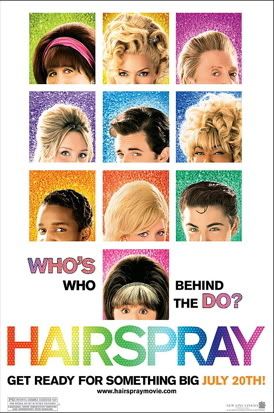
  • Test your movie knowledge… and your visual identification skills… (Thingamabob)

Have a THINGAMABOB? Send it in!

##

August 7, 2007

Quick Stop Thingamabobs: 8/8/2007

Filed under: Columns,Thingamabobs — UncaScroogeMcD @ 11:50 pm

thingamabobs.jpg

The web. It’s a big place, full of plenty of distractions ““ some funny, some informative, some ludicrous, some disturbing, some inane, some profound. Each and every weekday, we present links to a few of our favorite finds”¦

————————————————

  • Laurel & Hardy kick off today’s destinations of interest… (Thingamabob)

Have a THINGAMABOB? Send it in!

##

Toy Box: FANtastic Exclusive 2 – The Gauntlet of Vaskkh

Filed under: Columns,Toy Box — admin @ 12:48 am

toybox.jpg

Regular readers will remember that in 2006, The Four Horsemen did a very cool exclusive based on fan input. This was the first FANtastic Exclusive, developed in conjunction with fan input right from the start. I reviewed the Champion of Mynothecea last summer, and so it’s only fitting that I cover one of the 2007 FANtastic Exclusives as well.

Yep, they did it again for the 2007 SDCC, but unlike last year in which they did one figure with a number of paint variations, this year they went all out, producing 9 different figures. Of these nine, several are entirely new head sculpts!

The main character was Ramathorr, the Elephant Swordsman. He was available at SDCC, or through the Store Horsemen where he’s available for $25. The next announced figure was the Hammer of Gholl, another elephant but with a slightly different head sculpt. He’s a Diamond Comics exclusive, so you may be able to pick him up at your LCS. Next up was the Mace of Broggah, another elephant guardsman with a different paint job and some new armor. He’s available through October Toys and is limited to just 300. But wait, there’s more! Then the Club of Thraugnn was announced, a red version of the Mace of Broggah elephant. He was sold through Fwooshnet.com. Ah, but then things took a turn with the Shield of Draumm! The warriors stopped being elephants, and switched to new creatures. The Shield (as his friends like to call him) is a hippo! It’s the same basic body, with a new head sculpt. He was sold through Raving Toy Maniacs.

*whew*. Next came the figure I’m reviewing today, The Gauntlet of Vaskkh. This guy is a rhino, so there’s a whole new head sculpt again. He was sold through Action Figure Express. The Helm of Xaanm continues this style, but he’s a warthog this time. Big Bad Toy Store was the exclusive retailer on him. But with all these good guy warriors, where’s the bad guys?

That’s where the 7th and 8th variant figures come in. They are Ggruxx (carried by Toy Rocket) and Ssejjhhorr (carried by Figures.com), twin bad guys with a different paint job. But what are they? Mutants, and not very attractive ones at that. But they look great as villains!

So that’s the full line up of nine figures. They are all limited editions of course, in that 250 – 300 range depending on the character. They all run around $25 – $30 each, depending on the retailer. Tonight’s review covers the rhino, Vaskkh, who was $30 from AFX.

FANtastic Exclusive 2 – The Gauntlet of Vaskhh

While all the elephants are cool, I have to admit that the combination of the elephant with the rhino, warthog, and hippo makes this series special. Stick these guys with your cow from last year, and you have one very cool if anthropomorphic display of bad ass warriors!

toybox_080707_01.jpg

Packaging – ***
The packages are quite large, but so are the figures. The only problem with such a large bubble and such a heavy figure is that it can cause separation from the cardback. If you’re a MOCer and going to store these, it might be tricky.

toybox_080707_02.jpg

Sculpt – ****
Outstanding! But then, we have come to expect no less from the Four Horsemen. The detail work is excellent, especially on the rough skin texture and uber-cool armor. These figures are some of the best looking produced this year, and are certainly the best exclusives at this year’s SDCC.

This guy is big, standing at 9 inches tall at the ear tips. The hands are sculpted to hold the weapons, and they work nicely. While the hoof feet aren’t huge, they are large enought give him a good, solid base for deeper poses.

toybox_080707_03.jpg

Most folks will spend their time oooing and ahhhing over the quality of the sculpt, but the quality of the engineering should not be overlooked. They managed to develop a beautiful base figure that allowed them to produce not one or two but eight very cool variants. Even when swapping the heads to entirely new animals, the base body still looks terrific. That was a tall order to cook up, but they managed to do it and do it within a pretty tight budget I bet.

toybox_080707_04.jpg

Paint – ***1/2
The paint work is also strong, although I do wish there was a bit more highlighting and wash to bring out a bit more of the cool skin texture.

The quality is very high in general though, with little to no slop or poorly cut lines. There’s a terrific palette of colors here too, with some nice golds and blues to offset the basic gray skin. With a licensed property, the toy manufacturer is usually stuck with whatever color scheme the original character uses. Here, with an in house developed property, we can see the artistic talents of the Four Horsemen set free, and the choices they made were excellent.

toybox_080707_05.jpg

As I mentioned, there isn’t a lot of washing or dry brushing though, which has its pros and cons. On the plus side, these techniques can be easily overused and ruin an otherwise great figure. On the con side, without them the great detail work, especially on the skin, tends to blend in. The figure could have used a little more punch in that area, but I’m not dropping the score in any major way because of it.

Articulation – **1/2
The one disappointment here for me was in the articulation. It’s not about how much there is, but rather the tightness of the joints.

Vaskkh has a ball jointed neck, although the large head restricts it a bit. He also has ball jointed shoulder (jointed on both sides), pin elbows, pin wrists, and a cut waist. Below the waist are ball jointed hips (again, jointed on both sides of the ball), pin knees and pin and rocker ankles.

toybox_080707_06.jpg

That’s plenty of joints, and you can get some terrific poses out of them. Unfortunately, the joints below the waist are very loose, and his upper body is quite heavy. Those two things together means that getting him to hold those great poses for long periods can be pretty tough. These seems to be a pretty common complaint across the entire wave of 9 figures.

Accessories – ***
Vaskkh is a tad light on the accessories considering the price point, but he does come with two very cool weapons. These axes can fit nicely in his hands, or snap onto his backpack for easy carrying. The sculpt and paint are terrific, and the style of the weapons matches the type of animal, if that makes sense. Perhaps there’s something about the sculpt that reminds me of the horn, or perhaps, there’s something about their bulk that relates to the bulk of a rhino. Whatever the case, these were well thought out.

toybox_080707_07.jpg

Value – **
Ah, now here’s the rub. Last year’s exclusive was $20, but some of these (like this guy) were up to $30. Several of the exclusives were slightly lower though at $25. Considering the extra bulk of these characters (and the very low edition runs/exclusivity), I can understand the $25 price tag, and would give him **1/2 at that price point. But at $30, this guy loses another half star.

Fun Factor – ***1/2
Even with the loose joints, this guy is still one fun figure. Kids could play with him with little fear of breakage (or at least not more than the usual mass market toy), and the bulky axes are less likely to pose any threat of injury. These bad ass beasts also fit in with a general ‘animals as warriors’ theme that we’ve seen for years in kid’s action figures. They are a great example of a ‘collectible’ staying true to its roots.

Things to Watch Out For –
Since you can do much about the joints til after you have him, there really isn’t much to watch out for on this guy.

toybox_080707_08.jpg

Overall – ***1/2
The Four Horsemen have another hit on their hands with this year’s FANtastic Exclusive. It’s too bad that more folks don’t know how terrific these figures are, but they did seem to sell out pretty well, so word must be getting around. If you have a chance to check one of them out, I highly recommend it. And the process for the FANtastic Exclusive for next year’s SDCC should start soon, so get involved!

Where to Buy –
That depends on which version you’d like:

– Ramathorr (standard elephant) is available at the Store Horsemen.

– The Hammer of Gholl should be available at your local comic shop.

– The Mace of Broggah is available through October Toys.

– The Club of Thraugnn is available through Fwooshnet.

– The Shield of Draumm can be found at RTM.

– The Gauntlet of Vaskkh is available through Action Figure Express.

– The Helm of Xaanm was sold through Big Bad Toy Store.

– The Mutant Ggruxx is available through Toy Rocket.

– and finally, the Mutant Ssejjhhorr is available through Figures.com.

Related Links:
Check out the Four Horsemen’s site when you have time, and don’t forget my review from last year’s Fantastic Exclusive. The Four Horsemen also have a site set up specifically for the FANtastic Exclusives.

Quick Stop Thingamabobs: 8/7/2007

Filed under: Columns,Thingamabobs — UncaScroogeMcD @ 12:46 am

thingamabobs.jpg

The web. It’s a big place, full of plenty of distractions ““ some funny, some informative, some ludicrous, some disturbing, some inane, some profound. Each and every weekday, we present links to a few of our favorite finds”¦

————————————————

  • Zack Kim and his two-guitar Simpsons theme… (Thingamabob)
  • And a little Super Mario Bros. action… (Thingamabob)

Have a THINGAMABOB? Send it in!

##

August 6, 2007

Party Favors: Pay Cable Evil

Filed under: Columns,Joe Corey's Party Favors — UncaScroogeMcD @ 12:05 am

partyfavors1.jpg

BALTIMORE –– Is it really the 10th anniversary of the revolution? What revolution, you may ponder. On July 12, 1997, HBO unleashed Oz. This series flipped dramatic TV shows over and sodomized the staid concepts. It went everywhere a network show didn’t dare to roam in language, violence and man love.

It was a unflinching look at life inside the Oswald Maximum Security Correctional Facility. What set it apart from any other TV drama wasn’t merely that it had throat slashing, butt sex and cussing, but that it allowed the bad guys to be the major characters. Even the supposed good guys were shown running their own rackets behind the prison walls. Nobody was all good. Although quite a few characters were all bad. While TV dramas before Oz might have had recurring evil characters, they were either seen as comic relief or constantly being taught that their bad ways would never defeat the series hero. Oz put an end to that tradition. If anything separates HBO from network dramas, it’s the greatness of their villains.

The only series that didn’t have an amazing bad guy was Six Feet Under. Although Nate Fisher (Peter Krause) became such an asshole in the final years that he was as good as a villain. We’re still not sure who is the bad guy in John From Cincinnati, but we’re putting money on Ed Bundy’s bird.

After a long polling process, here’s The Top Ten of HBO’s Diabolical Decade:

10. Atia of the Julii – Rome – (Polly Walker) – She was the most wonderful mother a future emperor could ever have. She fucked for power. She fucked for peace. Occasionally she fucked cause she was in the mood. Her body was the Appian Way for her son to ride to the top. She didn’t mind destroying her close friends if she feared they’d turn on her. For an America that was used to Polly Walker from the charming Enchanted April, her lusty turn on Rome was quite shocking.

9. Phil Leotardo – Sopranos – (Frank Vincent) – For the final seasons of The Sopranos, Phil was the ballbusting mobster while Tony emotionally floundered. Phil snuffed the man who loved Johnny Cakes. Phil wanted Jersey to know that New York runs the family. Frank Vincent was able to up his mobster profile from all his Martin Scorsese roles.

8. Roman Grant – Big Love – (Harry Dean Stanton) – This isn’t just a creepy minister of a polygamy community in Utah. Roman is God’s will on Earth. You turn on him and you’ve banished yourself to hell. And he doesn’t wait till you’re dead to make you feel the heat. He also has a major thing for collecting more wives. If you don’t watch out, he’ll marry your daughter! Harry Dean Stanton’s nails the creepy look when he lowers his cowboy hat.

7. Chris Keller – Oz – (Christopher Meloni) – He was a hardcore killer that had no qualms in snuffing folks. Perhaps his crowning moment is what’s called “Pullin’ A Keller” around the joint. He had a guy giving him a blow job in a private part of the prison. Chris unloaded in the guy’s mouth and snapped the sucker’s neck. I never saw Jack Lord do this on Hawaii Five-O. While Meloni has gone on to star in Law and Order: SVU, it’s hard to imagine he’s really protecting Manhattan. He’s just trying to eliminate the competition.

6. Omar Little – The Wire – (Michael K. Williams) – Whenever you see Omar roaming the mean rowhouse streets of Baltimore with his shotgun, you hide. He’s a wild card on the series. He doesn’t mind robbing the drug dealers, but he’s not cleaning up the town. He just wants the money and the dope. Williams has a hardcore look when he loads up his guns that puts him beyond the normal tough guy actors. Why aren’t rappers wearing t-shirts of Omar Little instead of Tony Montana?

5.Brother Justin Crowe – Carnivale – (Clancy Brown) – Was he Satan? Or just a really creepy minister in league with the devil? Brother Justin was taking over America with his church of the airwaves during the Great Depression. He also liked it rough with the female help. Clancy Brown first went after The Highlander and he topped it by taking on the Carny. Did you know he was the voice of Mr. Krabs on Spongebob?

4. Stringer Bell – The Wire – (Idris Elba) – While Avon Barksdale was serving time, Stringer kept the family drug network running. He even used a community college’s small business course work to revitalize the smack trade. Stringer ran into trouble when he discovered that people in the legit world are more cut throat than underground bastards. Idris Elba was robbed of Emmy glory.

3. Al Swearengen – Deadwood – (Ian McShane) – The ultimate cocksucker ran the town of Deadwood with an iron soul. What he didn’t own or control, he’d destroy. One of his great moments he gave a heartfelt monologue while being blown by a hooker. Ian McShane is now starring in Hot Rod with the guy who put his dick in a box.

2. Tony Soprano – Soprano – (James Gandolfini) – What can be said about the icon? He became the second most popular mobster character behind Don Corleone. He dealt with the issues of his family and his mobster crew. While he showed his human side, we also experienced his beast fury.

1. Vern Schillinger – Oz – (J.K. Simmons) – He lead the Aryan Brotherhood in the prison. When he first appeared on the show, we thought he was a nice guy who had been sent to prison for killing the drug dealer that poisoned his sons. But then he burned a swastika into his bunkmates ass before sodomizing it. Vern was pure evil for six seasons. It was a close vote between Vern and Tony for the top spot. But the tie breaker was that Tony refused to snuff his whiney son. Vern had no problem whacking his offspring when they disappointed him. Simmons is now playing Assistant Chief of LAPD on The Closer. He was also the voice of the Yellow M&M. And now he is the Most Diabolical Character from HBO.

SNAKE WATER

How the hell does Vitamin Water not get sued for false advertising?

I’m trying to cut back on my 3 liters of soda that I slurp down a day. I’m down to one cup of diet soda to hold the caffeine headaches back. The rest of the day I drink plenty of water. I want to get back into fight shape for my upcoming Celebrity Boxing match against Jessica Alba.

During a recent location shoot, I reached into the Igloo cooler for a water, but all that’s inside was Vitamin Water. There’s nothing wrong with water with a little vitamins. Who doesn’t take a drink of water with their Flintstones chewies? But this isn’t water. The stuff I had was “Defense” featuring raspberry and apple flavoring. Sure the bottle claims it “contains less than 1% juice,” but wasn’t that true about Hawaiian Punch? And I didn’t taste water so much as flavor when I drank it. It tasted like Kool-Aid without enough sugar. Is this really water or watered down juice? Water should be clear unless it comes from a Cary, North Carolina tap. Then it’s a nice shimmer grey. This Vitamin water stuff was pretty damn red. It had the capability of staining the carpet. Water gets things wet. It doesn’t dye fabric.

Here’s the funny part, the ingredients listed “vegetable juice (color).” What part of raspberry and apple lies in the vegetable flavor? We can argue tomatoes until Nancy Reagan dies, but raspberries and apples are not veggies. Speaking of seeds crops, Vitamin Water also has crystalline fructose. The folks at sugar.org describe this as “produced by allowing the fructose to crystallize from a fructose-enriched corn syrup.” I’m trying to get the corn syrup out of my diet. That’s why I’m cutting back on soda. But these guys at Glauceau are passing off “water” that’s filled with the same crap that’s in soda.

And in a stroke of Idiocracy, the labels also lists “calcium lactate (electrolyte).” Vitamin Water has electrolytes! At what point do you put enough stuff in water that the FDA won’t let you call it water? You put lemons in water and it gets called Lemonade. You put electrolytes, corn syrup and vegetable juice in a bottle and you still get to call it water?

The boys in Glauceau legal came up with a hilarious description of their product.
“Nutrient enhanced water beverage” is what they call their liquid. Under the definition – what isn’t “vitamin water?” Beer is “nutrient enhanced water beverage.” Coffee fits those lines. So does Tea. So is Coke, Pepsi, Mountain Dew, Jolt and Diet Citrus Drop. Even Hawaiian Punch. If you go down to the waste treatment facility, you can dreg up a glassful of sludge and declare it a “Nutrient enhanced water beverage.”

What’s even more shocking is what the boys in marketing tried to hide from me. The nutritional info is obscured by the red top of the label. What does water not have (besides electrolytes)? Go look on a bottle of real water. It should say “O Calories.” When I held the Vitamin Water bottle in a bright light, through the red background, I was able to see that a serving has 50 calories. What’s more showing is that according to Glauceau, one of their 20 ounce bottles contains 2 1/2 servings. Who drinks that little out of a bottle? Does my grandfather work for Glauceau pouring out Vitamin Water in spit sink Dixie Cups? A 20 ounce bottle of Vitamin Water has 125 calories. That’s a lot of your daily intake if you’re sticking to a 2,000 calorie diet.

You know how much water you have to drink to get 125 calories? You can’t. I don’t know exactly what the calorie intake from a One A Day tablet is, but I’m going to guess that it’s not 125 calories when mixed with 20 ounces of water. How can you add this many calories to water and still get to pass it off to water to the American Consumer? This is a beverage that has very little to do with being water. This isn’t a glass of water with a lemon attached to the lip.

Basically this stuff is Gatorade. But you don’t see Gatorade calling themselves Gator Water. While they market the Propel Fitness Water (and I’ve got a beef with that title, too), at least their water is only 25 calories per 20 ounce bottle.

When I reach into a cooler and grab a bottle marked “Water,” I don’t expect to be drinking fattening crap. Forget Formula 50, Glauceu and Coke need to start up a new flavor: Snake Oil. Although the boys in marketing can rebrand it Snake Water with fiery cobra on the label.

DOLPHIN LOGIC

One thing left off my Vegas epic was a visit to The Hooters Hotel and Casino. I thought this was a joke like Otis’ Secret Still Bar. But it was really there in glorious orange and exposed wood. The ladies treated us pretty nice although way too many of them were pregnant. Those hot wings are potent.

What’s even more dangerous is a visit to Dan Marino’s restaurant in the casino. Have you seen all those TV ads where Dan Marino and his football pals beg us to lose weight? The former Miami Dolphin’s quarterback’s health conscious ways don’t visit Las Vegas. A huge sign advertised all you cam eat baby back ribs for $16.99. How the hell does Dan expect America to lose weight when he tempts us with glorious baby back ribs at such an amazing price?

Get with the program, Marino. Either we all lose weight or we all pig out on the precious bones. You can’t have it both ways. Of course he learned this misdirection from his coach. Don Shula also pimps the weight loss on TV. But if you go into his steakhouse, he promotes “The Shula Cut.” This is a 48 ounce porter house steak. If you eat it in one sitting, you get an autograph picture of the coach and your name goes up on his website. Shula promotes one mega-eater that polished off 175 of the Shula Cuts. How can you beg for me to lose a few pounds as you hang out with a guy who has eaten 525 pounds of steak?

If Shula cared about the health of America, he should be praising people who ate the 4.8 ounce porterhouse at his joint.

Why didn’t Shula get Marino a Superbowl? Maybe these two were stuffing their faces during timeouts instead of calling the right plays.

THIS IS IT, GIRL?

Finally had a chance to see Factory Girl, the story of Edie Sedgwick and her time with Andy Warhol. Ever since the book Edie came out in the ’80s, everybody has claimed they were going to make a biographical film about the Youthquaking trust fund girl who was Paris Hilton with a soul. There was once talk of Molly Ringwald in the lead.

The film focused on the quasi-romance between Edie and Andy. Sienna Miller didn’t seem too English playing the girl who fell down the rabbithole of Manhattan. Guy Pearce did the best Warhol since Bowie’s turn under the wig in Basquiat. Halfway through the film, my wife asked me if there was something else on TV. Instead of insisting that things would pick up and get interesting, off went the DVD. The next morning I watched the last hour. Over 20 years of people wanting to make the movie and this was the end result? At least it’s out of Hollywood’s system.

But this isn’t the first semi-biopic that everyone wanted to make and ended up laying on the screen like last week’s potato salad. Bettie (or Betty) Page was also a hot property. The Notorious Bettie Page left me limp. For all the staged debauchery about the fetish star’s career, the movie felt way too clean and reserved. For a film about bondage, I wasn’t wrapped up in the action. Although it did remind us that Gretchen Mol has a great rack. Even the more low budget Bettie Page: Dark Angel was dishwater dull. It spent more time recreating the photo shoots than dragging us into the emotions of the moment. And why did they cast a girl with fake boobs?

The final female film that had a lot of “this needs to be a movie” buzz was Black Dahlia. Nearly 20 years after James Ellroy wrote his fictional account of the case, Brian DePalma made it into a major motion picture. And 20 minutes into the film, I fell asleep. The film has Mia Kirshner as the title role. She normally keeps my eyeballs wide open. Who can forget that very special episode of L Word where she and Sarah Shahi shared a toilet seat? When is someone going to turn that into a motion picture? It demands Imax!

Here were three women that occupied my mind during college. Even I had that hideous thought that I should make their lives into movies. But I left it to the “professionals.” And look what George Hickenlooper, Mary Harron and Brian DePalma did to them? They would have been better off dating O.J. Simpson. It was like going to a 20th reunion and seeing what finally happened to the hot girl in PE class – the first one that had to invest in a jogging bra. Instead of seeing her as an eternal stunner, she’s become the stand-by guest at Jerry Springer.

DINNER: IMPLAUSIBLE

Dinner: Impossible on the Food Network has become highly addictive watching at the estate. Each week Chef Robert Irvine gets stuck somewhere with a little more time as an Iron Chef, but with a semi-inept kitchen staff. He’s got a few hours to create a primo gourmet meal for groups of dozens to thousands. It’s nuts. Recently he had to make such a meal during a Chicago White Sox game using only food in the concessionaires freezer. Talk about a gruesome selection of meats.

What Irvine concocts is rather amazing. We’re going to do try the Dots with margarita mix at a future party. The nice part about the show is a few times he has failed the challenge. He couldn’t create the amazing meal under the deadline. So there is excitement as things come down to the wire.

I dare Robert Irvine to be able to use me a kitchen assistant on an episode. Although he’ll probably have to bow down to my amazing ability to make put stuff on a Ritz Cracker. Can he make the deadline with me mixing up the risotto? And don’t expect to see anything, but shells and gills if there’s lobster in the episode.

And if he doesn’t want me, can I please get to try out for Ball Busting with Gordon Ramsey where I get 1 hour to make everyone in a three star kitchen cry like baby or attempt to strangle me? Beef Wellington? More like Biff Smellington!

NO CAKE FOR ME

The Food Network has informed my that my Ace of Cakes segment has been banned from the channel. Somehow a cake of Alex Rodriguez with a bat shoved up his ass wasn’t considered family friendly.

While I’m blown away by the Charm City creations from Duff Goldman, it’d be nice to get a price tag on a few of those cakes. How much would it cost for me to get the plane slamming into the Titanic cake? Will I be forced to sell my kids on eBay to pay for their birthday cakes? Does he use his electric saw to remove the arms and legs of customers that come up short? Although fondant can be used to stop a bleeding artery.

DAMN VHS

Did you know there’s no way to reduce space on your VHS collection without getting rid of the tapes? When it came time to shrink the DVD shelves, I put the shiny disks in sleeves and tossed out the plastic cases. You removed the box from a VHS tape and you’re pretty much stuck with the same amount of space minus a few cubic millimeters.

BIRDS AND SHIPS

This is a great time for classic animation on DVD. Showing up in the mail over the past week has been Popeye The Sailor: 1933-1938, The Woody Woodpecker and Friends Classic Cartoon Collection and Tex Avery’s Droopy – The Complete Theatrical Collection. There’s more vintage shorts on those DVDs than Cartoon Network has shown in the past year.

All three sets are prime examples of what can be done when folks who are passionate about animation are allowed to work on these projects. This winter looks good with the final installment of Tom and Jerry and Volume Five of Looney Tunes and the rest of the black and white Popeyes.

LIBERATE CUBA

Daddy Day Camp once again makes me to ponder “Why hasn’t Cuba Gooding Jr. gone nuts and beaten a movie executive to death?” Can he seriously be happy taking all these crappy roles? Why hasn’t he at least camped out on Cameron Crowe’s doorstep refusing to move until Cameron writes him a script? He made Cuba an Oscar winner and now he’s reduced to making films so pathetic that Eddie Murphy wouldn’t cash the check on it. And Eddie needs the work between alimony, the Spicegirl baby and the new fiancé. Lawyers don’t get paid with freebie DVDs.

I have hope that his role in American Gangster will make us forget that Cuba Gooding Jr. made Rat Race, Boat Trip and Snow Dogs. If all goes wrong, Cuba could star in The Wayne Brady Story.

CREEPY ENGLISH PEOPLE

First off, bad news to the producers of John From Cincinnati. With the new episodes of No Reservations with Anthony Bourdain back on the Travel Channel every Monday night at 10 p.m., we’re going to watch your show OnDemand on Tuesdays. We’ve already bumped you from Sunday nights because of 4400. The freaky nature of John is enjoyable, but it’s just not “must see” TV cause it’s just too damn confusing. We want to see Bourdain getting lost around the globe versus a bunch of messed up surfers getting lost in a plotline.

We are enjoying Meadowlands on Showtime. This is best described as The Prisoner-family style. Something evil has happened and the family is forced to relocate in an experimental town that’s filled with witness protection people. It’s kinda like Arizona. The father is played by David Morrissey. It’s pretty obvious why he wants a new identity in a town where no one knows him. Did you see Basic Instinct 2? Morrissey probably doesn’t want you to remember him staring at Sharon Stone’s snatch. Felicity Jones, who plays the daughter, wins our Summer Sizzling actress. She knows how to work the bangs.

They did tip their hat to the old Prisoner series when during a soccer match, they had Morrissey wear the “6” jersey.

BECKHAM BLAHS

Did I really watch a soccer match to see a guy come into a match with a few minutes left? Not really. I was only flipping back to the LA Galaxy vs those English players game during commercial breaks of Ice Road Truckers on the History Channel. I can only handle so many shots of a guy sitting on a bench.

If you’ve seen Once In A Lifetime: The Extraordinary Story of the New York Cosmos, you’ll see that when Pele arrived to elevate soccer in America. He didn’t spend too much time on the bench. People tuned in the next game to see the amazing ball work and goals. When it comes to Beckham, they want us to see if he will actually warm up with 10 minutes left. All the hype. The countdowns. The moaning from Europe. And we end up with a guy who would look best on a bench between Sebastian Telfair and Ryan Leaf.

And Herbalife? Why is that on the Galaxy jersey? Did Est not have $25 million ready to burn? Dianetics not ready to get that involved with the beautiful sport? Wonder if Herbalife has a cure for bum ankles? Red Bulls should have sponsored LA since you’ll need a case to stay awake long enough to see if Beckham will take off his sweatsuit.

Nocturnal Admissions: DVD Review, Film Noir Classic Collection Vol. 4, Part One

Filed under: Columns,Nocturnal Admissions — UncaScroogeMcD @ 12:02 am

nocturnalheader5.gif

Film Noir box

It’s time to redefine film noir. Or perhaps refine the living definition. Or return to the original definition and work from there. Or scrap the whole genre and its outmoded definition and start over.

You think you know what noir is, don’t you? You think film noir is a minor genre that thrived from the early 1940s to 1958, one that focused on troubled men lured into criminal situations by their own bad judgment and the wiles of a seductive woman, all ending when fate, in the form of the law, reaches out its long arm to snatch them all up? You think that film noir is a heightened genre in which the visuals tell half the story, in which long shadows and venetian blinds and rain swept corners and curling plumes of cigarette smoke are as important as dialogue, if not more so.

If this is your definition, then how do you explain the presence of such films as House on Telegraph Hill, Panic in the Streets, House of Bamboo, or Dillinger in recent sets of supposed films noir. Or put another way, how loose of a definition of film noir do you want?

The DVD distributors no doubt want a definition as fluid and flexible as they already seem to have. Or maybe a definition ever more porous. Film noir is probably the most popular of the genres that sell on disc. Its films come in mostly well-priced and attractive boxes in bright colors and fun typefaces, they seem to epitomized “classic” Hollywood, and they break the color barrier: i.e., kids who normally abjure black and white films will watch noirs. Critically, each box is greeted as if it is the salvation of motion pictures. They don’t make like they used to! What great old films, each and every one!

If a person truly loves noir, shouldn’t they also be seeking out the films of French poetic realism of the 1930s, films such as Pepe le Moko or Le Jour se leve? Or, some of the films of pre-World War II German expressionism, such as Lang’s M, films whose visual style clearly pre-dated the use of shadows and unusual angles in true American noir. The answer is yes, they should: but they don’t. Noir has become a wholly American thing, its roots in other cultures ignored by consumers, its life span artificially elongated, like a dying patient on life support, a very un-noir way to go.

And is noir even a genre? When the two Toulouse-based intellectuals Raymond Borde and Etienne Chaumeton came to write their book A Panorama of American Film Noir, 1941 – 1953, they called it a “series” rather than a genre. It’s an interesting distinction to make, because it ends up emphasizing the short lived nature of the cycle of noir films. In their book, which was finally published in English in 2002, they don’t define the genre, but rather offer a set of five key noir characteristics (roughly: dreamlike, strange, erotic, ambivalent, and cruel) that proves not to be especially helpful, and then they give you a list of noirs, a subdivided taxonomy from which we are supposed to infer a definition. Later, when Raymond Durgnat came to attempt a definition of noir for the British magazine Cinema, he ended up sub-dividing the films by cycles and motifs, such as sociological films, prison films, juvenile delinquent films, and so on. Thus, in 1970 when the article first appeared, and just two years after Charles Higham and Joel Greenberg had introduced the term “noir” to American criticism in their book Hollywood in the Forties, noir was already out of control, a casserole pot for whatever likes or linkages the critic cared to include. The first chapter of James Naremore’s book More Than Night offers the best treatment I’ve found of the difficulties of defining noir.

But here’s an easy definition of film noir: it’s a film whose images are used to illustrate the cover of a film noir book (and there are a lot of them: I have over 50 noir books on my shelves).

The current pro-noir situation is only one instance of a wholesale celebration of the cinematic past as if there had never been a bad movie made in Hollywood. Is there no film so bad it doesn’t deserve a special edition with a making of, the trailer, a booklet, and two or three audio commentaries in which the same film noir specialists pontificate and the surviving filmmaker, regardless of how minuscule his role, is dragged from the the precipice of the grave to have one final day in the sun?

I share a lot of these prejudices. Noir is my favorite genre, and I love collecting the discs and reading up on the films. But at a certain point one has to admit that nor every film out of the past is of equal weight. But in any case, these were the issues plaguing me as I work my way through the new Warner Bros. five-disc, 10-movie set, Film Noir Classic Collection, Vol. 4.

Crime Wave title

Decoy title

The disc people will probably take out first is No. 2, which features Crime Wave, with an audio commentary track featuring crime novelist James Ellroy, along with the related film Decoy. In any case, that’s what I did. Crime Wave (released in 1954, but shot in 1952) proved to be an interesting little policier presented in the documentary mode, with stylistic roots in the Hellinger style of street realism. Shot in only 13 days by notable Hollywood director Andre de Toth for Warner Bros., it is an urgency and rawness that is only accentuated by its brash lighting, especially in the interiors, its tinny, almost drive-in movie level sound production, and its authentic locations.

Crime Wave Hayden

Sterling Hayden is the Robbery-Homicide cop investigating a cheap little gas station knock over that balloons into a manhunt for a team of crooks that includes Charles Bronson (under his real name), Ted de Corsia, and Timothy Carey. It’s worth noting that Hayden, de Corsia, and Carey would appear together again two years later in Kubrick’s The Killing, and that Kubrick’s film may also have borrowed its look from Crime Wave, as the audio commentators point out.

Crime Wave gang

What the yak trackers don’t point out is that Crime Wave has a plot that is an expanded version of a subplot in Michael Mann’s Heat, and that when we first meet the film’s innocent, ordinary couple, Gene Nelson and Phyllis Kirk, they are in bed together, a single bed, not the dual beds the MPAA equivalent demanded. Otherwise, Eddie Muller and his pal Ellroy cover all the film’s bases, from the exact locations where the film was shot to the backgrounds of the film’s cast. Ellroy clearly tickles Muller, who generously and sincerely laughs along with Ellroy’s shtick. Among the things we learn about Ellroy in the two-way chat is that he is self-conscious about going bald, and he thinks that Crime Wave is a better film than Chinatown. It is unclear whether he had ever seen Crime Wave before, however, as Ellroy dissolves into loud canine panting whenever a recognizable location, such as the original Bob’s Big Boy or the LA police department, pops up, as if the film were new to him. On a side note, this track appears, from internal evidence, to have been recorded early in 2006. Is it possible that Warner, in creating this set, combined what would have been two separate boxes, thus holding back a few of the films whose audio commentary tracks might have been more timely if released closer to recording?

Crime Wave de Toth

In addition there is the film’s trailer, and a short new “making of” featuring, for no discernible reason and to no profitable end for the viewer, that pontificating windbag with nothing to say, Richard Shickel. Fortunately he is joined by others who do have something to say, including Oliver Stone, Alain Silver, Elizabeth Ward, Christopher Coppola (who sounds just like his brother Nicolas Cage), and de Toth himself in archive footage. In any case, Crime Wave is an efficient programer, but I’m not so sure that it is a noir, what with its photorealism and its reasonably happy ending.

Decoy Gillie

Warner Bros has cleverly paired Crime Wave on the same side of the second disc with Decoy, as Decoy is written by one of the actors in Crime Wave, Ned Young, a writer and actor who suffered at the hands of HUAC. It’s a complex tale adapted from a radio play by Stanley Rubin concerning a femme fatale named Margot Shelby (British actress Jean Gillie, who was briefly married to the film’s director Jack Bernhard , and who died a few years later with very little of a film career), who contrives to ensorcel a doctor (stage actor Herbert Rudley ) into reviving her sugar daddy, a dead row inmate (Robert Armstrong), after his execution, so that she and her third lover (Edward Norris ) can dig up the buried loot. The plot isn’t told in an orderly fashion, however. After a mysterious, zombie-film style opening, the tale is told in elaborate flashback form by Shelby to tough guy cop Joe Portugal (Sheldon Leonard), who also figures in a lot of her flashback, as she lay dying.

Shelby is touted as filmdom’s cruelest femme fatale, but I didn’t find her so “bad.” Her crime career is carefully motivated, and she kills with less lurid excitement than Phyllis Dietrichson in Double Indemnity or Annie Laurie Starr in Gun Crazy. She is an entertaining creation, however, because she seems fully fleshed out by the script and by Gillie: literally it seems, as her daring cleavage was commented on by Variety, as the disc points out.

In any case, though Decoy doesn’t bear any of the visual traces we associate with, or should associate with, noir, it does include a essentially moral man whose will is sapped by the demoness who takes down everyone with her in her pursuit of money. But that may be due to the fact that the film was made for Monogram, the so-called poverty row studio, which later became Allied Artists, only to be consumed by Warner, itself in turn consumed by Ted Turner. Hence the film’s presence in the set.

Decoy Rubin

As with all the films in the box, Decoy comes with an audio commentary track, this one with writer and producer Stanley Rubin, hosted by Glenn Erickson, a film editor, filmmaker, and writer (he says on the track that the site DVD Savant is his, while I always thought it was attached to DVDTalk). Erickson is giddily enthusiastic to have Rubin on the air, and solicits many amazing little nuggets of Hollywood lore from him, such as that he almost “discovered Marilyn Monroe, and that he also cast Clint Eastwood in his first movie, years later collaborating with him again on White Hunter, Black Heart. The little making of that follows is shorter than the one for Crime Wave, but features a more interesting selection of pundits, including Dick Cavett and Molly Haskell. But I will have more to say about the pundits and audio commentators for this set in future installments.

Quick Stop Thingamabobs: 8/6/2007

Filed under: Columns,Thingamabobs — UncaScroogeMcD @ 12:01 am

thingamabobs.jpg

The web. It’s a big place, full of plenty of distractions ““ some funny, some informative, some ludicrous, some disturbing, some inane, some profound. Each and every weekday, we present links to a few of our favorite finds”¦

————————————————

  • Dino sure knew how to throw a special… (Thingamabob)
  • What if Star Trek were done by the Schlesinger Studios?… (Thingamabob)

Have a THINGAMABOB? Send it in!

##

August 3, 2007

Trailer Park: Buying My Time

Filed under: Columns,Trailer Park — admin @ 1:41 am

By Christopher Stipp

Archives? Right Here…

Instead of putting off and putting off and putting off my vow to somehow market my first book I am letting people download my first book for free. Give it a preview, read the whole thing or, if you like what you see, send me some kind words or donation for the actual book. Download and read my “Thank You, Goodnight” right HERE.

Ok, children…I’m finally back after the Con and I am just spent. Really, I got home last Sunday and still haven’t found the kind of energy that kept me going for twelve straight hours a day as I was working the floor. Here then are some of my half-assed highlights from Comic-Con 2007:

A) I find it very amusing that, in this space, mere months ago, I bagged on the SUPERBAD trailer. I honestly could not find one iota of inspiration within its 2 and 1/2 minute frame. Now that I am back from Comic-Con I can say it was one of the best comedies I’ve seen this year, even better than the over-hyped KNOCKED UP. Just an observation.

B) Two words: Press Line. I know there are hundreds of us around the Con and by us I do mean journalists. I don’t think it would be that much of an imposition for there to be a few seats in order to help those of us who aren’t in the studio’s pocket and need a little courtesy to cover a story. That’s fine, though, the way it is now. All I know is that if I can’t see it, I can’t cover it.

C) The bread that I broke with the cast of G4 was perhaps one of the better memories I will carry with me in all the years I have done this. All I can say was that that the cheese plate was delicious.

D) Big ups to Rogue Pictures for hosting one great breakfast in support of DEATH SENTENCE, directed by James Wan of SAW fame, on Saturday morning. Not only was this a well-managed event but it put this film on my radar as one that I must/have-to check out.

E) While a lot of other sites were busy chasing their need for exclusive A-list material, I am genuinely pleased at the coverage for MONSTER SQUAD I obtained.

F) Missy Peregrym. I’ve talked to her once, twice and now three times; you’ll feel her flavor soon enough again right in this space.

G) I am glad I ditched the audio interviewing in lieu of video. You’re all going to be subjected to video of my Ray Romano-esque voice as I chat up those who I met; Blair Butler was absolutely wonderful.

Z) If there are any writers out there who tell you that Comic-Con is an overblown affair almost not worth covering needs to be checked into the boards by a rabid mongoloid on ice with a hardwood hockey stick. Yes, you can make a case for all things lame and all things sucky and all things shitty but to be perfectly honest there was a sense of geek delight to be able and partake, and report on, everything I was privy to because I know there are people who only get the lo-fi experience; they have to stand in line, they don’t get to do 1:1s with anyone, they have to endure being huddled in with the rest of the crowd, they don’t get invited to parties and they sure don’t get invited to press screenings. If I were to go as a casual fan I would dream of being able to do what I did last weekend. I’ll be honest: It was nice to be recognized as an actual writer, reporter, on events going on and there is really nothing that can compare to having a little recognition and respect tossed my way when I got introduced as a, “writer for Kevin Smith’s….”

Comic-Con was absolutely still worth it…even though I did get shafted for being able to see that footage for IRON MAN. That part sucked. That part I would give back. Everything else, though, was golden. Sorta.

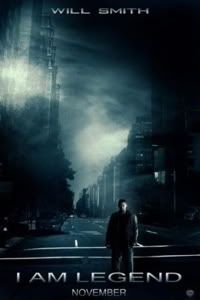
I AM LEGEND (2007)

Director: Francis Lawrence
Cast:
Will Smith, Alice Braga, Salli Richardson-Whitfield, Willow Smith, Charlie Tahan Olsen
Release: December 14, 2007
Synopsis:
Robert Neville (Will Smith) is a brilliant scientist, but even he could not contain the terrible virus that was unstoppable, incurable”¦and manmade. Somehow immune, Neville is now the last human survivor in what is left of New York City…and maybe the world. But he is not alone. He is surrounded by “the Infected” – victims of the plague who have mutated into carnivorous beings who can only exist in the dark and who will devour or infect anyone or anything in their path. For three years, Neville has spent his days scavenging for food and supplies and faithfully sending out radio messages, desperate to find any other survivors who might be out there.

All the while, the Infected lurk in the shadows, watching Neville’s every move, waiting for him to make a fatal mistake. Perhaps mankind’s last, best hope, Neville is driven by only one remaining mission: to find a way to reverse the effects of the virus using his own immune blood. But his blood is also what The Infected hunt, and Neville knows he is outnumbered and quickly running out of time.

View Trailer:
* Medium (QuickTime)

Prognosis: Positive. I know I’m not the only one who finds Will Smith, when he’s being Will Smith, to be an utterly exacerbating rash in a film.

Sure, you can have Will Smith being Will Smith in INDEPENDENCE DAY and not mind so much because, really, everyone else is half-assing it as well; even Jeff Goldblum isn’t as creepy as is his want.

This all said, however, I find his turn in this trailer refreshing to the point that the man has some resonance long after you’ve seen it. I found myself thinking, ensconced in the confusion of what I was watching. For those who have no idea of what it is, do yourselves a favor and not look before you leap into this preview. What makes the moments here so compelling are the purposeful ways in which information is withheld from us as an audience.

For instance, y por ejemplo, you’ve got Will curled up inside a bathtub with a shotgun splayed across his shoulders and legs. We don’t know what the deal is or why the odd sleeping position, I can only imagine the crink that not even a vat of Icy Hot would be able to get out the following morning, although maybe he’s one of those drunken guys who have sunk to chugging green rubbing alcohol in the bathroom. It could happen.

Will’s voiceover isn’t as grating as you would think. He’s reserved, pulled back, and this is just a treat to be able and hear because there is no need for him to “project” to anyone. The visuals, as well, compliment the action on the screen as chaotic as it is: there’s a city in full-on evacuation mode, a la INDEPENDENCE DAY, and of course there is a wife and kid involved, none of which I am guessing is going to make it past the 1st act. (We need our heroes to have lived and lost in order for them to seem compelling!)

What I like, what I really like about this trailer is the total clusterfuck that the incoming missiles do to the narrative. For you eggheads who read you already know what’s what but, for me, I liked the anomie, the chaos, and the eventual quiet that follows. The aftermath of what seems like a thermonuclear war that has devastated everything and everyone. It’s a brilliant rendering and I am quite impressed that Johnny Voiceover didn’t come running into the room to spoil the fun.

“Day 1001″

Now, again, Will gets behind the mic to continue the voiceover and I couldn’t be more impressed at the restraint. As he moves through a barren and hollow New York City I can’t help but feel actual trepidation as he skulks his way with his pump action friend at the ready. And I have no clue, still, about what he’s so on guard for but you feel something under the surface.

The end, where you know there is something hiding in the darkness? This is where the payoff just comes right you. Yeah, you don’t see what’s coming or what it is that has Will so uptight but so what. There’s enough here to warrant the feeling that this is a movie worth keeping track of.

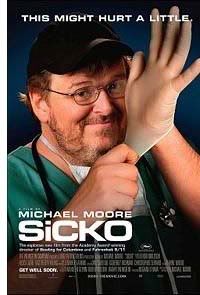
SICKO (2007)

Director: Michael Moore
Cast:
Michael Moore
Release: Now Playing…At A Peer-to-Peer File Sharing Site Near You
Synopsis: Following on the heels of his award winning hit “Fahrenheit 9/11″ and his Oscar® winning film “Bowling for Columbine,” acclaimed filmmaker Michael Moore’s new documentary sets out to investigate the American healthcare system. Sticking to his tried-and-true one-man approach, Moore sheds light on the complicated medical affairs of individuals and local communities. SICKO promises to be every bit as indicting as Moore’s previous films.

View Trailer:
* Large (QuickTime)

Prognosis: Positive; Or, One Of The Best Arguments For BitTorrent. This trailer’s inclusion almost seems perfunctory.

I don’t think that you could easily dismiss the story about Michael Moore paying the insurance costs for one of the country’s biggest outspoken Moore critics as anything less than a nice, calculated move to start the PR machine into overdrive or the recent dust-up about Moore going to Cuba to help out some workers from 9/11 get the kind of medical care that they just couldn’t here in the states but what you can get angry about with great prejudice is that not only do we have people staying at awful jobs simply for the health insurance but we have created the mindset that healthcare only goes to those who can afford to pay it. I realize we’re a capitalist country and as someone who has had to pay hundreds of dollars to my PPO, seething with every dime I have to turn over, I just think that the system of organized healthcare is a broken machine. From privatized drug companies who are lining their coffers with millions of dollars and excuses about R&D to millions of Americans who have to get a referral from a physician in order to see the kind of specialist they know they need.

Sometimes,

“We got an issue in America”¦”

It’s way too easy to pick apart sound clips and snippets where Moore uses Bush against himself but George is right-on when he says that physicians are getting out of the game simply because of issues of liability. You can’t help but feel a twinge of something as George Bush starts this trailer and then have a laugh as George mentions that OB/GYN’s are no longer able to”¦”practice their love with women.”

As you wonder what the hell he meant we launch into the short and sweet about where this movie is going to take us. We traipse into the halls and steps of companies who make their livelihood by adding a subjective element into the twisted world of insurance claims administration. It’s hard to imagine just what’s going on as we move at a breakneck pace through the trailer but, yes, the first volley Moore has in his arsenal is something we all should know: the more claims you can deny the better overall health of the corporation. Nothing is more important than the health of the corporation and that resonates loud and clear.

What’s more is Moore is well stocked in his quick facts. Hauling out old footage of Nixon declaring that he’d like to see America have the best health-care coverage in the world only to quickly use modern footage of some members of congress with accompanying Pop-Up Video symbols about how much each one of them received from health-care lobbyists to say nothing of the bow he puts on it all: we’re far enough down on the health-care list that we’re just inches above Slovenia in terms of quality.

Quick moment of a congressional hearing of a high-level medical insurance reviewer who says that, yes, she denied a necessary operation for a man, who subsequently died, just so she could continue to ensure her ascension within the corporation in question. It’s appalling.

The humor strikes up at about this time. This is where Moore takes his 9/11 workers to Guantanamo Bay in order to get them the medical care that the Bush Administration is taking issue with as he decided to go to nearby Cuba. It’s part showmanship and part factual farce as nothing makes hard cold reality go down better than a little absurdity. This trailer works on all levels. If it doesn’t get your blood simmering then I can’t imagine what would.

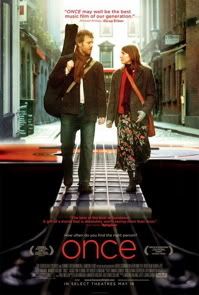
ONCE (2007)

Director: John Carney
Cast: Glen Hansard, Marketa Irglova
Release: Now Playing
Synopsis: A modern day musical set on the streets of Dublin. Featuring Glen Hansard and his Irish band “The Frames,” the film tells the story of a street musician and a Czech immigrant during an eventful week as they write, rehearse and record songs that reveal their unique love story.

View Trailer:
* Large (QuickTime)

Prognosis: Positive. This represents one of the most pertinent reasons why there is such an interest in Before Vs. After.

When I initially saw this trailer I was bemused in a way, seeing all the superlatives heaped upon the film by those who have seen it during the festivals in which it has played, but there just had to be something, right, in all the people who are quoted in this piece saying something to the effect of its sheer genius?

I, you, cannot be sure because we’re only presented with the trailer but see how we’re led down a unique path during this trailer’s exposition. Initially we’re offered the very simplistic stylings of Glen Hansard as a busker on the streets of Dublin. (One of *the* best places to get plastered if ever there was one such a place that could earn such a distinction) The tone is implicitly melodic as we’re shown not only the Sundance award it won but our first quote from mainstream media, here played by Kenneth Turan of the LA Times, that heralds this movie as the second coming of Christ.

The trailer is allowed to take over and in a matter of seconds, sheer seconds, we’re let into the tiny world between a man and a woman. The one, as we’ve seen, is a street performer and the other uses the streets in order to make a living. It’s bright as day, clear as crystal, to everyone watching this trailer that these two definitely have something. Whether it’s chemistry or something else entirely as you see them interact with one another you can’t help but feel that this trailer establishes a good amount of personality in a tightly packed amount of time.

In the musical interlude, with one of the best original songs I’ve ever heard placed within an advertisement, the happy-happy joy-joy moments these two kids share just feels real, if nothing else. The way we see them touch one another and get close to one another just feels natural and doesn’t ever stray into forced intimacy.

This is where the drama comes in.

The young girl not only has a husband but the guy is coming to Ireland to check up on his old lady. This is where, even in the brief moment we’ve been exposed to these two individuals, there’s tension and a quick quote from the New York Times, the Chicago Tribune and Rolling Stone just blowing their collective wad over this film. It’s enough to make you think, “Shit, I need to see this film.” The music isn’t bad, the people seem nice as fuck and the location seems awfully nice to look at.

This is where the feeling to drop everything just takes over and the need to see the film overrides any objection to how far you need to travel to see it. For any trailer to be able and do that not only deserves my money but deserves other people’s as well.

After seeing the movie and seeing how it is deserving of a superlative of some sort, be that of best musical, best love story you’ll get dragged to yet be pleasantly surprised at from the first frame, there is no question that this movie will stay with you long after you’ve seen it. It’s the best thing, after SUPERBAD, that I’ve seen this summer.

BRATZ (2007)


Director: Possibly A Guantanamo Detainee
Cast:
Who Cares
Release: Unfortunately, It Will Be
Synopsis:
I pity you if you actually care.

View Trailer:
* Large (QuickTime)

Prognosis: Negative. Enjoy, this is the worst trailer I’ve never had to review.

Comics in Context #188: D’OHME!

Filed under: Columns,Comics in Context — admin @ 12:05 am

comicsincontext4.jpg

cic2007-08-03.jpgIn reviewing The Simpsons Movie for The New York Times (July 27, 2007), critic A. O. Scott wrote, “Ten or 15 years ago, The Simpsons Movie, which has been contemplated for almost as long as the show has been on the air, might have felt riskier and wilder. But The Simpsons, for all its mischief and iconoclasm, has become an institution, and that status has kept this film from taking too many chances”.

Online critic James Berardinelli wrote that “The primary satirical targets are religion (an easy mark), environmentalists (also easy), and government stupidity (even easier). The Simpsons Movie does not go after hot button issues nor does it tie itself to a time and place by addressing current events”. Early in the film Homer Simpson leafs through a Bible and exclaims this book has “no answers.” Is this merely Homer being stupid, or are the filmmakers attacking the Bible? If it’s the latter, isn’t that an unusual move for a family movie to take in a country in which religious believers make up the majority of the population? In the case of environmentalists, the movie comes down on the side of Lisa Simpson, who sincerely believes in the cause. As for “government stupidity,” the movie accuses the government of something worse than mere stupidity.

The more I think about The Simpsons Movie, the more I think it may be considerably more daring than the reviews I’ve read have noticed. And it is very much a satire about what is going on in America right now.

The Simpsons‘ creative freedom, on television and now on film, is particularly striking since it is part of Twentieth Century Fox, which is part of Rupert Murdoch’s vast News Corporation empire. So too is the Fox News Channel, with its leanings to the political right.

According to a July 30, 2007 article in The New York Times, “Activists are urging Home Depot, which recently unveiled an environmentally conscious marketing program, to withdraw advertising from Fox News, whose hosts and commentators dismiss global warming as liberal hysteria. . . .A short video by Robert Greenwald, Fox Attacks: The Environment, has been viewed more than 380,000 times since it was posted on YouTube on July 9.”

But The Simpsons Movie voices a strong environmental theme. Earnest, liberal Lisa tries to stop the people of Springfield from polluting their local lake, and, surprisingly, manages to overcome their apathy on the subject. According to Entertainment Weekly, Simpsons creator Matt Groening “mentioned an article he’d read about a community battling hog-waste pollution,” which became the springboard for the movie’s plot. When Homer dumps a silo full of his new pet pig’s manure into Lake Springfield, he triggers a chemical reaction out of a science fiction/horror movie. A squirrel that was exposed to the polluted water grows many more eyes. (This is surely an allusion to one of the earliest Simpsons episodes, 1990’s “Two Cars in Every Garage and Three Eyes on Every Fish,” in which radioactive wastes from Mr. Burns’ nuclear power plant result in a mutant fish with an extra eye.

In the film Arnold Schwarzenegger is President and gives a free hand to Russ Cargill, the head of the Environmental Protection Agency (EPA), who takes drastic action in response to Lake Springfield’s mutagenic pollution. Rather than do anything to clean the lake up, he dispatches the military to encase the entire town within an enormous dome.

How seriously can we take the satirical treatment of the EPA? The writers’ point may simply be the absurdity of the idea that the EPA, of all government agencies, could possibly engage in this sort of rogue military action. Do any of you recall that in The X-Files movie (1998), FEMA was supposed to be a major player in the all-powerful alien conspiracy to take over the world? Anyone who watched the DVD after FEMA’s catastrophic performance after Hurricane Katrina struck New Orleans probably finds the idea of an omnicompetent FEMA grimly funny.

There are conservatives in the Republican Party who want to restrict the powers of the EPA or to abolish it altogether; they might like The Simpsons Movie‘s portrayal of the EPA as a menace to freedom. Then again, there are also liberals who believe that the EPA has not been effective enough in combatting environmental dangers; they would notice that the EPA doesn’t do anything to solve Springfield’s pollution problem, but just literally puts a lid on it.

I realized what the movie might be up to during the sequence in which we are shown endless rows of National Security Agency employees monitoring the phone calls of apparently ordinary Americans. The NSA man who thus located Marge Simpson is ecstatic, boasting that finally the government had located someone it was searching for. This is presumably a reference to the controversy over the real federal government’s recent venture into warrantless wiretapping in its surveillance of alleged suspects in the “war on terror.”

If the movie’s NSA gag has a serious subtext, then what other political commentary might lurk just under the surface? Are the film’s President Schwarzenegger and EPA head Cargill merely supposed to be a fool and a knave, respectively, with no connection to the real world? Or is this Schwarzenegger, who declares that he was elected “to lead not to read,” intended to remind us of our current President? Schwarzenegger irresponsibly allows Cargill, a man with a questionable agenda, to do whatever he wants. Are we meant to think of President Bush following the ideological agenda of his neoconservative associates in plunging the nation into what now appears to many as a hopeless war in Iraq? Is Cargill’s military assault on Springfield meant to remind us of the current administration’s reliance on massive military force to “solve” the situation in Iraq?

Were any of these allusions made consciously by the writers and producers of The Simpsons Movie? Or were they unconsciously acting to recent political developments in plotting their movie?

Over the years I’ve written a lot in this weekly column about “post-9/11″ stories, which reflect Americans’ new fears of being attacked by a foreign adversary. The Simpsons Movie seems to me to be an example of a post-“post-9/11″ story. The focus of this emerging genre is not the terrorist threat to the nation, but the dangerous measures that the government took in response to that perceived threat: the quagmire in Iraq, the assault on civil liberties.

Another target of this post-“post-9/11″ genre might be an attack on government incompetence, as demonstrated by the Katrina debacle.

Hurricane Katrina was certainly an environmental disaster, and there was nearly universal outrage at the delayed, inadequate efforts by FEMA and the federal government to aid the people of New Orleans following the catastrophe. During the hurricane and its immediate aftermath, over fourteen thousand people sought shelter in the Louisiana Superdome, there were inadequate supplies of food and water, dreadfully unsanitary conditions, and insufficient medical care.

Here’s another parallel that the filmmakers may or may have consciously intended. In The Simpsons Movie the people of Springfield are imprisoned within a dome, where the government leaves them to rot, and we watch as living conditions deteriorate over three months. Are we intended to see a connection to New Orleans after Katrina? My hunch is that this parallel is more than mere coincidence.

In other words, The Simpsons may indeed now be a pop culture institution, but The Simpsons Movie is much more biting politically than the television show usually is, or than film critics have given it credit for.

One of The Simpsons Movie‘s surprises for me was this political subtext. Another surprise was the strong mythic overtones to the plot. The early scene in which Grandpa Simpson collapses in church and begins uttering prophecies seems to me like nothing I’d ever seen on the TV show. Yes, on the surface the scene was played for laughs, and yet the prophecies came true. It was as if by ignoring Grandpa’s warnings (which he didn’t understand anyway), Homer was defying fate, thereby causing the disaster that befell Springfield. Perhaps the Simpsons Movie writers were intentionally parodying “end of the world” movies, and therefore were parodying the trope of the Cassandra-like warnings that go ignored. Still, the prophecies prepare us for the supernatural doings later in the movie.

The Joseph Campbell monomyth structure is especially evident in in the movie’s second act, set in Alaska. Less than a week before, I was reading the middle section of Harry Potter and the Deathly Hallows in which Harry wanders in the wilderness, having escaped from his enemies, but having lost nearly everything and everybody. In The Simpsons Movie Homer and his family manage to escape from the dome (thus crossing a threshold) and flee to Alaska, where they live in an isolated cabin. But Marge and the kids head back, determined to try to help the people of Springfield. Homer refuses, but finds himself wandering through the wilderness, as if through a Campbellian labyrinth.

But Alaska also proves to be Campbell’s “enchanted realm,” and not just in the clever earlier sequence in which Disney-like animals help Homer and Marge prepare for a night of lovemaking. Homer encounters an Iniut woman who is a mystic and serves as his mentor figure. Through her guidance he has a vision in which he undergoes dismemberment: even in a cartoon, it’s somewhat shocking to see Homer’s body separated into component parts. This is the metaphorical descent into the underworld, Campbell’s “Supreme Ordeal,” and a symbolic death. Only when Homer has his epiphany, realizing he no longer cares about himself but knows he must help the people of Springfield, do the parts of his body rejoin. This is his symbolic resurrection, and his new determination to help the townspeople is the Campbellian “boon” that will enable Homer to save them in the third act.

Again, since this is The Simpsons, the filmmakers are parodying the Campbell pattern. But the surprise is that they are both kidding the Campbell monomyth and using it semi-seriously to structure Homer’s character arc.

The third big surprise in the film for me was the portrayal of Homer’s next door neighbor, Ned Flanders. You may recall a past Simpsons episode (“Home Sweet Home-Diddily-Dum-Doodily,” 1995) in which Flanders temporarily adopts Bart and Lisa, and his attempt at baptizing them is depicted as horrific, as if his trying to brainwash them into joining some strange cult. The show usually mocks Flanders for his religious devotion and naive benevolence; this episode was anomalous in casting him as a villain. The movie changes all this, mostly avoiding jokes at Ned’s expense.

In their joint appearance on The Charlie Rose Show (August 30, 2007), Matt Groening said that the secret of The Simpsons’ success was executive producer James Brooks’ insistence from the beginning that the show’s main characters had to have “real emotions.” The movie shows this, too, through Marge’s genuine anguish in separating from Homer, Bart’s unexpected pain at feeling betrayed by Homer, and his growing appreciation of Flanders’ fatherliness. In the movie Ned, who is so often a figure of fun on the TV show, finally becomes as real as characters in The Simpsons can get. He becomes a figure of genuine goodness, an ideal father.

At the climax of the movie, however, Homer surpasses Ned. As the movie’s first act showed, Homer is capable of extraordinary stupidity and irresponsibility. But that is matched by his capacity for extraordinary heroism, as well, as Homer shows when, reunited with Bart, he succeeds in saving Springfield from annihilation.

One reason that I’m glad to see that The Simpsons Movie did so well commercially in its first weekend is that it looks like two-dimensional drawings come to life, just like the TV show–and the way animated feature films used to look! However much computers were actually used on the film, it looks like hand-drawn animation. Therefore the film’s success should help make the case that audiences will still go see traditional-looking animated films, as long as the stories and characters merit their attention.

TRAILER TROUBLES

Like the rest of you, I enjoy seeing trailers for upcoming movies when they give me glimpses of what looks like something I’ll really enjoy. Ratatouille had a spectacular trailer, with Remy fleeing through the kitchen from pursuers, and finally just avoiding being pinned to the wall by flying knives, in an iconic shot used in the movie ads. I was disappointed that the sequence didn’t turn up in the actual movie! The new trailer for next year’s Get Smart movie perfectly captures the spirit of the original television series.

Then there are trailers that seem like cheats. For example, there’s that trailer for the sequel to Batman Begins, The Dark Knight. Those of you who saw it at the San Diego Con should be advised that you didn’t get an exclusive: I saw the same trailer before The Simpsons Movie. There’s a bat symbol on a black screen, and you hear voices–Alfred, the Joker–and that’s it. Well, if they had nothing to show, why even bother?

And then there are trailers that actively persuade me not to go see the movie in question. Before The Simpsons Movie started, I saw the trailer for the upcoming computer-animated film of Dr. Seuss’s Horton Hears a Who. It started beautifully, with a close-up of a CGI flower, but once Horton showed up, speaking in Jim Carrey’s voice, being self-consciously wacky, it became clear that this movie has nothing to do with the gentle humor of Dr. Seuss.

But worse followed: the trailer for a CGI Alvin and the Chipmunks (and really, who asked for this?), in which Alvin tries to prove that a piece of his brother’s excrement is actually a raisin by putting it in his mouth. No, I did not make this up. What were the publicity people for this movie thinking? It’s as if they are handing us critics the perfect image to describe a movie that I fear may look like a raisin but decidedly isn’t.

DOGGING HIS TRAIL

cic2007-08-03-01.jpgBack in May, when I bought the Warner Home Video’s DVD set Tex Avery’s Droopy: The Complete Theatrical Collection from a Best Buy store in midtown Manhattan, not only did the cashier break into a smile at seeing my purchase, but he even launched into a Droopy impression. Last month, I picked up the Woody Woodpecker and Friends DVD set at a different Best Buy, and the female cashier was already holding a copy of her own. Either this is coincidence, or Best Buy has a commendable policy of hiring animation buffs.

Usually I only buy DVD sets if they have special features I want to see. (Otherwise, I can just record the film off television.) The Droopy set includes a documentary about director Tex Avery that tells viewers such things as (1) that Avery’s cartoons move fast (yes), (2) that Avery had great comic timing (true), (3) that Avery’s cartoons frequently break the fourth wall (correct), and (4) that Droopy speaks with a “Southern drawl” (absolutely wrong). In other words, this documentary mostly offers only basic information about Avery’s work which will come as a surprise to those who are first learning about him, but that most animation collectors who purchase this set will already know. Moreover, even though Turner Broadcasting, which owns the MGM Droopy cartoons, also holds the rights to all the cartoons Avery directed at both Warners and MGM, the documentary only shows us clips from the Droopy shorts. So this is a disappointment.

But, of course, the set is worth getting because it has all twenty-eight Droopy cartoons that Avery directed, all of which are good, and one of which, Northwest Hounded Police (1946), is one of the greatest cartoons of his career. I’d always considered this to be a remake of the first Droopy cartoon, Dumb-Hounded (1943). But having this DVD set allowed me to watch them back to back, and now I consider them more as variations on a theme.

In each one a criminal wolf is hunted by Droopy, the slow-talking, slow-moving, melancholic dog who represents the law. But no matter where the Wolf goes, Droopy is there. If there’s one thing that the Wolf succeeds in leaving behind, it is any pretense of realism. In Dumb-Hounded the Wolf flees by car, plane, and boat, at velocities that might make the Flash’s head spin, yet Droopy, who seems barely to move, settles into his hideout, only to find Droopy patiently awaiting him. In Northwest Hounded Police the Wolf races to the Arctic wilderness, finds Droopy, known in this short as Sgt. McPoodle of the Mounties, flees again, and eventually ends up on a tiny Pacific island, where Droopy is concealed beneath a tiny rock. Many times when the Wolf comes face to face with Droopy, his surprise and horror are so great that he does a “take” that bursts the body’s normal limitations: his eyes bulge out like telescopes, or his entire body will fly into disconnected pieces.

Chuck Jones’s Wile E. Coyote has been likened to Sisyphus, in that both eternally strive at a task at which they will never succeed. In these two Avery cartoons, the Wolf is in a Sisyphean situation as well, unable to evade his mild-mannered pursuer. It’s like Les Miserables as surreal farce. Or it’s like a nightmare, in which the dreamer is unable to escape his doom, no matter what he does. It’s a funny-animal version of Kafka. Droopy is like the Greek god Nemesis reinterpreted as an inoffensive-seeming little dog.

Watching the two shorts back to back, I discovered that even though they have the same premise, they consist of nearly entirely different sets of gags. The prominent exception is that at one point in both cartoons, the Wolf is so desperately racing to escape Droopy that his momentum carries him past the sprocket holes at the edge of the film into a blank, white void whereupon he swerves and runs back into the film, his version of reality.

This is a perfect example of the one truly illuminating point that the DVD’s documentary makes: that whereas Disney animated films sought to create a credible reality, Avery broke the rules of reality and reveled in demonstrating that anything can happen in a cartoon. In effect, he was the anti-Disney.

Northwest Hounded Police is the better of the two cartoons because it pushes the comedic nightmarish aspect even further beyond the bounds of reality. At one point the Wolf undergoes plastic surgery, only to look in the mirror and find that his new face is Droopy’s! How can he outrun Nemesis when it is part of himself? (This might also suggest that Droopy represents the outlaw Wolf’s sense of guilt, which is indeed a part of himself he cannot escape.) At another point in Northwest, the Wolf hides in a movie theater and starts watching an MGM cartoon, which turns out to be, in effect, Northwest itself: Droopy looks out from this cartoon-within-a-cartoon and addresses the Wolf, who understandably panics.

In these two cartoons Droopy and the Wolf do indeed break the fourth wall and speak directly to the audience. Avery goes still further in indicating that these characters know that they are in an a film: not only does the Wolf run past those sprocket holes, but at one pint in Dumb-Hounded, Droopy tells the audience, “I surprise him”–the Wolf– “like this all through the picture.” It’s as if Droopy is an actor who has read the whole script, or an actor who has been in repeated performances of the film, like a performer in a play. Avery emphasizes the artificiality of the animated medium, and this is a subject to which I will return next week.

I’ve already described another cartoon in this DVD set, The Shooting of Dan McGoo (1945), in a previous installment (see “Comics in Context” #100). But before I move on to another subject, I want to mention another of my favorite Avery cartoons in this collection, The Three Little Pups (1953). As its title suggests, it’s a parody of the story of the Three Little Pigs, and in particular, the Disney version, which was then two decades old, with Droopy as Practical Pig. The Wolf of Three Little Pups, cast as a dogcatcher, starts out wearing an expression of melodramatic villainy and conducts a fast, frenzied assault on Droopy’s brick doghouse. But then, abruptly, he stops, shifts into what will be his usual manner for the rest of the cartoon and speaks to the audience in a laid-back Southern drawl (a real one). This Wolf is voiced by the great Daws Butler, using the same Southern drawl that will eventually become the voice of Huckleberry Hound. Unlike his frenetic counterpart in Northwest, this Wolf moves and speaks slowly and quietly, much like Droopy himself. Their ensuing battle reminds me of Laurel and Hardy comedy shorts like Them Thar Hills (1934) and Tit for Tat (1935), in which the comedy duo and their adversary move with a quiet, grave dignity in the course of unleashing slapstick violence on each other. I will also return to the evolution of Butler’s easygoing Southern canine in next week’s column.

OH YOU SQUID

I surrender. I can resist no longer. My Quick Stop colleague Fred Hembeck is right. SpongeBob SquarePants really is as good as he says it is.

Nickelodeon premiered five new SpongeBob episodes during the last full week of July. I caught some of them in the midst of watching a good number of animated cartoons from the Hollywood studio period for this week’s column and next week’s. SpongeBob may not have their high production values or masterful animation, but in terms of wit and invention and strong characters and voice acting, the new SpongeBob cartoons I saw were equally enjoyable as many of these classics, or even more so.

Among the new SpongeBob shorts I saw was “The Krusty Sponge,” which introduces a feared food critic who is nonetheless less imposing than Ratatouille‘s Anton Ego: Gene Scallop, based on–and voiced by–Today Show movie reviewer Gene Shalit. After Scallop’s review of the Krusty Krab restaurant singles out cook SpongeBob for praise, owner Mr. Krabs, the very personification of greed, converts this fast food establishment into a SpongeBob theme restaurant. It’s a subversive satire on the omnipresence of SpongeBob merchandising in real life, suggesting that it threatens to overwhelm the original character in the cartoons.

I’ve been thinking that SpongeBob is like a 21st century equivalent to Mickey Mouse. Each has a boyish persona, and each has an iconic appearance based on simple, appealing geometrical shapes: circles for Mickey, and a square–along with the curves of his mouth and eyes–for SpongeBob. The big difference between Mickey and SpongeBob is that SpongeBob is allowed to act downright weird at times.

Here’s an example. In another new short, “To Love a Patty,” SpongeBob encounters a “Krusty Patty” hamburger that he deems to be so perfect that he literally falls in love with it. Though SpongeBob is old enough to have a full time job, live on his own, drive and (in another new short, “Boat Smarts,” even shave), he is basically a big kid who doesn’t appear to have hit puberty yet. His creator, Stephen Hillenburg, has asserted that SpongeBob is “somewhat asexual”. Nonetheless, in “To Love a Patty,” it’s as if SpongeBob has enormous sexual urges that get misdirected onto his perfect hamburger, whom he names “Patty” (of course).

This allows the cartoon makers to satirize the blindness of love. As time wears on, “Patty” starts to rot and stink, but SpongeBob sees and smells only “her” imagined beauty, until the stench and decay finally becomes too great for even him to ignore.

Since SpongeBob, as a cook, creates hamburgers, then you could read “To Love a Patty” as a satire of the creative artist’s obsession with his own creation, and his blindness to its flaws.

Finally Mr. Krabs persuades SpongeBob that passion for a Krabby Patty is good, but it must be fulfilled by eating the Patty, which SpongeBob proceeds to do. Mr. Krabs has convinced SpongeBob to redirect his sexual drives into hunger, consuming and destroying the object of his desire. If you think about it, this suggests something a wee bit disturbing about Mr. Krabs. It’s just as well that he clearly sublimates his own sex drives into his ecstatic passion for money.

SpongeBob’s relationship with the female squirrel Sandy Cheeks seems to be a platonic friendship. Then again, those two express their friendship by having karate fights with each other. What’s being sublimated through all this mock aggression?

Well, Hillenburg was quoted in the same article as saying “The character SpongeBob is an oddball. He’s kind of weird, but he’s kind of special,” I can agree with this.

However, watching several new episodes reinforced my decision that my favorite character in the show is SpongeBob’s neighbor and co-worker Squidward, who is perennially annoyed by SpongeBob’s wacky behavior. If SpongeBob is childlike, then Squidward is an adult. Moreover, whereas the extroverted SpongeBob likes almost everybody, Squidward feels no obligation to put on a happy face to please other people when he doesn’t want to. Perhaps Squidward’s appeal is that he gets to voice the exasperation and irritation that we normally have to hold back.

Squidward also reminds me of a 1971 film by Federico Fellini, The Clowns. In it, Fellini concentrated on two types of clowns, which are often paired; the White Clown, who is the straight man, an actual or wannabe authority figure, and the Auguste, whom Fellini called a “rebel,” who engages in slapstick. The White Clown represents order; the Auguste is comedic chaos. Squidward is in the White Clown tradition, forever annoyed by SpongeBob, his personal Auguste. (I figured out that Squidward is analogous to the White Clown before starting this week’s column. And in the course of writing it, I discovered a Wikipedia article that also labels Squidward as White Clown and SpongeBob as Auguste.)

Next week Ill be reviewing the new Woody Woodpecker and Friends DVD, and Woody and his recurring antagonist Wally Walrus also fit the categories of Auguste and White Clown, respectively. But SpongeBob and Squidward aren’t actually antagonists: SpongeBob regards Squidward as his friend and is normally oblivious to Squidward’s disdain towards him.

Moreover, the SpongeBob series even grants Squidward some sympathy for putting up with SpongeBob’s manic efforts at friendship. In “The Thing,” a short that debuted in January, but which I saw last weekend, Squidward is accidentally covered in cement, rendering him unrecognizable and unable to talk. SpongeBob finds him, decides that he is some strange kind of animal, and adopts him as a pet. The short takes Squidward’s point of view, focusing on his horror at being caught in this nightmarishly absurd situation, and being unable to stop it.

It may be that Squidward secretly envies SpongeBob and wishes he were more like him. In the new short, “Good Ol’ Whatshisname,” Squidward discovers that the popular SpongeBob knows the names of all of the Krusty Krab’s regular customers. Squidward becomes so obsessed with learning the name of a customer before SpongeBob does that he steals the customer’s wallet and lands in prison.

In another new short, “Squid Wood,” SpongeBob creates a puppet version of Squidward. The puppet presumably represents Squidward as SpongeBob envisions him, and keep in mind that SpongeBob is generally oblivious to Squidward’s grumpiness. Everyone prefers SpongeBob’s kinder, gentler puppet version of Squidward to the real Squidward, to the latter’s horror.

And in another new short, “Breath of Fresh Squidward,” an electric shock temporarily gives Squidward an alternate personality. Squidward’s Mr. Hyde turns out to be even happier, nicer and more extroverted than SpongeBob. Thus SpongeBob and Squidward reverse roles, with Squidward unwittingly driving SpongeBob to distraction. Finally another electrical shock restores Squidward to his grumpy normalcy. The more benign side of Squidward is once more trapped within his subconscious, and it would take the equivalent of a bolt from the blue to free him once more.

ADVERTISEMENTS FOR MYSELF

This is the final weekend for “Stan Lee: A Retrospective,” the exhibition that I co-curated at the Museum of Comic and Cartoon Art in Manhattan (www.moccany.org). The show closes on August 6.

The ComicMix website recently ran Mike Gold’s very appreciative review of The Marvel Vault, the book I co-authored with legendary Marvel writer and editor Roy Thomas. You can see the review here, and ComicMix, a mix of news blogging, columns, and even podcasts about comics and related subjects, is well worth visiting on a regular basis.

Copyright 2007 Peter Sanderson

Quick Stop Thingamabobs: 8/3/2007

Filed under: Columns,Thingamabobs — UncaScroogeMcD @ 12:01 am

thingamabobs.jpg

The web. It’s a big place, full of plenty of distractions ““ some funny, some informative, some ludicrous, some disturbing, some inane, some profound. Each and every weekday, we present links to a few of our favorite finds”¦

————————————————

  • Let’s just call this “Birthday Day” here at QSE, starting with the Magilla Gorilla behind this here site… (Thingamabob)
  • And followed by tidings for Dom Deluise… (Thingamabob)
  • And for all of you whose birthday it isn’t… (Thingamabob)

Have a THINGAMABOB? Send it in!

##

August 2, 2007

Quick Stop Thingamabobs: 8/2/2007

Filed under: Columns,Thingamabobs — UncaScroogeMcD @ 12:01 am

thingamabobs.jpg

The web. It’s a big place, full of plenty of distractions ““ some funny, some informative, some ludicrous, some disturbing, some inane, some profound. Each and every weekday, we present links to a few of our favorite finds”¦

————————————————

  • Frank Conniff, of MST3K fame, and animation historian Jerry Beck have teamed up for the wild and wacky Cartoon Dump… Peep the first episode here… (Thingamabob)
  • Universal Hollywood is yanking it, so let’s take one last look at Back To The Future: The Ride(Thingamabob)

Have a THINGAMABOB? Send it in!

##

August 1, 2007

Toy Box: This Year’s Top 10 From SDCC

Filed under: Columns,Toy Box — admin @ 12:13 am

toybox.jpg

I’ve been going to SDCC every year now for at least 8 years or so, and every year it gets bigger and wilder. The crowds this year were just amazing, with thousands of people tracking through the center, filling the auditoriums, and standing in line… after line… after line.

And just like past year’s, I thought I’d list out my top ten great announcements, products, and general stuff from this year’s show. So without further ado, let’s go!

10 – Mattel’s handling of their exclusives. Unlike some other companies that still don’t seem capable of managing their exclusives, Mattel made plenty to go around. I picked mine up over the course of a couple days, and there was never a major line or any sort of serious fear that I couldn’t get them. They produced a very cool accessory in the Man-bat as well, with some really creative packaging.

9 – Cars. Yep, Mattel actually gets two nods. They had a TON of new cars on display at the show, more than I could count. They have plenty of plans to continue the successful series, and if they can manage to get the case assortments right, they just might pull it off.

toybox_073107_3.jpg

8 – Marvel Icons. I enjoy the cheaper Marvel 12″ line, and I think Hasbro has done a much better job with the larger scale than the smaller scale. They had a good showing at the con of new figures, including Nightcrawler, Daredevil, Phoenix and others.

toybox_073107_2.jpg

7 – Mezco and Heroes. Yep, they had themselves a little sign at their booth announcing that they had the license. I can’t wait to see what they come up with!

6 – Hasbro had an excellent booth, and really pulled out the stops on all their lines, including Star Wars, Marvel, Transformers, and even Sigma 6. The Indy display was cool, and they showed a TON of new product in lots of lines.

toybox_073107_5.jpg

5 – The Four Horseman exclusive was the best of the bunch. Ramathorr was the main exclusive, but they produced eight different versions of their exclusive (and they were VERY different!). Each of the eight was sold through a different outlet, and some of them were at SDCC as well. The FH have themselves another winner with this line up, and I’m betting one or more of these guys end up on ‘best of’ lists later this year.

4 – The Simpsons movie. Okay, so technically it wasn’t the con, but I did see the midnight showing on Thursday in San Diego. It kicks ass. I laughed from start to finish, and after having seen the movie, I appreciate the figures (and their lines) from Mcfarlane that much more.

toybox_073107_1.jpg

3 – Hot Toys. The figures that are being distributed through Sideshow were on display, including Rocky, Prison Break and Rambo. I had no idea how good they looked in person, and I ended up buying a First Blood Rambo later at the show. Look for some new Hot Toys reviews soon, including their Jack Sparrow and Sao Feng!

toybox_073107_4.jpg

2 – At the top of the list is not one but TWO Cinemaquettes from Toynami – the Godfather and the Predator. Both of these 1/3 scale figures were truly amazing, and looked as real as you could possibly get. Let’s not forget that with over $1000 price tags, Cinemaquettes ought to be amazing, but it’s still great to see that they turn out so well.

toybox_073107_7.jpg

toybox_073107_6.jpg

1 – The top announcement for me actually came early, a couple days before the show. Sideshow Collectibles picked up the license to produce 12″ figures (and PF’s, along with some other goodies) for all four Indiana Jones movies. For a lot of collectors, myself included, this is a dream come true, and I can’t wait to see their first offering.

So that’s it for me. I’ll be putting up coverage over at my site for the next week, as I get time to go through the hundreds of photos. See you at the con next year!

Nocturnal Admissions: DVD Review, Hot Fuzz, James Ellroy: American Dog, Rebus: Set 2, Starter For 10

Filed under: Columns,Nocturnal Admissions — UncaScroogeMcD @ 12:05 am

nocturnalheader5.gif

Hot Fuzz box

I was a little puzzled why Hot Fuzz didn’t do better on the American circuit. Hot Fuzz is, of course, the follow up to the same team’s Shaun of the Dead. With Simon Pegg and Nick Frost once again front and center, and with Edgar Wright behind the camera, where he also co-authored the script with Pegg, you’d think that the returns would at last match the zombie film. But despite having what one would presume to be a built in viewership, the film only made some $3 million dollars its first weekend, before eventually crawling up to $28 million. Worldwide the film has made $78 million so far. Then I took a closer look at the numbers, and found that Shaun also only made $3 mil its first weekend and accumulated only $13 million in the U. S back in 2004. Shaun is probably an example of a film that is notable less for how many people like it than for who it is that like it, people like Harry Knowles and Kevin Smith. The same, perhaps, with Hot Fuzz, and no doubt it will be as big on DVD as Shaun ended up being.

Fuzz Pegg

Hot Fuzz (Universal, $29.98, widescreen 2.35:1, also in separate full frame and HD editions, street date Tuesday, July 31, 2007) is as funny a loving parody of buddy cop films as it was on the big screen. As you know, it concerns a talented cop shuffled off to a bucolic English village where he won’t show up the city police. There he nevertheless unearths grand crimes and buddies up with the Chief’s son. The loving parody part comes in with the replications of famous moments from such films as Bad Boys and Lethal Weapon. So why did the film underperform here? I’d speculate that it is for two reasons. One, Americans don’t like their buddy cop films mocked. Look what happened to The Last Action Hero. And anyway, most buddy cop films are already half comedies to begin with. But second, the action is all set in an English village with jokes directed at peculiar English concerns, which flow over or under the heads of mono-cultural Americans. Well, I hope it does better on DVD because it is a terrific, hilarious film that also earns its place among the films of Michael Bay, Richard Donner, and Shane Black.

Hot Fuzz making of

Extras are abundant. There is a short gag moment, outtakes, storyboards, a trivia track, 22 deleted scenes with optional commentary, “Danny’s Notebook,” which is a flip book, trailers for other Rogue pictures, a video record of the US publicity tour (28 minutes long), in which at one moment Wright and Frost comically stuff payola in Harry Knowles’s shirt, enacting redundantly what so many filmmakers do figuratively, a collection of bowdlerized moments (just over three minutes), and a commentary track with Pegg and Wright.

Ellroy box

Going the other way, there are certain American personalities who always attract European documentarians. One of them is the cartoonist John Callahan, who has had at least three docs made about hiim. Another is James Ellroy. James Ellroy: Demon Dog of American Crime Fiction, made by Austrian television, came out in 1993. That was followed by James Ellroy’s Feast of Death in 2001. Now comes James Ellroy: “American Dog” (Facets, $29.95, widescreen 1.85:1, in English, French, and Duch, street date Tuesday, July 24, 2007). Made in 2005 by Clara and Robert Kuperberg, who co-wrote and co-directed this 57 minute movie.

Ellroy is not only a great American writer, he single handedly changed the detective novel, not unlike three of his predecessors, Hammett, Chandler, and McDonald. Ellroy’s slangy, jazzed up, telegraphese style moves so fast and contains so many hypertext links that he made the ordinary crime novel seem sluggish and old fashioned. Suddenly, hundreds of other books on the same crime section shelves of book stores and libraries were rendered out of date.

Ellroy Ellroy

Essentially, as he did in Reinhard Jud’s Demon Dog, Ellroy tells his story again: battling parents divorce and mother ends up murdered, Ellroy becomes a prowler, drug addict, drunk, fixates on the Black Dahlia case and that of his mother, and a later revisitation of the case as a successful adult writer opens old wounds. Unlike Jud’s film, which spent a lot of time driving around Los Angeles as if it were an alien third world, the Kuperberg’s pull a bit of a Erroll Morris and show Ellroy sitting under staged Bava-esque lighting telling his story to the camera, or reading from his books while shown walking around ex-crime scenes wearing a series of brightly colored and flowered Hawaiian shirts. Ellroy is a straight talker. He tells the truth, in truth’s own language, which is blunt and foul. He doesn’t converse, he lays down the law. He walks a bit like a nerd, and looks like a cross between G. Gordon Liddy and an aging yet fit L. A. patrolman.

The defining moment for Ellroy within the context of his mother’s death was learning that there were two worlds, the official 1950s with its apple pies and mown lawns, and the world of bars and drugs and loose women and men who can murder them and get away with it. He’s like the Teresa Wright character in Shadow of a Doubt, who finally sees the underbelly of Santa Rosa when her serial killer uncle drags her into a nightclub.

Ellroy dinner

Extras include two cinematic records of dinners with Ellroy and some of his friends, first a 13 minute conversation with novelist Bruce Wagner (who pretends that Ellroy hasn’t written My Dark Places), and Rick Jackson, an LAPD cop friend of Ellroy’s, a second 12-minute segment with Dana Delany (a recent muse of Ellroy’s), Joe and Matthew Carnahan and Michelle Grace, a producer, who are the team making White Jazz, and Wagner again. Plus there is a reading by Ellroy from American Tabloid, Ellroy receiving the Jack Webb award (an award given out by the LAPD), and two photo galleries, one of vintage postcards, the other of crime scenes, from a book derived from the LAPD archive for which Ellroy wrote the intro.

Rebus Rankin

One of Ellroy’s favorite authors is Ian Rankin, whose Rebus books are profligate. Set in Edinburgh, these are grim, realistic, carefully plotted books (that should be read in order), that, though they like the kind of prose stylization we associate with Ellroy, do have a cumulative power due to the attractiveness of Rebus himself, the harried DI. They are politically neutral though with a slight liberal tilt, which also runs counter to what we assume about Ellroy.

Rebus box

Nevertheless, Ellroy endorses Rankin’s work, and by now some 10 of the novels have been turned into TV movies, first with a youngish John Hannah, and more recently with an appropriately run down and dragged out Ken Stot. Rebus Set 2 (Acorn Media, $49.95, widescreen 1.85:1, street date Tuesday, July 31, 2007) gathers four of them (“The Black Book,” “A Question of Blood,” “Strip Jack,” and “Let It Bleed”), which aired in 2006 (these shows are technically from series three). The shows are accurate accounts of the books, and generally cover cases with profound effects on the city.

Rebus team

It’s hard to imagine a better actor to inhabit Rebus than Stott. His Rebus is angry and dedicated and has a long memory, and Stott appears to melt into the role, his shoulders slumped, his face haggard, his black suit worn to a glossy moistness. He is accompanied on most of his cases by Detective Sergeant Siobhan Clarke (Claire Price), whose face seems permanently sent in an expression of rabbit-like worry. His nemesis is his boss Detective Chief Inspector Gill Templer (Jennifer Black), essentially a good person but who has to answer for Rebus’s irregularities. In these details, Rebus rather mirrors the similar and more beloved series Touch of Frost.

The four episodes come in fine, if somewhat soft transfers, and with extras, a 50 minute or so making of and a trailer, confined to the fourth disc, plus text only actor and writer biographies related to each episode.

Starter for 10 box

Continuing the British theme is Starter for 10 (HBO, $95, widescreen 1.85:1, street date Tuesday, July 31, 2007), which is most interesting for its cast of future stars than for the upbeat if familiar story itself. The plot concerns the working class Brian Jackson (James McAvoy) a student at Bristol University in 1985 whose goal in life is to serve on the school’s college bowl team. While struggling through college he is torn between two women, the blonde Alice Harbinson (Alice Eve), who wants to grow up to be an actress or a presenter, and Rebecca Epstein (Rebecca Hall), the Molly Ringwaldish radical Jewish activist. Unlike The Way We Were, he ends up with the radical. All in all it comes across like a well-meaning Disney channel teen film, covering all the expected events in just the manner we expect to see them. Again.

Starter star

All the actors are from elite acting families and will be heard from again (McAvoy has already been in The Last King of Scotland), and the actress who plays Brian’s mother, Catherine Tate, is the next Doctor Who partner. The widescreen transfer is fine, and extras consist of a pop up trivia guide, and an HBO “First Look” at the film.

Quick Stop Thingamabobs: 8/1/2007

Filed under: Columns,Thingamabobs — UncaScroogeMcD @ 12:01 am

thingamabobs.jpg

The web. It’s a big place, full of plenty of distractions ““ some funny, some informative, some ludicrous, some disturbing, some inane, some profound. Each and every weekday, we present links to a few of our favorite finds”¦

————————————————

  • Bowie drops by Flight of the Conchords(Thingamabob)
  • If only all editors had the nose for news that J. Jonah Jameson posesses… (Thingamabob)

Have a THINGAMABOB? Send it in!

##

July 31, 2007

Party Favors: The Epic of Vegas

Filed under: Columns,Joe Corey's Party Favors — UncaScroogeMcD @ 12:05 am

partyfavors1.jpg

partyfavors2007-07-31-01.jpgLAS VEGAS – Lady Luck is about to bitch slap Sin City.

I’ve come out to this town eager to party down at Lindsay Lohan’s 21st birthday party. During our time in rehab, I had promised Firecrotch that her first legal drink was going to be a fuzzy nipple poured across my fuzzy nipples. For those wondering; yes, I did have a relapse on my Sudoku addiction. Damn those numbers and boxes. While I won’t go into details because I don’t want the tabloids to exploit this story, Lindsay saved my life. All I wanted to do to repay the strength she gave me with my struggles with addiction with a few top shelf mixed drinks to welcome her into the world of adulthood.

I arrived in Las Vegas and scooted down to Pure at Caesars Palace to secure my VIP booth. I had IV bags filled with Red Bull to insure that I wouldn’t miss a minute of fun. TMZ was going to be my playground. I sat in the booth for three days. I understand that Lindsay is late because she’s a busy girl. And I know that soon I’d be the reason she’d be late for the set. But then I was informed that there would be no birthday wildness for Lindsay and her friends. I was also told that I had to pay my own tab. They charged me $30 for gummi worms! How could she do this to me? We were supposedly Best Friends Till Step Five! What about the ecstasy, Lindsay?

And so I was stuck in Sin City suffering from Firecrotch withdrawal. Walking the Las Vegas Strip, it became apparent that what stays in Vegas isn’t always the debauchery. Mostly it’s your cash.

TROP-A-PAINA

Augie once declared that Vegas hotels didn’t need spa services since every employee knew how to give you a massage. In the past this town knew how to rub you just the right way so that you didn’t think about all the cash that floated from your wallet. A tourist smiled as they slid a tip to a casino employee. And they knew how to tip you back with sweet comps. Everybody wins – although odds were you weren’t winning cash.

You didn’t care about how much money you blew in Las Vegas. But now every dollar you burn comes with a receipt. Before you have a chance to pour your dollars into a slot machine, the hotel is nickel and diming your ass. A perfect example of this is the Tropicana hotel. We booked the place because it seemed like it was semi-Old School Vegas. After I locked down a great rate thanks to the roaming gnome, I discovered that the package deal didn’t include the “Resort Fee.” The hotel is tacking on a surcharge of $5 a day for their services we could never find in the complex. They charged me for using the pool when we checked in at midnight. They stuck us in a smoking room. Under old school Vegas rules, the desk clerk would have perked us to make up for stinking us in a room reeking of Viceroys and Kools. Even when we got a non-smoking room the second day, they didn’t even send a bellhop up to transfer our luggage. We might as well stayed at a Budget Inn.

The moron who decided to slap the Resort Fee on the bill didn’t understand that it pissed me off so much that I decided to take my main gambling action down the road. It’s not like they weren’t going to get that $20 from me after I stumbled across the That Girl slot machine near the elevator. But I played it at different casino (it might have been the Hooters casino behind us). I didn’t play it too long since t wasn’t paying off. I don’t want to feel angry at Marlo Thomas for taking my cash. Plus there wasn’t any winning panels featuring the Impeccable Hair of Ted Bessell. Marlo will be getting $20 from me in August, 7 when That Girl: Season Three comes out from Shout! Factory.

How was the Resort action for my $5 a day? Blah. The pool had too many leaves floating in it. Nobody seemed too eager to clear the floating futz. And the towel they gave me felt like it was stolen from a United Nations Refuge Camp.

SKIN OFF

The big thing the Tropicana pushed was Bodies. No matter where you were in the hotel or on the strip, you weren’t far from the image of a Chinese guy whose skin had been ripped off, head cut in half and organs left dangling in space. It was on posters. It was on the marquee. It was on the top of cabs. It was on rolling billboards. It was on my room key-card. It was too much.

Am I wrong in thinking that this is a pretty gross image? How exactly do we have Congressional hearings over Janet Jackson’s barely seen nipple (that was nearly hidden by a strange piece of jewelry), but nobody seems to care about posters of a dissected corpse plastered all over the neighborhood? Am I to believe that if Justin Timberlake had ripped the flesh off Janet’s chest during the Superbowl show, we’d all say, “That’s educational and entertaining!” Is there not a single parent in America willing to demand that the advertising for Bodies needs to be toned down? Or do all parents think their five year old kids need to involuntarily see a skinned and sliced human being as they look out the mini-van windows? Slim Goodbody was gross, but he didn’t quite look like the Incredible Melting Man.

I’m not going to get into the politics of where these bodies are coming from. Although it is strange they said that exhibits supposedly agreed to be used this way. Who donates their body to Showbiz? Joan Rivers doesn’t count. What’s strange is that after the Chinese government decided to tighten up and slow down adoption of their babies by American couples, they’re renting us their corpses. Is this a cradle to the grave policy shift?

There were a lot of Asian guests at the Tropicana. I wonder if they felt uncomfortable knowing their neighbors were on display in the main exhibit room. Did any of them recognize the guy on the keycard? Did any of them fear that if they protested the resort fee, they’d end up playing Poker with their innards on the outside?

VEGAS TIPS

Don’t rent a car if you fly into Vegas. You don’t need to be clogging up the Las Vegas Strip.

The town is filled with cabs. Put them to use. Why not risk a chance to be on HBO?

The roaming gnome told us to take the Grey Line from the airport to the hotel. It was $5 per person. We didn’t wait too long to load up and head out. But the ride back turned into a nightmare. They were supposed to pick us up 2 1/2 hours before the flight. No need to cut it too close knowing how fast those security lines grow and how slow the scanner cops work. Do they get paid by the hour or the bag? They have to be careful cause they can’t allow too much breast milk near the planes.

We stood outside the hotel a half an hour before the designated time to make sure we didn’t get missed. They missed us. Or just didn’t give a crap in the city built on craps. What was more frustrating than waiting in 112 degree heat was calling up the Grey Line’s phone number to find out where the hell they were since we were sweating in the hellish afternoon. I never got off their hold system. I was dumped off it on several occasions and had to call back. I burned through 50 cellphone minutes getting no response. Even though we pre-paid for the return voyage, I had to hail a cab. Once again, another Vegas company that doesn’t strike me as willing to give me a massage or pick up the phone.

Although while waiting in the heat, we got to watch a Jerry Springer level meltdown between a couple in front of the hotel. This woman went nuts on her baby’s daddy. And the guy was trying to keep his woman in check while constantly having to worry about his half off pants falling all the way down as he chased and pleaded with her. When are urban posers going to realize that nobody wants to see the top half of your boxer shorts? It’s not fashion. The only reason we watch you is because we sense that your pants will drop, you’ll trip, hit the ground and “impersonate” Phil Leotardo. We’re rooting for your demise, speedbump. Buy a belt.

For getting around during the day, The Deuce is cheaper than a cab. These are the numerous double decker buses that roam the Strip and run down to Freemont Street. If you sit up top and look down, you’ll be treated to more thrills than the roller coaster on the Stratosphere. I can’t even count the number of near misses that took place during one short trip. These buses cut through the traffic like a cow rollerskating through Swan Lake. The best part is that for $5 you can ride around for 24 hours. It’s like you’re gambling with house money when you watch multiple crashes without risking your car insurance.

The only bad Deuce incident we experienced was a late night trip to Freemont Street. We ended up waiting 45 minutes for a departing bus. There was this loud drunk fat guy who kept shouting at people in convertibles. He had to tell his friends about everything they had just done. During the early days of Vegas, mobsters must have killed these dorks in order to make the rest of us enjoy our stay. Do they make double sized holes in the desert? Luckily he grabbed a cab 2 minutes before the bus arrived. Nothing worse than being stuffed against a five day old Dread Snapper in a sardine can.

NETHER VEGAS

Once you go past the Stratosphere on the way to Freemont, you leave the world of mega-casino-hotels and enter a shady zone filled with wedding chapels, tattoo parlors and tiny motels. While staring out the Deuce window looking at these creepy sleepovers, I’m struck with the thought that every night clerk must has a story about Andy Dick calling for room service at 4 a.m. The Party Favors would like to congratulate Jon Lovitz for attacking Andy Dick at the Laugh Factory. A decade ago, I’d talk to Andy often on the phone. He was a great guy to talk to at odd hours. But since then, he’s become a monster. For a creative and funny guy, Andy has pissed it away. Hopefully Lovitz bashing his face will allow him to understand that there is a price to being an asshole. The incident has inspired a new VH1 series: Who Wants to Beat the Crap Out Of Andy Dick? Three people get to plead their case as to why Andy pissed them off. The audience votes and the winner gets to lay a beating on Dick. The runners up get to hold him down.

CRANE GAME

partyfavors2007-07-31-03.jpgHere’s a joke you’ll hear every time you talk to a Vegas local: What’s the state bird of Nevada? The crane!!!

It’s funny cause it’s overwhelmingly true.

You want to get treated like a king in this town, don’t show up with Sean Combs and Britney Spears. You roll into town tugging a crane. Every pit boss on the strip will comp your ass. You’re a high rise roller. They’ll offer you everything under the sun to make sure you don’t take your skyscraping action to Dubai. Here’s a late to the party stock tip: Invest in cranes! They’re all going up! Is that a Wall Street construction joke?

CityCenter’s construction site had at least two dozen cranes of various sizes in play. It was like a Dr. Seuss book illustration with all the around the clock activity. What’s amazing is this latest Kirk Kerkorian mega-resort/casino has a price tag of $7 Billion. For those who thought the Dallas Cowboys were going overboard with their billion dollar stadium, here’s a place where that state of the art dome’s budget is meaningless. A billion will probably be the cost overrun on this project. Crammed inside the 76 acres will be numerous towers containing 7.500 hotel rooms and condos, hundreds of offices and a space shuttle launching pad.

The huge projects on the Las Vegas Strip now flowing onto the other side of the airport. The mega-casinos will flow for miles. Now before you decide to strike it rich land speculating, here’s a warning: Those “For Sale” signs on the empty lots on the Las Vegas strip are lies. All that land is being developed. Nobody is selling their land – especially buy putting up a sign. The land owners rent the sign space to realtors. When you call that number thinking you can become Steve Wynn Jr., they’re going to come up with a “it’s under contract” BS and then try to interest you into desert acreage that’s on the “next big zone.”

The city does need to change its slogan to “Pardon Our Dust.” You couldn’t walk anywhere without encountering a construction zone.

The hotels on the strip are following the McMansion craze that’s sweeping the nation. There’s no real approach space. Most of the casinos are slammed against the sidewalk. The casinos are so slammed together, it almost feels like downtown Manhattan.
The lush entrance of Caesars Palace has been tossed aside as they dump buildings all over what was a magnificent view. There’s no space for future Evel Knievels to leap over the water fountain. The once stunning landmark has lost its splendor with all the faux Roman junk filling the acreage. It’s a nutty neighbor’s lawn that’s been covered with plastic animals and windmills. It looks like one of those places that sell concrete yard statues.

partyfavors2007-07-31-02.jpgCinematographers do an amazing job to create the illusion of space when they shoot in Vegas. It’s hard to line up a shot that doesn’t look busy or show the other five casinos in the row. And its just going to get worse as even more hotels transform on the strip. The New Frontier is about to get demolished to make way for a resort that will look like the Plaza Hotel in New York. What’s the point of that? I’d rather be in Manhattan to experience the real deal. This was the first casino to book Elvis. And soon it’ll be rubble. We dropped by to see the Gilley’s bar that was hosting female mud wrestling. The place looked dead and we didn’t see any hot women lurking near the main bar. We decided to spend the Mud Wrestling ticket price in the Elvis themed slot machines. It only seemed appropriate. It’ll implode soon like so much of this town’s legends.

We were also told Tropicana and Circus Circus will be doing major reconstruction. The Aladdin is still making its transition to the Planet Hollywood Casino. How did that miserable relic of the ’90s dining afford a casino? While you’re waiting for your next blackjack hand, the dealer will attempt to sell you a t-shirt. What’s odd is that the Planet Hollywood restaurant is across the street at Caesar’s Palace. By the way, have you ever heard Caesar sing?

MAGIC MAN

Whenever we passed a parking lot, I’d yell out, “Is Criss Angel performing here, tonight?” The greatest trick Criss Angel has ever performed was making us think that he performs. Mindfreak was shot at the Aladdin/Planet Hollywood casino. But when I asked the guys at the Planet Hollywood ticket office when Criss Angel was going to be on stage, they laughed. Neither had ever seen a real stage show with Angel. What exactly is the point of Criss Angel becoming a magical personality if he’s not doing it every night on the big stage? They said he was now signed to perform at the Luxor. But the big headliner at the Luxor was CarrotTop.

My hotel window looked out at a 40 ft. high picture of CarrotTop in front of the Luxor. A mega-screen on the side of the MGM Grand pimped the prop comic by showing him barechested. After that sight, I was unable to achieve an erection for five days. Images of a half naked CarrotTop and the butchered Chinese guy don’t need to be shown in public.

We did see a lot of posters for Pam Anderson’s semi-act. The star of Stacked is only a magician’s assistant for the guy performing at Planet Hollywood. What does that say about your talent when you can’t even slap together a lame song and dance routine for 45 minutes? Jayne Mansfield did it. She didn’t even have Autotune. The least Pam can do is juggle her old implants. They really fixed her up on the poster so she didn’t look so burned out.

A more visually pleasant view is the side of the Flamingo Hotel covered with a giant picture of Toni Braxton striking a Lola Falana pose. Not sure about the show. They push the $100 tickets with “Toni Braxton takes audiences on a visual and musical journey through her life.” Make sure you eat a good meal before the show cause it sounds like a long trip.

WATER STOP

In case you get a dry throat from all the dirt in the air, don’t drink from your hotel room tap. It was chunky style with a tangy after taste. Luckily the nearby Walgreens Drugs had 2 1/2 gallons of drinkable water that cost as much as small bottle of Dassani in the hotel’s Coke machine.

BAD TELE

If you live in Las Vegas, you don’t need me to explain that your local television sucks. Not that it sucks any worse than most any other city in America. The local channels either had the news, Oprah, judge shows or Jerry Springer marathons. Whatever happened to I Love Lucy reruns? I’m in Vegas – shouldn’t there be a channel showing Vegas? Where’s the Dan Tanna love? While laying low in the hotel room to avoid the heat, we ended up watching the Elmo’s World segment of Sesame Street. There’s a chance that Elmo will end up in rehab next year. He’s showing a little meth-mouth around the gums.

We couldn’t take the constant news. Most of the local reporters were recounting the poor woman who was beaten to death on her Scoot-around. It was like they were promoting an episode of CSI. Something about old women being beaten to death in 113 degree heat that makes me ponder the up side of moving to Las Vegas.

Besides the crappy local TV, the Tropicana had crappy TV sets. The screen was barely 15 inches. I wasn’t expecting a 60 inch HiDef entertainment machine. But why a set that’s smaller than my video camera’s viewfinder?

The cable channel selection barely had ESPN. They had TNT, but no TBS. I was denied Comedy Central. And they didn’t have HBO. Nor Showtime. What hotel doesn’t have a single HBO channel? The creepy Crescent Motel on US 1 has HBO. And they don’t charge an extra $5 a day as a resort fee. Luckily we weren’t staying on a Sunday night. I can’t bare to miss John From Cincinnati. The first episode I miss will be the one that makes sense out of the show. When did Ed Bundy get the power to heal the dead?

The Tropicana didn’t even have any porn channels. What’s the point of being in a Vegas hotel without sanitized hotel porn? Sunny Lane was supposed to have a Spectra-vision debut! Did you know you can watch hotel room porn in Salt Lake City? Sin City gets trumped by Sprite-ville.

And the damn set didn’t have RCA input jacks so I couldn’t patch in my portable DVD player. Although the monitor on my DVD player was nearly as big as the hotel TV. We ended up watching network crap as we recovered from Keno madness.

Why are there two shows about people not knowing the lyrics to pop songs on network TV? Why is there BINGO on ABC? Why exactly are the network suits broadcasting star impersonators? Do I really care if you can dance? Why has network television been reduced to a UHF station booking amateur acts for a telethon? This crap wouldn’t cut it at summer camp. Maybe next week the dorks at NBC can have Competitive Macramé? And why do we have to import English losers to be on the panel? Aren’t we allowed to judge our fellow Americans? Remember folks that the last time a guy in England tried to control our country, we rebelled. It’s time to throw Simon and his Brit clones into Boston Harbor!

INFLIGHT REVIEWS

The nice part about traveling with a portable DVD player is not being held hostage by bad in-flight movies. Perhaps hostage is a bad word when relating to air travel. Hopefully that sentence won’t put me on the Homeland Security Don’t Fly List. But I feel terrorized by Will Smith inflight movies. Crap. I shouldn’t have said terrorized. Remind me to pack lube in my carry on case so the anal probe will feel seductive. How much Analez can you take onto a plane without being anally probed as a terrorist for transporting anal lube?

What was on my DVD player heading out to Vegas? It was a double feature of documentaries. If you were underwhelmed by last year’s Miami Vice,, then you need to pick up Cocaine Cowboys (Magnolia Films). This is the inside skinny on how the Columbians turned Miami from a retirement community into the location of Miami Vice. Jon Pernell Roberts and Mickey Munday give thrilling tales of how they smuggled the cocaine into Florida and dealt with the Columbians. The movie makes it sound like in the early days, the cocaine business worked like Amway. Everybody was getting rich and living the good life. Things go bad on the arrival of Griselda Blanco, the Colombian Godmother. She’s as bloodthirsty as they come. She doesn’t mind having kids killed during hits. She’s the reason Miami became the Murder capital – to the dismay of Detroit, Washington D.C. and Newark. If you have all five seasons of Miami Vice, Blow and three different releases of Scarface on the shelf, then you better get your hands on Cocaine Cowboys. It’s also cool that Jan Hammer did the score for the movie. I was told that they hired Hammer after getting a quote for how much it would cost to license the Miami Vice theme. It was cheaper to hire “Jan the Man.”

The second feature was You’re Gonna Miss Me (Palm Pictures), a documentary about Roky Erickson. You might not know him by name, but you’ve heard his song “You’re Gonna Miss Me” on Dell computer ads. He was the main man behind the 13th Floor Elevators, a Texas psychedelic band that has a cult following amongst those who appreciate Nuggets. Before the guys could make it big, Roky flipped out. The film charts his mental breakdowns and attempts at recovery. It kind of reminds me of The Devil and Daniel Johnston since both men lived in Austin, Texas and hung out with the Butthole Surfers. Here’s a quick tip, if you are attempting to stay sane – do not hang out with the Butthole Surfers. Gibby Haynes is the anti-Oprah. If you are trying to get your head straight – do not let Gibby touch you. He’s like Madonna when she sucked the career out of Britney Spears mouth at the VMAs. The film isn’t told with only vintage footage and talking heads. We get to see Roky’s brother tries to rescue him from their mother. Can Roky flourish in the straight world?

YELLOW CAB FEVER

Leave it me to get HBO’s Taxicab Confessions and Discovery’s Cash Cab mixed up. I’d like to apologize to Ben Bailey for what I was doing with the two Glitter Gultch dancers while he tossed me the questions. The nice thing was that I was able to get a free cab ride back to the Dean Martin suite and pay for my dates using my knowledge of Francis Weber. I do feel bad for Ben having to hose out the backseat behind Circus Circus, but I was the winner. Those off duty clowns were merciless to Ben as they kept squeaking their noses as he scrubbed organic matter off the floorboard. My episode will be airing on the Pay-Per-View special.

PRICE IS WRONG

All along The Party Favors has declared that Todd Newton was lined up to take over The Price Is Right after Bob Barker laid down his skinny microphone. The network and producers have been making Todd’s life hell as each week they float another potential big name host whether it be George Hamilton, Rosie O’Donnell or Drew Carey. Why are we sticking with Todd? Because he hosts a live version of The Price Is Right at Ballys each afternoon. We had plans to drop by and see his live audition. There was only one thing that prevented us playing Plinko. They wanted $50 for a ticket!

What the hell is that about? To see the real show with Bob Barker was free. To see a recreation in Vegas, they’re charging $50. We’re not blaming Todd Newton for this price. We’re still rooting for him to be Mr. Showcase Showdown. But that’s a fierce price for afternoon entertainment. Although I would have paid for the adult version to see Dian Parkinson drop her bikini top while demonstrating the Turtlewax rub.

We ended up spending our afternoon playing the Wheel of Fortune slot machine.

RABBIT TROUBLE

Another thing we skipped was the Playboy Club at the Palms. We drove by the place and saw the giant bunny on the side of the tower. But decided against visiting when it was explained it was about a three hour wait to get into the place. My parents went to one of the real Playboy Clubs back in the ’60s. They didn’t wait in line for three hours to see real Playboy Bunnies with the fuzzy tails. I’m not going to stand for three hours for the hope of going inside a space to wait another two hours for my drink. Do they even have the Rabbit head swizzle sticks? What would “Ace” Rothstein say if he discovered people were standing in line for three hours to get into a club? He’d go nuts knowing that it’s three hours that we’re not gambling.

The Palms is another reason why Vegas is losing its cool for me. Old Vegas was a town that made you feel beautiful. No matter how big of a schlub you were, the doorman made you feel handsome and wanted. They even had greeters to make you feel like you had arrived. But New Vegas wants you to prove that you’re young and beautiful enough to dare visit. It’s like a party at Nicole Richie’s house. The velvet touch has become the velvet rope. Probably what stays in Vegas is your self-esteem. Are you pretty enough to hang out at Rehab or the faux-Studio 54? New Vegas doesn’t want Gene Hackman hanging out at their pool. This is a town that begs for George Clooney and Brad Pitt to crank out Ocean’s 21. Sleek and soulless structures glittering on a cramped street.

Remember a decade ago when Las Vegas wanted to be family friendly destination? Las Disney? Well that didn’t work out too good after the news media focused on roaming children while the parents remained glued to the roulette wheel. New Vegas wants to depict itself as adult playground, but what it really wants is those overgrown imbeciles that earn more cash than sense. What’s the point in begging to be accepted into a society that worships Paris Hilton and the cast of That ’70s Show? Do you want to have to rub elbows with Brandon Davis to get past the velvet rope?

NO MOUSE CASINO

We pondered the weird question: Why doesn’t Disney have a casino? They have the perfect characters to use in various slot machines. Three Poohs pays off the honeypot. They have themes for their hotel rooms. Why won’t the Mouse collect cheese in the desert? Is it because of the children? Nope. It’s because Disney doesn’t like the idea of having to pay off winners. The mouse didn’t get rich by giving it away. Nobody rides the monorail for free!

COST VEGAS

Las Vegas has always been seen as a cheap vacation. Ask anyone what they think of a trip to Vegas. They’ll talk about cheap hotel rooms, cheap buffets and comp show tickets. And what did they do with all the savings? They doubled down! But New Vegas doesn’t want any of that cheap crap. Think you’ll be getting a deal at Wynn, Venetian or Bellagio that rivals Circus Circus? The beautiful people must have all their fat in their wallets.

And the cheap eats are nearly a thing of the past. We went to the Spice buffet in the Planet Hollywood. It’s was $25 a head. They seemed to offer an amazing variety of international food. But every item had something off. The biggest offender was the King Crab legs. They were Viscount size. Plus they were boiled to the point of being shredded rubber. The stuffed grape leaves seemed like they were filled with paste. In order to slow eaters down, they wouldn’t let us refill our drinks. We had to wait for the waitress to perform this vital task. And our waitress was extra busy hiding from us.

Here’s a quick tip if you’re stuck at a buffet that won’t let you refill your drink as you reload your plate: as for a soda and a water. The buffet in the Tropicana also had the no drink refill policy. But they had an amazing omelet chef. He was a cheerful face on a rough morning.

The best buffet we found was Circus Circus. They didn’t try to overwhelm us with international selections. It was hardcore American entrees. They served meat! The offerings on the row would be best described as gambling fuel. Chow down and roll out. The pork and chicken were moist. The veggies crisp enough. And I could refill my soda whenever it was time. Circus Circus is still living up to its Diamonds Are Forever legacy.

THE BEST GAME IN TOWN

While some people go on vacation to play golf or ski or run with the bulls, I have my own favorite sport: Time Share Tours. It’s a true test of my will power against harden pros. In Vegas, I had two chances to get stuck with 1/52nd of a condo. Vegas is the prime city for hardcore time share action. While Orlando has more units, Vegas features the most annoying radio ads in the world. “It’s Las Vegas calling!” Tanya Roberts croaks. She’s the spokeswoman for Tahiti Village. I had to see if I could hold out against her and Alan Thicke. Vegas has been home to many great boxing matches and a Wrestlemania. How would I be able to deal with the heat in the 90 minute presentation?

Here’s three tips if you want to play to win:

1. Never admit you’ve been on a time share tour. Remember that all information you put down on the survey will be used against you when the finance guy arrives at your table. If you admit you’re a vet, you’re going to get pounded twice as hard. They will hit you with that nasty question about how you could be on a “free vacation” if you’d bought the timeshare in the past. Also claim that you work for a small company and rarely get a chance to go on week long vacations.

2. Don’t let your wife talk. This isn’t a macho move. She is considered the weak link by the sale staff. They know that she really controls the checkbook. If she seems curious, they’re going to double their powers to break her and take you down. The same is also true with children. The salesmen will turn into camp counselors to make the kids whine, “Daddy, we want to come here every year!” Your family ties will be wrapped around your neck as they force you into submission.

3. Don’t take too much pity on the salesmen. Most of them are really nice guys, but let’s face the simple fact: You’re only there because you want the promised freebies. You’re there to play the game and not make friends. You’re not looking for real estate.

The first place we hit was on the far side of the Palms. Their big selling point was a series of pics of the company owner hanging out with Arnold Schwarzenegger. Our primary salesman was a young kid that we nicknamed “Bill or Ted.” He was really laid back in his selling style. At one point he let us know that he’d already sold 3 units that day so he was under no pressure to hardball sell us. How laid back was he? At no point did he tell us the actual price of the unit. When the finance guy arrived, he kept talking vague numbers, but no point was there a hard number written on the scrap paper.

We had made the mistake of mentioning we’d visited a timeshare in Orlando. The finance guy went straight for the whole business of how we could have been visiting Las Vegas for “free.” He was all about making us feel guilty for not buying into the life. The key to competitive Time Share presentations is to not lose your cool and shout. You have to break their “No is merely a reluctant yes” salesmen philosophy. You want to see their posture deflate into the “These people aren’t buying” exhale. We had a 20 minute battle that made me draw into the strength that Robert Hegyes displayed on the tug of war finals of the first Battle of the Network Stars. They pulled out the brilliant logic trap of “If it wasn’t about the money, would you buy it?” Of course it’s about the money. This is the sex with a monkey for a million dollars joke. if you answer yes, they’ll spend the next hour trying to find the payment plan that’ll enslave you. You need to answer that you can’t deal with another piece of real estate at that moment. Once you give them a number, you’ve opened up a cut over your eye.

My defense story was that we were in the process of buying a bigger house and didn’t have the cash to invest on vacation property. They gave up on us. And we went off to collect our tickets. Our “winnings” included 2 tickets to V: The Variety Show and Nathan Burton plus 2 buffets at Spice. That’s a good amount of freebies for less than 2 hours of struggle. That’s better than the payout on the Match Game slot machine.

Of course they had the last bit of revenge. They had shuttled us to the time share joint. We wanted nearly 40 minutes in the 105 degree afternoon heat as vans drove past us. Finally we had to grab an off duty driver and beg him to return us to civilization or the World of M&Ms – whichever was closer.

I feared that the Tahiti Village would be my Waterloo. How can I compete against an all star line up that included Butch Patrick and the ghost of Al Lewis on the walls? We had a nice enough of a salesman giving us the tour. Although it was an odd tour since they were selling units for the new phase that was under construction. This was a series of buildings that would house over a 1,000 condos. He told me a lot of info about the town. Tahiti Village is on the side of the Strip that’s going to be under construction soon. Three casinos were going to be springing up in the neighborhood. He pointed out a spot that they were building a multi-billion dollar indoor ski slope like the one in Dubai. Why exactly you need to spend a fortune to build a ski slope since Vegas isn’t that far from skiable mountains? Think of all the energy that will be needed to keep that fresh packed powder snow on the phony slope in 115 degree heat. Al Gore sheds a tear for you, Las Vegas.

The sales guy almost had me thinking that this would be a great investment. But then he showed me the price. A two bedroom unit cost nearly $50,000. On top of that the yearly maintenance fee was $500. Ouch. They needed me to leave a deposit of $8,000 if I wanted to get in on the ground floor. When does the free part of time share vacations kick in? I pretty much didn’t have to make any excuses why that was too rich for my blood. I might be distantly related to the Maloof brothers, but not close enough to know their pin number. What’s even more frightening is a quick crunch of the numbers showed that the apartment had a price tag of $2.5 million if you bought it for the year. While the apartment was nice, it wasn’t $2.5 million nice. For that price, I expect hot and cold running hookers. I want a hot tub in the middle of my revolving bed. I want a bidet! And when you factor that unit price into the phase, Tahiti Village is a $2.5 billion dollar piece of real estate. That’s why Las Vegas can afford to keep calling you on your local sports radio channel.

When the finance guy arrived at our table, he tried to make a weird deal where we’d buy a single unit that we could use every other year. I went into the home upgrade story and he backed off. They didn’t even send the closer over to double team us. We were taken straight to the window to collect our booty. This time the tickets involved 2 tickets for Ice: Direct From Russia , Folies Bergere and the Tropicana’s buffet. After this hit, we were set for three nights of Vegas entertainment and two free meals. Now that’s old school Vegas.

Unlike the first joint, the Tahiti Village didn’t have us waiting long. Guess they needed to remove the odor of resistance from the lobby. It felt good to go 2-0 in my Vegas debut. I don’t want to brag, but those UFC guys don’t battle it out on back to back nights. Time Share Battling is a man’s sport that needs to be run on Spike. But were the shows worth the blood and missing teeth?

SHOWTIME

When we arrived in Vegas, I took at pact to avoid any Cirque du Soleil productions. They just creep me out with the freaky music, the spooky make up and their French Canadian attitude. They’ve taken over nearly major hotel in Vegas with their dangling circus act. Plus none of the Time Share joints offered Cirque tickets as freebies.

Also added to the no go list was Danny Gans. I had never heard of this guy, but his act at the Mirage has sold out for the next two years. Scalped tickets offered by brokers were close to $200. And what does he do? Pull a canned ham out of his mouth? Give you the secret to Keno numbers? Has sex with Britney Spears? Nope. He puts on a pair of glasses and impersonates George Burns. That’s entertainment?

The Producers was playing at Paris, but David Hasselhoff had left the cast. It was hard to tell who was in the show. I was hoping it was Pauly Shore and Chuck Norris. Now that’s worth burning the kids’ college fund. Luckily because of my bounty of freebies, we didn’t have to consult a loan specialist to see Blue Man Group. But were the fresh shows worth the price?

V: The Variety Show is a rough and tumble version of a talent show in what’s being rebranded as the Miracle Mile in the Planet Hollywood. The place still has it’s Middle East motif from when it was part of the Aladdin. V features Two Gauchos act as the MCs for a group of acts that include magic, juggling and balancing. They kept it lively as they had fun with members of the crowd. A few of the acts had appeared on last season of America’s Got Talent. The star of the show is Joe “TV Guy” Trammel. If CarrotTop and Frank Gorshin did so much blow (cut with rocket fuel) that their molecules hypervibrated and they merged, they would have created this act. In a scant few minutes he goes through decades of pop culture with dance moves and props. A day after the show we discovered him on Freemont Street in a jail cell. Turns out that he was spending time behind bars to match Paris Hilton’s hard time. You can actually see highlights of his incarceration on Youtube. We joked about Paris Hilton’s great quote that jail “was like being in a cage.”

The strange part about seeing V was recognizing faces from the Time Share tour. We gave each other that nod that gets captured at the end of disaster flicks between survivors.

We returned the following afternoon to the same theater to check out magician Nathan Burton. He had been a star on America’s Got Talent. I remember his illusion where he flushed a cop down a toilet. He’s a likable enough magician. And his face isn’t as creepy as Lance Burton. He turned each trick into a biographical vignette. It’s a good family magic show that doesn’t cost so much that you have to eBay your youngest.

Ice: Direct From Russia at the Riveria is a new show. They turned the stage into an ice rink including a loop into the audience so the performer can skate out to you. This was the same stage that Dean Martin once roamed. Now it was ready for Gordie Howe’s comeback. The show itself is majestic. A group of over three dozen Russian skaters perform a variety of acts that go between sweet, seductive, comic and thrilling. The opening alone is amazing with 40 people skating on the stage at once without slamming into each other. My favorite routine was a couple skating with kites. You heard it right, not only were they skating in the showroom, but they were flying kites. It was passionate and pure as they always kept moving. Later in the show one woman was hula-hooping on skates. She had so many silver hula-hoops going at once that she looked like a slinky.

We were told by the time share folks that they did two shows including an adult show. Visions of the legendary Showtime special Spice on Ice overwhelmed my senses. Sexy Russian female skaters going topless gets my attention over a bunch of guys covered in blue paint. But since the show had just opened, they only had one family style show each night. But even fully clothed, I got an eyeful of the women in motion. This show was a true reward for sitting through time share assault.

Folies Bergere at the Tropicana is a great Showgirls experience. And they did have the adult show. Strange to see people walk out of the theater when the dancers drop their tops. The upset audience members acted like it was a tribute to Catherine the Great with their sensibilities disturbed. The show featured lots of dance numbers. In the middle of the set, we were treated to a comic who juggled bowling balls. When you visit Las Vegas, at some point you must witness the glory of a statuesque woman with a giant feathered headdress.

All four shows were worth the hassle of resisting the hardcore sales pitch. I don’t recommend the sport of Time Share Pitching to people with weak wills and fat checkbooks.

What was really missing from the trip was the legendary dinner and a show of old Vegas. A ticket seller told me that the dinner and show died with Liberace. Who knew he was the that talented. He performed and cooked for his fans. I only hope that after time in his kitchen, he washed his hands before playing his piano. I also hope that before he cooked, he washed his hands after playing his organ. Please tip your waitress. Enjoy the veal!

ROGER WATER

The video screen outside the MGM Grand pimped the upcoming Roger Waters tour by declaring him, “The Genius Behind Pink Floyd!” Does this mean David Gilmour has to be billed as “The Fraud Who Drafted On the Genius of the Genius Behind Pink Floyd?”

LEAVING LAS VEGAS

We headed over to the Paris casino to get a freebie ride up to the top of their Eiffel Tower. It’s only when you’re 500 feet above the town that can you see beyond the mega-casinos to the small houses sprawling away from the strip. There’s a lot of people eager to live in 114 degree temperatures. Also all of the hotel construction becomes visible in a single glance. How long can it grow at this price?

For the longest time Last Vegas has claimed that it’s recession proof. That people will come no matter what’s going on in the world’s wallet. But all of these projects are costing billions (nobody does anything for a couple million bucks in this town anymore). And the cost of living the good life in Sin City has gone up faster than the jackpot on the Monopoly slot machine. This isn’t the cheap getaway of a decade ago. Everything was cheap in order to lure you to the felt covered tables. Those days seem to be slipping away. You are going to pay and pay for every minute you stay in the city. How long can so many luxury hotels with 3,000 rooms apiece pop up on the strip?

This is probably my last vacation to Vegas. The attitude is stifling. My shoulders felt tense. Instead of feeling like a welcomed guest, the corporate attitude of New Vegas is judgmental. Instead of employees asking me, “Would you like this, Sir?” The company handbook demands a response of “What do you want, now?” If you’re not Lindsay Lohan or a 600 ft. crane, this town has little need for your ass. My next visit to Nevada will be to Reno where I know I can eat a magnificent lobster dinner off Bunny Love at the Bunny Ranch.

FLYING HOME

Kudos to Airtran for installing XM satellite radio in their arm rests. Even though we got screwed twice connecting through Atlanta, being able to listen to the various channels instead of a screaming brat kept me calm. That airport is a mess on a sunny day. We spent 30 minutes on the tarmac waiting for gate to open up so we could race to our connecting flight. And then there was another long wait to get on the runway. But I was able to zone out to these hassles while listening to a baseball game.

The most beautiful moment was on the final leg. As we flew through the night sky, I turned to their ’60s channel. There was the voice of Wolfman Jack introducing the oldies. This was strange since he had died a dozen years ago, but he sounded more alive than any DJ working today. It made perfect sense when he bellowed, “Mercy!” Miles in the sky above the clouds I was listening to the Wolfman howling at the full moon from his heavenly abode. Finally my shoulders relaxed with an aural massage.

Quick Stop Thingamabobs: 7/31/2007

Filed under: Columns,Thingamabobs — UncaScroogeMcD @ 12:01 am

thingamabobs.jpg

The web. It’s a big place, full of plenty of distractions ““ some funny, some informative, some ludicrous, some disturbing, some inane, some profound. Each and every weekday, we present links to a few of our favorite finds”¦

————————————————

  • Learn the secret art of the forehand smash… (Thingamabob)
  • This just makes me want to see Yo Yo Girl Cop all the more… (Thingamabob)

Have a THINGAMABOB? Send it in!

##

July 29, 2007

Trailer Park: Comic-Con 2007 Update

Filed under: Articles,Columns,Trailer Park — admin @ 11:31 pm

By Christopher Stipp

Archives? Right Here…
Want an exclusive piece of information? Seth Rogan stated tonight that his version of THE GREEN HORNET will NOT be played for comedic relief; it will be written as a straight, legitimate action movie. Take it for what it is.

OK, it’s Friday night, Saturday morning, 12:24 in the morning to be exact, and I have just come from the STAR WARS/WETA party to write a post.

What, with my screening of SUPERBAD just hours ago to said party where I consumed exactly two appletinis and two-thirds of a Heineken before tarrying away to Wendy’s so that I could eat great even late before midnight, I just had to let you know that I have seen the coverage from the other sites out there and, believe you me, there is no comparison.

Sure, you could follow the panels that have been written about, the information that’s been interpreted by other writers, but I figured something out this year with the help of esteemed EIC, Ken Plume: Video.

I bought a $15 tripod and hooked it up to my camcorder and took off into the throngs of my 1:1’s today and the ones I’ll be covering tomorrow. I should mention that if you’re interested in what major celebrities are saying to other sites who have been privileged enough to secure their holiest of holies, please go elsewhere. You can learn a lot from what a lot of writers are saying about the panels. For example, I can tell you, categorically, that the Warner Bros. panel sucked. It sucked for reasons that I can’t even explain at this point. I would use other, more descriptive language, to describe the sucktitude of the panel but I won’t.

I have audio.

It’s something I figured out after four years of attending this Comic-Con. You’ve got to get the stories no one else will bring and since most every single major studio deemed it good enough to shaft and tank every exclusive request for an interview I thought it would be fun to try and scoop the scoopers. Why bother having some writer’s interpretation of the panel’s events distilled when you can have the straight poop.

I have Zack Snyder’s audio of THE WATCHMEN panel; it’s just something no one else is going to bring you.

I’ve got Kevin’s latest Q&A.

I have a 1:1 video interview with Ben Garant and Thomas Lennon talking about BALLS OF FURY, where it ends up being hijacked by David Lo Pan himself, James Hong.

I’ve got the SUPERBAD Q&A which was done after an exclusive screening and where yours truly even made a jackass out of himself by asking a question about the Michael Cera “incident” which I never bothered to check up on after the fact to find out that the “leaked” video was just a hoax (yeah, that was a real journalistic shining moment).

I’ve got the lovely Missy Peregrym talking about her turn in HEROES and what her new series, THE REAPER, means to her career as an actress who’s simply trying to do whatever she can to stay out of the unemployment line. (She’s sensitive about these things…) She’s, perhaps, been the shining star of the Con so far.

I’ve even got Blair Butler of G4 taking some minutes to talk to me about comic books, nerd-ism and the magic of the con.

But, for now, you’ve all got to wait it out until I process all this raw footage. I’m not in the mood to do anything with it, I still have tomorrow to go. So far I’m looking at 1:1’s with the actors of MONSTER SQUAD, the director for SAW and a socio/political cartoonist who should be credited with being a voice for those of us who see our country devolving in ways that we can’t control on our own, Ted Rall.

Comic-Con is quite exciting this year. I don’t care what the haters will have you believe, the Con is just as alive and well as it should be, regardless of the slack treatment I’m getting by those in charge of the talent.

Wish you were here.

July 27, 2007

Comics in Context #187: All Hallows Eve

Filed under: Columns,Comics in Context — admin @ 1:38 am

comicsincontext4.jpg

cic2007-07-27.jpgAlways looking for material for this column, I thought, why not go to one of the big bookstore events on Friday, July 20 for the midnight release of Harry Potter and the Deathly Hallows, the final book in J. K. Rowling’s series? The biggest bash in New York City was the one at the Barnes & Noble at Union Square, where Jim Dale, who performs the audio book versions of the Harry Potter series, would start doing readings at 10:30 PM. There would even be live owls in the store!

When the previous book in the series was released, I was in San Diego for the 2005 Comic-Con International. Despite the fact that I was at a Borders bookstore within easy walking distance of the Convention Center, I had no trouble getting into the store, and only a reasonable wait in line to pick up a copy of the book (see “Comics in Context” #97). This wasn’t bad, considering that among the hundred thousand people attending the Con, there was surely a huge number of Potter fans.

So I got to Union Square’s Barnes & Noble at 10:30 on Friday night and saw a long line stretching out the doors, which I followed to the end of the block, around the corner, down the block, around another corner, and midway down that side of the block, reaching the bookstore’s delivery entrance. It was obvious that these people weren’t being let in because the store was filled to legal capacity. That meant that none of these people would probably get in until the pre-release festivities were over at midnight, and a woman in line told me that everyone in line had already reserved a copy of the book. (I dfon’t recall seeing any small children in line. The people in line were mostly twentysomethings, who had presumably grown up reading the series and remained loyal to these “children’s books” which appeal to all ages.)

I had decided not to go to this year’s San Diego Con and had felt relieved that I would not be braving the lines to the dreaded Hall H, site of the con’s movie panels. Now, I realized, the Hall H experience had come to New York. Would I wait outside for at last 90 minutes, probably longer, not to get in until the show was over? Not this time. I headed home.

Besides, I had already had an experience appropriate for the release of Deathly Hallows. On the website of the book’s British publisher, Bloomsbury, there had been a webcast from the Natural History Museum in London, which is my favorite building in the city and whose Romanesque architecture makes it a good substitute for Harry’s school Hogwarts.
The audience counted down to midnight (London time), and then Rowling read the first chapter of the new book aloud. She did it rather well, too, much better than the reading I heard her do at Radio City Music Hall last year (see “Comics in Context” #148). You can hear her Natural History Museum reading, too. She did it in the Museum’s Great Hall; I wonder what it would’ve been like seeing the Museum’s famous Diplodocus statue looming in the background, as if playing the role of one of the Potter series’ mythical beasts.

The first chapter made for a suspenseful set piece, and made me thankful that I had refused to read any spoilers or reviews that had come out before the book’s official release. I realized that I was glad I hadn’t even known what the first chapter was about before hearing Rowling read it aloud. I wanted to be completely surprised about the direction the book would take from each chapter to the next. (And those of you who have not yet read Deathly Hallows and want to be similarly surprised should stop reading this week’s column now. In another paragraph I’m going to start discussing the plot, including the ending.)

The New York Times, including its Public Editor, has been defending its decision to run Michiko Kakutani’s review of Hallows on Thursday, two days before the official release. The Times claims that the review did not give anything important away; I read the review after finishing the book, and it’s true that Kakutani concentrates on Rowling’s style rather than the specific contents. But, as film critic Nathan Lee observed in a Times Op-Ed about the controversy, every review by necessity gives away something, and Kakutani did state in her review that “at least half a dozen characters we have come to know die in these pages, and many others are wounded or tortured.” (Rowling had publicly stated that two major characters would die, but I immediately realized that that quota would be filled and exceeded just by killing off the principal villains, including Voldemort. In fact, I’m rather surprised that Lucius Malfoy survives in the book. Perhaps since he had fallen from Voldemort’s favor, Rowling didn’t want to kick him when he was down.)

Moreover, it seems to me that by printing its review two days early, the Times was effectively giving its approval to the booksellers and Internet posters who had violated the official release date. The Times‘ tin ear as to the repercussions of its decision is demonstrated by the responses to the Public Editor’s defense, as you can read online.

Journeying into Manhattan on Saturday, I sighted a fellow subway passenger holding a copy of Deathly Hallows. At a midtown Barnes & Noble, I simply walked up to the sales counter, where the cashier handed me a copy of Hallows from what must have been a considerable stack. It was a beautifully sunny day, so I headed over to Central Park, where I found two appropriate locations to start reading the book: first by the statue of Hans Christian Andersen, and then by the statue of Alice in Wonderland. Yes, this was far better than waiting outside Barnes & Noble past midnight and then taking the subway home around 1 or 2 A.M Saturday morning.

Why should I write about Deathly Hallows in a column titled “Comics in Context”? First, I suspect that many, perhaps most of you are Potter readers and don’t mind. Second, one of my primary subjects in “Comics in Context” is the superhero genre, which is a form of the larger genre which the literary critic Northrop Frye called “romance,” meaning an adventure story involving heroes and villains who are larger than life. Rowling’s Harry Potter saga appears to have succeeded Star Wars as the dominant, most influential “romance” in popular culture.

Where should I start in tackling a critique of Deathly Hallows? I decided to focus on the declaration by Time Magazine’s Lev Grossman (Thurs., July 12, 2007) that “If you want to know who dies in Harry Potter, the answer is easy: God.” He continued, “Harry Potter lives in a world free of any religion or spirituality of any kind. He lives surrounded by ghosts but has no one to pray to, even if he were so inclined, which he isn’t. Rowling has more in common with celebrity atheists like Christopher Hitchens than she has with [J.R.R.] Tolkien and [C.S.] Lewis”.

I couldn’t recall any examples of prayer or religious services in the Harry Potter books, but I didn’t find Grossman’s pronouncement entirely convincing. Does the absence of references to religion on the printed page necessarily mean that the author and her hero don’t believe in God? What if Rowling thought that religious faith was too private a matter to insert openly into a children’s adventure saga? What if she thought it unwise to enunciate specific religious beliefs in her books when her audience consists of children and adults of many faiths, as well as agnostics and atheists? Besides, to be vulgar about it, although Rowling establishes the existence of lavatories in her fictional world (notably Moaning Myrtle’s hangout, the entrance to the Chamber of Secrets), she doesn’t depict her characters relieving themselves, though we may assume that they do. The Beat points out “the pervasiveness of Christian holidays” like Christmas and Easter in the Potter books; so maybe many of Rowling’s characters are praying and attending church when we’re not looking.

In this same piece, the Beat includes a quotation from Rowling, who was asked by the Vancouver Sun (Oct. 26, 2000) whether she was a Christian. “‘Yes, I am,’ she says. “˜. . .Every time I’ve been asked if I believe in God, I’ve said yes, because I do, but no one ever really has gone any more deeply into it than that, and I have to say that does suit me, because if I talk too freely about that I think the intelligent reader, whether 10 or 60, will be able to guess what’s coming in the books.'” Rowling told another interviewer (CBCNewsWorld: Hot Type, July 13, 2000), “I do believe in God.” but “Magic in the sense in which it happens in my books. . . .I don’t believe in that. . .. This is so frustrating. Again, there is so much I would like to say, and come back when I’ve written book seven. But then maybe you won’t need to even say it ’cause you’ll have found it out anyway. You’ll have read it.” Grossman even reported in a previous article, “Interestingly, although Rowling is a member of the Church of Scotland, the books are free of references to God. On this point, Rowling is cagey. “˜Um. I don’t think they’re that secular,’ she says, choosing her words slowly” (Time, July 17, 2005). (For all three quotations, see here.)

Intrigued, I did further research and discovered that there has been considerable analysis of Christian imagery and themes in the Harry Potter books, notably the work of scholar John Granger, the author of several books on the series. (Granger maintains his own website, and is interviewed here.)

In her aforementioned blog entry, the Beat, who describes herself as “some kind of Zen Buddhist agnostic,” raises the question as to whether she would be “clubbed over the head” with Christianity in Deathly Hallows, but predicts that Rowling will take a more subtle approach.

That proved to be correct. In the previous books the subtext of Christian imagery and themes that Granger has found completely escaped Grossman’s notice, and, it seems, that of most reviewers. Why would Rowling change her approach in the final book?

Furthermore, the Beat makes a fine point in asserting that Rowling “understands that what many take as Christian symbols – blood, chalices, trees, etc etc – are actually universal symbols, many of them adopted from pagan faiths by the early Christian missionaries. “ I don’t know if Rowling has actually said so. But the Beat is right that many of these symbols are not restricted to Christianity.

For example, one of the Christian symbols that Granger finds is Fawkes, Dumbledore’s phoenix. Due to its ability to die and resurrect itself, early Christian writers used the phoenix as a symbol of Christ. But the phoenix dates back to ancient Egyptian mythology, and also appears in ancient Greek mythology, Chinese mythology, and Russian folklore. The idea of a bird, a creature of the air, that can thus transcend death, appears to be an archetype that turns up in various cultures.

(And is Jean Grey, the Phoenix of the superhero genre, a Christ figure? Well, she is well known for returning from the dead. And she did give her life to save the universe in Uncanny X-Men #137, although, significantly, that was not the ending that Chris Claremont and John Byrne intended for the “Dark Phoenix Saga.” I should ask them if their Phoenix was a Christ figure, but I expect they will look at me as if I have three heads and say no. But that doesn’t mean that she can’t be interpreted as such.)

C. S. Lewis intended his book The Lion, the Witch and the Wardrobe (see “Comics in Context” #99) to embody Christian themes. In it, Aslan the lion is the Christ figure who undergoes literal death and resurrection. So if the Harry Potter series has Christian themes, then one might expect Harry to die and return to life in the final, climactic book. And indeed he does, although Rowling carefully leaves it up to the reader to decide whether Harry’s death and resurrection are literal or figurative, as we shall see.

But death and resurrection is not uniquely a Christian motif. Osiris died and returned to life So did Dionysus. It is part of Joseph Campbell’s “hero’s journey” monomyth. Symbolic deaths and resurrections are everywhere in the romance (adventure) genre. Batman is left to die in an inescapable death trap; Batman escapes and triumphs over the villain. Virtually every two-part episode of the 1960s Batman TV show thus included symbolic death and resurrection.

So if we are to detect Rowling’s Christianity in Deathly Hallows, we must look carefully. Is there a particular interpretation that she puts on archetypal symbols and the phases of Campbell’s monomyth that may specifically reflect her religious views?

In Deathly Hallows we meet Xenophilius Lovegood, the father of Harry’s friend Luna. Both Lovegoods believe in all manner of things that are unlikely to be real. But on important matters, they tend to be correct.

Xenophilius inevitably clashes with Hermione, who takes a wholly rational approach to the world, even to magic, and, it would seem, to literature as well.

In his will Professor Dumbledore left Hermione his copy of The Tales of Beedle the Bard, a collection of children’s stories–the counterpart of Grimm’s fairy tales for the wizards’ community, it seems–for young wizards and witches, “in the hope that she will find it entertaining and instructive” (p. 126). Significantly, rationalist Hermione had never heard of these fantasy tales (pp. 134-135).

Later, Xenophilius instructs Hermione to read one of the book’s stories, “The Tale of the Three Brothers,” aloud. Xenophilius then informs Hermione, Harry and Ron that the three magical objects in the story–the Elder Wand, the Resurrection Stone, and the Invisibility Cloak–are real, and that they are known as the Deathly Hallows.

“”˜But there’s no mention of the words “Deathly Hallows” in the story,’ said Hermione.

“”˜Well, of course not,’ said Xenophilius. . . . “˜That is a children’s tale, told to amuse rather than to instruct. Those of us who understand these matters, however, recognize that the ancient story refers to three objects, or Hallows, which, if united, will make the possessor master of Death'” (pp. 409-410).

I suspect that here Rowling may be stating that though her Harry Potter books are “children’s tales,” primarily “told to amuse rather than to instruct,” that “those of us who understand these matters” recognize that they have deeper meanings, beneath the surface. Remember that Dumbledore wanted Hermione to regard Beedle’s book as simultaneously “entertaining” and “instructive.” Dumbledore wanted Hermione to discover those deeper meanings, and Rowling is thus encouraging those of her readers who are capable of literary analysis to do the same. And “The Tale of the Three Brothers” is about how to become “vanquisher” of death.

Notice that Xenophilius is also saying that “The Tale of the Three Brothers” is about the Deathly Hallows even though it never uses that name. Grossman contends that the Potter books are atheistic works because Rowling never mentions God in them. Through Xenophilius, Rowling indicates that her books can deal with subjects without explicitly mentioning them by name.

Hermione objects to the idea that there can be any truth within this children’s fable, whereupon Xenophilius scolds her, “You are, I gather, not unintelligent, but painfully limited. Narrow. Close-minded” (p. 410). That is because Hermione only believes in what can be proved by scientific methods.

Soon afterwards, Hermione and Xenophilius get into an argument about the existence of the Resurrection Stone. She refuses to believe that any magic object exists that can raise the dead. “Well, how can that be real?” she demands.

Xenophilius replies, “Prove that it is not.”

This infuriates Hermione, who explodes, “you could claim that anything’s real if the only basis for believing in it is that nobody’s proved it doesn’t exist!”

“”˜Yes, you could,’ said Xenophilius. “˜I am glad to see that you are opening your mind a little'” (pgs. 411-412). And as it turns out, the Resurrection Stone–and resurrection–do exist in the world of Deathly Hallows.

However comedic this quarrel between Hermione and Xenophilius may be, it also makes a serious point. The philosopher Soren Kierkegaard acknowledged that there was no proof that there is a God, but took a “leap of faith” to believe that God exists. I am also reminded of the philosopher Blaise Pascal’s “wager”: not knowing whether or not God exists, Pascal chose to act as if God does exist, since if he’s right, he’d go to heaven.

At least in his or her work, the fantasy writer is open to the idea that there may be a reality that cannot be detected by scientific means. The religious person believes in beings and things whose existence science cannot prove, such as God, heaven, and an afterlife. Xenophilius’s position–if you can’t prove something doesn’t exist, then it’s real–is a comic justification of faith.

Is there a hereafter in the Potter books? There are ghosts, such as Nearly Headless Nick. Though ghosts in fiction traditionally frighten the living, the notion of ghosts is actually reassuring, since their existence indicates there is a life after death. So it makes sense that the ghosts at Hogwarts are friendly spirits.

Just because an author uses ghosts in her stories doesn’t mean that she believes that ghosts exist or that there is an afterlife: the author may simply be working within a long literary tradition of the ghost story.

Rowling has an unusual take on ghosts in the Potter books: their existence (and that of souls) proves nothing about whether or not there is a hereafter. In Harry Potter and the Order of the Phoenix (the book, but not the movie), following the death of his godfather Sirius Black, Harry seeks out Nearly Headless Nick to find out if it’s possible for Sirius to return from the grave. Nick informs Harry that only wizards can return as ghosts, but that Sirius will not, because he “will have. . . gone on.” Nick does not explain what that means because he does not know. “I was afraid of death,” he tells Harry; “I chose to remain behind. . . .I know nothing of the secrets of death” (Harry Potter and the Order of the Phoenix, p. 861). Rowling has said, significantly, that “there are some people who would not come back as ghosts because they are unafraid, or less afraid, of death”. This may suggest that Rowling considers it important to overcome a fear of death. Voldemort is driven by a fear of death, leading to his vain attempt at immortality by concealing portions of his soul in the various “horcruxes” which figure so prominently in Deathly Hallows‘ plot. (So would this make suicide bombers even more cold-blooded than the Harry Potter saga’s master villain?)

In Harry Potter and the Goblet of Fire, what appear to be the souls of Voldemort’s victims, including Harry’s parents James and Lily, emerge from Voldemort’s wand. But the book informs us that these are “spirit echoes,” not the actual spirits of the deceased.

The deceased headmasters of Hogwarts, including Dumbledore following his demise, appear in portraits in the headmaster’s office and can converse with the living. But Rowling has stated that “they are not as fully realized as ghosts. . . .the idea is that the previous headmasters and headmistresses leave behind a faint imprint of themselves. They leave their aura, almost, in the office and they can give some counsel to the present occupant, but it is not like being a ghost”. In a flashback via the Pensieve, the portrait of the deceased Dumbledore seems to me very much like the real Dumbledore as he discusses strategy with Snape, and not like a “faint imprint,” but I will bow to the author’s interpretation.

Thus through most of the saga, Rowling emphasizes the finality of death. Even so, there are hints in the books before Hallows that there is indeed a hereafter.

In Phoenix, Luna Lovegood tells Harry that she is confident she will “see” her deceased mother again (Phoenix p. 863). When Harry voices doubt, Luna reminds him that they heard voices behind a mysterious veil in an archway in the Ministry of Magic, a veil that seemingly separates the world of the living from the realm of the dead. The implication is that they heard the voices of the dead. At the time (Phoenix, p. 774) Hermione declared vehemently that she didn’t hear any voices from behind the veil. Here may be another case of a Lovegood, as a visionary, being aware of a reality that the rational Hermione denies.

Moreover, as early as the first book in the series, Dumbledore, that font of wisdom, declared, “After all, to the well-organized mind, death is but the next great adventure” (Harry Potter and the Sorcerer’s Stone, p. 297).

In “The Tale of the Three Brothers,” one of the brothers used the Resurrection Stone to resurrect the woman he loved. According to the tale, “Yet she was sad and cold, separated from him as by a veil” (Hallows p. 409); Rowling may well have chosen that last word as an allusion to the mysterious veil in Harry Potter and the Order of the Phoenix.

The tale continues, “Though she had returned to the material world, she did not truly belong there and suffered” (Hallows, p. 409). Shortly afterwards, Harry speculates about using the Resurrection Stone to resurrect his parents and others, but then realizes, “But according to Beedle the Bard, they wouldn’t want to come back, would they?” (Hallows, p. 416).

This reminds me of another hero of the “romance” genre, who has undergone literal death and resurrection not once but twice: Joss Whedon’s Buffy the Vampire Slayer. At the end of the fifth season, Buffy heroically sacrificed her life to save her sister and the world, and in the sixth season Buffy’s friends performed a spell that brought her back to life. But it turned out that initially Buffy did not want to be back in “the material world”: by resurrecting her, her friends had forcibly torn her soul out of a spiritual realm that Buffy called “heaven,” where she had achieved a transcendent bliss; it was actually painful for her to readjust to life on Earth. Whedon is known to be a Harry Potter fan (see “Comics in Context” #97-98); in this instance we find him and Rowling thinking alike, although Whedon is an atheist who only uses the afterlife as a fictional device.

Not only does the Resurrection Stone prove to be real, but it causes Harry’s parents, his godfather Sirius Black, and his ally Remus Lupin, all deceased, to appear and accompany him as he goes to what Joseph Campbell would call Harry’s “supreme ordeal”: his death at the hands of Voldemort. The omniscient narrator observes, “he was about to join them. He was not really fetching them: They were fetching him” (p. 698). The narrator says that these figures “resembled most closely” the Tom Riddle (the young Voldemort) who manifested in the second book, Harry Potter and the Chamber of Secrets, and who “had been memory made nearly solid” (p. 699). But the books have established that that version of Riddle was actually a portion of the real Voldemort’s soul, placed into his younger self’s diary. The narrator states that these figures were “Less substantial than living bodies, but much more than ghosts” (p. 699): I read this as indicating that these are the actual spirits of James and Lily Potter, Sirius and Lupin, though they have not taken on new physical bodies.

Here I am reminded of how the spirits of Obi-Wan Kenobi, Yoda and the redeemed Anakin Skywalker appear to the triumphant Luke at the close of Return of the Jedi. In Luke’s case the danger has passed. It’s a comforting idea that one’s parental figures would appear to him to ease his passage into death.

Though Rowling’s narrator treats these four spirits as real, I wonder if Rowling is providing an alternate way of reading this sequence for the agnostics in her audience. Sirius’s spirit informs Harry, “We are part of you. . .Invisible to anyone else” (p. 700). That could suggest that the four spirits are actually figments of Harry’s imagination, or “memories made nearly solid.” Or Sirius could just be speaking metaphorically of the spirits’ personal connection to Harry as being “part of you,” and assuring him that his enemies will not see them. The passage can be read either way.

Shortly thereafter Voldemort unleashes a Killing Curse at Harry, seemingly murdering him. Then, in chapter 35, Harry awakens within “unformed nothingness” (p. 706) that takes the form of an idealized version of King’s Cross, the real life London train station from which Harry travels to Hogwarts. If Rowling is intentionally putting Christian symbols into her work, then the name “King’s Cross” is blatantly one of them. As a train station, it is a place of transition; Joseph Campbell would call it one of the thresholds of his monomyth.

In this seemingly astral version of King’s Cross, Harry encounters Dumbledore, who readily admits to being dead, but who repeatedly states that Harry is not dead. Dumbledore also explains why, by the rules of magic, Voldemort’s attempt to murder Harry failed.

So Harry is not literally dead, but he is figuratively dead. Perhaps it is more precise to say that he is in a state between life and death, and that may be literally true, since Dumbledore says that Harry has the choice of whether to “go back” or to go “on.” (Again, Rowling is not defining what the hereafter is like.) Harry is in a place in which the living (himself) may interact with the dead (Dumbledore).

It is part of the pattern of the Harry Potter novels that Harry has an conversation with Dumbledore, reflecting on that book’s adventure, at the end of each (except for the sixth, in which Dumbledore dies). In Chapter 35 of Hallows this part of the pattern reasserts itself, even though this time Dumbledore is dead. In Hallows this encounter is what Campbell called “atonement with the father,” a reconciliation between the protagonist and a father figure. This may be especially necessary in Hallows since in this book Harry has learned disturbing things about Dumbledore’s past and even come to have doubts about Dumbledore’s true intentions towards him; in Chapter 35 Dumbledore confesses to his failings but reassures Harry about his good intentions towards him.

According to the Maricopa Center for Learning and Instruction’s description of Campbell’s monomyth, for the hero to undergo a transformation in this phase, “the person as he or she has been must be “˜killed’ so that the new self can come into being. Sometime this killing is literal. . . “. Scholar Lynne Milum, in describing Campbell’s Atonement, notes that “While he assists the hero through his journey, the father figure is mindful that the budding hero is destined to replace him.”. In their encounter in Chapter 35, Dumbledore acknowledges to Harry that “I have known, for some time now, that you are the better man” (p. 713) and that Harry has succeeded where Dumbledore failed, in becoming the “true master of death” (p. 720).

The next step in Campbell’s monomyth is the hero’s “Apotheosis.” The Maricopa Center website explains that “When someone dies a physical death, or dies to the self to live in spirit, he or she moves beyond the pairs of opposites to a state of divine knowledge, love, compassion and bliss. . . .the person is in heaven and beyond all strife. A more mundane way of looking at this step is that it is a period of rest, peace and fulfillment before the hero begins the return.” This fits Chapter 35, in which Harry receives considerable knowledge from the now rather godlike Dumbledore about what has been happening.

At this point in the monomyth, the hero receives the “Ultimate Boon.” With regard to this, Milum states that “Most prevalent is the recurring theme of Immortality. The hero achieves illumination that there is an indestructible life beyond the physical body. This Immortality is timeless and experienced in the here and now.” Well, certainly Harry has learned by meeting Dumbledore’s spirit that there is life beyond physical death.

Moreover, the “Ultimate Boon” is that, in Dumbledore’s words, Harry has become “the true master of death, because the true master does not seek to run away from Death. He accepts that he must die,” which Voldemort does not (pp. 720-721).

In Chapter 35 Rowling returns to the theme of the deeper meanings of children’s stories, or, perhaps, of fiction in general. Dumbledore exclaims that Voldemort’s “knowledge remained woefully incomplete, Harry!. . .Of house-elves and children’s tales, of love, loyalty and innocence, Voldemort knows and understands nothing!” (p. 709).

In some cases, the next phase of the monomyth is the “Refusal of the Return.” Dumbledore tells Harry that the latter has a “choice” whether to “go back” or not. Since Harry has pictured this transitional realm as King’s Cross, he could “board a train” to go to the true hereafter. This is a nice parallel: Harry crossed a threshold in the first book by taking the train from King’s cross to Hogwarts, starting a new phase of his life, and he can make the transition to the next world by taking another train from this other King’s Cross. Harry is tempted: “it was warm and light and peaceful here, and he knew that he was heading back to pain and the fear of more loss” (p. 722). But, as Dumbledore puts it, it is “a worthy goal” to save others from Voldemort, and Harry decides to cross the threshold back to the land of the living.

The chapter concludes with my favorite passage in the entire book. Harry asks Dumbledore, “Is this real? Or has this been happening in my head?” Dumbledore replies, “Of course it is happening inside your head, Harry, but why on earth should that mean that it is not real?” (p. 723).

Here Rowling offers different ways of interpreting chapter 35. It may be that Harry has imagined this conversation with Dumbledore. This reminds me of Ratatouille (see last week’s column), in which the protagonist, Remy, imagines that the ghost of Auguste Gusteau, the deceased master chef whom he idolizes, appears to him and gives him advice. Thus the archetypal mentor figure of Campbell’s monomyth is presented as an aspect of the protagonist’s own psyche. Gusteau’s “ghost” is actually Remy’s own wisdom, emerging from his subconscious to provide him with counsel. It may be that in Chapter 35 that Harry is dreaming, and that he imagines Dumbledore providing him with answers that Harry’s subconscious mind has worked out on its own. Dumbledore’s final words therefore mean that even though Harry is imagining all this, the information that he has gained in this “dream” is still true.

On the other hand, one could also read this final exchange in Chapter 35 quite differently. Dumbledore is pointing out that of course Harry is having this vision inside his head, but that Dumbledore’s spirit, and their conversation, and the knowledge Dumbledore imparts in their talk, are all real. (Of course, you could say that we all experience reality “in our heads” since we rely on our senses conveying information to our brains.)

So Rowling gives us the option of thinking that Harry actually did communicate with the spirit of Dumbledore, and that there is life after death, or that Harry hallucinated it all, and that there might not be. In either case, the information that Harry gains in this experience is both “real” and correct.

So Harry crosses the return threshold, in Campbell’s phrase, in order to become the leading figure of the forces of good in “The Battle of Hogwarts,” in which the entire school battles Voldemort’s forces of evil. Here I found myself thinking of the finale of season three of Buffy the Vampire Slayer. Like Harry, Buffy had been regarded with suspicion by many of her classmates. But in the final episode of the third season, Buffy leads her high school graduating class in combat against that season’s leading villain, the Mayor. Voldemort is a sorcerer with serpentine features who is accompanied by a large snake; the Mayor, in that climactic episode, transforms into a colossal serpent. I’m not saying that Rowling is imitating Whedon, but that in dealing with mythic archetypes, great creative minds can often think alike.

It looks as if Rowling studies Campbell as closely as George Lucas does. But what makes Harry’s figurative death and resurrection specifically Christian? I believe that it’s the fact that Harry goes voluntarily to what he believes will be his death at Voldemort’s hands, in order to save the lives of others, or like Christ going to his crucifixion without resistance, in order to redeem humanity. For me, a key moment comes when Voldemort insists on parading Harry’s supposed corpse before the Hogwarts community. Rowling’s narrator notes that “it must be subjected to humiliation to prove Voldemort’s victory” (p. 726). Christ, too, was mocked and humiliated by his tormentors, through means such as the crown of thorns. As the Beat observed, Rowling is an admirer of C. S. Lewis’s Narnia books, and its Christ figure, Aslan the lion, in order to save a life, willingly surrenders himself to the evil White Witch, and allows himself to be humiliated (though such means of the shearing of his mane) and killed, before rising from the dead to destroy the white witch. Harry is clearly treading in Aslan’s–and Christ’s–path.

Much earlier in Hallows, Harry, Hermione and Ron invade both the Ministry of Magic and the Gringotts bank; they are also captured and brought to Malfoy Manor. In each case Harry finds himself underground (below Atrium level at the MInistry, in a subterranean vault at Gringotts, and in the Malfoys’ basement). In Campbell’s terms, these are all descents into the underworld, or into the “belly of the beast” (and in Gringotts’ case, there is a literal beast: a dragon). When Harry and company escape from the Ministry and the Malfoys, they bring prisoners to freedom with them. I suspect that these are allusions to the “Harrowing of Hell,” whereby Christ, immediately after his death, descended into hell and freed souls of the just that had been imprisoned there. Even in his descent into Gringotts, Harry and company free a captive: the dragon whom the goblins kept chained underground.

I have still more to say about Harry Potter and the Deathly Hallows, but this week’s column is running long, and this is a busy summer, with more topics waiting in the wings. I hope to return to Hallows in the future to address, among other questions, just why did so many people expect that Harry would die–and stay dead? I’m glad to see that J. K. Rowling has a far more positive outlook.

Copyright 2007 Peter Sanderson

Trailer Park: Robert Vaughn

Filed under: Columns,Interviews,Trailer Park — admin @ 12:53 am

By Christopher Stipp

Archives? Right Here…

Sometimes you just feel you’re in the presence of great knowledge when you talk to someone.

Robert Vaughn has a list of film and television credits that span fifty years and spans multiple generations of people who grew up consuming television. I happen to be one of those people and it wasn’t until the A-TEAM came on in the 80’s when I was introduced to not only Robert but to the kind of history he brings to every production he’s in. Whether it’s acting alongside Mr. T or Steve McQueen or even modern day Gen X actors who are major talents across the pond there are just some things you’re never going to get around asking someone who has seen it all.

And Robert has.

From series that didn’t so well to the ones that did, Robert just will not relent. And it was this sense of enduring determination that has allowed him to strike ratings gold with his long successful series on the BBC with HUSTLE, a program that has finally found an outlet here, stateside, through AMC. Equal parts OCEAN’S ELEVEN, THE STING and a whole lot of snappy writing from the minds that brought the equally successful MI-5 to Americans, HUSTLE brims with intelligence while giving plenty enough to those who are in the mood for a show about modern day Robin Hoods. The show is fast, quick-paced and with four seasons equaling a total of 24 episodes you’re able to catch up with these cats in no time at all.

Robert spoke to me regarding the show, his take on the state of modern television and how much longer he intends on staying in front of the camera.

All four seasons can now be seen playing on AMC every Wednesday night at 10/9C and are now available to be purchased on DVD.

CHRISTOPHER STIPP: Great series. I only learned about HUSTLE a week ago and”¦

[Laughs]

ROBERT VAUGHN: Really? It’s been out for four years.

STIPP: I just don’t happen to live in England and haven’t heard anything about the series being brought over on AMC. I did want to say that the show is quite excellent and the fact that there are four seasons now on AMC really gives people a chance to get ensconced with what’s happening. I am curious to know, if you can answer it, why a full season represents six episodes on the BBC?

VAUGHN: Quite simply, that’s all the United Kingdom can afford, in terms of producing a series to try it out. Let’s say here you shoot a pilot and someone feels strongly about it, really strong about it, they’ll order 22 more. Well, in Britain, the BBC has much lower budgets. They have to wait until they have a group of shows that total 24 before they can sell it internationally. It’s what they’ve done with us. It’s playing all over the Orient, Africa, Eastern Europe and so on.

STIPP: It’s seems like it is here where if you can make it to five seasons, that’s the goal for any television show.

VAUGHN: Right. And AMC didn’t buy HUSTLE for four seasons. They bought three seasons and the fourth one was completed in time for them to show it last year.

STIPP: And what was Robert Wagner’s connection to the program? I saw him listed on IMDB for the show.

VAUGHN: He’s listed as a guest star on the last show we did for the season. Of the 24 shows we’ve done we filmed 2 in America, one in Las Vegas and one in Los Angeles. The one from Los Angeles, RJ, as he’s called by his friends, was a guest star on the show. And we used him in connection with the publicity of the show because I’ve known him since he married Natalie Wood the first time. So they put us all on shows, like The View, where we were brought out as a team.

STIPP: I’m fascinated by the show’s ethos, that you hustle those who don’t deserve it.

VAUGHN: One of the things I learned early on in the first season of the show, and I came in three days after they had started shooting, is that when I started reading about people who have been hustled out of large amounts of money, wealthy people, never report it to police”¦out of embarrassment. These people, most of them, made their money by their wits and they don’t want made known that they’ve been outwitted.

STIPP: So, do you think that’s the allure, that there are people who operate outside of the law, like modern day Robin Hoods, righting wrongs?

VAUGHN: Yeah, the fact that they are living at the highest level possible when they are successful and, when they are not successful, are trying to scrape by, which we have done in the series. We have done shows where living conditions dropped dramatically because they had not been successful, recently, with conning people.

[Laughs]

Kind of like any job.

STIPP: How do you keep things fresh without it seeming gimmicky?

VAUGHN: It’s exactly as you mentioned earlier. It’s not like American television where you have to come up with 20 plus episodes with 20 plus scenarios for one season. It’s much easier for the producers to come up with 6 as opposed to 24.

STIPP: How have you seen these characters evolve?

VAUGHN: I think they got lucky. Casting is everything in TV as it is in movies. If there’s something wrong with 1 or 2 people in the cast, the show doesn’t work. Television is all about attracting people to the personalities within the show. And everybody seemed to like all of us. The black guy who was in the first three seasons, Adrian Lester, he was referred to as the black Olivier in England. He’s the star of theater, he’s done everything and had a huge following even prior to getting into HUSTLE. Marc [Warren] was on his way up and is famous because of this show. He had done some wonderful things prior to this, character work, he had never done something so consistent. And Jamie [Murray], who’s a very pretty girl, and looks like she’s Eurasian, she’s one hundred percent Irish. So, we’ve all caught on.

One strange thing, and I did come into things one week after they started shooing the show, that happened after I began my work was that I started receiving these messages from these people I’ve come to know over the years, largely press people. They all wanted to know about my character, what I thought about it, what research I’ve done on it. And I explained exactly as I just told you, there was no research, I came in at the last minute. I’m getting all these questions and it was then when I started to talk, to myself, and said, “I’ll just make something up.” It was then when I said to people that, “Oh, it’s really like if Napoleon Solo from MAN FROM U.N.C.L.E. went and retired on his government pension but all those years of being exposed to jewelry and wealth and beautiful cars and beautiful women and casinos all over the world, like James Bond, realizes he can’t live on his pension. So, what they do would be in the confines of the law”¦” I was just making it up as I was going along. Everybody wrote it down as what was going on with my character.

STIPP: Was that part of the appeal? That could you revisit this sort of debonair kind of character?

VAUGHN: I get scripts every year”¦Usually after 10 or 15 pages I close it. But I got sent three shows from a production company, called SPOOKS or MI-5 here, that company produced that show. I read the first script for the show and I continued to read the other two and my wife has never seen me read something like this all the way through. I said, “This is something really different.” My guess was right. Sometimes your guess can be wrong but I guess if everybody guessed right there’d be more shows on the air.

STIPP: Are the English different when it comes to what they like out of their television? I guess you could see it from a sociological point of view and see what the two cultures really value but do they respond to things differently?

VAUGHN: Well, the English seem to respond to our comedies but we don’t respond to all of theirs. Usually, comedies are harder to translate from one culture to the next but that’s not the case in England with what America exports over there. Or, in the case of ALL IN THE FAMILY, that was originally a British show.

STIPP: Good point. Now, if you try and compare apples to apples, not that you can do it exactly, but you had a spate of con shows debuting on a variety channels here in America. I’m thinking of Ray Liotta’s failed show and the failed show on ABC, THE KNIGHTS OF PROSPERITY. What was the angle that made this show really connect with the audience?

VAUGHN: I just don’t know. If I did know I could be a mega producer like Dick Wolf and be a billionaire. He’s the one who obviously knows because he has a formula that works.

STIPP: The producers of HUSTLE tip their caps to the older productions like THE STING and even recent movies like OCEAN’S ELEVEN.

VAUGHN: Well, that’s exactly the case of my television show, MAN FROM U.N.C.L.E., which rode the crest of the first three James Bond movies and it came on just as the third movie opened. There was just a huge interest in secret agents and spying.

STIPP: Is there something to when people that the element of luck has something to with the success of a particular program?

VAUGHN: I’m writing an autobiography and it was just last week”¦David McCallum, who was my co-star on U.N.C.L.E., they’re putting a DVD of all four seasons, and Warner Brothers, who are putting out the DVDs asked us to be sat down and be interviewed for this. It lasted about three hours and it was because of this where I went and thought about why U.N.C.L.E. was as successful as it was, when it was. There were a number of reasons. Mainly, it was because of the success of the Bond pictures. Next, David and I were successful in engaging a young audience. And, the next most important reason was the time slot. Because, when we went on the air, in 1964 we were on the verge of being cancelled two months after we started because our Nielsen ratings were so low. They changed our time slots from Tuesday night to Monday night but one of the things about that is that the show caught on with college students who were away at school. In those days, in regular houses, there was just one black and white set so when they came back, during the holidays, they were the ones controlling what was being watched.

And so, the ratings suddenly went through the roof and, by the summer, when they re-ran the entire first season, it wound up being the number one show in the country almost a year after it almost canceled. It was mostly all due to college students and it the time slot was moved once more accordingly and the show remained a huge hit.

STIPP: It’s just these little things that contribute to the overall success and not just one big factor.

VAUGHN: I said yesterday when I was being interviewed for the U.N.C.L.E. DVD that this would not have happened in modern television. If the show is not a hit within the first two airings it is off the air. If the show, if U.N.C.L.E. would have been released now it would have been off the air permanently by October because networks do not take chances like that anymore.

STIPP: How does that sit with you now? That there a possible gems that are simply not given enough room to find an audience?

VAUGHN: And sometimes they’re not the most miserable show, either, but they’re put in one of the most miserable time slots. I mean ALL IN THE FAMILY is a good example of that. They did three pilots before they went on the air before they even had a crack at success. Everyone was terrified of that premise”¦glorify a bigot. But Norman [Campbell] kept coming back because he believed in it. The question of how long you’re willing to hang around, if you’ve got the money as Norman did, you’ve got to consider there are lot of other factors at play. In U.N.C.L.E., David had the ability to attract young girls and I attracted the older women, the women in their 20’s.

[Laughs]

STIPP: One of the other things I’ve found is that some really good television actors have, at one time, been good doing traditional theater. Have you found that to be the case?

VAUGHN: Yeah, very much so. Before movies, before talkies even, almost any actor could be put up on screen but once talkies started to come into play there was a rush to hire traditionally trained actors because there’s a famous story about Valentino opening his mouth for the very first time on the screen and out came [in a high pitched squeal], “Hi, my name is”¦”

[Laughs]

But that was the reason why there was a rush to get well-trained actors on the screen. The whole dynamic changed.

STIPP: In your fifty years as an actor you could be out enjoying your accomplishments away from the lens of a camera. What keeps you coming back?

VAUGHN: Well, I’ve played Hamlet three times, I’d play Hamlet a 100 times if I wasn’t so old but it is the most extraordinary role ever written in the English language for an actor to play. But all my children are grown, I have a lovely home in the Connecticut countryside and I don’t leave it that often but when I find something that I like I leave it because I still enjoy doing the actual process of acting.

As long as I am ambulatory I will be out there acting wherever I can.

[Laughs]

STIPP: That’s about as good as an end as there is. Thank you, Robert.

Quick Stop Thingamabobs: 7/27/2007

Filed under: Columns,Thingamabobs — UncaScroogeMcD @ 12:29 am

thingamabobs.jpg

The web. It’s a big place, full of plenty of distractions ““ some funny, some informative, some ludicrous, some disturbing, some inane, some profound. Each and every weekday, we present links to a few of our favorite finds”¦

————————————————

  • “Goodbye Yellow Brick Road”, with Muppets… (Thingamabob)

Have a THINGAMABOB? Send it in!

##

July 26, 2007

Quick Stop Thingamabobs: 7/26/2007

Filed under: Columns,Thingamabobs — UncaScroogeMcD @ 1:25 am

thingamabobs.jpg

The web. It’s a big place, full of plenty of distractions ““ some funny, some informative, some ludicrous, some disturbing, some inane, some profound. Each and every weekday, we present links to a few of our favorite finds”¦

————————————————

  • After numerous computer problems, I’m back in the saddle with a fresh and sparkling edition of Thingamabobs for all you wonderful people. First up, here’s a Mac ad that skewers the new bane of my tech existence… (Thingamabob)
  • The poor bear doesn’t even have rhythm… (Thingamabob)
  • Mark Evanier on a bit of Marx Brothers trivia… (Thingamabob)
  • And the reveal of the “foreign language” of the Brothers Marx… (Thingamabob)

Have a THINGAMABOB? Send it in!

##

July 25, 2007

Preachin’ from the Longbox: We Don’t Need Another Hero

Filed under: Columns,Preaching from the Longbox — UncaScroogeMcD @ 4:53 am

longbox.gif

This week’s sermon – “We Don’t Need Another Hero”

July 23, 2007

Welcome to another addition of Preachin’ from the Longbox where we prove that “Comic Book Characters (or Comic Book Columns) never die; they simply come back in Specials and One-Shots (I’m talking to you, Captain Mar-Vell, Bucky Barnes, and Jason Todd, n’est-ce pas?).”

Okay, since I lost my religion for comics late last year, I’ve been like a lost soul searching for some sort of sign, tangible or otherwise, that comics are still a viable form of decent escapism entertainment. Because, currently, I’m seeing the majority of display space in comic book stores and retail outlets dedicated to the latest Big Business Trojan horse (i.e. using these iconic characters with their never-ending, event-driven inter-company crossovers) to help bolster their bottom line and enhance their stockholders’ portfolio.

Then, it hits me. As hard as a Jon Lovitz shove (okay, probably quite a bit harder than an overweight short fifty-ish schlub could muster), this muse for a column captures my attention. And by captures, I mean, it made me almost physically ill. So, with a reaction that strong, a column must be written. What is the muse, you ask? It is”¦

Who Wants To Be A Superhero Season 2

Who Wants To Be A Superhero, Season 2

I know that it was a guilty pleasure for some last season and it does have Stan the Man’s image and name associated with the project. But seeing the formulaic reality grinder house churn out another American Idol-clone that uses people (get this) in the garb of their superhero creations was too much for even a Reality TV junkie like yours truly. So, much as I did with the Pirates of the Caribbean monstrosity, Pirate Master, I denied to its existence.

However, I somehow got this season’s contestants in costume and figured that its sole purpose to be on this earth (other than to fail in the cable ratings) was for me to analyze and mock each participant’s entry. And lucky you, dear reader, that’s exactly what I’m going to do.

So, with that unnecessarily longwinded and egocentric laden setup, here are my thoughts, observations, insults and odds that the character will succeed for the WWTBAS, S2 cast. If using the Idol structure is the blueprint for this show, you know what judge I’m gonna be. So, on with it…

(The first PftL disclaimer ““ The odds provided below are for entertainment purposes only and are have really nothing to do with who actually should win this reality show competition. If this was an actual reality show that people somewhat watched, there might be some action to be had in Vegas. As it stands right now, the only place that would take such wagers is a lonely old Vegas-style operation off the coast of Bermuda who will make you buy $50 in credits for a $10 game. If that’s your idea of a rocking time, have at it, my friend.)

(Second PftL disclaimer ““ When referencing comics, I’m just referring to superhero books since that is where the majority of superhero books come from. Also, there has been no factual research performed on these characters by the writer. All comments are based on the impressions received by the characters’ costumes. After seeing them for yourselves, you’ll understand. Trust me.)

Trash Girl

Contestant #1 ““ Basura

Inspiration (meaning who they tried to rip-off ): Not sure; maybe Ant-Man for talking to bugs

PftL’s Comments: If ever there was a favorite, this one would be it only because the character has some originality and doesn’t really resemble (at least by name) of another superhero already in existence. If had to change only one thing, it would be the name. Inkow that it is the crux of the character but here’s what our good friends at Babylon.com had to say about the translation of the word “Basura”:

basura (female noun) – rubbish, refuse, garbage; dregs; manure, animal dung, fertilizer

Not exactly a descriptive list that strikes fear into the hearts of criminals nor is it one that other superheroes would like to stand next to in a group. There has to be a better name out there. But other than that, this character is the only one that I could even remotely consider in a comic book.

Odds of character making it as a lead book character: 25-to-1

Emerald Beacon

Contestant #2 ““ Ms. Limelight

Inspiration (meaning who they tried to rip-off ): Hmm, I wonder if it could be Green Lantern (Hal Jordan should be rolling in his grave. But please refer to the first paragraph of this column for further details.)

PftL’s Comments: God, this outfit needs work. Fringe on the arm sleeves haven’t been popular since Jon had long hair and Alec was strumming the four-string. And lemme tell you, it’s not time for a resurgence. The color combinations ““ silver, white and lime green ““ are awful not only to look at but also to have in a comic book. Outside of Captain Atom, the Engineer from The Authority and Jocasta, I can’t remember the last time an all-white or silver costume was in a decent book. Lastly, the clips on the waist for her accessories remind me of Ikea since I see stuff that looks good in their store but have no real use outside of it.

Odds of character making it as a lead book character: 30-to-1

Karate Hop

Contestant #3 ““ Hyper-Strike

Inspiration (meaning who they tried to rip-off ): Karate Kid, Iron Fist, Shang-Chi , or any other kung-fu dude out there

PftL’s Comments: Two thoughts initially come to mind when seeing this picture. Number one ““ when did Mike Reno lose weight and stop touring long enough to get on this show? And number two ““ does Northstar know that this guy might still be on the open market? Okay, the second one is a cheap shot but damn, this dude looks way too happy to be doing a flying high kick. If that was me, I would be a crumpled mess on the floor, which is why I’m not a superhero. And who wears a headband over six inches in width? Me thinks that he should be seeing the pharmacist about something to help with his MPB (Male Patterned Baldness).

Odds of character making it as a lead book character: 35-to-1

Bolero

Contestant #4 ““ Whip Snap

Inspiration (meaning who they tried to rip-off ): Zorro with a little Omega Red

PftL’s Comments: Ahhh, more fringe! Maybe, I was wrong but if there is a resurgence, I’m gonna stop it at all costs. Fringe is something for oriental rigs, hookers’ lampshades and El Camino dash covers but not on superhero costumes. Ack, are those wrestling boots? Seriously, did the people who sewed the wardrobe for “Nacho Libre” do the same for poor Whip Snap? And what’s up with the red swath on the top of the hair? Is it there just for distraction purposes? I’ll revert to a Randy-ism for this one: “I’m not feeling it, dawg.”

Odds of character making it as a lead book character: 45-to-1

The Blue Defuser

Contestant #5 ““The Defuser

Inspiration (meaning who they tried to rip-off ): Lock-Up mashed up with an unemployed Rent-A-Cop

PftL’s Comments: I thought that a defuser was an accessory to a hair dryer. Not only is the name lame but the costume is so uninspired that this superhero must be either a result of a small application pool or a drunken all-nighter in TJ before the show submission deadline. This guy looks more like mall security than a superhero. Hell, he even has a freakin’ blue badge on his flak jacket. And dude, here’s a piece of advice for a comic book geek to another. The exposed arms are more of a liability than a way to take girls to the Gun Show, especially when the caliber of your guns that is on display is so small.

Odds of character making it as a lead book character: 50-to-1

Pavillion

Contestant #6 ““Partenon

Inspiration (meaning who they tried to rip-off ): A twisted mix of Hercules and the Black Knight with a slight dab of Thor

PftL’s Comments: It’s the first Ren Fen entry and it’s a real gem. It looks so bad on so many levels. The bad ten cent stones around the belt, the tunic, the forearm shields, the gold llame tights; I could go on”¦ But, that’s not the worse of it. The crowning achievement to this very laughable getup is use of the leather Italian sandals. There’s nothing better than fighting crime while, at the same time, keeping your feet cool, casual and ready for that next summer concert series. The worst thing is that I have a feeling that this guy will only speak in some sort of bad Russell Crowe as Maximus accent. Ughh, he’s not going to be long in this contest.

Odds of character making it as a lead book character: 74-to-1

Gelt

Contestant #7 ““Mr. Mitzvah

Inspiration (meaning who they tried to rip-off ): The Seraph and Sabra with Blackhawk’s flight jacket spray painted gold

PftL’s Comments: Welcome Little Johnny Lydon to the party and he fights for the Star of David. And it’s another person who loves the gold on the costume. With all of that gold, maybe he should change his name to Gelt. At least, the kids would like him. Anyway, the suit is very unimpressive and lame that my level of snarkiness has temporarily left me. Hey, that may be his power. Must fight through ““ My last thought is that if a pair of henchmen could roll up on Mr. Mitzvah with a crow bar and a Louisville Slugger, they can Bar and Bat Mitzvah to death and that’s would make a pretty damn funny obit.
Odds of character making it as a lead book character: 75-to-1

Funky Headhunter

Contestant #8 ““Braid

Inspiration (meaning who they tried to rip-off ): Medusa with Robin’s staff

PftL’s Comments: Wow, here’s a shocker; it’s another lame name and lamer costume. It is obvious that this character’s hair is a weapon. This has been done better with the wife of Black Bolt. For her sake, I hope that she has an Eisner-award winning back-story and origin because if not, there’s only a five-page back-up story in her future. Since she did not put enough effort into making her character memorable, I don’t feel like I have to do more than she did. I’m done.

Odds of character making it as a lead book character: 100-to-1

Brain Scan

Contestant #9 ““Mindset

Inspiration (meaning who they tried to rip-off ): Charles Xavier, Brainwave, Doctor Strange’s eyebrows and Mysterio’s tailor

PftL’s Comments: Alright, for those of you who are looking to write comics are a career, here’s a nugget of useful information for you to use in your first superhero book. If a person needs to be either highly intelligent (ala Lex Luthor) or be a world-class telepath (Prof. X), he has to be as bald as the majority of porn stars’ nether regions. It must be the only way to convey the sheer magnitude of their gray matter because hair blocks the brain’s abilty to think powerfully. For example, Grant Morrison is beautifully bald and a genius; Lindsay Lohan, not so much on either count. Back to the subject at hand, Mindset must’ve just acquired this noggin power since no one who would be so high on the Mensa chart and wear those clam shell-looking shoulder pads that are so large that they would make Brian Urlacher wet himself. As a parting shot, men with large girth in their midsection should not wear tight clothing under any circumstances; especially when there are two triangles pointing at your beer belly. This guy might be blessed with smarts but he’s cursed with Dunlap’s Disease (and quite possibly on the Seafood diet). There, I’ve satisfied my old man jokes quota for the column. Yay for me.

Odds of character making it as a lead book character: 200-to-1

The Cleaner

Contestant #10 ““Hygenia

Inspiration (meaning who they tried to rip-off ): American Maid, blatantly

PftL’s Comments: Puhlease! This character is so bad that it deserves the number one spot as the worst of the worst. C’mon Stan, I know that you had an army of creators under your tutelage over 30 years ago. But to be a part of the show without camp that has a friggin’ maid with a unbelievably bad moniker as “Hygenia” as a superhero is out and out crazy. If I was Mrs. The Man, I would be looking into locking your ass up for this one; Stripperella be damned! The only thing that would rocket this character to the top spot in the All-Time Bad Superheroes list is if the first name of her secret identity was Gina. Then, all of her co-workers could yell at her, “Hi, Gina” and the laugh track would go off and it would be over. Get this pile of stink away from me. I’ll never be able to look at fish nets fondly ever again.

Odds of character making it as a lead book character: 2 million-to-1

So, who am I predicting as a winner of this season’s Who Wants To Be A Superhero? No one. Not the contestants, not Stan Lee, not the SciFi channel, and especially not the viewers. With this cast of rejects that the Great Lakes Avengers and the Substitute Legion of Superheroes would openly laugh at, this season is the television equivalent of what WOPR learned from Matt Broderick which is “the only winning move is not to watch.”

-britt

Britt Schramm is also a contributor for the pop-culture website Kung-Fu Rodeo and solely responsible for the mess that is Tripping the Life Fanatic. He also occasionally blogs about his own life at The Preach’s “Ahem” Corner.

July 23, 2007

Comics in Context #186: Le Petit Chef

Filed under: Columns,Comics in Context — admin @ 12:05 am

comicsincontext4.jpg

cic2007-07-23.jpgIn my childhood it was a special event when an animated feature film, almost always from the Disney studio, turned up in movie theaters. Nowadays, there are so many animated feature films these days that I wait to catch many of them when they reach cable TV.

That’s where I recently saw Ice Age: The Meltdown, 2006’s sequel to Fox’s previous animated film about a mammoth, a sabertooth tiger, and other animals of the Pleistocene period, and it was just as well that I had waited. I don’t care for computer-animated animals or humans that look more plastic than organic, as the Ice Age animals do to me, and it seems less forgivable in the second Ice Age film (and, for that matter, the third Shrek), considering the successes other computer animated films (like The Incredibles) have made in this regard.

I wonder if the premise of this second Ice Age, that the glaciers are melting, was inspired by the contemporary concerns with global warming. Yet considering that the end of the Ice Age made possible the worldwide growth of human civilization, why is the “meltdown” a bad thing?

One of the Ice Age movies’ most popular characters is Scrat the squirrel who is in continual, vain pursuit of an elusive acorn. This squirrel’s treading in the Sisyphean path of Wile E. Coyote’s pursuit of the Roadrunner, but falls far short of the comedic invention and brilliant staging and timing of Chuck Jones’s Roadrunner cartoons. However, I did like Scrat’s brief visit to a hereafter especially designed for him in Meltdown.

For me Ice Age: The Meltdown is an animated movie in which the celebrity voices pull me out of the story, preventing me from sufficiently suspending disbelief. That’s because the characters are too thinly conceived, so the familiar personalities of the celebrity voice actors overwhelm them.

In contrast, I quite liked another 2006 animated film I caught on cable, DreamWorks Animation’s Over the Hedge, based on the newspaper comic strip of the same name. In large part this was specifically due to the voice casting: the voices may have been recognizable, but they were suited to the characters. This was especially important with the two lead roles. Bruce Willis’s typical screen persona fit the role of R.J., the trickster raccoon, who is something of a rascal but in the end loyal to his comrades. Similarly, Garry Shandling’s familiar comedy persona as a neurotic worrywart fit the part of Verne the cautious turtle.

Regular readers know that I like to compare adaptations to their source material, whether it’s Fantastic Four: Rise of the Silver Surfer to Stan Lee and Jack Kirby’s “Galactus trilogy” (over the last two weeks) or the Disney Tarzan musical to Edgar Rice Burroughs’ first Tarzan novel (see “Comics in Context” #133).

Several weeks ago I took a look at writer/illustrator William Joyce’s 1990 children’s book A Day with Wilbur Robinson, the source for this year’s Disney animated film Meet the Robinsons (see “Comics in Context” #174). The eccentric, futuristic family is taken from the book, but It turns out that the movie’s entire time travel plot was the moviemakers’ invention. Director Brad Anderson and the screenwriters wove their story around Joyce’s book, while leaving Joyce’s material essentially intact. This is an approach that I admire, since it simultaneously shows respectful fidelity to the original author’s work while still allowing the adapters considerable creativity.

On the other hand, finally reading the late New Yorker cartoonist William Steig’s 1990 picture book Shrek! revealed how very different it is from the trilogy of DreamWorks Animation movies that are very loosely based upon it.

Though supposedly ugly, the movie version of the ogre Shrek, when he isn’t scowling, looks like he could be turned into a cuddly doll that parents can buy for children (as indeed they can). I think he looks more visually appealing in the movies than the human characters do, who look like animated waxworks. In the first film Princess Fiona, the seemingly human leading lady, is revealed to transform into a green-skinned ogre like Shrek. But as an ogre she seems pleasantly plump, with facial features that are sweet and endearing rather than ugly: she thus becomes a cuddly doll, as well.

In the book, however, Shrek is repellent in physical appearance, in behavior, and even in smell. Shrek is utterly antisocial, enjoys frightening people, and revels in his own repulsiveness. Steig’s story is a parody of Joseph Campbell’s hero’s journey. Unable to stand him any longer, Shrek’s parents kick him out, and he overcomes one opponent after another (by breathing fire at them, for example), until finally he reaches the princess, who never takes human form in Steig’s book. She is an ogre as repulsive in looks and behavior as he is. In other words, they are perfect for each other. Steig’s description of their meeting reads like sexual foreplay (“Shrek snapped at her nose. She nipped at his ear. They clawed their way into each other’s arms. Like fire and smoke, these two belonged together.”) In Steig’s parody of the hero’s wedding that concludes both a typical fairy tale and the typical Campbellian hero’s journey, he informs us, “And they lived horribly ever after, scaring the socks off all who who fell afoul of them.”

The appeal of Steig’s Shrek is like that of Sesame Street‘s Oscar the Grouch or the Bizarro World in 1960s Superman comics. Through Shrek the reader can vicariously experience the release of not having to obey the rules, of not having to conform to standards of proper behavior, of letting one’s aggression loose, and being bad and not only getting away with it, but being rewarded. In short, Steig’s version of Shrek is a far stronger, more interesting, and more memorable character than the considerably watered-down Shrek of the movies. (See some examples from Steig’s Shrek! for yourself at http://www.williamsteig.com/shrek-int.htm).

The Shrek movies and Steig’s Shrek! book both turn the traditional fairy tale upside down by making ogres the hero and heroine. The difference is that Steig’s ogres act like ogres. The movies turn Shrek into a conventionally lovable children’s hero, with a heart of gold beneath his bad temper, who risks his life to save the humans’ kingdom, and who by this year’s Shrek the Third has mellowed into dullness. The first Shrek movie, especially, seemed to be preaching racial tolerance, presenting ogres Shrek and Fiona as a sort of racial minority in the human world. Shrek may have green skin and these odd knobs on his head, the movie seemed to be saying, but he’s really a sweet, loving, and even heroic individual, Just Like Us. Steig’s point, on the other hand, was that his ogres aren’t Just Like Us, or stand-ins for minority groups, but rather, are like the nasty sides of our personalities that we don’t dare show in public. The Shrek movies sentimentalize the title character and his wife; the book Shrek! gleefully acknowledges the side of children–and adults–that would love to breathe fire at people who get in our way. Steig’s Shrek! gives its readers a harmless means of vicariously releasing that negative energy, and seeing the title character get rewarded for it. Indeed, in the book Shrek’s marriage to the ogre princess signals to the reader that he or she is not alone in having this shadow side: other people do, too.

Steig’s Shrek even has a certain admirable integrity, in that he is true to himself, however nasty and gross that self may be. Steig also takes care that Shrek does not become truly evil. Steig’s Shrek even reminds me of Marvel’s own bad-tempered, green-skinned “ogre,” the Hulk, who nonetheless comes off as preferable in comparison to his adversaries.

If Steig’s Shrek! follows a satiric version of Campbell’s hero’s journey, Shrek the Third founders by getting Campbell’s monomyth wrong. Early in the film we see Shrek trying to fulfill the role of a prince in Fiona’s royal family and clumsily failing at it. Steig’s Shrek, of course, would set all the regal costumes he was supposed to wear on fire with his breath and take pleasure in scaring all the courtiers away. But the movie Shrek fits into conventional society, and I have different expectations for this version of the character. So I assumed that this was a set-up, and that in the course of the film, Shrek would learn to adapt to his new role as prince. With great power must come great responsibility, right?

Princess Fiona’s father, the king, who has been transformed from a human into a frog, is on his deathbed. Yes, that’s right, he is about to croak. The king’s dying wish is that Shrek become his successor. Shrek declines, in a clear case of what Campbell calls “refusing the call,” which will leads to disaster. (For example, Luke Skywalker initially refuses to go with Ben Kenobi, and insists on staying with his uncle and aunt, and then the Storm Troopers kill his relatives.) It also seems downright cruel to refuse the king’s dying wish. Instead, Shrek promises the dying king that he will find someone else to become the new monarch. I thought, okay, the film will be about how the movies’ socialized Shrek matures and learns to accept the responsibility that his father figure, the king, sought to give him. It is necessary that the son must in time assume the role of the father (as in, say, Disney’s Bambi).

But no. The movie Shrek really does find someone else to take over the throne: the youth who becomes King Arthur.

This isn’t how Campbell’s monomyth works! Luke Skywalker doesn’t go into space looking for someone else to become a Jedi Knight instead of himself. Harry Potter doesn’t try to talk Ron into becoming Voldemort’s archenemy so Harry can go back and live under the stairs at the Dursleys. Whereas Steig presented a mock heroic version of the monomyth, Shrek the Third proclaiming that ambition and taking responsibility are better left to Somebody Else. This does not make for a gripping plot or an inspiring protagonist.

Arthur manages to quell the threat posed by most of the movie’s villains by sympathizing with their being treated as outcasts and persuading them to accept themselves. Any child watching this movie will surely realize that if he tried this tactic with schoolyard bullies, he would be beaten to a pulp. So much for this Arthur’s leadership abilities.

At the end of the movie, Shrek and Fiona have moved back to Shrek’s cottage in the woods, abandoning their thrones, the kingdom of humans, and, it seems, any role in that society, But this isn’t the movie Shrek reverting to Steig’s antisocial version. Earlier in the movie, Shrek balked at the idea of becoming a father, and even had a nightmare about having a baby that vomits at hurricane force (enabling the filmmakers to put in the sort of gross bodily functions joke that seems inescapable in non-Pixar animated films these days). But by the film’s end, without explanation, Shrek has changed his mind, and has a trio of babies (his equivalent of Huey, Dewey, and Louie, I guess). In the book, Steig’s Shrek has a nightmare about babies, but this is part of Steig’s assault on sentimentality. The book’s Shrek has no tolerance for cuteness and doesn’t change his mind about babies; the movie Shrek dives right into a sea of sentimentality. Becoming a father is accepting responsibility, of course, but Shrek doesn’t seem to have any goal beyond that. It’s not even clear how he will support this new family. It’s as if he has combined parenthood with retirement; he’s a slacker with kids.

In the July 28, 2007 issue of The New Yorker, film critic David Denby points out that contemporary romantic comedy movies are dominated by male slacker heroes who are “absolutely free of the desire to make an impression on the world and still [get] the girl.” Shrek the Third shows that the 21st century slacker hero has moved into animation, as well. Denby refers to these stories as “slacker-striver romances,” in which it’s the woman who has the real career. Yet Fiona gives up her “career” as princess to join Shrek in slacker parenthood.

So there’s Shrek the Third‘s message for kids: ambition is for other people.
When the call to adventure comes, refuse it. The movie Shrek is neither a true hero nor Steig’s distinctive antihero, but now merely a boring, unfunny disappointment. I think when the inevitable fourth Shrek movie comes out, I may wait to see it a year later on cable.

On the other hand, the great new Disney/Pixar film, Ratatouille, is about an unlikely protagonist–a rat named Remy–with an even unlikelier dream–to become a great chef–which he both pursues and triumphantly achieves.

As has been widely reported, Ratatouille‘s initial director was Jan Pinkava, who came up with the original story, but Pixar ended up reassigning the project to Brad Bird, writer-director of The Iron Giant (1999) and Pixar’s The Incredibles (2004) (See “Comics in Context” #62). It was Pinkava who apparently set the story’s principal themes: Ratatouille producer Brad Lewis told The Hollywood Reporter (Thurs. June 28, 2007) that “The story was boiling over with themes dealing with prejudice, family, following your passion, art and criticism.” before Bird took over. Nonetheless, Ratatouille in its finished form clearly fits thematically with Bird’s other animated feature films: Bird is Ratatouille‘s auteur.

First, although Remy is specifically a chef, he represents any kind of creative artist. Bird acknowledged in an interview with Time Out Chicago that he was not himself a gourmet: “No, not at all. I am becoming more appreciative of good food every year, but I didn’t know that much about it going into this project and had to learn a lot”. On the website “The House Next Door,” Ryland Walker Knight argues that Remy as chef is specifically a metaphor for the filmmaker, even more specifically the director of an animated film. Knight points out that Remy thinks in visual images: “when he tastes something, the world disappears and a discothèque flurry of colors swirls around his head. He also imagines Chef Gusteau floating around his head as his own Jiminy Cricket, a figment of his imagination acting as guide and conscience.” Moreover, Remy directs his human ally, Linguini, in cooking by hiding beneath Linguini’s chef’s hat and pulling on his hair, as if they were the strings of a marionette, or, Knight says, “as would an animator bend characters to his or her will”. (I suppose that this could also be a less than complimentary visual metaphor for the way that an auteur director supervises the rest of the moviemaking team in implementing his creative vision.)

But Ratatouille settles the matter when one of its characters, the critic Anton Ego, asserts that “Not everyone can be a great artist. But a great artist can come from anywhere.” In his June 29, 2007 review, New York Times critic A. O. Scott observes that this is the “moral” of the film. Though in this weekly column I have repeatedly disagreed with Scott’s reviews, I agree with his declaration that Ratatouille is “one of the most persuasive portraits of an artist ever committed to film”.

Looking back to Bird’s The Iron Giant, I recall that it had an artist character, too: Dean, who builds sculptures out of scrap metal, and who becomes a father figure to the boy protagonist.

The title characters of The Incredibles are a family of superheroes who are forced by the government to stop using their super-powers and live conventional lives. They can represent any people with talents who are prevented from employing those talents, and who are thus not allowed to fulfill their true potential. Bob Parr, a. k. a. Mr. Incredible, is compelled to work at a mind-numbing job in an insurance company. Isn’t this the artist’s nightmare: to be trapped in an unfulfilling office job, without any outlet for his creative imagination? In The Incredibles a conventional lifestyle is depicted as a dreary desk job. In Ratatouille the conventional life that Remy wants to escape is literally eating garbage alongside the other rats, whose taste buds are nowhere nearly as refined as his.

There is an actual artist in The Incredibles: Edna “E” Mode, the woman who designs costumes for superheroes. Bird voiced the character himself, perhaps suggesting a degree of identification with her. Edna comes across as a critic as much as she does as an artist, continually dispensing her sardonic opinions. So her true counterpart in Ratatouille may be the fearsome critic Anton Ego, who ultimately becomes the title character’s ally.

The Incredibles draws on a standard motif of the superhero genre: the individuals who seem outwardly ordinary but who secretly possess superhuman abilities. In The Iron Giant there is an even greater disparity between the role that the title character’s unknown builders designated for him and the role that the Iron Giant aspires to achieve. The Iron Giant is a colossal metal robot that bonds in friendship with the young boy Hogarth: in effect, the Iron Giant behaves in a “human” manner, often seeming like a child himself. Furthermore, the film reveals that the Iron Giant was built and programmed to be a war machine. But through his relationship with Hogarth, the Iron Giant rejects this programming. Instead, he follows a goal that Hogarth set for him, to use his enormous powers for good. Hogarth told the Giant about the comic book superhero Superman, and towards the film’s end the Giant becomes a superhero himself, uttering the name “Superman” as he saves a small New England town from a nuclear missile. (Iron Giant fans would enjoy taking a look at this picture over at the John Byrne Forum) The Iron Giant rejects the destiny for which he was created, and instead chooses his own.

Similarly, in Ratatouille Remy might seem to be condemned by his very nature: he was born a rat. This film provides such a vivid, extreme metaphor for the dilemma of the creative individual whose opinions differ from the community around him. Remy’s community of rats, including his own father and brother, all literally eat garbage. Remy is the only one in his community who has more discerning taste and realizes that he can do better. And yet he is pressured by his family to follow the conventional behavior of the rat world, and not to act any differently. There is even social pressure in Remy to walk on all fours like the other rats, whereas he prefers to stand on his hind legs, to keep his forepaws clean enough to handle food hygienically. Bird told The Los Angeles Times (June 28, 2007), “Because our lead character is a rat who wants to move into the human world, let’s show him make that choice to be on two legs and let’s make him being on two legs something he has to hide from his dad and let’s show it as something that changes over the course of the film”.

In the Time Out Chicago interview Bird described Dean, the sculptor in The Iron Giant, as a “beatnik.” (The film is set in the 1950s.) Dean is a nonconformist who seems to be something of an outsider in the small New England town that is the film’s setting. Remy is a nonconformist in the world of rats. But just as the people of that New England town assume on sight that the Iron Giant is a menace (as indeed he was designed to be), Remy is doomed by his outward appearance to be rejected by (most) humans. In one key scene in the film, Remy’s father shows him dead rats displayed in an exterminator’s window: this is how the human race treats their kind. Like The Iron Giant, Ratatouille asks if one can transcend the role that the world has assigned him. I just wrote a short piece about existentialism for a client, and now I see this existentialist theme–freeing oneself from restrictive tradition, taking control of one’s own life, creating one’s own identity–in Ratatouille.

Remy’s inner self does not match his outer self, or rather it does not match the conventional assumptions that are made about that outer self. People assume, correctly, that rats are unclean and eat garbage. That is true about the rats in Ratatouille as well, but Remy, though he looks like the other rats, does not conform to those expectations.

Remy fits the recurring archetype of the figure whose outward appearance disguises his inner virtues and talents. Clark Kent fits that mold, of course. Consider, too, Luke Skywalker’s reactions on first meeting Yoda, who initially seems like an eccentric, grotesque little troll. Or look at detective series like Columbo, in which the title character’s somewhat slovenly appearance and servile manner masks his high intelligence and steely will, or USA Network’s current series Monk, whose title character, beneath his obsessive compulsive phobias, is a brilliant detective.

So Ratatouille is also about the limitations of judging by external appearances. In other words, it’s about prejudice. While working on this essay I found myself about to write that as a rat, Remy inspires “fear and hatred” from humans, and realized I was echoing a familiar description of mutants from Marvel’s X-Men, a series that is famously about bigotry. It’s as if Remy, with his own “special powers,” his sensitive sense of taste and his genius at cooking, is a mutant rat.

Through its metaphor of the creatively gifted rat, Ratatouille suggests that innovation in the arts may come from persons or areas of culture that are not held in high regard by the mainstream. Certainly there is a long history of members of the cultural establishment rejecting not only innovative artwork but also the innovators themselves as outsiders who aren’t like Us.

For example, think of how long comics were generally regarded in America to be a gutter medium, and those adults who perceived them as art were considered wrongheaded and downright strange. (We are all Remy.) Now, in the early 21st century, comics increasingly receive respect from mainstream culture. Ratatouille has received extraordinary critical acclaim, and yet in the Time Out Chicago interview, Bird observes the continuing prejudice against the animation medium: “People see it as a childish sort of hieroglyphics. They connect it with the comics on the funny pages, as something that’s only meant to be silly and can’t ever represent anything deep or serious.”

In Jungian psychology, the “shadow” can not only represent dark, fearsome psychological forces but also creativity. So it makes psychological sense that an artistic innovator, an outsider, should take the form of a rat in the fable that is Ratatouille.

I will have much more to say about Ratatouille in the near future, but right now it is time for me to turn to my new recurring feature.

ATROCITY OF THE WEEK

Actually, there are several. First, there is the posting of photographs of the entire text of Harry Potter and the Deadly Hallows days before its official release date. I do not understand how people rationalize violating copyright laws and steal intellectual property. Do they somehow think that because it’s possible for them to steal it, then it’s not really stealing? In the case of these photographs, I wonder at the obsessive lengths to which someone would go to demonstrate to the world that he or she is an asshole.

Then on Thursday, July 19, two days before the release date, The New York Times published critic Michiko Kakutani’s review of the book, giving away elements of the plot. (I refuse to link to this.) This should give the Times‘s Public Editor, its in-house ombudsman, plenty to write about. And how would the Times feel if some mole smuggled Times articles to The Washington Post before the times published them?

But the atrocity which I choose to treat at length is the cover to DC’s Showcase: Batgirl book of reprint stories about the version of Batgirl, alias Barbara Gordon, who was created in 1966. The cover shows Batgirl casually, perhaps obliviously, putting on makeup (even though she has her mask on) while in the background Batman and Robin are fighting for their lives against crooks. Presumably people at DC thought this was charmingly funny, while themselves being oblivious to the idea that female readers might find this cover insultingly misogynistic.

One line of defense for the cover is that it not only refers to an actual Batman story of the 1960s, but that it reflects the attitude towards women in superhero comics during that unenlightened period long, long ago.

I was a boy during that time, long, long ago, and I remember the story in question: it was “Batgirl’s Costume Cut-Ups” in Detective Comics #371 (January 1968), whose cover showed Batgirl declining to help Batman and Robin in a fight against bad guys because, she tells them, she has a “bigger” problem: “a run in my tights”. Should you read the story, you’ll find that Batgirl is actually slyly diverting the criminals’ attention to her shapely legs, or, as one of the crooks, apparently fond of slang that was outdated even then, puts it, her great “gams.” Batman and Robin are then able to kayo the distracted malefactors.

I was one of the regular contributors to editor Julie Schwartz’s letter columns back then, and I distinctly recall writing a letter about how bad this story was. Today I suspect that it was Schwartz’s attempt at doing a humorous story for a change of pace, but the joke still fell flat. This story is stupid now and it was stupid then.

It was also an anomaly. In her other 1960s appearances Schwartz’s new Batgirl characteristically dove right into fighting criminals. In the comics of the mid-1960s, Batgirl’s willingness to engage in direct physical combat was bold and daring. (William Dozier, producer of the 1960s Batman TV show, is said to have forbidden the TV Batgirl from punching people with her fists because he considered it “unladylike.” Instead, she executed dance-like kicks, drawing on actress Yvonne Craig’s Ballet Russes background.) Marvel’s superheroines of the time-Invisible Girl, Wasp, Scarlet Witch, Marvel Girl–didn’t engage in fisticuffs. In the early Fantastic Four stories Sue Storm’s original power, invisibility, basically enabled her to hide.

For their period, Julie Schwartz’s Silver Age stories are actually surprisingly enlightened about women. Think of how Hawkman and Hawkgirl acted as equal partners, as spouses, as Thanagarian policemen, and as superheroes. Remember how Zatanna bravely traversed the world in search of her lost father. Consider how Schwartz and his collaborators presented several of the leading ladies of his series as career women: Iris West (The Flash) was a reporter (who did not snoop into secret identities), Jean Loring (The Atom) was a lawyer (who was perfectly sane, contrary to her depiction in Identity Crisis), and Carol Ferris (Green Lantern) ran a fictional counterpart to Boeing! Sue Dibny (The Elongated Man) was so intelligent and spirited a leading lady that her rape and murder in Identity Crisis seemed a cruel betrayal of the spirit of the classics of DC’s Silver Age. And I am of two minds about the fate that Alan Moore meted out to Barbara Gordon in Batman: The Killing Joke.

There was a lot of nonsense going on in Mort Weisinger’s Lois Lane stories in the Silver Age, but Schwartz and his writers John Broome and Gardner Fox shouldn’t be tarred with the same brush. Rather than fixate on that run in Batgirl’s tights like that dopey crook, DC could easily have found cover art for Showcase: Batgirl that would have captured the character’s true, empowered spirit.

ADVERTISEMENTS FOR MYSELF AND OTHERS

In last week’s column I was singing the praises of Mystery Science Theater 3000. Now you can read Ken Plume’s interview with another member of the MST3K team, Kevin Murphy, who played Tom Servo and the erudite Professor Bobo, and who partnered with Mike Nelson in the RiffTrax demolition of the first Fantastic Four movie. While you’re at it, go read Ken’s earlier interview with Murphy’s MST3K colleague Trace Beaulieu, the original voice of Crow T. Robot and the living embodiment of the show’s archvillain Dr. Clayton Forrester.

The July 23-Aug. 5, 2007 issue of TV Guide proclaims that “TV Guide hits Comic-Con International, the premier gathering of all things sci-fi and fantasy” (p. 29). Funny, I thought Comic-Con was primarily about, you know, comics (and what about WorldCon?). Well, this year I’m not going to Comic-Con, so you will be spared six to eight weeks of reports. Longtime readers will recall my past attempts to find the Marvel booth at the con. The Beat reports that this year Marvel will finally have a big booth in San Diego. And I still won’t see it. But I have plenty to write about here instead, as you will soon learn.

But if you do attend this year’s Comic-Con, and are not crushed to death by the crowds, please stop by the Comic Art Conference Session #9, “Superheroes, Villains and Vixens: A Discussion of the Top Pop-Culture Icons of 20th-Century America,” whose panelists include Gina Misiroglu, co-editor on The Supervillain Book (Visible Ink Press), to which I contributed. It’s in Room 30AB on Saturday at 10:30 AM.

One of this year’s special guests at Comic-Con, deservedly so, is Roy Thomas, one of the most important writers and editors in Marvel’s history. Mark Evanier will interview Roy during the “Spotlight on Roy Thomas” at 4:30 PM Saturday afternoon in Room 2. I understand that during the convention Roy will be doing a signing of The Marvel Vault (Perseus Books), the book on which he and I collaborated. Those of you with sufficiently large travel budgets should have Roy sign the Vault for you in San Diego, and then have me sign your copy at next April’s New York Comic-Con!

Copyright 2007 Peter Sanderson

Quick Stop Thingamabobs: 7/23/2007

Filed under: Columns,Thingamabobs — UncaScroogeMcD @ 12:01 am

thingamabobs.jpg

The web. It’s a big place, full of plenty of distractions ““ some funny, some informative, some ludicrous, some disturbing, some inane, some profound. Each and every weekday, we present links to a few of our favorite finds”¦

————————————————

  • Paul Winchell sells Blue Cheer detergent… (Thingamabob)
  • And a here’s a little slice of the man at work… (Thingamabob)

Have a THINGAMABOB? Send it in!

##

July 20, 2007

Trailer Park: Allison Janney

Filed under: Columns,Interviews,Trailer Park — admin @ 3:50 am

By Christopher Stipp

Archives? Right Here…

Allison Janney is one of the first people I’ve ever talked to that has radiated a genuine sense of ease and openness. She also takes the cake for being the first person I’ve ever talked to regarding prescription medication for generalized anxiety with regard to flying.

Allison’s career has been punctuated with Emmy wins (four, actually) for her work on The West Wing, is the only cast member from that show who has won more than one for her work, has starred in films like THE HOURS, THE ICE STORM but has integrated FINDING NEMO and PRIVATE PARTS into the mix and she’s managed to build a resume that many of her contemporaries only wish they could possess.

Today, though, Allison’s turn as Prudy Pingleton in the newest incarnation of HAIRSPRAY is one of those parts that demonstrate her ability to draw on her dramatic roots and play a part that is equal measures absurd and comedic. I wish I could say that the conversation ranges from the mundane to the insightful much like every other interview I’ve conducted but Allison was up for some casual conversing regarding the film, about what she still has yet to accomplish in her career and the fact that, yes, she does speak in the 3rd person in a way that is completely endearing when it comes to declaring her ability to sing and dance. The conversation picks up in the midst of an explanation of whether she’s been doing a lot of traveling in support of her next job, a role in The Autumn Garden during the Williamstown Theater Festival.

HAIRSPRAY opens today, July 20th.

line2.gif

ALLISON JANNEY: I’m doing a lot of back and forth these days.

CHRISTOPHER STIPP: Nice flight. Isn’t that a five hour one?

JANNEY: It’s four and a half out and five and a half back.

STIPP: Joy”¦ Do you do well, flying?

JANNEY: I’ve gotten better at it. I used to have a big fear but not anymore. It’s gotten better”¦maybe it’s the drugs. [Laughs] Maybe the drugs have gotten better. No, seriously, I’ve just been doing it so much that I’ve just let go of the fear a little bit.

STIPP: I’m in the opposite position. I was doing well all my life and now, whammo.

JANNEY: Really? Was there an incident or something?

STIPP: I’m pretty sure it stemmed from becoming a father some years ago. I’m equally sure that there’s some psychoanalytical component going on there but the Ativan is the world’s best drug. Ever.

JANNEY: Someone gave me a book, a pilot actually, when I did the Ellen DeGeneres Show, a pilot gave me his book”¦

STIPP: I’ve got that one! It did nothing to help curb the irrationality. I think I’m a lost cause at this point.

JANNEY: You have to ask yourself: Do you want fear or faith? Be fearful or faithful.

STIPP: Yes. You’re absolutely right. But enough about my irrational fears of burning in a wreck of metal”¦Are you doing this flying to help support the film, doing promotions on both coasts?

JANNEY: Actually, no. The premiere is tonight here in LA and I did a workshop in New York, and I did two weeks of that, I’m back for the premiere here tonight and I am going back to New York, renting a car, and heading up to the Williamstown Theater Festival; I’m going to be doing a play called The Autumn Garden. After that I come back here and then, hopefully, I’m going to be doing His Girl Friday at the Roundabout Theater this fall and through the spring. John Guare did an adaptation of it, in conjunction with The Front Page, which was a stage version of His Girl Friday and he kind of did an amalgam of those and we’re going to try and put it on if we can find the man who can play Walter.

STIPP: Keeping busy in the theater.

JANNEY: Yes and it’s making me happy, too. A lot of this movie stuff has been driving me crazy, so many things I’ve been attached to”¦I just wanted to do something that makes me feel good. I haven’t done any plays in seven years so I wanted to get back in doing that.

STIPP: That’s interesting you bring that up. I’ve talked with a few different television actors who’ve said that they enjoy being able to do things like that in their off time when they’re not in production. Were you able to squeeze in any of that during your time on The West Wing?

JANNEY: Well, I did little parts in movies during the break. One time, in the beginning, I did a play of Shakespeare in the Park in New York City but that was just after we filmed the pilot. Maybe it was the year after, I’m terrible with dates”¦but it was never really long enough to do any kind of serious theater because it couldn’t be any longer than a one month commitment.

I just didn’t.

A lot of times I would just get too tired. Work was so great but it was just so”¦so”¦

STIPP: Exhausting?

JANNEY: Yes. Yes. Exhausting”¦ and when you don’t get spend much time with any of your friends or family. So, when you get that time off”¦ you just want to do something other than work.

STIPP: Like any other job, I take it.

JANNEY: Yeah. And I really miss the theater. I’m just really excited to be able and do that again.

STIPP: What’s your passion? Shakespeare, the modern playwrights”¦

JANNEY: Shakespeare, I’ve done it. I went to study Shakespeare in London but I like doing revivals and modern new plays. I don’t have any specific genre that I like”¦But I am just a fan of other playwrights. There are so many different plays I like and there’s no one particular style that I think I excel at. I did Arthur Miller’s play A View from the Bridge and I loved that”¦Shaw I love”¦I can handle style pieces, I tend to like them better. I’d like to do a musical too.

STIPP: Well, being in HAIRSPRAY”¦

JANNEY: I hate to say that I’m the only character that doesn’t get to sing or dance. I can sing and dance but in this incarnation of Prudy they did not have her sing or dance.

STIPP: I have yet to see the film but I’m surprised they changed that.

JANNEY: Yup, they changed it from the play.

STIPP: Why did they do it?

JANNEY: I don’t know. I can’t speak for them. I have no idea why they decided to do that unless it was”¦I think to pad out the other parts they took away some stuff from Prudy”¦.I don’t know, really. You’d have to ask them. I will say that I was disappointed that Prudy Pingleton didn’t sing or dance and I know that Allison Janney is one talented actress.

[Laughs]

STIPP: I’m surprised you didn’t kick down some doors and wield those Emmy’s. I was a fan of the original when Prudy is walking into the wrong side of town. That whole montage is wonderful.

JANNEY: I know! That was one of my favorite scenes and they took it away”¦John Travolta does that part now.

STIPP: Huh?

JANNEY: I know, believe me. They gave that part to John. She’s a little trimmed down in this version.

STIPP: What else, besides cutting the heart out of the original, have they changed”¦

[Laughs]

JANNEY: It’s still there. Prudy still has some very fun moments. It’s really a cameo”¦it’s what I’d call it. Scott Whitman and Marc Shaiman and Adam Shankman, they’re friends of mine, so when Scotty called and asked “Will you come do this?” I just said, “Of course I would. I’d love to.” I hadn’t even read it”¦.Of course I’d do it”¦I kind of remembered what Prudy’s part was so when I read it I was like, “Wow, didn’t she have more to do?”

[Laughs]

I wanted to do it anyway because I love them and I had a great time doing it and I’m really happy to have been a part of it because it was so much fun.

STIPP: How long were you on set?

JANNEY: I literally had three days of shooting and they were each a month apart.

STIPP: Why am I even talking to you? Are you sure you’re actually in the movie?

[Laughs]

JANNEY: I mean I really did just fly there, do one day, and then leave and then came back three weeks later and do another day. So everyone was like, “Oh”¦Yeah, hey!” It was a bizarre experience and I don’t feel like I made my HAIRSPRAY friends but I tell you, Nikki and Amanda were so great. They were the ones I worked with the most and I just adore those girls”¦They were just so great with me. We just bonded and instantly they were so welcoming and appreciative that I was there. They really made me feel welcome. I had a good time.

STIPP: Were you able to see them in other numbers that you weren’t necessarily a part of?

JANNEY: My very first day there I was able to see them do one of those really big numbers, Good Morning Baltimore, which was so exciting. It was thrilling.

I just wanted to run through one take, dance and leap around. It’s great, I loved it.

STIPP: Musicals are really making a comeback.

JANNEY: I know!

STIPP: I don’t know if you’ve seen it, the film called ONCE, it’s a musical that recently came out and has done especially well. It seems like people are genuinely open to seeing these kinds of films.

JANNEY: ONCE? It’s a musical?

STIPP: Yes. It’s a little film from Ireland and it’s perhaps one of the best movies I’ve seen this summer. Plus, it’s like 90 minutes. It’s short.

JANNEY: Hmm, love that too”¦I haven’t seen anything.

STIPP: Are you able to get out and catch a lot films?

JANNEY: I try but I think I’ve gotten spoiled being a voting member of different unions so I get a lot of screeners. I’ve got my nice TV and I love to be at home. I’m a homebody. I’d rather see a movie at home than go out. Unless it’s like to go out and see something like a DIE HARD where the only reason to go is to see it on the big screen.

STIPP: Have you seen anything of note?

JANNEY: I haven’t seen OTHER PEOPLE’S LIVES but I’d like to. I’ve just been working.

STIPP: And speaking of work, why did HAIRSPRAY lend itself to being remade? It seems like the original was especially good already. Did you have any reservations about dipping into the remake?

JANNEY: No, not at all. I love Scott and Marc so much and I saw their Broadway production. No, I totally thought it would be all fun. And I think John Waters, he’s in it, I think he’s happy with it and what they did. But I think it’s one of those movies that”¦I mean look at GREASE. People are less interested in taking a risk and doing something new so why not take something that’s tried and true, put some music to it, stick it on the screen and see what happens.

It seems like the American musical is an original invention so why not bring it to the big screen, that way people won’t have to go to Broadway to see a musical. They can go to their theater in Iowa and see a big Broadway musical.

STIPP: I think, too, that Waters’ original was pretty good with the way he treated segregation. The film comes at a time in history before the pressure cookers of racial change. Is that still at the core of this movie?

JANNEY: Yeah. Yeah, it is. And it still kind of works today too. At its heart it’s about people being afraid of what they don’t know. It’s a microcosm of what still goes on today. With different races, with different religions, different countries, it seems to be a message that people don’t ever learn.

STIPP: Are people just incapable of learning or is this something that will be a part of the human experience?

JANNEY: It just will. It may not be about black and white anymore but it will be something.

STIPP: What keeps people coming back to musicals that are seemingly brought out from the closet year after year?

JANNEY: I think that when you see something, like Grease, it’s a part of your past and when there’s a movie that comes out you have a relationship with it. People are more apt to seeing something that they have in their heart that they had a good experience with and experience it again. Or maybe they’ll feel like taking their kids and say something like, “I love this, maybe you’ll love this too.” There’s history attached to it.

STIPP: Is there more of a leniency with actors being able to move to film, to television, to the theater?

JANNEY: I think so, definitely. Especially as parts become more scarce. Actors might start saying, “You know”¦maybe TV isn’t so bad.” I think that most actors are scared of doing theater.

STIPP: Really?

JANNEY: Yeah. I think that Julia Roberts is brave to go and do theater. That’s how you really prove your weight as an actor is in the theater. And I feel like any great actor would be good in the theater and I think that everyone should do more theater. Most actors should not be afraid to jump in and do it but if you grow up doing television it’s like, “I’ve already done that scene. I don’t want to do it again.” People get lazy. But there’s so much fun in the repetition of the theater, you find new things, and there’s so much freedom in that structure and the relationship with the audience every night.

STIPP: As a woman growing older in this business what do you have to say about the women coming up through this business? The ones who have to look young and act young while you, yourself, try and find the parts that will allow you to keep working in the way you’d like to?

JANNEY: Well, it’s so different for every woman. I, because of my size”¦ I mean, when I was fifteen I was playing forty year-old women. My career has never been dependent on me looking young and beautiful so I don’t know what it’s like for those girls. It’s certainly going to be hard once that’s gone, so I think that the one thing that can be worked on is your acting and not so much what you look like. Really work on the craft of acting and if you really work on that craft time is kind to you, I think. But I think the women that last in this business are the ones that are really great actors. But that’s what I think!

[Laughs]

STIPP: And that’s a great way to end it. Thank you, so much, for the time.

JANNEY: Well thank you, Chris. I’ll think about you on my next flight.

STIPP: I’d say the same thing but the Ativan would wipe out any memory of you.

« Newer PostsOlder Posts »

Powered by WordPress