
–by Ken Plume

Though an accomplished author and performer, Kevin Murphy will perhaps be forever known as a wise-cracking robot with a gumball dispenser head, springy arms, a stout body, and an underwear fetish. Barring that, he’ll probably also be remembered as a giant talking monkey.
For 9 seasons, Kevin performed Tom Servo on Mystery Science Theater 3000, expanding his on-screen time with his frighteningly nuanced portrayal of the intelligent simian Professor Bobo, in addition to his writing duties for the series.
Post-MST, Kevin has been a frequent contributor to NPR, and written the cinematic travelogue A Year At The Movies, which chronicled his worldwide journey to experience a film a day in theaters around the globe.
He’s also re-teamed with fellow Satellite of Love refugees Mike Nelson and Bill Corbett as the B-movie quipping Film Crew, plus he’s been a frequent guest-riffer on Mike Nelson & Legend Films’ RiffTrax commentaries (you can check out their full catalog here).
Kevin was sequestered in his palatial, heavily wooded retreat when he deigned to grant us a sizeable fraction of his valuable (and creative) “me” time…

 KEVIN MURPHY: Ken?
KEN PLUME: Hey, how are you doing?
MURPHY: I’m doing pretty well, how are you?
KP: I’m doing well. Is this still a good time for you?
MURPHY: Yep. I’m just sitting here watching The Fountain.
KP: Ah…
MURPHY: Everybody’s reaction is the same! “What are you doing?” “Well, today I’ve got to screen The Fountain…” They say, “Ah.”
KP: Well, it’s not exactly a happy-go-lucky, springtime film…
MURPHY: Well, for Aronofsky, it’s a romp. It’s a lark. It’s a spree.
KP: It’s a celebration of happiness and light and the power of love across the centuries.
MURPHY: It’s true.
KP: For everyone else…
MURPHY: It’s the Bataan death march on film.
KP: Have you made it a good chunk of the way through it?
MURPHY: Oh, I just got started. He’s a conquistador and his movie gets invaded by the cast of Apocalypto. Then suddenly finds himself in a sort of outer space Zen monastery, and that’s where I am right now.
KP: Is this recreational viewing?
MURPHY: It goes into the realm of research. First of all, you’ve got to keep on top of these things. Hollywood keeps whipping these things out, and you have to keep your eye on the thing. I’m always suspicious of Darren Aronofsky, so I need to make sure I know what he’s doing at all times.
KP: Do you sometimes feel like the cinematic equivalent of a Buddhist monk with a gas can beside you?
MURPHY: (laughs) Yeah, but you know, those Buddhist monks, they’re sort of like Karma criminals. They’re not supposed to do that sort of thing.
KP: No, but do you feel like,” This is when I finally light the match, on this film…”?
MURPHY: Oh sure, absolutely. But this is not the one. There are worse.
KP: Did you get a chance to look at some of the other pieces we’ve done recently?
MURPHY: Actually I have not. I ought to.
KP: Oh, so you have no idea what people are saying about you.
MURPHY: What are they saying about me?
KP: Oh, wonderful things. Bill was nothing but complimentary with most of he had to say about you. The other stuff was unprintable.
MURPHY: Bill who?
KP: He writes plays.
MURPHY: Oh, that guy.
KP: And I also have a special guest on the line. He’s a bit frail, but Kevin, I’d like to introduce you to Coleman Francis…
MURPHY: (laughs)
KP: Do you ever worry about a This is Your Life coming out of the blue and hitting you with all these things?
MURPHY: I can go on IMDB and make sure Coleman is dead – and if not, that he’s old enough that I could knock him over.
KP: Six years out, I’m curious if your thoughts on the theater going experience had changed any since doing A Year At The Movies.
MURPHY: You know, it’s better and it’s worse. I don’t think, in my mind, it’s any surprise that generally what comes out of Hollywood is still largely very highly polished shit. And yet there are still some excellent alternatives to the regular fare. I’m delighted to report that the small one-screeners that I love here in town have survived. They’re struggling, but they still survive because there’s enough people to keep them populated.
KP: Struggled in the same way they’ve always struggled?
MURPHY: Oh, it’s the same old struggle.
KP: So it’s not like things have gotten worse for them – it’s maintained…
MURPHY: Oh, the Parkway needs a remodeling job. The letters are starting to fall off the sign every now and again, but the popcorn is still excellent. And one of my favorites, the Riverview Theater, is doing quite well. In fact, it’s thriving. And the Heights Theater, which is up north of town, is also thriving, and that’s very heartening. They’re doing reparatory. That’s very encouraging. One of the things that’s changed significantly since I wrote that book is the spread of the small screen. The really, really small screen, in the case of You Tube and such things. And although it’s allowed the entire world to become a bad film director, or at least very derivative, it is changing things. Somehow I think that’s for the better, because people are hungry for alternatives to big giant movies. Except if you’re 12. You still want to go see Shrek on the night it opens.
KP: I find it interesting how much unseen product has made its way onto You Tube. It’s like You Tube is this no man’s land where anything is possible to be screened.
MURPHY: I love it. My house doesn’t have a basement, so thank god there’s You Tube, because it’s really like rummaging around in the basement that I never had. In the basement of my media memory. It’s great fun. There used to be a show called Night Music. It was produced by David Sanborn and it had Jools Holland as the host. It was on weekends. It was an obscure little show, but dear god they had some of the most wonderful performers on it. For several years I’ve wanted to at least see a copy of the one Leonard Cohen was on. He did a version of the song “Who By Fire” with most of the band Was Not Was and David Sanborn, and Sonny Rollins did this amazing, truly amazing solo on the saxophone, and it just came out of nowhere and it disappeared and there was nowhere to find it. Well, of course, now I found it on You Tube. It’s just one of those very rare performances kinda thing that you’d maybe see in a concert and never be able to recapture it, but this was something that was on a very obscure network television show many, many years ago, and now I can see it again. That’s kinda cool.
 KP: How often do you spend time plumbing the depths of your memory in front of You Tube?
MURPHY: I don’t spend a lot of time. I’m not a shopper. You know how some people can just go into a secondhand store and look around for hours and hours? My spouse, for one. I love her, and she just loves to do that. I generally have something in mind. I go in, I look for it, if it’s not there, I leave. If I find it, I grab it, and then I leave. I’m not a browser, much. I just don’t have the time for that. My mind is already too full.
KP: Beyond the Leonard Cohen clip, what has been the most obscure or surprising thing you’ve found? Or wish you hadn’t found?
MURPHY: Nothing springs to mind. Again, I don’t spend a lot of time there. I usually go there with a task in mind. Some little psychic lawn darts from my own childhood are these little animated cartoons that used to be on the afternoon cartoon show when I was a small child. Which were already old when I was watching them. At Christmas time there’s an odd little song about Hard Rock, Coco and Joe, three elves that accompany Santa on his sleigh. I’ve always loved that song. I haven’t looked, but I have to look because the other thing that’s always plagued my dreams is this odd TV show called Diver Dan.
KP: Oh yes, my father talks about Diver Dan all the time.
MURPHY: Diver Dan would be in a brass hat – you know, the old navy deep diver brass hat suit – and he’d interact with fish string puppets. And he had this hot babe mermaid that he’d visit every now and again, although he’s in a brass hat so he really couldn’t get it on. And they film the whole thing – this is what I love – they film the whole thing in front of a giant aquarium. So you’d see fish swimming by. It was in an odd way quite brilliant, and that struck me when I was a kid. Are they really under water? And my brother would say, “No, they sat in front of an aquarium, for god sakes, grow up.”
KP: Was he always condescending to you like that?
MURPHY: My brother?
KP: Yes.
MURPHY: Oh no, no, they always tried to elevate me up to their level and bring me out of the depths of my stupidity.
KP: So it was like an aquatic Howdy Doody?
MURPHY: I guess you could say that, except it was much more serious. Diver Dan would get into some real mix ups, and there was a vaguely German, Eastern European sort of bad fish named Baron von Barracuda, who for some reason had a thug from the bowery as his assistant. He was a trigger fish and they called him trigger. And of course there were good fish and bad fish. The whole world’s about the struggle between good fish and bad fish.
KP: The Incredible Mr. Limpet taught us that.
MURPHY: That’s right. But this was really bad puppeteering and crude puppets, so it’s close to my heart.
KP: Have you found it on You Tube?
MURPHY: I haven’t looked for it, but this has inspired me to do such a thing.
KP: I wouldn’t be surprised if there was a DVD release. Is that something that, just for nostalgia’s sake, you would revisit?
MURPHY: Yeah. I wouldn’t spend a whole lot of time.
KP: The set would never grace your shelf.
MURPHY: I think not. I mean, I liked it, but I didn’t like it.
KP: You don’t need the entire 50 hour run.
MURPHY: There it is! I’ll be damned. It’s Diver Dan. It had a great opening theme song. Sort of sounded like the Kingston Trio or something. Here, listen to this. There, you see, and it goes on like that.
KP: Why don’t people do shows like that anymore?
MURPHY: You know, I think people do. Except they’re about eight years old and they do them in their basement.
KP: And now it’s on the net.
MURPHY: That’s right!
KP: And we’re not being facetious when we say those kind of shows are on the net now.
MURPHY: It’s true. Anybody can have a TV show. Truly.
KP: In many ways MST was a throwback to that sort of ethos.
MURPHY: Oh, I think there was no doubt about that. It generated from our childhood memories of having creature features and hosted movies. That was always in my mind, and it certainly led to the choice of movies we had. Because at KTMA, we had a shelf full of… a lot of films we could have done that were truly just dismal 80s films, but we always went for the cornier ones. For the science fiction ones. The Japanese monster movies seemed to be perfect, because that was the throwback I think was to the creature features.
KP: I’ve always been curious what the initial job description was for your time at KTMA. When you first took the job…
MURPHY: I was hired to shoot commercials. Jim (Mallon) actually called me up. I had worked with him at WHA in Madison, the public station there. And we would knock around, have fun. We’d go out on shoots every now and again. I always enjoyed his sense of humor, and he mine.
KP: What would knocking around and having fun with Jim entail?
MURPHY: Madison. Madison’s a college town, so use your imagination. (laughs) We ran in the same social circles, and that was based quite a bit around the university and the station WHA. And I still have a lot of good friends from down there even though I left there almost 20 years ago.
KP: Does it seem like that long?
MURPHY: Some days. Depends. If the humidity’s up.
KP: What was your initial impression of Jim when you first met him?
MURPHY: He had a sort of… what would you say… a status, having been in the Pail and Shovel party, and being the president of the student government and having done these amazingly anarchistic little feats of public exhibition. He was like a public artist, and he and his pal Leon Varjian were always surprising and always delightful. So, I had respect for him as a guy who did these mad quirks of, I guess you’d call them anarchistic comedy. But he was in a student government to do it. And he knew nothing about me, but I found him to be very unassuming and jovial and always great fun to hang around with. We really got to know each other… I went to work as a crew member on the film Muskie Madness, and we got to spend six or seven weeks up in the north woods of Wisconsin just being goofy and shooting a horror movie.
KP: This is what was eventually retitled Blood Hook, right?
MURPHY: Blood Hook, yes. The Troma people got a hold of it and said, “Muskie Madness, what’s that? What’s a Muskie? What are you talking about here? Listen I got a good title for you, it’s gonna be Blood Hook. Who knows for Muskie?” What they didn’t know is that muskie is the number one game fish in the United States, young man. It is tougher to land than the mighty tarpon. It will bite through piano wire. I have a friend who had his hand swallowed by a muskie. He had to pull it back out and it was filled with bite marks.
KP: As if I wasn’t afraid enough of the ocean, inland waterways are now off limits…
MURPHY: (laughs) Don’t go in the northern lakes during October, my friend, because the muskies are hungry then. That’s how we keep the ruffians out. It’s actually gorgeous here all year round.
KP: How long was the shoot?
MURPHY: It was about six weeks. It was Martin Mull who said that making movies was like college with money, or high school with money. I think that’s what it was. And that’s what it felt like. It was like summer camp. Although we really didn’t have any money, because it was an incredibly low budget thing, but we camped out at a local old-fashioned hotel and would shoot day and night and just… I learned so much about the filmmaking process in one shoot, because we had to do everything with nothing.
KP: So, really, titles meant nothing on that production…
MURPHY: Well, they really did. We had a professional crew and everything broke down the way it ought to. And everybody really counted on people to do their jobs and to know their jobs – and if they didn’t, then to learn their jobs damn quick. That’s one of the beauties of independent filmmaking. You can learn really fast, because for some positions… I mean, I’d never been a key grip on a film before. I’d run a dolly and rigged lights and things like that, but I’d always been… I’d done a few jobs as a PA on this film, or that or this commercial or that. I came to Wisconsin and this came along and it just seemed like, “Well, why the hell not? What a wonderful experience.” And it was. It’s the best fun I’ve ever had on a film set.
KP: What was the biggest learning curve for you on the set?
MURPHY: Well, probably, I learned later that some of the things we were doing were really dangerous. Like running wires from the shore out to a floating raft in the middle of this lake, in the rain.
KP: Who’s idea was that?
MURPHY: Well, we had a lighting director, and they needed light from a certain source, and it made sense. It worked. We did it and we didn’t kill ourselves, and we didn’t put ourselves in imminent danger. And we were never crazy stupid dumb about it, we were just… occasionally unsafe, is what I’d say. We had this one set for about a week on a boathouse on this beautiful lake in northern Wisconsin. There was something that wasn’t properly grounded, and so you could actually feel the current through your shoes as you were walking along the dock. It was a little unsettling.
KP: But no one thought to do anything about it.
MURPHY: Well, eventually. I felt the tingle, and I said to Rob, who was the gaffer, “Rob, do you feel a tingle through your shoes?” And he said, “Oh, that’s not good.” So he had somebody run and check the ground and we were fine. We were lacking some of the safety features that union shoots provide, let’s put it that way.
KP: Like death prevention.
MURPHY: But it was an adventure. We built all our sets with Makita screw guns and a chainsaw, pretty much. Truly, it was chainsaw carpentry. Everyone was issued a Makita screw gun, and so when I wasn’t actually on set, I was part of the swing gang putting the new sets up for the next day.
KP: So really it was that flexibility that was the biggest means of learning on that shoot…
MURPHY: Yeah. And also how to work 16 hours a day and still have the energy to drink like a fool at night.
KP: Well, that’s just Midwestern filmmaking, isn’t it?
MURPHY: (laughs) Yes, there were a couple of fine bars there and, at the time, the microbrewery Eau Claire had an all-malt lager, and it was quite a wonderful thing.
KP: That was the real muskie madness.
MURPHY: That truly was the muskie madness. It was a blast. It was the best summer camp I ever had.
KP: When you’re filming a low budget film like that, what are the expectations? Is it just, “We’re doing this because we can…”?
MURPHY: I think the number one reason to do it is because it’s going to be fun. People who make a low budget film thinking that they’re going to get rich are usually naïve and stupid and they’re never going to get rich. If you don’t do it for the fun of it or for the enjoyment of it or for the pleasure of it, then I think it’s kinda stupid otherwise.
KP: Do you think that difference in reasons for doing it shows in the final product? You’ve seen enough low budget films that were made by fertilizer salesmen who are hoping for Hollywood…
MURPHY: (laughs) Well, that’s the thing. That’s what I mean – if you’re looking beyond the movie to what this movie’s going to get you, then you’re probably looking at the wrong thing. That’s shown up over and over again. But that doesn’t mean… one of the things you learn is that, with a few exceptions, when the thing’s low budget, you get what you pay for. So if you don’t have a whole lot of money to dedicate to the script writing and you don’t have a lot of money to dedicate to hiring actors, and so you get a lot of community theater rejects, you have to work with that. If whoever’s in charge has enough talent to hold it together – and, I would say, poise – then yeah, maybe you’ll come out with something that’s fun and interesting.
KP: So what was that first screening of Muskie Madness like?
MURPHY: Oh, it was great fun. It was great fun. We actually had a premier here in Minneapolis. We built a boat dock and people would drive up in their cars and get on the boat dock in their tuxedoes and go into the theater. It was pure showmanship there.
KP: And they were all rented tuxedoes at that point?
MURPHY: Of course! And, you know, the movie was goofy. It was meant to be goofy, and it was meant to look like a goofy low-budget film, and it certainly succeeded in that way.
KP: Is the fact that it’s still out there and available surprising to you?
MURPHY: No, actually, it’s not. Part of it’s probably because of the success that Mystery Science Theater had, that it’s still out there. And another one is that Troma never drops anything from their schedule once they put it on there. So you can always find those things. For me, I honestly don’t know what other people thought of the film, and frankly I don’t care, because for me it was sort of like, we went to camp and we made this movie, and so every time I watch it, I find something in there that I just love because I remember how it happened.
KP: If someone were to do an MST treatment to that, how would you feel?
MURPHY: If there was someone to do it, I’d possibly be involved, but I wouldn’t be involved in that. That’s a little too close to the bone. I mean, I wouldn’t care. The movie’s as ripe for it as a lot of movies have been.
KP: So, if Mike called you up and said, “Kevin, I’m thinking a RiffTrax…”
MURPHY: It would feel a little bit like incest. So it would probably not be good, because I’m not a fan of incest.
KP: Well, it’s good that no one has attempted it yet.
MURPHY: Well, I’m sure they have, in their own private little domains.
KP: Which is where that sort of thing originated anyway.
MURPHY: That’s right, (laughs)
KP: Having finished the film, at what point did the KTMA job enter the picture?
MURPHY: It wasn’t long after. Actually, Jim finished the film and he moved to Minneapolis and was editing it, and that’s where he met Joel (Hodgson). He was in an office space in the warehouse district of downtown Minneapolis, and Joel had a studio in the same building. And so they ran into each other and got to know each other a little bit. It wasn’t long after that Jim got the job at KTMA. And it was all subterfuge. I mean, he brought me out there pretty much telling that the reason to have this job – and we have to shoot the commercials and we have to do the local hosted matinee movies and we have to do the public relations programming – but we have access to tools and we can do anything we want with them. That was the appeal to me – we could make a TV show and we could actually get it on the air. It was truly the month after I got there that Jim and I started putting together these news parodies that we did.
KP: This was the introduction of the Bob Baggadonuts character, right?
MURPHY: Right. Yes, and that was always great fun.
KP: I wonder, having seen those pieces, if things had gone differently and Josh (Weinstein) had not left MST, I really cannot see you as being content behind the camera. Because it seemed like you had a certain joy in performance.
MURPHY: I’m a ham. I’ve always been a ham. I had trouble in grade school for being a ham. I’m made of ham. I’m a walking ham.
KP: What kind of trouble would it cause in grade school?
MURPHY: Well, what kind of trouble does a ham get in? Calling attention to yourself, it’s in the report card, get sent to the principal’s office all the time. Making a nuisance in the class. Cutting up in the back of the room.
KP: So the teachers were not appreciative of your outgoing personality.
MURPHY: Teachers don’t like too many people who actually bust up the class. It doesn’t keep things moving the way it’s supposed to. I remember someone saying to me, “Do you think you’re going to be able to make a living making fun of things?”
KP: And you were only five at the time.
MURPHY: No, I’ll give them the benefit of the doubt. I was probably nine.
KP: Do you remember how you reacted to that statement?
MURPHY: I’m guessing that it was just pure fear, because at that time I was very frightened of authority figures. So I’d only do things behind their backs.
KP: You’re one of how many brothers?
MURPHY: I’ve got four brothers.
KP: So there was a lot of competition in the house.
MURPHY: Well, I suppose. I was smaller, so the competition was decided pretty quickly.
KP: Are they hams, as well, or was that your domain?
MURPHY: My brother Brian has a band called Arranmore, and they do Irish and folk and Americana sort of music. He’s been the front man for that band for many years, so he enjoys it in that way, but he’s not a clown. He’s just an entertaining musician. We all did time on some kind of stage in one fashion or another. But collectively they’re still the funniest people I know, I think. We get together and bust each other up so quickly, it’s wonderful.
KP: Did you pursue that inclination towards performance in high school, at all?
MURPHY: I was in the high school musicals, of course. I played Emile de Beckque in South Pacific… pissed me off because I wanted to play Luther Billis. They said, “No, Luther Billis doesn’t have to sing. You can sing. As a matter of fact, you’re the only one who can sing these songs.” It was a very small high school.
KP: Of six.
MURPHY: No, there were 98 people in my graduating class, I believe.
KP: When you have that small a pool…
MURPHY: I could hit the notes, and I didn’t have acne. So.
KP: Was singing also something that you were immediately drawn to?
MURPHY: That was both my parents’ influence. My dad loved swing music and barbershop quartet, and my mother loved musicals. They always had us singing when we were kids.
KP: How would you describe your pre-teen musical tastes?
MURPHY: Well, that’s odd, because again I had these older brothers and my older sister. So instead of listening to the 1910 Fruitgum Company, my brother Chris brought home Frank Zappa’s first album Freak Out, and this was… what was it, 1966? And here’s this bizarre album, and the first song is “Hungry Freaks, Daddy,” and it’s a double album, and it has bassoons and glockenspiels and just was delightful. It was just weird. One of my first albums when I had the money to buy it was Uncle Meat.
KP: What’s odd is, through the influence of your brothers, you gravitated toward something that actually incorporated at least a knowledge of the kind of music that your parents were fond of… You just don’t go into rock music using a glockenspiel…
MURPHY: True. Conversely, Zappa based a lot of what he did on the work of Edgar Varese, and folks like that, which is very atonal and difficult to listen to. And I think he liked to do that because it put people on edge. I remember him saying in his autobiography that he liked to play the low notes really loud because it always unsettled people more. The high notes would make them irritated and angry but the low notes would make them feel bad and they didn’t know why.
KP: So it was all about forcing people to question what they were listening to…
MURPHY: I guess you could say that. I don’t know. I was never that conscious of it. I just thought it was fun and weird. And I had my pathetically indulgent taste, too. I had Yes albums and Emerson, Lake & Palmer, and that sort of art rock stuff. I did get over that.
KP: Big ELO fan for a time?
MURPHY: No, not ELO. Too poppy for me.
KP: So it was never the pop direction you would go in.
MURPHY: No, I liked Steve Howe because he was a rocket on the guitar. I think Eddie Van Halen learned a lot from Steve Howe.
KP: Rick Wakeman?
MURPHY: Oh jeez, yes, I’m embarrassed to say I passed through my Rick Wakeman phase. It was like having malaria. I got over it. It took a while, but I got over it.
KP: But you never owned a cape…
MURPHY: Never owned a cape. I did own a leather hat.
KP: Which you’ve, through your book, made iconic as the ultimate symbol of a certain sad fellowship…
MURPHY: For me it is, yes. And it is true. That’s the other thread – I wrote about that in the book – is that punk rock saved my ass. It truly did.
KP: Did you know that at the time? Was it a conscious revelation?
MURPHY: It was just so much different than anything that I had experienced. In some ways it was new and scary and wonderful.
KP: What was the album that scared you the most?
MURPHY: Oh, jeez. Well, I’m working at this club, and this was… you know, it was the Midwest, so again – everything was behind everything else to a certain extent, but there’s kids who are launching themselves off the stage and they’re spitting at each other and they’re beating the shit out of each other on the dance floor.
KP: And you’re just timid with a leather hat in the corner?
MURPHY: No, at that time, I had discarded my leather hat. It was really the music more than anything else. You hear a band like The Stranglers, and it’s just so strong. It’s as if they’d say, “Let’s just take the biggest, loudest, creepiest, scariest elements of rock ‘n’ roll and push them to the extreme.” That’s how the New York Dolls struck me when I first heard them. They sounded a little bit… more than you want. Same thing with Iggy Pop. It’s like, “Okay, this is great. I’m really having a blast doing this.” And then suddenly the guy’s shaking his bony ass at you. That’s more than I want. We can ramp it down a little bit. The early punk scene always really pushed that edge, and it wasn’t necessarily about talent, it was just about anger.
KP: So was it the attitude or the music that struck you the hardest?
MURPHY: Ultimately it was the music, always the music. The Sex Pistols were really unpleasant to see on the stage, and they weren’t very good at all. But The Clash, dear god they were good. They were always good. They were wonderful.
KP: You mentioned a period where you saw just about everyone who went through the Midwest…
MURPHY: Yeah, and everybody did. Anybody who went across country would stop in Chicago, and quite often in Madison because it was a college town – and the school’s damn near 50,000 people, so they all came up.
KP: Did you feel – not to make a horrible pun – a sort of clash of cultures? This was a period when this was new to everybody…
MURPHY: Yeah. I guess so…
KP: Or was it just the people that knew and liked it were the ones who were there to see it…
MURPHY: Well, that’s what it was. You could tell. When Black Flag came to town and we were turning people away at the door and they were climbing through the windows, we knew something was going on. When U2 came it was the same thing. We wanted them to do another show, and they couldn’t. They actually played the 18 songs they knew and then played them again, because that’s all they had, but people were so hungry for it. It was wonderful.
KP: What was it like working at the club at that point?
MURPHY: It was a blast.
KP: I would assume it’s a unique experience in crowd control.
MURPHY: (laughs) Well, containment as much as anything else.
KP: Was there any time that you were afraid?
MURPHY: Well, I got lunged at a few times, and people trying to beat me up. They were generally drunk. The kids who were fighting on the dance floor, it was contained and limited to the dance floor. It was really sort of a ritualized sort of contained bit of adolescent boy’s island that stayed on the dance floor, and usually the worst that you get is a bloody lip or somebody’d get their hand stepped on or something like that. Or they’d miss him when he jumped off the stage, or that sort of thing. A couple of drunks lunged at me and tried to beat the hell out of me once or twice. We wrestled one guy out the door and he fell down the stairs. And this was a long flight of stairs. We thought he would have been dead by the time he got to the bottom. The nice thing about drunk people is they’re very flexible.
KP: Was he sober by the time he hit the bottom?
MURPHY: Oh, no, he was still quite drunk. But he had gotten the message and he said something like, “You don’t have to force me to leave, I’m going.” This is after he’d been hurled down the stairs.
KP: What would the cleanup process be like after an event?
MURPHY: Oh, thank god I wasn’t involved in that. No, no. It was quite the… they had sort of this indoor/outdoor carpet, the kind they put on boats. And then the massive dance floor. And you could pretty much hose the club down, and that’s pretty much what you needed to do.
KP: Just a big drain in the center.
MURPHY: Well, the bathrooms were definitely that way. Honestly, they’d take out the disinfectant and sponge everything and then hose it down with hot water and it was ready for the next night.
KP: Did you feel at the time that you were in a scene that was quickly to be co-opted and disappear?
MURPHY: Well, that’s what all the punks told me. They said everything that we do now is going to be commercial tomorrow. If it’s any good, somebody’s going to try to exploit it. That was simply the attitude. And even among the punks, it was…
KP: How many of them hoped for that?
MURPHY: Well you remember the thing about the hippies in San Francisco. Once the word “hippy” got out and used in the common nomenclature, they had a funeral to announce the death of the hippy – and that was in 1967, for crying out loud. So as soon as the word “punk” made it to Wisconsin it was already considered, by the people who consider themselves punk, to be passé.
KP: As soon as something hits the Midwest, it’s culturally dead.
MURPHY: Peoria. If it plays in Peoria, it’s not for me.
KP: What future did you perceive for yourself at that point?
MURPHY: Absolutely no clue.
KP: You were still going to school at this time, right?
MURPHY: Yeah, I was in grad school. I wanted to work in movies. I got myself as many different odd jobs as I could on little things, and I went to every film I could get my hands on, and I was in school to learn directing for film and television, as well as for the stage. That’s when I had a loose idea of what I might want to do. I had a great time. Francis Ford Coppola came to town. He was directing the rally before the Wisconsin Primary for Jerry Brown. And he decided to do it on live, nationwide television. He actually bought and donated the time to the Brown campaign and tried to do this live thing with all kinds of video effects. It was the most disastrous thing I’ve ever seen on live TV. Francis Ford Coppola was not a TV director.
KP: So it’s like SNL at Mardi Gras.
MURPHY: Right! (laughs) It was just a disaster. But I got to meet Barrie Osborne, the guy who eventually produced Lord of the Rings. I can understand how he could do those films. When I heard that it was Barrie Osborne, I said, “Oh, this’ll be no problem, because this guy could sleep through a hurricane.” He was just that calm and that poised. That was very admirable. Coppola was screaming like a lunatic and Barrie was just there trying to hold the whole thing together, very calm and very quiet.
KP: What was your opinion of the “Hollywood director”?
MURPHY: He was an asshole.
KP: Did you get any sense of the odd cheer about him, or just pure asshole?
MURPHY: No, just asshole, pretty much. I mean, I’m sure he is, but it sure wasn’t showing on the days that he was there.
KP: That was also during his incredibly self-destructive period.
MURPHY: I suppose you could call it that. He’d done One From the Heart, I believe. But it was so strange… he wanted to have a soup line set up so he could show pictures of the soup line. He didn’t really think that he needed to feed hungry people, he just wanted to have a soup line. There wasn’t any snow, and he wanted there to be snow. It was actually a beautiful day, but he wanted to bring snow machines in to make snow, since there wasn’t any. So he was sort of a parody of himself. It was Jerry giving his speech, and he’s trying… he put a green screen behind him. A huge green screen, and they put on the Capitol dome. He was projecting pictures of waving fields of wheat and folks in the crowd and farmers, and shit like that. And they didn’t get the key right, so people’s faces were popping through Jerry Brown’s forehead. I wish there was a tape of this. In fact, I should look on You Tube.
KP: This would have been at what time period?
MURPHY: That was the 1980 campaign.
KP: And you’re in college doing your master’s degree…
MURPHY: I was in Madison doing my master’s degree, yeah.
KP: Was school important to you?
MURPHY: Well, I went to the University of Utah for my undergraduate, which means that I spent all my time skiing. So, I really went to graduate school in order to complete my undergraduate education. Because I realized I finished college and I knew nothing about the media or about working in television or in films. So I really had to learn something.
KP: Your undergraduate was in journalism?
MURPHY: Yeah, ostensibly.
KP: Was that the only way you could get media classes, at that point?
MURPHY: Yeah. It was an incredibly easy degree, too. And it allowed me a lot of time to ski. I could take a lot of night classes, so it was great. I could get a season pass to Alta and ski all day long.
KP: Did you think, at the time, that you were sort of coasting through your college period?
MURPHY: (laughs) No, certainly not! I resent the implication, as a matter of fact.
KP: I apologize for any insinuation…
MURPHY: They say there are more important things than college, and when you go to the University of Utah and you go up into the Wasatch range, you realize that’s true.
KP: So when you got that piece of paper, did you think you’d earned it?
MURPHY: From the University of Utah?
KP: Yeah.
MURPHY: Hell no. Paid for it, but I didn’t earn it.
KP: Was the idea of getting an education to go get the master’s?
MURPHY: It’s funny… people say this all the time, and I realize it’s true – You want to be in the media, but you have no idea how to get there. It doesn’t make any sense. There’s the old work-in-the-mailroom thing, but what does that work for, one out of 10,000 people?
KP: And it depends on what part of the media you want to get into…
MURPHY: Yeah. I actually registered in proxy for a friend of mine at the University of Wisconsin and saw that campus and thought, “Wow, this is the real deal here.” It’s wonderful, and they had a public TV station right there on campus. And so it seemed like the perfect place, and as it turns out it was a great place to finish my undergraduate education, and get a master’s degree in the process.
KP: Knowing you could get some practical experience.
MURPHY: Right.
KP: But no skiing.
MURPHY: Let’s say the skiing in Wisconsin’s a few pegs down the ladder from skiing in Utah, and we’ll leave it at that. Much more horizontal.
KP: Was there a lot of student produced material, or was it all structured within the coursework, getting hold of that studio time? Were you guys able to futz around in the studio?
MURPHY: Yeah. At that time it was disappointing to find… well let’s put it this way – the hand held world was still brand new and very expensive. And so it was difficult to do field pieces in video. If you wanted to do that, there was still the film department, and they had wonderful film equipment. A nice equipment catalogue there, so you could get a Bolex camera, and a crystal-sync with a Nagra tape recorder, and go out in the field and make movies. You just had to take the right classes, and then it all depended on how much money you had to buy film stock. So you go without pizza and beer for a week, and you had enough to buy film stock to make movies… and a lot of people did it that way.
KP: Is there anything you made at that point that was purely your own project?
MURPHY: Sure. Nothing that I would ever share with anybody else in the universe ever again, and you can’t see it on You Tube because it’s in my closet somewhere. These are student pieces. I’m not Mozart. Nobody gives a shit about what I did in college.
KP: Someone will put out a DVD called The Lost Works of Kevin Murphy…
MURPHY: And the reason they’re lost is that they ought to be lost.
KP: You wouldn’t have a little Murphy Film Festival at some point?
MURPHY: I appreciate what Franz Kafka said – “Burn all of my letters, burn all of my notes, burn everything.”
KP: You realize no one listens to that.
MURPHY: (laughs) I guess by saying it it’s actually a pathetic invitation to burn everything.
KP: Just for that, we’re going to do a Kevin Murphy retrospective at Dragon Con…
MURPHY: Well, most of my student stuff is still in uncut 16 negative cut. One light reversal work print, and magnetic perforated film. So if you can put that together, I’d be impressed.
KP: Have you ever had the urge to go back and look?
MURPHY: No.
KP: Why keep it, then?
MURPHY: I haven’t thrown it away. I actually don’t know exactly where it is. It’s out in the garage somewhere. I actually have not seen it since I was in school, and that’s enough.
KP: There must be some curiosity.
MURPHY: No. I made it… I did it… I’m done.
KP: Where would your creative impulses lie? What would you go out and shoot? Story pieces, sketches?
MURPHY: When I was in school?
KP: Yeah.
MURPHY: They were mainly for classes, and so there was usually at least a genre or a style that we were trying to learn. We had a wonderfully bizarre – he’s still there – experimental filmmaker who was in the film department named JJ Murphy. No relation. And he’d give us a tremendous amount of freedom to go out and shoot, and also learn a lot of what you’d call less conventional film techniques. So I got a lot of exposure to that. And I always tried to have fun with it and, of course, subvert it as much as I could. The one that I enjoyed the most was when we had to do a sync sound piece and actually put together a whole complete short film. That was great fun. It was fictional. It was humorous. At least I intended it to be humorous.
KP: Would you say your creative slant has always been towards comedy?
MURPHY: Yes, definitely. Don’t have a serious bone in my body.
KP: Going through that program, did you feel, “Well, now I have a master’s degree in hand. What now?”…
MURPHY: Oh yeah.
KP: Were there any thoughts of leaving the Midwest?
MURPHY: Well, I did a stint in San Diego that didn’t go too well. I thought about working on… they were shooting Simon and Simon, and I just couldn’t bring myself to go down there and try to be a grunt on Simon and Simon. It didn’t thrill me enough, so I came back to the Midwest and ended up back in Madison, and that’s where the whole thing with WHA started.
KP: Did that seem like a logical place to ply some kind of trade?
MURPHY: Madison is a great town. It’s a very creative place. You look at one of those Chad Vader guys, who came from there, and it’s the kind of ode to the unconventional entertainment that seems to constantly come out of Madison.
KP: This would lead into the various people that would assemble a hotbed of comedy, in many regards.
MURPHY: It’s kind of like Austin, Texas – only with bad weather. All kinds of shit’s going on there at all times, and a lot of creative stuff, and a lot of very smart people, and they found a place to congregate where other people won’t hassle them and they could be weird in their own right and they don’t have to worry about being weird.
KP: Were you aware of the comedy scene at that point?
MURPHY: You mean, like, standup?
KP: Yeah…
MURPHY: I didn’t have much interest in standup. I didn’t want to do standup. I never had the inclination to do standup. I thought you were crazy to do standup. And I’ve met so few people who are good at it. Now, when I came to Minneapolis, then I started meeting people who were really good at it. And, as you said, made a difference because they were really entertaining. I mean, in a small town like Madison, you either get the huge guys who play the theaters downtown, or you get the local people. And they just weren’t that funny. But Minneapolis actually was a place where a lot of people gravitated to work. There were, at the time, several worthy comedy clubs. That’s where I ended up meeting all these clowns on Mystery Science Theater.
KP: What was the initial pitch for doing the mock news pieces for KTMA?
 MURPHY: Well, Jim and I put our heads together and said, “What would be fun? What would we both enjoy doing?” The genesis of that is simply that we had both spent many years working in news, in television journalism. A lot of what we did at WHA was go out with these news crews and shoot field pieces for their news magazine shows. And that was the whole genesis. And there was one fellow, whose name I’m not going to mention because he’s a sweet man and I don’t know if he knows that we were making fun of him… That was sort of the personality basis for Bob Bagadonuts.
KP: So there actually is a real world counterpart.
MURPHY: (laughs) Well, he’s an amalgam, but there’s one in particular.
KP: You say that as a way to cover…
MURPHY: Well, I don’t want to hurt his feelings. I really like the guy and I don’t think he ever knew that we were making fun of him. So I’ll leave it at that.
KP: I’m sure there are some redeeming qualities to Bob…
MURPHY: Well yeah, of course. He was clueless but likeable. He was never an asshole, that’s the thing.
KP: He’s very much an SCTV-ish character.
MURPHY: Yes, I guess you’d say that. And that’s a compliment, I’d say.
KP: Was that automatically the go-to, “We’re creating this and I want to perform in it…”?
MURPHY: No, it was because we couldn’t afford to hire anybody. And Jim didn’t shoot. He was a sound guy when he was at WHA. So we’d figure it out. We learned the camera together. I’d done more video when I was there, so we sort of taught each other. And when I wasn’t shooting, he was.
KP: How did it feel to perform in those pieces?
MURPHY: It wasn’t the first time I’d done anything like that. It was just a lot of fun.
KP: And to know this was going out to an audience of 10s of 10s….
MURPHY: Well, that actually made it sort of comforting and safe.
KP: I’m assuming you have copies of all the stuff you did for KTMA…
MURPHY: Probably.
KP: Including that travel agency commercial?
 MURPHY: Oh god. Again, they’re somewhere either in the closet or in the garage. I’m not nostalgic. I really hate nostalgia.
KP: Why?
MURPHY: I think it’s stupid and pointless. It’s worse than prognosticating, which is another thing I think is simply mental masturbation.
KP: Do you have a problem with nostalgia on your own work? Because you’re the one who just looked up Diver Dan on You Tube…
MURPHY: (laughs) I think that’s a unique form of nostalgia, because it was so dumb.
KP: Now you’re trying to parse this…
MURPHY: (laughs) Of course I am, are you kidding? I’ll parse and rationalize all day, bitch!
KP: (laughs) Do you think it’s just the difference about being precious about your own work as opposed to that of others?
MURPHY: Yeah, I think that’s definitely it. I’m not self-nostalgic. I don’t keep things. I have too many things. If I had everything I accumulated over my life, I’d have to buy another house.
KP: At what point for you did Joel and MST enter the picture?
MURPHY: Well, we were doing these Bob Bagadonuts pieces, and they were really fun, but they were really, really hard. I mean, single camera work and there were two of us doing everything. I mean everything.
KP: Was that the same method even for something as big as those New Year’s Eve pieces?
MURPHY: Well, you know, we got the whole station involved because that was live TV, and live TV’s like heroin. You can’t get enough of it once you try it. It’s so much fun.
KP: What was the worst disaster that happened to you on live TV?
MURPHY: I forgot what I was doing next while I was on camera. I had a little IFB and I said, “For the love of god, what am I doing next?” And then Jim told me. So it worked out really well. So we’d get the whole station involved and we’d get all our friends involved in the New Year’s Eve thing, so those were a lot easier and a lot more fun. But the grind of doing single camera comedy, it’s a lot of work. I think that was part of it, is that we wanted to branch out from there. Both Jim and I. And we started talking to the folks in the standup community, Joel being one of them, and he came in with the idea, and the rest is already written down somewhere else.
KP: What was the station’s view of these projects?
MURPHY: We got press, so it wasn’t bad. And we didn’t cost them a whole lot of money, so we were able to sneak things in with very meager budgets because we didn’t pay ourselves more than our salaries and we didn’t pay anybody outside very much at all.
KP: Was there any oversight that would come in and go, “What are you guys doing?”
MURPHY: Yeah. The station manager liked us. He was a sweet fellow, and he liked us both, and I think he liked the idea of… when we did the first Melon Drop, it was probably the first time the station got any press outside of just the local business columns, the business pages. It was in the entertainment pages and the guy loved the show, so he wrote something really nice about it. That’s currency for a TV station, I think.
KP: Did you see a shelf life for the way KTMA was being run?
MURPHY: God no. They had reruns and bad movies. They think it’s cool to get Andy of Mayberry. They thought that was really exciting.
KP: What were the promos like that you would produce for things like that?
MURPHY: Oh, it was dreadful. They called them donuts, because it’d be the same on the beginning and the end and then you put in something about the episode in between, and that was the hole that you’d fill. That stuff was a grind. The commercials were a grind. Doing the Ax-Man Surplus Store or the Blaine Flea Market, or the endless used cars and discount furniture places…
KP: How much leeway would you take with those pieces?
MURPHY: As much as we could, which still meant very little. Sometimes you just had to get them done. The salesmen, the ad force, decided that a cool thing to do was if you bought a certain amount of ad space, you’d get a free commercial. Yeah, so we were run ragged. (laughs) It was awful.
KP: How would you describe your average day?
MURPHY: Half in the field, half in the studio or the control room putting together ads. And then doing promos. They were long days. And then we’d have to wedge in any of the extracurricular stuff on top of that. Mystery Science Theater was pretty much extracurricular.
KP: How much were you paid for that?
MURPHY: I wasn’t paid any more than my salary – which was the most I’d ever made, but it still wasn’t a whole hell of a lot.
KP: So, basically, it was considered part of your job to do these things…
MURPHY: Yeah.
KP: It wasn’t an extra thing that you were doing…
MURPHY: Well, it was an extra thing, but it was a labor of love.
KP: It fell within the purview of your paid duties.
MURPHY: Right.
KP: If you chose to waste some more of your time, that was your choice…
MURPHY: Right. The station manager would come back and see the mess we’d made out of Styrofoam and junk and jingle his keys in his pockets and shake his head and chuckle and say, “You crazy guys, what are you up to now?” Then he’d walk away. I don’t think he ever saw the show. But the station was going bankrupt while all this was going on.
KP: Was it known that the days were numbered?
MURPHY: No. It was actually after we finished the show that we started hearing the rumblings, and that was when Jim and Joel shopped it up to New York and tried to get it going, because Jim was saying we’d better get this going because we’re not going to have jobs in another six months, and that’s what it turned out to be. Weeks after we started at Best Brains, the station went bankrupt.
KP: What was the genesis and formation of, “We’re actually going to incorporate as Best Brains…” like?
MURPHY: Well, that was Jim’s and Joel’s when it started, so I wasn’t privy to that. They just decided to make a company. It was Joel’s idea to begin with and Jim was the one who’d produced it, so they were essentially the owners of the thing and declared it as such. Joel had the New York agent, and he had the connections. He was already doing some stuff at the Comedy Channel. You remember, at this time, Joel had already had and come back from a pretty successful standup career on both coasts. He did Saturday Night Live and David Letterman and all those things you’re supposed to do when you’re in the pipeline to become the next cool standup. Then I think it sort of sickened him, so he quit and came back home and started small again, which was probably pretty smart for him.
KP: What other options were you exploring at that point, if things were not going to happen?
MURPHY: I don’t know.
KP: Were you aware that things might be coming to a close?
MURPHY: Yeah, absolutely. It seemed to be sort of natural. It seemed like we were going to get something going with Mystery Science Theater. It was just a matter of negotiation. And so, as the station started to look a little scary, we just pressed a little harder to get Mystery Science Theater up and running. And we did that. In a matter of about eight weeks, I got married, went to Central America for a honeymoon, came back, we built the sets, and had the first show delivered to HBO. So it was a pretty quick transition once it actually happened.
KP: So that was an intense period of time…
MURPHY: Oh yeah. Again, it was like summer camp.
KP: During the KTMA shoots, what would be your responsibilities?
MURPHY: I’d shoot it and sort of supervise the set and supervise the post. Along with Jim.
KP: What were the challenges of doing a single camera shoot like that?
MURPHY: Well, that was easy. You didn’t move the camera. Mystery Science Theater was always a very, very easy show to shoot and produce. The oddest technical thing was getting the silhouette going and getting the little doors going, and that was just a matter of video math, knowing which screen to key through which hole at which time. Something an editor can figure out in five minutes.
KP: And the films were directly out of the library, so there was no real selection process.
MURPHY: Well, there was. I mean, we’d screen them, and say, “This looks dumb.”
KP: But there was no writing process that went into it.
MURPHY: Only the sketches.
KP: How quickly would an episode be put together?
MURPHY: Well, let’s see, Trace and Josh and Joel would come in and we’d sit down, and at that time I wasn’t doing a lot of writing because I’d be doing other things during the day or setting up for the show. They’re write the sketches in the morning, and then they’d go to lunch and then come back and shoot the show in the afternoon. So it was done in one day. And, as a matter of fact, for a while there we were almost doing it in real time, because the editing process – we just didn’t have the time to do it, and at 5:00 we had to turn the cameras around to shoot Saturday Night at Ringside, the wrestling show.
KP: This was a very tiny studio space?
MURPHY: It was pretty small.
KP: How would you compare it to what you eventually had at Best Brains?
MURPHY: Best Brains was roughly twice as big, which was still pretty small.
KP: What was your initial impression of Trace and Josh, when they came in?
MURPHY: I thought they were incredibly funny, and the three of those guys – Josh, Trace, and Joel – meshed very well together. It was just great fun to see how they worked together. They were always a great team, the three of them.
KP: But you felt firmly ensconced as a behind the scenes person?
MURPHY: Well, I loved doing it, and I knew how to do it. None of those guys knew how to do it, so somebody had to do it. It was a contribution I could make at that time.
KP: Then the transition to Best Brain happened…
MURPHY: Mm-hmm.
KP: At what point did you start writing?
MURPHY: Right away. That was one of the things I really wanted to do and asked to be on that crew, so I started writing right away. I couldn’t write all the time, again because there were so many dang things going on, and I was editing the show, as well as shooting it.
KP: You were editing during the first season, as well?
MURPHY: Yeah. That changed quickly as it could…
KP: When was an editor brought in?
MURPHY: I really don’t remember. I think it was for the second season… Well, we brought in a camera guy, is what we did, and that was really great. We had to because I was now running a puppet, and I couldn’t do both. Now that I think of it, I think we did bring that guy in during the first season – but again, it’s a fog. A long time ago. That was 20 years ago.
KP: Does it feel like 20 years ago?
MURPHY: Some days. When the humidty’s up (laughs)
KP: It’s literally, what… Next year it will be 20 years since the first rumblings of putting it all together…
MURPHY: It’s true.
KP: I’m sure you’ll fire a gun into the air, or light off a firecracker to commemorate the moment… Maybe some tequila…
MURPHY: Blow up the puppet…
KP: Now, I’m curious about that… No one I’ve talked to has kept a puppet… Even though you’re not a sentimental person, I’d think you would have kept the puppet…
MURPHY: I’m telling you man, did you ever see Magic?
KP: Yes…
MURPHY: Okay, I don’t have to say anything more.
KP: Trace was pretty intense about not having some puppet in the room, with its eyes following him…
MURPHY: Well, exactly.
KP: Bill seemed to want one, though…
MURPHY: (laughs) Well, you know, Trace is Crow, pretty much. Joel sort of hobbled together this odd thing with fixed eyes, but Trace truly breathed life into that thing from the outset. I think it was probably a lot more intimate and creepy for Trace than it would have been for Bill. Not taking anything away from Bill.
KP: I think Trace likened it to being like him watching himself…
MURPHY: (laughs) Like a Magritte painting, then…
KP: Or just a velvet painting of Crow, where the eyes follow him. Obviously you get presented with all these fan-made Toms to hold at conventions…
MURPHY: I do, and I hold them and have my picture taken, and I’m always amazed at the ingenuity that people have when they put these things together.
KP: Did it surprise you when these things started appearing?
MURPHY: Everything about the show surprised me. Everything. Its success, its continued success, the cult following, the conventions, the fact that people would build puppets that not only looked like them but were exact down to every last part – a complete replica of the puppet…
KP: Am I correct in understanding that the puppets couldn’t be copyrighted?
MURPHY: Well, the characters can.
KP: Right, but as far as the design…
MURPHY: I’m a little light in my puppet law.
KP: Has anyone tried to give you a puppet at one of the conventions?
MURPHY: No, they want me to hold it and have my picture taken with it, and then they want it right back. And they want me to work the mouth, too, and do the voice.
KP: Do you?
MURPHY: If they pay me a thousand dollars. (laughs) I’d consider it…
KP: Done and done.
MURPHY: Wouldn’t you??
KP: For an envelope full of cash, I certainly would. I’d sound like shit, but I’d do it. You know what? For $100, I’d operate a Tom Servo…
MURPHY: (laughs) Why not?
KP: I could be the cut-rate Tom Servo. When you can’t afford the right guy, you get me.
MURPHY: Servo Whore!
KP: Exactly! I’m just fulfiliing a need Does that mean I have your blessing?
MURPHY: There you go…
KP: Now I’m the officially endorsed Servo Whore. Do you miss the process?
MURPHY: I miss the company. It was really a great group. Continues to be great people. And we came together and it was one of those things.
KP: Did it feel like a bubble?
MURPHY: Everybody’s sort of painfully aware that nothing lasts forever. But you never think of that while it’s going on, just when it’s over. And those change all the way through. But in general it was always a good group to work with, and there were always fun people. I don’t regret a minute of it.
KP: Was the decision quick and painless as far as a transition when Josh left, and you took up Tom Servo? Bill mentioned there was an audition process for Crow…
MURPHY: There was. There wasn’t one for Servo. I just went in and talked to Jim and Joel and said, “Hey, I think I could do this and I’d like to have a shot.” And they said, “Okay.” It was pretty easy.
KP: Was anything difficult about that transition?
MURPHY: Well, I was nervous about it. I was about to perform in this show that was starting to get some press attention, and I was replacing a character that had already been established.
KP: Did you feel the momentum building on the show?
 MURPHY: It was really like the second or third season…I forget when it happened, but Tom Shales wrote a glowing review in The Washington Post, and then the press started getting wind of the whole thing, and that really sort of propelled it. The thing that always got me from the very beginning is when we put the phone number on the screen and then the next day the answering machine would be jammed.
KP: Well, everyone’s seen the introduction of that on the KTMA episodes that have been preserved… Except for the mythical first three episodes, which nobody has… you probably do.
MURPHY: I don’t.
KP: It’s in a box in the garage. There’s probably a ‘bot in the corner.
MURPHY: I know that I didn’t bring a puppet home. I did that intentionally. Jim actually asked me, “Would you like to keep a puppet?” And I said, “Thank you, no.”
KP: What was your rationale?
MURPHY: Like I said, Anthony Hopkins in Magic.
KP: What’s it going to do to you?
MURPHY: It’s just weird. I wouldn’t call a puppet a transitional object, but at that point it would seem like that.

KP: Did the character become a solid entity to you over the years, as far as that characterization you developed?
MURPHY: Meaning…
KP: Did you feel it develop into, “This has become a whole character to me…”?
MURPHY: I think so, definitely. And that I attribute to the writers as a whole.
KP: You being one of them.
MURPHY: Yes, definitely. I got to sort of put the actual performance spin on it, but it’s amazing when you have that many people give their perspective of what Servo’s personality is, or any of the characters – what you end up with is fuller. A little bit more schizophrenic, perhaps, but fuller.
KP: How would you describe the atmosphere at Best Brains?
MURPHY: High school with money, man. Once again. We’re playing Doom on our network when we’re supposed to be working. Microsoft had just come out with the text-to-voice thing where you could type something down and have a robot voice say it. So we’d type up these things and then broadcast it, some foul thing about somebody else in the building, over the PA system. We had odd celebrities coming through and taking tours.
KP: Who were the odd celebrities who would come through?
MURPHY: I shouldn’t say odd. I guess you’d call them particular types of celebrities. Like, Roger McGuinn was a big fan of the show. I just love that, because he was a hero of mine. He’s another guy I listened to.
KP: Did he take a tour?
MURPHY: He did take a tour. And I got to sit in and watch him record a song, which was pretty thrilling. He recorded a song with the Jay Hawks, and it was fucking great, it was wonderful.
KP: So, you’re saying there were perks.
MURPHY: Are you kidding? I got to piss next to Leonard Nimoy. Things like this. I got kissed on the mouth by Kim Cattrall. I also met Ray Bradbury and Kurt Vonnegut.
KP: Did you ever have an encounter with Vonnegut outside of the rather awkward one you described in the MST book?
MURPHY: No.
KP: Did you entertain any thought of walking over to his table?
MURPHY: No. I knew then that he might call security.
KP: Or he might say, “You passed the test. Sit down.”
MURPHY: I’ll never know, will I?
KP: Are there any people that just completely shocked you to find out that they enjoyed the show?
MURPHY: I was stunned and floored and flattered… Dan Fogelberg, remember him?
KP: Oh yeah…
MURPHY: He was a fan of the show. He was, like, a real fan. And he invited us all to go to a show, and none of us could make it. It was just so embarrassing.
KP: I’m sure you were all, “Oh, I’ve got a dentist appointment…”
MURPHY: I would have gone. He’d gone from his fun folk rocky phase to his sort of gassy music phase, so I think I wasn’t as impressed anymore. Nobody went, and I think he left a little bit dispirited.
KP: That he had somehow sunk to a level of celebirty below a cow town puppet show that didn’t have time for him…
MURPHY: (laughs) Yeah…
KP: I’m sure he harbors that horrible, horrible hurt to this day…
MURPHY: (laughs). The other big thrill was talking to Frank Zappa on the phone.
KP: How did that call come about?
MURPHY: We got a call from Wally Nicita at Warner Brothers. Wally went on to have, and continues to have, a terrific career as a producer and exec. She was putting this together for Frank. She was a friend of Franks. I think that was part of it, was he had a script. A very, very weird script. You’d expect nothing less. He was dying. He was not even a year away. And he knew he was dying, and he just wanted to have as much fun as he could in his last few months. Then Wally called us up and said, “Frank Zappa has this script and he has watched you guys and he thinks you’re out of your gourds, and he’d like you to consider developing it into a movie.” And I said, “Yeah, uh-huh, that’s neat, that sounds really cool. Who are you again?” She said, “Wally Nicita from Warner Brothers.” And I said, “Okay, tell you what. Why don’t you have Frank call us.” She sounded a little put out, and she said, “Well, I’ll see what I can do.” She hung up, and a half an hour later, over the PA I hear, “Kevin, Frank Zappa’s on the phone for you.”
KP: At what point did your stomach completely go in a knot?
MURPHY: Right then. Absolutely. I didn’t know what to say. I wanted to say, “I started listening to you… it was in summer in Lake Geneva, Wisconsin, and my brother brought home Freak Out and I’d never heard anything so fucking weird in my life.”
KP: Did you say that?
MURPHY: In so many words, but the first thing he said is, “You know, when I knew that you guys were cool was when I turned on the show, and there’s Joel, and he’s wearing a clown outfit and he’s roasting a puppet over an open fire.” And he said, “I knew you guys were too fucking weird for words.” So we had a little mutual compliment for each other.
KP: That’s an incredible compliment, coming from him.
MURPHY: It was! It truly blew me away. And he said, “I’ve got this script, and it’s political and weird and I’d like you guys to consider doing it.” Then he sent the script and he sent some cassettes of some music that he had in mind to do the score for the thing. The essential idea was wonderful. He wanted to completely do the soundtrack and the score first, and then lip synch the entire movie. It was going to sort of be The Queen of Outer Space – you know, the spider lives in a cave on the moon?
KP: Right…
MURPHY: Except told from the spider’s point of view.
KP: How much of the music had he demoed at that point?
MURPHY: Well, it was a lot of songs that he’d either released or was just doing on his beautiful synthesizer machine. At the time he was pretty sophisticated into sampling and sequencing before a lot of people were, so he had stacks and stacks and volumes with music and scores already written. And they were released because he had these contractual obligations. and albums came out like Sleep Dirt and Studio Tan. Then they had some of these orchestral things that he’d done, and they were just wonderful. Sort of splendid weird pageantry. This is what he had in mind. He had already written “Spider of Destiny,” which was one of the songs on there. The spider becomes a sex slave of the queen of outer space, and that’s part of the story. And it just got weirder and weirder and weirder from there. It would have been wonderful. He had actually talked to Terry Gilliam about doing it, too. That would have been quite a combination.
KP: So, already you’re in this rarified air…
MURPHY: Yeah.
KP: What happened after your phone call at BBI?
MURPHY: It was a weird time, and the timing couldn’t have been worse, because this is when Joel was sort of going through the period of determining to leave the show.
KP: Was it known that he was making that decision?
MURPHY: It was being discerned by him, and what that would mean. He had said he didn’t want to be the star of the show for very long, and he was true to his world.
KP: What was the return call back to Frank?
MURPHY: Well, I talked to Frank and asked him to give us a little time, here. We’d like to consider it, but it’s nothing that we can move on right away. And he said, “Well, think about it, because I’d love you to do it,” and that’s when he sent the script and the tapes. We talked to Wally again, and she said, “If you can do it, this is the time to go, because Frank is not a healthy man.” We really, sadly, had to sort of walk away from it because, at that time, we didn’t know where we were going, much less trying to develop a script for Frank Zappa.
KP: Would you say that’s a regret?
MURPHY: It would have been fun. I don’t regret it. There’s very few things I regret. But it would have been fun.
KP: At least you know that you were part of something that impressed one of the people that was quite a formative influence in your youth.
MURPHY: Absolutely, yeah. That was quite fun.
KP: Do you still have the tapes?
MURPHY: Of the music?
KP: Yeah.
MURPHY: Those I have. And I think I know where they are.
KP: When was the last time you listened to those?
MURPHY: (laughs) About 10 years ago.
KP: How do you treat going back and listening to music?
MURPHY: That’s different.
KP: So that’s not nostalgia to you.
MURPHY: I don’t know. Well, there is music that is nostalgic. For me, even in pop music, there are songs that are timeless. When I listen to certain Beatles songs, they don’t remind me of a period – I just like the music. I listen to Bob & Ray not because they remind me of the good old golden days of radio. I could give a shit about the good old golden days of radio. Bob and Ray are funny. I think there’s a difference there. I don’t sit there and say, “Boy, I remember when I was in my pajamas as a child sitting on the couch with a cup of Nestlé’s Quik…” I don’t give a shit about that. It’s funny and it’s enjoyable of its own right. There’s a certain sort of cheese factor built into that.
KP: How do you listen to music? Do you have an iPod?
MURPHY: I still have LPs. I still have a lot of CDs. I actually have a lot of cassette tapes, and I have converted most of them onto my iPod.
KP: I’m sure, because of the amount of traveling you do, its nice to have an iPod.
MURPHY: I love the iPod. For me, it’s like the coolest thing built in the last century. It’s like the mechanical pencil. It’s just one of these things that it seems like life is possibly at least more fun with it in existence.
KP: Are you a shuffle person or a playlist person?
MURPHY: I’m a playlist person. Although I shuffle my playlists. Does that make any sense?
KP: Yes. So you have set lists, but they could come up in random order.
MURPHY: Yes, I do.
KP: How do you normally program a list? By artists or moods?
MURPHY: Has to be sort of moods. I’ve got a mix for baking bread, I’ve got a mix for putting the fishing boat behind the truck and taking it to the lake.
KP: Is it one you will always play for that action?
MURPHY: No. Sometimes I’ll play the bread making list while driving the boat to the lake.
KP: Makes a great loaf.
MURPHY: (laughs)
KP: Are these eclectic, or would you say that they fit within the context of what you were intending for the playlist?
MURPHY: Well, playlists are generally eclectic, aren’t they? Because they reflect the personality of the person that put it together.
KP: Yes, but you can still have a theme that runs through a playlist.
MURPHY: I suppose. I guess you could say that. Let me take a look at this thing here. I have a bunch of different playlists that I take with me when I go to Mexico, and certain ones that I like to play at certain times of day. It’s that sort of weirdness. But right next to… let’s see. Right next to Marc Ribot is Thievery Corporation. Right next to Buckwheat Zydeco is Senor Coconut. Make sense out of that.
KP: There’s a sense to it.
MURPHY: I’ve got Cannonball Adderley and Sergio Mendes. That’s quite a combination.
KP: Now that’s a one-two punch.
MURPHY: They’re playing together.
KP: Are you a one iPod family?
MURPHY: This is going to sound so fucking pretentious I could die. I have two. I don’t have more than two, though. I have one that I keep at home, and one that I travel with and take into potentially harmful situations.
KP: That’s the expendable one…
MURPHY: Yes, it’s the one in the dirty, beat-up case. That’s the one that goes to Mexico with me.
KP: Are these video, or music iPods?
MURPHY: I got the big guns for the one I take and watch movies with, and travel with, and back up files.
KP: How different would writing the book have been if the video iPod was in existence at that time?
MURPHY: Not much. For me, the video iPod’s kind of like having a DVD player. For me, the book was all about the public exhibition of a motion picture. That’s sort of my definition of cinema, there.
KP: But as one of your fallback positions, is what I mean…
MURPHY: Yeah, it would have been an odd decision to make. If I could find a way to project the iPod, it would have been fine. I might have taken that. There was something more tactile and more cinematic at the time about bringing a projector with me.
KP: I remember how heartbreaking it was to read that the Italian portion of the book, when your fallback options broke down…
MURPHY: Yeah, it was a pretty low point.
KP: And you conveyed it effectively through the writing.
MURPHY: Thank you.
KP: I remember writing you an email at the time, that the book had rekindled my interest in going to the theaters.
MURPHY: I love that.
KP: Which I’m sorry to say has died…
MURPHY: (laughs) I guess I’d better get back out there.
KP: All we have are the multiplexes in this area. Although I’ve always thought that if someone were to open a single screen theater in this area with classic programming, it would take off. Sadly, it’s not cheap to open a theater.
MURPHY: Nope.
KP: Maybe that would be something to tackle – what people can do in their home towns to start that sort of thing…
MURPHY: It certainly is possible. There are a lot of small towns around that have defunct theaters that have either become community centers or just sitting empty. There’s one not far from here where my partner Janes’s family is from. The Cameo theater. It used to be one, they split it into three, and now it’s just sitting empty.
KP: They did that here. They closed two of the old style multiplexes, the three screen theaters, to open a 16-plex. But the theaters are sitting empty.
MURPHY: Right.
KP: You’re not going to get a projector back in there cheap. But I guess if there were cheap digital presentations…
MURPHY: That’s true, but the bottom line is you’ve got to love it. You’ve got to really, really love it because it’s… you turn a hobby into a career and suddenly you realize you didn’t really much like your hobby, and that can be a nightmare.
KP: Has anyone presented that to you?
MURPHY: Actually, yeah. One of my brothers-in-law said, “Why don’t you think about getting a loan and opening this theater down in Owatonna?”
KP: What was your initial gut reaction to that?
MURPHY: I think it’s an excellent idea. I don’t know if I’m the guy to do it. I’m not a businessman. It would take a businessman, even if it is a film lover or a lover of independent film, or whatever. I think it would take a businessman to make it run. It’s just the way this country works.
KP: Spending that year traveling the world and going to theaters, what was the biggest revelation you had about the theater experience?
MURPHY: I think it’s still very cool. The movie depends on the theater and the theater depends on the movie, and the experience depends on both being something good or interesting. And it’s not always going to be that way. Sometimes you simply just go into the movies. And I still know a lot of people who just like to go out quote-unquote “to the movies” because it’s a past time. My own brother Brian and his wife go out to the movies about once a week. They just enjoy it. It’s their way of getting away and doing something. And he’s a lot less picky. I’m a snob, I’m a big-ass snob, and he’s a lot less picky about the movies he watches because he likes going to the movies instead of sitting at home and watching a movie.
KP: What are movies that you absolutely, positively, of your own accord will not go near?
MURPHY: Oh, hang on, what’s opening this week? (laughs)
KP: Last week was Shrek 3.
MURPHY: Yeah, I haven’t gone. It’s funny – I haven’t had any interest in seeing that or any of the big films.
KP: You were incredibly critical of the first Harry Potter film and Columbus’s treatment of that. How do you view the films after they shuffled off Columbus and brought actual filmmakers in?
MURPHY: I love Cuaron. I’ve always liked Cuaron. I like what he does with movies. That one I enjoy, I think, more than any of the others. I think it’s because of Cuaron.
KP: Did that set the reset button on your view of the franchise?
MURPHY: No. On that particular film, I’d say. I tried to get involved in the Harry Potter books, but they’re not written for me. They don’t engage me like they do other people, and that’s fine. I appreciate the craft and the whole charming English boarding school world, but I’d rather read Dickens, or Neal Stephenson, for god’s sake.
KP: Was there any franchise that….
MURPHY: No. (laughs) I can’t think of one. If we had The Thin Man, it would be a whole different thing. But we don’t have The Thin Man – we get Ocean’s 11.
KP: I’m sure we’ll have some kind of remake of The Thin Man.
MURPHY: I’m sure we will, but it won’t be The Thin Man. When I say that, I mean here was a series that had some fun to it, some charm, and it seemed like they weren’t just making them to make them. Maybe that’s just my own cynical attitude, but there are TV series that end up being more interesting.
KP: You enjoyed the first Lord of the Rings film…
MURPHY: Oh, I loved them all!
KP: That was a franchise.
MURPHY: No it wasn’t a franchise, it was a series of three films.
KP: In Hollywood, that’s called a franchise…
MURPHY: I think of a franchise as something that’s open ended. They could make Spider-Man 12. That’s a franchise. They could make Ocean’s 25. The notion of that becoming a franchise is absurd. I don’t know if you’d call it a closed world, but it’s a work in and of itself, The Lord of the Rings. Anything else would be derivative, I suppose.
KP: What is it like doing a RiffTrax with Mike on a film that you actually enjoyed?
MURPHY: It’s a blast. It’s just a blast. It’s easier. I said Mystery Science Theater was easy – it was easy, and it was also very difficult in some ways, because it was making television, and television’s always complicated. But RiffTrax is incredibly easy. The writing is always the hardest part. And long movies are difficult to write. Like, the Star Wars movies nearly killed us both. When Bill joins us, it’s always a lot easier. When three of us are working on it, it’s much easier. But the writing is the hardest part of it all, and trying to make these things fun for an audience is the hardest part. But once you go into the studio, it’s just a blast.
KP: Is it a different feeling knowing it’s not characters critiquing these films, it’s Kevin Murphy saying these things?
MURPHY: I suppose there’s a certain liability in there, because there’s a safety with hiding behind a character. Because you truly can hide behind it. You’ve got a puppet in your hand – not only are you portraying a character, you’re portraying a puppet character. So nobody even sees you.
KP: Even Mike was portraying a puppet character…
MURPHY: In a way, I suppose he was. But then when you consider the silhouette, then you remove it at another level.
KP: So you have these layers of distance that you can hide behind…
MURPHY: Yeah. There are several sets of filters between you and what’s going on. I think that’s at the heart of the success of Mystery Science Theater, is that we had these wonderful characters, and people gave them license to make fun of the movies. So yeah, we’re setting ourselves up to be knocked down hard. I think for me, what we found over the course of doing Mystery Science Theater is that the characters and the idea were what really got it going. And I think what kept it going was the fact that these great characters were having so much fun with the films, so in turn the audience was too. The writing is a huge part of what kept that show going for as long as it did. Otherwise it might have been a passing novelty, and once the novelty wore off, what is there for it besides good writing?
KP: Right. Which you’ve seen with the many imitators that have tried to snatch away that idea over the years.
MURPHY: Yeah, I suppose, but I do enjoy the Sklar Brothers, I’ve got to say. They do the show on ESPN…
KP: Oh yes, Cheap Seats…
MURPHY: Yes. I enjoy the way that they’re the most idiosyncratic pair of comics I’ve ever seen. And when you see them on stage… (laughs)
KP: But obviously they know what their influences are, since you guys did the appearance with them.
MURPHY: Yeah.
KP: Which must have been odd, after that many years, to go back into it.
MURPHY: It was fun.
KP: Did it feel weird to know that you were Tom Servo again?
MURPHY: When we did the thing on Cheap Seats?
KP: Yeah.
MURPHY: Yes, that was a little weird. But we didn’t actually have to pick up the puppets. I think Jim just borrowed silhouettes from old projects.
KP: Yeah, I noticed things weren’t in sync…
MURPHY: Yeah. Just had to do the voice.
KP: But it shows that people don’t pay attention unless you actually see the difference that you guys did bring to the characters, even in the silhouette sequence.
MURPHY: Yeah. The characters were, like I said… it separates you just from being a smart ass watching a movie. The only way that I think we can do RiffTrax now is the fact that we have this history of having done it on Mystery Science Theater.
KP: It’s clear that the camaraderie is still there.
MURPHY: Yeah. That’s what makes it fun, is that we always had fun playing off each other and working off each other, so it works out well. We’ve got a good sort of jazz shorthand.
KP: It also sounds like it’s pretty open ended, and open to people coming in. Mike was going to ask Trace about doing one.
MURPHY: That would be fun…
KP: Some of the rough cuts of MST3K have leaked out – particularly of the theater segments – so it has your banter in between the breaks during the recording…
MURPHY: Where the hell do you find this, You Tube?
KP: They might be on You Tube. Some of the bit torrent sites have the full rough cuts.
MURPHY: Oh wow.
KP: Apparently, when they had a garage sale when BBI closed, they sold a box of what they thought were blank video tapes, but they were the rough cuts. I think there’s two Joel episodes, the complete theater rough cuts. There’s three from season 10 – including the final episode, which has a lot of nice quips about how you feel about Sci-Fi.
MURPHY: That stuff doesn’t belong out there!
KP: It’s not their fault that they bought a box of tapes…
MURPHY: (laughs) No it ain’t.
KP: And I guess there’s an entire tape of host segment rehearsals, including 35 minutes of season one host segment rehearsals, which are unique…
MURPHY: (laughs) Yeah, I’ll bet they are!
KP: Full of a lot of Josh f-bombs.
MURPHY: Oh yeah, he liked to toss the effenheimer around the room.
KP: But as far as the camaraderie goes, there’s one segment where there’s an extended break halfway through the film, where you three start riffing on “Owner of a Lonely Heart”…
MURPHY: (laughs) Which became a sketch.
KP: Which became a sketch, but you can see the entire development process.
MURPHY: I may be bold, but I think you’ll find that we were never pissing at each other.
KP: No, which was consistent through all of it. The Joel segment recordings you can see you guys were building on each other in an improv fashion.
MURPHY: We really liked working with each other. I think we were better for it and I think that we were always able to jam something out and work well together.
KP: The Coiley stuff is in there, too…
MURPHY: (laughs)
KP: With you guys coming up with euphemisms for… well… for a trip to the bathroom…
MURPHY: Yes, indeed.
KP: And Mike stunning you both with “blowing mud.”
MURPHY: First time I’ve heard that. “Pushing a crayon” and “blowing mud,” I think, both came out of Mike.
KP: At which point you can hear this awed silence, but you can also hear this sort of quiet shift as you try to move away from him.
MURPHY: (laughs) Oh my.
KP: But you can see the camaraderie that’s carried through to RiffTrax. At what point did Mike approach you about doing a RiffTrax?
MURPHY: Almost immediately after he got it up and going, he said one of the reasons he was doing it was he wanted to be able to have his old pals come and join him for these things. And I offered my services right away. It’s just come up in various ways, several times. Mike, not long after the death knell sounded for Mystery Science Theater, was talking about issuing CDs which would go along with a movie, but the CD publishing industry is also pretty rugged. And MP3 comes along and suddenly everything gets a lot easier.
KP: It was a go-to question for the past 20 years when anybody would interview you, is first, “What was the worst movie you guys have done…”, and second, “Why don’t you do Star Trek V?”…
MURPHY: Yeah. And now that’s not a problem anymore. I think that’s one of the great, fun features of it, is that we can do anything. It’s a little odd for some people, because there’s not an actual product that you can hold in your hand. You’d have to be more than mildly technologically impaired not to be able to do RiffTrax. It’s pretty damn easy, and it works pretty damn well.
KP: Is there any film that’s untouchable for you?
MURPHY: There’s films that, out of discretion, we won’t do. The Passion of the Christ is not high on the list.
KP: Not so much content wise, but films that you hold dear enough that you would pass should it ever come up?
MURPHY: I’m sure there are. I haven’t thought of them because I just haven’t considered doing them – because one of the things we’re doing now is taking more current things and things we always wanted to do, first. And there are so many of them.
KP: So where’s Corky Romano?
MURPHY: See, here’s the problem with comedies. It’s difficult to make a comedy out of a comedy, especially when it’s a failed comedy.
KP: Which I believe is why you guys thought of Catalina Caper as one of the hardest ones you’ve ever done.
MURPHY: It was hard because it was supposed to be a comedy, and comedies are…it doesn’t make sense. There’s something about making a joke on a joke that just doesn’t work. Because bad jokes hurt. You can shoot a puppy and it doesn’t hurt as much as a bad joke.
KP: If you were to pick one of the films that you suffered through multiple times… would you say Serendipity would be an acceptable choice?
MURPHY: Definitely. I would tear that to pieces. As a comedy? I don’t know if it was a comedy. It was a romance. It was a chick film. We could have fun with that. It was just dumb.
KP: One thing about A Year At The Movies is that you watch them again and again and again…
MURPHY: Well, I saw Forrest Gump again. That may be the movie that I hate the most on the whole planet, ever.
KP: Just because of how manipulative it is?
MURPHY: Yeah. So cravenly manipulative. It’s a cowardly film in every way. It’s simply out there to milk tears out of the audience like a cow.
KP: So Forrest Gump is a prime candidate, is what you’re saying…
MURPHY: Oh yeah, I think so.
KP: In everything I’ve seen for Film Crew, it seems like the closest thing to being MST as you could get.
MURPHY: I guess it is, because it’s the three of us. There’s no puppets involved, that’s the difference.
KP: But there are framing sequences.
MURPHY: There are. Well, we wanted to have some sort of frame around it.
KP: And you’re playing, essentially, fictionalized versions of yourselves.
MURPHY: I guess you could say that, yes. I would never compare us to the Marx Brothers or the Three Stooges, but I think that’s probably the sort of thing that it’s generated from. It’s just a way for us to stage ourselves and say, “Here we are, here’s how we’re doing it, and here’s why.”
KP: What was the desire to go back and do a thing where you’re on camera?
MURPHY: I never had the desire to do something on camera. It was just we needed to have it. (laughs) When I look at my big, ugly, middle-aged gob on camera, I sort of cringe a little bit, so I have to act as loony as possible.
KP: So you’d be fine if it was covered with, say, a monkey mask…
MURPHY: Well, I’m always less self-conscious when properly masked or bepuppeted.
 KP: Everyone I talked to, who talked about the Bobo phase, talked about how uninhibited you were as a performer during that period, in that make-up…
MURPHY: (laughs) Even the Greeks knew they could always be a little bit freer behind the mask.
KP: So that’s an assessment that you wholly agree with?
MURPHY: Oh, absolutely.
KP: Seems like there was nothing that you wouldn’t do as Bobo.
MURPHY: Well, I’ve never actually flung my own crap, if that’s what you mean.
KP: At least not on camera.
MURPHY: Not even off camera.
KP: Mike said different.
MURPHY: No crap, no. I’m not saying that I didn’t fling other people’s crap, but we’ll leave it at that. The fun of the Film Crew is, I think – first of all, it’s a self-contained DVD. And I think people who like Mystery Science Theater for the choices of movies we made will like the Film Crew for that same reason. We combed the world and found the four most perfectly suited films… and let me tell you, it’s difficult to do it. The PD world is difficult to get through.
KP: How did you miss these films during the MST days?
MURPHY: Some of them I think we missed just because there were so many out there. I know we looked at the Peter Graves movie. I’m forgetting the name of it now. I’ll have to look it up on our website. Killers from Space. I know we looked at Killers from Space when we were doing Mystery Science Theater, and for some reason or another we couldn’t get it. So that’s one that we ended up doing. But The Wild Women of Wongo, I don’t think I’d ever seen before, and I sure as hell had not seen Hollywood After Dark. And that’s the one, boy, I don’t know why – it’s in its own way so much cheesy Hollywood. I mean, it actually captured something of cheesy Hollywood in a way it didn’t intend to.
KP: So, in some ways, it’s a very beautiful document of a bygone era.
MURPHY: (laughs) Well, in the way that I guess if you didn’t have your glasses on you could say that toilet paper is a beautiful document.
KP: It certainly is a moment in time, is what you’re saying.
MURPHY: Well, the Rue MacClanahan stripping thing, and the extended scenes of stripping in it, and they just go on…
KP: How does Rue compare to Nichelle Nichols?
MURPHY: (laughs) Nichelle looks graceful compared to Rue. And Rue has the body of a woman from the 50s. Sort of like a Dodge Dart.
KP: So she looks like your aunt getting changed.
MURPHY: Yeah, that’s the thing. Nichelle kind of looked like your grandma. She was too old for that, by the way. Poor woman, god bless her. Great legs – way too old for it. The thing I love about Hollywood After Dark is it had that lurid girlie magazine quality to it, in that you never actually see any of the naughty bits. Just there are pasties, for those who are looking forward to it. Yes, there are feathered pasties.
KP: You’re really building this up for me
MURPHY: I know! (laughs) It could be a big let down, but I don’t think so.
KP: How different is the writing process now that it’s obviously a much smaller group putting these together?
MURPHY: We used to sit and write as a group. And more recently we’ve been writing chunks of the movie separately.
KP: Obviously location plays a role.
MURPHY: That’s the main reason why it became out of necessity. But the thing about having written together for as long as we have – Bill, Mike and I – is that we kind of know each other’s beats and we can at least anticipate each other’s sort of perspective. I don’t try to write like Bill or Mike, nor do they try to write like me. But it ends up… I would dare people to figure out which part I wrote or which part Bill wrote or which part Mike wrote.
KP: If it has a fart joke, it was Bill.
MURPHY: I’m big on the fart jokes. They always accuse me of being the one who goes over the line. Mr. Blow Mud accuses me of going over the line.
KP: When I talked to Mike a few months back he mentioned if there’s anybody who needs to be pulled back, it’s you…
MURPHY: (laughs) Well, part of it is I do that because it seems to horrify Mike so much. There’s not a lot that can horrify Mike, but I can horrify Mike.
KP: Which is odd, considering he’s the king of scat.
MURPHY: (laughs) Well, poop is one thing, but when you start getting into, I guess, the sort of territory I tread in some times, it…
KP: He also mentioned he tends to avoid things of a political nature…
MURPHY: Yeah. He stays out of the political spectrum, and that’s just fine. I think I only go in there when it’s an obvious hand grenade I can drop into the room. Otherwise it’s not worth it, because nobody wants to hear my politics. I’m not a political comic. I can make fun of anybody on any side of the aisle. I can probably whip up a quick François Mitterrand joke if I needed to.
KP: That’s a challenge.
MURPHY: It is a challenge, and I’m not going to do it. I will, but send me a thousand dollars first.
KP: Now I’m torn. Do I want to hear you play with a puppet…
MURPHY: Or do a joke on François Mitterrand.
KP: There must be some thought of an MST reunion, approaching the anniversary…
MURPHY: Not in my mind.
KP: At all?
MURPHY: I don’t see how it would happen.
KP: Some convention, somewhere, must have tried to engineer it.
MURPHY: Not that I have heard, myself.
KP: If you were presented with someone saying, “We’d like to do an MST celebration and get all you guys together to do an event…”
MURPHY: I’d probably have to up my price to a million dollars.
KP: That’s a hell of a jump.
MURPHY: I’d always consider it – again, because of the people involved, whom I’ve had great fun working with over the years.
KP: But obviously, that is a looming specter with the anniversary coming up, that somebody’s going to try to do something, somewhere.
MURPHY: I would need to be invited. I certainly wouldn’t instigate.
KP: But you would not be adverse to that occurring.
MURPHY: Certainly not. I couldn’t stop it from occurring, and I wouldn’t have any reason to stop it from occurring. But this falls, for me, into the realm of nostalgia.
KP: And also the deadly realm of personal nostalgia.
MURPHY: Yeah, that’s the thing. You saw The Return to Gilligan’s Island. I mean, what the fuck? (laughs) It was horrible.
KP: Well, I can’t see you guys welcoming the Harlem Globetrotters…
MURPHY: Number one, we’re older….
KP: Yeah, but you were puppets…
MURPHY: That’s true. The puppets didn’t age. But it does. Nostalgia… even the word sounds like a disease. Suffice it to say, I would be surprised if it happened, let’s put it that way.
KP: But now it’s going to be in print.
MURPHY: I’ll have to eat my words.
KP: Are you still doing pieces for NPR?
MURPHY: I’m not. The three of us, when we first formed the Film Crew, we intended to do a radio show for NPR. We did the pilot, and we had great fun doing it, but it never made it to series. That sort of ended the… we were working on other things, and it seemed like the time for us to move away from each other there.
KP: So who controls the pilot?
MURPHY: Probably NPR, I would imagine. They own the thing. I don’t know. I have to talk to somebody about that.
KP: It might be a fun thing to throw up on the website.
MURPHY: Yeah, you never know. We actually had it for a while, or we had a segment on the Film Crew website, for a while.
KP: If they’re not doing anything with it, you might as well.
MURPHY: Yeah. I don’t know if it’s still up there.
KP: What would you say, then, is your primary focus at this point?
MURPHY: I’m also trying to get another book going, maybe two. Particularly with the subject matter, I’m having a devil of a time finding someone to rep the book, just because most of the agents I have met… the working title of the book is Why Hollywood Sucks.
KP: That’s not incendiary at all.
MURPHY: (laughs) No. It’s a bit of a petition. I have actually come up with 95 theses, in the tradition of Martin Luther, as to why Hollywood sucks, and when the book is sold and released, I plan on nailing a copy of it to the front door of the Chinese Theater.
KP: Could you name one or two of the theses that you are developing?
MURPHY: Oh, absolutely. The first one, not surprisingly, is Thomas Edison. Because I have to go through history. Thomas Edison is one of the large reasons why Hollywood sucks to this day, because he sort of set the trend for the crass, completely commercially driven product that we have today. And trying to milk as much out of the audience as possible, and give them as little as they absolutely need. I believe I discovered the first bad movie, too, which is Thomas Edison’s own electrocution of an elephant.
KP: I believe that was the precedent for the summer blockbuster.
MURPHY: Exactly. (laughs) You’ve got it.
KP: His animal snuff film, which I believe was meant as a swipe at Tesla.
MURPHY: Well, it was a swipe at Westinghouse, really.
KP: But was really an attempt to destroy Tesla’s theories on the safest means of delivering electical current…
MURPHY: As I read it, at that time he was really more pissed off at Westinghouse than he was Tesla, and he came to exact his personal vendetta and character assassination of Tesla along the line.
KP: Because it’s easier to attack a person than an entity, anyway.
MURPHY: Well, it’s kind of difficult when you’ve invested everything in a technology that’s not going to work.
KP: That’s quite deadly, actually.
MURPHY: That’s right.
KP: It’s a fascinating film on so many horrible levels.
MURPHY: Yes it is. And it’s a bad film.
KP: I’ll bet it’s on You Tube.
MURPHY: Of course it is.
KP: What is the resistance you’ve been hitting? What have they told you when you approached them with the book?
MURPHY: I get the same kind of cold reception I think anybody who’s baldly indicting the system that makes so many people so much money would fall upon. I think if I sold it to a small press I could probably get the thing going, but I also have to make a living at the same time, so I don’t know how interested I am in doing that. So, like a lot of books, it just may take some time to find the audience. The thing is I’m trying to keep it as current as possible, so I keep writing new chapters and updating old ones. It’s folly to point out M. Night Shyamalan as one of the reasons why Hollywood sucks now because everybody knows it and it’s no surprise.
KP: Right. So how complete is the book at this point?
MURPHY: I’ve actually written about 135 reasons, and I had to pare it down to 95. It’s pretty complete.
KP: So, other than revisions…
MURPHY: Revisions and updates is what I’d have to continue to do.
KP: But it’s pretty much ready to go.
MURPHY: It’s close. I did the cowardly thing and lumped some things together. Took five directors who you should not watch, and five actors who oughtn’t sing, and five singers who oughtn’t act…
KP: What’s one of the directors on your list?
MURPHY: Oh, let’s see, what would I have here… Pitof. You know Pitof?
KP: Oh yes.
MURPHY: And Mick G, of course. Dennis Dugan. This was a hard list to pare down.
KP: I really hope Brett Ratner’s on that list.
MURPHY: Brett is not. I chose Tom Shadyac, instead. The guy who did Patch Adams.
KP: In a fight, I’d have to go with Ratner. Just as far as pure, unadulterated crassness of filmmaking.
MURPHY: Well, Michael Bay still breaks the mold, as far as I’m concerned. Have you visited his website, “Shoot for the Edit”?
KP: Oh yes. And his musings on the audience are always…
MURPHY: (laughs)
KP: … fascinating.
MURPHY: Yeah.
KP: I’d still vote for Ratner, though.
MURPHY: And there are some easy targets that I threw out, like Uwe Boll. That’s just…
KP: Yeah, but what other filmmaker would challenge his critics to a fistfight?
MURPHY: That’s true. I think he did that out of desperation, because he lost his moneymaking machine. The German public funding moneymaking machine went away.
KP: That made it so he could crank out dozens of films a year.
MURPHY: Yeah. But since that loophole went away, he doesn’t have the investors he used to have. That’s one of the problems. Breasts is one of the reasons I have, too. It’s reason #34 right now.
KP: Yes, but what point are you dating the creation of breasts to?
MURPHY: I don’t think that breasts are a bad thing, but they’re a reason why Hollywood sucks.
KP: As far as the cinematic treatment of breasts?
MURPHY: Well, I invite you to imagine a world without breast obsession. Think about what the culture would be like if we looked at women’s bodies differently than we do right now. Jessica Simpson would have to get a job. Meryl Streep could probably get $50 million a picture.
KP: You saw the reality shows. We don’t want people like Paris Hilton in the workplace.
MURPHY: Oh, God is one of the reasons, of course, why Hollywood sucks.
KP: Go on, I’ve gotta hear this…
MURPHY: Well, because Hollywood’s scared to death of God. Hollywood doesn’t know how to treat God. It sort of goes hand-in-hand with sex, which sounds like an odd combination, but Hollywood’s also scared to death of sex. They don’t mind lurid things, but they really can’t deal directly with sex. And God, it’s almost impossible for Hollywood to do any sort of movie that directly reflects divine experience. What do we get? The Passion of the Christ, which… you know, you can take it for what it is. The DaVinci Code – is this as close as we get to God? Or Constantine? Those are odd examples. God reflected in an action film doesn’t work for me. For me, the best film about God – probably in the last 10 or 12 years – is probably Dogma. It does have action sequences, too, a couple of juicy ones.
KP: So you’re a fan of Dogma…
MURPHY: Oh, I love Dogma. It’s my favorite Kevin Smith film.
KP: I’ll have to tell Kevin.
MURPHY: Oh, that’s right, this is on View Askew, right?
KP: Yes, this is his entertainment site…
MURPHY: I’m not just pimpin’ here. That and Jay’s depiction of Jamie Gumm in the last Clerks movie. That’s wonderful. That’s the best two scenes in the movie.
KP: I’m sure Kevin will be happy to hear that. I don’t know how he’s going to feel about the Daredevil RiffTrax…
MURPHY: (laughs) Oh, it’s all in good fun, for crying out loud. Good natured ribbing.
KP: Oh, of course it is…
MURPHY: Every once in a while you’ve got to throw a snowball.
KP: I think Jersey Girl still hurts. That was a film that was close to his heart.
MURPHY: I’m sure it was. You could tell it was heartfelt.
KP: I admit, I did like your riff on Daredevil. That was one of my favorite RiffTrax.
MURPHY: Actually, we performed that live in San Francisco.
KP: Oh, that was part of the Sketch Fest performance…
MURPHY: Yes it was.
KP: So, how do you feel about performing live like that?
MURPHY: It’s a blast.
KP: You did it what, three times in the past, with MST?
MURPHY: Yeah.
KP: What is the setup when you guys are performing live doing the RiffTrax? Are you still facing the screen?
MURPHY: We’ve done it in two venues in two different ways. We’ve done it at the Rafael Film Center, in San Rafael. They’ve got a gorgeous theater out there. We sit looking at a monitor with the screen to our backs and with our faces to the audience. And that was fun to do. The house is dark so we don’t really see the audience, so it’s just like any sort of stage show. When we went to Cobb’s, which is also part of the sketch fest… they do a lot… almost like one of the regular houses for the sketch fest. We were sort of facing the screen. The screen was off to one side of the stage and we were on the other, so sort of facing the audience, but enough so we could see the screen. And we have music stands and our little lights there, so we looked like we’re the three cellists in a chamber ensemble. And we’d perform the film. We’d have a little give and take, a little improvisation. We have to listen to the audience. We have to drop a few things sometimes when the audience is laughing too hard, which is a good thing, when the audience is laughing too hard. But different nights, different performances, different things strike the audience as funny. And that part, you have to be a lot more on your toes than when you’re doing it in a recording studio. But it’s great fun.
KP: Do you feel more comfortable doing it now than you did the first time you did it?
MURPHY: Oh god, the first time, we thought the audience might turn on us, that they all might start throwing comments at the screen, and we’d lose control. But what we learned is – like anybody who’s done standup – if you don’t take control, then you lose control. We performed our material and had fun, and just made the audience have fun.
KP: Was there any point where things might have gotten a bit dicey or someone was in the theater who just thought it was all participatory and, “I’m just going to add a little something…”
MURPHY: Never. From the time we got going… the first time we did Mystery Science Theater live we did a movie called World Without End. Which I always wanted to be a Mystery Science Theater movie, but it never worked out. The first joke, there’s a big nuclear explosion. You see the mushroom cloud. And Crow says, “Ah, Dan Quayle’s first day as president.” And that’s all it took, and then the audience was with us the rest of the time and it was a love fest.
KP: That’s a clip that’s on the Scrapbook tape, I believe.
MURPHY: Ah…
KP: I believe it’s now discontinued, since you guys never got any rights to put all that stuff out.
MURPHY: Probably not.
KP: Does the footage still exist for the sequences cut from This Island Earth, from the MST motion picture?
MURPHY: I’m sure it does. I don’t know if that’s on any of the outtakes.
KP: Because you guys did the entire film, didn’t you? You wrote for the entirety of This Island Earth…
MURPHY: You mean did we write the entire script?
KP: Meaning the film, as it runs, was cut by what, about 30 minutes?
MURPHY: Oh yeah, it was chopped to hell. Actually, we did a trimmed version when we first started, because we knew that there were a few things that… in order to keep the thing to feature length, we wanted to chop it down – but then the studio insisted as we went along that we keep chopping and chopping and chopping, until it became shorter than a regular episode of Mystery Science Theater, which I thought was stupid.
KP: So, then, obviously if someone at the studio wanted to do a special edition, theoretically they could do an extended version… That footage still exists…
MURPHY: Theoretically they could, but I think if they wanted to they might have done it already.
KP: I don’t know. Have you seen how much that DVD goes for?
MURPHY: No.
KP: Two or three hundred dollars on eBay, for that original DVD release.
MURPHY: God almighty. I had one for a while. I think I gave it to Jeff Stonehouse, our photographer, because he didn’t have one.
KP: And he put it up on eBay!
MURPHY: (laughs) No, he’s very proud of the work he did, and I’m very proud of the work he did on that. That’s one of the things we gained along the way, was an incredible set of production people – craft people like Jeff and Brad Keeley, our editor… Tom Naunas, a sound man and musician who helped us out along the way all the time… and our staff photographer, Mickey Keinitz. These were really, really talented guys and they just loved to hang out with us, so we were really quite fortunate to have them around.
KP: The film is still spectacular…
MURPHY: Yeah, it’s pretty, isn’t it?
KP: It’s across the board a very nice looking film.
MURPHY: Yeah, thanks.
KP: You’re not the first to praise Jeff.
MURPHY: In his own way, he elevated us at the same time and made us look better. Everybody talked about bringing Mystery Science Theater to quote-unquote “the next level” from our sort of very cheesy beginnings, but he did it in a way, visually, that was very subtle, and that we didn’t ever get too polished. It always still had the handmade quality, and almost all the effects we’d do were in the camera. He’d use all the different photographic tricks, and we’d very rarely do anything in post, except for green screen effects every now and again. Still, when we’d shoot a spaceship, we’d bring out the old star background – a cloth with little flecks of foil on it. And we had a star wall, too.
KP: Just what was accomplished through the years with just that single camera is impressive…
MURPHY: (laughs) It’s true!
KP: It certainly gives a definition to the word innovation.
MURPHY: Yeah. He brought a jib. We always wanted to be able to do some sort of fluid moving crane-like camera shots, and he had this jib that sat on a tripod, and it was just revelatory.
KP: Was that ever proposed? How adamant was Joel about not having things like that early on?
MURPHY: I think we just sort of broadened it and grew up, because it started out there was a rigid set of rules that were sort of the rules of the show, and that was just fine because it was fun to operate within those limitations. And Cambot was actually supposed to be running the camera, and that was Cambot, and Cambot couldn’t move very much. The single camera thing was a very strong intention, and we kept pretty faithful to that. We’d play with our own conventions. After a while we found it enjoyable to break our own rules, and I think that’s just sort of our deviant nature.
KP: Right. But it was never something where there were arguments about it or…
MURPHY: I don’t think so.
KP: Because you were behind the camera during the first season.
MURPHY: Yeah. That’s one of the reasons why I’m happy the camera didn’t have to move.
KP: You mean it’s somewhat easy to get that director credit?
MURPHY: Oh yeah.
KP: You were the main director throughout the years. What was it like directing them as actors?
MURPHY: Very little was needed. Just maybe sometimes some suggestions on tone, but I think we were all… as we took turns being directors, were pretty open minded about what would happen. And a lot of it was worked out before we even got into rehearsal by reading through the scripts and understanding what they meant. One would immediately know what the character was supposed to do and how they were supposed to do it. And since it was a series, occasionally we’d have to, when we had a guest character or something, I’d sort of have to direct somebody into what I thought that should be. We’d have earnest discussions, but I don’t think there was ever a fight on set that I can remember. Nobody ever walked off.
KP: Budget or time-wise, was there ever a drop dead point as far as takes?
MURPHY: Oh absolutely. Well, just fatigue wise. We had to finish it in the time allotted. I think there might have been one time when we actually had to… maybe one time, over the whole course of the thing, where we actually had to have an extra day to do something. It was not that difficult, because we were always in the same set – you know, the same two or three sets. When it became difficult is when we’d write too much for ourselves and put in an incredibly complicated special effects scene that took forever. Every time you’d blow somebody up and they’d disappear, you know? (laughs) That kind of thing took more time than we wanted it to, but you put it down in the writing room, and it’s easy to do when you’re writing it – and then suddenly you realize, “Oh, we gotta direct this shit.”
KP: So would you say the Sci-Fi years were more challenging?
MURPHY: They all had their challenges. I think it was – and I’ll never blame anybody at Sci-Fi for this – it was the creepy people who we had at USA Network, who were sort of the overlords… because Sci-Fi at that time was really not… it was getting its legs. Right now, the thing is a monster. It’s just incredibly successful and it’s got a huge audience. And the folks I worked with at Sci-Fi, some of whom are still there, Tom Vitali in particular, were terrific advocates of our show. As a matter of fact, I think they’re one of the reasons why the show went on longer than it did. I think the folks at USA were ready to cut it after the first season, but Tom kept on going to bat for the show. So we had these overlords at USA who said, “The season has to have an arc. You have to have a story arc.” That’s why suddenly we had to have all these fucking set changes and traveling all over the universe, is that they wanted a seasonal arc for a show that they never ran in sequence. Now tell me that isn’t stupid.
KP: Well, it was USA…
MURPHY: Well, yeah! What was their other big thing at the time? Wrestling. That should tell you everything. The only prestige piece they had at the time, which I loved, was tennis. They had the US open.
KP: You can’t get more of an arc than wrestling.
MURPHY: (laughs) Well, at least they show wrestling in sequence.
KP: I’m surprised they didn’t say, “If you could just get one of our wrestlers in there…”
MURPHY: I’m really glad they didn’t call for that, but it was the one time I even hung up on a network executive, was when they told me to shoot something that I simply refused to do.
KP: Which was…?
MURPHY: Honestly, I don’t remember exactly what it was that I was supposed to do, but it was so stupid. We had an executive, and she was assigned to us, and her job apparently was to piss into the tea and tell us that it tastes like lemon. And do her best to drive the show into the ground before it actually got started at Sci-Fi. She had a toady, this little guy named *****. And I imagine that ***** had bad skin and was sort of paunchy. I don’t think I ever met him, because if I did I would have kicked him in the nuts. ***** was the guy who had to call us up, and *****, at first, had these delusions of grandeur that he could tell us what to do. So one time I said to *****, “Get your mother on the phone.” And he didn’t like that. Then he went and told her essentially that I had made fun of him, and she called me back and said, “Don’t make fun of *****.” Things like that. It was unpleasant. The folks at Sci-Fi – wonderful people. Salt of the earth. Loved the show. The folks at USA – they really just dropped their pants and emptied their bowels on us as much as possible.
KP: Did it make the Comedy Central years seem golden?
MURPHY: It’s a business, and it’s a big business, and it’s a big business run by these companies that are owned by companies that are owned by companies. So you’re always going to run into assholes, because there’s just assholes all over the place in that business. So I don’t blame USA, I blame these particular individuals. And I don’t name them because that wouldn’t be nice.
KP: Except for poor *****.
MURPHY: Well, I didn’t say his last name, and I won’t.
KP: Yeah, but someone who works with him will look at this and go, that’s *****. He is a toady.
MURPHY: He was a toady. And I think he probably knows that he was a toady at the time. We had a wonderful guy – who again, went to bat for us at Comedy Central… John Newton, who ran the network for a while, and he just loved us and we loved him. He did everything he could for us, and so in return we’d do everything we could for them. When it came to the stuff with USA, we didn’t want to do things for them because they were unpleasant. And so we did and we got as creative as we could with that, and that’s why we ended up with Rome and the camping planet and the odd little children, and we had and the ape planet and all of those things. Which were fun, but god it was a lot of work.
KP: Which of the children was based on *****?
MURPHY: (laughs) We never did a character based on *****, which was probably wise. We did do characters based on our execs at Universal when we did the movie. There’s one episode where Pearl and Clayton are the execs in charge of Earth Versus Soup.
KP: Oh, is this the focus group?
MURPHY: Yes. And you’ll see in that, that Trace keeps drinking larger and larger bottles of water, because we’d have this one guy who’d come into screenings with like two three liter bottles of water. And every time we’d see him it seemed like the bottle was getting larger. So by the end Trace is drinking out of one of those 10 gallon jugs that you put in the water cooler.
KP: What was the most ludicrous note that you remember having to deal with on the movie?
MURPHY: Oh, I wish I had kept those things, because there were so many. I think we ended up writing things just so we’d see if we’d get a note on them. That’s one thing I do wish I’d kept, because they were so damn funny. I remember we made the comment that… this was back in the Joel days. We almost never got notes from Comedy Central. We got tons of notes from USA. It was something about we had said Joel was hammered off his scrawny ass. It said, “He’s not really going to be hammered off his scrawny ass, is he?” “No, he’s not really going to be hammered off his scrawny ass.”
KP: How many notes did you get from – what was it, Gramercy that you were dealing with?
MURPHY: Oh god, pages and pages and pages from those people.
KP: Was it mainly to “tone this down,” “who’s Kurt Vonnegut”…
MURPHY: The one that killed me… the one that said to me, “That’s it, whatever happens is fine, I’ve done all I can here, I’m just going to do it and get it done…” At the very end where the monster we called Scrotor appears, with the big lobes and the eyes and the shimmery suit, Crow was supposed to yell out, “It’s Bootsy Collins.” It was perfect for the moment, and it would have busted the house down. And they said, “We don’t know who Bootsy Collins is, so you can’t use the joke.” And I said, “How white do you have to be not to know who Bootsy Collins is?” One was from Canada and the other was from, like, Van Nuys, I think.
KP: Just the self-importance of, “We don’t know the reference, so cut it…”
MURPHY: Yeah, “We don’t know, so I can’t be funny.” And so we had to change it. Small things are sometimes the hardest to accept, and that was one of those small things.
KP: How different was the initial draft of the script?
MURPHY: Oh god, when we first put the movie out there, when we pitched it to Universal, it was sort of an all-singing, all-dancing Mystery Science Theater. We had musical numbers, we had a fantasy scene in which Crow imagines himself to be Steve McQueen in The Great Escape, and he’s trying to rescue Kim Cattrall, who’s sitting on the other side of the barbed wire in a Heidi costume beckoning him. And we were actually going to shoot, shot for shot, the last parts of the chase scene with Steve McQueen, only with Crow on the motorcycle. It would have been sublime. We had a musical number for Gypsy, we had one for Tom. Here’s an irony – the one scene hat we wrote in the first draft that actually made it to film was this scene in which there’s a meteor shower that hits the ship and imperils everybody. And it’s the one scene that they cut from the movie. (laughs) You see, everybody who’s made a movie with a big studio has stories like this. It’s nothing new.
KP: But largely these stories are untold. Maybe that’s a special RiffTrax you can do, for MST: The Movie.
MURPHY: (laughs) I’ve mentioned these things before, and that’s why I’m being candid about them, is that I’ve mentioned them at conventions and things like that.
KP: But to document it, get the guys together, through RiffTrax, but for MST: The Movie, since Universal will never let you do it with any candor.
MURPHY: (laughs)
KP: You did This Island Earth when you were trying to sell the film during the first MST convention, didn’t you?
MURPHY: It was the second convention.
KP: I thought you did a live…
MURPHY: At the first one we did World Without End.
KP: Was that the original script that you used when you did the live This Island Earth?
MURPHY: When we did the live This Island Earth, that’s the script we started with in order to make the movie. And that’s the script that they immediately launched into. And that’s the script that brought the house down, which they never seemed to remember.
KP: Even though they were there.
MURPHY: I don’t know if the execs were there. Our agent was there, and one of the guys who bought the movie. But we were assigned these two people. Sort of like being assigned a locker. You just had to have them. They were there to come along and fuck up your film as much as they possibly could. Oh, this is lovely – and I have talked about this before – one of these guys had worked on Billy Madison. Does that tell you something? So we had the idea of the puppets talking over the credits. Mike and the bots talking over the credits, which seemed like a fun thing to do and an easy way to do the credits. He said, “I don’t think that’s going to scan with our audience. What you ought to think about doing is having a shot of each one of the characters and then freezing and having something underneath that tells what happened to them.”
KP: Did they just watch Animal House?
MURPHY: Well, American Graffiti. That’s what we always called the “Killed in Vietnam” thing. This is what I love – we said, “No, we don’t want to do that, we want to do the thing with the credits.” So they chewed on that for a couple of days and called me late at night one night and said to me, “Well, we talked this over with Casey Silver, who’s the head of production, and he said no, the talking over the credits isn’t going to work. You’re going to have to go with the died in Vietnam thing, the Billy Madison style credits.” And so I called our agent out of frustration and our agent called Casey Silver. And Casey Silver said, “What the fuck are you talking about?” So I caught these two execs in a lie. And after that, they treated us a lot lighter than they had before, which was nice.
KP: Because they knew there were checks & balances beyond just their personal playground?
MURPHY: Well, the one thing I think you don’t want to do if you’re a production exec is get caught lying about your boss. It’s a bad idea.
KP: I hope one day to see more of that footage. Tell Mike, RiffTrax, so you all can vent. Now, did Frank do any writing at all on the film?
MURPHY: On Mystery Science Theater?
KP: Yeah, on the motion picture.
MURPHY: I really don’t believe Frank wrote on the movie beyond the script for the live performance of This Island Earth.
KP: So he was there for the writing process, at least, on that.
MURPHY: Yeah.
KP: When did the decision come down that he wouldn’t be part of the on-camera stuff? Was that his decision?
MURPHY: No, Frank wanted to be out there. He wanted to be on the coast and he wanted to be working in TV out there. He’d always wanted to, and he had a lot of friends who were doing it, so it was just time. And no, he wasn’t part of the scripting of… he was part of the scripting of the live show, so his stamp was on the movie, This Island Earth, when we took that script and made it into the movie script. But no, it was really amicable, and I was sad to see him go. He was ready to move on, and so he did.
KP: He’s made quite a career for himself.
MURPHY: I love the guy. Whenever I see him, it’s always fun to see him.

Photo by Julian Weiss
KP: Have you ever entertained the idea of moving west?
MURPHY: Not seriously.
KP: I remember having this conversation six years ago with Mike, and Mike said, “Oh, I’ll never move out to the West Coast.”
MURPHY: Well, San Diego is a far, far cry from Los Angeles. It’s more than 100 miles away.
KP: And worlds away.
MURPHY: It’s ten million miles away. Everyone I know who gets stuck in Los Angeles tries to rationalize how much they like it. And they almost all bring up the Farmer’s Market. What the hell is that? “Oh, you gotta come down and have breakfast at the Farmer’s Market.” I’ve had breakfast at the Farmer’s Market. It’s like a county fair without the rides.
KP: Yeah, and you get to watch people lining up for Price is Right.
MURPHY: (laughs) So I don’t know what the big thrill is. It’s a company town. If you want to make breakthroughs in the automobile industry, do you move to Detroit?
KP: Even the ones who go out there… even Trace bought a place back in Minnesota again.
MURPHY: Yeah. It’s just a much more human environment. I don’t know how to say it. Los Angeles is a very difficult place to live unless you have a lot of money. And even then it can be a difficult place to live. You can set yourself up in a comfortable situation, and I know many people have, but I don’t know a lot of people who are truly happy living out there and having to do that commute, and they’d rather live someplace else. And when they’re done with whatever they’re doing out there, they move elsewhere. I know two or three people who love it there and would never move anyplace else. And actually two of those people aren’t even in the entertainment industry. If you’re an accountant, it’s a great place to live, let me tell ya. There’s this town that they profiled on All Things Considered yesterday, in China, which is one of the most polluted towns in the known world. I think I might take that over Los Angeles. Chernobyl actually has charm and appeal that Los Angeles lacks.
KP: It’s far less radioactive.
MURPHY: Bangladesh during the monsoon season.
KP: And the people are nicer.
MURPHY: They are. More real.
KP: How much traveling would you say you do at this point?
MURPHY: I do a lot less than I’d like to, but I do enough. I get out of the country. It’s a wonderful way to keep your perspective on the world. I do that whenever I can, which is not often enough.
KP: Are you the type of traveler that goes out and sightsees, or just relaxes? What is recreational travel for you?
MURPHY: Well, it depends. I like it both ways. Sometimes I like to go someplace and simply relax, sometimes I like to go someplace and immerse myself in the culture.
KP: Are you the type of person who doesn’t bring a camera?
MURPHY: Jane, my spouse, is a brilliant photographer, so I don’t have to bring a camera. It’s very freeing and liberating.
KP: But as far as you personally, could you ever envision yourself carrying a camera when you go on these vacations?
MURPHY: Sometimes when I travel alone, I bring a camera just to send pictures back home. Jane actually takes pictures – I take snapshots. There’s a world of different between them.
KP: I’m assuming you often partake of the local culture.
MURPHY: Especially music and food.
KP: Do you tend to avoid doing something that you could just as easily do at home?
MURPHY: Oh yeah. The only thing that interests me is how different we are from each other. I’m planning on going to Italy again this fall, but I think we’re going to take a train into Slovenia.
KP: What sort of planning is needed for that?
MURPHY: Two things that attract me is that they have drinkable water and I know nothing about it.
KP: I noticed which one you put first.
MURPHY: (laughs) Well, it’s not going to be a long trip. If we’re going to do something like India, you really have to plan for like a month. Or Africa. I’d love to go to Africa with Jane, because she’s been there before. But you have to plan at least a month so you can let the dysentery course through you, or maybe let the first wave of malaria get over you and then you can…
KP: So you can fly back fine, is what you’re saying.
MURPHY: Right. And alive.
KP: That’s always a plus, to know you’re going to come back alive. Is there any place that’s on your “always wanted to, but nothing ever aligns to get there” list of locations?
MURPHY: Well, when I was writing the book, there were two places that killed me I couldn’t go. One was Hong Kong, and the other was Mumbai, which are two of the world’s largest centers for film. And actually, the third was Rio De Janeiro. Three of the largest centers for film production in the world. Besides the little houses and very large cities, there are very few places to see these movies. And thousands of films out of these places that you never get to see.
KP: What prevented Hong Kong?
MURPHY: Time and money is what it came down to. I wanted to do Hong Kong on the way back from Australia, and I probably could have added it onto my ticket, but that of course is when 9/11 happened, and I wanted to get home. So it was just not to be.
KP: So it was largely circumstantial.
MURPHY: Yeah. But India, it just… again, there were only so many places I could go and so much time to do it, and I had already filled my hit list with more than I could possibly do.
KP: Could you envision doing something as jam packed as that again? That project wore you down in many different ways…
MURPHY: Oh god, yeah, but I’m richer for the experience. Always. As long as I’m upright and regular, I’ll be happy to do something like that.
KP: And no kidney stones since?
MURPHY: And no kidney stones, yeah.
KP: I wince just thinking about that chapter. And what was the other… you mentioned two book ideas…
MURPHY: Well, I’ve been sort of writing a novel on and off for a long time here. It’s the story of an American family, a dynasty that starts during the pilgrim years, and it comes all the way up to the present day. Actually, we had, at one time…
KP: Sort of a Michener type of novel?
MURPHY: Well, except they’re really unpleasant people. They’re cowardly and they’re crass and they represent all the things we don’t like about Americans.
KP: So the not terribly magnificent Ambersons…
MURPHY: Exactly. The reprehensible Ambersons. And the family structure stays pretty much the same throughout history. So it’s almost like the same cast of characters moving through history. And I was probably inspired by Black Adder to do something. I said, “Well, there should be an American family that’s just as despicable in their own way.” Delightfully despicable.
KP: Unrepentantly loathsome.
MURPHY: Yes.
KP: See, this is why you’re watching The Fountain…
MURPHY: (laughs) Yeah, just that shaved head Hugh Jackman has, has really got me intrigued now.
KP: Just wait. You don’t even know what you’re in store for. And since you’re one of the people who can answer this, what exactly is Jim up to now?
MURPHY: I’m not one of the people who can answer this. I sort of lost touch with Jim.
KP: Really?
MURPHY: Yeah.
KP: Has anyone kept in touch with Jim?
MURPHY: Recently? Well, functionally speaking, I think people have, but I don’t socialize with them, and I haven’t for a while there, and that’s just… our lives are different. He’s got a different family than I do, and Jane and I have been traveling a lot, and the last I heard is that he’s involved with Second Life. And that’s all I know about it. They said he was doing a lot of time on Second Life.
KP: Were there any issues that arose over you all doing Film Crew?
MURPHY: Well, you know, it’s different enough so that it doesn’t really compete with Mystery Science Theater, but part of the fact is we started out… Rhino was actually going to distribute it, but the powers that be at Rhino didn’t think it would be as complimentary as we did. But Shout Factory is very happy to do it, and I think in the long run, if Film Crew does anything, it’s going to re-pique some people’s interest in Mystery Science Theater again, and vice versa. So I think the two are actually going to be mutually beneficial as we go ahead in the future. So I don’t think there’s an issue there.
KP: There’s certainly no shortage of episodes that Rhino still hasn’t released.
MURPHY: Oh yeah. They’ll keep that franchise going for… now there’s a franchise. It’s a series, it’s supposed to be a franchise. A television series.
KP: When was the last time you actually saw an episode?
MURPHY: Of Mystery Science Theater?
KP: Yeah…
MURPHY: A whole episode?
KP: A whole episode.
MURPHY: That’s a really good question. I have no idea. It’s been a few years, I’d say.
KP: And it was because you ran across it, or you were at an event where it was shown, where you had to see it?
MURPHY: No, I’m trying to think of the context. I actually watched it here at home. There was something I was looking for in a particular episode and I ended up watching the whole thing.
KP: Do you remember what your thoughts were while watching it?
MURPHY: Oh, how much fun it was to make. It’s like Jiffy Pop – it’s as much fun to make as it is to eat. It’s the magic treat.
KP: So nothing but good memories about it.
MURPHY: I believe in releasing bad karma and embracing good karma, so I don’t have any bad memories at all. I’m not even thinking of that as brainwashing – it’s just what you choose to hold onto and what you choose to let go.
KP: Is there any residual interest? Were you ever made a partner in Best Brains?
MURPHY: I’ve got a very small stake in there, so I occasionally get a check, and that’s a very nice thing.
KP: So there is something of a legacy beyond it.
MURPHY: Yeah.
KP: So would you say, at this point in time, you’re doing exactly what you want to be doing?
MURPHY: Do you know anybody who is? (laughs) I’m never doing exactly what I want to be doing, but what I’m doing is certainly enough. Life plans, you see, that’s like gazing into the future. Again, it’s like being nostalgic.
KP: We can’t go either way with you!
MURPHY: No, I live for the moment, my man.
KP: So are you enjoying the moment?
MURPHY: I’m enjoying the moment.
KP: Well, I hope that you finish the novel.
MURPHY: Well, thank you.
KP: I desperately want to read it, and I want to know the other directors on that list…
MURPHY: One way or the other.
KP: Well, hopefully this will put the bug in somebody’s ear when they read this, that they should pick it up.
MURPHY: You never know…
##


 Every summer I watch a good deal of the Wimbledon tennis championships, which this year were particularly plagued by rain, forcing continual delays. Repeatedly ESPN2 would show the sky overhead, as ominous clouds moved into view. And this year I found myself thinking, oh, look, it’s Galactus. The version from the new movie Fantastic Four: Rise of the Silver Surfer, that is.
 The metaphorical premise of the rest of this storyline becomes: What if the Devil became all-powerful? What if Evil proved to be unstoppable? Fantastic Four Vol. 1 #58, my first issue, demonstrates that the Fantastic Four cannot defeat Doctor Doom, whose power now overwhelms theirs; the following issues show Doom wreaking havoc across the entire world, whose nations are likewise helpless to stop him. Ultimately it is Reed Richards, through his great intellect, who brings about Doom’s defeat by finding a way to turn the power of Galactus (that energy barrier enveloping Earth) against him.
 Like Quick Stop editor Ken Plume and other individuals of discerning taste, I was a devoted fan of Mystery Science Theater 3000 (


 If you’ve been missing Mystery Science Theater 3000 and need more of MST3K-alums Mike Nelson, Kevin Murphy, and Bill Corbett, then you’re going to be giddy about their latest venture – The Film Crew. As three working schlubs tasked with providing audio commentaries for every obscure, not-terribly-good flick, you’ve essentially got, for all intents and purposes (and due to various issues), the closest thing to new MST that you’ll be able to lay your grubby little mitts on (heck, there are even host segments!… bust sadly, no ‘bots). The first film getting the Film Crew treatment is Hollywood After Dark (Shout! Factory, Not Rated, DVD-$19.99 SRP), a horrid, stagnant little gem from 1968 that features – I kid you not – a stripping Rue McClanahan. The only thing that makes it all tolerable is the on-target riffing from Mike, Kevin & Bill, who are still in the groove after all these years. Three more Film Crew discs are on track for release this year, and if you haven’t checked out Mike’s *other* venture, RiffTrax, you should head over there now.

 It wasn’t until about halfway through the first season that Ricky Gervais and Stephen Merchant’s sophomore effort, Extras (HBO, Not Rated, DVD-$29.98 SRP), finally clicked for me. Since then, I’ve enjoyed his look at working actor Andy Millman and his best friend and fellow “extra”, Maggie (Ashley Jensen) – not to mention his loveably useless agent, Darren Lamb (Merchant). The second season kicks things up a notch by making Andy a commercial success as the creator and star of a hit BBC series… But one that he completely sells his creative soul for, in a Bizarro-version of the events and process that gave the world The Office. The 2-disc set features all 6 episodes, plus a behind-the-scenes documentary, a featurette on Gervais’s abuse of his poor editor, a look at “corpsing”, deleted scenes, and outtakes.
 While I definitely less than enthused by what’s currently passing as comic book storytelling today, we are in a wonderful period of wonderful, overdue releases of classic material in high-quality form. The first of four hardcover volumes of Jack Kirby’s Fourth World Omnibus (DC Comics, $49.99 SRP) – collecting, in chronological order, The King’s classic world-building in Superman’s Pal, Jimmy Olsen, Mister Miracle, New Gods, and Forever People – certainly fits the bill, and it’s definitely a must-have addition to any comics fan’s library.
 One of the delights of the Harry Potter series, as we usher in the latest installment, has been to see the troupe of young actors find their sea legs as thespians, and branch out into non-wizarding projects. I’ve long predicted that Rupert Grint would be the Potter actor most likely to develop into a long-term, and interesting, career, and Driving Lessons (Sony, Rated PG-13, DVD-$24.96 SRP) is certainly a step in that direction. Grint stars as 17-year-old Ben, a shy teenager chafing under an oppressively conservative home life personified by his high-strung mother (Laura Linney). When he’s employed by a former actress naked Evie (Julie Walters), the family gets its Harold & Maude on (sans the whole love angle) as the eccentric and invigorating Evie shows Ben that there is a brighter, happier, more interesting future in store if he becomes his own man. Bonus features include a making-of featurette, deleted scenes, and outtakes.
 It is without a trace of hyberbole that I praise the beauty – in both visuals and storytelling – that is Jeff Smith’s comic book epic Bone. Massive in scale but intimate in character, the adventures of the Bone cousins – Fone, Phoney, and Smiley – in a mysterious valley soon under the sway of war, besieged by Rat Creatures and the machinations of an ancient evil, The Lord Of The Locusts. Originally self-published by in black & white by Smith’s own company, Cartoon Books, Scholastic has been re-releasing the 9-volume saga with beautiful coloring by Steve Hamaker. The latest release is Volume 6, Old Man’s Cave (Graphix, Hardcover-$19.99 SRP, Softcover-$9.99 SRP), and the action is hot and heavy as we barrel towards the final chapters. If you’ve never read Bone, snap these up as soon as possible. If you’re an old fan, these additions are well worth picking up.
 For all the fun of the fifth season of Bewitched (Sony, Not Rated, DVD-$39.95 SRP), it’s also a bittersweet batch of episodes, as it marks the final season featuring Dick York as Samantha’s put-upon husband Darrin. The 30 episodes also features guests like Jonathan Harris, Henry Gibson, Danny Bonaduce, and Isabel Sanford.
 Second only to endless documentaries about the Nazis and WWII, one of the most addictive shows to hit the History Channel has been the how-to/how-does explorations of Modern Marvels. Criminally absent from DVD shelves for years, that oversight has been rectified with another 8-disc Modern Marvels: Architectural Wonders box set (History Channel, Not Rated, DVD-$39.95 SRP). The set features all you could ever want to know about the pyramids, the Hoover Dam, the Empire State Building, the Eiffel Tower, the Golden Gate Bridge, the Great Wall of China, Mount Rushmore, and the St. Louis Arch.
 The Astronaut Farmer (Warner Bros., Rated PG, DVD-$27.95 SRP) is one of those quirky little flicks that come down the pike every so often, that are just charming enough to skirt by and avoid any real harsh criticism. Such is the case here, about a man (Billy Bob Thornton) who decides to build himself a rocket into space – in his back yard. Think of it as the astronaut version of Field of Dreams, and you’ve pretty much got the idea. Bonus materials include a behind-the-scenes featurette, a conversation with NASA astronaut David Scott, and bloopers.
 HBO’s late night revelations returns to its roots in Taxicab Confessions: New York, New York (HBO, Not Rated, DVD-$14.98 SRP), taking to the streets of the Big Apple for more awkward moments than you can shake a stick at.
 It whipped John McClane’s ass last week, and now you can own the soundtrack to Die Hard killer – and latest Pixar flick – Ratatouille (Walt Disney Records, $18.98 SRP), by composer Michael Giacchino. It’s bright, it’s peppy, and it’s a fun spin.
 Say goodbye to Crockett & Tubbs with the fifth and final season of Miami Vice (Universal, Not Rated, DVD-$59.98 SRP), a show nobody thought would ever get released with all the original music intact, but dammit if they didn’t find a way to do it. Pay your last respects with these last 21 episodes, featuring guest stars John Leguizamo, Pam Grier, Michael Chiklis, and Rita Moreno (of course, only Moreno and Grier had any real career at the time).
 For far too long, we’ve been taunted by the glaring lack of complete seasons of The Powerpuff Girls. No more! Now, you too can hold tightly your very own copy of The Powerpuff Girls: Season 1 (Warner Bros., Not Rated, DVD-$26.98 SRP), featuring all 13 episodes, plus animatics, promos, Craig McCracken’s original student film, and more! Get this! Now!
 Add Joan Collins to the list of stars with their own themed sets, as the 5-film Joan Collins Collection (Fox, Not Rated, DVD-$49.98 SRP) hits shelves with a career-spanning gathering of the catty siren’s big screen outings. Included in the set are The Girl In The Red Velvet Swing, Rally ‘Round The Flag, Boys!, Sea Wife, Seven Thieves, and Stopover Tokyo. Bonus features include audio commentaries, galleries, trailers, restoration featurettes, vintage pressbooks, and more.
 Filmation’s ersatz (and original) Ghostbusters returns with a second volume (BCI, Not Rated, DVD-$39.98 SRP) featuring the final 33 episodes of the ‘busters battle against the ghoulish Prime Evil, plus interviews, an audio commentary, rare footage, image galleries, and more.
 Wrap up the final episodes of the Black Sheep Squadron’s first season with the second volume of Baa Baa Black Sheep (Universal, Not Rated, DVD-$39.98 SRP), starring Robert Conrad as ace pilot Major Gregory “Pappy” Boyington, leader of the misfit squad of pilots tasked with some of the most difficult aerial combat missions of WWII.
 As insultingly awful as the second Fantastic Four film was, one of the only bright spots of Rise of the Silver Surfer was John Ottman’s score (Sony Classical, $18.98 SRP). It certainly deserved to be attached to a better movie.
 It may not be Disney’s tale as old as time, but the small screen love affair of Vincent and Catherine is a much more beloved cult version of Beauty and the Beast (Paramount, Not Rated, DVD-$50.99 SRP). The 6-disc second season features all 22 episodes, plus video introductions on select episodes by Linda Hamilton and Ron Perlman.


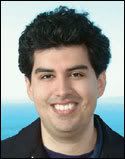 ADAM DE LA PENA: I’ll tell you why the commercial is on all the time…It’s the only damn show on that network.
 STIPP: Wow.
 DE LA PENA: Well, I spent the vast majority of my childhood, like I’m sure many of those same people who visit your site, watching TV”¦and a lot of people talk about the influences of TV and movies but I also spent a lot of time playing video games when I wasn’t directly watching TV. And I’ve only done 2 animated shows but I’ve always known that you’ve got to have a reason for how it looks, not the other way around. When you do an animated script you’ve to ask, “Why does this have to be animated?” But the reason for me why it was going to be in the style that it’s in is that the games that these guys make are reflective of the way the show progresses. It has a really strong look. For example, when I was doing Minoriteam it had this very strong, Jack Kirby influenced, limited animation style. And even Adult Swim, who was notorious for giving everyone their space was like, “Are you sure want to animate it this way?” The answer was, “Of course! We don’t want it to be Superfriends. This is it.” We stuck to it, we stuck to that animation style and I’m really happy we did because it gave the show the look that it did.
 STIPP: Since you’ve spent so much time surrounded by it, and since you’re probably like me with the way you grew up in the midst of all the evolution in video games, is there any one thing designers or programmers say about what’s changed for them as things have become more complex?
 STIPP: Yeah. I think I’ve missed the boat on that because I haven’t really had the urge to be connected with kids from Guam.


 A theater in New York is offering

 JERSEY CITY, NJ – After watching A Tale of Two Pizzas, I picked up the phone. In less than thirty minutes, star Frank Vincent delivered an interview to the “Party Favors”. The movie features Frank Vincent and Vincent Pastore as rival pizza parlor owners. Normally a film featuring two Sopranos veterans should climax with their enemies being turned into special sausage toppings. But amazingly enough, this is a date movie. No limbs are hacked off. There’s barely a beatdown.
 The benefits of this visibility can be immediately seen in A Tale of Two Pizzas finally getting a DVD release after playing festivals a few years ago. For the longest time Frank Vincent made a living as a drummer, but has he ever worked in the world of slices and parmesan?

 I was a big fan of the two previous entries in the DEATH JR series on PSP, so when I heard it was coming over to Nintendo’s handheld for a third, I was excited. Sadly, after playing through DEATH JR AND THE SCIENCE FAIR OF DOOM, I can’t say the wait was worth it.


 I’m not going to delve into the story again on this, the third iteration of RESIDENT EVIL 4(now the WII EDITION”¦or would that be RESIDENT WII-VIL?) but suffice to say, this is probably the best version of the game released yet. Two years later, however, it’s also now easier to see some faults.


 Ok, so as it has been said before”¦I’ve never really played any of the FINAL FANTASY games before the recently released XII. Thankfully, due to the series 20th anniversary, the opportunity to go back with the series’ classic beginnings has arisen again with the release of the first FINAL FANTASY on PSP.

 Goodness me. I didn’t think they made games that sucked as bad as VAMPIRE RAIN anymore. Especially considering how “next gen” is supposed to mean high quality, not just in terms of graphics and control, but gameplay and story as well. It begins with some promise, with a cool little CG-i cut scene at the opening of a woman walking the streets, stalked by a bloodthirsty “nightwalker”. Once you start playing the game, however, all that potential vanishes down the drain with the rest of the rainfall. In a game that looks like SYPHON FILTER meets BLADE, it’s amazing that your tasks are so menial and bland. Wow, you can avoid being spotted by a Vampire by simply walking behind a car, rather than just past the alley it’s in? The cut scenes take the biggest drag out of the coolness factor, as the voice acting is so horribly bad that I’m not sure whether it’s the translation, the writing, or BOTH that should take the blame. The in game graphics are the worst, however. While the cinemas are nice, the gameplay looks like first gen Xbox”¦and BAD first gen Xbox at that. Shame on Microsoft for charging a full $60 this obviously budget game.


Nocturnal Admissions: DVD Review – Foyle’s War Set 4, Da Vinci’s Inquest Season 1
In case you don’t know it yet, Foyle’s War is one of the best shows on the tube. There are several reasons for this. The program appears only intermittently, which gives the creator and writer Anthony Horowitz, time to research and develop each movie length script. The show is also perfectly cast, with Michael Kitchen as the reticent but firm Christopher Foyle, Anthony Howell as the dedicated Paul Milner, and Honeysuckle Weeks as Samantha Stewart, Foyle’s tomboyish red haired Police driver. And the mysteries themselves, always keyed to some long-forgotten but interesting aspect of life during wartime, are invariably clever.
Television fanatics have been retraining themselves over the past decade. In the old days, we watch prime time shows religiously from September to June, circling our itinerary in TV Guide (one of my favorite hobbies as a kid, anticipation always being greater than the reality). During the summer we moaned in agony, having to fall back on reading books (I used to methodically re-read all my Marvel comics from cover to cover, even the letters sections). Then, come autumn and school and the Fall previews issue of TV Guide, it would begin again.
But now we have adapted to different styles of programing. We can wait a year between episode samplings of The Sopranos, or follow shows that start only in January, like 24. I think it was the sequelitis of movies from the 1980s that helped train us, having to wait a year or two between Star Wars editions the way the kids today wait for Harry Potter movies. But in any case, the result is that we now accept the long waits between shows like Foyle’s War and so many other British crime imports.
Now the fourth box of Foyle’s eps is out, thanks to Acorn Media (having just aired on PBS’s Mystery). Streeting on Tuesday, July 17th, the set contains four discs, each in a slim case, and retails for $59.99. It is a measure of the show’s increasing popularity that either the producers of the show or the DVD manufacturers are including more in the way of extras with each release. In this set, Michael Kitchen even steps forward to welcome the viewer to the DVD edition. It’s true that most of the supplements are still text features, such as cast bios and backgrounds to the episodes, but with each new box the producers offer longer and more interesting making ofs. The shortish doc included here lauds the show’s attention to period detail and emphasizes how each episode requires the time and effort of a feature film.
There is a modicum of confusion attached to this box, which is numbered 4, but which contains seasons four and five of Foyle’s War, which in England were only two episodes each. Series six, which is slated to air in the UK in 2008, will come to Americans as season five.
Taken all together, the Foyles will end up being a popular history of World War II from the viewpoint of those at home. For example, the first film in the set, “Invasion” takes place in 1942, and concerns the invasion of England by – the Americans. Aside from an exploration of the resulting tensions and opportunities, there is a clever mystery and a touching story of friendship. Also set in 1942 is “Bad Blood,” which concerns a biological warfare test that goes awry, and the murder hidden within it. Later in 1942 comes “Bleak Midwinter,” in which murders take place around a munitions works, and Milner’s ex-wife is also killed. Finally, “Casualties of War,” set in early 1943, concerns a fascinating aspect of experimental warfare that is also covered in the movie The Dam Busters, and also touches on issues such as a woman’s place in the world of men. But the mystery itself ends on a morally ambiguous note, and the plot itself concludes on something of a cliffhanger.
If you are coming late to Foyle, however, don’t start with this box. Like all the great shows, such as The Wire, The Shield, and BSG, it’s best to start at the beginning and work your way forward. You won’t be able to stop, and you won’t be able to not re-watch them.
No such problem with another show now on offer from Acorn Media. This is Da Vinci’s Inquest, the cult hit Canadian show now just introduced to American home video. Set in Vancouver, B.C., Da Vinci’s Inquest concerns the cases confronted by the bibulous, divorced coroner Dominic Da Vinci, played by Nicholas Campbell, perhaps best known in the states for playing parts in Cronenberg films such as The Brood. Da Vinci’s Inquest began airing in 1998 with the first of seven 13-episode seasons. This box from Acorn contains all of season one in full frame transfers (that look a little soft. It hit the street on February 27th, and retails for $59.99; for those impatient to see other seasons, Atlantis Alliance has released them in Canada).
The Acorn box doesn’t have much in the way of supplements, just cast bios and a trailer, but just having the shows all together in the right order should be enough for the series’s mounting fans. Da Vinci’s Inquest has been popping up on local stations over the past year or so, but out of order and with the seasons mixed up. But from its cozy jazz theme song to its wholly different world of law and order, Da Vinci’s Inquest has pulled in viewers. It’s mix of flawed characters, occasionally ambiguous endings (who killed the professional dominatrix at the end of episode 7, “The Stranger Inside,” even though the case had been solved?), and refreshingly different approach to now-familiar territory (forensic medicine doctors examining gross bodies) has appealed to intelligent viewers.
As a forensic show, Da Vinci’s Inquest appeared two years before the somewhat harder edged CSI: Crime Scene Investigations, but Da Vinci’s Inquest integrates the problems of the characters better into both the plots and the texture of the show. And Da Vinci is loosely based on a real guy, former chief coroner Larry Campbell, who ended winning a mayoral race in Vancouver in 2002 (an eventual spin off of Da Vinci’s Inquest was the short lived Da Vinci’s City Hall). Like presumably his real life counterpart, Da Vinci’s cares too much, is confrontational with bureaucratic ineptitude, and is prone to joining or starting causes, such as in one episode the use of teen agers as drug informants. He’s an admirable character but also a troubled one, and an episode in which Da Vinci fears that he is the perpetrator of a hit and run accident is painful to watch on his behalf. His “solution” to his problem, show in the last shot, will shock Puritanical American viewers.
Da Vinci’s Inquest is a great series and it is a comfort to know that there are six (or seven) more boxes in the pipeline.