FRED Entertainment

August 13, 2007

Win the Muppet Show on DVD!

Filed under: Contests — widge @ 1:49 pm


In conjunction with Walt Disney Home Video, we’re celebrating the DVD release of the long-awaited complete second season of THE MUPPET SHOW by giving away 3 copies – one of which could be yours!

All you have to do to enter is fill out the entry form below”¦

Contest ends at midnight EST on Tuesday, August 14th.

While you’re waiting, check out the following classic moments from season two…

New Muppets audition their acts

Steve Martin finds out his show’s been cancelled

Enter the contest!
Email:
First name:
Last name:
Street Address:
Address Line 2 (if needed):
City:
State/Province/Whatever:
Zip Code/Postal Code:
Country:
Birth Month:
Birth Day:
Birth Year:

Official Rules

No member of Quick Stop Entertainment or their immediate families may enter.

No Purchase necessary to win.

Must be 18 years of age or older to enter.

All submitted entries must be received by 11:59pm EST on Tuesday, August 14th.

The winner must allow 4-6 weeks after announcement of win to receive the product.

Quick Stop Thingamabobs: 8/13/2007

Filed under: Columns,Thingamabobs — UncaScroogeMcD @ 12:01 am

thingamabobs.jpg

The web. It’s a big place, full of plenty of distractions ““ some funny, some informative, some ludicrous, some disturbing, some inane, some profound. Each and every weekday, we present links to a few of our favorite finds”¦

————————————————

  • A rather unorthodox way to fix a flat tire… (Thingamabob)
  • This history of Hanna-Barbera Records… (Thingamabob)

Have a THINGAMABOB? Send it in!

##

August 12, 2007

SModcast 24

Filed under: SModcast — UncaScroogeMcD @ 9:32 pm

newhead2.jpg

SModcast is the meandering palaver of a pair of dudes whose voices are so dull, they don’t deserve to be on the radio (and, hence, aren’t). Kevin Smith and Scott Mosier are SModcast.

The best thing about SModcast? It don’t cost nothing.

line.gif

SModcast 24: Rigg-er, Please! –

In which the manager of a comic book emporium and a Canadian infamous for overstatement join forces with a newly-minted senior citizen to discuss past mistakes and the fallout of waging body parts, robotic scat games, hipping-up that which doesn’t require hipping-up, a drug-free “Underdog”, lying to customers, unlikely music to shop/screw to, the average length of straight sex vs. gay sex, and wax rhapsodic about one of the greatest action-movies-starring-a-guy-who-later-went-bat-shit ever made.

[CONTENT WARNING] SModcast features harsh language and even harsher notions of propriety. Listener discretion is advised.

DOWNLOAD: (right click to save)
SModcast 24 (MP3 format) – 47.18 MB

[display_podcast]

SUBSCRIBE
Subscribe to this Podcast via iTunes
Subscribe to this Podcast via FeedBurner

Wanna add your two cents? Spend it here, in the SModcast mailbag.

line.gif

CLICK HERE FOR THE SMODCAST ARCHIVES

line.gif

##

August 10, 2007

Scrubs Blog: Back In Production

Filed under: Production Blogs,Scrubs Blog — UncaScroogeMcD @ 11:04 pm

scrubsheader.jpg


Hey Scrubs fans! We are indeed back from hiatus, and shooting episode 7×01, and if you don’t believe us, here’s the proof:

dsc01796.JPG

dsc01800.JPG

img_1696.jpg

img_1705.jpg

img_1710.jpg

img_1711.jpg

img_1718.jpg

img_1725.jpg

img_1728.jpg

img_1729.jpg

img_1761.jpg

img_1792.jpg

picture-009.jpg

picture-012.jpg

picture-014.jpg

Weekend Shopping Guide 8/10/07: Light The Lights

Filed under: Shopping Guides — UncaScroogeMcD @ 12:10 am

weekendshopping.jpg

The weekend’s here. You’ve just been paid, and it’s burning a hole in your pocket. What’s a pop culture geek to do? In hopes of steering you in the right direction to blow some of that hard-earned cash, it’s time for the Quick Stop Weekend Shopping Guide – your spotlight on the things you didn’t even know you wanted…

After a groundbreaking first season, it was during the sophomore season of The Muppet Show (Buena Vista, Not Rated, DVD-$39.99 SRP) that the show hit its golden age. Fozzie, Gonzo, and Miss Piggy – all brand new characters that launched with the show – are now fully the characters we know and love. The humor – under the direction of head writer Jerry Juhl – is brilliant, both sublime and visceral at the same time. And the guest stars begin rolling in – including Elton John, Peter Sellers, Julie Andrews, Steve Martin, and more. Thankfully, this time Disney did it right and got all of the necessary music clearances, which means we avoid the ugly editing that happened in the first season set. Bonus features are a mixed bag, though – with so much to choose from, and none of those gems chosen, the only real keeper is the first of the two original Muppet Show pilots, The Muppets Valentine Special. Sadly, there’s no trivia this time (here’s hoping for its return on season 3). I hope the wait for season 3 is not nearly as long, and they get a Muppet expert in there to help them realize what bonus materials should be on these sets.

blankguide.gif

It had been slowly encroaching for the past few seasons, but with was during the 10th season of The Simpsons (Fox, Not Rated, DVD-$49.98 SRP) that the once unassailable really began slipping its gears. Writing that had once been innovative and fresh became inbred and derivative of itself, which would soon settle into the rut that persists to this day. I don’t know if it was exhaustion or just overconfidence, but it really is a shame. Having said that, the set is worth picking up for the usual complement of bonus materials, including commentaries on every episode, commercials, animatics, and more.

blankguide.gif

As much as I prefer reading the Harry Potter books, I’ve found Jim Dale’s audiobook performance of Rowling’s increasingly massive tomes to be nothing short of delightful, and Dale wraps up his impressive vocal feat with the final installment in the Potter saga, Harry Potter and the Deathly Hallows (Random House Audio, $79.95 SRP). By all means, give it a spin and marvel at Dale’s skill to bring so many characters to life.

blankguide.gif

While the UK has had their very own special edition of the early 80’s cult classic for years, it’s only now that the US has their very own remastered, feature-laden special edition of Flash Gordon (Universal, Rated PG, DVD-$26.98 SRP). The “Saviour Of The Universe” edition features a paltry clutch of bonus features – a featurette on artist and Flash fan Alex Ross, an interview with writer Lorenzo Semple, Jr., and an episode of the 1936 serial. Sadly, this is still missing some of the great bonus features from the UK edition – so you might want to pick that up, too, and keep this for the great picture quality… It’s a shame Universal couldn’t have done this one completely right.

blankguide.gif

It’s time to get dangerous, courtesy of the second volume featuring that superheroic mallard of mystery, Darkwing Duck (Buena Vista, Not Rated, DVD-$34.99 SRP). The 3-disc set features the middle 27 episodes of the series run, and is a welcome addition to my growing shelf of Disney Afternoon delights. My only hope, though, is Disney can see fit to get off their lazy asses and try to get some bonus features on these sets. If BCI can do it with Filmation shows, why is Disney so second rate with these classics?

blankguide.gif

MST3K alums Mike Nelson, Bill Corbett, and Kevin Murphy return with the second installment of their brand new skewering of schlock films, as The Film Crew tackles Killers From Space (Shout! Factory, Not Rated, DVD-$19.99 SRP), which stars Peter Graves as a scientist who uncovers an alien plot to take over the Earth. The disc also features the Film Crew’s “Did You Know…?” segment and outtakes.

blankguide.gif

It’s not quite the carefree fun of the late 80’s cartoon, but the big screen CG TMNT (Warner Bros., Rated PG, DVD-$28.98 SRP) – that’s Teenage Mutant Ninja Turtles, if you don’t cotton to acronyms – is still a pretty darn faithful affair, and in many ways skews closer to the source material than the original live action flick. Bonus materials include an audio commentary, an alternate opening, a deleted scene, storyboards-to-CG comparison, interviews, and more.

blankguide.gif

If you’ve been holding off on getting your swingin’ mitts on the cinematic output of one Elvis Aaron Presley, then you’re in luck – as both Warner Bros. and Paramount have packaged the titles they control into two nicely comprehensive box sets. Paramount has the Lights! Camera! Elvis! Collection (Paramount, Rated PG, DVD-$69.99 SRP), featuring King Creole, G.I. Blues, Blue Hawaii, Roustabout, Girls! Girls! Girls!, Fun In Acapulco, Paradise, Hawaiian Style, and Easy Come, Easy Go. Team that with Warners’s Elvis: The Hollywood Collection (Warner Bros., Rated PG, DVD-$49.98 SRP) – containing Charro, Girl Happy, Kissin’ Cousins, Live a Little, Love a Little, Stay Away, Joe, Tickle Me – and their new special editions of Jailhouse Rock and Viva Las Vegas (Warner Bros., Not Rated, DVD-$19.98 SRP each), and you’ve got an incredible set of flicks starring the King.

blankguide.gif

Not to be left out, MGM steps up to the plate with their own Elvis: MGM Movie Legends Collection (MGM/UA, Not Rated, DVD-$39.98 SRP), containing Kid Galahad, Clambake, Follow That Dream, and Frankie And Johnny.

blankguide.gif

Also getting the star treatment is ol’ blue eyes, courtesy of the Frank Sinatra: MGM Movie Legends Collection (MGM/UA, Not Rated, DVD-$39.98 SRP), featuring 5 of the crooners big screen efforts – The Manchurian Candidate, The Pride And The Passion, Kings Go Forth, Guys And Dolls, and A Hole In The Head.

blankguide.gif

Start saving your pennies and order your very own copy of the massive – and I do mean *massive* – biography of the creator of the classic comic strips Terry & The Pirates and Steve Canyon, Milton Caniff, R.C. Harvey’s Meanwhile… A Biography of Milton Caniff (Fantagraphics, $34.95 SRP). Clocking in at almost 1,000 pages, it’s a fascinating and comprehensive overview of the man and his work.

blankguide.gif

The cracks began to show during the penultimate 8th season of Roseanne (Starz, Not Rated, DVD-$39.98 SRP), as the comedy began to dip into odder and more surreal territory, beginning the erosion of the show’s blue collar values (values that would eventually fall away during the final season’s left turn into confusion). The 4-disc set features all 25 episodes, video commentaries, and a nice new interview with Roseanne.

blankguide.gif

Oh, the cheese of youth. That’s exactly what you’ll get with the endearingly goofy Super Friends: The Legendary Superpowers (Warner Bros., Not Rated, DVD-$26.98 SRP). Watching all 16 episodes featured in this 2-disc set, children of the 70’s and 80’s like myself will find the chill shivers of nostalgia running up and down their spines. Bonus features include 5 audio commentaries, a look at the cultural diversity of the show, and a look at the show’s effect on the toy industry.

blankguide.gif

If you want to demarcate the point at which Shia LaBeouf made the transition from affable teen star to bankable Hollywood darling, it would be the suburban spin on Rear Window, Disturbia (Dreamworks, Rated PG-13, DVD-$29.99 SRP). LaBeouf stars as Kale Brecht, who’s spending his three months under house arrest spying on his neighbors – a pastime that becomes something much more horrifying when he begins to suspect his neighbor is a serial killer. Is he right? Is he wrong? Is he next? See for yourself. Bonus features include an audio commentary, deleted scenes, a making-of featurette, outtakes, and more.

blankguide.gif

Turtle fans who want to relive their childhoods can do so via the just-released complete fifth season of the original Teenage Mutant Ninja Turtles (Lionsgate, Not Rated, DVD-$24.98 SRP), with three discs containing all 18 episodes, plus character profiles and a look back.

blankguide.gif

Even though it wasn’t his best work, watching the complete first season of 8 Simple Rules (Buena Vista, Not Rated, DVD-$23.99 SRP) still made me miss the late John Ritter. Check out all 28 episodes in this 3-disc set, which features a bonus gag reel.

blankguide.gif

Though best known for their portrayal of sleuthing could Nick & Nora Charles in the Thin Man series of films, the Myrna Loy & William Powell Collection (Warner Bros., Not Rated, DVD-$49.98 SRP) collects 5 films they did together outside that series – Manhattan Melodrama, Evelyn Prentice, Double Wedding, I Love You Again, and Love Crazy. All of the flicks feature Warners by now standard remastered prints, vintage cartoons, and shorts. Aces.

blankguide.gif

Twelve more episodes come swinging into action in The Tick Vs. Season Two (Buena Vista, Not Rated, DVD-$34.99 SRP), a 2-disc set of Tick-y goodness that, sadly, is missing episode #15 and any bonus features to speak of. Sad, but hopefully they’ll get necessary clearances – and a budget – before the series is fully released.

blankguide.gif

We’re seven seasons into Full House on DVD (Warner Bros., Not Rated, DVD-$29.98 SRP), and still no sign of what snooty, snobbish, spoiled adults the Olsen twins would eventually become. No, they’re still the loveable Michelle Tanner here… But the clock is ticking. The 4-disc set contains all 24 episodes of awkward pleasure.

blankguide.gif

While it’s still pretty much status quo during the seventh season of Home Improvement (Buena Vista, Not Rated, DVD-$23.99 SRP), this season is at least notable for guest-starring Dan Aykroyd in what would ultimately prove a backdoor pilot to a failed spin-off series. The 3-disc set contains all 25 episodes, plus this season’s gag reel.

blankguide.gif

So there you have it… my humble suggestions for what to watch, listen to, play with, or waste money on this coming weekend. See ya next week…

-Ken Plume

##

Comics in Context #189: Woody’s Woodpeccadillos

Filed under: Columns,Comics in Context — admin @ 12:07 am

comicsincontext4.jpg

cic2007-08-10.gifUniversal Home Video’s Woody Woodpecker and Friends DVD set, which was released on July 24, provided me with a rare opportunity to get in touch with my early childhood memories. It was as a young boy that I first saw various Disney animated features, and many, many Warner Brothers and early Hanna-Barbera cartoons, as well as the Max Fleischer Popeyes. I also watched the syndicated half-hour Woody Woodpecker Show on television, hosted by his cartoons’ producer, Walter Lantz, which packaged Lantz cartoons from the 1940s.

Over the decades, I’ve rewatched many of these cartoons thanks to television, animation festivals at revival theaters, and, nowadays, DVDs. But I hadn’t reacquainted myself with the classic Lantz cartoons of the 1940s as an adult; I may have seen a few here and there, but I don’t remember. I recall seeing some of the later, uninspired Woody Woodpecker cartoons from the 1950s and early 1960s, in which the formerly dangerously madcap bird had turned cute and acquired nephew Knothead and niece Splinter. As the Wikipedia entry on Woody declares, “The domestication of Woody Woodpecker was complete,” and I was not impressed.

But though my memories of the 1940s Woody cartoons were dim, I retained warm feelings for them, and was eager to watch the new Woody DVD. It is amazing to be watching these cartoons and suddenly to encounter images that spark memories from my childhood, like Woody sticking a grease gun in nemesis Wally Walrus’s mouth and pumping grease out through his ears (in director Dick Lundy’s 1947 Well Oiled), or Andy Panda and his guardian angel (also a panda) dancing off towards the horizon at the end of Apple Andy (directed by Lundy in 1946). What’s even more amazing is to be watching one of these cartoons that I haven’t seen in decades and suddenly remember what the next gag is going to be. Obviously, the Lantz cartoons made a great impression on me way back when.

cic2007-08-10-02.jpgAs soon as I got the Woody DVD home, I immediately watched the Woody cartoon that I most clearly recalled liking as a child: The Barber of Seville, from 1944. This appears to be the most celebrated of the Woody cartoons, having been selected in a survey of a thousand animation professionals and historians as one of “The 50 Greatest Cartoons” for Jerry Beck’s 1994 book of the same name. This cartoon also inaugurated what looks to me to be the prime period in Woody Woodpecker’s onscreen career. It was the first Woody cartoon directed by former Disney animator James “Shamus” Culhane, and was co-written by Ben “Bugs” Hardaway, who had created Woody (as well as a prototype for Bugs Bunny at Warners, hence Bugs’s name) and was now supplying his voice. Moreover, this cartoon debuted Woody’s new, sleeker character design, which was considerably more appealing than the grotesque appearance he bore in his first cartoon (1940’s Knock Knock), without devolving into the cuteness of the 1950s Woody.

Rewatching Barber was full of surprises: I didn’t remember most of the cartoon at all. For one thing, it opens with World War II references which would have sailed over my head when I was a child, assuming that they were not cut from the syndicated Woody show. Woody decides to get a haircut, and, alas, it was not until I started working on this week’s column that I realized that, wait a minute, this premise makes no sense: Woody’s famed topknot consists of feathers, not hair! But I expect this doesn’t occur to 99.99% of the people who have seen this cartoon over the last sixty-three years. Anyway, Woody decides to get a “Victory” haircut (which would separate the topknot into a “V” formation) but is thwarted when he strides into the Seville Barber Shop and finds it deserted: the barber, named Tony Figaro, has left a note, “Gone to take my physical. Back soon.”

One of the lessons of these 1940s Woody cartoons is not to do anything that attracts Woody’s attention, lest chaos ensue. Finding himself in a barber shop, with apparently nothing better to do, Woody decides to play barber himself, a decision that cannot end happily for any unwary customers. Soon the first victim walks in, and here was surprise number two. Beck’s book gently refers to him as a Native American, but this first customer is a stereotypical caricature of an Indian chief that would never be allowed in mainstream animation today: he can’t speak English correctly, for one thing. The chief initially does nothing to provoke mistreatment, but Woody, perhaps more through incompetence than malevolence, swaths his head in towels that are so hot that Woody uses the overheated chief’s mouth to toast bread, and his feathered headdress shrinks into a badminton shuttlecock. Understandably furious, the chief threatens Woody with a tomahawk, in more stereotypical behavior, and Woody finally bests him by turning him into a living “cigar store Indian.” I suspect that this sequence was not cut from The Woody Woodpecker Show, but I am glad I did not remember it.

Next comes the section that I did remember, in which a construction worker, who vaguely seems Italian, enters the barber shop, asks to get “the whole works,” and certainly does. Woody turns a blowtorch on the man’s hardhat, lathers his whole face and even his feet, and then slashes at the terrified man with a razor while singing Figaro’s famous aria “Largo al factotum” from Gioachino Rossini’s opera The Barber of Seville. This is intended to be sung at high speed, like the famous Gilbert and Sullivan patter songs, and Woody does so, moving rapidly in time to the music. This is the part of the cartoon which earns its high reputation, with Culhane utilizing shots of Woody that last as little as a fraction of a second, and even putting three, four and finally five Woodys onscreen simultaneously, to signify that he is moving so fast that he seemingly appears in different places at once.

Unfortunately I didn’t enjoy the spectacle as much as I’d hoped, because I felt that the sequence hadn’t been set up properly. What had the poor customer done to be so beset by this razor-wielding madman–or madbird? At the very end of the cartoon the customer takes revenge by trapping Woody inside the barber pole (a fate echoing that of the Indian chief: being turned into a living version of an inanimate object). But that didn’t make the shaving sequence funnier for me in retrospect.

Can we assume that director Chuck Jones and writer Michael Maltese were aware of Culhane’s Barber of Seville when, only a half decade later, they did their 1949 animated short Rabbit of Seville, in which Bugs Bunny plays barber to Elmer Fudd, in this case to the accompaniment of the overture to Rossini’s Barber (see “Comics in Context” #102)? If so, then Jones and Maltese recognized the problem and corrected it. In the opening of Rabbit of Seville, a particularly nasty-looking Elmer fires his gun repeatedly at Bugs, who looks unusually desperate. More than in most Bugs Bunny cartoons, Jones and Maltese are thus emphasizing that Elmer is out to kill Bugs. Hence, Elmer’s murderous intent dramatically justifies the lengths to which Bugs goes to retaliate, even including slashing at Elmer’s face with a razor.

Maybe Culhane and company recognized the problem, too, because they solve it in their very next Woody cartoon, The Beach Nut (1944). This introduces the character who becomes Woody’s leading foil, Wally Walrus. Last week I wrote about the traditional pairing of the White Clown, who upholds order, and the Auguste, the buffoon who creates chaos: Wally and Woody fit these respective roles. The cartoon makers are still dealing in ethnic humor, since Wally inexplicably speaks with a Swedish accent, but in his case it seems harmless. Wally is physically much bigger than Woody, placing the woodpecker in the role of the underdog. More importantly, Wally is pompous, bad-tempered and overbearing, and takes a dislike to Woody even, as in this cartoon, when Woody initially has no malicious intentions towards him. In another cartoon on the DVD Wally even admits to the audience that he should just ignore Woody, but nevertheless takes action against him anyway. The Beach Nut even makes clear that Wally is a potentially greater threat to order than the irreverent Woody: at the cartoon’s end Wally inadvertently destroys an entire pier in his war on Woody, thereby plunging himself and numerous people into the ocean. Furthermore, Wally’s personality seems to embody stifling conventionality: he is a square, whereas Woody is a free spirit. Audiences will naturally side with the uninhibited Woody, who, in The Beach Nut, just wants to have fun, against Wally, who fills the archetypal comic role of the “refuser of festivity.”

So, at least on this initial reviewing, I didn’t enjoy Culhane’s Barber of Seville as much as I’d expected. Still, I found much that was interesting in it. For one thing, the cartoon links Woody to Figaro, the trickster barber and servant who was created by the French playwright Pierre de Beaumarchais and who famously became a symbol of the spirit of revolution against the aristocracy; Rossini’s Barber is an operatic adaptation of one of Beaumarchais’ plays about Figaro, as was Mozart’s The Marriage of Figaro. Figaro is probably the most famous example of the long tradition of the trickster servant that goes back to comedies in ancient Rome. I expect that Jones and Maltese, with their intellectual ambitions, meant to connect Bugs to Beaumarchais’ Figaro as fellow tricksters in Rabbit of Seville. I wonder if Lantz, Culhane, Hardaway and company likewise used Rossini’s music in their cartoon because they recognized that Woody fit the trickster tradition.

It’s also intriguing to me that Culhane’s Barber, like so many other cartoon shorts from Hollywood’s Golden Age, prominently uses classical music. Of course, one doesn’t have to be an opera buff to recognize the familiar “Largo al factotum,” although I wonder if many of us first heard it in animated cartoons. Still, how many cartoons have been made for television over the last fifty years that have been constructed around a piece of classical music? I can’t think of one. Culhane’s Barber was hardly an anomaly at the Lantz studio, either. Elsewhere in the DVD set is a 1946 cartoon featuring Woody and Andy Panda as musicians that bears the title Musical Moments from Chopin! In The Bandmaster (1947), a Lantz cartoon that appears to be inspired by Disney’s The Band Concert (1935), Andy Panda conducts the “Overture to Zampa,” a now obscure 19th century opera. Of course, Disney’s Fantasia (1940) is the most spectacular example of the use of classical music in classic Hollywood animation. All of this suggests to me that classical music played a larger role in American popular culture before the rock revolution of the 1950s and 1960s.

Woody’s singing in Barber turns out not to be unusual, either. He does it in numerous 1940s cartoons. For example, in Culhane’s The Dippy Diplomat (1945), Woody bamboozles Wally by masquerading as a Russian ambassador and singing a Russian-style melody. Another cartoon I partly remembered from childhood was Culhane’s Ski for Two (1944), which twice features a sequence in which Woody sings “merrily” (to quote the song) as he swiftly skis down a slope: once again Culhane combined speed and song as he did in Barber. (This cartoon featured a deja vu moment for me. In the second skiing sequence, Woody is escaping with a huge bag of what he thinks is food that he has stolen from Wally’s cabin. I found myself thinking: it’s really Wally in the bag, and he’s going to do Woody’s famous laugh at him. Yep. Some childhood memories are permanent.) I like Woody’s singing: it fits his character. The singing expresses his sheer pleasure in pulling off his tricks.

Ski for Two also gives Woody a new motive for his pranks: in this and later cartoons Woody is driven by hunger to pull his tricks on Wally Walrus or other adversaries. Thus, Woody is not just a trickster but he also fits another comedy character archetype: the parasite, forever hungry.

Yet another cartoon that I recalled from my childhood was Culhane’s Woody Dines Out (1945), whose title fits the parasite theme but does not hint at the short’s macabre content. I found this cartoon quite eerie when I was a child, both because of the dark settings and its sinister premise: a taxidermist is determined to make a fortune by capturing, killing, stuffing and mounting a “king-size woodpecker,” namely Woody. It’s well worth remembering that cartoons, and movies in general, can provoke different reactions in small children than they do in adults. Today I don’t find Woody Dines Out disturbing at all, although I still find its premise remarkable for a cartoon for family audiences.

A much bigger shock comes in Bathing Buddies, a 1946 short directed by Dick Lundy, in which Woody is Wally’s tenant and reads Wally’s list of regulations, which includes “No opium smoking.” I believe that if we are looking for proof that animated theatrical cartoons of the 1940s were aimed at adults, we have found it. Did Lantz and his coworkers assume that kids in the audience wouldn’t know what opium was?

What interests me more now about Woody Dines Out is a gag that is set up early in the cartoon, as the taxidermist imagines the fame and fortune to which he aspires. The cartoon shows us images in a thought balloon over his head, including one of the taxidermist surrounded by beautiful women. (The women are human, and the taxidermist is a cat, but we are apparently supposed to accept this.) At the cartoon’s end, after he has been soundly defeated by Woody, the taxidermist sadly reviews his previous fantasies of success. This time, when he gets to the thought balloon full of beautiful women, it is not the taxidermist sitting in their midst, but Woody, who triumphantly utters his trademark laugh. Here is the most startling example of Woody the trickster’s ability to defy the laws of reality: he has even invaded his enemy’s mind and commandeered his fantasy!

Now I find two other Culhane Woody cartoons far weirder than Woody Dines Out—Who’s Cookin’ Who? (1946) and Fair Weather Fiends (1946). The first is set amidst the snows of winter, and the second on a desert island; in each one a ravenous, anthropomorphic wolf is trying to eat Woody. That’s not a surprising premise for an animated cartoon. The surprise is that Woody, driven to desperation by lack of food, is trying just as hard to eat the wolf! It’s as of the Roadrunner suddenly started trying to hunt and eat Wile E. Coyote! This takes the theme of Woody as parasite, driven by appetite, to its extreme.

It also makes Woody stand out among his fellow animated trickster heroes. Woody, Bugs Bunny and Daffy Duck all began as manic “screwball” characters. Bugs, however, evolved into a character who would not unleash his tricks against an opponent without provocation (“Of course you know this means war.”). In sharp contrast with the manic prankster versions of Bugs in his earliest cartoons, Bugs, beginning with Tex Avery’s A Wild Hare (1940), coolly manipulated his adversaries, who had less emotional control. Bugs resembles the eiron figure of ancient comedy, the self-deprecating trickster who maintains an ironic perspective on the world around him. Daffy started out as pure screwball but evolved into an exemplar of common human failings (including greed, egotism and cowardice).

In his own earliest cartoons, such as his first, Knock Knock (1940) and second, Woody Woodpecker (1941), which are both in the DVD set, Woody looks grotesquely goofy and acts insanely: in the second cartoon he even consults a psychiatrist. Appropriately, Woody was originally voiced by Mel Blanc, who famously did the voices of Woody’s fellow screwballs Bugs and Daffy. Even though Blanc’s voice was electronically speeded way up for Woody’s high-pitched voice, I find Blanc’s acting style still very identifiable at points in these early Woody performances, such as the scene in Knock Knock in which Woody mock threatens Andy Panda while swelling to gigantic size. Until recently I didn’t know that even after Ben Hardaway succeeded Blanc as the voice of Woody, the cartoons still recycled Blanc’s recording of Woody’s trademark laugh. (However, I’m rather fond of another laugh that Hardaway does as Woody, when he’s snickering at an adversary; you’ll hear it in all of the Culhane Woody cartoons.)

Even though Woody no longer seems insane in the Culhane cartoons, in the 1940s he remains an uninhibited prankster who freely follows his desires, whether they are for food or revenge or, as in Barber, simply to have fun, regardless of its effects on others. If Bugs and Daffy evolved into adults, one perfect and one imperfect, the Woody of the 1940s is still childlike. Many of the 1940s Woody cartoons end with Woody being punished for going too far: sometimes the retribution seems excessive and mean-spirited, as when Wally traps Woody in his “tit-for-tat” machine in 1947’s Smoked Hams, directed by Dick Lundy, but other times Woody seems to get the appropriate degree of comeuppance.

But it’s hard to get the better of Woody Woodpecker in these cartoons. The 1940s Woody can seem like a trickster as a force of nature, as when he whirls about giving that super-speed haircut and shave in Barber.

One of my favorite cartoons on the Woody set is Woody the Giant Killer, directed by Dick Lundy in 1947. After Culhane left the Lantz studio, Lundy took over the Woody cartoons, with Hardaway still co-writing them. The Lundy cartoons aren’t as sharp or inspired as the Culhane Woodys can be, but they’re still fun, and Giant Killer is remarkable. It starts disappointingly, with Woody being tricked into buying magic beans like those in the story of “Jack and the Beanstalk.” I’m aware that it’s part of the trickster tradition that the trickster can be tricked himself, but Woody normally seems too clever to fall for this con man’s spiel. As you expect, Woody ends up ascending a huge beanstalk into the realm of the giant, and here’s where the cartoon takes off. Despite his colossal size and strength, the giant never stands a chance against Woody for a moment, and with surprising ease, Woody not only bests the giant but makes him his servant. Perhaps I should object to the cartoon, because the giant didn’t provoke Woody, who, as in Barber, is once more the aggressor. But I was simply impressed by the sight of little guy Woody simply overwhelming this colossus. Once Woody sets his mind to go after someone, he is, as I said, like a force of nature, nearly unstoppable.

The Woody cartoons on the DVD set’s third disc, from late 1948 to 1952 are less entertaining and interesting than those on the first two discs, from earlier in the 1940s, and present Woody as a more conventional funny animal protagonist. Nonetheless, I was astonished by the ending of Disc 3’s Wild and Woody (which premiered on December 31, 1948), in which Woody kills another of his regular opponents, Buzz Buzzard, with exploding TNT, and then escorts Buzz’s ghost to two elevator doors. Woody waves aside the elevator operator heading “up” to heaven, and instead puts Buzz on the elevator operated by a devil, heading down to hell. Of course Buzz returns alive in subsequent cartoons, but nevertheless, Wild and Woody demonstrates that Woody Woodpecker is capable of inflicting damage on his adversaries that makes anything Bugs Bunny does to Elmer Fudd look tame.

After leaving MGM, the great cartoon director Tex Avery worked briefly at the Walter Lantz studio, and the Woody DVD set includes the four animated shorts he made there before leaving theatrical animation.

Chilly Willy, the little penguin who dislikes the cold, debuted a year before Avery used him in I’m Cold (1954), and this cutesy character seems like an anomaly in the world of an Avery cartoon. (For what Avery thinks of cute characters, witness the mayhem inflicted on one in his 1944 short Screwball Squirrel.) In I’m Cold Chilly Willy, seeking warmth, attempts to steal furs from the cartoon’s real star, a guard dog with a familiar Southern drawl, voiced by Daws Butler. This cartoon thus represents another step in the evolution of Butler’s laid-back Southern canine from the Wolf in Avery’s Three Little Pups (see last week’s column) to Hanna-Barbera’s late 1950s TV star, Huckleberry Hound. Whereas the Wolf was the villain in Three Little Pups, albeit a likable one, the dog in I’m Cold isn’t a bad guy at all, but is clearly just doing his job. Significantly, Avery doesn’t take sides and allows both the dog and Chilly Willy to win, each in his own way, at the cartoon’s end.

In Avery’s The Legend of Rockabye Point (1955), Chilly Willy keeps making loud noises in order to wake up a vicious bulldog and sic him on a polar bear, who is forced to keep rocking the bulldog back to sleep. Avery had already used the premise of one character trying to stop another from making loud noises in his MGM cartoons Rock-a-Bye Bear (1952) and Deputy Droopy (1955, the same year as Rockabye Point!). Deputy Droopy (which is on the new Droopy DVD set) is the superior cartoon, but I like the twenty-years-later ending of Rockabye Point, which suggests that a bond can evolve even between enemies over time.

cic2007-08-10-03.jpgIn Crazy Mixed-Up Pup (1955) a dog gets a transfusion of human blood, and his owner gets a transfusion of canine blood, with the result that the dog acts human, and the human acts like a dog. Each time someone witnesses this unusual behavior, the top of his or head springs open, a cuckoo emerges, and flags sprout from his or her ears, all to signify that the witness has just gone nuts. Avery keeps repeating this device, but it grows no funnier: I prefer the wild takes that wolves and other characters did in 1940s Avery cartoons.

My favorite of the four Avery cartoons is the final one, Sh-h-h-h-h-h (1955), in which a man, driven to the brink of madness by noises (a recurring theme, it seems), follows his psychiatrist’s advice and checks into a very, very quiet hotel. The patient ends up in a room next to a man and woman who keep playing a horn and laughing raucously. Though the patient never sees the couple (until the cartoon’s surprise ending), they somehow manage to thwart his every attempt to silence them. But what I like most about the cartoon is its middle section, before the obnoxious couple are first heard. The total silence of the sequence in which the patient checks into the hotel is genuinely eerie. It’s also disconcerting to realize that Tex Avery stopped making theatrical cartoons over a half-century ago. I have friends who were born the year that he stopped making cartoons for movie theaters, and they’re now middle-aged!

There are many other cartoons in the Woody DVD set, including some of Lantz’s remarkable Swing Symphonies, but I don’t have the time or space to get to them this week. Perhaps another time.

The Woody Woodpecker and Friends DVD set doesn’t have any commentary tracks, but it does have plenty of bonus features, principally featuring the late Walter Lantz, head of the studio that created the animated shorts in the set. There’s a short documentary about Lantz’s career, made towards the end of his life, a complete episode of The Woody Woodpecker Show, and various “behind the scenes” segments from the show.

After all these decades I was particularly interested in watching these segments. Lantz hosted the half-hour Woody Woodpecker Show, obviously following the example of Walt Disney, who hosted his own hour-long show in the 1950s and 1960s, first on ABC and then on NBC.

Even as a child I realized that Disney was the king of animation and that Lantz was a lesser figure, operating in Disney’s shadow. Walt Disney’s public persona was warm and friendly–very much “Uncle Walt”–as he acted as the television viewers’ guide to his pop culture empire. He may have been Uncle Walt, but I, and I assume, most viewers, recognized that it was an empire that he was showing us, and that he was the Great Man who had built it.

Recently rewatching the “Behind the Scenes” segments from The Woody Woodpecker Show confirms the impression that I recall having as a child. Walter Lantz lacked Walt Disney’s impressively charismatic presence as host. Lantz projected a gentler, quieter image. Whereas Disney welcomed us from what appeared to be his large, resplendent office, Lantz’s surroundings were clearly humbler.

In his host segments Lantz interacted with an animated Woody Woodpecker, just as Disney sometimes shared the screen with one of his studio’s animated characters on his show. (Woody continually taunts his “boss,” and there’s a nice moment on the DVD set in which Lantz, who normally projected a pleasant demeanor, gives the offscreen Woody a look subtly suggesting that the woodpecker had gone a bit too far.) Disney would also do shows in which he showed how animated cartoons were made, continuing a tradition begun by his 1941 feature The Reluctant Dragon. Lantz did this all the time in his host segments.

Now this reminds me of early animated cartoons, like Max and Dave Fleischer’s Out of the Inkwell series, which emphasized that the animated characters on screen were artificial creations: in the Inkwell series we see Max Fleischer (in live action footage) draw the animated character Koko onto a drawing board and they interact with each other. The audience is not encouraged to suspend its disbelief entirely; it’s as if this was the Max Fleischer counterpart of Bertolt Brecht’s alienation effect in theater. The audience simultaneously treats Koko as “real,” a living character, and recognizes him as a drawing “out of the inkwell.” (I will have much more to say about the Inkwell series in the coming weeks.)

Can you imagine an episode of Sesame Street, or, to go back to my childhood, Captain Kangaroo, in which the puppeteers came out from hiding and showed their young audience that Bert and Ernie or Mr. Moose were really just puppets animated by their arms? Now imagine yourself as a child watching The Woody Woodpecker Show. Walter Lantz shows you his cartoons, but in the host segments he shows you that Woody Woodpecker is really a series of drawings. Lantz is like a magician who shows the audience how his tricks are done. And yet this doesn’t spoil the tricks. I don’t recall being bothered as a child by seeing and hearing Lantz explain how Woody was not real; I found it interesting, and I assume that the rest of the show’s audience did, too, since this show lasted for years in syndication. Lantz obviously had enough respect for the intelligence of his younger viewers to have faith that they would accept the paradox.

In fact, even as Lantz explains the process of creating an animated cartoon in the host segments and the documentary, he continues to interact with the animated Woody Woodpecker, as if Woody were real. In one of my favorite moments on the DVD, Lantz explains that at one point his wife Gracie took over performing the voice of Woody Woodpecker, whereupon Woody–voiced by Gracie–expresses disgust that a “girl” is doing his voice! Woody’s appeal is so strong that the audience will happily continue to pretend that he is real even as Lantz is showing us that he is not.

In one host segment Lantz shows us how to draw Woody Woodpecker, using simple geometrical shapes as his basis. (Whether that is actually Lantz’s hand we see drawing in the closeups, I have no idea.) The segment suggests that it’s not that hard to draw Woody, and that you, the viewer, could do it, too, by following the same steps. In the other “behind the scenes” segments Lantz similarly explains other aspects of the process of making a cartoon, such as coming up with story ideas, so simply that grade school children can understand. Again. Lantz suggests that you, the viewer, could do this, too.

Surely Lantz’s “behind the scenes” segments must have inspired many kids to try their hands at drawing cartoons, and maybe some of them eventually became animation professionals. In watching these segments recently I realized that Lantz was, by extension, demystifying the creative process for any kind of art or writing. Through these segments Lantz was effectively telling children that they were capable of creative activity of any sort.

Here the difference between Lantz’s onscreen persona and Disney’s proves important. Watching him now on the DVD, I see that Lantz projected a gentler, more approachable, more intimate presence. Whereas Walt Disney seemed to be addressing a vast audience from his office, Walter Lantz conveyed the impression that he was speaking to you, personally, was letting you in on his secrets, and was encouraging you to follow in his footsteps and become an artist or writer yourself.

–Copyright 2007 Peter Sanderson

Trailer Park: See SUPERBAD Next Weekend. It’s Good Just For McLovin.

Filed under: Columns,Trailer Park — admin @ 12:03 am

By Christopher Stipp

Archives? Right Here”¦

Instead of manning-up and actually going the emotionally hard route of being outrightly rejected by publishers, I’m rejecting them first and allowing you to give my entire book a preview, let you read the whole thing or, if you like, download the whole damn thing at no cost. Download and read my first book “Thank You, Goodnight” for FREE.

Before I launch into the mess of Comic-Con coverage that I have brought back with me, and as other people unleash their loads from the event in a spray without regard to any kind of context, I wanted to squeeze a few trailer reviews into this space.

This week marks the first time I was able to catch the NO COUNTRY FOR OLD MEN trailer and I cannot believe it took me this long to feel this movie’s flavor. While the title is a little thick to swallow I was absolutely taken by how much the movie looks like it’s the Coens back to their old tried and true ways. It’s one thing to bring the noise against these guys for films like LADYKILLERS, saying that they lost something along their way, but just looking at the trailer and nothing else you’ve got to admit there could be some kind of good-will offered as Javier Bardem slithers across the screen.

One movie I did see and have to absolutely make sure I make my opinion known about is SUPERBAD. Starting next week this movie is one that just has to be seen to be believed. While I won’t really get into a compare and contrast, SAT style, argument as to why I believe that KNOCKED UP really is not quite deserving of the title of greatest-est comedy of the summer I can give that honor to SUPERBAD. Infused with the kind of adolescent frivolity and sailor blue language I can definitely relate to the movie is an absolute raucous affair. From McLovin to the HOUSE PARTY style cops (read here: inept, a smidge racist and completely crazy) that made that hip-hop production one of my Top 10 of all time the movie just does not disappoint even as the movie strays into some unbelievable territory in the 3rd act. You cannot go wrong for a mid-August release when the landscape is littered with stink bombs that studios dump like it was a temporal landfill in need of crap films.

CHALK (2006)

Director: Mike Akel
Cast: Troy Schremmer, Jannelle Schremmer, Shannon Haragan
Release: Coming to a film festival near you Synopsis: In the comedic style of The Office and the films of Christopher Guest, Chalk is a spirited portrait of life in the trenches of that most honorable and frustrating profession…teaching. It’s the start of a memorable new year at Harrison High. The self-conscious Mr. Stroope is convinced that his time has come–this year he will be furnished with the golden title of “Teacher of the Year”, if only his smarter students would stop using words that he can’t understand. Peek into Mr. Lowrey’s History class and you’ll see that he’s struggling to even call himself a teacher. Woefully inept due to a complete lack of experience and social skills, he earnestly stutters his way through class. The only interaction his students offer him is when they steal his chalk. Men aren’t much interested in the spunky and officious Coach Webb, but “not all P.E. teachers are gay” and she pines for some romantic company. Her once best friend, the newly appointed assistant principal, Mrs. Reddell, doesn’t seem to have time for her either, as her new power post is all-consuming; battling egos, enduring teacher conferences and her lighthouse-obsessed boss. Coach Webb wonders if her former confidante has forgotten just how hard teaching really is. Director Mike Akel provides a rare and realistic teacher’s perspective into the absurd, provocative, and occasionally volatile world of public education. In a country where 50% of teachers quit within the first three years, CHALK delivers an enormous dose of heart, hilarity, and hope for America’s most important institution.

View Trailer:
* Large (YouTube)

Prognosis: Positive. When I graduated with my Master’s in Adult Education and Distance Learning I had dreams of being able to shape young minds at a collegiate level. I loved the idea of presenting ways in which to correlate literature with the human experience, no matter what decade or century the work was created. Timelessness, that was going to be my approach.

Then I saw the pay scale.

Thanks to my secondary abilities I have since held my educational dreams at bay if for the only reason than I could never hope to maximize the amount of money I could make and this trailer just puts that out there.

From the start we’re blasted with the starting pay for a teacher: roughly 30g’s. It’s pathetic but it’s the teacher who’s couched behind a piano we’ve all been exposed to, that orange-ish ghetto model that was never in tune, and is belting out her own ditty to the beat of “The Safety Dance.” It’s bizarre and funny at the same time.

Quickly, we’re inside a classroom where we get the daily chaos we expect these modern day saints to endure. Just as fast we’re sitting down with an assistant principal who explains the guilty verdict against the person who used to hold her position and, for an independent film, it’s obviously clear we’re going the faux verite route. Yes, it’s been done a few times before but no one’s explored the world of the public school system and it’s intriguing.

“Number of public school teachers: 3.066,270″¦Number of public school students: 48,369,740″

What’s of note here isn’t so much about the explosiveness of the trailer but the way in which it’s put together. We get to know some of the people who inhabit this world, the attitudinal maladjusted teacher, the gym teacher who everyone thinks is gay and the teacher who likes to shoot guns in order to relieve “stress.”

“50% of all teachers quit within the first 3 years.”

What becomes apparent is the various ways in which these teachers deal with the pressures that causes so many to leave within the first three years, the critical moments when they either see if they’ve got it for life or have enough of it before it gets too late.

And I have to point out, for anyone who can understand, the bit at the end where the teacher with a really bad attitude starts querying the students in his class as to the whereabouts of his chalk not only strikes a nostalgic vein from SUMMER SCHOOL but I can see these little minions of Satan’s underworld actually doing it in real life now; it’s no longer a bit but a full-fledged possible reality in which we live today.

What’s more about this trailer is the very end when one of the teachers declares, “I wish I had the guts to leave.” This not only hits a comedic chord but it also feels very real when you think back to your own youthful days remembering the moments when you were stuck with a teacher who you knew was not only completely inept but tragically stuck in a position they just couldn’t leave.

3:10 TO YUMA (2007)

Director: James Mangold
Cast:
Russell Crowe, Christian Bale, Peter Fonda, Gretchen Mol, Dallas Roberts, Ben Foster, Vinessa Shaw, Johnny Whitworthn
Release: October 5, 2007
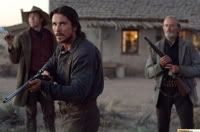
Synopsis: In Arizona in the late 1800’s, infamous outlaw Ben Wade (Crowe) and his vicious gang of thieves and murderers have plagued the Southern Railroad. When Wade is captured, Civil War veteran Dan Evans (Christian Bale), struggling to survive on his drought-plagued ranch, volunteers to deliver him alive to the “3:10 to Yuma”, a train that will take the killer to trial. On the trail, Evans and Wade, each from very different worlds, begin to earn each other’s respect. But with Wade’s outfit on their trail ““ and dangers at every turn ““ the mission soon becomes a violent, impossible journey toward each man’s destiny.

View Trailer:
* Large (QuickTime)

Prognosis: Positive. For some, the answer is: Everything but country.

When asked what kind of music I like I usually resort to the answer above and then expound on the motifs and tropes of daddy hitting mama on the farm, wife leaving in the middle of the night, ol’ huntin’ dog being run over by your Ford-350 and that’s usually where I leave my feelings about country music.

You can’t get away from what the old west used to be and the trappings that went with it, the lifestyle, the pathos, the way Deadwood tried to capture it but I’ve always resorted to tossing Westerns in the sack with the kinds of films I would opt to watch last if ever given the chance to view something else. I haven’t seen DANCES WITH WOLVES, TOMBSTONE, UNFORGIVEN and scads of other horse-drawn classics just for the sheer nature of the world I am usually going to land in but this film feels different. It looks different.

Mangold made me a believer in the musical genre with WALK THE LINE and it feels here like he’s trying to spin something new that has old for far too long.

The opening sequence here is off-putting. The zig-zagging camera angles and use of black screen seem almost too much until you realize that there is a real sense of badness conveyed in the actions of Russell “I’ve Never Met A Phone I Didn’t Like”¦Or Mind Shattering On Some Bloke’s Skull” Crowe. There’s actually some momentum created in the act of the old time stick-up and the appearance of Christian Bale who feels like a genuine figure in his own right.

I’m not quite sure I get the reason or why Bale volunteers to bring the man to the, wait for it, 3:10 to Yuma, or why the hell Yuma of all places. I’ve been through Yuma, you can get some kick ass oranges and produce up in that piece, holmes. Regardless of the vegetable situation in that area I am stumped at why this train ride is so important but, nonetheless, there is a sense of trepidation about this prisoner transfer and Russell can’t help but be himself as he flashes that too good to be true Zoom Whitening smile when the idea of him getting away now becomes a possibility.

The mix in with Bale’s kid tagging along in an “Aw, shucks” sort of way, and this will obviously become a contentious issue when and if the kid gets shot, I put money on the fact he will, seems little forced and doesn’t make me more anxious to find out what happens next.

What does, though, make me want to know more is when we see the marauders, Russell’s old crew on the horizon as they plan to set their master free. The chaos that follows is what absolutely gets my attention.

There seems to be an emphasis in this trailer on the violent standoff that happens at the end, the falling off roofs is something I can relate to with all too nauseating clarity from all the faux western towns in this hell hole of a state I live in, and the guitar A-chord that’s struck doesn’t inspire true confidence but Mangold has bought my goodwill with WALK and there seems like a sliver’s chance that there’s something more to this film than just rolling tumbleweed.

.

NO COUNTRY FOR OLD MEN (2007)

Director: Joel Coen
Cast: Tommy Lee Jones, Javier Bardem, Josh Brolin, Woody Harrelson, Stephen Root
Release: November 21, 2007
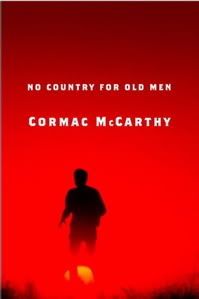
Synopsis: Based on the Cormac McCarthy’s novel “Old Men”, the story begins when Llewelyn Moss (Brolin) finds a pickup truck surrounded by a sentry of dead men. A load of heroin and two million dollars in cash are still in the back. When Moss takes the money, he sets off a chain reaction of catastrophic violence that not even the law – in the person of aging, disillusioned Sheriff Bell (Jones) – can contain. As Moss tries to evade his pursuers – in particular a mysterious mastermind who flips coins for human lives (Bardem) – the film simultaneously strips down the American crime drama and broadens its concerns to encompass themes as ancient as the Bible and as bloodily contemporary as this morning’s headlines.

View Trailer:
* Large (QuickTime)

Prognosis: Positively Black. Funny thing about the Coen’s.

When they released RAISING ARIZONA in 1987 it wasn’t until it made its way to HBO before I ever came upon anything they’ve done theatrically. Most people remember the oddest things when they’re kids but I remember being 12 and being utterly enamored in not only their vibe, I instantly “got” their method of storytelling, but in the nuances that have made more hits than misses. I remember thinking that wherever in hell Tempe, Arizona was, the stated location for country lockup for H.I. McDunnough, that it must have been a barren wasteland of a few QuickTrips and home to the most hideous grocery store ever created. Who knew that I would someday move there and graduate from that fine city with a college degree? What I can be certain of, though, is that I can see the very same sense of place and time in this trailer that I did in ARIZONA.

“What’s the most you’ve ever lost on a coin toss?”

This trailer crackles with nuance and spatial permanence from the very moment Javier Bardem drawls across the screen. His voice scratches just slightly and the environment that’s interposed against it just quakes with desolation and isolation. What so many people in marketing camps all over Los Angeles vie for, garnering interest from people in their film, this trailer just achieves by setting a mood and letting it unspool like a fist of yarn.

I completely get what this movie is about and I didn’t need a voiceover to tell me. The film has a catchy premise, it’s so easy to understand that I can’t see how you can’t fall in love with the notion right from the start, especially how the car explosion mid-way through this thing lets you know we are not in FARGO country.

The tension is there, right in front of us, and as Javier chokes a man on a tile floor with his eyes crazed like a fox I am struck by how much idiosyncrasy this movie has but how that odd-ness translates into my buy-in that this is a very real place and a very real story.

I can believe fully in the quickening near the end that this movie is more of a cat and mouse thriller, that’s how it’s being sold, but I cannot help but see that what’s really at stake in this movie is not how much I believe that these people exist but that the Coen’s have found their way back after a string of detestable films that not even a die-hard could let pass as acceptable.

Having Javier end this thing in a creepy pose in a creepy chair in a creepy room? Brilliant. I haven’t seen one frame of this movie and already I’m afraid for my own life with this guy nearby.

Quick Stop Thingamabobs: 8/10/2007

Filed under: Columns,Thingamabobs — UncaScroogeMcD @ 12:01 am

thingamabobs.jpg

The web. It’s a big place, full of plenty of distractions ““ some funny, some informative, some ludicrous, some disturbing, some inane, some profound. Each and every weekday, we present links to a few of our favorite finds”¦

————————————————

  • A rather unorthodox way to fix a flat tire… (Thingamabob)

Have a THINGAMABOB? Send it in!

##

August 9, 2007

Quick Stop Thingamabobs: 8/9/2007

Filed under: Columns,Thingamabobs — UncaScroogeMcD @ 3:55 am

thingamabobs.jpg

The web. It’s a big place, full of plenty of distractions ““ some funny, some informative, some ludicrous, some disturbing, some inane, some profound. Each and every weekday, we present links to a few of our favorite finds”¦

————————————————

  • Test your movie knowledge… and your visual identification skills… (Thingamabob)

Have a THINGAMABOB? Send it in!

##

August 8, 2007

Interview: Derren Brown

Filed under: Interviews — Tags: , , , , , — UncaScroogeMcD @ 4:09 am

derrenbrown-2007-08-08-02.jpg

-by Ken Plume

derrenbrown-2007-08-08-01.jpgDerren Brown is a very dangerous man. In fact, any encounter with Derren – be it on a street or even your own home – is an affair fraught with peril. He is, in addition to being such hazard, one of the most fascinating entertainers currently plying his arcane trade on television today.

What exactly is that trade, you ask?

Derren Brown is – depending on how you look at it – a mentalist, a magician, an illusionist, a hypnotist, a paranormal skeptic… When, in reality, he’s all of these things and more. With an acerbic wit and presentational flair, he’s a riveting performer who’s finally making his way to the US.

A staple in the UK courtesy of multiple series, specials, and live shows, the Sci-Fi Channel has imported Derren via a rejiggered and expanded edition of his initial effort, Derren Brown – Mind Control. It’s a mixture of tricks and mental feats for a generation raised on Penn & Teller, and a must-see affair. As Derren himself describes it, his work is a combination of “magic, suggestion, psychology, misdirection and showmanship.” The US edition of Mind Control is currently berthed on Thursday nights at 10pm EST.

I’d also recommend you pick up the DVDs that are currently available in the UK (the original Mind Control, plus the first two series of Trick of the Mind), as well as his must-read book Derren Brown: Tricks of the Mind.

I got a chance to tempt fate by chatting with Derren, whilst constantly fearing that I would fall under his sway and become nothing more than a puppet in his diabolical schemes…

line.gif

KEN PLUME: It’s a pleasure to be speaking with you.

DERREN BROWN: You too…

KP: It’s something we’ve been wanting to do for, I believe, two years now…

BROWN: Really?

KP: Yes. I’m a huge fan of you and your work.

BROWN: Oh, thank you very much, that’s lovely. Thank you, Ken.

KP: And knowing some statements you’ve made in the past regarding enjoying your anonymity in the U.S. …

BROWN: (laughs)

KP: What suddenly was the change that brought about the transport of the show and yourself into the arena of a U.S. network?

BROWN: Well, yeah. I think it just… it’s one of those things that’s always kind of been on the cards. You know we didn’t sell the show to the States, anticipating that one day we might want to have it commissioned out there. That was just something that was always gonna go in the background, and it’s been seven or eight years that I’ve been on TV, so it seemed like a good time to start asking. In terms of the anonymity, for me, I just don’t know… I mean, the difference is I don’t live in the States. If I do become well known out there for the show, it’s something I’ll have to deal with. I like my privacy, but I don’t know. I just don’t know. I was just talking to a previous interviewer about the slightly odd stalkers and strange reactions I’ve had, and God knows what it’s gonna open up starting up out there. So who knows.

KP: So does that mean at some point you’re going to start hosting America’s Gone Mental with Piers Morgan?

BROWN: (laughs) Yes, that’s the time. I’ll make a note!

KP: Do you still find that you have a shred of anonymity within the UK, or do you think that’s largely disappeared?

BROWN: Well, it’s kind of nice. Channel Four – it’s one of the big channels, but it’s less mainstream. It’s kind of the cooler, edgier kind of programs – which is fantastic for me, because they really support some of the stuff that I do, that I think I’d have trouble getting commissioned on some of the other channels. It’s a mixed sort of audience that watch the show and everything, but it gets – on average – I think about three million people that watch it, which is good figures for that channel. It’s not 20 million that watch the big soap operas. So it feels an okay sort of balance – but I wouldn’t want too much more. I don’t quite have the ambition or the ego of most big flashy magicians, so I’m not gonna be fishing and struggling to be number one magic type mind reading figure out there, so we’ll see. I’m fairly modest about all my expectations. I think it’s a good show and I hope people will want to watch it.

KP: And you also mentioned that you’re not exactly – by your preference – an outsized personality when it comes to the public eye…

BROWN: No. Yeah…. I think most of that comes from your own kind of drive and what you want. I mean, I was already doing what I do, quite happily, but just not on TV. And then I was offered the chance to do it on TV – which of course was great and exciting, but I think if you’re already doing something that you enjoy and it’s about just doing more of what you enjoy, that keeps it all sane. As opposed to just wanting to be on TV and famous for the sake and the appeal of that.

KP: What is that you want?

BROWN: I’d like to have a place in Florence, and retire and paint at some point, to be honest. I love doing this and it’s great fun, and I’ve been able to kind of reinvent the show a few times and I get to tour every year. I love all of that. So I enjoy it enormously. I have no idea how it’ll go in the States, whether it’ll take off and be a big thing or whether it’s something that will kick over for a while. I think it’s a good show. I’m proud of the show, so I’m very happy with that. Depending on what happens in the States, I may have to drastically change my priorities. I try and be relaxed about it and I don’t have any particularly strong ambitions or strong expectations in any areas.

KP: Have you found it more difficult going with each new series, as far as developing material for it?

BROWN: Actually, it’s kind of got easy. I thought it would be more difficult. Very rarely have we felt – I say “we”… it’s me and one other guy, my friend Andy, and we write all this stuff together…

KP: That’s Mr. Nyman right?

BROWN: Andy Nyman that’s right, yeah. Who’s currently touring in Death at a Funeral, this new Frank Oz movie. He’s just gone over to LA for a month. It’s opening sometime this month. So for me, what happened is the show’s progressed and matured here. It’s become about – especially the one hour specials that I’ve done – has sort of become about what I feel I wanted to look at or what’s become an area of interest for me. They’ve grown with me – as opposed to just, “Here’s another series, we need to churn out another 50 routines.” It’s never really felt like that. It’s always quite fresh and different. So somehow I’ve had a clearer sense of the sort of thing that I want to do each time, and that’s actually kept it fairly easy to come up with material that still feels interesting and fresh. It hasn’t been as difficult as I might have anticipated.

KP: Do you feel that you’ve, in lockstep with that, progressed and matured as a performer as well?

BROWN: I think so, yeah. I mean, I’m doing big stage shows and things that I never thought I’d do, and I had to learn how to do that. I had to learn how to perform in front of two thousand people – which is fairly big for our standards.

KP: What are the disciplinary differences between TV and on stage for an audience?

derrenbrown-2007-08-08-03.jpgBROWN: Oh, hugely. You can do stuff on TV but not be particularly much of a live performer. I think it’s just one thing to get something on TV – most of the kind of drama and pace of it will probably come from the editing of the show, and the style and the look of the show. On stage, it’s just me for three hours, and I’ve got to try and keep everybody constantly entertained. That really is just me. So it’s a different set of skills on top of actually making the stuff work. For me, it’s much more exciting, I much more prefer that, and I look forward to hopefully, in time, doing something on Broadway, because it’s a real buzz.

KP: It definitely is more energizing to see you in that longer sustained form, having seen the Something Wicked special you filmed during your last stage tour…

BROWN: That’s cool. Yeah, it is different, isn’t it? And it also means I have to be sort of lighter and funnier, and do things that for some reason never really worked too well in the series. The series is quite solemn in comparison. Not a lot of room for gags.

KP: Would you perceive the character of Derren Brown that you’re performing in those two venues to be different?

BROWN: Yes, I think it is. Still, I think the stage version is more me, because that’s the… if you’re gonna perform at all well – and I’m not saying that I perform that well – but it has to be you. It has to be a theatrically enhanced or tweaked version of yourself. You can’t just sort of fake your personality. That doesn’t really work. It does on TV, because it’s all sort of fairly quick segments, and I’ve just got to get through what I’ve got to do because it’s got to fit into a format on TV. You know, less room for that. Actually performing the piece, you want them to shine and you want them to interest the viewer at home. So yes, I think in terms of the character, there’s certainly two different sides. That’s kind of interesting. If it was me watching the show and I’d seen that guy on TV, I’d be quite interested if I went to see him on stage and he sort of fleshed him out a bit as a character. But I don’t think of it too much as a character… but I suppose, invariably, you have to, to keep on top of it.

KP: Do you perceive him as any different from how you are off stage?

BROWN: I think I’m a lot less the kind of very confident, controlling… It’s a side of me, if I’m comfortably high status (laughs)… I can be like that, but I’m much quieter and more considered, I think. But then it’s really fun if you are like that – and I’m quite indecisive and I’m quiet and private… all those things in real life… so it’s actually quite nice to tap into that side, the more confident aspects of yourself. To do that on stage is a real treat.

KP: So you’re saying the closest thing people would see to the real you is if they’d seen that bonus feature on your second DVD set, with you eating breakfast rather anal retentively?

BROWN: Oh that! Yeah probably, probably. Yes, I thought that was quite fun when I watched that. Yeah, it’s all different parts of me. You have to draw from yourself, and then you kind of have to enhance that and make it interesting. With the TV show, it’s fast-paced – it’s difficult having too many layers to that. But sometimes, certainly the show here has gotten funnier and lighter. It never become a big laugh, but the TV show, as it’s grown up, it’s become a little bit softer around the edges, in a good way. And I think that was something that was important. Whereas, yeah, doing the first series for Sci-Fi, I think it has to be very clear to people exactly who I am and what I’m doing. And then hopefully give it room to grow if it gets recommissioned, and has a chance to do that.

KP: Do you call them tricks? Do you call them performance pieces?

BROWN: Routines? Segments? I don’t mind. Some people have called them tricks – that’s fine, too.

KP: Watching the last series, Trick or Treat, on Channel Four…

BROWN: I’m fascinated that you know the material, that you’ve watched these things. Thank you.

KP: Like I said, I’m one of the people in the US who’ve been trying to show people your work for the last couple years.

BROWN: Oh thank you, Ken…

KP: I’m just glad you’re coming to the US. When you look at those segments, there seems to be both a… you know, obviously because of the concept of the program (where volunteers get to choose what type of piece they’ll be involved in – a trick or a treat), it has a very soft, kind edge, as well as a very, very hard edge with the trick portion of it. Do you see a line that is uncrossable in what kind of segment you’ll do, in terms of what you’ll subject a participant to?

BROWN: I think, for me, the thing of primary importance is the experience of the person that takes part in it. That’s a huge, important part of it. Although some of the pieces, they may be finished in a way that makes them look quite bleak or traumatic or cruel, the reality is that people always are so well taken care of and always invigorated by it. To me, that’s very important. Especially how participants generally are treated in reality shows and things – it’s just criminal and quite upsetting sometimes. So it’s very important to me that it isn’t like that, and that their experiences are authentic and matches what they see on TV when it goes out, but also that it’s enjoyable for them. So with that in mind, it’s our sort of building drama. It’s a question of not just showcasing, “Look at me, look how clever I am, I can do this” – that was maybe more important at the very start when I had to make a name for myself, but now I’m in the shows less… and ideally, I wouldn’t be in them at all, but I still have to make a living. (laughs) Obviously I have to get my skills and what I do in there, but at the same time what I’m interested in is the drama of the situation – which, at home, you’re empathizing with the person that’s taking part. I think we just sort of sit around and talk about it, and that idea, and a couple of others, came like the zombie arcade game – which I guess you must have seen…

KP: Yes.

BROWN: They came out of normally sitting around, talking about smaller sort of tricks, if you like, and ideas, and I go, “Can we just think a bit bigger? What if we… I mean we’d never do this obviously, but what if somebody woke up and they were witnessing their own death in a car crash, and we had a double made of them, or something.” Something like that. And that idea kind of sticks, even though it’s normally said in a spirit of, “Well, obviously we couldn’t do that because that would be really cruel.” And then it sticks, and then…

KP: And then you did it.

BROWN: … and then we find a way to do it that isn’t cruel and irresponsible, and that’s sort of interesting and intriguing and fascinating to the person. If it is a bit cruel, at least by the end of it they’ll feel elated and exhilarated and forgive us. Plus they volunteered to take part in the show, and they know the sort of character that I am.

KP: They know what they’re getting into.

BROWN: Yeah, they know what they’re getting into.

KP: Has there ever been a participant that reacted in a completely surprising manner?

BROWN: It’s never happened. There was one stunt, the staring competition…

KP: Was that the gentleman that was about to hit you?

BROWN: Yeah, that’s right. Exactly. That’s as far as it’s gone, but that was specifically to make somebody angry and troubled. That was full of that, so it was hardly a surprise.

KP: Did you feel, in that situation, that there was the potential for it to get out of control?

BROWN: I think for me… I get asked this a lot, and I understand that. Maybe it’s just that I’m so on top of what’s happening, and that experience – hopefully knowing how they’re kind of framing it in their minds. It’s difficult to explain, but it kind of… in the same way that hypnotized people look like they’re under the control of somebody else, there’s in fact a much more subtle game of behavioral manipulation, and what looks like one person, the hypnotist, controlling – it isn’t about that at all. It’s about a kind of…

KP: A dance, would you say?

BROWN: It is, yes, exactly, it’s more of a dance, so there is… often what it looks like, in terms of that level of cruelty or control, it isn’t really quite like that. And being aware of the subtler aspects of it, I’m utterly comfortable with what I’m doing and how far I’m taking it. Then, in terms of how it’s presented on screen, once the music’s added and whether it’s left on a very bleak note, I like people to feel a bit guilty for having watched it. I think it’s kind of interesting. It’s not the sort of stuff that you necessarily associate with watching, like, a magic show, or something like that, which obviously it’s related to that whole tradition. So I like playing around with all of that – but that’s separate from the person’s experience, which hopefully always comes out very positive. We did this thing called The Heist, which…

KP: Which, honestly – of all your outcomes – was probably the most disturbing to watch…

BROWN: Yeah, it was pretty disturbing. Now there, I had the guys come over and watch the show in its rough edit form to make sure… the guy, Danny, who was the one that kind of seemed most disturbed when he was stopped… the one that’s doubled over…

KP: Who seemed to have a bit of a breakdown…

BROWN: Yeah. We became good friends. I went out to dinner with them all afterwards, and explained to him the whole of the show, and then Danny came over, and he loved it. He was so exhilarated by it, and he came over and watched the rough edit of the show. Because it was two weeks that had to be pulled down into an hour, and I didn’t want them thinking that I’ve reflected them badly or even it doesn’t reflect what really happened, so he came over as the kind of – as the guy who’d been through the worst – just to make sure that he was happy with it. Which he was. He came and saw a screening of it, and they were all happy with it. It was great. They’re always very well taken care of, and I generally tend to keep in touch with them as well, and some of them become friends. That side of it is hugely important. And yeah, that line you talked about is just one of responsibility. Ultimately, the show is put together intelligently and seriously, and not just sensationally. I know people that have been involved in reality shows and the like, and it’s sort of heartbreaking how ruthless that world is. Maybe it’s partly through seeing that, that makes me realize how important that kind of welfare side of it is…

KP: That sense of compassion does come through in the programs. I think it’s a fascinating companion to also read your book…

BROWN: You have done your homework!

KP: I keep hoping that the book will come over to the U.S., because I’m tired of importing copies for people.

BROWN: (laughs) Hopefully it will at some point.

KP: If Louis Theroux can get his book through…

BROWN: Has his show been in the States?

KP: No, in fact his show hasn’t aired in the States at all, but they released his book here in the U.S.. His companion book to Weird Weekends.

BROWN: That’s nice…

KP: But reading your book, I can definitely see where you’re coming from when you do these sort of things. I think anyone who watches the show probably should read the book just to get a better sense of what your head space is and what your foundation is, as a performer…

BROWN: I hope that’s something that will – if further series are commissioned, and so on – I hope that’s something that will be allowed to grow. Understandably with the first series, Sci-Fi is very keen that it just nails it straight down the middle, in terms of what I do and how I do it.

KP: Just out of curiosity, have you seen the “Seven Safety Tips For Dealing With Derren Brown” that’s been circulating the internet?

BROWN: No, I haven’t!

KP: Well, here’s the bullet points of it: First one is “Don’t deal with Derren Brown.” Second one is “Don’t go to the United Kingdom”… Which is now moot, of course.

BROWN: This is something from the States?

KP: Yeah, there’s a site called needcoffee.com…

BROWN: Okay…

KP: Number three, “If you suddenly find yourself in the UK and Derren approaches, don’t look at him.” Number four, “If you cannot escape him, do not let him touch you.”

BROWN: (laughs)

KP: Number five, “If he manages to touch you, at least keep him from taking hold of your wrist.” Number six, “If he manages to take hold of your wrist, for the love of baby Jesus don’t let him put his hand over your face.”

BROWN: (laughs)

KP: Number seven, “Even if he doesn’t touch you, don’t let him not touch you either.”

BROWN: (laughs)

KP: And it’s fully illustrated with various clips to back up the assertions.

BROWN: That’s fantastic!

KP: That’s from May of this year.

BROWN: That’s great! I hope you’re going to put those in the article. That’s fantastic.

KP: Oh, definitely. From a performance point of view, I’m wondering which aspect you find most challenging – is it the memory skills, the dexterity, or the interpersonal communication?

BROWN: (laughs) The honest answer to that is remembering people’s names when they come up on stage. I did this thing in my first stage tour – I thought, for each city I go to, I will memorize the phone book for that city, then have people call out names and addresses of themselves or their friends or whatever, and I’ll tell them the phone numbers, or around the other way. And I managed to do it – I didn’t always get them right, but managed to do that. But despite that, I never learned the name of the person that would come up that was going through the same book to double check it… the names of people in the audience when they stood up… I’m terrible with that, because I’m so focused on one thing. So it’s always the little things… And utterly ridiculous, because I do this stunt and then thank the person and then have to say, “What was your name again?” You’re like a gag. It got a laugh every night, and I just found it embarrassing. It’s the little things. All the other stuff kind of… (sigh) I don’t know. I’m making it look more difficult than it is. That’s part of the performance. I don’t find it too difficult to monitor something new… I mean, when I’m doing the stage shows, that’s always kind of hard on the first night, and it gradually gets rolled in. It’s a difficult one to answer, but probably the truthful answer is the more entertaining one, I guess, which is people’s names when they come up. I’m very good – like with journalists, I find that if I sit there and do a bank of 10, 20 journalists and I say I will remember all their names, and I always tell them their names back again, and they always write in the articles how impressed they are. But yeah, if I don’t make a point of doing it, I’m just like everybody else – just terrible, terrible at doing that kind of thing. On stage, when it matters most, is when I’m worst.

KP: It’s fascinating, in watching the first series of Mind Control in the UK, having seen the Devil’s Picture Book tape…

BROWN: Oh yes… gosh. Wow.

KP: … to see some of the things reappearing in different guises within the series…

BROWN: Yeah.

KP: I thought that was fascinating. That and the reaction you got out of Stephen Fry.

BROWN: Yes, that’s right. Oh, he’s lovely. He’s such a nice guy. He’s not that well known in the States, is he?

KP: He is and he isn’t. He’s known to a certain segment, but he’s not everywhere like he is in the UK.

BROWN: Yeah, yeah.

KP: One of the things I did want to touch upon briefly was also your painting.

BROWN: Oh yeah…

KP: I quite enjoy what I’ve seen…

BROWN: Well, thank you.

KP: Your portraits are heavily caricatured, and in capturing the essence of a person, has there been anyone that’s proved particularly difficult for you?

derrenbrown-2007-08-08-04.jpgBROWN: Al Pacino. It’s probably the least successful that I’ve done. I think it’s on the website, if it’s been updated. But yeah, I always found him very difficult. Really wanted to paint him and have that in the collection, but it’s never been in my… you know why it was? You know, he’s got a very kind of expressive face. It’s not for lack of features to exaggerate, but I could never get it right. It’s sort of all right, the one that I’ve done, but I don’t know if it’s…

KP: Do you think it’s a difficulty to exaggerate exaggeration?

BROWN: Yeah. I don’t know what it is, because it’s not a very conscious process. It’s not like you… they are caricatures, even though they’re subtle, but I don’t kind of… you don’t consciously think, “Right, that’s quite a big nose, so I’ll draw a big nose.” You just draw what you see, and then if you naturally see things in an exaggerated way with faces – which I guess I do, which I’ve always had a very good memory for faces because I’ve always seen them and remembered them in this kind of exaggerated way – so you just draw what you have in your head and it just comes out in an exaggerated way. If I try and draw a straight portrait that isn’t exaggerated, I can’t. It just comes out like that. So it’s very difficult, to do it when it isn’t working, it’s kind of hard to make it work. And for some reason I was hung up on that…

KP: Has your self-portraiture changed much over the years?

derrenbrown-2007-08-08-05.jpgBROWN: Yes. It’s only the most recent one that I think works for me. There were quite a few previous ones that were not very good. How you see yourself isn’t how other people see you, so if you’re painting somebody else, and you know when it’s right, because it kind of clicks into place, and I can hear their voice talking when it works. You just look at it and it’s like looking at a photograph, and the picture triggers all the associations that looking at the real person would. Whereas yourself, that click doesn’t happen, because you don’t think of yourself in the same was you think of other people. You don’t hear the person’s voice and you think of them, and all those sorts of things. It’s just guess work, in the end. It’s just, “Yeah, that looks like what’s in the mirror, so I’ll stick with that.” It’s only this last one that…

KP: That’s finally clicked?

BROWN: Yeah. Probably because I see myself on TV now. I’ve actually got an image of that.

KP: Do you think you have a perception of yourself outside of yourself? If that made any sense…

BROWN: Well, I guess more so than before.

KP: Is that perception of you as “you”, or do you perceive that as the “performer” version of you?

BROWN: I think it depends on how messy my hair is, how confidently I’m staring at the camera… all that kind of thing. I think there’s a certain look and dress I associate with the performing me more than… or even having said that, I am wearing a suit at the moment, even though I don’t need to – though I do tend to wear suits in real life, as well. I don’t know…

KP: Well, obviously you’re dressing up for the interviews.

BROWN: (laughs) A perfectionist. In case you have some video thing that I don’t know about…

KP: I saw you rearranging silverware at breakfast on the DVD features, so I know all about your perfectionism…

BROWN: (laughs)

KP: Any plans to take your live tour to the US at any point?

BROWN: Well, I would love to. I mean, that’s certainly something to aim for. I think it’s just a question of if the series builds up a fan base and it feels right, then I would love to do a tour, do a Broadway run if possible. That would be great. They’ll love the way I sing. You’re a very diverse country. You know? I mean, in some ways you’re very homogenous, and in other ways… you’re hardly heterogeneous, if that’s the word. And it’s psychologically interesting as well, so it’s nice, with the show, to go to different areas. I’m sure how New Yorkers react to a camera – let alone what I’m doing – will be very different to going somewhere in kind of the Midwest or deep south. It’s a rich area, I think, and I think useful and good fun for the show, as well.

KP: Hopefully we’ll come across better than we did in Messiah…

BROWN: (laughs) Yeah, I think… I don’t know if we’re using bits from that. No, we might just hold that back and have that as a special. Yeah, might need to soften it up a little bit.

KP: Here’s hoping that you do make the transition. I think it’s been a long time coming.

BROWN: Well, thank you, Ken. I really appreciate your support, and thank you for making people read the book. That’s lovely.

KP: I do appreciate your time, and here’s hoping in the future we can finally do that in-depth interview that we’ve been trying to do for years.

BROWN: That would be fantastic. I can’t wait to meet you one day…

##

August 7, 2007

Quick Stop Thingamabobs: 8/8/2007

Filed under: Columns,Thingamabobs — UncaScroogeMcD @ 11:50 pm

thingamabobs.jpg

The web. It’s a big place, full of plenty of distractions ““ some funny, some informative, some ludicrous, some disturbing, some inane, some profound. Each and every weekday, we present links to a few of our favorite finds”¦

————————————————

  • Laurel & Hardy kick off today’s destinations of interest… (Thingamabob)

Have a THINGAMABOB? Send it in!

##

SModcast 23

Filed under: SModcast — UncaScroogeMcD @ 4:26 am

newhead2.jpg

SModcast is the meandering palaver of a pair of dudes whose voices are so dull, they don’t deserve to be on the radio (and, hence, aren’t). Kevin Smith and Scott Mosier are SModcast.

The best thing about SModcast? It don’t cost nothing.

line.gif

SModcast 23: Good Vibrations –

The re-return of the distaff, in which our heroes discuss Canadian lockdown & toilet hijinks, reminisce about coming for the first time and losing it in a small town, get all “Sex And The City”, cross the point of no return, make note of body types and what city is best for them, decry the bane that is Star Tours, discuss how many kinds of wonderful the “Simpsons” premiere was, and find new lines to cross.

[CONTENT WARNING] SModcast features harsh language and even harsher notions of propriety. Listener discretion is advised.

DOWNLOAD: (right click to save)
SModcast 23 (MP3 format) – 46.35 MB

[display_podcast]

SUBSCRIBE
Subscribe to this Podcast via iTunes
Subscribe to this Podcast via FeedBurner

Wanna add your two cents? Spend it here, in the SModcast mailbag.

line.gif

CLICK HERE FOR THE SMODCAST ARCHIVES

line.gif

##

The Art Of Travel Blog #4: The Darien

Filed under: Art of Travel Blog,Production Blogs,Quickcasts,Video — UncaScroogeMcD @ 1:14 am

artoftravel.jpg

We are happy to present the exclusive web only trailer and first of seven behind the scenes webisodes of The Art of Travel. Each month, we’ll premiere a new webisode – and in-between, we’ll have biweekly blogs from the actors and filmmakers, plus cool image captures from the movie.

This story has been three years in the making, and shooting the film over 7 weeks in 5 countries was an adventure for the entire cast and crew.

No, The Art of Travel is not a documentary or the retelling of the bestselling philosophy book with the same title – It is the story of Conner Layne, a high school grad with a full ride to college who finds his plans interrupted by a life changing moment… a moment which becomes the spring board to a travel adventure that ultimately changes Conner’s hopes and dreams.

line.gif

What is the Darien Gap? Where is it? Why is it one of the most dangerous jungles in the world? In The Art of Travel, Conner Layne meets Christopher Loren and his wife Darlene. Both are leading a jeep expedition across this jungle – a trip that will last over 370 days!

There are no roads… They will need to make roads by hacking with machetes. When Conner decides to become the seventh member of the expedition, he has no idea how many friendships he will form and how he experience will change his life. To learn about the Darien Gap and the expedition, and how the film crew challenged the rain and
bugs, enjoy this months webisode: “The Darien”…

artoftravel2007-06-26-02.jpg

Thomas Whelan, Angelika Baran, Brian La Belle, Emyr G. Graciano, Christopher Kennedy Masterson (Cusco, Peru)

Salude from the Filmmakers!

Thomas Whelan
Brian LaBelle
Emyr G. Graciano
Christopher Kennedy Masterson

line3.gif

THE ART OF TRAVEL TRAILER ““
Before you dive into the webisodes, check out the trailer for The Art of Travel…

line3.gif

artoftravel2007-04-02-01.jpg

Download The Art of Travel Trailer:


  • Large (560 x 420 – QuickTime – 28.04 MB)
  • Small (320 x 240 – QuickTime – 11.63 MB)

line3.gif

THE ART OF TRAVEL VIDEO BLOG #4: “The Darien” ““
Cross the formidable – and deadly – Darien Gap with the cast and crew…

line3.gif

artoftravel2007-08-07.jpg

Download The Art Of Travel Video Blog #4:


  • Large (560 x 420 – QuickTime – 42.42 MB)
  • Small (320 x 240 – QuickTime – 18.94 MB)

line3.gif

THE ART OF TRAVEL VIDEO BLOG #3: “Ladrones” ““
How exactly do you woo a cast willing to travel into the wilds of Central America…

line3.gif

artoftravel2007-06-26-01.jpg

Download The Art Of Travel Video Blog #3:


  • Large (560 x 420 – QuickTime – 40.02 MB)
  • Small (320 x 240 – QuickTime – 17.56 MB)

line3.gif

THE ART OF TRAVEL VIDEO BLOG #2: “Casting The Net” ““
How exactly do you woo a cast willing to travel into the wilds of Central America…

line3.gif

artoftravel2007-05-14-01.jpg

Download The Art Of Travel Video Blog #2:


  • Large (560 x 420 – QuickTime – 31.97 MB)
  • Small (320 x 240 – QuickTime – 17.95 MB)

line3.gif

THE ART OF TRAVEL VIDEO BLOG #1: “Gonzo Filmmaking” ““
Dive into the process of pulling together the film, and the unique insanity of transporting a cast and crew into the wilds of Central America…

line3.gif

artoftravel2007-04-02-02.jpg

Download The Art Of Travel Video Blog #1:


  • Large (560 x 420 – QuickTime – 41.03 MB)
  • Small (320 x 240 – QuickTime – 17.95 MB)

##

Toy Box: FANtastic Exclusive 2 – The Gauntlet of Vaskkh

Filed under: Columns,Toy Box — admin @ 12:48 am

toybox.jpg

Regular readers will remember that in 2006, The Four Horsemen did a very cool exclusive based on fan input. This was the first FANtastic Exclusive, developed in conjunction with fan input right from the start. I reviewed the Champion of Mynothecea last summer, and so it’s only fitting that I cover one of the 2007 FANtastic Exclusives as well.

Yep, they did it again for the 2007 SDCC, but unlike last year in which they did one figure with a number of paint variations, this year they went all out, producing 9 different figures. Of these nine, several are entirely new head sculpts!

The main character was Ramathorr, the Elephant Swordsman. He was available at SDCC, or through the Store Horsemen where he’s available for $25. The next announced figure was the Hammer of Gholl, another elephant but with a slightly different head sculpt. He’s a Diamond Comics exclusive, so you may be able to pick him up at your LCS. Next up was the Mace of Broggah, another elephant guardsman with a different paint job and some new armor. He’s available through October Toys and is limited to just 300. But wait, there’s more! Then the Club of Thraugnn was announced, a red version of the Mace of Broggah elephant. He was sold through Fwooshnet.com. Ah, but then things took a turn with the Shield of Draumm! The warriors stopped being elephants, and switched to new creatures. The Shield (as his friends like to call him) is a hippo! It’s the same basic body, with a new head sculpt. He was sold through Raving Toy Maniacs.

*whew*. Next came the figure I’m reviewing today, The Gauntlet of Vaskkh. This guy is a rhino, so there’s a whole new head sculpt again. He was sold through Action Figure Express. The Helm of Xaanm continues this style, but he’s a warthog this time. Big Bad Toy Store was the exclusive retailer on him. But with all these good guy warriors, where’s the bad guys?

That’s where the 7th and 8th variant figures come in. They are Ggruxx (carried by Toy Rocket) and Ssejjhhorr (carried by Figures.com), twin bad guys with a different paint job. But what are they? Mutants, and not very attractive ones at that. But they look great as villains!

So that’s the full line up of nine figures. They are all limited editions of course, in that 250 – 300 range depending on the character. They all run around $25 – $30 each, depending on the retailer. Tonight’s review covers the rhino, Vaskkh, who was $30 from AFX.

FANtastic Exclusive 2 – The Gauntlet of Vaskhh

While all the elephants are cool, I have to admit that the combination of the elephant with the rhino, warthog, and hippo makes this series special. Stick these guys with your cow from last year, and you have one very cool if anthropomorphic display of bad ass warriors!

toybox_080707_01.jpg

Packaging – ***
The packages are quite large, but so are the figures. The only problem with such a large bubble and such a heavy figure is that it can cause separation from the cardback. If you’re a MOCer and going to store these, it might be tricky.

toybox_080707_02.jpg

Sculpt – ****
Outstanding! But then, we have come to expect no less from the Four Horsemen. The detail work is excellent, especially on the rough skin texture and uber-cool armor. These figures are some of the best looking produced this year, and are certainly the best exclusives at this year’s SDCC.

This guy is big, standing at 9 inches tall at the ear tips. The hands are sculpted to hold the weapons, and they work nicely. While the hoof feet aren’t huge, they are large enought give him a good, solid base for deeper poses.

toybox_080707_03.jpg

Most folks will spend their time oooing and ahhhing over the quality of the sculpt, but the quality of the engineering should not be overlooked. They managed to develop a beautiful base figure that allowed them to produce not one or two but eight very cool variants. Even when swapping the heads to entirely new animals, the base body still looks terrific. That was a tall order to cook up, but they managed to do it and do it within a pretty tight budget I bet.

toybox_080707_04.jpg

Paint – ***1/2
The paint work is also strong, although I do wish there was a bit more highlighting and wash to bring out a bit more of the cool skin texture.

The quality is very high in general though, with little to no slop or poorly cut lines. There’s a terrific palette of colors here too, with some nice golds and blues to offset the basic gray skin. With a licensed property, the toy manufacturer is usually stuck with whatever color scheme the original character uses. Here, with an in house developed property, we can see the artistic talents of the Four Horsemen set free, and the choices they made were excellent.

toybox_080707_05.jpg

As I mentioned, there isn’t a lot of washing or dry brushing though, which has its pros and cons. On the plus side, these techniques can be easily overused and ruin an otherwise great figure. On the con side, without them the great detail work, especially on the skin, tends to blend in. The figure could have used a little more punch in that area, but I’m not dropping the score in any major way because of it.

Articulation – **1/2
The one disappointment here for me was in the articulation. It’s not about how much there is, but rather the tightness of the joints.

Vaskkh has a ball jointed neck, although the large head restricts it a bit. He also has ball jointed shoulder (jointed on both sides), pin elbows, pin wrists, and a cut waist. Below the waist are ball jointed hips (again, jointed on both sides of the ball), pin knees and pin and rocker ankles.

toybox_080707_06.jpg

That’s plenty of joints, and you can get some terrific poses out of them. Unfortunately, the joints below the waist are very loose, and his upper body is quite heavy. Those two things together means that getting him to hold those great poses for long periods can be pretty tough. These seems to be a pretty common complaint across the entire wave of 9 figures.

Accessories – ***
Vaskkh is a tad light on the accessories considering the price point, but he does come with two very cool weapons. These axes can fit nicely in his hands, or snap onto his backpack for easy carrying. The sculpt and paint are terrific, and the style of the weapons matches the type of animal, if that makes sense. Perhaps there’s something about the sculpt that reminds me of the horn, or perhaps, there’s something about their bulk that relates to the bulk of a rhino. Whatever the case, these were well thought out.

toybox_080707_07.jpg

Value – **
Ah, now here’s the rub. Last year’s exclusive was $20, but some of these (like this guy) were up to $30. Several of the exclusives were slightly lower though at $25. Considering the extra bulk of these characters (and the very low edition runs/exclusivity), I can understand the $25 price tag, and would give him **1/2 at that price point. But at $30, this guy loses another half star.

Fun Factor – ***1/2
Even with the loose joints, this guy is still one fun figure. Kids could play with him with little fear of breakage (or at least not more than the usual mass market toy), and the bulky axes are less likely to pose any threat of injury. These bad ass beasts also fit in with a general ‘animals as warriors’ theme that we’ve seen for years in kid’s action figures. They are a great example of a ‘collectible’ staying true to its roots.

Things to Watch Out For –
Since you can do much about the joints til after you have him, there really isn’t much to watch out for on this guy.

toybox_080707_08.jpg

Overall – ***1/2
The Four Horsemen have another hit on their hands with this year’s FANtastic Exclusive. It’s too bad that more folks don’t know how terrific these figures are, but they did seem to sell out pretty well, so word must be getting around. If you have a chance to check one of them out, I highly recommend it. And the process for the FANtastic Exclusive for next year’s SDCC should start soon, so get involved!

Where to Buy –
That depends on which version you’d like:

– Ramathorr (standard elephant) is available at the Store Horsemen.

– The Hammer of Gholl should be available at your local comic shop.

– The Mace of Broggah is available through October Toys.

– The Club of Thraugnn is available through Fwooshnet.

– The Shield of Draumm can be found at RTM.

– The Gauntlet of Vaskkh is available through Action Figure Express.

– The Helm of Xaanm was sold through Big Bad Toy Store.

– The Mutant Ggruxx is available through Toy Rocket.

– and finally, the Mutant Ssejjhhorr is available through Figures.com.

Related Links:
Check out the Four Horsemen’s site when you have time, and don’t forget my review from last year’s Fantastic Exclusive. The Four Horsemen also have a site set up specifically for the FANtastic Exclusives.

Quick Stop Thingamabobs: 8/7/2007

Filed under: Columns,Thingamabobs — UncaScroogeMcD @ 12:46 am

thingamabobs.jpg

The web. It’s a big place, full of plenty of distractions ““ some funny, some informative, some ludicrous, some disturbing, some inane, some profound. Each and every weekday, we present links to a few of our favorite finds”¦

————————————————

  • Zack Kim and his two-guitar Simpsons theme… (Thingamabob)
  • And a little Super Mario Bros. action… (Thingamabob)

Have a THINGAMABOB? Send it in!

##

August 6, 2007

Widge Goes Off #2.1: Are You Going to Eat That?

Filed under: Widge Goes Off — widge @ 1:11 am

wgoheader.jpg

[CONTENT WARNING] This podcast contains foul language and a blatant disregard for OSHA regulations.

widgepic.jpg

The sites I pimp in the podcast are: Needcoffee.com, Colors Are Overrated, and The Daily Kicksplode. Gnaw on them at your leisure.

Special thanks to Exit Mindbomb for letting me use “Godzilla Will Rule You” from their album Happy Accident for my new WGO music. Check them out on MySpace here and I tried to link up as many songs as I could here.

[display_podcast]

Widgett Walls is the chief cook and bottle washer for Needcoffee.com. He’s also the author of Mystics on the Road to Vanishing Point and Magnificent Desolation. His personal blog is at WidgettWalls.com, which he updates when he feels like it. He lives and works in Atlanta, Georgia. He hardly ever sleeps.

Party Favors: Pay Cable Evil

Filed under: Columns,Joe Corey's Party Favors — UncaScroogeMcD @ 12:05 am

partyfavors1.jpg

BALTIMORE –– Is it really the 10th anniversary of the revolution? What revolution, you may ponder. On July 12, 1997, HBO unleashed Oz. This series flipped dramatic TV shows over and sodomized the staid concepts. It went everywhere a network show didn’t dare to roam in language, violence and man love.

It was a unflinching look at life inside the Oswald Maximum Security Correctional Facility. What set it apart from any other TV drama wasn’t merely that it had throat slashing, butt sex and cussing, but that it allowed the bad guys to be the major characters. Even the supposed good guys were shown running their own rackets behind the prison walls. Nobody was all good. Although quite a few characters were all bad. While TV dramas before Oz might have had recurring evil characters, they were either seen as comic relief or constantly being taught that their bad ways would never defeat the series hero. Oz put an end to that tradition. If anything separates HBO from network dramas, it’s the greatness of their villains.

The only series that didn’t have an amazing bad guy was Six Feet Under. Although Nate Fisher (Peter Krause) became such an asshole in the final years that he was as good as a villain. We’re still not sure who is the bad guy in John From Cincinnati, but we’re putting money on Ed Bundy’s bird.

After a long polling process, here’s The Top Ten of HBO’s Diabolical Decade:

10. Atia of the Julii – Rome – (Polly Walker) – She was the most wonderful mother a future emperor could ever have. She fucked for power. She fucked for peace. Occasionally she fucked cause she was in the mood. Her body was the Appian Way for her son to ride to the top. She didn’t mind destroying her close friends if she feared they’d turn on her. For an America that was used to Polly Walker from the charming Enchanted April, her lusty turn on Rome was quite shocking.

9. Phil Leotardo – Sopranos – (Frank Vincent) – For the final seasons of The Sopranos, Phil was the ballbusting mobster while Tony emotionally floundered. Phil snuffed the man who loved Johnny Cakes. Phil wanted Jersey to know that New York runs the family. Frank Vincent was able to up his mobster profile from all his Martin Scorsese roles.

8. Roman Grant – Big Love – (Harry Dean Stanton) – This isn’t just a creepy minister of a polygamy community in Utah. Roman is God’s will on Earth. You turn on him and you’ve banished yourself to hell. And he doesn’t wait till you’re dead to make you feel the heat. He also has a major thing for collecting more wives. If you don’t watch out, he’ll marry your daughter! Harry Dean Stanton’s nails the creepy look when he lowers his cowboy hat.

7. Chris Keller – Oz – (Christopher Meloni) – He was a hardcore killer that had no qualms in snuffing folks. Perhaps his crowning moment is what’s called “Pullin’ A Keller” around the joint. He had a guy giving him a blow job in a private part of the prison. Chris unloaded in the guy’s mouth and snapped the sucker’s neck. I never saw Jack Lord do this on Hawaii Five-O. While Meloni has gone on to star in Law and Order: SVU, it’s hard to imagine he’s really protecting Manhattan. He’s just trying to eliminate the competition.

6. Omar Little – The Wire – (Michael K. Williams) – Whenever you see Omar roaming the mean rowhouse streets of Baltimore with his shotgun, you hide. He’s a wild card on the series. He doesn’t mind robbing the drug dealers, but he’s not cleaning up the town. He just wants the money and the dope. Williams has a hardcore look when he loads up his guns that puts him beyond the normal tough guy actors. Why aren’t rappers wearing t-shirts of Omar Little instead of Tony Montana?

5.Brother Justin Crowe – Carnivale – (Clancy Brown) – Was he Satan? Or just a really creepy minister in league with the devil? Brother Justin was taking over America with his church of the airwaves during the Great Depression. He also liked it rough with the female help. Clancy Brown first went after The Highlander and he topped it by taking on the Carny. Did you know he was the voice of Mr. Krabs on Spongebob?

4. Stringer Bell – The Wire – (Idris Elba) – While Avon Barksdale was serving time, Stringer kept the family drug network running. He even used a community college’s small business course work to revitalize the smack trade. Stringer ran into trouble when he discovered that people in the legit world are more cut throat than underground bastards. Idris Elba was robbed of Emmy glory.

3. Al Swearengen – Deadwood – (Ian McShane) – The ultimate cocksucker ran the town of Deadwood with an iron soul. What he didn’t own or control, he’d destroy. One of his great moments he gave a heartfelt monologue while being blown by a hooker. Ian McShane is now starring in Hot Rod with the guy who put his dick in a box.

2. Tony Soprano – Soprano – (James Gandolfini) – What can be said about the icon? He became the second most popular mobster character behind Don Corleone. He dealt with the issues of his family and his mobster crew. While he showed his human side, we also experienced his beast fury.

1. Vern Schillinger – Oz – (J.K. Simmons) – He lead the Aryan Brotherhood in the prison. When he first appeared on the show, we thought he was a nice guy who had been sent to prison for killing the drug dealer that poisoned his sons. But then he burned a swastika into his bunkmates ass before sodomizing it. Vern was pure evil for six seasons. It was a close vote between Vern and Tony for the top spot. But the tie breaker was that Tony refused to snuff his whiney son. Vern had no problem whacking his offspring when they disappointed him. Simmons is now playing Assistant Chief of LAPD on The Closer. He was also the voice of the Yellow M&M. And now he is the Most Diabolical Character from HBO.

SNAKE WATER

How the hell does Vitamin Water not get sued for false advertising?

I’m trying to cut back on my 3 liters of soda that I slurp down a day. I’m down to one cup of diet soda to hold the caffeine headaches back. The rest of the day I drink plenty of water. I want to get back into fight shape for my upcoming Celebrity Boxing match against Jessica Alba.

During a recent location shoot, I reached into the Igloo cooler for a water, but all that’s inside was Vitamin Water. There’s nothing wrong with water with a little vitamins. Who doesn’t take a drink of water with their Flintstones chewies? But this isn’t water. The stuff I had was “Defense” featuring raspberry and apple flavoring. Sure the bottle claims it “contains less than 1% juice,” but wasn’t that true about Hawaiian Punch? And I didn’t taste water so much as flavor when I drank it. It tasted like Kool-Aid without enough sugar. Is this really water or watered down juice? Water should be clear unless it comes from a Cary, North Carolina tap. Then it’s a nice shimmer grey. This Vitamin water stuff was pretty damn red. It had the capability of staining the carpet. Water gets things wet. It doesn’t dye fabric.

Here’s the funny part, the ingredients listed “vegetable juice (color).” What part of raspberry and apple lies in the vegetable flavor? We can argue tomatoes until Nancy Reagan dies, but raspberries and apples are not veggies. Speaking of seeds crops, Vitamin Water also has crystalline fructose. The folks at sugar.org describe this as “produced by allowing the fructose to crystallize from a fructose-enriched corn syrup.” I’m trying to get the corn syrup out of my diet. That’s why I’m cutting back on soda. But these guys at Glauceau are passing off “water” that’s filled with the same crap that’s in soda.

And in a stroke of Idiocracy, the labels also lists “calcium lactate (electrolyte).” Vitamin Water has electrolytes! At what point do you put enough stuff in water that the FDA won’t let you call it water? You put lemons in water and it gets called Lemonade. You put electrolytes, corn syrup and vegetable juice in a bottle and you still get to call it water?

The boys in Glauceau legal came up with a hilarious description of their product.
“Nutrient enhanced water beverage” is what they call their liquid. Under the definition – what isn’t “vitamin water?” Beer is “nutrient enhanced water beverage.” Coffee fits those lines. So does Tea. So is Coke, Pepsi, Mountain Dew, Jolt and Diet Citrus Drop. Even Hawaiian Punch. If you go down to the waste treatment facility, you can dreg up a glassful of sludge and declare it a “Nutrient enhanced water beverage.”

What’s even more shocking is what the boys in marketing tried to hide from me. The nutritional info is obscured by the red top of the label. What does water not have (besides electrolytes)? Go look on a bottle of real water. It should say “O Calories.” When I held the Vitamin Water bottle in a bright light, through the red background, I was able to see that a serving has 50 calories. What’s more showing is that according to Glauceau, one of their 20 ounce bottles contains 2 1/2 servings. Who drinks that little out of a bottle? Does my grandfather work for Glauceau pouring out Vitamin Water in spit sink Dixie Cups? A 20 ounce bottle of Vitamin Water has 125 calories. That’s a lot of your daily intake if you’re sticking to a 2,000 calorie diet.

You know how much water you have to drink to get 125 calories? You can’t. I don’t know exactly what the calorie intake from a One A Day tablet is, but I’m going to guess that it’s not 125 calories when mixed with 20 ounces of water. How can you add this many calories to water and still get to pass it off to water to the American Consumer? This is a beverage that has very little to do with being water. This isn’t a glass of water with a lemon attached to the lip.

Basically this stuff is Gatorade. But you don’t see Gatorade calling themselves Gator Water. While they market the Propel Fitness Water (and I’ve got a beef with that title, too), at least their water is only 25 calories per 20 ounce bottle.

When I reach into a cooler and grab a bottle marked “Water,” I don’t expect to be drinking fattening crap. Forget Formula 50, Glauceu and Coke need to start up a new flavor: Snake Oil. Although the boys in marketing can rebrand it Snake Water with fiery cobra on the label.

DOLPHIN LOGIC

One thing left off my Vegas epic was a visit to The Hooters Hotel and Casino. I thought this was a joke like Otis’ Secret Still Bar. But it was really there in glorious orange and exposed wood. The ladies treated us pretty nice although way too many of them were pregnant. Those hot wings are potent.

What’s even more dangerous is a visit to Dan Marino’s restaurant in the casino. Have you seen all those TV ads where Dan Marino and his football pals beg us to lose weight? The former Miami Dolphin’s quarterback’s health conscious ways don’t visit Las Vegas. A huge sign advertised all you cam eat baby back ribs for $16.99. How the hell does Dan expect America to lose weight when he tempts us with glorious baby back ribs at such an amazing price?

Get with the program, Marino. Either we all lose weight or we all pig out on the precious bones. You can’t have it both ways. Of course he learned this misdirection from his coach. Don Shula also pimps the weight loss on TV. But if you go into his steakhouse, he promotes “The Shula Cut.” This is a 48 ounce porter house steak. If you eat it in one sitting, you get an autograph picture of the coach and your name goes up on his website. Shula promotes one mega-eater that polished off 175 of the Shula Cuts. How can you beg for me to lose a few pounds as you hang out with a guy who has eaten 525 pounds of steak?

If Shula cared about the health of America, he should be praising people who ate the 4.8 ounce porterhouse at his joint.

Why didn’t Shula get Marino a Superbowl? Maybe these two were stuffing their faces during timeouts instead of calling the right plays.

THIS IS IT, GIRL?

Finally had a chance to see Factory Girl, the story of Edie Sedgwick and her time with Andy Warhol. Ever since the book Edie came out in the ’80s, everybody has claimed they were going to make a biographical film about the Youthquaking trust fund girl who was Paris Hilton with a soul. There was once talk of Molly Ringwald in the lead.

The film focused on the quasi-romance between Edie and Andy. Sienna Miller didn’t seem too English playing the girl who fell down the rabbithole of Manhattan. Guy Pearce did the best Warhol since Bowie’s turn under the wig in Basquiat. Halfway through the film, my wife asked me if there was something else on TV. Instead of insisting that things would pick up and get interesting, off went the DVD. The next morning I watched the last hour. Over 20 years of people wanting to make the movie and this was the end result? At least it’s out of Hollywood’s system.

But this isn’t the first semi-biopic that everyone wanted to make and ended up laying on the screen like last week’s potato salad. Bettie (or Betty) Page was also a hot property. The Notorious Bettie Page left me limp. For all the staged debauchery about the fetish star’s career, the movie felt way too clean and reserved. For a film about bondage, I wasn’t wrapped up in the action. Although it did remind us that Gretchen Mol has a great rack. Even the more low budget Bettie Page: Dark Angel was dishwater dull. It spent more time recreating the photo shoots than dragging us into the emotions of the moment. And why did they cast a girl with fake boobs?

The final female film that had a lot of “this needs to be a movie” buzz was Black Dahlia. Nearly 20 years after James Ellroy wrote his fictional account of the case, Brian DePalma made it into a major motion picture. And 20 minutes into the film, I fell asleep. The film has Mia Kirshner as the title role. She normally keeps my eyeballs wide open. Who can forget that very special episode of L Word where she and Sarah Shahi shared a toilet seat? When is someone going to turn that into a motion picture? It demands Imax!

Here were three women that occupied my mind during college. Even I had that hideous thought that I should make their lives into movies. But I left it to the “professionals.” And look what George Hickenlooper, Mary Harron and Brian DePalma did to them? They would have been better off dating O.J. Simpson. It was like going to a 20th reunion and seeing what finally happened to the hot girl in PE class – the first one that had to invest in a jogging bra. Instead of seeing her as an eternal stunner, she’s become the stand-by guest at Jerry Springer.

DINNER: IMPLAUSIBLE

Dinner: Impossible on the Food Network has become highly addictive watching at the estate. Each week Chef Robert Irvine gets stuck somewhere with a little more time as an Iron Chef, but with a semi-inept kitchen staff. He’s got a few hours to create a primo gourmet meal for groups of dozens to thousands. It’s nuts. Recently he had to make such a meal during a Chicago White Sox game using only food in the concessionaires freezer. Talk about a gruesome selection of meats.

What Irvine concocts is rather amazing. We’re going to do try the Dots with margarita mix at a future party. The nice part about the show is a few times he has failed the challenge. He couldn’t create the amazing meal under the deadline. So there is excitement as things come down to the wire.

I dare Robert Irvine to be able to use me a kitchen assistant on an episode. Although he’ll probably have to bow down to my amazing ability to make put stuff on a Ritz Cracker. Can he make the deadline with me mixing up the risotto? And don’t expect to see anything, but shells and gills if there’s lobster in the episode.

And if he doesn’t want me, can I please get to try out for Ball Busting with Gordon Ramsey where I get 1 hour to make everyone in a three star kitchen cry like baby or attempt to strangle me? Beef Wellington? More like Biff Smellington!

NO CAKE FOR ME

The Food Network has informed my that my Ace of Cakes segment has been banned from the channel. Somehow a cake of Alex Rodriguez with a bat shoved up his ass wasn’t considered family friendly.

While I’m blown away by the Charm City creations from Duff Goldman, it’d be nice to get a price tag on a few of those cakes. How much would it cost for me to get the plane slamming into the Titanic cake? Will I be forced to sell my kids on eBay to pay for their birthday cakes? Does he use his electric saw to remove the arms and legs of customers that come up short? Although fondant can be used to stop a bleeding artery.

DAMN VHS

Did you know there’s no way to reduce space on your VHS collection without getting rid of the tapes? When it came time to shrink the DVD shelves, I put the shiny disks in sleeves and tossed out the plastic cases. You removed the box from a VHS tape and you’re pretty much stuck with the same amount of space minus a few cubic millimeters.

BIRDS AND SHIPS

This is a great time for classic animation on DVD. Showing up in the mail over the past week has been Popeye The Sailor: 1933-1938, The Woody Woodpecker and Friends Classic Cartoon Collection and Tex Avery’s Droopy – The Complete Theatrical Collection. There’s more vintage shorts on those DVDs than Cartoon Network has shown in the past year.

All three sets are prime examples of what can be done when folks who are passionate about animation are allowed to work on these projects. This winter looks good with the final installment of Tom and Jerry and Volume Five of Looney Tunes and the rest of the black and white Popeyes.

LIBERATE CUBA

Daddy Day Camp once again makes me to ponder “Why hasn’t Cuba Gooding Jr. gone nuts and beaten a movie executive to death?” Can he seriously be happy taking all these crappy roles? Why hasn’t he at least camped out on Cameron Crowe’s doorstep refusing to move until Cameron writes him a script? He made Cuba an Oscar winner and now he’s reduced to making films so pathetic that Eddie Murphy wouldn’t cash the check on it. And Eddie needs the work between alimony, the Spicegirl baby and the new fiancé. Lawyers don’t get paid with freebie DVDs.

I have hope that his role in American Gangster will make us forget that Cuba Gooding Jr. made Rat Race, Boat Trip and Snow Dogs. If all goes wrong, Cuba could star in The Wayne Brady Story.

CREEPY ENGLISH PEOPLE

First off, bad news to the producers of John From Cincinnati. With the new episodes of No Reservations with Anthony Bourdain back on the Travel Channel every Monday night at 10 p.m., we’re going to watch your show OnDemand on Tuesdays. We’ve already bumped you from Sunday nights because of 4400. The freaky nature of John is enjoyable, but it’s just not “must see” TV cause it’s just too damn confusing. We want to see Bourdain getting lost around the globe versus a bunch of messed up surfers getting lost in a plotline.

We are enjoying Meadowlands on Showtime. This is best described as The Prisoner-family style. Something evil has happened and the family is forced to relocate in an experimental town that’s filled with witness protection people. It’s kinda like Arizona. The father is played by David Morrissey. It’s pretty obvious why he wants a new identity in a town where no one knows him. Did you see Basic Instinct 2? Morrissey probably doesn’t want you to remember him staring at Sharon Stone’s snatch. Felicity Jones, who plays the daughter, wins our Summer Sizzling actress. She knows how to work the bangs.

They did tip their hat to the old Prisoner series when during a soccer match, they had Morrissey wear the “6” jersey.

BECKHAM BLAHS

Did I really watch a soccer match to see a guy come into a match with a few minutes left? Not really. I was only flipping back to the LA Galaxy vs those English players game during commercial breaks of Ice Road Truckers on the History Channel. I can only handle so many shots of a guy sitting on a bench.

If you’ve seen Once In A Lifetime: The Extraordinary Story of the New York Cosmos, you’ll see that when Pele arrived to elevate soccer in America. He didn’t spend too much time on the bench. People tuned in the next game to see the amazing ball work and goals. When it comes to Beckham, they want us to see if he will actually warm up with 10 minutes left. All the hype. The countdowns. The moaning from Europe. And we end up with a guy who would look best on a bench between Sebastian Telfair and Ryan Leaf.

And Herbalife? Why is that on the Galaxy jersey? Did Est not have $25 million ready to burn? Dianetics not ready to get that involved with the beautiful sport? Wonder if Herbalife has a cure for bum ankles? Red Bulls should have sponsored LA since you’ll need a case to stay awake long enough to see if Beckham will take off his sweatsuit.

Nocturnal Admissions: DVD Review, Film Noir Classic Collection Vol. 4, Part One

Filed under: Columns,Nocturnal Admissions — UncaScroogeMcD @ 12:02 am

nocturnalheader5.gif

Film Noir box

It’s time to redefine film noir. Or perhaps refine the living definition. Or return to the original definition and work from there. Or scrap the whole genre and its outmoded definition and start over.

You think you know what noir is, don’t you? You think film noir is a minor genre that thrived from the early 1940s to 1958, one that focused on troubled men lured into criminal situations by their own bad judgment and the wiles of a seductive woman, all ending when fate, in the form of the law, reaches out its long arm to snatch them all up? You think that film noir is a heightened genre in which the visuals tell half the story, in which long shadows and venetian blinds and rain swept corners and curling plumes of cigarette smoke are as important as dialogue, if not more so.

If this is your definition, then how do you explain the presence of such films as House on Telegraph Hill, Panic in the Streets, House of Bamboo, or Dillinger in recent sets of supposed films noir. Or put another way, how loose of a definition of film noir do you want?

The DVD distributors no doubt want a definition as fluid and flexible as they already seem to have. Or maybe a definition ever more porous. Film noir is probably the most popular of the genres that sell on disc. Its films come in mostly well-priced and attractive boxes in bright colors and fun typefaces, they seem to epitomized “classic” Hollywood, and they break the color barrier: i.e., kids who normally abjure black and white films will watch noirs. Critically, each box is greeted as if it is the salvation of motion pictures. They don’t make like they used to! What great old films, each and every one!

If a person truly loves noir, shouldn’t they also be seeking out the films of French poetic realism of the 1930s, films such as Pepe le Moko or Le Jour se leve? Or, some of the films of pre-World War II German expressionism, such as Lang’s M, films whose visual style clearly pre-dated the use of shadows and unusual angles in true American noir. The answer is yes, they should: but they don’t. Noir has become a wholly American thing, its roots in other cultures ignored by consumers, its life span artificially elongated, like a dying patient on life support, a very un-noir way to go.

And is noir even a genre? When the two Toulouse-based intellectuals Raymond Borde and Etienne Chaumeton came to write their book A Panorama of American Film Noir, 1941 – 1953, they called it a “series” rather than a genre. It’s an interesting distinction to make, because it ends up emphasizing the short lived nature of the cycle of noir films. In their book, which was finally published in English in 2002, they don’t define the genre, but rather offer a set of five key noir characteristics (roughly: dreamlike, strange, erotic, ambivalent, and cruel) that proves not to be especially helpful, and then they give you a list of noirs, a subdivided taxonomy from which we are supposed to infer a definition. Later, when Raymond Durgnat came to attempt a definition of noir for the British magazine Cinema, he ended up sub-dividing the films by cycles and motifs, such as sociological films, prison films, juvenile delinquent films, and so on. Thus, in 1970 when the article first appeared, and just two years after Charles Higham and Joel Greenberg had introduced the term “noir” to American criticism in their book Hollywood in the Forties, noir was already out of control, a casserole pot for whatever likes or linkages the critic cared to include. The first chapter of James Naremore’s book More Than Night offers the best treatment I’ve found of the difficulties of defining noir.

But here’s an easy definition of film noir: it’s a film whose images are used to illustrate the cover of a film noir book (and there are a lot of them: I have over 50 noir books on my shelves).

The current pro-noir situation is only one instance of a wholesale celebration of the cinematic past as if there had never been a bad movie made in Hollywood. Is there no film so bad it doesn’t deserve a special edition with a making of, the trailer, a booklet, and two or three audio commentaries in which the same film noir specialists pontificate and the surviving filmmaker, regardless of how minuscule his role, is dragged from the the precipice of the grave to have one final day in the sun?

I share a lot of these prejudices. Noir is my favorite genre, and I love collecting the discs and reading up on the films. But at a certain point one has to admit that nor every film out of the past is of equal weight. But in any case, these were the issues plaguing me as I work my way through the new Warner Bros. five-disc, 10-movie set, Film Noir Classic Collection, Vol. 4.

Crime Wave title

Decoy title

The disc people will probably take out first is No. 2, which features Crime Wave, with an audio commentary track featuring crime novelist James Ellroy, along with the related film Decoy. In any case, that’s what I did. Crime Wave (released in 1954, but shot in 1952) proved to be an interesting little policier presented in the documentary mode, with stylistic roots in the Hellinger style of street realism. Shot in only 13 days by notable Hollywood director Andre de Toth for Warner Bros., it is an urgency and rawness that is only accentuated by its brash lighting, especially in the interiors, its tinny, almost drive-in movie level sound production, and its authentic locations.

Crime Wave Hayden

Sterling Hayden is the Robbery-Homicide cop investigating a cheap little gas station knock over that balloons into a manhunt for a team of crooks that includes Charles Bronson (under his real name), Ted de Corsia, and Timothy Carey. It’s worth noting that Hayden, de Corsia, and Carey would appear together again two years later in Kubrick’s The Killing, and that Kubrick’s film may also have borrowed its look from Crime Wave, as the audio commentators point out.

Crime Wave gang

What the yak trackers don’t point out is that Crime Wave has a plot that is an expanded version of a subplot in Michael Mann’s Heat, and that when we first meet the film’s innocent, ordinary couple, Gene Nelson and Phyllis Kirk, they are in bed together, a single bed, not the dual beds the MPAA equivalent demanded. Otherwise, Eddie Muller and his pal Ellroy cover all the film’s bases, from the exact locations where the film was shot to the backgrounds of the film’s cast. Ellroy clearly tickles Muller, who generously and sincerely laughs along with Ellroy’s shtick. Among the things we learn about Ellroy in the two-way chat is that he is self-conscious about going bald, and he thinks that Crime Wave is a better film than Chinatown. It is unclear whether he had ever seen Crime Wave before, however, as Ellroy dissolves into loud canine panting whenever a recognizable location, such as the original Bob’s Big Boy or the LA police department, pops up, as if the film were new to him. On a side note, this track appears, from internal evidence, to have been recorded early in 2006. Is it possible that Warner, in creating this set, combined what would have been two separate boxes, thus holding back a few of the films whose audio commentary tracks might have been more timely if released closer to recording?

Crime Wave de Toth

In addition there is the film’s trailer, and a short new “making of” featuring, for no discernible reason and to no profitable end for the viewer, that pontificating windbag with nothing to say, Richard Shickel. Fortunately he is joined by others who do have something to say, including Oliver Stone, Alain Silver, Elizabeth Ward, Christopher Coppola (who sounds just like his brother Nicolas Cage), and de Toth himself in archive footage. In any case, Crime Wave is an efficient programer, but I’m not so sure that it is a noir, what with its photorealism and its reasonably happy ending.

Decoy Gillie

Warner Bros has cleverly paired Crime Wave on the same side of the second disc with Decoy, as Decoy is written by one of the actors in Crime Wave, Ned Young, a writer and actor who suffered at the hands of HUAC. It’s a complex tale adapted from a radio play by Stanley Rubin concerning a femme fatale named Margot Shelby (British actress Jean Gillie, who was briefly married to the film’s director Jack Bernhard , and who died a few years later with very little of a film career), who contrives to ensorcel a doctor (stage actor Herbert Rudley ) into reviving her sugar daddy, a dead row inmate (Robert Armstrong), after his execution, so that she and her third lover (Edward Norris ) can dig up the buried loot. The plot isn’t told in an orderly fashion, however. After a mysterious, zombie-film style opening, the tale is told in elaborate flashback form by Shelby to tough guy cop Joe Portugal (Sheldon Leonard), who also figures in a lot of her flashback, as she lay dying.

Shelby is touted as filmdom’s cruelest femme fatale, but I didn’t find her so “bad.” Her crime career is carefully motivated, and she kills with less lurid excitement than Phyllis Dietrichson in Double Indemnity or Annie Laurie Starr in Gun Crazy. She is an entertaining creation, however, because she seems fully fleshed out by the script and by Gillie: literally it seems, as her daring cleavage was commented on by Variety, as the disc points out.

In any case, though Decoy doesn’t bear any of the visual traces we associate with, or should associate with, noir, it does include a essentially moral man whose will is sapped by the demoness who takes down everyone with her in her pursuit of money. But that may be due to the fact that the film was made for Monogram, the so-called poverty row studio, which later became Allied Artists, only to be consumed by Warner, itself in turn consumed by Ted Turner. Hence the film’s presence in the set.

Decoy Rubin

As with all the films in the box, Decoy comes with an audio commentary track, this one with writer and producer Stanley Rubin, hosted by Glenn Erickson, a film editor, filmmaker, and writer (he says on the track that the site DVD Savant is his, while I always thought it was attached to DVDTalk). Erickson is giddily enthusiastic to have Rubin on the air, and solicits many amazing little nuggets of Hollywood lore from him, such as that he almost “discovered Marilyn Monroe, and that he also cast Clint Eastwood in his first movie, years later collaborating with him again on White Hunter, Black Heart. The little making of that follows is shorter than the one for Crime Wave, but features a more interesting selection of pundits, including Dick Cavett and Molly Haskell. But I will have more to say about the pundits and audio commentators for this set in future installments.

Quick Stop Thingamabobs: 8/6/2007

Filed under: Columns,Thingamabobs — UncaScroogeMcD @ 12:01 am

thingamabobs.jpg

The web. It’s a big place, full of plenty of distractions ““ some funny, some informative, some ludicrous, some disturbing, some inane, some profound. Each and every weekday, we present links to a few of our favorite finds”¦

————————————————

  • Dino sure knew how to throw a special… (Thingamabob)
  • What if Star Trek were done by the Schlesinger Studios?… (Thingamabob)

Have a THINGAMABOB? Send it in!

##

August 5, 2007

Monkey Talk with Paul Dini: Frozen Treasure

Filed under: Monkey Talk,Quickcasts,Video — UncaScroogeMcD @ 11:52 pm

monkeytalkheader.jpg

-By Paul Dini & Rashy

Paul Dini’s “Monkey Talk” (co-hosted by his irrepressible sock monkey son, Rashy) returns as Rashy embarks upon a life of piracy – with Paul and Calla as his next mark. Be sure to check out Rashy’s official site at LittleRashy.com…

monkeytalk2007-08-06-01.jpg

DOWNLOAD:
Large
(560 x 420 – QuickTime – 18.28 MB)
Small (320 x 240 – QuickTime – 8.06 MB)

[display_podcast]
##

August 3, 2007

Trailer Park: Buying My Time

Filed under: Columns,Trailer Park — admin @ 1:41 am

By Christopher Stipp

Archives? Right Here…

Instead of putting off and putting off and putting off my vow to somehow market my first book I am letting people download my first book for free. Give it a preview, read the whole thing or, if you like what you see, send me some kind words or donation for the actual book. Download and read my “Thank You, Goodnight” right HERE.

Ok, children…I’m finally back after the Con and I am just spent. Really, I got home last Sunday and still haven’t found the kind of energy that kept me going for twelve straight hours a day as I was working the floor. Here then are some of my half-assed highlights from Comic-Con 2007:

A) I find it very amusing that, in this space, mere months ago, I bagged on the SUPERBAD trailer. I honestly could not find one iota of inspiration within its 2 and 1/2 minute frame. Now that I am back from Comic-Con I can say it was one of the best comedies I’ve seen this year, even better than the over-hyped KNOCKED UP. Just an observation.

B) Two words: Press Line. I know there are hundreds of us around the Con and by us I do mean journalists. I don’t think it would be that much of an imposition for there to be a few seats in order to help those of us who aren’t in the studio’s pocket and need a little courtesy to cover a story. That’s fine, though, the way it is now. All I know is that if I can’t see it, I can’t cover it.

C) The bread that I broke with the cast of G4 was perhaps one of the better memories I will carry with me in all the years I have done this. All I can say was that that the cheese plate was delicious.

D) Big ups to Rogue Pictures for hosting one great breakfast in support of DEATH SENTENCE, directed by James Wan of SAW fame, on Saturday morning. Not only was this a well-managed event but it put this film on my radar as one that I must/have-to check out.

E) While a lot of other sites were busy chasing their need for exclusive A-list material, I am genuinely pleased at the coverage for MONSTER SQUAD I obtained.

F) Missy Peregrym. I’ve talked to her once, twice and now three times; you’ll feel her flavor soon enough again right in this space.

G) I am glad I ditched the audio interviewing in lieu of video. You’re all going to be subjected to video of my Ray Romano-esque voice as I chat up those who I met; Blair Butler was absolutely wonderful.

Z) If there are any writers out there who tell you that Comic-Con is an overblown affair almost not worth covering needs to be checked into the boards by a rabid mongoloid on ice with a hardwood hockey stick. Yes, you can make a case for all things lame and all things sucky and all things shitty but to be perfectly honest there was a sense of geek delight to be able and partake, and report on, everything I was privy to because I know there are people who only get the lo-fi experience; they have to stand in line, they don’t get to do 1:1s with anyone, they have to endure being huddled in with the rest of the crowd, they don’t get invited to parties and they sure don’t get invited to press screenings. If I were to go as a casual fan I would dream of being able to do what I did last weekend. I’ll be honest: It was nice to be recognized as an actual writer, reporter, on events going on and there is really nothing that can compare to having a little recognition and respect tossed my way when I got introduced as a, “writer for Kevin Smith’s….”

Comic-Con was absolutely still worth it…even though I did get shafted for being able to see that footage for IRON MAN. That part sucked. That part I would give back. Everything else, though, was golden. Sorta.

I AM LEGEND (2007)

Director: Francis Lawrence

Cast:
Will Smith, Alice Braga, Salli Richardson-Whitfield, Willow Smith, Charlie Tahan Olsen
Release: December 14, 2007
Synopsis:
Robert Neville (Will Smith) is a brilliant scientist, but even he could not contain the terrible virus that was unstoppable, incurable”¦and manmade. Somehow immune, Neville is now the last human survivor in what is left of New York City…and maybe the world. But he is not alone. He is surrounded by “the Infected” – victims of the plague who have mutated into carnivorous beings who can only exist in the dark and who will devour or infect anyone or anything in their path. For three years, Neville has spent his days scavenging for food and supplies and faithfully sending out radio messages, desperate to find any other survivors who might be out there.

All the while, the Infected lurk in the shadows, watching Neville’s every move, waiting for him to make a fatal mistake. Perhaps mankind’s last, best hope, Neville is driven by only one remaining mission: to find a way to reverse the effects of the virus using his own immune blood. But his blood is also what The Infected hunt, and Neville knows he is outnumbered and quickly running out of time.

View Trailer:
* Medium (QuickTime)

Prognosis: Positive. I know I’m not the only one who finds Will Smith, when he’s being Will Smith, to be an utterly exacerbating rash in a film.

Sure, you can have Will Smith being Will Smith in INDEPENDENCE DAY and not mind so much because, really, everyone else is half-assing it as well; even Jeff Goldblum isn’t as creepy as is his want.

This all said, however, I find his turn in this trailer refreshing to the point that the man has some resonance long after you’ve seen it. I found myself thinking, ensconced in the confusion of what I was watching. For those who have no idea of what it is, do yourselves a favor and not look before you leap into this preview. What makes the moments here so compelling are the purposeful ways in which information is withheld from us as an audience.

For instance, y por ejemplo, you’ve got Will curled up inside a bathtub with a shotgun splayed across his shoulders and legs. We don’t know what the deal is or why the odd sleeping position, I can only imagine the crink that not even a vat of Icy Hot would be able to get out the following morning, although maybe he’s one of those drunken guys who have sunk to chugging green rubbing alcohol in the bathroom. It could happen.

Will’s voiceover isn’t as grating as you would think. He’s reserved, pulled back, and this is just a treat to be able and hear because there is no need for him to “project” to anyone. The visuals, as well, compliment the action on the screen as chaotic as it is: there’s a city in full-on evacuation mode, a la INDEPENDENCE DAY, and of course there is a wife and kid involved, none of which I am guessing is going to make it past the 1st act. (We need our heroes to have lived and lost in order for them to seem compelling!)

What I like, what I really like about this trailer is the total clusterfuck that the incoming missiles do to the narrative. For you eggheads who read you already know what’s what but, for me, I liked the anomie, the chaos, and the eventual quiet that follows. The aftermath of what seems like a thermonuclear war that has devastated everything and everyone. It’s a brilliant rendering and I am quite impressed that Johnny Voiceover didn’t come running into the room to spoil the fun.

“Day 1001″

Now, again, Will gets behind the mic to continue the voiceover and I couldn’t be more impressed at the restraint. As he moves through a barren and hollow New York City I can’t help but feel actual trepidation as he skulks his way with his pump action friend at the ready. And I have no clue, still, about what he’s so on guard for but you feel something under the surface.

The end, where you know there is something hiding in the darkness? This is where the payoff just comes right you. Yeah, you don’t see what’s coming or what it is that has Will so uptight but so what. There’s enough here to warrant the feeling that this is a movie worth keeping track of.

SICKO (2007)

Director: Michael Moore
Cast:
Michael Moore
Release: Now Playing…At A Peer-to-Peer File Sharing Site Near You
Synopsis: Following on the heels of his award winning hit “Fahrenheit 9/11″ and his Oscar® winning film “Bowling for Columbine,” acclaimed filmmaker Michael Moore’s new documentary sets out to investigate the American healthcare system. Sticking to his tried-and-true one-man approach, Moore sheds light on the complicated medical affairs of individuals and local communities. SICKO promises to be every bit as indicting as Moore’s previous films.

View Trailer:
* Large (QuickTime)

Prognosis: Positive; Or, One Of The Best Arguments For BitTorrent. This trailer’s inclusion almost seems perfunctory.

I don’t think that you could easily dismiss the story about Michael Moore paying the insurance costs for one of the country’s biggest outspoken Moore critics as anything less than a nice, calculated move to start the PR machine into overdrive or the recent dust-up about Moore going to Cuba to help out some workers from 9/11 get the kind of medical care that they just couldn’t here in the states but what you can get angry about with great prejudice is that not only do we have people staying at awful jobs simply for the health insurance but we have created the mindset that healthcare only goes to those who can afford to pay it. I realize we’re a capitalist country and as someone who has had to pay hundreds of dollars to my PPO, seething with every dime I have to turn over, I just think that the system of organized healthcare is a broken machine. From privatized drug companies who are lining their coffers with millions of dollars and excuses about R&D to millions of Americans who have to get a referral from a physician in order to see the kind of specialist they know they need.

Sometimes,

“We got an issue in America”¦”

It’s way too easy to pick apart sound clips and snippets where Moore uses Bush against himself but George is right-on when he says that physicians are getting out of the game simply because of issues of liability. You can’t help but feel a twinge of something as George Bush starts this trailer and then have a laugh as George mentions that OB/GYN’s are no longer able to”¦”practice their love with women.”

As you wonder what the hell he meant we launch into the short and sweet about where this movie is going to take us. We traipse into the halls and steps of companies who make their livelihood by adding a subjective element into the twisted world of insurance claims administration. It’s hard to imagine just what’s going on as we move at a breakneck pace through the trailer but, yes, the first volley Moore has in his arsenal is something we all should know: the more claims you can deny the better overall health of the corporation. Nothing is more important than the health of the corporation and that resonates loud and clear.

What’s more is Moore is well stocked in his quick facts. Hauling out old footage of Nixon declaring that he’d like to see America have the best health-care coverage in the world only to quickly use modern footage of some members of congress with accompanying Pop-Up Video symbols about how much each one of them received from health-care lobbyists to say nothing of the bow he puts on it all: we’re far enough down on the health-care list that we’re just inches above Slovenia in terms of quality.

Quick moment of a congressional hearing of a high-level medical insurance reviewer who says that, yes, she denied a necessary operation for a man, who subsequently died, just so she could continue to ensure her ascension within the corporation in question. It’s appalling.

The humor strikes up at about this time. This is where Moore takes his 9/11 workers to Guantanamo Bay in order to get them the medical care that the Bush Administration is taking issue with as he decided to go to nearby Cuba. It’s part showmanship and part factual farce as nothing makes hard cold reality go down better than a little absurdity. This trailer works on all levels. If it doesn’t get your blood simmering then I can’t imagine what would.

ONCE (2007)

Director: John Carney
Cast: Glen Hansard, Marketa Irglova
Release: Now Playing
Synopsis: A modern day musical set on the streets of Dublin. Featuring Glen Hansard and his Irish band “The Frames,” the film tells the story of a street musician and a Czech immigrant during an eventful week as they write, rehearse and record songs that reveal their unique love story.

View Trailer:
* Large (QuickTime)

Prognosis: Positive. This represents one of the most pertinent reasons why there is such an interest in Before Vs. After.

When I initially saw this trailer I was bemused in a way, seeing all the superlatives heaped upon the film by those who have seen it during the festivals in which it has played, but there just had to be something, right, in all the people who are quoted in this piece saying something to the effect of its sheer genius?

I, you, cannot be sure because we’re only presented with the trailer but see how we’re led down a unique path during this trailer’s exposition. Initially we’re offered the very simplistic stylings of Glen Hansard as a busker on the streets of Dublin. (One of *the* best places to get plastered if ever there was one such a place that could earn such a distinction) The tone is implicitly melodic as we’re shown not only the Sundance award it won but our first quote from mainstream media, here played by Kenneth Turan of the LA Times, that heralds this movie as the second coming of Christ.

The trailer is allowed to take over and in a matter of seconds, sheer seconds, we’re let into the tiny world between a man and a woman. The one, as we’ve seen, is a street performer and the other uses the streets in order to make a living. It’s bright as day, clear as crystal, to everyone watching this trailer that these two definitely have something. Whether it’s chemistry or something else entirely as you see them interact with one another you can’t help but feel that this trailer establishes a good amount of personality in a tightly packed amount of time.

In the musical interlude, with one of the best original songs I’ve ever heard placed within an advertisement, the happy-happy joy-joy moments these two kids share just feels real, if nothing else. The way we see them touch one another and get close to one another just feels natural and doesn’t ever stray into forced intimacy.

This is where the drama comes in.

The young girl not only has a husband but the guy is coming to Ireland to check up on his old lady. This is where, even in the brief moment we’ve been exposed to these two individuals, there’s tension and a quick quote from the New York Times, the Chicago Tribune and Rolling Stone just blowing their collective wad over this film. It’s enough to make you think, “Shit, I need to see this film.” The music isn’t bad, the people seem nice as fuck and the location seems awfully nice to look at.

This is where the feeling to drop everything just takes over and the need to see the film overrides any objection to how far you need to travel to see it. For any trailer to be able and do that not only deserves my money but deserves other people’s as well.

After seeing the movie and seeing how it is deserving of a superlative of some sort, be that of best musical, best love story you’ll get dragged to yet be pleasantly surprised at from the first frame, there is no question that this movie will stay with you long after you’ve seen it. It’s the best thing, after SUPERBAD, that I’ve seen this summer.

BRATZ (2007)


Director: Possibly A Guantanamo Detainee
Cast:
Who Cares
Release: Unfortunately, It Will Be
Synopsis:
I pity you if you actually care.

View Trailer:
* Large (QuickTime)

Prognosis: Negative. Enjoy, this is the worst trailer I’ve never had to review.

Weekend Shopping Guide 8/3/07: Rarebit Fiends

Filed under: Shopping Guides — UncaScroogeMcD @ 12:10 am

weekendshopping.jpg

The weekend’s here. You’ve just been paid, and it’s burning a hole in your pocket. What’s a pop culture geek to do? In hopes of steering you in the right direction to blow some of that hard-earned cash, it’s time for the Quick Stop Weekend Shopping Guide – your spotlight on the things you didn’t even know you wanted…

Best known for his groundbreaking comic strip Little Nemo in Slumberland and his equally groundbreaking animated Gertie the Dinosaur, Winsor McKay also produced a little known comic strip titled Dream of the Rarebit Fiend. A truly bizarre, wonderfully inventive strip, each outing revolved around the odd dreams of anyone who partook of a Welsh Rarebit (essentially a grilled cheese sandwich). Ulrich Merkel has taken the best strips of the strip’s run (from 1904-1913) and presented them in a gorgeous, truly massive tome – The Complete Dream of the Rarebit Fiend (Available exclusively at www.rarebit-fiend-book.com, $114) that any fan of art, strips, comics, or animation should have upon their shelves. Also included is a DVD featuring high resolution scans of the strip’s entire run, and more. Get this book. Get it now.

blankguide.gif

There have been plenty of classic animation releases to come down the pike in the last few years, but none have been so hotly anticipated – and fraught with setbacks – as the animated adventures of E.C. Segar’s one-eyed man of the sea. All of that red tape has finally been sheared away, and it is with giddy delight that I was able to dive into the first Popeye, The Sailor Man: 1933-1938 Vol. 1 collection (Warner Bros., Not Rated, DVD-$64.98 SRP). Lushly restored and beautifully presented – packed with more bonus features than you can throw a Jeep at – it truly is the first class treatment that the Fleischer series has long deserved. If you don’t believe me, grab your own copy and revel in the magnificence.

blankguide.gif

It’s been a long time coming, but with the publication of the deluxe, hardcover Art Of Bone (Dark Horse, $39.95 SRP), fans have finally gotten a glorious celebration of Jeff Smith’s epic comic journey. Clocking in at over 200 pages, it’s a collection of rare childhood and college art, hard-to-find one shot stories, and more color & black and white artwork than you can shake a stick at. It truly is a must-have tome, and it makes me wish that Smith would revisit that world, post-haste.

blankguide.gif

Following up Shaun of the Dead was a tall order, but Edgar Wright and Simon Pegg succeeded in spades with Hot Fuzz (Universal, Rated R, DVD-$29.98 SRP), a fun Brit homage to Hollywood cop flicks. Pegg stars as a London cop banished to the hinterlands by jealous colleagues, who’s then teamed with a witless partner (Nick Frost) before stumbling on a series of suspicious events that uncover the dark underbelly of the seemingly bucolic village. Bonus features include an audio commentary, outtakes, deleted scenes, a featurette on the US promotional tour, and more, but there is a ton of material – including additional commentaries and Edgar Wright’s first film – that were not carried over from the British special edition. What’s up with that?

blankguide.gif

Long a web-exclusive, now fans can pick up their very own Mythbusters: Collection 1 (Image, Not Rated, DVD-$29.99 SRP) at their favorite outlet of choice. The 4-disc set features the first 12 episodes of Adam & Jamie’s mythbusting exploits, tackling everything from exploding toilets to the legendary killer penny drop. The set also contains the special “Mythbusters: Revealed” episode. Now, where’s my second collection?

blankguide.gif

Though not often held in the same high esteem as the output of studios like Disney and Warner Bros., I will admit that my childhood was brightened by many a cartoon produced by the Walter Lantz studios, many of which featured his most famous star, Woody Woodpecker. The Woody Woodpecker and Friends Classic Cartoon Collection (Universal, Not Rated, DVD-$39.98 SRP) contains 75 remastered cartoons featuring Woody, Chilly Willy, Buzz Buzzard, Wally Walrus, Andy Panda, and Oswald the Lucky Rabbit, plus featurettes, clips from the Woody Woodpecker Show, and more.

blankguide.gif

Warners dishes another steamy serving of cinema’s dark underbelly with their second Film Noir Classic Collection (Warner Bros., Not Rated, DVD-$59.98 SRP), featuring 10 more flicks to watch during a night in with your favorite dame. The dime of essentials this go-round include Act Of Violence, Mystery Street, Crime Wave, Decoy, Illegal, The Big Steal, They Live By Night, Side Street, Where Danger Lives, and Tension. Each flick features commentary and featurettes. Warner, dey treat us film saps real good.

blankguide.gif

Why has it taken so long for the wonders of the Discovery Channel’s Shark Week to make it to DVD? Imagine my surprise to discover (no pun intended) to learn that the venerable celebration of the ocean’s compelling killers is celebrating its 20th year, as the appropriately titled Shark Week: 20th Anniversary Collection (Image, Not Rated, DVD-$29.99 SRP) illuminates. What more can you ask for on a lazy summer day than 4-discs full of classic Shark Week specials?

blankguide.gif

Little known in the US (and that’s a damn – but correctable – shame), Rik Mayall’s Alan B’Stard is the consummate politician on the rise – backstabbing, manipulative, egotistical, corrupt, and loveably despicable. His rise through the British political landscape is chronicled in The New Statesman (Image, Not Rated, DVD-$59.99 SRP), the complete series of which is now available in the US, and is a must-see for any fan of British comedy or political satire. If you love The Daily Show, The Colbert Report, or Black Adder… Well, you must pick this up. So do it.

blankguide.gif

Digitally remastered and featuring a much lower price point than the original megaset release, if you’ve been waiting for the right time to snap up Gerry Anderson’s Space: 1999, the 30th Anniversary Megaset (A&E, Not Rated, DVD-$99.95 SRP) is certainly the time to finally act on that impulse. Featuring all 48 episodes and beautiful transfers, the 17-disc set also sports the original promo spots, vintage interviews, galleries, trailers, rare footage, fan-produced episodes closing up the series’ storyline, and much more. Get it. Now.

blankguide.gif

As if it weren’t easy enough for lazy schoolchildren to skip reading books and just cram for class by watching the films based on the book, Fox & MGM have taken it one step further by releasing their adaptations bundled with honest-to-gosh Cliff’s Notes of the book – literally one-stop shopping. The initial releases include Lord of the Flies, Anna Karenina, Inherit The Wind, Moby Dick, Henry V, and Jane Eyre (Fox/MGM, $14.98 SRP each).

blankguide.gif

Nothing makes a lazy Saturday afternoon go by more enjoyably than a classic Ray Harryhuasen flick – especially one that has been as lovingly restored and presented as the 50th anniversary edition of 20 Million Miles To Earth (Sony, Not Rated, DVD-$24.96 SRP). I’m not really interested in the color version, but the original black & white looks simply fantastic, and the bonus features include a commentary with Harryhuasen, (along with Dennis Muren, Phil Tippett, and Arnold Kunert), a retrospective documentary, Tim Burton interviewing Harryhausen, an interview with Joan Taylor, a look at the music, galleries, and more.

blankguide.gif

It’s a veritable CG-bloodbath in director Zack Snyder’s adaptation of Frank Miller’s graphic novel 300 (Warner Bros., Rated R, DVD-$34.98 SRP), which feels like nothing more than an overproduced, ultimately hollow flick full of sound and fury, signifying nothing. It basically uses the tale of the ancient Battle of Thermopylae – in which 300 Spartans supposedly held their own against the massive Persian army – to provide an effects demo reel. Sad, really. The 2-disc collector’s edition features audio commentary, behind-the-scenes featurettes, a spotlight on adapting Miller’s graphic novel, additional scenes, webisodes, and more.

blankguide.gif

For more on the true story that Frank Miller drew upon, check out the History Channel’s Last Stand Of The 300 (History Channel, Not Rated, DVD-$19.95 SRP), which examines the origins of the legend behind that epic holding action in 480 B.C.

blankguide.gif

Flush your mind of all the summer popcorn cinema with BBC’s Henrik Ibsen Collection (BBC, Not Rated, DVD-$59.98 SRP), a collection of 10 Beeb adaptations of Ibsen’s plays. The 6-disc set features Brand, A Doll’s House, Ghosts, Peer Gynt, Emperor and Galilean, The Pillars Of Society, Hedda Gabler, Rosmersholm, A Meeting In Rome, John Gabriel Borkman, and When The Dead Awaken, plus 8 bonus radio adaptations.

blankguide.gif

After the middling Crusade and the pathetic Rangers, it was with trepidation and a small amount of desperate hope that I greeted the announcement of Joe Straczynski’s plans to revive the beloved Babylon 5 franchise with a series of direct-to-video adventures dubbed Babylon 5: The Lost Tales (Warner Bros., Not Rated, DVD-$24.98 SRP). All I can hope, after viewing the disc, is that Joe cares enough about his creation to just leave the damn thing alone. Cheap, sparse, and poorly written, it’s like a sad mockery of what made B5 such a fantastic show. Please Joe… Please… let it go. You created a fantastic universe and memorable characters – stop shitting on your legacy.

blankguide.gif

Brush up your Shakespeare with a decidedly modern take courtesy of Shakespeare Retold (BBC, Not Rated, DVD-$34.98 SRP), featuring a quartet of the Bard’s classics – Much Ado About Nothing, MacBeth, The Taming Of The Shrew, and A Midsummer Night’s Dream.

blankguide.gif

You can’t get a more flamboyant start to a season than Southfork being in flames to ring in the start of Dallas: Season 7 (Warner Bros., Not Rated, DVD-$39.98 SRP). Pour some lemonade and watch JR earn his title as the most magnificent bastard ever to grace the TV landscape. The 5-disc set features all 24 episodes, plus a featurette on the show’s music.

blankguide.gif

McGarret & Dano are back on the surfside beat in the second season of Hawaii Five-O (Paramount, Not Rated, DVD-$49.99 SRP), featuring 24 episodes of Pacific crimesolving that ranges from saboteurs and vigilantes to the villainous Wo Fat. The 6-disc set features all 24 remastered episodes, plus the original episode promos.

blankguide.gif

While not as fun as the first season, there was still a spunky charm to be found in the second season of Sabrina The Teenage Witch (Paramount, Not Rated, DVD-$38.99 SRP). Much to Melissa Joan Hart’s dismay, I’m sure, it was pretty clear by now that the true star of the show was Nick Bakay, who provided the voice for Salem the Cat. Never work with animals. The 4-disc set features all 26 episodes.

blankguide.gif

So there you have it… my humble suggestions for what to watch, listen to, play with, or waste money on this coming weekend. See ya next week…

-Ken Plume

##

Scrubs Blog: My Mailbox Stunt

Filed under: Production Blogs,Quickcasts,Scrubs Blog,Video — UncaScroogeMcD @ 12:08 am

scrubsheader.jpg


VIDEO BLOG #84: “My Mailbox Stunt” ““
The Scrubs Blog is back with a look at the mailbox stunt from 6×16, “My Words Of Wisdom”.

line3.gif

scrubs2007-08-03.jpg

Download Scrubs Video Blog #84:


Large (560 x 420 – QuickTime – 37.57 MB)
Small (320 x 240 – QuickTime – 16.17 MB)
[display_podcast]

##


Comics in Context #188: D’OHME!

Filed under: Columns,Comics in Context — admin @ 12:05 am

comicsincontext4.jpg

cic2007-08-03.jpgIn reviewing The Simpsons Movie for The New York Times (July 27, 2007), critic A. O. Scott wrote, “Ten or 15 years ago, The Simpsons Movie, which has been contemplated for almost as long as the show has been on the air, might have felt riskier and wilder. But The Simpsons, for all its mischief and iconoclasm, has become an institution, and that status has kept this film from taking too many chances”.

Online critic James Berardinelli wrote that “The primary satirical targets are religion (an easy mark), environmentalists (also easy), and government stupidity (even easier). The Simpsons Movie does not go after hot button issues nor does it tie itself to a time and place by addressing current events”. Early in the film Homer Simpson leafs through a Bible and exclaims this book has “no answers.” Is this merely Homer being stupid, or are the filmmakers attacking the Bible? If it’s the latter, isn’t that an unusual move for a family movie to take in a country in which religious believers make up the majority of the population? In the case of environmentalists, the movie comes down on the side of Lisa Simpson, who sincerely believes in the cause. As for “government stupidity,” the movie accuses the government of something worse than mere stupidity.

The more I think about The Simpsons Movie, the more I think it may be considerably more daring than the reviews I’ve read have noticed. And it is very much a satire about what is going on in America right now.

The Simpsons‘ creative freedom, on television and now on film, is particularly striking since it is part of Twentieth Century Fox, which is part of Rupert Murdoch’s vast News Corporation empire. So too is the Fox News Channel, with its leanings to the political right.

According to a July 30, 2007 article in The New York Times, “Activists are urging Home Depot, which recently unveiled an environmentally conscious marketing program, to withdraw advertising from Fox News, whose hosts and commentators dismiss global warming as liberal hysteria. . . .A short video by Robert Greenwald, Fox Attacks: The Environment, has been viewed more than 380,000 times since it was posted on YouTube on July 9.”

But The Simpsons Movie voices a strong environmental theme. Earnest, liberal Lisa tries to stop the people of Springfield from polluting their local lake, and, surprisingly, manages to overcome their apathy on the subject. According to Entertainment Weekly, Simpsons creator Matt Groening “mentioned an article he’d read about a community battling hog-waste pollution,” which became the springboard for the movie’s plot. When Homer dumps a silo full of his new pet pig’s manure into Lake Springfield, he triggers a chemical reaction out of a science fiction/horror movie. A squirrel that was exposed to the polluted water grows many more eyes. (This is surely an allusion to one of the earliest Simpsons episodes, 1990’s “Two Cars in Every Garage and Three Eyes on Every Fish,” in which radioactive wastes from Mr. Burns’ nuclear power plant result in a mutant fish with an extra eye.

In the film Arnold Schwarzenegger is President and gives a free hand to Russ Cargill, the head of the Environmental Protection Agency (EPA), who takes drastic action in response to Lake Springfield’s mutagenic pollution. Rather than do anything to clean the lake up, he dispatches the military to encase the entire town within an enormous dome.

How seriously can we take the satirical treatment of the EPA? The writers’ point may simply be the absurdity of the idea that the EPA, of all government agencies, could possibly engage in this sort of rogue military action. Do any of you recall that in The X-Files movie (1998), FEMA was supposed to be a major player in the all-powerful alien conspiracy to take over the world? Anyone who watched the DVD after FEMA’s catastrophic performance after Hurricane Katrina struck New Orleans probably finds the idea of an omnicompetent FEMA grimly funny.

There are conservatives in the Republican Party who want to restrict the powers of the EPA or to abolish it altogether; they might like The Simpsons Movie‘s portrayal of the EPA as a menace to freedom. Then again, there are also liberals who believe that the EPA has not been effective enough in combatting environmental dangers; they would notice that the EPA doesn’t do anything to solve Springfield’s pollution problem, but just literally puts a lid on it.

I realized what the movie might be up to during the sequence in which we are shown endless rows of National Security Agency employees monitoring the phone calls of apparently ordinary Americans. The NSA man who thus located Marge Simpson is ecstatic, boasting that finally the government had located someone it was searching for. This is presumably a reference to the controversy over the real federal government’s recent venture into warrantless wiretapping in its surveillance of alleged suspects in the “war on terror.”

If the movie’s NSA gag has a serious subtext, then what other political commentary might lurk just under the surface? Are the film’s President Schwarzenegger and EPA head Cargill merely supposed to be a fool and a knave, respectively, with no connection to the real world? Or is this Schwarzenegger, who declares that he was elected “to lead not to read,” intended to remind us of our current President? Schwarzenegger irresponsibly allows Cargill, a man with a questionable agenda, to do whatever he wants. Are we meant to think of President Bush following the ideological agenda of his neoconservative associates in plunging the nation into what now appears to many as a hopeless war in Iraq? Is Cargill’s military assault on Springfield meant to remind us of the current administration’s reliance on massive military force to “solve” the situation in Iraq?

Were any of these allusions made consciously by the writers and producers of The Simpsons Movie? Or were they unconsciously acting to recent political developments in plotting their movie?

Over the years I’ve written a lot in this weekly column about “post-9/11″ stories, which reflect Americans’ new fears of being attacked by a foreign adversary. The Simpsons Movie seems to me to be an example of a post-“post-9/11″ story. The focus of this emerging genre is not the terrorist threat to the nation, but the dangerous measures that the government took in response to that perceived threat: the quagmire in Iraq, the assault on civil liberties.

Another target of this post-“post-9/11″ genre might be an attack on government incompetence, as demonstrated by the Katrina debacle.

Hurricane Katrina was certainly an environmental disaster, and there was nearly universal outrage at the delayed, inadequate efforts by FEMA and the federal government to aid the people of New Orleans following the catastrophe. During the hurricane and its immediate aftermath, over fourteen thousand people sought shelter in the Louisiana Superdome, there were inadequate supplies of food and water, dreadfully unsanitary conditions, and insufficient medical care.

Here’s another parallel that the filmmakers may or may have consciously intended. In The Simpsons Movie the people of Springfield are imprisoned within a dome, where the government leaves them to rot, and we watch as living conditions deteriorate over three months. Are we intended to see a connection to New Orleans after Katrina? My hunch is that this parallel is more than mere coincidence.

In other words, The Simpsons may indeed now be a pop culture institution, but The Simpsons Movie is much more biting politically than the television show usually is, or than film critics have given it credit for.

One of The Simpsons Movie‘s surprises for me was this political subtext. Another surprise was the strong mythic overtones to the plot. The early scene in which Grandpa Simpson collapses in church and begins uttering prophecies seems to me like nothing I’d ever seen on the TV show. Yes, on the surface the scene was played for laughs, and yet the prophecies came true. It was as if by ignoring Grandpa’s warnings (which he didn’t understand anyway), Homer was defying fate, thereby causing the disaster that befell Springfield. Perhaps the Simpsons Movie writers were intentionally parodying “end of the world” movies, and therefore were parodying the trope of the Cassandra-like warnings that go ignored. Still, the prophecies prepare us for the supernatural doings later in the movie.

The Joseph Campbell monomyth structure is especially evident in in the movie’s second act, set in Alaska. Less than a week before, I was reading the middle section of Harry Potter and the Deathly Hallows in which Harry wanders in the wilderness, having escaped from his enemies, but having lost nearly everything and everybody. In The Simpsons Movie Homer and his family manage to escape from the dome (thus crossing a threshold) and flee to Alaska, where they live in an isolated cabin. But Marge and the kids head back, determined to try to help the people of Springfield. Homer refuses, but finds himself wandering through the wilderness, as if through a Campbellian labyrinth.

But Alaska also proves to be Campbell’s “enchanted realm,” and not just in the clever earlier sequence in which Disney-like animals help Homer and Marge prepare for a night of lovemaking. Homer encounters an Iniut woman who is a mystic and serves as his mentor figure. Through her guidance he has a vision in which he undergoes dismemberment: even in a cartoon, it’s somewhat shocking to see Homer’s body separated into component parts. This is the metaphorical descent into the underworld, Campbell’s “Supreme Ordeal,” and a symbolic death. Only when Homer has his epiphany, realizing he no longer cares about himself but knows he must help the people of Springfield, do the parts of his body rejoin. This is his symbolic resurrection, and his new determination to help the townspeople is the Campbellian “boon” that will enable Homer to save them in the third act.

Again, since this is The Simpsons, the filmmakers are parodying the Campbell pattern. But the surprise is that they are both kidding the Campbell monomyth and using it semi-seriously to structure Homer’s character arc.

The third big surprise in the film for me was the portrayal of Homer’s next door neighbor, Ned Flanders. You may recall a past Simpsons episode (“Home Sweet Home-Diddily-Dum-Doodily,” 1995) in which Flanders temporarily adopts Bart and Lisa, and his attempt at baptizing them is depicted as horrific, as if his trying to brainwash them into joining some strange cult. The show usually mocks Flanders for his religious devotion and naive benevolence; this episode was anomalous in casting him as a villain. The movie changes all this, mostly avoiding jokes at Ned’s expense.

In their joint appearance on The Charlie Rose Show (August 30, 2007), Matt Groening said that the secret of The Simpsons’ success was executive producer James Brooks’ insistence from the beginning that the show’s main characters had to have “real emotions.” The movie shows this, too, through Marge’s genuine anguish in separating from Homer, Bart’s unexpected pain at feeling betrayed by Homer, and his growing appreciation of Flanders’ fatherliness. In the movie Ned, who is so often a figure of fun on the TV show, finally becomes as real as characters in The Simpsons can get. He becomes a figure of genuine goodness, an ideal father.

At the climax of the movie, however, Homer surpasses Ned. As the movie’s first act showed, Homer is capable of extraordinary stupidity and irresponsibility. But that is matched by his capacity for extraordinary heroism, as well, as Homer shows when, reunited with Bart, he succeeds in saving Springfield from annihilation.

One reason that I’m glad to see that The Simpsons Movie did so well commercially in its first weekend is that it looks like two-dimensional drawings come to life, just like the TV show–and the way animated feature films used to look! However much computers were actually used on the film, it looks like hand-drawn animation. Therefore the film’s success should help make the case that audiences will still go see traditional-looking animated films, as long as the stories and characters merit their attention.

TRAILER TROUBLES

Like the rest of you, I enjoy seeing trailers for upcoming movies when they give me glimpses of what looks like something I’ll really enjoy. Ratatouille had a spectacular trailer, with Remy fleeing through the kitchen from pursuers, and finally just avoiding being pinned to the wall by flying knives, in an iconic shot used in the movie ads. I was disappointed that the sequence didn’t turn up in the actual movie! The new trailer for next year’s Get Smart movie perfectly captures the spirit of the original television series.

Then there are trailers that seem like cheats. For example, there’s that trailer for the sequel to Batman Begins, The Dark Knight. Those of you who saw it at the San Diego Con should be advised that you didn’t get an exclusive: I saw the same trailer before The Simpsons Movie. There’s a bat symbol on a black screen, and you hear voices–Alfred, the Joker–and that’s it. Well, if they had nothing to show, why even bother?

And then there are trailers that actively persuade me not to go see the movie in question. Before The Simpsons Movie started, I saw the trailer for the upcoming computer-animated film of Dr. Seuss’s Horton Hears a Who. It started beautifully, with a close-up of a CGI flower, but once Horton showed up, speaking in Jim Carrey’s voice, being self-consciously wacky, it became clear that this movie has nothing to do with the gentle humor of Dr. Seuss.

But worse followed: the trailer for a CGI Alvin and the Chipmunks (and really, who asked for this?), in which Alvin tries to prove that a piece of his brother’s excrement is actually a raisin by putting it in his mouth. No, I did not make this up. What were the publicity people for this movie thinking? It’s as if they are handing us critics the perfect image to describe a movie that I fear may look like a raisin but decidedly isn’t.

DOGGING HIS TRAIL

cic2007-08-03-01.jpgBack in May, when I bought the Warner Home Video’s DVD set Tex Avery’s Droopy: The Complete Theatrical Collection from a Best Buy store in midtown Manhattan, not only did the cashier break into a smile at seeing my purchase, but he even launched into a Droopy impression. Last month, I picked up the Woody Woodpecker and Friends DVD set at a different Best Buy, and the female cashier was already holding a copy of her own. Either this is coincidence, or Best Buy has a commendable policy of hiring animation buffs.

Usually I only buy DVD sets if they have special features I want to see. (Otherwise, I can just record the film off television.) The Droopy set includes a documentary about director Tex Avery that tells viewers such things as (1) that Avery’s cartoons move fast (yes), (2) that Avery had great comic timing (true), (3) that Avery’s cartoons frequently break the fourth wall (correct), and (4) that Droopy speaks with a “Southern drawl” (absolutely wrong). In other words, this documentary mostly offers only basic information about Avery’s work which will come as a surprise to those who are first learning about him, but that most animation collectors who purchase this set will already know. Moreover, even though Turner Broadcasting, which owns the MGM Droopy cartoons, also holds the rights to all the cartoons Avery directed at both Warners and MGM, the documentary only shows us clips from the Droopy shorts. So this is a disappointment.

But, of course, the set is worth getting because it has all twenty-eight Droopy cartoons that Avery directed, all of which are good, and one of which, Northwest Hounded Police (1946), is one of the greatest cartoons of his career. I’d always considered this to be a remake of the first Droopy cartoon, Dumb-Hounded (1943). But having this DVD set allowed me to watch them back to back, and now I consider them more as variations on a theme.

In each one a criminal wolf is hunted by Droopy, the slow-talking, slow-moving, melancholic dog who represents the law. But no matter where the Wolf goes, Droopy is there. If there’s one thing that the Wolf succeeds in leaving behind, it is any pretense of realism. In Dumb-Hounded the Wolf flees by car, plane, and boat, at velocities that might make the Flash’s head spin, yet Droopy, who seems barely to move, settles into his hideout, only to find Droopy patiently awaiting him. In Northwest Hounded Police the Wolf races to the Arctic wilderness, finds Droopy, known in this short as Sgt. McPoodle of the Mounties, flees again, and eventually ends up on a tiny Pacific island, where Droopy is concealed beneath a tiny rock. Many times when the Wolf comes face to face with Droopy, his surprise and horror are so great that he does a “take” that bursts the body’s normal limitations: his eyes bulge out like telescopes, or his entire body will fly into disconnected pieces.

Chuck Jones’s Wile E. Coyote has been likened to Sisyphus, in that both eternally strive at a task at which they will never succeed. In these two Avery cartoons, the Wolf is in a Sisyphean situation as well, unable to evade his mild-mannered pursuer. It’s like Les Miserables as surreal farce. Or it’s like a nightmare, in which the dreamer is unable to escape his doom, no matter what he does. It’s a funny-animal version of Kafka. Droopy is like the Greek god Nemesis reinterpreted as an inoffensive-seeming little dog.

Watching the two shorts back to back, I discovered that even though they have the same premise, they consist of nearly entirely different sets of gags. The prominent exception is that at one point in both cartoons, the Wolf is so desperately racing to escape Droopy that his momentum carries him past the sprocket holes at the edge of the film into a blank, white void whereupon he swerves and runs back into the film, his version of reality.

This is a perfect example of the one truly illuminating point that the DVD’s documentary makes: that whereas Disney animated films sought to create a credible reality, Avery broke the rules of reality and reveled in demonstrating that anything can happen in a cartoon. In effect, he was the anti-Disney.

Northwest Hounded Police is the better of the two cartoons because it pushes the comedic nightmarish aspect even further beyond the bounds of reality. At one point the Wolf undergoes plastic surgery, only to look in the mirror and find that his new face is Droopy’s! How can he outrun Nemesis when it is part of himself? (This might also suggest that Droopy represents the outlaw Wolf’s sense of guilt, which is indeed a part of himself he cannot escape.) At another point in Northwest, the Wolf hides in a movie theater and starts watching an MGM cartoon, which turns out to be, in effect, Northwest itself: Droopy looks out from this cartoon-within-a-cartoon and addresses the Wolf, who understandably panics.

In these two cartoons Droopy and the Wolf do indeed break the fourth wall and speak directly to the audience. Avery goes still further in indicating that these characters know that they are in an a film: not only does the Wolf run past those sprocket holes, but at one pint in Dumb-Hounded, Droopy tells the audience, “I surprise him”–the Wolf– “like this all through the picture.” It’s as if Droopy is an actor who has read the whole script, or an actor who has been in repeated performances of the film, like a performer in a play. Avery emphasizes the artificiality of the animated medium, and this is a subject to which I will return next week.

I’ve already described another cartoon in this DVD set, The Shooting of Dan McGoo (1945), in a previous installment (see “Comics in Context” #100). But before I move on to another subject, I want to mention another of my favorite Avery cartoons in this collection, The Three Little Pups (1953). As its title suggests, it’s a parody of the story of the Three Little Pigs, and in particular, the Disney version, which was then two decades old, with Droopy as Practical Pig. The Wolf of Three Little Pups, cast as a dogcatcher, starts out wearing an expression of melodramatic villainy and conducts a fast, frenzied assault on Droopy’s brick doghouse. But then, abruptly, he stops, shifts into what will be his usual manner for the rest of the cartoon and speaks to the audience in a laid-back Southern drawl (a real one). This Wolf is voiced by the great Daws Butler, using the same Southern drawl that will eventually become the voice of Huckleberry Hound. Unlike his frenetic counterpart in Northwest, this Wolf moves and speaks slowly and quietly, much like Droopy himself. Their ensuing battle reminds me of Laurel and Hardy comedy shorts like Them Thar Hills (1934) and Tit for Tat (1935), in which the comedy duo and their adversary move with a quiet, grave dignity in the course of unleashing slapstick violence on each other. I will also return to the evolution of Butler’s easygoing Southern canine in next week’s column.

OH YOU SQUID

I surrender. I can resist no longer. My Quick Stop colleague Fred Hembeck is right. SpongeBob SquarePants really is as good as he says it is.

Nickelodeon premiered five new SpongeBob episodes during the last full week of July. I caught some of them in the midst of watching a good number of animated cartoons from the Hollywood studio period for this week’s column and next week’s. SpongeBob may not have their high production values or masterful animation, but in terms of wit and invention and strong characters and voice acting, the new SpongeBob cartoons I saw were equally enjoyable as many of these classics, or even more so.

Among the new SpongeBob shorts I saw was “The Krusty Sponge,” which introduces a feared food critic who is nonetheless less imposing than Ratatouille‘s Anton Ego: Gene Scallop, based on–and voiced by–Today Show movie reviewer Gene Shalit. After Scallop’s review of the Krusty Krab restaurant singles out cook SpongeBob for praise, owner Mr. Krabs, the very personification of greed, converts this fast food establishment into a SpongeBob theme restaurant. It’s a subversive satire on the omnipresence of SpongeBob merchandising in real life, suggesting that it threatens to overwhelm the original character in the cartoons.

I’ve been thinking that SpongeBob is like a 21st century equivalent to Mickey Mouse. Each has a boyish persona, and each has an iconic appearance based on simple, appealing geometrical shapes: circles for Mickey, and a square–along with the curves of his mouth and eyes–for SpongeBob. The big difference between Mickey and SpongeBob is that SpongeBob is allowed to act downright weird at times.

Here’s an example. In another new short, “To Love a Patty,” SpongeBob encounters a “Krusty Patty” hamburger that he deems to be so perfect that he literally falls in love with it. Though SpongeBob is old enough to have a full time job, live on his own, drive and (in another new short, “Boat Smarts,” even shave), he is basically a big kid who doesn’t appear to have hit puberty yet. His creator, Stephen Hillenburg, has asserted that SpongeBob is “somewhat asexual”. Nonetheless, in “To Love a Patty,” it’s as if SpongeBob has enormous sexual urges that get misdirected onto his perfect hamburger, whom he names “Patty” (of course).

This allows the cartoon makers to satirize the blindness of love. As time wears on, “Patty” starts to rot and stink, but SpongeBob sees and smells only “her” imagined beauty, until the stench and decay finally becomes too great for even him to ignore.

Since SpongeBob, as a cook, creates hamburgers, then you could read “To Love a Patty” as a satire of the creative artist’s obsession with his own creation, and his blindness to its flaws.

Finally Mr. Krabs persuades SpongeBob that passion for a Krabby Patty is good, but it must be fulfilled by eating the Patty, which SpongeBob proceeds to do. Mr. Krabs has convinced SpongeBob to redirect his sexual drives into hunger, consuming and destroying the object of his desire. If you think about it, this suggests something a wee bit disturbing about Mr. Krabs. It’s just as well that he clearly sublimates his own sex drives into his ecstatic passion for money.

SpongeBob’s relationship with the female squirrel Sandy Cheeks seems to be a platonic friendship. Then again, those two express their friendship by having karate fights with each other. What’s being sublimated through all this mock aggression?

Well, Hillenburg was quoted in the same article as saying “The character SpongeBob is an oddball. He’s kind of weird, but he’s kind of special,” I can agree with this.

However, watching several new episodes reinforced my decision that my favorite character in the show is SpongeBob’s neighbor and co-worker Squidward, who is perennially annoyed by SpongeBob’s wacky behavior. If SpongeBob is childlike, then Squidward is an adult. Moreover, whereas the extroverted SpongeBob likes almost everybody, Squidward feels no obligation to put on a happy face to please other people when he doesn’t want to. Perhaps Squidward’s appeal is that he gets to voice the exasperation and irritation that we normally have to hold back.

Squidward also reminds me of a 1971 film by Federico Fellini, The Clowns. In it, Fellini concentrated on two types of clowns, which are often paired; the White Clown, who is the straight man, an actual or wannabe authority figure, and the Auguste, whom Fellini called a “rebel,” who engages in slapstick. The White Clown represents order; the Auguste is comedic chaos. Squidward is in the White Clown tradition, forever annoyed by SpongeBob, his personal Auguste. (I figured out that Squidward is analogous to the White Clown before starting this week’s column. And in the course of writing it, I discovered a Wikipedia article that also labels Squidward as White Clown and SpongeBob as Auguste.)

Next week Ill be reviewing the new Woody Woodpecker and Friends DVD, and Woody and his recurring antagonist Wally Walrus also fit the categories of Auguste and White Clown, respectively. But SpongeBob and Squidward aren’t actually antagonists: SpongeBob regards Squidward as his friend and is normally oblivious to Squidward’s disdain towards him.

Moreover, the SpongeBob series even grants Squidward some sympathy for putting up with SpongeBob’s manic efforts at friendship. In “The Thing,” a short that debuted in January, but which I saw last weekend, Squidward is accidentally covered in cement, rendering him unrecognizable and unable to talk. SpongeBob finds him, decides that he is some strange kind of animal, and adopts him as a pet. The short takes Squidward’s point of view, focusing on his horror at being caught in this nightmarishly absurd situation, and being unable to stop it.

It may be that Squidward secretly envies SpongeBob and wishes he were more like him. In the new short, “Good Ol’ Whatshisname,” Squidward discovers that the popular SpongeBob knows the names of all of the Krusty Krab’s regular customers. Squidward becomes so obsessed with learning the name of a customer before SpongeBob does that he steals the customer’s wallet and lands in prison.

In another new short, “Squid Wood,” SpongeBob creates a puppet version of Squidward. The puppet presumably represents Squidward as SpongeBob envisions him, and keep in mind that SpongeBob is generally oblivious to Squidward’s grumpiness. Everyone prefers SpongeBob’s kinder, gentler puppet version of Squidward to the real Squidward, to the latter’s horror.

And in another new short, “Breath of Fresh Squidward,” an electric shock temporarily gives Squidward an alternate personality. Squidward’s Mr. Hyde turns out to be even happier, nicer and more extroverted than SpongeBob. Thus SpongeBob and Squidward reverse roles, with Squidward unwittingly driving SpongeBob to distraction. Finally another electrical shock restores Squidward to his grumpy normalcy. The more benign side of Squidward is once more trapped within his subconscious, and it would take the equivalent of a bolt from the blue to free him once more.

ADVERTISEMENTS FOR MYSELF

This is the final weekend for “Stan Lee: A Retrospective,” the exhibition that I co-curated at the Museum of Comic and Cartoon Art in Manhattan (www.moccany.org). The show closes on August 6.

The ComicMix website recently ran Mike Gold’s very appreciative review of The Marvel Vault, the book I co-authored with legendary Marvel writer and editor Roy Thomas. You can see the review here, and ComicMix, a mix of news blogging, columns, and even podcasts about comics and related subjects, is well worth visiting on a regular basis.

–Copyright 2007 Peter Sanderson

Quick Stop Thingamabobs: 8/3/2007

Filed under: Columns,Thingamabobs — UncaScroogeMcD @ 12:01 am

thingamabobs.jpg

The web. It’s a big place, full of plenty of distractions ““ some funny, some informative, some ludicrous, some disturbing, some inane, some profound. Each and every weekday, we present links to a few of our favorite finds”¦

————————————————

  • Let’s just call this “Birthday Day” here at QSE, starting with the Magilla Gorilla behind this here site… (Thingamabob)
  • And followed by tidings for Dom Deluise… (Thingamabob)
  • And for all of you whose birthday it isn’t… (Thingamabob)

Have a THINGAMABOB? Send it in!

##

« Newer Posts — Older Posts »

Powered by WordPress