FRED Entertainment

September 27, 2007

Quick Stop Thingamabobs: 9/27/2007

Filed under: Columns,Thingamabobs — UncaScroogeMcD @ 2:14 am

thingamabobs.jpg

The web. It’s a big place, full of plenty of distractions ““ some funny, some informative, some ludicrous, some disturbing, some inane, some profound. Each and every weekday, we present links to a few of our favorite finds”¦

————————————————

  • When they call them “dirty tricks”, they’re not kidding… (Thingamabob)
  • Behind the scenes with Fred & Wilma – Henry Corden and Jean Vander Pyl… (Thingamabob)
  • A Cartoon medley – with percussion!… (Thingamabob)

September 26, 2007

Quick Stop Thingamabobs: 9/26/2007 – Jerry Juhl Day Edition

Filed under: Columns,Thingamabobs — UncaScroogeMcD @ 12:01 am

thingamabobs.jpg

The web. It’s a big place, full of plenty of distractions ““ some funny, some informative, some ludicrous, some disturbing, some inane, some profound. Each and every weekday, we present links to a few of our favorite finds”¦

————————————————

  • It’s time to get a bit silly, in honor of Jerry Juhl. Let’s start with an appearance from Queen Victoria and Richard III… (Thingamabob)
  • Grab a bowl of chocolate mousse while you’re at it… (Thingamabob)
  • And, when you want to end it silly, end it with Dom Deluise… (Thingamabob)

Have a THINGAMABOB? Send it in!

##

September 25, 2007

Cabin Fever #04: In The Navy

Filed under: Cabin Fever — UncaScroogeMcD @ 1:42 pm

cabinfeverheader.png

Oh no! Just when you thought it was safe to hang out at the Quick Stop…

cabin.jpgCabin Fever (hosted by the twisted souls Brian Fitzpatrick and Aaron Poole) is the result of having too much time on your hands and access to your local community radio station.

Over the course of an hour, they manage to trawl the depths of good taste, plus throw some music in. How much more could you want from a podcast?… Quality? Oh… we didn’t think of that.

Enjoy! And we hope our cross Atlantic friends can understand the Irish accent 😉

Hugs and Kisses,
Aaron P. + Rev. Fitzy

linesm.gif

CABIN FEVER #04: In The Navy – I’m finally getting around to posting this weeks show. We recorded it in the early part of last week, with only 3 days between it and the previous recording. Hectic. This week myself and Brian chat about semen, Halo 3, and the movies coming up over the next year that are getting me excited (leading back to the first topic on the list). Hope you enjoy.

[CONTENT WARNING]: Explicit contents! We say every naughty word you can think of. You have been warned!

DOWNLOAD: (right click to save)
Episode #04 (MP3 format)

[audio:http://traffic.libsyn.com/cabinfever/cabin_fever_04.mp3]

SUBSCRIBE
Subscribe to this Podcast via iTunes

Got something to say? E-mail Aaron & Brian at the Cabin Fever mailbag.

line.gif

CLICK HERE FOR THE CABIN FEVER ARCHIVES

line.gif

##

DVD Late Show: Popcorn Cinema

Filed under: DVD Late Show — UncaScroogeMcD @ 3:31 am

dvdlateshow.jpg

9/25/07

Welcome back to the Late Show. The last couple of installments skewed a bit heavily toward major studio releases, so I thought it was time to get back to the real “popcorn cinema” and devote a column to a batch of recent and upcoming “B” movie DVDs.

With that in mind, I’ve dug a Corman drive-in classic, an offbeat kaiju flick, a couple of European sexploitation “shockers,” and some brand new, ultra low budget exploitation movies out of the review stack. Let’s check ’em out, shall we?

eatmydust.jpg

At the height of his popularity as “Richie Cunningham” on HAPPY DAYS, actor Ron Howard was offered a part in a Roger Corman-produced, country car chase movie. Now, Corman says he didn’t actually expect the red-haired TV icon to accept, but Howard agreed to do the flick ““ if Corman promised him an opportunity to direct another. The resulting film, EAT MY DUST (1976), went on to become one of the biggest drive-in hits of the era, and one of the highest grossing films released by Corman’s original New World company.

The plot ““ if I may dignify it with such a term ““ is simple: to impress a shallow, speed freak blonde in itty-bitty hotpants (soap opera mainstay Christopher Norris, AIRPORT 1975), Hoover Niebold (Howard), the son of the local sheriff (veteran character actor Warren J. Kemmerling, GODZILLA 1985), steals a stock car and takes her on a reckless joyride across rural Puckerbush County. Soon, his father and a bunch of deputies ““ as well as a posse of drunken racecar drivers ““ are on the kids’ tail, resulting in plenty of high-speed pursuits, car crashes and other blatant traffic violations.

With, ironically, pedestrian script & direction by Corman vet Charles B. Griffith, EAT MY DUST is pretty thin, nonsensical stuff. But I’ll give it this: it keeps moving, is never boring, and the ending is rather perfect. That said, Howard’s follow-up for Corman, GRAND THEFT AUTO, is a much better movie.

An aside: something I find interesting, since it’s from a producer known more for imitation than innovation, is that EAT MY DUST actually predates, by a year or so, the whole SMOKEY AND THE BANDIT/DUKES OF HAZZARD phenomenon of the late Seventies. Hmmm.

Buena Vista’s new “Supercharged Edition” sports a decent, if unremarkable, 1.33:1 full frame transfer and Dolby stereo sound. The meager extras include an introduction by producer Roger Corman, the original theatrical trailer, and a retrospective documentary, “How to Crash on a Dime,” which features on-camera interviews with lead actress Norris, as well as he film’s stunt coordinator and film editor. Unfortunately, as on the GRAND THEFT AUTO disc, there’s no participation by Howard himself.

It’s not a classic, but it’s a fun example of 70’s drive-in fare. For fans of the car chase genre, EAT MY DUST is worth checking out.

creaturehillbilly.jpg

When an evil corporation (What? Another one?) illegally dumps some biogenetic toxic waste into a small rural lake, it isn’t long before ravenous mutant fishmen rise from its murky depths to slaughter the local population of beer-swilling, inbred rednecks.

That’s the high concept of Pop Cinema’s CREATURE FROM THE HILLBILLY LAGOON (2007), one of the latest releases in their Shock-O-Rama exploitation/horror line.

Directed by Richard Griffin, HILLBILLY LAGOON is a hilariously bad, cartoonish horror comedy with a silly script, terrible, campy acting by a strictly amateurish cast, and goofy gore effects. On the other hand, it’s surprisingly entertaining, rather well shot, the music’s pretty good, and the creature suits aren’t bad, either. I even like the art on the DVD cover. In fact, I’d go so far as to say that it’s one of those so-bad-it’s-kinda-good flicks, in a TOXIC AVENGER sort of way.

Pop Cinema’s DVD offers up the shot-on-digital video feature with a very respectable 1.78:1 anamorphic widescreen transfer. The disc includes a commentary track by director Griffin, a Behind the Scenes featurette, some deleted scenes, and the usual Shock-O-Rama Trailer Vault.

Definitely worth a rental for schlock-oholics.

bacterium.jpg

I’ve written before about my admiration and appreciation for low-budget filmmaker and effects maestro Brett Piper (SHOCK-O-RAMA, SCREAMING DEAD), so I was excited when his latest film for Pop Cinema’s Shock-O-Rama label, BACTERIUM (2007), showed up in my mailbox. Needless to say, I had the disc out of its shrinkwrap and spinning in my Sony within minutes.

A group of young paintball players stumble across a seemingly abandoned mansion. Investigating, they find a deranged scientist conducting experiments in the basement. Realizing that this isn’t a good thing, they decide to bail, only to find the building surrounded by armed soldiers who will not let them leave. Turns out that the doc is on the run from the government with a virulent bioweapon, and they’re trapped with him and the rapidly reproducing and growing flesh-eating organism. The question then becomes: can they escape ““ without becoming infected themselves ““ before the government takes decisive action to contain the bacterial threat?

With better-than-average production values and acting for a shot-on-video production, the PG-13 rated BACTERIUM is a nifty little 50’s styled sci-fi thriller, reminiscent of British films like THE CREEPING UNKNOWN and FIEND WITHOUT A FACE, with a bit of THE BLOB thrown in for good measure. A definite highlight is Piper’s handcrafted “bacterium” effects, which appear to combine stop-motion and puppetry with detailed miniature sets.

The Pop Cinema DVD presents the digital video feature in a nice, crisp 1.78:1 anamorphic widescreen transfer. The limited extras include a short, but informative “Making Of” featurette, a commentary track by Piper and producer Michael Raso, and a slew of Shock-O-Rama trailers.

Considering the budget and limited resources, BACTERIUM really delivers the old school sci-fi shivers, and may be Piper’s best film to date. Imaginative, witty, and remarkably well made, BACTERIUM is enthusiastically recommended for fans of indie horror and sci-fi.

spaceamoeba.jpg

Another mutated single-cell life form causes havoc in Inshiro Honda’s (GOJIRA) kaiju spoof, SPACE AMOEBA (GEZORA, GANIME, KAMEBA: KESSEN! NANKAI NO DAIKAIJÛ, 1970), the last non-Godzilla film from the man who pretty much defined the genre.

An alien organism catches a ride on a space probe returning to Earth, which crashes into the Pacific near a small, tropical island inhabited only by a few native fisherman and a group of entrepreneurs planning a tourist resort. Unfortunately for them, the organism soon causes three local sea creatures ““ a cuttlefish, a turtle and a shrimp ““ to mutate into giant monsters”¦ and they’re hungry.

The film is a colorful, fast-paced kaiju fantasy that is, in many ways, an affectionate satire of the studio’s successful and popular GODZILLA series and Toho’s other kaiju klassics. In fact, while SPACE AMOEBA eschews the usual model city smashing and mass armies of model tanks, it offers the viewer an enjoyable tropical romp with some truly inspired monster designs, marvelous vintage effects, plenty of action, and lots of intentional humor.

The recent DVD from Media Blasters/Tokyo Shock presents the film (originally released to America as YOG, MONSTER FROM SPACE) in a beautiful, almost flawless 2.35 anamorphic widescreen transfer. The movie’s been given a new 5.1 Surround mix, and includes both English and Japanese dialogue tracks. There’s a commentary by producer Fumio Tanaka, a documentary on the three real-world sea animals that Toho reimagined as giant monsters for the film, and two original Japanese theatrical trailers.

For fans of Japanese giant monster films looking for something a bit different, SPACE AMOEBA is highly recommended.

spiderbaby.jpg

Dark Sky Films is about to unleash a new, Director’s Cut edition, of Jack Hill’s seminal horror comedy, SPIDER BABY (1968), and as a fan of the film, I’m thrilled.

The twisted story centers on the remaining members of the Merrye family ““ Elizabeth (Beverly Washburn), Virginia (Jill Banner) and Ralph (Sid Haig, THE DEVIL’S REJECTS) ““ three adult “children” who suffer from a rare genetic disease which causes them to mentally regress as they age. Under the guardianship of chauffeur Bruno (screen icon Lon Chaney Jr., THE WOLF MAN), the Merrye “children” live in the isolated family mansion, away from the outside world. This is necessary because their condition instills in them a childishly cruel bloodlust. When a pair of distant relatives and their lawyer show up with designs on the family estate, an evening of horror and madness begins.

Shot under the title CANNIBAL ORGY: OR THE MADDEST STORY EVER TOLD, director Hill’s (FOXY BROWN, SWITCHBLADE SISTERS) is a sublime black comedy that pays affectionate homage to classic horror films while foreshadowing the psychotic killer-styled terror that would soon come into vogue. Deftly mixing humor and horror, with charming performances by Chaney, the late Jill Banner and the rest of the cast, SPIDER BABY is somehow genuinely creepy and disturbing, yet a lot of fun to watch.

Previously issued some years ago by Image Entertainment, this version restores some previously deleted footage and sports a brand-new, hi-def transfer from the original 35mm negative, along with a number of new bonus features. The beautiful black & white photography of Alfred Taylor is well served by the new 1.66:1 anamorphic widescreen transfer, as is Ronald Stein’s bouncy-but-eerie score by the Dolby Digital mono tracks. None of the Image extras are included (which included a Hill commentary and cast reunion), but Dark Sky has assembled a fine batch of new material for this release. There’s a new commentary by Hill and actor Sid Haig, a retrospective documentary featuring pretty much all the surviving cast and major crewmembers, a short featurette focusing on composer Ronald Stein, a new visit to the “Merrye House” location, a still gallery, the CANNIBAL ORGY alternate opening credits, and an extended scene.

SPIDER BABY is one of the great cult films, and Dark Sky has given it a definitive release. If you own the Image disc, you may want to hang onto it for the old extras, but this new edition is a must-buy.

Highly and enthusiastically recommended.

next.jpg

It seems like there have been a fair number of films and TV shows lately with “seeing the future/past” gimmicks, and the latest one to come across my desk is the Nicholas Cage vehicle, NEXT (2007).

Cage plays a small-time Vegas “psychic” and magician who actually can see the future ““ his own future, anyway, and then only two minutes ahead. This allows him to make a killing at the gaming tables, and inadvertently brings him to the attention of FBI agent Ferris (Julianne Moore, HANNIBAL), who wants his help in defusing a terrorist plot. But Cage only wants to pursue his destiny with his dream girl (Jessica Biel, BLADE TRINITY), and goes on the run.

NEXT isn’t a genre classic, but it’s certainly a decent enough 90 minutes of undemanding entertainment, with good performances, exciting action scenes and a fairly involving storyline. The ending may annoy some viewers, but I thought it gave the flick a nice, TWILIGHT ZONE sort of denouement.

Paramount’s DVD presents NEXT in a solid 2.35:1 anamorphic widescreen transfer and Dolby Digital 5.1 sound, all pretty standard for a brand new release. Not a lot of extras ““ a couple of featurettes and some trailers ““ but the movie isn’t really demanding a full-fledged “special edition,” anyway.

An unremarkable but entertaining mainstream thriller with a sci-fi flavor; recommended for a weekend rental.

DVD LATE SHOW CAPSULE REVIEWS!

upinsmoke.jpg

CHEECH & CHONG’S UP IN SMOKE (1978). I’m about as boringly straight as a guy can be, but I can still get a chuckle or two out of stoner comedies, especially when they star Cheech Marin and Tommy Chong. In this, their first feature film, the boys smoke a dogshit doobie, try to score pot off a psychotic Vietnam vet (Tom Skerritt, THE DEVIL’S RAIN), are conned into smuggling a van made of marijuana (!) into the U.S. from Mexico, are pursued by a hard-nosed cop (Stacy Keach, MIKE HAMMER), and win a battle of the bands. Paramount’s new special edition is loaded with features, beginning with a very solid anamorphic widescreen transfer and a new Dolby 5.1 Surround sound mix. The disc also includes a commentary track by Cheech Marin and director Lou Adler, a handful of deleted scenes, a retrospective documentary, an animated music video, and vintage advertising (which shows that Paramount’s PR department had no idea at all how to sell this picture back in ’78!). For fans, this is definitely worth picking up.

grindhousechiba.jpg

WELCOME TO THE GRINDHOUSE DOUBLE FEATURE: DRAGON PRINCESS/KARATE WARRIORS (1976). Two classic Sonny Chiba (STREET FIGHTER, KILL BILL) martial arts exploitation films from the swingin’ Seventies are presented as a “grindhouse” double feature, complete with appropriate trailers and other theater programming. In DRAGON PRINCESS, Chiba is defeated in personal combat by a rival and blinded in one eye. in shame, he leaves Tokyo and heads to New York City, where he trains his young daughter (Etsuko Shihomi, a/k/a Sue Shiomi, SISTER STREET FIGHTER) in the killing arts, so that she may someday avenge his honor. KARATE WARRIORS is a contemporary (1976), urban remake of YOJIMBO, with Chiba playing two gangs against each other in order to wipe them both out. Great stuff. BCI has given both films decent 2.35:1 anamorphic transfers, that show some age and wear, but are far better than any previous U.S. home video release. Viva Chiba!

ultimateunderdog.jpg

THE COMPLETE UNDERDOG ULTIMATE COLLECTION Vols. 1-3 (1964). Forget the recent lameass theatrical film, this is the real deal. Classic Media’s digitally remastered 18 episodes of the original UNDERDOG cartoon, and packed them onto three awesome collector’s discs. The full-frame transfers have been cleaned up a bit from previous home video releases, although these 40-year old toons still show some age-related wear and have somewhat faded colors. But who cares? The witty, clever scripts, top-notch voice acting and attractive ““ if limited ““ animation still provide plenty of smart entertainment for kids and nostalgic adults. In addition, the discs include various bonus features ““ trivia quizes, sing-alongs, storyboards, etc. Good stuff, and worth picking up for cartoon fans.

faceoffce.jpg

FACE/OFF: SPECIAL COLLECTOR’S EDITION (1997). His recent films may be kinda unmemorable, but I don’t care; John Woo (HARD BOILED, THE KILLER) is still my favorite living action director. This sci-fi cops & robbers thriller, starring John Travolta and Nicholas Cage, is, despite a ludicrous central premise, probably Woo’s last good film to date, and the best he’s made in Hollywood. Stylish direction, top-notch action sequences with human stuntwork, solid acting, and a script that leavens the outrageous storyline about a cop and a terrorist who switch faces and identities with heaping helpings of sentiment and heart, combine to make an enjoyable, fast-paced, cinematic experience. Paramount’s new 2-disc Collector’s Edition offers a sterling 2.35:1 anamorphic widescreen transfer and both Dolby 5.1 and 6.1 DTS sound, commentary tracks by Woo and the film’s screenwriters, 7 deleted scenes and an alternate ending, an exhaustive “Making of Documentary,” and a John Woo biography. I like this movie a lot, and if you do, too, this new edition is highly recommended.

schoolgirlreport01.jpg

SCHOOLGIRL REPORT Vol. 1 & 2 (1970-71). These two German sexploitation gems pretend to be serious documentaries about the “terrifying” sexual liberation of 70’s Teutonic teenyboppers, with authoritative narration, woman-on-the-street interviews and elaborate “re-enactments” that just coincidentally display copious amounts of attractive, nubile Euro-flesh in highly eroticized situations. Of course, the films warn that all this unbridled, uninhibited behavior leads inevitably to grim retribution ““ a teenager seduces a school bus driver and is expelled; another bunch of female students seduce their hirsute science teacher only to have him commit suicide; a virgin’s first sexual experience results in pregnancy ““ you know, just like in real life. Impulse Pictures presents these first two installments of the long-running series, directed by Ernst Hofbauer, in their original German, with English subtitles. The 1.66:1 anamorphic transfers are a bit worn and faded, but are presented uncut. There are no extras. For collectors of vintage sexploitation, these campy, softcore “classics” are worth checking out.

Thanks for spending some time with me today. Next time, I hope to have a few “Midnite Movie” reviews, as well as looks at FROM BEYOND, THE LOST WORLD, VANESSA, CHILDREN SHOULDN’T PLAY WITH DEAD THINGS, THE INTRUDER (with William Shatner!), UNHOLY and more.

For older Late Show columns (adding up to well over 200 reviews!), visit the recently revamped DVD Late Show website and archive. For additional pop culture musings, occasional DVD previews and lots of shameless self-promotion, you might try checking out my blog.

Comments, DVD questions, review requests and offers of money can be sent to: dvdlateshow@atomicpulp.com


Quick Stop Thingamabobs: 9/25/2007

Filed under: Columns,Thingamabobs — UncaScroogeMcD @ 3:24 am

thingamabobs.jpg

The web. It’s a big place, full of plenty of distractions ““ some funny, some informative, some ludicrous, some disturbing, some inane, some profound. Each and every weekday, we present links to a few of our favorite finds”¦

————————————————

  • As anyone reading this column as of late will surely know, I’ve been on a Nintendo streak lately, borne largely out of nostalgia. In that vein, I present you with the nightmares of my early 90’s teen-aged gaming brain made extant – I give you Level 1 of what has been dubbed “Asshole Mario”… (Thingamabob)

Have a THINGAMABOB? Send it in!

##

September 24, 2007

SModcast 30

Filed under: SModcast — UncaScroogeMcD @ 12:22 am

newhead2.jpg

SModcast is the meandering palaver of a pair of dudes whose voices are so dull, they don’t deserve to be on the radio (and, hence, aren’t). Kevin Smith and Scott Mosier are SModcast.

The best thing about SModcast? It don’t cost nothing.

line.gif

SModcast 30: Smith and Wesson –

In which our heroes craft the ultimate form of punishment for a crime ripped from the headlines, debate the implementation and ethics of said ultimate punishment, and then answer questions from SMod fans.

[CONTENT WARNING] SModcast features harsh language and even harsher notions of propriety. Listener discretion is advised.

DOWNLOAD: (right click to save)
SModcast 30 (MP3 format) – 48.22 MB

[display_podcast]

SUBSCRIBE
Subscribe to this Podcast via iTunes
Subscribe to this Podcast via FeedBurner

Wanna add your two cents? Spend it here, in the SModcast mailbag.

line.gif

CLICK HERE FOR THE SMODCAST ARCHIVES

line.gif

##

Scrubs Blog: My Emmy Award

Filed under: Production Blogs,Quickcasts,Scrubs Blog,Video — UncaScroogeMcD @ 12:04 am

scrubsheader.jpg


VIDEO BLOG #89: “My Emmy Award” ““
We chat with Production Sound Mixer Joe Foglia about his recent Emmy award, the crew that made it all possible, and what exactly a “Production Sound Mixer” does on the show.

line3.gif

scrubs2007-09-24.jpg

Download Scrubs Video Blog #89:

Large (560 x 420 – QuickTime – 80.65 MB)
Small (320 x 240 – QuickTime – 35.83 MB)
[display_podcast]

##


Comics in Context #195: Deviant Behavior

Filed under: Columns,Comics in Context — admin @ 12:03 am

comicsincontext4.jpg

cic2007-09-17.jpgThis week I continue my exploration of the recent Eternals series written by Neil Gaiman and drawn by John Romita, Jr., reviving the characters and concepts from Jack Kirby’s last great comics series. Both series are now available from Marvel in hardcover collections.

When I left off last week, I wrote about the scene in Gaiman’s first issue in which medical student Mark Curry is first confronted by a blond stranger with gold-colored eyes who says that Curry is actually “an immortal, indestructible being” who has lost his memory. Readers who are familiar with the Eternals will recognize the stranger as Ikaris the Eternal and will deduce from the name “Mark Curry” that Mark is another Eternal, Makkari.

As I noted last week, readers of Kirby’s original Eternals series may be surprised by Mark’s physical appearance. Whereas in the original series and his other previous appearances, Makkari has been portrayed with typical Caucasian skin color, in the Gaiman/Romita series he has brown skin. I am advised that this was intended to show that Curry was from either Greece or Italy, since people from Mediterranean countries have darker skin. Well, then, wouldn’t the other “Olympian Eternals” from Greece–Zuras, Thena, Sersi, and Ajak–have dark skin, too? There’s no established convention at Marvel or DC of portraying characters with Greek or Italian background with brown skin: think of Kirby’s Hercules in Thor, or Gaiman’s Orpheus from Sandman, or even Wonder Woman! Moreover, although Kirby never depicted Makkari without his helmet (A crash helmet for traveling in super-fast vehicles?), subsequent stories have established that he has reddish-blond hair (as noted here) and sometimes portrayed him with just plain blond hair (look at the picture of Makkari as a member of the Monster Hunters here), not Mark Curry’s black hair. John Romita, Jr. draws Mark Curry’s facial features distinctly differently than the unmasked Makkari’s looked in his appearances in series like Quasar.

So to make sense out of this in terms of continuity, I have to assume that Makkari’s physical appearance underwent a change at some point. As I hypothesized last week, possibly Sprite did it when he created a new identity for Makkari, or perhaps Makkari, as an Eternal with “absolute mental control” his body, did it himself.

By the way, in doing further research, I have discovered that Makkari previously went under the alias of “Mac Curry” (rather than Mark, which I still find preferable) in Roger Stern and John Byrne’s Marvel: The Lost Generation #2 (January 2001). (Lost Generation was a very imaginative series that created an enormous number of superheroes who operated between the Golden Age of the 1940s and the debut of the Fantastic Four–including a delightful female Eternal named Pixie–and deserves to be revived in a trade paperback reprint collection.)

Ikaris is indeed correct that Mark Curry has lost his memory of being Makkari. Further research has reminded me that Marvel has done this theme of godlike beings suffering amnesia before, only a decade ago. To stave off the threat of Ragnarok, Odin wiped out the memories of the Asgardians and created new identities for them on Earth. This “Lost Gods” story arc ran in the 1990s Journey into Mystery series while Thor was off in the “Heroes Reborn” version of The Avengers. This is a further indication that Gaiman is working with what seems to be an archetypal storyline: the seemingly ordinary mortal who is unaware of his true heroic or even godlike identity. Even Stan Lee and Jack Kirby’s origin of Marvel’s Thor (Thor #159, December 1968), in which Odin transforms him into the mortal Don Blake, who is unaware of his godly identity until he finds his hammer, fits this pattern.

Mark Curry dismisses Ikaris’s message and walks away from him, but Ikaris has nonetheless triggered a memory: Curry thinks of Ikaris’s “gold-colored eyes I’m sure I’ve seen before” (Gaiman Eternals #1 p. 5).

Significantly, Curry thinks of Ikaris as “a religious maniac” (Gaiman issue 1, p. 6). Of course, Ikaris is correct about who and what Curry truly is. I am not arguing that Gaiman is literally making a case for religious faith in his Eternals series. The superhero genre deals in metaphors, and the Celestials, who created the Eternals, are “space gods” who are metaphors for God. But I suspect that through Eternals Gaiman is making the case that there is more to life, the universe, and individuals including ourselves, than meets the eye, or that can be defined by science. Indeed, this is a case that the literature of the fantastic makes just as religion does.

It is also significant that, following his encounter with Ikaris, Curry tells us how empty his life (which, Ikaris knows, is not his true life) is: he goes home to an empty apartment to find an unpaid bill, “no girlfriend, no cat, and nothing on TV” (Gaiman issue 1 p. 6).

The “nothing” that is on TV is a stereotypically stupid sitcom for “˜tweens called It’s Just So Sprite, whose title is its catchphrase. (Gaiman may have the same negative attitude towards sitcom catchphrases that Ricky Gervais shows in Extras.) This banal show, complete with a nonstop laugh track, fits the impression of emptiness in Curry’s solitary life.

Past Eternals readers will realize that the show’s lead character, Sprite, is another Eternal from the Kirby series. The TV refers to Sprite’s upcoming “all-star concert at the Hollywood Bowl.” In interviews Gaiman has said that he wanted to define the role of the Eternals in the Marvel Universe, as opposed to its other superheroes. Here Gaiman subtly introduces this theme. The Eternals are meant to serve the “space gods” and protect the Earth; Sprite, on the other hand, has embarked on a show biz career appealing to the lowest common denominator. (The Eternals‘ other show business star, Kingo Sunen, apparently worked with Akira Kurosawa and had a much more artistically respectable career.) It’s as if in Amazing Fantasy #15 (1962) Spider-Man continued performing stunts on TV instead of becoming a costumed crimefighter.

Curry is overwhelmed by exhaustion, which he attributes to his busy life. But I wonder if the real cause is his deep dissatisfaction with his life. “I want to sleep. I want to sleep so bad it hurts” (Gaiman issue 1, p. 6). This looks like a symptom of deep depression to me. It’s as if he wants to be dead to the world.

And then comes a tapping at Curry’s window, he responds, and it turns out to be Ikaris again, the Campbellian herald issuing the call to adventure for a second time, standing out on the fire escape. This time he identifies himself as “Ike Harris,’ his alias from Kirby’s The Eternals #1.

Again, “Ike” speaks in terms that could be interpreted as religious: “I’m talking about the purpose of life. The meaning of everything. Why we’re here” (Gaiman issue 1, p. 7). As a medical student, Curry responds with a scientific explanation, arguing that the creation of life came about by sheer accident. As far as Curry is concerned, there is no higher meaning to existence. Without allowing “Ike” to make his case, Curry rejects his “nutso-religion.” Notice how Curry identifies himself as a man of science, not of religion: “Dude, I’m a doctor. Well, I’m a med student.”

Even that “dude” has a certain significance. As The Official Handbook of the Marvel Universe put it, Makkari “retains an adolescent fervor, especially for his interest in building and riding vehicles that move faster than he himself can with his superhuman powers.” (Trapped in a life that does not suit him, Mark Curry is pictured immobile and exhausted in his apartment, rather than racing at high speed. As “Ike” tells Mark on page 8, “You like going fast.”) The late Mark Gruenwald used to write Makkari in Quasar as a counterpart to the youthful, somewhat naive Lightray in Kirby’s “Fourth World” books. Mark Curry’s calling Ikaris “dude” suggests a certain adolescent spirit.

But rereading Kirby’s Eternals, I didn’t see his version of Makkari as having “adolescent” high spirits so much as he was short-tempered. Kirby’s Makkari is repeatedly short-tempered with Sersi, impatient with her lighthearted attitude. And you see Makkari’s temper in Mark Curry’s early interactions with “Ike Harris.”

Notice how in the fire escape scene Ikaris’s coat flies out behind him, as if it were a superhero’s cape. (Frank Miller employs the same trick for his heroes’ coats in Sin City. The black and white shot of Ikaris in the rain in the third panel of page 12 even looks like a Sin City panel.) Ikaris heads off for the “Royer Building” (Gaiman issue 1, page 8), whose name is a homage to Mike Royer, inker of the Kirby Eternals series.

The next pages reintroduce another Eternal, Sersi. She does not recall being an Eternal either, but one of her main interests in life–partying– remains intact: Sersi is embarking on a career as a party planner. She even wears green, the color of her Eternal costume, throughout the issue.

Gaiman’s handling of Sersi reminds me of other latter-day bohemian characters in his work. Sersi may be unkillable, but I can imagine her getting along quite well with Gaiman’s Death character.

On page 12 “Ike” stands on a small tower atop a building, which is the closest he can come to standing on a mountaintop, as “gods” traditionally do. Making the point explicit, Gaiman and Romita shift to what appears to be Ikaris’s memory of standing on an actual snowy mountaintop with his fellow Eternal, Thena, as they discuss their race’s affinity for cold climates. according to Kirby, Ikaris is a “Polar Eternal,” who dwelled on mountains in Siberia. On the other hand, Thena’s home was the Eternals’ city of Olympia, atop Mount Olympus in Greece, and Kirby drew the city to look as if it had an idyllic, sunny, warm climate. Thena may not really be that fond of cold weather; then again, we discover later in Gaiman’s series that Ikaris’s memories are imperfect.

Thena compliments Ikaris on being “a delightful bedmate. . . .But you do not think” (Gaiman issue 1, p. 13). Thena is modeled on Athena, the Greek goddess of wisdom, so thinking is especially important to her. Gaiman’s revelation that Ikaris and Thena are former lovers fits in with his later revelation that Sersi was once Makkari’s lover. Gaiman is suggesting that since the Eternals are so long-lived, over the millennia they would inevitably have gotten around to such sexual liaisons. (Now there’s an appealing fantasy: if only I and certain women I know were unaging immortals. . . .)

“Ike” is confronted by two sinister strangers, who will eventually be revealed as members of the Deviants, the Eternals’ perennial enemies. The Deviants attack Ikaris, clearly hurt him, and knock him unconscious. It is unclear whether Ikaris possesses his Eternal superhuman strength at this point in the story, but the two Deviants probably do. (These assassins, traveling in a pair, may remind Gaiman readers of Mr. Croup and the taller, stronger Mr. Vandemar of Neverwhere, albeit minus Mr. Croup’s gift for language. See “Comics in Context” #18.) The larger Deviant throws Ikaris off the top of the building, perhaps reminding us that Ikaris’ namesake, the mythological figure Icarus, fell from the sky to his death. The large Deviant throws a bomb after him, which detonates.

Sersi gets her first party planning assignment from Ivan Druig, Deputy Prime Minister of the fictional former Soviet republic of Vorozheika, which is now an independent nation. I’m amused by the lettering style used to indicate that Druig and his associate are speaking in Russian, translated for our benefit, with “N’s” and “O’s” made to look like letters of the Cyrillic alphabet. (Actually the letter resembling a backwards “N” represents an “E” sound, and the letter resembling a bisected “O” represents our “F.”) Walt Kelly used to use a similar trick for the dialogue of the Russian characters in Pogo.

“Ivan Druig” is really just plain Druig, who. like Ikaris, is one of the Polar Eternals. It’s appropriate that Druig is an official in a former Soviet republic, since he was a member of the K. G. B. in the Kirby series.

Druig was also the villain in the Kirby Eternals‘ final story arc. One of the flaws in the Kirby series is its lack of a great villain, to provide a worthy adversary for its noteworthy heroes. Zakka, Tutinax, Dromedan and the Deviants’ leader, Brother Tode, all suffer from one-dimensional personalities; they lack the sort of grandeur, color, and memorable individuality that we would expect from the co-creator of Doctor Doom. It’s as if, having created such a monumental figure of evil in Darkseid for the Fourth World books at DC, Kirby felt that he couldn’t top himself. (However, while he was doing The Eternals, Kirby was also writing and drawing Captain America and the Falcon, in which he admirably handled the Red Skull and created another memorable villain, Arnim Zola, yet another of his genetic engineers.)

Druig and Ikaris are cousins, reminiscent of Kirby’s many pairings of heroes with evil siblings: Thor and Loki, Professor Xavier and the Juggernaut, Black Bolt and Maximus, Orion and Kalibak. Druig also enjoys engaging in torture, a passion that links him to Darkseid’s underling Desaad. But Druig pales in comparison with all of these predecessors. As Gaiman’s Eternals continues, he improves upon Kirby’s characterization, sharpening the portrait of Druig’s sadism, but still doesn’t elevate him to star villain status.

The one truly distinctive and memorable adversary in Kirby’s Eternals series is the Deviant warlord Kro (who is not to be confused with Gaiman’s Deviant named Kra), yet Kro is arguably more an antihero than a true villain. Kro is one of the greatest characters in Kirby’s Eternals, so it surprising that Gaiman chose not to use him.

There is a potentially great villain in the Eternals mythos, but he appears in neither Kirby’s series nor Gaiman’s, as we shall see.

Learning of a “miracle survivor” of a bombing, Mark Curry somehow realizes that it is Ikaris (perhaps because Ikaris had implied that he was indestructible) and goes to his bedside for their third meeting. It seems right that it is in their third encounter that Curry finally responds to the “call,” at least in limited fashion. “Are you ready to listen?” asks Ikaris. “I guess,” Curry responds (Gaiman issue 1 p. 18). That may not seem a very positive response, but notice that this time Curry went to Ikaris, rather than Ikaris coming to him. Perhaps Curry is willing to listen this time because Ikaris’s survival of the fall and bombing does seem like a literal “miracle.”

Longtime Eternals aficionados might be surprised to see Ikaris covered with bandages and clearly seriously injured. In the past Marvel stories and Official Handbook of the Marvel Universe entries have treated the Eternals’ physical “durability” as if it were like Superman’s invulnerability. This is true even in what we see on panel in the Kirby Eternals stories. For example, when Ikaris combats the “cosmic-powered,” superhumanly strong Hulk robot in issues 14 through 16, Ikaris’s face is not bloodied and his bones are not broken.

In issue one of the Gaiman series, Ikaris has not fully regained his Eternal powers, as later issues make explicit. But it also appears that Gaiman is playing the Eternals’ indestructibility more like the “fast healing” ability popularized by Wolverine.

Dialogue in the Kirby series supports this approach. He emphasizes that “Eternals can be hurt but they cannot die” (Kirby Eternals hardcover, p. 48). When the cosmic-powered Hulk threatens to drop Makkari off a rooftop (a fate similar to what Ikaris suffers in the Gaiman series), Sersi worries that “the fall will not kill him–but it could injure him for eternity” (Kirby p. 284), suggesting there are limits to the fast healing power, Shortly afterwards during the battle with the robot Hulk, a concerned Ikaris warns Sersi that “you have a lovely neck, but it can easily be snapped” (Kirby p. 290). Some of us at Marvel found amusement in Kirby’s contention that “Eternals can’t die. . .but they can be twisted out of shape for all time!” (Kirby, p. 305).

Gaiman indicates that there are seemingly no limits to the Eternals’ self-healing power. In his last issue Makkari challenges the Deviant leader: “Take my head, and I will still come back, stronger, faster” (Gaiman issue 7, p. 16), implying that he could even grow his head back. (Or would the head grow its body back? This might also be an allusion to a classic work of medieval literature, Sir Gawain and the Green Knight, in which the latter survives beheading.)

On page 19 we learn that Thena, now known as Dr. Thena Eliot, is currently working for Tony Stark, developing a new weapon. This makes sense, inasmuch as Thena is based on Athena, the Greek goddess of both war and wisdom. Designing advanced weaponry combines both fields.

Although Mister Fantastic makes a brief cameo appearance, there are three longtime Marvel superheroes who play important roles in the Gaiman Eternals: Iron Man (Tony Stark), Yellowjacket (Henry Pym), and the Wasp (Janet Van Dyne). These are three major heroes of Marvel’s Silver Age who were not included in Gaiman’s previous Marvel series, 1602, so it is gratifying that Gaiman found ways to use them in Eternals.

This brings up the subject of whether Jack Kirby intended the Eternals to be part of the Marvel Universe. One of the premises of the series is that the people of ancient civilizations believed the Eternals to be gods. Hence, the ancient Greeks and Romans worshipped Zuras as Zeus, Thena as Athena, and Makkari as Mercury. Yet Kirby and Stan Lee had already introduced Zeus, Hercules, Pluto, and other Olympian gods into the pages of Thor.

Moreover, there is something odd about Kirby’s references to other Marvel characters in The Eternals. SHIELD agents turn up in issues 6 and 7, but they are new characters, not Nick Fury or any other previously established member of the organization. As noted, it is a Hulk robot that battles Eternals in issues 14 through 16, not the actual Hulk. The robot is referred to as “a computerized replica of a popular Marvel character” (Kirby, p. 301) and one character comments that “these comic fans think that all of Marvel’s characters are running amuck!” (Kirby, p. 297). The fact that people in these stories refer to superhumans as “Marvel’s characters” doesn’t mean that they aren’t also real. After all, as far back as Fantastic Four #10 (January, 1963), Doctor Doom visited Stan Lee and Jack Kirby at the Marvel offices, where they were doing the Fantastic Four comic! Still, this is strange.

Various people have hypothesized that Kirby did not intend the Eternals to be part of Marvel continuity, but Marvel put pressure on him to integrate the series into the Marvel Universe, so Kirby responded in these ambiguous ways.

This is certainly possible. However, it could also be that Kirby preferred working on new concepts and characters, and had no real interest in using past Marvel characters, even those he had co-created. Maybe he preferred not using his old characters since so many other writers had been using them during his absence from Marvel. It may be significant that even in Kirby’s work writing and drawing Captain America and the Falcon in the 1970s, he used surprisingly few of his previously established characters: Sharon Carter, the Red Skull, Magneto in an annual, and Bucky in Captain America’s Bicentennial Battles (1976). So maybe Kirby did intend the Eternals to be part of the Marvel Universe, but simply chose not to use any guest stars from other series.

It’s possible, too, that Kirby didn’t care one way or the other whether the Eternals fit into Marvel continuity. There have been plenty of Marvel editors and writers whose attitude has been to ignore continuity and leave it to others to try to make sense of it all (as any longsuffering writer of The Official Handbook of the Marvel Universe, past or present, can tell you). Except for Stan Lee himself, it is writers and editors of later generations who care about continuity, not those of Kirby’s generation.

Not that long after the cancellation of the original Eternals series in 1977, a full thirty years ago, Roy Thomas began unmistakably integrating them into the Marvel Universe, first with a flashback in which Thor encountered Eternals at the time of the Third Host in Thor Annual #7 (1978), and then with stories set in the then-present day beginning with Thor #284 (February 1979).

Should this have been done? I believe Roy Thomas acted wisely, in that the Eternals would probably have vanished from sight if they had not started appearing as guest stars in series set in the Marvel Universe. The second Eternals series did not start until 1985, but it too was not a commercial hit, and so the Eternals resumed their guest star stints.

But in Kirby’s Eternals the Eternals and Deviants appear to be the only superhumans around, and the Celestials the only extraterrestrials. As Gaiman has said in interviews, he had to define what makes the Eternals and the Celestials unique on a Marvel-Earth in which super-powered beings and alien visitations are commonplace.

Tony Stark does not recognize Dr. Thena Eliot as one of the Eternals. At first I thought this was a mistake, but no, the Iron Man who visited Olympia and met Thena in Iron Man Annual #6 (1983) was a substitute, James Rhodes. But wouldn’t Tony Stark as Iron Man have met Thena when the Avengers and Eternals teamed up against Ghaur in Eternals Vol. 2 #12 (September 1986)?

Ikaris begins telling Mike Curry the backstory of the Celestials, the Eternals and the Deviants, while advising him that “There are. . .a few things that I don’t remember” (Gaiman issue 1, p. 21). In other words, Ikaris–and Gaiman–are warning that this flashback sequence will not be entirely accurate. The most obvious example is that Ikaris states that there were three “hordes” of Celestials that visited Earth. Actually, they were known as “hosts,” a word with Biblical overtones, and there were four of them, as Sprite points out later (Gaiman issue 4 p. 8). Similarly, Ikaris claims that the Egyptians called Makkari “Osiris,” but Sprite says (if he can be trusted) that they actually knew Makkari as Thoth. (By the way, the ancient Egyptian pantheon also exists in the Marvel Universe: the real Osiris made his Marvel debut in Thor #239, September, 1975. And the “Horde” in Gaiman’s Eternals turns out to be something different from the Celestial Hosts.)

It seems to me an odd strategy to present the series’ backstory through an admittedly unreliable narrator. In the Kirby Eternals, it was also Ikaris who recounted the history of the Celestials, Eternals and Deviants, but he was in full possession of his memories then and had no reason to lie; moreover, that version has been thoroughly established as canonical through subsequent retellings. However, the fact that the Ikaris of Gaiman’s Eternals #1 has a faulty memory gives me an excuse me to dismiss anything that he gets wrong.

For example, in the Kirby series the First Host experiments on human ancestors who are covered with fur and are clearly more apelike than human. In the Gaiman/Romita version, the “proto-people” don’t have fur and look more obviously human.

Through the Celestials’ genetic experiments on these “early hominids,” they created both the Eternals and the Deviants. Romita’s picture (Gaiman issue 1 p. 26) implies that Ikaris and Sprite were directly created by the First Host. Actually, Ikaris was a member of a later generation: Ikaris is the son of an Eternal named Virako and the nephew of Valkin, who is Druig’s father. Even Zuras is a second generation Eternal, being the son of Chronos; Zuras’s brother A’lars is Mentor, the leader of the Eternals of Titan, and father of Thanos, as seen in various stories by Jim Starlin. There’s no need to go into all this complexity in Gaiman’s series, but the picture is misleading.

According to the Kirby series, the Celestials also created the normal human race, namely us. In his interview in the back of his Eternals collection, Neil Gaiman reports that people at Marvel “mentioned that they were very concerned about Celestials creating humanity. They said, “˜Nope! Celestials definitely didn’t create humanity, but they did create the Eternals and the Deviants!'”

This was also the policy that Marvel applied to The Eternals when I was working there in the 1980s, and I understand why: they correctly didn’t want to alienate readers with strong religious beliefs about the creation of humanity.

It’s too bad that apparently no one at 21st century Marvel knows the alternate explanation that Mark Gruenwald’s editorial office established for what the Celestials did to the “normal” human race. As I myself wrote in the “Celestials” entry in The Official Handbook of the Marvel Universe: “the First Host created two sub-species of humanity, the Eternals and the Deviants. Their sole legacy to the mainstream human race was the implantation of a dormant DNA complex which would one day permit benevolent mutations” (reprinted here). By this I meant not only X-Men-style mutants but all super-powered humans that arose in the late 20th century on Marvel-Earth. (I first postulated this in an article for the unpublished third issue of Mark Gruenwald’s magazine Omniverse, and this was long before DC came up with the similar “metagene” concept.) Presumably this explains why Arishem gave a literal “thumbs up” when Gaea, goddess of the Earth presented the Fourth Host of the Celestials with the “Young Gods,” humans whose evolution had been accelerated, giving them superhuman abilities, in Thor #300 (October, 1980). As far back as the end of the Kree-Skrull War in Avengers #97 (February, 1972), when Rick Jones briefly exhibited cosmic powers, Marvel (through Roy Thomas) had established that humanity would evolve into a super-race.

Gaiman titled his first issue “Intelligent Design” and has Ikaris say, “It’s like the arguments for intelligent design. I know my designers were intelligent. I just don’t know what they wanted me for” (Gaiman issue 1 p. 26). That neatly sums up the quandary that characters face in Kirby’s and Gaiman’s versions of Eternals: they know that the “space gods” (representing God with a capital “G”) are real, but they don’t know what the gods expect of them. Kirby’s Eternals is, surprisingly, the superhero genre’s venture into existentialism.

Here’s something I consider a mistake. It is true that the Deviants conquered the human race in prehistory, but Ikaris claims that the Eternals “called” the Second “Horde”/Host from outer space for help in defeating the Deviants (Gaiman issue 1 p. 30). I find it hard to believe that Kirby’s Celestials were at the beck and call of their creations.

In the Kirby version the Second Host arrived, presumably to monitor the progress of their genetic experiments. “When the gods appeared in those times, they were met by massive, hostile action.” we are told (Kirby p. 27). The Deviants “struck first and failed” (p. 28). In other words, this is a classic case of hubris and overreaching. The Deviants launched an unprovoked attack on their creators, thereby arousing the Celestials’ terrible wrath.

The Gaiman/Romita series shows the giant Celestials of the Second Host striding through the Deviants’ realm, picking up Deviants or shooting energy beams at them (Gaiman issue 1 pages 30-31). This seems to me to be rather mundane behavior for beings who are supposed to be “gods,” not just science fictional giants.

Kirby devised a much more resonant image. “The gods struck in turn, and succeeded in toppling the Deviants with a weapon “˜til then unknown to them.” Kirby shows us what is unmistakably a mushroom cloud, implying that this was a nuclear weapon powerful enough to affect the entire world.

Of course this image taps into our own fears of nuclear bombs, which not only haunted America during the Cold War but have revived in the present, due to the possibility that terrorists could acquire atomic weaponry.

Moreover, the “space gods'” destruction of the overreaching Deviants should remind readers of divine punishments from the Old Testament, such as the destruction of the Tower of Babel and the annihilation of Sodom and Gomorrah. The detonation of the Celestial weapon unleashed “tidal waves the size of mountains” that “drowned the land and all that lived upon it.” The Deviants’ homeland of “Lemuria and its sister continents vanished in just one dark day” (Kirby, p. 28). I suspect that Kirby meant us to identify one of those “sister continents” as Atlantis. And then comes the capper: Ikaris tells the archeologist Doctor Damian and his daughter that during the flood he guided a great ship to safety, and believes its passengers mistook him for a dove. The Damians realize that this is the Flood from the Book of Genesis, and the ship was the Ark (Kirby, p. 29).

Now doesn’t the Kirby version have considerably more mythic resonance?

And, yes, I know, I haven’t even gotten to the end of the first Gaiman/Romita issue yet. So please come back next week for further exploration of Jack Kirby’s last great creation, the Eternals mythos.

–Copyright 2007 Peter Sanderson

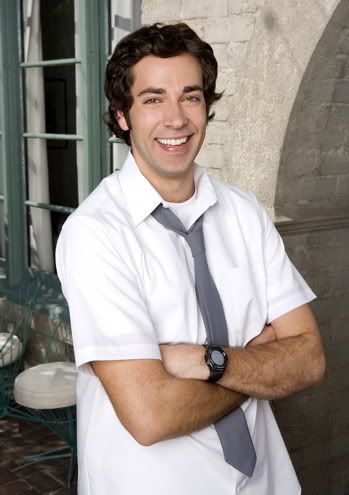
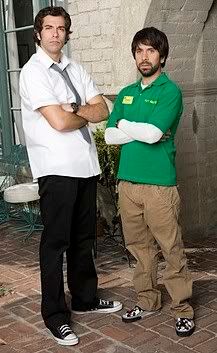
Trailer Park: Zachary Levi

Filed under: Columns,Trailer Park — admin @ 12:02 am

By Christopher Stipp

Archives? Right Here”¦

Instead of manning-up and actually going the emotionally hard route of being outrightly rejected by publishers, I’m rejecting them first and allowing you to give my entire book a preview, let you read the whole thing or, if you like, download the whole damn thing at no cost. Download and read my first book “Thank You, Goodnight” for FREE.

It was an interview like this that reinforced the sense that there is something to learn about the human condition as it pertains to being able to talk to someone whose face was plastered on thousands of hotel keys, billboards and is on television on an hourly basis as his network hangs their dollars making sure everyone gets familiar with a man named Chuck.

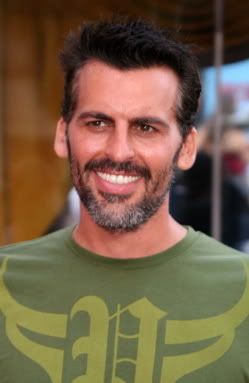
Zachary Levi, as some of you may remember, was interviewed by me years ago when he co-starred alongside Martin Lawrence in BIG MOMMA’S HOUSE 2. The film itself was inconsequential compared to what Zach had to say about his work on the film and how he was going forward with his career.

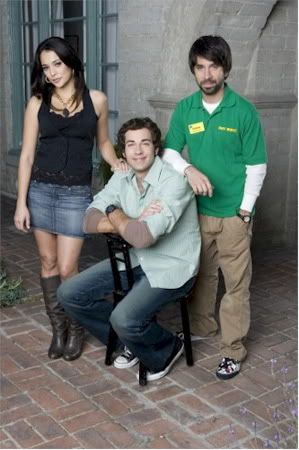
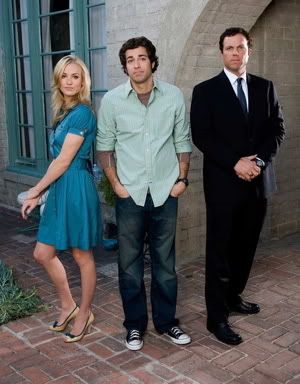
Things couldn’t have gone better for the man who was looking to continue his career in front of camera as he landed the title role in one of the biggest fall productions for this year and had the pilot directed by kinetic action director extraordinaire, McG. I wish I could have had the opportunity to talk to Zach during the San Diego Comic-Con this past summer about what, at that point, had been a slowly building monster. Unfortunately, and I realize without the video to prove it I can’t be taken at my word, it was exactly at the Comic-Con when I saw the frenzy that was mounting; Zach, his co-star Joshua Gomez and resident hot blonde of the series, Yvonne Strzechowski, were flanked on all sides by a phalanx of television and press as soon as they entered the press room mere moments before they were slated to appear in another room to promote the show to the public. It was honestly a madhouse of unnatural proportions but all three stars of CHUCK were alive with pleasure as they fielded question after question with bombastic aplomb. It certainly wasn’t the typical pensive, quiet press interaction you saw most of the other productions that were to be had that weekend; there was real excitement and whether you you were there or not there was no denying that Zach seemed pleased to talk about the show.

Since we spoke a second time he has starred in a couple of lower-budget productions compared to his stint on ABC’s LESS THAN PERFECT and then has exploded in an excellent independent feature, SPIRAL. Zach can now be seen on CHUCK every Monday night, 8/7c on NBC.


Christopher Stipp: This is Chris.

ZACHARY LEVI: What’s up, Christopher? Zachery Levi calling.

CS: It’s about time. I’m telling you I had to wait more times to talk to you since your appearance at the Comic-Con…I saw the show before going there and I honestly really dug it; I think it’s really funny. The thing was I did not expect the kind of fanfare that was there at Comic-Con.

LEVI: Dude, it was insane.

CS: Literally, it was just a whirlwind. You came into the press room, you sat for I don’t know how long for your other press stuff and then bam, bam, bam, you were on your way. How was that? You and Josh just seemed to be in a blizzard ““ a flury.

LEVI: I know. It was so crazy. I almost cried, man.

First, we got there and I’m looking at rebel troops, like crossing the crosswalk and it was obvious we were certainly in the right place and then we go in and do a little press stuff and I saw you and then it was “We gotta go, We gotta go…”

In the screening room ““ I had no idea how many were going to be there – I’m sitting in the back for the last 15 minutes of the screening and the audience had been enjoying it throughout the whole thing. So we just get the last 15 minutes of them just cheering, applauding, laughing. And I was like…I just can’t believe it.

It took a month to shoot the pilot and this was the first time it was being shown and it was not just a general audience…it was to our core audience ““ the comic book video game generation. People like me, really. Then the show comes to an end and they announce that we were going to take the stage and we get this standing ovation, 2,000 people give a standing ovation. I just couldn’t believe it. It just goes down in your own personal record book as being one of coolest things you’ve ever experienced. I hope the show lasts and that we keep providing the level of entertainment and that at next year’s Comic Con we can fill the big hall and just keep pumping out the stuff that they want to watch and that we want to watch and hopefully that you want to watch. It was just crazy, man.

CS: I saw people wearing those CHUCK shirts all weekend after that. I was flying home to Phoenix and I saw a couple people walking around, and I don’t know what the shirt said exactly…

LEVI: Oh, ChucksSecret.com or something like that?

CS: Yes, those were the ones. Then your face was on a bunch of hotel keys…

LEVI: Dude, how insane was that??? I had friends texting me “Holy shit!!!!! Your face is on my room key to my hotel room!”

CS: I have to know. What kind of Fourth Wall did that break for you, if at all? I would imagine, with all the things that had your face on it…it had to feel slightly Bizarro World at that moment.

LEVI: Oh that”¦straight up crazy Bizarro World. Another buddy of mine, an actor buddy who’s on Reno 911, I get a text from him. He took a picture with his phone and sends it to me…What am I doing on this thing, he says. And then, talk about the perfect ice breaker, all the parties going on.

If I could only just stayed in San Diego. We had to go to Comic-Con and then come home and go work. We couldn’t even stay that night. We had to shoot that night. If I could have stayed in San Diego all I had to do was just walk up to people and say “Hey, yeah, it’s me, the card key, it’s me”¦” it was ridiculous.

CS: Obviously the promotions on NBC have been just as crazy.

LEVI: The promotions have been so incredible and I am so grateful for them. Because I know what it’s like not to have any promotion. Working on a show that’s just thrown in there and I know the networks and studios have just so much money that they can spend on promotions for their entire season and I feel very fortunate and very blessed to be on the receiving end of all of that. They are pumping us like crazy.

I just saw a cardboard standee that’s going in all the AMC theaters and it’s going to be Chuck on popcorn bags. Dude, it’s ridiculous. I don’t know what to say. I don’t know what it going to be like to go in to an AMC theater and see my face on a popcorn bag.

CS: You’ve got to be honest with me ““ are you bringing that stuff home…possibly putting it up in the bedroom…telling the ladies, “Oh that? Yeah, that’s me.”

LEVI: Yeah, right!

You know what’s funny? I always, in the back of my mind, said maybe I should hold on to one of these things for posterity but I never ended up doing it. Family and friends always want one but I just kind of feel like, I don’t know, it would just get lost somewhere. What’s the point? Life is too short. I remember. I remember I was a cardboard standee. If somebody else wants to collect it”¦.rock and roll, go for it but I don’t know.

CS: How’s the production going?

LEVI: The production has been great. I mean you know they are long, long days. It a really ambitious show. What we accomplished in a month, we are trying to accomplish in 8 days

CS: Really…

LEVI: Really tough. Really tough. But I think it’s doable but it’s just a matter of everybody following the rhythm. We have new people on the crew and now we got writers that are trying to write episodes that we can shoot that day. We started back with the first episodes that had 80 scenes ““ that’s a lot of set ups and then they started to trend down and made it about 50-60. We’re trying to get it to a place where we can do it in 8 days. But what we’re hoping is that we don’t have to trim it down too much and that we can, show Warner Bros. and NBC when we start airing that we are a contender and then hopefully they’ll have more faith and put more money in the production side of it and give us a full functioning second unit because that’s what we really need.

It’s not a matter of more days on the first unit schedule and it’s not a matter of making it smaller in scope because if you do that you are not giving the show justice that should be done. The show is an action comedy ““ you need to have the action. You need to have the car explosions and the gun fights and the cool stunts and that stuff and you need to have the time with the characters to have the relationships and the comedy becomes the spy stuff as well and it’s an ambitious show. HEROES is an ambitious show as well and they have a fully functioning second unit that is shooting the whole time the first unit is shooting. So they are able to pull it off. That’s they way it should be.

CS: Right. As the show is progressing, like you said, a month’s shoot for this one show ““ great premise great beginning, middle and end, now you have your second episode and you physically could not top it but what do you think in the back of your head that in the writer’s room that you hope keeps going as the episodes progress? Is there anything that you say that this is an aspect of the character that you want to retain and not put off to the side because there is only so much that can fit in there?

LEVI: No, no, like week after week I was just looking at the pilot and seeing what McG did and it was just, the effects, everything, like you said it took a month to do but you can’t do that in 8 days, so what’s the one core thing that the writers and obviously the directors as they move along that they want to retain that’s not lost in any of that?

Well, I think in a perfect world, you want to retain it all.

I think television is coming into a place where people are expecting more but studios are still expecting it to be shot in an 8 day typical hour long fashion, and it’s not…It’s not realistic.

To me it’s not and I understand that studios need to be frugal. They have a lot of shows and they don’t know what’s going to pop and what’s going to not and I also feel good about that they will allocate funds appropriately. Like, last year NBC had STUDIO 60 and HEROES and they put most of their money in STUDIO 60 and mid-way through the season they said STUDIO 60 is not performing and HEROES is so let’s invert these scales if you will. So what I’m hoping is that we start airing some episodes, they’ll see the promise in our show, and will want to give us more to stay on track with the initial vision of the show. In the meantime, sacrifice as little as possible. And by little I mean by still keeping some great stunts in every episode, great relationships, great methodology and maybe we are losing a few setups, maybe more of a technical thing than anything and this stuff of “fake it til you make it” kind of thing until you air it.

Because right now we are on episode three but we are still missing shots from episode one. So in order to get it done the way we want to get it done and get everything done that we want to get done, we just kind of put off scenes until later. We just finished episode one and we still need a couple scenes from episode two and started episode four today and we saw episode three but I’m fine”¦I’m fine going back”¦and as long as we can keep the integrity and vision of the show we started out to make and not be watered down lower budget, less time version of that. I’d rather work longer hours and make a great show than work less hours and produce a show that’s like it’s another television show. You know?

CS: How are you handling the new hours?

LEVI: Oh man. Well, I’ll tell you this: everyone is working 12 hour days. To give you an idea”¦.like last Friday we were shooting night exteriors and finished shooting at 6:00 in the morning ““ we’re working over schedules, working the night shift. And then last night we’re out there at 6 in the morning and call time today is 6 pm and so we’ll probably wrap again around 6 in the morning. It’s a far cry where you might work 30 hours in a week and all of that was real hard work…(Laughs) You just got to show up and hang out and have fun all day long and make jokes with your friends and have custom omelets made and a live audience. It was so cush.

But it’s much more fulfilling to be in a drama, especially on the lead. I get to run around with guns. I don’t get to shoot the guns which I am a little bitter about but we can get to that later”¦. But there’s gun fights, and car chases and helicopters. It’s just everything I ever dreamed about when I was a kid. Just playing around and playing war and throwing dirt wads at your buddies like they are hand grenades. That just what you hope you get to do. And now I get to live that dream and the show gets to be funny. I’m young, I’m single, I don’t have any pets. This is the time to be doing it.

CS: Absolutely. I know the answer will be “Great!” but, really, talk to me about how you and Joshua Gomez have come together and made the chemistry work between the two of you because I will honestly say, and I wouldn’t b.s. you if I didn’t believe it, that these two guys have a good relationship with one another; best friends, in a way. You believe it”¦.you know?

LEVI: Thank you. It’s really a big blessing. I mean Josh is so incredible because I feel I’ve known the guy forever.

We sat down and for all those times that my mom or anyone told me do not play video games, guess the work paid off. Because Josh and I get to play gamers on the show and we are both huge gamers in real life so immediately we have this kind of jumping off point. We just clicked immediately. Talking about all our favorite games from like Atari all the way to the present”¦.which one Super Mario Brothers franchise was superior and why weren’t they OK. My favorite first person shooters games. Neither one of us is into sports games all that much. We like shoot “˜em ups and stuff like that. We just got BioShock and Josh just did some voice work on that, he’s done a lot of voice work on games. I got my Xbox in my dressing room ““ he’s got his Xbox in his dressing room. We just don’t have a lot of time to play anymore because we’re working so much but we’re still gamers to the core and the first day we pretty much sat down and we knew that we had good acting chemistry. I got cast and they had me come in and read with the guys auditioning for his role and he was just ““ all the guys were great ““ but he was just the funniest and we definitely had the best rapport. And then they had us sit down and have lunch one day just to try and get to know one another and I think he turned to me at one point and said, “So are you a gamer?” Because we played them in the show and I turned on him so quick, like “Am I a gamer? Yes, I am, thank you.” And he just said “So am I” and we just talked about our favorite video games.

And he is, honestly, just one of the sweetest, funniest, nicest guys you will ever meet in your life. He is the salt of the earth and we just have fun everyday. Everyday we get to work with each other we just have fun. It can be complete utter nonsense. Like little inside jokes with friends you’ve know for 10 years, we’ve known each other for 10 weeks. Which is good. And we both see what a huge blessing that this is. We just get to play video games for a living in our characters and get wrapped up in espionage ““ it’s just so much fun. And, so thank you. I’m glad that it works on the screen and I thank God that he was able to bring Josh and I together because I felt it in my personal life and went right to screen. It’s just good to know.

CS: Absolutely. What the two of you have together is obviously the comedy, is it different now ““ there is no audience, there is no closed set, you guys are free wheeling in front of the camera having to be funny, is there retake, are you used to doing it again and again making it just as funny on the 1st take the 2nd take the 3rd take?

LEVI: You know what’s interesting is it’s tougher to gauge what’s funny.

Laughter is a good gauge to tell if a joke landed or not and everyone has to be quiet in front of the monitors and cameras and what not, but I think Josh and I have a pretty good idea of what’s funny. We talk to one another and say, that was really funny or whatever. There’s a little more leniency and they definitely support us in our adlibbing and our characters probably get to do the most together so we’ll constantly change it up. We, of course, get what’s scripted but after that we just have a field day and we’ll throw something in there and say, “Have you tried this or that?”

I try to not tell them, I just like to surprise everybody by the monitors. I’d rather not tell them I’m going to do this. I’d rather say “Hey Josh, let’s do this” and of course after the take and you hear people laughing then you know you did something good.

CS: Then, I’ve got to know ““ the Vicki Vale BATMAN reference ““ it makes me laugh every time I see that part, was that scripted?

LEVI: Well, the actual Vicki Vale song part?

CS: Right.

LEVI: Well, that part was scripted but the phone drop was not.

The way it was scripted was that – stop the presses was that the Vicki Vale thing and I look up and I see her and I quickly put the phone down but I thought, I don’t know, I love physical comedy and I love slapstick not too slapsticky but some jokes and some physicality.

So the first take, I just thought, “Well, I’ll just let the phone drop and then play it off.” She liked it but then we went back and forth ““ should we put it in and we go back to the take where I didn’t drop it and back and forth and then they decided to put it in and now they used it in the Fall trailers. It was a fun moment.

There’s a lot of stuff in the pilot that we made up ““ that was not originally in it. When Yvonne says “You geeks are good” that was supposed to end of that scene but then I was like, “Josh, let’s do this thing where we both look at each other.”

You know we’re both nerds playing like we are not the Geek Squad but we’re trying to be but Best Buy wouldn’t do it ““ we tried to get that cleared but Best Buy wouldn’t do it which I find kind of ridiculous because it’s such a great show…but at the end of the day we had to create our own world and we don’t have some corporate guys breathing down our necks making sure we’re not doing anything outside of what they want. So it’s just little moments thoughout making it, layering it and making it more of our own. I’m free to discover my character and play and make those moments and I’m glad they end up working.

So in answer to your question, Vicki Vale was partly scripted and part improv. One of my favorite moments as well.

CS: And you are also now with Adam Baldwin who some would say he peaked with SERENITY but I would say MY BODYGUARD.

LEVI: It’s funny, it’s kind of a generational thing ““ I’ve never seen My Body Guard.

CS: Are you serious?

LEVI: I’m 26.

CS: That’d be about right.

LEVI: When did it come out?

CS: Let’s see, I’m 32 and I barely remember seeing it on HBO.

LEVI: I saw a lot of movies when I was a little tiny kid. My parents had HBO but for some reason I never saw MY BODYGUARD and I’ve been meaning to rent it since working with Adam but I haven’t yet. Adam Baldwin is one of the greatest guys I’ve ever worked with, he is so talented. He’s had one of those careers you can only hope for as an actor. He’s never gotten to the A list, break out huge, but he’s worked a lot. Been able to support his wife and three kids. His daughter is going off to college. It’s crazy. He’s 35″¦.40 whatever. He is the most solid dude in the world. Papa Bear. Because every one else in the show is generation X, or whatever. And Baldwin, he’s the rock. He’s they guy who’s been around the block a couple of times and he’s so grounded, he’s even tempered, he loves being at work. All the things you look for in a co-worker. And he’s really supportive.

He’s been working before I was born and he supports me. He is constantly with you, using words like you’re the leader, lets do this action and it means so much to me. Adam Baldwin deferring to me that way, it is so akward. This guy has been working so long. I’ve been working a little bit but not nearly as long as him. But it means a lot. It really inspires a lot of confidence in me and I just hope I can get to work everyday and really appreciate it. This crew works so hard and long hours and into the night. I just hope they all know that it’s all for the best. I really believe that if we continue to work hard and continue to put these hard hours in now that once this show airs and we can find our audience and it will all be worth it. And we’ll get the extra money for the stuff that we need in the budget whether it be extra days, second unit, better equipment and we can give pay raises for the second season, third season, what have you. But I look at the show as a big family because I spend more time with them than with my friends and I want people to feel taken care of and when you put in hard work you should be taken care of.

CS: Well I don’t want to take up any more of your time…I know you have to run but I have just one last question to ask ““ do you feel there is weight on your shoulders? Obviously, all the promos have been about you, all the things have been just about you, you, you. Do you feel any of that pressure that you are the center of attention?

LEVI: I never once felt like it was a weight or a burden. I always felt like what an amazing opportunity. What a great gift. I’ve been around people that have that opportunity and squander it. You know, people that treat crew badly or less than what they deserve and I feel like when you are given that place you are given this great gift to be able to really just love and appreciate and support your cast and your crew and it’s incredible how far it goes when your crew and your cast feels like you the lead or the star or whatever that you care about them or that you take the time to just say “Good Morning” even, it’s sad how many people don’t do that and how detrimental it is to a show and
I have been able to kind of check that out from the sidelines and see how people have done well with it or not done well with it but always look forward to the opportunity to be given the opportunity to do well with it because I see the beauty and the benefit of it.

And the promos and stuff, to be able to go and tell how much I love my cast and crew, I look at that as such a great opportunity and I don’t know”¦with all the talk shows and stuff starts happening I guess that can get a little hairy at times”¦they are always looking for funny antidotes. I don’t think of myself as an antidotal type person. I have this really weird habit of forgetting all the funny stores that happened in my life. So I don’t know how that will all turn out”¦I hope well.

But I don’t look at it like a weight or a burden. I look at it as the greatest gift I’ve ever been given in this business. I will always appreciate it. Even if I’m having a bad day. Put it in perspective. I mean, I’m I get to be CHUCK in a show called CHUCK and shoot at Warner Bros. ““ historic Warner Bros. And our sound stage ““ a CASABLANCA stage. I’m saying that Humprey “F’ing” Bogart walked around on this stage…To be able to work with such incredible actors and an incredible cast, writers, and directors…You dream of being the title character, you dream to be in a show where you get to be funny and action and drama and romance. So being a weight, no. Do I certainly put it in perspective and see the possibility and great responsibility that is? Absolutely.

Quick Stop Thingamabobs: 9/24/2007

Filed under: Columns,Thingamabobs — UncaScroogeMcD @ 12:01 am

thingamabobs.jpg

The web. It’s a big place, full of plenty of distractions ““ some funny, some informative, some ludicrous, some disturbing, some inane, some profound. Each and every weekday, we present links to a few of our favorite finds”¦

————————————————

  • Okay, consider me both impressed and freaked out… (Thingamabob)

Have a THINGAMABOB? Send it in!

##

September 22, 2007

Cabin Fever #03: Where’s The Snooze Button

Filed under: Cabin Fever — UncaScroogeMcD @ 1:35 pm

cabinfeverheader.png

Oh no! Just when you thought it was safe to hang out at the Quick Stop…

cabin.jpgCabin Fever (hosted by the twisted souls Brian Fitzpatrick and Aaron Poole) is the result of having too much time on your hands and access to your local community radio station.

Over the course of an hour, they manage to trawl the depths of good taste, plus throw some music in. How much more could you want from a podcast?… Quality? Oh… we didn’t think of that.

Enjoy! And we hope our cross Atlantic friends can understand the Irish accent 😉

Hugs and Kisses,
Aaron P. + Rev. Fitzy

linesm.gif

CABIN FEVER #03: Where’s The Snooze Button – Show Three is here. We usually record our show on Sunday nights but we thought we’d try getting up at 8:30am on a Saturday morning and go to the station”¦ It seemed like a good idea at the time… This week we have more of the same, a plethora of unrelated news and our unhinged opinions on them. Expect sex with gloves, our love of all things Affleck, and a going away party for Jose Mourinho. Pardon Aaron’s stuffed nose though. He’s still moving house and is allergic to the dust.

[CONTENT WARNING]: Explicit contents! We say every naughty word you can think of. You have been warned!

DOWNLOAD: (right click to save)
Episode #03 (MP3 format)

[audio:http://traffic.libsyn.com/cabinfever/cabin_fever_03.mp3]

SUBSCRIBE
Subscribe to this Podcast via iTunes

Got something to say? E-mail Aaron & Brian at the Cabin Fever mailbag.

line.gif

CLICK HERE FOR THE CABIN FEVER ARCHIVES

line.gif

##

September 21, 2007

1 Quick Question: The *Disappearing* INDIANA JONES AICN Story

Filed under: 10 Quick Questions,Columns,Trailer Park — admin @ 4:02 am

10quickquestions.jpg

indyteaser.jpgBy Christopher Stipp

Archives? Right Here”¦

Hey everyone.

A) Go enjoy the Oded Fehr piece that’s gone live. Oded was just an eloquent actor who knows how to play his roles with equal parts seriousness and bombast. Check out RESIDENT EVIL: EXTINCTION if zombies are your thing.

B) I hate when things disappear; makes you wonder what happened and it makes me want to get to the bottom of things real quick like a crazed weasel on crystal.

The thing that bugs me most about this situation is that AICN is usually pro-rumor and pro-high-level secret outing and usually doesn’t give a fuck unless they’re served legal papers dictating otherwise. I know that’s an oversimplification of their rumor m.o. but what triggered this note that you’re reading is that the story they published on Tuesday, September the 18th of this week was utterly fascinating just due to the sheer unbelievability of the source. (Praise the Lord of Google cache) It wasn’t some agent, it wasn’t some suit looking to piss off those involved in the production and it really wasn’t someone with a grudge: It was a leak supplied by a very happy, very joyous actor who made it big, relatively speaking, and wanted to share with his hometown newspaper. The author of the story is a journalist by the name of James Coburn who writes for the Edmond Sun.

This was a story in the newspaper. (Praise the Lord two times for Google cache)

Now, for those keeping score and want to add things up the Internets maths go like this: AICN posts link and story to Edmond Sun, AICN allows people to comment about the story, comments last from 4:42 am on the 18th until about 5:24 am when the last post is allowed to go up and, like a burning mist, it all goes away. Away from the front page, away from their archives and it goes away without so much of one of those “UPDATE” notices about what some lawyer has told them about the validity or legality of their information.

I’d usually let things lie about here. I could almost not care what some low-level actor had to say (although, as you will see below) but what made me REALLY curious was that that the Edmond Sun no longer has an existence of the story on their site; oddly, they have some User Name and Password feature that’s essentially blocking all access to the page. But, like I said above, thanks be to God for a cache screen shot. Regardless, here’s the article in question so *SPOILER ALERT* for those who tread into sticky territory and here’s to me for wondering what happened. I’m waiting to hear from the journalist in question as to why the story has evaporated from their site.

Oddly, or more curiously, the INDIANA JONES story is the number two search result when you type in EDMOND SUN into Google. Stay tuned for more information. And for those who want to start talking Non-Disclosure Agreements, I’d like to introduce you to the 1st Amendment; it’s the spillee – not the reporter – who’s up to their neck in trouble.

Enjoy!

New Indiana Jones film has Edmond actor

James Coburn
The Edmond Sun
EDMOND – Tyler Nelson’s dancing talent has landed him a part in “Indiana Jones and the Kingdom of the Crystal Skull.”

The fourth film in the Indiana Jones saga will once again star Harrison Ford and is produced and directed by Steven Spielberg and George Lucas. Release of the film is expected during the week of Memorial Day, according to Lucasfilm.

The 23-year-old actor and dancer is the son of Theresa and Dr. David Nelson of Edmond. He now lives in Los Angeles and also appears in an upcoming movie with Brad Pitt.

“He has demonstrated that he is tenacious once setting a goal. He loves the process of mastering a new talent,” Theresa Nelson said.

What Tyler understands about the Indiana Jones movie is based on his own scenes that were filmed during the first week of September. Tyler plays a Russian soldier. Only the lead actors were ever given scripts, so Tyler still doesn’t know the entire plot.

“Apparently, the Soviet Army was searching for a crucifix skull in the jungles of South America and Indiana Jones was searching, as well,” Tyler said.

The Russian Army tries blackmailing Indiana Jones to help them find the crystal skull by “threatening to kill Karen, his old flame from the Lost Ark.”

Actress Karen Allen of “Raiders of the Lost Ark” fame returns to play Jones’ love interest Marion Ravenwood. Cate Blanchett was cast as the Russian interrogator.

“We took Indiana Jones hostage and managed to find the skull,” Tyler said.

Afterward, Tyler and the other Russian soldiers rejoice in the jungle by wildly dancing and singing to Russian balalaika folk music beside a roaring campfire.

His ability to perform classical Russian dances landed him in the movie. Professional opportunities opened for Nelson after graduating from Russia’s Kirov Academy and studying with the Bolshoi Ballet in Moscow a few years ago.

“They were filming us outside of a tent dancing and then turned the camera inside the tent,” Tyler explained his scene. “I saw Harrison Ford strapped in a chair being interrogated. I started to gather they were holding this big crystal-looking thing in the tent and heard someone mention a crucifix skull.”

In the movie, Indiana actor Shia LaBeouf plays Indiana Jones‘ son. Jones learns of this and falls in love with Ravenwood again, Tyler said.

“After we did the first take, Steven Spielberg came up to us and shook our hands and said that we were great,” Tyler said.

Spielberg’s smile and easygoing personality puts actors at ease.

“He’s subtly suggesting things so actors can do it on their own and not just follow blindly,” Tyler said.

Spielberg’s direction style is in contrast to the more aggressive director, David Fincher, with whom Tyler worked with on the production set of “The Curious Case of Benjamin Button.”

The movie starring Brad Pitt and Cate Blanchett is set to be released next spring or summer. Pitt’s character ages backward in the film.

Tyler shares a small scene with Pitt in the film by playing a theater usher.

“If I was rushing, he would hold me back,” Nelson said. “I waited for signals from him.”

Blanchett was a perfectionist while Pitt spent his time reading between filming, Tyler said. A skilled film actor, Pitt is keenly aware of camera lighting and timing.

“I learned a lot being next to him and seeing how observant he was about his movements,” Tyler said.

Theresa said she’s confident her son will accomplish whatever goal he sets for himself.

“Tyler is living his dream, enjoying every day what comes his way because of his planned and well-executed preparation,” she said.

TO LEARN MORE about Edmond’s Tyler Nelson, go to http://en.wikipedia.org/wiki/Tyler_Nelson.

Weekend Shopping Guide 9/21/07: Bucket Of Truth

Filed under: Shopping Guides — UncaScroogeMcD @ 1:51 am

weekendshopping.jpg

The weekend’s here. You’ve just been paid, and it’s burning a hole in your pocket. What’s a pop culture geek to do? In hopes of steering you in the right direction to blow some of that hard-earned cash, it’s time for the Quick Stop Weekend Shopping Guide – your spotlight on the things you didn’t even know you wanted…

When the boss writes a book, you’d better believe I’d have to at least mention its release. Lucky for me and my conscience, I actually dug the contents of My Boring-Ass Life: The Uncomfortable Candid Diary Of Kevin Smith (Titan Books, $14.95). The book collects over a year-and-a-half’s worth of Smith’s blog postings at SilentBobSpeaks.com, including some exclusive entries. Why not get a signed copy over at Jay & Silent Bob’s Secret Stash?

blankguide.gif

While the members of the troupe have planted themselves firmly in the modern comedy scene, the little TV show that helped launch an improv comedy revolution on both coasts is finally getting its second season released on DVD. Of course I speak of Comedy Central’s Upright Citizen’s Brigade (Paramount, Not Rated, DVD-$26.99 SRP). The 2-disc set features all 10 episodes, plus live audio commentary recorded at the UCB Theater, regular audio commentary, an audience Q&A, deleted scenes, and early live performances.

blankguide.gif

Sublime doesn’t even begin to describe the exquisite chemistry between William Shatner and James Spader, both still going strong in the 3rd season of Boston Legal (Fox, Not Rated, DVD-$59.98 SRP). Add Candice Bergen, Rene Auberjonois, John Larroquette, and the underappreciated Gary Anthony Williams to the mix, and you have the best dramedy to come down the pike in ages. The 7-disc set features all 24 episodes, plus a pair of featurettes.

blankguide.gif

While it’s unfortunate that the mega-set release of Quentin Tarantino and Robert Rodriguez’s experimental Grindhouse isn’t being offered in its original form in the near future (due, most likely, to lackluster box office), at least we get a 2-disc extended and unrated edition of Tarantino’s segment Death Proof (Genius, Not Rated, DVD-$29.95 SRP) – which just so happens to my favorite of the two. Maybe it’s just because it stars Kurt Russell as a sociopathic stuntman who picks the wrong ladies to stalk one fateful night, and the result is a balls-to-the-wall car chase and stunt spectacular that plays like a mashup of Pulp Fiction and Duel. The 2-disc edition features behind-the-scenes featurettes, spotlights on Kurt Russell and the stunt work, trailers, and more.

blankguide.gif

Greed must be very, very good, because we’ve now got a 20th anniversary edition of Oliver Stone’s monument to the 80’s decade of avarice, Wall Street (Fox, Not Rated, DVD-$19.98 SRP). The 2-disc set features an audio commentary from Stone, an in-depth documentary, featurettes, deleted scenes, and more.

blankguide.gif

They’re not up to the same fun standards as the songs from the earlier seasons, but the 3rd collection of tunes from The Simpsons – Testify (Shout! Factory, $18.97 SRP) – contains a fair number of toe-tappers from the last 9 seasons. At the very least, it’s worth it for the inclusion of 4 previously unaired tracks, and Ricky Gervais singing “Lady”.

blankguide.gif

In these difficult times, it’s comforting to know that we can all own our own copy of The Ultimate Counterterrorist Home Companion (Santa Monica Press, $12.95 SRP). Any guide that bears the subtitle “Six Incapacitating Holds Involving A Spatula And Other Ways To Protect Your Family” is an essential addition to any library.

blankguide.gif

What better way to ring in the fall hunting season than with a deluxe edition of that classic male bonding on the river flick, Deliverance (Warner Bros., Rated R, DVD-$19.97 SRP). The new edition features a 4-part anniversary documentary with brand new cast & crew interviews, an audio commentary from director John Boorman, a vintage featurette, and the original theatrical trailer.

blankguide.gif

For 58 episodes between 1969 to 1971, Johnny Cash hosted a wonderfully eclectic number of musical guests on the titular Johnny Cash Show (Sony Legacy, Not Rated, DVD-$39.98 SRP) – a 2-disc best of collection of which is now available. With musical acts including Bob Dylan, Waylon Jennings, CCR, James Taylor, Pete Seegar, Derek and the Dominos, Ray Charles, Carl Perkins, Roy Orbison, and more – including Cash himself – it’s a must-have time capsule.

blankguide.gif

Reel Talent: First Films By Legendary Directors (Fox, Not Rated, DVD-$19.98 SRP) is pretty self-explanatory, featuring the first films – mostly student films – of filmmakers including George Lucas, Stephen Sommers, Robert Zemeckis, Richard Kelly, Kevin Reynolds, Richard Bare, Jon Turteltaub, James Foley, and Shawn Levy. Bonus materials include interviews with Lucas, Zemeckis, and Bare.

blankguide.gif

Buy The Ticket, Take The Ride: Hunter S. Thompson On Film (Starz, Not Rated, DVD-$19.98 SRP) is a star-studded documentary celebrating the life and work of the original gonzo journalist, featuring interviews with Johnny Depp, John Cusack, Tom Wolfe, Ed Bradley, Gary Busey, Sean Penn, and many more.

blankguide.gif

Ah, Silver Spoons (Sony, Not Rated, DVD-$29.95 SRP) – back when Rick Schroder was Ricky Schroder (and before he became all crazy conservative), he was every kid’s wish-fulfillment fantasy as the son of millionaire toy mogul Edward Stratton III (Joel Higgins), who had an assistant played by the gorgeous Erin Gray. Flashback to the 80’s, when money was cuddly and fun, and every kid wanted to be a preppy kid with a miniature train going through their living room. The 3-disc first season set features all 22 episodes, but nary an audio commentary (not even on the MR. T episode!).

blankguide.gif

The air begins to chill, the leaves begin to fall, and the nights lengthen as we march towards one of my favorite holidays of the year – Halloween. Why not begin planning your macabre film viewing festivities by pocking up the 7-film Vincent Price: MGM Scream Legends Collection (MGM, Not Rated, DVD-$39.98 SRP). Contained in the set are Tales Of Terror, Twice Told Tales, Theater Of Blood, Madhouse, Witchfinder general, The Abominable Dr. Phibes, and Dr. Phibes Rides Again!. There’s a bonus “disc of horrors” packed with featurettes and rarities.

blankguide.gif

While that’s a hefty bunch of Halloween titles, it’s not nearly enough to fill a month, so you might as well pick up the 8-flick Roger Corman Collection (MGM, Not Rated, DVD-$39.98 SRP), which sports Gas-s-s-s!, The Trip, The Young Racers, The Wild Angels, Bloody Mama, A Bucket Of Blood, The Premature Burial, and X: The Man With The X-Ray Eyes. My only regret is that MGM has gone with those loathsome double-sided discs.

blankguide.gif

And before we drop the Halloween thing this week, allow me to clue you in to the release of more chucks of glorious cinematic effluence as part of MGM’s Midnite Movies Double Feature Collection – The Beast Within/The Bat People & Tales From The Crypt/Vault Of Horror (MGM, Not Rated, DVD-$14.98 SRP each).

blankguide.gif

Take the Producers arc of Curb Your Enthusiasm – in which Larry was cast as Max Bialystock on Broadway – and condense it into a feature film mockumentary starring Jeff Goldblum (as himself) setting his sights on what looks to be an increasingly disastrous out-of-town production of The Music Man, and you have Pittsburgh (Starz, Not Rated, DVD-$26.98 SRP). Is it fun? Yes, it is. Bonus features include an audio commentary, deleted scenes, and a trailer.

blankguide.gif

Does Hong Kong action fit into your plans for the weekend a little more? How about a flick that features both Sammo Hung and Michael Biehn? What is the flick? Dragon Heat (Genius, Not Rated, DVD-$19.95 SRP). How can you go wrong with that?

blankguide.gif

Join inquisitive glutton for punishment Mike Rowe on 24 adventures in another man’s shoes in the first collection of the Discovery Channel’s Dirty Jobs (Image, Not Rated, DVD-$19.99 SRP). The 2-disc set also features the “100th Dirty Job Special”, packed with clips and bloopers.

blankguide.gif

It’s unfortunate to visit an old friend that you just can’t seem to relate to anymore. That’s the feeling I get when I watch the episodes features in the 5th volume of Family Guy (Fox, Not Rated, DVD-$39.98 SRP). I dug the show’s original run something fierce, but since it made its comeback a few years back, it seems the spark is gone. I don’t know if it was due to the staff they lost when the original shut down, but the jokes seem tired, and the stories flat. The 3-disc set features 13 episodes, plus audio commentaries, a trio of animatics with optional commentary, deleted scenes, optional censored audio, and featurettes.

blankguide.gif

While it’s not the original Criterion release, the new 2-disc anniversary edition of Robocop (MGM/UA, Not Rated, DVD-$22.98 SRP) just about replaces the memory of it – particularly with sparkling new transfers of both the original theatrical release and the extended cut. The 2-disc set is no slough in the bonus department, either, featuring an audio commentary, 6 behind-the-scenes and retrospective featurettes, storyboards, a TV spot, the theatrical trailer, and more.

blankguide.gif

Bored this weekend? A bit sadistic? Pick up a copy of Pete Firman’s Tricks To Freak Out Your Friends (Chicago Review Press, $14.95 SRP). The title is self-explanatory, and the tricks are sure to make many a friend think twice about inviting you over again.

blankguide.gif

Elvis fans will probably want to snag a copy of Elvis: Viva Las Vegas (RCA, $ SRP), a collection of over a dozen newly remastered live tracks from The King.

blankguide.gif

Soon we shall have ever Hanna-Barbera cartoon series on DVD – and to prove my point, you can now get the complete Josie and the Pussycats (Warner Bros., Not Rated, DVD-$26.98 SRP). The sole bonus feature is a much-deserved profile of the late Dan DeCarlo.

blankguide.gif

Brothers And Sisters (Buena Vista, Not Rated, DVD-$59.99 SRP) is one of those shows that premieres with a concept that turns out to be too specific, but eventually relaxes and let’s the organic chemistry between the cast members dictate where things should go. Such is the case with the story of the Walker family – a sprawling bunch of conflicting personalities who come together under matriarch Sally Field when their father passes away suddenly. The first season set features all 23 episodes, plus audio commentaries, deleted scenes, behind-the-scenes featurettes, bloopers, and the original pilot.

blankguide.gif

Just in time for her big screen Golden Age, Cate Blanchett’s original turn as the virgin queen Elizabeth (Universal, Rated R, DVD-$14.98 SRP) gets a re-release of its special edition, featuring an audio commentary, making-of featurettes, and a look at Elizabeth: The Golden Age.

blankguide.gif

Check another TV series off the list, as the 3rd volume of The Addams Family (MGM, Not Rated, DVD-$29.98 SRP) wraps up the run of that mysterious and ooky clan. The 3-disc set features all 21 episodes, plus audio commentary, trivia, and more.

blankguide.gif

The movie made little impact at the box office, but I’m sure the feature film adaptation of Neil Gaiman’s Stardust will be quite the cult hit on home video. It’s a visually rich flick, which makes perusing Stardust: The Visual Companion (Titan Books, $24.95 SRP) such a treat. Check it out.

blankguide.gif

The best way to describe Hex (Sony, Not Rated, DVD-$49.95 SRP) is the BBC’s take on Buffy, replete with Brit atmosphere, pacing, and storytelling pace. If you were to make Buffy into a boarding school student who becomes aware of the supernatural world around her, gains powers, and battles… Well, you know the story. Still, it’s a nice jaunt from across the pond, and worth checking out. The 3-disc set contains all 10 first season episodes, plus deleted scenes and a making-of featurette.

blankguide.gif

I think by the sixth season of Smallville (Warner Bros., Not Rated, DVD-$59.98 SRP), the producers began to realize that the whole “Clark isn’t Superman yet” thing was beginning to wear a little thin. However, instead of making the daring move – of moving the show to Metropolis and going for broke – they instead decided to keep bringing everyone and their brother in the superhero universe to small town Kansas. Way to push it, guys. The 6-disc set features all 22 episodes, plus unaired scenes, webisodes, featurettes, and more.

blankguide.gif

I’m not a fan by any stretch of the imagination, but my mother loves Ghost Whisperer (Paramount, Not Rated, DVD-$72.99 SRP). Don’t ask me why – I think it’s a saccharine heir to Touched By An Angel. Still, she loves it. The 6-disc second season set features all 22 episodes, plus behind-the-scenes featurettes, webisodes, and more.

blankguide.gif

The second season of Prison Break (Fox, Not Rated, DVD-$59.98 SRP) – considering the events of the first season’s finale – really didn’t have much to do with a prison. Instead, it found brothers Michael and Lincoln on the run after the big break out, leading a cadre of fellow prisoners on the run. The 6-disc box set features all 22 episodes, plus audio commentaries, featurettes, and a spotlight on the theme.

blankguide.gif

I don’t know about you, but for years after it ended, I wondered what Raj, Dwayne, Shirley, Dee, and Rerun were up to. Finally, the late 90’s answered the long-festering question What’s Happening Now? (Sony, Not Rated, DVD-$29.95 SRP) by reuniting the entire cast (sans mama). Hey – this is the series that gave us Rerun as TV pitchman Swami Stubbs. That, sirs, is gold. The 3-disc set features all 22 first season episodes.

blankguide.gif

Remember the good ol’ days when the governor of California was a mere action star, blasting his way across the screen in Commando (Fox, Rated R, DVD-$19.98 SRP) with the new special edition – featuring both the original theatrical and extended director’s cuts, an audio commentary, featurettes, deleted scenes, and more.

blankguide.gif

By the seventh season of Married With Children (Sony, Not Rated, DVD-$39.95 SRP), the once-risqué Bundy clan had become a sitcom cliché, with the introduction of a precocious kiddie to the cast. I guess it had to happen eventually. The 3-disc set features all 26 episodes, and not a single extra.

blankguide.gif

Not as refined and surprisingly, less well-written, the animated Legion Of Superheroes (Warner Bros., Not Rated, DVD-$14.98 SRP) is an attempt to cash in on the success of Teen Titans by bringing the futuristic superteam to the small screen. The first volume features 4 episodes, plus a featurette on translating the Legion from comic to cartoon.

blankguide.gif

I must be all triumphant sports movie-d out. The formulaic We Are Marshall (Warner Bros., Rated PG, DVD-$28.98 SRP) – which tells the true story of the rebuilding of the Marshall Football program after an air crash killed their entire team – didn’t even raise a blip on the gut-level, even though it pushed all those rah-rah buttons that everything from Hoosiers to Rudy have slapped us with in the resent past. Ah well, maybe I’ve just developed an immunity. Bonus features include a featurette on legendary coaches who overcame adversity, and the theatrical trailer.

blankguide.gif

All things must end, and so it has with the release of the 9th and final season of Everybody Loves Raymond (HBO, Not Rated, DVD-$44.98 SRP). The 4-disc set features all 16 episodes, plus 8 audio commentaries, deleted scenes, interviews, and bloopers.

blankguide.gif

If you’ve got that dancing on the ceiling feeling, then two brand new special editions should fulfill all your toe-tapping needs. Not only is there a brand new edition of Flashdance (Paramount, Rated R, DVD-$19.99 SRP), but a 30th anniversary edition of Saturday Night Fever (Paramount, Rated R, DVD-$19.99 SRP). Flashdance features 5 behind-the-scenes/retrospective featurettes and trailers, as well as a bonus CD with 6 tracks from the film. Fever features commentary with director John Badham, a 5-part documentary, a dance lesson, and more. Be a dancing fool this weekend.

blankguide.gif

If you want a sad example of executive interference in a franchise, look no further than the animated adaptation of Superman: Doomsday (Warner Bros., Rated PG-13, DVD-$19.98 SRP). Under the ignorant guidance of WB animation honcho Sander Schwartz (the Avi Arad of Warners), the Bruce Timm designed animated DC universe was dismantled in favor of stunt pictures like this, with lousy recasting of voices and a bastardized character design. Typical, and sad. Bonus features include a documentary on the whole Superman death and rebirth stunt, audio commentary, a featurette on the voice casting, and a look at the upcoming Justice League: New Frontier.

blankguide.gif

So there you have it… my humble suggestions for what to watch, listen to, play with, or waste money on this coming weekend. See ya next week…

-Ken Plume

##

Trailer Park: Oded Fehr

Filed under: Columns,Interviews,Trailer Park — admin @ 1:41 am

By Christopher Stipp

Archives? Right Here”¦

Instead of manning-up and actually going the emotionally hard route of being outrightly rejected by publishers, I’m rejecting them first and allowing you to give my entire book a preview, let you read the whole thing or, if you like, download the whole damn thing at no cost. Download and read my first book “Thank You, Goodnight” for FREE.

You can’t help but see it as a duality.

With Oded Fehr’s career in Hollywood working out in the exact opposite direction that most other actors build their resumes, his stints in THE MUMMY pictures thrusted him to the front of the line of big budget productions, Oded found himself being quickly established within the acting community. He took his notoriety and actually channeled it into smaller roles on television. This part is important to understand because from Presidio Med, Charmed and even UC: Undercover Oded two-stepped back into the thunderous actioneer, RESIDENT EVIL: APOCALYPSE without so much as missing a beat.

Too many times in this business you talk to people who are vocal about being film actors and nothing but or television actors that only sees television as a way into film. Oded, I think, doesn’t see things that way. As evidenced by his turn in Sleeper Cell on Showtime you can see Oded deliver a tightly packed performance that is definitely an argument as to why film actors need to rethink their stance on the issue.

I believe the other part of this duality about Oded, and this could be pure speculation, is when he’s going to break from playing characters with obviously “international” names like Prince Sadir, Kazim, Amahl Ali Akbar, Zankou, et al. Hopefully you can see where this is leading when you understand that, as Carlos Olivera in the newest RESIDENT EVIL installment, his newest role is yet another step forward for the actor who is constantly looking for roles that will allow him to be seen as an actor who can play roles of varying type.

I talked with Oded regarding the choices he makes with regard to work, whether he’s had it up to here with productions set in the sand and what it’s like to be a working actor with small children.

RESIDENT EVIL: EXTINCTION opens Friday.

ODED FEHR: Hi…is this Christopher Stipp? This is Oded Fehr.

CHRISTOPHER STIPP: How are you doing?

FEHR: I’m very good, how are you?

CS: I’m doing fine. I couldn’t wait to talk to you.

FEHR: I appreciate that.

CS: I know you’ve already been through rounds and rounds and rounds of press and all that…

FEHR: Yeah, but it’s not so bad.

CS: No?

FEHR: I like to talking about movies and the work.

CS: The only reason I bring that up is because I recently saw an interview with Kevin Bacon talking about doing press and junkets and what he thought of junkets. Being on the other side I’ve got to think that answering the same questions again and again and again”¦

FEHR: The junket days are definitely hard. They are a little bit mind numbing because you literally do answer the same questions over and over and I think it gets to the point where the day you can sum up all the answers right off the bat from the first one.

CS: I am absolutely fascinated by that only from your point of view. Obviously in the back of your head you want a memorable, a nice conversation”¦is there things you look for – hope that somebody brings up instead of the “What was it like to work with” kind of questions?

FEHR: No, I was thinking about it myself; what would be the questions that would be most interesting? It’s one of those things that when you are on your side, you know your work really well and sometimes you are surprised by questions some people ask you as far as your work because it’s not the first thing you think of. It is the same with me. I don’t necessarily ““ I’m surprised by the questions or I’m not surprised by the questions. As far as I’m concerned I always afraid I’m boring people. Because I’m not really ““ I live a very simple life. I’m a father first, husband and so on so I’m not nearly as interesting as others might be.

CS: Well, you are to me because I have two girls at home, one’s four and one’s one so when I saw that you had two children of your own.

FEHR: Exactly the same ages.

CS: I was utterly fascinated from the point of view that your world must have changed dramatically. You have a preconceived notion of what life will be like when you say “I am going to be a father and having to balance”…Obviously, at the end of the day, acting is work.

FEHR: It is very much that. The thing about me I think is I was always very ready to have children and looked forward to having children and a family. My wife and I got married and really found a wonderful life with each other and we added it on with children and it never”¦.you know how people always warn you everything will be so different. Everything is upside down, life is completely different and shocking but for it me it always felt as though it was very much a natural progression of things. I love it. It’s the first and foremost most important thing in my life.

And acting is definitely a job. It’s the most wonderful job. I’m the luckiest person on earth to have such a great job and to be able to sustain our life with it”¦ It’s definitely a job. It’s one of those things”¦no body can touch me. If somebody doesn’t want me for a certain role or if somebody doesn’t like the work I do it doesn’t really affect me as far as who I am ““ it just affects me as I just had a bad day at work. Do you know what I mean?

CS: Absolutely. I looked at the shoot you did for the latest RESIDENT EVIL. I thought it said something about 55 days or something to that affect. Almost two months. Does that come into the picture now? All these years now of not having children and now you do”¦or is it “This is what I have to do to be a working father”?

FEHR: You know what? The thing about RESIDENT EVIL was that it was a wonderful shoot for me because we shot most of it in Mexicali which is four hours away. It all definitely, definitely comes into play with my family and I like to bring my family with me whenever I can. I just shot a movie up in Vancouver and spent three and a half weeks away from the family which is extremely difficult but then they came up for the final two weeks. I always have them come join me whenever possible. But, as far as RESIDENT EVIL was concerned, it was great, I used to drive home. Any time I would have at least 24 hours, I would drive home four hours just to see them and drive four hours back. But it was totally worth it. My daughter was only a month and a half old. We went through quite a lot to have her in the sense that my wife was on bed rest for a few months and actually hospitalized for seven weeks. It was really hard.

CS: Oh my…

FEHR: But we have a beautiful baby girl. It was totally worth it. It was great. I had a wonderful time in all aspects of RESIDENT EVIL: EXTINCTION.

CS: One of the first really big questions I have is after looking at the stuff you’ve done for the MUMMY and now RESIDENT EVIL”¦the kinds of shoots that they were, I’m just curious – are you just sick of filming in the sand?

(Laughs)

FEHR: Ha ha, no. I do love it. I’m naturally drawn more to heat than cold. I have a much better time being in 125 degrees than being in zero degrees. I really enjoy it. Personally I think it just looks so fantastic. It looks amazing, that kind of natural beauty you get with dunes, the rolling sand hills, it just the earth colors is extremely beautiful. Very sexy, very adventure like. I think Milla looks better than she ever looked in anything I’ve seen her in. It’s just very exciting and a lot more adventure like.

CS: Right, in fact you are leading right into the second thing I was going to bring up. You mentioned the word adventure-like and these movies just lend themselves to feeling sort of epic and I’m just curious from your side of things if there were things you have to do as an actor sort of embody that largess, that bombast of an adventure movie that you need to do. This is not a tiny role. You really have to play it up as it is.

FEHR: Yeah, I mean you try to do everything you can as far as building up the emotional depth of the character in these kinds of movies is not nearly as much work as you would do in a show like Sleeper Cell or Hamlet. But this movie is a lot more passion driven. I certainly spent three months or so working out, trying to build up more, trying to look like someone who is a hired killer, a fighter kind of thing, you know, soldier for hire. Definitely attempted at the same time to loose a lot of fat. Get that lean look ““ lean and hungry look of someone who is living in a post-apocalyptic world. You try to do a lot more physical stuff in these kinds of movies.

CS: Does anything surprise you anymore as to what these writers are coming up with as far as premises for these movies? Does anything go “Oh God…” You say the words post-apocalyptic, a lot of snobs, for lack of a better word would turn up their nose”¦

FEHR: I can’t see anybody turning up their nose or doing any of that with this kind of movie anyway in the sense that this is very much a genre of movie that snobs I don’t think would even look at. It’s the third installment in a genre of a move that was created from a video game and, truthfully, I think it was very well done.

The only other ones that might come close even though I think this is more truthful to the game is Laura Croft. And the thing about this one I believe is that the script is better than the last two, definitely the location, the details. I other two were great it’s just a nice progression, a nice build up from one movie to the next and I definitely think this is the best of all three. It has a lot more of that adventure feel just because of where it’s shot and all the other characters that have been added to it. It has a MAD MAX kind of feel in the sense of what’s left of the world. I think it’s one of those things that’s in all our minds. Are we going to bring this world to an end one day and only a few of us will survive.

CS: When you were reading the script for the third one ““ and I’m really curious to know – that when you are reading a script, even before one frame is shot, was it detailed enough that you could actually see how these individual parts evolve or have evolved since the last film or is there a lot of imagination you have to posses to try and envision if the movie is going to be schlocky?

FEHR: I think one of the hardest things for any actor, actually, not in my case with this one, if an actor is reading a script and is going to read for a certain part ““ your interpretation of what it is and the director’s interpretation could be two totally different things. That being said, reading this one after shooting the second one and seeing the first one you kind of have an idea of what it is that we’re talking about. And it was very clear in the script the vision, the totally different style from the last ones in the sense of the location, where it’s taking place and what the world looks like now. The fact is that the movie happens mostly in daytime, outdoors. The other movies were very much in the dark and felt very closed. So all of that is very different. It read much bigger obviously, bigger sceneries, bigger everything.

You can tell but you never have that 100% vision of the director. You don’t know where he’s going to take it or how he’s going to take it to shoot certain things. Even when you are shooting it you can’t 100% tell what it’s going to look like. You can see with your own eyes and every once in a while you look in a monitor but you still have no idea what it will look like after somebody adds the special effects to it. That’s where it takes me a few times to watch the movie and actually enjoy the story line because what I do the first few times is just go, “Oh my gosh, that is what it looks like, or wow they did that, the girls look fantastic, oh they added””¦..And that’s how you watch the whole thing and you go through it and what your remember is so different.

CS: It’s funny you bring that up. Some people don’t like to ““ it’s an odd thing ““ I encounter some people like to watch what they do, some people say I’ve filmed it and move on and feel very uncomfortable looking at it. But it doesn’t seem like you have a problem with that.

FEHR: I don’t particularly enjoy watching myself. It’s probably the same feeling you must have when you leave a message on your phone. You hear your voice and say oh my gosh, do I really sound like that? 10 times worse.

CS: But you’re a nice looking guy, aesthetically speaking…

FEHR: You’re part of a project ““ and I’m interested in directing one day and I am fascinated by seeing how the complete picture comes together.

CS: Funny you bring that up that you wanted to direct. You mentioned that the MUMMY mostly made your career what it is but most people work in the opposite direction with actors eventually leading to the big time, big budget role. But right out the gate you’ve done the big budget movie. What have you done to try and get the kind of roles like Sleeper Cell to demonstrate your range and that you are not just a big action go-to guy?

FEHR: I wish I could tell you that it’s as easy as oh this is what I want to do and this is what I’m going to do. It never is. The business has become very difficult out there. It’s much harder to get work. You can tell. Huge stars are doing TV shows and you never expect them doing. A very small percentage of actors are in a position that they can shoot exactly what they want to do and even they don’t get the opportunity unless they develop it themselves. So I can’t say that I just chose what I want. On the other hand, I do say no a lot. If there is something that I like, something that I read that I enjoy, for me, 99% of the time it’s the script. If it is something I enjoy – no matter what genre it is in. I’m happy to do it. I do try to do as many different things as I possibly can. DEUCE BIGALOW is a comedy and I’d love to do more comedy and always keep my eye out for a nice comedy to be a part of. Many times I’ll do tiny roles like in DREMER for the opportunity to work with people like Kurt Russell and Kris Kristofferson. So you just try to not do actual crap. (Laughs) But sometimes you just can’t help it for whatever reason. Most of the time you try to do things you enjoy reading.

CS: I’d like to ask you ““ when I was going through your resume a lot of the roles that you played with the exception of the work you did with UC Undercover, your characters names have a very international, ethnic sort of ring to it, is there any sort of frustration on your part, maybe there wasn’t or isn’t…

FEHR: There was a little bit in the beginning, obviously. The MUMMY was a wonderful thing on one hand ““ a double edge sword because it was difficult for anyone to see beyond the long hair, the beard, and the Arab accent. But that being said not being in the TV world there is no ““ I just did a pilot for Fox last season which I play a doctor…

Truthfully, it’s one of those things, you have to, whenever you sell anything whether it’s a product or you as an actor you really have to stand with your feet on the ground and be aware of what it is the people perceive your product is to be. And if your biggest advertisement shows the product as an Arab character it’s going to be hard for anyone to see you as anything else. You have to think of yourself ““ when you see an actor do something that you really enjoy you immediately think of him doing another 15 roles which are exactly the same. Your natural inkling is not to put him in a completely different genre. It a natural thing and you try to keep in mind. I’ve turned down many, many Arab roles. When Sleeper Cell came first, I just read a description of being offered a role of the head terrorist of a terrorist cell the first thing I said was “No, I don’t want to do it” but my representative said “Just read the script” and when I read the script there was no way I could turn it down. It was absolutely wonderful.

CS: I think it was one of your best work. I absolutely agree.

FEHR: And I would have to agree with you. It’s the best thing I’ve ever done. It was an amazing experience all around ““ working the directors we worked with, the cast, the crew, the writers everything. It was almost a family working together to achieve the same goal. It was great.

CS: And what did you bring away from that experience? Because it seemed that it was you, just you, just your acting – it wasn’t this bombastic ““ it wasn’t this large character we’ve come to know. What did it teach you about what you can do with a tiny role?

FEHR: I think it is extremely difficult to say what exactly it is. You learn about the acting aspect about what you can take away for the next time. It’s an internal thing. All of a sudden when you are doing another character you just find it easier to be natural with it.

All I know is that it was extremely important to me that this character be real ““ somebody that could be your neighbor. I felt that I definitely did not want to do some kind of Hollywood bad guy type of character. I wanted to do somebody who is just somebody that you almost, had it not been for the things he did or does, you’d really like the guy. And that’s what I was going for so therefore he had to be extremely natural just very much driven by his ideals and beliefs and he’s 100% convinced that he was doing the right correct thing. So basically, that’s what I was going for. I don’t think I’ve had the opportunity to play somebody for that length and depth that is so natural and I think I’ve learned a lot from it.

CS: One more question ““ going forward where I didn’t see anything else coming up on your horizon but certainly as you are contemplating moving forward as a working actor what are some of the things you are hoping to do with your next project and the next one after that? Is there any career path that you want to try to build on going forward?

FEHR: Well, I just shot a movie with Melissa George up in Vancouver, directed by Amanda Gusack. It’s a very small independent movie for MGM and that was a lot of fun. I’ve never done an independent before. I can’t tell you anything specific.

I do know that one of my dreams after leaving drama school was to do Shakespeare on stage one day. I come from a very classical type of training and for me that was the biggest challenge as a student actor entering drama school because I knew practically nothing about Shakespeare any of that classical theatre and really learn the language and all that. It was a huge challenge for me and still would be a huge challenge. I would love to conquer that one day by doing some sort of a Shakespeare play. Obviously the problem with that is the commitment it so long that you have to be in a place in your career that you could be taken away for practically a year. But I’d like to do anything ““ anything that’s good. I really enjoy doing TV ““ great TV. I enjoy doing film. I don’t really have anything specific. I just hope for great scripts. They are so scarce.

CS: I was just going to say, there are some people, some actors who say I’m just a film actor or look at television in a different way ““ not that it’s a lesser form but just something they do not want to do.

FEHR: It’s rare today that actors do that. There is a very small percentage of actors who do film only. Television today ““ the quality of TV ““ the quality of the story line, writing, the filming, the directing, all of it is so advanced ““ is so close to film now. The challenge on TV nowadays, in my opinion, is as good if not better than film it’s just that you have 8 days to shoot an episode instead of five months to shoot an hour and a half which is a huge difference.

CS: Oded, thank you so much for your time.

Special thanks to MAS for the transcription assist.

QSE News: Week In Review – 9/21/2007

Filed under: Columns,News — UncaScroogeMcD @ 12:54 am

quickstopnews.jpg

line1.gif

Here are today’s top entertainment headlines:

  • qsnews.jpg
  • In a (not) surprising win, The Sopranos took home the Emmy for outstanding dramatic series. The show 30 Rock won for best comedy series. The night was capped with all of Hollywood joining in a mass orgy to further congratulate itself for systematically destroying art.
  • It appears that people can’t stop pissing in Britney Spears’s Wheaties. After suffering through scathing reviews of her MTV VMA performance last week, she has now been dropped by her management team. In a statement from her former manager, the drop was explained; “at the time we signed Ms. Spears, we had no idea she wanted to sing and dance again. We signed her under the expectation that she would move into reality TV, soft-core porn, and then maybe star in a couple rehab stints.”
  • Actress Alicia Silverstone will appear in the buff for an upcoming PETA ad. Silverstone agreed to do the ad to promote a vegetarian lifestyle. PETA officials are hoping to capitalize on Silverstone’s fame… which ended in 1999.
  • After seven days of deliberation, the jury in the murder trial of record producer Phil Spector is still at an impasse.  Deadlocked at 7-5, the jury can’t seem to agree whether Spector is innocent or guilty of murdering actress Lana Clarkson in his home last year.  According to sources, the five people who are opposed to finding Spector guilty are males who like the thought of being referred to as a “hung” jury.

line1.gif

That’s all for today’s news, stay tuned to this channel for all the news that matters least but you still care about.

(Compiled by J. Allen)

##

Quick Stop Thingamabobs: 9/21/2007

Filed under: Columns,Thingamabobs — UncaScroogeMcD @ 12:01 am

thingamabobs.jpg

The web. It’s a big place, full of plenty of distractions ““ some funny, some informative, some ludicrous, some disturbing, some inane, some profound. Each and every weekday, we present links to a few of our favorite finds”¦

————————————————

Have a THINGAMABOB? Send it in!

##

September 20, 2007

“Oooooh”¦ Shiny.”: What We Do For Our 15 Minutes Of Fame

Filed under: Columns,Oooooh Shiny — UncaScroogeMcD @ 3:05 am

shinylogo.gif

shiny2007-09-20.jpgI didn’t go to the San Diego Comic-Con, but I saw a lot of pictures. There were pictures of Iron Man, Indiana Jones, Two different Spocks, dozens of slave-girl Leias and as you would expect, quite a few photos of the man who owns this bandwidth, Kevin Smith.

But, I think the person who got the most pixels in the press was a 18-year-old former high school cheerleader from Denver, Colorado named Lacey Henderson.

You’ve probably seen her picture – some of you may have even seen her in person but were too busy staring at the machine gun where her right leg used to be to say hello and ask about her story. Yup, Lacey Henderson was the girl at the Genius Products booth appearing as Grindhouse‘s stripper of the highest caliber, Cherry Darling (and by caliber, I mean not only the measure of her character, I mean the – aw, you know what I mean).

Thanks to the worldwide interweb machine, within minutes I was able to learn more about the woman above the rifle. As a very young girl, Lacey lost her leg to cancer and worked hard to bounce back. In fact, not only does she walk with a prosthetic, but she cheerleads and can do backflips. She posted her profile on a website that lists specially-abled performers available for television and film work. That’s where the Weinstein people found her. I can just imagine the first phone call. “You want me to wear a what? On my what?”

From the looks of the onlookers in all of the pictures, Lacey’s appearance was more impressive than any of Rose McGowan’s greenscreen antics. (And considering Grindhouse‘s lukewarm reception, Lacey may have been seen by more people).

I really admire Lacey’s stamina – the gun-sthetic didn’t look all that sturdy, but she made the best of it. In an interview with USA Today, Lacey said that the fans were great but there were a few stupid questions. Someone actually asked if she had her leg amputated to get the job.

Yup, stupid question.

But, it did get me thinking. What would people actually do? How far would people go to get a job in the entertainment industry?

shiny2007-09-20-02.jpgI know a guy named Kirk Thatcher – he was working on Star Trek IV as an associate producer. He asked Leonard Nimoy if he could be in the movie. Nimoy said yes, but there was a catch. Kirk had to shave his head into a Mohawk. For a chance at Star Trek immortality, Kirk gladly said yes. His hair grew back, but he will forever be seen as “Punk on Bus” – and he even wrote the song playing on the boombox in the scene.

Lots of people shave their heads for roles in movie.

I would do it – of course, I don’t have much hair to begin with, but I would do it. That’s probably as far as I would go. Nope, I wouldn’t amputate a leg to play Cherry Darling at Comic-Con or even cut off a hand to play Luke Skywalker at Hasbro’s Toy Fair booth. (Although if I did, maybe my hand could even get its own job as “Thing” from the Addams Family at the MGM Home Video booth).

Would someone gouge out an eye, and lose two legs and an arm to play Steve Austin? (For you younger folks, he was the six million dollar man – you know, like the Bionic Woman you’re seeing all those NBC promos for).

Now, those things are extreme – no normal people would do that, but what would I do to make a few extra bucks working at Comic-Con?

If the Star Wars booth needs a Lobot, sure, I’ll shave my hair off. Or, to be more accurate, the rest of my hair. It won’t take long. Same goes for Lex Luthor and Professor Xavier.

I would lose 20 pounds to fit into a Stormtrooper costume. (Or a Batman costume – the cool Adam West kind, not the rubber thing that probably weighs a ton. If I wanted to carry around that kind of weight, I wouldn’t bother losing 20 pounds).

Would I burn off my arms and legs in lava to play Darth Vader? I don’t think so. But, I would grow a beard to be Obi-Wan. (He gets the high ground, you know).

Would I grow my hair long to play Aragorn? If I could, I would. But, every time I try to grow my hair long, the result looks more like Bozo the Clown.

How about Popeye? I guess I could shave my forearms, but I stop short an inflating them with air and tattooing them with ship anchors.

I guess I could go barefoot to play Fred Flintstone, but I have a feeling I’d be stepping on a lot of chewing gum and tons of safety pins that snap off of all of those Star Trek uniforms worn by attendees who would never pass the Federation physical.

Would I shave my chest to play Conan? Sure, if that was all it would take.

Grow facial hair to play Wolverine? Yup, but I wouldn’t jam a bunch of blades in my fist.

Anyway, back to Lacey Henderson. While the fanboys are ogling her and posting photos on Flickr, I hope they appreciate her courage. After spending years wanting to fit in and not just be the girl with the prosthetic leg, she strapped on a machine gun and let tens of thousands of people stare at her and snap pictures for just that reason. For a brief time at Comic-Con, Ms. Henderson became the living, breathing embodiment of Cherry Darling, and then it’s back to normal. One of the articles I found online says that she’ll be enrolling in college in the fall and wants to become a prosthetic engineer in order to help other amputees.

There are always a lot of heroes at Comic-Con. Who knew the biggest one would be wearing a Rose McGowan wig?

Quick Stop Thingamabobs: 9/20/2007

Filed under: Columns,Thingamabobs — UncaScroogeMcD @ 12:04 am

thingamabobs.jpg

The web. It’s a big place, full of plenty of distractions ““ some funny, some informative, some ludicrous, some disturbing, some inane, some profound. Each and every weekday, we present links to a few of our favorite finds”¦

————————————————

  • A little part of me is thinking of applying… If only to be the first fat man in space… (Thingamabob)
  • Maybe they should book Columbus on The View… (Thingamabob)
  • A whole bunch of people telling you they’re not going… (Thingamabob)

Have a THINGAMABOB? Send it in!

##

September 19, 2007

Toy Box: Legendary Comic Book Heroes Series 2

Filed under: Columns,Toy Box — admin @ 3:21 am

toybox.jpg

I’m betting that some folks might take issue with the title ‘Legendary Comic Book Heroes’ and the actual figures being released under said title. This second series consists of Darkness, Star, Stryker, Anne O’Brien (with Monkeyman as the BAF), Judge Death and Marv from Sin City. Oh, I’m sure you recognize at least a couple of these characters…but legendary? I’m betting that the Marketing guys liked the name a lot better than “a bunch of characters you don’t know but really should check out when you have a few minutes”.

Fans of these characters don’t care what you call the line, since this is really their first opportunity to get these guys (and girls and monkeys) in a highly articulated action figure. Hell, for some of them it’s the first time they’ve ever had a plastic version, articulated or not. And if anyone was going to be able to do these justice, it’s Marvel Toys (formally known as Toybiz). There isn’t another company around with the talent or intelligence to pull off a line like this.

Unfortunately, they are having the exact problem you’d assume in getting these into stores…convincing the stores they should carry them. If seriously anal comic book fans such as yourself don’t even recognize all the characters, what do you think some middle aged doofus retail purchaser who thinks of Adam West whenever someone mentions Batman is going to think? In fact, I suspect the only reason that Marvel Toys managed to get a two pack of Panda and Clownface on the shelves is because the buyer had absolutely no idea who they were. I’m amazed we’ve gotten two full waves of figures, and I think that fans of the indie comic scene ought to thank their lucky stars for every one of these figures that they manage to get out there.

I picked up all but one of the figures this last weekend. Marv still alludes me, but I’ll snag him soon I’m sure. I decided to break the wave up again this time in to two equal reviews of three figures each, so tonight I’m looking at Darkness, Stryker and Judge Death. These run around $10 at most retailers, although if you have a local Meijers, they’ve been a bit cheaper there. And you can find the two packs there as well.

LCBH 2 – Darkness, Stryker and Judge Death

toybox_091807_8.jpg

Technically, Judge Death was part of this second series, but Wal-mart had a deal where they got him shipped early with the wave 1 cases, so plenty of collectors have picked him up already. As with the previous wave, there’s a Build a Figure (BAF). This time it’s Monkeyman, and Anne O’Brien is one of the regular release figures to go with him. There’s two versions of Anne, with a slight difference in clothing color making one a variant. There’s also two versions of Judge Death, and this time the varient is made in all clear plastic.

Packaging – ***1/2
Once again, I’m giving Marvel Toys big props here for designing what is in essence collector friendly mass market bubble/cardback packaging. Simply slit the tape around the bubble in back at the base and sides, and you’ll be able to lift it off the cardback and remove the inner tray without any damage to the overall package. If you’d like to return them to the bubble, slide it right back in. You can even retape it if you feel the need.

toybox_091807_2.jpg

There’s a few annoying twisties of course, but I can live with those considering the cool design of the card and bubble. The colors don’t knock me out, but I do like the simple style of the logo. BTW, the packaging photo I used shows the variant version of Death, done in clear plastic.

Sculpting – Judge Death ****; Stryker, Darkness ***1/2
While the first series of figures had some ups and downs (and remember, I’m only considering Darkness, Judge Death and Stryker here), the second series is pretty much terrific across the board. There’s real improvement here from one series to the next, which is always an excellent sign.

toybox_091807_3c.jpg

If you’re looking for some amazing detail work, look no further than Judge Death. Sometimes, great looking sculpts get worse the closer you get. Throw the eye of a macro lens on it, and the real issues appear. Not so with Death, who just looks better and better the more closely you inspect him. The detail is amazing, and extremely realistic. The teeth are particularly well done, but the skeletal body and sinewy hands and feet look terrific as well. Put him next to the series 1 Judge Dredd and they make quite a team.

toybox_091807_3b.jpg

Darkness is my next favorite in this particular category. Again, there’s plenty of small detail work here, and the proportions are reasonably comic book accurate, even with the uber articulation. The armor has a very metallic look, while the hair has just the right amount of detail to add realism without going overboard. His sculpt and articulation also worked the best together for me, allowing the joints to really do the most.

toybox_091807_3a.jpg

Finally, there’s Stryker. Again, he sports an excellent detailed sculpt, especially on the armor. And speaking of hair – his looks terrific, and the additon of some loose stray hairs on his forehead was extremely well executed. There’s some great detail work on the face, although I’m not particularly thrilled with the gritted teeth expression. He also has a body seam that runs along the top of his shoulders that hurts the sculpt score slightly, but in the end I was quite impressed with how he looked on the shelf.

These are in the usual 6″ scale, and fit in nicely with the first series (as well as with Marvel Legends figures).

Paint – Darkness, Death ***1/2; Stryker ***
It’s important to keep in mind that these are mass market toys, not specialty market. Oh, I don’t think they’re selling in quantity like any regular mass market toy, but they are still being handling by that market and are subject to their expectations on price and quality. And considering the expectations of that market (that quality isn’t job 1, but they damn well better be cheap), I think Marvel Toys has done a pretty good job with the quality.

toybox_091807_1b.jpg

If something is going to take a hit at production time, it’s usually paint. It’s the fastest and easiest way to cut unit costs. Fortunately, there’s nothing lost on these three figures, and with the use of washes, dry brushing, different textures and finishes, and a nice use of color, they’ve managed to produce three terrific looking paint jobs.

toybox_091807_1a.jpg

Darkness and Death get a slightly better score than Stryker due largely to the wash on his metallic parts. The wash here is a bit heavier than I like, and this heavy handed application takes away some of the realism for me. Still, considering the markets and the constraints, the overall work is well above average.

toybox_091807_6c.jpg

Articulation – Stryker, Darkness ****; Judge Death ***1/2
Occasionally we see some real innovations in this category. Stryker is one of those times. I was a bit concerned at how they’d pull off the bionic triple right arm, but they did it with imagination and style.

But first let’s talk about the rest of his joints. There’s the usuall pin neck, but I was able to get a bit better range of movement out if it with him than with other characters. It still doesn’t tilt, but you can get a psuedo-tilt if you turn it just right. He has the clicky chest joint, cut waist, ball jointed hips (jointed on both sides), double jointed knees, cut calves, pin/rocker ankles, and pin half foot joint that this line is now known for. Almost all the joints work quite well, although I did have a little trouble with the hips. The balls are fairly small, and it was difficult to bring his legs together for a fully upright pose.

toybox_091807_5a.jpg

But now let’s discuss the arms, where the real beauty comes in. The left arm sports the usual articulation – ball jointed shoulder (jointed on both sides) with a double jointed elbow, cut and pin wrist, and a single pin joint for the fingers. This series of joints really gives you a tremendous amount of poses that are possible with the arm.

He has three right arms of course, and the amazing thing here is that each of these three has that same articulation! There’s a single shoulder joint at the torso, and all three arms attach to that ball. Then each arm turns at the ball, and has the same double jointed elbow, cut and pin wrists, and even pin jointed fingers! That gives you an amazing number of possible poses for the triple arm, and really adds an amazing number of poses to this figure. This is a toy that even the most cynical collector will have a ton of fun posing.

toybox_091807_5c.jpg

Then there’s Darkness. If Stryker hadn’t come along, I would have been pretty impressed with Darkness’ articulation. He has the usual – pin/plate neck, ball jointed shoulders, double jointed elbows and knees, pin/rocker ankles, cut thighs and forearms, half foot, cut waist, clicky chest, and even individually articulated fingers. The fingers are particularly useful this time since the claw armor makes for some cool looking hand poses.

I had the least amount of trouble getting and keeping poses with Darkness (out of these three, anyway), and I think folks will be very happy with the articulation in general.

toybox_091807_5b.jpg

Finally, there’s Judge Death. Again, he has all the usual articulation. Think Darkness, or just about any of the other figures in the line, but rather than having the individually articulated fingers, he has the single pin that allows them all to move as one. Because of the long, thin legs and arms, the articulation might seem a bit more difficult to work with, but you should have no trouble getting some great poses.

Accessories – Stryker, Darkness ***1/2; Judge Death **
One of the things that disappointed me slightly with wave 1 was the lack of accessories outside of the BAF. That’s less of an issue with this wave.

toybox_091807_6a.jpg

Stryker comes with the right arm of Monkeyman, but also has not one but TWo guns. These fit nicely in two of his three right arms, are well sculpted, and make great sense with the character.

toybox_091807_6b.jpg

Darkness has the torso for the big ape, but also comes with two ‘demons’. These little guys aren’t articulated, but they do make nice little pets for him, each with a very unique and distinct sculpt.

toybox_091807_6d.jpg

Judge Death has only the right leg of MM. While I love a good BAF (don’t we all?), I would have liked to see something else added in here.

And speaking of the BAF, I’d normally do a separate section for him. However, I’m still missing Marv, so until I come up with that figure, the true beauty of Monkeyman will remain to be seen. When I do get the final figure, I’ll be reviewing Marv, Ann and Star over at my site.

Fun Factor – ****
These are toys first, collectibles second. That might seem odd for a line clearly destined for collectors, but let’s remember that action figures are SUPPOSED to be toys first. Take away the toy, and the action figure loses much of its heart.

Value – **1/2
Prices are going to soon kill the action figure market entirely. With concerns of lead paint creating a huge need for tighter quality control, manufacturing costs will rise, and you know that will be passed on to you. We can only hope that we’ll still be able to buy an action figure like these for ten bucks in another 6 months.

toybox_091807_7.jpg

Things to Watch Out For –
Not much. I didn’t see much variation in paint quality, and the joints are generally strong and tight.

Overall – ***1/2
Each of these figures had something that really made them stand out, and had a few minor issues of their own. They are all an improvement over wave 1 and I loved that set, so it’s no surprise I’m even happier this time out. Of course, until I find Marv I’m not sure if the BAF will live up to expectations, but I suspect it won’t take too long to track him down.

If you’re a fan of these comics, you owe it to yourself to snag these. Even if you’re not – and believe me, I’m nothing more than a passing reader of any of the licenses represented in this second series – you should still check them out. They’re terrific figures that are extremely well designed, and considering that they are mass market toys, sport some terrific sculpts and decent paint.

Where to Buy –
The following online options are all very reliable:

– CornerStoreComics has the single figures for $10 – $15, depending on the character, or a set of 8 figures for $80.

– Amazing Toyz also has the singles for $10 – $15, along with the case of 8 for $80.

Related Links –
I’ve covered all of the line so far, including the other half of this line up. That review isn’t quite up yet though, since I have yet to find the elusive Marv. The other reviews are:

– I did one half of series 1 here at QSE, and the other half at MROTW.

– I’ve also reviewed both the Body Bags two pack, and the Conan/Wrarrl two pack.

Quick Stop Thingamabobs: 9/19/2007

Filed under: Columns,Thingamabobs — UncaScroogeMcD @ 3:19 am

thingamabobs.jpg

The web. It’s a big place, full of plenty of distractions ““ some funny, some informative, some ludicrous, some disturbing, some inane, some profound. Each and every weekday, we present links to a few of our favorite finds”¦

————————————————

  • Did you get that old thing I sent you?… (Thingamabob)
  • Christopher Walken’s Chicken with Pears… (Thingamabob)
  • Christopher Walken’s Three Little Pigs… (Thingamabob)

Have a THINGAMABOB? Send it in!

##

September 18, 2007

Interview: Frank Conniff

Filed under: Interviews — UncaScroogeMcD @ 6:21 am

frankconniff-01.jpg

-by Ken Plume

Though he’s worked as a writer in Hollywood for the past 12 years, those outside of the business that know the name Frank Conniff probably know him for a gig that lasted five far-too-brief seasons on a cow town puppet show called Mystery Science Theater 3000.

Even though he was one of the show’s exclusive group of core writers, fans of the show know him as the loveable henchkick to Trace Beaulieu’s Dr. Clayton Forrester, TV’s Frank.

Since leaving the show after its 6th season and moving west, Frank has been a writer/producer on shows including Sabrina The Teenage Witch, Invader Zim, and The Drew Carey Show.

He’s recently launched a brand new creation entitled Cartoon Dump – think of it as a sort of dumpster diving heir to Captain Kangaroo – which is presented by hostess Compost Brite (Erica Doering), who’s surrounded by a colorful menagerie of characters… One of those characters being Moodsy the Owl, played by Frank. During the show, an awful animated short from cartoon historian Jerry Beck’s extensive library of the worst cartoons ever made is also presented. Performed live in LA every month, Cartoon Dump is available as a podcast from CartoonBrewFilms.com, and be sure to visit their MySpace page at myspace.com/cartoondump while you’re at it.

Now, however, here’s my in-depth chat with Mr. Frank Conniff…

line.gif

frankconniff-02.jpgKP: You’re a New York City native, right?

CONNIFF: Yes, I was born and raised in Manhattan.

KP: Would you say that, even at that point, there was a creative inclination, or an inclination towards performance?

CONNIFF: Yeah. Absolutely. For performance, it was just to be in show business – probably from as long back as I can remember, from watching the Ed Sullivan Show. I was staying up late and watching Johnny Carson at a very early age and, you know, I just love comedians and I love television, so I was very inclined. And I was, you know, considered funny by certain people…. Certain misguided people. And so the idea that I could be a comedian – or the idea also that I could be a comedy writer… the minute I knew that that was a job description, I think I always thought, “Oh, I really wanna do that.”

KP: What was it like growing up in Manhattan during that period of the 60s?

CONNIFF: Well, it was very interesting, and I think I might have had kind of a troubled childhood, but at least it was a troubled childhood in New York. Being in Manhattan and growing up in New York was, as far as I’m concerned, one of the positives of my childhood.

KP: I’m assuming – even more so than someone who might have grown up in the Midwest or somewhere outside the northeast or the west coast – that showbusiness, as an entity, must have seemed much more attainable since so much of it originated from New York.

CONNIFF: Well yeah, that’s true, and also my father was a newspaper man, and had a newspaper column in the Journal American newspaper in New York, and he wrote mostly about politics. He wrote about sports, also, and moved in show business circles, as well. He was friends with Jackie Gleason and Phil Silvers, and he knew Ed Sullivan very well, ’cause Ed Sullivan was also a newspaper columnist. So I was very privy… I didn’t get to meet those people, but I was very aware of that world from a very early age.

KP: Where there any encounters that you do remember having?

CONNIFF: Um, not a lot. Every now and then my father would take me to Toots Shor’s, which is where a lot of show business people hung out. I was very young, and I don’t remember specifically meeting those people, but I was very aware of who they were and I was very aware that my father knew them.

KP: During that period, growing up, could you name a single person that, to you, represented show business or what you wanted to do?

CONNIFF: Well that’s hard to say. I mean from as long as I can remember, I guess Woody Allen was always my favorite comedian, you know, from when I was a kid, and I also loved Jonathan Winters and Bill Cosby. But I don’t know. I guess, in a way, Johnny Carson was kind of the passageway into that world – just watching him every night. And also what had a huge impact on me was watching the Mike Douglas show every afternoon. That was a very showbusiness oriented show. So I think those two things, and then everything else, had a big impact on me.

KP: Would these sort of creative instincts ever play themselves out at home or at school? You touched on having some troubles in childhood…

CONNIFF: Well, that has more to do with just my family situation that I had. My father got very ill when I was very young, and my mother also had medical problems. And so we ended up not being a very normal household. It ended up being kind of a chaotic, turbulent existence in many ways. So that’s why I say a troubled childhood.

KP: And were you the only child?

CONNIFF: No, I have three brothers and a sister.

KP: And have any of them pursued a creative career?

CONNIFF: Yes, my brother Tony, my oldest brother, he’s a musician in New York. He plays the bass and he writes music and produces records and works with a lot of different musical artists, and he teaches. My other brother Mike works at a newspaper in Aspen now, and he spent a long time involved with computers, but he started in journalism and he’s recently gone back to journalism. And he’s always written and stuff. Our father was a writer, and we grew up very, very much immersed in newspapers and magazines and writers and literature, to an extent. It was just very prevalent in our household growing up.

KP: I mean, if you were to choose what appealed to you more, would it be the creative aspects or the performance aspects?

CONNIFF: I don’t know. I think I always… I think my main ambition was always to write for television, but I also harbored ambitions to be a comedian as well. But I’ve spent most of my career – I mean, I perform a lot, but I’ve made my living as a writer for almost my entire career. I’ve made a living in show business as a writer. I did make a living as a stand-up comedian in Minneapolis in the late 80s up until when I was on Mystery Science Theater, but other than that, my income always came from writing. And I’ve continued to perform all this time – I perform at a lot of coffee houses and book stores and art galleries in Los Angeles, but I really do it out of a love of it. It hasn’t been really a big source of income for me at all. I love doing it, but I also love being a writer, and being a writer has been my livelihood. You know, being a TV comedy writer has been my livelihood for almost 20 years now.

KP: And it seems the bulk of your jobs – and you can tell me if this is mischaracterizing – it seems like you’re often brought in as something of a fix-it man on a lot of projects…

CONNIFF: Oh, I wouldn’t say that. I mean, I’ve had a couple of jobs like that, which are called consulting jobs, but what that means is usually that you’re not there full time. Like, I was a consultant on The Drew Carey Show, and that was just because I only came in two days a week – a lot of the staff is like that. So I don’t know if I’d call myself a fix-it man. I know that I am good at pitching jokes, and punching up scripts I think I’m very good at, but to say that I fix it could be too grandiose.

KP: So would you say you’re a good tweaker?

CONNIFF: I’m a very good tweaker, and I’m good at if a scene needs a funnier line or something, or needs a funnier exit line. I’m good at stuff like that, but I also like to think that I also have skills at storytelling and character development too, you know?

KP: Was there any point that you could have considered a different career path?

CONNIFF: Um, you know what? Absolutely not.

KP: (laughs)

CONNIFF: For better or worse, this is the only thing I’m good at, you know? So I never really, at any point in my life, ever considered anything else.

KP: Was there ever any pressure to go down a different path?

CONNIFF: I don’t think there was, because I was always just kind of a space case, and not really good at anything. Nobody ever really thought to consider that I’d be capable of anything, you know?

KP: So, you’d say you never really got on people’s radar?

CONNIFF: Yeah, well, that whole fallback position that you mentioned – that it’s a very sensible thing to have – I don’t really have. It’s either show business or work at Arby’s, and I wasn’t even very good at that, so that’s the situation.

KP: (laughs) How would you describe your high school period? Was there any sort of direction then?

CONNIFF: In those years, I really went down a very misguided path. I became, like, a total stoner, and was just kind of a hippie stoner loser kind of a guy, and I didn’t even have the ambition to be a comedian and stuff. That kinda fell by the wayside for awhile. I got involved with drugs and stuff, and I took a really bad detour there for a while. You know that – miraculously, and I’m very grateful that – I came out of that. And once I sobered up and stopped taking drugs and stopped drinking, then I was really able to really pursue my path in life.

KP: Well when you look at that sort of mid-seventies period when you were in high school, where were you culturally at that point? Were you pretty much in synch with where everyone else was in your peer group, or did you see yourself and your influences differently?

CONNIFF: In my peer group. I think I was in synch with my peer group, but that’s like a really pathetic thing to be in synch with my peer group… Those kids, you don’t really want to be in synch with. But, you know, I was very into music and I played in a band. I played drums in a band…

KP: I didn’t know that. How long did you do that?

CONNIFF: When I was in high school I was a drummer. Our band never got any gigs or anything, but it was an excuse to get high…

KP: So was it a garage band or a basement band?

CONNIFF: To call it a garage band is to give it an elegance that it didn’t really have, but it was like your basic garage band…

KP: What type of music was it?

CONNIFF: Oh, you know, we played, like, just bad rock. We did covers of stuff and, um… I mean, it’s so long ago it’s all a blur to me, but the point of it is just that I was playing music and stuff, but I wasn’t really disciplined about it – like the way my older brother was, who really pursued it and was disciplined and actually got a career out of it. Having a career as a musician entails incredible discipline, and I just didn’t have the focus for that, ’cause I was too screwed up back then. So like I said, it was like a big detour.

KP: Have you ever played an instrument since?

CONNIFF: Not really, although I’ve written a lot of songs in my day. At Mystery Science Theater, I wrote a lot of songs, and I’ve written a lot of the lyrics for songs. I’ve written songs that I’ve done in my stand-up act, and I’ve written songs for Cartoon Dump, and I’m writing songs for this other project that I’ve written on. And I actually am in ASCAP as a result of the various things that I’ve written for TV shows through the years. I wrote the words for a couple of songs that were on Sabrina Teenage Witch. I’ve kinda developed, mostly as kind of a dilettante, a songwriting thing, but I haven’t played an instrument.

KP: What kind of inspiration will strike you when it comes to a musical piece? Is it through lyrics or is it through the music – or is it a combination?

frankconniff-03.jpgCONNIFF: No, I’ll come up with lyrical ideas. Like for Cartoon Dump, I wrote a bunch of songs for it and then I hooked up with this guy, Brad Kay, who wrote the music. On Mystery Science Theater, we’d come up with sketch ideas and say, “Hey, this should be a song.” Like the song “If Chauffeurs Ruled the World”, I specifically remember the idea for that song was Joel (Hodgson)’s idea. He actually came up with the title “If Chauffeurs Ruled the World”. and I think he came up with the line, “Everyone would take a back seat to me.” But then I actually wrote the words to the song. And then Mike wrote the music to it, you know? From my memory, Mike (Nelson) would always do the music, and sometimes he’d do the words, sometimes Kevin (Murphy) would do the words. Sometimes Joel would and sometimes I would. So we all kinda contributed in that way.

KP: Were there any other major ones that you remember besides “Chauffeur” that just kinda came?

CONNIFF: I think I wrote the “Pants” song. The tribute to pants. And I wrote a few others, but it’s all a blur to me. I can’t, um… oh, I wrote the janitor song, too. Which I don’t know if you remember…

KP: Oh yeah, definitely…

CONNIFF: I think it’s usually credited in the credits, the person who wrote the lyrics, I think, is usually credited, so if people want to know who wrote which song, I think they can just check the credits on the show.

KP: When you look back at that high school period, did you have any plan whatsoever after exiting high school?

CONNIFF: Um, yeah, as a matter of fact – my plan was so good that I exited it before I graduated.

KP: (laughs) Now that’s a go-get attitude.

CONNIFF: Yeah, exactly.

KP: (laughs) So, was that a difficult decision to make?

CONNIFF: Well, it was a stupid decision to make.

KP: (laughs)

CONNIFF: You know, there wasn’t any Hamlet like thing involved in it, it was just being an idiot, and not really taking care of myself, you know? So that’s how I describe that.

KP: So when you find yourself having exited high school – and I’m assuming the bulk of your peer group is still in high school…

CONNIFF: Mm-hmm.

KP: What do you do then?

CONNIFF: Well, then I went to a high school in Long Island, and my mother, after my father… my father died when I was 14, right before I went into high school. And my mother moved us out of Manhattan to Southampton, which is where her family was from. So I went to high school there. And after I left I kinda came into the city, into Manhattan, with the idea of writing and becoming a comedian. But it took me a long time to really get my focus and get my shit together to where I finally was able to do that. And I wasn’t even… you know, I did do stand-up comedy in New York and stuff. I did open mic. But I really didn’t pursue it in any consistent kind of way until I was sent to drug rehab treatment in Minneapolis, and then I got out, and then I stayed in Minneapolis and then I started doing comedy in Minneapolis and that’s when my life got a lot better and I was really able to start living the life I always should have been living. You know?

KP: Now was this the late 70s, early 80s, or…

CONNIFF: No, no. Well, the early 80s was in New York, but I didn’t get to Minneapolis ’til, like, ’85… In my late 20s.

KP: What led them to send you to a facility that far away?

CONNIFF: Minneapolis, or Minnesota, is actually very well known for its drug rehab community. And I think it was just recommended that I be sent there, and it turned out it was a good idea.

KP: I’m assuming these were quite serious circumstances to be presented with that option. Or was it not an option? Was it, “Well, you have very few choices…”

CONNIFF: Yeah I was presented with just like, “You know, this is what you need to do,” and I had reached a point where I was willing to do it.

KP: And was this an institutional recommendation or…

CONNIFF: My family did an intervention on me. And they had a professional drug rehab person do the intervention with them. And on her recommendation they had this intervention and they sent me to Minnesota.

KP: From a performance and a writing perspective, how would you describe yourself during that New York period in stand-up?

CONNIFF: Well, I mean, I think I did some pretty funny things back then, and the people who saw me always remembered. As a matter of fact, Rich Jeni, god rest his soul, who just tragically died, I knew him in New York in the early 80s, when he was an open mic act, and I met him at this club in Brook, in Sheepshead Bay, Brooklyn, called Pip’s, which is like the first ever comedy club. And he was very encouraging to me back then. And then, you know, I drifted into my thing, and in the meantime he became a great comedian and he ended up years later… I didn’t see him for years, he ended up headlining in Minneapolis and I was his opening act. And this was like, you know, seven years or so after I’d last seen him. And he totally remembered everything about my standup act from back then, and he was very complimentary about it. The point is, even though I didn’t really have my shit together back then, I know that I did do some funny things on stage, but I didn’t have the focus then to really develop my act until I’d hit bottom, and then I ended up going to Minneapolis and then just kinda started all over again.

KP: How much of a culture shock was it, making that transition to Minneapolis?

CONNIFF: I don’t think it was a huge culture shock. The Midwest is very different from New York City. It’s not nearly as ethnically diverse and all that, but it wasn’t that much of a culture shock, though, because Minneapolis – and the Twin Cities – is such a great place to be and people there are really smart and, you know, it’s not like I was deprived in any cultural way by being there. On the contrary. Like, I met all these great creative people there, and it was just a wonderful place to be at that time in my life.

KP: And it certainly was a sort of golden age for the comedy scene.

frankconniff-04.jpgCONNIFF: Yeah, it was an incredible scene back then, and that’s where I met Joel and I met Mike and I met Bridget (Nelson) and I met Trace and I met Josh (Weinstein) and we all used to hang out. We all knew each other in the clubs back then, and that whole period in my life, in the late 80s – even before I got on Mystery Science Theater – just that time in Minneapolis doing comedy… and I wasn’t really making any money, I was like practically broke most of the time. But, in my mind, that’s like a golden era to me. That’s one of the great periods in my life.

KP: So were you mainly based in Minneapolis, or did you go on the road as well?

CONNIFF: Well, I was based in Minneapolis, and I did go on the road, but it was all in the Midwest – Iowa and North and South Dakota, and Wisconsin. I would do these one-nighters with other comedians on these little circuits for very little money, but it was a really valuable experience. Although sometimes the shows didn’t go that well…

KP: What would you describe as “not going well”?

CONNIFF: Well, you know, you do these one-nighters and sometimes there’d be really drunk audiences, and not going well is, to put it as simply as possible, bombing…

KP: (laughs)

CONNIFF: People not laughing would be the description of that.

KP: And how would you handle bombing? What would be your mechanism for dealing with that?

CONNIFF: I don’t know, I just… just walk off the stage in utter shame.

KP: Were you the type to blame yourself or blame the audience?

CONNIFF: Well, I would… you know, I mean, if the audience is really drunk and they’re heckling you and they’re noisy and they can’t hear anything you’re saying, then you can’t really blame yourself. It’s not a question of blaming yourself – it’s a question of, like in any gig you do, “Well, which jokes work and which didn’t work?” And the jokes that don’t work you drop and the jokes that work you keep in the act. So that’s just the constant learning curve of being a comedian.

KP: And how would you describe your type of comedy? Was it character, was it situational, was it largely improv…

CONNIFF: Through the years, I’ve kind of gone through different phases. But I think I’ve always been essentially a very silly, shtick based comedian. Silliness has always been the high priority to me. I think I’m a frustrated Burlesque comic, is what it comes down to. Although I do very modern kinds of things, there’s a part of me that’s just a lowdown Burlesque guy. If I ever considered myself a really good Burlesque comedian, that would be something well worth aspiring to as far as I’m concerned.

KP: So you’re like a postmodern Burlesque comedian.

CONNIFF: Well, I wouldn’t say that. Once you say postmodern, there’s an element of pretentiousness, so I don’t wanna say that. But I would just say I’m just a guy who really likes to be silly and goofy on stage.

KP: And, at your tightest, how long would you say your act would’ve run?

CONNIFF: I didn’t really headline that much at all, ever. I was more a middle act, which in those days was like a 30 minute act. There was the opening act, which is 15 minutes, and the middle act would be 30 minutes, then the headliner would be 45 minutes to an hour. And I never rose above middle act.

KP: And were you comfortable as a middle act, or did you aspire to headline?

CONNIFF: It is a comfortable position, because it’s kinda the best time in the show. You’re getting the audience before they have a chance to get tired or before they’re being asked to pay their bills and stuff. But I did aspire to headline, but I always had in my mind that I was gonna end up making a living as a TV comedy writer, and miraculously that happened in a way that I could never have predicted, when I got hired to be on Mystery Science Theater in Minneapolis in 1990. I was a middle act as a comedian then, but once I got on Mystery Science Theater, any ambition that I might have had to become a headliner and tour and play clubs all over the country kind of fell by the wayside, and I’m like, “Well, now I’m really where I want to be.” Like, I’m on a TV show and I’m writing for it and I’m on the show. I still continued to do stand-up comedy, but I think from then on stand-up comedy was always just a creative outlet for me, as opposed to a lifetime career plan. My career goals were being met beyond my expectations once I got on Mystery Science Theater.

KP: How archetypal now is that job you held at Arby’s?

CONNIFF: (laughs) I don’t know. I used to talk about it in my stand-up act a lot, and then I think we referenced it on Mystery Science Theater. I think my character on the show, if I remember right, we mentioned that he worked at Arby’s. And that, unfortunately, was very autobiographical.

KP: Was it merely just a means to make your bill payments and such?

CONNIFF: Yeah. I think when I started doing stand-up in Minneapolis, I was in a halfway house after I got out of rehab, and part of the thing at the halfway house is you had to get a job while you were there. So I went out and saw what was available, and White Castle turned me down but Arby’s hired me.

KP: Did White Castle give a reason?

CONNIFF: (laughs) They just decided to go in a different direction.

KP: They had hired Tom Arnold they week before.

CONNIFF: Right, right. So I had that job at Arby’s, and then at night I was doing stand-up comedy, so that was like a job I had to take. And like I said, I didn’t have any skill to go and work in an office or to work at a computer. I didn’t even type that fast. As a matter of fact, I didn’t learn to type until I joined Mystery Science Theater and management there very kindly bought me a computer program called Mavis Beacon Teaches Typing…

KP: I remember it quite well. (laughs)

CONNIFF: Yeah. So That’s where I learned to type, was on the job at Mystery Science Theater.

KP: So you became good friends with the home row.

CONNIFF: Yeah, exactly!

KP: I’m kinda curious… Coming out of rehab during that period, was there ever any concern, with your counselor saying, “You know, maybe the stand-up scene, and what goes on in that, might not be the best atmosphere to stick around in…”?

CONNIFF: There was a concern on my part about it, because I was really worried about being around alcohol which, of course, all comedy clubs have. Although when I first started in Minneapolis there was a club called the Ha Ha Club that was nonalcoholic, just a theater. I started there, but I knew that the Comedy Gallery was really the place to get work and stuff. So it took me a couple months, but I finally decided it’s just very important to me to pursue this, so I’m going to risk it. And then it turned out once I got into the clubs and stuff, the temptation to drink, very fortunately for me, never became an issue.

KP: And as far as when you would go out on the road, did you do it in groups or did you mostly do it alone?

CONNIFF: Yeah, we would always be, like, three comedians. – the headliner, the middle, and the opening act. And I didn’t drive, either…

KP: A true New Yorker. (laughs)

CONNIFF: Yeah. I didn’t learn to drive ’til I moved out to L.A. So it’d always be the three comedians in the car going out on the road.

KP: So who would be the comedians you’d go out with the most?

CONNIFF: I don’t know. It was different. There were headliners… there was a guy named Bill Bauer who was a really funny comedian, and he’d get gigs as a headliner and he’d take me along as his middle. And that would happen to me with Lizz Winstead a lot, who’s basically my oldest friend in stand-up comedy. And Lizz Winstead actually…

KP: Creator of The Daily Show…

CONNIFF: Yes. And she actually, literally, discovered me because she saw me on an open mic in Minneapolis. She was headlining at the club that week and she said, “Oh, how would you like to be in my show this weekend?” And that was the first time I ever did a comedy thing that wasn’t an open mic. That was my first real gig. So she would take me on the road with her sometimes and stuff. And then you’d just work with whoever… you know, these comics from out of town. They’d be on the road and they’d be booked and you’d be booked with them, so you’d just meet them when you hooked up to get in the car to go to the gig. That would be when you’d meet them.

KP: So how accurate are the numerous after-the-fact portraits of the horrible comedy condos and road horrors and so forth… (laughs)

CONNIFF: Well, as far as the comedy condos go, I don’t know that much about them. For me personally, as someone who just lived a very financially marginal existence, for me it was always a treat when I’d be on the road and I’d be in a Super 8 Motel room and they’d have cable. That would be like… I would feel like I was living like a king. That was like my favorite part – besides doing the show, if the show went well – but I just loved being in the hotel room and watching cable. That was like a total… it felt like luxury to me. I don’t have those kind of horror stories… I mean, there were a couple of bad places and they’d put you up at crappy accommodations and stuff. But usually, if you put me in a Motel 6 or a Super 8, I was in heaven.

KP: Anything with a “Free HBO” sign.

CONNIFF: Yeah, absolutely.

KP: So who was the first of the sort of MST group that you met? And what were the circumstances?

frankconniff-05.jpgCONNIFF: It was I guess probably… I think I met Bridget. And I may be wrong about this, but I think I met Bridget before I met anyone, and I became friends with her. And I remember – and this was a long time ago so I don’t know if I have all this right – but I met her and then Mike came along. And I think Mike and Bridget met at one of my open mics. I think I might have been there, like, the first time they ever actually met. And so I knew them and I knew Josh. It was all around the same time. I knew Josh. And I knew Joel… I met him a couple times but, you know, I knew him mainly more from reputation, because he was already kind of on another level back then in terms of… he didn’t come down to the open mic because he was writing a TV special with Jerry Seinfeld. He was in our circle, in a way, because he was a great guy and he was very humble and he hung out with everybody, but he wasn’t in our little group at that point. And at one point I was kind of the open mic tsar of Minneapolis. I ran two or three open mics, and so when Mike and Bridget came along, I thought they were really funny, so I always encouraged them and I always gave them really good spots on the open mics. And I did favor them along with the other comedians who I liked. I remember there was resentment from other open mic acts about that.

KP: How would that express itself?

CONNIFF: I don’t know exactly. That’s what happens in comedy – there would be little rivalries and resentments and stuff. And I definitely always gave Mike a good spot in the show. I always gave Bridget a good show. This other guy, Russ Rogers, who was a good friend of Mike’s from college, I always gave him good spots. In my whole career in show business, in a way, that was the most power I ever wielded. When I ran open mics in Minneapolis – and I did have my favorites – we’d do the shows and we’d hang out and stuff. We were like a clique. Like I said, those were really fun times.

KP: Would you associate with anyone outside of the show night?

CONNIFF: Yeah, yeah. We would do a show… you know, we would perform, and we’d always go out afterwards. We’d get something to eat or we’d go and just sit around. And we would have a great time. I think that, partly because of my encouragement of them, and also because of their encouragement of me… like we really encouraged each other – me and Mike and Bridget, at a time when you need all the encouragement you can get. Because you’re not really getting a lot of it from any established authority figures, so we really were very supportive… All of the comedians that we all hung around with back then, we were all very supportive of each other.

KP: There was no group enemy that you fought against? (laughs)

CONNIFF: Well, we had those, but we were on one side and our enemies were on the other side.

KP: So it was very much a mutual support group.

CONNIFF: I think so. I mean, that’s how I remember it. We all were fans of each other. We all thought each other were really funny. And then I know that, when the opportunity came up – when there was an opening at Mystery Science Theater – I know that my name came up right away, and Mike and Joel both knew me and they were the ones… and Trace knew me too. Trace was around back then, too, in the stand-up scene.

KP: What was your initial impression of Trace?

CONNIFF: Oh, I just thought he was hilarious. He was very kind of, like, introspective, not gregarious, but yet very easy to be around – like an easy guy to hang out with and very unpretentious, as he’s always been. And he just really made me laugh, too.

KP: So what was the first inkling you got that they were doing this project called Mystery Science Theater? Were you aware of the KTMA shows?

CONNIFF: Yeah, I’d heard about it. I didn’t really watch it. I don’t remember watching it on KTMA, but I had heard about it. And then Mike went onto the Comedy Channel. Mike got hired for that, for a season on the Comedy Channel, and I remember being really happy about that. In the first season, I remember going over to Mike and Bridget’s apartment and they played me a tape of one of the episodes, and they fast forwarded to the parts that were references to people that we knew. There were just a couple jokes that were in there that only I and maybe two other people would have gotten, and they fast-forwarded and showed me that, and it was, of course, so incredibly delightful to hear that and I just laughed so hard, you know?

KP: So what was your initial impression of the show itself when you finally saw it?

CONNIFF: Yeah, I thought it was really funny. It was totally up my alley, and I liked it a lot.

KP: So when did you first get the call that they wanted to bring you in, and how was it presented to you?

CONNIFF: Well, I actually remember very specifically that I was on the road and I was in, I think… I know I was in North Dakota. I’m not sure which town. Maybe Bismarck, but I’m not sure. And I was in my hotel room, and I got a call from Mike. Maybe he left a message on my machine at my apartment in Minneapolis. And then I remember talking to him in the hotel room and him telling me that the show got picked up for a second season and that they were looking to hire someone and that they had pretty much decided that I was the guy. And I remember that specifically because, I have to say, that that moment was one of the most exciting moments in my whole career. That was a moment of just being on the road doing stand-up comedy and then being told on the phone that I was getting this great opportunity. It was just a really… I’ve had only two or three moments like that since then.

KP: So what was the initial presentation, as to, “This is what we’re bringing you in for…”?

CONNIFF: Well, I was brought in as a writer. That’s what I was officially hired for. I don’t know if those other guys told you this already, but the first month on the job for that second season was just everybody building the set. That was literally the first thing… that was the first job before we could do any writing, was just building the new set for the show.

KP: That’s got to be an odd feeling to come in as a writer, and your first job is to build a set.

CONNIFF: Yeah, I mean, it was… there was nothing… nothing about it seemed weird, because I just knew that this was the kind of way they did things. But the thing, (laughs) about it that was weird is that I… of course, out of everyone, I was the most incompetent at that job. All these other guys that grew up in the Midwest, they grew up with fathers who had garages with tools and stuff, and they all had some kind of natural inclination towards that kind of thing. The only power tool in my father’s house was his martini shaker, so I was just completely out of my element. Although they were really nice about it and they helped me out. But that was probably the only moment on the show that I ever felt like, “God, I’m really not carrying my weight here,” was when we were building the set, because I was pretty bad at it.

KP: Do you remember specific areas you worked on?

CONNIFF: I don’t know. I remember Mike and I had to go get wood one time and we came back with green treated wood and it was the wrong kind of wood. I remember Joel looking at me and going, “We sent a boy to do a man’s job.”

KP: (laughs)

CONNIFF: So just stuff like that, where I would just try to do what I was told and I would try to hammer things, but I just had no talent for it whatsoever. And that was the only moment that I was ever on the show where I was thinking, “God, maybe they’re just gonna decide that I’m not cut out for this.” Once we finished the set and once we were in the writing room, then everything was fine.

KP: So what was that feeling like, if you recall, being in the writing room for the first time, knowing that this was your job?

CONNIFF: Well, it was just a great feeling, and it just felt very comfortable right from the start. It was just really fun right from the start. It was really a case of, “I can’t believe I’m getting paid to do this.” And back then the pay was incredibly low, but it didn’t matter because it was just really fun. I was just waiting for someone to come along and say, “You can’t make your living doing this. We can’t allow this to happen. Something this great can’t happen to you.” You know, and be taken away.

KP: Yes, they were gonna show up at the door and say, “Mr. Conniff you have to come with us.”

CONNIFF: Yeah, exactly. Exactly.

KP: “Everyone else can play but you, you’re coming with us.”

CONNIFF: Yeah. But I think all of us kinda felt the same way, though, like we felt so blessed to have this job.

KP: Do you recall what your first quip was in the room?

CONNIFF: You know what? I really don’t. I remember my first movie was Rocket Ship XM, but honestly, that I don’t remember.

KP: Do you recall it being easy getting into the groove of doing that?

CONNIFF: Yeah, it was, because everyone was like.. You know, I think Joel created this feeling in the room that it wasn’t a high pressure thing. It was really… I think Joel has this attitude that the more fun you have, the better the end product is gonna be.

KP: Right.

CONNIFF: And so that was how it was. And actually, that first year, the writing room was just Joel, Trace, Mike, and myself. Most of the time. Because Kevin was still spending a lot of time editing. I think the writing staff officially was Joel, Mike, me, Trace, Kevin, and Jim. But Jim and Kevin were always really busy with all the other stuff they had to do, so Kevin wasn’t in the writing room as much as he would have liked. But once the next season came and then we had the budget to hire another editor, then Kevin was in the writing room all the time.

KP: So when was it presented to you that it would not just be a writing job, but also a performing job?

frankconniff-06.jpgCONNIFF: That came up pretty quickly. I knew that I was officially replacing Josh as a writer, and I think the general idea is that I was gonna replace him as a performer as well, but it wasn’t a forgone conclusion when I started. I knew that when I was hired, I was being hired as a writer, and I didn’t just take it for granted that I was gonna be on the show. But pretty quickly, once we got around to that – I don’t remember there being any discussion or anything about it – I think it just kind of happened.

KP: Were there any sense or anything related to you about what had prompted Josh’s departure from the show?

CONNIFF: Not that I can remember. He moved out to LA and I think he… Josh was just in a different place at that point, and had other ambitions. He was 16 or 18 years older, something like that. That was my understanding of it.

KP: But you never got a sense of anything beyond that.

CONNIFF: No. I mean, not really. No.

KP: As far as the atmosphere during that second season, did you get a sense of any of the conflicts that were brewing and would arise in later seasons?

CONNIFF: No, not that first year I was there. It seemed like we were all there just having fun.

KP: When TV’s Frank came to the fore, what was that dynamic like the first time being on camera?

CONNIFF: I think, because it was with Trace, it was just always… it was just a very comfortable thing that felt right, and just working with Trace, being part of that team with Trace, was just so great right from the start. I don’t remember feeling a lot of nervousness about it or anything, because he and I just really, as performers and as those characters, we just really clicked with each other. It was totally, totally on the same page as to the kind of vibe we were trying to go for and what we were trying to achieve in those segments.

KP: When you talked about your stand-up sort of being Burlesque, you two were an incredible double act…

CONNIFF: Yeah, yeah, absolutely, and that was… the great thing about that is we were really… not to compare myself to Abbott & Costello or Laurel & Hardy, not for a moment to say that I’m on that level as Three Stooges, but that was exactly the style of performing that Trace and I were doing. In that tradition.

KP: Well, I think you’re underselling your performance. (laughs)

CONNIFF: Well, thank you.

KP: How quickly into the job did the responsibility of choosing the films come in?

CONNIFF: Oh, I don’t know. I don’t remember if that was the next season or the season after that. I don’t remember exactly when that came about, but that just was another thing, too. I don’t think there was a lot of discussion about it or a lot of thought into it. I think that when the day came, they decided, “Well, we should give someone the specific task of looking at the movies before we look at them.” I think it was just a matter of that, just like it seems like it would be the practical thing to do, and it would streamline the process. And then the job was given to me for whatever reason, but I was very willing to do it.

KP: Who was doing that prior to that?

CONNIFF: I think prior to that we just would all look at the movies. You know, we’d get a bunch, and we’d either during lunch, or we’d take some time out, and we’d just pop the videotapes in while we were eating, or whatever, and we’d watch a few minutes. It was usually pretty apparent pretty early in a movie whether it might be a possibility or whether it was absolutely we weren’t gonna do it. So we would watch a few minutes of each movie, and it was pretty much a group thing from what I remember. And then just one day, I think maybe because, as the show grew, maybe there wasn’t as much time for Joel or for Trace or for Kevin or Mike, who were gaining other responsibilities, for them to have the time to just sit down with everyone and watch. I think it was decided that someone should have that job, and then I think I was just the one that didn’t have a lot else on my plate like those other guys did.

KP: Did you ever regret having to look at all that?

CONNIFF: No, no. I always enjoyed that. On the days when I did that, that was my job – was just to come in and watch TV all day. So how could you not like that?

KP: Is there anything you regret never being able to do, either through rights issues or other problems? I know that’s an odd sort of regret. (laughs)

CONNIFF: Yeah. I do know that sometimes I would recommend things and then the other guys wouldn’t sign off on it. And the one specific movie I remember that I really wanted to do and nobody else wanted to do was Bela Lugosi Meets the Brooklyn Gorilla, which I don’t know if you’re familiar with that movie, but it stars Duke Mitchell and Sammy Petrillo, who were a Dean Martin and Jerry Lewis clone rip-off act. It was, like, Sammy Petrillo, who was a total Jerry Lewis rip-off, and Duke Mitchell’s a total Dean Martin rip-off. And I really wanted to do that one, but I was, (laughs) I was overruled.

KP: Who was the most vehement one overruling it?

CONNIFF: Oh, that I don’t remember. I think, for one thing, because it was a comedy. We didn’t like doing comedies.

KP: The only one you ever wound up doing was Catalina Caper, wasn’t it?

CONNIFF: Yeah. I think there might have been one or two others, but that’s the one that jumps out as being a comedy that we did. So I think that was the main reason. And plus, you know, the other guys on the staff were not as enamored as I was of watching a Dean Martin and Jerry Lewis rip-off act – which for me was something very exciting, but nobody else really shared that excitement.

KP: And I guess there were other films that you later regretted choosing – the largest one being, what, Radar Secret Service?

CONNIFF: Oh, I don’t know. I don’t know if I remember that as a big regret. I think it was just because it ended up being… I remember that when we first screened it, and I think that was from the era before I looked at it first. I think that was one I remember we all looked at once, and we were all riffing like crazy on it and having a great time and thought this would be so great. And then I think what happened was we couldn’t get the rights to it. And then a couple years later we did get the rights to it. And it was like, “All right, we can do Radar Secret Service!” and then it was as tedious as any other movie to do. But I don’t remember that as standing out as being a big regret as compared to other movies.

KP: So at what point did MST become a full time job for you?

CONNIFF: Well, it became a full time job right away, although I didn’t make enough money from it in the first year to really make a living, so I had to continue taking gigs as a stand-up comedian to supplement my income.

KP: But you did quit fast-food, though.

CONNIFF: Yeah. I actually had quit fast food several years before that, because even though I made a very meager living as a stand-up comedian, I did make a living as a stand-up comedian.

KP: That threshold was crossed…

CONNIFF: Yeah, so the minute my stand-up comedy income matched my Arby’s income, then I was a professional stand-up comedian. That is something I was really grateful for when it happened. You know, when I was just making an incredibly meager living as a stand-up comedian, I was just so thrilled that I was making even any kind of living at it, you know?

KP: Did you ever worry, during those early times, that you’d have to go back to it? Or that type of job?

CONNIFF: Um, no. I didn’t worry back then… I worry now, but…

KP: (laughs) I’m sure they’d love to have you. You’re one of their MVPs.

CONNIFF: No, actually, I think I did worry about it. From the moment that I first made a living in stand-up comedy and made a living in show business, I think I’ve always felt so grateful and so lucky to be making a living doing this, that there’s always stuff here in the back of my head that it’ll all be taken away at some point. But luckily I’ve been very blessed for 20 years now, so it hasn’t happened yet.

KP: I’m sure they’d be happy to have you back.

CONNIFF: Right.

KP: (laughs) You’re their most famous alumni.

CONNIFF: Oh, I doubt that, but at least I’d get free horsy sauce.

KP: At least.

CONNIFF: Right.

KP: Mozzarella sticks for at least the first week.

CONNIFF: (laughs) Right, right.

KP: Is there anything performance-wise, on camera, that you ever balked at doing?

CONNIFF: That I ever balked at doing?

KP: Yes. Or were not terribly comfortable doing…

CONNIFF: Um… I really don’t think so. If you look at the stuff I did…

KP: (laughs)

CONNIFF: … it’s like, what could I possibly have objected to doing? You know, after all the things I did?

KP: Well, the book (the MST Amazing Colossal Episode Guide) mentioned that you were not terribly comfortable in a dress. Or the thought of being in a dress.

CONNIFF: Yeah, that might have been the case, but I don’t think I raised any kind of big stink about it. Personally, I’ve never been afraid to look silly and ridiculous on camera or onstage.

KP: And certainly you had Trace right along there with you.

CONNIFF: Yeah, yeah, absolutely.

KP: How easy or difficult were those filming days for you?

CONNIFF: They weren’t difficult for me. They were fun, really. I can’t remember anything difficult about it.

frankconniff-07.jpg

KP: At what point did the idea of pursuing the MST feature film enter the picture? Because that certainly was during your period there, that the idea of it came about.

CONNIFF: Yeah, that kind of came in, I think, maybe after the second season. I really don’t remember specifically. I know that it went back to when Joel was there. I remember Joel was involved in the talks about it and stuff like that. So I think it was discussed for a few years before they actually pitched it and sold it to Universal, which I guess was probably ’94 or something like that.

KP: And during that early conception, what was your role in the film? I’m assuming that there are drafts, or at least ideas, that had TV’s Frank in it…

CONNIFF: Well, I mean, I was involved in a lot of discussions. The extent of my involvement with the film really boiled down to the fact that I worked on the live version of This Island Earth. We did it as a live show.

KP: That was during the first convention, wasn’t it?

CONNIFF: I think it was the second convention. I think the first convention we did World Without End was the movie.

KP: I think that was just the live show, wasn’t it? It was just the MST Alive…

CONNIFF: Yeah, did we just do a live show?

KP: Yeah.

CONNIFF: I think we did a convention where we did This Island Earth.

KP: Yeah, because I think This Island Earth was the one that you did the dance in.

CONNIFF: Right, right. Yeah, that was the convention. So I was involved in the writing of that movie, but by the time it got to the screen, I think it had probably changed from then. I think there were still a few of my jokes in the movie, but those other guys definitely did all the heavy lifting as far as writing the movie and stuff.

KP: How many of the various attempts at pitching and developing outside shows for Best Brains were you involved in?

CONNIFF: Not any, I don’t think, because developing outside shows for Best Brains was not something that really happened that often while I was there. I think if they did go out and pitch other shows. I think that happened after I left. I don’t remember that being something that was any… I think the movie was always the big part of the agenda, and developing other shows did not come to the forefront until my last few months there, I think.

KP: So what was your perspective on the difficulties that led to Joel’s departure?

CONNIFF: I don’t know. It was a long time ago. I do know that there were conflicts between him and Jim Mallon, and I think they were getting to a point where they were having a hard time working together. So I think that came at a time when I think Joel was ready to move on anyway, and he had other things, other projects, he wanted to work on and he was ready to go back to L.A. But I think that Joel, when he did leave the show, I think that that, in a way, saved the show, because if he had just held his ground and if he and Jim had continued their conflict, it might have made the whole company fall apart. But Joel was willing to say, “Okay, I’m gonna just go and move on and do other things.” That resolved the situation.

KP: Well, Joel did mention when I spoke with him about the fact that he did feel that if he had stayed, he knew it would have torn the show apart.

CONNIFF: Yeah, yeah, it was a bad… it was just one of those things that happened where these conflicts between two people who run a company… I remember we were worried at the time when the conflict was going on that is this gonna end the company, you know, but I think Joel’s decision to just go to L.A. and move on really saved the company.

KP: Did any of that conflict affect you in any way, as far as first hand, or was it all just blowback of concern?

CONNIFF: No, I don’t think it affected… it just was… you know, I was sorry to see Joel go. I think we all were. But I think things kinda calmed down, and then Mike took over and that worked really well, too, so then I think we just were kind of able to get back into a groove.

KP: How different was the dynamic after Joel left?

CONNIFF: In what sense?

KP: I’ve heard various stories of Jim interjecting himself in the writing room at various points.

CONNIFF: I think he did that, but he didn’t do that a lot. I don’t think he did it to a point where it really affected the creativity of the show, because obviously the show was still good.

KP: I have heard the concept of the umbilicus cited as a point of contention.

CONNIFF: I remember there was the umbilicus and we did it, and I think the thing about the umbilicus is it just really didn’t catch on. It didn’t become one of the great icons of the show. But, you know, it was an element that we added, for better or worse.

KP: So when did you start to feel an inkling that you wanted to move on, and what prompted that?

frankconniff-08.jpgCONNIFF: I don’t know if anything specifically prompted it, but I had been at the show for five years and I was just restless, as I tend to get sometimes in my life, and I was just kind of wanted to try something different. As great as it was there. So I just kind of knew that I was gonna make that move at some point, so I just chose a moment to make it and I told everybody in advance. So I felt like it was all handled very professionally and I left on very amicable terms. So I feel like I did it at the right time, because it just all kinda happened. There were no bad feelings, at least on my part, about it. And it seemed like it worked out pretty well.

KP: What was the reaction everyone had when you told them?

CONNIFF: You know, I think, on the one hand, they were sorry to see me go, but on the other hand, I think they understood where I was coming from and they were very supportive of it.

KP: Who had the most extreme sort reaction – sort of, “You can’t do that, please don’t do that…” kind of reaction?

CONNIFF: Nobody. (laughs)

KP: (laughs)

CONNIFF: Nobody really said, “Oh my god, you can’t do this, it’ll ruin the show!”

KP: So no one locked you in a room and just cried in front of you?

CONNIFF: Yeah, and just said, “Please don’t do this.”

KP: If they had, do you think you would have stayed, or do you think your mind was made?

CONNIFF: Oh, I don’t know. That’s such a hypothetical thing.

KP: Of course it is. And if you had super powers at the time, would you… (laughs)

CONNIFF: Right! It’s such an alternate universe kind of concept, but I think that the show… you know, Joel left the show and the show still thrived, and it’s like the show itself was bigger than any one element on the show. And that’s part of the strength of it.

KP: How sentimental were you towards the show and, obviously, the character that you had created?

CONNIFF: Well, I think I was very sentimental then, and I’m still very sentimental about it. That’s never left me.

KP: Was it a decision, at any time in that period after you had made it, that you felt you could have reversed, or that you regretted?

CONNIFF: I don’t know if I could have reversed it. Although, when I came out to LA in my first year, I kind of – as I frequently do in my life – I did it in not the smartest way, in the sense that the amount of money that I had saved up to live on while I was out in L.A. looking for work was, I thought, a substantial amount of money…

KP: So it was substantial if you’d have stayed in the Midwest…

CONNIFF: Yes, exactly. So that my first year in L.A., there was financial stress about, “Oh my god, I had a steady job and now I don’t have a job, and I’m running out of money.” So I did have moments like that. But, as it turned out, I came out to L.A. at a very… it’s like the mid 80s when I started doing comedy in Minneapolis, which was like the boom time for stand-up comedy, and then when I came out to L.A. in the mid 90s that was the boom time for comedy on television.

KP: Sitcoms were all over the place.

CONNIFF: Yeah, and at a certain point, everybody I knew had a writing job. When I got hired to be on Sabrina, everyone else that I knew also had a writing job on a TV show. There was a lot of work, so it was a very fortuitous time for me to come to L.A. – because when I got there, I was very frightened about it, but I didn’t realize at the time that it was actually the best time to go there in terms of there being plenty of opportunities.

KP: So was Sabrina your first job in L.A.?

CONNIFF: No. I had a couple of jobs before. I did this Elvira TV special, this one-time thing, and I wrote an episode of a show on HBO called Perversions of Science. The episode I wrote never was filmed or aired, but I did get paid for writing the script.

KP: Always a good thing. (laughs)

CONNIFF: Yeah, and I wrote a script for Disney TV Animation, a thing that was supposed to be for home video called Twisted Fairy Tales, and I wrote a Three Little Pigs script. The premise was the Three Little Pigs done in the style of the real world, and that was an animated thing that I did. So I did those things before I got the staff job on Sabrina.

KP: How much of a calling card did you find MST to be?

CONNIFF: You know what? It was not a completely effective calling card in Los Angeles. Not as good as say… as far… and I’m just talking, like, from an agent’s point of view…it wasn’t as great a calling card as, say, writing a friend’s spec script. Like, that would be considered a better calling card.

KP: Did you do that at any point? (laughs)

CONNIFF: No, I didn’t, because once again I’m stubborn and I try to do things my own way. But the thing that MST really did open doors for me was in the alternative comedy scene in Los Angeles. When I first moved out here, as far as I was concerned I was retired from stand-up comedy. You know, I was just gonna make my living as a writer. Then I saw there was this great scene out here of great places to do comedy that weren’t comedy clubs, and that were much more fun than comedy clubs. I started performing at these clubs, like Largo and bookstores and stuff – you know, all these alternative comedy rooms. Because of Mystery Science Theater, that door opened wide for me. I got booked in all these rooms. It wasn’t a thing where I made money, but I got to perform and meet all these people. That’s another time that I look at my life – even though I just told you it was kind of stressful financially – but when I first moved out to L.A. and I was going out every night to all these rooms and doing stand-up comedy and meeting all these people, that was another time that I look back on and it’s just a really great period in my life.

KP: Did you get a sense of just how much of a fan base you had and an appreciation for the show?

CONNIFF: It’s just the fact that I had done it. I got booked into rooms that a lot of other comedians – and equally worthy comedians, I might add – were having a hard time getting booked into.

KP: So it gave you a cool cache.

CONNIFF: Yeah, exactly, exactly. I was kind of accepted into that circle very quickly and I made a lot of really great friends with a lot of other L.A. comedians at the time, who are still my friends. So that was a really great thing.

KP: How many people would ask you to push the button?

CONNIFF: (laughs)

KP: (laughs)

CONNIFF: Not many.

KP: (laughs)

CONNIFF: They were geeky, but not that geeky.

KP: (laughs) Would it have been an awkward moment if they had?

CONNIFF: Um, no. You know, the thing is, and I actually… I saw Joel last week. We had breakfast and we were talking about that when we’re approached by fans, it’s almost never an awkward moment. People are always really nice and they always seem very respectful… they’re very cognizant that they don’t want to bother you, they just want to tell you how much they like the show. So it’s always really great when someone comes up. And that’s the nature, also, of cult fame as opposed to fame-fame, where cult fame – I can say from experience – is not only the best kind of fame you can have, it’s really the only kind of fame that you should have, because you get approached by people every now and then. It’s never intrusive. It’s not like you can’t go places without getting mobbed. It’s just every now and then someone comes up to you and says something really nice.

KP: So no one’s taking your picture at dinner…

CONNIFF: Not that I know of, but if they do that, it’s no big deal because it’s not like it happens every day. It happens once a month or something.

KP: So it’s not some onerous burden to bear.

CONNIFF: Yeah, it never is. And Mystery Science Theater fans – and I think the other guys would agree with me about this – they’re just always really pleasant and really nice people. It’s always just delightful when they tell you how much they like the show.

KP: When you went into a staff job on a network show like Sabrina, creatively how different was that from MST?

CONNIFF: Well, creatively it was a lot different. A show like Mystery Science Theater, you know, my sensibilities were very similar to everyone else’s sensibility in the room. We were all very much on the same page. And on a sitcom, there’s this other level of agendas going on from the network and all that stuff, and from the studio. So it’s a different vibe. Although I have to say that the Sabrina experience, while different from Mystery Science Theater, was also mostly a very fun, really happy thing to do.

KP: And, in a weird way, reuniting you with Joel…

CONNIFF: Yeah, ’cause Joel… well, Joel helped me get the job in the first place, because he was the writing partner of Nell Scovell, who ran the show. She’s the one who ultimately hired me, so Nell is the one who I really owe a lot to in terms of her hiring me for that show. But yeah, Joel was around too. And Nick Bakay was on the writing staff, who had worked at the Comedy Channel and was friends with Joel. Nick was someone that we, at Mystery Science Theater, would always talk about as someone we thought was really funny, and Joel would talk about things he did that were hilarious. So then for me to be in a writing room with Nick Bakay was just so much fun, and he made me laugh so hard, it was just great.

KP: And I’d say, if there was any breakout star that Sabrina produced, it would have been him.

CONNIFF: Well, as the cat.

KP: Yeah. (laughs)

CONNIFF: But also Paul Feig was on the show that first year too…

KP: As the science teacher.

CONNIFF: I just ran into him at Joel’s party, and he’s like one of the nicest guys ever. And he went on to create Freaks and Geeks and now he directs movies and stuff…

KP: And he’s just a good guy, to boot.

CONNIFF: Yeah, he’s become a star in his own right, and that’s like a really wonderful thing to see.

KP: So what led to your on-camera appearance on Sabrina? Was that sort of a surprise?

frankconniff-09.jpgCONNIFF: It was a surprise to me, but that was just… it was another thing where, just in the writing room, we were developing this idea, and I think Nell just turned to me one day and said, “You know you’re playing the baby, right?”

KP: (laughs)

CONNIFF: I mean, I think it was literally presented to me that way. And I’m like, “Okay, fine.” And that’s another instance of where there’s nothing too silly or ridiculous for me to do on screen. And actually, when we filmed that episode, some friends of mine came to the set because it was my 40th birthday. So on my 40th birthday I was sitting in a crib on a set wearing a onesy.

KP: You should have felt younger than you’d ever been.

CONNIFF: Yeah, exactly. Exactly. So that’s just the nature of my career.

KP: It could have been worse. You could have been in a onesy at home on your 40th birthday.

CONNIFF: Right. Well, that we won’t go into…

KP: (laughs)

CONNIFF: But yeah, so that was a surprise, but that was another great thing – and I still get checks for that, so that’s another good thing about it.

KP: So what was the reason for your departure from Sabrina?

CONNIFF: Well, Sabrina went through two show runners while I was there. Nell left after the first season, and then I had to get kinda hired all over again for the second season. Then I was there through the fourth season, and then the show went to the WB and they brought in another show runner, and I think that person just hired all new people, or mostly new people. That was a case, too, where I was ready to move on and do other things, but I would have had to have left anyway, I think.

KP: Now, was that around the same time that Joel was developing Statical Planets?

CONNIFF: I think Statical Planets was more like in the first or second year of Sabrina. The first year of Sabrina, I think, is when he was doing Statical Planets. It was around ’95 or ’96, I believe.

KP: Which you would have had quite a pivotal role in.

CONNIFF: Yeah. I barely remember anything about it, ’cause it was so long ago, and I don’t think I’ve ever seen it since then.

KP: I’m sure you must have loved the idea of having an entire army of you.

CONNIFF: I know, how can you not love that?

KP: (laughs) This was also around the same period as Invader ZIM, wasn’t it?

CONNIFF: Right, right. Yeah, right after I left Sabrina, I got hired to work on Invader ZIM.

KP: Now, that was a show that was certainly filled with a bit more conflict, wasn’t it?

CONNIFF: I don’t know. I think there was conflict between Jhonen Vasquez and Nickelodeon, although I wasn’t privy to a lot of that. I was just there for, like, six episodes. I was hired to be the head writer, and I think the thinking on the part of Nickelodeon was, “We’ll bring in an experienced comedy writer guy.” But Jhonen, I think, had just a very singular vision for that show. They didn’t really need me there that much. Although I was there the whole time. I was employed there. But my point is is that, you know, any contribution I made to that show was minimal compared to the contribution of Jhonen, who is brilliant, I think – and the show is really great, but it’s all because of him and because of the artists and the animators and the designers there who, I think, did amazing work on that show, and I can only count my contribution to it as very small compared to all the great stuff that Jhonen and all those other people did.

KP: So when did Drew Carey come into the picture?

CONNIFF: Well, that came after I was done on Invader ZIM. On The Drew Carey Show, the show runner that year was Holly Hester, who had been a show runner on Sabrina and was a really good friend of mine. She brought me in as a consultant, and I was just there the year that she was the show runner there. So that was a really good job, because it was like two days a week, and there was a lot of real talent on that staff, too. A lot of really funny people that were fun to be around.

KP: And then I guess after that was O2Be…

CONNIFF: O2Be was a show Lizz Winstead and Brian Unger created on the Oxygen Channel. That was a blast to work on. We did six episodes of that and I have to say it was just… the fact that it didn’t get picked up for more episodes – and it was a very well-received show, it got really good reviews – that was kind of a heartbreaker when that didn’t get picked up, because that was a great experience. That was similar to Mystery Science Theater in the sense that it was a really fun experience with all like-minded people, all my friends. Everyone else who worked on it was already my friend, you know, and I got to be on that show, too.

KP: So what do you think led to its lack of pickup?

CONNIFF: Well, I think if you look at the cable TV landscape – what it was becoming then, and has become since – I think that satirical comedy is just not at the forefront. It’s more reality shows or shows in terms of comedy shows that are much broader, you know?

KP: Right.

CONNIFF: Of course, The Daily Show and The Colbert Report being a huge exception to that… Being like the two beacons of great, intelligent, high level comedy.

KP: Almost the exception that proves the rule.

CONNIFF: Right, right. So that just isn’t the direction that cable – not just the Oxygen network but cable TV in general – has gone. I mean, we premiered on the Oxygen Channel the same night as a show called Girls Behaving Badly premiered, which is just a show of people playing pranks.

KP: Well, that’s a nice one-two…

CONNIFF: I’ve never really seen it, so I’m not saying that it’s bad or anything like that, but I’m just saying that that show went on to have a long run and was very successful for Oxygen. But that’s just a much broader kind of thing, where it’s just hidden camera playing pranks on people, whereas O2Be – which was a very satirical show – the people at Oxygen, for whatever reason, it just wasn’t their cup of tea.

KP: Wrong network, wrong time?

CONNIFF: Yeah, I guess so. But all of us who worked on it look back on it as just something we really treasure a lot.

KP: So how did Tom Green come about then?

CONNIFF: That was just something I got sent out on by my agent. They were looking for people, and the guy who was the head writer, Gabe Abelson, is just a really funny, really nice guy. I had never met him before, but the material that I submitted to him he liked and he hired me. That was a very fun experience. It was very chaotic and we worked under kinda crazy conditions, but I enjoyed it.

KP: Was this also around the same time that you did Dark Star?

frankconniff-111.jpgCONNIFF: I guess so. Dark Star… when you say, “The time I did Dark Star,” you mean the last ten years?

KP: Yeah, (laughs). They just keep bringing you back in for that, don’t they?

CONNIFF: Yeah. Every year or two, I get called in to do a voiceover or something.

KP: So it’s the wine of projects for you.

CONNIFF: Yeah, exactly. (laughs) “We’ll serve no Dark Star before it’s time.” So yeah, that one I’ve just been… that’s been an on and off thing forever.

KP: And literally is probably about as close as people will come to a reunion of MST.

CONNIFF: I guess. You never know, but we’ll see.

KP: How do you view even the thought of… I mean, could you ever perceive of a reunion, creatively?

CONNIFF: I could see it happening in terms of people involved in the show wanting to do it again. I don’t know where it would go on the air now. I don’t know what network would put on a two hour show like that. It’s just a completely basic cable or television world than what it was like 17 or 18 or 19 years ago when the show first went on the air. It’s just completely different now, so I can totally see everyone wanting to do it and everyone being excited about doing a reunion, I just don’t know which network would pick it up in this day and age. I could be completely wrong about that. Maybe there’s people – executives or whatever -who would love to do it. I know that, because of the DVDs, it’s still very popular and stuff.

KP: Well, you would think a network that sort of caters to things like that and has a lot of disposable income, like a G4…

CONNIFF: G4, yeah… although, you know something like G4 is so into what their demographic is, in getting like young males, or whatever, between the ages of 16 and 24. Like, are they really gonna want to put on a show that has a lot of Adlai Stevenson references?

KP: (laughs) You never know until you try.

CONNIFF: Yeah…

KP: Well, Mike, Kevin, and Bill are pursuing the direct-to-video route…

CONNIFF: Yeah, that seems to be working for them…

KP: And Mike obviously has RiffTrax…

CONNIFF: Yeah. So maybe someone at some point would want to do a direct-to-video Mystery Science Theater, but I don’t know if that would work economically. I mean, you’re asking the wrong guy about stuff like that.

KP: Would you still be comfortable on camera, reprising the role?

CONNIFF: Yeah, well, my new show that I’m doing now, Cartoon Dump, I’m on camera on that. I’m still as big a ham as I’ve always been.

frankconniff-10.jpg

KP: (laughs) Could you see working with the guys, in general? Could you see and enjoy doing stuff with Trace again, and Joel, and so on?

CONNIFF: Yeah, well, I actually am kind of in the process of doing something with Joel again right now, because we’re doing Cartoon Dump as a live show on the last Tuesday of every month at the Steve Allen theater. Joel has agreed to build a puppet for the show, so in that sense Joel and I are gonna be working on that together.

KP: So how do you describe Cartoon Dump?

CONNIFF: Cartoon Dump is like a take-off on a low-budget kids’ show from the 60s. But it takes place in a garbage dump, and the cartoons that are shown on it are really awful cartoons. It’s on CartoonBrewFilms.com

KP: It’s also subscribable via iTunes isn’t it?

CONNIFF: I think so, yeah. I think you can pay for it to download it. But it’ll be available to watch for free on that site, and then people can post it wherever they want. So hopefully it’ll be all over the web.

KP: And this is a co-creation of yours and Jerry Beck’s?

CONNIFF: Well, I created it, but it began as Jerry Beck and I having discussions, and he does this show – Worst Cartoons Ever – that he just did at the Comic-Con and that he’s done for years, so we were just trying to figure out a way to turn that into a show, and then I came up with this idea.

KP: Was it always intended to be both a podcast and a live show?

CONNIFF: Yeah, yeah, right from the start. Well, actually we were just gonna do it as a podcast, and then Jerry inquired at the Steve Allen Theater if we could film it there, and the people at the Steve Allen Theater said, “Yeah, you can film it here, but only if you do a live show as well. So that would be our payment, you doing a live show, and our cut of the door.” So we ended up filming six episodes in the daytime and then doing the live show at night, which was an absolutely crazy, insane thing to do. But it ended up working out really well, the live show went really well, and the podcasts are gonna turn out good, too. So far, it’s working out.

KP: How does it feel to be working in the realm of new technology? And new paradigms for distribution?

CONNIFF: Well, I’m, like, so not savvy about that kind of stuff. I’ve always been very incompetent when it comes to technology. I can still barely log on and check my email.

KP: (laughs) Would you rather log on or use power tools?

CONNIFF: You see, now you’re already going over my head. But I do love the internet though, and I’ve actually come to the conclusion that the internet might be the one thing that will save our democracy at this point…

KP: There’s gotta be something.

CONNIFF: Yeah, because the media is just controlled by three companies now, and the only thing that’s really bumping up against that is the internet, where anybody can put anything on. That’s a great thing. That’s the only media going on right now that isn’t controlled by one of just a few corporations. Even though I’m so not technologically savvy, I am very much a big fan of what the internet represents and what it is and what it hopefully will continue to become.

KP: Have you found your mind turning more and more towards creating concepts for that model of distribution?

CONNIFF: Well, the thing about it is, if you want to do a really independent project – which is what Cartoon Dump is – then you kinda have to do it for the internet. It’s an outlet for independent programming and just people using their creativity in the way they want to. But my bread and butter these days is still the stuff that I do for television. I’m currently writing a pilot for Nickelodeon. So stuff like that is still how I make my living, but I’m kind of investing in my own creativity now in doing stuff like Cartoon Dump, and I hope I get the opportunity to continue to do stuff like that while I continue to also work for the man – which, believe me, I’m still doing.

KP: (laughs) Well, anytime that you’re able to get back in front of things is always good.

CONNIFF: Yeah… Thanks. Thanks.

KP: So, at this point, are there any plans to eventually release a Cartoon Dump DVD collection?

CONNIFF: Oh, well that… I think we’ve got to wait until it gets out there and see what the reaction is.

KP: Oh, the internet, if nothing, iss about reckless abandon. Why wait?

CONNIFF: (laughs) Right. Well, as far as Cartoon Dump goes, we’re gonna just see what happens, and then we’re open to anything. I mean, wherever it might lead us.

KP: Could you have perceived, 20 years ago, that you’d be in this position?

CONNIFF: Well, I didn’t even know… I hadn’t even heard of the internet back then, so I doubt it. I didn’t even hear of the internet until a few weeks ago.

KP: Finally, someone told you.

CONNIFF: Yeah, exactly.

KP: So, at this point, would you say that you’re pretty happy with where you are and what you’re doing?

CONNIFF: Yeah, in general. You know, I mean, I feel very blessed. I’ve managed to work steadily for a long time now, and I’m very grateful for that. It’s a real blessing. And I’ve always managed to get work and make a living doing this. I’m very grateful for that, and I’m in a place right now where I’m just very excited about certain projects and what the future holds. I feel like I’m in a very creatively fertile time right now.

KP: So, you’re saying that Arby’s can wait a bit longer for you.

CONNIFF: Um, yeah. (laughs) Although, you know, with all the alternate forms of programming, I might be doing a show that’s broadcast on the Arby’s microwave.

KP: Or they may sponsor Cartoon Dump.

CONNIFF: Right, exactly.

##

Win Fraggle Rock on DVD!

Filed under: Contests — widge @ 3:40 am


In conjunction with HIT entertainment, we’re ringing the bells in celebration of the release of the complete third season of the Jim Henson classic FRAGGLE ROCK by giving away five (5) sets of all 3 seasons currently available.

All you have to do to enter is fill out the entry form below”¦

Contest ends at midnight EST on Tuesday, September 18th.

Enter the contest!
Email:
First name:
Last name:
Street Address:
Address Line 2 (if needed):
City:
State/Province/Whatever:
Zip Code/Postal Code:
Country:
Birth Month:
Birth Day:
Birth Year:

Official Rules

No member of Quick Stop Entertainment or their immediate families may enter.

No Purchase necessary to win.

Must be 18 years of age or older to enter.

All submitted entries must be received by 11:59pm EST on Tuesday, September 18th.

The winner must allow 4-6 weeks after announcement of win to receive the product.

Quick Stop Thingamabobs: 9/18/2007

Filed under: Columns,Thingamabobs — UncaScroogeMcD @ 2:50 am

thingamabobs.jpg

The web. It’s a big place, full of plenty of distractions ““ some funny, some informative, some ludicrous, some disturbing, some inane, some profound. Each and every weekday, we present links to a few of our favorite finds”¦

————————————————

Have a THINGAMABOB? Send it in!

##

September 17, 2007

SModcast 29

Filed under: SModcast — UncaScroogeMcD @ 12:48 am

smodwinner.gif

newhead2.jpg

SModcast is the meandering palaver of a pair of dudes whose voices are so dull, they don’t deserve to be on the radio (and, hence, aren’t). Kevin Smith and Scott Mosier are SModcast.

The best thing about SModcast? It don’t cost nothing.

line.gif

SModcast 29: Harry Scotter and the Order of the Penis –

In which our heroes discuss The Boy Who Lived and the wizarding world way, way too much. SPOILER ALERT: “Harry Potter and the Deathly Hallows” and many others “Potter” books spoiled at great lengths.

[CONTENT WARNING] SModcast features harsh language and even harsher notions of propriety. Listener discretion is advised.

DOWNLOAD: (right click to save)
SModcast 29 (MP3 format) – 48.84 MB

[display_podcast]

SUBSCRIBE
Subscribe to this Podcast via iTunes
Subscribe to this Podcast via FeedBurner

Wanna add your two cents? Spend it here, in the SModcast mailbag.

line.gif

CLICK HERE FOR THE SMODCAST ARCHIVES

line.gif

##

Scrubs Blog: My Boom Cam

Filed under: Production Blogs,Quickcasts,Scrubs Blog,Video — UncaScroogeMcD @ 12:04 am

scrubsheader.jpg


VIDEO BLOG #88: “My Boom Cam” ““
We thought we’d be a bit experimental this week, so we’re getting a flashback to the shooting of a scene from episode 6×22, “My Point Of No Return.” So what did we do? We strapped the camera to the boom mic. Enjoy!

line3.gif

scrubs2007-09-17.jpg

Download Scrubs Video Blog #88:


Large (560 x 420 – QuickTime – 128.01 MB)
Small (320 x 240 – QuickTime – 55.45 MB)
[display_podcast]

##


« Newer Posts — Older Posts »

Powered by WordPress