FRED Entertainment

October 22, 2007

Comics in Context #199: The Forgotten Ones

Filed under: Columns,Comics in Context — admin @ 12:03 am

comicsincontext4.jpg

cic2007-09-17.jpgChapter Six of Neil Gaiman’s Eternals series begins by forging the first known connection between the works of Jack Kirby and the collaborations of W. S. Gilbert and Arthur Sullivan. Kirby created the original Eternals series in the 1970s, and Chapter Six’s title, “Modified Rapture,” is a famous line from Gilbert and Sullivan’s 1885 comic opera The Mikado.

Presumably Gaiman is alluding to the concept of the “rapture,” whereby at some point in the future, Christians will be transported into the sky to join with the returned Christ. The parallel in the Eternals mythos is the Uni-Mind, created when Eternals rise into the sky and merge together into a single being that represents their collective consciousness.

On the first page various people, most of them asleep, speak what appears to be the words of the awakening Dreaming Celestial, with the repeated declaration, “I am” (Gaiman issue 6 p. 1). This alludes to Yahweh or Jehovah, the Hebrew name for God, which is commonly believed to mean “I am.” The Dreaming Celestial is asserting his claim to be God, and through Thena’s son Joey, he even says, “Let there be light” (Gaiman issue 6 p. 4), the words with which the Biblical God began the creation of the universe in the Book of Genesis. Readers should remember that he is only one of an unknown number of Celestials, and that the Dreaming Celestial also seems to be based on Lucifer and Cthulhu. If the Dreaming Celestial is a God with a capital G, he is opposition to the other “space gods,” his fellow Celestials. As his blackened armor signifies, the Dreaming Celestial represents darkness, not light, even though the armor regains its original golden color as dawn approaches.

Note that Thena tells Ikaris that “I couldn’t fly well even when I was at full power” (Gaiman issue 6 p. 5). That seems unlikely, considering that she had thousands of years to practice self-levitation; based on the goddess of wisdom, Thena should be capable of mastering such mental feats, and there’s no indication in past Eternals series that she has trouble flying. But Thena’s statement is a reminder that, not having undergone a death and resurrection, she has not been restored to full Eternal status.

The Deviant Morjak captures and threatens to kill Joey. When Thena shows parental concern, Morjak sneers, “He’s not your son. He’s not even the same species as you. He’s your pet” (Gaiman issue 6 p. 9 panel 3). Well, ordinary humans (Homo sapiens), Deviants and Eternals are probably both separate species within the same genus, Homo: Zuras later refers to the Eternals as Homo immortalis (Gaiman issue 7 p. 9). The Deviants are driven by racial prejudices that, in the Kirby series, even led them to condemn other Deviants whose genetic makeup violated certain unstated standards. It is no surprise, then, that the Deviants have contempt for ordinary humans, and even regard them as potential food (see Gaiman issue 6 p. 9 panel 1).

As the Dreaming Celestial’s armor reverts to its original golden color, “the universe shudders and shifts” (Gaiman issue 6 p. 12). This dramatically indicates just how powerful a Celestial, the Dreaming Celestial in particular, can be. Miniscule as a Celestial’s physical armor may be in comparison to the unimaginable vastness of the universe, Gaiman is indicating that the Dreaming Celestial is enough of a “God” to endanger the entire cosmos. I appreciate the inclusion of cameos by Uatu the Watcher (the only character to appear in both Gaiman’s Eternals and 1602) and Galactus, which further establish the Eternals mythos as part of the Marvel universe, and also may allude to Stan Lee and Jack Kirby’s monumental “Galactus trilogy” in Fantastic Four #48-50 (March-May, 1966). Uatu and Galactus’s reactions to the awakening of the Dreaming Celestial reinforce the impression of the latter’s universe-threatening might. Possibly Gaiman is also alluding to Walter Simonson’s story about a final clash between Galactus and the Dreaming Celestial in an alternate future in Fantastic Four #339-340 (April-May, 1990). Since he refers to the universe “shuddering” as if it were alive, Gaiman could have even worked in Eternity, the living embodiment of the universe, but perhaps including the occult aspects of the Marvel Universe would not quite fit a science fiction/superhero series like Eternals.

Ikaris asks Thena if she is “ready” to help form a Uni-Mind, but Sersi replies that “I don’t think I want to be part of this. . . .I’m not even sure I like changing things into [other] things,” referring to her Eternal super-power (Gaiman issue 6 p. 17). Later she rejects her Eternal identity, declaring, “I’m nort on of you. Please just leave me alone” (Gaiman issue 6, p. 26).

Back when I began my critique of this series in “Comics in Context” #193, I pointed out that the dilemma of these apparent humans like Mark Curry and Sersi who are awakening to their true, godlike selves, was comparable to that of various other characters in fiction, such as Jesus in The Last Temptation of Christ and even the Doctor in the 2007 Doctor Who two-parter “Human Nature” and “The Family of Blood,” in which he has been transformed into an ordinary human with no memory of his true identity. A recurring theme in such stories is the protagonist’s need to choose between the potential happiness of an ordinary human life and the lonely, more difficult path of the hero or even of a godlike being. Jesus’s “last temptation” is the fast-forward vision of his future as a happily married man with children, ending in his peaceful demise; significantly, the Doctor has a similar vision in “The Family of Blood.”

The initial issues of Gaiman’s Eternals show that Mark Curry’s life has reached a dead end, so it’s not surprising that in the final issues Mark has no regrets about resuming his Eternal identity as Makkari. Sersi, though, clings to her life as a human even when she learns of her Eternal identity, powers and responsibilities. Perhaps Gaiman believes this is true to Sersi’s personality in the Kirby Eternals. KIrby’s Sersi does seem at first glance to be the ultimate hedonist, who devotes her millennia-long life to continual partying.

But I think that this is an incomplete view of the character. Gaiman portrays Sersi as a much more subdued, quieter character than the one in the Kirby series. Kirby portrayed Sersi as uninhibited and passionate in whatever she did. Sersi makes her entrance in the original series by literally dancing (Kirby Eternals hardcover p. 51). She speaks of “the joy of living” and says that Eternals “love a good laugh” (Kirby p. 97). Certainly she does, and she is willing to party at any opportunity, and she clearly loves using her powers to transform atomic structures: as soon as Ikaris and Thena leave her alone with Dr. Samuel Holden, she transforms Holden’s furniture into what appears to be a BIg Band out of the days of Kirby’s youth. “Shall we dance??” she asks Holden (Kirby p. 133).

What readers may overlook is that Kirby shows that Sersi is equally passionate about waging battle when the need arises. She erupts in fury against those party-pooping Deviants in Kirby’s stories. At the end of Kirby’s Eternals #16, the narrator asserts that “In a battle between males, the deciding factor is always an angry woman. . .Next–Sersi the Terrible” (Kirby p. 323), which is the title of the next issue (Kirby p. 325).

So it seems to me that in Gaiman’s series, as Sersi’s powers reemerge, she should be delighted by them, not frightened, and that she should discover that there is a side of her personality that enjoys combat. In Kirby’s version, Sersi was the Eternal who most enjoyed being an Eternal.

In a trance Joey continues to voice the thoughts of the Dreaming Celestial, who says that he once intended to reward whoever freed him by endowing him with “the power of a Celestial,” but then, as his imprisonment wore on, decided to reward his rescuer instead by sparing him “when I destroyed this part of the universe,” and finally, hundreds of millennia later, vowed that “whoever freed me would perish first, and that would be my only gift” (Gaiman issue 6, pgs. 22-23). Here the Dreaming Celestial seems like a genie, who will grant a reward to the person who frees him; instead of three wishes, there are three different versions of the “reward.” Once again, we are reminded that though the other Celestials’ motives are unknowable, the Dreaming Celestial’s passion for destruction is evident.

Ikaris, Thena, Zuras, Ajak and Druig form a Uni-Mind, and here is the greatest visual disappointment in the entire series. John Romita, Jr. draws the Uni-Mind as a glowing humanoid figure (Gaiman issue 6 p. 28), but this is a visual cliche. Kirby’s Silver Surfer is a superior version of the same image. Kirby visualized the Uni-Mind as a colossal floating brain, complete with brows, as if it had eyes (see Kirby p. 198). It may be grotesque, but it is unforgettable, and powerfully conveys in visual terms that it is the collective consciousness of an entire race. Radically altering a Jack Kirby design is usually a mistake, as it is here.

As the Celestials did to the Uni-Mind in Thor #300 (October 1980), the Dreaming Celestial causes this Uni-Mind to dissolve back into its component beings. So, you see, this “rapture” did not last long: it was only a “modified rapture.”

From there Gaiman and Romita shift into a sequence that takes place within Mark Curry/Makkari’s mind, as the Dreaming Celestial, in the guise of Sersi, converses with him. “Sersi” tells him that “I am a tiny part of the mind (a subroutine/a demon/the smallest circuit) of one of the order of beings you call Celestials” (Gaiman issue 6 p. 32).

In the interview in the back of the hardcover collection of this series, Neil Gaiman says that he was attempting to “remain true to the Kirbyness of it all. And that includes. . .making the Celestials rather more unknowable than they have been.” That’s surely why Gaiman specifies that only “a tiny part of the mind” of the Dreaming Celestial communicates with Makkari and, presumably, communicates through the minds of the various humans who voiced his thoughts earlier in issue six. Neither ordinary humans nor Deviants nor even Eternals can comprehend more than this “tiny” part of a Celestial’s consciousness, by which Gaiman probably means the simplest level of a Celestial’s inconceivably complex mind. I’d speculate that Ajak, whose specialty is communicating with Celestials, likewise only communicates with “tiny” parts of their minds. If God exists, humans like ourselves could not fathom what God’s consciousness, capable of monitoring all of time and space while existing beyond both, is like; presumably when God speaks to people in the Bible, it is only a “tiny” part of God’s mind that communicates with them.

Even so, I feel that it’s wrong to have the Dreaming Celestial speak, even in this allegedly limited fashion. Although Gaiman tells us that we perceive only a miniscule portion of the Celestial’s mind, we are nonetheless reading the Celestial’s thoughts. And one of the most important themes of the Kirby Eternals is the absolute inscrutability of the Celestials’ minds and motivations. Remember, in the Kirby series, we did not even know why the Dreaming Celestial was “destroyed.” (Kirby’s narrator even calls it a “tragedy”; it was later stories that established the Dreaming Celestial as a sinister rebel guilty of a “crime against life.”) In the final dialogue in Kirby’s Eternals, Ikaris declares that “The space gods remain an unconquerable enigma–mysterious and majestic among the creatures of the cosmos!” (Kirby p. 377).

When Kirby depicted rival images of God in the “Galactus trilogy,” both Galactus and the Watcher spoke. But in his Fourth World books for DC, the Source, who represents God, communicates only with Highfather, who resembles an Old Testament prophet, and only through “handwriting on the wall,” in an allusion to an episode from the Bible (see Rembrandt’s depiction here). In his Eternals Kirby went further: only Ajak could communicate with Celestials, but, significantly, Kirby never showed us the thoughts that the Celestials conveyed to Ajak. Nor did Celestials literally speak through Ajak the way that the Dreaming Celestial speaks through various people in Gaiman’s Eternals #6. Thus Kirby kept the thoughts and motives of the Celestials mysterious.

At the outset I linked Kirby to Gilbert and Sullivan in part as a joke. But I am serious now in linking Kirby’s Eternals with the works of the late filmmaker Ingmar Bergman. One of Bergman’s themes was the silence of God, and this is one of the principal themes of Kirby’s Eternals as well. Bergman may not have known if God existed or not; Kirby brings his “space gods” onstage but makes the point that we do not and cannot understand them or what they want. We are at the mercy of the judgment of the space gods–or the real God, if God exists–but do not know what they–or God–want from us.

As far as I’m concerned, it is always a misjudgment to portray Celestials as speaking at all. Marvel writers have made this error in the past, for example, with Ashema, the Celestial who took human form.

It no longer seems right to call the Dreaming Celestial by that name since he has woken up. He can’t be the Black Celestial now that his armor has changed color; maybe now he should be called the Golden Celestial. But I will continue to refer to him as the Dreaming Celestial until such time as Marvel gives him a new official name. (So he’s the Dreaming Celestial–with the initials “D. C.”–who threatens to destroy Marvel-Earth. Nah, that’s just a coincidence.)

The Dreaming Celestial claims to have personally created Makkari. But when? Kirby established that Makkari was a comparatively young Eternal, so he’s not a first generation Eternal like Zuras, who would have been created by the First Host. Gaiman and Romita show Makkari battling Deviants just before the arrival of the Second Host (Gaiman issue 1, p. 29). Then again, that’s part of Ikaris’s faulty memories, and also shows Sersi, who was a child at the time of Gilgamesh (see Captain America Annual #11, 1992), long after the Great Cataclysm that sunk Deviant Lemuria. Certainly the Dreaming Celestial has a reason to lie to Makkari, whom he is attempting to enlist as his willing servant. But perhaps, whenever Makkari was conceived, the Dreaming Celestial somehow manipulated his genetic structure from afar to endow him with super-speed.

The Dreaming Celestial instructs Makkari to bring a “message” from him to the ordinary humans, Eternals and Deviants of Earth. It makes sense that Makkari should be a messenger, since Jack Kirby based him on Mercury, the messenger of the Roman gods. Kirby established Ajak as the Eternal who communicated with the “space gods,” so arguably Neil Gaiman has made Ajak’s principal role redundant. Then again, a future writer could have Ajak conveying messages from the other Celestials while Makkari acts as spokesman for the Dreaming Celestial. In the original series Kirby seemed to be setting up the Forgotten One to serve as an agent of the One Above All, and in Thor #287 (September 1979), Roy Thomas brought the Forgotten One back, conveying a message from the Celestials. Now this may be one messenger too many.

So at the beginning of Gaiman’s Eternals, Ikaris was a Campbellian “herald,” delivering a message, a “call to adventure,” that Mark Curry/Makkari refused to heed. Now, as the series draws to an end, Curry has not only accepted his Eternal identity but has become a messenger himself, a herald for the Dreaming Celestial, who warns him that Makkari’s message will also be met with resistance and disbelief: “it is not a good thing to be a prophet, Makkari” (Gaiman issue 6 p. 33).

And what is the Dreaming Celestial’s message? He directs Makkari to proclaim “that I will (watch/listen} and that once I have seen enough, I shall judge” (Gaiman issue 6 p. 34). Thus Neil Gaiman restores a version of the status quo from Kirby’s Eternals series: once again a Celestial stands upon Earth, eventually to deliver a judgment upon it that could lead to the end of humanity.

I can understand why Gaiman did not bring Kirby’s Arishem the Judge back, as if he had changed his mind about the “thumbs up” he gave Earth back in Thor #300. Yet having the Dreaming Celestial serve as judge still weakens the original Kirby theme. Interestingly, Gaiman has Makkari say that he is not certain just what the Dreaming Celestial is judging: “Maybe judge the people on it, but that didn’t seem to be what it meant.” No, I think that Kirby meant for us to think of Arishem as judging the human race: Kirby was evoking the image of the Last Judgment, and even of a harvest: “They planted intelligent life on this planet–the crop has matured. . .the Celestials will test it and weigh its value” (Kirby p. 37).

Moreover, post-Kirby stories about the Eternals mythos made it clear that the Dreaming Celestial is predisposed towards destruction: the Dreaming Celestial tells Makkari that when he woke, he intended to “terminate this (Earth/Planet/Place) and all that walk upon it” (Gaiman issue 6 p. 33). Now the sentient denizens of Earth have to persuade the Dreaming Celestial not to carry out his original plan to annihilate him. It is like trying to persuade Satan or Cthulhu to mellow out: the odds don’t look good. But what made Arishem’s fifty year judgment a more powerful concept is that Kirby gave us no hint of what Arishem thought or what he wanted. How can you persuade a judge when you don’t know the standards by which he judges you? Arishem was utterly unknowable to human minds, just as God might be. “Inside the impregnable armor,” Kirby wrote about Arishem, “is a mind incomprehensible to man” (Kirby p. 123).

Insisting that Zuras and his fellow Eternals register as superheroes, Iron Man and Yellowjacket miss a rather significant point. Sersi is definitely a New Yorker, but the other Eternals in this series, as far as I know, are not American citizens (not unless Sprite legally established them as such when he gave them human identities). If Zuras were a citizen of any human nation, it would be Greece. But perhaps that doesn’t matter to Iron Man or to others with a post-9/11 you’re-with-us-or-you’re-against-us mindset. “Whose side are you on?” demands Iron Man. Drawn by Romita as if he is staring the Avengers down, Zuras points out that the immortal Eternals don’t take sides, that from their perspective countries are merely “lines in the sand” and empires (like the United States?) are transitory. Zuras seems to agree with Sersi, who indicated earlier that the superhero registration act really amounted to forcing persons to take a loyalty oath (Gaiman issue 5 p. 17). When Yellowjacket persists in telling Zuras to register, Zuras gets tougher and sternly informs the Avengers that to the Eternals humans–including Iron Man and Yellowjacket–are merely “children” (Gaiman issue 6 p. 39).

Earlier on that same page Makkari, smiling, informed Iron Man that the Dreaming Celestial “likes you.” Since the Dreaming Celestial is the Satan or Cthulhu of the Eternals mythos, this is not a compliment. It would be nice if that induced Iron Man to reconsider some of his recent Civil War-related behavior.

At the start of issue 7 Gaiman and Romita show us a caricatured family of tourists staring, unafraid, up at the Dreaming Celestial as it looms, unmoving, above San Francisco’s Golden Gate Park. Gaiman’s point is that people quickly grow blase even about a “miracle” in their midst (Gaiman issue 7 p. 1). This makes the necessary point that the presence of the Dreaming Celestial (who the public does not know is a menace) does not prevent other Marvel series from continuing as before: life goes on.

But I think that Gaiman is being too cynical here, even considering that extraterrestrials are nothing new in the Marvel Universe. (Gaiman establishes through the tourists that the public does not know that the Dreaming Celestial is alive, but they know that his armor is alien in origin.). Besides, I think that any Marvel story in which, say, a costumed superhero walks into a bar, and nobody pays much attention, is subverting what makes the superhero genre work. Superheroes aren’t just like normal people, and normal people should react–with awe and wonder, or with fear and distrust, but with some strong emotion– when a superhero flies by. In Kirby’s Eternals people were awestruck or frightened by the sight of the Celestials appearing in their midst; SHIELD attempted to take action against them. Kirby was also wise to put Arishem the Judge in a place far from civilization, where his presence could be kept relatively secret. Perhaps the Dreaming Celestial should stand in some similarly remote place. (Will any Marvel story set in San Francisco now have the Dreaming Celestial drawn into the background?)

Zuras and Iron Man resolve their staring contest through compromise. Zuras drops his superior attitude, conceding that “I’m not” a “god.” although Zuras declares that the Eternals “defend humanity,” he makes it clear that the Eternals intend to “return to Olympia” and find the missing members of their race (Gaiman issue 7 p. 10). In other words, Zuras indicates that he has no current plans of intervening in human affairs. Since the Eternals are leaving America for Olympia, Iron Man need not insist on forcing them to register, and he and Zuras shake hands. What might happen if, say, the Eternals wend up battling a menace to Earth on American soil remains to be seen.

So in the final issue Iron Man/Tony Stark ends up being more open-minded and lenient in enforcing the registration law, and more like the character I remember and admire. Although Sersi, as noted, is definitely a Manhattanite, he does not insist that she register, either, at least in part because she has no intention of resuming her superhero career. Sersi still cannot remember her stint as a member of the Avengers. (She’s lucky. Sersi was written so far out of character in those early 1990s Avengers stories about Proctor that I wish I could forget them, too.) Stark’s sympathy for Sersi has grown to such an extent that Gaiman and Romita even subtly hint that he is growing attracted to her, and feels hurt when she goes off on her own (Gaiman issue 7 pages 9-11).

Then comes what I expect is the most controversial segment of the series. Zuras finds Sprite on a bus and kills him by snapping his neck (Gaiman issue 7 pgs. 15-17). Yes, it’s another child star who has come to a bad end. Sprite had a death wish, and you know what they say about being careful what you wish for. Last week I observed that, despite his adolescent ambitions, Sprite was like an adult trapped in a child’s body. Here Zuras tells Sprite, “You haven’t been a kid for a million years.”

But Sprite was a child emotionally, and it is downright creepy (as Gaiman surely intended) to watch Zuras murder him. Was this the only possible solution? If Sprite had indeed turned into a normal human boy, couldn’t Zuras have simply imprisoned him somewhere to live out his life, which is all too brief by Eternal standards? (Of course we can’t be certain that Sprite won’t be resurrected by an Olympian reactivation chamber.)

Despite my qualms about Sprite’s characterization and fate, I’m quite pleased with the Gaiman-Romita Eternals, whose richness becomes more apparent on rereading. I wish that it had gone on longer. Neil Gaiman has said in interviews that he felt he had too large a cast in 1602 and did not want to face the same problem in Eternals. But there are many memorable characters from the Eternals mythos whom Gaiman did not use yet who are well worth reviving in the proper hands.

The Forgotten One: He only appeared in a single issue of the original series, yet Jack Kirby told us just enough about him so that this mysterious Eternal remains intriguing, even tragic, three decades later. He was a hero who overthrew tyrants and battled “beasts,” yet, Sprite tells him, “Zuras banished you for your pride! Your will to meddle in human affairs!” Just what did the Forgotten One do to provoke Zuras’s wrath, and was he right, or was Zuras? Confined to an isolated part of Olympia, the Forgotten One was even stripped of his name. Yet later writers established that he was Gilgamesh, the hero of the ancient Babylonian epic, that he was responsible for some of the feats attributed to Hercules, and that he was mistaken for the Biblical Samson. (Hey, Neil, maybe in the Marvel Universe, the Forgotten One was Beowulf, and Grendel and his mom were Deviants.) No writer after Kirby has treated the Forgotten One satisfactorily, but he remain a character of great, untapped potential.

Kro: Recently I brought up Kirby’s Eternals in conversation with a friend, who asserted that the greatest character in the series was Kro, the Deviant warlord. He may well be right, so it’s surprising that he’s missing from the Gaiman series. Kro can serve as the villain in the Kirby series, in which he even takes delight in masquerading as the devil by sprouting horns on his forehead to terrify superstitious humans. Yet for millennia Kro has been in love with the Eternal Thena, who recognizes he is “noble, wise and brave” (Kirby p. 131), values that seem to separate him from the rest of Deviant society. In the Kirby series Kro invites Thena to accompany him to the Deviants’ undersea city of Lemuria. It is a symbolic descent into the underworld. Thena tells him, “Once before I went beneath the waves with you. Mythology records it as an unhappy story” (Kirby p. 131). I believe she is referring to the myth of Hades and Persephone. Thinking about Kro’s undersea home today, I realized that the relationship of Kro and Thena echoes the sexual attraction between the Sub-Mariner and Susan Storm in the early issues of Fantastic Four. Unable to remain together as lovers, Kro and Thena are also unable to remain eternally apart from one another.

The Reject: His fellow Deviants regard him as physically repulsive because he looks exactly like a “normal” human being, who is so handsome that Thena calls him “sweet prince.” But she’s also being ironic. Kirby introduced the Reject (later dubbed Ransak) as a combatant in the Deviants’ gladiatorial ring, “I am what I am,” the Reject once explained: “A thing taught only to make its kill–and prepare for the next” (Kirby p. 244). Never having known love, having trained only to destroy, the Reject can suddenly become like a savage beast. “At that moment,” Kirby’s narrator states at one point, “the Reject’s eyes glaze and his jaws distend like a carnivore at the kill! A snarl escapes his lips!” (Kirby, p. 156). A little later the narrator tells us, “the killing frenzy is upon Reject! Combat is the only life he knows!” (Kirby p. 157).

Years earlier, Kirby had created Orion of The New Gods, a hero who was capable of savage violence, reflected by his cruel, bestial face. Orion needed his living computer, the “Mother Box,” to hide his true face, transforming his ugly features into handsome ones. Similarly, the Reject’s outer handsomeness conceals the beast within.

With his “animal instincts” (Kirby p. 224) and “killing frenzy,” the Reject reminds me of Wolverine and his berserker rages. The Eternals debuted in 1976, two years after Wolverine made his first appearance. I doubt that Kirby was paying any attention to the “new” X-Men at the time. Rather, I see the similarities between the Reject and Wolverine as further evidence of Kirby’s ability to tap into the zeitgeist. His Eternals may not have been a commercial success, but Kirby was still pioneering new developments in the evolution of the superhero genre.

The Reject’s handsome exterior hid his inner savagery, but Thena seemed to sense that perhaps he really had the potential, buried deep inside him, to be a “sweet prince.” She recognizes that his destructive urges are a form ofd self-destruction: “Poor Reject,” she says, “he has the death-wish!” (Kirby p. 204). So she takes the Reject under her protection, attempting to civilize him and even to teach him the meaning of love (Kirby p. 203). So perhaps Kirby was consciously or unconsciously tapping into another myth: Pygmalion and Galatea, with the sexes reversed?

But again, no one has successfully exploited the potential with which Jack Kirby endowed this character.

Karkas: You could regard this gigantic, grotesque Deviant “mutate” as a variation on the Thing in Kirby’s Fantastic Four. Outwardly Karkas appeared to be a ferocious monster, just as his opponent in the gladiatorial arena, the reject, looked like a handsome storybook prince. Yet it is the Reject who can become a monster of savagery, while, when not engaged in combat, Karkas is actually a sensitive intellectual. “Your intellect far exceeds your talents as a monster,” Thena tells Karkas (Kirby p. 202). Karkas even hopes that “I may yet become a philosopher of note!” (Kirby p. 204). Kirby paired these two paradoxical characters, Karkas and the Reject, as a team, mentored by Thena. But among subsequent Eternals writers, only Peter B. Gillis, a former academic, has demonstrated an understanding of Karkas’s personality.

Dr. Samuel Holden: One reason that Gaiman did not use Dr. Holden may be that he claims that even in “Marvel time” thirty years have elapsed between the events of the Kirby series and those of his own. But as I pointed out in column 194, that just doesn’t work: in “Marvel time” less than a decade would separate the events of the two series.

There’s something appealing, charming and even touching about the romantic relationship between Sam Holden, this rather proper academic, and the beautiful, uninhibited Sersi. Jack Kirby could depict their relationship with surprising subtlety: look at how Sersi places her hand affectionately on Holden’s chest on page 279 of the hardcover collection. Peter B. Gillis further developed the Sam and Sersi relationship in the second Eternals series, but other writers didn’t get it and didn’t follow it up.

Ghaur: This is the potentially great villain of the Eternals mythos, yet he was created not by Jack Kirby, but by Peter Gillis and artist Sal Buscema in the second Eternals series. (Ghaur’s name, by the way, is pronounced as “gore,” and I should point out that it was not intended as a reference to Al, who was much less famous in 1985.) As the Deviant priestlord, Ghaur should be even more relevant today, when the toxic mixture of religious fanaticism, violence, and lust for power poses such dangers around the world.

My favorite scene with Ghaur is his first appearance, which takes place in Eternals Vol. 2 #2 (November 1985). It is a meeting between Lord Ghaur and another Deviant, Ranar. On the surface Ghaur speaks quietly and politely, but everything he says has a sinister subtext, a lethal edge like a dagger’s: Ghaur is cutting Ranar to pieces with words that foreshadow his doom.

Stan Lee had a flair for heightened, melodramatic language: back in the 1960s he could make Doctor Doom’s boasts and threats work brilliantly. But in lesser hands, the standard Marvel style for villains’ dialogue degenerated into empty bombast. Gillis’s Ghaur was a new kind of Marvel villain, who spoke in a more sophisticated manner, and whose cunning seemed credible and real.

Many writers used Ghaur after Gillis, but once again, none of them understood what was revolutionary about the character, and they turned him into yet another Marvel villain given to pompous ranting. But in the 1980s first Alan Moore, and then Neil Gaiman brought a more realistic and sophisticated style to comic book dialogue, and a new generation of writers followed in their path. So perhaps today Ghaur could find writers who would understand and recreate the distinctive voice with which Gillis endowed him.

Here is a major problem with the ongoing continuity of the DC and Marvel Universes. Great writers and artists can create brilliant concepts and characters, which are then misunderstood and mistreated by lesser talents who follow on the same series. It is a cause for celebration when another major talent comes along on the series who not only grasps what its creators intended but builds important new work upon it.

This is the case with the Gaiman-Romita Eternals. It’s not perfect, but Gaiman and Romita “get” most of what Jack Kirby intended, and have created a worthy sequel to this underrated Kirby classic, that successfully revitalizes The Eternals for a new century.

And thus I bring my six-part critique of the new Eternals to a close. Please come back next week for a landmark event: the two hundredth edition of “Comics in Context”!

Copyright 2007 Peter Sanderson

Keneteph’s Corner: An Interview With Sarah Barrable-Tishauer

Filed under: Columns,Interviews,Keneteph's Korner — UncaScroogeMcD @ 12:02 am

keneteph.gif

Sarah Barrable-Tishauer: Making A Difference in Many Ways

keneteph2007-10-22-01.jpgI often times notice that artists with the most depth to them hardly get the recognition they deserve. The media would rather inundate us with stories on who is the most flashy, rather than people who have been able advance others lives because of the current place they are in. When I first got turned onto the show Degrassi some two years ago, the character “Liberty” played by actress Sarah Barrable-Tishauer really caught my attention. I sensed there was a certain depth the actress possessed I don’t see too much with young people in the entertainment business. I felt she had a true knowledge of self that she portrayed in her character that stood out. When interviewing Miss Sarah Barrable-Tishauer I smiled in knowing my intuition about her was right. She’s a young woman with a true sense of depth and vision, which will take her far.

One of the things she likes about being on the show is diversity in the cast, and the dynamic changes the characters go through throughout the seasons. “It’s such an amazing opportunity to be written this skeletal character and be able to give her dimension over seven years,” Sarah said. “Before filming, the writers will have ‘read-throughs’ with us so that we can give feedback on how realistic our characters’ actions and development are, so that our audience can better relate to our performance.” Flexibility is key on the set as Sarah originally auditioned for the part of Manny, who was written a bit different at the time. However the writers wrote the character Liberty after initial auditions had taken place and auditioning a girl who had had often pretentious and very organized characteristics. The girl didn’t end up getting cast, instead, they cast Sarah for the new part they wrote. “The joke on set for a while was that I out-Libertied Liberty.” Her self awareness enhanced her ability to tap into that character and further bring Liberty to life. “We are both strong minded, independent people, however I think I have more fun than her and I’m not as jealous as she can be. Being able to break down her characteristics helps me better portray her in front of the camera.”

Sarah’s openness to learn from many mentors has helped her fine tune her craft during her career. The first acting job she had was as the character Young Nala in the Toronto production of the play The Lion King, in which she got to work with some of the creators of the original. She also got to work with the late legend Gregory Hines in The Red Sneakers, which was his directorial debut. “I was the youngest cast member, so I learned a lot from the more experienced actors and crew. I even had the humbling experience of getting a dance class from Gregory Hines himself!” All this experience has made her lean towards wanting to produce her own shows in the future, as she said even Degrassi creator Linda Schuyler, mentioned to her that she would be a good producer one day. Sarah continues to advance herself through her pursuit of a communications and journalism degree at a local university in Canada. “I would like to eventually have my own travel television show. But for now I’m working with the university television station on a collective project where we interview up and coming local bands who are making an impact in music in their own way.” Her interests in traveling stems from seeing many marvelous sites she’s seen across the globe. “The reason why I love to travel is because I like to experience all the cultures that make our world a beautiful mosaic. It also allows me to put my own life in perspective.”

keneteph2007-10-22-02.jpg

Even at her young age, while advancing herself in the acting and academic world, she still makes time to help others. She’s very active in the community, and contributes to many different charitable organizations. “I’ve been very blessed to have parents who instilled in me the strong belief that it is each of our duty to make a difference in the world and the best way to do so is through community activism.” One of the organizations she’s involved with is Dignitas International, which sets up community-based programs and health care systems for those living with HIV/AIDS in Malawi. She also co-founded a project called the Toronto Schools Snowsuit Challenge with Windfall Clothing Service, which encourages children to raise money for winter clothes for their less fortunate peers.

keneteph2007-10-22-03.jpgPositive change is something Sarah always moves towards in all aspects of her life. “I love what I do for a living because it gives me the chance to meet and learn from people I otherwise would not get the chance to encounter.” She owes her open-mindedness to parents who, she says, always encouraged her to consider new ideas and accept others. Not only is she bi-racial, but her parents have different spiritual backgrounds as well. “My mom and dad named me Sarah because it is a name represented by both the Jewish and Christian faiths.” Being raised in a home where differences were looked at as a way to understand others and bring people together has made Sarah eager to see more acceptance and understanding in her profession as well. “One of the more frustrating things about being in the entertainment business is seeing there are still a lot of cultural and racial stereotypes that need to be broken. The media creates stereotypes that reflect only a small portion of a racial group, and yet we are lead to believe that this is a representation of the entire culture. I’d like to see the industry become more color blind and start looking clearly at the world around them to see the diversity and individuality that exists.”

Be on the lookout for many great things to come from Sarah. She’s definitely one whose stardom shines inside and out!

For more information on her show Degrassi, go to www.ctv.com and
www.the-n.com.

Quick Stop Thingamabobs: 10/22/2007

Filed under: Columns,Thingamabobs — UncaScroogeMcD @ 12:01 am

thingamabobs.jpg

The web. It’s a big place, full of plenty of distractions ““ some funny, some informative, some ludicrous, some disturbing, some inane, some profound. Each and every weekday, we present links to a few of our favorite finds”¦

————————————————

  • A sketch with the great Chuck McCann… (Thingamabob)
  • More QI – here’s the 5th episode of series 1 – featuring Stephen Fry, Alan Davies, Rob Brydon, Rich Hall, and Gyles Brandreth – Part 1… (Thingamabob)

October 19, 2007

Trailer Park: Chris Ryall

Filed under: Columns,Interviews,Trailer Park — admin @ 12:03 am

By Christopher Stipp

Archives? Right Here”¦

Instead of manning-up and actually going the emotionally hard route of being outrightly rejected by publishers, I’m rejecting them first and allowing you to give my entire book a preview, let you read the whole thing or, if you like, download the whole damn thing at no cost. Download and read my first book “Thank You, Goodnight” for FREE.

He gave me my first opportunity to write.

Apart from the clever quips that I could make regarding whether Chris Ryall’s decision to allow me to talk at great length about the one thing I still love about making the trek to see a movie, the trailers, was a good one I cannot help but just feel in awe of the level of intelligence Chris brought to a site called MoviePoopShoot.com.

Whether it was his One Hand Clapping columns or his weekly quest to skewer all things television there was a quality control about the site that always made me want to be a better writer. It didn’t help that when I tried to spread out a little bit in the column that PR flunkies would ostensibly hang up on a guy saying he was from a place called Poop Shoot but Chris was always there to offer advice and was always physically quick to turn around every…single…e-mail with blazing quickness.

Chris has now found himself in the envious job of being the Editor-In-Chief of IDW Publishing which, among other things, has put out 30 DAYS OF NIGHT, POPBOT, SCARFACE: DEVIL IN DISGUISE, TRANSFORMERS and scads of other titles that aren’t your daddy’s superhero books. He’s made it great to be a fan of comic books that aren’t nearly as obtuse as the stranger, art for art’s sake, independents that you can find choking any respectable comic book stand. I’ve found more hits than misses coming out of the IDW showroom and the level of artistry that graces some of its pages is genuinely top shelf.

I was able to talk to Chris prior to his appearance at the San Diego Comic-Con and it was a conversation that certainly spans many of the titles that IDW has been publishing lately but this was a conversation that I hope illuminates a little about the day-to-day operations an EIC has to go through in making sure the product that is released is good and how it’s fun to be king when you’re able to visit the set of 30 DAYS OF NIGHT on the underside of the world and witness the comic book finally coming to life.
We got to the point of talking about how the Comic-Con has inflated to a gigantic, almost sentient, beast:

RYALL: It’s all getting really ridiculous.

Christopher Stipp: It is. And you’re obviously going to be part of the ridiculousness. What’s your schedule like?

RYALL: My schedule is horrible. I’m doing a couple signings but I’m doing three different panels and have non-stop meetings for four to five days. The usual….Nonstop hustle from one to the next.

CS: Is it an enjoyable experience for you at this point?

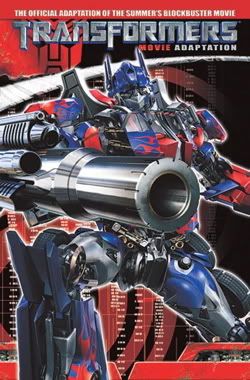
RYALL: Well, it’s fun being there and everything but”¦it’s fun talking to people and I like doing signings and all but you just don’t have enough time to see some of the things I want to see. There’s not enough time to talk to people. I’m able to talk to people for 30 seconds then I have to run off. I don’t like that. That’s why nights are more fun. You can spend more time with people. You don’t have to run from meeting to meeting. It’s alright. It should be a good one for us because we are just coming off Transformers and we have some big announcements to make while we’re there as well.

CS: I have a whole lot of questions for you. And that’s one of them. Are you benefiting from how well TRANSFORMERS has done in the past weeks?

RYALL: Yes, it’s been great for us. It’s been our best year ever. We got to go into places that we’ve never been to before like Target with our book which is pretty cool. Transformers has been pretty good for everybody so far.

CS: I read that in previous interviews….you guys seemed to be able to leverage that ““ the properties being attached to films ““ 30 DAYS OF NIGHT really took off when people were starting to get attached to it and the same thing with TRANSFORMERS. In your opinion, if the movie didn’t do as well, would this”¦.were things in place before or is the book doing as well it is because of the success of TRANSFORMERS?

RYALL: They were in place before. Like when you buy a book at bookstores like Borders or Barnes and Noble ““ those books are returnable. So if the movie didn’t do that well then those books would have come back to us. I think because the movie did do so well, made people want to actually pick them up. We did a special one for Target and that one actually sold out in a couple weeks…We gave away a million and a half copies of the comic of the video game and gave away millions at movie theaters. So, yeah, all those things have just been stuff that we never really had an opportunity to do before on that scale. It’s kinda nice.
CS: Absolutley. And I’m curious to know on that level, when you are taking a property as wide as you have on uncharted waters, how do you tip toe into it and determine what would work or try ““ how do those decisions get made in the end?

RYALL: I think the cool thing is that we didn’t even over think anything. We were like, hey, the movie is coming. Let’s do a prequel and explain some things that were referenced in the screen play or allude to in the movie but don’t necessarily have time to cover in the movie. Let’s do a whole prequel that will answer these questions and explain why Bumblebee can only talk to the radio and that kind of stuff. We sorta jumped in from there. If we do this four part epic story that leads into the movie and then do the movie itself it just creates a huge massive epic Transformers story. And the cool thing about that was we were in the stores in February for the start of the prequel so you got the first official look at the characters and the story line.

CS: It was weeks and weeks before”¦It was a nice little push to at least get people ready for it.

RYALL: And I think it paid off a bit more after you saw the movie and saw the stuff we referenced in the movie but then if you go back and read the prequel after you see the movie, it’s like “Oh yeah…that’s what that was””¦.that’s what they were talking about.

CS: So you were using the screenplay in small bites, here and there, to help bolster the storyline?

RYALL: Yeah. They gave us the screenplay then I went through and developed this four part plan on what we’d like to do with the prequel. Got on the phone with Miramax and got the screen writers involved so everyone had their input involved, do this do that, make sure this happens”¦it was very collaborative which was cool for a project on that scale it can be difficult but it wasn’t the case this time. It was fairly smoothly done for as big a project as it was. You have Hasbro on one side, then you have Paramount, then you have the filmmakers and the writers”¦.there is potential for all that to be egos or different things people want to happen but there was none of that. Everybody was just working toward telling a story. It was pretty fun and very gratifying thing to do.

CS: That’s amazing. Do you credit that to anything in particular why everyone was just able to go forward instead of having Hasbro being a bureaucratic pain in the ass or the screen writers taking umbrage with something nitpicky?

RYALL: I would like to think it was because the proposed outline was so solidly done, but I have no idea. We were just so excited about getting stuff out there and making it work on every level. And I think at some point because we had been doing it for a year and a half there was some trust level, at least with Hasbro and also with Paramount”¦..as far as the comics go it was always our thing so having that previous history, doing the books gave us a trust that we never had before.

CS: And I think during the proposal stage you said before there were other people with more money than you had in getting a licensing agreement and it was all about the quality of the work that made you guys the obvious choice to pick”¦is that the way you approach the proposal process? I mean do you have to play up to your strengths and hope that money just isn’t the bottom line?

RYALL: Yeah, I think just even getting the licenses we’ve shown that we’ve done things like this before and even though we weren’t the biggest publisher we could show that, unlike a huge publisher we could make the property our flagship title whereas Transformers was never going to be a priority for someone making all the Batman, Spider-Man books first. We could, though, put all our energy into it to make it the best we can. So, all those things combined, I think, a year and a half later, Hasbro seems pretty happy at the things that we’ve done so it’s worked out much better than you would have assumed it would from the start.

CS: As Editor-In-Chief, when you have a property like that, myself growing up in comics I’ve been privy to a whole bunch of crappy comic adaptations of films, what’s important to you when you get a property in your hands ““ what’s at the forefront of your mind? What are you thinking?

RYALL: First thing always is, “Do we like it?”

I would never want to do…I don’t want to single anything out that I hate, like American Idol…A big easy money making kind of thing that I can’t stand because it would just take over your life. It’s just work. So we think, “OK, do we like it, do we have an idea for it, what do we think we can do with it?” Like, with Transformers, we have the luxury of looking at what’s been done before. What do we think worked before? What did the fans think worked before? What didn’t work? Then we can just base our plan off of not only what we think that we’d like to do with it but what the fans said they want to see.

CS: So you’ve actually taken that into account as well?

RYALL: Oh yeah. Before we put our whole plan together for Transformers I spent two months lurking on some of the bigger Transformers message boards just learning what they had to say, what they like and what they don’t like. It’s certainly an opinionated crowd. But that’s cool. What mass comics worked for them. It was a good basis ““ a good starting point.

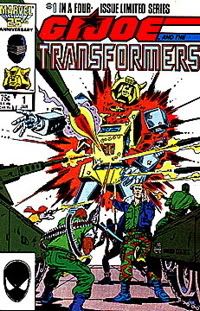
CS: I liked the GI Joe and Transformers story arc circa 1980 something…
(Laughs)

RYALL: Some of it was done well some not so well but”¦.

CS: I was going to ask working in the medium now being Editor-In-Chief are you more critical of the products being sold to kids ““ not even just to kids ““ to comic consumers being more critical of what’s out there?

RYALL: Completely. It’s hard because I know a lot of the people that are creating that stuff too so now I would be more inclined to say hey he’s a nice guy …he probably didn’t mean to hack it. But some of the stuff is so shameless. I’m sure people could look at us and say the same type of things. But it does give you a more critical eye for that type of things.

CS: And you are “hands-on” especially with your adaptations of LAND OF THE DEAD, SHAUN OF THE DEAD, Great Big Secret Show, and now with BEOWULF, I’m curious to know I have not seen an editor in chief take on such an active role with adapting as you have. What’s it been like to try and translate a lot of these projects into actual comic books themselves.

RYALL: The cool thing of just being in this role is allows me the luxury of picking and choosing what I really want. So if something comes along that I just love and I really want to do, I can opt to do it. I do try and make sure not to take work away from other people because I don’t want to be selfish and just do things myself. But some of them ““ like Transformers was pretty cool and Clive Barker, I have a relationship with him ““ it just makes more sense when you are dealing constantly with the studios like Transformers…it’s just easier to deal with it yourself than try and explain it after the fact to writers so that’s kind of my thought process.

I got to say the Clive Barker thing was a bit daunting because it was almost an 800 page book to adapt to 20 comic book pages ““ I guess it’s more than that ““ 22 pages times 12 so I guess 240 pages. But anyway, it’s a lot to condense a novel into a comic book. Movies are a bit more easier because they are set up more visually and the scenes kind of follow the same, whether it’s a movie, screen play or comic book. Try to figure out the breaking point ““ the cliff hangers is the challenge of comic books. Books are a bit more of challenge because the visuals aren’t fully developed and you have to be a bit more presumptuous, like I’m going to cut out the Clive Barker’s dialog because it’s not needed here but then who the heck am I to decide to cut out Clive Barker’s words?

But like anything you have to adapt it to the form that it’s going to be presented and he understands that more than anyone because he’s had his works adapted to comics and moves and each one is different you have to make sure it works for the format. The books, the comics we can condense things here and there and if he’s happy with it then I am and hopefully others will be to. We try not to disrespect the material.

CS: But now you don’t have the author of Beowulf to go back to. How’s that been?

RYALL: Neil Gaiman and Roger Avery are the authors of the screen play.

CS: So, you are basing it on the screenplay then?

RYALL: Yes. Fully movie based.

CS: How’s that been? Have you been working with Gaiman back and forth on your adaptation?

RYALL: Not so much back and forth. I did send over some of the art and showed him what we were doing and he said he loved what we’re doing so that’s good enough for me. If I don’t disappoint the people who originated the material then I feel like I’ve done my job. And he’s the captain of it. 200,000 copies of an 8 page promo to give everybody at the show for free so they can see how it starts anyway. And it’s fun. I’ve never really done any sword and sorcerer stuff before.

CS: Is it difficult to switch mediums? I’m not a big sci-fi guy myself but when you get into an area that you’ve never dabbled in before is there any time when you say, oh I’d be good enough to do this or”¦.

RYALL: I never really thought that. I’m not steeped in it in the way some of the fans are so, in a way, I hope I handle the dialog properly. Especially with the prequel because we developed it on our end and not based on an adaptation so it was like uncharted territory there. But I will say that Zombies Vs. Robots is such a different world. It’s so much easier. Because it’s mine. I don’t have to worry about disappointing anybody if I screw it up.

CS: I read that when you do at something, when you take control of a project, you are really personally invested. You are not just writing for the sheer joy of writing and you are really concerned about getting things right. Do you think that that’s something that people have said about your work that at the very least it’s an honest adaptation?

RYALL: I don’t know. I’ve never really heard that from people ““ but I guess I have with the Clive Barker stuff that I was true to the material and I handled it the way they wanted to see it handled. With that Clive book, it came out in ’89, it’s been some people’s favorite book for 20 years or what have you. Those people have seen that book in their heads for two decades so now we are actually putting a definitive visual down on paper, if it doesn’t measure up to what they expect it to be you really have a chance to disappoint them.

But, so far, everyone seems to be pretty happy. I try not to do too many of these because I really want to take the time and be sure it’s up to the best of my ability. Plus I try to hand-pick the best artist on these things which also helps. It helps carry a script if you got Gabriel Rodriquez or Ashley Wood working for you.

CS: Did you ever make it to the TRANSFORMERS set?

RYALL: No.

CS: No, as in, they didn’t let you go?

RYALL: No, I tried to go but it didn’t work out.

CS: Well, one that you did make it on that I’m really interested about is 30 DAYS OF NIGHT.

RYALL: Yeah, that was cool. That was a lot of fun.

CS: Was it just as a spectator or did you get to offer any input into anything?

RYALL: No. They were well into the shoot at that point. Who am I to be telling David Slade what he should be doing? He was showing up and being respectful to the material. So we just were able to sit back and watch the process without getting involved or anything like that. He had it well in hand anyway so he didn’t really need me getting in the way I think.

CS: And what was that experience like seeing something that year’s ago was just ink and paper. It must have been ““ this stuff being right in front of you live and people trying to bring it to live action. How was that?

RYALL: The coolest part was watching with Ben Templesmith…Because he was there with me and it was his book. He did the visuals and everything like that. It was kind of like bringing your kids to Disneyland for the first time ““ watching through they eyes. Just watching him and seeing how amazed he was by seeing his talent come to life and seeing character shirt designs come to life, he was so ecstatic to see something he did come to life. It was cool for me to see it but I would imagine it would be more fun for him to see something he created brought to life like that.

CS: And David is a curious choice as a director. I think he can be credited with capturing the most agonizing castration scene ever put to cellular.

RYALL: There’s a horror movie for you.

CS: So who ultimately gave that green light to him?

RYALL: Oh, I don’t know. I know somebody talked to him but I wasn’t involved in that part of the process. But I know somebody really liked his work on HARD CANDY.

CS: Great movie.

RYALL: Yeah, it was a pretty uncomfortable movie.

CS: But I think that’s the kind of guy you want. The guy who can make something out of something that’s not really there.

RYALL: Yeah, he also built characters in that movie too. So his ability to handle characters and work with actors to that degree, the thing’s got more potential to be more than just a slasher horror movie. Good characters.

CS: It’s also has a great trailer. I’ve been wanting something good and it’s the little little things. It’s the finger on the record…the little details. And the vampire’s face ““ the actual physicality of a vampire is something I have not seen before.

RYALL: Yeah, it was fun to watch that on the set. Danny Houston was so in character as the lead vampire. It was fun to watch the makeup after they are just sitting there all eating salads with their fangs”¦.

(Laughs)

CS: I listen to Michael Chabon talking about ““ this is a lengthy question so sit down for just a moment. Michael was talking about his new book and somehow they got on the topic of comic books and he has mentioned that one of the best stories he read growing up are the ones that took like Superman what have you and put another type of reality on top of that. Superman goes to bizarre world or dual layered and it got me thinking that when I saw that Ben is coming back with the WWII 30 Days of Night that he’s taking the already fictional world of these vampires and he’s putting on an additional reality of WWII ““ any reason why Ben went with that time period with these vampires or is it just something he’s always been thinking about doing?

RYALL: Well, I know that he’s been talking about that for years. He’s sort of a history buff ““ he’ll tell you about thousands and thousands of troops that marched into Russia and just disappeared. They say because of extreme cold and everything else they faced but there was a chance that vampires had killed them so he thought that playing off the fact that it was based in the circle of fact and the story paralleled the original 30 Days so it was a fun idea for him. I know he didn’t want to do something different. He’s turned into quite a good writer. He’s got a good wicked sense of humor. He’s turned in some good stuff now.

CS: How does Ben try to keep the genre fresh? You talk about vampires ““ just look at how many comic books out there are based on vampires. How does he look at his role as a creator to keep these things from becoming just ho-hum?

RYALL: I think he stepped back from doing the 30 Days the last two to three years because he was worried about that too. He didn’t want to get to the point where he did so much of that that people just take it for granted or only did it for the vampire guy. So he was trying to do other things like Hatter M and Wormwood to try and break out a bit. I think now he can go back and revisit this world and be effective especially when he has a good idea, like he did in this one. People won’t take it for granted. He’ll put something different out there ““ something exciting and new.

CS: I read in a recent interview about the proliferation of people who are downloading scanned comics files ““ is it really something that companies should be moving toward or investigating or is it something that is almost like Chicken Little”¦the sky’s is falling because people aren’t buying the comics, they’re reading them on-line. Are people really downloading at an incredible pace for publishers to start thinking about”¦

RYALL: I just want to say no because I personally don’t want to read comics on-line ““ anything more than just a page strip I find obnoxious to read but I think you can’t ignore big numbers like big torrent sites where there are hundreds and thousands of people downloading comics. So I certainly think it is something that some of us will have to figure out what to do with it.

I don’t know that there is a quick settle ““ I know we’ve all gambled here and there as far as offering up downloadable content but I think it’s still not formatted in a way that is all that palatable, so I don’t know. It something that people just shouldn’t ignore but it’s hard for me because I like to have something tangible in my hands. I’d like to think that they wouldn’t replace the comics themselves any more than they would replace books or magazines but I know there is a growing number of people out there that don’t think along the same lines so we are looking into that, as to what the best kind of approach would be.

CS: And certainly in your job as Editor-in-Chief for the last couple years.

RYALL: It’s been three years now.

CS: How have you ““ what has been your keys to success these last three years? You’ve obviously never run a comic book company before ““ how did you learn as you go?

RYALL: It’s not a whole lot different ““ there’s a lot more deadline pressure but I’ve always kept deadline pressure on myself to come up with new content everyday. That did help a lot as far as just dealing with a lot of different people, a lot of different deadlines, so all that is on a grander scale now. It helps to have a background in comics. I think I have an affinity for it so it makes it a lot less feel like work.

CS: And certainly one of the things that I will publicly say that I admire about you is that you were constantly producing on a deadline whether it was One Hand Clapping or the TV listings that you set the example for everyone else on MoviePoopShoot.com that deadlines can be hit no matter how busy you think you are. Do you think that’s translated to what you are doing over at IDW?

RYALL: I hope so. The one thing that I realize here is that it’s no longer a 9 to 5 job. I pretty much work day and night, and mornings and weekends, year round. But the reason I do it is to stay ahead of these things but also because of the freelancers are working at all times during the day trying to get things done on deadline. I don’t want them out there alone. I want to be accessible to them. I want them to know that we are all doing stuff together no matter what time of the day. So, I try to do the same thing ““ try to set the example. I’m right there with you. Even though no one but me would know that I’m late, I make it a point to never be late just because I think people might be telling somebody else to get there stuff in on time – on deadline. But yes, I put all this undue pressure on myself that I probably don’t have to but it helps me anyway.

CS: And the final question to people out there, you have seen some great success in the last few years but looking ahead where does IDW see itself evolving or does it need to evolve at all, just happy being what it is?

RYALL: I think you have to evolve. When I first started here we did some license stuff and we did a lot of horror stuff that I’ve tried the last three years to help us branch out more than just pigeon holed and I think we need to keep doing that sort of thing. Stuff that’s more kid friendly make sure that we have stuff for different audiences. If you’re ready for horror, we’ve got that, if you’re younger and your sensibilities are younger then we have stuff for you there. Just proceeding that way and vary the content for different people. I want to write more creative rock stuff ““ that’s my big goal. I like to do adaptation but I have some other stuff that I want to try and get to next year.

QSE News: Week In Review – 10/19/2007

Filed under: Columns,News — UncaScroogeMcD @ 12:02 am

quickstopnews.jpg

line1.gif

Here are today’s top entertainment headlines:

  • qsnews.jpg
  • Fans of the TV show Buffy The Vampire Slayer will have to dress up and sing somewhere else, as Twentieth Century Fox Television has issued a cease and desist order to planned sing-along events. Organizers have been running Buffy sing-along events in several cities across the country where fans come dressed as their favorite characters and act out parts of the show ala Rocky Horror Picture Show. In the letter, Fox lawyers stated that fans of the show will “have to creep out normal people and wear their virginity on the outside some other way… or pay us a billion dollars because we are greedy shit heads.”
  • Deborah Harry has given the OK for Kirsten Dunst to star as the former Blondie front woman in an upcoming bio-flick. The film, while still in the planning stages, is set to be directed by Michel Gondry and will follow the life and times of the singer.  When asked about her feelings regarding playing Harry, Dunst replied “Harry?  No, I like to keep it nice and tidy down there.”
  • Family members of Charles M. Schulz are upset with the author of a new biography of the man behind the Peanuts gang. The book, Schulz and Peanuts by author David Michaelis, claims Schulz used the characters he wrote and drew as an outlet for his different personalities, both good and bad. Michaelis claims everything in the book is 100% true, “especially the part where he made his wife dress up like Snoopy while he dressed as Woodstock.”
  • Mock-pundit Stephen Colbert has announced that he will be running for the office of President of the United States. Making the announcement on his show, The Colbert Report, Colbert said he will run as both a Democrat and a Republican. The only current Presidential candidate to comment so far on Colbert’s announcement is Mitt Romney, who said, “At least (Colbert) isn’t black or a woman.”
  • With his work winding down on the upcoming Indiana Jones movie, George Lucas is turning his attention back to Star Wars. Lucas is planning a live action TV show and an animated cartoon based on the popular franchise. Fans are hoping that at least one of the series will focus on Jar Jar, as “that character just wasn’t given enough screen time in the prequels.”
  • The upcoming Spice Girls “best of” CD will be available at Victoria’s Secret months before it’s available at record stores. The new album will be a collection of the group’s biggest hits, as well as two new songs. Industry insiders have commented on the Victoria’s Secret deal, noting that only one of the members can wear anything produced by the company as most of the members “have let themselves go a little.”

line1.gif

That’s all for today’s news, stay tuned to this channel for all the news that matters least but you still care about.

(Compiled by J. Allen)

##

Quick Stop Thingamabobs: 10/19/2007

Filed under: Columns,Thingamabobs — UncaScroogeMcD @ 12:01 am

thingamabobs.jpg

The web. It’s a big place, full of plenty of distractions ““ some funny, some informative, some ludicrous, some disturbing, some inane, some profound. Each and every weekday, we present links to a few of our favorite finds”¦

————————————————

  • More QI goodness to wrap up the week – here’s the 7th episode of series 3 – featuring Stephen Fry, Alan Davies, Jeremy Clarkson, Sean Lock, and Rich Hall – Part 1… (Thingamabob)
  • Mitchell & Webb – “The Green Clarinet”… (Thingamabob)

October 18, 2007

Quick Stop Thingamabobs: 10/18/2007

Filed under: Columns,Thingamabobs — UncaScroogeMcD @ 2:37 am

thingamabobs.jpg

The web. It’s a big place, full of plenty of distractions ““ some funny, some informative, some ludicrous, some disturbing, some inane, some profound. Each and every weekday, we present links to a few of our favorite finds”¦

————————————————

  • QI Series 5, Episode 5 – with Stephen Fry, Alan Davies, David Mitchell, Dara O’Briain, and Phill Jupitus – Part 1… (Thingamabob)
  • David Mitchell discusses televised religion… (Thingamabob)
  • Mitchell & Webb – “Hole In The Ring”… (Thingamabob)

October 17, 2007

Toy Box: Robocop 3D Wall Art

Filed under: Columns,Toy Box — admin @ 12:02 am

toybox.jpg

Robocop is a true cult classic film, combining a cool futuristic story line with some great acting and special effects. It was such a hit in 1987, that it spawned two sequels (and a third is in production) as well as a television series. And let’s not forget all the classic one liners that people continue to use at inappropriate times to this very day.

Robocop had a terrific cast, including Peter Weller of course, but several other folks that have had long careers as character actors like Ray Wise (currently the devil on Reaper) or Miquel Ferrer (currently on Bionic Woman). But it’s perhaps best known as an ultra-violent film, even by today’s standards, twenty years later. The death of Officer Murphy is not for the squeamish, and relatively unknown (at the time) director Paul Verhoeven made sure it wasn’t a scene you’d soon forget.

Robocop 3D Wall Art

McFarlane Toys started producing three dimensional versions of classic movie posters and album covers a few years ago. I’m not into vinyl, so the album covers didn’t do a lot for me, but I’m a huge fan of great poster artwork and have been picking up the majority of their ‘3D Wall Art’. The latest release is based on the classic Robocop movie poster, and is now hitting stores. Expect to pay around $20 or so, depending on the retailer.

toybox_101607_1.jpg

Packaging – **
The package only covers the edges and back of the poster, not the front. That means that the poster can get damaged on the shelf fairly easily. I cut them some slack in this area in the past, but with all the complex three dimensional sections, scratching or damaging the paint is a real possibility.

toybox_101607_2.jpg

Sculpting – ****
If you haven’t seen one of these in person yet, be prepared for a visual treat. They take the basic concept of the original iconic poster, and produce a sculpted, three dimensional version. This works much better for some posters than others, and the amount of the image that’s brought out varies, but the Robocop poster was an excellent choice.

toybox_101607_3.jpg

They’ve managed to sculpt the small details with an appropriate level of accuracy, staying with the appearance of the original print and yet giving it a new life. There’s probably more here in 3-D than any of the other posters theyve’ done so far, including the entire Robocop, almost every aspect of the police car, and the main logo. By placing the rest of the credits on a flat surface that is actually brought out to the front of the box, they’ve provided the perfect step for Robocop’s left foot, and with proper paint work still given it a poster-like appearance.

These are actually fairly large, at about 8 1/2″ by almost 13″ tall and a couple inches deep. They’ve actually reused the basic exterior box from the Alien 3-D poster, and still have the battery compartment (glued shut) on the back.

Paint – ***1/2
The paint work here is solid, with almost no slop or poor definition. The choice of colors matches the original well, and in some cases they’ve even flattened some of the 3-D appearance of the sculpt with the paint. That creates an interesting effect, tricking the eye and making you not quite sure what you’re seeing at first.

toybox_101607_4.jpg

There’s a few cut lines that aren’t quite perfect, but these issues are very minor compared to the overall exceptional appearance.

Design – ****
Obvioiusly, the design is based on the poster and follows it almost to an exact reproduction. That’s a good thing though, since the image is so iconic. They also created the three dimensional areas in sensible and attractive ways, bringing out the beauty of the poster.

toybox_101607_5.jpg

Value – ***
These are about $20 each online, and that’s what I’m grading them at. The size of these is more impressive in person, and the price point is actually pretty good considering the varied licenses.

toybox_101607_7.jpg

Things to Watch Out For –
Not much. Obviously, with no protection for the front of the poster in the package, you’ll want to watch out for any possible shelf damage that might have occurred to the paint or sculpt. But if you have a good one in your hands, what you see is what you’ll get once it’s out of the box.

Overall – ***1/2
This is one of the best of the posters they’ve done so far, and that’s saying a lot considering how well past releases have turned out. These make terrific decorations for a movie or home media room, or a ‘rec room’ for those of us old enough to remember what those were. They aren’t intended to take the place of normal posters, but to be their own unique entity, and in that they succeed quite well.

toybox_101607_6.jpg

Where to Buy –
There’s a number of online options:

Amazing Toyz has him listed at $19, and they have many of the past releases as well.

Cornerstorecomics has him at $19 as well, with others available.

Related Links –
I’ve covered a number of the other releases as well:

– there’s my review of the Jaws and Friday the 13th posters, as well as the Rocky Horror Picture Show poster and Nightmare on Elm Street.

Quick Stop Thingamabobs: 10/17/2007

Filed under: Columns,Thingamabobs — UncaScroogeMcD @ 12:01 am

thingamabobs.jpg

The web. It’s a big place, full of plenty of distractions ““ some funny, some informative, some ludicrous, some disturbing, some inane, some profound. Each and every weekday, we present links to a few of our favorite finds”¦

————————————————

  • In the “From The Vaults” department, here’s news footage of Kevin Smith protesting his own film, Dogma(Thingamabob)
  • Bill Bailey & Billy Bragg sing “Unisex Chip Shop”… (Thingamabob)

October 16, 2007

Quick Stop Thingamabobs: 10/16/2007

Filed under: Columns,Thingamabobs — UncaScroogeMcD @ 12:23 am

thingamabobs.jpg

The web. It’s a big place, full of plenty of distractions ““ some funny, some informative, some ludicrous, some disturbing, some inane, some profound. Each and every weekday, we present links to a few of our favorite finds”¦

————————————————

  • QI Series 5, episode 4 – with Stephen Fry, Bill Bailey, Rich Hall, Sean Lock, and Alan Davies – Part 1… (Thingamabob)
  • And finally, Stephen Fry’s “The Letter”… (Thingamabob)

October 15, 2007

Comics in Context #198: It’s Not So Sprite

Filed under: Columns,Comics in Context — admin @ 12:02 am

comicsincontext4.jpg

cic2007-09-17.jpgThis week I continue my examination of Neil Gaiman’s recent revival of Jack Kirby’s Eternals. But first, I want to mention briefly a subject that turns out to be related: the newly released The Last Fantastic Four Story, written by FF co-creator Stan Lee and drawn by John Romita, Jr., the illustrator of Gaiman’s Eternals. It’s like one of the old Superman “imaginary stories”: what might the FF’s final adventure be like? In this saga, the Adjudicator, a gigantic armored alien being with virtually unlimited godlike powers, descends to Earth to deliver judgment on humanity. Seems familiar, doesn’t it? It would not surprise me if Stan Lee had never read Jack Kirby’s Eternals, or, if he had, had forgotten it over in the ensuing thirty years. But surely someone at Marvel should have pointed out that the Adjudicator is uncomfortably similar to Jack Kirby’s Arishem the Judge.

Reading the Gaiman Eternals is more rewarding. When I left off last week, Ikaris had regained his full Eternal memories and powers by thrusting his hand into a waterfall in the Eternal city of Olympia. Having already experienced resurrection, Ikaris thus underwent another kind of Christian imagery: baptism.

Then Sprite, revealed as the principal villain of Gaiman’s Eternals, conforms to standard supervillain practice by “monologuing”: expounding on his grand scheme and motivations to the helpless Mark Curry, alias the Eternal Makkari.

Though he has lived for “the best part of a million years” (Gaiman Eternals issue 4 p. 15), Sprite, for unknown reasons, has never advanced beyond the physical age of eleven, whereas the other Eternals are all adults. He’s right on the verge of puberty, but, as long as he is an Eternal, would never reach it.

Sprite once appeared to the British playwright James Barrie, who based Peter Pan, the boy who would not grow up, on him, “back when the only thing I had left to enjoy was messing with the transients,” by which Sprite means we mere mortals. Although most people today are probably more familiar with the heroic depictions of Peter Pan in the Disney film and the Broadway musical, Barrie’s original Peter Pan is a more ambiguous figure.

Sprite is a trickster, and his creator, Jack Kirby, established in the original Eternals series that William Shakespeare put Sprite in one of his plays (Kirby Eternals hardcover, p. 173). Presumably Kirby meant that Sprite was the inspiration for Puck in A Midsummer Night’s Dream, and those who know Gaiman’s Sandman story about that play know that Gaiman regards Puck as not some endearing, fun-loving sprite but as a potentially dangerous creature (see “Comics in Context” #65).

So, like Peter Pan, Sprite is a boy who will not grow up. There is a related figure in popular culture: the adult who refuses to admit to his or her true age, who refuses to move on from a time when he or she was younger. There’s Miss Havisham in Charles Dickens’ Great Expectations, an elderly woman still wearing a young woman’s wedding gown, trying to make time stand still, and Norma Desmond in Billy Wilder’s Sunset Boulevard (1950), fantasizing about playing the teenage Salome. In a more comic mode, there are Jack Benny and Absolutely Fabulous‘s Patsy Stone both insisting with increasing absurdity that they are only thirty-nine: Patsy and her friend Eddie are middle-aged women who behave as if the 1960s and their youth never ended.

A recurring variation on this figure is the adult who seems stuck in childhood. I wonder if this image originated with performers like Mary Pickford, the first great star of American silent film (and said to be a possible influence on Little Orphan Annie), who played prepubescent girls well into her thirties; apparently her public resisted her attempts to play characters her own age. Then there’s “Baby June” (later known as the actress June Havoc) who was forced to play little girls long into her adolescence, as dramatized in the classic musical Gypsy. In the 1960 book and 1962 film Whatever Happened to Baby Jane? a fictional former child star by that name irrationally plans to revive her act.

Then there’s another variation that cartoon art makes possible: the adult with the body of a child, like Baby Herman in Who Framed Roger Rabbit (1988), who looks like an infant but off-camera has a gravely adult voice and smokes cigars. Again, Baby Herman is a show business performer. Baby Herman is a comedic figure, but an adult mind in a child’s body represents a violation of the normal natural order that can seem sinister. One of the villains in Batman: The Animated Series is Baby Doll, a former television child star who suffers from a rare disease that forces her to remain a small child physically, even though she is psychologically an adult. Then there’s Family Guy‘s Stewie Griffin, the infant who not only speaks in an adult voice but has ambitions of ruling the world.

There is also the reverse: the child in the body of an adult, or with abilities that he or she lacks sufficient psychological maturity to handle responsibly. There’s the Billy Mumy role as the sinister, all-powerful child in the classic Twilight Zone episode “It’s a Good Life,” based on the Jerome Bixby short story. The traditional portrayal of the Hulk is of a being with a tantrum-prone, childlike mind within a superhumanly strong adult body.

On first viewing, Gaiman’s version of Sprite is the emotionally immature child with vast “adult” powers. Enraged at being treated as a child by the other Eternals for a million years, Sprite misused his super-powers to punish them. Using his powers of illusion, he manipulated his fellow Eternals Zuras and Ajak into joining with him in a “Uni-Mind,” a collective consciousness, that drew power from the Dreaming Celestial. (Earlier in the series Gaiman established that it takes at least four Eternals to form a Uni-Mind, but perhaps only three Eternals are necessary if they are psionically linked with the Dreaming Celestial.) Through this Uni-Mind, Sprite stripped the other Eternals of access to their memories and super-powers, effectively turning them into ordinary human beings, with implanted, false memories of leading ordinary human lives. Sprite also transformed himself into a normal human, minus any Eternal powers, so that he could physically age.

But it seems to me that Sprite is also like the adult in the body of a child. Consider the complexity and execution of Sprite’s master plan. Leaving Sprite’s super-powers aside, could an actual eleven-year-old have conceived, planned, and carried out such a scheme? Although Sprite uses words like “cool” and “dumb” the way a real kid might, most of the dialogue that Gaiman gives him, including his monologuing here, reads like an adult speaking.

Moreover, one of Sprite’s principal motivations seems to be intense sexual frustration. He tells Mark about Sersi, “Of course, by then she’d had sexual relations with all the straight male Eternals, all sixty of them, except me. . .because I was eleven. . . “ (Gaiman issue 4 p. 15). This doesn’t seem like a typical crush an eleven-year-old boy might have on an attractive adult woman. That “sexual relations” phrase suggests to me that Sprite, despite being physically prepubescent, psychologically has a very active postpubescent sex drive.

That Sprite quotation also prompts me to digress for a bit. Out of roughly a hundred Eternals, sixty are straight males. So the other forty Eternals are either females or gay males? Seems a bit odd that the male/female ratio isn’t more even. And Sersi has had “sexual relations” with all the straight male Eternals past puberty? Sersi isn’t a first generation Eternal (in fact, you can see her as a child in ancient Mesopotamia in Captain America Annual #11, 1992), so what about her father (who is named Helios, by the way)? Or father figure Zuras? Well, this is the intensely jealous Sprite saying this, so perhaps he’s exaggerating. One of the points of this page of the fourth issue is that over their incredibly long lives the Eternals have sexually paired up in all possible combinations considering their individual sexual orientations. It is gratifying to know that Sersi never stooped to having sex with children, much as Sprite may regret it.

It seems to me that Sprite’s intellect and even his sexual desires have matured, but not his emotions or his capacity for moral judgment. Why does he want to become an adult? “I wanted to be a film star and a rock star and a TV star. I wanted everyone to love me. I’m going to stay a star until I’m in my twenties, for the girls. And then. . .Well, that depends.” Actually, despite his claim that he wants to be treated as an adult, Sprite really seems to want to be an adolescent. He has no concrete goal for himself once he has passed the physical age of nineteen. His current goals are shallow, self-centered, and deeply immature: he just wants to be famous and to be universally loved, and, I suspect, to get laid a lot by “the girls.”

Sprite claims he wants to get older, but emotionally he represents an extreme case of arrested development, or, more specifically and appropriately, the mindset that pop psychology terms “Peter Pan syndrome,” which entails both irresponsibility and narcissism.

The clearest sign of Sprite’s narcissism is his ambition to be a “star” whom everybody loves. Like so many of the other characters I mentioned earlier who are simultaneously children and adults, Sprite is in show business, a field which encourages aging people to take extreme measures to hold onto their youth, and which bestows fame, celebrity, wealth and power upon people who may be too psychologically immature to cope with it wisely.

In Gaiman’s Eternals, television programs consist of Sprite’s lowest common denominator sitcom for tweens and a superhero reality show that turns the noble calling of the superhero into a quest for fame and fortune. (As the Spider-Man theme song observes, “Action is his reward,” not big bucks.) I wonder if Gaiman means to suggest that there is something emotionally immature and adolescent about, not just the current state of the superhero genre, but about American (or British and American?) popular culture as a whole, or perhaps even the American fascination with celebrity and wealth. No wonder that the immature Sprite prospers in such a culture.

I also recall that in Lev Grossman’s profile of Gaiman in July 26, 2007 issue of Time, Neil said that “Five years ago, I was absolutely as famous as I wanted to be. . . .I’m now more famous than I’m comfortable with,” and Grossman observed that Gaiman is “leery of selling out to the popular crowd.” I wonder if in Eternals Neil is using the platform of a Marvel comic, supposedly aimed at the more “popular crowd” among comics readers, to examine the dark side of fame and its pursuit and the dangers of selling out rather than following one’s true calling.

And this is a variation on a classic Marvel theme. Remember that Spider-Man started out as a boy who, upon acquiring super-powers, initially went into show business, until he had to face the terrible result of his self-centered pursuit of fame and fortune: his failure to prevent his uncle’s death.

“I could have done whatever I wanted to the world,” Sprite says. Remember when the Red Skull or Thanos acquired the Cosmic Cube in past Marvel epics, and how they wanted to use it to alter reality on a grand, visionary albeit evil scale. And then consider what Sprite says: “I could have made the seas run red, or made snow taste like chocolate. I thought about it.” Claiming to want to be merely an adult human, Sprite instead achieved godhood, yet he ends up seriously considering juvenile trivialities. “But in the end I settled for this. Stardom and puberty,” which in this context seem merely a higher order of triviality. “I’m a real boy now,” Sprite declares, as if he were Pinocchio’s evil twin (Gaiman issue 4 p. 20).

Trying to imagine his future beyond turning twenty, Sprite says, “But whatever I do, I do it as a human. I can leave the solar system, which is more than any Eternal can” (Gaiman issue 4, p. 20). Well, first, leaving the solar system is not something that humans ordinarily do. Unless Sprite thinks he can steal the Fantastic Four’s spaceship, just how is he going to do this? Second, back in Avengers #248 (October 1984) most of the Eternals, united into a Uni-Mind, departed Earth for outer space, and I do not think that the Eternals, who seem to be such social beings, would be interested in merely exploring the uninhabited planets in our solar system; I expect they left to visit other, inhabited worlds. This also means that Sprite must have used the power of the Dreaming Celestial to bring all those Eternals back from outer space and give them human identities on Earth. I suppose Sprite would think that was a safer course of action for him rather than worrying that the other Eternals might someday return and disrupt his plans.

Then Sprite tells Mark Curry, “I can even die–do you know how cool that is?” (Gaiman issue 4 p. 20). Yet it is hard to believe that someone who is so infatuated with being famous and universally beloved, goals which require being alive, has any comprehension of what death is. Perhaps here Gaiman is criticizing the shallowness of an adolescent fascination with death. Or perhaps Gaiman is indicating that Sprite, who has disposed of his entire community of Eternals, and who has bonded with the Dreaming Celestial, a potential bringer of death, is ultimately motivated by a death wish.

It seems odd that Sprite wants to be mortal when he shows such contempt for mortal humans, calling them “transients” and “mayflies”: remember, he used to devote himself to playing pranks on mortals. To become mortal himself may subconsciously be to direct that hatred towards himself, as if he were punishing himself–as well as his fellow Eternals–for his long life of continual frustration.

Sprite claims he wants to grow up, and “be a man” (Gaiman issue 4 p. 20), but what he really wants is to indulge all his childish fantasies without there being any adult Eternals to tell him no. He really is Peter Pan gone bad, after all. In drawing upon the power of the Dreaming Celestial, the Satan of the Eternals mythos, Sprite has metaphorically made a deal with the devil to remain eternally young–and dangerously immature–to the end of his life, which would come far more quickly than an Eternal could imagine, even if he lived to be a hundred.

Here’s another digression. Gaiman establishes that the prison of the Dreaming Celestial is beneath San Francisco’s Golden Gate Park. This enables Gaiman to tie in the great 1906 San Francisco earthquake to his story, and look, Sprite indicates that Olympia was in Antarctica, not Greece, back then, too (Gaiman issue 4 p. 16). But past stories have placed the Dreaming Celestial’s prison beneath the Diablo Mountains (appropriate name) (see the Official Handbook of the Marvel Universe entry). The northern part of the Diablo range lies near San Francisco, but not within the city limits. Well, I suppose this is close enough. It seems that even imprisoned space gods move in mysterious ways. It does seem rather impractical for the Celestials to have imprisoned the Dreaming Celestial in such a seismically active area, though.

A more important question is whether Neil Gaiman’s treatment of Sprite fits Jack Kirby’s original conception of the character. Kirby seems to allude to Shakespeare’s Puck, but Sprite also fits into the long tradition of boy pranksters in comics and cartoon art that encompasses the Katzenjammer Kids and Bart Simpson. Such characters are troublesome, but certainly not evil, and their rebelliousness against authority is appealing. “Kirby’s Margo Damian observes about Sprite, “He’s only a boy! Even young Eternals love to play pranks!” (Kirby p. 173).

Still, I can see from Sprite’s initial appearances in the Kirby series why Gaiman took the character in the direction that he chose. Sprite’s pranks are rather mean, inconsiderate, and even dangerous (see Kirby pgs. 147-149). When Ikaris punishes Sprite by spanking him, Sprite implies he will take revenge (Kirby pgs. 172-173). One Eternal even says, “That little fool, Sprite, will cause a war someday” (Kirby p. 150). Zuras comments, “the youth ignore all but their youth!!” (Kirby, p. 150), a remark which, in hindsight, takes on ominous implications considering Sprite’s behavior in the Gaiman series. It seems to me that Kirby’s version of sprite even vaguely resembles a boyish Loki.

It’s Sprite’s later appearance in the Kirby series that indicates that there may be more to Sprite than the “brat” Makkari claims he is (Kirby p. 173). While most other Eternals have merged into a Uni-Mind, Sprite learns that the Deviants are about to attack the Celestial mothership. I get the impression that the imminent danger has shaken Sprite out of his usual childish misbehavior and forced him to behave like a mature adult. “Oh, stupid Sprite–! Monarch of muddle-heads! You’ve seen too much! The fate of the Earth has been thrust into your quaking lap! Something must be done!” the frightened Sprite tells himself (Kirby p. 260). Sprite goes to the long-exiled Eternal known as the Forgotten One and asks him for help. One could argue that Sprite is merely trying to save his own skin, since he obviously fears that the Celestials might again devastate the Earth in retaliation for a Deviant attack. But it seems to me that Kirby portrays Sprite as genuinely impressed by the Forgotten One’s heroic qualities: “I call upon you for your strength. . .and one unselfish universal act. . .” (Kirby p. 262). (It seems that the outwardly childlike Sprite always spoke in an “adult” manner.)

The original Eternals series was canceled before Kirby could bring either Sprite or the Forgotten One back, so we will never know what he intended to do next with these characters. My hypothesis is that Kirby thought that Sprite was capable of redemption, and that perhaps he intended Sprite to become the Forgotten One’s sidekick when the latter presumably eventually returned to Earth as an agent of the Celestials. Neil Gaiman has taken Sprite in an intriguing direction, but I suspect that this represents Gaiman’s most significant deviation from what I guess were Kirby’s intentions for his Eternals characters.

In a dream Thena recalls a battle in which she single-handedly defeated a hundred thousand Deviant warriors (Gaiman issue 4 p. 21). The sequence reminds me of how much and how quickly Jack Kirby’s concept of superheroines evolved in a decade and a half. In the early Fantastic Four Susan Storm’s super-powers–invisibility and projecting force fields– seemed designed for hiding and shielding her from danger; her male FF partners took much more active roles in combat. The Wasp fired her sting, and Marvel Girl and the Scarlet Witch stood and gestured to use their powers; none of them grappled hand to hand with their adversaries. Big Barda, who debuted in Kirby’s Mister Miracle in 1971, initially seemed like a caricature of a woman warrior, but soon evolved into a more appealing, three-dimensional personality while remaining a formidable fighter. With Thena and Sersi in Eternals in 1976, Kirby created women warriors who were both fierce and feminine.

Chris Claremont rightly gets credit for reimagining the superheroine as the formidable equal of the male superhero in X-Men and other titles in the latter half of the 1970s, but it’s important to note that Jack Kirby was simultaneously moving in the same direction. Though they were from different generations, both Claremont and Kirby were responding to the emerging feminist zeitgeist.

Here’s another problem posed in attempting to deal with “Marvel time,” which moves more slowly than real time. Thena has a son who seems not much younger than Reed and Susan Richards’ son Franklin. But Franklin was born in 1968 in real time, while Joey was presumably born since Thena appeared in New Eternals: Apocalypse Now in 2000. All right, so maybe Sprite used the Dreaming Celestial’s power to alter reality to speed up Joey’s aging process, or maybe even to create him, and make Thena and her husband think he was born and grew normally. (I’m going to expect a pile of No-Prizes once I’ve finished solving all the continuity conundrums in these Eternals essays.)

Waking from her dream, Thena finds herself in her Eternal costume. She tells the confused Joey that “It’s still Momma,” but the omniscient narrator informs us that “And even as she says it, she knows it isn’t true” (Gaiman issue 4 p. 23). (By the way, it’s commendable that Gaiman employs third person narration in captions, which is a classic Marvel tradition but had fallen from favor in recent years.) Notice how John Romita, Jr. draws Thena holding her son up by the back of his shirt. This is hardly the way that a loving mother would carry her child: “Momma” has indeed changed. I disagree with what Gaiman and Romita are hinting here about the Eternals’ attitudes towards humans, but I will return to this subject later.

At the end of issue 4 Ikaris teams up with Thena to stop the Deviants from awakening the Dreaming Celestial, and at the beginning of issue 5 the Deviants Morjak and Gelt capture Sprite. Obviously in transforming himself into an ordinary human, Sprite badly blundered in not anticipating that he might need his superpowers in a circumstance like this. Another Eternal who was long thought dead, Ajak, acts as Campbellian “herald” to the Eternals” leader Zuras, who has been reduced to a mad derelict. Ajak issues the “call to adventure” to Zuras, who awakens to his true identity.

Ajak says that he sent Morjak and Gelt after Ikaris, thinking Ikaris would be safer in the “regeneration chamber” in Olympia. I don’t understand why Ajak couldn’t have just told Ikaris to lie low, or how much “safer” Ikaris really was considering that Ajak admits that he had those Deviants kill him. Ajak confesses that he made mistakes; yes, I’d agree with that.

Then Ajak tells Zuras, “Ikaris is fully reactivated. The other four”–Makkari, Sersi, Thena and Druig–“will not reactivate completely until they go though a death and rebuild, but they are no longer human” (Gaiman issue 5, p. 6). By the end of Gaiman’s series, Ikaris is the only Eternal who has gone through death and rebuilding. What does this mean about the others? They have their powers back, and Zuras and Ajak seem to have their full memories back. Does this mean that, except for Ikaris, the others can be killed, albeit with great difficulty, and then Olympia’s technology will resurrect them and restore them to full Eternal status?

Ajak warns that if the Dreaming Celestial wakes, then the “Horde” will come and wipe out all life, not just on Earth, but in “this part of the galaxy” (Gaiman issue 5 p. 6). This time the word “Horde” is not mistakenly being used to refer to a Celestial Host, nor is this horde to be confused with the Horde from Marvel’s 1980s cult series Strikeforce: Morituri, which is not set in the Marvel Universe and which was co-created by Peter Gillis, one of the authors of the second Eternals series. The Dreaming Celestial later describes the Horde as “the locusts of the universe” (Gaiman issue 6 p. 33). Kirby indicated that Arishem could use a “formula” imprinted on his hand to destroy the Earth. (This is reminiscent of the “anti-life formula” in Kirby’s Fourth World books.) Is Gaiman implying that the Dreaming Celestial isn’t powerful enough to destroy the Earth by himself, and needs to call in the Horde to do it for him?

Then again, Gaiman’s series never explicitly states that the Dreaming Celestial summoned the Horde. Maybe the Horde is used by the other Celestials as a fail-safe: if the Dreaming Celestial should wake then they will wipe out all life in his subgalactic vicinity, thus making sure that he is destroyed.

In a scene that follows, Druig uses his powers to perpetrate a massacre, which he plans to blame on a minority group as part of his plan to take control of the nation of Vorozheika. One of his captives calls, “Hail Druig!” (Gaiman issue 5 p. 13), which should remind readers of “Heil Hitler!”

Last week I observed that there is a trend in pop culture of supervillains succeeding in taking over countries. Several hours after posting last week’s column, I found myself watching an episode of Warners Animation’s Pinky and the Brain on Toon Disney, in which the Brain, mouse turned megavillain, provides me with further evidence by taking over a South Pacific island and renaming it “Brainania.” (From the vantage point of 2007, it strikes me that this 1990s animated series seems unwittingly to foreshadow the partnership of our current President and Vice President: Bushy and the Chene, if you will.)

Morjak tells his captive, Mark Curry, that the Second Host of the Celestials ate Deviants; that Ajak, who can communicate with the Celestials, told the Deviants this; and that the Dreaming Celestial was imprisoned for protesting the devouring of the Deviants (Gaiman issue 5 p. 16).

Readers should be wary of believing this. For one thing, later on, Mark Curry asks the Dreaming Celestial why the other Celestials put him “to sleep,” and the Dreaming Celestial says that Curry “wouldn’t understand” (Gaiman issue 6 p. 32). If the Dreaming Celestial was punished for trying to prevent the Deviants from being eaten, why wouldn’t Mark understand that? No, Gaiman appears to be signaling that the Dreaming Celestial’s offense was something different, something that humans–and Eternals–cannot comprehend. Besides, Kirby did not show the Second Host eating Deviants; rather, Kirby seemed to indicate that the Second Host remained aboard their mothership and struck down the Deviants from above. Moreover, if the Celestials regarded the Deviants as “delicacies,” why didn’t they take the Deviants into space with them, in case they get the munchies during those long interstellar journeys?

The main reason that I object to the idea that the Celestials eat Deviants is that it diminishes what should be the godlike grandeur of the “space gods.” The key to Kirby’s Celestials is their inscrutability. Their reasoning is beyond mortal comprehension; we do not know what they want or what they think. If they gobble up Deviants, who, remember, are closely related to ordinary humans like us, then the Celestials’ motives are all too clear: they are evil beings who regard their sentient creations as if they were livestock bred for the dinner table. The Eternals would therefore be evil themselves for serving such masters. Besides, it diminishes the Celestials’ godlike status even to suggest that they eat. We should not even be certain that the Celestials have physical forms beneath that armor: Kirby never let us see a Celestial without his helmet.

Notice that Morjak says that the Deviants “were the food of the gods” and that Celestials considered a Deviant soul to be a “delicacy” (Gaiman issue 5., p. 16). Morjak doesn’t seem appalled by this; he appears to be speaking with pride. That’s the key to recognizing that Morjak’s speech to Curry is merely self-aggrandizing fantasy. The Deviants want to believe that the Dreaming Celestial, who, like them, rebelled against the Second Host, is their benefactor. But notice that once the Dreaming Celestial wakes, he shows no interest in the Deviants whatsoever, not even as potential snack food. As for Morjak’s claiming that Ajak told the Deviants about this, well, this is hearsay, which would be inadmissible in court. Maybe Morjak genuinely believes Ajak told a Deviant this, but that could be an unfounded rumor. Or perhaps Morjak is just lying to Mark.

Ikaris and Thena, in Eternal costumes, visit Sersi, who says, “I get it. You’re super heroes. This is like an arrest. I’ll be dragged to a secret government CIA torture camp until I sign your frickin’ loyalty pledge” (Gaiman issue 5 p. 17). How interesting that, thanks to Marvel’s Civil War, Sersi now assumes that superheroes work as enforcers for the United States government. Moreover, isn’t it quite possible that by having Sersi talk about a “loyalty pledge,” Gaiman wants to remind us yet again about Civil War‘s superhero registration act? And hey, in Civil War, superheroes who refused to register did get locked up in a secret prison.

Only a few pages later, Sersi’s friend Abigail is watching the reality TV show America’s Next Super Hero, and hears its host say that “If you’re a super hero, doing the right thing is the important thing to do. The right thing.” Like saving lives? Like fighting thieves and murderers? The host continues, “Like getting registered.” And then he welcomes back Grace Darling, the super-powered contestant who had earlier defied “legal waivers” to help fight the terrorists at the Vorozheikan party. Apparently she has been pressured into knuckling under. “This is such a dumb show,” Abigail significantly comments (Gaiman issue 5 p. 21).

As the fifth issue comes to an end, Morjak and Galt utilize Mark Curry’s Eternal powers to free the Dreaming Celestial from his underground tomb. Then the two Deviants wait for sunrise, when the Dreaming Celestial, like dreamers in general, will awake. And you readers must wait a week for the sixth and, I hope, final installment of my critique of Neil Gaiman’s Eternals.

ADVERTISEMENTS FOR MYSELF

In the October 9, 2007 edition of Publishers Weekly‘s online newsletter Comics Week, you can read my report on the New Yorker Festival’s “Superheroes” panel, whose participants included Tim Kring, creator of TV’s Heroes; novelist Jonathan Lethem, writer of Marvel’s revival of Omega the Unknown; Mike Mignola, creator of Hellboy; and Grant Morrison, writer for Animal Man, Doom Patrol, Flash, JLA, Superman, X-Men and many more superhero comics.

Copyright 2007 Peter Sanderson

Quick Stop Thingamabobs: 10/15/2007

Filed under: Columns,Thingamabobs — UncaScroogeMcD @ 12:01 am

thingamabobs.jpg

The web. It’s a big place, full of plenty of distractions ““ some funny, some informative, some ludicrous, some disturbing, some inane, some profound. Each and every weekday, we present links to a few of our favorite finds”¦

————————————————

  • Pixar’s incredible anniversary zoetrope… (Thingamabob)
  • Sony reveals the rabbit plans for world domination… (Thingamabob)

October 12, 2007

Trailer Park: WEIRDSVILLE

Filed under: Columns,Trailer Park — admin @ 1:06 am

By Christopher Stipp

Archives? Right Here”¦

Instead of manning-up and actually going the emotionally hard route of being outrightly rejected by publishers, I’m rejecting them first and allowing you to give my entire book a preview, let you read the whole thing or, if you like, download the whole damn thing at no cost. Download and read my first book “Thank You, Goodnight” for FREE.

Two things and then we can get on with it:

1. Can I get an amen for Scott Speedman?

2. Is anyone else grooving on the HDNet experience like me?

I think I would be totally in the clear by saying that my DirectTV service has been a lot like dealing with DMV and that their crap ass set top HD digital recorder sucks harder than a ho who’s been aching for some crack rock (True, that whole ho/crack thing is an analogy that should have died somewhere in the 90s after meth hit the scene but that’s neither here nor there). The long and short of it is that DirecTV has been jerking me around for quite some time in getting their proprietary HD unit to work. I’ve had to send back, no joke, no less than four boxes which invariably found a way to melt itself down. After begging and pleading for their headquarters to make nice with the TiVo people, not only am I a small shareholder but DirecTV’s original non-HD TiVo boxes rock so very hard, and me being unsure what could have driven DirecTV to spurn the digital dukes of all that’s splendid in the world I was nearly at the point with their customer no-service of canceling my programming altogether.

That is until I was made whole again and found a little channel called HDNet. I’m still not quite sure who is creating the playlist over there at that channel, whether those of you with Dish can see it as well, but apart from the visually gripping selections they have been rolling out some excellent movies. Not that these are any run-of-the-mill cable flicks. No, these are first run films that get their bow in movie theaters and then get played on HDNet, prior to the movie coming out on DVD shortly thereafter.

From FAY GRIM, DIGGERS, CLOSING ESCROW, CASHBACK and now WEIRDSVILLE the amount of good quality fare has extended beyond the much more publicized and hyped experiment of Steven Soderbergh’s BUBBLE. The model of offering the opportunity to not have to pay one penny extra to experience theater entertainment without me having to do anything more than pushing that big red R button on my remote so I can watch it later.

I have to be honest and say that the experiment works. Not so much in the regard that I need to now go and buy the DVD (I have a DVD recorder hooked up to ye ol’ digital HD unit) but now I feel like now there’s a conduit between me and those making some really quality films where once there wasn’t one. I live fairly far from my local art house, and Lord only knows that for me to get my ass in the car and haul down to ASU, a good 40 minutes, to see a movie like DAY WATCH is a bit of a hassle, and to be able and see quality goods every now and then only emboldens my opinion that, yes, there needs to be a new distribution model in place to accommodate picky buttheads like me who don’t want to physically go somewhere to see a movie.

1st run flicks are taking a beating from the home video market from those who simply shrug off every new weekend of entertainment choices because they already have it in their cranium that they can stave off the hunger for the theater by sitting on their hands 3 or 4 months, weeks in some cases, to see the same movie in the comfort of their home. I honestly don’t think that the dialog in people’s minds is that specific but I believe the reports that DVD sales are doing great business only because individuals have figured out that the ever shrinking window between theatrical and rental is worth waiting out. I also don’t believe people necessarily have grown to hate the experience of going to a film, I like being able to physically go out and make time to see one, but you now in the 21st century have to weigh convenience or comfort. People are increasingly being in favor of convenience a whole lot more, regardless of how many times you really want to be able and see TRANSFORMERS on the big screen. Your set up at home could probably beat the piss out of some weeks old print that has been through the projector a few times over; even if it’s digital, my friend, your HD-DVD or Blu-Ray impresses beyond comprehension if you consider picture quality.

I’d like to think that my extra dollars spent on HD programming is helping to finance and support the efforts of WEIRDSVILLE after seeing it this weekend. The movie is spectacularly well done, Scott Speedman, despite my best efforts to really break bad on the dude, is a delight and the story is crazy enough to make any night at home a more enjoyable one. Would I have felt this way if I caught the movie in the theater? I honestly don’t know but I will say that not paying for something definitely makes me critique an effort a lot more than if I spent a ten spot on it; makes me wonder what would happen to many movie reviews if the reviewer had to pay for the films that he or she commented on without the prospect of being reimbursed for it. Too many variables but I will say this: regardless of how many people actually read this screed I have to recommend that anyone with an ounce of interest in film look and see what is coming down the pike from HDNet. The first run films that are now available to everyone could really help get the word out of these small independent pictures that were wise enough to embrace the new model for exhibiting their wares. The brave new digital world needs to come in contact with other films like this and make them available to people who have evolved with the way they consume their media. I know I feel differently about how I want to be served as a consumer of films but the old way of there being only one option to me just cannot sustain itself when you consider how many other ways are given to people with regard to music, books and the like.

I loved WEIRDSVILLE and I plan on watching it again whenever I get a free moment around the house.

RESERVATION ROAD (2007)

Director: Terry George
Cast:
Joaquin Phoenix, Mark Ruffalo, Jennifer Connelly, Mira Sorvino, Elle Fanning
Release: October 19th, 2007
Synopsis:
Based on the critically acclaimed novel of the same name by John Burnham Schwartz, this is the compelling new dramatic thriller from two-time Academy Award-nominated writer/director Terry George (“Hotel Rwanda”). A tale of anger, revenge, and great courage, the film follows two fathers as their families and lives converge. On a warm September evening, college professor Ethan Learner (two-time Academy Award nominee Joaquin Phoenix), his wife Grace (Academy Award winner Jennifer Connelly), and their daughter Emma (Elle Fanning) are attending a recital. Their 10-year-old son Josh (Sean Curley) is playing cello ““ beautifully, as usual. His younger sister looks up to him, and his parents are proud of their son. On the way home, they all stop at a gas station on Reservation Road. There, in one terrible instant, he is taken from them forever. On a warm September evening, law associate Dwight Arno (Mark Ruffalo) and his 11-year-old son Lucas (Eddie Alderson) are attending a baseball game. Their favorite team, the Red Sox, is playing ““ and, hopefully, heading for the World Series. Dwight cherishes his time spent with Lucas. Driving his son back to his ex-wife, Lucas’ mother Ruth Wheldon (Academy Award winner Mira Sorvino), Dwight heads towards his fateful encounter at Reservation Road. The accident happens so fast that Lucas is all but unaware, while Ethan ““ the only witness ““ is all too aware, as a panicked Dwight speeds away. The police are called, and an investigation begins. Haunted by the tragedy, both fathers react in unexpected ways, as do Grace and Emma. As a reckoning looms, the two fathers are forced to make the hardest choices of their lives.

View Trailer:
* Medium (QuickTime)

Prognosis: Positive. It’s a matter of perspective.

It’s films like this when you can make the distinction between what tent pole pictures are capable of and what good storytelling can do.

When you launch into a trailer like this, and you’re just ignorant of what you’re about to see, there is the wondering of whether it’ll grab you and whether it will be another in a string of trailers that just come and go out of your mind.

This one had me thinking about what was happening and how all these parts fit together in a cohesive whole. I damn near lost interest in the beginning when you hear the canned giggles and fake smiles of happy people. Inexorably all these things have a way of turning dark and things do rather quickly.

After of a day of frivolity you’ve got a father and son doing a little hit-n-run action. Rather than stopping to check what suburban kid they’ve turned into human ground chuck the dad speeds away (We wouldn’t have a movie if he did. We might have a Lifetime made-for-TV-drama but that’s neither here nor there.) and then feels bad about it after he is back in the safe throngs of his home.

The real drama here starts to pique my interest and I’m trying to peg exactly where I’ve seen other traffic accident movies before but I come up short only to see that the story takes on a sublime quality. There is more to the tale than just the killing of a kid and the father who would stop at nothing (in movie parlance) to bring the killer to justice and I think it’s Ruffalo’s inner guilt that manifests itself that’s the real attraction here; it’s an adage of good writing wherein you try and think about whose perspective could be the one everyone would want to read.

In this movie, though, there is a real thoughtful thing at play here with the struggle of the man who killed a kid and can’t bring himself to confess and the father who is driven to madness to try and find the man who is so close to him.

The gun that eventually gets put into the mix of it all is a nice touch, I will say that, but the obligatory gunshot that goes off against a black screen is a little lame if not completely stupid.

I’m a sucker for films like IN THE BEDROOM and LITTLE CHILDREN and I am hopeful this movie takes a down-to-earth premise and keeps it couched within the boundaries of a real “What If” moment.
BEE MOVIE (2007)

Director: Steve Hickner, Simon Smith Cast: (voices) Jerry Seinfeld, Renée Zellweger, Matthew Broderick, John Goodman, Chris Rock, Megan Mullally, Kathy Bates, Alan Arkin, Patrick Warburton
Release: November 2nd, 2007
Synopsis: BEE MOVIE is a comedy that will change everything you think you know about bees. Having just graduated from college, a bee by the name of Barry B. Benson (Jerry Seinfeld) finds himself disillusioned with the prospect of having only one career choice ““ honey. As he ventures outside of the hive for the first time, he breaks one of the cardinal rules of the bee world and talks to a human, a New York City florist named Vanessa (Renée Zellweger). He is shocked to discover that the humans have been stealing and eating the bees’ honey for centuries, and ultimately realizes that his true calling in life is to set the world right by suing the human race for stealing their precious honey.

View Trailer:
* Large (QuickTime)

Prognosis: Positive. I hope this film serves as a cautionary tale to those people who want to affect the trappings of “indie” but have no desire to actually be indie.

When you come right out of the chute with Gosling and some random old hag striking up a conversation right outside a church, a church for God’s sake, and she asks the question about whether Ryan has a girlfriend to which he says he doesn’t have one the question right back to him about whether he likes gay love seems a whole lot of out of place to me, to say nothing of its un-funnyness.

What happens next, we get the quirky mannerisms of someone who seems to fall somewhere between Corky from LIFE GOES ON and Napoleon Dynamite. There’s definitely the feeling that they’re trying too hard, real hard, to make Ryan this caricature of a man who we’re supposed to either sympathize with or feel sorry for. I feel like we’re being sold pretty hard to believe the character.

The same comment as above applies to the actual introduction to the rubber woman we’re supposed to find outrageously amusing but there isn’t anything, I think, to laugh at here. You’ve got a mildly retarded dude who wants the world to believe this is a real woman. In case you miss the point of the entire movie, here it is again: we’re supposed to believe that this guy believes his love doll has meaning beyond being a sperm receptacle.

Aaaaaand, to wit, the little “moment” where Emily Mortimer has it out with Gosling about his love doll is complete bullshit beyond any realm of acceptable reality when she says that the entire small town in which they all live (Yeah, I’m sure the townsfolk would be real accommodating for a sex toy being carted into the local Denny’s on Grand Slam Sunday and not hang the poor “˜tard right at the entrance) has been, and I quote “bending over backward” to accommodate his whacked out fetish.

I’d sooner believe that one day all the clients of Ford Modeling Agency suddenly wake up and have the collective urge to satisfy every young pre-pubescent in America than I do for this contrived tripe.

Oh, and the love doll clip of her holding a book “reading” to a classroom of kids? Let me go on record as saying that if I ever found out that some sex mannequin was a stand-in for book time I would hang the “˜tard myself with a rope. To make it seem like a funny joke just misses the mark of what a quirky comedy should be.

Maybe it’s just me but I don’t understand what could possibly be redeeming about this farce of a flick. Gosling, I was with him with HALF NELSON and I was happy to give the man his due in that trailer, but there is absolutely nothing redeeming in this one. Nothing.

IRON MAN (2008)

Director: Jon Favreau
Cast:
Robert Downey Jr., Terrence Howard, Jeff Bridges, Gwyneth Paltrow Release: May 2nd, 2007
Synopsis: Based upon Marvel’s iconic Super Hero, IRON MAN tells the story of Tony Stark, a billionaire industrialist and genius inventor who is kidnapped and forced to build a devastating weapon. Instead, using his intelligence and ingenuity, Tony builds a high-tech suit of armor and escapes captivity. Upon his return to America, Tony must come to terms with his past. When he uncovers a nefarious plot with global implications, he dons his powerful armor and vows to protect the world as Iron Man.

View Trailer:
* Large (QuickTime)

Prognosis: Positive. This is why Robert Downey Jr. was placed on this earth.

Too many times you can get caught up in the wrong argument about why something is just going to rock hard or why something looks like it’s going to be the second coming of Christ’s hate against mankind but for the discussion regarding IRON MAN nothing but the raw footage here should be the thrust of any back and forth between fanboys.

Musical cues aside, and we’ll get into this in a moment, you’ve got something that is radically different than the previews we were given for SPIDER-MAN 3 plus, and more to the point, the same reservations I had regarding the trailers for the web-crawler’s third installment proved the reason why the whole flick just sank under its own weight.

For starters, and ironically enough, we get “Hell Above Water”, the first musical number that shares the same lineage and pedigree with the trailer for the original SPIDER-MAN, a film that sold a good number of us based on some of the dollars it made during its opening weekend, and just like its web buddy the song helps to push along the narrative. It’s brash, cocky and it seamlessly fits in with Robert’s introduction as the smarmy Tony Stark. I’ve never really read Iron Man with any great frequency but reading what I have and knowing what kind of issues he deals with internally seeing Downey Jr. play with the character without a drip of irony; he’s funny for the simple reason that he’s so shielded from everything external.

And who can take away from the much quoted moment in the trailer where Downey Jr. talks about war in a manner that would make beatniks blush and pacifists punchy at the idea that fighting is an inevitability so why not be ready? Additionally, it’s the exchange with the grunt in the back of the Hummer that should just ally any concern that Robert might not be the right man for the job; hell, he is the job incarnate. It’s, perhaps, one of the best extended moments we’ve been given this year in a trailer and it exemplifies everything that the character can be if he continues down this path.

Now, cue Filter’s “Hey Man, Nice Shot.” After the ambush, and I don’t know if I can take the trailer maker to task for this, I am unclear as to what’s happening. You get some dirty freedom fighter, in all his ceremonial terrorist regalia, telling Downey he has 24 hours to help build his missile but I’m confused: how did he get from ambush to glowing implant on his chest to blacksmithing missile parts? This part of the trailer is dramatic, to be sure, but it’s slightly murky with the details.

Then, if you’re paying attention to the 24-hour time table, he emerges as Series 1 Iron Man? I man it is pretty sweet, fucking awesome, to see the man-robot emerge from the cave and get all practical effect on a bunch of prototypical “bad guys” to the sounds of “Iron Butterfly,” which is a bold choice for those keeping score at home, but it’s incredibly hard to follow.

He goes from blasting in the desert to coming back and getting all seriously pimp with his cadre of best friends who no doubt are going to be playing parts in this story. What parts to the story are they playing? Again, this is all in the air but you do have to give special attention to Series 2 Iron Man that illuminates its blue hue in the shadows as it looks to get buck wild on some other robo threat.

The flying sequence at the end? Three words: In-Cred-Ible. If Fareau is to be believed, and he most definitely is, the way they pulled off the extended moment here is seamless. You can be a bitch ass and point out how you can tell it’s fake but it just feels so real in its nuance that when it breaks the sound barrier there is nothing more you can do than be amazed and slack jawed that this could be the newest SPIDER-MAN blockbuster that will deliver what it’s advertising.

Party Favors: Like A Tarheel Cowboy

Filed under: Columns,Joe Corey's Party Favors — UncaScroogeMcD @ 1:04 am

partyfavors1.jpg

DURHAM – After decades of pathetic Blue Devil basketball players, there’s finally a Macho Man on the Duke campus. Randy Jones, best known as the Cowboy in the Village People, was an honored guest and featured entertainer at the NC Pride celebration on Coach K’s turf.

The Cowboy is the third most famous Tarheel behind Andy Griffith and Michael Jordan. Randy is a true Tarheel since he received a Morehead scholarship at UNC-Chapel Hill. He also has plenty of local ties with numerous relatives in the crowd. His charming cousin was running his booth where his recent solo CD Ticket to the World was moving at a brisk pace.

partyfavors-2007-10-12.jpgRandy doesn’t look close to the 55 he just turned. You wouldn’t accept his application for the AARP without two forms of ID. For a man who has spent the last three decades in the hectic world of Showbiz, he’s been able to keep the road years from turning him into Buddy Ebsen. He really should be on an infommercial selling us his skin care treatment.

The performance was fun at the outdoor event. Randy sang along with the instrumental tracks on a CD. While many people would taken back by just seeing one of the six Village People on stage, Randy gives more than 17 percent of a show. A majority of his set list featured songs from Ticket of the World. He opened with Kylie Minogue’s “Your Disco Needs You.” He bedazzled Glen Campbell’s “Rhinestone Cowboy.” At the end of the short set, he got the crowd up and signing with “YMCA.” Unlike the “Macarena,” it’s still fun to make the YMCA letters.

Even though he’s no longer a touring member of the Village People, Randy’s been extra busy with various projects including the solo record. We chatted briefly before the performance. He had driven up to the festival from his beach house on the NC coast. (He also has a place in the Village). Since he travels a lot for business, he rarely hits the road for vacation. He was heading out to Arizona for his next performance. Recently he hosted a disco themed Carnival cruise ship which didn’t dock at Key West, but went to St. Thomas instead. He’s an icon in overdrive.

Earlier in the year, Randy was a celebrity panelist on “Paint That Naming” (they had to jumble the title to avoid a lawsuit from the Name That Tune owners). Along with Randy, the namers included artist Nicole Eisenman and Michel Gondry (director of Eternal Sunshine of the Spotless Mind). The internet show is a hoot as group of folks compete to name Mark Kostabi’s latest art for $20 a pop. This show ought to be on Bravo. I want to be a panelist. Paint That Naming looks cooler than Celebrity Jeopardy. Towards the end of the episode, Randy performs “YMCA” with the house band.

He’s promised an in-depth interview to the column. We must find out if Stephen Colbert wants to comb his mustache. What was it like to take direction from Rhoda’s mom? How to know if you’re paid too much for your chaps? If you want to figure out if Randy’s riding into your town or info on how to get his record, visit RandyJonesWorld.com.

HALL OF LAME

Anyone thrilled by this year’s Rock and Roll Hall of Fame nominees? Besides the mothers of the nominees? Jann Wenner (publisher of Rolling Stone) and his committee have given us more head scratching than toe tapping.

We get dance acts in Madonna, Chic and Donna Summer. They poured on the rap with the Beastie Boys and Afrika Bambaataa, Completely out of left field is folkie stud Leonard Cohen. Once more, the rock acts are in the minority with British invasion vets the Dave Clark Five, surf instrumentalists The Ventures and man who dumped Diane for a supermodel, John Cougar Mellencamp. Of the nine acts, five will soon be elected. Actually there’s only four of eight since there’s a “lock” in the pack. Turns out Wenner was exposed for yanking the Dave Clark Five to put in Grandmaster Flash and the Furious Five at last year’s ceremony. The Dave Clark Five will be elected or there will be lawsuit. I hope Dave has been practicing his “surprised to be a winner” smile instead of a “pissed off for being robbed” scowl.

Why did Wenner cheat the voters of their power? Perhaps his masterplan featured the Beasties going in this year. Imagine how the rap community would feel if a trio of white knuckleheads who started out as a novelty act talking about “Fighting for your right to party” gets into the Hall before a serious contender? Rappers would consider the Hall a fraud like a the rest of the music world does.

According to way too many sources, the whole nomination and electing of winners has been reduced to one man: Jann Wenner of Rolling Stone. Yup. He’s stacked the nominating committee with his pack of Stoned bitches including Toure! Having seen this Toure guy on various talking heads show, he’s never struck me as a fan of rock and roll. And judging from this year’s nominees, Rock and Roll seemed to be the lowest priority for an act to be nominated. How can only a third of the nominees be rock acts? This isn’t the Pop Music Hall of Fame. This is the Rock and Roll Hall of Fame.

Another problem is that the Hall isn’t about who deserves a plaque on the wall, but what acts can attract a crowd willing to spend $3,000 for a plate of rubber chicken. Madonna, the Beasties and Johnny Cougar are locks based on this requirement. This leaves one slot which might go to Chic since Nile Rodgers has a Madonna connection.

Since he was one of my favorite interviews, the Party Favors is backing the campaign of Leonard Cohen. “Don’t Go Home with Your Hard-on” has more rock to it than “True Blue.” Plus Leonard needs the cash before the IRS goes Willie Nelson on his ass.

The Beasties induction is disturbing since the Hall is counting their Polly Wog Stew EP from when they were a teenage punk band. Think how many years it took Van Halen and ZZ Top to get inducted and Jann lets the Beasties waltz in on music that doesn’t have a thing to do with why the masses embraced them. Next year they’ll induct Good Charlotte based on an answering machine messages left by the twins when they sang “Happy Birthday” to grandma. Why should the Beasties “punk” efforts get them into the Hall before Black Flag or Minor Threat?

You might think the 9 nominees are great, but here’s a few folks that Jann hasn’t allowed to be inducted (or even nominated in many cases): Roxy Music, Todd Rundgren, Steve Miller, Chicago, Motorhead, Laura Nyro, Tom Waits, Warren Zevon, Heart, Kate Bush, Cheap Trick, Yes, Gram Parsons, B-52s, The Cars, Emerson Lake and Palmer. Joe Meek, Journey, Screamin’ Jay Hawkins, King Crimson, New York Dolls, Iggy and the Stooges, Nick Cave and the Bad Seeds and Kiss. That’s plenty of Rock and Roll acts. Why are we staring at only three rock nominees this season? Even from a pop perspective, how can Abba, Hall & Oates and Neil Diamond get brushed aside? Are they just not hip enough for the cover of the Rolling Stone? Where’s Wolfman Jack? He’s rock and roll.

Before the Rock and Roll Hall of Fame starts overwhelmingly inducting disco and rap acts, they need to at least get the major job of Rock and Roll on the walls. I don’t see VH1’s Rap Honors inducting Allen Sherman for his pioneering work known as “Hello Muddah, Hello Fadduh” aka “Camp Granada.” He’s got as much to do about bringing rap to middle America as Madonna has for rockin’ out.

Rumor has it that Jann’s biggest wish is to induct Yoko Ono. He’s plotting to sneak the Plastic Ono band onto the podium to fulfill this dream. Who can resist another induction of Eric Clapton and John Lennon? Yoko is just a bonus in that ballot. He must be stopped. In four years he’ll have Don Johnson inducted since his magazine did declare “Don Johnson: Rock & Roll Star.” Wanna know who got in the Rock and Roll Hall of Fame before Steve Miller? Jann Wenner! He’s got his plaque; screw off, Space Cowboy!

Fox’s Roger Friedman wants a boycott of Rolling Stone magazine. This is futile since who buys the magazine? Great aunts who want to find out what’s happening with Bobby Sherman. Rolling Stone is the obituary column for culture. Once they report it, we know it’s been dead for a year. Instead of a boycott, let us all plead for Paul Shaffer to lead a coup d’état at the Rock Hall of Fame. The only way to save Rock and Roll is to destroy the Rolling Stone‘s control over the ballots.

The good news for any band that was ignored this year is that they won’t have to endure Velvet Revolver butchering their hits.

RED IN MOTION

After the last column’s mention of redheads in cable knit sweaters, I received an email directing me to www.officialstrawberryblonde.com. The site has Strawberry Blonde’s video for their single “Do It to the Music.” The music video opens with lead singer Angelica Bridges wrapped up in black sheets of a bed. That grabbed the eyeballs. It harkens back to those days when music videos were more than guys mugging to a fisheyed lens. The song has a cheesy ’80s synth-dance feel to as it plays with the beat of Madonna’s “Everybody.”

My only question, does she make chowder?

MUST CARPETBOMB TV

Why must NBC put their new prime time shows on every cable channel they own? While flipping around over the weekend, I couldn’t shake Chuck. It was on every channel like Stepmom or The Wedding Singer. I watch Bravo to catch up on Top Chef, I don’t want to see Bionic Woman on the schedule. Bravo is all about me fixating on Padma’s arm scar. She beats Tina Fey’s scar.

The sad truth is that none of these new NBC shows look like they’re slumming it on the cable channels. Chuck and Life look perfect on USA. Journeyman and Bionic Woman blend with SciFi’s original output. Nothing screams “Network!”

Thank goodness Dexter has returned to Showtime. And for the first time ever, Showtime is waxing HBO’s ass for original series. Even with the promise of sex, Tell Me You Love Me is too depressing to endure on a weekly basis. It makes Ingmar Bergman’s Scenes From a Marriage resemble Everybody Loves Raymond. And this new season of Curb Your Enthusiasm rubbed me wrong. After five minutes, I turned Larry David off. The show is now on the OnDemand list. With Dexter, Weeds, Californication and Brotherhood, Showtime has taken the lead. HBO is running on pure legacy fumes until the final season of The Wire airs. They shouldn’t have killed Deadwood.

PUNT & BEAN

How many times a week do you get junk mail from sports channels? Lately the NFL Network is doing a safety blitz to get me to beg Time-Warner cable to put their channel on my box. Mid-Atlantic Sports Network (MASN) peppers me to plea for Baltimore Orioles and Washington Nationals games to return to the Raleigh area.

Here’s a simple reply to them: Why?

What’s the point of the NFL Network? Even during the heat of the football season, who doesn’t get enough football news from ESPN and online? Hardcore gamblers and bookies? Why would I need to watch the NFL Network in May? Is it really that entertaining to see defensive ends disco dancing? News? Why bother with league authorized press releases before the Boston Globe gets beneath the marketing jargon? Sure they broadcast a handful of games during the season, but the guys in the booth were pathetic. Why Bryant Gumble? Do you really think he’s Mr. Football? Joe Namath and a bottle of Wild Turkey should call the game. On top of it all, the NFL Network refuses to tell me how much they expect to jack up my cable bill. How much does loyalty cost, Commissioner Goddell?

MASN is even worse. They want two channels on my cable dial to see the Nationals and Orioles games. Two losers for the price of one! They keep harping on the fact that for over 20 years, the Orioles games were on Raleigh cable (back when they were on HTS). I rarely encounter Orioles fans around here. Why does MLB call us an Orioles’ territory? You’ll find more Yankees, Cubs and Redsox fans in this area. Ever since Cal Ripken Jr. retired, has there a reason to watch? The plea from MASN tries to appeal to us by pointing out how many Redsox and Yankees games end up on their schedule. That’s all fine and dandy except this basic fact: Why do I want to listen to a pair of Baltimore homers dissing on my team? When my team leads, the announcers are talking about their pack of losers making a comeback. Those of us who are fans of Yankees and Redsox would rather have those two cable channels used for YES and NESN instead of a pair of basement dwellers. You shouldn’t have to pay for losers.

DIM YOUR SCREENS

While driving home the other night, the car in front of us had its flat screen TVs on the headrests blaring. It was like they had their bright headlights going. If no one is sitting in the back seat watching the screens – turn them off! You’re being a distracting menace to the rest of us. What made the matters worse was the driver kept swerving in the lane like he was drunk. When we pulled up beside him, we could see his dashboard’s screen showing the same movie. Aren’t there laws against this crap?

Luckily we were able to pass him on the green. Last thing I want is to have my car wrecked because this moron was getting too pumped up watching Fantastic Four: Rise of the Silver Surfer.

STRANGER OF DISASTER

Good to see Richard Edson playing Risk in the Traveler’s commercial. He’s got a great face for inadvertent destruction. His appearance reminds me to pick up the new Criterion DVD of Stranger Than Paradise.

I’m rooting for the English guy who keeps finding the internet for AT&T decides to seek signal from inside a shark tank.

NOTICE

If you don’t hear from me in the next few weeks, it’s because I’m watching Twin Peaks – Definitive Gold Box Edition. Finally after years and years of people craving, they have put together a DVD set that has nearly everything linked to the Twin Peaks TV series. It doesn’t have the Fire Walk With Me feature, but without Sherilyn Fenn, the movie falls flat for me. Both seasons and the pilot movie will finally arrive on Oct. 30. This means there’s no reason to watch Chiller on the Dish.

MAKE UP!

If Fred Thompson wants to save his presidential campaign, he needs to dump his advertising. He can’t run like a normal politician. He needs to take a page out of the actor’s Bible. How do you get a major role? You screen test! Thompson needs to show America how he’d react in various situations. Instead of answering the Jack Bauer tortures the terrorist question, recreate the moment when you give order to Waterboard the truth to save America. Show us the power in your hand when you smackdown the Veto stamp to stop the pork. Give us the look when you face down a fellow actor playing the head of Iran. Let us see that you’re not merely an actor, you’re a performer! Give us 60 second screen tests to let us know “that guy’s a president!”

Did you know Shirley Jones is an informal consultant to Hillary Clinton? Ever since Hillary embraced the zen of Shirley Partridge, her campaign has taken off. She’s even doing Shirley’s laugh to get out of tough questions.

Quick Stop Thingamabobs: 10/12/2007

Filed under: Columns,Thingamabobs — UncaScroogeMcD @ 12:01 am

thingamabobs.jpg

The web. It’s a big place, full of plenty of distractions ““ some funny, some informative, some ludicrous, some disturbing, some inane, some profound. Each and every weekday, we present links to a few of our favorite finds”¦

————————————————

October 11, 2007

Quick Stop Thingamabobs: 10/11/2007

Filed under: Columns,Thingamabobs — UncaScroogeMcD @ 1:59 am

thingamabobs.jpg

The web. It’s a big place, full of plenty of distractions ““ some funny, some informative, some ludicrous, some disturbing, some inane, some profound. Each and every weekday, we present links to a few of our favorite finds”¦

————————————————

October 10, 2007

Quick Stop Thingamabobs: 10/10/2007

Filed under: Columns,Thingamabobs — UncaScroogeMcD @ 12:07 am

thingamabobs.jpg

The web. It’s a big place, full of plenty of distractions ““ some funny, some informative, some ludicrous, some disturbing, some inane, some profound. Each and every weekday, we present links to a few of our favorite finds”¦

————————————————

  • Ever thought about being in a band? Watch this… (Thingamabob)

October 9, 2007

Toy Box: Cult Classics 6 – The Lost Boys

Filed under: Columns,Toy Box — admin @ 1:36 am

toybox.jpg

Don’t we all feel a little lost once in awhile? And yet somehow we manage not to become monsters of the night. Not so for Keifer Sutherland and his teenage friends in the cult classic The Lost Boys. Released back in 1987, it features a much younger Keifer than his 24 fans are accostumed to, along with one of the most attractive actresses on the planet, Jami Gertz. If you’ve never seen the film, go rent it. Right now. I’m serious.

The latest set of Cult Classics from NECA features two figures from this film. One is David of course, the vampire leader played by the young Sutherland. The other is Michael, the new boy in town, played by Jason Patric. He ends up a vampire through a ruse by David and his gang, and has to destroy David if he wants to break the curse. Of course, you knew all that because you’ve seen the film. Right? I was serious about renting it right now.

The Lost Boys – David and Michael

These two figures joint the Hare Krishna Zombe from Dawn of the Dead and the S-Mart Ash to round out the full series 6 of the Cult Classics. I have a review up of the other two over at MROTW.

toybox_100907_1.jpg

Packaging – ***
The’ve gone with the usual clamshells, of which I’m a big fan. Sturdy on the peg, fairly easy to store, and they show off the figures nicely. I could have used some instructions to figure out what the Hell I’m supposed to do with Michael’s chandelier, but that’s a minor nit since putting it together wasn’t all that difficult.

Sculpting – David ***1/2; Michael ***
The sculpts on all four heads and all four sets of hands is solid, although some of it might be getting lost in the somewhat mediocre paint.

I was really impressed by the David 2 Up that was at SDCC, and the smaller version looks like it translated well. The bared fangs, spikey hair, and rough look are all there, but the paint is obscuring a bit of it. The human head isn’t quite as good, but that’s more of an effect of the attempted expression than the actual likeness. It certainly looks like Keifer as David, but the slighty odd smirk throws off the accuracy a bit. The human head also has a bit of a Maniac Cop jaw going on here, larger and squarer than Keifer’s own. This is partly due to their attempt at sculpting the unshaven face.

toybox_100907_3a.jpg

The work on both sets of hands – gloved and bare monster versions – are also nice, with some interesting bare vampire feet too. The size, scale and proportions on the body are good, and I love the many small details in the clothing. In fact, David’s outfit is perhaps the best work of this wave.

Michael’s head sculpts are both solid, but not particularly exciting. The detail is there, and while the likeness isn’t quite as strong as with David, it’s still reasonable. The heads on both figures pop on and off easily enough, and yet aren’t prone to falling off on their own or with basic posing.

toybox_100907_3c.jpg

Michael’s outfit is screen accurate, but a tad dull of course. This is a figure I’ll be leaving in vamp mode for the shelf, since an unknown vampire is more visually interesting than an unknown guy in a sweater.

Both of these figures can stand on their own, which is pretty important for Michael. Unlike the other three figures in the line, he has no holes in the bottom of his feet, and his display base does not have any pegs to keep him standing.

Paint – ***1/2
While I’m not dancing on the roof tops over the paint job here, particularly on David, it still does appear that the majority of the big issues NECA was having in this area earlier in the year are solved.

It might be that they just went for too much this time around, and couldn’t quite pull it all off. There’s an awful lot going on with David’s face, between the spikey hair, fanged mouth, and attempt at an unshaven look. They pulled it all off in the sculpt, but when they added paint, things didn’t look quite as good.

The two big problem areas are the mouth and beard. The teeth lose definition, and one side of the unshaven face is darker than the other. These errors aren’t as agregious as some we’ve seen from the previous factory, but they hurt the final figure for me.

toybox_100907_3b.jpg

Michael has a bit more slop than I’d like, particularly on the vamp face, and again he loses some definition. They may have went for too much paint detail here, and detail actually get lost in all the noise.

toybox_100907_3d.jpg

Even with those issues though, I gave these guys high marks in this category. You’ll want to pay special attention to David on the peg, because I saw some that were much better than the one I received in the mail.

Articulation – **1/2
These aren’t supposed to be highly articulated. Understand that, and you won’t have as much issue with the few joints that are here.

Both figures sport very, very good ball jointed necks. I got a very nice range of movement out of both of them, and they really added to the posing possibilities and the personality of the figures.

Both also have the usual NECA ball shoulder joints, but on Michael they are a bit more funky looking than David. David’s coat has been used to blend them in a bit better, creating a nicer looking line.

Both have cut wrists of course, since the hands are swappable, and they have cut ankles as well. Both have cut waists, and a cut joint on the left elbow. Michael adds the extra cut elbow on the right arm as well.

toybox_100907_6a.jpg

You can get a couple decent poses out of them, particularly with David, but these aren’t super articulated, and you shouldn’t go in expecting too much more than plastic statues.

toybox_100907_6b.jpg

Accessories – David ****; Michael ***1/2
The cost of specialty market figures has risen at the local retailers, but NECA has countered that wallet pain slightly by upping the ante on the accessories.

toybox_100907_5a.jpg

David has a nice display base with an attached section of wall. There’s a sculpted Chinese take out box with worms crawling out, right from a specific scene in the film. He also has his extra head, extra set of gloved hands, and extra set of booted feet. The hands and feet go on and off fairly well, but be careful with those small fingers!

He finishes off the rather impressive set of accessories with the bottle, also from the film. That’s quite a solid number of accessories for a figure in the $12 range.

toybox_100907_5b.jpg

Michael also has a small display base, but his is flat (well, actually it’s the wood floor from his house, I believe) without any peg or sculpted additions. He does have his extra normal head along with normal hands, but there are no additional feet.

He does have one huge accessory though – the chandelier that played a role in the movie. It’s a nice idea, and it goes together well. But what should I do with it? Lay it on the ground? Prop it in a corner? Throw it at the cat?

Fun Factor – **1/2
While these aren’t exactly toys, they are both vampires which increases the fun a bit. Kids love vampires, even when they have absolutely no idea who they are. The only problem is the lack of articulation, holding these back from being more fun.

Things to Watch Out For –
The swappable hands and feet have fairly short pegs, and you’ll want to take care removing and replacing them. The hands were particularly tricky, since the fingers are much softer plastic than the posts. Bending and breaking the fingers while forcing in the pegs is a distinct possibility.

toybox_100907_7.jpg

Overall – David ***1/2; Michael ***
If you can snag one of the David’s with the best paint jobs, you’ll be quite pleased. The vampire sculpt is great, and the added accessories really make him pop on the shelf. Michael isn’t quite the hit, but fans of the film will appreciate him.

Score Recap-
Packaging – ***
Sculpting – David ***1/2; Michael ***
Paint – ***
Articulation – **1/2
Accessories – David ****; Michael ***1/2
Fun Factor – **1/2
Overall – David ***1/2; Michael ***

Where to Buy –
While you might eventually be able to find the full set at Hot Topic or Suncoast, I’d suggest going for an online option:

CornerStoreComics has them for $12 each or the set for $46.

Amazing Toyz has the singles at $12 each as well, but the set of 4 is $55.

Related Links –
There’s been plenty of Cult Classic reviews:

– last was series 5, including Lector and Jigsaw, series 4, series 3 broken into two reviews of McClane and Bubba Ho-tep, and Flyboy and the Endoskeleton in another. Finally, there’s also reviews of series 1 and series 2.

October 8, 2007

Quick Stop Thingamabobs: 10/9/2007

Filed under: Columns,Thingamabobs — UncaScroogeMcD @ 11:58 pm

thingamabobs.jpg

The web. It’s a big place, full of plenty of distractions ““ some funny, some informative, some ludicrous, some disturbing, some inane, some profound. Each and every weekday, we present links to a few of our favorite finds”¦

————————————————

  • From the team of Palin & Jones, “Tomkinson’s Schooldays” Part 1… (Thingamabob)
  • Ricky Gervais on Friday Night with Jonathan Ross, Part 1… (Thingamabob)

Comics in Context #197: Rude Awakenings

Filed under: Columns,Comics in Context — admin @ 12:02 am

comicsincontext4.jpg

cic2007-09-17.jpgLast Sunday I was watching Stanley Kubrick and Arthur C. Clarke’s 2001: A Space Odyssey on Turner Classic Movies, and recalled that Jack Kirby did a comics adaptation of this movie, and an ongoing series based on it, during the same period that he was writing and drawing The Eternals at Marvel. And both 2001 and The Eternals deal with mysterious godlike aliens who intervene in the course of human evolution.

Over the last several weeks I have been undertaking a close analysis of Neil Gaiman’s recent revival of Eternals. I pick up the story at the party that Sersi organized at the Vorozheikan consulate (not embassy), as Thena, in her human identity as Dr. Thena Eliot, arrives with her husband Thomas, who edits “famous authors” (Gaiman Eternals issue 2 p. 13). Since Thena is based on Athena, the Greek goddess of wisdom, it is appropriate that she should marry someone who works with literature. (This relationship also reminds me of the seemingly unlikely but decidedly charming liaison between Sersi and the academic Dr. Samuel Holden in the first two Eternals series.)

So Thena’s husband is Thomas Eliot, who works in publishing. Would his middle name be Stearns, like that of T. S. Eliot, the great poet who worked at the British publishing firm Faber & Faber?

Just as Sersi characteristically dresses in green in Gaiman’s series, as if remembering her Kirby costume, Thena arrives at the party in a gold-colored gown, evoking the colors of her costume from the original Eternals series.

Druig, the Vorozheikan Deputy Prime Minister, has secretly arranged for terrorists to invade the party and take hostages. The terrorists shoot Thena’s husband dead when he stumbles upon them. Then the terrorists confront the rest of the party guests.

Some of the contestants from the reality show America’s Next Super Hero are present, but one of them, Tantrum, says “we’re not allowed” to intervene: “We signed these legal waivers. If we use our powers without authorization, we’re out of the show” (Gaiman issue 2 p. 18). This may be another of the series’ comments on the current state of the superhero genre. A superhero traditionally follows the dictates of his conscience, and acts as an individual, or as a member of a relatively small team. But for Tantrum and company, their superhero careers are inextricably linked with show business. Tantrum won’t stop the terrorists and potentially save lives because he doesn’t want to be dropped from the TV show. The fact that the contestants are obliged by “legal waivers” not to use their powers “without authorization” (By whom? The government? The TV network?) also suggests the downside of putting superheroes under government control, as happened at the end of Marvel’s Civil War series.

Meanwhile, two Deviants, Morjak and Gelt, who are holding Ikaris naked and captive, in what resembles a crucifixion pose (Gaiman issue 2 p. 19), finally succeed in finding a way to destroy him, through what looks like disintegration.

With Ikaris’s demise this first phase of the series reaches a critical point: Sersi, Mark Curry and Thena are also in danger of being killed. These four Eternals have sunk to a low point, indeed.

It is then that the sheer stress of facing death finally forces the reluctant Mark Curry over the Campbellian threshold, in more ways than one. First, his Eternal telepathic abilities activate, and his eyes go blank, as if they were glowing, as an outward sign (Gaiman issue 2 p. 21, panel 3). Curry hesitatingly takes a major step in his budding relationship with Sersi by telepathically telling her, “I think I–I think I may possibly love you” (Gaiman issue 2, p. 22). Finally, at the point of his coming face to face with death, as the terrorists shoot at Curry and the woman he loves, Makkari’s principal Eternal superpower–super-speed–kicks in. As he reacts at superhuman speed, the bullets appear to slow down and stop.

Once again Gaiman reminds us of one of his characteristic themes by having Mark liken his situation to “some kind of dream” (Gaiman issue 2 p. 22), but the pain he feels when he touches the bullet provides evidence that it is real.

Then he realizes that “I’m not dressed for this” (Gaiman issue 2 p. 23). Perhaps he means that ordinary clothing cannot withstand the stresses of moving at super-speed. (Were this a Silver Age Flash comic, an editor’s note would inform us that the heat of friction at such speed would burn ordinary clothing off.)

Perhaps there is a second meaning to “not” being “dressed for this.” Maybe Curry is coming close to realizing that he should be operating in his Makkari costume and identity. Indeed, as he thinks about the kind of costume he should be wearing, we see it materialize about him. Is he imagining this? Or are his Eternal powers somehow bringing the costume partly into being?

Lately I’ve been wondering about the degree to which Kirby’s Eternals fit Dr. Peter Coogan’s definition of the superhero (see “Comics in Context” #162). Dr. Coogan contended that a superhero typically possesses powers, identity (ordinarily meaning a costumed identity that is separate from his everyday self), and mission (meaning an ongoing mission, usually to fight injustice and protect the innocent, not simply resolving a temporary problem). In the original Kirby series, the Eternals certainly had super-powers, but they did not have dual identities, except for Ikaris’s short-lived guise of “Ike Harris.” Moreover, although they responded when Deviants made trouble, the Eternals otherwise seemed to lack a sense of mission, except for Ajak, though his service to the Celestials doesn’t qualify as combating evil. In the Kirby stories, Sersi’s “mission,” if you could call it that, was having a good time, and she considered fighting Deviants necessary interruptions in her chosen life of hedonism.

The Gaiman series more clearly presents the principal Eternals as superheroes. Gaiman gives them human identities and roles in human society, so that their identities as Eternals more closely resemble the costumed identities of conventional superheroes. “Mark Curry” is a much more fully realized human identity for Makkari than “Ike Harris” was for Ikaris in the Kirby series.

Furthermore, Gaiman later explicitly states that the Eternals have a mission: their leader Zuras says that “We preserve life, We defend humanity. We will protect the Earth, until the Celestials decide that the Earth is done” (Gaiman issue 7 p. 10). Indeed, one of Sprite’s major sins is to forsake this mission for which the Celestials seemingly intended the Eternals.

So Mark Curry briefly perceives his own costumed identity. Initially he resorts to his default setting, the state of denial: “I’m hallucinating.” But he immediately corrects himself and crosses the threshold, accepting the truth about himself: “I’m not hallucinating. It’s happening. I’m moving at hyperspeed. . . ” (Gaiman issue 2, p. 24).

It’s rather surprising that Jack Kirby, creator or co-creator of a number of super-speedsters (including Quicksilver and the New Gods’ Fastbak) was rather uninventive in the uses to which Makkari put his super-speed in the original Eternals series. Kirby obviously wasn’t a reader of Silver Age Flash comics.

So it’s very rewarding to see how thoroughly Neil Gaiman has thought out what it would be like to move at super-speed, as he demonstrates in the opening pages of his third Eternals issue. I can’t recall ever previously reading a superspeedster story that makes use of the “red shift” and “blue shift” in the electromagnetic spectrum to indicate movement (Gaiman issue 3 p. 3, panel 1).

In the course of his super-fast battle with the terrorists, Mark explains that he “must have crashed into the gunmen at the speed of a racing car. . . .It was a miracle that no bones were broken, Mine, I mean. They weren’t so lucky” (Gaiman issue 3 p. 4). This makes me wonder about all those Silver Age tales with a racing Flash socking Captain Cold or the Mirror Master: The Flash would have had to slow down just before hitting them or he would have shattered his hand–and their jaws.

Two of the superhero reality show contestants watch the melee. One of them, Grace, wants to intervene, despite the legal waivers that bind them. Another contestant refuses, making his priority clear: “I’m going to be a star.” (Notice: his choice mirrors that of Sprite.) To her credit, Grace declares, “The show be damned” and goes into action against the terrorists (Gaiman issue 3 p. 4). Readers should recall at this point that Gaiman has established that although Grace is physically only seventeen, she was born in the 1820s (Gaiman issue 2 p. 10). Hence she is not as much a part of 21st century American culture as her fellow contestants are.

Narrating the battle and its aftermath, Mark says that “if I have super-speed, then I have to become a registered super hero, and I don’t really want to be a hero, registered or otherwise” (Gaiman, issue 3, p. 5). So Mark still hasn’t crossed his final threshold: emerging from his rut of an existence to become a superhero. Moreover, he still clearly does not understand or accept that being an Eternal means more than being a conventional superhero.

But notice that he immediately thinks that he has to become a “registered superhero.” Civil War has so redefined the status of superheroes in Marvel’s America that Mark doesn’t think superheroes–who should be symbols of individual liberty and conscience– have any other option than to report to the government.

“So I didn’t know what to say,” Mark continues, “But then there’s an amplified metal voice, and it says. . . .” (Gaiman issue 3 p. 5). Right on cue, it is Iron Man, the foremost advocate of superhero registration in the Civil War series and its tie-ins, and Gaiman seems to be suggesting that if Mark doesn’t know what to “say” about superhero registration, Iron Man will tell him.

When I started reading Iron Man stories back in the Silver Age, Iron Man–as Tony Stark–was the innocent target of government investigations. I recall how in the 1970s, in the wake of the Vietnam War, Stark gave up making munitions, and how during the “Armor Wars” storytline of the 1980s Iron Man even defied the law in order to destroy what one might call battlesuits of mass destruction that had fallen into dangerous hands. So I find it hard to accept the Iron Man/Tony Stark of Civil War, who has become the spokesman for a federal government seeking to maximize its control over the nation’s superheroes.

Significantly, Iron Man smashes in through a window and then, not bothering to go back the way he came, exits by smashing a hole in the ceiling. He is government authority acting like the proverbial bull in the china shop. You may also notice that he doesn’t bother to inquire (unless it was between panels) if anyone is hurt. No, it’s not like the Iron Man who was once my favorite Marvel hero.

It appears that the crisis situation likewise forced Sersi over the threshold: Mark recalls that “I saw a knife turn into a flower” (Gaiman issue 3 p. 5), indicating that Sersi, perhaps unconsciously, used her psionic power to rearrange the atomic structure of matter.

Gaiman then reveals that so far in issue 3, Mark has been narrating his story to Sprite. Since Ikaris had told him that Sprite was also an Eternal, Curry sought him out. Mark tells Sprite that now that the crisis is over, he can no longer move at super-speed. Curry says that when he was at the “embassy” (Consulate!), he felt “as if I became part of some huge greater mind” (Gaiman issue 3 p. 7). This indicates that, in the face of extreme danger, Makkari, Sersi, Thena, and, as we learn later, Druig, had subconsciously linked together telepathically into a mini-version of the Eternals’ collective consciousness, the Uni-Mind. But perhaps another reason that Curry can’t use super-speed is that he still doesn’t want to be a “hero” or Eternal, and has therefore subconsciously blocked his super-powers. He has crossed an early Campbellian threshold by deciding to actively investigate his possible Eternal background, and even traveled to a sort of enchanted realm–California–but metaphorically Curry sttill has a long way to go.

As I mentioned a few weeks ago, one of the subjects of Gaiman’s Eternals is religion, at least as a metaphor. In the next scene, in which Morjak and Gelt drop their human disguises and assume their true Deviant forms, Gaiman points to the dark side of religious faith: religious fanaticism, which is all too relevant a theme in the early 21st century. The warping of religion into something destructive was a theme of the Kirby Eternals series, through “Purity Time,” and in Peter B. Gillis’s Eternals Vol. 2, in which the principal villain was the Deviant priestlord Ghaur.

Morjak and Gelt worship the Dreaming Celestial, who has also been called the Black Celestial, the Great Renegade, and Tiamut in past stories.

The Deviants credit the Dreaming Celestial with creating their race. Actually, in What If Vol. 1 #23 (October 1980) a backup story (which was canonical, not a “what if”) established that the Celestial known as Ziran the Tester created Earth’s Deviants. So perhaps the Deviants are wrong. But it makes sense that they–or their ancestors–decided that the Dreaming Celestial created them, because the Deviants look upon themselves as outsiders and rebels, just as the Dreaming Celestial was with regard to the Celestials’ Second Host.

Morjak and Gelt’s error about who created the Deviants should remind us that we should not accept anything that they say about the Dreaming Celestial’s past as absolute truth. What they and the other Deviants say about the Dreaming Celestial is what they want to believe about him. For example, Morjak and Gelt state that the Dreaming Celestial was “the greatest of all the Celestials.” But this seems unlikely: Jack Kirby seems to have intended the “One above All,” who remained in a starship orbiting the Earth, to have been superior to any of the Celestials who descended to the planet. The Celestial known as Exitar the Exterminator, whose size dwarfs Arishem’s, and who was introduced in Thor #387 (January 1988), also appears to be “greater” than the Dreaming Celestial.

Though the Deviants believe that the Second Host punished the Dreaming Celestial for creating their race, this is unlikely. It is standard operating procedure for the Celestials to create Deviant races in their genetic experiments on various planets: for example, the shapeshifting Skrulls are an extraterrestrial race of Deviants (see The Official Handbook of the Marvel Universe entry).

Rereading the Kirby Eternals in its new hardcover collected edition, I was surprised to realize how little he tells us about the Dreaming Celestial in it; Kirby never even calls him the Dreaming Celestial or gives him any other name. In the original Eternals series the Dreaming Celestial only appears on two pages (Kirby Eternals hardcover, pgs. 344-345). We see that the Dreaming Celestial wore golden armor, suggesting that he once shone like Lucifer. Kirby tells the readers that this golden Celestial was a member of the Second Host that visited Earth when he committed some mysterious, unknown act. The rest of the Second Host responded by utilizing a mighty weapon to destroy him. Kirby’s seems to use this outcast Celestial merely as a set-up for his storyline in which Druig attempts to locate this Celestial weapon. As far as the original Eternals series is concerned, the golden Celestial was dead.

It was the second Eternals series, from 1985-1986, and Walter Simonson, who wrote its concluding issues, that revealed that Kirby’s outcast Celestial was still alive, named him the Dreaming Celestial, and established that he was imprisoned, sleeping, beneath a mountain range in California. Should the Dreaming Celestial be awakened, catastrophe would ensue; either the Dreaming Celestial would perpetrate havoc of some kind, or the other Celestials would return to Earth to wage a battle against him that could cause incredible devastation.

In the original series Kirby had the Deviant warlord Kro pose as the devil by using his shapechanging powers to grow horns on his head. But, as reconceived in the second Eternals series, it is the Dreaming Celestial who is the true counterpart to Satan in the Eternals mythos. Like Lucifer, he once shone with light, but he rebelled against the “space gods” and was cast deep underground, the traditional location of hell: his shining golden armor turned black. Sleeping in a deathlike coma beneath the mountains, the Dreaming Celestial is like a combination of Dante’s brobdingnagian Satan, imprisoned, nearly immobile, at the bottom of the pit of hell, and Cthulhu or another of H. P. Lovecraft’s fictional monstrous deities, now imprisoned but awaiting a time when they will break free and reconquer the Earth.

In Lovecraft’s story “The Call of Cthulhu” (1928), a cult chants the line “In his house at R’lyeh dead Cthulhu waits dreaming.” Gaiman’s Morjak and Gelt refer to “our dead lord dreaming” (Gaiman issue 3 p. 10).

Considering Gaiman’s interest in Lovecraft’s work, as demonstrated by short stories in his collections Smoke and Mirrors and Fragile Things, it should be no surprise that he chose to use the Dreaming Celestial in his Eternals series.

Iron Man remembers Sersi from her stint as a member of the Avengers. Since the Avengers is such a high profile superhero team on Marvel-Earth, one might think that Sersi would have been recognized as a former Avenger by somebody–any member of the general public–long before this. Did Sprite wipe out everybody else’s memory of Sersi’s Avengers membership but somehow overlook Iron Man?

Mind you, it’s also odd that Sersi, who prefers to pursue a life of pleasure, would ever have chosen to become a full-time Avenger in the first place. But if I have to rationalize this, since Eternals lead such long lives, I suppose she might have decided to try being a full-time superhero for a while as a change of pace.

Iron Man is supposedly Sersi’s friend and colleague. In fact, it’s likely that as Tony Stark he would have known Sersi as the reigning hostess of Manhattan parties long before she went public as an Eternal. But rather than express any delight in seeing her again, Iron Man immediately tells her “to get registered” as a superhero or “face any potential consequences,” a not particularly veiled threat (Gaiman issue 3 p. 13). Suffering from Sprite-induced amnesia, Sersi denies having super-powers or ever being in the Avengers. You might think that it would occur to Iron Man that she has lost her memory and to show concern for her, but no, he decides that she’s just putting on an act to avoid registration.

I really liked Iron Man for decades, and as recently as when Kurt Busiek was writing his series. But that was before Civil War.

The formation of the Uni-Mind awakened Druig’s psychic ability to manipulate minds. Mark Curry can no longer access his briefly reawakened super-speed, perhaps because he is not yet willing to accept his super-powers and Eternal identity. In contrast, Druig wants power and embraces it: he retains his reactivated mental powers and uses them to kill his treacherous associate Prykrish. Notice how Druig’s eyes glow when he uses his powers. In the original series Jack Kirby established that the Eternals’ powers manifested themselves through their eyes.

Held captive by the terrorists, anguished over the murder of her husband, and concerned for her missing son, Thena is still undergoing the stress that played a role in activating her fellow Eternals’ powers at the party. Again, Thena was inspired by Athena, the goddess of wisdom. Gaiman here establishes that Thena, as an Eternal, possesses superhuman intelligence as her distinctive super-power. I like the way he does this: as this power reasserts itself, the narrator tells us that Thena “is used to being smart. But her head is changing–strategies and tactics present themselves, are rejected or accepted faster than she can cope with on a conscious level” (Gaiman issue 3, p. 16). Compared with a normal human mind, Thena’s is becoming more like a computer: she has the “computer-like mind” that Legion of Super Heroes stories have long told us was Brainiac 5’s super-power.

Athena was also the Greek goddess of war. So that’s why, as Thena’s Eternal abilities resurface, she discovers that “she is a weapon” (Gaiman issue 3, p. 17). She hurls a plate at one of her captors as if it were a discus, an object that originated in ancient Greece.

Thena calls Iron Man for help, and when he arrives, he says “I don’t know what to say” about the death of his employee’s husband. When Thena asks him if he knows “who’s looking after my son,” Iron Man replies, “I don’t. I should have checked.” This armored Avenger seems to have let his capacity for human empathy grow rusty. Quietly angry, Thena observes that “The rules don’t apply to you,” which is a more ironic comment than perhaps she realizes, since Iron Man has been busily enforcing the superhero registration rule. Iron Man replies, “Thena. . .I said I was sorry” (Gaiman issue 3, p. 21). Actually, he hadn’t, but he’s saying it now, and that’s a good first step.

Then on the final page of the third issue, the scene shifts to Antarctica, where we find Ikaris’s body intact, and a voice, presumably that of a computer, states, “Ikaris complete. Prepare to reactivate” (Gaiman issue 3, p. 22). In the opening pages of the next issue Ikaris is indeed returned to life, and he finds himself in the Eternals’ city of Olympia. Having been “crucified” and killed, Ikaris has now undergone resurrection and finds himself in a science fiction equivalent of heaven, the home of the Eternals.

Jack Kirby set Olympia atop or near Mount Olympus, in Greece, which, according to Greek myths, was the home of the gods. I can see why Gaiman decided to move it: in an age of air travel and spy satellites, it would be impossible to keep a city atop a mountain in Greece secret. I assume that mountain climbers have been scaling Mount Olympus for centuries.

So Gaiman has moved Olympia to Antarctica, where human visitors are far less likely to intrude. Since Gaiman establishes that Olympia is apparently run by a computer system, perhaps this artificial intelligence has the ability to move the entire city from place to place. Or maybe Sprite, using the Dreaming Celestial’s power, moved it there to put the city out of the way. So, if Ikaris and Druig are Polar Eternals, I suppose that the Olympian Eternals are now South Polar Eternals.

Olympia’s new polar location is inevitably reminiscent of Superman’s Fortress of Solitude. Even Ikaris’s resurrection in an Antarctic chamber reminds me of Superman’s return to life within a “regeneration matrix” in his Fortress in the course of the 1990s “Death of Superman” storyline.

So now we have an all-purpose explanation for the resurrection of Eternals, like Zuras and Ajak, who were believed to be dead. Even if an Eternal dies far away from Antarctica, Eternal technology can retrieve his remains and reconstruct and reanimate them. So presumably the Forgotten One, a. k. a. Gilgamesh, who was supposedly killed in the “Avengers: The Crossing” storyline, is still alive somewhere out there.

A few pages after this Olympia sequence, Druig states that he has “a country to take over” (Gaiman issue 4 p. 5). It used to be that supervillains tried to take over countries, or even the world, and failed. But the supervillain actually controlling a nation is an increasingly common phenomenon. Doctor Doom, as monarch of Latveria, was the pioneer, and has been followed by Magneto with Genosha, Lex Luthor becoming President of the United States, and even the Master being elected Prime Minister of Great Britain in this year’s series of Doctor Who.

On the following page (Gaiman issue 4 p. 5) artist John Romita, Jr. draws Sersi wearing a string bikini. Jack Kirby never did this. This is an unquestionable improvement over the original series.

Sersi, still refusing to believe she has super-powers, playfully tries to turn a cat into a dragon, and to her horror, succeeds. Mind you, in terms of personality, there isn’t that much difference between dragons and many cats that I’ve met.

On a Campbellian hero’s journey, the protagonist often has a mentor or guide. I believe that various stories also feature what we could call the false mentor, who seeks to lead the protagonist astray. Mark Curry has turned to Sprite for guidance in solving the mystery of his true origin. The fact that Sprite, though he has lived for a million years, looks like an eleven-year-old child, rather than like the wise older man who usually fills the role of the hero’s guide, may be a sign that Sprite is a false mentor.

Sprite has always been characterized as a trickster, and tricksters come in many varieties: good (Figaro, Bugs Bunny, Spider-Man), morally ambiguous (like Star Trek‘s Q), and downright evil (like the Joker). Neil Gaiman wrote an entire novel about tricksters, Anansi Boys, which this column has analyzed at great length (starting with “Comics in Context” #105). Anansi Boys‘ protagonist, Charlie, gains the abilities of a trickster deity while becoming genuinely heroic. Sprite proves to be the primary villain of Gaiman’s Eternals.

Acting as false mentor, Sprite tricks Mark Curry into crossing an ominous threshold: Sprite persuades Curry to touch a black rock that provides them entrance to the underground prison of the Dreaming Celestial (whose armor, remember, is black like the rock). Of course, this is a symbolic descent into the underworld, especially considering that the Dreaming Celestial is the Eternals mythos’s counterpart of Satan.

Then Sprite manipulates Curry into trying to cross another threshold, a literal “barrier” (Gaiman issue 4 p. 7) which is likewise black. Curry hurls himself at this threshold but cannot breach it, and instead causes himself to start to “shut down,” as Sprite puts it. Instead of passing through a threshold and entering a world of new life, Curry, by following the false mentor’s guidance, has instead fallen victim to symbolic death.

Sprite explains that “as an Eternal, you’re hardwired not to be able to attack or harm a Celestial. . . You shut down if you try” (Gaiman issue 4 p. 8). Thena confirms this later in the series (Gaiman issue 6, p. 23). But the Eternals attacked Celestials in Thor #300 (October 1980) and in Eternals Vol. 2 #12 (September 1986).

Well, I suppose that in the case of the latter story, the Celestial in question was actually the Deviant Ghaur in Celestial form, so that might have made the difference. In Thor #300 the Uni-Mind’s unsuccessful attack on the Celestials caused the (temporary) death of Zuras, so perhaps Zuras somehow took the entire “shut down” effect upon himself. So here’s another case in which I can figure out how to reconcile revisionism with past continuity, but I wish the revisionism hadn’t occurred in the first place. So why didn’t the Celestials “hardwire” the Deviants not to attack them?

Meanwhile in Olympia, Ikaris symbolically crosses another threshold by thrusting his hand into what seems to be a waterfall. Water symbolically gives life, and Ikaris regains his full memories and thus his true identity (“I am Ikaris of the Eternals”), his full Eternal powers, and even his mission (“I was created to protect the Earth, and everything that moves upon it.”), thereby satisfying Dr. Coogan’s three requirements for being a superhero (Gaiman issue 4, p. 14). Ikaris’s literal resurrection and symbolic rebirth are now complete.

Dr. Coogan would surely be pleased that Sprite now engages in classic supervillain behavior: what The Incredibles termed “monologuing.”

But wait! Since when did Sprite, treated by Kirby and other writers as merely a juvenile prankster, become an archvillain? That is a question I will explore next week.

ADVERTISEMENTS FOR OTHER PEOPLE

Last month I reviewed the exhibition “Reflecting Culture: The Evolution of American Comic Book Superheroes” at the Montclair Art Museum in Montclair, New Jersey (see “Comics in Context” #193). On Saturday night, October 13, at 7 PM, comics writers Danny Fingeroth, Tom DeFalco and Denny O’Neil, and Michael Uslan, an executive producer of the Batman live action movies and the forthcoming Spirit film, will be holding a panel discussion at the museum, thereby recreating the panel they did at the Smithsonian Institution last year. I recommend that those of you who live in the vicinity go see the exhibit and hear what these veterans of the superhero genre have to say.

Copyright 2007 Peter Sanderson

Quick Stop Thingamabobs: 10/8/2007

Filed under: Columns,Thingamabobs — UncaScroogeMcD @ 12:01 am

thingamabobs.jpg

The web. It’s a big place, full of plenty of distractions ““ some funny, some informative, some ludicrous, some disturbing, some inane, some profound. Each and every weekday, we present links to a few of our favorite finds”¦

————————————————

  • Neil Gaiman gets close to Jonathan Ross… (Thingamabob)

October 5, 2007

QSE News: Week In Review – 10/5/2007

Filed under: Columns,News — UncaScroogeMcD @ 12:03 am

quickstopnews.jpg

line1.gif

Here are today’s top entertainment headlines:

  • qsnews.jpg
  • Britney Spears has lost custody of her children. This most recent development in the continued self destruction that is Spears came as a shock to few. Spears’s ex-husband has been awarded custody of the couple’s two children by a Los Angeles court. Spears is reportedly ok with the court’s decision because she recently found out that she wouldn’t be able to get as much as she thought trading the kids for drugs.
  • Radiohead will be releasing its much anticipated next album sooner than expected. The album, titled In Rainbows, will be available through the band’s website next week. Everyone that has heard the album is already saying they love it even though they really don’t.
  • Actor Nicholas Cage was woken by a naked man that had broken into his California home. Robert Furo, a tailor, was found wearing nothing but one of Cage’s jackets. Cage commented on the case by saying only “I’m use to waking up, not knowing what’s happening and surrounded by naked men, but I didn’t pay this guy so I don’t know what his deal is.”
  • The International Astronomical Union’s Committee on Small Body Nomenclature has announced that they have approved a plan to change the name of asteroid “1994 GT9” to “7307 Takei”.  The change in name comes as an honor to actor George Takei, who played the role of Sulu on Star Trek.  Researchers named it after Takei because the asteroid is on a collision course with Uranus. What? That’s an astronomy joke. Get your mind out of the gutter.
  • Someone has stolen computers and photos from the set of the new Indiana Jones movie. Local police are looking into the theft and representatives for Steven Spielberg have warned media outlets that any information they receive about the film may be stolen. Spielberg himself said of the theft “Damn. If only there was someone to help track down these lost artifacts.”

line1.gif

That’s all for today’s news, stay tuned to this channel for all the news that matters least but you still care about.

(Compiled by J. Allen)

##

Trailer Park: What I Did On My Summer Vacation

Filed under: Columns,Trailer Park — admin @ 12:02 am

By Christopher Stipp

Archives? Right Here”¦

Instead of manning-up and actually going the emotionally hard route of being outrightly rejected by publishers, I’m rejecting them first and allowing you to give my entire book a preview, let you read the whole thing or, if you like, download the whole damn thing at no cost. Download and read my first book “Thank You, Goodnight” for FREE.

What a summer.

Between not letting the INDIANA JONES story die a quiet death (it was picked up by the New York Post’s infamous Page 6) and busting out two interviews in one week I am damn near done with everything in my written arsenal.

I think, if you were to have talked to me prior to the Comic-Con, I felt better about this year’s Con than I did in year’s past. One of the reasons why I had a little more confidence wasn’t that I had scored any earth shattering celebrutard, although I was really trying to get Robert Downey Jr. and/or Jon Favreau who both would have been excellent people to get for the 5 or 10 minutes I would’ve been given, but I had enough to get me through the weekend. I had a few things here, a party there, some screenings down the street and a host of other little things that made one big haul. As I put the finishing touches on the video interview last week with Missy Peregrym (I can still do it without even consulting my dictionary) I was struck by the solid response from studios that actually worked with me. It’s been a slow process to actually get to the point that I have now, at the end of every day though I realize what I do here has little with how the earth revolves but that’s another tirade for another day, but it’s been nice progression. Doing this, believe it or not, requires a lot of work from a lot of people but these past weeks of interviews that I’ve been posting have been extremely satisfying from a professional standpoint insofar that I hope at least one of them have been interesting for one of my three fans out there to actually read/watch. The interviews, though, are something people keep asking me to do. People are taking notice and, like Oliver, asking for more. The downside though, as many of you can probably tell, is that they’re incredibly labor intensive. I’ve sought solace in a helper who was eager to do the heavy lifting, and for that I’m grateful, but these things keep coming.

I’m a trailer park, not some Entertainment Tonight wannabe. That’s why, though, I think keep important people coming back. I’m not interested in what a lot of other frou frou reporters like to talk about and it’s really my eternal quest to be different (Oh, how punk of me to say…) that keeps drawing me back into talking to someone. Again, I hope this is something that works for the lot of you out there and are enjoying both sides of what I’m doing with this space. Since none of you write in to tell me otherwise I’m going to keep doing what I damn well please.

However, that part is done with for this week and I am on to planning bigger things. This fall will bring you more unique fireside chats from an amalgam of varying personalities. For example, in preparation for 30 DAYS OF NIGHT I have talked with Editor-In-Chief/Poop Shoot slave driver, Chris Ryall, about his work with this summer’s breakout hit, TRANSFORMERS (I loved it) to IFC’s own Henry Rollins as he talks with me 1:1 about what to make of the Republican administration’s stance on homosexuality when you have all these closeted cases of men who prefer the ol’ Hickory Farms Genoa salami than to the cavernous pleasure of the bearded clam to a rather interesting interview with one of the professionals on DANCING WITH THE STARS on why I can’t look away when it’s on.

There is a lot going on here when I’m not looking at trailers and thank the Lord that these interviews hit in the late summer. We’ve had nothing really of any note come through these parts worth watching but with the hotness that is the IRON MAN trailer (Which I’ll get to later) and the comedic (See example at the bottom of the column) there have been smatterings here and there of greatness. I hope to keep punctuating the weeks of interviews with more trailer goodness but whatever happens know that I am constantly trying to keep your ADD at bay by not doing the same old thing, week after week.

That all said, I did want to make mention of a DVD that should be on everyone’s Netflix queue or in every hand when you go into a Blockbuster: AWAY FROM HER. Directed and written by Sarah Polley, which was based on a short story by the wickedly sharp Alice Munro, for those who have an appreciation for novels should pick up Munro’s Lives of Girls and Women, the movie is unlike anything you’ve seen this year.

In a period of time when most movie going experiences allow you to surrender to the technical wizardry of the high-tech and sensory overloading this is movie that forces you to slow down, to listen and to pay attention to how real drama can be presented without it feeling contrived or false. Because the subject matter is so heady, the film deals with one couple’s quiet heartbreak as one of them succumbs to the effects of Alzheimer’s in a wrenchingly tragic way. When you could consider all the ways that this film could go be it saccharine sweet, slightly affective, completely tear jerking or oddly distant, this is one of the most harmonious blends of everything. Where Polley excels in this film isn’t in her presentation of a story that seems so painful and wrenching but it’s her awareness and ability to communicate the story in a way that brings you closer to feeling like you’re listening in to something you shouldn’t.

Who would have thought that the woman who singlehandedly made a difference in making GO more than it was and DAWN OF THE DEAD wickedly compelling (Try and tell me that her escape from the zombie child and subsequent hoards wasn’t the best way to kick off that flick)? Polley has had one of the more unconventional careers in Hollywood with the way she’s navigated and picked her projects but that’s what makes this movie so great: it’s coming from a place and a woman who immerses herself in everything she does and the material couldn’t be more dense than it already is.

The film, I promise, will linger on long after you’re done watching it. If you’re attuned to the nuances of how people who are in love deal with one another then I think this story about how one of them slowly has the memory of that love slowly dissolve like a frame of film in front of a projector is just the right thing to get in touch with your inner softie.

Like I said, this needs to be in your Netflix queue as of yesterday.

DEDICATION (2007)

Director: Justin Theroux
Cast:
Billy Crudup, Mandy Moore, Tom Wilkinson, Martin Freeman, Dianne Wiestn
Release: Now out at a penny saver near you.
Synopsis:
Henry Roth is messed up. A New York children’s book author who tells kids that Santa doesn’t exist, he hates sleeping with – and next to – anyone, including his girlfriend and must lay on the floor, usually with heavy objects on top of him just to feel safe. His motto is Life is nothing but the occasional burst of laughter rising above the interminable wail of grief. “Dedication,” a modern love story in which a misanthropic, emotionally complex author of a hit children’s book series (Billy Crudup) is forced to team with a beautiful illustrator (Mandy Moore) after his best friend and creative collaborator (Tom Wilkinson) passes away marks the directorial debut of Justin Theroux. As Henry struggles with letting go of the ghosts of love and life, he discovers that sometimes you have to take a gamble at life to find love.

View Trailer:
* Medium (QuickTime)

Prognosis: Negative. First of all, lose the porkpie hat and stick your barely conceivable contempt for Intertube users right up your pretentiously laser engraved MacBook Pro’s ass.

Really, you’re happy to be introducing your bumwad trailer on Apple and you’re so happy that a few monkeys with opposable thumbs can operate a keyboard to behold your cinematic achievement? Wow, bud, you’re big time.

Of course, Justin may not have wanted to do this. Maybe he was forced to do it by some well-meaning PR flunky but it’s damn gauche and it only serves to rankle me even before seeing the thing.

That said, though, I am utterly taken by the first few moments of this trailer. As Billy rattles off some of the more bizarre ADD quirks and superstitions he carries in his own head, the sequence edited quite nicely in capturing that herky-jerky style of psychosis that is really indicative of writers in modern film; it’s a hackneyed trope, to be sure, but Billy makes me believe it. And, to boot, one of the more shocking things to ever be hammered out by my fingers, I like Mandy Moore’s blankness.

The musical score that cues in is reminiscent of ETERNAL SUNSHINE OF THE SPOTLESS MIND but that’s OK. It’s mood lighting on an already nicely prepared moment.

What’s better, and what can be applauded, is this movie’s marketing campaign that decided to throw a little caution into the face of what a trailer should be. The voiceless moments of Billy wandering around by himself, looking all dejected like every good movie portrayal of a writer should be, reinforces the character. The moment where Billy lets some little girl know that Santa Claus doesn’t exist is a nice cherry on a turd sundae which he is most certainly is. The issue here, then, is how you humanize a turd. Ahh, yes, you enlist Mandy Moore to help.

Mandy does add a certain kind of beauty to the mix, regardless of how they’re trying to uglify the girl, and as Crudup and her share some time in a diner wherein Moore tries to throttle Billy’s obvious misanthropic (Again, nice move when trying to capture the essence of writers. All writers hate people. Remember that.)

When Martin Freeman comes into the mix there’s the sense that there could be a triangle worth getting invested in but, really, even as the soothing sounds of the techno track beat on you kind of get the sense that things will work out with everyone finally showing a smile as Billy and Mandy end up together.

LARS AND THE REAL GIRL (2007)

Director: Craig Gillespie
Cast: Ryan Gosling, Emily Mortimer, Paul Schneider, Kelli Garner, Patricia Clarkson Release: October 12th, 2007
Synopsis: Written by Six Feet Under scribe Nancy Oliver, Lars and the Real Girl is a heartfelt comedy starring Academy-Award nominated Ryan Gosling as Lars Lindstrom a loveable introvert whose emotional baggage has kept him from fully embracing life. After years of what is almost solitude, he invites Bianca, a friend he met on the internet to visit him. He introduces Bianca to his Brother Gus (Paul Schneider) and his wife Karen (Emily Mortimer) and they are stunned. They don’t know what to say to Lars or Bianca – because she is a life-size doll, not a real person and he is treating her as though she is alive. They consult the family doctor Dagmar (Patricia Clarkson) who explains this is a delusion he’s created – for what reason she doesn’t yet know but they should all go along with it. What follows is an emotional journey for Lars and the people around him.

View Trailer:
* Large (QuickTime)

Prognosis: Negative. I hope this film serves as a cautionary tale to those people who want to affect the trappings of “indie” but have no desire to actually be indie.

When you come right out of the chute with Gosling and some random old hag striking up a conversation right outside a church, a church for God’s sake, and she asks the question about whether Ryan has a girlfriend to which he says he doesn’t have one the question right back to him about whether he likes gay love seems a whole lot of out of place to me, to say nothing of its un-funnyness.

What happens next, we get the quirky mannerisms of someone who seems to fall somewhere between Corky from LIFE GOES ON and Napoleon Dynamite. There’s definitely the feeling that they’re trying too hard, real hard, to make Ryan this caricature of a man who we’re supposed to either sympathize with or feel sorry for. I feel like we’re being sold pretty hard to believe the character.

The same comment as above applies to the actual introduction to the rubber woman we’re supposed to find outrageously amusing but there isn’t anything, I think, to laugh at here. You’ve got a mildly retarded dude who wants the world to believe this is a real woman. In case you miss the point of the entire movie, here it is again: we’re supposed to believe that this guy believes his love doll has meaning beyond being a sperm receptacle.

Aaaaaand, to wit, the little “moment” where Emily Mortimer has it out with Gosling about his love doll is complete bullshit beyond any realm of acceptable reality when she says that the entire small town in which they all live (Yeah, I’m sure the townsfolk would be real accommodating for a sex toy being carted into the local Denny’s on Grand Slam Sunday and not hang the poor “˜tard right at the entrance) has been, and I quote “bending over backward” to accommodate his whacked out fetish.

I’d sooner believe that one day all the clients of Ford Modeling Agency suddenly wake up and have the collective urge to satisfy every young pre-pubescent in America than I do for this contrived tripe.

Oh, and the love doll clip of her holding a book “reading” to a classroom of kids? Let me go on record as saying that if I ever found out that some sex mannequin was a stand-in for book time I would hang the “˜tard myself with a rope. To make it seem like a funny joke just misses the mark of what a quirky comedy should be.

Maybe it’s just me but I don’t understand what could possibly be redeeming about this farce of a flick. Gosling, I was with him with HALF NELSON and I was happy to give the man his due in that trailer, but there is absolutely nothing redeeming in this one. Nothing.

FINISHING THE GAME (2007)
Director: Justin Lin
Cast:
Roger Fan, Sun Kang, Bonnie Hunt, Dustin Nguyen, Mousa Kraish
Release: October 5th, 2007
Synopsis: The unexpected death of Bruce Lee, a worldwide phenomenon and established movie star, came at the zenith of his popularity. Having already shot scenes for his upcoming movie GAME OF DEATH, studio heads decided to complete the film by launching a search for his replacement attracting hopefuls from all around the world. FINISHING THE GAME is an uproarious, poignant, unpredictable and action-packed re-imagining of that casting process for Lee’s replacement and examines the leaps and bounds Asians have taken in media representation – or have they?

View Trailer:
* Medium (QuickTime)

Prognosis: Positive. Absolutely funny. It’s genuinely a good reason to watch a trailer.

One of the things about growing up when I did was that when THE CROW came out in 1994 it was damn near my CITIZEN KANE. Although, and obviously, I grew out of that phase of thinking it was better than it really is there was something really intriguing about knowing more about the son of Bruce. The kid’s life and eventual demise on a movie set took on a mythic quality and it was something that eventually led me to discovering ENTER THE DRAGON and then other Asian films that led me to appreciate other movies from around the world. It was a curious thing, though, to watch a biography on Bruce Lee that included moments from a movie that I wish would have been made under Bruce’s watch: GAME OF DEATH.

Here, then, was a movie that I initially thought was something serious; something that was going to hopefully honor Bruce’s first intention and dismiss the cinematic garbage that was GAME OF DEATH as it eventually was filmed. Lo and behold, though, there was something else afoot.

This movie has nothing to do with the reality of GAME OF DEATH but that’s quite all right when you see the opening moments of this trailer. It does an excellent job, much better than when a comedy tries too hard to let you know that it’s a comedy with its gimpy goofiness, as it presents itself. You think that you really are watching how some filmmakers wanted to finish GAME OF DEATH but it’s not until after the Sundance mention of its acceptance as an official selection that you realize you’ve been duped. From a room full of Bruce Lee wannabes, one chain smoking as he furiously whips around some nunchucas and as another is taking a pencil and re-creating the android knife trick from ALIENS, to a sleazy producer who says that GAME OF DEATH of Bruce’s GONE WITH THE WIND it starts things on the right foot.

Fast forward to being introduced to Breeze Loo, a good looking martial artist who has more than enough ego to make this character worth watching simply for the amusement factor, to Cole, another actor who just is simply an ignorant sap who wants in a movie no matter the cost, to Poon, a character actor who doesn’t realize his limitations or stereotype as an Asian in television in the 70’s, you’ve got a mix of interesting people to stick a finger at and have a good laugh mocking.

As you watch our hopefuls vie for the role of Bruce, their auditions going about as well as anything you see on American Idol in any given season, there is the requisite sense that this isn’t going to go well on purpose. There is the feeling, though, that the filmmakers have captured a certain time period with their production and how everything looks and feels. I’m giving points here for keeping everything, even the music, specific to the moment. It’s immersive.

I am absolutely going on record, though, as saying that nothing has made me laugh harder than when the Caucasian wild-card who is trying for Bruce’s role (a goof in itself, obviously) gets into it with another hopeful as they spar with one another during training. The punch to the nuts that white boy lands and the relentless twist and grab of his opponent’s man’s sack is excellent. Truly one that elevates any staged nut shot this season.

And, to expend the joke a little further, the absolutely unnecessarily long web site: http://www.youoffendmeyouoffendmyfamily.com/ is just one more part to this twisted, comedic puzzle. I couldn’t recommend this trailer enough for a good quick laugh.

Quick Stop Thingamabobs: 10/5/2007

Filed under: Columns,Thingamabobs — UncaScroogeMcD @ 12:01 am

thingamabobs.jpg

The web. It’s a big place, full of plenty of distractions ““ some funny, some informative, some ludicrous, some disturbing, some inane, some profound. Each and every weekday, we present links to a few of our favorite finds”¦

————————————————

  • A different angle on Daniel Radcliffe, courtesy of Ricky Gervias & Stephen Merchant… (Thingamabob)

October 4, 2007

Quick Stop Thingamabobs: 10/4/2007

Filed under: Columns,Thingamabobs — UncaScroogeMcD @ 12:03 am

thingamabobs.jpg

The web. It’s a big place, full of plenty of distractions ““ some funny, some informative, some ludicrous, some disturbing, some inane, some profound. Each and every weekday, we present links to a few of our favorite finds”¦

————————————————

  • A documentary on animation great Tex Avery… (Thingamabob)
« Newer PostsOlder Posts »

Powered by WordPress