FRED Entertainment

October 26, 2006

Quick Stop Thingamabobs: 10/26/2006

Filed under: Columns,Thingamabobs — UncaScroogeMcD @ 12:05 am
thingamabobs.jpg

The web. It’s a big place, full of plenty of distractions ““ some funny, some informative, some ludicrous, some disturbing, some inane, some profound. Each and every weekday, we present links to a few of our favorite finds”¦

————————————————

  • Christopher Walken’s Three Little Pigs… (Thingamabob)
  • Continuing our celebration of the release of the (hopefully) first volume of Sesame Street: Old School on DVD, here’s another classic bit. (Thingamabob)
  • A little snippet of the brilliant QI, with a bit of a Halloween theme… (Thingamabob)

Have a THINGAMABOB? Send it in!

##

October 25, 2006

Quick Stop Thingamabobs: 10/25/2006

Filed under: Columns,Thingamabobs — UncaScroogeMcD @ 12:00 am
thingamabobs.jpg

The web. It’s a big place, full of plenty of distractions ““ some funny, some informative, some ludicrous, some disturbing, some inane, some profound. Each and every weekday, we present links to a few of our favorite finds”¦

————————————————

  • The absolute worst Oscar opening number, ever. (Thingamabob)
  • Conan O’Brien and “The Monster Mash.” Dance, you red-headed monstrosity, dance! (Thingamabob)
  • Continuing our celebration of the release of the (hopefully) first volume of Sesame Street: Old School on DVD, here’s another classic bit. (Thingamabob)
  • And finally, High Poobah Kevin Smith on Sucks Less(Thingamabob)

Have a THINGAMABOB? Send it in!

##

October 24, 2006

Keneteph’s Korner: Film Review – Before The Music Dies

Filed under: Columns,Keneteph's Korner — UncaScroogeMcD @ 9:15 pm
keneteph.gif
Before the Music Dies: Putting the “Muse” Back in Music

As an independent musician, I have been hit with the harsh reality that things in the recording industry have not changed for the betterment of the artist.  Record companies are interested in the bottom line of making money, and not putting out music that positively influences, or grows on the listener.  The opportunities to openly express oneself and be heard that my influences had, are not exactly there for up and coming artists like myself.

When I first heard about director Andrew Shapter, and co-writer Joel Rasmussen’s film Before the Music Dies, a sense of inspiration hit me.  Once I finished watching the film, the feeling only grew, opening my mind to the fact that many music fans, and artists alike want to do something to change music for the better.  The film features artists Erykah Badu, Dave Matthews Band, Bonnie Rait, and Questlove from The Roots, and others all talking about their dissatisfaction on the way things have gone in the music industry.

keneteph2006-10-24 01.jpg
Joel Rasmussen & Andrew Shapter

Both Shapter and Rasmussen talked with me more in depth about their influences and purpose behind the film.  Shapter originally came up with the idea to make this documentary through his experience as a fashion photographer.  “I would take pictures for CD covers, and MTV, and noticed a shift in my job where an emphasis was placed on making the artist look younger as opposed to their music,” he explained.  Questions he posed about this and other issues in the music industry were subsequently answered in the film.  He pitched the idea for the film to Rasmussen, who is also a musician, and was keneteph2006-10-24 05.jpgtired of hearing the same songs on the radio.  “Both of us are parents and it concerned us that most songs don’t talk about things anymore,” Rasmussen said.  Reflecting on the music of yesteryear, they were frustrated that the lyrics in music have become so watered down.  “There was a time when an artist’s songs talked about things that were going on in the world and inspired its listeners,” Shapter added, “now the industry is not investing in prolific writers,.”  In search of the reason behind authentic music’s apparent demise, they allowed their quest to be the fuel behind creating an insightful documentary to pass on to their children, and other future generations to come.

Addressing this serious topic in an entertaining, yet informative way, Shapter, and Rasmussen educate the viewer on the ins and outs of a business many are so infatuated with.  In comparing music of today with songs of the past there is a humorous scene when radio personality/comedian Charlie Hodge interviewed what looked like  teenage girls after an Ashlee Simpson concert.  He asked them if her songs inspired them to do anything and in a giggly tone they responded “no!”  Despite there being a lack of musical inspiration for today’s youth, Before the Music Dies offers a silver lining to the nasty storm the current music industry has created.  Shapter says the goal of this movie is three fold; to first wake up the audience and go below the surface of the music industry.  The other is to inspire musicians and show them that in lieu of their frustration there is hope.  Lastly, they want communities to support independent musicians by going to their shows.

keneteph2006-10-24 04.jpg

Before the Music Dies is distributed by B-Side Entertainment which is putting the film on a national screening tour.  The tour will focus on communities where die hard music fans reside.  Steve Waters, a representative from B-Side stated the film will reach audiences that otherwise wouldn’t be reached.  “There will be a music screening for inner city youth in Rhode Island, and also one in Morehouse College,” he stated.  They are also looking for organizations across the nation who would be interested in hosting a screening of the film.  For more information on the film, or if interested in hosting a screening go to www.beforethemusicdies.com, or www.myspace.com/beforethemusicdies.

View Trailer

Copyright 2006 Keneteph Entertainment

Toy Box: Three Faces of Elvis

Filed under: Columns,Toy Box — admin @ 8:36 pm
toybox.jpg

Are you in the market for a hunka hunka burnin’ love? Then I have good news, and bad news. The bad news is that I’m not available. The good news is that the next best thing in the form of not one, not two, but THREE Elvis figures from Mcfarlane are.

Mcfarlane has had the Elvis license for awhile now, and started with the figure that’s still my favorite, the 68 Comeback Tour version. Since then, they’ve produced 5 more versions: Rockabilly, Las Vegas, New York City, Jailhouse Rock and Blue Hawaii. This new boxed set is a re-release of versions 4, 5 and 6, all in one handy package, and is exclusive to Spencer’s stores.

If you have any questions or comments, feel free to drop me a line at mwc@mwctoys.com or hit my other website at http://www.mwctoys.com. On to the review!

“Elvis – 1956. 1957 and 1961”

toybox_102406_1a.jpg

The box lists these by the year of his appearance, but the first is the New York City appearance version, the second is his look in the film Jailhouse Rock, and the third is his appearance in the film Blue Hawaii. For a guy that wasn’t much of an actor, he sure did star in an awful lot of films.

toybox_102406_1c.jpg
toybox_102406_1b.jpg

Packaging – ***
Boxes are always nice, because they store easily for MIBBers, and can be used to display the toys a little better than cardbacks. It’s not a collector friendly box, unless you’re really masochistic, because there’s a ton of twisties and tape. However, it does show off the figures well, and does a nice job looking good on the shelf.

toybox_102406_2.jpg

Sculpting – Jailhouse ****; NYC ***1/2; Blue Hawaii **1/2
There are major differences between these three head sculpts, although the period of time they cover is fairly short in Elvis’ career.

toybox_102406_3b.jpg

Of the three, Jailhouse Rock is easily my favorite. They’ve captured his face and expression so well it’s scary, and the detail work on areas like his teeth and tongue is outstanding. Going with closed eyes is always a risky venture, since so much of a person’s personality comes from their eyes, but they pulled it off beautifully here. The sculpted pose is also perfect, going with a trademark dance move from the film that’s both dynamic and cool.

toybox_102406_3a.jpg

Next on the list is the 1956 gold lame outfit version. Here, the head sculpt is extremely good, but not quite as perfect. It’s definitely Elvis, right down to the pouty lips, but he’s a little less expressive this time. The detail work on his costume is fantastic, espeically the ruffles and contours of the shirt and suit. Again, the pose selected is a classic, and fits the character perfectly. This is critical of course, since these figures have very little articulation. The pose they sculpt you is the pose you get.

toybox_102406_3c.jpg

Finally, there’s Blue Hawaii. Now, it’s a little tough to separate the issues with the sculpt from the issues with the paint. This is one of those cases where the sculpt may be getting unfairly abused by a less than stellar paint job, and it’s always hard to tell. But of the three, this face is the farthest from the Elvis likeness. The lips are much thinner than the other two, and the nose is longer and narrower. The body sculpt is still the usual excellent McToys work, and the pose is another nice dynamic choice, expressing the energy and flamboyance of the singer. But without the outfit and base, some folks might have a tough time picking this out as Elvis.

Paint – Jailhouse, NYC ***1/2; Blue Hawaii **1/2
On some of these figures, great piant improves great sculpts. On others, eh, not so much.

toybox_102406_4a.jpg

Again Jailhouse Rock is my favorite. The bold black and white color scheme looks great on the shelf, and they’ve done a good job with the thin lines and dotted seams of the black denim. I do wish that the white lines of the shirt wrapped all the way around (although I can’t be positive that they should), and there are a few stray marks here and there. But the face paint is excellent on this version, and the details generally clean and sharp.

toybox_102406_5a.jpg

Next favorite again is the 1956 New York City appearance version. Are we noticing a trend here? This is a very colorful version of Elvis, with lots of gold and silver. These are traditionally tough colors to do with a consistent application, with no thin spots or other colors showing through. They do a pretty good job, although it’s not quite perfect. The gold is a little inconsistent in thickness and coverage in some spots, but it’s not enough to hurt the figure in a major way.

Again, his face paint is excellent, especially the subtle difference in color between the lips and skin on his face. There’s a little bit of clumpiness to the skin tone, but again, it’s quite minor.

toybox_102406_5b.jpg

Finally, there’s Blue Hawaii. Here, the face paint is the big let down. The eyebrows don’t follow the sculpted lines well at all, and instead are pointed downward at an odd angle. The skin tone itself has more issues with clumpiness on the face, neck and arms, and isn’t as clean and consistent as the other two.

The costume itself is fairly good, although I was left with a pretty obvious mark on the white pants from the ukelele. I suspect a better paint job woud have done wonders for this particular likeness of Elvis, but that’s lost with this application.

Articulation – Jailhouse, Blue Hawaii **; NYC *1/2
If you’re thinking uber-articulation, you aren’t thinking about this line up. These are supposed to be little statues, cheaper than the high end resin stuff, but with a similar level of quality. What they aren’t is *action* figures. If you understand and have no issue with this going in, then this category won’t mean much to you.

Each figure has very basic articulation – cut neck, cut shoulders, cut waist. A couple also sport cut wrists, to assist in getting just the right hand pose to hold an accessory. But the articulation that’s here is designed to do one thing and one thing only – get the figure in a single, good looking dynamic pose and stay there.

The gold lame version gets a lower score than the other two not because of less articulation, but because mine has a huge gap at the left shoulder that I couldn’t correct. This kind of quality issue really detracts from the overall appearance of the figure.

Accessories – ***
Each figure comes with a base, and perhaps one or two more goodies depending on the version.

toybox_102406_4c.jpg

The NYC Appearance version has the best looking base of the three, with a great backdrop of the poster art for the appearance suspended between two columns, and a base designed like a stage. He also comes with the microphone and stand, which is a separate piece and can be held in his right hand.

toybox_102406_4b.jpg

Blue Hawaii has a base with the Elvis name cut into the front, and a nifty sandy beach top. Behind him is a cardboard backer with the Blue Hawaii logo, but this backer is a tad on the small side, not even reaching the top of his head. There are two small pegs that are used to attach the backer to the base, and you’ll find these on the underside. There’s also a separate surf board with fits into two sculpted notches in the base. There’s a lai of flowers for around his neck, and there’s the ukelele which is removable if you want to try hard enough, but I wouldn’t recommend it.

toybox_102406_5c.jpg

Jailhouse Rock has a base shaped like an album, with two sections of jail cell and a name plate that attach to the side. Again, there’s a small pin in a bag on the underside of the base that you can use to affix the top of the name plate to the top of the one section of cell.

Fun Factor – *1/2
If you’re looking for an Elvis figure for your son to use in his karate tourniments with G.I. Joe, this ain’t him. Figures like this are the Hummels of our age.

Value – ***
At around $12 – $13, these are a solid value on the current market. The cool bases add to the value of course, and even having a couple accessories is a big plus.

Things to Watch Out For:
Not a thing, really. If you pick them out in person, you might want to watch for bad paint, particularly on Blue Hawaii, and any joint gapping like I had with NYC, but things should be pretty consistent otherwise.

Overall – Jailhouse, NYC ***1/2; Blue Hawaii **1/2
The quality varies between the three figures, and there’s no doubt that the Jailhouse and New York City versions have better sculpts and paint. Still, for the big fan of the King, these are a great addition to the collection. Where else can you get six different versions of Elvis, all in the same scale and style, except from Mcfarlane? And grabbing this exclusive three pack means you save a few bucks as well.

Where to Buy:
This three pack is an exclusive to Spencers, but you can snag some of the singles online:

CornerStoreComics has the singles of Jailhouse and Blue Hawaii for around $13 each, but don’t have the boxed set listed.

Amazing Toyz is likewise only selling singles, including Jailhouse, at around $13 each.

Clark Toys has him at $15, but the other two are sold out.

Related Links:
I previously reviewed the Jailhouse Rock figure, as well as the 68 Comeback Special version.

Trailer Park: Can You Handle A Lot Of Dick?

Filed under: Columns,Interviews,Trailer Park — admin @ 8:38 am

By Christopher Stipp

Archives? Right Here…And Over Here

He was right.

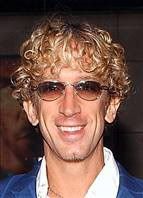
You do have expectations when someone tells you that you’re about to have one on one time with Andy Dick. Impropriety, boorishness and obnoxiousness are all things that spring eternal when you only have public perception to go off of.

True, if you’re doing your due diligence you can see that not all of Andy’s past can be written off to superfluous exaggerations that can be easily erased. He’s deserved a lot of it.

However, the roast for William Shatner has been a watershed in Andy’s recent past with regard to what the power of the written word can do to a person. A writer for the New York Post’s notorious Page Six gossip column detailed an out-of-control Andy that “groped” “tried to kiss” and “proclaimed his love for her” before finally “urinating in front of the horrified journalist.” It’s hard to defend one’s self against something like this but even though Andy goes on to explain what happened below, his language befitting his defense; it really is Andy’s suggestion to investigate the writer’s personal blog that opened my eyes to something genuinely pathetic.

The woman who supposed herself to be horrified by this whole situation has turned her audio of the situation into comedy and even employs her friends to “act out” the transcript in what I can only assume is supposed to be something amusing, funny even.

It isn’t.

It’s embarrassing. The woman makes a mocks of her own stupidity in thinking it would be hilarious to get all her cronies on a stage and make something out of a drunken moment that, even if true, is more sad and personal than anything else. This isn’t so much about exploiting this moment for whatever it’s worth but it’s a glaring reflection of this woman as a professional. Jayson Blair she’s not but it’s a shame to know that a woman who has such an impressive resume of popular periodicals she’s written for treats the profession of a writer, the very thing she touts as being so important to her, with as much regard as a vampire would give to a fattened sow.

Now, while the above incident stokes some of Andy’s emotional embers, we had to break this interview up over two days only because we had to stop after he vented regarding what happened that night, Andy was perhaps one of the most engaging interview subjects I’ve had the pleasure to talk to this year. His blend of honesty and irreverence makes him vulnerable, to be sure, but it’s a rarity.

You’ve got to give it up for a guy who helped push Ben Stiller into the pop cultural zeitgeist, who assisted a Kid in The Hall to make one of the better sitcoms ever produced by NBC and made an honest living over on ABC for so many years. It’s hard not to give thanks for a guy who works so well within the fabric of comedy and still finds the strength to fight the market forces that would rather see an obnoxious version of a persona he is trying to shed. True, public incidents have threatened to chip away at what he’s built over these years but it’s his tenaciousness that’s going to keep him around for a long time.

Watch for Andy Dick’s directorial debut this winter when DANNY ROANE: FIRST TIME DIRECTOR comes to theaters and as it lands on DVD. I caught up with Andy just as he was talking to someone other than me.

ACT I

CHRISTOPHER STIPP: What are you working on?

ANDY DICK: We’re writing a pilot and [the people I’m working with] have a lot of questions.

CS: What’s the pilot for if I could ask?

DICK: Comedy Central. I’m writing it longhand and they have to translate my hieroglyphics to the computer.

CS: Is it really that bad?

DICK: Yeah, because I think faster than I write.

CS: I know when you talked with Howard Stern last week regarding how well you’re doing since rehab are you finding your thoughts are coming to you quicker, cleaner?

DICK: Yup, oh yeah. Hell yes.

I bounce back surprisingly fast but it’s not like I’m shoting up heroin in a drug den or passed out on a big, black whore in a downtown LA crack house. Hey, I’m not sayin’ I’m too good for that. I’ve just never been invited to a good crack house.

CS: And this brings up a great point: is it odd to have so many people, the public, know so much about your personal life?

DICK: Yeah, that was probably a bad move on my part.

I know a lot of people in the industry with bigger demons than me, but you would never know it because they do a good job of keeping it under wraps. They do and their team does. My team, Team Dick, threw in the towel years ago, and it wasn’t really a towel to begin with. It was more of a cum rag.

Hollywood is riddled with addicts of all colors: drug addicts, sex addicts, gambling addicts, perverts, freaks and weirdoes. And I’m still talking about Team Dick, which of course I’m not only the president but I’m also a member. You know I’m just kidding, except for the cum rag part.

CS: And it seems like when you were talking with Howard last week that the relationship you’re forging with your son is helping you a great deal.

DICK: He’s a shining light in my life. He’s really a good kid.

CS: And was he there during the infamous Shatner roast?

DICK: He was in the audience.

CS: And for those not in the know about what was alleged in Page Six about what happened following the roast how did the events get so blown out of proportion?

DICK: Well, what do you think happened?

CS: From what I read it said you had openly urinated on the floor.

DICK: No, no, no. That’s such a lie. That girl came into my dressing room uninvited.

She’s a non-working stand-up comic; an unfunny, self-proclaimed, stand-up comic looking like a ravenous wolverine hunting for material.

She saw an easy target, his name was Andy Dick, and she forced her way into my dressing room past my friends. She’s cute so she was able to charm her way in, sit in the main chair in the room and hold court with the rest of my friends where she wowed everyone with her fake cuteness, her saccharine sweet smile, and the cunty way about her.

She then, after partying with us, drinking, having fun, doing whatever with my friends, and then announced that she is doing an article”¦she’s a Page Six reporter. And then, when I heard that, I said, “Oh, you gotta help me out over there. They’re so mean. They’re constantly raking me over the coals. You can see we’re just having fun, we all are, we’re laughing, we’re having fun.” She’s laughing, she’s having fun, she’s flirting with my guy friends, she’s pretty much slutting her way around my dressing room, like I said, holding court with all my guy friends.

I’m trying to explain to her, “You’ve got to help me. You can see I’m not doing drugs, we’re all drinking. You’ve got to write something. You can see I’m a nice guy.” I was really trying to toot my own horn and prove that I was nice. I went into the bathroom, which is over towards the door and around the corner, the toilet’s way around the corner, you can’t even see the door from where she was sitting, let alone the toilet. I left the door open and as I’m peeing I say out loud, “I’m leaving the door open so that you know I’m not doing drugs in here. That’s how important this is that you write something nice about me.”

So, even my best efforts to show, to appear that I’m doing well, which I wasn’t at my best, I was drinking, and by that point I was probably even half-crocked, she turned that into that I peed on her, you say I peed on the floor, I didn’t pee on the floor, I peed in the toilet, with the door open, where no one could see so that she could tell that I wasn’t doing any kind of drugs because I wasn’t.

If I ever see her now that I haven’t been drinking and I have my wits more about me, if I ever run into her again I would kick her in the cunt if I didn’t think it would ruin my shine. And that’s a quote from Michael O’Donoghue from Saturday Night Live when he was upset about being cut out of a cast and crew picture.

You can see I’m a little angry.

CS: And rightfully so.

DICK: Thank you, I agree.

One girl, single-handedly, one comic, non-working, un-funny, because I’ve listened to some of her stuff on MySpace, one comic almost single-handedly took me out at the knees and it did major major damage.

Now, I didn’t need any help to figure out I needed to sober up. I was taking a break, I had just finished months before the roast, Less Than Perfect got cancelled, and I was taking what I call a mini-vacation. I was drinking, taking a vacation, and I knew I was going to sober up before I started working on the Comedy Central pilot. I didn’t need any help from this girl. I can take myself down to my own bottom.
CS: Well, why do people like her exist to perpetuate disinformation?

DICK: Everyone loves to read about someone else who’s doing horribly. It makes them feel better. Even I do. It’s very hard for me but I do not read the tabloids. They’re right in front of my face when I’m buying something at Whole Foods, and I just do not pick them up. I want to, I want to see that weird picture of Nicole Ritchie running on the beach and she’s got folds of skin”¦it’s right there on the cover, you can’t get away from it. It’s so unfair but I’ve seen other pictures where she doesn’t have the cellulite. Which one is the untouched picture?

It’s so creepy but people love to read and hear about other people doing horribly. But in this particular case this woman, because I have people that report back to me from New York City, who have seen her live on stage at an open mic type of situation where she’s not getting paid, talks about me and, pretty much, takes her little story, expands upon it, and turns it into a little one woman show.

She’s just a fuckin’ bitch is what she is. She’s just a true, downright fucking needy desperate little whore bitch. And you can print that.

She’s a horrible person and those people are out there. She SOLD her shit, probably for 50 bucks, to Howard. And that’s why I was so mad at Howard that he would take that and he would do that. He would play it on the air and it’s like I wish I had a mini tape recorder so I could record, just a little bit, of Howard and his girlfriend having sex. I bet that would be really funny. But, I wouldn’t do that.

I would love to be able and record one one conversation that witch has had with her ex-boyfriend or her mother or herself when she’s talking into the mirror: “Who’s the cuntiest of them all?” We could play that on the radio for everyone to hear. It’s like, leave me alone. I don’t go after you and your pathetic life don’t go after me and my pathetic life. I can get to a place where things are pretty pathetic, I don’t need any help getting there”¦having it being spread all over the airwaves like bad Smuckers jam on moldy Wonder Bread. I ain’t milquetoast or middle of the road white bread, baby.

CS: Any way for retribution or a retraction”¦

DICK: There’s too much stuff out there”¦It’s impossible because it starts with the seed of truth. What am I going to do, hire lawyers to sue her? There’s just no point. That just keeps it alive, and then suddenly she has a career based on me trying to sue her. It’s a vicious circle. It just gives it more and more power. I’ve already given her too much power in this interview. I’m done. She’s dead to me. That’s the last you’ll hear about her except when I go to jail for kicking her in her dried-up, barren, rancid, smelly cunt.

[Andy laughs]

ACT II

DICK: Let’s do this”¦

CS: Let’s talk DANNY ROANE: FIRST TIME DIRECTOR.
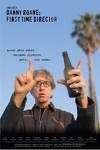
DICK: What do you want to know?

CS: Well, it looks like your first foray into making your own film.

DICK: Yup, I wrote it, I raised my own money by going to the bank and taking it out my account, produced it, directed it, cast it, used all my friends in it and sold it to Lions Gate.

CS: Were you the one involved in pitching the movie to Lions Gate?

DICK: No pitch. I made the movie; shot it, directed it, edited it, had it all done and I just had to show them the final product. There was no studio involved. The movie was done and I showed it to a bunch of people. And then Think Films”¦You’ve heard of Think Films?

CS: Yes.

DICK: Think Films, they did THE ARISTOCRATS, they wanted to buy it, Lions Gate wanted to buy it, and a few other companies wanted to buy it, and I chose Lions Gate just because I just”¦they offered more money and I was in a movie, EMPLOYEE OF THE MONTH, I was in that and it’s a Lions Gate movie and so I just wanted to stay in bed with them, so to speak. I’m about to go pitch them a movie now, the normal way. Where you pitch it and then write it and develop it and I’m doing that next week.

CS: Were you at any kind of disadvantage when you made DANNY ROANE with regard to having to coordinate the schedules of the people I see that are in it, Jack Black, Ben Stiller, Maura Tierney, etc”¦

DICK: There were a lot of roadblocks and obstacles but I got through all of them. There are just tons and tons. There were so many that a normal person would just quit and stop but I had a great producer, Marshall Cook, who, every time I wanted to quit, would say, “Let’s just keep going.” We pushed through and pushed through.

We only shot for 12 days.

CS: Really?

DICK: Yeah, we had some pick-up shots throughout the year and then we edited, we edited for a good 8 months, on and off, because I used 5 different editors, at different times, then the Avids were set up in my house and we really just did it on a shoestring budget and by the skin of our teeth.

CS: A lot of people have to go back and do re-shoots”¦Anything you thought you captured the first time and then it just didn’t happen to capture the way you wanted?

DICK: No, I have a lot of disappointments, but that’s how it is with any artist: “It could’ve been better.”

Could’ve been better but everything I’ve done in my life could have been done better. But, it’s a great great great movie and”¦could’ve done better.

CS: So you still want to make a second feature?

DICK: Oh yeah, this next one I am pitching”¦I’m going to write it, direct it and star in it as well. I want do one a year like Woody Allen. I love it. I love the process. It’s just like a painting; you constantly want to paint over it and repaint it and make it better. It’s like when I first learned how to do oil painting and I painted a picture and it was so beautiful but I kept tweaking it to the point where it was an ugly mass of globby crap. You can’t do that. It’s too easy to overwork something.

CS: That’s a great thing you’ve said because some of the greatest authors of literature, when they were still alive and had a chance to edit subsequent editions of their work, tweaked and revising. Is there a point where you can’t stop yourself or do you have to say, “This is as good as it’s going to be”?

DICK: I guess”¦that’s the most important part of director’s vision: just to know when to stop. Just to know when to say, “This movie is done. It’s as good as it can get,”

For what I shot, and the amount of money I had, DANNY ROANE is as good as it can be or I wouldn’t have stopped. I edited my little heart out till I said this movie isn’t going to get any better for what it is and for what I have shot. I can keep going back to add a little more, edit a little more but I can’t because I don’t have the money. You just have to stop. And that’s when the director becomes the artist. He has to make that creative decision. “Ok, now we’re done folks.”

And I’m not even really done because I have to take out a lot of the music that’s in it because I only paid for festival rights and now that it’s going to be a real movie”¦it’s going to be another $100,000, I found out, to buy the songs so I have to have friends write songs, I have to write songs, I need to find cool indie bands that don’t have publishing deals yet because I don’t have $100,000 in my pocket to pay for all the great songs I picked out. Everything from Ween, Tom Waits to Nick Drake. I just don’t have the money.

CS: Does that change the vibe of the film? When you’ve obviously scored it in your head”¦

DICK: Of course”¦My goal is to make it even better, of course. I’m not going to cheapen it. I’m going to find songs that, in my head, make it better, obviously. I’m not setting out to make it crappier.

I’m going to take my time”¦really sift through lots of music that people are giving me. I’m going to find the right songs. I’m going to have a kick-ass soundtrack and it’s going to be better than the original one because the original music was a lot of afterthought, “Oh, by the way, we need music.” And I quickly gathered all my favorite songs, not worrying right then and there how much it was going to cost me.

Now, it’s time to worry about that.

CS: And when is DANNY ROANE going to come out?

Hopefully, sometime next year. Beginning of next year. January, February, something like that, on DVD. We might have a small theatrical opening, New York, LA.

CS: Excellent. And now, I hate to switch gears so fast, but because I know you don’t have that long I’d like to know more about The Shit Show you did on Sirius.

DICK: Oh good. Now THAT’S something we can talk about at length because that’s happening right now.

I’m actually in negotiations with both Sirius and XM so it’s kind of like DANNY ROANE where I was talking to Think Films and talking to Lions Gate.

I have a relationship with Howard Stern and he”¦we already did a pilot episode [on Sirius] that was an hour long, and that was two Tuesdays ago, at 10 o’clock at night or something like that. And it went really well and they were trying to make a deal with me but the money is so low, it’s laughable.

And I called XM and said, because I had been doing some interviews on their stations, “Would you guys like me to a do a show for you?” Because I had so much fun doing the show [on Sirius], it was so easy, and they kind of sweetened the pot a bit”¦they said, “Well, we’ll set up a studio in your house.” And I’m like if I have a studio in my house I wouldn’t mind doing a daily show which means, of course, more money, more fun and it could just be every night at like 10 o’clock from 10 to midnight. I think it should be from 11 to 1 because a lot of people go to bed between the hours of 11 to 1 so they could listen to it as they go to bed so I’m the last thing that they hear and they can dream about me all night.

[I laugh]

CS: And what kind of content?

DICK: It’s hardcore.

I use it as a platform. It’s almost like therapy for me. I just basically”¦it’s a music show, one musical guest, and a big one, like we have the Flaming Lips lined up, the lead singer from the Flaming Lips, we’ve got Isaac from Modest Mouse, we’ve got people all lined up to do the show, Alanis Morissette, Dave Grohl, these are all the people that we’re going after, who are also my friends. Jack Black from Tenacious D, Jack and Kyle, both of them, and all of them always have an album to promote.

It’s hardcore but it’s fun. We’re going to say the word “shit” we’re going to say the word “fuck,” because that’s the way I talk. The show has three segments: sex, drugs and rock n’ roll. And I basically talk with this person, it’s kind of like absolving your sins, we’ll top each other’s stories. “Oh, you did that? Here’s what I did this one time”¦” And we just talk about things we’ve done in the past and either how we either regret them or how we’re apologetic about it”¦it’s an amends like in the 12-step program. There’s a step in there called making amends where you talk about things you’ve done in the past. You go to that person and if there’s an apology owed you make that apology.

I have people call in and one segment is “Andy Dick Owes You A Formal Apology” and there’s plenty of people who call in who say “You know what you did to my girlfriend” or “You know what happened one night ten years ago” and I either corroborate the story and give them a formal apology that is pre-taped, I just insert their name, so that’s kind of a joke, but it’s good to just clear, on a very mundane, base, level”¦it clears my past. I don’t see the person eye-to-eye but I feel good about it. When I did the show I just felt real good. I must have had 10 callers call in on that segment alone.

For the most part the time runs out really fast, I never want it to end, and the whole time the musician is acoustically playing background music and by the end we talk about what’s coming up for them and then they play one or two songs from their album. They can play covers. It’s really an awesome show.

CS: It seems, if I can say it, like a real un-Andy Dick from what people would probably expect”¦

DICK: Yeah, it’s EXACTLY what they don’t expect but it’s exactly who I am and who I’ve been for years. It’s just showing another facet of this sweet, precious diamond called Dick.

[I laugh again]

It’s just another facet. It’s just an untapped market that no one knows because I’ve always hung out with musicians. Most of my friends are musicians. I don’t have many actor friends. Most of my friends are musicians and writers and then a few directors but I don’t really have a lot of actor friends, I have a handful. I might have some shows where I bring on actor friends. I was just hanging out with Natasha Lyonne and I said, “You should be on the show.” Even though it’s a music show I might bring her on because she knows bands, that’s what I could do, because actors always like to hang out with musicians and vise-versa.

CS: It seems lo-key”¦

DICK: It’s totally lo-key and not publicized. No one really knows about it. You ask me when and where I don’t even know. The times change. I don’t even know what fuckin’ satellite station it’s going to be on but I really enjoy myself. Since I’ve done hundreds and thousands of talk shows in my 20 years in doing this business professionally, I’ve done so many, that it comes naturally to me. It’s just talking on the radio and it feels so freeing kind of like taking all of your clothes off and running down the beach; to be able and go on the airwaves and just not have a clamp on my tongue. I don’t have to cater to anybody. I can say and be whatever I want. I can talk about ANYTHING and that feels REALLY good because I am so trained like a little flea in a flea circus who is underneath a glass dome. I can only jump up so high. And then you remove that glass and I am just starting to get my sea legs in this format.

I found myself tentative to use the “f” word but that only lasts 5 or 10 minutes and then I was on a roll, I was just going nuts. Then it was hard for me to go back, I was doing interviews, normal interviews, I was on Loveline shortly after that and they not only had to bleep me because I used the “f” word accidentally, but they cut my mic off for like 3, 4 or 5 minutes as a punishment. And I’m like, “You’re not punishing me. I don’t care if you cut my mic off, you’re punishing the listening audience because they can’t hear me now.” So, yeah, they cut my mic off and so Dr. Drew and Stryker were talking while I was in the corner with the dunce cap on my head”¦because I said the “f” word.

So, it’s hard to go back and forth a little bit but it’s just a skill I’m going to have to hone.

CS: And people expect a certain kind of “Dickness,” if I may say so, and”¦

DICK: Yeah! They expect a certain vulgarity, a certain clowny goofiness but, to be honest with you, my roots are in grounded subtlety. My comedy roots really, believe it or not, are in grounded, subtle, almost sweet, and precious, comedy moments that are very real. Like Bob Newhart, Shelley Berman, Mike Nichols and Elaine May. I was trained at Second City and ImprovOlympic where the motto is, “Truth in Comedy.” The comedy there was very grounded in reality.

I was just recording an episode of the Simpsons yesterday, playing myself. They said to me”¦I just have one line”¦and I just basically am Andy Dick trying to fit into the Blue Collar Comedy Tour and my line is, “Oh, I’m blue collar, I’m totally blue collar, my dad owns a shovel.” And I did it just like that. Really quiet. And they went, “Um, ok. Bigger! You can’t be too big in a cartoon.” And I’m like, “Ok. I’m blue collar. I’m TOTALLY blue collar, my dad owns a SHOVEL!”

They’re like, “Really Andy Dick it up! Andy Dick it up! Bigger!”

“I’M BLUE COLLAR. I’M TOTALLY BLUE COLLAR, MY DAD OWNS A SHOVEL!”

And they’re like, “We love it.” What happens is the media, the people, the producers, the directors, the industry, the town, the audience, pushes you, pushes you, pushes you to be bigger, bigger, bigger. It’s up to the actor or the artist to say, “You know what? This is all you’re getting. Because this is how I want to be. This is how I want the character to be. This is all you’re getting.”

And that’s why, a lot of the times, the big actors are so great”¦they’re so subtle. But sometimes it’s just because being big or being excitable is not in their repertoire. They’re just too cool for school. But, other times, it’s because they’re great actors and they’re making a conscious choice to keep it real and keep it subtle. Once “the guys upstairs” see that you can do the big stuff they don’t want you to be subtle. They just want you to be big, loud and goofy.

I was watching Robin Williams last night on Leno. He started off funny and manic and he got more and more manic until, by the end, he was screaming so much and so loud that he popped his throat. You could hear that he hurt his vocal chords.

CS: God”¦

DICK: That’s what happens. The audience laughs at your manic-ness and they’re going to stop laughing unless you up the ante and go even more crazy and that’s a trap we fall into as comedians. We’re so desperate to get that laugh that we’ll just keep screaming louder, dancing harder and faster until we’re sweating and panting with blisters on our feet and vocal chords. Yeah, it’s a problem that I have.

I want to please people so bad, and I want to get that laugh, that I keep pushing myself but I prefer the quieter, subtler, sweeter moments.

I prefer the movie SIDEWAYS. I prefer the movie LITTLE MISS SUNSHINE. I saw SIDEWAYS 10 times. I’ve seen LITTLE MISS SUNSHINE 3 times. I walked out of ANCHORMAN. I walked out on WEDDING CRASHERS. Don’t tell anybody, though, because the same producers produced EMPLOYEE OF THE MONTH. I am not a big fan of that kind of comedy. That’s something you don’t know about me. You wouldn’t think that. You think the exact opposite. It’s part of my psychoses.

CS: Seeing how your best work really came through in NewsRadio, The Ben Stiller Show, The Andy Dick show on MTV, works that allowed you to control whether you needed to be more subdued or more energetic depending on the situation, are you really going to try and stick with this mantra that “This is my art. You can take it or leave it” and not succumb to the pressures for you to “Dick it up”?

DICK: Yeah, I’m trying.

I’ve been trying and I’m going to continue to try and I think I’m just getting better at it as I get older because I’m 40 but I think the way that it’s really going to work is I’m going to have to do my own stuff. And that’s what DANNY ROANE is all about”¦even DANNY ROANE is a little crazy but there is a lot of subtlety in DANNY ROANE but I can’t, all of a sudden, just bring it all down so much”¦I have to ease people, spoon feed them a little bit, ease them back into”¦EMPLOYEE OF THE MONTH was that for me, to a point.

In fact, I read a review for EMPLOYEE OF THE MONTH where one of the critics said, “And then Andy Dick as Lon,” and in parenthesis, “(not manic for once.)” In parenthesis! I’ve got to get myself out of those fucking parenthesis.

CS: Thank you so much for your time.

DICK: Fuck you.

##

##

Quick Stop Thingamabobs: 10/24/2006

Filed under: Columns,Thingamabobs — UncaScroogeMcD @ 2:40 am
thingamabobs.jpg

The web. It’s a big place, full of plenty of distractions ““ some funny, some informative, some ludicrous, some disturbing, some inane, some profound. Each and every weekday, we present links to a few of our favorite finds”¦

————————————————

  • Go watch the first four minutes of Borat. Is very funny. (Thingamabob)
  • And they say advertising lies… It seems beauty is in the eye of the Photoshop filter. (Thingamabob)
  • Taking Congress back, one Jedi at a time. (Thingamabob)
  • In celebration of the release of the (hopefully) first volume of Sesame Street: Old School on DVD, how about a classic tune about a man and his Duckie? (Thingamabob)
  • Lewis Black on the Reality TV Writers strike… (Thingamabob)

Have a THINGAMABOB? Send it in!

##

Party Favors: Of Mouse And Man

Filed under: Columns,Joe Corey's Party Favors — UncaScroogeMcD @ 2:39 am
partyfavors1.jpg

ORLANDO – Why do parents insist on bringing kids to Disney World? Are they gluttons for punishment? Or are they merely sadists that enjoy ruining vacations for everyone else?

Disney wants us to think we’re going to “the happiest place on Earth.” But after you cleared the turnstiles, you’ve entered the world’s largest a K-Mart.  If ever there was a land where parents want to beat their kids, it’s the Magic Kingdom. The cast members should wear a pin declaring, “Can I hold your purse while you shut up your brat?”

If your child isn’t 40 inches high, don’t bring them to Orlando. Why haul a kid to Florida that can’t get on the E ticket rides? I can’t stand having to watch 36 inch kids whine about why they can’t ride Space Mountain. They whine and cry longer than the ride – including the walk through the concourse. Worse is idiot parents that haven’t a clue how tall their kids are. They take them halfway through the line only to see junior not measure up at the entrance. I get to experience their kid screaming at the gate demanding a chance to die in the dark. Remembering when thinning the herd was a positive part of child rearing?

The 30 inch high kid is the perfect height to ride my knee when they dart around the park trying to make a break for Donald Duck’s arms. Instead of being able to enjoy the beauty of my surrounds, most of my time I have to look down to make sure that I don’t stomp a tyke or two. Amazingly enough, it becomes my problem when I break their kid’s nose. How am I supposed to enjoy myself with a constant fear of being carted away in cuffs and facing a million dollar lawsuit? What is so wrong with keeping kids on a leash? And remember to pay extra for the muzzle.

If the height thing is a little too tough for you to figure out with your child, here’s a simple approach: if you have to push your kid in a stroller – don’t go to Disney.

Wanna know what’s slower than a baby being pushed in a stroller? A baby being pushed in a stroller by their grandparents. Some of us have come to a theme park to get on as many rides as humanly possible. The worst part is they clump up and swap “cute grandkid” stories as their paces slows down But the molasses disaster patrol can gunk up any smooth experience. NFL offensive line coaches should visit Orlando to learn the geriatric blocking patterns.

I want to be able to relax and enjoy myself in the land of Mickey Mouse. It costs $67 for a one day pass and another $45 for the park hopper. After taxes I’ve forked out $120 to witness parents berating their kid to stop whining or they’re going back to the hotel. They’re blowing my cool. I paid for fun and instead I’m getting to relive my own childhood trauma trips. I’m going to have to pay a shrink $200 an hour to recover from my vacation.

What really gets these family squabbles going is the huge amount of Disney merchandise that little kids want. Disney World is a huge gift shop interrupted by lines for rides. In the Magic Kingdom only 2 major rides don’t end in giftshops (The Haunted Mansion and Thunder Mountain Railroad). There’s dozens of “gimme” moments to hurdle when it comes to little kids. I don’t get the necessity of Disney to overwhelm us with giftshops. All of Main Street is a giftshop. Who wants to buy large amounts of glassware after getting off a ride? Where are you supposed to put this stuff when it’s time to get on Space Mountain? The obvious answer is to shove it down your kids throat when he won’t zip his yap. But that’s illegal under Florida law.

You really shouldn’t take your kids to Disney World until they’re old enough to drive you to Florida. And if the little ones want to go, just take them to Hooters. They get a rush out of a riding around the table in the arms of a waitress in a tanktop.

TEARS FOR A GLOBE

EPCOT is the saddest place in the universe (outside of A-Rod’s bathroom). The episode of The Simpsons where the family gets stuck in a nightmarish theme park based on EPCOT isn’t a joke. Walt’s dream of a society that pushes the boundaries of science hasn’t merely been abused by the Disney suits. It’s been beaten to death by Walt’s own creation.

Unlike the hustle and bustle that meets you at the gates of the Magic Kingdom, the longest ride at EPCOT is the security shakedown. Can I just ponder what’s the point of merely looking in a purse? If you’re an active terrorist, are you really just going to put your tools of destruction in your Birken Bag?

And it is at the gate that you can immediately tell that Disney is giving up on EPCOT as a vision of the future. The amazing Geodesic Globe has now been defaced with a Mickey Mouse arm and stars strewn across it’s surface.  And the topiary bushes in front of the dome are shaped like characters from Beauty and the Beast. Who needs the future when you can have Disney magic tossed in your face? The buildings of Future World look way too educational for their own good.

The saving grace of EPCOT can be summed up in one word: Booze! Yes, the whole point of going to this theme park is dinner in the World Showcase with real booze from around the world.

The bad part is that it must be a two mile walk to get from the gate to the imported beer and wine. In the Florida heat and humidity, it’s inhumane. When it comes to visions of the future, nothing tops The Jetsons. Did you ever see George and Jane walking to dinner? Why doesn’t Disney have stinking people movers in their recreation of tomorrow? And it seemed like a majority of the people in the park wanted to get to the World Showcase.

Disney needs to convert the Future area to what people want – Land of Booze! Why not give us an exhibit courtesy of Jack Daniels, Jim Beam and Aristocrat? And for the ladies, come on down to the lake to see how Cabana Boy mixes up the good stuff.

WHO RUNG IN?

While the new snazzy set on Jeopardy looks great, they need to fix the lights that declare which contestant has buzzed in first. On the long shot, I can barely see the row of thin red lights pop up. My TV set is bigger than a Watchman. Why must Alex and the gang be so secretive in letting us know which of the three is going to belt out the question? Are they hiding it from the terrorists?

BAM!

Will Barry Scott (Mr. Easy-Off Bam!) duke it out with Billy Mays (Kaboom!) for most annoying pitchman that isn’t selling Head On? I’ve already seen one ad with Barry and I already want to throw a Bloomin’ Onion at his head. And what’s up with importing this guy from Australia? Are we lacking annoying goofs in this country? We need immigration reform to protect the future jerks being raised in America.

WHO ARE YOU CALLING FOR?

Will Citibank outsource their phonebank to a part of India that speaks English? What’s the point of calling it customer service if a customer has to call up the UN for a translator to figure out how to get serviced? I can’t even cuss at these folks across the world because they don’t know my kind of swearing. Remember when we were merely pissed off at getting routed around the phone wizard? We just wanted a human voice. And now we’re paying for it since these loser businesses went cheap.

BLOOMIN’ FUN HUM

Hurray for the “Outback Tonight” jingle for the Outback Steakhouse. Enough with just recycling the same classic rock tunes to push your product. Give us the tunes that sell the tasty products!  The jingle is the best new song on the radio this season. Now I’m ready for another Bloomin’ Onion!

HAMMER HURT HER!

Before Dancing With the Stars started the new season, Tom DeLay sent out an email telling his supporters to call up and vote for Sara Evans, the country music star. “We need to send a message to Hollywood and the media that smut has no place on television by supporting good people like Sara Evans,” wrote DeLay. Well a few weeks into the show Evans has filed for divorce and it’s pretty f’n ugly. She’s claiming her husband was a horn dog who didn’t mind sitting around watching porn while his son walked into the room. Plus the guy cheated on her with the nanny. Evan’s husband is now getting word out that she was a bad mother who neglected her kids while dancing for the show. Plus word is spreading that she was boffing Kenny Chesney.

What sort of “good people” is Sara Evans? DeLay was trying to slam Jerry Springer, but it appears that Evans and her husband are running around a stage in Chicago throwing chairs, flashing boobs and being held back by Steve. Thanks to disgraced ex-Congressman DeLay, we’ve once again been fooled into supporting the morally degenerate Showbiz weasels. Maybe Evans isn’t one of those evil Hollywood freaks, but country music is a world of sex freaks and drug abusers.

The fun part is that Kenny Chesney has already said that he didn’t have sex with Sara Evans. “He would NEVER think of her like that,” said a Cheney PR flack. Insert laughter from the bullriders who have their own theory about Kenny and women. If anything could have helped it’s reputation, it would have been to release videotapes. Of course we live in a universe where David Geffen, the gayest man in Hollywood has boffed Marlo Thomas and Cher.

I wonder about the relationship between DeLay and Sara Evans? Maybe the Hammer earned his nickname the old fashioned way? Chesney said that they are merely “good friends” and DeLay used those same words. Hmmmm?

All I need to know right now is that Sara Evans is now responsible for a lot of smut being aired on TV thanks to her disgusting lifestyle. Perhaps DeLay needs to send out an email to America for promoting a pack of pervs, Quit hurtin’ us, Hammer.

BOO!

After crapping out for the past few years, both TCM and AMC have gone overboard on providing monster flicks for this Halloween season.

October 23, 2006

Preachin’ From The Longbox: I’ve Lost That Loving Feeling

Filed under: Columns,Preaching from the Longbox — UncaScroogeMcD @ 4:27 am
longbox.gif

The Last Sermon – “I’ve Lost That Loving Feeling”

October 23, 2006

I’ve finally lost it.New York aka Tiffany from Flavor of Love 2

Not in a postal sense. And not in the sense of losing it like New York’s going out with her verbal guns a-blazin’ when she got bounced by Flavor Flav in the “The Flavor of Love 2″ finale. I would say that she should save that drama for her mama but it seems like that’s where she got it from in the first place. That girl has more baggage than Samsonite.

Actually, I think that I’ve hit some sort of mental wall and in the process, I’ve lost my passion for writing about comics. Well, at least for the time being.

To get a better grip on why I lost this drive, I went through some personal inventory. Obviously, some of the blame has to do reside me and I’ll own up to that fact. While I often derive a sense of accomplishment from bringing a “different” view on the world of comics while not trying to be serious about the whole industry, it is no longer as fun as it used to be in recent months. That has never more apparent than by the recent delays in the posting of the PftL columns; normally they were posted on a bi-weekly schedule but now have slid into an almost once a month-ish, when I have something to say kind of pattern. That’s not good. Also, while I’ve always claimed that I’m an unabashed hypocrite in most respects, I’m finding it more and more difficult to constantly bitch about some comic books that are always delayed when my own columns miss multiple deadline dates.

I also seem to have lost my, for lack of better words, comic book radar. I pride myself in trying to unearth comic book nuggets and offer them to you, the reader, on a four-color platter. But within the past few months, I’ve missed writing about a couple of topical things:

“Aquaman” pilot on iTunes ““ How could this slipped past me? I found out about this from Entertainment Weekly and after verifying that it was there, I couldn’t look myself in the mirror for a couple of days. How can I call myself a comic book columnist if I didn’t know that this Smallville spin-off was in existence? It is almost inexcusable.

“Space Sentinels: The Complete Series & Freedom Force: The Complete Series” ““ Again, how long have I been asleep at the wheel? This set was released back at the end of August and I just found out about it yesterday night. I’m so about the old Filmation superhero junk. I would’ve pimped this stuff at least a full month before it came out. For no other reason other than to make sure that there will be more of this classic 70s-80s Saturday Morning cartoon stuff out on DVD. At least, I can mark a December date in my calendar for the release of “Dungeon & Dragons: The Complete Series”.

Alright, back to the subject at hand. Typically, I should be able to write a column about comic books with my eyes closed (and if you read some of my older columns, it may literally be the case). But the fault is not all at my feet. The books themselves have left me, for the lack of better words ““ speechless or for the problem for the continuation of this column, wordless. And obviously, that’s not a good thing.

Currently, the mission of both Big Two in the comic book industry is hopelessly devoted to one thing, which is that money-grabbing and decompression-abusing practice that is also known as company-wide crossovers. Bruce Hornsby and the Range

Now, before any of you out there rightly say that there are many more genres to comic books for people to read other than an overindulgence of the Big Two’s superhero comic books, I can only say two things:

One ““ Despite the emergence of Image, Dark Horse, Oni Press, IDW, Boom Studios, Viper, and the rest of the smaller publishers, the comic book industry rises and falls on the weekly output that transpires from the Big Two. I wish that it wasn’t the case because there really are some inspired books being created and sold. But as Bruce Hornsby sang all those years ago, “That’s just the way it is. Some things will never change.”

Two ““ I was “made” into this business as a tights-and-cape guy over twenty years ago and I can’t seem to shake it. Trust me; I know that I’m not the only one who still feels that way.

Trying to keep up with these 100-plus inter-connected monthly titles (plus stand alone title) is mentally, not to mention physically, exhausting. You can’t swing a dead cat in a comic book shop without hitting at least ten books that don’t have somewhere on the cover bearing either Identity Crisis, Infinite Crisis, Year One, House of M, DeciMation, or Civil War logo. That’s too prevalent; especially for my liking.The Worst Movieof 2006

All of this stuff is so in my something-to-bitch-about wheelhouse; just in case you didn’t know. And yet, I don’t have the impetus to transcribe my feelings into words. It’s as if I have this feeling that I haven’t had since I took that Home Economics class back in seventh grade, which is the same one I have for the lame 80s parity, Totally Awesome. That feeling is one of the seven deadly sins that scared Billy Batson into becoming Captain Marvel all those years ago ““ Apathy.

Once I finally realized that I’ve turned apathetic toward the world of comic books (actually, the industry itself, to be specific), I went through my options and went with what would be best for everyone involved. It wasn’t an easy decision to make and it has been something that I’ve been wrestling with for a couple of months. But, I’ve decided that a break from writing about the subject would be probably the best thing that I could do.

But, dry those eyes; the end of this column doesn’t mean that I’ll be leaving this cyber plane any time in the near future. As time permits, I plan on still posting (albeit a little more frequently) on my official site and also on my page on MySpace. So, hopefully, you all can come by and say “Hi” when the urge strikes you.

So, to put a black ribbon on this closing ceremony, let me send some gratitude to the following people/groups/organizations/etc.:

To Mr. Kevin Smith ““ for sinking some of his vast fortune into a site that was a running gag in one of his movies just so schlubs like me can feel better about writing utter nonsense and have it treated like a respectable piece of quasi-journalism.

To Ryall ““ the one who “made” me. Seriously, thanks for giving me the initial opportunity to come here to the bastard offspring of the View Askewinverse and to still keep in touch even as he’s beginning his second stage of dominating the comic book landscape (which will still be denied until his master plan removes variant covers from the face of the Earth).

To Ming ““ for being rock solid and helping out whenever I asked a stupid question, which was more times than I care to remember.

To UncaScroogeMcD ““ for keeping the home fires burning with QSE. Keep the faith, man.

To the MPS/QSE board members (Ozchick, JJ, Fanny, JK, Zens, By-Tor, Robbo, TK, DbleA, Phit, Ratm, Bamms, RB, Jason B, and the gang) ““ thanks for welcoming me in without too many reservations and for allowing me to hang out on the best board on the Internets.

To all of the pros (like Keith Giffen, Ross Ritchie from Boom Studios, Larry Young from AiT/Planet Lar, Wes Molebash, Steve Rolston, Chris Pitzer from AdHouse Books) that I’ve met through this column ““ thanks for the free merch and for the words of encouragement.

To my lifers, Eddie C and Chet K ““ thanks for hanging in there when no one else did. I’ll always remember that.

To the readers of Preachin’ from the Longbox ““ words can’t totally express the gratefulness that I have for each and everyone of y’all out there in the sea of the Net so I won’t even try other than say, “Thanks”.

Finally, to my wife, Teresa, and my two kids, Brady and Chloe – being in my corner during this two-year, non-paying, stay-up-real-late-at-night run at being a pontificator of all things comics for a pop-culture website. Sure, it wasn’t all that easy. But not one of you voiced your complaints. Well, at least not about this stuff. I’ll make it up to you all. Promise.

So, with all that being said, it’s time to close up shop and bid adieu for now. With a heavy sigh, here, for the last time at this residence, are my parting words:

Don’t forget to keep your bags and boards together and your continuity straight.

Hope to see you around,

-britt

Nocturnal Admissions: Movie Review, The Departed, Part 3

Filed under: Columns,Nocturnal Admissions — UncaScroogeMcD @ 4:18 am
nocturnalheader5.gif

I’ve probably said all I must say about The Departed, and should move on to Marie Antoinette, The Prestige, or Running with Scissors, but I happened to see the film again, at a terrific theater in Vancouver, Washington, called Cinetopia, and it inspired some further thoughts about the film. And also it’s a Martin Scorsese movie, AKA, one by “our “greatest living director,” which merits as much comment as possible. But I’ve been surprised at how cool my enthusiasm for the film has turned, and I’ve been intrigued by anti-Scorsese backlash articles, such as Tom Scocca’s in the New York Observer (not on line for free, but page 8 of the October 9 issue), in which he asserts that Scorsese is not really the grand old man of movies but rather more a master of scenes rather than the whole, and at David Bordwell’s blog and the response at Jim Emerson’s site. Bordwell maintains that The Departed is sloppily edited – and bear in mind that Scorsese started out as an editor. But all this commentary and a second viewing got me to thinking about it again, and that led to a series of unrelated observations. [By the way, the “errors” of continuity that Bordwell points out – a dancing desert, an appearing and disappearing can of beer – are on second viewing not errors at all. ]

DeCaprio blue
  • Where does the title come from? There is a small card among the flora on Billy Costigan’s mother’s catafalque, saying “Heaven Holds the Faithful Departed.” The card is from Costello. I’m guessing that the title refers to how the dead hover over us and guide our present. But in general this movie is death obsessed, much more so than Infernal Affairs, wrongly accused by everyone from Ballhaus to the Nation‘s Stuart Klawans, who obviously hasn’t see it, of being crude, non-stop violence. That movie was about identity. This one is about playing parts. But in the face of death. I accused it originally of going “a body too far” in its climax, but that actually just a measure of Scorsese’s morbidity. The most famous exchange in the film is a guy saying to Costello that his mother is “on her way out,” with Costello replying, “We all are. Act accordingly.” Costello’s behaviour in the face of death is to act like a hedonistic nut.
    Matt
  • This is the gayest Scorsese film since Raging Bull. There are numerous gay subtext and sub-themes in the film, but the most obvious concerns the snazzily dressed Sullivan’s homophobia – impotence. He calls the members of the Boston firemen rugby team homos, can’t get it up with Madolyn Madden (why does Vera Farmiga almost always play characters with alliterative names: she was also Jocelyne Jordan in The Manchurian Candidate), and resents being mistaken for gay by the guy selling him a condo.
  • It may be that Sullivan is more interested in power than sex. I didn’t really follow why he was always looking at the gold Boston state house dome so covetously. But I read in a blog somewhere that it’s a measure of his ambition. Why stop at being a cop? Why not go all the way? DA (he’s taking night classes in law)? State senator? Governor? This aspect of his character isn’t fully fleshed out, however.
    Kiss
  • Sex
  • The first time I saw the film I was a little irked that they had condensed the two women in Infernal Affairs into one. Then, after the film opened, I read in Variety that to the surprise of Warner Bros., the film was tracking very well with women viewers. At that point I realized that this was probably a cunning move on the part of Scorsese and Monahan. What woman could resist identifying with a character who had both Leonardo DiCaprio and Matt Damon fighting over her?
  • I’m baffled as to why Vera Farmiga has received such a drubbing from the reviewers. On one level she looks cute and professional in her three piece suit; at the other end of the scale, she does things with her part that I don’t feel like I’ve seen before, behavioral choices that seem fresh and original, the way Brando’s approach did in the 1950s. She veers from sternly professional and vulnerable, grappling with the differing pulls of honesty and the necessity to lie, which is one of the themes of the film. I feel that she is being terribly underrated.
  • Vera
  • This time around I noticed the red-lettered book Violence in the Streets on the shelf behind Madolyn’s desk. Should I be impressed with the attention to detail or dismayed at the obviousness (and blankness) of that plant?
  • Nicholson’s Costello is in the tradition of Scorsese characters who don’t communicate well. Think of the incoherent diner chats in  Taxi Driver, or the misunderstandings in  Mean Streets. No one ever really seems to understand what others are saying, and Costello confuses his auditors, who grow to think he is crazy.
  • I’ve read that Scorsese had to be convinced to make this movie, as he has so many others in the past. Plus, he reportedly hasn’t seen the source film. And the film is set in Boston rather than New York, and concerns Irish gangsters instead of Italians. Do these elements account for the patina of frostiness and lack of invention in the film?
  • The graveside scene at the end of the film is obviously influenced by a similar scene in The Third Man, which is a devastating judgment on a mediocre “good” man who has brought down a charismatic bad man. Costigan’s remark that his hand is steady no matter how tense he may be within is clearly influenced by a key moment in  The Godfather.
    Prison
  • The Departed is on the road to being Scorsese’s most popular film. Isn’t the reason obvious? It is chock full of stars whom people want to see, and the visual technique doesn’t get in the way of the story. It’s just stylish enough. With this film Scorsese has made almost half as many films with DiCaprio (three) as he did with the other “D,” De Niro (eight). You’d think that the younger actor would invigorate his films, but instead these newer films feel stuffed and embalmed, like the late films of Ford and Hitchcock. Still, the presence of DiCaprio brings audiences to see his films.All that being said, I still like The Departed.
  • Quick Stop Thingamabobs: 10/23/2006

    Filed under: Columns,Thingamabobs — UncaScroogeMcD @ 4:10 am
    thingamabobs.jpg

    The web. It’s a big place, full of plenty of distractions ““ some funny, some informative, some ludicrous, some disturbing, some inane, some profound. Each and every weekday, we present links to a few of our favorite finds”¦

    ————————————————

    • Want to hear Peter Gabriel sing like a Muppet? Sure you do… (Thingamabob)
    • OK, so I guess skateboarding and lightning don’t mix? (Thingamabob)
    • The golden age of YouTube as an almost Raiders-like warehouse of rare and obscure clips may be coming to an end, so grab what you can before it’s gone. (Thingamabob)
    • Here’s Michael J. Fox… And here’s hoping people think about what he’s saying. (Thingamabob)

    Have a THINGAMABOB? Send it in!

    ##

    October 20, 2006

    Comics in Context #151: The New Old Masters

    Filed under: Columns,Comics in Context — admin @ 8:30 pm
    comicsincontext4.jpg

    cic2006-10-20.jpgHas the fine art world’s growing interest in comics and cartoons achieved critical mass? If not quite yet, it is certainly rapidly getting closer, as evidenced by the surprising number of shows devoted to comic and cartoon art this fall in New York City, the capital of the American art world, and its vicinity.

    At the top of the list is the large traveling exhibition “Masters of American Comics,” which is a collection of mini-retrospectives for fifteen cartoonists whose careers together span the history of the artform in the Twentieth Century and into the Twenty-First: Winsor McCay (Little Nemo in Slumberland), Lyonel Feininger (The Kin-der-Kids), George Herriman (Krazy Kat), E. C. Segar (Thimble Theatre Starring Popeye), Frank King (Gasoline Alley), Chester Gould (Dick Tracy), Milton Caniff (Terry and the Pirates), Charles Schulz (Peanuts), Will Eisner (The Spirit), Jack Kirby (Fantastic Four), Harvey Kurtzman (MAD), Robert Crumb (Mr. Natural), Art Spiegelman (Maus), Gary Panter (Jimbo) and Chris Ware (Jimmy Corrigan).

    Curated by art scholar John Carlin and comic strip historian Brian Walker (see “Comics in Context” #66 and 71), the “Masters” show debuted last year in Los Angeles, where it was divided between the Hammer Museum and the Museum of Contemporary Art. The exhibition moved to the Milwaukee Art Museum before arriving in the New York City area, split between the Jewish Museum, several blocks up the street from the Metropolitan Museum of Art, and the Newark Museum in New Jersey.

    Yale University Press has published the handsomely designed catalogue for the show, which not only includes reproductions of the artwork and a lengthy treatise by co-curator Carlin, but also features a commendable assortment of essays about the individual Masters by a wide array of non-academics, including jazz critic Stanley Crouch on Herriman, cartoonist (and screenwriter for the 1980 live action Popeye movie) Jules Feiffer, journalist Pete Hamill on Caniff, Mutts creator Patrick McDonnell on Schulz, Village Voice film critic J. Hoberman on Kurtzman, Simpsons creator Matt Groening on Panter, and novelist Dave Eggers on Ware.

    Regular readers of this column will recall my report on the “Masters of American Comics” panel held at this year’s San Diego Comic Con (see “Comics in Context” #145).

    And there’s lots more. Accompanying the “Masters” show at the Jewish Museum is “Superheroes: Good and Evil in American Comics,” an exhibit of original artwork from superhero comics of the “Golden Age” of the 1940s, curated by one of that period’s leading figures, Jerry Robinson (see “Comics in Context” #141). Like the “Masters” show at both museums, “Superheroes” will run through January 29, 2007.

    The “Masters” show has inspired controversy since all of the cartoonists selected for this honor are male. But this fall New York City hosted two exhibits of work by female cartoonists. The Museum of Comic and Cartoon Art has staged “She Drew Comics: 100 Years of Women Cartoonists,” curated by Trina Robbins, which continues into early November. The Adam Baumgold Gallery on 74 W. 79th St. just closed its fall show, “Telling Tales: Contemporary Women Cartoonists” (curated by Dan Nadel and including works by Roz Chast, Phoebe Gloeckner, Aline Kominsky-Crumb, and others), which followed its late summer show, “Jules Feiffer: The Strips, 1960-2000.”

    Aside from the African-American George Herriman, all of the cartoonists in the “Masters” show are white, but “African Comics“ opens at the Studio Museum in Harlem on November 15 and runs through March 18, 2007.

    Until October 21 the Society of Illustrators is running a thirtieth anniversary retrospective of comics published by Fantagraphics (including works by Daniel Clowes, Frank Frazetta, Bill Griffith, Jaime Hernandez, Stan Sakai, and Chris Ware) at its Museum of American Illustration in midtown Manhattan.

    Even the United Nations has turned its attention to cartoon art. Thanks to the Museum of Comic and Cartoon Art getting me in, on Monday, October 16, I attended “Cartooning for Peace,” a day-long series of seminars with political cartoonists from around the world serving as panelists. The introductory speech was made by the Secretary-General himself, Kofi Annan, whom I would previously have considered the least likely person to turn up at an event I covered in my column. (How much more evidence do you need for a cultural shift in attitudes towards cartoon art?) “Cartooning for Peace” is also the name of an exhibit of political cartoons by these artists that is currently being held in the United Nations’ Visitors’ Lobby before embarking on a world tour. (You can also see these cartoons at www.cartooningforpeace.org.)

    It may be coincidental that so many exhibits on cartoon art are being held at once in New York City. But this isn’t simply a phenomenon restricted to the fall of 2006. Last winter the Museum of Modern Art staged its exhibition of Pixar animation art (see “Comics in Context” #120) and the Pratt Manhattan Gallery featured “Speak: Nine Cartoonists” featuring work by Crumb, Spiegelman, Ware and others, even including Gasoline Alley‘s Frank King (see “Comics in Context” #122). This year on December 1 the Morgan Library and Museum opens “Saul Steinberg: Illuminations“, featuring the work of the late New Yorker artist whose drawings can be classified as either illustrations or cartoons; this exhibit closes on March 4, 2007. The Baumgold Gallery will also be opening a Steinberg show. On the day that the Morgan’s Steinberg show closes, the Museum of Modern Art will open “Comic Abstraction: Image Breaking, Image Making,” billed as an exhibit of work by artists who utilize the “visual language of comics”. (Whether MoMA will deign to display work by actual professional comics artists in this show, I do not yet know.)

    It’s not just New York City that has caught comics fever. On November 2, “Cartoon America: Highlights from the Art Wood Collection of Cartoon and Caricature“ opens in the great hall of the Thomas Jefferson Building of the Library of Congress in Washington D. C.. The Library recently acquired this collection, which includes works by Feiffer, Feininger, Herblock, Herriman, King, McCay, Schulz, Steinberg, and James Thurber, as well as animation art from Disney classics including Fantasia (1940), and arrays them alongside work by Honore Daumier, the 19th century French illustrator and caricaturist who has long been accepted into the pantheon of fine art.

    Back in New York City, the Museum of Comic and Cartoon Art will stage its own exhibit of animation art, “Saturday Morning Cartoons,” opening on November 18 of this year. And this seems the appropriate time and place to announce that I will be co-curating an exhibition on the career of Stan Lee that will open in February 2007 at the Museum of Comic and Cartoon Art. Right now MoCCA is looking for people who are willing to help sponsor the show and collectors who would be willing to lend original artwork from 1960s Marvel comics for display. If any of you are interested, please contact me through the e-mail address for this column (comicsincontext@aol.com).

    But if a cartoon art exhibit falls in a forest, and The New York Times ignores it, did it make a sound? The Times reviewed the Pixar and “Speak” shows last winter, but it has so far ignored all of the fall shows except for “Masters,” which opened on September 15 at the two New York area museums but did not get reviewed by the Times until Friday, October 13. Still, it’s obvious that the Times Arts and Leisure department would put a higher priority on reviewing some of the other high profile art shows on more widely accepted subjects, such as “Cezanne to Picasso” at the Met and “Picasso and American Art” at the Whitney.

    And then there’s the problem of the geographical separation of the two halves of “Masters.” The show was divided between two museums in Los Angeles, but Southern California has a car culture; New York City doesn’t. New Yorkers like myself don’t have cars and rely on public transportation instead. It is difficult enough to persuade a Manhattanite to venture into the dreaded outer boroughs; mounting an expedition to Newark, New Jersey would be closer to inconceivable. (It is indeed a lengthy trip, though there are commuters who must do it every workday.) The exception would be going to the Newark Airport, one of the three airports in the metropolitan area; I’ve been to Newark Airport, but I can’t recall ever having been to Newark proper before. Besides, New Yorkers tend to regard Newark, and New Jersey in general, as uncool. (I’ve spent time in some picturesque sections of the state; then again, I’ve also traveled through industrial areas of New Jersey which Peter Jackson could have used for Mordor.) So I suppose that means that a Manhattanite would be more likely to go to Newark Airport in order to fly to London than he would to go to Newark in order to visit, well, Newark.

    I’m not just kidding about New Yorkers’ reluctance to visit the Garden State. It even seems that one of the reasons that Art Spiegelman, who helped organize “Masters,” withdrew his own work from the show was that he believed that New Yorkers wouldn’t expend the time and trouble to travel all the way out to Newark to see the first half of the show.

    So I can understand that it might take the Times a while to send one of its art critics to museums in two separate cities to cover the same show.

    But the Times review was well worth the wait. It was the paper’s lead art critic, Michael Kimmelman, who reviewed the exhibition, and he declared that “”˜Masters of American Comics’ is a landmark and a pleasure. For many people, I suspect, it will be a revelation too.” (Oct. 13, 2006). It clearly was a revelation to him. Kimmelman was also wise enough to recognize his own limitations in exploring a form of art he wasn’t knowledgeable about and to bring along an expert to guide him: Spiegelman himself played Virgil to Kimmelman’s Dante as they descended into (gasp!) Newark.

    If you follow the link to Kimmelman’s review, you’ll also find the “slide show” of highlights from “Masters,” several of which I will discuss in the course of my own review. Strangely, the Times “slide show” offers two Eisners and two Kirbys, but no examples of work by Crumb, Herriman or Segar.

    I managed to decipher the mysteries of PATH trains and New Jersey Transit sufficiently well to make my own way to the Newark Museum, sans guide, to see the first portion of the “Masters” show: McCay through Schulz. The principal factor in determining how to divide the exhibition between two museums, whether in California or the New York area, seems to be chronological. Jack Kirby started in comics before World War II, but his best work began in the 1960s, so his work was in the Jewish Museum. “Masters” featured some of Chester Gould’s late Dick Tracy strips from the 1960s, but Gould created Tracy in the 1930s and his great period began in the 1940s, so his work was in Newark.

    However, Will Eisner did The Spirit in the 1940s, before Charles Schulz’s creation of Peanuts in the 1950s, but “Masters” placed Schulz with the earlier cartoonists in Newark, while assigning Eisner among the later cartoonists at the Jewish Museum.

    Hence, the Newark portion of “Masters” dealt with the evolution of the American comic strip, from McCay to Schulz. The Jewish Museum’s portion of the exhibit instead chronicled the history of comic books, starting with not only Kirby’s Golden Age work for actual comic books, but also Eisner’s Spirit sections, which were effectively short comic books, for Sunday newspapers, and culminating with Chris Ware’s graphic novels.

    Of course “Masters” begins with Winsor McCay (1869-1934), who is generally regarded as the first genius of both the comics artform and animation. The Newark Museum’s introductory wall text for the McCay section (written by John Carlin?) asserted that “Winsor McCay did for comics what D. W. Griffith did for movies and Louis Armstrong did for music: he transformed mechanical reproduction into a creative medium for self-expression.” The comparison with D. W. Griffith works for me, since Griffith is universally acknowledged as film’s first creative auteur. I’m not so sure about the reference to Armstrong. Did the wall text’s writer meant to imply that McCay, Griffith, and Armstrong were each the first in his medium to create great works of personal expression? Is that true about sound recordings? What about, say, Enrico Caruso?

    Kimmelman interrupts his own discussion of McCay in his review to ask, “Did I mention that Mr. McCay, in his ultra-finicky way, drew like a dream?” That’s a felicitous phrase, since dreams were McCay’s primary subjects: the fantasy worlds dreamed by the title character of Little Nemo in Slumberland and the proto-Twilight Zone nightmares that overtake the hapless sleeping adults in Dream of the Rarebit Fiend. But Kimmelman is pointing out to the reader that McCay was a master of the craft of realistic illustration. McCay’s prowess in delineating reality in naturalistic detail makes the fantastic elements of his strips look real.

    Hence I find it somewhat misleading for Carlin to state in the Masters of American Comics book that “though most Americans were not fully aware of modern art until the Armory Show in 1916″–and actually, I expect that the majority of Americans in 1916 paid no more attention to cutting edge art then than they do today–“they had already seen the essence of modernism in McCay’s comics without knowing it. McCay utilized many of the hallmarks of modernism–figures in motion, twentieth-century machines, and urban architecture–in much the same way as later Cubist and Futurist painters.” But from Cezanne onward, the early figures in the history of modern art were veering away from naturalism, distorting the reality they depicted. McCay’s illustrative realism and his mission to make the fantastic look naturalistic clearly stands at an opposite pole from, say, Picasso’s efforts to deconstruct reality through Cubism. Strictly defined, abstraction does not depict reality at all, yet however much they may metamorphose in his work, McCay was drawing real people and things–and fantastic people and things as if they were just as real. Even in a page included in the show (Feb. 2, 1908), in which McCay impossibly stretches the heads and bodies of Nemo and his companions into fun-house mirror reflections of themselves, McCay is still working from a foundation in reality: what the human figure actually looks like.

    McCay’s work is “abstract” only in the sense that, as the examples in the exhibition show, he paid strong attention to shapes and other design elements in constructing his work. Hence, in a Dream of the Rarebit Fiend page (Sunday, Feb. 9, 1913) that is excerpted on the web page with Kimmelman’s review, the dreamer, a man in formal wear, is running along the street when suddenly, in panel 2, the street curves upward both at the left and the right, distorting the shapes of the tall buildings rising from the street. The dreamer runs like a mouse on an exercise wheel, as the curved street recedes from one panel to the next, until it becomes a multicolored circle, reminiscent of what one might see through a kaleidoscope.

    Similarly, consider the Little Nemo in Slumberland page (Sunday, Dec. 3, 1905) that is included in the Times slide show. The topmost panel not only includes Morpheus, the King of Slumberland (looking quite different than in Neil Gaiman’s Sandman), but also introduces this page’s circular motif in the form of the moon with a face. But this isn’t a benign Man in the Moon but instead looks vaguely sinister.

    The next tier consists of four panels of equal size, the first showing the boy Nemo sleeping in bed. The conventional look of these panels denotes the mundane nature of Nemo’s reality in contrast with the dreamworld. However, these four panels actually show Nemo’s transition from reality into the dreamworld, as his bed rises from the floor and drifts into the night sky.

    Such step-by-step changes from panel to panel must be what Kimmelman meant when he wrote that McCay’s work “married something of [Eadweard] Muybridge’s stop-action photography with Lewis Carroll.” This four-panel segment also exemplifies the Newark Museum’s wall text’s statement that McCay’s “successive action sequences anticipated later experiments in film animation.”

    The large middle section of the page is divided into four panels in which the spherical moon, its mouth ominously agape, steadily grows closer and larger with each succeeding panel, while Nemo’s bed rocks about in the air and falls apart, leaving him helpless to escape the oncoming threat. This middle section of the page is dominated by an immense, circular drawing of the face/moon, enveloped within an oval, thus becoming a fifth panel. This becomes the centerpiece of the entire page, bringing the circle motif to its culmination. (I wonder if this sequence might have been inspired by the sequence of a moon with a face in Georges Melies’ famous 1902 short film A Trip to the Moon.)

    Nemo was shown in square panels in the first tier. In the next four panels, Nemo appeared in rectangular panels, which were invaded by the curvature of the central oval enclosing the moon; the page design thereby dramatizes how this seemingly threatening fantasy world is disrupting Nemo’s sense of reality. In the central oval, Nemo appears within the circle formed by the face/moon: he has been swallowed up by the fantasy world.

    Here the face/moon abruptly turns into a kind of stage set: the servant of Morpheus emerges from the moon’s mouth, as if it were the gateway to a castle, or the backdrop of a theatrical set, to invite Nemo to the king’s court.

    In the final tier of panels, the face/moon continues to grow, frightening Nemo, but it is now so large that its full size cannot be encompassed by an individual panel. The panels have returned to square shape, indicating that Nemo is making the transition back to reality, and in the final panel Nemo indeed wakes up from this latest of his nightmares.

    As the wall text asserts, “McCay brought an abstract formal dimension to comics, which added to the theatrical action that one sees through the panels. This technique allowed the page to be read both as a story told over time and a relation of design elements printed on a page.” This is true, and the use of the moon as backdrop in that central panel is evidence that McCay was alluding to theater. This seems to be a recurring motif in early strips: E. C. Segar created Popeye for a strip called Thimble Theatre.

    But in his review Kimmelman went further, maintaining that McCay’s comics panels “magically blended to make a collective cogent abstraction out of the page: the essence of comics art.” Here we run into trouble.

    As readers of Scott McCloud’s Understanding Comics know, the essence of comics is visual storytelling. Will Eisner renamed comics “sequential art”: the art of conveying a narrative through a sequence of pictures. Kevin Eastman named his comics museum (which is now unfortunately defunct) the Words and Pictures Museum; actual words aren’t necessary to comics, but a narrative is.

    In my writing and lecturing about comics, I deal with comics as literature, emphasizing the narrative, but I try to take care to show how visual imagery plays its part in expressing the themes and characterization. “Masters” goes in the opposite direction. In an online interview I have quoted in a previous installment, “Masters” Brian Walker explained that his fellow co-curator “John [Carlin] helped me understand in the beginning that, in this type of [museum] environment, you really have to search for examples of work that are the most visual – graphically powerful. . . . I’m probably a little more content-oriented, and he’s probably a little more form-oriented.” Walker said at the San Diego “Masters” panel that comics storytellers were not included in the show if they were not considered to be important visual innovators “in layouts or design.”

    This emphasis on visual design over visual storytelling isn’t a major problem in evaluating the work of McCay, whose narratives usually seem primarily to be pretexts for his visual experimentation.

    One of the themes of the “Masters” exhibition appears to be a metafictional approach to comics: comics that are about the comics medium, which draw attention to themselves as fictional constructs, and which draw attention to and play with the conventions of the form.

    For example, the show includes a noted example of McCay’s strip Little Sammy Sneeze, a series which, even more than Herriman’s Krazy Kat, sought to wring infinite variations out of a single basic gag: like Clark Kent in the October 5, 2006 episode of Smallville, aptly titled “Sneeze,” Sammy wreaks destruction whenever he unleashes one of his catastrophic nasal discharges. In this particular example (Sept. 24, 1905), Sammy is pictured within square panels with thick black borders. This time when Sammy sneezes, he shatters the panel borders, and in the last image in the sequence, he sits bewildered among the fragments of the broken borders.

    Similarly, in a Dream of the Rarebit Fiend from April 7, 1907, the dreamer finds himself increasingly covered by ink blots from the unseen cartoonist’s leaky pen.

    The McCay pieces in the exhibition were well chosen, and include examples from such celebrated Little Nemo sequences as “The Palace of Ice” and “Befuddle Hall,” with its vertiginous architecture. It was a particular pleasure to see exhibited here the original art for the Little Nemo Sunday page (Sept. 29, 1907) in which the title character and the Jungle Imp, both at giant size, clambers over Manhattan skyscrapers to arrive at the bank of the East River. Art Spiegelman included this particular installment in his book In the Shadow of No Towers (see “Comics in Context” #60), and since then, Neil Gaiman reprinted it in his 2006 short story collection Fragile Things.

    The “Masters” show also has the same page of Lyonel Feininger’s Kin-der-Kids, “The Kin-der-Kids Abroad: Triumphant Departure of the Kids in the Family Bathtub!!” (May 6, 1906), that Spiegelman ran in No Towers (see “Comics in Context” #59). But this isn’t the original art for the page. In fact, there are only a few examples of the show of Feininger’s original art for comics; most of what is on display are actual newspaper pages on which Feininger’s Sunday comics were printed.

    I was surprised to learn from the labels that these newspaper pages were lent to the “Masters” exhibition by the Museum of Modern Art, to which Julia Feininger had donated them. During its long history the Museum of Modern Art has mostly overlooked comics, but the Museum clearly made an exception here inasmuch as Feininger went on to become an important painter of the early 20th century.

    I presume that “Masters” used so many newspaper pages for the Feininger section because the original art for these strips was unavailable. These pages reminded me of a question raised by the Dahesh Museum’s show “Stories to Tell: Masterworks from the Kelly Collection of American Illustration” earlier this year (see “Comics in Context” #132). Since these illustrators specifically designed their work to be reproduced in magazines and books, it can be argued that the reproduction is the true artwork, and not the original drawing or painting. The same argument could be made about comics.

    Feininger only worked in comics for nine months in 1906 and 1907, creating two strips, The Kin-der-Kids and Wee Willie Winkie’s World. One of the pages with a Wee Willie Winkie strip on display was dated Sunday, September 23, 1906, and there I was at the Newark Museum on Saturday, September 23, 2006, looking at it exactly a century later.

    “Masters of American Comics” is such a large and important exhibition that I cannot hope to do it justice in a single week’s column, so I will continue my review of the show next week.

    LINKS IN THE GREAT CHAIN OF CYBERBEING
    In response to my memorial to the late Mark Gruenwald last week, Peter B. Gillis, once writer of such Marvel series as The Defenders, The Eternals (the unjustly forgotten 1980s revival), The Micronauts and Strikeforce Morituri, has created his own beautifully written an insightful tribute to Mark on his blog. Peter focuses on Mark as a visionary in his approach to Marvel’s fictional universe. If you look further down the section of his blog devoted to comics, you will also find Gillis’s homage to the late, great artist Alex Toth, whom he knew personally. There is also Gillis’s tribute to Charles Schulz, which takes the form of a story about what happened to the lead Peanuts characters when they became adults: it is everything that Dog Sees God, the recent off-Broadway play about the Peanuts characters as teenagers, should have been but wasn’t (see “Comics in Context” #120).

    But don’t just read the sections of Peter Gillis’s blog that are about comics. He also does incisive political commentary and even offers (very) short science fiction stories for your perusal. His blog is one of the smartest and richly, masterfully written blogs I’ve ever come across. Read it and you too will wonder why the comics industry was foolish enough to let him leave the field.

    Former Movie Poop Shoot contributor Scott Tipton has already done just what I have been advocating lately: a thematic analysis of Mark Gruenwald’s body comics stories apart from Squadron Supreme. You can find Tipton’s perceptive survey, titled “Because It’s Right: Ethics and the Work of Mark Gruenwald,” here.

    I’ve written approvingly twice about the Star Wars Fan Film Awards (see “Comics in Context” #5 and #142), so it should not surprise you that I also enjoyed the very similar “Green Screen Challenge” on Comedy Central’s The Colbert Report. In this case fans constructed CGI videos around footage of the noble Stephen Colbert demonstrating his prowess wielding a lightsaber in front of a green screen. Even George Lucas himself joined the competition, as we learned on the October 11, 2006 episode (to be rerun on October 25). But it was Bonnie Rose, a freelancer here at Quick Stop Entertainment, who triumphed, and I suggest you read her memoir of her experience.

    Finally, three cheers for Quick Stop’s Fred Hembeck, whose Cartoon Fred makes his long overdue and dependably amusing return to the pages of Marvel comics in the new Stan Lee Meets Spider-Man one-shot. It’s proof that exile from the House of Ideas need not last forever!

    Copyright 2006 Peter Sanderson

    Quick Stop Thingamabobs: 10/20/2006

    Filed under: Columns,Thingamabobs — UncaScroogeMcD @ 6:30 am
    thingamabobs.jpg

    The web. It’s a big place, full of plenty of distractions ““ some funny, some informative, some ludicrous, some disturbing, some inane, some profound. Each and every weekday, we present links to a few of our favorite finds”¦

    ————————————————

    • Comedy impresarios Kasper-Hauser have a weekly podcast. Check it out. Now. (Thingamabob)
    • Take a tour of Jay Leno’s garage, and contemplate just how many vehicles one man can own? (Thingamabob)
    • Now THIS is how to time a jump just right (Thingamabob)
    • Before Jay Ward produced the adventures of Rocky & Bullwinkle, he produced the very first cartoon for the boob tube, Crusader Rabbit. (Thingamabob)
    • Patrick Owsley produces the kind of art I’d like to hang on my wall… (Thingamabob)

    Have a THINGAMABOB? Send it in!

    ##

    Addicted To Bad: No, Joe!

    Filed under: Addicted to Bad,Columns — UncaScroogeMcD @ 6:23 am

    addictedtobad.jpg

    Let me see if I’ve got this straight: GI Joe is an elite military task force tasked with stopping COBRA, a nefarious terrorist organization who spend all their time attacking GI Joe. Viewed from this perspective, this is completely, inexplicably irrational, making it perhaps the most brilliant satire of military history ever to appear on sPoster1yndicated TV, save for “Charles in Charge.” More likely, though, is that the whole thing is just an elaborate ruse by the armed forces aimed at keeping their most inept recruits busy with their most incompetent foe while the grown-ups get on with the real work of defending the country. That would go a long way to explaining their piss-poor marksmanship, not to mention how William “The Refrigerator” Perry wound up in their ranks.

    Still, to their credit, the Joes clearly embrace their diversity. Anyone can be a Joe, provided he isn’t like anyone else on the squad. The practical upshot of this is that they only have one guy capable of doing each job: One pilot, one gunner, one… ninja. (If I ran the military, every battalion would have at least one ninja.) The One Guy Policy either incredibly efficient and optimistic, or the stupidest strategy ever. COBRA may have been inept and ass-backwards, but at least they had a little built-in redundancy. Not to mention really cool headgear. And a floating fortress of death! For a group with no discernible goals or income, they do all right for themselves. Yep, if it weren’t for the whole yelling-their-name-when-they-attack thing, I would totally join COBRA.

    At least I would have before GI JOE: THE MOVIE, when we found out that COBRA were really just a front for Cobra-la, an ancient snake cult that lives in the Himalayas. Which makes about as much sense as a bunch of Saharan tribesmen worshipping polar bears, but whatever. Yes, to recap, COBRA, the feared international terrorist army, are being secretly manipulated by an ancient race of reptilians who live in one of the coldest climates on earth. It makes so much sense that I think we should demand that the government send ridiculously expensive expeditions into northern India just to ensure that there aren’t any snake cults lurking there.

    Apparently the cultists decided that the mid-80s was finally the right time to emerge from the mountains, perhaps because their outfits had finally come back into fashion. More likely, however, they were looking to turn the human race into drooling, mindless animals, and they figured that “Battle of the Network Stars” had already done most of the work for them. To finish off the other half, they needed to seize control of the transmitter for (and BETthis is true) something called BET, which GI Joe is testing out at the start of the film. How exactly Black Entertainment Television figures into world domination is never made explicitly clear, but it’s a safe bet that it involves the mobilization of several hundred Wayanses and possibly a WHITE GIRLS sequel.

    Apparently, with the aid of BET, the Cobra-lalians will release spores into the atmosphere. Fortunately for us, since they’re using the COBRA army, we know there’s little chance they will succeed. Unfortunately for us, the Army let GI Joe guard the BET thing, which means there’s a good chance that it will get captured. Apparently for the Joes, guarding a priceless piece of equipment means one or two guys, tops. Maybe if they let themselves have, I don’t know, more than one MP or something. Hell, he doesn’t even have to be a full-timer. Get yourselves a temp, guys, and save on the benefits.

    Instead, they task Duke’s mildly retarded brother Falcon with watching the transmitter, which he promptly screws up by bringing an in-disguise COBRA operative in to show it off. Maybe I’m out of touch, but are women really that turned on by giant military vehicles tGo Joehese days? Somebody needs to tell Falcon about tequila shooters. They’re easier to get your hands on, and that way it’s two people at most who are likely to end up brain damaged, not the entire human race. But we all know how little brothers are…

    So the BET thing gets stolen, and one of the COBRA bigwigs escapes from the brig, all because Duke was too busy to take his little brother out and get him laid. Sad, really. So what happens to the little runt for crippling the war effort and possibly dooming the entire race to Death by Wayans? Military prison until he’s 80? A severe beating from his fellow Joes? No, he’s sent for more training, which probably should have happened before they let him guard priceless equipment.

    In the end, Falcon redeems himself by infiltrating the Cobra-la headquarters and shutting off BET, probably right before “Martin” came on, for which we should all be grateful. COBRA, it seems, will have to live without Sheneneh for one day more.

    Alas, the next day, Destro had digital cable installed, which not only had BET but also TV Land and three channels of MTV. I guess you can’t win ’em all.

    Nocturnal Admissions: DVD Review, CSI: NY: Season Two

    Filed under: Columns,Nocturnal Admissions — UncaScroogeMcD @ 3:24 am
    nocturnalheader5.gif

    CSI is a well-oiled machine. Week after week the industrious CSI production company manufactures three hours of effective, highly polished crime shows that have the production values of movies and the ultimately reassuring tones of traditional television, while fitting into the CBS network’s inclination toward patriotic and conservative crime shows. With its blend of the gross and the nobly sentimental, the CSI shows follow familiar tropes in popular contemporary network shows, in which criminals are accorded little sympathy (we usually know who “did it” quite early in the hour because the “perp” is flagged with unpleasant personal characteristics), and so are the victims, with the noble officers of the CSIs toiling on with dignity but little public or familial recognition. Occasionally, though, even the CSIs are tempted to the dark side. Everyone ultimately is guilty.

    The first of the batch, CSI: Crime Scene Investigations blended the glitz and glamour of Las Vegas with Sherlockian puzzles solved via clever twists. No 2 in the series is set in Miami, and is constructed around worship of David Caruso’s emotionally stoic and noble character. But show three, set in New York, has been a show in crisis. Now out on DVD (Paramount, October 17th, 2006, seven discs for $65.95), season two charts its makers attempts to shift it back to the center from its out edges of big apple sass and ethnicity.
    BoxCSI: NY was forged in the wake of 911, with its central character Mac Taylor (Gary Sinise) tortured by the fact that his wife died in the terrorist attacks. This first season was considered dark, with its heroes dwelling in a dank, dark office space, and most of its cast being very New York and angry and accented. Apparently word came from the top that to go forward the series must “lighten up,” literally. As season two begins the medicals are moving upstairs to glass walled open offices, and there is also some cast housekeeping. This is the season in which Vanessa Ferlito’s Detective Aiden Burn is fired and replaced by Detective Lindsay Monroe (Anna Belknap), a wholesome girl from Montana who has some of the aspect of Pam from The Office. Later, Aiden dies violently. Also added is Hill Harper as Dr. Sheldon Hawkes. CBS shows ideally like to have both a male brainiac and a kooky female tech person, and Hawkes represents the addition of the brainiac.

    Belknap

    CSI: NY does share some features with the other two CSIs. One is a recurrent villain, in this case one D. J. Pratt (Chad Williams), a serial rapist who was finally put away (at least for now) in the wake of Aiden’s death. The CSI team also investigates such supposedly peculiarly NY settings as cuddle parties, a doll hospital, a death by cross bow, a building climber’s fall, a quasi-terrorist bombing, an a murder of a roller derby star. In one episode, an Astor is murdered (can they do that?). There is also an in joke, when Sinise finds a suspect in line at an audition for a production of Of Mice and Men, which Sinise starred in on stage and later adapted to the screen.

    Gary Sinise

    The heart of the show is Sinise’s Taylor, who is an ex-military man with some remaining sympathy for the service and who is also a jazz base guitarist on his off nights. Sinise has what sounds like a great midwestern drawl, and quiet authority, the reverse of Caruso, more in the Petersen mode. Fortunately, CSI:NY spares us too much in the way of soap opera, although operating on the theory that no series character may ever be thoroughly happy, Melina Kanakaredes’s Detective Stella Bonasera, whose character showed hints of a romance, must end up discovering that he is a creep and kills him in self defense. The CSIs aren’t entirely uniform, but it would be interesting to add a fourth called something like CSI: Vancouver, showing a different nation’s unique approaches to crime solving.

    Zuiker

    All 24 episodes of season two on are hand, including one that was the part two of a particularly bloody story that began in Miami. Transfers, sound are excellent.
    Five episodes enjoy straightforward audio commentaries with the likes of David Von Ancken, editor Bill Zabala, Scott Lautanen, writer Zachary Reiter, creator Anthony E. Zuiker, Elizabeth Devine, Duane Clark, producer Peter M. Lenkov, and director James Whitmore Jr. Scattered across the discs are several short making ofs, a general one on the series, “Top of the Heap: The Cast and Crew Look at Season 2”, followed by “Rolling with Jamalot,” about the episode about the roller derby, “A New Look from the 35th Floor” a tour of the new CSI: NY set, a “making of” about the episode “Heroes” which is one of the best, and “Season 2 Ends with a Bang,” about the finale.

    NY title

    October 19, 2006

    Quick Stop Thingamabobs: 10/19/2006

    Filed under: Columns,Thingamabobs — UncaScroogeMcD @ 2:24 am
    thingamabobs.jpg

    The web. It’s a big place, full of plenty of distractions ““ some funny, some informative, some ludicrous, some disturbing, some inane, some profound. Each and every weekday, we present links to a few of our favorite finds”¦

    ————————————————

    • Here’s some stuff that’s probably new to you, from the incredibly awesome archives of Jesse Thorn’s Sound of Young America podcast. Go. Listen. Then come back here. Then go back and explore SOYA some more. There’s gold in them thar cyber-hills. (Thingamabob)
    • Wanna see the trailer for Edgar Wright & Simon Pegg’s Hot Fuzz? (Thingamabob)
    • Not enough Hot Fuzz for ya? Oh, okay… Just one more, and then quit the whining! Got it? (Thingamabob)
    • Conan O’Brien and Jim Gaffigan are “Pale Force”. You just gotta watch it. (Thingamabob)
    • This will be discussed for years in therapy… (Thingamabob)

    Have a THINGAMABOB? Send it in!

    ##

    October 18, 2006

    Quick Stop Thingamabobs: 10/18/2006

    Filed under: Columns,Thingamabobs — UncaScroogeMcD @ 3:37 am
    thingamabobs.jpg

    The web. It’s a big place, full of plenty of distractions ““ some funny, some informative, some ludicrous, some disturbing, some inane, some profound. Each and every weekday, we present links to a few of our favorite finds”¦

    ————————————————

    • Okay, I don’t know what the hell is going on here, but I’m pretty sure it frightens me. (Thingamabob)
    • A new, instant classic to be added to the annals of practical joking. (Thingamabob)
    • Kellogg’s Sugar Smacks – the cereal of Supermen! (Thingamabob)
    • Neil Cicierega – hurry up and finish your version of The Chipmunk Adventure. (Thingamabob)

    Have a THINGAMABOB? Send it in!

    ##

    October 17, 2006

    Quick Stop Thingamabobs: 10/17/2006

    Filed under: Columns,Thingamabobs — UncaScroogeMcD @ 2:55 am
    thingamabobs.jpg

    The web. It’s a big place, full of plenty of distractions ““ some funny, some informative, some ludicrous, some disturbing, some inane, some profound. Each and every weekday, we present links to a few of our favorite finds”¦

    ————————————————

    • Sometimes that “One Picture A Day For A Year” montage doesn’t turn out exactly as one hopes… (Thingamabob)
    • Science is fun. Combine science, sound, and fire? Loads of fun. (Thingamabob)
    • CG Tom & Jerry selling milk, in Hebrew. (Thingamabob)

    Have a THINGAMABOB? Send it in!

    ##

    Toy Box: Lost – it’s a puzzle!

    Filed under: Columns,Toy Box — admin @ 2:00 am
    toybox.jpg

    The hit television show Lost has started it’s third season, and while the ‘numbers’ (the magical ones calculated by Mr. Neilson on his giant abacus, not the magical ones on the show) are down this year over last year, it’s still the number one show in its time slot. And perhaps the only thing that’s always been clear about this show is that it’s truly a puzzle. An enigma wrapped in a riddle and covered in oh so tasty secret sauce.

    All the more fitting then that TDC Games has brought out a set of four puzzles that tie in with the television show. Now, I myself had to ponder: how do you review a puzzle? Should it be so hard to complete that 3 Mensa members took their own lives after attempting it? Or should Earl’s brother Randy be able to handle it in a half hour? Is it all about the doing, the actual putting together of the puzzle, or is it more about the image when it’s done? And the most important question, as a guy that generally hates doing puzzles, what the Hell would I know?

    I decided that I’d part from my own norm here and simply write up a rambling expose on my experience with this bad boy, and let you be the judge. So let us begin my first – and possibly last – puzzle review.

    toybox_101706_1.jpg

    “LOST – The Hatch”

    There are a total of four puzzles in this set. Each puzzle costs around $16 retail, although I have a suggestion at the end where you can get them a smidge cheaper. Each puzzle contains 1000 pieces, and are 19″ by 26″ in size. Now, the serious puzzle put-er-together-ers (what do you call them? Librarians?) will know that that ain’t much room to cram in 1000 pieces. However, it doesn’t require bending the rules of physics or a big smoke monster to make it happen – you just have to make each piece really small.

    And that’s what they’ve done. The pieces are tiny, and they are all quite similar. I’m not saying they are cut identical – and yes, I’ve been stupid enough to try one of those puzzles before – but they are similar enough that you’ll have to look two, three or ten times at two you’ve put together just to be sure it’s a real fit.

    toybox_101706_3.jpg

    I’m going to be honest. I had no real intention of finishing this puzzle. Not after I had dumped it out on the table, anyway. I looked at that massive pile of pieces and decided that a smart man could probably handle it, but a wise man would simply take a couple cute photos, spend a few writing up the basics, and call it a day. An odd thing happened though – once it was out on the table, my wife, daughter and their friends found it. And they couldn’t stop working on it.

    None of them are fans, so I have to assume this is more due to it’s amusement as a puzzle than as a LOST story device. And it’s also very much the latter, if you’re a fan of the show. Each puzzle contains clues to the mysteries of the show, and each one is themed. There’s “the Others”, “The Hatch”, “The Numbers”, and “Before The Crash”. The creators of the puzzles worked closely with the writers from the show to add in clues and information that will relate directly to the show, without giving away anything that could harm your viewing experience.

    toybox_101706_2.jpg

    As an extra added bonus, if you buy all four and manage to get them put together without losing your mind, there’s a single clue that can only be seen (or figured out) with the full set. Only three of the four puzzles are currently available, with the fourth (Before The Crash) not coming out til sometime during the third season. I suspect that’s due to the secret revealed by completing all four. Things that make you go Hmmm.

    The puzzle does have some interesting and unique graphics, and these aid quite a bit in figuring out what pieces go where. I don’t have it quite finished yet, so I can’t comment on how good or bad the ‘clue’ is, but I’m working on it. Actually, my wife and her friends are working on it, and I’m just watching. Besides, you wouldn’t want me to ruin the final image for you anyway, now would you?

    toybox_101706_4.jpg

    They’ve also added some cute nods to the show in other ways, and as an example, the item numbers for the four puzzles are 7804, 7808, 7815 and 7816. Cute, eh?

    Overall – ***1/2
    I’m ranking the puzzle pretty high, largely due to the enjoyment the rest of my family got out of it. I worked on it a bit myself, because puzzles are like crack – they might drive you insane, but they’re still hard to resist.

    toybox_101706_5.jpg

    Where to Buy
    Time and Space Toys has the full set of four for $55, or the single puzzles for around $15 each.

    October 14, 2006

    Comics in Context #150: Remarkable

    Filed under: Columns,Comics in Context — admin @ 1:39 am
    comicsincontext4.jpg

    cic2006-10-13 01.jpgIn each full year since I started writing this column, I’ve done a report on a memorial commemorating the passing of an important figure in the artform of comics. There was Julius Schwartz in 2004 (in “Comics in Context” #32) and Will Eisner in 2005 (in “Comics in Context” #80 and #81), each of whom had spent over half a century in comics and lived very long lives. This year I’m writing about someone who suddenly died when he was only halfway through his career. My friend Mark Gruenwald, writer of Captain America for ten years and editor of Marvel’s Avengers line of comics, who eventually rose to become the company’s senior executive editor, abruptly succumbed to a cardiac attack on August 12, 1996 at the age of only 43.

    There were two memorials for Mark in New York City in 1996. The first, at the Ethical Culture Society, was held shortly after his death. Then there was another, held at the New York Film Academy, which was less an occasion for mourning than a celebration of his life. In retrospect, it also now seems to represent the end of an era. This second memorial was attended by an enormous number of people, more than the Schwartz memorial and far, far more than Eisner’s. It now seems to me to have been the last great gathering of the Boomer generation of the New York comics community. Not just Marvel but the whole American comics industry has changed radically over the subsequent decade. There are now few people still on staff at either Marvel or DC who knew Mark.

    But those of us who did know him haven’t forgotten. Including this one, I have written three articles about Mark this year. One will run in TwoMorrows’ Back Issue magazine. I did another, dealing with Mark’s creation of The Official Handbook of the Marvel Universe, for the forthcoming Handbook to the alternative superhero series Invincible; this article may appear in a possible paperback collection.

    This year I’ve been holding a lecture series called “1986: The Year That Changed Comics,” at the Museum of Comic and Cartoon Art (MoCCA, at www.moccany.org) in downtown Manhattan. I scheduled my talk about Mark’s finest series, Squadron Supreme, for August since Mark had died ten years ago that month. I suggested to MoCCA that we could also hold a tenth anniversary tribute for Mark, and contacted his widow, Catherine Schuller, who liked the idea. As the lecture date (Monday, August 7) approached, I e-mailed invitations to various friends of Mark’s in the comics business, and encouraged them to invite still others.

    The result surpassed my expectations. The night of August 7 became a reunion for so many former Marvel staffers from the 1980s and 1990s, and the museum, which resembles a small art gallery in size, had a standing room only crowd. On his blog (http://www.marvel.com/blogs//entry/383) Marvel editor Tom Brevoort, who attended, observed that “Only Mark could bring together so many expatriate Marvelites after so many years.”

    In my “1986” series usually I spend two hours lecturing about that evening’s books, but this night I cut my talk about Squadron Supreme down to a tenth of that length, knowing that the Marvel veterans in the audience far outnumbered the students. But I made my major points nonetheless: that although it was overshadowed in 1986 by works like Watchmen and The Dark Knight Returns, Mark’s Squadron Supreme was also an important reevaluation of the superhero myth. Squadron also proved prophetic for the future development of the genre, and foreshadowed such works as Kingdom Come and even Identity Crisis. Since the superhero is a specifically American construct, then Squadron is an American tragedy, about how people dedicated to the benefit of humanity, with all good intentions, nonetheless compromise their own morality and subvert American ideals and liberty. As I said that night, Squadron takes on new relevance during the current conflict in Iraq. With luck someday I will have the opportunity to write at length about Squadron, a work that is still underappreciated.

    As Mark himself once wrote:
    Mark’s Remark: “I admit it. The fiction I write is primarily intended for juveniles. But just because it’s for juveniles doesn’t mean it has to be valueless. I try to imbed my juvenile adventure stories with values I believe in, values that transcend the genre. Sometimes I succeed.”

    Then I turned the evening’s proceedings over to Catherine, who had a surprise for the audience: just a short time before, she had discovered that “sixteen years before he died,” Mark “wrote his own eulogy.” He even specified the music he wanted played: the Beatles, Pachebel’s Canon, and Richard Wagner’s “Ride of the Valkyries.”

    Mark’s Remark: “Another of the things that make life worth living: music.”

    Then Catherine began reading Mark’s eulogy, which began with a greeting, “Hello, friends; you know who you are.” Mark went on to assure us that he still existed. “I believe in life, death,” an “afterlife” and an “afterdeath.” He believed that there is “a creative intelligence” that is “above us.” Although Mark said he believed there was “no personal God,” meaning a God who takes interest in each of us personally, but speculated that “perhaps” there were also “higher powers” who did. (I’ve hypothesized the same idea.) Mark contended that there was “no purpose in being,” by which he meant an inherent purpose, and that it was “up to all of us to find [the] highest purpose we can aspire to.”

    In his case “I believe in love,” and asserted that he had “done good here and there for others,” and had given “a bit more than I’ve taken.” Further, “I’ve not as a whole done anything that has given me remorse.”

    Stating that “a long time ago I became aware of my mortality,” Mark said he had written this “message” to be “read instead of religious hoopla.” He encouraged us to “feel free to laugh” during the reading of this eulogy: “If you went before me, I’d laugh at your jokes, too.”

    As for his “personal image” of the hereafter, Mark wrote that “I’ll be in a hazy dreamworld,” adding, “much like the one I left.” He envisioned that in the hereafter he would see the “spirits of all those who I’ve loved” who had died before him, and listed a series of names, including his cat Nanda Parbat. (Appropriately, this cat was named after a mystical land in the DC Comics series Deadman.) “I hope all these people are there in the afterlife,” Mark wrote, “and it starts with a welcome party.” Among the people he hoped would be on the guest list were “Moe, Curly, Shemp, and Larry”; Groucho Marx; Rod Serling, the creator of his favorite TV series, the original Twilight Zone; Boris Karloff; Dada artist Marcel Duchamp; Snorri Sturluson, who first compiled the Norse myths (and who was a primary source for Walter Simonson’s run writing and drawing Marvel’s Thor); and Abraham Lincoln and Benjamin Franklin (apt choices for the longtime writer of Captain America).

    After the party, Mark hoped he would “go on an adventure” with a late friend and his cat Nanda, and “then on I go until entropy comes.”

    Mark wrote that the “main difference” between life and death is that “Death lasts a lot longer. Life is too thin: I wish life were a lot thicker.”

    In conclusion, Mark observed that “I’m beyond caring right now” but “I thank you one last time for being part of it,” his life. He stated that “What I miss most in life is Sara,” his daughter, and closed by telling the assemblage that “you people were good people,” who were “great to know.”

    Mark’s Remark: “Another of the things that makes life worth living: hearing your child say something she learned from you.”

    Then Sara herself went to the lectern to speak, no longer the small girl whom we remember, but a tall, grown woman who has become an artist, and had a show of her work a few years ago. She reminisced about her father as a “master of stories”: he read all of L. Frank Baum’s Oz books to her. (That makes sense to me: Baum created his own highly detailed fictional universe, just as Marvel has.) More than that, Mark created stories of his own to tell Sara, which she called “Gru narrative.”

    She then recounted one he told her when she was a “small child,” about a magic bracelet of many colors, each of which represented a different power: red for super-speed, blue for flight, purple for invisibility. The magic bracelet was used to defend the “light side” of Earth from the “dark side.” But “the bracelet was lost for thousands of years,” during which time “people forgot” about such things as “centaurs” and “magic,” and “strip malls replaced castles and dragon’s lairs.” But then one day the bracelet was found, and, Sara said, showing it off on her wrist to us, “I have been the bracelet’s loyal guardian ever since.”

    Sara explained that with “every story he told. . .it was like it was real.” She continued, “I really believed in this bracelet,” and told us that Mark “also told stories in which I used the bracelet” to perform good deeds.

    Mark’s Remark: “To be as alive as it’s possible to be, you must wonder like a child, feel like a teenager, and think like an adult.”

    Next up was Mike Carlin, who began his long career in comics as Mark’s assistant editor at Marvel. He started his talk by saying that the “second Catherine said she had found this eulogy,” he remembered a time years ago when “Mark asked me to housesit his apartment” while he was away. If anything dire was to happen to Mark, he had instructed Mike to find this “special book.” Mike and his Marvel cohorts Eliot Brown and Jack Morelli did indeed find the book. “As she was reading it,” Mike told us, he realized, “holy shit, I already read this.” It was the eulogy, and back then, Mike said, he, Brown and Morelli “just never stopped laughing at the name Snorri Sturluson.”

    Mike next started commenting on a series of slides made from photos taken back in the 1980s, “B.C.–Before Catherine.” First there were shots of Mark’s office at Marvel. “Mark, he was a weirdo,” Carlin said affectionately., “He insisted on all the desks in the room” being totally clear of papers or anything else. (This is true: my own desk was stacked with neatly arranged piles of paper, but I could tell that Mark quietly disapproved.) “He didn’t want telephones on the desk,” Carlin continued, so they put them in the desk drawers. “Now all my phones are out,” Carlin told us, but “nobody calls.”

    Mark’s Remark: “Life goes on, whether we’re in it or not.”

    Next came a slide from Michelle Marsh Day, which is now a legend among Marvel employees of the 1980s. Michelle Marsh is a beautiful news anchorwoman who had a long career in New York City television, and at one point her face adorned posters around the city advertising her local news show. As Mike Carlin recalled, Mark took a fancy to the poster and said, “I’ll give you a dollar if you get me another one.” Eventually he spent eighty to ninety dollars on Michelle Marsh posters that Marvel personnel surreptitiously removed from subway stations and other sites, and he was “wallpapering his office with them.” (This was but one of the unusual decorating themes Mark chose for his office; at another point his office was decorated to resemble a medieval dungeon.) Finally, Carlin recounted, they “cut them up” and staged a “secret surprise party” one afternoon, in which the Marvel staff crammed into Mark’s office and donned Michelle Marsh masks made from the posters. This was Michelle Marsh Day, recorded for posterity on videotape.

    Mark’s Remark: “Gruenwald’s second rule of comedy: If something is not funny the first time, by the fiftieth time you repeat it, it will be hilarious.”

    As the slide show continued, Mike Carlin reminisced about how he, Mark and Eliot would spend “sleepover weekends” at the Marvel offices to work on The Official Handbook of the Marvel Universe. (In case you’re wondering, I stayed home writing entries, though I spent many late weeknights at the office working on the Handbook in later years. People who have subsequently undertaken comics encyclopedia projects with which I’ve been involved never comprehend beforehand how much time and work they take. The fact that Mark and company spent entire weekends at the office should give you some idea.)

    “Mark threw a pie fight for my birthday,” Carlin told us. (Now you see why Mark wanted the Three Stooges at his welcoming party in heaven.) “He used real whipped cream” for the pies, though they then discovered it “doesn’t come out of your clothes.”

    Mark’s Remark: “Men: if you can find a woman who really likes the Three Stooges or old Twilight Zones, don’t let her out of your life.”

    Long before the rise of digital video and the age of YouTube, Mark was a video maven. The slide show also included a picture of Mark in costume as Weebwo (I am uncertain of the proper spelling), a “character from the future,” which, Carlin explained, then meant the 1990s, who appeared on Cheap Laughs, a sketch comedy series that Mark, Mike and Eliot produced, wrote and acted in for public access cable TV in New York.

    Mike Carlin summed up by saying of Mark, “He was my best friend” and “gave me a shot at getting into the comic business.” He added, “It’s crazy to me that it’s ten years later,” meaning since Mark’s death. Carlin recommended that we “go check out” the “Mark’s Remarks” columns that Gruenwald used to write in Marvel Age and other comics. Carlin said Mark would “write Marvel Age columns about his thinking processes,” and though they were “ostensibly about editing,” they were about “how he got through the day.” He’s right: “Mark’s Remarks” were like a blog before there were blogs, covering not only comics but also more personal matters. You can find many of these columns posted online at http://www.geocities.com/mh_prime/, including the one from Marvel Age #100 which I borrowed the quotations in this week’s column.

    Mark’s Remark: “If something’s worth doing, it’s worth doing with all the energy you can bring to it.”

    As you can surely tell by now, Mark was a dynamo of creative energy, who wasn’t satisfied with simply doing his day job from 9 to 5. Why did he work so hard and so much? Carlin told us, “I always felt subconsciously he knew he didn’t have as much time” as the rest of us. “He left a big mark on a lot of people,” Mike said, apparently unaware of his inadvertent pun (which Mark would have appreciated). Carlin asserted, “He affected way more things than you’ll ever know about.”

    Mark’s Remark: “I wish that when I was young somebody had told me that time goes by more quickly the older you get.”

    Then Mike Carlin read a message from comics editor/writer Denny O’Neil, who hadn’t been able to attend in person: Mark had been his assistant when O’Neil was an editor at Marvel, and later Mark edited O’Neil’s run writing Iron Man. O’Neil wrote that “Only now after ten years” was he “beginning to realize what a loss Mark was.” O’Neil declared Mark to be “a near perfect assistant” and, quoting the title of one of Tom Wolfe’s books, called him “a man in full.” O’Neil closed by saying, “I think of him often.”

    There was also a message from O’Neil’s wife, Marifran, who wrote that, like Catherine, she had only “met Mark closer to his end.” But she recalled Mark’s marriage to Catherine as the “most joyous wedding I ever attended.”

    Mark’s Remark: “Gruenwald’s first rule of Halloween costumes: A costume should totally disguise one’s appearance.”

    Marifran also noted, “I remember his bag lady impersonation” at the first comics industry Halloween party she attended, when he “didn’t utter a sound.” Presumably this was one of the Halloween parties that John Byrne used to hold. Each year there would be a different theme, and in this particular year we were instructed to come in a costume that made us completely unrecognizable. This was harder than it seemed. I found this parrot mask that completely concealed my head (and wore it with a normal suit), but as soon as I walked in, Ann DeLarye Gold (then the wife of DC editor Mike Gold, and looking quite fetching in full makeup and costume as one of the cats from the musical Cats), happily exclaimed, “Peter!” However, Mark loved Halloween and took Halloween costumes quite seriously. His bag lady disguise really was nearly impenetrable, and he didn’t make a sound to prevent anyone from recognizing his voice.

    Mark’s Remark: “I caution people against meeting writers whose work they admire. Once you find out the guy’s a slob in real life, how can you not let that color your impression of his work?”

    The next speaker and his friends weren’t disappointed by what they learned about Mark from this evening’s tribute. This was Mike Fichera, who introduced himself as one of the “new generation” of writers for the new Official Handbook of the Marvel Universe projects that Marvel has lately been producing. He was one of three of these writers who came to New York specifically to attend this tribute, including Anthony Flamini and Michael Hoskins, and spoke on their behalf. He said they “feel really fortunate to be following in Mark Gruenwald’s footsteps.” He said that as a “kid” he had been fascinated with “mythology” and was interested both in the Argonauts and that latter day mythic hero, Spider-Man. But then he discovered that “the Marvel Universe was much larger than just Spider-Man” from reading the Handbook during a six hour flight he took in 1984. “I ate it up,” he recalled. It was through the Handbook he learned about the X-Men, although, he said, his father threw out his first X-Men comic, thinking “X-Men” meant X-rated. To see the Marvel Universe presented “as a whole” and “cohesively” was “inspirational to me.”

    Today, Mike Fichera told the audience, the Handbook writers are based on places ranging from Australia to Florida to Calgary to England, and when faced with a problem writing the Handbook they ask themselves, “What would Gru do?” He said it was their “big regret” that “Mark couldn’t be part of our team” since “his passion, his love for the characters. . .lit our flames.” (You can find their photos of the tribute at http://www.flickr.com/photos/23781769@N00/sets/72157594230827210
    and http://www.flickr.com/photos/43412863@N00/sets/72157594232021137).

    Next up was former Marvel editor (and current PaperCutz editor) Jim Salicrup, but I need not recap what he said in detail because Fred Hembeck included Jim’s entire speech in his own recent tribute to Mark over at “The Fred Hembeck Show” Episode 72 (http://asitecalledfred.com/?p=1546). I like Jim’s observation that Mark “was sort of a combination of Bill Murray and Jack Nicholson: the bad boy with that endearing twinkle in his eye.” And I especially liked Jim’s closing tribute: “Mark’s life was a constant expression of his humor, compassion, love and spirit. As much as I enjoyed Mark’s comic book work, I think Mark himself was his greatest creation.” That echoed Denny O’Neil’s concluding statement in his speech at the New York Film Academy memorial to Mark: that Mark’s greatest artwork was his life.

    Mark’s Remark: “If I didn’t exist, I’d have to invent me.”

    The next speaker was master inker Tom Palmer, who had started at Marvel at the close of the Silver Age. He said he had met Mark when he “asked if I would work on an Avengers issue with John Buscema.” Palmer said he “wound up doing ten years.”

    Palmer recalled how once he was in Mark’s office back when Howard Mackie was Mark’s assistant. There was a closet full of boxes. Then in came one particular freelancer. “The next moment there were boxes everywhere,” Palmer said, and the boxes landed atop this unnamed freelancer. afterwards Howard put the boxes back. Palmer told us he learned that “Mark had one box” that was the “key box,” and “when people he didn’t like came in,” he would pull the key box, and the avalanche would commence. And what did Tom Palmer think? “I like this guy. He’s the guy I grew up with. We got very close.” Then Palmer brought his talk to an end, explaining that he “didn’t want to talk too long” because he would “get emotional.”

    Mark’s Remark: “Sometimes I wonder if the haircut I wear now is going to embarrass me when I look at a picture of myself ten years from now.”

    This was just the first example of the evening of Mark Gruenwald as prince of pranksters, the foremost trickster of the Marvel Universe. This was the topic of our next speaker, former Marvel editor Glenn Herdling, who began by pointing out the difficulty in resurrecting Mark via cloning. Herdling reminded us that Mark was cremated and they “put his ashes in comic books.” (Following Mark’s wishes, his ashes were mixed with the ink used in printing the original run of the Squadron Supreme trade paperback. This is true.) “Nothing organic remains,” Herdling declared, pausing, “except–“ and he held up a familiar-looking ponytail, as if it were a long lost relic. “How did I come by this?” Herdling asked, cupping his ear when he didn’t think we responded loudly enough.

    Mark’s Remark: “If we can’t kid each other, who can we kid?”

    The tale “goes back to around 1991, our first ski trip to Vermont,” comprising Glenn, Mark, and their fellow Marvel editors Ralph Macchio and Fabian Nicieza. “Mark has something planned,” Herdling tells us. Before the trip, “Mark goes around the office with envelope in hand,” asking both men and women to donate some of their hair to his scheme. “Fabian was battling chronic baldness,” Herdling said, and Mark “wanted to place a whole bunch of hair on Fabian’s pillow when he woke up.”

    So, during the ski trip, while Fabian was taking a shower, Mark and Glenn emptied the envelope onto his pillow, but “it wasn’t enough.” So they got additional hair out of bathroom drains and used a hair dryer on it. “Mark was ecstatic,” Herdling reported, noting his willingness to “go that extra length for a practical joke.” Then Fabian walked in, and Mark said, “Fabian, we’re just looking at your pillow here.”

    “Next year,” Herdling continued, “we had to outdo ourselves.” This time “Ralph didn’t come” and an assistant editor took his place. This time Mark brought along a fake ponytail so Glenn could pretend to cut it off while he was asleep. Mark had tucked his real ponytail beneath his collar, a simple trick that nonetheless took in both Fabian and the assistant editor, who panicked: “You cut off the executive editor’s ponytail! You are going to get so fired!”

    Mark’s Remark: “Gruenwald’s third rule of comedy: Rules, like comedy, should always come in threes.”

    Part three came “a couple of years later” at a Marvel editorial retreat. The previous ponytail incident, Herdling said, was now “legendary” and “Mark called me” and said, “I want you to cut off my ponytail. This time I want you to really do it.”

    So on Saturday night the editors were playing a game of Thumper, and Herdling decided, “I’m going to throw the game.” Mark won and the other editors lifted him up in his chair to acclaim his victory. “Out come the scissors,” Herdling told us, and he cut off Mark’s ponytail and held “it up in the air as a trophy. There was dead silence.”

    The next morning Tom DeFalco, the editor in chief, “calls me over.” Here Herdling slipped into an impression of Tom, one that many Marvelites of the 1980s did, perhaps made funnier by the fact that Tom (a good sport) was right there in the audience. “What you did to Mark was inexcusable,” Glenn said Tom told him with a “stone face.” Herdling recalled, “When you’re a practical joker, Mark would say, you can’t live comfortably.” Herdling told us he thought DeFalco was in on the gag. DeFalco commanded him, “I want to see you in my office.” Herdling asked, “Tom, do you know?” “Do I know what?” DeFalco ominously replied. “It’s a joke,” Herdling pleaded, explaining that he and Mark had collaborated on it. “I want to see you both of you in my office,” DeFalco thundered.

    But at the end of the retreat, Herdling told us, DeFalco had him and Mark stand up and told the others, “You’ve been had by the best.” Moreover, he added, “That’s what comics are all about. If you’re not having fun at work, it’s going to show.” (Here I recalled the deafening silence in the halls of Marvel in my final years there, post-Mark. Those last two sentences should be framed and hanged in every comics editorial office.)

    Mark’s Remark:”Be good to people who care about you.”

    Next up was another former Marvel editor, Glenn Greenberg, who spoke about “how Mark cared about everyone at the company,” and gave his own case as an example. It was in the 1990s, during Marvel’s “darkest time.” Glenn had just been “promoted to associate editor,” but “every book I was given was a dog or was going to be canceled.” There had already been “one or two rounds of downsizing,” and “I figured this was it.” So “I came to the decision to turn back my promotion” and go back to being Tom Brevoort’s assistant.

    When Greenberg told Mark he was totally surprised and told him, “In the history of this company, no one has ever done this before.” And indeed, Glenn now realizes, as he said, “Why would the company want someone who did that to himself?”

    But Mark made up for Glenn’s naivete. “Later that day Mark took me aside” and said he told the editor in chief (not DeFalco at this point) why Greenberg had turned back his promotion “and that it should not be held as a black mark against me.” Greenberg told us, “To this day I get very choked up” when he thinks about that. “That spoke volumes about how much he cared. It was no more than a month or two later that he passed away.” (Another recently written tribute to Mark suggested that he was too soft-hearted when it came to getting rid of people. I leave it to you readers to decide if this is a vice or a virtue.)

    Glenn also recalled the classes in the craft of comics that Mark used to teach to the assistant editors, including himself, and said, “I really took to my heart” what he learned in them. He concluded, “If I had stayed in the industry my goal [would be that] I could be mentioned in the same breath as Mark Gruenwald and Archie Goodwin,” another respected and beloved editor who passed away two years later.

    Mark’s Remark: “Another of the things that make life worth living: falling in love.”

    Then yet another former Marvel editor, Carl Potts, stepped up to the lectern. (Do you get the impression that Marvel has gotten rid of a lot of editors over the last dozen years?) Potts recalled that Mark was happy “almost totally consistently” when he was “in the presence of his comrades” except for “one short period when he was slightly down,” because he was “concerned about his love life.” (This would be after the end of his first marriage.) But one day Marvel issued “a casting call for models” to dress as superheroines. This is how Mark met Catherine, and he “was immediately smitten.” (If you ever meet Catherine, you’ll understand why.) Potts recalled that Mark had said, “your first marriage is your starter marriage” and once Mark had married Catherine, “he was so happy with that side of his life.”

    Here Sara interjected that the first time that Mark told her he was dating a model, she asked him, “Dad, how can you date a mannequin? They’re not real.” Sara explained that she had seen the Twilight Zone episode in which the department store mannequins come to life.

    Mark’s Remark: “Gruenwald’s first rule of comedy: Anything more annoying to someone else than it is to you is funny.”

    Before the night of the MoCCA tribute, Tom DeFalco had said he didn’t want to speak publicly about his old friend Mark. But now Mike Carlin prodded him to tell the tale of one of Mark’s grandest practical jokes, “the gun story.” So Tom made his way to the lectern.

    But first he wanted to add his side to the saga of the night Glenn Herdling cut off Mark’s ponytail for real. DeFalco was asleep, but “for the next hour and a half I got frantic calls from everybody.” But, Tom told us, “I knew of the other fake ponytail incident,” so he figured it out: “one plus one equals two.”

    As for the gun story, Carlin had first assured everybody that this took place before the 9/11 attacks. DeFalco began by saying, “I used to have to do a lot of traveling with Mark.” On this particular business trip, “we were heading off to the airport” but after they arrived, suddenly “I’m surrounded by security.” It turned out that the X-ray machines had detected the outline of a gun in one of DeFalco’s bags. Security emptied the bag, but found “nothing that resembles a gun,” so they put the bag through the X-ray machine again, and the image of the gun reappeared. They finally realized that the “bottom flap” of the suitcase “will open up,” and inside they found tinfoil in the shape of a gun. DeFalco said security people were “trying to decide if they’re going to arrest me or not.” He then saw “Mark with a look of panic on his face” and “right away I knew.”

    Mark’s Remark: “As a young child, I used to go to my friends’ houses and reorganize their toys.”

    Mark was also DeFalco’s assistant editor at one point. In another example of what DeFalco termed Mark’s “lovely sense of humor,” “every time I took a trip” when Mark stayed behind in New York, when Tom returned, “my bookshelf would be rearranged.” DeFalco informed us, “We never really discussed the jokes,” and he would simply “try to figure out” the governing principle behind the new order Mark had arranged the books into.

    Then there was a convention in Oakland (presumably WonderCon before it moved to San Francisco), when DeFalco had a “late night business meeting at the bar” and at 2 AM discovered a “giant poster” proclaiming that Tom DeFalco would be signing autographs twenty-four hours a day and giving his room number. “Just knock,” the poster advised.

    Other friends of Mark’s were potential targets as well. DeFalco recalled how once when Ralph Macchio returned from a week’s vacation, he discovered that “every item” had been removed from his office, and there was a note saying that a former DC editor would be taking over the space. “Ralph ignored it,” DeFalco said, and “next morning everything was back” in place.

    And then there was Mark’s spinning wheel that would tell who was going to get downsized. “Mark was always ahead of his time,” DeFalco commented dryly. DeFalco explained that the wheel was “jury-rigged” so that “whichever office we walked into,” the wheel would always pick the “guy sitting in front of us.”

    Mark’s Remark: “I take humor seriously. If you haven’t laughed so hard you thought you’d vomit at least once a year, there was no point in living that year.”

    Mark was also Marvel’s self-appointed, unofficial officer in charge of keeping morale high. I learned something when DeFalco mentioned “all the crazy parties” that used to be held at Marvel–Halloween parties, Christmas parties–and revealed that “the company never paid for them. It was always Mark’s idea.” DeFalco told us he used to tell Mark, “You can’t afford this stuff,” and Mark would reply, “We can’t afford not to do it.”

    Moreover, “Mark was always the instigator” of “all the crazy stuff we used to do at conventions.” DeFalco said the convention would give us “two or three hours” of panel time to sell things. Mark, however, contended that the fans have “either bought it”–the new comics projects–“or not,” so he wanted to “give [Marvel’s] sales people one hour” and “then do two hours of crazy entertainment.” (Mark, you see, was trying to convey the idea that the spirit of Marvel was not grim and gritty or mercenary: the spirit of Marvel was fun.) DeFalco even confessed that in one of the Marvel game shows Mark staged at comics conventions, “he conned me into busting a balloon with my butt!”

    Mark’s Remark: “Are all writers frustrated performers?”

    This served as a good segue into the showing of a videotape compiling excerpts from some of the game shows that Mark staged at comics conventions under such titles as “Mondo Marvel” and the “Marvelympics.”
    The tape was, of course, introduced by a clip of Mark’s idol, Rod Serling. Here was Mark getting fans to impersonate Doctor Strange getting a wedgie or (ironically) Aunt May having a stroke. He challenges another fan to improvise a rap song about Ka-Zar, Quasar, and the Living Laser (well, they sort of rhyme). In another form of wrapping, Mark has fans compete in wrapping twenty-five feet of fabric around Marvel editors Bobbie Chase and Hildy Mesnik. And then there was the “Terror Box,” named after the now-forgotten lead of his own Marvel series: the box with Terror’s macabre visage would be placed over the heads of volunteer fans, who would then scream as loud as they could. And yes, there was a clip of a competition at busting balloons by sitting on them, with Tom DeFalco as a participant. Having unsuccessfully attempted to fight off boredom while sitting through a Marvel panel at this year’s New York Comic Con, I think something important is missing from Marvel presentations in the 21st Century A. G. (After Gru).

    Next on the tape was Mark in a tuxedo, emceeing a comics industry roast, I think, and doing jokes about the ribbons that celebrities used to wear at awards shows to support various causes. On the tape Mark said his “black and blue ribbon” represented “the Union of Downsized Marvelites.” In the museum Glenn Greenberg interjected, “That’s everybody here!”

    The tape concluded with a four-minute-long montage of still pictures from throughout Mark’s life, set to familiar music from the Peanuts animated specials, with Mark looking very different as a child, and later adopting a longhaired, bearded hippie look before emerging looking the way we knew him.
    There were pictures of himself with his buddy Dean Mullaney from their days publishing their fanzine Omniverse, pictures of Mark with Sara and Catherine, a shot of Tom DeFalco and Mark kissing Stan Lee on the cheeks, covers from the Silver Age comics that influenced Mark, and covers from the most important series he wrote: DP7, Quasar, Captain America, Squadron Supreme, and the Handbook. The tape concluded with a shot of Mark, intelligent and contemplative, looking out at us, with a picture of Captain America in the background. The montage was a portrait of a short but full life.

    Mark’s Remark: “There is no excuse for leading a boring life.”

    Finally, in accordance with Mark’s wishes, a friend of Catherine’s, known as Henry O., played the Beatles’ “In My Life” on the guitar. And with that, the tribute came to an end, although everyone remained to mingle for a while longer.

    The next day on his blog Tom Brevoort wrote that the evening “was like a strange time machine, like stepping back into the past and reliving the Marvel-that-was more than a decade ago.” He also observed that “For good or ill, that Marvel will never exist again, largely due to the passing of Mark Gruenwald.”

    Mark’s Remark: “When I die, I’m really going to miss me.”

    He’s not the only one.

    cic2006-10-13 02.jpg

    -Copyright 2006 Peter Sanderson

    October 13, 2006

    Quick Stop Thingamabobs: 10/13/2006

    Filed under: Columns,Thingamabobs — UncaScroogeMcD @ 4:15 am
    thingamabobs.jpg

    The web. It’s a big place, full of plenty of distractions ““ some funny, some informative, some ludicrous, some disturbing, some inane, some profound. Each and every weekday, we present links to a few of our favorite finds”¦

    ————————————————

    • Some people like Emeril… Some dig Bobby Flay… Some are all hopped up on Gordon Ramsay – me, it’s all about Alton Bown. (Thingamabob)
    • In the world of ever more bizarre and seismic paradigm shifts in media and technology, Jeff Jarvis is a must read – every day. (Thingamabob)
    • Crack out the 3-D glasses, and go look at some gorgeous images shot by someone who worked on The Nightmare Before Christmas. (Thingamabob)

    Have a THINGAMABOB? Send it in!

    ##

    Trailer Park: Do You Call Art ‘Art’ Just Because You Hang It On The Wall?

    Filed under: Columns,Trailer Park — admin @ 2:59 am

    By Christopher Stipp

    Archives? Right Here…

    I’ve been thinking a lot about socially conscious movies as of late.

    I recently had the chance to watch THE YES MEN, a very good, but not great, movie about some guys trying to effect change on a global scale with regard to showing how World Trade Organization policies really only help rich companies get richer while other, less capitally infused countries, are getting the same kind of treatment that child molesters receive after being put into general population.
    The idea that you have a movie which is supposed to deal with a very large, global issue, is a good one. It should have been a great documentary about how a few men were really making waves on a high level to show how wrong this organization, which purports to strive in making commerce fair to all, really is in its actions and policies. I know some of you could give a rat’s ass and instead pop in 2 FAST 2 FURIOUS if given the choice but I think the documentary genre is one that should be a part of people’s balanced filmic diet.

    When done correctly, flicks like these should grab people by the short and curlies. Regardless of the left-wing politics of SUPER SIZE ME and FARENHEIT 9/11 the portions and the way the story was served made it very palpable. With color graphics and modern animation that really helped to couch a complex social situation into USA Today-type nuggets. I, for one, am more than happy to sit through a sticky documentary that may not have the greatest production values but when you’re dealing with the issue of trying to make a hot-button problem like globalization, as in YES MEN, understandable you’ve got to come at things like an organ grinder with a pet monkey.

    I don’t think that movies that have serious subject matter at its epicenter, like CAPTURING THE FRIEDMANS, need to be stale like week-old French bread. I believe, and I know there might some contention with this idea, that someone needs to come at things with a storyteller’s passion. A filmmaker should want to entice me, seduce me, with the premise that drove them to explain why I should even care what they’re talking about in the first place.

    THE YES MEN failed in this regard.

    Again, I’m not looking for anyone to give a care about any of this but I just wanted to express the idea that even though the documentary, as a genre, lends itself to the exploration of reality it does not mean that it gives license to any yahoo to bore me endlessly with their presentation of facts and figures. I have high regard for the reality-based segment of the film market and it was really only after watching THE YES MEN when I felt passionate enough, myself, to re-think what’s needed in order to make a documentary that is at the same time informs my experience in this society with my need for some bread and circuses. It’s not often that I am driven to pontificate on some subject that seems obvious enough to the rest of the world but it didn’t really crystalize until I was left wanting more out of a movie that should have driven me to action. This film should have made me angry of the injustices that are being perpetrated on a global basis, again, SUPER SIZE ME did that quite well, but I was more consumed with trying to figure out why every point they were making was falling on my deaf ears that were trying to listen for something, anything, that could explain why I lost interest in the whole scheme by the end of the film.
    Say what you will but I am looking forward to Michael Moore’s SICKO just because I know he’s going to take a complex idea, the healthcare system of America, and is going to make it relevant enough so I feel a bolt of electricity in my brain about what’s happening in my world.

    It’s what a documentary should do.

    Special thanks to many of you this week who entered the free Halloween -themed DVDs contest from last week. I will be notifying the big wiener this week and no one more than I could have been more suprised by the sheer number of you on the lookout for a chance at obtaining gratis schwag.

    DEJA VU (2006)

    Director: Tony Scott
    Cast:
    Denzel Washington, Val Kilmer, Paula Patton, Bruce Greenwood, Adam Goldberg, Jim Caviezel
    Release: November 22, 2006
    Synopsis:
    Everyone has experienced the unsettling mystery of déjà vu ““ that flash of memory when you meet someone new you feel you’ve known all your life or recognize a place even though you’ve never been there before. But what if the feelings were actually warnings sent from the past or clues to the future? In the captivating new action-thriller from producer Jerry Bruckheimer and director Tony Scott, written by Terry Rossio & Bill Marsilii, it is déjà vu that unexpectedly guides ATF agent Doug Carlin (Washington) through an investigation into a shattering crime. Called in to recover evidence after a bomb sets off a cataclysmic explosion on a New Orleans Ferry, Carlin is about to discover that what most people believe is only in their heads is actually something far more powerful ““ and will lead him on a mind-bending race to save hundreds of innocent people.

    View Trailer:
    * Large (QuickTime)

    Prognosis: Negative. Have your Dramamine ready, kids.

    I know I am a fan of quick cutting in my movie trailers. Sometimes expediency is the greatest part of an action movie trailer as it kind of gets the vibe of what a movie where spectacle is the order of the day.

    I do not like it, however, when quick cutting results in me feeling queasy just so it can make a vague point. The point here is that”¦um”¦déjà vu is somehow relative to the plot here.

    We get the voiceover guy telling us the Webster’s definition of what vu is all about as we are yanked like a tilt-a-whirl across images of sepia-colored scenes of people with bags over their heads, pistols, cops, crime scenes, lingering looks at 5 x 7’s and of some chick taking a header into a car’s windshield.

    “Have me met?”

    We take a moment to have some Lisa Bonet replicant tell Denzel that, yeah, the two of them have met once and I think it’s all over, the cutting. Oh no, friends, we are just getting started.

    The camera yanks back to show Denzel as, I think, a part of the po-pos in some capacity, ATF maybe, who knows because it’s flashing right by and I don’t feel like rewinding and slo-moing for myself, and at one point we see him driving a big humvee with some kind of electronic equipment strapped to his head. I don’t know what it’s there for or why I should even care but I do like that we’re allowed to linger and watch some ferry go up in a massive explosion. Sweet.

    And then, we get the same Lisa Bonet stand-in emoting about some bullcrap of what if you had to tell someone the most important thing in the world but that no one would believe”¦.blah”¦blah…blah. I realize that this whole deja vu thing is supposed to be all sorts of serious but this is a thriller after all and this moment is like having to wait behind some ass who wants to pay a forty cent road toll with pennies from their ash tray; it’s just slowing things down.

    This is when things get a little weird.

    There isn’t any music, just the eerie and pedantic clicka-clicka-clicka of a sparse arrangement, as we quick clip through a lot of unrelated imagery, I think in an effort to make us feel that this movie is really really hardcore and we should be freaked out just by watching these things flash before our eyes.

    “Brace yourselves”¦I think you’re about to witness a murder.”

    Now, where the hell was this line before we’re nearly 2/3rds of a way through this thing? If you’re going to have a confusing movie, have yourselves a confusing movie. I can relate to that. However, if you’re trying to establish that this movie is going to be a mind fuck don’t make it so that I am racking my one brain cell I have left trying to decipher why I would want to spend money on a movie I am confused by even before I come see it. Get it?

    “U Can save her”

    It’s not until the end when we get some great information: Denzel says that some killer is going to whack some chick off in twelve hours. In opposition to this information we get some dude telling us that said chick was murdered four days prior. Now that’s a reason for me to pull up my Jockeys and pay attention. Sadly, we don’t get this information until the very end of the movie while voiceover guy tells us that this movie is going to lead me on a journey “unlike anything I’ve ever experienced.”

    Now, I have heard all sorts of hyperbole in this business but never before have I categorically been told that I’ve never experienced a movie like this before. I’ll give the movie props for actually stepping away from what would be expected of a Denzel/Thanksgiving/Tony Scott movie that would, ostensibly, be looking for paying consumers to patronize the flick but I need more than just clever wordsmithing.

    Let’s hope we get a clearer, less muddled, advertisement in the weeks to come. Something that will compel me to spend my money.

    THE PURSUIT OF HAPPYNESS (2006)

    Director: Gabriele Muccino
    Cast: Will Smith, Thandie Newton, Jaden Smith
    Release: December 15, 2006
    Synopsis: A struggling salesman (Will Smith) takes custody of his son (Jaden Smith) as he’s poised to begin a life-changing professional endeavor.

    View Trailer:
    * Large (QuickTime)

    Prognosis: Negative. I am loaded for bear on this one.

    Sometimes you wonder how people are able to rise to such prominence when it should be evident to everyone else how ill-equipped and devoid of actual skill they actually are. Will Smith, for the better part of the mid-90s, was this person to me. I couldn’t grasp how the man went from being a favorite on my mix tapes in middle school, to being on my television, to his eventual rise in motion pictures.

    I think it was jealousy.

    To Will’s credit, though, and you have to give it up to him, he has parlayed every success into something bigger and better. However, the one arena that he still hasn’t yet allowed himself to enter is the realm of small, intimate pictures. Has he flexed his acting might in a small indie? A production that didn’t have a blockbuster price tag attached to it? He’s flirted with a few things but, I would posit, he hasn’t. Now, while this isn’t it, and this is an obvious grab at a movie that is filled with so much saccharine you’re gonna need a few viewings of FACES OF DEATH to flush it all out of your system, there are hints this will be something you can tolerate with the rest of the family come the holidays.

    “I met my father when I was 28 years old”¦When I had children, my children, were going to know who their father was.”

    Not wanting to waste any time in the opening we’re blasted by the soft sounds of tender pop rock with Will Smith handling the voiceover duties by essentially laying it all out before us and, like it or hate it, he sets up the story pretty well. The fawning and “aww”ing at Will playing a little ball with his young ward is sweet and is meant to be nothing more than the emotional buy-in that it is.

    The next scene sets up nicely the rigors of life this man has to endure. He’s a salesman, that much we’re shown, and while there’s nothing really Arthur Millar about the man’s plight as a door-to-door salesperson everything about these little moments about his sales moxie and our poor pitying when we gander at his car being towed right in front of him, a real Ed Rooney moment, is manipulative. We’re immediately supposed to feel sorry for this hard working fool.

    The transition to the next real moment in this trailer has our hero approaching some nameless dude who is getting out of his Ferrari in front of the Pacific Mercantile Exchange to talk about what made him successful enough to afford a car like that. Alright, bullshit. Who just happens to park their ride in front of a building like that? I get towed from 10 minute parking in front of my dry cleaners while we’re supposed to believe some wanker who deals in stocks gets front door privileges and would leave his Ferrari outside without any top, cover or protection? Ah, yes, convenient characters who deliver clever dialogue do.

    I like the tonal shift, however, when we see Will get tossed from his apartment, the close-up shot of the guy’s wallet to show he really doesn’t have any cash being rather obnoxious, and somehow still has enough of that fictional movie courage to press on. It’s false, yes, I know, but the story really takes a sharp twist and the trailer is adept enough to make it all feel seamless.

    From an internship he didn’t realize doesn’t pay anything to the moment that Will and his son are getting tossed from another one of their living quarters only to take refuge in a locked public toilet, the tears are a nice touch to show Will’s despondency, as Smith makes a go at a real job.

    I have to punish this trailer for the moment Will has with his boss, who just happens to be working on a Rubik’s Cube in the back of the cab, and, golly, Will takes it out of his boss’ hands and shows how smart he is by solving the Cube right there. Yeah, bullshit.

    I’m not one to really rain down on some flick that was “Inspired by a true story” but, come on, was this dude renowned for solving Rubik’s Cubes in the back of cabs? I’m impressed by the overall slickness of this trailer, the effortlessness with which we are taken from story point to story point, the music providing a good enough atmosphere and for making a great piece of marketing that should sell well to Middle America.

    I have to admit that while researching this trailer I came across a posting on the IMDB message board that read “Can we say “˜Trolling for Oscar’?” and felt that, yes, that is something that I wrap my head around.

    LET’S GO TO PRISON (2006)

    Director: Bob Odenkirk
    Cast: Dax Shepard, Will Arnett, Chi McBride
    Release: November 22, 2006
    Synopsis: Felon John Lyshitski (Shepard) has figured out the best way to get revenge on the now-dead judge who sent him to jail: watch the official’s obnoxious son, Nelson Biederman IV (Arnett), survive the clink. John strikes gold when Nelson is wrongly convicted of a crime and sent to the pen he used to call home. He gleefully gets sent back to become Nelson’s cellmate and to ensure that his new buddy gets the “full treatment.” Let the games begin.

    View Trailer:
    * Large (QuickTime)

    Prognosis: Negative. I’m exhausted with fighting it.

    Yes, it stems from his smarmy tour of duty in “Punk’d”, his two day flat RC Cola performance in ZATHURA and even his now excised bits in EMPLOYEE OF THE MONTH are nearly reason enough to have me avoid that flick too. And don’t get me started However, I’m an even-handed viewer and every so often I am given to bouts of redemption for even the worst offending offenders.

    This actually looks enjoyable. I’m not saying it looks funny but it didn’t completely turn me off so that’s a big red star in Dax Shepard’s column for today’s activities. Add to this my own personal interest in seeing how Will Arnett is able to flex his film muscle, an admiration for Bob Odenkirk as a guy who has some great sense of what makes good comedy and you have yourselves some potential.

    Now, in execution, the trailer actually starts uniquely. I say uniquely because we’re not even introduced to our protagonists until we’re well into this thing and we are, instead, given a comedic situation. It almost feels like a comedian’s stand-up routine on the ignorance of how a trial by jury isn’t really all it’s supposed to be due to the circumstances of how you can get a dozen people together in a room without anyone figuring out a way to get out of doing it. I found the foreman’s obvious lack of intelligence, his forced mispronunciations feel 3rd grade with kids who realized “I read good” is something funny to tell their parents but it still flies here, along with announcing Will as “quilty” instead of the obvious “guilty” an inducement for smiles. As basic as it was I get the idea of who this is supposed to appeal to.

    Dax’s back story of how he’s arrived to the prison where he currently presides made me laugh, I’ll admit it. Through a rather clever camera angling we get an almost 3rd person viewing of how Dax stole the Publisher’s Clearing House prize patrol van and then gets busted for trying to cash the oversized check at the bank with the surveillance video providing an additional layer of comedic goodness.

    “From the studio that brought you Brokeback Mountain”

    Further, I’m amused that the trailer makers just remove the blocks from underneath this bus that’s sitting on a hill and let every gay joke fly like whizzing bottle rockets. From the audio drops of the words “penetrating” and the allusions to prison rape, the punch line cutting off just as soon as we get that Gob is going to get it in the ass, we get that what we’re in for in this movie is just an everyman who experiences life behind bars with a childish sense of ignorance.

    However, as we progress we seem to just regress. The trailer just unloads everything in its comedic arsenal and I start to feel disappointed as we get one gag after another that seems to be possessed of nothing but easy jabs that we’ve all seen before. From Dax dressing like a woman that I am assuming is supposed to be funny to Will playing the part of the idiot who says to one inmate, who proclaims that he killed his own father, that he didn’t kill him with kindness I am at a loss to try and find a reason why I would pay money to see a movie that’s gong to challenge my sensibilities like this.

    The answer is that while I leaned to actually recommend this movie the dependence on unfunny material by the end of the trailer, when you should really be leaving me with a smile, is just not enough for me to do so.

    Just like prison, so much potential just wasted away.
    THE GROUND TRUTH (2006)

    Director: Patricia Foulkrod
    Cast:
    Robert Acosta, Kelly Dougherty, Patricia Foulkrod, Nickie Huze, Sean Huze, Denver Jones, Joyce Lucey, Kevin Lucey, Jackie Massey, Jimmy Massey, Herold Noel, Chad Reiber, Steve Robinson, Robert Scaer
    Release: September 15, 2006 (Limited) & Available for purchase at the film’s website
    Synopsis: The Ground Truth stunned filmgoers at the 2006 Sundance and Nantucket Film Festivals. Hailed as “powerful” and “quietly unflinching,” Patricia Foulkrod’s searing documentary feature includes exclusive footage that will stir audiences. The filmmaker’s subjects are patriotic young Americans – ordinary men and women who heeded the call for military service in Iraq – as they experience recruitment and training, combat, homecoming, and the struggle to reintegrate with families and communities. The terrible conflict in Iraq, depicted with ferocious honesty in the film, is a prelude for the even more challenging battles fought by the soldiers returning home – with personal demons, an uncomprehending public, and an indifferent government. As these battles take shape, each soldier becomes a new kind of hero, bearing witness and giving support to other veterans, and learning to fearlessly wield the most powerful weapon of all – the truth.

    View Trailer:
    * Large (QuickTime)

    Prognosis: I think I’d like it but…the rest of America? Not so sure about that.

    I am pretty sure that having Will Ferrell run around in his Fruit of the Looms asking for the divine help of Tom Cruise in any kind of situation is worth something. There’s got to be a dollar amount you can put on antics like that.

    I am also pretty sure of what happens when you put Will in a serious movie like MELINDA AND MELINDA and WINTER PASSING: money stops flowing like virginal wine out of a spigot.

    So, it’s with great difficulty that I’m saying that while having a marquee like Will is wunderbar, after seeing this trailer I am really eager to see this movie which can only spell doom if the studio is hoping for a financial windfall.

    Firstly, though, it’s so splendid to just see Emma Thompson kick things off properly in this trailer. She’s been visually absent from films that all it takes is a simple prompting by Queen Latifah who I’m surprised to see as I thought her time is too taken up to tell me to “Gather ’round the good stuff” as it pertains to Pizza Hut pizzas.

    The premise is quirky to begin with, don’t think the irony of having Tony Hale from Arrested Development pop up in this comedy is lost to me, but Emma’s voiceover jives with the idea that she is a writer who is working out her book, with the prescience of determining her character’s fate, and having it actually happen to a real man.

    “I don’t know how to kill Harold Crick”

    Almost like ALL OF ME but having tinges of something Charlie Kaufman would write the trailer effectively takes a pretty warped concept and makes it tangible. Will doesn’t seem to be operating from his usual slapsticky comfort zone and I am not sure if this is where people could start to become skittish.

    In fact, I would assert that what we are shown of how this situation starts to take control of Will’s life is not that funny in a conventional sense, per se. He becomes wrapped up in this woman’s narrative and it is the story that is being told within the confines of his mind that starts a great “What If” that I don’t believe a lot of people will gravitate toward with their money.

    The one segment of the trailer where Will does raise his voice in the way that he’s best known for doing it’s not done out of humor but of genuine frustration that he doesn’t know who or what is going on with him. I think it’s a stretch to assume that this is where the real funny lies but Will’s visit to Dustin Hoffman, a psychologist of sorts, who tells him to keep track of plot details to see if he’s living a comedy or drama is wicked funny.

    This is where the trailer really gains momentum going forward to the end of this thing.

    Harold begins to take charge of his situation, he studies the moments he hears in his head to see what’s going to happen to him and when we finally get to Emma’s pronouncement that Harold is now caught in a series of events that will lead to his demise it’s this statement, backed up with another Will Ferrell yell to the heavens, that makes you afraid of what comes next.

    Will taking the lead in contacting the woman who he finally figures out is the person writing it all, communicating with her, wondering whether she will take him seriously or vise-versa, is one of the more strange and compelling “What if”s that’s been put out there in a while.

    The Pretenders’ “Stop Your Sobbing” is a radical choice for a trailer background track but kudos for the person behind this decision. In a time when trailer music ranges from Top 40 to music that peaked on Casey Kasem’s radio show decades ago it’s nice to be challenged with unconventional musical selections.

    Nocturnal Admissions: DVD Review, Scrubs Season 4, My Name is Earl Season 1, The Office Season 1

    Filed under: Columns,Nocturnal Admissions — UncaScroogeMcD @ 2:58 am
    nocturnalheader5.gif

    Has Scrubs become the template for all other subsequent successful TV sit coms? That seems to be possible when you compare it to other popular, more expansive sit-coms such as My Name is Earl and The Office, but odd when you consider how this style of comedy show was relatively unsuccessful up until now. What did Scrubs do different?

    Scrubs is what they call a single camera show, i.e., shot like a movie rather than a stage play on a set before a live audience (though that too is an illusion). The show has a sophisticated use of pop music and blends gross humor with a sentimentality. You may recall that Larry David ruled that Seinfeld would have “no learning, no hugs,” in defiance of prevailing Cosbyesque sit com practice in the 1980s (though insult humor has always been a large part of sitcom culture). My Name is Earl is almost a direct descendent of Scrubs, and The Office shares some of its attributes.

    Scrubs box

    The new disc Scrubs: The Complete Fourth Season underscores this in episode No. 17 on the second (of three) discs, entitled “My Life in Four Cameras.” This is the one in which Charles James is admitted into the hospital and J. D. imagines a “four camera” version of Scrubs. By reverting to the canned laughter and the playing to the camera in a typical sit-com the episode shows how different Scrubs is from the rest of the sit-com litter, yet also ends on a note of affirmation that honors the sit-com in general as solace in a sad world. (On the disc, Sarah Chalke, who it turns out thanks to this episode, has a great pair of gams, does an engaging audio commentary for the show.)

    Scrubs one

    As you recall, season three ended with Turk and Karla married, and J. D. and Elliot breaking up (again). Season four is the one in which J. D.’s residency ends, J.D.’s dad dies, the janitor gets a crush on Elliot, J. D. briefly dates a malpractice attorney (Julianna Margulies) and an African-American bartender, Turk learns he has diabetes, and Elliot takes a job in a new hospital. Four is the season that features cameo appearances from Heather Graham, Colin Farrell, Matthew Perry, and Clay Aiken, and has the usual mix of fantasy sequences, animation, and other surprise shifts in style and content.

    Scrubs two

    The bulk of the supplements are on the third disc, and include “Will You Ever Be My Mentor?,” about J.D.’s relationship with Dr. Cox, “The Sweethearts of Sacred Heart,” about the romantic “** Grey’s Anatomy” aspect of the show, a video interview with Donald Faison, “The Weapons Chest,” on some of the secondary cast members, “Who Is That Man?,” an unhelpful piece about Nick Flynn’s janitor, 17 minutes of deleted scenes and six-minutes of alternate lines, which are really bloopers and deleteds, and finally a music video by G Tom Mac for “Half.” There are also audio commentaries on two episodes, the other by Braff on disc one.

    We are well into the second season of My Name is Earl and the third season of The Office, which are comfortably linked to each other, at least for now, on Thursday nights on NBC. By some weird coincidence, the first season of Earl and the second of The Office have also just appeared on DVD.

    Earl team

    My Name is Earl is the surprise kind of hit that I didn’t even watch during most of its first season. I only caught up with it over the last four or five, and of course, loved it. I should have been watching it all along, especially given that I like Jason Lee and Jaime Pressly (who was born to be a Pussycat Doll; remember the New Yorker profile of her that made her sound envious of more successful starlets and one of those pampered actresses with a large retinue, but it still didn’t dissuade me). In any case, seeing the whole first season in order was a treat.

    Earl Jaime

    Like Scrubs it is a one camera series that blends edgy humor with sentimentality. Like the other show, each episode ends with a “lesson” that Earl learns, as he pursues the rectification of 266 sins of his youth, scrawled on a sheet of yellow legal paper (here is the complete list). Surprisingly it works. Even though the show is an insult to all trailer park residents everywhere, it still manages every week to be both as harsh as an old issue of ** National Lampoon, and convincingly endearing about human perfectibility.

    Earl box

    The four discs of My Name is Earl: Season One contain all 24 episodes of the series, with chaotic commentaries on six of them by creator Greg Garcia, stars Lee and Ethan Suplee, and the guest stars of a given episode, plus a commentary by the mothers of Garcia, director Marc Buckland, Lee, and Suplee (Debbie Suplee) on the episode called “Dad’s Car.” Each disc has deleted scenes, and the last disc has what is called the “lost pilot,” which offers up a Bizarro world version of Earl’s story, in which Catalina picks up the winning lottery ticket and Earl and Randy decide to get back at the world, not help it (it’s called “Bad Karma”). Finally, there is a blooper reel called “Karma Is A Funny Thing” and a lengthy making of, “Making Things Right: Behind The Scenes Of My Name Is Earl” In which we learn that Earl is based on a real person, creator Garcia’s step dad.

    Office box

    The Office has also gotten off to a great start, and for a refresher on what happened before it is a delight to submerge oneself into the second season all at once. I’m glad that the show has overcome the prejudice against it that it couldn’t be as good as the British version, but now that the stories have carried on so far beyond the two brief British seasons now the writers and actors really need to explore and build off of the characters and set ups. As is well known, in season two Michael had a “date” with Jan which he chooses to see as a relationship, while Jim and Pam finally kissed in the season’s last shot (as season three opens, Jim has taken a new job at another branch).

    Office Steve

    The essence of the show is, of course, Michael Scott, whose approach to life is like that of a professional comic’s. Unfortunately, though he wants every to laugh with him, but they always end up laughing at him, primarily because his idea of comedy is from the 1950s. He takes an improv class, where as in life, he never listens to the instructor, and like a Jerry Lewis is always one for promoting causes, until he finds out how much they cost (Michael spends a lot of money in the show, including on a new house and a series of “togetherness” photos). Like an Andy Kaufman routine, The Office traffics in discomfort, and the task of the cast is to take it as far as they can without alienating the audience. Thus in season two, some of the other Dunder-Mifflin employees, such as Jim and Pam, take pity on him and rescue Michael before he descends to some of the depths that tempt him.

    Office bloopers

    The set of the first season of The Office, which was only six episodes long, had a commentary or two and some deleted scenes. As befits a hit, the second season package is rich in supplements across its four discs. There are commentaries for 10 of the 22 episodes by various combinations of actors, writers, directors, and producers and numerous deleted scenes on each disc, plus the full version of the “Faces of Scranton” video from the episode “Valentine’s Day.” On the fourth disc, there are 17 fake NBC “more you know” PSAs, 10 webisodes about the accountants from nbc.com, a 16 minutes of bloopers, Olympics coverage promos, and “Steve on Steve,” a video self-interview with Steve Carell for the Office marathon.

    October 12, 2006

    Quick Stop Thingamabobs: 10/12/2006

    Filed under: Columns,Thingamabobs — UncaScroogeMcD @ 4:38 am
    thingamabobs.jpg

    The web. It’s a big place, full of plenty of distractions ““ some funny, some informative, some ludicrous, some disturbing, some inane, some profound. Each and every weekday, we present links to a few of our favorite finds”¦

    ————————————————

    • If you thought you’d seen the last of Ricky Gervais & Stephen Merchant’s brilliant The Office – or its clueless manager, David Brent – you’re wrong. At least if you were a Microsoft employee. Or you can just click the link. (Thingamabob)
    • More David Brent! It’s like Christmas!. (Thingamabob)
    • Chuck Jones and Dr. Seuss teach Private Snafu a little something about wartime spies. (Thingamabob)
    • So, have you seen that trailer for Grindhouse yet? (Thingamabob)

    Have a THINGAMABOB? Send it in!

    Music For The Masses: October 12th, 2006

    Filed under: Columns,Music for the Masses — UncaScroogeMcD @ 4:19 am
    musicmasses2.jpg

    Howdy there, friends! Greetings from out West. How are you? Hey. . .before we begin, I feel it safe to warn you that I’m here to bring the sexy back. Yep. Just like Brittany’s former boyfriend, Justin, and this crazy, little fucker. . .

    m4m-kim-oct12
    “. . .sooo ronery. . .”

    Just want to pinch his cheeks, don’t ya’? Seriously, ladies. . .Kim, Justin and I all have something in common. Know what that is? No? Ahh. . .come on ladies. Let’s just say that it’s not the size of the explosion, it’s where you detonate the load. Know what I’m sayin’, playaz? Damn straight. BLAM!!!. . .bellybutton or lower back tattoo. Take that!!! So anyway. . .

    Hey, if you are anything like me, and we’ve already established that you are all EXACTLY like me. . .with the exception of the excessive back hair, webbed toes and genital warts. . .you are sweating a little bit right now because Halloween is just around the corner. That’s right, friends, it’s time to find the perfect costume. . .again. So, what’s it going to be this year, huh? You gonna go traditional or topical? Sexy or slutty? Kooky or ironic? The choices are endless. You know, for me, this decision is always a challenge, but I find it easier if you narrow your choices down to two. For me, considering that last year I decided to choose between slutty and sexy, this year I am going either topical or. . .umm, superhero. Here’s what I’m mulling over. . .

    First and formost, I’d really like to go topical and show up to my local church Halloween party as. . .

    m4m-foley-oct12

    “¦Florida congressman Mark Foley. However, I am unclear on how to make the large, paper arrows pointing to my mouth and anus that read “INSERT PAGE HERE” subtle and suitable for wearing all night long. I am also contemplating going as Debbie LaFave’s 14 year old “student,” but I’d think I’d get tired of walking around all night with an ENORMOUS smile on my face and giving everyone a wink and a “double thumbs up.” Hell, I guess that rules out going as a “lottery winner” or the guys who just sold YouTube, as well. Torri Spelling after pissing daddy off on his death bed? Naw. . .for two reasons. First, going as a bug-eyed bag lady doesn’t sound all that appealing and second, ever since I was propositioned after a midnight showing of Rocky Horror, I don’t do drag (best fucking Janet Weiss YOU’LL ever see, I’ll tell you that). I’m sure you’re thinking. . .”How about Kim Jong Il. . .like up there in the picture?” Yeah, well that’s real sweet there, princess, but even though I could pull off that forehead, “nipple-buttons” leisure suit and those Amber-Visions® in my sleep, how many 6’5″ Koreans do you know? Wait a minute, that could be great, but see what I mean, people? This is tough.

    m4m-lot-oct12

    Now, on the other side of the coin, so to speak, are my super hero ideas. What superheroes you ask? Why, that’s easy. . .tops on the list is Gyne-LotriMan. . .the Yeast Slayer. Only problem with that costume idea would be making the baker’s hat look cool with spandex and a cape. Second choice? Sailor Moon. But again. . .ever since Rocky Horror. . .well, you know. Hell, maybe I’ll just steal this kids idea. . .

    m4m-lad-oct12

    . . .and go as Maxi-Lad. Only problem would be taking off the costume. Remember that “waxing scene” from 40 Year Old Virgin. . .yeah. . .on second thought, maybe that costume isn’t such a good idea. Wait a minute. . .how about I go with the costume that I bought while all jacked-up on Ambien. Wait. . .nope. . .Rocky Horror all over again. Besides, taping your junk to your butt like Buffalo Bill in Silence of the Lambs is MIGHTY uncomfortable. Trust me on that. Damn!! Decisions, decisions, decisions. Tell you what, maybe you folks can help, but more on that later because it’s time to check out some new music releases. This week, we sit down for a spell with the new ones from Beck and the Killers and Double A spins the compilation disc, Chrome Children. Should be fun. So, what do you say? Let’s get to it, shall we??!!

    m4m-ba-oct12 Artist: Beck
    Album: The Information
    Bastard Love Child of: Beck’s Sea Change and Mellow Gold.
    Best for: Seeing what else Beck can do with two turn-tables and a microphone.

    For those of you out there who went “old school” and picked up the actual CD of Beck’s new album, The Information, you know that in addition to the cheesy, home-made videos included for all of the songs, the disc comes with a “blank” cover and a bunch of stickers so that you can customize it to your liking. See that cover up there? Sure, that’s somebody’s vision of what the cover SHOULD look like. But it’s not MY vision. Au contraire, mon frere. I used those stickers to make my disc cover look like this. . .

    m4m-mcpooh-oct12
    Ummm. . .need a breath mint?

    Now, this may come as a surprise to some of you out there, but Beck is a weird, fucking little monkey. But you know? It is precisely that weirdness, coupled with tongue-in-check unpredictability, that makes his music so damn cool and so damn different that I couldn’t help but become a huge fan (just thought I’d put this critique into context for you. You’re welcome.) I mean, where else can you hear pop, hip-hop, country, folk, funk, experimental jazz, arcade bleeps and lounge music all on the same album? Nowhere, that’s where. Okay, maybe on a Bjork disc. . .whatever, smart ass.

    m4m-beck-oct12

    As a fan of Beck Hanson, the one thing that I have come to expect from each, new album is something unexpected and, in that regard, this new disc actually disappoints a bit. However, in this case, that’s hardly a bad thing. Hearkening back to his Mellow Gold days, The Information revisits Beck’s more “eclectic” days, but wisely chooses to sprinkle in some of the melodic ballads found on more recent albums, most notably, Sea Change. The overall effect is mesmerizing. In fact, there are some tracks on this disc that represent some of the finest work Beck has ever done; a fact I attribute to the return of producer Niles Godrich (ever hear of a band called Radiohead?) and his spacey production style.

    Highlights of the disc include the pop-synth perfection of “Soldier Jane”, the Primal Scream-invoking “Cellphone’s Dead” (check out “Loaded” from Screamadelica. . .good shit right there, my ecstasy-poppin’ little pals), “Strange Apparition” and my personal favorite, the trippy, moody “Dark Star.” There is a lot to like, nay, love, on this album, regardless of whether or not you’re a fan, but before you think I’m just jacking Beck off with long, slow strokes here, I gotta be honest with you. I absolutely LOATHE the song “1000bpm.” Okay, maybe I don’t loathe it, but I’m pretty sure that song, much like Mary Hart’s voice, gave me a seizure. Seriously. I remember hitting “play” on that track and then the next thing I know, I woke up on the floor with a sore tongue, foam in my mouth and shit in my pants. Of course, I suppose that might have been the Jaeger. But again, whatever.

    m4m-couch-oct12

    So. . .do you rub her nose in it and smack her with a rolled up newspaper for doing that to the couch?

    Rating: 5 out of 5.

    m4m-kill-oct12 Artist: The Killers
    Album: Sam’s Town
    Bastard Love Child of: Queen and Meat Loaf (and remember, kids. . .if your Meat Loaf’s, beat it).
    Best for: Realizing that the hot chick hitting on you at the Hard Rock is probably a hooker and that you never “hit” on “19.”
    m4m-vegas-oct12

    I don’t know about you, but I REALLY like the Vegas Tourism Board and their new ad campaign “What Happens Here. . .Stays Here.” Think about the possibilities!! Now, thanks to this ad, you have the freedom to jump on that red-eye to Vegas, get shit-faced at the Luxor, rob a bank, start a drug cartel, do a couple lines of coke off the ass of a hooker, bury her dead body in the desert and fuck a goat and know FULL WELL that nobody outside of Vegas will EVER know. Pretty cool, huh? I mean, hell. . .I used to think you just went there to gamble. But now? The possibilities are endless. In fact, I already have my plane tickets, so warm up the goat.

    m4m-sams-oct12

    Now, I fully realize that if you are a fan of the Killers, whoops, excuse me. . .I meant THE Killers, you’re already all over this disc like pedophiles on MySpace. However, for those of you still on the fence about this one, I wanted to weigh in and give you my two cents because I have seen a ton of negative reviews for this disc. Most of the reviews want to bash this album because The Killers had the audacity to bolster their sound by paying homage to stadium-friendly acts like Springsteen and Queen. Wow. What a bunch of dicks, huh? I mean, imagine the gall of a band aspiring to the sounds of Springsteen and Queen. It’s absurd!! Oh, and in case you can’t glean this from the text, it’s dripping with sarcasm right now.

    Seriously, friends, believe me when I say that most of these reviews are COMPLETE bullshit (unlike my reviews which are just MOSTLY bullshit) and even though you are not going to be seeing the videos on TRL, this is still a very good album. Granted, Sam’s Town does not have the easy, “instant hits” that Hot Fuss had and it’s going to suffer in terms of all-around air time, but the songs are stronger and this disc, over time, will stand up better than it’s predecessor. 100% guaranteed. You see, the sound of the new material retains all of the fluff of Hot Fuss, what with the neo-new wave synths and shit, but the songs here are bigger in sound and scope with more complex orchestration and they are infinitely more interesting. I especially like Brandon Flowers’ phrasing and how he uses his warble-y voice to punctuate my favorite songs “Bling,” “Read My Mind,” and “Bones.” Oh yeah, and the opening guitar riff on “Uncle Jonny” kicks ass. Of course, the lyrics still kind of suck, but hey. . .I don’t recall Hot Fuss winning a Pulitzer either.

    m4m-goat-oct12

    Pick this album up or fuck a goat. The choice is yours.

    Rating: 4 out of 5

    m4m-doublea-oct12
    m4m-chrome-oct12

    If you’re like me, you take joy in the little things in life. Cookies being one of them. Cartoons being another. There are many other little joys that I take part in, but now is neither the time nor the place to get into that. But I do love me my cartoons, and frankly, cartoons don’t get any better than the ones that delight me every night during Cartoon Network’s [adult swim] block. The Venture Brothers, Aqua Teen Hunger Force and Tom Goes to the Mayor? All of them brilliant. Except for 12 oz. Mouse. I don’t get it. People keep telling me that it’s really funny, but it just looks like a bunch of stupid to me. But, to each their own I guess. Anyway, over the last year, [adult swim] has been trying to branch out into other mediums, namely movies and music. Since this here is a music column, we’ll just concentrate on the music aspect of all this.

    Last year saw the release of the first Adult Swim album The Mouse and the Mask by acclaimed producer Danger Mouse and rapper MF Doom. This album was fantastic. I dare even say it was fan-fuckin-tastic. With its cartoon centric rhymes and liberal use of dialog samples from the cartoons, The Mouse and the Mask worked well and was easily one of the best albums of last year. Now, this year sees the release of the album called Chrome Children. Unlike The Mouse and the Mask, Chrome Children is a compilation album featuring 19 of the hottest young hip hop stars. At least I think they’re hot and young, but I really don’t know. With the exception of MF Doom, Madlib and Quasimoto, I haven’t heard of a single person on this album.

    m4m-doom-oct12

    Chrome Children offers a blend of some great raps and some so-so instrumentals. Just about all of the tracks with someone spitting on it are pretty good. The sad part is only a few of the instrumentals offer anything to the listener. Most of them are boring. With the exception of the song “Nothing In Mind” by Koushik, the instrumentals actually drag the rest of the album down. But seriously, “Nothing In Mind” is a damn fine song. It actually has some lyrics in it, so it’s not a true instrumental, but the beat is out of control. I dare you to listen to this song and not start to groove. Go ahead, do it. I’ll wait.

    Overall this album is just ok. The songs that are great (“Oh Zone” by Oh No and “Take it Back” by Madlib) are great. The songs that stink (“Simply a Joy” by Georgia Anne Muldrow and “Third Rock” by Pure Essence) stink. They would have been much better off with two separate albums, one of raps, one of instrumentals. Something that this album doesn’t have, which I find kind of odd, is there are no songs about any [adult swim] shows. I’m not saying it’s a bad thing, just odd. With that said, I’m off to eat more cookies and have inappropriate thoughts about Dr. Girlfriend. Peace.

    m4m-doc-oct12

    Rating: 3 out of 5

    CONTEST TIME!!!!!

    m4m-elf-oct12

    Hey? You kids like Danny Elfman? Ex-lead singer of Oingo Boingo (one of the greatest bands. . .ever)? Composer of the theme’s to The Simpson’s, Pee Wee’s Playhouse and Tim Burton’s Batman to name but a few? You like free shit?

    Well, I have in my possession, 5 copies of Elfman’s new masterpiece, Serenada Schizophrana. Here’s some of the press on it:

    Adding another facet to an already brilliant life in music, Danny Elfman steps out from his career-defining role as a Grammy Award-winning, Oscar-nominated composer of original music for film (Batman, Spiderman, Beetle Juice, The Nightmare Before Christmas) and television (“Pee-Wee’s Playhouse,” “The Simpsons,” “Desperate Housewives”) with the release of Serenada Schizophrana, his first orchestral composition written specifically for the concert hall.”

    “The world premiere of Serenada Schizophrana at Carnegie Hall on February 23, 2005 drew ecstatic reviews across-the-board from both classical music and pop culture critics. It subsequently received worldwide exposure as the featured music in the soundtrack to the IMAX film Deep Sea 3D which was narrated by Johnny Depp and Kate Winslet. The Sony Classical recording is conducted by John Mauceri, best known for his sixteen years as conductor of the Hollywood Bowl Orchestra.”

    This is a REALLY cool disc and if you’re a fan of Elfman or Boingo, then this is a must have, especially with Halloween right around the corner. So, what do you have to do to win a copy? Well, as I mentioned above, I am struggling to come up with a kick-ass idea for a Halloween costume and I want your help. Drop me an email with the heading “COSTUME” and in the body of that email, hit me with your ideas, pictures, drawings. . .whatever. . .for the perfect Halloween costume. Pretty simple, huh? Don’t forget to include your name and address so that I can mail your winnings. Unfortunately, this contest is only open to those of you in the U.S. Winning submissions will be posted in the next installment, so have fun with this one!

    Well, there you have it friends. That’s going to do it for me and the gang this week, so, until next time, keep wearing it proud and playing it loud!

    Send your Page Applications, review copies, presents and assorted hate mail to:


    M.C. Bell
    P.O. Box 1222
    Arvada, CO 80001

    E-MAIL THE AUTHOR | ARCHIVES

    Nocturnal Admissions: Movie Review, Art School Confidential and Bad Santa: Director’s Cut

    Filed under: Columns,Nocturnal Admissions — UncaScroogeMcD @ 4:03 am
    nocturnalheader5.gif
    Art box

    It’s fairly clear what Terry Zwigoff is getting at with Art School Confidential. He’s taking the typical teen comedy and turning it on its head. He’s critiquing that robust if repetitious ’70s -’80s genre just as much as he is lovingly parodying or honoring it. In other words, if the “annoying and undermining best friend” really is annoying, for example, here he is supposed to be, because that figure always unintentionally is in the teen genre and Zwigoff is exposing that facet of the genre for what it is.

    Composed with his collaborator on Ghost World, cartoonist (or graphic novelist) Daniel Clowes, it’s a look into a set of contemporary types which at least have the virtue of being for the most part relatively new. Perhaps Clowes encountered them in art school, and in fact the film is based on a four page plotless piece that appeared in Eightball No. 7 in 1991, but Zwigoff didn’t, and in fact the characters don’t feel “observed,” but rather conjured out of the imagination and consequently thin and one-note. I find certain kinds of satires worrisome because when they fail they call into question the ethics and utility of satire and caricature (and stereotypes) in general. In fact, perhaps the problem is that bad satire turns caricatures into mere stereotypes and thus risk near-racist reductivism.

    Art Platz

    Art School Confidential also bears some of the other earmarks of autobiographical films. The central character is the reposity of the filmmakers’ sympathy if not identification, but he hasn’t earned it. His name is Jerome Platz (Max Minghella) and though he is inexperienced, naive, and also a rather bad artist, he aspires explicitly to be Picasso. To that end he finds himself in a Manhattan art school surrounded by confident and withering types who despite their varied attire are fundamentally conformists who enjoy group think. Platz yearns to get together with Audrey Baumgarten (Sophia Myles), an art model (and daughter of an artist) who appeared on the cover of the school’s brochure. But she is in love with Jonah (Matt Keeslar). Jonah, though, is an undercover cop, on the hunt for a serial killer who has been assaulting female students. Though a complicated (but not complex) succession of events, Platz plagiarizes art for his thesis show which happen to have been done by the real serial killer (being partially collage art, they contain evidence from the murders). Consequently, Platz is imprisoned, and, of course, in an irony of Flaubertian proportions, at least in aspiration, he finds himself behind bars, but a famous painter.

    Art deleted

    I wish this had been a better movie. Strangely, modern equivalents of the ’80s teen sex comedy (such as American Pie) are funnier, are better observed, and explore new cultural types better. There is something both strained and hollow about the film’s thesis and its characters. Curiously, it reads better than it plays, at least for those who have come upon the published script (Fantagraphics, 190 pages, $14.95 ISBN 1 56097 678 0). Supplements on this version of the disc (assuming that there are future editions) include a pro forma making-of, footage form the premiere night at Sundance, and no less than 12 deleted scenes, plus outtakes.

    Santa box

    Released on the same day but from another distributor, Dimension (i.e., Miramax, i.e., Buena Vista, i.e. Disney) is Bad Santa, Zwigoff’s previous movie but one. Even at the time the film seemed more like a Coen Brothers movie than a Zwigoff film, especially since the duo co-produced it and reportedly co-wrote the script, and this version is the director’s cut, which turns out to be shorter (down from 91 minutes to 88 minutes), and with a slightly different ending. That’s really all that is important about this release, it’s minor differences from the previous two iterations of the DVD, and in fact it seems more like the theatrical release than anything else, with only the addition of a few new extras. The supplements are essentially the same, with different trailers and the addition of a laid back commentary track by Zwigoff and editor Robert Hoffman. A nice transfer and fair sound accompany the supplements from earlier editions: four deleted or alternate scenes, a 10-minute making of, and four minutes of outtakes.

    Bad Santa Bob
    « Newer PostsOlder Posts »

    Powered by WordPress