FRED Entertainment

August 21, 2007

Quick Stop Thingamabobs: 8/21/2007

Filed under: Columns,Thingamabobs — UncaScroogeMcD @ 12:01 am

thingamabobs.jpg

The web. It’s a big place, full of plenty of distractions ““ some funny, some informative, some ludicrous, some disturbing, some inane, some profound. Each and every weekday, we present links to a few of our favorite finds”¦

————————————————

  • The only finished footage from Gilliam’s Don Quixote(Thingamabob)

Have a THINGAMABOB? Send it in!

##

August 20, 2007

Toy Box: Legendary Comic Book Heroes – Series 1

Filed under: Columns,Toy Box — admin @ 10:58 pm

toybox.jpg

Not too long ago, I reviewed 15 – yes, 15 – figures in a single review. That won’t be happening again any time soon. The first wave of LCBH figures from Marvel Toys includes 6 figures (along with 2 variants and a BAF), so I’ll be splitting them up tonight. I’ll be looking at 3 figures here: Savage Dragon, Ripclaw and Judge Dredd. Over at MROTW, I’ll be covering Witchblade, Super Patriot and Madman. And in both reviews I’ll talk about (and have photos of) Pitt, the BAF.

These figures are currently hitting Wal-mart first, and come with two variants in the first wave. There’s a Savage Dragon with t-shirt, and a Super Patriot without the mask. While these are technically variants, they are NOT chase figures or short packs. They appear to be evenly packed with the regular version.

Wal-mart is also getting a series 2 figure in their cases – Judge Death. The regular and variant (clear) version was a special pack out for them.

Expect to pay around ten bucks a pop for these, so if you’re looking to be a completist, there’s $100 you’ll need to spend just on the single figures currently available. The full series 2 should be hitting shelves very soon (if it hasn’t already in some places!) and will include Marv, Star, Darkness, Stryker and Anne O’Brien, who goes with the BAF of Monkeyman. The Judge Death also comes with this wave along with his variant, and there’s a variant on Marv.

Legendary Comic Book Heroes series 1 – Savage Dragon, Ripclaw and Judge Dredd

I’ll state my bias up front – of these three characters, the Dragon is easily my favorite. But will that translate into my favorite in plastic form? You can almost cut the anticipation with a knife…

toybox_082107_13.jpg

Packaging – ***1/2
Most of us assumed we’d never see collector friendly bubble/cardback packaging. Why? It’s just not cost feasible for mass market toys, where the bubble/cardback tends to be most predominate.

toybox_082107_2.jpg

But Marvel Toys has to be commended on coming up with a package design that IS collector friendly. The bubble is sealed to the cardback only around the top edges encircling the logo. The bottom square section has ‘lips’ that fold back around the cardback where they are taped. Cut the tape in back, and you can lift up the bubble and remove the interior tray without any real damage. If you want to put him back in the bubble, just slide it back in. You can even re-tape if you feel that strongly about it. It’s a nice design, and certainly a nod to the MOCers who would also like to take their figures out and stretch their legs.

BTW, I used a shot of the variant Dragon here so you could see what he looked like in his t-shirt. The rest of the review will show the normal, t-shirtless version.

Sculpting – Savage Dragon ****; Judge Dredd ***1/2; Ripclaw ***
Several figures in this line re-use parts from old Marvel Legends figures, but they do it extremely well for the most part.

You’ll notice some similarities between Judge Dredd and Longshot for example, and he actually has the hole in his back for the old ML clear display stand. But they’ve done such an exceptional job adding in the new armor pieces and additional sculpting that I’d bet if I didn’t tell you he had a re-used body under there, you wouldn’t realize it.

And Dredd looks terrific, with some terrific detail work on the armor and boots. He’s not super meaty, but a young Dredd wasn’t as beefy as Stallone made him appear in the film. All the figures are in a six inch scale, and Dredd will fit in well with the Marvel Legends figures. His hands are sculpted to hold his weapons, although you’ll have the most luck with the one gun and the knife – the other gun doesn’t fit quite as well in either hand.

toybox_082107_1.jpg

As good as he looks though, Savage Dragon has him beat. This is a great representation of Erik Larson’s artwork in 3-d form, and is easily my favorite of the wave. The head sculpt and expression are extremely well done right down to the overall size and shape of the fin, and the huge upper body is offset against the thin legs just like on the pages of the comic. The sculpt and articulation don’t work quite as well together as some of the other figures, but I can forgive him that flaw with such a terrific appearance. I liked the Mcfarlane version back in the day, but if i could only own one, I’d pick this one.

toybox_082107_5.jpg

Of these three, Ripclaw is my least favorite. He never did a lot for me as a character, and his design and appearance always seemed much too busy. That is true for this version as well, and I suspect only the die hard fans (or those looking to complete Pitt) will be grabbing him. If I had to choose between this version and the one done by Mcfarlane several years ago, Mcfarlane’s would win.

toybox_082107_4.jpg

As I mentioned earlier, these are a 6″ scale, and all three will fit in fine with most other 6″ lines including Marvel Legends. Dredd is 6 1/4 inches tall, Dragon is 7 1/2 inches tall (to the tip of the fin), and Ripclaw is 6″.

Paint – Judge Dredd ***1/2; Ripclaw, Savage Dragon ***;
The paint work on this series has generally been above average for the mass market, where it’s not uncommon to see some pretty serious slop.

Dredd is the cleanest of the three, with a paint application that could easily rival most specialty market toys. The colors are clean and consistent, with good cut lines and very little slop. The skin tone is even with no gloppiness, and the visor looks terrific. They’ve went with a wash on the boots and gloves to bring out some of the detail, and while it’s a tad heavy, it’s not terrible.

toybox_082107_3.jpg

Ripclaw isn’t quite as clean, particularly in the white piping on the boots. The black tends to show through and make it less white and more gray, unlike the face and body. It’s a fairly minor quibble though, and along with a few less than perfect cuts, is the only real issue.

toybox_082107_9.jpg

Dragon’s body hair looks decent, which is always tough to pull off well. Even with wax. Thank God there’s plenty of it too, proving that Dragon isn’t a shaver. They went with a wash on the jeans which is a tad heavy for my tastes, and there’s a bit more slop around the eyes and eyebrows than I’d like to see. But my biggest issue comes from the slightly different green on the torso and arms. This is often due to the different plastics absorbing the paint at different rates and amounts, and is tough for them to allow for. Fortunately in this case, it’s not extremely noticable if you’re not looking for it, so it’s not a huge negative for me.

toybox_082107_15.jpg

Articulation – Judge Dredd ***1/2; Savage Dragon, Ripclaw ***
As with Marvel Legends, super articulation is one of the main selling points of the Legendary Comic Book Heroes. All of them have far more articulation than the usual action figure these days, and most of it works great as well.

Savage Dragon has the usual pin/disk neck that allows forward and backward movement, along with turning. It can’t tilt to the side like a true ball joint, but it does tip back and forward quite a ways.

He also had ball jointed shoulders and hips, jointed on both sides of the ball, along with pin elbows and double jointed knees. There’s the pin chest and cut waist, pin/rocker ankles, pin and cut wrists, and not one but two pin joints on the fingers! There’s even a pin joint in the middle of the thumb. Oh, and a half cut foot pin joint…I told you they were super articulated.

Many of these joints are clicky style too, so that they hold poses quite well. The pins on all of them are quite solid and sturdy, and these joints seem to be using a better plastic for their pegs.

Judge Dredd’s neck doesn’t quite have the poseability of Dragon’s, due to the helmet and armor. Like Dragon, he has double jointed shoulders and hips, and they have a very good range of movement even with the armor. The chest and waist are there as well, as is the pin/rocker ankles, and double jointed elbows and knees. He doesn’t have the articulated fingers, but does add cut joints at the calves and forearms.

toybox_082107_10.jpg

Ripclaw has all the joints of Dredd, plus each finger has a pin joint. The joints don’t work quite as well on Rippy as they do on Dredd – they tended to be a tad sticky, and I had more trouble getting him to hold interesting poses – but he still blows away most other current action figures on the market in this category.

toybox_082107_8.jpg

Accessories – Judge Dredd ***1/2; Savage Dragon, Ripclaw ***
The main accessories with this wave are the six pieces to build the huge – and I’m talking HUGE – Pitt figure. He’s busted into two legs (with chains), two arms (with chains), a pelvis, and an upper torso. You’ll need six of the 8 figures (all unique figures) to complete Pitt.

toybox_082107_6.jpg

Judge Dredd gets the high score here, because not only does he come with not only one leg (and corresponding chains) for Pitt, but two guns and a knife as well! The knife fits in a sheath on his left leg, while one gun fits in a holster on his right leg and the other fits in the holster on his back.

toybox_082107_16.jpg

The plastic used on these accessories is a little soft, but the sculpt is still decent. The silver paint is a little inconsistent in coverage (as silver is often want to do), but considering these are a mass market item, I’m not too surprised.

toybox_082107_7.jpg

Ripclaw only comes with his BAF piece, the right arm of Pitt. The chains come on the arm (unlike the legs), so it’s one complete piece in the package. I’m not sure what else Ripclaw could have had, but if you aren’t interested in Pitt, you might feel a tad ripped.

I didn’t snap a shot of the Dragon with his BAF part (the other leg of Pitt), but that’s all he comes with. The chain and leg are actually separate, and the chains can be removed over the foot even after Pitt is assembled. Again, like Ripclaw, I appreciate just how cool this BAF is, but also realize that folks not particularly interested in the Pitt will find it fairly useless. Interestingly enough though, this is one of those cases where I expect more people to want the BAF parts than want each of the individual figures.

Pitt – ****
I decided to break Pitt out separately – there’s just too much about him that’s cool to not have his own section.

toybox_082107_11.jpg

If you need a reason to buy this entire wave, then you’re looking at it right now. Pitt is fantastic, one of the best BAF’s any company has produced to date. Hey, I love my Sentinal too, but Pitt has a truly amazing sculpt, with tons of detail. The paint work compliments it well, although it is a smidge sloppy in spots. Still, once you have him completely assembled, you’ll be blown away by his overall size and overall quality.

Many of the parts are rotocast of course, so he is a tad light. But if you’ve worked with other BAF’s (or even other superheroes in this scale), you won’t be put off by it. It takes a little work to get some of the pieces to snap together, particularly the pelvis and torso. But with enough ummpf, you can get them to pop into their proper position and hold tight. Once they’re actually together you’ll know it – they won’t come apart easily again.

toybox_082107_12.jpg

I mentioned that Pitt is huge, but even when I tell you he stands 10 inches tall, you won’t be able to appreciate his bulk until you see him. I’m not even convinced he was this huge in the comics, which would be a true first. Never before have I thought a large sized figure was too big for the scale! I can live with that, and prefer him being too big to being too small.

There’s some decent articulation here too, although the design of the figure makes some of the joints less useful than they might sound. The arms and hips are ball jointed with joints on both sides of the ball, and the neck is a cut joint. Oh, it might actually be a peg and pin joint like other ML and LCBH necks, but the design really only allows it the functionality of a cut joint.

The elbows and knees are pin joints, as are the wrists and ankles. The ankles have the rocker joint as well. The pin chest and cut waist work well, and each of the fingers has not one pin joint but two, allowing them to move independently at the hand and at the first knuckle.

Pitt isn’t going to take any extreme stances, but there’s plenty of articulation here to get him into some great poses and look great next to the other figures. Again, many of his joints are clicky joints, allowing them to stay in place over time.

Fun Factor – ****
Toy collectors are going to love these, and kids are going to love these. That’s the mark of a truly great toy – one that taps the imagination in the kid in everyone. To often companies skip on great sculpting and paint when it comes to a toy that’s ‘for kids’, because they believe either they won’t care or are too stupid to appreciate it. The fact is that kids love great looking figures too, and are certainly smart enough to weed out the crap from the treasure.

Of course, the big question is will kids care at all about these particular characters? And if they don’t, is the adult fan market large enough to make them succeed?

toybox_082107_14.jpg

Value – **1/2
At ten bucks a pop though, these are a bit over the usual mass market price. I’m going to cut them some slack here on the sore though, because I realize that the BAF pieces are huge and expensive, and that the run size on these can’t be nearly that of most mass market figures. There is a much smaller market for these characters, and I have no doubt that this was taken in to consideration when the run sizes were set.

Things to Watch Out For –
I had a little trouble with a sticky shoulder joint on the Dragon, and Ripclaw’s articulation was a bit sticky overall, but both freed up with a little work. The joints feel tighter and stronger than the later ML figures too, making them great toys for the kids.

Overall – Savage Dragon, Judge Dredd ***1/2; Ripclaw ***
If the Dragon had no paint issues, he would have been a four star figure. Yes, the articulation isn’t quite as wildly uninhibited as some other figures, but it’s good enough to make me happy overall. Judge Dredd is a close second, with a great overall appearance. I know some folks would have liked a removable helmet, but I think that would have just created a bobble head situation with little extra appeal.

Ripclaw ended up my least favorite of the bunch, although that’s partly due to my general apathy toward the character. While I wasn’t a huge fan of the over posed nature of the Mcfarlane version, I have to admit to prefering that sculpt. Still, if you’re looking for a version to bring him into the same universe as some of these other characters, this one will do just fine.

Where to Buy –
Wal-mart is the first local bricks and mortar store to get these in. Online options include:

CornerStoreComics has the singles in stock at $10 – $13 (depending on the character) or the full set of 8 including the two variants for just $80.

Amazing Toyz has them in at $10 – $13 as well, along with the 8 for $80 deal.

Related Links –
I’ve reviewed both of the twin packs, Conan/Wrarrl and Clownface/Panda, and I covered the rest of series 1 as well.

And if you’re looking for other versions of some of these characters, check out the Mcfarlane version of Savage Dragon and Ripclaw.

Widge Goes Off #2.2: Don’t Make Me Separate You Two

Filed under: Widge Goes Off — widge @ 3:12 am

wgoheader.jpg

[CONTENT WARNING] This podcast contains less foul language than usual. I’ll do better next time, sorry.

widgepic.jpg

The sites I pimp in the podcast are: Needcoffee.com, Colors Are Overrated, and The Daily Kicksplode. You should pimp them too. It’s good karma.

Special thanks to Exit Mindbomb for letting me use “Godzilla Will Rule You” from their album Happy Accident for my new WGO music. Check them out on MySpace here and I tried to link up as many songs as I could here.

[display_podcast]

Widgett Walls is the chief cook and bottle washer for Needcoffee.com. He’s also the author of Mystics on the Road to Vanishing Point and Magnificent Desolation. His personal blog is at WidgettWalls.com, which he updates when he feels like it. He lives and works in Atlanta, Georgia. He hardly ever sleeps.

Comics in Context #190: Pop Eye-Con

Filed under: Columns,Comics in Context — admin @ 12:02 am

comicsincontext4.jpg

cic2007-08-20-01.jpgOne of the major event in cartoon art in 2007 is Warner Home Video’s release of Popeye the Sailor 1933-1938, a DVD set collecting the first sixty Popeye cartoons produced by the Max Fleischer Studios. This is everything that a DVD set of vintage animation should be.

First there is the handsome artwork on the case, depicting Popeye in the style of the Fleischers’ 1930s cartoons, adapted from the design by the character’s creator, comic strip artist E. C. Segar. The artwork, and even the simple orange color of the box, impart a wonderful vintage feel to the collection, as if this is what a DVD set would be like if it was produced seventy years ago. Picking my set up at a local Best Buy, I received an exclusive bonus: the chain sells its Popeye sets in a tin case bearing Popeye’s likeness, further reinforcing the appealing retro look.

Inside, the Popeye cartoons have been remastered, giving them sharp, clear image, enabling viewers to marvel at the beauty of their painted backgrounds, something to which I’d never paid attention when watching the shorts on television or even in theaters. Something I had noticed in the past was the Fleischers’ use of actual three-dimensional sets in some scenes, against which the animated characters would be filmed. Watching these DVDs I found myself thinking that these sets convey more of a sense of three-dimensional depth than even today’s computer animation can achieve (at least without making viewers wear 3-D glasses). After decades of seeing these cartoons start out with the logo of Associated Artists Productions (A.A.P.), which was their first television distributor, it is refreshing to see their original openings, with Paramount’s mountain logo, restored. Between the Paramount logos and the clarity of the restored prints, you can imagine that you are seeing these cartoons the way that they looked when they were first released during the Great Depression.

cic2007-08-20-02.jpgThen there are all the special features! The producers of this DVD cover Popeye’s history, in the comics, in animation, and even in Robert Altman’s 1980 live action film: its screenwriter, Jules Feiffer, and actor Paul Dooley, who played Wimpy, turn up in the set’s mini-documentaries.

What may be even more surprising is that the producers even feature material that has nothing to do with Popeye but which will be of interest to aficionados of early animation that led up to the Fleischers’ Popeye series. One of the documentary features on the set is “Forging the Frame: The Roots of Animation 1900-1920,” co-produced by Greg Ford, the curator of Lincoln Center’s retrospective of cartoon musicals, which I covered at such great length in this column starting with “Comics in Context” #100. This documentary goes all the way back to J. Stuart Blackton’s pioneering Humorous Phases of Funny Faces, made in 1906. (Hey, that means that last year was the hundredth anniversary of the animation medium. Shouldn’t there have been a major celebration in museums, revival film theaters, and comics conventions?) The documentary spotlights Winsor McCay, the first truly great creative figure in American comics and in animation, and offers excerpts from four of his landmark films, Little Nemo (1911); How a Mosquito Operates (1912), pointing out how it inaugurates animation that depicts a character’s personality; Gertie the Dinosaur (1914), in which McCay created the first great success in personality animation; and The Sinking of the Lusitania (1918), rightly characterizing it as a documentary in animated form. “Forging the Frame” provides excerpts from several other remarkable early cartoons, featuring such characters as Mutt and Jeff, Krazy Kat and Ignatz Mouse (adhering recognizably to George Herriman’s original versions), and the early Felix the Cat, and then you can watch the entire cartoons elsewhere in this amazing DVD set. My only complaint about these silent cartoons in the set is that, since silent films were originally shown with musical accompaniment, I wish that Warner Home Video had provided them with musical scores. Maybe there wasn’t enough money in the budget, but a simple piano accompaniment would do, and there are talented silent film pianists who regularly perform their own scores at New York’s Film Forum and Museum of Modern Art.

Two weeks ago I was disparaging special features on DVDs that provide no more than the most basic information that the animation buffs who buy the collection will already know, or will figure out for themselves on watching the cartoons. The “Popeye Popumentaries” and commentary tracks on this Popeye set do their job right. There is a wide array of experts on comics and animation history represented, including historians Jerry Beck (who played a major role in producing this set), Greg Ford, Michael Barrier and Leonard Maltin; animation professionals including Ren and Stimpy creator John Kricfalusi, former Disney director Eric Goldberg, omnipresent cartoon and comics authority Mark Evanier, and Quick Stop contributor Paul Dini; comic strip giants Mort Walker, Jules Feiffer and Mutts creator Patrick McDonnell, who get to speak about Segar; and the current voice of Popeye, Billy West, who provides an amazing on-screen demonstration of the difference between Popeye’s usual gravelly low voice and the higher voice that the great voice actor Jack Mercer used for improvising Popeye’s asides to the audience.

Throughout this four disc collection the commentators continually bring subjects to my attention that I hadn’t considered before: that the Fleischer Popeyes are mostly set in New York City, where their studio was located; the characters’ seedy apartments, reflecting Depression-era living conditions; the Fleischer studio’s skill at depicting the volume and solidity of their characters, and its prowess (which astonishes the present day animation pros) at animating characters in perspective, as in the great cartoon A Dream Walking (1934), in which Popeye, Olive and Bluto sleepwalk along the girders of a skyscraper under construction.

One major surprise in the commentaries is the reaction of Mexican-born animators Jorge Gutierrez and Sandra Equihua to the early Popeye cartoon Blow Me Down! (1933). Whereas a cautious, politically correct sort like myself would think that the Mexican stereotypes in this cartoon are offensive, Gutierrez and Equihua think they’re funny and happily reminisce about their delight as children in seeing Popeye visit their homeland.

Another big surprise comes in the featurette about “The Voices of Popeye,” which shows an excerpt from a wartime cartoon in which Mae Questel, the voice of Olive Oyl, substituted for Jack Mercer as Popeye. You have to hear it to believe it: it’s a good rendition of Popeye, yet it’s still believable that a woman managed to do it.

There are many cartoons in this set that I must have seen as a child but simply do not remember. Daniel Goldmark, an authority on the use of music in classic cartoons, provides the commentary on The Spinach Overture (1935), a cartoon I only vaguely recall seeing before. But I’m sure glad it’s here, since it features Popeye and Bluto as rival conductors, and fits a theme I’ve explored in several past columns: the use of the conductor as a figure of power, and symbol of the creative artist, in animated cartoons, as in Walt Disney’s The Band Concert (1935) (see “Comics in Context” #110) and Chuck Jones’s Long-Haired Hare (1949) (see “Comics in Context” #101).

I want to focus on two Popeye cartoons in this collection: the two-reel color featurettes Popeye the Sailor Meets Sindbad the Sailor (1936) and Popeye the Sailor Meets Ali Baba’s Forty Thieves (1937). I’ve been wanting to write about them since I saw them on the big screen during the aforementioned Film Society of Lincoln Center retrospective on cartoon musicals. I’m used to seeing these two cartoons in faded prints, but the restoration on these two-reelers in this set seems miraculous. Again, the familiar A. A. P. logos have been banished: Warner Home Video has located and restored the gorgeous original opening credits for both featurettes. The colors in the cartoons are now vividly bright. What is most astonishing is the way the 3-D sets now look, such as the intricately detailed outside of a cave in Sindbad and the seemingly infinite desert sands in Ali Baba. The interior of the Forty Thieves’ cave now has an extraordinary sense of reality, as does the solid-looking treasure chest, filled with gems, at the cartoon’s end. And as a commentator points out, somehow the colorful 3-D sets and the animated backgrounds blend together rather than looking entirely different!

These two color two-reelers, each twice as long as a typical Popeye black and white short, are based on stories from The Book of One Thousand and One Nights, popularly known as The Arabian Nights. Later, the Fleischers did another color Popeye featurette based in an Arabian Nights tale: Aladdin and His Wonderful Lamp (1939).

I wonder why the Fleischers decided on this Arabian theme. Did they decide to pit Popeye against another famous sailor, Sindbad, and since that was a success, continued with other famous Arabian Nights tales? Or were the Fleischers responding to the fact that Walt Disney was making an animated feature film of Snow White and the Seven Dwarfs? (Disney’s Snow White was released in 1937, but had began production three years earlier.) Since Disney had chosen a well known story from the Brothers Grimm’s collected fairy tales, did the Fleischers think that that they should build their Popeye featurettes around similarly famous tales, and picked The Arabian Nights?

The Fleischers’ Popeye featurettes are comedic examples of Orientalism, in the sense of the Western perception of the cultures of the Near East to the Far East. Obviously, events such as the September 11 attacks have altered the popular American conception of the Muslim nations of the Near and Middle East, but American versions of Arabian Nights fantasies persisted long enough to serve as the basis for Disney’s own animated Aladdin (1992). The Woody Woodpecker and Friends DVD set contains two inventive Swing Symphonies cartoons set in this imaginary Arabian Nights world: director James Culhane’s Abu Ben Boogie and The Greatest Man in Siam (both 1944). (Siam is actually an old name for Thailand, yet The Greatest Man in Siam is clearly set in an Arab country. Perhaps this serves as an example of just how accurate Western fantasies about Arab culture can be.)

Differing sharply from its two predecessors, the Fleischers’ Aladdin has a metafictional framing device in which Olive Oyl is writing a screenplay about Aladdin, and imagines Popeye playing the role: the main part of the two reeler is therefore the movie that Olive envisions. (This reminds me of Chuck Jones’ 1950 animated short The Scarlet Pumpernickle, which similarly has a framing device in which Daffy Duck has written a screenplay, and the rest of the cartoon is Daffy’s imagined movie, with himself in the title role.)

In contrast, in the Fleischers’ Sindbad and Ali Baba’s Forty Thieves, Popeye actually meets these legendary characters. Then again, Sindbad has opening cast credits, as if Popeye, Olive and company were actors playing parts in a movie, and certainly we are expected to recognize Bluto as “playing” Sindbad and the leader of the Forty Thieves. There’s an ambiguity here, in keeping with the Fleischers’ characteristic reminders to the audience not to suspend disbelief entirely and that they are watching a cartoon.

The main point is that Aladdin casts Popeye as an Arabian Nights character, whereas in Sindbad and Ali Baba, Popeye is presented as himself. One of the DVD commentators suggests that in Sindbad and Ali Baba Popeye has been displaced back to the time of the stories. I think not. Popeye, Olive and Wimpy wear their standard 1930s costumes in the two featurettes, and Ali Baba clearly establishes that Popeye sails a Coast Guard ship to Arabia. Somehow Popeye and friends, representing modern times, co-exist with the legendary Arabia of The One Thousand and One Nights.

To my mind it is fitting that Popeye should meet Sindbad and the Forty Thieves, because, whether or not the Fleischers consciously realized it, by 1936 the super-strong Popeye had become a modern American counterpart of the mythic figures of The Arabian Nights. It’s become a commonplace that the superhero genre embodies a modern mythology, and that superheroes are modern pop culture counterparts to heroes like Hercules and Samson. Popeye isn’t technically a superhero, but he is an iconic hero with superhuman abilities who also qualifies as a contemporary mythic figure.

On the commentary track for Sindbad, when the climactic battle between Popeye and Sindbad is about to begin, John Kricfalusi jokes that these cartoons represent what America is all about. The Fleischers did appear to regard Popeye as an iconic American figure. In Sindbad, as in many Fleischer Popeye cartoons, Popeye’s triumphant climactic battle is accompanied by the patriotic music of John Philip Sousa’s The Stars and Stripes Forever. The Fleischers obviously saw something particularly American in Popeye’s heroic battles against the bad guys.

The Fleischers’ Sindbad and Ali Baba pit Popeye, as American iconic hero, against iconic figures from The Arabian Nights, who are cast as villains. (In The Arabian Nights, Sindbad, whose name is usually spelled “Sinbad,” is a hero.) These highly entertaining but decidedly chauvinistic featurettes assert that Popeye–the pop culture hero of a relatively new nation–is not only merely the equal of the mythic figures of older, alien cultures (as opposed to Europe), but their superior. Does this parallel a patriotic sentiment in America in its new role as a world power between the two World Wars: the idea that America is superior to foreign powers and can best them if need be? I leave it to you readers to judge what connection these two cartoons pitting Popeye against Arab foes may have to current American attitudes towards the Muslim nations of the Middle East.

Whereas in these Fleischer featurettes Popeye conquers figures from mythic Arabic culture, Abu Ben Boogie and The Greatest Man in Siam take a different approach. These two cartoons anachronistically set 1940s swing music into an Arabian Nights-style setting, thereby recasting the Arabian fantasy world into a then-contemporary American mode. In these cartoons American culture doesn’t conquer traditional Arabian mythology, but coopts it.

Walter Lantz’s Swing Symphonies series demonstrates how different pop culture was in the 1940s than it is now. Would any major cartoon studio today do a series of cartoons built around, say, hiphop music, for a general audience? And the Fleischer Popeye featurettes leave me with yet another question: why didn’t producer Max Fleischer and director Dave Fleischer adapt one of Segar’s own Popeye stories from the comics as a two-reeler?

INTO THE INKWELL

I am especially happy that this Popeye DVD set includes ten episodes of one of my favorite animated series, the Fleischers’ silent Out of the Inkwell, most of which I had never seen before.

cic2007-08-20-03.jpgLike the Fleischers’ Popeye and Superman cartoons, the Inkwell shorts usually present variations on a basic formula. A cartoonist, who is almost always played by Max Fleischer himself in live action footage, uses pen and ink to draw a clown–who was eventually given the name Koko–who comes to life within the cartoon “world” on the paper on the drawing board. Hence, Koko has emerged “out of the inkwell.” (That an animator is more likely to draw a character in pencil goes unmentioned. As for Koko’s name, which some cartoons spell “Ko-Ko,” I wonder if it is a reference to Ko-Ko, the Lord High Executioner and principal comedy character in Gilbert and Sullivan’s most celebrated operetta, The Mikado.) After going through various escapades in the cartoon world, Koko emerges from the drawing board into the real world, often to get even with Max, who is both his creator and his tormentor. In the typical ending to these shorts, Koko enters the ink bottle, which Max then seals with its cap.

Over the last few weeks I have referred to the traditional pairing of a “white clown,” who represents order and authority, with an “Auguste,” a clown who rebels against authority and rules. The Out of the Inkwell cartoons magnify to an extreme the gap in power between its counterparts to the white clown and Auguste. Koko is explicitly presented as a clown: he is the Auguste. Max takes the role of the white clown, or might better be compared to the ringmaster. Max is not only in charge, but he is literally the creator of Koko and his animated world. Koko, even when he escapes into the real world (with his animated figure juxtaposed atop live action film), ordinarily remains the same size as he is on the drawing board; hence, Max towers over him as if he were a giant–or as an adult does over a small child. Max is the artist who created Koko and who attempts to control his creation. Max is also like a father and Koko like his son, whom he attempts to dominate. Ultimately, Max is to Koko as God is to us. Max created both Koko and the world in the animated sections of the shorts. Max stands outside Koko’s “reality” and dominates both it and him.

The usual formula of the Inkwell films has Max creating Koko out of nothingness with pen and ink. The films work different variations on Koko’s creation: in Modeling (1921), for example, Max draws a mass of small circles which, before our eyes, merge and form into Koko. In Trapped (1923) Koko emerges from Max’s hand, in a perfect image of the animator as godlike creator. (All of the Koko shorts that I mention in this week’s column can be found in the Popeye DVD set.)

Normally at the end of an Inkwell short Koko seeks refuge within the ink bottle. This leads to the question of whether Koko continues to exist “alive” within the ink bottle or whether he returns to being merely ink. At the end of Modeling, when Koko hides in the ink bottle, the angry Max pours the ink out onto the table in a tiny puddle. This strikes me as a macabre image of Koko having entered oblivion. If human beings’ lives proverbially go from “ashes to ashes and dust to dust,” Koko’s life goes from ink in the ink bottle back to ink. Of course, since Inkwell is a series, the audience knows that Koko will return to life in the next short, so, whether or not the Fleischers realized it, the Inkwell series represents a repeating cycle of “death” and resurrection.

The ending of Modeling, with Max pouring Koko’s inky “remains” onto the table, demonstrates that if Max is Koko’s “god,” he can be a cruel deity. In Invisible Ink (1921) no sooner has Max created Koko than he imprisons him by drawing chains and cuffs to bind him, as if he were in a dungeon. Then Max, like a bully teasing a child, forces Koko to hunt for his hat. (Koko seems to have a particular attachment to his hat, perhaps because his clothes are really his sole possessions.) In Jumping Beans (1922) Max unleashes Mexican jumping beans on Koko, initially frightening him. In Bed Time (1923) Max strands Koko on top of a cartoon mountain in order to get him out of the animator’s way. In Trapped Max draws a man-sized spider with a human head who pursues Koko, imprisons him in his webbing, and even tries to serve him as dinner to his family of similar creatures. (So would they be the first “spider-men” in cartoon art?) And in A Trip to Mars (1924) Max forces the unwilling Koko to ride a cartoon rocket to a cartoon version of the Red Planet.

Not only does Max expose Koko to danger in Trapped, but he also sets a mousetrap to catch a live action mouse in the same short. Koko and the live action mouse are roughly the same size, and the short seems to be drawing a parallel between then: both are Max’s potential victims.

Even though the shorts portray Max Fleischer himself as the animator, they are designed so that the audience will side with Koko against him. The payoff in the Inkwell shorts comes when Koko turns the tables on his creator, like a son striking back at his father, or a mortal taking revenge on God for his suffering in life. When Koko invades the real world in Modeling to play pranks, it seems to be merely out of a sense of mischief. But in other cartoons, such as Jumping Beans, Koko explicitly vows vengeance on Max.

What I find especially interesting in the Inkwell shorts selected for this DVD is that Koko himself turns “artist” in order to fight back against Max. In Modeling Max shares a studio with a sculptor, who is making a bust of a rather ugly man with a big nose. Perhaps Koko, a creation of one form of art, cartooning, is jealous that Max and the other people in the studio are paying more attention to the bust, the creation in a more highly regarded form of art, sculpture. It’s a sort of sibling rivalry, with a subtext of popular art versus fine art, and the Fleischers stack the deck by making Koko far more appealing than the rather repellent sculpture of the equally repellent client. Or perhaps the real rivalry is between Koko and the real life artists.

Max had outfitted Koko with skates and drawn a frozen pond for him to skate on. First Koko creates his own portrait of the sculptor’s grotesque subject by skating in such a way as to carve the impression of his face into the ice. Then Koko makes a gigantic snowball and molds it into a bust of the sculptor’s client, imitating what the sculptor did with clay. Max, the sculptor and his client are unimpressed, so Koko emerges from of the animated world–that is to say, the sheet of paper on which Max drew him and the frozen pond–and into the real world. Unnoticed, Koko crawls into the statue, causing it to move as if it were alive. This startles the three humans. In actuality, the Fleischers were using stop motion animation to cause the bust to seem to move on film. But in terms of the story, it is Koko who is moving the statue from within: Koko has thus become an animator himself. No wonder Max gets angry when he discovers what is happening: his own creation has become a rival animator.

As noted earlier, Max chains up Koko in Invisible Ink and subsequently taunts him. This time Koko as clearly seeking revenge, and he more explicitly becomes an animator. Having escaped from the drawing board into reality, Koko imitates a trick that Max played on him earlier: he leaves a message that if Max wants to find him, he should follow this line. The line leads Max on a long trail inside and outside his studio. Meanwhile Koko creates duplicate images of himself in many different poses. The line finally leads Max into a room filled with Kokos, among which the real Koko hides. However, Max casts aside the alternate Kokos, which do not move.

Obviously, Koko needs to improve on his plan of multiplying himself, and does so in the later cartoon, Jumping Beans. Again vowing revenge for Max’s mistreatment of him, this time using a stamp to create duplicates of himself which move, and which line up in formation, as if they were Koko’s private army. So Koko as artist has created his own image over and over, and as animator has brought them to life. The legion of Kokos attack and overwhelm Max, binding and tying him to the floor, as the Lilliputians did to Gulliver. So, yes, this image anticipates the animated feature film of Jonathan Swift’s Gulliver’s Travels which the Fleischers made over a decade and a half later. Luckily for Max, he is carrying a small blade which he uses to cut himself free, and the Kokos flee into the ink bottle.

As noted, Max is a giant in comparison to Koko, so it may be significant that in two of the cartoons in the Popeye DVD set Koko encounters menacing cartoon giants. In Jumping Beans a giant beanstalk sprouts, and Koko climbs up the stalk far into outer space, past the moon and sun, until he arrives in the land of the giant of “Jack and the Beanstalk,” who turns out to be an immense head atop a comparatively tiny body. Upon escaping–and falling– back to Earth, Koko vows vengeance on Max for exposing him to such danger. In Bed Time Max traps Koko atop a mountain where he is pursued by another giant, this one with more normal bodily proportions. Yet again Koko vows revenge on Max. After all Max is the “giant” who is Koko’s true nemesis.

That revenge takes an appropriate form in Bed Time. Koko again invades the real world and enters Max’s bedroom. As Max watches in horror, Koko grows bigger, achieving human size, and then continuing to grow further. Max escapes the building, but Koko has become a true giant, and we watch him stalk through New York City, towering over buildings, hunting for Max.

And then Max wakes up. Perhaps, even in an animated/live action short in which one might assume that anything can happen, the Fleischers drew the line at Koko turning into a giant. Another possibility is that the Fleischers were insistent that Koko could not be allowed to overturn the order of the real world; that’s why the shorts usually end with Koko returning to the inkwell, ending his disruptions of order, like Superman’s foe Mr. Mxyzptlk saying his name backwards and returning to his home dimension. Koko as a giant would be unstoppable. Therefore the short establishes that Koko only became a giant in Max’s nightmare; Max awakes and sees Koko safely immobile on his drawing board. It’s as if Out of the Inkwell had suddenly turned into Winsor McCay’s Dream of the Rarebit Fiend, which may well have been a partial inspiration for Bed Time.

The strangest of the Inkwell cartoons in this DVD set is A Trip to Mars, in which Max forces Koko to be the unwilling passenger on a rocket heading to the fourth planet. Before blasting off, Koko plants dynamite underneath Max’s chair. The rocket takes off with Koko aboard, and the dynamite explodes, catapulting Max into outer space as well (as the short shows a live action Max against an animation background). The Mars on which Koko lands seems like an anticipation of Bob Clampett’s Warners cartoon Porky in Wackyland (1938): a mad, surreal world where any impossible gag could happen. Koko’s Mars also looks as if it might be an absurd version of New York: Koko spends part of the cartoon in Mars’s subway. Meanwhile Max continues to hurtle through space. The cartoon ends with both Max and Koko landing on the rings of Saturn and running along the rings as if they were a treadmill. Finally both Koko and Max are removed from Saturn and dropped into an ink bottle, and a hand comes from offscreen and places the lid on the ink bottle, sealing them in.

This raises an obvious question: just whose hand is that? The finale of A Trip to Mars presents both Koko and Max as the pawns of a more powerful manipulator. Perhaps the hand represents Max Fleischer the filmmaker, as opposed to Max the character in the film.

Now I wonder if director Chuck Jones and writer Michael Maltese were consciously reworking the Out of the Inkwell premise when they created their celebrated cartoon Duck Amuck (1953). The She-Hulk’s annoyed comments directed at her unseen cartoonist, John Byrne, likewise seem to echo Inkwell, intentionally or not.

The Out of the Inkwell series is founded on drawing a line between the real world and the world of animation and watching Koko cross it. Commentators on the Popeye DVD make the point that while Walt Disney kept striving for greater realism in his animated cartoons through the 1930s, the Fleischers simultaneously reveled in the blatant “cartooniness” of their animated films. Popeye and his castmates don’t look like real people, and even in a later Fleischer cartoon like Sindbad inanimate objects will still occasionally come to life.

Some of the early cartoons on the DVD also acknowledge their own artificiality. In Bobby Bumps Puts a Beaner on the Bum (1918) the title character sits on the animator’s hand as he draws. In the first Felix the Cat cartoon, Feline Follies (1919), Felix (here called Tom) plucks musical notes out of the air and turns them into parts for carts he and his girlfriend ride.

So we can see two traditions in animation history. The Disney tradition moved towards greater realism. But the rival tradition, celebrating the “cartooniness” of the medium, is even older, and continued through the Fleischers’ body of work until they attempted to move towards Disneyesque realism in Gulliver’s Travels (1939) and a more successful heightened realism in their Superman series. Tex Avery’s MGM cartoons further explored how cartoons can bend and break and twist the laws of reality. From the late 1940s into the 1960s, the UPA animation studio rebelled against Disney realism in its own way, through emphasizing stylized designs in characters and backgrounds. The result again was to emphasize the artificial nature of animation rather than use it to imitate reality.

Today the “cartooniness” tradition is carried on by The Simpsons and South Park and, yes, SpongeBob. However, the “realism” tradition has triumphed through the dominance of computer animated films, which have nearly entirely displaced hand drawn animated films in early 21st century movie theaters. (When I was watching Ratatouille I found myself thinking that the backgrounds looked just like photographs of the real Paris.) Anime seems to me to be a mix of the two traditions, with simplified, stylized figures often juxtaposed against realistic backgrounds, as in Hayao Miyazaki’s films. It’s rather like the Fleischers filming Popeye and Olive against those actual 3-D sets.

Should you want to learn more about the Popeye and Woody Woodpecker DVD sets, listen to one of the people behind both sets, animation historian Jerry Beck of the Cartoon Brew blog (www.cartoonbrew.com), on Stu’s Show on Shokus Internet Radio (http://www.shokusradio.com/), live from 4 to 6 PM Pacific time (7 to 9 PM EST) on Wednesday, August 22.

Copyright 2007 Peter Sanderson

Quick Stop Thingamabobs: 8/20/2007

Filed under: Columns,Thingamabobs — UncaScroogeMcD @ 12:01 am

thingamabobs.jpg

The web. It’s a big place, full of plenty of distractions ““ some funny, some informative, some ludicrous, some disturbing, some inane, some profound. Each and every weekday, we present links to a few of our favorite finds”¦

————————————————

  • Science is Fun: Monday Edition… Frozen Smoke!… (Thingamabob)
  • Dr. Teeth loves money, and Stan Freberg… (Thingamabob)
  • Phil Silvers presenting an award to… Phil Silvers… (Thingamabob)

Have a THINGAMABOB? Send it in!

##

August 19, 2007

SModcast 25

Filed under: SModcast — UncaScroogeMcD @ 11:40 pm

newhead2.jpg

SModcast is the meandering palaver of a pair of dudes whose voices are so dull, they don’t deserve to be on the radio (and, hence, aren’t). Kevin Smith and Scott Mosier are SModcast.

The best thing about SModcast? It don’t cost nothing.

line.gif

SModcast 25: Lynching Vixen –

In which our heroes spend an unhealthy amount of time deconstructing a Rankin Bass classic, do a “Midnight Express” with a pre-street-date DVD, kill a franchise, lament the loss of holiday-programming luster, fail to enjoy adolescent keggers, get the blues at a strip club, miss opportunities to smoke on campus, have their bagged-and-boarded books threatened, and explore the thickest, strongest apron strings in central Jersey.

[CONTENT WARNING] SModcast features harsh language and even harsher notions of propriety. Listener discretion is advised.

DOWNLOAD: (right click to save)
SModcast 25 (MP3 format) – 47.18 MB

[display_podcast]

SUBSCRIBE
Subscribe to this Podcast via iTunes
Subscribe to this Podcast via FeedBurner

Wanna add your two cents? Spend it here, in the SModcast mailbag.

line.gif

CLICK HERE FOR THE SMODCAST ARCHIVES

line.gif

##

Monkey Talk with Paul Dini: Stuffed Animal Stand-Up with Rashy #6

Filed under: Monkey Talk,Quickcasts,Video — UncaScroogeMcD @ 11:38 pm

monkeytalkheader.jpg

-By Paul Dini & Rashy

Paul Dini’s “Monkey Talk” (co-hosted by his irrepressible sock monkey son, Rashy) returns with Rashy’s continued attempts to break into the dog-eat-dog world of Stuffed Animal Stand-Up. Be sure to check out Rashy’s official site at LittleRashy.com

monkeytalk2007-06-12.jpg

DOWNLOAD:
Large
(560 x 420 – QuickTime – 10.36 MB)
Small (320 x 240 – QuickTime – 4.46 MB)

##

August 17, 2007

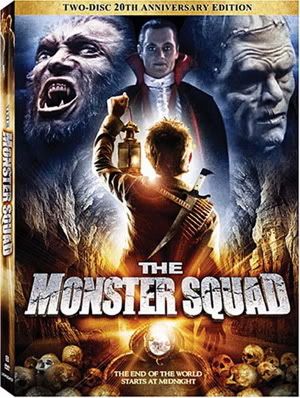
Trailer Park: MONSTER SQUAD

Filed under: Columns,Interviews,Quickcasts,Trailer Park,Video — admin @ 1:11 am

By Christopher Stipp

Archives? Right Here”¦

Instead of manning-up and actually going the emotionally hard route of being outrightly rejected by publishers, I’m rejecting them first and allowing you to give my entire book a preview, let you read the whole thing or, if you like, download the whole damn thing at no cost. Download and read my first book “Thank You, Goodnight” for FREE.

Before the advent of DVD audio rippers made it fun again to listen to a good audio commentary while not enslaved to your La-Z-Boy there was the good old cassette recorder.

When I was old enough to rent movies but not sophisticated enough to know how to rig them up to one another to make a copy of it (not that I ever did that, legally speaking) I used to take a portable boom box and actually *record* the audio of the movies I really liked. I don’t know why I did this, nor why I incessantly looped major portions of POLICE ACADEMY 4: CITIZENS ON PATROL on my GE Walkman. I do know, however, that I filled up a couple of tapes when it came to THE MONSTER SQUAD.

I loved this film.

I recorded the dialog, the up-tempo musical interlude as the squad gets ready to throw down, the great moments Rudy gets as the “tough kid”, everything. I never listened to a recording so many times as I did with my MONSTER SQUAD tape. The film, in an odd way, encapsulated of what it was like to be a goofy young kid admist an ostensibly scary situation; that’s the movie’s appeal all these years later. Fred Dekker walked that line of genuine scariness and abject absurdness with equal parts. You couldn’t have found a more balanced film of this variety and somehow I responded to it with rapt dedication for a while.

I guess, as the years went on, I kind of forgot about the film. I started watching other movies, evolved as a movie consumer, but there was always something about that story; it turned out to be a touchstone, though, and when decades later there was talk about bringing the movie to DVD I just couldn’t wait. The very same feelings I had as a youth came bubbling back when I was given the opportunity to interview director Fred Dekker and cast members Andre Gower, Ryan Lambert and Ashley Bank. It was a surreal moment, to be sure, and it was definitely a satisfying moment knowing that years ago this was a movie I told everyone about and now I’m in the position to be able and tell everyone that this is the DVD to own this year.

Halcyon days of youth don’t have anything on the experience of being able to revel in the geekery of revisiting this film 20 years later with those who made it so good to watch long ago.

line3.gif

Clip #1: Director Fred Dekker talks about the mechanics of getting MONSTER SQUAD filmed and whether the adage of working with kids and animals really holds any truth.

trailerpark-monster-01.jpg

Download SDCC Monster Squad Interview #1 – Fred Dekker:


Large (560 x 420 – QuickTime – 76.11 MB)
Small (320 x 240 – QuickTime – 34.45 MB)


line3.gif

Clip #2: Ashley Bank talks about what memories she has of the production and what it was like to be a part of the resurgence of the movie-that-would-not-die.

trailerpark-monster-02.jpg

Download SDCC Monster Squad Interview #2 – Ashley Bank:


Large (560 x 420 – QuickTime – 34.24 MB)
Small (320 x 240 – QuickTime – 15.60 MB)


line3.gif

Clip #3: Andre Gower and Ryan Lambert remember back about the experience of being young on the set of a major motion picture.


trailerpark-monster-03.jpg

Download SDCC Monster Squad Interview #3 – Andre Gower & Ryan Lambert:


Large (560 x 420 – QuickTime – 114.53 MB)
Small (320 x 240 – QuickTime – 50.23 MB)

##

Weekend Shopping Guide 8/17/07: Something Better

Filed under: Shopping Guides — UncaScroogeMcD @ 12:24 am

weekendshopping.jpg

The weekend’s here. You’ve just been paid, and it’s burning a hole in your pocket. What’s a pop culture geek to do? In hopes of steering you in the right direction to blow some of that hard-earned cash, it’s time for the Quick Stop Weekend Shopping Guide – your spotlight on the things you didn’t even know you wanted…

Few people know that Jim Henson’s first national primetime television show wasn’t The Muppet Show, and that the first Muppet star was not Kermit the Frog. No, the first Muppet star was Rowlf the Dog, who was the folksy, funny sidekick of the country superstar (and soon-to-be sausage tycoon) Jimmy Dean. If you don’t believe me, Time Life has released two one-hour compilations of The Best Of The Jimmy Dean Show (Time Life, Not Rated, DVD-$12.98 SRP each), which are full of clips featuring America’s beloved gravelly-voiced canine. Thank goodness these Muppet rarities are no longer sitting on a shelf, and I hope there are plenty more releases to come.

blankguide.gif

It’s hard to believe, but we’ve already reached a dozen of Twomorrows Publishing’s fantastically in-depth celebrations of comic book art luminaries, Modern Masters. Volume 12 turns the spotlight on Michael Golden (Twomorrows, $14.95), and is filled cover-to-cover with dozens of rarely seen and unseen art, plus a career-spanning interview with the man himself. Twomorrows has also launched a new line of books spotlighting indie talent with the same depth as their Modern Masters series, and it kicks off with Comics Introspective Volume One: Peter Bagge (Twomorrows, $16.95 SRP).

blankguide.gif

Though initial impressions might mark The Amazing Jonathan as a magician, I think a more accurate term is “gonzo magician.” There’s no better way to describe him as a performer and his act – an act captured on DVD courtesy of his Comedy Central special Wrong On Every Level (Paramount, Not Rated, DVD-$19.99 SRP), The disc also features his original Comedy Central special, deleted scenes, and an appearance on Premium Blend.

blankguide.gif

As the good Doctor’s 29th, post-relaunch season hits the US, so too comes the next round of classic Doctor Who adventures on DVD – Tom Baker’s Robot (BBC, Not Rated, DVD-$24.98 SRP) and Sylvester McCoy’s Survival (BBC, Not Rated, DVD-$34.98 SRP). Both releases feature a ton of bonus materials, including commentaries, interviews, featurettes, documentaries, and more.

blankguide.gif

People have been clamoring for years for Paramount to open the vaults and begin releasing the cross-country journeys of Dr. Richard Kimble in his quest to locate the one-armed killer of his wife – a crime for which he was framed and sent to prison for, only to escape and become The Fugitive (Paramount, Not Rated, DVD-$38.99 SRP). This 4-disc set contains the first 15 episodes of that premiere season, straight from the original negatives and looking mighty fine.

blankguide.gif

I can’t begin to express how odd it is to have a featurette remembering the late Kurt Vonnegut on – of all things – the new special edition of the Rodney Dangerfield classic Back To School (MGM/UA, Rated PG-13, DVD-$19.98 SRP). In addition to that oddity, the new edition features a behind-the-scenes featurette, a dissection of the Triple Lindy, a remembrance of Rodney, original news & sports wraps, a photo gallery, and TV spots.

blankguide.gif

The great documentaries are those that illuminate subject matter and stories you never considered, but are revealed to be fascinating when told through the deft lens of the filmmaker. Such is the case with filmmaker Malcolm Ingram’s Small Town Gay Bar (Genius, Not Rated, DVD-$24.95 SRP), which illuminates the lives and challenges of the homosexual communities located within the “Bible Belt” of the United States. Bonus features include an introduction from Ingram and exec producer Kevin Smith, audio commentary, interviews, a deleted scene, and more.

blankguide.gif

The eternal, cattish, privileged struggle amongst the Carrington family continues in the complete second season of Dynasty (Paramount, Not Rated, DVD-$38.99 SRP), featuring 6-discs packed with all 22 episodes of the loveable smackdowns and hair-pulling delights, with the season that introduced Joan Collins. Lets get ready to rumble!

blankguide.gif

Once upon a time, long ago, I was a fan of Aqua Teen Hunger Force. I thought it was quite funny, and the characters themselves even more so. Then, the show began to fall into a rut, relying far too much on bloody gross-out gags and surreal storytelling. And it stopped being funny. Sadly, the big screen Aqua Teen Hunger Force Colon Movie Film For Theaters (Warner Bros., Rated R, DVD-$29.98 SRP) is crafted like those latter-day episodes, and so left me largely cold and wishing for the halcyon days of a once-favorite show. However, I still love Master Shake. The 2-disc DVD set of the film features not only the film itself, but a full-length alternate version of the flick – plus deleted scenes, commentary, interviews, promos, featurettes, TV spots, videos… and much more. I just wish it was funny.

blankguide.gif

51 Birch Street (Image, Not Rated, DVD-$19.99 SRP) is one of those documentaries that makes you squirm and feel a bit voyeuristic as you see the raw emotion of people’s private lives, but that you ultimately can’t turn off. Filmmaker Doug Block assumed that his parents’ 54-year marriage was a happy one, but when his mother dies unexpectedly and his father quickly marries his former secretary, Block decides that something is not right, and begins a journey filled with difficult discoveries.

blankguide.gif

Even if I were just judging it on its appealing design sensibility, and not its equally fun storytelling, Nickelodeon’s Avatar: The Last Airbender would be worth checking out. Give it a spin and see if you agree, with the fourth volume of the show’s second season, Book 2: Earth (Paramount, Not Rated, DVD-$16.99 SRP). Bonus materials include audio commentary from the creators and cast on the 5 episodes featured in this volume.

blankguide.gif

As far as comedies go, you can’t get more middle-of-the-road than the baby boomer road flick Wild Hogs (Touchstone, Rated PG-13, DVD-$29.99 SRP) – starring Tim Allen, John Travolta, Martin Lawrence, and William H. Macy as a quartet of suburban schlubs who embark on a cross-country Harley misadventure. It’s non-offensive, amiable, and suburban in its comedy, and is exactly the type of flick that my mother exclaims, “It was so funny!” about. She loved Norbit, too. Bonus features include an audio commentary, an alternate ending, behind-the-scenes featurettes, deleted scenes, and outtakes.

blankguide.gif

Only the BBC could turn a long-running show out of the concept of a country vet, and you can experience the complete 7-season run – all 28 discs of it – courtesy of All Creatures Great & Small: The Complete Collection (BBC, Not Rated, DVD-$399.98 SRP). Bonus features include audio commentaries, interviews, a documentary on author James Herriott, and more.

blankguide.gif

For the life of me, I can’t understand why Marvel has produced an animated direct-to-video feature of Doctor Strange (Lionsgate, Not Rated, DVD-$19.98 SRP) and turned his appearance from the classic visuals of the master of the mystic arts into some emo goth goofball. Bah and feh on a shit redesign for the sake of redesign.

blankguide.gif

So there you have it… my humble suggestions for what to watch, listen to, play with, or waste money on this coming weekend. See ya next week…

-Ken Plume

##

Trailer Park: Just Laying The Groundwork

Filed under: Trailer Park — admin @ 12:03 am

By Christopher Stipp

Archives? Right Here”¦

Instead of manning-up and actually going the emotionally hard route of being outrightly rejected by publishers, I’m rejecting them first and allowing you to give my entire book a preview, let you read the whole thing or, if you like, download the whole damn thing at no cost. Download and read my first book “Thank You, Goodnight” for FREE.

Note #2: I make an appearance on my first ever Podcast with ScreenGeeks Radio right here. I got to talk a little bit about the trials and tribulations of enduring Comic-Con this year and just had a good time talking with Barry, Josh and Dave. Good people and they were really fun to chat with.

I swear I’ll tie this all back to RENO 911’s Ben Garant and Thomas Lennon.

One of the things I like to do with my time is keep up with what’s going on in the media through programs like Studio 360 and On The Media on NPR. A recent edition of OTM, though, had a rousing discussion of the changing paradigms of summer reading lists in the college system. Now, while I figured most reading lists were for us plebes in the English studies there was a mention that other departments were getting into the mix. Books that have a larger worldwide context are where things are going, essentially. Instead of just our notion that America is king and we should only be concerning ourselves with America is becoming outmoded in favor of a global perspective. This brings us to today’s topic of one of the things that were brought up during the story: Barack Obama’s book “Dreams from My Father” was once a part of many university’s reading lists but, with his run for the White House, that book has been shuffled off many a list because some academics at one school thought having young freshman read it would be taken as a sign of “tacit endorsement.”

Obviously, as I write this, there are many of you who never went to college, never plan on going to college, plan on going to some college advertised between episodes of Judge Joe Brown or are ramping up to another year full of learning, social mixing, sexual hijinks and self-exploitation. The one thread that weaves right through all of you, though, is that as a group you are lazy, indifferent, apathetic, listless and every other adjective for roustabout the Oxford English Dictionary has on file. In short, politicians love you because you represent an overwhelmingly large population that has an inverse proportion of voter turnout. For all your hippie talks about changing the world, for all your thoughts of thinking you know how to do things differently, for every grandiose idea of how life will be different you might as well say it to a wall because no one will ever listen to you. You’re pathetic as a group because you’re all talk and no action. You might as well be the big dog down the street on a leash and chain who wakes everyone up in the middle of the night because you can’t shut the hell up as the neighbors wonder how to poison your Gaines Burgers.

In an effort to try and do something, anything, to help get the youth voters out there a little more engaged hallowed television producer Norman Lear (some would say ALL IN THE FAMILY was his crowning achievement I would point to GOOD TIMES, SILVER SPOONS and DIFF’RENT STROKES) has created DECLARE YOURSELF, a site that is the anchor for a major multimedia push heading toward the 2008 election that is a, “nonpartisan, nationwide campaign to empower every 18-year-old in America to register & vote in the 2008 election.” It’s going to partner with sites like MySpace, Yahoo!, Google, YouTube, Comedy Central and vanguards in fashion and sports to help get the word out about making your vote count.

Myself? I don’t know. You 18 year-olds have proven, time and time again, even with campaigns like Rock The Vote and Vote Or Die that you’re a lazy lot who just didn’t care about giving away your personal freedoms over to one of the worst presidents of our time, a hillbilly who thinks nothing of running roughshod over international law, to a vice-president who would sooner turn over the personal information of a member of the CIA because of a personal grudge, and to an instigator of an illegal war that you all obviously care nothing about, statistically speaking.

Go on, young people, and enjoy your US Weekly, your Entertainment Tonight, your unlimited quantities of Mountain Dew: Code Red, your tickets to the latest emo band rocking your packed iPod, your unlimited text messaging (OMFG!), your Colbert Report reruns and let the adults continue to determine how rude of an awakening you’re in for when you have to join the rest of us in the real world.

If you care at all about where you can at least appear somewhat intelligent in conversations about which politician you might might do the least damage to your life once you leave the safe confines of your brick and mortar university get over to DECLARE YOURSELF and enjoy the video that is Ben Garant and Thomas Lennon in one of the best videos I have ever seen that sums up everything pretty well.

I completely support youth campaigns like this one and if it honestly can get a few of you to wake up from your adolescent slumber it is well worth the effort to get you out and vote.

RISE: BLOOD HUNTER (2007)

Director: Sebastian Gutierrez
Cast: Lucy Liu, Michael Chiklis, Carla Gugino, James D’Arcyn
Release: Hopefully on its way to a glue farm in Pahrump, NV.
Synopsis: Sadie (Liu) is an investigative reporter who stumbles upon a dark underground cult that is attracting young Los Angeles hipsters. Lured in by the promise of wild parties, these kids start turning up dead, and when Sadie tries to get to the bottom of their gruesome murders, she becomes a victim herself. She awakens in the morgue, neither dead nor alive, consumed by an overwhelmed craving for blood, and hell-bent on finding the twisted killers that made her this way.

View Trailer:
* Large (QuickTime)

Prognosis: So Negative I Can Only Laugh. Can anyone out there remember when the best lead-in for a preview told you that it is brought to you by the Producers of a second-rate horror adaptation?

If other movies have to jump over hurdles to get you to buy, the proclamation that this film was produced by the Producers who brought us all the American-ized version of THE GRUDGE this movie just hopes you roll over these speed bumps.

But, that’s neither here nor there, as we got a dead body being wheeled into a morgue space, even has the requisite meat locker, so that’s cool, right? We even are told that the writer of GOTHIKA is on the case for this as well. Hey wait, the meat locker morgue door is kicked open! That’s scary. Man, the love keeps coming”¦

I really don’t know why the bush-league effect of blazing through dozens of scenes at one time is supposed to be a dramatic moment but this just does a disservice to the person trying to comprehend what the film is supposed to be about.

True, this isn’t a movie that’s going to teach me about particle physics but I want some context and, sadly, this is denied.

“Everything happens for a reason.”

You know, on second thought, second look and second time around, I think it’s better to use the confused approach because the truth isn’t very exciting. Besides getting some extended shots of some bra and panty action (the one good thing about this trailer as they understand only 12 year-old boys will gravitate to this production) we’re given one of the lamest set-ups ever for a film: horny couple, one a nympho and the other a swarthy European dirt dag (but, really, aren’t they all?), kill Lu only to have her not be killed and then comes back for revenge.

KILL BILL, THE CROW, CATWOMAN, take your pick about which movie this movie sounds like.

Oh, now we get that it’s a vampire movie without the deep pale contacts. Chiklis gets involved, I’m thinking as a disgraced/out-of-control/maverick cop because that’s what cops are in these kinds of films, and it takes a turn for the worse as the trailer just tries weakly to ballast itself with more girls in bras and panties; if I wasn’t so beyond this kind of marketing I would say this is the best trailer ever.

However, what we’re given as an audience is a jumbled mess of a trailer that doesn’t really explain much. Suffering from MTV syndrome of not letting your eye rest for more than 1.3 seconds as we barrel toward the end of this thing we get Liu’s horrific hair style and mannerisms of some kind of bad ass, something that Quentin Tarantino managed to pull off without nary a question of doubt, but it simply doesn’t work here. The crossbow gun is a nice, comedic touch, as is the Liu lesbian moment (they really know what demo is going to troll on over to see this movie) seems like a desperate grab for attention.

If the best thing I take away from this preview is that I hope Carla Gugino unleashes her wet flour sacks once more in this film then I think your trailer, and movie, are in trouble.

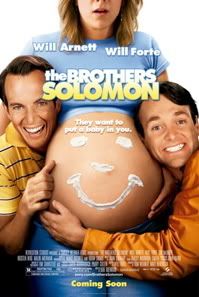
THE BROTHERS SOLOMON (2007)

Director: Bob Odenkirk
Cast:
Will Arnett, Will Forte, Chi McBride, Malin Akerman, Kristin Wiig
Release: September 7, 2007
Synopsis: THE BROTHERS SOLOMON tells the hilarious story of Dean and John Solomon (Forte and Arnett), two good-hearted but romantically-challenged brothers. When they find out their dying father’s last wish is for a grandchild, the brothers set out to find someone to have a baby with. But after spending their formative years being home-schooled by their father in a remote arctic location, their social skills prove to be somewhat lacking and their attempts at fatherhood go hysterically and disastrously wrong.

View Trailer:
* Large (QuickTime)

Prognosis: Positive. I don’t know why I keep coming back to this well of a trailer but I’m pretty sure it has everything to do with Will Arnett.

And Todd Rundgren. I’m a fan of “Bang on the Drum.” Huge fan.

What’s extraordinary about this trailer is that we’re launched right into the funny. There are no extended conceits with a serious voiceover that eventually yanks the “gotcha!” curtain that anyone with an 8 IQ and a self-regulating respiratory system can detect with a high-degree of certainty and that’s appreciated. This trailer just lays it out with Todd backing it all up.

I like the unflattering still shots of both Wills to introduce them to us; they are excellent in setting the tone for all those watching this thing. The home school snippet, showing us proto-looking church kids, is an excellent dovetail to the just sheer absurd nature of these guys’ lives. From the dart in the nose to the set-up, that the boys Solomon have a rough time with the ladies, just proves how well a trailer can convey information if you’re just smart about what you’re doing and presenting.

Now, even though the obvious lift of Tracey Morgan’s line about putting a baby in you is about as blatant as a blinking neon sign, Will makes it work. El otro Will spins the premise of trying to get a baby made for the 60 Million Dollar Man with just enough subtlety that Jenna Fischer’s quick moment to inject her gift for situational comedy in this trailer works exceptionally well.

Like the movie itself I am sure there will be a scorecard of how many hits and misses there were. In this trailer, though, there are some things that don’t work exceptionally well but the obvious go-to for a giggle, the sperm bank, is the grounds for a quick one-liner that actually feels fresh.

The moment where the Wills try to coax a girl into their car after they were told to spend some time with children in order to learn how to be good parents? Solid. The infant mortality moment? Eh, not so much.

There is a lot to be said to how to sell a comedy. It really is like perfume: not everyone can agree as to what’s funny or worth watching. The trailer here isn’t earth-shatteringly great but in a time of lameness in how we’re being sold this, that or the other thing this looks pretty good for a matinée.

THE DARJEELING LIMITED (2007)

Director: Wes Anderson
Cast: Owen Wilson, Adrien Brody, Jason Schwartzman, Anjelica Huston
Release: September 29, 2007
Synopsis: An emotional comedy about three brothers re-forging family bonds. The eldest, played by Wilson, hopes to reconnect with his two younger siblings by taking them on a train trip across the vibrant and sensual landscape of India.

View Trailer:
* Large (QuickTime)

Prognosis: Positive. Where’s the love?

Sure, THE LIFE AQUATIC seemed to miss the mark a smidge but that’s no reason to think that this movie is going down the same route just because some think that this trailer is a little esoteric.

I would go on record as saying that I think this trailer is actually quite engaging in the way it not only explains itself but in the way it endears you to all three of these men.

First, I can’t say enough about how nice that we get a quick clip of Owen just laying it right out in the open for us to understand: this is a road movie. Simple enough but it trumps so many other attempts by studios to be as vague as possible so it doesn’t have to commit to any one angle.

As the music slowly starts to slide in and we see the faces of our three men, I only take compunction with Adrien Brody for his corporate cock sucking in the name of Coca-Cola, I hope to come around though, we have been introduced without ever knowing their names. When Owen says that he wants these men who we come to know as brothers to come back together again we obviously set in motion some tension. There isn’t a reason given as to why Owen looks like he got worked by a meat grinder but there’s some sincerity that this road trip is being done in order to bring harmony back to their lives.

Among the details and the tight sense of space there is also the absurd. I can’t help but to admit laughing when the train operator stops the trip in order to let it be known he’s lost. Jason Schwartzman’s question isn’t so much funny as it is just a matter-of-fact statement that feels humorous.

Even though we’re not given much I can still tell that there is something that Owen wants more than anything, togetherness, that Brody is somewhat accepting of it all and that Jason is the one brother who doesn’t process emotion as quickly as his two other brothers. I feel like we’ve been given enough and the musical interlude just serves as a travelogue of how these things come together.

Jason’s question about how their relationships would have been different had they been people, and not brothers, was a poignant way to end this trailer but it’s something that cannot be overlooked: this trailer doesn’t state much but it says everything it needs to.

Next time anyone says that the trailer feels too esoteric I am giving you the right to nipple twist that jackhole into submission.

QSE News: Week In Review – 8/17/2007

Filed under: Columns,News — UncaScroogeMcD @ 12:02 am

quickstopnews.jpg

line1.gif

Here are today’s top entertainment headlines:

  • qsnews.jpgChristina Applegate isn’t married anymore. Applegate officially ended her marriage to Johnathon Schaech late last week. In related news, the world still doesn’t care about the guy that played Applegate’s brother on the show Married… with Children, whatever his name is/was.
  • Actress Nichelle Nichols, who gained more weight than fame as Lt. Uhura on the original Star Trek series, is heading back to the small tube. Nichols will be joining the cast of Heroes next season as the grandmother to series character Monica.  Nichols was hesitant to join the popular show at first, but when she found out that she wouldn’t be the only cast member that William Shatner has had his penis in, she signed immediately.  In related news, George Takei is the only other cast member that has met William Shatner.
  • The video game Madden NFL 08 was released this week, as eager fans waited outside of stores across the country to be one of the first to get their hands on the game. Over the past 17 years, the series of football video games has sold more than 60 million copies. This year’s game serves up a special treat in the form of a mini game that allows players to live the life of their favorite NFL star by holding out at camp, injecting “The Clear” into their cranks, slapping prostitutes, committing murder, and organizing dog fights.
  • Counting Crows is wrapping up work on their new album, which is due out in November. The album will be titled Saturday Nights, Sunday Mornings and will feature songs that are both “loud and soft.” Geffen, the band’s current record company, is hoping to spur sales by offering a free pair of khaki Dockers with each CD purchase.
  • A (partially) reunited Van Halen is headed out on tour… for real this time. The band, which now consists of bat-shit crazy David Lee Roth, half-tongued guitarist Eddie Van Halen, Alex “Crypt Keeper” Van Halen and Valerie Bertinelli’s son, Wolfgang Van Halen, will be playing 25 dates across the country. The tour is scheduled to be canceled early next month after tickets for all shows have been sold out.
  • The HBO drama John from Cincinnati has been canceled. The show revolved around the struggles of a surfing family in California and never caught on with viewers or critics. Critics credit the shows unpopularity with the fact that it contains a character from Cincinnati and “as everyone knows, nothing good has ever come from Cincinnati.”
  • It is being reported that Marvel Comics is pursuing wrestler Hunter Hearst Helmsley for the title role of Thor in an upcoming movie.  Helmsley, whose real name is Paul Levesque, has had roles in several movies, including another Marvel property, Blade 3.  In casting the wrestler, Marvel hopes to capture a key demographic of 15-25 year old sexually confused males.
  • In a new film called The Wackness legendary actor Ben Kingsley has revealed that he shares an on-screen kiss with the food-phobic “actress” Mary Kate Olsen.  After shooting the scene, Kingsley had nothing but praise for his young, nubile co-star, claiming that the former Full House star “totally gave him a semi…”

line1.gif

That’s all for today’s news, stay tuned to this channel for all the news that matters least but you still care about.

(Compiled by J. Allen)

##

Quick Stop Thingamabobs: 8/17/2007

Filed under: Columns,Thingamabobs — UncaScroogeMcD @ 12:01 am

thingamabobs.jpg

The web. It’s a big place, full of plenty of distractions ““ some funny, some informative, some ludicrous, some disturbing, some inane, some profound. Each and every weekday, we present links to a few of our favorite finds”¦

————————————————

  • The Kids In The Hall get the heads of their solo careers crushed, Part 1… (Thingamabob)
  • Lennon & Garant’s newest – Balls of Fury(Thingamabob)

Have a THINGAMABOB? Send it in!

##

August 16, 2007

Win the Harry Potter and the Phoenix Game!

Filed under: Contests — widge @ 4:30 am


We’ve teamed up with Electronic Arts to give two lucky winners a copy of the new HARRY POTTER & THE ORDER OF THE PHOENIX game. We’re giving away both the Playstation 2 and Wii versions of the game.

How can you enter? All you have to do is fill out the entry form below”¦

Be sure to visit the official HARRY POTTER game site at http://www.ea.com/discoverthemagic and sign up for the newsletter at http://prefctr.ddc.dartmail.net/ea/mf_harrypotter.asp

Contest ends at midnight EST on Tuesday, August 21st.

Enter the contest!
Email:
First name:
Last name:
Street Address:
Address Line 2 (if needed):
City:
State/Province/Whatever:
Zip Code/Postal Code:
Country:
Birth Month:
Birth Day:
Birth Year:

Official Rules

No member of Quick Stop Entertainment or their immediate families may enter.

No Purchase necessary to win.

Must be 18 years of age or older to enter.

All submitted entries must be received by 11:59pm EST on Tuesday, August 21st.

The winner must allow 4-6 weeks after announcement of win to receive the product.

August 15, 2007

Quick Stop Thingamabobs: 8/16/2007

Filed under: Columns,Thingamabobs — UncaScroogeMcD @ 11:50 pm

thingamabobs.jpg

The web. It’s a big place, full of plenty of distractions ““ some funny, some informative, some ludicrous, some disturbing, some inane, some profound. Each and every weekday, we present links to a few of our favorite finds”¦

————————————————

  • Don’t be the guy who does the slow jerk… (Thingamabob)

Have a THINGAMABOB? Send it in!

##

Monkey Talk with Paul Dini: Stuffed Animal Stand-Up with Rashy #5

Filed under: Monkey Talk,Quickcasts,Video — UncaScroogeMcD @ 1:44 am

monkeytalkheader.jpg

-By Paul Dini & Rashy

Paul Dini’s “Monkey Talk” (co-hosted by his irrepressible sock monkey son, Rashy) returns with Rashy’s continued attempts to break into the dog-eat-dog world of Stuffed Animal Stand-Up. Be sure to check out Rashy’s official site at LittleRashy.com

monkeytalk2007-06-12.jpg

DOWNLOAD:
Large
(560 x 420 – QuickTime – 9.95 MB)
Small (320 x 240 – QuickTime – 4.29 MB)

##

Nocturnal Admissions: DVD Review, The First Films of Samuel Fuller

Filed under: Columns,Nocturnal Admissions — UncaScroogeMcD @ 12:54 am

nocturnalheader5.gif

Andrew Sarris once famously called Samuel Fuller an “authentic American primitive.” Sarris went on to write that the “excitement Fuller arouses in critics sensitive to visual forms is equaled by the horror he arouses in critics of the Left for the lack of social perspective in his films.”

Fuller box

The charge of primitivism, which also has a political component suggesting conservative views, became unfashionable as Fuller grew more famous, but seeing his first three films for the first time all in a row, thanks to the new Criterion-Eclipse set, The First Films of Samuel Fuller (Eclipse-Criterion, three discs in slim cases, $44.95, street date Tuesday, August 14, 2007), makes clear why Sarris held this opinion about Fuller back in 1967 when he was compiling his book The American Cinema, which appeared before Fuller became the darling of the German New Wave and before Fuller himself directed Tote Taube in der Beethovenstraße, The Big Red One (1980), White Dog (1982), Les Voleurs de la nuit (1984), Samuel Fuller’s Street of No Return (1989) and the TV movie The Day of Reckoning, which do little to undermine Sarris’s assessment. I don’t think that these films would necessarily modify the “accusation” of primitivism, but some of them were more prestigious. In any case, Fuller’s crude, bombastic style is the very thing that his fans like about him, his knack for cutting through the decorous crap with which most filmmakers drape their projects. Fuller was the original “in your face” director, both figuratively and literally.

I Shot Jesse James title

If Sarris overstates Fuller’s political conservatism, which is primarily based on the seeming anti-communist thread in Pick Up on South Street, made for Fox, he also overstates the number of close-ups in I Shot Jesse James. The western is not as dramatically awash in close ups as Sarris asserts, although maybe there were relatively more close ups in Fuller’s film than most of its contemporaries. But they also tend to be highly dramatic, so that, like the lions Potemkin, you tend to remember more of them than were actually there. One suspects that Sarris was going on memory here rather than on a recent reviewing of Jesse James. Fuller political views, as became obvious with later films, and which he enunciated cleaerly in his posthumous autobiography, A Third Face, are of what you might call the “macho Democrat” variety of Hemingway, Mailer, and other dogfaces turned writers.

Jesse James Ireland

It’s true that Jesse James opens with some rather impatient, menacing, disorienting close ups. And Fuller was prone to the shock close up, what Mike Nelson and the film crew call a rouchet. But there is a great deal of variety to Fuller’s visual style, as Sarris also points out. In The Steel Helmet, there is a great deal of camera movement, and Hollywood great James Wong Howe even photographed the low budget The Baron of Arizona.

Sarris places Fuller in that second tier of muscular filmmakers that includes Anthony Man, Robert Aldrich, Nicholas Ray, and Raoul Walsh (Boetticher is in the third tier, but should be up there with these other boys). The big mystery of Fuller’s career, however, is why he didn’t end up like Edgar G. Ulmer. Fuller’s roots had all the proper earmarks, including a vigorous, noirish visual style attached to diverse films labored upon in financially impoverished circumstances. Ulmer was “exiled” to Poverty Row because of his affair with a top executive’s wife. Fuller started there and clawed his way to the top, at at least near the top, with brazenness and sheer force of will.

All three of the films in the Eclipse box were produced by Robert Lippert, a minor if prolific mogul at the time. Lippert’s hefty catalog was recently picked up by Kit Parker films, and this Fuller box appears to be a collaboration between Criterion-Eclipse and Kit Parker. Fuller speaks warmly of Lippert in his memoir. Lippert had the guts to back a neophyte when it was still unusual for a screenwriter to take over the directorial reins.

Fuller makes it clear that he was utterly uninterested in the western aspects of his first film, I Shot Jesse James, released in 1949. Like many of Walsh’s films, it’s really a male love story, a man who killed the thing he loved, which he can only admit with his dying breath. Fuller didn’t care much for Jesse James, whom he called a pervert and a transvestite. But he didn’t share that view with Lippert, to whom he supplied what he was contracted to give, a western. For Fuller, though, it was a shadow play, a morality tale about the mistakes we make in our lurch toward what we take to be freedom.

In the case of Bob Ford (a sometimes visibly intoxicated John Ireland), it is marriage to Cynthy (an unexpectedly rounded and affecting Barbara Britton). His drive to be with Cynthy is so desperate and so inhuman that it screams for subterranean interpretation.

The play begins like all childlike morality plays. “I still have enough to get Cynthy a ring,” Ford mutters to himself idealistically. As Ford, Ireland is an uncertain, stoop shouldered figure, and he walks very much like Henry Fonda, his shirt, at least in the beginning, like John Wayne’s in The Searcher‘s

The film is called I Shot Jesse James, but the point of view is divided up among several protagonists. With whom should we lay our sympathy? In fact, there are no heroes or sympathetic figures in the movie. It is an objective study: and yet it isn’t. Fulller’s sympathy is expansive. He likes everybody. He cannot pick and chose among his characters the way that Hollywood conventionally demands that their directors do.

One thing I noticed from Jesse James was how exquisite a photographer of women Fuller ((in collaboration with his DPs) he happened to be. Britton has one of the longest, most kissable necks in all cinema, and Fuller makes full play with it. Other facets of Fuller’s pre-movie past, when he was a reporter, that are more recognizable are his penchant for headlines to advance the story. Less predictable are the theatrical aspects of the story, that is, that at one point Ford becomes an enactor of his own story on stage, though a poor one. There, he is booed for not killing James, while in the real world he is viewed as a coward and an opportunist. As in all of the Fuller films included in this set, there is a moment when the protagonist is subjected to a terrible public humiliation, in this case when Ford breaks down on stage, his guilt becoming a subject of public discourse.

Being a Lippert production, there is a lax attention to detail. For example, in one scene Ford, referring back to an earlier moment, gets the the number of guys he shot worng. And the day for night contrast in the final shoot out is unnerving. Otherwise, I Shot Jesse James is an efficient, psychologically complex film that is as ravishing a debut as Citizen Kane.

Steel Helmet title

With Steel Helmet, the second film on the disc, the viewer is in Stanley Kubrick territory: it’s like that director’s unviewable Fear and Desire. At the same time, it anticipates Fuller’s own Shock Corridor. At the same time it is like Fuller’s future Shock Corridor and The Big Red One.

Steel Helmet Gene Evans

What is interesting about the film is that one of the name of one of the main characters may have been borrowed by Spielberg for the second Indiana Jones film (“Short Round”), and that unlike most Hollywood films, there is no true heroically buffed main character at the center of the film. Gene Evans, as the man under the steel helmet, is at bottom not likable. That goes against Hollywood practice. But it is fully in line with Fuller’s personal view of what war is like, and what it does to people who fight it.

Fuller Baron title

The Baron of Arizona is probably one of Fuller’s least seen films, as well as one of the most unusual or unexpected works in his catalog. For those reasons, it is arguably the most revelatory addition to the box. What a bizarre story, and wholly based on actual events! The narrative tells the long, convoluted tale of one man’s attempts to pull the biggest scam in American history. Despite the fact that Vincent Price plays the “villain,” like Gene Evans in Steel Helmet, he sucks at cigars non-stop, like Fuller in real life. There is little doubt that there is an edge of identification by Fuller in the lead characters in these three films.

Baron Vincent Price

And Price sinks his teeth into a role that demands that he play in succession a bureaucrat, a step-father, a monk, a gypsy, a lover, and a baron. There is always something hammy about Price’s approach to roles but here the ham is an indice to the multiple layers of the plot as Price is always acting at being someone he isn’t. And what a lot happens in this plot-packed film, from gypsy raids to lynchings. Decor is subtly, or not to subtly, employed to underscore Price’s rise in power, from a small monk’s cell to a huge office that sports a fabulous map of Arizona behind it, the cake he is about to slice up.

And what a relief that the Eclipse films come shed of supplements. One can dive right into the movies. Many film buffs may demand more than the anonymous text on the inside cover of the slim cases, to me it was a holiday. Thank god I don’t have to either feel guilty for not reading what little there was (as I did not). What the lack of scholarly apparatus also means is that innocent viewers will be able to experience Fuller’s first three films the way original filmgoers did.

Quick Stop Thingamabobs: 8/15/2007

Filed under: Columns,Thingamabobs — UncaScroogeMcD @ 12:45 am

thingamabobs.jpg

The web. It’s a big place, full of plenty of distractions ““ some funny, some informative, some ludicrous, some disturbing, some inane, some profound. Each and every weekday, we present links to a few of our favorite finds”¦

————————————————

  • For anyone who purchased the Walt Disney Treasures: More Silly Symphonies Volume 2 last year, here’s Leonard Maltin with some information on corrected replacement discs… (Thingamabob)
  • How fast can Sergio Aragones draw? THIS fast… (Thingamabob)
  • And if you’re still in doubt, here’s more… (Thingamabob)
  • And we’ll close with a visit to a quiet mountain town… (Thingamabob)

Have a THINGAMABOB? Send it in!

##

August 13, 2007

Quick Stop Thingamabobs: 8/14/2007

Filed under: Columns,Thingamabobs — UncaScroogeMcD @ 11:49 pm

thingamabobs.jpg

The web. It’s a big place, full of plenty of distractions ““ some funny, some informative, some ludicrous, some disturbing, some inane, some profound. Each and every weekday, we present links to a few of our favorite finds”¦

————————————————

  • What? You’ve never seen the original ending to Little Shop of Horrors? Well, here’s Part 1… (Thingamabob)
  • Which might put you in the mood to see the dentist… (Thingamabob)

Have a THINGAMABOB? Send it in!

##

Win the Muppet Show on DVD!

Filed under: Contests — widge @ 1:49 pm


In conjunction with Walt Disney Home Video, we’re celebrating the DVD release of the long-awaited complete second season of THE MUPPET SHOW by giving away 3 copies – one of which could be yours!

All you have to do to enter is fill out the entry form below”¦

Contest ends at midnight EST on Tuesday, August 14th.

While you’re waiting, check out the following classic moments from season two…

New Muppets audition their acts

Steve Martin finds out his show’s been cancelled

Enter the contest!
Email:
First name:
Last name:
Street Address:
Address Line 2 (if needed):
City:
State/Province/Whatever:
Zip Code/Postal Code:
Country:
Birth Month:
Birth Day:
Birth Year:

Official Rules

No member of Quick Stop Entertainment or their immediate families may enter.

No Purchase necessary to win.

Must be 18 years of age or older to enter.

All submitted entries must be received by 11:59pm EST on Tuesday, August 14th.

The winner must allow 4-6 weeks after announcement of win to receive the product.

Quick Stop Thingamabobs: 8/13/2007

Filed under: Columns,Thingamabobs — UncaScroogeMcD @ 12:01 am

thingamabobs.jpg

The web. It’s a big place, full of plenty of distractions ““ some funny, some informative, some ludicrous, some disturbing, some inane, some profound. Each and every weekday, we present links to a few of our favorite finds”¦

————————————————

  • A rather unorthodox way to fix a flat tire… (Thingamabob)
  • This history of Hanna-Barbera Records… (Thingamabob)

Have a THINGAMABOB? Send it in!

##

August 12, 2007

SModcast 24

Filed under: SModcast — UncaScroogeMcD @ 9:32 pm

newhead2.jpg

SModcast is the meandering palaver of a pair of dudes whose voices are so dull, they don’t deserve to be on the radio (and, hence, aren’t). Kevin Smith and Scott Mosier are SModcast.

The best thing about SModcast? It don’t cost nothing.

line.gif

SModcast 24: Rigg-er, Please! –

In which the manager of a comic book emporium and a Canadian infamous for overstatement join forces with a newly-minted senior citizen to discuss past mistakes and the fallout of waging body parts, robotic scat games, hipping-up that which doesn’t require hipping-up, a drug-free “Underdog”, lying to customers, unlikely music to shop/screw to, the average length of straight sex vs. gay sex, and wax rhapsodic about one of the greatest action-movies-starring-a-guy-who-later-went-bat-shit ever made.

[CONTENT WARNING] SModcast features harsh language and even harsher notions of propriety. Listener discretion is advised.

DOWNLOAD: (right click to save)
SModcast 24 (MP3 format) – 47.18 MB

[display_podcast]

SUBSCRIBE
Subscribe to this Podcast via iTunes
Subscribe to this Podcast via FeedBurner

Wanna add your two cents? Spend it here, in the SModcast mailbag.

line.gif

CLICK HERE FOR THE SMODCAST ARCHIVES

line.gif

##

August 10, 2007

Scrubs Blog: Back In Production

Filed under: Production Blogs,Scrubs Blog — UncaScroogeMcD @ 11:04 pm

scrubsheader.jpg


Hey Scrubs fans! We are indeed back from hiatus, and shooting episode 7×01, and if you don’t believe us, here’s the proof:

dsc01796.JPG

dsc01800.JPG

img_1696.jpg

img_1705.jpg

img_1710.jpg

img_1711.jpg

img_1718.jpg

img_1725.jpg

img_1728.jpg

img_1729.jpg

img_1761.jpg

img_1792.jpg

picture-009.jpg

picture-012.jpg

picture-014.jpg

Weekend Shopping Guide 8/10/07: Light The Lights

Filed under: Shopping Guides — UncaScroogeMcD @ 12:10 am

weekendshopping.jpg

The weekend’s here. You’ve just been paid, and it’s burning a hole in your pocket. What’s a pop culture geek to do? In hopes of steering you in the right direction to blow some of that hard-earned cash, it’s time for the Quick Stop Weekend Shopping Guide – your spotlight on the things you didn’t even know you wanted…

After a groundbreaking first season, it was during the sophomore season of The Muppet Show (Buena Vista, Not Rated, DVD-$39.99 SRP) that the show hit its golden age. Fozzie, Gonzo, and Miss Piggy – all brand new characters that launched with the show – are now fully the characters we know and love. The humor – under the direction of head writer Jerry Juhl – is brilliant, both sublime and visceral at the same time. And the guest stars begin rolling in – including Elton John, Peter Sellers, Julie Andrews, Steve Martin, and more. Thankfully, this time Disney did it right and got all of the necessary music clearances, which means we avoid the ugly editing that happened in the first season set. Bonus features are a mixed bag, though – with so much to choose from, and none of those gems chosen, the only real keeper is the first of the two original Muppet Show pilots, The Muppets Valentine Special. Sadly, there’s no trivia this time (here’s hoping for its return on season 3). I hope the wait for season 3 is not nearly as long, and they get a Muppet expert in there to help them realize what bonus materials should be on these sets.

blankguide.gif

It had been slowly encroaching for the past few seasons, but with was during the 10th season of The Simpsons (Fox, Not Rated, DVD-$49.98 SRP) that the once unassailable really began slipping its gears. Writing that had once been innovative and fresh became inbred and derivative of itself, which would soon settle into the rut that persists to this day. I don’t know if it was exhaustion or just overconfidence, but it really is a shame. Having said that, the set is worth picking up for the usual complement of bonus materials, including commentaries on every episode, commercials, animatics, and more.

blankguide.gif

As much as I prefer reading the Harry Potter books, I’ve found Jim Dale’s audiobook performance of Rowling’s increasingly massive tomes to be nothing short of delightful, and Dale wraps up his impressive vocal feat with the final installment in the Potter saga, Harry Potter and the Deathly Hallows (Random House Audio, $79.95 SRP). By all means, give it a spin and marvel at Dale’s skill to bring so many characters to life.

blankguide.gif

While the UK has had their very own special edition of the early 80’s cult classic for years, it’s only now that the US has their very own remastered, feature-laden special edition of Flash Gordon (Universal, Rated PG, DVD-$26.98 SRP). The “Saviour Of The Universe” edition features a paltry clutch of bonus features – a featurette on artist and Flash fan Alex Ross, an interview with writer Lorenzo Semple, Jr., and an episode of the 1936 serial. Sadly, this is still missing some of the great bonus features from the UK edition – so you might want to pick that up, too, and keep this for the great picture quality… It’s a shame Universal couldn’t have done this one completely right.

blankguide.gif

It’s time to get dangerous, courtesy of the second volume featuring that superheroic mallard of mystery, Darkwing Duck (Buena Vista, Not Rated, DVD-$34.99 SRP). The 3-disc set features the middle 27 episodes of the series run, and is a welcome addition to my growing shelf of Disney Afternoon delights. My only hope, though, is Disney can see fit to get off their lazy asses and try to get some bonus features on these sets. If BCI can do it with Filmation shows, why is Disney so second rate with these classics?

blankguide.gif

MST3K alums Mike Nelson, Bill Corbett, and Kevin Murphy return with the second installment of their brand new skewering of schlock films, as The Film Crew tackles Killers From Space (Shout! Factory, Not Rated, DVD-$19.99 SRP), which stars Peter Graves as a scientist who uncovers an alien plot to take over the Earth. The disc also features the Film Crew’s “Did You Know…?” segment and outtakes.

blankguide.gif

It’s not quite the carefree fun of the late 80’s cartoon, but the big screen CG TMNT (Warner Bros., Rated PG, DVD-$28.98 SRP) – that’s Teenage Mutant Ninja Turtles, if you don’t cotton to acronyms – is still a pretty darn faithful affair, and in many ways skews closer to the source material than the original live action flick. Bonus materials include an audio commentary, an alternate opening, a deleted scene, storyboards-to-CG comparison, interviews, and more.

blankguide.gif

If you’ve been holding off on getting your swingin’ mitts on the cinematic output of one Elvis Aaron Presley, then you’re in luck – as both Warner Bros. and Paramount have packaged the titles they control into two nicely comprehensive box sets. Paramount has the Lights! Camera! Elvis! Collection (Paramount, Rated PG, DVD-$69.99 SRP), featuring King Creole, G.I. Blues, Blue Hawaii, Roustabout, Girls! Girls! Girls!, Fun In Acapulco, Paradise, Hawaiian Style, and Easy Come, Easy Go. Team that with Warners’s Elvis: The Hollywood Collection (Warner Bros., Rated PG, DVD-$49.98 SRP) – containing Charro, Girl Happy, Kissin’ Cousins, Live a Little, Love a Little, Stay Away, Joe, Tickle Me – and their new special editions of Jailhouse Rock and Viva Las Vegas (Warner Bros., Not Rated, DVD-$19.98 SRP each), and you’ve got an incredible set of flicks starring the King.

blankguide.gif

Not to be left out, MGM steps up to the plate with their own Elvis: MGM Movie Legends Collection (MGM/UA, Not Rated, DVD-$39.98 SRP), containing Kid Galahad, Clambake, Follow That Dream, and Frankie And Johnny.

blankguide.gif

Also getting the star treatment is ol’ blue eyes, courtesy of the Frank Sinatra: MGM Movie Legends Collection (MGM/UA, Not Rated, DVD-$39.98 SRP), featuring 5 of the crooners big screen efforts – The Manchurian Candidate, The Pride And The Passion, Kings Go Forth, Guys And Dolls, and A Hole In The Head.

blankguide.gif

Start saving your pennies and order your very own copy of the massive – and I do mean *massive* – biography of the creator of the classic comic strips Terry & The Pirates and Steve Canyon, Milton Caniff, R.C. Harvey’s Meanwhile… A Biography of Milton Caniff (Fantagraphics, $34.95 SRP). Clocking in at almost 1,000 pages, it’s a fascinating and comprehensive overview of the man and his work.

blankguide.gif

The cracks began to show during the penultimate 8th season of Roseanne (Starz, Not Rated, DVD-$39.98 SRP), as the comedy began to dip into odder and more surreal territory, beginning the erosion of the show’s blue collar values (values that would eventually fall away during the final season’s left turn into confusion). The 4-disc set features all 25 episodes, video commentaries, and a nice new interview with Roseanne.

blankguide.gif

Oh, the cheese of youth. That’s exactly what you’ll get with the endearingly goofy Super Friends: The Legendary Superpowers (Warner Bros., Not Rated, DVD-$26.98 SRP). Watching all 16 episodes featured in this 2-disc set, children of the 70’s and 80’s like myself will find the chill shivers of nostalgia running up and down their spines. Bonus features include 5 audio commentaries, a look at the cultural diversity of the show, and a look at the show’s effect on the toy industry.

blankguide.gif

If you want to demarcate the point at which Shia LaBeouf made the transition from affable teen star to bankable Hollywood darling, it would be the suburban spin on Rear Window, Disturbia (Dreamworks, Rated PG-13, DVD-$29.99 SRP). LaBeouf stars as Kale Brecht, who’s spending his three months under house arrest spying on his neighbors – a pastime that becomes something much more horrifying when he begins to suspect his neighbor is a serial killer. Is he right? Is he wrong? Is he next? See for yourself. Bonus features include an audio commentary, deleted scenes, a making-of featurette, outtakes, and more.

blankguide.gif

Turtle fans who want to relive their childhoods can do so via the just-released complete fifth season of the original Teenage Mutant Ninja Turtles (Lionsgate, Not Rated, DVD-$24.98 SRP), with three discs containing all 18 episodes, plus character profiles and a look back.

blankguide.gif

Even though it wasn’t his best work, watching the complete first season of 8 Simple Rules (Buena Vista, Not Rated, DVD-$23.99 SRP) still made me miss the late John Ritter. Check out all 28 episodes in this 3-disc set, which features a bonus gag reel.

blankguide.gif

Though best known for their portrayal of sleuthing could Nick & Nora Charles in the Thin Man series of films, the Myrna Loy & William Powell Collection (Warner Bros., Not Rated, DVD-$49.98 SRP) collects 5 films they did together outside that series – Manhattan Melodrama, Evelyn Prentice, Double Wedding, I Love You Again, and Love Crazy. All of the flicks feature Warners by now standard remastered prints, vintage cartoons, and shorts. Aces.

blankguide.gif

Twelve more episodes come swinging into action in The Tick Vs. Season Two (Buena Vista, Not Rated, DVD-$34.99 SRP), a 2-disc set of Tick-y goodness that, sadly, is missing episode #15 and any bonus features to speak of. Sad, but hopefully they’ll get necessary clearances – and a budget – before the series is fully released.

blankguide.gif

We’re seven seasons into Full House on DVD (Warner Bros., Not Rated, DVD-$29.98 SRP), and still no sign of what snooty, snobbish, spoiled adults the Olsen twins would eventually become. No, they’re still the loveable Michelle Tanner here… But the clock is ticking. The 4-disc set contains all 24 episodes of awkward pleasure.

blankguide.gif

While it’s still pretty much status quo during the seventh season of Home Improvement (Buena Vista, Not Rated, DVD-$23.99 SRP), this season is at least notable for guest-starring Dan Aykroyd in what would ultimately prove a backdoor pilot to a failed spin-off series. The 3-disc set contains all 25 episodes, plus this season’s gag reel.

blankguide.gif

So there you have it… my humble suggestions for what to watch, listen to, play with, or waste money on this coming weekend. See ya next week…

-Ken Plume

##

Comics in Context #189: Woody’s Woodpeccadillos

Filed under: Columns,Comics in Context — admin @ 12:07 am

comicsincontext4.jpg

cic2007-08-10.gifUniversal Home Video’s Woody Woodpecker and Friends DVD set, which was released on July 24, provided me with a rare opportunity to get in touch with my early childhood memories. It was as a young boy that I first saw various Disney animated features, and many, many Warner Brothers and early Hanna-Barbera cartoons, as well as the Max Fleischer Popeyes. I also watched the syndicated half-hour Woody Woodpecker Show on television, hosted by his cartoons’ producer, Walter Lantz, which packaged Lantz cartoons from the 1940s.

Over the decades, I’ve rewatched many of these cartoons thanks to television, animation festivals at revival theaters, and, nowadays, DVDs. But I hadn’t reacquainted myself with the classic Lantz cartoons of the 1940s as an adult; I may have seen a few here and there, but I don’t remember. I recall seeing some of the later, uninspired Woody Woodpecker cartoons from the 1950s and early 1960s, in which the formerly dangerously madcap bird had turned cute and acquired nephew Knothead and niece Splinter. As the Wikipedia entry on Woody declares, “The domestication of Woody Woodpecker was complete,” and I was not impressed.

But though my memories of the 1940s Woody cartoons were dim, I retained warm feelings for them, and was eager to watch the new Woody DVD. It is amazing to be watching these cartoons and suddenly to encounter images that spark memories from my childhood, like Woody sticking a grease gun in nemesis Wally Walrus’s mouth and pumping grease out through his ears (in director Dick Lundy’s 1947 Well Oiled), or Andy Panda and his guardian angel (also a panda) dancing off towards the horizon at the end of Apple Andy (directed by Lundy in 1946). What’s even more amazing is to be watching one of these cartoons that I haven’t seen in decades and suddenly remember what the next gag is going to be. Obviously, the Lantz cartoons made a great impression on me way back when.

cic2007-08-10-02.jpgAs soon as I got the Woody DVD home, I immediately watched the Woody cartoon that I most clearly recalled liking as a child: The Barber of Seville, from 1944. This appears to be the most celebrated of the Woody cartoons, having been selected in a survey of a thousand animation professionals and historians as one of “The 50 Greatest Cartoons” for Jerry Beck’s 1994 book of the same name. This cartoon also inaugurated what looks to me to be the prime period in Woody Woodpecker’s onscreen career. It was the first Woody cartoon directed by former Disney animator James “Shamus” Culhane, and was co-written by Ben “Bugs” Hardaway, who had created Woody (as well as a prototype for Bugs Bunny at Warners, hence Bugs’s name) and was now supplying his voice. Moreover, this cartoon debuted Woody’s new, sleeker character design, which was considerably more appealing than the grotesque appearance he bore in his first cartoon (1940’s Knock Knock), without devolving into the cuteness of the 1950s Woody.

Rewatching Barber was full of surprises: I didn’t remember most of the cartoon at all. For one thing, it opens with World War II references which would have sailed over my head when I was a child, assuming that they were not cut from the syndicated Woody show. Woody decides to get a haircut, and, alas, it was not until I started working on this week’s column that I realized that, wait a minute, this premise makes no sense: Woody’s famed topknot consists of feathers, not hair! But I expect this doesn’t occur to 99.99% of the people who have seen this cartoon over the last sixty-three years. Anyway, Woody decides to get a “Victory” haircut (which would separate the topknot into a “V” formation) but is thwarted when he strides into the Seville Barber Shop and finds it deserted: the barber, named Tony Figaro, has left a note, “Gone to take my physical. Back soon.”

One of the lessons of these 1940s Woody cartoons is not to do anything that attracts Woody’s attention, lest chaos ensue. Finding himself in a barber shop, with apparently nothing better to do, Woody decides to play barber himself, a decision that cannot end happily for any unwary customers. Soon the first victim walks in, and here was surprise number two. Beck’s book gently refers to him as a Native American, but this first customer is a stereotypical caricature of an Indian chief that would never be allowed in mainstream animation today: he can’t speak English correctly, for one thing. The chief initially does nothing to provoke mistreatment, but Woody, perhaps more through incompetence than malevolence, swaths his head in towels that are so hot that Woody uses the overheated chief’s mouth to toast bread, and his feathered headdress shrinks into a badminton shuttlecock. Understandably furious, the chief threatens Woody with a tomahawk, in more stereotypical behavior, and Woody finally bests him by turning him into a living “cigar store Indian.” I suspect that this sequence was not cut from The Woody Woodpecker Show, but I am glad I did not remember it.

Next comes the section that I did remember, in which a construction worker, who vaguely seems Italian, enters the barber shop, asks to get “the whole works,” and certainly does. Woody turns a blowtorch on the man’s hardhat, lathers his whole face and even his feet, and then slashes at the terrified man with a razor while singing Figaro’s famous aria “Largo al factotum” from Gioachino Rossini’s opera The Barber of Seville. This is intended to be sung at high speed, like the famous Gilbert and Sullivan patter songs, and Woody does so, moving rapidly in time to the music. This is the part of the cartoon which earns its high reputation, with Culhane utilizing shots of Woody that last as little as a fraction of a second, and even putting three, four and finally five Woodys onscreen simultaneously, to signify that he is moving so fast that he seemingly appears in different places at once.

Unfortunately I didn’t enjoy the spectacle as much as I’d hoped, because I felt that the sequence hadn’t been set up properly. What had the poor customer done to be so beset by this razor-wielding madman–or madbird? At the very end of the cartoon the customer takes revenge by trapping Woody inside the barber pole (a fate echoing that of the Indian chief: being turned into a living version of an inanimate object). But that didn’t make the shaving sequence funnier for me in retrospect.

Can we assume that director Chuck Jones and writer Michael Maltese were aware of Culhane’s Barber of Seville when, only a half decade later, they did their 1949 animated short Rabbit of Seville, in which Bugs Bunny plays barber to Elmer Fudd, in this case to the accompaniment of the overture to Rossini’s Barber (see “Comics in Context” #102)? If so, then Jones and Maltese recognized the problem and corrected it. In the opening of Rabbit of Seville, a particularly nasty-looking Elmer fires his gun repeatedly at Bugs, who looks unusually desperate. More than in most Bugs Bunny cartoons, Jones and Maltese are thus emphasizing that Elmer is out to kill Bugs. Hence, Elmer’s murderous intent dramatically justifies the lengths to which Bugs goes to retaliate, even including slashing at Elmer’s face with a razor.

Maybe Culhane and company recognized the problem, too, because they solve it in their very next Woody cartoon, The Beach Nut (1944). This introduces the character who becomes Woody’s leading foil, Wally Walrus. Last week I wrote about the traditional pairing of the White Clown, who upholds order, and the Auguste, the buffoon who creates chaos: Wally and Woody fit these respective roles. The cartoon makers are still dealing in ethnic humor, since Wally inexplicably speaks with a Swedish accent, but in his case it seems harmless. Wally is physically much bigger than Woody, placing the woodpecker in the role of the underdog. More importantly, Wally is pompous, bad-tempered and overbearing, and takes a dislike to Woody even, as in this cartoon, when Woody initially has no malicious intentions towards him. In another cartoon on the DVD Wally even admits to the audience that he should just ignore Woody, but nevertheless takes action against him anyway. The Beach Nut even makes clear that Wally is a potentially greater threat to order than the irreverent Woody: at the cartoon’s end Wally inadvertently destroys an entire pier in his war on Woody, thereby plunging himself and numerous people into the ocean. Furthermore, Wally’s personality seems to embody stifling conventionality: he is a square, whereas Woody is a free spirit. Audiences will naturally side with the uninhibited Woody, who, in The Beach Nut, just wants to have fun, against Wally, who fills the archetypal comic role of the “refuser of festivity.”

So, at least on this initial reviewing, I didn’t enjoy Culhane’s Barber of Seville as much as I’d expected. Still, I found much that was interesting in it. For one thing, the cartoon links Woody to Figaro, the trickster barber and servant who was created by the French playwright Pierre de Beaumarchais and who famously became a symbol of the spirit of revolution against the aristocracy; Rossini’s Barber is an operatic adaptation of one of Beaumarchais’ plays about Figaro, as was Mozart’s The Marriage of Figaro. Figaro is probably the most famous example of the long tradition of the trickster servant that goes back to comedies in ancient Rome. I expect that Jones and Maltese, with their intellectual ambitions, meant to connect Bugs to Beaumarchais’ Figaro as fellow tricksters in Rabbit of Seville. I wonder if Lantz, Culhane, Hardaway and company likewise used Rossini’s music in their cartoon because they recognized that Woody fit the trickster tradition.

It’s also intriguing to me that Culhane’s Barber, like so many other cartoon shorts from Hollywood’s Golden Age, prominently uses classical music. Of course, one doesn’t have to be an opera buff to recognize the familiar “Largo al factotum,” although I wonder if many of us first heard it in animated cartoons. Still, how many cartoons have been made for television over the last fifty years that have been constructed around a piece of classical music? I can’t think of one. Culhane’s Barber was hardly an anomaly at the Lantz studio, either. Elsewhere in the DVD set is a 1946 cartoon featuring Woody and Andy Panda as musicians that bears the title Musical Moments from Chopin! In The Bandmaster (1947), a Lantz cartoon that appears to be inspired by Disney’s The Band Concert (1935), Andy Panda conducts the “Overture to Zampa,” a now obscure 19th century opera. Of course, Disney’s Fantasia (1940) is the most spectacular example of the use of classical music in classic Hollywood animation. All of this suggests to me that classical music played a larger role in American popular culture before the rock revolution of the 1950s and 1960s.

Woody’s singing in Barber turns out not to be unusual, either. He does it in numerous 1940s cartoons. For example, in Culhane’s The Dippy Diplomat (1945), Woody bamboozles Wally by masquerading as a Russian ambassador and singing a Russian-style melody. Another cartoon I partly remembered from childhood was Culhane’s Ski for Two (1944), which twice features a sequence in which Woody sings “merrily” (to quote the song) as he swiftly skis down a slope: once again Culhane combined speed and song as he did in Barber. (This cartoon featured a deja vu moment for me. In the second skiing sequence, Woody is escaping with a huge bag of what he thinks is food that he has stolen from Wally’s cabin. I found myself thinking: it’s really Wally in the bag, and he’s going to do Woody’s famous laugh at him. Yep. Some childhood memories are permanent.) I like Woody’s singing: it fits his character. The singing expresses his sheer pleasure in pulling off his tricks.

Ski for Two also gives Woody a new motive for his pranks: in this and later cartoons Woody is driven by hunger to pull his tricks on Wally Walrus or other adversaries. Thus, Woody is not just a trickster but he also fits another comedy character archetype: the parasite, forever hungry.

Yet another cartoon that I recalled from my childhood was Culhane’s Woody Dines Out (1945), whose title fits the parasite theme but does not hint at the short’s macabre content. I found this cartoon quite eerie when I was a child, both because of the dark settings and its sinister premise: a taxidermist is determined to make a fortune by capturing, killing, stuffing and mounting a “king-size woodpecker,” namely Woody. It’s well worth remembering that cartoons, and movies in general, can provoke different reactions in small children than they do in adults. Today I don’t find Woody Dines Out disturbing at all, although I still find its premise remarkable for a cartoon for family audiences.

A much bigger shock comes in Bathing Buddies, a 1946 short directed by Dick Lundy, in which Woody is Wally’s tenant and reads Wally’s list of regulations, which includes “No opium smoking.” I believe that if we are looking for proof that animated theatrical cartoons of the 1940s were aimed at adults, we have found it. Did Lantz and his coworkers assume that kids in the audience wouldn’t know what opium was?

What interests me more now about Woody Dines Out is a gag that is set up early in the cartoon, as the taxidermist imagines the fame and fortune to which he aspires. The cartoon shows us images in a thought balloon over his head, including one of the taxidermist surrounded by beautiful women. (The women are human, and the taxidermist is a cat, but we are apparently supposed to accept this.) At the cartoon’s end, after he has been soundly defeated by Woody, the taxidermist sadly reviews his previous fantasies of success. This time, when he gets to the thought balloon full of beautiful women, it is not the taxidermist sitting in their midst, but Woody, who triumphantly utters his trademark laugh. Here is the most startling example of Woody the trickster’s ability to defy the laws of reality: he has even invaded his enemy’s mind and commandeered his fantasy!

Now I find two other Culhane Woody cartoons far weirder than Woody Dines OutWho’s Cookin’ Who? (1946) and Fair Weather Fiends (1946). The first is set amidst the snows of winter, and the second on a desert island; in each one a ravenous, anthropomorphic wolf is trying to eat Woody. That’s not a surprising premise for an animated cartoon. The surprise is that Woody, driven to desperation by lack of food, is trying just as hard to eat the wolf! It’s as of the Roadrunner suddenly started trying to hunt and eat Wile E. Coyote! This takes the theme of Woody as parasite, driven by appetite, to its extreme.

It also makes Woody stand out among his fellow animated trickster heroes. Woody, Bugs Bunny and Daffy Duck all began as manic “screwball” characters. Bugs, however, evolved into a character who would not unleash his tricks against an opponent without provocation (“Of course you know this means war.”). In sharp contrast with the manic prankster versions of Bugs in his earliest cartoons, Bugs, beginning with Tex Avery’s A Wild Hare (1940), coolly manipulated his adversaries, who had less emotional control. Bugs resembles the eiron figure of ancient comedy, the self-deprecating trickster who maintains an ironic perspective on the world around him. Daffy started out as pure screwball but evolved into an exemplar of common human failings (including greed, egotism and cowardice).

In his own earliest cartoons, such as his first, Knock Knock (1940) and second, Woody Woodpecker (1941), which are both in the DVD set, Woody looks grotesquely goofy and acts insanely: in the second cartoon he even consults a psychiatrist. Appropriately, Woody was originally voiced by Mel Blanc, who famously did the voices of Woody’s fellow screwballs Bugs and Daffy. Even though Blanc’s voice was electronically speeded way up for Woody’s high-pitched voice, I find Blanc’s acting style still very identifiable at points in these early Woody performances, such as the scene in Knock Knock in which Woody mock threatens Andy Panda while swelling to gigantic size. Until recently I didn’t know that even after Ben Hardaway succeeded Blanc as the voice of Woody, the cartoons still recycled Blanc’s recording of Woody’s trademark laugh. (However, I’m rather fond of another laugh that Hardaway does as Woody, when he’s snickering at an adversary; you’ll hear it in all of the Culhane Woody cartoons.)

Even though Woody no longer seems insane in the Culhane cartoons, in the 1940s he remains an uninhibited prankster who freely follows his desires, whether they are for food or revenge or, as in Barber, simply to have fun, regardless of its effects on others. If Bugs and Daffy evolved into adults, one perfect and one imperfect, the Woody of the 1940s is still childlike. Many of the 1940s Woody cartoons end with Woody being punished for going too far: sometimes the retribution seems excessive and mean-spirited, as when Wally traps Woody in his “tit-for-tat” machine in 1947’s Smoked Hams, directed by Dick Lundy, but other times Woody seems to get the appropriate degree of comeuppance.

But it’s hard to get the better of Woody Woodpecker in these cartoons. The 1940s Woody can seem like a trickster as a force of nature, as when he whirls about giving that super-speed haircut and shave in Barber.

One of my favorite cartoons on the Woody set is Woody the Giant Killer, directed by Dick Lundy in 1947. After Culhane left the Lantz studio, Lundy took over the Woody cartoons, with Hardaway still co-writing them. The Lundy cartoons aren’t as sharp or inspired as the Culhane Woodys can be, but they’re still fun, and Giant Killer is remarkable. It starts disappointingly, with Woody being tricked into buying magic beans like those in the story of “Jack and the Beanstalk.” I’m aware that it’s part of the trickster tradition that the trickster can be tricked himself, but Woody normally seems too clever to fall for this con man’s spiel. As you expect, Woody ends up ascending a huge beanstalk into the realm of the giant, and here’s where the cartoon takes off. Despite his colossal size and strength, the giant never stands a chance against Woody for a moment, and with surprising ease, Woody not only bests the giant but makes him his servant. Perhaps I should object to the cartoon, because the giant didn’t provoke Woody, who, as in Barber, is once more the aggressor. But I was simply impressed by the sight of little guy Woody simply overwhelming this colossus. Once Woody sets his mind to go after someone, he is, as I said, like a force of nature, nearly unstoppable.

The Woody cartoons on the DVD set’s third disc, from late 1948 to 1952 are less entertaining and interesting than those on the first two discs, from earlier in the 1940s, and present Woody as a more conventional funny animal protagonist. Nonetheless, I was astonished by the ending of Disc 3’s Wild and Woody (which premiered on December 31, 1948), in which Woody kills another of his regular opponents, Buzz Buzzard, with exploding TNT, and then escorts Buzz’s ghost to two elevator doors. Woody waves aside the elevator operator heading “up” to heaven, and instead puts Buzz on the elevator operated by a devil, heading down to hell. Of course Buzz returns alive in subsequent cartoons, but nevertheless, Wild and Woody demonstrates that Woody Woodpecker is capable of inflicting damage on his adversaries that makes anything Bugs Bunny does to Elmer Fudd look tame.

After leaving MGM, the great cartoon director Tex Avery worked briefly at the Walter Lantz studio, and the Woody DVD set includes the four animated shorts he made there before leaving theatrical animation.

Chilly Willy, the little penguin who dislikes the cold, debuted a year before Avery used him in I’m Cold (1954), and this cutesy character seems like an anomaly in the world of an Avery cartoon. (For what Avery thinks of cute characters, witness the mayhem inflicted on one in his 1944 short Screwball Squirrel.) In I’m Cold Chilly Willy, seeking warmth, attempts to steal furs from the cartoon’s real star, a guard dog with a familiar Southern drawl, voiced by Daws Butler. This cartoon thus represents another step in the evolution of Butler’s laid-back Southern canine from the Wolf in Avery’s Three Little Pups (see last week’s column) to Hanna-Barbera’s late 1950s TV star, Huckleberry Hound. Whereas the Wolf was the villain in Three Little Pups, albeit a likable one, the dog in I’m Cold isn’t a bad guy at all, but is clearly just doing his job. Significantly, Avery doesn’t take sides and allows both the dog and Chilly Willy to win, each in his own way, at the cartoon’s end.

In Avery’s The Legend of Rockabye Point (1955), Chilly Willy keeps making loud noises in order to wake up a vicious bulldog and sic him on a polar bear, who is forced to keep rocking the bulldog back to sleep. Avery had already used the premise of one character trying to stop another from making loud noises in his MGM cartoons Rock-a-Bye Bear (1952) and Deputy Droopy (1955, the same year as Rockabye Point!). Deputy Droopy (which is on the new Droopy DVD set) is the superior cartoon, but I like the twenty-years-later ending of Rockabye Point, which suggests that a bond can evolve even between enemies over time.

cic2007-08-10-03.jpgIn Crazy Mixed-Up Pup (1955) a dog gets a transfusion of human blood, and his owner gets a transfusion of canine blood, with the result that the dog acts human, and the human acts like a dog. Each time someone witnesses this unusual behavior, the top of his or head springs open, a cuckoo emerges, and flags sprout from his or her ears, all to signify that the witness has just gone nuts. Avery keeps repeating this device, but it grows no funnier: I prefer the wild takes that wolves and other characters did in 1940s Avery cartoons.

My favorite of the four Avery cartoons is the final one, Sh-h-h-h-h-h (1955), in which a man, driven to the brink of madness by noises (a recurring theme, it seems), follows his psychiatrist’s advice and checks into a very, very quiet hotel. The patient ends up in a room next to a man and woman who keep playing a horn and laughing raucously. Though the patient never sees the couple (until the cartoon’s surprise ending), they somehow manage to thwart his every attempt to silence them. But what I like most about the cartoon is its middle section, before the obnoxious couple are first heard. The total silence of the sequence in which the patient checks into the hotel is genuinely eerie. It’s also disconcerting to realize that Tex Avery stopped making theatrical cartoons over a half-century ago. I have friends who were born the year that he stopped making cartoons for movie theaters, and they’re now middle-aged!

There are many other cartoons in the Woody DVD set, including some of Lantz’s remarkable Swing Symphonies, but I don’t have the time or space to get to them this week. Perhaps another time.

The Woody Woodpecker and Friends DVD set doesn’t have any commentary tracks, but it does have plenty of bonus features, principally featuring the late Walter Lantz, head of the studio that created the animated shorts in the set. There’s a short documentary about Lantz’s career, made towards the end of his life, a complete episode of The Woody Woodpecker Show, and various “behind the scenes” segments from the show.

After all these decades I was particularly interested in watching these segments. Lantz hosted the half-hour Woody Woodpecker Show, obviously following the example of Walt Disney, who hosted his own hour-long show in the 1950s and 1960s, first on ABC and then on NBC.

Even as a child I realized that Disney was the king of animation and that Lantz was a lesser figure, operating in Disney’s shadow. Walt Disney’s public persona was warm and friendly–very much “Uncle Walt”–as he acted as the television viewers’ guide to his pop culture empire. He may have been Uncle Walt, but I, and I assume, most viewers, recognized that it was an empire that he was showing us, and that he was the Great Man who had built it.

Recently rewatching the “Behind the Scenes” segments from The Woody Woodpecker Show confirms the impression that I recall having as a child. Walter Lantz lacked Walt Disney’s impressively charismatic presence as host. Lantz projected a gentler, quieter image. Whereas Disney welcomed us from what appeared to be his large, resplendent office, Lantz’s surroundings were clearly humbler.

In his host segments Lantz interacted with an animated Woody Woodpecker, just as Disney sometimes shared the screen with one of his studio’s animated characters on his show. (Woody continually taunts his “boss,” and there’s a nice moment on the DVD set in which Lantz, who normally projected a pleasant demeanor, gives the offscreen Woody a look subtly suggesting that the woodpecker had gone a bit too far.) Disney would also do shows in which he showed how animated cartoons were made, continuing a tradition begun by his 1941 feature The Reluctant Dragon. Lantz did this all the time in his host segments.

Now this reminds me of early animated cartoons, like Max and Dave Fleischer’s Out of the Inkwell series, which emphasized that the animated characters on screen were artificial creations: in the Inkwell series we see Max Fleischer (in live action footage) draw the animated character Koko onto a drawing board and they interact with each other. The audience is not encouraged to suspend its disbelief entirely; it’s as if this was the Max Fleischer counterpart of Bertolt Brecht’s alienation effect in theater. The audience simultaneously treats Koko as “real,” a living character, and recognizes him as a drawing “out of the inkwell.” (I will have much more to say about the Inkwell series in the coming weeks.)

Can you imagine an episode of Sesame Street, or, to go back to my childhood, Captain Kangaroo, in which the puppeteers came out from hiding and showed their young audience that Bert and Ernie or Mr. Moose were really just puppets animated by their arms? Now imagine yourself as a child watching The Woody Woodpecker Show. Walter Lantz shows you his cartoons, but in the host segments he shows you that Woody Woodpecker is really a series of drawings. Lantz is like a magician who shows the audience how his tricks are done. And yet this doesn’t spoil the tricks. I don’t recall being bothered as a child by seeing and hearing Lantz explain how Woody was not real; I found it interesting, and I assume that the rest of the show’s audience did, too, since this show lasted for years in syndication. Lantz obviously had enough respect for the intelligence of his younger viewers to have faith that they would accept the paradox.

In fact, even as Lantz explains the process of creating an animated cartoon in the host segments and the documentary, he continues to interact with the animated Woody Woodpecker, as if Woody were real. In one of my favorite moments on the DVD, Lantz explains that at one point his wife Gracie took over performing the voice of Woody Woodpecker, whereupon Woody–voiced by Gracie–expresses disgust that a “girl” is doing his voice! Woody’s appeal is so strong that the audience will happily continue to pretend that he is real even as Lantz is showing us that he is not.

In one host segment Lantz shows us how to draw Woody Woodpecker, using simple geometrical shapes as his basis. (Whether that is actually Lantz’s hand we see drawing in the closeups, I have no idea.) The segment suggests that it’s not that hard to draw Woody, and that you, the viewer, could do it, too, by following the same steps. In the other “behind the scenes” segments Lantz similarly explains other aspects of the process of making a cartoon, such as coming up with story ideas, so simply that grade school children can understand. Again. Lantz suggests that you, the viewer, could do this, too.

Surely Lantz’s “behind the scenes” segments must have inspired many kids to try their hands at drawing cartoons, and maybe some of them eventually became animation professionals. In watching these segments recently I realized that Lantz was, by extension, demystifying the creative process for any kind of art or writing. Through these segments Lantz was effectively telling children that they were capable of creative activity of any sort.

Here the difference between Lantz’s onscreen persona and Disney’s proves important. Watching him now on the DVD, I see that Lantz projected a gentler, more approachable, more intimate presence. Whereas Walt Disney seemed to be addressing a vast audience from his office, Walter Lantz conveyed the impression that he was speaking to you, personally, was letting you in on his secrets, and was encouraging you to follow in his footsteps and become an artist or writer yourself.

Copyright 2007 Peter Sanderson

Trailer Park: See SUPERBAD Next Weekend. It’s Good Just For McLovin.

Filed under: Columns,Trailer Park — admin @ 12:03 am

By Christopher Stipp

Archives? Right Here”¦

Instead of manning-up and actually going the emotionally hard route of being outrightly rejected by publishers, I’m rejecting them first and allowing you to give my entire book a preview, let you read the whole thing or, if you like, download the whole damn thing at no cost. Download and read my first book “Thank You, Goodnight” for FREE.

Before I launch into the mess of Comic-Con coverage that I have brought back with me, and as other people unleash their loads from the event in a spray without regard to any kind of context, I wanted to squeeze a few trailer reviews into this space.

This week marks the first time I was able to catch the NO COUNTRY FOR OLD MEN trailer and I cannot believe it took me this long to feel this movie’s flavor. While the title is a little thick to swallow I was absolutely taken by how much the movie looks like it’s the Coens back to their old tried and true ways. It’s one thing to bring the noise against these guys for films like LADYKILLERS, saying that they lost something along their way, but just looking at the trailer and nothing else you’ve got to admit there could be some kind of good-will offered as Javier Bardem slithers across the screen.

One movie I did see and have to absolutely make sure I make my opinion known about is SUPERBAD. Starting next week this movie is one that just has to be seen to be believed. While I won’t really get into a compare and contrast, SAT style, argument as to why I believe that KNOCKED UP really is not quite deserving of the title of greatest-est comedy of the summer I can give that honor to SUPERBAD. Infused with the kind of adolescent frivolity and sailor blue language I can definitely relate to the movie is an absolute raucous affair. From McLovin to the HOUSE PARTY style cops (read here: inept, a smidge racist and completely crazy) that made that hip-hop production one of my Top 10 of all time the movie just does not disappoint even as the movie strays into some unbelievable territory in the 3rd act. You cannot go wrong for a mid-August release when the landscape is littered with stink bombs that studios dump like it was a temporal landfill in need of crap films.

CHALK (2006)

Director: Mike Akel
Cast: Troy Schremmer, Jannelle Schremmer, Shannon Haragan
Release: Coming to a film festival near you Synopsis: In the comedic style of The Office and the films of Christopher Guest, Chalk is a spirited portrait of life in the trenches of that most honorable and frustrating profession…teaching. It’s the start of a memorable new year at Harrison High. The self-conscious Mr. Stroope is convinced that his time has come–this year he will be furnished with the golden title of “Teacher of the Year”, if only his smarter students would stop using words that he can’t understand. Peek into Mr. Lowrey’s History class and you’ll see that he’s struggling to even call himself a teacher. Woefully inept due to a complete lack of experience and social skills, he earnestly stutters his way through class. The only interaction his students offer him is when they steal his chalk. Men aren’t much interested in the spunky and officious Coach Webb, but “not all P.E. teachers are gay” and she pines for some romantic company. Her once best friend, the newly appointed assistant principal, Mrs. Reddell, doesn’t seem to have time for her either, as her new power post is all-consuming; battling egos, enduring teacher conferences and her lighthouse-obsessed boss. Coach Webb wonders if her former confidante has forgotten just how hard teaching really is. Director Mike Akel provides a rare and realistic teacher’s perspective into the absurd, provocative, and occasionally volatile world of public education. In a country where 50% of teachers quit within the first three years, CHALK delivers an enormous dose of heart, hilarity, and hope for America’s most important institution.

View Trailer:
* Large (YouTube)

Prognosis: Positive. When I graduated with my Master’s in Adult Education and Distance Learning I had dreams of being able to shape young minds at a collegiate level. I loved the idea of presenting ways in which to correlate literature with the human experience, no matter what decade or century the work was created. Timelessness, that was going to be my approach.

Then I saw the pay scale.

Thanks to my secondary abilities I have since held my educational dreams at bay if for the only reason than I could never hope to maximize the amount of money I could make and this trailer just puts that out there.

From the start we’re blasted with the starting pay for a teacher: roughly 30g’s. It’s pathetic but it’s the teacher who’s couched behind a piano we’ve all been exposed to, that orange-ish ghetto model that was never in tune, and is belting out her own ditty to the beat of “The Safety Dance.” It’s bizarre and funny at the same time.

Quickly, we’re inside a classroom where we get the daily chaos we expect these modern day saints to endure. Just as fast we’re sitting down with an assistant principal who explains the guilty verdict against the person who used to hold her position and, for an independent film, it’s obviously clear we’re going the faux verite route. Yes, it’s been done a few times before but no one’s explored the world of the public school system and it’s intriguing.

“Number of public school teachers: 3.066,270″¦Number of public school students: 48,369,740″

What’s of note here isn’t so much about the explosiveness of the trailer but the way in which it’s put together. We get to know some of the people who inhabit this world, the attitudinal maladjusted teacher, the gym teacher who everyone thinks is gay and the teacher who likes to shoot guns in order to relieve “stress.”

“50% of all teachers quit within the first 3 years.”

What becomes apparent is the various ways in which these teachers deal with the pressures that causes so many to leave within the first three years, the critical moments when they either see if they’ve got it for life or have enough of it before it gets too late.

And I have to point out, for anyone who can understand, the bit at the end where the teacher with a really bad attitude starts querying the students in his class as to the whereabouts of his chalk not only strikes a nostalgic vein from SUMMER SCHOOL but I can see these little minions of Satan’s underworld actually doing it in real life now; it’s no longer a bit but a full-fledged possible reality in which we live today.

What’s more about this trailer is the very end when one of the teachers declares, “I wish I had the guts to leave.” This not only hits a comedic chord but it also feels very real when you think back to your own youthful days remembering the moments when you were stuck with a teacher who you knew was not only completely inept but tragically stuck in a position they just couldn’t leave.

3:10 TO YUMA (2007)

Director: James Mangold
Cast:
Russell Crowe, Christian Bale, Peter Fonda, Gretchen Mol, Dallas Roberts, Ben Foster, Vinessa Shaw, Johnny Whitworthn
Release: October 5, 2007
Synopsis: In Arizona in the late 1800’s, infamous outlaw Ben Wade (Crowe) and his vicious gang of thieves and murderers have plagued the Southern Railroad. When Wade is captured, Civil War veteran Dan Evans (Christian Bale), struggling to survive on his drought-plagued ranch, volunteers to deliver him alive to the “3:10 to Yuma”, a train that will take the killer to trial. On the trail, Evans and Wade, each from very different worlds, begin to earn each other’s respect. But with Wade’s outfit on their trail ““ and dangers at every turn ““ the mission soon becomes a violent, impossible journey toward each man’s destiny.

View Trailer:
* Large (QuickTime)

Prognosis: Positive. For some, the answer is: Everything but country.

When asked what kind of music I like I usually resort to the answer above and then expound on the motifs and tropes of daddy hitting mama on the farm, wife leaving in the middle of the night, ol’ huntin’ dog being run over by your Ford-350 and that’s usually where I leave my feelings about country music.

You can’t get away from what the old west used to be and the trappings that went with it, the lifestyle, the pathos, the way Deadwood tried to capture it but I’ve always resorted to tossing Westerns in the sack with the kinds of films I would opt to watch last if ever given the chance to view something else. I haven’t seen DANCES WITH WOLVES, TOMBSTONE, UNFORGIVEN and scads of other horse-drawn classics just for the sheer nature of the world I am usually going to land in but this film feels different. It looks different.

Mangold made me a believer in the musical genre with WALK THE LINE and it feels here like he’s trying to spin something new that has old for far too long.

The opening sequence here is off-putting. The zig-zagging camera angles and use of black screen seem almost too much until you realize that there is a real sense of badness conveyed in the actions of Russell “I’ve Never Met A Phone I Didn’t Like”¦Or Mind Shattering On Some Bloke’s Skull” Crowe. There’s actually some momentum created in the act of the old time stick-up and the appearance of Christian Bale who feels like a genuine figure in his own right.

I’m not quite sure I get the reason or why Bale volunteers to bring the man to the, wait for it, 3:10 to Yuma, or why the hell Yuma of all places. I’ve been through Yuma, you can get some kick ass oranges and produce up in that piece, holmes. Regardless of the vegetable situation in that area I am stumped at why this train ride is so important but, nonetheless, there is a sense of trepidation about this prisoner transfer and Russell can’t help but be himself as he flashes that too good to be true Zoom Whitening smile when the idea of him getting away now becomes a possibility.

The mix in with Bale’s kid tagging along in an “Aw, shucks” sort of way, and this will obviously become a contentious issue when and if the kid gets shot, I put money on the fact he will, seems little forced and doesn’t make me more anxious to find out what happens next.

What does, though, make me want to know more is when we see the marauders, Russell’s old crew on the horizon as they plan to set their master free. The chaos that follows is what absolutely gets my attention.

There seems to be an emphasis in this trailer on the violent standoff that happens at the end, the falling off roofs is something I can relate to with all too nauseating clarity from all the faux western towns in this hell hole of a state I live in, and the guitar A-chord that’s struck doesn’t inspire true confidence but Mangold has bought my goodwill with WALK and there seems like a sliver’s chance that there’s something more to this film than just rolling tumbleweed.

.

NO COUNTRY FOR OLD MEN (2007)

Director: Joel Coen
Cast: Tommy Lee Jones, Javier Bardem, Josh Brolin, Woody Harrelson, Stephen Root
Release: November 21, 2007
Synopsis: Based on the Cormac McCarthy’s novel “Old Men”, the story begins when Llewelyn Moss (Brolin) finds a pickup truck surrounded by a sentry of dead men. A load of heroin and two million dollars in cash are still in the back. When Moss takes the money, he sets off a chain reaction of catastrophic violence that not even the law – in the person of aging, disillusioned Sheriff Bell (Jones) – can contain. As Moss tries to evade his pursuers – in particular a mysterious mastermind who flips coins for human lives (Bardem) – the film simultaneously strips down the American crime drama and broadens its concerns to encompass themes as ancient as the Bible and as bloodily contemporary as this morning’s headlines.

View Trailer:
* Large (QuickTime)

Prognosis: Positively Black. Funny thing about the Coen’s.

When they released RAISING ARIZONA in 1987 it wasn’t until it made its way to HBO before I ever came upon anything they’ve done theatrically. Most people remember the oddest things when they’re kids but I remember being 12 and being utterly enamored in not only their vibe, I instantly “got” their method of storytelling, but in the nuances that have made more hits than misses. I remember thinking that wherever in hell Tempe, Arizona was, the stated location for country lockup for H.I. McDunnough, that it must have been a barren wasteland of a few QuickTrips and home to the most hideous grocery store ever created. Who knew that I would someday move there and graduate from that fine city with a college degree? What I can be certain of, though, is that I can see the very same sense of place and time in this trailer that I did in ARIZONA.

“What’s the most you’ve ever lost on a coin toss?”

This trailer crackles with nuance and spatial permanence from the very moment Javier Bardem drawls across the screen. His voice scratches just slightly and the environment that’s interposed against it just quakes with desolation and isolation. What so many people in marketing camps all over Los Angeles vie for, garnering interest from people in their film, this trailer just achieves by setting a mood and letting it unspool like a fist of yarn.

I completely get what this movie is about and I didn’t need a voiceover to tell me. The film has a catchy premise, it’s so easy to understand that I can’t see how you can’t fall in love with the notion right from the start, especially how the car explosion mid-way through this thing lets you know we are not in FARGO country.

The tension is there, right in front of us, and as Javier chokes a man on a tile floor with his eyes crazed like a fox I am struck by how much idiosyncrasy this movie has but how that odd-ness translates into my buy-in that this is a very real place and a very real story.

I can believe fully in the quickening near the end that this movie is more of a cat and mouse thriller, that’s how it’s being sold, but I cannot help but see that what’s really at stake in this movie is not how much I believe that these people exist but that the Coen’s have found their way back after a string of detestable films that not even a die-hard could let pass as acceptable.

Having Javier end this thing in a creepy pose in a creepy chair in a creepy room? Brilliant. I haven’t seen one frame of this movie and already I’m afraid for my own life with this guy nearby.

« Newer PostsOlder Posts »

Powered by WordPress