FRED Entertainment

February 4, 2007

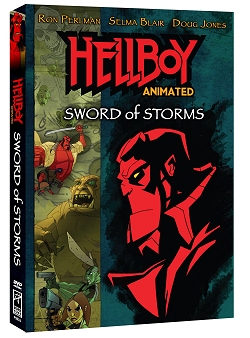
Contest: Win the Animated Hellboy DVD

Filed under: Contests — widge @ 10:48 pm

Quick Stop Entertainment, in conjunction with Starz! Entertainment, is giving away 10 copies of the direct-to-video animated movie HELLBOY: SWORD OF STORMS.

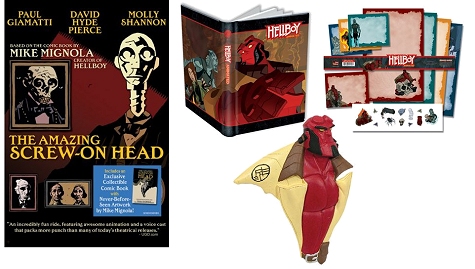
In addition, we’ll be giving away prize packs containing a copy of Mike Mignola’s AMAZING SCREW-ON HEAD DVD and HELLBOY: ANIMATED stationary, journals, and magnets from DARK HORSE COMICS. How many? We haven’t decided yet. Be nice to us and the number might increase.

Contest closed!

February 2, 2007

Scrubs Blog: A Doctor and a Gentleman

Filed under: Production Blogs,Quickcasts,Scrubs Blog,Video — UncaScroogeMcD @ 10:51 pm
scrubsheader.jpg


VIDEO BLOG #75: “A Doctor and a Gentleman” ““
Dr. Kelso gets his cinematic moment of glory in this behind-the-scenes look at a memorable fantasy sequence from “His Story IV”.

line3.gif
scrubs2007-02-02.jpg

Download Scrubs Video Blog #75:

  • Large (560 x 420 – QuickTime – 13.29 MB)
  • Small (320 x 240 – QuickTime – 5.70 MB)
##

Comics in Context #163: Are They On The List?

Filed under: Columns,Comics in Context — admin @ 9:06 pm
comicsincontext4.jpg

cic2007-02-02.jpgLast week I began my commentary on Peter Coogan’s book Superhero: The Secret Origin of a Genre (MonkeyBrain Press, 2006), in which he attempts to define both the superhero as a literary character and the superhero genre. He identifies three basic elements of the superhero, which he abbreviates as MPI: the mission, which benefits society and will typically last the length of the hero’s career; the powers; and the heroic identity, which is signified by a codename and costume, and which is usually accompanied by an alternate, secret identity.

Coogan makes one important point almost in passing. Wondering what made the cover of Action Comics #1 (1938), featuring Superman lifting a car, so different from past pulp and comics covers, which featured “outlandish action,” he theorizes that “Most likely, it was Superman’s costume in conjunction with the display of superpowers in a contemporary setting. This setting did not distance the action as a more exotic setting, such as an African jungle or an alien world, would have done” (Superhero p. 36). Coogan’s emphasis here is on the costume as “marker” of the superhero genre. But the setting is important, too. A cover featuring a man without a superhero costume who was lifting a large object on an alien planet would indicate a science fiction adventure story, not a superhero tale.

Over at his blog recently, former Marvel and DC writer Peter B. Gillis wondered about the Marvel and DC Universes: “How is it possible, I’d say, that in a world with antigravity, FTL travel, time travel, conscious computers, an alien contact every 2 1/2 weeks, and teleportation, that people still run around in gasoline powered cars with rubber tires?” Indeed, instead of using his anti-gravity discs for crime, why doesn’t the Wizard, one of the Fantastic Four’s enemies, mass produce them for sale to the general public? He’d become as rich as Bill Gates, and honestly. The Wizard would have also transformed the lives of ordinary people on Marvel-Earth possibly even more than the personal computer transformed our lives in the real world.

Gillis propounds what he calls “the Fundamental Theorem of Superheroes: that A superhero strip is a story in which, whatever the science fiction or fantasy elements are in the main premise, the background is always everyday reality.” He then explains that if you “change the background too much, and the strip becomes science fiction or fantasy. Not that there’s anything wrong with that, but it stops being a superhero strip.” Moreover, superheroes “embody our myths and our self-images, or they fail. And therefore, for maximum effect, they should be us. And it gets harder to be us if you have a vastly different backdrop.” Gillis concludes that “you can play with the tensions all you want (and to good effect), but there’s no solving it. The superhero strip is basically like opera: there’s a contradiction built in to the form itself.”

Last week I referred to opera as an artform in which one must accept the non-naturalistic convention that people sing rather than speak. The superhero genre is similarly founded on nonrealistic conventions, including the idea that superheroes and supervillains possess technology that is unavailable to the common man.

For example, in Alan Moore’s recent series Albion, in which he resurrects characters from comics published by Britain’s IPC Media, the British government has locked up the various heroes and villains, as well as their advanced technology. It is explained that the government considered the technology too valuable to destroy, but too potentially dangerous to make publicly available. So here is Moore abiding by Gillis’s rule without even knowing about it, to ensure that the background of Albion remains an “everyday reality” like our own.

So here’s another defining rule of the superhero genre, and I’d take it even further: a superhero story is typically set in an urban environment on Earth in the 20th or 21st century. Time travel stories and “Elseworlds” sagas that place superheroes in past centuries are by their very nature exceptions to the rule; they are not the normal settings for ongoing superhero series.

One reason that Zorro is not a true superhero is that his stories are set in early 19th century California, and hence are historical romances. Zorro’s time is therefore not our own “everyday reality.” Zorro fits specifically into the tradition of the swashbuckler, a type of adventure hero associated with period settings, like Robin Hood and Captain Blood. There are even elements of Zorro stories which overlap with the Western (the California setting and pursuits by horseback, for example).

Neil Gaiman’s 1602 (see “Comics in Context” #13, 18, 21, 25, 28, 33, 35, 36) transplants familiar Marvel superheroes and supervillains into the early 17th century, and persuasively shows how they could fit into the culture of that period. This is indeed a superhero series, but 1602‘s premise is that 17th century superheroes are anachronisms: the superheroes don’t belong there, and time must be set aright. 1602 thus acknowledges that it is an exception to a rule that is otherwise strict.

The first two volumes of Alan Moore’s League of Extraordinary Gentlemen (see “Comics in Context” #22, 23) are set mainly in late Victorian London, another urban environment which serves as an effective counterpart to the New York (and such fictionalized analogues as Gotham City) in the modern superhero genre. The League has an overall mission (though some members–Mr. Hyde and Griffin, the Invisible Man–don’t have altruistic motives), some (Hyde and Griffin) have actual super-powers (while Captain Nemo has super-advanced technology), and some (Hyde and Griffin, and even Nemo) have codenames and dual identities. None of them wear unusual costumes, although Griffin’s bandages and Hyde’s bestial appearance are sufficiently iconic to count as substitutes. Significantly, Allan Quatermain and Mina Murray, the two core members, who will star in future installments, have neither codenames nor costumes nor superpowers (though they will acquire immortality). Moore intentionally portrays that the Victorian League as a precursor of modern superhero teams. But the League members are not true superheroes, though they are “extraordinary gentlemen” (and an extraordinary lady).

The prime example of a superhero series set in a future time is DC’s Legion of Super-Heroes. Coogan points out that Legion is actually a “cross-genre” series that “blends the superhero and science fiction genres. It is set in the thirtieth century and features futuristic technology, space travel, alien races, other worlds, and a variety of other SF elements. . . . But it is clearly a superhero book” inasmuch as “The characters all have superpowers, wear costumes, have codenames, and the group’s founders sought to emulate. . .Superboy and Supergirl” (p. 52). Coogan might have added that the Legionnaires have an ongoing altruistic mission, and that many of their primary adversaries (such as the Fatal Five and Time Trapper) clearly qualify as supervillains.

These various examples of series demonstrate that determining whether or not a certain character is a superhero may be a complex task. Coogan observes that “specific superheroes can exist who do not fully demonstrate these three elements [mission, powers, and identity], and heroes from other genres may exist who display all three elements to some degree but should not be regarded as superheroes” (pp. 39-40). It may be necessary to examine the context in which the character under examination exists. Coogan states that “If a character basically fits the mission-powers-identity definition, even with significant qualifications, and cannot easily be placed into another genre because of the preponderance of superhero-genre conventions, the character is a superhero” (p. 40). On the other hand, he asserts, “if a character largely fits the MPI qualifications of the definition, but can firmly and sensibly be placed within another genre, then the character is not a superhero. Typically, the identity convention (codename and costume) plays the greatest role of the three elements in helping to rule characters in or out” of the superhero genre (pp. 43-44).

Hence, the “preponderance of superhero genre conventions” makes the Legion a superhero series perhaps more than a science fiction series. But the weakness of the “identity” element in League means its first two volumes are a pastiche of Victorian science fiction, but not a true superhero series.

Since this column is titled “Comics in Context,” it should be no surprise that I quite like the idea of examining the context of a character in the story to determine whether or not he or she is a superhero. As I stated last week, this was the most eye-opening insight I got from Coogan’s book.

For example, Coogan asserts that the Hulk is a superhero without a mission. In the traditional portrayal of the Hulk, he has not dedicated himself to fighting criminals and protecting the innocent: he merely seeks solitude and survival. What happens is that supervillains attack the Hulk, or he inadvertently stumbles across them, so he ends up battling them. Of course, the Hulk qualifies under the Identity and Powers categories. Moreover, Coogan points out, Hulk stories “are suffused with the conventions of the superhero genre: supervillains. . .superhero physics–the transformative power of gamma rays;” a sidekick “—Rick Jones, superteams-the Avengers and the Defenders,” and more (p. 41).

But this poses the interesting dilemma of whether or not The Incredible Hulk live action television series of the 1970s was a true superhero show. There were no supervillains or superteams or sidekicks. Apart from the presence of the Hulk, the series seemed to be set in a thoroughly realistic world. What if we did not know that the Hulk was a lead character in Marvel’s line of superhero comics? Isn’t it possible that viewers of the show who did not read Marvel comics might have considered The Incredible Hulk to be a science fiction series, or even a horror series, since the Hulk is so obviously a variation on Dr. Jekyll and Mr. Hyde? Arguably, it was not until the later Hulk TV movies that guest starred Daredevil and Thor that the live action TV Hulk more clearly became a superhero series.

Batman has no actual super-powers, but Coogan observes, he has the Mission and Identity, and “operates in a world brimming with the conventions of the superhero genre,” including supervillains, sidekicks, superteams, and the helpful authority figure, Commissioner Gordon. Here is where my own theory about non-superpowered superheroes comes into play. As I explained last time, Batman has adopted a persona and modus operandi that figuratively cast him as a superhuman being: he is metaphorically a bat in human form.

In the case of the Fantastic Four, they have mission and powers, but Coogan contends that “elements of the identity convention [are] absent or weak” (p. 41): although they have codenames, they do not have secret identities. Coogan concludes that “The secret identity is a typical, but not necessary, convention for the genre” (p. 42). I would say that in the FF’s case, what is important is that the characters have real names and code names that signify the two sides of their lives: they are superheroes as well as people who are members of a family and have to contend with everyday problems. This duality is what is more important than actual secret identities, although a secret identity is often a practical measure necessary to ensure that the superhero can lead an everyday life as “one of us.”

Coogan then provides an extended case study of Marvel’s Luke Cage, alias Power Man, who on first glance seems to be a 1970s-style blaxploitation hero with super-powers. Coogan notes that a superstrong character like Cage “could operate a detective/security agency within a science fiction or horror/SF milieu and not be considered a superhero” (p. 44). But Coogan then demonstrates in detail just why Cage is a true superhero.

Cage has super-powers, and he acquires a code name, “Power Man,” which, as Coogan points out, not only denotes his superpowers, but includes the “racial subtext” of “black power” (p. 47). Oddly, Coogan overlooks the fact that Cage does not have a purely altruistic mission as most superheroes do: as the original title of his series stated, he is a “hero for hire,” a mercenary. Still, by this point, Cage has demonstrated he will not accept unethical assignments, and that he will risk his life to combat evil even when he isn’t being paid to do so.

In Cage’s case Coogan makes an important point perhaps without fully realizing its significance. He observes that “The editors and writers at Marvel Comics took great care to place Luke Cage within the superhero genre by surrounding the character with superhero conventions and foregrounding these conventions” (p. 44). In the first story, a man who witnesses Cage stopping a criminal tells him that he “nailed him like a real super-hero!” Cage then goes to a costume shop where he acquires his familiar outfit. Although it does not look like a conventional superhero costume, Cage thinks of it that way, commenting, “It’s all part of the super-hero scene.” In a later issue Cage even adopts his codename “Power Man” explicitly in order to be taken as seriously as the more traditional superheroes.

All of this suggests to me that another factor in determining whether or not a character is a superhero could be called “declaration of intent.” What Coogan has demonstrated here is that not only the editors and writers of the Luke Cage series, but also Luke Cage the character explicitly stated their intent that Cage would be a superhero.

Reading Coogan’s book, I realized that there are other characters who do not strictly fit his three main criteria for superherodom, but who are unquestionably superheroes. Take Rogue of the X-Men. She has super-powers, and upon joining the X-Men, she accepted their mission (protecting “normal” humans from evil mutants, etc.) as her own. But her “identity” also seems weak. Not until her 2004 limited series, decades after her debut, was Rogue’s real name, Anna Marie, established, and her last name is still a mystery. According to Dictionary.com, her codename “Rogue” can mean “a dishonest, knavish person,” “a playfully mischievous person,” or “a tramp or vagabond.” The first and third definitions fit Rogue at earlier stages of her life, and the second only describes one aspect of her personality. So her codename doesn’t tell you much about her present personality and nothing about her powers.

Her colorful skintight costumes suggest she is in the superhero business, but do not indicate her powers or mission or persona. Often she does not even wear an “X” insignia to denote her membership in the X-Men. (And what kind of insignia could possibly indicate her absorption powers?: A sponge?) She has changed costumes so often that one cannot identify specific colors with her costume as one can with Superman. Rogue’s iconic visual trademark is instead the white streak through her brown hair, but that indicates nothing that makes her a superhero.

Not only does Rogue effectively lack a full “real name,” but she does not truly have a life apart from her role as a member of the X-Men. The personas of the victims of her absorption powers provided Rogue with a kind of alternate identities. Still, Rogue lacks the true sort of dual identity that conventionally characterizes the superhero.

Obviously Rogue, as a super-powered member of the X-Men, is a superhero. But perhaps these inadequacies in “identity” are part of the reason that Rogue remains a supporting character in X-Men, and not a star. Rogue can star in occasional limited series, but not in her own ongoing series as Wolverine does. She is simply not as iconic a character as he is.

In his book Coogan examines a number of characters, such as Adam Strange, the Punisher, and Shang-Chi, to determine whether or not they fall within the definition of superheroes. Inspired by his example, I decided to apply his approach to some other characters, in and out of comic books.

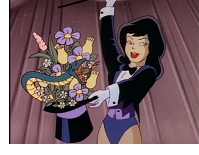
What about DC Comics’ Zatanna? She has a costume, but it’s not a superhero costume. Her top hat, tails, and net stockings comprise a leggy feminine counterpart to the traditional stage magician’s costume. But like a superhero costume, Zatanna’s outfit denotes her biography, powers, and personality: she’s the daughter of a magician, wields magic herself, she’s a performer, and she’s sexy. Over the years there have been attempts to give her a superhero costume, but they’ve failed, in part because they did not convey her identity as well as her magician’s outfit does.

Zatanna’s got powers, but she doesn’t have a codename or dual identity: Zatanna is her actual first name. As for mission, she is altruistic enough to fight alongside the Justice League, but she seems to spend most of her time as a stage performer; she doesn’t patrol cities looking for criminals as Batman and Spider-Man do. So just what makes her a superhero?

I’d say it’s context. Coogan makes the intriguing point that Shang-Chi, the the protagonist of Marvel’s Master of Kung Fu, is “a martial arts hero operating in an older pulp-style universe as the son and enemy of Dr. Fu Manchu” (p. 55). I would add that Master of Kung Fu writer Doug Moench and artist Paul Gulacy updated that “pulp-style universe” into a world resembling that of the James Bond novels. However, Coogan asserts, when Shang-Chi operates as part of the Marvel Knights superhero team, he becomes a superhero. I’m not sure that membership in a superhero team is necessarily sufficient to make Shang-Chi a superhero; he still lacks actual super-powers, a codename, or a superhero-style costume. (Shang-Chi’s outfit is supposed to be traditional Chinese clothing.) But certainly being a member of Marvel Knights puts him in the superhero genre in those stories.

Similarly, though the Punisher wears a costume, complete with chevron, and has a codename, Coogan believes that in his own stories he fits more into the subgenre of vengeful vigilantes that was founded by Don Pendleton’s The Executioner. And it’s true that even though the Punisher usually wears a costume, he has no super-powers and his solo stories usually are comparatively realistic crime stories, minus the exaggerations of the superhero genre. But when the Punisher appears in a superhero series like Daredevil or Spider-Man, Coogan contends that he too becomes a superhero (or, I’d say, a superantihero, or maybe a supervillain). Here I agree. When the Punisher interacts with superheroes, his own costume takes on more importance than it does in his solo stories, since it now marks him as one of the same kind as the likes of Spider-Man. Borrowing a metaphor from his colleague Randy Duncan, Coogan compares Shang-Chi and the Punisher to planetoids that can “get pulled by the gravity of writers and publishers into the superhero genre and out of their own genre systems” (p. 55).

Coogan’s law of gravity applies well to Zatanna. First, Zatanna is the daughter of Zatara, a crimefighting magician from comics’ Golden Age, and who is not a true superhero but a knockoff of the comic strip character Mandrake the Magician. She was created to be Zatara’s younger, female counterpart, so she wasn’t truly conceived as being a superhero. Editor Julius Schwartz and writer Gardner Fox introduced Zatanna as a featured character in various superhero series: Hawkman, The Atom, Green Lantern, Elongated Man, and finally Justice League. She even became a member of the Justice League. So, following Coogan’s rule, Zatanna is a superhero because of the company she keeps. But significantly, Zatanna also functions well in DC’s Vertigo line of titles, not only because her powers are supernatural, but also because her costume is a variation on conventional formal wear, and does not necessarily mark her as a superhero. Hence, Zatanna is a superhero when she’s in a superhero story, but isn’t when she’s in a Vertigo book.

How about the Spirit? His creator, Will Eisner, repeatedly contended that the Spirit was not a superhero. Interviewed in The Jack Kirby Collector #16 (1997), Eisner asserted that “They wanted an heroic character, a costumed character. They asked me if he’d have a costume. And I put a mask on him and said, “˜Yes, he has a costume!’ “ (Superman had debuted only two years before, in 1938, and was an enormous success.) So here is Eisner’s “declaration of intent” NOT to make the Spirit a superhero! But the author’s intent is not necessarily the decisive factor, as far as I’m concerned.

Just giving the Spirit a mask doesn’t necessarily make him a superhero, either; he could be a masked avenger from the pulps, like the Shadow, or radio drama, like the Green Hornet, or even the comics, like the Golden Age Sandman in his original hat, suit and gas mask.

How does Eisner’s Spirit fit Coogan’s three principal criteria? He has mission: the Spirit combats criminals purely for altruistic reasons. He’s not a member of the police force, and he makes no money off crimefighting. (Actually, I’m rather puzzled as to how he supports himself.)

The Spirit also has a secret identity: his real name is Denny Colt. His codename, the Spirit, signifies his origin: seemingly killed by Dr. Cobra’s formula, Colt actually fell into suspended animation and then “returned” to life. One could say that the mysterious “Spirit” is haunting the criminals he pursues. The name “Spirit” might also suggest the character’s commitment to his ideals; he is not in crimefighting for material gain. (It occurs to me that the name “the Spirit” might even have been a knockoff of the name of the Saint, Leslie Charteris’s amateur sleuth who had been appearing in novels since 1928 and films since 1938, again only two years before the Spirit’s debut.)

The Spirit’s costume does not signify his biography, powers, or mission. It’s not a typical superhero costume, anyway: it’s a conventional hat and suit, along with a mask and gloves, all blue, except for his tie, which is usually red.

Ah, but here we can apply Coogan’s observation that a superhero’s costume typically has iconic colors, so that, for example, the combination of red, blue and yellow signify Superman. Isn’t the Spirit’s blue outfit similarly iconic?

The Spirit, of course, lacks super-powers. Moreover, whereas, say, Batman is clearly superior in athletic ability and combat skills to most ordinary people. In contrast, Eisner repeatedly showed the Spirit getting beaten up, as if he were not that much better at fighting than his adversaries.

Nevertheless, the Spirit’s origin story casts him as figuratively superhuman: as noted, he seemingly rises from the dead. Moreover, he continues the ghost motif by making his home underground in Wildwood Cemetery, as if he were an avenging spirit from the hereafter.

Sometimes Eisner even depicts the Spirit as if he somehow has superhuman qualities. In reviewing Eisner’s story “Ten Minutes” about a hapless criminal named Freddy (in “Comics in Context” #68) I wrote, “But then Freddy sees the Spirit approaching in a mirror; the Spirit even calls Freddy by name. How does he know?” How did the Spirit know his name, or where to find him? I concluded, “This is the Spirit as the spirit of nemesis, all-knowing, unrelenting, inescapable.”

Darwyn Cooke’s recent Batman/Spirit comic book surprised me by revealing so many similarities between the two heroes and their series: both have supervillains, secret underground lairs, fatherly authority figures in the police department, urban settings. In other words, Cooke emphasizes that the Spirit’s world has the same “preponderance of superhero-genre conventions” as Batman’s. Indeed (and here I issue a spoiler alert for the remainder of the paragraph), when the Spirit and Batman exchange masked identities towards the story’s end, Cooke makes his thesis plain.

Moreover, the fact that the Spirit does not seem out of place interacting with Batman and his supporting cast of friends and foes may be an example of the “gravitational force” of the superhero genre. Even if the Spirit is not a superhero in Eisner’s stories, perhaps he becomes one when he interacts with Batman.

If Eisner had lived long enough to see Cooke’s Batman/Spirit crossover, it would have been interesting to see how he would have reacted to it. Eisner did not always adamantly deny that the Spirit was a superhero. In the introduction to The Spirit Casebook, Eisner wrote that “The Spirit was for real; he was human, made of flesh and blood and therefore killable,” and yet also asserted that “He was simply a guy who had a perfectly acceptable trade–that of chasing and catching crooks. He was good at it. He got into the superhero business by accident; stumbled into it, you might say.” Just as Eisner perhaps stumbled into realizing that the Spirit is indeed a superhero.

How about the successful new NBC series Heroes, whose title characters all possess superhuman powers? As far as Declaration of Intent goes, the show’s creator, Tim Kring, believes that Heroes is in the superhero genre. But, he told The New York Times (October 30, 2006), he had little knowledge of superhero comics, the prime source of superhero stories. “‘I was not a comic book nerd,’ Mr. Kring said, sipping an iced tea with lemonade in a restaurant near the studio lot here where Heroes is shot. ‘But the truth is that nowadays that world is so pervasive, especially when you have kids, that you go to movies in the summertime and that’s what you see. I didn’t really feel like I had to come from that world.'” (And just why do some people gratuitously insult part of their core audience?)

So Kring taught himself about the superhero genre from film adaptations of comics series, rather than the primary sources themselves. Then it’s not surprising that his understanding of the genre is somewhat flawed. (Nonetheless, I’m amused to discover that the show’s official fan website, 9th Wonders, is done in the style of Stan Lee’s Marvel Bullpen Bulletins pages from the 1960s.)

According to the Times article, Kring believed that “the idea of heroes” was “missing” from today’s world, and “That’s where the notion of superheroes came in, though he had no interest in anybody “˜donning a costume.’ Instead, he said, he wanted to make ordinary people suddenly extraordinary. “ Well, of course, Peter Parker was an “ordinary” person who became “suddenly extraordinary” when he gained the powers of Spider-Man, so in this respect Heroes isn’t different from traditional superhero sagas.

How does Heroes fit Coogan’s three main criteria? Powers, yes. But identity, no. Although the super-powered characters keep their powers secret from the general public, they do not have secret identities, codenames, or costumes. More importantly, they don’t have heroic identities distinct from their everyday selves. Coogan mentions “the exaggeration inherent in the superhero genre” (p. 31). Part of that exaggeration lies in the concept that the adoption of alternate, heroic identities is a reasonable choice in the world of the superhero genre. In the world of Heroes, it seems, it isn’t.

And what about mission? In Heroes some of the title characters are famously out to “Save the cheerleader, save the world,” presumably meaning saving New York City from being blown up, as has been prophesied. But these are only immediate goals. Another example of the larger than life exaggeration in the superhero genre is that the heroes are dedicated to career-long tasks of protecting other people and combatting injustice, at great risk to themselves and without recompense; there aren’t many people in the real world who are this selfless. As far as I know from the episodes I’ve seen, the title characters in Heroes don’t have that sort of ongoing mission as yet.

To my mind, Heroes isn’t truly in the superhero genre; it’s actually a science fiction series. As far as superheroes are concerned, Heroes does not make the list.

Next week I will turn to a particularly controversial question about who’s a superhero and who’s not: what about Buffy? And, for that matter, who’s a supervillain and who’s not?

ADVERTISEMENTS FOR MYSELF
Believe it or not, I have yet another book out. This is the Marvel Vault, from Becker and Mayer, and is a project similar to the Marvel Classic Super Heroes book I previously wrote for the company. Marvel Vault contains a history of Marvel Comics, written by Roy Thomas (who covered up to 1974) and myself (who did the rest), as well as reproductions of rare collectibles from the Golden Age onward. And the book is already in its second printing!

-Copyright 2007 Peter Sanderson

Noctural Admissions: Movie review Smokin’ Aces

Filed under: Columns,Nocturnal Admissions — UncaScroogeMcD @ 5:57 am
nocturnalheader5.gif

Smokin’ Aces has only a 28 per cent approval rating from Rotten Tomatoes and that pisses me off.

Aces poster

Why must every movie I like be reviled? And why must every bad, inept movie be number one at the box office for four weeks in a row?

Even the “positive” reviews at RT are backhanded. “Will not disappoint fans of mayhem and bloody contract killing madmen,” writes another internet reviewer. The consensus derived from all these critiques seems to be that the film starts out wild and crazy, but is sure to wear out the viewer as it gets more and more absurd and out of control. “Overstays its welcome,” is how Variety put it. But I think these reviews have it all wrong. It is at this point of supposed absurdity that Smokin’ Aces actually gets good, as amid the gunplay there is an overpowering sense of sadness as various unorthodox “couples” in the film lose their partners as all those around them are losing their heads.

Aces Gun

Another thing that pisses me off is the phrase Tarantinoesque, which I am always careful to try and use properly. These days the term is used promiscuously for just about any crime film that has young people in it, or that features older stars resurrected for a bit part, or has lengthy sequences of pop culture dialogue, or scenes of gross unexpected violence alternating with clashing black humor, none of which are qualities necessarily invented by Tarantino, by the way. But really, if anything isn’t the film more like Lock Stock and Two Smoking Barrels, making it “¦ Ritchiesque?

Aces Piven

But does the following description sound Tarantinoesque or even Ritchiesque? Many years ago, the FBI took a raw recruit, pretended to kill him, and then altered his face and sent him undercover in order to spy on the mob, where surprisingly he rose to the rank of a Mafia don. Along the way he had an illegitimate son. Named Buddy Israel, the son grew up to become a Las Vegas magician. While working in Vegas he grew friendly with various mobsters. Inspired by their example, Israel embarks on his own life of crime, financing various robberies. But eventually he is cornered by the law, and in order to escape various penalties, he has agreed to rat out his former mentors and his closest advisor among the mobsters. Meanwhile, his biological father suffers in a hospital ward for want of a key organ transplat. Knowing that Israel is about to snitch, the mob leaders agree among themselves that Israel must be killed. Since he is under protective custody in a Lake Tahoe penthouse suite, the mob believe that he is something of an easy target and proceed to acquire a hit squad to assassinate him. Word of the million dollar price on his head leaks out, and freelance hit people and bounty hunters plan to converge on the hotel. The gangsters are reckless, however, and discuss the matter openly on their telephones, within earshot of two FBI surveillance officers.

Aces Reynolds

At this point, the film begins. But the rest of the film is not solely gunplay and black humor with bits of backstory plastered into the cracks. It’s a story that transforms from delirium to dirge as bodies drop, and the expense of loyalty is added up. The film, in fact, is about clashing loyalties, an agency’s to its own versus individual agents to each other, hired killers to each other, bosses to their body guards, men of crime to their underlings. With careful applications of poignant music some of it borrowed from Ennio Morricone, director Joe Carnahan’s film turns elegiac, particularly when focused on the canvas of Ryan Reynolds’s face. He’s one of the two FBI agents listening in on the gangsters and his partner is played by Rat Liotta. The anguish and anger Reynolds evinces in the wake of Liotta’s fate is the point of the movie.

Aces nazi

Yes, Smokin’ Aces is fast paced. It is hectic and multilayered and demands that you keep up. The film is all about transitions as Carnahan links scenes by asking questions in a shot or location that are answered at the start of the next scene. And it has a vast cast that partially includes Ben Affleck, Jason Bateman, Common, Peter Berg, Andy Garcia, Alex Rocco, and Alicia Keys among many others, making the movie one we will probably look upon years hence and say, “Wow, was he in that, too?”

Aces Keys

I don’t know if Smokin’s Aces is a great movie. All I know is that the film surprised me (the trailer is a tad misleading), and that it requires multiple viewings just to begin to digest it. And I also know that like other past films denigrated as mere Tarantino rip offs, such as Way of the Gun, it has a spirit and atmosphere that is increasingly rare in films, an exploration of the glue that holds society together, as manifested in the unspoken loyalty of people to each other and its cost as the society contrives to undermine it.

Trailer Park: Celebrate 3 Years Straight of Trailer Park Columns With Something Zany.

Filed under: Columns,Trailer Park — admin @ 12:10 am

By Christopher Stipp

Archives? Right Here…

“What’s in a name? That which we call a rose
By any other word would smell as sweet.”

–From Romeo and Juliet (II, ii, 1-2)

Back again.

It’s been a busy time around these parts for a while with all the interviewing I have been doing, Lord knows I need to actually get on the stick to find a new day job that can pay my light bill (One of the perks of unemployment? Watching tons of Arrested Development on my TiVo), but I hope at least some of you found some merit in getting to know a lot of different people in the industry called film.

It’s been a wild month and it actually sums up perfectly about why I have enjoyed my three years here at Quick Stop Entertainment/Poop Shoot. (Yeah, I liked the old name too but after hearing how the moniker hindered access to certain people I’ve now been able to talk to I am now in full agreement with Bill up there.) Gertrude Stein had nothing on Poop Shoot, I will tell you that much.

Some of the greatest developments of my writing career came in 2006 and I have no one to thank more than my wife who has showed her constant support for the Sunday nights I spend working on this column by only asking “So, do you think you’ll actually get paid for this someday?” every once in a while. (Lord knows that having the chance to spend 1:1 time with some of my most inspiring artisans is almost compensation enough. Almost. Really.) Last year rocked my insignificant world fairly hard with everything I did and along with my lady I have to give thanks to every one of you who continue to make me a pit-stop on your Fridays/weekends/whenever you’ve read everything else on the Internet. I hope to continue with the work that has gone on ignored by most every film/entertainment based periodical I have sent samples to (More on that in the coming weeks) and am eager to see what unsuspecting entertainer I can foist my interviewing skills upon in the new year.

I am eager, more than anything else I’ve done in years, to tease next week’s column where I was humbly thankful to speak to one of rock’s alternative contributors in the early 1990’s: Tanya Donelly. From The Throwing Muses, The Breeders, Belly to her own solo work I can’t remember a more satisfying conversation with someone that went on for as long as it did. I initially believed that interviewing musicians would necessitate a different approach than I take with other kinds of people but I am absolutely floored by how well the discussion went; one of the best interviews I’ve ever had the pleasure to participate in, without question. I wouldn’t normally be giving everyone reason to start their plans to avoid my column next week so early but consider this an early Christmas present.

Now, before getting on with this week’s trailers I absolutely had this email with regard to the review I ran about the DREAMGIRLS trailer a few weeks ago. I admired this guy’s passion so much I just had to include it here for your perusal. Enjoy!

Brandon C. writes:

Mr. Stipp,

Although I’m sure (or rather, I hope) I won’t be the first person to inform you of this, Dreamgirls is in no way based upon the story of Destiny’s Child. The film is an adaptation of a successful Broadway musical first staged in 1981, which was inspired by the history of Diana Ross & the Supremes and deals with the assimilation of black artists into the white pop music mainstream (similar to the days of Motown). The film’s script holds closer to its Supremes inspiration than the stage musical, and was not retooled to include any references to Destiny’s Child.

The use of Beyoncé Knowles as the character of Deena Jones (essentially a Diana Ross pastiche) hasn’t much to do with her parallel experience as lead singer of Destiny’s Child, although it is alarming just how similar the Destiny’s Child story is to the Supremes’ story. This plot, and that character, were first presented when Knowles was only a few months old. On top of that, Beyoncé’s Deena character isn’t even the plot’s central figure: Jennifer Hudson’s character Effie is the character with most of the emotional weight and the big solo musical numbers.

I have already seen the film and, while I enjoyed it very much (Hudson does a fine debut, and Eddie Murphy gives his best performance in at least a decade), I don’t assume you’d want to see the film any more after you’ve read all this, as its subject matter doesn’t seem to be within your scope of interests in the first place. I know your review is based upon only the trailer (which isn’t quite an accurate reflection of the actual film), and you’ve probably never heard of Dreamgirls before, but I would at least have assumed you’d heard of Diana Ross and/or the Supremes. For all I know, however, you may have already known all of this (especially after the plethora of media coverage of the film), and you may have just been attempting a comedic dismissal of the film.

Regards,
Brandon C.

P.S. The hairstyle you referenced in your article as a “Jheri curl” is in fact a “conk”: a pompadour created by using lye to straighten an African-American male’s natural hair. A Jheri curl is a different hairstyle altogether (it is what Michael Jackson wore back when he was “Michael Jackson”). Conks were popular up until the late-1960s, while the chemicals used to create the Jheri curl hairstyle weren’t invented until the late 1970s.

Some highlights from my letter back to Brandon:

Brandon,

I wanted to let you know that I really do appreciate your comments on the film proper. Additionally, I wanted to let you know that everything I wrote about what my impressions were of the movie were solely based on 1) the trailer/marketing department’s ability to convey what the movie is about and why I should see it and 2) to point out what a piss poor job they did in getting me excited about this musical.

The column I write on trailers is supposed to point out the absurdity in what companies think is the best way to market a film, there are excellent examples of what I think when they do it right, but when they do it wrong I open up the sarcasm box and just unload on everything and anything I can make fun of.

I am actually a huge fan of musicals. Hugh Jackman’s Oklahoma was a *fantastic* example of theater done right and certainly movies like CHICAGO helped bring musicals back into modern moviegoers’ consciousness when movies like WEST SIDE STORY dazzled as well as made money at the box office. I do plan on watching DREAMGIRLS, just so you know.

So, long story short, I really do appreciate you writing in with your knowledge of the film and the origins of Jheri Curl; that really amazed me you either knew that off the top of your head or that you took the time to check that out.

What I didn’t write back in the response is that his was the real in-depth response to a stance I took on a trailer. It’s amazing that a lot of people just take my opinion at face value for what I think but I am always appreciative when there is a little dissent within the ranks.

Ooo…and what father would I be if I didn’t give a WGCI-old-school shout-out (“Yeah, this is Dawanna from the south side givin’ it up to my mannn, Shaun. Can you play “Rub Me The Right Way” by Johnny Gill….”) if I didn’t say Happy Birthday to my daughter, Ella, who turned 1 today. I happen to love this picture in all its raw natural-ness and it also happens to be one my wife is never too keen on me displaying in public BUT it is my column after all, not hers, so here you go. Happy Birthday, little lady, from dad.

FANTASTIC FOUR: RISE OF THE SILVER SURFER (2007)

Director: Tim Story
Cast:
Jessica Alba, Michael Chiklis, Chris Evans, Ioan Gruffudd, Andre Braugher
Release: June 15, 2007
Synopsis:
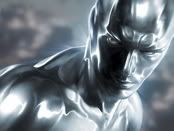
Marvel’s first family of superheroes, The Fantastic Four, meets their greatest challenge yet in FANTASTIC FOUR: RISE OF THE SILVER SURFER as the enigmatic, intergalactic herald, The Silver Surfer, comes to Earth to prepare it for destruction. As the Silver Surfer races around the globe wreaking havoc, Reed, Sue, Johnny and Ben must unravel the mystery of the Silver Surfer and confront the surprising return of their mortal enemy, Dr. Doom, before all hope is lost.

View Trailer:
* Large (QuickTime)

Prognosis: Not A Chance. I loved this film when it was called TERMINATOR 2.

Really, have effects not evolved further than this kind of rendering that looks like it was cribbed from James Cameron’s outtakes?

Let me try and cut and slice through what seems to be at issue with the way this trailer is executed. First and foremost, props to the trailer for creating an air of mystery right out of the gate with the mysterious flash entering the Earth’s atmosphere. Even if you don’t know that’s the Silver Surfer it still is fairly exciting with the uncertainty that bodes for the F4.

Now, we pull back a bit, which is a bit jarring, and witness the wedding of Jessica Alba and that dude, with the elastic body, who I don’t know, really don’t know what else he’s been in, being married by Brian Posehn, hopefully he’ll serenade the duo later with a scorching rendition of “Metal by Numbers.”

Now, things, obviously, turn to pot when the mystery blob does a fly-by, close enough to the wedding party, how convenient, and Mr. Guy Who I Don’t Know tells Chris Evans to go check that shit out. I will heartily admit that I have had no love for Chris Evans, I mean, really, am I the only person who hoped that Kim Basinger really would’ve received a bullet or two from Jason Statham, but Chris made F4 #1 watchable; he was genuinely humorous and self-centered, the way Johnny Storm should be played.

Here, again, his quip is just as smart, if not predictable when asked to get his “flame on” while wearing a tux. It’s cheeky. And, just for a moment, I am hopeful that something unique is going to come out of this. I get my hopes up when the camera movement through a series of banks and turns races through skyscrapers of all sizes. It’s a genuinely fluid chase scene but seeing the Surfer plow straight into the side of a building, only to materialize a la T-1000, it’s like I had my nuts slapped by Andre The Giant; it hurts.

The dogfight through a tunnel looks awfully animated and I don’t mean that in a cheerful exuberance sort of way, either. You can see the camera is blatenly sped-up as the two sliders and divers jockey for pole position over one another. The Surfer is further shown in all of his liquid metal glory, I am now convinced they got a cut rate on the software that can render anything to look like shimmering metal, T-2 is 15 years old so they MUST have got a screaming deal.

I’m not really sure whether this application of an old technology really gets me going like I thought it would when the mere mention of The Silver Surfer in a movie, for me anyway, in the 1989 classic HOW I GOT INTO COLLEGE got me kind of excited to think of how this could have been only to figure out in 2007 that it could have looked like it does way back in 1991.

Of course, T-2 didn’t ride a metallic surfboard that could have been used to asphyxiate his opponents into submission and I have to admit that does look like one advantage I’ve never pondered until Mr. Evans is led away from the ground and is allowed to free fall after he’s properly extinguished. We could have a movie here, people, if Evans is allowed to die but since this IS a franchise, don’t let your banker tell you otherwise, I am sure there is some explanation as to why his head didn’t explode from the compression and lack of oxygen.

One can dream, though”¦

EVAN ALMIGHTY (2007)

Director: Tom Shadyac
Cast: Steve Carell, Morgan Freeman, Lauren Graham, John Goodman, John Michael Higgins, Wanda Sykes, Jonah Hill, Johnny Simmons, Jimmy Bennett, Graham Phillips
Release: June 22, 2007
Synopsis: The last time we saw Evan Baxter (Steve Carell), he was being tormented by rival Bruce Nolan onscreen, live from their Buffalo TV station. But as time passed and Evan has made up with Bruce, he’s gone onto bigger and better things. Newly elected to Washington D.C. as a congressman, Evan has left Buffalo, New York in pursuit of a greater calling. But that calling isn’t serving in the illustrious ranks of America’s politics, but being summoned by the Almighty himself (Morgan Freeman), who has handed Evan the task of building a new ark, much as Noah did before. With time passing by and his family belittled by Evan’s newfound realization, Evan will have to do the work that God has given him in what promises to be an unusual adventure for a man who just wanted to serve his country, might actually be serving humanity.

View Trailer:
* Large (QuickTime)

Prognosis: Nope. You know those movies where you start off with a bias and then by end you’re completely amazed that you honestly were won over by a singular performance?

As you may have guessed, yeah, this isn’t one of them.

I just haven’t been able to jump on the Steve Carell bandwagon or become a member of the He Can Do No Wrong superfan club and I don’t think it’s because there’s isn’t anything to like about him. He seems like a genuinely funny dude to a lot of people but sometimes comedy is like a musk given off by some people and I just do not like the funk he leaves in my nose. The Office, ANCHORMAN, everything just ricochets off my funny bone like high velocity dodge balls. Unfortunately, even this teaser trailer misses the mark with me.

“Throughout history the Almighty has appeared unto a very few”¦”

I am, as well, taking this thing to task for the idiotic presentation. Is there no other way to start a comedy trailer than getting that one Voiceover Guy to try and secretly give us his verbal left hook as we stare at his other curled fist, telling us of noble people who God has supposedly “talked” to personally. Flashes of Moses, Abraham, Joan of Arc and even Bruce flash by, too bad they didn’t have the low hanging balls to mention Muhammad, but we’re all waiting to see it, waiting, waiting, waiting and then, Steve pops up on the screen doing that tongue thing that my father thought was piss-your-pants hilarious from BRUCE ALMIGHTY.

Cue Norman Greenbaum’s “Spirit In the Sky.”

So, we’re supposed to believe that God has chosen Steve Carell, I would too if I saw what Jim Carrey would’ve demanded to be paid, and I guess it’s appropriate enough that this is the sweetest middle finger Universal could’ve ever given anyone but the slapstick here doesn’t seem funny.

“Are you starting a Bee Gees tribute band?”

Steve knows how to flop around in ways the Three Stooges would’ve been proud of but if this is supposed to be the costliest comedy in movie history I don’t see how Wanda Sykes, the greatest go-to comedienne that any studio could’ve asked for, she seems to be in so many movies as the brash loudmouth it almost appears to be scrawled on her resume as that’s the only part she ever plays, delivers the best line in this trailer.

Even John Michael Higgins has a tough time with even making me grin. I don’t know if this due to the crap line he delivers or the poor choice of scene to display how he can really deliver but I’m disappointed.

The disappointment only continues further by the end when Steve is trying to explain to his wife that the boat he’s been asked to build how it’s going to come in handy. Mumbling that it would be great to put on a lake or, as he sticks in “in case it floods or something” does not a joke make.

I’m trying here, I really am. A lot of you have made The Office something for NBC to hang their hat on and Steve has really become the “It” jokester as of late but I just can’t see it. This trailer certainly doesn’t help.

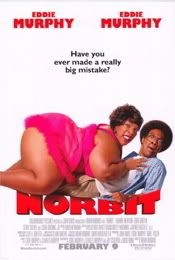
NORBIT (2007)

Director: Brian Robbins
Cast:
Eddie Murphy, Thandie Newton, Eddie Griffin, Terry Crews, Clifton Powell, Cuba Gooding, Jr.
Release: February 9, 2007
Synopsis: Norbit (Eddie Murphy) has never had it easy. As a baby, he was abandoned on the steps of a Chinese restaurant/orphanage and raised by Mr. Wong (Eddie Murphy). Things get worse when he’s forced into marriage by the mean, junk food-chugging queen, Rasputia (Eddie Murphy). Just when Norbit’s hanging by his last thread, his childhood sweetheart, Kate (Thandie Newton), moves back to town. In the comedy “Norbit,” he’ll show them all that nice guys sometimes finish first.

View Trailer:
* Large (QuickTime)

Prognosis: Not Even Close. What the hell happened to Eddie Murphy?

I mean, seriously, I don’t like to seem I am just echoing what everyone else already knows but is dressing up like fat people the only way for him to really stretch his comedic reach? I know he probably made a lot of coin for his DADDY DAY CARE and that THE NUTTY PROFESSOR has bankrolled any other transvestite proclivities he may want to indulge in by offering this segment of the population rides to nowhere in particular, that is if you believe what the Globe and National Enquirer have reported. But, where is the Eddie Murphy that made DELIRIOUS or RAW?

He’s gone and we have this pod person taking his place: an unfunny shill who’s on par with Tim Allen as the king and drag queen of crap film fare.

That all said, however, it’s important to be impartial and as we open up I am all sorts of available to accept that there might be a funny or two in here. As we quickly go through Eddie’s history as a youth who is ditched out of a car, picked up by a Chinese proprietor of a restaurant/orphanage, yeah, real funny those writers are, I did laugh when Eddie’s younger self plays with a little duck only to have it taken away. It dies on the chopping block, the head tumbling down to his feet as he’s told to play with that instead.

He’s then playing in the sandbox, some ruffians destroying what he built, only to have a very large girl take the twin attackers to task for doing so. She forces him to be his girlfriend as Peter Gabriel’s “Big Time” chimes in.

I get it. The fat angle is where we’re going with this, right?

Yeah, it is. For those needing some inclination of what this movie really is I can tell you just by seeing the first split screen: think of this flick as the unholy union of the unfunny parts of BOWFINGER and the gelatinous make-up that made the NUTTY PROFESSOR such a hit around the world.

We’re then treated to Eddie’s fat woman character as she’s lounging in her bikini, yeah, it’s that bad, talking to her friend about how she’s all sorts of sexual as we’re treated to Eddie getting body slammed into his bed by his airborne lover, crushing their bed every single time. I don’t know whether to laugh or be afraid.

The fat joke is then taken a notch higher as we’re treated to a rendition of the Pussycat Dolls’ “Don’t Cha” as Eddie’s fat lady hand washes a car and her plump make-up breasts push their way onto the car’s windshield. I guess it’s supposed to be funny.

I did enjoy watching the She Eddie picking up her gut when asked at the entrance of a water park if she’s wearing bottoms; you get a full-on look that confirms, yes, she/he is. I don’t know whether I need to be disgusted or find it horrifying. I settled on disgusted.

The sing-along at the very end of this trailer seems quite unnecessary to why I would want to pay to see this but, I guess, this whole trailer seems like a fair warning of what’s to come than anything else.

Sigh. Eddie, we hardly knew ye.

DAS LEBEN DER ANDEREEN, THE LIVES OF OTHERS (2006)

Director: Florian Henckel von Donnersmarck
Cast: Martina Gedeck, Ulrich Mühe, Sebastian Koch
Release: February 9, 2007 (Limited)
Synopsis: Florian Henckel von Donnersmarck’s movie debut focuses on the horrifying, sometimes unintentionally funny system of observation in the former East Germany. In the early 1980s, the successful dramatist Georg Dreyman and his longtime companion Christa-Maria Sieland, a popular actress, are big intellectual stars in the socialist state, although they secretly don’t always think loyal to the party line. One day, the Minister of Culture becomes interested in Christa, so the secret service agent Wiesler is instructed to observe and sound out the couple, but their life fascinates him more and more…

View Trailer:
* Large (QuickTime)

Prognosis: Very Positive. I need to see this film.

Sure, there seems to be a little similarity between what happened with that island girl and Tom Cruise in THE FIRM, if you ask me he was probably really disinterested from what I could tell talking to people in the know, but, beyond that, this is pure electricity.

The only thing I really knew about what was going on in East Germany versus what was happening in West Germany is only what my media told me. It was all Communism, totalitarianism, oppression, repression and every other evil ““ssion you can link into a sentence. What leaped out at me, then, was not the awards that this film has won, and they’re especially well-placed, but the color palate and weight of the images that follows the initial moments of this trailer.

If I am able to say it I would mention that the whole feel of this movie is like an onomatopoeia for what it was like in East Germany. The manhandling of an individual, no doubt the Stasi who took a page from Adolf Hitlers’s Book of Fashion and How To Look Good While Killing Fellow Countrymen, and the score that ripples right below the action on the screen is haunting.

We get a few good words about what the police there were really in the business of doing, and it certainly helps those of us trying to determine to see this foreign flick whether it’s worth our time, and it nicely leads us to the crux of what this film is about in a way. Sure, we don’t know particulars but we know our protagonist is a playwright who has a hottie for a lady and the Stasi want then bugged, wired and everything else that help them delve into their lives.

So, events are in motion: the man is followed, you have a perv on the other line who is drinking in these stranger’s private moments and we get a few well-chosen blurbs from the American media about why this film stands out against the rest.

I think it’s also worth noting that the use of subtitles in the trailer is a bold choice; I, for one, do not have a problem with it but it certainly defines itself as a foreign language movie and hopefully prevents some dope from going and thinking it’s all in English.

What intrigues me more about this film is that one of the listeners on the other end of this surveillance campaign seems genuinely moved by what he’s hearing and learning. A lot more is going on underneath the surface of some police officials wanting to keep tabs on a anti-government dissident but there’s the sense this movie is a dramatic piece wrapped up in a cat-and-mouse game. One of the last that would happen before the East Germans figured out what the rest of us already knew: oppression of a population can only last so long before change comes. Too bad North Korea, Turkmenistan and a lot of other Central Asian nation-states haven’t figured this out but a movie like this one could illustrate the absurdity of how futile it is to try and keep rose colored glasses on their society.

QSE News: 2/2/2007

Filed under: Columns,News — UncaScroogeMcD @ 12:05 am
quickstopnews.jpg
line1.gif

Here are today’s top entertainment headlines:

  • qsnews.jpgAuthor J.K. Rowling has set a date for the last installment of her insanely popular series of Harry Potter books. The final book, Harry Potter and the Deathly Hallows, will hit stores on July 21. Rowling has refused to say whether or not Harry Potter will die in the final book, but QSE has learned that Lord Voldemort will reveal that he is Harry’s father, fuzzy little bears will help Harry and his friends defeat an evil army and the Death Star will finally be destroyed.
  • Daniel Radcliffe, the titular star of the Harry Potter movie franchise, has caused quite a stir in his native England by posing for nude pictures, with a horse no less, to promote the upcoming play, Equus.  It appears that many fans aren’t shocked so much by the pictures themselves, but rather by the size of “Harry’s wand.”
  • Contrary to rumors that circulated around the internet yesterday, singer Courtney Love will not be replacing Paula Abdul on American Idol. When asked for comment, Love said that she was not intending to join the TV show as it would greatly interfere with her scheduled tour of rehab clinics across the United States.
  • It appears that there is a good reason a sex scene between Sienna Miller and Hayden Christensen in the new movie Factory Girl looks real… apparently it was.  According to an “inside-her” on the set, the couple really engaged in some on-camera coitus.  The unnamed source backed up this assertion by adding, “C’mon… we’ve all seen Hayden act.  There is NO WAY he could be THAT convincing otherwise.”
  • A new report from the New England Journal of Medicine shows that lavender and tea tree oils can cause enlarged breasts in young boys.  The link between the oils and the hormonal condition was discovered after singer/amateur proctologist Michael Jackson was caught purchasing large quantities of Lavender-scented soaps and shampoos.
line1.gif

That’s all for today’s news, stay tuned to this channel for all the news that matters least but you still care about.

(Compiled by J. Allen)

##

Quick Stop Thingamabobs: 2/2/2007

Filed under: Columns,Thingamabobs — UncaScroogeMcD @ 12:01 am
thingamabobs.jpg

The web. It’s a big place, full of plenty of distractions ““ some funny, some informative, some ludicrous, some disturbing, some inane, some profound. Each and every weekday, we present links to a few of our favorite finds”¦

————————————————

  • Remember the remix contest we did a few month’s back for Jonathan Coulton‘s “Code Monkey”? Well, here’s the winner, bringing her uke on stage and dueting with Mr. Coulton at a recent live gig in NY… (Thingamabob)
  • And also joining him for “Tom Cruise Crazy”… (Thingamabob)
  • So, wearing an electric dog collar around your neck and deciding to test it is probably not the act of a smart man… (Thingamabob)
  • An “homage” (read: rotoscoped aimation) of the classic Gene Kelly/Jerry the Mouse dance sequence, with Stewie Griffen… (Thingamabob)

Have a THINGAMABOB? Send it in!

##

Weekend Shopping Guide 2/2/07: Sexy Party!

Filed under: Shopping Guides — UncaScroogeMcD @ 12:00 am

weekendshopping.jpg

The weekend’s here. You’ve just been paid, and it’s burning a hole in your pocket. What’s a pop culture geek to do? In hopes of steering you in the right direction to blow some of that hard-earned cash, it’s time for the Quick Stop Weekend Shopping Guide – your spotlight on the things you didn’t even know you wanted…

The advent and ubiquity of DVD has created many surreal moments of the past few years, one o which most certainly has to be that, with the release of its sixth set, the entire Thames run of Benny Hill (A&E, Not Rated, DVD-$49.95 SRP) has now been released on DVD, uncut and in its original form. Never could I possibly fathom that such a day would come that I would own the whole bawdy comedic enchilada, but here it is. The 3-disc box-set features an exclusive interview with a trio of “Hill’s Angels.”
Considering what a comedic genius I consider Louis CK to be, I admit to being disappointed when I saw the first few episodes of his HBO sitcom Lucky Louie (HBO, Not Rated, DVD-$29.98 SRP). At first, I thought it to be nothing but a crass, largely unfunny exploitation of HBO’s “anything goes” standards – just an expletive & nudity filled sitcom version of kids seeing what they could get away with in the schoolyard. As the series built, however, I came around to what Louis was building with his dysfunctional extended family unit – a little post-modern sitcom that actually tried to present a truer-to-life version of what having a family is like, with its money troubles and frustrations with spouses, kids, families, friends, and work. It took me awhile to see the light, Louis, and I’m glad I did. I’m just sorry that HBO chose not to renew it, depriving me of the ability to see how he’d develop these characters further. The 2-disc set features all 13 episodes (one of which never aired), plus audio commentaries on 4 episodes, and a behind-the-scenes look at the taping of the show.

In what is fast becoming a welcome annual tradition, Warner Bros. has been partnering up for an online poll to determine which catalogue titles will get released on DVD. This year, they partnered with Amazon, and the winners were Clark Gable & Yvonne DeCarlo in Band of Angels, Michael Crichton’s Looker, Greer Garson as Madam Curie, The Arrangement, and Gymkata (Warner Bros., Not Rated/Rated PG, DVD-$19.97 SRP each). Bonus features include audio commentaries, featurettes, and the original theatrical trailers.

Re-watching the episodes (thoroughly burned into my mind courtesy of endless Nick at Night repeats ages ago) the comprise the third season of I Dream of Jeannie (Sony, Not Rated, DVD-$39.95 SRP), I’m reminded just how much the show remains a nice slice of comfort food. It’s no intellectual or artistic triumph, but it’s an affable and enjoyable way to pass the time, and both Larry Hagman and Barbara Eden remain a timeless comedic pairing surpassed only by the duos of Dick Van Dyke/Mary Tyler Moore and Dick York/Elizabeth Montgomery. This season found Jeannie saddled with a trainee, transferring her powers to Tony for a day, is trapped in a safe bound for the moon, and must tussle with her jealous sister, Jeannie 2. Sadly, there are no bonus features – just 26 light but fun episodes.

In the mood for some Pillow Talk-esque 60’s comedy? Fox has dusted off a trio of entries that fit the bill, just for you – Move Over, Darling, Caprice, and Do Not Disturb (Fox, Not Rated, DVD-$19.98 SRP each). All three star Doris Day, alongside costars like James Garner, Richard Harris, Rod Taylor, and even Ray Walston. All three flicks feature brand new featurettes and interviews (Caprice also gets an audio commentary), as well as a look at the restoration process.
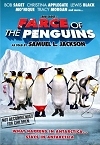
If you think that his performance in The Aristocrats was the outermost limits of Bob Saget’s sexual scatological comedy, than his March of the Penguins spoof Farce of the Penguins (ThinkFilm, Rated R, DVD-$19.99 SRP) should quickly dispel that assumption – with a vengeance. Narrated by Samuel L. Jackson, it features a pair of penguins (Saget & Lewis Black) who are just out to get some penguin lovin’ – a buddy road trip quest that takes them on a cross-continent trek across Antarctica. Bonus features include a commentary with Saget, bonus footage, behind-the-scenes featurettes, trailers, and more.

J.R. loses his presidency of Ewing Oil as the contentious, back-biting sixth season of Dallas (Warner Bros., Not Rated, DVD-$39.98 SRP) gets underway. As if that weren’t enough, J.R. and Bobby go head-to-head for control of the company, J.R. and Sue Ellen reconcile, Pam & Bobby are splitsville, and there’s even a stop off in Cuba along the way. Bonus materials include a featurette focusing on the show’s pop culture legacy.

Author, sleuth, and closet grim reaper Jessica Fletcher returns in the complete fifth season of Murder, She Wrote (Universal, Not Rated, DVD-$49.98 SRP). The 5-disc set features all 22 episodes, plus a newly-produced featurette, “Origin of a Series,” with a brand new interview with Angela Lansbury.
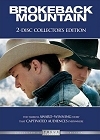
Newly-expanded to a 2-disc collector’s edition, Brokeback Mountain (Universal, Rated R, DVD-$26.98 SRP) packs on extra bonus features, including 7 featurettes, detailing everything from the score to the actual construction of the script, plus the process of teaching actors Gyllenhaal and Ledger how to be cowboys.

After seeing producer Dean Devlin’s high-flying WWI movie based on the true-life exploits of dogfighting pilot Lafayette Escadrille (James Franco), I can only assume that most of the story, heart (such as it were) and enjoyability of flicks like Independence Day and Stargate must have come from Devlin’s former collaborator, director Roland Emmerich. Sadly, Flyboys (Fox, Rated PG-13, DVD-$39.98 SRP) never really seems to take flight, even though it’s got some impressive visuals to give it some teeth. The 2-disc set features an audio commentary, behind-the-scenes featurettes, and deleted scenes.
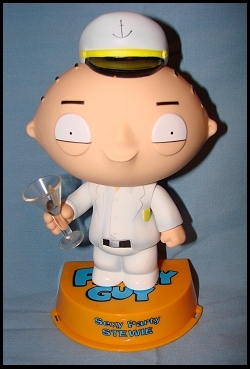
If you want something cool to adorn your desk – or give as a pretty nifty gift to a cherished friend or loved one – look no further than Mezco’s 6″ “Sexy Party” talking Stewie Griffen figure ($24.00 SRP). With a dozen phrases and a sculpt right out of the “Sexy Party” sequence of Family Guy, it’s a great little collectible. Here’s hoping they make the Shatner-esque “Rocket Man” Stewie next…

weekendpicks20070202-11.jpg

So there you have it… my humble suggestions for what to watch, listen to, play with, or waste money on this coming weekend. See ya next week…

-Ken Plume

##

February 1, 2007

“Oooooh”¦ Shiny.” #3: Let’s Play The Match Game

Filed under: Columns,Oooooh Shiny — UncaScroogeMcD @ 5:46 am
shinylogo.gif

shiny2007-02-01-01.jpgThe average life expectancy for men in 2004 was 73.4 years of age.  With that in mind, let us look at a few unique facts.

Bob Barker is 83 years old.

Monty Hall is 85.

Peter Marshall is 76.

Hugh Downs is 85

Ed McMahon is 83

Regis Philbin is 75.

Chuck Barris is 77

Dick Clark is 77

Tom Kennedy is 79 and his older brother Jack Narz is 84.

Garry Moore was 77 when he passed away, as was What’s My Line‘s John Charles Daly.  Steve Allen was 78.  Groucho Marx lived till 86.

What do we learn from this?  The only explanation is that game show hosts live longer than normal people.  Sure, there may be a few exceptions due to illness (Bert Convy & Allen Ludden) and suicide (Ray Combs), but it appears that game show hosts live longer than those not fortunate enough to stand on a stage at CBS Television City or the NBC studios in Burbank.

Now, this is no clinical study, but I have my own theories.  From a psychological view, game show hosts play games for a living.  It is still a job, but playing games is indeed fun.  Most of us do it to have fun and relax, but to do it and get paid – hey that’s like you’re getting a salary to indulge in recreation – kinda like professional sports.  And, don’t forget the laughter – game show hosts laugh a lot and, as some people say, laughter is the best medicine.  (Although, if I have an infection, I’d just as soon forget the laughter and stick with the antibiotics).

From a medical point of view, game show hosts meet thousands more people than we do during the course of their lives.  Now, I’m not a doctor, but I have visited the set of Scrubs, and met all of those TV doctors, so that makes me more than qualified to deduce that our every day encounters with people and their personal bacteria helps improve our resistance to disease.  It stands to reason that since a game show host meets more people than the average individual, a host encounters more germs and hence, builds a higher resistance to disease.

Finally, we must examine the workload.  Most non-emcee folks work five days – in excess of 40 hours – per week.  Since the dawn of video tape in the 1960’s, game show hosts have been able to work one day to produce a full week of five shows.  (Some hosts like Dick Clark would do more).  A host could do a daytime and nighttime version of one show and host another and still only work three times a week.  Now, I’m not diminishing the rigors of the job – one must be entertaining and charming, while making sure the game is played properly, but fewer work days mean fewer commutes, and fewer treks to the office mean less stress, and so forth.  Also, fewer workdays mean more days for rest, golf, charity, reading, sex and all of those other things that make us feel good.

One last thing we must look at is vanity.  Game show hosts must take care of themselves.  The camera adds ten pounds (although you’d think that with technology, they could take them back off), and hosts tend to stay slender and in good general health.  With the exception of Louie Anderson and the slightly portly Art Fleming, you don’t see a lot of overweight game show hosts.

So, Tom Bergeron, Howie Mandell, Todd Newton, you have long happy lives to look forward to.  William Shatner, your recent game show credit may extend your already rich, long life.

shiny2007-02-01-02.jpgNow, speaking of game show hosts, Gene Rayburn lived to the age of 81, and probably gained a few extra years from the laughs generated by the classic Match Game ’73 and its subsequent numbered and non-numbered incarnations.  Although these shows are 30 years old, they continue to be loved by fans on the Game Show Network (or GSN, as they want you to call it now).

BCI-Eclipse saw a good opportunity with a built-in fan base and decided to release a Best of The Match Game DVD set.  The package consists of four discs filled with 30 episodes, and while there are a few bonus features, the unedited, unsped-up, uncredit-crunched episodes are the main attraction.

Here is the good news — the shows look great – with that bright CBS glow of tube cameras and 2″ quad video tape.  And, the episodes are uncut, which means you can listen to the glorious voice of the one and only Johnny Olson as he plugs Turtle Wax, Rice-A-Roni and all of the other staples of seventies game show parting gifts.  Also included (on the episodes containing them) are the original “Ticket Announcements,” which Johnny announced as the parts of the panelists and contestants’ faces were electronically mismatched to great comedic effect.  Technically, there is one big problem with the set.  The final episode on Disc 1 loses sync mid-way through, then recovers.  We hear BCI is working on a fix.

More good stuff – the addition of the original 1963 pilot is a real treat. The black and white episode is also hosted by Gene Rayburn, but the very ordinary fill-in-the-blank questions allow no real opportunity for humor.  It would be ten years until Dumb Dora and Old Man Periwinkle would rock the world.

While it is wonderful to see Brett Somers and hear her introduce the best moments, her segments were awkwardly produced, and could have been improved just by repositioning of the cue cards closer to the camera.  She is looking offscreen the entire time, the way a person appears in an on-camera interview, rather than looking towards the camera as one should during an introduction.

Also slightly disappointing was the selection of episodes.  I realize the challenge of choosing 30 episodes from a vast library of hundreds, but I think some of the selections could have been more interesting.  We are given not one, but three episodes featuring Kirstie Alley as a contestant, at the expense of not seeing the show in which the entire cast of The Carol Burnett Show stops by unannounced and sits down and joins in a round.  And, what about Burt Reynolds’ surprise drop-in?  Oh, and there’s the time Charles was late to the set so Mark Goodson had to sit in.  (Not to mention Johnny Olson’s day on the panel when Charles forgot to adjust his clock for daylight savings and missed showtime).

shiny2007-02-01-04.jpgDon’t get me started on “Slide it” Earl, the stagehand – we should have seen his emergence from the door in the set.  Richard Dawson’s arguments with producer Ira Skutch, and of course, each year, Match Game made a big production out of changing the year on their sign – not one of these episodes is included.

Maybe they’re saving this for volume 2.

One other draw-back, the “Best Moments” featurettes are culled from the episodes contained on the discs, and are not stand-alone compilations.

But, I must say, all of the episodes are enjoyable to watch, and a real treat to see.  I would still recommend this DVD highly, (assuming the disc 1 technical glitch is fixed).  Television fans will enjoy it, but big game show fans may be disappointed (they’ll buy it anyway).  A wise DVD marketing person once told me that the best way to see a volume 2 or a season 2 of anything is to buy the first one.  While BCI could have done a little better here, let’s try to encourage them to do volume 2.  Go buy one (or more – they make great holiday gifts) and let’s look forward to additional volumes.

And speaking of more, here are a few unsolicited suggestions for volume 2:

Add some extra “mis-matched face” ticket announcements.  These are a crowd pleaser – and something that can’t be seen on the 137 or so daily broadcasts of Match Game on the Game Show Network.

A few months back, for a short time, GSN included the show “slates” with Johnny reading the show number and tape date at the start of their “Match Game” telecasts.  This would be a wonderful little bonus that would not cost anything.

An episode of the Match Game/Hollywood Squares hour might serve as a cautionary tale for the entire world.

The actual pilot for Match Game ’73 should be located and released on volume 2.  Now, I don’t want people to think I’m some kind of game show nerd (even though my current hobby is constructing game show sets out of Lego – see below for some work in progress photos of my Match Game ’74 set), but the show presented as the pilot on this DVD is actually the first episode.  The pilot was announced by Johnny as “The 1973 edition of Match Game” and the set’s sign did not carry a number.  The contestants sat at one large desk, not individual podiums.

I would love to see a compilation of Gene’s entrances, and other fun moments.  This might take some research, but there are plenty of people who can guide BCI in the right direction.

If this DVD does well, I encourage BCI to continue in the game genre.  They recently announced a deal to release Price is Right and Family Feud DVD’s but I think the classic Hollywood Squares would be a more logical follow-up to Match Game.   And, if the BCI folks read this, and they do manage to get the rights to the “Squares,”  I invite them to check with me for some ideas on how to select the episodes.  Let’s see, there should be one whole disc of “Storybook Squares…” and don’t forget the one-hour specials…

This edition of Oooooh Shiny has been a Mark Goodson-Bill Todman-Merrill Heatter-Bob Quigley-Stefan Hatos-Monty Hall Production.

shiny2007-02-01-05.jpg
shiny2007-02-01-06.jpg
shiny2007-02-01-07.jpg
shiny2007-02-01-08.jpg
shiny2007-02-01-09.jpg

##

The Fred Hembeck Show: Episode 89 – Please, Mr. Lumpkin

Filed under: The Fred Hembeck Show — UncaScroogeMcD @ 5:11 am

fredhembeckheader.jpg

I was 16 years old in 1969, but oh, was I ever wise beyond my years.

Or so I liked to think.

Y’see, I’d been digging on comics since nearly the beginning of the decade, and by 1969, I figured that qualified me as a stone-cold expert. And not only had I been reading these not-so-funny books since Ike was in the White House, but I’d been amassing a pretty impressive collection of fanzines over the past two years, and the knowledge I’d garnered from these products of like-minded – and clearly impassioned – individuals only infused me with more confidence in my own considered opinions.

So when I sent in a letter to the leading adzine of the day, RBCC (Rocket’s Blast and Comic-Collector being two earlier zines that had, long before I came along, fused together to successfully – and regularly – serve as one of the main focal points of the fandom of the time), with my less than complimentary comments regarding the results of the 1968 Alley Awards (the Eisner/Harvey Awards of their day – and the originals, at that). Apparently, I had voted, and I WASN’T at all happy with the way things came out!…

The letter appeared in RBCC 68, which arrived in my mailbox early in 1970. This wasn’t my first epistle to wind up inside the pages of RBCC – I’d had at least two others appear previously, including one in which I chime in regarding my recent discovery that comics were no longer being sold in New York’s Penn Station, a bit of news I reported with such hysteria, one could’ve easily been convinced that the whole field was teetering on the brink of extinction based solely on the fact that commuter’s could no longer score a copy of Little Lotta to read on their suburban-bound train trip homewards!

hembeck2007-02-01-01.jpg

But that was nothing compared to my most controversial RBCC contribution. You won’t have to take my word for it, friends – you can judge for yourself. Below – sans a pair of short opening and closing paragraphs essentially saying, “Good job, RBCC” – are the thoughts regarding 1968’s comics crop courtesy of 16-year-old Fred. And yes, I winced on more than one occasion while retyping these “pearls” of wisdom, but hang with me – as we shall see, there’s MORE to the story than a know-it-all teenager making some typically clueless statements.

Ready? Here it comes…

Well, the results of the 1968 Alley Awards are in, and for a large part I’m disappointed. What happened was that too many Marvel fans answered the plug in the Bullpen pages. And, voting on a straight Marvel ticket, they slanted it unjustly. How else would Sgt. Fury beat Enemy Ace by 69 votes? How else would Stan Lee beat Dick Giordano by 185 votes? Granted, in a tally of strictly fandom, Lee still might have won (I voted for Giordano myself), but hardly by such a great margin. Lee also won by a tremendous (150 votes) amount in the best writer category. Of the fans I know, most agree Stan had an off year in 1968. Here’s another example: Joe Sinnott won by 118 votes over Wally Wood. Granted, Joe did some fine work with Steranko and on the FF, but 1968 was Wood’s year. His return to comics helped rejuvenate the whole DC line. Shouldn’t the voting have been a bit closer? That shuck from Lee about “King ” Kirby enabled Jack to finish second in the best artist category – ahead of Neal Adams! I have nothing against Jack – he’s a good artist, but not THAT great. Luckily, talent won out and Jim Steranko won almost everything in sight: best artist, Hall of Fame Award (for Nick Fury), numbers one, two, four and five of the best covers, numbers one and four in best short story, plus the fact that the character Nick Fury finished quite high in several categories due to Steranko. Real talent will out! Mark (Hanerfeld) says next year it will be a straight fandom vote, which is good. Like you say in the RB&CC: don’t be a Marvel fan, don’t be a DC fan, but be a comic fan. Look for quality, not Stan Lee’s name. I wish more people would think that way when they cast their Alley vote.

hembeck2007-02-01-02.jpg

Ouch.

That is WAY difficult to read – especially since, in subsequent years, three of the nicest folks I’ve had the privilege of meeting (and dare I say, befriending, however casually) go by the names of Lee, Kirby, and Sinnott? Clearly, I needed someone to – as the vernacular would have it – “tear me a new one”!

Don’t worry, gang – my comeuppance wasn’t long in coming…

Only a matter of days after fishing the latest RBCC out of the mailbox in our front yard, a neatly typed envelope turned up in that selfsame governmental canister. As I rifled through the day’s Lumpkinesque arrivals, I stopped dead in my tracks when I spied the letter’s return address.

It was from Roy Thomas.

Huh?…

Of course I knew who Roy was, but how would he know who I was – and WHY would in the world would he care?

Obviously I had forgotten about my tacky little tirade, so I hastily opened up this unexpected communiqué from Marvel’s number two man, and proceeded to absorb the contents.

(Roy apparently sent along a copy of his thoughts to the staff of RBCC as well, and the following letter – which I’ve reproduced in its entirety – ran in the very next issue, number 69…)

Dear Fred Hembeck and RB&CC,

Fred’s letter in the last RB&CC issue (just out as I write this) stated his disappointment with the topheavy Marvel vote in the 1968 Alley Award poll. His viewpoint has, I suppose, its merits; however, it was so steeped in misconceptions that I had to take typewriter in hand… in an unofficial capacity, of course. Why I do this, I’m not quite sure. Certainly Marvel – whether winning or losing – has nothing to do with the poll, and while we’re flattered to receive any award, we know – as surely as fandom must – that any award dispensed by only a few hundred fanzine readers (or even a larger group) is at worst meaningless, at best a pleasant ephemera. I say this, by the way, remembering that I NAMED the Alleys back in the early 60s, and counted the very first ballots – and knowing that I usually finish well in the running myself. But still, rather meaningless, more’s the pity. But onward…

One of Fred’s allegations, at least, is true. Marvel did probably benefit from straight-ticket voting by readers who read the Bullpen Bulletins item. But this in itself merely proves that fans (read “readers”) in 1968 preferred in general Marvel’s product to National’s, despite the undeniable improvement in quality wrought by Infantino and others. After all, DC itself plugged the Alleys (in larger type, yet) in a sizable number of magazines, and if anything more prominently than did Marvel – which used it merely as a bottom-of-the-page throwaway item. (In fact, this was only done as a favor to Mark, and after he had written a plug for it in the DC books which otherwise would have made it completely DC TOPHEAVY.) If Marvel readers responded with greater numbers and enthusiasm than anyone else, then it merely proves Marvel deserved the awards – that year.

It’s really all a matter, Fred, of semantics and one’s definition of a FAN. Unfortunately, that of the Academy has changed almost every year. In 1968 a fan was anyone who cared to vote – and who saw the poll advertised in a fanzine or a comic book. In 1969, a fan was anyone who cared enough to vote – but who saw the poll advertised only in a fanzine. Neither, I think, has much validity. No fannish poll is ever likely to gain any real respect until it is definitely tied to some fan group or event. The Academy doesn’t seem to be that group, as it’s moribund despite the best efforts of Mark Hanerfeld and Dave Kaler before him. My own choice, influenced by s-f fandom as I am, would be to have all the members of the New York Comicon each year be the voters – and the votes would both mean something AND help support the only real national event there is.

But nobody’s asked me to settle the anarchical state of comics fandom, and since I now consider comics fandom a nice place to visit but I wouldn’t want to live there, I’ll push my views no further… except to assure Fred et all, that I don’t SCORN the Alleys; indeed, I still own and treasure the one I won some years ago for my fan work. But that the awards should have any meaning to professionals – not until the fans can show that they can organize for something more constructive than a comic-trading session.

I meant for this letter to comment at length on some of the more asinine statements by Fred with regards to the 1968 awards, but the press of work beckons, so I’ll keep this part brief by quoting Fred’s statements and my own disagreements:

1) “In a tally of strictly fandom, Lee still might have won… but hardly by such a great margin.” Quite possibly true, and I yield to no one in my liking and admiration for Dick Giordano (among other editors). But Stan is editor over more than two dozen titles of undisputed fannish popularity, Dick over only a handful. Thus Stan has even more POTENTIAL fans than Dick, in the loosest sense of the word. Besides, nothing except actual voting can prove statements like Fred’s – and the voting just didn’t. And since it will never be 1968 again, Fred will never be able to prove his unsupported assertion.

2) “1968 was Wood’s year.” Not so’s anybody noticed. I like Wally’s work, especially his inking, as evinced by the fact that he and I are now at work on a Dr. Doom strip for Marvel. But he didn’t do enough significant work in 1968 to affect anyone but the most rabid fan. Wally’s winning an award made more sense several years ago, when he was doing Dynamo; don’t try giving him one every time he enters the list. (Now, in 1970, with quite a few Dr. Doom strips under his belt, it might be something else again – and it would make SENSE.)

3) “That shuck from Lee about ‘King’ Kirby enabled Jack to finish second.” If Jack never got a vote from the hordes of fandom, he would still be THE super hero artist; the “epitome”, as Gil Kane called him in A/E 10. I don’t vote for him each and every year myself for various reasons – but the thoughts of some fans that Jack is overrated by Stan and Marvel is ludicrous. I’m sure Neal Adams (who’ll do better in the future, never fear, Fred) would hardly mind finishing second or third to Jack Kirby, since he agrees with Gil’s statement – as do most other action artists.

4) Re: Steranko’s winning : “Real talent will out!” By this snide statement, Fred, waving a triumphant sword aloft, is saying that justice has won the day – or, to be more precise, that one of his choices won the poll. I’ve been a Steranko fan far longer than most people (since I saw his work long before any of it was printed), but Kirby is still the King, in the sense that his superhero art has set the standard for the field since the early 60s. Other styles are beginning to alter that somewhat today, including Steranko’s, Adam’s, even Buscema’s. But Jack will remain as the superhero artist par excellence of the 1960s – and a thousand Alleys to such great talents as Steranko, Adams, Williamson, Wood, et al, will hardly change that – any more than voting, say, Denny O’Neil or myself best writers would make us better that Stan. It wouldn’t.

Okay, I’ve had my say. Sorry to go at even greater length than Fred did in RB&CC, and I assure you that there’s nothing personal in my remarks – but I thought someone might like to hear the opinions of a comics fan who is also a working professional – and who, incidentally, DIDN’T vote a straight ticket in 1968 or any other year.

Roy Thomas
Editor, Alter Ego

Well, THAT was sure like a bucket of cold water applied directly to the face!

Not that it wasn’t warranted – and not that it could’ve been far less civil, cuz it certainly could’ve been! – but still. Whew…

As you might well imagine, Roy’s letter had a sobering effect on our young Mr. Know-It-All. After the initial shock of being singled out for a well-deserved verbal reprimand from one of my favorite funny book scribes finally wore off, I sat back and seriously considered what Mr. T had to say (not all that stuff about coming up with a better way of choosing the year’s best in the field – since that only peripherally concerned yours truly, it pretty much went in one ear and out the other. Fact is, I’d forgotten all about Roy’s various modest voting proposals until I sat down at the keyboard today to reproduce his letter. Things didn’t quite work out as he envisioned along those lines, huh?…).

Well, while he may’ve been off-base with his look into the future of comics’ award balloting, Roy was one hundred percent on the money regarding my aptly characterized “asinine statements”. Stan really DID deserve a tremendous amount of admiration for keeping his ever growing stable of titles heading inexorably towards the top, all the while maintaining an impressive level of quality across the entire line. And in all my years of going on record regarding matters four-color related, have I EVER uttered a STUPIDER sentence than “I have nothing against Jack – he’s a good artist, but not THAT great.”?

No.

No, I have not.

I may’ve come close at times, granted, but nothing quite approaches dismissing the immortal Jack Kirby as “a good artist, but not THAT great”! In my defense, what was going on in my addled teen-age head wasn’t so much disrespect for the mighty triumvirate of Lee, Kirby, and Sinnott, but a situation where I unconsciously began to take their always top-notch efforts for granted. After all, I’d been reading Stan and Jack’s books for a half-dozen years by then – and Joe, nearly as long. Good as they remained at their job, a certain surface sameness couldn’t help turn up each month. Neal Adams and Jim Steranko – not to mention some of the offbeat books DC assigned editor Giordano – were, in comparison, so fresh and different, they won my affection on those grounds alone! Hey, I was 16 – can you blame me for wanting something a little more flashy than what had been the norm up to that point?

hembeck2007-02-01-03.jpg

But still – “not THAT great”? Oy…

So I sat down, gathered my thoughts, and wrote back a fairly lengthy reply to Roy, pointing out essentially what I said above – the ol’ hypnotized-by-pretty-colors defense. But what I also said was that his letter had truly put Jack Kirby’s career in its proper place for me. I can honestly say that, since Roy set me straight all those years ago, I have NEVER again thought of Jack as anything less than great! While I may not have been completely taken with everything he did subsequently, I always maintained the utmost respect for the man, and what he managed to accomplish overall in the less than ideal circumstances afforded him by the not-always-friendly confines of the comics biz. Hopefully, I would’ve figured that out on my own eventually, but I’m eternally indebted to Roy Thomas for getting me there all the sooner!

hembeck2007-02-01-04.jpg

(Oh, and that phrase where I use the word “shuck” just makes me want to go crawl under a rock! I don’t think I’ve ever used that word in such a manner in all the years since, and lemme tell ya, I literally grimaced when I came upon it while reviewing my ill-advised comments! Bleh – I’m even gonna avoid the subject of corn just to make sure I never have to use that word ever again!…)

Happily, Roy accepted my sincere mea culpa, and the ever busy Marvel staffer kindly took a few minutes to dash off another note to tell me so (unhappily, for a guy who still has all his old fanzines – not to mention virtually every comic book he ever bought while he as a kid – my fannish correspondence from the late sixties, including Roy’s notes and an extensive collection of letters from my three primary pen-pals (a story onto it’s own, albeit one for another time), have all apparently disappeared over the years. A shame, really…). This time, our postal communications weren’t marked for RBCC eyes as well, so there’s no way for me to reproduce Mr. Thomas’s follow-up (the only thing I clearly recall – aside from him graciously letting me off the hook for being a big-mouthed teen-ager – was him plugging an upcoming issue of Iron Man written by Archie Goodwin featuring a new character named Firebrand that Roy figured might be a bit on the controversial side, since he was meant to reflect the social upheaval then occurring in the country. Guess he thought I’d dig something like that, punky little firebrand that I was myself!…)

I wrote yet another letter to Roy – hey, what 17 year old comics geek wouldn’t have wanted Roy Thomas as their pen-pal in 1970? – but that turned out to be the last of our correspondence, as I never heard back from Roy after that. Fair enough – the man had Kree/Skrull Wars to stage and Hyborian Ages to bring to life, after all.

He taught me at least two valuable lessons, the first regarding having a proper appreciation of Jack Kirby, and second being, don’t be such a blowhard, especially when it comes to negative stuff! SOMEONE clearly had to clue me into the fact that my opinions certainly aren’t the ONLY opinions, and I was lucky enough to have someone I admired as much as Roy Thomas be the one to straighten me out! Thanks, Roy – I remain forever grateful!

(That said, I STILL think Enemy Ace had a better year than Sgt. Fury!…)

The votes are in! Hembeck.com has been voted the website most likely to dredge up inconsequential old letters from quarter-century old fanzines – and proud of it, too!

-Copyright 2007 Fred Hembeck (save for Roy’s words, which are his own, now and forever)

Music For The Masses: 2/1/07

Filed under: Columns,Music for the Masses — UncaScroogeMcD @ 4:36 am
musicmasses2.jpg

Welcome back, my friends, to another edition of “Music for the Masses.” This week, we duck and cover for fear of Fall Out Boy, wonder silently to ourselves “just how tasty are the Tastydactyls?” and watch in awe as Double A takes on the Afro Samurai. Oh yeah, and the guy that mows my lawn and “blows out my sprinklers” reviews the new one from Saliva. Sound like fun? Well, what do you say we find out?

m4m-fab

Fall Out Boy

Album: Infinity On High

Sounds like: From Under A Cork Tree… Now with 20% more suck!!

m4m-geek

Fall Out Boy (From Left): Wentz and 3 of the “writer” characters from 30 Rock.

I hate to be the bearer of bad news here, kids, but Fall Out Boy’s “new” album, Infinity On High, will NOT be carried at your local Hot Topic store. No, sparky… that’s not a joke. It was breaking news today on Fall Out Boy’s web-site. Seriously. Now, if you are anything like me, and with the exception of that “pesky” third nipple and over-abundance of ass hair, I know you are EXACTLY like me, you’re thinking “No Fall Out Boy at Hot Topic!! That’s insane!! What is this world coming to?? Why that would be like Hollister refusing to sell ‘whore’s clothes’ to ‘Tweeners’ or Wal-Mart refusing to carry sleeve-less denim shirts!” But hey… buck up, little camper. It’s not THAT big of a deal. You’re just going to have to have your mom make TWO stops at the mall… one to pick up your cleverly ironic, “old school” rock T-Shirts, Family Guyâ„¢ “Freakin’ Sweet!” belt buckle and “You Are Soooo Gonna Get Your Ass Kicked At High School Wearing That” fedora© and one trip to buy Infinity On High or, as I like it to call it, “From Under The Cork Tree II: Electric Bunghole.”

m4m-fab2

Hey Pete… which one is your “Lindsay finger.” Nice. Flipping people off is SO punk.

To quote Peter Noone of Herman’s Hermits fame, the “Second verse” is the “same as the first!” so feel free, kids, to sing along with Infinity On High as it dishes up more of the same from Chicago’s own, Fall Out Boy. For instance, you want more of that slightly self-deprecating, “wink wink, nudge nudge” pop/punk? Check. More of those rousing and hook-heavy, group-sung choruses? Check. More intros by Jay-Z? Wait… okay, maybe THAT’s new, but do you want more of those lengthy, yet clever, song titles? Well… you get more of that, too. And speaking of that, I have to tell you that I am more than a little pissed that the band passed on the song titles that I sent them because “I Dated Lindsay Lohan And All I Got Out Of It Was A Rash On My Tongue And An Empty Lick-Her Cabinet” and “There’s A Party In Pete’s Mouth And Everyone’s Coming!” would have fit in nicely with the other track listings. Thanks for nothing, Pete. You fucker.

m4m-fire

The “All You Can Pete” Buffet… open 24/7… HA!

Now, obviously, I’m not the biggest fan of these “guys” but, that being said, I would be a bit disingenuous if I said that I completely dislike this album. On the contrary, some of the songs on here are catchy as the “Clap,” especially “The Take Over, The Break’s Over” and “Thnks Fr Th Mmrs,” and why wouldn’t they be? After all, to bastardize a quote from M.C. Lars, “[Fall Out Boy] is a contrived identification with youth subcultures to manufacture an anti-authoritarian identity and make millions.” Yep… that pretty much nails it because who doesn’t want to nurture their anti-authoritarian identity? “Who,” I ask!?

This baby has all the “wanna-be” punk attitude that the discriminating “wanna-be” punk demands from his “wanna-be” punk-pop bands. So, if you are already a fan of Fall Out Boy, by which, I mean that you bought a Dropkick Murphy and Operation Ivy shirt from Hot Topic but you don’t have any music from either band, you are going to be more tickled with this album than Paula Abdul with a belly full of her “relaxin'” pills. If you’re not a fan and you actually understand the reference I just made to the Dropkick Murphy’s and Operation Ivy… man… you are going to hate this more than that one time your uncle gave you a colonoscopy with his “weiner cam.” But hey… regardless of where you fall in this “love ’em/hate ’em” debate, just remember this: Hot Topic and Fall Out Boy ARE NOT punk rock.

m4m-hot

Now, kids, if you’ll kindly turn to page 110 in your M.C. Lars handbook and repeat after me (from his song “Hot Topic IS NOT Punk Rock”):

Go!
Books about Evanescence (Are not punk rock!)
Guns ‘n Roses watches (Are not punk rock!)
Hello Kitty iPod cases (Are not punk rock!)
Rob Zombie lunch boxes (Are not punk rock!)
Slipknot binder paper (Is not punk rock!)
Tinkerbell pillow cases (Are not punk rock!)
Led Zeppelin air fresheners (Are not punk rock!)
Tupac incense burners (Are not punk rock!)

Hot Topic is not punk rock! (Hot Topic!)

Misfits candle tins (Are not punk rock!)
ICP throw blankets (Are not punk rock!)
Beaded Elvis curtains (Are not punk rock!)
Talking Lambchop plush dolls (Are not punk rock!)
AC/DC hair clips (Are not punk rock!)
Spongebob wristbands (Are not punk rock!)
Sex Pistols boxer shorts (Are not punk rock!)
Dischord back catalog (Okay. Maybe that’s punk rock.)

Hot Topic is not punk rock! (Hot Topic!)

Hot Topic is a contrived identification with youth subcultures to manufacture an anti-authoritarian identity and make millions. The $8 you paid for the Mudvayne poster would be better spent used to see your brother’s friend’s band.

DIY ethics are punk rock
Starting your own label is punk rock
G.G. Allin was punk rock.

But when a crass corporate vulture feeds on mass-consumer culture, this spending mommy’s money is not punk rock!

m4m-mc

Amen, brother.

m4m-hung3

QUICKEE OF THE WEEK…

m4m-tasty

The Tastydactyls

Album: One & Nine (We Had A Hell Of A Run)

Does this band sound familiar to you? Well, assuming you’ve eased up a bit on your paint-huffing dalliances, you may recall that I featured the Tastydactyls in my “Pimp Your Band” portion of this here column. To refresh your mammary, the Tasties (as I like to call them for no particular reason) hail from deep in the heart o’ Tex-Ass and have been on one hell of a roll, as of late. For starters, they are coming off a glorious victory at their local battle of the bands competition where they treated the competition like the “small guy in prison.” They are also readying themselves for their first ever “World Tour” (okay, actually the are going to go play some gigs in Ireland) and recently released a kick-ass EP, One & Nine (We Had A Hell Of A Run). The music on this disc is down-right infectious. With it’s herky-jerky rhythms and quirky/clever instrumentation (accordions, train whistles and glockenspiels), One & Nine comes off as a wonderfully weird mix of Cursive (“Clockwork”) and Jimmy Eat World (“Like A Bear”). If you are looking for some truly imaginative alternative, look no further. Check them out over at www.myspace.com/thetastydactyls.

m4m-hung4
m4m-doublea

m4m-afro

Let me clear the air on a few things before we get started with this here review. I’m not down with the whole Anime thing. I just don’t dig it. I don’t understand it, and everything I’ve seen is just plain dumb. With that said, imagine my surprise as I sat in a room at the San Diego Comic Con watching the end of the Afro Samurai TV show panel. I truly dug what I saw, I mean how can you go wrong with a project that involves Samuel L. Jackson, Ron Pearlman and the Wu Tang Clan’s The RZA? I submit that you cannot. And now that the show is on the air, though you better hurry as the run is almost over, I am still impressed with what I see. Now, I’m equally impressed with what I hear, as The RZA has finally released the soundtrack to the show.

m4m-afrocd

Shortly after seeing the presentation, I heard that the album was going to be coming long before the show ever made it to the air. I was excited. You could even say that I was as excited as the proverbial schoolgirl. But then I got the news that the album was delayed. Then it was delayed again. And again. I cried like a fat guy when the all you can eat Chinese restaurant closes. But now the album is actually out and it’s pretty good. I wouldn’t say that it’s a great album, but it is definitely worth a listen. The albums isn’t just a straight up rap album, which is one of the reasons why it’s not great. Mixed in with the raps are a few R&B type songs and instrumentals that are featured in the show. The raps are good and the instrumentals are great. The R&B songs? Not so much. I mean they might be good, but they just seem a little out of place on this album.

m4m-rza

If you’re a rap fan, or a fan of the show, pick this album up. Like I said, all of the instrumentals from the show are great, and the raps are all pretty good too, especially “Who Is The Man” and “Fury In My Eyes/Revenge.” This album also features four tracks with RZA’s Bobby Digital alter ego, and everyone is good. It’s really hard to beat The RZA’s delivery. If you haven’t ever heard him rap, do yourself a favor and check him out. Oh, and with that said, I just want it to be known that indeed, Wu Tang Clan ain’t nothing to fuck with. Bitches!

m4m-flava

REVIEWS BY…

m4m-jose

Jose

Jose Can You See… My Muy Bueno Landscaping, LLC.

Cuándo yo oí primero el nuevo álbum de la Saliva yo gozaba una tarde agradable que repantiga en mi traspatio. El sol fue brillante, los niños se divertían jugando y mi esposa inventaba una sopa maravillosa. La saliva vino en la radio y todo arruinado.

Si esto es lo que América llama la música, entonces quizás sea tiempo para mí volver a casa. Si queriendo que esta basura es lo que toma para ser Americano entonces yo no quiero ninguna parte de ello. Algunos de mi landscapers prójimo gozan realmente esta mierda y me hace triste para sus niños.

m4m-mower

Mi cortacéspedes es más agradable que mi coche y por lo tanto, debe cabalgar en el estilo.

Saliva es una banda terrible y es casi completamente irreconocible de todas las otras bandas inventadas de piedra que circulan este país. Nickleback, yo le miro.

Este CD no tiene las calidades compensatorias. La banda ha vendido completamente en una tentativa para vender como muchos álbumes como Nickleback. Para la consideración de Dios la canción “Black Sheep” suena exactamente como “Animals” por Nickleback. No hay una canción en este álbum que usted no ha oído hecho antes de y hecho mejor.

m4m-moon

Recorté este arbusto para el Señor M.C. informar a su vecino que él es, verdaderamente, un fucker de mono de asshole.

Uno de mis clientes, M.C. Bell me dio este CD a revisar para él y no yo sé por qué. El está tan triste para su propio país que él esperó que alguien con un par fresco de orejas quizás encontrara que algo redimiendo en ello. Lo siento de decir Senior Bell pero fallé.

Yo me golpearía más bien en la cabeza con mi rastrillo que escucho otra canción de este álbum.

UPCOMING RELEASES… 2/6/2007

ARTIST TITLE GENRE
FALL OUT BOY INFINITY ON HIGH ROCK
THE CAT EMPIRE TWO SHOES ROCK
TRICLOPS CAFETERIA BRUTALIA ROCK
TYRONNE WELLS HOLD ON POP
AEREOGRAMME MY HEART HAS A WISH THAT YOU WOULD NOT GO Not Provided
AGUST, DANIEL SWALLOWED A STAR Not Provided
AMNESTY FREE YOUR MIND Not Provided
ANGELS AND AGONY UNISON POP
BARENAKED LADIES Barenaked Ladies Are Men POP
BEIRUT LON GISLAND Not Provided
BIOMECHANICAL EMPIRES OF THE WORLD Not Provided
BLOC PARTY A WEEKEND IN THE CITY ROCK
BRACKEN WE KNOW ABOUT THE NEED Not Provided
CLOUDS LEGENDARY DEMO ROCK
COHEN, DANNY SHADES OF DORIAN GRAY ROCK
COLOUR, THE BETWEEN EARTH & SKY ALTERNATIVE
CRAIG, CARL ALBUM FORMERLY KNOWN AS. . . Not Provided
CULT, THE DREAMTIME ROCK
DEAD CHILD DEAD CHILD Not Provided
DEERHUNTER CRYPTOGRAMS Not Provided
DISINCARNATE DREAMS OF THE CARRION KIND Not Provided
DONELLY, TANYA WHISKEY TANGO GHOSTS ROCK
FORWARD, RUSSIA! EIGHTEEN Not Provided
GETO BOYS DA GOOD, DA BAD & DA UGLY RAP
GOLDFRAPP RIDE A WHITE HORSE Not Provided
HALTER, ERNIE CONGRESS HOTEL ROCK
KELLER WILLIAMS Dream ROCK
KISS KISS REALITY VS. THE OPTIMIST ROCK
KOOL KEITH ULTRA-OCTO-DOOM RAP
LERCHE SONDRE PHANTOM PUNCH Not Provided
LIFETIME LIFETIME ROCK
LONEY, DEAR LONEY, NOIR ROCK
LOVE ARCADE Love Arcade POP
MARKS, GARY GATHERING Not Provided
MNEMIC PASSENGER Not Provided
ONO, YOKO YES I’M A WITCH Not Provided
OVER THE RHINE DISCOUNT FIREWORKS ALTERNATIVE
POSTMARKS POSTMARKS Not Provided
REFRIGERATOR BOTTLES OF MAKE UP Not Provided
ROSENVINGE, CHRISTINA CONTINENTAL 62 Not Provided
ROTTING CHRIST THEOGONIA Not Provided
SANDS, J. BREAKS VOL.2 Not Provided
SECONDHAND SERENADE AWAKE ROCK
SHANNON, SARAH CITY MORNING SONG POP
SOFT CIRCLE FULL BLOOM Not Provided
TEDDYBEARS SOFT MACHINE POP
THE SLEEPING BELIEVE WHAT WE TELL YOU ROCK
THERION GOTHIC KABBALAH Not Provided
TISDALE, ASHLEY HEADSTRONG POP
TITAN A RAINING SUN OF LIGHT AND LOVE, FOR YOU AND YOU.. Not Provided
TIVOL EARLY TEETH Not Provided
WHITE MICE BLASSSTPHLEGMEICE Not Provided
WILLIAMSON, ASTRID DAY OF THE LONE WOLF Not Provided
WOODS AT REAR HOUSE Not Provided
WU-TANG & FRIENDS UNRELEASED Not Provided

Well… there you have it folks. Until next week… keep wearing it proud and playing it loud!

Send your cleverly ironic T-Shirts, review copies, presents and assorted hate mail to:

M.C. Bell
P.O. Box 1222
Arvada, CO 80001

E-MAIL THE AUTHOR

QSE News: 2/1/2007

Filed under: Columns,News — UncaScroogeMcD @ 4:20 am
quickstopnews.jpg
line1.gif

Here are today’s top entertainment headlines:

  • qsnews.jpgBilly Joel is releasing a new pop song on February 7th. Joel had previously sworn off pop music promising to only work within the classical music genre. Joel stated that performing only classical music “sounded like a great idea until it came time to pay the rent.”
  • Reports are beginning to surface that say the Eagles are close to releasing their first album of new music in 30 years. Among the song titles rumored to be included on the new album are Hotel South Dakota, Take It Even Easier, Desperadillo.
  • Russell Crowe has signed a $20 million deal to star in a new film entitled Nottingham. The film is a re-imagining of the Robin Hood story.  There is no report on which role Crowe will play but there is speculation that he will be difficult to work with, demanding, drunk and physically abusive during the shoot. PAs have been told to hid all phones.
  • Promotions for the Cartoon Network show Aqua Teen Hunger Force were mistaken for bombs by residents of Boston.  The advertisements were placed in cities all over the country and included light boards that featured a character from the show, but only in Boston were the promotional boxes thought to be bombs. Most Boston citizens knew there was no real bomb threat because Ben Affleck was nowhere near the city.
line1.gif

That’s all for today’s news, stay tuned to this channel for all the news that matters least but you still care about.

(Compiled by J. Allen)

##

Quick Stop Thingamabobs: 2/1/2007

Filed under: Columns,Thingamabobs — UncaScroogeMcD @ 4:03 am
thingamabobs.jpg

The web. It’s a big place, full of plenty of distractions ““ some funny, some informative, some ludicrous, some disturbing, some inane, some profound. Each and every weekday, we present links to a few of our favorite finds”¦

————————————————

  • How about we kick things off with a rarely seen bit of Disney animation? (Thingamabob)
  • I don’t know how smart it is to pull a prank at a phone booth in this day and age… (Thingamabob)
  • Just because, it’s the intro to Darkwing Duck(Thingamabob)
  • And finally, the opening to DuckTales(Thingamabob)

Have a THINGAMABOB? Send it in!

##

Contest: Win Darth Maul From Sideshow

Filed under: Contests — widge @ 4:00 am

Quick Stop Entertainment, in partnership with Sideshow Collectibles, is giving away a standard edition Darth Maul 12-inch figure, courtesy of the fine folks at Sideshow. Don’t miss your chance to win this premium format figure. And if you do miss the figure, ten of you will still be walking away with a Star Wars Sideshow t-shirt.


Contest Closed!

« Newer Posts

Powered by WordPress