FRED Entertainment

January 8, 2007

QSE News: 1/8/2007

Filed under: Columns,News — UncaScroogeMcD @ 4:52 am
quickstopnews.jpg
line1.gif

Here are today’s top entertainment headlines:

  • qsnews.jpgIn a case of trying to make a quick buck, Keifer Bonvillain has tried to extort 1.5 million dollars from Oprah Winfrey.  Bonvillain reportedly has a taped telephone conversation that would “damage” Winfrey’s reputation. Oprah responded to Bonvillain by sending a message to her viewers that said “Execute Order 66.”
  • File this one in the Ripley’s “Believe It Or Not” file.  Surprisingly, a young, Mormon boy in Utah opened up a brand new, factory-sealed version of Madden ’07 for the Playstation and found a hard-core porno disc.  Although we here at QSE News have no definitive proof as to just how the porno disc was forcefully inserted into the quivering and unwilling Madden packaging, we do know this – someone should inform the boy and his parents that lies make baby Jesus cry.
  • George Clooney is reportedly close to a deal that would have him star alongside Robert De Niro in an upcoming film named 36. The film is a remake of a French film in which several French men sit around and mock every other country while smoking cigarettes and accomplishing nothing in their own lives.
  • The film Pan’s Labyrinth has won best movie of the year from the National Society of Film Critics.  In a surprising twist, the film won the award despite the fact that many of the voters had actually seen Shark Boy and Lava Girl.
  • Snoop Dogg and his youth football association are being sued by a TV production company. According to the lawsuit, Dogg promised the production company the rights to produce a reality TV show about the football team but reneged and sold the rights to Fox. Dogg responded to the lawsuit by getting really, really high.
line1.gif

That’s all for today’s news, stay tuned to this channel for all the news that matters least but you still care about.

(Compiled by J. Allen)

##

Quick Stop Thingamabobs: 1/8/2006

Filed under: Columns,Thingamabobs — UncaScroogeMcD @ 4:45 am
thingamabobs.jpg

The web. It’s a big place, full of plenty of distractions ““ some funny, some informative, some ludicrous, some disturbing, some inane, some profound. Each and every weekday, we present links to a few of our favorite finds”¦

————————————————

  • You have been listening to Jordan, Jesse GO!, right?… (Thingamabob)
  • A little slice of Harry Shearer & Chris Guest genius… (Thingamabob)

Have a THINGAMABOB? Send it in!

##

January 6, 2007

Game On! 1-6-2007: These Are a Few Of My Favorite Things…

Filed under: Game On! — admin @ 6:29 am

gameon.jpg

Happy New Year, and a general Happy Holidays to all. Hopefully, for those that celebrate, a new game system has been delivered to all the good boys and girls out there and you’re spending most of your vacation time trying to conquer the water temple in TWILIGHT PRINCESS. In the meantime, I’m here once again with reviews galore of the latest entries in my all time favorite game series’ for you to feast your eyes upon, including Nintendo’s newest ZELDA epic. Unleash the hordes of shoppers and ready yourself for the Wii strap recalls, it’s game time.

LEGENDARY

zeldaTP.jpgFor those of you (those very few of you, I should say) who were worried that the two year wait for the sweet looking and finally adult version of Link would be all for naught and fraught with disappointment can now rest assured. THE LEGEND OF ZELDA: TWILIGHT PRINCESS, out now for both the Wii and the Gamecube, quite simply, will rock your fucking socks off, and never let you stop playing. And that’s only the BEGINNING of the good news.

An epic adventure in the grandest scale, TWILIGHT PRINCESS has every thing a ZELDA fan could hope for: an intriguing plot, excellent control, diverse characters, and amazing gameplay. And the Wii version just makes it so much more immersive, with a control scheme that’s both intuitive and unique. While the analog nunchuck control Link’s movements, the Wii-mote provides slashes, jump attacks, targeting with slingshots and arrows, and more. The first time you go fishing by casting the line with the Wii-mote and reeling with the nunchuck is a surreal gaming experience.

Many of the game’s weapons and items can be mapped to the D-pad and B-trigger of the Wii-mote. Select you item, press the button, and use. At first you’ll feel a little silly swinging the Wii-mote back and forth to slash, and shaking the nunchuck to do Link’s patented spin attack, but by using these controls together and Z-targeting, you’ll be bashing baddies in no time, and getting a much needed workout as well. Link’s attacks have never felt more intuitive, and as you progress he’ll learn even more skills and finishing moves that will surprise and enthrall players. There’re also plenty of new weapons as well, such as the Whirlwind Boomerang and the bizarre anti-gravity like boots”¦and all are useful in their own spectacular ways.

The game features the typical style of ZELDA storytelling: something is amiss in the land of Hyrule, something has happened to Princess Zelda, and a young brave hero named Link is the answer to all the problems. New to this title is Link’s ability to travel between the real world, and the world of Twilight, a realm that mimics his own but shrouded in darkness where he is reverted into the form of a wolf. While in the Twilight, a mischievous creature named Midna guides you through the land, showing you where to go and what to get to change the land back to light, and you back into Link. But she also has her own agenda”¦

zeldaTP2.jpg

There’s so much going on in this game that a review such as mine honestly can’t do it the justice it deserves without spoiling much of the plot. This is made even more difficult due to the fact that the game is so damn long. At 60+ hours you’ll be spending quite a long time traversing its many fields, temples, dungeons and countryside in your efforts to lift the spell and free the Princess. And when it’s all done, you’ll want to jump right back and do it all again. It’s THAT damn good. If there’s one complaint I have with the game, it’s that there still is no voice work to speak of, other than a few choice words from Midna or the townsfolk Link meets. C’mon, Nintendo”¦it’s 2007. Let’s get some audio in here other than squeaks and grunts. Also, while the graphics suit the game well and look terrific, it still isn’t the best looking game out there”¦the Gamecube and Wii versions look practically the same.

Do yourself a favor. If you haven’t yet found a Wii to play this on, get the Gamecube version. It’s the same game (though flipped so that Link is left handed again”¦the Wii version has him right handed so the Wii-mote actions make visual sense with what you’re performing) and it may be easier to find than a Wii system and the game. But if you have the means, this is the must own title for the system, and will keep you busy far into the fledgling console’s other offerings.

One Gamer’s Opinion:
kickass.jpg

PORTABLE ASS-KICKERY

mgspo.jpgAs many readers of my column will attest to, I am not only a big ZELDA fan, but also a huge METAL GEAR fan. Despite delving into the wacky and bizarre realms of science fiction, to me the Kojima productions games can do no wrong, and this is further proved by my love for METAL GEAR SOLID: PORTABLE OPS, out now on the PSP system.

Taking place seven years after the events of MGS3: SNAKE EATER, we find “Naked Snake” (now christened “Big Boss”) in a secluded prison camp, for crimes his FOX unit has performed”¦while he wasn’t even a member any longer! With the assistance of a young Roy Campbell (a name that series fans will recognize and Solid Snake’s superior officer) he escapes and begins recruiting a team of solider to bring down the latest menace supplied by the rogue FOX unit, as well as the next Metal Gear terror.

What this means to you, the gamer, is that there finally is a stellar stealth action title on the PSP, and one that shoves some new, unique gameplay ideas at you all the while. Despite its compact size, the adventure is quite large, though broken up into selective bites suited for quick playing on the go. As Snake travels, however, his inventory (to save screen space) is pared down to only four items at a time, forcing the player to take only what it absolutely necessary and to risk leaving behind other items that you may or may not need.

As you progress through the story, you will “recruit” other soldiers to your mission. You can capture enemy soldiers and convince them to join you, or contact specific characters within the story to work for your cause. One of the coolest elements in the game, however, is the use of the PSP’s wireless capabilities. In picking up signals from specific wireless hotsopts, you can download new recruits directly to your memory card, to be used in both the single player and multiplayer games. Be careful, though”¦loose that agent in a multiplayer battle, and they’re lost for good”¦well, unless you can win them back or recruit them again. The game even utilizes the upcoming GPS attachment for the PSP to find WiFi hotspots with the best characters.

mgspo2.jpg

The story has all the earmarks of a MGS game, and even features the voice of David “Solid Snake” Hayter as the gruff lone commando. What’s more, the cutscenes feature brand new artwork from acclaimed painter (and artist of the METAL GEAR SOLID comics) Ashley Wood. All the major scenes of the story are done is this style, with slight animations to move the story along. It’s a unique presentation that suits the series well.

However, as is often the problem with PSP games, the minimalist allowance of the buttons and lack of second analog stick tend to hamper the experience for some players. It’s not horrible, and the camera CAN be adjusted to an extent through liberal use of the shoulder buttons, but many will find the controls a bit of a learning curve. Personally, I found the way that everything was mapped quite streamlined from the console versions’ many options, but I have certainly heard my share of complaints about the control.

When all’s said and done, however, this is one of the few games (besides a GTA off shoot) that will be destined to sell Sony’s ill fated handheld to more consumers. It’s got a great story, fantastic presentation, it’s fun and it showcases just how powerful and diverse the little machine can be. Plus, it fills in that all-important missing chapter between SNAKE EATER and the original METAL GEAR. Fans will definitely want to check this out.

One Gamer’s Opinion:
kickass.jpg

PORTRAIT OF AWESOME

castpor.jpgAnother series favorite of mine, CASTLEVANIA, has reached its 20th anniversary this year. As such, it’s newest entry, PORTRAIT OF RUIN on the Nintendo DS bring familiar play mechanics and graphics to the table, while providing some new and unique control and characters for gamers to explore with.

Once again, Castle Dracula has appeared and it’s up to the wielder of the famed Vampire Killer whip to bring down the Lord of Darkness. This time, it’s during WWII and young Jonathan Morris (son of John Morris from CASTLEVANIA: BLOODLINES for the Sega Genesis) and his young witch-friend Charlotte to try and stop the blood suckers from returning. But Jonathan has a problem, since his bloodline isn’t directly that of the Belmont’s, he can’t wield the whip to its fullest extent of powers, hence why Charlotte tags along to help.

As players traverse the many rooms of the castle, you can switch between either Jonathan or Charlotte, or even have them both fight at once as you take down familiar spooks and ghouls in the castle walls. Some puzzles require you to control both heroes, and you’ll be tasked with some of the series best battles that will utilize both protagonists’ skills. As the story progresses, the plot of who’ resurrecting the castle will be revealed (hint, it’s not Dracula, though of course he will probably show up) and both your characters will push themselves to the limits of their powers.

One of the more interesting aspects of the “Metroid-vania” style of the branching maps in the game is the use of the titular portraits around the castle. Jonathan and Charlotte use these to travel to other realms in order to thwart the baddies’ mission of vampire rule. It’s through these doorways into other lands that separates this title from most other CASTLEVANIA games by not restricting it to the confines of the same castle walls we’ve become so familiar with.

castpor2.jpg

However, despite some new pseudo-co-op maneuvers and unique branching levels, there’s still a bit of recycling going on in the series, most notably with character sprites. Many of the characters you fight have been rehashed directly from last year’s DAWN OF SORROW, which slightly detracts from some of the look of the game. Still, it keeps it firmly in the CASTLEVANIA realm, and the familiarity with some of these creatures may be a benefit for fans on how to defeat them. Not all are rehashed either, there are plenty of new foes, but the familiar ones are VERY familiar.

And while there are some multiplayer aspects to the game (including WiFi play ““ first for the series) the most obvious aspect; two-player co-op, is notably absent. Still, trading and buying items from friends or creating maps for the two of your to race through is still fun, but it could have been so much more. Plus, there’s even less touch screen interaction in this title than the last.

As it stands, however, it once again proves that the 2D handheld CASTLEVANIA games stand up as the best in the series. Great story, cool plot twists, fun weapons and skills, and an all around great vampire bashing time. Whip it, good.

One Gamer’s Opinion:
kickass.jpg

And thus we bring to an end my first column of the New Year. Next week we’ve got more, with PIMP MY RIDE, KARAOKE REVOLUTION: AMERICAN IDOL, SUPER SWING GOLF, DOA XTREME 2 and the new TONY HAWK titles. Plus, coming soon”¦video podcasts of the column (because, frankly”¦I’m getting tired of typing). See you in a few.

THE GAME ON! RATING SYSTEM


gameonratingscomplete.jpg

Ratings From Greatest to Least:

Kick Ass, Right On, Okay, Eh, and Stinker (aka CRAPTACULAR)

January 5, 2007

Scrubs Blog: Everything Comes Down To Poo

Filed under: Production Blogs,Quickcasts,Scrubs Blog,Video — UncaScroogeMcD @ 2:23 am
scrubsheader.jpg


VIDEO BLOG #72: “Everything Comes Down To Poo” ““
This week, we’ve got another sneak peek at the musical episode (airing Thursday, January 18th at 9:00pm on NBC), featuring a little ditty all about the medical wonders of a number two.

line3.gif
scrubs2007-01-05.jpg

Download Scrubs Video Blog #72:

  • Large (560 x 420 – QuickTime – 18.9 MB)
  • Small (320 x 240 – QuickTime – 8.08 MB)
##

Comics in Context #159: The Da Vinci Comics Code

Filed under: Columns,Comics in Context — admin @ 2:12 am
comicsincontext4.jpg

cic2007-01-05.gifSince I last wrote about the Library of Congress’s “Cartoon America” exhibition (in “Comics in Context” #157), the show has been extended until February 24, 2007, and I’ve also discovered the Library’s online version of the exhibit. The Library does not have the rights to display online all of the artwork in the show, but you can find a number of the pieces I previously described, including the Bambi concept drawing, the Betty Boop model sheet, the New York cartoons by Peter Arno and James Thurber, the Winsor McCay Gertie the Dinosaur drawing and Dream of the Rarebit Fiend strip, and the Charlie Brown soliloquy in Charles M. Schulz’s Peanuts.

“Cartoon America” poses a very basic question to the viewer, which is made explicit in the interview with editorial cartoonist Pat Oliphant in the accompanying book Cartoon America: Comic Art in the Library of Congress (edited by Harry Katz and published by Harry N. Abrams). In an interview (p. 244) Oliphant says, “it’s a wretched word, cartooning, Without being precious, when you talk about cartooning, you don’t know what sort of cartooning you’re talking about. Are you talking about Disney? Are you talking about gags? Are you talking about illustrations? It’s an all-encompassing word, which drives me crazy.” What, then, is cartoon art?

Originally, as Wikipedia states, the term “cartoon” meant “a full-size drawing made on paper as a study for a further drawings, such as a painting or tapestry. “ During the Renaissance, an artist who was going to paint a fresco would first do a full-scale drawing–the “cartoon”–as a guide. Hence, you may see preserved “cartoons” of this sort by Leonardo or Raphael exhibited in museums.

Claypool Comics editor/writer/artist Richard Howell recently told me that cartooning involves “economy and exaggeration.” As we use the term nowadays, “cartoon” usually means a drawing that entails a degree of caricature, usually for humorous purpose, or an animated film. An editorial cartoon can be entirely serious, but it usually is drawn using caricature, exaggerating human features. Although an animated film need not necessarily be funny, it is popularly called a cartoon, just as comic books are called “comic,” even though most of them nowadays deal in genres other than comedy. As for “economy,” this word suggests that cartooning, even if it does not involve caricature, involves drawing figures and objects in a simplified manner rather than with detailed realism.

So, is caricature a determining factor in whether or not something is cartoon art? This is something I wondered while exploring a new show at the Metropolitan Museum of Art, “Glitter and Doom: German Portraits from the 1920s,” which is dominated by expressionist works by Max Beckmann, Otto Dix, and George Grosz, and runs till February 19, 2007 (You can find an online version of this exhibition here). Most of these portraits are heavily caricatured, reflecting the artists’ opinions of German society in the years preceding the Nazis’ rise to power. These are all paintings and drawings, which the Metropolitan displays as works of fine art, but are they also arguably cartoons?

But can you have cartoons without caricature? In the Cartoon America book (p. 248) the veteran editorial cartoonist Oliphant laments that “The great ones [cartoonists] could really draw, going back to [James] Gillray and [William] Hogarth… I grew up believing that cartooning was a noble profession. Unfortunately, these days nobody seems to care much about drawing. It’s a great loss to the profession. We have a whole state of cartoons that pay no attention at all to drawing. Like these people have never seen Charles Dana Gibson.” Gibson was best known for his “Gibson Girls,” drawings of beautiful “modern” women of the first years of the twentieth century; although Gibson’s work isn’t in the “Cartoon America” show, it does turn up in the book (see pages 14, 22 and 246). But there’s no trace of caricature in these drawings, which are done in a very naturalistic style, even if the women are idealized figures. Isn’t Gibson an illustrator rather than a cartoonist? Yet Gibson was included in the cartoonists’ “Hall of Fame” on Mort Walker’s Museum of Cartoon Art, and the “Cartoon America” show has an entire section devoted to illustration.

This section has illustrations that involve a considerable degree of “cartooniness,” such as a “Raggedy Ann and Andy in the River“ by their creator, Johnny Gruelle (1880-1938). But other illustrations on display are wholly realistic, including a drawing (circa 1937) of Davy Crockett and settlers by Dean Cornwell (1892-1960), who was included in the Dahesh Museum’s “Stories to Tell” show on the Golden Age of American illustration (see “Comics in Context” #132).

Then there are illustrations in the show that fall somewhere between these two poles. In “Alcohol, Death and the Devil“ (circa 1830-1840) by George Cruikshank (1792-1878), the illustrator of many of Charles Dickens’ novels, the fantastic figure personifying Alcohol–a scrawny man whose head is a skull, topped by serpents like Medusa’s–is nonetheless portrayed realistically enough to seem an ominous menace. The Devil, hovering behind Alcohol, has a simple, caricatured face that makes him seem more humorous than dangerous, and their potential victims, in the background, are drawn as simple cartoon figures, most of whom have only blank ovals for heads. (After visiting the Library of Congress, I went over to the National Gallery of Art, and there, in an exhibition titled “The Artist’s Vision: Romantic Traditions in Britain,” I found another Cruikshank piece. So here is an artist who has been claimed as both a practitioner of cartoon art and a creator of fine art!)

In her 1918 work “Uncle Sam’s Girl-Shower” (Cartoon America p. 144 and here), pioneering female cartoonist/illustrator Nell Brinkley (1888-1944) comments on young women coming to work in Washington D. C. during World War I by depicting them floating down from the sky on the left of the picture. In a large panel to the right of center, one of Brinkley’s young women converses with Uncle Sam, a tall, elderly man who here is dressed in a conventional suit rather than his familiar stars-and-stripes costume. The women’s round, youthful faces with their simplified features are not only endearingly cute but are arguably cartoonish, but their figures and clothing are drawn quite realistically, in what the show’s website calls “a distinctive, fine-lined drawing style.” Moreover, Brinkley naturally portrays Uncle Sam as an old man that one could meet on the street in real life..

The handsomest piece in this section is a 1922 story illustration (“The phone rang, and Hugh leapt to answer it.”) (Cartoon America p. 23 and here) by James Montgomery Flagg (1877-1960), another artist who was included in the Dahesh show. Husband Hugh’s smug sense of triumph is so broadly portrayed in his face and body language that it crosses the dividing line into caricature. But the emotions of his wife Polly, who seems vulnerable and beleaguered, are portrayed more subtly, and her face looks more naturalistic than her husband’s. Indeed, apart from Hugh’s broad facial expression and stance, the couple and their surroundings are drawn quite realistically. Flagg’s nuanced delineation of shadings and textures through fine linework seems to belong more to the world of fine art than to cartoons, which we tend to associate with broader strokes of the pen.

The Cartoon America book includes two pieces by the Punch caricaturist Sir John Tenniel (1820-1914), who is best known today for his classic illustrations for the original editions of Lewis Carroll’s Alice books. Though neither of the Library’s pieces come from those books, Tenniel follows a similar strategy in them, juxtaposing the real and the unreal, the naturalistic and the caricatured. In “A Contented Maid” (1894) (p. 53), a rather dowdy, but relatively realistically drawn woman, is led past a naturalistic background by a pompous man who incongruously wears what seems like a jester’s costume. Through his exaggeratedly proud facial expression, gesture and stance, Tenniel “cartoons” this unlikely suitor. In the other example, “The Old Story” (1884) (p. 51), the division between the real and the caricatured is even stronger: here Red Riding Hood, realistically drawn, encounters the wolf, who stands upright and wears a full suit of clothes, including a top hat, and, like a good British gentleman, carries an umbrella. As he did with the White Rabbit and other talking animals in the Alice books, Tenniel pulls off the feat of turning the wolf into a caricature of a man while still making him look realistic enough to fit into the same naturalistic world as the human being in the picture.

Since we’re investigating the connection between caricature and cartoon art, it’s appropriate that one of the six segments into which the “Cartoon America” show is divided is entitled “Caricature,” including works by theatrical caricaturist Al Hirschfeld and political caricaturist David Levene.

In this section is a striking 1954 “Self-Portrait” (Cartoon America p. 229) by New Yorker artist Saul Steinberg (1914-1999), who depicts himself holding a bottle of ink in his right hand and a pen in his left, drawing an elaborate, calligraphic series of curlicues where his head should be. Steinberg is presenting his artwork, his creations, as his identity. He is suggesting that his head is full of artistic imagery. A possible implication is that the Steinberg of the picture has drawn his body as well, suggesting that he is his own creation: he has devised his own persona as artist: Max Fleischer’s Koko the Clown comes “Out of the Inkwell,” and in this picture, so does the artist. Perhaps Steinberg is suggesting that he has no identity apart from his work, an idea with dark implications. Since the calligraphy is more beautiful than the seemingly crudely drawn body, perhaps he is suggesting that art is superior to nature. This is a simple picture, which on the surface seems intended only to amuse, and yet it inspires so many interpretations.

Here too can be found a 1743 etching by the British artist William Hogarth (1697-1764), whom the website calls “the father of English caricature,” entitled “Characters & Caricaturas” [sic] (Cartoon America p. 29 and here), in which he depicts over a hundred faces. The website explains that “Hogarth distinguished between characters (faces drawn from nature) and “˜caricaturas” (faces with exaggerated and grotesque features).” To demonstrate his point, along the bottom of the etching Hogarth drew copies of handsome faces by Raphael; alongside copies Hogarth drew of grotesquely caricatured faces by Leonardo da Vinci and another Italian Renaissance artist, Annibale Carracci. In his preface to the Cartoon America book, its editor Harry Katz asserts that “American cartoon art evolved from varied historical sources” including “Renaissance grotesques drawn by Leonardo da Vinci and Pier Leone Ghezzi [and] the English and French print satirists of the eighteenth century,” a category that includes Hogarth and James Gillray. (I reviewed the New York Public Library’s Gillray retrospective back in “Comics in Context” #72.)

Consider: Leonardo is one of the foremost geniuses in human history, who turned his hand to numerous forms of the arts and sciences, and it also turns out that he is one of the fathers of modern cartoon art!

Perhaps the biggest surprise that the Cartoon America book will have for readers is its revelation of how many significant figures in the history of fine art worked in cartoon art. In the book’s “A Brief History of American Cartooning,” which is actually lengthy and rewardingly informative, Katz explains that “It was the Englishman William Hogarth who, between 1720 and 1760, revived the art of caricature from the Renaissance, elevating comic art to an unprecedented seriousness of purpose.” (p. 29).

Hogarth is a key figure in the history of comic and cartoon art in another way, which Katz misses but which Scott McCloud pointed out in his landmark book Understanding Comics. Hogarth was renowned for creating series of pictures which told a continuous story, such as his Marriage a la Mode, six paintings which today hang in the National Gallery, London, from which Hogarth made engravings. Such sequences of pictures by Hogarth were pioneering examples of what Will Eisner termed “sequential art,” the form more popularly called comics. According to the website Hogarth did “Characters and Caricaturas” in 1743 for the “subscription ticket” for the Marriage a la Mode engravings.

Katz credits “the first political cartoon published in America” to one of the nation’s Founding Fathers: Benjamin Franklin, whose celebrated cartoon “Join, or Die” was published in The Pennsylvania Gazette on May 9, 1754 (shown in Cartoon America, p. 24). It pictures a snake broken into segments representing the pre-revolutionary American colonies. The cartoon doesn’t display any great drawing ability; what makes it powerful is its metaphorical concept. Franklin’s point is that the colonies must join forces to combat their adversaries in the French and indian War; otherwise the “snake” will perish.

Though the snake has represented evil since the Book of Genesis, Franklin’s serpent was widely adopted by American patriots as a symbol of their country, including Paul Revere, whom Katz credits as another significant figure in the history of American cartooning. But the example of one of Revere’s cartoons (which he actually copied from a sketch by his brother) that Katz reprints in the Cartoon America book (p. 9) once again raises the question of what a cartoon is. “The Bloody Massacre,” first published on March 28, 1770, is a depiction of the infamous Boston Massacre of American patriots by British redcoats. The composition is fine, but the architecture in the background is drawn far more skillfully than the humans in the foreground. Revere isn’t practicing caricature here, but merely demonstrating the limitations of his primitive skill at drawing the human face and form.

A friend of mine suggested to me that there is a difference between cartooning as a style and the cartoon as a format. But just what makes this a cartoon? Isn’t it rather a 1770 equivalent of today’s courtroom sketches, an effort to record an actual event through realistic illustration, a skill in which Revere was severely lacking?

Making the connection between 18th century British cartooning and American cartooning clear, Katz points out that Gillray himself adopted Franklin’s image of the snake as a symbol of America for his 1782 cartoon about the British defeat at Yorktown, the final battle of the American Revolutionary War (p. 28).

Another important figure in fine art whom Katz credits as a significant influence on the history of cartoon art is France’s Honore Daumier (1808-1879), who is renowned for utilizing caricature for social and political satire.

A clear example of Daumier’s mastery of cartoon art is “Le ventre legislatif,” translated as “The Legislative Paunch” (Cartoon America, p. 118), created in 1834 as a print for subscribers to a journal called (appropriately) La Caricature. In it Daumier caricatures members of the French legislature as a collection of grotesques: smug, self-satisfied, bad-tempered, and obese. One of the legislators in the front row has an enormous, beak-like nose, making him look like a vulture wearing human clothing. That’s an image that later political cartoonists will use.

But another print for La Caricature which Katz includes in the Cartoon America book (p.119) involves no caricature whatsoever. This is “Rue Transnonain, le 15 Avril 1834″ (which you can also find here), which depicts the aftermath of an incident in which French troops invaded a building suspected of housing an assassin and slaughtered the inhabitants. In this picture, all naturalistically portrayed, are several of the victims, notably the corpse of a man in a nightshirt lying on the floor, atop a small, dead child, with blood streaming from its head onto the floor. Daumier isn’t joking here: the power and the horror of this lithograph lie in its utter realism.

It’s not “cartoony” in the least, but I suppose one might call it an editorial cartoon, in that it is a drawing that comments on a political issue of its time.
But is every drawing–or print or painting–that makes a political point a cartoon? Is Pablo Picasso’s Guernica (1937), which criticizes the Nazi bombing of the town of Guernica during the Spanish Civil War, a cartoon? I’ve always thought so, since it involves caricature-like distortions of form. But what about Eugene Delacroix’s painting, Liberty Leading the People (1830)? I’d say no, and there’s no caricature involved, yet it uses a symbolic figure at its center, the woman representing Liberty, the same device traditionally employed by editorial cartoonists.

Katz contends that Daumier was an influence on another major figure of the fine art world, the American artist Winslow Homer (1836-1910), and reprints his 1856 print, “Arguments of the Chivalry,” which records the notorious incident in which a Senator from South Carolina, Preston Brooks, beat his fellow Senator, Massachusetts’ Charles Sumner, with a cane in an argument over slavery (Cartoon America p. 37). This, too, seems to me to fit into the same area as courtroom sketches; Homer draws the people naturalistically, without any satiric exaggerations, and I cannot count this piece as a cartoon. If this is a cartoon, then any drawing on a political subject is a cartoon, and the term “cartoon” loses its distinctive meaning.

Nonetheless, the Cartoon America book makes the point that there have been important figures in the fine art world who have also created cartoon art. Katz reprints pieces that are clearly cartoons by the Ashcan School painters George Luks (p. 50), who also worked on The Yellow Kid, and John Sloan (p. 60), as well as a drawing by Stuart Davis which straddles the border between cartoon art and illustration (p. 63). One could describe Davis’s simplified, stylized graphic approach towards elements in this drawing as moving towards abstraction and moving towards cartooning with equal justice. Remember that in the “Masters of American Comics” show, co-curator John Carlin often described aspects of its cartoons as abstract.

In his essay about Lyonel Feininger’s comics work in the Cartoon America book, Art Spiegelman writes that “Only a handful of American painters of the period dabbled in cartooning–George Luks’ work on The Yellow Kid comes to mind–but lots of esteemed European modernists–Picasso, Toulouse-Lautrec, Gris, Kirchner, Kupka, and Grosz, to name just a few–drew cartoons for publication either at the beginnings of or throughout their careers” (p. 134). There are Picasso’s and George Grosz’s names again.

The full title of the last of the six divisions of the “Cartoon America” exhibit is “The Ungentlemanly Art: Political Illustration,” and the brochure explains that Art Wood, the editorial cartoonist who compiled the collection from which the show is drawn, used the term “illustration” “to describe the enormous talent and craft that went into a work of art produced to capture a moment in time.” This just further muddies the waters as far as drawing a distinction between cartoon art and illustration, as well as possibly suggesting that these “political illustrations” are somehow superior works of art to gag cartoons or comic strips. the pieces on display in this segment of the show all engage in either the “exaggeration” or “economy” that marks them clearly as editorial cartoons.

Among them is a piece by the great 19th century editorial cartoonist Thomas Nast (1840-1902), who not only popularized the elephant and donkey as symbols of the Republican and Democratic parties, but even defined the visual image of Santa Claus; all of these are examples of the power of cartoon art to affect the culture.

The Nast cartoon in the show, “The Crown Covers a Multitude of Shortcomings“ (1888), mocks former Senator and Republican Presidential candidate James G. Blaine for his “crowning folly”. Nast cruelly undercuts Blaine’s considerable political stature by portraying him as a fat, ungainly figure with unkempt hair who seems to have a misshapen leg and walks with a cane. A sign behind him ironically refers to “a step in the direction of free trade”: Nast’s Blaine looks as if he might topple over if he took another step. To the left of Blaine, Nast has drawn a crown atop the derriere of some unidentified animal, as if Blaine had created a Bizarro World in which crowns no longer rest atop the heads of regal leaders.

There is a more celebrated and powerful Nast cartoon in the Cartoon America book (p. 45), “Let Us Prey” (September 23, 1871), in which he caricatures his most notorious target, the corrupt New York political leader William M. “Boss” Tweed and his cronies as vultures with human heads, as if they were 19th century versions of the Harpies of Greek mythology.

Contemporary political cartoonist Patrick Oliphant paid homage to Nast with his cartoon in the show, “Waiting for Reagan” (1982), in which he portrays various right wing critics of President Reagan as human-headed vultures. Oliphant’s version is arguably eerier, since he gives them eyes without pupils, surrounded by heavily shadowed sockets, rendering even their human faces inhuman. The Cartoon America book includes a 1965 cartoon, for which Oliphant won a Pulitzer Prize, showing Ho Chi Minh holding the corpse of a North Vietnamese civilian, in what may be an allusion to Michelangelo’s Pieta (p. 260).

Most contemporary editorial cartoons that I see today are gag cartoons, but when I was growing up, my favorite editorial cartoonist was Herbert L. Block, alias Herblock (1919-2001), who worked in the Nast tradition of visual metaphor. Starting his career in 1929, he moved to The Washington Post in 1946 and continued drawing cartoons for that paper until his death at the start of the 21st century. Growing up, I would borrow Herblock’s books of collected cartoons from my local library to teach myself about history since World War II, and I looked forward to the publication of a new collection every presidential election year.

There is a Herblock cartoon in the “Cartoon America” show and more in the book. But I was pleasantly surprised to discover on arriving at the Library of Congress that it was running a show of his work, “Enduring Outrage: Editorial Cartoons by Herblock,” which runs through January 20, 2007 in its aptly titled “American Treasures” gallery (and which has an online version). After his death, the Herb Block Foundation donated 14,000 of Block’s finished cartoons and over 50,000 of his preparatory sketches to the Library of Congress; “Enduring Outrage” presents only a select handful of this massive collection.

Herblock’s symbolic figures can be familiar ones. In “The Gray Plague“ (January 29, 1967) he uses the traditional image of the Grim Reaper, a skeletal, robed figure carrying a scythe, to critique the potentially lethal effects of air pollution. What makes this cartoon powerful is the unusual way he uses the Reaper, who becomes a gigantic figure amid modern skyscrapers, towering above gridlocked traffic. Smoke pours from chimneys, and Herblock’s shading all through the cartoon suggests an atmosphere thick with smog and smoke. A cloud hovering above the street is labeled “Air Pollution,” and the Grim Reaper, likewise rising from the street, himself seems like an ominous cloud that has taken a macabre form. With his scythe, the Grim Reaper represents Death come to harvest the victims of pollution; he is a medieval figure within a contemporary setting.

Another cartoon about pollution, “The Drums” (March 21, 1979), demonstrates the darkly ironic side of Herblock’s sense of humor. Here the Grim Reaper beats the tops of metal canisters marked “Radioactive Wastes” and “Toxic Chemicals,” as if he were playing bongo drums, as the contents of other dangerous canisters leak out into a lethal stream. The medieval image of the “Dance of Death” links Death with rhythmical movement, as if to music; here Herblock updates the musical metaphor.

The most famous symbolic figure that Herblock created is a modern version of the Reaper: Mr. Atom, an anthropomorphic atomic bomb with a sinister brow, a five o’clock shadow, and hairy hands, making him look like a brutal, potentially violent thug. The image may seem obvious, but again, Herblock’s greatness lies in his inspired uses of this imagery. In a May 14, 1963 cartoon, Mr. Atom looms over the globe, placing his left hand upon it, as if it were his possession. With his right hand he snuffs out a candle, labeled “Test Ban Hopes.” In clever touches, the candle has already virtually melted into a pool of wax, and the puff of smoke from its extinguished flame takes the form of a mushroom cloud from an H-bomb explosion. The cartoon’s title, spoken by Mr. Atom, is a quotation from Shakespeare’s Macbeth: “. . .Out, out brief candle! LIfe’s but a walking shadow. . . .” The line is a chilling description of mortality. The epic scale of Herblock’s cartoon, picturing the Earth, shifts Shakespeare’s line from referring to Macbeth alone to involving all of humanity; simultaneously Shakespeare’s words lend Herblock’s darkly humorous cartoon a sense of profound drama.

Herblock could not only chill his readers but also shock them. His January 13, 1993 cartoon “Bosnia“ echoes Daumier’s “Rue Transnonain, le 15 Avril 1834.” Block’s cartoon shows the corpses of a woman and a baby, with a pool of black blood linking their heads. The woman has been impaled by two enormous weapons: a knife marked “Milosevic Serbs” and an umbrella (such as British gentlemen traditionally carried) labeled “World Leaders.” In other words, Herblock blames not only the brutality of the Serbs but also the inaction by the proper, respectable diplomats and politicians of the rest of the world. Surprisingly, the woman’s body is half-naked. Perhaps Herblock was trying to emphasize her vulnerability (as Daumier did with the man in his nightshirt) or was alluding to the sexual assaults on women during the Bosnian war. Or perhaps Herblock was alluding to the fine art tradition of painting mythical or symbolic figures as partly or wholly nude, as with the topless figure of Liberty in Delacroix’s Liberty Leading the People. Block’s woman, after all, represents all the Serbs’ victims in the war in Bosnia.

Herblock’s work is not just “enduring outrage” but “enduring art”: though he was responding to topical events, his work continues to be relevant to the present.

Take, for example, his January 28, 1968 cartoon which shows Uncle Sam, literally up to his neck in water, holding a rifle above his head as he makes his way through a swamp labeled “Asia.” Herblock’s subject at the time was the Vietnam War, but the cartoon could equally serve as a comment on America’s current involvement in Iraq.

Consider, too, another cartoon, from May 29, 1987, that involves no fantastic figures or settings, and nowadays takes on new relevance. Lying on a floor is a newspaper with the headline, “‘I think it’s better if the Iranians go to bed every night wondering what we might do.’–Reagan.” Herblock instead shows us a man , wearing a button labeled “U. S.” lying in bed in a darkened room lit only by his eyes, staring out in sleepless worry and dismay.

So there are certainly many rewards to be found in the Library of Congress’s two current shows on cartoon art. There are many pieces I haven’t described, including fine examples in the comic strips section of Milton Caniff’s Terry and the Pirates (from 1942), Al Capp’s Li’l Abner (1943), Roy Crane’s Wash Tubbs (1935), Harold Gray’s Little Orphan Annie (1962), Johnny Hart’s B. C. (1969), Lynn Johnston’s For Better or for Worse (1983), Richard Outcault’s Buster Brown (a 1907 Sunday strip in which he meets Outcault’s Yellow Kid!), Alex Raymond’s Secret Agent X-9 (1934), and Cliff Sterrett’s Polly and Her Pals (1933).

Yet although James H, Billington, the Librarian of Congress himself, bids us to “prepare to laugh, wince, and wonder at the best of the best of American cartoon art” in his foreword to the Cartoon America book (p. 10), there is a canyon-sized gap in both the show and the book. Where is the original artwork from comic books?

DC Comics president Paul Levitz contributed a brief essay about comic books to the catalogue, but discusses them principally as objects of nostalgia. The book’s editor, Harry Katz, concedes in his afterword that “More work needs to be done toward acquiring drawings for Underground Comix, comic books, and graphic novels.” (p. 307). No kidding. How can a national collection of cartoon art lack any original artwork by Jack Kirby, to name just one of the missing? Since the American comic book as we know it began in 1935, the Library has seventy-two years worth of the history of this artform to catch up with. Aside from animation, comic books and graphic novels have arguably become the most significant form of cartoon art in the last few decades. Yet neither the “Cartoon America” show nor the book betray a real sense that they have missed out on something important. Katz’s “A Brief History of American Cartooning” concentrates almost entirely on editorial cartoons and comic strips. How strange that the show and the book keep trying to incorporate illustration under the heading of cartoon art while nearly ignoring the comic book medium. Art Spiegelman, Trina Robbins, and Chris Ware turn up as essay writers in the Cartoon America book, but it contains none of their own artwork.

A seeming exception to this exclusion of comic book work is a chapter on the “Cartoons of 9/11.” Here are striking works by comic book artists Kieron Dwyer, Peter Kuper, and Sue Coe. There is a powerful piece by Will Eisner, “Reality 9/11″ from 9-11: Emergency Relief (2002), showing a man watching the devastation at Ground Zero on television: blood drips from the TV set, smoke billows out from the picture tube, and the man seems covered in ash (p. 303). There is even Alex Ross’s cover for DC Comics’ 9/11 Vol. 2 (2002), showing Superman and Krypto looking up in admiration at a poster of police, firemen, and medical workers (p. 306).

But except for a Doonesbury 9/11 strip, all of the comics art reprinted in this chapter are single panel works, not sequential art at all! Indeed, these single panels are really editorial cartoons that were published in comic books rather than newspapers.

The Alex Ross cover poses a final quandary regarding the definition of cartooning. Ross usually works in a style of heightened photorealism, influenced by illustration, and devoid of the “exaggeration and economy” associated with cartooning. In works like Marvels, Kingdom Come and the current Justice, Ross demonstrates that it is entirely possible to do comics that are not cartoon art.

ADVERTISEMENTS FOR MYSELF
To my surprise Marvel has just published yet another Essentials volume of The Official Handbook of the Marvel Universe, this one reprinting the 1989 Update limited series, on which I was the principal writer. An even bigger surprise was that, just in time for Christmas, I received a reprint royalty check for an Essentials volume of the Handbook! And I had resigned myself to never getting anything more out of any of these reprint books than a complimentary copy! Well, I was going to recommend that you buy the new reprint volume anyway, and now I have even more motivation to do so!

I also recommend that you visit the blog of my friend and fellow former Marvel writer Peter B. Gillis, who just posted some characteristically insightful reflections on the current state of superhero comics, inspired by our encounter on Christmas.

-Copyright 2007 Peter Sanderson

QSE News: 1/5/2007

Filed under: Columns,News — UncaScroogeMcD @ 1:14 am
quickstopnews.jpg
line1.gif

Here are today’s top entertainment headlines:

  • qsnews.jpgAccording to people “in the know,” there is a legitimate chance that the rock group Police will reunite sometime this year. The other two guys from the Police, drummer Stewart Copeland and guitarist Andy Summers, were unavailable for comment as they were “rubbing Master Sting’s feet, preparing his breakfast and readying the living room for company.”
  • After a down year in 2005, Hollywood is rejoicing at the news that the domestic box office saw a modest 3.4% jump in profits.  Many insiders thought 2005’s downward trend would continue through 2006 and possibly into 2007.  Luckily with such films as Little Man, Aqua Marie, and Slither leading the charge, the movie industry was able to rebound.
  • Busta Rhymes?  More like Busta Nose.  The rapper, whose real name is Trevor Smith, has been arrested for allegedly beating a man over money.  The incident marks the first time in several years that Rhymes has been associated with a hit.
  • In a sad bit of news for the 13-year-olds in our great nation, the hit television show, The O.C., has been cancelled.  In addition to crushing the Thursday night viewing dreams of pre-pubescent children, the move has thrown the California Tourism Board into the unenviable position of pushing Fox to greenlight other shows like The L.A., The S.F. and The S.D.
line1.gif

That’s all for today’s news, stay tuned to this channel for all the news that matters least but you still care about.

(Compiled by J. Allen)

##

Nocturnal Admissions: DVD Review The Covenant

Filed under: Columns,Nocturnal Admissions — UncaScroogeMcD @ 12:52 am
nocturnalheader5.gif

After impressing Hollywood with films made in his native land, Renny Harlin came from Finland, where he was known as Lauri Harjola, to direct movies in America, and became one of the many directors to jumpstart a career by helming a Nightmare on Elm Street entry. He leapt from that to Die Hard 2, just as good as and arguably better than the first film. He stumbled a bit and then did Cliffhanger with Stallone. His next few films featured his then wife, Gena Davis, and included what might be considered his masterpiece, The Long Kiss Goodnight. An expensive film, it flopped at the box office and then he collaborated again with Stallone on Driven. At $72 million, that was his last big budgeted film. Since then Harlin has dwelled in the more modestly acquitted realm of films budgeted at around $20 million dollars. Exorcist: The Beginning and Mindhunters were both troubled projects and essentially reviled by the critics, and Harlin, perceived as vulnerable, clearly became a whipping boy for them.

Renny

Yet for me there continues to be something about Harlin’s films that I find attractive. Even at more modest budgets, they evince a command and control that should be the envy of others. And his career should be a cautionary tale to others who specialize in the action film. After burning brightly, the Ratners, the McGs, the Finchers, the Bays will at some point themselves also all fall into an abyss of one kind or another.Harlin obviously likes to do genre material but his films are mocked, while Tarantino, equally genre mad, gets a pass, indeed gets praised.

Covenant box

Now comes The Covenant which sneaked in and out of the theaters last fall and now appears on DVD from Screen Gems, hitting the street on January 2, 2007, for $28.95. It’s not the level of film that a Harlin apologist wants to go out on a limb for, and in fact is filled with rather amateurish mistakes. Ideally, it is Joel Schumacher material.

Harlin rather confounds critics who approach him from an auteurist bent. His films have a consistent visual quality, but it is also the same quality found in most big budgeted action films and might better be counted as a producer’s style. And it is difficult to pinpoint a thematic consistency. One of his Finnish films, Born American, concerned three American tourists who jokingly cross the border into Russia and end up in a Soviet jail. Mindhunters, Deep Blue Sea, The Long Kiss Goodnight, Cliffhanger, and Die Hard 2 all also feature innocents or something equivalent to that who stumble into a larger life threatening situation. And that’s speaking very broadly. Also, this list accounts for less than half of his output, and on cursory consideration those films don’t scream out with any kind of thematic consistency.

Team

The Covenant also features an innocent, in this case Sarah (Laura Ramsey), who is the new student at the prestigious if also wholly ominous Spenser Academy in Ipswitch. She gets an insta-crush on Caleb Danvers (Steven Strait), the naturally charismatic leader of the student body, but a lad who also happens to be one of the descendants of the Salem witches. His posse makes up the other descendants. There is another new student in the school, the goofy Chase Collins (Sebastian Stan) who turns out to be something more than what he seems – a rival warlock who wants to suck dry Caleb’s power as he “ascends” to a higher level of skill on his 18th birthday. The film climaxes with a battle royale between the two antagonists, with Sarah held hostage between them.

Villain

If nothing else, The Covenant shows the problems facing filmmakers making a Dr. Strange movie, because it devolves into two guys facing off throwing CGI fireballs at each other across a room. Roger Corman did the same thing better 44 years ago in The Raven.

Shower scene

Most of the problems with The Covenant can be traced to the script credited to J.S. Cardone. The 97 minute film appears to have narrative gaps (though the disc doesn’t feature any deleted scenes), and introduces about 12 characters in its first 10 minutes. By the time you reach a state where you can tell them apart, the movie’s over. Its fantasy world is typically inconsistent, is one of those scripts in which every casual thing you see will loom large later, and is one of those “arrivals and departures” scripts, in which every scene begins and ends with someone arriving then departing. This approach to screen writing makes for very enervated, predictable, and repetitious stories. The fantasy world is inconsistent in that way typical of such films, in which powers characters have are opportunistically inconsistent. For example, on the one hand these warlocks can fly, but on the other, at the end Caleb simply carries Sarah out of a burning barn. Why doesn’t he fly out?

Thus, The Covenant is a disc for Harlin completists only. The widescreen transfer (2.35:1, enhanced), with a full frame version also available on the same disc. It’s a good transfer that makes the numerous special effects believable. Subtitles come in English and French under a English Dolby Digital 5.1 and French Dolby Digital 2.0 tracks. Extras consist of a commentary track by director Harlin that emphasizes the technical challenges of the production. Besides trailers, there is also a making of featurette called “Breaking the Silence: Exposing The Covenent” which is typical upbeat EPK fluff.

Quick Stop Thingamabobs: 1/5/2006

Filed under: Columns,Thingamabobs — UncaScroogeMcD @ 12:48 am
thingamabobs.jpg

The web. It’s a big place, full of plenty of distractions ““ some funny, some informative, some ludicrous, some disturbing, some inane, some profound. Each and every weekday, we present links to a few of our favorite finds”¦

————————————————

  • George Harrison’s rarely seen video for “Blow Away”… (Thingamabob)
  • And The Traveling Wilburys’ “Handle With Care”… (Thingamabob)
  • The Sound of Young America talks to the blokes behind The Knights of Prosperity(Thingamabob)

Have a THINGAMABOB? Send it in!

##

January 4, 2007

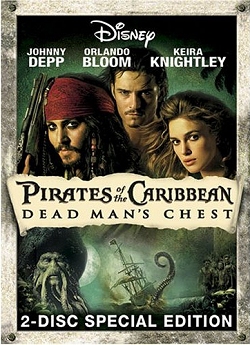
Contest: Win Pirates 2 on DVD!

Filed under: Contests — widge @ 4:30 am

Quick Stop Entertainment is giving away two copies of the two-disc Pirates of the Caribbean 2: Dead Man’s Chest DVD, courtesy of the fine folks at Buena Vista Entertainment. Don’t miss your chance to win this special edition release.

Official Rules

No member of Quick Stop Entertainment or their immediate families may enter. No Purchase necessary to win. Must be 18 years of age or older to enter. All submitted entries must be received by 11:59PM, EST, January 14th, 2007. Winners will be notified by e-mail after the contest has closed.

Music For The Masses: A New Beginning

Filed under: Columns,Music for the Masses — UncaScroogeMcD @ 4:15 am
musicmasses2.jpg

Happy New Year, QuickStoppers, and welcome back to the new and improved edition of Music for the Masses. That’s right, friends, you read that correctly. New AND improved.

You see, I have decided to change things up here a bit, going forward, to help streamline the column and keep the focus squarly where it belongs… the music. Now, don’t go getting all excited like Lindsay Lohan ordering another vodka drink at an “open bar,” I’m not changing things up a whole bunch. Just “some.” For instance, all of the non-sequitor bullshit that usually starts the column? You know, the same “jokey” shit that drives some of you crazier than Mel Gibson with a belly full of Patron? The same shit you are reading now? Gone. Yep, going forward, you ain’t gonna see this no more. This is the last time and, honestly, the only reason you’re seeing it now is because I wasn’t going to write up the only new release of note this week, Carly “Why So Long In The Face?” Simon’s Into White, and I have space to fill. But seriously, if you’re tuning into this column to catch a review of music that your parents fuck to, you REALLY are in the wrong place.

m4m-mred-1/4

Carly Simon playing chess with some dude…

That’s right, friends, we are going to start focusing solely on the music and we are going to start doing it weekly. Serious as a lump on a fat man’s tit. Once a week. No more bi-weekly dick and fart jokes for you my friends. You deserve better. You deserve dick and fart jokes EVERY week and finally, FINALLY, you’re going to get them. “Breathe deep the gathering gloom…”

m4m-dandf-1/4/07

You can also kiss the “Bastard Love Child Of…” comparisons goodbye. No real reason here… just thought it would be fun to change the description of the music to the more simplified “Sounds Like?” For instance, using the above-mentioned Carly Simon album as an example, I would say that her new album “Sounds Like?”… well, it sounds like your parents fucking. Umm… so I’ve heard. Through the wall of that Motel Six in Salida. But I digress.

m4m-couple

I am also going to start incorporating more concert reviews – which I have done sporadically in the past – and some actual, artist interviews. No shit. Oh yeah, and I am also going to hit you – like Jackson Browne, only not in the face – with the occasional podcast. And joining me on these occasional (read: whenever the hell I feel like it) podcasts will be Double A, the “rap guy” from this here column, and QSE News guru J. Allen. I’m pretty sure this is one of the signs of the apocalypse, right behind “raining frogs” and an “underwear-less Brittany,” but I’ll let you judge for yourself. Here is a taste of what you can expect…

[CONTENT WARNING]: This podcast, much like the column you have been reading, contains foul language, horribly off-color jokes and multiple, inexplicable usages of the word “va-jay.” Don’t say we didn’t warn you.

DOWNLOAD: (right click to save)
Music For The Masses: Episode 1 (MP3 format) ““ 7.75 MB

Kinda like listening to three 9-year-olds with a tape recorder, huh? By the way, I’d like to thank the “real man” stunt voices for filling in there. Nice work, guys!! Double A will pay each and every one of you with a special “mouth hug” and “pickle tickle.” And, on the off-chance you are actually wondering, future podcasts WILL focus on “real” reviews of new music, so you can consider this first one as a simple “test of the system,” so to speak… just in case you’re sitting there going “What the fu…?” Oh yeah, lest I forget, I’m going to change my rating system (which is, believe it or not, actually serious) to something a bit more “graphically interesting,” continue to pimp unsigned bands whenever the opportunity arises and, perhaps most importantly to some, post the upcoming music releases for your shopping pleasure. Eww… that reminds me… coming up next week, we have the following:

Artist Title Genre
A New Dawn Fades I See The Night Birds Rock/Pop
Alexis Gideon Welcome Song Alternative
Big C**k Year of the Cock Rock/Pop
Blue Six Tropicalia Dance
Boils, The The Orange And The Black Rock/Pop
Chow Nasty Ungawa….The Party StartsRight F**king Now EP Rock/Pop
Complicated Shirt Compromising Compostions Rock/Pop
Cosmic Gate Earth Mover Dance
Das Oath Das Oath Punk
GRATEFUL DEAD Live At The Cow Palace: New Years Eve 1976 (3CD) Rock
Great White Recover – Deluxe Edition Rock/Pop
Greene,Heather Five Dollar Dress Rock/Pop
Hatepinks, The Tete Malade/ Sick In The Head Rock/Pop
Hinder Tribute Uninhibited: The String Quartet Tribute to Hinder Rock/Pop
Holy Molar Cavity Search EP Rock/Pop
John Waite DOWNTOWN”¦Journey Of A Heart Pop
Lil C H-Town Chronic [Deluxe Edition] Rap
Love Kills Theory, The Happy Suicide, Jim! Rock/Pop
Magic Lantern, The The Magic Lantern CD EP Rock/Pop
Marco V Live At Innercity Dance
Mercury Rev Back To Mine Rock/Pop
Mr. Lil One Browner Than Pride Rap
OG Ron C F Action 46 Rap
P.F. Sloan Measure of Pleasure Rock/Pop
Patriarch Son Of A Refugee Rap
Popo, The The Popo Rock/Pop
POWND Circle of Power Rock/Pop
Questions In Dialect The Ghost Wishes To Speak ToYou CD EP Rock/Pop
Ron Sexsmith Time Being Rock
Self Against City Teling Secrets To Strangers Rock
Sloan Never Hear The End Of It Rock/Pop
Soporus Atomove Elektrarne CD EP Rock/Pop
Superpumas Muscles Electronica
Ultramagnetic MC’s The Best Kept Secret Rap
Woss Ness Bangin Screw 2000 Rap


Good stuff… umm, maybe. So, there you have it folks. The new AND improved “Music for the Masses. ” What do you think? Huh? Maybe? Well, anyway, thanks again for reading and we’ll see you next week with some actual music reviews.Peace.

Send pictures of your “va-jay,” assorted hate mail and review copies to:

M.C. Bell
P.O. Box 1222
Arvada, CO 80001

E-MAIL THE AUTHOR

The Fred Hembeck Show: Episode 85 – “…But How Did You Like Dallas OTHERWISE, Mrs. Kennedy?…”

Filed under: The Fred Hembeck Show — UncaScroogeMcD @ 2:50 am


fredhembeckheader.jpg

Pardon me, friends, but I’m afraid things got a little bit away from me over the holidays. Thus, today we’re offering up a classic little essay originally presented over at Hembeck.com back on November 22nd, 2004, one I cleverly titled:

“…But How Did Like You Dallas OTHERWISE, Mrs. Kennedy?…”

But, as I mention in the piece’s opening line, to fully grasp what’s what, you need to first go and read the story I scanned in just for the occasion, one from the very comic you see below. Do that, and then come back and begin reading my, ahem, ageless commentary, okay? Thanks!

fredhembeck2007-01-04.jpg

If you haven’t already done so, you might just want to go and read “The Infamous Four” before tackling the following frank and open discussion of this shock-laden mid-sixties Superman Family entry! Go – NOW!! Don’t say I didn’t warn you…

Okay – everybody back? Are you all comfortably sitting down, freshly used smelling salts at your side, the breath that was knocked out of you by the story’s stunning finale gradually re-entering your collapsed lungs? Good. NOW we can pick away mercilessly at our featured presentation, “The Infamous Four”, written by Jerry Siegel, drawn by Kurt Schaffenberger, and originally published in Superman’s Pal, Jimmy Olsen number 89 (December 1965, but going on sale earlier that Fall in late October).

By now, you’ve been able to surmise my reason for posting it on this very specific date, as it deal’s with events taking place in Superman’s Metropolis exactly 59 years from today. Yup, folks in Supes adopted home town are still stricken by the tragic assassination that had taken place precisely a century earlier, which, frankly, may’ve been a bit of wishful thinking on the part of the comics field’s most blatant JFK groupie, Superman uber-editor Mort Weisinger. After all, wasn’t the very year THIS story was published, 1965, the hundredth anniversary of the shooting of one of our OTHER most beloved presidents, Abraham Lincoln?

And yet, thinking back, I can recall no special ceremonies when THAT dark day rolled around (heck, I don’t even know WHICH day it was!…), and certainly nobody took five minutes off to stare, stone-like, at the front of a five dollar bill (the technology to project an image of a bearded chief executive into the ether not having been invented as yet)! Instead, we twelve-year olds were more likely to crack our black-humored “…but besides that, Mrs. Lincoln, how’d you like the play?…” jibes as to pay tribute to a fallen hero (hence the above title).

The handsome young President appeared in a score of stories overseen by DC editorial honcho Weisinger during the three brief years Kennedy was responsible for the country’s welfare – a survey for another day, people – but as best I can determine, this was his third, and final posthumous cameo in one of Mort’s magazines. (The first was his ill-timed stand-in gig for the Man Of Steel in Action Comics #309’s lead tale, which hit the stands just weeks – and perhaps only days – after the stunning assassination. You can read a more thorough examination of this infamous episode accompanying my Classic Cover Redo of said issue’s frontispiece by going here – and view JFK’s two panel gig by cueing up the November 22nd, 2004 “Fred Sez” entry. The second turned up in Superman #168, a story that was in the works when the shooting occurred but which was finished and printed at the behest of President Johnson (so it was said) concerning one of the slain leader’s pet projects, promoting physical fitness among the nation’s youth, a story that wound up doubling as a tribute to JFK as well. And then, there was THIS story, the one everyone invariably overlooks. Which brings me to one of my slightly off-kilter, long-festering personal anecdotes…)

Mort Weisinger’s Superman Family of titles were primarily responsible for sparking my interest in adventure-themed comics in 1961, when I was eight. Four short years later, the bloom was definitely off the rose: Marvel Comics had come along in the intervening time, and by late 1965, DC was desperately trying to seem hip, as both their surprisingly new (yet old) competitor – AND the decade’s rapidly evolving styles, mores, and attitudes – were making their fifties-based approach (once the industry model) seem stale by comparison virtually overnight. To that end, DC was only a month or so away from their lamentable Go-Go Checks era, which would tarnish the uppermost reaches of the cover of the very next issue of Superman’s Pal, Jimmy Olsen. Even a quick look at this cover is a clear indication of how the clueless National Comics big-wigs were flailing about, trying to hop aboard any available band-wagon in the hopes of not being left too far behind. The times, they WERE a-changin’ – even, it would seem, in the halls of four-color fantasy publishers.

I make this point to explain how, in later years when I’d grown older and became warmly nostalgic for the comics of my youth – including the very mockable but nonetheless lovable Weisinger line – I invariably pulled out an early sixties issue to wax goofy-eyed over. Reliving the red-headed cub reporter’s antics in his recurring guise of Giant Turtle Olsen was SO much more fun than seeing him attempt to one up James Bond. Fact is, over the years, I’ve rarely cracked open many post-1964 Weisinger comics (I even stopped buying em’ all early in 1967, unhappy with the direction the line was taking, though I ultimately rescued many of these skipped issues from a score of quarter boxes during my Comicon tours of the eighties – but that’s a whole ‘NOTHER story altogether…). This, patient readers, is all a partial explanation serving as a prelude to the story that (finally) follows…

Come the mid-seventies. Having grown up with friends who weren’t at all interested in comics, I was lucky enough to eventually meet a kindred spirit while attending college by the name of Charlie Johnson. Though we soon became great pals, he lived 30 miles away from me in those days, so our visits were severely limited by the excessive distance. When we did manage to get together at my parents house, we’d gleefully go down into the basement and enthusiastically rifle through the piles and piles of comics, discussing, celebrating, and – the most fun of all – good naturedly mock them!! And there was this one story in particular I was near desperate to show him – it was this bizarre Jimmy Olsen story that ended with a snap ending, one that ALSO served to memorialize JFK!

There was only one problem – I had somehow gotten it into my head that it had appeared in an issue the latter day double-sized dollar comic, Superman Family, and thus spent several precious minutes pouring through issue after issue, looking for this story I’d excitedly expounded upon for my fellow funnybook fancier, all in vain. The reason that I was looking in that title? Well, I’d correctly remembered that Kurt Schaffenberger was the story’s artist, and though he’d drawn a few stray episodes in Olsen’s sixties series, most of the art during that era came from the drawing boards of Curt Swan, John Forte, and Pete Costanza. However, when Jimmy was demoted to sharing just a portion of the Superman Family anthology title, Schaffenberger became his regular illustrator – and Kurt, unlike most other cartoonists, never much changed his style once he’d mastered it, so the difference between Schaffenberger from the fifties and Schaffenberger from the eighties was, at best, minimal. Plus, I was sure this tribute had to’ve come a decade after the fact, and NOT so soon after the crime, so, foolishly, I didn’t even think to look in my earlier Olsen issues…

This sad scenario repeated itself over the years, again and again. When my pal Rocco first visited, I described to him what I remembered to be a particularly oddball Jimmy Olsen story, one containing an outrageous denouement, and then I’d proceed to page through issue after issue of Superman Family, always with the same frustrating result – no such story! I was beginning to doubt my own sanity! I hadn’t imagined everything – had I? Repeatedly, this would occur when I’d host any visitor with half an interest in comics – and if that weren’t bad enough, my memory of the tale in question began to strangely morph in my muddled mind.

While that final panel of a saintly John F. Kennedy hovering in the sky remained crystal clear in my mind’s eye, and the key plot element of everyone standing completely still in deference to the moment, thus outing the bad guys who, ignorant of the local’s customs, were running through the streets just as everyone else voluntarily freezes – THAT stayed with me, too. But, vaguely recalling how everyone was dressed, I had somewhere along the line decided that this adventure DIDN’T take place in a future version of Metropolis, a century after the assassination, but instead in the bottle city of Kandor!!

That’s right – the shrunken Kryptonian city that resided in Superman’s Fortress of Solitude. In my mistakenly twisted version, I had Jimmy following a group of fleeing Earth crooks seeking refuge in the miniature metropolis, only to be exposed as the (present-day) Kandorians mark the passing of the American leader in this peculiar manner! Well, this only made the story all the more ridiculous to me, and in fact, was the very selling point I used in describing it to the various folks just before I’d inevitably fail to locate it: WHY the heck are the tiny Kryptonians making such a big deal out of commemorating the loss of an EARTH dignitary? Sure, they’re sad and such – I’m certain Superman had told ’em all about what a swell guy he was and all – but isn’t the whole city-wide statue imitation bit a tad much? C’mon, now – that’d be just plain silly! And I LOVED it all the more because it was…

I’d nursed that pivotal – but apparently mistaken – plot point for over three decades now, and you can’t begin to imagine how deflated I was the other day when I FINALLY located the story and sat down to read it. (How’d I find it? Simple enough – I wrote to my pal, the all-knowing, ever-helpful, Lou Mougin, describing pertinent plot details – including my inadvertent red herring – and he quickly emailed me back with its whereabouts, And soon after I thanked him, I ran downstairs and eagerly fished it out of its longbox home, where it had languished far too long.) Oh, it’s still an interesting little tale, but without the ludicrous Bottle City angle, it loses a hefty chunk of its inherent – or should that be, “invented”? – goofiness. Worse, it killed any chance I might’ve had for titling this essay something snappy like, “Ich Bin Kandorian!”, or “Ask Not What You Can Do For the Bottle City, Ask What The Bottle City Can Do For You!”

So Charlie? Rocco? And anybody else I may’ve once regaled with that crazy JFK/Kandor crossover, here it is. I, um, got a few of the details screwed up – hey, can you really BLAME me? Much as I dearly love Kurt Schaffenberger’s work – and I DO – the futuristic garb his characters are wearing look EXACTLY like the sort of fashions you’d likely find in mid-sixties (not-so-swinging) Kandor, giving me SOME small excuse for my confusion.

Lou informs me that this story’s never been reprinted, and frankly, I doubt it ever will be. Not to play fast and loose with someone else’s property, but when you add in the historical, ahem, importance of this unique entry with my above observation, I think we’re on reasonably solid ground offering this up for your perusal.

As for those OTHER two stories? Well, I’ve gotta save something for the next two November 22nds, don’t I?

And I do hope, that while you’ve been reading this, you’ve remained perfectly, absolutely, and totally still. It’d only be appropriate, don’tcha think?…

(But now you can go on over to Hembeck.com if you like – it’s okay!…)

-Copyright 2006 Fred Hembeck

QSE News: 1/4/2007

Filed under: Columns,News — UncaScroogeMcD @ 2:19 am
quickstopnews.jpg
line1.gif

Here are today’s top entertainment headlines:

  • qsnews.jpgGoing back to the well, NBC has announced plans to produce a remake of the 1970’s series The Bionic Woman – a tale of a woman who receives hi-tech implants that save her life. Obviously, we here at QSE News could go for the “easy” joke about where those implants are located but that would be degrading.  Instead, will simply say the new series deals with how the new technology will help the Bionic Woman do all the things women love to do”¦ like clean the house and cook for her husband.
  • Black Eyed Peas main man Will.i.am is getting ready to help Michael Jackson with a new album. The new material is said to be a concept album narrating Jackson’s own personal struggles while fleeing a horribly oppressive society that persecutes men for spending “naked time” with children.
  • After several rumors over the past few weeks, Barbara Walters has come out in defense of her decision to hire Rosie O’Donnell as a host of the television show The View.  Walters was quoted as saying “I do not regret hiring Rosie one bit.  We had an affirmative action quota to fill and I ask you, where else am I going to find a fat, obnoxious, anti-Asian lesbian?  Huh?”
  • We here at QSE news want to give a belated birthday shout out to Mr. Mel Gibson, who turned 51 on Monday.  Those close to Mr. Gibson claimed that this year’s celebration was a little more subdued and only included 72 bottles of Jack Daniels and 187 racial slurs. The Los Angeles Police Department was not invited to the party but did manage to stop by “for old times sake.”
  • And finally today, George Lucas has said that filming for the much anticipated fourth Indiana Jones movie will begin in 2007. Lucas also announced the special-edition, digitally-enhanced version of the film will go into production in 2008. At press time, there was no release date for the super-special, extended and digitally-enhanced version of the film.
line1.gif

That’s all for today’s news, stay tuned to this channel for all the news that matters least but you still care about.

(Compiled by J. Allen)

##

Quick Stop Thingamabobs: 1/4/2006

Filed under: Columns,Thingamabobs — UncaScroogeMcD @ 2:12 am
thingamabobs.jpg

The web. It’s a big place, full of plenty of distractions ““ some funny, some informative, some ludicrous, some disturbing, some inane, some profound. Each and every weekday, we present links to a few of our favorite finds”¦

————————————————

  • Shortly after George Harrison lost the court case that accused him of “subconciously plagiarizing” his hit “My Sweet Lord” from The Chiffons’ “He’s So Fine,” he penned the tune “This Song” as a means of venting his frustration – and this is the video for it… (Thingamabob)
  • Syncronised Swimming, courtesy of Shearer & Guest… (Thingamabob)
  • The fish-slapping dance, just because… (Thingamabob)

Have a THINGAMABOB? Send it in!

##

Interview: Jonathan Katz

Filed under: Interviews — UncaScroogeMcD @ 1:53 am

-by Ken Plume

katz-01.jpgA few weeks back, I had the pleasure of sitting down for an in-depth interview with Jonathan Katz. I can only assume he was sitting as well, a necessary bit of speculation considering he was over a thousand miles away and our only connection was a phone line and the fact that he had agreed to do the aforementioned interview.

Besides his 20 year stand-up career, Katz was the star of Comedy Central’s award-winning Dr. Katz: Professional Therapist (the first two seasons of which are currently available on DVD), and is a regular contributor to The Next Big Thing radio show on NPR. He recently performed Dr. Katz: Live in New York along with Jon Benjamin, and has just released his first CD, Caffeinated.

You can visit Jonathan on the Web at www.jonathankatz.com, listen to his contribution to our “Holiday Havoc” celebration here, and read our conversation beginning now…

katz-02.jpg

KATZ: Hello?

KP: Hey, Jonathan, this is Ken.

KATZ: Hey Ken. Is this an okay connection on your end?

KP: It sounds fine on mine.

KATZ: It’s perfect on mine. So to give myself a little pep talk, first of all, are you recording? Because I encourage you to do that.

KP: Yes, just started recording.

KATZ: I was giving myself a little pep talk, and I was thinking about two things. One is a comedian I used to work with named Ron Darion. And he used to do this bit about New Yorkers, how they’re missing that little part of the brain that tells you you shouldn’t do something. I was thinking about this in the context of these two radio interviews I did on Monday. And I just could not censor myself.

KP: Were these in promotion for the live performance of Dr. Katz?

KATZ: It was part in promotion of that and partly in promotion my enormous big fat Greek ego. But mostly I’m promoting this CD that’s coming out this month.

katz-03.gifKP: Caffeinated

KATZ: Yeah. That’s the thing I’m mostly excited about. Because I kind of like to document my work, and this really represents 25 years of my life. I just got so bored saying that one phrase. So the one thing that made me think about is that Ron Darion thing. And then the other thing is that I was trying to find a reason to justify is taking that very expensive trip into space which is being offered commercially now. Do you know about this?

KP: This is the Virgin Galactic flight? Or is this another one?

KATZ: I guess somebody’s offering, “If you put up enough money, we’ll get you into space…”

KP: I know the Russians have been doing it, but Branson has been taking bookings for that Virgin Galactic…

KATZ: I think I can justify it two ways; one is that it’s a chance to meet my public…

KP: What’s the implication, that your public has been slowly migrating towards space over the past few years?

KATZ: No, I thought I was gonna meet them on the bus yesterday, because I took the Greyhound bus from New York to Newton where I live, and I hadn’t been on a bus in years and I thought that would be a chance to meet people I like and who are like me.

KP: How do you define that? What are the characteristics?

KATZ: Well, people I like is an enormous range. I like women more than men. I like people who get my jokes. People who make me laugh, I really like them. They are few and far between.

KP: Now I’m getting performance anxiety.

KATZ: No, no. Ken, you’re pre-sold.

KP: (laughing)

KATZ: I like Loren Bouchard a lot. Either a young woman or even an aging woman.

KP: It’d be quite a surprise to his wife to find out he was either of those…

KATZ: Yeah. But he gets my jokes and he also is very good at providing a context for them. And I also like people who know about stuff that I don’t know anything about. And those people are all over the place. I know so little about anything. Except myself, my family, comedy, psychology, psychiatry. I know a little about animation. I know a lot about audio, and I love audio.

KP: So you really can’t say that you know very little about most things. There obviously is a large swath of stuff you do know quite a bit about. You certainly know about comedy.

KATZ: Yeah, but I was on a plane recently and I met some guy from Armenia. I don’t know anything about Armenia. Coming back I met a guy who was a… what do they call somebody who looks for pieces of previous civilizations?

KP: Archaeologist?

KATZ: Yeah. But he had a such a unique take on archaeology. Because that’s my definition of an archeologist – you go look in the sand for things. Or you look under a building to find traces of what was going on before there. There’s so many more aspects of archeology. But I do know a lot about comedy.

KP: When you talk about that 25 year span, what are you trying to condense into an 80 minute CD?

KATZ: First of all, it’s 50 minutes long. Because the first 20 years just flew by. The CD’s 50 minutes long, five-oh, and I’m trying to give people a sense of what I did as a stand up comic during those years. So it’s material that started in the real world and then it just sort of morphed into comedy.

KP: Was your path into comedy a surprise to you?

KATZ: I guess so. People have been laughing at things I’ve said for years, but I never thought I would get paid for it. Nor was that an ambition of mine. I wanted to be a musician. I wanted to make my living in music, and I did for a while. You know, I’ve written more than 40 songs in my life, and they all fall under the heading of mediocre.

KP: By your definition?

KATZ: Yes. And even by the definition of my iPod. I created a category called Mediocre.

KP: Is it only populated by your songs or have you included others in it?

KATZ: No, just me. It’s just a playful look at my songs. Not that they don’t have good qualities. I think I’m challenged as a lyricist. I write pretty good songs, but when I write the lyrics, I write myself into a hole.

KP: So you’re saying that you need a Sondheim? Or a Taupin?

KATZ: Well, I’ll give you an example. This is my favorite example. This is an example of a bad lyric I wrote. This is me running into a hole with just a bad lyric. It was a samba. And I wrote it in the 60s and it goes, “Another night with you would be too much to ask; a final fight with you would me flabbergast.”

KP: It’s certainly unique.

KATZ: Just to use the word flabbergast…

KP: It reminds me of something you might hear from Shel Silverstein.

katz-04.gifKATZ: Or Howdy Doody.

KP: Or Howdy Doody. But really, isn’t that a fine line?

KATZ: Yeah, it is. This is an example of me writing myself into a hole, because I think this is not a bad song, I just got stuck. The lyric is, “It’s a strange situation that I find myself in, perhaps you’ve been there too; I’m caught between a hard place.” And now that I’ve written that line I am fucked. I have nowhere to go.

KP: Well, I’m sure there’s a rhyming scheme. You could find something.

KATZ: Oh yeah, but there’s no happy ending to that lyric.

KP: Unless you do a complete 180…

KATZ: I could bend that line that leads into it.

KP: I believe that’s when people normally go to the bridge.

KATZ: Yeah.

KP: And hope that people forget what the last lyric was when they come back.

KATZ: I was once at an improv class in New York, and a woman named Lisa Mende was my instructor. And I guess we met twice a week, and one time she brought in a pianist who was a friend of hers. I was really so bad – and this was probably in the mid 80s. I was really bad, and the pianist was playing, and I sing one line and then I say, “Take it!” and asked her to do a solo.

KP: Not exactly the way that improv is supposed to work.

KATZ: No, not at all.

KP: Did she take it? I guess in improv you’re not supposed to turn anything down.

KATZ: No, she took the solo, yeah. I can picture her. She was quite beautiful. Although on the other hand my memory is quite jaded. People look so much better in my mind than they do in real life, especially in my mind on the past.

KP: So you’re saying you frequently clean up the images in your memory?

KATZ: Yeah. What do they call it what they do in those girlie magazines?

KP: Airbrush?

KATZ: Airbrush, yeah. I can’t believe I said girlie magazines. That makes me sound like I’m about a thousand.

KP: Give or take. But hey, that could make a comeback.

KATZ: Yeah.

KP: You could reclaim “girlie” for the modern hipsters.

KATZ: Yeah. I always thought that the character Ben on Dr. Katz was always doing cheesecake poses, which is really ancient.

KP: Yeah, but he always struck me as the type that would do it consciously.

KATZ: You’re probably right about that.

KP: As an affectation.

KATZ: Yeah.

KP: And with the belief that it would make himself more appealing to any woman that might encounter him.

KATZ: Yeah. We did Dr. Katz live in New York on Tuesday. That was when we did two shows. One was with Dave Attell and Janeane Garofalo, and one was Janeane, Eugene Mirman, and a guy named Tom Leopold. And Tom Leopold is just like an improvisational genius. He’s on the Jon Benjamin scale in terms of his improvisational speed.

KP: Well, that certainly puts him up there.

KATZ: Yeah

KP: Listening to the audio pieces you did for the DVD, what struck me was that Dr. Katz could return at any point. There’s nothing about the comedy, the presentation, or the premise that’s aged in any way…

KATZ: Right…

KP: So it’s always surprised me that it hasn’t made a comeback yet.

KATZ: Yeah, you and me both.

KP: What was the genesis of doing the new audio pieces for the DVD?

KATZ: People that put out the DVD at Paramount, they do it to generate revenue. And I guess bonus tracks make a DVD much more appealing to a consumer.

KP: The concept does make some sense.

KATZ: Do you own any Dr. Katz DVDs?

KP: Both of them are sitting right here.

KATZ: The bonus tracks I guess were… Tom Snyder and I, we work a lot together still since the cancellation of the show. When we talked about doing the bonus tracks, we needed some kind of angle to make them feel new. And we’re both new to the world of bonus tracks, so he came up with a conceit that was on the 2nd season set, with Emo and Steven Wright and Joy Behar. I think Dr. Katz has always been slightly needier than you want a therapist to be. So he’s calling them just to catch up. That’s thinly disguised on the DVD, but that’s really why he’s generating that call. He’s just lonely.

KP: No no, you definitely get… particularly in the Behar call that he not so much wants to plug his book, as he wants to see that a patient will care about him plugging his book.

KATZ: Yeah. The only patient who really raised the question directly was Dom Irrera; “Who’s your favorite patient?” But I think it cuts both ways. “Who’s your favorite therapist?” was always the question on Dr. Katz’s mind.

KP: Well, it seems like he was just about to take them all out to dinner.

KATZ: Yeah.

KP: There always seemed to be that undercurrent, that he would love to have hung with them socially – just to have someone to hang with socially besides Ben.

KATZ: Well, he hung with Will Le Bow at the bar. But I think you’re right; I think he wants… it’s just like comedians – when you start doing standup, there’s a real desire for the camaraderie of it. Just as important as getting your first laugh on stage is getting your first laugh at the bar. And I think Dr. Katz wanted to be one of the guys.

KP: Do you think, as a character, he was capable of that?

KATZ: No. Totally not. Even with Laura, he wanted her acceptance. I think there’s an episode on this season where he’s trying to get her to hang around to celebrate Christmas with him?

KP: Yes.

KATZ: And it’s really kind of heartbreaking to see how desperate he was for companionship.

KP: Just short of locking her in.

KATZ: Yeah.

KP: In fact, that situation could have turned at any point.

KATZ: She was so close to changing her mind.

KP: Do you think it’s almost more a matter of Dr. Katz keeping Ben around than Ben himself keeping himself around? That the dependency leaned more to him being the motivating factor that kept Ben from ever moving out…

KATZ: I always saw Ben – and Jon Benjamin, of course, may resist this notion – but I always saw Ben as me as a young man. Because I had this incredibly overindulgent father that cut off my allowance when I was 30.

KP: That’s gotta hurt.

KATZ: Yeah. And he just could not say no to me. My dad said to me at one point… he noticed that I was at an age where I should have an income of some sort. But he would never, ever not make his apartment, his food, and even his money available to me. Which is why I was this 35 year old man living in Manhattan who never owned a checkbook.

KP: That’s gotta be quite the learning curve by that point.

KATZ: Yeah. So as much as I loved my dad, he enabled me to stay a boy much too long.

KP: So like Ben, you just really, as you describe him, had no momentum behind you.

KATZ: Right. I was very much like that as a young man. I never met anybody like Jon Benjamin and I never met anybody who approached comedy the way he did. Because my background in comedy – and I think that’s one of the reasons the show survived, is it was totally different than his. He comes to comedy from a totally different angle than me. I try to construct jokes in my mind, and he tries to construct moments.

KP: So you’re saying you have more of an architectural style of comedy?

KATZ: Well, at least it’s the more familiar style. To me. And probably to people my age. Even people who were weaned on stand-up comedy. There’s kind of an elaborate setup. More elaborate than most, in my act. And then it’s sort of a sleight of hand and then I take something out of context, and that’s the joke. I’ll tell you my most elaborate setup, because people laugh not so much at the joke, but they laugh that I would take the trouble to write this joke, I think. It’s about a guy who was a farmer in upstate New York and had to go out of business because he couldn’t make a living, and he went into the phone sex business. And he did it – and this is going to sound cruel – by cutting off the lips of his sheep and the lips of his cows. And he puts them in the barn with a speakerphone. And people call up and they hear, “Ooo, ahh, ooo, ahh.” So all by itself that joke is not that funny. Do you get it?

KP: Yes, I got it.

KATZ: But when I tell it to a live audience, they are so amazed that I conceived of it that they laugh…

KP: I always thought, when viewing your standup, that it was sort of a balancing act. The audience was sort of looking at you up on the trapeze…

KATZ: Yeah.

KP: Wondering when you would take the next step… Would you fall? Would you continue along the surreal lines of the set-up for the finish? It was like watching a dangerous spectacle, because you constructed this sort of bizarre, unique universe around yourself. If that makes any sense…

KATZ: Yeah, I understand what you’re talking about.

KP: I think there are comedians that create bubbles of reality around them.

KATZ: Yeah. But I think I have… Like most comedians, I have trouble censoring myself. Unfortunately, it bleeds into my real life much too much. But I guess my audience is whoever happens to be in the elevator with me.

KP: So you’re saying that essentially anyone can be your audience…

KATZ: I’m always working the crowd. Doesn’t matter if it’s in a comedy club, in an elevator, at Staples, at a restaurant. The only place I try not to work the crowd is at the dinner table with my family, because they deserve better.

KP: How often do you find that people try and work you?

KATZ: Well, when someone finds out I’m a comedian they feel almost obligated to say something funny. Sometimes it’s excruciating how hard they try. Then when I hang out with comedians, which is rare… Dave Attell’s a guy who makes me laugh most. Just the idea of him is pretty funny. And Jon Benjamin, of course. But so much of what he does in life is funny, Jon Benjamin. When we did this live show, one of the conceits was that Ben thinks that my therapy business is in trouble. That I need to spice it up a little bit. So he proposes a million different ways to help generate business. He does it on stage in such a convincing way, and I think we’re pretty believable as a father on son on stage. It’s weird.

KP: What was interesting about the audio commentaries from that first season Dr. Katz set was how quickly you two fell into patterns of playing off each other.

KATZ: That’s true.

KP: That goes back to what I mentioned earlier, that literally it feels like there’s no reason why there couldn’t be more Dr. Katz. Particularly since it’s an animated medium, and based on how the live show and the DVDs have been received, the audience is still very receptive to the characters and the premise.

KATZ: Right. Well, it’s all about money.

KP: Has anyone approached you about re-launching the show?

KATZ: Occasionally. My manager would love to see that happen. That’s the great thing about having a manager when you’re a performer, is that you have somebody else who has a financial interest in your life. But I would love to make more episodes of Dr. Katz.

KP: Loren had mentioned that he was under the impression that you may own Dr. Katz, and that there was some deal worked out years ago with Comedy Central as far as the ability to do more material…

KATZ: It’s much more complicated than that, and something I don’t feel qualified to discuss. Oddly enough.

KP: It isn’t a black & white situation, then…

KATZ: Right.

KP: Did it feel right and natural doing the live shows and bringing the characters back in person?

KATZ: It did, because there’s such a loyal fan base. If nobody showed up it wouldn’t feel right. And also the live show itself is flawed in many ways, and I think we would need a bigger venue, a more theatrical venue. It shouldn’t really be staged in a comedy club, it should be done in a theater and it should be done with very good sound and good lighting and good sight lines. And if people are drinking, I guess that doesn’t bother me but I don’t think it’s necessary, necessarily. I’m not afraid to perform in front of the alert.

KP: Do you think it’s less conducive to the comedy to have a level of inebriation in the room?

KATZ: No, it’s not that. If I was going I’d want to drink.

KP: That’s for different reasons.

KATZ: Yeah. But I think it’s more the physical structure of a comedy club, and the expectation. If you’re a laugh-a-minute guy, you can’t make it in the comedy club. They need much more. You’ll be unemployed. But you can be a laugh-a-minute guy on public radio. You can be a laugh-a-minute on Dr. Katz.

KP: Because of the energy or the level of attention?

KATZ: Because of the audience’s expectations… Because of the attention span of the audience. And because some jokes take a little longer in the construction and don’t necessarily have this enormous payoff that comedy clubs require.

KP: Some have called you a more cerebral comedian than some.

KATZ: If you substitute the R in the word and put in a W, how would you say that?

KP: Like Elmer Fudd?

KATZ: Can you try it?

KP: Cewebwal.

KATZ: That sounds funny! I would pay to see a cewebwal comic.

KP: I should conduct the entire interview like this.

KATZ: Yeah. I was trying to get Sirius to call themselves Siwius. “Here on Siwius Radio.”

KP: I might actually listen to it then.

KATZ: Yeah.

KP: It seems there’s a particular kind of comedian that really depends upon pacing and delivery; Steven Wright being another one…

KATZ: Right.

KP: That it really is about hitting a rhythm within the performance. Was it something that took a long time for you to develop, that balance to where you can bring the audience with you but still not betray the type of comedian you were?

KATZ: I think the thing with me and comedy is I like to give the audience as little information as is necessary for them to get the joke. And I guess if that’s cerebral, then that’s what I am. If it’s annoying, then that’s what I am. But there are other comics, and I guess the guy I admire the most – and I’ve never gone this long without talking about him – is this guy Ronnie Shakes, who is a comedian who died before he turned 40, I think of a heart attack. He was one of Johnny Carson’s favorites. I always tell the same joke, but I’ll tell a different one this time, which is… and he had kind of a 1940s throwback delivery. Had a very big handlebar mustache. And he would say, “I got busted last night on some trumped up charge. They threw me in the clinker, and they said you’re allowed one phone call. Nobody called.” But that was the kind of joke he did. His most famous joke is that “being in therapy for 12 years, yesterday my shrink said something to me that brought tears to my eyes; ‘No habla Ingles.'” He’s a very efficient comedian, and I guess…

KP: Did he have a rapid fire delivery?

KATZ: No, it wasn’t rapid fire at all. He was efficient in his use of words. Rita Rudner is a fan of his, and she’s somebody who I admire in terms of the jokes that she writes. She’s not my favorite performer, but she really is a brilliant joke writer. She helped me with a joke of mine years ago which is, “My wife insists on turning out the lights before we make love. Which does not bother me. It’s the hiding that seems so cruel.” Now I forget how I put it, but I had an extra sentence in there. And when she pointed that out, the joke started working.

KP: It has a natural 3-beat rhythm to it.

KATZ: Yeah.

KP: I mentioned that reality bubble that requires a certain level of attentiveness from the audience, and with this one, it’s not just a knock-knock joke or an observational joke, it’s a situational joke that requires the audience to actually listen to you.

KATZ: Yeah. I told a joke a New York, but it had never worked before. And this is a joke that is interesting because I’m not sure when it’s over. Usually I can tell when a joke is over, but this joke, I honestly don’t know when it ends. It has to do with me coming home the other night and seeing this strange car parked in the driveway. “I got back a day earlier than I anticipated. There was this strange car parked in the driveway. I open the door, I see a cigar smoldering in the ashtray. I tiptoe to the bedroom and there’s my wife in bed with some strange guy, going at it. Now, I don’t smoke.” I didn’t set the joke up correctly. I said, “Maybe I read too many detective novels.” The end of the joke could be, “Now, I don’t smoke.” Or if that doesn’t work, I say, “and then I go back to the ashtray and there’s a naked man smoldering inside the ashtray.” I would keep doing different versions of a joke until I can figure it out, because I think there’s something innately funny about it. Or I could be wrong. That’s the thing about comedians; if a joke doesn’t work, they might say it louder. They might take it up an octave. But ultimately they have to admit it’s just not funny.

katz-05.gifKP: How often in the past have you blamed an audience for a joke not working?

KATZ: When I first started out, if a joke didn’t work I’d always blame the audience. But I would record everything I did, so at some point I had to relieve them of the responsibility and assume it.

KP: What was the joke that you thought was funniest for the longest time, that you eventually came to the realization was simply not funny?

KATZ: I guess it was… “You know the expression you can lead a horse to water but you can’t make him drink? Now they can make him drink. Those Japanese.” And the joke never worked.

KP: I can see what you were going for.

KATZ: Yeah. But to hear 150 people say, “I see what you’re going for,” cannot replace a laugh.

KP: No, I suppose it can’t. Although it would certainly be an interesting discussion for a night at the comedy club.

KATZ: It would be great to try and get them to do that.

KP: You should hand out pencils and a pad of paper when they come in and go, “You know, help me work this out.”

KATZ: Right.

KP: “We’re gonna workshop this.” First interactive standup act.

KATZ: We were doing this thing at Jimmy Tingle’s Off Broadway Theater in Somerville, Massachusetts. Me and Tom Snyder and a guy named Bill Braudis. Wonderful comedian and also wrote on Dr. Katz. He was my first patient, and one of my oldest friends in the comedy business. We were doing something in Somerville, and I would get on stage holding a sign that said “Hysterically Funny” or “Doesn’t Work For Me.” And then we’d ask somebody to come up on stage and hold the sign. And I would tell them a joke. Those two phrases were written on different sides of the sign.

KP: Right. So they’d just flip it back and forth.

KATZ: Yeah. I would tell them a joke and then say, “Now show the audience how you feel about this joke.” And if it said doesn’t work for me, I would bring up somebody else. That kinda stuff works in front of a live audience pretty well. That’s what Tom and I referred to as a set piece. Because I also like to plunge into the audience, into the big unknown more and more these days. Because you really can’t lose if you have the mic and if you’re comfortable on stage. And that’s another thing you’ll hear on my CD, which is my comfort with the audience.

KP: Do you think it’s a hard-won comfort? Is it something that took you a while to achieve?

KATZ: Oh yeah. I used to be terrified of… I would never stray from my act. I was trapped in a one man show that was a hit, for 15 years, and then I met Jon Benjamin and developed confidence in my ability to improvise. It was like, anybody who had seen my act could do it. In fact, my wife did one night, she’d seen my act so many times. They didn’t even change the crowd, they just changed the menu. So when it was time for the third show and I started doing my act, they said, “We saw this before.” So my wife got on stage and finished for me. She has no memory of it, she was so scared.

KP: I have clear memories of your HBO special from years ago. I enjoyed the special, but it almost seemed like you were using the guitar as sort of a protection device. Like, “I’ve got a guitar, back away. Don’t get too close.”

KATZ: That was one of the big things in my career was the day I let go of my guitar. And I did it because some guy from the Letterman show approached me and wanted me to do the show but he said, “You can’t bring the guitar with you.” So I had a great reason to learn how to do five minutes of comedy.

KP: Was that like asking you to perform naked?

KATZ: In a certain way, yeah.

KP: Did you use that as a way of distancing yourself from the audience and the situation?

KATZ: No, it was just… the guitar was not really a guitar. I mean, it was a guitar, but it had a tape deck built into the guitar. So I wasn’t really playing, I was pretending to be playing. And I know there are little certain things on that tape that would work, and also it’s a way of sort of injecting some new energy into a show.

KP: At what point did you realize that the guitar was not necessary?

KATZ: Well, I probably would have still been doing it if it wasn’t for the fact that this guy suggested I could be on the Letterman show. And that was in 1983 or ’84. In ’85 I made my debut on Letterman.

KP: Does it surprise you to think that it’s 22 years ago?

KATZ: Who’s doing your math? Yeah, you’re right. It is kind of surprising.

KP: So, knowing how successful Dr. Katz live was, how well the DVDs have been selling, you have the CD coming out, you’re obviously doing the radio projects, you’ve got documentary projects you’ve been working on – what is the one thing that you really want to see happen in the next year?

KATZ: I guess the space ship. The trip into space. No, I have a role in a movie that’s coming out this year called Are We Done Yet, starring Ice Cube. And I have an occasional role on an ABC show called Help Me Help You. I guess the thing I would like the most is to have my own radio show.

KP: On standard terrestrial radio, or does internet radio appeal to you? Like podcasting?

KATZ: I think what appeals to me is both a combination of work and income. So I guess I’m talking about satellite radio, or commercial radio. But I don’t know if there’s an appetite for what I do on any kind of radio where they would have a budget for a weekly show.

KP: Considering that you could still fill an audience with Dr. Katz and people are still seeking you out, I don’t see how you can think there’s not an audience.

KATZ: Okay, I’ll do it.

KP: Wow. See how easy that was?

KATZ: Okay. You know, I produce a radio show everyday called Hey, We’re Back. And last week I did an interview with Bob Dylan, and at the end of it when I told my wife and daughter about it they reminded me that I don’t really have a radio show. The fact that no one is paying me doesn’t prevent me from producing one. I’m sort of compelled to do it.

KP: But that’s the whole ethos behind the internet.

KATZ: Yeah.

KP: I think you’d make money on the internet if you went the podcasting route. But that’s just me saying it.

KATZ: Do you?

KP: Considering my job is working on the internet doing these kind of things, I guess I’m one of the success stories.

KATZ: Well, maybe you and I should talk to my manager. My web designer is a believer in podcasting. She often talks about some enormously successful song that was just put up there. Or YouTube. Let me talk to my manager about this conversation. I think you make an interesting point.

##

January 3, 2007

QSE News: 1/3/2007

Filed under: Columns,News — UncaScroogeMcD @ 2:49 am
quickstopnews.jpg
line1.gif

Here are today’s top entertainment headlines:

  • qsnews.jpgABC Television has announced that they have greenlit a TV series based on the movie Mr. & Mrs. Smith.  The new series will pick up six months after the events of the movie and will reportedly be darker and funnier than it’s movie predecessor.  With the series, ABC hopes to capture the same magic the movie had by putting an end to Jennifer Aniston’s current romance.
  • Mike Tyson has joined the ever-growing list of celebrities who like to take a little drive after polishing off a fifth of Jack.  Tyson was nabbed outside of a Scottsdale, AZ nightclub after nearly hitting a sheriff’s cruiser.  When asked for comment on the arrest, ex-Tyson opponent Evander Hollyfield shouted “HUH?  WHAT??  YOU’RE GONNA HAVE TO SPEAK UP!!  I CAN’T HEAR A SINGLE WORD YOU JUST SAID!”
  • According to reports coming out of England, ex-Babyshambles singer Pete Doherty and paper-thin model Kate Moss may have tied the knot. While representatives of the couple have denied that the pair married, Quick Stop News has learned that an enormous, five-tiered wedding cake made out of cocaine and heroin was ordered by Doherty.
  • California Governor Arnold Schwarzenegger broke his leg over the weekend. Although the exact details are not known, early reports indicate that Schwarzenegger got his leg caught in a metal press while chasing Sarah and John Connor through an abandoned steel mill.
  • And finally, in her continuing effort to ensure that her children later refer to her as “the reason we need therapy,” Britney Spears reportedly passed out at a New Year’s Eve party in Las Vegas. Punting rumors that she was drunk off her cootchie, her publicist says Britney was just tired and simply fell asleep. We here at QSE News stand by Britney as lord knows 12 shots of Jagermeister and two kamikazes always makes us sleepy too.
line1.gif

That’s all for today’s news, stay tuned to this channel for all the news that matters least but you still care about.

(Compiled by J. Allen)

##

Quick Stop Thingamabobs: 1/3/2006

Filed under: Columns,Thingamabobs — UncaScroogeMcD @ 2:39 am
thingamabobs.jpg

The web. It’s a big place, full of plenty of distractions ““ some funny, some informative, some ludicrous, some disturbing, some inane, some profound. Each and every weekday, we present links to a few of our favorite finds”¦

————————————————

  • Jackson Publick & Doc Hammer commentate on the first two seasons of The Venture Bros.(Thingamabob)
  • Ever wondered what the effects of drugs and alcohol would be on a spider’s webspinning capability? Look no further… (Thingamabob)
  • Explore the cyber-lair of the ultimate Iron Giant fan… (Thingamabob)
  • Seasick Steve’s amazing 3-string guitar performance at Jools Holland’s Hootenanny… (Thingamabob)
  • I’m in a George Harrison mood today, so here’s Harrison’s video for “Crackerbox Palace,” directed by Eric Idle and guest-starring Neil Innes… (Thingamabob)

Have a THINGAMABOB? Send it in!

##

January 2, 2007

Quick Stop Thingamabobs: 1/2/2006

Filed under: Columns,Thingamabobs — UncaScroogeMcD @ 1:08 am
thingamabobs.jpg

The web. It’s a big place, full of plenty of distractions ““ some funny, some informative, some ludicrous, some disturbing, some inane, some profound. Each and every weekday, we present links to a few of our favorite finds”¦

————————————————

  • Sneak Previews on Sesame Street, with Siskel & Ebert… (Thingamabob)
  • Find out about all kinds of crap you can waste money on (with the help of SNL and Napoleon Dynamite alums) at the Home Purchasing Club… (Thingamabob)
  • Why haven’t you checked out the wonderful Wings For Wheels podcast series? Go on! (Thingamabob)
  • Direct from the 1950’s, it’s an episode of the Paul Winchell – Jerry Mahoney Variety Show(Thingamabob)
  • Here’s what to do with all those Christmas “Tickle Me Elmo” dolls… (Thingamabob)

Have a THINGAMABOB? Send it in!

##

Nocturnal Admissions: DVD Review Jet Li’s Fearless

Filed under: Columns,Nocturnal Admissions — UncaScroogeMcD @ 12:36 am
nocturnalheader5.gif

Taking a page out of contemporary European radical thinking, Godard used to complain in his films about the “CocaColonization” of France. He was a profound American movie lover, but abhorred the deterioration of European culture at the hands of uniformity-demanding corporate culture, the rise of McWorld.

A similar “CocaColonization” has taken place in the world of Asia action cinema. This has had a perhaps almost beneficial effect on world audiences, or at least American viewers because they are now easier to follow, having been denuded of their “odd” local cultural eccentricities. In addition they often have specific political messages embedded in their narratives, but not at all explicitly, as Godard’s later films did. For example, Yimou Zhang’s Hero had a specific and pro-Chinese message about unification and strong leadership to impart. Yimou may or may not have believed in the message himself, but it was obviously the price he had to pay to get the film made, a crazy mirror image of the patriotism test Howard Hughes made of the RKO film The Woman on Pier 13.

Fearless box

Which brings us to the latest example of Asian action, Fearless, also known as Jet Li’s Fearless. The titular possessiveness makes sense. It is clear from the making of on the disc that this is a highly personal film for Li, a practicing Tibetan Buddhist, whose film is the result of his grappling with the conflict between the subject matter of his movies and the nature of his beliefs.

Fearless Jet Li

Directed by Ronny Yu, who has made something of a name for himself in American films via Freddy vs. Jason, Formula 51, and Bride of Chucky, and credited to writers Chris Chow and Christine To, Fearless tells the oft-recounted tale of Huo Yuanjia, the martial artist who, according to the film, unified the disparate Chinese combat techniques back in the early 1900s. As the film tells it, Huo always admired the martial spirit of his father, who refused to let his son train. Huo does it anyway, secretly, and grows up to lead a popular school.One day he goes into combat to defend the honor of a student beaten up by a rival school master. Huo takes so much out on him that the rival dies. Then Huo learns that the beating the student suffered was more or less deserved, but that doesn’t stop one of the dead master’s students from killing Huo’s wife and kid before slitting his own throat.

Fearless Sun

Fearless is divided into four parts. The massacre ends part two. Part three follows Huo as he becomes a drifter, his hair growing wild and his mind apparently broken. One day he is pulled out of a stream and brought back to health by a village of rice farmers. Working with the villagers focuses and steadies him as his strength comes back, and Huo finds himself drawn closer to a blind girl (Li Sun) who “sees” better than him.

The third and final part commences when Huo leaves the village (it’s probably obvious but I didn’t quite catch why), and sets about to help China regain its pride among other nations, whose leaders have nicknamed China the sick man of Asia. This is done, of course, via a succession of combats, the last one staged between Huo and a Japanese martial artist. The film ends on a rather solemn if elegiac note.

Though the tale is perfectly clear, unlike many of the older action films beloved of buffs who first saw them back in the 1970s, the film still subscribes to some of the crazier aspects of the genre. For example, Huo has a preternatural ability to fly. He uses this ability to dance around his opponent, like a Muhammad Ali. But if you can fly, why bother to continue fighting so conventionally in the first place? If the movie were wholly funny and action oriented rather than having a political message in a mostly serious and realistic context, then the flying wouldn’t stick out, but it does. Being a “cleaned up” version of an action film, it is also bereft of humor, Jet Li taking his role and the message of the film very seriously.

Asian viewers probably found its message of unification and working together as one rather unsubtle as propaganda, and in the finished film it comprises only a few minutes in part three as Huo rallies the masses. It’s subtle as messages go, but still there. It’s not clear to me, though, who its intended recipients happen to be, because the message seems at variance with Li’s stated beliefs in the making of doc. There, Li indicates that as a follower of Tibetan Buddhism, he must work on himself, on his own never-ending training and development. Maybe this isn’t really at variance with Huo’s call for national and martial unity, but it seems to be. What Huo seems to want is for the faceless masses of China to become strong though collectivism. What Li practices in private sounds self-absorbed and isolating.

Jet Li’s Fearless comes in a smashing wide screen transfer (2.40:1 enhanced). It features both Chinese and English dialogue tracks in Dolby Digital 5.1, and has English, Spanish, French subtitles. The Unrated Edition also includes the original, slightly shorter theatrical version.

Fearless Yu

Supplements consist of one a 20-minute making of, and a deleted scene. “A Fearless Journey” recounts how and why this is Li’s final action film, and displays him wrestling with issues of screen violence and moral messages. It exists almost solely to prompt respect in the viewer for Li’s decision, but does have sound bites from Yu, and from some of the martial artists who play Li’s opponents in the ring. The deleted scene is a six minute sequence that takes place in the rice farmer village and shows a major stage in Huo’s development as a “peaceful warrior.” Jet Li’s Fearless hit the street December 19, 2006, and retails for $29.95.

Toy Box: Stargate SG-1 Series 2

Filed under: Columns,Toy Box — admin @ 12:35 am
toybox.jpg

Before we get started with our regular festivities, I wanted to mention that you can vote for your favorite (and least favorite) collectibles this year once again in my People’s Pick Awards. The voting will be open for a few more days, so get your vote in now! Just click here to head over to the ballot – and be sure to sign up to win one of 8 cool prizes. Now on to our regularly scheduled program…

The movie was okay…but not spectacular. But the Sci-fi channel was able to take a decent flick and turn it into a solid television show, running 9 years now! Nine years! I can’t get over that.

Diamond Select Toys picked up the license for action figures last year, and fans were skeptical. DST has done a good job with the Buffy and Angel lines, although to say either hasn’t been without its bumps would be lying. Then they did Serenity, and fans weeped. So what would happen with Stargate?

The good news is that series 1 was great, with much better sculpting, good articulation, and a nifty idea around getting all the pieces to build a diorama of the Stargate. Now wave 2 is hitting stores in the next month (this is an early review), and includes Teal’C, Carter and Thor. Like usual (for DST), they’ve stretched those three characters into a wave of six. In addition to the core three, there’s a chase variant Black Ops Teal’C and Previews Exclusive Jaffa Warrior Teal’C, along with a Replicator Carter. There’s also a Desert Camo Carter pictured on the cardback, but it’s wasn’t produced.

Over at MROTW, I reviewed the three core characters last week, and here I’ll be covering the two variant Teal’C figures. If you have any questions or comments, drop me a line at mwc@mwctoys.com.

“Jaffa Warrior Teal’C and Black Ops Teal’C”

Each of the main characters – O’Neil, Jackson, Carter, and Teal’C will eventually have a black ops version. Teal’C also gets the Jaffa Warrior treatment, using the same body as the series 1 Serpent Guard.

toybox_122606_1a1.jpg
toybox_122606_1b1.jpg

Packaging – ***
The cardbacks are growing on me, but they still don’t knock my socks off. Decent graphics, reasonable text, but they lack the visual pop to snag your eye. Of course, since you’ll probably be stuck buying these online, it’s a moot point. The other minus here is the lack of instructions for putting together the Stargate. Some of the pieces fit together tightly, and you may be wondering if you’re doing it right or you’re about to break something. A basic visual instruction guide would have been a big help.

toybox_122606_21.jpg

Sculpting – ***1/2
These are two slightly different versions of Teal’C, one with hair, and one without…and sporting the forehead symbol as part of his sculpt, not just an additional paint op. As I mentioned in my review of the regular Teal’C, I’m not a huge fan of the slightly confused expression, but of the three Teal’C versions, the black ops head sculpt, with hair, looks the best.

toybox_122606_31.jpg

Each of the body sculpts are very detailed, particularly the Jaffa Warrior version. All of the lines in the armor are sculpted in, right down to the small chain mail-like texturing. Like the other figures in the series, internal scale and proportions are very good, with no pin heads or bobble heads, and no odd lengths to the limbs.

They’ve also added veins to his arms in the shirtless black ops version, and his t-shirt and pants fold and crease in a very realistic way across his body. Both figures stand absolutely great on their own, and both have hand sculpts designed to work with the widest variety of accessories.

Paint – ***1/2
The paint ops are extremely clean, although there is some slop on the Jaffa Warrior if you look *really* close. The white lines aren’t always perfect, but the eye of the camera is much more able to pick up on it than your own.

toybox_122606_6.jpg

The work on the faces is terrific, with no problems with the eyes, or poor cuts between the hair line and face. The skin tone is consistent and even, and even the lips (often a problem with male figures) are reasonably well done. Okay, so it looks like he has a bit of the old lipstick on, but it’s not a major issue on either figure.

Articulation – ***1/2
While neither figure is super articulated, they both have about as much articulation as possible, and still maintain realistic sculpts. On top of that, all the articulation has a good range of movement, and allows for useful posing. Other figures may have more points, but they are often worthless points.

toybox_122606_41.jpg

Both figures have the all mighty ball jointed neck, and both work great. Tilt, turn, forward, back – they do it all. They also have ball jointed shoulders, but the joints are only at the shoulder. They don’t allow for quite as much mobility as some other ball joints, but they have a better appearance.

There’s cut biceps, pin elbows and cut wrists to allow them to hold weapons (like the staff) in both hands, and a cut waist, T hips, pin knees, and cut thighs to get some decent posing out of the legs. Some of the joints, like the cut biceps or thighs, can break the lines of the sculpt, but having them gives you a lot more options as well.

Accessories – ***1/2
DST has taken the concept of ‘reuse’ to whole new levels with this line, but they throw in enough accessories with every figure (plus one or two new ones) that it takes most of the sting off.

toybox_122606_5a1.jpg

The Black Ops version has his staff (with alternate, ‘open’ head), radio, P-90 rifle, zat and G.D.O. These accessories are all used in other figures as well, but they make sense with this character as well. His soft rubber vest is removable, and while the sculpt and fit are good, I tend to prefer the figures sans vests.

He also comes with a huge, honkin’ butt kickin’ rifle, that looks great, but which I could never quite find a satisfactory way for him to hold. You may have better luck than I.

toybox_122606_5b1.jpg

The Jaffa Warrior version has the staff as well, with alternate staff head, the zat, and the funky ‘eyeball’, which I’ve been told by readers may be a ‘tek’, a stunning grenade. He also has a Goa’uld, the big bad of the show (although they aren’t all that big). These snake-like aliens get up inside your brain, and you don’t want that.

Both figures come with a piece of the Stargate, the same piece as the regular Teal’C. DST was nice enough to put the same piece of the gate with all the same character, no matter how many variants, so if you only want one Teal’C, you don’t need to buy all three to build the gate.

And the gate is damn cool, even if it isn’t in scale. It’s on the small side, but the figures look good displayed with it. And what can you expect when you’re already getting figures at a price range that is standard, and yet so much extra is in the package?

Fun Factor – ***1/2
Put together the great sculpts and paint with good articulation and a ton of cool, useful accessories, and you have some terrific toys. Sure, these are intended as ‘adult collectibles’, but they haven’t forgotten their roots in play.

toybox_122606_8.jpg

Value – Jaffa Warrior ***; Black Ops **1/2
These are an excellent value in the current specialty market, running around $11 – $12 each. That’s if you find them, especially the black ops chase figure. He’ll end up costing you more from most places, because of his lower production run, and ends up with a lower value score because of it.

toybox_122606_7.jpg

Things to Watch Out For –
Not a thing. These guys might not be intended for kids, but the figures themselves are sturdy enough to handle play anyway. The biggest problem is keeping track of the tiny accessories, but as a reasonably intelligent adult, I’m sure you can handle it. Better than I did, anyway.

Overall – ***1/2
Great sculpting, solid articulation, and cool accessories add up to one of my current favorite lines – and I’m not even a big fan of the show! If you are, you should be very happy with the treatment DST is giving the license, and I’m also hopeful this means there are no more Serenity debacles in their future.

Where to Buy –
Online is your best bet these days, although some local comic shops may carry them:

Killer Toys has the regular set of three for $33, and the black ops Teal’c for $20.

Time And Space Toys has been carrying all the figures, but are selling out quick. They still have the Previews exclusive Replicator Carter for $13, and they have preorders up for series 3 at just $60 for the set of 5 (includes the chase and previews exclusive!)

Alter Ego Comics has this basic set of three figures available for $38.

CornerStoreComics has the regular figures for $12 each, or a set of four (includes the Previews exclusive) for $44.

Amazing Toyz also has the regulars for $12, or the set of 4 for $44.

– and if you’re in the U.K., hit Forbidden Planet to pick them up for about 10 pounds each.

Related Links:
I reviewed most of the first series as well, with the exception of Jackson. I still gotta snag one now, to finish off my Stargate! And I reviewed the core 3 characters today at MROTW as well.

Nocturnal Admissions: DVD Review, MI3: 2-Disc Collector’s Edition, Mission Impossible 1: The Complete First TV Season

Filed under: Columns,Nocturnal Admissions — UncaScroogeMcD @ 12:32 am
nocturnalheader5.gif

How would you put together a movie version of a popular TV show? Would you modernize it? Or would you somehow tap into nostalgia memories of a program that viewers may not have even seen in some time?

There is a third option, though, which is simply to ignore the show and create a new, different entity. That seems to be the choice of the makers of Tom Cruise’s Mission Impossible series. The first one, directed by Brian De Palma, and therefore twisted and dark and obsessed with betrayal between friends, spent a few minutes repudiating the show by turning Jim Phelps, played by Peter Graves from the show’s second season on, into a traitor and killer. No. 2 was a John Woo exercise. Now No. 3, just out on DVD after a recent release to the screens where it “underperformed” by the studio’s standards, serves as an entree for J. J. Abrams into the big screen.

He was probably a good choice. If you aren’t going to truly adapt the source show you can at least adapt a modern equivalent that does its stuff better, i.e., Alias, Abrams chick spy program. It was an excellent show, at least in its first two seasons, and was innovative in its complexity. Plus, it didn’t look or sound like a TV show. In its camerawork, editing, and music, it was more like a movie. So the transition from small to big screen was probably logical for Abrams, who was otherwise distracted by his other hit TV show, Lost. And in any case, Cruise has an eye for, and the clout to work with, the best directors, so his imprimatur is really important to those who have the brains to pay attention to such things.

As many have noted before me, reviving TV shows is a fad in Hollywood, born of the movie industry’s need to offer up material that is somehow familiar to the public. Yet then they go and change the thing. It’s such a confusing hash of influences. One of the most faithful TV show adaptations was The Flintstones, with good physical analogs for the original cartoon characters, is probably the closest adaptation, and that was a yabba dabba dud, a movie that everyone saw and no one liked (which makes it the perfect embodiment of the Houxian Principle, which states that, “Just because a movie made $100 million dollars doesn’t mean that anyone liked it”).

In any case, Cruise’s adaptations have shown a savvy sense of the public’s tastes, which is a hunger for off season Bond films, mainly because the real Bond films are usually bad (until 2006, anyway). Cruise, as I never tire of repeating, is probably one of the great screen stars, and it isn’t an accident. He makes an interesting contrast with Johnny Depp, another great actor, whose choice of directors and projects is quirkier and more personal, and Sean Penn, probably the most overrated actor working, whose taste in projects and directors is appallingly bad. The person who should be in this top three is Robert Downey, Jr., who derailed his own career.

MI3 box

In any case, Abrams turned MI3 into a episode of Alias, with an emphasis on family, on loyalty, and on the conflict between the secret and the public life. Abrams is a master of the highly emotional boy – girl scene (as well as the father-daughter scene, and so on), and with certain very key scenes between Cruise and Michelle Monaghan develop a rapport that remains crucial later when Cruise’s Ethan Hunt is in extreme jeopardy. I thought that MI3 was a terrific film, very well cast and with non-stop well choreographed action.

It’s unfortunate, then, that the special two disc MI3 is rife with terrible supplements that fail to do justice to it as a film. I could fill probably three or more columns with bile born of my mounting rage at the lost opportunities found on contemporary DVDs, of the contempt for the audience represented by most supplements, on the continuing disdain of filmmakers such as De Palma and Spielberg toward commentary tracks, of EPKs tossed in as if they had value as explications du textes. MI3 is a two disc special edition set, but frankly the regular old widescreen edition without the supplemental supplements should be fine for most consumers, as they won’t have their intelligence insulted by the faux extra extras (there is also a full frame edition; does anyone buy these?). DVDs are on the brink of being in trouble. Downloads are easier; there is a lot of bootlegging; the introduction of two new competing high standard formats is confusing and alienating. DVDs are slipping as a buffer zone for studios whose movies are weak at the theaters.

Deleted

Shared among the three versions of the DVDs are an audio commentary by Cruise and Abrams, deleted scenes, The Making of the Mission, and something called Tribute Montage: Excellence in Film.” Will you life be deprived of unexpected sunshine if you never see or hear these supplements? No. It’s not like missing out on the Peter Ustinov interview on the Criterion Spartacus, which I’ve shown to myself and others over 10 times. Supplements, basically, need to be valuable and entertaining in and of themselves. The five deleted scenes add some nuances, especially about the character Lindsay. The yak track is an excited account of how much fun it was for the duo to work with each other, how much Cruise got hurt making the film (Clooney raised the stakes on that aspect of filmmaking), and some scenes were rejiggered.

Making of

Abrams is a master of LA speak. I still recall something he said on the Lost first season making of, in which he said that when he met his collaborator on the show, they were so compatible that he was “mad that I hadn’t met him before this.” In the MI “making of” he is adept at praising everyone else in very specific ways that sound both true and false at the same time. The final supplement on the first disc is a nine minute anthology of Cruise movie clips (unsurprisingly Kidman free) originally screened when Cruise won a British film award. I liked it because it affirmed Cruise’s range and film wit.

Cruise Abrams

Except for one or two brief elements, the supplements on disc two are totally useless. “Mission Action: Inside the Action Unit,” “Visualizing the Mission,”
“Inside the IMF,” and “Launching the Mission” are either for kids or morons, if not to fulfill some contractual agreement that stipulates that everyone associated with the movie gets 15 seconds of “making of” fame. “Mission: Metamorphosis” is about the making of the film’s mask sequence and is slightly interesting, and “Scoring the Mission” is about the film’s music, and that’s almost always of some value, but “Moviefone Unscripted” is an embarrassing throwaway, and “Tribute Montage: Generation: Cruise” essentially repeats the same thing from the first disc. Finally there is a photo gallery and trailers. None of the things that used to be on DVDs in abundance, such as isolated music tracks and complete screenplays, are bothered with anymore. It’s too “technical,” I guess, too “geeky” or “fannish,” and alienates the ordinary fucking people presumed to be the main consumers of DVDs now. The format is too popular for it to escape descending into condescending mediocrity.

MI3 comes in a terrific widescreen transfer (2.35:1 enhanced), with a Dolby Digital 5.1 audio track. The special edition retails for $34.95 and hit the street October 30th, 2006.

MI title

Since Paramount owns the Mission Impossible franchise, the studio is also able to release the first season of the TV show. In total it consisted of seven seasons and a two season revival series, but with Cruise divorced from Paramount it is unclear if there will be a fourth movie from him for the studio, so for further MI joneses, Paramount may have to relay on the six or eight remaining TV seasons.

Landau

Seeing the show again after all these years offers some evidence as to why the filmmakers changed so much. It’s fairly tedious. In fact, it’s a show that was more or less made by its theme song, which promised more tension and excitement than the show itself, constrained by conventions of the time, could offer. The individual plots don’t exploit the Topkapi-style engineer scam as much as you think, the politics of the show is retrograde, even for its time, and one of the episodes even posits the existence of ghosts, which come to the IMF teams aid.

Picking

This is a show with an international canvas that looks like it never got out of the Paramount back lot. It’s interior scenes are either badly lit or over lit. Like most shows of the time, the set decoration is atrocious. Orange couches on green rugs with red walls. While throwing up slightly into my mouth, I wondered why the sets were so garish, and then remembered that color TVs at the time weren’t particularly sophisticated (a fact parodied in the otherwise predictable Invincible), and the louder it was the easier it was to “see.”Seasons were longer then, and MI season one has 28 episodes spread across seven discs with no extras, though the episodes are announced as digitally remastered in both sound and picture. To harp on the subject of extras again, there are lots of fans of the show out there who have written books or kept blogs or fan sites in its honor. Presumably they are intelligent enough to add their voices to either commentary tracks or to write text for screen or booklet. Excluding the fans on the discs is to eventually exclude them from buying future sets because their viewing experience won’t be enhanced and there is no compensation for badly shot, acted, and written episodes.

show box

Mission Impossible season one hit the street on December 5th, 2006, retailing for $59.95.

« Newer Posts

Powered by WordPress