
 In each full year since I started writing this column, I’ve done a report on a memorial commemorating the passing of an important figure in the artform of comics. There was Julius Schwartz in 2004 (in “Comics in Context” #32) and Will Eisner in 2005 (in “Comics in Context” #80 and #81), each of whom had spent over half a century in comics and lived very long lives. This year I’m writing about someone who suddenly died when he was only halfway through his career. My friend Mark Gruenwald, writer of Captain America for ten years and editor of Marvel’s Avengers line of comics, who eventually rose to become the company’s senior executive editor, abruptly succumbed to a cardiac attack on August 12, 1996 at the age of only 43.
There were two memorials for Mark in New York City in 1996. The first, at the Ethical Culture Society, was held shortly after his death. Then there was another, held at the New York Film Academy, which was less an occasion for mourning than a celebration of his life. In retrospect, it also now seems to represent the end of an era. This second memorial was attended by an enormous number of people, more than the Schwartz memorial and far, far more than Eisner’s. It now seems to me to have been the last great gathering of the Boomer generation of the New York comics community. Not just Marvel but the whole American comics industry has changed radically over the subsequent decade. There are now few people still on staff at either Marvel or DC who knew Mark.
But those of us who did know him haven’t forgotten. Including this one, I have written three articles about Mark this year. One will run in TwoMorrows’ Back Issue magazine. I did another, dealing with Mark’s creation of The Official Handbook of the Marvel Universe, for the forthcoming Handbook to the alternative superhero series Invincible; this article may appear in a possible paperback collection.
This year I’ve been holding a lecture series called “1986: The Year That Changed Comics,” at the Museum of Comic and Cartoon Art (MoCCA, at www.moccany.org) in downtown Manhattan. I scheduled my talk about Mark’s finest series, Squadron Supreme, for August since Mark had died ten years ago that month. I suggested to MoCCA that we could also hold a tenth anniversary tribute for Mark, and contacted his widow, Catherine Schuller, who liked the idea. As the lecture date (Monday, August 7) approached, I e-mailed invitations to various friends of Mark’s in the comics business, and encouraged them to invite still others.
The result surpassed my expectations. The night of August 7 became a reunion for so many former Marvel staffers from the 1980s and 1990s, and the museum, which resembles a small art gallery in size, had a standing room only crowd. On his blog (http://www.marvel.com/blogs//entry/383) Marvel editor Tom Brevoort, who attended, observed that “Only Mark could bring together so many expatriate Marvelites after so many years.”
In my “1986” series usually I spend two hours lecturing about that evening’s books, but this night I cut my talk about Squadron Supreme down to a tenth of that length, knowing that the Marvel veterans in the audience far outnumbered the students. But I made my major points nonetheless: that although it was overshadowed in 1986 by works like Watchmen and The Dark Knight Returns, Mark’s Squadron Supreme was also an important reevaluation of the superhero myth. Squadron also proved prophetic for the future development of the genre, and foreshadowed such works as Kingdom Come and even Identity Crisis. Since the superhero is a specifically American construct, then Squadron is an American tragedy, about how people dedicated to the benefit of humanity, with all good intentions, nonetheless compromise their own morality and subvert American ideals and liberty. As I said that night, Squadron takes on new relevance during the current conflict in Iraq. With luck someday I will have the opportunity to write at length about Squadron, a work that is still underappreciated.
As Mark himself once wrote:
Mark’s Remark: “I admit it. The fiction I write is primarily intended for juveniles. But just because it’s for juveniles doesn’t mean it has to be valueless. I try to imbed my juvenile adventure stories with values I believe in, values that transcend the genre. Sometimes I succeed.”
Then I turned the evening’s proceedings over to Catherine, who had a surprise for the audience: just a short time before, she had discovered that “sixteen years before he died,” Mark “wrote his own eulogy.” He even specified the music he wanted played: the Beatles, Pachebel’s Canon, and Richard Wagner’s “Ride of the Valkyries.”
Mark’s Remark: “Another of the things that make life worth living: music.”
Then Catherine began reading Mark’s eulogy, which began with a greeting, “Hello, friends; you know who you are.” Mark went on to assure us that he still existed. “I believe in life, death,” an “afterlife” and an “afterdeath.” He believed that there is “a creative intelligence” that is “above us.” Although Mark said he believed there was “no personal God,” meaning a God who takes interest in each of us personally, but speculated that “perhaps” there were also “higher powers” who did. (I’ve hypothesized the same idea.) Mark contended that there was “no purpose in being,” by which he meant an inherent purpose, and that it was “up to all of us to find [the] highest purpose we can aspire to.”
In his case “I believe in love,” and asserted that he had “done good here and there for others,” and had given “a bit more than I’ve taken.” Further, “I’ve not as a whole done anything that has given me remorse.”
Stating that “a long time ago I became aware of my mortality,” Mark said he had written this “message” to be “read instead of religious hoopla.” He encouraged us to “feel free to laugh” during the reading of this eulogy: “If you went before me, I’d laugh at your jokes, too.”
As for his “personal image” of the hereafter, Mark wrote that “I’ll be in a hazy dreamworld,” adding, “much like the one I left.” He envisioned that in the hereafter he would see the “spirits of all those who I’ve loved” who had died before him, and listed a series of names, including his cat Nanda Parbat. (Appropriately, this cat was named after a mystical land in the DC Comics series Deadman.) “I hope all these people are there in the afterlife,” Mark wrote, “and it starts with a welcome party.” Among the people he hoped would be on the guest list were “Moe, Curly, Shemp, and Larry”; Groucho Marx; Rod Serling, the creator of his favorite TV series, the original Twilight Zone; Boris Karloff; Dada artist Marcel Duchamp; Snorri Sturluson, who first compiled the Norse myths (and who was a primary source for Walter Simonson’s run writing and drawing Marvel’s Thor); and Abraham Lincoln and Benjamin Franklin (apt choices for the longtime writer of Captain America).
After the party, Mark hoped he would “go on an adventure” with a late friend and his cat Nanda, and “then on I go until entropy comes.”
Mark wrote that the “main difference” between life and death is that “Death lasts a lot longer. Life is too thin: I wish life were a lot thicker.”
In conclusion, Mark observed that “I’m beyond caring right now” but “I thank you one last time for being part of it,” his life. He stated that “What I miss most in life is Sara,” his daughter, and closed by telling the assemblage that “you people were good people,” who were “great to know.”
Mark’s Remark: “Another of the things that makes life worth living: hearing your child say something she learned from you.”
Then Sara herself went to the lectern to speak, no longer the small girl whom we remember, but a tall, grown woman who has become an artist, and had a show of her work a few years ago. She reminisced about her father as a “master of stories”: he read all of L. Frank Baum’s Oz books to her. (That makes sense to me: Baum created his own highly detailed fictional universe, just as Marvel has.) More than that, Mark created stories of his own to tell Sara, which she called “Gru narrative.”
She then recounted one he told her when she was a “small child,” about a magic bracelet of many colors, each of which represented a different power: red for super-speed, blue for flight, purple for invisibility. The magic bracelet was used to defend the “light side” of Earth from the “dark side.” But “the bracelet was lost for thousands of years,” during which time “people forgot” about such things as “centaurs” and “magic,” and “strip malls replaced castles and dragon’s lairs.” But then one day the bracelet was found, and, Sara said, showing it off on her wrist to us, “I have been the bracelet’s loyal guardian ever since.”
Sara explained that with “every story he told. . .it was like it was real.” She continued, “I really believed in this bracelet,” and told us that Mark “also told stories in which I used the bracelet” to perform good deeds.
Mark’s Remark: “To be as alive as it’s possible to be, you must wonder like a child, feel like a teenager, and think like an adult.”
Next up was Mike Carlin, who began his long career in comics as Mark’s assistant editor at Marvel. He started his talk by saying that the “second Catherine said she had found this eulogy,” he remembered a time years ago when “Mark asked me to housesit his apartment” while he was away. If anything dire was to happen to Mark, he had instructed Mike to find this “special book.” Mike and his Marvel cohorts Eliot Brown and Jack Morelli did indeed find the book. “As she was reading it,” Mike told us, he realized, “holy shit, I already read this.” It was the eulogy, and back then, Mike said, he, Brown and Morelli “just never stopped laughing at the name Snorri Sturluson.”
Mike next started commenting on a series of slides made from photos taken back in the 1980s, “B.C.–Before Catherine.” First there were shots of Mark’s office at Marvel. “Mark, he was a weirdo,” Carlin said affectionately., “He insisted on all the desks in the room” being totally clear of papers or anything else. (This is true: my own desk was stacked with neatly arranged piles of paper, but I could tell that Mark quietly disapproved.) “He didn’t want telephones on the desk,” Carlin continued, so they put them in the desk drawers. “Now all my phones are out,” Carlin told us, but “nobody calls.”
Mark’s Remark: “Life goes on, whether we’re in it or not.”
Next came a slide from Michelle Marsh Day, which is now a legend among Marvel employees of the 1980s. Michelle Marsh is a beautiful news anchorwoman who had a long career in New York City television, and at one point her face adorned posters around the city advertising her local news show. As Mike Carlin recalled, Mark took a fancy to the poster and said, “I’ll give you a dollar if you get me another one.” Eventually he spent eighty to ninety dollars on Michelle Marsh posters that Marvel personnel surreptitiously removed from subway stations and other sites, and he was “wallpapering his office with them.” (This was but one of the unusual decorating themes Mark chose for his office; at another point his office was decorated to resemble a medieval dungeon.) Finally, Carlin recounted, they “cut them up” and staged a “secret surprise party” one afternoon, in which the Marvel staff crammed into Mark’s office and donned Michelle Marsh masks made from the posters. This was Michelle Marsh Day, recorded for posterity on videotape.
Mark’s Remark: “Gruenwald’s second rule of comedy: If something is not funny the first time, by the fiftieth time you repeat it, it will be hilarious.”
As the slide show continued, Mike Carlin reminisced about how he, Mark and Eliot would spend “sleepover weekends” at the Marvel offices to work on The Official Handbook of the Marvel Universe. (In case you’re wondering, I stayed home writing entries, though I spent many late weeknights at the office working on the Handbook in later years. People who have subsequently undertaken comics encyclopedia projects with which I’ve been involved never comprehend beforehand how much time and work they take. The fact that Mark and company spent entire weekends at the office should give you some idea.)
“Mark threw a pie fight for my birthday,” Carlin told us. (Now you see why Mark wanted the Three Stooges at his welcoming party in heaven.) “He used real whipped cream” for the pies, though they then discovered it “doesn’t come out of your clothes.”
Mark’s Remark: “Men: if you can find a woman who really likes the Three Stooges or old Twilight Zones, don’t let her out of your life.”
Long before the rise of digital video and the age of YouTube, Mark was a video maven. The slide show also included a picture of Mark in costume as Weebwo (I am uncertain of the proper spelling), a “character from the future,” which, Carlin explained, then meant the 1990s, who appeared on Cheap Laughs, a sketch comedy series that Mark, Mike and Eliot produced, wrote and acted in for public access cable TV in New York.
Mike Carlin summed up by saying of Mark, “He was my best friend” and “gave me a shot at getting into the comic business.” He added, “It’s crazy to me that it’s ten years later,” meaning since Mark’s death. Carlin recommended that we “go check out” the “Mark’s Remarks” columns that Gruenwald used to write in Marvel Age and other comics. Carlin said Mark would “write Marvel Age columns about his thinking processes,” and though they were “ostensibly about editing,” they were about “how he got through the day.” He’s right: “Mark’s Remarks” were like a blog before there were blogs, covering not only comics but also more personal matters. You can find many of these columns posted online at http://www.geocities.com/mh_prime/, including the one from Marvel Age #100 which I borrowed the quotations in this week’s column.
Mark’s Remark: “If something’s worth doing, it’s worth doing with all the energy you can bring to it.”
As you can surely tell by now, Mark was a dynamo of creative energy, who wasn’t satisfied with simply doing his day job from 9 to 5. Why did he work so hard and so much? Carlin told us, “I always felt subconsciously he knew he didn’t have as much time” as the rest of us. “He left a big mark on a lot of people,” Mike said, apparently unaware of his inadvertent pun (which Mark would have appreciated). Carlin asserted, “He affected way more things than you’ll ever know about.”
Mark’s Remark: “I wish that when I was young somebody had told me that time goes by more quickly the older you get.”
Then Mike Carlin read a message from comics editor/writer Denny O’Neil, who hadn’t been able to attend in person: Mark had been his assistant when O’Neil was an editor at Marvel, and later Mark edited O’Neil’s run writing Iron Man. O’Neil wrote that “Only now after ten years” was he “beginning to realize what a loss Mark was.” O’Neil declared Mark to be “a near perfect assistant” and, quoting the title of one of Tom Wolfe’s books, called him “a man in full.” O’Neil closed by saying, “I think of him often.”
There was also a message from O’Neil’s wife, Marifran, who wrote that, like Catherine, she had only “met Mark closer to his end.” But she recalled Mark’s marriage to Catherine as the “most joyous wedding I ever attended.”
Mark’s Remark: “Gruenwald’s first rule of Halloween costumes: A costume should totally disguise one’s appearance.”
Marifran also noted, “I remember his bag lady impersonation” at the first comics industry Halloween party she attended, when he “didn’t utter a sound.” Presumably this was one of the Halloween parties that John Byrne used to hold. Each year there would be a different theme, and in this particular year we were instructed to come in a costume that made us completely unrecognizable. This was harder than it seemed. I found this parrot mask that completely concealed my head (and wore it with a normal suit), but as soon as I walked in, Ann DeLarye Gold (then the wife of DC editor Mike Gold, and looking quite fetching in full makeup and costume as one of the cats from the musical Cats), happily exclaimed, “Peter!” However, Mark loved Halloween and took Halloween costumes quite seriously. His bag lady disguise really was nearly impenetrable, and he didn’t make a sound to prevent anyone from recognizing his voice.
Mark’s Remark: “I caution people against meeting writers whose work they admire. Once you find out the guy’s a slob in real life, how can you not let that color your impression of his work?”
The next speaker and his friends weren’t disappointed by what they learned about Mark from this evening’s tribute. This was Mike Fichera, who introduced himself as one of the “new generation” of writers for the new Official Handbook of the Marvel Universe projects that Marvel has lately been producing. He was one of three of these writers who came to New York specifically to attend this tribute, including Anthony Flamini and Michael Hoskins, and spoke on their behalf. He said they “feel really fortunate to be following in Mark Gruenwald’s footsteps.” He said that as a “kid” he had been fascinated with “mythology” and was interested both in the Argonauts and that latter day mythic hero, Spider-Man. But then he discovered that “the Marvel Universe was much larger than just Spider-Man” from reading the Handbook during a six hour flight he took in 1984. “I ate it up,” he recalled. It was through the Handbook he learned about the X-Men, although, he said, his father threw out his first X-Men comic, thinking “X-Men” meant X-rated. To see the Marvel Universe presented “as a whole” and “cohesively” was “inspirational to me.”
Today, Mike Fichera told the audience, the Handbook writers are based on places ranging from Australia to Florida to Calgary to England, and when faced with a problem writing the Handbook they ask themselves, “What would Gru do?” He said it was their “big regret” that “Mark couldn’t be part of our team” since “his passion, his love for the characters. . .lit our flames.” (You can find their photos of the tribute at http://www.flickr.com/photos/23781769@N00/sets/72157594230827210
and http://www.flickr.com/photos/43412863@N00/sets/72157594232021137).
Next up was former Marvel editor (and current PaperCutz editor) Jim Salicrup, but I need not recap what he said in detail because Fred Hembeck included Jim’s entire speech in his own recent tribute to Mark over at “The Fred Hembeck Show” Episode 72 (http://asitecalledfred.com/?p=1546). I like Jim’s observation that Mark “was sort of a combination of Bill Murray and Jack Nicholson: the bad boy with that endearing twinkle in his eye.” And I especially liked Jim’s closing tribute: “Mark’s life was a constant expression of his humor, compassion, love and spirit. As much as I enjoyed Mark’s comic book work, I think Mark himself was his greatest creation.” That echoed Denny O’Neil’s concluding statement in his speech at the New York Film Academy memorial to Mark: that Mark’s greatest artwork was his life.
Mark’s Remark: “If I didn’t exist, I’d have to invent me.”
The next speaker was master inker Tom Palmer, who had started at Marvel at the close of the Silver Age. He said he had met Mark when he “asked if I would work on an Avengers issue with John Buscema.” Palmer said he “wound up doing ten years.”
Palmer recalled how once he was in Mark’s office back when Howard Mackie was Mark’s assistant. There was a closet full of boxes. Then in came one particular freelancer. “The next moment there were boxes everywhere,” Palmer said, and the boxes landed atop this unnamed freelancer. afterwards Howard put the boxes back. Palmer told us he learned that “Mark had one box” that was the “key box,” and “when people he didn’t like came in,” he would pull the key box, and the avalanche would commence. And what did Tom Palmer think? “I like this guy. He’s the guy I grew up with. We got very close.” Then Palmer brought his talk to an end, explaining that he “didn’t want to talk too long” because he would “get emotional.”
Mark’s Remark: “Sometimes I wonder if the haircut I wear now is going to embarrass me when I look at a picture of myself ten years from now.”
This was just the first example of the evening of Mark Gruenwald as prince of pranksters, the foremost trickster of the Marvel Universe. This was the topic of our next speaker, former Marvel editor Glenn Herdling, who began by pointing out the difficulty in resurrecting Mark via cloning. Herdling reminded us that Mark was cremated and they “put his ashes in comic books.” (Following Mark’s wishes, his ashes were mixed with the ink used in printing the original run of the Squadron Supreme trade paperback. This is true.) “Nothing organic remains,” Herdling declared, pausing, “except–“ and he held up a familiar-looking ponytail, as if it were a long lost relic. “How did I come by this?” Herdling asked, cupping his ear when he didn’t think we responded loudly enough.
Mark’s Remark: “If we can’t kid each other, who can we kid?”
The tale “goes back to around 1991, our first ski trip to Vermont,” comprising Glenn, Mark, and their fellow Marvel editors Ralph Macchio and Fabian Nicieza. “Mark has something planned,” Herdling tells us. Before the trip, “Mark goes around the office with envelope in hand,” asking both men and women to donate some of their hair to his scheme. “Fabian was battling chronic baldness,” Herdling said, and Mark “wanted to place a whole bunch of hair on Fabian’s pillow when he woke up.”
So, during the ski trip, while Fabian was taking a shower, Mark and Glenn emptied the envelope onto his pillow, but “it wasn’t enough.” So they got additional hair out of bathroom drains and used a hair dryer on it. “Mark was ecstatic,” Herdling reported, noting his willingness to “go that extra length for a practical joke.” Then Fabian walked in, and Mark said, “Fabian, we’re just looking at your pillow here.”
“Next year,” Herdling continued, “we had to outdo ourselves.” This time “Ralph didn’t come” and an assistant editor took his place. This time Mark brought along a fake ponytail so Glenn could pretend to cut it off while he was asleep. Mark had tucked his real ponytail beneath his collar, a simple trick that nonetheless took in both Fabian and the assistant editor, who panicked: “You cut off the executive editor’s ponytail! You are going to get so fired!”
Mark’s Remark: “Gruenwald’s third rule of comedy: Rules, like comedy, should always come in threes.”
Part three came “a couple of years later” at a Marvel editorial retreat. The previous ponytail incident, Herdling said, was now “legendary” and “Mark called me” and said, “I want you to cut off my ponytail. This time I want you to really do it.”
So on Saturday night the editors were playing a game of Thumper, and Herdling decided, “I’m going to throw the game.” Mark won and the other editors lifted him up in his chair to acclaim his victory. “Out come the scissors,” Herdling told us, and he cut off Mark’s ponytail and held “it up in the air as a trophy. There was dead silence.”
The next morning Tom DeFalco, the editor in chief, “calls me over.” Here Herdling slipped into an impression of Tom, one that many Marvelites of the 1980s did, perhaps made funnier by the fact that Tom (a good sport) was right there in the audience. “What you did to Mark was inexcusable,” Glenn said Tom told him with a “stone face.” Herdling recalled, “When you’re a practical joker, Mark would say, you can’t live comfortably.” Herdling told us he thought DeFalco was in on the gag. DeFalco commanded him, “I want to see you in my office.” Herdling asked, “Tom, do you know?” “Do I know what?” DeFalco ominously replied. “It’s a joke,” Herdling pleaded, explaining that he and Mark had collaborated on it. “I want to see you both of you in my office,” DeFalco thundered.
But at the end of the retreat, Herdling told us, DeFalco had him and Mark stand up and told the others, “You’ve been had by the best.” Moreover, he added, “That’s what comics are all about. If you’re not having fun at work, it’s going to show.” (Here I recalled the deafening silence in the halls of Marvel in my final years there, post-Mark. Those last two sentences should be framed and hanged in every comics editorial office.)
Mark’s Remark:”Be good to people who care about you.”
Next up was another former Marvel editor, Glenn Greenberg, who spoke about “how Mark cared about everyone at the company,” and gave his own case as an example. It was in the 1990s, during Marvel’s “darkest time.” Glenn had just been “promoted to associate editor,” but “every book I was given was a dog or was going to be canceled.” There had already been “one or two rounds of downsizing,” and “I figured this was it.” So “I came to the decision to turn back my promotion” and go back to being Tom Brevoort’s assistant.
When Greenberg told Mark he was totally surprised and told him, “In the history of this company, no one has ever done this before.” And indeed, Glenn now realizes, as he said, “Why would the company want someone who did that to himself?”
But Mark made up for Glenn’s naivete. “Later that day Mark took me aside” and said he told the editor in chief (not DeFalco at this point) why Greenberg had turned back his promotion “and that it should not be held as a black mark against me.” Greenberg told us, “To this day I get very choked up” when he thinks about that. “That spoke volumes about how much he cared. It was no more than a month or two later that he passed away.” (Another recently written tribute to Mark suggested that he was too soft-hearted when it came to getting rid of people. I leave it to you readers to decide if this is a vice or a virtue.)
Glenn also recalled the classes in the craft of comics that Mark used to teach to the assistant editors, including himself, and said, “I really took to my heart” what he learned in them. He concluded, “If I had stayed in the industry my goal [would be that] I could be mentioned in the same breath as Mark Gruenwald and Archie Goodwin,” another respected and beloved editor who passed away two years later.
Mark’s Remark: “Another of the things that make life worth living: falling in love.”
Then yet another former Marvel editor, Carl Potts, stepped up to the lectern. (Do you get the impression that Marvel has gotten rid of a lot of editors over the last dozen years?) Potts recalled that Mark was happy “almost totally consistently” when he was “in the presence of his comrades” except for “one short period when he was slightly down,” because he was “concerned about his love life.” (This would be after the end of his first marriage.) But one day Marvel issued “a casting call for models” to dress as superheroines. This is how Mark met Catherine, and he “was immediately smitten.” (If you ever meet Catherine, you’ll understand why.) Potts recalled that Mark had said, “your first marriage is your starter marriage” and once Mark had married Catherine, “he was so happy with that side of his life.”
Here Sara interjected that the first time that Mark told her he was dating a model, she asked him, “Dad, how can you date a mannequin? They’re not real.” Sara explained that she had seen the Twilight Zone episode in which the department store mannequins come to life.
Mark’s Remark: “Gruenwald’s first rule of comedy: Anything more annoying to someone else than it is to you is funny.”
Before the night of the MoCCA tribute, Tom DeFalco had said he didn’t want to speak publicly about his old friend Mark. But now Mike Carlin prodded him to tell the tale of one of Mark’s grandest practical jokes, “the gun story.” So Tom made his way to the lectern.
But first he wanted to add his side to the saga of the night Glenn Herdling cut off Mark’s ponytail for real. DeFalco was asleep, but “for the next hour and a half I got frantic calls from everybody.” But, Tom told us, “I knew of the other fake ponytail incident,” so he figured it out: “one plus one equals two.”
As for the gun story, Carlin had first assured everybody that this took place before the 9/11 attacks. DeFalco began by saying, “I used to have to do a lot of traveling with Mark.” On this particular business trip, “we were heading off to the airport” but after they arrived, suddenly “I’m surrounded by security.” It turned out that the X-ray machines had detected the outline of a gun in one of DeFalco’s bags. Security emptied the bag, but found “nothing that resembles a gun,” so they put the bag through the X-ray machine again, and the image of the gun reappeared. They finally realized that the “bottom flap” of the suitcase “will open up,” and inside they found tinfoil in the shape of a gun. DeFalco said security people were “trying to decide if they’re going to arrest me or not.” He then saw “Mark with a look of panic on his face” and “right away I knew.”
Mark’s Remark: “As a young child, I used to go to my friends’ houses and reorganize their toys.”
Mark was also DeFalco’s assistant editor at one point. In another example of what DeFalco termed Mark’s “lovely sense of humor,” “every time I took a trip” when Mark stayed behind in New York, when Tom returned, “my bookshelf would be rearranged.” DeFalco informed us, “We never really discussed the jokes,” and he would simply “try to figure out” the governing principle behind the new order Mark had arranged the books into.
Then there was a convention in Oakland (presumably WonderCon before it moved to San Francisco), when DeFalco had a “late night business meeting at the bar” and at 2 AM discovered a “giant poster” proclaiming that Tom DeFalco would be signing autographs twenty-four hours a day and giving his room number. “Just knock,” the poster advised.
Other friends of Mark’s were potential targets as well. DeFalco recalled how once when Ralph Macchio returned from a week’s vacation, he discovered that “every item” had been removed from his office, and there was a note saying that a former DC editor would be taking over the space. “Ralph ignored it,” DeFalco said, and “next morning everything was back” in place.
And then there was Mark’s spinning wheel that would tell who was going to get downsized. “Mark was always ahead of his time,” DeFalco commented dryly. DeFalco explained that the wheel was “jury-rigged” so that “whichever office we walked into,” the wheel would always pick the “guy sitting in front of us.”
Mark’s Remark: “I take humor seriously. If you haven’t laughed so hard you thought you’d vomit at least once a year, there was no point in living that year.”
Mark was also Marvel’s self-appointed, unofficial officer in charge of keeping morale high. I learned something when DeFalco mentioned “all the crazy parties” that used to be held at Marvel–Halloween parties, Christmas parties–and revealed that “the company never paid for them. It was always Mark’s idea.” DeFalco told us he used to tell Mark, “You can’t afford this stuff,” and Mark would reply, “We can’t afford not to do it.”
Moreover, “Mark was always the instigator” of “all the crazy stuff we used to do at conventions.” DeFalco said the convention would give us “two or three hours” of panel time to sell things. Mark, however, contended that the fans have “either bought it”–the new comics projects–“or not,” so he wanted to “give [Marvel’s] sales people one hour” and “then do two hours of crazy entertainment.” (Mark, you see, was trying to convey the idea that the spirit of Marvel was not grim and gritty or mercenary: the spirit of Marvel was fun.) DeFalco even confessed that in one of the Marvel game shows Mark staged at comics conventions, “he conned me into busting a balloon with my butt!”
Mark’s Remark: “Are all writers frustrated performers?”
This served as a good segue into the showing of a videotape compiling excerpts from some of the game shows that Mark staged at comics conventions under such titles as “Mondo Marvel” and the “Marvelympics.”
The tape was, of course, introduced by a clip of Mark’s idol, Rod Serling. Here was Mark getting fans to impersonate Doctor Strange getting a wedgie or (ironically) Aunt May having a stroke. He challenges another fan to improvise a rap song about Ka-Zar, Quasar, and the Living Laser (well, they sort of rhyme). In another form of wrapping, Mark has fans compete in wrapping twenty-five feet of fabric around Marvel editors Bobbie Chase and Hildy Mesnik. And then there was the “Terror Box,” named after the now-forgotten lead of his own Marvel series: the box with Terror’s macabre visage would be placed over the heads of volunteer fans, who would then scream as loud as they could. And yes, there was a clip of a competition at busting balloons by sitting on them, with Tom DeFalco as a participant. Having unsuccessfully attempted to fight off boredom while sitting through a Marvel panel at this year’s New York Comic Con, I think something important is missing from Marvel presentations in the 21st Century A. G. (After Gru).
Next on the tape was Mark in a tuxedo, emceeing a comics industry roast, I think, and doing jokes about the ribbons that celebrities used to wear at awards shows to support various causes. On the tape Mark said his “black and blue ribbon” represented “the Union of Downsized Marvelites.” In the museum Glenn Greenberg interjected, “That’s everybody here!”
The tape concluded with a four-minute-long montage of still pictures from throughout Mark’s life, set to familiar music from the Peanuts animated specials, with Mark looking very different as a child, and later adopting a longhaired, bearded hippie look before emerging looking the way we knew him.
There were pictures of himself with his buddy Dean Mullaney from their days publishing their fanzine Omniverse, pictures of Mark with Sara and Catherine, a shot of Tom DeFalco and Mark kissing Stan Lee on the cheeks, covers from the Silver Age comics that influenced Mark, and covers from the most important series he wrote: DP7, Quasar, Captain America, Squadron Supreme, and the Handbook. The tape concluded with a shot of Mark, intelligent and contemplative, looking out at us, with a picture of Captain America in the background. The montage was a portrait of a short but full life.
Mark’s Remark: “There is no excuse for leading a boring life.”
Finally, in accordance with Mark’s wishes, a friend of Catherine’s, known as Henry O., played the Beatles’ “In My Life” on the guitar. And with that, the tribute came to an end, although everyone remained to mingle for a while longer.
The next day on his blog Tom Brevoort wrote that the evening “was like a strange time machine, like stepping back into the past and reliving the Marvel-that-was more than a decade ago.” He also observed that “For good or ill, that Marvel will never exist again, largely due to the passing of Mark Gruenwald.”
Mark’s Remark: “When I die, I’m really going to miss me.”
He’s not the only one.

-Copyright 2006 Peter Sanderson


 It’s rather appropriate (and crafted as such) that the tragic tale of the Baudelaire orphans comes to a close on Friday the 13th of October. A Series of Unfortunate Events Book 13: The End (HarperCollins, $12.99 SRP) certainly lives up to its title, as Violet, Klaus, and Sunny have their final confrontation with the evil Count Olaf, but there are plenty of unexpected surprises in store. Will it all have a happy ending? Is there such a thing?
 I respected them as performers and magicians, but with their Showtime series Bullshit (Showtime/CBS, Not Rated, DVD-$29.98 SRP), Penn & Teller have performed – in my opinion – a public service. With their engaging style of presentation and a keen sense of puncturing modern myths and hypocrisy, they’ve tackled some dangerous topics in the course of their three seasons on the air, exposing the truth behind incredibly foolish – to incredibly dangerous – social dogma. Over the course of the 13 episodes collected in the 3-disc set of the third season, those topics include endangered species, circumcision, conspiracy theories, gun control, ghostbusting, life coaching, college, and more. Unfortunately, there’s no bonus features this go round (past seasons have at least contained deleted footage), but it’s great that – at the very least – the show is still getting released on DVD.
 Never having read Vice before, I wasn’t sure what to expect from the first in their series of DVDs collecting a clutch of short films based around a particular topic, The Vice Guide To Travel (Vice, Not Rated, DVD-$19.98 SRP). Instead of some slapdash road punk version of Girls Gone Wild (which was my chief fear, admittedly), I found it to be a remarkable travelogue of sometimes forgotten, sometimes dangerous, but altogether fascinating locales that are the very epitome of the phrase “off the beaten track.” From hunting mutant game in the ruins of Chernobyl to the deadly black markets of Bulgaria and Pakistan, there wasn’t a slack moment. The disc comes packaged in a hardcover book offering additional insights and interviews on each piece. All in all, it’s an incredible visual document, and the first in what I hope is a long series of releases.
 It’s fun to observe the evolution and maturation of Adam Sandler as the years go by. Watching Click (Sony, Rated PG-13, DVD-$28.95 SRP), we get to see Sandler as fully-evolved a family man named Michael Newman, with a wife and two kids and a house and a dog and a job – and all the stress that goes with them. It’s a far cry from Happy Gilmore, to be sure. So frazzled is his life as an underappreciated architect (with a boss played by David Hasslehoff, it’s to be expected), that he seeks some measure of respite by seeking out a common convenience for his busy life – a universal remote. Finding most stores closed during his impulse search, he finds store open – Bed, Bath, & Beyond. Not finding the remote anywhere in the store, he stumbles upon the hereto unknown “Beyond” section, where he finds an eccentric employee (played, of course, by Christopher Walken) who gives him a truly universal remote – one which he soon finds allows him to control all aspects in his life, from muting the dog to fast-forwarding through awkward moments. As you can expect from mature, latter-day Sandler, lessons about cherishing the small moments in life is the central theme. And you know what? I think I like the mature Sandler. Bonus features include deleted scenes, featurettes on the make-up effects (let’s just say his character’s love of Twinkies is not a good thing), special effects featurettes, and more.
 The fourth season of Scrubs (Buena Vista, Not Rated, DVD-$39.99 SRP) is when the show began to veer more towards the wacky side, losing some of the delicate balance between comedy and drama that it was brilliantly able to capture in previous years. Still, even off-kilter Scrubs is better than the bulk of TV today. Bonus features include deleted scenes, alternate lines, an interview with Donald Faison, and 4 behind-the-scenes featurettes. The biggest disappointment is a measly pair of commentaries, marking a disturbing decline in the number we’ve been getting with each successive set.
 One would think it impossible, but the 13 episodes featured on the second volume of Harvey Birdman (Warner Bros., Not Rated, DVD-$29.98 SRP) manage to be even more surreal – and funny – than the adult swim original’s first 13. No small feat, to be sure. The 2-disc set features audio commentaries (including series regular Stephen Colbert, which makes me hope he’ll take the time to do something for The Venture Bros.‘ second season set on his Professor Impossible episode), deleted scenes, a completely clothes-less “naked scene,” behind-the-scenes video of the voice actors, promos, and more.
 Cover versions of classic hits – particularly when they focus on a single, legendary band – can sometime be a spotty, even embarrassing affair. There are very few clunkers amongst the 18 tracks featured on Paint It Black (Virgin EMI, $15.99 SRP), which – as you might have guessed – contains a compilation of Rolling Stones cover tunes. From David Bowie’s “Let’s Spend The Night Together” to Aretha Franklin’s take on “Jumpin’ Jack Flash,” I can honestly say there wasn’t a single embarrassing moment amongst the cuts.
 To those unfamiliar with radio as an art form, the idea of a film based upon a live broadcast of a radio show might seem like an evening spent at the proverbial opera. In Robert Altman’s presentation of the fictional final recording of Garrison Keillor’s long-running A Prairie Home Companion (New Line, Rated PG-13, DVD-$27.98 SRP) – as the theater’s new owner (Tommy Lee Jones) evicts the show in order to tear the place down – what comes to the fore is just what makes radio so special – ironically enough, presented with visuals. As you watch the melancholy of the surreal family that makes up the cast – including singing cowboys (Woody Harrelson & John C. Reilly), sisters (Lily Tomlin & Meryl Streep), a hard-boiled security man (Kevin Kline), and GK himself – you realize that radio is all about these types of extreme, easily relatable archetypes, be it radio drama, comedy, or talk radio. As for the film, it’s a beautiful confection – and I didn’t even mention the literal angel of death stalking the theater, or a sober Lindsey Lohan’s memorable turn as Streep’s suicide-obsessed daughter. And Altman, as he gets older, makes tighter and tighter pieces that seem to fly by –I don’t know what happened, but he seems to have snatched the mojo Woody Allen has lost. Bonus features include an audio commentary with Altman and Kevin Kline, a making-of documentary, and additional scenes.
 I think it’s safe to say that everyone was a bit surprised that the 13-episode 5th season of The A-Team (Universal, Not Rated, DVD-$49.98 SRP) turned out to be the end of the line for our heroes. This is even after they brought in Robert Vaughn to fill the shoes of the oft-mentioned General Stockwell. The 3-disc set features a brand new interview with series creator Stephen J. Cannell – but still no Mr. T commentary.
 For the “Everything’s Duckie Edition” of Pretty In Pink (Paramount, Rated PG-13, DVD-$14.99 SRP), the powers-that-be have added 5 new featurettes to the complement of extras featured on the original DVD release, which included an audio commentary from director Howard Deutch, the original ending, and a retrospective featurette. Those 5 new featurettes include a making-of, a spotlight on the “Zoids and Richies,” prom stories from the cast & crew, a featurette about the film’s fashions, and a spotlight on Molly Ringwald entitled – appropriately enough – “Prom Queen: All About Molly.” But where, oh where, is writer/producer/teen auteur John Hughes? He’s become the 80’s comedy version of Stanley Kubrick.
 As time passes, its regrettable that the current generation never got a chance to experience firsthand one of the true dynamos of modern comedy, the late Sam Kinison. For a taste of what made the man such a force to be reckoned with – and an influence on scores of comedians – look no further than the documentary Sam Kinison: Why Did We Laugh? (S’More/Image, Not Rated, DVD-$19.95 SRP), which tries to come to some conclusion, via interviews with his friends, family, & colleagues, what made the man tick. Also included is a CD of Kinison preaching his last sermon in the ministry after his success in comedy.
 One of the biggest double-dipping trends has become the unrated “Director’s Cut,” and you can add Terry Zwigoff’s caustically funny Bad Santa (Dimension, Not Rated, DVD-$19.99 SRP) to the list. If you don’t recall the flick, it’s the one with Billy Bob Thornton as a boozing, lecherous, thoroughly and hilariously reprehensible mall Santa. Yeah. Now you remember. The DVD features a new audio commentary with Zwigoff and editor Robert Hoffman, deleted/alternate scenes, a behind-the-scenes featurette, and outtakes.
 Speaking of Zwigoff, Art School Confidential (Sony, Rated R, DVD-$26.96 SRP) that you desperately want to be better than it is, but it sadly never quite accomplishes that desire. As a viewer, I wanted it to be a fantastic satire on the pretension, selfishness, delusion, and high comedy of the art school mentality. Instead, it’s a genial, sometimes semi-fiery look at that world, focusing on a talented young artist named Jerome Platz (Max Minghella) and his journey from a large high school to an exclusive East Coast art school filled with too-stereotypical arty types. Ah well, I guess my wait for the perfect satire goes on. Bonus features include deleted scenes, making-of & Sundance featurettes, and a blooper reel.
 You’d think that Numb3rs‘ premise would eventually wear thin, but golly help me, I can’t get enough of the improbable duo of FBI agent Don Eppes (Rob Morrow) and his mathematician little brother Charlie (David Krumholtz), solving crimes with math. Yes. Match. But Krumholtz is a fascinatingly engaging actor (as is Morrow, who was vital to the appeal of Northern Exposure), and kudos to the producers and writers for realizing that keeping Peter MacNicol as Dr. Larry Fleinhardt would be a very fun thing, indeed. The 6-disc second season set (Paramount, Not Rated, DVD-$54.99 SRP) features all 24 episodes, plus audio commentaries on select episodes, interview with David Krumholtz & creator Nicolas Falacci, and a season 2 retrospective featurette.
 While a good friend of mine was working on a screenplay about a famous ballerina whose life and career was marked by tragedy, he would tell me tales of the legendary choreographer George Balanchine. It was with those stories in mind that I dove into the PBS documentary on the man, simply titled Balanchine (Digital Classics DVD, Not Rated, DVD-£9.99 SRP). The documentary features interviews, archival audio and video, and footage from the ballets themselves.
 With a little nephew to entertain, I’m always on the lookout for DVDs that will capture his attention for a long enough time that I can rest a bit (you can only push a hot wheel down a ramp so many times), and the latest discs to pass the “he likes it” test are the double-length Dora The Explorer: World Adventure! (Paramount, Not Rated, DVD-$19.99 SRP) and The Backyardigans: Mission To Mars (Paramount, Not Rated, DVD-$16.99 SRP each). Even better, both titles also contain a pair of bonus adventures. Huzzah!
 As Halloween bears down on us, those more ghoulishly-minded amongst you are already planning your evening’s festivities – which I’m sure include a scary flick or two. If you haven’t gotten the films previously, no might be the best time to get the 6-disc The Exorcist: The Complete Anthology (Warner Bros., Rated R, DVD-$42.98 SRP) – which features the 2-disc original (both the theatrical and director’s cuts), Exorcist 2: The Heretic, Exorcist III, Exorcist: Dominion, and Exorcist: The Beginning. All of the discs feature the same bonus features as their previous individual releases.
 As far as female comedy duos, if the UK has French & Saunders, then the closest the US has is Kathy & Mo. The Complete Kathy & Mo Show: Parallel Lives /The Dark Side (Image, Not Rated, DVD-$19.99 SRP) collects both of Kathy Najimy and Mo Gaffney’s critically-acclaimed specials. The 2-disc set also features audio commentary from the duo, plus rare film clips of early performances.
 Black Rain (Paramount, Rated R, DVD-$14.99 SRP) is one of those “lost flicks” that are often made when a gifted filmmaker is going through the doldrums before rediscovering their muse. Here, the filmmaker in question is Ridley Scott, and while there’s anything particularly wrong about this flick – that finds a New York cop (Michael Douglas) and his partner (Andy Garcia) escorting a killer back to his native Japan and accidentally delivering him into the hands of his own gang – it just lacks the spark that ignites Scott’s more memorable films. It’s interesting that they’ve gone-all out to give it a special edition, featuring an audio commentary from Scott, and a 4-part series of behind-the-scenes featurettes.
 I mentioned it a few weeks back, but Docurama has been releasing a new batch of amazing documentaries to DVD that had previously only been seen at select festivals around the country. Their DVD-based “Docurama Film Festival” (Docurama, Not Rated, DVD-$26.95 SRP each) has been giving many of these films a shot at the spotlight and audiences. New entries in the “Fest” that are worth your time and effort to pick up include Waging a Living (which follows four of America’s “working poor” as they try and navigate the increasingly difficult American dream), Passin’ It On (about Bronx-born Dhoruba Bin Wahad and his involvement in the Black Power movement of the 60’s and 70’s before being sent to prison – and acquitted 19 years later – for the wounding and disfigurement of two police officers), Farmingville (a shocking portrait of a small suburban town that explodes under the pressures of its burgeoning illegal immigrant population and an act of violence that sets the powder keg off), Con Man (the story of James Arthur Hogue, who conned his way into a scholarship at Princeton and lived a life as a master imposter until the law caught up with him), The Lady In Question Is Charles Busch (about the actor, writer, drag artist, and leading lady and star of the cult hit Die Mommy Die!), and The Shvitz (a look behind the doors at the last remaining American bathhouses and the unique communal clubhouse culture they exemplified). All in all, it’s a great, diverse selection of flicks.
 Slamming together a clutch of pulp heroes – Flash Gordon, The Phantom, and Mandrake the Magician (along with bodyguard Lothar) – and pitting them against the galaxy-conquering threat of Ming the Merciless, Defenders of the Earth (BCI, Not Rated, DVD-$39.98 SRP) is one of those odd early 90’s animated series that seemed to throw a bunch of properties against the wall and hope that something stuck. For as marginal a show as this, kudos once again to BCI for pulling out all the stops in regards to bonus materials, which include a commentary, interview with the creators, storyboards, and the original pilot.
 I’m not sure how I missed the release of the sixth season of Everybody Loves Raymond (HBO, Not Rated, DVD-$44.98 SRP), but I did. The 5-disc set features all 24 episodes, plus six audio commentaries, deleted scenes, bloopers, and a retrospective look back on the show’s first 6 seasons.
 For the longest time growing up, I would always confuse sleuthing siblings Simon & Simon (Universal, Not Rated, DVD-$39.99 SRP) with Simon & Garfunkel. Yeah, sometimes I wasn’t the sharpest tool – and I can’t think of a single crime ever solved while the duo was singing “I Am A Rock.” As for Simon & Simon, you can now snap up the complete first season of brotherly action.
 Try as I might – and despite the presence of Patricia Arquette – I’ve never gotten into Medium (Paramount, Not Rated, DVD-$54.99 SRP). It combines aspects of some of my least favorite show – CSI and Touched By An Angel – along with a healthy dose of The Dead Zone. So not only does it seem like I’ve seen the show before, but it’s tainted by the feel of those crap influences as well. Still, I know there are plenty of fans out there that will be picking up the 6-disc complete second season (Paramount, Not Rated, DVD-$ SRP) featuring all 22 episodes,. Plus audio commentaries on 4 episodes, featurettes (“The Story of Medium,” “A Day In The Life of The Dubois Daughters,” & “Medium In Another Dimension” – focusing on the 3-D episode), the Museum of Television & Radio Q&A, and a gag reel. The set also contains a pair of 3-D glasses.
 All you fans of ABC’s medical soap-on-a-rope can program your listening day to the second McDreamy Grey’s Anatomy Soundtrack (Hollywood Records, $18.98 SRP), featuring 15 tracks from the show from the likes of Moonbabies, Snow Patrol, Foy Vance, Metric, and Jim Noir.
 No one can not look at the existence of the Garfield sequel Garfield: A Tail of Two Kitties (Fox, Rated PG, DVD-$29.99 SRP) and not think that it must be some elaborate fulfillment of a contractual obligation. Who could possibly have walked out of the first film thinking, “You know, that was such an incredibly good flick that I can’t wait for the follow-up.” If you’re one of those people, please let me know. I’d like to hit you. Bonus features include a music video, a drawing featurette with Jim Davis (in which he actually draws his own characters), an exclusive Garfield comic strip, and a photo gallery.
 For all intents and purposes, by the fifth season of Magnum P.I. (Universal, Not Rated, DVD-$49.98 SRP), everything was on autopilot. Cruising the Hawaiian isles, solving crimes, being all Tom Selleck-y – it’s pretty much all there. Oh, Higgins grows a beard. There’s that. The sole bonus features of the 5-disc set is an episode from season 6, “The Treasure of Kalaniopu’u.”
 Watching the sketches featured in the 8 episodes comprising the second season of The Andy Milonakis Show (Paramount, Not rated, DVD-$26.99 SRP), I’m struck by the feeling that it’s like watching both the best and worst of a single man-child’s YouTube output. Occasionally you laugh, occasionally you think it’s genius, and sometimes you wonder who thought this crap should ever see the light of day. But no matter what, Milonakis kinda weirds me out. He just does. The 2-disc set features audio commentaries, un-aired skits, outtakes, and a music video.
 No one can call The Fox and the Hound (Walt Disney, Rated G, DVD-$29.99 SRP) a Disney animated classic, but it does have the distinction of being the final film to have involved the “old guard” of animators from Disney’s heyday, who worked alongside (and effectively passed the baton) to the young turks (who were about to fall on their face with The Black Cauldron before dusting themselves off and launching Disney’s second golden age). So for those reasons, Fox and the Hound is a historical curiosity – sadly, as a film, it’s a disjointed, boring mess. Not counting all the garbage Disney tends to throw on their DVDs now, the newly remastered film also features a “Passing the Baton” featurette, a gallery, and the short “Lambert The Sheepish Lion.”
 While I was initially a fan of Carlos Mencia’s Mind of Mencia, I’ve found that his act has devolved into almost braying schtick that relies almost entirely on “dangerous” racial and stereotype humor that often falls flat, and never hits the insights of more insightful comedians like Dave Chappelle, Chris Rock, or the late, great Richard Pryor. Nowhere is his unfortunately laugh-deprived more evident than in his stand-up special, Carlos Mencia: No Strings Attached (Paramount, Not Rated, DVD-$19.99 SRP). Judge for yourself, as the DVD contains an extended edition of the special, plus his original Comedy Central Presents spotlight.
 If you’ve got a daughter, niece, or just any ol’ young girl on your holiday shopping list, you might want to snag a pair of new releases featuring Kay Thompson’s Eloise – Me, Eloise and Little Miss Christmas (Anchor Bay, Not Rated, DVD-$14.98 SRP each).
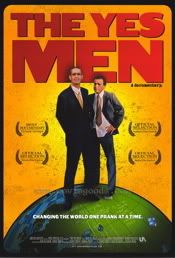 The idea that you have a movie which is supposed to deal with a very large, global issue, is a good one. It should have been a great documentary about how a few men were really making waves on a high level to show how wrong this organization, which purports to strive in making commerce fair to all, really is in its actions and policies. I know some of you could give a rat’s ass and instead pop in 2 FAST 2 FURIOUS if given the choice but I think the documentary genre is one that should be a part of people’s balanced filmic diet.
 Director: Tony Scott
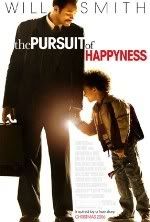 Director: Gabriele Muccino
 Director: Bob Odenkirk
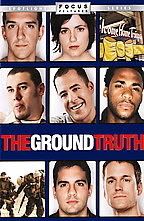 Director: Patricia Foulkrod


 Check out the preview to the Image comic Jeff writes…


 The Rebirth of Seeds (myspace.com/therebirthofseeds) by Renard E. Williams, and published by Event-Horizon publishers, is not your average book of poems. Many other poetry books are just filled with words of hopes and dreams accomplished and lost, but do not really leave the reader something to carry with themselves in their daily lives. Rebirth isn’t one of those books. In this collection Williams leave the reader with enough insightful heat to re-spark the soul in its journey to know itself. For him, the inspiration behind the book was to act as a guide to give his children a greater outlook on life.  “In writing this work, I wanted to make a sort of family manual-something I could pass on to my children so they wouldn’t make the same mistakes I did,” Williams explains.













 Howdy folks. Welcome back to my little corner of the forgotten pantry down on the basement level of a ten-story apartment building that was condemned back in 1946 and is home for nothing but squatters and the occasional giant mutated rat…of the Internet. Let’s do this.

 Check out the preview to…
