FRED Entertainment

January 24, 2007

Quick Stop Thingamabobs: 1/24/2007

Filed under: Columns,Thingamabobs — UncaScroogeMcD @ 12:57 am
thingamabobs.jpg

The web. It’s a big place, full of plenty of distractions ““ some funny, some informative, some ludicrous, some disturbing, some inane, some profound. Each and every weekday, we present links to a few of our favorite finds”¦

————————————————

  • National Gorilla Suit Day is still coming… You have been duly notified… again… (Thingamabob)
  • Would you like to turn your car into one from Cars? Here’s how… (Thingamabob)
  • Oh, those magnificent Norwegians in their driving machines… (Thingamabob)
  • Go listen to episode 8 of Jordan, Jesse GO! Do it NOW!… (Thingamabob)

Have a THINGAMABOB? Send it in!

##

January 23, 2007

Party Favors: R.E.M. Sleep

Filed under: Columns,Joe Corey's Party Favors — UncaScroogeMcD @ 3:48 am
partyfavors1.jpg

CLEVELAND – Once again the losers that control the Rock and Roll Hall of Fame have chosen a few names out of the nearly 100 groups that deserve such an honor. While it’s nice they named Patti Smith and Van Halen, how can they not slide in Iggy and the Stooges? Where’s Thin Lizzy or Kiss?

What’s outrageous is the inclusion of R.E.M.

R.E.M. does not deserve the honor on the first ballot. I’m not an original hater of the band. One of my prized records is an original Hibtone 45 of “Radio Free Europe.” I hung out backstage with them during the Fables of the Reconstruction Tour. But R.E.M. has been running on their reputation fumes for nearly 15 years. When was the last time you really wanted to hear Monster? Is “Shiny Happy People” really Rock and Roll? Or a lost Soupy Sales single?

R.E.M. started out as that scrappy jangle pop band that challenged the bloated rock dinosaurs. But 25 years later, they are the rock stars they hated. Peter Buck’s antics on the airplane weren’t part of that awe shucks movement. It was a Tommy Lee moment. A lawyer has asked me to avoid any mention of Michael Stipe’s ventures. Beyond their personal lives, is the group’s recent recording history. R.E.M. has done more damage than good for the music industry. Everyone loves to rag on Axl Rose and how much he’s cost his label to create the still not released Chinese Democracy. Allegedly the costs topped $12 million before the label stopped picking up the studio bills. R.E.M. signed a 5 album contract that pays $80 million. That’s $16 million per record that Warners has to pony up. And the three records they’ve turned over to Warners have sold half a million copies each in America. They’ve produced Glitter three times for Warners. Yet nobody gives Stipe the same crap that Axl gets for outrageous costs. When Chinese Democracy comes out, it will sell as much as Up, Reveal and Around the Sun combined. Which isn’t that much a number.

How many Warner acts have been screwed because of R.E.M.’s outrageous contract and pathetic returns? There’s only so much pie on the dessert cart and it seems earmarked for Athens, GA. How many people had to eat Ramen noodles because Up went down? Rock is dead and R.E.M. killed it.

It’s not even like the R.E.M. catalog sells like Steve Miller. You’re more likely to hear them on The Simpsons than your radio dial. They had their glory days in the early 90s, but so did Hootie and the Blowfish.

At some point, R.E.M. should go into the Hall of Fame. But are they first ballot? No. If they were up for the Baseball Hall of Fame, they’d be sitting next to Mark McGwire. They’re the Ken Griffey, Jr. of baseball. But ultimately R.E.M. got elected for that single reason that matters to the Hall – rubes willing to pay thousands of bucks to eat rubber chicken and watch two songs. I doubt during their induction we will be reminded how they’ve made $48 million on three records that hardly anyone hums on the subway. We’ll hear about their charitable ways and noble causes, but there’s no greater charitable person than the guy who has to cut the $16 million check to Buck, Mills and Stipe.

SNARK THE CRAP BOX

Shame on the living members of The Clash for allowing Cingular to use “Rock the Casbah.” One of the defiant power songs of the ’80s has been reduced down to two goofs arguing if it’s about rockin’ the cashbox or the catbox. Remember when the Clash had a rebel dignity to their ways? Now they’d rather be jokes of the Western World. This is worse than when their music was used to pimp Jags and booze. At least those ads tried to make their subjects as cool as the songs. The Cingular advertisement is pure dork. Is this Mick Jones’ revenge on the late Joe Strummer?

Someone needs to be publicly executed for Target’s butchering of the Beatles’ “Hello Goodbye.” I’ve always enjoyed Target’s use of songs in their ads. They’ve got better taste than any Clear Channel robotron programmer. But all that good will has been pissed away when a woman sings, “Good Buy” while products flash across the screen.  Why? Why did they have to inflict damage on a song? I’d expect this from Wal-Mart or K-Mart. Not Target. What’s next? “The Crazy Eddie on the Hill?” “I Am the Half-Priced Walrus?” “IKEA’s Norwegian Wood Suite?”  SNL‘s Sold Out Gold continues.

SMELL THE SUCK

If the first big sketch on SNL is MTV 4, turn the channel. The show is bound to suck if this piece of filler is considered “A” material.

SEC CAVUTO

The Magic 8 Ball says “It Is Certain” that Fox’s business maven Neil Cavuto will be splitting the network to be Secretary of the Treasury for presidential candidate Mitt Romney.

Even though Neil is in the process of setting up the Fox Business Channel, he’s been cultivating his relationship with Mitt. The ex-Gov. is a favorite guest on his My World show. By 2009, the network should be online and Cavuto will be ready to jump to D.C.  Fox Chief Roger Ailes has let his employees know that if they split the network to serve a GOP president, they can always come back.

The Magic 8 Ball confirms that Neil can’t give up the shot at being the man whose signature is on the U.S. dollar. Expect to see more Mitt exclusives on Fox News in the coming two years.

BLACK LIKE HE

Larry Wilmore, known for his black perspective moments on Comedy Central’s Daily Show, deserves his own show. The man has me howling with every visit. His take on Martin Luther King Day was gold. Why don’t white folks feel guilty if they don’t spend George Washington’s birthday reading about the Father of Our Country?

YUMMY LENTILS

Kudos for E!’s The Soup host Joel McHale getting to be a judge on Iron Chef America. Damn shame he got stuck on “Battle Lentils.” I can’t help but remember Neil and his lentils on The Young Ones. But Joel put the insanity into the US version that is essential to enjoying the Japanese version. His best line was telling Chef Mario Batali that he’d order an entree without even using a coupon.  The folks at the Food Channel need more off the wall judges on the show instead of foodsie owls. Book Larry Wilmore, now!

HOW LONG IS TODAY?

Why doesn’t NBC just change its name to TodayBC? A fourth hour of Today Show is coming up. That means local stations can have a whole hour of programming before it’s time to start the noon news. And then in some markets the evening news starts at 4 p.m. Does every station want to turn into CNN & Fox News? What’s the point of being a sick kid when all that’s on TV at home is the news? If you want to hear people talk crap you don’t understand, why not go to school? Whatever happened to gameshows with Nipsy Russell?

Soon all NBC will be is Today Show, Law & Order and Deal or No Deal. Guess that keeps Jeff Zucker’s life simple. Maybe they’ll have a crossover episode where joggers outside 30 Rock have to figure out which suitcase has the body.

NBC has proceeded to destroy cable TV with their crappy programming philosophy of “Marathons are the bestest!” While it might be nice to have Bravo on my cable box, their schedule seems loaded with marathons of Top Chefand Project Runway. You’re better off just waiting for the DVD sets to come out. Who needs Bravo when you can just play at home with Netflix?

WORST FATHER OF THE YEAR

Down in Raleigh, there’s an annual tradition of The Christmas Carol being put on by Ira David Wood. It’s the big family entertainment moment of the season. Now you might not know Ira David Wood, but his daughter is Evan Rachel Wood, star of Thirteen. She’s now being accused in the scandal rags of alienating the affection between Marilyn Manson and Dita Von Teese.

It must be great to wake up knowing that your daughter is sleeping with a rumored drug addict, washed up aging shock rocker who dumped his hot fetish model wife after less than a year of marriage. Here’s a tip, after she and Marilyn visit your house, replace the toilet seat. Don’t spray it with Scrubbing Bubbles. Yank it out and screw fresh plastic down to the bowl. Or better yet, just replace the entire fixture. And sterilize everything in the house with a flame thrower.

I apologize to the parents whose sons are now on I Love New York.  At least your kids aren’t sucking face with a nostalgia act.

How could a girl who grew up performing clean family shows find herself attracted to Manson? I blame her father. All those years she was backstage at A Christmas Carol, she probably developed a fetish for the creepy Ghost of Christmas Future. He’s the spooky ghost with the boney fingers, pale face, dark eyes and the black shroudy clothes. Daddy inadvertently put her on the road to meet the man who wrote The Long Road Out of Hell. The trouble is that Manson at this point of his career is more like the Ghost of Christmas Past. He’s got a standing invite to move into The Surreal Life house.

What really cracks me up is that Marilyn Manson sold himself as Mr. Debauchery. He’s beyond the uptight morality of Bible Thumpers that used to make an effort to picket his show. But yet, he sneaks off and bangs a young gal while his wife stays at home. He’s no better than those losers he disdained from high school that got jobs selling real estate. You’d figure the stories would be how Miss Wood crawled into the bed with him and Dita and a petting zoo and a tub of pudding. You’d expect there to be holiday cards with the two gals wrapped in red ribbons beneath a Black Christmas tree. But no. He’s no smoother than the manager of a Taco Bell in Canton, Ohio that uses the “working late” excuse to bang a community college drop out cashier.

Who are we supposed to idolize as evil anti-heroes in America when Mr. Antichrist Superstar has to pay for a divorce lawyer like KFed?

BURNING PUCKS

When will the New Jersey Devils make the greatest trade in the history of sports to get Miroslav Satan? Now Satan is playing for the Islanders – so at least he’s ruling in a Hellhole. Can the folks in the Meadowlands not see how much cash they’d get from Satan’s Devil’s jersey? I’d buy one and I hate Jersey (screw you, Scott Stevens). Pull the trigger and give the Dark Lord his moment at the rink. You’ll move product.

DRINK UP

If actors who had small roles in The Sopranos and Law & Order played each other in softball, it might look like Beer League (out on DVD).  This is about a bunch of folks who love to drink and play softball. The film stars Artie Lange, so you know this is not family entertainment.

It co-stars Ralph Macchio as Artie’s sober buddy. How does the Karate Kid play second bill to Howard Stern’s chuckle buddy? It would have been better if the producers had begged Ralph to pull a Raging Bull and pack on 100 pounds to take the lead. Hopefully this movie will get Ralph a little more attention so that he can become a regular actor on Law & Order.

Anthony DeSando is hilarious as Artie’s nemesis. When he prances around in his Speedo while directing Artie where to mow his yard, you almost buy this film as a comedy. Seymour Cassel also gets a laugh now and then as Artie’s coach. Not to be missed is porn veteran Keisha as “the Pitching Machine” during the bachelor party.

Perhaps this is supposed to be Artie’s version of Ernest Borginine’s Marty. But there’s less meat in this film. Artie’s best acting moments involve him sucking down booze. He has a natural chemistry with shot glasses and beer mugs.  While the film is far from Oscar-worthy, it’s more entertaining than Beerfest and Benchwarmers. Don’t watch this movie sober.

The bonus features should be outtakes from an upcoming episode of Intervention. It’s amazing how much they cleaned up Artie to act in the film versus how he appears during his press tour. Oddly enough, no clips from Artie plugging the movie on Howard’s radio show.

BRING ON THE VICE

I’m stoked to see seasons 3 & 4 of Miami Vice coming out on March 20th. These are episodes I didn’t watch since they aired when I had an actual social life and didn’t linger around the dorms on Friday nights. I’m told that this is when they blew up Sonny’s black faux-Ferrari. I don’t know if I can handle such a tragic sight. Does anyone know if Philip Michael Thomas sings in these episodes. Why isn’t he in the Rock N Roll Hall of Fame with Don Johnson? Jann Werner once said that Don Johnson was a “Rock & Roll star” on the cover of the Rolling Stone.

Coming out on DVD at the end of the month is the sixth and final installment of Benny Hill’s Thames series. These are episodes that never aired in my neighborhood so it’ll be interesting to see how Benny’s final days played out. The sad part is there was no farewell episode since the rat bastards at Thames sacked Benny after an episode, without warning.

Lucky Louie, Louis CK’s HBO series gets the complete series package. It’s a shame that they pulled the plug on the show. I’ve sent out questions to Louis CK to plug the DVD, but he hasn’t responded. However, porn legend Keisha replied to my questions about her ping pong ball work in Beer League:

No, I can’t really do that, the a.d. was down by my pussy throwing the balls by hand. But it was really fun to be in the movie.

Kisses,
Keisha

QSE News: 1/23/2007

Filed under: Columns,News — UncaScroogeMcD @ 2:26 am
quickstopnews.jpg
line1.gif

Here are today’s top entertainment headlines:

  • qsnews.jpgPam Anderson is fighting mad over a proposal by the U.S. Postal Service to honor Colonel Sanders with a stamp.  The “finger-licking good” PETA hottie has fired off an angry letter to the Post Master General stating her displeasure. We here at QSE News would like to congratulate Miss Anderson for taking a stand against an issue that is important to her, and for actually spelling “KFC” correctly.
  • This year’s Razzie Awards nominees have been announced, and leading the way with seven nominations is the film Basic Instinct 2. The Razzie Awards honor the worst Hollywood has to offer each year. After Sharon Stone was notified that she had been nominated, she promptly dusted off her vagina in preparation for her acceptance speech.
  • Actress/Model/Frustrated Participant In A Butt Kicking Contest Heather Mills is denying reports that say she has settled her divorce with former Beatle, Sir Paul McCartney.  It was leaked that the pair had come to an agreement that Mills would receive a settlement that totaled 63 million dollars, including two mansions.  Mills representatives stated, emphatically, that these reports are simply not true adding “if you REALLY knew (Mills) you’d know that she would never settle for this because she simply can’t survive on such a piddly amount.”
  • The Australian band Crowded House is reuniting for a new album and a subsequent tour this Spring. The band will play both new and old songs as they try to let the audience know they did not sing “Who Can It Be Now” and “Down Under.”
  • Actress/singer Mandy Moore recently told Jane Magazine that she is suffering from depression. Moore plans to counteract her depression by becoming even more rich, even more popular and even more good looking. “If that doesn’t work then I’ll just start doing drugs and banging everything that moves”¦ like my good friends the Olson Twins,” said Moore.
line1.gif

That’s all for today’s news, stay tuned to this channel for all the news that matters least but you still care about.

(Compiled by J. Allen)

##

Quick Stop Thingamabobs: 1/23/2006

Filed under: Columns,Thingamabobs — UncaScroogeMcD @ 2:00 am
thingamabobs.jpg

The web. It’s a big place, full of plenty of distractions ““ some funny, some informative, some ludicrous, some disturbing, some inane, some profound. Each and every weekday, we present links to a few of our favorite finds”¦

————————————————

  • National Gorilla Suit Day is coming… You have been duly notified… (Thingamabob)
  • “While My Guitar Gently Weeps,” on ukulele… (Thingamabob)
  • A live Rutles montage, featuring Neil Innes and John Halsey… (Thingamabob)

Have a THINGAMABOB? Send it in!

##

January 22, 2007

Quick Stop Thingamabobs: 1/22/2006

Filed under: Columns,Thingamabobs — UncaScroogeMcD @ 1:42 am
thingamabobs.jpg

The web. It’s a big place, full of plenty of distractions ““ some funny, some informative, some ludicrous, some disturbing, some inane, some profound. Each and every weekday, we present links to a few of our favorite finds”¦

————————————————

  • How to ruin a day, Vehicular Category… (Thingamabob)
  • Flight of The Conchords sing “Business Time”… (Thingamabob)
  • A hi-res version of that freakin’ creepy Orville Redenbacher ad… (Thingamabob)

Have a THINGAMABOB? Send it in!

##

QSE News: 1/22/2007

Filed under: Columns,News — UncaScroogeMcD @ 1:41 am
quickstopnews.jpg
line1.gif

Here are today’s top entertainment headlines:

  • qsnews.jpgFamous animal killer and rockstar Ted Nugent offended several people at an inauguration party for Texas Governor Rick Perry. Attendees of the party were upset by Nugent sporting a confederate flag t-shirt and spouting racially charged comments about non-English speaking people. More people were originally offended by the comments until they realized they were in Texas.
  • Several prominent American Muslim groups are protesting the TV show 24 because of the show’s portrayal of Muslims. The show features a Muslim terrorist organization carrying out attacks on United States soil. Producers of the show said they only used Muslims as the “bad guys” because Richard Simmons was unavailable.
  • In celebrity baby news, Keri Russell has announced that she is pregnant.  Russell, best known as the title character on the show Felicity, has vowed to never, ever let her child get a haircut.
  • After watching an early cut of Spider-Man 3, Sony executives are so impressed that they are already in negations with David Koepp to write a fourth movie.  In order to appeal to a younger audience, Koepp plans on introducing a new, all CGI sidekick – Peter Porker, The Spectacular Spider-Ham.
  • And finally today, according to sources close to the band, Rage Against the Machine may be reuniting for this year’s Coachella Valley Music & Arts Festival. With the news of a possible reunion, several large corporations including Starbucks, Pepsi and Nike have been contacted to sponsor the band’s set at singer Zach de la Rocha’s request”¦ because he’s broke.
line1.gif

That’s all for today’s news, stay tuned to this channel for all the news that matters least but you still care about.

(Compiled by J. Allen)

##

January 21, 2007

Comics in Context #161: Walt The Auteur

Filed under: Columns,Comics in Context — admin @ 5:48 am
comicsincontext4.jpg

cic2007-01-21.jpgThe new Mary Poppins stage musical is playing in Manhattan at the New Amsterdam Theatre, the former home of the legendary Ziegfeld Follies. The interior of the theater, beautifully restored by the Walt Disney Company, is a miracle of Art Nouveau splendor: my only regret when I saw Mary Poppins there was that I didn’t have the opportunity to explore the theater itself as I did when I saw The Lion King musical there a decade ago. In the theater’s lobby and elsewhere, Disney has placed photographs of various performers who appeared at the New Amsterdam in the Ziegfeld days, from W. C. Fields to Louise Brooks. But what most impresses me about the lobby are the relief sculptures along the walls, illustrating scenes from Shakespeare’s plays and Wagner’s cycle of operas, The Ring of the Nibelung. In short, at the New Amsterdam one finds the juxtaposition of high art and popular art, which is the theme of this week’s column.

Every year the Beat conducts a year-end survey at her blog and asks what the biggest story of that year was: I responded that for 2006 it was the considerable number of museum and gallery exhibitions devoted to comic and cartoon art. I’ve written extensively about the shows at the Jewish and Newark Museums and the Library of Congress. Here’s yet another one that I just learned about: “Il etait une fois,” translated as “Once upon a Time–Walt Disney: The Sources of Inspiration for the Disney Studios” which opened at the Grand Palais in Paris on September 16 of last year and just closed on January 15. The show reopens at the Montreal Museum of Fine Arts (or, if you prefer, the Musee des Beaux-Arts, Montreal) on March 8 and runs there until June 24.

I doubt that I’ll be able to get up to Montreal to see it, and, as yet, there has been no announcement that the exhibition will travel to the United States. But an English language version of the show’s catalogue will be published by Prestel Publishing on February 28, and there are articles on the Internet that provide glimpses of the exhibit, such as the one at “Mice Age”.

The fact that this Disney exhibition appeared at one of Paris’s leading museums but not in the United States seems to underline the old maxim that comics and cartoon art are taken more seriously in France than in America. But maybe France isn’t quite the enlightened paradise it may seem to comics aficionados from afar. I see that in the “Animated Views” interview with the show’s curator, Bruno Girveau, writer Ben Simon points out that “Bruno has fought long and hard to stage the show, coming up against the highbrow French art critics who were initially horrified to hear that, in the place which usually hangs works by Poussin and Chardin on the walls, he planned to excerpt Mickey Mouse clips!” Girveau contends that most of the critics liked the show once they saw it, but that those who didn’t like it could not get past their loathing of the contemporary Walt Disney Company to recognize the achievements of its founder: “So it’s difficult for them to forget all that ideology and see Disney as an artist.”

In an article inspired by his viewing of the Grand Palais exhibition, Jonathan Jones, a writer for the British newspaper The Guardian, maintained that “to many people, buying a toy Pinocchio is as bad as feeding your child burgers” (Hey, wait a minute: I love hamburgers) and that “Hating Disney has become a cliche.” Jones asserts that “beneath the all-American facade, Walt Disney had a terrible secret: he was a true artist.”

Moreover, Jones points out, as with any significant creative artist, one can find and follow personal themes that run through the body of his or her work. “You only have to watch a few Disney films, widely separated across the decades of his career, to recognize the consistent obsessions that can only have been the product of one man’s mind.”

In his extraordinary new biography, Walt Disney: The Triumph of the American imagination (which I wrote about in last week’s column), Neal Gabler contends that Walt Disney had relatively little to do with the films, animated or not, that his studio made after Bambi (1942) until Mary Poppins (1964). It does appear that Disney did not devote anywhere near the degree of hands-on attention to those films that he did to the classics of the 1930s and early 1940s. But isn’t the real test of his involvement the degree to which the postwar films reflect his personal themes and concerns? When I heard Gabler speak about his book at the Barnes and Noble near Lincoln Center last December 5, he cautioned the audience that “as much as you might love” Disney’s 1950s animated films Alice in Wonderland (1951), Peter Pan (1953), Lady and the Tramp (1955), and Sleeping Beauty (1959), Disney himself has little to do with them. Has anyone done a serious critical analysis comparing the thematic content of the 1950s animated features to Disney’s earlier animated features? This is something that’s missing from Gabler’s book. Don’t most Disney aficionados sense, as I do, that the 1950s animated films reflect the same consistent artistic sensibility as the features from Snow White (1937) through Bambi, and that Walt Disney, even if he did not actually direct or write any of them, was the auteur of them all (to use the term from film criticism)? (I will concede that the 1960s animated features produced during the last years of Walt Disney’s life demonstrate increasingly less of his own sensibility.)

Jones also argues that people do not look beyond the conventional stereotypical view of Disney’s work to give him credit for its true complexity of mood and vision. Jones points to the first “Silly Symphony” cartoon, Skeleton Dance (1929) “is American, deeply so, in the vein of Washington Irving and Edgar Allan Poe–a jazz-age honk of American gothic that brilliantly uses black and white silhouettes to create an archetypal midnight churchyard where the skeletons get out of their graves and dance.” Jones insightfully observes that “When Tim Burton does this sort of thing [as in The Nightmare before Christmas (1993) for the Disney studio, I presume], it’s hailed as a gothic subversion of the homeliness of Disney, but Disney subverted himself first.” And, illustrating his thesis that Disney’s personal obsessions, themes, and imagery persist through his oeuvre, Jones then notes that “When later he came to make Fantasia, the skeleton dance was echoed in the march of the mops carrying their buckets of water until Mickey chops, chops, chops them up.”

The thesis of the “Once upon a Time” show is that in creating his great animated films, Walt Disney and his collaborators drew upon artistic influences from outside the animation medium. The Grand Palais’ website states that “Popular culture and highbrow culture typically ignore one another and the links between them have seldom been explored. Walt Disney’s feature-length animated films, from Snow White and the Seven Dwarfs in 1937, until The Jungle Book in 1967, are striking examples of reciprocal influence of these two cultures.” Note that the “Once upon a Time” show treats all the animated features the Disney studio produced during Walt Disney’s lifetimes as works of Walt Disney the auteur.

According to the Grand Palais’ website “In 1935, Disney spent several weeks in Europe. . . . and took back to California as many illustrated books as he could, to build up a stock of images meant to inspire the Studios’ productions. . . .Original editions of the works of the illustrator J.J. Granville figured prominently, along with drawings by Gustave Doré and German artists such as Ludwig Richter Moritz von Schwind and Heinrich Kley. The English were represented by editions of Alice in Wonderland by Lewis Carroll and Peter Pan and Wendy by James M. Barrie, illustrated by Arthur Rackham or John Tenniel.”

Likewise the exhibit finds links between live action films of the 1920s and 1930s and Walt Disney’s animated features. The website states that “German expressionist cinema had a more profound impact on Disney’s first long features: the influence of Friedrich Murnau’s Faust (1926) is omnipresent in several sequences of Fantasia,” notably the Night on Bald Mountain sequence. It seems that the Faust film too has a sequence in which a devil figure towers over a city while demons rise towards him. Over the last several years each time I’ve gone to see a rare screening of F. W. Murnau’s Faust at a New York revival theater, it’s been sold out. When Tower Records held its going out of business sale last year, the DVD of Murnau’s Faust was on my want list, but other bargain hunters had already snapped it up. Now that I know Murnau’s Faust was an influence on Fantasia (1940), I am even more intent on finally seeing it.

Neither illustration nor film were widely considered to be serious art back in the 1930s and 1940s. But film is certainly considered an artform today, and illustration has increasing been gaining cultural respectability (see “Comics in Context” #132), and it does Walt Disney and his collaborators credit that they recognized their artistic importance well over a half century ago.

Disney and his artists were also studying works that were then unquestionably in the realm of fine art. Like Gabler, “Once upon a Time” devotes considerable attention to Destino, Walt Disney’s 1940s collaboration with Surrealist artist Salvador Dali, which was finally completed in 2003 and will be released on DVD this year. According to the Grand Palais website, “Sleeping Beauty‘s castle was a cross between the illuminations of the Très Riches Heures du Duc de Berry, drawings by Viollet-le-Duc and the extravagant castles of Louis II of Bavaria. Forests took their inspiration from 15th-century Chinese painting, Japanese prints or American or English forests. Bird’s-eye views drew on the work of the American regionalist painters Grant Wood and Thomas Hart Benton. The influence of Gaspard Friedrich and Arnold Böcklin’s landscapes can be seen in Fantasia, and that of the Flemish and Italian primitives in the décors for Sleeping Beauty.” The exhibition even proposes that the “general silhouette” of the Wicked Queen from Snow White “seems to be derived from the column statue at the entrance to Naumberg Cathedral in Germany.” Not having visited the exhibit or read the catalogue, I cannot judge whether some of these resemblances between Disney’s animated films and works of fine art may be coincidental, but where there is this much artistic smoke, there must be fire.

“Once upon a Time” appears to be arguing that if Disney and his artists studied so much artwork in other mediums, then their animated films must also be works of art. That doesn’t necessarily follow, but it does demonstrate that Disney and his collaborators had a more sophisticated appreciation of art than they have generally been given credit for, and that they had genuine artistic ambitions of their own.

Reviewers of Gabler’s book have been amazed at his reminders of the high cultural esteem in which Walt Disney was held in his most creative period, the 1930s and early 1940s. Gabler recounts that Soviet film director Sergei Eisenstein “wrote that he was sometimes frightened watching Disney’s films–‘frightened because of some absolute perfection in what he does’ and because Disney seemed to know “˜all the most secret strands of human thought, images, ideas, feelings.’ Later, among other notables, architect Frank Lloyd Wright, novelist Aldous Huxley, and composer Igor Stravinsky would also visit [Disney and his studio]” (Gabler p. 204). Gabler notes that critic Gilbert Seldes, the champion of George Herriman’s Krazy Kat, wrote in Esquire in 1937 about that year’s Mickey Mouse cartoon The Band Concert “that none of “˜dozens of works produced in America at the same time in all the other arts can stand comparison with this one'” (p. 195). Gabler also quotes New York Times film critic Frank Nugent writing in 1937 that Snow White “is a classic, as important cinematically as The Birth of a Nation or the birth of Mickey Mouse” (p. 273). In 1943 Disney was even made a trustee of New York’s Museum of Modern Art. (MoMA did a wonderful Pixar retrospective recently, so why don’t they host “Once upon a Time” in New York?)

This is indeed astounding: it seems that in the 1930s much of the cultural establishment was perfectly willing to recognize animation as art. In this chorus of praise for Disney, there is no sign of the prejudice that cartoon art is junk for kids that has been prevalent throughout my lifetime. Gabler chronicles how critics turned against Disney in the 1940s, and argues that Disney’s films had indeed suffered in quality. On the television program Theater Talk, shown in New York early January 13, Gabler theorized that the critics condescendingly considered Disney a latter-day “folk artist” and turned against him when he showed he had conscious artistic ambitions, as in Fantasia. I don’t know that either of these explanations is sufficient. Just why the cultural establishment turned so radically against Disney’s animated films in the 1940s and 1950s, and even animation in general (with exceptions such as the early UPA shorts, which were perceived as having what we might now call an indie sensibility) puzzles me. It also makes me wonder about the current new artistic respectability of the comics medium. Is this new attitude here to stay, or will a backlash eventually set in here, too?

The greatest lesson I took from Gabler’s book is that Walt Disney, from the late 1920s into the early 1940s, thought and acted as a genuine artist, even if he did not use the term. “‘I can’t get into a rut or let my boys get into ruts,’ he would tell a reporter. “˜If we quit growing mentally and artistically, we will begin to die’. . . .Asked by one storyman if Walt felt they were taking full advantage of the cartoon medium, he riposted, “˜This is not the cartoon medium. It should not be limited to cartoons. We have worlds to conquer here. . . .We’ve got more in this medium than making people laugh” (p 300).
With Fantasia (which was originally called The Concert Feature at the studio), Gabler declares, “This time he was explicitly bidding to join forces with high art and pry the cartoon from its origins in popular culture, where he felt it was doomed to be crude and juvenile. Walt would never have called himself an artist–he was too skeptical of culture and too plainspoken for that–but he did want to make art, if only because that was the natural evolution for him, and The Concert Feature was, he thought, certifiably art” (pgs. 300-301).

This reminds me of Jules Feiffer’s contention that in the 1940s cartoonists working in comics, even Will Eisner, did not think of themselves as artists or of their work as art. At “The Golden Age of Comics,” a panel discussion held at the Jewish Museum last November 2, Feiffer explained that comics artists back then considered it pretentious and somehow unmanly to think of themselves as creating art. But the best of these cartoonists did indeed create art of enduring aesthetic worth, and examples of Golden Age artwork were hanging in the Museum as part of the exhibition “Superheroes: Good and Evil in American Comics.” Similarly, in the 1930s and 1940s Walt Disney may not have used the word “art” but that was what he was intent on creating through his animated films.

As Gabler repeatedly shows, Walt Disney could be dictatorial, even tyrannical, and actually frightened his employees. In my experiences in the comics industry I’ve witnessed examples of how authoritarian bosses can wreck the morale of the creative end of a company. But another major point that Gabler makes about Walt Disney is how, in the 1930s and early 1940s, the studio’s most imaginative and innovative period, Disney more than compensated for his flawed people skills through impressing his co-workers as a visionary leader, even a “muse” according to Gabler (p. 242). “Despite the occasional griping and resentment that Walt was overbearing, mercurial, ungrateful, and impossible to please, all of which he was, no one at the studio doubted the overriding importance of his contribution” (p. 207). For one thing, “he was a superb storyteller, and Walt himself seemed to think it was his primary attribute” (p. 207). He was a master of gags and plot structure, and moreover, he had “the uncanny ability to inhabit the character and enter the situation” (p. 209). At story meetings Walt Disney would spontaneously perform the characters, and “everyone at the studio marveled ar his acting” (p. 209). Co-workers “cited Walt as an inspiration, setting standards, expecting perfection, drumming up enthusiasm, buoying spirits” (p. 210). “Finally, and perhaps most important,” Gabler concludes, “there was Walt’s ability not just to supervise but to coordinate the entire studio apparatus” to create a work of art along the lines he envisioned (p. 210-211). “Almost everyone at the studio admired how Walt, in either conducting then or flitting among them, forged them into a unit. . . .Among his employees, the sum total of all these attributes evoked unbounded admiration for the young man who possessed them” (p. 211).

Gabler asserts that “By the mid-1930s the Disney studio operated like a cult, with a messianic figure inspiring a group of devoted, sometimes frenzied acolytes” (p. 212). This strikes me as too harsh an appraisal. I’m more kindly disposed, having glimpsed–and felt–in my own experience some of this sort of creative fervor that a community of young artists and writers can generate.

What Gabler reveals about Walt Disney persuades me that Disney was a genuine creative genius. Yes, the word “genius” is too often applied to people who do not truly measure up in the strict definition of that term. But after reading Gabler’s book, I now believe that Disney was the real thing: a true genius, and most of his co-workers of the 1930s, consciously or unconsciously, seem to have recognized it.

The Guardian‘s Jonathan Jones refers to the Mary Poppins movie as “this magical, and totally unAmerican child’s-eye vision of London as one of the films on which he lavished most attention, a film he was obsessed with making for 20 years, and turned into his final testament. If you want to know the real Walt Disney, watch Mary Poppins.” Gabler believes that Disney saw himself in the character of George Banks, the workaholic executive who rediscovers the child within himself. In last week’s column I delved further into this idea. Gabler recounts how as he grew older and his studio grew larger, Walt Disney increasingly became a corporate executive rather than a creative visionary. But towards the end of his life, Disney found renewed energy and inspiration in working on Mary Poppins. Gabler quotes Karen Dotrice, who played one of the children, as describing Disney as being “like a big kid” (p. 598). The parody court martial of Mr. Banks by the bank executives turns out to be an exorcism of the repressed, stodgy, corporate side of his personality. Banks’s old self dies, and a new self is born, who, appropriately, initially acts like a giddy “big kid” and returns home to “go fly a kite” with his family. Last week I wrote that this reminded me of the section of Gabler’s biography in which he describes Disney’s own midlife crisis: his disillusionment with animation and filmmaking following the studio strike and the financial failures of ambitious films like Fantasia. Disney discovered a new enthusiasm for trains big and small, and Gabler significantly refers to “the kind of delayed childhood he was now enjoying” (p. 475).

Mr. Banks seizes the day and finds his own “delayed childhood.” But despite what New York Times critic Edward Rothstein says (Nov. 20, 2006), he doesn’t remain in emotional childhood, though the movie does not underscore this point. While flying the kite with his family, Mr. Banks encounters other bank executives who are also flying kites. (Mr. Banks’ psychological regeneration appears to have spread to his whole community.) They inform him that Mr. Dawes, Sr.. the ancient personification of the heartless world of the bank, has died, but though Mr. Banks immediately expresses regret, the other executives, including Mr. Dawes Sr.’s own son, aren’t at all unhappy about it. Mr. Dawes, Sr. died happy, as a result of laughing convulsively (and levitating, like Mary Poppins’ Uncle Albert) over the bad joke Mr. Banks told him (also from the Uncle Albert scene). Unlikely as it seems, the bank executives seem to think that Mr. Dawes, Sr.’s cheerful demise outweighs Mr. Banks’ alleged responsibility for the panic, and so they offer Mr. Banks a new, higher position at the bank, which he gratefully accepts.

So Mr. Banks hasn’t ditched the responsibilities of adulthood, making a living and supporting his family, after all. Following the Joseph Campbell monomyth, Mr. Banks has undergone symbolic death (of his old workaholic, emotionally inhibited self) and rebirth (as a man more in touch with his emotions, a better husband and father, and even a more successful banker). It makes a certain sense that psychological rebirth would entail a brief return to symbolic childhood (flying the kite) before resuming the role of adult.

Watching the movie again in December, I had not remembered the death of Mr. Dawes, Sr. and was amazed by the insertion of this dark note (even if the executives make light of it) into the film’s concluding festive mood. (A more noticeable disturbance of the general festivity comes with Mary Poppins’ acknowledgment that she has been utterly forgotten by their children in their joy at reconnecting with their redeemed father and mother. If Mr. Banks has regained his job and family, Mary Poppins has lost hers, for the moment, anyway. Suddenly I see Mary Poppins flying off at the end of the movie as an image similar to that of the door closing upon John Wayne at the end of The Searchers [1956]: each is a protagonist whose success in reuniting a family results in his or her own exclusion from it.) In effect Mr. Banks has inadvertently murdered Mr. Dawes, Sr. by telling him that killer joke. (Comedians do talk about “killing” the audience by making them laugh, an idiom that presumably helped inspire Monty Python’s “killer joke” sketch.) Here’s the mythic motif of the new ruler rising to power by slaying the old, only flimsily disguised. The new generation (well, middle-aged), represented by Mr. Banks, has seized power from the declining older generation, represented by Mr. Dawes, Sr.. But it’s significant that Mr. Banks did not intentionally seize power: he was not motivated by greed or ambition, but merited success by discovering his true self. Moreover, whether or not Disney and his collaborators intended it, Mr. Banks “slays” the old tyrant, thereby symbolically overcoming death, not by brute force but by a work of popular art, however humble, that embodies the spirit of comedy: a simple joke.

On one level, the death of Mr. Dawes, Sr. could have represented for Disney his triumph over the bankers who for so long had controlled his fate and prevented him from doing the work he wanted. On another level, the death of Mr. Dawes, Sr. could represent the “death” of the side of Walt Disney that accepted corporate thinking but was also cruel and insensitive to his subordinates. Whether any of this was conscious on Disney’s part is a mystery.

The Mary Poppins stage musical handles the Banks/bank subplot very differently: there is no Mr. Dawes, Sr. and therefore no implication that Mr. Banks is an unwitting murderer. The revision suggests that Julian Fellowes, who write the stage version’s book, may also be aware of the parallels between Walt Disney and Mr. Banks. Rothstein describes Fellowes’ version thus: Mr. Banks “ends up learning. . . that it is far better to approve loans for a kind factory builder who boasts of having no collateral other than his workers, than for a selfish oaf who simply plans to make money. Eventually everyone is convinced by Mary Poppins that anything is possible if you let it, nothing is ever set in stone, and that everyone should have fun and do good works. They join forces in a paean to this narcissistic cartoon of liberalism.” How about that last line? Rothstein succeeds in sounding like Stephen Colbert on one of his rants, except that Rothstein means it. What happens in the stage version is that Mr. Banks turns down a loan to a financial manipulator who has no goal greater than increasing his own wealth, and instead approves a loan to a visionary entrepreneur who intends to build a business that will benefit his workers as well as himself. In other words, the man who gets the loan is like the young Walt Disney himself, a man of vision who values and rewards his workers. In approving this loan, Mr. Banks demonstrates to the audience that he has a heart and thus the potential for redemption. But Mr. Banks is taking a gamble with this entrepreneur, and In the stage version, it is because the bank’s hierarchy disapproves of this decision that Mr. Banks’ job is in jeopardy. But at the show’s end it is revealed that the gamble paid off, and the visionary entrepreneur proved to be wildly successful. Now the bank’s promotion of Mr. Banks makes more sense. Doesn’t the entrepreneur’s success mirror the ultimate financial success of Walt Disney himself? Isn’t the attitude that Mr. Banks takes towards the loan in the stage musical just the sort of attitude that Walt Disney would have wished the banks would have taken towards him in the 1940s?

Walt Disney did not remain stuck in his “delayed childhood” either. His passion for trains unexpectedly led him in a new creative direction. He wanted to build train tracks at his studio, then he wanted to build a small village that the train could travel around, and, ultimately, he conceived of Disneyland, a creation that rivals his animated features in importance. So that’s why that old-fashioned train chugs around Disneyland’s perimeter; this explains the monorail as well.

In Disney’s Mary Poppins, both the movie and the stage version, flight becomes a symbol of transcendence, of rising above the rut in which one finds himself and achieving a new freedom. When Mr. Dawes, Sr. learns to laugh, he levitates. Liberated from the self-imposed structures of his old self, Mr. Banks flies a kite. As for Bert and Mary Poppins, they don;t have to achieve liberation; they already have it. Bert and his fellow chimney sweeps in the movie are propelled out of the chimneys like rockets. In one of the high points of the stage musical, Bert, played by Gavin Lee from the original London production, dances up the side of the proscenium, and then upside down along the top. (It’s true! And without the trickery employed by Fred Astaire when he danced on the ceiling in the 1951 movie Royal Wedding. This is really happening!)

Now there’s one of the advantages of sitting up in the balcony of the New Amsterdam. Broadway prices have skyrocketed over the last several years: and now a normally priced orchestra seat can cost $110 and “premium” seats can cost twice or even four times as much! Thankfully, the New Amsterdam holds a very large number of seats, and so the balcony seats can be had for reasonable, and even surprisingly inexpensive, prices. So, sitting up towards the top of the theater, I had a really good view of Bert’s dance up, across, and back down the proscenium. But there was an even bigger surprise in store.

At the end of the first act of the Mary Poppins musical at the New Amsterdam, she rises above the stage in flight, holding onto her umbrella, in the iconic image from Mary Shepard’s original illustrations from P. L. Travers’ book and from the end of the movie. Well, I wondered, why did they choose to use what I would have thought would be the climactic special effect of the show only halfway through? They must have something more spectacular in mind for the finale.

And so they did. At the very end Mary Poppins again rises into the air, holding her umbrella. But this time she ascends outward over the audience, and to everyone’s amazement, rises higher and higher, and passed directly in front of the balcony, virtually right in front on my own seat, and little more than arm’s length away from me, and continued to ascend until she made her exit, somewhere at the very top of the theater! Now that is an unforgettable coup de theatre! (And I am almost as amazed by the fact that Ashley Brown, the actress playing Mary Poppins, somehow managed to get back on stage mere moments later for the curtain calls!)

ADVERTISEMENTS FOR MYSELF
“1986: The Year That Changed Comics,” my yearlong lecture series at the Museum of Comic and Cartoon Art in Manhattan, finally comes to an end on Monday evening, January 22, with Neil Gaiman’s first work in comics, Violent Cases, illustrated by Dave McKean. (It was actually published in 1987, but I figure they must have been working on it in 1986.) MoCCA and I are discussing possibilities for other lectures–either one-shots or series–that I could do there in the future. But for now, this is the last of my monthly MoCCA talks, so if you’re in the area, please stop by. (It’s free!)

Copyright 2007 Peter Sanderson

January 19, 2007

Scrubs Blog: My Musical – Part 2

Filed under: Production Blogs,Quickcasts,Scrubs Blog,Video — UncaScroogeMcD @ 2:11 am
scrubsheader.jpg


VIDEO BLOG #74: “The Debra & Stephanie Show: Part 2″ ““
Since the Guest Star of this week’s musical episode, Stephanie D’Abruzzo, is married to Quick Stop’s own “Oooooh Shiny” columnist Craig Shemin (and he just so happened to be on set during filming), we asked Craig to contribute a guest blog – which he did, with the help of Stephanie and Debra Fordham, the writer of the episode. This is part 2 of a 2 part blog about “My Musical” – be sure you check out Part 1 HERE.

line3.gif
scrubs2007-01-19.jpg

Download Scrubs Video Blog #74:

  • Large (560 x 420 – QuickTime – 186.83 MB)
  • Small (320 x 240 – QuickTime – 81.19 MB)

##

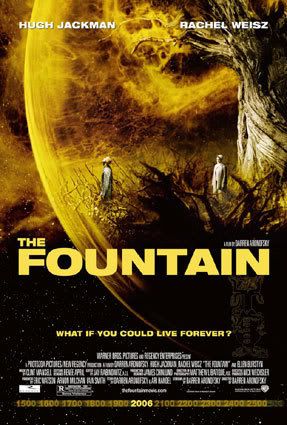
Trailer Park: Alright, Already, With The Fountain…

Filed under: Columns,Trailer Park — admin @ 2:03 am

By Christopher Stipp

Archives? Right Here”¦

I swear as HEY-SOOS is my Lord and Saviour, he isn’t but I think saying that carries a lot of sachet with my Blue State constituency, this is the last time you’re going to hear anything from me regarding THE FOUNTAIN.

Never mind that the interview I posted on Monday with Golden Globe nominated composer Clint Mansell was heartbreaking if for no other reason than having to endure Pepe Le Peu’s acceptance speech about why his middling little flick was even deserving of an award much less my attention as that croissant-eatin’ , baguette schmearin’, Virginia Slim smokin’ frog tried to appear all humble as we all know Clint was robbed in a Louisiana Purchase sort of way out of that meaningless globe thinggy.

However, there is one award left in my possession that I won’t be giving away to anyone of French descent and that is the winner of a signed FOUNTAIN poster that I’ve unbelievably managed to keep in pristine condition since taking possession of it in November. I am not only glad to be getting rid of it but I am glad that is one more neuroses I won’t have to tend to once it leaves my home.

There does need to be a winner, after all, and I have to tell you that this was a great contest for me if for no other reason than I was comforted by all the entries that let me know there WERE people who went to see this movie when it was in wide release. I am tired of the blank stares from people who don’t know what I am talking about when I mention THE FOUNTAIN’s merits as my top film for 2006 and I am hopeful that the DVD release of this movie will help people understand why it was a crime that there wasn’t more of a swell in support when there was a chance to save it from box office obscurity.

Every one of you out there know what kind of pole-smokin’ I’ve done for this movie but what did other people say they appreciated about this little film that could so they could swipe an Aronofsky original from me? Read and appreciate the sentiments…Each one of you who entered gets a little blue foil star next to your name from me. I know it sucks cock that you didn’t win something but I am over the moon, to borrow such a crap phrase, that so many of you took the time to hammer out a response. I love you all. Sorta. Not really.

2nd Runner-Up is John M. (Short, concise and captures the one singular moment in the movie where it all coalesces very well…)

I’m sure you’ve gotten a lot of entries with this and I’m also sure that someone else has done a better job of putting it into words but I’m going with the scene where he buries the seed at her grave. For me it’s just the moment when the whole film comes together and simply kicks you in the gut more than the scene with Izzi’s death ever could.
John M.

1st Runner-Up is Jesse R. (Why couldn’t have Jesse been in my creative writing classes? No, instead I get people who think death is this finite emotion that only AFI or My Chemical Romance can capture. Pure brilliance here…)

This is a movie that I have been watching the development from almost day one. I have the graphic novel and from reading that and watching the movie you can clearly see that this was a huge labor of love. There are short comings in the graphic novel namely how you can’t quite tell why the flash backs are important to the story except on a purely metaphorical stance.

I do agree with you that The Fountain is one of the very best movies of 2006. There are very few movies currently created that transcend entertainment and become art, and not even art that gets the reply “that is pretty,” but real art that you gain more appreciation upon days after you have see it. It is impossible for me pick just one scene from the movie, that is like stating that eggs are the most important part of a cake. A movie is not just single scene as I am sure you know, but it is how they all interconnect that make them great. The Fountain is a perfect example of such a movie where every scene could be written in great detail describing the importance of it, and the psyche of how men think. Upon reflection of the movie I can narrow it down to two scenes at least that strikes me the most emotionally.

The first one is when his wife wanted him to go for their traditional first walk in the snow, and instead he didn’t go because of his righteous duty to find her a cure. You see him there in the hallway about to leave; cocking his head to see his wife head out alone, the choice creep across the face and it silently hurts when he turns the other way.

The scene shows the struggle men have with wanting to enjoy the moment verses fixing the current issue.

The second scene is where he finishes reading her story, puts the book down and begins weeping. It reminds you of every time you realize what you had, what you gave up for your own selfish desires, and then it is too late. He grabs pen the she gave him, and starts redoing the wedding ring he lost. He is now committed completely to her and will not let anything else come between their love.

In essence this movie is the epitome of the man’s emotional struggle when faced with losing his very soul mate.

Jesse R.

And The Big Weiner, 1st Place Winner, is Dave M. (What’s unique about Dave’s point of view is that he has the same level of passion for this film that I do and he’s able to not only look at one moment but how small pieces fit into the larger whole of this movie. I swear to God, ’cause I think there is some kind of God but I don’t think there was really a HEY-SOOS, if I have only a fraction of AintItCool’s readership I am thankful because I am pretty fucking sure there aren’t as many people as articulate and well-punctuated as Dave here; he really wasn’t exception, either. He’s the norm. Thank you, Dave, for being smart enough to string sentences together coherently and your comments are well appreciated.)

As someone who loves the film, you know it’s impossible to pick one scene, so I’ll give you a couple and why they resonated with me.

-The entire story thread where Tommy is trying to find a cure for Izzi. I’ve never been put in the position of losing someone as close to me as a spouse, but the thought of not only having to watch your wife die, but also being smart enough to possibly find a cure bring a heart-wrenching question. Do you spend the time left racing the clock for a cure, or do you spend it as quality time with that person and build memories. The scene where he takes Izzi’s book into the other room and just has a moment of collapse truly brought me to tears. For me, that one scene they play several times of her in long hair running is a glimpse of the picture he has of her and will always hold. When she passes, the complete deconstruction of the man is heartbreaking.

-On the other side of the coin, at the end of the film when he resigns himself to dying was very powerful. A few people I know saw it as supremely depressing. I saw it as the ultimate release for Tommy. He’s been miserable being alive for so many years trying to save Izzi/The Tree that when he finally realizes that not only is he going to die, but he’s going to join Izzi again and that death isn’t necessarily the end of the road, he is truly relieved and happy. This is one point of the movie that is very open to interpretation, and that’s mine.

-One other thing that must be mentioned is the score by Clint Mansell. After the emotional grinder that The Fountain is, to listen to the piano piece during the credits was a release for myself and really allowed me to process the movie. Absolutely beautiful.

Dave M.

QSE News: 1/19/2007

Filed under: Columns,News — UncaScroogeMcD @ 2:01 am
quickstopnews.jpg
line1.gif

Here are today’s top entertainment headlines:

  • qsnews.jpgFirstly today, GLAAD, Gay & Lesbian Alliance Against Defamation, is demanding an apology for alleged anti-gay slurs made by Grey’s Anatomy star Isaiah Washington. The comments were directed at Washington’s costar T.R. Knight, who has recently announced that he is gay. Washington maintains that he was simply asking Knight for a bundle of sticks.
  • Kevin Federline will appear in a Super Bowl ad poking fun at his own celebrity. In the ad, Federline will go from a famous rap star to a fast food worker in a moment illustrating how quickly life can change. In related news, Federline has an interview with Burger King next Friday at 3 pm.
  • Actor Timothy Olyphant has been cast as Agent 47 in the movie version of the hit video game, Hitman.  Twentieth Century Fox, the studio behind the film is hoping that Hitman will deliver the same movie magic that other video game films such as BloodRayne, Alone In The Dark and Super Mario Brothers, have seen in recent years.
  • NBC has announced the network will not be brining back the soap-opera Passions.  Grandmas across the country are extremely upset and would plan a strike if they could remember where they put their good “pickitin’ shoes.”
  • And finally, in a sad bit of news, singer Pink is reported to be devastated after her beloved bulldog, Elvis, passed away.  The dog, which was fond of swimming, was found by the singer floating in her pool.  Those close to Pink reveal that Elvis did leave a suicide note, claiming he “couldn’t take the embarrassment of being Pink’s dog anymore.”
line1.gif

That’s all for today’s news, stay tuned to this channel for all the news that matters least but you still care about.

(Compiled by J. Allen)

##

Quick Stop Thingamabobs: 1/19/2006

Filed under: Columns,Thingamabobs — UncaScroogeMcD @ 1:53 am
thingamabobs.jpg

The web. It’s a big place, full of plenty of distractions ““ some funny, some informative, some ludicrous, some disturbing, some inane, some profound. Each and every weekday, we present links to a few of our favorite finds”¦

————————————————

  • Another of Derren Brown‘s wonderful tricks of the mind, this time with a hypnotized Robbie Williams… (Thingamabob)
  • View Zombie Redenbacher with your own eyes… (Thingamabob)
  • A little slice of Dave Gorman’s fantastic Googlewhack Adventure(Thingamabob)

Have a THINGAMABOB? Send it in!

##

Weekend Shopping Guide 1/19/07: Doo-Dah

Filed under: Shopping Guides — UncaScroogeMcD @ 1:40 am

weekendshopping.jpg

The weekend’s here. You’ve just been paid, and it’s burning a hole in your pocket. What’s a pop culture geek to do? In hopes of steering you in the right direction to blow some of that hard-earned cash, it’s time for the Quick Stop Weekend Shopping Guide – your spotlight on the things you didn’t even know you wanted…

It’s stated numerous times throughout both the documentary and critical review that comprise 2/3 of The Bonzo Dog Doo-Dah Band: The Complete Nutter History of The Bonzos (Classic Rock Legends, Not Rated, DVD-£19.99), but there really has not been so engagingly witty a band both before or, sadly, since the Bonzos far too brief reign of lunacy in the late 60’s. From covering classic 78s of the 20’s & 30’s like “My Brother Makes The Noises For The Talkies” and “Jollity Farm” to crafting their own pop classics like “I’m the Urban Spaceman,” the Bonzos could do it all – and they did, under the musical aegis of the late Vivian Stanshall and the very much still with us Neil Innes. This 3-disc set features the aforementioned in-depth documentary and critical review of the Bonzos output, as well as the BBC edit of their recent 40th anniversary reunion concert featuring guests like Stephen Fry, Phill Jupitus, Paul Merton, and Adrian Edmondson (you can also purchase the complete, unedited version separately). There’s also loads of bonus material and rare television appearances that provide a perfect primer for the uninitiated, or a wonderful keepsake for the Bonzo fan. And while we’re on the subject of that 40th anniversary concert, you absolutely must pick up the 2-disc companion CD of the event, Wrestle Poodles… And Win! (Classic Rock Legends, £9.99).

Meanwhile, Viv Stanshall fans will be elated to know that the long-awaited DVD release of his brilliant Sir Henry At Rawlinson End (Digital Classics, Not Rated, DVD-$14.99 SRP) has finally (finally!) happened. And not only does the print look better than all of those shoddy bootleg VHS tapes we’ve all subsisted on for years, but there’s also an audio commentary, trailer, and photo gallery. If you’ve yet to see Stanshall’s portrait of the decidedly daft fading uppercrust Rawlinson clan, then now if the time to rectify that oversight in your comedic knowledge.

Much like the MGM films which saddled the brilliant anarchy of the Marx Brothers with a rather mundane romance plot involving often star-crossed lovers and the comedians as virtual supporting players, so it is in the rarely seen Three Stooges outing Swing Parade. In it, the original Stooges play a trio of waiters in support of a mediocre romantic A-plot – in fact, the Stooges are the only thing saving this from the dustbin. A fully restored black & white print of this flick (also containing a colorized version) is the first outing for Legend Films’ Rifftrax Complete edition (Legend, Not Rated, DVD-$12.99 SRP), featuring a Rifftrax audio commentary from Mike Nelson (with a “super exclusive” edition signed by Mike available exclusively from the Rifftrax site). It’s a nice little package loaded with additional bonus materials, including Stooge shorts and an episode of co-star Gale Storm’s My Little Margie.

Americans may know him from his infrequent appearances as The Daily Show‘s resident statistician, but UK audiences (and Anglophiles) know Dave Gorman as a brilliantly sharp comedian . For proof, fire up your region free DVD player and snag a copy of Dave Gorman’s Googlewhack Adventure (Channel 4, Not Rated, DVD-£19.99), Gorman’s stage show detailing the internet and serendipity’s hand in scuttling his attempts to write a novel. Bonus features include a live audience Q&A, outtakes, additional inserts, and more.

Another year, another season of the rejuvenated Doctor Who, as the complete second series (BBC, Not Rated, DVD-$99.98 SRP) picks up – literally – just where series one left off, as the good Doctor has regenerated from the gruff, leather-jacketed Christopher Eccleston into the much more dandyish David Tennant. Still on board the Tardis is faithful companion Rose (Billie Piper), and the 14 episodes comprising the season are quite the rollercoaster ride, particularly the re-introduction of the Cybermen. The 6-disc box set features the behind-the-scenes “Doctor Who Confidential” episodes, audio commentaries, video diaries from Tennant & Piper, deleted scenes, in-vision commentary, the “Children in Need” special, and outtakes.

Terry Gilliam just can’t seem to catch a break. Still one of the most brilliant filmmakers of our time, he’s been dogged by misconceptions, rumors, and a reputation as a fiscally irresponsible, uncontrollable madman. Similar to his decision to follow up the perceived disaster of Baron Munchausen with the Hollywood for-hire gig The Fisher King, Gilliam signed on to do The Brothers Grimm for Miramax after his own The Man Who Killed Don Quixote fell apart. What followed was a production that found Gilliam butting heads with Harvey & Bob Weinstein, as they systematically went about dismantling the team Gilliam had put together to make the film, and questioning his every move. I’m not criticizing the Weinsteins – after all, that’s how they work, and it’s proven incredibly lucrative for them in the past – but Grimm was another story, and it proved to be a difficult, troubled production from start to finish. Thankfully, the story is recounted via candid recollections and diaries in Bob McCabe’s Dreams and Nightmares: Terry Gilliam, The Brothers Grimm & Other Cautionary Tales of Hollywood (HarperCollins, £17.99). Available only in the UK for some reason, it’s a wonderful account of a filmmaker’s descent into the machine.

While not as beloved as Everybody Loves Raymond, I still have a great deal of affection for that loveable lunkhead of a show, King of Queens (Sony, Not Rated, DVD-$39.95 SRP). Like Raymond before it, the episodes are virtually interchangeable (although the guest star turn from Burt Reynolds as Doug’s old football coach is a real highlight), as this is the very definition of sitcom comfort food. Sadly, the 3-disc set is limited to all 23 seventh season episodes, but nary a bonus feature in sight.

One afternoon – December 4, 1956, to be exact – a rather historic, impromptu recording session took place. It was a recording session that gathered together four legends on the rise – Elvis Presley, Carl Perkins, Johnny Cash, and Jerry Lee Lewis. This historic session has now been released in its entirety as The Complete Million Dollar Quartet (Sony BMG, $13.98 SRP). It’s rough around the edges – they were clearly jamming – but it’s a must-have artifact of a bygone age of myth and legend.

Although largely unknown to the American audience, The Royle Family (BBC, Not Rated, DVD-$24.98 SRP) has been hailed as a modern classic – and rightly so. Not quite sitcom and not quite drama, it’s the rather intimate, everyday life of the lower middle class Royles – and it’s told entirely within their living room. It’s brilliantly written and executed, and I’m thrilled that the first season is finally available in the US for Americans to discover.

Mike Judge and Don Hertzfeldt have brought their traveling animation show – comprised of dozens of hand-picked animated shorts from around the world – to DVD. The 2-disc collection of The Animation Show (Paramount, Not Rated, DVD-$26.99 SRP) contains 31 shorts, plus audio commentaries, galleries, featurettes, additional shorts, and more. Also included is an in-depth booklet profiling many of the creators involved.

Another of the short-lived, incredibly kitchy Filmation live action “classics” of the 70’s has come to DVD with the release of Space Academy: The Complete Series (BCI, Not Rated, DVD-$29.98 SRP). It’s basically high school in space, with Lost In Space vet Jonathan Harris as instructor Isaac Gampu. The effects featured in the show are surprisingly good considering the budget, due largely to their pedigree – many of the guys were Star Wars veterans. The 4-disc set features all 15 episodes, plus a pair of audio commentaries, a newly-produced documentary, commercial bumpers, galleries, easter eggs, and more.

24 has returned with a brand new, rather explosive season, and true fans should definitely grab themselves a copy of the deluxe making-of tome 24: Behind The Scenes (Insight Editions, $29.95 SRP). Packed with production details and copious photos, it’s a must have – as is the bonus DVD featuring exclusive interviews

In My Hero (BBC, Not Rated, DVD-$24.98 SRP), Ardal O’Hanlon (late of the magnificent Father Ted) stars as Earth’s greatest, but befuddled, superhero Thermoman, who lives a quiet suburban life as health store owner – and family man – George Sunday. It’s not laugh-a-minute, but it’s certainly a pleasantly quirky series worth checking out. The disc features all 6 first season episodes, plus an interview with O’Hanlon and a behind-the-scenes featurette.

When the creator of Cracker launches a new series, you’d better believe it’s at least worth a look. With The Street (Koch, Not Rated, DVD-$29.98 SRP), Jimmy McGovern delivers a beautifully-acted, engrossing drama about six neighboring houses in Northern England, and the stories behind each of those seemingly ordinary doors. With a cast that includes Jim Broadbent, Timothy Spall, Jane Horrocks, and Sue Johnston, it’s a must-see. The 2-disc first season features all 6 episodes.

As much as I loved the first series of Hanna-Barbera figures from McFarlane Toys, they outdid themselves with series 2. Featuring Yogi Bear (with Boo-Boo & Ranger Smith), Johnny Quest, Fred Flintstone & Dino, Magilla Gorilla, Penelope Pitstop & Mutley, Tom & Jerry, and Captain Caveman ($12.99 SRP each), the sculpts are positively giddy-inducing – never have licensed toys for these characters (the ones that have ever even gotten toy releases) looked this good. Also available is a deluxe display of the Flintstone family at the drive-in ($24.99 SRP). Just take a look at the pics below and try to resist buying yourself a set…

weekendpicks2007119-15.jpg

weekendpicks2007119-16.jpg

weekendpicks2007119-17.jpg

weekendpicks2007119-18.jpg

weekendpicks2007119-19.jpg

weekendpicks2007119-20.jpg

weekendpicks2007119-21.jpg

weekendpicks2007119-22.jpg

So there you have it… my humble suggestions for what to watch, listen to, play with, or waste money on this coming weekend. See ya next week…

January 18, 2007

Interview: Stan Lee

Filed under: Interviews — UncaScroogeMcD @ 4:48 am

-by Ken Plume

stanlee-03.jpgIf you’re a child of comic books and Saturday morning TV (like myself), then Stan Lee is instantly recognizable as the creator (with legendary artists such as Steve Ditko and Jack Kirby) of Spider-Man, the Incredible Hulk, the Fantastic Four, Daredevil, X-Men, and many, many more.

If that list reads like a recent issue of a Hollywood trade magazine, it’s because all of those properties have either gotten – or are about to get – the big screen treatment.

And Stan, in his 80’s (!), is still a creative powerhouse and one of the hardest working men in showbiz, forming POW Entertainment as his new shingle.

In addition to the Sci-Fi Channel’s recent hit Who Wants To Be A Superhero?, Stan has also got a pair of films hitting DVD based on his new creations – Lightspeed and Mosaic.

This isn’t the first chat I’ve had with Stan, and hopefully won’t be the last, as it’s always a hoot.

Without further ado, my delightful discourse with the dandily dignified (and definitely dear) Stan Lee…

stanlee-01.jpg

STAN LEE: Hello?

PUBLICIST: Hi Stan… I have Ken Plume on the line.

LEE: THE Ken Plume?

KEN PLUME: The Ken Plume…

LEE: Son of a gun. How are you Ken?

KP: It’s good to speak with you again…

LEE: Good to be spoken with. What are we doing this time?

KP: Last time we spoke I was still working for my old gig, but now I’m running Kevin Smith’s entertainment site…

LEE: Oh, you finally hit the big time…

KP: Yeah, I get paid now…

LEE: That’s great!

KP: And again, it’s a pleasure to be speaking with you… again…

LEE: I’m delighted!

KP: Launching in, my first question would be, when you look at new characters like Mosaic, what is the initial germ of an idea that comes to you? How would you characterize that moment when an idea presents itself?

stanlee-05.jpgLEE: Well, what I really wanted… I was trying to think of, “What kind of a heroine can I do that hasn’t been done before?” And forgetting the super power for a moment, I thought I’d like to get a girl who’s just out of her teens, and who wants to be an actress, and that’s the big thing. I thought that a lot of girls could relate to that. Most girls at some age want to be actresses or rock stars. And then I figured, “Okay, what super power will I give her?” And it occurred to me that if a girl wanted to be an actress, probably the best super power – the thing she’d most want – would be the ability to take over other people’s personas. To be able to act like other people and look like other people. So I gave her this chameleon-like quality.

KP: So, for you, the creation of a character is a layering process…

LEE: That sums it up beautifully.

KP: How long would you say that the gestation of an idea like that takes?

LEE: Couple of minutes. (laughing) No, I mean, it doesn’t take as long as it took me to explain it to you. You know, how long does a thought take, really? You get an idea and you say, “Oh yeah, that sounds good,” and then you start writing it.

KP: How often would you say that you go down blind alleys that don’t lead anywhere?

LEE: Um… well, I never counted the times. You know, that happens. When you try to think of something, very often you have one two or it could be a hundred thoughts and none of them are right, and you keep thinking and suddenly… now, I don’t know how many things I thought of before I thought of the girl who wanted to be the actress. But all I remember was at one point I said, “She wants to be an actress,” and then everything sort of came together for me.

KP: Can you remember any point in your career that you’ve had this amazing idea that you’ve developed in your head, only to present it to someone and they went, “But Stan, you already created that.”

LEE: (laughing) I don’t remember it happening with anybody telling me that, but I remember I myself would get an idea and write it down, and as I’m writing it, I’ll say, “Gee, that sounds kinda familiar!” And then I’ll start looking up some old stories and I’ll say, “Damn, I did this before!” In fact, I’ll tell you how bad my memory is for these things – you know I still write the Spider-Man newspaper script…

KP: Right. And your brother still does the art for that, right?

LEE: That’s right. Well, about two years ago, I realized it was time to write another two weeks. So I looked at the last thing I had done, to see where I’d left off, and I spent a couple hours writing the next two weeks. I sent them to my brother, and he said, “Stan, I’ve already drawn these.” What happened was I forgot where I had left off, and instead of going to where I really left off, I went back two weeks earlier, and I wrote the two following weeks, which I had already written. And of course the ones I wrote were different than the ones I had written, ’cause I forgot what I had written so I wrote them differently. Which drove my brother crazy.

KP: So, in other words, your mind was looking for a shortcut…

LEE: I guess, I don’t know. What was left of my mind was looking for a shortcut! (laughing)

KP: When you look at all the characters you’ve created over the years, there’s obviously a large chunk of teenagers, and a large chunk of adults, but there aren’t very many children superheroes…

LEE: Well, I don’t know. I couldn’t see taking a child – let’s say somebody 9 years old – and having him or her risk his or her life fighting villains. It just didn’t seem right… so no, I don’t really write about little children.

KP: Is there any character or any idea that has come close to touching on that?

LEE: Probably, but I can’t remember. I can’t think of any at the moment. Oh, wait a minute, wait a minute… in the Fantastic Four, I had Mister Fantastic and Sue, the Invisible Girl – they had a baby, little Franklin, and I think I always intended to give him some sort of a superpower and have a super-powered kid in the strip. But then I stopped writing the strip, so I never had a chance to do that. Then other writers took over and did whatever it is they do…

KP: But that was the original intention all along, was to make Franklin super-powered…

LEE: Yeah… I thought it would be fun to have a superhero family with a kid who had a super power, although I hadn’t decided at the time what super power I would give him.

KP: And now, fast-forward, you’ve got Mosaic coming out, Lightspeed is coming out…

LEE: And The Condor is coming out.

stanlee-04.jpgKP: Which is the collaboration with Ringo Starr?

LEE: That’s the fourth one. It’s called Ringo at the moment. We may add another word or two to the title, but at the moment I think of it as Ringo. Because when I met him I said, “You know, I’d like to do something to make you famous…”

KP: It’s gonna be hard.

LEE: He was so appreciative.

KP: It’s really a hard task you’ve set for yourself.

LEE: (laughing) But I’m doing the best I can.

KP: You’re such a giver.

LEE: I’m glad you’re aware of that! (laughing)

KP: So that’s, what, slated for release towards the end of this year?

LEE: Oh, hell, I never know!

KP: I think it will be later this year.

LEE: Yeah, I think it’ll be later this year.

KP: Obviously, with creation being a job, what do you do for recreation?

LEE: I do my job.

KP: I know it’s one of the clichés over the years, that you’ve said numerous times that working really is the end-all be-all for you…

LEE: Well, it isn’t work. If you think about it, what could be more fun than trying to dream up ideas for stories? I really enjoy doing it. Now, I don’t… it’s funny, I’ve said for years that I don’t enjoy writing. But I think that’s not true. What I don’t enjoy is having to sit down and write. When I have something to write, I will do anything in the world to put it off. I’ll decide, “Gee, I ought to rearrange my bookcase,” or “I think I’ll shine all my shoes,” or “Maybe I ought to brush my teeth.” I’ll do anything not to have to sit down and write. But when I actually start writing, when I finally get myself to sit down and start the writing, I love it. I’m in another world. It’s the greatest thing there is. I hate when there are any interruptions. I mean, it’s just fun, because you’re like a god. You’re killing people, you’re bringing them back to life. You’re deciding, “I think I’ll make this guy fat, I’ll make this one skinny. I’ll make him old. No, he’s too old. I’ll cut 20 years off his age.” I mean, you can do anything!

KP: So, it’s the whole “god thing”…

LEE: Maybe that’s what it is. I’m power mad! (laughing)

KP: Well, you’ve certainly exercised that awesome power with tremendous responsibility.

LEE: (laughing)

stanlee-07.jpgKP: You’ve also participated in Kevin’s poetry readings in the past…

LEE: Yeah, that is the funniest thing. Of all people to have a poetry reading once a year, the last guy you’d expect is my friend Kevin Smith. But his house has many mansions! (laughing) I love that guy, you know? He is really great.

KP: Have you already prepared your piece for this year?

LEE: Well, I haven’t been invited yet.

KP: I would assume you’re automatically on the list…

LEE: Well, I’d better be! No, I haven’t prepared anything yet. I’ve been threatening for a long time that I might read the entirety of The Raven – the whole thing, from beginning to end. I think that may be what I’ll do.

KP: Why would that be a threat?

LEE: Because it’s long! But if that doesn’t drive them all away and make them decide never to do this again, I don’t know what will !

KP: I would pay money to actually hear that. You should put that up as a podcast…

LEE: Well, alright then, then I’ve definitely decided that’s what I’ll do. And if you speak to Kevin you can give him fair warning. And also let him start charging for it, and I want half of what you pay!

KP: Done and done. And I already set aside my cash. I guess something I have to ask about in the last few minutes before we go, just as trivia…

LEE: Where are we going?

KP: Well, we only have so much time. You have so many other people to speak with…

LEE: Yeah, but you’re the one who’s promoting me. To hell with the others. If I’m nice to you, we’ll sell a few DVDs. The others aren’t gonna do me any good!

KP: Well, you already made me happy saying my name again at the beginning, so anything I can do for you is a fair trade. Recently on the internet, a clip has surfaced of your 1970 appearance on To Tell the Truth

LEE: That is the funniest thing! Where did that come from?

KP: That’s the beauty of the internet. It can come from some guy having a tape and deciding to throw it up…

LEE: Isn’t that… yeah, I just looked at it this morning. I was wonderful! My wife looked at me, and she said, “Gee, you looked so good,” and then she looked at me and said, “What happened to you?” I mean, I’m sorry that they ever showed that! (laughing)

KP: Well, I have to say you had one of the worst poker faces when they introduced you…

LEE: Well, I was supposed to give no evidence of who I am and display no personality, just stand there. Which is tough for me, because as you know, I’m a clown and a ham.

stanlee-08.jpgKP: To anyone actually watching your visual signals, you tipped it off just with that broad grin when they introduced you…

LEE: You think so?

KP: When they introduced you and were talking about how Spider-Man was one of the most popular characters in the country, and what a tremendous creative force you are, you had just the biggest, poor Poker-faced grin on your face…

LEE: (laughing) Oh wow, I didn’t notice. I’ll have to look at it again.

KP: Was that one of your first appearances on national television?

LEE: No, I’ve done so many… I’ve done so many interviews on television and radio, frankly I don’t know which the first was…

KP: Was it a buzz at that point, to get that kind of national recognition?

LEE: Still is! I love it.

KP: I can think of no other person who is truly the face of comic books to the average person…

LEE: That’s really funny. Some people are the face of music, the face of the arts, the face of literature. I’m the face of comic books. I mean, Jesus, it’s the story of my life! (laughing)

KP: But people dream of that. And look, now you’re working with the face of music – a Beatle. Who haven’t you worked with at this point?

LEE: I think that Paul McCartney is going to be very angry with me that I’m doing this with Ringo, but hey, I’ll get to him…

KP: Well, eventually Ringo will cross over with your Paul McCartney comic book, Wings.

LEE: That’s right! (laughing) Who told you?

KP: I knew it had to be on the agenda somewhere!

LEE: The next time we do an interview, remind me to tell you how I met McCartney.

KP: You definitely have to tell me.

LEE: It’s quite a story, but I’ll save it for next time… I’ll be sure that you call me again. Are we talking enough Mosaic? Did I advertise that enough?

stanlee-06.jpgKP: Well, you just did again. And Lightspeed.

LEE: They’ll get angry at me if I don’t say it. When is it going on sale? I think it’s on sale now.

KP: It’s on sale now…

LEE: It’s a hell of a bargain. And everybody ought to go to see it so they’ll have something to criticize.

KP: And better yet, the best reason of all is to support you continuing to create…

LEE: That’s right, and continuing to be able to go to Kevin’s house to recite poetry.

KP: You promised The Raven

LEE: (laughing) And maybe next year I’ll do the entire script of Mosaic! (laughing) I’ll put it in verse!

KP: You can put it on a double bill with Wreck of the Hesperus

LEE: Oh, that’s great!

KP: Well, as always, it’s been a pleasure speaking with you…

LEE: Hey, likewise! I’m sorry you gotta go so soon, but I guess you’re busy. You got a lot of other interviews to do…

KP: Ah, see, now it’s like daggers through my heart…

LEE: I know how it is.

KP: I will talk to you…

LEE: They’ll probably give me hell for not having mentioned Mosaic more often.

KP: Hey, what about Mosaic?

LEE: (laughing) It’s on sale now, and it has the greatest cover. You know, the package looks so dramatic. Whoever designed it, oh man!

KP: And that’s the package for Mosaic, right?

LEE: For Mosaic, yes – the DVD. (laughing), which we just produced at POW! Entertainment. You know, of course, know what POW stands for…

KP: Of course…

LEE: Well, wouldn’t you like to prove it to me?

KP: I think I would love to hear you say it..

stanlee-02.jpgLEE: Yes, I thought you would! It stands, of course – and I’m sure our readers will already have guessed it – but it stands for “Purveyors Of Wonder.” POW! And the reason we had to give it that definition is I didn’t want people to think it stood for Prisoner Of War. So, for that reason, I put an exclamation point after it. You see the things you learn when you do these kind of interviews?

KP: Every time I speak with you, I learn something new…

LEE: I like to increase your fund of knowledge…

KP: At one point I think I’ll earn enough brownie points that you’ll say, “Ken Plume: True Believer!”…

LEE: (laughing) And when you watch the Mosaic DVD, which is on sale now, you learn a lot of new words, like the civilization that’s threatening the human race right now. There’s a special name for it. I’m not gonna tell you that, ’cause I want you to be able to watch it. But all of the people within the sound of my voice can increase their vocabulary tremendously by watching Mosaic, which is now on sale.

KP: It’s better than buying a dictionary…

LEE: (laughing) And tell Kevin not to be angry at me!

KP: (laughing) In fact, I’m going to tell him, A) you’re going to read The Raven, and B) to go buy Mosaic today.

LEE: Oh, you’re a great human being! We’ve got to do this more often…

KP: Excellent! I will talk to you soon, Stan.

LEE: Alright! Thanks a million…

KP: Thank you, sir…

##

The Fred Hembeck Show: Episode 87 – A Tale of Two Freds

Filed under: The Fred Hembeck Show — UncaScroogeMcD @ 1:43 am

fredhembeckheader.jpg

Even though All-Star Comics #3 hit the newsstands a full thirteen years before I was born, I’ve nevertheless harbored a life-long affection for the Justice Society of America…

hembeck2007-01-18-01.jpg

Why, you ask, would this child of The Silver Age feel such a deep connection to those costumed bastions of comic’s Golden Age? Timing, friends, timing!

Y’see, back in 1961, at the tender age of eight, I had barely begun buying my own copies of DC’s superhero line (Superman #146, with an on sale date of May 4th was the first) when the company released their treasured Secret Origins #1 collection a month and a half later on June 15th (and no, my memory isn’t THAT good – there’s a wonderful section over at the Mike’s Amazing World of DC Comics website that groups each month’s titles from every year the firm’s been in business together sequentially by release date called, aptly enough, The Time Machine! It’s proven to be a fun way for me to relive those grand old days loitering around the comics rack down at Heisenbuttels General Store in Yaphank – and has also shown me that Secret Origins #1 (pretty much the closest thing you could find to a Readers Manual for beginner comic book fans in those days) was merely the 14th DC Comic yours truly ever bought!).

And included in that landmark issue was perhaps the single most important Silver Age story of all (at least, up to that point in time, with the emergence of a certain foursome still a few months off) – the origin of The Flash. We all remember what Barry Allen was READING early on in that tale, don’t we class? Uh huh – an issue of Flash Comics ! Only, not one featuring the sleek-domed red-garbed speedster we kids were familiar with during the dawning days of JFK’s administration, but rather a fellow adorned with a Mercury-styled helmet dating all the way back to midway into FDR’s White House tenure! I couldn’t help but be curious – who WAS this guy?

Little over a month later, my question would be answered. July 20th saw the release of my second ever issue of The Flash, #123, featuring the justifiably legendary “Flash Of Two Worlds”…

hembeck2007-01-18-02.gif

I was immediately intrigued by this Jay Garrick fellow. I liked his looks – nice hat, dude – and the fact that he was already married to HIS romantic interest was a breath of fresh air. Hey, in those days, it only took a few months of collecting to become weary of DC’s woefully overworked snoopy girlfriend shtick! Yeah, THIS Flash didn’t have to pretend to be a slowpoke just to throw off his (seemingly clueless anyway) gal pal the way Barry did “reporter” (hah!) Iris Allen! More please!

A week later, I got my wish – sorta. That’s when Showcase #34 made its appearance, featuring the debut of the second-generation Atom. All well and good, but to me, clearly the coolest part was the pair of text pages wherein editor Julie Schwartz took the opportunity to explain the genesis of such characters as The Flash, Green Lantern, Hawkman, this newly minted Atom – even the august organization known as the Justice League of America – by revealing to us young ‘uns (via an illustration reproducing the gathered greats sitting around a table as pictured on All-Star #3’s cover) the inspiration behind all our (then) modern day favorites!! Wow! You mean there was an entirely DIFFERENT group of super-heroes saving the world from evil-doers way back before I made MY arrival on the scene – ANY scene? Cool! And since there was absolutely no way I was gonna get my hands on any of those old comics at the time, a sort of romantic, almost mystical quality grew in my mind, surrounding any and all characters from the Golden Age of Comics, but most especially members of the Justice Society.

Well, after that one-two-three punch, I had to wait nearly an entire year for another glimpse across the fog of time. Flash #129 hit the stores on April 19th, 1962, and not only did it feature the second ever pairing of Barry and Jay (the latter of whom was referred to throughout, interestingly enough, as “the other Earth Flash”, sans numerical designation), but a memorable three page flashback to the JSA’s final adventure as well, bringing such characters as Dr. Mid-Nite and the Black Canary out of limbo for the first time in decades, alongside some of the JLA’s prototypes/dopplegangers! Wonderful stuff!

Nearly a day to the year, it got even better! Flash and Flash, round three (in Flash #137) found several members of the Justice Society playing a small – yet happily, non-flashback – part in the proceedings as the Crimson Comets took on forties’ menace Vandal Savage for the first – but not last – time in the modern era. At stories end, there was some conjecture amongst the reassembled JSAers about maybe, y’know, getting back together for a little more fun and games! GREAT idea! And WHEN exactly might this much anticipated event occur, I wondered?

How about nearly two months later, on June 13th, 1963? THAT’S the day the word “Crisis” firmly entered the comic-book lexicon – and as we know all too well, it sure hasn’t left yet!…

hembeck2007-01-18-03.gif

Was there ever a more majestic cover scene that the one illustrated by Mike Sekowsky and Murphy Anderson (and, like all the other pieces included in this edition of “The Fred Hembeck Show,” lovingly redrawn by your humble host)? Literally emerging from the very mists of the past, this initial meeting of the two Justice organizations spawned an annual tradition of two-part summer team-ups that lasted for over a decade, always the most eagerly anticipated JLA issues of the year for moi!

(Here’s part two of that first monumental assemblage…)

hembeck2007-01-18-04.gif

After that, gee whiz, you wouldn’t have supposed it would take very long for the two Lanterns to ring up an adventure together, would you? Well, you’d’ve been wrong – over a full two years later, on August 26th, 1965, DC FINALLY put their two green good guys together in one adventure – and what an adventure it was, too!

hembeck2007-01-18-05.gif

“The Secret Origin Of The Guardians”, we would learn just over two decades later in the pivotal maxi-series, Crisis On Infinite Earths, was nothing less than the basis for the creation of the entire DC Comics Universe! Gosh, and at the time I thought it was just another piece of pseudo-scientific mumbo jumbo that the company had long had a reputation for churning out – who knew? (The unadorned truth is, as fond as I am of these characters, unlike the contemporaneous adventures of their Marvel Comics counterparts, there’s very little I recall about the actual STORIES, just a certain “feel” that the art – and especially those iconic covers – exuded. The plots, though, never stuck with me the way Stan’s did – sorry Fox fanatics…)

And then there were the two Atoms, one big (relatively speaking), one small. They teamed up twice – once on December 1st, 1966, when Atom #27 was released, and later (as seen below) in 1968’s 36th issue. (February 1st, 1968 – I just know SOMEONE’S keeping score out there!!..)

hembeck2007-01-18-06.gif

Nice, but not only was I growing up by then, the novelty of finding JSAers on sixties’ comics racks was clearly fading. (Come to think of it, we never DID get a Hawkman/Hawkman pairing. Mighta had something to do with those two outfits being practically identical…)

But still, to this day, I have a definite soft spot in my heart (and yes, my head as well!…) for the JSA. That’s one of the reasons I got such a kick out of redoing the classic covers you see above (another reason being was cuz I was PAID to! Quick plug – go here if you’d like to commission me to do up my version of a favorite cover of yours, ANY cover – but be advised: on February 1st, my rates will increase an additional $25 per cover. Still a good deal I’m thinking, but if you’re looking for a bit of a financial break, better hurry!).

Y’know, I kinda dig Captain America for a lot of the very same reasons DC’s premier super-group so appeals to me, but hey, that’s a whole ‘NOTHER episode, isn’t it now?

(Oh, and if you’d like to see slightly larger versions of today’s featured Classic Cover Redos, they each have their very own page over at my home site, Hembeck.com . You can access each individually by clicking your mouse over these links: All-Star #3, Flash #123, JLA #21, JLA #22, Green Lantern #40, and Atom #36.)

-Copyright 2007 Fred Hembeck (Earth Prime version, natch)

QSE News: 1/18/2007

Filed under: Columns,News — UncaScroogeMcD @ 1:41 am
quickstopnews.jpg
line1.gif

Here are today’s top entertainment headlines:

  • qsnews.jpgGwyneth Paltrow is going to be starring in the new Iron Man movie alongside Robert Downey, Jr. Paltrow is set play a secretary to Downey’s character in the film. To prepare for the role and working with Downey, Paltrow has been spending time in methadone clinics and AA meetings.
  • According to reports coming out of England, Michael Jackson is trying to sell his infamous Neverland Ranch to David and Victoria Beckham. Although interested at first, the couple decided against it when they read the fine print of the contract that stated “Mr. Jackson will have complete access to Neverland Ranch and any children on the premises, whenever he wants.” Victoria also expressed hesitation because the whole place smelled like Bubbles.
  • Jennifer Aniston will be joining former Friends co-star Courtney Cox on the show Dirt. During the episode, Aniston and Cox will play rival tabloid magazine editors.  In related news, former Friends co-star Matt LeBlanc will take any acting job you can give him.  Please?
  • Country singer Keith Urban has completed his stint in rehab and is ready to get back on the road with a short run of shows scheduled in Europe. Although not on the itinerary, Urban plans on making a stop in Amsterdam which he said he may or may not come back from.
line1.gif

That’s all for today’s news, stay tuned to this channel for all the news that matters least but you still care about.

(Compiled by J. Allen)

##

Music For The Masses: 1/18/2007

Filed under: Music for the Masses — UncaScroogeMcD @ 12:26 am
musicmasses2.jpg

Hey kiddies, Double A here.

M.C. Bell has packed up and headed away on vacation again and left me in charge of this whole Music for the Masses debacle. Pretty sweet, huh? While M.C. is off on some “cruise” (read: “rehab”), I’ll be fulfilling his commitment to provide you with music oriented entertainment.

masses2007-01-18.jpg
M.C. (far right) and his “crew” aboard the U.S.S. Spelunker

While I was thinking about what I was going to do this week, I had several ideas. One was an in-depth look at Kid N Play, kinda like what I did with The Fat Boys a few months ago. My other idea was a podcast. So, after a few days of soul searching, which included three bottles of fine, Canadian whiskey, I finally decided that I didn’t have the patience to actually do an in-depth review. So here’s your podcast!

Joining me this week is J. Allen from QSE News as we let you in on all the albums we’re looking forward to in 2007. Now don’t worry, we do take this opportunity to make fun of M.C. Relentlessly. So there you have it. Enjoy![CONTENT WARNING]: This podcast, much like the column you have been reading, contains foul language, horribly off-color jokes and more unsettling discussion of that nature. Don’t say we didn’t warn you.

DOWNLOAD: (right click to save)
Music For The Masses: Episode 2 (MP3 format) ““ 12.62 MB

Send assorted hate mail and review copies to:M.C. Bell
P.O. Box 1222
Arvada, CO 80001

E-MAIL THE AUTHOR

Quick Stop Thingamabobs: 1/18/2006

Filed under: Columns,Thingamabobs — UncaScroogeMcD @ 12:09 am
thingamabobs.jpg

The web. It’s a big place, full of plenty of distractions ““ some funny, some informative, some ludicrous, some disturbing, some inane, some profound. Each and every weekday, we present links to a few of our favorite finds”¦

————————————————

  • Vic Reeves on QI, discussing proper astronomical pronunciation… (Thingamabob)
  • The Bonzo Dog Doo-Dah Band on New Faces in 1966… (Thingamabob)
  • And after seeing this rare promo, if Sgt. Pepper’s was a real band, it probably would have looked and sounded like The Bonzos… (Thingamabob)
  • And now, a walk through the Canyons of Your Mind… (Thingamabob)

Have a THINGAMABOB? Send it in!

##

January 17, 2007

QSE News: 1/17/2007

Filed under: Columns,News — UncaScroogeMcD @ 1:07 am
quickstopnews.jpg
line1.gif

Here are today’s top entertainment headlines:

  • qsnews.jpgFirst, the alternative rock group Arcade Fire will be headlining a show in a Canadian school cafeteria. When first approached, the band was hesitant to accept the show but quickly decided to do the gig when they found out it was pizza day.
  • Eddie Murphy has won a Golden Globe for his role in the musical Dreamgirls. According to friends and family, Murphy celebrated by spending a nice quite evening out on the town with a transvestite.
  • It looks as though TRL (which stands for Total Request Live) on MTV (which stands for Music Television) is nearing the end of its run and may soon be canceled. An MTV representative said “No one watches MTV for music. We haven’t shown a full music video since 1989. Today, shitty little 16-year-olds watch MTV to see other shitty little 16-year-olds treat each other like shit.”
  • The Sci-Fi Network has announced that it has given the green light to a new Flash Gordon series to begin airing in July.  The series will be a contemporary re-telling of the classic comic strip and radio show.  To keep the spirit of the original series and movie, producers will keep the homoeroticism intact allowing for a whole new generation of boys to be sexually confused by bare-chested men wrestling over a spike pit.
line1.gif

That’s all for today’s news, stay tuned to this channel for all the news that matters least but you still care about.

(Compiled by J. Allen)

##

Quick Stop Thingamabobs: 1/17/2006

Filed under: Columns,Thingamabobs — UncaScroogeMcD @ 12:57 am
thingamabobs.jpg

The web. It’s a big place, full of plenty of distractions ““ some funny, some informative, some ludicrous, some disturbing, some inane, some profound. Each and every weekday, we present links to a few of our favorite finds”¦

————————————————

  • More from Derren Brown’s wonderful tricks of the mind, “Invisible Man”… (Thingamabob)
  • A video which just goes to show that you can never be truly prepared to be a parent… (Thingamabob)
  • They have made a zombie out of Orville Redenbacher… Will no one stop them? (Thingamabob)
  • And here’s how the man should look… (Thingamabob)

Have a THINGAMABOB? Send it in!

##

January 16, 2007

Toy Box: General Grievous Mini-Bust

Filed under: Columns,Toy Box — admin @ 2:38 am
toybox.jpg

Nothing like a little ice storm to get in your way. For us here in Michigan, ice storms are pretty common in the late fall and early spring – but not in January, when we’re usually buried in snow and single digit temperatures. But with this freaky winter, and temperatures staying right around freezing, we’re getting some weird stuff.

So as the generator putters along outside, my laptop batteries all charged up, and my Internet connection live, I can still get my column together. Ain’t it amazing?

I’ve been collecting the Gentle Giant Star Wars busts since the beginning, but I haven’t covered a lot of them with reviews. I’ve been doing more recently though, and the last few releases have been truly outstanding. Let’s check out the latest – General Grievous.

If you have any questions or comments, drop me an email at mwc@mwctoys.com.

“General Grievous Mini-bust from Gentle Giant”

The good General, mostly machine with just enough flesh to be a problem, is definitely a master with the light saber. Generally, these sabers are taken from Jedi with extreme prejudice, so Grievous has earned his place as a big bad in the Star Wars universe.

toybox_011507_1.jpg

Packaging – ***
Okay, they tried. They really did. But this is one very fragile bust, so reports of breakage in the box have been pretty widespread. Mine was fine, but I had to be extremely careful getting it out to ensure I didn’t snap off a small wire or edge piece as I was extracating it.

toybox_011507_2.jpg

This box is huge too – at least twice the size of a regular Star Wars mini-bust box. That’s because he comes packed with the complex arms off to either side inside the foam tray, making the box much, much wider than usual. I am glad for the small window though, which shows off at least the intricate face.

There’s also the normal baseball card sized Certificate of Authenticity, and the edition number is printer there as well as on the bottom of the box. And if you’re curious, it’s an edition size of 7000, so shortages, at least to start, shouidn’t be an issue.

Sculpting/Design – ****
The one thing that always makes or breaks a bust or statue is the design – even a great sculpt can’t save a stupid or silly pose. Grievous created a particularly difficult situation, since the four long arms means the amount of space any particular pose might take up could get pretty out of hand. So what to do?

Gentle Giane went with a rather interesting pose, that I don’t recall as screen accurate, but which fits the character well AND takes care of the issue of space conservation. The two left and right arms are actually sculpted as one, joining at a single shoulder joint. The two back arms are posed behind him, each holding a saber taken from a fallen Jedi, one green and one blue. The forward left arm holds a blaster at face height, preparing to level it on an opponent, almost old west style, while the forward right arm is empty, clutching at empty air in anger…or anticipation of the battle.

toybox_011507_3.jpg

The sculpt is simply fantastic, and this is one of the most intricate and elaborate designs of the entire mini-bust series – and that’s a lot of busts. I was amazed at the small detail work as I was trying to get this guy out of the package in one piece. There are tiny wires, tubes and small pointed edges everywhere, and the weathering and damage added to his armor looks extremely realistic.

The difference between the fleshy eyes and outer metal skeleton is made apparant through different types of texturing, although in reality it’s all the same material. To go even further, they’ve used a very cool, translucent green resin for the inner flesh body, covering organs that can just barely be seen. It’s tough to get a good photo of this, but in person it’s quite striking.

toybox_011507_7.jpg

My only issue with the sculpt or design relates to how well the arms and sabers all fit together. There was a looseness in the fittings that is unusual for this line, and the two sabers don’t quite line up front to back or top to bottom with each other. It’s a fairly minor nit though, and one that doesn’t pull him down from the overall four star sculpt.

Paint – ***1/2
The paint is almost as impressive as the sculpt, with the best work running around the eyes. Weathering of the blaster, and the work on the saber hilts is also quite well done, and I’ve already mentioned the uber-cool translucent green resin that makes up the very interior of the body.

toybox_011507_4.jpg

The silver and black work on the tubing and wires is decent, but the work on the armor damage and weathering isn’t quite as nice as the rest of the work. It’s not a major problem though, and for the most part, this is an excellent paint job.

Value – ***1/2
I’m giving this guy a very high value rating, although he runs the standard $45 that most of the GG Star Wars busts do. However, with the complexity and attention to detail, this bust could have been priced much higher, and still warranted the green. For the money, this is one of the best mini-busts in the entire series.

toybox_011507_5.jpg

Overall – ****
Wow! Two four star reviews in one week – one for the Premium Format John Wayne from Sideshow, and now this new Gentle Giant mini-bust. I waffled around a little bit over this score, almost dropping it to ***1/2 largely because of the slightly loose and sloppy connections between at the shoulders and light sabers. But in the end, I didn’t think those minor problems were enough to pull down the score. This guy is fantastic, one of the best they’ve done, and with the recent Chewbacca and Darth Maul, both of which were just as amazing, Gentle Giant has really gotten the year off to a bang.

toybox_011507_6.jpg

Where to Buy –
Online is your best option, unless you have an LCS that carries them:

Alter Ego Comics has him in stock for $46.75.

CornerStoreComics.com has him in stock for $55.

Related Links –
I’ve been doing more of the Gentle Giant Star Wars busts lately:

– the most recent was Chewbacca and Darth Maul.

– and then there’s Qui-Gon, Palpatine, and Lando in his Skiff Disguise.

QSE News: 1/16/2007

Filed under: Columns,News — UncaScroogeMcD @ 2:34 am
quickstopnews.jpg
line1.gif

Here are today’s top entertainment headlines:

  • qsnews.jpgThe American fashion industry has released a list of recommendations aimed at promoting health among models. To ensure the list is understood by everyone in the fashion industry, it will be drawn in crayon and feature pictures of “bad things” (like heroin filled syringes) with big red lines through them and frownie faces next to them.
  • Starting this past weekend and continuing through March, producers of the Sci-Fi Channel’s Who Wants To Be A Superhero will be traveling around the country looking for new reality show hopefuls.  Contestants will be asked to dress up as a hero of their own creation and give a synopsis on their beliefs and virtues.  Much like the first season of the show, contestants will run around in spandex doing heroic deeds while the rest of America watches a different channel.
  • After a longer than expected break, HBO has announced that the critically acclaimed series, The Sopranos, will return for the second half of it’s final season on April 8th.  During the final nine episodes, viewers will see resolutions to a number of story lines.  To coincide with the premier, the State of New Jersey is planning on making the day a state-wide holiday.
  • American Idol survivor and country music superstar Carrie Underwood will be heading into the studio next month to work on her sophomore album. When Faith Hill heard the news she immediately through her hands up in the air and said “what the {EXPLATIVE]? {EXPLATIVE] that chick! I mean seriously you guys!” The moment was caught on video and will be available on YouTube later this afternoon.
  • Rapper and soccer aficionado The Game commented on David Beckham’s new American assignment by saying “I’d kick David Beckham’s ass on any given day.” The Game had to later retract the statement when he found out that soccer was a sport and not a term for cooking and/or smoking cocaine.
line1.gif

That’s all for today’s news, stay tuned to this channel for all the news that matters least but you still care about.

(Compiled by J. Allen)

##

January 15, 2007

Quick Stop Thingamabobs: 1/16/2006

Filed under: Columns,Thingamabobs — UncaScroogeMcD @ 11:55 pm
thingamabobs.jpg

The web. It’s a big place, full of plenty of distractions ““ some funny, some informative, some ludicrous, some disturbing, some inane, some profound. Each and every weekday, we present links to a few of our favorite finds”¦

————————————————

  • The amazing Brit mentalist Derren Brown freaks out a supermodel… (Thingamabob)
  • And then does a piece on subliminal influence… (Thingamabob)
  • The late Iwao Takamoto draws Fred Flintstone… (Thingamabob)

Have a THINGAMABOB? Send it in!

##

Widge Goes Off #20: Use in Upright Position Only!

Filed under: Widge Goes Off — widge @ 10:41 pm

wgoheader.jpg

[CONTENT WARNING] This podcast contains foul language and a vicious disregard for whale suffrage.

DOWNLOAD: The link is below. Scroll, my minions. Scroll.

widgepic.jpgAll the box office nonsense I could tolerate is in the podcast. For more, check out Box Office Mojo.

Special thanks to Exit Mindbomb for letting me use “Godzilla Will Rule You” from their album Happy Accident for my new WGO music. Check them out on MySpace here and I tried to link up as many songs as I could here.

Widgett Walls is the chief cook and bottle washer for Needcoffee.com. He’s also the author of Mystics on the Road to Vanishing Point and Magnificent Desolation. His personal blog is at WidgettWalls.com, which he updates when he feels like it. He lives and works in Atlanta, Georgia. He hardly ever sleeps.

[display_podcast]

10 Quick Questions: Clint Mansell – You Just Have To Dig Deeper Sometimes

Filed under: 10 Quick Questions,Columns,Interviews,Trailer Park — admin @ 5:21 am
10quickquestions.jpg

by Christopher Stipp

One thing that has prevented me from straying into interviews with musicians is my ignorance of all things formal regarding the one art form I seem to have no trouble enjoying but little ability to comprehend.

After listening to composer Clint Mansell talk in an interview about music being a fluid process, much like writing, that’s based more on feeling what works and what doesn’t, not even necessarily focusing on measurements or note placements, you feel like there could be a deeper understanding of film composing beyond the idea that it’s nothing more than gathering dozens of people in a room; as such, you’ve got to make sure you have that one guy with the thick fuzzy drum sticks hovering over many timpani. Clint just seemed like someone who is meeting old school film music with a nouveau approach that it sorely needed.

Just listen to the REQUIEM FOR A DREAM soundtrack. It bends your will in thinking this music is a note by note, blow-by-blow, audible journey that could only accompany Darren Aronofsky’s vision of descents into disintegration. It’s just as hardcore as the film and anyone who thinks otherwise doesn’t get what Clint does better than his more classically trained peers.

After receiving an award from the Chicago Film Critics Association recently for his work on THE FOUNTAIN, much respect has to go to The Kronos Quartet and Mogwai in the execution of Clint and Darren’s vision, he is also nominated for a Golden Globe that he way very well be picking up tonight should the stars, and Xibalba, be aligned in his favor.

Regardless, though, of whether he wins or loses I had the sense by the end of our conversation Clint honestly is a rare breed who believes in the work and in the process of work. There are far to may individuals who concern themselves with the quantity and profile of the jobs they take in his line of work, certainly he deserves to be one of those people should he want to tout his precision with PI or REQUIEM even THE FOUNTAIN and screw any notions of impropriety, but Clint makes you believe that there should be more collaborators out there who feel as close to other people as Clint does about working Darren. I wish other people were more kind about the professional relationships they keep but it’s nothing short of inspiring and emboldening to hear Clint talk about the real work that happens behind the screen in making two of the most complex and emotionally rewarding movies that have come out in the past decade.

To say that I’m disappointed with critics and viewers alike for their neglect of a film that had more heart than a comeback-kid who slaps on the gloves for “one more fight” would be a gross use of the word.

CHRISTOPHER STIPP: First of all, congratulations, on the Chicago Film Critics award.

CLINT MANSELL: Thank you very much. I am pleased that the film, the score, is getting some kind of recognition. I guess we were all kind of disappointed, really, with some of the reactions to the film. I don’t suppose”¦maybe we weren’t that surprised in retrospect.

It’s just nice, though, that the film got recognized.

STIPP: To give you an idea of where I’m coming from, I interviewed Darren the morning after I saw the film and mentioned that it was his directing and your score that genuinely elevated the movie from something great to something transcendent; it was the perfect marriage of both the audio and visual components. These two work in concert so well, Kronos Quartet and Mogwai deserving a heap of credit too, and I am curious to know, you coming from a pop, punk, electronic background, what bug bit you to get into film composing?

MANSELL: I think it’s a natural progression for me, really, as a writer. I mean I wrote my first song about twenty years and I think writing is like a muscle, if you exercise it”¦it will grow and you’ll get better at doing it. It will take you places.

I’m excited by music by other people’s music, it influences me, and makes me want to do better and takes me to different places when I listen to it. That is reflected in the music I want to write. When you get to work with someone like Darren, who I really connect with on an artistic level, as well as on a friendship level, but when he explains and tells me his ideas I feel like my possibilities are unlimited, you know? I can’t do whatever I want but if I can make it work within the context of the film, if we know it’s right, I can pretty much do what I want. The last thing Darren wants is something that sounds like a regular movie score.

And like you were saying about the visuals and music working in concert”¦the way Darren tells his stories are not”¦the regular, run of the mill, act one, act two, act three type of events, you know, he’s looking to do something different and challenging if only to himself. I don’t think he’s particularly going, “The world needs me.” He’s going “Well, if I am going to do something it’s got to be worthwhile and say something to me and challenge me” knowing that’s what he instills in all of his collaborators.

We’re not just here trying to get the best table at fucking Spago’s or something. We’re here trying to do something. We went out and did something that we felt was valuable and that’s the excitement of what we do and, also, the downside to that is when people don’t see it the way we see it; what doesn’t kill you makes you stronger, as they say, just move onwards and upwards.

STIPP: And you have the Golden Globes on Monday. I’m curious to know, on a personal level, how you look at these awards. Are they a popularity contest or is there something special to it all?

MANSELL: Well, who knows what the criteria is for these things. There’s a cynical way of looking at it and then there’s my view on it which is I’ve done something I’m really proud of with people I love and we did something that”¦for me, to get nominated or an award for this particular work I’ve done, given that the film wasn’t a critical success, wasn’t a box office success, it’s certainly not coming from a popularity contest point-of-view.

If I got this award for something like some other films I’ve done, like SAHARA, which I something I’m proud of as well, I did good work on those but maybe I’d look at it differently because they’re more straight-ahead kind of films. So, for me, to have been nominated and the work recognized, I take it as a fantastic form of credit for the work we all did on the film.

STIPP: Speaking to the point of how long this film took to come out can you talk about whether the ideas you had for this film’s score evolved as the project took its many turns? Did the score that’s in the movie end up being what you initially envisioned?

MANSELL: No, [the score] became something completely different”¦because the film changed so much; we started this right after REQUIEM FOR A DREAM. I mean, yes, I am very proud for what I did on REQUIEM FOR A DREAM but there is no way I could have written the music for THE FOUNTAIN that I have now written back then.

I mean I’ve done a lot of other work since then, some of it good, some of it pretty good, some of it has been shit”¦(laughs) It’s been a real learning experience; I’ve really exercised that creative muscle. And, also, because the film changed it became a much more intimate story on a much smaller scale.

When we started out it we knew it was going to be this epic”¦there were these big battle scenes”¦and everything happens for a reason. I think a movie, the way it was back then, it would’ve made the movie a different animal. I’m not saying that would have been better or worse I just personally think that everything that happened got us to a better place in the telling of the story. The scale got a lot smaller, it got a lot more intimate.

Eighteen months ago, during the editing process, we did the trailer, I wrote the trailer music for the first trailer, and that stuck more to the original guidelines of what we were thinking about; it was bigger, the music was bigger, the music was heavier, it was more epic. And that worked for the trailer because that’s the sort thing you want, you want it to leap off the screen, but when I took that music and then tried to cut it into the film just to try to see how it would work you could tell instantly that this was wrong. It was too big, it was too grand, it was too bombastic for the story we were now telling and that was when Kronos [Quartet] came back in again because I saw that I didn’t need a sixty piece orchestra, I just needed these four guys to do it.
STIPP: Was there a time when The Kronos Quartet wasn’t going to be involved at all?

MANSELL: I think, in our minds, we weren’t going to work with them because we didn’t think, REQUIEM worked so well, we just felt we weren’t going to top that. We thought maybe if we were lucky enough to make another two or three more pictures then we would go back to them but as the score developed and as it became more intimate and as I listened to bands like Mogwai, Godspeed You! Black Emperor and Sigur Ros it was sort of cinematic and orchestral but on a neo-classical level; it was a more modern approach to orchestrated music. And as I was blending the various elements it occurred to me to think about who would be the best in the world to play this and the answer is Kronos Quartet The answer is still the same, six years later. And although we hadn’t really been in touch with each other that much during that time, when I talked to David [Harrington] and the rest of Kronos it was weird”¦We had each gone off for six years and done different things but then when it was time to talk about THE FOUNTAIN we were all sort of converging on similar thoughts and when we showed them the movie and the music they got it instantly. It just seemed like the most organic thing. It was great.

STIPP: The first thing that I thought of when I listen to the lead track on the soundtrack “The Last Man” I am not only reminded of how exquisitely beautiful Kronos can be but it is also neo-classical in a way that makes me think that this is the kind of classical music which seems entirely appropriate to be played in a symphony hall as well as in a CD player.

MANSELL: Actually, Kronos is playing here on the 20th and they’re playing a suite from THE FOUNTAIN.

STIPP: Really?

MANSELL: Yeah, it’s pretty cool.

STIPP: It translates perfectly, And as I was preparing for this interview I went back and listened to REQUIEM, the REQUIEM FOR A DREAM remix CD and then THE FOUNTAIN. I am struck by the capturing of mood on both the original REQUIEM and FOUNTAIN scores. REQUIEM, when I listen to it, is just haunting. There is no other emotion running through that work. Is that part of your writing, that you want to evoke something specific?

MANSELL: I’d love to say that there was such disciplined and focused thoughts about it but I don’t really work like that.

My way of working is just absorbing the film, absorbing what Darren’s saying to me”¦I just have to get to a place of really letting go. Some of the best things I’ve written, for me, have come at times when I have no recollection of writing them, if you know what I mean. It’s not like some kind of “Ooooh” spiritual transfer or anything like that but things happen when I give into it. That’s the only way I can describe it and that takes a lot of exposure to the film, to the work, which is why I think I do my best work with Darren. Not only because he’s a great filmmaker and he does things that inspire and challenge me but also, as well, I spend the most time in his world when we’re working on something.

I mean six years of working on THE FOUNTAIN, obviously not working on it every day, but being able to take the time to”¦the research you can do over six years of different kinds of music that you can then filter through yourself to come up with something just kicks the shit out of getting on a film for six weeks, banging out some music and off you go. It’s a whole different thing and that’s the way it works for me.

I mean I’m not classically trained, my musical theory is nothing really to write home about”¦it’s all about gut instinct and reaction and thoughts and absorbing the work. To me, that’s the only way it can be. I’m sure lots of other people work differently”¦there comes a point when you know what you’re doing right or wrong but if I’m in sort of sync with the film it’s telling me that it’s rubbish what I’m doing or it’s telling me that it’s right.

STIPP: I was going to bring that up myself as you’ve said in one interview that, at one point, “the film just said “˜no.'” Is it organic, the process of getting to this point, or is it someone like Darren telling you that it just doesn’t fit?

MANSELL: I think that it’s a learning experience.

When you write for yourself in a band you can do anything you want. On a film, though, it’s somebody else you’re collaborating with and you’ve got to lose that preciousness, that preciousness you get when you do something yourself. The first few times when the other person says something like, “Nah, I don’t like it,” at least for me anyway, it plays on your insecurities and self-doubt. I’ve been very fortunate with Darren because we work so well together and it has never come to that point, it only seems to happen to me with other people”¦going away and doing other films for those six years was really helpful for me.

I did a film, KNOCKAROUND GUYS, with these two great guys, Brian Koppelman and David Levien, both directors, and it was the first film I got because of PI, REQUIEM hadn’t come out yet and they were big fans of PI, and I was writing material for them. It was going really well, had a good time doing it, but there was this one piece of music that I kept saying, “No, no, no, it’s great.” And in the end it was Brian who eventually said, “Look, I know what you think it’s doing but believe you me it’s not doing it.” It was there I learned that if you rewrite something it’s always better than what you had before.

You just have to dig deeper sometimes.

If I don’t write for a while, the first few things I write about is shit because I’m writing on a very superficial level at that point but my memory is reminding me of things I’ve done which is better than what I’m doing right now and I’ve got to work harder, dig deeper”¦and I’m not saying it’s easy, because there are still times when I think I’ve done something I thought was pretty good and someone will say, “No.” But now I have the learned memory that that says, “Ok, you can do better, it will be better. You’ve just got to work harder.” If it was easy, everyone would be doing it. You’ve just got to get in there and not be frightened.

STIPP: How do you get to that point where you just accept that not everything out of the gate you do will be brilliant or do you still get that twinge when someone disagrees with how you initially feel about something?

MANSELL: I think that twinge goes hand in hand with the ego that’s necessary to think that you’ve got something to say and contribute anyway. If I was constantly going to go “No, no no. I think you’re right. It is shit” I would never do anything. There’s some basic desire that you’ve got stuff to put out there so when you’ve done something, and you’ve worked hard at it, and you get connected to it”¦I think there’s times when you can’t see the forest for the trees if somebody criticizes it but without that care and that passion maybe you wouldn’t be able to rise to the challenge anyway. I mean, I don’t know, I’m possibly making excuses for my own immaturity but part of the character that I am helps me create the music I do. Is there is a certain negative side to that? Yeah, I mean we all want to evolve and grow but at the same time that’s part of the equation, it helps me to do it in the first place.

STIPP: Has it helped you get to a point in your relationship with Darren, that you have a comfortable back and forth openness?

MANSELL: It’s funny because I think we argued more on this film than any other.

STIPP: Really?

MANSELL: Yeah, I mean not in a bad way. The way the score is, when I was mocking it up in demo form, it didn’t come across like it does now. A lot of the stuff was done on piano, it wasn’t done with strings but then we got it to Kronos and their strings just brought it to life. The Mogwai elements, while written by me, they were sort of estimating a Mogwai-ishness if you like. And when you put together those disparate elements it takes a while for it to gel without it sounding, not hokey”¦but melodically and thematically we were just trying to get the right vibe. It’s hard work when you take two fantastic artists you’re effectively trying to replicate with a computer. It took a little time but I knew where I was trying to take it but Darren was having trouble envisioning it from what I was giving him at the time.

[SPOILER WARNING]

So what I did was I did the whole end part of the film, where the star explodes and [Hugh] accepts his death, we mocked it up and I sent it to Mogwai. They basically recorded it themselves on top of my string arrangements. So, suddenly, we had Mogwai playing the stuff for real and when Darren heard that he said, “I got it now.”

I could see it because I knew Mogwai were capable of but Darren’s obviously putting that trust in me to say, “Ok, show me.” I say that it’s very difficult to replicate an artist like Mogwai or Kronos in a computerized world but that all sort of dissipated when we heard it for real.

STIPP: I think there’s an enormous dependence on the score just because of the first ten to fifteen minutes being so vital in creating a moment.

MANSELL: Well, what we would do is that we were all in New York together for three months, Darren was editing across the hall, I was in the room opposite him, and every Friday we would watch a new cut of the film that they were working on all week, during the week they would give me the new edits and I would be re-working the music to those edits, writing new stuff, putting it in”¦And every Friday we would watch the film and go, “What’s working? What’s not working? Do we like this? Do we like that?” By doing that I think we really managed to get a groove between the edits and the music and the pace of the film and the growth of the film. It was pretty intense work but I think that really gave it its synchronicity.

STIPP: I know, as a writer, there’s some danger of not bring able to recreate that moment that started it all after you’ve spent so long on a piece. How did you stay fresh on that moment Darren explained what this movie was going to be about?

MANSELL: Well, I saw it evolving, going places.

Working with Darren it’s not like he’s constantly chipping away at the one thing that’s not making any difference. We don’t get bogged down in little things because they’re taken care of as we go along. I mean I have worked on films where that has been an absolute nightmare. Where they’re editing, re-editing it, to the point where it’s like a ten-thousand pound gorilla in the room that no one acknowledges”¦besides the fact that the film is shit you can cut this film any way you like and nothing is going to help it. But it’s not like that with Darren. I mean things move forward, ideas progress because his films are rich in ideas.

For me, there’s something new coming through that I need to address. I mean it’s questions like, “Have we made the link between this and that?” or “Between this scene and this scene?” We sit there with pens and colored paper, this color is this theme, that color is that theme, and we put it up against every scene in the film and judge the music accordingly. We constantly move things around, it’s like a gigantic jigsaw puzzle, and eventually you get to a place you think is right.

One thing I wanted to get back to, about arguing, one thing that needs to be understood is here is how we worked: the studio wasn’t really privy to my developments of the score, they’d ask for it, but Darren won’t temp his films with other people’s work. So, it’s a slow process. We had a lot of music to draw from but, still. So, his stress levels were ten times more than mine were.

STIPP: I know you’ve mentioned you don’t really read sheet music and Darren mentioned in passing with me that he was amazed at how precise Kronos was with regard to their knowledge of precise musical movements. Was there a language barrier between you and them?

MANSELL: There was a little bit on REQUIEM but not with THE FOUNTAIN because I was more advanced than when I did REQUIEM. We were more aware of the process so we could present a much more musical job to them, if you like. Like, on REQUIEM we had a couple of issues of just getting it in sync with what I was trying to do, I mean we managed to do it, but it was done in an almost non-musical way. But the experience I’ve had on so many other films really helped me present a more professional approach, professional job to them.

STIPP: I realize you don’t need me to say it but good luck, genuinely, Monday night at the Golden Globes.

MANSELL: Thank you.

##

Nocturnal Admissions: Thoughts on Children of Men and Apocalypto

Filed under: Columns,Nocturnal Admissions — UncaScroogeMcD @ 4:03 am
nocturnalheader5.gif

Dana Stevens at Slate has an interesting article finding linkages between Mike Judge’s Idiocracy and Alfonso Cuarón’s Children of Men.

Well, I happened to watch Children of Men again last night and I was suddenly struck by its resemblance to Apocalypto.

Children of Men pregnant

Consider this. Both are “journey” films. Both recount the actions of a man striving to save or rescue a pregnant woman. Both culminate in a hellish vision of a civilization in its death throes, charged with garish and even incomprehensible emblems of humanity reduced to an animal level. And both films end with images of a ship arriving, offering either hope or hints of further disaster.

Apocalypto pregnant

Any student of cinema knows that films bearing such similarities arriving at the same time is not unusual. There are broad coincidences, such as Volcano and Dante’s Peak arriving near simultaneously, and there are more subtle coincidences, such as a resemblances between Children of Men and Apocalypto (and Idiocracy). Meanwhile, The Nativity Story, most obviously, and Pan’s Labyrinth also concern themselves wholly or in part with the protection of an unborn child.

Children of Men street

Obviously it’s the zeitgeist. In this post 911, post Guantanamo world, we are affected every day by terror alerts, long lines at airports, and a general climate of suspiciousness, that leads to a fear of others and a terror of what unjust mishaps could happen to ourselves.

Apocalypto city

But both films also have a religious component, which many viewers are not going to find as part of their zeitgeist. It’s unclear how extensively Gibson’s retrogressive conservative Catholic sect rules his life but his films certainly traffic in suspicions about the fate of people or cities that get lost upon the true way (there is also a homoerotic undercurrent, too, that goes back to his first directorial effort, The Man Without a Face, way back in 1993, but that is a whole other column). Meanwhile, Children of Men is a form of nativity story, with several in jokes. The young mother pretends for a second that her birth is virgin, and, like Saint Francis, Clive Owen’s Theodore Faron attracts animals to his side. However, ultimately Cuarón’s film pulls its punches, unlike the much different source book, which is more allegorical and comes down harshly against such things as euthanasia and other “liberal” and unChristian policies. People running to the book after an enthusiastic experience with the movie may be startled by what they find there.

Children of Men war

In any case, there’s the coincidence between Children of Men and Apocalypto. I’m not sure of its full implications, but something is going on out there and even our filmmakers, who dwell in protected living quarters far from the rude hubbub of the street, are feeling it.

« Newer PostsOlder Posts »

Powered by WordPress