FRED Entertainment

November 18, 2006

Nocturnal Admissions: Movie Review, Casino Royale

Filed under: Columns,Nocturnal Admissions — UncaScroogeMcD @ 5:43 pm
nocturnalheader5.gif

“The scent and smoke and sweat of a casino are nauseating at three in the morning.”

That’s the very first sentence of the very first James Bond novel. And it is all there, the glorious tone and setting and sense of worldliness. The decadence, the sophistication, the world weariness, the feeling of being on the brink of something dramatic or drastic, something of global importance. What’s been wrong with the Bond films, since about 1971 or so, with Diamonds are Forever, or perhaps earlier, is that they dropped whatever darkness the movies retained for comedy and wisecracks.
Bond posterCasino Royale was published in 1953, and was quickly adapted into a TV show called Climax Mystery Theater in 1954 with Barry Nelson as an unlikely Bond, at least as we now know him. But after that, the annual Bond novel flourished only in England, not unlike the Patrick O’Brien seafaring novels, until someone reviewed them with such enthusiasm that suddenly 17 O’Brien books appeared in trade paperback virtually simultaneously. In the case of Bond, as is now famously known, JFK mentioned to a Life reporter that the Bond books were among his favorite reading matter, and if indeed he really read them and didn’t have a press secretary make something up on his behalf, it is clear to see why Kennedy might like the books. They mirrored his real life: saving the world, bedding the planet’s best looking chicks. Once the books started to become movies it was clear to see why they might appeal to the masses, especially a society that had grown easily airborne to exotic locations, and a reborn movie going public that was enjoying more freedom, fueled by the Pill, the Playboy philosophy, and the collapse of the movie Production Code.

The Bond world became so intoxicating that eventually directors from Spielberg to Tarantino expressed interest at one time or another, mostly out of sorrow than excitement, since the franchise preferred amiably competent hacks such as Guy Hamilton and Terence Young. Only recently have directors with more personality, such as Michael Apted, been ushered into the realm, but even then they still conformed to what ever still the decade demanded from them. In addition, eventually there was a lot of competition for the Bond market then there used to be. From Die Hard to Indiana Jones to Jason Stratham movies to Mission Impossible, to the Asian action films, diverse filmmakers smuggled a little of the glory of Bond into their films while exceeding them in excitement and gravitas. In fact, the new Casino Royale appears to be an awful lot like MI3, even down to the girlfriend-enacted defibrillation. It’s a sign that the Bond films have flipped places with other franchises such as Mission Impossible. Casino is an attempt to reconfigure the Bond films in the direction of the competitors. The typical Bond film will no longer be outlandish, wiseacre-filled comedies of world domination. They will harder, darker, character driven, with state of the art stunts.

Bond bathroom

Whenever there is a new Bond film key questions arise. One, is the theme song any good? Two, how are the credits? Three, how hot are the Bond girls? Four, what new toys does Q give Bond? Five, how is the villain? Six, when and how does he say, “Shaken, not stirred,” and “Bond. James Bond”? Creating anticipation for the answers to questions was a terrific marketing strategy, but so often without sufficient follow through, leading to post-cinemal disappointment.

And the big question comes whenever there is a new Bond, which has happened five times now since Connery. Does the new guy match up to Sean? (And yes, Virginia, someday, in 2046, there will be a female Bond.) Does he evince the blend of wit and sheer animal magnetism that we want out of a Bond? Connery is the template, sophisticated and lethal, and even resembling the book’s Bond, whom Fleming said he imagined looking like Hoagy Carmichael. Australian car salesman George Lazenby looked the part, but couldn’t deliver lines with conviction. Roger Moore was of the David Nivin school, vacuous and suave, the kind of British film figure who sniffs his nose at a poorly creased pant leg and is angered by improprieties toward women because they bespeak less then impeccable manners. Brosnan was in the Moore mode, and for three films Timothy Dalton was the last attempt to create a “darker” Bond. Unfortunately he had all the vices of Lazenby with few of the virtues of Connery.

Bond torso

First things first, Daniel Craig is a great Bond. He is handsome in a damaged boxer sort of way, can be suave when he needs to, but has lower class roots that give this Bond an edge of anger. He is a different Bond, a colder, harder Bond who is eventually shaken and stirred.

Bond shooting

With Casino Royale, the hard drive has been erased. The series has begun again, as if the previous 20 films (or 22) (or 23) didn’t exist. The film has elements of an origin story without dwelling on it too much. There is little effort toward the Bondian witticism. There is an attempt at some repartee on the Chunnel train, but it is so far below the quality of Hitchcock’s NXNW that right now I can’t remember a single line of it. Craig isn’t built to banter. Rather, he is built to tear fire hydrants off curbs. He’s got the shoulders of a Transformer, with a tiny mashed potato of a head. He’s not so much Bond as the Terminator. He runs like Robert Patrick in Term 2, like a speeding bullet. At one point, when Bond is standing bruised and cut in front of a mirror, you half expect him to peel back his eye, like Schwarzenegger in the first Terminator.

Bond villain

And speaking of eyes, the villain this time is someone named Mads Mikkelsen, who played Tristan in King Arthur in a film with another Bond candidate, Clive Owen. His Le Chiffre has an eye that weeps blood, an unexplained physical phenomenon. He’s good looking enough to play Bond himself, so he makes a good match for Craig’s more battered Bond. He is a fine villain who has higher constraints on himself that give him plausible, anguished motivation. His blood seeping eye evokes the classic opening of each Bond film up until now, perhaps another symbol of “rebirth.”.

The Bond girls this time around are gorgeous model types, if slightly more serious and fully fleshed out (without showing much flesh). Eva Green provides a tad bit of eye candy with her Herculean cleavage,

Bond deleted

Frankly, the plot is a tad hard to follow, but that is the lot of most action movies, since the important plot stuff is muttered as people are walking hurriedly from one spot to another in the boring scenes between fights and explosions. And there are some terrific stunts. The first 15 minutes or so is one long, exhausting chase scene through an Ugandan work site. And how do you make a Texas Hold-’em game interesting? Interrupt it occasionally with more exciting things, such as a a poisoning or a terrific staircase fight, with Bond and foes virtually chasing Green down the steps.

Bond M

Casino Royale has a great beginning and a great punchline of an end, but parts of the middle are so-so. Giancarlo Giannini pops up as a aide to Bond in Montenegro, where the casino has been relocated. He begins by being the Bondian equivalent of John Madden, offering color commentary on the poker game that is supposed to be the center of the movie, as it was in the book (where the game was the more exotic baccarat), saying such exciting things as, “My god, James was right.”

And what would a contemporary film be without a torture scene? Fortunately, Fleming’s source book provides a nifty one, which Bond seems to endure with Stallonian resilience. This part of the film follows the novel closely, and it is well to do so, given the layers of motivation and morality it compresses.

Bond eye

For the rest, there is no Q and thus not much in the way of gadgets, excellent credits, an unmemorable but not annoying song by Chris Cornell, a clever way of introducing the bloody eyeball opening. And Craig does say, “Bond. James Bond,” and orders a martini, but you’ll be surprised at the results.

Game On! 11-18-2006: Yesterday’s The Future, Tomorrow’s The Revolution

Filed under: Game On! — admin @ 5:34 pm

gameon.jpg

Since we saw the release of the Playstation 3 yesterday, and tomorrow, Nintendo will unleash it’s revolutionary new Wii system onto the world, and add to the fact that I didn’t really get a chance to play many of the new titles i’ve gotten in the past few weeks (wow, I never thought I’d complain about TOO MUCH to play) I’m reprinting (with a few edits and additions) my column from July 20th, weighing in with my opinions of the two titans of console-dom. Enjoy.

———————————-

Well, i figured i’d take a moment to talk about the impending Console Wars. As i’m sure most of you out there who read my column know, there are not one but TWO systems coming out this holiday season. The Playstation 3 is due out on November 17th, and the Nintendo Revo…erm, i mean the Nintendo Wii is due out November 19th. Both systems are offering something new as far as the “next generation” of gaming is concerned, but each has vastly different ideas of what exactly that might be.

The Playstation 3 is taking steps, as of this May’s E3, to distance itself from being “just” a video game system. Now that consumers have been hit with the extraordinary sticker shock of the system’s price, Sony Playstation creator Ken Kutaragi claims that the system is in actuality a “computer” rather than a gaming system. Sure, this sounds good on paper, but let’s be honest here, you’re just trying to save your ass from further explanation as to why your new system is $600. Sure, if they didn’t include the Blu-ray technology it would probably cost around $300 less, but that’s neither here nor there. Most folks out there don’t want to spend six hundred clams on a game system…no matter HOW hardcore they are. Plus, it seems that the delays in the system’s release haven’t been for any one real reason other than they seem to be trying to see what the competition is doing. For example, Ninendo’s controller has movement sensitivity, so what does Sony do? They add gyros to the controller, offering “six directions of movement…all without external sensors”…an obvious dig at Nintendo’s neccessary reflective strips to pick up signals from it’s “Wii-mote”. They also returned to the old controller style, after most who saw the old “batarang” style controller threw up in thier cornflakes. Finally, they seemed to be lying in wait to see how Xbox 360 would fair…would thier launch be a good one, what kind of graphics would be available…and would thier HD-DVD drive be used for games or JUST HD-DVDs, considering HD-DVD is the nearest competition to Sony’s Blu-Ray format.

The final straw to break the camel’s back here? For me most of all, it’s about games. So far from what I’ve seen, there is very little coming to PS3 that impresses me. Sure, METAL GEAR SOLID 4 has me sporting some major nerd wood, but beyond that, there’s very little to get my motor purring. The graphics output from the system, while impressive, doesn’t seem to me to be much difference between what we can now see on Xbox 360. And now that developers and publishers are trying to shy away from console exclusive titles, both PS3 and 360 will have the same games on either console. In fact, as it stands, of the 25 or so launch titles for the PS3, only five are actually exclusive, and they’re first party Sony produced and published titles (and aren’t really all that impressive…I mean, who’s really clamoring for GENJI 2?). We won’t see a decent game for the system until roughly February or March when Sony’s HEAVENY SWORD or LAIR are released. It’s these reasons that has me doubting that i’ll be picking up the system this November, and possibly just waiting on it entirely until both A) I have the scratch to drop on the system and B) that there’s something worth playing on it…that i can’t get anywhere else. MGS4, I’m looking your way.

So, that leaves us with the Nintendo Revolution. Now, I know i’m not the first to say this, but I have to put it out there in my column. I hate the name WII. In fact, I refuse to even CALL it the Wii. It looks like they misspelled Wifi. It sounds…well…Wii-tarded. I can just see the ad campaign coming now… “What are you off to do today Jake?” “I’m going home to play with my Wii!”. Parents will be sure to pick it up after they hear that.

And get this…in the press release that Nintendo issued to reveal the name, they said they chose it (and that bizarre spelling) because it’s pronounced “We” no matter what language you speak. Sure, unless you’re American. No, i’m not saying it’s pronounced something differently in America it’s just…well, let’s admit it. Many Americans…we’re not the sharpest peanut in the turd. I’ve worked retail. I’ve met them. I know there’s going to be every third parent coming up to request a new Nintendo “Why”. It’s going to happen, and I’m going to be unable to stop myself from pointing and laughing.

Still, from the two systems due this year, the REVOLUTION (remember, I refuse to reffer to it by it’s other name) has me the most excited. It’s not just the prospect of the new ZELDA game…it’s how we’ll PLAY that ZELDA game. The controller scheme from the Revolution version of the game (released on the same day as the Gamecube version..as well as the Revolution system itself) includes the ability to shoot arrows with the controllers, fish by actually casting a line, and thrusting your sword around. For once, beyond DDR, games may actually be a workout! Not to mention that the graphics are a great improvement over the standard Gamecube.

But as I’ve said before, it’s not even about graphics for Nintendo. There’s no interest with them to compete with the big boys this time around. For the Big N, “next gen” means playing video games in a new way. Graphics can get shinier, but that’s no innovation. The first innovation was from different colored dots on the Atari’s and Commodors to more sprites and 8-bit and 16-bit graphics. Then the move from 2D to 3D. Now…we just have HD 3D? Nintendo says nay. Next innovation should be to truly make games interactive…and the Revolution is just that.

Sure, they have the games to back it up, too. Each title that’s been announced for the system has me excited. THE LEGEND OF ZELDA: TWILIGHT PRINCESS being the big name, but also there’s TRAUMA CENTER: SECOND OPINION, RED STEEL, TONY HAWK’S DOWNHILL JAM, RAYMAN: RAVING RABBIDS, EXCITE TRUCK…I’m thrilled to peices to see and play these. Plus, the Virtual Console, where you’ll be able to download NES, SNES, N64, Sega Genesis and Turbo Grafix 16 games (all between $5 and $10 per game, 30 titles at launch, with 10 new each month), as well as being backwards compatible to the Gamecube discs? Sign me up for one of these. Hell, for thefirst time since the SNES a system comes packaged with a game, WII SPORTS, featuring baseball, golf, tennis, boxing and bowling. The $250 price tag certainly helps too.

Sure, these are just my opinions, but i’m sure i make sense to some of you out there. Why don’t you drop me a line and let me know what YOU think, dear gamers, of the upcoming systems? Hit me up at RandomHajileSN@aol.com and share your opinions.

THE GAME ON! RATING SYSTEM


gameonratingscomplete.jpg

Kick-Ass, Right On, Okay, Eh, and Stinker (or Craptacular)

November 17, 2006

Comics in Context #155: Two American Masters

Filed under: Columns,Comics in Context — admin @ 8:49 pm
comicsincontext4.jpg

The unexpected and astonishing deluge of museum and gallery shows dealing with comics and cartoon art continues in the New York City area. One that I hadn’t mentioned before is “The Masters Series: Jules Feiffer,” a retrospective at the School of Visual Arts’ Visual Arts Museum, continuing through December 2. Each year SVA chooses a different artist to honor in its Masters series: Feiffer appears to be the first cartoonist so honored. But perhaps this isn’t so surprising. For decades comic strips dealing in political satire, such as Feiffer’s, Walt Kelly’s Pogo, and Garry Trudeau’s Doonesbury, have been the exceptions to the cultural establishment’s attitude that comics are junk. Only three years ago the New-York Historical Society staged its own Feiffer retrospective, “Julz Rulz: Inside the Mind of Jules Feiffer.”

cic2006-11-17.jpgBut I was surprised, four separate times, on my recent visit to the Brooklyn Museum. The introductory wall text for one of its current temporary exhibitions, “Tigers of Wrath: Watercolors by Walton Ford,” stated that “The satirical edge Ford adds recalls artists such as Pieter Brueghel the Elder (Dutch, circa 1525-1569), J. J. Granville (French, 1803-1847), and Robert Crumb (American, born 1943).” In content and visual style Ford has nothing to do with Crumb: Ford is really doing postmodern riffs on John James Audubon’s paintings of wildlife. But yes, Crumb and Ford are both satirists, and I was pleased to see one of the “Masters of American Comics” cited in a museum exhibition of painting.

The Brooklyn Museum was simultaneously staging another temporary exhibition showing how another form of popular culture had risen into the precincts of fine art: “Graffiti Basics.” Here I was surprised again: a section of this exhibit was titled “Comics and Cartoons.” Here the wall text asserted that “Comics and cartoons have inspired many graffiti artists, Their works often appear to be single panels taken from comics. . . .The artist Crash (John Mathis) is illustrative in this regard. “˜From colorful faux wallpaper to Marvel Comics,’ he writes, “˜this was my youth.”

Later the text declares, “As with comic book heroes, the alter-ego of graffiti artists is often a simplification of the person’s identity.” The text continues, “In both comic books and graffiti art, simplified characters allow the viewer to identify with the people in the story.” At first reading, this struck me as nonsense. Is the uncredited text writer referring to comics superheroes? Starting with Stan Lee, superhero comics writers have used the dual identity convention to dramatize the complexity of the hero’s psyche. Typically, the hero’s dual identity represents two sides of his personality. Moreover, whether they are dealing with superheroes or other protagonists in their comics, Alan Moore and Neil Gaiman, to name two prominent examples of contemporary comics authors, unquestionably deal in complex characterizations.

I wonder if the uncredited text writer is actually referring to Scott McCloud’s Understanding Comics, in which he theorizes that comics readers can more easily identify with a simply drawn, caricatured figure, like Scott’s own comics version of himself, than with a highly detailed, realistically drawn human figure.

In either case, the curators of “Graffiti Basics” are right in perceiving a link between comics and the panel-like pictures drawn by graffiti artists.

References to comics in art museums are surprising, but finding actual comic books on display is even more startling. The Brooklyn Museum is also currently holding an exhibition called “Looking Back from Ground Zero: Images from the Brooklyn Museum Collection,” marking the fifth anniversary of the September 11, 2001 attack on the World Trade Center. Most of the at works on display are photographs. But in one display case, I found a comic book open to a double-page montage of the devastation at the World Trade center site and the heroically depicted rescue workers, titled “Impossible Acts. . . “, drawn and inked by Neal Adams. It was a magnificent work of illustration, and it certainly belonged in the exhibit. However, I winced upon reading the accompanying label, stating the title of the 2001 comic book on display: Heroes: The World’s Greatest Superhero Creators Honor the World’s Greatest Heroes (see “Comics in Context” #61). I have no problem with the understandable praise for the policemen, firemen and others who dealt with the disaster, but I was appalled by Marvel’s self-congratulatory bombast in referring to its team of comics pros, which was thoroughly inappropriate in the context of 9/11. Notice that Marvel even gave the comics people top billing in the subtitle over the “world’s greatest heroes.” (And then there’s the question of whether the writers and artists who worked on Marvel’s Heroes book really do comprise all of “the world’s greatest superhero creators,” and how many of them actually did help create major superheroes.) I found myself wondering how and whether Marvel, and indeed mainstream comics, will adapt as comics come under greater scrutiny from art critics, scholars and curators, who will have little tolerance for such chest-thumping grandiosity.

Nearby was another display case, containing a copy of Art Spiegelman’s 9/11 graphic novel In the Shadow of No Towers (see “Comics in Context” #59, 60 and 61), open to one of Spiegelman’s own double-page spreads. Spiegelman’s self-deprecating irony towards himself in No Towers came as a relief after Marvel’s blatant self-promotion. Moreover, whereas the Neal Adams spread was really a single illustration, the Spiegelman spread was comprised of narrative sequences of panels. In other words, here were actual comics on display.

This set me thinking about yet another change in the status of comics in the early 21st century. For decades comics speculators have been driven by the notion that, given enough time, collectible comic books can be sold for many times their original cover price. This conventional wisdom, of course, led to the comics bubble and bust of the 1990s. Yet now the Brooklyn Museum is exhibiting a comic book that is only five years old and a graphic novel that is merely two years old. The museum isn’t showing the original art for these comics, but copies of the actual printed comics themselves.

In his New York Times review of the “Masters of American Comics” show at the Jewish and Newark Museums, Michael Kimmelman writes, “The show includes one of Mr. [Will] Eisner’s drawings for a “˜splash,’ or title, page of his Spirit strip, and the printed version of it, each of which has its own aura, and raises the issue central to comic art: What is an original?”. In other words, since Eisner created Spirit stories specifically for reproduction in newspapers, are his drawings the real “original,” or is it any of the mass produced printings in the newspapers in which the stories first appeared?

Although the “Masters” show is dominated by the actual drawings by the artists it celebrates, there are many printed comic books and pages from actual newspaper comics sections on display as well. In the Brooklyn Museum show there are printed comics that are half a decade old or less. In other words, I realized, any printed comic book in my personal collection–or yours–should it be judged to be of sufficient artistic merit, is potentially the museum exhibit of tomorrow. (However, I doubt that the Brooklyn Museum paid more than cover price for the two comics it is exhibiting.) Art museums attempt to persuade important collectors of fine art to donate their collections to them in their wills. Will the time come when museums and libraries seek to become the heirs of longtime comics collectors, too?

Over the last four weeks I’ve covered the Newark Museum’s portion of “Masters of American Comics,” covering the history of the newspaper comic strip from Winsor McCay to Charles Schulz. This week I move to the latter portion of “Masters,” which is currently at the Jewish Museum in Manhattan, and covers comic books, beginning with the work of Will Eisner (1917-2005). Chronologically, Eisner precedes Schulz in entering comics, but co-curator John Carlin states in Yale University Press’s Masters of American Comics catalogue that “The Spirit was the most important bridge between newspaper comics and comic books” (p. 94). After all, each Sunday version of The Spirit was a seven-page comic book story that was originally published in newspapers.

It can be revealing to get fresh perspectives on familiar subjects. On one of my visits to the Jewish Museum to see “Masters,” I went with Gina Misiroglu, my editor on The Supervillain Book, published by Visible Ink Press (which should now be available in bookstores). I pointed out to her a splash page featuring Eisner’s most notorious femme fatale, P’Gell, from the May 25, 1947 Spirit story “Il Duce’s Locket” (on page 251 of the Masters book and in The New York Times“online slideshow” for “Masters” at
). Gina commented that P’Gell looked to her like the young Lucille Ball, who, she pointed out, was a “sex symbol” in movies in the 1940s before becoming more famous as a screwball comedienne on TV in the 1950s. That’s true about the pre-TV Lucy, as you can see in movies like the MGM musical Ziegfeld Follies (1946), and once Gina had mentioned it, I too saw the resemblance between the young Ms. Ball and P’Gell, at least in this vintage splash page. If Eisner intended this, it’s another sign of how The Spirit was influenced by the movies of the 1940s.

Only last year the Museum of Comic and Cartoon Art (MOCCA) in lower Manhattan staged “Will Eisner: A Retrospective,” a far more complete survey of his career than the “Masters” show currently provides. (MOCCA published a catalogue of the show, so you can see for yourself.) The MOCCA retrospective was roughly evenly divided between The Spirit and Eisner’s pioneering graphic novels from the last three decades of his life. Some of the same pieces of original art have now turned up in both shows, including the notorious splash page of the Spirit spanking Ellen Dolan, which should give pause to anyone who claims to detect a feminist sensibility in The Spirit. But I was surprised to find that the “Masters” section on Eisner is entirely devoted to The Spirit, with the sole exception being the opening pages of his first graphic novel, A Contract with God (1978) (see “Comics in Context” #69), with its near-Biblical deluge of “Eisnerspritz” (Masters p. 257). According to “Masters” co-curator Brian Walker, the show emphasizes visual design over story content. It is in the Eisner section that this divergence becomes most clear. Carlin states in the catalogue that “Eisner developed the language of comic books in much the same way that McCay perfected the formal language of comic strips” (p. 94). The show appears to be arguing that it was in The Spirit that this development took place and Eisner proved to be a visual innovator in the comics medium. By implication, Eisner did not make further visual innovations in his graphic novels; that seems to me to be a reasonable judgment. Yet by virtually ignoring Eisner’s graphic novels, “Masters” likewise ignores Eisner’s continuing evolution as a writer in the latter part of his long career. Significantly, Kimmelman dismisses Eisner’s graphic novels in his review: “Mr. Eisner’s later career as a graphic novelist. . .led him toward maudlin stories ruminating on God, but before that, he set a standard for the industry.” (Though Kimmelman seems unaware of this, most of Eisner’s graphic novels are not about theology. Oddly, Kimmelman also calls Eisner the “master of the sweatshop,” as if he had spent his career helping to run the Eisner-Iger studio, although neither The Spirit nor the graphic novels were created via such impersonal assembly line methods.) I wonder if, eventually, it will be The Spirit, not his graphic novels, that will emerge as Eisner’s primary legacy to the artform.

Despite the emphasis on visual style over literary content, the “Masters” show includes the original penciled and inked pages for several complete Spirit stories, including perhaps the most famous, “The Story of Gerhard Shnobble” from September 5, 1948 (pgs. 98-99). (See “Comics in Context” #68.) Now, since comics art is designed for mass reproduction, you may wonder, as I have, what the point is in seeing the original artwork rather than the printed pages. There is certainly an advantage at seeing the artwork at the size at which it was drawn, not the smaller size at which, so often, it has been reproduced. The overhead shot in which Shnobble leaps off a roof into a virtual canyon formed by towering skyscrapers gains in vertiginous power when viewed in its original dimensions.

Although Carlin misses the obvious analogy between Milton Caniff’s visual storytelling and the cinema, he sees the connection in Eisner’s work: writing in the catalogue about “Shnobble,” Carlin observes that “Eisner’s arrangement [of panels] conveys the sense of drama and movement in the rooftop the same way editing would in a well-crafted film.”

A good number of the Eisner pages selected for “Masters” appear to have been chosen because they further exemplify the show’s continuing theme of metafiction. For example, Eisner puts himself in The Spirit as its artist in the splash page for the May 3, 1942 story “Self-Portrait” (p. 246), which is also part of the Timesonline slideshow. Another complete Spirit story on display, “Li’l Adam, the Stupid Mountain Boy” (July 20, 1947), satirizes not only the comic strip Li’l Abner and its strip-within-a-strip, Fearless Fosdick, a parody of Dick Tracy, but also Abner creator Al Capp (“Al Slapp”) and Tracy creator Chester Gould (“Hector Ghoul”), whom Eisner draws to resemble their respective characters, thereby implying that a cartoonist’s hero is an idealized projection of himself (as Eisner repeatedly confessed about the Spirit). Eisner also throws in “Homeless Brenda” as a jab at Little Orphan Annie. (The Masters book includes only a single page from this story, on page 253.) When the Spirit questions Dick Tracy lookalike Ghoul, meant to represent Gould, about a strip resembling Gould’s Dick Tracy, one of The Spirit comic’s competitors, Eisner has led us down a twisted labyrinth of levels of reality, indeed.

My favorite Eisner piece in the show (which, alas, is not reproduced in the Masters book), is the splash page for the 1949 Spirit story “Dolan Walks a Beat.” Temporarily demoted, Commissioner Dolan, wearing a police officer’s uniform, walks past a billboard. The billboard contains its own comic strip, a narrative sequence of three panels, each featuring the Spirit; in the last panel, the Spirit stares in shock at the demoted Dolan. It’s another case of a comic strip within a comic strip, but in a different sense than Fearless Fosdick, who is merely a fictional character in the “reality” of Li’l Abner’s world. The Spirit is a real character in his series, and so is Dolan. Yet in this splash, the Spirit appears to be confined to a reality that exists merely as a comic strip on a billboard within which Dolan exists! This is an effect that one could only achieve in the comics medium.

Though Carlin wrote the main text for the Masters book, various other writers were invited to contribute appreciations of specific Masters. The only failure among these fifteen essays is Raymond Pettibon’s incoherent piece about Eisner. Pettibon rants about comics fans (“Although comic books are made for reproduction, while comics fans are not”) and even The New York Times’ coverage of the Iraq war, while managing not to provide the least insight into Eisner’s work. When Pettibon submitted this essay to the editors, their proper response should have been “No.”

Kimmelman concludes his “Masters” review with accolades for Jack Kirby (1917-1994): referring to Kirby’s Marvel series of the 1960s, Kimmelman writes, “Their radicalism was plain to see. Being visual space busters, they have done more or less for the art of comics what Cubism did for painting.”

That’s high praise indeed, but justified, given Kirby’s dynamic reinterpretations of the human figure moving through the space within comics panels. Pablo Picasso was the co-creator of Cubism, but elsewhere in his review, Kimmelman declares that “As for Mr. Crumb, he’s still the Picasso of comics. . . .” Crumb wasn’t a revolutionary “space buster” like Kirby, so in that regard the comparison of Kirby to Picasso makes more sense. However, Kimmelman is claiming that Crumb is “the Picasso of comics” specifically in the sense that he believes Crumb is “the unavoidable influence on all younger artists” in comics, as Picasso is in painting. But Kimmelman is making an unjustified supposition about comics. Crumb probably is an “unavoidable influence” on alternative cartoonists who follow in the tradition of the underground comix of the 1960s, and perhaps even on contemporary newspaper humor cartoonists. But how much influence does Crumb have on the action-adventure comics published by DC, Marvel, Image, Dark Horse and the rest? In this realm Kirby has long been the “unavoidable influence,” although that influence seems to be waning somewhat due to the strong influx of manga into the American comics market. But Kimmelman’s error is understandable considering the “Masters” show’s implicit thesis about comics history, as we shall see.

In the Masters book Carlin sometimes goes overboard in praising Kirby. Carlin states that in his comics Kirby was “creating heroes and myths that were the cornerstones of American pop culture from the 1940s through the 1970s” (p.101). One problem with this assertion is that Kirby collaborated with Joe Simon and Stan Lee in creating most of these characters and stories. Later in the text Carlin explicitly refers to the Lee-Kirby collaboration and declares that “It influenced not only other comic book artists but sixties culture as a whole” (p. 104).

As someone who grew up reading Lee-Kirby Marvel books, I can assure you that they were not “cornerstones” of pop culture in their time. Can Carlin really mean to suggest that Kirby’s comics had more influence on American pop culture over those four decades than movies or rock music or television? Millions of people, mostly kids, read those comics, but the culture at large disdained superhero comics. If you were still reading comics in high school and college, you risked being mocked by your classmates, who considered them to have “outgrown” the medium. Whatever influence Marvel Comics had on the culture remained under the radar until the recent explosion of movies based on Marvel characters. It’s wonderful that Carlin, Kimmelman, and other scholars and critics are starting to treat comics as an artistically significant medium. But let’s not get so carried away that we indulge in revisionist history without factual foundation.

Carlin also contends that Kirby’s The New Gods influenced “George Lucas’s Star Wars series, which combined Kirby’s cosmic space opera with complex Westerns, notably John Ford’s The Searchers“ (p. 104). Kirby has Darkseid and the Source; Lucas has the “dark side” and the Force. Kirby’s Orion, like Lucas’s Luke Skywalker, turns out to be the villain’s son. So that connection seems clear. But just how does Luke Skywalker resemble The Searchers‘ protagonist, the racist, violent loner Ethan Edwards? Or is Carlin possibly talking about Anakin Skywalker’s devolution into Darth Vader (who is, of course, a lookalike for Kirby and Lee’s Doctor Doom)? Note to Carlin: Lucas has acknowledged the influences of Alex Raymond’s Flash Gordon and Akira Kurosawa’s The Hidden Fortress (1958) on the Star Wars movies.

Even worse, in briefly discussing Steve Ditko in the Kirby section of his text, Carlin not only excludes Stan Lee from any part in creating Doctor Strange, but asserts that the Doctor Strange series “dealt directly with drugs. . . .” (p. 104). Just where in any of Lee and Ditko’s Doctor Strange stories do drugs appear? Can it be that Carlin subscribes to the assumption, devoid of proof, that Lee and Ditko had to have been taking drugs to come up with the surreal worlds pictured in Doctor Strange? Was Winsor McCay high on rarebit? (And couldn’t one draw an analogy between Doctor Strange in Ditko’s occult dimensions and Little Nemo visiting Slumberland?) Is there any evidence that Lee or Ditko regarded Doctor Strange’s journeys into occult realms as metaphors for drug trips?

Then Carlin asserts that “some people recognized that Ditko took the baroque elements of Spider-Man’s distinctive red-and-blue costume and webbing and developed them into free-floating, psychedelic designs.” So Dormammu’s Dark Dimension is based on Spider-Man’s webbing? Isn’t it more likely that Ditko had seen work by Salvador Dali and other Surrealists?

Carlin also stumbles into the familiar mire of attempting to divide the credit for their collaborations between Lee and Kirby. Carlin declares that “Stan Lee wrote the story outlines and some of the dialogue, but Kirby created the casts and the conceptual layout for each title” (pp. 101-102). What does Carlin mean by “some of the dialogue”? Perhaps Carlin has learned that Kirby wrote border notes on the pages he drew, describing the action and often what the characters were talking about. But really, the dialogue for the books Lee did with Kirby reads no differently than the dialogue for books that Lee did with Ditko or any other artist. The style of dialogue is consistent throughout the books that Stan Lee is credited as scripting; that’s the proof that he came up with more than “some” of the dialogue.

Stan Lee has long admitted that Kirby came up with the Silver Surfer on his own (although Lee surely deserves credit for creating the Surfer’s style of dialogue and hence much of his personality). But that does not mean that Kirby “created the casts” for all the comics he did with Stan Lee. And what the hell does “conceptual layout” mean?

The Kirby sections of both the “Masters” show and the book suffer from insufficient comprehension of the collaborative process in creating mainstream comic books. For example, in describing part of the “Galactus Trilogy” (from Fantastic Four #48-50, 1966), Carlin points to a panel featuring the “radiating effect of feathered lines and brilliant colors that was one of the hallmarks of Kirby’s style.” Feathered lines, yes, but did Kirby have any influence over the coloring? As editor Lee would have assigned the colorist. And who was the colorist anyway?

This leads to a serious problem with the “Masters” show. The first piece on display is a handsome portrait of Captain America from Captain America #109 (January 1966), credited on the accompanying label to Jack Kirby and Syd Shores (Masters p. 259). Presumably Kirby drew it and Shores inked it, but this division of labor is not explained either on the label or in the Masters book. Neither the show nor the book ever explains the role of the inker. Worse, most of the labels for the Kirby pieces at the Jewish Museum do not list the inker. Of course, that information is easy to find, either in the original comics, or online, or from asking authorities on Kirby’s work. In some cases, the artwork on display is a splash page, complete with credits, and the inker’s name still doesn’t make it onto the label! The forgotten man of the “Masters” Kirby mini-retrospective is inker Joe Sinnott, although he and other inkers do get credited in the attributions in the Masters book. One could also argue that Stan Lee as scripter and co-plotter and the various letterers of the Kirby pages on display should also be credited on the labels. Since there are also numerous printed comics on display in the show’s Kirby section, perhaps the colorists for those pages and covers likewise deserve credit.

While there are many original Kirby pages on display at the Jewish Museum, there are also numerous printed comics pages on display from the Galactus Trilogy and from Lee and Kirby’s finest single issue story, “This Man, This Monster!” From Fantastic Four #51 (1966). Presumably the original art from these stories was unavailable. Not only does the show display original printings of Lee-Kirby stories, but it also exhibits copies of Marvel Treasury Edition, which reprinted their Fantastic Four tales in larger, tabloid size. Having expected to see only original artwork, I found myself wondering, does this mean that a longtime comics collector could stage a museum exhibit about Kirby or another Silver Age artist, simply by using original copies of 1960s comics? In the Masters book I see reproductions of printed comics pages attributed to “Private collection.” Most of the comics artwork in my book Marvel Universe for Harry N. Abrams was reproduced from books in my own collection. In retrospect, maybe I should have listed each picture as being from “The Peter Sanderson Collection.”

Despite my various qualms, I am favorably impressed by the treatment of Kirby in the “Masters” show and book. As he did with Eisner, Carlin praises Kirby’s cinematic style of storytelling, commending “his ability to link individual panels into a unified effect, unfolding like an action sequence in a well-made movie” (p. 101).

In discussing the Galactus Trilogy, Carlin rightly states that “Kirby and Lee raised this simple story into a great contemporary myth by doing two things that greatly influenced later comic book adventures. First, they grounded their characters in a world that was tangibly real and morally complex.” This is true of all of Lee and Kirby’s work in the 1960s, and indeed of Lee’s work with Ditko and his other collaborators during that decade. Carlin continues, “Second, they experimented with a number of new visual devices, including a higher degree of intentional patterning elements than previously found in comic books” (p. 102). This implies that Lee and Kirby actually sat down and consciously thought out and discussed how to work abstract visual elements into their stories. I suspect that Kirby worked more intuitively than that, and that Lee simply had the good taste to appreciate and accept Kirby’s visual innovations. Nonetheless, I am grateful that Carlin draws the reader’s attention to just such visual patterning in the pages from Fantastic Four #49 and 50 showing the Human Torch’s journey through space to Galactus’s worldship and back (pp. 103, 107). The book (p. 105) also runs one of Kirby’s amazing photo collage pages (from Fantastic Four #48, 1966) without comment, though it certainly deserves some (as well as providing another link with Picasso, who also worked with collages).

The highlight of the Kirby section of “Masters” may be an extraordinary double-page spread from Devil Dinosaur #4 (July 1978) (p. 266 and here). I don’t know what this story was about, but the spread is dominated by what looks like Devil Dinosaur’s gigantic, demonic twin, whose body is covered by semi-abstract patterning, who leaps up against a typically semi-surreal Kirby skyscape, which in this case includes giant glowing eyes that seem to have drifted in from Ditko’s Doctor Strange. In his essay in the Masters book, contributing writer Glen David Gold recalls Eisner telling him that he thought Kirby was “not pursuing some aesthetic ideal” in his work. Then Gold showed this spread to Eisner, who then conceded, “Okay, I might be wrong” (p. 261). Eisner had made the mistake of thinking that genre fiction, including adventure comics fantasies, could not be vehicles for personal expression and serious artistic achievement.

I also am very pleased with Gold’s insight that the Silver Surfer not only is “Jesus Christ to Galactus’s God,” which I knew, but is also Adam, banished from space–the Surfer’s version of Paradise–to the world of mortal man (p. 262). Gold also confirms my belief that that magpie Roy Lichtenstein’s painting “Image Duplicator” was semi-duplicated from an image drawn by Kirby in X-Men #1 (p. 261).

Another Kirby piece included in the show, the book (p. 100), and the Times online slideshow exemplifies the dominant impression the Kirby comics pages in this mini-retrospective left me with. This is the cover for Fantastic Four #50 (May 1966), a rather simple composition with a large figure of the Silver Surfer on his board, faces of three members of the Fantastic Four, and an inset panel of the fourth member, the Torch, at college. At first I wondered why this rather simple composition was selected for display. But looking at this cover as well as other Kirby originals in the Masters book makes clear his skill for using seemingly simple means to give figures like the Surfer a sense of power, to render them iconic, to give them a sculptural look (as if they were figures of Greek gods), and an aura of monumentality.

Carlin sums up, “The combination of Lee’s metaphysical plotting, Kirby’s forceful stylization, and their combined love of unlikely heroes made their work the best the medium had to offer” (p. 104) This time Carlin is giving Kirby too little credit for co-plotting, but it’s rewarding to see him confirm that Stan Lee was right in the 1960s when he called Fantastic Four “The World’s Greatest Comic Magazine.”

Kirby influenced so many comics artists who followed in his wake, but neophytes to comics would not know that from the “Masters” show. The saga of the mainstream comic book tradition comes to a stop in the “Masters” show with Kirby. From this point onward, “Masters” follows a parallel line of development, which leads from Harvey Kurtzman’s MAD through Robert Crumb’s pioneering underground comics to the alternative comics of today. Certainly no subsequent comics artist has surpassed Kirby in mainstream comics, but is it right for the exhibit to give the impression that not only newspaper comic strips but also mainstream comic books ceased being creatively vital and innovative after the 1960s?

In his review Kimmelman notes, “comics aficionados will argue about which masters have been grievously excluded from the show. (Where’s Charles Burns? Daniel Clowes? Lynda Barry? Milt Gross? Jules Feiffer? Alex Raymond?)” Apart from comic strip legend Raymond, most of the artists Kimmelman names would be considered closer to the Kurtzman-Crumb family tree of comics. It’s as if the “Masters” show left him with the impression that no one of interest continued and built upon the comics tradition of Caniff and Kirby.

For years PBS has been running a documentary series called American Masters. Recently shown episodes included profiles of architect Frank Gehry, artist Andy Warhol, dancer Gene Kelly, television journalists Edward R. Murrow and Walter Cronkite, playwright Arthur Miller, director Elia Kazan, filmmaker Preston Sturges, and television writer Rod Serling. As this comics exhibition proves, cartoonists can be American Masters too? How long do you think it will be before American Masters gets around to doing a show about Will Eisner or Jack Kirby?

ADVERTISEMENTS FOR MYSELF
This weekend, from Friday, November 17 through Sunday, November 19, the Big Apple Convention will present its annual National Comic Book, Art & Sci-Fi Expo at the Penn Plaza Pavilion (across from Penn Station) in Manhattan. I’ll be interviewing John Romita, Sr., and John Romita, Jr. on Saturday and artist Michael Golden on Sunday.

Copyright 2006 Peter Sanderson

10 Quick Questions: Corri English – Not Just Another Pretty Face That’s Possibly, Could Be, Might Be, Going to Get Mangled by the End of UNREST

Filed under: Interviews — admin @ 8:24 pm
10quickquestions.jpg

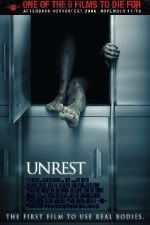
“The first film to use real bodies.”

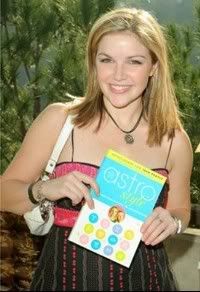
How can I or even you, as a horror movie fan, NOT just wonder what kind of depravity exists with a movie that has this kind of a tag line at the end of its trailer? It wasn’t until I really took a look at the offerings, individually, of the 8 FILMS TO DIE FOR mini-festival of sorts that are playing all over this grand land of ours that I really appreciated the chance to reach out to Corri English, star of the movie UNREST.

I know, you don’t know who she is and, more importantly, why you should read any further about some girl you don’t know but, friends, I am here on high to proclaim that Corri not only possesses the kind of spunk you need out of a woman who is more than likely going to survive the wanton horrors that no doubt are going to be inflicted on those closest to her in this film but, and some would say more importantly, she radiates a kind of sensuality tractor beam that beguiles you at first and then draws you in with her ability to be absolutely believable in the trailer even as a psychotic dead chick is trying to kill everyone in sight.

If you get the chance to see the trailer, I would highly recommend doing so. With no one you know in it, without a story written by someone without the name King or Craven attached to it and with some production values that really shine through I can honestly admit that this movie knows what it is and knows how to sell itself. The fact that you get Corri’s mammaries slung right in your face, and what a nice pink bra it is, merely adds to this film’s attraction. What’s more is that reviews of the movie itself have been quite complimentary on all levels and that says a lot in an age of disappointment after disappointment from the entries in the Masters of Horrors series.

Now, Corri has been around a very long time on the small screen with stints on Without a Trace, One Tree Hill, Joan of Arcadia, Dawson’s Creek (we’ll touch on this later), CSI: Miami and many other productions that have slowly allowed her the opportunity to ascend in her career as an actress. It’s kind of thrilling, in a sports analogy sort of way, to see what her progression has been like from rookie to seasoned pro as you look over her work. One hopes that she sees more success and I am openly grateful that she’s decided to go toe to toe with some rather absurd, yet purposely poignant, 10 Quick Questions with me. After reading her answers I am convinced that anyone who finds themselves working with Corri…better be checking their unemployment insurance. I mean, seriously, how many cancelled series can one be on before you just chalk it up to the fact that you’re the human equivalent to that Tiki idol on the Brady Bunch that damn near caused Greg to wipeout permanently on the sandy beaches of Hawaii?

This is really the first time I’ve ever consented to an email interview but, who am I kidding, after seeing the pink bra action, it was a done deal.
I also, honestly, didn’t think I see the answers to these questions come back to me.

Seriously. I didn’t. But Corri gave as much as she got and I actually learned a lot even in the span of 10 questions. UNREST is playing today, tomorrow and Sunday so do make it a point to try and see where it’s playing near you.

————————-

CHRISTOPHER STIPP: 1) Tell me about why I need to seek out UNREST this weekend. Sell me like you want me to sign on the dotted line without first consulting with the wife and her nagging whining about why we can’t afford it.

CORRI ENGLISH: Wow, it’s that bad? Dude, you can borrow the $10.75 ““ I’ll even pitch in an extra five so you can smuggle in some burritos. And tell that bi-atch she’s not the boss of you.

The great thing about Unrest is it’s eerily real. The story hits close to home in terms of recognizing one’s own mortality. Our director was a surgeon before going into movie-making, and much of the story comes from his experience as a med student. We shot in a real, working morgue, so we’re talking some lungs in a plastic container over here, eyeballs in a jar over there, and a recently deceased brought in every couple of hours awaiting an autopsy”¦let’s just say this movie has plenty of fresh meat. This movie is NOT for vegetarians. Oh, and plus my character takes her shirt off half a dozen times or so for no good reason at all. What other movie has actors skinny-dipping in a tank of dead bodies?

STIPP: 2) The most recent subject entry on the message board for your profile on IMDB.com is entitled “Shes[sic] so hott [sic]”. Besides wondering whether this particular fan needs to pick up a Funk and Wagnalls, honestly, can good looks be a hindrance for an actress looking to broaden their range, playing parts where being “hott” would draw undue attention to itself? I mean Steve Buscemi is one ugly dude yet he has played all sorts of characters but an actress like Charlize Theron had to go to EXTREME lengths to hide her prettiness in order to play a role that wouldn’t have worked otherwise.

ENGLISH: Okay, I just had to look up what on earth Funk and Wagnalls is”¦is that bad? Am I like one of those people on Leno who doesn’t know who the vice president is? (Arnold Schwartsneger, duh!) What ever happened to good ole Webster? I don’t think it’s ever impossible to make a beautiful actress look appropriate for a role, with makeup and wardrobe anything is possible. I think it is more a matter of whether the actress is willing to go there. For Monster, Charlize was willing to truly make herself ugly, not just rub some dirt on her cheeks and pose as usual. She went to a dark, ugly place ““ her facial expressions, walk, and voice were all altered to create the character. An actor who always wants to look pretty regardless of the character will always be limited. An actor who truly wants to embody a character is virtually limitless in my opinion. And those kinds of characters – that’s the good stuff, the stuff I hope for.

As for the imdb post, I’ll forgive him for the horrible spelling since he thinks I’m hott. I’ll just assume the two t’s were meant for emphasis.

STIPP: 3) Without a Trace, Joan of Arcadia, Going to California, One Tree Hill, Dawson’s Creek, CSI: Miami. With the exception of Joan of Arcadia where you managed to land 2 episodes are you just incapable of holding a job for more than a week or is there something else afoot? Myself, I think there’s something going on here with this résumé of yours but the real question I have is what do you like about working on television productions?

ENGLISH: Okay, I’m taking back my $10.75. Actually, contrary to popular belief, I worked on a WB series called The Bedford Diaries, and we got a whole 8 episodes on the air before being cancelled. So, ha!!

Truthfully, I just enjoy working, whether it’s television or film or whatever. If I can find an interesting character to inhabit, I’m happy. Doing a series was nice because you have a sense of contentment and stability that as an actor is hard to come by. You get to work every day without worrying about what is next for a moment. I’ll be right back – I’m being called to set, see this week I’m shooting a single episode of a show that just got cancelled”¦no, seriously.

STIPP: 4) Ok, I’ll share something. Last month I had my first published piece in a magazine and it was all of 75 words. I received 30 bucks for it. It was the greatest 30 dollars I’ve ever been given, Lord knows this job doesn’t pay me in anything other than free promotional items that, if I was 12, I would probably dig, but can you try and explain what it was like to get that first paycheck for acting? Any internal sense of validation that this was what you were meant to do?

ENGLISH: Oh, so are you just incapable of holding the attention of a reader for more than 75 words or is there something else afoot? Sorry, I had to. [Ed note: SNAP, Stipp!]

In the sense that being paid makes you a professional, yes, that first paycheck definitely gave me validation. On the other hand, I’ve been doing some kind of acting work since I was a kid, so I’ve gotten more validation from being able to turn acting into a real career. My goal when I came out to California was simply to be able to support myself acting without having to get another job. I’ve been lucky enough to do that (although I always thought it would be nice to get the employee discount at Starbucks), and, well, I’m happy! I like my job! A lot of people really don’t ““ so the combination makes me feel like I’m doing what I’m supposed to be doing.

STIPP: 5) You were in “3: The Dale Earnhardt Story”. There are so many obvious jokes here that I am barely able to contain my Kentucky-mud-flap mullet from raising my commemorative plastic jug mug of Schlitz in honor of them. However, I would like to know of what stood out as the biggest difference from working on a television movie like 3 and your experience on set of a motion picture like UNREST.

ENGLISH: Do you really have a mullet? Cause if you do that’s awesome. I’m from Georgia ya know, I have a plastic jug mug of my own. It’s actually funny because when I booked the role in 3, my friends and reps out here in California were like ““ “Who is Dale Earnhardt?” but I definitely got lots of cool points from the folks back home.

Honestly, the biggest difference with the two projects you mentioned is simply that in 3 I had a small supporting role and had a very light work load, whereas for Unrest, I was in virtually ever scene so I worked long, hard hours. It was up to me to carry the movie, so the stakes were much higher ““ as an actor you really just have to lose yourself in the character and the film-making for the duration of the shoot. You get your life back once you picture wrap.

STIPP: 6) Jason Todd Ipson, the director for UNREST, seems like a guy who has an unhealthy obsession for both vampires and medically based yarns, with his films The First Vampire, The First Vampire: Don’t Fall for the Devil’s Illusions, Code and UNREST comprising a large chunk of his producing filmography. Besides the writing, what drew you into this production and, if it’s applicable, and you can feel free to be honest because we’re all friends here, was it hard for Jason to not insert a vampire somewhere into this movie?

ENGLISH: No wonder Jason kept wanting me to put those damned fangs in! It’s all becoming clear to me now”¦Actually, that second vampire movie you mentioned is just the feature length version of the short film he made while in film school. I don’t know much about Code, but he actually shot a comedy after Unrest, called Everybody Wants to be Italian. It’s about an Italian guy who can’t see his reflection. Wait a minute”¦Okay, really it was the writing that drew me to this project.

When I got the script I had just read this book called Aztec, by Gary Jennings ““ which is great, by the way ““ and here was this intelligent script dealing with these Aztec gods, it was really interesting to me. And I was also just very drawn to the character of Alison Blanchard. I love the arc of the character throughout the story. She’s this very normal, vulnerable girl who finds that she’s pretty much on her own ““ so she takes matters into her own hands and becomes this evil-spirit-booty-kicking woman by the end. I love a girl who can kick a little ass.

STIPP: 7) A few of your co-stars have also gone the television route before starring in UNREST. Is the life of a working actor, and I genuinely admire your dedication to this craft, made better when a bunch of actors like you talk about what episodes of this or that program you tried out for and may or may not have landed? Or is this something that you don’t talk about and keep to yourself, the trials and tribulations of being a part of this whirlwind of showbiz?

ENGLISH: It can definitely be a frustrating road ““ you have to have tough skin because, at least in the beginning, it is all about mostly being rejected. It is nice to have friends who can empathize, and that you can vent to. But typically I don’t like to talk much about work outside of work. In fact, that’s one of the difficulties I’ve found living in Los Angeles. Like I said ““ I’m from Georgia, there are very few actors there, so no one is asking who my agent is and if I have a demo reel when I go out for a glass of wine at night. Not that I am opposed to talking about what I do, I love what I do, but there is an element of competition inherent in any “industry” conversation in this town, and that can make it hard to make real connections with people. Living here, you can never really leave work behind for an evening.

STIPP: 8) Since this is, ostensibly, the literary equivalent of a blind date can you answer a few questions that I would ask any prospective interview subject? Splendid, let’s start the querying”¦

a)What was the last movie you saw that you would recommend?

ENGLISH: That’s easy ““ Borat. [Booyakasha. This is a girl after our own heart…]

b) What movie really resonated with you as you grew up?

Grease. Yes, the one with John Travolta and Olivia Newton John. Acting out that movie was probably my first dabbling into acting ““ and what a great message for young girls, how Sandy changed everything about herself so that Danny would like her. Powerful stuff, no?

c) Favorite musical band? (If I see Air Supply consider this interview over.)

Air Supply. Does that mean I don’t need to answer the rest of the questions?

d) Whose acting career would you like to emulate if you could?

I totally want to be Meryl Streep when I grow up. I know, I know, it sounds cliché, but she is cited so frequently as the “actress to be” for a reason ““ the woman is brilliant. She has played such a wide range of characters ““ but she always brings this amazing strength to the screen, even if she does not say a word in a scene, she’s making you feel something, evoking emotion ““ and she plays strong female characters. I wanna be just like her.

e) Most embarrassing movie you will publicly admit to liking? (Myself, I’m a huge fan of the Estevez/Sheen combo MEN AT WORK and I don’t care who knows it.)

Yeah, I have a really embarrassing one ““ From Justin to Kelly, ya know, the American Idol movie? Seriously, it’s a riot. I almost peed myself.

f) Favorite color?

Yellow

g) Were you one of those drama women in high school that not only knew they were going to be an actress but had to let everyone else know it by affecting some unholy hybrid of Eva Gardner while always speaking in a faux British accent?

Lord, no. Mine was always a faux southern drawl ala Vivien Leigh. But seriously, no way. Yuck.

g) Is your boyfriend/husband/life-partner (I’ve got to cover all the bases here) also an actor?

No, no. I think that’s dangerous.

h) Have you went to the store and bought any program you’ve been on in the form of said program’s DVD and, if you haven’t, why not? Wouldn’t it be cool just to be able and show your friends that you were on Dawson’s Creek before Katie Holmes got all sorts of crazy?

I’ve personally never done that ““ my mom takes care of that. She’s got the collection, dating all the way back to dance recitals with shiny pink unitards.

STIPP: 9) What’s next for you? There isn’t a joke here. I’m genuinely curious.

ENGLISH: My next film will be out next year – it’s called Killer Pad, a horror/comedy directed by Robert Englund. It’s a hoot ““ and I got to don prosthetics for the first time, horns, tail, hump, the whole get-up. Fun stuff.

STIPP: 10) Last Question: I’m still upset that Arrested Development was taken off the air. I know a lot of people are down on what network television is doing to our collective intelligence, evidenced by people’s embracing of a game show that doesn’t require anything of its contestants other than the ability to shout out random briefcase numbers, but what do you think is needed for smart television to thrive or do you think we’re doomed to accept Howie Mandel as our gold standard and savior? I ask because you’ve been on the frontlines of many critically acclaimed programs and, in my book, qualified to offer an opinion.

ENGLISH: I, too, am still mourning the loss of Arrested Development. A whole lot of people loved that show!! I really believe that if it had been left on the air, the audience would have continued to grow.

Honestly, I think most of the problem lies in this very example ““ shows are being yanked before they have a chance to find their audience. Look at a show like Seinfeld, which did not catch on right away ““ and look at the success it had! What’s happening in tv is similar to what’s happened in the music industry ““ labels look for instant success, then yank artists who can’t make that happen right away. So you have fans that aren’t really fans, they just liked the band with the song that was played over and over on the radio. Then they move on to the next hyped band”¦ The same is happening in television.

I truly hope audiences will tire of reality television and cheesy brainless programming ““ and I hope, in the meantime, the networks give us shows that are more cerebral ““ and leave them on the air long enough for audiences to catch on.

##

Trailer Park: Eventually It Wins Over Everyone

Filed under: Columns,Interviews,Trailer Park — admin @ 12:25 am

By Christopher Stipp

Archives? Right Here…

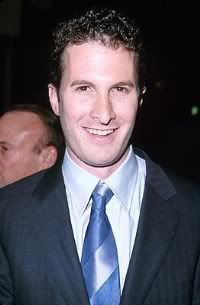
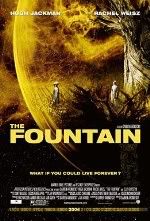
Before we get started, kids: Interested in winning an original, signed poster for THE FOUNTAIN by Darren Aronofsky? Tune in soon with details about how you can rock an original piece of authentic movie schwag right on your wall absolutely free of charge. Dozens will enter…only a few will win.

The first question I really wanted to ask Darren was whether or not he was afraid to die. I didn’t but I wanted to.

After you sit and open yourself up to what THE FOUNTAIN has to offer your soul, and no, this is not hyperbole, there is a sense that you’ve been shown something that hasn’t ever really been rendered or expressed in film before.

Yes, those of us who have been steeped in films can point out a few cinematic touchstones where the idea of death and its emotional connection to our collective experience as humans has been adequately presented. The basic thing of it, though, is that I can’t point out one movie that has pushed me as a viewer to accept the one truth about being a living, breathing person on this planet: I will die.

THE FOUNTAIN pushes even harder on this premise and puts forth the notion of being faced with a loved one’s death while being terrified of accepting death’s inevitability yourself. This movie posits some heavy ideas but it never once feels, and this is key, like this was a movie based on someone’s high falutin obsession to make an inaccessible piece of art; rather, this is about as straight-forward as you could ever be when it comes to making a film that feels like it was written with real heart and passion. Love just drips from every pore and frame of this film that it makes you feel that Darren, Hugh, Rachel and everyone involved in this production believed this was a movie that needed to be made.

To say that the film succeeds in easily becoming one of the most distinguished pictures to come out this year would be giving the word “understatement” not enough weight. This movie shows you what Hugh Jackman is really made of, what Rachel Weisz can really do with her abilities as an actress and that the world needs more filmmakers like Darren. The man could have, no doubt, turned out flicks that could’ve paid for a few houses in the Hollywood Hills and lived like a pimp if he would’ve just capitulated to studio pressure to just give up. To be honest, I don’t know if I would’ve had it in me to just stay true to thine self by ruminating on ways to make this movie happen but he did.

I know I could write about how thrilling it was to sit across from one of the premier, again, not hyperbole, directors of the past decade but all you really need to know is that when people asked me what it was like to talk to him my only response was that it was like reading a novel and then being able to sit with the author the next day to ask whatever you like regarding whatever you wanted.

If you want to know how great it was to work with Hugh or how awesomely sucky it was that Brad Pitt wasn’t in it or what we can expect on the DVD or any other questions regarding the technical aspects of this movie’s production, go somewhere else. Honestly, the movie rattled my emotional core and even though I wish we had more time than we did, I’m hoping this wasn’t the last time we would ever talk, I was all about trying to make a connection with this film’s story and to find out whether Americans, in general, have a hard time accepting that we’re all going to die.

If you haven’t already figured it out I am hoping this short conversation piques your interest in seeing this movie next Wednesday. Darren not only hopes you tell a friend or two or three to see it but this is one film that, if you do suggest it and the individual(s) don’t dig it, I am thinking it’s grounds for you to dispatch a legal beating on their person with a loaf of stale sourdough. Seriously.

Much thanks to everyone involved with Darren’s publicity team who helped make this 15 minutes possible.

DARREN ARONOFSKY: You work for Kevin?

CHRISTOPHER STIPP: Kinda. It’s for his website, actually. QuickStopEntertainment.com.

ARONOFSKY: He has people all over the place?

STIPP: Also, kinda. We’re like independent contractors who live all over the country and write on a multitude of things.

ARONOFSKY: Nice.

STIPP: I’ve been writing now for almost three years”¦

ARONOFSKY: Wasn’t it called View Askew or something like that?

STIPP: Poop Shoot. Movie Poop Shoot.

ARONOFSKY: Movie Poop Shoot. Right. Now it’s called Quick Stop Entertainment?

STIPP: Yup. Thankfully it was changed, just coming from my end of things, because it was really difficult”¦in fact, one story involves you.

I called, around November of last year, when you were making the rounds on CHUD, JoBlo, Ain’t It Cool, to try and be able and talk to you but after putting in the request and when they asked me what site I worked for, me saying “Movie Poop Shoot”, they essentially just laughed and said, “I don’t think so.” That was it until now.

And, speaking of which, I saw the movie last night…

ARONOFSKY: That was a fun screening.

STIPP: It was but I thought it was interesting that a movie like this, with the kind of heady subject matter, that you would target college kids.

ARONOFSKY: Well, I’ve always done college tours with my films, PI and REQUIEM, this the third time I’ve done one; I don’t know if Kevin does them but he’s done more movies than me so he’s probably bored of it.

I always get a good reaction at the colleges. To be honest”¦I didn’t know how it work either but it seems to really be working with the young crowds which is kind of cool and I think that’s because they’re more adventurous in their cinema.

STIPP: Very dense movie.

ARONOFSKY: Yeah.

STIPP: It’s a word I also saw popping up in the early reviews, I cried a little but by the end”¦It affected me on a level I didn’t think a film could. I know the germ of this came about with your own parents’ situation with cancer and so I’m wondering if this movie has helped you wrap your arms around the notion of death?

[Darren laughs]

ARONOFSKY: Not quite. I think it’s always a struggle and I think the film was kind”¦a beginning of an exploration by me to start thinking about these things or at least think about it in a more formal way.

STIPP: And has the storytelling aspect, when you went back and edited, thinking about your own life events in the past six years, changed how you wanted to tell this story?

ARONOFSKY: Yeah. Ultimately, the problem with film and why I’ve always liked the concept of being a musician, even though I am tone deaf, a musician when they’re creating an album, when they’re creating a bunch of songs, you can really write songs that are connected to an immediate moment in your life. Films, though, take so long that they really represent what you were thinking years ago. This film has been progressing and growing for all these years so it does represent a lot of my life for the last four or five years but I imagine all the new things that have sprouted up in my life will probably effect me on my next film.

STIPP: And, to touch on the concept of music, the score was really effective.

ARONOFSKY: Thank you and it was Clint Mansell again, who I worked with on PI and REQUIEM, and we brought the Kronos back because we needed some strings and they are just the best. Then we also got this rock band called Mogwai, out of Scotland, to add sort of a psychedllic rock element to it.

The score, I think, comes out a day before the movie.

STIPP: A lot of the great filmmakers like to keep things consistent with regard who they work with on their projects, again and again and again, like the Kronos Quartet, is that how you see your future”¦

ARONOFSKY: I love them. They’re just great to work with. They’re really great people, they’re totally experimental, they’re totally willing to take chances and go out on a limb and try new things. They just have an incredible spirit.

And, on top of that, they are the most ridiculous musicians you’ve ever seen as far as skill. You’re like listening to some rhythm and you’re like, “Is that a 1/16th?” and they’re, “No, it’s a 1/32.”

[Laughs]

“Huh?”

STIPP: I heard Rachel, to prepare, went and visited with people who were about to die and I’m wondering, on a personal level, has that experience still lingered with her?

ARONOFSKY: I think so. I can’t see how something like that can’t change you and I think every film changes us and everyone. I mean, they’re very intense experiences. Rachel, especially, had to go and see some heavy-duty stuff.

I know Hugh talks about in some of his interviews”¦I took him to see brain surgery. We went in and saw an actual brain surgery on an actual person. And Hugh, I think, had a conversation with the woman beforehand. During the surgery the doctors were saying that she was going to die and this was just a last hope to extend her life a little bit.

You’re sitting there”¦staring at someone’s brain as they’re pulling out pieces. It’s a very intense thing.

Some people see that all the time. These surgeons are sitting there doing a job, like anyone else would be doing, but they do it every day.

STIPP: Do you think”¦myself I have two daughters, and it wasn’t until I had them when I started to feel pings of my own mortality. I’m scared to do a lot of things and I think I have a problem with death. As you were working on this did you find that, as a society, we have a problem with death? With talking about it, accepting it?

ARONOFSKY: I think we’ve completely hidden it”¦Ignore it and face it with complete hubris even though it’s going to win. Eventually it wins over everyone.

We just completely deny it.

That was the interesting thing”¦When me and Rachel and Hugh would go to these hospices we would meet these caretakers and doctors and they would all say something astounding which was a lot of these young people when they got closer to death”¦something amazing started to happen to them; something similar [to what happens] to Izzie in the sense that they started to see something infinite in the finite reality in front of them but they had no vocabulary to talk about it. They had no way of explaining of what was going on because there’s just no education, and there’s no spiritual support structure in the west to help us with it.

So, as they’re going down this path the ironic thing is that the families, who are healthy, are so indoctrinated into western medicine and science are like, “You’ve got to fight. You’ve got to keep fighting. You’ve got to fight.”

Even when, at a certain point, there is no more of a fight. It’s over.

And that’s the line that’s really hard; it’s when it’s ok to let go because, ultimately, it IS ok to let go because eventually we’re all going to die. But a lot of these people, a lot of these families, become really really tough and what happens, the tragedy of it all, that the person who’s dying actually dies in a much more lonely place because they can’t at all communicate with their families. And THAT, to me was the tragedy. That informed the whole plot of the film.

In THE FOUNTAIN you have Izzie who is actually approaching some type of understanding and trying to reach her husband who is just doing the typical, normal response of like, “No, I’m going to solve this problem. I’m going to fix it and you’ve got to keep fighting.”

So, I think in the west right now we’re completely cut off from having any type of tool or any way of understanding that what makes us human and what makes us alive is that we will die and mortality is actually a part of our humanity”¦and that dying can actually be a part of our spiritual path.

[Darren smiles]

How about that? Stick that in your pipe and smoke it.

STIPP: Who do you think has stated it best? In the past six years did you come across anything that has really connected with you?

ARONOFSKY: There was some, I can’t remember what, so many cultures have dealt with it in so many different ways, but one of my favorite was”¦and I don’t think it was Norse, I can’t remember, it was some type of northern European culture that was a warrior culture. You were judged by your dying words and how clever they were; and so, on the battlefield, you would construct, basically, a lyric that, if it was unbelievably poetic, it judged what your immortality would be. There was a whole culture based on that which I thought was great.

Ari, the other guy I wrote the story with, and I read tons of that stuff.

STIPP: I guess the last question I have is that you have a lot in your life, going forward, another life to look after as well, and are you now aware of what kind of legacy you want to leave behind you?

ARONOFSKY: Yeah. Part of that is keep trying to make good work. Keep from having to compromise because there is always pressure to compromise. But I think you just have to take it step by step”¦I’m not one of those long-term planners that can think of what I’d like in fifty years for my life to have been.

I think I’d just try to think about what I want to do next and then just get it done.

Scrubs Blog: Writers’ Blog 2006 #2

Filed under: Production Blogs,Scrubs Blog — UncaScroogeMcD @ 12:15 am
scrubsheader.jpg
scrubswritersheader.jpg

Hello Scrubs fans and internet folk who accidentally mistyped “Waiters’ blog.”

For the past few months, we (Dave Tennant and Andy Schwartz) have been working as lowly staff writers on Scrubs, and as of today (November 15th, 2006), nine episodes have been shot and we’re currently working on number ten.

Make sure to tune in starting Thursday, November 30th – and, since we’re up against Grey’s Anatomy and CSI, also make sure to tell one hundred and twenty of your closest friends.

And now, for all those hardcore fans who might say: “Zach Braff?! Donald Faison?! Who cares?! I want to see me some hot photos of staff writers and their occupational digs!” Here are a few totally candid shots of us at work:

scrubs2006-11-17-01.jpg
scrubs2006-11-17-02.jpg
scrubs2006-11-17-03.jpg

And here are some photos of the most important, time consuming, and necessary part of our job.

scrubs2006-11-17-04.jpg
scrubs2006-11-17-05.jpg
scrubs2006-11-17-06.jpg
scrubs2006-11-17-07.jpg

-Dave Tennant & Andy Schwartz
Writers

##

Review: Showin’ Some LOVE In Vegas

Filed under: Articles,Reviews — UncaScroogeMcD @ 12:10 am

-by David J. Lieto (aka The Squeeg)
love2006-11-17-01.jpg(Las Vegas, NV)   When you think of Vegas – or at least when I think of Vegas – “shows” aren’t at the top of the list.  Those kinds of things are more suited to Mrs Squeeg’s liking.  Of course, I’d go to the shows with her (often times enjoying them more than I anticipated) but, in general, I rarely leave the poker pits.  That is, until I heard about this new show at the Mirage.

See, the most  recent offering by Cirque du Soleil is “new” in more ways than one.  Sure, there’s still fantastic acrobatics, great choreography, and stunning costumes, etc.  But LOVE adds an element which makes this production unique — the music of the Beatles.   Sir George Martin (Producer of nearly all the Beatles albums) and his son, Giles, spent two years assembling the music for LOVE.

“One of the challenges of the job was getting the balance of the songs right.” Sir George  adds, “We wanted to make sure there are enough good, solid hit songs  in the show, but we don’t want it to be a catalog of ‘best of’s.'” The Running Order includes songs as well known as “Help!” and “Lucy in the Sky with  Diamonds” to “Because” and “A Day in the Life.”  The addition of surround sound amplifies  the richness of the music in an intimate and unforgettable way.

As blasphemous as this may sound, you really don’t have to be a Beatles fan to enjoy the show.  Several different forms of dance are represented.  Inline skaters jump 11-ft tall ramps – jumping, twisting, and flipping.  Then there is the acrobatics involving the teeters and trampolines.  Mix this with the lighting, theme-relevant projections, and the props and you’ve got a real feast for the eyes.

love2006-11-17-02.jpg

Everything happens at the center of 2,013 seats surrounding the stage in a 360-degree configuration.  Of course, those of you who know Cirque du Soleil know the stage is only one of the planes the action takes place on.  From the moment the lights go dark the audience is pulled into the action as characters climb up from the partially sunken stage.  love2006-11-17-03.jpgThen, there is a burst of music and light.  Costumed characters enter from runways or swoop in from above.  Later in the show there are comedic interludes and a rather unique bit of audience participation.

Personally, “Lucy in the Sky with Diamonds” is my favorite segment of the show.  Here a tethered “Lucy” swoops down from above to tantalize the “Fireman” character.  What really grabbed my attention were the lights that streamed upward during the chorus as “Lucy” is yanked toward the Heavens.

As for Mrs. Squeeg, she really enjoyed the “Hey Jude” number with red poppy petals swirling first from the performers umbrellas then raining down  from above.   She is really my barometer as far as shows are concerned.  If she’s tapping her feet or mouthing the words to the songs, then I know it’s a good show.  After confirming her reaction to the show, I was pleasantly surprised  to find myself having the same reactions – and let me tell ya, being paralyzed and all, tapping my feet isn’t easy!

This is a great show.  Go see it.

Cirque du Soleil has, yet again, set a new standard for Vegas shows.

##

Weekend Shopping Guide 11/17/06: Black Books

Filed under: Shopping Guides — UncaScroogeMcD @ 12:05 am

weekendshopping.jpg

The weekend’s here. You’ve just been paid, and it’s burning a hole in your pocket. What’s a pop culture geek to do? In hopes of steering you in the right direction to blow some of that hard-earned cash, it’s time for the Quick Stop Weekend Shopping Guide – your spotlight on the things you didn’t even know you wanted…

It’s been a long wait, but I’m thrilled that the second season of Black Books (BBC, Not Rated, $24.98 SRP) is finally hitting the US. Giddy, in fact, since it’s one of the finest comedies – British or American – ever produced. Created, co-written by, and starring Shaun of the Dead co-star Dylan Moran, it centers around the twisted world of customer-hating bookshop owner Bernard Black, a man fond of drink, swearing, antipathy, anger, but definitely not customers… Imagine if Basil Fawlty’s antisocial tendencies were given full reign and a bottle of vodka. Paired with Black is new-hire Manny (Bill Bailey), a good-natured man clearly out of his element and an easy target for Bernard’s ire and ridicule – which is only mitigated somewhat by the presence of daffy friend Fran (Tamsin Greig). Crikey, how I love this series. The complete second series features all 6 episodes, plus commentaries and outtakes. Here’s hoping they hurry up and release the already-available-in-the-UK third series post-haste.

3rd Rock From The Sun was one of those shows that, despite a decent run, was cancelled before the steam had run out of the series. In some ways, I suppose I should be thankful that I was spared the often sad decline of many a once funny sitcom, but after watching the 20 episodes comprising the 6th and final season (Anchor Bay, Not Rated, DVD-$39.98 SRP), I found myself wanting more of the Solomon family’s tenure on Earth. The final 4-disc set features the alternate ending to the finale (the one that was shot in case the show somehow got a seventh season), introductions to the alternate ending, and a retrospective featurette.

It’s one thing to lovingly restore “classics” like Citizen Kane or Casablanca, but I really get excited when a seminal piece of science fiction cinema gets treated with equal respect, as Warners has done with Forbidden Planet (Warner Bros., Rated G, DVD-$26.98 SRP). The print is positively pristine, for one thing – it probably didn’t even look this speaking in theaters, and it certainly didn’t feature the 5.1 mix found here. A beautiful presentation of the film would be enough, but the 2-disc special edition also features deleted scenes, a complete follow-up vehicles starring the iconic Robby the Robot (The Invisible Boy & an episode of The Thin Man TV series), a trio of documentaries, an excerpt from the MGM Parade TV series, and trailers. If only Universal had given half this level of attention to This Island Earth, I’d be a happy man.

The real highlight of the second volumes of both DuckTales and Chip ‘n’ Dale’s Rescue Rangers (Walt Disney, Not Rated, DVD-$34.99 SRP) – besides the fact that they’ve come out at all – is that Disney managed to listen to the fan outcry over their lunk-headed negligence in including both series’ 5-part pilot storylines in their respective Volume 1 sets. Unlike the excellent TV animation sets coming out of BCI, Disney still doesn’t even take the time to put a single bonus feature on these discs, which is a damn shame considering what seminal shows these were.

“Gummi Bears – Bouncing here and there and everywhere…” If you’re of a certain ages, chances are you know every one of the lines that follow… and are probably singing them right now. There once was a time when Disney crafted some remarkable TV animation that could be enjoyed by all ages, and it all started with Gummi Bears (Walt Disney, Not Rated, DVD-$34.99 SRP). You can now own the first three seasons, but as with all Disney TV animation releases, there are absolutely zero bonus features. Disney – ring up BCI. They know how to do it right.

In what has turned into an incredibly supermonth, not only do we get the fifth and sixth seasons set of George Reeves’s Adventures of Superman (Warner Bros., Not Rated, DVD-$39.98 SRP) – wrapping up the show’s run – but we also get the fourth and final season of Lois & Clark: The New Adventures of Superman (Warner Bros., Not Rated, DVD-$59.98 SRP). The Reeves set features a featurette on Jack Larson (Jimmy Olsen), while Lois & Clark features an interactive Superman timeline hosted by Dean Cain.

Although initially put off by The Fellowship of the Ring, I was eventually won over by Peter Jackson’s epic, almost-Wagnerianly operatic filmmaking, with its immense running time and larger-than-life cinematic bombast. I had high hopes for Peter Jackson’s King Kong, hoping that its over 3-hour running time would fly by with the energy, exuberance, and obvious love for the original that Jackson has professed over the years. Unfortunately, that was not the case – instead, I found Jackson’s Kong to be overly long and self-indulgent, plodding along from effect to effect, with leaden drama (and the worst case of Stockholm Syndrome ever). It was surprising, then, to learn that an even longer extended cut would be coming down the pike (Universal, Not Rated, DVD-$34.98 SRP), adding 13 minutes of what mainly amounts to even more time on Skull Island. Despite my disappointment with the film, I will say that no one puts together bonus features as well as Jackson & company, and this 3-disc set is no exception. In addition to a wonderful commentary with Jackson and co-writer/producer Philippa Boyens (it’s more enjoyable than the film, for me), an additional 38 minutes of deleted scenes, a short film made by the cast, outtakes, brand-new making-of featurettes, a spotlight on the creation of Skull Island, video conceptual art galleries, both the 1996 and 2005 scripts (Jackson had been wanting to make Kong for years), and more. Even if you’re no fan of PJ’s giant ape, this is a nice set with some very spiffy behind-the-scenes materials.

Johnny Cash’s concert behind the prison walls of San Quentin on February 24th, 1969 is the stuff of legend second only to his gig at Folsom, and for the first time since that performance, the 3-disc special edition of Johnny Cash At San Quentin (Sony Legacy, $39.98 SRP) features 31 tracks, most of which were previously unreleased, in addition to a DVD featuring the original Granada TV documentary of the concert.

Peter Bracke’s Crystal Lake Memories: The Complete History of Friday The 13th (Titan Books, $39.95 SRP) is a comprehensive volume chronicling the history of the seminal slasher franchise, from Jason’s very first musical sting stalking of horny teenagers in an isolated summer camp to the latest efforts to revive the hockey-masked terror. For any fan of the series, it’s a must-have tome.

As environmental consciousness has been moving increasingly towards the mainstream in recent months, we’ll probably be seeing more films like Chris Paine’s Who Killed The Electric Car? (Sony, Rated PG, DVD-$26.96 SRP), which tries to uncover what exactly happened to GM’s once-promising line of electric vehicles that made a splashy debut in the mid-90’s only to me mysteriously recalled a short time later. Was it business? Was it politics? Was it something far more insidious? Bonus features include deleted scenes, a behind-the-scenes featurette, and a music video.

There’s been quite a few concert DVDs from Paul McCartney in recent years, but I think my favorite is the just-released Paul McCartney: The Space Within (A&E, Not Rated, DVD-$24.95 SRP). Maybe that’s because it’s in support of an album I really dug (Chaos & Creation In The Backyard), and it’s always a thrill to hear what good voice the 64-year-old former Beatle is in. The disc features interviews with Macca and the band, plus sound checks, the US Tour pre-show film, and a behind-the-scenes tour featurette.

Marlo Thomas is back in the complete second season of That Girl (Shout! Factory, Not Rated, DVD-$39.98 SRP), as Ann Marie’s career begins to take off (with commercials, magazine covers, and a Broadway show opposite Ethel Merman) and her relationship with Donald (Ted Bessell) becomes strong… But not so strong that the fiercely independent Ann Marie is ready to sideline her burgeoning career for marriage. The 4-disc set features all 30 episodes, plus audio commentaries, a featurette, and a never-before seen 1965 pilot for “Two’s Company” (starring Thomas).

Crikey, has it really been almost a decade since The Green Mile (Warner Bros., Rated R, DVD-$20.98 SRP) was released? Due to its massive length, the original DVD release was practically featureless – which is a shame, because it was one of the best adaptations of Stephen King’s work, and featured a clutch of amazing performances. Well, all is rectified with a new 2-disc special edition, featuring an audio commentary with writer/director Frank Darabont, a making-of documentary, Tom Hanks makeup texts, Michael Clarke Duncan’s screen test, a 6-part documentary gallery, a spotlight on the teaser trailer, and the theatrical trailers.

Alex Borstein is best known for her characters MADtv‘s “Ms. Swan” and Family Guy‘s “Lois Griffin”, but in Alex Borstein Is Drop Dead Gorgeous In a Down-to-Earth Bombshell Sort of Way (Fox, Not Rated, DVD-$19.98 SRP), she sets out to answer the question “What the hell happened to all the cool chicks on TV and in the movies?” in a live stage show that explores why the Mary Tyler Moore’s of the TV world have been replaced with the likes of Paris Hilton (What the f*** happened?) . In this hilarious show, Alex moves seamlessly and conversationally through stories, characterizations, impressions and yes, even a bit of song. From Scooby Doo’s Velma to Renee Zelwegger to Tina Turner, no one is safe from her keen eye and often bizarre take on the world. The disc also features a trip behind-the-scenes of Family Guy.

When it first premiered, I was immediately hooked on Little Britain, which played like the bastard child of The League of Gentlemen and Benny Hill. Unfortunately, by the time the third series rolled around (BBC, Not Rated, DVD-$29.98 SRP), creators Matt Lucas and David Walliams had become over-reliant on recurring one-note characters, cheap laughs, and catch phrases. Unlike The League of Gentlemen, which radically rejiggered its formula for each consecutive season while still retaining the comedic essence, Little Britain wound down with a tired thud – which is unfortunate, because Lucas & Walliams are appealing performers. I hope they can reinvent and reinvigorate themselves in the near future. The 2-disc set features highlights from the BBC’s Little Britain night, audio commentaries on all the episodes, deleted scenes, a Richard & Judy interview with Matt & David, a Heresy radio episode, and David on Top Gear.

While not the seasonal sets most fans were hoping for, there’s no mistaking that – much like their Sgt. Bilko set earlier this year – Paramount has attempted to put together a rather nice package for their 3-disc Gunsmoke: The Directors Collection (Paramount, Not Rated, DVD-$36.99 SRP). In addition to the 15 remastered episodes (directed by the likes of Arthur Hiller, Robert Stevenson, Dennis Weaver, Peter Graves, William Conrad, and Victor French), there’s also audio commentaries from a selection of the directors in question, an Amanda Blake interview from The Mike Douglas Show, CBS radio broadcasts, a soundtrack scoring session, and more.

Babylon By Bus (Penguin Press, $24.95 SRP) is one of those stories that is just unbelievable enough to be absolutely – and amazingly – true. Bus‘s true story focuses on a pair of Boston schlubs named Jeff Neumann & Ray Lemoine who, on the spur of the moment, decide that high adventure is the order of the day, and its to be found in post-liberation Iraq. Arriving shortly after the fall of Baghdad when reconstruction was still a seemingly workable thing, they found an often lawless, surreal ball of confusion torn between the American military presence, the citizens of Iraq, the insurgents, and the increasingly unstable relationship amongst them all. Their memoir (written with Donovan Webster) is at times funny, at times disturbing portrait of the region from a pair of modern, everyday observers who find themselves caught in the mess.

After five years and dozens of leaps, Dr. Sam Beckett faced hi final batch of televised adventures in the final season of Quantum Leap (Universal, Not Rated, DVD-$49.98 SRP). The show had its ups and downs, but the ending is a sucker punch that I still feel, all these years later, that ranks right up there with the brutal slap across the face that wrapped up The Wonder Years. Sadly, there’s not a single bonus feature in sight, but at least another TV series has managed to eke out its full run on DVD.

As I eagerly await this year’s Doctor Who Christmas special, I can bide my time with another pair of classic adventures on DVD – The Mark of Rani (BBC, Not Rated, DVD-$24.98 SRP) from the Colin Baker years, and Tom Baker’s Doctor in The Hand of Fear (Warner Bros., Not Rated, DVD-$24.98 SRP). Bonus features include audio commentaries, behind-the-scenes documentaries, continuity announcements, vintage featurettes & interviews, and more.

Jumping on the bandwagon begun by companies like Warner and Fox, Universal has begun to mine their incredible film archives and issue some very nice collections of more obscure catalogue titles grouped under a given film icon. Their latest in what they’ve labeled the Screen Legend Collection (Universal, Not Rated, DVD-$29.98 SRP each) spotlight 5 films apiece from Bing Crosby (Waikiki Wedding, Double or Nothing, East Side of Heaven, If I Had My Way, Here Comes The Waves, Cary Grant (Thirty Day Princess, Kiss and Make Up, Wings In The Dark, Big Brown Eyes, Wedding Present), and Rock Hudson (Has Anybody Seen My Gal, A Very Special Favor, The Golden Blade, The Last Sunset, The Spiral Road) in 3-disc sets.

I think I’m falling out of love with Family Guy. I used to be a big fan, and would laugh at its often absurd left-field stream-of-consciousness writing style, but with the episodes featured in the fourth volume (Fox, Not Rated, DVD-$39.98 SRP), I’ve become weary of the often senseless storytelling and paper-thin characters. It reminds me of a bad season of SNL, when the writers throw anything at the screen – overused catchphrases, included – and hope that something sticks. It’s just lazy, and it’s unfortunate – because I did like the show. A lot. Come back to me, Family Guy. The 3-disc set features audio commentaries on all 14 episodes, deleted scenes, featurettes, an optional censored audio track on 5 episodes, and multi-angle scene studies.

I still, for the life of me, can’t understand the appeal of The Da Vinci Code (Sony, Rated PG-13, DVD-$29.96 SRP). It’s a turgid, uninvolving, hack-pulp novel that seemed to have latched onto airport-zeitgeist and made a multi-millionaire out of its author, Dan Brown, and stirred biblical controversies that leave me completely uninterested. The same can be said of Ron Howard’s equally turgid adaptation, starring a shaggy Tom Hanks as symbologist Robert Langdon, hot on the trail of something or another having to do with a church conspiracy to cover up the concept that Jesus knocked up Mary Magdalane. Okey dokey. The 2-disc special edition features behind-the scenes featurettes, a first-day diary with Ron Howard, and conversations with Hanks and Brown, and more.

Like most shows that take the awkward plunge into the abyss of romantic tension dispersment by hooking up their opposites attract couple, by the 5th season of Northern Exposure (Universal, Not Rated, DVD-$59.98 SRP), Dr. Joel Fleischman (Rob Morrow) and Maggie (Janine Turner) were a seemingly permanent fixture around Cicely, Alaska – with all of the dramatic confusion that usually entails. Of course, this also turned out to be the penultimate season, and by the following year, Morrow (and Fleischman) would leave the show mid-season, and things would limp to an awkward close for the eccentrics of Cicely. The 5-disc set features all 24 episodes, plus almost 40 minutes of deleted scenes.

Dig into the sitcom stacks this weekend with the complete sixth season of The Golden Girls and the fifth season of Home Improvement (Buena Vista, Not Rated, DVD-$39.99 SRP each). Golden Girls features conversations with the cast from the Museum of Television & Radio, while Home Improvement sports a blooper reel.

While not up to the level of a college classic like Animal House, Accepted (Universal, Rated PG-13, DVD-$29.98 SRP) is an affable comedy that – while no work of genius – is genuinely enjoyable if taken as a throw-away laugher. When a schlubby high school student gets turned down by every college on his list, he decides to do what any aspiring academic would – start his own school. The South Harmon Institute of Technology is a bizarro reflection of college life, with the students in charge. Bonus features include a making-of featurette, deleted scenes, and a gag reel.

Yeah, yeah, yeah – the second season of NCIS (Paramount, Not Rated, DVD-$64.99 SRP) still features the same kind of pulse-pounding anti-espionage, anti-terrorism stories, but the real reason for watching the show is to support the continued career of Mark Harmon. I do it for the man who gave us Summer School. The 6-disc set features a quartet of featurettes (“Investigating Season 2,” “What’s New In Season 2,” “The Real NCIS,” and “Lab Tour with Pauley Perrette”).

Anyone expecting a frothy romantic comedy out of The Break-Up (Universal, Rated PG-13, DVD-$29.98 SRP) will be in for quite a shock, as the bubbly laugh-fest of the trailers is actually a rather dramatic tale of a disintegrating relationship – that of Gary & Brooke (Vince Vaughn & Jennifer Aniston) whose break-up eventually manifests itself as a bitter struggle for their shared apartment. Think of it as a take off on The War of the Roses, but without the humor. Bonus materials include an alternate ending, deleted scenes, audio commentaries, and more.

As train wreck television goes, the second seasons of Flavor Flav’s search for a mate, Flavor of Love (Paramount, Not Rated, DVD-$38.99 SRP) has got to be near the top of the list. When one of your prospective paramours has to be excused to use the bathroom, you know you’re on a roll. The 3-disc set features all 11 uncensored episodes, plus bonus scenes and interviews, plus a bevy of behind-the-scenes featurettes.

So there you have it… my humble suggestions for what to watch, listen to, play with, or waste money on this coming weekend. See ya next week…

##

Quick Stop Thingamabobs: 11/17/2006

Filed under: Columns,Thingamabobs — UncaScroogeMcD @ 12:00 am
thingamabobs.jpg

The web. It’s a big place, full of plenty of distractions ““ some funny, some informative, some ludicrous, some disturbing, some inane, some profound. Each and every weekday, we present links to a few of our favorite finds”¦

————————————————

  • Sucks Less, episode 4. Go. You watch now. (Thingamabob)
  • Legendary Disney animator Ward Kimball – on a game show. (Thingamabob)
  • Kaspar Huaser Comedy Podcast – solving the problem of white literacy, one joke at a time… (Thingamabob)
  • Treadmill stupidity – Darwin would be proud… (Thingamabob)

Have a THINGAMABOB? Send it in!

##

November 16, 2006

The Fred Hembeck Show: Episode 81 – Best Episode Ever!

Filed under: The Fred Hembeck Show — UncaScroogeMcD @ 12:10 am

fredhembeckheader.jpg

A couple of weeks back, I got an excited call from Ken Plume. Ken, y’see, is the fellow who is – among his many other duties here at Quick Stop – responsible for overseeing The Fred Hembeck Show (as well as keeping my daughter supplied with Billy Joel mp3s…). And beyond that, it seems he also conducts in-depth interviews – a truly multi-faceted individual!

Well, the news he had for me that evening concerned just WHO he had been happily chatting over the phone lines earlier that week – none other than Tom Kenny!

While Tom Kenny may not be a household name in YOUR household, he sure is in mine! Tom, in case you didn’t know, is the voice of SpongeBob SquarePants, and people, THAT’S a name I KNOW you’re all familiar with!

fredhembeck2006-11-16-01.jpg

But Ken wasn’t just alerting me to his latest celebrity conversation because he knew me to be a major SpongeBob fan. Oh no – he was calling to report that, besides delving into the making of the recently released SpongeBob CD, The Best Day Ever, he and Tom had even spent a few minutes discussing (of all things) ME!

Wow!

The thing is, though, I sorta figured maybe my name just came up briefly, y’know, as the call wound down? I never actually expected it to turn up in the published piece! But last week, when Ken finally posted the interview on-line at Quick Stop (you can read it by going here), much to my surprise, there I am, all over the fourth page of the discussion!

Allow me to reprise a few pertinent excerpts of what the oh-so-kind Mr. Kenny had to say about yers truly…

Even as a kid, a younger teenager, I always liked his Dateline @#$% and stuff that he did. I love that stuff. I thought it was so great. Then when The SpongeBob Movie came out and they put out the soundtrack, they needed a couple extra filler tracks and Andy and I had just begun work on what would become the Best Day Ever album, but Hillenburg heard our songs, they needed a couple of songs to pad out the soundtrack album, and he said how about “Best Day Ever” and Patrick’s “Under My Rock.” So they kind of cherry picked those songs and put them on the movie soundtrack. And then “Best Day Ever” wound up on the closing credits of The SpongeBob Movie. Which was never intended. They were kind of works-in-progress at the time, but they just needed filler for the soundtrack album. Hembeck, on his column – and somebody steered me to it – just raved about those two songs. Just said, “Wow, these are great,” and he’s a Beach Boys freak, and he said, “I pulled over the car and I looked at the CD booklet. And I’m like, ‘Who is responsible for these songs? Why is this so perfect?’ And I saw Tom Kenny, the voice of SpongeBob, wrote the songs, and Andy Paley who’s done Brian Wilson’s best post-Beach Boys work,” and it was just amazing to read somebody that connected all the dots in a way that nobody ever had. Nobody at Nickelodeon gave a shit. Nobody at Paramount gave a crap about those two songs, or probably never even listened to them. And Hembeck just got everything and really listened and connected the dots and knew what we were trying to pay homage to.

He was the first and only person who gave a shit about our two songs on that. Everybody talked about The Flaming Lips and Wilco, and no reviewers even mentioned our songs when they’d review the album and then…

Then Hembeck did a review that only talked about our songs, and again it was like that Earth-2, Comic-Con universe where it’s like, “Great!” And he was so perceptive about where we were stealing our shit from, that it was great. But so positive.

I’ve been wanting to call him for two years. I’ve been wanting to e-mail him or write him a letter or something for two years because he was the first person who was enthusiastic about what we were doing. It was one of the things that got our mental ball rolling for, “Wow, maybe it’d be cool to do a whole album of this shit.”

His review to me means more than USA Today.

Well, as you could probably imagine, I was totally floored by the above comments! Especially the part where Tom credits MY review of his work on the movie soundtrack CD as at least some small impetus for his latest musical endeavor!

I know I said it earlier, but I truly believe it bears repeating: Wow!

fredhembeck2006-11-16-02.jpg

Hey, it may not be quite the same as inspiring the likes of Revolver, Born To Run, Dark Side of the Moon or Get Away From Me, but friends, I’ll gladly take it! (And just as an aside, I must confess that, in the course of their chat, Ken gives me far too much credit in relation to my knowledge of musical minutia. The truth is, beyond the likes of James Burton, Carol Kaye, and Hal Blaine, I really don’t know my sixties era session players by name as the overly-enthusiastic Mr. Plume implied! Sorry – though I CAN name pretty much all of Jack Kirby’s inkers, and that’s gotta count for SOMETHING, right?…)

Anyway, full review of the new CD to follow (sans the annoying USA Today pie chart, of course…), but first I thought, as a public service to the cyber-shy Tom K, I’d offer up a trio of entries from the back pages of my unorganized “Fred Sez” blog, all dealing with (no surprise here, Einstein) his lemon-hued absorbent alter ego. Another time for the Kirby embellishers, okay?…

fredhembeck2006-11-16-03.gif

First up, we hearken way, way back to March 19th, 2003, when I first attempted to explain to a largely disinterested world the origin of my ongoing fixation with the yella fella…

———————————————————————

It’s a SpongeBob SquarePants world – we all just live in it! You, me, and Jim Starlin alike!

That’s right – I’ve linked the names of Stephen Hillenburg’s lovable nautical Nick sensation with that of comics legendary leveler of multiverses. Why? Well, it all goes back several years now…

I’ve mentioned Julie from time to time. My kid. Like any other kid, she watches her share of TV – though being a pretty active one, usually only as a last resort. But when she does plop down in front of the tube, odds are that the dial is switched to Nickelodeon. Over the years, she’s tuned into just about every program they’ve aired, including all the cartoons – CatDog, The Wild Thornberrys, As Told By Ginger, The Angry Beavers, Hey Arnold!, Rocket Power, and, of course, the always popular Rugrats. None of ’em ever did a thing for me. Of course, I generally didn’t sit down and actually watch a full episode all the way through with Julie – y’see, having her attention focused on the tube usually gave me a rare couple of minutes to myself!! Especially when she was younger, she kept me hopping, so I took my breaks when and where I could get them. Usually, I was located nearby, so I HEARD more than my share of the aforementioned animated series, and frankly, I was never felt motivated to investigate any of them much further. I relished my downtime instead. Ah, the peace and the partial quiet…

Then one day Julie came up to me and said Nickelodeon had a brand new cartoon, one I just HAD to see!! I was skeptical, but just to keep the conversation moving along, I casually asked, only half caring, what the name of this new masterpiece was.

SpongeBob SquarePants“, she said.

…? What? WHAT was that? Well, she repeated the name, a name that combined four separate words in a configuration that, given all the time in the world to consider, I NEVER would’ve expected to hear in the same phrase!! Needless, to say, she now had my full attention. I was so stunned by what I’d heard, I initially accused Julie of making it all up (if only…), but once I was assured by a quick glimpse at the program listings in the TV Guide that this SpongeBob SquarePants did indeed exist, it was just a matter of time, waiting for the next scheduled broadcast to begin. My curiosity had been piqued.

All this time later, I’m not sure what I expected from my first exposure, but I certainly didn’t expect to be so totally entranced, I can guarantee you that!! I do recall that upon seeing the little guy for the first time, I pegged him as a rip-off of one of Robert Crumb’s Snoids, a notion I’ve never been totally able to shake (in fact, there’s an actual episode – the one in which our star vainly attempts to write an essay – that offers a knowing wink at this accusation. Crossing the screen to get a pencil, SnoidBob looks directly at the viewer, smiles, and carries himself to his destination in an exaggerated “Keep On Truckin'” fashion!!)

Getting past that initial impression, I found myself continuously surprised by what I saw. Frankly, I’d never cared for the other animated Nick fare largely because of the generally unattractive designs utilized for the characters. It limited my enjoyment. But here in Bikini Bottom, all the denizens seemed to posses the fluidity of classic cartoon characters – and the animators weren’t at all shy about putting their malleability to good use in the pursuit of surrealistic silliness!! The stories, over time, came to remind me of the simple, direct sitcoms of my youth: The Honeymooners, I Love Lucy and most especially, the antics of those two classic comedy teams, Laurel & Hardy and Abbott & Costello. A small plot point would quietly unfold, and then slowly be elaborated upon exponentially, the laughs amassing as the situation increases sky high in absurdity!! And all done without the sort of rude or mean-spirited gags all too typical of today’s entertainment! Wow! In this day and age – who’da thought it possible?

And then there was that voice! Do they dole out Emmys to voice actors?? If they do, Tom Kenny should get a passel! His expressive yet distinctive tones run the gamut of emotions, inducing a smile with each and every one!! As do the talented folks who portray Patrick, Mr. Krab – purveyor of the Krabby Pattie – Sandy, and, omigosh, Squidward!!! Culture lovers, I have to admit it – I was won over, and I was won over big-time!!

Remember how I said this was a couple of years back? How the show had just hit the airwaves? Well, I felt as if I’d discovered buried treasure, and I wanted to share my find with all my friends and colleagues! Towards that end, I started proselytizing the virtues of SpongeBob at the ongoing volleyball game I gamely participate in. Confronted with the absorbent actor’s jaw-dropping nomenclature, most of my buddies thought I was making up the ridiculous name (and to reiterate my earlier comment, I wish…), so to prove my veracity, I had to go home, tape an episode, put the tape on pause, and quickly whip up a black and white sketch of the squeezable star to bring with me the following week to appease all my doubters!! Whew!! Can you imagine? A time when the image of SpongeBob wasn’t all-pervasive in our culture? When, if you wanted a picture of Senor SquarePants, you had no alternative but to draw it yourself?!? Man, were those ever the dark days…

fredhembeck2006-11-16-04.gif

I brought along the picture to our next gathering. Having previously played up this new character as perhaps the greatest breakthrough in animation since Winsor McCay embarked on a traveling show with Gertie the Dinosaur, it didn’t do very much for my credibility. Frankly, the group began to look at me funny. Okay, I mean, even MORE so than usual. I think they thought I was nuts. They’d never heard of this character, and if not for me, I’m sure they figured, they probably never ever would have. So, I just shut up and played the game…

A little bit of time passes in our tableau. Several of the more adventurous amongst the regulars deign to dial over to Nickelodeon to see what all my fuss was about. The initial results were underwhelming. Consequently, I’m receiving more odd looks than usual. Then, a rift breaks out between factions of cartoon connoisseurs – a friend I really thought might like SpongeBob didn’t. Found it not at all to his tastes, I was made to understand. He instead much preferred the Cartoon Network’s Power Puff Girls, a series I, as it turns out, have never managed to work up very much enthusiasm for. This led to a very peculiar – some might say “pathetic” – sight: two grown men heatedly debating the merits of SpongeBob SquarePants versus the Power Puff Girls!?! Truthfully – are there ANY winners in THAT argument?!?…

And then, the breakthrough. One fine game day, Jocular Jim Starlin – yes, the man who killed Captain Marvel, re-invented Warlock, and gave the comics world it’s first bald super-heroine, the folically challenged Moondragon – came up to me with a piece of paper he’d clipped out of the latest edition of Newsweek. It was from their Newsmakers page, and it heralded the arrival of a new star, my old friend SpongeBob SquarePants. Jim smiled as he handed it to me, and while I don’t recall exactly what he might’ve said, I’d like to believe this was his way of showing me that he didn’t consider me nearly as crazy as he once might have!! Or if he did, here was legitimate proof that I wasn’t alone in my madness!! It was a moment of great satisfaction, and that little clipping would henceforth spend the next several years taped to the front of our refrigerator, coming down only when time and errant squibs of Tropicana orange juice demanded it’s removal. (…but no, Jim never became an acolyte. I’m gonna argue with the man who decimated Jason Todd?? I may be crazy, but I ain’t NUTS!?!…)

Now he’s EVERYWHERE!! No, not Starlin – SpongeBob!! And for once, I can proudly say I didn’t follow a trend – fact is, I may well have STARTED it!! Um, well, okay, sure – AFTER Julie told me about it, of course, but heck – she’s got her own section here at the site; if she wants to grab credit, let her do it over there!! Meanwhile, let me pleasantly revel in my prescience. The biggest cartoon sensation since The Simpsons, and I knew it before anybody!! (…Is it time to use the word “pathetic” again?…) All kidding aside, I’m happy for the folks behind the scenes, and both my daughter and I continue to enjoy the undersea antics of the submerged superstar and his friends!! (Which, at this point in her young and potentially rebellious development, is an increasingly rare instance of the two of us digging the same thing! Thank you, SpongeBob, for giving me a welcome conduit to my growing child!!…)

Y’know, we spent a week at the Jersey shore last summer, and up and down the boardwalk, all one could see hanging from the multitude of gaming booths was a veritable sea of stuffed SpongeBobs, with a few Spider-Mans thrown in mostly to break up the monotony! (…Didn’t spy any Power Puff Girls merchandise, I might well point out! Hah!…) In addition to all the toys, band-aids, party goods, and even food bearing our boy’s likeness, word is, the hottest new variation on America’s most popular doll is the SpongeBob SquarePants Barbie!! (No, she’s not square and absorbent, merely wearing a dress festooned with the yellow fellow’s image, accompanied by her very own SpongeBob throw toy!! Can a Squidward Ken be all that far off?…)

And howabout the show-stopping guest-shot Mr. Pants made on last weeks “X-Presidents” entry over at Saturday Night Live?? For those who missed it, X-president Reagan proposed the manufacture of propaganda cartoons not unlike the anti-Japanese ones Bugs Bunny starred in back during WWII to help sway positive public opinion towards engaging Iraq in armed conflict. To that end, he brings out Spongy – voiced and most likely animated by all his regular crew – who, true to character, balks at his new role, protesting that their depiction of Arabs is, well, racist! (It was. That was part of the joke…) Immediately put under lock and key by the no-nonsense Ronnie, a rescue is attempted by… The Power Puff Girls? Hm. Things don’t go all that well for our cartoon friends, but in the end, it makes for a sharp and satisfying piece of political satire!! Again, who woulda thought??

Can you believe I’ve written all this because, at the outset, I merely wanted to alert the comics fans in the audience to a publication they may not be aware of – but well should be?? Haunt the newsstands, Silver Agers, because you don’t want to miss the third in what appears to be one of Nick Mag’s semi-annual SpongeBob SquarePants Specials!!

fredhembeck2006-11-16-05.jpg

Chock full of cutting-edge comics creators – Roger Langridge, Sam Henderson, Mark Marek, and James Kolchalka, amongst others – the REAL treat comes when you get to the three page “Mermaid Man and Barnacle Boy” adventure. You might recall this pair as SpongeBob and Patrick’s favorite heroes, and were drawn in outfits EXACTLY like Aquaman and Aqualad’s, save for a starfish covering Mermaid Man’s nose, a few shells on his chest, and a hat and domino mask for his younger partner!! Well, for this thrilling installment, the fine folks at Nick have lured the Great Ramona Fradon out of retirement to contribute the artwork – and lemme tell ya, it looks just as good as the stuff DC Comics recently issued in their premiere Aquaman Archives Volume One!! I know I’ve been a little…harsh on the Sea King over the years, but even I can appreciate the sentimental if slightly skewed reunion taking place betwixt creator and character!! Heck, even my Power Puff Pal bought a copy!! I wholeheartedly advise the rest of you to run out and do so as well!

fredhembeck2006-11-16-06.jpg

Or look for a copy on eBay, I guess…

——————————————————————–

Fast forward with me now to November 21st, 2004, and my reaction to the spongy one’s big screen debut…

——————————————————————–

Yeah, yeah, I know – The Incredibles.

Don’t worry, I’ll get around to seeing what’s shaping up to be the best reviewed animated film EVER eventually, honest. But in the meantime, I’m here to report that yesterday I transported a contingent of rabid fans – in whose number I proudly count myself – to a matinee showing of The SpongeBob SquarePants Movie, and I’m happy to say, NO ONE was disappointed.

Long time readers of “Fred Sez” might recall me recounting the tale of being turned on to the Nick Toon in its virtual infancy by my daughter Julie, and immediately falling under the spell of the energetic, good-natured silliness that’s at the heart of its now broad appeal. Understand that this was SO early on that, in order to explain to my friends at our weekly volleyball game what I was ranting about, I needed to actually tape an episode, freeze frame just the right pose, and then draw a copy of what was up on the screen myself, all merely in order to show the uninitiated just WHAT a SpongeBob SquarePants was!!

Stop and consider that notion for a moment: there was once indeed a time when you literally could not find a visual image of the little guy anywhere, save for the earliest, intermittent broadcasts of his nascent program!

And NOW, well…

Now he’s everywhere, including the big screen. Oh, there’s been a certain amount of backlash due to his overwhelming presence on the current cultural landscape – I’ve heard more than one parent bemoan his very existence, much the way the ever pervasive Barney got slammed similarly a decade earlier. I contend that these folks either haven’t actually sat down and absorbed (if you’ll excuse the pun – or even if you won’t…) an episode, or they’re likely the kind of people who automatically turn their noses up at most anything that could be conceived to be of a childish nature. But perhaps this movie will finally convince enough of those unbelievers – the film appears to be getting generally good, if not Incredibles reviews – of the character’s innate worthiness, see?

Lynn and I took Julie and two of her pals (all aged fourteen, for those of you keeping score at home) to see the Saturday afternoon showing (we would’ve gone opening night, save for a conflict the girls had with a dance). Me and the missus went in and got our seats while the kids waited out in the lobby for another buddy to join them, and by the time she showed, the only good seats left were the ones directly behind us. This allowed me the unique ability to gauge their reaction to the movie. But first we all had to sit through something new, or at least something I’d never encountered before: a loosely connected series of commercials for upcoming DVDs, video games, TV shows on NBC, the Sci Fi Channel, and the Cartoon Network, a creepy car ad that sprung the long-dead Steve McQueen on us unexpectedly, and of course, plugs for the lobby’s candy and soda, all under the umbrella title of “The Twenty” (which was either it’s length in minutes, the number of ads it inflicted upon us, or most likely, both…)

Then, finally, the lights went down and we STILL had to sit through the requisite half-dozen trailers of future presentations (the concept for the upcoming live action Fat Albert movie looked mighty peculiar – and it was hard to tell if that was a good thing or a bad thing. But it was definitely an ODD thing…) The main event hadn’t even started yet, and already I was worn out from all the visual stimuli that we’d been bombarded with. Was this going to affect my potential enjoyment of our little yellow friend’s cinematic debut, I fretted?

I needn’t have worried. Commencing with a cleverly off-kilter opening live-action sequence set on a pirate ship, once the laughs started, they never truly stopped! While the plot was little more than your standard quest chestnut – SpongeBob and pal Patrick must find King Neptune’s missing crown in order to save the life of the unfairly condemned Mr. Krabs – it served as the perfect template for any number of hilarious set pieces.

(One favorite: while attempting to retrieve the key to their hijacked Patty Wagon – long story – in a bar full of thugs, the pair inadvertently break the dive’s one cardinal rule, allowing a bubble to float out of the soap dispenser in the washroom. The head hard case proceeds to line up everybody in the bar, and begins playing the “Goofy Goober” theme song on a turntable, knowing full well that no “babies” – as he likes to call them – can resist joining in for long, and once they do, he’ll have his bubble blowing culprits dead to rights! Well, just watching the animated agony of our two stars as they try mightily to resist the siren song of the Goofy Goobers had me laughing uproariously! Silly, yes – but exquisitely executed as well….)

fredhembeck2006-11-16-07.jpg

Patrick, in fact, has some of the funniest moments in the entire film. As someone who makes SpongeBob look like a prime candidate for the Bikini Bottom chapter of Mensa, his dumber than thou reactions to most any mundane situation can easily evoke a guffaw. Watch for his deliciously ridiculous encounter with Neptune’s daughter, as he finds himself immediately and totally smitten with the young mermaid. Believe me, love never looked so stupid. And in a moment towards the end of the film that had children and adults in the audience alike howling, our pink pal receives an… unexpected wardrobe modification, one I won’t otherwise spoil for you.

When the end credits began to roll, I heard Julie’s friend Lisa say, over and over again, almost in a reverential tone, “That was the BEST movie I’ve ever seen…” I’m not willing to go QUITE that far – in fact, I’d even be willing to admit that, sight unseen, The Incredibles is probably a better piece of cinema – but this was anything but a quickly churned out, simply elongated episode of a kid’s cartoon show. Thanks to the efforts of creator Stephen Hillenburg and all the talented writers, animators, and voice artists – with Tom Kenny and Bill Fagerbakke leading the pack in their roles of SpongeBob and Patrick – The SpongeBob SquarePants Movie should spawn an entire series of wildly inventive and gloriously fun-filled sequels!!

So, I guess my advice to you is simple: go see it!

And maybe – just maybe – I’ll get the whole group together again to take in a showing of The Incredibles sometime real soon, okay?…

————————————————————-

Eventually I did see it, and y’know, maybe it was just a case of having to wade through the overwhelming amount of praise heaped upon it, somehow making me involuntarily react contrary to the masses, but I wasn’t as impressed by The Incredibles as the vast majority seemed to be. However, I’m here to praise SpongeBob, not bury The Incredibles, so let’s put aside THAT controversy and complete our visit to the past with the toon’s tune review from November 28th, 2004 that caught the eye of music-minded Tom Kenny in the first place…

————————————————————-

There’s probably nothing more delightful – or satisfying – than when two of my many seemingly disparate obsessions unexpectedly collide and combine to make for one near transcendent – if oft times silly – sensation.

Just such a magical moment occurred earlier this week, shortly after I eagerly purchased a copy of the brightly colored CD you see below.

fredhembeck2006-11-16-08.jpg

By now, you’re all at least peripherally aware of my allegiance to friend SpongeBob, of whose big screen debut I raved about not long ago. And you might recall the glowing review I gave Brian Wilson’s SMiLE last month. Well, no, this soundtrack collection ISN’T the next SMiLE, but it does include any number of gems in its 15 selections. Fine, fresh tracks from the likes of The Shins, The Flaming Lips, Wilco, Avril Lavigne, and (gulp) Motorhead are judiciously mixed in with cuts either utilizing dialog clips from the cartoon, or the actual voice artists themselves, singing happily in character. And, gang, THAT’S where the fun begins!…

We initially listened to this CD while driving over to Grandma’s for Thanksgiving dinner, and I was immediately taken by “The Best Day Ever” (sung by Tom Kenny as SpongeBob), and “Under My Rock” (performed by Bill Fagerbakke as Patrick). The two tunes – aside from the unavoidably goofy vocals – sounded exactly like something piping out of a hand-held transistor radio, circa 1965/1966!! The SpongeBob solo was especially reminiscent of the “Help Me Rhonda”/ “Wouldn’t It Be Nice” era Beach Boys, replete with echoes of Boss Boy Brian’s trademark Spector-like wall of sound, exotic percussion included. Throw in a few hints of the organ flourish from the Monkees’ “I’m A Believer”, wed them to some gloriously sunny lyrics, sung with undeniable enthusiasm by the faux sponge, and you have yourself a perfect piece of pastiche, one whose enjoyment upon repeated listenings admittedly hinges on your own personal tolerance of Kenny’s high-pitched (yet tuneful) voice characterization. Me, I could just listen to him all day, but I’ve been told that not EVERYONE feels the same way. Huh – hard to figure…

Patrick’s “Under My Rock” is far broader lyrically, and not nearly as ambitious musically. Still, an authentic British blues rock feel is nicely achieved with the aid of some harmonica and a concise guitar rave-up. Why, you might even think this number was the Yardbirds, the Animals, maybe even the Stones themselves – if it weren’t for THAT voice. While Brian Wilson could himself conceivably croon “The Best Day Ever”, there’s NO way Mick – or anyone else for that matter – could attempt a go at “Under My Rock”, since the words are laser specific to Patrick (who, for those not in the know, is a starfish who lives under a rock and has nearly the same I.Q. as one). Fagerbakke talk-sings the comedic couplets as the back-up band blisters in the background, easily eliciting laughter and furious toe-tapping simultaneously.

Midway to our holiday destination, I couldn’t help but wonder: just WHERE’D these things come from anyway? So, to satisfy my curiosity once and for all, I asked Julie to hand me the CD case from the back seat so that I could check out the credits in the little booklet that came with it.

Imagine my surprise when I discovered that both tunes were the work of the freshly-minted songwriting team of Tom Kenny and Andy Paley, with the latter responsible for the production on this pair of retro tracks. Paley, you see, is a long-time music biz veteran and is perhaps most celebrated for his collaborations with – uh huh – Brian Wilson on two of the ex-Beach Boy’s highly regarded solo albums (one of which was never officially released, but that’s a whole ‘nother story…). No wonder these two cuts so precisely – and lovingly – aped an era. Paley – who’s also worked with acts ranging from NRBQ to Madonna – invested each piece of fresh nostalgia with his considerable expertise – and while that doesn’t make Music From The SpongeBob SquarePants Movie and More the next SMiLE, it should make it of at least passing interest to those of you out there who thrive on the sounds of deliciously replicated sixties era surf pop – even when it IS sung by a squeaky voiced cartoon character!!

(This isn’t the first time the SpongeBob braintrust has wandered off into such celebrated waters, by the way. A memorable first season cartoon episode featured a brilliant, non-Paley Beach Boy send-up called “I Ripped My Pants” (..don’t ask…). From its ersatz “Be True To Your School” melody right on down to its tell-tale reverbed tambourine intro that spot-on duplicates the wistful opening to the unforgettable “Caroline, No”, its long been evident to this viewer that the folks who mastermind Bikini Bottom’s inhabitants have a deep and heartfelt appreciation for the music of their land-based surfing counterparts.)

(One warning, though: the CD also features “The Goofy Goober Song”, the very number whose key plot-turning sequence in the film I spotlighted in my recent review. Just as the thugs challenged their terrified listeners not to sing along with the tune’s inane melody – snatches of the very self-same dialog are in fact included on the CD track – you’ll most certainly find yourself unable to resist, and you’ll soon be helplessly wandering about your house, musically muttering, “I’m a Goofy Goober” under your breath, over and over. Hey, there’s no shame in it, folks – it happens to even the, ahem, strongest of us…)

———————————————————-

Okay, folks – that brings our little swim down memory lane up to shore and to a close. Now it’s time to take a closer look at some NEW product – namely, the Best Day Ever CD.

Simply put, it more than delivers on the promise the title tune and “Under My Rock” hinted at when those pair of tracks snuck their way onto the movie soundtrack a few years back. Clocking in at little over fifty minutes, the aural experience is structured to ape the broadcast of a sixties Top Forty DJ, as disc-master Al Bacore (Jerry “The Geator” Blavat) introduces tunes from each member of the water-logged cast – The High Seas, don’tcha know – with the lion’s share of the mirthful melodies crooned by SpongeBob himself. In between each number, jingles, weather forecasts, ads, contests, and other AM radio staples are satirized in short and snappy comedy bits.

This tact recalls The Who Sell Out, which dropped mock-British radio ads in between the long-player’s hard rocking numbers. Funny thing was, when I was younger I always avoided buying that particular album for that very specific reason! I just figured it’d become tedious after two or three spins, and contented myself instead with my copies of Tommy, Live at Leeds, and Who’s Next. It wasn’t until the LP was re-released on CD – in expanded form, natch – in the mid-nineties that I decided to take a chance and pick it up.

The result? It sparked a massive revival in my interest in the group, an appreciation that hasn’t dimmed in the intervening years, and now The Who Sell Out ranks right up there with the other three aforementioned Who classics. If anything, The Best Day Ever takes its conceit even further than the Who did way back when, and even without the aid of funny voices supplied by Keith Moon, I can attest to the fact that the humor stands up well to repeated listenings. As you might suspect, it’s filled with a boatload of marine based puns, character-derived comedy, and just plain inspired silliness. Without blowing any punchlines, I’d point to the “Caller Number Five” interlude, as well as the disclaimer on the Krusty Krab Radio Spot, as my favorite laff-getters – and I’ll even shamefacedly admit that it took me half a dozen listens to appreciate DJ Al’s intro to Patrick’s “Under My Rock” as a bolder (boulder – get it?) new direction for the starfish! Who knows (which might make a fine title for your NEXT recording, Pete…) – maybe there are STILL some gags I haven’t gotten yet! Something to keep bringing me back, no doubt…

That, and the songs, of course!

fredhembeck2006-11-16-09.jpg

Each and every one a collaboration of Tom Kenny and producer Andy Paley, the numbers generally succeed at serving twin mistresses: cleverly amusing lyrics specific to each character, simultaneously wedded to tuneful music echoing a warmly recalled but bygone era, expertly performed by an ace group of musicians (of which, as I admitted earlier, I was only familiar with a few – sorry, Ken…).

When the microphone is turned over to such non-crooner’s as Squidward (Roger Bumpass) for “Superior” and to Mr. Krabs’ (Clancy Brown) “Fishin For Money”, Tom and Andy wisely approach their numbers much the way a Broadway composer might knowing he had to cobble together a showpiece for a vocally-challenged thespian. While probably as far away from the sunny charm of the title track as anything on the disc, I challenge you NOT to soon begin muttering the title chorus of Mr. Krab’s show stopper to yourself after a mere couple of spins! And on a similar note, Sandy’s (Carolyn Lawrence) “Who Wants To Race Me” is a fast and furious country and western ditty, delivered with the girl squirrel’s nasally down home Texan charm, all the while ably aided by Jeremy Wakefield’s snappy steel guitar!

You’d think Plankton (Mr. Lawrence) might fall in this selfsame category, but somehow his bark-singing the commanding couplets to “You Will Obey!” mirror the best of the aggressive rockin’ blues vocalists of the past, all the while barreling along over a killer “96 Tears”-like organ riff! Okay Plankton, whatever you say – I WILL obey!

“Barnacles” is a particularly catchy number that utilizes the varied personalities of the entire, rich cast, as each member contributes a personally-tailored stanza extolling the virtues of the title word, which for the folks of Bikini Bottom, is “the way we say what they we say we can’t say” – got that?. Provided a little South of the Border, Jay and the Americans-like flavor by the tasteful accordion fills of Flaco Jimenez, this is the one you’ll most want your little ones singing! Because, believe me, I’ve heard the alternative, and it AIN’T pretty! (Guess this track is the Bizarro World version of “The Fish Cheer”, huh?…)

SpongeBob, being the big star here, naturally takes the lead on “Barnacles”, then again shares the spotlight with the rest of the gang on the finale, “Bikini Bottom/Rock Bottom”. He trades lines with Patrick on both “Ridin’ the Hook” and “Doin’ the Krabby Patty”, and then solos on “Employee of the Month”, “My Tighty Whiteys”, and “Where’s Gary?”, as well as gloriously setting the tone with the title track.

Oh, and there’s one OTHER undersea denizen I’ve neglected to mention this far: honorary Bikini Bottomer – and Beach Boy founder – Brian Wilson!

On the rare occasion you find the name of as legendary a musical luminary as Brian Wilson listed in the production credits of a CD, you just might as likely have to strain your ears to the breaking point in hopes of actually HEARING their contribution, buried way deep in the mix as it usually is.

That’s not the case here, not by a long shot!

While stopping short of stepping up to the mic for any lead vocals, two tracks in particular – “Doin the Krabby Patty” and “My Tighty Whiteys” – glisten with Wilson’s gorgeously layered back-up harmonies. The former number effortlessly conjures up the sense of good-time fun found in The Beach Boys early up-tempo surfing hits, while the latter ballad – save for its decidedly off kilter lyrical content – would otherwise musically sound perfectly at home on Pet Sounds (or at least Friends…)! And even on songs where Wilson clearly isn’t on hand, well, even THEY just drip with his inspiration – there’s a short musical interlude towards the end of the CD’s finale, “Bikini Bottom/Rock Bottom”, that sounds, with its ukulele flourish, like it was lifted directly from a Smiley Smile out-take – and believe me, friends, that’s a GOOD thing! Hey, I sincerely doubt any theremin players ever attended recording sessions for any “Barney” discs, dig?..

I could go on – hey, isn’t that a little of Sam Cooke’s “Chain Gang” I’m hearing on “Employee of the Month”? – but I won’t. Suffice it to say, this CD works on so many levels, and I’m thinking, if you’re a SpongeBob fan, or someone who just appreciates classic Top Forty radio AND music of a certain era , or maybe someone who flat out worships Brian Wilson, or even just loves a skillfully concocted novelty record (me, I’m all four!), then you, sir or madam, NEED to buy this record!

fredhembeck2006-11-16-10.jpg

(And lemme tell ya, just the very notion of a Phil Spector-like collection of original Christmas carols crooned by SpongeBob and the High Seas is almost enough to make my head explode in sheer delight! Santa Hillenburg, I sure know what I want for Christmas, even if has to be NEXT Christmas!…) .

So, Tom – there’s your review! Great job – and that goes for Andy, the entire cast, and all the musicians, too – Brian most definitely included!

But as you might also recall, you told Ken – it’s on the record; just take a peek up above – you fully intended to ring me up and, y’know – heh – say nice things to me! Remember? Ken even called first to give me a head’s up regarding your intentions – I guess he wanted to prepare me. I promised Ken to be on my best behavior and try my level best to call you “Tom” and NOT “SpongeBob”, and that I wouldn’t badger you to use THAT voice for our entire conversation.

Unless, of course, you wanted to!…

Well, as of yet, I have as yet to hear from the multi-talented Tom, but there’s probably any number of good reasons for that. Mr. K does, after all, cop to being shy about calling up perfect strangers during the course of his conversation with Ken (though I’d never claim to be perfect…), so perhaps that’s the source of his reluctance.

Or maybe Ken passed along certain nuggets of information he subsequently garnered from me during that pre-call alert he gave me. Such as my semi-exhaustive collection of SpongeBob ephemera:

The SpongeBob SquarePants Movie DVD
Four seasons of SpongeBob on DVD.
Four SpongeBob music CDs
Three Nickelodeon SpongeBob magazines
A SpongeBob puzzle book
A SpongeBob jigsaw puzzle
A SpongeBob metal trash can
A SpongeBob Bulletin Board
A Talking SpongeBob Cookie Jar
A SpongeBob kitchen magnet
A SpongeBob Uno card game

fredhembeck2006-11-16-11.jpg

A Plankton watch
Plastic figures with the recorded voices of SpongeBob, Patrick, and Squidward included within
A SpongeBob bobbling statue
A SpongeBob cushy toy
Several years worth of SpongeBob calendars
A SpongeBob embroidery sew on
A SpongeBob sticker
A SpongeBob pinata (broken)
Paper SpongeBob birthday cups and plates
Various SpongeBob Holiday cards
SpongeBob Cheese snacks
SpongeBob Krabby Patty candies
An electric SpongeBob toothbrush
SpongeBob toothpaste
SpongeBob shampoo
A SpongeBob soap dish
A SpongeBob pillow case
Two SpongeBob blankets

…And somewhere around this point during our discussion, Ken interrupted my seemingly endless litany of product with a question that had suddenly become very, very important to him to:

“Fred, ” he asked incredulously, “you – you don’t own any SpongeBob UNDERWEAR, do you?”

“Well…”, I began to stammer…

The pregnant pause gave me away.

“NO!”, he exclaimed, beginning to laugh uproariously! “You DON’T?”

“Um, yeah – I DO. Two pairs, in fact, Boxers, though – NOT thongs. But you gotta understand – a lot of the stuff I’ve ticked off, including the undies, were given to me over the past several years as either Christmas or birthday gifts. My family knows how much I like SpongeBob, so for them, it was just an easy out when present purchasing time rolled around again. Just load up on SpongeBob goodies, of which there is, like, no limit, y’know? Honest!…”

“Suuure”, Ken replied, obviously not fully convinced.

I don’t know how to quash his doubts, but if nothing else, Tom, this should convince YOU of my unwavering devotion to that cute li’l fellow you so ably help bring to life.

Look – just like everyone else, you’ve heard of Cheesecake, right? Uh huh. Of course.

Beefcake – you’re familiar with that too, righto? You betcha by golly YOW!!.

Okay, but I sure hope you’re sitting down cuz it’s time for me to introduce the NEXT doughy delight – :

SPONGECAKE!

fredhembeck2006-11-16-12.jpg

Sigh..

I suppose Tom’s NEVER gonna call now, is he?…

Visit Hembeck.com – that is, if your eyes haven’t already been burned completely out of their sockets….

-Copyright 2006 Fred Hembeck

Quick Stop Thingamabobs: 11/16/2006

Filed under: Columns,Thingamabobs — UncaScroogeMcD @ 12:05 am
thingamabobs.jpg

The web. It’s a big place, full of plenty of distractions ““ some funny, some informative, some ludicrous, some disturbing, some inane, some profound. Each and every weekday, we present links to a few of our favorite finds”¦

————————————————

  • Is there any sex in the champagne room? (Thingamabob)
  • The Hayden Christensen School of Acting… (Thingamabob)
  • “Torn” on The Secret Policeman’s Ball. (Thingamabob)

Have a THINGAMABOB? Send it in!

##

November 15, 2006

Nocturnal Admissions: DVD Review and giveaway, Boston Legal: Season Two

Filed under: Columns,Contests,Nocturnal Admissions — UncaScroogeMcD @ 12:29 pm
nocturnalheader5.gif

I have an extra copy of the second season of Boston Legal to give away, but more about that later. [Update, Thursday, 16 November, 2006: the box has been won. Congrats to Canada’s Jeff Winkworth!]

BL title

Boston Legal is about reunions. That has become extremely clear by the start of the show’s second season. The first big trial arc of S2 features Heather Locklear as Kelly Nolan, accused of killing her much older husband. Locklear, of course, starred with William Shatner in T. J. Hooker (one of the greatest shows ever put on television). At the end of the season (and it’s a long season, 26 episodes, four more than typical) Jeri Ryan appears, introducing a third Star Trek veteran into a stew that also includes Shatner and Rene Auberjonois, all from different generations of Treks.

This seems to be a conscious strategy because though David Kelley’s BL is ostensibly a legal dramedy, it’s really a “postmodern” show about television itself. Hence all the guests performances by old time TV people, from Betty White to Tom Selleck. At the end of one episode in S2 James Spader’s Alan Shore walks into the traditional episode ending chat on the balcony with Shatner’s Denny Crain and says, “Denny, I’ve hardly seen you the whole episode.”

Boston Legal really began, as most of us recall, at the tail end of The Practice, though few knew that that show was coming to an end. It had begun in 1997, with movie stars Dylan McDermott and Lara Flynn Boyle spicing up the tiny tube with their big screen allure. It was a serious, heart-rending program, but by the end of its seventh season it had worn out its welcome. With season eight, Alan Shore joined the firm and his acerbic wit and ruthless practices rejuvenated “¦ Spader’s career. The show began a must-watch, just for its Spaderisms, but the fact that no one any longer cared about anyone else still left on the series seemed to justify ABC’s decision to finally cancel the show. Fortunately, by the start of the next season, Spader was back as Shore, in this new show, now in its third year.

The sole reason to watch Boston Legal is for Spader and his witticisms. The show’s makers seem to know this. It has had more cast turn then almost any other show in television history. Lake Bell and Julia-Roberts-sound-alike Monica Potter didn’t survive long or at all into the second season, and the exotic Rhona Mitra, the other carry-over from The Practice, vanished soon into S2. Early S2 cast members Ryan Michelle Bathe and Justin Mentell soon vanished, and there was a flurry of additions across the end of S2 and the start of S3, including the great Parker Posey and the great Craig Bierko, who looks to serve as a fine nemesis to Shore.

In its first season, Boston Legal began toning down Shore’s cutting remarks, the best part of the last legs of The Practice. There are even fewer wisecracks in S2. But what is emphasized are Shore’s various closing statements, which are clever, intricate, heartfelt, and in many cases politically daring. One of the best occurs at the end of episode S2E10, called “Legal Deficits.” In it Shore defends his new assistant, who suffers from onerous and punitive credit card debt, a situation that many viewers can related to. The speech is worth quoting in full.

First, credit card company shill Attorney Melvin Palmer (Christopher Rich, of Murphy Brown, another TV connection) leads into the speech by saying, “Given that we [credit card companies] are bigger than Walmart or McDonalds or Microsoft we enjoy some security. And potential lawsuits like this? We have an expression in Texas, Mr Shore. You’re all hat, and no cattle.”

BL talk

Shore chuckles and begins, “Here’s the thing about me. I am a hoot. But I insist on putting adversary back into the system. And I do it openly and notoriously for all to hear. While a swell guy like you doesn’t want the public to know that of the thousands of industries tracked by the Better Business Bureau the credit card racket is number one in customer complaints. You don’t want them to know that you deliberately target those who won’t be able to pay off their debts. People you call, “˜Revolvers’. People who see “˜zero percent interest’ in big blue print and don’t know that with just one late payment you skyrocket their interest to thirty percent. That if they so much as inquire about leasing a car you raise their rates. You don’t want the public to know that while over seven million families have filed for bankruptcy in the last five years you got Congress to change the bankruptcy code to make it next to impossible for people to discharge credit card debt. You don’t want people to know that the credit card industry is essentially a pack of hyenas crunching on the bones of the poor. Do you? I smell something awful. He leans in to smell Jerry’s body. I think it’s you. Yes, this case has the stench of big tobacco and asbestos all over it. Luckily our firm has nine offices around the US, London and Hong Kong, strategically positioned for massive class action suits. And once the company you represent smells it too they’ll find you’re not nearly smart or powerful enough and they’ll drop you for a firm that employs expertise and intimidation rather than down home hokum and smiley handshakes. And this is my favorite part, when your firm fires your obsequiese ass for losing their client… Oh my God! The stress! Your tan will fade, you’ll gain a few pounds, drink a bit more, scream at the kids, and maybe your wife will finally leave you. For the realtor who sells your house because after all he’ll still be able to afford Christmas in Aruba and next year’s convertible. Hey, fella. Don’t worry about it. It’ll be a hoot.”

Shore, of course, wins the case.

BL hands

Boston Legal is a show that you watch for the words, rather than the visuals. It’s like radio. All the important stuff is verbal. Julie Bowen is a fine contribution to the War of the Network Blondes, but what we’re really here for is Shore’s dicta. I’ve even grown very attached to the show’s credits lead in, which end with a punch line punctuated by the show’s jaunty theme music. Thus it becomes a doubly annoying tic of the show that they often tilt down to or up from moving hands, as if the only other part of the human body that communicates, besides the voice, is one’s paws.

BL box

As mentioned at the top, I have a giveaway set of Boston Legal season two, thanks to Fox Home Video. The first person to write me at dkholmcontests@mac.com gets it. Obviously I won’t be able to answer all respondents, so if you don’t hear from me anywhere from an hour from now to a week, you didn’t get it.

Interview: Chop Shop Entertainment

Filed under: Interviews — UncaScroogeMcD @ 3:19 am
chopshop2006-11-15-01.jpg

-by Ken Plume

chopshop2006-11-15-02.jpgIn anticipation of the DVD release of Clerks 2, we took some time to go in-depth with Zak Knutson and Joey Figueroa of Chop Shop Entertainment, the two cats responsible for the online behind-the-scenes featurettes (affectionately known as “Train Wrecks”) that documented the making of Clerks 2.

For the DVD release of Clerks 2, however, they’ve crafted a brand-new, feature-length documentary about the journey from the original Clerks to Clerks 2 titled Back To The Well. We chat about their work with Kevin Smith’s View Askewniverse, the ethos behind the “Train Wrecks” and Chop Shop Entertainment, and what it was like to document the journey back to the well…

Before we get things started, though, how about a look at the trailer for Back To The Well (there are additional clips at the end of the interview):

  • Large (560 x 420 – QuickTime – 32.4 MB)
  • Small (320 x 240 – QuickTime – 14.2 MB)
—————————————————————

KEN PLUME: When did you both first get involved with Kevin?

JOEY FIGUEROA: Well, there was talk of doing it long, long before we even got that on the budget to do it. That’s basically our holdout was the budget, and the okay from the studio, and Kevin and Scott (Mosier) really pushed for it. They’re really into it. More so Kevin, with the online stuff. For us, the documentary was the most important thing we really wanted to get off the ground.

ZAK KNUTSON: Ken, are you talking about when we first got the idea to do the documentary?

KEN PLUME: Even going further back than that. Respectively, when did you two first start working with Kevin?

ZAK: Ah, okay. I was a production secretary and the visual effects assistant on Jay & Silent Bob Strike Back. And I stuck around. They were kind enough to keep me employed on Jersey Girl, and I kept in touch with Kevin & Scott through emails and whatnot, and then when Jersey Girl came up I was the post-production coordinator.

JOEY: And me I came on during post-production on Jersey Girl as an office assistant. What led us to this point, I guess, was our work with (the Clerks 10th anniversary documentary) Snowball Effect at first, because we did the work with Phil Benson. Kevin was really happy about it.

KEN PLUME: Speaking of that, when did Snowball Effect begin to come together? Because obviously you two both had worked on Jersey Girl

JOEY: Well, Phil Benson – the one that directed and produced it – he had pitched it to Kevin, Kevin was all for it, and then he basically brought on Zak and myself to help out.

ZAK: Phil had told me about it one day at the office. He said, “I got this idea for this documentary,” because they’re planning on doing this Clerks 10th anniversary DVD. He told me it was originally going to be called From Jersey to Sundance. And I told him, “If you don’t do it you’re a fool, because that’s a really great story.” Because I was a fan before I even actually started to work with these guys. And I used to beat Phil over the head so hard about it that when he finally got the balls enough to actually do the documentary, he asked me to do it and he asked Joey to do it. That was towards the end of Jersey Girl, because we were in post production hell on that movie, like everybody knows. And then I went off to produce a movie with Dave Klein, and when I came back Joey and Phil had already done a lot of prep work on the documentary, and we basically did the entire thing from start to finish in about four months.

KEN PLUME: Which, considering how many things needed to be pulled together for that documentary, is quite an accomplishment.

ZAK: It was a huge process, ’cause that documentary was basically done by four guys. It was done by Phil Benson, Rich Fox – the guy who actually cut the documentary – and then Joey and myself.

JOEY: All the photography we did was in a span of only three weeks.

ZAK: Yeah. We interviewed everybody in three weeks, and we went from L.A. to Washington to New Jersey to New York and then back to L.A. to finish up interviews.

chopshop2006-11-15-03.jpg

KEN PLUME: So, for each of you respectively, what was the biggest learning curve in diving in and doing something like that?

JOEY: Just the whole process of putting something together from nothing, you know? You’ve got your basic story, and you just get the gist of what it takes to create something when it’s not always right there in your face… Without fabricating shit, is what I’m saying.

ZAK: Myself, I basically fell in love with the documentary format. I’d never been a documentary guy, and that one really taught me what goes into it and how it’s filmmaking, but it’s kind of the exact opposite of when you go to a movie. When you’re doing a documentary you kind of have an idea of what the story’s gonna be, but you kind of create it on the fly in post-production, because that’s when you find your stories in the little things that people tell. It’s not written down in a script. But since then I’ve become a huge, huge documentary fan. I can’t get enough. That’s all I have on my NetFlix.

KEN PLUME: When you talk about finding the story in editing, how different was the found story than what you originally set out to tell, and the original concept of Snowball was?

JOEY: That would be more of a question for Phil. I don’t want to speak for him, but I think what he had in mind was basically telling the story of Kevin making his movie on a shoestring budget, and it selling to Mirimax at Sundance. That was his basic idea, and the whole journey from… remember, it was originally going to be titled From Jersey to Sundance. And through that, and interviewing all the people, you got a chance to get the insight into all these little characters that were in that movie and what their original characters were supposed to be, and what not. And you get all these little stories. One that was really interesting with us was the Ernie O’Donnell was originally supposed to play Dante, and basically couldn’t learn his lines, so he essentially got demoted to playing Rick Derris. You know, so little things like that just come up through all the interviews, and you get a chance to put them all out there, which was kind of cool.

ZAK: Plus the black and white of the had already been out there for 10 years, and Kevin had told the story so much. But there were these other little stories that we kinda found out along the way, like how important the Ernie aspect was to how the film came out. And Ed Hapstack. Without Ed Hapstack, they wouldn’t have had things like lights, because he built them – and how he built them… all that kinda stuff. And then just the things with Jay (Mewes). Like, I didn’t know Jay was a roofer. And I didn’t know that when the movie came out, Jay was a roofer. Just these little things, and how the relationships were and how instrumental Bryan Johnson was in the actual story of Clerks.

JOEY: Little things like Kevin not even liking Jay when they used to hang out. He was somebody that he didn’t want around, and he just kinda grew on him – to the point where, obviously, today they’re family. They’re like brothers. More like son and father, in a way. It’s kinda cool.

ZAK: It’s almost kinda like a Batman: Year One story, where you get to learn where all the different characters came from… How Gordon and Batman and Alfred and al these guys just tied together. That was kinda what doing Snowball Effect was like for us.

JOEY: And also in the process, for me anyways, I got the experience of kinda knowing Kevin even more, his whole life, and his whole story. His whole background and his home town, and talking to his mother and his friends, and just everybody back home. You got a sense of who he was as a kid, and it was almost like he was destined to be who he was today. I mean, the guy was writing as a child, and he had people listening. It was kinda cool. It made me feel like I got to know him better as a person.

chopshop2006-11-15-04.jpgKEN PLUME: And you also were much closer to when there were still some raw nerves about Clerks in evidence, particularly with Jeff, and you got a much clearer picture of clarifying exactly what went down post-Clerks release…

ZAK: Well, there was a point when we were doing the DVDs that Jeff didn’t want to have anything to do with it. Jeff wanted to get away from Clerks. He wanted to get away from being Randal, and when we called him up to actually do the documentary, he kinda expressed that he wasn’t that interested in doing it. And Kevin had to call him up and say, “Look, doing this thing is kinda pointless if we don’t have you. It’s like doing Indiana Jones without Indy.

JOEY: Actually, Jeff was one of our last interviews on Snowball Effect. I mean, he really held out to the end. We interviewed him here at the office toward the tail end of the shoot, and it turned out that he kinda made a turnaround. Almost like on Clerks 2. It just took him a little while to get greased up, then he was all for it.

KEN PLUME: So you actually had to grease him then.

JOEY: Oh sure.

ZAK: Oh yeah. In a very sexy way.

KEN PLUME: Now I know what all the drums were that I saw at the office.

ZAK: (laughing) Exactly.

JOEY: There’s lubricant here just on standby, dude, like in a big fucking Crisco jar.

KEN PLUME: Well, I believe you can buy it through the Stash, can’t you?

ZAK: Yes, and it’s called “Frisco” because Crisco would sue us for copyright.

KEN PLUME: I thought it was like Mooby’s sauce or something…

ZAK: There you go.

KEN PLUME: Coming off of Snowball Effect, were things kind of nebulous as to what your roles would be after that documentary and Jersey Girl were wrapped?

ZAK: Well, one thing that Snowball did for us was that when we were wrapping up Snowball Effect, Kevin was big on Green Hornet, and he felt that we did such a good job on Snowball and Jersey Girl that he put us in the budget to make sure that we would be able to go over to Prague to film Green Hornet. Joe and I were kinda under the thing of, when we’re going over… we’re basically going over to Prague for a year. Let’s do something else besides what our jobs are – let’s try to forward ourselves somewhat, career-wise. So we had come up with the idea of doing these things for the internet, and kinda showing people – because Kevin was really big on the internet, and always has been, but we wanted to film some stuff and put it up on the web to kinda keep the fans informed and entertained and give us something to do besides either paperwork or running around Prague, or something like that. We wanted to do something as filmmakers ourselves, so we had the idea of doing kinda what we did on Clerks 2 on Green Hornet. And then Green Hornet fell out, and then Fletch came up. Fletch fell out, and then when Clerks 2 came around, we kinda looked at each other and went, “This is almost too perfect to do it. We gotta pitch this to Scott & Kevin, and they’re gonna have to go for it.”

JOEY: Well, pretty much it’s that whatever project was going to get greenlit next, we were gonna make the same pitch. We wanted these internet diaries, we want to shoot a documentary, and basically just roll footage from beginning to end. That was our pitch for any of the movies. It turned out to be Clerks 2, which was fucking awesome because the experience was pretty amazing. It was like hanging out and goofing off with your friends. That’s basically what it turned out to be in the end.

ZAK: But the internet diaries were gonna be nothing like they ended up being in Clerks 2. I was thinking, like, once every couple weeks putting something up with Kevin and Scott, and actually showing some stuff like the “Black Beauty” and all that kinda stuff. We had no idea the internet stuff was gonna explode and become as big as it actually did on Clerks 2.

chopshop2006-11-15-05.jpg

KEN PLUME: So when you take that pitch in for what you two wanted to do with the internet featurettes, what were Kevin & Scott’s reactions?

JOEY: Well, you know, Kevin and Scott were all for it. They were all for it. The problem was more so the studio giving us the budget. Kevin was just like – at first he told us, “That sounds great, you guys do whatever you want.” We were just basically waiting on the budget. We actually started shooting and rolling footage prior to us even getting greenlit, just so we could have stuff in the can already, just in case. And it turned out that we did get the budget, and once we started doing the internet stuff, Kevin basically said “You guys can do whatever you want”… but, of course, later on he’s like, “Well, we don’t want to give away certain spoilers,” so he had to basically clear every Train Wreck that went up. They went through him first to make sure that “This is gonna be a spoiler, this is okay….” But other than that, he let us basically do whatever the hell we wanted, which was cool.

ZAK: Yeah, Kevin & Scott were for it in a big, bad way. We first brought it up to Scott, and Scott was like, “That’s a great idea. Follow up on it. Write some stuff up, do a pitch, do a budget, do all that kinda stuff.” And then when we took it to Kevin. Kevin, I think, got halfway through the pitch, and he was just like, “This is it, this is great. Let’s do it, pitch it, pitch it, pitch it.” So at that point we took it to the studio, which was basically Shannon McIntosh. And the weird thing was that, at the time – at the time, this was gonna be a Miramax thing, when we were going through this, and the Weinstein’s were splitting from Miramax, and they were forming The Weinstein Company. So we got caught into this limbo of The Weinstein Company basically not having any money to do it. And we wanted to do it, The Weinstein Company wanted to do it, but they didn’t have the cash flow at the time. So we basically had to wait until about two weeks before the actual movie started to know we could do it. Shannon McIntosh loved the idea, and she approved it and she ran with it, and she was kinda the one person at the studio who really, really kinda had our back through the entire thing.

KEN PLUME: Was there any real concern that it might all fall apart and you might not get the approval?

JOEY: Every day.

ZAK: Oh, we went to Vegas… (laughing) We went to Vegas as kind of a “feel bad for ourselves” trip, “Let’s go make ourselves feel better, let’s go get drunk and gamble.”

JOEY: Actually, that weekend, Scott had told us it’s about 99% dead in the water. Then he called…

ZAK: Five hours later.

JOEY: … five hours later, while we were in Vegas, he goes, “Well, hold on, it’s not dead yet.” And then that’s all he said. And then he calls back and says, “You guys got it.”

ZAK: That was all… in the period of five hours it went from “It’s dead” to “Harvey’s looking at it” to “Shannon pushed it through Harvey and it’s good, you’re gold, you got it.”

KEN PLUME: So how well did you do in Vegas during that trip?

JOEY: It didn’t really matter at that point.

ZAK: I think we won, didn’t we?

JOEY: I won some money the first night, and then I figured, “Fuck it, we’re gonna get paid now,” so I went and blew it all.

KEN PLUME: Boy, that’s a common story in Hollywood…

JOEY: We did pretty good in Vegas except for the last day. As usual. Vegas always wins. But we had a good time. It made the trip that much better knowing that when we got home, we basically had a job.

KEN PLUME: Going in, was there anything besides spoilers that was off limits?

JOEY: Um, yes. For a while, in the very beginning, Kevin wanted to hold out the fact that it was taking place at Mooby’s. So if you notice on some of the photos we put up, we turned them black & white just because the obvious purple & yellow colors would give that away. And being that it was at a location, not in a studio, he wanted to put it out that, “Okay, it’s gonna be taking place at a Mooby’s,” but then holding on to anything like the Quick Stop being on fire. We held onto that forever. Besides that, basically nothing was off limits as far as shooting, but everything had to be cleared with Kevin as far as what was going to be thrown out there on the internet.

ZAK: Kevin watched every single Train Wreck before it went up, and every once in a while would have an issue with, “You know what, there’s some purple & yellow in the background,” or “We don’t want to show this,” or something like that he would pop up, but that happened very rarely.

KEN PLUME: Once you were on the set – because the initial Train Wrecks were basically pre-production material…

ZAK: Yep.

KEN PLUME: When you were actually on the set and dealing then with talent and crew… I mean, it’s well known that Dave Klein wasn’t exactly happy to be on camera.

ZAK: Which, by the way, is a total, total act. We had this planned out. We were talking to Dave about it. I mean, Dave doesn’t like being interviewed on camera to start off with, but he doesn’t really mind it because he knows… I’ve worked with Dave doing three different movies, but Dave was like, “What if I’m just the angry guy? That’ll be my character. I’ll just be the pissed off guy. The guy who doesn’t want to be…” and it turns… as soon as that camera turned off or as soon as I cut it, we were laughing our asses off.

KEN PLUME: He did it so well.

JOEY: It was all fun and games, man, he was just fuckin’ around and fuckin’ around. Half the time he’d slap the cameras because we were asking him to.

KEN PLUME: What’s great is he was like this brilliant, angry combination of Moby, Charlie Brown & Phil Collins…

ZAK: Totally!

JOEY: More like Charlie Brown.

KEN PLUME: You can tell him I said that, too.

chopshop2006-11-15-06.jpg

ZAK: Dave was always my cutaway guy. If I needed to cut away out of something, if I needed to cut away, “I need footage of Dave.” “Dave, I need footage. You’ve got to hit the camera. You’ve got to do something. Come on Dave, do something.” And he’d usually act pissed off or whatever, and I always had a cut away point to get into something or to get out of it.

JOEY: You know, at first a few people were a little standoffish about the cameras being there the whole time, but during the preproduction meeting, all the heads were there and they’re like, “Look, these two guys are gonna be on set every single day with cameras filming all the behind-the-scenes stuff, so you’re basically going to have to get used to it.” And there were a few people that were kinda standoffish, but pretty much, like, after the first week on set, everybody warmed up to it, and everybody wanted to be on camera as opposed to not being on camera.

KEN PLUME: So you had to start fending people off…

ZAK: Pretty much.

JOEY: And everybody was like, “Well, how come you haven’t talked to me yet, and bla blah blah blah.” It became one of those things where everybody wanted to have a little piece of their internet fame, I guess.

ZAK: Yeah, because really the only person to have done this kind of thing before this was (Peter) Jackson on King Kong, and no one really knew what to expect. They were afraid we were going to make them to look like assholes, or that they didn’t know what their jobs were, or something like that, or we were gonna make fun of them. Kinda like what Project Greenlight did. Because Project Greenlight has got this thing ingrained in people’s heads to where movies are always a huge pain in the ass and no one has fun and everybody’s fighting with each other. But that’s their TV show. They create that for the TV show. But with Kevin’s movies, that was one of our goals with the Train Wrecks, mainly, was to show people what it was like to work on a View Askew movie. Because after every movie that Kevin and Scott do, everyone comes up to them afterwards and says, “This was the best experience I’ve ever had. And if you guys ever do anything, give me a call. I’ll leave what I’m doing just to come work with you guys.” And I only know of maybe one or two other directors, like Clint Eastwood, who actually have that kind of relationship with their crew. Where they can be working on a series, and all of a sudden Clint calls and they go, “I gotta leave ’cause Clint called.” Because it’s such a great experience, and that’s what working on a View Askew movie is like. I’d say there was probably three days on set that maybe people… and it was usually with Kevin, and it was basically when Kevin was up all night editing – and when Kevin’s up all night, and he hasn’t had any food, he gets kinda cranky. But even when he’s cranky it’s still pretty goddamn good. So out of two months of shooting, it was probably one of the best experiences I’ve had, of being on a set. Just seeing everybody work, it was probably one of the best experiences I’ve ever seen.

KEN PLUME: Obviously, when you have the camera there and you’re shooting people doing their jobs, or people having moments, is there anything that you felt was an awkward moment?

ZAK: There was probably three or four times where Kevin said to turn off the camera. But it was never out of like “He’s talking to an actor.” It was never anything like that. It was usually because we had the camera in his face all day long and he was beat tired and he’s like, “Can we just turn this thing off now? Aren’t we done?” Like I said, out of 12 months of shooting, he only did that that a few times, and that’s pretty great. But there was never… it’s kinda the surprising thing when people watch stuff, there was never any high tension point. I mean, I was surprised at how great the actors were. Because usually actors are a little stand-offish when they stick that camera in, because the lines aren’t written for them or anything like that.

JOEY: But Rosario (Dawson)…

chopshop2006-11-15-07.jpg

ZAK: Rosario had no problems whatsoever. Rosario was like, “Oh, you guys are doing that?” And she jumps right in front of the camera. And Jay was kind of the saving grace. Jay loved that camera. Without Jay we wouldn’t have half the Train Wrecks we did. And you know, Brian and Jeff, and just everybody, was just outstanding.

KEN PLUME: So who was the biggest surprise and turned into the biggest camera whore?

JOEY: I would say Jay was one of them, and Rosario was another. Them two, they were pretty neck-and-neck as far as really loving the camera and giving you little gold nuggets to paste together.

ZAK: Panasonic provided us with all the cameras, and they gave us two hand held cameras because we wanted some for the actors. ‘Cause our original thing was we were gonna give Kevin and Scott these little handheld cameras so that they could record their thoughts throughout the entire day. But when they’re making a movie, they don’t exactly have time to sit there and go, “Okay, I’m gonna turn on my camera and talk for five minutes now.” So what we did was we started passing the cameras around. Actually, it was one of the cameras, because Jay grabbed one camera and he didn’t let it go for the entire shoot. As a matter of fact, I think he still has the fucker. And Jay would just go around and shoot shit. And at the end of the day he’s like, “You got another tape? You got another battery? You got another tape? You got another battery?”

JOEY: I mean, we’ve got footage of Jay waking up in the morning, and recording himself taking a piss for no reason at all but he’s recording stuff.

KEN PLUME: For posterity.

JOEY: Yeah, sure.

ZAK: And like I say, about 80% of it was useless. But that 20% that he gave us, that you ended up seeing, that was totally worth it.

JOEY: Trevor (Fehrman) also loved that camera. He kinda got attached to it, also. He didn’t want to give it away. And that guy would shoot everything and anything that would get in front of that camera. I mean, he loved it.

ZAK: He’s a natural ham.

JOEY: Totally.

chopshop2006-11-15-08.jpg

KEN PLUME: The biggest misconception people might have about the documentary, compared to the Train Wrecks, is that the documentary is just a duplicate of what they saw in the Wrecks…

JOEY: Well, yeah. Everybody, just from reading stuff online and on the message boards and stuff, had the inclination that it was gonna be just a bunch of Train Wrecks pasted together. And we kinda let that fly. We’re like, “That’s cool that they’re gonna think that, because hopefully it’s gonna be a nice surprise when they see it’s something totally different.” We wanted to do something a little more in depth. Because if it was just gonna be pasted together Train Wrecks, why not just watch all the Train Wrecks back-to-back?

ZAK: We really wanted to give them… Joe and I were kinda there to see all this stuff that we put in the documentary. Even when we weren’t doing the documentary. Like, we start out basically with the end of Jay and Silent Bob Strike Back. We go into Jersey Girl. We go into Green Hornet. Because Clerks 2 was kinda being bounced around throughout that entire time. So we kinda wanted to say, “Look, this is when it really started to roll.” Because at one point Kevin closed the book on the View Askewniverse. Now he’s going back into it. And after working with these guys for the last five years, there was a lot of story there to be told, that we just didn’t want to deal with Train Wrecks. We wanted to actually get in there and do some stuff. Like the fact that Scott left. Scott was really having issues with being a producer, and there were other things in his life that he wanted to do, and it’s the exact opposite of Kevin. You know Kevin – that’s all he wanted to do, is make movies and write. So there was all this stuff in there that we really wanted to get into and show, and kinda show the relationship between Kevin & Scott, because Kevin takes a lot of the spotlight, but Scott’s really the one who helps push Kevin, and when Kevin is on the fence about a joke or on the fence about a story or something like that, Scott’s the one that he goes to. Scott is kinda the unsung creative partner in the entire thing.

JOEY: And it’s also just trying to answer some questions that people kept asking, and it’s like, “Look, let’s just put it out there, these questions are gonna get answered, and leave it at that.” The whole Green Hornet thing, everybody had their own answer to why didn’t Kevin do this movie. And they probably still will doubt him, but like he says in the documentary, “This is why I did not make this movie,” and there’s a couple reasons that led up to him deciding not to do Green Hornet. The so-called lack of success of Jersey Girl – how much of that influenced making something on a smaller level? It had a lot to do with it. And we try to touch on all those bases. All these people asking these questions on the internet. We figure, like, “Fuck it, man, let’s try to answer these, and then we can basically just put it to rest.” Or we can try.

ZAK: Yeah, and one of our big things was, during the interview process, we didn’t want Kevin to give his standard interview answers – kinda like he does at cons – about Green Hornet, where he “would just have guys standing around the ‘Black Beauty’ talking about blow jobs.” We wanted the actual, real answers, the ones that we knew. And if we could get those out there to people who don’t know those answers. They know the ones that he gives at Comic-Con or the ones that he gives during his Q&As. If we could get the real answers… that’s one of the things that actually surprised Kevin when he watched the doc for the first time – he wasn’t used to watching himself not making jokes, and being totally serious. Because you’re used to seeing the stuff with the Evening with Kevin Smith, and stuff like that. Whereas on this one, he’s like, “I’m not used to watching myself being so goddamn serious.” And it kinda took him back a bit because he really gave us some great answers. He was totally open.

JOEY: There were a few times where it actually took us a few interviews to get the one answer that we really wanted, because he’d give us an answer and we’re like, “Well, that’s kinda like a pretty generic answer,” and I don’t think he really wanted to talk about it, because there was a couple of times where he’d tell us, “What does that have to do with anything?” And we’re like, “Well, we’re just trying to get to this point of why – why you actually came to the point of finally wanting to do Clerks 2,” because that’s ultimately the whole first reel of the story. And it took him a little while to warm up to that, because I think he didn’t want to rehash ant Jersey Girl shit with J-Lo and Ben (Affleck). And that whole Green Hornet thing he really didn’t want to talk about it. But then after the series of interviews, he finally decided, or finally figured out, like, “Wow, this is part of the story.” So he was real honest with his answers and it took a little while, a few interviews, before he finally warmed up to the fact that, “Hey, fuck it. Let me just put it out there, and this is what it is.”

ZAK: The lack of box office with Jersey Girl, and pulling out of Green Hornet, those things had to do with making Clerks 2. Those were reasons why he made Clerks 2, and that’s one of the things we wanted to answer with the doc, and we finally got around to it. And I think he’s real pleased that he actually can put out those answers and people can know.

KEN PLUME: Was there anything that was completely off limits, that people just didn’t really want to talk about, period?

JOEY: I think there was only one thing that he didn’t really care to talk about – and it wasn’t really big on our storytelling, anyway – and that was the Fletch thing. I think because it was such a short time where they actually considered getting it off the ground. So he’s like, “Meh, I don’t really want to get into that because I’ve told that a million times and it’s gonna be the same thing.” And we agreed. We’re like, “Meh, it’s not really something we really cared about covering anyway.” We were more interested in the whole Jersey Girl/Green Hornet connection, because it was like, everybody was up his ass about turning down an 80 million dollar budget movie. You know, it’s like, “Why, why, why?” And really, Fletch didn’t have anything to do with it. That’s the only time he really said, “I don’t want to talk about this,” was when we brought up Fletch.

ZAK: And plus Fletch, in the grand scheme of things – out of the five years that we basically cover, Fletch was about a month.

JOEY: Yeah.

ZAK: Fletch was about a month. It was towards the end of Jersey Girl. It showed up. It got really hot. And then he just went, “Nah, I don’t want to do it.” It was basically that quick. So when you’re going through the grand scheme of things it’s like, “Do we really want to take this much time out of 90 minutes to focus on something that really only lasted a month, and didn’t have that much to do with Clerks 2?”

JOEY: But for the most part, nobody gave us an off-limits – “That’s off-limits to talk about.” They pretty much answered everything that we asked. Every question that we asked pretty much got answered throughout the interview.

KEN PLUME: I thought that in Jeff’s answers, that he seemed like he really enjoyed the ability to be fully candid.

JOEY: You know, the guy was so honest and didn’t hold back at all. It actually surprised us. He put shit out there and said shit that surprised us. The big thing was that, “Hey, I had no interest in making this movie. I didn’t want to do it for these reasons.” And along with him just being honest about how he felt about the first Clerks, as opposed to this one – even when it got into production, and not wanting to be there on set, and it taking a few moments of him seeing that it’s gonna possibly be a pretty fuckin’ good movie. Or it was just looking good. He was pleased with what he saw, that he kinda, like, became that springboard, that cheerleader, for the rest of the way. But throughout the whole process, Jeff was one of the guys that I think we thank a lot for being so honest and fucking just open, and he made himself available to whatever when we needed him for an interview. He was fucking cool, man. Cool guy.

ZAK: Yeah, Jeff… there are two interviews that people gave that we would not have been able to get as good a documentary as without those interviews. One was Jeff Anderson, for the reasons that Joe said, and the other one was Jen Smith, Kevin’s wife. She was our last interview, and we got that interview about two days before it was zero hour for me actually putting her in the documentary. Because the documentary was pretty much cut, but I needed Jen to put in there to hit a few certain things. And with that little amount of time, it was gonna be real iffy on how the interview went. And Jen came in, and she gave a personal perspective to Kevin, and making the movie, and what it was kinda like at home versus being a filmmaker and doing all that kinda stuff. Kevin gives that, but then to do that, you have to spend all this time away from home, and away from your family, and Jen gave really, really good insight into what it’s like to be married to a guy who all of a sudden, a year of his life is going to be given up to this movie. And she gave just an outstanding interview, and it was one of those things where, after the interview’s done, Joe and I looked at each other and went, “This is amazing.” Like, “This is really, really, really great stuff.”

chopshop2006-11-15-09.jpg

JOEY: I think if it wasn’t for her interview, that whole Cannes section… who knows how it could have ended up. But she really set it off, man. The way she narrated that story, it made it so much easier to cut. She’s telling a story as we’re watching it, and if it wasn’t for that interview, I really don’t know how that would have turned out, that last section. Because she said it so perfectly. It was so, like…

ZAK: It was awesome. And the Cannes portion of the documentary is something that I don’t think anybody really knows about. I don’t think anybody knows as far as the fans or anybody who kinda caught onto the fact that Clerks got an eight minute standing ovation at Cannes. When Cannes got accepted, we almost didn’t get in. We got in at the last, last, last moment. And then when it got in, everybody felt like it was just a political move… Harvey did some wrangling, got it in there, and the festival didn’t even want it there. It was more like, “Alright, we’ll put you in it as a favor to Harvey Weinstein.” And those guys had been over there with Dogma and Clerks before then, and they had really good experiences. So when they got over there, and we’re sitting there with them, it was kinda like, “Whatever, let’s just get this thing over with. You know, this is gonna be bad. They’re gonna hate the movie. The festival doesn’t want us here, the people don’t want us here.” And then all of a sudden it got this amazing reaction. Like, to be in that theater for the eight minute standing ovation, and to film these guys, and to catch it and know everything that they’ve gone up to… the fact that six hours before then, they all just wanted to get on a plane and go home because they thought it was gonna go terribly bad…

JOEY: It was kinda fun for us, because we were stoked. We had never been there. We’re like, “Fuck yeah, this is hot, we’re in fucking Cannes,” you know, and having a good time, and Kevin’s like, “Meh, whatever.”

ZAK: I think Scott got more enjoyment out of watching Joey and I. Because we were like two kids going to…

JOEY: Chuck E Cheese or some shit.

ZAK: Yeah, like, for the very first time. And Scott’s like, “I’ve been here before, but to watch you guys, and you guys are making a movie, and you guys are here for the first time in the south of France during the world’s more prestigious film festival and all that shit…” Scott kind of enjoyed watching us throughout the entire thing.

KEN PLUME: So, in other words, Scott could have made a documentary about the two of you at Cannes.

JOEY: The publicist that was assigned to us basically gave us a VIP pass type all access thing, but they only agreed to let us on the carpet with the rest of the photographers – the cameras on the carpet and whatnot – but we really wanted to film inside the theater, and she’s like, “They’re not allowing anybody inside the theater. They never do allow video cameras inside the theater. But go ahead and do it until they tell you not to. Just do whatever you want, and if they give you a problem, they’ll come see me, and they’ll just ask you to leave.”

ZAK: She was totally on our side. It was like a guerilla filmmaker. It was fuckin’ outstanding.

JOEY: Which made it really cool because when the movie was over, and they started clapping, Kevin didn’t even realize we were in there filming. I jumped on the stage and was shooting from one angle, and Zak was shooting from the back angle, and we’re covering this whole moment, and then Jen looks over the stage and sees me and they start waving, and then Kevin looks over and he’s like, “Holy shit! They’re filming this!” And it was like, “They caught this moment on tape,” which was awesome, and he didn’t even expect this… we didn’t expect to be in there. Which made it like… hey, you can go back home and tell everybody you got an eight minute standing, and they’ll be like, “yeah yeah yeah.” But now we got the fuckin’ proof to back it up. You know what I mean? It was a really cool moment.

chopshop2006-11-15-10.jpg

KEN PLUME: What I found equally as fascinating – and I could tell you did as well, while filming it – was the look on Harvey Weinstein’s face.

JOEY: That look on Harvey’s face said it all. It just looked like… he was just kinda like, “wow.” You know?

ZAK: I didn’t even know he was there until I started to cut the footage together, ’cause Joey told me. I actually cut some footage while we were in Cannes. We would shoot all day then at night we’d go back to the hotel room and I would edit. And Joe was like, “Did you get the footage of Harvey?” I’m like, “What the hell are you talking about?” “Dude, fuckin’ Harvey was sitting right there with the biggest smile on his face, and he was a cheerleader in the whole thing and I got it.” All of a sudden I start going through the footage and fuckin’ A, there’s Harvey right behind Rosario. It so fuckin’ great to get that son of a bitch there.

JOEY: Kevin actually said that he wanted to go outside and smoke. You can see him reach for his smokes and wanting to go out, and Harvey was like, “Don’t move.”

ZAK: “Enjoy this. Don’t move. Enjoy this.”

JOEY: It was a pretty surreal moment and it was cool and we’re glad we got it. And that moment right there was worth the whole trip. Everything else was just kinda like gravy on top of the fucking potatoes, you know?

ZAK: Totally.

JOEY: That moment right there was the whole trip.

KEN PLUME: The two of you having been there… five years of history, from Jersey Girl through Fletch and Green Hornet and Clerks 2… Was there any moment in doing the shooting for the documentary that completely caught you off guard? That was a complete surprise to you? Something you learned that you had no idea actually happened during that period when you were pretty much front seat to most of this stuff…

JOEY: I don’t know, give me a moment to think…

ZAK: I don’t know if there was a moment that totally caught me off guard. I had kind of a moment of realization of how special this moment is, but it’s not on tape. It was a total personal moment between all of us. It was directly after the movie screened at Cannes. We had the eight minute standing ovation. Anything else we shot was kinda pointless. We all went back to the Hotel Martinez. The cast, everybody, and there was champagne. Kevin’s not a drinker. Kevin doesn’t drink. And Kevin was a bit tipsy from the champagne. Everybody was hugging each other and all that kinda stuff. There was one moment I wish I’d got on tape, which we kinda cover in Snowball Effect – in Snowball Effect, when Kevin and Scott were at Cannes for Clerks, they were on a boat with Simon Le Bon and they said they kinda had this moment where, “Hey, we’re on a boat in the middle of the South of France with the lead singer of Duran Duran. How fuckin’ surreal is this shit?” Well, when we got back to the Hotel Martinez, everybody’s drinking champagne, we got this eight minute standing ovation, it’s been this long thing, it’s fuckin’ amazing. All of a sudden somebody goes, “Hey, look who’s over there. Look who’s sitting down.” And they go, “Who?” “It’s fuckin’ Simon Le Bon.” We’re like, “Fuck! Somebody get a goddamn camera! Where’s the fuckin’ camera?” We wanted to get a still camera, but by the time we got a still camera, he left. So it was like, “Ah, fuck.” That was the one thing we missed.

KEN PLUME: Maybe there’s not a real Simon Le Bon?

JOEY: There’s a series of clones running around Europe!

ZAK: Like, “There’s Kevin & Scott. Get the Simon clone.”

KEN PLUME: Maybe Simon’s like The Mothman.

ZAK: Totally. Totally! But that was one of those moments where it was just like… it was almost kinda like this… I mean, for Joe & I, after going through Snowball Effect, and then going through that, it was kinda like this thing had come full circle at that point.

JOEY: What I think you were trying to ask is have we learned anything or found anything new storywise that we didn’t know about Kevin, Scott, or any of View Askew, the company… anything. To answer that question, I would say just the fact that you just… it’s not like you learn something new, it’s like you just kinda bring it home that these guys are fucking… cool. You know what I mean? It’s hard to explain. It’s like hanging out with your friends. And you just kinda, like… every moment, it’s almost like… you feel like it’s thievery. It’s like, “We’re getting paid to fucking do this? Are you kiddin’ me?” You know? It almost makes you wonder like, “What does a person with a real job do?”

ZAK: And plus it’s almost like you get to document your friends on this journey. Basically we pick up with Scott, a documentary of him basically wanting to leave, like I said before. And then now, after going through Clerks 2, Scott’s got this thing to where he’s ready to make another movie. Scott kinda found…

JOEY: He said it recharged his batteries. He got back to that moment of the original Clerks where there’s it’s just a few guys, some buddies making a fuckin’ movie for not that much money. And that’s kinda like the feeling that everybody got after making this movie.

chopshop2006-11-15-11.jpg

ZAK: And it seems that for Scott & Kevin, Clerks 2 helped them find the place where they are most comfortable and can be the most creative. With smaller budgets, with smaller crews. It’s more personal. They can tell more personal stories and they don’t have to worry about shit they had to worry about on Jersey Girl, or were going to worry about on Green Hornet. They know it’s like, “Look, this is what we like to do, this is what we want to do, this is what we’re fuckin’ good at. We can still take chances. And it’s fun again.” Which is what it wasn’t since Jersey Girl. They know what they want to do, and they know how to do it, and they can have fun with it. And for them, and them being our friends, it’s kinda like – they’re at a place… and us as friends looking at them, it’s like we’re extremely happy, number one, for them, but number two that we were actually able to capture that for some of the fans.

KEN PLUME: Tell me a little bit about Chop Shop Entertainment…

JOEY: Chop Shop basically was a company that we started just recently, and it was specifically started for this project. That’s because when we got our budget, it was easier for The Weinstein Company just to cut us a check and not deal with us until we’re done, basically.

ZAK: As actual employees.

JOEY: As actual employees instead of like, you know, us having to ask them “we need to buy this, we need to rent this.” And usually it’s like, okay, then we gotta do the invoices and they gotta go through this chain of paperwork, and then we get the money, and then blah blah blah. It’s really easy for them just to say, “Look, set up a company, we’ll cut you a check, do your fuckin’ documentary.” That’s how we got started, as far as like Chop Shop goes. Now, Chop Shop is something we’re trying to build into something a little larger, doing the same shit.

ZAK: Yeah. Basically what our things was, like Joe said, Chop Shop started off… we didn’t have a five year business plan. We didn’t have an idea. Joe and I just want to make movies and do our own thing and all that kinda stuff, and it presented itself to where it’s like, well, do it now, because now is when you have everything. And the great thing about The Weinstein Company, like Joe said, they basically wrote us a check and said go make your movie. There was nothing from the studio that said, “You know, we have to watch footage every couple weeks, we have to see what you guys are doing.” Now, granted, because of the Train Wrecks they knew what we were doing and they knew we weren’t just throwing the money away on coke and whores.

JOEY: Just some of it.

ZAK: Yeah, just a little bit. But the best thing about it was is that through this process, Joe and I have formed Chop Shop now, and what we want to do is what we did for Kevin and Scott – we want to talk to other filmmakers and to other studios. Because not only can we do these things for the internet, to get things out for fans – not necessarily just like Train Wrecks – but we’d like to do more informational ones and more technical ones and shit like that. But also to do the documentaries, so they chopshop2006-11-15-12.jpghave things to put on the internet as promotion to get fans excited about, but also to get new fans to come to the sites and go, “I wanna go see that movie.” And then when the DVDs come out, they then can have a feature length documentary, or a series of documentary shorts, that are more in-depth, that fans haven’t seen before, so that buying that DVD – which is now the studio’s number one priority money maker… studios make more money on DVDs than they do with the feature film release. So it’s the number one cash cow for those guys. They always want to try to make ’em better – or at least most studios do. So if we can do that; do what we want to do, help out the filmmaker, help out the studio, and then make some money at the same time, it would be outstanding. King Kong with Peter Jackson, those guys did an outstanding job. Those are the ones that I look to as being outstanding. They’re entertaining, they’re informative – it got people, in my opinion, to want to see that movie. It kept fans entertained and it brought more people over. Bryan Singer started to do it with Superman and then bailed out, which I heard his crew basically… they were falling out of fuckin’ windows and all kinds of crazy shit. I really feel bad for those guys. Now at the same time, it’s Joe and me. Joe and I did pretty much everything on the Train Wrecks and on the documentary except for the music on the documentary. Danny Sternbaum did that and he did an amazing job. So if we can keep our overhead low, bring the creative, bring the business, and do all that kinda stuff, I would love to see Chop Shop do things for other studios and other filmmakers. Like, if we can get to the Jerry Bruckheimers of the world, the Steven Spielbergs, get involved in their projects – because a lot of times, especially now with the internet, which is what helped Kevin out with the Train Wrecks, you can avoid spoilers just by having your own stuff out there. Kevin was able to fend off people ruining the beginning and end of Clerks through the Train Wrecks. We had fire trucks out there. The Quick Stop was burning. Then the Quick Stop was rebuilt. But because we had the Train Wrecks we were kinda able to throw people off the path. Now, I don’t want to say I’m lying to people…

KEN PLUME: No. But you’re satiating that natural curiosity that people have about a project that’s interesting to them.

ZAK: Totally. And other studios are starting to catch on. James Bond has done a few things. But I think what people are sick and tired of seeing is the standard EPK. The stuff you see on Entertainment Tonight, and, “Oh, it’s so great working with,” you know, “Tom Cruise. It’s so outstanding.”

KEN PLUME: Where everyone’s obviously asked the exact same question and coached in the answer.

ZAK: It’s the exact same questions, it’s the exact same B-roll. Now, if you can do that same thing but have Tom Cruise talking to the camera – have Tom Cruise talk to the fans directly and say, “This is our set.” Like, if it was on War of the Worlds and you have Tom Cruise standing in front of the 747 that’s on fire that just crashed into a fuckin’ house, that’s something right there. Now, if you want to hold onto that footage, you can totally do something else with it. There’s a million things you can do with it for promotion, for DVD, to keep the fans happy. ‘Cause that’s the one thing I think a lot of studios forget, they just put out the EPK to do everything. You want to keep the fans happy. Filmmaking has changed because of the internet. Now, whether you want to call it piracy or whatever, I don’t think you want to look at piracy as the unsung enemy. I think you want to look at that as the competition. And how you’re going to beat that, as the competition, is to load it up what you got with everything else… The internet webisodes, the documentaries… anything like that. Anything that you can do on there that’s creative, informative, and entertaining…

KEN PLUME: Well, you’re creating an experience…

ZAK: That’s what Chop Shop wants to do for everybody else, including Kevin.

KEN PLUME: Right. And you’re creating an experience instead of what a lot of these guys are trying to do now, which is do it after the fact. You’re doing it in real time as the film is being put together, instead of having – after the fact – people going, “Did anyone catch anything?”

ZAK: Totally.

JOEY: And also real quick, once the studios figure out that for the price of a fucking Sunday ad in a Sunday newspaper you can get hours of what is basically commercials with the video blog, that are gonna live on the internet forever…

ZAK: Now, for Clerks 2, Chop Shop put together four-and-a-half hours of Train Wrecks. We also did an hour-and-a-half documentary. We shot the EPK. We basically did everything for that. Now, when you put out an ad in the Sunday Times, it would have been more expensive than everything that we did for a year. I don’t want to run the numbers for everybody, because we’ve still got rent to pay. It makes more sense, though, and you can reach more people and get more people, than you can for just the stuff that everyone else is doing. I think the studios are afraid of the internet because they don’t know what’s there. And they don’t know how to control it.

chopshop2006-11-15-13.jpg

KEN PLUME: One of the biggest keys, though – when you talk about four-and-a-half hours of Train Wrecks, that was, what, 40 weeks?

JOEY: It was 48, almost 50 weeks.

KEN PLUME: That’s the big comparison I see as well, is that it’s not just a Sunday newspaper in a specific location, let’s say in New York or LA, that runs on one day and you’re hoping to capture the audience in that one shot… this is stuff that not only exists in perpetuity, but also will run over the course of a huge span of time, providing constant promotion for the project.

JOEY: Exactly.

ZAK: Totally. And in some realms it will live longer than that. Like the Clerks 2 DVD comes out in three weeks. All those Train Wrecks clips are still on the Clerks 2 site for people to go see. They’re still available on iTunes. They’re on YouTube. Those Inaction figure shorts, they’re still on Quick Stop Entertainment, they’re still on YouTube. That promotion is still there, still keeping awareness out for people when the DVD comes out.

JOEY: We’ve had over 10 million downloads of the Train Wrecks. It’s like, compare that to a newspaper ad. A newspaper ad, whatever the circulation may be, let’s say for instance 10 million people do see that ad. Well, the next day, some puppy dog is taking a shit, being potty trained on the Sunday ad. You know what I mean? The commercials on the internet are still rolling – but for the same, or less, amount of money.

ZAK: Plus, you can’t take that newspaper ad and put it on your iPod. You can’t put it on your computer. You can’t put it on your favorites on your computer.

KEN PLUME: You could but the glue would probably ruin it.

ZAK: It’s something that lives and it breathes and it keeps going and it keeps doing exactly what it’s supposed to do.

JOEY: And at the end of the day, the studio’s going to get a kick ass DVD, you know?

ZAK: That’s the key for us, is you can take all this shit, and you can put it on the DVD. You can put it on a separate DVD.

JOEY: Yeah, it serves two purposes. It serves as promotion for the movie, the whole run of the pre-production, production and post-production. Get the people involved and happy and looking forward to this flick if they’re interested or whatnot. And at the end of the day, you can load up the DVD with all these extras.

ZAK: It’s not the standard “making of” you see on HBO. You’re getting something more. You’re getting more into the insight of the filmmaker. The making of a movie. The personalization of it. And when you spend your 20 bucks on it, you don’t feel ripped off.

KEN PLUME: Not just that; you also have something that – going back to the sort of emergence of DVD and everyone scrambling to find stuff – you have an entire production documented with footage that can be mined for decades to come.

ZAK: Out of the footage we shot, Joe and I figured we can probably do three more documentaries. Out of the stories, out of everything else, we could do three more documentaries. Like, we’ve already made jokes about, but one day it might be true, on the Clerks 2 10th anniversary DVD, doing an entirely new documentary out of the footage. Like, it’s totally possible. And it wouldn’t be a crappy documentary, either. It’d be really good. We just had to pick the stories that we felt were relevant at the time to telling the story. We’ve got so many others that we can go into. We can totally do another DVD just out of the footage that we have, as a supplemental, or as the one that stands alone five years from now. It’s a wellspring that I don’t think anybody has really thought about. And the other cool thing about the internet that I didn’t bring up, is you’re able to address stuff as it happens. If something happens at 11:00 that morning… this happened once or twice, where we wanted to get something on the net immediately. Kevin would say, “I want to put something on the net right now.” We would shoot his intro at 11:00, and by 4:00 I was uploading it to the server so that it could be up for 5:00 when people got home from work. That’s something that you don’t have with the newspaper. Something you don’t have with a regular article. It’s something that you can go all-out, boom, and it’s automatic. You can address something as it happens.

chopshop2006-11-15-14.jpg

KEN PLUME: So I guess the big question would be to ask, what’s next?

JOEY: Well, we had some stuff going on where Kevin threw us this idea of shooting an in-depth documentary for the Chasing Amy 10th anniversary release. That’s kind of in a holding pattern right now for reasons we really shouldn’t even be talking about.

ZAK: We’ve got two projects with Kevin. This is the official one. We have two projects with Kevin that we would… actually more like three… that we’re talking about doing right now, but we’ve got to wait for things like money and contracts and all that kinda stuff, and then there’s a couple other people that we just started talking to, because they’re really pleased at the way the documentary’s turned out, and the Train Wrecks. So we’re trying to get it out there, and we’re trying to get it together. We just got our website up, that Ming from View Askew is helping us out with, and we’re trying to get that up and get that running.

JOEY: It’s a temporary site right now but Ming’s kinda diving into it pretty soon. He’s been real busy with all these screenings and whatnot.

ZAK: And then it’s basically putting together packages and trying to get in touch with filmmakers to say, “You got movies coming up – we can help you. And it’s not gonna cost you an arm and a leg, and you’re gonna be extremely pleased and happy with it at the end of it, and your movie will make more money because of it.”

KEN PLUME: What’s the URL again?

ZAK: Oh, it’s chopshopentertainment.com

KEN PLUME: So at what point are you two going to kill each other in some kind of Thunderdome battle?

ZAK: (laughing) It’s almost happened a couple times.

JOEY: Yeah, it’s almost happened a few times.

ZAK: Joe has a tendency to stand over my shoulder when I edit. And I can’t stand it. It drives me insane. But out of the….

KEN PLUME: Does he poke you and say, “Are we there yet?”

ZAK: Well, that’s the thing – out of the 10 things that he’ll tell me, five of them in my opinion will be completely bullshit, but then the other five I totally reluctantly have to agree to.

KEN PLUME: I’ll bet Paul Simon said the exact same thing to Art Garfunkel.

ZAK: Joe and I have worked with each other for the last 10 years, pretty much, and we’ve been friends, and we’ve always hung out, and we always had a thing with film. And I think we’re one of the few partners in town who can actually work together and get along and have a friendship at the same time. Some people have said, “You know, it’s a very Scott & Kevin kinda thing,” but we spend more time with each other than Scott & Kevin do. Which shows when the booze comes out…

JOEY: Not in a gay way.

ZAK: Yeah, it’s totally…

KEN PLUME: It’s good that you had to clarify that.

ZAK: Once or twice we’ve gone at each other’s throats but I think that’s totally expected…

JOEY: We chalk that up to alcohol sometimes.

ZAK: Booze is a big help in going at each other’s throats, because your nuts grow really big.

JOEY: Yeah.

KEN PLUME: So who would win in a fight?

ZAK: Joe.

JOEY: No, I think Zak would.

ZAK: I’m bigger. I’m like 6’4, 290. But Joe wears a lot of rings. So it’s kinda like wearing brass knuckles.

JOEY: I’m closer to the nuts. I can get there faster.

KEN PLUME: So, in other words, Joe would use the Jack Sparrow technique.

ZAK: Yeah, we always say if there’s gonna be a fight, I’m not gonna do John Wayne – I’m gonna pull hair, bite, scratch… I’d hit you over the head with a fuckin’ chair… but the thing is he’s faster…

KEN PLUME: I somehow get this vision of Mongo from Blazing Saddles

ZAK: Dude, you have no idea. (laughing) That’s why I like to sit in front of the Final Cut Pro system. I just sit there and plunk away at keys.

———————————————–

Download Clip #1 – “Rehearsals”:

  • Large (560 x 420 – QuickTime – 19.22 MB)
  • Small (320 x 240 – QuickTime – 8.51 MB)

Download Clip #2 – “Make Or Break”:

  • Large (560 x 420 – QuickTime – 17.73 MB)
  • Small (320 x 240 – QuickTime – 7.86 MB)

Download Clip #3 – “First Reactions”:

  • Large (560 x 420 – QuickTime – 19.06 MB)
  • Small (320 x 240 – QuickTime – 8.63 MB)
chopshop2006-11-15-15.jpg

Quick Stop Thingamabobs: 11/15/2006

Filed under: Columns,Thingamabobs — UncaScroogeMcD @ 1:24 am
thingamabobs.jpg

The web. It’s a big place, full of plenty of distractions ““ some funny, some informative, some ludicrous, some disturbing, some inane, some profound. Each and every weekday, we present links to a few of our favorite finds”¦

————————————————

  • Hopefully, Tom Kenny will never see this… (Thingamabob)

Have a THINGAMABOB? Send it in!

##

November 14, 2006

DVD Late Show: I Scream, You Scream…

Filed under: DVD Late Show — UncaScroogeMcD @ 11:31 am

dvdlateshow.jpg

November 14, 2006

Here’s the first half of my ever-timely Halloween horror DVD reviews. (Okay, I know it’s mid-November, but have mercy ““ I’m pedalling as fast as I can!)

frankenhooker.jpg

A few years ago, my pal Jim and I were hanging out one boring evening when we decided ““ as we often did ““ to rent a movie. On the way to the video store, I asked him what kind of movie he was in the mood for. “Something funny,” he said. “And scary. With naked girls. And explosions.”

I said, “Have I got the movie for you.”

Now, that film, Frank Henenlotter’s delightfully twisted horror comedy, FRANKENHOOKER (1990), has finally received a decent DVD release with a new special edition from Unearthed Films.

When the fiancée of suburban New Jersey native Jeffrey Franken (James Lorinz) is dismembered and killed in a freak lawn mower accident, the aspiring mad scientist saves her head and conceives a bizarre plan to bring his beloved Elizabeth (pretty Patty Mullen) back to life. After a visit to New York City and a pre-Guliani Times Square, he decides to use the body parts of prostitutes to build a new body for Elizabeth. Securing the necessary raw materials (in a hilariously grotesque manner), he successfully resurrects his girlfriend, only to have her head straight for 42nd Street to turn some (deadly) tricks!

Cult fave director Henenlotter’s (BASKET CASE) last film to date is a deliriously funny flick that pays respectful homage to the Frankenstein movies of the past while simultaneously wallowing in crude, lowbrow humor and unabashedly exploitative sex and gore. The special effects are decidedly rubbery and cartoonish, but that doesn’t make them any less fun; in fact, the unreality of the effects adds to the overall loony tunes feel of the film. Hell, what other movie offers the visual spectacle of exploding prostitutes?

Previously released by budget label Simitar in a full-frame, slightly edited version, FRANKENHOOKER has now been given the full fledged special edition treatment by Unearthed Films, beginning with a flawless, uncut, 1.85:1 anamorphic widescreen transfer. In addition, the unrated disc includes a great audio commentary track from director Henenlotter and Gabe Bartalos, and on-screen interviews with Patty Mullen (who looks even more beautiful today than she did in ’90) and actress Jennifer Delora, who played one of the hookers in the film. Delora also contributes her scrapbook photos to the package. Rounding it off, there’s also a behind-the-scenes featurette on the film’s special effects, the theatrical trailer, and a production still gallery.

FRANKENHOOKER is one of the best horror comedies, and well worth your time and money. Highly recommended.

slither.jpg

Here’s what I liked about James Gunn’s directorial debut, SLITHER (2006):

It wasn’t a remake of a 70’s horror film. The majority of the cast members were over 21 years old. It was rated R. It was fast-paced, funny, gory, and even grossed me out a few times.

When a meteor crashes to Earth near a small, rural community, releasing a swarm of fast-moving slug-like creatures which can enter and take over human hosts, Sheriff Bill Pardy (Nathan Fillion, SERENITY) and his Barney Fife-esque deputies must stop the alien parasites from taking over the world.

Borrowing heavily from such films as THE THING, INVASION OF THE BODY SNATCHERS, and especially, the underrated 80’s gem, NIGHT OF THE CREEPS, writer-director James Gunn (screenwriter of the DAWN OF THE DEAD remake and the SCOOBY DOO movies), has managed to pull together a fright flick that works extremely well, despite it’s lack of originality. The cast is top-notch, with great, darkly humorous performances by Fillion, Elizabeth Banks, and especially, genre vet Michael Rooker (HENRY-PORTRAIT OF A SERIAL KILLER) in a particularly challenging role. Worth mentioning are the special effects, which are particularly well done, nicely combining on-set animatronics and prosthetic make-ups with deftly executed CGI.

Gunn manages to keep the pace brisk, wringing some genuine suspense out of the escalating alien slug invasion, and mining some choice black comedy nuggets from his characters and situations. And if the jokes are occasionally a bit too broad or lowbrow, we must remember that Mr. Gunn got his start at Troma, working with Lloyd Kaufman on such cinematic wonders as TROMEO AND JULIET. (A clip from Troma’s TOXIC AVENGER is briefly glimpsed on a TV screen in one scene. It’s a nice touch.)

Universal has done a fine job on the DVD, too. The film is given a startlingly sharp 1.85:1 anamorphic widescreen transfer and a booming Dolby Digital 5.1 sound mix. The plentiful extras include several deleted scenes (including Lloyd Kaufman’s cut cameo), some extended scenes, a hilarious gag reel, the “Who’s Bill Pardy” featurette, a video set tour with Nathan Fillion, a “Making Of” documentary, a high-spirited audio commentary with Gunn and Fillion”¦ and a few surprises.

It may not be a great flick, but even with its faults, it’s probably the best new horror film I’ve seen this year. Check it out.

thewoods.jpg

Back in 2002, director Lucky McKee’s first feature, MAY, generated some good reviews and strong word of mouth, and even got him invited into Showtime’s MASTERS OF HORROR directorial talent pool. Unfortunately, his second feature film, THE WOODS (2005), became embroiled in arcane studio politics and was shelved for over a year before finally making it’s belated debut on DVD.

And that’s a real shame, because while the movie isn’t a classic, it’s a lot better than most of the direct-to-disc horror movies out there, and probably would have been very well received if it had gotten a theatrical release.

Set in 1965 New England, a troubled girl, Heather Fasulo (Agnes Bruckner, VENOM), experiences mysterious occurrences in the forest surrounding the prestigious but isolated Falburn Academy, an exclusive girl’s school run by the somewhat sinister headmistress, Ms. Traverse (Patricia Clarkson, THE DEAD POOL). First she seems to hear voices in the trees, then her classmates begin disappearing in the night, leaving only dry, dead leaves in their beds, and Heather suspects that she may be the next to go missing. Unfortunately, it looks like escaping that terrifying fate may be impossible, even when her estranged parents (Bruce Campbell, THE EVIL DEAD, and Emma Campbell, FEARDOTCOM) come to take her home”¦

Beautifully shot by John R. Leonetti, and sensitively directed by McKee, THE WOODS is an atmospheric, low key horror film that eschews gory shocks in favor of strong performances and a steadily building sense of dread. The cast is uniformly excellent, with Bruckner’s shining performance as Heather giving the weird events a solid anchor. Bruce Campbell atypically and effectively underplays his role as her concerned father, and Clarkson projects both authority and menace in equal measure.

Sony has unceremoniously tossed the movie onto the marketplace with no support or extra effort whatsoever. The bare-bones disc features a gorgeous 2.35:1 anamorphic widescreen transfer (along with a disgraceful full-frame pan-and-scan option), and a robust Dolby Digital 5.1 audio mix. That’s it.

While Sony may not recognize it, THE WOODS is a superior supernatural chiller and deserves to be seen. Recommended.

lastbroadcast.jpg

For several years now, I’ve been hearing how the makers of the no-budget indie hit, THE BLAIR WITCH PROJECT “ripped off” THE LAST BROADCAST (1998). Well, now Heretic Films has re-released the film as a special edition, and I’ve finally been able to check it out for myself.

According to the film, on December 15th, 1995, a four-man team from a cable access program called “Fact or Fiction” headed out into the New Jersey Pine Barrens to shoot a live broadcast about the legendary Jersey Devil. Only one returned. State police later found the bodies of two of the missing three and the lone survivor was convicted of their murders and sentenced to life in prison. But is he truly guilty?

Presented as a documentary investigation of the case, comprised of interviews with “experts and “found video footage” supposedly shot by the victims, the movie does bear a superficial resemblance to THE BLAIR WITCH PROJECT, which came out a year later. But the devil’s in the details, as they say, and ultimately the two movies are quite different. While THE LAST BROADCAST starts out promisingly, the premise doesn’t really pay off in any satisfactory manner. The “surprise” ending makes no sense at all, and thus, has little impact.

Heretic’s new special edition is quite nice, though, presenting the movie in its original full-frame format, with Dolby Digital 2.0 sound. The supplemental features include two commentary tracks with co-directors Stefan Avalos and Lance Weiler, behind-the-scenes documentaries on the production, post production and distribution of the film, and several video interviews with the makers of THE LAST BROADCAST. Heretic has also included an extensive still gallery and trailers for some of their other releases.

It’s not a bad film, and it does deliver a few chills and surprises, but overall, I didn’t think it quite matched its reputation. You might disagree. I can say, though, that if you’re a fan of the film or just curious, Heretic Films’ DVD is a superior package.

silenthill.jpg

Based on a popular video game, Christopher Gans’ SILENT HILL (2006) is an atmospheric, visually striking film, that nonetheless feels a bit hollow.

In fact, it feels very much like watching someone else play a video game.

The story (secreenplay by Roger Avery), which I’m told is quite faithful to the game, goes something like this: Rose (Radha Mitchell, MAN ON FIRE) is a mother who takes her adopted daughter to the ghost town of Silent Hill, in a desperate attempt to cure the young girl’s strange emotional and mental problems. But Silent Hill is not like any other town on Earth. Seemingly abandoned and constantly shrouded in smoke and drifting ash from underground fires, the town may or may not exist in another reality altogether. When Rose and her child are separated, she must search the eerie town and attempt to unravel its secrets.

In the course of the film, Rose must solve riddles, decipher clues and avoid terrifying creatures ““ creatures which never seem to have any plot purpose but to be avoided. There’s fiery baby demons, disfigured wanderers, an armored stalking knightmare, and scary nurses (yeah, I said nurses) ““ all well rendered with state-of-the-art CGI, but rarely relevant to the story. Of course, the town’s dark secrets are eventually revealed, but the backstory is so elaborate and convoluted that while I think I understand it, I’m not entirely sure.

On the plus side, the performances are quite good, and the movie does succeed in creating an unearthly “reality” that is genuinely unsettling. On every technical level, the film shines, with astounding visuals and a decidedly effective use of sound effects and music. But it still feels empty.

Sony/TriStar’s DVD presents the movie in a perfect 2.35:1 anamorphic widescreen transfer, accompanied by a haunting Dolby 5.1 sound mix. It’s not overloaded with supplements, but there’s an informative and engaging 6-part “making of” documentary and trailers for other Sony releases.

If you’re a fan of the game, you’re probably going to enjoy the film more than I did, but I can still recommend the film to horror fans for its overall creepiness and memorable visuals. Check it out.

Next time, we’ll be looking at some recent “classic horror” releases: THE INNER SANCTUM MYSTERIES starring Lon Chaney Jr., two BORIS KARLOFF collections, FRANKENSTEIN: THE TRUE STORY, and THE GROOVIE GOOLIES: SATURDAY MOURNING COLLECTION. In the weeks ahead, I’ve got some great drive-in action fare on tap, as well as a whole slew of dirty movies. Stay tuned.

Comments about this column or DVD-related questions? Feel free to contact me at dvdlateshow@atomicpulp.com.

Toy Box: Stuff To Do…

Filed under: Columns,Toy Box — admin @ 12:10 am

toybox.jpg

This week there’s no review, so if that’s all your interested in me for, you can hit my own site. If you’re here for my witty writing and snazzy dialog, you’ve clearly clicked on the wrong link. But if you’d like a few suggestions – toy related – of things to do when you’re not doing much else, then read on.

I get a lot of links from folks to check out, so many in fact that I’m quite a bit behind in the checkin’. But there’s some online and print (yes, it’s not dead) goodies out there that I thought I’d share. Let’s start with the obvious…

Toy Related News Sites:

Looking for the latest info on a wide range of action figures, statues or collectibles? Then do yourself a favor and give these guys a gander.

Figures.com – one of the oldest general news sites out there, and one that covers a huge range of collectibles through the Action-Online network of sites. They’re coverage of large events – like Toy Fair or SDCC – tends to be solid as well.

Raving Toy Maniac – THE grandaddy of news websites, which set the bar for all others back in the hey day. They’re focus isn’t as much on news these days, but they have a very active message board community.

Toy News International – I’ll be honest, I don’t use TNI on a daily basis. But they tend to get scoops and early photos in advance of other sites, and do a great job reporting the news.

Those are the three I used most often for general news, but there’s lots of sites that cater to the more specific fetis…uh, tastes of the collector:

RebelScum – if you’re looking for a Star Wars site, then look no further. Rebelscum has it all, and it’s the only Star Wars specific site I regularly check. They also have a very dedicated and active community over on the message boards, and they have THE visual guide to action figures and other collectibles based on the Star Wars license.

Sideshow Freaks – If you love anything from Sideshow – sixth scale figures, mini-busts, Premium Format, statues, etc. – then this is the website for you. It’s predominately a series of message boards, but the info and news is excellent. You’ll also get to mingle with folks from the company that stop by, and you’ll get to take part in some excellent discussions within this active community.

One Sixth Scale Warriors – another group that’s merely a series of message boards, but what an excellent group of boards if you’re a sixth scale collector. While most of the conversation does tend to be about military figures, there’s plenty of talk on other lines as well. Another part of the Action Online group, they’re also a tremendously valuable resource for the sixth scale customizer.

Simpsons Collector Sector – founded back in the days of the Playmates World of Springfield line, this website and message boards are still the place for all the latest info on Simpsons merchandise of all kinds. Be sure to check out the boards to mingle with a terrific group of collectors!

Fwoosh – okay, it’s an odd name, but if you’re into superhero collectibles, it’s definitely one you should know. Covering DC and Marvel largely, the boards are extremely popular and very active, often getting photos and scoops on all your favorite caped crusader toys very early.

Action Figure Insider – a relatively new site, but one with tremendous pedigree. Founded by Julius Marx and Jason Geyer, both having been involed with the toy website world for years, AFI has some great columns, an excellent community in their forums, and terrific inside contacts with folks at Mattel, DC Direct and Toybiz. While they focus on superhero toys, you’ll also find conversations on other lines as well.

Azog’s Collection – if higher end items are more your cup of tea, whether they are Sideshow, Bowen, Gentle Giant or another manufacturer, then check out Azog’s. Azog keeps the news regularly updated, and you can commiserate with your fellow collectors over on the boards.

BTVSFigs – if you’re thing is Buffy (or Angel, or Spike), then check out the BTVSFigs message boards. Here you’ll find a very active group of folks who love collecting all things Buffyverse.

Voldemort’s Vault – VV is a very young, very new set of message boards, relatively speaking, but they have a great start on covering all the Harry Potter collectibles, including those from Gentle Giant.

Gentle Giant Collector’s – and speaking of Gentle Giant, here’s another new website and set of forums dedicated to collecting all things GG, from the mini-busts to the statues to the bust ups. They have some terrific visual guides to the releases so far.

Amusing Diversions:

Okay, so much for the websites. What about other amusing diversions, you ask? Well, here’s a few suggestions to make that rainy Saturday afternoon pass a little faster.

I recently received a copy of a couple self published books that I think are well worth recommending. The first is My Artwork and Designs at Hasbro, 1983 – 1989. This book is written by Robert Marcej, who worked at Hasbro as a graphic artist during the 80’s. He did package and control art for many of your favorite nostalgic lines, like G.I. Joe, Transformers and Inhumanoids. He was also the man completely responsible for Army Ants, remember those cute little buggers? You will once you see his art. This book is pretty short at just 48 pages long, but it contains some great artwork for the fans of old Hasbro toy lines.

Robert has also started a comic book loosely based on his life as an artist at both Hasbro and Hallmark call “Action Figure – from the journals of Richard Marzelak”. I’ve read the first issue, and while the artwork isn’t my comic book preference (it reminds me a lot of the old Cracked or Mad style for ‘real’ people), I did find myself really getting into the life of the main character. I’m betting there’s a lot of potential to be mined out of a life inside the industry, in the hands of a solid writer, and I’m looking forward to issue number 2.

You can find both these books, along with some of his other self published work, at Baboon Books.

If you’re a toy collector, action figure fan, or just anybody with a nostalgia for the last 30 years, then you must be reading Shortpacked. This tremendously funny cartoon strip, written and drawn by David Willis, is an often sharply satirical look at the world of comic books, action figures and the movies and television shows they’re tied to. Every geek who ever bought a comic book has tried his or her hand at writing a comic strip, but none have ever managed to do it with as much style and ability as David Willis. Start out by checking some of my favorites – fave 1, fave 2, fave 3, fave 4…damn, there’s a whole lot more!

Finally, this last recommendation has absolutely nothing to do with toys, but if you’re not reading it, you definitely should be. Scott Adams, creator of Dilbert, is one of the brightest and funniest guys around, and he does a regular blog at The Dilbert Blog. All other blogs should bow down at the majesty of humor that is this blog. Don’t believe me? Give it a read. I guarantee you’ll laugh regularly, and on more than one occasion be offended. But challenging your mind is a good thing, right?

Quick Stop Thingamabobs: 11/14/2006

Filed under: Columns,Thingamabobs — UncaScroogeMcD @ 12:05 am
thingamabobs.jpg

The web. It’s a big place, full of plenty of distractions ““ some funny, some informative, some ludicrous, some disturbing, some inane, some profound. Each and every weekday, we present links to a few of our favorite finds”¦

————————————————

  • When the world is getting you down, nothing’s better than a baby panda. (Thingamabob)
  • Why do the Germans get all the great animators on their talk shows? (Thingamabob)
  • Jerry Seinfeld in a bee costume. ‘Nuff said. (Thingamabob)

Have a THINGAMABOB? Send it in!

##

November 13, 2006

Quick Stop Thingamabobs: 11/13/2006

Filed under: Columns,Thingamabobs — UncaScroogeMcD @ 12:27 am
thingamabobs.jpg

The web. It’s a big place, full of plenty of distractions ““ some funny, some informative, some ludicrous, some disturbing, some inane, some profound. Each and every weekday, we present links to a few of our favorite finds”¦

————————————————

  • Comedian Phill Jupitus blogs touring with the reformed Bonzo Dog Band. (Thingamabob)
  • The end of an era, courtest of Keith Olbermann… (Thingamabob)

Have a THINGAMABOB? Send it in!

##

Spook’d #103: Extreme Lair Makeover – That Secret Room

Filed under: Comic Strips,Spook'd — UncaScroogeMcD @ 12:10 am

by Jeffery Stevenson and Seth Damoose with colors by Anthony Lee

Larger sized comic | ARCHIVES | OLDER ARCHIVES

Spook'd #103: That Secret Room

To see Spook’d host Alastor’s blogging silliness and more fun Spook’d stuff,visit the Spook’d Web site!

Check out the preview to…

E-MAIL WRITER | ABOUT JEFF | ABOUT SETH | SPOOK’D BLOG | SPOOK’D FORUM | ARCHIVES | OLDER ARCHIVES

Disclaimer: All material in Spook’d is fictitious and intended solely for the purpose of entertainment. Names are fabricated and any similarity to real people or places is purely coincidental except in those cases where public figures are being satirized.

November 11, 2006

Comics in Context #154: Master Class

Filed under: Columns,Comics in Context — admin @ 10:17 pm
comicsincontext4.jpg

On my first visit to the half of the “Masters of American Comics” exhibition that is at the Jewish Museum in Manhattan, I was accompanied by Ken Wong, the president of the Museum of Comic and Cartoon Art. At one point while we were there we encountered a lecturer giving a group a guided tour of the exhibit. Listening in, it soon became evident to Ken and myself that this woman was in over her head: she may have been knowledgeable about the usual sorts of drawing and painting that one finds in a museum, but not about the sequential art of comics. As they entered the section devoted to Robert Crumb’s work, she told her group. “I haven’t read up on Crumb.” Well, why not? Isn’t that the proper preparation for lecturing about him?

But more importantly, she was describing the artwork on display as single images, missing the point that the essence of comics is visual storytelling through a succession of images. (Of course, Ken and I were animatedly discussing the works on display, and afterwards Ken told me that he noticed that some of the other visitors to the exhibition were listening to us! Well, after all, we know what we’re talking about with regard to comics.)

“Masters of American Comics” undertakes the formidable task of persuading the world of art museum professionals and visitors that comics should be taken seriously as art. This exhibition therefore is meant to teach people a new way to see, to open their eyes to understanding and moire deeply appreciating an artform which they may well have previously underestimated. But the show offers little guidance to visitors, who run the risk of missing the point just as that tour guide did.

There is no audio guide tour for “Masters” at either the Jewish Museum or at the Newark Museum, where the first half of the exhibit is currently housed. At each museum there is a lengthy introductory wall text to the show as a whole, and wall texts that introduce each artist. Labels for the individual works restrict themselves to listing the artist, the means by which the work was created (pencil, or pen and ink, and the like), the source (where the work was originally printed), and the name of the lender. The labels do not identify the characters portrayed, not do they explain the storyline, of which the individual page or strip is an excerpt. More importantly, the labels do not direct the viewer’s attention to any particular aspect of the works; hence, the labels do not inform the viewer why the curators chose to include these particular examples of the artists’ work. And sometimes, as we shall see, the labels are wrong about what they do say.

Picking up where I left off last time in my travel through the Newark Museum’s half of “Masters,” proceeding chronologically through the history of the comic strip, I now come to the first of the Masters whom I have seen in person, the late Milton Caniff (1907-1988), creator of Terry and the Pirates and Steve Canyon. His introductory wall text correctly declares Caniff to be “one of the greatest storytellers ever to work in the comics medium.”

The wall text continues, “Caniff’s characters, in contrast to the predictable behavior of most adventure heroes, had multifaceted personalities. . . .” (This line comes from page 84 of co-curator John Carlin’s text for the Masters of American Comics catalogue, published by Yale University Press.) I think it was comics writer Don McGregor who once observed that Stan Lee did for superhero comic books what Caniff had done three decades earlier for the adventure comic strip. Each man wreaked a revolution through endowing the cardboard character types of adventure melodrama with multidimensional characterization.

But who are Caniff’s characters? Caniff did Terry and the Pirates from 1934 to 1946, and Steve Canyon‘s prime was in the late 1940s and 1950s. How many visitors to “Masters” who are under the age of sixty will know what the premise of Terry and the Pirates is, or will even know who Caniff’s most famous creation, the Dragon Lady, who appears in this show, is? Surely museum visitors could better appreciate the Terry and Canyon strips on display if they were given some background information about the series and their characters. There is a reason for the title of my column: comics should be placed in context. But the wall text provides no help in this regard, and Carlin’s text in the catalogue does little better.

On the other hand, journalist Pete Hamill’s essay about Caniff in the catalogue not only clearly explains who Canyon and Terry‘s main characters are, but also vividly conjures up the atmosphere of Terry at its height, with mystery, exoticism, danger, and romance. Hamill points to Caniff’s own comparison of his comic strips to the picaresque novels of past centuries: a series of adventures in which supporting characters appear, disappear, and then return, just as people we know may do in our own lives. (Cervantes’ Don Quixote and Henry Fielding’s Tom Jones are classic examples.) I especially like Hamill’s observation that Caniff’s “women were his finest creations, each distinct, all with sophisticated emotional lives, all exuding erotic possibilities” (p. 232). This is a matter that Carlin himself does not even address.

One of the Terry Sunday strips in the show (November 27, 1940, on pages 82 and 83 in the book), depicts Terry and another character, Dude Hennick, just after they have buried the latter’s girlfriend. This is an impressive work even if one does not know anything about the characters except what this particular Sunday reveals. Later in the book (p. 114) Carlin asserts that “Caniff’s art is compromised by his sentimental themes.” This is unfair. Similarly to the Dick Tracy funeral sequence I described last week, Caniff uses subtlety, indirection, and understatement to evade the traps of superficial, sentimental excess and to simultaneously convey deeper, dramatic emotion. Caniff distances the reader from potential bathos by repeatedly portraying Terry and Dude in long shot, and once even from far overhead. Caniff also repeatedly casts them into deep shadow. This particular Sunday strip is a prime example of what Hamill calls the “dense, impressionistic brushstrokes” (p. 232) to create what Carlin terms the use of “chiaroscuro” (p. 78), meaning the contrast between light and deep shadow. (Though this style, which Caniff’s friend Noel Sickles devised and Caniff perfected, is often called impressionistic, I prefer Carlin’s term, since Impressionism in painting signifies a bright color palette, and not the ominous black areas of Caniff’s artwork.) Even when Dude and Terry are depicted in closeup, Dude shows a stone-faced stoicism, while the younger Terry only subtly betrays his sorrow in his eyes and mouth. Significantly, Dude is in long shot when he looks at the grave for the last time, his emotions unreadable from the panel’s foreground.

In the catalogue Hamill explains that when Dude’s girlfriend, Raven Sherman, was “suddenly, brutally killed,” “her death was unprecedented in comic strips and set off an outbreak of grief among millions of readers.” To continue the analogy with Marvel, Raven’s death was comparable in dramatic impact to the death of Gwen Stacy in Amazing Spider-Man in 1973. Each woman’s death marked a revolution in adventure melodrama in its particular comics format. Readers expected that the romantic heroine, however much she was endangered, would always be rescued; the deaths of Raven in an adventure comic strip and of Gwen in a superhero comic book dashed those expectations. These stories put readers on notice that happy endings were no longer mandatory. They thus signaled a new level of realism and even demonstrated that adventure comics melodrama could achieve the level of tragedy. But someone previously unfamiliar with Caniff’s Terry would learn none of this from the “Masters” show.

Carlin called his section of his catalogue text about Caniff, “Milton Caniff–Master of Suspense,” giving the cartoonist the same title associated with Alfred Hitchcock. Indeed, in both a wall text in the show and in the catalogue (pgs. 84-85), Carlin writes that “Similar to filmmaker Alfred Hitchcock, Caniff took an already established medium and broadened its palette in a manner that significantly changed the way subsequent artists have worked. They both introduced depth of field, atmospheric lighting, and novel perspectives or camera angles to suggest dramatic points of view.” The second sentence overstates the case for Hitchcock: it’s true about Hitchcock’s camera angles, but he borrowed his “atmospheric lighting” from the German Expressionist films of the 1920s and 1930s, and the true cinematic innovators regarding depth of field were Orson Welles and Gregg Toland in Citizen Kane (1941). But Carlin’s basic point is correct: as he wrote earlier in the book (p. 78), Caniff “developed the vocabulary of realistic suspense to its classic form.”

Carlin also asserts that, like Hitchcock’s films in their influence on the French New Wave directors of the late 1950s and 1960s, Caniff’s work had a “delayed impact” on what Carlin calls “new wave” comics artists of the 1960s. Carlin claims that “Caniff inspired Harvey Kurtzman and Jack Kirby to create the comic books produced by EC and Marvel, which highlighted the new wave of comics art” (p. 85). This is misleading in numerous ways.

First, Carlin is linking Kurtzman and Kirby to the 1960s. But Kirby started in comics in the late 1930s, and co-created Captain America in 1941, when Caniff’s Terry was in its heyday, and Kurtzman did his innovative EC work in the 1950s, when Steve Canyon was still surging along. I agree that Kurtzman’s war comics and Kirby’s adventure comics show the influence of Caniff’s visual storytelling. Indeed, two daily Canyon strips in the show (August 21 and September 9, 1947, Masters p. 237) feature dynamically staged fight scenes that put me in mind of Kirby action scenes. But was Kurtzman consciously motivated to write his anti-war EC stories in response to Caniff’s gung-ho war sagas? How could Caniff’s work possibly bring about Kurtzman’s creation of MAD? Just how did the comparatively realistic Terry and Canyon inspire Kirby to create Marvel superhero comics? And didn’t Stan Lee have something to do with creating the Marvel superhero comics of the 1960s? In fact, didn’t Lee hire Kirby to collaborate with him on these books?

Another example in the show of the need for context is Caniff’s great Sunday Terry strip for December 29, 1946 (Masters p. 85), which The New York Times ran in its online “slideshow” accompanying art critic Michael Kimmelman’s rave review of “Masters”. Here Terry, the boy hero of the 1930s who has grown up into a military pilot, bids farewell to a woman named Jane, who is leaving for Australia. Except for its first panel, the last two tiers of the strip are free from dialogue. Jane walks away from Terry through the snows of winter (the season of endings), stops, rushes towards him, they embrace and kiss, and then, overwhelmed by emotion, she leaves once more. Caniff’s simple but powerful staging provides a superb lesson in visual storytelling that any viewer, whatever the extent of his or her background in comics, can easily comprehend. The sequence also demonstrates Caniff’s masterful dramatization of emotion. When Jane runs towards Terry, it is in an overhead long shot, distancing the viewer from the characters’ feelings. This makes the impact of the panel showing their passionate embrace, in medium close-up, more powerful. Then Caniff pulls back to a long shot: we can see that Jane has her hand to her face in a gesture of anguish, but we are too far away to see her facial expression. Thus Caniff dramatically evokes emotion, but lets it subside before he runs the risk of falling into sentimental excess. Terry is even further away in the long shot, so his emotions are unreadable. Though literally speaking the reader’s viewpoint is in front of Jane, and Terry is behind her, Caniff has figuratively placed us in Terry’s psychological position: she is leaving both Terry and the reader behind. Jane’s plane takes off, and Terry trudges off through the snow towards the sunset (or sunrise?), in a variation on a standard final shot for ending a film (notably in Chaplin’s work), as he passes a poster for a New Year’s Eve party reading “Ring Out the Old, Ring In the New.” But the mood cast by the farewell scene and by the shadows in the final panel is one of melancholy.

This Sunday strip is powerful just on the level of its literal meaning. But wouldn’t it deepen the museum viewer’s appreciation if he or she were informed by the label that this is also Caniff’s final Terry strip? Terry would be continued by other hands while Caniff went on to create Steve Canyon, a strip he would own. Hence this final Terry is as close as Caniff came to doing metafiction in this realistic strip: the emotion of Terry and Jane’s farewell also represents that of Caniff parting from the Terry strip.

Had the label for this 1946 Sunday strip stated that it was Caniff’s last Terry, perhaps the curators would not have mislabeled two 1947 Canyon dailies in the show as Terry strips. In one of them, Canyon is even called by name! (All Terry and Canyon strips are properly identified in the book.)

Museum visitors are on their own in studying Caniff’s more complex visual storytelling methods in a car chase sequence from the Terry dailies from November 25-30, 1940 (p. 80). But Carlin does a superb job of analyzing the sequence, panel by panel, in the catalogue. I found it rewarding to see what Caniff himself would probably have considered techniques of his craft now being described as the visual strategies of museum-worthy art.

My approach to this sequence is to analyze it in cinematic terms, studying Caniff’s “camera angles,” composition, and “editing” as he shifts from one “shot” to the next. It has been claimed that the “decompressed” storytelling in contemporary comic books is an attempt to make them cinematic. But what is more truly cinematic: the interminable talking heads sequences of current comic books, or Caniff’s mastery of dynamic action, shifts of visual perspective, and his equivalent of rapid editing?

Carlin describes Caniff’s “cinematic” methods, but he also points out design elements in the sequence. Carlin can go too far: he asserts that “The entire sequence is held together obliquely by a thread that runs through it in the form of the serpentine line” (p. 79). But he locates only four examples of this serpentine line in three strips out of the entire six. Moreover, how could the original readers perceive a continuing design element like this running through the sequence when they saw each strip printed a day apart from the next? The technique of a recurring design element makes more sense within the confines of a single installment. For example, in the November 28 strip Carlin points out a white stripe which appears along the bottom of each panel, and finally turns into a road in the final panel. Carlin contends that “The abstract diagonals of car forms, roads, rivers and streams give the strip a strong sense of design that created the suspenseful impact of the story’ (p. 79). I am not persuaded that such design elements created the suspense, rather than the aforementioned more cinematic methods, but they certainly contribute to the beauty of the sequence, and I’m grateful that Carlin points them out. By showing me how to see in as new way, the Masters book is doing its work.

Hamill states in his essay that Caniff’s work was “widely imitated by two generations of cartoonists” (p. 229), in other words, from the 1930s into the 1960s. Yet despite the fact that Caniff, as Carlin says, established the visual vocabulary for action-adventure comics, how aware of Caniff’s work have subsequent artists doing adventure comic books been? I rarely see comic book artists of the last thirty-five years listing Caniff as an influence. My impression is that the work of Alex Toth and Frank Robbins, artists who were unmistakably influenced by Caniff, are more appreciated by comics professionals than by the comics readership at large. (When Bruce Timm mentioned Toth as an influence on stage at this year’s San Diego Con, there was not one clap of recognition from the audience.) If post-1960s comic book artists are influenced by Caniff, it is usually indirectly, through his influence on Kirby, and even Kirby’s influence, once ubiquitous in superhero comics, has drastically diminished in recent years under the growing domination of “decompressed” storytelling and manga.

The saga of the American comic strip comes to a close at the Newark Museum with Charles M. Schulz (1922-2000), the creator of Peanuts. Of all the classic comic strips at the Newark Museum, many of which were quite famous in their heyday, Peanuts is the only one that maintains that level of popularity in the 21st century, thanks to continuing reprints in newspapers, reruns of the classic TV specials, and licensing ranging from greeting cards to Met Life commercials. (I expect that even Popeye is less well known to today’s kids than he was to Baby Boomers; like Looney Tunes, his animated cartoons have been exiled to appearing on Boomerang.)

Schulz’s introductory wall text at the Newark Museum proclaims him to be “the most influential cartoonist of the post-war era.” This is an overstatement, but if the Museum had limited the accolade to the world of American newspaper comic strips, it would unquestionably be true. (In the world of postwar American comic books, Jack Kirby would likely be “the most influential cartoonist.” And somehow I doubt that Schulz was “the most influential cartoonist” for manga; wouldn’t that honor go to Osamu Tezuka?)

In the Masters book Carlin asserts that “By the late 1940s the size and printing quality of newspaper comics diminished dramatically. . . “ (p. 86). This may be somewhat misleading: I can recall that in my early childhood Prince Valiant still took up a full page of a Sunday broadsheet newspaper. But it appears that from the beginning, Schulz labored under sharp restrictions on the size of Peanuts, and usually each daily consisted of four small panels. Carlin states that Schulz utilized the limitation to his advantage, becoming a “master of minimalism.” In his superb essay in the catalogue, Patrick O’Donnell, creator of the comic strip Mutts and a friend of Schulz, perceptively describes each four-panel Peanuts strip as a “graphic haiku” (p. 244).

An example of Peanuts in the show (Sunday, October 13, 1968), the catalogue (p. 245) and the online slideshow may even be Schulz’s joke about people who dislike a minimalist approach to art, including his comics. Linus is drawing a simple picture of a row of trees, but his sister Lucy declares, “That’s not art.” She insists on his adding more and more–a lake, a waterfall, a deer, and a multicolored sunset, making it sound like a vast Hudson River School canvas of the mid-19th century–and then shouts, “That’s art!” with such force that it literally turns Linus the Artist upside down.

In the book Carlin states that Schulz’s “visual minimalism was perfectly in keeping with the style of its times–shoebox skyscrapers, color-field painting, black-and-white TV, early rock “˜n’ roll, and frozen dinners” (p. 88). This seems to me a one-sided view of the 1950s and 1960s, when Peanuts originated and rose to its creative peak. These were also the time of Cinemascope movie epics and unprecedented postwar prosperity for the middle class, permitting them to buy big houses and cars in the suburbs: how does this relate to minimalism? In animation the 1950s were the heyday of the UPA Studio, which pioneered limited animation and preferred strong, stylized, often minimal visual design to attempts at detailed naturalism. In both regards UPA was reacting against the Disney studio. Wouldn’t it make more sense to compare Schulz’s minimalism (in both visual design and characters’ “movement”) to UPA’s? In his essay O’Donnell points out the influence that Segar and Herriman had on Schulz. Is it more likely that Schulz was part of a generational rebellion against the illustrative realism of comic strips by Hal Foster and Alex Raymond (who aren’t in the “Masters” show) and was attempting to recapture the “cartooniness” and simplicity of Krazy Kat and Popeye?

Carlin explains that “the minimalism that defines Peanuts forces its readers to focus on subtle nuances rather than broad actions or sharp transitions. . . . Everything is kept in the same minor key so that the simplest turn of a line can transform a character’s expression. . . “ (p. 88). O’Donnell compares Schulz’s work to Japanese poetry; through the use of the term “minor key,” Carlin likens it to music. Carlin goes on to observe that “by 1960 Schulz went even further by routinely drawing strips that repeated the same image in every panel, with subtle variations. . . .By maintaining the image from frame to frame, Schulz shifts our focus from action to the subtle inner psychology of his characters” (p. 88). (I wish that Carlin did not sometimes substitute the word “frame” for the correct term of “panel.”)

A Sunday strip from August 14, 1960, illustrates Carlin’s points. It presents Lucy, Charlie Brown, and Linus lying atop a small hill, looking upward at the clouds. (It’s a classic triangular composition.) As Linus describes how some clouds “look to me like the map of the British Honduras,” Charlie Brown raises his head with a deadpan expression, with two dots representing his eyes, that nonetheless subtly indicates his surprise and perhaps puzzlement at what Linus said. (This also may represent a subtle breaking of the fourth wall, since Charlie Brown is effectively looking out at the viewer, perhaps inviting our sympathy for his reaction, as Oliver Hardy used to do after Stan Laurel instigated yet another fine mess.) Charlie Brown puts his head back down in the succeeding panel, But in the next panel, when Linus claims he sees clouds resembling the stoning of St. Stephen and the Apostle Paul, Charlie Brown raises his head again, and this time Schulz drew curved lines next to his eyes, indicating that his surprise and bewilderment have sharply increased. But as Carlin said, this is “inner psychology”: Charlie Brown does not manifest these emotions in action or in dialogue. He turns his head when Lucy asks him what he sees in the clouds. Then, in the last panel, as if returning to the dominant key, Charlie Brown again places his head down, as he calmly delivers the punch line: “Well, I was going to say I saw a ducky and a horsie, but I changed my mind.”

This Sunday strip makes an interesting pairing with the previous Sunday strip I described, in which Lucy rejects the simplicity of Linus’s original drawing. But in the second Sunday I don’t get the sense that Schulz is ridiculing Linus’s imaginative interpretation of what he sees in the clouds. Rather, Schulz seems to me to be acknowledging that there can be more to something than a surface interpretation might indicate. Here Linus is again portrayed as an imaginative artist, who sees more and further than the everyman Charlie Brown.

Carlin states that Schulz’s repetition of the same image, with slight variations, “shifts our focus from action” to the characters; “inner psychology.” But one could see how, in less talented hands than Schulz’s, this stratagem could shift the readers’ attention from the visual aspect of the strip to the dialogue, and hence a strip could become a visually inert sequence of talking heads. It seems to me that in this Sunday strip about clouds, Schulz skillfully choreographs the “slight variations” in the image so that the reader focuses on them–on Charlie Brown’s changing head movements and subtly changing facial expression, and the psychological reactions they express–equally as much as on the dialogue. Looking around the room with Peanuts art at the Newark Museum, I was struck by how much Schulz actually has his characters move from panel to panel, in contrast with the conventional wisdom that he basically repeats the same image over and over.

I take issue with the book’s contention that Peanuts always remains in the same “minor key.” Look again at the Sunday in which Lucy critiques Linus’s drawing, in which Schulz quietly builds to the next to last panel, in which Lucy shouts “That’s art!” and Linus suddenly flips head over heels, as if hit by the force of an explosion. Now there’s an abrupt shift into a major key, before Schulz returns in the final panel to calm, as Lucy quietly delivers the anticlimactic punch line: “Sometimes it takes a layman to set these people straight.” Now that I’m writing this, it also reminds me of Caniff’s minimalist treatment of Terry and Jane’s intense emotions in the panels on either side of the panel in which their passions “explode” in their tight embrace.

Then there is a sequence in the Masters book from June 9-13, 1958 (p. 90), set during a baseball game, in which Charlie Brown ends up standing immobile, panel after panel, looking upward, waiting to catch a fly ball. Schulz moves to a close-up as Charlie Brown, with only a dot for an eye and no visible mouth, thinks to himself that if he catches the ball, his team will “win the championship, and I’ll be a hero!” Then in the next panel, he thinks, “If I miss it, I’ll be the goat!” and that curved line appears around his eye, indicating inner stress. In the following panel Charlie Brown tells himself, “I can hear it now. . . “˜Charlie, the goat, Brown!'” Here Schulz moves back to the medium close-up with which he began the daily, showing Violet and Lucy, the two women most likely to call Charlie Brown “the Goat,” and Schulz adds a line to Charlie Brown’s face that indicates a tightly clenched mouth, indicating his growing inner sense of impending disaster.

After this long build-up, the explosion has to take place: the emotions must be released. Inevitably, Charlie Brown, in keeping with his role as the archetypal loser, drops the ball. Lucy immediately bursts into wailing, Schroeder and a visibly upset Patty shout their dismay (in large, bold letters), and in panel three the entire team, their mouths wide open, joins Lucy in a chorus of wailing. There’s nothing minimal about this. Even when Schulz returns to relative calm in the last panel, in which he typically had team manager Charlie Brown understate his reaction in dialogue (“It depresses a manager to see his team cry. . . .”), Schulz drew Charlie Brown looking far more emotional than he did previously in this four strip sequence.

Speaking of E. C. Segar’s influence on Schulz in his essay, O’Donnell says that “Knowing that Popeye could meet Eugene the Jeep and Alice the Goon gave Schulz the freedom to make Snoopy a WWI flying ace” (p. 243). Looking at the Sunday, Feb. 13, 1966 strip in the catalogue (p. 241), in which World War I aerial ace Snoopy makes his way through the French countryside, I thought instead of two other Masters in the show: Winsor McCay and Frank King.

Supposedly, on a literal level, Snoopy is merely fantasizing his adventures as a World War I pilot. But his imagined world is visualized as real: Schulz shows us one of the abandoned trenches, complete with barbed wire, and a sign to Pont-a-Mousson. At one point Schulz shows us Snoopy’s familiar doghouse, which Snoopy, in the midst of his fantasy, calls “a small French farm house.” But once Snoopy goes inside, it really does seem to be a French farm house, with a table, lighted candle, and even a window! In other words, like Nemo entering Slumberland, or Skeezix entering the world of his daydreams, Snoopy is depicted as entering a fantasy world. This obviously is the forerunner of Calvin’s fantasy worlds in Bill Watterson’s Calvin and Hobbes. And the final panel of this Peanuts Sunday shows Snoopy asleep in bed, as if to make the connection with Little Nemo clear.

An even more explicit representative of the artist than Linus in Peanuts is Schroeder, Schulz’s boy virtuoso pianist. Schroeder might even be Schulz’s metaphor, conscious or unconscious, for the cartoonist as artist: Schroeder plays a child’s toy piano, but somehow he can get it to produce Beethoven’s masterworks.

Two strips that pair Schroeder and Snoopy, one from April 27, 1990 in the Newark Museum, and another from September 14, 1986 in the book (p. 93), show Schulz venturing into metacomics territory. In the 1990 strip Schroeder plays his piano, and, as usual, Schulz represents the music by means of upper and lower musical staffs bearing notes. We see the staffs again at Snoopy’s doghouse, where bones replace the notes. Just what is going on here? Does Schulz mean to suggest that Snoopy is imagining his own musical staffs, but that Snoopy is interested not in music but in his own appetite? Hence, Snoopy’s “art” is all about food. Or have the musical staffs somehow become physical objects, on which Snoopy can hang bones as if they were ornaments on a Christmas tree?

In the 1986 strip Snoopy is asleep atop Schroeder’s piano, as Schroeder plays his music, which again is represented by notes on musical staffs. Snoopy awakens and inadvertently places his head between the upper and lower staffs as he yawns. Snoopy then walks off, taking the staffs with him. Schroeder grabs the upper staff, and the lines connecting it to the lower staff stretch like rubber bands. Then Schroeder lets go, and the upper staff snaps back, knocking Snoopy down as the notes fly into the air. Snoopy hangs the notes (some of which are now bent) back on the staffs, which are now quite crooked, places it above the piano, and falls asleep once more, as Schroeder looks at it with a minimalist expression. perhaps denoting a placid sort of wonderment.

In this case the staffs and the notes seem not only to have become solid objects, but have also seemingly lost their original purpose of denoting music. (What would the severely dented notes and staff sound like? Yet Schroeder has stopped playing the piano, so presumably these “signs” have ceased denoting musical sounds.) Schroeder and Snoopy inhabit a world in which one of the visual signs of comics language–musical notes and staffs–are as “real” as they are. Presumably, then, at least in strip installments like these, Snoopy ands Schroeder know they themselves exist in a comic strip. This is a gag that could only be done in the comics medium. It’s as if the word balloons over their heads had physical reality for the comic strip characters, as, actually, sometimes happened in Walt Kelly’s Pogo. (Once Kelly’s turtle, Churchy La Femme, even went around shooting the balloons.)

With Peanuts the Newark Museum’s portion of “Masters” and the show’s history of comic strips come to an end. (Will Eisner’s Sunday Spirit sections not only started before the 1950 debut of Peanuts, but are really more like comic books than newspaper strips.) The implication is that Schulz was the last true “Master of American Comics” who worked in newspaper comic strips. “Masters” co-curator Brian Walker is aware of this implication and expressed his concern in an interview: “I think one of the biggest differences I have from the Spiegelman/Carlin canon is that I don’t really believe that newspaper comics died at some point or that they were completely eclipsed by what is going on now, beginning with underground comics. I still think there are cartoonists doing incredibly creative work in newspapers these days.”

But has there been anyone who started in newspaper comics after Schulz who matched him and many of the other Masters as an innovator in visual storytelling and design? I don’t know that there has been. Still, is it right to give museumgoers the impression that comic strips stopped being a creatively vital artform after the creation of Peanuts?

So, as you shall see next week, the Masters show moves on to the Jewish Museum, the history of American comic books, and even more questionable assumptions about the evolution of the comics medium.

ADVERTISEMENTS FOR MYSELF

Becker and Mayer has recently published Marvel Classic Heroes, a book written by myself, recounting the history of Captain America, the Hulk, Spider-Man, and Wolverine, which comes in a box including statuettes of the aforementioned heroes. Looks to me like the sort of thing that would make a good Christmas present!

My lecture series “1986: The Year That Changed Comics,” finally reaches the high point of that fateful year on Monday, November 13. That’s when I tackle the first six issues of Alan Moore and Dave Gibbons’ Watchmen, starting at 6:30 PM at New York City’s Museum of Comic and Cartoon Art.

Copyright 2006 Peter Sanderson

Game On! 11-11-2006

Filed under: Game On! — admin @ 10:11 pm

gameon.jpg

Well, it’s that time of year once again. Time for the game companies to trot out their biggest and brightest titles for the holiday spending benders. This year is no different from any other, with some top quality A list games hitting store shelves. This week, we’re looking at the hottest of the hot, just in time for you to throw down that holiday cash. These are the games that the hardcore have been waiting for, and for many, it’s about time. And it’s the most wonderful time of the year”¦

DOUBLE YOUR PLEASURE, DOUBLE YOUR FUN”¦

scda.jpgFirst up is the Xbox 360 version of the newest Tom Clancy title SPLINTER CELL: DOUBLE AGENT. Here, Sam Fisher is just about at the end of his rope; the heir to his title as “sneakiest spy around” has just fouled up in a mission and bit it, and Sam’s daughter has just died in a car crash. With nothing left to lose, Sam takes on some seriously dangerous escapades as he moonlights as a thug in prison and attempts to join the John Brown’s Army, a terrorist faction, all the while still keeping tabs with his associates at the NSA. As you progress through that game’s missions, you’ll have to keep and eye one which company holds you with the most trust. Lose it from either and it’s game over.

This plays out with some very interesting mission types. From escaping from prison to daylight missions where sneaking (for once) just isn’t an easy option, Sam really doesn’t have his work cut out for him. Capping off many of these missions are directed actions, where the decisions you make during crucial cinematics will play out into how the NSA or JBA view you as a trusted member. Shooting an innocent, making a quick decision while parachuting”¦it’s all there and it all counts.

The AI in this newest installment of the series seems a bit on the edgy side. While in previous efforts I’ve been able to sneak by nearly everyone with a minimal amount of trouble, here, even the slightest hair out of place and the baddies come a runnin’. Still, you’ve got a variety of new tricks up your sleeve, such as a small EMP devise attached to your pistol (to save on bullets for shooting out lights) and Sam now can swim too, pulling foes underwater for a murky wet death. Yeah, that sounds weird, but it’s cool to watch.

scda2.jpg

And while each decision plays on which particular faction you’re trying to impress, you can generally keep in the sweet spot between good and bad based on your actions. Doing too many neck snappings and you’ll lose face with the NSA, so just play it nice for a bit”¦until the JSA gets suspicious and you’ll have to work the other angles. Depending on how much you play one side or the other affects the games three endings. This opens up a great deal of replayability, and should keep fans happy.

The multiplayer options, however, are a bit of a split deal. The two-player co-op is not as great as previous offerings, and doesn’t offer nearly as many cool gadgets or options for simultaneous play. The versus game, however, has been balanced a great deal from previous games, making it so that even newbies can have a fighting chance against folks familiar with the series, or even the newest title’s Spy Vs Mercenaries modes.

From what I understand, the regular Xbox version of the game is drastically different from the Xbox 360 version. Still, the 360 version is no slouch. While it isn’t my favorite in the series, it doesn’t suffer from “been there done that” as many sequels tend to do. It may be thin on story, but the multiple playing options and direct action sequences are a new kick to the familiar license.

One Gamer’s Opinion:
righton.jpg

FANTAS(Y)TIC

ffxii.jpgSo, after all these years, I finally get to play a FINAL FANTASY game. And sure, some fans may argue that XII may not be the one to start with, but it’s the newest, and seems to be the most hyped and most awaited, so here we go.

Taking a cue (so I’m told) from the worlds and battles of the online XI, this newest title starts out slow, but reveals an intricate slew of creative characters and plot developments, usually akin to series television. Just when you think you know who the main character is, 8 hours in to the game, it switches off to another. Hell, this game takes a good three hours just to get REALLY started, and while that may turn most RPG fans away, it’s something that all FF fans know to stick through. So I plodded on, and I’m thankful that I did.

Throughout the game’s enveloping storyline, you’ll learn of assassination plots, invasions, intrigue and more ups, downs and twists than a single season of 24. It begins with a young Prince perishing in battle on the eve of his wedding. The King of Dalmasca, wishing for peace against the militaristic Archadians, has agreed to sign a treaty allowing Archadia entrance and stay in Dalmasca so long as the war ends. Just as he’s about to sign, however, The King is double-crossed and assassinated and his daughter, the princess, kills herself as a result. Now, years later, Archadia occupies Dalmasca, after an apparent conquering. The cities inhabitants don’t take so kindly to this, including a young thief/shopworker named Vaan. The actions he sets in motion throughout the game will trigger events that make the gamer feel as though you’re merely one cog working the wheels of an entirely bigger story.

The game’s story is so expert presented, thanks to its expertly crafted CG cutscenes and impeccable voicework. Every character you meet along the way you’ll think you begin to understand, only to have a new and unusual change to then as the story progresses. It’s engaging, it’s fun, and it’s hard to stop. Thankfully, the game’s time moves along quite well thanks to its innovative battle system.

ffxii2.jpg

While most reviewers have described it as a real-time fighting style, that’s not entirely true. What FFXII employs is more of a hybrid between real-time and turn-based battles, which allow the player to freely roam around the character and the environment, moving the camera in any way possible to get just about any angle on the combat. Through timed attacks, you r character can plot out their modes of aggression or retaliation. With the introduction of “Gambits”, you can even script how battles can take place by allowing for just about any variable. For example, you can have one character heal another automatically once their health reaches a certain level, then immediately attack the foe, or even have a series of magick and attack combinations. There are literally endless equations of possibilities for how your characters can act (and react) in battle.

What’s more, equipment, skills and magicks can be bought at any time. What motivates how you use them is a license system. As you battle, you gain license points which you spend, ironically enough, on license which allow you to use what you’ve gained. You can have the license, or you can have the item, but you must have BOTH to equip and use them. It sounds more complex that it really is (and the screen where the licenses are is quite daunting to look at) but it’s all fairly simple. Buy one license, and other possible ones appear, and you can plan out how you spend your points based on what opens up.

I don’t feel I’m doing a good job of describing the game, but I also don’t think that anyone truly can. The game is just a fantastic example of intricate storytelling, epic scope and scale, and innovative and intuitive battle and combat styles. The game looks great, sounds great, plays great, and, guess what, IS great. It’ll take up your time, it’ll take a while to get going, and just when you think you know where it’s leading, it takes you the other way, and every second is fantastic.

One Gamer’s Opinion:
kickass.jpg

LET SLIP THE COGS OF WAR

gow.jpgWhen the Xbox 360 was announced, one title had gamers salivating in a most Pavlovian way, and they have continued to do so up until this title’s release. Thankfully, all that drool hasn’t been wasted, as this is a game truly deserving of a tubs worth of saliva. GEARS OF WAR has lived up to the hype, cut it up with a chainsaw, and stomped its skull into the curb, and walked away laughing at the non-believers.

First, let’s get the simple stuff out of the way: the game is jaw-droppingly gorgeous. Everything you’ve seen should have prepared you for this, but actually playing the game you’ll be taken aback by the stunning architecture, the realistic facial models and the amazing look and tone of the atmosphere. Between the frenetic action of the gameplay, you’ll catch yourself taking moments just to spin the camera around and observe your surrounding before jumping back into the fray and coating the landscape with a fresh touch of crimson.

As far as how the game plays, that’s where the hype truly lives. As has been stated by many, this is no run and gun” adventure a la HALO. This is “stop and pop”, a game where you actively seek cover and most of the time end up firing blindly from safety, all the while working with your team to flank the enemy. It’s almost RAINBOW SIX meets HALO, but with a deeper sense of using the surroundings as much as possible to save your ass. Doing so is simple enough, just run up to cover and tap A and you’ll slam your broad back into whichever you come against; beat up car, downed pillar, etc. From there you use the A button to SWAT roll to another place of cover, dive to more shielding, jump over small cover and more, all on your way to advancing on the enemy and taking them down.

gow2.jpg

The enemy is no slouch either. The Locust Horde has sprung up from the center of the planet Sera and laid waste to the entire world. As a COG (Coalition of Ordered Governments) Solider it’s up to you to send them back. These foes are wily, crazy, scary and smart. THEY will actively seek cover too. THEY will flank you, and THEY will do just about everything you do. And they are larger in mass and numbers, so you’ll feel a bit overwhelmed in almost every situation. This is why it’s important to bring a friend. GOW offers quite possibly the best two player co-op game around, be it on split screen, system link or Xbox Live, this game can’t be beat as far as team ups go. You’ll be constantly chatting away with your teammate as you flank the enemy, help each other out of low health situations, and come up against horror after subterranean horror. And in some cases you may split up and see each other across various paths, but you’ll always be working together against the same goal. Hell, if you’re playing the single player mission and you see a friend sign on, you can invite them to your game and they’ll appear automatically as your squadmate already in the game without any need to restart.

The weapons in GOW are plentiful and diverse, and while not many are exceptional, there are a few with some interesting features. Your main weapon has a killer bayonet”¦a chainsaw. Sneaking up behind the enemy and letting it rip into them is gory, horrific and satisfying. Likewise, the Hammer of Dawn is exacting in its killing style, but a difficult use. It puts a beacon on your targets and strikes down from the heavens with a searing beam of power”¦all you need is a clear shot and an open sky, and you can even direct the beam across multiple enemies as they flee for cover.

Versus games are variations of Deathmatch, but are never ending amounts of fun. And while the maximum number of players is 8 (four on four team setups) you won’t mind as different factions wage war against each other. There’s nothing more frightening than setting up a headshot with a sniper rifle, only to hear the rip of a chainsaw and turn around to have it buzzing into and your head slopping to the ground in a sickening thud.

The game is tough, and each difficulty only gets tougher. Hardcore is really HARDcore, and the enemy will be unrelenting in it’s desire to see you in a body bag. Insane is even worse, and only the strongest will survive this setting, so going in with a friend is strongly advised for that one. The game has truly lived up to and beyond all expectations, and while some areas aren’t wholly perfect (the overuse of the A button for many features will have you flipping around the stages and running into unnecessary shit as you get used to the controls) you’ll have a blast anyway. And frankly, it’s about time.

One Gamer’s Opinion:
kickass.jpg

QUICKSHOT OF THE WEEK

fear.jpgI reviewed F.E.A.R. when it was released for the PC a year ago, and as it has now hit the Xbox 360, my opinion still stands: this is a frightening, well-paced game that just about any FPS fan should play. The plot (such as it is) of a Hannibal Lechter wannabe crossed with the supernatural and your “heightened senses” allowing for slow motion and super charged kung fu work exceptionally well here as before, though the repetitive backgrounds, though detailed, may bring some shooter nuts down a bit. Still, the 360 version boasts a new mode in “Instant Action” where players are dumped into a setting with a huge onslaught of enemies and must fight their way to the end. Scores are built on how many enemies killed and how quickly, how many health packs are used and stocked and more, and scores are uploaded to Xbox Live leaderboards, While most will argue about innovation in the title, one can’t deny it’s visceral appeal, and just about any fan of survival horror and first person shooters should give this jump-fest a shot. Its scares may be different than GOW’s, but are none the less worthwhile.

fear2.jpg

One Gamer’s Opinion:
kickass.jpg

And this brings us to the end of yet another week. Before I go, though, I just want to let you all know about a kick ass show out in New York. Now, this is not something I’d normally talk about in my column, but damnit, I love Evil Dead, and I can’t resist this:

edtm.gif

Also, in some online gaming news, Gametap will feature an exclusive version of MYST: URU in December. MYST ONLINE: URU LIVE is being prepped and ready for the holiday, and for $9.99 a month you can play it and around 700 other gaming classics, all streaming right from your computer. Also, for Xbox Live gamers who dug the single player demo of LOST PLANET from Capcom, they just announced that the multiplayer demo will be availble right around Thanksgiving. A tasty treat indeed.

Next week, I have a literal crapton of handheld titles to review for the holidays, including the newest GRAND THEFT AUTO, DEATH JR 2, the new TONY HAWK handheld game, CAPCOM CLASSICS RELOADED, POWERSTONE COLLECTION, SCARFACE on PSP and more. “˜Til then, friends”¦

THE GAME ON! RATING SYSTEM


gameonratingscomplete.jpg

Kick-Ass, Right On, Okay, Eh, and Stinker (or Craptacular)

November 10, 2006

Melonpool Quickcast #20: Bloopers!

Filed under: Melonpool Quickcast — admin @ 12:41 pm
melonpool2.gif

-By Steve Troop

Based on Steve Troop’s classic webcomic of the same name, the Melonpool Quickcast features puppet versions of Troop’s alien cast, who are desperately trying to make heads or tails out of Earth culture.

20

It’s amazing that the Melonpool Quickcasts ever get done, what with all the flubbed lines, broken puppets, missed cues and uncooperative props… good thing video tapes are cheap!

Don’t forget to comment on this and other Melonpool Quickcasts over at the official Melonpool Quickcast Forum!

Mayberry Avatar Ralph Avatar Sam Avatar Sammy Avatar Roberta Avatar

Melonpool Quickcast #20: Bloopers!:

  • Large (560 x 420 – QuickTime – 23.1 MB)
  • Small (320 x 240 – QuickTime – 10 MB)
##

Trailer Park: A Tale of Two Movies or: What a Textbook Definition of Disparate Is.

Filed under: Columns,Trailer Park — admin @ 12:25 am

By Christopher Stipp

Archives? Right Here…

“Hey,” Joe said, an unusual call coming from my wife’s cousin who lives and studies here in Arizona, “There were some people handing out passes for a movie tonight. Have you ever heard of THE FOUNTAIN?”

Usually, when there are Sneak Previews that are promoted and pimped in the local paper, these free pass features are free for a reason; the movie obviously needs some word-of-mouth for it to come close to being profitable or it’s a crap film that needs someone, anyone, to go see it. It was odd, really odd, to hear Joe tell me that THE FOUNTAIN was about to be screened for a collegiate audience. This wasn’t a flick for the frat boys, I thought, and everything I’ve understood about this film, reading the graphic novel months ago, it just didn’t add up as to why Darren Aronofsky would debut a film of this caliber in the middle of the desert.

It’s not like I don’t have a little state pride, I do, kinda, sorta, not really, but when I saw RAISING ARIZONA as a child that’s what I thought Arizona was like: desolate, sparce and teeming with dudes who wear panty hose on their heads and stick up Circle Ks. I’ll have you know that I wasn’t too far off when I came here over a decade ago. The point here is that, yes, this city is like Las Vegas in that this town shouldn’t be here. It’s a dust bowl and nothing ever happens here that’s of note to anyone outside of this enclosed metropolis that’s damn near claustrophobic inducing with the mountains that are threatening to squeeze everyone like a STAR WARS dumpster set on “Crush.”

“It also says that,” Joe continued, “That there’s going to be a Q&A with the director following the movie.”

I don’t know if you’re a fan or not of Darren’s but when you hear this kind of information from someone the first impulse should be to tell the messenger to maim and/or run a blade through anyone who stands in the way of getting those passes.

I asked Joe to get one for me.

The events that follow between hanging up the phone and meeting Darren poolside at a local hotel for an-honest-to-goodness 10 exact minutes will be recounted later but this introduction today is aimed at doing only one thing: To help get the word out about a movie that not only deserves Oscar attention next year but to let you know that Darren honestly needs help in making this film resonate through the throngs of moviegoers that pay to see movies.

I don’t want to write a review for this movie because I really think that my interview will kind of touch here and there about what I felt after seeing the efforts of six years worth of dedication to a singular story but, suffice to say, I have to say that I already know how you should approach this film. I figured it out after leaving the theater.

You’ve got to allow yourself to be open.

This movie’s specific gravity is going to weigh you down. It needs you to be available, emotionally and spiritually, but even if you’re not it’s going to affect you in some way. I learned by watching this film that there is a reaction everyone has after seeing it. Darren mentions that there is a lot that’s left open to interpretation but there is a story here. There is nothing that can’t be explained after you see it. I was worried, initially, that there is three, different, stories happening at once but to quell those who have seen the wicked trailer I can tell you that there is only one story you need to know before going into the film: a wife is on the verge of death and she wants to try and put into words what her husband cannot emote and will not express. This film is more about Hugh and the wretchedness that is caused by fighting inevitability; what happens, as well, when the tympany is too loud in your head to just be quiet, sit still and find peace.

That’s all the film is but you can see how that might be a little hard to squeeze in the trailer.

This film is the best there is for 2006 and, dare I say it, the real benchmark for every film to follow with regard to what it means to lose a loved one. The movie is sad and it breaks your heart in two, it made me cry just a little, but, by the end, you are allowed to finally breathe in the comfort knowing our protagonist has found what he was searching for.

The movie shakes you, again, if you let it, and challenges basic notions of the heart and what it means to die in 21st century America where we believe that death is challengable, defeatable. There is so much present that in the film that it would be larcenous to point out a few moments that really show how Darren’s style has evolved since REQUIEM FOR A DREAM, it’s a misnomer if you see any review that says Darren’s style has “matured” instead of recognizing that these movies are just different from one another in every sense, but those elements that you come to expect from him are still present. The music is woven and wrapped around every moment perfectly, the performances are just solid and the way you are brought into a world you’ve never been to before but by the end you understand it completely is sheer craftsmanship. Hugh Jackman and Rachel Weisz give performances that feel completely devoid of any hubris and are nothing short of emotional believability.

Make no mistake, it’s a fool’s errand to think you can live forever but Darren has made a masterpiece out of a thought that tries to show you, really, what kind of an existence that would be for one person who can’t let go.

I’ve got the exceptionally short interview here for you next week but also know that I have another suprise up the sleeve inside this column and, hopefully, for some lucky readers of this site but like everything else worth waiting for you’ll have to come back next week and check it out.

THE FOUNTAIN opens in a week and a half on Wednesday, November 22nd.

And what would this column be worth if I didn’t mention BORAT? After trying to spread the good word of Borat Sagdiyev I am pleased, quite pleased, that Sacha Baron Cohen has shown the might of this movie’s power by absolutely destroying the competition with raking in nearly 30 million dollars. Not only that but something to keep in mind when looking at the raw totals is to also consider how many screens BORAT was playing on: 837. The 2nd place film? 3,458. Over 4 times fewer screens yet the film showed what I hoped would happen when it was released unto the world. No one could be more happier than Sacha who managed to score a huge payday for this outing and, I have to confess, I am happy too that I managed to interview Borat before the film’s opening; you can read all about that one-of-a-kind experience here. I could write on and on about this movie being able to live up to the hype, unlike many other filmic turds that have landed in the proverbial box office punch bowl but I just feel a certain amount of satisfaction of knowing that my comedic radar is still just as sharp as ever and that I didn’t run my mouth in supporting a film that completely sucked for nothing.

JONESTOWN: THE LIFE AND DEATH OF PEOPLES TEMPLE (2006)

Director: Stanley Nelson
Cast:
No one
Release: October 20, 2006 (Limited)
Synopsis:
On November 18, 1978, over 900 members of Peoples Temple died in the largest mass suicide/murder in history. What drew so many people across racial and class lines to the People’s Temple? How could a diverse group of 900 people be convinced to drink the poisoned Flavor Aid that caused their deaths?

View Trailer:
* Large (QuickTime)

Prognosis: Positive. I’m not one to draw much inspiration from song lyrics.

One tune, though, “Dogma” from KMFDM, has lingered with me for a long, long time. It goes, “The only reason you’re still alive is because someone has decided to let you live.”

The thing that I learned after watching the deplorable things our government exacted on the residents of the Branch Davidians in a movie called WACO: THE RULES OF ENGAGEMENT is that the government not only are the storytellers when it comes to explaining to the writers of history their own version what’s happened but that there isn’t a concerted effort to teach this kind of social studies inside the public educational system. I have never been exposed to a true explanation of what happened in Jamestown but it’s this kind of documentary filmmaking, exposing these tales to a little air and public scrutiny, that gets me all sorts of excited to finally feel I have a handle on all those “drink the Kool-Aid” jokes we’ve all heard in one context or another.

And this trailer begins, spooky as all fuck, with the sounds of distant church bells and a black scene with all the background information we need: “On November 18th, 1978 in Jonestown, Guyana, 909 members of the Peoples Temple died in what has been called the largest mass suicide in modern history.”

You’ve got my undivided attention.

We see slow-motion file footage of the people who ostensibly made up the rank and file of this “cult,” the voice-over of someone who we don’t see explaining that no one joins a cult, that they are people who are joining a movement and are trying to be with other individuals who they enjoy being around, and it’s disconcerting. You realize that all these vibrant people are going to be dead quite soon.

Next up is a brief look into what these people were subscribing to when they all decided Jim Jones was on the level: they felt he was someone who could bring positive change. It doesn’t feel religious as it does social. Society was rocking and rolling in a tumultuous cement mixer of polar issues and people looked to Jim for stability. Too bad that when we first see Jim you can immediately see those crazy eyes of his; I mean, they look bat shit crazy.

It breaks your heart when you listen to one of the interview subjects talk about what these people were escaping in modern America, racism being one, but when you see a pack of kids just happy to be kids in this hippie playground you can’t turn away from what’s coming.

This is when you see a photo of Jim Jones with his fingers on a stack of clear plastic cups.

The narration of our interview subject, on the verge of tears as he tells of the pain that still swirls around his heart, telling us that those who were followers of Jim were just “fucking slaughtered,” the beep being the one thing that’s added to his twice echoed sentiment, all you can do is stare at the photos of the dozens of dead people on the ground. Entire families just face first in the dirt. Dead.

Gripping stuff and this trailer just begs to be seen for no other reason than to try and see what it was that moved these people into complete obedience and acceptance of their collective fates.

BOBBY (2006)

Director: Emilio Estevez
Cast: Harry Belafonte, Joy Bryant, Nick Cannon, Emilio Estevez, Laurence Fishburne
Release: November 17, 2006
Synopsis: Revisits the night Robert F. Kennedy was gunned down at the Ambassador Hotel in 1968. With an incredible ensemble cast portraying fictionalized characters from a cross-section of America, the film follows 22 individuals who are all at the hotel for different purposes but share the common thread of anticipating Kennedy’s arrival at the primary election night party.

View Trailer:
* Large (QuickTime)

Prognosis: Positive-ish. Now, memory escapes me on this one.

I think it was either Greg Speetzen or Doug Saam who I saw MEN AT WORK with when it was at the dollar theater in Barrington, IL. What I can remember, though, was that this movie was really a lot better than it has been credit for being. I still love to watch it for its golf clapping, for Keith David’s insane performance and, without spilling a single drop of irony when I say this, the man-on-man action on the children’s carousel was way hot.

I believe Emilio has learned a lot in the 16 years since his last major feature, discounting THE WAR AT HOME, and his experience really shines through in this trailer for a movie that I hadn’t really followed until now.

We start this trailer stoically with a really nice suite of music playing beneath a slow introduction of what is going on when we meet Sir Anthony Hopkins, explaining what it was like to be a doorman at the Ambassador hotel. It’s odd that this trailer doesn’t show its hand about the crux of what we’re all tuning in for, the assassination of Robert F. Kennedy, but we gingerly jump like checker pieces around a whole lot of players in this movie.

“June 4, 1968″

Seeing Emilio in that latter-day porno moustache, engaged in a game of bocce ball, makes me wonder about who he’s portraying, some kind of wag, some kind of stuffy playboy, but I forget about Mr. St. James when I see that Estevez splices in file footage of Bobby Kennedy into the mix of it all. It’s a bold, FORREST GUMP-ian move, but it’s so brief that it doesn’t feel disingenuous.

I hate to essentially say that this movie starts to delve into PULP FICTION territory with all the players in this thing, 22 people in total, and beside Hopkins, Estevez, Belafonte, Rodriguez, Slater and others spilling into the scenes it’s hard to get a firm grip on how this story is going to be told. 22 people is a LOT of storylines to keep in the air like a juggler’s balls, the film could live or die based on how well each person is allowed to be developed without giving short shrift to the film’s overall impact, but when I see Sharon Stone I briefly wonder if this could be a “re-imagining” of sorts with Sharon being the recipient of some bullets. It’s all for naught, however, as the tension slowly creeps its way into this thing.

The issues of Vietnam, civil rights, racial inequality and the sense that the world was at the precipice of something huge all get swirled nicely into the overall vibe but what’s really noteworthy here, and something that I can’t help but comment on, is the actual use of Bobby Kennedy’s speech as a way to define all the chaos of the moment that we’re watching.

Maybe that’s the point. Maybe having all these storylines and all these different motivations is the way Emilio is tying to illustrate what this assassination meant in a larger context; that it maybe wasn’t all about Bobby, perhaps. It was about the people living within the reality of what he represented.

FACTOTUM (2006)

Director: Bent Hamer
Cast:
Matt Dillon, Lili Taylor, Marisa Tomei, Fisher Stevens, Didier Flamand
Release: August 18, 2006 (Limited)
Synopsis: Henry Chinaski (Dillon) considers himself a writer, and on occasion writes. Mostly he quests for the booze and women that sidetrack and seduce, rather than inspire greatness. When he falls for Jan (Taylor), the soulful connection fails to save either from their self-destructive ways, and the relationship totters between earnest connection and loathing.

View Trailer:
* Large (QuickTime)

Prognosis: Sure. MY BODYGUARD.

You watch a film like that and it encapsulates everything there is to know about Matt Dillon: he’s greasy, charismatic, threatening and possesses the kind of emotional tractor beam that prevents your gaze from pulling away. I’ve seen this flick more times across so many different periods in my life yet it still holds up thanks in large part to Dillon’s timelessness as a bully that we all have known at one time in our youth. Sure, the dingy city life that’s depicted in the movie has since been replaced with squeaky clean gentrification and a concerted effort to make suburban life, with all these white kids shooting up their high schools, seem a little bit more risqué than inner city existence but Matt Dillon keeps going on.

This movie looks like one of those parts that, while not as thrilling as him getting his ass kicked by Adam Baldwin, makes you cheer for a dude who has persevered as long as he has in an industry that has shorter shelf-life for their talent than a bowl of fruit salad.

To be honest I didn’t know what to expect from this movie but while I don’t think the trailer aspires to be anything greater than the sum of its parts I have to give praise here because this advertisement really feels like a small film all unto itself. The opening sequence is completely absurd. An apartment building is on fire, Matt steps into the hallway to find out what all the commotion is, gets barked at that it’s a blaze by a fireman and then proceeds to close the door and slips back in bed. How can you not like a guy like that as a protagonist? I’m not one to really suffer long sequences in a trailer but this works.

Quickly, we rip through the images of Dillon’s drinking problem. He drinks. A lot. We establish that this is all coming to us via the scribblings of Charles Bukowski, a man who had his own chemical issues as well, and then whip through a series of moments where it is implied that he is incapable of holding gainful employment and, surprise surprise, has a gambling problem.

Normally these things just add up to hackneyed storytelling but as I watch Matt I am transfixed by his innate ability to at once seem right at place sitting still at a bar, flushing his life away, and completely believable as someone who feels the motion in his fingers to write but just suffers from synaptic retardation; he just can’t get it together.

The accompanying quotes from the Post succinctly punctuate what we see on screen as Dillon just drifts back and forth on the screen with those who he is interacting with as it doesn’t seem like he’s acting, he appears to be occupying a person.

While this film looks like it has already come and gone the trailer is still a great example of what the sublime can be for those who want to be engaging, persuasive but not completely pushy.

FOR YOUR CONSIDERATION (2006)


Director: Christopher Guest
Cast:
Ricky Gervais, Catherine O’Hara, Parker Posey, Harry Shearer, Eugene Levy, Bob Balaban, Jennifer Coolidge, Michael McKean, Fred Willard
Release: November 17, 2006 (Limited)
Synopsis: Christopher Guest turns the camera on Hollywood for his next film, “For Your Consideration.” The film focuses on the making of an independent movie and its cast who become victims of the dreaded awards buzz.

View Trailer:
* Large (QuickTime)

Prognosis: The Film Just HAS To Be Better, Right? I’ll reveal a little sliver of my psychoses that not many of you know.

Ahem, well, whenever I see Fred Willard in anything, be it television or film, I cannot get past that moment in my life when I first came upon this wickedly sharp master of the sly. It was in a little movie called SALEM’S LOT and he was getting his swerve on with the wife of a crazy bumpkin who suspected the woman was stepping out on him and nearly blew Fred’s head clean off before showing his hand, revealing the shotgun he had stuffed in Fred’s mouth was not loaded. It wasn’t the tension of that scene, how perfectly it was captured, no. It was that floozy and Fred’s matching silk tennis short ensemble that I think a) freaked me out a bit and b) made me question why a dude would let himself dress up in silky underwear like that. Since that moment in the 80’s when I saw that film I have never been able to see Fred without first seeing him in those silky ball huggers. Thank Lord Jebus that Fred has shown he is much better at comedy than he was with getting smoked by a 10 foot tall vampire and this film, FOR YOUR CONSIDERATION, looks like comes correct in ways that A MIGHTY WIND slightly fell short of being able to accomplish.

“And you know what they say about blind prostitutes”¦You really have to hand it to them.”

Catherine O’Hara shows her ability to assimilate any character she’s asked to inhabit as we’re introduced to her in all of her dumpy glory in this rather subdued opening for a movie that eschews flash and pomp with regard to how they’re selling this film; they completely depend on the actors to make the moments and, ah yes, Mr. silky short Willard knocks what looks like his first pitch straight into left field and over the fence. He’s just perfect as a dolt who doesn’t have a mean bone in his body and not a synapse that hasn’t been fried by a bad sense of humor.

I, unfortunately, can’t say the same about Eugene Levy who really does need to atone for his miserable turns in films, checks that he obviously needed in a bad way, since his precise wit sliced straight through his character’s malaise as a cuckolded husband in BEST IN SHOW. The joke we’re pitched from him is flat but the smiles pick up as Harry Shearer more than makes up for the lost moment in his portrayal as a wiener who is looking to make a serious comeback.

And, oh my, how far has Parker Posey come since her turn as ho-hum actress before landing in BEST IN SHOW, giving what I believe was a stand-out performance, and just coming correct as we see her overacting here in a film where she reveals to her mother that she’s a lesbian.

I am also buoyed here by Ricky Gervais, a man who deserves a turn to participate in this absurdness, who quite matter-of-factly suggests to a pack of filmmakers that they should tone down the level of “Jewish-ness” in their movie so “everyone can enjoy it.” He is so smooth when he delivers these lines that you damn well believe he means it with a straight face and without a drip of insincerity.

I can’t say that I am all that giggly when O’Hara tells John Michael Higgins about there being a rumor on the Internet which says she might be an Oscar contender and John responds blankly about what the Internet is. Personally, and I hate to be old school on this, but I have to say that I liked the moment in JAY AND SILENT BOB STRIKE BACK more when Ben Affleck has to explain what the Internet is to Jay. It’s an easy joke here and I’m not sure it really hit me the right way.

“In every actor there lives a tiger, a pig, an ass and a nightingale. You never know which one is going to show up.”

I like the ending to a degree in this trailer but I have to say that it’s really the riffing that’s inherent in the scenes themselves that will determine whether Guest has done it again. If there is enough Willard, Gervais and Higgins in this movie as the trailer suggests there might be then I think he has. While I think I set my expectations for this trailer awfully high, and to some degree I have to admit that it does disappoint a bit, what is funny is enough to get me out of the house to buy a ticket.

Weekend Shopping Guide 11/10/06: The West Wing

Filed under: Movie News — UncaScroogeMcD @ 12:10 am

The weekend’s here. You’ve just been paid, and it’s burning a hole in your pocket. What’s a pop culture geek to do? In hopes of steering you in the right direction to blow some of that hard-earned cash, it’s time for the Quick Stop Weekend Shopping Guide – your spotlight on the things you didn’t even know you wanted…


During its initial run, I always heard great things about Aaron Sorkin’s The West Wing (Warner Bros., Not Rated, DVD-$299.98 SRP) – whose snappy patter chronicled the trials and tribulations of the fictional Bartlett administration of the United states. As portrayed by Martin Sheen, imagine a cross between Kennedy and Clinton and you have a pretty good idea of the liberal ethos on display. Despite avoiding getting swept up during its seven season run, it wasn’t until the complete collection box set arrived that I decided to take the plunge – mainlining the entire run. No small feat, I assure you. As with Sorkin’s work in the past, it teeters between sublimely brilliant and pompously self-important, but I found myself riveted overall, and eagerly anticipating who would succeed Bartlett at the end of the seventh – and final – season (and actually wishing for a different outcome than the one we got). The 45 discs comprising the set are exactly the same as those found in the individual season releases – featuring audio commentaries, deleted scenes, featurettes, and gag reels – but new to the set (besides the handsome, sturdy case emblazoned with the presidential insignia) is the pilot script, with an introduction from Sorkin, as well as an episode guide. If you haven’t begun picking up the series on DVD yet, this is definitely the way to go.


In the annals of short-lived comedies, I would put good money on none being funnier than the six gems comprising the entire run of Police Squad! (Paramount, Not Rated, DVD-$19.99 SRP). Following up on their massive success with Airplane!, David Zucker, Jerry Zucker, Jim Abrahams, and Robert K. Weiss ventured on to the small screen with a parody of the overly-serious Quinn Martin/Jack Webb crime dramas of the 50’s and 60’s, starring the often clueless but somehow competent Lt. Frank Drebin (Leslie Nielsen). What they produced is a gag and visual pun-a-palooza that equals their finest work (see the aforementioned Airplane!) and would eventually be brought back to life on the big screen. Bonus features include audio commentaries on 3 episodes, a Leslie Nielsen interview, a gag reel, audition tapes, and a “Behind the Freeze Frames” featurette. Unfortunately, the celebrity death cameo John Belushi filmed for the series shortly before his death is nowhere to be found – it would have been nice to have that one last piece to remember him by, but I can understand their reluctance to include it.


I remember hearing that my friends Eric and Jerry were heading to the movie theater, and once I heard what they were going to see, I immediately weaseled my way into going along with them. For us, seeing this film was the must-see ticket of our young lives, as it was the big screen adventure of one of our absolute favorite TV shows. That flick was Transformers: The Movie (Sony Wonder, Rated PG, DVD-$21.98 SRP), and as much crap as people want to give it, it still holds a very special place in my heart. To see Optimus duke it out with Megatron on the big screen, it was young geek heaven – even if they botched things by killing off Optimus (a mistake soon rectified on the afternoon cartoon, once they realized that we fans were not happy with their marketing decision). Did I know, as a kid, that I was basically watching a slick way to eliminate old toys and introduce a whole new product line? Vaguely, sure, but who cares? It’s not like they ever made the Unicron I really wanted when I was still young enough to want to play with it instead of it being a “collectible” (and regardless, I made my own massive Unicron out of Legos). This is all to say that I’m really jazzed by the remastered 2-disc 20th anniversary edition, packed with bonus features including deleted scenes, commentaries, promos, and more. Finally! Now where’s my GI Joe: The Movie special edition…


Although it’s great to have all 5 films featured in the new Marlon Brando Collection (Warner Bros., Not Rated, DVD-$59.98 SRP) – including Reflections In A Golden Eye, The Teahouse Of The August Moon, The Formula, and Julius Caesar – the standout is the 2-disc special edition of Mutiny on the Bounty, whose stunning new transfer is complemented by 4 vintage featurettes (“Story of the HMS Bounty,” “Voyage of the Bounty to St. Petersburg,” “Tour of the Bounty,” & “1964 New York’s World Fair Promo”), an alternate prologue and epilogue, and a newly-produced featurette “After the Cameras Stopped Rolling: The Journey of the Bounty.” The set also includes commentary on The Formula, a new intro & featurette on Julius Caesar, vintage behind-the-scenes footage on Reflections In A Golden Eye, and a vintage featurette on The Teahouse of the August Moon.


I remember distinctly, years ago, being underwhelmed with the trailer for Monsters, Inc.. After enjoying both Toy Story and A Bug’s Life, and Toy Story 2, I felt Pixar could do no wrong – but the Monsters trailer gave me pause. The film, it turned out, was not the let-down the trailer led me to expect, but it was nowhere near as endearing ads the previous flicks. Then came Finding Nemo and The Incredibles, and my esteem for the folks up in Emoryville was fully restored – until the trailer for Cars (Walt Disney, Not Rated, DVD-$29.99 SRP) gave me the same queasy feeling of yore. Besides the fact that automobiles have never held an interest for me – and, by extension, racing – I couldn’t shake the feeling that I had seen this movie before… When it was called Doc Hollywood and starred Michael J. Fox. Swap out the flashy big city doctor with a flashy race car, and you’ve still got the story of a fish out of water forced to spend time in a small burg in the middle of nowhere who eventually falls in love not only with a local girl, but also with said small town. That’s both flicks to a “t”. Was I disappointed with Cars? Technically, it was a beautiful film extremely well-animated – Pixar can do that in their sleep – but I found that director John Lasseter too often fell in love with the geeky aspects of the cars and Route 66 environs on the screen, and lost touch with telling a tight story. Is it a disaster? Not by any means, but it’s definitely not in my top 3. Disney has opted to give us a measly single-disc edition instead of the usual 2-disc (I guess Lasseter’s new position at Disney gives him no clout over home video), with deleted scenes, a behind-the-scenes featurette, and the shorts “One Man Band” and “Mater and the Ghostlight.”


Even 6 months later, I’m not entirely sure how I feel about the first “half” of The Sopranos‘ sixth and final season (HBO, Not Rated, DVD-$99.98 SRP). While it was certainly high on familial intrigue (both meanings of “family,” naturally), there didn’t seem to be much of a spark motivating the season. It didn’t help matters that a large part of the initial episodes were stuck in Tony’s post-shooting coma dream state – which is all well and good, but one can take only so much philosophy and psychology before the desire for meat & potatoes storytelling becomes insistent. I certainly have no idea where the final 9 episodes airing next spring are going to take us, that’s for sure. The 4-disc set features all 12 episodes, plus a quartet of audio commentaries.


While I still find the mo-cap “animation” technique as jarring as I did on Polar Express, I think Monster House (Sony, Rated PG, DVD-$28.95 SRP) manages to transcend my misgiving by featuring an incredibly entertaining script – about a trio of neighborhood kids who band together to try and battle the suddenly sentient, monstrous, and evil house on their block – and stylized character design that didn’t try for the photo-realism that made Polar Express‘s cast so zombie-like. It’s a glorious mash-up of Goonies, The ‘Burbs, and Monster Squad. Bonus features include an audio commentary, 7 behind-the-scenes featurettes, a scene-breakdown, and an art gallery.


With he recent spate of vintage talk shows getting DVD releases (including Shout! Factory’s Dick Cavett sets), it’s good to know that we can add another batch of classics from the original king of late night. The 3-disc The Best of Johnny Carson: Volume 1 (R2, Not Rated, DVD-$39.99 SRP) features dozens of memorable moments from Carson’s 30 years on the air, plus bonus materials including the famous episode when Bob Hope & Dean Martin made an unexpected visit, rare photos, and a compilation of additional moments from the Ultimate Carson Collection. Also available is the single-disc Carson Country (R2, Not Rated, DVD-$14.99 SRP), featuring a collection of country & western appearances – everyone from Johnny Cash to John Wayne.


The 3-disc The Wonderful World Of Louis Armstrong (Time Life, $39.98 SRP) features 40 remastered tracks spanning over 4 decades of the great Satchmo’s career – everything from “Mack the Knife” and “Hello, Dolly!” to “When the Saints Go Marching In” and “What a Wonderful World.” The 3rd disc is a DVD compilation of rare film and video performances that give a small taste of what a fantastic live performer he must have been. My only regret? Where’s “Skokian”?


It was only a matter of time before the films of Gary Cooper fell under the spotlight of Warners’ amazing “Signature Collection” series, and the 5-films featured in Gary Cooper: The Signature Collection (Warner Bros., Not Rated, DVD-$49.98 SRP) are absolute essentials for any self-respecting cineastes film library. The centerpiece is the 2-disc special edition of Cooper’s turn as the real-life WWI hero Sergeant York, which features an audio commentary from historian Jeanine Basinger, a pair of documentaries (“Sergeant York: Of God and Country” and “Gary Cooper: American Life, American Legend”), a vintage short, the Porky cartoon Porky’s Preview, and trailer. The other four films that round out the set are The Fountainhead (which also includes a new making-of featurette), Dallas, Springfield Rifle, and The Wreck of the Mary Deare.


The alchemy of creating music has long fascinated me, so it should come as no surprise that I’m a big fan of the Classic Albums series of documentaries (Eagle Vision, Not Rated, DVD-$11.98 SRP each) – each of which goes in-depth behind-the-scenes of a particular iconic album, with rare footage and interviews that flesh out the creative process. The latest in the series spotlight Meat Loaf’s Bat Out of Hell, U2’s The Joshua Tree, Steely Dan’s Aja, The Who’s Who’s Next, and Bob Marley & The Wailers’ Catch A Fire. I truly dig this series, and hope they keep rolling them out.


Although I believe Fox has royally screwed fans who have been supporting the season-by-season DVD releases of M*A*S*H by releasing a feature-laden comprehensive box set just as the 11th season (Fox, Not Rated, DVD-$39.98 SRP) comes out, it’s good to finally have that final run available, if only for the epic, feature-length finale that wrapped up the trials and tribulations of the doctors, nurses, and soldiers of the 4077.


Even though I tend to find host James Lipton a comically over-the-top presenter, I still watch Inside The Actors Studio whenever I get the chance, often finding the conversation fascinating and the occasional insight into the person in the hot seat well worth the sometimes softball banter. The show is getting its time in the DVD spotlight with a 3-disc Inside The Actors Studio: Icons collection (Shout! Factory, Not Rated, DVD-$39.98 SRP), featuring the programs with guests Paul Newman, Robert Redford, Barbra Streisand, and Clint Eastwood, which also feature bonus footage and retrospective pieces with Lipton. Sold separately is the incredible Inside The Actors Studio: Dave Chappelle (Shout! Factory, Not Rated, DVD-$14.98 SRP), which is a very insightful piece done with the actor/comedian after his famed abandonment of his show’s third season.


While Edward R. Murrrow may be best remembered as a hard-hitting newsman and the very epitome of what journalism should be, he was also the host of what some may call a “puff” series called Person to Person, in which this tough-as-nails journalist would do one-on-one interviews with celebrities like Marlon Brando, Bette Davis, Sid Caesar, Jerry Lewis, Frank Sinatra, and up-and-coming politicians like John F. Kennedy. The 3-disc The Best of Person To Person (Koch, Not Rated, DVD-$39.98 SRP) features over 2-dozen of those now-legendary interviews, in which Murrow reveals that his skills extended beyond just hard news.


Not only does Roseanne have the “Barr” back, but in her stand-up special Roseanne Barr: Blonde and Bitchin’ (HBO, Not Rated, DVD-$19.98 SRP), she’s back on stage and performing again after a long spell away from the mic. Even better, she’s back in form and funnier than ever – which, considering what a groundbreaker she was in the 80’s, makes me no end of happy. In addition to the full special, the disc also features an interview with Roseanne, footage of her pre-show pep talk, a post-show featurette, and Roseanne going head-to-head with her new makeup artist.


Just in time or all of those difficult holiday shopping lists, The Rodgers & Hammerstein Collection (Fox, Not Rated, DVD-$99.98 SRP) contains the full 2-disc special editions of The Sound of Music, South Pacific, State Fair, Oklahoma!, Carousel, and The King and I. Bonus features include audio commentaries, behind-the-scenes featurettes, bonus films, vintage shorts, deleted scenes, photo galleries, and much, much more.


As many releases as they’ve gotten in the past – some acceptable, some embarrassing – the “Toho Master Collection” of the Godzilla film series has been more than living up to its name, with the initial release a few months back of the giant lizard’s first film foray a stunningly great overall package. The next two releases – currently available only as an online exclusive at http://www.godzillaondvd.com – are Mothra Vs. Godzilla and Godzilla Raids Again (Classic Media, Not Rated, DVD-$19.98 SRP). Not only do they have both the Japanese and English versions of the films, but also audio commentaries, featurettes, and more.


There’s no denying that She-Ra was a rather blatant attempt to capture young girls with what amounted to a warmed-ver redress of He-Man (ala Superman’s Supergirl). Featuring He-Man’s twin sister She-Ra, the princess of power fought the good fight against the monstrous Hordak and his evil Horde with control of the kingdom of Etheria in the balance. She-Ra: Season One Volume One (BCI, Not Rated, DVD-$49.98 SRP) features the first 32 episodes of the first season, plus the usual exceptional line-up of bonus materials we’ve come to expect from the good people at BCI. Those bonus features include part 1 of the feature-length documentary “The Stories of She-Ra“, a pair of commentaries, an animated storyboard, character profiles, trivia, and more.


They’ve trickled out over the past few years, but you can finally get the entire 6 season run of the UK’s original – and very, very funny – Men Behaving Badly (BBC, Not Rated, DVD-$99.98 SRP), plus the Last Call disc featuring the trio of feature-length episodes that wrapped up the series, as well as the 1997 Christmas special and outtakes.


You know, if you were to look in the dictionary under the word “cheese,” you’d find a still taken from Donny & Marie Osmond’s 70’s variety show. If you want proof of just what a cheesefest it was, look no further than the 2-disc The Best of Donny & Marie: Volume 1 (R2, Not Rated, DVD-$29.99 SRP), which collects hours of hand-picked “classic” moments from the show’s multi-year run. Also available is the Donny & Marie: 1978 Christmas Show (R2, Not Rated, DVD-$12.99 SRP), which has not been seen since its original airing.


In an era when every single memory from my Saturday morning cartoon childhood is getting is eventually getting its own DVD release, it was only a matter of time before a complete collection of the Groovy Goolies (BCI, Not Rated, DVD-$29.98 SRP) hit shelves. The 3-disc set features all 16 episodes, plus a pair of commentaries, a brand-new documentary, a featurette on the founding of Filmation studios, a sing-along, and image galleries.


And if that isn’t enough ghoulish delight for you, how about the complete fifth season of Tales From The Crypt (Warner Bros., Not Rated, DVD-$39.98 SRP). The 3-disc set features 13 more devilishly ironic tales hosted by everyone’s favorite ghoul, the Crypt Keeper.


Ultraman: Series One Volume Two (BCI, Not Rated, DVD-$39.98 SRP) wraps up the inaugural season of the bullet-headed Japanese superhero, featuring 19 remastered, uncut episodes. Bonus features include a monster encyclopedia, while the set also contains a pair of collectible cards and an 8-page booklet.


Any show that has the chutzpah to not only be set in the future, but also believe it was a future that would retain 70’s hairstyles and sport super-intelligent chimps, is a show that cries out “cult classic.” So it goes with the Ark II (BCI, Not Rated, DVD-$29.98 SRP), where Earth is a post-apocalyptic wasteland traversed by our heroes in the titular mechanized vehicle (which look like a giant white crayon). You can now own the complete 15 episode run, with bonus features including a newly-produced retrospective documentary, a pair of audio commentaries, and photo & art galleries.


Although the title Harveytoons: The Complete Collection (Classic Media, Not Rated, DVD-$39.98 SRP) is inaccurate – the set is missing dozens of entries in the series – the 4-disc set does feature tons of classic Harveytoons starring Casper, Baby Huey, Little Audrey, Herman, and Katnip. Here’s hoping a second “Complete Collection” is in the offing in the near future.


I wasn’t overly enthused with the soundtrack to Ridley Scott’s A Good Year (Sony Legacy, $18.98 SRP) except for its inclusion of a trio of Harry Nilsson tracks, including his fun demo of “Gotta Get Up.” For their inclusion alone, I’d recommend giving this a spin… and then suggest you go get more Nilsson albums.


It’s hard to believe that, compared to what a backstage drama and cultural juggernaut it eventually evolved into, the first season of Beverly Hills 90210 (Paramount, Not Rated, DVD-$54.99 SRP) was a relatively pedestrian affair, focusing more on the fish-out-of-water aspects of the transplanted Walsh twins (Jason Priestley & Shannen Doherty) as they adjusted their Midwest upbringing to their posh Beverly Hills surroundings. This first season has been eagerly anticipated by fans, who won’t be disappointed with commentary by Darren Starr on 2 episodes, and a quartet of retrospective featurettes (“Beginnings With Darren Starr,” “Meet The Class Of West Beverly High,” “90210 Behind-the-Scenes,” and “Looking Back: Season One – The Recap”).


As if you weren’t feeling soapy enough, how about the complete first season of Melrose Place (Paramount, Not Rated, DVD-$54.99 SRP)? Granted, this is before the inhabitants of TV’s most dysfunctional apartment complex really hit their stride, but the infinitely appealing Heather Locklear is on the scenes, so all is well. Not only do you get all 32 episodes, but there’s a series of mini-featurettes, plus a pair of more in-depth behind-the-scenes and retrospective featurettes.


So there you have it… my humble suggestions for what to watch, listen to, play with, or waste money on this coming weekend. See ya next week…

##

Quick Stop Thingamabobs: 11/10/2006

Filed under: Columns,Thingamabobs — UncaScroogeMcD @ 12:05 am
thingamabobs.jpg

The web. It’s a big place, full of plenty of distractions ““ some funny, some informative, some ludicrous, some disturbing, some inane, some profound. Each and every weekday, we present links to a few of our favorite finds”¦

————————————————

Have a THINGAMABOB? Send it in!

##

« Newer PostsOlder Posts »

Powered by WordPress