FRED Entertainment

September 1, 2006

Trailer Park: The Girl Who Moved Out of the House Next Door

Filed under: Trailer Park — admin @ 12:44 am
trailerpark.jpg

By Christopher Stipp

Archives? Right Here… and Over Here

Don’t get me wrong. The temptation was there.

I couldn’t believe that I was in the kind of position that many would have envied to be in. Sitting at my feet and almost asking, nay, begging, for me to pick up on the signals it was all too clear that what I needed to do was just clear my head and think of something else. It was all I could do to think of something constructive with the attraction we both knew was there.

I just could not bring myself to make a pun out of Amy Smart’s last name.

Sure, after talking with Amy about her eschewing of roles she is typically cast in in order to find projects that are out of the norm one would take a moment’s pause to see that Amy could make it her life’s work in playing that girl-next-door profile; Lord knows I never had any girl next door like that growing up in the part of Kansas where livestock and children consumed the same amount of calories. What made Amy’s comments regarding this engaging was the sense she was about looking forward and over the shoulder for things to come. She’s been there, has done that and wants something new, thank you very much. It would easy to make a snappy headline but that would really betray the sharpness of the vision for herself and future.
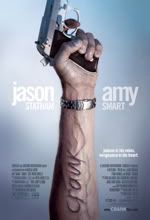
Her turn in CRANK, which opens nationwide today, has her embracing a role and genre that is fairly new to the action starlet. Being the romantic interest for Jason Staham, king of the 21st century, international action film market, came with a set of challenges that Amy was all too willing to throw herself in front of. There was the intimate love scene which was filmed in front of rougly 300 people, a first, and dealing with a couple of directors who were eager to get their vision captured on film no matter what the cost, their first as well.

Speaking about CRANK, answering questions about her new role on CBS’ “Smith” which is set to premiere next month, Amy had some suprising answers to questions regarding what she needs out of a script and why the move to television.

You go to where the work is and, judging by Amy’s estimation, it’s all about the writing to the point where she is willing to shred people’s assumptions of the roles she should be playing by trusting in those who trust her to make something out of the opportunity she’s given. I talked to Amy on location for “Smith.”

So, what are you out shooting?

Shooting the TV show “Smith.”

We shoot it in LA and then we go on location out here [in Reno] once in a while.

I read it was a pilot and so I assume it got picked up”¦

It got picked up and it premieres this fall. It’s got Ray Liotta, Virgina Madsen”¦

Yes, I’ve seen promos for it”¦So how often do you have to go back and forth?

This is the first time this season so far and we’re on episode four right now. Every few episodes means a little travel to another city.

Gotcha. So, let’s talk a bit about CRANK. Now, before this interview I did a little digging into previous interviews and you’ve said that in every role you take you want to be challenged but in a picture that lends itself so much to machismo I am wondering where the challenge came in.

Well, I’ve never done an action film. I also read the script and when I first read it I was not sure who Eve was, what made her tick. I thought, “Ok, I could do this.” It also offered a lot of fun elements because here were these two new directors that had a great reel, were wonderful with action, Jason Staham who is this top-notch, kick-ass, action guy who is a great actor as well and I just thought that this was going to be a great new experience for me.

And Eve, who you could perceive her as not the sharpest tool in the shed but she’s really, she just doesn’t live in the same reality as he does so she functions from a different place.

What’s hard is to try and get an idea of her character just based on the trailer because we only really see you screaming. What is Chev and Eve’s relationship like in the picture?

They have a real loving relationship, and he’s shot up with Chinese poison and only has an hour to live, and because he has to keep his adrenaline up he goes to every extreme to stay alive in order to come rescue me because he thinks that I’m in danger. Little do I know that I am, and little do I know that he’s a hit man. So, he has kind of been living a lie with me, the whole relationship, and now he’s coming clean, facing the truth.

So, my character, he kind of sweeps me up from my apartment and we go on this crazy, wild journey. I don’t think she understands the true danger of her situation.

Legitimately, this is really your first, true action movie. However, your “first” action movie, HIGH VOLTAGE, which really counts as the first”¦

(Laughs)

Didn’t go well”¦

No.

That was one of my first, first films.

Obviously, times have changed and your career has greatly evolved since then so was there any arm-twisting involved to get you to do this one?

No, there was this one scene that definitely I looked at and went, “Oh my God”¦Am I really going to do this?” And it’s this scene in Chinatown where we have sex in front of three-hundred people.

I just read a while ago where Jason was quoted as saying that it was a little weird”¦

It was definitely”¦I think it turned out to be a really good scene and it’s fun, it can be funny, and it’s not outright trying to be lustful or sexy or dramatic, it’s just trying to entertain you.

In a way she’s saving his life because that’s keeping his adrenaline up.

(Light bulb explodes over my head) Oh, I get it. Okay. I figured it out. Der!

That was the one scene where I thought, “Oh, okay, I am going to make a fool of myself.” I felt great comfort knowing that Jason and I had to do it together.

And because I don’t want to ask about what it was like to work with Jason because he seems to be someone who understands what needs to be done in front of the camera I’d like to know what kind of relationship you two had off the set.

He’s a pretty upfront, honest guy. He says what he feels and he’s pretty instinctual. We had a great relationship right off the bat where, for me, I don’t feel like I put on a front that’s going to turn people away (laughs) so I felt like, with Jason, he’s just a great person who’s down to earth and he’s got a British sensibility. And the way he talks about things in his life it’s so funny the way he chooses to use his words and I got along with him so well. We made each other laugh and had a great time together.

And the fact that the two of you now have an impressive list of directors you’ve worked for what kind of learning curve was there for these, ostensibly, new time directors?

There’s always hesitation. And if it wasn’t for”¦and I saw their reel where they were great with action sequences, they were really action oriented, and that kind of grabbed me because any first time director I think “Ugh. This is going to be the film where they are going to have to learn so much.” And I know people surround themselves with really experienced crews so that they can teach them along the way but I definitely resist working with first time directors. So, I found these guys to be very enthusiastic, they had been working on this for many years and they are so passionate about it, had such a vision for it, and, on top of that, got Lakeshore and Lions Gate to support them.

So, it really kind of felt like a good chance to take.

And speaking of taking risks, from your role in ROAD TRIP and even JUST FRIENDS, which I watched last week in preparation for this and was floored by enjoying it so much, I’m curious to know what kind of roles now are coming your way.

I’m kind of putting it out there about the kinds of roles I’m wanting to be challenged with now and”¦saying no to the roles where I’ve played similar characters.

I feel, for the most part, I’ve played the girl next door in a lot of different TV and film and different varieties of who they are. I think they’ve all been legitimate, real, good characters but, as an actor, I’ve done that now and I am ready to”¦well, you know, I am living it because I feel like I’m playing this really amazing character right now that’s, first off, so different than the characters I’ve played, she’s so complex, she’s a criminal. She has a lot of levels, a lot of colors to her.

So, I’ve been desiring, for the last couple of years at least, to play real characters that have real conflict and drama and struggle in their life. And I found one. I put it out there and it came.

And it’s interesting that it’s on television. I’ve seen the shift in film actors making the move to TV”¦

And for good reason. I’m not fixed on that it’s only going to be on television. It’s more of that a lot of actors are hungry for good work and with good writing and good directing and good character development. And primarily you now find that on television.

Was there hesitation where you thought, “Well, I want to stay with film”¦”?

Well, it’s also out of frustration for not finding any great film roles that feel satisfying, that can hold its weight.

Also, the whole way Smith came about is that I went to have a meeting with John Wells and he wanted to share with me his new idea for a show, so this is before he wrote a script, and it was a conversation that really inspired me because he is such a brilliant man. His concept for the show was so interesting and pushing the envelope by wanting to compete with what the cable networks are putting out there. Really, when he said that a lot of what all these shows focus on is the good guys beating the bad guys, all the FBI guys and the lawyer guys, and not that there is anything wrong with that, but if you ask me would I rather follow a person’s life who became an FBI agent or someone who became a criminal I’m more fascinated by what makes them become a criminal. And I think audiences are fascinated by criminals or by people who are doing bad things. On some level it’s a fantasy that people don’t live out but are intrigued by it all. So”¦we kind of are living it out for other people.

(Laughs)

I know that off screen you do a lot for some genuinely good causes and it seems you have an active role in doing what you can for the organizations you can help so I wonder if you ever weigh whether the roles you take have some weight to them (e.g. Sigourney Weaver in ALIENS) or whether that doesn’t matter because it’s just all make believe anyway.

As an actor the fun part is playing so many different kind of characters. I love that she’s such a strong woman. She’s smart and she knows how to get what she wants. I don’t agree with all her choices (laughs) but”¦I don’t need to. I think I understand why she does what she does and I’m not limiting myself from playing only these kinds of characters. I feel like I am definitely willing to playing all different kinds of characters. It just depends on who’s involved, who’s working on it and what the material is and do I feel like I’ll be challenged or exhilarated by playing this character.

And do you find your work fulfilling?

I feel so fulfilled right now playing this character. I do. I am enjoying every minute of it. And the shoot schedules I am sure took some getting used to.

It really, honestly, I feel like we’re shooting a film. It’s just a continuous kind of film.

Really?

Yeah, what I like actually more about is that there’s this air of being”¦unpredictable. Because each episode comes out and you’re kind of like, “Okay, where’s my character going for this episode? Oh my God”¦” (Laughs)

And so it’s this like unveiling of character that keeps coming up in these amazing scenes that keep getting written and I keep working on them and growing and developing who she is and showing different colors in different scenes with different characters. There’s just a lot to work with.

It’s interesting that as you’re progressing, all the scripts haven’t been written yet.

No, no, not at all.

And so as you’re reading these scripts you see where your character is going, you’re now at the writer’s will”¦

Exactly. But I haven’t been let down.

Well, that’s just it. Has there been a moment where you’re like, “Ohh”¦I’m not so sure”¦”

No, and in the few times any actor has felt like “Oh, I don’t know if I agree with that” John Wells is very willing to collaborate as well.

So, he’s not like, “Ok, this is what I wrote, this is set in stone, no one argue with me.” He’s very willing to listen what we have to say as well so it never feels like you’re doomed but, honestly, this is the best of the best for television.

Well, when you’ve got company like Ray Liotta”¦

Yeah, you could watch him in anything.

And now that you’re on episode four how many did you get picked up for?

We’re slated for twelve. And I think around November, this is all new to me, (Laughs) we find out more but we find out if it gets picked up for the rest of the season.

And are you holding off on a few film projects just to see whether it goes the distance?

No way, I believe in it. I do. I really believe we are going to do a full season. And everyone is like, “Don’t say that!”

That’s something interesting to bring up. Is there a level where you have to say, in the back of your head, “Well, we should prepare ourselves if it doesn’t get picked up.”

I’m not worried. Worst case scenario? It doesn’t go the entire season. I just think that it’s so good they would be crazy not to keep it.

And have you heard some initial feedback from people who have seen it?

Well, the directors and producers are very excited about the dailies and then a lot of people have seen the pilot because it’s pretty available that it’s gotten a lot of good feedback. I just really believe in it. It’s so high class. It looks like it’s really well made. They’ve put a lot of money into it, there’s great camera work, there’s great characters and they’re all intriguing.

You see the advent of shows like Arrested Development that were created with great writing in mind, and you want people to respond to good storytelling, but how did you get the idea of how it was going to look like?

This is a very stylized TV show. John really wanted it to look a certain way and come off in a certain way. He really sits down with the DPs and directors of each episode because he cares so much about keeping things consistent.

It looks like a film. It’s shot like a film. It doesn’t have that cheap television look. There’s lot of movement and parts where there are muted colors and parts that are bright. It’s just very stylized.

I love that we’re here talking about CRANK and I’m talking about”¦(Laughs)

I’m sorry. That’s my own sense of curiosity getting the better of my questioning”¦

No, no, no. I mean I’ve got these two projects and they’re both overlapping. (Laughs)

Well, to steer the boat back in the other direction once more I am wondering how you saw the movie progress with these two first-time directors. Were you able to see dailies?

I didn’t get to see any of them but I did get to see playback a few times just because when we were doing action scenes they kind of need that for security. So, when you’re doing these big action sequences you want to make sure you don’t catch a flag or a big light, you know?

So, I watched back some of them, which I liked seeing, because it helps me get a gauge for what I’m doing with my work. We didn’t get to see dailies but we kept hearing from the producers, “Oh, it looks so great”¦Everyone is loving this.” Just positive feedback. But they say that dailies are the best the film will ever get. And that the film will never be as good as the dailies.

It’s great to get positive feedback but, at the same time, that’s just a tiny glimpse of what it could be.

Anything in there get sliced out where you might have been, “Oh, no. Really? You cut that?”

For me, not really. There are a couple of moments where I was like, “Wha? What happened there?” (Laughs)

Did you go the test audience route? Go back and do a few reshoots”¦

Based on what people liked or didn’t like”¦

Right.

You know, no, we didn’t have to do any reshoots.

Really?

Yeah. Pretty suprising.

Bold.

Yeah, but both the directors were great. Mark was the most daring out of all of us. When he would shoot an action sequence he would put on his Rollerblades and, with the technology we were using, he had a camera and he had to strap it to himself”¦it was a 60 pound backpack. But he would literally weave in and out shooting the scene. He was a daredevil on wheels.

Just fearless and it was amazing to watch. And that was part of the fun and really says about who he is as a person.

And it’s two guys?

Yes, and they were both DPs before so they both shot the movie. That was another great element in that they were right there, behind the camera, and it felt very intimate that they were involved and had a great eye for what we were doing.

It sounds like they brought a freshness to it.

Yes. I felt like they were really connected to the piece, to what we were doing and that was comforting.

The final piece. Have you seen it?

Yes.

Honestly, what did you think of it?

I think, for the kind of film it wanted to be, it’s great. It’s fun, there’s lots of humor in it, some romance, non-stop crazy action”¦

And to that point after seeing Jason in the trailer riding on top of a motorcycle, Jason being held out of a helicopter, those sorts of things, was there any point where you hesitated to get involved with some stunts or was everything the two guys envisioned on the page put on film?

Oh, everything was filmed.

Every insane idea”¦

Yes, although, there was one insane idea, it was actually the first day I shot, that didn’t make it into the film but I guess it made it into the Japanese version.

What was it?

When Jason goes into a hardware store and drives a nail into his leg. (Laughs) That’ll probably make the DVD.

Nocturnal Admissions: DVD Reviews – Fox Film Noirs and Double Indemnity

Filed under: Nocturnal Admissions — UncaScroogeMcD @ 12:42 am


nocturnalheader3.gif

I’m growing rather weary of being quoted on noir DVD audio commentary tracks. I don’t mean to be blasé about it, but it happens ever so often. 

The first time was on James Foley’s track for Confidence, where he made reference to my earlier review of his film After Dark, My Sweet, which I dubbed a film soleil. Now, a commentator on one of the four noirs here under review (I think it is Eddie Muller on Double Indemnity) says something like “Someone once said that there are no bad noirs” “¦ and that was me again (in my book Film Soleil, from Pocket Essentials). Now, it is true that none of these people remember my name, and in fact the idea that there are no bad noirs is probably a pretty common one and someone else may have said it well before me. But still, all this attention is making my head hurt and I have to lie down.

But it is true. There are no bad noirs. Even the “bad” ones, such as a couple in the latest batch of Fox noirs, are still interesting, evocative, and can inspire comment.

Fox releases a trio of films in its series Fox Film Noir every three months or so, and the latest set brings the count up to 21. Universal has done a batch or two, but has slowed down considerably, and its new double disc set of Double Indemnity, published as part of its Legacy Series, seems more like a Billy Wilder production than an iteration of its noir catalog.


Shock box


Shock, from 1946, is No. 20 in the set and is a GaslightSnake Pit sort of deal in which Anabel Shaw, in San Francisco to meet her husband after a long separation due to the war, witnesses a murder and falls into a state of catatonia. She is rushed to an asylum by, of all people, the very murderer she observed, played by Price, who happens to be a psychiatrist having an affair with Lynn Bari, the film’s femme fatale.


Vincent Price


Like many a noir, especially the noirs influenced by Hitchcock, this one, directed by Alfred L. Werker from a script credited to Martin Berkeley, Albert DeMond, and Eugene Ling, shows a surprising amount of sympathy for its “villain.” Price’s Dr. Richard Cross is a man who momentarily loses control, and then tries to mop up after himself, harried by his Lady Macbeth, Bari. He is divided, doesn’t want to do many of the things he ends up doing, and Price, in one of his first villainous roles, manages to evoke great sympathy for Cross, despite a tendency to haminess, which afflicted Price throughout his career. Meanwhile, the heroine is asleep or unconscious most of the time, to be carted around from one venue to another (like Jodi Foster in most of the dreadful Five Corners), and her husband, when he arrives, spends most of his time trying to catch up with what the audience knows.

The Fox noirs have settled into a routine in which basically for supplements you get a yak track and the trailer. On Shock the track is by John Stanley, the Creature Features movie guide author, summoned because he is something of an authority on Price. Stanley is one of those unvarnished (he says “Eye-Talian”), somewhat mush-mouthed (he says “landschape” instead of “landscape”), and jokey film geeks who read too much of Famous Monsters of Filmland when he was a kid: his commentary is filled with excruciatingly bad puns (“What food these morsels be”) no doubt in mimicry of that magazine’s editor Forrest J Ackerman. The commentary is mostly about Price, whom Stanley had the advantage of meeting twice, but he is also good on almost all the actors on the screen, even those whose names don’t appear in the credits.


14 box


As others have noted, Fox seems to be stretching the definition of noir with its inclusion of Fourteen Hours (No. 21), the 1951 drama about a potential suicide that Howard Hawks famously hated. Directed by Henry Hathaway, it’s more like a social problem film, like No Way Out, the Sidney Poitier – Richard Widmark race-themed drama which was in an earlier batch of Fox noirs.


14 Hours


It comes across as a well meaning TV drama of the time, and could have been penned by Rod Serling. But it is also afraid to come out, so to speak, and say what it is really about. Richard Basehart’s potential suicide never says why he is depressed, but it is clear from the subtext, as Foster Hirsch points out in his detailed and interpretive commentary, that Basehart’s character is probably gay and wrestling with his identity. Besides the trailer, the disc also features the film’s press book.


Vicki box


Vickie is No. 19, came out in 1953, and is a remake of I Wake Up Screaming, which came out 10 years earlier and is considered to be the first Fox noir, if not one of the first films in the genre itself. Both films are based on Steve Fisher’s novel about a publicist accused of killing the client who was getting too big for her britches. Neither film captures the flavor of the novel, which has wonderfully cynical things to say about show business, but the earlier film (which is Fox Film Noir No. 18) is better cast. There it is Victor Mature as the publicist versus Laird Cregar as the cop who, Laura-like, secretly loved the victim (Carole Landis). Betty Grable, trying to escape musicals, plays the victim’s sister, who ends up aiding the publicist.


Vicki title


H. Bruce Humberstone directed Screaming, and imported noirish tones from his B movie work. Vicki is helmed by Harry Horner who had, if it is possible, an even less distinguished directorial career than Humberstone ( Red Planet Mars). After some 15 films, he gave it up to become a production designer, working on such films as The Hustler and The Driver.


Jean Peters


Vicki is also weakly cast. Elliott Reid is awfully light as the publicist, and Richard Boone is game but sluggish and miscast as the cop. Foster Hirsch in his commentary, favors Jeanne Crain as sister Jill over Jean Peters as victim Vicki (they look remarkably alike), but I had the opposite impression. Jean Peter struck me as a real find, an actress whose career might bear reconsideration. Hirsch’s commentary is efficient and informative, and the disc also comes with the trailer and three galleries of art and advertising.


Double Indemnity box


Double Indemnity is a long awaited DVD but it has in fact been on disc twice already, first by Universal in a bare bones release, then by Image in a transfer from a scratchy print. Still, that Image disc was hard to find when it went out of print, and in the video store down the street from me you had to put down a $200 dollar deposit in order to rent it, as if it were Salo. Curiously, though, I found a pristine used copy of the Image disc just a couple of weeks ago for seven dollars.

And what a pleasure it is to re-submerge oneself into this great film, with its crisp dialogue, brilliant acting from unlikely cast members, now in a nice package with an excellent (if soft) transfer and good supplements that honor the film.


Fred MacMurray


This two-disc set has an excellent full-frame transfer (1.33:1) transfer from a new source-print with an adequate DD 2.0 audio, plus English, French, and Spanish subtitles. The supplements on Disc One include an introduction by Robert Osborne of Turner Classic Movies, and two commentary tracks. The first is an enthusiastic, informative track by Richard Schickel, who wrote a BFI Classic monograph on the film, and here goes over the basics. The second has Nick Redman interviewing screenwriter Lem Dobbs on the film.


Barbara Stanwyck


Dobbs is the son of American born but British educated painter R. B. Kitaj, who in the late 1960s and early 1970s spent a lot of time in Los Angeles socializing with and painting famous directors, such as John Ford. Kitaj also happened to know Wilder who was a great art collector. Dobbs has several anecdotes to tell about meeting Wilder (once with Hockney and his dad), and nervously giving Wilder scripts to read that were later critiqued at Wilder’s independent office at the Writers and Artists building. Dobbs notes the sense of place given to Los Angeles, specific streets named and places shot, that he speculates would not fly with contemporary executives because they wouldn’t see the point of being so specific about a place that most viewers wouldn’t have been to. The most interesting thing that Dobbs says is to go against conventional thinking and charge I.A.L. Diamond with a degradation in Wilder’s output in the 1960s; he maintains that after his collaboration with Diamond began Wilder’s films more theatrical and more like sit coms.


Double title


The retrospective documentary, Shadows of Suspense (37 minutes) also on the first disc is a very good celebration of the film and it is also interesting to see the faces that go with a lot of the noir yak tracks one hears: the ubiquitous and bickersome Silver and Ursini look like twins. Finally there is the theatrical trailer.

Disc Two consists solely of the 1973 made-for-TV remake starring Richard Crenna in the MacMurray role, Lee J. Cobb as his boss, and Samantha Eggar as the femme fatale. It is exactly as good as it sounds.

As others have pointed out, not included on the set is the famous real ending, the gas-chamber sequence, which apparently did not test well at the time and may be lost, though stills exist. Paramount’s version of Sunset Boulevard had a version of the famous dropped opening, but there is not even an attempt to recreate it via stills and script here. But perhaps that is for the super deluxe HD-DVD 70th anniversary edition in 2014.


Weekend Shopping Guide 9/1/06: Areas Of My Expertise

Filed under: Shopping Guides — UncaScroogeMcD @ 12:37 am

weekendshopping.jpg

The weekend’s here. You’ve just been paid, and it’s burning a hole in your pocket. What’s a pop culture geek to do? In hopes of steering you in the right direction to blow some of that hard-earned cash, it’s time for the Quick Stop Weekend Shopping Guide – your spotlight on the things you didn’t even know you wanted…

It takes a lot for a book to make it onto my “By crikey, this is brilliant!!!” list. The Hitchhiker’s Guide to the Galaxy… Terry Jones’s Chaucer’s KnightHuckleberry FinnGreen Eggs and Ham… and The Prydain Chronicles are just a few past honorees. Anyhoo, I come to celebrate (again) just such a work of literary brilliance – its name is The Areas of My Expertise (Riverhead Trade, $14.00 SRP), and its author is John Hodgman, a man of letters (26, to be exact – and he used every last one of them to write this book). Presented in the form of an ersatz almanac, it’s a hilarious journey into the secret Hobo culture (and the list of 700 Hobo names), the American presidents who had hooks for hands, little known facts about the 51 U.S. States, Lycanthropic Transformation Timetables (very important), and much, much more. Hodgman writes in an easily accessible, quite matter-of-fact style about matters most surreal – yet disturbingly plausible. I love this book, and I think you will, too… And now that it’s available in a newly expanded paperback edition and audiobook form ($29.95 SRP), you have absolutely no excuse not to pick it up.

A part of me is still pissed that Arrested Development – one of the most brilliant shows to ever grace the tube – was cancelled. There’s another part of me, though, that acknowledges that Fox did allow it to eke out three low-rated seasons, and that so finely-tuned a sitcom forever risks slipping off the knife-edge and falling into the abyss of mediocrity or – worst of all – self-parody. So let’s celebrate its all-too-brief life with the release of that third and final season (Fox, Not Rated, DVD-$29.98 SRP), featuring all 13 episodes, plus audio commentaries, deleted/extended scenes, a blooper reel, and a featurette on the last day on location.

While some shows start out brilliant than fade over the years, South Park has had the opposite trajectory, honing its satire and enriching the characters who inhabit the quirky mountain town, including our four leads – Kyle, Stan, Kenny, and Cartman. By the eighth season (Paramount, Not Rated, DVD-$49.99 SRP), the gloves were off and the targets were bigger, from Michael Jackson and illegal immigration to Wal-Mart and Mel Gibson (in a still relevant look at the sentiments of The Passion of the Christ). This was also the season of the anime role-playing that resulted in an ocularly injured Butters (and some memorable fantasy sequences). The 3-disc set has the usual run of mini-commentaries from Matt & Trey.

Growing up with the likes of Gummi Bears and DuckTales, the announcement that there would soon be an entire afterschool block full of these Disney cartoons – plus some new series – was met with an excitement that carried me right through to the premiere of “The Disney Afternoon” and its first original show, TaleSpin (Walt Disney, Not Rated, DVD-$34.99 SRP), starring Jungle Book veteran Baloo s a 1930’s era cargo pilot in a world full of air pirates (led by the delightfully deranged Don Karnage. The following year, we got another great addition with the superhero pastiche Darkwing Duck (Walt Disney, Not Rated, DVD-$34.99 SRP) – in fact, I still have an action figure of the villain Megavolt on my desk. While it’s great that the complete first seasons of both shows are now in DVD (with their pilot episodes – at least Disney occasionally listens to fans), they lack even a single special feature. Pathetic treatment for such great shows.

Speaking of memorable Saturday morning cartoons, the first season (sans one rights-issue episode) of Ben Edlund’s lovable superheroic oaf The Tick (Buena Vista, Not Rated, DVD-$34.99 SRP) has also hit DVD, but like the two Disney animated sets is completely featureless. Why is Disney so incredibly pathetic about this? No Edlund commentaries, no featurettes… no nothing. For criminy’s sake, come on!

Far more politically strident than the much-beloved (and missed) TV Nation, The Awful Truth found Michael Moore pulling no punches, from conducting a mock-funeral at the offices of an HMO to getting Crackers the Crime-Fighting Chicken locked in the Disneyland jail, including running a ficus plant for Congress. If the complete season sets frighten you, you can get 6 episodes selected from seasons 1 & 2 on The Best of The Awful Truth (Docurama, Not Rated, DVD-$19.95 SRP), featuring a pair of commentaries from Moore.

Released independently but now contained in one handy-dandy set, The Personal Best of Monty Python’s Flying Circus (A&E, Not Rated, DVD-$44.95 SRP) features 6 discs – one for each member of the troupe, who fills it with their personal selection of favorite sketches, plus some new material (making it a must-have for Python fans). Of the new material, my favorite is probably John Cleese’s crass look behind-the-scenes of his selections, filmed at his palatial California estate.

Finally remastered and presented with a decent, if slight, complement of bonus materials, Miyazaki fans will feel the irresistible compulsion to add the classic Lupin adventure The Castle of Cagliostro (Anchor Bay, Not Rated, DVD-$24.98 SRP) to their collections – probably after re-watching it a half dozen times. Those bonus materials include an interview with animation director Yasuo Ohtsuka, a photo gallery, and the complete animatic with the film’s soundtrack.

Looking to find common ground in a post-9/11 word, the USA secretly sends Albert Brooks to India and Pakistan to see if that common ground could be comedy in the aptly titled Looking for Comedy in the Muslim World (Warner Bros., Rated PG-13, DVD-$27.98 SRP), which mixes just enough reality into the absurdity to be believable, much like Brooks’ brilliant (and so ahead of its time) Real Life. Unfortunately, Brooks doesn’t have quite the same precision he once did, which is shame, because the concept is a valid one, and a source rife with potential that goes largely untapped in the film. Bonus materials are limited to additional scenes and the theatrical trailer.

The penultimate seventh season of The Andy Griffith Show (Paramount, Not Rated, DVD-$38.99 SRP) found the classic series mired in its color demise, with only occasional appearances by Don Knotts to relives the tedium of Andy’s courting phase. There’s still plenty of solid moments to make dismissing the show impossible, but it’s definitely not their high water period.

By the time its 5th season rolled around, Will & Grace (Lionsgate, Not Rated DVD-$44.98 SRP) had settled comfortably into the stunt-casting, easy-joke ensemble piece it had been longing to express itself as – which isn’t strictly a bad thing, but I wish they had tried a little bit hard to keep some of the freshness of the show’s early seasons. The 4-disc set features an outtake reel and a collection of those always pointless themed clip featurettes.

Though he’s looking like death warmed over and she was sadly believable playing Chandler Bing’s transgendered father, both Michael Douglas and Kathleen Turner made a string of memorable flicks in the 80’s, which all began with a good ol’ fashioned popcorn adventure, Romancing The Stone (Fox, Rated PG, DVD-$19.98 SRP), directed by Robert Zemeckis and featuring a then-modern day Indiana Jones pulp spectacular (with more of a romance flair, and heavy sax work from Alan Silvestri’s score). It was followed up by the not-nearly as original but still somewhat fun Jewel of the Nile (Fox, Rated PG, DVD-$19.98 SRP), which re-teamed the pair and had the good sense to bring back Danny DeVito (before all 3 would go on to finish out the decade with the wonderfully caustic War of the Roses). Both Stone and Jewel have gotten remastered special edition treatment, with both releases containing retrospective featurettes (with new cast and crew interviews), deleted scenes, and a commentary on Jewell from director Lewis Teague.

Not only does The Best of Mr. Bean (A&E, Not Rated, DVD-$14.95 SRP) feature over 2 hours of the best bits of Rowan Atkinson’s classic creation, but also the 40-minute documentary The Story of Bean. It’s a nice companion to that Mr. Bean box set that should already be sitting on your shelf.

Unlike the pre-packaged, lip-synced pap often found over its mainstream sister show Top of the Pops, the BBC’s Old Grey Whistle Test (BBC, Not Rated, DVD-$24.98 SRP) featured (from 1971-1987) artists that today would be considered indie (from Jackson Browne to Janis Ian) alongside more well-known artists and groups (including The Bangles and Roger Daltry). The key, though, was that the artists performed live – which is what makes the DVD releases, the latest being Volume 3, such a fun time warp. The new disc features over 2 dozen performances, plus audio commentary from the presenters and reminiscences about their appearances from the artists themselves.

It’s a sad, but all-too-common, story wherein a popular TV series that can do no wrong in its blockbuster first season suddenly stumbles and plants their face in the mud come their sophomore outing, and there are few who will argue that Desperate Housewives (Buena Vista, Not Rated, DVD-$59.99 SRP) didn’t lose its soapy way during it’s second season. Remind yourself of the mis-steps and hope for a 3rd season recovery this fall with all 24 2nd season eps, plus interviews, deleted scenes, and more.

It was only a matter of time before we got the first behind-the-scenes reality series about NASCAR, but thankfully we avoid Real World territory in the Biography Channel’s NASCAR: Driven to Win (A&E, Not Rated, DVD-$24.95 SRP), which focuses on the lives – both on and off the track – of a handful of up-and-coming drivers. All in all, it’s an interesting look at the determination needed to participate in a sport I care very little about. Bonus features include a behind-the-scenes featurette and a driver Q&A.

If purple’s your aural paradise and paisley’s your passion, then be sure to snag a copy of Prince and the New Power Generation: Diamonds and Pearls Video Collection (Rhino, Not Rated, DVD-$14.98 SRP). I think the title is pretty self-explanatory. It also features some bonus live performances.

Okay, the only thing – and I mean the ONLY thing – tolerable and even approaching enjoyable about the completely unwanted, unnecessary Brother Bear 2 (Walt Disney, Rated G, DVD-$29.99 SRP) is the presence – and enlarge roles – for the pair of Moose voiced by Rick Moranis and Dave Thomas. Everything else about this steaming waste is just a seemingly never-ending abyss of crap. The DVD features a behind-the-scenes look at the music, and the ever-useless games.

While not directed by Hughes, Some Kind of Wonderful (Paramount, Not Rated, DVD-$14.99 SRP) is definitely a Hughes film, with a script provided by the 80’s auteur , who also produced. And now we’ve got a special edition of the rom-com, featuring an audio commentary with director Howard Deutch and Lea Thompson, a making-of doc, and behind-the-scenes featurettes.

As the title implies, Washington The Warrior (History Channel, Not Rated, DVD-$24.95 SRP) is an examination of the young military officer from Virginia who fought in the French and Indian Wars and eventually rose to the rank of commander of the revolutionary army and our nation’s first president. Did you know that that path included a 17-year retirement? No? Then watch this doc.

Just when you thought they couldn’t find a new, trashier way to disgust audiences, the 3rd season of Nip/Tuck (Warner Bros., Not Rated, DVD-$59.98 SRP) carts out the 600-lb. woman fused to her sofa. Seriously. But that’s par for the course, and all in the spirit of the show – where the season really stumbled is the sadly ho-hum quality of the mysterious Carver, the knife-wielding worst nightmare of plastic surgeons Sean and Christian, It’s what happens when guilty pleasures get too daytime soap-y. The 6-disc set features unaired scenes, a Carver featurette, and a spotlight on the set design.

What could have been a great ensemble drama about a group of married women and their single friend instead plays like a half-hearted dramatic play on Desperate Housewives and Sex and the City. It’s unfortunate, because Friends With Money (Sony, Rated R, DVD-$28.95 SRP) has a fantastic cast (Jennifer Aniston, Catherine Keener, Joan Cusack, Frances McDormand) just itching to go, but they’re left with melodrama. Bonus features include an audio commentary, a premiere featurette, behind-the-scenes featurette, and a Sundance featurette.

As a TV junkie since childhood, I can’t help but compare the horrors of war and skill and sacrifice of the military medical personnel and soldiers in the documentary Baghdad ER (HBO, Not Rated, DVD-$24.98 SRP) with years of watching episodes of M*A*S*H. The humanity and grace under pressure are the same, even if the modern facilities and procedures provide for a much higher survival rate than the Korean War crises fictionalized in Hollywood’s take. Still, Baghdad ER is a sobering look at the cost of the war, and worth experiencing no matter which side of the political fence you fall on.

I can’t be the only one who, while finding his stunts mostly enjoyable, is still mildly disturbed by (magician? performer? devilspawn?) Criss Angel. Surely others must find him somewhat off-putting. Either way, he’s got a holiday DVD release with Criss Angel, Mindfreak: Halloween (A&E, Not Rated, DVD-$19.95 SRP), which contains not only the special, but also a pair of new-to-DVD episodes from the show’s first season (“Uncut” and “Up Close”).

If a star-studded jaunt with the Bard fits your agenda for the weekend, you’ll want to give spin to the Thames Shakespeare Collection (A&E, Not Rated, DVD-$49.95 SRP), featuring a quartet of classic plays (MacBeth, King Lear, Romeo & Juliet, and Twelfth Night) performed by the likes of Kenneth Branagh, Ian McKellen, Judi Dench, Patrick Magee, and more. Bonus features include interviews and a featurette on Romeo & Juliet.

So there you have it… my humble suggestions for what to watch, listen to, play with, or waste money on this coming weekend. See ya next week…

Nocturnal Admissions: DVD Review, Just My Luck

Filed under: Nocturnal Admissions — UncaScroogeMcD @ 12:30 am

nocturnalheader2.gif

Lindsay

Lohan, light of my life, fire of my loins. My sin, my soul. Lind-say-low-han: the tip of the tongue taking a trip of (three or) four steps (depending on how you pronounce her last name) down the palate to tap, at four, on the soft palate. Lin. Say. Lo. Han (or Loan). She was Lo, plain Lo, in the morning, standing five foot five in one boot. She was Lindsay in slacks. She was Linds at school. She was Lindsay on the dotted line. But in my dreams she was always Lohan.

If only she would stop making movies like  Just My Luck.

Not that there is anything wrong with it. It is not funny, but is supposed to be a comedy. It evokes no sentiment or tears, and it supposed to be a romance. It is set in Manhattan but does not capture the spirit of the city (but then, few of the recent comedies set there have, perhaps because they are usually shot in Toronto).

Lohan has herself been very lucky. She has had, in essence, nine lives. But is her luck running out?

There is a marvelous moment, a typically Lohanian moment in the middle of what at this point remains Lindsay Lohan’s magnum opus,  Mean Girls. Her character, Cady Heron, is a newcomer to school serving as something of an undercover agent or sleeper cell on behalf of her newfound nerd friends and against the school’s elite “Heathers” who have oppressed them.

Thanks to plot complications, Cady has joined the mean girls of the title in a Christmas talent show. Dressed in Santa hats, higher elf drag, and go-go boots, the four girls come out to dance to “Jingle Bell Rock.” It is a given within the history of the school that the mean girls always “win” the contest.


Mean Girls


Lohan as Cady dances the other girls off the fucking screen. It’s a moment of revelation, like Astaire, or Kelly, or Travolta in their first films, and one regret for her fans among Lohan’s tumultuous life and career direction is that dancing has been minimized (her mother was briefly a Rockette). Her co-stars are no mean achievers themselves. Chief meanie Rachel McAdams went on to pop fame in  A Walk to Remember and  Red Eye; Lacey Chabert will be seen shortly in the  Black Christmas remake; and the exotic looking Amanda Seyfried has appeared in  Veronica Mars and the HBO show  Big Love. And this is not to put them down, but none of them evince the absolute joy in movement, the confidence and sassiness that define both a great dancer and a mega star.

How many lives does Lohan have left? Has Lohan indeed not become a mean girl on her own (abusing Disneyland staff, for example) in what readers of magazines take to be her private life? If so, too bad, because Lohan has the potential to be the next great screen star, a new Julia Roberts, able to straddle romantic comedies and Oscar winning dramas.

Lohan built a lot of good will with that scene and that movie. But she wasn’t able to capitalize on it. What she needed to do was to solidify public love with another romantic comedy, just as Julia Roberts consolidated public affection generated by  Mystic Pizza and  Steel Magnolias by leaping into  Pretty Woman. She needed to appear across from a man of equal or higher stature so that she can share it and feed off it.Instead, she opted for serious indie-hood by appearing in a Robert Altman film, which is a crap shoot, since his films are so uneven and few people go see them. Normally I wouldn’t care to dwell on the career aspect of an actress (these thoughts, by the way, are a tacit admision of one’s real inferiorty in the face of the mean girl in Lohan), but I like her so much I want to see more of her movies (just as I want her mirror image, Storm Large, to keep going on  Rock Star even though I don’t want her to win). But of her forthcoming films –   Speechless, an updating of  Cyrano based on an  L. Sprague De Camp story;  Chapter 27, the second of two forthcoming movies about Mark David Chapman;  A Woman of No Importance, the Oscar Wilde play directed by the unpromising  Janusz Kaminski (and which will require a British acceent?),  Bobby, another assassination story, this one about the night Kennedy was shot  – only one,  Georgia Rule, sounds like they might fit this bill  sounds like it might fit the bill, partially because the cast is strong (Jane Fonda, Felicity Huffman, Dermot Mulroney, Cary Elwes) and is directed by  Pretty Woman‘s Gary Marshall (who has, unfortunately, been dreadful lately. In fact, he was dreadful in Pretty Woman but the movie transcended its ineptitude). In almost all of these productions, Lohan has garnered headlines about her behavior, on and off the set.

Lohan is a new breed of star whom most adults probably don’t understand. Like Mandy Moore, Jessica Simpson, and Hilary Duff, they are singer-actors, who feud with each other across the pages of competing tabloids. They have high school-ized the media and live their lives in contra-distinction to the “moral lessons” their movies tell, like the mean girls they play against. Even a  New York Times article in May of 2006 fretted out loud about Lohan burning herself out. But Lohan is clearly resilient. She has already had nine lives, and unlike the cat of the fable, may have nine more before she’s through.

Lohan


1) Started out as a young Natalie Wood, in the Shirley Temple – Lolita mode, a preternaturally talented and charismatic child actress.

2)  As a “Disney star” with all that means about living up to a certain style or standard of kid behavior and fealty to parents. (Are actors auteurs? Can a kid star be said to choose films that reflect her personality? Can thematic  similarities be found among the young star’s films?)

3)  As a “Tweener” star, hinting at sex and boys without explicit references.

4) In an alternate career as Lindsay the singer, with two albums out.

5) In the real world, as a “Law and Order” victim of her dad’s hi-jinks.

6)  As she matured, as the jilted lover pulling an Ava Gardner going to war with the tabloid and paparazzi and indulging in self-destructive behavior.

7)  Thanks to the Altman film and a few others coming up, as a future indie queen.

8)  As an actor – auteur. But are actors auteurs? Can a kid be said to choose films that reflect her personality?

9) But ultimately, there is Lindsay,  the sexy dancer, the new Ann-Margret, waiting first for her  Bye Bye Birdie, and then for her  Carnal Knowledge.


Just My Luck title

Just My Luck is directed by Donald Petrie, who was probably a good choice. He has had a few 100 million dollar hits, and he was the sherpa for one of Roberts’s best early performances in  Mystic Pizza. He has a knack for working with sex symbols (as in   The Favor), but is helpless before a bad or indifferent script, such as the one with which  Just My Luck is burdened, credited to a smorgasbord of writers, among them I. Marlene King (Senior Trip), Amy Harris (Sex and the City), Jonathan Bernstein, James Greer, and Mark Blackwell ( Max Keeble’s Big Move). 


Deleted


You can tell that many hands (but no Lohan) were involved in the composition because they can’t even keep straight the definition of look, as other reviewers have noted, as it tells of a curiously lucky girl (she was named homecoming queen of a high school she didn’t even go to) in one of those vague Manhattan comedy jobs whose luck is transfered to a loser (Chris Pine)  . The supplementary material doesn’t help much. There are three deleted scenes, only one of which is substantial and could have stood to remain in the movie, plus there is the short featurette “Look of Luck,” and a behind-the-scenes look at the band, McFly, that figures in the plot.

The disc has a fine widescreen transfer with a full frame transfer on the B side.  Just My Luck hit the street on Tuesday, August 22nd, and retails for $29.95.


Melonpool Quickcast #11: Mayberry meets Greg the Bunny

Filed under: Melonpool Quickcast — admin @ 12:29 am
melonpool.gif

-By Steve Troop

Based on Steve Troop’s classic webcomic of the same name, the Melonpool Quickcast features puppet versions of Troop’s alien cast, who are desperately trying to make heads or tails out of Earth culture.

Preview 11

Mayberry and Greg the Bunny (star of IFC and formerly of FOX) at the San Diego Comic-Con. They speak of shared puppet experiences, as well as some of their favorite movies. Watch for a special guest appearance by Warren the Ape and a cameo by Seth Green after the closing credits!

Don’t forget to comment on this and other Melonpool Quickcasts over at the official Melonpool Quickcast Forum!

Mayberry Avatar Ralph Avatar Sam Avatar Sammy Avatar Roberta Avatar

Melonpool Quickcast #11: Mayberry meets Greg the Bunny:

  • Large (560 x 420 – QuickTime – 26 MB)
  • Small (320 x 240 – QuickTime – 11 MB)

Nocturnal Admissions: DVD Review and director interview, Head Trauma

Filed under: Nocturnal Admissions — UncaScroogeMcD @ 12:28 am

nocturnalheader1.gif

Director Lance Weiler can’t stay out of the woods.

You remember Lance Weiler don’t you? In 1998 he co-wrote and co-directed The Last Broadcast. That was the historic indie film that was simultaneously screened in numerous theaters around the country via then-groundbreaking satellite technology. It seemed to be the techno wave of movie exhibition’s future, and though occasionally someone in the movie business predicts that satellite broadcasts will soon supersede celluloid, it hasn’t yet come to pass, partially because DVDs and digital home download have edged it out.

The Last Broadcast was also famous for turning out to be a potential inspiration for The Blair Witch Project, sort of the way that City on Fire popped up surprisingly as a precursor to Reservoir Dogs. They tell similar tales. In The Last Broadcast, some filmmakers and a “psychic” take to the Pine Barrens in search of the Jersey Devil. The film features some beautiful footage of the woods by day and night The Last Broadcast proved to be a true indie film (made for $900 dollars), that proved to be a well-made and cleverly twisted tale of hubris and insanity.

His latest film, the excellent Head Trauma, also shows traces of the lure of the forest (as does his next film, but more about that in a minute), and Weiler, helming and writing alone this time (his cinematic partner, Stefan Avalos, has his own shot-on-and-sent-direct-to video film, The Ghosts of Edendale, from 2003. Those familiar with Last Broadcast will see similar themes: mysterious figures in the forest, interpersonal incompetence, hubris, and a narrative twist that takes the center of the film and points it back at itself (if that makes any sense).

Head Trauma title

Head Trauma tells the story of one George Walker (Vince Mola, a sort of Francis Ford Coppola clone). After living on the road or in the streets for some 20 years, he returns to the home of his late grandmother, now a condemned structure in a lower middle class neighborhood. With the help of Julian (Jamil A.C. Mangan) the African American youth next door, who is also a gifted cartoonist, George attempts to clean up the house and rescind the condemnation, in the face of obstacles from an old high school rival who stands to profit from its destruction. Also impeding George’s labors are the bad dreams he has, in which mysterious images rattle around in his head, among them a small feminine figure whose features are obscured by a large hood (like the running girl in Don’t Look Now), and some disturbing activity in a wooded field, a hanging and a large sleeping bag being hauled away.

George


Head Trauma </i> is a psychological thriller of precision and insight. George is a not particularly sympathetic character, it soon turns out, and he tends to destroy potential relationships before they even happen, especially with an old flame from the neighborhood, Mary (Mary Monahan). He doesn’t need his old rival to sabotage his house, as George is fully capable of sabotaging himself.

Head Trauma Mary

Although at first it seems like Head Trauma is going to be an “old dark house” horror film, it is in reality loosely part of the tradition of thrillers that include An Occurrence at Owl Creek Bridge, Jacob’s Ladder, and Angel Heart, speaking broadly, but with some of the suspense created by the unseen and by psychological tensions found in the films of Polanski and Roeg. Weiler has a knack for making empty rooms in daylight and the woods in the afternoon feel ominous.

Weiler’s script is a lean, mean machine, with no fat on it and with little or anything that can qualify as a subplot. The film is creepy, with additional help from the excellent music and sound production, and – in a phase that I hope will soon disappear from the reviewer’s syntax – for a film shot on HD video looks fantastic, very controlled and precise. There are even superb arial shots.

Lance Weiler

Head Trauma was released theatrically in several markets in mid-August, before its September 26 release on DVD on the Heretic label. Despite Weiler’s hectic schedule I managed to extract a brief interview with him about his cinematic past, present, and future. Weiler proved to be an ageless lad who could easily have a career in front of the camera as behind it, and is an articulate, passionate lover of movies of all kinds.

It seems to me that the movie industry is a little short sighted in not taking up the technological breakthroughs established in your first film. Having made the history-making The Last Broadcast, did you still find it hard to capitalize on its success to advance to the “next step” of your career, so to speak?

In some respects yes and others no. In a lot of ways we were ahead of the curve in terms of the way we made and distributed TLB. So we found ourselves at a strange place. On one hand people respected what we’d done on the other they had no clue. Sometimes people get hung up on aspects of the work. For instance they’d say TLB – that’s a nice documentary but can you do narrative? They miss the point. Sometimes the tech aspects got in the way of the story but I think it’s always some type of a struggle to get the work made and to get it seen.

What was the genesis of Head Trauma?
HEAD TRAUMA comes out of two life experiences that took me very dark places The first was a head on collision with a garbage truck that almost killed me. Twelve years ago I was laying in a hospital bed with a severe head injury and my jaw wired shut. I could have died that day, stupidly I wasn’t wearing my seatbelt – my jaw snapped the steering wheel and my head busted the windshield and thankfully I lost consciousness. After the accident I was plagued by vivid nightmares of the crash until one day they just stopped.

Flash forward to 2000 and I’m pitching a TV show to some major networks. After a year of pitching we land at a network and after a roller coaster ride that takes another two years of the show being on again / off again we received money to shoot a pilot. Working on the show ranks as one of the worst professional experiences I’ve had. At times it really felt like I was a tenant farmer not a co-creator executive of a major network show. In the end we shot a great pilot but it died a slow painful death and I felt like I went through the five stages of grief.So in the winter of 2003 when I was feeling like shit and unsure of what to do a couple simple words change my path. I owe a huge thanks to my wife Jennifer for simply saying “Do what you love just make another movie.” It’s so simple and obvious but at the time I was out of my head. And that’s the series of events that created HEAD TRAUMA.


Ghost

Why make a “horror” film? Why that genre,rather than another, or just a straightforward drama? What does horror offer you or inspire in you that, at least in this case, creatively you can’t get elsewhere?
I love the horror genre. There is something interesting to me about exercising those demons, those dark things that rest in one’s mind – it’s a way to get them out of your own head and do something productive with them. I’ve had some dark times in my life. When I was younger I drown and at the age of 14 my house burnt down, and then a number of years ago I was in a horrible car accident. I always like to have some autobiographical element within my films. Water and fire play an important role within HEAD TRAUMA as does the concept of a blow to the head.

Given that it is a lot easier to make movies these days, what remains the most difficult aspect of filmmaking?
By far the most difficult aspect of filmmaking these days isn’t a production issue it’s a promotion / distribution issue. With over 20,000 feature films being made due to the boom in digital production the chances of a film being seen past a film festival are rare. On top of that releasing a truly independent film into today’s market with out millions for P&A can be very difficult. But thanks to the web there are ways to build an audience and get the word out in very effective ways. For instance the web comic for HEAD TRAUMA is not a normal film site http://headtraumamovie.com – it is an interactive comic with some twisted stuff hidden under the surface. It becomes an extension of the story. Now more than ever it is important to create extra value for the fans. With HEAD TRAUMA I’m working hard to give a good presentation from start to finish. I’ve been on the other end and I know what type of things hook me in – that is really the issue knowing your audience and then the trick is finding a way to get the work to them.

Can you give us a hint about what you might be working on next?
Yeah it’s a really dark and twisted flick set in the remote wilderness. It’s based on an actual experience of my life that occurred while I hiked a part of the Application Trail called the “Wilderness.” The AT is a wild place and being alone for 10 to 12 days with no civilization in sight can be a very creepy.

Bissette

Here’s a preview of the supplements on the Head Trauma disc. Not only is there a detailed audio commentary track with Weiler, but there are several relatively short but informative makings ofs, one about how the crew blew up a car, another on the man who help shot the ariel shots, an interview with comic book artist S. R. Bissette and his son on the comics they created for the film, some cast interviews, and a piece on the film’s music. Bissette will be very familiar to readers of QuickStopEntertainment as one of the artists on Swamp Thing and numerous other comics, including some independent work in recent years.

John Madgic

As with the extras on The Last Broadcast, the supplements are uninhibited, and Weiler and his collaborators are articulate raconteurs. Finally, there are trailers for both Head Trauma and The Last Broadcast.

Comics in Context #144 – San Diego 2006 – Stardust Memories

Filed under: Comics in Context — admin @ 12:27 am


comicsincontext4.jpg


The following events took place on Friday, July 21, between 2:30 PM and 5:30 PM.

Attending Comic-Con International in San Diego means having to decide among a wealth of choices of things to do and see. The next panel on my must-see list was the Paramount Pictures presentation in Hall H at 2:30 PM, and I didn’t want to take the chance of being stuck in one of the infamous long lines outside. As it turned out, once again I was able to walk right into Hall H. So what’s the big deal?

FRIDAY 2:30 PM
The “Paramount Pictures” panel was entirely devoted to Stardust, the film adaptation of Neil Gaiman’s fantasy novel, which is currently being shot by director Matthew Vaughn.

Jeff Walker, who was once again acting as emcee, told the audience, “Guess you can see who we’re bringing out.” Indeed, there was Neil Gaiman, dressed, as always, as a Man in Black: he is the Johnny Cash of the graphic novel. He had been flown in just to appear on this panel and would be spirited away from Comic-Con immediately afterwards, sort of like President George W. Bush making one of his whirlwind visits to Iraq.

Also present onstage were Charles Vess, who had created the illustrations for the Stardust novel; writer Jane Goldman, a very pretty Englishwoman with long, bright red hair, who collaborated with Vaughn on the film’s screenplay; and the movie’s producer Lorenzo di Bonaventura.

Gaiman informed the audience that “People have been trying to make a Stardust movie since 1998.” He said that he finally let Matthew Vaughn have the movie rights “because I trust him.” Gaiman added that Vaughn and Jane Goldman “let me look over their shoulder and occasionally kibitz.”

The movie industry’s low regard for screenwriters is legendary: they may be highly paid, but their work is nearly always rewritten by other screenwriters, directors and even actors. Writers of the books from which screenplays are adapted are even lower on the proverbial totem pole, with no power to control how their stories are translated to the screen. So it was heartening to see Gaiman take such a prominent role on the Stardust movie panel, as it was to see Frank Miller in a similar role on the 300 movie panel the following day. It certainly makes sense for the studios to parade Gaiman and Miller before a Comic-Con audience, but the respect that the movie people showed to Gaiman and Miller on these panels seemed persuasively genuine. For that matter, it’s a happy surprise to see writers–Miller and Gaiman–so pleased with the translation of their work to the screen.

Nonetheless, the filmmakers rightfully put their own mark on the material. Introducing the first of the clips from the film, Gaiman observed that “some bits we’ll show are very faithful” to the book, but “some bits are new.”

In the initial clip, the young protagonist, Tristan Thorn, played by Charlie Cox, stands beneath the window of Victoria, who is the wrong woman for him but he doesn’t realize that yet. Tristan’s attempts to court her are interrupted by his rival Humphrey, who easily defeats him in a duel. There was a long pause after the clip before the audience gave it muted applause. (Were they taken aback by seeing the hero defeated? But it is, after all, only the beginning of this hero’s journey.)

“So. . .” continued Gaiman, who explained that Tristan plans to win Victoria’s heart by promising to bring her back a fallen star. In order to find it, he must cross the Wall which separates his village in the everyday world from the magical world beyond. In the second clip Tristan attempts to cross the Wall only to be thwarted by what Joseph Campbell would call a threshold guardian: an unusually agile old man who fights Tristan with his long staff and easily overpowers him. It struck me as the reverse of Siegfried’s confrontation with the Wanderer–the disguised god Wotan, his grandfather–in Richard Wagner’s Ring of the Nibelung: the young Siegfried slashes Wotan’s staff of power in two with his sword. (Hmm, Tristan is also a name associated with Wagner.)

You see a pattern of defeat emerging for Stardust‘s nascent hero, but he will eventually break it. As Goldman observed, “people don’t break out of the prescribed route they’re supposed to follow. Tristan is the exception.” He does get across the Wall to begin his adventure.

Gaiman cautioned us that “Matthew really wanted us to stress that nothing has been done to the footage you’re seeing,” meaning the addition of special effects. “He’s currently back in England shooting green screen stuff and worrying.”

This warning applied to the third clip, in which the lead witch, played by Michelle Pfeiffer, casts a spell on another character. The camera shook as Pfeiffer uttered her curse, and presumably CGI will be added later. Even so, the shaking of the image, as if an earthquake had been conjured up, together with Pfeiffer’s sinister performance, already created an unusual effect. We don’t see Pfeiffer much in new movies since she turned forty (at which point Hollywood believes they cease to exist), yet she has grown not one iota less beautiful.

Introducing the next clip, Gaiman said, “This is a character who’s not in the book. In fact, it’s one and a half characters who are not in the book.” The “half” is a character from Gaiman’s book who has been renamed Captain Shakespeare in the movie, has been given an expanded role, and is played by Robert DeNiro. The Captain is a “fearsome pirate” who commands a flying ship with which he captures bolts of lightning. (Whether the Captain’s new name of Shakespeare has any significance beyond sounding cool, I as yet have no idea.)

In this fourth clip Captain Shakespeare negotiates the sale of some lightning bolts to the whole “character who’s not in the book,” Ferdy the Fence, played by Ricky Gervais, the co-creator and star of the original BBC version of The Office.

In that series Gervais created a specific variation on a comedy archetype, the incompetent impostor who nonetheless brazens it out. The difference between Gervais and, say, Bob Hope or Woody Allen in their comedies is that Gervais’s characters have partly or wholly deluded themselves as well. It’s as if the world had unknowingly been waiting for Gervais to discover this character type, since now he turns up in so many different places, including the fantasy world of Stardust. Though it took a while for the audience to warm up to this clip, it finally, deservedly, got a big laugh.

(Gervais also turned up as a voice actor in last year’s British computer-animated feature Valiant, about homing pigeons during World War II. Though I agree that the title hero had a vacuum where his personality should have been, I found Valiant entertaining, and certainly not the disaster that reviews claimed. Perhaps as a Turner Classic Movies aficionado, I’m more kindly disposed to period war movie parodies. But I certainly agree with critics that Gervais’s performance as a proudly cowardly pigeon was the best thing in the movie.)

Goldman hailed the film’s “incredible cast,” which also includes Claire Danes as the fallen star herself, Peter O’Toole, Rupert Everett, and Sienna Miller. The one lesser-known actor in a major role is Charlie Cox as Tristan. “Lots of actors could do the nerdy side of Tristan,” Gaiman said. “Lots could do the later cool side of Tristan once he grows up. Charlie can do both.”

In the fifth clip Danes and Cox converse as they walk beneath cliffs; unmoved by the remarkable scenery, the audience again responded with only muted applause. (What’s wrong with them?)

Gervais returned in the final two excerpts. In the sixth clip Pfeiffer’s witch puts a spell on Fergy, so he cannot talk; instead all he can do is make strangulated sounds, to nonetheless humorous effect. In the seventh clip the villain Septimus interrogates Ferdy, who cannot answer due to the spell, so Septimus stabs him. I can understand why this received very low applause: no one wants to see a character who makes us laugh get (seemingly) killed.

But then we were shown a montage of excerpts from the film, and finally the audience got it and erupted into big applause.

Charles Vess praised the “beautiful visualization that they had done.” Then an audience member asked, “Neil, is it how you pictured it in your mind?” Gaiman responded, “No, it’s how Matthew and his set designers saw it in their minds.” He said that “The inn the witch magics up in the mountains was just like having walked into the thing that I had imagined,” but that’s an exception. But Gaiman obviously was content to let the filmmakers interpret the material their own way. He said he likes the way the movie looks, and that “It’s cooler” than what he imagined. “It doesn’t look like a fantasy movie. It looks like itself, whatever that means.”

Well, I agree that it doesn’t look like a fantasy movie, although perhaps that’s in part because the CGI are still missing. I think its visual charm, from what I saw, comes from looking like an enchantingly well-designed period piece. Goldman said it was set in Victorian England, and the clips convey a handsome, persuasive reality in which the fantasy elements are grounded.

Next Gaiman was asked about The Eternals series he is currently writing for Marvel, based on Jack Kirby’s 1970s creations. Gaiman said he was “currently writing issue 4,” but that he had “more plot and things I have in my head than I can fit in by the last page of issue 6,” when this miniseries is scheduled to end. Gaiman reported that artist John Romita, Jr. says he’s willing to keep going after issue 6, so “It’s going to be a matter of finding time” amidst Gaiman’s packed work schedule. (In case you’re wondering, yes, indeed, I have been reading Gaiman’s Eternals–and rereading Kirby’s Eternals–with interest, and I will have much to say about them in this column later this year.)

Gaiman then returned to the story of how Matthew Vaughn got to do Stardust. He said he first met Vaughn when Vaughn sought the film rights to Gaiman’s short story “Snow Glass Apples.” Later Vaughn produced the first film that Gaiman has directed, A Short Film about John Bolton. (That’s the artist, not the U. S. Ambassador to the United Nations, who is even scarier. See “Comics in Context” #5.)

Vaughn and Gaiman had lunch with Terry Gilliam to try to convince him to direct a movie of Stardust. But, Gaiman recounted, this was right after Gilliam had directed The Brothers Grimm (2005), and he didn’t want to do another fantasy film right away. Here Gaiman noted, “As I’m sure everyone here knows, Terry Gilliam is back on Good Omens,” the projected film version of Gaiman and Terry Pratchett’s comedy fantasy novel. Well, I didn’t know that, but I was glad to hear it. Gaiman added that Gilliam had not yet paid him or Pratchett the “option fee, which is one groat each, or about five pence.” The cheapskate!

After directing Layer Cake, Gaiman continued, Vaughn wanted to direct Stardust, and Gaiman put him in touch with Goldman, whom Gaiman had known for a long time.

As for other film projects based on his work, Gaiman first mentioned Coraline (see “Comics in Context” #67), which Henry Selick (The Nightmare before Christmas) is making as a stop-motion animated film, with Dakota Fanning as the voice of the title character, and the British comedy duo of Dawn French and Jennifer Saunders voicing the two old ladies. This, Gaiman said, will probably come out in 2008.

As for a movie of his novel American Gods, Gaiman said that “lots of producers and directors have approached me, and I tend to say, “˜Sure, sounds good,’ and then they look at me and say, “˜How would you make that into a movie?’ And I say, “˜I have no idea,’ and that’s usually how it ends.”

So what about a Sandman movie? Keep in mind that Sandman is a property owned by DC, that Gaiman doesn’t control. “Sandman is just floating in a void,” Gaiman said, asserting that “I’d rather no Sandman movie got made than a bad Sandman movie got made.” Gaiman voiced the hope that “sometime during our lifetimes” a director will come along who loves Sandman the way that Sam Raimi loves Spider-Man and Peter Jackson loves The Lord of the Rings, and who will make the Sandman movie.

On the other hand Gaiman himself has long been committed to writing and directing a film adaptation of his own Vertigo miniseries Death: The High Cost of Living. Gaiman told us there is a “script everyone likes” and “people would like to be in it” and that the project was “slowly moving through the system.” He summed up, “It doesn’t seem to be dead yet, which is the best thing you can say about Death, I suppose.”

Then there is the Beowulf movie that Gaiman and Roger Avary co-wrote for director Robert Zemeckis, which will be released on November 22, 2007. Gaiman announced that “Next year I will probably be a guest of Comic-Con for the whole four days” and will do a Beowulf panel with Roger Avary, actors Angelina Jolie, Crispin Glover, “maybe Anthony Hopkins,” but probably not Zemeckis, who “hates” doing panels. Zemeckis is doing the film using an advanced version of the techniques he employed for The Polar Express (see “Comics in Context” #66). Gaiman characterized the forthcoming movie as “a cheerfully violent, very, very strange take on the Beowulf legend which manages to be remarkably faithful while being deeply weird.”

Then, before the panel ended, Lorenzo di Bonaventura brought up another future film on which he is a producer: the Transformers movie. At the very mention of its name the audience broke into loud applause. We were informed that a new addition to the cast would speak to us via cellphone (the second guest I heard do this so far at this Comic-Con). Then the voice of actor Peter Cullen addressed the audience in his role as Optimus Prime, which he had played on the Transformers animated TV show, and Hall H resounded to the loudest, biggest applause I’d heard during the entire panel. I was puzzled: do Gaiman readers really get even more excited over the Transformers?

Not until I started writing these reports on the 2006 Comic-Con did I realize the answer. These Transformers fans were the “campers,” the people who sit in Hall H all day to watch all the panels about action-adventure movies. This wasn’t your typical Gaimancentric audience at all. Well, I hope the Stardust preview inspired some of them to try a movie that’s robot-free.

FRIDAY 3:30 PM
I decided to get over to Room 20 early for its 4 PM panel, arriving while the panel about the Fox television series Bones was still going on. Onstage was one of its stars, David Boreanaz, who previously played the heroic vampire Angel on Joss Whedon’s Buffy the Vampire Slayer and the Angel TV series. (And hey, this was the first Comic-Con I’d attended in years in which Whedon didn’t appear!)

The conventional wisdom is that Comic-Con and similar events are attended almost entirely by men. I offer the Bones panel as proof that this is not true; there was a large, vocal contingent of Boreanaz’s female fans there. One woman from the audience began her question to Boreanaz thus: “I admire your body of work.” She clearly intended the double entendre, and everyone, including Boreanaz, reacted to it.

Boreanaz chuckled appreciatively at that remark, but another fan presented him with a conundrum, asking him who he had “better chemistry” with: his Buffy co-star Sarah Michelle Gellar or his Bones co-star Emily Deschanel. Diplomatically, he said he couldn’t answer.

When Boreanaz’s panel ended, the audience was cautioned, “Do not rush the stage.” As much of the audience filed out, I noticed that among them was a young woman in that Princess Leia slave girl costume. No one seemed to pay attention. At Comic-Con one gets accustomed to such things.

FRIDAY 4:15 PM
Finally, starting fifteen minutes late in Room 20, was the next panel: Warner Brothers Animation’s presentation “Bruce Timm Retrospective/Legion of Super-Heroes.” It’s the first part that interested me: a salute to the man who did the principal character designs and was one of the producers for Warners Animation’s 1990s Batman, Superman, Batman Beyond and recent Justice League Unlimited series.

First Sander Schwartz, the president of Warner Brothers Animation, came onstage to introduce “This very special presentation we have for you.”

One guy in the audience shouted, “Cancel The Batman!” That, of course, is the current subpar successor to Timm’s great 1990s animated Batman. But I doubt that anyone onstage could have heard him.

Schwartz stated that Timm had been working at Warner Brothers Animation since 1979 with Tiny Toon Adventures. “He’s just a great soft-spoken, talented guy who is just as nice as he is talented.” Schwartz pronounced Timm “a great producer, a great filmmaker, and a great human being.”

Then Timm himself appeared, looking very much like the toy collector he voiced in the Batman episode “Beware the Grey Ghost.” Some members of the audience gave him a standing ovation.

Timm said, “This is really kind of weirding me out a bit because normally career retrospectives come at the end of a career. I still have twenty years to go on my mortgage.”

Timm said “I have to share credit” with Alan Burnett, Eric Radomski, Paul Dini, Dwayne McDuffie and others with whom he collaborated on these series. Then he concluded, “We’re talking about the end of my career today.”

Is it? Not really, although so far it did seem as if Timm was present to hear his own eulogy. I should observe that Justice League Unlimited concluded its final season earlier this year whereupon Cartoon Network dropped it without rerunning the new episodes. Moreover, Warners’ forthcoming Legion show, like Teen Titans, is done in an anime-influenced style (not to my taste), and Timm isn’t working on any new television series. I know that all good things must come to an end, but I don’t have to like it.

Timm introduced his friend Jason Hillhouse, who served as interviewer, and they started by discussing how Timm’s career with superheroes began. Tim Burton’s Batman movie came out in 1989. “My boss at the time, Jean MacCurdy, took a huge gamble,” Timm said. She chose him and Eric Radomski to produce a new Batman animated series. “Eric Radomski and I had never produced a show,” Timm said, although they both “had long animation careers.” “I don’t know if she was brave or under medication or something.”

“I’m a born and bred comic book geek,” Timm confessed, whereas Radomski “came from a non-geek background.” (I hate this sort of self-deprecation; when will comics aficionados unhesitatingly admit to taking pride in this artform?) However, Radomski “loved Batman” as a result of Burton’s movie, and wanted to recapture its “mood.”

“There are any number of ways the Batman show could’ve been really bad,” Timm asserted. Nevertheless, he continued, “Batman’s got all this great stuff. He’s got the best costume, the best rogues gallery, the best setting. You’d have to really try hard to mess that show up.” Timm recalled that MacCurdy instructed him and Radomski, “I’ll just tell you one thing: don’t screw it up.”

Casting Kevin Conroy as the voice of Batman “right out of the gate,” Timm asserted, set the mold for “how many amazing people we’ve had on all the different shows” over “fifteen years.” Timm told us, “We can’t watch TV for more than an hour without someone I’ve worked with” turning up onscreen. (What about on CNN? Oh, never mind.)

After production on this first run of Batman: The Animated Series ended, “we got off on a tangent with Freakazoid,” an animated superhero comedy show. Then, “years before Superman Returns,” there was talk at Warners about doing a new Superman movie, and MacCurdy asked Timm if he wanted to do a Superman animated series.

Whereas Timm described his Batman series as “grounded in a kind of reality,” he said that “Superman opened the floodgates to a more science-fictiony environment.” Timm stated that they “hadn’t thought of creating a universe” when they were doing Batman, but using the Flash and Green Lantern as guest stars on Superman “ultimately paved the way for Justice League.”

Timm admitted that he did not have “as clear a vision on how to handle Superman” as he had with Batman. The “tricky thing about Superman,” Timm explained, is “like Miss Teschmacher says [in Richard Donner’s Superman movie]: he doesn’t drink, he doesn’t smoke, he’s too good to be true.” Timm continued, “Batman’s conflicted, broody,” whereas “Superman’s a good guy. How do you make that dramatically compelling? You want to keep him pure, keep him the Boy Scout.”

Superman had “more action-adventure fantasy than Batman,” and Timm declared that “It was a fun show to do.”

But then when “finally we felt we had a handle on Superman,” then Warners “said let’s do some more Batman.” Timm didn’t want to return to Batman at first, but then he devised new “graphic designs” for the characters. As a result, he declared, “I like that show [the new Batman episodes] visually more than Batman: The Animated Series,” quickly adding, “but I liked that, too.”

At this point we were shown a clip reel from Batman, Superman, Batman Beyond, and Justice League Unlimited. I was surprised by the tremendous response from the audience to the Batman Beyond clips, and Timm said he found that reaction “interesting” as well.

Timm revealed that when Jamie Kellner, the head of the WB Network, proposed doing a series about a teenage Batman for the “6-to-11 year old” demographic, “we hated the idea, too!” (It does seem like a stereotypical wrongheaded corporate idea. I suppose we should be grateful he didn’t suggest Batman Babies.) But Timm said he and his collaborators found ways “to make it fun.”

“There were aspects of the show that were obvious demographic bait,” Timm conceded, “especially in the second season,” pointing to the “high school” and “sidekick.” But Timm said “That’s okay” because their goal was to “find ways” they would like “of doing what the network wanted to do.”

Timm pointed out that although the network intended Batman Beyond to be “a kid-oriented show,” “it’s the edgiest, nastiest show we did.” (Later during the panel Timm mentioned that Justice League Unlimited was “supposed to be a 6-to-11 year olds’ show, but everyone knows it’s a PG show.”)

Timm regards the direct-to-video feature Batman Beyond: Return of the Joker (2000) as “one of the highlights” of his career. “Lots say Mask of the Phantasm [1993] is the best Batman movie ever made,” he observed. “I like it, but I like Return of the Joker better.” Timm believes they “tried to hard to make Phantasm adult” and “it’s a downer,” whereas “Return of the Joker is effortlessly adult.”

Timm said he originally didn’t want to do the Justice League series, either, but “I was out of a job.” (Should Timm ever be out of work?) Timm recalled that Warners executive “Linda Steiner came to me and said we’re thinking of doing Justice League now” and he “bowed to the inevitable.”

Timm admitted “It took a while for it to get good” and claimed “It’s a tough concept to work with.” He said he was “reading Silver Age comics for inspiration” and stated they had “a lot of charm” but complained that “all the characters have the same voice, the same personality.”

Moreover, Timm maintained that “when we did Batman through Batman Beyond, we were used to being the class act in superhero TV.” But then, Timm noted, X-Men: Evolution came along, “and Samurai Jack kicked ass in art direction. So we realized the bar has been raised.”

After two seasons of featuring a team of seven members, Justice League morphed into Justice League Unlimited, and “now we give you fifty more characters.” Timm asserted that “Justice League Unlimited right now is ny favorite show of all I’ve worked on. . .probably because it’s more recent.” He described it as “almost an anthology show” which could move back and forth between “small stories” with “just a few characters” and “big stories.”

The first questioner from the audience asked if Timm, Dini and their other collaborators would ever do another animated series with DC Comics characters. Choosing his words carefully, Timm responded, “Never say never. I don’t really anticipate going back to that established version of the DC Universe” seen in his previous animated series. (And that, I realized, meant that he wasn’t ruling out working on some other version of the DC universe.)

Timm then said, “Nobody wants a repeat of the Brainiac Attacks experience,” referring to the recent direct-to-video Superman animated feature (see “Comics in Context” #139). Then he added, “I kid,” adding further, “Kind of.” Cautiously he told us, “There’s something I’m not allowed to talk about.” Finally, he said, “I tease [the guys] who did Brainiac Attacks a lot. They did the best they could.” There’s a mystery here, but I can’t figure it out.

Asked about influences on his art, Timm revealed he was a fan of Disney’s Sleeping Beauty (1959), which he said “has the most spectacular art direction of any Disney movie.” He said he “picked up things from Alex Toth.” (Here there was only a smattering of applause, suggesting that most of the audience didn’t know the work of this great comics artist, who died earlier this year.) Oddly, Timm said that he was influenced “after the fact” by the late Archie artist Dan De Carlo: he explained that he was “influenced by artists who were inspired by him,” specifically in “drawing cute, pretty girls,” before he discovered De Carlo’s own work.

Were there characters that he wanted to use on Justice League Unlimited but didn’t? Timm named the Blue Beetle and the Spectre, said he couldn’t use the Phantom Stranger, and said they had the rights to use Plastic Man (only once), Firestorm and Adam Strange, but never got around to them.

Timm mentioned the “rumor” that Warners is doing an animated adaptation of Darwyn Cooke’s comics series The New Frontier. “That’s miscommunication,” Timm insisted, and he claimed that they were actually doing a show called The New Fondue for the Food Channel. “It’s cheesy!” he said. No laughter ensued, and Timm buried his head in his hands.

So what is Timm really going to do next? “I am still at Warner Brothers,” he informed us, and “still working with DC characters.” He stated that there “should be an official announcement tomorrow at the DC panel.”

Just then a Superman insignia, dripping blood, appeared on the Room 20 video screen. It was an obvious reference to the 1990s “Death of Superman” story arc in the comics. Seemingly taken aback by this, Timm asked the audience if they had signed “confidentiality agreements.”

I did not attend the aforementioned DC panel, but later learned that during that presentation Paul Levitz announced a new series of direct-to-video animated films that would adapt stories from the comics. The first film will indeed be The New Frontier, with a story written by Cooke. Timm will direct Superman/Doomsday, an adaptation of the “Death of Superman” arc, and Marv Wolfman will co-write the film version of his The New Teen Titans: The Judas Contract. It was declared that the art style of the films will resemble the comics, rather than being in the style of the Timm animated series or the anime-like Titans and Legion shows.

I find myself in two minds about this. It seems like a dream come true for comics enthusiasts. Have you seen the Dark Knight Returns excerpt, executed in Frank Miller’s art style, in the animated Batman episode “Legends of the Dark Knight”? What if DC and Warners did an animated adaptation of the entire Dark Knight Returns in Miller’s style? Wouldn’t animation be the proper medium for adapting Watchmen?

On the other hand, doesn’t much of the appeal of the Timm animated series lie in the handsomeness of Timm’s character designs? And it seems that even when he directs one of these new films, he’ll be using character designs from the comics instead?

More importantly, doesn’t much of the rest of the appeal of the shows that Timm and his collaborators did lie in providing a positive alternative to the Grim and Gritty, Dark, Dismal and Depressing superhero comics of the 1990s and early 2000s? I always believed that the 1990s Batman and Superman animated series captured the spirit of the superhero genre better than the Batman and Superman comics of that time. At least The New Frontier is a leading entry in the Neo-Silver movement of restoring a positive outlook to the genre. I expect the film version won’t be cheesy at all.

Bruce Timm left the stage, and the other half of the presentation, previewing the new Legion of Super-Heroes animated series, commenced. But I took off for one of the most underattended panels at this year’s Comic-Con, but one which may prove to be the most historically significant, as you shall learn next week.

Copyright 2006 Peter Sanderson

Nocturnal Admissions: DVD Review, Radioland Murders

Filed under: Nocturnal Admissions — UncaScroogeMcD @ 12:26 am


nocturnalheader.gif

A few years ago I went to a local theatrical production in a small venue that catered to small troupes doing original material. The play (I forget the title) was a satire on radio mystery dramas in the spirit of the Firesign Theater’s Nick Danger. 

About halfway through the play it suddenly occurred to me: what the fuck are these people doing drawing on old time radio for their dramatic inspiration? This is 2003? How many people in this room have even  heard an old radio show? In fact, has this young cast itself even heard many radio shows?

Box


Still, I think I know the impetus behind the show, which was probably the same impetus behind the movie George Lucas produced,  Radioland Murders, from 1994. The hectic world of on the air broadcasting creates a dynamic, vivid environment that pays homage to an earlier, fun time and which allows actors to ham it up. Lucas was probably also inspired by the 1940s films set in the world of radio, such as the Red Skelton “Whistler” series. When you are a kid, those movies seem like perfect films, blending horror and comedy and suspense, like  Abbott and Costello Meet Frankenstein. It’s the same original honorific impulse behind  Star Wars.

BenBen


In the end, though,  Radioland Murders, credited to writers Willard Huyck and Gloria Katz and Jeff Reno and Ron Osborn, from a story by Lucas, and directed by Mel Smith, a comic actor and writer who has directed six movies so far, is no  Star Wars. I’m tempted to say that it is Lucas’s  Hudson Hawk, but he already has one in  Howard the Duck.

TV


The whole spirit of  Radioland Murders is based on frenzy and fast talk, except that here the talk isn’t funny. Its premise is a distant relative of that joke in Spielberg’s  1941 when the sailors on the sub complain about the cumbersome size of non-transistor radios. The trick here is that the secret killer behind the spree is an inventor of television. The only time I laughed during any moment in the film’s 112 minutes was when the police detective (Michael Lerner) found he had to pull his officers away from the hypnotizing effect of the tube, which is only showing the famous Native American splash screen.

The film has an all – star cast, filled mostly with people who are still around and still widely viewed as “funny,” from Brian Benben as the harried head writer of the radio network, WBN, making its debut one night in1939, and Jeffrey Tambor as a director who is also the first victim. In between are Mary Stuart Masterson as Benben’s wife (who makes a surprisingly effective ’30s type star in the Jennifer Jason Leigh manner; she and Benben are supposed to be Curt Henderson’s parents from  American Graffiti, set 23 years later), Ned Beatty as the network owner, George Burns as a comic (it’s his last film), Brion James, Michael McKean as a faux Spike Jones, Stephen Tobolowsky, Christopher Lloyd  as the sound effects guy, Larry Miller, Corbin Bernsen as an announcer, Rosemary Clooney, Bobcat Goldthwait as one of the network’s many unpaid writers, Dylan Baker as a cop, Candy Clark and Bo Hopkins reunited again after  American Graffiti, Robert Klein, Harvey Korman, Joey Lawrence, and Peter MacNicol. It’s not that there are too many of them, but that when they are there what they have to do isn’t funny. The blend of death and humor isn’t easy here as it is in the film’s inspirations, especially in scenes such as the one where Larry Miller is crushed bloodily between giant gears. And this is a show that so doesn’t understand radio that one of the talents performing on its opening night is a dance act.

The disc for  Radioland Murders  is as bare bones as a disc gets that doesn’t just start with the movie and have no menu, like a David Lynch disc. You can’t chose your chapter breaks (for the record there are 18 chapters) but it does have the trailer and the “option” of English track and / or subtitles. One peculiarity of the film, or at least this transfer, is that it does not bear a title. There is no title at the beginning, and none in the end credits. Curious.

« Newer Posts

Powered by WordPress