
 One of the questions on The Beat’s annual survey for her Publishers Weekly blog is to ask what “guilty pleasures” her contributors are anticipating in the new year. Last year I named the forthcoming Disney DVD release of The Adventures of Oswald the Lucky Rabbit, collecting the silent cartoon series that Walt Disney made just before the creation of Mickey Mouse. This DVD set finally came out in December, and I now realize that there’s nothing “guilty” about the pleasures these cartoons provide. I expected they’d be interesting as foreshadowings of Disney’s later work, but not particularly good in and of themselves. But the Oswald cartoons turned out to delightful period pieces from the early history of animation. Watching these, you can see that Disney was already well on his way to the success he would achieve only a year later with Mickey Mouse.
The Disney company hadn’t released the Oswald series on home video earlier because it didn’t own the cartoons or the character until recently. Back in the 1920s Walt Disney made the Oswald series for distribution by Universal. But then, as a featurette on the DVD explains, Universal sprang surprises on the young Disney: not only did they own Oswald, but they had also hired Disney’s animation staff away from him–except for his best animator, Ub Iwerks, who remained loyal–and would produce the Oswald series without him. This proved to be a blessing in disguise, since Disney was now determined to remain independent and own his own intellectual property; soon he and Iwerks jointly created Mickey Mouse, and Disney was on his way to becoming a cultural colossus. Recently, Disney’s new, enlightened management made a deal with NBC Universal in which Disney regained control of Oswald, and this DVD set soon followed.
Not only does the Oswald DVD set contain copies of all the extent Disney Oswald cartoons (which apparently took some hunting), but also some 1920s Disney cartoons that preceded and followed the making of the Oswald shorts.
The three cartoons that preceded Oswald are from Disney’s Alice Comedies series. Whereas in Max and Dave Fleischer’s silent animated series Out of the Inkwell, a cartoon character, Koko the Clown, entered the real (live action) world, in the Alice shorts a live action girl, Alice, appears within a cartoon world populated by anthropomorphic animals. Hence the evocation of Lewis Carroll’s Alice in the series’ title is quite appropriate.
In watching the first Alice short included in this set, Alice Gets Stung (1925), I was initially surprised by how little Alice appeared in it, though perhaps I shouldn’t have been, since I presume that it was harder and more expensive to combine live action footage of the girl portraying Alice with the animation than it was to do the animation alone.
Making Alice’s regular costar, Julius, a cat who looks an awful lot like Felix the Cat seems too much like imitating the competition. (It seems that Disney’s distributor insisted on having a cat in the cartoons: see here) But, as noted, even the premise of Alice is simply taking the Fleischers’ idea for Inkwell and reversing it. At this point Disney is still reacting to his competitors’ ideas rather than heading in a brand new direction.
Alice Gets Stung begins with a lengthy sequence with Julius the cat chasing a rabbit (which doesn’t strike me as being a cat’s natural prey) and the rabbit’s efforts at thwarting him. For example, Julius reaches down into one rabbit hole, while the rabbit emerges from another hole behind him. This is a variation on what became a standard gag in Bugs Bunny-Elmer Fudd encounters. Watching this cartoon, I felt that Disney had stumbled onto the idea of the rabbit as trickster–but perhaps didn’t yet know what he had. Shouldn’t the rabbit be the star animal of this cartoon, not the cat, who, as the predator, seems to be playing the bad guy? Maybe this rabbit points to the creation of Oswald, though it would be Warners that perfected the idea of the animated trickster rabbit with Bugs Bunny.
Even though Daffy Duck can get blasted by Elmer Fudd over and over without suffering greater harm than a temporarily displaced beak, many classic Warners cartoons still depend on the audience’s belief that the hunter or predator could potentially do harm to the animal hero: Wile E. Coyote does indeed want to eat the Roadrunner, and Elmer Fudd does indeed want to kill the wabbit. In the world of Alice Gets Stung, there seems to be no real threat of death or even injury. At one point Julius pulls off the lower half of the rabbit, but the halves soon rejoin, and the rabbit seemingly suffers no pain whatsoever. Later, Julius removes his own eyes and mouth and positions them over one of the rabbit holes; when the rabbit emerges from the other hole, the eyeless cat captures her. This is a rather grotesque extension of the convention of the Felix the Cat silent cartoons, whereby Felix can detach part of his body, like his tail: at another point in this cartoon, the rabbit uses her tail to powder her face. Amusing as this sort of thing can be in silent cartoons, it also makes the characters seem overly unreal, and one can see why later funny animal cartoons mostly disposed of this convention of detachable body parts.
You’ll notice I refer to the rabbit as “she”: this was a surprise, too. Once caught, the rabbit pours out a sob story about her infant children–whom we see in a brief vignette, all in the same cradle and wailing for “Mama”–as two other rabbits play violins, with heart and flowers appearing onscreen as substitutes for music. Moved, Julius lets the rabbit go, whereupon the rabbit laughs at the cat–presumably her story was all a lie–and the chase resumes. This time Julius pursues the rabbit down the rabbit hole where, with no evident cause, the rabbit suddenly grows to giant size and the tables are turned. There is no logical reason why this should happen, but I suppose the rabbit’s increased size might be a metaphor for growing braver and more aggressive, having gaining the advantage once she is on her home ground.
The live action Alice shows up and, in a neat trick, is shown carrying a cartoon fire hydrant. which she and Julius then use literally to flush the rabbit out of her hole. But again this struck me as misjudgment by Disney. Why is our heroine joining the cat in pursuing the rabbit? Shouldn’t we root for the rabbit, as the predator’s potential victim, and admire her cleverness?
The “hearts and flowers” sequence suggests that Disney might already have been longing for the opportunities that sound could provide for his cartoons. So does the next major sequence in Alice Gets Stung, which shows animals playing music as members of a band. This prefigures Disney’s The Band Concert a decade later. Moreover, in Alice Gets Stung animals’ tails get pulled to cause them to emit musical notes, a gag that would be much more famously used in the first Mickey Mouse cartoon to be released, Steamboat Willie. Alice Gets Stung also uses the image of the conductor–in this case, a bear-that would keep recurring in classic Hollywood theatrical cartoons, including The Band Concert.
Alice shoots a gun at one of a pair of dancing bears. This is another misjudgment by Disney; why should the heroine attack an animal that has been entertaining the audience? In the world of the Alice shorts, however, even being shot repeatedly does not harm the bear, who begins dancing in time to the (silent) gunshots. But after bullets sever his head and limbs, once his body parts rejoin, the bear is understandably enraged. Frightened, Alice and Julius shrink in size (reversing the previous bit of the rabbit growing gigantic with courage) and Alice becomes a cartoon character herself. In the end she and the cat are beset by bees, thus finally providing an explanation for the cartoon’s title.
Death seems to be real in the next Alice cartoon included, Alice in the Wooly West (1926), although the rules by which it operates are unclear. This time Julius looks even more like Felix and he is cast as a Western gunfighter. Bandit mice hold up the passengers of a stagecoach, but Julius rides to the rescue and shoots the mice dead. This is even more startling if you consider that with the creation of Mickey Mouse, Disney would soon firmly establish the convention that in funny animal cartoons, mice are the good guys and cats are the bad guys.
The head of the bandits looks like a bear in a top hat, who seems to be, yea, the forebear of the principal villain in the Oswald cartoons, the top-hatted Putrid Pete. The bear kidnaps Alice, and in the ensuing battle, Julius separates the bear’s head from his body with repeated blows. This causes the bear no harm, his head and body rejoin, and the conflict continues.
In a reworking of a gag from the previous cartoon, this time Julius removes not his eyes but his black fur to use as a decoy. Julius not only clobbers the bear from behind but actually buries him on camera, leaving a flower on his grave! It’s as if Bugs Bunny literally killed Yosemite Sam! So here’s another mistake that Disney would avoid in years to come.
But Alice rejoices, although Julius is embarrassed at her seeing him in his underwear. It’s an odd gag if you think about it, since it evokes the human taboo on nudity by using an animal, to which the taboo would not apply. Variations on this gag would get stranger still in the Oswald series.
The third Alice cartoon in the set, Alice’s Balloon Race (1925), foreshadows the airplane race in the Oswald cartoon, and in both the villain is a bear in a top hat whom the Oswald series would call Putrid Pete. (What an unfortunate adjective to apply to someone with such an appealing first name!)
I was particularly impressed by a bit in which Alice’s balloon crashes in the background and she bounces out into the foreground. Running the sequence back on my DVD player, I could see the point at which the tiny cartoon Alice who is bounced out of the balloon turns into the live action Alice who lands in the foreground. But it happens so quickly that the audience surely had the illusion that it was the real Alice all the time.
Bodies are even more malleable and unkillable in this short than in the others. Falling from the sky, Julius smashes into bits upon hitting the ground, and immediately resumes shape and life. Later Julius enacts a typical Felix-style gag, detaching his tail and turning it into an umbrella. But then this cat goes way further into the grotesque: he eats his tail, which then emerges from the back of his head and then slides down his back until it reaches its proper position. Even the animation experts on this cartoon’s commentary track reacted as if they nearly couldn’t believe their eyes.
The first Oswald cartoon in the DVD set, Trolley Troubles (1927) presents its hero as the driver of a means of public transportation, picking up passengers, just as Steamboat Willie does with Mickey. Oswald looks chubbier here than heroes in the other cartoons. He’s also the visual missing link between Felix the Cat and Mickey Mouse. All three are short and black, with white “faces,” black noses, and round heads: the major difference is in the shape of the ears. In Trolley Troubles Oswald also proves to have detachable body parts, using his tail as a brush. More disturbingly, he detaches his lucky rabbit’s foot and rubs it on his head for luck.
In these cartoons Oswald displays a range of emotions that foreshadows Mickey and later animated characters. Unlike many later animated stars, with the major exceptions of Donald and Daffy Duck, Felix, Oswald and the early Mickey were easily prone to anger. In Trolley Troubles Oswald literally hits an obese passenger off the vehicle.
In the most striking sequence, Oswald’s trolley plummets through a series of tunnels. Oswald stands in the foreground, his back to the audience, so we are essentially watching the sequence from his point of view, or, to put it differently, it is as if we are riding the trolley along with him, as the cavernous openings to the tunnels engulf the screen. It’s reminiscent of riding a roller coaster; it’s an early version of the sort of effect that today one might expect to find in a video game.
With the next cartoon, Oh Teacher (1927) Oswald embarks upon a theme that was not often to be found in Felix or Inkwell cartoons: love. here Oswald has a girlfriend, a female rabbit; this obviously prefigures the relationship between Mickey and Minnie Mouse, which is so important to the early Mickey cartoons.
When she accidentally tumbles into a lake, the unnamed girlfriend cries “HELP!”; not only do the letters appear onscreen, but Oswald rides them. as if they were a horse, to the lake to try to rescue her. Earlier in the short a question mark, used to denote a character’s puzzlement, was employed as a hook by the cartoon’s villain. These silent cartoons thus emphasize their own artificiality by taking an written word or a punctuation mark and turning it into a physical object. Maybe the detachable body parts in these cartoons serve a similar purpose: reminding the audience that Oswald and company are pen and ink creations, just as when Koko devolves back into ink at the end of his cartoons.
The girlfriend mistakenly thinks that it was the cat who saved her and snubs Oswald. The cat literally knocks Oswald’s head off, and though the head bounces back onto Oswald’s body, this still seems unintentionally disturbing. It is somehow easier to suspend disbelief and accept an anthropomorphic rabbit as real than it is to accept the idea that a living being can survive beheading.
In the standout sequence of Oh Teacher, Oswald angrily waits behind a schoolhouse to clobber the bullying cat with a brick. The cat unexpectedly comes up behind him, and Oswald nervously tries to hide the brick behind his back, switching it from one hand to the other. When the cat spots the brick, Oswald desperately starts lifting the brick with one hand, as if he is using it for weightlifting exercise. All of this happens in pantomime without a single word onscreen. This is real animated acting; the three Alice cartoons did not even attempt anything like this.
The next cartoon, Great Guns! (1927), suggests that even a decade after the devastation of World War I, Americans had a different attitude towards war than they do today. When war is declared in this cartoon, animals immediately enlist in the armed forces en masse, including Oswald.
Oswald is very much in love in this cartoon: in its most astonishing segment, the shot of Oswald kissing his girlfriend goodbye dissolves into a shot of Oswald kissing a photograph of his girlfriend, as he sits in a World War I-style trench, with rain pouring down around him.
There’s a good touch of Fleischer-style risqué visual humor that I hadn’t expected to find in a Disney cartoon: as soon as the enormous war cannons fire, they immediately collapse into a flaccid state.
Most of the cartoon is taken up by an aerial battle between Oswald and an enemy combatant, each piloting a plane; once again, Disney has cast a mouse as the bad guy.
At this cartoon’s end Oswald is reduced to what looks like shrapnel by a cannonball. His girlfriend, serving as a nurse, sweeps up Oswald’s remains, pours them into a giant shaker, as if she were mixing a drink, and pours out a pool of black ink, which (in the manner of Koko in the Inkwell cartoons) takes form as Oswald. Thus Oswald undergoes death and resurrection, and he gets the girl!
Walt Disney and his principal animators came from Kansas City, and the early Mickey cartoons have rural or barnyard settings. So it’s not a surprise that the next Oswald cartoon teams the rabbit with a cow, but the title character of The Mechanical Cow (1927) is, inexplicably, also a robot! Can we see the seeds of Disney’s future interest in audio-animatronics here? The flaccid cannon joke is repeated here, and Oswald again has a rabbit girlfriend, who is abducted by the bad guys.
In this cartoon the bad guys are ultimately devoured by sharks. I suppose that, considering that characters can survive dismemberment and beheading in the silent Disney cartoons, we shouldn’t take deaths in them seriously. Still, the Alice and Oswald cartoons certainly operate on a harsh moral code.
In The Ocean Hop (1927) Oswald competes against Putrid Pete, with top hat and peg leg, and others in an airplane race across the Atlantic. This updates the theme from Alice’s Balloon Race while probably alluding to Charles Lindbergh’s groundbreaking transatlantic flight, which also inspired the later Mickey Mouse cartoon Plane Crazy. Putrid Pete uses chewing gum to glue Oswald’s plane to the runway so it can’t take off. Instead, Oswald and some mice–friendly ones, this time–turn an unusually long dachshund into a substitute plane, utilizing balloons to lift him into the air. In another Felix-style gag, Oswald uses a word balloon containing a question mark as one of the balloons, employing the question mark to hook it onto the dachshund. (This is a more elaborate version of a similar flying dachshund gag from Alice’s Balloon Race.)
In the best moment of this film, a title card announces, “Then Night Falls,” and we see huge black raindrops falling around Oswald’s plane, which then merge into a sort of black sea of night. This has nothing to do with how night falls in the real world, but it makes a lovely alternative.
At the end Oswald falls from the sky to land safely in Paris, where he looks distinctly uncomfortable as Frenchmen congratulate him by kissing him on the cheek. Was Disney hinting at homosexuality here?
In All Wet (1927), set at the beach, Disney tries an interesting experiment with Oswald’s leading lady. Usually Oswald’s girlfriends, who are sometimes rabbits and sometimes, strangely, cats, are flat-chested; lacking breasts, they tend to go topless, like the early Minnie Mouse. What identifies them as female are things like hats with flowers or skirts and even visible panties. But the lady rabbit in All Wet not only wears a dress but is drawn with the suggestion of a bust. Indeed, at one point in the cartoon, she hides from the camera in order to change from her dress into a one-piece swimsuit. She even strikes flirtatious poses. She’s by no means built like a Jessica Rabbit or even Betty Boop, but she’s certainly preferable to the androgynous female leads of so many early cartoons.
Trying to impress her, Oswald bribes (!) the lifeguard into letting him substitute for him; she rows out to sea and feigns distress, but ends up in real danger. In a clever sequence, Oswald and the girl rabbit are continually being separated as waves lift him or her high up out of the other’s reach. But the girl rabbit seems less than real when Oswald, in giving her artificial respiration, rolls up her body and legs, as if she were a rug!
The Rival Romeos (1927) are Oswald and Putrid Pete, this time without a peg leg. Early Fleischer cartoons depict a world in which everything could be alive and mobile. The silent Disney cartoons in this set generally steer away from this approach, but in Rival Romeos Oswald and Putrid Pete drive cars with faces and personalities. Putrid Pete’s car refuses to drive into mud, and Oswald’s car joins Oswald in laughing at Pete.
With the opening of Bright Lights (1928), Disney and his team are obviously setting themselves new visual challenges and meeting them. This short opens with an animated version of an electric sign such as one might have seen in Times Square, with dancing stick figures, advertising “Mlle. Zulu, shimmy queen,” an exotic dancer. Then we go inside the theater to find yet another example of a conductor in classic animation, this time an ape leading an animal orchestra. There’s a chorus line of scantily clad dancing girl cats, followed by Mlle. Zulu herself, who performs her shimmy dance in an impressively animated serpentine manner.
All of this is before Oswald even makes his entrance. When he does, Oswald proceeds to demonstrate his growing range as an animated actor. His heart bulges from his chest as he thinks about the sensuous Mlle. Zulu, and he grows embarrassed when he unconsciously rests his hand on the derriere of a poster image of Mlle. Zulu, which then angrily comes to life.
Though Oswald’s personality grows fuller and more believable, the characters bodies remain unbelievably malleable. A theater guard hits Oswald so hard that he turns into a mass of tiny Oswalds, which merge back into the full size version; this is a recurring gag in the Oswald series. Oswald retaliates by tying the guard’s legs around a lamppost, as if he were made of rubber. I also like the clever bit in which Oswald tries to sneak into the theater by hiding under a patron’s enormous shadow as if it were a carpet.
With Ozzie of the Mounted (1928) Disney shows ambition as a storyteller by moving away from familiar rural and urban settings into the Canadian wilderness, parodying the same tales of the Royal Canadian Mounted Police that later served as fodder for Jay Ward’s Dudley Do-Right. In this cartoon the familiar furry villain in the top hat is identified as Putrid Pete alias Kid Pete alias Peg Leg Pete, a name later given to Mickey Mouse’s feline adversary. Oswald’s horse is another robot, although why Disney was so interested in mechanical farm animals remains a mystery.
My favorite of the Oswald cartoons in this set is Oh What a Knight (1928). On the commentary track Leonard Maltin and Mark Kausler suggest that this is a parody of Douglas Fairbanks’ Robin Hood (1923), which makes sense since the early, adventurous Mickey has also been compared to Fairbanks. So Oh What a Knight is a parody of the swashbuckler genre in film, with Oswald as a kind of heroic singing troubadour: we can’t hear him sing, but there are plenty of musical notes drawn on screen, as Oswald makes his entrance, singing, while his donkey dances along. Robert Israel, a veteran composer of scores for silent films on video, created the musical accompaniment for the Oswald cartoons. I’m especially pleased that he sets Oswald’s singing entrance in Oh What a Knight to music from Richard Wagner’s Die Meistersinger von Nurnberg, which deals with medieval singers. Later in the cartoon, Israel quotes from Tannhauser, another Wagner opera about a singing knight (and possibly Israel’s nod to Chuck Jones’s What’s Opera, Doc?, which extensively uses music from Tannhauser).
It’s been two decades since I saw Fairbanks’ Robin Hood, but the most astounding segment in Oh What a Knight reminds me of Errol Flynn’s much more familiar The Adventures of Robin Hood (1938), co-directed by Michael Curtiz, which was made a full decade after this cartoon. Both the Flynn Robin Hood and Curtiz’s The Sea Hawk (1940) culminate with swordfights in which the combatants cast enormous shadows on the walks behind them. Was this a swashbuckler movie tradition that predated Curtiz’s films? For, lo, in the greatest segment of Oh What a Knight, Oswald and an armored Putrid Pete wage a swordfight complete with ominous shadows behind them. Moreover, at one point Oswald exits the battle to go kiss the leading lady, while his shadow continues the duel with Putrid Pete in his place!
As the cartoon’s commentary track says, Oswald “recharges” his energies during the battle by continually returning to his lady love for a kiss. In this cartoon and some others, Oswald’s leading lady is not a rabbit but a cat. It would seem strange if Mickey Mouse’s girlfriend were not also a mouse, but then again, in more recent times Kermit the Frog and Miss Piggy have gotten away with interspecies romance. I like the way that Disney and his animators kept devising new ways in these cartoons to portray Oswald’s sexual arousal. For example, at one point in Knight, his leading lady’s kiss causes Oswald’s feet to rotate in ecstasy.
Like Bright Lights, Sky Scrappers (1928) places Oswald in a then-contemporary urban setting: a skyscraper under construction. Putrid Pete sexually harasses Oswald’s girlfriend, a female cat, leading to an energetically staged battle between Oswald and Pete on a girder suspended high above the ground. Still, the cartoon disappointingly fails to evoke the suspense of the live action “thrill comedies” with similar settings that surely inspired it, like Harold Lloyd’s Never Weaken (1921) and Safety Last (1923) or Laurel and Hardy’s later Liberty (1929). It certainly pales in comparison to the split second timing of Popeye and company sleepwalking on and off girders in A Dream Walking (1934), whose complex visual choreography and split second timing was presumably beyond the capability of animators in the 1920s. The main problem, though, is that there’ not enough sense of potential sense of danger from falling in Sky Scrappers. At one point Oswald, climbing a rope, falls several stories, squashes on impact, but immediately resumes normal form, seemingly feeling no pain. He’s so rubbery that if he fell off the girder, one wouldn’t be surprised if he bounced.
The Fox Chase (1928) is another example of misjudging audience sympathies. Surely the audience would side not with Oswald the fox hunter but with his intended victim, the clever fox who outwits him. This fox is not only a trickster but a shapeshifter, adopting a disguise in the cartoon’s final moments that thwarts his hunters once and for all. In the high point here, Oswald tries to drive the fox out of a log by rolling it up like a rug–or like his leading lady from All Wet.
The last Oswald short, Tall Timber (1928), utilizes another ambitious setting, opening with Oswald rowing a canoe down a river, past a wilderness, down waterfall and, excitingly, through rapids. This time Oswald is a duck hunter, but, once again, I found my sympathies going to the duck. But then the cartoon resumes thrill comedy mode. Oswald finds himself riding a moose and being catapulted towards the screen–and the audience–until his face fills the frame. Then Oswald flees from an onrushing, rolling boulder, which finally, literally flattens him against a tree. The result is that Oswald is literally rail thin, but far taller. Oswald tries to restore his true shape by hitting himself with another heavy rock, but this impact distorts his body to the opposite extreme. An amazingly weird closeup shows Oswald’s head, inflated like a balloon. In long shot Oswald now looks short and obese, and his ears are no longer long but rounded: in fact, he looks like a fat Mickey Mouse! Two bear cubs seize either end of Oswald and pull, finally causing the rubbery rabbit to snap back to normal shape. Nevertheless angry, Oswald pursues the bear cubs to what looks like an immense black rock, but proves to be their huge, ferocious mother. But after an offscreen battle in a cave, the mother bear flees, with a furless body in bra and panties (yet another of the various animal “nudity” gags in the Oswald series that falls flat). Oswald then reenters, wearing a resplendent fur coat; he dons a top hat and lights a cigar in triumph. That seems an appropriate final image for what amounts to his curtain call in this final Oswald cartoon.
On the second disc are three key cartoons, animated by Ub Iwerks, that Walt Disney made independently, after Universal took Oswald away from him. They include the Mickey Mouse cartoons, Plane Crazy (1928) and Steamboat Willie (1928). The opening credits for each cartoon call it “a Walt Disney comic by Ub Iwerks,” a description that’s interesting for two reasons. First, the phrasing indicates that Walt Disney was in charge, but that Iwerks was the actual hands-on creator of the film. Second, the phrase “Walt Disney comic” suggests that at this point Disney–and perhaps his audience, as well– regarded the animated cartoon as a cinematic kind of comic strip, rather than as a separate artform.
Plane Crazy was the first Mickey Mouse cartoon that Disney made, and it was originally created as a silent cartoon. But it was the third Mickey cartoon, Steamboat Willie, with its groundbreaking synchronized sound track of music, dialogue and sound effects, that was the first to be released. But watching Plane Crazy, I found myself thinking that even apart from the question of sound, it was a good thing that Mickey actually made his debut in Steamboat Willie instead.
Opening in a barnyard, Plane Crazy presents Mickey as rural rodent who, with hep from other animals, builds his own plane and models himself after Charles Lindbergh, the first pilot to fly solo across the Atlantic. (We even see a surprisingly realistic picture of Lindbergh in the film, which sharply contrasts with the “cartoony” style in which the animal characters are drawn; Mickey even musses his hair in imitation of Lindbergh’s.) Mickey invites Minnie Mouse to join him on his flight. Eventually Mickey starts flirting with her and puts his arm around her; she wags her finger and tells him no. Looking devilish, Mickey speeds up the plane and puts it through aerial maneuvers that frighten Minnie. then he forcibly kisses her, Minnie slaps his face and she jumps out of the plane to escape him, her skirt billowing into a makeshift parachute. In other words, Plane Crazy portrays Mickey Mouse as guilty of sexual harassment, acting no differently than Putrid Pete in Sky Scrappers!
Watching Steamboat Willie after the Oswalds, I realized that much of the first half of the cartoon and its final scenes is conventional for its time, nowhere nearly as inspired as the best of Felix, Inkwell and Oswald. Mickey is the pilot of a steamboat, and his boss is an enormous cat with a high hat, an early version of his archfoe Black Pete (whom we can now see as Putrid Pete’s descendant). The bullying Pete pulls Mickey’s body, as malleable as Oswald’s, out of shape, stretching it till Mickey’s midsection looks like a rubber hose. There’s some vulgar comedy business with Pete spitting. Too late to board the steamboat, Minnie runs alongside it until Mickey uses a winch and hook to lift hold of her panties, a rather demeaning way to treat the leading lady, and deposit her on the boat. At the end of the cartoon Pete forces Mickey to peel potatoes, a parrot laughs mockingly at the mouse, and Mickey gets angry, beans the parrot with at grown potato, and laughs. This material seems all too conventional. sometimes crass and even mean-spirited.
But the opening image of Mickey at the wheel of the steamboat shows why Steamboat Willie fired the public imagination. Mickey is smiling, happy, and whistles a tune we hear on the soundtrack. It’s not just the fact that Steamboat Willie had synchronized sound that made it a breakthrough: it’s the way that Disney adapted his characterizations and stories to the opportunities that music provided. By making music, either by whistling or by playing his improvised instruments later in the cartoon, Mickey becomes a source of pure joy.
The middle of the cartoon has no story: it’s just Mickey playing his instruments, whether they are spoons and pots or various animals. For example, the musical sequence begins when a goat eats the sheet music for “Turkey in the Straw”; Mickey discovers that by turning the goat’s tail like a crank, the goat becomes a living gramophone, with the music coming from his mouth. Steamboat Willie has incurred criticism for Mickey’s supposed sadism, pulling a cat’s tail, or stretching a goose’s neck, or, startlingly, pressing a female pig’s udders in order to produce musical sounds. But in the context of the Oswald cartoons, in which characters’ rubbery bodies rarely sustain any harm, this doesn’t seem so bad to me. Presumably viewers in the 1920s would accept the convention of the period’s cartoons that these animals are not really being hurt. Instead, the audience would be carried along by the music Mickey is playing with these animals, in an effect that is simultaneously comedic and pleasurable simply as music. The cartoon’s ending, with the reversion to expressions of violent anger, is a letdown: it would have been better had Steamboat Willie ended with a musical gag of some sort. It’s Mickey the music maker who first won audience’s hearts.
The final cartoon in this DVD set is The Skeleton Dance (1929), animated by Ub Iwerks, the first of Disney’s Silly Symphonies series. This cartoon is a little masterpiece even though it has no actual story. Whereas the “Turkey in the Straw” segment in Steamboat Willie was an extended interlude between more conventional story sequences, The Skeleton Dance is entirely founded on music. The cartoon begins as a sort of visual tone poem, establishing an eerie mood both through the music and through classic visual elements from horror tales: lightning, the ominous eyes of an owl, a seemingly deserted church and graveyard, a howling dog (who looks like Pluto in silhouette!), and flying bats. Soon the cartoon introduces notes of humor as well, with black cats battling by pulling each other’s noses as if they were rubber bands. This reversion to Oswald-style visual humor is abruptly interrupted when a skeleton looms from behind a tombstone separating the cats and then leaps directly at the “camera,” invading the viewer’s space. Four skeletons then begin their dance, which takes up the rest of the cartoon, sometimes entertainingly silly, sometimes macabre, sometimes both at once.
The success of The Skeleton Dance led to Disney’s long series of Silly Symphonies which were built around music, frequently classical music. I’ve written about a number of Silly Symphonies before after seeing them at Lincoln Center (see “Comics in Context” #136: “Before There Were Cars”). Last December I attended the Museum of the Moving Image’s four-part retrospective of Silly Symphonies, including The Skeleton Dance and demonstrating how Disney further developed his new invention, the musical cartoon, but that is a topic for a future installment.
–Copyright 2008 Peter Sanderson


 SUPER MARIO GALAXY ““ WII
 ASSASSIN’S CREED ““ XBOX 360, PS3
 SOULCALIBUR LEGENDS ““ WII
 RESIDENT EVIL: UMBRELLA CHRONICLES and GHOST SQUAD ““ WII
 BLACKSITE: AREA 51 and CLIVE BARKER’S JERICHO ““ XBOX 360, PS3
 THE ORANGE BOX ““ XBOX 360, PS3, PC
 ROCK BAND (PS3, XBOX 360, PS2) and GUITAR HERO III (XBOX 360, PS2, PS3, WII)


 After 6 seasons of awkward and painful comedy, the brilliant
 I’ve long been a fan of Monty Python alum Terry Jones’s series of historical documentaries, going back to his fascinating look at the Crusades. Jones presents the material with both a dramatic and affable flair, making intimidating subject matter as fascinating as it should be, while also illuminating oft misunderstood periods of history. His latest is
  We’re already up to the penultimate volume of DC’s 4-volume collection,
  The 4-part
  It’s taken 3 years, but my nephew has now been fully consumed by the SpongeBob virus, and has become Sqaurepantsed. With that in mind, I can guarantee that he will watch the new episode collection –
  The 8th season of
  Released in the late 70’s, The Encyclopedia of Comic Book Heroes (DC Comics, $19.99 SRP) was a multi-volume set of tomes presenting the histories of various comic book characters up to that point in the academic style of an Encyclopedia. Given full access to the DC library, author Michael Fleischer produced the first mainstream attempt at treating comics as an art form whose character histories were worth studying. DC has been re-releasing these long out-of-print editions, with the volumes on
  After whetting her appetite on The Shield, Glenn Close decided to jump into a TV series of her own with
  Through my nephew, I’ve been made aware of Nickelodeon’s CD version of Muppet Babies meets the Get-Along Gang, The Backyardigans. The multi-hued menagerie of backyard adventures have released a celebrity-studded album of songs from and inspired by the show,
  If you want a good lesson on how not to remake a film (and recent retake on The Stepford Wives wasn’t enough for you), then look no further than
  Oh, Aqua Teen. I once loved you, and thought you were the bees knees. The episodes contained in the 5th season set of the once funny
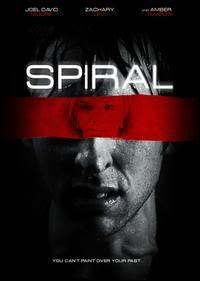 I saw SPIRAL months ago.
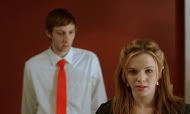 CHRISTOPHER STIPP: Hey, Joel, Jeremy.
 MOORE: We wanted to do something interesting with those two characters and have them mirror each other in a way.
 CS: Could you talk about the writing process itself, i.e. co-writing? Where did the process begin?
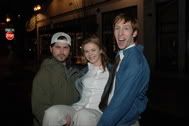 BOREING: I’ve written things and Joel hadn’t done as much as that but he made films and I hadn’t been a part of that process. I probably had more moments of being not so much surprised but interested in the distinctions between the way I thought things would be on the page and the way they wound up being.
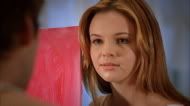 So, there is this interesting phenomenon that the people who are in the arts can sort of relate to this loneliness. Mason can’t do a 9 to 5 job out in the world and with the fluorescent lights and the headset and timecard he can’t be himself, he can’t relate in that environment. And a lot of us who come out here are that way ““ exaggerated to the degree of a Mason but when he’s at home he is immersed in the music that he loves and the art that he loves and thinks that he’s knowledgeable about things that he can relate to and open up to be the artistic, insightful guy and again, that is Joel, or that is Zac and that is Adam Green, even Amber Tamblyn. They are not at this extreme as Mason ““ we are telling a story here that is fiction – but then we can all relate.
 But the visuals in this movie are what drives the movie because a lot of this movie are just two people talking and the cameraman is playing a character, a part in this movie ““ voyeuristically speaking. He is watching Mason as he’s going through his struggles. All of that was accessible to us. Because all of that is creating, between Adam and I, how the shot is going to look. We had these long shots of steadicam just moving around the world and one of my favorite shots in the whole movie is when Mason comes in from talking to Amber on the street and not inviting her up because he obviously has paintings of this other woman on his wall and he’s not ready for that transition. Mason looks out, looks at the paintings, and then storms into the bathroom. That shot right there is just one shot. It just moves all the way around and introduces you to the block where Mason spends 90% of his time.


 CS: Dane, if I could close with the final question ““ I’m paraphrasing but Chris Rock said there’s the Stand Up Comedian’s Success Kit. Included in the kit is a movie, a book, a television show, now while you’ve said you’ve done pilots of a television show do you think that you will write a book? Do you think you will find success in a television show or do you think you’ve honed your craft well enough where you don’t have to spread your brand of comedy over different forms of media?


 Director: Andy Wachowski, Larry Wachowki
 Director: Steven Greenstreet
 The persnickety relationship between divorcees Oscar & Felix continues in the complete third season of the original
  Long the most artistically underappreciated of the Beatles, I’m tired of people slagging on Ringo Starr. Frankly, his albums have been the most consistently enjoyable and fun. Not every piece of music has to be an artistic opus, and Ringo always comes back to remind us that sometimes you just want a strong backbeat and a sing-along. There’s plenty of that to be found on his new album,
  Newly remastered and with new bonus materials, the 40th Anniversary Edition of Gerry Anderson’s
  I can give or take the modern colorization process, but I appreciate the fact that it requires an often pristine restoration of the original black & white print. Such is the case with the new 2-disc editions of Ray Harryhausen’s sci-fi classics
  As light as a bubble and just as dense intellectually, I admit that the modern teen comedy take on Snow White –
  Things are heating up as story elements begin to come together in the second volume of
  If catching a wave is unreasonable, at the very least you can catch the complete third season of
  It’s been years, but the second season of
  The clever cons of the UK’s
  Setting action pics aside, Dwayne Johnson (aka The Rock) steps into the family comedy milieu in
  If you were expecting the soundtrack to
  Erudite and dryly, slyly witty, the British TV adaptations of Noel Coward have been brought together in one box via
  The next generation of Hong Kong action star arrives in the US in
  Not nearly the camp nightmare of the second film but not quite the gothic beauty of the comic in its golden period, the first season of
  As offbeat and passionate as the flick itself, the soundtrack to
  For the most part, I’ve enjoyed the relaunch of Doctor Who. I think it’s fun science fiction, even if it’s a bit hamfisted and plothole-ridden at times. With that in kind, was looking forward to the spinoff series
  I dig that the soundtrack to the upcoming
  Finally, if you want to make sure your weekend viewing contains a bit o’ culture, there’s the recent BBC adaptation of Jane Austen’s