Author: admin

  • Comics in Context #147: San Diego 2006 – Is This Trip Really Necessary?


    comicsincontext4.jpg


    The following events took place between Saturday, July 22 at 6:40 PM and the present.

    “You’re still living in San Diego!” exclaimed the Beat in shock (and an admirable metaphor) a few weeks ago. But as Ed McMahon might have said to Carnac the Magnificent, “I hold in my hand”–metaphorically speaking–“the final installment of this year’s San Diego Con reports,” whereupon applause sounds through cyberspace. Some of you may be thinking, “Didn’t he tell us that he’d be spending fewer pages writing about the San Diego Con this year? But in 2003 and 2005 he took only six weeks to do it, and this year it’s eight.” Ah, I reply, sneaking through a well-planned loophole, but you’ll find that most of this year’s installments are shorter than last year’s.

    This week, therefore, marks my final attempt this year to persuade my fellow Quick Stop columnist, Fred Hembeck, who, despite being the Consummate Comics Fan, has never, ever been to the San Diego Con, that he should, nay, must go there someday. Fred already replied to my campaign on his blog (http://www.hembeck.com/FredSez.htm) on August 18: “Sorry, Peter–as long as I can’t carry on polish for my Stan Lee Press On Nails, I ain’t getting aboard!” But, Fred, there are other ways to go than by plane! You could follow the example of Lewis (not Lois) and Clark by undertaking a cross-country road trip. Driving out to Comic-Con, staying its length, and then driving back: why it’d only take roughly three weeks out of your life. Bring a laptop and you can blog en route.

    SATURDAY 6:40 PM
    If you read last week’s report, then you recall that I waited over two hours to get into the San Diego Convention Center’s cavernous Hall H, hoping to see director Sam Raimi give a presentation about the forthcoming Spider-Man 3 movie. (The Comic-Con asserts that being a member of the press does not ensure admission to Hall H. Well, why not?) But instead I got to see this other guy, who looked a lot like that character Silent Bob in those Clerks movies, who bestowed his wisdom about life upon the crowd. For convenience’s sake, let us continue to call him Mr. Smith.

    At the point at which I pick up my report, Smith had already been asked
    “what made you want to direct?” Smith said it was seeing Richard Linklater’s movie Slacker (1991), which has no plot in the conventional sense and consists of a series of dialogues between different characters. “God, if this counts as a film,” Smith said; the connection to Clerks is clear.

    Now another audience member asked Smith, what would he have done if directing hadn’t worked out for him as a career. “Before I wanted to be a filmmaker, I thought I wanted to own a deli,” Smith replied. (This too illuminates the Clerks movies.) “I didn’t really have a backup plan,” he confessed. it’s a good thing that following his dream paid off.

    The next fan wanted to know if Smith would be writing more comic books.
    “Me and comics, not a great mix,” Smith began. “Mostly because I–Where the fuck’d you go?” The fan had already obliviously wandered away from the microphone. “We were having a conversation,” protested Smith. You can become prosperous and famous and still end up with people walking away from you while you’re still talking to them.

    Smith pressed onward: “Because I have a hard time sticking on schedule.” He brought up his Spider-Man/Black Cat limited series, whose final issue was a full three years late. “You’re not supposed to take three years off,” he pointed out. Then he told us the price of missing deadlines: “For three years I was fuckin’ persona non grata at comic book conventions. “˜Where’s Spider-Man/Black Cat, tubby? Jersey Girl fuckin’ bombs and Spider-Man/Black Cat isn’t finished!’”

    Smith concluded, “Dude, I’m gonna get you laid and you won’t care about Spider-Man.” (This obviously hasn’t worked for Mr. Smith.) The fan, continuing to demonstrate his lack of manners, asserted that he’d heard Smith say that before. “I do,” Smith retorted proudly: “That’s one of my bits.”

    Next Smith was asked what he thought of being badmouthed recently on the HBO series Entourage. “I thought that was a compliment,” Smith contended. But wasn’t that negative publicity? “No fuckin’ such thing,” Smith declared. “They said my name on TV.”

    The next audience member in line spoke in praise of Jersey Girl, Smith’s film that centers on the relationship between a widowed father and his young daughter. “People who are not parents don’t get Jersey Girl,” she said. “People who are parents do get it.” Smith thanked her and the others who liked Jersey Girl. Despite its bad reputation, I rather liked Jersey Girl, too, and I’m not a parent. Maybe it’s because I’m middle–uh, I mean, have a mature outlook.

    Another fan asked what was Smith’s inspiration for Clerks II. “I opened up my mortgage bill,” Smith said, adding, “Back to the well.” (Smith and Bruce Timm have the same problem.) Then Smith said that he wanted to examine “what it was like to be in my thirties,” since the original Clerks was about life in his twenties. So I wonder if in ten years there will be a Clerks III about entering middle age.

    The next questioner wanted to know how “first time filmmaker” could break into the business. Smith said, “I don’t know the way in. I just made Clerks. So my advice to you is just make Clerks.”

    Smith wound up by talking about his recent dispute with Joel Siegel, the movie reviewer for Good Morning America. Siegel, Smith told us, “walked out of our movie the other day.” In Clerks II, as the centerpiece of lead character Dante’s bachelor party, his friend Randal arranges for “the donkey show,” which one might describe as bestiality as performance art. (Gee, whatever happened to hiring strippers?) This offended Siegel’s delicate sensibilities. “He said, “˜That’s it! I haven’t walked out of a movie in thirty-seven years!” Smith told us, but Siegel walked out of this one.

    Now it seems to me that the strange thing about this is that Clerks II shows us the two participants in the donkey show, but does not actually show them Doing It. Smith knows where to draw the line. So Clerks II is therefore no more or less offensive than The Aristocrats, in which bestiality, among other non-G-rated activities, is repeatedly mentioned but never shown onscreen. Did Siegel walk out of that movie, too?

    “It was weird,” Smith told us. “I grew up watching this dude on TV.” What upset Smith was not that Siegel walked out but that he was rude enough “to be disruptive in the middle of the press screening.” Smith was on the Opie & Anthony radio show and they asked him if he wanted to call up Joel Siegel and so they did. “It was one of the rare times I got to confront” a critic, Smith said. “I felt like I was arguing with my father,” Smith told us, “if my father had a big cowcatcher mustache.”

    And thus the day’s events in Hall H came to an end, and the campers could at last decamp. I may not have seen Sam Raimi and the Spider-Man 3 leads, but had it not been for my lengthy wait outside, I would not have seen Kevin Smith perform for the first time. Convention presentations should entertain as well as inform. Smith is a master of the con appearance as stand-up comedy act, and his casual way with profanity even gave me a bit of a sense of what it must have been like to see Lenny Bruce perform live.

    And then, as we filed out of Hall H, we were all handed Spider-Man 3 caps. It was as if that really had been the Sam Raimi panel after all.

    SATURDAY 8:00 PM
    But since I stayed to hear Kevin Smith, I was late getting to the restaurant in
    the Gaslamp Quarter restaurant where the Comic Arts Conference was holding its annual Saturday night dinner. In fact I arrived just as the Conference attendees were divvying up the check. So I headed over to Horton Plaza to get a quick dinner and then turned back towards the Convention Center.

    SATURDAY 9:00 PM
    I arrived back in the Sails Pavilion to watch the annual Masquerade, which was already in progress. Actually, the Masquerade took place in Room 20, the site of the Eisner Awards the previous night. But there is such demand to attend the Masquerade that tickets are now required to get in, and people without tickets can instead watch the proceedings on large video screens in the Sails Pavilion and Room 6A. Last year there was only a relative handful of people watching the show on the Sails Pavilion screen, but this year virtually every seat at the many tables arranged in front of the screen was occupied. This was yet another sign of how Comic-Con attendance continues to grow at so rapid a pace. This also set me thinking about why the entertaining but empty-headed Masquerade is so popular and yet the Eisner Awards, which are much more significant, could not even fill half of the same venue, Room 20.

    Among this year’s contestants were a group who purportedly enacted the plot of the first Pirates of the Caribbean movie within five minutes or so. At the end the names of the masqueraders were projected onscreen, and, to my astonishment, they all turned out to be women! How aware is Disney of the gender-bending appeal of their current flagship films? SpongeBob SquarePants cavorted onstage, perhaps in the vain hope that his number one fan Fred Hembeck would be there. At another point, a human-sized Pikachu was beheaded onstage, to tumultuous applause from the audience. Justice had triumphed at last.

    SUNDAY 10:30 AM
    There was no crowding at all on the main convention floor when I entered this morning. it’s a pleasure walking around. Well, Sunday is supposed to be a “slow” day at Comic-Con.

    SUNDAY 11:00 AM
    I returned to the DK Publishing booth to do another signing for my book X-Men: The Ultimate Guide. This time I was seated at the front of the booth. Carrie Fisher wasn’t at the next booth this morning, but directly in front of me, at the Lego display, a Lego version of SpongeBob was grinning at me, as if he considered me the next best thing to Fred.

    Again I found myself enjoying doing the signing and experiencing a small sliver of what it must feel like to be famous. Two young women even asked if they could have their photograph taken with me. See, Fred, here’s another reason you should come to Comic-Con: you too could get to feel like a celebrity for an hour!

    As I sat at the booth, I saw the traffic in the aisle in front of me grow heavier. It wasn’t even noon yet and the crowds looked like Saturday’s.

    On Friday night I’d spoken by phone to Quick Stop editor Ken Plume, and we had arranged that either he would stop by the DK booth between 11 and 12, or I would borrow a cell phone, call him, and find out where to meet him. He didn’t show up, and when I phoned his number, I got a recorded message that he was unable to take my call. This was strange. (Ken later informed me that he had to leave unexpectedly early for Los Angeles.)

    Once more I stayed longer than my allotted hour. I had a goal: I would keep on signing until we sold the last remaining copies of X-Men: The Ultimate Guide at the DK booth. And I’m happy to say we succeeded!

    SUNDAY 12:30 PM
    On Thursday my friend Meloney had told me I should go to the Inkworks area (since she freelances for them) on Sunday to locate her for our traditional Sunday afternoon get-together at the Con. But she wasn’t there, nor did the
    people on duty know where she was.

    Yet again I was forced to recognize that unless you set a definite time and place to meet someone during the Con, you are likely never to run into that person. My tentative plans for Sunday afternoon–getting together first with Ken and then with Meloney–had fallen apart. What could I do instead?

    SUNDAY 1:00 PM
    I would have felt my 2006 Comic-Con experience was incomplete had I attended only one of Mark Evanier’s panels. Mark has attended the San Diego Con every year starting with its very first, long before Hollywood publicists discovered it. I consider the panels he hosts to be the heart of Comic-Con, carrying on its tradition of honoring classic comics and animation. However gratifying it is to see movie directors and stars coming to San Diego to acknowledge us as their audience, to my mind they remain a sideshow. Panels like Mark Evanier’s are the main event.

    I arrived in Room 6CDEF shortly after 1 PM for Evanier’s final panel of this year’s Comic-Con, “Cartoon Voices II.” I’d attended one of his panels of voice actors for animation back in 1997, and in the intervening years they’ve justifiably grown so popular that this year Comic-Con held two of them, each with a different lineup of actors. Today’s panel had the largest audience in the largest room I’d ever seen for an Evanier-led panel.

    Since by his own account Mark has been losing a pound a day, Sunday he was two pounds lighter than when I’d last seen him at the Eisners. But then, we may have all lost weight waiting through the Eisners, and, for that matter, getting through the crush of people at Comic-Con.

    Evanier introduced the panelists, who included Bob Bergen, who recreates the voice of Porky Pig/the Eager Young Space Cadet for the Duck Dodgers TV show; Wally Wingert, who does voices for Family Guy; the attractive April Stewart, who performs voices on South Park; Quick Stop editor Ken Plume’s good buddy Billy West, who is not only the original Stimpy but also took over Ren, who performs Fry and other members of the Futurama cast, and who has on occasion been Bugs Bunny, Daffy Duck, Elmer Fudd and Popeye; and another pretty voice actress, Kimberly Brooks, who performs on Mucha Lucha.

    Ms. Brooks said that for the direct-to-video animated feature Batman: Mystery of the Batwoman (2003), she voiced the character of Kathy Ducaine, who “kinda sounds like me but very breathy,” as she proceeded to demonstrate. Evanier observed, “There are people who would pay $19.95 to hear that,” whereupon Wingert began breathing hard.

    Then the panel turned to some of the odder aspects of the voice acting profession. Take the Hanna-Barbera character Captain Caveman, whose only comprehensible dialogue consisted of yelling his name. Evanier said that Mel Blanc “yelled it once,” and Hanna-Barbera simply played the recording “over and over.” Then Evanier told us how Ted Cassidy did the roars for Godzilla on the character’s animated show. After Cassidy passed away, Evanier continued, the show “auditioned soundalikes until somebody realized” that they had “three hours” of Cassidy’s recorded roaring that they could simply recycle. So, Evanier concluded, “people who auditioned got beaten out by a dead guy,” who, he added, “didn’t get health benefits.”

    Bob Bergen recounted how he used to do voice work on Star Wars videogames and “got memos from George Lucas” saying he sounded as if “I didn’t believe in the Force. And I couldn’t argue with those memos,” Bergen said with deadpan irony.

    Then came the centerpiece of the panel: the actors would perform an old time radio script that they had never seen before in what Evanier termed an “ice cold reading.” In past editions of this panel, Evanier said, they had performed a Superman radio script, but this time they were doing Flash Gordon. In fact, this seemed to be Flash‘s first episode.

    Evanier then assigned the roles. Bergen would be Flash. Wingert would play “Announcer #2″ who should “talk very fast.” Stewart would portray the heroine Dale Arden, whom Evanier characterized as a “good girl” in her “mid-20s.” Evanier assigned Brooks to do Aura, whom he described as “the sluttier woman in this,” whereupon Brooks fixed the audience with a look of understated irony. Evanier told Billy West, “You’re going to be everyone else,” including “Announcer #1,” Dr. Zarkov, whom he described as having “a slight German accent” (But wouldn’t “Zarkov” be a Russian name?), “Slave #1″ (who West made sound something like Droopy) and the archvillain Ming the Merciless.

    Evanier explained that in assigning roles his intent was to “try not to have an actor talk to himself,” although he confessed that he once asked the late Paul Winchell if he minded talking to himself (in separate roles) and Winchell said, “What do you think I did for a career for 55 years?” (The answer: being one of the world’s most famous ventriloquists.)

    To enliven things further, Evanier introduced what he called “an improv game”: whenever he said “change,” the voice actor would “read the same line again in a different voice,” and then return to the original voice thereafter. Perhaps taken aback by the complexity, Bergen asked, “Are we getting paid for this?”

    Since my column doesn’t have an audio track, there is no way I can convey to you just how much fun this reading proved to be. The actors took every opportunity to play the script for laughs. For example, when Flash and Dale’s aircraft was being knocked about, April Stewart emitted groans that sounded somewhat suggestive. “Was it good for you, too, Dale”? ad libbed Flash/Bergen.

    Many laughs resulted from Evanier’s well-placed orders to “change.” For example, when West was performing Dr. Zarkov, whose “slight German accent” was, in practice, amusingly over the top, Evanier called “Change!” and Zarkov immediately morphed into a perfect imitation of a laid back George W. Bush, who had just located “a new planet, Ah guess.” At another “Change!” command, Kimberly Brooks’ sultry Princess Aura shifted into a villainous Valley Girl: “You are going to totally love me or you are so going to die.” Similarly, Wingert’s fast-talking Announcer #2 briefly became Paul Lynde, noting about two characters, “They’re both bitches.”

    Following the well-received reading, the panel took questions from the audience. Inevitably, the topic of getting into the voice acting profession came up. Bergen asserted that “Everybody in this room has a great voice,” but that is not enough: it’s necessary to study acting. Stewart agreed that the voice alone isn’t sufficient, saying, “It’s like saying I have a pencil, I should be a writer.” West urged people to “Keep trying. Don’t listen to what anyone tells you,” that there was “so much media out there” that are “always looking for voice people.” Stewart warned, “Don’t listen to any negativity” and to “walk out of the room” if you get any. Stewart and Brooks agreed that you should “Believe in yourself,” which is good advice for any field of endeavor.

    Evanier then singled out five great people in the history of voice acting for animation. The first was the late Mel Blanc, the voice of Bugs Bunny and so many other Warners characters, “who invented” the “kind of voice acting” used in animation today. Next was the late Daws Butler, whose name was applauded by the audience, the voice of Yogi Bear and the majority of early Hanna-Barbera characters, whom Evanier called “a wonderful actor and teacher.” Evanier contended that the “quality of a Hanna-Barbera cartoon” is “proportionate to the amount of work” Butler did in it. This is not as much of an overstatement as it might at first seem. The third was Butler’s frequent Hanna-Barbera colleague Don Messick, also deceased, whose name also received applause. So did that of the fourth, June Foray, the voice of Bullwinkle‘s Rocky and Natasha and Nell, whom Evanier said he was assisting in writing her autobiography; he said that next year she will be at Comic-Con signing the book. The fifth was Lennie Weinrib, the voice of H. R. Pufnstuf, among many other characters, who had recently passed away.

    One audience member told the panelists, “You guys have the coolest job in the world.” Subsequently, Bob Bergen recounted an anecdote that illustrates one reason why. He said that shortly after the 9/11 attacks, “four of us went to Krispy Kreme,” where he ordered donuts in the voice of Porky Pig. They ended up being given two dozen donuts for free, because, one of the Krispy Kreme staffers told them, “That’s the first time we’ve laughed in days.”

    By the panel’s end, one could agree with the audience member who told the panelists, “I came here for Billy West and found out I’m a huge fan of everyone else.”

    Even so, I was paying particular attention to West, whom Ken Plume has been praising for years in his phone conversations with me. West revealed on the panel that the following week he would start working on a new Futurama series that Comedy Central will air in early 2008, and that there will also be a Futurama movie. At one point West talked about being a Three Stooges fan and did a perfect imitation of Larry Fine’s voice for us. He explained that Futurama‘s “Fry sounds like a 25-year-old me” and described himself thus: “I’m 55 years old and I’ve got the body of a 16-year-old. . . in the trunk of my car.” What an amusing and talented guy.

    But it appears that voice acting, like freelance writing in the comics biz, isn’t the most stable of careers. Wingert noted that “videogames have saved a lot of us” when voice work for animation was scarce. West then said, “I didn’t go to college, I feel grateful for any work.”

    And then I had an epiphany. Fred and I only know Ken Plume as a voice on the telephone. We’ve never actually seen him. Lately Ken has started to compare himself to Charlie, the unseen boss of his Angels. (Well, Misty looks the part but not Paul Dini, Fred or me.) Mysteriously, I keep missing seeing Ken when we’re both in San Diego, or so I thought. It’s no wonder that when I asked Mark Evanier if he had seen Ken Plume, he gave me a meaningful look and told me to look for Billy West. For all I know, Billy West is moonlighting at Quick Stop to supplement his income, and “Kenneth Plume” is no more than one of West’s innumerable voices. Ken, it is now up to you to prove this isn’t true. The ball is in your court.

    SUNDAY 2:30 PM
    I decided that before Comic-Con ended, I should make my way across the sections of the gargantuan main floor that I hadn’t yet explored this year, including Artists’ Alley, which was way off to one end, against the far wall. I wouldn’t be surprised if many attendees never found it.

    If Sunday is still the “slow” day at Comic-Con, it’s only in the sense of how long it takes to move along the main floor. The aisles were so congested that it was like Saturday afternoon at its height. (Indeed, I learned that the Con stopped selling tickets on Saturday because the Convention Center was so packed with people.)

    Amidst this sea of humanity, I sighted a reminder of conventions past. Back in the 1970s, before women dressed in Princess Leia’s slave girl costume at comics conventions, some female attendees came wearing Red Sonja’s iron bikini. There, moving slowly through the masses of fans ahead of me was a shapely 21st century Sonja. Though she was surrounded by male fans, no one, to their credit, was hassling her; on the other hand, no one seemed to notice her either. Are convention attendees becoming too jaded?

    I spend most of my time at Comic-Con attending panels, in Hall H or the upper floors, and this year, when I ventured onto the main floor, it was to sit at a booth and sign books. Now, trying to move through the swarms of people on the main floor wasn’t pleasant at all. At San Diego Cons in the 1980s I was rather sad to leave the main floor on Sunday afternoon. This year it came as a relief.

    SUNDAY 4:00 PM
    The convention would end in an hour, but I was already out of the building.
    Instead I was sitting at an outdoor restaurant at the nearby Marriott, looking out over the pleasure boats docked at the harbor, and the blue water and bright sky beyond. I was here for a Publishers Weekly meeting, attended by editor (and Bob Clampett Humanitarian Award winner) Calvin Reid and his wife, manga reviewer Kai-Ming Cha, and the ubiquitous Beat to discuss our coverage of the con for PW‘s online newsletter Comics Week.

    It turned out I didn’t get to write any Comics Week pieces about the con. Mark Evanier has sagely observed on his blog (on Friday, July 21 at www.newsfromme.com) that “one of the problems with covering this mega-gathering is that it’s really about forty conventions in one.” Comics Week‘s limited space would be devoted to news about Marvel and DC, manga, and alternative comics from panels I had not attended: those conventions were more important to them than the con I had attended. The Beat used my observation about “pirates, pirates everywhere” observation but that was it. As for what I’ve chosen to report on here in my column, my readers should decide for themselves how significant it is.

    SUNDAY 5:00 PM
    It was closing time for this year’s Comic-Con, when traditionally a swarm of Daleks are released to exterminate any congoers who hadn’t heeded the commands to Convention Center. Seated in the Marriott’s outdoor restaurant, looking out over the peaceful harbor, I was just too far away to hear the fans’ high-pitched shrieks. I had other things on my mind. Having planned to spend the evening writing Comics Week articles, what would I do instead?

    I chose to do some San Diego things I’d never done before. First on my list was finally taking a ride in a pedicab, the combination bicycles and rickshaws that are used as open-air taxis. My pedicab driver was an attractive and strong-legged young woman, who was a much better conversationalist than your typical New York City cabbie. She was from Poland, and had only been in America for six months, but since Europeans put more importance on being multilingual than Americans do, she had become fluent in English before arriving here.

    SUNDAY 9:00 PM
    After dinner at Horton Plaza, I returned to my hotel on Coronado Island after dark. Discovering that the swimming pool was open at night, and that it was heated, I decided to spend a few hours out there. This was one of my best experiences on the trip. Although the pool seemed nondescript by daylight, at night it was magical, lined by silhouetted palm trees, with the lights of the San Diego skyline, including the Convention Center, off in the distance. There were only a relative handful of other guests using the pool, so it was quiet and peaceful. Wondering where guests kept disappearing to around a corner, I finally discovered the outdoor jacuzzi/spa, and I’d never been in one of them before either until that night.

    The whole experience was so soothing and relaxing, banishing the accumulated stress of the Con. Even returning to my room and discovering that the hotel bill had been screwed up again did no more than briefly interrupt my blissful state.

    MONDAY
    Last year I fantasized that after 5 PM on Sunday the entire Comic-Con is swept up in a gigantic tornado and vanished into a hole in the sky. Looking around on Monday morning, it was if there really had been such a storm. After checking out of the hotel, I was the sole passenger on the water taxi that took me to the mainland. There was not a single person on the sidewalk outside the Convention Center. Indeed, during my entire last day in San Diego, I saw no more than three people who gave some sign like commenting on my Dark Horse bag, that they had been to the Con. (By the way, remember those TokyoPop bags from last year’s Comic-Con, that were big enough to hold small children? They were missing from this year’s San Diego Con, so I had to find substitutes. Warner Brothers’ bags had handles that broke almost immediately. But my Dark Horse bag remained intact until I got all the way back home.)

    Did Annette, my new acquaintance from my flight to San Diego, follow up on my offer to show her the sights of the city on Monday. Of course not; I’m not that lucky.

    So, since I don’t believe in going to Southern California and spending all the time inside, I went off to the San Diego Zoo on my own. Unusually for San Diego, there was a downpour for an hour, and afterwards some of the animals seemed oddly, ah, frisky. I found myself standing in front of the enclosure for large African tortoises, two of whom were engaged in what Kevin Smith might call the Tortoise Show while another tortoise looked on. He wasn’t the only voyeur. Other zoogoers, some of them children, were watching the Show; photographs were taken. I wondered: what would Joel Siegel think? Life is a Film by Kevin Smith. (Like myself, you may have assumed that turtles have no voices. But now I have heard the grunting of a male tortoise in the ecstasy of love.)

    Then it was off to the airport, where in the security line I had my first encounter with one of the new “puffer” machines. They emit bursts of compressed air, presumably to upset any snake that may be hiding on your person in order to smuggle itself onto a plane. I would discover that the friendly white-haired gentleman at the ticket counter had listed the wrong gate for both my departing redeye flight from San Diego and my connection at Philadelphia. As I wearily logged all of my heavy carry-ons all the way across each terminal, I told myself: good thing I brought this laptop with me to no reason, eh?

    TUESDAY
    When I arrived home I was welcomed by an array of unexpected problems: my phones had gone dead, my desktop computer’s keyboard no longer worked, a record-shattering heat wave was about to begin, and so much more.

    NOW
    So I think back over all the hassles and hardships I endured preparing for my trip, flying out, dealing with problems at the hotel, missing connections with friends, inching through crowded convention aisles, dealing with more trouble on the way back, and I wonder: Is Fred Hembeck right after all? Is going to the San Diego Con more trouble than it’s worth?

    In the line outside the Convention Center on Saturday afternoon, I discussed with people around me how the Con could deal with overflow crowds for Hall H events. Should they pipe the audio outside, as Symphony Space did with the Whedon-Sondheim meeting I missed? Should they telecast the panels into another room, as they do with the Masquerade? (But it was pointed out to me that then it would be harder to stop people from making bootleg videos of the preview footage.) If attendance for Comic-Con continues to grow at this rate, what will happen next year? ( I think of the new stadium across the street from the Convention Center. Could they use that?)

    Michael Eury and I were recently commiserating over the unpleasantness of cross-country travel. Ken Plume has told me he doesn’t intend to return to the San Diego Con since it is so hard to get business done there nowadays. (But I bet Billy West will continue to show up.) On her blog (http://trishm.blogspot.com/) in August, colorist Patricia Mulvihill explained why she didn’t go to the Comic-Con this year: “at a certain point last year it became more wearying than wonderful. It was all just TOO MUCH. So when I decided to skip this year, it was as if a giant weight had been lifted.” She pointed out, “So much preparation goes into attending it almost feels like training for an endurance event. . . .just traversing the con floor has become a test of will.”

    I’ve already decided that it is simply too expensive to attend Comic-Con unless I can get one of my clients to pick up part of the bill. Besides, within five years, the new New York Comic-Con may evolve into the East Coast equivalent of the San Diego Con, and even Fred is seriously considering attending the next New York Con.

    And yet, what little I know about next year’s Comic-Con already makes it seem like something I’d want to see: Neil Gaiman and Roy Thomas as special guests, June Foray publicizing her autobiography.

    Mark Evanier, as always, is right about the San Diego Con: “once you get to the convention center here, you pretty much have to find the parts of the convention that matter to you. If you do, I think you can have a very good time.” I really liked the parts of the convention that mattered to me. Maybe one of my publishers will want me to go next year. I just hope that Comic-Con follows Mark’s example: the time has come for Comic-Con to do something drastic about cutting down its size.

    ADVERTISEMENTS FOR MYSELF
    On Monday evening September 25 the Museum of Comic and Cartoon Art (www.moccany.org) in New York City will hold another session in my lecture series “1986: The Year That Changed Comics.” This time my topic is Will Eisner’s semi-autobiographical graphic novel The Dreamer, about the early days of the comics industry. And my New York University course “The Graphic Novel as Literature” will commence two days later–if enough people sign up for it.

    -Copyright 2006 Peter Sanderson

  • Trailer Park: Greg Grunberg Is Reading Your Mind: Part 1 of 2


    By Christopher Stipp

    Archives? Right Here…

    I thought it was the perfect opening.

    It eventually came to me upon high, not unlike suddenly seeing the visage of Jesus on the burnt edges of a fudge-frosted Pop Tart, in that I thought my mind had subconciously fed me the brick that I was going to slam dunk on Greg Grunberg. Sure, it was a little risky because of the dated material on which the joke hinged on but he would get it even if no one else would. I gave thanks and praise and then, just moments before the interview, I had my wit popped like a thick balloon. 

    Prior to all of this, though, when I was thinking of ways to approach talking about this show without having seen it, the quasi-serious promos for HEROES being my only guide, I didn’t really know the angle. I had never heard of Greg Grunberg before this interview, I didn’t have a clue he was ever on ALIAS as I never watched it, I knew that just being a dude negated me from being in the target audience for FELICITY but yet, as sweat poured off my head, the contents of his PR packet spilling on the gym floor as the exercise bicycle I was riding with nary a hand to keep me steady, with the exception of Greg’s steely 8×10 that I held in my mouth as I flipped through scads of clippings, photos and a recipe for a sweet looking brisket, I consumed a lot of press articles on the man in preparation for the interview. A shape took form in my head about what this man was all about and it was about that time that instead of worrying about how I was going to carry on a conversation with the man I hardly knew I had the hook.

    I had the kind of funny that I wrote down on my mini legal pad and instantly felt it in my gut that it was going to be lead-off hitter of an opener. As well, I thought that this little nugget of merryment was going to set me apart, set my hip sensibilities apart from all the other quasi-journos who were going to write stories on this guy, and there was nothing left to do than let the joke take care of itself.

    For those who don’t know much about Greg one of the more serious accents to his character, something that a lot of blowhardy celebrities partake in but forget about as soon as the last bottle of Brut has been popped, Greg devotes a good chunk of his free time and effort into trying make an honest difference in the world. Now, what made Greg’s efforts so grand and made me take notice of, something that not even Angelina and her plight to ostensibly export half the residents of Nambia into her home so she can adopt all of them, was that his ideas on how to get people involved in his work while creating the air that fund-raising could be an engaging activity felt new and genuine; there was also that one reason why it did feel so genuine

    Greg has a ten year old boy that is dealing with pediatric epilepsy.

    Beyond just feeling bad for his boy, Greg proactively went out and started stumping for this cause if for no other reason than to help his child, and others like him, get the kind of help they need. It would be easy to just dismiss Greg’s solo charity on the behalf of the Pediatric Epilepsy Project but when you see the fruits that have blossomed from his labor it is hard not to be impressed that he was able to get players like Ricky Gervais, Jennifer Garner, Jason Bateman, Sylvester Stallone and even Ringo Starr to help donate their own time as well in order to raise funds for a solid cause.

    Beyond that, even, Greg created a movable feast of goodwill with the creation of a super-celeb travelling circus of rock n’ roll. The Band From TV, which you can also see here, is a fund-raiser on risers that is taking to the stage and, with the help of Hugh Laurie from HOUSE and even that Bob Guiney guy from THE BACHELOR, demolishing any pre-conception that The Bacon Brothers were the end-all be-all for famous people who think they can be rock n’ rollers too.
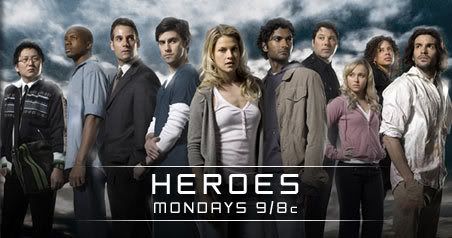
    There is a lot that Greg lets me in on as we talk, some things are more personal than others, but even with that one funny moment I thought to myself on how to start things off I found my moment popped by the cruelist of all ironies: IMDB. Some days, from one to the next, you never quite know what or who is coming your way. With Greg, I had no clue what I was in for and, thankfully, he was gentle.

    HEROES debuts Monday, September 25th

    I’m surprised you’re up this early to do one of these things”¦

    (Laughs) Oh, come on, early? I’ve got three boys. I’ve been up for four hours”¦unfortunately.

    True. I’ve got two at home, myself.

    Ah, girls or boys?

    Two girls.

    Ah, well, then we should hook “˜em up!

    (Laughs) It’d be hard to set up a play date from over here in Phoenix. But, you know, it seems like the older they get the earlier they like to get up in the morning.

    Yeah, I know. AND”¦my 10 year old. We don’t want to put him to sleep before he’s tired but he stays up so late sometimes, not so late as some friends of ours let their kids stay up as late as they want, like midnight, which I can’t imagine, but he’ll stay up until 9:30 or 10 but then still get up super early. And it doesn’t make sense to me. I don’t get it.

    So”¦then you’ve been up for a while this morning.

    Since 6. 6 a.m. as I am the chef in the house.

    Ah, yeah, I actually read your recipe for your grandmother’s brisket when I was preparing for the interview this morning and, I have to admit, it made me real hungry.

    Very nice! I’ve got to say”¦that brisket, my grandmother’s recipe, is literally the best thing because you cook it three times and by the third time it’s just falling apart. It’s really good.

    And what a great segue into HEROES.

    Yes”¦

    You know, I’ll be straight up with you. I was getting ready for the interview, and I was going to be all funny-funny and glib by goofing on the idea that this show is the greatest looking superhero program that NBC has put out since MISFITS OF SCIENCE. I thought it was going to be witty, no one was going to get it, only to find out that the series’ writer, Tim Kring, also wrote for”¦MISFITS OF SCIENCE.

    What?

    Yeah. You honestly didn’t know?

    No I didn’t know!

    I, literally, started laughing to myself and wondered of all the things that could’ve 86’d the joke”¦

    That’s hilarious!

    He was a writer for MISFITS OF SCIENCE.

    You know what’s crazy about that is that I never would’ve expected, I don’t think the network either, would’ve ever expected this kind of a show from Tim Kring. Ever. Because he’s”¦PROVIDENCE, CROSSING JORDAN, I think he had one more show left in his deal, one more pilot, and I think they were expecting a procedural drama, something with a strong female character, whatever, and then this thing comes out of him? Which, I couldn’t be happier but I didn’t know Tim from anything.

    Really?

    Nothing. I’ve never worked with him before, didn’t know his name and I didn’t even know Damon Lindelof had worked with him. I mean I guess I did realize that Damon came from CROSSING JORDAN but I didn’t put 2 and 2 together.

    And when I read the script I was like, “Fuck, this really feels like something JJ wrote.”

    Yeah it does…

    Just because it is so character slanted”¦you care about these people”¦there’s so many that if you don’t care about one you’re going to care about another, that sort of thing. I just thought it was so well written. I had just gone in on STUDIO 60, which I also thought was incredibly well written, but I wasn’t as excited about that show, for me, as this.

    I had also just done HOUSE so I worked with David Semel, who directed the HEROES pilot, and when I read this I called the network and I said, “This is what I want to do.” I was at the end of my deal and I had just done a pilot for them that didn’t fly”¦

    Was that THE CATCH or GRAND UNION?

    GRAND UNION. THE CATCH was at ABC with JJ.

    Ok.

    Yeah, HUGE bummer because everyone loved it, turned out really well and it just didn’t fit into the schedule. It was more of a throwback, to like ROCKFORD FILES, than it was”¦It seemed like it from the series’ premise.
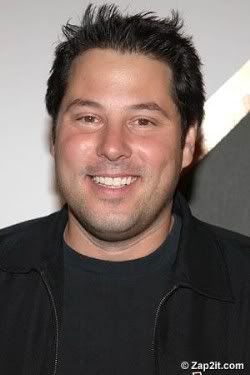
    Which I love but they really wanted something edgy, and they’re probably right, but, anyway, then we did GRAND UNION which was such a great experience because I LOVED doing a sitcom and that didn’t get picked up.

    With NBC these last couple years I got caught”¦like the timing was wrong. I did this Jason Bateman show called THE JAKE EFFECT. We did seven episodes and Jeff Zucker at the time, rightfully so, these expensive, single camera, half-hour shows weren’t doing well so he said, “I can’t pick this up. I just can’t take a chance.”

    So, I was like, “Great.”

    Then I thought, “Let’s do a multi-cam.” It’s cheap and something really funny so I hooked up with these guys, [David] Israel and [Jim] O’Doherty, these writers that are just awesome. We did this great pilot but, now, half-hour multi-cams aren’t doing well unless there is a huge name like Lithgow or someone attached so they didn’t pick THAT up. And so, once again, I’m like, “Great.”

    Then I had about a week left on my deal, I had already fulfilled my obligation to NBC, I know I’m boring you with some of these details”¦

    No, no”¦

    So, I didn’t have to do another pilot for them and this holding, slash, development deal they had with me and I was like, “Ok, I’ve done what I’ve supposed to do”¦” but I really”¦NBC gets me and I just love Kevin [Reilly], and I love Marc Hirschfeld, everyone over there on the production side, everyone’s great, and we totally get each other but I couldn’t find anything that I loved.

    With STUDIO 60 I went in and I read for Aaron Sorkin and Tommy Schlamme and I think they already had ideas of people that they wanted because the cast is just unbelievable.

    Huge.

    Huge and they’re all amazing”¦and I don’t think I ever had a shot at that but at least I got to read for them and it was a great experience for me to go in for them.
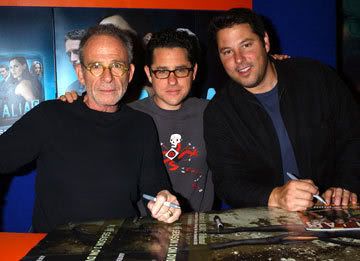
    Again, the script was great but I thought”¦Well, at least in the pilot the character I went in for”¦It would be developed and you’ve got to trust those guys that they’re going to make an incredible show which I think is going to happen.

    Then, when I read HEROES, I was like, “Are you fucking kidding me? Where did this thing come from?”

    Right.

    But, I did not read a two hour. I only read one hour and the role I read was Milo’s [Ventimiglia] role, the role of Peter, and I read that and, of course, now, I would have never of cast myself. Now that Milo has done it and I’ve seen the pilot there is just no way it was for me but at the time, when you read the script, I go, “Oh, I could do that.”

    But I called Semel the night before I was going to go in and read for them, he had just been attached to it, and I said, “David, I am so excited about this, man. It was fun working with you on HOUSE”¦” And he asked me what role I was reading for and I said Peter. And he was like, “Um, I’ve got to tell you, you are completely wrong for this. You’re not right for it at all.” And I being who I am I was like, “Ok, guess what, I am going to come in and just knock your socks off.”

    So, I came in and I did it how I do it and Tim, I could just see him squirming in his seat, he had just this second hour of the pilot in his head that he was writing and this role of the cop that he immediately said, “Oh my God, this is my everyman. This is my guy.”

    So, as I’m driving home from the audition, and I could tell that the audition went well, but it wasn’t like”¦something was up”¦as I’m driving home, someone called me and said, “You absolutely”¦Really showed Tim a way to explore that character that he wasn’t originally thinking and it’s this other character that you don’t know about.” And so they sent the script over and I read it and immediately is my favorite part and worked out perfectly.

    It’s great. Absolutely great. Now it turns out that they didn’t do the two-hour pilot so that’s why I’m not in the pilot.

    I was going to say”¦You’re not even in the pilot.

    You know what”¦I wasn’t in the pilot for FELICITY, I was on that for years. I wasn’t in the pilot for ALIAS, I was on that for years. As soon as I did the pilot for LOST I was eaten within five minutes.

    (Laughs)

    So far, that’s the way it should happen.

    You bring up a funny point. I know you played a part in LOST, the pilot. Now, with you and JJ being good friends I read that he initially was going to kill off Jack, Matthew Fox, by having him be consumed by the creature and that you were the one who kind of stepped in and said, “No, don’t do that”¦”

    Yeah.

    Has Matthew Fox ever sent you a Thank You note?

    (Laughs)

    Yeah. He’s given me several hugs and thanks. I think that everyone was in agreement but I was just one of the people”¦the straw that broke the camel’s back and put it over the top. I was like, “You’ve got to be kidding me. This is my favorite character. This is going to be the guy that I think is going to be everyone’s hero. Everyone’s gong to look up to him. He’s a doctor. You can’t kill him.”

    And then when they decide to cast Matthew it was just a done deal. There’s no way.

    Originally, it was Michael Keaton.

    I didn’t know that.

    Yeah, JJ talked to Michael Keaton but the problem is that you can’t let the critics and the advertisers be led down a path where they think it was going to be a Michael Keaton show. I mean, he’s unbelievable. Imagine Michael Keaton on an island like that, it would’ve been incredible. And then you kill him? In the pilot? And they buy advertising thinking”¦It’s a coup, but you just can’t break that rule. I don’t think you can lead people down that path but, having suggested that Jack live, JJ said, “Well, good. Then I’ll just kill you.”

    (Laughs)

    But that’s fine. JJ and I will work forever. It’s just that the timing is not right right now. I talk to him everyday”¦

    And I read that. You two really do have a partnership, a kinship, and I have to wonder, because you two have known each other since you were little boys, did you see that potential growing up together? And please be honest because I would drop the hammer and throw old friends under the bus who I knew weren’t going to amount to anything”¦

    Oh, absolutely! Are you kidding me?

    I’ll break bad on any one of my old friends”¦

    You get flashes of it. You got the feeling that this guy was really brilliant, has a great sense of humor. I have friends of mine that are actors and you could just see that when they were kids. That they were goofballs, they stood out, they always wanted the attention and they were smart.

    But he, JJ, was always doing”¦we were doing special effects. We made movies when we were nine and ten and making prank phone calls. And he was always artistic, he’s incredible at sketching and clay and can mold a character and can sit down at the piano and play by ear. He’s just like a renaissance guy. He was one of those friends who was like, “Wow, I really want to be close to that guy.” And then, after an hour, you’re like, “I can’t live up to this! I’m inferior!” But he’s never made me feel that way. He was always just creative. I would never be able and compete with him, creatively, but I was right there with him. We were doing everything together. We were making movies when we were ten, and art things and science things”¦it was just a blast hanging out with him.

    My parents joke”¦my dad was like, “Why didn’t I make him sign a management agreement when he was 8?”

    (Laughs)

    My dad LITERALLY says that. He’s like, “JJ, you signed a napkin”¦at the Schwartzenbaum bar mitzvah. Don’t you remember?”

    (Laughs)

    That’s the thing. This show HEROES kind of feels like a JJ production because it’s being compared to a program like LOST.

    I think the comparisons, in my mind, if you really break it down, they don’t compare at all except for the international cast idea but I think what you can compare is the quality.

    This genre is unique in that and when it’s good it is really good and that’s what this is. When you read the script it reads like someone who has a story they’ve been wanting to tell for their whole life. They’ve researched it, they know where these characters are headed, they know where they’re from, he has rules of what can and cannot happen and who the evil characters are, and that you can’t just get rid of them right away because they’re going to be around for a while”¦It’s all that great stuff that makes up this genre but where did this come from? With Tim.

    He talks about he wasn’t a sci-fi geek, he wasn’t a huge fan of superheroes, he didn’t have comic books when he was a kid yet he writes THIS. So, what he’s done, and it’s really smart, is he’s brought in these guys like Tim Sale and Jeph Loeb, Greg Beeman and especially Jessie Alexander who came over with me. These guys are just fanatical about this genre. They’re so good at what they do. Michael Green. I mean, they are all incredible and so passionate about it.

    When I sit down and talk to them about stuff that I get excited about I am talking on such a superficial level like I am going, “Oh, it’s so great when Matt does this thing with the.,.” and they’re just like, “Oh, yeah, yeah. Well, there’s a reason for that and it’s this and this and this and this.” And it’s just like, “Whoa.”

    That writer’s room is”¦shit, it’s palpable how the energy is in there.

    Really?

    Yeah, they’re just all having so much fun. It’s like on a comedy where they’re throwing around jokes and they’re saying, “What about”¦” “Well, how about”¦” “Ha-ha-ha!” These guys keep topping themselves. And it’s not formulaic. That’s the other thing.

    And I was going to bring that up regarding the writing. Is there a fear that the writing ever creeps too close to self-parody?

    There is always that fear. We had that fear on ALIAS. We were always walking that line. But, no, not on this because you’re dealing with”¦this is much more of an escapist”¦you can really lose yourself in this show because you’re creating, not another world because all these characters are incredibly relatable, but certainly you have to take a leap immediately in watching the show because it’s superheroes and super abilities. Once you go with that, which I think everyone is going to go with it, the rules can be stretched.

    So, in ALIAS, the frequent flier miles didn’t make sense on that show. We were flying all over the world”¦an hour here we were in Paris, an hour back, you know, it was crazy. This show, though, is so rooted in the reality that these characters are dealing with in their everyday lives. That’s what I love about my character and Ali’s character and Milo.

    It’s like what would happen if, Chris, you woke up tomorrow morning, and suddenly you started to hear these voices in your head. That’s the way they’re writing it”¦is that you would get headaches and you wouldn’t be able to concentrate, it would affect your whole life. You would hear the honest thoughts of your wife and your co-workers and”¦that’s not a good thing a lot of times. At least for me, I don’t think you can find a more sympathetic”¦hopefully I’m playing it that way, it’s sort of the way I play things, it’s empowering and yet a really hard to deal with disability. On the empowering side, it’s really fun and you get a lot of cool stuff to deal with. It’s brutal at times with the stuff this character is going through but that’s what I love about it. It’s complicated.

    Are you kind of the Jack/Matthew Fox character in this ensemble”¦

    I am more of the Mulder and Scully because I’m a cop who gets roped into investigating just what the hell is going on.

    And what’s smart about that is they’ve partnered me up with Clea DuVall from CARNIVALE. She’s an amazing actress and plays this FBI character who kind of recruits me because of my abilities. So, she’s tapped into exactly what’s going on and why all these people with these abilities are being hunted and what’s going on. Who’s after us, why are they after us, we’ve got to stop this killer, who is the killer and no one really understands or has taken the leap that this could be what it is like she has. So, when someone like myself proves to her that I have these abilities she wants to use me, partner with me to solve this.

    So what’s great is the audience gets to figure out what’s going on through the eyes of these two people that are investigating everything”¦so far, I have to say. I mean, the Matthew Fox character they’re all inside a bottle on that show and they turn to him because he knows more about fixing things, he’s a doctor.

    We haven’t come together yet on our show.

    What episode are you on now?

    I just got the script this morning for episode number [the tape was a bit intelligible on this number. Apologies]. So, what’s happened is I think at the beginning their idea was that they”¦and you can decide to print this or not”¦the idea was that they were going to [Oops. The tape cut out here. Sorry. It won’t happen again. We now return you to our regularly scheduled interview]

    But I can’t wait! All I do is see these guys in the trailer, at the coffee truck”¦

    Ensemble cast. The promos have these people deeply rooted in their own thing and it doesn’t seem like anyone can play off each other’s, pardon the pun, strengths inside of a good ensemble”¦

    Not yet. There was an episode of ALIAS, one of my favorite episodes, the Ricky Gervais episode, obviously because of him, but in that episode we all had”¦we all worked together in a MOD SQUAD sort of way where we plan this thing, we built this set, it was like a real team thing. And that I can’t wait to get to point [in HEROES] where I’m the guy in the van, like I would be on ALIAS, and suddenly they say, “We have no idea of whether he’s holding or not. Is he holding?” Then they tell me, “Go in, read his mind, and come out.” And I go in and I just have to brush up next to him”¦THAT could be so cool! I love that.

    What’s great is that everyone knows how incredible that’s going to be so it’s a nice carrot to hold out there going, “Now when these guys all get together they’re unstoppable.” But they don’t even know they all exist yet so they are just these individual stories all over the world.

    And how fast have the scripts been coming?

    It’s funny but when we get a writer on the set, whoever is responsible for that script they usually sit and they’re there as the producer/writer, I’ll just belly on up to him”¦kind of just talk to him. “I love this script! Everything is great”¦SOO”¦what do you have in store for me?” Or I’ll throw something out like, “This would be cool”¦” and that usually draws something out and they’ll say, “Yeah, that sounds good but we’re doing this and this .”

    They don’t want to give us too much information. But Jessie is one of my closest friends and Tim and I have become close so it’s one of those things where I do try to get information but”¦it’s also fun to not know. On ALIAS, there were periods where I would go for a series of five scripts and I would just read my stuff because I wanted to be surprised and I don’t want it to direct my acting if I know how powerful another character is or what’s going on. My character is supposed to be dark so it’s nice to just go with what I’m given.


  • Toy Box: Dragons Series 4 – Deluxe Komodo Dragon


    toybox.jpg


    Earlier this week I did an ‘early’ review of the fourth series of Dragon figures from Mcfarlane Toys over at MROTW.  Today the circle will be complete with my review of the deluxe figure from this set, the Komodo Clan dragon.

    Mcfarlane first started the Dragons line in 2005, based on an internally developed mythology.  The dragons belong to six different clans (so far) – Fire, Water, Eternal, Berserker, sorcerer and Komodo.  These clans interact with each other and with humans to varying degrees and in varying ways, and a war between the clans is brewing that will eventually destroy them.

    In each of the previous regular series, one clan member was pulled out to be the deluxe figure.  For series 4, it’s the Komodo Clan Dragon, covered in today’s review. After series 5 (due in January of 07), we’ll be seeing some new clans, including Fossil, Hunter, Warrior, Ice and Scavenger.

    If you have any questions or comments, feel free to drop me a line at mwc@mwctoys.com – on with the review!

    “Series 4 Deluxe Komodo Clan Dragon”

    Komodo Clan dragons like to burrow underground, but like climbing trees as well.  They’re fast runners, and are definitely man-eaters.  They have plenty of attitude, but that tends to come with ugly and big.


    toybox_091706_1.jpg


    Packaging – ***
    While the regular release figures come in clamshells, the deluxe come in boxes.  The graphics are solid, with some explaination of the character and clan on the back.  It shows off the figure well, and holds up to shelf wear pretty good.  It’s not particularly collector friendly, but Mcfarlane packaging rarely is.


    toybox_091706_2.jpg


    Sculpting – ***
    The sculpt is technically excellent – lots of small detail work, with a scaley skin and leathery wings.  Plenty of interesting textures, and a nice use of different styles to differentiate between the log, the earth and the dragon.

    It isn’t so much a technical issue as an artistic one that tends to interfere with my complete enjoyment of this guy.  In the 50’s, 60’s and even 70’s, when a low budget movie or television show needed a dinosaur, remember what they did? That’s right, they dressed up an iguana, often in the silliest of costumes.  I can say without a doubt that this is the first of any of the Dragons that reminds me of an dressed up iguana.  Maybe it’s the itty bitty version of Rachel Welch down on the base, maybe it’s the pose, maybe it’s the skin texture and wattle under his neck.  Whatever it is, it makes him a tad more silly for me.  Your mileage will vary, probably depending on how many bad 1950’s science fiction movies you’ve watched.


    toybox_091706_3.jpg


    One of the things I do really like about this guy is the cool harness around his neck.  There are a number of real metal chains hanging off of it, although the one actually running down to his ‘masters’ hands isn’t.

    The later series of dragons have gotten smaller in scale than the original series.  The scale has always been claimed at 6″, but the actual size of the dragons has decreased a bit.  For some, this is a deal breaker, especially if the price point rises.  For others, the size is still close enough to make for a consistenty and cool display.

    Paint – ***1/2
    No issues once again here.  There’s the smallest amount of slop on the skin of the human, and there’s some transitions on his skin that aren’t quite as smooth as what I saw in the regular series Dragons, but in general the job is well above average, even at this price point.


    toybox_091706_4.jpg


    Articulation – **
    This is one of those figures that appears to have more articulation than he does.

    There’s a cut neck, which you can free up with a little work but is a tad restricted by the chain harness.  There’s also ball jointed wings, although they both had some issues.  The left wing was very loose, and had a tough time holding a pose, while the right wing was so tight it was almost impossible to get to move in and out from the body.


    toybox_091706_6.jpg


    It may look like there are joints at the four legs and tail, but with the paws glued in place to the tree, they wouldn’t do you much good anyway.  And no, I couldn’t get the tail freed up, and believe it’s glued in place.

    Accessories – **1/2
    There isn’t any accessories as you’d traditionally think of them, since the dragon is attached to the tree.  Still, I’m counting his base in this category, and have to admit it’s pretty sharp.


    toybox_091706_5.jpg


    The hot chick on controlling this bad boy is probably the first feature you notice, but it’s the detail work in the tree, branches and roots that really sets it apart.  The much larger size is appreciated as well, and is more in line with what you’re paying than the regular series figures.  Too bad the price goes up as well.

    Also included with this deluxe set is a nifty booklet giving a much longer and deeper backstory on the dragons.  Similar to some of the stories included with other in house lines in the past, this was a very pleasant surprise.  You won’t spend hours reading it, but it’s good enough to add some interest and value to the overall line.

    Fun Factor – **1/2
    Okay, so these aren’t highly poseable action figures with a ton of accessories or a cool license to back them up.  But kids love dragons as much as adults, maybe moreso.  And dragons make for excellent bad guys to battle.  While these aren’t huge, they do work pretty well with 1/64th scale figures, and you can even get away with 3 3/4″ figures battling them.


    toybox_091706_7.jpg


    Value – **
    The deluxe has a more intricate and larger base than a regular figure.  Otherwise, it’s pretty much a regular figure.  Considering that they regulars used to cost a ten spot, paying $22 or so for this guy is a less than average value.  Fifteen to seventeen tops feels about right for this guy, but with the retailers drying up and lower production runs, the price increases aren’t surprising.  But can the line survive them?

    Things to Watch Out For –
    Not a hell of a lot.  Of course, you always want to check the paint, but that’s rarely an issue with Mcfarlane on this line.  Also, if you try freeing up some of those glued joints, take care.  The plastic is soft enough to twist til it breaks.

    Overall – ***
    While this guy is larger and more impressive than the rest of series 4, he falls in the later half of the group for me.  The iguana like appearance is only part of the reason, and the poor wing joints were perhaps my biggest issue.  Had they worked well, they would have been a great addition, but since neither functioned properly, it was a bit of a let down.


    toybox_091706_8.jpg


    Still, for fans of the line, he’ll make a decent addition.  It’s great to see them giving us once deluxe in each of the five original clans before we get new clans in the sixth series, and I’m really looking forward to the first 12″ dragon they have planned for release in 2007.

    Where to Buy –

    Clark Toys has the singles for $13, or the set of 5 for $60 – or a case of 12 at $115.

    Killer Toys has the set of 5 for $65, a case of 12 for $117, and the deluxe for $23.

    – Entertainment Earth has the case at $140, or the deluxe at $28.

    Related Links –
    For the dragon fan:

    – the Mcfarlane website has a nice section on these, with their own photos and info.

    – earlier this week I covered the regular figures in wave 4.

    – I’ve reviewed past waves including the deluxe figure from the first wave, and a guest review of the rest of wave 1.

    – and if you’re a fan of dragons in general, there’s the cool Hungarian Horntail Dragon from Gentle Giant, Singe from the long ago Dragon’s Lair line, or even the cool Megablok Dragons.


  • Game On! 9-16-2006

    gameon.jpg

    Well, as the weeks have shown, we’ve been going through a bit of a slump with games, release wise. That isn’t to say there haven’t been some good things released, just that they’ve been fewer than most. But now that we’re entering the holiday months, things are going to start shaping up with A-list titles and big holiday blockbusters. In fact, just this week Nintendo made the official announcement that it’s Wii system will be released on November 19th, just TWO days after the release of the PS3, for a markedly lower price. As they say in wrestling “it’s on, brother”. With Sony delaying the launch of their system in Europe until 2007 and cutting the US shipment from 400,000 units to roughly 100,000 (not to mention the price difference between Sony’s $600 “computer” and the $250 for Nintendo’s “Revolutionary” system) it looks to be a console war with an already decided victor. And Microsoft, who arrived early to the game? They’re dropped arguably their most anticipated game for 360 (other than HALO 3) just FIVE days prior to PS3″¦GEARS OF WAR. A game versus a system? Oh yeah, that’s balls.

    Now, in the meantime, we’re taking a look on some more recently released titles to keep you busy “˜til those blockbusters come a knocking, as well as a feature film that just about everyone who reads this column (or hell, anything else on this site) can relate to.

    HEY, YOU GOT YOUR LEGO IN MY STAR WARS!

    legoswII.jpgOnce again those two great tastes that taste great together have joined forces to emulate the three Star Wars movies that don’t suck (in block form) with LEGO STAR WARS II: THE ORIGINAL TRILOGY, released this past week on every console that’s currently available. Taking the familiar groundwork from the previous game and kicking into hyperdrive, this new title fixes many of the problems of the first game, while adding a new flash and fun to keep things fresh.

    First and foremost, the vehicle stages are greatly improved, not only allowing for more freedom of movement and greater control, but also allowing for 2-player co-op with those missions to not suck. From X-wings to the Falcon itself, every ship flies well and, despite some loop-de-loop hiccups, is pretty fun to do. Also, scattered around other land-based missions are other vehicles, such as land speeders, AT-ATs, or even dewbacks”¦and many of them you assemble before riding. LEGO building is no longer restricted to the Jedi’s and their forces powers, now everyone can pick up a few bricks and build with ease.

    Also, the selection of characters can be increased for most of the versions, simply by already having a save game from the previous title on your hard drive or memory card. Not only that, but you can now also swap parts between characters to make wholly new characters; for example, taking the head of a Stormtrooper and placing it on Slave Leia’s torso, with Darth Maul’s hood and cape”¦yeah, it’s crazy, and doesn’t really add abilities to the gameplay, but it’s a kooky little fun feature.

    legoswII2.jpg

    Completing certain goals within the levels unlocks a Gold LEGO Brick, such as collecting enough LEGO bits to fill the bar to TRUE JEDI status, or finding all the LEGO kits in a mission. Get enough Gold Bricks per episode to unlock bonus goals, such as a Super Story Mode (where you have to beat all the chapters in an episode within a set time limit) or special character or mini kit modes (where collecting a certain number of LEGO bits within a time frame is your goal). Also returning is the Free Play mode, where you can return to levels already beaten to unlock parts of the stages that you had to pass previous in Story Mode simply by not having the proper character until later. This once again greatly increases the replay value, as well as satisfies those hardcore completists out there.

    The LEGO idea is a great way to redo the Star Wars franchise in game without having to rehash the same old gameplay ideas that have been done to death already. It’s cute, it’s funny, and gamers of any age can play and enjoy it. It would be awesome if they did it with other franchises as well, such as Spider-man or Harry Potter, since there’s already LEGO versions of those characters in toy form. Ah, if only”¦

    One Gamer’s Opinion:
    kickass.jpg

    BREAK ME OFF A PIECE OF THAT

    onepeicega.jpgFor the “anime game of the week” this week, we’re looking at ONE PIECE: GRAND ADVENTURE, a sequel to last year” excellent ONE PIECE: GRAND BATTLE, available for both PS2 and Gamecube. Honestly, not much has changed between the two games, but that’s not necessarily a bad thing. With great control, a good sense of speed and combat, and combos galore, this new title actually adds value with its new game modes, while still retaining all the fun of the original.

    For those not familiar with the story of ONE PIECE, a brief refresher. Monkey D. Luffy, a young boy, has aspirations of being a pirate. Not just any pirate, but king of the pirates. To achieve this goal he’s gathering up the top pirates in the land and adding them to his Straw Hat crew in search of the fabled One Piece, the legendary treasure of the former King of the Pirates. To make matters sillier, Luffy has eaten from the Gum-Gum fruit, making his body stretch and bend like taffy. In fact, many pirates have eaten strange fruit to make their bodies react in odd ways, and that’s what makes this fighting game so much fun. Each character has their own unique attributes and all are used well in battles.

    The game’s main battle mode is set up kind of like POWER STONE; a 3D battle environment with many item pick ups that can be used to attack or power up, and colorful fast-paced attacks and combos galore. Many of the combatants from the previous game return, as well as a few others with more unlocked in the game’s secondary Adventure mode. Here, you sail around to different locations and recruit members for your ship (or just partake in random battles with certain set goals for each one) in your quest for the treasure and glory. There are many different quests as you travel, and multiple character storylines to take through this mode as well. While the gameplay here works as a basic “lite” version of the main versus mode, it’s still pretty cool and helps advance the story (such as it is).

    onepiecega2.jpg

    The previous ONE PIECE game was pretty good, even for an anime game, and its cell-shaded graphics were bright and vibrant, though didn’t quite look like the show. That’s not really a bad thing, as they did the job well, and are repeated here. The audio as well is decent, capturing enough of the character nuances without being overly annoying. Fans of the show will definitely have much to enjoy here, as the list of playable characters is a fairly large one, spanning much of the series.

    Good battles, fun combos and wacky characters abound in this game, and I couldn’t be happier. POWER STONE is a great game to emulate, and this title does it well, while still keeping the gameplay fresh and fun, as well as adhering to the show’s characters and story. Definitely a good time.

    One Gamer’s Opinion:
    righton.jpg

    EVERY ROSE HAS IT’S THORN

    ruleofrose.jpgFinally this week we have RULE OF ROSE, a twisted survival horror-esque game for PS2 full of crazy, creepy children, imps, and a dog named Brown. Set in the early 1930s, you play and orphaned girl named Jennifer who comes to a strange orphanage, only to be abused and mistreated by The Aristocrats of the Rose, a group of girls who filled out the “vindictive” and “creepy” boxes on their applications WAY too fully. With your faithful pooch by your side you’ll collect clues and give offerings to the Aristocrats in order to keep them happy and, essentially, keep them from killing you.

    Many of you out there who follow the survival horror genre may recognize this game as being similar to another title, HAUNTING GROUND, which was released last year. It too featured a young girl trapped in a big house with a canine companion. This time, however, the game isn’t nearly as scary as that title. Sure, there are weird imp creatures rather than just scary people, but the imps aren’t really even scary”¦just weird. What makes them even less scary is the fact that you really don’t even need to fight them. Most battles you can just run past them, never needing for confrontations save for the odd boss battle.

    More so, the game is more about atmosphere than scares, and while the creepy girl aspect is in full effect, this isn’t a title that playing in the dark with the sound up will enhance. Sure, the cut scenes are beautifully rendered, the music moody and appropriate, and the puzzles are bizarre and intricate, but the game just seems to be bizarre just to be bizarre. The strange Aristocracy of the girls and their requests for items to stave off their seeming harmless bloodlust (“do what we say”¦or we’ll kill you!”) just ends up being creepy, but not outright horrifying. They really don’t act as viscous as they claim they will, and nothing really pans out to terror, just hints of what could be. Basically, the game wants to be SILENT HILL when it grows up”¦full of atmosphere, but not really sure of what to do with it.

    So, basically what it boils down to is a pretty looking, creepy feeling fetch quest without that impending sense of doom so vital to the genre. It does weird well, but little else. Combat isn’t really clunky, but it isn’t really needed either, and having the dog sniff out clues has it’s troubles with the pooch getting stuck behind items or forgetting what he’s looking for. All in all, it’s a good attempt, but tries to play it safe more than going for the all out freak factor.

    One Gamer’s Opinion:
    ok.jpg

    DVD REVIEW ““ GAMERS

    For those of you out there who still game and role play on table tops as opposed to (or including with) consoles, then there finally is a movie for you. Hell, it’s a movie for anyone with an inner (or outer) geek. GAMERS takes the mocumentary format and applies it to five uber nerds as they strive for a world record of 23 consecutive years of playing the RPG “Demons, Nymphs and Dragons” (cleverly abbreviated as DND”¦gee, I wonder) and profiles each of the players individually, as well as in the game.

    The movie is sharp and witty, and sort of slams SPINAL TAP into OFFICE SPACE, with an episode of FAMILY GUY stuck in the middle. Shot documentary style, but featuring flash backs to previous year’s events, the movie’s chronicling of the gamers in question is full of left of center humor and improv galore. While many of the main actors may not strike a chord when you hear their names (though you’re sure to have seen many of them on prime time TV in small roles”¦hell, one of them even was asked to be a company member of a local theater of mine) it does have it’s fair share of stars in cameos. John Heard (Home Alone) and Beverly D’Angelo (the National Lampoon’s Vacation movies) play mother and father to Gordon, a poor cable access cameraman who still lives at home with his freaky swinger parents. William Katt (best known for the classic THE GREATEST AMERICAN HERO) plays the boss of lame gamer Reese, who laments the loss of his favorite character Farrah to “Dungeon Lord” Kevin. Even Kelly LeBrock plays the hot mom of a high school love, and each actor revels in the absurdity of the subject matter and their off beat characters. To hear John Heard talking about getting his freak on, or William Katt opining about the bliss of the Franchise mode in the newest madden football game is priceless alone.

    Written and directed with ease and flair by newcomer Christopher Folino, the movie has garnered such awards as “Best Indie Film” from Indie Film Nation and rave reviews across the internet and print (even from former MPS EIC Chris Ryall over at www.comics101.com). The scene breakdowns and interviews with each character brings out their own quirks and drives well, and each has their own bizarre moments to shine. The one thing that kind of takes you out of the documentary style of the film is the flashbacks, but honestly, you’re not going to mind, as these moments offer some of the best laughs in the entire flick.

    If you’re an old school role player, know someone who is, or are just looking for that perfect film that makes fun of what you love while still holding it up to the light as a legitimate pastime, GAMERS is your HOLY GRAIL (in more ways than one). Check out all the info over at www.buygamers.com, and you can even look for it in the October issue of Previews magazine and order it at your local comic shop for this November. The perfect holiday gift for your RPG fan.

    One Gamer’s Opinion:
    righton.jpg

    Alright. I’m out folks. Next week, more good stuff, including a VIDEO GAMES 101 look at the SPY HUNTER series. “˜Til next time, Game On!

  • Melonpool Quickcast #13: Blank Label Comics

    melonpool.gif

    -By Steve Troop

    Based on Steve Troop’s classic webcomic of the same name, the Melonpool Quickcast features puppet versions of Troop’s alien cast, who are desperately trying to make heads or tails out of Earth culture.

    BLC

    Mayberry and Ralph match wits with Blank Label Comics cartoonists Kristofer Straub (Starslip Crisis), Howard Tayler (Schlock Mercenary), David Willis (Shortpacked) and Steve Tripp — er — Troop (Melonpool).

    Don’t forget to comment on this and other Melonpool Quickcasts over at the official Melonpool Quickcast Forum!

    Melonpool Quickcast #13: Blank Label Comics:

    • Large (560 x 420 – QuickTime – 20 MB)
    • Small (320 x 240 – QuickTime – 9 MB)
  • Trailer Park: Anatomy of Buzz – BORAT and the Technicolor PR Machine

    By Christopher Stipp

    Archives? Right Here…

    In a recent article for The New York Times, Sharon Waxman hits upon something I could’ve told you weeks ago: You’re not going to get traditional press for BORAT in any sort of fashion.

    Many weeks ago I recounted my experience at Comic-Con when Sacha Baron Cohen announced this film’s triumphant decent upon movie theaters everywhere. The buzz surrounding this film’s screening was intense and should have been enough to make any PR campaign for this movie an easy sell with the right kind of push. One of the things, however, that I latched onto when I did some initial talking to those who were working the event was that Fox was looking for people to help promote it as any other under-the-radar kind of flick would want to have; people to talk about it; offering up the crew for interviews; any great word of mouth would help drive box office.

    Thing is, though, there is an across-the-board shut-out of anyone even remotely involved with the making of this movie. As Waxman points out when she tries to get Sacha’s ear with regards to this movie, “Mr. Baron Cohen, who is appearing in Toronto as Borat, declined to be interviewed for this article and will be conducting interviews ahead of the film only in character” and, further, “20th Century Fox also declined to comment for this article or otherwise participate.”

    So, why the disconnect with a movie that seems to barrel down its viewers wherever it plays? If you’d like to be 20th Century Fox and play the political card and defer to the movie’s outlandish jabs at nationalism and religious issues then you’re a rather insipid Neanderthal who perhaps needs to learn a little more than your ABC’s when it comes to modern economics.

    If I’m a studio and I know that I have a lightning rod of a movie on my hands what sense does it make to shove it in the closet like the neighborhood idiot who’s not allowed to socialize with the rest of the kids? Movies try and fail at ever gaining awareness of their pictures, some only wish a pack of crazies would make something out of nothing but yet here we are with a movie that’s getting gagged if for no other reason than this is the grand design of the movie’s creator who has figured out the precise mathematical equation about when a movie’s hype has passed the bombing run that would guarantee a dead-on hit.

    I don’t know what the answer is to this one but I do know that we are roughly seven weeks away from this film’s opening, the word-of-mouth couldn’t be better and just when it’s time to start getting people on record about the tumultuous production we get that Sacha is only going to do interviews in character. Larry Charles won’t break his vow of silence, nor will anyone involved in the making of the movie.

    Believe me, I tried.

    For something like this I understand the need to create the air of mystery around the movie’s content. I get it. It’s artistic. No big mystery there.

    You just hope, as a passionate stumper for this film’s power as a film, that those involved know what they’re doing and this movie is allowed to donkey punch people in the chest with the force this flick is capable of providing.
    If anyone else in the audience has a reasonable theory about what’s afoot with the odd silence with any member of the press for a film that could use every voice at its disposal I would be more than happy to entertain any conspiracy theory.

    THE TRANSFORMERS (2007)

    Director: Michael Bay
    Cast:
    Shia LaBeouf, Travis Van Winkle, Josh Duhamel, Jon Voight, Megan Fox
    Release: July 4, 2007
    Synopsis:
    TWhereas the Earth is the home of a variety of organic-based lifeforms, the planet of Cybertron is the homeworld of a race of robots which have the ability to transform into other mechanisms, with each Transformer having its own unique disguise. The Transformers are divided into two separate camps: the good and just Autobots, who are led by Optimus Prime (whose disguise is a red 18-wheel semi truck); and the evil Decepticons, who are led by Megatron (who transforms into a gun; there’s a good deal of size-shifting involved with Megatron as well). With fuel supplies (called Energon Cubes) on Cybertron running low, both forces travel through space looking for a new source, which leads them to Earth, which from their perspective in rich in the minerals and chemicals they need. Disguising themselves as cars, airplanes, boats, etc. easily recognizable to humans, the Transformers engage in a secret war for control of Earth’s bountiful natural resources…

    View Trailer:

    * Large (QuickTime)

    Prognosis: Negative; Nay, This Is A Dreadful Tease. What a puss.

    I was talking with someone else, a lot of people actually, who were present and not present for the Comic-Con’s presentation of the TRANSFORMERS movie a couple of weeks ago. Now, while it was cool as all shit that the original voice of Optimus Prime was going to be the voice for the live action movie I was definitely put off by the fact there wasn’t so much as an inch of footage presented.

    For those in the know, Comic-Con is perhaps one of the best places to get geeks amped about your production should you have a flick ready to roll out in the next year. You don’t need much to get this core demographic moist in their Jockey’s as Bryan Singer had literally just started shooting X-MEN 2 when he came to Comic-Con and presented a teaser trailer that just blew their minds. He left knowing that now he set the expectations and needed to perform. Michael Bay had already set in motion the events of Comic-Con 2005 when he had a tractor trailer set up on the main floor, adorned with the promise that the rumor was now a reality, and now, just weeks ago, he had a captive audience. He had the opportunity that a lot of studios wished they had so what did he do? Bay literally called it in. With a pre-recorded video message that essentially said, “Bullshit, bullshit, bullshit, this movie is going to be so cool, bullshit, bullshit, bullshit, I can’t show you a dick’s worth of footage, bullshit”¦” it was just awful. PR-wise the man’s lost to the idea of how to win friends or influence nerds. I was a marginal fan at best growing up but even I was pissed and disappointed for those who expected something more than they got.

    And now we have this.

    I’m not really sure what to make of it but I guess, as a teaser, it’s not too wretched. One of the things that I like is that the conceit that the events that transpire here on Earth have something to do with a rocket launch in 2003. If you had no idea that this was for the TRANSFORMERS the teaser would initially make you think you were seeing the sequel to APOLLO 13. You’ve got a very solid countdown with no voiceover, no cards to indicate something more than what this is.

    “In 2003, the Beagle 2 Mars rover was launched”¦”

    The lack of music or even Tom Hanks’ face somewhere in the opening five seconds lends itself to this teaser implying more than just this being a movie about megastars trapped in space.

    I love, I really do, that the conceit about this being about a Beagle 2 cover-up is rendered with some of the most crisp, sharp looking video images of what should be the surface of Mars. Never minding that what actually got beamed back from the surface looked like a series of 5X7s pasted against each other we see here, in this teaser, that the REAL surface of Mars looks like the salt flats of Utah and that it looks damn nice to have a picnic with a few brews and a pack of wieners, not the inhospitable wasteland we’ve been led to believe it is. Please, it’s damn near laughable. I know it’s supposed to be the movies and the suspension of disbelief but this looks like it was shot right here in Arizona. I mean you can see blue skies for fuck’s sake; couldn’t have someone fixed this with a few strokes on their Apple or something? If a conspiracist ever thought to question how to fake a moon landing this would be it.

    Attention to detail notwithstanding, I laughed a little when a card pops up and tells me that its last transmission was deemed classified. What, did the camera catch hillbillies in their Ford 350 doing doughnuts, kicking up dirt and dust, spinning to the sounds of Toby Keith, as some topless chicks in their Daisy Dukes toss empty beer bottles of MGD from the back of the pickup, revealing this hoax of hackery?

    Oh, and I love it, I absolutely adore it, that as the teaser fades to a close, a completely inconsequential transformer making a cameo that is useless to even try and be excited about, that as the movie’s logo, The Transformers, appears on screen we also get, in an amply sized font, that this is a MICHAEL”¦BAY”¦FILM. Nice. Nice touch, ass; never mind all the people who you now have to depend on to bring the actual transformers to life and make you money.

    I hope MICHAEL…BAY”¦understands what kind of opportunity he was afforded weeks ago and that coveting his footage was worth putting the cover on top of the boiling pot.

    TENACIOUS D: THE PICK OF DESTINY (2006)

    Director: Liam Lynch
    Cast: Jack Black, Kyle Gass, Amy Poehler, Tim Robbins, Ben Stiller
    Release: November 17, 2006
    Synopsis: This is the story of a friendship that changes the course of rock history forever, of the fateful collision of minds between JB and KG that led to the creation of the precedent-shattering band Tenacious D, and of the two heroes’ quest to find the fabled Guitar Pick Of Destiny…

    View Trailer:
    * Large (QuickTime)

    Prognosis: Negative. This is the movie that I’ve been waiting for, for over a year and a half?

    I’m disappointed in this trailer for a lot of reasons but, and I think this speaks to the material, when you’ve got Jack Black doing a nut smash moment I am disappointed; it’s something I would expect from America’s Funniest/Best Staged Videos. It’s an easy laugh and speaks to a real uninspired master behind the switches.

    I’d expect this sort of thing out of a lot of dollar theater hacks but this is the end result of waiting for as long as I have? The answer is yes and I’m not sure what more could be said above that.

    At the very start of this trailer I was really expecting something special and unique. Some notable camerawork, unique cinematography or even the 5000 CCs of raw power that blew people away when they played live. Something!

    “Prepare yourselves for the motion picture experience of the century”¦”

    I thought having Jack Black doing his shtick-y deep rock and roller voice was a good idea until I heard him do it over the visuals we are presented with; it’s pretty limp. Sure, you’ve got Kyle Gass and Jack coming together on screen in this one moment where you can see the rise of the D but after seeing the two of them walk up the steps of the Guitarway To Heaven I am struck in the eyes by the fact that this feels like SCHOOL OF ROCK 2: The Lou Pearlman Years.

    I guess I should be going crazy over their hardcore antics in small clubs and how they’re so rockin’ even in their own kitchen nook but it sort of feels tired. I’m not so much sold as I am wondering, “Haven’t I already bought this?”

    We’re then introduced to the thrust of the film’s storyline: a quest to find the pick of destiny. I’m not sure if that should be capitalized as a proper noun but it kind of feels improper to give it that much weight after seeing Jack proclaim that this is their ticket to greatness. Jack’s assuaging to Kyle about its righteousness doesn’t really make me laugh as it does, however, give me a moment’s pause after seeing what Kyle is wearing: a shirt that spells out TRAIN WRECK; hmm, evil portent or cleverness disguised in the form of 100% cotton? Interesting thesis.

    I’m not quite sure how to gauge Jack Black’s discovery of Sasquatch in the forest of some rich, acid-like trip or what it means to the overall story, per se, but I think it has something to do with the rather unnecessary car chase that’s inserted here as well.

    Am I the only one losing their minds about what this has to do with the D?

    About here is when Jack falls on a tree branch and squashes his nuts. I’m thankful that I am not left to linger too long on trying to understand how this bush league humor made it into this flick but I am hopeful, however, by the introduction of Satan. Who isn’t happy when the Lord of Darkness enters a movie? I count myself in favor of more movies with artificial renderings of his Lordship. Unfortunately, when I’m rooting for Satan and this is a movie when I should be basking in the glow that is Tenacious D I know there is something amiss in Rockville.

    THE MOTEL (2006)

    Director: Michael Kang
    Cast: Jeffrey Chyau, Sung Kang, Jade Wu, Samantha Futerman, Alexis Change
    Release: August 20, 2006
    Synopsis: Puberty sucks, and nobody knows it better than 13-year-old Ernest Chin (Jeffrey Chyau). As he watches guests come and go, Ernest finds himself forever stuck at his family’s hourly-rate motel, where he divides his time between taking orders from his overbearing mom, cleaning up after whatever miscreants the motel may attract.

    View Trailer:
    * Large (QuickTime)

    Prognosis: Positive. This trailer, if you can indulge me for a moment, feels like rain washing over a polluted sky.

    In a filmic landscape cluttered, nay, clogged and congested, with pictures that want to show us what it’s like to be an adolescent it helps to know that there are flicks that seemed imbued with the promise that this isn’t going to end like a lot of other stories in its genre.

    It’s damn hard to try and be original when someone already has told the story of youth in America and what it’s like to evolve at that stage in one’s life but this trailer is tender and firm with its presentation. No doubt that there are prescient notions of where we’re going to end up after we deal with the tropes of the bully story and the falling in love story and the dealing with one’s parents when all you want is for them to leave you the fuck alone story but what’s key here, and what seems to elevate this picture, is its belief that this is an original story all its own.

    I could not be more pleased to take my finger off the Back button on my browser after getting through the first ten seconds of this trailer where we are introduced to our protagonist: a chubby kid who is screaming his hardest as he holds a box of Popeye’s fried chicken. After this young man’s concerned companion asks whether he’s “Ok” I determine this is not your average coming-of-age story. I don’t know why it amuses me, but it does.

    After this I am jauntily carried to another solid 15 musical seconds where it’s established who produced this thing, the flicks that have earned them solid cred, and a real loose idea of what this movie is. I like it so much because we’re given tastes, not dollops, of information. The love interest here for our chubby bunny, played by a girl who just sparkles the moment we see her, and who also borders on the Bizarro-World kind of lady who is always attracted to the kind of physical profile that would be ignored by the same garden variety woman in real life, (e.g. King of Queens, According to Jim and every single movie where John Candy had a wife), seems like an excellent choice.

    His trials and tribulations with his family also seem run-of-the-mill but there’s an air of something unique to a kid who is helping this same family operate an hourly motel; it changes the dynamic from a kid who rebels because he has everything and is a little piss ant teenager to one where he has something invested in the struggle to keep the family operation running.

    The nameless sounding board for his inner consternation is an older dude, a brother perhaps, but regardless of his role within the family unit the use of him in the trailer here is really thought-provoking when we, as an audience, try to piece together this kid’s social circle.

    The praises of this flick’s performance from the many different festivals it’s played at is presented wonderfully; it should be noted, as well, at how quick we’re shown from what festival it was from and how quick they get the hell on with things. It’s great to win but it should be the product, not the accolades, that gets you noticed.

    We see our love interest again, the girl just bursting with believability as someone who really cares for our dude, the next moment we have her hanging out the side of a car window with chubby at the wheel. Bold, considering his age, and we easily transition to what is no doubt a highlight in his picture, to one where he stands, in a darkened room, crying just a little in front of his mother. I don’t know what to make of what happened but the trailer gives us just enough reason to think of a few things on our own to piece together what’s happening here. Real tension is a rare find in these mini-movies but you get it in these small, liquid-centered, bursts. It’s delicious.

    What’s more about this trailer is that we’re not left to wonder what a series of quickly placed quick-cuts means in the overall scheme of things but we get equally timed snippets that round out this movie’s vibe.

    Again, it’s hard to pimp a movie that deals with adolescence in a way that’s interesting or fresh to audiences but, I posit, this is a trailer that deserves some room on someone’s “To Look Further Into” list. In a landscape littered with pictures I just don’t have the time to research that label alone speaks louder than my words.

    AURORA BOREALIS (2006)

    Director: James Burke
    Cast:
    Joshua Jackson, Louise Fletcher, Donald Sutherland, Juliette Lewis
    Release: September 15, 2006
    Synopsis: Ever since the premature death of his father, 25-year-old Minneapolis slacker Duncan (Joshua Jackson) is content with shuffling aimlessly through life, hanging out with his lifelong friends, and ditching one dead-end job after another.

    View Trailer:
    * Large (QuickTime)

    Prognosis: Underdog of The Week. Okay, let’s hit the high points first:

    1) I know that the first reaction to seeing this movie’s poster is to turn tail and opt to watch the SPIDER-MAN 3 trailer another time is a right one. I mean, you’re all right on this; it’s God fucking awful and whoever designed it needs to have an inner tube shoved up their ass while someone else uses a foot pump to inflate it. BUT, at least watch the first minute of the trailer and be amazed by how discordant these two things are. Even the movie’s title is a little crap. Actually, it’s a whole lot of crap.

    2) Holy Christ, you are not going to believe this but Scut Farkus, from the CHRISTMAS STORY, people, is in this movie. Does that automatically sell me on the movie? Maybe, but that’s reason enough, number two, to at least give the trailer a chance.

    3) I had such low expectations for this trailer, the trailer of all things, because I saw Joshua Jackson was attached to the movie but, believe me or dis me, he’s solid. Surprised even me.

    4) Really, this movie has a crap poster and a crap title. Ignore both.

    The lead-in to this trailer is what really got me. We establish, quickly, that Joshua is unemployed, directionless and seems lost in his life. With the prodding from Steven Pasquale, one of the best reasons to watch Rescue Me, Joshua is asked to visit his grandparents where, as you can see from the crotchety-ness of Donald Sutherland’s old guy character, you can just tell that this movie is going to deal with how Joshua navigates a relationship with his elders. It doesn’t seem like much but the movie’s foundation is laid out for us; it’s an impressive feat, you understand, because there is no superfluous padding or glossing over what this movie is about.

    Now that we have a vague idea that Joshua is sticking around his older family the bits with his friends, and the relationship they have, seems more genuine than a lot I’ve seen come out of onscreen buds. Mix in the love interest with Juliette Lewis, a lady who I’ve seen in both attractive and way repulsive roles, and this movie has done the impossible: makes me actually aware of Joshua as a real actor and Lewis as a genuine love interest.

    Amazing, I know.

    About mid-way though this trailer we get a laid-back acoustical number that launches us into the second half of this movie which establishes the notion that Joshua takes up the role of handyman for his grandparents, showing genuine interest in the goings-on of his older relatives, while mixing in the tension that exists between his new lady and the supposition that even in small time employment Joshua is still lost in his life.

    Hey, Scut Farkus!

    There seems to be an almost Tuesdays With Morrie kind of schmaltz that’s embedded into this movie but I somehow look past this for the simple reason that there seems to be a lot more at work within the confines of this movie.

    “The way that they are or the way they were?”

    We end on an ON GOLDEN POND moment but, I would posit, we’re not left scratching our heads, not feeling sold into a movie that it is not and feeling like there is hope for this little movie that could. Once in a while a movie like this deserves a second look even when its poster and title suck ass.


  • Comics in Context #146: San Diego 2006 – A Hall Too Small


    comicsincontext4.jpg


    The following events took place at Comic-Con International in San Diego on Saturday, July 22 between 10:00 AM and 8:00 PM.

    SATURDAY 10:00 AM
    On Saturday I was to appear on a Comic Arts conference panel and do two book signings, so I wanted to look good. I felt I had put together an outfit that struck the right balance between professionalism and casualness. Having disembarked from my morning water taxi ride across the bay, I was heading towards the Convention Center when a female fan, whom I had never seen before, asked, “Why are you wearing a jacket on such a hot day?”

    So maybe this is why Paul Levitz wisely dresses casually for Comic-Con: so he won’t get his fashion choices criticized to his face by strangers on the street.

    When I went to my first event in Hall H on Friday, there was only a short line, and it moved quickly. This morning, there was not only no line for Hall H, but I was able to sit further down front than I ever had before. So why does Hall H have such a reputation for being hard to get into? Little did I then know.

    SATURDAY 10:30 AM
    Comic-Con’s Director of Programming, Gary Sassaman, emerged onstage, looking as dour as he had yesterday. “Welcome back,” he told the Hall H audience. “How many of you slept here last night?” He’s kidding, right? I looked at Mr. Sassaman’s face, magnified to brobdingnagian proportions, on an immense videoscreen and detected the faintest hint of a smile.

    Sassaman noted that it was a “very hot Saturday morning.” (But he was wearing a jacket, too!) Then he said that today there would be “some special guests” and some “amazing, spectacular, and just plain adjective-less guests.” This alluded to the rumor that the lead actors of Spider-Man 3 were going to make a surprise appearance.

    Sassaman asked the audience not to record the images from forthcoming films that would be shown on Hall H’s immense video screens in order to “share it with your 20 million friends on the Internet”; otherwise, Hollywood studios would no longer bring such preview footage to Comic-Con.

    “You’re going to want to stay in here the rest of the day,” Sassaman told us. He’s encouraging them! He’s an enabler for the “campers”! But if I did not have commitments elsewhere at the Con this day, I would have been wise to follow his advice and remain there.

    Then another familiar face, Jeff Walker, wearing a shirt labeled “Arkham Asylum Athletic Dept.” shirt, came onstage to present the day’s first Hall H panel: “Warner Bros. Presents 300,” the film adaptation of Frank Miller’s graphic novel about the Battle of Thermopylae, in which three hundred men from the ancient Greek city-state of Sparta, fought the vastly larger Persian army. First Walker introduced the film’s director, Zach Snyder. Then Walker brought out one of the movie’s stars, David Wenham, who played Faramir in Peter Jackson’s Lord of the Rings movies, and a woman sitting next to me let out a big cheer. The idea that comics conventions are invariably attended almost entirely by men has become dated. As if to offer further evidence, Walker introduced Gerard Butler (from the film version of Andrew Lloyd Webber’s Phantom of the Opera musical), who plays King Leonidas in 300, and female shrieks of joy erupted from the audience. (And, oh, yes, he was wearing a jacket.) After 300 opens, I expect that reporters on Hollywood will express surprise that such a violent film attracts a female audience, but this is clearly a chick flick of an untraditional sort. Finally, Walker introduced “the one and only Frank Miller,” who was again displaying his new wardrobe, this time including what looked like a large Western hat and a long, red jacket.

    Snyder started off by showing us the trailer for 300, a live action film which astonishingly, powerfully captured the look of Miller’s artwork for the graphic novel. It was rife with violence and sexuality, and also featured lines that seem like catchphrases in the making: “This is madness!”, “This is Sparta!” (Maybe that explains Walker’s shirt.)

    The audience reacted loudly and enthusiastically to the trailer. Once it was over, Gerard Butler, who hadn’t seen it before, said, “I want to see it again.” And so we did, right away.

    Then Snyder said, in a deadpan manner, “So we were going for something warm and fuzzy. . . It’s a family thing.” Then he asked for questions from the audience. There was no immediate response, and a panelist (Wenham, I think) observed that we were “obviously flabbergasted.”

    Stating that he drew the look of the film from Miller’s 300 comics, Snyder joked, “I had no ideas of my own.” Sharing the credit, Miller added that “Many of those backgrounds [in the 300 comics] were done by Lynn Varley,” his longtime collaborator. (Later during the panel Butler explained that the backgrounds in the film were computer generated: there were “cliffs that don’t exist, armies that aren’t there. Only the immediate surroundings are right there” on the set.)

    Snyder declared that Miller’s 300 book “is awesome.” In order to make the movie, Snyder explained he said “Let’s do that [directly adapt the comics], not fuck it up Hollywood style.”

    Miller responded, “And you didn’t. It’s really cool.”

    Describing his preparation for such a physically demanding role, Butler said, “I trained really hard for this,” and “am still recovering.” He claimed, “I came out of this pretty much a cripple.” Miller wryly interjected, “He was ninety-three pounds when he started.”

    Undeterred, Butler described the atmosphere on the set among all these actors playing warriors: “You have so much testosterone floating around there. At times you were willing to kill, willing to die.”

    Since he was playing the king, Butler said that he “wanted to get the respect of. . .the other actors, so I worked my little buttocks off.” There was a cheer from the audience. Miller observed to Butler, “Your buttocks just got a cheer.”

    Still undeterred, Butler asserted that he did “intensive training” physically which “goes a long way” towards giving him the feelings of “strength,” “determination,” and “sacrifice” that his role required.

    Returning to discussing the visual style of the film, Snyder explained simply that “The graphic novel’s pictures. A movie’s pictures.” He told us that in discussions with his co-workers “I go, “˜We have a picture here; let’s just do the picture,” meaning the visuals from the comics. If someone offered an alternate suggestion for a shot, Snyder said he replied, “It’s cool. For something else.” After a while, Snyder told us, his collaborators got the idea.

    In other words, the 300 movie is following the same strategy as the Sin City movie: directly recreating the look of the comics onscreen. In announcing Warners Animation’s forthcoming direct-to-video animated films of stories from DC Comics, like the “Death of Superman” arc, DC’s Paul Levitz indicated at Comic-Con that the videos would be based on the look of the original comics. Later that day there was a panel in Hall H about the projected movie adaptation of Will Eisner’s The Spirit, at which Miler was officially announced as its director. Although I had to miss it due to other commitments, I have since read that during the panel Miller asserted that he intended to present Eisner’s vision onscreen. Moreover, in stating that he would create the backgrounds via CGI, as in the Sin City movie, Miller explained that he wanted it to look as if “Eisner’s hand is drawing the movie.”

    So this is a new trend, and (despite my qualms about no longer seeing Bruce Timm character designs onscreen) a welcome one, I think, demonstrating unusual respect for the original source material. Why shouldn’t a Fantastic Four movie, whether live action or animated, try to translate the look of Jack Kirby’s artwork to the screen?

    Alluding on the scanty garb the cast wore in the 300 trailer, an audience member asked the actors about their reaction to the costumes or “lack of costumes you have to wear.” Again there were appreciative female shrieks.

    Butler responded that initially “I never felt so stupid in my life.” When he first donned “that leather codpiece,” “I thought, how am I going to get through this?” He added, “But then you’re surrounded by sixty guys wearing the same thing.” By the end of shooting, Butler said, “You just want to look bigger than the other guys.”

    “You win, Gerry,” said Wenham; “you’re the biggest.” (I just report what they actually said, folks.)

    Wenham reported that after he was cast in the film, “I bought Frank’s book” and saw the first appearance of the character he plays: “He’s naked. All he basically wears in the book is a leather codpiece.” But Wenham assured the audience, “I did some training and it was okay.”

    Miller addressed more cerebral aspects of 300. “I researched the hell out of this thing,” he told us. “I wanted to do the story since I was six years old.” Miller asserted that “The story is so compelling that I think each generation has to retell it.”

    Another audience member asked Butler what he has in common with his character. Butler answered, “Being extremely intelligent. . . powerful. . .insane. . .charismatic–were all things I found I didn’t have.” Then he added, “I have no idea what I’m talking about.”

    But there was a point behind Butler’s joking. “Seriously,” he continued, “you see things like honor and nobility [in 300]” that, he said, do not exist in “today’s society” and you “don’t have enough [of these qualities] in yourself,” but, Butler said, he “wants to have” them. Therefore, to act the role involved “getting in touch with what you gave yourself and then get in touch with what you don’t have.”

    As for the story of 300, Butler commented, “Frank makes it so dark.” “Moi?” replied Miller in mock innocence.

    Though the Hall H audience had earlier been warned what kind of questions would be inappropriate, there are invariably people who think the rules do not apply to them. The audience, however, polices its ranks. So it was that a female fan asked the actors for hugs; instead she got booed by the audience. Obliviously persisting in her stupidity, the female fan then asked the actors, “What’s your favorite color?” More booing ensued. But the actors played along. Wenham replied that today his favorite color was red. Butler said, “My favorite color is green.” Then he turned to Miller and admitted, “Nobody cares, I know.”

    Another questioner, commenting on the sex scenes in the trailer, observed that the moviemakers “show the relationship between Greek men and Greek women, but will you show the relationship between the Greek men and men?” This, of course, alludes to ancient Greek openness towards homosexuality. Miller responded, “No. We call this fiction.”

    Though she was not mentioned, it appears that Gerard Butler shares the attitude of The Incredibles‘ fashion designer Edna Mode towards capes. “Capes were a problem,” he complained. “After fifteen hours your shoulder was willing to fall off.”

    “Spoken like a real Spartan,” commented Miller.

    “It hurt,” Butler said emphatically. “And I got a little scrape on my shoulder sometimes.” (Whether Butler’s female fans in Hall H found this endearing or disillusioning, I have no idea.)

    Wenham said the “hardest part [of making the movie] was the training,” claiming that “My normal day training is three minutes long.” Wenham added, “The capes were a cinch. I didn’t have difficulty at all.” Later during the panel, Miller referred to Butler as “Mr. My Cape’s Heavy.” Yes, amid all the jesting one-upmanship, the testosterone was thick enough to cut with the proverbial knife.

    A fan from Greece asked Miller about going to Greece to research 300. “I did go to Greece,” Miller replied, stating that he had spent weeks there on a National Trust tour. He took “a side trip” to “the actual Hot Gates,” the site of the Battle of Thermopylae, but discovered it’s “not what it used to be.” The site “used to be a cliff over the sea.” The sea has moved over the years, and “now there’s a freeway” there. But Miller said he did visit “the mountain where the Spartans actually died,.” Miller concluded, “If I hadn’t sailed the Aegean and seen the cliffs, I don’t know how I could have done the story.” Butler interjected that “Six Spartans were killed crossing the freeway.”

    As with the Stardust panel, I was struck by how much respect the panelists showed the creator of the original source material, an attitude one does not expect in Hollywood. Wenham referred to “a true legend, Mr. Frank Miller!” Butler chimed in, “Frank Miller, the man himself!” And thus arrives that new phenomenon: the cartoonist as alpha male.

    Praising the movie, Miller asserted that “In seeing an early cut of the movie, everything looks timeless but very contemporary.” He pointed out that sometimes Snyder changed the speed of the cameras to make the Spartans look “superhuman” during the fighting. Miller summed up, “This feels like a very contemporary movie. It doesn’t feel like a stiff old relic. Zach did a terrific job.”

    And then they showed the trailer for a third time, whereupon I headed out of Hall H to make certain I got to the next panel on my list in time. This was important since I was scheduled to be on this particular panel.

    SATURDAY 11:30 AM
    This was session eight of the Comic Arts Conference, the annual academic conference on comics, being held in Room 7B: “The Supervillain: from Antagonist to Protagonist: Celebrating the Supervillain in Today’s Comics.”

    This panel was designed to publicize The Supervillain Book, an encyclopedia of supervillains in comics and other media, which made its debut at this year’s Comic-Con and will be officially published this fall by Visible Ink. The panelist included the book’s editors and principal writers Gina Misiroglu and Michael Eury, and CAC co-chairman Peter Coogan, scholar Alex Boney and myself as contributing writers to the book.

    We had done a similar panel for CAC last year, during which, unexpectedly, a man in a Star Wars Sith costume sat in the audience; since Darth Vader was mentioned in our presentation, we acknowledged the Sith from the stage. When Gina, Alex, contributing writer Heidi MacDonald (alias the Beat) and I did a panel for The Supervillain Book at this year’s New York Comic Con, the Trickster from The Flash turned up in the audience. At this year’s Comic-Con Gina arranged for Lex Luthor (in an unconvincing bald cap) and Dark Phoenix (with a very convincing costume and admirably voluptuous figure) to interrupt Michael Eury’s presentation. He knew they’d be showing up, but I was as surprised as anyone there. I’m glad they didn’t interrupt my presentation, which more serious, in keeping with an academic conference, but they were still fun. (And if having villains show up during the panel seems over the top, consider that, as I later learned, during the Lost panel, which overlapped with ours, there was a “plant” in the audience who purported to be a character from a Lost website.)

    My presentation was about how supervillains are used to dramatize the concept that the human psyche is split between good and evil. There are characters who embody this division through their multiple personalities, such as Two-Face in Batman, DC’s Eclipso, and the Incredible Hulk. Then there are supervillains who make the transition to becoming superheroes, such as Hawkeye, Quicksilver and the Scarlet Witch in the 1960s Avengers and Spike in Joss Whedon’s Buffy, or superheroes who journey in the opposite direction, like X-Men‘s Phoenix and Star Wars’ Anakin Skywalker. And then there are characters who walk an ambiguous path between good and evil. Do we see Marvel’s Punisher, a vigilante who kills criminals, as a hero or condemn him as a criminal? I offered as my concluding example Namor the Sub-Mariner, who was created by Bill Everett in 1939, and who now seems to me to be ahead of his time: Originally Namor was depicted as what we would now call a terrorist conducting a one-man war against New York City, and yet Everett and later writers have allowed us to see and understand Namor’s own point of view.

    SATURDAY 1:00 PM
    At the conclusion of the panel, we participants went down to the main convention floor to do a signing of The Supervillain Book at the booth area for Rory Root’s Comic Relief. We were joined by the Beat, and you can see a photo of her, Michael Eury and myself during the signing here (http://pwbeat.publishersweekly.com/blog/2006/07/26/sdcc-06-photo-paradeum-saturday/#more-239): it’s a fuzzy photo, but the Beat looks particularly pretty in it.

    Unfortunately, the signing was at the same time that Kevin Smith, benevolent monarch of Quick Stop Entertainment, was scheduled to appear in Hall H. But I felt it was my duty to Gina to do this signing. I’ve never met Kevin Smith; I wonder what he’s like?

    If one must venture onto the main floor on Saturday afternoon, at the height of the Comic-Con crowds, sitting at a booth is probably the best thing to do. Instead of trying to make your way through the hordes of attendees filling the aisles, trying to locate people you know, you can relax and watch the sea of humanity drift past. You can even find people as they go by. (Look! There goes George Perez!) So when Mister Freeze wandered by, complete with a Schwarzeneggerian accent, I called to Gina to have her get his attention. So Mister Freeze ended up posing in front of our booth, as did the Riddler, whom Gina stopped as he was going past.

    Group signings of a book work like assembly lines: one writer signs his or her name on the book and passes it down to the next writer, and so forth.

    SATURDAY 3:00 PM
    Now I was over at the DK (Dorling Kindersley) Publishing booth, next to one of the entrances to the main floor of the convention, to do a solo signing for the new expanded third edition of X-Men: The Ultimate Guide. Here I was reunited with Bess Braswell and Rachel Kempster of DK’s New York office and Alex Allan from the main office in London, all of whom are friendly and supportive.

    Since another DK writer was still signing at the front of the booth, I was seated on the side, so people walking through the doors to the convention floor passed right in front of me. This proved to be fortuitous, since, as I said, if you sit long enough at a good location at Comic-Con, people you want to see will pass by. Thus, within the hour, I was visited by my old friend, comics artist Bill Sienkiewicz and by my new acquaintance, Stuart Vandal, the British writer for the current Official Handbook of the Marvel Universe, and for the first time met comics artist Phil Jimenez, who, I was happy to discover, recognized my name.

    I signed a number of autographs, but wondered about a long line of people in front of the DK booth, heading somewhere else. I asked one of the DK ladies, and she told me these people were lined up to get autographs from Carrie Fisher in the next booth over. I looked 180 degrees behind me, and, yes, indeed, there she was in the booth right next to ours, signing away at Star Wars memorabilia; she even felt comfortable enough at one point to remove her shoes and put her feet up. I was signing autographs next to Carrie Fisher: now there’s something I would never have imagined.

    SATURDAY 4:00 PM
    I was feeling a little guilty since I spent part of the previous hour chatting with the aforementioned comics pros who stopped by the DK booth, and besides, I found I enjoyed doing signings. The next panel I intended to attend didn’t start till 5, so I volunteered to continue signing for a little while longer.

    After all, I’d had no trouble whatsoever getting into Hall H either on this trip or on last year’s trip, right?

    This was a mistake.

    SATURDAY 4:20 PM
    There was now a line waiting to get into Hall H. This was an understatement. The queue extended through the section of the lobby outside Hall H, out the door, down the sidewalk, past the Convention Center down to the end of the block, then turned at a ninety degree angle and ran along the sidewalk for the width of the Convention Center, then looped back towards the front of the Convention Center, went up the sidewalk and finally ended in front of the Convention Center doors through which I exited upon leaving the DK booth. This was no mere line: it was a labyrinth.

    Everyone in line was waiting to see the final Hall H presentation of the day, “Sony Presents,” which would preview the upcoming Ghost Rider movie and Spider-Man 3. Nicolas Cage, who plays Marvel’s Ghost Rider, was scheduled to be there, as well as Sam Raimi, director of all three Spider-Man movies, and, according to rumor, the lead actors of Spider-Man 3 too.

    Well, I had no trouble getting through the line for last year’s King Kong presentation. Sure, the line was much longer this afternoon, but at least I was practical enough to get in line forty minutes early.

    SATURDAY 5:00 PM
    Still in line. But Hall H panels don’t always start on time, right? And I saw last year’s Ghost Rider preview in Hall H (although Cage didn’t appear at that one), so I didn’t care about missing that part of the presentation. It was Raimi I wanted to see. (Kirsten Dunst would make a nice bonus.)

    SATURDAY 5:30 PM
    This guy who worked for Comic-Con kept walking up and down along the line, telling us that we had no hope of getting into the Sony presentation. Everybody around me found this guy annoying, and so did I. Virtually no one left: Southern California fans are clearly as stubborn as New Yorkers about queues.

    Besides, we had reason for hope: the line kept moving forward. It was like my experience waiting to get into New York’s Symphony Space to see Stephen Sondheim and Joss Whedon (see “Comics in Context” #77). In that case, the line moved to close up space when people gave up and stopped waiting. But this was not the case with this Comic-Con line: it kept on moving relatively quickly, and i saw few people leave.

    Besides, it was so chilly waiting in line outside Symphony Space in March. It was pleasantly warm in the line outside Hall H, even considering I was wearing a jacket.

    The annoying guy also kept telling us that there were “only 6500 seats” inside Hall H. What did he mean, “only” 6500? Hall H is considerably larger than any panel room that Comic-Con had only three years ago. The Metropolitan Opera House has 3800 seats; Radio City Music Hall has 6000. These are famously vast venues, and Hall H is more colossal still. Could it be that the ever-increasing audience for Comic-Con has already outgrown even the enormity of Hall H? Had the “campers” filled it up?

    SATURDAY 5:45 PM
    By now I had moved all the way through the line to a point roughly only nine feet from the door to the Hall H lobby. And here the line lost all forward momentum. I realized that had I left the DK booth at 4 PM, I probably would have gotten inside Hall H by now. As the saying goes, no good deed goes unpunished.

    My fellow Quick Stop columnist Fred Hembeck is doubtless reading this and thinking: I can stand around doing nothing just as easily at home (and often do) without going to all the trouble and expense of flying cross-country. Point taken.

    SATURDAY 6:40 PM
    Finally I was inside Hall H, and the last panel of the day was about to begin! Could it be? Was I going to hear Sam Raimi speak? He was the last person on the Saturday schedule for Hall H, after all.

    Gary Sassaman brought onstage the next speaker, who didn’t fit my image of Sam Raimi. This guy looked sort of like that Silent Bob character in those movies, except that (A) this guy didn’t wear a cap, and (B) this guy talked a lot, and so fast that I often couldn’t take notes quickly enough to keep up with him. Who is this guy?

    Then this guy (for convenience’s sake, let’s give him an anonymous-sounding name, like Mr. Smith) started taking questions from the audience.

    The first inquiry was about the status of the Green Hornet movie that “Smith” once planned to make. Smith said this wasn’t going to happen, because he is “not good at action” and instead “make[s] movies where people talk to each other.” He said that if he did a Green Hornet movie, the characters would “stand around talking about. . .pussy.”

    The next fan said, “Thanks for all the trouble you took to get here.” Modestly, Smith replied, “All I did was sit in the car.” It seems that he was stuck in traffic, just as Snoop Dogg had been yesterday on the way to Comic-Con. Quick Stop editor Ken Plume has informed me that Saturday traffic between Los Angeles and San Diego is not usually this bad. It appears that Comic-Con is now so huge that it creates traffic jams between major cities.

    Smith demonstrated a commendable paternal regard towards his fans. Observing that one questioner was accompanied by an attractive woman, Smith advised him, “You’re a comic book dude. Don’t dump the girlfriend. Very rarely,” he continues, would a male comics fan find a woman who would say, “I want to fuckin’ hang out while you fuckin’ talk to Spider-Man.” (Spider-Man just got mentioned, so I must be at the right panel, right?)

    Then someone wanted to know about the dance number in Clerks II, which had just opened the previous day. Smith told disgruntled audience members to “Chill out. It’s a valid question.” Then he told us, “I’m the straightest gay filmmaker. Doing a musical is right up my alley.” He declared there was “a lot of gayness going in in the movie. I was going like Fosse!” (Well, actually Bob Fosse was very much straight but never mind.) “I always felt I was one cock in the mouth shy of being gay myself,” Smith informed us. Gosh, this is so different from the 300 panel.

    Mr. Smith was like a skilled conductor and we in the audience were his orchestra. He told us he was going to bring out Clerks II actor Jason Mewes, and the audience got audibly excited. Then Smith told us, “I was just fuckin’ with you. He’s not here,” and the audience began to settle down again. Then, before emotions could die down, Smith broke into a big smile and said, “No! He is! Check it out!” And then out onstage came Jason Mewes, who looks like that Jay guy in those movies, but with short hair. And I thought: this isn’t Kirsten Dunst.

    The next question returned to a previous theme: “Would you wear a kilt in public?” Smith responded, “The shorts I wear are practically a fuckin’ dress anyway.”

    The next questioner was a deaf man who was accompanied by a sign language interpreter: the deaf guy wanted to know what Smith’s wife thought of the line in the Clerks II credits thanking her for “the pussy.” Smith observed, “Apparently even deaf dudes aren’t gentlemen anymore.” Pondering aloud, Smith said, “It’s so weird, cause you’re not looking at me.” Then he improvised an experiment, and got the interpreter to sign the following: “This isn’t Kevin talkin’ right now: For many years I’ve really wanted to suck your dick.”

    Then Smith answered the “pussy” question seriously. “I think she realizes without me, who would fuck you?” I was beginning to detect this Smith guy’s inner melancholy. He lamented, “Why is it always, “˜Kevin, I respect you; Jason, I would fuck you?’”

    The next questioner wanted to know how to get to work for Smith as an intern, inspiring him again to vent his inner pain: “All the interns I get are like, “˜I respect you.’ Mewes, on the other hand, takes interns all the time.” But then Smith confessed that there are no interns; “There’s like one dude who mans the phone, and it’s usually Mewes.”

    I felt that Smith and I had something in common, until I remembered what his wife looks like. Okay, he’s way better off than me.

    Speaking of his wife, another audience member wanted to know if it bothered Smith to have actor Brian O’Halloran kissing her in Clerks II. “No, it didn’t bother me,” Smith answered, though “if it was Affleck” it would have, because that would represent a “trade up.” Smith noted that “No woman wants to trade down. Why would she leave one fat bearded guy for another?”

    Even so, Smith admitted being bothered that his wife ended up kissing O’Halloran for an hour while they were shooting the scene. “I can’t let O’Halloran have the record,” Smith asserted, so he tried to kiss her for even longer, but after twelve minutes, he gave up and said, “Fuck it, let’s fuck.” Smith then advised us that as far as he was concerned, “Kissing is a prelude to fucking.”

    But I don’t want to give you the impression that this panel was just about sex. Smith also mused about the physical downside of growing older. “Honestly, it gets no better in your thirties,” he warned us. “Stuff starts falling apart.” Take this for example: “My shit was just too hard. I had hard core shit, like Jean-Claude Van Damme shit.” So Smith’s doctor advised him to start taking Metamucil, which had amazing results. “My shit has the consistency of Play-Doe now,” Smith reassured us. “It just flows out of me.” He counseled audience members in their twenties, “Start drinking Metamucil now. Protect your asshole.”

    Now, really, do you get this sort of valuable advice about life at the DC and Marvel panels? I think not. Come back next week for my Comic-Con grand finale and you’ll learn still more from the mysterious Mr. Smith.

    -Copyright 2006 Peter Sanderson

  • Toy Box: FANtastic Exclusive 2006


    toybox.jpg

    One thing that there’s no shortage of is San Diego Comic Con Exclusives.  It’s become a requirement for any company, no matter how big or how small, to have some sort of exclusive offering for the show each year. 

    The Four Horsemen are a group of artists you should know well.  They’ve done some amazing work for companies like Mattel, where they worked on the Masters of the Universe line, the Batman comic line, DC Superheroes, and even the initial Harry Potter series.  This gang of four extremely talented artists met first at Mcfarlane Toys, where they produced some amazing stuff.

    Just like you’d expect from a bunch of really creative people, the Four Horsemen came up with a new idea for this last summer’s SDCC.  They brought the fans and collectors into the process of creating an action figure, from the concept to completion, and called it the FANtastic Exclusive 2006.  At most of the steps in the process, including selecting the theme, the actual figure, and various other items, fans were allowed to vote on their favorites.  They helped set the direction and scope of the exclusive, and they were even rewarded by the Four Horsemen when the line was distributed.  Along with the SDCC exclusive, they produced several variants that were distributed by several of the major collector websites.

    Tonight’s review covers the SDCC version, the minotaur (although he’s not, technically) called Xetheus.  He hails from a planet called Mynothecea – and he’s basically a big, mean heffer.

    “Xetheus: Champion of Mynothecea”


    toybox_091206_1.jpg


    Okay, that’s cool and all, but you didn’t know about the whole voting thing last year.  Never fear – they’re doing it again for 2007!  Voting has already begin for the overall theme of the exclusive, so head over to the website and let your voice be heard!

    Packaging – ***
    The Horsemen went with a traditional cardback/bubble package, but spiffed it up considerably with great Seventh Kingdom (the name of the in house line from which the Big X hails), along with the FANtastic logo.  There’s no wasted space, and the bubble and card are both quite compact.  A nice example of exclusive packaging that does the job, and looks good doing it.


    toybox_091206_2.jpg


    Sculpting – ***1/2
    If you’ve never thought the bovine branch of the farm animal tree was particularly tough, think again.  You know those bulls that run in the streets, chasing morons?  Xetheus here could have them for lunch, with a little steak sauce.


    toybox_091206_3.jpg


    The detail work is excellent, with multiple textures to indicate various material and furry skin.  The various ABS and PVC plastics that were used work extremely well to mimic the boney horns, leathery clothing, and metal blades and armor.

    The sculpt complements the articulation fairly well, and he stands great on his own even with the small hooves.  The hands are sculpted to hold the accessories, and work well with both large weapons.

    The scale is around 7″, although he does seem just a hair on the small side for a cow in that scale.  I think he really fits in better with 6″ scaled human lines than the straight 7″ lines.  EDIT – yep, he should be considered really in a six inch scale, which as you can see from the final comparison photo, makes him quite a bit larger than a standard human in that scale, as you’d expect.

    I do have one question though – why does everybody keep refering to this guy as a minotaur?  Minotaurs have the legs of a man, and old Xetheus here definitely does not.  He’s a bipedal bovine, something not seen in our ancient mythology.

    Paint – ****
    If there’s one thing better than the sculpt, it’s the paint.  As I’ve said many times, a great paint job can make even a mediocre sculpt shine, and when you put one on an excellent sculpt – as is the case here – you have the makings of a dynamite figure.

    While the textures of the various parts are important to make them appear as though they are made of different materials, the real key is the paint.  To get the horns to look like horns, the blades to look like metal, or the loin cloth to look like material, it requires just the right application of paint.  They’ve done a fantastic job with this figure.  Notice I didn’t get all corny and say FANtastic?

    Now there might be an issue for some folks with the basic pallette they chose. I’m betting blue won’t be everybodies cup of tea for your basic butt kickin’ bull, but there are the various other variants to choose from.  And you can rest assured that the technical application of the paint is top notch on all of them.

    Articulation – ***
    Xetheus has plenty of articulation, and almost all of it works in concert with the sculpt.  There’s the ball jointed neck, ball jointed shoulders, pin chest, cut waist, pin elbows, ball jointed wrists, ball jointed hips, double pin jointed knees, and ball jointed ankles. The ball joints at the shoulders and hips are the best kind, jointed on both sides of the ball and allowing for the maximum amount of articulation, and having ball joints at the wrists and ankles is just icing on the cake.


    toybox_091206_5.jpg


    Most of the joints are tight, although I did have a little trouble with the ankles and knees.  Their weakness is probably due largelly to the weight of the body they are holding up.

    Accessories – ***
    There are three accessories, which for an exclusive is at least two more than we usually get.


    toybox_091206_4.jpg


    Xetheus has two weapons – a very large double ended contraption that would turn his opponents into T-bones and Porterhouse cuts pretty quick, along with a smaller, one handed double bladed knife-like implement of death called the H-Blade. Both of these weapons are very reminiscent of Klingon like blades.

    X can hold them great, and pose with them in some pretty deadly looking stances.  The weapon comes apart, and can be carried on his back in a nifty sculpted bull horn attachment.

    He also comes with a third accessory, that looks an awful lot like a baby rattle to me.  I have no idea what it is, although I’m betting it attaches to him someplace… EDIT – thanks to the fine folks at 4H, I now know that it’s a totem symbolizing his deity, which is also represented on his chest plate and knee pads.  He’s a very religious cow.

    Fun Factor – ***
    While these are designed specifically as toys, you can certainly see that’s where they get their inpiration.  They are fairly sturdy, with the exception of a couple joints, and the accessories make them even more fun for kids in that 8 – 10 range.  Who doesn’t need a barnyard animal to battle the evil forces?

    Value – ***
    Most con exclusives are merely repaints of existing figures, and run around twenty bucks.  Here you get a new character, that was influenced by you (as long as you did your civic toy duty), with great sculpting and paint, along with good articulation and accessories.  What more could you ask for?

    Things to Watch Out For –
    Not much.  A couple of the joints are a little weak, but that’s about it.


    toybox_091206_6.jpg


    Overall – ***1/2
    Exclusives are like any other figure – there’s everything from the most awful crap to the finest craftsmanship.  When it’s a figure from the Horsemen, odds are good it’s closer to the amazing than the awful.  Xetheus is a very cool design, treated with real care and attention by a group of guys that clearly love their work.  Oh sure, it’s not some fancy smancy license of the hour, but it’s definitely creative.  And the addition of getting fan input really takes this exclusive a level above the majority.

    Where to Buy –
    Well, since this was a con exclusive (and the other five variants were all website exclusives at different sites), the options are a tad limited.  However, you can order this regular version direct from the Store Horseman (cute, huh?) for $20 plus shipping, or you can order the super limited (only 250) variant they just announced, The Royal Guard, also ONLY at the Store Horsemen.

    Related Links
    One of last year’s Four Horsemen SDCC exclusives was Commader Argus from their in house M.A.G.M.A. Corps line.  And of course, you want to get your vote in for next year’s FANtastic Exclusive.


  • Melonpool Quickcast #12: Star Trekkin’

    melonpool.gif

    -By Steve Troop

    Based on Steve Troop’s classic webcomic of the same name, the Melonpool Quickcast features puppet versions of Troop’s alien cast, who are desperately trying to make heads or tails out of Earth culture.

    Mayberry Denise

    To celebrate the 40th anniversary of “Star Trek,” Mayberry interviews Denise Crosby (Tasha Yar from Star Trek: The Next Generation), and Star Trek: New Voyages alums John Kelley (Dr. Leonard “Bones” McCoy) and Jeff Quinn (Mr. Spock) at the 2006 Dragon*Con!

    Also, watch for Special Guest Star, George Takei (Mr. Sulu from the original Star Trek)!

    Don’t forget to comment on this and other Melonpool Quickcasts over at the official Melonpool Quickcast Forum!

    Melonpool Quickcast #12: Star Trekkin’:

    • Large (560 x 420 – QuickTime – 20 MB)
    • Small (320 x 240 – QuickTime – 9 MB)
  • Comics in Context #145: San Diego 2006 – Masters and Eisners


    comicsincontext4.jpg


    The following events took place at Comic-Con International in San Diego on Friday, July 21 between 5:30 PM and 11:30 PM.

    FRIDAY 5:30 PM
    “This is a snake-free zone,” proclaimed Michael Dooley, the moderator of the panel “Masters of American Comics,” about the landmark museum exhibition of the same name. Apart from people recording the panel with video cameras, including the ubiquitous Mike Catron, there were a mere eighteen people seated in the audience in Room 8 when it began. Mr. Dooley was implying that everybody else was attending a competing event going on at the same time over in the notorious Hall H dealing with that new threat to air travel security: “New Line Cinema Presents Snakes on a Plane,” complete with a personal appearance by Samuel L. Jackson. There was even going to be a “snake wrangler” onstage with live snakes from the movie. Snakes at a Comic-Con! (But I note David Letterman’s observation following the revelation of the Heathrow Airport terrorist plot that the threat of airborne serpents no longer seems as bad or as funny.)

    I confess that I was tempted to see Mr. Jackson in person for myself. But I decided that the “Masters” panel was more important.

    Dooley, the co-editor of The Education of a Comics Artist (and brother of former DC editor Kevin Dooley), commended us for being an “elite audience” and observed that at the “Masters” panel they would be “talking about comics at the Comic-Con, not action movies.”

    “Masters of American Comics” is an exhibition that showcases the work of fifteen leading cartoonists, ranging from the early 20th century into the present day: Winsor McCay (Little Nemo in Slumberland), Lyonel Feininger (Wee Willie Winkie), George Herriman (Krazy Kat), E. C. Segar (Thimble Theatre Starring Popeye), Frank King (Gasoline Alley), Chester Gould (Dick Tracy), Milton Caniff (Terry and the Pirates), Charles Schulz (Peanuts), Will Eisner (The Spirit), Jack Kirby (Fantastic Four), Harvey Kurtzman (the original MAD), Robert Crumb (Mr. Natural), Art Spiegelman (Maus), Gary Panter (Jimbo) and Chris Ware (Jimmy Corrigan).

    This show debuted last year in Los Angeles, and was so colossal that it was divided between two museums: the Armand Hammer Museum at UCLA and the Museum of Contemporary Art. “Masters” spent the summer in reduced size at a single venue, the Milwaukee Art Museum, but starting September 15 will be divided again between the Jewish Museum in Manhattan and the Newark Museum. There is also a comprehensive catalogue of the exhibition published by Yale University Press.

    The panelists in San Diego included comics historian Brian Walker, who was co-curator of the exhibition (for reviews of his recent books on the history of American comic strips, see “Comics in Context” #66 and 71); Claudine Dixon of the Hammer Museum; and publisher/cartoonist Denis Kitchen and cartoonist/comics historian Craig Yoe, both of whom lent original artwork to the show.

    As Dooley told the audience, the story of “Masters” actually began with another museum exhibition, the infamous “High and Low: Modern Art and Popular Culture” show, curated by Kirk Varnadoe and Adam Gopnik, that was held at New York City’s Museum of Modern Art a decade and a half ago. This exhibition “put great works of 20th century art” “side by side” with comics, advertising art, and even graffiti. Dooley said that “art people thought it was a desecration,” while “comics people were resentful at the secondary status given to [their] medium.” (That’s exactly why I didn’t go to “High and Low,” although now I wish I had.)

    Dooley showed on screen Art Spiegelman’s “High Art Lowdown,” his critique of “High and Low,” done in comics form. In it Spiegelman quite bluntly asked why he and his friends (presumably the alternative cartoonists from his magazine Raw) weren’t in the show, as well as inquired about the absence of the early 20th century German artist George Grosz, whose illustrations, employing caricature, are now considered fine art, but are also arguably cartoons.

    Spiegelman went further and invited museum curators to visit his studio, One of them was Ann Philbin, who was then the director of the Drawing Center in New York City, She agreed that the comics medium deserved museum exposure. She later became director of the Hammer Museum, where she instigated the “Masters” exhibition.

    Claudine Dixon, the show’s catalogue coordinator, told us that she and the show’s coordinating curator Cynthia Burlingame were “drawn in against our will”: and “had no idea what comic art was about.” “I learned a lot in a year and a half,” Dixon said, and liked a lot of what she saw.

    Walker said that he met the show’s other curator, John Carlin, in the early 1980s when Walker was working at the Museum of Cartoon Art in Rye, New York (which is someday to reopen as the National Cartoon Museum at the Empire State Building) and Carlin and Sheena Wagstaff were guest curating an exhibition “The Comic Art Show” at the downtown branch of the Whitney Museum of American Art in Manhattan. (I did attend this show, and recall being exasperated by its seeming premise that comics were not art, but that artists could create fine art by appropriating imagery from the comics. The work of Roy Lichtenstein provides the best known examples.)

    Carlin invited Walker to work with him on the “Masters” show. From curating about sixty-five past exhibitions on comics, primarily for the Museum of Cartoon Art, Walker knew where to find collections of original comics artwork. The “Masters” show borrows from fifty different lenders, ranging from private collectors like Yoe to institutions including the Library of Congress and Ohio State University. (Later during the panel Walker said that he “kept running into dead ends” looking for Kirby originals. Someone asked if some collectors of Kirby artwork were wary of lending it out because so much of Kirby’s art had been stolen. “I couldn’t say,” Walker replied, perhaps diplomatically.)

    Then Walker turned to what he called “the most controversial” aspect of the show: the selection of the “Masters.” (Most notably, there have been complaints that no women cartoonists were included. Herriman was African-American, so the show can’t be accused of confining itself to white guys. But to my mind the insistence on including female cartoonists smacks of political correctness. The criteria that the show’s organizers set for inclusion, as described at the panel, make sense to me.)

    Rather than display works by hundreds of comics artists, it was decided to concentrate on fifteen cartoonists. A “lengthy” list of possible candidates was compiled. One of the goals was to “tell the story of the development of comics in the 20th century” through the specific artists who were selected. Another criterion was that each artist must have achieved “technical mastery.” Yet another was “formal innovation”: the organizers sought to determine “which artists most added to the form of the medium.” In other words, which artists proved most innovative in crafting the visual language of comics?

    In the end, Walker asserted at the panel, the list of fifteen “Masters” was achieved through “compromise consensus.” In an online interview (http://journal.aiga.org/content.cfm?ContentAlias=%5Fgetfullarticle&aid=1398198) Walker had stated that “John [Carlin] helped me understand in the beginning that, in this type of [museum] environment, you really have to search for examples of work that are the most visual – graphically powerful – and not just the first time that Little Orphan Annie’s dress appeared or something. I’m probably a little more content-oriented, and he’s probably a little more form-oriented.” Walker told us at the panel that “Storytellers like Harold Gray [Little Orphan Annie] didn’t reinvent the form” and so they were not included. He said that Carl Barks (Uncle Scrooge) had also been on the list of possible artists, but “was not that innovative in layouts or design.” On the other hand, Lyonel Feininger, “whose comics career was only nine months long” did such “incredible” artwork that he was chosen. Walker said he had successfully advocated putting Milton Caniff in the show over the objections of Spiegelman, who had “a lot of input” into the selections. On the other hand, Walker told us he had “argued” for including Walt Kelly (Pogo) but failed. This show, it seems, is only about the visual dimension of comics, not abut comics as literature. Examining the idea of comics as the combination of words and pictures, or as Walker put it, “storytelling,” will have to wait for another show.

    We were also told that at the opening of “Masters,” Spiegelman had said that they “should start working on “˜Masters II.’” In other words, one could tell the
    story of American comics in the 20th century through an entirely different group of fifteen cartoonists. Later, an audience member asked “does this codification of Masters”–this designation of fifteen great cartoonists– “make it impenetrable” for other comics artists? Walker replied that “I hope this group of fifteen isn’t set in stone,” and that people don’t assume that these are the only cartoonists worth serious attention.

    During much of the panel we were shown examples of each Master’s work from the exhibition, projected onto a screen, and even photos of the museum galleries in which the original artworks were displayed in Los Angeles.

    Dooley informed the audience that the “critical reaction” to “Masters” was “a lot more favorable than” it had been to “High and Low” a decade and a half ago. Walker enthused that “the response to the exhibit was overwhelming,” leading to numerous articles in the media.

    (Oddly, Walker remarked that “Art Spiegelman is not crazy about having his art exhibited at the Jewish Museum,” which is hosting part of “Masters” in New York, but Walker did not explain why. Then this week I read in New York Magazine‘s ” “Fall Preview” issue that Spiegelman had withdrawn from the show. If this is true, I wonder why.)

    After the “Masters” exhibition opens in the New York area, I will be writing further about it in this column. This is a landmark event. Back in the 1980s the Whitney Museum held a brilliant exhibition on Disney animation art, but the world of art museums did not follow its lead; perhaps it was too early. Over the last several years, however, there has been increasing interest in the media and academia in the comics medium. Perhaps “Masters” is arriving in the New York area at a propitious time. I am interested in seeing how New York City’s art critics react to “Masters.” contemporary alternative cartoonists like Crumb and Spiegelman have already won favor in the fine art world. Will “Masters” open the eyes of the art world to the great works of American comics throughout their history?

    Towards the end of the panel we were told that at the opening of “Masters” in Milwaukee, Kitchen had spoken with representatives of two museums who said they were interested in acquiring comics art for their permanent collections. Dooley asked, “Is this a watershed moment?” Will institutions such as art museums now compete with collectors to buy artwork by leading comics artists, thereby driving up the prices? Kitchen replied that he thought it would be a good thing if museums began collecting comics art and “I hope it’s a trend.”

    And that is why this panel, with its miniscule audience, may prove to be the most historically significant at the 2006 Comic-Con. Graduate students of the future, take note. It’s not just that it predicted skyrocketing prices for original comics art by the greats. It’s the reason that those prices will increase. We may be on the brink of a new era of serious appreciation of comics by the world of fine art curators, scholars and collectors. “Masters of American Comics” might well prove to be the tipping point.

    We were told at the panel how popular the “Masters” show was at its Los Angeles venues, and I believe it. So it’s strange, and perhaps telling, that there was such a dearth of people at Comic-Con who were interested in attending a panel about a museum exhibition that takes the comics artform seriously.

    On the way back to the Convention Center, I saw Captain Jack Sparrow, lead character of the Pirates of the Caribbean movies, for the first time during my San Diego trip. It turned out that there were many Captain Jacks at Comic-Con, and, I am informed, many of them were disguised women.

    FRIDAY 8:30 PM
    “They don’t really need this big a room,” a woman behind me told the guy she was sitting with. I was seated in Room 20, the second biggest panel room at Comic-Con: the room can hold thousands of people. The 18th Annual Will Eisner Comic Industry Awards (named after one of the Masters of American Comics) were about to commence. Not counting the comic industry professional elite at the tables in front of the stage, I’d say there were roughly only two hundred people sitting in the audience when the ceremony began. Keep in mind that there were over a hundred thousand people at this year’s Comic-Con.

    Why did so few people show up? Weren’t most Con attendees interested in seeing so many big names in the comics business? Weren’t they interested in learning who won? After all, the Comic-Con program refers to the Eisners as the Oscars of comics!

    Indeed, the Beat told me that this year there was actually a video interviewer who was asking pros heading into the Eisners that familiar red carpet question, “Who are you wearing?” Now, I don’t expect that any of us proles who were sitting in the audience should dress up for the Eisners, but I have higher expectations for the pros who appear onstage or who sit at the tables up front. Will Eisner set an example by wearing a suit to the ceremony. But in many cases what happens is that the women dress up and the men dress down.

    A prominent exception was the evening’s host, Bill Morrison, who was dressed formally and impressively. He was matched by his wife Carol, an attractive redhead in a yellow gown, who, as he put it, served the familiar award ceremony role of the “one beautiful woman who takes the winner offstage the opposite way in which he was going.” Morrison is creative director of Bongo Comics, which publishes Simpsons-related material. Introducing him, Comic-Con’s Jackie Estrada observed that “about anything you’ve seen with Matt Groening’s signature on it, Bill actually drew.” Ah, so ghosts still walk among us in the comics business.

    The “Masters of American Comics” exhibit may ignore the writing component of comics, but the Eisners do not. The first award to be announced was the Bill Finger Award, which was inaugurated last year as a lifetime achievement award for comic book writers. Presenting the award were the late Bill Finger’s colleague, Jerry Robinson, who instigated the creation of the award, and Mark Evanier, who was a full pound lighter than he had been the day before. (Like Earth’s polar ice cap, Mark is disappearing at a disconcertingly rapid rate.)

    Jerry Robinson reminded the audience of Finger’s “enormous creativity,” “love of the business,” and “perseverance in the face of the trials and tribulations of being unrecognized for his work.” Robinson observed that there are now “few survivors who remember him [Finger]” and that a reason for instituting the award was “to have new writers and young writers know of his accomplishments.”

    Evanier continued along this theme, pointedly remarking in the presence of the comics business’s elite that “Bill Finger’s name is not on his greatest creation,” adding, “I wonder who that is.” (That co-creation is Batman; see “Comics in Context” #94.)

    The plan is that each year two FInger Awards will be given out, one to a living recipient and the other to a deceased writer. This year’s posthumous prize went to Harvey Kurtzman. Evanier praised his work in the 1950s on EC’s Two-Fisted Tales and Frontline Combat as the “best war comics” in the medium’s history. “Then,” Evanier continued, Kurtzman “came up with MAD,” working on its first twenty-four issues, which Evanier declared to be the “single greatest body of humor writing ever,” which he said influenced movies, television and stand-up comedy. The award was accepted by Kurtzman’s daughter Nellie, who proved that the proverbial apple did not fall far from the tree in her acceptance speech: “My father got the finger from the comics industry many times in his career, but this is the first time I’ve been pleased about it.”

    The other Finger award went to Alvin Schwartz, a Superman and Batman writer from the Silver Age of the late 1950s and early 1960s, whose health precluded his attending the Con. Schwartz is an obscure figure in comics history, but his most celebrated co-creation is not: Bizarro. Unlike other comic book writers of his period, Schwartz apparently recognized that superhero stories could have mythological and psychological subtexts. In the recently published book Superman Cover to Cover, Schwartz reveals that he conceived of Bizarro as what the psychologist Carl Jung would call a “shadow” figure for Superman. At the Eisners an excerpt of a videotape from Mike Catron’s invaluable collection, showing Schwartz on a 2001 convention panel speaking about Bill Finger. In it Schwartz contends that “mostly his [Finger’s] anger was repressed,” but the story of “the creation of Batman through the death of Bruce Wayne’s parents. . .was Bill’s psychological way of getting rid of his [own] parents.” I suspect that comics historians might find it rewarding to reinvestigate Alvin Schwartz’s superhero stories.

    At one point Bill Morrison declared that this was “Couples Night” at the Eisners. The next presenters were examples of that: Amanda Conner, looking fetching in a silver dress, and Jimmy Palmiotti, wearing a black shirt with a palm tree motif. Among the awards they presented was the one for Best Digital Comic. (“Some guys don’t know what that is,” observed Palmiotti, who explained it as simply as he could: “That’s on a computer.”) The winner was PVP by Scott Kurtz, who was genuinely funny in his acceptance speech: after profusely thanking his wife, he added, “I also want to thank my girlfriend Nancy, because she made my marriage possible.” But Kurtz also gave the most moving acceptance speech, and broke into tears as he said the Eisner voters “make me feel included, like one of the cool kids.”

    I’m not going to list all the Eisner recipients, since you can easily find that information elsewhere on the Net. I’ll just mention a few that I found interesting.

    Accepting his award for best lettering, Todd Klein said, “This is one place I can come where I don’t have to explain what I do [and] that they actually still make comics.” Perhaps Mr. Klein still hadn’t gotten the memo that the comics, or should I say graphic novels, are recognized by the mainstream media as hip and cool. Or perhaps he was reminding us that the public at large still has little awareness of the continuing existence of comic books, much less their cultural value.

    Nisha Gopolan, comics editor for Entertainment Weekly (in an attractive miniskirt) and Calvin Reid, my uberboss at Publishers Weekly‘s Comics Week (no jacket), presented the Eisner Award for Best Reality-Based Comic to Nat Turner by Kyle Baker, who showed up onstage wearing white shorts. (What did I tell you about the casual fashion styles of male Eisner attendees?) “I’m doubly thankful tonight,” Baker said in an effectively understated delivery, “in part because I just walked in ten minutes ago.”

    Next Reid and Gopolan announced that the winner for “Best Archival Collection” of comic books was Absolute Watchmen, collecting the series by Alan Moore and Dave Gibbons. Apparently Gibbons wasn’t at Comic-Con, and Moore nearly never seems to leave Northampton, England nowadays. I did see Moore’s fiancee, Melinda Gebbie, at the About Comics booth, where the completed edition of their collaboration, Lost Girls, was making its debut. But I recall noticing how uncomfortable Moore looked when I saw him accepting awards at a comics convention in London back in the 1980s, so it was no surprise to me that Gebbie didn’t accept this Eisner on his behalf.

    Instead Len Wein, as the original editor of Watchmen, went up to accept the award He told the audience that he had worked on “probably no project that was more challenging and gratifying than Watchmen.” Len Wein isn’t very visible in comics nowadays, but it was he, as an editor at DC, who hired Moore to write his first major American project, Swamp Thing, which Wein himself had co-created. Moore’s Swamp Thing, and his writing in general, is vastly different from Wein’s own work, but Wein nonetheless recognized Moore’s talent early on and encouraged him in breaking new ground in American mainstream comics. Len Wein is therefore an unsung hero in the history of the comics revolution of the 1980s, and it was absolutely appropriate that he got to take a bow by accepting this award.

    The next pair of presenters were newlyweds Paul Dini and Misty Lee, who were introduced as the creators of “Monkey Talk” here at Quick Stop Entertainment, among their other credits. (Quick Stop got a plug in front of the Comics Elite! Huzzah!) This was the first time I’d ever seen Ms. Misty in person. But though she is a stage magician with a renowned resemblance to Zatanna, she came onstage in a long, white gown, not in a tuxedo and top hat, and did not pronounce a single word backwards. Nor, alas, was “Monkey Talk” co-host Rashy anywhere in evidence.

    Winning as Best Cover Artist for Fables and Runaways, James Jean reminisced onstage that Amanda Conner, when she worked at a comics store, “sold me some of the first comics I ever read.” Considering that in the 1980s I encouraged Amanda in pursuing her comics career, and that now James Jean looks up to her as a helpful elder, I suddenly felt old.

    Another general observation I have about the Eisners is that most of the speakers who think they’re being funny aren’t. There were exceptions to this rule, but, to my surprise, the next presenter wasn’t one of them. This was Dean Haglund, the comedian who is best known for playing Langly, the longhaired member of the Lone Gunmen on The X-Files. (His hair, by the way, is now short.) I saw Haglund perform at an “X-Files Expo” back in 1998, and he was quite funny, but not tonight: he didn’t seem to have a feel for the sensibility of this Comic-Con audience, and his jokes unfortunately fell flat. But he was right about one thing: “It’s a long night, isn’t it?” he asked the audience. Is this one reason so many Con attendees stay away?

    Haglund announced the award for Best Comics-Related Book to the Eisner/Miller book of their transcribed conversations. Accepting were Charles Brownstein of the Comic Book Legal Defense Fund; Dark Horse editor Diana Schutz, looking glamorous in her long blonde hair and black dress, and Frank Miller, whom I didn’t recognize until he spoke. He has suddenly (as far as I know) adopted a new look, that strikes me as being a contemporary updating of a 1930s or 1940s period style: he had on a light gray suit and a white fedora.

    Haglund also announced that there was a tie for the winner of “Best Publication Design”: Chris Ware’s Acme Novelty Library Report to Shareholders, and Sunday Press’s Little Nemo in Slumberland, which reprints the Winsor McCay classic at the enormous size in which it originally appeared in newspapers. Accepting on Ware’s behalf, Chip Kidd of Pantheon Books (in a suit!) said that “Chris would’ve voted for the Nemo book” and that “He’s very sorry he won this award and he apologizes profusely.” That prepared line didn’t fit the possibility of a tie, but it was pleasingly witty nevertheless. And while the organizers of “Masters” have presented McCay and Ware as equals, it’s rewarding to learn that Ware knows better.

    Maggie Thompson of Comic Buyer’s Guide performed her annual duty of presenting another familiar component of industry awards shows: the “In Memorium” segment, listing significant figures who had died over the previous twelve months, such as comics artists Jim Aparo, Jack Jackson, and Alex Toth. I was shocked to learn from her presentation that Selby Kelly, widow of Walt, had passed away; somehow I’d never found out about this. Thompson included the late Joe Ranft, head of story at Pixar, and that seemed right, since animation is another form of cartoon art. But she also included Robert Wise, the director of the film version of The Sound of Music (1965) and co-director of the West Side Story movie (1961). What was he doing on the list? Wise did appear at Comic-Con years ago, and he directed the first Star Trek movie (1979) as well as the science fiction classic The Day the Earth Stood Still (1951). Perhaps his inclusion was yet another indication of how Comic-Con is metamorphosing into a Movie Con as well.

    Watching the “In Memorium” tribute a macabre thought suddenly hit me: will I be included in this tribute someday?

    The Bob Clampett Humanitarian Award was presented by the late animation director’s daughter Ruth to Publishers Weekly‘s Calvin Reid for being an “advocate of our medium” to librarians and others in mainstream culture. Calvin is a genuinely nice guy (and I’d say so even if he wasn’t my editor, trust me), though I’m not sure that his support of the comics medium really counts as humanitarianism. Maybe there should be an award specifically for spreading the word about the artistic value of the comics medium to the world at large. But until there is, the Clampett Humanitarian Award will do. Overjoyed, Calvin laughed that he “didn’t expect this”: indeed, his wife had already left the ceremony. (In retrospect, this must be one reason why he was asked to be a presenter: to ensure he would attend this underattended event.) But he seemed thrilled that “I’m a part of this now,” meaning the world of comics.

    British writer Grant Morrison, also won awards at this year’s Eisners. He was definitely at the Con, so why didn’t he show up at the Eisners? It’s bad news when not even nominees attending Comic-Con show up.

    In contrast, another Brit, artist Mark Buckingham, one of the recipients of the “Best Serialized Story” award for “Return to the Homelands” in DC/Vertigo’s Fables, exulted onstage that after “twenty years in the business” he “finally made it to Comic-Con.” He enthused about “how amazing and unlike anything in the world this is.” I wonder if he’s been to major European comics festivals such as France’s Angouleme and Italy’s Lucca. It’d be nice to think that the San Diego Con has outdone them.

    Finally, Sergio Aragones, as always, announced the six new additions to the Eisners’ Hall of Fame.

    First was the late Floyd Gottfredson, who wrote and drew the Mickey Mouse comics from 1930 to 1975, and was to Mickey what Carl Barks was to Donald Duck. A representative of Walt Disney Studios accepted, and I found that rather sad, since it suggested that Gottfredson has no living heirs.

    The next new Hall of Fame was the late William Marston Moulton, the creator of Wonder Woman. (Shouldn’t Moulton be designated as “co-creator,” since he didn’t draw her?) Accepting on behalf of the Moulton family was their lawyer, Edgar May, who had appeared at the stamp ceremony the day before.

    Reading remarks composed by Moulton’s son, May told us that William Marston Moulton had believed that “women were the more powerful sex.” There were cheers from the audience. May unwisely interjected, “I’m not convinced,” whereupon he was loudly booed.

    Cartoonist Mark Bode accepted on behalf of his deceased father, the late underground cartoonist Vaughn Bode, creator of Cheech Wizard. The younger Bode reminisced about his father, who died when he was a boy, in a somewhat rambling but nonetheless affecting speech.

    Dody Manning, the widow of Russ Manning, artist on Tarzan and Magnus, Robot Fighter, went to the opposite extreme, saying simply, “Thank you all., Thank you very much.”

    One of the few female comic book artists of the Silver Age, Ramona Fradon, co-creator of Metamorpho, wasn’t in San Diego, so DC president Paul Levitz accepted for her, confessing that as an assistant editor he “had a crush” on her.

    Then came the final addition to the Hall of Fame, Silver Age writer/artist Jim Steranko, in person, with silver hair, dark glasses, and a dapper white suit, in sharp contrast with other, all-too-casually dressed men participating in the ceremony. “I thought I was up for the Rob Liefeld Humility Award,” Steranko said; this joke didn’t go over. “I know this is the Moby Dick of award ceremonies,” he continued (More Tolstoy than Melville, I think), “so I’ll only keep you a moment.” Then he said something the audience very much liked: “I accept this award in the names of all the nominees tonight till they get their own gold.”

    I still wonder why so few people showed up at the Eisners. As I observed last year (see “Comics in Context” #97), many of the nominated stories and series tend to be relatively obscure. I certainly don’t believe that artistic merit is necessarily commensurate with the level of sales. But is it possible that that the Eisners voting reflect a minority taste that is too idiosyncratic and unusual for the awards’ own good? Or is it that, as the attendance for the “Masters” panel showed, there still just aren’t enough people who take the artform truly seriously?

    Towards the end of the ceremony, I turned around to check on the couple who were sitting behind me at the outset. They were gone.

    FRIDAY 11:00 PM
    After the Eisners, I engaged in some of the traditional milling about just outside Hall H, where live musicians were performing even before the annual post-Eisnerian party was about to start. I considered staying, since it might be my only opportunity to see some people, but it had been a long day, I was tired, and I still had to make my way back to Coronado Island. Maybe next year.

    Copyright 2006 Peter Sanderson


  • Trailer Park: The Reports of Box Office Death Have Been Greatly Exaggerated… Ignorance and Stupidity To Blame

    By Christopher Stipp

    Archives? Right Here…

    LOS ANGELES, California (AP) — The Hollywood hand-wringing of 2005 has been forgotten. After a dismal box-office year and gloomy prophecies about its future, the movie business has rebounded with a solid — though far from spectacular — summer season.

    One of the things that I love about my job here is that I have virtually no one listening to a word I say. I know it’s de regur on talk radio to be contrarian in order to get people all sorts of riled up, I can tell you that the real aim of politics is not effecting change but to make a career on stumping with sound bites, that a lot of stories are written without a clear respect for due dillegence and I can also tell you that this week marks a year since I wrote this column on the premature Chicken Little bullshit about the demise of modern cinemas.

    I don’t suppose myself to be a very erudite person when it comes to the film industry. As a person I am able to churn out these columns on a weekly basis and, beyond that, keep a close eye on the major stories that break on a daily basis with regard to Hollywood happenings. I don’t read Daily Variety, I don’t ingest every story that The Hollywood Reporter puts out and, I hate to admit this to such a devoted crowd, I have a life beyond all this glitz, glamour and childish infighting. Movies aren’t the end-all be-all and, really, there is a world that’s worth being intensely interested in if you give it the chance and I think that’s why I responded last year with such vehemence regarding a lot of editorials on the dismal outlook of the movie as an art form. “It’s DVD sales!” “It’s the Goddammed Internets!” “It’s the decreasing choices people have because no one makes good movies anymore!” “It’s the lack of frontal male nudity!”
    The fact of the matter is that in any healthy, economic endeavor you can expect that growth won’t always reflect greater and greater returns and that, at times, (gasp! clutch the pearls!) a dip can sometimes be a good thing for an industry. The lesson to be learned by seeing, really, what this mild stabilization was, not the catastrophic descent into Dante’s Inferno, is that there are some market forces driving these things. Is it a reflection of the quality of movies being made? Perhaps. Is it the lack of male nudity? Maybe. What I do know is that the movie industry needs to evolve with its client base. That doesn’t mean studios need to start offering downloads of their flicks mere weeks after their release and it doesn’t mean it needs to start thinking on appropriate action to take against Ming Na and his bootleg franchise deep within China’s mean streets; just be cognizant of what people respond to with their money. I figure it’s an easy enough strategy as open markets take care of themselves when all the variables are still equal but what the hell do I know? I loved BORAT and wish I could sink my life’s fortunes on the success of that movie so take all this blow-hard sassy talk with a few ounces of sea salt.

    I’m still trying to wrap my head around how RV made the kind of money it did so until I figure out who the hell was reponsible all these pundits decrying the death knell for modern motion pictures can nuzzle on my sac.

    In other, less head-shaking, opinions I have this week I have to suggest a movie. It’s not often when I chance upon something worth noting and usualy I keep these kinds of things to myself but I could not let another week go by without putting a rubber stamp embossed with an “APPROVED” in large Times New Roman font and red ink across LITTLE MISS SUNSHINE. If you have a lady at home, or dude, I’m not one to meddle in these sorts of things, I can tell you that this is a date movie you both can agree on. It’s hard to find something that won’t leave you poking at your eyes with a spork but I have to give it up where it’s due. The entire cast is endearing, the story, while not all that compelling, is firm and the ending is good enough to be placed on the endings that won’t leave you wondering where it is you left your brain after having to sit through it. My vote, though, has to go to Alan Arkin for his turn as the family’s elder statesman. Although most would include him as a footnote in the movie I have to slide all my kudos his way. While the direction is remarkably flat, uninspired and fairly rote, Valerie Faris and Jonathan Dayton suprisingly letting me down in ways that their music videos just never did, it’s the really the people that inhabit this film which turn this little indie into a little indie that could. It’s not going to change the world, your outlook on it or make you question your existence but it is very worthy of your cash and that’s enough reason for someone like me.

    THE PROTECTOR (2006)

    Director: Prachya Pinkaew
    Cast:
    Tony Jaa, Mum Jokmok, Xing Jing
    Release: September 8, 2006
    Synopsis:
    THE PROTECTOR is the highly anticipated full bodied action film starring International Martial Arts superstar, Tony Jaa (Ong Bak). His world shaped by ancient traditions, a young Thai fighter (Jaa) is called to defend his people and their honor after outsiders ruin all that is sacred. Fueled by desire to protect a way of life and avenge the wrong done to his family, he will bring the fight to their city. This film is also known as TOM YUM GOONG.
    View Trailer:

    * Large (QuickTime)

    Prognosis: Quasi Positive. When is anyone going to realize that trying to pepper my action trailers with exposition and helpful back stories of those in the movies is like going to whore only to have to listen to her blither on about how her day has gone before she’ll let you pitter-patter get-at’er?

    Yeah, it’s like that.

    I appreciate the effort, I do, especially in a movie starring Tony Jaa who, I might add, has made a tsunami sized impression into the hearts and minds of action aficionados state-side, but cut it. Get rid of it. I could care less about the road traveled by Jaa in order to become the ass-kicker exemplar of his peeps, I want to feel the noise and pain dropped down on my senses like a donkey punch to the gooch. But, since it’s there, I should point out why it just doesn’t do anything for those looking to blaze a few bucks at the megaplex.

    First, talking about Jaa’s preferred form of martial arts, which seems to involve elephants and chicks who practice Tai-Chi in the mud, is kind of needless. Unless we see Jaa picking these skills up while practicing them on the scabbed and dirty underclass, delivering punches or exacting pain on the willing like it was free wet T-shirt night at the local nudie bar, I couldn’t care less. Actually, I could.

    When we get to the emotional crux of how Jaa comes to be so consumed with ass-kickery of the Nth order I’m a bit let down. We just dwell on some hokey imagery of an old man dying in Jaa’s arms. Yes, this is perhaps needed in order to explain why he’s going from 0 ““ Pissed but we’re taking too long to get to the chewy center of what comes after all this explanatory BS.

    It’s not until we are damn near a ¼ through this thing before we see Jaa leap in the air and deliver a double leg kick to two perfectly centered, perfectly equidistant, perfectly choreographed bad guys and that is really what’s at issue here. If we could get to the visuals first, fill in the back story later, I would be much more pleased at what follows and what follows is a whole lot of nonsense.

    Who would ever ride their motorbike down an abandoned building’s narrow hallway and, if you were to do it, are you really the type to wear a helmet only to give Jaa the opportunity to sail over your swiftly approaching body and yank your ass off the seat by said helmet? I am delighted to ensconce myself in these sorts of perfect opportunities. To wit, Jaa cruising down a river that screams out pollution of the fecal variety only to be met with a helicopter that is loaded for bear and hovering mere inches above the water’s surface. This gives Jaa, again, the great opportunity to somehow situate one speedboat on its side while another swift moving boat conveniently launches into the body of the helicopter. It’s crap, sure, but I for one love it.

    Oh, and who can deny the perfectly scored middle of this thing when some faceless, nameless opponent decides to fight hand-to-hand with Jaa in a room that’s a few inches deep with water? How the hell did this happen and why are we here? Who cares, right, when the result of these elements results in some more kinetic martial arts? By the way, I feel it’s my duty to also inform you that we also get a near subliminal flash of a lady’s skivvies and ample, ample, cleavage for no good reason at all; whatsoever. No need for it. But, hey, two thumbs up for the thought and much appreciated.

    I am also a big, big fan of the moment here in this preview where Jaa screams out loud, with some muscle-bound whitey doing the same, the two of them yelling and running towards one another, with Jaa delivering a sweet double knee impact to this dude’s chest. The 13 year-old in me squeals with adolescent delight.

    I’m not sure why or how you would get an off-road ATV on the second floor of an abandoned building, the same way that mo-fo on the motorcycle thought it was a good idea, but, again, this dude is also wearing a helmet for reasons that I realize but seem awfully absurd when you think of their line of work, but it all doesn’t matter when you see Jaa run and vertically run up the plate glass window in breathless slow-motion as ATV guy doesn’t think to throttle it back some before tossing his dumb ass out the window.

    Again, it’s better if you don’t think these things through too hard.

    THE DEPARTED (2006)

    Director: Martin Scorsese
    Cast: Leonardo DiCaprio, Matt Damon, Jack Nicholson, Mark Wahlberg, Martin Sheen, Ray Winstone, Vera Farmiga, Anthony Anderson, Alec Baldwin
    Release: October 6, 2006
    Synopsis: The Departed is set in South Boston, where the state police force is waging war on organized crime. Young undercover cop Billy Costigan (Leonardo DiCaprio) is assigned to infiltrate the mob syndicate run by gangland chief Costello (Jack Nicholson). While Billy is quickly gaining Costello’s confidence, Colin Sullivan (Matt Damon), a hardened young criminal who has infiltrated the police department as an informer for the syndicate, is rising to a position of power in the Special Investigation Unit. Each man becomes deeply consumed by his double life, gathering information about the plans and counter-plans of the operations he has penetrated. But when it becomes clear to both the gangsters and the police that there’s a mole in their midst, Billy and Colin are suddenly in danger of being caught and exposed to the enemy ““ and each must race to uncover the identity of the other man in time to save himself.

    View Trailer:
    * Large (QuickTime)

    Prognosis: Negative. Okay, I tried not to laugh. It was the second time I went through it and I couldn’t help myself.

    I remember when I watched CAPE FEAR, seeing Robert De Niro getting all sorts of ripped inside his cell right before he brought hell with him into the world, or even TERMINATOR 2 when Linda Hamilton was showing ladies that doing a few dips could help that turkey gobbler which used to be their triceps, I was impressed. Physical toughness is a way to imply toughness of one’s character. Sure it’s shallow but it’s an effective way to express certain traits of an individual without having to explain it. That said, though, when the Rolling Stones start playing in the background and the trailer opens with Jack Nicholson slowly walking across what looks like a service garage I’m all straight faced and into the vibe. When I see Leonardo DiCaprio doin’ dips in his cell block, looking like his hypopituitarism is severely preventing any muscle development of any kind except that one eyebrow muscle that always gets a workout, I laugh a little.

    Please. Have him put his shirt back on. No one believes he’s any threat to anyone else besides the Lollypop Kids and even then he’s not statistically favored.

    Now, I get that we’ve got Matt Damon on the side of the po-pos, along with Leonardo who’s going to deep, deep, deep undercover (I still like that movie”¦poor Eddie) and I guess the point is that they’re on the hunt to bring down Nicholson. I also see that for a man running such a large crime syndicate Jack has some of the best dental work that illicit activity can buy. I’m very impressed.

    Leo is frontin’ like he shits nails as he sits in his boss’ office as he’s told that his assignment is only going to pay him minimum wage but that there’s bonus opportunities available. I think this is supposed to be comedic but I’m too intrigued in the jaunty banjo-like music playing in the background to notice. Marky Mark gets into the jollyness as he cracks wise, Leo comes face-to-face with our crime boss, a sacrificial lamb, really, as who the f u c k believes that DiCaprio could hold his own with the exception of his ankled (wink, wink) and I am all sorts of confused at the change in tempo.

    The trailer downshifts into a hip-hop, FOUR BROTHERS, kind of beat and we run pretty quickly into the particulars of Damon’s job. It’s nice to hear his Bean Town accent again, and I apologize that I laughed again when I heard it come out of his mouth, boorish of me I know, but of all the dialogue we are allowed privy to we get, “There are parts of my job I can’t talk to you about.” Great. Is this OFFICE SPACE where Peter can’t tell his lady about his secret plan to rip off Initech? No, seriously, he can’t.

    We get that Matt is on the hunt for the cop that’s in Nicholson’s crew. Long story short: Damon is on the take, has kept Jack out of jail all these years and if Damon can’t find out who it is then Matt gets capped. Okay, how’s this, why not just kill the cherub that obviously could play the human version of One of These Things Are Not Like The Others?

    The tempo shifts, again, and we’re launched into an oldie but goodie that’s set against a backdrop of dudes hitting one another, guns, explosions, hey, there’s a guy falling from a building, a lot of bombast from Leo that’s kind of cute and there’s an uncomfortable feeling that there will be a lot of dead people by the end of the movie.

    The trailer feels a little bush league and there’s not a lot of wow to it but I know people will give Marty a pass solely because it’s Marty and, holy shit, the man can do no wrong. There is, however, fistfuls of wrong in this ad.

    SCHOOL FOR SCOUNDRELS (2006)

    Director: Todd Phillips
    Cast: Billy Bob Thornton, Jon Heder, Jacinda Barrett, Michael Clarke Duncan, Dan Foglere
    Release: September 29, 2006
    Synopsis: In SCHOOL FOR SCOUNDRELS, Jon Heder plays Roger, a beleaguered New York City meter maid who is plagued by anxiety and low self-esteem. In order to overcome his feelings of inadequacy, Roger enrolls in a top-secret confidence-building class taught by the suavely underhanded Dr. P (Billy Bob Thornton). Aided by his assistant, Lesher (Michael Clarke Duncan), Dr. P uses unorthodox, often dangerous methods, but he guarantees results: Employ his techniques and you will unleash your inner lion. Soon enough, the teacher sets out to infiltrate and destroy Roger’s personal and professional life. Nothing is off limits for Dr. P, not even the object of Roger’s affection. In order to show Amanda Dr. P’s true colors, Roger must rally his new friends and find a way to beat the master at his own game.

    View Trailer:
    * Large (QuickTime)

    Prognosis: Negative. What the hell?

    Is this ANGER MANAGEMENT lite because this trailer just drips of uninspired tomfoolery, pratfalls and getting-smacked-in-the-nuts physical humor that should play well with the local yokels of Branson, Missouri, but should cause those who thought Todd Phillips was capable of razor sharp comedy just sigh and realize he’s dead-set on using one blade with no plans on changing it.

    I think what’s wicked bad here is how we start off. I realize from the time Jane Austen could put pen to paper the notion of women and men not knowing how to come together in a way that’s anything less than awkward is just a trope that will never die but are we all that dense that we have to spend so long in the beginning to establish this?

    Jon Heder, passing out from the complete and total and oh-my-gawd intensity of talking to a Real World starlet (how is she still getting work? I bet Milla Jovovich is pissed someone is taking all her 2nd tier roles), is socially inept and horribly incapable of acting like a positive contributor to the human race. He’s got no spine and needs one. Enter, stage left, David Cross, who tells him there is a class that hands out spines (wow, the timing!) and he should check it out. My buddies would relentlessly bust my balls until said spine would come in but since this is a movie our character is motivated by seeking 3rd party help let the wackiness ensue!

    I give the trailer credit for allowing Thornton to use the pejorative “retard” to address the class of useless losers assembled to take this guy’s class; impressive as it is bold considering some group that will find that offensive.

    So, establishing that this movie will need physical humor to set its jokes off we need a novel new way for dudes to hurt themselves in order to be amusing to the rest of us. Again, the trailer is heavy-handed in its presentation of this but the extended moment here of guys popping off a few paintballs at each other’s balls will ensure a few movie tickets are sold to that core demographic. Well done, sirs.

    We move on through the movie’s progression, Heder actually grows a pair and gets the girl, but something happens as Thornton decides to movie in on his lady. Again, wasn’t this the basis for another directorially static production by a different name: ANGER MANAGEMENT? Enrage the other and watch all the zany things that are going to happen as a result? This isn’t a rhetorical question as the answer is yes to both queries.

    So, the game is on between these two alpha males and, just like the paintball, (gasp!) we get more balls aimed at another dude’s balls. Great. I’m sure this is a quality comedy if all the physical humor involves high velocity objects entering another man’s twig and berries. Now, before I break bad completely on this flat, limp and uninspired comedy, I will give it a compliment. The scene of Heder and his cop buddies in the elevator who decide to try out a can of mace? The way they all retch and scream as the fumes and liquid invade all of their senses? That, friends, is funny. Nut smashing is so America’s Home Videos. Raise physicality to another level.

    JACKASS 2 (2006)

    Director: Jeff Tremaine
    Cast:
    Johnny Knoxville, Steve-O, Bam Margera, Chris Pontius
    Release: September 22, 2006
    Synopsis: Chris Pontius, Johnny Knoxville, Steve-O, Bam Margera, and the whole crew are up to it again with the sequel to Paramount’s 2002 highest grossing film Jackass: The Movie.

    View Trailer:
    * Large (QuickTime)

    Prognosis: Shamefully Positive. I’ve got complaints, sure, but you know what I actually spent my money three times to see the first film. I can honestly state that since this movie’s release I hadn’t laughed as hard as I have at it until BORAT came around. It’s been a long time coming since the world has been given a full theatrical reason to bust a kidney or spleen from obnoxious and boorish behavior of fully grown men but I, for one, am hoping the second installment has the same element of surprise as the first one.

    But first of all, come the fuck on.

    This is the trailer and I have to endure nearly a ¼ of this thing’s running time just so Paramount and MTV Films can have their lame ass logo linger there, preventing me from getting some more of that infantile goodness?

    “When it was released in 2002, People were outraged”

    Yeah, easily forgiven as my man, the one who narrates most all of PBS’ Frontline shows (public television representin’, yo), uses his steely pipes to really drive home the absurd nature of how grandiose the first movie was.

    “A new low” – Washington Times “¦. “A plunge into depravity” – Toronto Star

    I like ads like this. The ones that flip pull quoting on its ear no matter how easy the joke is. This film embraces its obvious audience and I can’t imagine why any frat boy or 13 year-old kid wouldn’t find this an extra incentive to see the movie. Smart.

    And just at the point where I was about to get ornery with there being no new footage I find, and I’ll just be upfront about it, I start giggling in that degenerative way when you know that 50% of the population is not about to get what is about to happen, I am looking at those possessing an XX chromosome here, as Knoxville sports a blindfold and then gets the horns of an attacking bull. Nice.

    Party Boy pops up, always good for those moments when you need to stray into borderline homosexuality, as is the mark for all good male comedies; Steve-O offers his body to the science of human pincushioning; some asshole with more nuts than brains gets violently (read here: awesome!) yanked off a pier with a LOT of force; some fool decides to get wild with a fast moving shopping cart by riding one straight into a wall; I laugh out loud as Knoxville rides a bike strapped with a propellant of some kind; and I can’t believe that Don Vito, a much beloved side character from Bam Margera’s sideshow, is going to have a tooth yanked by having it attached to a string with the other end tied to a speeding car.

    This movie fulfills some need in me; I admit it. I don’t know what that says about me as a person but when I see dudes behaving like this I can’t help a) to not care b) salivate at the notion that this movie is damn near here and c) watch this trailer again a couple more times.


  • Game On! 9-2-2006

    gameon.jpg

    Y’know what sucks? When you go to play a PSP game, only to find that the battery is dead. Then, even worse, you go to charge it, keeping it plugged in for about an hour or so, only to have it STILL not work. Apparently, the battery in my PSP no longer holds a charge. This sucks. So, there I was, with my portable gaming system, playing with it STILL plugged into the wall, making it highly less portable. Ah well, least the game was good. Let’s get one with this week’s reviews.

    ROWS OF HOES

    saintsrow.jpgThe sandbox genre is becoming a very popular style of gameplay nowadays, made famous of course by the free-roaming, do-anything GRAND THEFT AUTO series. Now, yet another young upstart is staking it’s claim to the open world genre, and it takes some big cues from the GTA series. Hell, more than cues, it outright copies many things flat out. I’m speaking of course of SAINTS ROW, the suped-up, next-gen heir to the throne of all things thugish AND rugish.

    If imitation is the sincerest form of flattery, Rockstar must be blushing to beat the band. SAINTS ROW doesn’t even try to hide the fact that its inspiration comes from GTA’s most recent iteration, SAN ANDREAS, with it’s full on thug-culture and hip-hop heavy soundtrack. The gangsta lifestyle is in full effect here, and just as with SAN ANDREAS, it’s, yes, fun to play. Stealing cars, pimpin’ hoes, shooting rival gangs”¦yes, the game is violent, it’s unethical, and well”¦it’s just what you’d expect of a game that emulates GTA in every aspect.

    It isn’t totally outright a copy though. No, there are actually some aspects of the series that it improves on. The targeting, for one, is much easier to handle in SAINTS ROW. Using an FPS style rather than GTA’s irritating lock-on system, you’ll be poppin’ caps in fools in no time. The driving also seems refined, and cars handle with accuracy and each drives differently than the last.

    There’s some fairly deep customization here, too. Right from the start you can make your character look however you want, changing his face contours, race, hairstyle, whatever. Don’t like how your character looks midway through the game? Well, just take him to the local plastic surgeon. Hell, that even helps lower your notoriety with the local police and rival gangs! You can also outfit your character with clothing, bling and other accoutrements at the various shops around town, as pimp your ride too, with various body kits, paint jobs and rims.

    The main story has you joining up with the 3rd Street Saints as they try to take back the row from three rival gangs. As you progress through the story missions, you must gain respect in order to go from mission to mission, which you do by taking out rival gang members or doing side activities. Some of these side activities are familiar, such as Hijacking and Mayhem, but there’re a few new ones for the genre, such as Insurance Fraud and the Escort missions. For Insurance Fraud, you basically go to a busy intersection in town and fall down in front of cars, collecting money if they hit you. The bigger the dive you take, the more you rake in. Escort missions have you driving a stripper and her client around town, avoiding the paparazzi so they can finish up their “business”. There’re a wide variety of things to do around town.

    santsrow2.jpg

    The main thing that will separate SAINTS ROW from GTA (until the next-gen version comes out next year that is), however, is its online game. SAINTS ROW boasts a robust variety of multiplayer games, from standard co-op to cool multiplayer missions such as “Protect The Pimp”, and “Drop the Chains”. In “Protect the Pimp”, two teams compete. One has the “pimp” and must protect him from the other team as they attempt to cross-town. Simple enough, except that the pimp has reduced health, but a single hit-kill “pimp hand” attack. “Drop the Chains” has teams collecting bling and dropping it off in certain areas for rewards. Carry more than four chains, and you show up on the radar to be taken out. There’s so much to do online that most players will find themselves whiling away the hours in online matches once they finish the game’s already deep 40-hour single player mode.

    It may not be the most original game, but it certainly is a shitload of fun. And while it pushes the envelope in ways that GTA hasn’t (there seems to be an over abundance of the word “cock” that I have yet to see it’s equal in gaming) it certainly shows where it comes from. And while it’s pretty and controls well in high definition, there still remains the problematic pop-up of draw distance, but I guess we’re sued to that from this genre. All in all, it’s a good time being bad.

    One Gamer’s Opinion:
    righton.jpg

    “ULTIMATE” IS ANOTHER WORD FOR “BALLS TOUGH”

    ugng.jpgFans of the old school side scrollers be far warned; the master is back. The GHOSTS N GOLBINS series is notorious for being amazingly fun and amazingly difficult all at the same time, and its newest entry in the series, ULTIMATE GHOSTS N GOBLINS for the PSP is no different. It’s a fine example of what gaming has been before, and what it should always be. Entertaining, challenging and a great looking game.

    Once again taking the mantle of Arthur, the knight in the boxers, you set out to rescue the fair Princess Prin Prin who once again finds herself captured by nefarious baddies. Arthur must run, jump and battle all the gruesome ghoulies across the countryside in an updated form of the classic games of old. In what is quickly becoming known as “2.5D”, two dimensional characters are being set against three dimensional backgrounds in a cool mesh of graphics that really look well on the handheld console (seen also with Capcom’s MEGA MAN X: MAVERICK HUNTER).

    ugng2.jpg

    This newest game updates the look with 2.5D, but the gameplay is wholly GNG. Arthur collects power-ups and new weapons, all the while fighting uglies and trying not to lose his armor and fighting in his skivvies. They’ve added a few new tricks to his repertoire, such as the ability to (finally) throw attack is just about any direction (not just forward, but above and below you as well), adding a shield (which degenerates over time) and magic attacks as well. Arthur can also grab ledges and climb up or drop down from overhangs as well. His arsenal of moves is increased by new weapons types (like boomerang scythes and multi-shot crossbows) and magic attacks.

    And while there’s a wide variety of skills at his disposal, they still haven’t corrected the series main flaw. Arthur still has trouble jumping and running at the same time. Still, control is tweaked enough that this isn’t a huge problem. Never will you find a moment of holding still as you constantly roam the levels, killing everything in sight and running toward the end goal. The three selectable skill levels (Novice, Standard and Ultimate) all offer unique challenges for the familiar and unfamiliar to tackle, and Ultimate will truly challenge those who’ve even conquered the previous entries with ease.

    For old school fans, this one is a no brainer. It’s quality gaming with and old school feel and a new school look. New moves, classic gameplay and all around amazing adventure. A must own.

    One Gamer’s Opinion:
    kickass.jpg

    Strange how this week’s reviews worked out, eh? One emulates and outright copies one game, and one pays homage to another, while actually being a legitimate sequel. Imitation IS the sincerest form of flattery, even when you’re imitating yourself, I guess.

  • Trailer Park: The Girl Who Moved Out of the House Next Door

    trailerpark.jpg

    By Christopher Stipp

    Archives? Right Here… and Over Here

    Don’t get me wrong. The temptation was there.

    I couldn’t believe that I was in the kind of position that many would have envied to be in. Sitting at my feet and almost asking, nay, begging, for me to pick up on the signals it was all too clear that what I needed to do was just clear my head and think of something else. It was all I could do to think of something constructive with the attraction we both knew was there.

    I just could not bring myself to make a pun out of Amy Smart’s last name.

    Sure, after talking with Amy about her eschewing of roles she is typically cast in in order to find projects that are out of the norm one would take a moment’s pause to see that Amy could make it her life’s work in playing that girl-next-door profile; Lord knows I never had any girl next door like that growing up in the part of Kansas where livestock and children consumed the same amount of calories. What made Amy’s comments regarding this engaging was the sense she was about looking forward and over the shoulder for things to come. She’s been there, has done that and wants something new, thank you very much. It would easy to make a snappy headline but that would really betray the sharpness of the vision for herself and future.

    Her turn in CRANK, which opens nationwide today, has her embracing a role and genre that is fairly new to the action starlet. Being the romantic interest for Jason Staham, king of the 21st century, international action film market, came with a set of challenges that Amy was all too willing to throw herself in front of. There was the intimate love scene which was filmed in front of rougly 300 people, a first, and dealing with a couple of directors who were eager to get their vision captured on film no matter what the cost, their first as well.

    Speaking about CRANK, answering questions about her new role on CBS’ “Smith” which is set to premiere next month, Amy had some suprising answers to questions regarding what she needs out of a script and why the move to television.

    You go to where the work is and, judging by Amy’s estimation, it’s all about the writing to the point where she is willing to shred people’s assumptions of the roles she should be playing by trusting in those who trust her to make something out of the opportunity she’s given. I talked to Amy on location for “Smith.”

    So, what are you out shooting?

    Shooting the TV show “Smith.”

    We shoot it in LA and then we go on location out here [in Reno] once in a while.

    I read it was a pilot and so I assume it got picked up”¦

    It got picked up and it premieres this fall. It’s got Ray Liotta, Virgina Madsen”¦

    Yes, I’ve seen promos for it”¦So how often do you have to go back and forth?

    This is the first time this season so far and we’re on episode four right now. Every few episodes means a little travel to another city.

    Gotcha. So, let’s talk a bit about CRANK. Now, before this interview I did a little digging into previous interviews and you’ve said that in every role you take you want to be challenged but in a picture that lends itself so much to machismo I am wondering where the challenge came in.

    Well, I’ve never done an action film. I also read the script and when I first read it I was not sure who Eve was, what made her tick. I thought, “Ok, I could do this.” It also offered a lot of fun elements because here were these two new directors that had a great reel, were wonderful with action, Jason Staham who is this top-notch, kick-ass, action guy who is a great actor as well and I just thought that this was going to be a great new experience for me.

    And Eve, who you could perceive her as not the sharpest tool in the shed but she’s really, she just doesn’t live in the same reality as he does so she functions from a different place.

    What’s hard is to try and get an idea of her character just based on the trailer because we only really see you screaming. What is Chev and Eve’s relationship like in the picture?

    They have a real loving relationship, and he’s shot up with Chinese poison and only has an hour to live, and because he has to keep his adrenaline up he goes to every extreme to stay alive in order to come rescue me because he thinks that I’m in danger. Little do I know that I am, and little do I know that he’s a hit man. So, he has kind of been living a lie with me, the whole relationship, and now he’s coming clean, facing the truth.

    So, my character, he kind of sweeps me up from my apartment and we go on this crazy, wild journey. I don’t think she understands the true danger of her situation.

    Legitimately, this is really your first, true action movie. However, your “first” action movie, HIGH VOLTAGE, which really counts as the first”¦

    (Laughs)

    Didn’t go well”¦

    No.

    That was one of my first, first films.

    Obviously, times have changed and your career has greatly evolved since then so was there any arm-twisting involved to get you to do this one?

    No, there was this one scene that definitely I looked at and went, “Oh my God”¦Am I really going to do this?” And it’s this scene in Chinatown where we have sex in front of three-hundred people.

    I just read a while ago where Jason was quoted as saying that it was a little weird”¦

    It was definitely”¦I think it turned out to be a really good scene and it’s fun, it can be funny, and it’s not outright trying to be lustful or sexy or dramatic, it’s just trying to entertain you.

    In a way she’s saving his life because that’s keeping his adrenaline up.

    (Light bulb explodes over my head) Oh, I get it. Okay. I figured it out. Der!

    That was the one scene where I thought, “Oh, okay, I am going to make a fool of myself.” I felt great comfort knowing that Jason and I had to do it together.

    And because I don’t want to ask about what it was like to work with Jason because he seems to be someone who understands what needs to be done in front of the camera I’d like to know what kind of relationship you two had off the set.

    He’s a pretty upfront, honest guy. He says what he feels and he’s pretty instinctual. We had a great relationship right off the bat where, for me, I don’t feel like I put on a front that’s going to turn people away (laughs) so I felt like, with Jason, he’s just a great person who’s down to earth and he’s got a British sensibility. And the way he talks about things in his life it’s so funny the way he chooses to use his words and I got along with him so well. We made each other laugh and had a great time together.

    And the fact that the two of you now have an impressive list of directors you’ve worked for what kind of learning curve was there for these, ostensibly, new time directors?

    There’s always hesitation. And if it wasn’t for”¦and I saw their reel where they were great with action sequences, they were really action oriented, and that kind of grabbed me because any first time director I think “Ugh. This is going to be the film where they are going to have to learn so much.” And I know people surround themselves with really experienced crews so that they can teach them along the way but I definitely resist working with first time directors. So, I found these guys to be very enthusiastic, they had been working on this for many years and they are so passionate about it, had such a vision for it, and, on top of that, got Lakeshore and Lions Gate to support them.

    So, it really kind of felt like a good chance to take.

    And speaking of taking risks, from your role in ROAD TRIP and even JUST FRIENDS, which I watched last week in preparation for this and was floored by enjoying it so much, I’m curious to know what kind of roles now are coming your way.

    I’m kind of putting it out there about the kinds of roles I’m wanting to be challenged with now and”¦saying no to the roles where I’ve played similar characters.

    I feel, for the most part, I’ve played the girl next door in a lot of different TV and film and different varieties of who they are. I think they’ve all been legitimate, real, good characters but, as an actor, I’ve done that now and I am ready to”¦well, you know, I am living it because I feel like I’m playing this really amazing character right now that’s, first off, so different than the characters I’ve played, she’s so complex, she’s a criminal. She has a lot of levels, a lot of colors to her.

    So, I’ve been desiring, for the last couple of years at least, to play real characters that have real conflict and drama and struggle in their life. And I found one. I put it out there and it came.

    And it’s interesting that it’s on television. I’ve seen the shift in film actors making the move to TV”¦

    And for good reason. I’m not fixed on that it’s only going to be on television. It’s more of that a lot of actors are hungry for good work and with good writing and good directing and good character development. And primarily you now find that on television.

    Was there hesitation where you thought, “Well, I want to stay with film”¦”?

    Well, it’s also out of frustration for not finding any great film roles that feel satisfying, that can hold its weight.

    Also, the whole way Smith came about is that I went to have a meeting with John Wells and he wanted to share with me his new idea for a show, so this is before he wrote a script, and it was a conversation that really inspired me because he is such a brilliant man. His concept for the show was so interesting and pushing the envelope by wanting to compete with what the cable networks are putting out there. Really, when he said that a lot of what all these shows focus on is the good guys beating the bad guys, all the FBI guys and the lawyer guys, and not that there is anything wrong with that, but if you ask me would I rather follow a person’s life who became an FBI agent or someone who became a criminal I’m more fascinated by what makes them become a criminal. And I think audiences are fascinated by criminals or by people who are doing bad things. On some level it’s a fantasy that people don’t live out but are intrigued by it all. So”¦we kind of are living it out for other people.

    (Laughs)

    I know that off screen you do a lot for some genuinely good causes and it seems you have an active role in doing what you can for the organizations you can help so I wonder if you ever weigh whether the roles you take have some weight to them (e.g. Sigourney Weaver in ALIENS) or whether that doesn’t matter because it’s just all make believe anyway.

    As an actor the fun part is playing so many different kind of characters. I love that she’s such a strong woman. She’s smart and she knows how to get what she wants. I don’t agree with all her choices (laughs) but”¦I don’t need to. I think I understand why she does what she does and I’m not limiting myself from playing only these kinds of characters. I feel like I am definitely willing to playing all different kinds of characters. It just depends on who’s involved, who’s working on it and what the material is and do I feel like I’ll be challenged or exhilarated by playing this character.

    And do you find your work fulfilling?

    I feel so fulfilled right now playing this character. I do. I am enjoying every minute of it. And the shoot schedules I am sure took some getting used to.

    It really, honestly, I feel like we’re shooting a film. It’s just a continuous kind of film.

    Really?

    Yeah, what I like actually more about is that there’s this air of being”¦unpredictable. Because each episode comes out and you’re kind of like, “Okay, where’s my character going for this episode? Oh my God”¦” (Laughs)

    And so it’s this like unveiling of character that keeps coming up in these amazing scenes that keep getting written and I keep working on them and growing and developing who she is and showing different colors in different scenes with different characters. There’s just a lot to work with.

    It’s interesting that as you’re progressing, all the scripts haven’t been written yet.

    No, no, not at all.

    And so as you’re reading these scripts you see where your character is going, you’re now at the writer’s will”¦

    Exactly. But I haven’t been let down.

    Well, that’s just it. Has there been a moment where you’re like, “Ohh”¦I’m not so sure”¦”

    No, and in the few times any actor has felt like “Oh, I don’t know if I agree with that” John Wells is very willing to collaborate as well.

    So, he’s not like, “Ok, this is what I wrote, this is set in stone, no one argue with me.” He’s very willing to listen what we have to say as well so it never feels like you’re doomed but, honestly, this is the best of the best for television.

    Well, when you’ve got company like Ray Liotta”¦

    Yeah, you could watch him in anything.

    And now that you’re on episode four how many did you get picked up for?

    We’re slated for twelve. And I think around November, this is all new to me, (Laughs) we find out more but we find out if it gets picked up for the rest of the season.

    And are you holding off on a few film projects just to see whether it goes the distance?

    No way, I believe in it. I do. I really believe we are going to do a full season. And everyone is like, “Don’t say that!”

    That’s something interesting to bring up. Is there a level where you have to say, in the back of your head, “Well, we should prepare ourselves if it doesn’t get picked up.”

    I’m not worried. Worst case scenario? It doesn’t go the entire season. I just think that it’s so good they would be crazy not to keep it.

    And have you heard some initial feedback from people who have seen it?

    Well, the directors and producers are very excited about the dailies and then a lot of people have seen the pilot because it’s pretty available that it’s gotten a lot of good feedback. I just really believe in it. It’s so high class. It looks like it’s really well made. They’ve put a lot of money into it, there’s great camera work, there’s great characters and they’re all intriguing.

    You see the advent of shows like Arrested Development that were created with great writing in mind, and you want people to respond to good storytelling, but how did you get the idea of how it was going to look like?

    This is a very stylized TV show. John really wanted it to look a certain way and come off in a certain way. He really sits down with the DPs and directors of each episode because he cares so much about keeping things consistent.

    It looks like a film. It’s shot like a film. It doesn’t have that cheap television look. There’s lot of movement and parts where there are muted colors and parts that are bright. It’s just very stylized.

    I love that we’re here talking about CRANK and I’m talking about”¦(Laughs)

    I’m sorry. That’s my own sense of curiosity getting the better of my questioning”¦

    No, no, no. I mean I’ve got these two projects and they’re both overlapping. (Laughs)

    Well, to steer the boat back in the other direction once more I am wondering how you saw the movie progress with these two first-time directors. Were you able to see dailies?

    I didn’t get to see any of them but I did get to see playback a few times just because when we were doing action scenes they kind of need that for security. So, when you’re doing these big action sequences you want to make sure you don’t catch a flag or a big light, you know?

    So, I watched back some of them, which I liked seeing, because it helps me get a gauge for what I’m doing with my work. We didn’t get to see dailies but we kept hearing from the producers, “Oh, it looks so great”¦Everyone is loving this.” Just positive feedback. But they say that dailies are the best the film will ever get. And that the film will never be as good as the dailies.

    It’s great to get positive feedback but, at the same time, that’s just a tiny glimpse of what it could be.

    Anything in there get sliced out where you might have been, “Oh, no. Really? You cut that?”

    For me, not really. There are a couple of moments where I was like, “Wha? What happened there?” (Laughs)

    Did you go the test audience route? Go back and do a few reshoots”¦

    Based on what people liked or didn’t like”¦

    Right.

    You know, no, we didn’t have to do any reshoots.

    Really?

    Yeah. Pretty suprising.

    Bold.

    Yeah, but both the directors were great. Mark was the most daring out of all of us. When he would shoot an action sequence he would put on his Rollerblades and, with the technology we were using, he had a camera and he had to strap it to himself”¦it was a 60 pound backpack. But he would literally weave in and out shooting the scene. He was a daredevil on wheels.

    Just fearless and it was amazing to watch. And that was part of the fun and really says about who he is as a person.

    And it’s two guys?

    Yes, and they were both DPs before so they both shot the movie. That was another great element in that they were right there, behind the camera, and it felt very intimate that they were involved and had a great eye for what we were doing.

    It sounds like they brought a freshness to it.

    Yes. I felt like they were really connected to the piece, to what we were doing and that was comforting.

    The final piece. Have you seen it?

    Yes.

    Honestly, what did you think of it?

    I think, for the kind of film it wanted to be, it’s great. It’s fun, there’s lots of humor in it, some romance, non-stop crazy action”¦

    And to that point after seeing Jason in the trailer riding on top of a motorcycle, Jason being held out of a helicopter, those sorts of things, was there any point where you hesitated to get involved with some stunts or was everything the two guys envisioned on the page put on film?

    Oh, everything was filmed.

    Every insane idea”¦

    Yes, although, there was one insane idea, it was actually the first day I shot, that didn’t make it into the film but I guess it made it into the Japanese version.

    What was it?

    When Jason goes into a hardware store and drives a nail into his leg. (Laughs) That’ll probably make the DVD.

  • Melonpool Quickcast #11: Mayberry meets Greg the Bunny

    melonpool.gif

    -By Steve Troop

    Based on Steve Troop’s classic webcomic of the same name, the Melonpool Quickcast features puppet versions of Troop’s alien cast, who are desperately trying to make heads or tails out of Earth culture.

    Preview 11

    Mayberry and Greg the Bunny (star of IFC and formerly of FOX) at the San Diego Comic-Con. They speak of shared puppet experiences, as well as some of their favorite movies. Watch for a special guest appearance by Warren the Ape and a cameo by Seth Green after the closing credits!

    Don’t forget to comment on this and other Melonpool Quickcasts over at the official Melonpool Quickcast Forum!

    Melonpool Quickcast #11: Mayberry meets Greg the Bunny:

    • Large (560 x 420 – QuickTime – 26 MB)
    • Small (320 x 240 – QuickTime – 11 MB)
  • Comics in Context #144 – San Diego 2006 – Stardust Memories


    comicsincontext4.jpg


    The following events took place on Friday, July 21, between 2:30 PM and 5:30 PM.

    Attending Comic-Con International in San Diego means having to decide among a wealth of choices of things to do and see. The next panel on my must-see list was the Paramount Pictures presentation in Hall H at 2:30 PM, and I didn’t want to take the chance of being stuck in one of the infamous long lines outside. As it turned out, once again I was able to walk right into Hall H. So what’s the big deal?

    FRIDAY 2:30 PM
    The “Paramount Pictures” panel was entirely devoted to Stardust, the film adaptation of Neil Gaiman’s fantasy novel, which is currently being shot by director Matthew Vaughn.

    Jeff Walker, who was once again acting as emcee, told the audience, “Guess you can see who we’re bringing out.” Indeed, there was Neil Gaiman, dressed, as always, as a Man in Black: he is the Johnny Cash of the graphic novel. He had been flown in just to appear on this panel and would be spirited away from Comic-Con immediately afterwards, sort of like President George W. Bush making one of his whirlwind visits to Iraq.

    Also present onstage were Charles Vess, who had created the illustrations for the Stardust novel; writer Jane Goldman, a very pretty Englishwoman with long, bright red hair, who collaborated with Vaughn on the film’s screenplay; and the movie’s producer Lorenzo di Bonaventura.

    Gaiman informed the audience that “People have been trying to make a Stardust movie since 1998.” He said that he finally let Matthew Vaughn have the movie rights “because I trust him.” Gaiman added that Vaughn and Jane Goldman “let me look over their shoulder and occasionally kibitz.”

    The movie industry’s low regard for screenwriters is legendary: they may be highly paid, but their work is nearly always rewritten by other screenwriters, directors and even actors. Writers of the books from which screenplays are adapted are even lower on the proverbial totem pole, with no power to control how their stories are translated to the screen. So it was heartening to see Gaiman take such a prominent role on the Stardust movie panel, as it was to see Frank Miller in a similar role on the 300 movie panel the following day. It certainly makes sense for the studios to parade Gaiman and Miller before a Comic-Con audience, but the respect that the movie people showed to Gaiman and Miller on these panels seemed persuasively genuine. For that matter, it’s a happy surprise to see writers–Miller and Gaiman–so pleased with the translation of their work to the screen.

    Nonetheless, the filmmakers rightfully put their own mark on the material. Introducing the first of the clips from the film, Gaiman observed that “some bits we’ll show are very faithful” to the book, but “some bits are new.”

    In the initial clip, the young protagonist, Tristan Thorn, played by Charlie Cox, stands beneath the window of Victoria, who is the wrong woman for him but he doesn’t realize that yet. Tristan’s attempts to court her are interrupted by his rival Humphrey, who easily defeats him in a duel. There was a long pause after the clip before the audience gave it muted applause. (Were they taken aback by seeing the hero defeated? But it is, after all, only the beginning of this hero’s journey.)

    “So. . .” continued Gaiman, who explained that Tristan plans to win Victoria’s heart by promising to bring her back a fallen star. In order to find it, he must cross the Wall which separates his village in the everyday world from the magical world beyond. In the second clip Tristan attempts to cross the Wall only to be thwarted by what Joseph Campbell would call a threshold guardian: an unusually agile old man who fights Tristan with his long staff and easily overpowers him. It struck me as the reverse of Siegfried’s confrontation with the Wanderer–the disguised god Wotan, his grandfather–in Richard Wagner’s Ring of the Nibelung: the young Siegfried slashes Wotan’s staff of power in two with his sword. (Hmm, Tristan is also a name associated with Wagner.)

    You see a pattern of defeat emerging for Stardust‘s nascent hero, but he will eventually break it. As Goldman observed, “people don’t break out of the prescribed route they’re supposed to follow. Tristan is the exception.” He does get across the Wall to begin his adventure.

    Gaiman cautioned us that “Matthew really wanted us to stress that nothing has been done to the footage you’re seeing,” meaning the addition of special effects. “He’s currently back in England shooting green screen stuff and worrying.”

    This warning applied to the third clip, in which the lead witch, played by Michelle Pfeiffer, casts a spell on another character. The camera shook as Pfeiffer uttered her curse, and presumably CGI will be added later. Even so, the shaking of the image, as if an earthquake had been conjured up, together with Pfeiffer’s sinister performance, already created an unusual effect. We don’t see Pfeiffer much in new movies since she turned forty (at which point Hollywood believes they cease to exist), yet she has grown not one iota less beautiful.

    Introducing the next clip, Gaiman said, “This is a character who’s not in the book. In fact, it’s one and a half characters who are not in the book.” The “half” is a character from Gaiman’s book who has been renamed Captain Shakespeare in the movie, has been given an expanded role, and is played by Robert DeNiro. The Captain is a “fearsome pirate” who commands a flying ship with which he captures bolts of lightning. (Whether the Captain’s new name of Shakespeare has any significance beyond sounding cool, I as yet have no idea.)

    In this fourth clip Captain Shakespeare negotiates the sale of some lightning bolts to the whole “character who’s not in the book,” Ferdy the Fence, played by Ricky Gervais, the co-creator and star of the original BBC version of The Office.

    In that series Gervais created a specific variation on a comedy archetype, the incompetent impostor who nonetheless brazens it out. The difference between Gervais and, say, Bob Hope or Woody Allen in their comedies is that Gervais’s characters have partly or wholly deluded themselves as well. It’s as if the world had unknowingly been waiting for Gervais to discover this character type, since now he turns up in so many different places, including the fantasy world of Stardust. Though it took a while for the audience to warm up to this clip, it finally, deservedly, got a big laugh.

    (Gervais also turned up as a voice actor in last year’s British computer-animated feature Valiant, about homing pigeons during World War II. Though I agree that the title hero had a vacuum where his personality should have been, I found Valiant entertaining, and certainly not the disaster that reviews claimed. Perhaps as a Turner Classic Movies aficionado, I’m more kindly disposed to period war movie parodies. But I certainly agree with critics that Gervais’s performance as a proudly cowardly pigeon was the best thing in the movie.)

    Goldman hailed the film’s “incredible cast,” which also includes Claire Danes as the fallen star herself, Peter O’Toole, Rupert Everett, and Sienna Miller. The one lesser-known actor in a major role is Charlie Cox as Tristan. “Lots of actors could do the nerdy side of Tristan,” Gaiman said. “Lots could do the later cool side of Tristan once he grows up. Charlie can do both.”

    In the fifth clip Danes and Cox converse as they walk beneath cliffs; unmoved by the remarkable scenery, the audience again responded with only muted applause. (What’s wrong with them?)

    Gervais returned in the final two excerpts. In the sixth clip Pfeiffer’s witch puts a spell on Fergy, so he cannot talk; instead all he can do is make strangulated sounds, to nonetheless humorous effect. In the seventh clip the villain Septimus interrogates Ferdy, who cannot answer due to the spell, so Septimus stabs him. I can understand why this received very low applause: no one wants to see a character who makes us laugh get (seemingly) killed.

    But then we were shown a montage of excerpts from the film, and finally the audience got it and erupted into big applause.

    Charles Vess praised the “beautiful visualization that they had done.” Then an audience member asked, “Neil, is it how you pictured it in your mind?” Gaiman responded, “No, it’s how Matthew and his set designers saw it in their minds.” He said that “The inn the witch magics up in the mountains was just like having walked into the thing that I had imagined,” but that’s an exception. But Gaiman obviously was content to let the filmmakers interpret the material their own way. He said he likes the way the movie looks, and that “It’s cooler” than what he imagined. “It doesn’t look like a fantasy movie. It looks like itself, whatever that means.”

    Well, I agree that it doesn’t look like a fantasy movie, although perhaps that’s in part because the CGI are still missing. I think its visual charm, from what I saw, comes from looking like an enchantingly well-designed period piece. Goldman said it was set in Victorian England, and the clips convey a handsome, persuasive reality in which the fantasy elements are grounded.

    Next Gaiman was asked about The Eternals series he is currently writing for Marvel, based on Jack Kirby’s 1970s creations. Gaiman said he was “currently writing issue 4,” but that he had “more plot and things I have in my head than I can fit in by the last page of issue 6,” when this miniseries is scheduled to end. Gaiman reported that artist John Romita, Jr. says he’s willing to keep going after issue 6, so “It’s going to be a matter of finding time” amidst Gaiman’s packed work schedule. (In case you’re wondering, yes, indeed, I have been reading Gaiman’s Eternals–and rereading Kirby’s Eternals–with interest, and I will have much to say about them in this column later this year.)

    Gaiman then returned to the story of how Matthew Vaughn got to do Stardust. He said he first met Vaughn when Vaughn sought the film rights to Gaiman’s short story “Snow Glass Apples.” Later Vaughn produced the first film that Gaiman has directed, A Short Film about John Bolton. (That’s the artist, not the U. S. Ambassador to the United Nations, who is even scarier. See “Comics in Context” #5.)

    Vaughn and Gaiman had lunch with Terry Gilliam to try to convince him to direct a movie of Stardust. But, Gaiman recounted, this was right after Gilliam had directed The Brothers Grimm (2005), and he didn’t want to do another fantasy film right away. Here Gaiman noted, “As I’m sure everyone here knows, Terry Gilliam is back on Good Omens,” the projected film version of Gaiman and Terry Pratchett’s comedy fantasy novel. Well, I didn’t know that, but I was glad to hear it. Gaiman added that Gilliam had not yet paid him or Pratchett the “option fee, which is one groat each, or about five pence.” The cheapskate!

    After directing Layer Cake, Gaiman continued, Vaughn wanted to direct Stardust, and Gaiman put him in touch with Goldman, whom Gaiman had known for a long time.

    As for other film projects based on his work, Gaiman first mentioned Coraline (see “Comics in Context” #67), which Henry Selick (The Nightmare before Christmas) is making as a stop-motion animated film, with Dakota Fanning as the voice of the title character, and the British comedy duo of Dawn French and Jennifer Saunders voicing the two old ladies. This, Gaiman said, will probably come out in 2008.

    As for a movie of his novel American Gods, Gaiman said that “lots of producers and directors have approached me, and I tend to say, “˜Sure, sounds good,’ and then they look at me and say, “˜How would you make that into a movie?’ And I say, “˜I have no idea,’ and that’s usually how it ends.”

    So what about a Sandman movie? Keep in mind that Sandman is a property owned by DC, that Gaiman doesn’t control. “Sandman is just floating in a void,” Gaiman said, asserting that “I’d rather no Sandman movie got made than a bad Sandman movie got made.” Gaiman voiced the hope that “sometime during our lifetimes” a director will come along who loves Sandman the way that Sam Raimi loves Spider-Man and Peter Jackson loves The Lord of the Rings, and who will make the Sandman movie.

    On the other hand Gaiman himself has long been committed to writing and directing a film adaptation of his own Vertigo miniseries Death: The High Cost of Living. Gaiman told us there is a “script everyone likes” and “people would like to be in it” and that the project was “slowly moving through the system.” He summed up, “It doesn’t seem to be dead yet, which is the best thing you can say about Death, I suppose.”

    Then there is the Beowulf movie that Gaiman and Roger Avary co-wrote for director Robert Zemeckis, which will be released on November 22, 2007. Gaiman announced that “Next year I will probably be a guest of Comic-Con for the whole four days” and will do a Beowulf panel with Roger Avary, actors Angelina Jolie, Crispin Glover, “maybe Anthony Hopkins,” but probably not Zemeckis, who “hates” doing panels. Zemeckis is doing the film using an advanced version of the techniques he employed for The Polar Express (see “Comics in Context” #66). Gaiman characterized the forthcoming movie as “a cheerfully violent, very, very strange take on the Beowulf legend which manages to be remarkably faithful while being deeply weird.”

    Then, before the panel ended, Lorenzo di Bonaventura brought up another future film on which he is a producer: the Transformers movie. At the very mention of its name the audience broke into loud applause. We were informed that a new addition to the cast would speak to us via cellphone (the second guest I heard do this so far at this Comic-Con). Then the voice of actor Peter Cullen addressed the audience in his role as Optimus Prime, which he had played on the Transformers animated TV show, and Hall H resounded to the loudest, biggest applause I’d heard during the entire panel. I was puzzled: do Gaiman readers really get even more excited over the Transformers?

    Not until I started writing these reports on the 2006 Comic-Con did I realize the answer. These Transformers fans were the “campers,” the people who sit in Hall H all day to watch all the panels about action-adventure movies. This wasn’t your typical Gaimancentric audience at all. Well, I hope the Stardust preview inspired some of them to try a movie that’s robot-free.

    FRIDAY 3:30 PM
    I decided to get over to Room 20 early for its 4 PM panel, arriving while the panel about the Fox television series Bones was still going on. Onstage was one of its stars, David Boreanaz, who previously played the heroic vampire Angel on Joss Whedon’s Buffy the Vampire Slayer and the Angel TV series. (And hey, this was the first Comic-Con I’d attended in years in which Whedon didn’t appear!)

    The conventional wisdom is that Comic-Con and similar events are attended almost entirely by men. I offer the Bones panel as proof that this is not true; there was a large, vocal contingent of Boreanaz’s female fans there. One woman from the audience began her question to Boreanaz thus: “I admire your body of work.” She clearly intended the double entendre, and everyone, including Boreanaz, reacted to it.

    Boreanaz chuckled appreciatively at that remark, but another fan presented him with a conundrum, asking him who he had “better chemistry” with: his Buffy co-star Sarah Michelle Gellar or his Bones co-star Emily Deschanel. Diplomatically, he said he couldn’t answer.

    When Boreanaz’s panel ended, the audience was cautioned, “Do not rush the stage.” As much of the audience filed out, I noticed that among them was a young woman in that Princess Leia slave girl costume. No one seemed to pay attention. At Comic-Con one gets accustomed to such things.

    FRIDAY 4:15 PM
    Finally, starting fifteen minutes late in Room 20, was the next panel: Warner Brothers Animation’s presentation “Bruce Timm Retrospective/Legion of Super-Heroes.” It’s the first part that interested me: a salute to the man who did the principal character designs and was one of the producers for Warners Animation’s 1990s Batman, Superman, Batman Beyond and recent Justice League Unlimited series.

    First Sander Schwartz, the president of Warner Brothers Animation, came onstage to introduce “This very special presentation we have for you.”

    One guy in the audience shouted, “Cancel The Batman!” That, of course, is the current subpar successor to Timm’s great 1990s animated Batman. But I doubt that anyone onstage could have heard him.

    Schwartz stated that Timm had been working at Warner Brothers Animation since 1979 with Tiny Toon Adventures. “He’s just a great soft-spoken, talented guy who is just as nice as he is talented.” Schwartz pronounced Timm “a great producer, a great filmmaker, and a great human being.”

    Then Timm himself appeared, looking very much like the toy collector he voiced in the Batman episode “Beware the Grey Ghost.” Some members of the audience gave him a standing ovation.

    Timm said, “This is really kind of weirding me out a bit because normally career retrospectives come at the end of a career. I still have twenty years to go on my mortgage.”

    Timm said “I have to share credit” with Alan Burnett, Eric Radomski, Paul Dini, Dwayne McDuffie and others with whom he collaborated on these series. Then he concluded, “We’re talking about the end of my career today.”

    Is it? Not really, although so far it did seem as if Timm was present to hear his own eulogy. I should observe that Justice League Unlimited concluded its final season earlier this year whereupon Cartoon Network dropped it without rerunning the new episodes. Moreover, Warners’ forthcoming Legion show, like Teen Titans, is done in an anime-influenced style (not to my taste), and Timm isn’t working on any new television series. I know that all good things must come to an end, but I don’t have to like it.

    Timm introduced his friend Jason Hillhouse, who served as interviewer, and they started by discussing how Timm’s career with superheroes began. Tim Burton’s Batman movie came out in 1989. “My boss at the time, Jean MacCurdy, took a huge gamble,” Timm said. She chose him and Eric Radomski to produce a new Batman animated series. “Eric Radomski and I had never produced a show,” Timm said, although they both “had long animation careers.” “I don’t know if she was brave or under medication or something.”

    “I’m a born and bred comic book geek,” Timm confessed, whereas Radomski “came from a non-geek background.” (I hate this sort of self-deprecation; when will comics aficionados unhesitatingly admit to taking pride in this artform?) However, Radomski “loved Batman” as a result of Burton’s movie, and wanted to recapture its “mood.”

    “There are any number of ways the Batman show could’ve been really bad,” Timm asserted. Nevertheless, he continued, “Batman’s got all this great stuff. He’s got the best costume, the best rogues gallery, the best setting. You’d have to really try hard to mess that show up.” Timm recalled that MacCurdy instructed him and Radomski, “I’ll just tell you one thing: don’t screw it up.”

    Casting Kevin Conroy as the voice of Batman “right out of the gate,” Timm asserted, set the mold for “how many amazing people we’ve had on all the different shows” over “fifteen years.” Timm told us, “We can’t watch TV for more than an hour without someone I’ve worked with” turning up onscreen. (What about on CNN? Oh, never mind.)

    After production on this first run of Batman: The Animated Series ended, “we got off on a tangent with Freakazoid,” an animated superhero comedy show. Then, “years before Superman Returns,” there was talk at Warners about doing a new Superman movie, and MacCurdy asked Timm if he wanted to do a Superman animated series.

    Whereas Timm described his Batman series as “grounded in a kind of reality,” he said that “Superman opened the floodgates to a more science-fictiony environment.” Timm stated that they “hadn’t thought of creating a universe” when they were doing Batman, but using the Flash and Green Lantern as guest stars on Superman “ultimately paved the way for Justice League.”

    Timm admitted that he did not have “as clear a vision on how to handle Superman” as he had with Batman. The “tricky thing about Superman,” Timm explained, is “like Miss Teschmacher says [in Richard Donner’s Superman movie]: he doesn’t drink, he doesn’t smoke, he’s too good to be true.” Timm continued, “Batman’s conflicted, broody,” whereas “Superman’s a good guy. How do you make that dramatically compelling? You want to keep him pure, keep him the Boy Scout.”

    Superman had “more action-adventure fantasy than Batman,” and Timm declared that “It was a fun show to do.”

    But then when “finally we felt we had a handle on Superman,” then Warners “said let’s do some more Batman.” Timm didn’t want to return to Batman at first, but then he devised new “graphic designs” for the characters. As a result, he declared, “I like that show [the new Batman episodes] visually more than Batman: The Animated Series,” quickly adding, “but I liked that, too.”

    At this point we were shown a clip reel from Batman, Superman, Batman Beyond, and Justice League Unlimited. I was surprised by the tremendous response from the audience to the Batman Beyond clips, and Timm said he found that reaction “interesting” as well.

    Timm revealed that when Jamie Kellner, the head of the WB Network, proposed doing a series about a teenage Batman for the “6-to-11 year old” demographic, “we hated the idea, too!” (It does seem like a stereotypical wrongheaded corporate idea. I suppose we should be grateful he didn’t suggest Batman Babies.) But Timm said he and his collaborators found ways “to make it fun.”

    “There were aspects of the show that were obvious demographic bait,” Timm conceded, “especially in the second season,” pointing to the “high school” and “sidekick.” But Timm said “That’s okay” because their goal was to “find ways” they would like “of doing what the network wanted to do.”

    Timm pointed out that although the network intended Batman Beyond to be “a kid-oriented show,” “it’s the edgiest, nastiest show we did.” (Later during the panel Timm mentioned that Justice League Unlimited was “supposed to be a 6-to-11 year olds’ show, but everyone knows it’s a PG show.”)

    Timm regards the direct-to-video feature Batman Beyond: Return of the Joker (2000) as “one of the highlights” of his career. “Lots say Mask of the Phantasm [1993] is the best Batman movie ever made,” he observed. “I like it, but I like Return of the Joker better.” Timm believes they “tried to hard to make Phantasm adult” and “it’s a downer,” whereas “Return of the Joker is effortlessly adult.”

    Timm said he originally didn’t want to do the Justice League series, either, but “I was out of a job.” (Should Timm ever be out of work?) Timm recalled that Warners executive “Linda Steiner came to me and said we’re thinking of doing Justice League now” and he “bowed to the inevitable.”

    Timm admitted “It took a while for it to get good” and claimed “It’s a tough concept to work with.” He said he was “reading Silver Age comics for inspiration” and stated they had “a lot of charm” but complained that “all the characters have the same voice, the same personality.”

    Moreover, Timm maintained that “when we did Batman through Batman Beyond, we were used to being the class act in superhero TV.” But then, Timm noted, X-Men: Evolution came along, “and Samurai Jack kicked ass in art direction. So we realized the bar has been raised.”

    After two seasons of featuring a team of seven members, Justice League morphed into Justice League Unlimited, and “now we give you fifty more characters.” Timm asserted that “Justice League Unlimited right now is ny favorite show of all I’ve worked on. . .probably because it’s more recent.” He described it as “almost an anthology show” which could move back and forth between “small stories” with “just a few characters” and “big stories.”

    The first questioner from the audience asked if Timm, Dini and their other collaborators would ever do another animated series with DC Comics characters. Choosing his words carefully, Timm responded, “Never say never. I don’t really anticipate going back to that established version of the DC Universe” seen in his previous animated series. (And that, I realized, meant that he wasn’t ruling out working on some other version of the DC universe.)

    Timm then said, “Nobody wants a repeat of the Brainiac Attacks experience,” referring to the recent direct-to-video Superman animated feature (see “Comics in Context” #139). Then he added, “I kid,” adding further, “Kind of.” Cautiously he told us, “There’s something I’m not allowed to talk about.” Finally, he said, “I tease [the guys] who did Brainiac Attacks a lot. They did the best they could.” There’s a mystery here, but I can’t figure it out.

    Asked about influences on his art, Timm revealed he was a fan of Disney’s Sleeping Beauty (1959), which he said “has the most spectacular art direction of any Disney movie.” He said he “picked up things from Alex Toth.” (Here there was only a smattering of applause, suggesting that most of the audience didn’t know the work of this great comics artist, who died earlier this year.) Oddly, Timm said that he was influenced “after the fact” by the late Archie artist Dan De Carlo: he explained that he was “influenced by artists who were inspired by him,” specifically in “drawing cute, pretty girls,” before he discovered De Carlo’s own work.

    Were there characters that he wanted to use on Justice League Unlimited but didn’t? Timm named the Blue Beetle and the Spectre, said he couldn’t use the Phantom Stranger, and said they had the rights to use Plastic Man (only once), Firestorm and Adam Strange, but never got around to them.

    Timm mentioned the “rumor” that Warners is doing an animated adaptation of Darwyn Cooke’s comics series The New Frontier. “That’s miscommunication,” Timm insisted, and he claimed that they were actually doing a show called The New Fondue for the Food Channel. “It’s cheesy!” he said. No laughter ensued, and Timm buried his head in his hands.

    So what is Timm really going to do next? “I am still at Warner Brothers,” he informed us, and “still working with DC characters.” He stated that there “should be an official announcement tomorrow at the DC panel.”

    Just then a Superman insignia, dripping blood, appeared on the Room 20 video screen. It was an obvious reference to the 1990s “Death of Superman” story arc in the comics. Seemingly taken aback by this, Timm asked the audience if they had signed “confidentiality agreements.”

    I did not attend the aforementioned DC panel, but later learned that during that presentation Paul Levitz announced a new series of direct-to-video animated films that would adapt stories from the comics. The first film will indeed be The New Frontier, with a story written by Cooke. Timm will direct Superman/Doomsday, an adaptation of the “Death of Superman” arc, and Marv Wolfman will co-write the film version of his The New Teen Titans: The Judas Contract. It was declared that the art style of the films will resemble the comics, rather than being in the style of the Timm animated series or the anime-like Titans and Legion shows.

    I find myself in two minds about this. It seems like a dream come true for comics enthusiasts. Have you seen the Dark Knight Returns excerpt, executed in Frank Miller’s art style, in the animated Batman episode “Legends of the Dark Knight”? What if DC and Warners did an animated adaptation of the entire Dark Knight Returns in Miller’s style? Wouldn’t animation be the proper medium for adapting Watchmen?

    On the other hand, doesn’t much of the appeal of the Timm animated series lie in the handsomeness of Timm’s character designs? And it seems that even when he directs one of these new films, he’ll be using character designs from the comics instead?

    More importantly, doesn’t much of the rest of the appeal of the shows that Timm and his collaborators did lie in providing a positive alternative to the Grim and Gritty, Dark, Dismal and Depressing superhero comics of the 1990s and early 2000s? I always believed that the 1990s Batman and Superman animated series captured the spirit of the superhero genre better than the Batman and Superman comics of that time. At least The New Frontier is a leading entry in the Neo-Silver movement of restoring a positive outlook to the genre. I expect the film version won’t be cheesy at all.

    Bruce Timm left the stage, and the other half of the presentation, previewing the new Legion of Super-Heroes animated series, commenced. But I took off for one of the most underattended panels at this year’s Comic-Con, but one which may prove to be the most historically significant, as you shall learn next week.

    Copyright 2006 Peter Sanderson

  • Toy Box: The Evil Monkey


    toybox3.jpg

    I love Family Guy.  Now, I realize that it’s a show that you either love or hate – there’s no middle ground.  Either you like the style of humor, the use of Manatee jokes, and the often rambling (or non-existant) plots, or you despise them with ever fiber of your very being. 

    Mezco has been doing a bang up job on their action figures based on the show.  We’ve gotten some terrific original characters, including Herbert, who I recently reviewed right here at Quick Stop.  And they’ve done some much appreciated variants, boxed sets, and even large scale figures.

    For this year’s San Diego Comic Con, Mezco did an exclusive large scale figure.  Standing 12″ tall, the Evil Monkey from Chris’ closet can now threaten you with his evil gesture!  And in this scale, he’s actually pretty close to reality, if you consider a cartoon monkey some form of reality.

    If you have any questions, drop me a line at mwc@mwctoys.com, or swing by my site, Michael’s Review of the Week, for more toy review goodness.

    The Evil Monkey!


    toybox_082906_1.jpg


    Packaging – ***
    Since he’s so big, you’d expect a big box, and that’s what you get.  It’s also a fairly plain white box, with simple black outlined graphics and text.  It does the job though, keeping him safely cradled inside.  It also points out the critical highlights, such as his exclusivity, size and flocking.  This isn’t a ‘display it on the shelf’ sort of box, but gets job number one done.


    toybox_082906_2.jpg


    Sculpting – ***1/2
    Cartoon based sculpts are never as easy as people think.  Translating a two dimensional character to three is tough enough, but the appearance of animated characters (particularly proportion and scale) can vary from scene to scene, and especially episode to episode.


    toybox_082906_3.jpg


    That being said, Mezco has done a very good job with this translation.  The body, limbs and proportions are all excellent, and the expression matches the source material perfectly.  If I have one nit to pick, it’s in the size of the mouth around the teeth.  Generally on the show – but not always – the upper part of the mouth and lips are larger then they are here, rising above his teeth more.  Here, the entire mouth around the teeth is pretty much the same size, with little difference between the upper section and the lower jaw.  It’s not a huge problem, and depends on your angle as well.

    Paint – ***1/2
    One of the coolest features of this guy is his flocking.  It cuts down on actual paint of course, but looks much, much better than all that open expanse of plain brown paint would have.  It’s also done extremely well, with a very even coating and almost no signs of rubbing or damage.  The joints at the hips, neck and tail are also engineered in such a way that none of the flocking rubbed off during the few weeks I’ve been goofing around with him.


    toybox_082906_4.jpg


    If it were merely the flocking I was grading him on here, he’d be a four star figure.  Unfortunately, there are some issues with the paint on the face.  The eyes are great, with clean lines and even pupils.  I have him sitting about three feet above my head at work, pointing down at me, and his stare is drilling into the back of my head.

    But the only major issue is in the teeth, where the bright white slops over onto the upper and lower lip in a number of places.  Since the teeth are recessed back from the lips, it’s not super obvious in photos, but in person it’s pretty clear. 

     Articulation – ***
    For a rotocast figure, and a cartoon design at that, he’s pretty well articulated.  He has a ball jointed neck (yay!), and ball jointed shoulders, which work quite well and have a nice range of movement.  He also has cut wrists and ankles, so you can turn the hands or reposition the feet.  And finally, his tail has not one, not two, but three cut joints, allowing you to position it in a myriad number of ways.


    toybox_082906_5.jpg


    Accessories – Bupkis
    Nope, nada, zippo.  Not sure there was anything actually important, although we have seen him kicking back and enjoying some Foghat and a little doob on the show.  I suspect that might have been pushing it though.

    Fun Factor – ***1/2
    Kids love monkeys.  Okay, so most will have no idea who he is unless they watch the show, and come to think of it, his expression may scar them for life.  God knows, it hasn’t been good for Chris.  So maybe he’s best suited to the adult crowd.  But even they’ll find him real ‘fun’, and not just a display piece.  Folks at work will get no end of humor out of seeing him in your cube, although he might end up in some poses you hadn’t expected while your at lunch.  Ah, those crazy co-workers.


    toybox_082906_6.jpg


    Value – **1/2
    He’s a convention exclusive.  He’s huge.  He’s flocked.  He’s licensed.  And I doubt they made very many.  I was originally going to give him a half star less in this category…but then I got to thinking.  Hey, I gave that I.W.G. Sasquatch two stars here, and he was about the same price – non-licensed, much smaller, and less articulated.  That doesn’t seem quite fair…

    After more consideration, the $45 price tag did seem about average for a rotocast figure of this scale and quality, particularly with the exceptional flocking.  That stuff ain’t cheap by any means.


    toybox_082906_7.jpg


    Things to Watch Out For –
    The monkey came packed with some protective foam around the inside of the shoulder and neck joints.  This is there to protect the flocking during shipment.  After it was removed, and I played around with the joints for awhile, I didn’t notice any flocking getting rubbed off, unlike the recent I.W.G. Sasquatch I reviewed, but I’d still be careful when using those three joints.

    Overall – ***1/2
    When I usually sit down to write a review, I have an overall score already in my head.  I then break the figure down into it’s components, looking at each area individually.  And then I come back to my overall, taking into consideration the various weights of each category, and that seperate undefinable ‘it’ factor.

    When I started this review, I had three stars in my head.  But by the time I got done looking over the figure again, playing around with it, and having it in my office for awhile, that score climbed to ***1/2.  This is a damn cool figure, and is probably the most sensible of all the large scale cartoon figures Mezco has done so far, since it approximates real size in your own environment.  The price point seemed a tad high at first, until I started considering some of the other SDCC exclusives and their cost, and similarly flocked figures.  In the end, I’m really glad I picked him up, and he’s quickly becoming one of my favorite exclusives from this year’s show. 

    Where to Buy –
    Obviously, the Con was your best choice.  But Mezco Direct, Mezco’s own online store, should have some available soon.  You can put in a pre-order there now, and they cost $45 plus shipping.


  • Game On! 8-26-2006

    gameon.jpg

    Well, here we are. Yet another week, and yet another stack of games. How do I do it? Well, I’ll share my secret. I can’t have a social life, or a girlfriend. Or a job.

    Someone should tell my friends, my girlfriend and my boss where I am. They might miss me. On with the reviews.

    FLAT

    flatout2.jpgOnce again we go with a highly apropos title for a review this week with our look at FLATOUT 2 for the PS2 and Xbox. The sequel to last year’s surprise it racing game has more of the same, and thankfully includes a good bit of polish, but eventually ends up just as our title suggests.

    This time around, the cars are less toward junkers and more towards classics and muscle car types. They’re still all generic, but they at least look a little less”¦well, redneck. As it stands, last year’s title was essentially that; a redneck version of BURNOUT, full of crashes and chaos, but rather than focusing solely on the wrecks, it’s emphasis was on what happens AFTER you wreck, the debris littering the tracks, and eventually, the ejection of your driver after a most heinous crash.

    And while that’s the point, it’s also the game’s biggest hindrance. The debris tends to get TOO MUCH in the way”¦which, yes, is part of the challenge, but it also just really drags down the racing. The fact that the cars all handle rather “floaty” also helps to drag the control down pretty far, weather avoiding the detritus or not. Admittedly, the rag doll physics of your ejected driver are still the most fun of the race, and thankfully, there’s been an added destruction derby to showcase this.

    flatout2_2.jpg

    Still, the best showcase for this feature, are the aptly titled Rag Doll mini games. This time, all 12 of the mini games are unlocked form the start and you can choose from new games such as bowling, baseball, as well as the standard high jump and distance trackers (though they all have new obstacles on the tracks for added difficulty). Once again, as with last year’s game, these games are actually more fun than the races and career mode themselves, and most gamers will spend most of their time trying to beat their own best scores.

    So, what the player is left with is a few moderate races, will a smattering of fun ways to throw a person out of the windshield of a car with a rocket strapped to the back of it. Not a bad way to spend a weekend, but maybe not worth your $40.

    One Gamer’s Opinion:
    righton.jpg

    WHAT MAKES THIS ONE “SUPER”?

    superdbz.jpgWell, it’s that time again. Time to review yet another DRAGON BALL Z game. This one, entitled SUPER DRAGON BALL Z, out now for PS2, is a bit of a departure for the series. A departure in that it doesn’t suck nearly as badly as many of the previous titles have, and in that it’s not nearly as much fan service as the previous titles either.

    Developed in conjunction with one of the producers of the original STRET FIGHTER II, this title has more in common with those games than any of the DBZ BUDOKAI games. There’s obviously a heavier influence on the actual fighting in this title, and it shows, with familiar moves galore (Goku’s kamehameha is done via Ryu’s fireball motion) and a good deal of combos. Ported from an arcade game in Japan, this title also features the LEAST amount of characters in a DBZ fighter, a total of 18 (beginning with 12 and 6 unlockable through game’s progression).

    superdbz2.jpg

    That’s not entirely a bad thing, however, as the fighters your are given are customizable (to a certain extent) via the capsules you’ll find around stages and from winning battles. Still, most aren’t balanced that fairly, sadly, with Vegeta and Goku getting the most power anyhow. But, then again, they’re whom everyone wants to play as anyway, so I’m not even sure why they include anymore characters in these games to begin with. Are there any other characters in the games that fans play as? Seriously, I’d like to know”¦

    Regardless, it’s not a horrible title. I’ve seen and played worse, and for a game based on a license that, admittedly, has worn out it’s welcome, it’s even had worse in it’s very own catalogue. While it may not be the best the series has seen (or the last) it’s certainly it’s own beast, and finally has something to offer real fighting fans, and not just fans of DBZ. Most SFII folks won’t break a sweat playing, of course, but it’s a step in the right direction.

    One Gamer’s Opinion:
    righton.jpg

    FUNERAL DIRGE

    I’m about to admit something that is bound to revoke my credit as a legitimate gamer, and probably that will make me lose the respect of those of you who frequent my column (yes, both of you). Before this past week, I have NEVER played a FINAL FANTASY game (other than time with the horribly boring FFXI beta). There, I said it. Let the slings and arrows begin”¦

    FFVIIdirge.jpgAlthough, I’ll admit, despite having FINAL FANTASY VII in the title, I don’t think DIRGE OF CERBERUS qualifies as a FF game, at least not in the traditional sense. While it technically is a sequel (taking place just three years after the events in the original FFVII game, and one year after the CG-i movie ADVENT CHILDREN) it’s not an RPG, but rather a first/third person shooter with elements of platforming and RPG thrown in for good measure.

    That isn’t to say that the game isn’t fun, nor that it won’t have things that will send FFVII fans into fanboyish glee and twitter. Just about all your favorite characters show up (albeit in brief cameos, other than Cait/Reeve and Yuffie) and the lead character is even fan favorite Vincent Valentine in all his brooding, emo troubled glory.

    The game tries to emulate the style of most FPS games, while throwing in a bit of unnecessary jumping, double jumping and melee combat, attempting a sort of VINCENT MAY CRY title. Sadly, when it comes down to it, it’s little more than an arcade shooter. The enemies are all fairly easy (even on hard mode) and by most shooter standards, it doesn’t offer up a lot to fans of that genre.

    FFVIIdirge2.jpg

    That isn’t to say it’s a bad game, just a poorly made one. There’s plenty of fan service here to go around, and the story ties neatly into the events of the previous game and movie. It’s CG cut scenes are simply gorgeous, matching the quality of ADVENT CHILDREN, though there aren’t enough of them, and the game usually opts to showcase the story through in game graphics that, while nice and pretty, aren’t the same quality. The audio quality is also fantastic, and the whole focus of the game (that is, the story) is executed very well.

    While the game’s control isn’t all it should be, with targeting being twitchy at best, the customization for the weapons is very well done. Vincent can create a variety of weapons from parts he finds around, and can even outfit them with different types of materia. It may not be the best thing to happen to the series, but at least it’s a diversion from the norm. Still, what’s there is fun, if a bit “same-y” in it’s execution if you’re a fan of shooters.

    For a FF game (even one based on FFVII) the story is there enough to keep the fans happy. For shooter fans, the customization is there, but there isn’t much else to challenge them. Find out which group you belong in and buy accordingly.

    One Gamer’s Opinion:
    righton.jpg

    Now I’m off to locate my friends and girlfriend to let them know I’m still alive. Work can find out later.

  • Melonpool Quickcast 10: Summertime

    melonpool.gif

    -By Steve Troop

    Based on Steve Troop’s classic webcomic of the same name, the Melonpool Quickcast features puppet versions of Troop’s alien cast, who are desperately trying to make heads or tails out of Earth culture.

    Quickcast10

    With Summer drawing to a close, this can only mean one thing… a musical number!
    Don’t forget to comment on this and other Melonpool Quickcasts over at the official Melonpool Quickcast Forum!

    Melonpool Quickcast #10: Summertime:

    • Large (560 x 420 – QuickTime – 30 MB)
    • Small (320 x 240 – QuickTime – 13 MB)
  • Trailer Park: Old Media Vs. New Media: The Superfly Snooka Cage Match

    By Christopher Stipp

    Archives? Right Here…

    It’s an interesting time to be alive for your average movie critic.

    I think, for a while, I really wanted to be a movie critic for a local paper here in Phoenix. I was turning in writing samples to a few places and even when I thought there might be some chance to do something meaningful I sent more samples into a void where I didn’t even get a formal letter of rejection.

    I’ve sized up the competition and, not to be full of my own abilities, I know that a writing style like mine trumps the blended vanilla blandness that most reviewers pen their screeds in on a weekly basis. Sure, because Phoenix is so small this town loves to coddle the pretty contributors for both dailies on the television set for a rousing weekly sit-down of what adults should be seeing that week at the theaters. It might be jealousy or sheer confusion on my part but these same dudes, and don’t kid yourselves into believeing that someone like Janet Maslin of the New York Times would be welcomed into such a stratified boys club if sharp women like her set their sights on this dustbowl, are also on the radio and in print for their weekly diatribes.
    This sort of monopoly on the critic market actually gave me pause last week when I read David Poland’s article on the state of the old media critic and the new media counterpart. What should be abundantly clear after getting a sense for the difference between what is really a racket designed to favor those who are able to have their words stamped in black ink and disseminated to regional laypersons is that new media, even with the handful of webtards who would do better to read up on the construction of a sentence than they do in pole smoking the latest from Uwe Boll, is kind of a better place to be subsiting if you enjoy the kind of freedoms that come with not having to answer to shareholders while demonstrating your value.

    I won’t lie and say that if given the chance I would spit in the face of opportunity to write a few things for a publishing conglomerate, I already have and I’ll be sharing the details of this monumentous, yet financially microscopic, event as the date comes closer, but this debate has renewed my faith in the idea that there are hardcore journalists out there who are standing up against the monoliths that essentially want to disregard the contributions of “new media” writers.

    I’d like to think that enjoying not just movies, but the critical theory that can help deepen a film’s meaning, that I can be stimulated by writings that have some weight to them. However, at the end of the day who really cares about a well written SNAKES ON A PLANE review when the people who care about good writing, and see Internet outlets as perfectly acceptable avenues for it, are just as relevant, if not more, than their cubicle counterparts if they’re infused with the kind of creativity and originality that is bred out of journalists. This doesn’t pertain to all critics, mind you, but, again, if “Old Media” want to talk smack about those of you who choose to get their information from the Internet then I say we have a frank discussion about newspapers in general.
    To see it a different way, how many here actually wait and read their newspaper on Friday morning to read a fresh review from your local talent? I don’t and I’ll tell you a frank, and simplistic, reason why: the reviews just aren’t fresh. They are, mostly, flat, fetid and mostly all indistinguishable. I don’t hear a voice anymore coming from my paper. I want someone to can entertain my sensibilites as a reader but I also don’t want someone to use the space to flex their knowledge of all things film by injecting obscurity into the mix. You want a good reason why newspapers are a dying breed? People are consuming their media with a little flavor. The Internet is responsible for finally taking a billy club upside the head of the overweight monopolies controlling what and how you read.
    So, while I may not agree with everything that David Poland, Jeffrey Wells or any number of electronic scribblers put out for the world to see I am filled with great delight knowing this debate is raging forward with some excellent representatives from this side of the peanut gallery that will take some of these bulbous blowhards to task. I know my voice is very small compared to theirs but if some relics from an era that is slowly melting and receeding like a glacier want to really go to town on this, and I know they will, then they need to only look further than their paycheck and realize that there is work out here that rivals their own for free and packed with the kind of passion that they’ve long since forgotten how to channel.
    Now, that said, let me proclaim as succinctly as possible that the trailer for BEERFEST is crap, the one for FLYBOYS is ass and I think that anyone who doesn’t think the preview for ROCKY BALBOA is anything less than promising needs a good rogering with the business end of a toilet brush. Enjoy your weekends, you freeloading cheapskates, who dine on my genius for nothing…
    HALF NELSON (2006)

    Director: Ryan Fleck
    Cast:
    Ryan Gosling, Shareeka Epps, Anthony Mackie
    Release: August 11, 2006 (Limited)
    Synopsis:
    Dan Dunne (Ryan Gosling) is a young inner-city junior high school teacher whose ideals wither and die in the face of reality. Day after day in his shabby Brooklyn classroom, he somehow finds the energy to inspire his 13 and 14-year-olds to examine everything from civil rights to the Civil War with a new enthusiasm.

    View Trailer:

    * Large (QuickTime)

    Prognosis: Positive. Quick”¦

    Name your favorite Ryan Gosling moment. I played this game with myself whenever I see someone who I recognize from bit parts and am having trouble to quickly think of their most resonant moment with me. For Ryan, though, I couldn’t think of a damn thing with the exception of the played-out “Lazy Sunday” song from SNL and Co. I’ve never seen THE NOTEBOOK, I have no plans on ever seeing THE NOTEBOOK and would mentally check-out of my body should I ever have to endure THE NOTEBOOK. I would like to state, though, that this is perhaps the first Ryan Gosling performance that has trailer really poked my brain with its mere 2:02 running time.

    I like trailers that open with a little something more than just blasting right into things if the makers can justify doing it that way and here we get that. What I like about this opening is that Ryan is sacked out in bed, living inches above his squalor, and while we don’t yet understand who he is or what he’s doing he gets his ass out of bed and we next meet up with him while he’s in his car, ready to tackle his day doing whatever it is we’re about to see: he’s a teacher.

    I know I’ve seen so many stories about teachers, I guess writers identify closely to the things they know best and teachers just seem like a logical extension of this, thus, the plethora of flicks devoted to them but I am immediately put on the defensive for exactly this reason; this movie needs to have something new to say and as Ryan makes his way though the halls of his assigned public school hell on earth with the exception that this isn’t as hellacious as you’d think.

    One of the great things about the modern, urban, public school is that it is rife with kids who are ready to throw down to the sounds of Guns N’ Roses “Welcome to the Jungle” but this doesn’t feel that way. It feels real. Ryan talks extemporaneously about the idea of machines, of prisons and educational systems being part of these machines, and one of his kids takes a crack at him at being a part of it all. It’s genuine, in a way, and I like the vibe it creates.

    A critical acclaim is quickly dropped and it’s perfectly executed; it doesn’t stay on the screen for long, establishes some credibility and gets on with the rest of the movie.

    Ryan coaches basketball and throws in a little levity to those girls who he is trying to reach out to and it fits in perfectly to the notion that we’re exposed to next: it’s the teacher that is dangerous on the inside. Ryan has a drug problem while he’s trying to “get by” with teaching those he’s entrusted with on a daily basis. It’s a quandary that hasn’t been exposed before in modern storytelling on the screen.

    I like that as he tries to quell his own demons he is shown to be bringing down those around him with one of those people being a kid who seemingly looks up to him.

    Drop in an Entertainment Weekly nod that pimps Ryan’s performance in the flick with an amazing song choice in “Stars and Sons” by Broken Social Scene. These last few moments that we have with witnessing Ryan’s descent are handled with editorial sharpness.

    “Baseheads don’t have friends”¦”

    The final stretch to the finish line is packed with just the essence of what this movie is about but the real meat of the flick isn’t in just the simple man on drugs who comes clean and gets on with life but, I would argue, it’s the weight of the visualization that brings this quite simple story into our living room. If the movie can at least come correct with a unique angle, and the trailer does a solid job in selling this performance, there isn’t any reason this movie can’t be seen as anything less than a victory for Gosling. The very fact I am talking about him without having to resort to “Lazy Sunday” should say a lot.
    BEERFEST (2006)

    Director: Jay Chandrasekar
    Cast: Jay Chandrasekar, Kevin Heffernan, Steve Lemme, Paul Soter, Eric Stolhanske
    Release: August 25, 2006
    Synopsis: When American brothers Todd and Jan Wolfhouse travel to Germany to spread their grandfather’s ashes at Oktoberfest, they stumble upon a super-secret, centuries old, underground beer games competition – “Beerfest,” the secret Olympics of beer drinking.

    View Trailer:
    * Large (QuickTime)

    Prognosis: Negative. No.

    It all started with Kevin being stuck in traffic, really. Smith was supposed to speak to the throngs of geeks herded into the largest hall available at the San Diego Convention Center and upon getting the moderators’ word that the Q&A was going to be postponed until well after it was supposed to happen the representative for Comic-Con offered up a real long look at BEERFEST. It was a) understandable that nerds had something to do with the inordinate amount of traffic streaming into San Diego proper and b) nice that since digging on SUPER TROOPERS so much I wanted to see how much I’d like this flick.

    Happen to turn out that I didn’t like it all, actually. The extended footage that we were shown wasn’t that compelling as a comedy and there almost seemed to be rhythm problem with the jokes that were being made. I wasn’t really getting what was supposed to be funny and I just sat there with a straight line across my lips. I wasn’t laughing but I wasn’t getting its vibe, I figured. I felt that I would reserve my real judgment until a trailer, something that finds the best way to get the funny across, shows me what to expect.

    Not much, actually.

    Maybe it takes the full impact of the film’s set-up and knock down before you get the full effect but right from the opening there isn’t anything amusing about the establishing that this isn’t as Olympic as they try to make it. I’m sure there was someone who thought they were being awfully funny with the voiceover and then snapping us out of that reality to the “gotcha!” moment.

    We’re treated to dudes drinking lots of beer in a competitive game of countries pitted against one another with there being wacky representatives of said countries; yeah, worked great for DODGEBALL, didn’t it? It kind of takes this idea, having ostentatious caricatures of people you’d meet in other lands, and runs with it. It’s lame and tired and just not funny.

    Oh, and then we get Rob Base and DJ EZ Rock’s “It Takes Two” playing in the background, which I don’t understand as last time I checked this was 2006 not 1988, to which is played over the scenes of how this super group of drinkers all converge. Again, I’m not sure what drinking game they’re playing where dudes sit around a table making faces at one another but I guess it might be funny to some people.

    There’s a joke about Ms. Barley, Ms. Hopps and, you guessed it right if you pay attention, Ms. Yeast that’s about as funny as something I could come up with on my own which doesn’t say much. I would also make the comment that there’s a lot of screaming, as well, going on but that’s quickly addressed by the extended moment near the end of the trailer where many dudes just scream out loud for no reason. Again, funny? I’m not sure.

    The final leak of this trailer, dudes lined up to no doubt evacuate their loins after a hearty drinking contest, IS funny. I am glad there was at least something I could say was positive but the temptation here to Gene Shalit you all with the line that this movie looks like it’s going to do the exact same thing, go down quickly and out just as fast, is too tempting.

    I think I’ll pass. In fact, I know I will.

    FLYBOYS (2006)

    Director: Tony Bill
    Cast: James Franco, Jean Reno, Martin Henderson, Jennifer Decker, Tyler Labine
    Release: September 29, 2006
    Synopsis: Academy Award-winning director Tony Bill tells the story of young Americans who, before the U.S. entered WWI, volunteered for the French military and became the country’s first fighter pilots. Fighting a war that wasn’t theirs, these young, naive adventure-seekers learned the true meaning of love, brotherhood, heroism, courage and tolerance.

    View Trailer:
    * Large (QuickTime)

    Prognosis: Negative. I bow to the Gods of the corporation who make my Ativan.

    I am now able to get on a plane without too much fear of having the skin ripped from my body in a violent impact of the plane’s fuselage.

    That said, I am actually mildly interested in this film which says a lot for a flick that sports James Franco, an actor who looks like he could be really compelling in a movie that isn’t complete crap.

    “Looking back, we had no idea what to expect”¦”

    The idea of this film is a first step in the right direction for making a movie about this “based on a true story” kind of situation: America’s first ever fighter pilots that tangle with enemies even before America entered WWI? Now, this is a movie premise but where the hell is it?

    It’s nowhere to be found. We get Franco’s voiceover of how these dudes had no idea what to expect when they first arrived at Camp Wherever for training to be pilots in a war of not their choosing but the voiceover fails at getting traction with me. I’ve heard the “no idea what to expect” line a few dozen times and every single time, yeah, there are a few things I would be able to say that to but for the most part you could say that about a night cleanup boy having to walk into a women’s room after hosting an all-you-can-eat buffet at the local Taco Bell during a ladies Learn to Appreciate Your Size rally where the exit doors, and men’s room, were inexplicably welded shut for a couple of days. Give me something unique to put in my hand.

    As we plod on through the trailer I think for a moment that I am excited by the image of seeing these Red Barron Pizza planes dropping these mini bombs but I remember back to Michael Bay’s PEARL HARBOR trailer, getting duped by that wicked awesome shot of the bomb falling to the ground, and I am not yet moved.

    The moves and motions are gone through as Franco comes off as the modern day Maverick from TOP GUN. Really. It’s every derivative, false, lazy plot devices there are: he gets into fights, has snappy comebacks and even tells his bird that he’s comin’ back with a grin that is so endemic to archetypes of this ilk.

    I won’t even respond to the follow-up that happens with one of the monkeys these pilots get in a fight with earlier in the trailer, there being a “let’s just get along” moment that nearly makes me wretch, but there are moments of actual flying that inspire some awe in me.

    The planes, while not F-14 Tomcats, are rendered quite nicely on the screen with the fight scenes provided for our consideration. The machine guns taking out paper thin wings, explosions in mid-air tossing bits of what was once airborne and even as these planes strafe those running on the ground below are all very impressive to watch. It’s just the human element, you see, that’s improperly represented, or written.

    I’m thinking it’s the written part, too.

    The final moments of this trailer don’t do this movie any favors as, again, we get Franco looking up page 167 of How to Be a Silver Screen Hero as it states that when you first tell your girl that you’re going to be fine with a grin early on in the picture you’ve got to then cry just a litte bit, getting misty would work better, and say you’re always going to be together as that cheesy ass music makes a “moment” of it all. I think I vomited just a little in my mouth.

    Again we’re told that these guys were the first to fly (thanks for the redundancy, a-holes! This isn’t MEMENTO.) and the final monologue by Franco that says when you risk it all”¦just forget it. It’s just a by-the-book statement that I can’t even bring myself to transcribe.

    ROCKY BALBOA (2006)

    Director: Sylvester Stallone
    Cast:
    Sylvester Stallone, Burt Young, Tony Burton, Milo Ventimiglia, James Francis Kelly III
    Release: December 22, 2006
    Synopsis: The greatest underdog story of our time is back for one final round of the Academy Award-winning Rocky franchise. Former heavyweight champion Rocky Balboa steps out of retirement and back into the ring, putting himself against a new rival in a dramatically different era.

    View Trailer:
    * Large (QuickTime)

    Prognosis: Positive. What’s funny is that this guy is 60 years old and he could beat my ass without so much as getting that other hand I tied behind his back free and loose.

    I do have to admit, though, that my interest in this franchise peaked along with a lot of other kids in the 80’s with ROCKY IV. How could anyone top having Apollo Creed beaten to a death by a Russian, the quintessential embodiment of what Cold War propaganda taught us all to think Russia was filled with, blonde and oily bo-hunks that were obviously well-fed while being in no danger of having its government crumble like a wheat cracker. It was, really, an excellent movie by pure dumb-fun standards. You had that musical interlude where Rocky mentally avenges his friends’ death by working extra special hard in that barn while Drago dopes up and gets more huge, you got Carl Weathers and James Brown doing a dance that, I would argue, should have been up for some kind of special category Oscar and then you had Rocky winning at the end when it was really Dolph, good ol’ master’s in chemical engineering totin’ Dolph, who took the fall. There was no way in hell Rocky should have won, None. But who cares when you see that Rocky V was a complete mess and that this trailer starts with Rocky’s theme song.

    Stallone gets one more chance and this, I hope, is it: literally and figuratively.

    I don’t really understand the way that we’re getting to the set-up. It supposes that a computer game puts Rocky up against some youthful n00b and has Rocky as the virtual winner. Rocky sees this and it actually gives him a moment of pause. Now, I get that. Rocky starts to feel that phantom hand itch a little bit, wanting to pound the living piss out of some other miscast opponent that not even Don King would promote, and there is a real grittiness to the events that unfold.

    He looks like the kind of person who would dust off the old equipment, ask to fight someone or something local and then just start to feel it out to see what he could do. I think where the series went wrong with V kind of gets back on the right track by actually humanizing the boxer in the character and not making it such a spectacle.

    I think that AJ Benza’s inclusion as the fast talking, swarthy agent, does the trailer a service by establishing how Rocky goes from thinking he wants to do something local and then having it explode into something else. There are no voiceovers, no false musical cues and no slo-mo to speak of by the 3/4ths mark of this trailer and somehow, someway, I actually start to believe this crap.

    His trainer’s back for another go in this movie and I find myself reflecting on the physical conditions Rocky suffers from in a way that brings me even closer to the reality of this unreality.

    The cinematography speaks a lot about how lo-key this film feels between the fingers. It’s gritty in a way and as you see Stallone struggle to even get through physical conditioning there’s a spark in this franchise I believed V killed off completely. The quick cuts that follow this moment are sharp, telling (were the roses I saw for the grave of Adrian? Hmm,,,), devoid of any bravado splash of immortality that made you think there could be more films after this and an ending that finally makes me want to spend money to see if Stallone is going to win.

    The latter speaks to how I hope Stallone sees himself more as a writer than he is a man of mega-blockbuster. I am amazed, and still am, that he should be more loved for his abilities with the pen than he is with his acting ability, but I am pulling for Stallone for the first time as a writer. I want to believe that Rocky is taken to a logical conclusion for better or defeat.

  • Comics in Context #143 – San Diego 2006 – The Donner Party


    comicsincontext3.jpg


    The following events took place on Friday, July 20, between 9:00 AM and 2:30 PM.

    One of my goals with my reports on this year’s San Diego Comic Con is to persuade my fellow Quick Stop columnist Frugal Fred Hembeck that it is about time he made the trek out there. To be sure, there is a certain degree of difficulty involved in this expedition, as Friday morning demonstrated.

    FRIDAY 9:00 AM
    As you may recall, I was splitting a room at the Coronado Island Marriott Resort with three other attendees at the Comic Arts Conference. Patrick Jagoda, who organized our group of four, suggested that I pay my quarter of the bill directly to the hotel this morning. So we went down to the front desk and I asked the woman on duty to divide the cost of five nights by four. This simple mathematical task proved to be a severe strain of her mental faculties. She eventually accomplished this imposing feat, but said that it would take her another twenty minutes to prepare a receipt. (Why it would take so long in this age of computers I do not know.)

    I decided it would be wiser to stick around to make sure she didn’t screw up, and let Patrick and the others take the 9:30 AM water shuttle over to the Con. But what could I do to pass the time for twenty minutes? Exploring the hotel lobby, I came across a dazzling all-you-can-eat breakfast buffet. It was wonderful until I got the bill: twenty dollars for breakfast!? Well, I ended up taking some of the food with me, so I could count some of it as lunch.

    Then I returned to the front desk, where the same woman told me that she miscalculated the tax and that I owed her five more dollars. I would subsequently learn that she had overcharged me.

    Between the hassles of finding a hotel and straightening out the bill and eating overpriced breakfasts and all the other annoyances, just how am I ever going to convince contented recluses like Fred Hembeck that it’s worth all the trouble to come here?

    FRIDAY 10:00 AM
    So I got aboard the 10:00 AM water taxi, and this morning the water was quite choppy, which turned out to be its usual state.

    During this morning’s voyage I learned that two of my fellow passengers were Lolita Ritmanis and Michael McCuiston, composers for Justice League Unlimited and other Warners animated series that adapt DC Comics. A comics fan was eagerly chatting with them and asked what the next DC animated series would be. They told him it was Legion of Super Heroes, which premieres this fall. The fan said he’d never heard of the Legion. So I intervened and explained the Legion to him, while adding generation gap shock to my sticker shock over the cost of breakfast.

    The water taxi landed at the San Diego Marriott, and, seeing Ritmanis and McCuiston take a short cut to the Convention Center, I followed their example. I headed towards the humongous Hall H, which holds 6500 seats and is infamous for the long lines waiting to enter. But this morning I just walked right in, to attend Hall H’s first panel of the day, “Warner Bros. Pictures Presents.”

    FRIDAY 11:00 AM
    But first an unidentified man on stage asked the assembling crowd how many were here at Comic-Con for the first time; a surprisingly large number applauded, but a much larger number were repeat visitors.

    Then Gary Sassaman, the Comic-Con’s Director of Programming, walked out on stage. I’ve corresponded with him in the past, and he seemed an affable fellow. So I was surprised that his onstage demeanor is grim if not gritty.

    In a somber tone of voice, he told us, “Happy to look out over you all and your semi-smiling faces.” Not even semi-smiling, Sassaman added, “We’re thrilled to have you here.”

    Sassaman also made reference to what he called the “campers”: people who would remain in Hall H all day. This is a viable option: there are restrooms, and there is even a table in the Hall H lobby that sells food and drink. In years past I have sometimes attended a panel I wasn’t interested in in order to ensure I had a seat for the blockbuster panel that followed it in the same room. So I understand the campers’ strategy: they make sure they will see all the day’s Hall H events without having to wait in the legendary lines more than once.

    Since Hall H is the venue for panels promoting movies, even if many of them are based on comics, the presence of the campers is a sign of how Comic-Con is no longer just about comics. The campers will not venture onto the main convention floor all day; they’ll never see the comics companies’ booths. For the campers, this is the San Diego Movie Con.

    With the entrance onstage by publicist Jeff Walker, the Warner Brothers presentation commenced.

    First up was a short panel promoting the horror movie The Reaping, including Academy Award-winning actress Hilary Swank, child actress Anna Sophia Robb, director Stephen Hopkins, and producer Joel Silver.

    I found this segment most notable for offering the first example I saw at this year’s Comic-Con of the Fan Who Lacks a Sense of Reality. A questioner from the audience asked Hilary Swank if she would do a Supergirl TV show. “That’s very specific,” responded Ms. Swank diplomatically. Swank said that she would do television if it was a good project, and ended, “Let me think about Supergirl” I doubt that she thought about it for a second more.

    The Reaping representatives were succeeded on stage by playwright and filmmaker Neil LaBute, a bespectacled, bearded, paunchy figure who looked as if he could easily blend in with the Comic-Con crowd. LaBute was there to promote his remake of the cult classic horror film The Wicker Man. “I was a fan of The Wicker Man when I was young,” LaBute told us, but he described the remake “as reimagined by myself” and others. “Reimagining,” of course, is a euphemism for freely changing anything one wants from the original material. For example, LaBute explained that whereas in the original the cult was headed by a patriarch played by Christopher Lee, in the new version he is replaced by a matriarch portrayed by Ellen Burstyn. LaBute maintained that the remake “keeps the spirit of the original.” Then moments later he told us that whereas the original opposed Christianity against paganism, his version was about “male” versus “female,” a theme “from my own work.”

    Indeed, LaBute is well known for his plays and films depicting male misogyny. As to why he changed the patriarchy in the first Wicker Man into a matriarchy, he told us, “I guess I’m more scared of women than of men, but I’ve tried to keep the psychology of it at bay.” Now there’s a revealing statement. Perhaps he should look into his psyche a bit more.

    Weeks later, in the August 18 issue of Entertainment Weekly, LaBute said, “But I come from theater and I see new productions of my plays all over the place, So the idea of taking somebody’s movie and saying, “˜I’m going to take this in a new direction’ doesn’t seem sacrilegious to me.” I should point out that when a stage director does a new production of a play, he doesn’t rewrite it.

    Next came a video clip on Hall H’s enormous screens, and there was a long pause before the audience broke into loud applause. You see, they didn’t recognize Harry Potter–or, rather, actor Daniel Radcliffe–at first without Harry’s glasses. (So you see, the old Clark Kent disguise really does work.) Radcliffe was soon joined by David Yates, the director of the next film in the series, Harry Potter and the Order of the Phoenix, which they discussed in the clio. To my mind this short video was disappointing, because Radcliffe and Yates were too low key: they were fulfilling their task of performing in this promo professionally enough, but didn’t seem genuinely interested enough in it. In contrast, I recall how Peter Jackson so successfully reached out and bonded with the Comic-Con audience through his prerecorded video message during last year’s King Kong presentation (see “Comics in Context” #99).

    One good bit was Yates’ description of the next film’s sadistic Professor Umbridge as “a genetic splice between Doris Day and Freddy Krueger.”

    Following the video Jeff Walker told us, “I promise someday we’ll get all three of them,” by which I assume he meant bringing the actors who play Harry, Hermione and Ron to the San Diego Con.

    Then Walker introduced what he called “unused footage from Superman Returns.” It turned out to be a blooper reel, whose high point was a scene in which James Marsden, as Richard White, was questioning Kate Bosworth, as his girlfriend Lois Lane, about her relationship with Superman. Marsden bombarded Bosworth with a barrage of risque inquiries that were not in the script, such as whether she and Superman had become members of the Mile High Club. (I didn’t like Marsden in the X-Men movies, but I like him now.)

    Then Superman Returns‘ director Bryan Singer, in baseball cap and sweatshirt, walked onstage to big applause. He doffed his cap and someone shouted, “I love you, Bryan!” Singer almost immediately started taking questions from the audience.

    The first inquiry was about Lois’s son Jason in the movie, who is clearly Superman’s. Singer explained that Jason’s upbringing is meant to “parallel” Superman’s. Superman is “the last son of Krypton” who was “raised by humans.” Jason is Superman’s son, and is being raised by “human parents,” Lois and Richard. But, “unlike Superman,” Singer said, Jason has “genetic material” from both an alien and a human.

    Singer revealed that he himself was adopted, and that it was important to him that “Richard White must be a good guy” and Lois must be “a good woman.” He also said that the situation of being half alien and half human reminded him of Star Trek‘s Mr. Spock.

    Why is it that so often fans who are brave (or exhibitionistic) enough to ask questions of celebrities at cons say such dumb things? The next fan to ask a question claimed that he had seen Superman Returns twice and that there were “slight cuts” the second time. Singer replied that this was “impossible” but that “I would love to do slightly different versions” in order to “get more people to see the film.”

    Next came a woman who objected to Superman “fathering an illegitimate child” in Singer’s film. There was some applause, approving her charge. Singer joked, “You just lost all of Middle America.” Then he turned serious and stated that “love in the modern world takes many forms” and that there are “different kinds of families.” This received big applause from the audience, far greater than Singer’s accuser had gotten.

    Discussing scenes he had deleted from the film, Singer revealed that he had finished a $10 million scene in which “Superman actually returns to Krypton,” or, rather, to what’s left of it. Singer said it “didn’t fit into the picture,” but that it should be seen on a theater screen. “It might be underwhelming on DVD,” he said. So, Singer continued, he “wants to save the Krypton scene for something else,” by which he presumably meant another film, though he added “I may change my mind.”

    Will he do a sequel to Superman Returns? “I haven’t concluded a deal to do it yet,” he told us. However, “my intention is to do it for 2009.” His first Superman film “reintroduces the characters and universe,” he explained. “The next one enables me to get all Wrath of Khan on it,” referring to the second Star Trek movie.

    Then Singer said he wanted to introduce a “friend” “without whom I wouldn’t be here.” And surprise guest Richard Donner, the director of the original 1978 Superman movie, walked onstage to huge applause. Singer and Donner (who was wearing a Superman cap) embraced.

    And then the questions from the audience resumed. The next fan was pleased that, as he put it, Skeletor was Perry White in Superman Returns. Singer explained that “my best friend is Gary Goddard,” who directed the movie He-Man and the Masters of the Universe, in which Frank Langella played the villain Skeletor. So that is indeed the reason why Singer cast Langella in Superman Returns!

    Singer was also the director of the first two X-Men movies. So the next questioner asked if Singer would come back “to repair the damage” done to the X-Men films. Singer responded, “I have to see who’s left in the cast,” getting applause. “I love the actors and the X-Men universe,” Singer told us, adding that he devoted “six years of my life” to the X-Men.

    “Have you ever had a better producer?” teased Donner, referring to his wife Lauren Shuler-Donner, who produced all three X-Men films.

    Returning to the question of whether he’d go back to X-Men films, Singer summed up, “It’s entirely possible. I never know.”

    In responding to another question, Singer took the opportunity to salute his fellow director. Singer said that in doing Superman Returns “I decided to return to Richard Donner’s vision” from the first film. “If Richard Donner hadn’t done that movie, there wouldn’t be superhero movies.” Singer said there would just be “bad TV” about superheroes. Donner’s film, he continued, “enabled Smallville and Lois and Clark to take it [the Superman mythos] seriously.” Singer declared, “Dick’s film is the ultimate classic.”

    Then Donner addressed the subject of Superman II. Donner originally shot Superman and Superman II simultaneously, but, as Donner told us, they “postponed the rest of II“ in order to finish the first film. Then, Donner continued, due to the “inimitable good taste of the producer,” they “decided not to bring me back to finish II.”

    Instead, Richard Lester was assigned to complete Superman II, and Lester threw out much of the footage that Donner had already shot. As longtime readers of this column know, in recent years fans have attempted to reassemble Donner’s version of Superman II from footage included in various extended versions of the film, but much of Donner’s material remained inaccessible (see “Comics in Context” #90). But it appears that fan demand finally convinced Warner Brothers to reconstruct the Donner version of Superman II, and it will be released on DVD on November 28.

    Donner recalled that he got a phone call from a man named Michael Thau who told him that people on the Internet wanted “to see my version of II. I said, “I’d love to see my version of II.’” So Warner Brothers hired Thau to produce and edit the reconstruction of Donner’s version of the film.

    Donner said that “a lot of it had disappeared” and that “a pivotal scene in II was never filmed.” However, Donner had used the script for this scene in the screen tests for both Christopher Reeve (as Superman/Clark) and Margot Kidder (as Lois). Donner said that at the time of his screen test, Reeve was “thirty pounds lighter” and had “honey-brown hair,” and that three months later he put on additional weight for the role. So Thau had to use footage from the screen tests was used to reconstruct this scene, “but it works,” Donner promised us.

    Then we were shown a lengthy scene from the Donner version of Superman II, set at The Daily Planet, in which Lois doodles glasses on a photograph of Superman, suspects that Clark Kent is the Man of Steel, and employs an extreme stratagem to prove it: jumping out a window to force Clark to use his powers to save her. I will tell you no more about what happens. But, despite the way I have described it, it is actually a brilliant comedy sequence. It fits into the 1960s comics tradition of Clark/Superman making snoopy Lois look foolish to safeguard his secret identity, but Donner and his collaborators made the scene funny rather than nasty. And what a pleasure it is to see newly revealed footage of Christopher Reeve’s amusingly befuddled portrayal of Clark Kent!

    After this clip, Donner graciously turned the audience’s attention back to Singer. Donner declared that in Superman Returns Singer had presented Superman “as pure and honest” for 2006. Donner told us that Singer “deserves a standing ovation,” and the audience complied.

    An audience member asked Singer about the Biblical references in Superman Returns. Singer stated that “the Judeo-Christian allegory began” in Donner’s Superman. “I’m a Jewish kid, who grew up in a Catholic neighborhood,” Singer said, adding he was “interested in mythology and religion.” Singer declared that superhero comics were “20th century mythology” and that “people will look back in one hundred years” to superheroes like Superman “the way we do with King Arthur.”

    The next questioner asked what Singer “had in mind for X-Men 3.” Singer was hesitant about answering: “I shouldn’t.” He did reveal that “I wrote a third of a treatment” for the third film, that “certain things were similar” to what we saw in the actual X3, that Phoenix would have appeared in his version, but that there “was a different villain from the X-Men universe.” Singer added that “I am writing the Ultimate X-Men [comics] series” for Marvel.

    Singer also talked about how he believes Superman Returns is in part what he calls a “chick flick” with a love story. Singer noted that if you “look back at the whole seventy-year history of Superman, ” “he’s been in love with Lois Lane” for that entire time. Singer said that he had never done a “love story” before, saying that his X-Men movies were “not wholly” love stories. Intriguingly, Singer then brought up the Cyclops/Jean Grey/Wolverine triangle in his X-Men movies and said they were almost “the same characters” as those involved in Superman Returns‘ romantic triangle. Singer stated that in Superman Returns he wanted to make a movie that not just women but “romantics” could appreciate.

    A fan asked why Singer showed the teenage Clark wearing glasses. Here singer had another intriguing reply. His theory was that “as a boy he [Clark] needed them,” that he “grew up as an awkward kid who had problems with his vision” because Clark’s “Kryptonian genetics” had difficulty adjusting to Earth’s “yellow sun.” In a sequence that Singer cut out of the film, the young Clark realizes he no longer needs his glasses when he first utilizes his X-ray vision. Singer drew a parallel between the young Clark’s vision problems and Jason’s asthma. Jason’s breathing problems likewise result from his Kryptonian genes’ difficulty adapting to Earth’s environment. Singer said that “the parallel moment” to Clark’s realizing he no longer needs glasses comes in the boat when Jason decides he no longer needs his breathing apparatus.

    Returning to his earlier Wrath of Khan reference, Singer explained that he meant that his next Superman movie could be more action-oriented since the audience was now “emotionally invested in the characters.” Unconsciously echoing a speaker at the Comic Arts conference, Singer stated that an “action-adventure film doesn’t work unless you care” about the characters. Donner literally applauded Singer’s statement, and Singer added that he “learned this from X-Men 1.”

    FRIDAY 12:30 PM
    Exiting Hall H I went up an escalator to the second floor, on my way to Room 20 for the next panel on my list.

    Walking along the corridor I passed by a crowd who had surrounded two actors from Comedy Central’s police comedy series Reno 911!, both in full uniform. What they were doing there I do not know, but one should not be surprised at anything at Comic-Con.

    Maybe they should have been out directing traffic. When I arrived in Room 20, the panel promoting the movie Hood of Horrors, was still going on, minus its star, Snoop Dogg (whose very name is an allusion to comics), who was stuck in traffic between Los Angeles and San Diego. The eventual solution was to have Mr. Dogg address the audience via cellphone. Hearing the reaction of the nearly 4500 people in Room 20, he said, “Damn, it sounds like the Chicago Symphony!” Mr. Dogg also described his predicament for our benefit: “This traffic is a m*th*rf*ck*r!” (A reminder: Comic-Con is not primarily for kids.)

    FRIDAY 1:00 PM
    Then Room 20’s next panel began: “Warner Home Video’s Superman through the Ages.” It opened by showing on the hall’s video screens a superb montage of clips from the 1950s television series The Adventures of Superman, the Superman movies of the 1970s and 1980s, Lois and Clark, the 1990s Superman animated series, and Smallville. For example, Gene Hackman introducing himself on screen as Lex Luthor from the end of Richard Donner’s Superman was followed by a shot of Smallville‘s Luthor which was followed in turn by the animated Luthor. This was a promotional video for Warner Home Video, which sells DVDs of all these versions, including this fall’s Superman: The Christopher Reeve Collection. We were informed that the “central focus of the panel” would be “Superman II: The RIchard Donner Cut.”

    But first we were introduced to a number of guests who represented Superman’s various onscreen incarnations. The first was introduced as “the First Lady of Metropolis”: Noel Neill, who, we were reminded by the emcee, was the “screen’s first flesh-and-blood Lois Lane.” Lois had been portrayed on radio and in animation earlier, but Neill played Lois opposite Kirk Alyn’s Superman in two movie serials before going on to costar opposite George Reeves’ Superman on television. We were shown a video montage of some of her past work in Superman projects, including her cameo in Donner’s Superman. Referring to the leads in her past Superman appearances (apparently including Christopher Reeve), Neill joked to us that “I finally realized I’m the Superman Curse. All three of them have died.” According to The New York Times‘s interview with her (July 13, 2006) Ms. Neill is now eighty-five years old, but on the Room 20 stage she looked great and had a wonderful smile.

    Next came Sam Huntington, who played Jimmy Olsen in Superman Returns. “I’m an uber-fan,” he told us. (Now here’s a word I find preferable to fanboy, nerd and geek.) “I would be sitting in the audience if I wasn’t sitting here.”

    Representing the first two Superman movies were their Jimmy Olsen, actor Marc McClure, and Jack O’Halloran, who portrayed Non, one of the Phantom Zone villains.

    O’Halloran spoke about working with Marlon Brando, who played Jor-El for Donner: when Brando was there, he said, “When you walked on the set you could hear a pin drop.” Brando relied on cue cards, which O’Halloran said were “everywhere”: “There were cue cards up his nose.” Brando’s explanation was that he didn’t want it to come across on camera that he knew what he was going to say before he said it.

    McClure and Huntington had only first met that day. They sat side by side on the panel and appeared to be the same height, which seemed appropriate for the two Jimmy Olsens.

    McClure reminisced that he was only twenty when he appeared in the first Superman. “I was a kid in a candy shop having fun,” but from watching the more serious Reeve “I realized how important it was to Chris to get it right.” McClure then spoke about how important stem cell research was to Reeve and urged us to support it.

    Then Michael Thau, the producer and editor of Superman II: The Richard Donner Cut, addressed the audience, declaring that “This project came together because of you guys.” Thau continued, “The recut of Superman II is a milestone in cinema history, the first time a filmmaker after twenty years could reconstruct a vision that was taken away from him.”

    I think of the case of Orson Welles’s 1942 film The Magnificent Ambersons. RKO studio executives took the film away from his control, ordered the film’s editor Robert Wise to cut it down severely, and even had Wise shoot an entirely different ending. The deleted footage has never been found and is presumed to have been destroyed. It is said that decades later Welles dreamed of reuniting surviving members of the cast to shoot a new ending, but was never able to do so. Superman II is not as great a film, but it too is a classic, and has found a happier fate.

    Thau told us that the restored Donner version contains “more than fifteen minutes” of previously unshown work by “one of cinema’s greatest actors, Marlon Brando.” He stated that this version “contains more than eighty percent” of Richard Donner footage, that it follows Tom Mankiewicz’s screenplay more, and that the restored version is “more in tune” with Donner’s first Superman movie.

    Then Thau presented “for the first time the correct opening of Superman II,” which he called “the bridge that connects” the first and second films. On Room 20’s video screens this restored sequence began with a new addition: “This picture is dedicated to Christopher Reeve.” This opening consists of a montage of clips which recap the first Superman, leading to the point at which Superman diverts Luthor’s nuclear missile away from the New Jersey home of Miss Teschmacher’s mom. The missile instead detonates in outer space, releasing General Zod and his two cohorts from the Phantom Zone. “Free!” shouts Zod, and as he and his accomplices fly towards Earth and the moon, the words “A Richard Donner Film” appear onscreen.

    At this most appropriate moment, Richard Donner came onstage, in his second surprise appearance of the day.

    Asked to dispel the top two or three misconceptions about his Superman, Donner asked, “Have you got a week?” Donner explained that he had “finished everything for II“ with Marlon Brando and Gene Hackman and “went back to finish I.” Donner fully intended to finish shooting Superman II. “If Superman had been a failure, they’d have made me come back. But since it was a success, they fired me.”

    Donner seconded McClure’s advocacy of stem cell research. “If we got into stem cell research earlier,” Donner asserted, “Chris would be here today.”

    A fan from the audience told Noel Neill, “You’re absolutely beautiful!” And it’s true, she is! She gives me reason to raise my expectations for women of my own generation as we grow older.

    On the subject of the new Superman movie, Donner told the audience that “when Warners tried to relaunch Superman, they never called me.” Donner noted that Warners had gone through various actors and directors for the project, but that with Bryan Singer they “got the right guy.” Donner told us he likes the love story in Superman Returns and the child.

    “You have no idea how proud I am about the fans,” Donner then told us. He said that Thau had told him that the restoration of his version of Superman II came about “because of all you people and your e-mails.” He concluded, “I thank you all.”

    Then an audience member asked how Donner got to do the first Superman. “I was sitting on the john one Sunday morning and the telephone rang,” Donner said. This was in 1976, and Donner heard “a little Hungarian voice” on the phone, who identified himself as Alexander Salkind. Donner said he had never heard of Salkind. Then Salkind offered him the job of directing the Superman movie and said, “I’ll pay you a million dollars.” “Yeah! Sure!” Donner enthusiastically replied.

    The next fan in the question line told Donner, “Superman is my favorite movie of all time.” Donner replied, “You have great taste.”

    THe next question was about the twenty percent of the new Superman II cut that Donner did not shoot. Donner said that when he was finishing the first Superman, “I didn’t like the ending, so I stole the ending of II.” He reported that he and screenwriter Tom Mankiewicz had “discussed how to end II,” but that it was Michael Thau who “came up with the end it should have.”

    The next question was what the panelists’ best moment on their Superman projects were.

    Noel Neill wittily remarked, “I’ll say one thing for us, it wasn’t payday.”

    When Donner’s turn came, he reminisced how the first Superman had premiered at the Kennedy Center in Washington D.C., and then in London. Then he and others took the Concorde to fly back to the United States. Halfway over the Atlantic Ocean the plane’s captain said that there was what Donner termed “a little bit of trouble” with the engines, so the Concorde would have to drop out of the stratosphere and fly like a normal plane. The captain added, “But don’t worry because Superman is in seat 1A.” Donner added that “The best thing” is “meeting Chris, loving him, and missing him.”

    Just as the panel closed, Donner interjected that he and Geoff Johns were collaborating on a Superman comic book that would debut in October. I suspect that this is the project involving Brainiac to which Donner had mysteriously alluded during the Singer panel.

    The panel ended with another showing of the Clark and Lois Superman II segment I’d already seen at the Singer panel. But I was happy to watch it a second time, and I look forward to seeing it again this fall on DVD.

    Now here’s a reason why Fred Hembeck, the number one fan of the 1950s Superman TV show, should have gone to the San Diego Con. He, too, could have been in the same room as Noel Neill! Aah, he’s probably waiting to see if his dream double date Hayley Mills ever turns up at Comic-Con.

    Copyright 2006 Peter Sanderson

  • Toy Box: Nearly Headless Nick, Deatheater mini-busts


    toybox2.jpg

    Harry Potter, with all the books and all the movies, is a world wide phenomena.  And yet, there have been so few actually good collectibles based on the property. 

    Oh, there’s a few, including the nifty wands from the Noble Collection.  But when it came to figures, statues and busts, things were beyond weak.  Don’t even start talking about the awful toys from Mattel.  That all changed a little more than a year ago, when Gentle Giant released their first mini-busts.

    In reality, it didn’t quite change then.  The first couple busts – Harry and Sirius – were good, but not outstanding.  It wasn’t until the very cool second set of Snape and Dumbledore were released that folks really started to take notice.  Then the Dementor and Dobby hit, cementing the fact that this line was going to be a major hit.

    Once again this summer Gentle Giant released a convention exclusive Potter bust, limited to just 500 pieces.  This time it was Lucius Malfoy in his Deatheater costume.  This was technically a variant, since at about the same time they were releasing a more generic Deatheater, along with Nearly Headless Nick.  I’ll take a look at all three of these guys tonight.

    If you have any questions, drop me a line at mwc@mwctoys.com, or visit my other site at Michael’s Review of the Week.

    “Harry Potter Busts – Nearly Headless Nick, Malfoy as Deatheater, and a Deatheater”

    Both the regular Deatheater and the Nearly Headless Nick are regular releases, and the runs were 1500 each.  Lucius Malfoy in his Deatheater garb was an SDCC only exclusive, and as such they only made 500 of him. 

    Packaging – **1/2
    While past GG Potter busts have had windows, all three of these releases have dropped them.  You won’t be sure of the condition or appearance of the bust til you open him up.  There are photos of the actual product on the package, and the interior styrofoam design is so good that you’ll have very little to fear in terms of breakage, but the windows will be missed, at least by me.


    toybox_082206_2.jpg


    All three of these come with Certificates of Authenticity, but they continue in the recent tradition of being more like trading cards in terms of size and style than COA’s.

    Sculpting – Deatheater ****; Malfoy, Nick ***1/2
    The sculpting on the Potter series of busts continues to amaze me.  While there are issues with human likenesses for every company, including Gentle Giant, they seem to be doing every one of the Potter busts with extra care and attention.


    toybox_082206_1.jpg


    Nearly Headless Nick looks almost exactly like the Cleese character.  It’s not quite as perfect as either the Snape or Dumbledore, but it’s damn close.  The face is a little flat to be perfect, and that may actually be an issue of the mold, not the original sculpt.

    There’s a ton of detail in the body as well, with the various buttons and edging actually sculpted.  There’s also some nice gorey detail in the neck, reminding us just how he got his name.


    toybox_082206_3.jpg


    I think the best work in this set of three is actually in the generic Deatheater.  The face mask is a rotting human skull, and the realistic detail in the teeth and bone is amazing.  I also like the overall pose of the body, head and arms, and the sculpted translucent flames above the torch are excellent.

    It’s nice to see that everything flows in the same direction too – the various flaps of clothing match the flow of the fire, giving the impression that the wind is blowing them all the same.  Details like these help cement the subliminal realism of the sculpt.


    toybox_082206_4.jpg


    The Malfoy is nice as well, although his mask isn’t quite as appealing or visually interesting as the generic version.  Here’s the part that really surprises me – he’s truly a new figure, not just a basic variant.  As far as I can tell, the only reused sections of the sculpt is the torso and stone base.  The arms, hands and entire head (including the cap) are entirely new, which was a big surprise.  That greatly increases his value on the shelf!

    Paint – Nick, Deatheater ****; Malfoy ***1/2
    Paint ops are solid once again all around, with absolutely no slop, poor cuts, or bleed.  It might appear that there’s a little less detail work here, but that’s not the case at all, and once you get up close you’ll see the intricate dark patterns on areas like the Deatheater caps.


    toybox_082206_5.jpg


    Nick has some excellent work on his face and head, but the real stand out here is that his entire body, from the sliced neck down to the stone base, is actually translucent.  It’s hollow, and cast from a greenish blue plastic.  At first glance it appears solid, but in reality passes light quite easily.  The combination of the painted head (and hand) and small details on the costume, with this clear material to imply his ‘ghostly’ appearance, makes an otherwise nice bust fantastic.


    toybox_082206_6.jpg


    The regular Deatheater is also quite nice, with some wonderfully realistic work on the mask.  There’s plenty of small detail work too, but it’s this bone paint work that really sets him apart and gives him a truly creepy appearance.


    toybox_082206_7.jpg


    That leaves Malfoy, who has more detail work on the costume and body than the regular Deatheater, including a great snake motif on the front of his cap.  However, the blonde color of the hair is much too yellow, and mine actually had a couple stray marks on the robes.


    toybox_082206_13.jpg


    Design – ****
    While the technical aspects of the sculpt and paint are always crucial to a bust or statue, the actual design of the character is what really sells it.  What’s the pose, expression, and demeanor?


    toybox_082206_8.jpg


    Nick is in a classic pose, exposing his neck to you, just so you know why his name is Nearly Headless, instead of just Headless.  His expression also implies that he’s none to happy about it, and would have been much happier had they finished the job cleanly.


    toybox_082206_9.jpg


    Both Deatheaters look dangerous, with slightly dynamic poses.  The robes flow nicely, and the hand positions match up well with the direction the head and body are facing.  Everything looks natural, avoiding any awkward appearance.


    toybox_082206_10.jpg


    I still can’t get over how distinctly different the two poses are between the Deatheaters.  Altering the set of the head and arms made all the difference in the world.


    toybox_082206_11.jpg


    Value – ***
    You’ll pay around $40 – $45 each for these, although if you hunt (and pay attention to my suggestions at the end of the review), you’ll come in closer to $40.  That’s below the price of most of the GG Star Wars busts these days, and considering the quality and design, I’d say it’s a good, if not great, value.


    toybox_082206_12.jpg


    Things to Watch Out For –
    There’s not much.  Both Deatheaters have wands that are easy to break, but as long as you take some care you’ll be fine.

    Overall – Deatheater ****; Nick, Malfoy ***1/2
    This line continues to impress me, and could easily become over time the finest set of Potter collectibles produced.  With critical characters like Ron, Hermione, Hagrid, Voldemort, and Mad Eye Moody coming up soon, and dozens of other potential characters to produce, this series could last for several more years.

    Where to Buy –
    Online options are almost you’re only bet, and Ebay is probably you’re only chance for Malfoy now, unfortunately:

    Dark Shadow Collectibles has these two at $41 each, and they have pre-orders for the upcoming releases of Mad Eye Moody and Hagrid, already up.

    Fireside Collectibles is sold out already of these, but has an excellent preorder price of $40 on upcoming busts in the series.

    Alter Ego Comics has the two regular busts for $42.50 each.

    Related Links:
    While there hasn’t been a lot of Potter merchandise, I have reviewed it:

    – first, there’s my review of the Snape/Dumbledore and Dementor/Dobby releases, along with a guest review of the initial Harry/Sirius busts.

    – there’s also the first full statue based on the license from GG, the Hungarian Horntail.

    – There’s the Potter wand from the Noble Collection.

    – and if you like bad toys, there’s always the Extreme Quidditch Harry action figure, and one of the Dueling Club Harry.

    – and finally, there’s the little Magical mini-Dumbledore!


  • Game On!: 8-19-2006

    gameon.jpg

    Well, it’s been a bit, but I’m back again with a crap-ton of reviews of games for your favorite consoles. We’ve got games based on kids’ movies, and, of course, zombies. Strap yourselves in, friends, we’ve got a lot to cover as Game On! makes it official move from Fridays to Saturdays with this week’s column. Let’s dig in”¦

    NOT-SO-BIG BULLY

    antbully.jpgThe first of our two movie licensed games this week is THE ANT BULLY for PS2, Gamecube and Game Boy Advance, based on the film of the same name (ironically enough). Here you take on the role of Lucas “The Destroyer”, a kid who’s been taking out anthills with a garden hose, only to have been shrunk down to ant-size and taught a lesson by the very antennae-bearing creatures he sought to wash out of his backyard. Karma’s a bitch, ain’t it?

    Gameplay consists of taking Lucas through his various tasks around the colony; picking up larvae, stopping parasite bugs and the like. The main game area is a hub-based world where Lucas travels back and forth to different members of the colony as they give him tasks to complete. Completing each one brings him closer to becoming an ant (as part of the colony) and redeeming himself, and thereby giving them reason to release him back to normal size.

    antbully2.jpg

    Sadly, when completing the tasks, the control fluctuates from simplistic to maddening. While the combat is fairly easy to complete with players mashing on the attack button to swat critters off the legs of caterpillars or to shoot webbing at intruders, the roll evade is unnecessarily placed, especially considering a jump button should have been included. As it stands, if Lucas wants to jump, you just press the controller in the direction of the cliff’s edge (or raised platform) and he climbs or hurls himself appropriately”¦though usually, it takes a few tries to get him to figure out that’s what he’s supposed to be doing. Not to mention the animation jump from falling to climbing is a bit jarring to watch.Still, the gameplay is passable, and tasks are short to complete once one gets the hang of things. The real crime, however, is that you really won’t be influenced enough to see these tasks through to the end. The missions can get a bit repetitive, and repeating missions with sloppy controls on hinder the experience. Throw on top of that a mishmash of sloppy sound effects and voice work and you’ve got a slapdash tie-in.

    It’s not all bad, and what does work works well, but for the most part, unless you were crazy in love with the film, the game won’t offer much excitement for you or your little one to play through. The control gets grating, the sound (misplaced or even lack of) gets annoying, and there’s just not enough to warrant even on play through, let alone multiple.

    One Gamer’s Opinion:
    righton.jpg

    WERE YOU BORN IN A BARN?

    barnyard.jpgThankfully, the same cannot be said for BARNYARD, out now also for PS2, Gamecube and GBA, and also based on its titular movie. This time around you’re taking on the role of a new cow (male or female, though, for some odd reason, they both shoot milk”¦don’t ask) to the barnyard where you’re set loose to wreak havoc, earn some coin, or even design your own nightclub. What’s even more odd is that it’s actually loads of fun. Yeah, I’m serious.

    The gameplay here centers around a free roaming “do anything” aesthetic, much like SIMPSONS: HIT AND RUN or even, dare we say, GTA. You can roam the barnyard completing tasks and collecting items, or just run around doing various side missions like making an apple pie or competing in mini games like gopher golf or a weird slot machine coin dash.

    The control is fairly straight forward, with a kick move to break open boxes and bails of hay to find items and coins, which can be traded just about anywhere in the barnyard for anything else. Coins are mainly used for sprucing up the main barn, which at night is turned into a Nightclub, complete with (eventually) a jukebox and dance floor, snooker table and more. This opens up even more mini games, and the gameplay flows from matching items for recipes for “Mocktails” to attacking critters round the farm by squirting milk at them”¦which only is allowed once you’re disguised with sunglasses. Yeah, I don’t get it either, but hey, it’s fun.

    The game isn’t perfect, but it certainly does a good job at what it does. It makes the license it’s based on fun and deep (surprisingly deep, actually”¦there’s a crap load to do around the farm and surrounding countryside) and the rewards for playing are just as fun as the characters. It’d be nice if there was a bit more voice work, however. Even though most of the actors from the film voice their characters, they only say about two or three lines each, which are repeated ad nauseum. The main story is told mostly through text. And while the graphics are decent and represent the movie well, they’re starting to show this generation’s age.

    As movie licenses go, you could do worse. As it stands, the game play is fun, it’s not really irritating control-wise, and there’s literally so much to do that one would be seriously tasked to get a 100% completion in the game. It’s fun, it’s frivolous, and actually”¦it’s pretty funny too. Not bad at all for a game that defies the biological make up of male cows.

    One Gamer’s Opinion:
    ok.jpg

    LET SLIP THE HOUNDS OF WAR

    chromehounds.jpgOn the next-gen side of things, things are decidedly more violent. In CHROMEHOUNDS, out now for Xbox 360, in a distopian not-too-distant alternate future, wars are waged with gigantic mechs and battles play out across barren lands between warring countries aligned with factions each out for the advancement of their own personal ideal of peace. Kind of sound familiar”¦all but that “gigantic mechs” part.

    Players can select between six different hound types; scout, defender, soldier, heavy gunner, commander and sniper, and the single player campaign takes you through a series of story missions for each type. Each hound is fully customizable, and depending on how well you do with each mission determines what kind of upgrades you get. The upgrades and customization are probably the best part of the game, as you can literally make just about any type of mech formation you desire. Want a spindly scout with six legs that can quickly evade fire? Sure. Need a heavy gunner with a badass array of cannons and missile launchers? Check. Just keep the weight restrictions and slot loadout limitations in check and you’re good to go.

    Sadly, the single player missions tend to be a bit stale as far as story goes. That’s ok, though, as they’re really there more as an elaborate “training mode” to set you up for the real meat and potatoes of the game: online combat. Here you choose which country you’ll align yourself with (!) and tackle battles online, setting up which hound type you’ll ideally wish to battle as.

    chromehounds2.jpg

    The online game sort of plays like a giant robot version of GHSOT RECON, and is really where the game shines. With the customization combined with the unique and diverse online options offered here, there’s some serious addictive nature happening with this title. Sadly, for the best parts, you still have to play through the single player, but there are a variety of missions online that offer even more bits and pieces to customize with as well.Sure, it’s not a game that everyone will like. In fact, most with feel that the game takes a slow, plodding feel as the hounds don’t really move fast, even the quick ones, and the missions tend to take a good God Damned long time to complete. And while the mechs themselves look sweet and shiny, and the explosions are all sorts of buckets of cool, the backgrounds are bland and dull, though honestly, that’s not really that big a deal after all.

    For customization nuts and the mecha freaks alike, this is a good starting point for what’s possible on next-gen. Combine this with a next-gen version of STEEL BATALLION (complete with a new 40-button controller) and the fanboys will be changing their shorts round the clock. Don’t say you haven’t been warned.

    One Gamer’s Opinion:
    ok.jpg

    BAD MOON RISING

    For anyone who knows me, they know that I love me some zombies. Zombie movies, zombie games”¦hell, I’ve been told more often than I can count like that I look like Simon Pegg (of SHAUN OF THE DEAD fame):

    insaneshaun.jpg

    deadrising.jpgRegardless, there’s nothing I love more than a good zombie film. Well, unless it’s a good zombie GAME. And DEAD RISING, out now for the Xbox 360 is just that. Taking a cue from DAWN OF THE DEAD (though not authorized, sanctioned or intentionally ripping of George A. Romero, as the disclaimer on the cover would have you believe) drops you into a mall during an outbreak of undead shoppers and crazed psychopaths all out for their own ultimate survival. As Frank West, photojournalist, you have 72 hours to cover the story and make it out alive, just about everything at hand can be used to get make sure you make it out alive, making for some really fun gameplay.At first glance, one could simply cast off this game as STATE OF EMERGENCY with zombies. And sure, I can see that, but let me make a distinction. Where as that game was a full-scale riot, full of chaos and clunky combat and missions that were a chore, this one has you free to do just about whatever you choose within the mall. Beating down the undead, following leads on your story, or just rescuing all the hapless survivors stuck in the same situation as you are all the orders of the day, though none are necessary for the completion of the game (though some help with the better endings).

    Probably the main appeal of this title is the fact that just about anything Frank can get his hands on can be used as a weapon. Potted plants, park benches, and signs as well as billy clubs, baseball bats and even katanas and guns are all used to bring down the walking dead. As Frank progresses through the mall, scoops will come up from Otis, one of the security guards in the mall, who’s watching over the mall on it’s close-circuit camera system. He’ll let you know of survivors in trouble, or of weird occurrences that you should check out. Snapping pictures of survivors, or getting folks to follow you as you lead them to safety gain you Prestige Points. Build up of these points levels Frank up and allows him to have more health, learn new attacks, and even expands his item slots, allowing for him to carry even more weapons of zombie destruction.

    deadrising2.jpg

    The main story, however, is built around the outbreak and what caused it. As it stands, these are the parts of the game that truly run on the 72 hour time limit. Making sure Frank is in the right place at the right time can be a trouble, and if you miss part of the story, the rest may be lost forever, causing gamers to restart. While this may be annoying (especially considering the game only utilizes one save slot) choosing “save and quit” may be beneficial if this occurs, as you can carry over your stats from your last playthrough to the next game. So, if you miss a story mission and wish to start over from the beginning, and you happened to be at level 15 when you stopped, you’ll begin again at level 15, with all the stats you ended with. It’s not much, but it helps. Also helpful is a waypoint marker, to guide you to your eventual destination for each story “case” or scoop that comes along.

    Getting survivors to follow you can be annoying, though, and keeping them alive is even more difficult. Most can be handed weapons, which will allow them to take care of themselves for the most part, but their AI isn’t the best, and they will often call to Frank for help, or even get stuck behind immovable objects, causing you to double back to get them to follow. Many can be picked up and carried, however, which makes for an easy trip, and the zombies tend to not grab you when you’re carting around an injured survivor. Even when holding someone’s hand (which is also possible for a few) they tend to let go easy and get eaten”¦carrying is the only sure way to have them survive, so it should have been an option for each person you come across, but sadly it is not. Making things even more difficult, though, are not the zombies themselves but the psychopaths; humans who have been driven crazy by the outbreak of the undead, and are only looking out for their own survival. Usually barricaded inside a store with items that you need or surrounded by weapons, you must take these folks out in order to get many survivors save passage to the end of the game.

    If you manage to survive the 72 hours yourself, you’ll unlock Overtime mode, which adds another day to your clock and even more story to the main game. Beat this with the best ending and there’s Infinity Mode. Here, it’s the ultimate in survival, as the health items and weapons have been randomized around the mall and you have constantly depleting health as you try to see just how long you can survive the onslaught of the unholy walking legions.

    It’s no surprise here that I love this game. Combat and control is fantastic, the audio and cut scenes are gorgeous, and there are literally hundreds of zombies on screen at one time with nary a hiccup or slowdown (unless you happen to be wielding a rather large weapon at a big group of them). While the AI of the folks you’re trying to rescue is a bit on the stupid side, it’s a total blast to smash your way through hordes of the rotting reanimated. And I wouldn’t have it any other way.

    One Gamer’s Opinion:
    kickass.jpg

    Well, that’s all I can stand this week, kids. I was going to review SUPER DRAGOIN BALL Z and FINAL FANTASY VII: DIRGE OF CEREBUS, but I may need more time with them (and a bit more sleep). See you next week (I swear!) with those and more. Don’t forget, we’re switching to Saturdays now. Til then”¦ Game On!

  • Melonpool Quickcast #9: Twilight at 20,000 Feet?

    melonpool.gif

    -By Steve Troop

    -By Steve Troop
    Based on Steve Troop’s classic webcomic of the same name, the Melonpool Quickcast features puppet versions of Troop’s alien cast, who are desperately trying to make heads or tails out of Earth culture.

    Melonpool9Prev

    Submitted for your approval: An alien and his dog take a seemingly insignificant airplane voyage to a destination known… as the Twilight Zone… or is it?

    Check out the Nightgig Gigcast featuring behind-the-scenes info as well as about the future of these Quickcasts!

    Don’t forget to comment on this and other Melonpool Quickcasts over at the official Melonpool Quickcast Forum!

    Melonpool Quickcast #9: Twilight at 20,000 Feet?:

    • Large (560 x 420 – QuickTime – 20 MB)
    • Small (320 x 240 – QuickTime – 10 MB)

  • Trailer Park: A little bit of that sticky icky…

    By Christopher Stipp

    Archives? Right Here…

    It’s odd but I don’t think I’ve ever seen a trailer that’s marked quite as tellingly that there was some “modification” of sorts going on with it.

    I speak here of the trailer for EMPLOYEE OF THE MONTH. Now, by the time the original trailer was released I was all over this fairly well-covered flick’s promotional materials. The trailer, the very first incarnation, was fairly disappointing. It’s a whole lot of disappointing. It was ass.

    My review today reflects the first trailer and, believe you me, I had to do extensive hunting on the Interwebs just to link right to the original as the studio behind the picture have done a pretty good job in replacing all remnants of it. It’s the weirdest thing because you take a look at the trailer listings on QuickTime.com and you see all the flicks all gathered together all nice and neat and then, bam, sticking out with its parenthesis is a nice little (Revised) indicator. Now, there are other trailers that have had a little revision but do I give two shits about OPEN SEASON’s trailer getting a little makeover? Nope.

    I am, however, very interested in finding out what was changed from this motion picture starring the one woman who I know a lot of dudes are waiting to see hit the wall with great impact. Call be curious, call me bi-curious if you like, but I did a little hunting and found it wasn’t Jessica Simpson that was accentuated differently, it was Dane Cook. Cook was, instead of being on the same wedding cake tier as Dax (How The Hell I Keep Getting Parts Is A Mystery To Even My Agent) Shephard, elevated to the top layer and it seems to be a movie, now, of singular proportions: it’s a Cook/Simpson production. Whereas the first trailer kind of made it an open field for the person who would ultimately win the affections of Simpson the second trailer kind of concedes that there isn’t anyone alive that would believe Dax would ever be the one who she ends up with.

    The movie evolved, in a matter of 2+ minutes, from being this wacky ensemble comedy to being a singular romantic comedy starring two of the biggest things to happen to Proactiv acne wash and MySpace. It’s a curious thing that there really isn’t any way to track the changes, to watch the evolution, of filmic advertising like this but I’m helping, nay, inviting, those who give a crap to check out both trailers and tell me what you think. I’m genuinely curious to get the opinion of those who can see how you can tell seemingly divergent stories with the same material. I guess, perhaps, it’s a function of the editorial process but it’s one that caught my eye and I felt like I wanted to share the consternation with someone else.

    And speaking of frustration who else here just wants to see SNAKES ON A PLANE and get it over with?
    It’s almost as if it’s this song that’s been stuck in there and it needs to be purged. I don’t know one way or the other if I am actually going to check out the cinematic event that some have said has defined the zeitgeist of the YouTube generation. Now, I don’t think I’d go that far but I will say, in all fairness to this flick’s production, that you just can’t put a price tag on the talents and comments some bloggers have given freely to this movie’s eventual delivery to the box office. Sure, you know all about it but who has really been doing the pimping, the studio or geeks who are doing the work for the studio?

    And good for the them.

    I would plunder nerds for all they’re worth too and it sounds like Samuel L. Jackson had himself a good idea of what he was doing when he signed on for this picture. The audio was collected just weeks ago from the San Diego Comic-Con and I do hope at least a couple of you click the link below to get an insider’s view of what in the hell Sam was thinking when he said “Fuck Yeah!” to this movie. You can think one way or the other about the film, groan as you realize how bad we need to just all collectively stop talking about this B-movie and get on with our filmic lives but this movie is a legitimate entry into the marketing hall-of-fame and I couldn’t agree more with fellow columnist Widgett Walls that I hope this movie does a financially better opening weekend than SUPERMAN RETURNS; it would be a great cap to this summer movie season.

    So, enjoy the audio here of Samuel L. Jackson and Kenan Thompson; the latter of whom you can hear in great garbled detail just going off to some distant land where syllables, their meaning or auditory volume have no place. If you’d like to hear Kenan drop what may be the twist at the end of the movie without so much as a moment’s hesitation on his part I invite you to just stick with it and listen.  

    Roundtable interview with Samuel L. Jackson (MP3 Format)

    Roundtable interview with Kenan Thompson (MP3 Format)

    EMPLOYEE OF THE MONTH (2006)

    Director: Greg Coolidge
    Cast:
    Jessica Simpson, Dane Cook, Efren Ramirez, Dax Shephard, Andy Dick, Tim Bagley, Brian George, Harland Williams
    Release: October 6, 2006
    Synopsis:
    Enter Zack Bradley (Dane Cook) and Vince Downey (Dax Shepard), two ultra competitive Super Club workers whose ten years of employment have resulted in drastically different career paths. While Vince ““ with the aid of his trusty sidekick Jorge (Efren Ramirez) — has advanced to become head cashier and winner of 17 consecutive “E of M” awards, Zack is the ultimate slacker whose scruffy appearance and laid back attitude has made him popular with his colleagues, but kept him stuck in the lowly ranks of the store’s box boys. The duo’s longtime rivalry comes to a bitter head when Amy (Jessica Simpson) ““ a beautiful new cashier with a reputation of only dating “Employee of the Month” winners ““ transfers to the store, immediately becoming the object of both Zack and Vince’s affection and often comical gamesmanship.

    View Trailer:

    * Large (Windows Media. The *FIRST* trailer that started it all)

    * Large (QuickTime. Noted “Trailer 2a”; whatever the hell that means…)

    Prognosis: Negative. What a thankless, wretched, mind-numbing, soul-sucking, pride-swallowing thing it is to have to work retail at a retail store.

    No, we’re not talking about having to navigate the perils of telling a customer that she looks fabulous in size seven chinos when it’s clear that m’lady needs to get a pair twice as large just to get sale. We’re talking here of having to work where consumables of all varieties are for sale. Where no one is above having to take the trash out or lifting cases of dog food or cleaning out the women’s crapper, including cleaning out and disposing of the used sanitary napkin holder.

    Yeah, working in an environment like this for ten years makes me entirely suspicious of a woman like Jessica Simpson being able to hack it but this is the movies, right? Right. And working on that premise I guess I also have to assume she’s a legitimate actress as well. Sigh.

    That said, I do appreciate the ease of which this trailer glides us into the misfit-run location this movie takes place in as it establishes, right from the start, that Dane is going to be the nice guy of the picture. Dax is, just as quick, established as the nemesis. There isn’t spectacular about this, there isn’t anything particularly remarkable about the laughs that are supposed to be induced by these two geeks. I know that what you’re supposed to be thinking after seeing the two of these comedic giants rip it up is that this is going to be a totally awesome fun-fun time at the movies. But, no, wait!

    Cue “Gone Daddy Gone” by the Violent Femmes and slow-mo the camera as Jessica Simpson looks like humping the nearest phallic symbol.

    Now, I’m no great storyteller, I seem capable of only critiquing the shortcomings of others, but the subsequent moments of Dane and Dax vying for the sensual attention of People Magazine’s Least-Likey-To-Engage-In-Manual-Labor are pretty bad. The premise of these two guys competing for the affections of a woman who gets all sorts of bothered at the idea of being with the man who becomes Employee of the Month is kind of, well, not very funny.

    I’m really trying to be generous with noting little things during the second 2/3rds of this thing which are actually amusing, not feeling anything for the tennis ball being fired at Cook’s crotch, not really getting into the slapstick of a guy checking out groceries so hard that he falls off his feet, not especially keen over the gag where Dax finds his car put up onto a really high shelf inside the store, but there just isn’t anything to grab a hold of in this thing.

    I am buoyed, though, at the romantic moments that we’re given between Cook and Simpson. While there isn’t anything ground-breaking I am thankful that the movie doesn’t look like a complete disaster. The two of them do seem to have something and it’s here where I think I got it: Dax is poisoning the well.

    The moments where he’s on screen I am really not smiling and, when he’s not, I am a lot less surly about the potential of the movie. I wish I could say that this is an attempt to be amusing but I am feeling pretty sure that there is homogenously nothing that great about his comedic stylings. Not a one. He’s an albatross. Sure as I am about anything. Swear to God.

    CHILDREN OF MEN (2006)

    Director: Alfonso Cuaron
    Cast: Clive Owen, Julianne Moore, Charlie Hunnam, Michael Caine, Chiwetel Ejiofor
    Release: September 29, 2006
    Synopsis: CHILDREN OF MEN envisages a world one generation from now that has fallen into anarchy on the heels of an infertility defect in the population. The world’s youngest citizen has just died at 18, and humankind is facing the likelihood of its own extinction. Set against a backdrop of London torn apart by violence and warring nationalistic sects, CHILDREN OF MEN follows disillusioned bureaucrat Theo (Owen) as he becomes an unlikely champion of Earth’s survival. When the planet’s last remaining hope is threatened, this reluctant activist is forced to face his own demons and protect her from certain peril.

    View Trailer:
    * Large (QuickTime)

    Prognosis: Positive. I missed this panel at the Comic-Con.

    I didn’t know anything about this movie’s existence before seeing the trailer here and now I wished I had stuck around to find out more.

    Sometimes using talent from a film to do a narrative voiceover isn’t really the brightest thing to do, I can tell you that this may have something to do with why Fox Animation packed up shop shortly after the dismal Barrymore/Damon/Pullman/et al. packed up their crap and left Arizona, but Clive has proven that since CROUPIER he has a unique attraction with his pipes and it’s no different here.

    “I can’t really remember when I last had any hope”¦”

    The opening scenes are dismal. The cinematography delicately presents the moment that Clive is stuck in with the kind of presentation that makes you believe that he really is a man who has lost any sense of hope for anything beyond a secretive moment in a bathroom john with the latest issue of Mammories Monthly. This is about the time when Clive lets us in on the fact that women stopped having babies and about when people start pelting the crap out of the train Clive is riding.

    Fast forward to 2027.

    While it’s not quite as bleak as BLADE RUNNER, and not quite as Crest Whitestrip bright as Tom Cruise’s MINORITY REPORT, the way we start to discover the world that Clive is living in is by news report. We’re completely consumed by the Breaking News story about the youngest living male who ends up kicking the proverbial bucket. People are glued to the TV sets, Clive doesn’t really seem to care and I am just trying to wrap my head about what’s going on here. I love the tempo, I appreciate the slow dissemination of information and I like the minimalist score behind it all.

    Then, SNAP, the ensuing explosion whips your attention away. It made me flinch, actually. I deserve a couple hits on the fleshy part of my arm for that. Good job.

    “Our civilization is in chaos”

    While Michael Caine offers the sage-like introspection about trying to help us all get a grip on how the world has gotten to the point where people are living in a police state the thieving of Clive by some super women’s lib organization seems like a great way to cut through the whole logical idea of helping a brother out by being clear as to why I should plop my money down. I’m actually impressed here with Julianne Moore, a feat that should surprise no one, but the fact that she is trying to get Owen’s help to get some little girl to some logistical point in this odd land hurts more than helps the cool factor of this film.

    As a side note, while I really do appreciate the quick tempo music that pipes in when Clive’s lame existence goes south and when you are using cards to tell people what flicks the director has done before dropping his HARRY POTTER installment just incites laughs from me. It’s his movie and the marketing people can put in there what they want but just watch it go by then try and tell me you don’t find that amusing as all hell.

    The subsequent moments of this trailer speed the thrust of the storyline right between our eyes but I’m not sure I still understand. It looks like a visually gripping movie and it’s plot seems to border on the intelligent side of wanton human destruction that’s going on. If I had to choose between this and anything else opening this weekend I would have no quandries about seeing this flick just based on the trailer.
    THE FOUNTAIN (2006)

    Director: Darren Aronofsky
    Cast: Hugh Jackman, Rachel Weisz, Ellen Burstyn, Sean Gullette
    Release: November 22, 2006
    Synopsis: The Fountain is an odyssey about one man’s thousand-year struggle to save the woman he loves. As a 16th century Conquistador, a modern-day scientist, and a 26th century astronaut, he searches for the secret to eternal life.

    View Trailer:
    * Large (QuickTime)

    Prognosis: Where’s the passion from the teaser because it’s not here. I saw the money that was being asked for when it came to purchasing original art from THE FOUNTAIN graphic novel and I passed.

    Quickly.

    Really, there wasn’t even a moment’s contemplation. Kent Williams’ artwork captures the mood of what the thrust of this story is really all about and I can see why that not even pawning a used car would’ve been good enough to purchase a set of his pages.

    After I finished with the book a couple of weeks ago, I just couldn’t stand idly by as people gushed over the finished film, I can say I was properly primed for Aronofsky’s vision.
    I just don’t see why there is such a disconnect between me and the new trailer. I am just not feeling the passion between the pages that the novel evoked.

    The teaser, for my free money, is just exquisite. At a very high level it gives you a taste of what this film could be, without telling you what it is, but it performs its job without so much as a wasted moment. But people were confused. The potential audience, people who don’t spend their waking hours on the web pages of Internet movie sites, would need more, though, I get that. What I don’t understand is the hollowness of the information that we’re given.

    As things open, as it does in the book, on an ancient temple, the lightning and foreboding vibe that is supposed to be present just isn’t there; we’re too far removed from what’s happening. We’ve got an old guy working on the ground like some crazed latter-day gardener, sifting though the mud and soil like he’s looking for some truffles, and he’s telling us about a tree that will help you live forever if you drink its sap. Awesome. The problem is that the scene doesn’t feel as dire as it should be for a man on a mission like this.

    “What if you could live forever?”

    Okay, I’m all about cribbing the font style of the LORD OF THE RINGS but the rhetorical question of me wanting to live forever seems awfully disingenuous when we don’t know the reason why we should even care about anything that’s being shown thus far. We’re nearly a third of the way through this thing before Rachel Weisz, looking positively radiant, feeds us the brick that should’ve slam dunked us from the beginning. Hugh Jackman, looking all scraggly and haggard, and the queen have an instant connection and the moment they share is positively perfect. That’s what makes the misstep of the opening so shitty. You could’ve flipped the sequences without so much as missing a beat but we press on. Hugh presses on.

    “2000 A.D.”

    You believe what’s going on. You can feel the love between these two people as Hugh seems genuinely distressed and angry by the obvious implication here that there is something physically wrong about his wife. We establish that he’s a doctor, that he has found something that may help, but there is a feeling that a lot is squeezed into 2000 A.D. that it’s hard to keep track of all the variables of what’s happening here. I know because the book told me but the average schmoe has a lot to chew on in this time period.

    “2500 A.D.”

    Here is where things get a little trippy. Ok, a whole lot of trippy. I won’t even bother to try and break down what’s happening in this era but I don’t think anyone could in the seconds we’re given to digest things. It’s very metaphysical but, again, I think this just confuses people as to what in hell is happening. I can’t blame them.

    “All flesh decays”¦”

    The final moments, the ones that rely heavily on 1500 A.D., actually feel more cohesive than the whole. You can get the idea that this about living forever but if you can’t help me understand why I would need to see this confusing movie then why even spend the money on it? Yes, 35 million isn’t like the original budget but give this movie a fighting chance to make it all back.

    BABEL (2006)

    Director: Alejandro González Iñárritu
    Cast:
    Brad Pitt, Cate Blanchett, Gael Garcia Bernal, Koji Yakusho, Elle Fanning
    Release: November 17, 2006
    Synopsis: Armed with a Winchester rifle, two Morrocan boys set out to look after their family’s herd of goats. In the silent echoes of the desert, they decide to test the rifle”¦ but the bullet goes farther than they thought it would.

    In an instant, the lives of four separate groups of strangers on three different continents collide. Caught up in the rising tide of an accident that escalates beyond anyone’s control are a vacationing American couple (Brad Pitt, Cate Blanchett), a rebellious deaf Japanese teenager and her father, and a Mexican nanny who, without permission, takes two American children across the border. None of these strangers will ever meet; in spite of the sudden, unlikely connection between them, they will all remain isolated due to their own inability to communicate meaningfully with anyone around them.

    View Trailer:
    * Large (QuickTime)

    Prognosis: (GASP!) Very Positive. I had a friend in high school who had parents that went to Morocco.

    I didn’t really understand why they went. The husband and wife had a modestly sized photo sitting on their large television which showed them dressed in traditional Moroccan garb as they sat in what looked like a multi-carpeted space and were sitting down on the floor. Didn’t look like much fun and I had visions of them having to endure the gastronomical goulash that Indiana Jones had to in TEMPLE OF DOOM; beetles, spiders and anything else that would’ve been swatted away here in America looked like it was fair game, literally, while it was washed down in tea cups the size of shot glasses. Yup, I was pretty damn cultured.

    It honestly doesn’t help this trailer that I am thinking Brad and Cate are consuming the exact same thing I thought my friend’s parents had to eat while in Morocco. Seriously. Although, since I became a pretty hardcore devotee of IN THE ARMY NOW I’ve been able to allow myself to imagine that camels are Morocco’s prime source of getting to one place to another. Public education, people.

    Now that we’ve gotten his out of the way I am a fan of this movie’s opening.

    The music immediately grabs my attention. Brad and Cate really do seem like a couple but you know as this exchange is going on he’s thinking about Angelina and how crazy that chick is and why he just listen to his boys and just stone cold kick it in Malibu but is, instead, having to check his blood for parasites every other week while his crazy woman holes herself up in a place that doesn’t have running water but has all the available malaria he wants.

    Anyway, back to the 4th wall of seeing Brad’s visage and being taken out of the moment when I see him here.

    Before getting confused about why Gael Garcia Bernal all of a sudden shows up, I get a rather perverted, but much appreciated (high five”¦), shot of a couple of Japanese girls from behind as they sashay in this short skirts. Huh? Don’t know why, don’t care and am just happy being ignorant about what’s actually going on here but when a little kid lifts a rifle and takes a pot shot at a touring bus that is holding Pitt and Cate, Cate getting one right in the chest (makes me remember my youth and the wrist rocket that has no doubt changed a few lives, accidentally of course), I get it.

    It’s one of those butterfly flapping its wings/how the world can change, kind of esoteric things, type of stories. I like Brad’s complete disorientation to try and help his lady but no one speaks his language (silly American), and how these events kind of all come together in a way that is really quite satisfying by the trailer’s end, but nothing can take away from the moment when the audience really gets at what this movie is aiming to do.

    For all the easy shots at Brad this seems like another gem where Brad, unlike his bat shit crazy friend Cruise, is able to take exciting material and let it speak for itself, not inject his own spin on how it should come across.

    As hard as I know some would like to believe I have been having a nice relationship going with this trailer. I think it’s story is very much germaine to today’s politics and even science fiction variables wherein it’s posited that should one person set in motion one simple event its effects are far-reaching to those who wouldn’t otherwise see the connection.


  • Comics in Context #142 – San Diego 2006 – Driven From Dreamland


    comicsincontext2.jpg


    The following events took place between Thursday, July 20, 7:00 PM and Friday, July 21, 12:00 AM.

    There is so much going on at any point during the San Diego Con that I can’t possibly see everything I’d like to see. In fact, since Comic-Con posts its schedule on its website over a week before the con starts, before I go I work out my own schedule, deciding what I should see among the many possible choices.

    For example, I was tempted to see the panel promoting Who Wants to Be a Superhero?, Stan Lee’s new reality show (which would debut the following week on the Sci-Fi Channel), but decided against it since it was on at the same time as the Warner Brothers Pictures panel featuring Superman Returns director Bryan Singer, whom I had never seen in person. Moreover, having no particular interest in reality shows, I doubted that I’d like this one.

    I’m glad I went to see Singer, but after the Con was over, I ended up watching each episode of Who Wants to Be a Superhero?. The show was more fun than I’d expected, and as New York Times critic Virginia Heffernan observed in her August 3, 2006 review, it actually deals with serious ideas.

    I am particular interested in the way that Stan Lee defined being a superhero on the show. One contestant, Iron Enforcer, seemed to have modeled himself on a certain strain of superhero from the 1990s: he wire an enormous gun on one hand, and was accused of using steroids to amplify his musculature (which he did not deny). Stan Lee repeatedly instructed one contestant, Iron Enforcer, that “Superheroes don’t kill people; they save people.” It is primarily because Iron Enforcer didn’t share that philosophy that Mr. Lee expelled him from the heroes’ ranks in Episode 2, and then, significantly, recruited him to become the show’s first supervillain, a role that Iron Enforcer (renamed Dark Enforcer) eagerly embraces.

    And just how would Mr. Lee’s rule that superheroes do not kill apply to Wolverine? The Punisher? Cable? The Spectre? Even Wonder Woman following her recent murder of Maxwell Lord?

    But wait, there’s more. In Episode 3 Mr. Lee tested the contestants’ determination to protect their secret identities. Most of them failed the test, and Mr. Lee expelled one of them, Monkey Woman, who revealed her real name to a stranger without even being asked. Mr. Lee informed the contestants that superheroes never reveal their secret identities, and, as examples, told them that Clark Kent and Peter Parker would never give away their other identities.

    So, presumably Episode 3 was made before Mr. Lee found out that Spider-Man publicly revealed his secret identity in Marvel’s current Civil War series.

    For that matter, by the end of Episode 3 Mr. Lee is telling the contestants that one of the main virtues of a superhero is “self-sacrifice,” and that a superhero would never turn against his fellow superheroes. And just how does Civil War, in which Iron Man and his allies side with the government against Captain America and his allies fit Stan’s standards?

    It’s all very interesting, as I said. It’s also satisfying for me to see Stan Lee on his television show upholding standards for superheroes that the comics increasingly disdain.

    Moreover, like so many other reality shows, Who Wants to Be a Superhero? strikes me as being a glorification of that signature feature of the contemporary American economy, downsizing. Like shows such as Survivor, Who Wants to Be a Superhero? begins by gathering contestants into a community; in this case, they live together in a secret headquarters called the Lair. In Episode 3 Stan Lee tests them by asking each of them who he or she thinks ought to be expelled next. Most of the contestants pass the test by refusing to turn against the others and offering themselves as the sacrificial lamb instead (hence Mr. Lee’s theme of self-sacrifice). When Mr. Lee expels Tyveculus, other contestants are upset, since they clearly liked and even admired him. You might think that among the virtues of superheroes are teamwork and a sense of duty and devotion to one’s community. But the show has no room for any of that: the community must be destroyed. The boss must whittle the group down until only one remains to be declared the victor.

    This is not how, say, Professor Xavier runs the X-Men. It’s as if when Captain America took over leadership of Stan Lee’s new Avengers team of Hawkeye, Quicksilver and the Scarlet Witch back in the mid-1960s, he decided that after each adventure he’d fire one of them until only one was left. Avengers Disassemble!

    THURSDAY 7:00 PM

    With 21st century pop culture aggressively celebrating the end of community, it’s rewarding to see the opposite argument being made. So, following Mark Evanier’s interview of Jerry Robinson at Comic-Con, I walked over to Room 6B for “ASIFA Presents: Dream On Silly Dreamer.” (As a former English teacher I know the title should have a comma, but it doesn’t.)

    Later I looked up ASIFA’s website and discovered that the acronym stands for Association International du Film d’Animation, or the International Animated Film Association. Please note that while there is an international association of animation professionals, and American comic strip artists have the National Cartoonists Society, there is no national organization for American comic book professionals, despite past efforts to establish one.

    As for Dream On Silly Dreamer, this is a forty minute documentary which chronicles how the Walt Disney Company stopped doing hand-drawn (“2D”) animation, the artform that founder Walt Disney and his colleagues had taken to such heights, and laid off most of the company’s animation professionals in the process.

    What struck me watching the Comic-Con screening of this documentary were the many, continual parallels between the events it records and the Boom and Bust in the American comic book industry in the 1990s.

    cic-dream on.jpgDream On Silly Dreamer begins on a note of quiet but nonetheless cutting irony, using that favorite device from the opening of classic Disney animated films, the on-screen storybook, from which characters come to animated life. More specifically, Dream On‘s opening alludes to the traditional start of Disney’s animated Winnie the Pooh featurettes (an opening that has been dropped in more recent Pooh pictures), with the storybook set in a cozy room with playthings, and an unseen narrator with a mellifluous voice. In this case the animated character is a boy who represents a typical animation professional who loves Disney animated films as a child and dreams of working for the animation studio one day. This, of course, is no different from the many comics professionals whose imaginations were fired by the DC and Marvel comics they read growing up. And Dream On‘s animated opening makes clear that disaster awaits its “silly dreamer.”

    The film’s story starts in the mid-1980s, when corporate Disney banished animation from the very building in Burbank that Walt Disney himself had constructed for the animation staff. (One of the documentary’s interviewees, ink and paint artist Carmen Sanderson, started at Disney in the 1940s and hence knows whereof she speaks when discussing the days when Walt was alive. Despite her name, she’s no relation to me, as far as I know.) The animation department was shunted off to a trailer park in Glendale. Management was treating the creative artists poorly, but the animation pros remained dedicated to their work. Characteristically, these creative people had gotten into the business not to make big bucks, but out of their love for the artform. One interviewee asks in the film, “How many people can say that they’re paid to do what they love to do?”

    In the service of their art, the Disney animation professionals worked incredibly long hours, as they recall in the film, not as complaints but with palpable nostalgia. And it would not have taken much for management to make them feel appreciated. Onscreen interviewees happily recall how, when the films they worked on early in Michael Eisner’s reign as head of Disney were successful, management would give them special caps and jackets as perks. (It’s like the way we used to get free Marvel and DC comics, or get invited to the companies’ annual Christmas parties.)

    Starting with The Little Mermaid in 1989, Disney animation began a renaissance, producing a series of films that were both critically and commercially successful. With films such as Mermaid, Beauty and the Beast (1991), and Aladdin (1992), Disney Animation was turning out a string of triumphs not unlike Pixar’s ongoing parade of successes. The colossal, unexpected commercial success of The Lion King in 1994 demonstrated that animated features could earn as much as live action blockbusters. (Here I am reminded of how first issues of certain comics in the early 1990s would sell millions of copies.)

    With this boom in Disney animation (which paralleled the boom going on simultaneously in comics), top animation professionals benefited financially. Disney animation pros would get extraordinarily big bonuses, enough to buy a new car. (This reminds me of two of my friends in comics, who used immense royalty checks to make a down payment on a house, knowing that this was a once-in-a-lifetime opportunity.) When Jeffrey Katzenberg, the executive who oversaw animation, was driven from Eisner’s Disney, he co-founded DreamWorks and set up a rival animation studio there. Now DreamWorks, as well as other studios seeking to make Lion King-level money by getting into animation, were competing for the services of top Disney animation pros. (Would DreamWorks Animation be the counterpart of Image Comics in the 1990s, then?)

    The Eisner administration built a brand new building for the animation department in California, presumably as a reward and tribute for the department, but characteristically designed it without consulting the animators themselves as to what they needed. (I would be surprised if Marvel editorial had been consulted on the layout of their most recent facilities.) In the film one animation staffer describes the new building as “a postmodern gas chamber.”

    Leading animators were offered enormous salaries, and started getting agents and lawyers. (Although in one of the film’s most telling anecdotes, an animator recalls asking to make in one year what Eisner made in an hour, and Disney wouldn’t pay him that much!) Naturally, newly enriched animators spent their money; as in the comics boom, no one seems to have acted as if this would all come to an end.

    But so it did. Dream On does not delve into the question of whether or why Disney Animation may have lost some of the creative imagination that energized the now-classic films of its renaissance, or whether there were now so many animated features being produced by Disney, DreamWorks and other competitors that the market was becoming glutted. But Dream On does contend that now that animated films had proved they could make so much money, corporate Disney installed “creative executives” (who, the film suggests, were not so creative) to micromanage the process of making these movies. (I think of Marvel executive Bill Jemas’s taking such a strong hand in the creative process during his short-lived reign there.) Just as new Marvel executives had inflated expectations for comics sales, based on the boom, Disney executives expected their animated films to rival the grosses of The Lion King.

    At the same time corporate Disney insisted on grinding out as much animation as possible. A particular source of complaint are Disney’s many mediocre direct-to-video sequels to its animated classics, which are regarded as “weakening the brand.” Sounds like all the 1990s spinoffs of successful books like X-Men and Spider-Man, doesn’t it?

    While new Disney animated films fell short of corporate expectations, Disney’s new partner Pixar was achieving blockbuster successes with its computer animated features. As this column has noted in the past, corporate Disney decided that the fault was not in themselves but in the medium. Hence, as Dream On records, on March 25, 2002, Thomas Schumacher, who was then Disney’s president of Feature Animation, held a meeting at the Burbank animation building to inform the staff that most of them were being laid off. The animation department was being downsized to a single unit, which ended up doing only CGI animation. As the documentary states, Disney’s animation studios in Burbank, Paris, Tokyo, and Orlando were all closed: “1300 dreamers gone.”

    Many of the reviews of Dream On Silly Dreamer that I’ve read run the same quotation from interviewee Jacki Sanchez, who was an in-betweener at Disney. It’s so good that I’m going to run it, too: she says she told Disney management about animation that “You have the London Philharmonic at your disposal and you want to turn it into a boy band.”

    One interviewee in the film says, “I’ve never seen a place devastated as much as I have the last few weeks.” I have, having witnessed two of Marvel’s major downsizings in the 1990s, and having been the victim of the second. These were other examples of creative personnel taking the fall for the mismanagement by corporate executives.

    One of the interviewees says in the film, “I will do everything in my power not to go to the real world.” This is familiar, too: it is a professional’s determination not to leave the creative artform he loves, and to find a way to continue participating in it. It’s what I feel about comics.

    Towards the end of Dream On, there is a shot that alludes to the end of Raiders of the Lost Ark (1981), with “2D” animation equipment crated up for storage. It turns out that some animators ended up buying their own animation tables from Disney. The corporate mindset never conceives that its current decision–no more “2D” animation–might someday be reversed.

    But in fact, with Pixar’s John Lasseter now in charge of Disney Animation, hand-drawn animation may be making a limited comeback. Following the screening of Dream On Silly Dreamer at Comic-Con, there was a panel to discuss, among other things, whether there is now a happy ending to the saga of “2D” animation at Disney. The moderator was Larry Loc, of ASIFA-Hollywood’s board of directors, and the panelists included Dream On’s writer/director Dan Lund, its producer Tony West, and a number of the film’s onscreen interviewees, including Jacki Sanchez, artist Kris Heller, animator John Tucker, and several others. (Unfortunately, from where I was sitting in this large room, I couldn’t see the cards with the panelists’ names, so I won’t be able to name some of the speakers I quote below.)

    Loc began by asking the panelists what they were doing now. The answers reminded me yet again of what happened to the generation of comics professionals who experienced the Bust of the 1990s. Some panelists were back at Disney, either on staff or as a freelancer: one had only returned to Disney six weeks before. Tony West said he did work at a small animation studio in Orlando. Dan Lund was working on videogames for Microsoft but said he was still “looking for work.” One of the people now freelancing for Disney admitted to being “out of work more often” than working. One panelist was still at Disney, where he had been “trained in digital animation.” but hoped he could soon return to working on “2D” animation there. In contrast, the next panelist said the “studio wanted to train me in digital,” but he “realized I drew all my life” and retired instead.

    What effect will Lasseter’s arrival have on Disney Animation? Panelists’ reactions ranged from cautious to enthusiastic optimism. One panelist said the mood at Disney Animation was “depressing” when he left, but that “the mood is a lot different now,” and there was “some hope” with Pixar people in charge. He said there was now talk of Disney doing a 2D animated film that would be “paperless but drawn.” (It was later explained that this meant drawn on a computer.)

    The retired animator labeled CGI an “evolution of puppetry” and contended that drawn animation is a “different artform.” He thought that Lasseter wanted to do 2D animation and that the “studio will turn around.”

    Yet another animator next guy said that “John [Lasseter] is bringing back a lot of traditional values” and “has real passion for animation,” adding that a “lot of that passion has been sorely missing for the last five years.” Referring to the documentary, this panelist commented that “people who animate on paper have a passion. When I animate I have a connection between my soul and that paper. It’s quite different between that mouse and that monitor. It’s real hard to feel connected then.” (I wonder if CGI animators feel differently about this.) This panelist seemed caught between optimism and caution, saying he “thinks we’ll get that passion back” but also “I hope it’s coming back.”

    Casting caution aside, another panelist said he was “really excited about what I’m reading and hearing” and hoped that “Lasseter will be the “savior” of the animation industry. Jacki Sanchez said simply, “God bless John Lasseter.”

    Intriguingly, the panel revealed that some footage from the 1980s that had been incorporated into the documentary had been shot by Lasseter, and that Lasseter had never admitted he had been fired from Disney until after he had taken over Disney Animation.

    Loc declared that it was “a gutsy thing to do” to make Dream On. “It was quite a risk” for both the filmmakers and the interviewees who appeared in it, since, Loc said, they could have been “blackballed. . .forever.” Loc spoke about the great Disney animator Bill Tytla (animator of Chernobog the demon in Fantasia‘s “Night on Bald Mountain” [1940], among other triumphs), who was blackballed for his role in the 1941 Disney strike and “spent the rest of his life trying to get back into Disney.” (But later during the panel discussion Sanchez commented before answering one question, “I’m already blackballed.”) Loc even said he thought that Dream On “had a small part” in bringing about Lasseter’s new role at Disney.

    Loc opened up the discussion to questions from the audience. One audience member made the familiar argument that Pixar’s great success is not because audiences prefer “3D” to “2D” animation, but because Pixar is better at crafting stories than Disney has recently been. Jacki Sanchez responded that they “would repeat this over and over” but the argument “fell on deaf ears.” She asserted that “people were creatively shackled the last few years we were there,” and that the “creative executives” were “in charge.”

    On the subject of Disney’s direct-to-video sequels to past animated films, Loc disparaged them as “electronic babysitters for the kids.” Sanchez added that “Disney loves” the videos since they’ve “already got the character designs” and the other concept work from the original films. “It’s like pure profit,” she said, “and they don’t really care. . .that they’re going to be bad.” (Now I find myself thinking of the way that Warners Animation recently recycled Bruce Timm’s character designs for the dreadful direct-to-video Superman: Brainiac Attacks.)

    Towards the end of the panel Dan Lund was asked why he made Dream On Silly Dreamer. Lund’s answer was that “Disney doesn’t seem to value their own history the way we do.” (Do I have to mention this is yet another parallel to comics?) He began shooting the film even before the layoffs were announced in the Schumacher meeting, since he could see the end coming. Lund compared what he was doing to Steven Spielberg’s interviews with Holocaust survivors, to preserve their memories. Lund said that he wanted “to record memories of good times before people only thought about layoffs.”

    Lund noted that the Disney layoffs occurred around the same time that Seinfeld and Friends came to an end, to great fanfare in the media. Lund said that he “saw no tribute to Disney animators” who were leaving, so he made the film “not to save animation or to embarrass Disney,” but “to remember how lucky we were.” Lund said, “We had a great ride.” He also said that “If we didn’t throw ourselves a party, nobody would.”

    Lund and West are selling DVDs of Dream On Silly Dreamer, complete with added special features, and you can find out more at www.dreamonsillydreamer.com. Quick Stop editor Ken Plume wrote a perceptive review of their documentary at our old website, as you can see at http://filmforce.ign.com/articles/571/571987p1.html.

    And I wonder when and if somebody will do a book or documentary about the rise and fall of the Baby Boom generation of comic book professionals.

    THURSDAY 8:30 PM

    Entering Room 20, Comic-Con’s second largest panel room, I came face to helmet with a gun-wielding Imperial Stormtrooper, who ordered me to keep moving down the aisle. Other Stormtroopers stood along the stage, keeping watch over the entering fans. The Stormtroopers really aren’t all that different from Comic-Con’s own security squad, the Elite red shirts.

    The Stormtroopers onstage finally gave way to Steve Sansweet, head of Lucasfilm fan relations, and the annual “Star Wars Fan Film Awards” ceremony commenced. I had attended these awards back in 2003 (see “Comics in Context” #5) and had been surprised at how much fun I had. I had been somewhat concerned that short films inspired by Star Wars might prove too obsessive, too downright (dare I say it) geeky for my taste. I shouldn’t have worried: both in 2003 and this year, the best of the prize winners were genuinely inspired, inventive and funny comedies. In fact, the sharpness of the satire indicates that the filmmakers have enough perspective on the Star Wars mythos to keep from toppling into stereotypically fannish blind devotion to the material.

    Among my favorites at this year’s awards was the winner for “Best Commercial Parody,” Blue Milk, directed by William Grammer (which you can see at http://filmforce.ign.com/articles/571/571987p1.html). In it Princess Leia, as a small child (complete with her awful headphones hairstyle from Episode 4), touts the planet Tatooine’s Bantha Blue Milk. Already a political firebrand (So that’s how she became a senator in her teens!), little Leia launches into a tirade against the Empire’s own brand of Blue Milk, until some Imperial Stormtroopers intervene. Sci-fi fascism can be funny.

    Both the Audience Choice Award and the George Lucas Selects Award went to Pitching Lucas, directed by Shane Felux (http://www.atomfilms.com/af/content/pitching_lucas). The latter award was once again announced from on high by Lucas himself, appearing on an enormous videoscreen. (I have just noticed that Mr. Lucas’s initials are GL, in a coincidental link with a certain comic book series.)

    No, Pitching Lucas is not about baseball in space. In it, Lucas (portrayed by a lookalike actor) meets with several men in business suits whom Dream On Silly Dreamer might characterize as creative executives. Each of these suits in turn “pitches” a proposal for a TV series based on the Star Wars mythos. As we see in brief clips of the proposed shows, each is a cheesy ripoff of a 1970s TV series: The Sith Million Dollar Man, DIPs (based on CHIPs), and George’s Angels. Lucas reacts by calmly subjecting each Hollywood hack to a form of death from his Star Wars movies.

    Pitching Lucas is not only amusing and imaginative, but also has some serious themes. Obviously, it skewers the mediocre mindset of executive-think, and it pays humorous tribute to the real George Lucas’s refusal to compromise his creative vision. Moreover, as stated on this short’s website, “we get a glimpse into the director’s dark side.” Maybe Felix intended Pitching Lucas merely as a joke, but it serves as a reminder that not only the heroism and ideals but also the violence and villainy in the Star Wars movies are products of Lucas’s imagination. After all, he did choose to center the new trilogy on Darth Vader. In Pitching Lucas the title character effectively becomes Vader and even Jabba the Hut, complete with his retinue, including the first of the women I’d see at this year’s Comic-Con in Leia’s slave girl costume.

    One of my favorite shorts in the 2003 Award ceremony was director Trey Stokes’ Pink Five, in which Stacey, a Valley Girl type, pilots one of the Rebel fighters during Episode 4’s conclusion, but is so self-obsessed that she is virtually oblivious to the warfare all around her. Pink Five won the George Lucas Selects award three years ago, and since then Stokes and actress Amy Earhart, who plays Stacey, have collaborated on three more Pink Five shorts, all of which were shown at this year’s award ceremony. In fact, Sansweet made clear that the finishing touches were put on the latest Pink Five short only hours before the ceremony began.

    The successive Pink Five shorts take Stacey further through the original Star Wars trilogy, in which her exploits parallel and parody those of both Luke and Leia. Hence, in Pink Five Strikes Back (2004) Stacey gets her own training from Yoda on Dagobah, and in a concluding preview of the next short, appears in Leia’s now-iconic slave girl outfit (earning well-deserved wolf whistles from the Comic-Con audience). When Pink Five Strikes Back quotes Yoda and Obi-Wan’s celebrated exchange from The Empire Strikes Back that there is “one other” hope for the Rebellion besides Luke, it now seems they’re talking about Stacey!

    Moreover, the Pink Five shorts take on a similar relationship to the real Star Wars movies as playwright Tom Stoppard’s Rosencrantz and Guildenstern Are Dead has to Hamlet. In both cases the audience sees a classic work through the perspective of one or more minor comedic characters. The Pink Five series shows us what might have happened “offstage” during Lucas’s films, just as Stoppard invents new scenes that purportedly take place during or between the scenes Shakespeare shows us in Hamlet. In each case the new perspective transforms epic drama into farce, and makes familiar characters look rather more foolish than they do in the original works. Luke, Leia and Han never appear onscreen in the Pink Five shorts, but Yoda, the ghost of Obi-Wan, the Emperor and even Darth Vader do, losing considerable gravitas but becoming funny in the process. One of the high points of comedy is the Emperor and Vader’s befuddled reaction when Stacey informs them that Leia is Luke’s sister.

    So far Stokes and Earhart have taken two shorts to parody Return of the Jedi: Return of Pink Five, Vol. 1 (2005) and Return of Pink Five, Vol. 2, which debuted at this year’s ceremony. These are less consistently funny than the original short, in part because Stokes and Earhart have become much more ambitious. The shorts have become more elaborate visually, with persuasive recreations of costumes and sets, a convincing Yoda, and additional actors playing Obi-Wan and other familiar characters.

    The later shorts also aim to construct more of a storyline and to give Stacey a less superficial characterization. Now Stacey claims to be Han Solo’s girlfriend, although it is unclear whether her relationship is merely a figment of her hyperactive imagination. Hence, Stacey is so peeved at Princess Leia (whom she dubs “Princess Hairstyle” at one point) that she is willing to get even by collaborating with the Empire (hence her meeting with Vader and Palpatine). However, it seems that Stacey has good instincts that lead her into aiding the Ewoks in their forest battle against Imperial forces. The best gags in the later shorts rise to the height of those in the first, including Stacey’s discovery of the vulnerability of all the Empire’s war machines that should have been obvious to all of us on first seeing the original trilogy.

    For various reasons, including length and the use of professional actors, the Pink Five shorts are no longer part of the Star Wars Fan Film Awards competition. But Stokes and Earhart appeared onstage to present their latest short out of competition and to receive a special prize, brought out by a young woman wearing Stacey’s costume from the first Pink Five. (Earhart turns out to be genetically suited to playing a pilot: she is related to Amelia Earhart.)

    Return of Pink Five Vol. 2 ends with the onscreen message that it is to be continued in Return of Pink Five Vol. 3, so there is still more to come. And you can find more about the whole Pink Five series at http://www.trudang.com/pinkfive/.

    Dream On Silly Dreamer was about the corporate destruction of an artistic community, but I noticed that part of its Comic-Con audience was particularly enthusiastic, and i assume they were fellow animation professionals, who had come out to support the film. Corporate decisions can’t put an end to the bonds of friendship and shared views among individuals.

    Similarly, the Star Wars Fan Film Awards impress me as being another celebration of community: an enthusiastic audience and talented filmmakers, who, in this case are actively being encouraged by Lucasfilm. This is what I like to see.

    THURSDAY 11:00 PM

    With the close of the Star Wars Fan Film Awards ceremony, I headed out of the Convention Center and easily found a taxi outside the San Diego Marriott next door.

    FRIDAY 12:00 AM

    I got back to my own hotel, the Coronado Island Marriott Resort in time to watch Martin Short’s appearance on the Late Show with David Letterman.

    Awaiting me after a night’s sleep was my first venture this year into the San Diego Con’s humongous Hall H, as you shall see next week.

    Copyright 2006 Peter Sanderson