Author: admin

  • Toy Box: Nightmare Before Christmas Jack/Snowmobile Deluxe Set

    toybox.jpg

    Classics are rare. And holiday classics are even rarer, largely because so much of what is put out for the holidays – Halloween, Christmas, Thanksgiving, Easter – blows chunks like Nicole Ritchie after a five course meal. But occasionally there’s a gem, and occasionally that gem stands the test of time to become a classic.

    Such is the fate of A Nightmare Before Christmas. When it was first released in 1993, it was not a huge hit at the box office. Part of this was due to marketing, because they weren’t quite sure how to sell it – was it a kid’s movie? An adult movie? Or something in between? And how do you sell something in between? Remember, this was before Toy Story and Pixar proved that a film could entertain both adults and kids at the same time.

    Toys were made, and they went on clearance almost universally. But then the DVD hit the shelves, and kids were enthralled. Their parents were paying attention too, and those old toys suddenly dried up. The film is now a regular for the Halloween and Christmas season, which makes it fairly unique.

    NECA picked up the toy license a few years ago, and began what will turn out to be the definitive line for the movie. They’ve produced 5 series of figures, several boxed sets, and a wide variety of other goodies as well. Tonight I’m covering the very latest in their releases, the Jack Skellington/Snowmobile deluxe set.

    If you have any questions, drop me an email at mwc@mwctoys.com or visit my other site at Michael’s Review of the Week.

    “Nightmare Before Christmas Jack/Snowmobile deluxe set”

    Jack uses a couple different means of delivering ‘toys’. There’s the sleigh and reindeer created by Finklestein, but there’s also the small sleigh piled high with goodies that is pulled by his trusty snowmobile. That’s the set we get here, done up right with even an action feature.

    toybox_103106_1.jpg

    Packaging – ***
    Look, it’s a box! The graphics are somewhat dull on this one, but it has the usual box advantages – easy to store for the MIBBers, very sturdy on the shelf, and a nice big window to see the figure and vehicle. On the downside, it is not collector friendly, and you’ll have to tear things up to get all the goodies out of the box.

    toybox_103106_2.jpg

    Sculpting – ***1/2
    Both the vehicle and figure are really the focus of this set, so I’ll be discussing both in the main categories.

    This is the same Jack we saw in series 1. He was a terrific figure then, so it’s no surprise that he’s still a terrific figure, even with the overall improvements in the industry over the last two years. The sculpt matches up with the source material extremely well, and they even managed to get plenty of articulation into a rather tough design.

    toybox_103106_4.jpg

    Now, there have been other statues and collectibles based on this particular scene, and in them Jack fits better into the snowmobile. But while he doesn’t look perfectly comfortable in there, I’m much happier that they went with an actual figure, in the proper scale, instead of creating some sort of hybrid designed to only work with the vehicle. And of course, there’s a nice rubber seat belt just to ensure he’s not going to fall out on any high speed turns.

    Jack’s hand sculpts work fine with the steering wheel, and while they are twisted in placed inside the box, you can get rid of the ties and still keep his hands firmly on the wheel.

    The sled looks terrific, and is pretty much in scale with the rest of the entire series. It includes the scratches down either side, and all the right detailing in the rivets and treads. The large bundle of packages is wrapped with a separate rubber rope, giving it a more realistix appearance than had it all been one piece. And the rubber rope attaching the sleigh to the snowmobile is removable, in case you want to change up the look. The bundle is also hollow, but made from a fairly thick rubber, so it doesn’t end up looking like a chew toy.

    There are screws holding the snowmobile together, since it’s assembled from two halves, but they are not particularly distracting, nor do they ruin the lines of the sculpt.

    Paint – ***
    This score evens out the paint ops on the snowmobile/sleigh (great) with the work on Jack himself (not quite as great).

    toybox_103106_3.jpg

    The bright colors of the vehicle will contrast nicely with many of the darker tones of the rest of the series. Everything on the vehicle is clean and sharp, with nice cuts between colors and just the right amount of detail painting. I’m particularly happy with the shading and shadowing on the pile of toys, which makes it appear lumpier and larger than it really is.

    Jack is good, but has a few issues. The white of his head isn’t as consistent and even in coverage and color as the first series version, and the general quality of his paint just seemed a step down from past releases. He’s not terrible, but more on par with mass market toys than the specialty market quality we’ve gotten accostumed to.

    Articulation – ***1/2
    The vehicle isn’t particularly articulated, although it does have small wheels on both the bottom of the snowmobile (which drive the pull back action) and on the bottom of the sleigh (which simply turn free). The treads themselves do not turn, but the steering wheel has some movement in it.

    Jack has plenty of articulation to make up for it though. I gave the series 1 Jack four stars in this category, but this time around I’m having a little more trouble with gapping and weak joints, particularly at the bicep cuts. He has a great ball jointed neck with plenty of movement, ball jointed shoulders and hips, cut biceps and thighs, and pin knees, elbows and wrists. There’s also the joint at the chest where the coat mets the lower torso.

    I believe he still has the two joints in the neck, one at the top and one at the bottom, but I couldn’t get the lower one to free up. I’ve broke enough of my stuff to avoid going wild with it, but the old freezer trick is in his future.

    toybox_103106_6.jpg

    Accessories – **1/2
    While this is a more average score, I’m not counting either the figure or the vehicle as an accessory, but rather the main highlight. Therefore, while this category is still important, it won’t have as big of an effect on the final overall score.

    There’s one accessory here, and it makes complete sense. It’s Jack’s goggles that he wore while driving the snowmobile. They are made from a hard plastic, and fit on over the top of his head. It took some work to get them in place, and keeping them there is a little tricky, but once you manage to find the sweet spot they look terrific.

    toybox_103106_5.jpg

    Action Feature – ***
    The snowmobile is powered with a pull-back action. You know what I’m talking about – rest the vehicle on a hard surface, pull it backward to wind the gears, and let it go. In theory, it zips ahead full speed.

    And the theory works pretty well here, although some times I had to fiddle with it just to get it started rolling. But as action features go, this one is innocous for the collector and fun for the kids, a great combination. The only downside for the collector is if you don’t quite get all the oompf out of the drive, until you place it back on the shelf, and zip! He runs down an entire town of figures.

    Fun Factor – ***
    Put the nifty action feature together with a very well sculpted and sturdy vehicle, and you get a solid toy for kids who are big fans. Of course, it will be predominately collectors buying this, but the few kids that do manage to get their hands on it will be happy.

    Value – **1/2
    At $24, about twice the price of a single figure, you’re getting a average value. Had I paid $20, or had there been a few more extra packages, another half star would have popped up in this category.

    Things to Watch Out For –
    Not much. If you’re picking them out on the shelf, look for the very best paint ops on Jack. When you’re playing around with him, remember that some of those joints are a tad fragile. And last but not least, make sure those gears are completely wound down before you place him on the shelf. He might be wearing his seat belt, but driving off a high shelf onto a hard floor is still going to leave a mark.

    Overall – ***1/2
    If you’re a fan of the movie, you really need to have this full line in your collection. Hey, it makes for a terrific Halloween or Christmas decoration too, and I’ve seen some amazing displays of the entire set put together with custom built versions of Halloweentown. Also, if you missed out on the first Jack, this is a great chance to add him to your display and get a great vehicle in the deal. Even if you aren’t picking up the entire series, this vehicle with Jack is large enough to make a nice display all it’s own.

    Where to Buy –
    Hot Topic and Spencers stores should get these in, and your online options include:

    Amazing Toyz has him in stock for $24.

    CornerStoreComics also has him in for $24. They also have the great Oogie Boogie set still available!

    Related Links –
    I’ve reviewed a lot of the Nightmare product produced by NECA so far…

    – as I mentioned, there’s a guest review of the Lock, Shock and Barrel set, and my review of series 4.

    – also recent was series 3, Jack/Oogie Boogie boxed set, and the 14″ Jack with multiple heads.

    – the second series of figures, with Santa Jack, the Witches, Harlequinn Demon and Dr. Finklestein was one of my favorites.

    – I also reviewed the first series of figures, with Jack, Sally, the Mayor and the Vampire.

  • Game On! 10-28-2006

    gameon.jpg

    And so it begins. He big titles are rolling in for the holidays, from standard console offerings, to big names on downloadable titles for Xbox Live Arcade, this is the season where your wallet will be tested. This week we have one of the biggest and most long awaited (and of course, unnecessarily controversial) games finally seeing release, as well as a downloadable game that potable fans have been enjoying for a while as well.

    EVERY BULLY NEEDS SOME BULLY SOMETIME

    bully.jpgRockstar Games is well known for video game controversy. The makers of GRAND THEFT AUTO have been sued more than I care to recognize simply due to the fact that folks aren’t doing proper parenting. So when it was announced that their next big title for PS2 would take place in a school setting, the outraged outcry began without so much as a single detail of what the gameplay was going to like. Folks were threatening to ban the game from stores before its release, calling their upcoming title a “Columbine Simulator” and other such ridiculous terms. And why? Because it came from the House that GTA Built. Never mind the fact that they never revealed the gameplay, what the tasks would be, etc”¦they just automatically assumed the worst. Well, I’m here to say this: nyah nyah neener neener. BULLY is, simply, a story about a kid who attends BULLWORTH ACADAMY”¦it’s not so much about him being a bully as it is him stopping the bullies. No guns, no death, just kids going to class and dealing with the same crap cliques that kids always have to deal with.

    And, I’ll admit, young Jimmy Hopkins’ methods of dealing are a bit more violent than most parents would like, but it’s not like he doesn’t get reprimanded for his actions. Start a fight, and the prefects come and try to stop you. Vandalizing, causing a disorder, or being truant from class gets you sent to the principal’s office after too many indiscretions, and finally, you must serve detention. And yes, detention means menial labor, from mowing the football field to shoveling snow. Yes, it’s a game, but these are the tasks in the game you want to avoid.

    So what is a troublemaker to do? Well, watch his own back, for one. As soon as he steps foot on campus, Jimmy is harassed and bullied, so he must use his “unique influence” over the other kids in order to get them to respect him. Sure, that means beating up a couple of punks, but that also means protecting the weaker ones. The nerds seem to call Jimmy hero first, and as you progress through the game’s chapters, you earn the respect of the other cliques; the preps, the greasers, the jocks and the other bullies”¦all down to stopping on vindictive little boy named Gary from turning each group against you.

    bully2.jpg

    There’s also your class schedule to worry about. Each day you have two classes between 9 am and 1pm, each with their own “lessons” to help your skills progress in the game. From Chemistry where proper button presses earn you the ability to make smoke bombs and fire cracker in your dorm’s chem set, to English class word jumbles helping you to better exert yourself socially with your classmates such as apologizing to the bigger bullies and taunts for the socially inept. Dodge ball games strengthen your aim with projectile weapons such as your slingshot, and shop class helps you move around town with bikes. After passing five lessons, you unlock the best abilities, and no longer need to attend that class (but can do back for “extra credit”). This frees up your day time for you “extra curricular” activities; namely following the game’s story missions.

    This is probably where the game will most resemble the GTA mold. Bullworth Academy is in the heart of the New England township of Bullworth, which includes Bullworth Vale, New Coventry and the surrounding areas. Most of the later missions in the game will have you leaving campus more and more to complete you tasks, as different cliques call different areas home. Jimmy has the freedom to roam these street at any time”¦but if he’s supposed to be in class, or it’s after curfew he’ll get nabbed by the cops. What’s worse is, since Jimmy’s only 15 he tends to get tired when it’s too late at night. If you’re not in bed by the time the clock strikes 2am, you pass out on the spot.

    Missions range from the simple “escort the nerd” type to various ranges of fisticuffs in order to prove your dominant roll as the hot shot with the right hook. There are times when you’re called upon to help your fellow students, and times where the faculty may need your special brand of “reasoning”. The thing with Jimmy is, he’s not really that bad of a kid. Most of the other students think he’s pretty dumb, just a guy who can hold his own in a fight, but he’s pretty shrewd at organization and manipulation, doing tasks for others to get what he really wants: respect from everyone.

    BULLY truly is a real world school simulation. From the trials of getting in with the right cliques, to trying to get that special someone to notice you (kissing girls actually increases your health”¦nice touch) this is just how high school is. Sure, this may be a bit more FUN than most schools, but that’s really the point isn’t it? BULLY takes everything you loved (and hated) about school, infuses it with realistic character archetypes and solid storytelling, and makes off with one of the best interactive experiences out today. Totally a passing grade.

    One Gamer’s Opinion:
    kickass.jpg

    LUMINES LAME!

    Okay, just like every puzzle game nut out there, I loved LUMINES when it came to the PSP as a launch title, and I’ve been eagerly awaiting the Xbox Live Arcade version”¦until I saw the price and learned the details of the download. It seems that LUMINES LIVE! on Xbox Live Arcade has a few downfalls. Firstly, the price is 1,200 Microsoft points (which works out to be $15 US). Sure, for a recent game that offers a great deal of puzzle action, this may not be such a bad thing. But what they don’t tell you when you pay this and download the game is that you still aren’t getting the whole shebang, despite paying the large amount. See, the 1,200 points just get you the “Base” mode for standard arcade gameplay. If you want to play more than the first few levels of Challenge mode, you’ll have to pay another 600 Microsoft points ($8). Want more skins and music? Another 600 points. Want to play more than the first 5 levels of the Time Trials or Puzzle modes? Guess what, you’ll have to pay more. Needless to say, this has severely cheesed off a few gamers (including my boss at my day job, who ranted for a good 45 minutes on the subject). To top it all off, the trial version of the game is virtually the same exact thing as the version you pay $15 for, save for the lack of multiplayer. Why then is the version you pay for called the “full” version if there are multiple downloads (with multiple dollar amounts) needed to get the entire gaming experience? That’s like spending $60 on Madden, and only being able to play two quarters of a game, only to have them say “to finish this game, give us ten more bucks”.

    Sadly, it seems that’s the way these downloadable content issues are going too. While LUMINES LIVE! is the extreme, games like MADDEN and TIGER WOODS 07 are offering gamers the “opportunity” to buy extra content for their game that really should be offered for free, such as new jerseys for their teams. Wait a sec, 200 points for a single different colored shirt that doesn’t affect gameplay at all? I seriously hope no one is actually buying a new set of shoes for their baller in NBA LIVE 07. And for TIGER WOODS, they’re actually charging for content that CAN BE UNLOCKED BY THE GAMER FOR FREE. You want those extra courses and golfers, but don’t feel like taking the time to actually, oh, I don’t know, play the game and earn them? Well, why not spend 5 or 10 bucks and download them? I’ll tell you why: because it’s fucking ridiculous, that’s why. Content like that (such as the extra costumes for DEAD RISING) should be free, or perhaps be offered in a pack, like the SAINTS ROW clothing pack”¦69 pieces for 100 points isn’t a hardship at all. But no, there’s crap like a download for the GODFATHER game to give your character more money! That’s right, spending real money to use as game money”¦I think EA may be in bed with those gold farmers from WORLD OF WARCRAFT.

    Bottom line, Marketplace downloads are starting to get to be less for the consumer and more for the consumerism. Hopefully not many of you were burned by these tactics. While LUMINES LIVE! admittedly is a good game, you’ll end up paying far more for the whole game itself than you originally intended. Hopefully you have a PSP, because it’s only $20 on that system”¦

    One Gamer’s Opinion:
    eh.jpg

    CRAPTACULAR GAME OF THE WEEK

    itc.jpgAs I’ve said many times before, I am not a car guy. If it gets me from point A to point B without breaking down, I’m a happy guy. Still, there are a smattering of race titles out there that I do enjoy, just so long as there isn’t TOO much of the gearhead mentality needed to go along with them. Sadly, this is not the case with IMPORT TUNER CHALLENGE, out for the Xbox 360. Another chapter in the TOKYO XTREME RACER series, this title pits you as a racer on the streets of Japan, tuning cars and winning races in the most basic and boring of ways. There is no free roaming city, and no real need to try to learn maps either since there really aren’t any. Most take place along the same circling highway, just on the outer or inner loops. Races are done much in the same way as STREET SUPREMACY on PSP: racers have a “Spirit Point” (or health) bar that depletes depending on how much of a lead the y have/lose or how much they run into shit, making some races quite short, and hence, boring. The tuning aspects are also fairly basic so that non-greasers like me can fiddle with parts enough to get good speed and handling, but don’t really offer much to recommend the title, let alone call it a “challenge”. The graphics are only ok, but definitely not worthy of the “next gen” console it’s on. Sadly, this is just a passable game that doesn’t really do anything special unless you must have every racing title on the market, or are REALLY into the TOKYO XTREME style of games.

    itc2.jpg

    One Gamer’s Opinion:
    stinker.jpg

    Sure, not as many titles as I wanted to get to this week, but BULLY sort of took all my time this time around. Next week, I’ll have that SPLINTER CELL review, as well as something I’m sure you’re all (well, the RPG fans are anyway) waiting for”¦ FINAL FANTASY XII. See you next time.

    THE GAME ON! RATING SYSTEM


    gameonratingscomplete.jpg

    Kick-Ass, Right On, Okay, Eh, and Stinker (or Craptacular)

  • Comics in Context #152: “Ott Krittik” At Work

    comicsincontext4.jpg

    According to a writer named Brian Braiker in Newsweek (Oct. 30, 2006), “There was nothing new in… exhibiting cartoons even back in 1974, when Mort Walker, the creator of cic2006-10-27.jpgBeetle Bailey, founded the Museum of Cartoon Art…. But to “˜establish a canon of… the most influential artists working in the medium’? That’s the mission of “˜Masters of American Comics,’” the landmark exhibition which I began reviewing last week.

    Perhaps Braiker never visited the Museum of Cartoon Art (whose founder, Mort, not incidentally is the father of Brian Walker, co-curator of “Masters”) when it was still in Port Chester, but it had a “hall of fame” gallery which, in effect, was an attempt to establish a pantheon of the greatest artists in the cartoon art medium, including many of those honored by the “Masters” show.

    One major difference is that the Museum of Cartoon Art (which is currently homeless), the Words and Pictures Museum (permanently closed) in Northampton, Massachusetts, San Francisco’s Cartoon Art Museum, and New York City’s Museum of Comic and Cartoon Art (both institutions still alive and kicking) all operated outside the mainstream establishment of art museums and art scholarship.

    According to one of the Masters, Art Spiegelman, the show originated in his reaction to what he considered the condescending attitude towards comics that was taken by the Museum of Modern Art in its notorious 1980s exhibition “High and Low.” In 1992 he invited curators from the Metropolitan Museum of Art, the Museum of Modern Art, the Whitney Museum, the Library of Congress and other institutions to his studio to show them slides of the work of over twenty cartoonists and propose a museum exhibition that would treat comics seriously as an artform. Two years later, one of the attendees, Ann Philbin, on becoming head of the Hammer Museum in California, started work on what became the “Masters” show. The unspoken subtext of Spiegelman’s story is that obviously the representatives of the other museums were not sufficiently persuaded that comics were art. “I have all sorts of issues with the idea that a [Roy] Lichtenstein painting of a comic-book panel is art, but the original comic panel it draws on is not considered art,” Spiegelman said in the Nov. 28, 2005 issue of Time. (However, thanks to a recent donation of cartoon art, the Library of Congress is mounting its own show this fall.

    So “Masters” is indeed groundbreaking. Spiegelman also said in that same issue of Time, “What comics are going through is like a civil rights movement,” says Spiegelman. “This museum show will help.” Braiker claims that “the idea of ivory-tower cred seems anathema to this most outré of outsider arts.” But comics are simply following the same path to cultural and scholarly respectability that other forms of popular culture have over the centuries. As critic Richard Corliss observed in his review of “Masters” for Time (Nov. 28, 2005), “Like Hitchcock thrillers and rock ‘n’ roll, comics are obeying the tidal pull of pop culture. What was once forbidden is now mainstream; what was once junk is now classic.”

    But at the panel about the “Masters” show at this year’s San Diego Comic Con (see “Comics in Context” #145), the question was raised whether people might assume that the fifteen cartoonists saluted by the exhibition were the only ones who were worthy of being placed in this canon of great comics art. Brian Walker said, “I hope this group of fifteen isn’t set in stone.”

    The “Masters” canon has already come under sharp criticism for excluding female cartoonists. That charge seems to me to derive more from political correctness than serious artistic considerations. What worries me is that I believe the selection of this canon of Masters implies a viewpoint on the evolution of the comics medium that unjustly eliminates the work of numerous comics professionals, male and female, from consideration, as I hope to show in future installments.

    During its East Coast engagement, the first half of the “Masters” show is being held at the Newark Museum, and when I left off last week, I had begun a discussion of the work of the second Master in the show, Lyonel Feininger, creator of the early 20th century strips The Kin-der-Kids and Wee Willie Winkie’s World.

    The introductory wall text for the Feininger section of the show states that “The flat color schemes and open spaces of his pages were inspired by his fascination with Japanese prints. . . .” Perhaps this is so, since many Western artists have been inspired by Japanese prints since Japan began trading with the West in the mid-19th century. But aren’t the “flat color schemes” also a necessity imposed by the four-color printing methods used by newspapers and formerly by comic books? As for the “open spaces,” they are present in certain panels of the Feininger comics on display, such as the broad triangular forms representing rooftops in a Kin-der-Kids from September 9, 1906 (page 188 in the Masters of American Comics book). But in other cases Feininger’s panels look crowded, or even a whole page, like “The Triumphant Departure of the Kids in the Family Bathtub” (The Kin-der-Kids, May 6, 1906, Masters p. 36). That’s not necessarily a bad thing, either: that page bursts with energy, as the Kids’ bathtub, a fleet of tugboats and an ocean liner all set sail, as an animate Statue of Liberty waves goodbye.

    The Feininger page in the show that has the most “open space” is part of the
    the online “slide show” accompanying New York Times art critic Michael Kimmelman’s review of “Masters”. On this April 29, 1906 Kin-der-Kids page (p. 186 in the catalogue) Feininger’s self-caricature stands on a slate-grey floor against a white void. He portrayed himself as a puppeteer, with the cast members of Kin-der-Kids dangling from strings. Here is another example of a theatrical metaphor in early comics, with the comic strip likened to a puppet show, controlled by an unseen figure behind the stage, and the further implication that the cartoonist is a performer, who acts through his “puppets,” the characters in the strip. Each of the puppets bears a tag identifying him, and so does the puppeteer himself, whose tag reads, “Your Uncle Feininger.” This might even imply that Feininger’s self-caricature is yet another puppet, a public image as a fatherly storyteller, created by the unseen artist.

    I prefer the rambunctiousness of the Kin-der-Kids pages to the fairy tale milieu of Wee Willie Winkie’s World. As “Masters” co-curator John Carlin points out in the show’s catalogue, everything in Wee Willie Winkie’s World is alive and anthropomorphized. In a September 23, 2006 page (p. 38) enormous storm clouds with faces loom over a house, whose windows become terrified eyes. Here I am reminded of the “Pastoral Symphony” sequence in Walt Disney’s Fantasia (1940), which also has clouds with faces that blow gale-force winds, and in which Night is a goddess spreading her vast cloak across the sky. For my taste, though, Feininger’s stylized fantasy world in Wee Willie Winkie runs a poor second to Winsor McCay’s dream worlds in Little Nemo, which he presents in such persuasively detailed, concrete reality. I agree with Kimmelman in finding Feininger’s comics “a little lusterless sandwiched between Nemo and George Herriman’s great Krazy Kat.”

    As usual, Carlin’s interest is in the cartoonist’s visual design for a page, emphasizing lines and shapes that can be regarded both as representational and as abstract elements. In the Sunday, September 16, 1906 Kin-der-Kids (p. 39), he contends that the waterspouts in the panels on the left side of the page form a “serpentine” line running from the bottom to the top of the page. I am more impressed with the waterspouts in the panels on the right side of the page, which seem to me to form a single funnel growing in size from the top of the page until it nearly fills the final panel.

    In the Masters book Carlin asserts that “the run of Willie Winkie can be read as a prototypical graphic novel” (p. 40). Is it stretching the definition of “graphic novel” too far to refer to a series of Sunday comics pages this way? Later in the book, in his essay on Milton Caniff, journalist Pete Hamill reveals that “Caniff told me that he thought of the strip [Terry and the Pirates]–and his later creation, Steve Canyon–as a kind of picaresque novel, a form as old as Don Quixote“ (p. 232). Is a graphic novel necessarily a work of comics that is created specifically to be published in book form? It seems fair to me to consider Watchmen and V for Vendetta to be graphic novels, even though they were originally published in serialized “pamphlet” format. Moreover, following their original publication, new readers have experienced them as books, not as monthly comic magazines. So could Caniff’s Terry be considered a graphic novel, or each months-long story arc as an individual graphic novel?

    Carlin justly praises the design of the show’s Krazy Kat Sunday page from Sept. 12, 1937 (p. 51). In the top left corner is a small panel featuring Ignatz Mouse, on his eternal quest to hurl bricks at Krazy Kat, determined that he will not be thwarted again by his nemesis Offissa Pupp: “He’ll not foil me, that Kop.” In the top right corner is a panel of the same size, with Offissa Pupp vowing “He’ll not fool me, that mouse.” But Ignatz, hiding in the base of a cactus plant in that same panel, already has. The rest of the page consists of a gigantic panel, stretching from the top middle to the bottom, and, as Carlin notes, dominated by the vertical column of the cactus, shown at its full height. It looks like an obelisk, or Washington’s Monument, in contrast with the flat ground below. Ignatz is triumphantly at the top, dropping the brick, as if he were Galileo experimenting with gravity, as the oblivious Krazy, who considers these bricks as love tokens, leans nonchalantly against the bottom of the tree, saying, “He’ll not fail me, that dollink.” In the catalogue (Kat-alogue?) Carlin states that the play of words with “foil,” “fool,” and “fail” is a pun; I see the parallelism in the three characters’ lines of dialogue as a kind of poetry.

    And there along the bottom of the page is a row of footlights, as if this were taking place onstage. Carlin compares it to a “theatrical presentation.” I’d go farther: it’s as if Krazy, Ignatz, and Pupp were a team of comedians performing their vaudeville act for the audience: their inexhaustible variations on the gag in which Krazy gets clobbered. Standing center stage, with his/her (Krazy’s gender is uncertain) name at the top, Krazy is the star of the show. The towering cactus and the simple setting are like a stage set, with the night sky like a black backdrop.

    Krazy, Ignatz and Pupp are therefore presented as actors playing roles in the comic strip. The same conceit underlies Friz Freleng’s 1940 animated short You Oughta Be in Pictures, in which Daffy Duck manipulates Porky Pig into confronting Looney Tunes producer Leon Schlesinger (shown in live action) and quitting, or, in more recent decades, Who Framed Roger Rabbit (1988) and Looney Tunes: Back in Action (2003), which purport that animated characters are actors working at Hollywood studios. The same basic idea recurred in comics when Li’l Abner would visit Al Capp, or Pogo characters would refer to their creator Walt Kelly, or the She-Hulk would complain to her unseen writer/artist John Byrne.

    Hence, a further implication of this Krazy Kat Sunday is that the unseen Herriman is the writer/director, putting on a show for the audience reading their newspapers at home in the 1930s–or perusing a museum exhibit in 2006.

    In reading comics, we ordinarily suspend our disbelief and pretend that static lines on paper are actually living, moving characters; hence, the panels become windows into their world. Herriman’s footlights subvert this convention: we’re no longer looking at characters in a real world but at actors on a stage. Herriman has reminded us that Krazy Kat is an artificial construction, and, of course, if we take a step further, we remind ourselves that Krazy Kat is really a drawing in a newspaper.

    To continue the theatrical analogy, Carlin’s approach in the Masters book is Brechtian: he stands back from the story the comics tell, and even from their attempts to visually represent reality, and insists on regarding them as if they were abstract works comprised of line, shapes and (often) colors.

    Kimmelman asserts that Krazy Kat’s desert setting anticipates the work of Samuel Beckett, presumably meaning the play Waiting for Godot. As Godot demonstrates, Beckett also loved slapstick humor and vaudeville-style comedy routines, and I suppose that Ignatz’s brick throwing is the way by which he, Krazy and Pupp pass the time in the strip’s desolate landscape. But there’s no sense of comedy staving off despair and emptiness in Krazy Kat as there is in Godot.

    In his essay on Herriman in the catalogue, cultural critic Stanley Crouch points out that Krazy Kat‘s desert milieu was inspired by Monument Valley, the site where John Ford shot so many of his Westerns, and asserts that the desert is “especially American” because it is “the harsh landscape” for “brutal conflicts,” presumably meaning the wars with Indians (p. 197). That may be true for Ford, but I can’t swallow the idea that Krazy Kat alludes to violence worse than being hit by a brick which is as harmless in this strip as a custard pie. Monument Valley might also be the inspiration for the terrain in Chuck Jones’s Roadrunner cartoons. Maybe Jones and Herriman (whose Krazy Kat cast also includes a coyote) simply regarded the desert as the simplest of naturalistic settings. Despite the way that Herriman’s backgrounds shapeshift from panel to panel, their simplicity does not distract from the performances of his lead characters. Hence Herriman is practicing a sort of graphic minimalism, making him a forebear of Charles Schulz’s Peanuts.

    What most interests me about the Krazy Kat strips in the “Masters” show is the “metacomics” theme that runs throughout the exhibition. In the Sunday page for June 11, 1939 (p. 48), Ignatz finds a brush and a bottle of ink, and sets about drawing a cartoon of himself. As Carlin notes, Ignatz is repeatedly depicted in Krazy Kat as an artist. So Herriman may be signaling his identification with this trickster character: he draws himself, or an aspect of himself, into the strip as Ignatz, just as Ignatz draws himself. Ignatz starts out by drawing a cartoon panel, but it seems that he is also drawing a canvas in thin air, thereby creating it. Moreover, as I said before, a comics panel is like a window into another world. So Ignatz, as artist, creates another reality, just as Herriman is the creator of the world of Krazy Kat. The characters and things that Ignatz draws onto this canvas appear in red ink, whereas the “real” world of Krazy Kat appears in conventional black outlines. This contrast further suggests that the world of Ignatz’s drawings is a distinctly separate level of reality.

    Offissa Pupp stops by and acts as audience (and, in his role as law enforcer, potential censor?) for Ignatz’s art. The “cartoon” Ignatz that “real” Ignatz draws changes position from one of Herriman’s panels to the next. (It’s getting complicated here.) Is “real” Ignatz drawing a comic strip, and each new panel replaces the previous one? Or is Herriman suggesting that “real” Ignatz is creating an animated cartoon, whose characters move once they are drawn, as in Max and Dave Fleischer’s Out of the Inkwell series, to which “real” Ignatz’s ink bottle could be an allusion? Or are the Ignatz and Krazy that “real” Ignatz draws existing in an alternate reality?

    “Real” Ignatz completes his cartoon, which shows “cartoon” Ignatz throwing a brick at Krazy. This seems to be “real” Ignatz’s foremost goal and pleasure in life, so perhaps Herriman is suggesting that artists draw what they desire, what makes them happy. As if feeling satisfied and fulfilled, “real” Ignatz starts walking away, while Offissa Pupp remains rooted to the spot, staring at the cartoon-within-a-cartoon.

    In the next panel, as if he were Matisse responding to seeing a Picasso, Offissa Pupp reacts to Ignatz’s cartoon by drawing his own, titled “JAIL,” portraying Ignatz behind bars. This, of course, represents Pupp’s own foremost goal in life. But he is oblivious to what is happening behind him: “real” Ignatz is throwing a brick at Krazy, just as his counterpart did in the cartoon-within-a-cartoon. Thus life, in the Krazy Kat universe, mimics art.

    So “real” Ignatz’s cartoon was actually a declaration of his intentions, which he then accomplished in “real” life. You could also read “real” Ignatz’s cartoon as a prophesy of the future, which comes to pass in the next panel. Likewise, Offissa Pupp is drawing what he intends to accomplish. This too is a look into the future, because what Krazy Kat reader doubts that “real” Ignatz will soon end up back in jail for this latest brick-throwing incident?

    But you could also read this particularly Sunday strip as trickster Ignatz pulling a new con on Offissa Pupp. It’s like that standard Bugs Bunny gag in which Bugs tricks an adversary into mechanically repeating the same action over and over. Offissa Pupp becomes so fixated on “real” Ignatz’s drawing of himself clobbering Krazy that the hapless policeman preoccupies himself with punishing “cartoon” Ignatz by drawing “cartoon” Ignatz in jail. Having thus distracted Offissa Pupp, “real” Ignatz is free to clobber the “real” Krazy.

    The con artist is a particularly American form of the trickster archetype, which reappears in the “Masters” show as E. C. Segar’s J. Wellington Wimpy, and also as Charles Schulz’s Lucy. In his essay in the catalogue, Mutts creator Patrick McDonnell points to Krazy Kat’s influence on Schulz (p. 243). Isn’t Lucy pulling the football away from Charlie Brown year after year Schulz’s possibly intentional version of Herriman’s endless variations on Ignatz’s brick tossing?

    Along the bottom of this Sunday Krazy page runs a narrow panel that serves as an afterword to the main story. Krazy, Pupp, and Ignatz all watch a bird who is staring at a painting of a tree, as a big drop of saliva drops from his beak. “But he’s an “˜ott krittik,’ ain’t he?” asks Krazy. “Yes,” replies Pupp, “but he’s also a woodpecker.” Granted this epiphany, Ignatz responds, “ah-h.” Herriman may be making the point that an art critic’s personal psychology influences his response to a work of art. Or maybe this can even be seen as a reproach (over sixty years in advance) to Carlin’s approach to comics as “abstract” works: Herriman may be reminding readers not to ignore the representationalist aspect of the work.,

    Next in the “Masters” show comes E. C. Segar, creator of Thimble Theatre Starring Popeye, whose very title continues the analogy between comics and theater.

    Carlin’s discussion of Segar in the Masters book has its problems. Take for example his description of what he calls a “brilliant sight gag” in the genuinely great “Plunder Island” story arc in Thimble Theater‘s Sunday pages in 1934. In one installment Popeye hides in a barrel because his enemy, the Sea Hag, has ordered Wimpy to behead him. “Several weeks later,” in another Sunday page (July 1, 1934), Popeye plays dice with the Sea Hag to determine ownership of the treasure of Plunder Island; the Hag desperately wagers everything she has, even her clothes, and ends up wearing “the same-style wooden barrel that Popeye hid in weeks earlier” (p. 58). Well, Segar may have intended the irony, but I doubt that he expected it to get laughs from readers. A comedian doesn’t deliver a punch line several weeks after the set-up, which by then the audience has forgotten.

    Likewise, Carlin claims that “Segar’s humor came straight out of Mark Twain, who also balanced exaggerated tall tales and a perfect ear for everyday speech with dark themes that undercut his laugh-out-loud stories” (p. 55). There are similarities, but I doubt there was a “straight out” connection. Twain’s “tall tales” went so far as to include time travel in A Connecticut Yankee in King Arthur’s Court, but in that novel he characteristically brings a subversively ironic treatment to the romance of Arthurian legend. Amidst all the comedy of Thimble Theatre, Segar created a genuine American hero of larger-than-life proportions in Popeye, a successor to the likes of Pecos Bill. I suspect that Segar used Popeye as a seafaring traveler to create a satirical version of the adventure stories of the 19th and early 20th centuries, complete with fantasy elements: hence not only searches for hidden treasure and Popeye’s famed quest to find his long-lost Pappy, but also mythical kingdoms (Spinachovia), magical animals (Eugene the Jeep), strange savages (the Goons), and even an evil witch (the Sea Hag).

    More importantly, Segar deals in exaggeration in creating the personalities of his most significant characters, whereas Twain aimed for realism. One can imagine Tom Sawyer and Huckleberry Finn being real people in a real world, but Popeye, Wimpy and company are inescapably cartoons, not only in their caricatured physiques but in their characterizations. Robert Altman and Jules Feiffer’s live action Popeye movie (1980) did not work, and perhaps there was no way that it could.

    Carlin correctly agrees with comics historian Bill Blackbeard’s recognition that Popeye is a proto-superhero. (In a Sunday October 11, 1936 strip in the show, and on page 54 in the book, Popeye lifts up an entire house, without the aid of spinach.) But then Carlin goes on, “At the same time Popeye is a much more complex and sympathetic character than the later superheroes, who tend to be somewhat stiff and colorless” (p. 58). How much “later”? Once Stan Lee and his colleagues revolutionized the superhero genre in the 1960s, this was unquestionably no longer true.

    Feiffer’s own appreciation of Segar and Popeye in the Masters book is far more successful. Feiffer makes the case that Popeye is the heroic representation of the American spirit that remained “undaunted” by the Great Depression of the 1930s: “Popeye was the forgotten man: uneducated, unsophisticated, untamable” (p. 208). More surprisingly, whereas I always thought that Popeye’s distinctive way of talking reflected his lower class background and lack of formal education, Feiffer regards it as a sign of something else: “His mangled English pulsated with the vital spirit of immigrant America. . .” (p. 208). Best of all, Feiffer identifies Popeye’s true peers: Segar’s “Popeye stands with the best of his thirties competitors, who happened not to be comic strip characters but movie clowns: W. C. Fields and the Marx Brothers” (p. 208). They portrayed larger than life characters, too.

    My main disagreement with Feiffer’s essay is with his blanket condemnation of Popeye’s entire history in animation, though Feiffer rightly praises the performances of voice actors Jack Mercer and Mae Questel as Popeye and Olive Oyl. Feiffer is also right about the uninspired Popeye cartoons produced by Paramount’s Famous Studios in the 1940s and 1950s, which smoothed over the rough edges that make Popeye’s personality interesting, devolving him into a postwar suburban bourgeois.

    But I think Feiffer is unfair about the Max and Dave Fleischer Popeye cartoons of the 1930s, which keep the title character irascible and irreverent (especially through Mercer’s seemingly improvised asides). Feiffer disdains the formula that the Fleischers devised for Popeye: the Popeye-Olive-Bluto triangle, and the seemingly magical ability of spinach to boost the hero’s strength in time of need. But within the seven or eight minutes allotted to one of these animated cartoons, the Fleischers understandably couldn’t undertake one of Segar’s elaborate narratives (although they tried with the search for Pappy in the 1938 short Goonland).

    I think it’s also worth exploring why the Fleischers’ formula proved so successful. If Popeye is indeed a hero born of the Great Depression, as Feiffer argues, then the key moment in the Fleischer cartoons, when Popeye declares “That’s all I kin stand, I can’t stands no more” (a forebear of Bugs Bunny’s “Of course you know this means war” and even Droopy’s “You know what? You got me mad.”), downs the spinach, and lets loose, dramatizes the urge of the forgotten man to fight back against everything that holds him down. Feiffer dismisses the cartoons’ spinach as “steroids”; I see it more as an objective correlative for Popeye’s will power, stimulating the burst of adrenaline he needs to win.

    The best Fleischer Popeye cartoons don’t necessarily adhere to formula; take the cases of Goonland and The Jeep (1938), in which Bluto never appears. And even the better Fleischer cartoons that use the triangle can ring imaginative variations on the theme, just as Krazy Kat did with its own formula. For example, the Fleischers’ celebrated A Dream Walking (1934) is less about Popeye competing with Bluto for Olive than about the three of them rhythmically sleepwalking along a vertiginous network of girders in a skyscraper under construction, in a triumph of visual design John Carlin would appreciate.

    This gives me the opportunity to mention two of the last cartoons I still haven’t written about that I saw at the Film Society of Lincoln Center’s 2005 retrospective of musical cartoons, “I Love to Singa” (see “Comics in Context” #100, #136 and many others in between). In the two color featurettes Popeye the Sailor Meets Sindbad the Sailor (1936) and Popeye the Sailor Meets Ali Baba’s Forty Thieves (1937) shown there, the Fleischers rework their formula by recasting Bluto as characters out of the Arabian Nights. Popeye becomes not only an explorer but an American venturing abroad to combat foreign enemies. Following the 9/11 attacks, the sight of Popeye taking on Arabian adversaries takes on new resonance. Significantly, Popeye’s final, triumphant battles against his foreign opponents are accompanied on the soundtracks by John Philip Sousa’s “Stars and Stripes Forever.” In these featurettes the Fleischers seem to be consciously portraying Popeye as a modern American mythic hero, who can stand up to and overcome morally corrupt mythic figures of older cultures. Sindbad even turns Popeye into a monster slayer, placing him in a tradition that goes back to Gilgamesh.

    In the Masters book Carlin states that “Segar did not invent graphic comic strip conventions or experiment with them the way that Herriman and McCay did. Segar simply showed how rich and supple those conventions could be in terms of creating believable characters and stories. . .” (p. 56). In other words, in this case Carlin shifts from his usual emphasis on visual design to what I consider the true essence of the comics medium: visual storytelling.

    Even so, I suspect that Carlin underrates Segar as visual innovator. Where would Robert Crumb be without Segar, whose drawing style clearly influenced his? In “Masters” I was pleased to see examples of Segar’s “topper” strip for the Sunday Thimble Theatres, Sappo, which began as a rather dull domestic comedy, but flared into life with the addition of science fiction elements courtesy of the aptly named Professor O. G. Wottasnozzle. Apart from his sizable snozzle, the Professor, bald with a long beard, could be a relative of Crumb’s Mr. Natural. The henpecked Sappo’s wife, who towers over him, could be a forerunner of Crumb’s own unusually large women. Segar’s standard face for extras in Thimble Theatre could be the visage of Crumb’s Flakey Foont.

    Going through the Segar section of the exhibit, I was struck by the sheer dynamic force power of the shots of Popeye punching his opponents. These panels reminded me of the work of Jack Kirby, who was once an in-betweener at the Fleischer studios. In the Masters book you can find shots like this on pages 59, 204 and 205, but what most impressed me was a series of Sunday Thimble Theatre strips that are at the Newark Museum but not in the catalogue. Running from April 26 through May 24, 1931, they depict Popeye in a boxing match, full of such Kirbyesque power. The sequence also demonstrates Segar’s visual inventiveness. At one point Popeye is hit so hard he sails into the air, and we follow his flight through a series of panels, as if they were successive framers on a film strip, until he lands atop a spectator in the audience. In another panel Segar deploys multiple images of Popeye to indicate the speed and ferocity of his punches. Segar also portrays the audience as a sea of identical round heads, creating a near-abstract effect.

    Some Popeye strips on display also echo earlier parts of the exhibit. An enormous drawing of Eugene the Jeep hovers atop the panel grid of the Sunday, August 9, 1936 Thimble Theatre page (p. 209) like the moon with the man’s face in the December 3, 1905 Little Nemo (p. 176). There’s also a Sunday Thimble Theatre from August 23, 1935 (p. 205), which I’ve discussed previously (in “Comics in Context” #63), in which, to test Popeye’s love for her, Olive masquerades as a man (not difficult, considering her build) and claims to be her own suitor. Enraged, Popeye clobbers her. Dazed but happy, Olive tells herself, “He loves me,” as if she were Krazy Kat right after being hit by a brick.

    Like so many cartoon characters, Segar’s are far more resistant to physical injury than real people are. For example, Popeye withstands a hail of bullets in an April 7, 1932 daily strip (p. 206). Even so, the comedic sadism in this particular Sunday strip is startling. In a daily strip from August 21, 1935 on display (but not in the book), Popeye has become “dictipator” of a small country but is disappointed that “Me sheeps”–his subjects–“ain’t got no sense.” As you can see, unlike the animated Popeye, Segar’s Popeye, as Feiffer notes, is “untamable”: though a hero, he has a violent temper and even a will to power.

    At the Newark Museum I overheard one woman, who was looking at the Herrimans, comment to her companion, “Is this really for kids? Look at the vocabulary?” There are plenty of people who haven’t yet gotten the memo that comics aren’t just for kids. As Spiegelman told Time, maybe this museum show will help. We will continue making our way through “Masters” in next week’s column.

    ADVERTISEMENTS FOR MYSELF
    It’s here at last! DK Publishing has released its Marvel Encyclopedia, for which I was a contributing writer. Profusely illustrated in full color, it’s the perfect Christmas gift for any Marvel aficionado. Not only will you enjoy reading it, but it is so large and massive that you could use it for weightlifting exercises! A treat for both the mind and the body!

    Copyright 2006 Peter Sanderson

  • Melonpool Quickcast #19: It’s the Great Pumpkin, Mayberry Melonpool!

    melonpool2.gif

    -By Steve Troop

    Based on Steve Troop’s classic webcomic of the same name, the Melonpool Quickcast features puppet versions of Troop’s alien cast, who are desperately trying to make heads or tails out of Earth culture.

    melonpool_show_19_1002706.jpg

    Mayberry and Roberta await a visit from The Great Pumpkin.

    Don’t forget to comment on this and other Melonpool Quickcasts over at the official Melonpool Quickcast Forum!

    Melonpool Quickcast #19: It’s the Great Pumpkin, Mayberry Melonpool!:

    • Large (560 x 420 – QuickTime – 22.1 MB)
    • Small (320 x 240 – QuickTime – 9.91 MB)
  • Trailer Park: How I Spent My Summer Vacation – My First (Paying) Writing Job

    By Christopher Stipp

    Archives? Right Here…

    The story really wasn’t worth telling at the time.

    It was spring of this year and I wanted to be able and cover the Phoenix Film Festival for what was then Movie Poop Shoot. It was a festival that was peppered with some solid films, LA MUJER DE MI HERMANO and HARD CANDY, and some that will go without mention and have since been shown for the turkeys they are. It was an exciting time for me, personally, because, as some of you know, I am a bit of a misanthrope. I don’t “get it” when it comes to needless schmoozing with those who would otherwise not even make it on my cell phone list of people I’d like to spend more time with if given the chance. I have an actual day job that is so remote from what I live to do, writing, that it would be damn near embarassing to confess what brings in the real money. It follows, then, that I don’t have the oppulent lifestyle that is so romanticized in movies where writers are always dressed like hip, yet sloven, nomads who are in a constant need of a shave and are usually brooding about their work.

    I don’t brood.

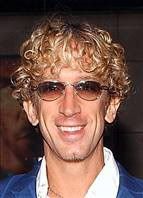
    I like what I am able to do and if that means being happiest when I can focus on my own work and not worry about getting the greatest exclusives all the time then so be it. Josh Holloway, Robert Patrick and even the latest Andy Dick pieces mean a lot to me because I was the one who accepted the opportunity and, here’s the kicker, there is nothing in my mind about how many issues the piece will sell. There’s no money involved yet, when I think about it hard enough, I know that there are brick and mortar office jockeys, of which I am one, that will never be able to ensconse themselves in their passion and I realize I’m lucky. I’m one of the few but, the other edge to that Ginsu knife is that…I don’t get paid.

    Fast forward to last spring during the Phoenix Film Festival when I catch wind that Moving Pictures Magazine, a publication that’s closer to a Film Comment than it is a Premiere, not only has a presence here in Scottsdale, my city, but that they’re having a party to celebrate their involvement at the PFF.

    I needed to be at that party.

    I don’t know why I felt a surge, an urge, a desire to make a play at trying to make this game of rochambeau come out in my favor for once. There was a lot of drivel being spilled within the pages of modern film magazines and I knew that over two years of slugging it out within the confines of Internet journalism, where I learned interviewing by doing, where I learned how to exact information without attributing, where I hit every single deadline without exception and where I made sure every single letter, note, comment, complaint, inquiry and even churned out some good pieces every now and then. I wanted to be paid for something. I wanted to prove that I could run with those who did this for a living and even do it better. I had to convince someone and when, like manna from heaven, I not only was given the date and place of the party by a representative of the magazine who was at opening night but they gave me the name of the person in charge who could help me break through to the other side.

    I can’t go through all the reasons why I didn’t make it to that party until roughly 10 minutes before the party was set to break up or how I managed to finally find that same represntative from Moving Pictures magazine after wandering around the restaurant looking for someone, anyone to talk to but I did. I found the rep and without so much as thinking twice I asked about who I needed to talk to for freelance work. This woman, this kind, kind woman literally planted me in front of the end-all, be-all for this magazine’s opportunites and I made my pitch. Fast.

    I don’t remember much anything about it but I do recall being very open, honest, smiling a lot, eager, I may have begged a bit but I’m not too sure, confident, name dropped like I was a waiter delivering ball bearings while standing on a paint shaker, and it ended with me, I think, sending her a note to express once more my interest. While I know she told me about the limited range of writing about trailers, the magazine is a lot more than just a glib mo-fo like myself talking about flicks through their marketing and I understood that, I know that my work on Poop Shoot and now Quick Stop is akin to having a dude on a paper writing obitiuaries until his opportunity comes; except, with me, my obituaries sometimes help to make a movie seem more alive or assist with putting the nails on the pine box in which the flick should take a permanent dirt nap.

    And that was it for a little while. A long while.

    I was checking my e-mail after finally coming down off a rather obnoxious afternoon at the San Diego Comic-Con in July when I noticed my contact’s name. The e-mail, very matter-of-factly, stated that if I was interested Moving Pictures wanted me to write a small blurb about the CASINO ROYALE trailer.

    After a lot of back and forth with paperwork, suggestions, some uncertainty on my part and the nagging feeling that I would be smited by some diety should I publicly announce that I have 75 words appearing in print I decided to sit on the information. It wasn’t until I stood in front of a magazine kiosk at the Borders across the street from where I work when it really came home that I had finally done it. I bought all five copies there and when I took them out in that plastic bag there was an internal satisfaction that I don’t think could be expressed in words; those who can understand what it means to be someone devoted to the printed word, would.

    So, I would like to take this opportunity to thank everyone out there, every reader who has helped to make a small comment here, a small high-five there, in making this possible. I wrote it, sure, but it wouldn’t have happened unless a guy like Chris Ryall saw something in me and let me run with whatever was in my head week after week. Certainly I also have to give thanks to my wife, Sherry who, while she has always been cool with me doing this column every damn week, is really the reason why I am able to take time out of my life every week to just give you people something to read. For her, I am eternitally grateful.

    So, please, if it’s not too much to ask, go and get the magazine. Read the glory that is 75 words on page 17. Send the editor a message and tell them what you really think of this weasel’s ability to inspire so many rip-offs in other, lesser, publications like Entertainment Weekly. Or, if you’re just lazy, just check it out when you’re out and about inside a Barnes and Noble, Borders or even Blockbuster; it would be very meta for me to know someone from across the country was able to read my name in print. I’m even in the Contributing Writers section which just thrills me to no end even though most would just shrug and say, “whatever.”

    And just to show you how the enduring positivity keeps on going, I decided to give you all out there the chance to enter into a contest where you could make a real dream come true for yourself….Peep the press release from Sony:

    “INTERNSHIP CONTEST”

    Eight Winners To Be Offered Once-In-A-Lifetime Career Opportunity With Gap Inc., The Hollywood Reporter, Morgan Stanley, NBC, the National Football League (NFL), PEOPLE Magazine, Playstation & Yahoo
    Contest Winners to Attend Hollywood Premiere of Will Smith’s The Pursuit of Happyness


    CULVER CITY, CA ““ October 19, 2006 ““ Columbia Pictures announced today it is partnering with eight of the world’s leading companies to offer The Pursuit of Happyness ‘Pursue It’ The Ultimate Internship Contest, in which contestants will compete for dream internships at Gap Inc., The Hollywood Reporter, Morgan Stanley, NBC, the National Football League (NFL), PEOPLE Magazine, PlayStation and Yahoo! In addition to the internship position, each winner also will win a trip to the Hollywood premiere of Columbia Pictures’ inspiring drama The Pursuit of Happyness, starring Will Smith, Thandie Newton and Jaden Christopher Syre Smith. Winners will have the opportunity to meet Smith and enjoy the gala evening with the film’s cast.Based on a true story, The Pursuit of Happyness stars Will Smith as Chris Gardner, a marginally employed salesman who finds himself with nowhere to go after he and his five-year-old son (Jaden Christopher Syre Smith) are evicted from their San Francisco apartment. When Gardner lands an internship at a prestigious brokerage firm, he and his son endure numerous hardships as he struggles to create a better life for the two of them. The Pursuit of Happyness is the story of one father’s inspiring love for his son and his determination and drive to improve their future. “Chris Gardner, the person I portray in The Pursuit of Happyness is a bright, talented guy who’s barely making ends meet until he gets an internship that enables him to pursue his dreams,” said star and producer Will Smith.

    Steve Tisch, one of the film’s producers and a co-owner of the NFL’s New York Giants football team added: “America is the land of opportunity, but to succeed in the corporate world everyone needs that first break, that foot in the door. The winners of this contest will get a unique chance both to learn about how great companies work and to demonstrate their own creativity, energy and determination.”

    From October 18, 2006 through October 30, 2006 contestants can visit the contest Web site www.sony.com/Pursue-It and choose the company at which they would like to intern. As part of the online application process, entrants will need to create a video of themselves, in which they share, in five minutes or less, their own personal motto or “words to live by” giving examples of how this philosophy makes them uniquely qualified to work at the company they have chosen.

    The leading candidates’ videos for each internship as determined by a leading human resource specialist will be posted on the contest website. The public will then be invited to vote for the applicant they believe is best suited for each position. Officials at each of the eight companies will interview the top two finalists applying for their respective internships and select the ultimate winners.

    Contestants are encouraged to learn as much as possible about the company for whose program they are applying and to tailor their video presentation accordingly. Each of the internship programs has its own eligibility requirements which are posted, along with complete contest rules, at [www.sony.com/Pursue-It]

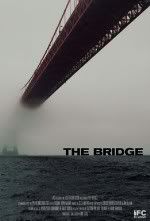
    THE BRIDGE (2006)

    Director: Eric Steel
    Cast:
    Kevin Hines, Pat Hines, Carolyn Pressley, Dave Williams, Matt Rossi
    Release: October 27, 2006
    Synopsis:
    MAY CONTAIN DISTURBING SUBJECT MATTER. More people choose to end their lives at the Golden Gate Bridge than anywhere else in the world. THE BRIDGE offers glimpses into the darkest, and possibly most impenetrable corners of the human mind. The fates of the 24 people who died at the Golden Gate Bridge in 2004 are linked together by a 4 second fall.

    View Trailer:
    * Large (QuickTime)

    Prognosis: Positive. “MAY CONTAIN DISTURBING SUBJECT MATTER.”

    I mean, really, how do you not click on the link after you see a disclaimer like this. It’s like seeing blinking lights that say “Danger!” “Warning!” in the middle of a black night that leads you right to the porno parlor you never knew existed until someone went out of their way to point it out to you.

    I also heard about this movie based on the real intriguing fact that of those who have tried to jump to their deaths via the Golden Gate Bridge, and lived to tell about it, they all knew they wanted to end their miserable little existences going up to the bridge’s precipice, they all were sick of dealing with their own psychoses when they pushed off, they all wanted to die as they let go and they all knew they made a big, fucking mistake as soon as there was nothing to grab onto.

    How do you not make a documentary about that?

    The answer is “you do” and I couldn’t be more enraptured by the beginning of the trailer when you know, going in, that you’re a) going to be presented with “disturbing subject matter” and b) we are slowly let into what this movie is about.

    The opening of the trailer is creepy. No question. You have a pretty simple sound bed but there is tension in that score. You can sense it.

    Some kids are playing soccer, oblivious, right in view of this structure that has sent out the siren’s song to many who are afflicted by mental illness.

    “People come here from all over the world.”

    The simple piano suite, the shots from various places all over San Francisco with the Golden Gate somewhere in the shot and the absence of any hard narrative structure is killing me. It’s perhaps one of the best ways you can make a trailer say nothing, not incite my ire, and make me feel that I cannot look away from this thing.

    Next, we get a woman’s voiceover. She tells us what kind of day it was without us really knowing why she’s recounting a singular moment when all seems to have been right with the world. That’s when we see video of someone starting to step over the railing and put their foot at the literal edge of the only thing standing between life and splat.

    After that, another voiceover. This one comes from a guy who was doing some shooting of video when he sees, and we see, a dude hoisting himself over the railing.

    You cannot look away. There is no way you can direct your eye off the screen.

    “Is this a rare occurrence or does this happen often?”

    What’s so compelling that after we hear that the Golden Gate is not only the San Francisco treat but it is the meal of choice for many, many people who think suicide is their only way out.

    With that we see a wide shot of the bridge, completely still, the soft words of someone who has asked the question about the frequency of jumpers as we catch the “sploosh” of someone who let go of it all.

    There’s something to subjects like this but the trailer not only sells the idea but it draws you in with enough scintillation to establish why this is a story worth telling and seeing.

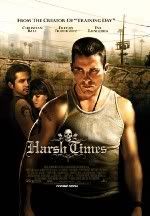
    HARSH TIMES (2005)

    Director: David Ayer
    Cast: Christian Bale, Freddy Rodriguez, Eva Longoria
    Release: November 10, 2006 (Limited)
    Synopsis: From the creator of TRAINING DAY comes HARSH TIMES, a gritty look at friendship, loyalty and ambition set on the extremely rough streets of south central Los Angeles. Jim Davis (Christian Bale) is an ex-Army Ranger recently discharged from the military, yet still haunted by nightmares of his former occupation. While seeking a position with the LAPD that will allow him to marry his Mexican girlfriend and bring her to the United States, Jim kills time chilling with his best friend, Mike (Freddy Rodriguez).

    Mike is feeling the heat from his longtime girlfriend, Sylvia (Eva Longoria): either get a job or get out. But the love of a beautiful woman can’t compare to the bonds of friendship, and Jim and Mike are soon cruising the streets of South Central, slipping back into a deceitful life of drugs, violence and petty crime, just like when they were kids.

    View Trailer:
    * Large (QuickTime)

    Prognosis: Negative. The problem here is that I feel like we’ve been here before.

    I don’t want to seem like someone’s not entitled to retread the same theme but this film’s not breaking any new territory, at least it’s not being sold that way, as it’s trying to dip its fingers into my pocket.

    One of the things that first piqued my interest in this film is Christian Bale, a man who has really heralded his presence in a major way in the last few years, but you almost feel let down here when Freddy Rodriguez and he are talking inside a car about what it’s like to “straight up” kill someone. The physicality of the shot, the frenetic vibe you feel as Bale gets into a bombastic moment that feels packaged, not honest, is a Cut and Paste from TRAINING DAY and I’m not so sure if that’s such a good thing. Rodriguez’ question to Bale about whether he enjoyed the killing just doesn’t seem like a hook that sells. It’s damn near comedic.

    I’ll give praise for the choice of music that rides the bed of what’s presented, as we’re flooded with images of scantily clothed chicas and the voice that this is coming to us via the creator of TRAINING DAY, but that’s as far as I’m going because what’s really at issue here isn’t the shot of a lady’s swaggering ass that’s needlessly given up for no reason, but it’s the story that’s not being put out.

    What the hell is the point?

    We’re nearly a quarter of the way through this trailer and all I know about what this movie’s about is that Freddy Rodriguez calls out to one of his friends “What up dawg?”, I get an additional shot of Eva Longoria’s ass in her thong underwear while Bale and Rodriguez sip beers inside their car as they’re driving to hell knows where. I would be a fan of all this if someone would just let me in on what’s going on. Unfortunately, not a shred of plot is revealed. It’s all parlor tricks up to this point.

    Now, at about the half-way point of this trailer, I won’t even bother you all with the extraneous mish-mash of sliced scenes that are piled on in an effort to make everything look cool and hip, and let’s not forget edgy, can’t forget edgy in an effort to take hold of that key demo to get young men into the theater, but from what I can cobble together like some Da Vinci code clue hunt I think Bale has some temper issues and he’s being scrutinized for something or another. Ah, yes, here it is, the fat guy on the couch who is barely in focus let’s us know the crux of the whole fucking movie: Bale’s wanted for a task force that’s going to Columbia to bust some heads. And that’s it. End of explanation.

    It’s when we get this information that the movie moves from a TRAINING DAY type of film to one more like 25TH HOUR. These two dudes, Rodriguez and Bale are homies and they just have a little time left with one another before one of them gets shipped south. I don’t see why this was such a production to get this information but from seeing Bale and Freddie get into a whole lot of fisticuffs with strange people to Bale having flashbacks like no one’s business I am at a loss to feel whether this is really even worth

    seeing. All this movie seems to be about by the end is boozing, shootin’, lootin’ and Christian doing a whole lot of demonic laughing.

    This film doesn’t seem to have a point and I’m inclined to make one for it by saying that this flick looks like it would do well going straight to DVD.

    CURSE OF THE GOLDEN FLOWER (2006)

    Director: Yimou Zhang
    Cast:
    Jay Chou, Yun-Fat Chow, Li Gong, Qin Junjie, Man Lir
    Release: December 22, 2006 (Limited)
    Synopsis: The plot concerns the volatile balance of power between the King (Chow Yun Fat) and the Queen (Gong Li) and his three sons, which entails betrayal, deceit and passion, pitting the King against Queen and father against sons. The glorious canvas includes many of the creative team behind HERO and HOUSE OF FLYING DAGGERS.

    View Trailer:
    * Large (QuickTime)

    Prognosis: Positive Donkey Punch to the Gooch. The majority of you, I know, have already seen HERO and HOUSE OF FLYING DAGGERS.

    These movies represent, really, the result of what happens when you have a satchel full of ideas and the means to execute them on a grand scale. Yimou Zhang is not a household name here in the States, for reasons that are all too obvious, but this man has bought more than his share of goodwill for those of us with money to spend. His direction isn’t flawless but for as many times as international directors are talked about with glowing regards it’s an anomaly as to why Zhang isn’t more well-covered.

    Everyone else’s loss, our gain.

    In fact, I would go so far as to posit that if Zhang were put through the same treatment as Ang Lee or even John Woo there would be a clunker in there somewhere and I’m not sure I would be ready to see what the result would be.

    This trailer, as sparse as it is, just explodes with the kind of flavor that is lacking in so many other previews that have the opportunity to let their production value do its speaking for it. The first element that helps to shape the message of this movie is its melodic opening. While, yes, Virginia, there are going to be some hardcore ass whupings coming down the pike but before we get there it’s a very quiet opening.

    The yellow just bursts against the grey skies in the palace courtyard with the guards and peasants that are at the ready to serve the needs for the King, Chow Yun-Fat. Yun-Fat, by the way, did get the same kind of Woo/Lee-ization much to the detriment for those of us who really did want the man to become accepted in the mainstream, but, thankfully, here there are nearly no remnants of the education that he do doubt got with Marky Mark on the set of THE CORRUPTOR.

    I am pleased to see that, quite economically, the cards employed here to establish who Yimou Zhang is to everyone else in attendance are done with great tact and swiftness. No matter if they did run long because it’s about this time when Yun-Fat is about to be put upon by a cadre of 10 mo-fos with swords. But, boo-yaa, 6 mo-fos on Yun-Fat’s security detail slip down from the ceiling, all wearing ninja black, no less, and it looks like some serious sword play is about to go down. The colors, as well, are just gorgeous; from the red and gold all around the palace hallway to the lavish costuming of those in the moment it all just makes you forget that no one’s saying a damn word.

    We get more of the same, stoicism from Yun-Fat and demureness from Gong Li, but what’s important to note here is that the full-on fighting that takes place with palace guards and those who are no doubt trying to usurp the King’s power base looks just as enthralling as it did in DAGGERS and HERO.

    The armies fighting, the grand battles between individuals and the thick plot that underlies it all seem to be Zhang’s suit and it doesn’t look like there is any slacking on his part. While there isn’t any indication of any true direction of how the story is supposed to go but Zhang’s attraction here is the attention to the grandiose and mystical. Both are executed with great zealousness.

  • Toy Box: Three Faces of Elvis

    toybox.jpg

    Are you in the market for a hunka hunka burnin’ love? Then I have good news, and bad news. The bad news is that I’m not available. The good news is that the next best thing in the form of not one, not two, but THREE Elvis figures from Mcfarlane are.

    Mcfarlane has had the Elvis license for awhile now, and started with the figure that’s still my favorite, the 68 Comeback Tour version. Since then, they’ve produced 5 more versions: Rockabilly, Las Vegas, New York City, Jailhouse Rock and Blue Hawaii. This new boxed set is a re-release of versions 4, 5 and 6, all in one handy package, and is exclusive to Spencer’s stores.

    If you have any questions or comments, feel free to drop me a line at mwc@mwctoys.com or hit my other website at http://www.mwctoys.com. On to the review!

    “Elvis – 1956. 1957 and 1961”

    toybox_102406_1a.jpg

    The box lists these by the year of his appearance, but the first is the New York City appearance version, the second is his look in the film Jailhouse Rock, and the third is his appearance in the film Blue Hawaii. For a guy that wasn’t much of an actor, he sure did star in an awful lot of films.

    toybox_102406_1c.jpg
    toybox_102406_1b.jpg

    Packaging – ***
    Boxes are always nice, because they store easily for MIBBers, and can be used to display the toys a little better than cardbacks. It’s not a collector friendly box, unless you’re really masochistic, because there’s a ton of twisties and tape. However, it does show off the figures well, and does a nice job looking good on the shelf.

    toybox_102406_2.jpg

    Sculpting – Jailhouse ****; NYC ***1/2; Blue Hawaii **1/2
    There are major differences between these three head sculpts, although the period of time they cover is fairly short in Elvis’ career.

    toybox_102406_3b.jpg

    Of the three, Jailhouse Rock is easily my favorite. They’ve captured his face and expression so well it’s scary, and the detail work on areas like his teeth and tongue is outstanding. Going with closed eyes is always a risky venture, since so much of a person’s personality comes from their eyes, but they pulled it off beautifully here. The sculpted pose is also perfect, going with a trademark dance move from the film that’s both dynamic and cool.

    toybox_102406_3a.jpg

    Next on the list is the 1956 gold lame outfit version. Here, the head sculpt is extremely good, but not quite as perfect. It’s definitely Elvis, right down to the pouty lips, but he’s a little less expressive this time. The detail work on his costume is fantastic, espeically the ruffles and contours of the shirt and suit. Again, the pose selected is a classic, and fits the character perfectly. This is critical of course, since these figures have very little articulation. The pose they sculpt you is the pose you get.

    toybox_102406_3c.jpg

    Finally, there’s Blue Hawaii. Now, it’s a little tough to separate the issues with the sculpt from the issues with the paint. This is one of those cases where the sculpt may be getting unfairly abused by a less than stellar paint job, and it’s always hard to tell. But of the three, this face is the farthest from the Elvis likeness. The lips are much thinner than the other two, and the nose is longer and narrower. The body sculpt is still the usual excellent McToys work, and the pose is another nice dynamic choice, expressing the energy and flamboyance of the singer. But without the outfit and base, some folks might have a tough time picking this out as Elvis.

    Paint – Jailhouse, NYC ***1/2; Blue Hawaii **1/2
    On some of these figures, great piant improves great sculpts. On others, eh, not so much.

    toybox_102406_4a.jpg

    Again Jailhouse Rock is my favorite. The bold black and white color scheme looks great on the shelf, and they’ve done a good job with the thin lines and dotted seams of the black denim. I do wish that the white lines of the shirt wrapped all the way around (although I can’t be positive that they should), and there are a few stray marks here and there. But the face paint is excellent on this version, and the details generally clean and sharp.

    toybox_102406_5a.jpg

    Next favorite again is the 1956 New York City appearance version. Are we noticing a trend here? This is a very colorful version of Elvis, with lots of gold and silver. These are traditionally tough colors to do with a consistent application, with no thin spots or other colors showing through. They do a pretty good job, although it’s not quite perfect. The gold is a little inconsistent in thickness and coverage in some spots, but it’s not enough to hurt the figure in a major way.

    Again, his face paint is excellent, especially the subtle difference in color between the lips and skin on his face. There’s a little bit of clumpiness to the skin tone, but again, it’s quite minor.

    toybox_102406_5b.jpg

    Finally, there’s Blue Hawaii. Here, the face paint is the big let down. The eyebrows don’t follow the sculpted lines well at all, and instead are pointed downward at an odd angle. The skin tone itself has more issues with clumpiness on the face, neck and arms, and isn’t as clean and consistent as the other two.

    The costume itself is fairly good, although I was left with a pretty obvious mark on the white pants from the ukelele. I suspect a better paint job woud have done wonders for this particular likeness of Elvis, but that’s lost with this application.

    Articulation – Jailhouse, Blue Hawaii **; NYC *1/2
    If you’re thinking uber-articulation, you aren’t thinking about this line up. These are supposed to be little statues, cheaper than the high end resin stuff, but with a similar level of quality. What they aren’t is *action* figures. If you understand and have no issue with this going in, then this category won’t mean much to you.

    Each figure has very basic articulation – cut neck, cut shoulders, cut waist. A couple also sport cut wrists, to assist in getting just the right hand pose to hold an accessory. But the articulation that’s here is designed to do one thing and one thing only – get the figure in a single, good looking dynamic pose and stay there.

    The gold lame version gets a lower score than the other two not because of less articulation, but because mine has a huge gap at the left shoulder that I couldn’t correct. This kind of quality issue really detracts from the overall appearance of the figure.

    Accessories – ***
    Each figure comes with a base, and perhaps one or two more goodies depending on the version.

    toybox_102406_4c.jpg

    The NYC Appearance version has the best looking base of the three, with a great backdrop of the poster art for the appearance suspended between two columns, and a base designed like a stage. He also comes with the microphone and stand, which is a separate piece and can be held in his right hand.

    toybox_102406_4b.jpg

    Blue Hawaii has a base with the Elvis name cut into the front, and a nifty sandy beach top. Behind him is a cardboard backer with the Blue Hawaii logo, but this backer is a tad on the small side, not even reaching the top of his head. There are two small pegs that are used to attach the backer to the base, and you’ll find these on the underside. There’s also a separate surf board with fits into two sculpted notches in the base. There’s a lai of flowers for around his neck, and there’s the ukelele which is removable if you want to try hard enough, but I wouldn’t recommend it.

    toybox_102406_5c.jpg

    Jailhouse Rock has a base shaped like an album, with two sections of jail cell and a name plate that attach to the side. Again, there’s a small pin in a bag on the underside of the base that you can use to affix the top of the name plate to the top of the one section of cell.

    Fun Factor – *1/2
    If you’re looking for an Elvis figure for your son to use in his karate tourniments with G.I. Joe, this ain’t him. Figures like this are the Hummels of our age.

    Value – ***
    At around $12 – $13, these are a solid value on the current market. The cool bases add to the value of course, and even having a couple accessories is a big plus.

    Things to Watch Out For:
    Not a thing, really. If you pick them out in person, you might want to watch for bad paint, particularly on Blue Hawaii, and any joint gapping like I had with NYC, but things should be pretty consistent otherwise.

    Overall – Jailhouse, NYC ***1/2; Blue Hawaii **1/2
    The quality varies between the three figures, and there’s no doubt that the Jailhouse and New York City versions have better sculpts and paint. Still, for the big fan of the King, these are a great addition to the collection. Where else can you get six different versions of Elvis, all in the same scale and style, except from Mcfarlane? And grabbing this exclusive three pack means you save a few bucks as well.

    Where to Buy:
    This three pack is an exclusive to Spencers, but you can snag some of the singles online:

    CornerStoreComics has the singles of Jailhouse and Blue Hawaii for around $13 each, but don’t have the boxed set listed.

    Amazing Toyz is likewise only selling singles, including Jailhouse, at around $13 each.

    Clark Toys has him at $15, but the other two are sold out.

    Related Links:
    I previously reviewed the Jailhouse Rock figure, as well as the 68 Comeback Special version.

  • Trailer Park: Can You Handle A Lot Of Dick?

    By Christopher Stipp

    Archives? Right Here…And Over Here

    He was right.

    You do have expectations when someone tells you that you’re about to have one on one time with Andy Dick. Impropriety, boorishness and obnoxiousness are all things that spring eternal when you only have public perception to go off of.

    True, if you’re doing your due diligence you can see that not all of Andy’s past can be written off to superfluous exaggerations that can be easily erased. He’s deserved a lot of it.

    However, the roast for William Shatner has been a watershed in Andy’s recent past with regard to what the power of the written word can do to a person. A writer for the New York Post’s notorious Page Six gossip column detailed an out-of-control Andy that “groped” “tried to kiss” and “proclaimed his love for her” before finally “urinating in front of the horrified journalist.” It’s hard to defend one’s self against something like this but even though Andy goes on to explain what happened below, his language befitting his defense; it really is Andy’s suggestion to investigate the writer’s personal blog that opened my eyes to something genuinely pathetic.

    The woman who supposed herself to be horrified by this whole situation has turned her audio of the situation into comedy and even employs her friends to “act out” the transcript in what I can only assume is supposed to be something amusing, funny even.

    It isn’t.

    It’s embarrassing. The woman makes a mocks of her own stupidity in thinking it would be hilarious to get all her cronies on a stage and make something out of a drunken moment that, even if true, is more sad and personal than anything else. This isn’t so much about exploiting this moment for whatever it’s worth but it’s a glaring reflection of this woman as a professional. Jayson Blair she’s not but it’s a shame to know that a woman who has such an impressive resume of popular periodicals she’s written for treats the profession of a writer, the very thing she touts as being so important to her, with as much regard as a vampire would give to a fattened sow.

    Now, while the above incident stokes some of Andy’s emotional embers, we had to break this interview up over two days only because we had to stop after he vented regarding what happened that night, Andy was perhaps one of the most engaging interview subjects I’ve had the pleasure to talk to this year. His blend of honesty and irreverence makes him vulnerable, to be sure, but it’s a rarity.

    You’ve got to give it up for a guy who helped push Ben Stiller into the pop cultural zeitgeist, who assisted a Kid in The Hall to make one of the better sitcoms ever produced by NBC and made an honest living over on ABC for so many years. It’s hard not to give thanks for a guy who works so well within the fabric of comedy and still finds the strength to fight the market forces that would rather see an obnoxious version of a persona he is trying to shed. True, public incidents have threatened to chip away at what he’s built over these years but it’s his tenaciousness that’s going to keep him around for a long time.

    Watch for Andy Dick’s directorial debut this winter when DANNY ROANE: FIRST TIME DIRECTOR comes to theaters and as it lands on DVD. I caught up with Andy just as he was talking to someone other than me.

    ACT I

    CHRISTOPHER STIPP: What are you working on?

    ANDY DICK: We’re writing a pilot and [the people I’m working with] have a lot of questions.

    CS: What’s the pilot for if I could ask?

    DICK: Comedy Central. I’m writing it longhand and they have to translate my hieroglyphics to the computer.

    CS: Is it really that bad?

    DICK: Yeah, because I think faster than I write.

    CS: I know when you talked with Howard Stern last week regarding how well you’re doing since rehab are you finding your thoughts are coming to you quicker, cleaner?

    DICK: Yup, oh yeah. Hell yes.

    I bounce back surprisingly fast but it’s not like I’m shoting up heroin in a drug den or passed out on a big, black whore in a downtown LA crack house. Hey, I’m not sayin’ I’m too good for that. I’ve just never been invited to a good crack house.

    CS: And this brings up a great point: is it odd to have so many people, the public, know so much about your personal life?

    DICK: Yeah, that was probably a bad move on my part.

    I know a lot of people in the industry with bigger demons than me, but you would never know it because they do a good job of keeping it under wraps. They do and their team does. My team, Team Dick, threw in the towel years ago, and it wasn’t really a towel to begin with. It was more of a cum rag.

    Hollywood is riddled with addicts of all colors: drug addicts, sex addicts, gambling addicts, perverts, freaks and weirdoes. And I’m still talking about Team Dick, which of course I’m not only the president but I’m also a member. You know I’m just kidding, except for the cum rag part.

    CS: And it seems like when you were talking with Howard last week that the relationship you’re forging with your son is helping you a great deal.

    DICK: He’s a shining light in my life. He’s really a good kid.

    CS: And was he there during the infamous Shatner roast?

    DICK: He was in the audience.

    CS: And for those not in the know about what was alleged in Page Six about what happened following the roast how did the events get so blown out of proportion?

    DICK: Well, what do you think happened?

    CS: From what I read it said you had openly urinated on the floor.

    DICK: No, no, no. That’s such a lie. That girl came into my dressing room uninvited.

    She’s a non-working stand-up comic; an unfunny, self-proclaimed, stand-up comic looking like a ravenous wolverine hunting for material.

    She saw an easy target, his name was Andy Dick, and she forced her way into my dressing room past my friends. She’s cute so she was able to charm her way in, sit in the main chair in the room and hold court with the rest of my friends where she wowed everyone with her fake cuteness, her saccharine sweet smile, and the cunty way about her.

    She then, after partying with us, drinking, having fun, doing whatever with my friends, and then announced that she is doing an article”¦she’s a Page Six reporter. And then, when I heard that, I said, “Oh, you gotta help me out over there. They’re so mean. They’re constantly raking me over the coals. You can see we’re just having fun, we all are, we’re laughing, we’re having fun.” She’s laughing, she’s having fun, she’s flirting with my guy friends, she’s pretty much slutting her way around my dressing room, like I said, holding court with all my guy friends.

    I’m trying to explain to her, “You’ve got to help me. You can see I’m not doing drugs, we’re all drinking. You’ve got to write something. You can see I’m a nice guy.” I was really trying to toot my own horn and prove that I was nice. I went into the bathroom, which is over towards the door and around the corner, the toilet’s way around the corner, you can’t even see the door from where she was sitting, let alone the toilet. I left the door open and as I’m peeing I say out loud, “I’m leaving the door open so that you know I’m not doing drugs in here. That’s how important this is that you write something nice about me.”

    So, even my best efforts to show, to appear that I’m doing well, which I wasn’t at my best, I was drinking, and by that point I was probably even half-crocked, she turned that into that I peed on her, you say I peed on the floor, I didn’t pee on the floor, I peed in the toilet, with the door open, where no one could see so that she could tell that I wasn’t doing any kind of drugs because I wasn’t.

    If I ever see her now that I haven’t been drinking and I have my wits more about me, if I ever run into her again I would kick her in the cunt if I didn’t think it would ruin my shine. And that’s a quote from Michael O’Donoghue from Saturday Night Live when he was upset about being cut out of a cast and crew picture.

    You can see I’m a little angry.

    CS: And rightfully so.

    DICK: Thank you, I agree.

    One girl, single-handedly, one comic, non-working, un-funny, because I’ve listened to some of her stuff on MySpace, one comic almost single-handedly took me out at the knees and it did major major damage.

    Now, I didn’t need any help to figure out I needed to sober up. I was taking a break, I had just finished months before the roast, Less Than Perfect got cancelled, and I was taking what I call a mini-vacation. I was drinking, taking a vacation, and I knew I was going to sober up before I started working on the Comedy Central pilot. I didn’t need any help from this girl. I can take myself down to my own bottom.

    CS: Well, why do people like her exist to perpetuate disinformation?

    DICK: Everyone loves to read about someone else who’s doing horribly. It makes them feel better. Even I do. It’s very hard for me but I do not read the tabloids. They’re right in front of my face when I’m buying something at Whole Foods, and I just do not pick them up. I want to, I want to see that weird picture of Nicole Ritchie running on the beach and she’s got folds of skin”¦it’s right there on the cover, you can’t get away from it. It’s so unfair but I’ve seen other pictures where she doesn’t have the cellulite. Which one is the untouched picture?

    It’s so creepy but people love to read and hear about other people doing horribly. But in this particular case this woman, because I have people that report back to me from New York City, who have seen her live on stage at an open mic type of situation where she’s not getting paid, talks about me and, pretty much, takes her little story, expands upon it, and turns it into a little one woman show.

    She’s just a fuckin’ bitch is what she is. She’s just a true, downright fucking needy desperate little whore bitch. And you can print that.

    She’s a horrible person and those people are out there. She SOLD her shit, probably for 50 bucks, to Howard. And that’s why I was so mad at Howard that he would take that and he would do that. He would play it on the air and it’s like I wish I had a mini tape recorder so I could record, just a little bit, of Howard and his girlfriend having sex. I bet that would be really funny. But, I wouldn’t do that.

    I would love to be able and record one one conversation that witch has had with her ex-boyfriend or her mother or herself when she’s talking into the mirror: “Who’s the cuntiest of them all?” We could play that on the radio for everyone to hear. It’s like, leave me alone. I don’t go after you and your pathetic life don’t go after me and my pathetic life. I can get to a place where things are pretty pathetic, I don’t need any help getting there”¦having it being spread all over the airwaves like bad Smuckers jam on moldy Wonder Bread. I ain’t milquetoast or middle of the road white bread, baby.

    CS: Any way for retribution or a retraction”¦

    DICK: There’s too much stuff out there”¦It’s impossible because it starts with the seed of truth. What am I going to do, hire lawyers to sue her? There’s just no point. That just keeps it alive, and then suddenly she has a career based on me trying to sue her. It’s a vicious circle. It just gives it more and more power. I’ve already given her too much power in this interview. I’m done. She’s dead to me. That’s the last you’ll hear about her except when I go to jail for kicking her in her dried-up, barren, rancid, smelly cunt.

    [Andy laughs]

    ACT II

    DICK: Let’s do this”¦

    CS: Let’s talk DANNY ROANE: FIRST TIME DIRECTOR.

    DICK: What do you want to know?

    CS: Well, it looks like your first foray into making your own film.

    DICK: Yup, I wrote it, I raised my own money by going to the bank and taking it out my account, produced it, directed it, cast it, used all my friends in it and sold it to Lions Gate.

    CS: Were you the one involved in pitching the movie to Lions Gate?

    DICK: No pitch. I made the movie; shot it, directed it, edited it, had it all done and I just had to show them the final product. There was no studio involved. The movie was done and I showed it to a bunch of people. And then Think Films”¦You’ve heard of Think Films?

    CS: Yes.

    DICK: Think Films, they did THE ARISTOCRATS, they wanted to buy it, Lions Gate wanted to buy it, and a few other companies wanted to buy it, and I chose Lions Gate just because I just”¦they offered more money and I was in a movie, EMPLOYEE OF THE MONTH, I was in that and it’s a Lions Gate movie and so I just wanted to stay in bed with them, so to speak. I’m about to go pitch them a movie now, the normal way. Where you pitch it and then write it and develop it and I’m doing that next week.

    CS: Were you at any kind of disadvantage when you made DANNY ROANE with regard to having to coordinate the schedules of the people I see that are in it, Jack Black, Ben Stiller, Maura Tierney, etc”¦

    DICK: There were a lot of roadblocks and obstacles but I got through all of them. There are just tons and tons. There were so many that a normal person would just quit and stop but I had a great producer, Marshall Cook, who, every time I wanted to quit, would say, “Let’s just keep going.” We pushed through and pushed through.

    We only shot for 12 days.

    CS: Really?

    DICK: Yeah, we had some pick-up shots throughout the year and then we edited, we edited for a good 8 months, on and off, because I used 5 different editors, at different times, then the Avids were set up in my house and we really just did it on a shoestring budget and by the skin of our teeth.

    CS: A lot of people have to go back and do re-shoots”¦Anything you thought you captured the first time and then it just didn’t happen to capture the way you wanted?

    DICK: No, I have a lot of disappointments, but that’s how it is with any artist: “It could’ve been better.”

    Could’ve been better but everything I’ve done in my life could have been done better. But, it’s a great great great movie and”¦could’ve done better.

    CS: So you still want to make a second feature?

    DICK: Oh yeah, this next one I am pitching”¦I’m going to write it, direct it and star in it as well. I want do one a year like Woody Allen. I love it. I love the process. It’s just like a painting; you constantly want to paint over it and repaint it and make it better. It’s like when I first learned how to do oil painting and I painted a picture and it was so beautiful but I kept tweaking it to the point where it was an ugly mass of globby crap. You can’t do that. It’s too easy to overwork something.

    CS: That’s a great thing you’ve said because some of the greatest authors of literature, when they were still alive and had a chance to edit subsequent editions of their work, tweaked and revising. Is there a point where you can’t stop yourself or do you have to say, “This is as good as it’s going to be”?

    DICK: I guess”¦that’s the most important part of director’s vision: just to know when to stop. Just to know when to say, “This movie is done. It’s as good as it can get,”

    For what I shot, and the amount of money I had, DANNY ROANE is as good as it can be or I wouldn’t have stopped. I edited my little heart out till I said this movie isn’t going to get any better for what it is and for what I have shot. I can keep going back to add a little more, edit a little more but I can’t because I don’t have the money. You just have to stop. And that’s when the director becomes the artist. He has to make that creative decision. “Ok, now we’re done folks.”

    And I’m not even really done because I have to take out a lot of the music that’s in it because I only paid for festival rights and now that it’s going to be a real movie”¦it’s going to be another $100,000, I found out, to buy the songs so I have to have friends write songs, I have to write songs, I need to find cool indie bands that don’t have publishing deals yet because I don’t have $100,000 in my pocket to pay for all the great songs I picked out. Everything from Ween, Tom Waits to Nick Drake. I just don’t have the money.

    CS: Does that change the vibe of the film? When you’ve obviously scored it in your head”¦

    DICK: Of course”¦My goal is to make it even better, of course. I’m not going to cheapen it. I’m going to find songs that, in my head, make it better, obviously. I’m not setting out to make it crappier.

    I’m going to take my time”¦really sift through lots of music that people are giving me. I’m going to find the right songs. I’m going to have a kick-ass soundtrack and it’s going to be better than the original one because the original music was a lot of afterthought, “Oh, by the way, we need music.” And I quickly gathered all my favorite songs, not worrying right then and there how much it was going to cost me.

    Now, it’s time to worry about that.

    CS: And when is DANNY ROANE going to come out?

    Hopefully, sometime next year. Beginning of next year. January, February, something like that, on DVD. We might have a small theatrical opening, New York, LA.

    CS: Excellent. And now, I hate to switch gears so fast, but because I know you don’t have that long I’d like to know more about The Shit Show you did on Sirius.

    DICK: Oh good. Now THAT’S something we can talk about at length because that’s happening right now.

    I’m actually in negotiations with both Sirius and XM so it’s kind of like DANNY ROANE where I was talking to Think Films and talking to Lions Gate.

    I have a relationship with Howard Stern and he”¦we already did a pilot episode [on Sirius] that was an hour long, and that was two Tuesdays ago, at 10 o’clock at night or something like that. And it went really well and they were trying to make a deal with me but the money is so low, it’s laughable.

    And I called XM and said, because I had been doing some interviews on their stations, “Would you guys like me to a do a show for you?” Because I had so much fun doing the show [on Sirius], it was so easy, and they kind of sweetened the pot a bit”¦they said, “Well, we’ll set up a studio in your house.” And I’m like if I have a studio in my house I wouldn’t mind doing a daily show which means, of course, more money, more fun and it could just be every night at like 10 o’clock from 10 to midnight. I think it should be from 11 to 1 because a lot of people go to bed between the hours of 11 to 1 so they could listen to it as they go to bed so I’m the last thing that they hear and they can dream about me all night.

    [I laugh]

    CS: And what kind of content?

    DICK: It’s hardcore.

    I use it as a platform. It’s almost like therapy for me. I just basically”¦it’s a music show, one musical guest, and a big one, like we have the Flaming Lips lined up, the lead singer from the Flaming Lips, we’ve got Isaac from Modest Mouse, we’ve got people all lined up to do the show, Alanis Morissette, Dave Grohl, these are all the people that we’re going after, who are also my friends. Jack Black from Tenacious D, Jack and Kyle, both of them, and all of them always have an album to promote.

    It’s hardcore but it’s fun. We’re going to say the word “shit” we’re going to say the word “fuck,” because that’s the way I talk. The show has three segments: sex, drugs and rock n’ roll. And I basically talk with this person, it’s kind of like absolving your sins, we’ll top each other’s stories. “Oh, you did that? Here’s what I did this one time”¦” And we just talk about things we’ve done in the past and either how we either regret them or how we’re apologetic about it”¦it’s an amends like in the 12-step program. There’s a step in there called making amends where you talk about things you’ve done in the past. You go to that person and if there’s an apology owed you make that apology.

    I have people call in and one segment is “Andy Dick Owes You A Formal Apology” and there’s plenty of people who call in who say “You know what you did to my girlfriend” or “You know what happened one night ten years ago” and I either corroborate the story and give them a formal apology that is pre-taped, I just insert their name, so that’s kind of a joke, but it’s good to just clear, on a very mundane, base, level”¦it clears my past. I don’t see the person eye-to-eye but I feel good about it. When I did the show I just felt real good. I must have had 10 callers call in on that segment alone.

    For the most part the time runs out really fast, I never want it to end, and the whole time the musician is acoustically playing background music and by the end we talk about what’s coming up for them and then they play one or two songs from their album. They can play covers. It’s really an awesome show.

    CS: It seems, if I can say it, like a real un-Andy Dick from what people would probably expect”¦

    DICK: Yeah, it’s EXACTLY what they don’t expect but it’s exactly who I am and who I’ve been for years. It’s just showing another facet of this sweet, precious diamond called Dick.

    [I laugh again]

    It’s just another facet. It’s just an untapped market that no one knows because I’ve always hung out with musicians. Most of my friends are musicians. I don’t have many actor friends. Most of my friends are musicians and writers and then a few directors but I don’t really have a lot of actor friends, I have a handful. I might have some shows where I bring on actor friends. I was just hanging out with Natasha Lyonne and I said, “You should be on the show.” Even though it’s a music show I might bring her on because she knows bands, that’s what I could do, because actors always like to hang out with musicians and vise-versa.

    CS: It seems lo-key”¦

    DICK: It’s totally lo-key and not publicized. No one really knows about it. You ask me when and where I don’t even know. The times change. I don’t even know what fuckin’ satellite station it’s going to be on but I really enjoy myself. Since I’ve done hundreds and thousands of talk shows in my 20 years in doing this business professionally, I’ve done so many, that it comes naturally to me. It’s just talking on the radio and it feels so freeing kind of like taking all of your clothes off and running down the beach; to be able and go on the airwaves and just not have a clamp on my tongue. I don’t have to cater to anybody. I can say and be whatever I want. I can talk about ANYTHING and that feels REALLY good because I am so trained like a little flea in a flea circus who is underneath a glass dome. I can only jump up so high. And then you remove that glass and I am just starting to get my sea legs in this format.

    I found myself tentative to use the “f” word but that only lasts 5 or 10 minutes and then I was on a roll, I was just going nuts. Then it was hard for me to go back, I was doing interviews, normal interviews, I was on Loveline shortly after that and they not only had to bleep me because I used the “f” word accidentally, but they cut my mic off for like 3, 4 or 5 minutes as a punishment. And I’m like, “You’re not punishing me. I don’t care if you cut my mic off, you’re punishing the listening audience because they can’t hear me now.” So, yeah, they cut my mic off and so Dr. Drew and Stryker were talking while I was in the corner with the dunce cap on my head”¦because I said the “f” word.

    So, it’s hard to go back and forth a little bit but it’s just a skill I’m going to have to hone.

    CS: And people expect a certain kind of “Dickness,” if I may say so, and”¦

    DICK: Yeah! They expect a certain vulgarity, a certain clowny goofiness but, to be honest with you, my roots are in grounded subtlety. My comedy roots really, believe it or not, are in grounded, subtle, almost sweet, and precious, comedy moments that are very real. Like Bob Newhart, Shelley Berman, Mike Nichols and Elaine May. I was trained at Second City and ImprovOlympic where the motto is, “Truth in Comedy.” The comedy there was very grounded in reality.

    I was just recording an episode of the Simpsons yesterday, playing myself. They said to me”¦I just have one line”¦and I just basically am Andy Dick trying to fit into the Blue Collar Comedy Tour and my line is, “Oh, I’m blue collar, I’m totally blue collar, my dad owns a shovel.” And I did it just like that. Really quiet. And they went, “Um, ok. Bigger! You can’t be too big in a cartoon.” And I’m like, “Ok. I’m blue collar. I’m TOTALLY blue collar, my dad owns a SHOVEL!”

    They’re like, “Really Andy Dick it up! Andy Dick it up! Bigger!”

    “I’M BLUE COLLAR. I’M TOTALLY BLUE COLLAR, MY DAD OWNS A SHOVEL!”

    And they’re like, “We love it.” What happens is the media, the people, the producers, the directors, the industry, the town, the audience, pushes you, pushes you, pushes you to be bigger, bigger, bigger. It’s up to the actor or the artist to say, “You know what? This is all you’re getting. Because this is how I want to be. This is how I want the character to be. This is all you’re getting.”

    And that’s why, a lot of the times, the big actors are so great”¦they’re so subtle. But sometimes it’s just because being big or being excitable is not in their repertoire. They’re just too cool for school. But, other times, it’s because they’re great actors and they’re making a conscious choice to keep it real and keep it subtle. Once “the guys upstairs” see that you can do the big stuff they don’t want you to be subtle. They just want you to be big, loud and goofy.

    I was watching Robin Williams last night on Leno. He started off funny and manic and he got more and more manic until, by the end, he was screaming so much and so loud that he popped his throat. You could hear that he hurt his vocal chords.

    CS: God”¦

    DICK: That’s what happens. The audience laughs at your manic-ness and they’re going to stop laughing unless you up the ante and go even more crazy and that’s a trap we fall into as comedians. We’re so desperate to get that laugh that we’ll just keep screaming louder, dancing harder and faster until we’re sweating and panting with blisters on our feet and vocal chords. Yeah, it’s a problem that I have.

    I want to please people so bad, and I want to get that laugh, that I keep pushing myself but I prefer the quieter, subtler, sweeter moments.

    I prefer the movie SIDEWAYS. I prefer the movie LITTLE MISS SUNSHINE. I saw SIDEWAYS 10 times. I’ve seen LITTLE MISS SUNSHINE 3 times. I walked out of ANCHORMAN. I walked out on WEDDING CRASHERS. Don’t tell anybody, though, because the same producers produced EMPLOYEE OF THE MONTH. I am not a big fan of that kind of comedy. That’s something you don’t know about me. You wouldn’t think that. You think the exact opposite. It’s part of my psychoses.

    CS: Seeing how your best work really came through in NewsRadio, The Ben Stiller Show, The Andy Dick show on MTV, works that allowed you to control whether you needed to be more subdued or more energetic depending on the situation, are you really going to try and stick with this mantra that “This is my art. You can take it or leave it” and not succumb to the pressures for you to “Dick it up”?

    DICK: Yeah, I’m trying.

    I’ve been trying and I’m going to continue to try and I think I’m just getting better at it as I get older because I’m 40 but I think the way that it’s really going to work is I’m going to have to do my own stuff. And that’s what DANNY ROANE is all about”¦even DANNY ROANE is a little crazy but there is a lot of subtlety in DANNY ROANE but I can’t, all of a sudden, just bring it all down so much”¦I have to ease people, spoon feed them a little bit, ease them back into”¦EMPLOYEE OF THE MONTH was that for me, to a point.

    In fact, I read a review for EMPLOYEE OF THE MONTH where one of the critics said, “And then Andy Dick as Lon,” and in parenthesis, “(not manic for once.)” In parenthesis! I’ve got to get myself out of those fucking parenthesis.

    CS: Thank you so much for your time.

    DICK: Fuck you.

    ##

    ##

  • Game On! 10-21-2006

    gameon.jpg

    Hey there, friends! Long time, no see, eh? Sorry about the delay in columns over the past two weeks, but sadly, my interview with Jason Mewes for the SCARFACE game fell through. To top it all off, I still haven’t even received a reviewable copy of the game yet. Still, I have some stuff for you this week, including a couple of handheld titles. Let’s check “˜em out”¦

    HAVE GUN SHOWDOWN, WILL TRAVEL

    GUNPSP.jpgOne of my favorite games from last year finally gets the handheld treatment this year with GUN SHOWDOWN hitting the PSP. Taking the core gameplay and spicing things up a bit with mini games and wireless multiplayer, the developers attempt to breathe new life into what is normally a short title, as well as expanding on the story in the main missions for fans of the original to have something fresh to play.

    Sadly, control will keep most of those fans away. Due to the PSP’s constant thorn-in-side of it’s lack of a second analog stick, control is done with the analog stick for movement, and the face buttons for aiming and camera. The d-pad acts as an alternate set of buttons, used for quick draw, mounting horses, refilling health and the like. Aiming is now more of a chore due to this, and it seems that the targeting reticule is actually much less forgiving than the home console version (wherein you could just get part of your enemy lined up in the sights and still be able to take them out). Here, you must be more precise, and it’s difficult to achieve good shots thanks to the clunky button aiming.

    Also, due to the lack of buttons, some have dual features depending on if you press or hold the button down. Numerous times I’ve been riding through the canyons, trying to spur my horse on, only to just make him jump, making chases exasperating. And riding while shooting? Forget about it. Your thumbs will scream in anger.

    GUNPSP2.jpg

    It’s not all bad, however. The graphics actually do a remarkable job of capturing the look of the console big brother, and the audio work is top notch. There’s actually a few new story missions, taken out of the home version (though I’m not sure why) to keep the play time up (and to fill time with some sections removed from the game, like the cannon sequence on the ferryboat at the beginning). There’s even a selection of mini games outside the main game, such as quail hunting or Texas Hold “˜Em.The multiplayer aspect is admirable, but only for those who really want to fiddle with the awkward button aiming for deathmatches. Still, for those that dare to venture, it’s still a good bit of fun, and that’s what really matters, right?

    For me, though, the main reason to play is the extra story stuff. I was a big fan of the original game on the home console, and the story is one of its strongest points. Thankfully, the original voice cast (including Tom Jane as hero Colton White) all return for the game, even in the new sequences. Beyond that, though, if you’ve already played the game, there’s not a whole lot new here to warrant another purchase for the handheld version. The graphics are sharp and the story is good, but the controls will drive most fans away, much as most shooters do for this console. It worked for GOLDENEYE on N64, but nowadays, most gamers won’t put up with it anymore.

    One Gamer’s Opinion:

    ok.jpg

    WHAT A BOMB

    bombaz.jpgOkay, by now, I’m sure many of you have read about BOMBERMAN ACT: ZERO and how MOST fans of the series are angered by it. How the game’s style has been changed, taking away the cute cartoon character and setting him in a futuristic cyber inspired setting and removing most of the advances the multiplayer games have made. And I can understand that. And while the game does have its faults (for some, there are many) it does have at least one thing going for it: good multiplayer.

    But, let’s go over the list of faults first. Fault number one: in the single player game, there is no save system. At all. None. There are 99 levels in the single player game. If you die in level 98, you’ll have to start all over again at the beginning. That sucks.

    Fault number two: many of the game’s better power-ups (such as the Glove and the Boot) are gone. You can’t kick bombs away and you can’t pick them up and throw them. Sure there is block-through and bomb-through, allowing you to pass through the dangers unharmed, but the removal of those first two power-ups seems like a step backwards.

    Fault number three: the futuristic setting is just lame. Bomberman is a cute little dude with a helmet who just happens to plant deadly bombs in a puzzle room. He is not some cyborg in a prison doomed to fight his way to a dystopian surface world.

    Fault number four: and this is the most glaring fault-there is NO SINGLE CONSOLE MULTIPLAYER. For a game that ids widely known as a party game, this is inexcusable. Sure, there’s multiplayer on Xbox Live, but what about actually, I don’t know, having friends over and playing? Are they that afraid of human contact nowadays?

    bombaz2.jpg

    Beyond these four things, the game is actually kind of enjoyable in a weird way. There’re the single player missions, which I mentioned, but there’s actually a good bit of strategy needed to continue on. With single player you can choose to play it in standard traditional top down mode, or a new (and challenging, but honestly unneeded) mode called FPB (which I can only assume stands for First Person Bomberman). Here the camera is positioned behind BM’s shoulder and you can swing the camera around to see your surroundings and those around you bombing like mad. One saving grace for this mode is the health bar, since one hit kills in this mode would just make games cheap and annoying.The multiplayer is the game’s strongest point and the only argument for owning the title, however. With a good deal of options for making room (pressure blocks falling after a timer counts down, FPB mode, battle royal, etc) it’s the best and most fun way to play the game. Again, why there’s no version of this for single console multiplayer play is beyond me (sure, I guess FPB mode wouldn’t work on one console unless you did split screen”¦but hey, why not that?). What’s found on Xbox Live (that is, if you can find someone who actually owns this game) however is still what makes BOMBERMAN great: good multiplayer action full of surprises and strategy.

    Fans of the series are understandably disappointed with this release. However, past the cosmetic changes and a ridiculous no save feature, there still is a little bit to enjoy. Whether or not it’s for you is up to you to decide.

    One Gamer’s Opinion:

    eh.jpg

    QUICKSHOT OF THE WEEK

    contact.jpgDS fans are starting to get a good deal more RPGs for the system, and old school genre fans will have something to enjoy this week once CONTACT is released. With a style reminiscent of EARTHBOUND for NES, the game takes a leisurely pace through islands and worlds as you help guide a boy in his quest to get a scientist back to the future (among other oddball revelations). The player actually plays an active role in the story too, even so far as being addressed outside of the main game, breaking the fourth wall between gamer and game, making the title essentially about three characters: the boy, the scientist and you. Combat is a unique hybrid between turn based and real time that includes steady attacks and real time movement and even includes mid-fight leveling. It’s a interesting title to be sure, and one that old school RPG fans should really check out.

    One Gamer’s Opinion:

    righton.jpg

    CRAPTACULAR GAME OF THE WEEK

    rengokuII.jpgSadly, the same cannot be said for RENGOKU II: STAIRWAY TO H.E.A.V.E.N. on PSP. Usually most sequels, especially ones in which the original did not do well, try to improve on the ideas and gameplay styles of the original. Not this one. Everything is the same, from the clunky control, to the horribly ugly randomized backgrounds. For those not familiar with the original (and count yourselves lucky) you are a battle cyborg trapped in a tower who must fight other creations like you. When you win, you obtain their weapons, which you attach to either your arms, head or back to augment your fighting powers. Each room and level of the game is completely randomly generated, making multiple playthroughs the aim. Sadly, when each background looks as dull and crummy as this, it doesn’t matter that they’re randomized. The combat is also horrible, with sloppy lock on and just bad tiny animations. I gave the first game a chance, but this one, which should have at least improved something in someway, is just more of the same crap.

    One Gamer’s Opinion:

    stinker.jpg

    Well, on that note, we bring this week’s column to an end. Next week, we have some big time releases, just in time for the holiday rush, including BULLY, SPLINTER CELL: DOUBLE AGENT, GOD HAND and maybe, just maybe, SCARFACE. “˜Til then, gamers”¦


    THE GAME ON! RATING SYSTEM


    gameonratingscomplete.jpg


    Kick-Ass, Right On, Okay, Eh, and Stinker (or Craptacular)


  • Comics in Context #151: The New Old Masters

    comicsincontext4.jpg

    cic2006-10-20.jpgHas the fine art world’s growing interest in comics and cartoons achieved critical mass? If not quite yet, it is certainly rapidly getting closer, as evidenced by the surprising number of shows devoted to comic and cartoon art this fall in New York City, the capital of the American art world, and its vicinity.

    At the top of the list is the large traveling exhibition “Masters of American Comics,” which is a collection of mini-retrospectives for fifteen cartoonists whose careers together span the history of the artform in the Twentieth Century and into the Twenty-First: Winsor McCay (Little Nemo in Slumberland), Lyonel Feininger (The Kin-der-Kids), George Herriman (Krazy Kat), E. C. Segar (Thimble Theatre Starring Popeye), Frank King (Gasoline Alley), Chester Gould (Dick Tracy), Milton Caniff (Terry and the Pirates), Charles Schulz (Peanuts), Will Eisner (The Spirit), Jack Kirby (Fantastic Four), Harvey Kurtzman (MAD), Robert Crumb (Mr. Natural), Art Spiegelman (Maus), Gary Panter (Jimbo) and Chris Ware (Jimmy Corrigan).

    Curated by art scholar John Carlin and comic strip historian Brian Walker (see “Comics in Context” #66 and 71), the “Masters” show debuted last year in Los Angeles, where it was divided between the Hammer Museum and the Museum of Contemporary Art. The exhibition moved to the Milwaukee Art Museum before arriving in the New York City area, split between the Jewish Museum, several blocks up the street from the Metropolitan Museum of Art, and the Newark Museum in New Jersey.

    Yale University Press has published the handsomely designed catalogue for the show, which not only includes reproductions of the artwork and a lengthy treatise by co-curator Carlin, but also features a commendable assortment of essays about the individual Masters by a wide array of non-academics, including jazz critic Stanley Crouch on Herriman, cartoonist (and screenwriter for the 1980 live action Popeye movie) Jules Feiffer, journalist Pete Hamill on Caniff, Mutts creator Patrick McDonnell on Schulz, Village Voice film critic J. Hoberman on Kurtzman, Simpsons creator Matt Groening on Panter, and novelist Dave Eggers on Ware.

    Regular readers of this column will recall my report on the “Masters of American Comics” panel held at this year’s San Diego Comic Con (see “Comics in Context” #145).

    And there’s lots more. Accompanying the “Masters” show at the Jewish Museum is “Superheroes: Good and Evil in American Comics,” an exhibit of original artwork from superhero comics of the “Golden Age” of the 1940s, curated by one of that period’s leading figures, Jerry Robinson (see “Comics in Context” #141). Like the “Masters” show at both museums, “Superheroes” will run through January 29, 2007.

    The “Masters” show has inspired controversy since all of the cartoonists selected for this honor are male. But this fall New York City hosted two exhibits of work by female cartoonists. The Museum of Comic and Cartoon Art has staged “She Drew Comics: 100 Years of Women Cartoonists,” curated by Trina Robbins, which continues into early November. The Adam Baumgold Gallery on 74 W. 79th St. just closed its fall show, “Telling Tales: Contemporary Women Cartoonists” (curated by Dan Nadel and including works by Roz Chast, Phoebe Gloeckner, Aline Kominsky-Crumb, and others), which followed its late summer show, “Jules Feiffer: The Strips, 1960-2000.”

    Aside from the African-American George Herriman, all of the cartoonists in the “Masters” show are white, but “African Comics“ opens at the Studio Museum in Harlem on November 15 and runs through March 18, 2007.

    Until October 21 the Society of Illustrators is running a thirtieth anniversary retrospective of comics published by Fantagraphics (including works by Daniel Clowes, Frank Frazetta, Bill Griffith, Jaime Hernandez, Stan Sakai, and Chris Ware) at its Museum of American Illustration in midtown Manhattan.

    Even the United Nations has turned its attention to cartoon art. Thanks to the Museum of Comic and Cartoon Art getting me in, on Monday, October 16, I attended “Cartooning for Peace,” a day-long series of seminars with political cartoonists from around the world serving as panelists. The introductory speech was made by the Secretary-General himself, Kofi Annan, whom I would previously have considered the least likely person to turn up at an event I covered in my column. (How much more evidence do you need for a cultural shift in attitudes towards cartoon art?) “Cartooning for Peace” is also the name of an exhibit of political cartoons by these artists that is currently being held in the United Nations’ Visitors’ Lobby before embarking on a world tour. (You can also see these cartoons at www.cartooningforpeace.org.)

    It may be coincidental that so many exhibits on cartoon art are being held at once in New York City. But this isn’t simply a phenomenon restricted to the fall of 2006. Last winter the Museum of Modern Art staged its exhibition of Pixar animation art (see “Comics in Context” #120) and the Pratt Manhattan Gallery featured “Speak: Nine Cartoonists” featuring work by Crumb, Spiegelman, Ware and others, even including Gasoline Alley‘s Frank King (see “Comics in Context” #122). This year on December 1 the Morgan Library and Museum opens “Saul Steinberg: Illuminations“, featuring the work of the late New Yorker artist whose drawings can be classified as either illustrations or cartoons; this exhibit closes on March 4, 2007. The Baumgold Gallery will also be opening a Steinberg show. On the day that the Morgan’s Steinberg show closes, the Museum of Modern Art will open “Comic Abstraction: Image Breaking, Image Making,” billed as an exhibit of work by artists who utilize the “visual language of comics”. (Whether MoMA will deign to display work by actual professional comics artists in this show, I do not yet know.)

    It’s not just New York City that has caught comics fever. On November 2, “Cartoon America: Highlights from the Art Wood Collection of Cartoon and Caricature“ opens in the great hall of the Thomas Jefferson Building of the Library of Congress in Washington D. C.. The Library recently acquired this collection, which includes works by Feiffer, Feininger, Herblock, Herriman, King, McCay, Schulz, Steinberg, and James Thurber, as well as animation art from Disney classics including Fantasia (1940), and arrays them alongside work by Honore Daumier, the 19th century French illustrator and caricaturist who has long been accepted into the pantheon of fine art.

    Back in New York City, the Museum of Comic and Cartoon Art will stage its own exhibit of animation art, “Saturday Morning Cartoons,” opening on November 18 of this year. And this seems the appropriate time and place to announce that I will be co-curating an exhibition on the career of Stan Lee that will open in February 2007 at the Museum of Comic and Cartoon Art. Right now MoCCA is looking for people who are willing to help sponsor the show and collectors who would be willing to lend original artwork from 1960s Marvel comics for display. If any of you are interested, please contact me through the e-mail address for this column (comicsincontext@aol.com).

    But if a cartoon art exhibit falls in a forest, and The New York Times ignores it, did it make a sound? The Times reviewed the Pixar and “Speak” shows last winter, but it has so far ignored all of the fall shows except for “Masters,” which opened on September 15 at the two New York area museums but did not get reviewed by the Times until Friday, October 13. Still, it’s obvious that the Times Arts and Leisure department would put a higher priority on reviewing some of the other high profile art shows on more widely accepted subjects, such as “Cezanne to Picasso” at the Met and “Picasso and American Art” at the Whitney.

    And then there’s the problem of the geographical separation of the two halves of “Masters.” The show was divided between two museums in Los Angeles, but Southern California has a car culture; New York City doesn’t. New Yorkers like myself don’t have cars and rely on public transportation instead. It is difficult enough to persuade a Manhattanite to venture into the dreaded outer boroughs; mounting an expedition to Newark, New Jersey would be closer to inconceivable. (It is indeed a lengthy trip, though there are commuters who must do it every workday.) The exception would be going to the Newark Airport, one of the three airports in the metropolitan area; I’ve been to Newark Airport, but I can’t recall ever having been to Newark proper before. Besides, New Yorkers tend to regard Newark, and New Jersey in general, as uncool. (I’ve spent time in some picturesque sections of the state; then again, I’ve also traveled through industrial areas of New Jersey which Peter Jackson could have used for Mordor.) So I suppose that means that a Manhattanite would be more likely to go to Newark Airport in order to fly to London than he would to go to Newark in order to visit, well, Newark.

    I’m not just kidding about New Yorkers’ reluctance to visit the Garden State. It even seems that one of the reasons that Art Spiegelman, who helped organize “Masters,” withdrew his own work from the show was that he believed that New Yorkers wouldn’t expend the time and trouble to travel all the way out to Newark to see the first half of the show.

    So I can understand that it might take the Times a while to send one of its art critics to museums in two separate cities to cover the same show.

    But the Times review was well worth the wait. It was the paper’s lead art critic, Michael Kimmelman, who reviewed the exhibition, and he declared that “”˜Masters of American Comics’ is a landmark and a pleasure. For many people, I suspect, it will be a revelation too.” (Oct. 13, 2006). It clearly was a revelation to him. Kimmelman was also wise enough to recognize his own limitations in exploring a form of art he wasn’t knowledgeable about and to bring along an expert to guide him: Spiegelman himself played Virgil to Kimmelman’s Dante as they descended into (gasp!) Newark.

    If you follow the link to Kimmelman’s review, you’ll also find the “slide show” of highlights from “Masters,” several of which I will discuss in the course of my own review. Strangely, the Times “slide show” offers two Eisners and two Kirbys, but no examples of work by Crumb, Herriman or Segar.

    I managed to decipher the mysteries of PATH trains and New Jersey Transit sufficiently well to make my own way to the Newark Museum, sans guide, to see the first portion of the “Masters” show: McCay through Schulz. The principal factor in determining how to divide the exhibition between two museums, whether in California or the New York area, seems to be chronological. Jack Kirby started in comics before World War II, but his best work began in the 1960s, so his work was in the Jewish Museum. “Masters” featured some of Chester Gould’s late Dick Tracy strips from the 1960s, but Gould created Tracy in the 1930s and his great period began in the 1940s, so his work was in Newark.

    However, Will Eisner did The Spirit in the 1940s, before Charles Schulz’s creation of Peanuts in the 1950s, but “Masters” placed Schulz with the earlier cartoonists in Newark, while assigning Eisner among the later cartoonists at the Jewish Museum.

    Hence, the Newark portion of “Masters” dealt with the evolution of the American comic strip, from McCay to Schulz. The Jewish Museum’s portion of the exhibit instead chronicled the history of comic books, starting with not only Kirby’s Golden Age work for actual comic books, but also Eisner’s Spirit sections, which were effectively short comic books, for Sunday newspapers, and culminating with Chris Ware’s graphic novels.

    Of course “Masters” begins with Winsor McCay (1869-1934), who is generally regarded as the first genius of both the comics artform and animation. The Newark Museum’s introductory wall text for the McCay section (written by John Carlin?) asserted that “Winsor McCay did for comics what D. W. Griffith did for movies and Louis Armstrong did for music: he transformed mechanical reproduction into a creative medium for self-expression.” The comparison with D. W. Griffith works for me, since Griffith is universally acknowledged as film’s first creative auteur. I’m not so sure about the reference to Armstrong. Did the wall text’s writer meant to imply that McCay, Griffith, and Armstrong were each the first in his medium to create great works of personal expression? Is that true about sound recordings? What about, say, Enrico Caruso?

    Kimmelman interrupts his own discussion of McCay in his review to ask, “Did I mention that Mr. McCay, in his ultra-finicky way, drew like a dream?” That’s a felicitous phrase, since dreams were McCay’s primary subjects: the fantasy worlds dreamed by the title character of Little Nemo in Slumberland and the proto-Twilight Zone nightmares that overtake the hapless sleeping adults in Dream of the Rarebit Fiend. But Kimmelman is pointing out to the reader that McCay was a master of the craft of realistic illustration. McCay’s prowess in delineating reality in naturalistic detail makes the fantastic elements of his strips look real.

    Hence I find it somewhat misleading for Carlin to state in the Masters of American Comics book that “though most Americans were not fully aware of modern art until the Armory Show in 1916″–and actually, I expect that the majority of Americans in 1916 paid no more attention to cutting edge art then than they do today–“they had already seen the essence of modernism in McCay’s comics without knowing it. McCay utilized many of the hallmarks of modernism–figures in motion, twentieth-century machines, and urban architecture–in much the same way as later Cubist and Futurist painters.” But from Cezanne onward, the early figures in the history of modern art were veering away from naturalism, distorting the reality they depicted. McCay’s illustrative realism and his mission to make the fantastic look naturalistic clearly stands at an opposite pole from, say, Picasso’s efforts to deconstruct reality through Cubism. Strictly defined, abstraction does not depict reality at all, yet however much they may metamorphose in his work, McCay was drawing real people and things–and fantastic people and things as if they were just as real. Even in a page included in the show (Feb. 2, 1908), in which McCay impossibly stretches the heads and bodies of Nemo and his companions into fun-house mirror reflections of themselves, McCay is still working from a foundation in reality: what the human figure actually looks like.

    McCay’s work is “abstract” only in the sense that, as the examples in the exhibition show, he paid strong attention to shapes and other design elements in constructing his work. Hence, in a Dream of the Rarebit Fiend page (Sunday, Feb. 9, 1913) that is excerpted on the web page with Kimmelman’s review, the dreamer, a man in formal wear, is running along the street when suddenly, in panel 2, the street curves upward both at the left and the right, distorting the shapes of the tall buildings rising from the street. The dreamer runs like a mouse on an exercise wheel, as the curved street recedes from one panel to the next, until it becomes a multicolored circle, reminiscent of what one might see through a kaleidoscope.

    Similarly, consider the Little Nemo in Slumberland page (Sunday, Dec. 3, 1905) that is included in the Times slide show. The topmost panel not only includes Morpheus, the King of Slumberland (looking quite different than in Neil Gaiman’s Sandman), but also introduces this page’s circular motif in the form of the moon with a face. But this isn’t a benign Man in the Moon but instead looks vaguely sinister.

    The next tier consists of four panels of equal size, the first showing the boy Nemo sleeping in bed. The conventional look of these panels denotes the mundane nature of Nemo’s reality in contrast with the dreamworld. However, these four panels actually show Nemo’s transition from reality into the dreamworld, as his bed rises from the floor and drifts into the night sky.

    Such step-by-step changes from panel to panel must be what Kimmelman meant when he wrote that McCay’s work “married something of [Eadweard] Muybridge’s stop-action photography with Lewis Carroll.” This four-panel segment also exemplifies the Newark Museum’s wall text’s statement that McCay’s “successive action sequences anticipated later experiments in film animation.”

    The large middle section of the page is divided into four panels in which the spherical moon, its mouth ominously agape, steadily grows closer and larger with each succeeding panel, while Nemo’s bed rocks about in the air and falls apart, leaving him helpless to escape the oncoming threat. This middle section of the page is dominated by an immense, circular drawing of the face/moon, enveloped within an oval, thus becoming a fifth panel. This becomes the centerpiece of the entire page, bringing the circle motif to its culmination. (I wonder if this sequence might have been inspired by the sequence of a moon with a face in Georges Melies’ famous 1902 short film A Trip to the Moon.)

    Nemo was shown in square panels in the first tier. In the next four panels, Nemo appeared in rectangular panels, which were invaded by the curvature of the central oval enclosing the moon; the page design thereby dramatizes how this seemingly threatening fantasy world is disrupting Nemo’s sense of reality. In the central oval, Nemo appears within the circle formed by the face/moon: he has been swallowed up by the fantasy world.

    Here the face/moon abruptly turns into a kind of stage set: the servant of Morpheus emerges from the moon’s mouth, as if it were the gateway to a castle, or the backdrop of a theatrical set, to invite Nemo to the king’s court.

    In the final tier of panels, the face/moon continues to grow, frightening Nemo, but it is now so large that its full size cannot be encompassed by an individual panel. The panels have returned to square shape, indicating that Nemo is making the transition back to reality, and in the final panel Nemo indeed wakes up from this latest of his nightmares.

    As the wall text asserts, “McCay brought an abstract formal dimension to comics, which added to the theatrical action that one sees through the panels. This technique allowed the page to be read both as a story told over time and a relation of design elements printed on a page.” This is true, and the use of the moon as backdrop in that central panel is evidence that McCay was alluding to theater. This seems to be a recurring motif in early strips: E. C. Segar created Popeye for a strip called Thimble Theatre.

    But in his review Kimmelman went further, maintaining that McCay’s comics panels “magically blended to make a collective cogent abstraction out of the page: the essence of comics art.” Here we run into trouble.

    As readers of Scott McCloud’s Understanding Comics know, the essence of comics is visual storytelling. Will Eisner renamed comics “sequential art”: the art of conveying a narrative through a sequence of pictures. Kevin Eastman named his comics museum (which is now unfortunately defunct) the Words and Pictures Museum; actual words aren’t necessary to comics, but a narrative is.

    In my writing and lecturing about comics, I deal with comics as literature, emphasizing the narrative, but I try to take care to show how visual imagery plays its part in expressing the themes and characterization. “Masters” goes in the opposite direction. In an online interview I have quoted in a previous installment, “Masters” Brian Walker explained that his fellow co-curator “John [Carlin] helped me understand in the beginning that, in this type of [museum] environment, you really have to search for examples of work that are the most visual – graphically powerful. . . . I’m probably a little more content-oriented, and he’s probably a little more form-oriented.” Walker said at the San Diego “Masters” panel that comics storytellers were not included in the show if they were not considered to be important visual innovators “in layouts or design.”

    This emphasis on visual design over visual storytelling isn’t a major problem in evaluating the work of McCay, whose narratives usually seem primarily to be pretexts for his visual experimentation.

    One of the themes of the “Masters” exhibition appears to be a metafictional approach to comics: comics that are about the comics medium, which draw attention to themselves as fictional constructs, and which draw attention to and play with the conventions of the form.

    For example, the show includes a noted example of McCay’s strip Little Sammy Sneeze, a series which, even more than Herriman’s Krazy Kat, sought to wring infinite variations out of a single basic gag: like Clark Kent in the October 5, 2006 episode of Smallville, aptly titled “Sneeze,” Sammy wreaks destruction whenever he unleashes one of his catastrophic nasal discharges. In this particular example (Sept. 24, 1905), Sammy is pictured within square panels with thick black borders. This time when Sammy sneezes, he shatters the panel borders, and in the last image in the sequence, he sits bewildered among the fragments of the broken borders.

    Similarly, in a Dream of the Rarebit Fiend from April 7, 1907, the dreamer finds himself increasingly covered by ink blots from the unseen cartoonist’s leaky pen.

    The McCay pieces in the exhibition were well chosen, and include examples from such celebrated Little Nemo sequences as “The Palace of Ice” and “Befuddle Hall,” with its vertiginous architecture. It was a particular pleasure to see exhibited here the original art for the Little Nemo Sunday page (Sept. 29, 1907) in which the title character and the Jungle Imp, both at giant size, clambers over Manhattan skyscrapers to arrive at the bank of the East River. Art Spiegelman included this particular installment in his book In the Shadow of No Towers (see “Comics in Context” #60), and since then, Neil Gaiman reprinted it in his 2006 short story collection Fragile Things.

    The “Masters” show also has the same page of Lyonel Feininger’s Kin-der-Kids, “The Kin-der-Kids Abroad: Triumphant Departure of the Kids in the Family Bathtub!!” (May 6, 1906), that Spiegelman ran in No Towers (see “Comics in Context” #59). But this isn’t the original art for the page. In fact, there are only a few examples of the show of Feininger’s original art for comics; most of what is on display are actual newspaper pages on which Feininger’s Sunday comics were printed.

    I was surprised to learn from the labels that these newspaper pages were lent to the “Masters” exhibition by the Museum of Modern Art, to which Julia Feininger had donated them. During its long history the Museum of Modern Art has mostly overlooked comics, but the Museum clearly made an exception here inasmuch as Feininger went on to become an important painter of the early 20th century.

    I presume that “Masters” used so many newspaper pages for the Feininger section because the original art for these strips was unavailable. These pages reminded me of a question raised by the Dahesh Museum’s show “Stories to Tell: Masterworks from the Kelly Collection of American Illustration” earlier this year (see “Comics in Context” #132). Since these illustrators specifically designed their work to be reproduced in magazines and books, it can be argued that the reproduction is the true artwork, and not the original drawing or painting. The same argument could be made about comics.

    Feininger only worked in comics for nine months in 1906 and 1907, creating two strips, The Kin-der-Kids and Wee Willie Winkie’s World. One of the pages with a Wee Willie Winkie strip on display was dated Sunday, September 23, 1906, and there I was at the Newark Museum on Saturday, September 23, 2006, looking at it exactly a century later.

    “Masters of American Comics” is such a large and important exhibition that I cannot hope to do it justice in a single week’s column, so I will continue my review of the show next week.

    LINKS IN THE GREAT CHAIN OF CYBERBEING
    In response to my memorial to the late Mark Gruenwald last week, Peter B. Gillis, once writer of such Marvel series as The Defenders, The Eternals (the unjustly forgotten 1980s revival), The Micronauts and Strikeforce Morituri, has created his own beautifully written an insightful tribute to Mark on his blog. Peter focuses on Mark as a visionary in his approach to Marvel’s fictional universe. If you look further down the section of his blog devoted to comics, you will also find Gillis’s homage to the late, great artist Alex Toth, whom he knew personally. There is also Gillis’s tribute to Charles Schulz, which takes the form of a story about what happened to the lead Peanuts characters when they became adults: it is everything that Dog Sees God, the recent off-Broadway play about the Peanuts characters as teenagers, should have been but wasn’t (see “Comics in Context” #120).

    But don’t just read the sections of Peter Gillis’s blog that are about comics. He also does incisive political commentary and even offers (very) short science fiction stories for your perusal. His blog is one of the smartest and richly, masterfully written blogs I’ve ever come across. Read it and you too will wonder why the comics industry was foolish enough to let him leave the field.

    Former Movie Poop Shoot contributor Scott Tipton has already done just what I have been advocating lately: a thematic analysis of Mark Gruenwald’s body comics stories apart from Squadron Supreme. You can find Tipton’s perceptive survey, titled “Because It’s Right: Ethics and the Work of Mark Gruenwald,” here.

    I’ve written approvingly twice about the Star Wars Fan Film Awards (see “Comics in Context” #5 and #142), so it should not surprise you that I also enjoyed the very similar “Green Screen Challenge” on Comedy Central’s The Colbert Report. In this case fans constructed CGI videos around footage of the noble Stephen Colbert demonstrating his prowess wielding a lightsaber in front of a green screen. Even George Lucas himself joined the competition, as we learned on the October 11, 2006 episode (to be rerun on October 25). But it was Bonnie Rose, a freelancer here at Quick Stop Entertainment, who triumphed, and I suggest you read her memoir of her experience.

    Finally, three cheers for Quick Stop’s Fred Hembeck, whose Cartoon Fred makes his long overdue and dependably amusing return to the pages of Marvel comics in the new Stan Lee Meets Spider-Man one-shot. It’s proof that exile from the House of Ideas need not last forever!

    Copyright 2006 Peter Sanderson

  • Melonpool Quickcast #18: Mayberry Meets Steve Rude

    melonpool2.gif

    -By Steve Troop

    Based on Steve Troop’s classic webcomic of the same name, the Melonpool Quickcast features puppet versions of Troop’s alien cast, who are desperately trying to make heads or tails out of Earth culture.

    Steve Rude

    Mayberry interviews Eisner Award winning artist and all-around nice guy Steve Rude at the San Diego Comic-Con.

    Don’t forget to comment on this and other Melonpool Quickcasts over at the official Melonpool Quickcast Forum!

    Melonpool Quickcast #18: Mayberry meets Steve Rude:

    • Large (560 x 420 – QuickTime – 22.9 MB)
    • Small (320 x 240 – QuickTime – 10.2 MB)
  • Toy Box: Lost – it’s a puzzle!

    toybox.jpg

    The hit television show Lost has started it’s third season, and while the ‘numbers’ (the magical ones calculated by Mr. Neilson on his giant abacus, not the magical ones on the show) are down this year over last year, it’s still the number one show in its time slot. And perhaps the only thing that’s always been clear about this show is that it’s truly a puzzle. An enigma wrapped in a riddle and covered in oh so tasty secret sauce.

    All the more fitting then that TDC Games has brought out a set of four puzzles that tie in with the television show. Now, I myself had to ponder: how do you review a puzzle? Should it be so hard to complete that 3 Mensa members took their own lives after attempting it? Or should Earl’s brother Randy be able to handle it in a half hour? Is it all about the doing, the actual putting together of the puzzle, or is it more about the image when it’s done? And the most important question, as a guy that generally hates doing puzzles, what the Hell would I know?

    I decided that I’d part from my own norm here and simply write up a rambling expose on my experience with this bad boy, and let you be the judge. So let us begin my first – and possibly last – puzzle review.

    toybox_101706_1.jpg

    “LOST – The Hatch”

    There are a total of four puzzles in this set. Each puzzle costs around $16 retail, although I have a suggestion at the end where you can get them a smidge cheaper. Each puzzle contains 1000 pieces, and are 19″ by 26″ in size. Now, the serious puzzle put-er-together-ers (what do you call them? Librarians?) will know that that ain’t much room to cram in 1000 pieces. However, it doesn’t require bending the rules of physics or a big smoke monster to make it happen – you just have to make each piece really small.

    And that’s what they’ve done. The pieces are tiny, and they are all quite similar. I’m not saying they are cut identical – and yes, I’ve been stupid enough to try one of those puzzles before – but they are similar enough that you’ll have to look two, three or ten times at two you’ve put together just to be sure it’s a real fit.

    toybox_101706_3.jpg

    I’m going to be honest. I had no real intention of finishing this puzzle. Not after I had dumped it out on the table, anyway. I looked at that massive pile of pieces and decided that a smart man could probably handle it, but a wise man would simply take a couple cute photos, spend a few writing up the basics, and call it a day. An odd thing happened though – once it was out on the table, my wife, daughter and their friends found it. And they couldn’t stop working on it.

    None of them are fans, so I have to assume this is more due to it’s amusement as a puzzle than as a LOST story device. And it’s also very much the latter, if you’re a fan of the show. Each puzzle contains clues to the mysteries of the show, and each one is themed. There’s “the Others”, “The Hatch”, “The Numbers”, and “Before The Crash”. The creators of the puzzles worked closely with the writers from the show to add in clues and information that will relate directly to the show, without giving away anything that could harm your viewing experience.

    toybox_101706_2.jpg

    As an extra added bonus, if you buy all four and manage to get them put together without losing your mind, there’s a single clue that can only be seen (or figured out) with the full set. Only three of the four puzzles are currently available, with the fourth (Before The Crash) not coming out til sometime during the third season. I suspect that’s due to the secret revealed by completing all four. Things that make you go Hmmm.

    The puzzle does have some interesting and unique graphics, and these aid quite a bit in figuring out what pieces go where. I don’t have it quite finished yet, so I can’t comment on how good or bad the ‘clue’ is, but I’m working on it. Actually, my wife and her friends are working on it, and I’m just watching. Besides, you wouldn’t want me to ruin the final image for you anyway, now would you?

    toybox_101706_4.jpg

    They’ve also added some cute nods to the show in other ways, and as an example, the item numbers for the four puzzles are 7804, 7808, 7815 and 7816. Cute, eh?

    Overall – ***1/2
    I’m ranking the puzzle pretty high, largely due to the enjoyment the rest of my family got out of it. I worked on it a bit myself, because puzzles are like crack – they might drive you insane, but they’re still hard to resist.

    toybox_101706_5.jpg

    Where to Buy
    Time and Space Toys has the full set of four for $55, or the single puzzles for around $15 each.

  • Comics in Context #150: Remarkable

    comicsincontext4.jpg

    cic2006-10-13 01.jpgIn each full year since I started writing this column, I’ve done a report on a memorial commemorating the passing of an important figure in the artform of comics. There was Julius Schwartz in 2004 (in “Comics in Context” #32) and Will Eisner in 2005 (in “Comics in Context” #80 and #81), each of whom had spent over half a century in comics and lived very long lives. This year I’m writing about someone who suddenly died when he was only halfway through his career. My friend Mark Gruenwald, writer of Captain America for ten years and editor of Marvel’s Avengers line of comics, who eventually rose to become the company’s senior executive editor, abruptly succumbed to a cardiac attack on August 12, 1996 at the age of only 43.

    There were two memorials for Mark in New York City in 1996. The first, at the Ethical Culture Society, was held shortly after his death. Then there was another, held at the New York Film Academy, which was less an occasion for mourning than a celebration of his life. In retrospect, it also now seems to represent the end of an era. This second memorial was attended by an enormous number of people, more than the Schwartz memorial and far, far more than Eisner’s. It now seems to me to have been the last great gathering of the Boomer generation of the New York comics community. Not just Marvel but the whole American comics industry has changed radically over the subsequent decade. There are now few people still on staff at either Marvel or DC who knew Mark.

    But those of us who did know him haven’t forgotten. Including this one, I have written three articles about Mark this year. One will run in TwoMorrows’ Back Issue magazine. I did another, dealing with Mark’s creation of The Official Handbook of the Marvel Universe, for the forthcoming Handbook to the alternative superhero series Invincible; this article may appear in a possible paperback collection.

    This year I’ve been holding a lecture series called “1986: The Year That Changed Comics,” at the Museum of Comic and Cartoon Art (MoCCA, at www.moccany.org) in downtown Manhattan. I scheduled my talk about Mark’s finest series, Squadron Supreme, for August since Mark had died ten years ago that month. I suggested to MoCCA that we could also hold a tenth anniversary tribute for Mark, and contacted his widow, Catherine Schuller, who liked the idea. As the lecture date (Monday, August 7) approached, I e-mailed invitations to various friends of Mark’s in the comics business, and encouraged them to invite still others.

    The result surpassed my expectations. The night of August 7 became a reunion for so many former Marvel staffers from the 1980s and 1990s, and the museum, which resembles a small art gallery in size, had a standing room only crowd. On his blog (http://www.marvel.com/blogs//entry/383) Marvel editor Tom Brevoort, who attended, observed that “Only Mark could bring together so many expatriate Marvelites after so many years.”

    In my “1986” series usually I spend two hours lecturing about that evening’s books, but this night I cut my talk about Squadron Supreme down to a tenth of that length, knowing that the Marvel veterans in the audience far outnumbered the students. But I made my major points nonetheless: that although it was overshadowed in 1986 by works like Watchmen and The Dark Knight Returns, Mark’s Squadron Supreme was also an important reevaluation of the superhero myth. Squadron also proved prophetic for the future development of the genre, and foreshadowed such works as Kingdom Come and even Identity Crisis. Since the superhero is a specifically American construct, then Squadron is an American tragedy, about how people dedicated to the benefit of humanity, with all good intentions, nonetheless compromise their own morality and subvert American ideals and liberty. As I said that night, Squadron takes on new relevance during the current conflict in Iraq. With luck someday I will have the opportunity to write at length about Squadron, a work that is still underappreciated.

    As Mark himself once wrote:
    Mark’s Remark: “I admit it. The fiction I write is primarily intended for juveniles. But just because it’s for juveniles doesn’t mean it has to be valueless. I try to imbed my juvenile adventure stories with values I believe in, values that transcend the genre. Sometimes I succeed.”

    Then I turned the evening’s proceedings over to Catherine, who had a surprise for the audience: just a short time before, she had discovered that “sixteen years before he died,” Mark “wrote his own eulogy.” He even specified the music he wanted played: the Beatles, Pachebel’s Canon, and Richard Wagner’s “Ride of the Valkyries.”

    Mark’s Remark: “Another of the things that make life worth living: music.”

    Then Catherine began reading Mark’s eulogy, which began with a greeting, “Hello, friends; you know who you are.” Mark went on to assure us that he still existed. “I believe in life, death,” an “afterlife” and an “afterdeath.” He believed that there is “a creative intelligence” that is “above us.” Although Mark said he believed there was “no personal God,” meaning a God who takes interest in each of us personally, but speculated that “perhaps” there were also “higher powers” who did. (I’ve hypothesized the same idea.) Mark contended that there was “no purpose in being,” by which he meant an inherent purpose, and that it was “up to all of us to find [the] highest purpose we can aspire to.”

    In his case “I believe in love,” and asserted that he had “done good here and there for others,” and had given “a bit more than I’ve taken.” Further, “I’ve not as a whole done anything that has given me remorse.”

    Stating that “a long time ago I became aware of my mortality,” Mark said he had written this “message” to be “read instead of religious hoopla.” He encouraged us to “feel free to laugh” during the reading of this eulogy: “If you went before me, I’d laugh at your jokes, too.”

    As for his “personal image” of the hereafter, Mark wrote that “I’ll be in a hazy dreamworld,” adding, “much like the one I left.” He envisioned that in the hereafter he would see the “spirits of all those who I’ve loved” who had died before him, and listed a series of names, including his cat Nanda Parbat. (Appropriately, this cat was named after a mystical land in the DC Comics series Deadman.) “I hope all these people are there in the afterlife,” Mark wrote, “and it starts with a welcome party.” Among the people he hoped would be on the guest list were “Moe, Curly, Shemp, and Larry”; Groucho Marx; Rod Serling, the creator of his favorite TV series, the original Twilight Zone; Boris Karloff; Dada artist Marcel Duchamp; Snorri Sturluson, who first compiled the Norse myths (and who was a primary source for Walter Simonson’s run writing and drawing Marvel’s Thor); and Abraham Lincoln and Benjamin Franklin (apt choices for the longtime writer of Captain America).

    After the party, Mark hoped he would “go on an adventure” with a late friend and his cat Nanda, and “then on I go until entropy comes.”

    Mark wrote that the “main difference” between life and death is that “Death lasts a lot longer. Life is too thin: I wish life were a lot thicker.”

    In conclusion, Mark observed that “I’m beyond caring right now” but “I thank you one last time for being part of it,” his life. He stated that “What I miss most in life is Sara,” his daughter, and closed by telling the assemblage that “you people were good people,” who were “great to know.”

    Mark’s Remark: “Another of the things that makes life worth living: hearing your child say something she learned from you.”

    Then Sara herself went to the lectern to speak, no longer the small girl whom we remember, but a tall, grown woman who has become an artist, and had a show of her work a few years ago. She reminisced about her father as a “master of stories”: he read all of L. Frank Baum’s Oz books to her. (That makes sense to me: Baum created his own highly detailed fictional universe, just as Marvel has.) More than that, Mark created stories of his own to tell Sara, which she called “Gru narrative.”

    She then recounted one he told her when she was a “small child,” about a magic bracelet of many colors, each of which represented a different power: red for super-speed, blue for flight, purple for invisibility. The magic bracelet was used to defend the “light side” of Earth from the “dark side.” But “the bracelet was lost for thousands of years,” during which time “people forgot” about such things as “centaurs” and “magic,” and “strip malls replaced castles and dragon’s lairs.” But then one day the bracelet was found, and, Sara said, showing it off on her wrist to us, “I have been the bracelet’s loyal guardian ever since.”

    Sara explained that with “every story he told. . .it was like it was real.” She continued, “I really believed in this bracelet,” and told us that Mark “also told stories in which I used the bracelet” to perform good deeds.

    Mark’s Remark: “To be as alive as it’s possible to be, you must wonder like a child, feel like a teenager, and think like an adult.”

    Next up was Mike Carlin, who began his long career in comics as Mark’s assistant editor at Marvel. He started his talk by saying that the “second Catherine said she had found this eulogy,” he remembered a time years ago when “Mark asked me to housesit his apartment” while he was away. If anything dire was to happen to Mark, he had instructed Mike to find this “special book.” Mike and his Marvel cohorts Eliot Brown and Jack Morelli did indeed find the book. “As she was reading it,” Mike told us, he realized, “holy shit, I already read this.” It was the eulogy, and back then, Mike said, he, Brown and Morelli “just never stopped laughing at the name Snorri Sturluson.”

    Mike next started commenting on a series of slides made from photos taken back in the 1980s, “B.C.–Before Catherine.” First there were shots of Mark’s office at Marvel. “Mark, he was a weirdo,” Carlin said affectionately., “He insisted on all the desks in the room” being totally clear of papers or anything else. (This is true: my own desk was stacked with neatly arranged piles of paper, but I could tell that Mark quietly disapproved.) “He didn’t want telephones on the desk,” Carlin continued, so they put them in the desk drawers. “Now all my phones are out,” Carlin told us, but “nobody calls.”

    Mark’s Remark: “Life goes on, whether we’re in it or not.”

    Next came a slide from Michelle Marsh Day, which is now a legend among Marvel employees of the 1980s. Michelle Marsh is a beautiful news anchorwoman who had a long career in New York City television, and at one point her face adorned posters around the city advertising her local news show. As Mike Carlin recalled, Mark took a fancy to the poster and said, “I’ll give you a dollar if you get me another one.” Eventually he spent eighty to ninety dollars on Michelle Marsh posters that Marvel personnel surreptitiously removed from subway stations and other sites, and he was “wallpapering his office with them.” (This was but one of the unusual decorating themes Mark chose for his office; at another point his office was decorated to resemble a medieval dungeon.) Finally, Carlin recounted, they “cut them up” and staged a “secret surprise party” one afternoon, in which the Marvel staff crammed into Mark’s office and donned Michelle Marsh masks made from the posters. This was Michelle Marsh Day, recorded for posterity on videotape.

    Mark’s Remark: “Gruenwald’s second rule of comedy: If something is not funny the first time, by the fiftieth time you repeat it, it will be hilarious.”

    As the slide show continued, Mike Carlin reminisced about how he, Mark and Eliot would spend “sleepover weekends” at the Marvel offices to work on The Official Handbook of the Marvel Universe. (In case you’re wondering, I stayed home writing entries, though I spent many late weeknights at the office working on the Handbook in later years. People who have subsequently undertaken comics encyclopedia projects with which I’ve been involved never comprehend beforehand how much time and work they take. The fact that Mark and company spent entire weekends at the office should give you some idea.)

    “Mark threw a pie fight for my birthday,” Carlin told us. (Now you see why Mark wanted the Three Stooges at his welcoming party in heaven.) “He used real whipped cream” for the pies, though they then discovered it “doesn’t come out of your clothes.”

    Mark’s Remark: “Men: if you can find a woman who really likes the Three Stooges or old Twilight Zones, don’t let her out of your life.”

    Long before the rise of digital video and the age of YouTube, Mark was a video maven. The slide show also included a picture of Mark in costume as Weebwo (I am uncertain of the proper spelling), a “character from the future,” which, Carlin explained, then meant the 1990s, who appeared on Cheap Laughs, a sketch comedy series that Mark, Mike and Eliot produced, wrote and acted in for public access cable TV in New York.

    Mike Carlin summed up by saying of Mark, “He was my best friend” and “gave me a shot at getting into the comic business.” He added, “It’s crazy to me that it’s ten years later,” meaning since Mark’s death. Carlin recommended that we “go check out” the “Mark’s Remarks” columns that Gruenwald used to write in Marvel Age and other comics. Carlin said Mark would “write Marvel Age columns about his thinking processes,” and though they were “ostensibly about editing,” they were about “how he got through the day.” He’s right: “Mark’s Remarks” were like a blog before there were blogs, covering not only comics but also more personal matters. You can find many of these columns posted online at http://www.geocities.com/mh_prime/, including the one from Marvel Age #100 which I borrowed the quotations in this week’s column.

    Mark’s Remark: “If something’s worth doing, it’s worth doing with all the energy you can bring to it.”

    As you can surely tell by now, Mark was a dynamo of creative energy, who wasn’t satisfied with simply doing his day job from 9 to 5. Why did he work so hard and so much? Carlin told us, “I always felt subconsciously he knew he didn’t have as much time” as the rest of us. “He left a big mark on a lot of people,” Mike said, apparently unaware of his inadvertent pun (which Mark would have appreciated). Carlin asserted, “He affected way more things than you’ll ever know about.”

    Mark’s Remark: “I wish that when I was young somebody had told me that time goes by more quickly the older you get.”

    Then Mike Carlin read a message from comics editor/writer Denny O’Neil, who hadn’t been able to attend in person: Mark had been his assistant when O’Neil was an editor at Marvel, and later Mark edited O’Neil’s run writing Iron Man. O’Neil wrote that “Only now after ten years” was he “beginning to realize what a loss Mark was.” O’Neil declared Mark to be “a near perfect assistant” and, quoting the title of one of Tom Wolfe’s books, called him “a man in full.” O’Neil closed by saying, “I think of him often.”

    There was also a message from O’Neil’s wife, Marifran, who wrote that, like Catherine, she had only “met Mark closer to his end.” But she recalled Mark’s marriage to Catherine as the “most joyous wedding I ever attended.”

    Mark’s Remark: “Gruenwald’s first rule of Halloween costumes: A costume should totally disguise one’s appearance.”

    Marifran also noted, “I remember his bag lady impersonation” at the first comics industry Halloween party she attended, when he “didn’t utter a sound.” Presumably this was one of the Halloween parties that John Byrne used to hold. Each year there would be a different theme, and in this particular year we were instructed to come in a costume that made us completely unrecognizable. This was harder than it seemed. I found this parrot mask that completely concealed my head (and wore it with a normal suit), but as soon as I walked in, Ann DeLarye Gold (then the wife of DC editor Mike Gold, and looking quite fetching in full makeup and costume as one of the cats from the musical Cats), happily exclaimed, “Peter!” However, Mark loved Halloween and took Halloween costumes quite seriously. His bag lady disguise really was nearly impenetrable, and he didn’t make a sound to prevent anyone from recognizing his voice.

    Mark’s Remark: “I caution people against meeting writers whose work they admire. Once you find out the guy’s a slob in real life, how can you not let that color your impression of his work?”

    The next speaker and his friends weren’t disappointed by what they learned about Mark from this evening’s tribute. This was Mike Fichera, who introduced himself as one of the “new generation” of writers for the new Official Handbook of the Marvel Universe projects that Marvel has lately been producing. He was one of three of these writers who came to New York specifically to attend this tribute, including Anthony Flamini and Michael Hoskins, and spoke on their behalf. He said they “feel really fortunate to be following in Mark Gruenwald’s footsteps.” He said that as a “kid” he had been fascinated with “mythology” and was interested both in the Argonauts and that latter day mythic hero, Spider-Man. But then he discovered that “the Marvel Universe was much larger than just Spider-Man” from reading the Handbook during a six hour flight he took in 1984. “I ate it up,” he recalled. It was through the Handbook he learned about the X-Men, although, he said, his father threw out his first X-Men comic, thinking “X-Men” meant X-rated. To see the Marvel Universe presented “as a whole” and “cohesively” was “inspirational to me.”

    Today, Mike Fichera told the audience, the Handbook writers are based on places ranging from Australia to Florida to Calgary to England, and when faced with a problem writing the Handbook they ask themselves, “What would Gru do?” He said it was their “big regret” that “Mark couldn’t be part of our team” since “his passion, his love for the characters. . .lit our flames.” (You can find their photos of the tribute at http://www.flickr.com/photos/23781769@N00/sets/72157594230827210
    and http://www.flickr.com/photos/43412863@N00/sets/72157594232021137).

    Next up was former Marvel editor (and current PaperCutz editor) Jim Salicrup, but I need not recap what he said in detail because Fred Hembeck included Jim’s entire speech in his own recent tribute to Mark over at “The Fred Hembeck Show” Episode 72 (http://asitecalledfred.com/?p=1546). I like Jim’s observation that Mark “was sort of a combination of Bill Murray and Jack Nicholson: the bad boy with that endearing twinkle in his eye.” And I especially liked Jim’s closing tribute: “Mark’s life was a constant expression of his humor, compassion, love and spirit. As much as I enjoyed Mark’s comic book work, I think Mark himself was his greatest creation.” That echoed Denny O’Neil’s concluding statement in his speech at the New York Film Academy memorial to Mark: that Mark’s greatest artwork was his life.

    Mark’s Remark: “If I didn’t exist, I’d have to invent me.”

    The next speaker was master inker Tom Palmer, who had started at Marvel at the close of the Silver Age. He said he had met Mark when he “asked if I would work on an Avengers issue with John Buscema.” Palmer said he “wound up doing ten years.”

    Palmer recalled how once he was in Mark’s office back when Howard Mackie was Mark’s assistant. There was a closet full of boxes. Then in came one particular freelancer. “The next moment there were boxes everywhere,” Palmer said, and the boxes landed atop this unnamed freelancer. afterwards Howard put the boxes back. Palmer told us he learned that “Mark had one box” that was the “key box,” and “when people he didn’t like came in,” he would pull the key box, and the avalanche would commence. And what did Tom Palmer think? “I like this guy. He’s the guy I grew up with. We got very close.” Then Palmer brought his talk to an end, explaining that he “didn’t want to talk too long” because he would “get emotional.”

    Mark’s Remark: “Sometimes I wonder if the haircut I wear now is going to embarrass me when I look at a picture of myself ten years from now.”

    This was just the first example of the evening of Mark Gruenwald as prince of pranksters, the foremost trickster of the Marvel Universe. This was the topic of our next speaker, former Marvel editor Glenn Herdling, who began by pointing out the difficulty in resurrecting Mark via cloning. Herdling reminded us that Mark was cremated and they “put his ashes in comic books.” (Following Mark’s wishes, his ashes were mixed with the ink used in printing the original run of the Squadron Supreme trade paperback. This is true.) “Nothing organic remains,” Herdling declared, pausing, “except–“ and he held up a familiar-looking ponytail, as if it were a long lost relic. “How did I come by this?” Herdling asked, cupping his ear when he didn’t think we responded loudly enough.

    Mark’s Remark: “If we can’t kid each other, who can we kid?”

    The tale “goes back to around 1991, our first ski trip to Vermont,” comprising Glenn, Mark, and their fellow Marvel editors Ralph Macchio and Fabian Nicieza. “Mark has something planned,” Herdling tells us. Before the trip, “Mark goes around the office with envelope in hand,” asking both men and women to donate some of their hair to his scheme. “Fabian was battling chronic baldness,” Herdling said, and Mark “wanted to place a whole bunch of hair on Fabian’s pillow when he woke up.”

    So, during the ski trip, while Fabian was taking a shower, Mark and Glenn emptied the envelope onto his pillow, but “it wasn’t enough.” So they got additional hair out of bathroom drains and used a hair dryer on it. “Mark was ecstatic,” Herdling reported, noting his willingness to “go that extra length for a practical joke.” Then Fabian walked in, and Mark said, “Fabian, we’re just looking at your pillow here.”

    “Next year,” Herdling continued, “we had to outdo ourselves.” This time “Ralph didn’t come” and an assistant editor took his place. This time Mark brought along a fake ponytail so Glenn could pretend to cut it off while he was asleep. Mark had tucked his real ponytail beneath his collar, a simple trick that nonetheless took in both Fabian and the assistant editor, who panicked: “You cut off the executive editor’s ponytail! You are going to get so fired!”

    Mark’s Remark: “Gruenwald’s third rule of comedy: Rules, like comedy, should always come in threes.”

    Part three came “a couple of years later” at a Marvel editorial retreat. The previous ponytail incident, Herdling said, was now “legendary” and “Mark called me” and said, “I want you to cut off my ponytail. This time I want you to really do it.”

    So on Saturday night the editors were playing a game of Thumper, and Herdling decided, “I’m going to throw the game.” Mark won and the other editors lifted him up in his chair to acclaim his victory. “Out come the scissors,” Herdling told us, and he cut off Mark’s ponytail and held “it up in the air as a trophy. There was dead silence.”

    The next morning Tom DeFalco, the editor in chief, “calls me over.” Here Herdling slipped into an impression of Tom, one that many Marvelites of the 1980s did, perhaps made funnier by the fact that Tom (a good sport) was right there in the audience. “What you did to Mark was inexcusable,” Glenn said Tom told him with a “stone face.” Herdling recalled, “When you’re a practical joker, Mark would say, you can’t live comfortably.” Herdling told us he thought DeFalco was in on the gag. DeFalco commanded him, “I want to see you in my office.” Herdling asked, “Tom, do you know?” “Do I know what?” DeFalco ominously replied. “It’s a joke,” Herdling pleaded, explaining that he and Mark had collaborated on it. “I want to see you both of you in my office,” DeFalco thundered.

    But at the end of the retreat, Herdling told us, DeFalco had him and Mark stand up and told the others, “You’ve been had by the best.” Moreover, he added, “That’s what comics are all about. If you’re not having fun at work, it’s going to show.” (Here I recalled the deafening silence in the halls of Marvel in my final years there, post-Mark. Those last two sentences should be framed and hanged in every comics editorial office.)

    Mark’s Remark:”Be good to people who care about you.”

    Next up was another former Marvel editor, Glenn Greenberg, who spoke about “how Mark cared about everyone at the company,” and gave his own case as an example. It was in the 1990s, during Marvel’s “darkest time.” Glenn had just been “promoted to associate editor,” but “every book I was given was a dog or was going to be canceled.” There had already been “one or two rounds of downsizing,” and “I figured this was it.” So “I came to the decision to turn back my promotion” and go back to being Tom Brevoort’s assistant.

    When Greenberg told Mark he was totally surprised and told him, “In the history of this company, no one has ever done this before.” And indeed, Glenn now realizes, as he said, “Why would the company want someone who did that to himself?”

    But Mark made up for Glenn’s naivete. “Later that day Mark took me aside” and said he told the editor in chief (not DeFalco at this point) why Greenberg had turned back his promotion “and that it should not be held as a black mark against me.” Greenberg told us, “To this day I get very choked up” when he thinks about that. “That spoke volumes about how much he cared. It was no more than a month or two later that he passed away.” (Another recently written tribute to Mark suggested that he was too soft-hearted when it came to getting rid of people. I leave it to you readers to decide if this is a vice or a virtue.)

    Glenn also recalled the classes in the craft of comics that Mark used to teach to the assistant editors, including himself, and said, “I really took to my heart” what he learned in them. He concluded, “If I had stayed in the industry my goal [would be that] I could be mentioned in the same breath as Mark Gruenwald and Archie Goodwin,” another respected and beloved editor who passed away two years later.

    Mark’s Remark: “Another of the things that make life worth living: falling in love.”

    Then yet another former Marvel editor, Carl Potts, stepped up to the lectern. (Do you get the impression that Marvel has gotten rid of a lot of editors over the last dozen years?) Potts recalled that Mark was happy “almost totally consistently” when he was “in the presence of his comrades” except for “one short period when he was slightly down,” because he was “concerned about his love life.” (This would be after the end of his first marriage.) But one day Marvel issued “a casting call for models” to dress as superheroines. This is how Mark met Catherine, and he “was immediately smitten.” (If you ever meet Catherine, you’ll understand why.) Potts recalled that Mark had said, “your first marriage is your starter marriage” and once Mark had married Catherine, “he was so happy with that side of his life.”

    Here Sara interjected that the first time that Mark told her he was dating a model, she asked him, “Dad, how can you date a mannequin? They’re not real.” Sara explained that she had seen the Twilight Zone episode in which the department store mannequins come to life.

    Mark’s Remark: “Gruenwald’s first rule of comedy: Anything more annoying to someone else than it is to you is funny.”

    Before the night of the MoCCA tribute, Tom DeFalco had said he didn’t want to speak publicly about his old friend Mark. But now Mike Carlin prodded him to tell the tale of one of Mark’s grandest practical jokes, “the gun story.” So Tom made his way to the lectern.

    But first he wanted to add his side to the saga of the night Glenn Herdling cut off Mark’s ponytail for real. DeFalco was asleep, but “for the next hour and a half I got frantic calls from everybody.” But, Tom told us, “I knew of the other fake ponytail incident,” so he figured it out: “one plus one equals two.”

    As for the gun story, Carlin had first assured everybody that this took place before the 9/11 attacks. DeFalco began by saying, “I used to have to do a lot of traveling with Mark.” On this particular business trip, “we were heading off to the airport” but after they arrived, suddenly “I’m surrounded by security.” It turned out that the X-ray machines had detected the outline of a gun in one of DeFalco’s bags. Security emptied the bag, but found “nothing that resembles a gun,” so they put the bag through the X-ray machine again, and the image of the gun reappeared. They finally realized that the “bottom flap” of the suitcase “will open up,” and inside they found tinfoil in the shape of a gun. DeFalco said security people were “trying to decide if they’re going to arrest me or not.” He then saw “Mark with a look of panic on his face” and “right away I knew.”

    Mark’s Remark: “As a young child, I used to go to my friends’ houses and reorganize their toys.”

    Mark was also DeFalco’s assistant editor at one point. In another example of what DeFalco termed Mark’s “lovely sense of humor,” “every time I took a trip” when Mark stayed behind in New York, when Tom returned, “my bookshelf would be rearranged.” DeFalco informed us, “We never really discussed the jokes,” and he would simply “try to figure out” the governing principle behind the new order Mark had arranged the books into.

    Then there was a convention in Oakland (presumably WonderCon before it moved to San Francisco), when DeFalco had a “late night business meeting at the bar” and at 2 AM discovered a “giant poster” proclaiming that Tom DeFalco would be signing autographs twenty-four hours a day and giving his room number. “Just knock,” the poster advised.

    Other friends of Mark’s were potential targets as well. DeFalco recalled how once when Ralph Macchio returned from a week’s vacation, he discovered that “every item” had been removed from his office, and there was a note saying that a former DC editor would be taking over the space. “Ralph ignored it,” DeFalco said, and “next morning everything was back” in place.

    And then there was Mark’s spinning wheel that would tell who was going to get downsized. “Mark was always ahead of his time,” DeFalco commented dryly. DeFalco explained that the wheel was “jury-rigged” so that “whichever office we walked into,” the wheel would always pick the “guy sitting in front of us.”

    Mark’s Remark: “I take humor seriously. If you haven’t laughed so hard you thought you’d vomit at least once a year, there was no point in living that year.”

    Mark was also Marvel’s self-appointed, unofficial officer in charge of keeping morale high. I learned something when DeFalco mentioned “all the crazy parties” that used to be held at Marvel–Halloween parties, Christmas parties–and revealed that “the company never paid for them. It was always Mark’s idea.” DeFalco told us he used to tell Mark, “You can’t afford this stuff,” and Mark would reply, “We can’t afford not to do it.”

    Moreover, “Mark was always the instigator” of “all the crazy stuff we used to do at conventions.” DeFalco said the convention would give us “two or three hours” of panel time to sell things. Mark, however, contended that the fans have “either bought it”–the new comics projects–“or not,” so he wanted to “give [Marvel’s] sales people one hour” and “then do two hours of crazy entertainment.” (Mark, you see, was trying to convey the idea that the spirit of Marvel was not grim and gritty or mercenary: the spirit of Marvel was fun.) DeFalco even confessed that in one of the Marvel game shows Mark staged at comics conventions, “he conned me into busting a balloon with my butt!”

    Mark’s Remark: “Are all writers frustrated performers?”

    This served as a good segue into the showing of a videotape compiling excerpts from some of the game shows that Mark staged at comics conventions under such titles as “Mondo Marvel” and the “Marvelympics.”
    The tape was, of course, introduced by a clip of Mark’s idol, Rod Serling. Here was Mark getting fans to impersonate Doctor Strange getting a wedgie or (ironically) Aunt May having a stroke. He challenges another fan to improvise a rap song about Ka-Zar, Quasar, and the Living Laser (well, they sort of rhyme). In another form of wrapping, Mark has fans compete in wrapping twenty-five feet of fabric around Marvel editors Bobbie Chase and Hildy Mesnik. And then there was the “Terror Box,” named after the now-forgotten lead of his own Marvel series: the box with Terror’s macabre visage would be placed over the heads of volunteer fans, who would then scream as loud as they could. And yes, there was a clip of a competition at busting balloons by sitting on them, with Tom DeFalco as a participant. Having unsuccessfully attempted to fight off boredom while sitting through a Marvel panel at this year’s New York Comic Con, I think something important is missing from Marvel presentations in the 21st Century A. G. (After Gru).

    Next on the tape was Mark in a tuxedo, emceeing a comics industry roast, I think, and doing jokes about the ribbons that celebrities used to wear at awards shows to support various causes. On the tape Mark said his “black and blue ribbon” represented “the Union of Downsized Marvelites.” In the museum Glenn Greenberg interjected, “That’s everybody here!”

    The tape concluded with a four-minute-long montage of still pictures from throughout Mark’s life, set to familiar music from the Peanuts animated specials, with Mark looking very different as a child, and later adopting a longhaired, bearded hippie look before emerging looking the way we knew him.
    There were pictures of himself with his buddy Dean Mullaney from their days publishing their fanzine Omniverse, pictures of Mark with Sara and Catherine, a shot of Tom DeFalco and Mark kissing Stan Lee on the cheeks, covers from the Silver Age comics that influenced Mark, and covers from the most important series he wrote: DP7, Quasar, Captain America, Squadron Supreme, and the Handbook. The tape concluded with a shot of Mark, intelligent and contemplative, looking out at us, with a picture of Captain America in the background. The montage was a portrait of a short but full life.

    Mark’s Remark: “There is no excuse for leading a boring life.”

    Finally, in accordance with Mark’s wishes, a friend of Catherine’s, known as Henry O., played the Beatles’ “In My Life” on the guitar. And with that, the tribute came to an end, although everyone remained to mingle for a while longer.

    The next day on his blog Tom Brevoort wrote that the evening “was like a strange time machine, like stepping back into the past and reliving the Marvel-that-was more than a decade ago.” He also observed that “For good or ill, that Marvel will never exist again, largely due to the passing of Mark Gruenwald.”

    Mark’s Remark: “When I die, I’m really going to miss me.”

    He’s not the only one.

    cic2006-10-13 02.jpg

    -Copyright 2006 Peter Sanderson

  • Melonpool Quickcast #17: Cast Off!

    melonpool2.gif

    -By Steve Troop

    Based on Steve Troop’s classic webcomic of the same name, the Melonpool Quickcast features puppet versions of Troop’s alien cast, who are desperately trying to make heads or tails out of Earth culture.

    Ralph Audition

    Ralph and Roberta attempt to cast roles for their new musical adaption of Earth Girls are Easy. Where’s Jeff Goldblum when you need him?

    Don’t forget to comment on this and other Melonpool Quickcasts over at the official Melonpool Quickcast Forum!

    Melonpool Quickcast #17: Cast Off!:

    • Large (560 x 420 – QuickTime – 21 MB)
    • Small (320 x 240 – QuickTime – 9 MB)
  • Trailer Park: Do You Call Art ‘Art’ Just Because You Hang It On The Wall?

    By Christopher Stipp

    Archives? Right Here…

    I’ve been thinking a lot about socially conscious movies as of late.

    I recently had the chance to watch THE YES MEN, a very good, but not great, movie about some guys trying to effect change on a global scale with regard to showing how World Trade Organization policies really only help rich companies get richer while other, less capitally infused countries, are getting the same kind of treatment that child molesters receive after being put into general population.
    The idea that you have a movie which is supposed to deal with a very large, global issue, is a good one. It should have been a great documentary about how a few men were really making waves on a high level to show how wrong this organization, which purports to strive in making commerce fair to all, really is in its actions and policies. I know some of you could give a rat’s ass and instead pop in 2 FAST 2 FURIOUS if given the choice but I think the documentary genre is one that should be a part of people’s balanced filmic diet.

    When done correctly, flicks like these should grab people by the short and curlies. Regardless of the left-wing politics of SUPER SIZE ME and FARENHEIT 9/11 the portions and the way the story was served made it very palpable. With color graphics and modern animation that really helped to couch a complex social situation into USA Today-type nuggets. I, for one, am more than happy to sit through a sticky documentary that may not have the greatest production values but when you’re dealing with the issue of trying to make a hot-button problem like globalization, as in YES MEN, understandable you’ve got to come at things like an organ grinder with a pet monkey.

    I don’t think that movies that have serious subject matter at its epicenter, like CAPTURING THE FRIEDMANS, need to be stale like week-old French bread. I believe, and I know there might some contention with this idea, that someone needs to come at things with a storyteller’s passion. A filmmaker should want to entice me, seduce me, with the premise that drove them to explain why I should even care what they’re talking about in the first place.

    THE YES MEN failed in this regard.

    Again, I’m not looking for anyone to give a care about any of this but I just wanted to express the idea that even though the documentary, as a genre, lends itself to the exploration of reality it does not mean that it gives license to any yahoo to bore me endlessly with their presentation of facts and figures. I have high regard for the reality-based segment of the film market and it was really only after watching THE YES MEN when I felt passionate enough, myself, to re-think what’s needed in order to make a documentary that is at the same time informs my experience in this society with my need for some bread and circuses. It’s not often that I am driven to pontificate on some subject that seems obvious enough to the rest of the world but it didn’t really crystalize until I was left wanting more out of a movie that should have driven me to action. This film should have made me angry of the injustices that are being perpetrated on a global basis, again, SUPER SIZE ME did that quite well, but I was more consumed with trying to figure out why every point they were making was falling on my deaf ears that were trying to listen for something, anything, that could explain why I lost interest in the whole scheme by the end of the film.
    Say what you will but I am looking forward to Michael Moore’s SICKO just because I know he’s going to take a complex idea, the healthcare system of America, and is going to make it relevant enough so I feel a bolt of electricity in my brain about what’s happening in my world.

    It’s what a documentary should do.

    Special thanks to many of you this week who entered the free Halloween -themed DVDs contest from last week. I will be notifying the big wiener this week and no one more than I could have been more suprised by the sheer number of you on the lookout for a chance at obtaining gratis schwag.

    DEJA VU (2006)

    Director: Tony Scott
    Cast:
    Denzel Washington, Val Kilmer, Paula Patton, Bruce Greenwood, Adam Goldberg, Jim Caviezel
    Release: November 22, 2006
    Synopsis:
    Everyone has experienced the unsettling mystery of déjà vu ““ that flash of memory when you meet someone new you feel you’ve known all your life or recognize a place even though you’ve never been there before. But what if the feelings were actually warnings sent from the past or clues to the future? In the captivating new action-thriller from producer Jerry Bruckheimer and director Tony Scott, written by Terry Rossio & Bill Marsilii, it is déjà vu that unexpectedly guides ATF agent Doug Carlin (Washington) through an investigation into a shattering crime. Called in to recover evidence after a bomb sets off a cataclysmic explosion on a New Orleans Ferry, Carlin is about to discover that what most people believe is only in their heads is actually something far more powerful ““ and will lead him on a mind-bending race to save hundreds of innocent people.

    View Trailer:
    * Large (QuickTime)

    Prognosis: Negative. Have your Dramamine ready, kids.

    I know I am a fan of quick cutting in my movie trailers. Sometimes expediency is the greatest part of an action movie trailer as it kind of gets the vibe of what a movie where spectacle is the order of the day.

    I do not like it, however, when quick cutting results in me feeling queasy just so it can make a vague point. The point here is that”¦um”¦déjà vu is somehow relative to the plot here.

    We get the voiceover guy telling us the Webster’s definition of what vu is all about as we are yanked like a tilt-a-whirl across images of sepia-colored scenes of people with bags over their heads, pistols, cops, crime scenes, lingering looks at 5 x 7’s and of some chick taking a header into a car’s windshield.

    “Have me met?”

    We take a moment to have some Lisa Bonet replicant tell Denzel that, yeah, the two of them have met once and I think it’s all over, the cutting. Oh no, friends, we are just getting started.

    The camera yanks back to show Denzel as, I think, a part of the po-pos in some capacity, ATF maybe, who knows because it’s flashing right by and I don’t feel like rewinding and slo-moing for myself, and at one point we see him driving a big humvee with some kind of electronic equipment strapped to his head. I don’t know what it’s there for or why I should even care but I do like that we’re allowed to linger and watch some ferry go up in a massive explosion. Sweet.

    And then, we get the same Lisa Bonet stand-in emoting about some bullcrap of what if you had to tell someone the most important thing in the world but that no one would believe”¦.blah”¦blah…blah. I realize that this whole deja vu thing is supposed to be all sorts of serious but this is a thriller after all and this moment is like having to wait behind some ass who wants to pay a forty cent road toll with pennies from their ash tray; it’s just slowing things down.

    This is when things get a little weird.

    There isn’t any music, just the eerie and pedantic clicka-clicka-clicka of a sparse arrangement, as we quick clip through a lot of unrelated imagery, I think in an effort to make us feel that this movie is really really hardcore and we should be freaked out just by watching these things flash before our eyes.

    “Brace yourselves”¦I think you’re about to witness a murder.”

    Now, where the hell was this line before we’re nearly 2/3rds of a way through this thing? If you’re going to have a confusing movie, have yourselves a confusing movie. I can relate to that. However, if you’re trying to establish that this movie is going to be a mind fuck don’t make it so that I am racking my one brain cell I have left trying to decipher why I would want to spend money on a movie I am confused by even before I come see it. Get it?

    “U Can save her”

    It’s not until the end when we get some great information: Denzel says that some killer is going to whack some chick off in twelve hours. In opposition to this information we get some dude telling us that said chick was murdered four days prior. Now that’s a reason for me to pull up my Jockeys and pay attention. Sadly, we don’t get this information until the very end of the movie while voiceover guy tells us that this movie is going to lead me on a journey “unlike anything I’ve ever experienced.”

    Now, I have heard all sorts of hyperbole in this business but never before have I categorically been told that I’ve never experienced a movie like this before. I’ll give the movie props for actually stepping away from what would be expected of a Denzel/Thanksgiving/Tony Scott movie that would, ostensibly, be looking for paying consumers to patronize the flick but I need more than just clever wordsmithing.

    Let’s hope we get a clearer, less muddled, advertisement in the weeks to come. Something that will compel me to spend my money.

    THE PURSUIT OF HAPPYNESS (2006)

    Director: Gabriele Muccino
    Cast: Will Smith, Thandie Newton, Jaden Smith
    Release: December 15, 2006
    Synopsis: A struggling salesman (Will Smith) takes custody of his son (Jaden Smith) as he’s poised to begin a life-changing professional endeavor.

    View Trailer:
    * Large (QuickTime)

    Prognosis: Negative. I am loaded for bear on this one.

    Sometimes you wonder how people are able to rise to such prominence when it should be evident to everyone else how ill-equipped and devoid of actual skill they actually are. Will Smith, for the better part of the mid-90s, was this person to me. I couldn’t grasp how the man went from being a favorite on my mix tapes in middle school, to being on my television, to his eventual rise in motion pictures.

    I think it was jealousy.

    To Will’s credit, though, and you have to give it up to him, he has parlayed every success into something bigger and better. However, the one arena that he still hasn’t yet allowed himself to enter is the realm of small, intimate pictures. Has he flexed his acting might in a small indie? A production that didn’t have a blockbuster price tag attached to it? He’s flirted with a few things but, I would posit, he hasn’t. Now, while this isn’t it, and this is an obvious grab at a movie that is filled with so much saccharine you’re gonna need a few viewings of FACES OF DEATH to flush it all out of your system, there are hints this will be something you can tolerate with the rest of the family come the holidays.

    “I met my father when I was 28 years old”¦When I had children, my children, were going to know who their father was.”

    Not wanting to waste any time in the opening we’re blasted by the soft sounds of tender pop rock with Will Smith handling the voiceover duties by essentially laying it all out before us and, like it or hate it, he sets up the story pretty well. The fawning and “aww”ing at Will playing a little ball with his young ward is sweet and is meant to be nothing more than the emotional buy-in that it is.

    The next scene sets up nicely the rigors of life this man has to endure. He’s a salesman, that much we’re shown, and while there’s nothing really Arthur Millar about the man’s plight as a door-to-door salesperson everything about these little moments about his sales moxie and our poor pitying when we gander at his car being towed right in front of him, a real Ed Rooney moment, is manipulative. We’re immediately supposed to feel sorry for this hard working fool.

    The transition to the next real moment in this trailer has our hero approaching some nameless dude who is getting out of his Ferrari in front of the Pacific Mercantile Exchange to talk about what made him successful enough to afford a car like that. Alright, bullshit. Who just happens to park their ride in front of a building like that? I get towed from 10 minute parking in front of my dry cleaners while we’re supposed to believe some wanker who deals in stocks gets front door privileges and would leave his Ferrari outside without any top, cover or protection? Ah, yes, convenient characters who deliver clever dialogue do.

    I like the tonal shift, however, when we see Will get tossed from his apartment, the close-up shot of the guy’s wallet to show he really doesn’t have any cash being rather obnoxious, and somehow still has enough of that fictional movie courage to press on. It’s false, yes, I know, but the story really takes a sharp twist and the trailer is adept enough to make it all feel seamless.

    From an internship he didn’t realize doesn’t pay anything to the moment that Will and his son are getting tossed from another one of their living quarters only to take refuge in a locked public toilet, the tears are a nice touch to show Will’s despondency, as Smith makes a go at a real job.

    I have to punish this trailer for the moment Will has with his boss, who just happens to be working on a Rubik’s Cube in the back of the cab, and, golly, Will takes it out of his boss’ hands and shows how smart he is by solving the Cube right there. Yeah, bullshit.

    I’m not one to really rain down on some flick that was “Inspired by a true story” but, come on, was this dude renowned for solving Rubik’s Cubes in the back of cabs? I’m impressed by the overall slickness of this trailer, the effortlessness with which we are taken from story point to story point, the music providing a good enough atmosphere and for making a great piece of marketing that should sell well to Middle America.

    I have to admit that while researching this trailer I came across a posting on the IMDB message board that read “Can we say “˜Trolling for Oscar’?” and felt that, yes, that is something that I wrap my head around.

    LET’S GO TO PRISON (2006)

    Director: Bob Odenkirk
    Cast: Dax Shepard, Will Arnett, Chi McBride
    Release: November 22, 2006
    Synopsis: Felon John Lyshitski (Shepard) has figured out the best way to get revenge on the now-dead judge who sent him to jail: watch the official’s obnoxious son, Nelson Biederman IV (Arnett), survive the clink. John strikes gold when Nelson is wrongly convicted of a crime and sent to the pen he used to call home. He gleefully gets sent back to become Nelson’s cellmate and to ensure that his new buddy gets the “full treatment.” Let the games begin.

    View Trailer:
    * Large (QuickTime)

    Prognosis: Negative. I’m exhausted with fighting it.

    Yes, it stems from his smarmy tour of duty in “Punk’d”, his two day flat RC Cola performance in ZATHURA and even his now excised bits in EMPLOYEE OF THE MONTH are nearly reason enough to have me avoid that flick too. And don’t get me started However, I’m an even-handed viewer and every so often I am given to bouts of redemption for even the worst offending offenders.

    This actually looks enjoyable. I’m not saying it looks funny but it didn’t completely turn me off so that’s a big red star in Dax Shepard’s column for today’s activities. Add to this my own personal interest in seeing how Will Arnett is able to flex his film muscle, an admiration for Bob Odenkirk as a guy who has some great sense of what makes good comedy and you have yourselves some potential.

    Now, in execution, the trailer actually starts uniquely. I say uniquely because we’re not even introduced to our protagonists until we’re well into this thing and we are, instead, given a comedic situation. It almost feels like a comedian’s stand-up routine on the ignorance of how a trial by jury isn’t really all it’s supposed to be due to the circumstances of how you can get a dozen people together in a room without anyone figuring out a way to get out of doing it. I found the foreman’s obvious lack of intelligence, his forced mispronunciations feel 3rd grade with kids who realized “I read good” is something funny to tell their parents but it still flies here, along with announcing Will as “quilty” instead of the obvious “guilty” an inducement for smiles. As basic as it was I get the idea of who this is supposed to appeal to.

    Dax’s back story of how he’s arrived to the prison where he currently presides made me laugh, I’ll admit it. Through a rather clever camera angling we get an almost 3rd person viewing of how Dax stole the Publisher’s Clearing House prize patrol van and then gets busted for trying to cash the oversized check at the bank with the surveillance video providing an additional layer of comedic goodness.

    “From the studio that brought you Brokeback Mountain”

    Further, I’m amused that the trailer makers just remove the blocks from underneath this bus that’s sitting on a hill and let every gay joke fly like whizzing bottle rockets. From the audio drops of the words “penetrating” and the allusions to prison rape, the punch line cutting off just as soon as we get that Gob is going to get it in the ass, we get that what we’re in for in this movie is just an everyman who experiences life behind bars with a childish sense of ignorance.

    However, as we progress we seem to just regress. The trailer just unloads everything in its comedic arsenal and I start to feel disappointed as we get one gag after another that seems to be possessed of nothing but easy jabs that we’ve all seen before. From Dax dressing like a woman that I am assuming is supposed to be funny to Will playing the part of the idiot who says to one inmate, who proclaims that he killed his own father, that he didn’t kill him with kindness I am at a loss to try and find a reason why I would pay money to see a movie that’s gong to challenge my sensibilities like this.

    The answer is that while I leaned to actually recommend this movie the dependence on unfunny material by the end of the trailer, when you should really be leaving me with a smile, is just not enough for me to do so.

    Just like prison, so much potential just wasted away.
    THE GROUND TRUTH (2006)

    Director: Patricia Foulkrod
    Cast:
    Robert Acosta, Kelly Dougherty, Patricia Foulkrod, Nickie Huze, Sean Huze, Denver Jones, Joyce Lucey, Kevin Lucey, Jackie Massey, Jimmy Massey, Herold Noel, Chad Reiber, Steve Robinson, Robert Scaer
    Release: September 15, 2006 (Limited) & Available for purchase at the film’s website
    Synopsis: The Ground Truth stunned filmgoers at the 2006 Sundance and Nantucket Film Festivals. Hailed as “powerful” and “quietly unflinching,” Patricia Foulkrod’s searing documentary feature includes exclusive footage that will stir audiences. The filmmaker’s subjects are patriotic young Americans – ordinary men and women who heeded the call for military service in Iraq – as they experience recruitment and training, combat, homecoming, and the struggle to reintegrate with families and communities. The terrible conflict in Iraq, depicted with ferocious honesty in the film, is a prelude for the even more challenging battles fought by the soldiers returning home – with personal demons, an uncomprehending public, and an indifferent government. As these battles take shape, each soldier becomes a new kind of hero, bearing witness and giving support to other veterans, and learning to fearlessly wield the most powerful weapon of all – the truth.

    View Trailer:
    * Large (QuickTime)

    Prognosis: I think I’d like it but…the rest of America? Not so sure about that.

    I am pretty sure that having Will Ferrell run around in his Fruit of the Looms asking for the divine help of Tom Cruise in any kind of situation is worth something. There’s got to be a dollar amount you can put on antics like that.

    I am also pretty sure of what happens when you put Will in a serious movie like MELINDA AND MELINDA and WINTER PASSING: money stops flowing like virginal wine out of a spigot.

    So, it’s with great difficulty that I’m saying that while having a marquee like Will is wunderbar, after seeing this trailer I am really eager to see this movie which can only spell doom if the studio is hoping for a financial windfall.

    Firstly, though, it’s so splendid to just see Emma Thompson kick things off properly in this trailer. She’s been visually absent from films that all it takes is a simple prompting by Queen Latifah who I’m surprised to see as I thought her time is too taken up to tell me to “Gather ’round the good stuff” as it pertains to Pizza Hut pizzas.

    The premise is quirky to begin with, don’t think the irony of having Tony Hale from Arrested Development pop up in this comedy is lost to me, but Emma’s voiceover jives with the idea that she is a writer who is working out her book, with the prescience of determining her character’s fate, and having it actually happen to a real man.

    “I don’t know how to kill Harold Crick”

    Almost like ALL OF ME but having tinges of something Charlie Kaufman would write the trailer effectively takes a pretty warped concept and makes it tangible. Will doesn’t seem to be operating from his usual slapsticky comfort zone and I am not sure if this is where people could start to become skittish.

    In fact, I would assert that what we are shown of how this situation starts to take control of Will’s life is not that funny in a conventional sense, per se. He becomes wrapped up in this woman’s narrative and it is the story that is being told within the confines of his mind that starts a great “What If” that I don’t believe a lot of people will gravitate toward with their money.

    The one segment of the trailer where Will does raise his voice in the way that he’s best known for doing it’s not done out of humor but of genuine frustration that he doesn’t know who or what is going on with him. I think it’s a stretch to assume that this is where the real funny lies but Will’s visit to Dustin Hoffman, a psychologist of sorts, who tells him to keep track of plot details to see if he’s living a comedy or drama is wicked funny.

    This is where the trailer really gains momentum going forward to the end of this thing.

    Harold begins to take charge of his situation, he studies the moments he hears in his head to see what’s going to happen to him and when we finally get to Emma’s pronouncement that Harold is now caught in a series of events that will lead to his demise it’s this statement, backed up with another Will Ferrell yell to the heavens, that makes you afraid of what comes next.

    Will taking the lead in contacting the woman who he finally figures out is the person writing it all, communicating with her, wondering whether she will take him seriously or vise-versa, is one of the more strange and compelling “What if”s that’s been put out there in a while.

    The Pretenders’ “Stop Your Sobbing” is a radical choice for a trailer background track but kudos for the person behind this decision. In a time when trailer music ranges from Top 40 to music that peaked on Casey Kasem’s radio show decades ago it’s nice to be challenged with unconventional musical selections.

  • Toy Box: Battlestar Galactica Cylon

    toybox.jpg

    Whenever a old show or movie is remade, updated, or ‘re-imagined’, nostalgic fans everywhere start the chorus of “they’ve raped my childhood!”. From Star Wars to Scooby Doo, touching the beloved characters of our youth tends to end badly.

    So when someone does it, and manages to not just quiet the critics but win over the original fans, they must be doing something right. Such is the case with Battlestar Galactica, a much loved television show from the late 70’s, brought up to date in 2004. And this wasn’t just a straight rehash either, oh no – many major plot points were altered from the original, the kind of thing that usually drives fans nuts.

    But the show has been so well written, so well acted, and so well directed, that all that criticism has melted away. Or at least most of it, since it’s simply not possible to make everyone happy. Majestic Studios originally had the license to do sixth scale figures based on the old show, and expanded that into the realm of the new. Their first release in this new series is the evil Cylon, in his basic form. Watchers of the new show know that these characters also come in humanoid versions, but here you have the full on robotic form.

    If you have any questions or comments, drop me a line at mwc@mwctoys.com.

    “Battlestar Galactica Cylon – regular and battle damaged”

    Majestic actually did a battle damaged version of the Cylon for the San Diego Comic Con this last summer. This version was limited to just 400 figures, and has several new sculpted parts including the damaged head. The regular version will see a normal wider release. I’ve shot both for the review, with differences noted. In this first photo, you see the regular version.

    toybox_101006_5.jpg

    Packaging – ***1/2
    These are packed more like a statue or bust than action figure, and there’s a reason for that. The exterior box is attractive, but largely features photos of the figure itself rather than an actual Cylon for comparison. There’s minimal text, but enough for the average fan. Inside is a styrofoam insert, and the Cylon comes packaged without his hands or weapons. You place which ever set you prefer on him, once you have him out.

    toybox_101006_2.jpg

    Sculpt – ***1/2
    This figure is made from multiple materials, and one – poured polyresin – is somewhat unusual. Oh, there’s PVC and ABS as well, but we’re used to that. But the polyresin makes much of this figure feel more like a statue to the touch than a figure. It also makes him heavier, and is probably a reason for the decided lack of articulation.

    Unlike the original Cylons, which looked suspicously like Stormtroopers, these guys harken back to a day when space travelers feared robotic monsters. While the designs are clearly up to date and modern, the concept of dangerous humanoid robots is so 50’s that it would make Gort jealous. The figure matches the show design exceptionally well, but the lack of articulation means you’re pretty much stuck with the pose he’s in. It might just be me, but if I’m going to get very little articulation, a little more dynamic sculpting goes a long way.

    This is the regular sculpt:

    toybox_101006_3a.jpg

    And this would be the ‘battle damaged version’. Note the damage to the back of the head:

    toybox_101006_3b.jpg

    Of course, it’s not like these guys are goind Spongebob karate moves, and robots tend to be stand up straight kind of guys. You’ll be able to find some good arm poses, and the detailing and accuracy of the sculpt are all top notch.

    Paint – ***1/2
    The paint work on this figure is excellent, and while there’s a variety of materials used, you can’t tell it from the paint. Often different materials hold paint differently, creating different finishes and tones depending on how porous the material is or isn’t. Even worse is when all the pieces are painted a very obvious color, like the metallic silver here, that makes consistency even tougher.

    There’s no problem here though, with a nice even color all around. It’s also consistent in thickness and coverage, and there’s great cuts between the handful of other colors. The battle damaged version has additional detail work, including some very realistic blast marks on the armored skin.

    toybox_101006_4.jpg

    There’s a feature to these figures that I can’t quite figure out though, and I’m not sure where to mention it – so I’ll mention it here. The ‘eyes’ are supposedly lenticular, so that when light hits them from different angles they’ll appear to light up, and the light would move across the eye piece. That sounds like an interesting concept, and if it worked it would certainly save on batteries. Unfortunately, try as I might, I couldn’t get it to work under any lighting conditions. If you figure out a way, please let me know.

    Articulation – **
    If you’re looking for super-poseable, then you’re looking in the wrong spot. These figures have only the most basic articulation. There are cut joints at the shoulders and hips (yes, while they might look like ball joints, those hips are cut joints only), simple pin elbows and knees, and pin wrists. The wrists can also turn, since they pop on and off the arms with pegs, but the sculpt of the forearms makes this a lot less useful than you’d think.

    toybox_101006_1.jpg

    The lack of articulation seems partly due to the materials used, which don’t appear to lend themselves well to articulation, and partly due to the design of the character himself. Still, this will be the one category that is the biggest disappointment for most fans, since the sculpted design lacks any dynamic feel.

    Accessories – ***
    Each figure comes with several accessories. These include an extra set of hands, and an extra set of weapons that attach to the forearms. Each figure also comes with a uniquely sculpted base. The exclusive version has the additional painted damage, along with some additionally sculpted ‘parts’ laying at his feet.

    toybox_101006_6.jpg

    The hands swap easily enough IF, and only IF, you’re paying attention. The pegs are designed to go in one way, but the material is such that you could ‘strip’ the pegs if you forced it in the wrong way. It’s also a good idea to take care popping the weapons on and off, and again, these go on in only one way.

    Both bases are attractive, especially the battle damaged version, but it did seem like the pegs were a little too short. It’s still quite possible for the figure to tip over even when standing on the pegs, and considering the materials used, that would be as disasterous as tipping a statue or bust. Both figures stand fine on their own though, so using the bases isn’t really required. Be forewarned though that having them on the base doesn’t mean they won’t tip as easily as simply standing on their own.

    toybox_101006_8.jpg

    Fun Factor – *1/2
    With a rather fragile body and hands, this is definitely not a figure for the kids. He’s much more statue than action figure, and is intended for basic posing and standing on the shelf. Even when you’re doing the basic posing part, be extremely careful!

    Value – **
    The going rate on the regular version seems to be around $60, or it will be once they come out. I don’t believe they’ve actually seen their release yet, as witnessed by a lack of ebay auctions. The battle damaged one is running around $130 on ebay, but that’s due to the low production run and exclusivity.

    toybox_101006_7.jpg

    I’ll assume you can pick up the regular around $60. At that price he’s a tad expensive, but not so much that you’ll feel abused. This is largely due to the use of the polyresin, which will give you the impression of a statue, much more than an action figure. And let’s face it, statues in this scale are rarely in this price range.

    Overall – ***
    The sculpts are solid, and the paint is excellent. If you’re looking for a straight display piece for your BG collection, you’ll be quite pleased with the quality. However, sixth scale collectors who are looking for something a little more dynamic may find themselves left wanted with the limited articulation.

    Majestic has plans for other sixth scale figures from the new show, starting with Apollo, who should be released soon.

    Scoring Recap –
    Packaging – ***1/2
    Sculpt – ***1/2
    Paint – ***1/2
    Articulation – **
    Accessories – ***
    Fun Factor – *1/2
    Value – **
    Overall – ***

    Where to Buy –
    Online options are your best bet:

    Time and Space Toys is always a good option for BG related merchandise, including this figure. They have him listed at $60, but he’s currently on back order.

    Related Links:
    This isn’t the first Battlestar Galactica release from Majestic, and I reviewed the old style Cylon and Apollo awhile back. There’s also a guest review of the gold version of that Cylon, and Joyride did there own much smaller scale version as well.

  • Melonpool Quickcast #16: Mayberry Meets Amber Tamblyn

    melonpool2.gif

    -By Steve Troop

    Based on Steve Troop’s classic webcomic of the same name, the Melonpool Quickcast features puppet versions of Troop’s alien cast, who are desperately trying to make heads or tails out of Earth culture.

    Amber and Mayberry

    Amber Tamblyn (star of “The Grudge 2” and “Joan of Arcadia,”) is interviewed at the San Diego Comic-Con by Mayberry … or does she interview him?

    Don’t forget to comment on this and other Melonpool Quickcasts over at the official Melonpool Quickcast Forum!

    Melonpool Quickcast #15: Sammy’s Apartment:

    • Large (560 x 420 – QuickTime – 21 MB)
    • Small (320 x 240 – QuickTime – 9 MB)
  • Comics in Context #149: Forty Years In Shadows

    comicsincontext4.jpg

    darkshadows.jpgOnly last week in “The Fred Hembeck Show” #74, its namesake confessed what he considered his deep, dark and shameful secret: that he, Fred Hembeck, was a soap opera fan. In sharp contrast, from almost the very start of “Comics in Context” three years ago, I have proudly proclaimed my own undying devotion to one particular soap opera: that classic melding of the daytime serial with Gothic melodrama, Dark Shadows, whose leading character was a villain turned tragic hero, the vampire Barnabas Collins.

    During the series’ original run, Dark Shadows became an enormous hit among young Baby Boomers, much like that later serial TV drama about vampires in a small town, Buffy the Vampire Slayer, did among young viewers in more recent years. During its original run Dark Shadows spawned two MGM movies, one of which, House of Dark Shadows (1970), will be shown on Turner Classic Movies the night of October 20. There were also Dark Shadows novels, a Dark Shadows newspaper comic strip, and Dark Shadows comic books, more than justifying the show’s suitability as a topic for my column.

    Way back in “Comics in Context” #11 I wrote an appreciation of the show, and in #12 I wrote about the 2003 Dark Shadows Festival, one of the annual conventions that celebrate the series. It had been announced that this would be the last of the official Festivals, much to the distress of both fans and members of the show’s original cast. In fact, one of the leading cast members, Kathryn Leigh Scott, even publicly confronted Festival head Jim Pierson onstage over this issue. So the conventions continued, albeit under different names, like the “Dark Shadows Weekend” on which I reported in “Comics in Context” #50 in 2004. Last year’s convention was held in Los Angeles, and I did not attend, but this August the convention returned to New York to celebrate the fortieth anniversary of the original series, which ran from 1966 to 1971.

    You might expect that these conventions would be attended almost entirely by aging Boomers who watched the show as children, and there are indeed a lot of us there. But, appropriately, Dark Shadows has proved to be The Show That Will Not Die. Several years after it went off the air in 1971, Dark Shadows returned in syndication, and it later found a home on various public television stations, and still later on the newly founded Sci-Fi Channel. As a result, new generations of viewers have had the opportunity to discover Dark Shadows for themselves.

    You may have observed that many cable networks start out by running classic TV series from the 1950s and 1960s, which they can acquire inexpensively, but as the cable network grows more successful, it dumps them. The Sci-Fi Channel followed the same pattern (but its management has had the good taste to retain the original Twilight Zone and to run the new Doctor Who, so they should be forgiven).

    But this has not spelled the end of Dark Shadows, either. At this year’s “Dark Shadows 40th Anniversary Celebration Weekend,” when speakers asked how many people in the audience were attending for the first time, an astoundingly large number of hands were raised. The reason is the revolution in video technology. MPI Home Video has issued the entire original series, first on VHS and now on DVD, and once a movie or television show is on DVD, its permanence is assured. (The short-lived 1991 revival of Dark Shadows, which had the misfortune of debuting the week that the first Gulf War began, also recently came out on DVD.) Moreover, as was noted onstage, it seems that people who watched DS when they were growing up are now using the DVDs to introduce the show to their children–and even grandchildren.

    Here is an aspect of the DVD revolution that is worth further examination: its capacity for extending the shelf life of the popular culture of previous generations. For example, I’ve worried in this column about how Cartoon Network and Boomerang have considerably reduced showings of classic Warners cartoons. Will the superb Looney Tunes Golden Collection DVD sets succeed in introducing new generations to Bugs Bunny and company instead?

    Earlier in this fortieth anniversary year for Dark Shadows, its creator, executive producer, and owner Dan Curtis, who directed its two movie spinoffs, passed away at the age of 78. Yet 2006 has also brought a rebirth for Dark Shadows in the form of new projects that serve as continuations of the original series. One is a new paperback novel from Tor Books, Dark Shadows: The Salem Branch, written by Lara Parker, who played the key role of the witch Angelique on the original series. The other is a new series of radio-style dramas on CD, produced by the British company Big Finish, which is best known for its long series of Doctor Who audio dramas featuring cast members from over the long history of that television series. Big Finish’s first two Dark Shadows CDs debuted at this year’s “40th Anniversary Celebration Weekend”; two more, including a Christmas-themed story, will be released in November.

    With Dark Shadows: The Salem Branch, Lara Parker has now written two Dark Shadows novels, which simultaneously serve as prequels and sequels to the original television series. In Barnabas’s backstory, in the late 18th century he visited the West Indian island of Martinique, where he had an affair with Angelique, the servant of an emigre French aristocrat named Josette DuPres. However, Barnabas dumped Angelique in order to become engaged to the wealthier and more socially respectable Josette. Unknown to either Barnabas or Josette, Angelique had been taught magic, including voodoo, by her mother. In the television series’ classic 1795 flashback arc, Josette arrived in Collinsport for her wedding to Barnabas, accompanied by the seemingly loyal Angelique, who began secretly using magic to prevent their marriage. In time Angelique succeeded in persuading Barnabas to marry her instead, but after their wedding he discovered she was a witch. His love for Josette returned, and he shot Angelique, who, dying, cursed Barnabas to become a vampire.

    Like actor Jonathan Frid as Barnabas, from the start Parker always endowed a character who could easily have been played as a one-dimensional villain with a sympathetic side, and the show’s writers responded. Angelique did not stay dead, but repeatedly returned through most of the series, often to take further vengeance on Barnabas. But, though it was mixed with hatred, the love she professed for Barnabas was real, as the series continued, she increasingly acted as his ally. In fact, in Angelique’s final appearances in the series, she lifted Barnabas’s curse and achieved redemption, only to be murdered by one of Barnabas’s enemies.

    The title of Parker’s first novel, Angelique’s Descent, which is now out of print, carries a double meaning. The book is partially set in 1971, immediately after the end of the original television series. Now human once more, Barnabas finds Angelique’s 18th century diaries, which make up the heart of the novel. Through the diaries Parker fleshes out the Martinique backstory for Barnabas, Josette, and Angelique, depicting events that were never actually dramatized on the TV series, while showing them from Angelique’s viewpoint. Thus the readers get to learn Angelique’s “descent.” Her mother not only knew voodoo but was black (though since Angelique/Parker looks wholly Caucasian, this seems unlikely). Parker also reveals the identity of Angelique’s father, which will not only surprise Dark Shadows fans but makes such good sense thematically and dramatically that it should be part of the show’s official canon.

    Through the diaries traces Angelique’s life from her childhood, when she is worshipped as a voodoo goddess, through her affair with Barnabas, presenting her not as a stereotypical scheming femme fatale but as an innocent who fell deeply in love for the first time and was indeed betrayed. The novel moves on to retell the familiar events of the 1795 arc from Angelique’s perspective, as her frustrated, unrequited passion for Barnabas led her down an increasingly immoral path, climaxing with the laying of her curse on Barnabas, whereby she sealed her own damnation. This is the other meaning of the title Angelique’s Descent.

    My impression is that Dark Shadows fans generally prefer a more clearly evil Angelique, and, indeed, the two attempted revivals of the series for television portray the character as purely villainous. (Even so, Lysette Anthony’s sensual Angelique in the 1991 revival was perhaps its most memorable performance.)

    But I’ve liked the resolution of Angelique’s story in 1971, including Barnabas’s anguished reaction to her death, ever since I first saw it, because there, towards the very end of the series, the writers performed the startling feat of turning the show upside down. Until then, it had seemed to be the story of how evil Angelique persecuted Barnabas, who remained steadfastly (or obsessively) in love with Josette–and with numerous ingenue characters who reminded him of her. The final Angelique episodes postulated that Barnabas had subconsciously been in love with Angelique all along but had refused to let himself admit him, thus inducing the longtime viewer to reconsider the entire series from a different perspective. Angelique’s Descent accomplishes a similar feat, reinterpreting the Barnabas-Angelique-Josette triangle at the heart of the series, without either excusing Angelique’s crimes or violating the spirit of the original show.

    Parker’s second novel, Dark Shadows: The Salem Branch, concocts lemonade from the seeming lemons that the original series offered up in the fall of 1970. Dark Shadows‘ writers had traditionally been careful in maintaining its continuity in detail, but they became sloppy in the show’s final year. Having previously established that Angelique had grown up in Martinique in the late 18th century, in 1970 they devised a flashback sequence showing that Angelique was really Miranda Duval, a member of a witches’ coven headed by the warlock Judah Zachary in the late 17th century. Miranda had been persuaded by Barnabas’s ancestor, Amadeus Collins, to testify against Zachary in a trial that was obviously inspired by the actual Salem witch trials of the same period. (Perhaps the writers thought no one would notice the discrepancy, but in the age of home video, TV series can no longer get away with violating their own continuity.) Parker solves the continuity conundrum by establishing that Angelique was a reincarnation of Miranda.

    If Miranda/Angelique had been reincarnated once, it could happen again. Angelique’s Descent concludes with an Angelique/Parker lookalike turning up in Collinsport. This woman and her troubled daughter become major characters in The Salem Branch, and Barnabas is understandably suspicious that Angelique has returned again; I will leave it to you to read the book and find out whether he is right.

    The Miranda storyline enables Parker to engage in one of Dark Shadows‘ trademark tropes: a character traveling from the present into another time period. In this case, Barnabas finds himself transported to Miranda’s own time. It might have been more dramatically effective had Parker found a less passive role for Barnabas to play in the 17th century than that of witness. Presumably, however, Barnabas could not have been allowed to intervene in events enough to alter the established history of Dark Shadows characters.

    What is most remarkable about The Salem Branch are Parker’s successful efforts at updating Dark Shadows without violating either its letter or its spirit. One obvious example is that the Angelique lookalike befriends a community of hippies who settle on the property she has purchased from the Collins family. At this year’s convention Parker admitted that she based this aspect of the book on her own countercultural experiences in the 1960s.

    In order to maintain the proper Gothic atmosphere, the original Dark Shadows series, even when telling stories set in the then-present (1966-1971), downplayed any evidence of modernity. As cast member Nancy Barrett remarks in her cabaret show, the Collinses were wealthy, but (as far as we could tell) didn’t own a radio or a television set. Aside from the younger actresses’ miniskirts, the Sixties rarely made their presence felt onscreen in the original series.

    But in Parker’s novel the hippies’ presence works. For one thing, the Sixties no longer connote the present but the past, approaching a half-century ago: the hippie sequences have themselves become period pieces, and thus more appropriate to Dark Shadows.

    Also, one of the things that made Dark Shadows work was the contrast between the emotionally repressed world of the normal characters and the secret world of the vampires, werewolves and witches, who embodied those forbidden lusts and violent passions. There was not even a hint that ingenue characters like Maggie and Carolyn and Vicki slept with their boyfriends. Barnabas himself typically suffered in unconsummated love for characters like Josette; his compulsive vampiric attacks might represent his frustrated emotions uncontrollably bursting forth. So it is intriguing for Parker to juxtapose Barnabas and these decidedly uninhibited hippies and to examine his reactions to them. Parker thus challenges the inhibited Gothic milieu of Dark Shadows without overturning it.

    Unsurprisingly, family patriarch Roger Collins is outraged by the newcomers. Come to think of it, Parker’s hippies are not unlike the gypsies who settled on Collins property in the original series’ 1897 story arc; that generation’s patriarch, Edward Collins, disdained them, too.

    The time travel element permits Parker to pursue a narrative strategy similar to that of Angelique’s Descent: this time she retells the real history of the Salem witch trials, but from the perspective of a Miranda, a practitioner of witchcraft. At this year’s convention, Parker observed that in most stories about the trials, the alleged witches are innocent, but, she asked, what if there had been a real witch present?

    In the original Dark Shadows series, all practitioners of witchcraft were in league with the devil. Parker takes a more contemporary and positive attitude towards witchcraft in her book. Judah Zachary remains a satanic presence, but Miranda’s magical abilities are not depicted as gifts of the devil, but as innate talents that can be used either for good or evil (as with witches Willow and Tara on Buffy). Parker is aware of contemporary Wiccans, as evidenced by a video shown at the convention in which she visits the real Salem. Her depiction of Miranda may also remind readers of mutants in Marvel’s X-Men: a young girl who discovers her unusual abilities, but must hide them for fear of persecution.

    This approach is actually more in keeping with the spirit of the original Dark Shadows than one might at first think. Barnabas began in the show as a villain, but eventually evolved into the series’ hero, who utilized his vampiric abilities to protect the family against various threats. But if he was publicly exposed as a vampire, he knew he would become an outcast, and be hunted down and destroyed. Although the series established Angelique to be a servant of the Devil, as it went on, she repeatedly allied herself with the heroes against other evildoers (and therefore, presumably, against her supposed Master’s wishes). Witchhunters, like the members of the Trask family, were greater menaces on Dark Shadows than some of the supernatural beings they hounded. Dark Shadows and X-Men were products of the same decade, and I have long wondered about the seeming coincidence that the most notorious mutant hunters in X-Men also bear the last name of Trask.

    What is most astonishing is The Salem Branch‘s depiction of vampirism. The original series depicted vampirism as a curse, which Barnabas longed to escape. But in Parker’s new novel, the cured Barnabas finds himself missing various aspects of being a vampire. As a vampire his senses were sharper, he had greater strength and physical grace, and he even could think more clearly. Now he can see his own reflection, but is distraught to find signs of aging. This surely reflects the author’s–and her readers’–own concerns about growing older. But I suspect it also indicates the influence of contemporary pop culture treatments of vampirism, such as Anne Rice’s novels and Joss Whedon’s Angel, which present vampires not as repulsive walking corpses but as superhuman immortals whose powers are enviable.

    Again, Parker is actually being faithful to a subtext of the original series. Though Barnabas wanted to be human, during those periods of the show in which he was (temporarily) cured, he was far less effective against supernatural adversaries. The super-powers (for that is what they were) he possessed as a vampire came in handy. And clearly the audience preferred watching Barnabas as a vampire: when ratings declined, his curse would invariably return.

    In each novel so far, Parker seems to find particular pleasure in writing dialogue for one of the original Dark Shadows characters. In Descent it was Roger, an irascible, old money New England WASP, who, as performed by the late Louis Edmonds, was reminiscent of movie characters played by George Sanders and Clifton Webb. The makers of the 1991 revival and the unsuccessful recent DS pilot for the WB Network clearly didn’t fathom this character type, but Parker gets it. In Salem Branch the standout is Carolyn, the Collins heiress, whom Nancy Barrett played as a young woman of wry intelligence and spirit who was frustrated by the ingenue role to which life (and the writers) had condemned her. Parker captures this, as well as justly depicting Carolyn as too spoiled to go out and get a real job, or go to college, or just leave town; after forty years of feminism, Carolyn’s insistence on living idly at home with mom no longer seems acceptable.

    I am not sure what I feel about the ending of Salem Branch; perhaps I’ll have to reread it to clarify my opinion. I will say that Parker has an insightful take on the relationship between Barnabas and his closest ally, Dr. Julia Hoffman, the physician who succeeded in curing his vampirism. A career woman before the rise of feminism, Julia was written on the show as a middle-aged spinster, pathetically in love with Barnabas, who rarely seemed to notice. Following the lead of DS writer Sam Hall, Parker has Barnabas engaged to Julia, but Parker makes clear that Barnabas is acting from a sense of duty and gratitude to her, not out of any real passion. In the conclusion to Salem Branch, Parker shows just how far Julia’s self-sacrificing love for Barnabas would take her, and I hope she gets to write a third Shadows novel so we can see where Barnabas and Julia go from here.

    The high point of the 2003 Dark Shadows Festival was the live performance of Return to Collinwood, a play written in the style of a radio drama by Jamison Selby, the son of David Selby, who played Quentin Collins in the original series. Enacted onstage by members of the original DS cast, Return to Collinwood showed what had happened to the show’s familiar characters in the early 21st century. Return was subsequently released on CD. Jamison Selby wrote a sequel, in which the ghost of Reverend Trask returns, for the 2004 convention.

    Now the British company Big Finish Productions has obtained the rights to produce new Dark Shadows audio dramas into the year 2009. The first two CDs, The House of Despair and The Book of Temptation, were unveiled at this year’s “40th Anniversary Celebration Weekend.” Both feature four members of the original cast–David Selby as Quentin, Lara Parker as Angelique, Kathryn Leigh Scott as Maggie Evans, and John Karlen as Willie Loomis–as well as familiar examples of composer Robert Cobert’s music for the original series.

    Listening to the first CD, at first I found the story meandering and worried that it diverged too far from the feel of the show. But as Quentin, returned from years of wandering, ventured into a mysteriously abandoned Collinwood, I was hooked. Dark Shadows has been shown on British television, and, listening to the CDs, I gained confidence that the people at Big Finish had a good grasp of the spirit of the original series.

    I was even pleased by a detail that many might overlook: ominous birds roosting at the deserted Collinwood. Dark Shadows aficionados know that the show was a postmodern pastiche of reworkings of elements from past horror classics. Could the birds in House of Despair be a nod to director Alfred Hitchcock’s and novelist Daphne DuMaurier’s The Birds (1963)? The TV show did a homage to Hitchcock and DuMaurier’s Rebecca (1940) but never got around to this.

    One element of the CDs definitely doesn’t work. On Big Finish’s “Dark Shadows Reborn” website (http://www.darkshadowsreborn.com/news001.htm) producer Stuart Manning says, “To preserve the soap opera tradition of the original series, each disc is split into three episodes, with a cliffhanger at the end of each episode.” But since each CD runs continuously for about an hour, there’s no point to this arbitrary division, and the recurring, seemingly purposeless use of Cobert’s opening theme music becomes increasingly annoying. (Cobert’s celebrated “Quentin’s Theme” and his jaunty background music for Collinsport’s tavern, the Blue Whale, make welcome appearances on the CDs, and I hope Big Finish uses still more of his Shadows score on future CDs. Just don’t wear out the opening theme’s welcome!)

    What does work very well indeed are the performances by the four original Dark Shadows cast members, returning to familiar roles from their youth, but now bringing considerably more experience as actors to those parts. Scott’s portrayal of Maggie is especially interesting. Some of Scott’s best moments on the original show came when she displayed a strong will from behind the facade of the stereotypical ingenue victims she was assigned to play. The Big Finish writers depict Maggie as resentful and embittered by her harrowing past experiences with the Collins family, and Scott brings this off without losing the sense of the endearing heroine that won her fans in the first place. Interestingly, this jaded Maggie is reminiscent of the character’s first appearance on the show, when she was written as an irreverent waitress, like an Eve Arden role, warning the show’s original heroine Victoria Winters to steer clear of the Collinses.

    Return to Collinwood and the Big Finish DS dramas faced the same dilemma. Many significant members of the original cast have passed away, and others are unavailable for other reasons. Most significantly, Jonathan Frid, who played Barnabas, went into semi-retirement in his native Canada in the early 1990s, and has not even attended one of the DS Festivals since then.

    In the first of their DS CDs, The House of Despair, Big Finish comes up with a clever way of writing out most of the familiar characters while leaving the door open to their eventual return. Further, Big Finish bites the bullet and casts a new actor as Barnabas. Big Finish even comes up with a rationale within the story for Barnabas having a different voice. I won’t give away their explanation here, but it’s not surprising considering Big Finish’s experience with the Doctor Who mythos. The new actor is acceptable in the part, but he has a long way to go to match the Big Four from the original show. I don’t think I’m reacting simply out of nostalgia here. Karlen, Parker, Scott and Selby exude such authority and charismatic presence in these roles that it would be hard for most newcomers to measure up. The Book of Temptation isn’t as good as House of Despair, but admirably further explores the “new” Barnabas’s character.

    With so many other characters having been written out, it is Barnabas, Quentin and Angelique, the three immortals, who take up residence in Collinwood in the Big Finish CDs. In the original show I had the impression that there were two communities: the “normal” people, who lived at the Collinwood mansion, and Barnabas and his allies, who were based at the Old House on the Collins estate, and who either secretly possessed supernatural abilities or guarded Barnabas’s secrets. Originally, Dark Shadows was about the “normals,” but it was the outsiders, like Barnabas and Quentin, who became the dominant characters. (This is indeed a 1960s show.) So it is appropriate that now this trio–a vampire, a werewolf and a witch–have finally taken possession of the main house.

    But now don’t we have three different series of sequels to the original Dark Shadows: Lara Parker’s novels, Jamison Selby’s plays, and the Big Finish audio dramas?

    On the aforementioned website Stuart Manning asserts that the Big Finish stories “take place between the end of the original series, and before Return to Collinwood. . . . We’ve deliberately avoided stating a specific timeframe, so that fans can decide a place for the new stories to take place. We could say they take place in 1975, 1982 or whenever, but I think that makes things less engaging. For us, these stories are happening now, in their own present, and they can be enjoyed more thoroughly if approached in that way.” That’s a fair approach. Parker’s novels are explicitly set in 1971, so the Big Finish CDs could take place afterwards.

    It would be advisable if everybody working on Shadows sequels adheres to a consistent continuity. With some effort the Parker novels, Selby plays and Big Finish CDs can be made to fit together, although it looks as if Angelique’s reincarnation will have to die and be resurrected twice to fit the continuity of Return and House of Despair. (Well, for Angelique this is no big deal: she could compete with X-Men‘s Jean Grey for most deaths and resurrections.) Parker burned down the Old House in Descent but rebuilds and restores it in Salem Branch, which is a good thing, since Willie Loomis lives there in Return to Collinwood!

    It’s strange that these sequels to the original Dark Shadows series are more successful creatively than Dan Curtis Productions’ own attempts to reboot it from the beginning. The 1991 revival lasted only two months and does not seem to have inspired enduring affection in DS fandom. Curtis tried again in 2004 with a pilot he and John Wells (of ER and The West Wing) produced for the WB Network. Dark Shadows was a forebear of Buffy and Angel; wouldn’t it have been appropriate if a revival become their successor on the WB? But the pilot, directed by P. J. Hogan, who also helmed the 2003 Peter Pan movie, bombed, and the WB lost interest in Dark Shadows.

    The pilot was shown publicly for the first time at last year’s Dark Shadows convention in Los Angeles, and was shown again at this summer’s New York “Celebration Weekend.” I found the pilot an interesting variation on the events that have already been depicted onscreen three times (in the original series, House of Dark Shadows, and the 1991 revival), but as a friend observed, you can see why it wasn’t picked up.

    The pilot opens with DS‘s traditional opening scene: Victoria Winters riding a train to Collinsport to begin her new job as the Collins family governess. But already the pilot gets things wrong. The new Vicki has short blonde hair, which makes her look too modern: her predecessors in the role had long, dark hair, which helped make them look the part of the heroine of a Gothic romance. As creator Dan Curtis stated, that’s what Dark Shadows is, so it’s also wrong when the new Vicki abruptly sees a grotesque living corpse appear on the train. The apparition turns out to be part of a dream, but Dark Shadows rarely dealt in such horrific sorts of shock effects. The train ride should instead set a quietly eerie mood as this isolated young woman travels into the unknown. But then, there is a nice touch: when she gets off the train in Collinsport, Vicki notices that her cell phone no longer works. That is right in keeping with the way the series avoided such tokens of contemporary times.

    That opening sets the pattern for the rest of the pilot: there are interesting new ideas here and there, but also dreadful errors in tone, and overall the pilot fails to awaken the dramatic power that Shadows aficionados know, from previous versions, these familiar events hold. The early episodes of the 1991 revival were virtually scene-by-scene remakes of House of Dark Shadows; the new pilot does not fall into this trap, but does not find a different way to bring the same basic storyline to effectively dramatic life.

    Since this pilot was intended for the WB, various principal cast members are (or at least look) younger than their counterparts in the original series. Blair Brown, as the family matriarch Elizabeth, looks and acts younger than Joan Bennett and Jean Simmons, both veterans of Hollywood’s Golden Age, did in the role in previous versions. But then Elizabeth, another old school WASP aristocrat, shouldn’t come off as vivacious and outgoing. As noted earlier, the pilot gets Roger wrong, though it gets Carolyn and Roger’s troubled son David right. Rather than the scruffy ne’er-do-well that John Karlen played on the original series, the pilot’s Willie Loomis seems more like a young, bespectacled slacker; that’s surprising at first, but it’s an interesting variation. What’s really strange is that Dr. Julia Hoffman is played by Kelly Hu, who portrayed Lady Deathstrike in the second X-Men movie. (As Dark Shadows aficionado Richard Howell pointed out, this makes her Doctor Hu.) Even apart from the fact that the name “Hoffman” doesn’t suggest an Asian-American background, casting the young and gorgeous Ms. Hu misses the point that Dr. Hoffman is supposed to be middle-aged, lonely, and rather drab. (Then again, one of the big surprises for me at this year’s convention came from the biographer of the late Grayson Hall, the original Julia, who said that Mike Nichols had originally intended to cast Hall as Mrs. Robinson in The Graduate!)

    The 1960s and 1990s versions of Willie Loomis would repel most women, but since the 2004 pilot was for the WB, its more presentable Willie has a girlfriend, and together they make the fateful expedition to the Collins crypt, hunting the family’s legendary treasure, where the chained coffin imprisoning Barnabas is concealed in a secret room. Here too there are some interesting new touches. Instead of lying conscious within his coffin for nearly two centuries, this Barnabas is a decayed corpse, truly dead, who is inadvertedly resurrected by a drop of blood. In this version of the scene of Barnabas’s release, we finally see the treasure: a torrent of gold coins fall onto the floor. But the pilot muffs the pain point again. This Barnabas holds Willie down while killing his girlfriend. There’s too much going on at once: the scene misses the iconic simplicity of the original version, with Barnabas’s hand thrusting from the coffin and seizing Willie around the neck.

    By following too closely the template of House of Dark Shadows, in which Barnabas is clearly a villain, the 1991 revival failed to make clear early enough that Barnabas is a reluctant vampire, tormented with guilt over his curse. To its credit, the pilot establishes this early on in a scene in which Barnabas cannot bring himself to bite the sleeping Vicki. (As in the 1991 revival, Vicki is the apparent reincarnation of Josette; this is a distinct improvement on the original series.)

    Dan Curtis originally intended Barnabas to be a villain who would be killed off within several weeks, and so he cast Jonathan Frid, a middle-aged actor with a background playing Shakespearean roles like Richard III. For the revivals, Curtis and company knew that Barnabas was the star role and cast more conventional leading men. In the 2004 pilot Barnabas becomes a young hunk, played by Alec Newman, who starred in the Sci-Fi Channel’s recent remake of Dune. Newman didn’t make much of an impression on me, except in a lengthy scene, set in Josette’s room in the Old House, in which he recounts the story of Barnabas’s doomed relationship with Josette to Vicki. During the “Celebration Weekend” we were also shown screen tests for the 1991 series, including Ben Cross’s performance of this same scene. I hadn’t liked Cross’s portrayal back in 1991, but I was impressed with him here; perhaps I should take another look at the 1991 revival.

    This points to the biggest problem with the attempted DS television revivals. The original Dark Shadows was a highly theatrical show, drawing its cast from the New York stage. It created drama and characterization through extended scenes that could have been enacted onstage. The scripts for pilot, and to a lesser extent the 1991 series, were constructed more cinematically, with scenes consisting of only brief dialogue exchanges. In contrast, the scene in Josette’s room stands out for giving its characters enough time to express their personalities, to establish a bond, to create the correct romantic mood, and to draw the audience in.

    What made Frid’s Barnabas work was his Shakespearean background, which enabled him to make his character larger than life, iconic, nuanced, and even tragic rather than merely melodramatic. Newman’s Barnabas is none of this, but perhaps he could have been had the pilot given him more room to breathe before rushing onward to the next plot point.

    Before the pilot was shown, convention head Jim Pierson, who has long worked for Dan Curtis Productions, warned the audience that “the last scene is not in the character of the Dark Shadows that Dan Curtis created.” It certainly wasn’t. Driving a car along a dark road, Vicki collides with Angelique, who is not killed, but maniacally roars at Vicki, who screams in response. Like I said, cheap shock effects. That last scene convinced me that we’re better off without this revival, although I wonder, now that Curtis is gone, whether any future attempt to resurrect Dark Shadows on television will have any real fidelity to the original.

    I could write a lot about this year’s “Celebration Weekend,” but I have time only to mention a few things . For example, in the 1980s I was present at the Festival’s annual auction when a portrait of Angelique that was used on the original series went up for sale. In a suspenseful round of bidding, a friend of mine purchased it for nearly three thousand dollars. (I got to help him carry his prize home!) At this year’s auction the portrait of Barnabas from House of Dark Shadows sold for $13,000!

    Autobiography took very different dramatic forms. Cast member Christopher Pennock performed a bravura reading of his latest comic book, turning his past and present into phantasmagorical black comedy. (I wonder why other comics authors don’t do dramatic readings of their work.)

    Nancy Barrett further reworked her cabaret act, using both familiar and obscure songs to tell her life story, including her initial fears of pursuing her career, allusions to unhappy failed relationships with men, and finally achieving self-realization in later life. All this and tap dancing too. (“I don’t have to be a really good tap dancer,” she told us modestly, “just really loud.”

    Broadway legend Donna McKechnie, a member of the original cast of A Chorus Line, made her first Dark Shadows convention appearance since 1981 (!), in order to promote her new autobiography Time Steps: My Musical Comedy Life. She read us the section about how she was written out of Shadows when she had to leave to start rehearsals for the original production of Company. In a reworking of the myth of Orpheus and Eurydice, her character and Quentin were attempting to escape from the underworld when she was buried beneath a sudden avalanche. McKechnie said she had not been warned that the stagehands were going to use “ten times” more “peat moss and Styrofoam rocks” than they had in rehearsal. She said she was “knocked down” and had peat moss “in my mouth, in my ears,” and then the lights went out: the whole crew had moved on to shoot the next scene, leaving her under all the peat moss and Styrofoam. “It seems funny now,” she told us, “but at the time it seemed an ungracious way to say goodbye.” And then we got to watch her infectious delight as she saw her death-by-avalanche replayed on the convention’s big screen.

    McKechnie and Pennock weren’t the only authors there; almost every one of the original cast members who were present at the “Celebration Weekend” had recently written a book. (Nancy Barrett hadn’t, but she was selling a CD of her cabaret show instead.) I found this inspiring: these people were acting forty years ago and still find creative outlets, whether as performers or as writers; I hope as the decades pass I will continue to write books myself.

    On the “Cast Reunion” panel actress Betsy Durkin told us, “I don’t think you’re ever too old to expand yourself and grow,” and was seconded by McKechnie. Lara Parker declared, “We have not stopped reinventing ourselves.” Kathryn Leigh Scott marveled, “And almost everyone up here has a book. That is extraordinary. I’m so proud of everyone.”

    Then John Karlen, beloved by the fans for his irreverence, took the opposite view. “Fifty-one weeks a year I do nothing. And I wait, and I wait for this moment now.” (At this point, David Selby was bent over, breaking up with laughter.) Karlen continued, “At this stage of the game I’m smart enough to throw in the towel. I threw in the towel ten years old and I walk the beaches of California with an orange.” And that’s a reasonable option, too.

    But the high point of this “40th Anniversary Celebration Weekend” came at the beginning of the annual “Cast Reunion” panel, when Jim Pierson surprised the audience and cast by taking a phone call. The voice of the man on the other end of the line came over the sound system: “This is Jon Frid speaking. Jonathan Frid,” he continued, as if none of us would realize who it is, finally adding, “Or Barney.” The audience, of course, exploded with joy: Frid, now in his early 80s, had not appeared at the Festivals in over a decade.

    Frid mentioned his new hobby, using a digital video camera. “I know nothing about technology,” he told us, but said this might lead to a “whole new career for me, who knows?” To the audience’s affectionate amusement, Frid confessed that he hadn’t been sure that this phone call would go through because I “haven’t paid my bill. Bell Canada has been trying to reach me for weeks,” apparently through a recorded phone messages, but he “thought it was a commercial.”

    Frid noted that so many of the original cast members have passed away, whereupon Pierson told him the names of all his former castmates who were there listening to him. Frid then assured us, “I feel I’m going to be living forever,” and the audience clapped and cheered. There were even shouts of “I love you.”

    Later during the panel, Kathryn Leigh Scott told the audience “When I heard Jonathan’s voice, I had tears in my eyes.”

    And that evening, before the showing of the 2004 pilot, we got to see an example of Frid’s work with his video camera: a short video in which he not only sent his greetings to us on the show’s fortieth anniversary but performed Shakespeare’s famous scene in which Richard III seduces Lady Anne beside the coffin of her husband, whom he had murdered. Frid played both parts, and, to my surprise, he poured his passion not into Richard , whom he has acknowledged as an influence on playing Barnabas, but into the anguished Lady Anne. There was the emotional fire that Jonathan Frid can still conjure at his best, a display of the acting prowess that young Boomers like myself famously rushed home from school each weekday to watch on Dark Shadows.

    Kathryn Leigh Scott observed twice during this year’s “Celebration” that the same month that she had attended Dan Curtis’s funeral and memorial , “suddenly we’re in a studio all working together again” on the Big Finish audio dramas. “There is an ending and there is a beginning,” she told us, and “it is all quite amazing.”

    ADDENDUM
    I would be remiss if I did not direct readers’ attention to a comic book series that should interest Dark Shadows fans. Claypool Comics’ Deadbeats, written and drawn by Richard Howell, is another ongoing serial about a small New England town beset by vampires. Howell acknowledges Dark Shadows as one of his major inspirations in doing the series, though Deadbeats has a distinct creative identity of its own. Deadbeats is still available in comics shops, but it will be moving to weekly publication on the Internet in early 2007. Aficionados of vampire fiction should follow it there.

    Copyright 2006 Peter Sanderson

  • Trailer Park: Jackass, Kiddie Flicks and Free Stuff, yo.

    By Christopher Stipp

    Archives? Right Here…

    It’s nice to see a movie like JACKASS 2 do so well at the box office.

    I am one not usually given to the examination of what numbers ultimately mean for what movie, only when do I think that the discussion of how bad the box office numbers are for this year and what that means to whether the sky is falling do I really give a fig one way or the other, but I am emboldended for the numbers on this movie because I think it represents something more than just men behaving badly.

    People will pay to see the funny.

    I look at the middling reviews for SCHOOL FOR SCOUNDRELS and compare it to the kind of money it made, for those wondering it didn’t do all that well, coming in behind two Ashton Kutcher flicks and said dudes who embrace homosocialism in a way unseen since the days of Shakespeare, and I feel good that people can pick crap out in a line-up and not show up for it. This isn’t to say that the collective isn’t wrong from time to time. In fact, I can honestly say that I feel good when I’m amazed when pap is allowed to stay atop the box office, anyone remember BRINGING DOWN THE HOUSE, but it’s nice when a movie like JACKASS can best the offerings of a Billy Bob and actually can claim to have reaped in more money than any other film in the top 10 with the exception of LITTLE MISS SUNSHINE.

    It’s comforting to see that. You can’t always predict which way people are going to go from one weekend to the next, some talking heads would have you believe that predictive modeling is a science, I liken it to the kind of mo-tards that take up my time on newscasts who tell me what the weather is going to be from one day to the next only to have their “predictions” seem about as accurate as me taking a home pregancy test and have it tell me I’m positive.

    There is no accuracy in this game. You can predict that some movies will open fairly large, some will open fairly well and some, when you start hearing the bad buzz, will be lucky to crack the top 25.

    I know just looking at some who talk about the box office are amazed by the business that OPEN SEASON did and are at a loss to explain how it came in at number one last weekend. I don’t consider myself a Kreskin of any kind, nor am I playing Monday Morning Quarterback, but when you don’t really have anything you can punt your little anklebiters into for an hour and a half for many weeks and then a movie like this comes along I am loathe to say it but you can bet dollars to doughnuts that releasing OPEN SEASON into the waters was like tossing a saltine to a dying prisoner; it was just bound to be consumed rabidly by families.

    Further, there is an excellent article written by the New York Times on the not-so-perfect state of animated adventures in the movieplex as of late. It’s informative as it is a cautionary tale about how one should never set the bar too high with kids. I mean, God almighty, I have a 3 year-old who vascillates somewhere picky and downright unagreeable. There’s a certain fiscal threshold where studios shouldn’t be risking any more lucre than they have to in order to ensure big returns. There’s a formula out there for kid flicks for a reason and it has everything to do with the fact that instead of the immovable object and the irresistable force at play you have the adult guardian’s wad-o-cash versus a child’s tantrum tossing begging.

    So, it sucks that Kutcher can lay claim to the top two movies, just one more sign of the approaching apocalypse, but, damn, it feels good knowing people will help a movie like JACKASS 2 stay where it belongs. There isn’t much pleasure to be taken out of raw numbers from one week to the next but it’s just nice, however brief, to have a comeuppance.

    That all said, I’m in the mood to give away some shit for no other reason than I feel like rewarding some lucky sod who can work a keyboard.

    Halloween is coming upon us and I’d like to be the purveyor of good tidings for some person’s holiday of all things spooky and cavity-licious. There really isn’t any other reason why I am giving away a copy of the 25th Anniversary Edition of HALLOWEEN, Mick Garris’ QUICK SILVER HIGHWAY, Robert Hall’s LIGHTNING BUG and Dario Argento’s OPERA. These are sure to pep up any paltry party where horror is necessitated in mass quantities.

    You lazy mo-fos don’t have to do anything else other than send in an email with CONTEST in the subject line. This contest is worth entering soley based on the HALLOWEEN DVD as it’s just has a really nice suite of extras that’s surely worth a free email.

    Anyway, consider this contest open to whoever and whatever decides to email me at Christopher_Stipp@yahoo.com. Good luck to everyone who enters…

    SLEEPING DOG LIE (2006)
    Director: Bob Goldthwait
    Cast:
    Melinda Page Hamilton, Bryce Hamilton
    Release: September 29, 2006 (Limited)
    Synopsis:
    An impulsive sexual encounter from her past haunts Amy, an otherwise seemingly normal young woman with a bright future and nice-guy fiancé. But her fiancé has suggested that the couple be completely honest and tell each other everything! When Amy finally relents, encouraged to tell the truth by her coworker and mother (neither of whom really knows what she has to disclose), and reveals her secret, all hell breaks loose.

    View Trailer:
    * Large (QuickTime)

    Prognosis: Positive. Not really counting the Eddie Murphy LP (?!) I bought as a lad when all you could buy were cassettes and vinyl I remember purchasing Bob Goldthwait’s “Meat Bob” on tape and being absolutely mesmerized by the man’s comedy.

    I don’t think a lot of people gave Bob the kind of credit he deserved for being wickedly sharp on deconstructing his own public persona and using it to great comedic effect. I still listen to the performance, it’s now on CD, and delight in listening to the kind of funny that gets to me even after all these years. SHAKES THE CLOWN certainly didn’t help his career any, and there was all that disappearing from the public for years, but I’m glad that he’s back to push more buttons even when he could again be pummeled back into obscurity.

    I was ready to rail against this trailer, though.

    How could you not want to smack people with the “shock and awe” that comes with having a movie that reveals one woman’s predilection for sex with dogs right from the get go?

    I sat on my hands. I tried to understand what was at work by going nearly a third of the way through this without saying a Goddamn word about this chick’s propensity for humping canines.

    Then I got it. You want people to pay to see this. Ah, yes. So, the first third of this trailer slowly builds people confidences in having them buy into what this woman’s whole deal is about talking honestly within the parameters of a relationship. Everyone would say “Hell yeah, reveal it all to the one you love” only to snap the rug with terrible strength right underneath their presuppositions.

    And, to this trailer’s credit, we’re not really told exactly what went down between the dog and this woman. We’re not really shown, either. This is what makes a trailer about dog fucking so PG: you hint to the point of having people connect the dots on their own. Smart. Having an interloper listen in on the private conversation where this admission finally comes out adds a certain stress to what happens next in this couple’s courtship.

    Now, while some dudes would have a problem with their girlfriends admitting a brief dalliance with bestiality I see this as one of the best fictions that one could ever drop two people into.

    If I did have any issue at all with the trailer here it would be that at the end, at the very end, this film touts its entries into Sundance and Toronto. For a movie like this, and some know about how passionate I am about this thing, it’s downright egregious for Bobcat and Co. not to just come out and put this at the very beginning. This isn’t about pride or boasting or anything else like that but it is a very necessary element to marketing of a film that has to compete with every damn dollar out there. It deserves to pimp itself as a step above its peers and by putting it all the way at the end of the trailer it really does the film a disservice that could be fixed with a “Cut” and “Paste.”

    A GUIDE TO RECOGNIZING YOUR SAINTS (2006)

    Director: Dito Montiel
    Cast: Robert Downey Jr., Shia LaBeouf, Chazz Palminteri, Dianne Wiest, Channing Tatumh
    Release: September 29, 2006 (Limited)
    Synopsis: Dito is a successful writer living in Los Angeles, who is summoned home to Astoria after a 15-year absence when his father becomes seriously ill. Memories of his youth come flooding back as he revisits the old neighborhood, attempts to rebuild a relationship with his father and encounters his ‘saints’–Dito’s few childhood friends who aren’t in prison or dead. As Dito finds himself whisked back into the youthful events that shaped him, an unforgettable cast of characters unfolds to the sweltering heat of summer 1986. These include Laurie, Dito’s childhood sweetheart; Mike O’Shea, a transplanted Scot with an Irish name who dreams of becoming a punk rock musician; Giuseppe, a reckless, destructive and possibly insane member of Dito’s street posse; and the unforgettable Antonio, Dito’s cocky and volatile best friend grappling with an abusive father.

    View Trailer:
    * Large (QuickTime)

    Prognosis: I’m Interested. Is it manly to admit I’ve got Even Stevens at the top of my Season Pass list on the TiVo?

    Perhaps. Perhaps not but I can tell you that there is really something about the abilities of Shia LaBeouf to take pap tween material and mold it into entertaining television. I’m not so sure I’ve seen how he can take adult material, though, and make something out of it. HOLES was good, CHARLIE’S ANGELS was, well, CHARLIE’S ANGELS, and his various other projects haven’t really put him on the map anywhere.

    This, though, looks like it could define what he is truly capable of.

    Now, while I am not really so sure that leading off the trailer with a pimp review from the New York Times, while it being awfully solid, is such a grand idea when people should at least be exposed to a sliver of footage I think that having Robert Downey Jr., a real sack of potential when he isn’t hitting the sauce or mainlining said sauce, voiceover the beginning moments actually pulls me in. The bass line is pumping, the camera delicately flashes on the multiple faces of those who Downey, ostensibly, grew up with on the street and there is an understanding, immediately, what we’re seeing.

    Yes, it does have flashes of adolescent angst of someone who suffers, terribly, at the hands of hoods who love nothing more than to take a baseball bat to someone’s torso for no reason other than the bastardized notions of “face” and “cred” but I am sucked into Shia’s world. A white kid steeped heavily in a minority stew, the trailer effortlessly cuts through exposition and gets to the point: the kid wants to get the hell out of Dodge in a hurry.

    “You want to go to Puerto Rico? Go uptown, there’s Puerto Ricans everywhere”¦”

    The tenant of escape, of getting far away from the problems of urban life, gets summed up effortlessly with a gun blast and a cowering Shia in a shower stall. I get it and we are effortlessly a third of the way through things. With the quick drop that this movie won Best Director at Sundance, excellently stating why someone should care about a movie that hasn’t really been talked about in the mainstream media, this is as good a place as any to transition to Downey Jr. and his role in this movie.

    The set-up of Chaz playing the role of the sick father and Robert’s eventual return to the “old neighborhood” isn’t spectacularly original but the montage at the end really sells this movie in terms of its understandability. I’m not confused as to what this movie is dealing with or what I should expect but I’m not so sure I am compelled to pay money to see it. I mean, Shia leaves the city, doesn’t come back, there’s a problem that pulls him back, he has to deal with the people who are still living within the confines of that area, there is a little tension between son and father because of it and, in the end, I guess it’s all going to be a philosophical treatise on the relationships we leave behind and then what happens when we try to reconnect with them.

    Not particularly energizing my wallet out of my pants but it seems like a well-crafted flick.
    THE QUEEN (2006)

    Director: Stephen Frears
    Cast: Helen Mirren, Michael Sheen, James Cromwell, Sylvia Syms
    Release: October 10, 2006 (Limited)
    Synopsis: “The Queen,” an intimate, revealing, often humourous portrait of the British Royal family immediately following the death of Princess Diana, stars Helen Mirren as Queen Elizabeth II, James Cromwell as Prince Phillip, and Michael Sheen as Tony Blair. The film is written by award-winner Peter Morgan and produced by Andy Harries, Christine Langan, and Tracey Seward, and executive produced by Francois Ivernel, Cameron McCracken, and Scott Rudin.

    View Trailer:
    * Large (QuickTime)

    Prognosis: Negative. What is with our collective fascination of the royals?

    I speak not of the crew that took their 1985 team to World Series victory over the Cardinals of St. Louis but of that other crew of characters that consist of wanton infidelity, blissful ignorance of the real world, pale skin and even worse teeth. I mean I was at the Queen’s Jubilee in 2001, right in the heart of London, where you could walk down the main thoroughfares of that city because all the roads were congested with human traffic. It was insane. I could best describe it to people here like it was Disneyland but without the rides and smiling rodents; it was resplendent with tchotchkeys of all varieties, overpriced amenities for those wanting a part of the action and parades like you wouldn’t believe, however.

    I still couldn’t understand, though, what the deal is with the exaltation of a governmental body, superficial as it is, that would just as soon subjugate those that think these blue bloods have been ordained by God and I don’t get why I should care about this movie when we start off with the dramatization of Princess Diana’s death. Is this Primetime Live or a reason to spend my money on something worthwhile?

    What’s kind of confusing to start things off is that we get the first see some Range Rovers just hanging out in the great wide expanse of English countryside. The same Rover-like cars are then shown driving away from a large manse that is without question in the possession of the old prune in question. Now, when we actually start our narrative the same cars are heading towards the mansion in the middle of the night. This really is a “what the fuck” moment where I question what one had to do with the other. The answer is nothing and it’s confusing to then put together what’s happening when we get real file footage of Princess Diana with some wag waking the Queen up from her pruney slumber to the news she’s dead.

    I don’t know why but seeing James Cromwell come out of the Queen’s bedroom is funnier than anything I’ve seen in a long time. I almost expected to hear the theme to the Benny Hill show when he comes out of her highness’ bedroom, trying off his robe; probably in an effort to hide some late night wood.

    “Will someone please save these people from themselves”¦”

    Now, we’re shown that Diana is dead, the people have responded with their public displays of grief, but (collective gasp!) it’s stated that there is a story has yet to be told. I know it’s all very dramatic and serious but it doesn’t feel that way, it doesn’t have the sheen of a movie that cost some company a few million to make. Lifetime Network quality, sure, but when the main thrust of the trailer is trying to get my buy-in it does a woeful job of it because it’s operating at a macro level. There’s no intimacy with what is going to make this story so unique.

    Further, by the time we are 2/3rds of the way through this all we have to show for it is that Di is dead, the Queen is acting like a miserable old twat and that the public is at a near frenzy because the shrew won’t make any public statement about the “tragedy.”

    The trailer essentially exits on a whimper, the music feeling forced to be cut off because they are running too long, without so much as a single reason of why this deserves anyone’s attention beyond the sycophants who gladly eat up this governmental window dressing in tabloidal portions.

    STRANGER THAN FICTION (2006)

    Director: Marc Foster
    Cast:
    Will Ferrell, Maggie Gyllenhaal, Dustin Hoffman, Queen Latifah, Emma Thompson
    Release: November 10, 2006
    Synopsis: In STRANGER THAN FICTION, Will Ferrell plays Harold Crick, an IRS Agent whose world is turned upside-down when he begins to hear his life being chronicled by a narrator only he can hear. The Narrator, Kay Eiffel (Emma Thompson), a nearly forgotten author of tragic novels, is struggling to complete her latest and best book, unaware that her protagonist is alive and uncontrollably guided by her words. Fiction and reality collide when the bewildered and hilariously resistant Harold hears the Narrator say that events have been set in motion that will lead to his imminent death.

    View Trailer:
    * Large (QuickTime)

    Prognosis: I think I’d like it but…the rest of America? Not so sure about that.

    I am pretty sure that having Will Ferrell run around in his Fruit of the Looms asking for the divine help of Tom Cruise in any kind of situation is worth something. There’s got to be a dollar amount you can put on antics like that.

    I am also pretty sure of what happens when you put Will in a serious movie like MELINDA AND MELINDA and WINTER PASSING: money stops flowing like virginal wine out of a spigot.

    So, it’s with great difficulty that I’m saying that while having a marquee like Will is wunderbar, after seeing this trailer I am really eager to see this movie which can only spell doom if the studio is hoping for a financial windfall.

    Firstly, though, it’s so splendid to just see Emma Thompson kick things off properly in this trailer. She’s been visually absent from films that all it takes is a simple prompting by Queen Latifah who I’m surprised to see as I thought her time is too taken up to tell me to “Gather ’round the good stuff” as it pertains to Pizza Hut pizzas.

    The premise is quirky to begin with, don’t think the irony of having Tony Hale from Arrested Development pop up in this comedy is lost to me, but Emma’s voiceover jives with the idea that she is a writer who is working out her book, with the prescience of determining her character’s fate, and having it actually happen to a real man.

    “I don’t know how to kill Harold Crick”

    Almost like ALL OF ME but having tinges of something Charlie Kaufman would write the trailer effectively takes a pretty warped concept and makes it tangible. Will doesn’t seem to be operating from his usual slapsticky comfort zone and I am not sure if this is where people could start to become skittish.

    In fact, I would assert that what we are shown of how this situation starts to take control of Will’s life is not that funny in a conventional sense, per se. He becomes wrapped up in this woman’s narrative and it is the story that is being told within the confines of his mind that starts a great “What If” that I don’t believe a lot of people will gravitate toward with their money.

    The one segment of the trailer where Will does raise his voice in the way that he’s best known for doing it’s not done out of humor but of genuine frustration that he doesn’t know who or what is going on with him. I think it’s a stretch to assume that this is where the real funny lies but Will’s visit to Dustin Hoffman, a psychologist of sorts, who tells him to keep track of plot details to see if he’s living a comedy or drama is wicked funny.

    This is where the trailer really gains momentum going forward to the end of this thing.

    Harold begins to take charge of his situation, he studies the moments he hears in his head to see what’s going to happen to him and when we finally get to Emma’s pronouncement that Harold is now caught in a series of events that will lead to his demise it’s this statement, backed up with another Will Ferrell yell to the heavens, that makes you afraid of what comes next.

    Will taking the lead in contacting the woman who he finally figures out is the person writing it all, communicating with her, wondering whether she will take him seriously or vise-versa, is one of the more strange and compelling “What if”s that’s been put out there in a while.

    The Pretenders’ “Stop Your Sobbing” is a radical choice for a trailer background track but kudos for the person behind this decision. In a time when trailer music ranges from Top 40 to music that peaked on Casey Kasem’s radio show decades ago it’s nice to be challenged with unconventional musical selections.

  • Game On! 9-3-2006

    gameon.jpg

    Well, we went from one week of amazing games to a week of…well, practically nothing. I was expecting a few titles in my mailbox this week, but sadly, didn’t get a thing. Thankfully, Xbox Live Arcade didn’t let me down, and I’ve been playing the crap out of some old classics, while looking forward to the next coming weeks full of the finest games the holiday season will offer, beginning with next week’s release of SCARFACE. Sadly, I’ll be out of town next week, so my review of the game (and my subsequent interview with one of the voice actors, a certain Mr. Jason Mewes) will have to be postponned. Until then, however, let’s take a look at some old school fun, recently released on Xbox Live Arcade on 360.

    DOOM

    boxdoom.jpgThis week on Live, we saw one of my favorite games released, the OG of FPS’, DOOM. The classic PC shooter is back, featuring 4 player deathmatches and 2 player co-op, as well as fancy new upgrades like a remixed soundtrack in 5.1 digital surround sound and redone in High Def…not that you’d really notice.

    The game retains all the finest moments from the classic shooter, finally adding dual analog control, as well as multiplayer on either Xbox live or splitscreen (two things that were sadly missing from the titles release with the various versions of DOOM 3 on regular Xbox). Also included is co-op, where two friends can battle the hordes of hell together through the main game’s story mode.

    Everything is just as you remember it, which is both a good and a bad thing. While all the secrets and tricks have stayed, so have the muddy graphics. No amount of high def can smooth over those grainy walls. And while overall there is a new feeling of smoothness, it still looks like 1993. It plays like it too, with still no option to aim up or down, just hoping your random wild shots will hit those demons on the upper balconies.

    doomxbox.jpg

    Still, the online fragging is about as fun as it gets. This is the OG, and for folks like me who suck at pretty much every shooter out there on live, it’s nice to have a game that I can dominate in once in a while. While most of the sessiosn have been pretty lag free, there still are moments where the occasional hiccup does occur. All in all, nostalgia fans should rejoice with this title. Good shooting fun, lots of levels and a decent amount of achievements will bring folks back for more time and again, just like it did as shareware all those years ago. The only drawback is that $10 (or 800 microsoft points) seems a bit steep to play a game that we’ve all owned at one time or another (and mostly for free) but it should pay off in the long run, with plenty of extra levels and missions to add later. Can anyone say ULTIMATE DOOM?

    One Gamer’s Opinion:

    kickass.jpg

    STREET FIGHTER II’ HYPER FIGHTING

    boxstreetfighter2.jpgI know this was released quite a few weeks ago, but sadly, my Xbox Live has been down for a bit, so I missed this when it was first released. Still, I’m no stranger to the game. Taking the 12 World Warriors into battle brings back some great yet strange memories of my youth, and some of them actually aren’t that happy.

    The main game is a true to the original as ever. Choose your fighter, then beat the crap out of the other guy using a series of punches, kicks, and crazy special moves. Gameplay works fairly well with the Xbox controller, but my kingdom for an arcade stick. Also, playing this again just reminds me of how cheap the game got as you progressed. Fight Ryu early on and he’s a push over, but if you don’t get to him until after the first bonus round and he’ll mop the floor with you. Lame.

    sfiiscreen.jpg

    The biggest draw here however is the Xbox Live multiplayer. With the all new “quarter match” set up, folks can scream “I got next” by placing thier virtual quarter down and playing the winner of a match that they’re spectating on, just like those arcade days of old. The only problem here is that most games tend to have a HUGE amount of lag, making timed attacks virtually impossible to accomplish correctly. It’s been fixed as of late with most games, but there are still times where it just gets downright jaggy, and therefore annoying as all get out.Still, again, for nostaligia’s sake, it’s a good amount of fun. I would have preferred a newer version of the game (more along the lines of NEW CHALLENGERS rather than SUPER SFII due to the crazy combo meter) but for what we got, I’m not complaining too much. Get a patch out to handle the lag and you’ve got a quality fighter that’s still king.

    One Gamer’s Opinion:

    righton.jpg

    Short but sweet this week, folks. That’s all I had to review this time. Like I said, no column next week, but I’ll be back after that, more than likely with a shitload of titles (naturally). One man’s dry spell is another man’s tsunami. ‘Til then, gamers…

  • Melonpool Quickcast #15: Sammy’s Apartment

    melonpool.gif

    -By Steve Troop

    Based on Steve Troop’s classic webcomic of the same name, the Melonpool Quickcast features puppet versions of Troop’s alien cast, who are desperately trying to make heads or tails out of Earth culture.

    quickcast15

    We haven’t seen a lot of Sammy the Hammy here at the Melonpool Quickcast. Mayberry catches up with everybody’s favorite 220-lb hamster as he shows off his new residence….

    Don’t forget to comment on this and other Melonpool Quickcasts over at the official Melonpool Quickcast Forum!

    Melonpool Quickcast #15: Sammy’s Apartment:

    • Large (560 x 420 – QuickTime – 21 MB)
    • Small (320 x 240 – QuickTime – 9 MB)
  • Trailer Park: Greg Grunberg Has Something In Mind Part 2

    By Christopher Stipp

    Archives? Right Here…

    I swear I only had 2 glasses of wine at dinner last Saturday night.

    It was a rare evening where I was able to relax a little bit with my wife and not have to worry about making sure there was room enough to squeeze in a high chair and, perhaps, whether the restaurant was equipped with Crayolas to keep the 3 year-old occupied.

    No, this was an evening I shared with an old friend and his wife where I mentioned that I used his “situation” in passing with Greg Grunberg, the man of the hour in NBC’s HEROES.

    “What situation is that,” he asked.

    “Well, things were going along fine,” I said, “but he was talking about his son with epilepsy and somehow I told him I have a friend who came out of the shower one morning and all of a sudden you started to have a seizure.”

    I knew he wouldn’t mind, he didn’t, but I told him that I talked about it because it illustrated the whole point about why it is that Greg does what he does: because epilepsy isn’t something that’s talked about in an open way. Greg mentions that epilipsy is the 2nd most common neurological disorder next to migranes but that it’s not really put out there in the public discourse sphere as one would share about the trials and tribulations of dealing with a migrane headache.

    The moment between all of us at the table was a real honest one. Apart from my friend’s wife being the only person present who knew who Greg was, she knew him from his work to help raise awareness for epilepsy, the discussion dipped down into what medications my friend was on to keep his afflication at bay since it reared its head only a couple of years ago when he was well past 30. The discussion ranged from what caused his seizures, no one knows, the medication he’s been using to keep from having seizures, there’s a couple that make up his drug cocktail, and, perhaps, one of the most telling statements, that the seizures were actively trying to come back after he decided that his medication wasn’t really needed anymore.

    There are few things that really don’t make for good dinner conversation but this did. It took an interview with the man who is trying to establish HEROES as a genuine gem in the arsenal of free television. From big budgets to big projects that he’s linked to in an effort to help his son Greg is a very occupied father. He talks openly about getting that life/work balance but it is his frankness, the honesty with which he talks, that made for an interview that was exciting to listen to while being actively engaged in it.

    And while I know that most of the readers here have the kind of cabbage that is ear-marked for other things, like eating meals, it would behoove some of you out there with a beating heart to check out Greg’s involvement with the Pediatric Epilepsy Project and think about donating a a couple bucks by buying something in the celebrity store.

    As well, check out Greg’s musical project called Band From TV, stocked well with luminaries from the small screen, which you can also see here, and just seems like something that could do well when played in the presence of those in the need for another spirited rendition of Mustang Sally with something else fueling it other than a karaoke machine and a case of Schlitz. And with Bob Guiney from THE BACHELOR as your lead singer does it really get any better than this? I think not, sirs.

    We pick up where we left off, talking about the shooting schedule for HEROES.

    And how’s the shooting schedule been like? Different cast, different director”¦

    Yeah, it’s pretty much the same as it’s been, for me”¦I mean it’s heavier for me than it was on ALIAS. When I’m working, it depends. Like the episode I’m about to start is a big episode for my character so I’ll be working 6 or 7 of the 8 days it takes to shoot the episode. Usually I’m on an episode for 3 or 4 days and it’s not so bad.

    Any adjustments you’ve had to make because of you being front and center and not just the background, character actor you’ve been”¦

    No, not really. I enjoy that role. A lot. I really, really enjoy it.

    You know, the playing field, like right now, is like me and Adrian and Milo and we have a lot of TV experience but all of that changes, just like it did on LOST. As soon as the show airs”¦everyone will have their favorite character. It’s like 8 shows in one, really. You follow Masi, which Masi will be the break-out character, everyone will love the character of Hiro, He’s unbelievable. He’s the only character in the pilot, at least, who is loving his ability and is relishing it. And people love that. That’s what I love watching it. As soon as the show gets up and running everyone is going to have their favorite character that they love.

    For me, like I did these pilots where I starred, I was the main star of GRAND UNION and of THE CATCH. That’s where I want to be. I love doing that but I also love being part of a great ensemble like this.

    I’m happy just working.

    Just being employed.

    (Laughs)

    Yeah. Absolutely. And with good material! I’ve been really, really, really fortunate and I know it and I never take one script, one day, one part, anything for granted. I’m so lucky that I met Tim. We already working with each other and he’s absolutely all about the work”¦he has an incredible team. He’s been doing this for a long time so he’s like J.J. I mean, the crew? Incredible. We had the great crew coming from FELICITY and ALIAS, and a lot of these people stick together and J.J. likes to use the same people and Tim too. They know to make a show. They know how to”¦They don’t freak out if we’re running hours over in a day, we’ll make it up”¦He’s got an executive producer, Dennis Hammer, if you want to make a TV show, he’s the guy you want working with you. He’s just amazing.

    There’s so much to worry about and so much that happens, making a show, and there’s so much money involved, but these guys are unfazed. They know how to do it, they’ve done it so much and even on a show that has a production budget that this has, they know they’re going to be able and bring it every week. And they do.

    And how much of that is going into effects and the like?

    They’ve got a lot of effects, a lot of really cool shots. This show balances that kind of visual candy and character development like no other show I’ve seen. LOST is a good example of that. This has many more special effects shots than LOST.

    Yeah, I’ve seen people flying around”¦

    Yes, exactly. There’s flying around”¦there’s Hayden, her character I love because she’s indestructible and that’s cool and they’ve got a lot of that going on but it gets expensive. It’s hard”¦You’ve got to plan ahead. They need lead time to be able and do those effects. I haven’t been disappointed at all. After the pilot I thought there could be no way, “How are they going to keep this up?” And they do it every week.

    You seem to be able and strike a nice balance with both work and life, some people in your profession take this a little too seriously, but is there a temptation to delve too much into work and not paying attention to the periphery?

    Um”¦I think there can be but I was really lucky in that my family, I started a family, my wife keeps me incredibly grounded, and I hate to use the word “grounded,” my head starts swelling, it’s not my personality but”¦you can get lost in all that stuff. The truth is that’s a job like anything else. I love what I do, I’m so lucky in that I don’t consider it work at all and I have had my family, we started a family and got married before I was ever acting on a regular basis. I had so many jobs and small businesses, crazy stuff just to keep the rent paid before I was fortunate enough to really call myself an actor, where I was just making a living acting”¦I can look back and know how lucky I am. I don’t take anything for granted.

    Also, on ALIAS, working with Victor Garber and Ron Rifkin and Jen and Michael”¦We’ve all had our ups and downs, we’ve all been in the business for long enough that you go a year without having anything steady you kind of go, “Uh, man.” You look back and think, “How lucky was I to be on a TV show?” So, I don’t ever forget that. Again, I’m just so lucky to be a part of this and I think this has the potential to go for many years.

    In between those slow times, I don’t purport to know how long you’ve had HEROES in the hopper, even with THE CATCH and GRAND UNION was there a period of time when nothing was catching or did you ever feel that, “I want to do something but nothing seems to be working right now?”

    Yeah, I mean the last few years it’s been”¦Where I kind of compare every script that’s sent to me or scripts that I get a hold of I compare it to the quality of the stuff I’ve done and I want to keep that quality up. I know Keri Russell had that problem after FELICITY, every script you get you compare it to J.J. and it’s not fair to do that. I hopefully am versatile enough in the decision makers’ minds that they can use me for comedy and they can use me for this or that because I like to do it all but I’ve also started this band, this celebrity band”¦

    I was just about to bring that up”¦

    That’s what”¦I love balancing all that stuff. I’ve got this charity, my oldest son has epilepsy, he’s being treated at UCLA and they’ve got a foundation there that I’ve become a big part of called the Pediatric Epilepsy Project.

    I’d like to know where has the latest Band From TV played to raise money.

    We had a big event the first year and it’s so much work to have an event that people come to and have live music and arrange all that stuff it costs so much money to put the event on and you have to charge so much money so what I’ve done is that when I did HOUSE Hugh [Laurie] and I became good friends, James Denton and I have known each other because we’ve both been on ABC for a long time and James plays guitar, Hugh plays keyboards and I play the drums. I’ve been playing in a garage band for years and years and I decided to invite these guys to one of the rehearsals and, all of a sudden, Bonnie Summerville, through a mutual friend, Bonnie shows up and she has got the most incredible voice. Honestly, she’s an incredible singer. Hugh is incredible on the keyboards, I can hold my own on the drums, to watch James Denton play the guitar and sing a Garth Brooks tune is just fun. And we blow people away because they’re not expecting this. And the band I play with, and the guys that really back us up are really good musicians so suddenly we’ve got something that people really respond to.

    TV Guide just paid us a couple hundred thousand dollars to play their post-Emmy party.

    I just read about that”¦

    It was amazing. Pink, she didn’t open for us but she played before us, then we played and then all that money, part of it goes to my charity, part of it goes to James’ and Hugh’s and Bonnie’s”¦And we’ve got Bob Guiney who’s the bachelor Bob, who couldn’t be more of a sweeter guy, who’s also got a great voice”¦so we’ve got this band now and we’re making a DVD and a CD, this place, Rehersals.com has backed us.

    The St. Louis Rams asked us to play the national anthem and then the half-time show which is going to be crazy. I don’t know when or what game but we’ve been asked to do that, we’ve been asked to play”¦Schwarzenegger has this, the governor has this After School All Stars, which is a part of his physical education program for the public schools, they have a huge event coming up in Beverly Hills next month and he’s asked us to play that. There’s this meeting of the Middle East, and I don’t even know exactly what it is, but it’s like sort of a coalition of all the delegates from the Middle East showing we can get along”¦world musicians and we’ve been asked to play and sort of represent the Hollywood side of it. So, all these offers are coming in and hopefully the DVD, we’ve been shooting it, and CD, hopefully it’ll be huge. If we make a ton of money on it these charities will benefit so much.

    I sent a check to PEP just yesterday and they called me back in tears. They couldn’t believe it. And, so, this is how I intend to raise money for them instead of putting on a big event.

    What kind of tracks can we expect?

    Right now, the first album is going to be called “Hogging All The Covers” and it’s just a bunch of cover songs. We play anything from “Shake Your Tail Feather” to “Mustang Sally”, you know, “Hard To Handle”, “Take Another Piece of My Heart””¦great songs..,””You’ve Really Got Me” by Van Halen and the set, our set, is so much fun and it’s like one song after another “Hit Me With Your Best Shot” like all these songs you love”¦And I’ve tried to keep control of the music, thankfully we’re all of the same mind set, which is that we’re familiar faces that people are comfortable with, let’s keep the music the same, you’re having a good time and you’re rocking out”¦

    When we played this TV Guide party everyone was dancing and singing. We had a few rehearsals leading up to it that we invited the public down to and so it’s great seeing people having a great time and they’re happy to dole out, whatever, the 10 bucks just to come see us and it all goes to charities. It’s a lot of fun.

    And Hollywood Hands. Is it still around?

    That was the first fundraiser attempt and that raised a lot of money, like 300 grand, for UCLA and that was those guitars, hand painted guitars, and people can still go to CelebrityCars.com. We took that artwork and made the greeting cards out of them. So, people can go to Celebrity Cards, they can buy the greeting cards and that money goes to PEP.

    There a few different ways that I am generating”¦if they can get a few different revenue streams going then they’ll be fine. It’s not like UCLA needs, of course if someone gave them 50 million dollars they would be happy, but they don’t need that much money. They need operating costs for their research and treatment and their staff”¦the hardest thing for them”¦they don’t work on billable hours. I call the doctor when Jake has a seizure. I call and I say, “What do I do? He just had a seizure. I gave him the medicine”¦” Then they talk me through it, they don’t bill me for that conversation. So, there’s so much time spent helping families who need help and they don’t make the money you expect them to make and they don’t drive the cars you expect these doctors to drive, they’re not making a lot of money at all. They really do need help. And then, the other charity that’s a benefit, Hugh Laurie’s charity, Save the Children, that’s an incredible charity. Jamie just helped Cure Autism Now with his money, The Coalition Against Domestic Violence is Bonnie’s. So, there’s some really important charities that we’re helping out and we get to be rock stars”¦

    (Laughs)

    I have a question about PEP, if you don’t mind”¦

    No, not at all”¦

    Is there, and I don’t want to say cure because I am deeply ignorant on the subject”¦

    I think, through stem cell research, how they’ve helped with Parkinson’s patients, that, and I kind of pray this, I really do think Jake, my son who’s 10, will not have to deal with epilepsy for the majority of his life. This is what I am really hoping for. Years ago they didn’t have ways of going in and operating, even if it was localized, even if they could find it in the brain, but now they can. The medications”¦there’s a medication that Jake has that every single child with epilepsy should carry with them and every parent should carry with them, it’s called Diastat, it’s like his emergency medicine. And that, I know, stops seizures. I know it stops it. If he has a grand mal seizure, that will stop the seizure. He’s on a series of 6 medications. These medications weren’t available years ago so it’s one of those where, yeah, I think they’re moving a lot quicker, the FDA is allowing these drug companies to use these medications”¦Let’s say a medication was originally used to treat migraine headaches but it benefits epilepsy patients. They’re letting that crossover happen as long as they do the clinical trials. These scientists, these researchers, the doctors, they need our help. They need the research funds.

    Epilepsy is not a glamorous disease. It’s not talked about as much as it should. People are embarrassed to talk about it and they shouldn’t be. The awareness”¦it’s the second most common neurological disorder behind migraine headaches.

    It’s odd you say that because I have a friend who is in his early 30’s and, a couple of years ago, it was just an onset. He started to have seizures all of a sudden. No warning. He had his life flipped as he was prohibited from driving a motor vehicle for months following that. Eventually it waned but it was terrifying.

    Was it grand mal seizures?

    I”¦just don’t know. I wish I could say that I was inquisitive enough to really find out what happened but I felt kind of odd bringing it up if he wasn’t going to talk about it. I don’t know whether I felt uncomfortable talking about it or”¦

    It’s amazing. The way I compare it”¦your brain has a lot of wiring that send messages, it’s like two lightning bolts have to meet, and in your brain and in my brain they meet all the time, messages are sent the way they should. Well, what happens if one lightening bolt is pointed up and the other one is pointed down? The brain just goes “Whoa!” and it starts shaking and the message is not going where it’s supposed to go. With Jake, luckily, he developed epilepsy at age 7, his brain was fully developed. But kids who get it, as infants, while their brain is still developing, you can see how it’s affected them. In their speech, in their learning”¦Jake has an incredible team at school working with him and we just encourage him to do everything that a normal kid would do but we just have to be right there. I mean, we have a pool and Jake swims, I’ve got to be right there with him. If you have a seizure when you’re swimming? You could drown, easily. But I can’t not let him swim, he loves to swim.

    He’s on a restricted diet, Jake has an implant that stimulates his brain, we’re doing everything we possibly can to stop his seizures. Jake is a very difficult case to treat, but if you were to meet him you would never know he has epilepsy. You’d never know.

    But a lot of people, like you say, don’t know what it is.

    We just started school, grand mal seizure out on the yard in front of all the kids”¦and Jake is truly my hero because what happens is he has a seizure, we pick him up, we bring him home, and he says, “I want to go back to school. What are you doing? Let’s go back, I want to go back.”

    (Laughs)

    I’d want to stay at home”¦

    If I had a seizure at work it would be like, “I’m staying at home for a few days.” It’s just the way we’ve been raising him and it’s just amazing. It’s amazing to see him like that. I thought that kids would make fun of him.
    No. They don’t. They take his lead. It’s amazing. It’s like anything else”¦if you believe in yourself other people are going to believe that. You’re dictating how you want people to perceive you. He does”¦that’s the way he perceives himself.

    We all have something to deal with. Everyone’s got something. This is his thing and take it or leave it, you know?

    And do you draw strength from that?

    For sure.

    It puts everything into perspective. It really does. Everything else is just”¦it’s important in its own way, but, especially what I do, but how can I worry about a scene that I’m shooting when this, this is big stuff. This is the stuff of challenges that you’re faced with. I can do anything. Put me in front of 60,000 people, I’ll pull my pants down.

    (Laughs)

    It all doesn’t mean anything to me. When I see my son have the courage to go through what he’s going through”¦that’s real strength. That’s the real thing.

  • Comics in Context #148: Radio City Rowling

    comicsincontext4.jpg

    Merely eight days after my return from this year’s San Diego Comic Con, I attended an event that outdid any of the presentations in the convention’s Hall H, an occasion that the Con is unlikely ever to duplicate, and it was right here in my home base of New York City.

    On August 2, 2006, I attended An Evening with Harry, Carrie and Garp at Radio City Music Hall. This was the second of two nights of readings, performed on behalf of charities, by three best-selling novelists. And just who in the literary world could pack a venue the size of Radio City Music Hall? There was John Irving, author of The World According to Garp, The Cider House Rules, and nine other novels. There was the organizer, Stephen King, the modern master of horror. I do not know how often Irving makes public appearances, but King has become a familiar face in New York, appearing at the New Yorker Festival and this season at Manhattan’s Symphony Space. But the third author lives in Britain, rarely makes public appearances and had not visited the United States in six years: J. K. Rowling, writer of the Harry Potter series. I never expected to see her in person, but I did at Radio City Music Hall that night.

    The usually ubiquitous Beat was aghast that I succeeded in attending when she did not. I was surprised myself at how easy it was to get in: I merely stopped by a Ticketmaster outlet two nights before. But on the night I attended, the Music Hall did indeed look sold out, as far as I could tell.

    King came up with the idea for the two “Evenings” were and invited Irving and Rowling to join him. King selected one of the charities that would benefit, the Haven Foundation, which aids writers and performing artists who are prevented from working by serious illness or injury. Rowling chose the other charity, Doctors Without Borders, a humanitarian organization that provides medical aid worldwide. At a press conference King said he hoped the two nights would raise a quarter of a million dollars for each charity.

    I wondered how Rowling reacted to flying across the ocean to arrive in New York City in the midst of one of this summer’s unusually intense heat waves, with heat indexes of one hundred degrees or more during her stay. When I arrived at Radio City Music Hall in the early evening of August 2, the weather was reasonably endurable, and the building’s air conditioning quickly put me at ease.

    The show began with a welcoming speech by actress Whoopi Goldberg, who got off to a bad start by making the common error of mispronouncing Rowling’s name. (It doesn’t rhyme with “howling,” though that might seem appropriate, but with “bowling.” Since this was the second night she had given the speech, you’d think someone might have corrected her beforehand.) Nonetheless, it was an entertaining speech, in which Goldberg declared that “These three writers are forces of nature equal to or greater than any of the supernatural events you can find in their books.” Goldberg commented that “somebody should have put them all together a long time ago. Because. . .if that little wimpy boy [Harry?] had asked that poor girl [definitely King’s Carrie] to the prom, it would have stopped a whole lot of crying.”

    Goldberg noted the large contingents of fans for Irving, King, and Rowling who were present in the audience. “There are plenty of J. K. Rowling fans here tonight,” Goldberg said, “and I think I know why they’re screaming,” as indeed they were., “It’s because all of the Stephen King fans are whispering to them all of the ways that Harry could possibly die.” As for those King fans, Goldberg maintained that “we hardly ever get together because so many of us are angry loners.” (Neither angry nor alone, the audience appreciatively laughed.)

    Goldberg introduced the next celebrity, who was in turn to introduce King. It was Tim Robbins, who played the lead in The Shawshank Redemption (1994), the film adaptation of King’s prison story, Appropriately, Robbins wore a striped shirt and pants that evoked prison garb. Among the celebrities making introductory speeches that night, Robbins was far and away the best, thanks to his running gag. Observing that the movie’s “title has been a source of confusion for its many fans,” Robbins proceeded to mispronounce it every time the name turned up in his speech, and each time more elaborately (e. g. “Shankshaw Redaction,” “Shinkshank Reduction“). You might think this would become tiresome, but the gag instead kept building in impact on the audience, and prevented Robbins’ speech from becoming mired in the expected tributes to King’s authorial prowess.

    After each author was introduced, there was a brief overview of his or her life and work shown on the videoscreens hanging over the stage, including clips from films adapted from the author’s books. I noted that in King’s case there was no excerpt from perhaps the best known film adaptation of his work, Stanley Kubrick’s The Shining (1980), which King is on record as detesting.

    Then each author would come out and read from a miniature set that was apparently designed to evoke his or her work. King got to sit on a replica of a backwoods back porch, although he soon became restless and moved about the stage.

    The three authors exemplified the dress code that I witnessed at the Eisner awards at the San Diego Con: the women dress up, and the men dress down.
    King represented one end of the evening’s fashion spectrum, wearing a blue sweatshirt, looking as casual as could be without slipping over into sloppiness.

    King began by thanking the audience for their hearty applause. “I think all the muggles are home tonight watching TV. The real people are here.” Damn straight. Then he looked warily at the chair. “You don’t think this thing’s electrified, do you?”

    King told us, “Well, so that was a really nice introduction, and people said very nice things, and now I think I’ll read a really gross story. Because it’s what I do. Hope you enjoyed your supper because you may not for long.”

    King chose to read “The Revenge of Lardass Hogan” from his novella The Body, which was adapted into the movie Stand by Me (1986). “Revenge” is about a small town pie-eating contest for which which the title character prepares by drinking a bottle of castor oil. During the contest, once Hogan has devoured enough pie, he starts to throw up, inducing an epidemic of vomiting from everyone (and on everyone) present, ending in Hogan’s triumph: tying with his chief competitor.

    King gave a bravura performance, at one point interrupting the story to exult, “I actually get paid for writing this stuff!” Listening to the tale, I realized that this was a comedic variation on the notorious prom scene from King’s Carrie: the protagonist uses his or her special talents to wreak grotesque havoc on a gathering of the community that have treated him or her as an underdog.

    King was followed by actor Stanley Tucci, who gave a serious and perhaps too formal speech introducing John Irving. I had expected that the KIng and Rowling fans would overwhelmingly outnumber any Irving readers who had shown up, so I was surprised by the widespread, enthusiastic applause that greeted his entrance. Irving represented the middle of the evening’s fashion spectrum, in an open-necked shirt and white pants, seated in a comfy chair in a set with a lamp, old, bound volumes, and ornate fireplace, that suggested a prosperous man’s study.

    Irving read a sequence from his novel A Prayer for Owen Meany, dealing with an annual Christmas pageant, for which the title character, an undersized schoolboy with a high-pitched voice, is usually sentenced to play an angel, ignominiously suspended above the stage; Owen, however, is determined to play the starring role, that of the infant Jesus, even though that role is assigned to actual babies.

    This was definitely the best of the three readings. Like King’s story, Irving’s passage kept building in comedic impact as it proceeded. Moreover, Irving, who has been a wrestler as well as an author, assumed a falsetto voice for Owen’s dialogue, which added to the hilarity, being utterly incongruous with Irving’s physique. Irving even broke himself up a few times during the reader, much to the audience’s delight. Oh, and by the way, Irving’s reading also contained a reference to vomiting, the evening’s unexpected recurring motif.

    The next introductory speech was made by Kathy Bates, who received a rousing welcome from the audience: the King fans know her as the star of the 1990 film adaptation of his book Misery. She had introduced King the night before; tonight she was there to introduce Rowling, who had been introduced on Tuesday by The Daily Show‘s Jon Stewart.

    “Tonight,” Bates began, “our next author makes her much-anticipated return to the United States, the first visit in six years. And that’s why at this moment I feel like Ed Sullivan when he was about to introduce the Beatles. Some of you kids be sure to ask your parents what I’m talking about in the way home. The Beatles were in a band called Wings.” Well, actually, anyone who grew up after the 1970s isn’t going to get that joke, either. Time passes more quickly than we may like to think. Describing the passion for Rowling’s work as “Pottermania,” Baker went on to praise her books for fostering a new generation’s enthusiasm for reading “just when it seemed that technology had infiltrated every last aspect of our lives. . . .” Baker summed up, “With words on a page, J. K. Rowling lured kids away from the screens and into the quiet of their rooms and took them to places where Google does not go.”

    Then there was a video overview of Rowling’s career, some of which was drawn from the BBC special Harry Potter and Me, which was repackaged in the United States as an episode of A & E’s Biography. The audience stirred when the onscreen Rowling showed the BBC interviewer the folder which contained the final chapter of the final Harry Potter book. When the face of Alan Rickman as Professor Snape flashed onto the screen, the audience applauded. Since I’ve always thought of Snape as the archetypal nasty teacher, this reaction surprised me. I had no idea he had so many supporters, and Rowling seemed taken aback by the audience’s response to him, too.

    Then Rowling came onstage, displaying a fashion sense that decidedly showed up the men’s. With her long blonde hair, wearing a little black dress, and responding to the enormous applause with a brilliant smile, she cut a very striking figure onstage. Her set consisted of a large chair, resembling a throne, standing between a small table, atop which was a Japanese-style fan, and a tall lampstand, holding a candelabra-like arrangement of lights at the top. The scene evoked a British castle, perhaps Hogwarts itself.

    Someone shouted out, “Don’t kill Harry!” “No pressure there,” said Rowling, sounding pressured indeed. “I feel slightly like I’m Herman’s Hermits having to go on after the Stones and the Beatles.” (My gosh, not only won’t kids in the audience get that reference, but Rowling herself is too young to remember Herman’s Hermits in their mid-1960s heyday!) The audience, the press, and even King and Irving may have considered Rowling to be the star of the show, but she seems to have considered the two veteran writers her superiors.

    She continued, “My consolation is I have the most interesting shoes.” It turns out that she used the same line the night before, so the video cameramen were ready. An enormous close-up of Rowling’s feet appeared on the videoscreens, and she had on these high-heeled silver sandals with serpent-like straps. She was right to be pleased.

    “I notice you like Snape,” Rowling observed in an amused tone. Then she said she would do a reading from the most recent of her books, last year’s Harry Potter and the Half-Blood Prince. (Those of you who have not read this book hereby receive a spoiler warning.) After that, she said, she would take some questions inasmuch as “in my experience my readers like me to answer questions and like me to hasten on to that part. . . .” In this particular sequence from the book, “Harry goes back in time and watches as Albus Dumbledore,” his mentor, “goes to inform another famous pupil of Hogwarts School of Witchcraft and Wizardry that he has a place at the school.” The audience cheered at her reference to Tom Riddle, who would become the Potter books’ archvillain, Lord Voldemort. “And you really shouldn’t be cheering that particular one,” she responded. “Snape I can kind of see. . . .”
    (But only “kind of,” you’ll note.)

    Rowling’s reading went decently enough, and she even successfully essayed a lower class voice for a female character. But King and Irving had selected pieces that were brilliant comedy set pieces, and gave them tour de force performances. Rowling’s selection instead dealt in a quietly ominous mood, and, since she only rarely makes public appearances, she is presumably less practiced at doing such performances of her work.

    Upon concluding her reading, Rowling dryly remarked that “nobody told me the theme of the readings was to be vomit. So I could have done something with the puking pastilles, but. . .I didn’t know.” And then she turned to questions from the audience.

    The first question came from a girl who identified herself as Christina, a thirteen-year-old from Staten Island. She wanted to know, “If you could bring one Harry Potter character to life, other than Harry, who would it be?”

    “Personally,” Rowling began, “although it’s a really tricky one: Hagrid, if I could have anyone.” The audience applauded the choice of Harry’s gigantic friend. “Because I think. . .we’d all like a Hagrid in our life, liability though he often is. . . . It would be really great if I met a fundamentalist Christian,” Rowling said, clearly referring to those parties who claim the Harry Potter books advocate satanism, “to say, “˜Would you like to discuss the matter with Hagrid?’”

    The next questioner was an eighteen-year-old New Yorker who pointed out that in the most recent Potter book, Harry’s “Aunt Petunia is said to be oddly flushed when Dumbledore announces that Harry will be returning only once more to Privet Drive,” where she lives. “Does this mean that Aunt Petunia harbors a hidden love or fondness for Harry and the connection he provides her to the wizarding world?”

    “That’s an excellent question,” replied Rowling, perhaps playing for time while she mulled over her answer. “And like all the best and most penetrating questions, it’s difficult to answer. But I will say this. There is a little more to Aunt Petunia than meets the eye and you will find out what that is in Book Seven.” At this the audience clapped and roared in excitement. They were present when J. K. herself had granted that rarest of valuables: a hint about what happens in the next book! (But what I want to know is, did she name Harry’s Aunt Petunia after Ben Grimm’s Aunt Petunia in Fantastic Four?)

    That small hint, though, had not sated the audience’s appetite to know more.
    Questioner #3 was a boy from New Jersey who gave his age as nine, enthused over the Harry Potter books, and then dropped a bombshell. Bringing up Dumbledore, the boy asked, “Since he is the most powerful wizard of all time and Harry Potter is so loyal to him, how could he really be dead?” The audience applauded and cheered, but Rowling buried her head in her hands and groaned. This very private writer was now having to answer to her readers en masse–including a small child–for the apparent death of a beloved character. “I feel terrible,” she said. “The British writer Graham Greene once said that every writer had to have a chip of ice in their heart,” she began to explain, but then dismay took over. “Oh, no,” she said, “I think you may just have ruined my career.”

    “I really can’t answer that question because the answer is in Book Seven, but you shouldn’t expect Dumbledore to do a Gandalf. Let me just put it that way,” she said. I now wonder if this nine-year-old would have understood this reference to the wizard of Lord of the Rings who literally undergoes the traditional mythic device of death and resurrection. I had myself wondered if Dumbledore would “do a Gandalf,” but now it seems not. “I’m sorry,” she told the boy. But Rowling wasn’t out of the woods on the Dumbledore matter yet.

    The next in line were a boy and his father, and you might expect that the boy was going to ask the question, but you would be wrong: the father did all the talking, and looked strangely familiar. “Hello,” said the father, “We are Salman and Milan Rushdie,” whereupon the audience burst into applause for the famous author. Not so very long ago, Rushdie was marked for death by Muslim fanatics and could not possibly have appeared in a huge public venue like Radio City Music Hall.

    “I’m not sure this is fair, Salman,” said Rowling, seriously. “I think you might be better at guessing plots than most.” Rushdie, indeed, writes children’s fantasy himself, such as Haroun and the Sea of Stories, and did a book on MGM’s The Wizard of Oz (1939) for the British Film Institute.

    Following the precedent set by the previous questioners, the elder Rushdie stated, “We are nine and fifty-nine.” He explained, “And this is really Milan’s question and it’s kind of a follow-up to the previous one.”

    “All right, okay,” conceded Rowling, unable to escape the trap.

    “Until the events of Volume 6,” Rushdie began, “it was always made plain that Snape might have been an unlikable fellow, but he was essentially one of the good guys.” The audience audibly agreed.

    “I can see this is the question you all really want answered,” observed Rowling, vastly outnumbered.

    “Dumbledore himself had always vouched for him,” Rushdie pointed out, like a debater marshaling his evidence.

    “Yes,” agreed Rowling.

    “Now we are suddenly told that Snape is a villain and Dumbledore’s killer,” asserted Rushdie. “We cannot, or don’t want to believe this. Our theory is that Snape is, in fact, still a good guy.” The audience applauded, as if Rushdie were Snape’s attorney, mounting his defense. “From which it follows that Dumbledore can’t really be dead,” Rushdie argued, “and that the death is a ruse cooked up between Dumbledore and Snape to put Voldemort off his guard, so that when Harry and Voldemort come face to face, Harry may have more allies than he or Voldemort suspects.” (This thought had occurred to me, too, when I read the book.) “So,” Rushdie summed up, delivering his coup de grace, “is Snape good or bad? In our opinion everything follows from it,” presumably meaning that if Snape is good, then Dumbledore lives.

    Rushdie had said all this in a perfectly reasonable tone, without raising his voice, but the audience was nonetheless aroused, reacting with laughter and applause. One account of the evening claims that Rowling “chuckled” but from my vantage point I detected no sign of this. She was on the spot.

    Instead, she replied quite cautiously, “Well, Salman, your opinion, I would say, is. . .right.” His opinion about what? That Snape is a good guy? If so, I’m surprised that Harry Potter fans haven’t made a greater fuss about this revelation. Or was his opinion that “everything follows” from the answer to whether or not Snape is a good guy?

    Rowling then asserted, “But I see that I need to be a little more explicit and say that Dumbledore is definitely dead.” Both apologetically and defensively, she noted that “I do know that there is an entire website out there [named] DumbledoreIsNot Dead.com, so I’d imagine they’re not pretty happy right now.” Concerned, Rowling continued, “But I think. . .all of you need to move through the five stages of grief, and I’m just helping you get past denial.” Perhaps due to nervousness, she added, “I can’t remember what’s next” in the five stages. “It may be anger so I think we should stop it here. Thank you,” she bid the Rushdies, and the audience applauded.

    Perhaps it was a relief for her that the time had come in the program for her to bring King and Irving back onstage to join her in taking further questions. Then King introduced Soledad O’Brien of CNN’s American Morning, who acted as moderator. She explained that over 1,000 questions had been submitted (via e-mail from ticket holders), from which twelve had been chosen. “The lucky dozen” questioners had been seated close to the stage and hence to the microphones; four of them had been the questioners during Rowling’s solo segment.

    This was clever. The organizers knew that there would be more questions for Rowling than for King and Irving, so she got to take four before the men joined her onstage. Moreover, it’s clear that someone had carefully selected the questions. Salman Rushdie didn’t get picked by sheer chance. There were neither stupid questions nor the sort of embarrassing social misfits one sees in San Diego question lines. The San Diego Con and other conventions could learn from this event’s example.

    The first questioner, a man from Alabama, asked. “Mr. King, do the contents of your head ever just scare the crap out of you?”

    “No,” replied King: “I pass the savings on to you.” After the audience’s laughter subsided, King went on, “I’ve said this before: there are people out there that pay a psychiatrist, you know, ninety dollars an hour, they only get a fifty minute hour, and those guys take all of August off and they go somewhere it’s cool.” (There was an obvious reference to our heat wave.) King continued, “I vent the same terrible feelings of fear and inadequacy and phobic reactions, and people pay me. It’s a great way to live, man,” King concluded to applause.

    Next came a woman from Connecticut who asked John Irving if he would describe any other sources for “events or characters” in A Prayer for Owen Meany.

    Irving replied that “I’m a very slow processor with those things that have affected me personally or emotionally. . . .If Owen Meany is, it’s fair to say. . .my Vietnam novel, it was written twenty years after the war. . . . And I wrote my most autobiographical novel about my childhood and my adolescence most recently, when I was already in my late 50s and early 60s. I work better by waiting,” he concluded. in other words, he gains perspective with the passage of time.

    As for the origin of Owen Meany, Irving said that when he was “back in my home town” one Christmas he got together with “two or three friends that, in some cases, I hadn’t seen since they were eight or nine or ten years old,” and they started discussing their friends who had either died in Vietnam or who had “thoroughly altered the course of their lives” through the steps they took “not to go.”

    One of his friends mentioned a name that Irving did not recognize. “They said to me, “˜Well, in Sunday school you used to pick him up by his ankles and shake him until all of the money fell out of his pants.’ And then I remembered this very little boy who was smaller than all of us. And we loved him but we liked to infuriate him because he had a voice like this,” Irving said, shifting back into Owen’s falsetto, “and we’d love to hear him get mad., He was so small that whenever you were around him you just had to pick him up, which he hated.”

    Then, Irving related, “I said one of the stupidest things I’d ever said in my life. I said to my friends, “˜Oh, he couldn’t have gone to Vietnam. He’s too small,’ having last seen him at the age of eight. And one of my closest friends said, “˜You moron, he probably grew!’” After the audience stopped laughing, Irving went on, “I went home and thought, what if he didn’t grow?. . .And that became Owen Meany.”

    As a victim of bullying myself as a child, I wondered about Irving’s claim that he “loved” this boy that, by his own admission, he and his friends would bully and manhandle. With time comes maturity and perspective, and Irving turned this unnamed boy into a sympathetic central figure in his book. But is there still an element of condescension and mockery in the way that Irving imitates Owen’s high-pitched voice? And did we in the audience share that attitude by laughing at that imitation?

    The next question was from a librarian from Pennsylvania who began by telling Rowling, “thank you for attracting so many students and adults as well to reading.” (Now there is something a little disturbing. It’s well known that Rowling’s books have inspired kids to become readers, but one might have hoped that people would have picked up the reading habit by the time they became adults.) The librarian wanted to know what Rowling would be writing after the final Harry Potter book.

    Perhaps previous questions had put Rowling on guard, because she began, “I thought you were going to attack me for Madam Pince, and I would like to apologize to you and any other librarians present here today.” She explained that “if they’d”–her heroes–“had a pleasant, helpful librarian, half my plots would be gone. Because the answer invariably is in a book but Hermione has to go and find it. If they’d had a good librarian, that would gave been that problem solved. So, sorry.” Gosh, this is becoming J. K. Rowling’s penance tour of New York.

    Then Rowling said upon completing the last Potter novel, she may go back to working on a shorter book “for I think slightly younger children that’s half-written.” But that won’t be soon. “I think I’ll need a short mourning period, though. You have to allow me to get past Harry.”

    A woman from Milwaukee said that her mother, who lives in Maine, says that King has been “a tremendous contributor to the community” in Bangor and that the townspeople treat him as “a regular Mainer,” and asked King how he “managed” to do this.

    “I’m just a regular guy, that’s all,” King replied (unlikely as that may seem). King explained that “if [people] only see you on a stage at Radio City Music Hall. . .for one night you get to be a big deal, but I’ll tell you something. . . Saturday I’m going to be home and my wife’s going to be there and she’s going to say, “˜Walk the dog and empty the dishwasher.’ And immediately your feet go back on the floor where you are.”

    King continued, “We’ve lived in Bangor since 1979, which means we have one other set of neighbors on the street who have lived there longer than we have, but they’re senile and they don’t remember us, so that almost doesn’t matter anymore.”

    King observed, “So we’ve been around. People know us. They’ve gotten used to us.” He noted that “they say familiarity breeds contempt, and before it breeds contempt, it breeds neighborliness, and that’s the nice thing about living in a small town.”

    He went on, “We live in a neighborhood. We have an ice cream parlor around one corner and a forest around the other corner. . .It’s like the village that you write about in the Harry Potter books,” King told Rowling, “and it’s like the towns that John writes about in a lot of the New England settings in his books, and it’s great.” So there is a link among these three writers that I had not previously considered: they share an affinity for chronicling small town life.

    A man from New York wanted to know if Irving would like to write a sequel about any of his characters.

    “That’s a good question,” Irving said. “I think I will never write a sequel for a very simple reason. I need to know the ending of my novel before I begin. Not just the ending but the tone of the voice of the ending. What’s happened of major emotional importance. Who the main characters are. Who even the major minor characters are. Where their paths cross. I make a kind of street map of the novel.” He summed up, “I’ve always written the last sentence first and I work my way back.” Hence, “it’s impossible for me to imagine that anything happens after the ending because the ending has meant so much to me that it’s where I begin.”

    This is very different from the world of comics, where serial publication rules, and longrunning characters go from one storyline to the next for years, and even decades. In contrast, Irving’s books would be plot-driven rather than character-driven.

    But then Irving added something even more intriguing. “On the other hand, here’s what’s comparable to a sequel, and it happens to me . . .unconsciously many times. Characters come back as other characters in subsequent novels. And I don’t even recognize their reincarnation while they’re emerging. It’s only when I finish a book that I realize, “˜Oh, this character is just another version of this character from a previous book.’

    He gave examples: “the physical description of Owen Meany, who is first described as looking embryonic, not yet born, was a passage I lifted from the physical description of the orphan Fuzzy Stone. . .in The Cider House Rules. . .” Here’s another: “Why is it Dr. Larch in The Cider House Rules, Jenny Fields in The World According to Garp, and eventually Johnny Wheelwright, the narrator of A Prayer for Owen Meany, all decide that they’ll never have sex? You know, I don’t know a lot of people like that.” He concluded, “So those are the curses of my sequels.”

    As a critic I’m well aware that there are thematic similarities among the works of any writer, and that a writer will tend to endow his protagonists, say, with similar character traits. Irving not only admits the latter, but has found a provocative image for describing the phenomenon. I always admire his acknowledgment of the role of his own subconscious in devising his characters.

    A woman from Toronto (Are you noticing how far some people came to attend this event?) asked King, “what kind of scary stories keep you up at night? Maybe your own? Maybe another author’s?”

    King said that “I think our idea of what scares us changes as we get older. As a young person, one of the scariest things I ever read was Lord of the Flies, because . . .the idea of those kids turning feral just scared the dickens out of me.”

    “Sometimes you get surprised into fright. When I picked up the Harry Potter books, I was not prepared for the depth of some of the frightening passages in there. Frankly, I was surprised by how scary the Death Eaters were.”

    “I scared Stephen King,” Rowling declared, beaming with pride.

    “Don’t be proud of yourself,” King warned her, in (mock?) annoyance, but it was too late: Rowling was obviously delighted.

    A woman from Indiana asked Irving if he ever gets “so involved in a character’s storyline that it affects your personal life?” Irving’s response further illuminated his previous answer about needing to distance himself from his past in order to write about it. In his most recent book, Until I Find You, “it was my childhood, my adolescence, and as much as I had thought I had waited long enough, and that I was old enough to deal with those things, I just remembered a lot of stuff that I would have been happier not to.”

    Next was a girl from Pennsylvania, who asked Rowling, “what is the one question your fans have never asked you and should have?” The audience loved this, since it was an invitation for Rowling to spill the beans on some other secret of the Harry Potter saga, as Rowling well realized.

    “Oh, God!” Rowling lamented. “How can I answer that? I can think of a couple of things that give away the ending of Book Seven. . . .Having got sixteen years down the line, I kind of feel that would throw it away.” Rowling would not take the bait: “I’m sorry.”

    As ever, she tried to explain by way of apology. “You see, people think that it’s all so fixed in my head. It’s not that obsessively plotted out.” (Not like Irving’s books, then?) “For example, this afternoon I believe I changed my mind on the title of Book Seven.” (The audience was audibly aroused.) “Having been quite convinced that I had the title, I suddenly thought, “˜No, that would be better, wouldn’t it?’ in the shower just before coming out here. . . .

    “But you know what,” she said, “I’m not going to tell you either version,” and the audience moaned in disappointment. Finally, Rowling had reached the end of her capacity for contrition, although she seemed more defensive than angry, as if asking for understanding from her six thousand pampered children arrayed before her. “Oh, come on! Now really! Have I not given you enough? I gave you Aunt Petunia. I told you Dumbledore is really–“ whereupon she drew her finger across her neck in a slashing motion. There’s the chip of ice.

    But her goodhearted sense of guilt immediately returned. “So I am trying to give something to you. Anyway, I’m sorry. I suppose it’s that question. Everyone’s really pleased you asked that question. It’s me who’s let everyone down, not you. Sorry.” Perhaps in part to cheer Rowling up, the audience applauded.

    To end the evening O’Brien addressed her own question to all three authors” “If you were to have dinner with any five characters from any of your books. . .who would you invite and why would they be on your list?”

    “Any five characters from any of my books?” asked King. “Honey, I’m eating alone.”

    “You could just invite all the dead ones and then they wouldn’t come,’ offered Irving. (Now, really, there are plenty of good, even heroic characters in King’s books, too!)

    “I would eat with Harry, Hermione, and Ron,” King said. “And Owen. . . .I can think of other people’s characters I’d eat with. And I can think of other people’s characters I’d eat.”

    Rowling went next: “Well, I’d take Harry, to apologize to him.” Contemplating further, she said, “I’d have to take Harry, Ron, and Hermione.” But then it became clear that she had fallen into another trap. “See, I know who’s actually dead.” Ah, so does this mean that Harry, Ron and Hermione all survive the end of Book Seven, as we all hope?

    King urged Rowling to “Pretend you can take them anyway,” whether the characters are alive or dead. “Well, then I would definitely take Dumbledore,” Rowling said. People in the audience called Hagrid’s name, and Rowling acceded to their wishes: “I’d take Hagrid, yeah. And Owen because he wouldn’t take up much space.”

    Irving put Dr. Larch, Owen, Patrick Wallingford from The Fourth Hand, on his guest list. He also listed three of his female characters, “Melanie, Hester, and Emma, who would probably burn the house down, but I’d be interested in meeting them.”

    Then O’Brien thanked the authors and questioners, King thanked the audience on behalf of the two charities, and the festivities were over. As the lights went up, I discovered I was seated right near a side door that opened directly onto the sidewalk outside, so I was able to make a quick exit without being swallowed up by the thousands who were all leaving at once.

    I’m not the only person who took a long time to write about the evening. On Sept. 13 in the diary on her official website (http://www.jkrowling.com/), Rowling started off by apologizing for not writing on it for so long (“Sorry, sorry, sorry, sorry, sorry.”) Despite her onstage trials, she declared that the shows with King and Irving “were so much fun” and “I would have happily done a third night. . .the crowds, both nights, could not have been more wonderful.” Likewise characteristically, she also “belatedly” came up with the question she had never been asked, and posted it elsewhere on her site (http://www.jkrowling.com/textonly/en/extrastuff_view.cfm?id=23). But Rowling doesn’t answer the question, because apparently it would indeed give away an important plot point.

    People have rightly marveled that three authors could draw an audience that filled the vast Radio City Music Hall and that reacted as if they were rock stars. Only afterwards did I reflect that The Music Hall seats 6000 people, but the San Diego Con’s infamous Hall H holds 6500. Ah, but could any Comic-Con guest fill Hall H nearly twice over? That’s what Irving, King, and Rowling accomplished over two nights.

    ADVERTISEMENTS FOR MYSELF
    Only a week after the previous session of my lecture series, “1986: The Year That Changed Comics,” I’m doing another one, on Monday, October 2, at the Museum of Comic and Cartoon Art in New York (www.moccany.org), this time about Art Spiegelman’s Maus.

    -Copyright 2006 Peter Sanderson

  • Toy Box: The Hanging Goblin


    toybox.jpg


    To become a true, card carrying geek, there are certain requirements.  It’s not enough to like Star Wars or Lord of the Rings – God knows, just anyone does that these days.  Oh no, to become truly one with your inner nerd, you must be a master of other films.  And while Monty Python is a good start, you can’t skimp on the 80’s fantasy.

    This 1986 film was produced by George Lucas, directed by Jim Henson, and starred the cool geek, David Bowie.  It also starred a young Jennifer Connolly, who went on to star in other top 10 flicks on the nerd-o-meter like The Rocketeer, The Hulk, and even Dark City.

    Labyrinth involved goblins, and the Goblin King Jareth.  Not all Goblins are alike of course, and when Plan-B picked up the license to produce some statues based on the film, they had several to choose from.  They are producing a mini-bust of Jareth, as well as status of a sitting goblin and a hanging goblin – we’ll take a look at the hanging goblin today.

    If you have any questions or comments, feel free to drop me an email at mwc@mwctoys.com.  Now, on to the goblin!

    “The Hanging Goblin – Labyrinth”

    In the maze that was Jareth’s ‘labyrinth’, the goblins liked hanging out on the spires and columns.  The hanging goblin is doing just that…hanging out.


    toybox_092406_1.jpg


    Packaging – ***
    It’s a box – but it’s a relatively attractive box that does job number 1, keeping the statue safe, extremely well.  They use the good styrofoam here, not that crap that falls apart and gets all over the house.  And while the box does lack a window, it provides some reasonably accurate photos of the production statue.


    toybox_092406_2.jpg


    And of course, like pretty much all boxes for statues and busts, it’s collector friendly, allowing you to put the statue back in for transport or storage without tearing anything up.

    Sculpt – ***1/2
    The goblin is a distinct entity from the column, appearing to be made from completely different materials with a different texture, when in reality it’s all the same stuff.  The stoney texture of the column is offset by the smoother appearance of the goblin, although that doesn’t mean there isn’t small detail texture work there as well.


    toybox_092406_3.jpg


    There’s a malevolence in the eye and expression, something creepy and awful about such a small creature.  They’ve managed to capture the movie interpretation extremely well, and fans of the film should be happy with the likeness.

    These statues aren’t big however, and overall it stands just 7 inches tall, with the goblin himself about three and a half.

    Paint – **1/2
    If I have one complaint, it’s with the paint application.  In the prototype photos we saw some areas with a gloss finish, but here almost the entire goblin is glossy.  While this works well for his eyes and mouth, and to a lesser extent his face, it seems out of place for his clothing and boots.  It reduces the reality of the overall look, by making the entire goblin seem too consistent.


    toybox_092406_4.jpg


    That aside, the basic quality of the paint application is excellent.  There’s little to no slop, and even the smallest details are clean and neat.  It’s also a colorful piece, with lots of variety in the goblin’s outfit.

    Design – ***
    The design is somewhat basic, but true to the film.  People who aren’t fans, or who don’t remember the movie well, are unlikely to recognize this character right away, but card carrying members of the geek patrol will pick up what Plan-B is laying down right away.


    toybox_092406_5.jpg


    I like the basic black base as well, which is simple yet effective.  It doesn’t take away from the rest of the scene, but in it’s simplicity makes the texturing of the stone all the more obvious and interesting.

    Value – **1/2
    Suggested retail is $40, which isn’t cheap.  However, most mini-busts are at that price point currently, with some companies pushing things up into the $50 – $60 range.  Considering the likely low runs on these, and the uniqueness of the license, the price is right about where you’d expect it.


    toybox_092406_6.jpg


    Things to watch out for –
    Not much.  I’d be careful when handling the goblin that you avoid tapping the spike on his hat on anything, since it’s the single most likely break point.  But other than dropping him on a concrete floor, you should be good.

    Overall – ***
    The statues are a little small, and the heavy gloss on the entire goblin was a bit disappointing.  But the sculpt is excellent, and fans of the movie have been starved for any product. Combine this hanging goblin with the sitting goblin, and put them on either side of the very cool Jareth mini-bust, and you’ll have one hell of a Labyrinth display.

    Where to Buy –
    Online is your best bet:

    – Plan-B has their own store, where you can pick this up for $40. 

    Related Links:
    You’ll want to check out some of Plan-B’s other goodies:

    – You’ll want to check their own website, of course.

    – I reviewed some of their WWII Special Forces figures awhile back.

    – They’ve produced several mini-busts for the Dark Crystal license, including the Skeksis.

    – the also produced the special Rex Gannon figure.

    – and they did the very hard to find Ladder 49 figures, based on the movie of the same name.


  • Game On! 9-23-2006

    gameon.jpg

    All right – for me, the gaming season has officially started. This is signified by the release of titles that have seen praise at various trade shows like E3, or games that have a good deal of buzz around them prior to release. This season usually starts around this time anyway, as most publishers release their best and hottest titles just in time for the holiday season. This week, we’ve got a number of goodies for you, including a wolf God with an affinity for painting, a slimy little dude who packs a mean punch, and a look back at a popular series of games, just in time for it’s newest iteration. And also, just because I get to do what I want in this column”¦we’re going to take a look at the new “Weird Al” Yankovic album. Honestly, what gaming nerd DOESN’T like Al? On with the reviews”¦

    OKAMI IS O.K.

    okami.jpgI hope the state of Oklahoma doesn’t mind me using their slogan for this review’s title, but it was all I could think of. OKAMI, just released for PS2, is Capcom’s big “art” game ““ a game that has significant buzz for the past TWO E3 shows, not just for it’s look, but it’s gameplay. Developed by Clover Studios (the team responsible for the VIEWTIFUL JOE games), OKAMI takes you on a journey unlike any seen in games yet, and will hopefully spark a new age of unique gameplay and non-Western themed storytelling for games in the states.

    As the God Amaterasu, you have been revived in the form of a wolf, a hero to the land of Nippon who must once again aid in the banishment of an evil 8-headed creature named Orochi. Supported by Issun, a bug-sized “artist”, you roam the lands, helping out the villagers and eventually working your way to defeating Orochi. As you progress, you learn new techniques for your main “weapon”, the Celestial Brush. With it you can rejuvenate dead trees, create wind, make the sun appear in a cloudy sky, slash at things to break them, and more. It’s application and use in the gameplay comes as second nature, controlling with just the R1 button to access the “canvas”, then square or triangle to paint and the left analog stick for movement. The triangle button is pressure sensitive too, so if you want a thick or thinner line, this is the way to go.

    okami2.jpg

    Visually, the game is beautiful. Looking like no other game you’ve ever played, OKAMI mostly resembles a painting brought to life, as each area looks like a new canvas, freshly covered and not even yet dry, as the blacks and grays tend to run near the edges. Bosses can loom high in the sky, and each area has some new tasks to perform and people to help. The main character of Amaterasu is also animated very well, as she runs from place to place, flowers seem to spring up at the touch of her paws. The game is truly a sight to behold.

    The game’s combat and puzzles all utilize the Celestial Brush in one way or another, which is how it becomes an integral part of the gameplay. Slashing at enemies or creating bridges out of thin air to get to other areas sometimes feels a bit contrived, as you can only do these things when prompted, but still the feeling of awe remains, as the lush world and vibrant look of the game retains that “artsy” feel. At the outset, however, there seems to be a good deal of handholding as you learn how to use the brush, and lasts far longer than I would have liked. Still, it’s a small trifle indeed when one looks at the large scope of the entire game. There’s much to do beyond the main story missions, and the various tasks around the towns will keep gamers occupied for quite a while.

    So, my review title isn’t quite as apt as I’d hoped. OKAMI is much more than OK. It’s a beautiful, engaging, unique gaming experience that anyone who enjoys fantasy or just wants to try something new should partake in. Once again we have an argument for Roger Ebert that games CAN be a form of art ““ not just for looking at, but an interactive form of entertainment that aren’t just a game, but an experience meant to be had in order to fully appreciate it. In OKAMI’s case, art is a literal term, not just for the style of the images, but how you manipulate the world and the gameplay. This will be one of the best games you will ever play.

    One Gamer’s Opinion:
    kickass.jpg

    S(UB)LIME

    dqhrocketslime.jpgNext up is an unexpectedly fun little adventure for the DS named DRAGON QUEST HEROES: ROCKET SLIME. In it, you take the titular hero (that would be a slime named “Rocket”) on a adventure to save his brethren. The Plobfather has kidnapped all 100 residents of Rocket’s town and it’s up to him to rescue them. Sounds a bit kiddie-fied, yes, but don’t let the goofy names and cutesy cartoon graphics fool you. There’s an incredibly deep adventure waiting here beyond some simplistic cosmetic functions.

    In a bizarre hybrid of ZELDA, POKEMON and FINAL FANTASY, Rocket sets out across the land with one goal in mind: save the slimes. To do so, he has one attack and one attack only, and that is launching his little blue body into things to send them skyward. By holding down the A button and pressing the d-pad in a direction, you can stretch your hero out and slingshot him into his foes. This “elasto blast” in just about your only attack, but works surprisingly well. By positioning yourself under the falling objects (be they items or enemies) Rocket can catch them on his head and throw them at will, carrying up to three things at a time. When rescuing slimes, for example, all he needs to do is catch them on his head, then chuck them onto a rolling platform to transport them back to town. Simple enough, but fun none the less.

    When it comes to the main battles, however, Rocket needs a bit more firepower, and that’s where his “Monster Tank” comes in. His Schlieman Tank can fire just about any item Rocket finds for ammo, and these battles to bring down the enemy tank’s HP are both strategic and fun as you decide which items to shoot from which cannon. You can either choose to knock way the opposing tanks attacks, or concentrate or strikes of your own with your heavier artillery. Any item you find in your travels can be send back home and used for ammo, so it makes the exploration all the more fun.

    dqhrocketslime2.jpg

    The POKEMON aspect comes into play even more when trying to find your blobby buddies. There are 100 lost slimy souls in the game, and as you find them, they each reward you with and item that can be used for ammo or help you clear up the mess back home. The game is VERY tongue in cheek, as there are numerous goofy slime references, and even references to other Square Enix games (such as the tank “˜Chrono Twigger”). There’s even some multiplayer, where friends with the game can link up and do battle with tanks outfitted with whatever best ammo you’ve found in the game.

    Surprisingly deep and amazingly fun, ROCKET SLIME is goofy, yet full of heart. While the creatures you meet on your travels won’t be much of a challenge thanks to your cool “elasto blast”, the tank fights are where the real skill lies. However, for a DS game, I was surprised that there was absolutely NO touch screen support, even when stretching out Rocket to send him bouncing around in battle. Ah well, it’s still more fun than I ever expected, so I can’t complain too much.

    One Gamer’s Opinion:
    kickass.jpg

    VIDEO GAMES 101 ““ SPY HUNTER

    Back in 1983, a game hit the arcades with a unique gameplay style for racing fans and shooting fans alike to get into. With its top-down view and twitch action, SPY HUNTER became a quarter muncher almost from the start, and the Peter Gunn theme became instantly droned into gamer’s brains. As the series has progressed through the ages, it has changed and expanded from that simple arcade title. This week, we’re looking at the series over time, culminating with it’s newest entry, SPY HUNTER: NOWHERE TO RUN and see how the series has evolved from just driving and shooting into much more.

    SPY HUNTER ““ ARCADE ““ 1983

    SpyHunterNES2.gifIt began with a car. The Interceptor. Folks would plunk down their 25 cents and drive the coolest car imaginable. Outfitted with guns, missile launchers, oil slicks and more, this car would make James Bond soil his tux. With the top-down view gamers would pilot this vehicle of ultimate craftsmanship against the evil BADGUYS that roamed the land, and shoot them down without hesitation, all while the Peter Gunn theme played endlessly in the background.

    spyhunterNES.jpgYeah, gaming was simpler then. Enemy approaches, shoot it down. But the fast action and twitch gameplay proved to be a challenge as the onslaught of enemies never seemed to let up. The corners became sharper, the supply vans fewer and overall the sense of speed and urgency became greater. While your hero character had no name or face (we never saw who drove the car in the game) you almost empathized with him. I mean, here he is, just driving around when he has to unload his guns on every vehicle that crosses his path. Well, Californians can empathize at least.

    With home versions on Atari 800, 2600, the NES, Commodore 64 and more, the game’s legacy had been saturated into gaming history pretty much from the start. Often imitated but never quite duplicated, it was the definitive driving/shooting game, and it was a blast to play on almost any console. Now gamers can experience it again in the collection MIDWAY ARCADE TREASURES VOLUME 1 on PS2, Gamecube and Xbox.

    One Gamer’s Opinion:

    righton.jpg

    SPY HUNTER II ““ ARCADE ““ 1987

    For the arcade-only sequel, the angle of the screen dropped a little bit, but the style didn’t change much at all. Using two screen, it became a multiplayer event, with two players battling it out co-operatively to see who could rack up the most points, each using their own screen for the action. The camera was now positioned a bit behind the car, so enemies seemed to be approachable rather than approaching. In the single player game, the second screen tallied your score, showing you bonuses for defeating specific foes.

    spyhunterIIarcade.gif

    While it never made it to the home consoles until recently (with MIDWAY ARCADE TREASURES VOLUME 2 on PS2 and Xbox) it’s still a monument to gaming, as the tradition of the series continued in fine fashion. The weapons were better, the cars seemed faster, and the graphics improved greatly over the original. Still, we could sue some music other than the Peter Gunn theme endlessly. Kind of getting tired of that.

    One Gamer’s Opinion:

    righton.jpg

    SUPER SPY HUNTER ““ NES ““ 1992

    This seldom seen sequel the game jumps to the future”¦and even introduces more of a plot. According to the game’s manual, in the year 2525, an international terrorist by the name of ”X” is building an all-powerful war weapon threatening worldwide chaos. The UN sends out several men to try and stop X, but without success. They then send their best agent Rachel (?) in to try and stop X. She fails as well. In one last attempt, they send a rookie, code-named ”Super Spy Hunter” or ”S.S.H”. Contrived, yes, but this was still the early 90’s and gaming hasn’t gotten to the Hollywood levels it is today. Futuristic terrorism was all we had.

    superspyhunter2.gif

    From there on, it was pretty much business as usual. The car seemed a bit more supped up, but beyond that, there didn’t seem to be many innovations. The weapons upgrades were different, but it was starting to feel same-y at this point, which explains why not many know about this title, which was released near the end of the NES’s lifespan. If you’re looking to complete you SPY HUNTER collection it’s worth tracking down, and doesn’t cost much, but only get it if you feel you need to complete the collection, as the gameplay doesn’t change much from what we’ve known. That’s not really a bad thing, as the action here once again doesn’t let up, but it doesn’t offer anything new either.

    One Gamer’s Opinion:

    ok.jpg

    SPY HUNTER ““ PS2, GAMECUBE, XBOX, GBA ““ 2001

    spyhunternew.jpgWith nearly ten years behind the last game’s release, MIDWAY decided to relaunch the series in 3D with the current generation of systems. Now SPY HUNTER has stepped into the new millenium and has gotten much more than a prettier facelift. The game now pits you as an IES agent trying to stop a terrorist group known as NOSTRA (no longer the generic BADGUYS) from attacking from space with a giant EMP. How? By driving and shooting, of course! While the game gets a major cosmetic makeover, the core gameplay remains, and it’s as awesome as ever. The Interceptor now has many more upgrades and weapons, which the player can cycle through using the shoulder buttons. Also, the vehicle can change forms, depending on the situation. Jump in the water and the car becomes a boat. Sustain too much damage, and the hull of the car breaks off and it becomes a motorcycle. Finally, the series shows some innovation.

    spyhunternew2.jpg

    Control wise, the series had never been better. With it’s step into 3D, the environments, challenges and skill needed to best these have all been amplified, and the game controls well throughout. Of course, the Peter Gunn theme is back, but redone numerous ways so it’s not a s grating as before, with modern rock band Saliva adding it’s own touch to it (with two remakes, and even one with lyrics about the game!). All in all, this iteration showed just how remakes should be done, and once again brought the name SPY HUNTER back into home consoles for millions to enjoy (even with offering the original SPY HUNTER as an unlockable).

    One Gamer’s Opinion:

    kickass.jpg

    SPY HUNTER 2 ““ PS2, XBOX ““ 2003

    spyhunter2_1.jpgPicking up where the last game left off, you once again battle the forces of NOSTRA in your Interceptor car, only this is the next model number, featuring more upgrades and weapons, including a turret and better armor. While the graphics and control have improved once again, the gameplay has taken a turn for the worse.

    Sure, there are upgrades galore and more weapons to collect and shooting to be done, but now the difficulty has taken a strange turn. Each upgrade you get is vital to your progress, as it virtually renders the last weapon obsolete, thereby making it more about collecting the next upgrade AS WELL as defeating the foes. The difficulty is just amped way beyond what we’re used to, and while it still enjoyable, seems to take away from the core gameplay. Still, it’s SPY HUNTER at its heart, and that’s what we truly need: mindless shooting and explosions. The first remake is better, but overall, the series has come a long way.

    One Gamer’s Opinion:

    ok.jpg

    SPY HUNTER: NOWHERE TO RUN ““ PS2, XBOX ““ 2006

    spyhunterNTR.jpgNow, with the series newest iteration, we finally get to see who’s been DRIVING the damn car. And apparently, he looks and sounds a lot like Dwayne “The Rock” Johnson. Actually, for this game, The Rock has not only provided the voice, but the likeness and even did the motion capture for the driver’s moves. The driver even has a name, Alex Decker, and a history. As a former test pilot for the CIA he’s joined the IES to rid the world of international terrorist group NOSTRA. The game is actually the basis for an upcoming film starring The Rock, and is the first time an actor has been hired to play a character in the game BEFORE the film.

    So, what’s new with this title? Well, not only are there missions outside of the Interceptor, but there’s close quarters combat as well as gunplay. Alex has a variety of moves, though strangely they all resemble wrestling moves. Alex can stun punch an enemy, then chokeslam, body slam or suplex them down for the count. Yeah, ok. Or, he can dispatch them the way most spies do, by picking up a gun and shooting them. Sadly, the controls for these sections is difficult, with the targeting reticule difficult to aim and most foes picking you off from afar.

    spyhunterNTR2.jpg

    Still, what the game does best is the driving sections. This version of the Interceptor I feel is the best yet, with weapons galore and switching from form to form as the situation calls. Oil spills, land mines, spikes on the wheels, missiles, rocket launchers and more, this thing is the Swiss Army Knife of cars. In the levels that feature the core gameplay you’ll have the most fun, guaranteed.

    Sadly, they’re broken up by some basic third person shooting missions. While these levels offer either own challenges, most are from trying to mess with the poor targeting system. While Alex is strong enough to take on the foes with his punches and slams, he’s really just not very good with guns. Still, it’s nice to see the series try something wholly new (for them anyway).

    It’ll be interesting to see how the movie performs based on this game. The driver of the car hasn’t even had a name until now, let alone the interesting backstory they’ve given him here. While the Rock is certainly charming enough and able to fill the action hero shoes, in the game his wrestling moves seem strangely out of place. Still, all in all it’s a cool effort for the aging series to try and tackle. With some adjustments to the targeting outside of the car, it could truly be as great as it was by trying something new for the series.

    One Gamer’s Opinion:

    ok.jpg

    ALBUM REVIEW ““ “˜WEIRD AL” YANKOVIC: “STRAIGHT OUTTA LYNWOOD”

    weirdalSOL.jpgAlright, you’ll have to indulge me here for a second. When the opportunity arose for me to check out and review the newest CD from the prince of parodies, I couldn’t turn it down. I’ve been a “˜Weird Al” fan for almost 20 years, and every new CD from him is an event in my household. This time around, the polka master has found himself with a newest batch of parodies and originals, spanning many different musical styles. While many of the parodies are going for a decidedly more “urban” feel than previous albums, the comedy still hits head on, and there’s lots for fans of all types of music to enjoy here.

    The original single was to be a parody of James Blunt’s sappy ballad “You’re Beautiful”, to which Blunt gave permission for Al to do (Al always asks, despite it no longer being copyright infringement for an artist to parody another’s song). However, Atlantic Records (Blunt’s label) stepped in, claiming Al would have to pay royalties to THEM as well as Blunt in order to do the parody. Seeing as they weren’t entitled (only Al and Blunt were as the original and parody songwriters) and not wanting to strain the relationship between Blunt and his record label, Al instead took it off the album and placed it on his website (http://www.weirdal.com) as a free download. This set the album’s release back from July to next week (September 26th) as Al now had to find a new hot song to parody. (In the meantime, sine the song wasn’t to be featured on an upcoming album, and therefore wouldn’t have a video, I took matters into my own hands.)

    Now, Al’s album is completed and set to be unleashed upon the world with dead-on parodies of artists like Usher, American Idol’s Taylor Hicks, Green Day, and a lead single parodying Chamillionaire’s “Ridin’” as “White and Nerdy”, a song that I’m sure at least half of my readership can identify with. Al’s rhymes match the original artist’s with such skill and flow that one is amazed that he’s as white as he claims. The video is even better, featuring Al looking much the same way he did in high school, offering cameos with Seth Green, Donny Osmond and Chamillionaire himself. The standout parody, however, would have to be “˜Trapped in the Drive-Thru”, a rip on R. Kelly’s unintentionally funny epic “Trapped In The Closet”. Not to spoil anything, but I hope this 10 minute epic is broken into at least three videos to match R. Kelly’s video opus. It is probably the single funniest song I’ve ever heard, and even if you’ve only heard snippets of the original, you’ll find it quite hilarious.

    Actually, that was one thing I was worried about with this release. Many of the artists that Al is parodying this time around, I’m not familiar with their singles. This is no fault of Al’s but rather a fault of mine, as I don’t keep up with pop music the way he does, selecting the most popular songs of the day to satire. Still, despite having never heard of Chamillionaire, or Usher’s “Confessions Part II”, Al’s versions still elicit a chuckle, and are just as catchy as the original, while still containing his trademark outlandish humor.

    The originals are no slouch either. Many folks forget that Al and his band are extremely talented musicians, tackling many style of music in each album. Sometimes, while a song may not be a direct parody of an artist’s song, it will ape the style of that artist’s catalogue. These are called “˜style parodies” and in the past Al has managed to sound like Nine Inch Nails, Bob Dylan, Frank Zappa, The Beastie Boys, Elvis Costello and more. This time around, the focus of his emulation ranges from the mainstream like Rage Against the Machine (“I’ll Sue Ya”) to obscure 70’s pop band Sparks (“Virus Alert”). My favorite original, however, would have to be the love song “Close, But No Cigar”, done in the style of the band Cake. Not only does Al and his band (Steve Jay on bass, Jim West on Guitar, Jon “Bermuda” Schwartz on drums) perfectly capture the sound and feel of a Cake song, but they do it with such ease that you’d almost think Al was performing WITH Cake. Copying John McCrea’s vocal nuances perfectly, he even does that thing where he agrees and disagrees with himself in a song (“aw yeah”¦oh, no”).

    The album is actually being offered as a dual disc, with one side of the disc being the album on CD, and the flipside offering DVD features. For this release, Al has gone all out, including animated music video for all 6 original songs on the album, as well as the entire album in 5.1 digital surround sound and even karaoke mixes of the entire CD. The animated videos feature some of the best talent around, from Bill Plympton (“I Married A Strange Person”), John Kricfalusi (of “Ren & Stimpy” fame) and the crew of the Cartoon Network Adult Swim show “Robot Chicken” (who will feature their video for “Weasel Stomping Day’ on their show this weekend).

    While this may not be my favorite Al album, it certainly offers a great deal of stuff for fans to enjoy, and newcomers to get into. The parodies may not be instantly recognizable if you don’t spend 24 hours watching MTV or listening to the Top 40 stations, but the comedy is where the action is and the satire is dead on. Listening to the album (and watching the brief “making of the album” video on the DVD side) will show folks that Al isn’t just a comedian with a band, but a talented musician himself, a dedicated producer, and a man with a group of talented individuals with him. Al and his band have been together and performing for almost 27 years, way longer than any of the artists he’s emulated or parodied. It’s that kind of longevity that showcases what an amazing talent he is, only amplified by the quality of his writing and his music.

    One Gamer’s Opinion:
    righton.jpg

    Well, that’s it for another week, kids. Hope you enjoyed it, and thank you for allowing me my brief step into comedy nerdiness. See you next time.

  • Melonpool Quickcast #14: Melonpool’s a Comic, Too!

    melonpool.gif

    -By Steve Troop

    Based on Steve Troop’s classic webcomic of the same name, the Melonpool Quickcast features puppet versions of Troop’s alien cast, who are desperately trying to make heads or tails out of Earth culture.

    melonpool 2006-09-23.jpg

    Once upon a time, Melonpool wasn’t just the puppet show you’ve all come to know and love — he was the subject of over 10 years of daily comics at Melonpool.com! Enjoy a few moments, set to the music of Jalea Bates, the hottest protocol droid since Dot Matrix!

    Don’t forget to comment on this and other Melonpool Quickcasts over at the official Melonpool Quickcast Forum!

    Melonpool Quickcast #14: Melonpool’s a Comic, Too!:

    • Large (560 x 420 – QuickTime – 20 MB)
    • Small (320 x 240 – QuickTime – 9 MB)