Author: admin

  • Comics in Context #221: The King in Exile

    comicsincontext4.jpg

    cic2008-03-25.jpgIn writing about Mark Evanier’s new book Kirby: King of Comics (2008, Harry N. Abrams), I’ve expressed my astonishment at the blindness that so many people in the comics industry showed towards Jack Kirby’s amazing talents from the 1940s onward. Just look at all the magnificent illustrations with which Evanier has filled this book, from throughout the entire length of Kirby’s career. Wasn’t his greatness as an artist obvious?

    In my last installment, I didn’t have a chance to describe the extraordinary artwork in the chapter devoted to Kirby’s work at Silver Age Marvel. For instance, look at the splash page for “A Monster at My Window!” from Tales to Astonish #34 (August 1962) (Evanier, Kirby: King of Comics p. 113). As you might expect from that title, there’s something humorous about this grotesque monster clinging to this apartment house wall. But nonetheless the image is simultaneously both comical and genuinely eerie, like a nightmare set down on paper.

    My favorite illustrations in this chapter are the reproductions of Kirby’s pencil art, before it was inked, of four pin-ups of members of the Inhumans Royal Family from Fantastic Four Special #5 (1967). There’s the regality of Black Bolt, conveyed through a simple pose with his arms raised as if in benediction (Evanier, p. 142). There’s the power and speed of Karnak splitting a machine in half, a perfect example of Kirby’s prowess in capturing a sense of energy and movement within a static picture (Evanier, p. 145). Then there are portraits of the two sisters, Crystal and Medusa, which radiate different sorts of sexiness. Crystal leans forward and looks and smiles enchantingly directly at the audience, as if forming a personal bond with the individual reader (Evanier p. 143). Her big sister Medusa stands further back from the “camera,” and seems more mature and independent in attitude, but even more physically impressive (Evanier, p. 144).

    Immediately after these Inhumans pictures comes another extraordinary portrait which resembles a pin-up in that it is another full-length depiction of one of the FF‘s cast of characters. But in this page Kirby turns the full-length portrait to dramatic purpose, providing the unforgettable splash page introducing his and Stan Lee’s single greatest issue working as a team: Fantastic Four #51, featuring “This Man. . .This Monster!” (Evanier p. 146). There stands Ben Grimm, the Thing, whose monumental figure incarnates power, and yet his pose and the expression on his face convey bewilderment and melancholy, as if he has no purpose in life for his power, as if he does not know where to turn. Torrential rain pours down around and in front of him, creating a three-dimensional effect. The downpour might be a visual metaphor for the harshness of Ben’s fate. It could also signify Ben’s own inner melancholy, or even the heavens weeping for this man trapped in a monster’s body.

    The “Masters of American Comics” museum exhibition had to resort to displaying a printed version of this iconic splash page (see “Comics in Context” #155: “Two American Masters”). At first I assumed that Kirby: King of Comics’ reproduction of this page was shot from a photostat (as indeed the Inhumans pinups were), which might explain the black border and the notations on top. But Mark Evanier has informed me that he and Abrams used the original art for FF#51’s splash page, and that, indeed, most of the illustrations in Kirby: King of Comics were shot directly from the original art.

    Then there’s a page from Tales of Suspense # 80 (August 1966) pitting Captain America against the Red Skull in single combat (Evanier p. 151). Compare this to the relatively primitive but promising Cap vs. Skull sequence from Captain America Comics #3 (1941) that Evanier reprinted earlier in his book (Evanier pgs. 52-53) to see the vast strides that Kirby had made as an artist in twenty-five years. It’s not just that by 1966 Kirby was drawing handsomer, more powerful figures with a heightened realism to them, but also that Kirby had so greatly grown as a dramatist. Look at the characters’ facial expressions, body language and movement, the composition and staging, and the pacing of the battle.

    This page also demonstrates Stan Lee’s mastery of dialogue. Lee conveys Captain America’s deep commitment to his ideals without making it seem dated or hackneyed. Look at the Captain’s speech to the Red Skull, vividly voicing the hero’s hatred of tyranny and contempt for cowardice and hs fervent respect for “the forces of freedom.” (Could this be the same Captain who passively underwent that tongue-lashing from that reporter who claimed he was out of touch with America in the aftermath of Civil War?) Look at how Lee shows us Cap’s anger at the Skull, but also how Cap–unlike the Skull–controls his anger: the thought balloons (which have fallen from favor with today’s writers) provide a running subtext to Cap’s dialogue, showing us the professional soldier in action, continually formulating and evaluating his strategies. As for the Skull, nowadays writers would claim that everyone rationalizes his own actions and would therefore consider it unrealistic that the Red Skull would consciously, even proudly, align himself with “evil” and the “forces of bigotry, greed and oppression.” But even though he added so much psychological realism to the superhero genre in through the Marvel revolution, Lee must have realized he was still dealing with the mythic. Stan Lee endows the Red Skull with a skill with language as great as the Captain’s and makes the Skull’s glorying in his own evil dramatically persuasive. In defiantly declaring that “so long as men take liberty for granted” that “the forces of the Red Skull creep ever closer to the final victory!” Lee powerfully makes clear that the Skull is as passionately committed to his ideology as his eternal rival, Captain America, is to his patriotic ideals.

    Kirby: King of Comics also reprints the splash page from Lee and Kirby’s “The Silver Burper!” (Evanier p. 156), probably the funniest story from the entire run of Not Brand Ecch, Marvel’s version of the sort of superhero comics parodies that Harvey Kurtzman put into the early issues of MAD. Kirby is so good at this surreal visual slapstick that I wish he’d had more opportunities to draw comedy. Wacky as this page is, the rest of the story is way funnier (such as the page I located and displayed in “Stan Lee: A Retrospective” last year at the Museum of Comic and Cartoon Art). When is Marvel going to get around to publishing an Essential Not Brand Ecch paperback?

    Later in his book, Evanier devotes a two-page sidebar to Kirby’s experiments with combining drawn figures with photographic collages to create astonishing effects in his comics (Evanier pgs. 170-171). This is yet another instance in which this visionary creator was ahead if his time: comic book printing was not yet sufficiently good to convey the effects he intended his collages to convey. If only Kirby were able to create and publish his collages now.

    Even when I saw my first Kirby Fantastic Four as a boy, I was impressed by his artwork, which was more powerful and dynamic than any comics I’d ever seen previously. As I looking through Kirby: King of Comics, it seems to me that Kirby’s greatness as an artist is clear to anyone who has eyes to see.

    But are there comics readers today who, like DC’s editors in the 1950s and 1960s, just don’t “get” Kirby’s work? Will there be comics aficionados who look at Kirby: King of Comics who won’t appreciate the extraordinary art within?

    I was struck by the Beat’s recent comments on a debate at Blogarama about the tumbling sales for Mark Waid and George Perez’s revival of DC’s Brave and the Bold. Quoting comics artist Ryan Dunleavy’s comment, “I don’t like George Perez’s artwork,” the Beat exclaims, not entirely ironically, “”˜Don’t like George Perez’???? Wha”“? That’s heresy!” Perez, after all, has had a long career as one of the top artists of the superhero genre, going back to the 1970s, perhaps peaking with his work on The New Teen Titans in the 1980s, and experiencing a resurgence of fame in the last decade with projects like the long-anticipated JLA/Avengers (see “Comics in Context” #14: “Continuity/Discontinuity”). And now he’s suddenly fallen from favor?

    The Beat then quotes Ed Ward’s comments that “The fact that it reads like older, pre-decompression comics is, I’m pretty sure, one of the reasons it’s a tough sell to contemporary readers. . . .

    “I know that it definitely takes a lot more effort for me as a reader to find an “˜in’ to a book by George Perez than it takes me for almost any other contemporary books, and it it’s more work for me to stay involved. The adjustment in my headspace feels very similar to the adjustment in headspace I need to make as a film viewer when I’m watching something from the silent-era as opposed to something contemporary.”

    The comparison to film is important. When I entered college, I quickly became a cineaste, not only going to see contemporary American movies, but also foreign language films, and classics from the past, from Buster Keaton to Ingmar Bergman, at the many revival film theaters in New York and boston back in the days before home video. I never had any difficulty adjusting to the different looks and styles of films from different countries or decades: the basic principles of cinematic storytelling remain consistent. So I have always been somewhat baffled by people who refuse to watch black and white films or movies with subtitles and by the people who, as Roger Ebert put it, act as if film history began with Star Wars.

    But I certainly can’t deny that these people not only exist but comprise the vast majority of today’s movie audience. I may know plenty of people who share my devotion to Turner Classic Movies, but I am well aware that even though it shows so many films that were popular with the mass audience in their time, TCM has only a small niche audience now compared to scores of other TV networks. For me the downside of the collapse of the Tower Records chain was that its stores sold DVDs of classic films from the first half of the 20th century whereas most video stores do not.

    Similarly, as faithful readers know, in this column I write about comics and cartoon art from throughout the 20th century into the 21st. The recent explosion of books reprinting classic comic strips and comic book stories from the past demonstrates that there is substantial interest in the classics of the medium. A classic, after all, is defined as a work that remains vital and relevant despite the passage of time.

    But classics don’t necessarily appeal to the mass audience. Far more people are going to watch American Idol than a telecast of a play by Shakespeare. The mass audience is usually drawn to more contemporary work that fits the tastes and fashions of the time. Some of this may endure, much of it will not. Recently Fox reran The Simpsons episode titled “That 90s Show,” which drew much of its humor from pointing out just how silly various fashions and fads of the 1990s already seem less than a decade later.

    This dispute about George Perez’s comics allegedly being hard to read reminds me of anecdotes I’ve heard about people simply being unable to read comic books. The visual language of comics may seem intuitively obvious to you and me, but apparently it bewilders other people. They haven’t learned how to read comics. Are there people who don’t know how to read Jack Kirby comics?

    George Perez, like so many other comic book artists who began their careers in the 1970s, 1980s and even the 1990s, was greatly influenced by Jack Kirby’s work. If the current mainstream comic book readership finds it difficult to “adjust” to Perez’s art, what would they think of Jack Kirby’s work? Is it possible that a generation of comics readers has arisen, most of whom do not “innately” respond to Kirby’s artwork?

    The aforementioned Ed Ward wrote in a comment to The Beat’s blog that “I didn’t like Kirby’s work as a kid either! I’ve only been able to start appreciating his work over the last few years, and I’ve still got a TON of friends who grew up the same time I did who can’t stand his stuff and dismiss it as “˜ugly,’ “˜old,’ and “˜unreadable.’” (“Ugly”?! Did they see those pin-ups of Crystal and Medusa?)

    You, the reader of this column, may protest that you’re in your teens, twenties or thirties, and you love Kirby art. Good for you. There will be plenty of exceptions to the rule, just as there will continue to be a substantial number of teens and twentysomethings who become aficionados of classic movies, as I did. But I’m talking about the tastes of the majority of the audience.

    The Beat asserts that “there is no denying that the Ultimate/Identity Crisis/52 generation of superhero comics readers IS a generation of superhero comics readers, and not just the lingering survivors of an older tribe.” She continues, “While old timers like The Beat turn up their noses at this “˜decompressed’ storytelling–rejecting what seems like plotlessness and a lack of pacing, for today’s readers, this is what they expect from comics.”

    Regular readers know that I am no admirer of “decompressed” storytelling, either. I believe that this style straitjackets the artist, preventing him or her from realizing the visual potential of a story. The Marvel revolution was not just in writing but in visual storytelling. Before, comic book artists worked from full scripts, and so the writer was dominant. Through his “Marvel method,” Stan Lee came up with basic plot ideas, often in collaboration with the artist, and then let the artist draw the story, filling out the plot; the Lee would script the dialogue and captions to fit the visuals. This method allowed Jack Kirby and other artists much more freedom in co-plotting (or entirely plotting) the story, conceiving it in visual terms, and establishing its pace. As a result Marvel developed a new, dynamic firm of visual storytelling.

    For decades the “Marvel method” was used not only at Marvel but at DC and throughout the American book industry. But in recent years the fashion has apparently shifted back towards writers doing full scripts, plotting and dialoguing the story before the artist starts drawing it. So it should be no surprise that writers have self-indulgently resorted to “decompressed storytelling,” turning out dialogue-heavy but visually static sequences. If Lee and Kirby launched the “Marvel revolution,” then this is the Decompressed Generation’s counterrevolution. (So first the Baby Boomers were succeeded by the “MTV Generation” that wanted their entertainment to move faster, like the rapid cutting in music videos, and now, somehow, we have a generation of comics readers that prefers a tediously slow pace. How did this happen?)

    Allegedly “decompressed storytelling’ is more “cinematic.” But I recall Frank Miller saying, at the time that he was doing Batman: The Dark Knight Returns, that in writing comics he sought to pare away any panels or dialogue that weren’t necessary. He believed in dramatic economy. There was important meaning in every shot and every line of dialogue; otherwise, Miller would have deleted it. This seems much more like a genuine cinematic storytelling to me. There are now movie and TV writers who perpetrate “decompressed” scenes in comic strips, perhaps because if they tried to inflict such longueurs on screen, the scene would hit the cutting room floor.

    According to my “Rubber Band Theory of Cartoon Art” (see “Comics in Context” #75), this state of affairs will not last. The Image “look” of the early 1990s eventually largely fell from favor, and someday some new young artists will rediscover the lessons of the great visual storytellers of the 1960s, like Kirby. The Beat observes that “The average Oni, D&Q or Top Shelf book has more “traditional” storytelling than corporate comics these days, and are created by young cartoonists with completely different sensibilities.” It’s as if “corporate comics,” by their very nature, saturate themselves in the excesses of current commercial fashion, while an even younger generation rebels against the current establishment by rediscovering “traditional” visual storytelling.

    One of the miracles of Marvel in the 1960s is that Stan Lee, Jack Kirby, et al. were consciously experimenting with new ways of doing comics. They didn’t have the “corporate” sensibility that now seems to dominate DC and Marvel. Indeed, Stan was continually making jokes about DC, which he called “Brand Ecch” (hence the title of Not Brand Ecch): he saw Marvel as the innovative, visionary rebel and DC as the stodgy establishment, following a conventional wisdom that was quickly growing outdated.

    Might there be another, perhaps more disturbing reason why some readers might not properly appreciate this book devoted to the life and work of Jack Kirby?

    Recently the Beat also ran a blog entry on the “fallout from the court decision granting the heirs of Jerry Siegel partial ownership of the copyright to his mythic co-creation, Superman. She wrote this moving commentary:

    “Obviously, this case will go to appeal, and the legal battle will go on for years and years. I couldn’t find any mention anywhere of the age of Joanne Siegel, the original inspiration for Lois Lane, but she has to be in her 90s. Begin to ponder the years of fighting this woman has gone through, and this legal victory–one that has come not through any groundbreaking legal precedent, but through the application of established copyright law–and you can’t help but think the good guys have won, at least for a day.

    “With that in mind, the attitudes displayed on many message boards accusing the Siegel family of “˜greed’ or worrying that this is a terrible decision for the character of Superman are stunning examples of ignorance and selfishness. . . .the case of Joe Shuster and Jerry Siegel–living in poverty for years even as a character no ever denied they created made hundreds of millions of dollars–is infamous as one of the most unfortunate examples of financial disparity in the history of intellectual property.”

    One of the comments for this blog entry noted, “Fandom has really embarrassed itself this go-round.” I’ll say. This is followed by a debate in the blog entry’s commentary section over whether Siegel should be blamed for bringing his bad fortune upon himself by signing a bad deal (the only one he was offered) for Superman in the first place.

    One of the primary themes of Mark Evanier’s Kirby: King of Comics is to show how Jack Kirby, a man of creative genius, one of the people most responsible for Marvel’s spectacular financial success, had to struggle for recognition of his achievements and even to make enough money to support his family. Does the ignorance and selfishness of many people’s reactions to the Siegel court decision mean that there are people who will read Kirby: King of Comics and will not sympathize with Kirby’s struggle? Are there readers who will argue that since Marvel had no legal obligation to give Kirby the credit and financial rewards he deserved, that they had no moral obligation to do so?

    How different is this from the circa-1968 Marvel executives’ attitude that Evanier so bitingly describes in his book? “Not only was Jack refused [such credit and financial security], but he was lectured like a child with no sense of the world in which he lived” (Evanier, p. 153).

    So, if Jack Kirby were still with us, still doing important work and still underpaid, would the Decompressed Generation of comics readers care?

    Although my own generation of comics aficionados regards Kirby as an icon, much of that audience also turned against him and his work thirty years ago. Those who don’t already know the basic narrative of Kirby’s career may be shocked to learn from Evanier’s book that in 1978, his career in comics seemed finished, and “Readers of the day didn’t seem to notice” (Evanier, p. 197). By then Kirby felt “hostility from the Marvel editorial staff,” who, the decade before, had been such passionate admirers of his work. But by that point he was being referred to as “Jack the Hack” (Evanier, p. 187).

    Hard as many of you may find that to believe, it was true. By that time I had gotten to know various people at Marvel, even though I was still years away from turning comics pro, and I heard people disparage Kirby with that nickname. I didn’t, but I found myself disappointed with Kirby’s mid-1970s work, although I’ve learned to appreciate some of it more with the passing decades, as you can see from my lengthy appreciation of his Eternals series and Neil Gaiman’s Eternals revival that ran in this column last fall (starting with “Comics in Context” #194: “Eternal Verities”).

    By 1970 Kirby left Marvel and went to work as editor, writer and artist for DC Comics; his former nemeses Jack Schiff and Mort Weisinger were no longer there. This was when Kirby began work on his amazing “Fourth World” family of comics–The New Gods, The Forever People, Mister Miracle, and a radically revamped Jimmy Olsen–centering on the war between the “new gods: of the planet New Genesis and Kirby’s greatest, most monumental villain (next to, or arguably greater than Doctor Doom) Darkseid, master if the planet Apokolips. Bursting with astonishing creativity, continually spawning brilliant new characters and concepts, the Fourth World books are now rightly regarded as classics.

    Evanier notes the parallels between The New Gods (in the first half of the 1970s) and George Lucas’s Star Wars (starting with the first film in 1977): “In New Gods, Orion had called upon a power called the Source in confrontation with his father, Darkseid. In Star Wars, Luke Skywalker called upon a power called the Force when he battled his father, Darth Vader” (Evanier p. 177). Evanier could have tweaked that line to make the comparison even stronger: Darth Vader, after all, draws power from the “dark side” of the Force!

    For whatever reason, the “Fourth World” books did not rival the sales of Marvel’s top books, as DC presumably expected, and instead came to be regarded, correctly or not, as commercial failures. Another Kirby creation, Kamandi, The Last Boy on Earth, proved to be a moderate success. (Oddly, Evanier says the series had “a young human protagonist and a lot of people with animal heads” [Evanier p. 181]. That may be what they looked like, but characters such as Tuftan really were animals who, following “the Great Disaster,” had evolved the abilities to talk and to stand upright like humans.)

    But Kirby ended up returning to Marvel, by which time Stan Lee had moved up to the position of publisher and was no longer scripting comic books on a regular basis. Now Kirby edited, wrote and drew his own comics, including Captain America and Black Panther, as well as his new creations The Eternals, Machine Man and Devil Dinosaur. But these too were commercial disappointments, and the ambitious Eternals, which I regard as Kirby’s last great series, was canceled. “Jack wasn’t connecting with the [then] current Marvel readership,” Evanier concedes. And thus, startlingly, the man aside from Stan Lee who was most responsible for the Marvel revolution found himself treated as a has-been only seventeen years after Fantastic Four #1.

    Why did the audience turn against Kirby? In his book Evanier suggests that one reason might have been the “florid, theatrical voice” of Kirby’s dialogue and captions (Evanier, p. 165). But Stan Lee also often wrote narration and certain characters’ dialogue in an operatic, larger-than-life style, and it worked for him. It’s not that readers resisted a “theatrical” style of scripting back then; it’s that Stan did it far better than Jack did. (Again, compare Kirby’s suggested dialogue in the borders of his original art for Silver Age Marvel with the way that Lee reworked it.)

    I wonder if in part Kirby was a victim of his own previous success at Marvel. Stan Lee had urged artists to draw more like Kirby, and by the mid-1970s a new generation of artists who had grown up reading the Silver Age Marvels, and who had incorporated Kirby’s influence into their own work, dominated mainstream comics. So perhaps Kirby’s own mid-1970s work no longer looked as distinctively different to the readers of that time.

    My hypothesis is that comics readers of the 1960s expected–or–hoped–that Stan Lee and Jack Kirby, each operating on his own, would produce work that was on the level of their great collaborative work of the 1960s. Stan Lee, who had relied so much on Kirby’s concepts and plot input, retired from writing comic books on a regular basis only two years after Kirby quit Marvel in 1970. On his own Kirby was capable of doing some remarkable work with characterization. For example, it strikes me that through Orion, in The New Gods, who hid his true, bestial features and his savage temper behind a handsome outer facade, Kirby anticipated what Chris Claremont and others later did with Wolverine. But Kirby’s tendency was to depict his lead characters as rather one-dimensionally good and heroic, as demonstrated by Ikaris in The Eternals, Mister Miracle, and his mid-1970s depiction of Captain America. But Stan Lee had accustomed readers to heroes with multidimensional personalities, who had character flaws, who engaged in introspection and self-doubt. A new generation of writers were arriving at Marvel and DC who would attempt to push the envelope on characterization yet further. Again, Kirby could come up with intriguingly complex characters in this period, like Kro and the Reject in The Eternals, but I suspect that the bland one-dimensionality of so many of his 1970s characters seemed dated to readers of that time.

    But from this nadir in the 1970s, Kirby’s reputation would take a considerable upward turn only a decade later, as I shall examine in the final installment of my commentary on Kirby: King of Comics in the near future.

    ADVERTISEMENTS FOR MYSELF

    I will be appearing on four, count “˜em., four panels at the third New York Comic Con. which is being held at Manhattan’s Javits Convention Center from Friday, April 18 through Sunday, April 20.

    On Friday, April 18 at 6 PM, I will moderate the panel “Comic Artists Talk about Drawing,” with an eclectic lineup including Colleen Doran (A Distant Soil), Dean Haspiel (Harvey Pekar’s The Quitter), Jim Lee (All Star Batman and Robin), Leonard Starr (the classic comic strips Mary Perkins On Stage and Annie), and maybe more.

    Then if you just stay put in the same room, you can watch me moderate the 7 PM panel “Marvel 1958-1968” featuring Silver Age artists Dick Ayers and Stan Goldberg, writers Gary Friedrich (co-creator of the Ghost Rider) and Denny O’Neil (who began his comics career at Marvel in the mid-1960s), Fantastic Four inker Joe Sinnott, and perhaps some surprise guests.

    Then on Saturday, April 19 at 1 PM I will moderate the “Legion of Super-Heroes 50th Anniversary Panel” featuring Keith Giffen, Paul Levitz and Jim Shooter.

    Later that day at 5 PM I’ll be at the first ever Quick Stop Entertainment panel, as will Fred Hembeck, where we’ll finally get to meet our longtime editor Kenneth Plume for the first time, and the audience will find out more about Quick Stop proprietor Kevin Smith’s next movie.

    And on Sunday at 1:30 PM, I’ll be at the Simon and Schuster booth signing copies of The Marvel Comics Travel Guide to New York City.

    Back in “Comics in Context” #200 I remarked that I still hadn’t written about Herge, whose centennial was last year, and his celebrated creation Tintin. Well, now I have, in an article in the March 25, 2008 edition of Publishers Weekly‘s online newsletter Comics Week, “Herge at One Hundred” (http://www.publishersweekly.com/article/CA6544443.html?nid=2789).

    LINKS IN THE AMAZON CHAIN

    You can order Mark Evanier’s Kirby: King of Comics here. And Mark will preside over a “Kirby: King of Comics” panel at the New York Comic Con on Sunday, April 20.

    In the 1980s I co-wrote four different versions of The Official Handbook of the Marvel Universe, not counting the Update mini-series: the original; the Deluxe Edition with double-size issues; a multi-volume paperback version of the Deluxe Edition (which incorporated a small amount of new writing); and the Master Edition. Though Marvel has been publishing new Handbooks over the last several years, back in the 1980s the sales of the Handbooks were in decline. So Handbook editor Mark Gruenwald tried a new format: the Master Edition entries consisted not of text articles but of lists of basic data and statistics, with pictures of the characters to serve as a reference guide for artists, printed on looseleaf pages to be collected into binders.

    Now, to my surprise, Marvel is now reprinting the Master Edition as two paperbacks. You can find the first of them here over at Amazon. Strangely, Amazon did not see fit to credit me or another of the principal writers, Murray Ward (though they have informed me that they will correct this), but you’ll find my name and Murray’s on the credit pages in the back of the book.

    So now all of my past work on The Official Handbook of the Marvel Universe is back in print! And will that be all the Handbook work I ever do? Stay tuned for further developments.

    Copyright 2008 Peter Sanderson

  • Opinion In A Haystack – Hey, It’s That Guy!: Volume 1

    haystackheader.jpg

    Any bloke at least half-interested in the entertainments of our day can probably, without much pause, spout off a list of their top three favorite actors. Actors, the superstars in particular, relate to us a lot like the people in our lives. We know who we want to hang out with all the time, who we can’t stand, and who we would like to know biblically. However, much like in real life, what about acquaintances, the people we know through a friend of a friend? The guy or gal that’s to the left of the person you came to see? They don’t annoy you, nor stir strong emotions, but every now and then they add something to the conversation that just so happens to be relevant, funny, or even damn brilliant. They are never in the spotlight, but every now and then they come out of their quiet little shell, play to the viewing crowd beautifully, and then retreat away into the blurry cerebral depths of their friend’s friends. The cinematic equivalent of such is, in my opinion, the most noble of all Hollywood screen actors”¦the character actor. This brings us to my first volume of “HEY, IT’S THAT GUY!” A series of columns I will do sporadically, celebrating my favorite moments of the careers of some of those people that we never go to the theater to see, but always enjoy it when they just happen to be there.

    One particular giant of the tiny world of character acting has been in the business for a solid 22 years. He has shared the screen with the likes of Jack Nicholson, Jim Carrey, Nicholas Cage, Ben Stiller, and most recently Owen Wilson. He has appeared in a multitude of very high profile shows such as The X-files, Beverly Hills 90210, The Larry Sanders Show, Freaks and Geeks, and CSI. According to Wikipedia, he even was an inspiration to the new god of comedy, Judd Apatow. During the production of Heavyweights, for which Apatow was a writer, our man-of-the-hour was a minor antagonistic role. He had a mix-tape of his favorite porno scenes, thus birthing Judd’s idea for the BONER JAMS ’03 joke in The 40-Year-Old Virgin. Who is he? Why all the build up? I think that two unsung decades in the business should grant him some kind of king-like introduction. He is best-known as the second banana to Weird Al Yankovic’s George Newman, in one of the greatest cult comedy movies of all time”¦UHF! The man of which I speak is none other then”¦David Bowe!!! NO! not the singer; there’s no “I” before the “E.” It’s this guy:

    thisguy2-copy.jpg

    That’s right, IT’S THAT GUY! He can most recently be seen in a few commercials and Drillbit Taylor. As an avid comedy fiend since I was a plump little youngling, Mr. Bowe has been in my life almost as long as my brain has been self-aware. Of course his being in UHF was always the kicker, I think I rented that movie so many times from my local library that I was actually able to recite it word for word before I could do the same with the pledge of allegiance. My sick adolescent obsession aside, this led me to have David Bowe’s face burned into the back of my skull, and as time passed and he played more comedy bit parts, I would always give a silent eyebrow-lift of excitement when ever “That dude from UHF“ was in a movie. As I got older, I realized that my excitement was not just because he was in the Weird Al movie, but I had grown to realize that the man had solid talent and was genuinely funny.

    hhhdvd.jpg

    I am going to go over a few of my favorite movies that David Bowe was involved with, specifically trying to center on his scenes and not the entire movie. The hardest part about most of these is they are bit parts, like a cameo they give to A-list celebrity, but shorter. So I shall do my best to give Mr. Bowe justice with the little screen time he’s given. My goal is more to call attention to his roles, because honestly there is not much to say about a 90 second performance. I would love to meticulously squirm through his entire career, but I don’t have that kind of time, or space. Also, while I think Mr. Bowe is very talented, he has been in his fare share of crap, just like any other character actor. I really don’t think going over the specifics of his performance in Python will in any way celebrate him. I must sadly inform you, and my inner movie geek self, that I have never really seen any of his non-comedic roles. It’s been almost a decade since I last watched A Few Good Men, and I don’t think his scene in The Rock, while cool, should count as serious. Please excuse any over-enthusiasm I pour out over his films, for I have probably seen five of the six comedies I’m going to mention over twenty times a piece.

    Heavyweights, the quintessential fat-camp movie for any guy that was born during the Reagan administration, features Mr. Bowe playing one of his few villainous roles. Directed by Steven Brill, co-written by Judd Apatow, and starring Ben Stiller. By the way, as Tony Perkis, Stiller gives one of the funniest performances in his career playing a psycho exercise-crazy camp owner, a character almost identical to the one he played in Dodgeball, yet no one seemed to notice. However, we aren’t here to wash praise over Mr. Stiller. David Bowe plays the extremely clichéd elitist counselor from the “evil” sports orientated Camp MVP across the pond. In what is probably his most “meaty” scene, Pat, the fat counselor from Camp Hope (the fat kid camp), quietly inquires to Chris Donnelly (David Bowe) if it is at all possible for his well-trained athletic campers to take it easy on the tubby kids in a baseball game. Donnelly, with much glee, says no in so many words, all the while placating him under his breath.

    heavyweights8b.jpg

    He is only in about three scenes, but he plays a pretty glorious dickhead, and you get to see him in a toga during the Apache relay at the climax, if you fancy that sort of thing.

    heavyweights7-copy.jpg

    Chris Donnelly could be seen as a rather awful human being because he actually goes to the trouble of motor-boating his MVP campers over to Camp Hope in order to spray their dock with degrading graffiti. He is not the main antagonist however, a role that falls on Ben Stiller. The part may be small, or large compared to some of his other roles, but it would be ignorant of me to ignore it. It’s a lynchpin role. Its existence is small but vital. His skilled nuances as an athletic asshole, one that pretty much gets off on embarrassing fat kids, helps to sell this simple little comedy, it’s plot, and it’s thin social commentary, all the more.

    heavyweights2a.jpg

    This film is a good jumping off point in understanding his career and the careers of those like him. The layperson would never give one cellular brain function to noticing that the smaller roles, especially in a harmless family comedy such as Heavyweights, if not executed with acute care, really can cause all to crumble. FILMS DO NOT STAND ON THE LEGS OF A-LIST STARS ALONE. That is a good lesson for most, for I fear that there are still a majority of people out there that actually believe actors MAKE movies themselves. I know it may come as a shock to some, but Denzel or say Russell Crowe don’t write, shoot, edit, and direct the movies they’re in, other talented people do that. Also, I realize I may sound like I’m touting Heavyweights as if it were Citizen Kane by calling it a “film” and alluding to how the greatness of all that it encompasses would crumble without such an amazing cast. I don’t think that. It’s merely a harmless, but very funny (perhaps given new creditability considering Apatow’s involvement) comedy that I am using to make a point, so please don’t crucify me yet. I assure you I’ll give you plenty of other opportunities to nail my taste to a cross, if not in this article, at some point in the future of my blathering.

    freaked_dvd_cover.jpg

    It can easily be said that David Bowe has something of a well-trained knack for showing up in extremely beloved, but initially hated, cult comedies. Now, being that there is such sparse information regarding his career, I do not know if his film choices were his own, pure luck, those of an agent, or recommendations through actor friends, but something really made a constant in his career. The David Bowe performance in the gargantuan cult masterpiece Freaked is a perfect example of this career trend. The 1993 Tom Stern-Alex Winter (Bill of Bill and Ted) directed, studio-oppressed, film concerning a conceited actor, played by Winter, getting turned into a hideous mutant half-beast boy by a crazed redneck with his own freak-making machine. If you’ve never seen it, nor even heard of it, I implore you to check it out on DVD immediately. This is a little underdog of a movie for those of you with a sick sense of humor and a love for extremely creative make-up effects, possibly the best of the 90’s. Randy Quaid, in his only comedic performance that rivals that of Cousin Eddie, plays Elijah C. Skuggs, an evil redneck who hosts his own freak show populated by morbid creations that he himself made. He does this by purchasing a radioactive blue snot-like substance, called Zygrot 24, from a huge tyrant corporation known as EES, the Everything Except Shoes Corporation.

    freaked-copy.jpg

    The movie features wonderful Naked Gun style humor and tons of odd celebrity cameos such as Keanu Reeves (Bill and Ted together again!), Mr. T, Bobcat Goldthwait, William Sadler (Bill and Ted and Death together again!), and of course David Bowe in a role so small he doesn’t even merit a name. He plays an EES assistant. The reason I wanted to talk about this role, other then the obvious fact that I love this movie with all the meat in my skull, is because, once again, it’s very pivotal. You see at the end of the movie EES turns its back on Elijah C. Skuggs and tries to steal his freak-machine. David Bowe is the man who says, “This machine is now the sole property of the Everything Except Shoes Corporation,” thus prompting Randy Quaid to hose down all the EES employees with green sludge that melts them all down into a huge anthropomorphic screaming shoe made of twisted flesh.

    freaked2-copy.jpg

    freaked3-copy.jpg

    Genius? YES! Does Mr. Bowe do much else in the rest of the movie? NO! However that is irrelevant, because it’s an amazing movie and our man of the hour says one of the most plot concluding lines in the whole picture. Well done, sir. Well done. So goes the life of a character actor.

    cable_guy.jpg

    This next performance, for which I actually think he spends less time on screen then in Freaked, is in the Ben Stiller-directed dark comedy masterpiece, The Cable Guy. It also happens to be my absolute favorite Jim Carrey movie (You can start throwing your stones now.) I don’t think it’s remotely necessary for me to go into the details of this film. By now you have probably made your decision if it’s post-Ace Ventura garbage or perhaps a extremely well-crafted psychological comedy about the horrors of what a life in front of the boob tube can do to the human mind. Trust me”¦it’s the latter, I sadly know. If you hate it, all I can say is, give it another chance and try to focus on the twisted dark side of the humor instead of what could be construed as just stupidity.

    I must remind you that I am doing my best not to review these movies, which believe it or not is proving rather difficult as it just so happens that Mr. Bowe is in some of my favorite movies of all time. I press on. The Cable Guy culminates in a huge scene involving Carrey’s character getting badly wounded and a rescue helicopter getting flown in. This brings us to David Bowe, as he is listed in the credits as helicopter paramedic. They put the cable guy on the helicopter, once again lonely and without a friend, and low and behold there in the copter sits David Bowe who leans over gently and says “Hang in there, pal. You’re gonna make it, buddy.” The cable guy slyly looks up at him and asks the oh-so-scary question, “Hey, am I really your buddy?” Bowe uses his signature (to anyone who recognizes him) semi-grin of speculation here (He does have a very rubber face especially considering his abnormally emotive forehead.) The paramedic then makes the obviously colossal mistake of responding with a very pert, “Yeah, sure you are!” Carrey gives a devilish look, and cut to the credits.

    cableguy2-copy.jpg

    What has always enthused me the most about this scene is that I vividly imagine The Cable Guy 2 starring David Bowe as a main character and all the havoc wreaked upon him by Carrey’s pathetically insane loner. If only something as dangerously cool and risky as that would happen, which it won’t. It’s a pitch-perfect ending to a nigh perfect movie (don’t kill me, please?), a very large part of which is thankful to Mr. Bowe himself. It is NOT thankful to the obvious blue screened helicopter windows that they didn’t bother to fill in. My guess is the shadows caused by the blades were flubbing up the imposed background, so they just let it be. That OR the cable guy died and David Bowe is a helicopter angel taking him to the blue ether of Heaven and the ceiling windows are denoting such”¦no, it’s just blue screening.

    cableguy3-copy.jpg

    Mr. Bowe has performed in the movie Freaked alongside possibly the two greatest “DUDES” to ever grace the silver screen. His connection to Keanu Reeves and Alex Winter, as loose as it may be, has some very close resemblance to that of his earlier career. Bowe has had semi-supporting roles in two forgotten comedies playing a surfer-dude and a biker-dude respectively. In the 1987 beach spoof Back to the Beach starring Frankie Avalon and Annette Funicello as themselves, we get to see David Bowe play a bone-headed surfer named Mountain.

    back.jpg

    Back to the Beach was one of those classic midnight movies you catch a thousand times on TBS in the thick of twilight insomnia. Probably best caught on TV somewhere in the early 90’s. I fell deeply in lust with it, and especially with a particular scene. In the movie, Mountain (David Bowe) runs his own highrise beach lookout, home of Mountain’s Surf Report and comprised of several monitors all showing various wave activity, where all the wildly neon-swimsuit-clad surfing deadbeats pass out each night after supposedly catching waves constantly all day. In his one genius starring scene, we get to see the loft completely covered in snoring surfers, in the middle lays a hung over Frankie Avalon witnessing the chaos. The alarm clock goes off, Mountain starts yelling at everyone through a megaphone. Every guy instantly jumps to life, the phones start ringing and all these half-naked men scramble to put on their bathing suits in a room no bigger then a rich kid’s sandbox. Here is where the comedic gifts of David Bowe come in. He frantically starts picking up the phones, screaming the various conditions of the waves and pleading, assumedly to other crazed surfers, for them to “GET ON YOUR BOARDS!” All of this is done in a surfer voice so perfect, for the 80’s at least, it rivals that of Spicoli, or Bill and Ted. All of the guys start to viciously rush out. Mountain, answering the phone again, yells to his buddy Webby saying his mom is on the line. Webby refuses to talk, trumpeting how he HAS to surf and in one of the funniest moments of the film David Bowe without any pause says “uh”¦sorry ma’am, he’s dead.” Then instantly hangs up.

    backtothebeach-copy.jpg

    This is subsequently followed by Mountain looking out on the ocean with binoculars, screaming some almost incomprehensible surf lingo and then posing, tongue flung out KISS-style, to the beginning strums of Wipeout before he runs yonder with the rest. It’s a hilarious scene, and it’s completely his. This was either his first or second movie too, so whatever it is that he has, he had it from the beginning. Back to the Beach definitely without question is my second favorite appearance of David Bowe, If not only because I love the movie and he is the ring master of my favorite scene within its wonderfully corny walls.

    51knk0c7q1l__ss500_.jpg

    A similar performance can be found in the 1990 biker gang comedy Masters of Menace. In it, he plays Sloppy Joe, a brain dead biker, to almost the same effect and charisma as Mountain. It is a completely unknown comedy; in fact I don’t think I’ve ever met anyone who has ever seen it except me, which is odd considering it does feature such comedy greats as John Candy, Dan Aykroyd, and George Wendt. It’s still only available on VHS, and I doubt there are very many of those left. I won’t bother going into the details of the movie, all I will say is David Bowe stands out in a scene involving the biker gang drinking a punch containing Windex. They all have a group hallucination of a talking bear that gives advice about the meaning of life. The bear, voiced by Jim Belushi (he was funny once), tells Sloppy Joe that he is so stupid his best bet in life is to buy a thousand lottery tickets and cross his fingers. The end credits, freeze framing ala Animal House, lets us know that Sloppy Joe does just that, except he loses the winning ticket. It’s a funny movie, but it was lost to the banality of cable and VHS long ago.

    masters6-copy.jpg

    Masters of Menace, along with his turn in Back to the Beach are two of the greatest examples of Bowe’s very adept ability to be, dare I say it, lovable and jolly. The only time he will surpass the comic timing and hilarity of playing Mountain and Sloppy Joe, is of course, two years post-Back to the Beach when he plays a character with the greatest name of all time.

    Right here and now, my refusal to lay praise or review on UHF must be marked. I do not deny singing its pros because of disdain or hatred. The refutation only arises because having to say it’s amazing, in 2008, almost seems like an insult. It should be common knowledge, accepted as fact, and worshipped as unmitigated searing truth that it is genius. Etched into the granite supports underneath the stone table of film, pop, parody, and nostalgic history should be the three mighty letters, UHF!

    uhf_ver1.jpg

    This is not a review of UHF. This is not a review of UHF. This is”¦Sorry, I was typing to myself. Perhaps you may have noticed, I worship UHF, and I love Mr. Yankovic. Now, to hesitantly put that aside, the movie in question marks perhaps the most well-known performance by David Bowe. It would not be an act of idiocy to say that he might still be “THAT GUY FROM UHF“ even on his deathbed. Unlike all of the other small to mid-size roles I have touted, this is most definitely a starring part. However, much to my dismay and probably Mr. Bowe’s, he can not be found on either the front or back of the DVD cover. No instead we see the only two thespians to have a somewhat A-list moment in the sun, Michael “Kramer” Richards and Fran “The Nanny” Drescher, post filming this box office flop. I understand why that is, but the guy was in the ENTIRE movie, we couldn’t even put his head popping up in the corner? Perhaps justice will better be served with a Blu-ray release, until then I guess we can at least be thankful they didn’t excommunicate his name from the credit listing.

    dvdback-copy.jpg

    David Bowe plays Bob, the slacker best friend of Weird Al’s George Newman. They both fall into the position of running a local UHF station that is rivaled by the evil Channel 8, located in the same town. Costello had Abbot, Lewis had Martin, R2-D2 had C-3PO, Jay had Silent Bob, and Weird Al most certainly had David Bowe. There is no doubt that he is the straight man of the pair, yet the odd dynamic is Weird Al plays the straight man to the majority of the other incredibly “zany” characters in the film. In a sense, they both play it straight just not in the same direction. Whether it be luck or skill, the casting of David Bowe as Weird Al’s other half works just right. Bowe has an extremely emotive forehead and brow, while Al has always had those great glaring eyes and elongated mouth working for him, so together they make one perfect comedic face.

    uhf7-copy.jpg

    Weird Al is, without a doubt, the star; it’s his movie. The character of Bob, however, is given plenty of room to bring the laughs, probably more prominently then in any other role he’s had. Take for example the small, but fan-favorite, scene in which Bob is describing the newfound success of Stanley Spadowski’s Clubhouse. As he starts talking to George, George beings throwing green grapes at him and Bob skillfully catches every one in his mouth. The beauty is that they never cut away; David Bowe catches a total of four grapes while delivering lines all in a single shot. It might seem very simple and small, but it takes some talent. It is done in a passive manner not served as a big moment, yet whenever anyone tries to catch food in their mouths it’s the first thing that pops into my head, and I’m sure the same goes for any other UHF fans out there. I believe on Weird Al’s extremely informative commentary track he explains that this was never in the script, David Bowe just happened to possess the random talent.

    uhfgrape-copy.jpg

    Early into the flick we get to the first taping of Uncle Nutzy’s Clubhouse, starring George as Uncle Nutzy and Bob as Bob-O the Clown. If you ask me, this is the single greatest moment in his on-screen career. In what might be one of, if not the, funniest moment in the entire movie, Bob comes out on stage dressed in the most generic clown get-up imaginable, talking only with the honks of a long cliché bike horn.

    uhf4-copy.jpg

    Uncle Nutzy instructs Bob-O to look up, then down, then at Mr. Frying Pan. Weird Al, dressed in a painfully tacky plaid suit, clocks David Bowe in the face with a cast iron frying pan. The beauty is that it’s done out of complete randomness, a type of humor that at the time I think was pretty unknown, but it’s rather embraced now in a world where Adult Swim flourishes. Now according, once again, to the commentary, Al actually hit him with the pan. It can’t be seen because of the red makeup and clown nose but Bowe is actually bleeding at that point.

    uhfpan-copy.jpg

    The scene continues, Bob-O gets up, and Uncle Nutzy asks him if he’s hungry, causing David Bowe to reluctantly squeeze his horn with a sickly muffled honk of anger. Pitch perfect comedic interaction on Bowe’s part. Al then proceeds to feed Bob-O dog biscuits which of course are mistaken for butter cookies, prompting the clown to run off stage and vomit.

    uhf6-copy.jpg

    It can honestly be said that it’s this very scene that sparked my idea to write about David Bowe and hence, character acting in general. While watching UHF months ago, alone and around 4 a.m., I actually laughed out loud at that little honk he gives post-getting slammed in the face. That means a lot considering I have the movie memorized and was half-conscious due to lack of sleep.

    uhf11-copy.jpg

    David Bowe has had a long quality career, but not one in the spotlight whatsoever; as I hope I have shown. Thank you David Bowe for over 20 years of making me, at least, laugh. I hope anyone who has had the gumption to swash their way through my long winded tribute will come away with enough of a mental image of him to at least proclaim “HEY IT’S THAT GUY,” the next time you watch The Rock and notice David Bowe yelling at Nic Cage to stab himself in the heart with a syringe. It would be even better if you could bother to remember his name, but at this point I’m sure Bob-O the Clown will take what he can get.

    rock2-copy.jpg

  • TV Or Not TV: 4/14 – 4/20

    tvornottv2.jpg

    The critic in me is grumbling and I can’t help but speak up about one of the shows that I love and my confusion at what they are doing.

    If you haven’t watched My Name is Earl than let me explain the concept: The lead character wrote a list of everything he did wrong to people and he’s trying to fix every one of them to live a better life. The problem? Right now he is in a coma and his hapless rag-tag group of friends (and his brother) are carrying on his work to try to get him out of the coma. Meanwhile, in his head, he’s living life in his own sit com.

    What it really boils down to, however, is that My Name is Earl is not doing what we have come to expect and giving us instead some nonsense premise that only has an effect of completely jarring me out of the moment. I’m not saying the show isn’t enjoyable, I’m just saying that I don’t like this direction and I almost wish he was still in prison. Sadly we have at least two more weeks of this to endure.

    On a different note: the light is at the end of the tunnel and new shows are popping up with each passing week. Two weeks from now we’ll be in the throng of new shows and we’ll almost forget that we only have a few more weeks of them before the summer hits us.

    Fans of LOST also got some good news this past week: Instead of just five new shows we’ll be getting six. Look for these new episodes starting next week in the new 10:00 PM time slot.

    If you have ever been a fan of Smallville than my top pick of the week is this week’s all new show. Someone will die and Lex goes all kinds of bad. Hopefully soon that Clark kid will trade in his red and blue t-shirts already for something a little more cape like because his arch-nemesis seems to be coming in to his own.

    Now back to our regularly scheduled programming”¦

    MONDAY

    FOX ““ 8:00 PM: Bones is finally back! This show is like CSI light, and this season they have a bad guy called (I kid you not) the Gormogon. Not sure if there will be any Gormogon tonight, but there will be human remains and sexual tension (not related).

    FOX ““ 9:00 PM: The last episode of New Amsterdam. Not sure if it will be the last ever but I did enjoy the 8 episode run. You can watch the whole season after Tuesday at this site.

    AMC ““ 8:00 PM ““ 2:30 AM: It’s Don Knotts-irific on AMC tonight with The Ghost and Mr. Chicken, The Reluctant Astronaut, and The Shakiest Gun in the West. The Incredible Mr. Limpet would have made this the perfect quartet, but sadly they instead are airing How to Frame a Figg after Gun.

    TUESDAY

    FOX ““ 8:00 PM: American Idol‘s finalists will be singing the hits of Mariah Carey. I can’t wait to hear David Archuleta to sing Honey (yes, I had to look that up”¦ no really).

    NBC ““ 8:00 PM: If you are “husky” person like myself than there is nothing that will make you feel like less of an achiever than the finale of The Biggest Loser. My money is on Ali. Don’t watch the show? Tune in any way to see the jaw dropping results these people get.

    TCM ““ 10:00 PM: If you have never caught Mel Brook’s Blazing Saddles than tune in for a time when political correctness didn’t exist.

    WEDNESDAY

    ABC ““ 8:00 PM: Get ready to rumble with the Barack vs. Hillary in Philly. I just wish it was more like Thunderdome (two candidates enter, one candidate leaves!) because we really need our Democratic candidate already.

    MTV ““ 10:00 PM: The 20th edition of The Real World sets up shop in Hollywood. Since I remember the first season of The Real World I am suddenly feeling a part of The Older World.

    THURSDAY

    ABC ““ 8:00 PM: It’s two hours of LOST tonight to try to catch us up on what happened just a month ago. Tune in to get caught up and let me remind you again that the show moves to 10:00 PM next Thursday.

    CW ““ 8:00 PM: Like I said, Lex goes really bad on Smallville. I hear good things about this one. Tune in.

    FRIDAY

    COMEDY CENTRAL ““ 10:00 PM: Lisa Lampanelli: Dirty Girl is not for the squeamish. If you aren’t easily offended, you will enjoy this.

    SCIFI ““ 8:30 PM: It’s a new season of Dr. Who and tonight the good doctor is trying to save people on board an orbiting cruise ship called Titanic. Who’d have thought something could go wrong on a ship with that name?

    SATURDAY

    E! ““ 8:00 PM: About a Boy is one of those great films that I can’t tell you why I like so much. Hopefully you will too.

    ABC ““ 8:00 PM: One of the darkest and most enjoyable adaptations of the Harry Potter books is Harry Potter and the Prisoner of Azkaban.

    SUNDAY

    ABC ““ 8:00 PM: Breathe out a sigh of relief with me as the finale of Oprah’s Big Give is here.

    COMEDY CENTRAL ““ 8:00 PM: Napoleon Dynamite a.k.a. the film that made GOSH! a household word.

    HBO ““ 9:00 PM: The final episode of John Adams airs tonight. That is all.

    ABC ““ 10:00 PM: Fans of night time drama will be happy to know that Brothers & Sisters is back tonight with new episodes. I’ll be in bed by this time.

    Will Wilkins is not The Biggest Loser.

  • Trailer Park: Glenda Pannell

    By Christopher Stipp

    Archives? Right Here…And The Way Way Back Archives Are Here

    I’m awesome. I wrote a book. It’s got little to do with movies. Download and read “Thank You, Goodnight” right HERE for free.

    It’s tough to get a movie made.

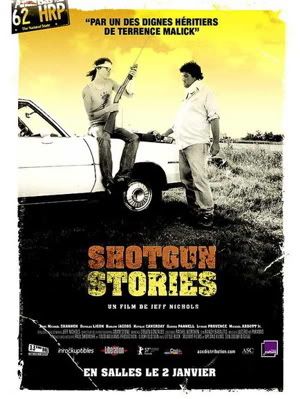
    If you don’t have A-List stars attached or a bankroll where you can make the film on your own terms there is a lot you have to look to others for in order to help a production go forward. In writer and director Jeff Nichols’ case the production needed to get to where it needed to go by sheer force of will. The will of the story that needed to be told, the will of those who had to believe in what was being shot, so many different behind-the-scenes hook or by crook moments that never made it in front of the lens. Glenda Pannell is an actress in Nichols’ latest, SHOTGUN STORIES, in which she stands on the sidelines watching two sets of half-brothers rage against one another following the death of the family’s patriarch. The film’s subject matter is a bit heady but the movie is one that has garnered attention from film festivals and ample praise from the likes of Variety and Roger Ebert.

    Glenda has made a name for herself playing roles in productions like WALK THE LINE, playing a lead role in MEET THE LUCKY ONES and will next be seen in STREAKER. To say that speaking with an actress who has such an exuberance for a role like this was a pleasure would be a gross understatement. Glenda had a realistic sense of how this role fits into her overall resume and about what you’re willing to do when the story is as good as this. To see the film in the coming weeks check to see when it might be playing at a theater near you:

    Laemmle’s Sunset 5: Los Angeles, CA 4/11
    Northwest Film Forum: Seattle, WA 5/9
    Starz Film Center: Denver, CO 5/16
    Olympia Film Society Capitol Theater: Olympia, WA 5/24- 5/29

    CHRISTOPHER STIPP: I’ll be honest, you have a one paragraph bio, I haven’t seen this film, I’m not going to ask you to take it from the top and ask you what the movie is about, so the only real recourse I have is to inquire what drew you to this story from a first time director?

    GLENDA PANNELL: When I got the script I pretty much knew, the way the script read, the story had a real solid narrative.

    Funny thing is I’m from Tennessee and we shot it in Little Rock, Arkansas and that’s where the director was from so I felt a kindred southern connection with Jeff. They are real people to me. Every single character in the film is people I have encountered or in my life and have certain characteristics of people that I knew. Knowing the people in my life and having the story told to me, it was such an easy read. I had no questions and just had a great visual of what the film would look like once it was made. I just knew it was going to be very special.

    Shooting a film in the south is always so picturesque. It’s such beautiful country to shoot in. Late afternoon, early evening, it is so beautiful on these wonderful golden fields. It’s a wonderful environment.

    CS: The trailer I saw for the film, there is nothing really quirky about the marketing ““ it feels just like a verite kind of film. It doesn’t seem to be anything else but a relationship kind of film. Would that be a close assessment?

    PANNELL: Once you see the film, I think you’ll be able to support your thoughts on that. It is a story that is told visually in front of your eyes. You feel great empathy for everybody in the film.

    There is a conflict going on between two sets of brothers. It really about the relationship of original set of brothers, Son, Boy and Kid. The lead, Mike Shannon who plays Son, is the first born to a set a parents. They had these children and they split up. The father goes off and starts a family with another lady and those children are raised in a more loving environment. And those children are named, which is a poignant part of the film, one of the children in that set of Boy’s is given his name; that’s a big thing in the South for a father to pass his name to a son. Even though there is conflict between these sets of brothers, because they are blood brothers but not raised in the same family, there’s a lot of unnecessary words exchanged and a lot of bad behavior that most people will look down upon but “¦.. they weren’t raised to love one another so that’s just how they handle things.

    It’s difficult to tell the story but it’s a great narration.

    CS: How do you factor in to this all? What part do you play?

    PANNELL: I’m Annie Hayes and I’m married to Son Hayes in the film. I think she’s Son’s anchor. He wasn’t raised in a loving home. And definitely wasn’t raised with a loving maternal figure and certainly weren’t raised by his father, those boys were left to raise each other on their own to develop their own values and own survival skills. And I think by the time he got married, Annie came along and came from a home that was not broken, had a mother and a father. I think he’s trying to create different values and learn from her because they have a child together ““ he takes off trying to get his stuff together – she loves him and doesn’t want to let go – they need to stay together for the kids ““ but at the same time she doesn’t want to live that way. She wants him to progress and not “f” up.

    CS: And do you think Jeff was able to distill everything? From when you read the script, to when you actually shoot it can be two different beasts. Obviously looking at the accolades the film has received already can say he has… but was there anything while he was producing or directing it where things on paper and trying to get it on screen that didn’t quite work?

    PANNELL: I think pretty much everything he intended pretty much worked out. If it seemed like something wasn’t going to work, he was always in discussion with us. He was always asking us how do you feel and how we feel about our characters and welcomed opinions but we weren’t running around trying to run the set but very open and we felt very comfortable ““ at least I did, speaking for myself. If I didn’t quite understand something I would try to understand it with questions. It’s really like a novel ““ a great narrative piece of work ““ and you want to show that justice especially when the director is the writer.

    CS: Is this really a southern film at heart? I know everyone can make generalizations that this is everyone’s kind of film but is this something unique just to the south?

    PANNELL: I don’t think so. The characters are true to the south but pull back and you make a general observation ““ I don’t care what family you are from ““ they might put up this picturesque facade but everyone has a past ““ everybody has a history nobody knows what goes on behind closed doors. I don’t think it’s unique to the south, I think it’s more unique to our generation quite honestly.

    CS: How so?

    PANNELL: The world isn’t the easiest place to live in at the moment with the economy being what it is and it’s just tough times we are living in. When people go home it’s not always the 9 to 5’er going home with dinner on the table, everybody sits around, eats and watch television and goes to bed. I just think everybody needs comfort. Anybody that goes to see this film can relate.

    CS: And the title SHOTGUN STORIES emphases the violence underneath it all.

    PANNELL: I’m not saying that everybody is going to go out and grab a gun ““ you don’t settle a conflict that way.

    CS: So where does Jeff come in on all of this? I don’t want to say autobiographical, because that would be pretty wild if it was, but where was he coming from when he wrote this story?

    PANNELL: I’m not sure if there were certain people in his life that he was drawing from, I can’t speak for him on that, but I would assume that growing up in Little Rock, Arkansas he’s seen people ““ just for analysis doing some people watching those characters are all living around him. So I’m sure there are people that have come into his life that he’s based his characters on.

    CS: During the shoot how long were you on set making this film?

    PANNELL: You know what, I was commuting back and forth from Memphis. It seems like I was doing it for at least a month. I wasn’t shooting every day. At least a couple times a week I was called on set. I would be there a big chunk of the day and I was pretty much at the beginning and the end process of it. It was a joy. It was very exciting. In the two hour drive going over, I’d think about the character and how I was going to approach it. It was such a pleasure.

    CS: Obviously it was different that any mainstream production and you’ve worked on bigger films than this. Really any sort of ““ anything you like more about independent films than the big sort of polished films that Hollywood churns out?

    PANNELL: The thing I like about SHOTGUN STORIES is that is was a labor of love for Jeff. He kept us included throughout the entire process. He would just say, not much going on if that was the case but just want to keep you up to date. The thing I liked most about this film is that most of the people that worked on the film he went to school with. He went to school at the North Carolina School of the Arts which has a great filmmaking program and we didn’t have a big budget to work on but his family made dinner for us. Every day dinner would be in his parent’s home. Mr and Mrs. Nichols sitting around the dining room table hanging around with the crew. It was so great to actually sit down and talk to these people and pick their brains about all aspects of production, to ask the crew members “Why do you do that? And why is that necessary?” Just learning the mechanics of things ““ it was about every single person.

    CS: Amazing; having dinner made for you every night.

    PANNELL: It was wonderful. Chicken pot pie”¦..it was wonderful.

    CS: It says you are currently in Los Angeles and I would imagine it’s nice to be able and go back to LA if you were to compare being on jobs, the difference between working on something like this and working on something with tons more money behind it”¦

    PANNELL: I really consider myself lucky. This is not the last we are going to hear from Jeff Nichols by any stretch of the imagination. And Mike Shannon is definitely one of those underrated actors that is out there today. He’s such a brilliant guy. To be a part of this project at the beginning of Jeff’s career is something I am very proud of for the rest of my life. I consider myself very fortunate to be able to someday say, “Hey, I was in his very first film.”

    CS: It’s won a few awards already.

    PANNELL: Yes. It won the Seattle International Film Festival and won a narrative category in Austin, and nominated for the Spirit Award, and I think there was something in Europe we won”¦.

    CS: Obviously you did it first of all because it was such a good story but at the time you were making it did you think it was going to be something people were really going to pay attention to and take notice of?

    PANNELL: I had a pretty good feeling because every character ““ I would pop on the set and just watch ““ and every character brought something very unique and invaluable to the film. Having wonderful characters he cast in this ““ everybody – I just had this great energy on the set ““ I just knew, don’t know why I knew, but knew that it was going to be something special. We could only dream at the time that it would go as far as it did and thankfully it did. I don’t know, I just had a great feeling after reading the script and it just kept going when we started filming.

    CS: You mentioned that while you were on the set ““ learning and observing ““ when you are taking that in, how does that inform the role that you are currently playing? Is it on your shoulders to be in tune with everyone else in your cast?

    PANNELL: On my shoulders? This is the biggest part I’ve had to date. I told someone earlier that you don’t have to have a million dollar set to bring professionalism to the set, and handle yourself in a professional manner and I think everyone did that. It worked like clockwork. Jeff was the perfect captain for the film. I hope that I did it justice in Jeff’s eyes. At the end of the day, you say, Oh I should have done it this way, or I should have done it differently. Hopefully I’ve learned from it.

    CS: That’s interesting that you take a part like this ““ the conversation starting that it’s not going to pay a whole lot of money or it’s not going to pay any money at all, what’s the process for you when you get a script to look at it and go, “Is this something I really want to invest my time in doing?”

    PANNELL: I try my very best and especially tried with Annie to immediately step in her shoes and people watch and be as observant of people as possible so I can say, “I think I get this.” I may not be correct but it’s enough to make a choice and come from someplace that you think will work.

    CS: And as you go from job to job, is it an easy lure for an easy paycheck if something is not up to snuff but the money may be right ““ Is there a tug of war in your own mind?

    PANNELL: Well, we’re getting a lot of auditions right now so hopefully I’ll get that choice.

    (Laughs)

    It was never about the money. It was about having”¦. Craft or money. It’s always going to be permanent. People will be able to go back and look at that so you just can’t look at a part with dollar signs rolling in your head. Everyone will know you didn’t put your heart into it and give it your all. You have to make it all or nothing. It’s not fair to anyone ““ cast mates, director.

    CS: Parts that you are auditioning for now ““ can you be selective?

    PANNELL: I can be selective of certain elements of things you don’t want to do. For instance, nudity. Sometimes violence. But you can’t make it about the money. It’s about building relationships and make it about the work. It should be about the work anyway. I’ve just never wanted to do anything else. I need to support myself and do this for a living.

  • TV Or Not TV: 4/7 – 4/13

    tvornottv2.jpg

    When I started last week’s column I stated that it was one of the bleakest weeks of TV viewing. I’m glad I said “one of” because I fear that we have at least one more week, including this one, to endure.

    Unless you live under a rock then you are aware of the titan of a show that is American Idol. This year they are bringing back last year’s charity fiasco: Idol Gives Back. The name itself really bothers me because Idol doesn’t give back”¦ Idol provides a vehicle for us to donate our money to help charitable organizations. They use their influence to get the show’s sponsors to pony up more dough than they normally do to help guilt us into giving. I don’t have anything against the concept of them having a telethon; I just have a problem with the name. Idol Gives Back is just a poor choice of words, and yes though I may criticize I can’t offer a better alternative (accept maybe Idol Aid or Idol Helps Out). I only hope that their celebrity guests don’t participate in another sad and pathetic dance video.

    In preparing for this week’s column I had to embark on a little research. I saw that ABC has both Samantha Who? and Desperate Housewives returning this week. I don’t remember a single thing that has happened on Desperate Housewives (except that Nathan Fillion seems to have left the show after the tornado) and I had never seen Samantha Who? so I did what any reasonable critic would do; I spent my entire Sunday sitting on my butt having a Samantha Who? marathon courtesy of abc.com. The concept behind the show is that the star, Christina Applegate, plays Samantha who wakes up from a coma with amnesia. To her horror she discovers that she wasn’t a nice person (at all) and seeks to be a better person with her new clean slate. The concept is actually very entertaining, the writing is good, the acting is decent and it is a sitcom that makes me feel a lot cleaner then after watching an episode of Two and a Half Men.

    I can also say that I was very pleased with the return of Battlestar Galactica. Not a lot was explained, but what they did give us was interesting. Starbuck returned seemingly back from the dead with a brand new Viper identical to her old one, complete with vacation pictures of Earth. Right now I’ve got that same feeling I get when I’m in a roller coaster and we’re clicking our way up at the beginning of one hell of a ride.

    Now that my blathering has gone by, here’s some stuff you might want to watch over the next seven days.

    MONDAY

    CBS ““ Check Local Time: If I have to tell you to watch the NCAA Tournament than you probably aren’t going to watch the NCAA Tournament.

    ABC ““ 9:30 PM: Tonight is the aforementioned return of Samantha Who? If only it weren’t wedged in between Dancing with the Stars and The Bachelor.

    NBC ““ 10:00 PM: Again I throw up the stunt casting alert because tonight Rosanna Arquette will be guest starring with real life sister Patricia on tonight’s Medium.

    TUESDAY

    FOX ““ 8:00 PM: American Idol‘s finalists will be singing inspirational music tonight. What, they peaked with guest singers last week with Dolly Parton?!?!

    NBC ““ 8:00 PM: I have to admit that I am hopelessly addicted to The Biggest Loser and tonight they are going to be kicking off the final person before the big finale. The evil part? They don’t get their trainers, they are on their own. Next week you won’t be able to shut me up about the finale. Sorry in advance.

    CBS ““ 10:00 PM: Secret Talents of the Stars is my must watch of the night. Why? Four words people: Mr. Sulu Sings Country! Oh my!

    WEDNESDAY

    FOX ““ 7:30 PM: The show that is so big prime time can’t contain it, Idol Gives Back promises to steal 2 hours and thirty minutes of your life, plus some of your money. I’m not even going to try to recommend anything else because, let’s face it, the other channels aren’t even trying to counter program against this beast.

    THURSDAY

    ABC ““ 8:00 PM: Desperate Housewives is desperate to get us caught up on what happened prior to the writer’s strike.

    NBC ““ 8:00 ““ 10:00 PM: Thursday night sitcom Nirvana is back in full effect with My Name is Earl, 30 Rock, The Office, and Scrubs. 30 Rock is the one I’m most looking forward to. Why? Two words: MILF Island.

    FRIDAY

    NBC ““ 9:00 PM: The Miss USA pageant airs tonight, and it is hosted by Donnie and Marie Osmond. Here is hoping Marie passes out again to liven this up.

    AMC ““ 10:00 PM: Ferris Bueller’s Day Off. Something D-O-O economics”¦ anyone? Anyone?

    SCIFI ““ 10:00 PM: OK, I’m not sure what the hell is going on with Battlestar Galactica but this week I’m sure we’ll get more of Starbuck’s mental Earth Radar driving her crazy and it looks like the Cylons are going to have issue with the Final Five being on the human fleet. Don’t know what I’m talking about? Watch this before you tune in.

    SATURDAY

    CBS ““ 8:00 PM: The Lord’s Boot Camp follows three young women training to become Christian missionaries. The title alone makes it a recommended show.

    SPIKE ““ 8:00 PM: My favorite of the Star Wars films airs tonight. Travel with me to the Dagobah system in The Empire Strikes Back.

    SUNDAY

    ABC ““ 9:00 PM: As mentioned above, the girls of Wisteria Lane are back with the return of Desperate Housewives. Hopefully tonight we finally get some dirt on Dana Delaney’s character Katherine. They’ve got to give something big after this big of a break.

    TMC ““ 8:00 PM: Span a decade with me as The Movie Channel shows Clerks and Clerks II back to back. I’m a sucker for related double features, and I’m also a sucker for these flicks.

    Will Wilkins knows who the fifth Cylon is, but he’s not telling.

  • Trailer Park: Dicky Barrett

    By Christopher Stipp

    Archives? Right Here…

    I’m awesome. I wrote a book. It’s got little to do with movies. Download and read “Thank You, Goodnight” right HERE for free.

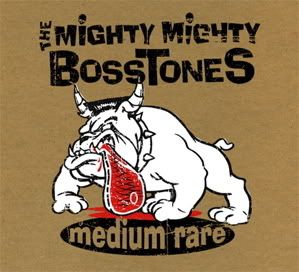
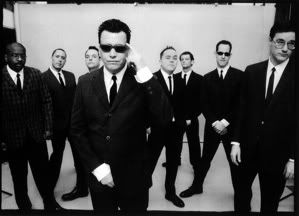
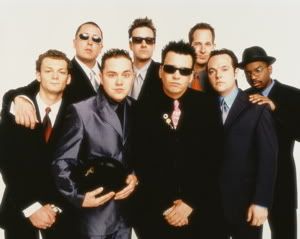
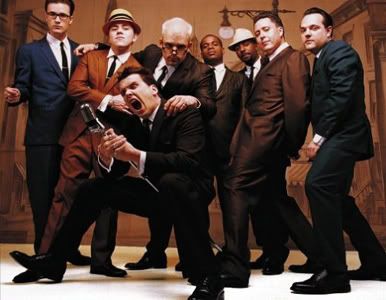
    A lot of superlatives could be used to describe the fierce yet melodic sounds of The Mighty Mighty Bosstones.

    A band that has been around longer than many would realize, 1985, has had more members than Kool & The Gang, constructed one of the most durable bridges from punk to ska and fronted by one of the most pronounced vocalists ever to rock a mic The Mighty Mighty Bosstones could never be pigeonholed into anything that they themselves didn’t already anoint their sound with. One of the other pleasures besides their seven studio albums was the pleasure of being able to see them live. Having the OG “Bosstone”, manager and flash dancer Ben Carr, on stage and doing nothing but grooving hard to the music whilst the other members play is something that truly has to be seen to be believed. The energy and heart that the members of the band, guys who would sooner wear a shirt, tie and suit jacket on stage as they would shred through an Operation Ivy cover with blistering thunder, is simply unmatched. One of the more notable events that the Bosstones kept as a tradition within the band was their annual Hometown Throwdown, the latest represented the 10th annual incarnation of the event, which has the Bosstones playing for five sold-out nights in a row at the historic Middle East in Boston. The tradition has been a staple for many fans and its sold-out status every year is emblematic of this band’s allure and reception in the music community.

    One of the great things about being a band that has been around for as long as it has, and has weathered the number of band members who have come and gone, is its consistent quality. The albums it has produced, the singles which have been appropriated from mainstream radio to the movies, and the live shows that have never failed to connect means that their latest album, Medium Rare, is a compilation that has put together rarities and three new songs in a way that it doesn’t feel like an empty cash-in. You listen to a song like “Don’t Worry Desmond Decker” and, unless you’re a heartless zombie who deserves to be shoved and locked in a room with a pack of emo pantywastes, there is something instantly toe-tapping about it; you want to bounce around a little, you feel like there should be more to modern music and that it should sound more like this.

    It’s hard to put words to reasons why this album deserves some scratch so I’ve obtained a handful of copies to give away plus I’ve turned to Dicky Barrett to give me a little insight into this album’s making. Besides being a part of Jimmy Kimmel’s late night crew, and has a fleeting cameo in “I’m Fu*ing Ben Affleck“, Dicky has kept busy even when the music hasn’t been. Leave a comment below with your e-mail address hyper linked (or send me an e-mail) if you want a chance to win a this album and here’s what Dicky had to say about his latest and greatest.
    CHRISTOPHER STIPP: I confess I can’t call myself a hardcore fan because I didn’t know about this album until a few weeks ago.

    BARRETT: Yeah, we didn’t put it out with any kind of machine behind us or label support. Minimal distribution. We were in Boston over the Christmas break and we’ve been promising our fans to combine a lot of the B-sides. What’s so difficult about taking songs that are on Bosstones records and putting them on another record and putting them out there? Very often they were on different labels and it requires legal paperwork and red tape. So, we got a good solid collection of these songs, and wrote three new songs and put it out there.

    CS: That’s fantastic. It’s sounds like a real cohesive album. It’s not like it’s a bunch of out of left fielders.

    BARRETT: It’s a nice sounding record too.

    CS: Absolutely. And the three new ones really blend in well with the whole album.

    BARRETT: That’s the genius of Joe Gittleman, producer of the Bosstones sound. He knows the Bosstones sound like I know the Bosstones look.

    CS: Right. Was he there from day one?

    BARRETT: He was there from the beginning. Joe could say he was there before me.

    CS: Really?

    BARRETT: Yes, he’s the bass player and him and Nate asked me to play in the band that they had when they were still in high school.

    CS: And through all these years, the sound has stayed consistent. I’ve never read an interview where you mentioned that you were going in a new direction, a new sound ““ that’s a warning sign it’s a concept album. The sound has always stayed consistent.

    BARRETT: What we’ve always tried to do is do exactly what we want. We came out of the gates mixing pop and metal and ska. We had a very wide spectrum to choose from. We never at any time wanted to do a hip-hop record or straight jazz record but there are always elements of everything. We called ourselves ska because we didn’t want to be labeled.

    CS: People always tried to pigeon hole you into something.

    BARRETT: They need to call something something. They would always ask what kind of music do you call yourselves. It’s Bosstones music. We could tell you our influences and let you know what we are listening to but you can’t call us a metal band, or straight pop band. That’s not fair to the Sex Pistols. After it’s all said and done I think we hold a place in music that holds it own. Whatever we did it was very much The Mighty Mighty Bosstones.

    CS: I think that’s absolutely accurate. As a fan, I wish more people would have purchased the records to continue the band’s rise to a higher level but your greatest success came in the late 90’s, and let’s face it, your appearance in CLUELESS helped”¦When you look back at it are you happy with the success you had or do you wish you would have gotten to the place where you were on the cover of every magazine?

    BARRETT: I really wouldn’t have minded that but to be the Bosstones is not the Rolling Stones. It’s just not for everyone or easily understood. It’s hard to explain. At the peak of our popularity I really didn’t enjoy that as much as I probably should have. I took it too seriously. It felt to me like, “Oh shit, all these fans that we’ve created throughout the years ““ punk and ska clubs are going to hate this.” It wasn’t like we were trying for those things…things came to us. When Kurt Cobain died and people were feeling pretty miserable we thought it was time for people to feel a little bit better and we happened to be there with bands like Green Day, Rancid”¦it was time for uplifting music, which is what we’ve always been doing. It wasn’t like we flipped our flannel shirts off and put on the suits ““ here we are we’ve been being the Bosstones for 10 years before that. My mask could be off.

    (Laughs)

    CS: When you guys came back to record new songs, at least the three for the new album, how long did it take”¦.the answer I think you might give is that it clicked immediately, but how long did it take for you guys to get back in the groove to record the songs in classic Bosstone fashion?

    BARRETT: Joe sent selected music he wrote at home, I liked it, we wrote some lyrics, he came over to my house, we jammed around in my living room, we went over and taught Lawrence what we were doing at the studio here in LA, taught him the music. It didn’t take long, it didn’t seem hard and it didn’t seem difficult. We’re just going to create some new songs to add to this collection and hopefully they fit it, people like them, they sound good.

    It wasn’t a long involved process ““ like we’ll write them, then we’ll rewrite them, try again and then we’ll take them back to the studio. We’ll send them around, we’ll test market them with some different radio stations. We just recorded some songs the way we used to do it.

    CS: And then going back for the Hometown Throwdown certainly helped to gel a lot of things, but how was it going back this year?

    BARRETT: It was awesome. It was really really great. I was a little nervous beforehand but we had a great time. We are playing in LA and Las Vegas next weekend. So the guys start practicing tomorrow to get ready.

    CS: Is it going to be 5 nights in a row at each place?

    BARRETT: Nah.

    (Laughs)

    You got to think of it like – it wasn’t like we played high school football together for four years. We were on the road playing 300 plus shows a year for 16 or 17 years together. It wasn’t hard to get back in the groove once we knew ““ there was a little bit of rust and a little bit of stiffness and a little bit of dust. It just didn’t take too long. This is how it goes and just didn’t take us long.

    CS: The reason I bring it up is that Wilco just did a 5 night stint in Chicago. It was called their Winter Residency.

    BARRETT: I love that band.

    CS: I think they are one of the best playing today that not a lot of people either care about or”¦.

    BARRETT: Never really got the attention or notoriety but like I said, be careful what you wish for.

    CS: Exactly.

    BARRETT: It would suck if Wilco was a household word too.

    CS: That’s true.

    BARRETT: To everybody but them I’m sure.

    CS: If it’s anyone that deserves some kind of mainstream recognition, it’s them. They played 5 nights in a row ““ all of the shows surfaced nightly on the Internet ““ but it was amazing to hear the guys, over the course of 5 nights, getting tighter and tighter. It was sold out and they mentioned they wanted to do it again next year. What’s it like to go out there and do something 5 nights in a row in one place ““ what’s it like by that fifth night?

    BARRETT: For me, exhausted, but it’s a huge sense of pride. It’s everything you just described. Holy shit. It’s been five years since we did it. It’s nice to know you still care.

    CS: That people still care.

    BARRETT: It’s nice to know that people still care. It’s nice to know you can still do it and nice to know that other people still care when you do.

    CS: How is it like coming back now to try and balance music with television now that the writers strike is over?

    BARRETT: That was – the writers were absolutely ““ I’m a writer myself of music ““ to be robbed the way they were being robbed is unfortunate. I don’t know ““ it’s fine being back. I’m excited. We have shows to play and stuff to do and I certainly like working for Jimmy Kimmel. It’s a great place to work.

    CS: And how to you balance ““ you bounced to radio now television ““ all your interests?

    BARRETT: I don’t know. None of it is solved. Busy schedules but I’d like to tell you it’s really difficult and I don’t know where it comes from and I’m really gifted and I can spin several plates at the same time but it doesn’t seem like hard work to me. It feels like I’m doing things I like and glad to have the opportunity to do it.

    CS: And of course, a lot of people are asking if there is going to be a new album with the guys.

    BARRETT: I think we might. We haven’t really sat down to talk about it but I don’t see why not. We certainly enjoyed being in the studio for the songs we recorded so I don’t see why not.

    CS: The songs that were chosen for Medium Rare, was there any over guiding or over riding idea of what should go on?

    BARRETT: Let me give you the factors that went into it. One was the ones that we could legally put on, that was the first thing. After that it was whether or not it was kind of rare enough or whether it was on ““ a lot of them have been on B sides and stuff and the third was Joe wanted to make it cohesive and feel like a record so those were the three factors. We could have put 10 more songs on if we didn’t follow those guidelines so that’s the way we did it.

  • Comics & Comics: Comedy On Book On Tape

    COMics & Comics 31208- lOGO

    Howdy Inter-Webbers. I’m Matt Cohen. And I dig live comedy.

    From a young age one of my favorite things to do has been going to live comedy shows. When I was younger, it was standup; Everyone from Dave Chappelle and Jim Bruer to Jerry Seinfeld and yes, even once, Andrew Dice Clay. Once I got a bit older, my interests shifted to the improv/sketch realm and I have seen countless shows in both genres over the past five years or so. Today I take a look at a very special show I had the honor of attending last week, a benefit cd taping of the comedy how-to book “Comedy by the Numbers”. Also, take a look at the current season of one of my favorite shows, South Park, to see how it stands up against the rest. It’ll be fun, it’ll be heartfelt, it’ll be what America was founded for.

    —————————————–


    comicsandcomics4408comedybythenumbers

    Comedy by the Numbers 3/24/08: I entered the doors for the Upright Citizens Brigade Theatre to be greeted with the sight of a totally sold out house, and for good reason. This night promised to be special. A charity benefit that proceeds the Valencia chapter of 826, a nationwide tutoring center for kids, started by McSweeny’s Dave Eggers was the reason to gather all these folks together in one place, and it was a memorable evening. On stage, a group of well known and quite frankly, extremely gifted comedians would be doing an book reading of the Comedy How-To guide, Comedy by the Numbers written by Eric Hoffman and Gary Rudoren and edited by Naomi Odenkirk. The performers were as follows; Bob Odenkirk (Mr. Show), Jay Johnston (Mr. Show), Brian Poshein(Mr. Show), Paul F. Tompkins (Mr. Show), Andy Kindler (Late-Nite), Matt Besser (UCB), Kate Flannery (The Office) and Tim Heidecker (Tim and Eric’s Awesome Show). With a cast like that, there was nothing keeping me from attending this show. The main selling point, in my case at least, was the chance to see Mr. Bob Odenkirk perform live, a man who I consider a comedy god and one of the funniest people on the face of the earth. Luckily, I was not disappointed in the least. The basic concept for the show was pretty simple – the book, Comedy by the Numbers, would be read in excerpt form by the attending comedians. The segments were short “How-To” guides on certain types of comedy, ie. Racist Jokes, Knock Knock Humor, etc…, all written in a nonsensical and often hilarious manner. No other hooks or gimmicks, it was purely going to be funny people reading funny things for the sake of a compact disc. One great thing about the relative small size of the LA branch of the UCB is that the technical crew (audio recorders, cameramen, etc) were pretty much sight unseen, due to the limited capacity for crew. One camera man, one sound guy, both as high up in the theater as to not disrupt anyone’s show, which is usually what happens during comedy tapings, where the taping takes precedent over the live experience. It couldn’t have been more the opposite at Comedy by the Numbers.


    As far as the actual show went, it was as funny as one would expect from such a pool of collective brilliance. Though these jokes were already written, the laughs were not diminished in any way, thanks in a large part to the hilarious delivery of *most* of the performers. I don’t want to pick on anyone, and I enjoy both their work on their respective TV shows, but unfortunately Kate Flannery and Tim Heidecker never really seemed to get it together. True, they were the only “Duo” of readers, but it seemed like with a bit more preparation, their segments would’ve gone a lot more smoothly. I expect major edits or possible re-takes for their part of the CD. The other performers were mostly spot-on, with Bob Odenkirk being particularly funny. It may be my years of loyal Mr. Show devotion, but there is just something about that man’s voice and delivery that makes me laugh until I tear (which happened about three times during this show, all during Odenkirk segments). The night was for a very good cause as well, and more money was raised during the show in the form of a very funny auction hosted by Paul F. Tompkins and Andy Kindler, in which the winner got a chance to get on stage and read a segment to be recorded for the album (I believe the winner’s segment was about Farts, if I’m correct). The show went on a bit long (topping out at almost three hours) but it was a great night and a great chance to see some comedians do something good for society (Those dirty hippies rarely do). Please check out the book and the CD when it’s released. I think you’ll really enjoy what you find.

    South Park Season 12: To the critics, the naysayers, the people who say it’s lowest common denominator – $@#$@ you… South Park is, simply put, one of the best television shows of all time, and it may be the only show in history that gets progressively better as the seasons go on. Yes, the show has always been one of the funniest on TV, but it seems that around season six or seven it really found its voice and since then has continuously been the most outrageous, hilarious and, oddly, topical show on prime time television. And, good news for all fans, if the first three offerings of this season are any indication of quality to follow, we’re in for an extremely funny ride. So far, we’ve seen Cartman and Kyle get AIDS (“I’m not just sure, Kyle… I’m HIV positive), Britney Spears wearing “some kind of crazy new half face look”, and what may go down as one of the more awkwardly hilarious moments in the shows legendary history, Butters preforming his debut internet hit “What, What In The Butt”. South Park truly is the show that keeps on giving and, as usual, is one of the funniest things around. If you don’t watch this show, there is something wrong with you… Seriously, go see a doctor or something. I’ll pay for it

    comicsandcomics4408southpark


    Rumor is Kenny may die this season…

    That’s it for this week folks, tune in next for a look at Funny Books. (Though, rarely are they that funny… ‘cept for DeadPool. Deadpool brings the laughs). Have a goodun, kiddos.

    And as always,

    “Keep em’ bagged and boarded”

    Matt Cohen is currently asking the grinning bobcat why he grins.

  • TV Or Not TV: 3/31 – 4/6

    tvornottv2.jpg

    Welcome back TV viewers. We find ourselves here again; same bat-time, same bat-channel.

    This week is one of the bleakest yet, but it also represents the light at the end of the tunnel for those of us suffering through the after effects of the WGA strike. I’d love to try to lie to you but Tuesday and Wednesday are not going to be very fun if you aren’t in to American Idol. If you don’t like Survivor or sitcoms then Thursday isn’t going to be very exciting either. I also have to say that you can pretty much write off the weekend for being able to watch much of anything very good. Fans of LOST also get to let out a collective groan because they still have another four weeks to wait for a new episode.

    I did, however, say something about a light at the end of the tunnel. That tiny glimmer of hope comes from the fact that we are starting to see many shows return with new episodes. This is going to be a trend that we see happen every week of the month, with new shows being in full effect for May. It’s kind of like winter ending all over again isn’t it?

    The biggest event this week, which is noted below, is that Battlestar Galactica is returning on the SCIFI channel. This is a mixed bag of good news/bad news because it is the show’s final season; however it doesn’t really matter because one should just be happy to get any bit of a show that has this much quality and caliber. The writing on this show is amazing, the acting is great, and they ended last season on one heck of a cliff hanger. I would be more than willing to bet that Friday will give the SCIFI channel some of their biggest ratings ever, and I predict they will definitely deserve them. In other words, don’t call me Friday night because I’ll be watching BSG and the ringer will be turned off.

    So let’s all let out a collective sigh of relief because April is upon us and we’ll soon be knee deep in new shows.

    Now, on with the countdown.

    MONDAY

    FOX ““ 9:00 PM: Tonight on New Amsterdam a homicide victim looks like one of the 63 kids that John has fathered in his 400 years of life. With that many kids what are the odds that someone in New York isn’t related to him?

    NBC ““ 10:00 PM: Last week on Medium we saw one of the creepiest scenarios that Alison has had to deal with yet, and the perpetrator for once is a woman. This week she goes head-to-head with this serious sociopath, and I’m hoping for a serious cat fight.

    TUESDAY

    FOX ““ 8:00 PM: Tonight on American Idol the contestants sing the songs of Dolly Parton and she’ll be on hand to coach them. I can’t wait to hear Dave Cook sing 9 to 5. I bet you’re waiting for me to say, “April Fools!” aren’t you? Sorry.

    FOX ““ 9:00 PM: Fifteen new people sign up for the torture and honor of trying to become the Executive Chef at a Gordon Ramsey’s new restaurant in the latest installment of Hell’s Kitchen. This show is pure sadomasochism for those too scared to actually put on a ball gag.

    WEDNESDAY

    FOX ““ 9:00 PM: An event I’m sure you’ve all been dying to see on American Idol; Dolly Parton SINGS! Tune in for 42 minutes of pain and watch another young hopeful’s dream get shattered.

    HIST ““ 9:00 PM: I think the producers of MonsterQuest are stuck in a rut. Last week it was the Skunk Ape, this week they look at Josef Stalin’s attempts at breeding man and ape. Next week they’ll try to track down the elusive Grape Ape.

    THURSDAY

    NBC ““ 8:00 PM: The good news is that My Name is Earl is back and it’s a full hour. The bad news is that stunt casting is in full effect with Paris Hilton playing herself. If it were two days earlier I would be hoping this was an April Fool’s joke.

    ABC ““ 8:00 PM: I hope you didn’t blink because the season finale of Miss/Guided is already here. You start to like a new show and just like Keyser Souze… poof… it’s gone.

    NBC ““ 9:00 ““ 11:00 PM: After Earl why not take in four back to back episodes of The Office?

    FRIDAY

    CBS ““ 8:00 PM: Ghost Whisperer is back from the afterlife of the WGA Strike tonight. What can I say? At least it’s not a repeat or reality TV.

    SCIFI ““ 9:00 AM: Because I missed mentioning it last week I’m going to bring up both Battlestar Galactica: Revealed and Battlestar Galactica: The Phenomenon for this lovely Friday morning. The former is hosted by Executive Producers Ronald D. Moore and David Eick to get us caught up on all the important things that happened in the previous seasons. The latter is a collection of celebrities talking about the impact the new Galactica has had. These are all a great primer for…

    SCIFI ““ 10:00 PM: Finally, the return of Battlestar Galactica! “˜Nuff said?

    SATURDAY

    FOXREAL ““ 12:00 PM: One of the funniest and cruelest reality shows that FOX ever put out was My Big Fat Obnoxious Fiancé. Today FOX REALITY is airing back to back episodes of the shows entire run. It is mean, it is cruel and it is FABULOUS! Drink it in.

    SCIFI ““ 3:00 PM: Relive the terror of 10.5 and 10.5: Apocalypse. No, the terror isn’t from the earthquakes; it’s from the writing, the acting, and Beau Bridges eyebrows!

    ABC ““ 8:00 PM: Tune in for one of the two blandest adaptations of JK Rowling’s books with Harry Potter and the Sorcerer’s Stone. I’ve got a soft spot for the books so if you have no idea what a Muggle is than tune in, won’t you?

    SUNDAY

    TNT”“ 12:30 PM: It’s Lord of the Rings Sunday on TNT as all three films in the trilogy are shown back-to-back-to-back. This should be TNT’s highest ratings score for males 18 to 35… living in their parents basements.

    ABC ““ 8:00 PM: Tonight the Extreme Makeover: Home Edition team goes all the way to Billings, Montana to build a new home for a family living in a refurbished chicken coop. I’m dying to see what a refurbished chicken coop looks like. I bet it’s still better than most New York apartments.

    FOX ““ 9:00 PM: I’m very hesitant to recommend Family Guy tonight, but if you didn’t catch their Star Wars special episode than tonight is your second chance to see it. It will elicit at least a few laughs.

    Will Wilkins didn’t know what the frak to put here this week.

  • Trailer Park: Kids In The Hall 2008 Tour NEWSFLASH

    By Christopher Stipp

    Archives? Right Here…And The Way Way Back Archives Are Here


    First things first: The Kids In The Hall are on tour this Spring. Head on over to their MySpace page to get a list of dates and start planning.

    That said, there’s not much that grabs my attention these days.

    When I first started out doing this I used to be enamored by all sorts of press releases announcing marginal projects. I was new, I didn’t know better and I had yet to learn the nuances and lengths some PR companies will go to make you believe the hype. After years of experience and after just as long a time to figure out that not everyone is who they say they are you honestly become a little jaded. You can’t find it in your heart to get excited by projects because you’re always being pitched this thing which will “be the hottest thing this year” or this movie because “it’s garnering lots of positive buzz.”

    That’s when a little e-mail announcing the latest Kids In The Hall tour landed in one of my random in-boxes set me off like an ape that smells a pile of bananas nearby.

    I couldn’t wait to jump on the phone to track down those in charge of this latest road show to find out how I could be of some service. It’s really not hard to see why I would react like this when you consider the cultural and professional contributions the KITH has made to sketch comedy and how there hasn’t been a troupe since that can match the level of quality for the five seasons they were on television. They balanced the base with the intelligent, the socially aware with sketches like The Power Of My Cock; the vacillations between these two within any given episode was what still remains as testament to the quality of writing. It’s like every episode was a mix tape and they had the wherewithal to know how to lead it off, what belonged in the middle and how to end things proper.

    I would be lying if I said that for the five seasons these guys were on television that I was right there for every episode. It wasn’t until 1991 when I taped a KITH episode for a friend, on VHS no less (man, I feel old), and a sketch called “One Of These Five Men…” was unlike anything I had seen as a young man. I immediately connected with the troupe’s sensibilities and I “got” their sense of humor and what they thought was funny. Too many superlatives could fill this space but I was a fan. I could go on and on about stories related to what would be the basis and genesis for my writing career but I’ll leave it be at that I have seen two of the Kids In The Hall live shows and they’re every bit as good as the show. If you get a chance you could buy a copy of the very great Same Guys, New Dresses show or even their Tour Of Duty show to get a feel for how they translate their sketch comedy for the stage.

    And, for those who want the latest taste in what to expect when they roll into a town near you click below to watch a sample of a Q&A when Scott Thompson and company explain their very macabre, but very amusing, connection to Kurt Cobain.

  • Comics in Context #220: The King of the Silver Age

    comicsincontext4.jpg

    cic2008-03-25.jpgNow, in my continuing commentary on Mark Evanier’s Kirby: King of Comics, published by Harry N. Abrams, I arrive at the peak of Jack Kirby’s career: the 1960s, in the Silver Age of Comics, when Kirby collaborated with Stan Lee in creating the Fantastic Four and so many of the other classic characters of the Marvel Universe. As Mark Evanier reminds us in this book, Lee and Kirby launched a “revolution” in heroic fantasy comics with Fantastic Four #1, which he rightly says “changed the rules” more than any comic book since Action Comics #1, in which the superhero genre was born (Evanier, Kirby: King of Comics, p. 122). Fantastic Four #1 marked a true renaissance of this genre, which has not only thrived ever since in comics, but found new popularity in film and television.

    But this is also the period in Kirby’s career that stirs the most controversy. As Evanier explains, Marvel’s editor and principal writer, Stan Lee, collaborated with Kirby and other artists in what was then an unusual way. Burdened with the duty to write so many comics, Lee devised the “Marvel method” to draw upon the considerable talents of artists like Kirby and Steve Ditko to create story ideas. Typically, Lee and Kirby would hold a conference to devise the basic plot of a story, then Kirby would draw the story, elaborating upon and adding to that plot, and then Lee would script the dialogue and captions.

    But what actually happened during those plot conferences? What elements of the plots were Lee’s and which were Kirby’s? Which man first conceived of which of the scores of characters who emerged at Marvel during this amazing period of creativity?

    In his book Mark Evanier carefully attempts to be fair to both Lee and Kirby in treading through this mine field. At one point Evanier sagely assets that “Among those who worked around them at the time, there was a unanimous view: that Fantastic Four was created by Stan and Jack. No further division of credit seemed appropriate. Not on that, nor on all the wonderment to come” (Evanier, p. 122). That strikes me as correct. It is the combination of Lee and Kirby’s individual talents, the synthesis of the words and the pictures, that made these characters and series so successful, both commercially and creatively. We have seen plenty of work that Stan Lee has done with other artists, and entire series that Jack Kirby both wrote and drew himself. It’s hard for me to imagine that a Fantastic Four by either man without the other could have achieved the heights they reached in that series together.

    Yet in the 1960s and 1970s Kirby’s role in co-plotting–and in some cases, entirely plotting–his collaborations with Stan Lee was known to very few. (As a Marvel reader during those years, I was certainly unaware of it.) Kirby understandably felt unjustly deprived of both his rightful credit for co-creating a stable of such commercially valuable characters and the financial rewards that should in a more just world have been his.

    So the question of who did what did become an issue. As Evanier recounts, Stan Lee and Jack Kirby each claimed to be the one who first came up with the idea for the Incredible Hulk. Lee asserted that he originated the idea of doing a series about the Norse god Thor as a superhero; Kirby contended that it was his own idea. Lee says he first conceived of the X-Men; Kirby contended that the credit belonged to him instead. And so it goes. Lee and Kirby each had notoriously bad memories, and they were trying to remember who came up with which idea decades ago.

    And there are no witnesses and no physical evidence to settle the disputes. Nobody made records of the plotting sessions at the time. That suggests that, at the time, nobody thought it was important to do so. After all, back then there was little money in comics and no prestige, and no one could have anticipated that Marvel would grow into a multimillion dollar media empire.

    Reading this section of Evanier’s book set me wondering about many aspects of this controversy. Is it possible that in the early 1960s not even Kirby or Ditko fretted about getting more credit or compensation for their work with Lee? Evanier states that it was “later” that Kirby and Ditko would claim that Lee contributed little or nothing to the plots. “Since he received the total writing fee and (usually) the total writing credit, that would be a sore point in years to come” (Evanier, p. 112).

    Did Kirby, Ditko and the other artists ever confront Lee about this? If they did, how did he respond to their arguments? Or did they just stew in silence, believing that Lee should have known enough to give them money and credit for writing without their asking him? Ditko eventually was billed as sole plotter on his later Amazing Spider-Man work. Why did Ditko get credit when Kirby did not?

    What was Stan Lee’s position at the time? Lee has always praised Kirby and Ditko as artists, and certainly in recent years he has acknowledged their plot contributions to his collaborations with them. When Lee and Kirby co-plotted as a story, did Lee assume that Kirby’s fee covered both drawing and co-plotting, and that his own covered co-plotting and scripting? Was Lee somehow blind to the reasons for Kirby’s growing resentment? Or, again, did the subject never come up at the time? Evanier suggests that was the case, writing that “But at the time, everyone was happy just to have work and the “˜Marvel Method,’ as it would come to be known, produced some fine comics” (Evanier, p. 112).

    Surely if Lee and Kirby had realized at the time there would have been such a mess over who did what, they would have tape recorded their plotting sessions or had someone transcribe them!

    (I know what this is like. Looking back at entries for The Official Handbook of the Marvel Universe in the 1980s, I sometimes find myself wondering if I wrote the entry or the series’ editor and creator Mark Gruenwald did. Mark probably kept records, but where are they now? Complicating the problem is the fact that I often revised and expanded entries that Mark had originally written. But how can one tell twenty years later which sections of an entry are Mark’s and which are mine?)

    Indeed, no one kept proper records of what one day would be regarded as significant history. Evanier recounts the “industry legend” that Marvel publisher Martin Goodman learned about the sales of Justice League of America from DC’s Jack Liebowitz during a golf game, but Evanier then points out that Liebowitz denied he ever played golf with Goodman.

    In any event, Goodman instructed Stan Lee to start a new superhero book to compete with DC’s Justice League, and Fantastic Four #1 was the result.

    I was surprised that Evanier claims that the FF discovered their new super-powers on the moon in their first issue (Evanier p. 114), though he has corrected the mistake at his website. Once their spaceship was hit by the unexpectedly intense radiation, they turned back and returned to Earth, where their powers first manifested. Furthermore, it’s a common error that in their origin story the FF were heading to the moon. The story actually states they were journeying “to the stars”; hence, the real-life moon landing in 1969 hasn’t dated the origin story.

    The most revolutionary creation among the members of the Fantastic Four was Ben Grimm, the Thing: the monster depicted as semi-tragic hero. I had assumed that Kirby and Ben Grimm’s personalities had much in common, but Evanier quotes Kirby spelling it out: “the Thing is really Jack Kirby. . . .He has my manners, he has my manner of speech, and he thinks the way I do” (Evanier, p. 122).

    But wait! Even if Kirby made notes in the borders of the original art pages, suggesting what the Thing was saying, it was Stan Lee who wrote the Thing’s dialogue. As Evanier points out, sometimes Lee followed Kirby’s border notes and other times he didn’t. Certainly Lee reworked Kirby’s suggested dialogue, and as Evanier acknowledges, Lee is superb at depicting characterization through dialogue.

    So is the Thing really purely an expression of Jack Kirby? Did Stan Lee think that in scripting the Thing, he was portraying a version of Kirby? Or is it more likely that the Thing we see in the Lee-Kirby FF issues expresses parts of both creators’ personalities?

    The biggest puzzle is who came up with the idea for Spider-Man. Evanier reports that Stan Lee claims that, inspired by the pulp vigilante called the Spider, he came up with the idea to do a character called Spider-Man. Kirby claimed that he and Joe Simon had devised the name Spider-Man (or “Spiderman” minus the hyphen), and that he–Kirby–suggested doing a character by that name at Marvel.

    Evanier notes that Simon contends that his “Spider-Man” was a different name he had devised for his character the Silver Spider, but that Kirby had nothing to do with its creation. Simon and Kirby had reworked the Silver Spider into the Fly, an orphan boy who used a magic ring to transform into an insect-themed adult superhero, for Archie Comics.

    So Kirby began drawing the first Spider-Man story for Marvel, in which the title character was a young boy who used a magic ring to transform into a spider-themed adult superhero. After he’d finished the first few pages, Lee decided to reassign the story to Steve Ditko. Lee has long claimed that Kirby made Spider-Man look too muscular and traditionally heroic. Evanier casts doubt on this story, pointing out that Kirby could easily have redrawn the few pages to make Spider-Man look less muscular, and that, after all, Kirby drew Spider-Man on the cover for Amazing Fantasy #15, his first appearance (Evanier p. 126).

    This is true, but I wonder if Stan Lee’s explanation still points to the real reason for the change in artists, even if it wasn’t perfectly phrased. I’ve heard John Romita, Sr. say that when he took over drawing Spider-Man from Steve Ditko, he initially attempted to draw Spider-Man in a Ditkoesque style, but proved unsuccessful at it; instead, Romita followed his natural tendencies as an artist and made Peter Parker/Spider-Man a much more handsome figure than the one Ditko had drawn, and Stan Lee went along with this. Lee may well have recognized that Kirby’s natural tendency was to draw superheroes with heroic builds, and that whatever their original intentions, a Lee-Kirby Spider-Man would inevitably evolve away from the concept of a normal-looking guy with super-powers. Even on Kirby’s Amazing Fantasy #15 cover, Spider-Man looked more massive and conventionally heroic than the typical version drawn by Ditko.

    Besides, the difference between Kirby and Ditko doesn’t just lie in how muscular they make their superheroes look. Kirby and Ditko portray very different visions of the world. Think of Jack Kirby’s superhero art, and you imagine godlike heroes in spectacular action scenes set against fantastic landscapes. On the other hand, Steve Ditko’s strength is in depicting ordinary-looking people in mundane, everyday settings (or else sorcerers in hallucinatory, surrealistic environments, but that’s another series). By saying that “Jack could never draw Spider-Man the way I wanted him to look” (Evanier p. 127), maybe Stan Lee was referring not just to the way Kirby drew Spider-Man the character, but the way that he drew the entire environment of the Spider-Man series–the supporting cast, the neighborhoods,

    Moreover, it wasn’t just that Lee changed the way Spider-Man was drawn; he also tossed out the original concept of who Spider-Man was. In the revised origin story that Ditko drew, Spider-Man was no longer a small boy but a high school student, there was no magic ring, and he did not transform into an adult but was an adolescent superhero.

    Evanier convincingly argues that the Spider-Man concept was radically revised in order to make the character different from the Fly. That would also provide another reason for taking Kirby off the series, since Kirby had drawn the Fly. As Evanier states, Marvel would have wanted to avoid a lawsuit from Archie.

    Furthermore, was it fair to Joe Simon for Kirby to be recycling elements of The Silver Spider into Marvel’s new Spider-Man series? I’m going to assume that Kirby had no bad intentions in this case. Rather, I wonder if this recycling is simply a sign that in 1961 and 1962, comics professionals simply didn’t care as much about issues of originality and credit as they would later on. There wasn’t that much money in comics back then, and comics writers and artists rarely got their names on a story; Stan Lee pioneered regularly giving writers (including himself, of course), artists, and even letterers credits.

    Moreover, for decades Lee has stated that in 1961 he was frustrated with comics and was ready to quit, but his wife urged him to start writing comics he would want to read himself; that suggestion inspired the Marvel revolution. It’s clear from looking at these early Silver Age Marvel stories that Stan Lee was consciously breaking new ground. He must have taken pride in this radical new direction he and his collaborators were setting for the superhero genre. As Evanier notes, it was Ditko who informed Lee about the resemblances between the Kirby version of Spider-Man and the Fly. I wonder if it was a matter of pride for Lee, now that he was attempting to raise the level of the superhero genre, not to be seen as imitating another comics character.

    Or was it that, once he had embarked on the process of creating a new kid superhero, Lee began to envision ways of making him as different as the Fantastic Four were from previous superhero teams. As Evanier points out, the original version if Spider-Man also resembles the original Captain Marvel–a little boy who magically turns into a superhero. Isn’t it possible that once Lee saw Kirby’s first few pages, he realized he wanted to go in a different, more realistic direction, one for which Ditko’s grittier, quirkier art style would be more appropriate?

    The Lee-Ditko Spider-Man is older than the previous Lee-Kirby version, has a different costume, and has nothing to do with magic (at least not until J,. Michael Straczynski recently established that Spider-Man draws his power from the “spider-totem”!). Evanier reports that Kirby “felt he’d at least contributed something” to Spider-Man’s creation, “for which he received neither pay nor acknowledgment” (Evanier p. 128). But the two versions are so different that I wonder if it’s credible to claim Kirby was one of Spider-Man’s co-creators. Rather, it seems that Kirby contributed to a proposed “Spider-Man” character that Lee ended up rejecting. Even if it was Kirby who proposed the “Spider-Man” name, that was based on Joe Simon’s Silver Spider. And certainly one thing that Marvel has shown is that there is a lot more to a superhero character than his name.

    Evanier reveals that Kirby disliked another early Marvel super hero, Ant-Man, asserting that “No one fantasizes about being the size of an ant” (Evanier p. 128). “Years later,” Evanier goes on, “Jack would be both incensed and amused by a scholarly article that suggested that because he was not tall, the Marvel hero with whom he most closely identified had to be Ant-Man” (Evanier p. 128). I fear that as comics increasingly receive academic and critical attention, we’re going to see many more cases of scholars and reviewers making these sorts of unfounded assumptions. A proper critic would probably steer clear of committing the “intentional fallacy” in any event. But now asserting that people will doubtless speculate that Kirby hated being short and that’s why he so disdained Ant-Man–and joined with Stan in turning him into Giant-Man, as if overcompensating!

    The character with whom Kirby did identify strongly was Nick Fury, saying that the invincible war hero turned superspy “Nick Fury is how I wish others saw me. Ben Grimm [The Thing] is probably closer to the way they do see me” (Evanier p.131). Does that mean Kirby thought others regarded him as bad-tempered? Or comical? Or monstrous? And again, did Stan Lee think of Nick Fury as an avatar of Jack Kirby? Or did Stan put some of his own personality into Fury? And did Jim Steranko think of Fury as an idealized Kirby surrogate when he took over the Nick Fury, Agent of SHIELD series?

    You might think that today’s comics pros might have already figured out that Fury has a lot in common with Kirby. But considering that Marvel’s Ultimates line depicts Nick Fury as a lookalike for Samuel L. Jackson, perhaps not. Think of Fury as Kirby’s idealized self-portrait, and Fury’s use of profanity in Marvel’s MAX line becomes even more offensive. But the writers who really don’t get it are the ones who, over the decades, insist on portraying Fury as a Machiavellian spymaster, defending an authoritarian reestablishment. What does this have to do with Jack Kirby’s idealized self-portrait? Or with the running theme of Kirby’s career, in which he struggled against corporate power rather than aligning himself with it?

    Evanier describes how Kirby participated in the creation of Iron Man: even though it was Don Heck who drew the original story, Heck was following “some concept sketches” and a cover that Kirby had done. To my surprise, Kirby even had a hand in the genesis of Daredevil, apparently contributing plot ideas to Daredevil’s early issues and even coming up with the design for his billy club. Kirby drew the first Daredevil covers: does that mean he designed DD’s original yellow-and-black costume? “Often, on a comic where he did not do the interiors,” Evanier states, “he’d draw the cover and, in so doing, design a villain or other new character who’d appear within” (Evanier p. 133). Is there any way at this point of compiling a list of how many Silver Age Marvel characters Kirby thus designed, whom comics historians have presumably been crediting to other artists instead?

    How much compensation did Kirby get for this helping to create characters in series and stories that he did not draw? It doesn’t appear that anyone at Marvel kept official records of Kirby’s contributions to creating characters in such circumstances. Again, it seems that in the early 1960s, before anyone realized that someday this would be of historical and financial importance, there was a much more lax attitude about apportioning credit for creating characters and series or contributing to plots. No one was getting royalties in comics back then, and it was assumed that the companies owned everything. Why would Kirby design characters for series he did not draw, and got no credit for, even a lead character like Iron Man, unless he thought at the time that it wasn’t a matter of importance?

    Perhaps Kirby’s dissatisfaction with the status quo grew as Marvel became more successful and the commercial value of the characters grew considerably. Evanier writes that “Almost nothing about Jack’s working relationship with Marvel was on paper–not even, at the time, any delineation of what rights he had or was giving up to the material. Jack didn’t much like that, but he didn’t see an alternative” (Evanier p. 136).

    Evanier doesn’t think much of Lee and Kirby’s revelation in Avengers #4 that Captain America had been in suspended animation, frozen within a block of ice, since the end of World War II: “The science was ridiculous,” complains Evanier, adding that “Stan and Jack would each later blame the other for it” (Evanier p. 131). But regardless of its scientific validity, Lee and Kirby concocted a brilliant image: Captain America as the blonde sun god, trapped in the realm of winter (and symbolically death), until he is resurrected by the warm waters of life. This may not make sense in terms of science, but it makes perfect sense in the metaphorical language of myth, and that is far more important to the superior genre.

    Evanier disputes the familiar notion that Lee and Kirby’s “Galactus trilogy” in Fantastic Four #48-50 was founded on the premise of the FF fighting God: “it’s hard to see how Galactus, who consumed life instead of creating it, resembled either’s notion of the Almighty” (Evanier p. 138).

    But Lee and Kirby had already done stories about evil “gods,” notably Loki in Thor. Kirby would go on to create The New Gods and his other “Fourth World” series at DC, in which the most memorable figure is Darkseid, the evil god who rules the hellish planet Apokolips and seeks the “anti-life formula.” in the 1970s Kirby returned to Marvel and created The Eternals, which featured the “space gods” known as the Celestials who might annihilate the Earth in fifty years for reasons that are utterly inscrutable to humanity. Lee and Kirby may have believed in a more benign God, but that doesn’t mean they could not imagine a malevolent or destructive deity.

    Moreover, as I’ve argued in my column here (see “Comics in Context” #184: “Clobbered Again”) and here (“Comics in Context” #185: “Get Off of My Cloud”), the Galactus trilogy can be read as dealing with three different aspects of God. Galactus is the God of Wrath, who has sentenced all living beings to inevitable death, and who cares nothing for inferior beings like humans. Uatu the Watcher is a benevolent, fatherly God, who nevertheless ordinarily refrains from intervening in human affairs, preferring to help mortals to succeeded through their own efforts. Then there’s the Silver Surfer, who, whether or not Lee and Kirby consciously intended it, acts as a Christ figure, sacrificing himself to save humanity. Ultimately the good aspect of God–the Watcher–makes it possible for humanity–Reed Richards–to assert their right to exist, overcoming the destructive aspect of God.

    Evanier contends that Kirby thought of Galactus as a metaphor for “corporate raiders” who would “drain” a company of “its assets, and move on, “leaving a hollow, inert shell” (Evanier p. 138). Might Kirby have subconsciously expressing a fear that Marvel or the comics industry in general was draining his own creativity, leaving him a “hollow shell” without either credit or sufficient compensation? Indeed, Evanier reports that Kirby was concerned about his own health, and was seeking “health insurance and maybe a pension” from Marvel at this time, but in vain (Evanier p. 138).

    Stan Lee has repeatedly acknowledged that when he received the original art pages for Fantastic Four #48, he was surprised to see the Surfer for the first time. He and Kirby had not discussed the Surfer beforehand; Kirby got the idea to give Galactus a herald and inserted him into the story. So now the Silver Surfer is generally regarded as having been created solely by Kirby.

    But is that quite right? In the BBC documentary In Search of Steve Ditko (see “Comics in Context” #208: “Creative Differences”), Stan Lee explains that since he came up with the idea for a superhero called Spider-Man, then he should be acknowledged as the character’s sole creator. For the sake of argument, let’s assume here that Lee’s memory is correct and he did originate the idea. But comics is a visual medium. and Ditko devised the visual aspect of Spider-Man. Shouldn’t Ditko then be credited as Spider-Man’s co-creator?

    Now let’s apply a similar argument to the Silver Surfer. Kirby introduced the character into Fantastic Four #48, designed his visual appearance, and gave him the role of Galactus’s herald: Kirby plotted the Surfer’s role in the first comic in which he appeared. But the Galactus trilogy is a three-part story. Once Kirby had introduced the Surfer, did Stan Lee co-plot the Surfer’s scenes in FF #49 and 50, including his meeting with Alicia Masters and his rebellion against Galactus, both of which defined the Surfer’s characterization? Does anyone know? Even if we assume that Kirby is solely responsible for plotting the Surfer sequences throughout the entire Galactus trilogy (And why should we?) and did border notes suggesting what the Surfer was talking about, it is still Stan Lee who wrote the Surfer’s dialogue throughout the Galactus trilogy. And one of Stan Lee’s greatest talents is the ability to delineate characterization through dialogue. Lee is ultimately responsible for creating the way in which the Silver Surfer speaks, and in defining his personality through that dialogue, in his initial appearances. Doesn’t Lee therefore merit credit as the Surfer’s co-creator? If Kirby created the pictures, Lee created the words.

    Evanier draws a distinction between Kirby’s vision of the Surfer as a truly alien being, to whom human emotions are new concepts, and the origin that Lee gave him–without Kirby’s participation–in Silver Surfer #1 (August 1968) as a being who had once been a man like ourselves, but had vowed to serve Galactus in order to save his home world and the woman he loved. “That may have been the Surfer that Stan had been writing,” comments Evanier, “but it wasn’t the one that Jack had been drawing” (Evanier p. 141). That’s an interesting way to phrase it. It suggests that Lee and Kirby were indeed co-creators of the Surfer as he had appeared in previous stories in Fantastic Four, with Lee endowing the Surfer with a personality that contradicted Kirby’s intentions for the character. Since Lee was in charge, his interpretation of the Surfer’s personality won out. (Was Lee even aware that Kirby interpreted the Surfer differently? Had they discussed the subject? I’ve seen Lee recently say that Kirby considered the Surfer a “throwaway” character, and that he therefore adopted him. So it seems that even nowadays Lee is unaware of what the Surfer meant to Kirby.)

    The Surfer’s origin was perhaps the most blatant case of Lee overruling Kirby’s intentions for a character or story. By the end of the 1960s, Evanier states, Kirby was completely plotting the stories he did with Lee, but “Sometimes Stan would deviate wildly from what Jack had intended. . . . [Kirby] loved the stories he developed. and would often feel that Stan’s word balloons stripped some issue of its meaning or inverted a key concept” (Evanier p. 147). It’s easy to see why Kirby would feel frustrated by this. He had obviously reached the point at which it was necessary for him to break off his collaboration with Lee and, if he could find the opportunity, either write his own stories or find a scripter who would more closely follow his ideas.

    But I find myself sympathizing with Lee, as well. He was not only the credited writer but also the editor, the boss responsible for the entire Marvel line of comics. I imagine that Lee regarded his role as not simply to follow Kirby’s instructions in the border notes, but to mold the material in ways that he felt would make it better and more appealing to readers. Lee and Kirby weren’t equals in their collaborations in terms of their roles at Marvel: Lee was the editor, so that meant he had the final word.

    Marvel recently published Fantastic Four: The Lost Adventure #1, containing one of the final FF stories that Kirby drew, which Marvel had not previously published in complete form. The original artwork is reproduced with Kirby’s border notes; then you can read the “restored” version of the story with new dialogue by Stan Lee. And you can see for yourselves that Lee’s scripting consistently improves upon Kirby’s suggestions in the borders.

    By the late 1960s Marvel was making money from merchandising superheroes that Kirby had co-created, putting his artwork on toys and such, there was a Fantastic Four TV show in 1967, and the year before there was a Marvel Super Heroes television series that reproduced Kirby artwork on screen. But Kirby wasn’t seeing any money from any of this.

    Evanier reports that around this time Kirby learned that Bob Kane, the officially credited creator of Batman, had just made a “million dollar deal” with DC, but that DC had just fired a number of its veteran writers, including Bill Finger, who had written most of the early Batman stories and conceived most of the character’s basic mythos (see “Comics in Context” #94: “Back to Brigadoon”). “The lesson was not lost on Kirby,” Evanier writes: “Bob Kane, who’d been recognized as the creator of a successful property, had gotten rich. Bill Finger, who hadn’t, had gotten fired” (Evanier p. 150)

    But was that the real lesson? Wasn’t it not just that Kane was recognized as Batman’s creator, but that DC wanted to make sure that Kane didn’t claim ownership of the copyright on Batman and take this valuable property away from them? Having been employed by Kane to write Batman, Finger presumably couldn’t pose that kind if threat to DC, so the DC Comics administration of that period obviously felt they could get away with treating Finger like dirt.

    Did Kirby have any legal claim on the Marvel characters he co-created? Apparently Marvel didn’t think so back in the 1960s. Kirby kept hoping that Marvel would give him a better deal out of a simple sense of fairness. But the corporate mindset doesn’t believe in giving money better deals unless its forced to do so. Evanier writes that “All he [Kirby] wanted was a little more money, some kind of long-term financial security for himself and his family and an official acknowledgment of his status as co-creator” (Evanier p. 153). These are miniscule prices to pay for everything that Kirby had done for Marvel in the 1960s.

    But Marvel’s new corporate owners saw no reason to pay for what they already possessed. Rewarding loyalty isn’t a reason that made sense to them. Unlike Kane, Kirby had no leverage, or did not think he did. All that Kirby could do is threaten to quit, depriving the company of his talents.

    But, according to Evanier, Marvel’s new owners in 1970 believed that Stan Lee, presumably since he was the writer and editor, generated all the creative ideas at Marvel, and that the artists were interchangeable and simply implemented Lee’s ideas. Marvel had gone corporate, and the new bureaucrats were characteristically willfully blind to any reality that conflicted with their preconceptions. They apparently neither knew about the “Marvel method” of creating characters and stories, nor cared to find out, nor felt any need to learn enough about the comics business to discover why Jack Kirby was an irreplaceable creative resource. Back in 1970 it’s likely none of them considered comics to be anything more than crap to sell to kids. Marvel’s owners did not feel threatened whatsoever by the prospect of Jack Kirby quitting.

    And so in 1970 Kirby did quit rather than suffer further mistreatment. He went to DC, where he created a masterwork, his “Fourth World.” But beyond that lay an astonishing downturn in his career, as we shall see next time.

    ADDENDUM: Speaking of copyright challenges, as I was above: shortly after I finished writing this installment of my column, I discovered this March 29, 2008 article in The New York Times revealing that the heirs of Superman co-creator Jerry Siegel–including his widow Joanne, the model for Lois Lane–has just been granted partial ownership of the character by a federal court. Well, well, well. I didn’t realize just how formidable Lois Lane can be. . . . .

    LINKS IN THE AMAZON CHAIN

    Here’s a new feature that I should have thought of long ago. From now on, I’m going to supply links to Amazon for any books or DVDs that I review in my column. Here’s where you can go to order a copy of Mark Evanier’s Kirby: King of Comics for only $26.40, discounted from the list price of $40 (CLICK HERE TO ORDER).

    cic2008-03-31.jpgNot only that, but I’m going to start rotating links to my own books at Amazon. com. The proper place to begin is with my most recent book, The Marvel Comics Travel Guide to New York City from Simon and Schuster (CLICK HERE TO ORDER). This is a handbook to the real, fictional, and fictionalized locations in stories throughout Marvel history: everything from the United Nations complex (site of appearances by Magneto and the Sub-Mariner) to the Daily Bugle building (both the comics and the movie versions, which are in very different sections of town!). If you’re a Marvel fan and you’ll be visiting New York City, this book will serve as your guide both to the Manhattan of real life and the Manhattan of the imagination, where superheroes swing high among the skyscrapers.

    Copyright 2008 Peter Sanderson

  • Comics & Comics: The Con of Man

    COMics & Comics 31208- lOGO

    Howdy Inter-Webbers. I’m Matt Cohen, and I dig comic-cons.

    Where else on earth can a group of like minded folks converse about the things they love without fear of persecution or ridicule?

    Thats right… Nowhere (I made some calls.)
    What is traditionally a “Uber Nerd” mecca, has quickly transitioned over the years to a socially acceptable activity, maybe even “cool” in some circles. The difference between a con now, and one ten years prior is immense. This is a great thing for con fans, but may have begun to backfire, just a bit. With this sudden “hip” version of a comic con, could we the fan be losing what it is that made Cons so appealing in the first place? Well, I attended a comic con recently, in what is arguably the “Hippest” city on earth (if you don’t count Gorilla City… Grodd knows how to party), and was frankly, shocked at what I found. And what I found, was hardly anything. More after this weeks stand-out picks.

    DC

    All-Star Superman #10 Yet again, Grant Morrison has outdone himself with the sheer level of ingenuity and quite frankly, brilliance of his writing. This issue is fantastic from panel one to the last page. Episode 10 of the series finds Kal dealing with his apparent and imminent death, and all the ramifications said event will have upon the people and planet he loves. Kal basically flies around the Earth (and beyond) spending all his time trying to adjust wrongs and plant the seed of his legacy. There are some extremely touching and heartfelt moments in this book, which is rare in mainstream comics and even more hard to find in Super Hero books. And though this book is out of current continuity, it doesn’t make the effects of Kal’s journey any less monumental or worth reading about. There is a particular moment with Lex Luthor where Morrison manages to pretty much sum up his entire character without saying one word. Powerful stuff and a great read. Check it out

    Teen Titans V.3 #57: With the relaunch of the series (Penned by Green Arrow’s and The Real Worlds Judd Winnick) impending, its about time to clean house and make things fresh for the changeover. Issue 57 served that purpose, and then some. The majority of the issue finds the Titans facing against their new aptly named rivals, The Terror Titans with the focus being on one of my favorite women in all of comicdom, Ravager. Most of the action is mainly with Rose, but there is one panel in particular with Kid Devil that is pretty shocking. This book definitely feels like its leading someplace, and the last page only reinforces that feeling. Something big is brewing for the Titans. And there’s only one place to catch it.

    Notable: Spirit V.6 #15, Blue Beetle V.7 #25
    ———————————–

    Marvel

    New Avengers #39: Ah, New Avengers. At least there is still one Avenger title worth reading (Ive never checked out Marvel Adventures, so no passing judgement). This week we see the aftermath of the teams total dissolution. The Skrull was is nearing and everyone has gone their own separate ways. In this book, we find Wolverine and Maya together, confronting their past and the Skrull invasion. This is one of the more cerebral book in Super comics right now, and this issue is sort of like the Luke Cage/Jessica “talking” issue in its tone, though definitely not in its level of action. Secret Invasion is coming, have no doubt. And this is going to be the flagship book to launch the event. If you have any interest in the future of the Marvel Universe, I strongly suggest you pick up New Avengers. That is, if you’re not a Skrull
    *casts suspicious glance in your direction

    Wolverine First Class #1: Leave it to Marvel to always try to clone (Spidey Joke!) success, and luckily, this time they succeed. I know what alot of you are thinking, “No way! Not another Wolverine title!” but this one is unique and well developed, and therefore merits checking out. With X-Men:First Class a bona fide hit (and for good reason, its a fantastic book) we knew it would be sooner before later that Marvel tryed its hand at the First Class book again. This time, the treatment goes to perennial favorite (and the definition of over saturation) Wolverine. In issue one, Logan and new X-member Kitty are dispatched to a bizarre town to handle some violent anti-mutant activities. Though this book reads very much like the other First Class titles, it also reads like “Kitty Pryde: First Class” and not a book about Wolverine, as advertised. For the premiere issue its not too big a deal, but sooner or later this book better focus on Logan. A promising new series.

    Notable : X-Men First Class V.2 #10, Daredevil V.2 #106,
    —————————————-

    Indie

    Usagi Yojimbo V.3 # 10: Despite how many decades this book has or will be published it will never get stale. It still is simply, one of the best comic series I have ever read. Its hard to differentiate each issue week to week in terms of level of quality, because in my opinion they are all the same degree of amazing art, courtesy of the genius that is Stan Sakai. This week, everyones favorite Ninja Rabbit is wandering the long and winding roads with his Rhino compatriot Gen en tow and it is a fairly typical issue until about the halfway point, and that is what makes this issue stand out. The turning of Gen. The ensuing battle between Usagi, Usagi (too cool for me to explain and ruin) and Gen is epic and something I will always remember. Things in the Usagi universe are seemingly in turmoil. And then in typical Sakai fashion, everything winds up okay and our rabbit friend lives to fight another day. Very good issue of what is one of the greatest comics of all time, in my not so humble opinion.

    ————————————
    Wizard World Los Angeles 08…The Con that wasn’t:As I walked through the big double doors, leading from the parking lot to the main exhibition area of the Los Angeles Convention Center, a strange sight hit my weary, road-tired eyes. “Where is everyone?”. I am a veteran of the annual New York Comic-Con at the Javitz Center, and though its no San Diego the sheer number of people in attendance is usually pretty staggering. Now, I wasn’t expecting quite that, but was quite shocked when I realized that the L.A equivalent was about a tenth the size (and an even smaller percentage of the fun) of its NY counterpart. Im not complaining because of the lack of crowd, heck, Im all for that… Less people equals easier walking and a more palatable crowd odor). What seemed to happen though, is less people means less artists/exhibitors which means less things to keep you busy while walking around the con floor. Upon entering the actual con, a feeling of “This is it?” was hard to keep bottled down. What is usually the grand entrance to the “comic world” if you will, complete with an army of security, was basically one lady sporadically checking badges. Upon entering, where one would typically be greeted with more free handouts then they can carry, I met nothing. Not even as much as a person in costume handing out stickers! What kind of con was this? I thought Wizard had their stuff in order.
    Things quickly went from bad to worse when I took my initial stroll around the con floor. “Thats odd” I though to myself, “I can find the Marvel booth but cant seem to locate any of the other major companies… Theres Marvel and theres Aspen, but I cant see anyone else!”. Then I found out the most troubling news of the day… There was no one else.
    No D.C, No Image, No Wildstorm, No IDW, No Dark Horse, hell even newbie to the scene Virgin was absent from the floor. If the people who make the comics I come to these things to celebrate dont even bother to show up, why the heck should I be here?

    IMG_0087

    This picture pretty much sums up the vibe of the day.After strolling past the empty front of the con floor, I was greeted with the circus of vendors that usually greet one at this sort of an event. Yet, at an event with no real content, to have this many vendors sort of seemed unfair. Its like all you got with the purchase of a badge was the opportunity to purchase more stuff while inside the con. That is a backwards way to do business.
    Artist Alley was unfortunately pretty sad as well. Only about three rows strong and not alot of fans perusing said rows. It was really weird to look into the faces of so many lost and confused attendees, not knowing where to go or what to do to make the price of admission worthwhile. The panels offered were meager and spread out way too far (and Seth Green appeared at 90 percent of them… Not that I dont like Seth Green, but that the dude doesn’t even write comic books!) to be enjoyable, and with hardly any of the heavy hitters in the industry present, most events were made up of unknowns or glorified fans.

    The one thing that seemed to actually excite people was something entirely non comic related. Summer Glau’s autograph line stretched the entire length of the space, and seemed to contain at least 80 percent of the people in attendance. When an attractive girl can overshadow the entire rest of your con, you know something is wrong. In my few hours spent wandering the floor, I came to a sad conclusion… No one really cared. The fans, the exhibitors, the artists… It seemed like everyone was just going through the motions. Like this was a shell of a con, it looked like one from all outside accounts, but once inside you quickly find it hollow and devoid of any real substance.

    Well, its been real folks. Check back next week for a review of the live comedy taping “Comedy by the Numbers” performed by Bob Odenkirk and a cast of improv and T.V greats.

    And as always,

    “Keep em’ bagged and boarded”

    Matt Cohen is currently trying to recreate Kandor in a Fresca bottle.

  • Trailer Park: Aaron Yoo

    By Christopher Stipp

    Archives? Right Here…

    I’m awesome. I wrote a book. It’s got little to do with movies. Download and read “Thank You, Goodnight” right HERE for free.

    Note Bene: If anyone within the sound of my voice is anywhere near Phoenix next week then I cordially invite you to check out the Phoenix Film Festival. Normally a place where I went to see average or above par films the selection has genuinely ripened with age since its inception.

    If you’re around you can see early peeks, and films I am amped to go preview before their actual release date in other theaters across the country, for flicks like Quick Stop’s exclusive THE ART OF TRAVEL, SON OF RAMBOW, FORBIDDEN KINGDOM and even a theatrical screening of FERRIS BUELLER’S DAY OFF.

    This will be my 4th year attending what I can only describe as an intimate festival and I am looking forward to finding a gem or two in this desert oasis so if you’re around these parts let me know.

    Now, on to the column at hand…

    I homogeneously suck at math.

    It’s not some false sense of modesty I have about my abilities, believe me, but I am terrible enough at adding and subtracting that in order for me to graduate with my English degree I had to complete the bare minimum of math competency, MAT 101, aka College Algebra. I was, and am, plum terrible at realizing anything that has to do with numbers. That said it is movies like 21 that puts me face to face with this eternal truth about myself and I suck wicked bad at these things.

    Opening today, 21, based on Ben Mezrich’s nonfiction book ‘Bringing Down The House’, stars Kevin Spacey, Kate Bosworth, Laurence Fishburne and Aaron Yoo and deals with the Hollywood retelling of how a pack of young upstarts started to turn the proverbial tables on the casinos.

    Talking with one of the stars of the film, Aaron Yoo (DISTURBIA, ROCKET SCIENCE), I was reminded how nice it was to talk with an actor who became familiar with the material and just interpreted the role in a way that embraced the nature of what these young men and women were out to accomplish. Further, even beyond 21, Aaron has the kind of casual, breezy conversational way about him that I was struck by how verbose he was. Too many times you can get caught with an actor/actress who wants to stay on point and will not waver and will give you short, pointed answers bereft of anything special. Aaron is a giver. He expounded and I was more than happy to let him run with it. In fact, the conversation doesn’t even begin talking about the movie but his thoughts on Moment of Truth was too good to not include here as it leads into talking about the very real story behind this film.

    CHRISTOPHER STIPP: How are you doing?

    AARON YOO: I’m doing well. How are you?

    CS: I’m doing alright.

    YOO: What’s going on? What are we talking about?

    CS: Well, I think we’re going to talk about a couple of things. 21 I guess.

    YOO: 21 ““ what’s that?

    CS: It’s a prime number.

    YOO: And legal age in drinking. My first arrest.

    CS: Really?YOO: Wouldn’t that be a funny coincidence? Probably should have been for all sorts of things but no, I’ve never been arrested. I’ve managed to get away from them. I lived near Runyon Canyon in West Hollywood and there was this eclipse, full lunar eclipse, one night and we jumped the fence into the canyon and went to a high level on the hills in the park and police helicopters were sent in, and they were yelling, “Get the hell out of the park. You are trespassing.” We were people in a park. Made no sense ““ go chase a car.

    CS: Every time I see a car chase on TV it’s usually some dude from LA.

    YOO: I remember I was reading about that stuff before I got out here and I felt like obsessed about car chases and how absurd they are. They put these car chases on TV. If you are in a bar it’s on TV so we’re drinking beer and watching the car chase. It’s ridiculous.

    CS: Doesn’t anyone get it that there is a 100% failure rate? I almost feel sorry for these ignorant people who try to flee.

    YOO: Yeah, they are really stupid or they are the same people who go on that show Moment of Truth. So desperate for attention ““ certain level of stupidity to get on the show.

    CS: I’m embarrassed that I watched it last night.

    YOO: I seldom see the show, but I’m obsessed with it.

    CS: I feel it is the visual decline of western civilization.

    YOO: It is. We have hit rock bottom. Sacrifice your child”¦.but no one should ever see it. The original show, the European show”¦.they said that it got canceled because they asked this woman a question “Would you ever put a hit out on your husband?” and the lie detector went nuts. Come to find out that she hired somebody to kill her husband.

    (I laugh)It’s ridiculous.

    CS: There needs to be more of that. You just have to spin it in your own mind that these people should make us feel better about our lives.

    YOO: At least we are not them.

    CS: Exactly.

    YOO: Rational. But yeah, it sort of speaks to the movie. That sort of thing. If someone gave you an opportunity. Class? Oh, “f” that. Here’s a ticket on the Vegas express, go be a pimp for 3 days and then come back to class…

    CS: That launches me into asking you why these students are so special. Why were they so successful? Anyone with a math kind of brain could have figured it out. What made them so different?

    YOO: Part of it isn’t just math.

    They kept joking ““ I heard a rumor there was some concern from casino owners that those who see the movie would learn how to card count and whatnot. But you can pick up an actual book fully explaining how to card count ““ we just simplify it. The actual rules are still the same but we use a very stripped down version of a plus and minus system. They don’t get that complex but they are very hard to ““ if you’ve ever tried to count through a deck at the speed that a casino dealer is going to deal cards out to you it’s extremely hard. I’ve tried ““ it’s very hard to play and, at the same time, to maintain anonymity. I met someone who works as a producer in LA who has friends who still run a 12 million dollar team. They get 10 to 12 million dollars and, with recommendations, they train people for 6 weeks, like 20 people and do a three day test. If you screw up once in three days you are off. So you just wasted several weeks of your life. But when they end up with the 6 or 8 people that make it and it takes about 4 to 6 months before they are burned out through facial recognition software.

    But in those 4 to 6 months they return a minimum of 50 percent ““ sometimes 100 percent. The crazy thing is these guys are being paid like bankers, like investment bankers. They get a base salary and a percentage. They are making money that people make on Wall Street. It’s just a little bit more glamorous. And when they are done they can go to some strip club or open a bottle of Cristal champagne poolside out at the Wynn. That’s really the major difference.

    It seems like maybe it’s a combination of simple mathematical intelligence like a way ““ a gamblers demeanor ““ poker face ““ there’s a thing when you know the deck is hot through the roof, blazing hot, and we have this thing when we were shooting…just to kill time…there’s a thing in the movie where they associate numbers with words. Like a plus 8 is pool (like 8 ball) or a plus 12 count would be eggs (like a dozen eggs) so we used to try and come up with ““ there’s a little snippet that we knew would not make it into a Sony Pictures film but what the heck, we got to shoot it anyway, we were just messing around. This little bit ““ we have a new one and Jacob’s character says something to the effect of “What’s that?” and we said “statutory” and when he asks for clarification we said plus 17.

    (Laughs)

    But it is just one of the things you do.

    The reality is these guys go for a week and barely sleep. They fly in Friday after classes and start gambling Friday night, you hit the tables at prime time, 11 PM -Midnight and go all the way through to 10 the next morning ““ cash out, get some sleep, wake up, eat some food, and do it again. In some ways it an unhealthy lifestyle, but by the time you are home you are jetting home late Sunday night thousands of dollars up and really, really short on sleep. But what you’re doing is sitting at these tables for 12 hours sometimes.

    Someone asked me if I was a good poker player and I told them truthfully that I’m good for 4 hours but then I don’t have the patience to be a really good poker player. Maybe it is something you learn. But I start taking risks after 4 hours just out of boredom and that is when you get canned. You throw into the pot that you shouldn’t be into that sort of thing. Just like in blackjack. It requires a lot of concentration and patience because, truthfully, for a deck to get hot like a true count of plus 6 or more you get so many shoes ““ even four or five people playing different tables you might get one hot shoe an hour if you are lucky or even two. And you play that in 10 minutes and make a lot of money. You go back in the bar and wait again. You stumble off, you bide your time. You have to keep alert and if you are a counter at a table for 12 hours. You switch tables and switch rooms. You don’t want to make it look like you are sitting at a table for 12 hours. You might even go to a different casino but it takes a lot of decisions. You have to be competitive too. You have to want to win. It becomes a need to make more money this weekend than you did last weekend.

    I don’t care how grueling it becomes. We’re going to come out on top.

    CS: Did you think that when you started to explore these characters, was it based on greed or was it based on something else underneath it?

    YOO: Having met some of the guys and having my own understanding of some of these things, if you are just greedy, there are faster and easier ways to make money.

    You can, if you just want money, you actually will make money faster by jumping on currency markets or even playing stocks or hedge funds. You can make really extreme investments with other people’s money that will make you a lot of more money a lot faster. There is just a dangerous thrill to this. Especially when these guys were playing before big corporations were buying up ““ like two thirds or three quarters of casinos are the MGM Grand. Back in the day before there were public traded companies owning all of these things, it was dangerous. It’s a competitive thing.

    No one is going to beat the crap out of you for making a killing in the stock market.

    But in the casinos, truly, like the amount of money these people take from the casinos ““ I had a friend who used to apprentice with Siegfried and Roy and the two weeks that those guys were not working, the casino grossed 2 million less a night when the show was dark because fewer people were coming in and gambling. They make so much money, these places, that what they were taking from them, as much as it was, which is all the card counters in the world are taking from the casinos, is a drop in the pond.

    It’s just a competitive thing. “You are not pulling one over on us.” It’s bulls locking horns in each direction. The card counters go in there with like I don’t care how many cameras you have, I don’t care how many employees you have watching (there’s a security booth, a pit boss, a dealer) ““ and it’s like, “I’m going to beat you.” And then you have the casinos basically saying, “No, I’m smarter than you and there’s no way you are going to pull this off.” The kind of person who would do something like this is the kind of person who is missing something and it’s not money. A lot of the kids who go to MIT come from a lot of money. And what they are missing is ““ the character that I play, Choi, he is trying to find himself by everything that he is not supposed to be.

    The person who values the things, how can I put this – he’s the kind of person who doesn’t care how much money you win or what that money is getting you or what that winning of it is doing for you. The game itself is the kind of thing he feeds off of most and I think that most of the people that did this fed off the winnings more than the actual monetary increments of what they were getting.

    The majority of the money went back to the investors. So, for them, it’s like if you play basketball you know what your stat line is. It’s not that they don’t know what their scoring average is to the 10th of a point or a hundredth, but at the end of the day you care if you win but a part of you takes a lot of pride in the fact that this is what my scoring average is. So for these guys, yeah, I have to return all this money but part of it was I made X amount of dollars more this weekend than last weekend. That’s all they care about. It’s more money, especially at the age of 19 or 20 that they know what to do with but its more of a top dog kind of thing. So like people like my character, Choi, I think it was the bad ass factor of it. The fact is that you are going to cards because that’s the life you are supposed to have and you have this brain that is good at doing this plus you’re desperate for doing something dangerous.

    CS: Did they get their fill at the end? These kids didn’t grow up and continue to be this way so how did everyone cycle out?

    YOO: You think they grew up to be normal people?

    No.

    That’s the weird thing. I bet you ““ I feel like all these guys probably thought I’ll do this for a few years and once I get my fill I’ll go to my normal life and normal job and then I’ll have those four years of craziness from when I was in college. But from what I know about where they are, what they are like”¦

    Think about it ““ like you said, there are lot of people who have the brains to handle this…it takes a lot of dedication and takes a lot of other things…you might think you can at least handle the math of it. But, for example, when I was in high school and they wanted to find pole vaulters, they took the entire team and said take this pole and run full speed and then jump. Immediately 95 percent of the kids left. At least you have an option.

    There is a scene in the movie where Jim’s character, Ben, gets led by Jacob Pitt’s character, Fisher, to team practice with him for the first time and the door opens and the room is dimly lit and it looks like a conspiracy of sorts. The vast majority of people would say “You people are nuts” and leave but that’s the whole point of it. What you want is people to come into a casino with hundreds of thousands of dollars and have the balls to play with the threat of either A ““ losing all the money or B ““ getting caught. You want the person who is crazy enough to say, “Oh, you want me to go to Vegas and gamble with hundreds, thousands, millions of dollars and doing something that is semi legal though not illegal but they will try to kill you for it if they catch you?” You want that person who would say, “Yeah, I don’t care about that, let’s just do it.” And those kinds of people those people don’t leave a normal life.

    I think a couple of them have.

    I think the girl that Jill is based off of…she’s a pretty stable one ““ job and everything. But I know a lot of those guys still go back to Vegas all the time. Even if they have normal jobs. Some of them don’t. Like the guy my character is based on is such a sketch ball ““ they love him but it’s like “We can’t get a hold of him. We think he’s in Boston. Maybe he tried to start another team but it’s like we started that way and it’s always going to be that way. ” Some of them did start another team but there is something at the end of the day something is missing.

    CS: This opportunity didn’t start it, they already had it in them.

    YOO: Yeah. It’s something they’re parents didn’t give them. It’s something their life growing up didn’t give them. Somebody said the same thing about actors in this town recently and they said everyone who comes here to LA chasing a one in a million dream ““ we are all missing something. It’s a little bit insane.

    It’s a good point, actually. And I think these people really are missing something. I think they are the kind of person ““ I always look at it as a competitive thing. Someone like Michael Jordan, competitive as he is, is missing something. Probably still is. The hunger comes from somewhere. It’s not that you can’t be fed ““ it’s that you can’t get enough.

    CS: Do you think this plan satisfied them? For the people who have written a book about it and come back the other side did it top them off like a fuel tank? Almost as if, “That’s what I needed to move forward.”

    YOO: No, man. I know a couple of them and they ““ the fact that they can’t go back to those blackjack tables ““ you can see it in their eyes. They would rather be still playing. The cool thing is the guy that Jim’s character is based on, Ben, they still let him in the casino but they just don’t let him anywhere near the blackjack tables. He’s a high roller and he’ll just run thousands of dollars at a crap table but he would rather be at a blackjack table. It’s like all those things of like, “I used to be the best at this and now I can’t do it anymore.” Can you imagine that? It must just be crazy.

    CS: Did these people operate on a different mental level? Like Aspergers syndrome ““ are they completely normal? Are their brains hardwired in a different way?

    YOO: They are normal people ““ highly intelligent, but totally normal. It’s funny – you see a visible change when they walk into a casino. They are very charming, amiable people but you walk them into a casino and they are in their element. Something goes off and you see a spark in their eyes. They own the place. It’s really fascinating to see that. It’s one of the things we were playing with in the movie ““ little things like wardrobe and stuff like that ““ I’m pretty sure from what I read and my experiences when they were in Boston, they lived in pajamas. They didn’t brush their hair, they didn’t shower. They were late to class ““ just chilling. They were just normal kids walking the halls and, the characters we play, don’t stand out but you can see that we have a secret ““ the first time we roll into the Hard Rock ““ it’s on. That sort of thing. Not everyone but I think a lot of people get that in different ways. I have friends who are brilliant amazing magnetic actors and awkward in real life but on a stage they are amazing. They are just in their element.

    CS: Do they need to be around it?

    YOO: Do they need to be around it? I guess. It’s weird to say but someone’s mother said that every job has details and when you find one that you don’t mind the details and actually enjoy them, then that’s what you are supposed to be doing.

    Everyone has a place where they are at home. Maybe because they need it or crave it or would you deny them that in a way? Maybe they are in their element when they are at a casino playing the house. They are the reason the casinos have facial recognition software. The shuffle machines ““ in the early 90’s when they were raiding the casinos, they didn’t have any of this stuff. Especially stuff like facial recognition software which was really high end military security technology and way beyond what casinos wanted to spend for security, especially with the amount of cameras and all that stuff. There wasn’t just one team and 6 guys. At MIT I’m told, there was 80 something people. There were a dozen team. They were in and out raiding. It was big business.

    A lot of these casinos are old school. Like you’re not going to pull one over. It’s very easy to stop card counting. It’s sort of a game you play. If you are a card counter, hell, if you get a single deck dealer shuffle, but you can’t, but if you can get a four to 8 deck shoe dealer shuffle you can count that.

    CS: Is it moot now to try and count cards, then?

    YOO: Truly it is”¦ the guy I was talking to about the team they set up with a 10 to 12 million dollar buy-in, they get new people, they pay them and they run them”¦they take them to river boat casinos to the Caribbean and Asia where there is less policing and technology is not as good and will run them and run them until they get recognized and once they get burnt they let them go but they all made a lot of money.

    The people made a lot of money, the investors made a lot of money. Then they will wait a while a year and then create a new team. Back in the day, these kids would try and do it for several years. Card counters would make a career out of it. I don’t think you can make a living at it. It’s too difficult. The book I was reading about how to do it explained it in full detail. That guy avoids Vegas ““ the guy that wrote that book he doesn’t play in Vegas but there are places in the world you can go and it won’t be as difficult for you to play. Also, that system he was using was incredibly complex just to master that system. It can make you a lot of money but it takes a lot of brut brain power to wrap your head around just to master that stuff. I mean there are charts about player advantage percentages and all that stuff. We’d be rehearsing and I’d try to throw some of that stuff in and they said I was reading way to much of that book.

    It’s difficult to make a career out of this anymore.

    If you try to card count by yourself it’s almost impossible to do it successfully. The odds of getting caught are so high. The pattern you have to bet is so obvious. You bet when the count is high in your favor and you play the minimum or close to when it’s not. Any pit boss with half a brain can catch that. What made these guys so great is that they were able to separate the two things. Logically a simple thing but no one had thought about it before 1979 and”¦.so I don’t know. I know people do still make money doing it. There are teams still out there. They don’t want you to think that but the funny thing is, what I’m curious to know is whether people think they can still do this after seeing the movie. There are teams still out there; it’s a lot in strictly an objective sense relative to how many people go to the casinos and gamble a tiny minute fraction of a percent is what people are touting but it takes a lot of work and dedication.

    And counting is not illegal and people do it in different degrees.

    There are professional blackjack players who are truly counting, even if they say they are not. You have a feeling and general sense of how many face cards have come up and how many low cards have come up, so you can know when the deck is generally in your favor. You can pay a little more attention and know when it’s in your favor and if they think they can catch you doing that they have no legal recourse but they can bar you from the premises. Back in the early 80’s 90’s there was still a big mafia presence in Vegas and there might be still but certainly not to the extent where you hear about people getting backroomed. But they did back then ““ people got backroomed. And that’s part of it too. It’s all happy-go-lucky, they can’t do anything to you but that thug can take you in the back and knock all your teeth out.

    CS: Right.

    YOO: And if you go to these other places, they may not have face recognition software and may not be quite as savvy but if they catch you there are still places where they will backroom you. People go to Native American casinos and do this sort of thing because in general the casinos are not as high tech or savvy as the ones in Vegas. I know there are triad owned underground casinos in different cities around the world. And if you have the balls to go to one of those places and card count, you should get a prize.

    CS: They just don’t have any fear? Or do they think they are better ““ no fear at all?

    YOO: I don’t think people that people that do this sort of thing are commando crazy or whatever, I think that fearlessness comes from willful ignorance. If you want something so badly you sort of like in your own head you don’t mind the risk. I don’t think these guys are cliff jumpers and have no sense of self preservation but they want to win so badly they don’t think about the consequences. I think there is something in the movie about that that as well. Especially if you are 19 years old and somebody offers you that and you are hungry enough for it, you don’t even think about”¦.”Yeah, yeah, yeah, we might get caught and blah blah blah we might get caught” and whatever “¦. until you get caught you never think you are going to get caught.

    If you read Ben’s book or talk to them you can play two or three years and after a while you get the sense invincibility which is dangerous because then you start to takes risks that you shouldn’t. They guy that Jim’s character, Ben, is based on—we were at the Hard Rock and there’s a scene at the Hard Rock and he goes, “Yeah this is the..” What’s the name of the high roller room? “The Lotus Lounge.” The high stakes room at the Hard Rock, and we were in there doing a scene and he says this is the first place I got burnt out of. Way back in the day when it opened he was playing craps and he had lost 80 grand and was spending his own money and a little bit drunk and they didn’t know what they were doing really, they just opened, they could stretch their own rules because they were taking the Hard Rock to the bank they were still figuring out what they were doing ““ Anyway, he was drunk and walks into the high stakes room and says “I’m going to win my money back” and he sits at the table and knew the count was high, not even caring, and sits at this table and puts $2,000 which was the limit on every available circle and let it go for a few minutes and was raiding this table.

    That is, until someone walked up and said, excuse me sir, you have to leave. So he got blacklisted out of the Hard Rock. Just stupidity. He was a little bit drunk and shouldn’t have been playing but he wasn’t being subtle about it. That’s just it”¦.getting a little careless. Maybe you do need a Laurence Fishburne around every once in a while keeping your head on straight.

  • Toy Box: Harvey Dent In Your Town – Or At Least Mine

    toybox.jpg

    Back in the good old days, politicians traveled the country to drum up support. These trips, often by train and then later by bus, were the ideal opportunity to drum up grass roots support. When television and the Internet came along, much of the value was lost, although politicians still rack up the frequent flyer miles.

    So how do you add some spicy marketing to a new movie today? Why not combine the old time thrill of the traveling politician with the current Internet viral marketing process? That’s what Warner Brothers has done for the new Batman flick – The Dark Knight. Harvey Dent is in this second film in the current franchise, played by always smooth and political Aaron Eckhart. To help promote the film, they put together a campaign for Harvey, which is supported by a very well done website at isupportharveydent.com. For one week or so, the ‘Dentmobile’ traveled across the U.S., stopping in various towns (especially college towns) to hand out t-shirts, bumper stickers, and other goodies so that you can show your support for the DA of Gotham City and his fight to take back the city.

    I live in Ann Arbor, Michigan, a town blessed by not one but TWO large universities. You couldn’t get a town more ripe for this sort of nerdfest, and the promoters knew it, scheduling three separate stops around town. At 11am, I headed over to the Briarwood Mall, the first stop on their route around the city. Now, while Warner Brothers knew AA was a town to hit, apparently the Briarwood Mall didn’t see the value. They booted them off the property, but the Dentmobile found a home in the furniture store parking lot connected to the Mall parking lot anyway.

    Being the intrepid reporter that I’m not, I managed to forget my camera. However, a fellow Dent supporter named Daniel Pearson was kind enough to take some exceptional shots and allow me to use them. Thanks, Daniel!

    toybox_032508_1.jpg

    Once they had the logistics worked out, the folks in the van started setting up and handing out goodies. There was the usual stickers, buttons, signs, and t-shirts, and they even had the t-shirts in multiple sizes, rather than the usual “I got any size you want as long as it’s XL” routine.

    toybox_032508_2.jpg

    A quick word about the weather – we were freezing our asses off. March in Michigan is a weird month. The weather varies wildly, with unseasonable warm and unseasonably cold days more common than average temperature days. Unfortunately for us Michiganders, the whole month has been unseasonably cold, with no real break. Last Friday, when temps in the 50’s wouldn’t have been unusual, it was closer to 30 with a nasty wind chill. Not really weather for standing out in the parking lot in your new free t-shirt.

    toybox_032508_3.jpg

    Just to keep things lively, a few of the Joker’s supporters showed up as well, all carrying protest signs of their own. My favorite was “Dent is Two Faced”, but they were all amuzing in their own right.

    toybox_032508_6.jpg

    toybox_032508_4.jpg

    Both the Dentmobile folks and the Joker supporters did a fine job remaining in character, even partaking in a bit of the playful banter. Earlier the Brinks truck was making the rounds at the mall, but unfortunately the Joker henchmen weren’t there at the same time. Brink’s guards carting large sacks of money out of the building while guys wearing white covers over their faces cavorted around them would have made for a potentially amusing situation.

    toybox_032508_5.jpg

    The Dentmobile guys rallied people to show their support, waving their signs as cars went by. Okay, so a mall parking lot on a Friday morning isn’t exactly Grand Central Station, but they managed to get a few honks.

    toybox_032508_7.jpg

    toybox_032508_8.jpg

    They also had us signing petitions, and some of the folks represented larger groups who had already signed petitions that they were delivering. All in the name of taking back Gotham City! They didn’t want to discuss the vigilante Batman…

    toybox_032508_9.jpg

    toybox_032508_10.jpg

    All in all, it seemed like a relative success. I got a free t-shirt, as well as a nifty sign to hang in my office. Sure, it makes absolutely no real sense – why would a guy running for DA in some city be traveling the country, when your vote doesn’t count? – but they aren’t trying to get votes, they’re trying to get ticket sales. And who knows, perhaps Dent and his running for office has far more to do with the actual plot of the film than we realize now. I know I’ll be there on opening day…but being the Bat-whore I am, I didn’t really need a free t-shirt to convince me to do that.

    Since you never know how these things might turn out, I made sure I smoozed up the Joker henchmen as well…

    toybox_032508_11.jpg

    So remember, believe in Harvey Dent! He’s going to take back Gotham City…or at least help Warner Brothers make a hundred million bucks or so.

    toybox_032508_12.jpg

  • Opinion In A Haystack: Mad Maxine Plissken

    haystackheader.jpg

    The following may contain *****SPOILERS***** for the following films: Doomsday, Into The Wild, Southland Tales

    One of the oddest feelings in the life of a moviegoer is when you know a movie is awful, but you can’t help but love it anyway. This is what the term “guilty pleasure” refers to. However, I am a member of the camp that loathes that term; our motto is “IF YOU LIKE IT, LIKE IT, NO GUILT REQUIRED.” Please believe me when I say I love a lot of awful movies. Movies that even I will admit are just downright muck (still don’t feel guilty.) I like watching Bad Boys, Armageddon, and Troll 2, but there is no way in hell I’m going to say they’re “good.” However, I am one of those outcasts who also loves unjustly excommunicated films that no one ever gave a chance. I will not only defend the likes of Last Action Hero, but will go on the offensive and actually prove its merit as a genius satire of the 80s/90s action movie scene. Once again, no guilt consumes me at all. If anything, I take pride in defending such movies. This brings me to a few words on Doomsday.

    eden-copy.jpg

    It’s a bad movie. It moves at a silly-fast pace, the narrative is stuck together with watery chewing gum, and God only knows who the intended audience is supposed to be. The plot, as if it needed to be explained, revolves around a virus breaking out in Scotland which is sealed off from the rest of the planet. Years later, the government sends in a female version of Snake Plissken to find the cure for the virus, which she only has 48 hours to do until her team is left for dead. It’s a bad movie. Yet, I liked it. Though, my positive feelings toward the flick are not that of a normal nature. Doomsday is kind of writer/director Neil Marshall’s John Carpenter/George Miller fan film that just so happens to have made it into theaters. I don’t even know if I am comfortable calling it a homage or a satire, I much prefer the term “fan film” for this movie. The reason being that while watching it I felt the whole time like Marshall was just saying “hey, I worship Escape from NY and The Road Warrior! check out my version, dude!!!”

    wezsol.jpg

    The similarities are so thick between Doomsday and those two films that honestly I don’t know why he did not just title it Mad Maxine Plissken Escapes from Glasgow. Our main heroine, Eden, starts out the movie with an eye patch for fuck’s sake, dressed nigh identical, to Kurt Russell’s Plissken. The villain, Sol, was an exact representation of the younger version of Vernon Wells’s character from The Road Warrior. There was even a character named “Carpenter.” Like I said above, who in the hell is the audience for this thing? I couldn’t imagine anyone that didn’t grow up on a firm diet of John Carpenter or George Miller’s MAX trilogy seeing this and not just passing it off as garbage. Hence, it’s completely a fan film, from the Escape from NY title font, to its awesome Carpenter-style-synth music, right down to the blatantly similar Mad Max car chase scene. It is simply like one hardcore 80’s sci-fi/horror action geek ejaculating all over the screen. A screen probably being viewed by people too young to recognize the warm globs of classic films oozing southbound.

    chase-copy.jpg

    Luckily for me, I, much like Neil Marshall, worship Mr. Carpenter and grew up on a solid diet of The Road Warrior. Thus, I just answered my own question. I am the audience. The problem with that being that fellow lovers of these old films could react in two ways: either like me, or in complete rage over someone ripping off material from older, better, classics. My mind never instantly jumped to the words “rip-off” and the only explanation is Neil Marshall’s track record. His werewolf movie Dog Soldiers is solid as hell, and The Descent was one of the coolest horror flicks I had seen in the past decade. Perhaps my love of his résumé gave me the positive spin I needed going into Doomsday, because without that I might have thought it was just hackneyed slop. Another theory that was boiling in my brain is that he was trying to do a Tarantino and take all the best parts of old films he loves and make a Frankenstein creation out of them and his own oeuvre. In this case, just change Quentin’s love of 70’s kung fu/exploitation schlock to Neil Marshall’s love of 80’s sci-fi/horror. Though, perhaps due to way too much direct homage and frenzied cliché camera work, he never quite makes Doomsday the Kill Bill triumph that I (and probably he) wish it was. As a fan film, it’s fucking genius. As a film, it’s just lukewarm poop. I am going to give Marshall the benefit of the doubt and say that he is fully aware of the film he has made and it’s place in the pantheon of homage, satires, and spoofs”¦also acknowledging that the classics he has intentionally aped from are much better then anything he could have ever hoped to accomplish with Doomsday. Viva La John Carpenter.

    Into The Wild

    into_the_wild_movie_poster_090720070508.jpg

    It warms and chills my heart knowing this film is based on a true story. A masterful work, directed by Spiccoli himself, about a young student named Chris McCandless, who abandons all his money, family, and possessions so he can live in the wilderness. Some people would say it’s a journey to find himself, however I say it’s a journey to save himself from the lies he sees around him. Emile Hirsch does an amazing job here, playing Chris as a kid too smart for those in his life, but aware enough to know he hasn’t got it all figured out. Hence why he leaves the life that his parents, materialistic social nightmares caught in a loveless marriage, are trying to guide him toward. He packs up, gives all his money to charity and just disappears.

    They make good note of the fact that he is on the rather intelligent side. He has the opportunity to succeed in the academic and business world, yet is obviously disgusted, or possibly more confused, by the shallow nature of it all. This is obvious from the get-go when he is almost insulted that his parents offer to buy him a new car so he doesn’t have to drive around in his old piece of junk. He reacts with outrage toward them for even suggesting it, not because he is spoiled, but because he sees no need to fix what isn’t broken, nor does he understand his parent’s, or society’s, obsession with aesthetics. He goes on a journey to the wilderness, heading for Alaska, meeting folk along the way, but ultimately on a one-way ticket to be alone with nothing but trees and sky to keep him company. He ends up shacking up in an abandon bus in the middle of nowhere, only to die alone from starvation.

    story-copy.jpg

    Depressing? Yes. However, he learns the two truths about life. One, Society is nothing more then an illusion that dampens the mind and kills the soul. Two, sadly that (society) is the greatest resource for the one thing all of us need the most”¦other people. It’s a very long movie, very quiet, yet beautifully directed. Nothing is overly stylistic. Hell, even the simplistic title font (Arial?) is in keeping with McCandless’s entire lifestyle. I can honestly say that no movie in such a long time, perhaps with the exception of the ending of Clerks 2, has spoke to me on such a direct, agreeable level. This is a film for any one that is frustrated with those around them that don’t seem to get the fact that this is all just a big chunk of fabrications and falsities. It’s for people that look at a building and see a bunch of walls stuck together with nails, or a car as just a structured pile of metal, glass and rubber. It’s a film for anyone that questions from a young age if gold, diamonds, or money are actually worth something or is it just because we humans have place value on them. I realize that might be a little out there, but if you watch the movie you should get the gist of what I’m blabbering about. For a similar foray into the same type of material, try the Albert Brooks’ classic Lost In America, which is based on Easy Rider. It’s easier on length, it’s a comedy, and the ending isn’t as heart wrenching. Sean Penn has done a masterful job here. It succeeds as a film, a message, and most of all, a beautiful tribute to an interesting, clear-minded man.

    Southland Tales

    6288z2p.jpg

    Wikipedia defines “glory hole” as

    A glory hole (also spelled gloryhole and glory-hole) is a hole in a wall, or other partition, often between public lavoratory stalls or video booths for men to engage in sexual activity

    A former co-worker once described to me why he loved David Lynch movies. I guess he felt as though he had to defend liking movies that made almost no sense to the common person. He said “Bob, if I walk into a public bathroom and see a glory hole, then proceed to stick my penis in the glory hole, then just wait and exist in that moment of wonderment where I either could get my dick sucked or get castrated”¦that is what it feels like to watch a Lynch film.” Odd as that statement may seem, I totally got what he was saying, and subsequently enjoyed Mulholland Dr. all the more because of it. I honestly love movies that are a labyrinth of storytelling, even when they go nowhere. I dug Richard Kelly’s Donnie Darko for that very reason. I guess what I’m saying is I love glory hole films. A lot of people don’t, which is understandable, but there’s some pleasure in being able to pen in your own meaning behind a movie. If you can go back and think of what it meant, it kind of makes you feel smarter then you know you are, or you’ve figured something out that no one else has. These movies have their audience, and their merit. Often, in the case of Lynch or Cronenberg, they are beautifully shot, edited, and if anything, encompass the total and complete vision of their masters. No studio heads trudging around stomping on all the wonderful weird that they loathe oh so much.

    sarah-michelle-gellar-southland-tales.jpg

    Writer/director Richard Kelly’s Southland Tales is most certainly a glory hole. The problem is that it’s so small that anyone who isn’t a newborn can’t use it. The narrative is such a destructive mess that I can barely even give you a synopsis of what happens. It’s about the end of the world, Buffy being a porn star, and two Stiflers being separated souls that come together as one and float an ice cream truck that belonged to Connor Macleod of the Clan Macleod. Oh yeah, and The Rock is in it and he does some vague stuff, and his hands shake a lot, and”¦yeah. It’s a complete mess. It has an amazingly diverse cast, comprised of comedic faces from the B-list of the past 20 years. You even get to see a dead serious, blonde, homicidal Jon Lovitz ask Cheri Oteri if she wants to fuck. Was it supposed to be funny? I wasn’t laughing. All I was doing was standing next to the bathroom stall repeatedly banging my tiny dick against the miniscule glory hole trying to figure out what the hell Kelly was thinking. The movie fails for me in that I have no interest in sitting through it again, I don’t feel the “want” to figure out what it all means, and I really don’t want to talk about it after this sentence.

    tn2_southland_tales_4.jpg

    Real quick, my top 5 extreme sport’s movies:

    5. RAD (1986) ““ Such beautiful schlock. If BMX gets you hot, this movie is the center of the sun!

    rad.jpg

    4. Side Out (1990) ““ I realize that there could be a strong debate on whether or not volley ball is an “extreme sport.” Either way, this movie SERVES up the action. What? You think of a better pun.

    51vsmf1swcl__aa280_.jpg

    3. Thrashin’ (1986) ““ Planet Terror and No Country for Old Men have now made this Josh Brolin classic all the more relevant and fun to watch. Not until 300 did this showcasing of male abdominal muscles get surpassed in the confused homosexuality department. It’s so worth a watch if only for the music and the painfully extended skateboarding scenes that were obviously used as time filler.

    thrashin.jpg

    2. Airborne (1993) – I legitimately love this movie. It introduced me to Seth Green and Jack Black. The end rollerblading race down the “devil’s backbone” is probably one of the greatest rollerblading achievements in film ever, and the greatest triumph in Elektra director Rob Bowman’s career! Yeah, I guess that really isn’t saying much.

    airborne.jpg

    1. Gleaming the Cube (1989) ““ The greatest skateboarding movie ever made. See Christian Slater ollie over an entire highway on his skateboard. See Tony Hawk drive a pizza truck. Seriously, this movie holds up after time. Great plot, great acting, and some serious 80’s spice really make it work. Also should be a contender for most befuddling tagline in film history: “All he cared about was Gleaming the Cube”¦until the night they killed his brother.”

    mpw-13517.jpg

    That’s all for Column 3, thanks for reading and let me know of any great “extreme sports” movies that you would put on your list.

  • Comics in Context #219: Kirby at the Crossroads

    comicsincontext4.jpg

    cic2008-03-25.jpgJust before Christmas I began my extended commentary on Mark Evanier’s Kirby: King of Comics, his eagerly awaited book that serves as both a biography of Jack Kirby, the greatest adventure and fantasy artist in 20th century American comic books, and as an art book showcasing his work (see “Comics in Context” #207: “Royal Retrospective”), Right after New Year’s I did another installment of this column about the Kirby book, though half of it was actually about the BBC documentary In Search of Steve Ditko (see “Comics in Context” #208: “Creative Differences”). Then I agreed to postpone the rest of my commentary until Harry N. Abrams published the book in late February.

    In the meantime I’ve devoted this column to other worthy subjects, such as Bob Clampett (“Comics in Context” #213), Steve Gerber (#214, 215 and 216), Darwyn Cooke (#217), Stephen Sondheim, of all people (#218), and Mephisto’s marriage counseling (#210). But now it’s March, Kirby: King of Comics is in stores, and I’ve received to go-ahead to resume what I consider not so much a review as my series of critical annotations on this landmark book.

    Those of you who have read my contribution to the Beat’s annual survey this year know that I am interested in seeing how much coverage Kirby: King of Comics receives in the mainstream media. This would be a useful sign of just how wide and deep the mainstream culture’s new interest in the comics medium actually is.

    So far I haven’t found much. But on Sunday March 23 The Washington Post ran a review by novelist Glen David Gold, a Kirby admirer who had already written about him in the catalogue for the “Masters of American Comics” exhibition (see “Comics in Context” #155: “Two American Masters”).

    In his review Gold refers to David Michaelis’s recent biography Schulz and Peanuts that portrayed cartoonist Charles M. Schulz as a deeply troubled man (see “Comics in Context” #204: “Was It a Dark and Stormy Life?”). “Evanier, in contrast, presents Kirby as a decent and generous soul with some understandable fits of frustration. . . .but a reader”–by which Gold really means a specific reader, himself–“hungers for something deeper to explain his violent and angry imagery.”

    Evanier refers to the nightmares that plagued Kirby after his return from World War II. Alluding to these, Gold continues, “Kirby seems to have had post-traumatic stress disorder after World War II, and I suspect that certain recurrent figures in his artwork came from his unconscious attempt to work out the horror of the battlefield.”

    Well, perhaps the last part of the statement is true, although all one need do is look at the Captain America artwork from the early 1940s in Evanier’s book to see that Kirby was already creating explosively violent imagery before he ever entered the army. Gold may be overstating the case by claiming that Kirby had “post-traumatic stress disorder.” Yes, his nightmares were a symptom, but is there any evidence that Kirby’s behavior when he was awake was altered by his war experiences? The National Institute of Mental Health’s website states that people afflicted with this disorder “avoid situations that remind them of the original incident” that induced the severe mental stress. Then why did Kirby continually draw on his war experiences in his stories, as Evanier points out in the book?

    On the other hand, Gold may be underrating Kirby’s “fits of frustration” as a source for his anger. In his book Evanier pointedly reprints Kirby’s full-page close-up of an enraged Silver Surfer from Silver Surfer #18 (September 1970) as an expression of the intensity of the feelings that led Kirby to quit Marvel for DC (see Evanier, Kirby: King of Comics, p. 162).

    Moreover, I should think that Kirby’s childhood as a gang member on Manhattan’s Lower East Side, continually getting into fights, as Evanier describes in his first chapter, and as dramatized through the book’s reprinting of Kirby’s story “Street Code,” easily provides part of the explanation for the “violence” in Kirby’s comics.

    Certainly Kirby, the co-creator of the Hulk must have known what it was like to feel anger, even rage. But to characterize Kirby’s visual imagery as “violent and angry” seems to me misleading. I wonder about the mindsets of various contemporary comics editors, writers and artists who inflict rape, mutilation and murder on longrunning characters. But I never have the sense that Kirby inflicts unwarranted cruelty upon his characters. (Even violence inflicted upon “Terrible” Turpin in The New Gods, unusually brutal for a Kirby book, ultimately serves to heighten the courageous cop’s heroism.) Ben Grimm’s battle cry, “It’s clobbering time!”, is more often than not an expression of joy. There is an exuberance about the heroes’ fight scenes in Kirby’s work, like Douglas Fairbanks or Errol Flynn dueling in swashbuckler movies. Captain America’s action scenes embody the classic American spirit, striving for freedom, triumphing over oppression. Other Kirby heroes may not be explicitly patriotic in theme, but they represent a similar spirit.

    Besides, if you pay attention, Kirby doesn’t draw that much actual violence. He characteristically takes an abstract approach to it: he draws a flash of light representing impact, rather than actually showing a fist connecting with a jaw, as we shall see in the course of my commentary.

    In other words, whereas recent superhero comics, at their worst, exhibit a sadistic fascination with pain and suffering, Kirby’s comics use images of the human body in action–running, leaping, flying, and even fighting–to convey sheer, uplifting joy. Far from exuding anger, Kirby’s comics communicate a positive outlook on humanity and the prospects for the world.

    At the point in Kirby: King of Comics where I left off in January, World War II had ended, and DC Comics’ editorial had lost interest in having anyone–even the brilliant team of Joe Simon and Jack Kirby–act as outside suppliers for them. So, after a few commercial misfires at Harvey, Simon and Kirby launched the romance comic genre by creating Young Romance, which became a tremendous hit. So much for the foresight of the DC bureaucracy circa the late 1940s.

    Although Evanier doesn’t make a point of this, the illustrations in this section of the book show that Kirby was rapidly growing as an artist in the postwar years. Look at the stoical face of the figure in the electric chair in the cover from Justice Traps the Guilty #8 (1948) (Evanier p. 73) and the classically handsome build of the half-crouching diver (as a school of fish drift past him, in a lovely grace note) in the cover of Black Magic #189 (1952) (Evanier p. 77).

    An impressive page by Kirby and Simon from Boys’ Ranch #2 (1950) (Evanier p. 81) demonstrates their skill in enabling their characters to “act.” One usually thinks of Jack Kirby as drawing situations, emotions and characters that are larger than life, on an operatic scale. But consider the subtlety he shows on this page.

    In the second panel a Native American, Running Bear, races from a burning cabin, carrying a white boy he has rescued. There are no words in this panel, nor the speed lines so often used to indicate motion in comics. The figure of Running Bear is positioned as if running, but has a stillness about him as well. His face concealed, pressed against the baby, to shield both the child and himself from the flames, his arms firmly wrapped around the boy, Running Bear seems like an iconic figure of parental concern. Pieces of wood are falling from the cabin, yet they seem to hover around Running Bear, as if time has stood still for a moment as he makes his escape. Rather than give us a conventional look at flames, Kirby takes a nearly abstract approach. as if Running Bear has emerged from a portal of light and shadow. In the right foreground we see the back of another Native American’s head, with his left hand raised, watching. Again, we are shown no facial expressions, and read no dialogue, yet the onlooker’s sense of concern comes across simply from the position of his hand and the tilt of his head. He stands in for the reader, reacting as we should, with a certain awe, to the sight of this heroic rescuer of the child escaping this inferno.

    In panel three the rescued child wails silently, venting emotion as openly as an infant, but his rescuer is far more reserved, looking outward, presumably at the burning cabin, as he states that the child’s parents are dead. There is a look of quiet melancholy in hs eyes, reinforced by the darkness beneath his eyebrows and the thin lines indicating shadows along his cheeks.

    Running Bear declares he will adopt the white child, but another tribesman insists that he return the boy to the flames. This is a serious clash, but Kirby and Simon continue to underplay effectively: in panel five Running Bear looks grimly at the other Indian, clenching his jaw in quiet anger, as he states, simply but firmly, “I keep the papoose!” Bawling only a moment (and two panels) before, the baby is now quiet, looking warily at the other Indian while seeming comfortable in Running Bear’s grasp, apparently recognizing him as his new protector.

    The final panel of the page is a little masterpiece of “acting,” as running Best looks down at his newly adopted son, with parental warmth, the child responds, smiling up at him, and the other Indian watches, his jaw set in a tight frown, clearly resentful of Running Bear’s decision.

    Longtime Marvelites may realize that Kirby later restaged this scene of a warrior adopting an orphaned son of his enemies, in the Tales of Asgard story in which Odin found and adopted the infant Loki (in Journey into Mystery #112, 1964).

    Then there’s the cover to Simon and Kirby’s war comic Foxhole #1 (1954) (Evanier p. 85). Recently a friend and I were leafing through a copy of Kirby: King of Comics at a bookstore and came across this page, whereupon my friend declared it to be one of the greatest comics covers ever. (In his Washington Post review, Gold says he was stunned by it as well.) In the foreground is a soldier, his face wrapped in bandages, save for one eye, and his mouth, holding a cigarette. The bandages on the side if his head are stained with blood. He wears a helmet with two thick dents caused by bullets. He looks something like DC’s later war comics character, the Unknown Soldier. But the man on the foxhole cover is another of Kirby’s iconic figures, this one representing both the horrors suffered in war and the survivors’ ability to endure. The soldier is writing a letter to his mother, and we see part of it floating above a scene of the aftermath of battle, with corpses on a shore and medics attending a wounded man. The letter provides easy irony: the war is “a day on the beach.” But the soldier isn’t smiling or even looking at what he’s writing. His single eye stares emptily, as if he is lost in his own thoughts about the war, disconnected from the brave, witty front he is putting up for his mother back home. This cover is an entire story in itself.

    Simon and Kirby and their studio kept busy and prospered during this period, but Evanier quotes Kirby as saying it was “too good to last” (Evanier p. 80) and it didn’t. I’ve learned from my own experience and observing those of others that when you–and your colleagues–are in a successful period in your life and career, it may seem as if it will last forever, but everything changes, and success can be surprisingly fleeting. Kirby had enough insight to realize this even this early in his career, with greater triumphs and equally great disappointments still lying before him.

    Apart from “Street Code,” the only complete story reprinted in Kirby: King of Comics is “The League of the Handsome Devils!” from Simon and Kirby’s Fighting American #2 (1954). Fighting American and Speedboy were variations on Captain America and Bucky: the patriotically-themed hero and his kid sidekick. Evanier points out that by 1954 the superhero genre was mostly “passe.” Indeed, as I noted two weeks ago, except for the Big Three of Superman, Batman and Wonder Woman, superheroes had virtually vanished from comics, and the superhero phenomenon must have seemed like a passing fad that had run its course. Hence, Simon and Kirby thought that taking a tongue-in-cheek approach might breathe new life into it. However, Evanier points out that “Fighting American. . .just got sillier and sillier, prompting one critic to suggest that Joe and Jack were deliberately screwing with the formula they’d invented, just to see if anyone would notice” (Evanier p. 88).

    A sign that a genre has run its course in its current form is when it degenerates into self-parody. Hence, for example, Universal”˜s versions of Dracula and Frankenstein originated in serious horror films in the 1930s, but were reduced to playing villains to Abbott and Costello by the late 1940s. I’ve also seen it said that you know when a genre has run out of steam when Mel Brooks gets around to parodying it. With Fighting American it seemed that not even two of the foremost creators of the Golden Age of superheroes could take the genre seriously any more.

    But thinking about Fighting American, I realized that in one way Simon and Kirby were once again ahead of their time with that series. Didn’t Fighting American in 1954 anticipate the “camp” treatment of superheroes in American pop culture a dozen years later, most notably through the 1966 Batman TV show? Wasn’t the Batman show really a parody of the superhero comics of the 1940s and 1950s, viewed from the ironic perspective of the 1960s, as if the genre had failed to adapt to changing times?

    But I don’t believe that any major genre truly dies. Rather, it may languish until an inspired creator finds a way to revitalize it for a new generation and time, as, say, George Lucas did for the “space opera” with Star Wars or the adventure movie serial with the Indiana Jones movies.

    When Simon and Kirby created Fighting American, the birth of the Silver Age of Comics, with the debut of editor Julius Schwartz’s revamped Flash in Showcase #4, was only two years away. But the true revolution in the superhero genre would come about in the early 1960s through Stan Lee’s collaboration with Kirby, Steve Ditko and others on “the Marvel Age of Comics.”

    Thus Kirby would be in large part responsible for the resurrection and reinvention if the superhero genre which transformed it from a wartime fad into an enduring component of American popular culture that has now spread from comics into novels, cinema and television.

    But, it appears, it was Stan Lee who was the essential catalyst in the Marvel revolution. Simon and Kirby were content in Fighting American to mock a genre that had seemingly run its course. They did not come up with a way of revitalizing the superhero genre for the postwar era. It was Stan Lee who instigated taking the superhero genre in a new direction that led to its great success in many media today.

    Evanier explains that the particular Fighting American story he reprints was originally published just before the institution of the Comics Code Authority, the comics industry’s self-censorship board, and was subsequently republished in 1966. He provides “before” and “after” versions of the first panel after the introductory splash, showing a murder victim being seized from behind, as his hat falls off to one side. In Kirby and Simon’s original, a menacing hand extends from the right, holding an ice pick, about to thrust it into the victim’s chest. A hand from the left grips the man’s throat. The victim’s eyes are tightly shut, and his tongue extends outward as he screams: “AAAA!” In the Code-approved 1966 version, the ice pick, the sound effect for the scream. and even the hand that gripped the victim’s throat have all vanished. The man’s eyes are now open, and his tongue is no longer visible (Evanier p. 88).

    But I find I prefer the second version to the first. Kirby puts such anguish into the murder victim’s face, and creates such a vivid sense of movement –the way the man’s head tilts back, the way his hat falls away–that he creates a powerful image of desperation, pain, and distress. The hand on the right may no longer hold a weapon, but clenched into a fist, it remains both ominous and mysterious. The deleted scream, ice pick and tongue seem like gilding the lily. The later, simpler version is perfectly sufficient, again demonstrating Kirby’s ability to capture iconic imagery on the page.

    The rest of the story has some striking visual images. Take panel four of page two (Evanier p. 90), in which the two gentlemanly murderers bow, hats in hand, to an elderly lady. The two men do not look alike, and yet their identical poses and expressions make them comical mirror images of one another. The top of a skyscraper rises above each man’s head, adding to the sense of duality.

    The topmost panel of the story’s fourth page might be the archetypal Kirby image of a punch (Evanier p. 92). Kirby doesn’t actually show Fighting American’s fist connecting with the bad guy’s jaw; rather, Kirby has created a picture of the sheer energy of the punch. Fighting American’s left arm is at the bottom of a half-circular arc tracing the movement of his fist. There is a flash of light, signifying the energy released by the force of Fighting American’s blow. The villain is catapulted away, so powerfully that he seems to fly through the air, and collides with a wooden post, which snaps and shatters from the impact. Kirby and Simon have given us not the punch itself but its immediate aftermath, which provides the more dramatic image.

    The most remarkable visual sequence in the story comes in the bottom tier of the fifth page (Evanier p. 93). On first glance it seems to be a cinematic sequence in which a single villain pulls off his face mask over the course of three panels. Look again and you’ll find that each of the three panels depicts a different man, each ugly in a different way. But Kirby and Simon have staged the sequence so that in the first panel a man begins pulling off his mask, which still covers the top of his head; in the second, a different man has pulled his mask entirely off, and in the third, an unmasked man grotesquely smiles in triumph as he lifts his mask up high. It looks like a single continuous action divided among three men. This serves a thematic purpose, as well, linking the three men together as members of the “Handsome Devils” by having them act in unison, just like the handsome bowing murderers on the second page. But this tine the effect is not comedic but eerily bizarre.

    In the middle tier of the next to last page of the story, Kirby and Simon devise a variation on the classic pyramidal composition in art. This time the pyramid consists of the three bad guys, bunched together, framed in either side by Speedboy and Fighting American, each delivering knockout blows. The plots in Fighting American might not have been serious, but Simon and Kirby’s devotion to the craft of visual storytelling was.

    But despite Simon and Kirby’s mastery of their artform, the comics industry was in sharp decline, in large part due to the widespread allegations in the 1950s that comics fomented juvenile delinquency. Simon and Kirby’s own company, Mainline, went under, and Simon became an editor at Harvey. One of the greatest artists in the business, Jack Kirby, who had been riding high only a short time before, was now on his own and out of work. World War II aside, it was the scariest time of his life,” Evanier recounts, literally giving Kirby nightmares about being unable to support his wife and children. This man of extraordinary talent found himself figuratively on the edge of an abyss. Considering the economic news in the papers lately, and commentators likening the present day to 1929, perhaps it is easier for many of us today to comprehend what that must feel like.

    Some of us might also identify with Kirby in that, like many creative people who are best suited to working in their art, he was temperamentally unsuited to networking and self-promotion. Simon had been the businessman in their partnership; “as skillful as he [Kirby] was with stories and art, he was still weak in the area of salesmanship” (Evanier p. 99).

    People in today’s comics industry might further see parallels in their own lives with Kirby’s dilemma in looking for work outside comics. “No luck,” reports Evanier. “His skills only seemed marketable in one line of radically diminishing work. If he could do anything else, he didn’t know what it was” (Evanier p. 99). Kirby was one of the greatest masters of his chosen artform, yet the rest of the world regarded him as useless.

    After a short stint doing the Yellow Claw for Stan Lee at the company that would later become Marvel, Kirby briefly reunited with Simon to create Challengers of the Unknown at DC. Silver Age artist Gil Kane asserted that the DC production department “kept demanding Jack strip his work of all the sharp edges and stylistic innovations that gave it its power and energy” (Evanier p. 101). This is an example of corporate conventional wisdom at its worst: unable or unwilling to perceive Kirby’s true artistry, these champions of mediocrity demanded that Kirby reduce his creative standards to their level. Evanier quotes Kirby as saying, “They kept showing me their other books–books that weren’t selling–and saying, “˜This is what a comic book ought to be’” (Evanier p. 101). This is the measure of their blindness: they would rather go down with the ship rather than try something different that might save them in a changing market. Yet Kirby, who had had so many hits over two decades by this point, was hardly a radical newcomer! And, to pose a rhetorical question, just how do the artistic reputations of the majority of DC’s pencilers of the 1950s compare to Kirby’s nowadays?

    Perhaps you are telling yourself that the world of comics is much more enlightened now, a half century later. Is it? Ask yourselves which of your favorite artists or writers–newcomers or veterans–isn’t getting enough work in comics right now, perhaps because his or her work doesn’t fit the conventional wisdom at the major companies about “what a comic book ought to be” in today’s market. Who’s being unjustly ignored now?

    Next came Kirby’s remarkable collaboration with another legend, Wally Wood, on Sky Masters, a newspaper comic strip about space travel: Wood’s inking endowed Kirby’s visions of the fantastic with the look of precise, detailed realism.

    It might have seemed an ideal project, except for the fact that Kirby was getting paid so little for it. The real life villain of this piece was DC’s Batman editor Jack Schiff, who demanded an undeserved cut of the earnings. It’s bad enough for Schiff’s reputation that he presided over Batman during the series’ creative nadir, but that merely makes him guilty of having bad taste. The Kirby book casts Schiff as a greedy, vengeful man who did his best to sink Kirby’s career; Superman editor Mort Weisinger also comes across quite poorly in Evanier’s telling.

    A half century ago Schiff and Weisinger doubtless thought that no outside party would ever learn about their mistreatment of Kirby, and even if anyone did, no one cared about people who worked in comic books. But today’s comics company executives and editors should take notice. There will be more biographies about major figures in American comic books, and autobiographies by some of them as well. Kirby: King of Comics will be far from the last book that probes the history of the American comics industry. If film histories provide an example, these scholars are far more likely to take the side of the creative artist in a dispute with one or more of the “suits.” Today, for example, who defends the RKO studio’s corporate decision to take The Magnificent Ambersons (1942) away from its director Orson Welles, severely cut it, and shoot a new ending? People at comics companies should now ask themselves: how will their decisions look to historians ten, twenty or fifty years from now? The present administration at Marvel had nothing to do with the company’s poor treatment of Kirby in the 1960s, 1970s and 1980s, yet that still stains the company’s reputation, and probably will continue to do so for years to come.

    In 1959 Kirby briefly collaborated again with Simon on two projects, including Adventures of the Fly, a revision of a previous series concept of Simon’s, The Silver Spider. Since Schiff had slammed DC’s doors sit on him, Kirby had only one place left to find work: the company once called Timely, then known as Atlas, and that would soon take the name Marvel. Kirby, it seems, would have preferred not to work for Lee, who had been his former office “go-pher.” But Stan Lee recognized Kirby’s greatness as an artist, and, however obvious that may seem to us today, it appears to have been a rare insight back in 1960. Give Stan Lee credit as a visionary who could see back then what the editors at DC–and, indeed, the world at large at that time–could not.

    Back then, Marvel, now this corporate monolith, was so small that, Evanier remarks, “some felt that he [publisher Martin Goodman] only kept the comics going so Stan Lee would have a job” (Evanier p. 111). Goodman had nearly shut the comics line down in 1957, and Kirby recalled Goodman briefly terminating the comics in 1961, although Evanier casts doubt on this.

    What would have happened if Martin Goodman had closed down his comics line for good? If Stan Lee and Jack Kirby had never had the chance to collaborate on the Marvel revolution? If instead Lee and Kirby had both ended up leaving the comic book business–although what they would have done instead is a good question–and had never teamed up again? Would there be superhero comics today? Would there be superhero movies today? Would there be comic books of any kind, or the specialty stores that sell them? Would the graphic novel revolution of the last few decades have occurred without the comics shops and a prosperous American comics industry? Or would American comic books have simply died as the “mom and pop” stores that sold them to kids faded away. as did the 1960s head shops that sold the undergrounds?

    Without Lee and Kirby’s Marvel revolution, which redefined and reenergized the superhero genre for a new generation of older readers, this column would not exist, nor would most of the Internet sites about comics, and most of us in America who have devoted our careers to comics as an art form would be doing something else.

    How easily the course of American popular culture would have been different if Martin Goodman had given up publishing comics as a dead end, or if Stan Lee, feeling creatively frustrated, had quit comics in 1961 as he once intended, or even if Jack Schiff had not blackballed Jack Kirby from DC. How many lives would have been changed over the last four decades?

    These are questions that Mark Evanier does not address in his book. What if circumstances had been different and Jack Kirby had taken a different path when he reached this crossroads in the history of popular culture? Now there’s a “What If?” story for Marvel!

    But Lee and Kirby did come together at the right time and the right place, and in 1961 they jointly created Fantastic Four #1, the Big Bang of the Marvel Universe. Look at the familiar final pages of the FF’s origin story reprinted in this book (Evanier pgs. 116-117). We’ve ready seen in Kirby: King of Comics that Jack Kirby could masterfully draw action scenes, visually render characterization, and even draw monsters like the FF’s Thing. But in this collaboration of Lee and Kirby, both in the words and in the pictures, there is a sense of drama, rooted in character, expressed through dialogue and action, that is unlike anything Evanier showed us earlier in his book. Here at the crossroads, Stan Lee and Jack Kirby laid out the new road for the superhero genre and for American comics, as we shall see next week.

    Copyright 2008 Peter Sanderson

  • TV Or Not TV: 3/24 – 3/30

    tvornottv2.jpg

    Welcome to another week of abysmal television viewing.

    I don’t mean to start this column off on a negative note, but there really isn’t a lot to look forward to for decent boob tube-ry this week. Right now we are adrift in a sea of reality television and program repeats. The shows that are new are either mid-season replacement shows (another term for “crap we didn’t have enough faith to put on the air unless the other crap that we put on the air fails”) or sitcoms, which aren’t everyone’s cup of tea.

    Amidst all of this one of the quality television shows out there is coming to an end. For the second time Jericho has been canceled by CBS. It doesn’t really come as a big surprise, but at least fans of the show got something that most don’t get now a day: closure. We will never know the fate of John Doe, we’ll not know where the baby came from on Lois and Clark, and we won’t ever find out exactly what happened to The Nine. Jericho fans at least know what happened in the battle with New Bern and will be given an appropriate series finale (as the producers had two endings shot to cover the show continuing or ending here).

    In last week’s article I also mentioned that the jury is still out on Reaper being renewed, even though the CW did renew some shows earlier this year. I have to tell you folks that the show just keeps getting better and better each week. Ray Wise plays the perfect Devil who somehow makes a simple smile one of the more intimidating things you’ll see on TV. Last week we were also introduced to Michael Ian Black and Ken Marino as our hero’s neighbors… who need belt sanders to wear down their horns. That’s right, the perfect gay couple next door are demons. Let’s just hope there is no subtext going on here.

    This week we really just have the usual suspects to take in, so without further ado…

    MONDAY

    CBS ““ 8:30 PM: It’s here! It’s here! The stunt casting I’ve been waiting for is finally upon us… Britney Spears will be on How I Met Your Mother tonight. Panties and emotional stability are optional for tonight’s viewing. Let’s also hope her acting is better than her guest spot on Will & Grace.

    FOX ““ 9:00 PM: My sources tell me that only 7 episodes of New Amsterdam were actually shot, so we’re nearing the end of the road for the run on this show. Last week John was able to hook up with the woman who might very well be the one soul that will make him start aging again… so where will it go this week? Oh yeah, there’s also a homicide investigation.

    CW”“ 9:00 PM: Pussycat Dolls Present: Girlicious… um… what else do you expect me to recommend? The Robin Williams back-to-back films (Jumanji/RV) on Encore or Constantine on FX? I told you, it is pretty bleak out here.

    TUESDAY

    FOX ““ 8:00 PM: We’re finally out of Lennon/McCartney/Beatles territory on American Idol and the top 10 will be performing songs from the year of their birth. I’ll be the one in the corner drinking to try to ignore how old the song selections are going to make me feel tonight.

    CW ““ 9:00 PM: A repeat tonight of Reaper presents one of the shows unanswered questions. What is on the page of the contract that Sam’s father put in the fireplace?

    CBS ““ 10:00 PM: The aforementioned final episode of Jericho airs tonight. Grab a bowl of peanuts, sit back, and send it off right.

    WEDNESDAY

    TLC ““ 8:00 ““ 10:00 PM: Sit back and watch in both amazement and horror as the Kate of Jon & Kate Plus 8 yells at and berates her husband. I am constantly amazed at how much she lets loose on this guy.

    HST ““ 9:00 PM: Tonight on MonsterQuest the monster of choice is the Skunk Ape. I am only bringing this up because I wanted to type Skunk Ape. I also imagine a giant ape with Amanda Overmyer’s hair do (to soon?).

    THURSDAY

    NBC ““ 9:00 PM: It’s between the Brit and the Hick on Celebrity Apprentice tonight. I’m pulling for Trace Adkins if for no other reason than he brought the world Honky Tonk Badonkadonk.

    CW ““ 8:00 PM: Purportedly Kara will teach Clark to fly tonight on Smallville in order to fight Spik…er… I mean Braniac. If this is true I can only say IT IS ABOUT FRICKIN’ TIME!

    FRIDAY

    TNT ““ 8:00 PM: The touching tale of a man and his volleyball plays out tonight on Cast Away. This movie will make you swear off flying, and possibly carbs after you see Hanks in the latter part of the film.

    ENCORE ““ 8:00 PM: The Rock for me is one of life’s guilty pleasures.

    SATURDAY

    AMC ““ 8:00 PM: Everything you need to know in life you can learn from watching The Godfather. “˜Nuff said? If you really want to write off the evening you can also take in The Godfather, Part II right after.

    SUNDAY

    AMC ““ 5:30 PM: If you didn’t make it through both films last night you can watch The Godfather, Part II tonight instead. Don’t say I never gave you any options.

    HST ““ 7:00 PM ““ 10:00 PM: It’s an Ax Men triple header tonight, giving you a great opportunity to get caught up on this amazing show.

    ABC ““ 8:00 PM: It’s a two for one deal tonight when the Extreme Makeover: Home Edition team rebuild the home of a single mom as well as the families “adopted” grandma next door. I hope you have an extra box of tissue handy.

    Will Wilkins did not harm any animals in the writing of this column.

  • Game On! 3-23-2008: Vegas, baby!

    gameon.jpg

    So, it’s kinda funny how whenever I mention a game I’m planning on reviewing…it doesn’t show up. Well, it doesn’t happen that often, mind, but yeah…I should stop that. I end up jinxing myself and don’t post a column for a few weeks while I wait. So, I’m not going to do that anymore, thank you very much FRONTLINES. However, I do have a good amount of stuff for you all this time around, so maybe it’s for the best.

    NO, THIS IS VEGAS

    r6v2_1.jpgI may not have reviewed it, but I was a big fan of the first RAINBOW SIX: VEGAS…so much so that me and friends from work still play it online every Thursday. Well, we would, but now RAINBOW SIX: VEGAS 2 is out for Xbox 360 and PS3, and that will take up more time. The direct sequel to the previous game, this new title has you picking up where the Rainbow squad left off with terrorists taking over the Vegas strip. This time out, however, your character is one you create, and how you look (as well as how your stats increase) caries through both the single and multiplayer experiences.

    With an updated version of the Persistent Elite Creation system, combined with the new A.C.E.S. (Advanced Combat Enhancement and Specialization) system, players can gain experience points across both modes. Even if you don’t play multiplayer (or don’t play the single player game, as the case may be) you’ll still increase you skill, and the A.C.E.S. system does it beautifully, depending on how you dispatch your foes. Enough shots from up close, long range, or even while they (or you) are descending fast ropes build your skill, and you level up much faster here than in the previous game. The character creation also allows for quite a lot of customization, but once again, all the good stuff is unlocked after gaining a few levels.

    The story mode is where the meat and potatoes of the experience lies, with your team going in to bail Keller and his squad out of the cliffhanger of the last game. While this clears up a good amount of the plot points from the last game, there’s honestly not much new here, content wise. It’s still the same kind of tactical squad based combat, and while the graphics are polished a bit and the maps are new, it’s basically just an update more than a sequel. Still, the last game was so strong, this isn’t really much of hindrance.

    If the story is the meat and potatoes, the multiplayer is the cherries jubilee. Terrorist Hunt is back with some excellent maps, as are two new adversarial modes. Hostage Rescue is just how it sounds (rescue them before the opposing team kills them) and Team Leader (which has you escorting your team’s leader to the extraction point, as well as stopping the other team from doing the same) round out the typical deathmatch, item extraction and demolition. A new addition for this sequel (and any RAINBOW SIX game period) is the addition of a sprint button, and while it seems like a small feature, it’s certainly a welcome one. You never know how much you want to catch up to team mates until you realize all your equipment weighs you down and running would really help you not get your ass shot.

    r6v2_2.jpg

    Co-op is good and bad all in the same breath, however. Finally, we get all the cut scenes and story elements in the co-op game, so that we can actually follow along with what’s happening. However, the number of friends you can play with now has been dropped from 4 to 2, with you controlling your two AI squadmates while your buddy is basically a gun-for-hire. If you bite it, they have no one to give them orders until you respawn. What’s the point in that? Still, if you can’t beat RAINBOW’s notoriously difficult storyline by yourself, a buddy is a welcome addition that won’t skimp on the story part of the story mode.

    For most, R6V2 won’t be too different from the previous title, but for others still that isn’t such a bad thing. It still has the great squad tactics, excellent maps, killer multiplayer modes and tons of fun. A few more improvements over the last title would have been nice, but when that close to greatness, it’s hard to improve. At least we have something new to keep us busy on Thursdays.

    One Gamer’s Opinion:

    lib2_1.jpg

    OOH OOH, SMASH IT UP

    ssbb.jpgI’ll be honest with you…I’m not a big SUPER SMAHS BROS. fan. When MELEE came out on Gamecube, I picked it up and had fun playing the game myself, but frankly, with friends (especially if four of us are playing) I can’t really tell what the fuck is happening…I just know I’m getting my ass kicked. Now with the release of SUPER SMASH BROS. BRAWL on the Wii, I feel the same way…but it comes in such a pretty package with so many extras, I may not care as much.

    The standard game is here, with you choosing one of your favorite Nintendo characters and beating the snot out of any on-comers. With the addition of third party character such as Solid Snake from the METAL GEAR series, as well as long time Nintendo (and Mario) rival Sonic the Hedgehog, this game aims to be every fanboys wet dream. The multiplayer franticism is the game’s selling point, and the hardest of the hardcore can beat it out with one of four controller set-ups (wii-mote, wii-mote and nunchuck, classic controller or Gamecube controller) so the core hasn’t changed.

    Now, however, there’s the addition of the Smash ball. This little icon floats in only occasionally, and whichever fighter cracks it gets the ability to perform a “final smash” a screen filling move that usually (though not always) annihilates all opponents. These are great to watch and most matches have the players stop wailing on each other as they all try to grab the icon and close in for that final win.

    ssbb2.jpg

    So what else is new? Well, the single player adventure mode has now become the (slightly) story driven SUBSPACE EMMISARY game, complete with fan service cut scenes and unlockables galore. This where most will spend their time as it not only unlocks the majority of the characters for the game, but also features some of the best scenes in the game. Sadly, this not just the longest mode, but also the weakest, as the story mode (for me anyway) was just a bit on the tedious side. A lot of the side scrolling missions just wouldn’t control right, and the repetition was a bit to drag out for the mode’s 8 to 10 hours. Still, if you want to unlock R.O.B., Mr. Game and Watch, and even Sonic, this is the way to go. At least you can play this co-op with a friend online and off.

    Online is a new component here too, but sadly, Nintendo is keeping this mode hindered with obscure friend codes and no way to communicate with opponents. If you happen to have a friend’s code, you can spout some custom taunts, but if you don’t know who you’re playing, you REALLY don’t know who you’re playing. No screen name appears, there’s no way to talk to them…you may as well be playing the computer. I will say, connections are great and there’s no noticeable lag, so…there’s that.

    With 32 fighters, an insane number of classic and new stages, a decent if flawed online and single player story modes, and even some challenge modes, BRAWL is the one to beat them all. If you can see past what the heck is happening on screen, that is. I still loose myself in the crowd.

    One Gamer’s Opinion:

    lib2_1.jpg

    QUICKSHOT OF THE WEEK

    bully.jpgOne of my favorite games of the past year has been re-released for the Xbox 360 and Wii, and I couldn’t be happier. BULLY: SCHOLARSHIP EDITION is out now and features a good many improvements over the original game. While the main story remains the same, there are an additional 8 missions, 4 new classes (math, biology, geography and music) and even a couple of new characters. The same awesome voicework and cut scenes are here and these new missions fit right in, thanks to the stellar writing of the characters. In fact, it almost seems like some of these missions (and especially the classes) were just omitted from the original PS2 version due to space constraints. Hell, the teachers of these classes are seen in some of the existing scenes, and now you actually HAVE Mr. Hattrick’s math class! The Wii version has the usual waggle control with the combat, but the precision in biology class is great when dissecting your experiments. The 360 version has the clear advantage, however, with its much more polished graphics and, of course, achievements. Still, there were some freezing and frame rate issues, but thankfully Rockstar issued a downloadable patch which corrected (most of) the problems. If you missed it on PS2, now is a great time to pick up this “director’s cut”, and even if you played through it before, the story is so great and the characters so well defined, it’s worth hitting Bullworth Academy again.

    One Gamer’s Opinion:

    lib2_1.jpg

    GAMER NEWS

    In case you haven’t heard, they’re doing ANOTHER live action STREET FIGHTER movie. As if being the last Raoul Julia film wasn’t enough, the previous film also features some of the most laughable scenes and sequences in a gaming film ever. This new flick aims to erase all those memories (hopefully) by hitting a serious story…and not hiring the Muscles from Brussels. This time the focus is on ol’ Thunder-Thighs herself, Chun Li. Here’s the press release from Capcom:

    _________

    STAR-STUDDED CAST ANNOUNCED FOR CAPCOM®’S LIVE-ACTION STREET FIGHTER MOVIE
    2008 World-Release In Celebration of Street Fighter’s 20th Anniversary
    SAN MATEO, Calif — March 19, 2008 — Capcom®, a leading worldwide developer and publisher of video games, is proud to confirm the main cast for its live-action Street Fighter movie based on the hugely popular video game series.

    The story revolves around fan-favorite Chun-Li, who will be portrayed by actress Kristen Kreuk (of Smallville fame). Michael Clark Duncan, Neal McDonough, and Taboo of Black Eyed Peas are also on board to round out this all-star cast. The film will be made in conjunction with Hyde Park Films, and will be distributed by 20th Century Fox for a scheduled 2009 worldwide release.

    The Street Fighter movie is only one of many projects Capcom has planned to celebrate the 20th anniversary of Street Fighter®. Summer 2008 will see the Japanese arcade release of the much-anticipated Street Fighter® IV.

    Street Fighter was first released in 1987 to critical acclaim for its innovative features. This was followed up in 1991 with the smash hit Street Fighter® II, which broke records by being available in 500 thousand arcade cabinets and selling over 25 million units on home systems. These records cemented Street Fighter’s reputation as one of the most popular fighting game series of all time and ensured that the fighting genre would become a staple of the gaming world.

    The cast so far includes:
    “¢ Chun-Li: Kristin Kreuk. Plays the role of Lana Lang in the WB television series Smallville .

    “¢ Balrog: Michael Clarke Duncan. The Island (2005), Sin City (2005), Daredevil (2003), The Scorpion King (2002), Planet of the Apes (2001), See Spot Run (2001), The Whole Nine Yards (2000), The Green Mile (1999), Breakfast of Champions (1999), Armageddon (1998)

    “¢ M. Bison: Neal McDonough. The Hitcher (2007), Flags of Our Fathers (2006), The Guardian (2006), Timeline (2003), Minority Report (2002), Band of Brothers (2001)

    “¢ Vega: Taboo. Member of popular R&B music group Black Eyed Peas and recipient of three Grammy Awards.

    “¢ Charlie Nash: Chris Klein. We Were Soldiers (2002), American Pie (1999)

    _________

    Sounds interesting, right? Now if only that rumored TEKKEN movie had such good news.

    In portable news, the phenomenon that is GUITAR HERO is hitting the DS later this year with GUITAR HERO: ON TOUR. When I first heard this a few months ago, I was concerned as to how this would work. Now, the first screens have been released, and I have to say, I like the way it looks:

    gh-on-tour-wds-open-side.jpg

    Still, it does raise some questions. I mean, sure, you can press the buttons like on the normal GH guitar, but…you’ll be strumming in the palm of your hand, right? Didn’t they learn anything from JAM SESSIONS? Still, I’ll reserve judgement until it’s released. If you listen to CABIN FEVER here on QSE, you already know my opinion on GUITAR HERO anyway.

    Alright, friends… we’ll see you next week. I feel safe in saying I’ll review CONDEMNED 2 and FINAL FANTASY CRYSTAL CHRONICLES: RUNES OF FATE as I’ve actually received them. “˜Til then…

    THE GAME ON! RATING SYSTEM


    gameonratingscomplete.jpg

    Ratings From Greatest to Least:

    Kick Ass, Right On, Okay, Eh, and Stinker (aka CRAPTACULAR)

  • Comics & Comics: Fling In The Clowns…

    COMics & Comics 31208- lOGO

    Howdy Inter-Webbers. I’m Matt Cohen and I’m running out of stuff to dig.

    You all know me by now hopefully (creepy, isn’t it) and you know what I’m all about. And if you don’t, go downstairs and meet me at the coffee shop across the street in fifteen minutes”¦ Well chat. So, without further rambling, lets bypass the pleasantries and get right to the funnies, shall we?

    Internet: The web has been the place of recent times, to find fresh, undiscovered and often hilarious comedy content. With the size and nature of the Internet, its tough to weed through what’s worth watching. Heres a quick look at some videos I think are guaranteed to make you chuckle, if not have a chuckle-fit (which is illegal in some states). Click the blue for linkage (if you needed to know that, Hi, welcome to the internet. I have a friend who is a displaced diplomat in Nairobi, looking to offload some bank accounts… I’ll be in touch)

    Improv Everywhere Food Court Musical:
    New York City based improviser Charlie Todd started Improv Everywhere about ten years ago with a simple purpose in mind; To create widespread comedy madness in very public places. Improv Everywhere has been going extremely song since its inception, with such web famous videos as “The Best Buy” stunt and the now annually infamous “No-Pants subway ride”. The newest offering from the group is an inspired little piece, concieved by Charlie Todd and written by Anthony King, creator of the off-broadway musical “Guttenberg: The Musical!. Basically, its musical theater in a mall food court, and its pretty damn funny. The best part may be (as per usual) the shocked faces of the oblivious onlookers. I look forward to more great content from Improv Everywhere in the near future.

    Bob Odenkirk The Truth about Lincoln: “Lincoln, Lincoln, Lincoln, Lincoln, Lincoln, Loooooo!!!!”. Bob Odenkirk; take it from me”¦ Stop directing horribly mediocre films (except Melvin goes to dinner, which is a fantastic watch) and get back to acting, because you sir still are one the funniest human beings on the planet. Its no surprise that Odenkirk has tried to extend his hand into the world of filmmaking, going the route of so many comedians before him. However, I’m of the opinion when you’ve got a good thing you should flaunt it, and Odenkirk is still comedy gold, as is evident in this hilarious web-sketch “The Truth about Lincoln”.Mix one part “In Search Of”, one part Histories Mysteries and one part Ozark hillbilly Odenkirk and you’ve got a combination that I personally find irresistible. The fact that I’m a big Lincoln fan might play into my love of this sketch but honestly, I would listen to Odenkirk do that character read the phone books. Brilliant stuff.

    ————————————————————-
    TV Report:

    Whitest Kids who used to be funny: What the hell happened here? Can a show really go from being so consistently funny in its first season to being downright awful in its sophomore effort? The first three offerings from this season of Whitest Kids U Know (now on IFC, and uncensored, but well get to that in a bit) have been absolutely and completely laugh free. It seems like whatever spark the boys had to them in the first season is now completely gone, and has been replaced by the crudest and “shocking’iest” lowest denominator humor possible. Look, I’m no prude, but a scene about anal sex that ends with the line “Frosted Turd” is just not funny. Comedy isn’t about trying to shock or offend people so much they laugh, it’s about making them laugh, something the guys from the troupe “used” to be able to do. I think the main culprit of this sudden lack of quality is the fact that the show has moved from the basic cable channel Fuse, to the pay channel IFC, and has lost all restrictive forces or censorship. For some reason, the troupe took that as an excuse to stop writing smart comedy and to start writing the stupidest kind of “Gross-out” humor possible. I recently watched all three of this seasons episodes back to back and was frankly shocked at how little I enjoyed them. A month ago, if you asked me I would’ve told you this was one of the funniest shows on television. But based on this season’s initial offerings, I would say to avoid the program at all costs. I’m not ready to give up entirely yet, but if things don’t turn around soon I’m going to start calling them The Whitest Kids I Used to Know.

    ——————————————
    To Look For:

    Super High Me: Stand up comedian and High Times man of the year recipient Doug Benson has produced and starred in his first feature film, a documentary very much in the vein of Morgan Spurlock’s McDonalds expose Super-Size Me and I for one am very excited to see the finished product. Super High Me follows Benson on his Spurlockesque adventure, this time the subject not hamburgers but rather marijuana. The concept is as follows. Doug will abstain from smoking marijuana for 30 days which throughout he will receive regular doctor exams and record his results (ala Spurlock), to be followed by a 30 day period of heavy, every day pot smoking, to which he will follow the same medical protocol. What basically amasses to a pro-medical marijuana documentary promises to infuse Benson’s unique stoner sense of humor. This flick has been a hit (I’m funny) so far at the festivals its played at, and I would suggest you take the chance to see it if it comes to a theater near you. Pre movie activity is optional.

    Comics & Comics 3 21 08 Benson


    ——————————————

    Well, thats it for this week. Check back on thursday for my dismal look at the Wizard World L.A Non-Con. (Ill explain). Have a enjoyable week, if you find it so. If not, look for it…

    And as always,

    “Keep em’ bagged and boarded”

    Matt Cohen is currently rubbing his eyes, but they still hurt.

  • Trailer Park: Dentmobile Goodness in Scottsdale, Arizona

    By Christopher Stipp

    Archives? Right Here…

    I’m awesome. I wrote a book. It’s got little to do with movies. Download and read “Thank You, Goodnight” right HERE for free.

    First things first, yes, I actually left my house on a Saturday for a free T-shirt and, yes, I dragged my two girls along with me. And, yes, I got a few more shirts, assorted swag and I am going to be giving out a few of these things in the coming weeks. We might have a contest, stay tuned.

    It’s odd to try and explain why I would ensconse myself in this experiment of movie marketing, by definition this was all an exercise in making people buy into this film and to spend money on it, but I can give two definitive reasons about what drove me to see this “Dentmobile” stop along its way to other cities across America:

    1. I read this piece in Wired magazine about the proliferation of ways marketing departments are trying to infiltrate the youth demo in ways that don’t overtly make it known that commerce is at the root of its mere existence and the fascinating psychology about why this is better than any movie trailer or pseudo interview by some shill of a movie star about why you should depart with your money to see their film.

    2. I just wanted to see what kind of crazies would also turn out on a Saturday morning who weren’t there on the pretense of reporting back in their own columns.

    One of the things that struck me as I stood at the corner of Indian School and Scottsdale road at 10:50 a.m., ten minutes before the Dentmobile’s scheduled appearance, was how other dudes (and don’t kid yourself. This is all about the dudes. The hardcore, real geeky variety.) were giving each other the Larry Craig two-step in trying to figure out who was there at the busy corner of a suburban tourist destination and were in on the secret.

    I struck up a conversation with the obvious fan who donned a Dark Knight logo-ed t-shirt about how he found out about this as I did: I received an e-mail just days before giving me little time to plan/re-think whether I wanted to actually go out and see this in person. The guy was amiable enough, he told me he was an extra in BATMAN BEGINS and was part of a crowd scene that required him to spend a lot of time on the set. He didn’t mention ever seeing Christian Bale but he did comment that he was impressed with Christopher Nolan’s sense of dress on the set. As we spoke, another fellow geek strolled up, established that we were now 3 strong (5 if you could my 2 year-old on my shoulders and my 4 year-old twisting around my hips) with a few patches of other smaller groups that were all looking at one another as if this was some FBI sting ready to go down. The newest dweeb talked about his previous contact with this virulent strain of viral marketing for the film and was one of those, locally, who tracked down a Joker cake that had a phone inside of it. Now, I thought these were given out to select members of the media but from his frenzied storytelling of how the charade went down to his cryptic mentioning that even though the phone was a pre-paid one someone added minutes to it in late January. No one knows what this could be, if anything, but it certainly adds to the sensational intricacies Warner Bros. is taking with this project.

    It wasn’t until about 11:14 when I thought I was the one who was the idiot who drove almost a half and hour to get there to maybe, possibly, we’re-not-quite-sure catch the sight of a van that would be distributing oodles of free crap. Not just any crap but quality crap from the DARK KNIGHT.

    And that’s about the time when we saw the van. What was amusing about the sighting is that we all zombified at that moment, following the slow pace of the van and walking towards it en masse as if it were playing an ice cream jingle only we could hear. Following it down a few streets, back to where it first appeared to then having a mall cop ask the Dentmobile’s ambassadors, two dudes who looked fresh off a Nine Inch Nails concert bender, to move elsewhere. To their credit I have to say the guys representing WB really got into the shtick. They started schilling for this fake candidate with the same kind of vigor and exuberance that any person going to a road rally for an Obama or McCain campaign stop would get in a small dose. Shit, for a while I thought I would be voting for Harvey Dent in the next election. Stuffed with scads of buttons, stickers, campaign signs, to say nothing of the sweet ass shirts, I had gotten my campaign fill. A few of those who I was chatting with before the Dentmobile arrived were coaxed by the campaign workers to actually shout at passing cars in support of Dent’s election campaign.

    I was amazed.

    People were walking up sidewalks, being prompted by no one, shouting at cars to vote for Harvey Dent. There was no prize, no extra swag for doing so, but these people were there chanting for Dent’s election. This was where I drew my proverbial line, I was into this but I wasn’t stupid, and left my fellow fans to ponder what made this Kool-Aid so delicious. Maybe it’s the thrill of being a part of a marketing machine, maybe it was because no one working on this campaign ever asked me to go see THE DARK KNIGHT and treated this as a real rally or maybe it fills some fictitious void in the participants’ lives. That’s certainly not a bad thing considering what else it could be filled with and everyone there looked like they were having a great time being there. The people present stretched over all sorts of age lines, you had a lots of other little kids who were no doubt dragged by their weird ass fathers, and even the guy who looked like a victim of not only a serious case of albinoism, but appeared alopecia was a concern as well, and went as far as to get that odd symbol that kept popping up in Heroes this season tattooed on his forearm looked like he was there for some scary fun.

    I am only left to think that there are really Super Fans out there who are really into what this film’s promotion wants you to believe. It’s convincing enough to make an otherwise normal human being to shout at passing cars.

    Here, then, are the photos from last Saturday’s Dentmobile experience:


    There it was, rolling through the lily white and gentrified streets of Scottsdale


    “Where’s the Dentmobile going, guys?”


    Free shit. We want free shit…


    The anticipation is almost too much by this point…


    The guy standing in black on the right? Brought a copy of the THANK YOU FOR SMOKING DVD, he did. At first I thought he knew something I didn’t. I quickly deduced he did not.


    Guy wiping his nose? Scary as all fu$%. And hey, you can see Albino Boy in the way back. Just as scary, friends.


    Free stuff is the privilege of being an American.


    The back of this badonkadonk is straight trippin’, yo.


    The woman rocking the mullet in the front here was rough trade. I’m sure I could have hit that for a t-shirt and a few buttons.


    Dentmobile, Scottsdale
    More mullet goodness and the mightiest set of nerds this side of Phoenix. The guy with the Batman shirt should have been schooled by the Jeremy Piven PCU rules concerning outerwear.


    Dentmobile, Scottsdale
    Where was Ogre from REVENGE OF THE NERDS shouting “NEEEEERRRRDS!”, hanging out of an Escalade, when I needed him to materialize the most?


    Dentmobile, Scottsdale
    Dentmobile, Scottsdale
    Dentmobile, Scottsdale
    Dentmobile, Scottsdale
    I apologize in advance to my daughters for indulging their crazy father. I’m at a loss to determine who had more fun hunting down this fake van.

    RUN, FAT BOY, RUN (2008)

    Director: David Schwimmer
    Cast: Simon Pegg, Hank Azaria, Ameet Chana, Dylan Moran, Thandie Newton, Harish Patel
    Release:
    March 28, 2008
    Synopsis: Five years ago Dennis (Simon Pegg) was at the altar about to marry Libby (Thandie Newton), his pregnant fiancée. He got cold feet and ran for the hills and he’s been going in circles ever since. When Dennis discovers Libby’s hooked up with high-flying-go-getter Whit (Hank Azaria), he realizes it’s now or never. He enters a marathon to show he’s more than a quitter but then finds out just how much sweat, strain and tears it takes to run for 26 miles. Nobody gives him a chance but Dennis knows this is his only hope to more than a running joke.

    View Trailer:
    * Large (QuickTime)

    Prognosis: Positive. I wasn’t a fan of HOT FUZZ.

    I thought it was a nice diversion of sorts and that its comedy, spoofing and lampooning other action films, wasn’t so much of a satire or ironic as it was just a little pedantic. I certainly enjoyed having Spaced on my TiVo but I’m not one, like many out there do, to give a the written equivalent of a happy ending to every Pegg project. That said, I am a big Simon Pegg fan. He’s got the presence of a comedian and funny man without exhibiting the characteristics of those like him who try way too hard to be amusing. He seems likable and honestly feels like an Everyman.

    In this trailer, he’s just absolutely endearing.

    I’m a little unsure of the voiceover used to kick things off in this thing that uses the conceit of relationships as marathons. The words about dedication, discipline and determination ring a little hollow as they would if you saw them on an 8th grade essay asking someone to compare and contrast relationships and marathons.

    The set-up, thankfully, comes rather quickly after that and we’ve got the movie set up before us in a matter of seconds. So, he’s a bit of a cad, almost like our anti-hero in HIGH FIDELITY, and he needs to make “one last attempt” to get into the good graces of his ex in the hopes he can woo her away from Hank Azaria by getting in shape for a marathon. I’ve seen Hank’s ass in ALONG CAME POLLY and I can unfortunately report that Simon doesn’t have a chance.

    The bits that show Simon stretching outside of his house in some rather obscenely short shorts is hilarious as is his meeting with Hank in the locker room and being face to face with the wang that is being used to schtupp his ex-girlfriend. The scene, however brief, is enough to make me smile as you just track the expression on Simon’s face. As well, His inability to choke down raw egg yolks is just as good and it’s a brilliant send-up to all those pictures where dudes choke them down like they were milkshakes.

    What’s more, and this is rather impressive, the trailer does a salchow of a jump and lands squarely on the side of serious drama where we see what Simon’s previous actions, walking out on his pregnant fiancée the first time, has permanently scarred the relationships he has now. It’s a bold move and one that usually isn’t one that’s allowed to come out, especially when you’re trying to sell this as a comedy, but it works and it’s poignant.

    The trailer ends with the promise of a great story that happens to be punctuated with laughs along the way. It’s premise and execution seems fresh and that’s simply all I need in order to be convinced that I will buy into this film’s pitch. Too many times the trailers that accompany films depend on that sense of categorization. It’s the reason why you hear people talk about a movie being just the opposite of what they were sold in a commercial. Good or bad aside, selling a film based on only one aspect of a film’s content is not only false advertising but it leaves a bad taste in the mouths of those who bought into it. Thankfully, this preview puts itself out there to be seen as both funny and, hopefully, poignant.

    THE INCREDIBLE HULK (2008)

    Director: Louis Leterrier
    Cast: Edward Norton, Liv Tyler, Tim Roth, William Hurt
    Release:
    June 13, 2008
    Synopsis: THE INCREDIBLE HULK kicks off an all-new, explosive and action-packed epic of one of the most popular superheroes of all time. In this new beginning, scientist Bruce Banner (Edward Norton) desperately hunts for a cure to the gamma radiation that poisoned his cells and unleashes the unbridled force of rage within him: The Hulk.

    Living in the shadows – cut off from a life he knew and the woman he loves, Betty Ross (Liv Tyler) – Banner struggles to avoid the obsessive pursuit of his nemesis, General Thunderbolt Ross (William Hurt), and the military machinery that seeks to capture him and brutally exploit his power.

    View Trailer:
    * Large (Yahoo Media)

    Prognosis: Negative. I usually set the bar really low when it comes to what I expect out of my summer movie trailers.

    You already know at the outset that the content for the film is nothing more than what will pay for a large percentage of the operating costs for the studio the other 51 weeks of the year and the only function of the film trailer for these films is to speak to my base needs as a male. Mayhem, explosions, flashing lights, shiny spoons, all these things should be the stock and trade of any good trailer maker for a summer but this one decides to buck tradition and just show me something that I would expect to find in late August.

    I’m amazed this is what passes for a preview for the “reboot” of THE INCREDIBLE HULK.

    One of the first things, right off the bat, that this trailer suffers from is a really, really, limp and emotional beginning. What do I care that Ed Norton is having internal problems with controlling the Hulk? I won’t even get creative with the way I say it, I simply don’t. You’ve been given a golden opportunity to really make me excited by this second chance opportunity and what I get is two dudes sharing wine on a barcalounger talking about repression; for god’s sake, these two men look like they’re moments away from mashing each other’s dinner (not that there’s anything wrong with that). Instead of unveiling the second coming, I get STEEL MAGNOLIAS.

    Then, they play coy.

    Some random, prototypical “bad guy” is flung through the air, through some glass of an abandoned warehouse (these places are magnets for people like this) and you’ve got Tim Roth looking all greasy and slimy. Shit, could they make anyone more of a walking, hackneyed plot device? The only thing missing is a Hello My Name Is”¦Bad Guy Numero Uno.

    We get treated to the Required Reading that explains the situation to the laypeople in the audience and while I don’t begrudge anyone from doing the requisite fill-in for many out there who have never heard of this green beast you would figure the rest of us would get something good to look at, not the pensive Banner shots I am sure will pepper this film. Beyond that, Roth being shown as someone else who is injected, I think, with the kind of radiation that will ultimately turn him into the Abomination.

    Now, when we have the villain tearing up the city, Banner up above giving that lame, brave speech that he has to be the one to stop it, I am almost laughing at how much melodrama is infused into the moment when he gently lets go of Liv Tyler’s hands and falls gently out the back of what looks like a C-130.

    I know this borders on dream casting but I would have loved to see Norton pull up his sack and get pumped before flinging himself out of the plane. I don’t want Gandhi going into war I want a Russell Crowe, GLADIATOR, kind of man to slap his hands together, knows what needs to be done and is ready to rip some shit up. I want someone who knows he has the Hulk inside of him and knows that he’s about to choke a bitch out. No, what we get is Lyle, The Effeminate Heterosexual ready to do battle with the Abomination.

    When we do see the Hulk I am just spent with trying to articulate why the trailer has pissed me off. I liked the roaring, the squaring off with one another, and even the eventual clashing of the two of them. I’m embarrassed for Louis Leterrier that the street these two CGI figures run down is perfectly clean and that all detritus is squarely off to the side. Couldn’t someone have put people, wayward cars in the way? I mean, after all, they are both fake so how hard could putting in a dumpster be? It looks staged and, to me, I appreciate a wayward bus that gets clipped in TRANSFORMERS than I am by the prospect that these two digital creations will duke it out for an extended period of time.

    Pathetic.

  • Comics in Context #218: From Animation Into Reality

    comicsincontext4.jpg

    cic2008-03-20.jpgPeople who aspire to become actors want to be on stage or on television or in the movies. Even those of us without that particular career ambition may fantasize about being “in the movies” in a different sense. In the silent comedy Sherlock, Jr. (1924), Buster Keaton’s character falls asleep in a movie projectionist’s booth, and in his dream sees the figures on the movie screen. enacting the tale of a jewel robbery, transform into people he knows. Keaton’s dream self proceeds to walk up to and into the screen, interacting with the characters on-screen. After being catapulted from one movie location to another by a series of edits, Keaton’s character eventually returns to the first setting, this time having metamorphosed into a character in the story, the detective, Sherlock Jr., who sets out to find the thief and recover the jewels.

    Travel between reality and illusion goes in the opposite direction in Woody Allen’s The Purple Rose of Cairo (1985), in which a heroic figure from a movie steps down from the screen and enters the real world.

    In animation there is a long tradition of attempting to break down the barriers between the real world and the cartoon world. In Max and Dave Fleischer’s Out of the Inkwell cartoons, the animated Ko-Ko the Clown repeatedly escapes and wreaks havoc in the “live action” world of Max (see “Comics in Context” #190: “Pop Eye-Con”), while in Walt Disney’s early Alice shorts, a real girl appears within a cartoon environment (see “Comics in Context” #211: “The Silent Rabbit”). Over succeeding decades filmmakers continued to experiment with mixing live action and animation, as in conductor Leopold Stokowski shaking hands with Mickey Mouse in Fantasia (1940), Gene Kelly dancing with Jerry (of the Tom and Jerry team) in Anchors Aweigh (1945), the “Jolly Holiday” sequence in Mary Poppins (1964), complete with dancing penguins (see “Comics in Context” #158: “Jolly Holiday”), and Robert Zemeckis’s visually astounding Who Framed Roger Rabbit (1988). Since then, advances in computer technology have resulted in the creation of animated characters that blend seamlessly into “live action” environments. While watching the films, it is easy to forget that Gollum in Peter Jackson’s Lord of the Rings movies or the title character in his 2005 King Kong (see “Comics in Context” #121: “The Once and Future Kong”) are merely digital constructs interacting on-screen alongside real people. Zemeckis’s The Polar Express (2004) and Beowulf (2007) seek, not entirely successfully, to fuse live action and animation, utilizing real actors; performances as the templates for digital characters (see “Comics in Context” #66: “A Christmas Potpourri” and #205: “Identity Theft”).

    You could argue that this same desire to mix cartoons with reality underlies the live action screen adaptations of comics properties from Robert Altman’s Popeye (1980) and Warren Beatty’s Dick Tracy (1990) to the current wave of live action movies featuring Marvel and DC superheroes.

    And then there are the attempts to adapt cartoon properties to the stage. Victor Herbert wrote the music for a 1908 operetta based in Winsor McCay’s Little Nemo, and the classic Broadway musical of Al Capp’s Li’l Abner premiered in 1956.

    The Walt Disney Company’s first effort to adapt one of its animated films to the Broadway stage was Beauty and the Beast in 1994. With its talking animals, it might have seemed impossible to translate The Lion King to the stage. Rather than attempt the hopeless task of persuasively disguising her cast as realistic animals, director Julie Taymor triumphed in her 1991 Broadway production by imaginatively emphasizing theatrical artifice. Some members wore animal masks or costumes that did not conceal their real faces. Other animals, including various principal characters, were represented by puppets, yet the puppeteers remained clearly visible. Through such means Taymor openly acknowledged that she was dealing in make-believe and was inviting the audience to participate in the process by using their imaginations to pretend that the puppets and masked figures onstage were real animals. It worked brilliantly, and the Broadway Lion King was and remains a tremendous artistic and commercial success. (Taymor is reportedly currently working on a Spider-Man stage musical, which will include a group of singing comics fans known as “the Geek Chorus” who recount Spider-Man’s history. I do not feel complimented.)

    Walt Disney Theatricals has launched other stage versions of past Disney animated or partly animated films, such as Tarzan (see “Comics in Context” #133: “Swinging down Broadway”) and Mary Poppins (see “Comics in Context” #158: “Jolly Holiday”), but each time has fallen short of the standards set by Taymor’s Lion King. The latest of these is the new Broadway musical version of The Little Mermaid, and I did promise a while back to review it for this column. Unfortunately, I’ve decided against it. In large part this is due to my current financial straits, and also, thanks to my recent software upgrades on my computer, to the encyclopedic video resources of the Internet. On YouTube it’s easy to find videos of the Broadway Mermaid‘s versions of the best known musical numbers from the animated film, but the stagings are in each case disappointing. For example, in the film “Under the Sea” is sung to a rollicking montage of dancing fish that builds to a climactic spectacle. In the Broadway Mermaid performers move around on skates in order to convey the impression of swimming, and following the Taymor mode, their costumes do not conceal their faces. Even so, in this Good Morning, America clip of “Under the Sea”, the performers seem to ne no more than they really are–weirdly costumed humans performing surprisingly conventional choreography–rather than somehow, through movement, costume and acting, conjuring a world of frolicking fish in the imagination. And if I can tell from the videos that the Broadway Mermaid can’t pull off the big musical numbers from the animated film, then odds are that I’d find the show as a whole disappointing. It would cost at least to but a ticket for Mermaid, and in my current financial state, the gamble doesn’t seem with it.

    But a while back, before my current situation arose, I purchased a less expensive advance ticket to another current Broadway show, which provides an amazing new twist on the theme of combining the world of animation and the world of reality. This show employs computer animation directly on stage. Most of you are surely aware of how movie actors perform in front of “green screens” so that CGI animation or computer-generated backgrounds can be inserted later. Imagine attending a Broadway show in which the actors perform against projected CGI backgrounds and interact with CGI characters!

    In “Comics in Context” I write about comics and cartoon art in their various forms, and any related subjects: for example, a live action film adaptation of comics material is fair game. Sometimes it may seem like a bit of a stretch to include a particular subject within this column’s purview. Longtime readers may recall that one week in my column I wrote about waiting outside Manhattan’s Symphony Space to see a panel discussion with Buffy the Vampire Hunter creator Joss Whedon and the great Broadway composer and lyricist Stephen Sondheim; I never got in, but the panel discussion was broadcast outside through speakers, so at least I got to hear and report on it (see “Comics in Context” #77: “Gone with the Steam”). Now what did this have to do with comics and cartoons? Well, Whedon has written extensively in comics, including Astonishing X-Men for Marvel (see “Comics in Context”#42: “Joss Whedon’s Comics and Stories”), and his current Buffy “Season 8” comics series for Dark Horse. But Sondheim? Well, if I push a point, he did write the songs for the 1990 Dick Tracy movie and even lyrics for a song for off-Broadway’s The MAD Show, inspired by MAD Magazine, back in 1966. But now I’ve got a better answer: it is the Roundabout Theatre Company’s new production of Sondheim’s and book writer James Lapine’s 1984 musical Sunday in the Park with George, at Manhattan’s Studio 54, that employs animation so astonishingly onstage.

    (Yes, that’s right. I can now claim to have been to the notorious Studio 54 three times, albeit long after its days as a notorious discotheque. Before that, it was a CBS radio and television studio that was once home to The Jack Benny Program, What’s My Line? and even Captain Kangaroo. See here.)

    The first act of the musical is about the 19-th century French neo-Impressionist painter Georges Seurat and the creation of his masterwork A Sunday Afternoon on the Island of La Grande Jatte (Un dimanche apres-midi a l’Ile de la Grande Jatte), which now hangs in the Art Institute of Chicago. (Back in the 1980s, I attended the Chicago Comicon several tines, back when it was held in Chicago, not Rosemont, Illinois, and before Wizard bought it. By Sunday afternoon I would feel saturated with comics and would walk a few blocks up Michigan Avenue to the Art Institute, where I would spend most of my time in the museum’s world-class Impressionist collection, including La Grande Jatte.)

    The scenes shift between Seurat’s studio and the setting of the painting, a park on an island in the Seine River in Paris. But the set looks like a large indoor room, complete with doors, but all in white, like a new canvas for a painter, or the blank white page that is supposed to intimidate the writer who is trying to get started, or even a blank computer screen. Seurat enters, makes verbal commands or gesture with his hands (like that archetypal figure, the conductor), and the room around him begins to change. A huge streak of black materializes on the walls, running across the set. An oddly tied white curtain, wide at the top, narrow below, suddenly bursts into colors, and thus transforms before our eyes into a tree. Before long, the walls of the set have transformed into what seems to be one of Seurat’s studies for La Grande Jatte in conte crayon, all in black and shades of gray. Rightly impressed by this opening coup de theatre, the audience burst into applause. But there was more to come: eventually, perhaps without the audience even noticing exactly when it happened, this preliminary version of La Grande Jatte blossomed into color.

    This opening suggests that, even when the story is literally taking place within Seurat’s studio or on the island of La Grande Jatte, the real setting of the first act is Seurat’s imagination. Just as the evolving work that will become La Grande Jatte covers the walls of the set enclosing Seurat, Seurat is, figuratively, within his own painting. Seurat is consumed by his passion to create art; everything else, even his lover Dot, must take a secondary place. No matter where Seurat is physically, psychologically he exists within the world of art he is creating.

    At two points during the show, the same point is made through simpler, less spectacular means. We see Seurat standing behind a semitransparent screen on which the evolving La Grande Jatte appears, as he works on it. The figure of Seurat–or, all of it that we can see–is completely contained within the frame of the painting. So Seurat looks as if he is inside the painting, working on it from within, while Dot, his neglected lover, can only gaze at them both from outside.

    So the setting is ambiguous. Indeed, at one point Seurat decides to remove a tree from his painting (another curtain with projected color, which proceeds to move offstage). Shortly afterwards, Seurat’s mother, whom he uses as a model for one of the figures in La Grande Jatte, enters, presumably on the real island. But she then wonders aloud what happened to her favorite tree. It’s as if Seurat’s decision to dispose of the tree in his painting somehow altered the landscape of the real island.

    The identities of most of the first act’s supporting cast of characters are similarly ambiguous. They are primarily supposed to be the real people who Seurat used as models for the figures in the painting, including Dot and Seurat’s mother. But at times these actors are playing not the models but the figures in the painting, as in the first act finale, when Seurat, acting as conductor or director, maneuvers them into the places they occupy in his finished painting. The second act opens with the song “It’s Hot,” in which the figures in the painting complain about having to remain frozen in place in the painting for year after year, as if they retained the personalities of their models.

    Not every figure in La Grande Jatte is represented onstage by an actor. In the original 1984 production, the other prominent figures were represented by life-size three-dimensional cutouts. (The original production was shown on PBS in 1986, was made available on home video, and, chopped into over twenty sections, has been posted in YouTube, probably in violation of copyright.) In the course of the Roundabout production, animated sailboats sometimes pass along the river, and occasionally an animated human figure appears and moves in the background. There are two soldiers standing side by side in La Grande Jatte. In the Roundabout production one soldier is played by a live actor but the other is a CGI animated figure, which interacts with actors onstage. Seurat brings out small screens on which animated dogs appear, one of which scampers about merrily. (You can get some idea of what the production looks like from The New York Times‘s audio slide show here.)

    The second act takes place a hundred years later, in the 1980s, and centers on Seurat’s (fictional) descendant George (played by the same actor who portrayed Seurat), an artist who finds himself in a creative rut. In the song “Putting it Together” this George explains how life in the modern art world forces him continually to network and schmooze with wealthy collectors, museum executives and art critics in order to obtain the commissions he needs to finance his work. In the original production the actor playing George moved life sized cutouts of himself into position on stage during a party scene. The idea was that these doppelgangers represented George’s public self, chatting away amiably with the people he needed to impress at the party, while the actor playing George represented his true, inner self, singing about his disdain for the necessity of having to sell himself in this manner. (You can see the original staging for “Putting It Together“.)

    But in this new production George’s doppelgangers are moving, projected figures of himself. There is even a point at which the actor playing George pours a drink into a glass held by one of the projected George dopplegangers!

    The reviews and articles about this Roundabout production put such emphasis in the animation that I expected more of it than there was. Still, I was impressed with what I saw. This production originated at the Menier Chocolate Factory, a small company in London, before transferring to the West End. In all three of its venues, the production was directed by Sam Buntrock, who was formerly best known as an animator. (See his February 2008 interview in The New York Times). Buntrock explains in a video on the Roundabout website that animation has been used in stage productions before (though it’s the first time I’ve seen it onstage) but what makes this production different is that the animation is integral to expressing the meaning of the show. Sondheim told The New York Times that “The play is about perception, and here we see the work as George perceives it,” as it evolves.

    I’m surprised that I haven’t seen anything about this Sunday revival on animation websites I visit. Now that CGI animation has been used so effectively in a live stage production, where will it go from here? I would be surprised if Disney Theatrical Productions–and Disney Imagineering–were not studying Buntrock’s use of animation onstage and planning how to take it further, both in theme park attractions and onstage. I would have supposed that creating computer animation for a stage production is expensive, but maybe not, considering that this Sunday revival started out in such a small venue with a presumably low budget.

    Would “Under the Sea” have worked better onstage with live action performers interacting with CGI fish? Is it possible that a future live action production of Mary Poppins could have a live action Bert dancing with animated penguins, recreating the number from the movie right in front of us? The animation in Sunday in the Park seems to me to be only the beginning of a new stage technology. How much further will it have advanced ten years from now?

    Sunday in the Park with George is not simply about Seurat and his fictional descendant, but about the life of the creative artist, a theme that I’ve found in other works I’ve discussed in past installments of this column. Critics find autobiographical themes in Sunday: The New York Times‘ Ben Brantley wrote in his February 22, 2008 review that “As a portrait of the artist as an embattled and rejected man Sunday has been read as a sort of apologia pro vita sua by Mr. Sondheim”. If so, then perhaps Sunday also has autobiographical meaning for James Lapine, who wrote the show’s book and directed the original production. Seurat was a painter, but Sondheim the composer and Lapine the playwright can identify with him because they are all creative artists.

    And I think of writing criticism as an art. I saw the original production in the 1980s and, though I admired it, I felt no emotional connection with the work. But perhaps that was because back then I thought of myself as a student. Now that I’ve been a professional writer for decades, upon experiencing Sunday again, I see all these connections to my own experience. If Seurat created his paintings from dots if color (using the pointillist technique he devised), and Sondheim creates music from individual notes, then each week I start with nothing–like the white set at Sunday‘s opening–and assemble one of these columns out of individual words, studying the works I review (as Seurat studied his models), forming ideas, developing them, discovering connections, and fitting my concepts together into an overall structure.

    The show describes Seurat as having a “mission to see.” That captures the artist’s sense of duty to his or her art, to follow the muse wherever she takes him or her. (In the second act, when Dot appears to Seurat’s descendant to encourage him to pursue his art, she is not so much the “real” Dot as she us the personification of the muse.) As this musical shows, that sense of mission is so strong that it can outweigh practical concerns and even reduce personal relationships to secondary importance. Dot leaves Seurat, and his descendant George parts from his wife, probably in both cases because the artist’s devotion to his art takes first place. I can understand this sense of isolation as well; writing is a solitary task. Brantley’s reference to Seurat and Sondheim as “embattled” may be too strong a word, but in the show Seurat has to contend with people–a successful fellow artist (who, of course, is now forgotten) and even hs mother–who do not comprehend what he is attempting to do. (Why, it’s like people who are bewildered at the idea that someone would take the comics medium seriously and spend his life writing about it.)

    Yet the show demonstrates that the artist’s life of devotion to his “mission” is a noble quest. One of the show’s songs is titled “Children and Art”, asserting that these are the proper legacies for any person to leave behind him. Seurat only inadvertently fathers a daughter, but his true legacy is his art, both through its own merits and as an inspiration to future artists (like Seurat’s descendant George) who will build upon this heritage. The first act of Sunday ends with Seurat arranging the other cast members into the positions the figures take in his finished composition, fixed “forever” as an enduring work of art, achieving transcendence. In the finale of the second act the figures from the painting reappear and bow to the 1980s George, encouraging him to follow his ancestor’s example and pursue his own new creative path.

    In the final moments, the supporting cast leaves the stage, and the projections vanish, returning to the production’s original image of the blank white room. But this is not an image of emptiness; rather, the 1980s George gasps with joy, seeing possibilities for creating something new out of this blank slate. It’s like that famous saying of Michelangelo’s, that the sculpture he created was already in the block of marble he started with, and he merely had to uncover it.

    Should a writer or a creative artist of any kind need reassurance that he or she has embarked in the right path, and need inspiration to go further, that person should see this show.

    My only qualm about Sunday is that it seems to insist that the creative artist’s life must be a solitary one. (In Seurat’s darkest moment in Sunday, he agrees to let Dot and her new husband care for his–Seurat’s–own daughter because he “cannot look up from my pad” to be a proper father.) I may live by myself, but certainly I know plenty of creative people who have kids and significant others. Indeed, one of the main points of Mark Evanier’s new biography and art book Kirby: King of Comics is that Kirby had two principal motivations in life: to pursue his artistic goals, but also to support his wife and children. In Sunday Seurat speaks of “balance” as one of his artistic virtues. Jack Kirby evidently found the balance between art and family that the Seurat of Sunday was incapable of achieving.

    I began my commentary on Kirby: King of Comics months ago, but agreed to postpone the rest until after the book had come out and you all had a chance to read it. If all goes according to plan, next week I will resume my Kirby review.

    Last fall’s Disney musical film Enchanted, which came out on DVD this week, provides yet another clever variation on the themes of mixing live action with animation and forging links between the cartoon world and the world of reality. I’ve read some negative comments to the presentations of the three nominated songs from Enchanted at this year’s Academy Awards ceremony. Granted, the songs may not work well out of the context of the film, but this should not stop anyone from seeing the movie, which is a delight.

    Like DreamWorks Animation’s Shrek movies, Enchanted satirizes the long tradition of Disney animated features, especially those adapting classic fairy tales. But unlike the increasingly crass and unfunny Shrek movies (see “Comics in Context” #186: “Le Petit Chef”), Enchanted is not only genuinely witty and imaginative, but also succeeds in revivifying that sane tradition for a 21st century audience, demonstrating that it isn’t outdated after all.

    The movie opens in a cartoon world that evokes Disney’s Snow White and Sleeping Beauty, and yes, it is presented in traditional, “2-D,” hand-drawn animation. Not long ago, the conventional wisdom was that hand-drawn animated features were dead, having been supplanted in the public’s affections by computer animated movies, and Disney even disposed of its old animation tables and other tools for making hand-drawn animation. Let’s hope that Enchanted, along with last year’s Persepolis and The Simpsons Movie (see “Comics in Context” #188: “D’ohme!”), signals that “2-D” animation isn’t a dead and obsolete artform in the realm of feature films after all.

    Within the land of Andalasia in this cartoon world lives the film’s young heroine Giselle, who falls in love at first sight with a handsome prince, Edward, after he rescues her from a troll. But Edward’s archetypal wicked stepmother Narissa believes that if Edward marries, his bride will displace her as queen. Employing her sorcery to transform herself intro an old crone, Narissa pushes the unsuspecting Giselle down a well (rather like Snow White’s wishing well). Plunging through darkness (rather like Alice falling down the rabbit hole), Giselle emerges in the middle of Times Square in the real, “live action” world. What’s more, she has been transformed into a real, live action human being herself. Eventually other characters from the cartoon world will follow Giselle into the real world, including Prince Edward, Queen Narissa, her henchman Nathaniel, and Giselle’s chipmunk friend Pip. (In the cartoon world Pip could talk; in the “real world” he can’t, though he retains his human -level intelligence. In Andalasia Pip is a hand-drawn animated character, but in the “real world” he becomes a computer-animated figure, since CGI, in this film, reads as “real.”)

    Last November I saw Robert Zemeckis’s Beowulf and Enchanted only one week apart, and I’ve come to think of them as opposites. The epic poem Beowulf, as it has come down to us, depicts an ideal hero. As I wrote in my review (“Comics in Context” #205: “Identity Theft”), one of the anonymous Beowulf poet’s themes “is to describe and commend the behavior of the “˜good king,’ the good leader of men, and, perhaps, the good man in general.” Zemeckis’s film reveals this supposedly good man as a fraud, a liar who succumbs to his lust for an enemy and who literally fathers the evil that later plagues his kingdom and brings about his own death. The Beowulf movie seems to suggest that the truly good man does not exist and never did, that stories of noble heroes are falsehoods, and that the high ideals of the Beowulf poet are merely delusions.

    You might expect that Enchanted would similarly demolish the Disney fairy tale tradition. Once Giselle lands in New York City, the film puts this unworldly innocent though misery until she finally is taken in by the story’s leading man, single parent named Robert, whose profession, divorce lawyer, indicates that he doesn’t believe in anyone living happily ever after with his or her one true love. The movie continues to mock Giselle’s childlike naivete, gently but nonetheless pointedly. It seems impossible for her to fit into the real world. We associate the world of Disney animated features with childhood, so the real world must be that of adulthood. Giselle’s plight is a comic metaphor for someone struggling with the transition from childhood innocence to adapting to reality as an adult.

    And yet Giselle not only succeeds in fitting in, but does so while remaining true to herself, and even triumphantly changes her new world for the better. Although she comes from a world in which magic is real, Giselle lacks any magic powers. Yet somehow her innate optimism, her capacity for joy, and her sheer goodness have a positive influence on the people-and even the animals–around her. In the musical number “Happy Working Song” Giselle enlists animals to help her clean Robert’s apartment, just as friendly animals aided Disney’s Snow White and Cinderella in their chores. In this case, though, since it’s in Manhattan, Giselle’s animal assistants include rats and pigeons. Visiting Robert’s office, Giselle weeps over a couple who are seeking a divorce and who seem to think she’s crazy, yet by the end of the movie the couple happily report that they’ve reconciled thanks to Giselle’s influence. In the movie’s musical high point, “That’s How You Know,” people in Central Park spontaneously form into a singing and dancing parade, with Giselle at their lead, inspired by her infectiously cheerful presence.

    Giselle dies adapt to her new world by “growing up” in certain ways. She comes to recognize that she didn’t truly love her bubbleheaded suitor Prince Edward. A turning point comes when, in a clash with Robert, she realizes she has become angry for the first time in her life. Jungians would say she has tapped into the “shadow” side of her personality; having gotten in touch with her anger, she will no longer be simply the passive potential princess, waiting for her prince to rescue her. Indeed, towards the film’s end, Giselle even pulls out a sword that had been struck into the floor (thereby mimicking the future King Arthur in Disney’s The Sword in the Stone) and goes to rescue her true love, Robert, from Narissa’s clutches.

    But while Giselle rises above her naivete and passivity, she retains all of her many virtues: her empathy, her idealism, her great capacity for love, and her sheer goodness. If Zemeckis’s Beowulf contended that its epic hero was a fraud, Enchanted maintains that its heroine’s virtues are not only real but are viable even in the supposedly cynical world of the 21st century.

    Amy Adams’ performance as Giselle is absolutely essential to the success of Enchanted. Although she brings out the comic side of Giselle’s childlike innocence and enthusiasms, she never ironically comments on the character. rather, Adams pulls off the miraculous feat of making Giselle’s unworldly goodness and innocence completely credible. Not only that, but in this role Adams exudes a sheer, irresistible lovability appropriate for a classic Disney heroine. As Manohla Dargis so vividly put it in the November 21, 2007 New York Times, “Ms. Adams doesn’t just bring her cartoonish character to life: she fills Giselle’s pale cheeks with blood and feeling, turning a hazardously cute gimmick into a recognizable, very appealing human confusion of emotion and crinoline. ”

    In a December 13, 2007 interview for London’s Times Online, Enchanted director Kevin Lima explained that “With this movie I set out to make Mary Poppins. With that in mind, I had to throw away the mean tempered mockery. It has been done so much. The Shrek movies were very successful in turning the screws on Disney in that way. So I was looking for a new way.” Hence, as the reporter put it, “he managed to persuade the company that there was a way to make the film as a love letter rather than a cynical pastiche. The result is a film that, although a departure for Disney, also has a charming, old-fashioned innocence.”

    Moreover, the Times states, “according to its director, Kevin Lima, it is effectively Disney’s first postmodern movie.”: Enchanted is filled with references to classic Disney features. Lima said “it became an obsession. Every single name had to somehow have a relation to Disney, every image had to relate back to the Disney iconography.”

    Some of the references take the form of archetypal plot elements. For example, Narissa is a wicked queen who, like the one in Snow White, has a magic mirror, magically disguises herself as a crone, and administers a poisoned apple to the heroine. Longtime readers know that I’m an admirer of Susan Sarandon, who makes this wicked queen surprisingly sexier than her Disney prototypes. When Sarandon wears heavy old page makeup as the crone, I was struck by how recognizable her distinctively large eyes remain.) Robert proves himself to be Giselle’s true love–and surmounts his cynicism over “fairy tales”–by reviving this sleeping beauty with a kiss.

    Watching the movie I spotted other references. Most viewers will recognize the voice of Julie Andrews, Disney’s Mary Poppins, as the narrator. But i was pleasantly surprised to see Jodi Benson, the voice of the animated Little Mermaid, turn up in the role of Robert’s secretary (complete with a fish tank in the office). Of course I noticed that the couple seeking a divorce in Enchanted were Mr. and Mrs. Banks, named after the dysfunctional parents in Poppins (see “Comics in Context” #160: “Banks’ Holiday”). There are numerous other allusions as well, many of which are catalogued in Enchanted‘s Wikipedia entry; it’s rather like decoding all the references in League of Extraordinary Gentlemen.

    I received a big surprise when I discovered that throughout the film Lima and company duplicated visual compositions from classic Disney animated features. (You can find some examples here) Might this have a subliminal effect on viewers, especially those well versed in the Disney canon? It’s as if Lima and company are saying that these archetypal stories and characters still underlie modern reality, even if we are unaware of it.

    That may be the ultimate lesson of Enchanted. We may live in an age disposed towards realism and irony, and yet, as Robert comes to learn in the course of the film, the archetypes of these great fairy tales still survive and continue to carry psychological and emotional power, even in the early 21st century, and even into our adult lives.

    It shouldn’t surprise anyone who hasn’t yet seen Enchanted that Giselle and Robert end up living happily ever after together (presumably as husband and wife, though this is, surprisingly, not made explicit). I was amused to see that for two other characters in the film, their equivalent of living “happily ever after” is writing a book and getting to do a signing! Well, yes, I’m proud of being a published author, and I always enjoy doing signings of my new books. But as I well know, in most cases, unless you’re J. K. Rowling, a single book doesn’t pay the bills for very long. But I still appreciate the fact that Enchanted regards the publication of a book as a cause for celebration!

    Copyright 2008 Peter Sanderson

  • TV Or Not TV: 3/17 – 3/23

    tvornottv2.jpg

    A new week brings us new television and new recommendations. I am, however, going to start this week off with something I didn’t imagine I’d ever do in this type of a column: apologies.

    My first apology is to New Amsterdam (FOX Mondays, 9 PM). I mocked the show last week but in light of the options that we have the show is actually pretty entertaining. Hopefully my mentioning it led you to watching the show.

    My second apology is in the way of an omission. John Adams is a seven part epic mini-series running on HBO that I am sure will be played plenty of times for you to catch it even if you missed the premier of Part 1 on Sunday, 3/16. Paul Giamatti has the title role and is, in my opinion, one of the best actors out there.

    This week on television we are seeing a mixed bag of new shows and reality television. We’ve always seen both, but now we are getting over run with more of the latter over the former. If you are a fan of reality television you have something to enjoy almost every night of the week. If you aren’t, then there are slim pickings out there. Things will continue to be pretty bleak until April when we’ll start to finally see an influx of scripted shows finally flowing back in.

    The final blow to this week is that it culminates into a holiday weekend, so the usually light Friday through Sunday schedule is even lighter. I have tried to prepare a bit of the more eclectic and not so well publicized list of programming to give you some interesting alternatives.

    I’d also like to abuse my position and put out a plea to have you watch Jericho and Reaper this week. Both shows have not yet been picked up for next season, and Reaper is definitely considered a show that is “on the bubble” for cancellation. This is a completely self-serving request because I enjoy both shows and definitely want to see them return.

    MONDAY

    CBS ““ 8:00 PM ““ 10:00 PM: All of the CBS sitcoms are brand new. I’d suggest on taking in How I Met Your Mother since Britney Spears will have a guest spot in the near future.

    ABC ““ 8:00 PM ““ 10:00 PM: It is reality night overdrive tonight on ABC. First up, Dancing with the Stars. You can’t go wrong with Steve Guttenberg. Second up is The Bachelor: London Calling where they hope that a Bachelor with a British accent will class up this tired concept.

    TUESDAY

    FOX ““ 8:00 PM: The skunk headed girl (Amanda Overmyer) is STILL on American Idol. I got suspicious and, sure enough, she’s the chosen contestant this year on VotefortheWorst.com.

    ABC ““ 8:00 PM: Linus once again puts his faith in false idols with It’s the Easter Beagle, Charlie Brown. This special was originally done in 1974 but for some reason I just don’t remember it, except for Marcie’s egg boiling mishaps.

    ABC ““ 10:30 PM: Miss Guided is a sitcom Executive Produced by Ashton Kutcher. I haven’t seen it but it is something new and you can watch the first episode in this sneak peak. Who doesn’t like High School based sitcoms? Uninformed opinion – The Good: Judy Greer, Chris Parnell. The Bad: Brooke Burns.

    WEDNESDAY

    CBS ““ 8:00 PM: Survivor: Micronesia is on tonight instead of tomorrow because of the NCAA Tournament First Round games. I’m only bringing this up as a public service announcement. I haven’t watched Survivor since America gave Rupert the pity prize.

    THURSDAY

    ABC ““ 8:00 PM: Miss Guided is back to back tonight. If you liked it Tuesday you are in luck because you get two more episodes and a guest appearance by Ashton Kutcher being very un-Kelso.

    ABC ““ 9:00 PM: This is the last new episode of LOST until late April folks, relish it.

    CW ““ 9:00 PM: Last week on Reaper Sock was kicked out of his mom’s house. This week he convinces Sam and Ben to move in to a condo together. Next thing you know they’ll be hanging out at the Regal Beagle while avoiding Mr. Furley. Oh yeah, Sam may find out he’s actually been dating Satan’s love child this week. What’s not to watch?

    FRIDAY

    AMC ““ 8:00 PM & 10:00 PM: Tonight is an interesting night of compare and contrast. At 8 PM you can watch the Eddie Murphy reimagining of Dr. Dolittle and at 10 PM you can watch the 1967 original starring Rex Harrison (who out there knows what a Push Me-Pull You is?). I’ll take the original over the former any day.

    CINEMAX ““ 8:00 PM: If you haven’t seen Hot Fuzz and you have Cinemax, tonight you can use it for more than just the late night movies (although the movie’s title may imply that it is of the same ilk). Action films and buddy flicks will never look the same after this.

    SATURDAY

    ABC ““ 8:00 PM: The yearly showing of Chuck Heston as Moses in The Ten Commandments. In 37 years of life I still haven’t watched it.

    A&E ““ 8:00 PM: I absolutely loved The Matrix before its concept was spoiled by the sequels. Come try to relive the magic with me and forget about the other two films.

    HIST ““ 8:00 PM: The “British Indiana Jones” explores the appearance and possible location of a certain relic in Quest for the Lost Ark. I thought it was in the Well of Souls, silly me.

    SUNDAY

    What better way to have a complete Easter Sunday experience than to watch”¦

    HIST ““ 8:00 PM: Crucifixion is two hours of knee slapping exploration of crucifixions throughout history, including the most notable, and forensic examination of crucifixion and why the crucified eventually expire. Come for the facts, stay for the laughs.

    HIST ““ 10:00 PM: If the previous two hours weren’t your fancy then you HAVE to check out Ax Men. This show, by the same people that made Ice Road Truckers, follows real life loggers in the Pacific Northwest. The show is already two episodes in, but it is a must see.

    Comedy Central ““ 8:00 PM: Futurama alert! Tonight the first Direct to DVD Futurama movie is shown in four parts. If you didn’t buy the DVD now is your chance to enjoy some new Futurama after you crash from your chocolate bunny / marshmallow peep sugar high.

    There’s what I think are this week’s highlights. Next week I will probably be blathering on about all the things LOST did and didn’t answer (or how it completely confused me).

    Will Wilkins spent more this week to fix his television then he spent on groceries.

  • Comics in Context #217: The Next Frontier

    comicsincontext4.jpg

    cic2008-03-14.jpgFrom time to time in this column I’ve written about a new school of writing superhero comics that sets itself in opposition to the preponderance of “grim and gritty,” dank and depressing work that seems to dominate the Big Two comics companies nowadays. This new movement is really attempting to revive the positive heroic spirit of the genre from the Silver Age of the late 1950s and 1960s in terms appropriate to the arguably more sophisticated standards of comics of the early 21st century. One of the members of this school, Kurt Busiek, refers to it as the “reconstructionist” movement, as opposed to the “deconstructionist” superhero comics that arose in the 1980s. I’ve called it the “neo-Silver” movement, since it seems to take its inspiration from the classic comics of the Silver Age.

    One of the flagships of the “Neo-Silver” movement is writer/artist Darwyn Cooke’s DC Comics miniseries, DC: The New Frontier, which takes the birth of the Silver Age as its subject. At the end of February Warner Brothers Home Video released Justice League: The New Frontier, a direct-to-video animated film adaptation of Cooke’s book.

    On one of the DVD’s commentary tracks, Cooke seems understandably ecstatic to witness his creation so faithfully and handsomely translated to the cinematic medium. I’m pleased that so much of the miniseries is now up on screen, but I found myself nonetheless disappointed with this new video version.

    As Cooke explains on the commentary track, the requirement of compressing his series into a seventy-minute film meant jettisoning many scenes and characters from the New Frontier comics. As a consultant on the film, Cooke apparently battled to retain certain elements of his original story: for example, if not for his efforts, it seems, Lois Lane wouldn’t have turned up in the film. Still, I think that some of the cuts struck at the heart of what The New Frontier is really all about.

    It seems to me that, whether in comics or in animated form, The New Frontier works best for an audience that already has a basic knowledge of the sweep of superhero comics history. People with little knowledge of superhero comics can still follow and appreciate either version, but they won’t fully grasp the underlying backstory. For those who don’t know, let me tell you about it.

    In brief, The New Frontier is about the fall and rise of the superhero genre between the late 1940s and the start of the 1960s. In the real world, the superhero genre began with the debut of Jerry Siegel and Joe Shuster’s Superman in Action Comics #1 in 1938, as the Great Depression lingered and Europe was about to plunge into World War II. The Man of Steel was an immediate and extraordinary success, and the new genre grew with explosive speed. In 1939 came Batman, at the company now known as DC Comics, the original Captain Marvel at Fawcett, and the Sub-Mariner and the original Human Torch in Marvel Comics #1 at the company then known as Timely. Scores of other new superheroes followed in the early 1940s. At DC Comics there was Wonder Woman, the original versions of the Flash, Green Lantern, Hawkman, and the Atom, as well as Doctor Fate, the Spectre, Wildcat, Hourman, and many more. DC teamed its leading superheroes up as the Justice Society of America in its aptly titled All Star Comics.

    The comics industry boomed: in those dark times, the country needed new heroes, in fiction as well as real life, and superhero comics were read not only by the little kids they were presumably aimed at, but also by the young soldiers going off to war. Superman leapt with a mighty bound from the comic books to the comic strips, radio, animated cartoons and live action movie serials. The 1940s was indeed the “Golden Age” of superhero comics, when they achieved a mass popularity that has never been matched since.

    But after the war ended, the superheroes’ popularity began to fade quickly. Comics publishers turned to other genres, and one by one the newly created superheroes vanished from print. The Justice Society’s adventures came to an end in 1951, as All Star Comics metamorphosed into All Star Western. The only superheroes at any comics company who survived as the stars of their own comic books throughout the 1950s were DC’s Big Three: Superman, Batman and Wonder Woman.

    Meanwhile, having defeated the Axis powers in World War II, America now faced a new threat from its wartime ally, Josef Stalin’s Soviet Union, newly armed with atomic weapons. After spending years fighting enemies abroad, it was as if the United States couldn’t stop itself from looking for yet still more enemies. So in the late 1940s people in government began hunting for subversives and Communists who, they feared, were in league with the Soviets to topple or destroy American democracy. Thus began the era of Senator Joseph McCarthy, his and other Congressional “witch hunts” of Americans who might be secret Soviet sympathizers.

    While much of 1950s America was in this inquisitorial frame of mind, Dr. Fredric Wertham wrote his notorious book Seduction of the Innocent, blaming comic books for inspiring juvenile delinquency and even questioning the sexuality of Batman, Robin and Wonder Woman. There were Congressional hearings into the charges against comic books, with the result that most of EC’s line, the most innovative and artistically advanced comic books of the early 1950s, went under, and the comics industry submitted to its own form of self-censorship, the Comics Code, to prevent the government from imposing its own restrictions.

    It was Paul Levitz, who is now DC’s president and publisher, who did the first comics story that linked the real life Congressional investigations of the late 1940s and 1950s to the near-extinction of the superhero genre during that same period. In “The Defeat of the Justice Society,” a story Levitz wrote in Adventure Comics #466 (April 1979), the superheroes of the Justice Society appeared before a Congressional committee which demanded that they unmask and reveal their true identities to prove to the American public that they were not subversives. Rather than comply, the members of the Justice Society retired from their superheroic careers. So there was the explanation, in comics continuity, as to why most of DC’s Golden Age superheroes had vanished by the end of 1951.

    It might have seemed back then that superheroes were merely a passing fad. But DC editor Julius Schwartz successfully launched a new version of the Flash in Showcase #4 (1956), thereby initiating the great superhero revival of the late 1950s and 1960s, which comics aficionados know as the Silver Age.

    Arguably, however, the first Silver Age superhero was really J’onn J’onzz, the Manhunter from Mars, who debuted the year before in a backup story in Detective Comics #225 (November 1955). But J’onn was not originally portrayed as a superhero. Inadvertently transported to Earth by the experimental ray of Dr. Erdel, J’onn (who was not the “little green man” of UFO legend, but a big green humanoid) utilized his shapeshifting abilities to masquerade as an Earthman, John Jones. In his human guise, Jones worked as a detective, turning invisible in order to use his Martian super-powers covertly. Hence, the Manhunter from Mars series was originally a combination of science fiction and the mystery genre. Since the superhero genre, apart from the Big Three, was dead, it seems unlikely that J’onn was originally intended to be a superhero. Only in 1959, after Schwartz had successfully relaunched the superhero genre, did J’onn begin publicly operating as a superhero (see J’onn’s history here).

    I’m going to make yet another reference to Danny Fingeroth’s book Disguised as Clark Kent here. Danny shows how the superhero’s secret identity served as a metaphor for Jewish-American comic creators’ efforts to assimilate into American society. So Clark Kent (an alien like J’onn) conceals his Kryptonian ethnicity by posing as an ordinary American-born “mild-mannered reporter.” J’onn went much further literally altering his outward appearance in order to “pass” as a normal Earth human. While Superman would publicly display his Kryptonian powers in his costumed identity, J’onn would initially only employ his Martian powers when he turned invisible, literally out of sight of the majority, who would fear a “Martian invader” in their midst. In New Frontier Cooke showed his recognition of how J’onn J’onzz, hiding his true self so completely from the rest of society, fit into the paranoid, repressed, conformist atmosphere if the 1950s.

    In Showcase #4 police scientist Barry Allen was depicted as a fan of the 1940s Flash comics; upon gaining the power of super-speed, he named himself the new Flash after his fictional hero. Years later, Schwartz and writer Gardner Fox had the new Flash travel to a parallel world, “Earth-2,” where the original Flash, Jay Garrick, was a real person. In time they established that the superheroes of the Golden Age lived on Earth-2, while the Silver Age heroes lived on Earth-1. The new versions of the Flash, Green Lantern, Atom and Hawkman joined the Justice League, Earth-1’s counterpart of the Justice Society; Superman, Batman and Wonder Woman were among the founding members of the JLA.

    In 1986 DC revised its continuity through the series Crisis on Infinite Earths, which did away with the concept of multiple Earths and established that the Golden Age heroes lived on the same Earth as DC’s modern heroes.

    Something else to consider is that, traditionally, comics characters age very slowly or not at all. Superman was introduced in 1938, and yet he remains a young man in the comics today. The Silver Age Green Lantern, Hal Jordan, first appeared in Showcase #22, cover-dated October 1959, and yet he is not depicted in today’s comics as as the senior citizen he would be had he aged in real time. To make Jordan’s youth more credible, no one in contemporary comics stories makes reference to the fact that his origin as a superhero took place during the Eisenhower Administration. Similarly, in a early 1960s story Superman met President John F. Kennedy, but in current continuity, Superman would not even arrive on Earth as a baby until decades later.

    In the real world Superman first appeared in comics in 1938, Batman in 1939, and Wonder Woman in 1941, and all three were members of the Justice Society. In current DC continuity, though, they did not begin their superhero careers until roughly a half century later.

    This may all have begun to make your heads hurt, but there is still one more step to consider. In New Frontier Darywn Cooke devised his own alternate version of DC Comics continuity. In this version, DC’s Golden and Silver Age heroes all exist on the same Earth. But, with only one exception I can think of offhand, each superhero debuted in the New Frontier timeline at the same time that he or she did in the comics in the real world. Hence, Superman, Batman and Wonder Woman did start their superhero careers in 1938, 1939, and 1941, respectively, in the word of The New Frontier. Arguably, Superman and Wonder Woman’s super-powers keep them from aging normally. But when the story of The New Frontier concludes in 1961, Batman and Lois Lane must be in their forties (though they certainly still look youthful). That one exception, by the way, is Robin, who does not appear in The New Frontier comics or DVD until sometime in the 1950s. If he had debuted in the New Frontier timeline in 1940, as he did in the comics, he would be an adult by the 1950s, and Cooke obviously wanted to use the traditional image of Robin as a “boy wonder” instead.

    But the focus of The New Frontier is not on the Big Three, but on the new superheroes who arose during the Silver Age. (Indeed, Cooke’s commentary track on the DVD points out that Superman is kayoed early in the climactic battle at the film’s end so that the Silver Age heroes can take center stage.)

    Cooke’s greatest conceptual innovation in The New Frontier is explicitly to turn the Silver Age into a period piece. Instead of presenting the Silver Age heroes as existing in a permanent present day, as comics traditionally have, he instead explicitly sets them in the time period in which their stories first appeared: the 1950s. Cooke presents the Silver Age characters as products of their time. With the perspective that comes with looking back a half century in history, Cooke is able to see how these characters reflect the times of their creation more clearly than, perhaps, their own creators could at the time.

    For example, the creators of the Martian Manhunter may not have consciously been aware of how the character–a green-skinned alien disguised as a human in order to live on Earth–was a response to the racism and paranoia of 1950s American society, but Cooke sees it and consciously works with the theme.

    So the premise of The New Frontier is fairly complicated for a casual reader of comics, or a viewer of the video whose knowledge of DC superheroes may be restricted to the movie versions, to understand.

    Let’s turn now to the video. Watching the opening, I was immediately delighted by the use of a familiar old device–an animated artist’s brush, seemingly wielded by an offscreen artist, which creates the pictures onscreen. One sees something similar at the start of Max and Dave Fleischer’s Out of the Inkwell cartoons, but New Frontier‘s animated brush specifically evokes the artist’s brush that appears onscreen in various classic Disney animated films. (I describe one example, All the Cats Join In, in “Comics in Context” #136: “Before There Were Cars“). It’s a lovely homage to a grand tradition.

    In the context of The New Frontier DVD, though, the animated brush doesn’t belong to the artists creating the film, but to an offscreen character in the story, a children’s illustrator who has undergone mental possession by the film’s principal menace, a primeval intelligence called the Center (or The Centre, since the film also employs the British spelling). The offscreen illustrator sets down a warning about the Center in his book, and then, still off camera, shoots himself. This is presumably meant to be a shock effect, but I was only a wee bit startled. Not having gotten to know or even see the illustrator within these first few moments of the film, it was hard to feel anything for him.

    As for the Center, I’m afraid he leaves a gaping hole where the story’s ultimate villain should be. In the opening of the film we hear the Center’s voice drone on ominously about how he has existed for millions upon millions of years and is determined to eliminate these human newcomers to the planet. But we’ve seen this sort of thing before: for example, H. P. Lovecraft’s elder gods. There’s nothing distinctive about the Center, whether in his motivation, his powers, his personality–or, rather, lack of same–or even his visual representation. when the center finally appears towards the end of the film, he looks like a gigantic and rather drab floating rock with giant pterodactyls, of all things, roosting on top.

    In The New Frontier, it is in order to combat the Center that the new Silver Age heroes team up with the Big Three to become the Justice League. Subsequently, the film shows us a shot of the JLA battling Starro the Conqueror, which aficionados will recognize as based on the cover of the comic with the Justice League’s first published adventure, The Brave and the Bold #28 in 1960. You may think of Starro as silly: after all, he looks like a gigantic alien starfish. But that cover shot of the JLA struggling against the monstrous Starro is both memorable and iconic. (And it suddenly strikes me that the cover for Fantastic Four #1, with its heroes struggling against another huge monster, which appeared the following year, is very much like it! Why not, since the FF were allegedly created as Marvel’s response to the Justice League?) In the Silver Age Julie Schwartz and his artists had a knack for concocting just such amazing visual imagery. The Center just isn’t in the same league. The Center does not hold.

    During the opening credits for the New Frontier video, we see a newspaper headline announcing the retirement of the Golden Age superheroes and see an image of them trudging away in defeat. We then see a shot of the police pursuing Hourman. Readers of the original comics version will recall that superheroes became outlaws unless they revealed their true identities to the government and took loyalty oaths. Hourman refused either to comply or to retire, and this police chase ended in his untimely death. (This is sharply different from the canonical DC continuity, in which the original Hourman also retired at the end of the Golden Age and resumed his superhero career when the Justice Society reemerged during the Silver Age. But do people who watch the DVD without having read the comics recognize Hourman or understand that he was killed before Superman says so later in the film? )

    All of this is treated at greater length in the comics version, primarily through text pieces, like newspaper coverage of the events. Darwyn Cooke explains on the DVD that due to time limitations the filmmakers covered these events through these images in the credit sequence and through a subsequent scene which Cooke wrote in which Superman and Lois Lane discuss the Justice Society’s enforced retirement. But these brief images and references to the end of the Golden Age heroes are not the same as dramatizing it onscreen.

    The New Frontier comics series begins at the end of World War II, with DC’s team of military heroes, the Losers, on “Dinosaur Island,” the setting of one of DC’s wackiest war series, The War That Time Forgot. There is a reference to Dinosaur Island in the video, and I suppose that’s where the pterodactyls at the end came from, but I don’t mind that this opening sequence from the comics is missing from the film.

    But I think that the film needed a sequence, however brief, to establish that there had been a Golden Age of superheroes. Those who are unacquainted with comics history needed to know a little more about it, and, indeed, need to know that that’s when Superman, Batman and Wonder Woman debuted. (If you don’t know superhero comics history, you might think from the film that Superman, Batman and Wonder Woman first appeared in the 1950s, just as the Barry Allen Flash did.) Moreover, in dramatic terms, if the story begins with the fall of the superheroes and the end of the Golden Age, then we should see a glimpse of that Golden Age and its glories onscreen, in order to feel the sense of loss when it comes to an end. Perhaps the precredit sequence would have better been devoted to showing the Justice Society in action.

    Perhaps because the graphic novel devotes more space to the fall of the Golden Age, it takes on resonances that are absent from the DVD. Today, a situation in which superheroes are outlaws unless they reveal their true identities to the government not only harkens back to the McCarthy era but becomes an echo of Alan Moore and Dave Gibbons’ landmark series Watchmen. Superman, who is allowed to continue to operate because he submitted to the government’s demands, is in the position of Moore and Gibbons’ Dr. Manhattan, while Batman, who daringly defies the law by acting as a vigilante, mirrors Watchmen‘s Rorschach. In The New Frontier DVD it’s not clear that Batman is operating outside the law; indeed, he shows up at the end to aid the government and no one even mentions he’s a lawbreaker.

    Furthermore, in reading the New Frontier comics’ account of what Batman and Superman did when the government lowered the boom on superheroes, I was inevitably reminded of Frank Miller’s Batman: The Dark Knight Returns, another tale in which superheroes have been banned. In The New Frontier DVD Superman mentions that he had to take a “loyalty oath” to continue his superheroic career in America. The DVD does not examine or even seem to notice the moral ambiguity of Superman’s decision. Readers of The Dark Knight Returns know that Batman–and Miller-regard Superman as a sellout for working with a federal government that had driven the other superheroes into enforced retirement. In The New Frontier DVD there is only an oblique reference to the fact that Batman and Superman are on opposite sides of this issue, when Batman ominously notes that he keeps kryptonite on hand in case he needs to use it against the Kryptonian.

    Watching the DVD, I realized that The New Frontier is the direct opposite of Marvel’s Civil War. New Frontier clearly indicates that the government is wrong to attempt to control or outlaw the superheroes, who become representatives of individual freedom. The suppression of the superheroes becomes a metaphor for the blacklisting of the McCarthy era. Superman is one of the few “scabs.” In Civil War half of America’s superheroes are not only scabs, siding with the government in its insistence on officially registering superheroes and learning their true identities; they are also strikebreakers, battling their former comrades. Captain America leads the other superheroes in opposing the government’s demands. But in the concluding issue we are led to believe that the public sides with the government; majority rule overrides individual freedom, and Cap and his faction surrender, effectively acquiescing in the idea that they were wrong. (And then Cap gets shot.) With the triumphal emergence of a new generation of superheroes. At the end of the story, The New Frontier extols the superhero as symbol of individual liberty. In contrast, Civil War has an ending that would make McCarthy and the 1950s House Un-American Activities Committee happy.

    Perhaps in the DVD when Superman is encouraged to take a leadership role, it is intended as a subtle reproach to his acquiescence to the government, and he indeed rises to the occasion later in the film. As for the rest of the Big Three, I concur with Cooke in his praise (on the commentary track) of the animation of a sequence in which a particularly spooky Batman singlehandedly and believably overcomes a gang of sinister Center cultists, one by one.

    The big scene with Superman encountering Wonder Woman in 1950s Indochina, adapted from the graphic novel, is another matter. Wonder Woman has encouraged a group of oppressed Indochinese women to kill their tormentors, celebrates with them afterwards, and defiantly defends her actions to the disapproving Superman. This reminds me of the man-hating Wonder Woman of Frank Miller’s All Star Batman and Wonder Woman recently killing the traitorous Maxwell Lord in canonical continuity. These stories’ writers are presumably drawing on the fact that Wonder Woman is a member of an ancient warrior culture of Amazons. But traditionally Wonder Woman has always been an advocate of peace, even if she has to use force to stop wrongdoers. How can she object to the violence and brutality of “man’s world” when she applauds women who resort to blood vengeance? Wonder Woman is not Xena or Red Sonja. I recognize Superman and Batman in New Frontier, but not Cooke’s version of Wonder Woman.

    And I just do not comprehend why Cooke put the Flash’s longtime foe, Captain Cold, in such an uninspired costume, which makes him look like a medieval monk wearing 3-D glasses. You can’t beat Carmine Infantino’s classic costume design for Captain Cold. If Cooke has the Flash wear his sleek and stylish Infantino-designed costume, why couldn’t he let the Captain wear his? Ah well, at least the Captain got to wear his proper costume when he turned up in the Justice League unlimited animated series. And despite the fashion victimization, Cooke’s battle between the Flash and Captain Cold in Las Vegas is even better in the animated film. Iris, well, quite a rush to see the Flash moving at super-speed directly at the Captain, only to be halted at the last second when the Captain shouts “Stop!” in warning. It’s lucky for the members of Flash’s Rogues Gallery that in comics the writers and artists can manipulate time: otherwise they would be hard pressed to pull the trigger before the onrushing Flash got to them.

    As in the graphic novel, the DVD’s initial sequence with Hal Jordan, who is to become the Silver Age Green Lantern, is set on the final day of the Korean War. Though the war is over, Jordan finds himself forced to kill an attacking Korean soldier in order to save his own life. The purpose of the scene is much clearly and much more strongly conveyed in the comics, however. In Cooke’s graphic novel Jordan is adamantly opposed to killing for any reason. I find it hard to believe that a man with such an attitude would be assigned to fly a combat plane. Shouldn’t Jordan have been a conscientious objector and been assigned some duty in which he was not expected to kill the enemy? In the comics presumably Jordan’s killing of the North Korean in self-defense is to show him learning that violence can be necessary. However, in the film Jordan is not clearly established as a pacifist, so the point of the sequence is blunted. I’m still puzzled as to why Cooke wanted to make Jordan a pacifist and why he felt the need to put this future hero through such a brutal killing, as if it were an initiation into the use of violence. Other heroes in the series, like the Flash, don’t go through this sort of bloody initiation into violence.

    Another thing I like about The New Frontier comics is that Cooke presents Hal Jordan as a representative of the daring, pioneering test pilots and astronauts that Tom Wolfe wrote about in his book The Right Stuff. Again, presumably because of the necessity of condensing Cooke’s books, this comes across more explicitly in the comics. In the DVD Jordan seems to be more of a lone star, not a member of a generation of heroic pioneers in air and space.

    But it is just wonderful for a Silver Age fan like myself to see the iconic origin of Green Lantern, as the dying alien Abin Sur passes his power ring on to the man he has singled out to be his successor, Hal Jordan, animated on screen: a classic scene from the comics that retains its power today.

    The characters who make the biggest impression in The New Frontier DVD are Jordan and the Martian Manhunter. I like nearly everything that Cooke and the animation team do with J’onn J’onnz in the book and the film, portraying him as a humane alien forced to hide his true identity from a hostile world. In both versions there is an entertaining scene in which J’onn watches television to learn about his new world, shapeshifting into doubles of the personalities he sees on the tube, including Bugs Bunny and Groucho Marx, as if trying out identities. Eventually he settles on becoming a detective like those he sees on TV. It’s a perceptive acknowledgment that in the comics of the 1950s J’onn J’onzz was not so much acting as a real detective as adopting the media image of a detective from TV and the movies. Thus we can now see that the early Manhunter from Mars stories of the 1950s reflected the genre now known as film noir, which expressed the anxieties and fears of that decade. The literal darkness of the scenes involving the Martian Manhunter in both versions of New Frontier thus likewise reflects the noir visual style.

    The plight of the green-skinned Martian Manhunter is a metaphor for racism in 1950s American society. In the comics Cooke devised a subplot to reinforce that theme, depicting an African-American superhero named John Henry (after the hero of folklore) who is eventually murdered by bigots. On the DVD John Henry’s saga is briefly recapped in a television news report. It’s good that the filmmakers included this, but once again, I wish there had been the time and budget to dramatize it. This is yet another reason why anyone who sees and enjoys the New Frontier DVD should make a point of reading the original comics to find out the whole story.

    Cooke titled his series The New Frontier after the celebrated line in John F. Kennedy’s speech accepting the Democratic nomination for President in 1960. The first member of his new generation who would become President, Kennedy declared that “We stand at the edge of a New Frontier – the frontier of unfulfilled hopes and dreams. It will deal with unsolved problems of peace and war, unconquered pockets of ignorance and prejudice, unanswered questions of poverty and surplus.” “The New Frontier” was the name given to the programs that Kennedy proposed to deal with these problems, just as President Franklin D. Roosevelt had put forth “the New Deal” to combat the effects of the Great Depression.

    In his original comics series, Cooke ran Kennedy’s “New Frontier” speech alongside images of the newly formed Justice League and the myriad new superheroes who arose to populate DC’s Silver Age in the late 1950s and 1960s. It is a triumphant, inspirational coda to Cooke’s epic tale, and the film heightens its impact by putting Kennedy himself (or someone doing a masterful impression of him) delivering his “New Frontier” speech on the soundtrack while the montage of Silver Age superheroes fills the screen. Thus Cooke makes the key point of his series: that the rebirth of the superhero genre in the Silver Age reflects, and acts as a metaphor for the birth of a new idealistic, activist spirit in American politics and culture in the 1960s.

    At one point in his DVD commentary track, Cooke remarks that the events depicted in the film (obviously aside from the presence of superheroes) resemble those if the present day. I wish that he had gone into detail about this. It has been said that any movie that is set in a period of the past is really also about the period in which it was made. (Hence, Gone with the Wind, though set during the Civil War and Reconstruction, also reflects the racial and sexual attitudes of 1939.) Cooke is acknowledging that this is true about The New Frontier.

    The Golden Age of Comics was born during the Great Depression, with the world on the brink of World War II. These first superheroes seem to embody the positive, can-do American spirit that lay behind FDR’s New Deal, that enabled the nation to rise out of economic misery, to defeat the Axis threat abroad, and to become, yes, one of the world’s postwar “superpowers.”

    As Cooke shows, the New Frontier and the Silver Age also emerged from a dark, troubled time in American politics and society, involving a war (in Korea) and restrictions on civil liberties, and embodied the will and desire to bring about change.

    It was during these two periods–the late 1930s and 1940s, and the late 1950s and 1960s–that the superhero genre experienced its most explosive growth, giving rise to pantheons of characters who have now achieved classic status. In the forty years since we have not witnessed any comparable burst of creativity. For example, it has been said that the last truly iconic superhero created at Marvel was Wolverine, back in 1974! There was a great period for the genre in the mid-1980s, but in the “deconstructionist” mode of Watchmen and Dark Knight.

    Now, America is again in a dark period, mired in an endless war, plunging into recession, headed by an administration that employs torture and violates civil liberties. Yet in 2008 Presidential candidates, both Democratic and Republican, have been promising “change,” a passion to reform what has gone wrong in our society. At this point the two remaining Democratic contenders each represent an element of society–women and African-Americans–who were previously barred by prejudice from holding positions as powerful as the Presidency. And one if them, Barack Obama, has taken as his theme “the audacity of hope,” representing a new spirit of optimism and liberal activism.

    Is this another time, like the 1940s and 1960s, that could revitalize the superhero genre? Indeed, has this rebirth already happened in the movies, with the ceaseless wave of superhero movies during this first decade of a new century? But what path will the superhero genre take in the comics? Will it remained stuck in the grim and gritty, the dismal and despairing, with series like Identity Crisis and Civil War, undercutting the heroic spirit, siding with oppression, unable to advance into a new, brighter day? Or will comics creators follow Darwyn Cooke on the path he sets out in The New Frontier: into a newer frontier for the 21st century?

    LINKS IN THE GREAT CYBERCHAIN OF BEING

    If Darwyn Cooke is a practitioner of the Neo-Silver Age school of comics, then Dave Stevens created a Neo-Golden Age masterpiece in The Rocketeer, his gorgeously illustrated adventure series set in the late 1930s. Stevens passed away this week, and you should read the tribute to him by his friend Mark Evanier.

    There have also been remarkable tributes online to the late Steve Gerber, and I encourage you to read those by his former Marvel colleagues and friends Peter Gillis and Steven Grant and Heidi MacDonald’s reminiscences about the man and his work.

    Copyright 2008 Peter Sanderson

  • Comics & Comics: And Bats, Oh my!

    COMics & Comics 31208- lOGO

    Howdy Inter-Webbers. I’m Matt Cohen. And I dig Batman.

    Hellboy and Green Arrow may be my all time faves, but for some reason I have always identified the most with good ole’ bats (which is odd, because I come from a great, happy family which is very much not murdered). I think that is part of the appeal to Batman though, the fact that any man, woman or child could “Technically” do what Bruce does. He’s hasn’t got amazing powers. He hasn’t been sent from some distant planet. He’s not infallible, like his boring buddy Clark. Batman is basically a brooding teenager who decided to get pro-active (not the acne medicine) and everyone can relate to that at some point in their life. And though the baddies might change, and the cowl may shift every few years, Batman will always remain, and I, for one, will be in the passenger seat of the Batmobile until Bruce kicks me out.

    This week, Comics & Comics is extremely proud to present, a special guest piece written by my friend and yours, Mr. Jesse Letourneau, simply entitled “Batman”.

    But first, as always, lets take a quick peek through this week’s new release shelf a bit, shall we?

    Spoiler Alerts Ahead

    ———————————————–
    DC

    Booster Gold # 7: Geoff Johns and Jeff Katz continue to present one of the funniest, sharpest and most interesting comic in mainstream books today, with the latest issue of Booster Gold. Finally, the much awaited reunion of Blue and Gold (Booster Gold and The Blue Beetle) is upon us and it certainly didn’t disappoint. This issue finds Michael and the freshly resurrected Ted Kord dealing with the time-stream issues creating by Boosters jaunt into the past to save his best friend. And though this issue, like the others in the run, can get kind of heavy handed on all the time science speak sometimes, the sheer likableness of Booster and Skeets (and now Ted) pulls the reader in. Throw in some OMACS, a new multiverse planet to explore and a cool splash page with Green Arrow and Hawkboy, and you’ve got another very good issue of what is shaping up to be a must read series.

    Salvation Run # 5 This book is bad ass. I know, not the most eloquent of reviews, but very true when talking about my current favorite book in comics, Salvation Run. The concept was simple enough, send most of the worlds super villains to an uninhabited planet and let them fend for themselves. The execution of the book however, is something to not be missed. With a cast of villains, the reader is finally “allowed” to root for their favorite baddie, without feeling those pangs of guilt for supporting killers, lunatics and talking gorillas (R.I.P Grodd). In the fifth issue of the series there is no less action nor laughs then in the previous stellar issues. With the stakes getting quickly ramped up (Jon Jonz anyone?) and the “baddies” resorting to dirtier and more vile means, Salvation Run is a unfettered view into the life of a D.C rogue, complete with all the murder, betrayal and cheesey one liners that come with it. The last page of this book promises the finale to be nothing less then epic. Awesome read.

    Notable: Green Arrow and Black Canary # 6, JLA Classified # 54

    ——————————-
    MARVEL

    X-Factor # 29: Jamie Madrox is pissed. And with good reason. He “abandoned” friend and teammate Layla Miller in the future, there are marauders attacking him from every angle, and his love life is in shambles. Also, he’s a father to be (With Siryn) and has absolutely no idea. This issue finds the folks at X-Factor Investigations at a turning point. The team split up, Mutant Town in shambles and no real idea as to who is orchestrating the demise of the X-Factor. Peter David continues to script an excellent book, even throwing some unexpected curve’s this week when the series went “Cosmic” for a panel or two. (That crazy Rictor) and then got all horror movie on our collective asses. This book is week in and out a rich, engrossing and increasingly filmic read, and if you haven’t jumped on board yet, now would be a great time. On a side note, the last panel of the issue is worth the price alone, but I wont spoil it here. Tis a good’un though.

    Avengers the Initiative # 10: The cover image says it all. “One Will Die!”. With a hook like that, it was hard not to be excited to read the current issue of “The Initiative” (also, I’m a sucker for SlapStick). Well, that title hint turned out to be kind of a cop-out, but luckily the issue is most definitely the best of the series so far, and quite frankly one of the better issues I’ve read of any title in a few months. The action is as ramped up as it can be for the entire book, with former team leader M.V.P now dead and seeking his revenge against the initiative under the clever handle K.I.A. This issue is pretty much a giant brawl between K.I.A and his ex teammates and what a brawl it is. Gauntlet, whom I never really took a shine to comes into his own in this issue as a hardcore hero, and I for one would love to see the ensuing fight between him and K.I.A animated one day, because it had such a great visual quality to it. The last panel is a fun surprise and anytime Steve gets to use his hammer I’m a happy camper. Excellent issue.

    Notable: Last Defenders # 1, Nova V.4 #11, Thunderbolts # 119, Punisher MAX # 55

    ———————————————-

    And now, without further ado, Jesse Letourneau presents,

    “Batman”

    Frank Miller dubbed him the Dark Knight. Kids’ WB calls him simply “The.” Since its debut in 2004, Kids’ WB’s The Batman has depicted the adventures of the Caped Crusader to mixed reviews. Last Saturday (March 8) saw the show’s end. This week we will look back at what they got right and what they got wrong. (I believe the Joker is something they got right.)

    batman logo

    Before we look at what the series has done right, let’s address some concerns.

    It’s not as good as the original. The most common complaint of the show is that it is not as good as Batman: The Animated Series which aired from 1992-1995. Guess what. It’s not.

    The work that came from Paul Dini (author of Quick Stop’s very own Monkey Talk), Bruce Timm and many others, was a masterpiece. Taking the very best of the character’s history and infusing it with their own style, those that worked on Batman: The Animated Series (BTAS) created what many (myself included) believe to be the best version of Batman ever put on film. However, just because a better version exists, does not mean that The Batman does not hold its own as a valid and entertaining edition to the Batman mythos

    It is just a kids’ show designed to sell toys. It is unfair to dismiss The Batman simply because its primary audience is children. The Batman is indeed a kid oriented show designed in part to sell plastic heroes and villains. However, there have been many shows in the past that were conceived primarily as half hour commercials. He-Man, G.I. Joe, and TMNT were all shows designed to sell toys and comics. That doesn’t mean they were a complete waste of time.

    cOMics & Comics 31208- thebatvillians

    The re-imagined villains are horrid. Many argue that the villains of The Batman are the worst part of the show. I am inclined to agree. Personally, I don’t care for the show’s interpretation of the Riddler, Poison Ivy, Clayface, Mr. Freeze, and Killer Croc. However, most of these villains took a back seat in the later seasons.

    Those who tried it during the first two and half seasons (the series weakest efforts) and then gave up on the series missed out. Those who stayed with the show witnessed the animation, stories, and characterizations improve. Despite all its faults, The Batman is worth checking out.

    In order to appreciate The Batman, we have to know what makes the character work. In my opinion there are three elements needed to have Batman at his absolute best. Bruce Wayne (Batman’s alter ego) must face tragedy, protect Gotham, and have the balancing influence of Robin to be the best Batman he can be. I propose that the animated series has all these elements, and is fine interpretation of the character and his world.

    The death of Batman’s parents is the lynchpin that made him into the hero he is today. Being an orphan is nothing unique in the four colored world of superheroes. Both Superman and Spider-Man grew up not knowing their parents. Yet Batman is not simply an alien estranged from his heritage or a teen who lost his father figure.

    Batman lacks the love and support enjoyed by other heroes (Super-Man and the Kents, Spider-Man and Aunt May). Taking nothing away from the catastrophes in the lives of these two heroes, young Bruce faced one of life’s most traumatic experiences. He was subjected to witnessing the murder of both his parents. His childhood was cut short. Light and joy were not comforts Bruce had has he grew up. It is the figurative shadows of loss that gave birth to the man who now waits in the literal shadows.

    The Batman while geared for kids still addresses the reality of Bruce’s loss of his parents.
    While certainly not the show’s focus, the death of the Wayne’s has not been retconned away or ignored. A recurring element of the series is a picture of young Bruce and his parents taken shortly before their murder. It is not uncommon to find an episode opening or closing with Bruce meditating on this photo, recalling why he persists in his fight against crime.

    Young Bruce filled the loss of his parents not only with darkness and shadows, but with purpose. Bruce’s parents loved and served the city of Gotham. They gave of their wealth, they gave of their time, and they led by example. Yet, as far as Bruce is concerned, it was the city itself that murdered his parents. Batman’s purpose is to make Gotham into the city his parents envisioned it could be.

    Bruce has found a way to serve the city. Batman fights the elements that seek to corrupt Gotham. He battles the elements that seek to destroy his city. In protecting Gotham, Bruce protects the memory of his parents. If only he could cause the city to live up to the vision of his parents, then maybe the darkness will leave the heart of little Bruce Wayne. Maybe then Batman could find peace.

    The season four episode Artifacts, perfectly demonstrates Batman’s commitment to protect Gotham. Wikipedia describes the story as filled with references to current comic continuity as well as the Frank Miller work The Dark Knight Returns. While both elements are present, Artifacts stands on its own as arguably the best episode of the series. I believe it could even hold its own along side the work of BTAS.

    COMics & Comics 31208-dk2

    The episode is set in two different times. The near future, where we see Batman defeating Mr. Freeze; and the far-future, where Batman is gone, and Mr. Freeze has found a way to not only survive but cripple the city in his icy grip. Hope is not lost. The Gotham City police send a team to uncover the legendary Bat Cave. It is there they find information and resources, left behind by Batman, to defeat Mr. Freeze. Even from the after life the Batman fights one last battle to save Gotham.

    To counter the darkness and focus the purpose, Batman needs a balance. I am not a fan of kid sidekicks; however Robin is one of the few who work well. He is not a clone of his mentor in either powers or costume. Robin’s origin is similar, but his goals are different. Robin’s purpose is to serve the greater good, and to enjoy his work while doing so.

    Robin isn’t bent on vengeance like his adult teammate. He represents for Batman not only the light to his darkness, but the lost childhood of Bruce Wayne. Robin is the one who reminds Batman that the fight for truth and justice has value in itself, and that the work can be fun. Robin is the one who keeps Batman from tipping over the edge and becoming the very thing he fights.

    The Batman’s version of Robin is a pitch perfect interpretation of the character. While old school purist will miss the bare legs and pixie boots of Robin’s original costume from the comic books, everything else that makes Dick Grayson work as a character is present. Robin brings humor, joy, and the knowledge of youth (one villain is caught, due to Robin’s contact with him via on-line gaming) to Batman and the series.

    However, I hear my fellow fanboys screaming at their computers, “A hero is only as good as his villains, and the new Joker looks like a purple and green gorilla.”

    DREADS
    1989 2008
    “Where did you get those wonderful dreads?”

    I will grant you that the visual interpretation of the Joker is not the most pleasing version ever put on film. Yet, if you can look past the physical redesign you will find that the core of the character still exists. I will go so far as to say the characterization of the Joker is nearly flawless in his appearances on The Batman.

    What makes a compelling Joker? Insanity, mayhem, and an unhealthy preoccupation on Batman are the key elements that make the Joker the best arch nemesis he can be. The Batman’s interpretation has these elements in spades.

    The series introduces the Joker as newly escaped from Arkham Asylum and still barefoot and in his straight jacket. This first meeting between the Joker and Batman involves a blimp full of Joker gas. Joker’s plans are to expose all of Gotham to his deadly invention. Of course good wins the day, and the Joker is thwarted. From that point on, the Joker’s new goal is to take down the Batman. This episode, titled The Bat in the Belfry is the shows premier episode. Right from the beginning audiences were treated to an insane Joker carrying out capers of mayhem, and developing his unhealthy preoccupation of the Batman.

    This complete interpretation of the Clown Prince of Crime is carried all the way to the end of the series. The shows final episodes deal with the story threads of Batman and his newly acquired super friends established at the end of season four. Episode Sixty-Two of Sixty-Five (The End of The Batman) gives us one last look at the rivalry between Joker and Batman. There is a new dynamic duo in Gotham, Wrath and Scorn who aid villains in their crimes. The Joker is outraged that anyone would come to Gotham and try to upstage him. Even when the new criminals learn the secret identities of Batman and Robin, the Joker is unimpressed. Posing as the police, Joker picks up the defeated Wrath and Scorn, and before they can tell a sole who lies behind Batman’s cowl, he exposes them to a diluted dose of Joker gas. He gives them just enough to cause them to go insane, and thus discredit their newfound knowledge. As the Joker drives off he makes it clear that if anyone is going to undo the Batman it will be him.

    Much like the series itself, the Joker of BTAS is seen by many (myself included) as the best Joker ever put on film. However, I applaud the creators of The Batman for not simply creating a carbon copy of a character we have seen numerous times before. Instead they had the courage to radically reinterpret the Joker, without loosing the core of what makes him a great character.

    The early seasons of The Batman have their ups and down, while season four and five stand on their own as interesting and satisfying additions to the mythos of Batman.

    I would like to thank Matty and the crew at Quick Stop Entertainment for allowing me a chance to share some of my ideas with all of you.

    ——————————————————–

    Jesse, you complete me”¦

    Check back next week for a look at the comedy scene around Los Angeles. I’m new here, figure its time I threw myself in headfirst and faceforward (ouch.) The following week, Ill take you behind the scenes of the upcoming “Wizard World Los Angeles” comic convention, to tell you all about the good, the bad, and the Bendis. (I kid, but lose those damn thought bubbles!). See ya later, genetically enhanced alligators.

    And as always,

    “Keep em’ bagged and boarded”

    Matt Cohen is currently watching Uatu. Take that, ya perve!

  • Trailer Park: Showing Signs of Aging

    By Christopher Stipp

    Archives? Right Here…

    I’m awesome. I wrote a book. It’s got little to do with movies. Download and read “Thank You, Goodnight” right HERE for free.

    Sooo….I guess all that hulabaloo about the INDIANA JONES AND THE KINGDOM OF THE CRYSTAL SKULL pictures and all the Cease and Desist and all the requests to take down the information regarding one of the biggest “spoilers” isn’t so important after all.

    I’ve seen some excellent digs at this poster. From pot shots at the greasy, mustachioed wierdness of Ray Winstone to the K-Mart PictureCenter quality pose that Karen Allen is giving to Shia LaBeouf’s inspired portrait-like quality that appears to be some cut scene from THE HEAVENLY KID. I’m frankly amazed that this is what we’ve been given from Drew Struzan, Lord of movie poster promotion. However, and this is a big however coming from me regarding the pimping of this film, Harrison Ford looks great.

    Finally.

    He doesn’t look overly Photoshopped like he did in the early incarnations of the promos but when you compare the two you wonder what went awry. Paramount clearly could have kept chugging along as normal with its rendering of the geezer but I honestly appreciate that Drew has been allowed to show Harrison’s age. It’s almost bittersweet that the guy who has been leading the charge for so many of these films, and please keep your comments to yourself if you want to be one of those contrarian bastards who want to say why INDIANA JONES films aren’t that great and that we’re all blinded by our halcyon days long gone by, has his age brutally shown in aged detail. I love it, though. It’s one of the best and most honest parts of the promotion of this film.

    Something else, though, that everyone here should learn quickly, and why Bill Hicks was right: marketing departments are essentially Satan’s little helpers. All across the Intertubes there were take downs and people not reporting on the story about that alien like skull at the very center of the film’s poster. Seems so much work to get people to fall into lockstep with the controlled reporting on INDIANA’s fruition into a full-fledged film but I can understand why some noobs would fear the gummy teeth of retribution (i.e. no more scoops or exclusives. Something you never have to worry about seeing here) and buckle.

    Me, I don’t really care that much but I have found that this movie has provided hours of entertainment to me ever since the loose lipped extra starting spilling plot points to a podunk publication. You’ve had a break in, a dirty deal in the releasing of photos from the set, the weird ass skull incident that launched so much fury and now I think it may finally be coming to an end.

    It would be great to finally move on to something new but as long as there are weeks before the film’s opening I can hopefully be assured there should be something equally as bizarre as anything above that will reaffirm my belief that there is nothing more entertaining than a marketing department trying to control the message.

    STREET KINGS (2008)

    Director: David Ayer
    Cast: Keanu Reeves, Forest Whitaker, Chris Evans, Hugh Laurie
    Release: April 11, 2008
    Synopsis: In STREET KINGS, a police thriller directed by David Ayer, Keanu Reeves plays Tom Ludlow, a veteran LAPD Vice Detective. Ludlow sets out on a quest to discover the killers of his former partner, Detective Terrance Washington (Terry Crews). Academy® Award winner Forest Whitaker plays Captain Wander, Ludlow’s supervisor, whose duties include keeping him within the confines of the law and out of the clutches of Internal Affairs Captain Biggs (Hugh Laurie). Ludlow teams up with a young Robbery Homicide Detective (Chris Evans) to track Washington’s killers through the diverse communities of Los Angeles. Their determination pays off when the two Detectives track down Washington’s murderers and confront them in an attempt to bring them to justice.

    View Trailer:
    * Large (QuickTime)

    Prognosis: Negative. I remember my youth when the exposure to life outside of my lily-white suburbs, and what was really happening inside the downtrodden ghettoes of inner cities like Los Angeles and even my own series of projects within Chicago, films like BOYZ N THE HOOD and MENACE II SOCIETY and even COLORS made an impression on me. To see what was happening to a class of people that had been largely ignored by mainstream films, save for the occasional exploitation flick, started my sociological interest in the inequities of things.

    This film is going to do none of that.

    Well, maybe it will do a little to show what’s happening still within many communities but it certainly begins with a swift introduction.

    The hip-hop beat that starts the trailer is what should grab a lot of attentions, to say nothing of the dissociated clips that blend quite nicely; you’ve got a little gangbanging, some cop funeral which is going to play well into Keanu’s “street rage” and, Lordy, we’ve got Common. Common was without question, without a doubt, without a second’s pause, the best thing next to Ryan Reynold’s performance.

    Common genuinely elevates what could easily be a tired and played out role and gives us a sneak peek of what could be a masterful role.

    We segue into an explanation from Voiceover Guy, he holds back thankfully, about what the crux of this movie is going to be about and it’s a little blend of Forest and Keanu that, again, get my attention. Where we could have something like HARSH TIMES there is a genuine departure from that movie’s obvious shortcomings in its trailer and we have something more kinetic and exciting.

    Cops working their own side of the law, shootouts, gun running, car chases, all things, which, again, could go either way it is a nice touch to see the words “From the Writer and Director of TRAINING DAY”. Nothing seems like it’s done out of need to make this movie seem more than it is but with the exception of a Keanu pun that deserved to be put on the cutting room floor up until this point it’s the kind of film that made TRAINING DAY a gem.

    True, cops hustling on the street, good guys who act like bad guys, it seems to ring fairly hollow when you list the number of movies that have come after films like TRAINING DAY or MENACE or HOOD and have horribly fucked the genre up for everyone else who have made dime store copies of these films but there just FEELS like something else going on here.

    What’s more, the scene at the end was really good insofar that when Keanu and Chris Evans (a guy who deserves a little more than he has gotten as of late) chat about what and who they’re going to kill before running into a house full of thuggery it’s really surprising to see Reeves take the bad ass lead. A real departure, a movie which seems full of it.

    PROTAGONIST (2008)

    Director: Jessica Yu
    Cast: Hans-Joachim Klein, Mark Salzman
    Release:
    Out now on Netflix
    Synopsis: Four disparate lives intertwine with surprising results in this absorbing documentary, an official selection of the 2007 Sundance Film Festival. A German terrorist, a bank robber, an “ex-gay” evangelist and a martial arts student form the unlikely quartet. In her interweaving narrative, Oscar-winning filmmaker Jessica Yu explores parallels between human life and the formal dramatic structure of the Greek tragedian Euripides.

    View Trailer:
    * Medium (QuickTime)

    Prognosis: Positive. To start, I cannot express how informative and memorable Sociology 363: Sociology of Men and Masculinity, taught by Stephen Kulis, Ph.D., was to take at Arizona State University when I was an undergrad. It was a class in what I can only describe as a roadmap for what it is to be a man in America. From bravado to machismo to homosexuality it was a class that taught me what society seems as acceptable in the realm of the male.

    I didn’t realize it at first when I saw this trailer but I was engrossed when I saw it.

    Actually, I think I was moments from turning away from this trailer until I got the thread that was connecting everything. This preview seems to be an exercise in having completely divergent stories share a commonality, without ever mentioning it, but while I don’t really understand where we’re going at the beginning this is a trailer that deserves some attention.

    “What makes a man a hero?”

    Yeah, this is where I rolled my eyes too. Believe me no matter how good the content is inside I still take umbrage with this rhetorical line of questioning. It’s a bit goofy, really. The music, as well, it sounding like Jason is going to jump out of the woods at any moment to chop someone’s head off, is an odd soundtrack.

    The puppets, though, give me pause. What’s the deal with the wooden dolls? I have no idea but it’s about that time when we get introduced to a bank robber, Joe Loya. Joe narrates his own story of how his violent dad received his comeuppance at the hands of his boy and how, after he was done with him, went out looking for a bigger score.

    We’re whisked away to Mark Pierpont, a preacher, with a rather ribald secret: he was gay. I know, no big surprise in this time of these things, no pun intended, coming out on a weekly basis, but it’s Mark’s brief reflection on himself that’s so insightful.

    Hans-Joachim Klein is a terrorist. Even though he seems to be German, we won’t hold that against him, the kraut, it is utterly fascinating to listen to how one gets their start in being a part of radicalism and, eventually, violence against people. It’s a story I know I’ll want to listen to intently.

    Then we get Mark Salzman. He likes to kick ass. He talked about being beat up in school and coming upon a man who taught martial arts. The rest, as they say, is history but he seems to be the most well rounded of the bunch.

    We get the Official Selection of Sundance logo and then are treated to all four of these dudes giving us snippets of what their inner struggles were made of before we’re launched into deeper exploration of these men.

    Joe talks about how many times he’s robbed banks and how he loved the feeling of injecting the sense of terror into people.

    Stick in quotes from the Los Angeles Times and LA Weekly. Quickly, you can gather from a very broad scope that this is a movie about men and what it means to be a man.

    These narratives are all coalescing into something uniform and, I think, this is what makes this trailer such a stand out in its field; you have divergent people but there is one thread that under everything these men say they are and that is the sense there is regret and sorrow in each of their stories.

    It would be so easy to see this as a simple exercise in documentary filmmaking but when was the last film that came out as a treatise on masculinity? It may not seem like much but it’s a topic long overdue for a serious examination.

    WANTED (2008)

    Director: Timur Bekmambetov
    Cast: James McAvoy, Angelina Jolie, Morgan Freeman, Terrance Stamp, Common
    Release:
    June 27, 2008
    Synopsis: Based upon Mark Millar’s explosive graphic novel series and helmed by stunning visualist director Timur Bekmambetov – creator of the most successful Russian film franchise in history, the Night Watch series – Wanted tells the tale of one apathetic nobody’s transformation into an unparalleled enforcer of justice. In 2008, the world will be introduced to a hero for a new generation: Wesley Gibson.

    25-year-old Wes (James McAvoy) was the most disaffected, cube-dwelling drone the planet had ever known. His boss chewed him out hourly, his girlfriend ignored him routinely and his life plodded on interminably. Everyone was certain this disengaged slacker would amount to nothing. There was little else for Wes to do but wile away the days and die in his slow, clock-punching rut. Until he met a woman named Fox (Angelina Jolie). After his estranged father is murdered, the deadly sexy Fox recruits Wes into the Fraternity, a secret society that trains Wes to avenge his dad’s death by unlocking his dormant powers. As she teaches him how to develop lightning-quick reflexes and phenomenal agility, Wes discovers this team lives by an ancient, unbreakable code: carry out the death orders given by fate itself. With wickedly brilliant tutors – including the Fraternity’s enigmatic leader, Sloan (Morgan Freeman) – Wes grows to enjoy all the strength he ever wanted. But, slowly, he begins to realize there is more to his dangerous associates than meets the eye. And as he wavers between newfound heroism and vengeance, Wes will come to learn what no one could ever teach him: he alone controls his destiny.

    View Trailer:
    * Large (QuickTime)

    Prognosis: Positive. Anything goes at this point, I suppose.

    I understand that Mark Millar is a comic genius. He writes some of the best funny books this side of Brian Michael Bendis (Fortune and Glory needs to be made into a short film if nothing else). I also understand that this genre of turning comics into films, of toying with the convention of the superhero thanks in part to HANCOCK, SUPERHERO MOVIE and the like, is really the bread and butter for many a suit in the air conditioned confines of some Hollywood studios. But, really, Angelina Jolie as a bad ass?

    Yeah, that could work.

    For all their grumbling that the anatomically challenged “artist” Rob Liefeld can’t possibly understand that men were not born with 10 packs and that Cable could never posses a bicep that is bigger than his skull, Jolie’s big boobness actually jives with the horny predisposition that many comic readers have always silently embraced while publicly eschewing the practice.

    I initially wanted to scoff at using Angelina here in this film as someone who could be the titular (every pun intended) character of a comic book that really tried to work against convention. Isn’t the irony fabulous? She is the walking reason why some dweebs would pay to see this movie and I cannot think of anyone else more appropriate of the role for Wesley. He’s meek, a little nebbish and genuinely looks like a normal sap who is sucked into this world of intrigue.

    The trailer explodes with the kind of zeal that I would have usually reserved for the INDIANA JONES trailer but since this one looks like a little bit more packed with action, as Angelina helps to quickly establish many pieces to this film’s synopsis, I buy into it. Even as she delivers one of the most painful lines written for a human being to utter, “Your father was one of the greatest assassins that ever lived”, her gun play and expression as she tries to deliver a believable kill shot is priceless. And, seriously, Morgan Freeman saying about the kid’s father and his ability to handle a gun “he could conduct a symphony orchestra with it” is equally as awful on the ears.

    Bad dialog aside it is McAvoy’s sheepishness that’s refreshing to watch. Seeing the gun clip fall out of a pistol he’s trying to handle lends a little humanity to a film that seems like it’s about to get a little more violent.

    And we get that.

    It’s an interesting premise to put out there, to those who don’t know the story, that this kid is sucked up from a life most people lead and it’s the perfect way to set things in motion. For as long as there have been superhero comics there has been the convention that here is a kid, here is something extraordinary, here kid meets extraordinary and here comes a bad ass. We all love and embrace the idea of the big black helicopters landing in out backyard and some swarthy European dressed in a finely tailored suit letting us know that we are free from our ordinary lives of bondage. This trailer sets all that in motion and coveys it all without saying too much.

    Freeman’s voiceover that McAvoy is going to release his own “caged wolf”, again, is fucking painful to hear in that sort of obnoxious way that only absurd action movie dialog can be but the visuals are really something else. We’ve got car antics, sweet one shots from the driver seat, some dude shatters some high rise pane of glass with his face on his way out of it, with McAvoy displaying some of his double gun “skillz” as he crashes though a window of his own.

    While I can’t forgive the really horrible choice of words in this thing (Mark definitely made a better product that wasn’t this cringe-y) the action on the screen is really well presented and I cannot wait to see the final product.

  • Toy Box: Darth Maul Holographic mini-bust

    toybox.jpg

    Gentle Giant has produced many products for many licenses, but I think it’s safe to say that their Star Wars mini-busts not only put them on the map, they’ve kept them there. They’ve released hundreds of busts in the series, and some of them rank up there as the finest Star Wars collectibles around. Others…well, not so much.

    One dead horse that GG has beaten back to life and then ridden to death again is the use of exclusives. Now, exclusives that merely mean I have to buy them from Bob’s Shop are no big deal, as long as Bob is given enough product to meet demand. But highly limited exclusives, or those restricted by limitations of space and boundary (like Blister exclusives available only in Japan, or one of the U.K. only exclusives) are enough to twist your Wookie hairs.

    For an exhibit in Brussels, Germany later this year, GG is producing 2500 Holographic Darth Maul mini-busts. Only 1500 will actually be at the exhibit though (called Star Wars: The Exhibition), and the other 1000 are available only through Gentle Giant’s own webstore. The busts run $55 each, and are a re-issue of the 2007 Darth Maul bust, this time in translucent blue with a light up feature.

    If you have any questions or comments, please feel free to drop me an email at mwc@mwctoys.com, or visit my site Michael’s Review of the Week – Captain Toy. On to the review!

    Holographic Darth Maul light up Mini-Bust

    toybox_031108_1.jpg

    Packaging – ***
    If you’re acquianted with Gentle Giant’s usual Star Wars bust boxes, then this one will be no surprise. It has the advantage of having a window so you can see the final product, but since this is one you’ll most likely be buying on line, it isn’t quite as useful. He also comes with the nifty little baseball card Certificate of Authenticity, something that most of the basic re-deco busts do not. As I mentioned earlier, he’s limited to 2500.

    toybox_031108_2.jpg

    Sculpting – ****
    I loved the sculpt on this bust when it was first released, and it hasn’t gotten any different. They’ve given us Maul in one of his most iconic poses, and the detail is excellent. It won’t be the sculpt that will be an issue, but rather the ability of the viewer to fully appreciate it. Whenever you cast something in a translucent material, the clear properties make it difficult for the human eye to discern the small details and intricate work. There’s no contrast, making it tough to appreciate what’s here.

    toybox_031108_3.jpg

    Paint – N/A
    There’s no paint – he’s clear blue.

    toybox_031108_4.jpg

    Design – ***
    I mentioned the overall design as part of the sculpt, and it’s the same pose and style as the original bust of course. I love that look, no doubt about it. But this time they cast him in this clear plastic, and it is just plastic. It looks kind of cool at first, but it really is a big bust up, and it felt like one in my hand. The resin base adds some heft, but the overall plasticy feel just hurts the impression of what you’re getting.

    toybox_031108_5.jpg

    The clear plastic also means that glued areas, like hood, show through, marring the overall appearance.

    Light Up Feature – ***
    The light up feature is powered by three of the small watch/calculator style batteries, and these are included. Pressing a button on the bottom turns it on. The light is nice and bright, and looks good in a slightly darkened room.

    toybox_031108_6.jpg

    Value – **
    At 2500 pieces, this isn’t a particularly limited bust. The inaccessibility of the Brussels exhibition makes it tougher for the majority of collectors to get it, but the 1000 that were available on GG’s site helped ease that burden a bit. This version is not as nice, or as important to the collection as the regular release, and at $55, he’s going to cost you a good ten bucks more. Fifty five bucks for a big bust up, even one that lights up? Meh. If you can only afford one Maul mini-bust, stick with the original.

    Things to Watch Out For –
    Not a thing.

    Overall – ***
    I love the sculpt and the pose, but that’s because these are the same as the original release. What’s new here is the translucent blue plastic and light up feature, and both of these are decent if not exceptional. It’s a lot of money for a bust made from existing molds, from fairly cheap material, and in a fairly large edition size. I suspect most collectors will consider this another opportunity by Gentle Giant to scam them out of some more of their money.

    Where to buy –
    Here your options are a bit limited. Gentle Giant’s site sold out of the 1000, and unless you happen to be in Brussels during the exhibition, you’re probably going to have to resort to ebay. You can use MyAuctionLinks to help you find one.

    Related Links –
    Other Star Wars mini-bust reviews include:

    – the Royal Guard, Jawas, Dengar and Zuckuss were the most recent.

    – Other Star Wars mini-busts I’ve covered include Chewbacca and Darth Maul, Jedi Luke, Qui-Gon Jinn, Palpatine and Skiff Lando.