Author: admin

  • TV Or Not TV: Genesis 3/9 – 3/16

    tvornottv2.jpg

    We’ve all been there. You are sitting on your couch on any given night, remote in your hand and a look of confusion and abandonment on your face because you just don’t know what to watch. You really want something to watch and you just can’t bare to watch something from your DVD collection for the umpteenth time. In that moment of television desperation you may have wished there was someone that would help you find something worth while within the 255 channels of confusion. You may have asked for a guide to steer you clear of the pitfalls and tarpits of bad TV and take you to the all mighty promise land of boob tube perfect.

    Hello, my name is Will. I’m here to help.

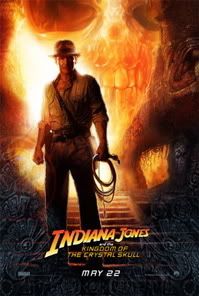
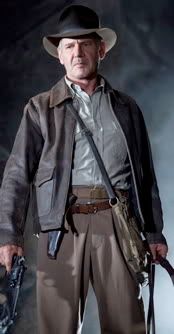
    As with any first article you may ask, “Hey Will, why can I trust you?” Believe me, I’m qualified. Even with having a full time job I some how find enough time to watch full time TV, maybe even more than the hours I put in at work. I’ve had both cable and DirecTV just so I could have East Coast feeds for the major networks and stagger my DVR recording of just about everything on television from 5 PM to midnight and beyond. In the words of Indiana Jones, “Trust me.” If I lead you astray, there’s always TV Guide.

    Timing, as they say, is everything and I’m delving into these uncharted waters at the best time possible. Why you ask? Because the ripples created by the writer’s strike are still washing upon the shore of our TV viewing and just about every popular show on television is in repeats right now.

    You’re best bets this week are going to be on the first four days of this week (that’s Monday through Thursday in case I’m not very clear). There is something for just about everyone. Friday through Sunday I suggest you find some good reading materials, dust off the ol’ gym membership or take up a new hobby (I hear wood carving is very therapeutic).

    In the future I’ll give you my top picks for the week before getting into the nitty gritty. Since things are so sparse instead I’ll just give you a quick run down before I get in to the meat and couch potatoes of it all.

    This week keep your eyes out for The New Adventures of Old Christine, Gone Country, American Idol, Jericho, and LOST. I’d also be remiss if I didn’t say that if you have HBO and you aren’t watching In Treatment then you are cheating yourself out of a decent half hour of solid TV every day of the week.

    MONDAY

    CBS: The New Adventures of Old Christine is one of the two top choices I have for you for tonight. The only reason I’m hesitant to recommend this one is because you need to know a little bit of back story, but at least it is a situation comedy and it will keep you mildly amused.

    CMT: That’s right, CMT. If you haven’t caught Gone Country yet then you are in for a treat because there’s a marathon from the beginning. Two words make this show pure gold people: Bobby Brown. Even if you aren’t a fan of Reality Television you have to give this a go.

    FOX: New Amsterdam is about an immortal who is now an investigator. I liked this show better when it had another name, Angel.

    TUESDAY

    FOX: The 800 lb. gorilla stomps its feet again this week as the final 12 give it a go on American Idol. The skunk headed girl some how made it, so tune in with me to root her off.

    CBS: The final three episodes of Jericho are upon us, and they could be the final ones of the series let alone the season. If you haven’t a clue what the show is about then bust out that Netflix account and get Season 1 as fast as you can.

    WEDNESDAY

    ABC: Wife Swap and Super Nanny are back to back so you can enjoy a double header of people who make really bad decisions. If these people making bad decisions aren’t the kind you like then you could always try…

    FOX: Moment of Truth just perplexes the hell out of me. So far I haven’t seen anyone come away from this show unscathed. Face it people, it is only entertainment if your dirty laundry comes out on the air, and you should have known better before sitting down. (Oh yeah, the American Idol results show is on after this so if you are lazy you can turn this on and just coast through to 10 o’clock.)

    CMT: That lovable underdog Rudy tries to get onto the Notre Dame football team. OK, I’m a sucker for this silly flick, and I can’t tell you why. Hey, at least it isn’t Moment of Truth.

    THURSDAY

    ABC: I have good news, bad news, and more bad news. The good news: On LOST tonight you finally find out who else makes up the Oceanic 6 and you get to find out who is spying on the freighter for Ben. The bad news: Someone might die tonight. The more bad news: this is the next to last episode until late April.

    CW: Two of the only shows I watch on the CW are on tonight, Smallville and Reaper. I recommend the second over the first for the uninitiated. Besides, shouldn’t that Clark guy know how to fly by now?

    FRIDAY

    FOX: ‘Till Death is new tonight. Oddly enough I feel like I just said nothing is on.

    SCI-FI: If you don’t have Netflix but you do have the Sci-Fi channel then you can still get caught up on Jericho. Four episodes of Season 1 air from 8 PM to Midnight every week in this time slot.

    SATURDAY

    Move along… nothing to see here… all right, fine… I’ll try.

    A&E: Arnold stars as a Secret Agent who’s wife has no clue of his real job in True Lies. The most shocking part of the film for me was that I actually liked Tom Arnold’s performance as Arnold’s partner. Go figure.

    AMC: Get a new take on the Western genre with Silverado. Enjoy Danny Glover before the Lethal Weapon movies. If this one isn’t your cup of Sasparilla perhaps you might prefer…

    ENCORE: Put your boots up and rest a spell and take in Tombstone. Val Kilmer looks scary sickly in this flick as Doc Holiday.

    SUNDAY

    ABC: Extreme Make Over: Home Edition will undoubtedly tug at your heart strings. I like that Home Edition is still going strong but the show where they were hurting people to make them look better is long gone.

    MTV: Randy Jackson Presents: America’s Best Dance Crew… sorry, just kidding… I couldn’t resist.

    That’s it folks, my guide for what to watch. It’s slim pickins out there so check back in next week and I’ll try to do right by you again. Until next time keep the remote batteries fresh and the couch cushions fluffed.

    Will Wilkins missed at least three television shows to write this article. Thankfully, there is TiVo.

  • Opinion In A Haystack: The Neon Mobile

    haystackheader.jpg

    To begin, a short foray into my foundations of cinematic quality:

    mattdamonfixed.jpg

    Love is damn beautiful. That seems to be the word on the street at least, and my purpose here is not to counter that fact. What I have a problem with is the “falling” part. I don’t fall in love easily. My heart doesn’t stand on the corner begging for affection with a sign that says, “will break for food.” This applies to all aspects of my life, most relevantly, movies. It takes awhile to get me in the sack, no matter how good the cinematic blow job may be. It takes reflection, analysis, and multiple viewings before I will even let a movie hold hands with me. I need to know where the relationship is going. I need to know that after years of being together, it won’t let me down and my feelings will not flutter away. The Big Lebowski, Robocop, Jaws, and others like them, all share very deep, loving, and highly sexual unions with my brain parts. They are films that have passed the one true test of quality that I, and Matt Damon, have full faith in. That test (Clark Griswold drum roll please) is time!

    Time. The enemy and surveyor of all things. The proven god of us all. The one thing we can’t escape or destroy. The only thing Doc Brown ever invented something for that actually worked. I invoke the mighty name of Mr. Damon because this past summer in an EW interview, he was asked what he thought of awards and awards shows. Matt responded by calling them “fucking bullshit,” an answer which, in and of itself, is great alone, but he went a genius step further and stated “The only way to judge a movie is 10 years down the line.” Check the interview out here:

    How absolutely right you are sir, and might I add how because of that statement I shall forgive any bad movies you may have done, which thankfully, isn’t a lot. While I am not as militant as Mr. Damon (I have a 5 year rule.), time is the only judge that seems to be overlooked by most of the world, including the pretentious film community. Hell, even the Academy doesn’t think ahead. Planet of the Apes (the real one with Charlton Heston, not the fake one made by the demon-possessed former-genius Tim Burton) didn’t win Best Picture in the year of its release and the film community and the fans still talk about it to this day. What did win best picture that year? Marty? I don’t know, you don’t know, and none of us care.

    My point here, if I have not pounded into your head beyond reason yet, is time has the only true say in what is good or bad. Any critiques that are made before an acceptable number of years have passed are just opinions and opinions alone. This is why when a current piece of cinema sucks the vans deferens out of me with its crafted perfection (ala There Will Be Blood or Hot Fuzz) I don’t get down on one knee and offer up a commitment along with Hallmark’s finest. I keep it in a place of honor on the back burner where it shall stay until half a decade later when love, true love, can be allowed to blossom properly with tender, repeat viewings. It can also be used as an example of how much some other current movie sucks compared to the genius of years past. That philosophy might seem ignorant, but coupled with glorious nostalgia of my youthful years gone, it’s just chock full of bliss. Bitter old men are we who cling to what was good and damn what is now, Foolish young men are they who praise without hindsight. Yes, I wrote that quote, and yes, I’m trying too hard. Feel free to put that sentence on any bathroom stall, or perhaps get it tattooed on your epidermis, but please, give me credit for the quote, and if possible, send a picture of the affected area.

    Is 2008 too late to file a complaint from 1995? I’m sure it is, but when I was “filing” it back then, verbally, to any one of my half-conscious barely listening school buddies they didn’t seem to know or care what I was obnoxiously “filing” about at the top of my lungs. Several times since the mid point of yester-decade I have brought up this very complaint only for it to dwell upon deaf ears. It’s not that I felt no one knew what I was saying. It’s that no one and I mean NO ONE, seemed nearly as mad at the obvious blasphemy, the inarguable cowshit, and the narrow minded piss poor thought that went into putting NEON FUCKING LIGHTS ON THE BATMOBILE!!!

    Sorry, that’s thirteen years of pent up anger flowing out of my fingers like a hummingbird’s neck laceration. Yes, the movie I am of course talking about is the beginning of the end, before the beginning, of the Batman franchise…Batman Forever, Joel Schumacher’s second most hated film, only trumped by the Batman movie he made after it. However, I am not going to rag on Batman and Robin, because the fact that it was without one single doubt a rotting nest of fungus was never as big a surprise to me as it was to those around me. All my friends, parents, teachers, co-workers, and neighborhood chums somehow laid a thick layer of forgiveness on Forever, so much so that it blinded them to the incessantly bright globs of guano being squeezed out on the screen. I always assumed it was their love of Jim Carrey as The Riddler that helped the retinal detachment, but that doesn’t seem sufficient enough. You see, I am not going to even complain about the shortcomings of the movie itself. Bad or good, it was…as The Dude might say, “whatever.” Personally, I will always be a bigger fan of the two Tim Burton films, and the Christopher Nolan film isn’t too shabby either. My main problem simply lies in the clear cut truth in just looking at the Forever Batmobile itself. That is where all the glaring awful signs of this old misfire lay. Why point out the corny dialogue, campy sets, the fact that Two-face acts like The Joker, or the painful addition of Chris O’Donnell as Robin, when the foremost crime hasn’t even been addressed?

    batmobs.jpg

    Batman is The DARK Knight. He is that which lurks in the shadows of the city, the one criminals fear as more than just a man, but a BAT man, right? This is a character that originated out of death. This is the all-time premiere hero for those of us who champion the serious, brooding, vengeance for everything and everyone that has ever wronged this world. RIGHT? So I ask you, how did the studio, how did the modelers, how did the producers, writers, hell, even the actors let the greatest fictional car in all of comicdom, one that belongs to the Darkest of Dark Knights (DARK!) ever even make it in front of a camera for five seconds while adorned in neon lights? I don’t understand. And, of course, if it wasn’t bad enough, they let Schumacher do it twice, and then the world complained that it sucked… finally. I’m not going to sit here and put all the blame on Joel. People do make mistakes, and hopefully when said mistakes are engaged and you don’t realize it someone (perhaps, I don’t know, DC comics, or any human with a pulsing heart!) will let you in on the fact that you are fucking hell’s vagina.

    jschubk6-copy.jpg

    “Hey, Joel…what’s up, man? That pastry looks delicious. Hey, can I talk to you for a sec?”

    “Sure.”

    “Yeah well, you realize that there are neon lights on the Batmobile right? Like we have all been talking about it and well, black is kinda Batman’s thing…and he has to be dark and mysterious and all of us feel neon might not be the way to go…you know…heh…its neon.”

    “Good point. We’ll take off the neon. Make the whole thing pink…”

    “Well, uh…like I said…black is rather crucial to the process.”

    “Black, huh? Good…go with it.”

    Sometimes that’s all it takes folks. Was it really that hard to say something to the man? Schumacher is not made of complete cinematic evil. I have faith that the man that was responsible for such cool flicks as The Lost Boys, Flatliners, and Falling Down could, with a proper tongue lashing, give the world a viable Batmobile. This is especially considering the fact that it was preceded by one of the top-five coolest automotive creations for film ever. Love or hate the movies, the Burton-mobile was beautifully slick, and not too far off from those that adorned the comics and animated series (two mediums I would think garner the most militant respect from comic fans.) So there, I had to let it out; thanks for reading it. I am hoping that someone, if not all people who read this will say “hey I was screaming that too” or something akin to that, because no one ever felt as passionate about it in my own life as I pathetically seemed to. At such an age, movies were worth such passion, while politics, religion, and relationships were the “stupid, boring” problems for adults to worry about. I must say lastly that this fervent outrage was never derived from comic book foundation, merely a firm love of movies and an incredibly firm hatred of such a lack of respect for an iconic American character. Trust me, I would have been just as pissed if they made a movie where Darth Vader was a sniveling little shit…oh wait…

    Now, MY TOP 5 80’s and 90’s SECONDARY MOVIE ENDINGS! A secondary movie ending is one that is usually better known as an epilogue, but for our purposes here, it’s an “ending” that takes place after the main conflict or antagonist of the piece has been resolved or killed respectively.

    5. Buffy the Vampire Slayer (1992) Buffy’s secondary ending can be found after the credits. Here we find Paul Ruebens (better known as Pee Wee) still scuffling around in a stairwell humorously groaning and badly faking his extremely long vampire’s death due to a stake in the heart. Taking into consideration the sounds Ruebens makes here, one wonders if the joke wasn’t heinously ripped off by Family Guy in the Willy Wonka parody episode.

    familyguybuffy.jpg

    4. Short Circuit 2 (1988) In what might possibly be the most hardcore 80’s movie to ever exist, we have a secondary ending that takes place right after the fade out of the final chase scene. A chase scene, mind you, that involves a jewel thief getting apprehended by a Mohawk-wearing-sentient-robot (Johnny 5) to the tune of Bonnie Tyler’s “Holding out for a Hero” and ends with a Tarzan swing (accompanied by the famous Tarzan scream) from a crane onto a speedboat. If you’re like me that is pretty much the gateway to the heavens. Anyway, the secondary ending brings us to an induction ceremony for newly accepted American Citizens, where we see a recently refurbished, completely gold-plated, J5 receiving his citizenship to the colonies. Now the reason this is on the list is the shear brilliance of how this scene invokes the signs of the times it’s in. Only in a movie of this era could a robot, with minimal trouble, glass ceilings, and such a short period of time become an EQUAL member of the human race without so much as one person questioning the moral or ethical problems that accompany it. Then entire plot of the Robin Williams movie Bicentennial Man is a robot trying to do what J5 does in months, over the course of 200 years. This mindset is sort of akin to how in the 80’s sitcom ALF, the Tanner family never even took 5 minutes to bother asking ALF if he knew about any of the mysteries of the universe or life. Instead, they were content with trying to stop him from acting on his “get rich quick” schemes. Those were the days.

    johnny5gold.jpg

    3. Wayne’s World (1992) Now, I know what you’re thinking. Yes, Wayne’s World, in all its genius, has three different “didilly-doo” endings to the conflict presented. However, the secondary ending is the one found at the very end of the credits in which we see Wayne and Garth uncomfortably reading magazines. Wayne waxes pretentious and philosophical about the film’s endeavors while Garth meekly states that he simply hopes that the audience doesn’t think it “sucks.” This quiet little moment, and the film that preceded it, are all the more reason to miss the careers of two incredibly talented comedians at the top of their game.

    danacarvey_waynesworld.jpg

    2. Ferris Bueller’s Day Off (1986) The entire sequence with Ed Rooney getting on the school bus is beyond the definition of classic. Is it a secondary ending? Yes. Rooney has already lost, and we get to witness his further humiliation. This is for my money, hands down, the best content shown during rolling credits in a film ever. Also, please note that this movie has a third ending after the credits completely end, one in which Ferris Bueller himself comes out in a bathrobe and in disbelief that we are still there, shushes us to go home. It’s nothing compared to the Principal Rooney scene, but you got to admire how much bang for your buck you used to get at the movies. Having such high quality content during the credits is rarely seen in today’s theaters. We are more relegated to outtakes or badly edited character interviews, not additional story elements.

    ed20rooney-781576.jpg

    1. Poltergeist (1982) The first ending to happen is the entire house getting sucked into the vortex of “the other side.” We all know this. Then there is the beautiful scene of a fear-riddled emotionally-drained family driving quietly away from their literally broken home. They scuffle into a hotel room to the magnificently eerie lullaby of Jerry Goldsmith’s “Carol Anne Theme.” That has got to be one of the greatest quiet moments in cinema history. Left alone, them shutting the door to the hotel room and the credits rolling would be good enough to still keep this Tobe Hooper/Steven Spielberg classic at the top of its genre for over two decades. Then, only seconds after we are allowed to breath relief, the door swings back open and out comes the cheap hotel TV sliding into the side of the walkway, Craig T. Nelson pokes his head out the door for a peak then goes back in leaving the telly outside to rot. Hilarious, fitting, and completely perfect in its timing, this little moment is the ultimate reward to any viewer who witnesses the tribulations of this family for the past two hours. I still say that Craig T. Nelson should have grabbed a best actor nomination for Poltergeist, but I guess Mr. Incredible’s movie winning “Best Animated feature” will have to sate my thirst.

    poltergeist.jpg

    Honorable mentions:

    Die Hard (1988) – Allen shoots the guy everyone thought was dead thus saving McClane’s life.

    Back to the Future (1985) – The Flying Delorean

    Rocky 3 (1982) – The famous Apollo/Rocky freeze frame fight.

    Twilight Zone: The Movie (1983) – Dan Aykroyd asking John Lithgow in the ambulance “Wanna see something really scary?”

    One Crazy Summer (1986) – Uncle Frank blowing up the radio station, Then, subsequently, the Stork brothers showing up to roast marshmallows.

    If you think of any other great secondary endings, please let me know.

  • Trailer Park: Robert Wilonsky Is Ripping Me Off, Man

    By Christopher Stipp

    Archives? Right Here…

    I’m awesome. I wrote a book. It’s got little to do with movies. Download and read “Thank You, Goodnight” right HERE for free.

    Welcome back…

    I’ve been knocked on my proverbial hind quarters this week with some nasty flu like bug that didn’t allow me any coherent thoughts except thinking about the sweet release of sleep wherever I could get it.

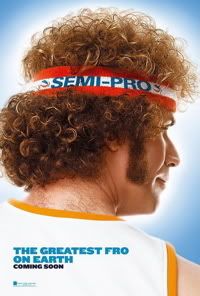
    However, in a brief moment of clarity I did want to see what anyone in the peanut gallery has to say (simply leave your comments below) about the nature of a flop and what SEMI-PRO has to say for itself. Was $15 million, give or take, an obvious disappointment for the suits at the studio when you consider the amount of brutal advertising that went into this film’s release? Will Ferrell’s face was everywhere, to say nothing of his pronounced presence on ESPN (who hooked that product placement up?) last week, and the amount of spot advertising this thing had all over the airwaves leading up to this film’s release.

    As an aside, I realize I know dick about how much cash needed to be laid out for all these things to be in front of the people’s eyes but $15 million almost seems like a conservative figure for all that went into promotions.

    Did this dismal showing at the box office (one of Ferrell’s worst of his career) have anything to do with the level of talent that goes into your usual Will movie, namely the absence of Adam McKay?

    You see films where there are cores of talented people that move from production to production and this film saw the lack of Adam, a guy who genuinely knows what makes Will good on the screen. While Will Ferrell obviously makes other films without Adam’s help you can see how bad BLADES OF GLORY was, how not profitable STRANGER THAN FICTION was, and it makes a good case for why people can be more or less creative with those who know their style. Judd Apatow has a keen sense of this and, wisely, has kept the band together. I’m generalizing, mostly, here but I am curious to know if anyone else knows of any creative team that is not greater than the sum of its parts and, in fact, only did their best work when all were aligned like planets in the sky.

    And, have you had a chance to see reviewer, part-time fill-in for Ebert for a few rounds with Richard Roeper, Robert Wilonsky’s new show, The Ultimate Trailer Show? I have and, to be perfectly honest, it’s a good show. I like someone else doing what I’ve been doing here for years, judging films before anyone has even seen them, and casting a few stones at how someone’s taken the preview material and slapped it on the screen. I do feel a sense of deja vu, though, as I hear someone else talk about how a trailer comes off to a viewer and what it says about wanting to see a film. It kind of validates, albiet in a very minute way, my ramblings in this space. It’s good to know there is something to be said about looking at trailers with a critical eye. Although I think I would be a little easier on the eyes…

    That’s it for me. Talk amongst yourselves. I’m going back to bed…

    FUNNY GAMES (2008)

    Director: Michael Haneke
    Cast: Naomi Watts, Tim Roth, Michael Pitt, Brady Corbet, Devon Gearhart
    Release: March 14, 2008
    Synopsis: In this provocative and brutal thriller from director Michael Haneke, a vacationing family gets an unexpected visit from two deeply disturbed young men. Their idyllic holiday turns nightmarish as they are subjected to unimaginable terrors and struggle to stay alive.

    View Trailer:
    * Large (QuickTime)

    Prognosis: Negative. I hope this film finds its way to a slow, painful wet grave and at least has the decency to pull the dirt over its head.

    I can’t for the life of me understand the marketing angle for this trailer. When you have a film that deals with the slaughter of a family by a pair of d-bags who aren’t creepy, who simply look like young actors putting on airs to put themselves over as young Patrick Batemans, you really don’t want to go for the jaunty orchestration that is usually reserved for comedic high jinks that has people slipping on pies and getting rocked by pillows in the face.

    No, what we get here is a trailer for a shittily (yeah, it’s a word) plotted out film where you have people’s lives held in the balance by a bet some young homicidal dudes put out there.

    What really grinds me, though, is that I partially blame the victims.

    We are introduced to an upper crust family who are on vacation or are visiting their second home in the Hamptons; it’s idyllic, serene, hell, they love listening to classical music which just lets all of us know how blue blood these elitist assholes actually are, and they even show this family getting into a wooden sailboat as they plan on getting away from all the trappings of having way too much money. Even the little boy in this thing is shown beaming at the prospect of ingesting Puccini in mass quantities because that will really cement the idea of the filmmakers: these are whiter than white rich folks.

    Michael Pitt is trying hard, you can just see it, to try and harness the power of Arno Frisch, the star of the original FUNNY GAMES which debuted some decade ago in Austria. I can already see that trying to use tracing paper to mimic the effectiveness of a satire that held some weight years ago has its problems. Because, like idioms and how they differ from culture to culture, and why its so hard to grasp American “sayings” for many an import to our country, trying to replicate an idea can get lost in transition.

    Here is where we are introduced to the same jaunty classical music as the patriarch gets the snot beat out of him with a pair of golf clubs, Pitt trying to be all sorts of Camel cool as he questions whether the victims would like to call the police, ambulance.

    I am also troubled by the use of the title cards which tell us, in all caps, THANKS FOR SHOUTING YOU TERDS, “THE GAME IS SIMPLE.” “PICK A FAMILY”, “PICK A VICTIM.”

    What follows is hard to take from a consumer standpoint as these two white shorted, white polo wearing a-holes then proceed to do an Eenie-Meenie game before proceeding to thrash Tim Roth, expose Naomi Watts, and just savage the entire family any way they see fit.

    I’m no prude but there doesn’t seem to be any hook why I should fiscally support this film if this is either going to result in the family’s killing or the usual Hollywood one-up at the end when the beaten and downtrodden find a way to overcome their aggressors. Naomi’s pleading for her life at the end of this thing doesn’t help matters at all in the slightest.

    While I understand that Michael Haneke’s the writer and director for what is, oddly, a retelling of a movie he’s already done (that must have been strange) I don’t think anyone gave any serious thought to how this should be marketed. As it stands this is perhaps one of the worst trailers I’ve seen this year and if this is a satirical examination of violence, which has been done so many times since he released his original, someone in marketing at Warner Independent Pictures needs to take a class in to what people think about women being tortured does to the bottom line.

    Here’s a hint: Look at the campaign and grosses for CAPTIVITY.

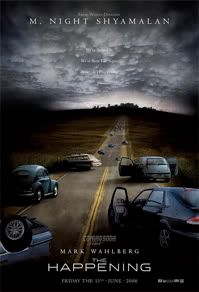
    THE HAPPENING (2008)

    Director: M. Night Shyamalan
    Cast: Mark Wahlberg, Zooey Deschanel, John Leguizamo, Betty Buckley
    Release:
    June 13, 2008
    Synopsis: A couple goes on the run from an apocalyptic crisis that presents a large-scale threat to humanity.

    View Trailer:
    * Large (QuickTime)

    Prognosis: Positive. I can’t get beyond the idea that there has been much made of the “Gotcha!” kind of filmmaking that has plagued the critical explanation of much of Shyamalan’s work. Be it the wretched VILLAGE or LADY IN THE WATER he’s had a lot of movies go the way of box office bust. Films like SIXTH SENSE and UNBREAKABLE make you scratch your head about where is the consistency in what he does.

    I am uplifted, though, by this trailer.

    No one more than me could be amazed by the meteoric rise (and what a strange idiom; don’t meteors fall from the sky?) of Marky Mark. The guy’s been absolutely grand in movies like THE DEPARTED and BOOGIE NIGHTS and so many others that he comes off just as well here.

    The trailer does a little something extra and it’s almost too subtle to notice its strength; we’re allowed to get extended scenes here and get a feel for the pacing, the cinematography and genuine feel for the movie proper.

    A discussion about the disappearance of bees has lofted a few plausible thoughts but since this is a Shyamalan flick you’ve got to go to bizzaro lengths to get a good idea to one suitable for him. Hence, the bee idea is taken to its most implausible degree and applied to human beings. Not that I’m breaking bad on the trailer because I’m not. You’ve got a logical beginning, no Voiceover Guy pushing his way into our understanding of this film and a neat segue into a beat cop walking on the street one minute and, the next, dead on the street.

    This film’s bizarre-ness is taken a step further in the auditorium meeting with Cameron Frye who starts the proceedings with being ambiguous about what’s happening to people. Now, I get the populist red herring that the Homeland Security, CDC, virus attack grand scale thinking that this could be a terrorist thing is one way to proceed (the trailer does a good job in setting that theory in motion) but the cheesy 80’s retro rock instrumental music is a bit odd. However, the way that this is handled is quite effective. For a movie that is going to be hanging that fist low, ready to pop you in the jaw at the very end in that Shyamalan way, the pieces that we’ve been given here are enough to make you wonder what is It. What will It be?

    I’m not quite sure I know what the surprise ending will be when you hear that it really won’t be a terrorist attack (it would be an all too easy way out and I am sure some in Middle America are going to be floored that it’s got nothing to do with terrorist killers) but the real thing that should be apparent to everyone is that M. Night is never going to change.

    His style, his perspective on things, the almost generic way he sets his shots up, you’ve got to believe he lives and dies by his writing. Like others who won’t give up the directorial duties to someone else, you’ve got to know it’s a ballsy move to make a movie where you remove one-half of what could carry you through if one part suffers, Hence, that’s why this film’s trailer does well: the story at least has an intriguing premise. Now, whether he can create a sustainable story is another.

    But to see those guys falling off the roof? Show me more”¦

  • Comics & Comics: Wrath of Caan

    comicsoncomicsheader.jpg

    Howdy Inter-Webbers, I’m Matt Cohen, and I’m funny.

    I’m really funny. Like, soul crushingly so. Even I can admit that there are a few (a very few) funnier then I, and here is a peek at what some of them are up to. So take off your thinking caps, and don your tuxedo tees, cause its time to share in the laughter.

    ——————————–
    Big Screen

    Semi-Pro: The first solo flick from writer (and UCB alumni) Scott Armstrong puts Will Ferrell into the “lead” role of yet another sports comedy, this time a basketball film, and amazingly another very funny movie is born. Plot-wise, Semi-Pro is nothing groundbreaking and often pretty thin but that doesn’t stop Ferrell and Co. from packing in the laughs. Ferrell stars as Jackie Moon, owner, coach and power forward of the struggling ABA club, The Flint Michigan Tropics, a loud, boisterous and yet extremely likable fool of a man. The film, set in the mid seventies, finds Moon and the rest of his squad struggling to secure a place in the NBA, after the impending mergers between the two organizations. Ferrell, in an out of ordinary move, takes backseat in the film, to the supporting cast, particularly Woody Harrelson as a washed up former pro, and Andre Benjamin as a young talented upstart. The marketing of the film is misleading in this regard, because I fully expected to go in a see a Will Ferrell movie. Not to say I was disappointed with the overall outcome, just that Jackie Moon definitely is not the focus of Semi-Pro, and though Ferrell kills in his on-screen time, I really would be hard pressed to consider him the lead of the film. Semi-Pro is filled with an excellent supporting cast; particularly Will Arnett and Andy Daily steal the show, as the two Tropics radio commentators. This movie isn’t quite as funny as Anchorman or Talladega Nights, but those are two brilliant films in my opinion, and living up to that level of excellence is hard to do. Semi-Pro is a very funny movie, not perfect, but definitely worth checking out.

    ComicsandComics-30608-moon.jpg

    “If I sink this shot, I’m taking the whole team to Carvel for sundaes and fun!”

    ——————————


    Films to Look for:

    Stepbrothers: After about three viewings of the trailer, I have come to the conclusion that this looks like one of the funniest movies of the year, if not the last few years. Will Ferrell and John C. Reilly re-team, this time as the titular step brothers, two thirty something men who find themselves sharing a bedroom with a complete stranger. The trailer is short, but glorious. The two men quickly find themselves going from bitter enemies to best friends, and the transition looks to be hilarious (John Stamos!!!). This is the first team up between Ferrell, Reilly and director Adam Mckay since Talladega Nights hit theaters, and it appears as if the wait has been worth it. I know people who are already quoting one liners from the film, and thats just after seeing a short preview. In Taladega Nights Ferrell and Reilly proved they are a great comedy twosome, and Stepbrothers looks like its certainly going to solidify that.

    Pineapple Express: A 40-something second trailer containing guns, pot, and a song by M.I.A. (Paper Planes), and with that, I was completely and fully hooked. The trailer for Pineapple Express is an odd bird, to say the least and that may be why I’m so intrigued/excited by the film. Seth Rogen and and James Franco (In fully on hippy Jesus look-alike mode) star in a film written by Rogen and partner Evan Goldberg (the same team behind this summers Superbad) and directed by David Gordon Green of all people. If you are unfamiliar, Green is a renowned director of hard hitting, intense low budget films, such as All the real girls and the indie fave George Washington. This is not going to be a typical comedy. Early advances say that the film is “too dark” for most average comedy goers, some even saying disturbingly so. I’m a fan of all the folks involved, and a fan of the content as well, so this film is high (I’m clever) up on my radar of movies to see in 08.

    ComicsandComics-30608-pineapple.jpg
    “Alright, just wait for it and that picnic basket is ours!”

    Baby Mama: Tina Fey and Amy Poehler star as a single working woman (Tina Fey) and her surrogate mother to be (Poehler) in this upcoming comedy. Written by Fey, it is her first starring vehicle since her newfound fame on TV’S 30 Rock., and the trailer looks like she has hit a line drive first time up at bat. The movie is sweet, but not nauseatingly so, and Poehler’s character looks to be one of the ditziest/funniest female I have seen onscreen in a long time. Fey seems to be staying in her usual “Straight-Woman” territory, but that is where she excels so you’ll hear no complaints from me. This will also be Poehler’s first co-lead and I personally think its about time, because in my opinion Amy is the funniest women alive. With two stellar leads like this film has, I think Baby Mama is one to watch for.

    —————————-
    DVD Review

    Human Giant Season 1: Its no secret that I am a huge fan of this series, and the DVD offering of the first season does not disappoint viewers, hard-core or newcomers alike. This two-disc set comes jam packed with uncensored extras, best of clips from the 24 hour Human Giant MTV marathon and loads more. The most important part of a sketch show is the sketches of course, and lucky for us, Human Giant knows how to provide the funny, on a more consistent basis then any sketch show I’ve seen in a long time. With this two disc set, the viewer gets every uncensored episode from season 1, three hours of bonus features and an infinitely larger amount of laughs. So if you’ve seen the show, or you are a noob, pick up this set and I can guarantee you will laugh till your eyes hurt, take a break, and then laugh again.

    ComicsandComics-30608-human giant.jpg
    One of these men is really large. (Hint: It’s not the little one)

    ————————-

    Well, thats it for this week. Check back in a fortnight (I’m very cultured) for a look at next weeks comics, and special guest Jesse gives us his opinion on the much celebrated, Batman: The Animated Series. Be there or be square… And squares are no fun. Four sides…. Pft!

    and as always,

    “Keep em’ bagged and boarded”

    Matt Cohen is trying to build a mountain out of a mole hill, but the moles are being real jerks about it.

  • Toy Box: Halo 3 Action Figures

    toybox.jpg

    If you’ve already checked out the other half of my Halo 3 review at my regular site, you might want to skip down to the actual review. I’m stealing liberally here.

    Halo 3 holds quite an impressive record. It’s had the highest opening day gross of ANY form of entertainment EVER. The game took in 170 million dollars on it’s opening day. Do the beautiful people need any more proof that us geeks have taken over the world?
    I don’t play Halo, but I get the general premise. You’d have to be pretty out of touch not too, let’s face it. The good guys are Master Chief and the other Spartans, cyborg supersoldiers. They battle the Covenant, a diverse race of aliens driven by religious fervor to wipe out humanity.

    Mcfarlane Toys picked up the Halo 3 license to produce action figures, and have just released their first wave. There are a TON of figures to pick up, and I’m reviewing three here today (EVA Spartan, Brute Chieftain and Cortana) and I’m reviewing for more over at my site (Master Chief, Grunt, Jackal Sniper and the Mark VI Spartan). There are several exclusives, including a blue Mark VI exclusive to Wal-mart, a white Mark VI Previews (specialty store) exclusive, a blue CQB exclusive to Wal-mart, a steel CQB exclusive to GameStop, and an active camo EVA exclusive through Mcfarlane’s webstore. I believe there’s also a green version of the Grunt, but I haven’t seen one yet. That’s a ton of figures!

    If you have any questions or comments, feel free to drop me a line at mwc@mwctoys.com. On to the review!

    Halo 3 – Cortana, Spartan Soldier (red EVA), and Brute Chieftain

    These figures are hitting regular retailers now including Toys R Us, and you can expect to pay around $10 – $14 each. I have some online suggestions at the end of the review as well.

    toybox_030408_1.jpg

    Packaging – ***
    I personally hate the term ‘green’ – I feel bad for the poor environmentalists who were poo-pooed for years, but now that companies see a chance to make a buck, they’re all over the ‘green’ concept – but I have to point out that my biggest issue with these particular clamshells is the amount of waste. All of them (including the Brute) could stand to be in smaller clamshells, since I don’t really need to buy Chinese air.

    toybox_030408_2.jpg

    However, there’s a huge plus here that I feel keeps these from dipping any lower in score – personalization. I’m a big proponent of packages that discuss the specific character held within, rather than using the same generic insert or cardback for the entire series. Here we get specific info on each game persona, as well as info on accessories and other variants. Hey, if I can get this kind of info on ever series, I’m more willing to kill the planet.

    Sculpting – Brute Chieftain ****; EVA ***1/2; Cortana ***
    One thing that Mcfarlane rarely has trouble with is sculpting – this set is a fine example of their best work. There’s plenty of small detail work, much finer and cleaner than you normally see on a 5″ scale. In fact, the scale is probably going to be the biggest issue most folks have with this line.

    The Brute Chieftain is the brute his name implies, standing about 6 1/2″ tall. He towers over the 5″ EVA, and looks both menacing and evil. I love the skin detail work, which contrasts nicely against the smooth texture of the armor plates. Nothing is just painted on, as every line, design and bauble is carved into his flesh or armor.

    toybox_030408_3.jpg

    The EVA version of the Spartan soldier sports a similar body to the others, with minor redeco changes to the armor. The helmet is the biggest change of course, with the EVA wearing a more ‘lunar mission’ style than the Mark VI. Either way, he looks terrific, and there’s enough difference between all the Spartans to make them stand out on the shelf.

    toybox_030408_4.jpg

    Cortana is the least interesting of the bunch. Her sculpt is very plain, due in large part to her A.I. characterization. I didn’t really expect a ton of detail, but she really is just a 4″ tall hunk of PVC. The hair sculpt has some nice detailing, and her face is quite pretty close up, but the consistent blue/black colors make it difficult to see these details with the nekkid eye.

    toybox_030408_5.jpg

    As I mentioned, the scale might be an issue for some folks. These are in a 5″ scale, making them look alright with the Spider-Man, Superman or Batman movie figures from the last couple years…and that’s about it. Since it’s unlikely you’ll be mixing and matching with those less than stellar movie lines, these guys are going to have to hang out on the shelf by themselves. The sheer number of them being released helps ease that a bit though, giving you plenty of characters to put together, and for the sixth scale fans, they are supposed to be doing a 12″ version of Master Chief later this year. And if you’re a Revoltech guy, there are some in this scale as well that should go together nicely.

    Paint – EVA ****; Brute Chieftain ***1/2; Cortana ***
    Another area that Mcfarlane tends to be strong in is paint quality, particularly with their non-cartoon lines. Here we see lots of well done paint details, a good use of wash to bring out the sculpts, and very clean details where appropriate.

    Cortana doesn’t have much of a pallette range though, which causes what details there are to be hard to see without magnification. The paint work is generally clean, although some of the cut lines between the dark blue paint and clear plastic were a little sloppier here than I’d expect. The translucent blue plastic looks good though, and the added paint details complement this cool (temperature wise) appearance. The smaller circuitry work on her legs is outstanding, although you might not notice it at first glance.

    toybox_030408_6.jpg

    Like the other Spartans, the EVA version has a clean consistent visor color, with good detail work on the sculpted lines of his armor. They’ve used a glossier finish for the armor too, setting it apart nicely from the matte black areas of the suit. This difference in finish gives the impression of different materials, adding realism to the overall appearance, particularly at this small scale. I had some stray marks and damage on my Master Chief, but the EVA was very clean.

    toybox_030408_7.jpg

    Finally, there’s the Brute. He has the most small detail paint work of the three, and the majority of it looks terrific. I particularly like the work on the eyes, mouth and elaborate head armor. There’s a little slop with most of the silver highlights though, and I would have liked more contrast between the finishes of the armor and the skin, ala the EVA. The similarity between the finish causes the armor to blend in a little too much with the rhino like flesh, and I think the glossier look would have worked better here.

    toybox_030408_8.jpg

    Articulation – EVA ****; Brute Chieftain ***1/2; Cortana Bupkis
    For small figures, these have a TON of articulation. Mcfarlane only claims 18 points or so for the Spartans, but because of the way the joints are designed, they have far more posing potential than most other similarly articulate figures.

    toybox_030408_13.jpg

    Except for Cortana, that is. She has no joints whatsoever. Zippo. Zilch. Bupkis. You better like her pose, because it’s what you get.

    All the Spartans, including the EVA, have excellent ball jointed necks that give them tons of personality in every pose. They also have true ball jointed shoulders, hips, and ankles. All of these joints are articulated on both sides of the ball, giving them an excellent range of movement. You’ll have to work some of the balls free, particularly the ankles, but once you do, you’ll be able to do a ton of creative poses.

    He also has ball joints at the wrists, elbows and knees, but these are jointed on just one side of the ball. Still, these joints work fantastic, much better than we’ve seen in other lines.

    Finally, they have a half foot pin joint, and a rocker chest. The articulation is really, really impressive on the Spartans, and the more I played around with them the more I liked them.

    The Brute Cheiftain has similar articulation, but the sculpt and armor does restrict it a bit more. He has the terrific ball jointed neck, shoulders, hips, ankles, wrists, elbows, knees, rocker waist…even a modified hip joint where the ball attaches to the torso that allows for additional movement. But his armor and bulk does restrict some of the posability, at least more than on the Spartans. It’s not a major issue, but pulls him down slightly.

    Accessories – EVA, Chieftain **1/2; Cortana **
    The one category with this series does poorly is Accessories. There aren’t nearly as many as you might expect considering the game and style of play.

    The EVA version of a Spartan soldier has his gun, with a good sculpt and paint. All three of the Spartans that I have now exhibit drooping gun barrels, which sounds like an excellent idea for an ED commercial. Still, with a little hot water/cold water, you can have them straightened right out.

    He also has a grenade, and two pegs to attach the grenade and gun to his body where there are convienently placed holes.

    toybox_030408_10.jpg

    The Brute Chieftain comes with his deadly weapon, and the small end pops off to allow you to more easily slide it into his right hand. He can hold it in a number of menacing ways, and the sculpt and paint are excellent. This is easily my favorite accessory out of the first series. He also comes with one of the little pegs to attach the weapon to his back.

    toybox_030408_11.jpg

    The only thing that Cortana comes with is her base. There are three LED lights in the front lip of the base, pointed back toward her like spotlights. Put a couple AAA batteries in the compartment on the bottom (they are NOT included), and with the flip of a switch you get the light up effect. I shot a photo of that effect below…it looks kind of cool in the shot, but keep in mind that I left the shutter open for about 20 seconds to get the effect. Yep, the lights are THAT dim. Get some seriously juiced up batteries and you might have a little more success, but don’t expect this thing to light her up like Britney on stage.

    toybox_030408_9.jpg

    Fun Factor – EVA ****; Chieftain ***1/2; Cortana **
    These are actually great toys – not the usual Nerd Hummels that Mcfarlane has become known for over the last few years, but more of a return to their early days when they were trying to produce the coolest action figures on the market.

    toybox_030408_15.jpg

    Of course, the static Cortana isn’t nearly as much fun as the other figures, and most kids would find her pretty boring.

    Value – EVA, Chieftain **; Cortana *
    You can find these at some retailers at $10 each, and at that price you can easily add another half star, and maybe even a full one. They are light on accessories to be sure, but the articulation, sculpt and paint make up for it if you’re spending a ten spot.

    toybox_030408_16.jpg

    However, most places you find these will be charging $12 – $14. At that price, you really aren’t getting a great value, especially for the weakest of the bunch, Cortana.

    Things to Watch Out For –
    If you’re picking them out on the shelf, watch for the best paint jobs. In general, the ones I’ve seen are quite consistent, but occasionally there’s one with a scratch on the visor.

    Also, the wrist pegs on the EVA could tear if they are painted tight. Take extra care freeing them up, and even use the freezer trick if necessary.

    Overall – EVA ****; Brute Chieftain ***1/2; Cortana **1/2
    For quite some time now, Mcfarlane Toys has gone the route of the plastic statue. Even with licenses like the Simpsons, 24 and Lost, they stuck with Nerd Hummels rather than providing any real articulation. Some folks were beginning to wonder if they could even do good articulation any more, let alone great.

    This line proves they still can do it, and do it better than anyone else in this scale. The joints are useful, tight, and have a terrific range of movement. This was no easy feat either, because the Spartans aren’t superheros clad in skin tight spandex. If they were, the articulation could easily be added and the sculpt wouldn’t interfere with it. No, these are armor clad fighters, and generally figures wearing armor have poorer articulation, simply because people believe that it has to be that way. It’s just natural that the armor is going to interfere, isn’t it?

    Mcfarlane proves that doesn’t have to be the case. Yea, the huge Brute still has a few constraints, but the Spartans are both armored AND articulated, and this useful articulation doesn’t hurt the appearance of the sculpt at all. This is one of the best overall lines Mcfarlane has produced in some time, and I’m hopeful that the smaller scale won’t turn folks off to giving them a try. Once you get them out of the package, you’re going to find that they are much better than you might have anticipated, and most of your concerns over their size are likely to vanish.

    toybox_030408_14.jpg

    Where to Buy –
    If you’re looking for the regular figures, I’d suggest hitting Toys
    R Us or your local GameStop. You can also find them at these great
    online retailers:

    Urban-Collector has a case of 12 for $130. This might be your best bet to get a full set.

    – CornerStoreComics has them for $13 – $14 each.

    Entertainment Earth has them in stock at $14 each.

    YouBuyNow has them at $15 each.

    – or you can search ebay using My Auction Links.

    Related Links –
    Before Halo 3, and before
    Mcfarlane got the license, Joyride Studios made larger action figures based on Halo 2. Here’s some guest reviews:

    – here’s their version of the Grunt.

    – there’s also a guest review of the Elite Guard.

    – And you can’t forget their version of Master Chief!

    – I’ve also reviewed four more of this first series over at Captain Toy/Michael’s Review of the Week – Master Chief, Mark VI Spartan, Jackal Sniper and Grunt.

  • Comics in Context #216: The Omega Enigma

    comicsincontext4.jpg

    cic200834-01.jpgMonths before comics writer Steve Gerber passed away, I had already been planning to write about him in “Comics in Context” this year. My subject was going to be the original Omega the Unknown comic book series, which Gerber and his collaborator Mary Skrenes jointly conceived and wrote for Marvel over three decades ago.

    I first read Omega when it was originally published in 1976, but I didn’t particularly like or understand what Gerber and Skrenes were getting at. Still, I was a devoted follower of Gerber’s work and kept reading the series till its abrupt end with only its tenth issue. A few years later in 1979, after Gerber had left Marvel, writer Steven Grant devised an ending for Omega in the pages of The Defenders, whereupon the character sank into nearly total obscurity, remembered only in an entry in the 1980s version of The Official Handbook of the Marvel Universe‘s “Book of the Dead.” (Rereading that entry, I realized that I probably wrote it: the style seems like my own.)

    Probably Omega would have remained forgotten had it not been for the highly acclaimed mainstream novelist Jonathan Lethem, whose past work, including a 2003 book titled The Fortress of Solitude, after Superman’s arctic headquarters, demonstrates his knowledge and love of superhero comics. Fortress also mentions Omega, whose series Lethem read as a boy, and when Marvel invited Lethem to write for the company, he chose to revive Omega. The project was announced in 2005, although the new series did not appear until late 2007. Marvel’s editor in chief explained that “winning the MacArthur Grant”–known as the “genius” grant–“put additional and unexpected demands on [Lethem’s] time”. Here’s yet another way the world of comics has changed in the 21st century: how often has winning a “genius” grant served as an excuse for a writer delaying a comics project?

    But the fact that Lethem would be doing a high profile revival of the character provided sufficient impetus for Marvel to reprint the entire original series, and even the Defenders wrap-up and my Handbook entry, in a full color trade paperback titled Omega the Unknown Classic in 2005. Had it not been for Lethem’s interest, Marvel would not have awarded “Classic” status to Gerber and Skrenes’ original Omega stories. They would surely have remained neglected rarities in back issue bins, just as I expect that Marvel finally got around to reprinting Jack Kirby’s Eternals after three decades because Neil Gaiman was going to revive them.

    Moreover, I notice that Gerber and Skrenes’ names don’t appear on the front cover or spine of the paperback. I presume Marvel’s rationale is that if it listed Gerber and Skrenes and Mooney, they’d have to list Scott Edelman and Roger Stern, who each wrote a fill-in issue, and Grant for the Defenders issues, and every artist who worked on any of these stories. I see the point, but Gerber, Skrenes and Mooney created the series and did the majority of work on the stories in this book. When Marvel has been trumpeting its association with mainstream novelists like Lethem and Stephen King, it seems unfortunate to me that the “Classic” Omega paperback’s front cover and spine treat the series creators as if they were anonymous.

    I had decided to wait until Lethem’s ten-issue series ended later this year, and then write a “Comics in Context” installment comparing and contrasting Lethem’s series with Gerber and Skrenes’. But since Gerber died a few weeks ago, it makes more sense for me to write about the original Omega now, thereby concluding my trilogy about his groundbreaking comics work in the 1970s.

    Rereading the original Omega after so many years was eye-opening: I had grossly underrated the series, and I can understand why Lethem found it so intriguing.

    Perhaps what made Omega most challenging to the comics audience of the mid-1970s was that it depended upon mysteries that Gerber and Skrenes were in no hurry to resolve, and that, indeed, were left unsolved when the series met its untimely end.

    The central enigma was the nature of the connection between Omega‘s two protagonists: the mysterious title character, an alien humanoid who rarely spoke and became a superhero on Earth, and a strange, precocious yet emotionally distant 12-year-old American boy, James-Michael Starling (named after comics writer/artist Jim Starlin). Gerber and Skrenes continually offered tantalizing hints and suggestions in their scripts but never an explanation.

    Perhaps Gerber and Skrenes were attempting to draw their readers more fully into the stories and the characters through Omega‘s riddles, inducing the members of the audience to devise their own, personal readings of Omega‘s mysteries and metaphors. For years comics readers and even many comics pros have insisted on exposing secrets, even when the mystery is far more dramatically resonant than the rather prosaic eventual solution (as in Wolverine: Origin). Perhaps television series such as Twin Peaks, The X-Files and Lost have now made the popular culture more appreciative of works that draw dramatic and thematic power from their ongoing conceptual puzzles. This is one of the ways in which Gerber and Skrenes were ahead of their time in Omega. (On the other hand, Omega followed the television series The Prisoner, whose meaning continues to be debated four decades later.)

    For the sake of argument, I’m going to ignore the Defenders‘ explanation of the Omega mysteries, which Gerber and Lethem both reportedly disliked. I prefer to speculate about other, more rewarding possible solutions, for which Gerber and Skrenes laid the groundwork.

    The opening pages of the first issue (March 1976) show the costumed figure of Omega, on a clearly alien world, running towards the unseen source of destructive ray blasts. On the next page we will discover that Omega’s assailants are robots. Captions have fallen out of favor in today’s comics industry, but in Omega Gerber and Skrenes demonstrate one of the ways they can be used effectively. Omega‘s omniscient narrator provides a running commentary offering an interpretation of the characters and events we witness, thereby provoking us to raise further questions about them. The first caption tells us, “Some unforeseen factor interrupts the orderly flow of events, and without warning, a finely-tuned organism erupts in discord, violence.” In other words, Omega existed in a state of peace and order, which was suddenly disrupted by something–the robots’ attack–beyond his control. Not only do his enemies indulge in violence, but Omega must also turn violent in order to stop them. Although violence is a familiar, perhaps essential element of the superhero genre, Gerber and Skrenes nonetheless continually question the use of violence in their Omega series. In this opening scene, Omega may need to employ violence to defend himself, but the “finely tuned” is nonetheless thrown into “discord” by using it.

    But why refer to Omega as an “organism,” rather than as a person? Gerber and Skrenes are distancing their narrator–and us–from both Omega and the action, encouraging us to adopt an analytic perspective–not unlike that of Omega and James-Michael, as we shall soon see.

    Atop page two, as Omega hurtles at the robots, as the caption tells us, “The mind searches furiously for a key to it all: what is it? What went wrong? Why? How?” As noted, Gerber and Skrenes deny the readers such keys to the series, forcing them to hypothesize their own.

    The narrator continues, “The body, meanwhile, does what it must, to survive!” as we see Omega smashing some of the robots with his superhuman strength. Notice that the narrator describes Omega’s body as if it operates independently of his mind.

    That mind is portrayed as questioning and analyzing, while the body is driven by the primal need to survive, which animals share. That is an emotion, and, as we shall see, both Omega and James-Michael have analytical minds that usually seem disconnected from their capacities for emotion. One of Gerber’s recurring themes is that of the human being who distances himself or herself from certain emotions. Remember that in Gerber’s Man-Thing classic “Song-Cry of the Living Dead Man” (see “Comics in Context” #214: “The Essential Steve Gerber”), protagonist Brian Lazarus, despite the terrors that overwhelmed him, believed that he was becoming like a “computer,” unable to connect emotionally with others. The story’s female lead, Sybil Mills, made a habit of suppressing her own capacity for empathy and love. Are the attacking robots, with their inhumanly analytical, emotionless minds meant as metaphorical mirror images of Omega?

    Next the narrator describes this black-haired, super-strong costumed alien as “this last of his superior breed.” Did Gerber intend Omega to be a variation on Superman, just as his earlier character Wundarr, from Adventure into Fear #17 (October 1973), more explicitly had been? Omega too will escape to Earth in a spacecraft, although as an adult, and live on his adopted planet as the sole survivor of his race.

    Puzzlingly, the narrator then informs us that the “chaos” surrounding Omega is the result of “the pain and the passion and the fire“ (all terms indicating emotions) “to which he alone remains heir.” Do Gerber and Skrenes mean that Omega somehow induced the robots to attempt to destroy him? Or did they intend the robots to be externalized representations of the capacity for violence within Omega himself?

    As Omega shoots energy blasts from his hands, the narrator continues, “The energy–the creative force–could be disciplined only so strictly, held seething in check only so long, before it burst forth–ravaging, mindless, uncontrollable.” Gerber and Skrenes seem to be saying that Omega only has a limited ability to discipline and even suppress his capacity for violence, which will inevitably “burst forth,” overwhelming his rational control.

    What do Gerber and Skrenes mean by referring to Omega’s energy as “the creative force”? I confess I feel perplexed by this. Does Omega somehow represent the creative artist, whose abilities can either be used constructively or twisted to negative ends?

    Omega realizes that there is a solution. He falls to his knees, rendering himself vulnerable to attack, as the omniscient narrator, apparently describing Omega’s thoughts, informs us that “An organism ceases to live when it ceases to grow.” In the next panel a robot blasts Omega with its ray gun. The narrator, unperturbed, goes on: “The element of change, which loomed so terrifying”–like a robot assassin, or death itself?–“was in fact the only hope of salvation.” So as the robot launches a attack on the hero, the narrator invokes a term that could refer to Omega’s fate in the hereafter. “To resist, to dam the flow, to go rigid“–as in repressing emotion?–“was to abandon all hope,” a phrase associated with Dante’s gateway to hell. This sequence closes with a close-up of Omega screaming in pain, as the narrator tells us that Omega must “wait for the ordeal to be over.”

    What sort of “growth” and “change” is it that entails an “ordeal” that seems to entail submitting to possible death? Of course, the Joseph Campbell “hero’s journey” involves symbolic–or even real–deaths and resurrections. In submitting to the robot’s attack, Omega may be crossing a Campbellian threshold from his old life through actual or metaphorical death into a new sort of existence.

    This sequence also reminds me of the climax of Neil Gaiman’s Sandman, a decade and a half later (and if you haven’t read it, skip the rest of this paragraph). Responsible for the death of his son, and incapable of change (in conventional terms, anyway), Morpheus allows himself to be slain in punishment. A new embodiment of Dream, a young boy, takes his place. Gaiman depicts the new Dream ambiguously: the new Dream is simultaneously Daniel, a human boy who has been elevated to this supernatural status, and is the old Dream reborn under what is termed another “aspect.” What coincidental relevance might this have to Omega?

    Gerber, Skrenes and Mooney segue from the close-up of Omega screaming to the panel that introduces James-Michael Starling, in the exact same pose, wearing the exact same facial expression, “shouting,” as the narrator tells us that “the agony,” meaning Omega’s, “may span a universe.” James-Michael awakes, but cannot remember his dream apart from the “feeling” of “cold and “desolation.” But the implication is that through that dream James-Michael saw and perhaps somehow experienced what just happened to Omega. The series will explicitly confirm that James-Michael sees Omega in his dreams. So, at the very least, there is a psychic bond linking them.

    But is there more than that? If James-Michael sees Omega in his dreams, is it possible that James-Michael somehow “dreamed” Omega into existence? Were Gerber and Skrenes commenting on the way that young boys imagine themselves to be the superheroes they read about in comics? Is Omega a projection of James-Michael’s fantasies of the ideal hero?

    Certainly there are similarities between Omega and James-Michael. Omega is the last of his kind, and therefore has presumably been leading a solitary existence. James-Michael has been living in a home in the mountains with his parents, who have home schooled him. He says he has met other children, but they “bored” him. Hence, apart from his parents, James-Michael has likewise led a solitary life.

    But now James-Michael’s parents are leaving the mountains and moving to New York, and they insist that he attend school there. His father tells him, “You must begin to interact with other children. . .meet other kinds of people. . . .” (With his black hair and glasses, James-Michael’s father looks something like Omega disguised as Clark Kent.) Later his mother asks him, “But the prospect of facing the unknown–learning, growing–don’t you find that exciting?” There’s that notion of growing, again. Omega and James-Michael each resists the idea of changing until outside factors abruptly alter his peaceful status quo.

    James-Michael is precociously intelligent, and speaks in a formal, adult manner. As we shall see, like Omega he has an analytical intellect that is divorced from his capacity for emotion. In nearly her last words, James-Michael’s mother tells him, “The intellectual needn’t exist in scholarly isolation.” James-Michael may be only a boy, but Gerber and Skrenes seem to be signaling that he also represents the cerebral adult who cuts himself off from social interaction or experiences beyond his own, safe ivory tower. Remember that Brian Lazarus was a writer who lived alone.

    James-Michael’s mother advises him, “Open up, James Michael. Your life is just beginning.” Gerber and Skrenes put that entire last sentence in bold lettering. I wonder if they might have intended it to be not just figuratively but literally true. There is no proof in the comics that James-Michael existed before that moment he woke up screaming like Omega. James-Michael may recall leading his life before that, but how can we be certain that those memories are real?

    The narrator told us that the serene state in which Omega lived changed abruptly due to “some unforeseen factor.” You could describe what next happens to James-Michael the same way. A truck collides with the Starling family’s car. James-Michael revives to see the severed head of his mother, who turns out to be a robot. She warns him not to listen to “the voices,” and then her head melts into metal sludge before his eyes. The deaths of parental figures play a role in many superhero origin stories, but this is one of the weirdest and most horrifying.

    Presumably James-Michael’s “father” was also a robot who met a similar fate, though, perhaps significantly, Gerber and Skrenes never show us the father’s remains. Is it possible that he was not a robot and survived? Is it possible that the mother who was in the car was human and survived, and left a robot duplicate of her head with her unconscious son. But why would they abandon James-Michael like this? And if James-Michael’s “parents” really were both robots, who were his real parents? Or didn’t he have any parents?

    The newly orphaned James-Michael is understandably unable to cope mentally with the horror, and hs “body succumbs to its state of shock“; again, Gerber points to a disconnect between a character’s mind/logic and his body/emotions. “One reality recedes, another takes its place, equally grim, equally horrifying,” the narrator states, as the scene shifts from James-Michael to Omega. Is the narration implying that James-Michael and Omega share the same consciousness, which has just shifted from James-Michael’s world to Omega’s? (Think of Desmond in the February 28, 2008 episode of Lost, “The Constant,” in which his consciousness shifts between two different locations in time and space.)

    James-Michael saw flames rise from the scene of his automobile accident. On Omega’s world “Here, too, columns of flame shoot skyward.” Throughout the original series, Omega and James-Michael’s lives repeatedly parallel each other in various ways. Forced to leave his homeworld, Omega has figuratively become an orphan like James-Michael. Both have unwillingly embarked on journeys to a strange new place, which, in both cases, turns out to be New York City.

    The story again segues from a close-up of Omega to a close-up of James-Michael, as he awakens in he Barrow Clinic in New York City. Here he is attended by a nurse, Ruth Hart, whom attentive Marvel readers of the 1970s would recognize as the girlfriend of Gerber’s fictional surrogate, Richard Rory from Man-Thing. Although James-Michael was “thrashing” in his sleep, once he wakes up he is abnormally “calm” and “analytical.” Moreover, whereas a normal boy would be anguished over losing his parents, James-Michael seems to be almost indifferent to their deaths. He is capable of feeling emotion, as his dreams demonstrate, but in his waking life he seems cut off from his own feelings.

    The solitary James-Michael also refuses to talk to Ruth, who confesses to clinic head Dr. Barrow that she has difficulty “relating” to people. Nonetheless, since Dr. Barrow is unable to keep James-Michael in the clinic as a charity case, Ruth agrees to let him live at the apartment she shares with her roommate Amber Grant.

    Amber is a wonderful character: feisty, funny, liberated and sexy, she immediately hits it off with James-Michael and becomes his mentor in the ways of the world. (Is it a coincidence that Amber is originally depicted with the same color hair as James-Michael’s mother?) She’s such a good character that it’s surprising that, as far as I know, Marvel has not used her since the original Omega storyline, even though her job as a freelance photographer for The Daily Bugle could easily lead to appearances in Spider-Man and other series. In these dark and dismal times for the superhero genre, though, it may be a blessing in disguise for a character to remain safely in obscurity, lest one of today’s writers subject her to fates like rape, mutilation, madness, and murder.

    When Amber first meets James-Michael, he is playing chess with himself. “I can’t play chess alone anymore,” Amber tells him. “I keep anticipating the other me’s next move before I turn the board around.”

    James-Michael responds, “It’s easier. . .when you feel like two people all the time, anyway.” Aha. The divided self is one of the great themes of the superhero genre, with such famous examples as Clark Kent and Superman or Bruce Banner and the Hulk. You don’t have to have a literal secret identity to relate to the idea that there are different sides to your personality, as Amber indicates.

    When James-Michael talks about feeling “like two people,” Amber replies, “Yeah, I can dig that. The voices get pretty loud sometimes, don’t they?” James-Michael becomes excited that she too hears the “voices.” James-Michael may indeed be “hearing” voices in his mind, as the story has previously indicated, whereas Amber is speaking figuratively. Presumably she is referring to the subconscious mind. Again Gerber and Skrenes are pointing out that the fact that certain characters in the superhuman genre literally have multiple selves is a metaphor for the multiple aspects of any person’s psyche.

    So James-Michael and Amber have something in common, and they quickly bond. Not only that, but meeting Amber has aroused another sensation in the 12-year old James-Michael, on the verge of puberty: “Who is she?. . .Why does he feel. . .ever so slightly. . .aglow?”

    His reverie is interrupted when one of the robots from his dreams invades his bedroom. In the manner of comic book robots, it talks aloud to itself: “Unmistakably the correct target. Yet it has altered its proportions. Smaller. . .more compact. . . .”

    This is close as Gerber and Skrenes come in the series to explicitly defining the connection between Omega and James-Michael. The robots’ target, obviously, has been Omega. This robot identifies James-Michael as Omega, albeit in “smaller” form. In other words, James-Michael is Omega in a different form.

    Yet the adult Omega immediately arrives and battles the robot, who notes, “Re-evaluation is called for.” The adult Omega and the child James-Michael exist simultaneously.

    Yet they still seem to be, somehow, the same person in separate forms. There is another key passage in the next issue, in which Amber and James-Michael walk by Omega, who is wearing ordinary Earth clothing (and is unrecognized by the boy). “Grow up to look like that,” Amber tells James-Michael, “and I’ll forget my position on monogamy and marry you!” James-Michael is bewildered, asking, “Merely because I would resemble that man?” There we have it: Omega looks like an adult version of James-Michael.

    Maybe the resemblance could be explained if James-Michael were Omega’s son, somehow displaced through time and space. But Gerber and Skrenes seem to be pointing in a different direction.

    I wonder if Omega is Gerber and Skrenes’ variation on the original Captain Marvel. The child Billy Batson can magically transform into the super-powered adult hero Captain Marvel, who presumably looks like Billy all grown up. (In the original stories he cannot simultaneously exist in his Billy and Captain Marvel forms, although in Jeff Smith’s recent Shazam series, they can in certain circumstances.)

    Gerber and Skrenes may supply another hint in issue 3 when they introduce Freddie, a crippled boy who heroically hits the supervillain Electro in the shin with his crutch, giving Omega the opportunity to defeat him. One of the original Captain Marvel’s allies is the crippled boy Freddy Freeman, who can magically transform into the superhero Captain Marvel Jr.

    Let’s return to the final pages of issue 1. As Omega battles the robot, James-Michael, watching, “feels” a “cold, calculated loathing“ “as though it were his own“: “And yet, it is not his own. . .and yet, it is. . . .” James-Michael must be sharing Omega’s “loathing” of the robot, just as he feels the same pain that the robot inflicts on the costumed adult. (It’s like the title characters of Alexandre Dumas’ 1845 novella The Corsican Brothers, who share an empathic bond. Remember, too, how the Man-Thing’s empathic power enables him to feel the emotions of others.) James-Michael’s analytical mind is bewildered by this unexpected emotion. Finally, James-Michael unleashes energy blasts from his hands, just as Omega can, destroying the robot, and leaving burn marks on his hands resembling the Greek letter omega! If Omega and James-Michael are somehow the same person, these connections make more sense.

    In the opening pages of issue 4 the narration makes clear that Omega does not know why he feels compelled to remain on Earth when he could leave in his spaceship at any time. (Indeed, of all the planets in the cosmos, why did Omega come to Earth if not for James-Michael’s presence there?) But the series repeatedly shows that Omega feels a responsibility to protect James-Michael. Why? Does Omega subconsciously sense a fatherly obligation to shield his younger counterpart from harm?

    In the opening pages of issue 1, the narrator told us that “An organism ceases to live when it ceases to grow,” and that “the element of change” was “the only hope of salvation.” Had the adult Omega “ceased to grow” so he somehow triggered the creation of a new, younger self–James-Michael? It’s as if, instead of sending his son to Earth, Superman’s father Jor-El was himself reincarnated as a child on Earth. Was that the “change” that Omega found necessary?

    In issue 2 James-Michael and Omega each finds a place to live in the dangerously downscale Manhattan neighborhood called Hell’s Kitchen. (This was years before Frank Miller turned Hell’s Kitchen into the main locale for Daredevil or its subsequent gentrification.) In general, in each story what happens to Omega somehow parallels what happens to James-Michael.

    This hall of mirrors effect extends to other characters, as well. In the second issue James-Michael encounters Bruce Banner, who transforms into the Hulk and battles Omega. Banner/Hulk, of course, is a prime case of duality in the superhero genre, having two physical forms, one an emotionally repressed intellectual and the other embodying uncontrollable power. So it is very appropriate that the Hulk is the first guest star in the Omega series.

    The original Omega series abruptly ended in issue 10 with a shocking cliffhanger (spoiler alert through the end of this paragraph), as Omega was gunned down by police. Steven Grant’s wrap-up of the Omega saga in Defenders cleverly connected the dots to solve the mysteries in a way that was true to the letter of the series but not its spirit. For example. he established that Omega and James-Michael were separate beings, artificially created by those alien robots. Omega really was dead (although he had easily survived a bullet to the head in issue 6!). James-Michael, unable to contain the “uncontrollable” Omega energies, went into an insane rage but finally incinerated himself rather than harm his friend Dian. (It’s rather like the later “Dark Phoenix Saga” ending, isn’t it?) For readers who cared about Gerber and Skrenes’ two protagonists, this was surely unsatisfactory and depressing.

    In 2005, after Marvel announced that Lethem would be writing the new Omega series, Gerber wrote in his blog that “Omega was one of only two series from my early days at Marvel that I really did care about in a personal way. The other, of course, was Howard the Duck.” He explained that “Much of Omega‘s content was derived from personal experience, both mine and Mary’s. We drew heavily on our own childhoods for aspects of James-Michael’s story and on observation of our neighborhood – Hell’s Kitchen in New York, circa 1975 – for the setting of the book.”

    Gerber was infuriated that Marvel planned to have someone other than himself and Skrenes revive Omega. His anger at Lethem subsided after he and Skrenes were put in contact with him. Gerber stated that “As best I can tell, Jonathan is a very nice guy who was acting with the best of intentions.” and that Lethem “claims he was unaware of my history with Marvel, including the lawsuit over Howard the Duck, until the present incident arose; I choose to believe him.”

    But I find this disturbing. In the world of corporate comics, it seems that often it does not even occur to editors or writers that maybe the original writer of a property should get first crack at working on a revival. Or that it would be unwise for the company to alienate important creators from its past. Yet I know of case after case in which comics writers are slighted in this fashion. Didn’t Lethem ever wonder what Gerber and Skrenes would think of his writing the series they originated?

    Despite making peace with Lethem, Gerber still contended “that writers and artists who claim to respect the work of creators past should demonstrate that respect by leaving the work alone — particularly if the original creator is still alive, still active in the industry, and, as is typically the case in comics, excluded from any financial participation in the use of the work.”

    How workable would such a policy be? Should every Batman story have to receive the approval of Bob Kane’s widow? On the other hand, DC Comics doesn’t allow anyone to do new stories with Neil Gaiman’s Morpheus or commission sequels to Watchmen or V for Vendetta, even though Alan Moore is unlikely to work for DC ever again. (Sometimes, though, I wonder if some future DC administration will decide to do a Watchmen sequel or new Sandman series about Morpheus without the original creators. And I would bet that there would be writers lining up to work on them, while professing admiration for Gaiman and Moore.)

    Gerber publicly proposed that Lethem “simply retitle the story and rename the characters”: “Make the book your own, and I’ll have nothing to complain about”. Lethem’s series is still titled Omega the Unknown, but whether because of Gerber’s request or not, he has renamed other characters: for example, the boy protagonist is called Alex, and his nurse is Edie. I would be unhappy if Lethem’s Omega is meant to supplant Gerber and Skrenes’ version in Marvel’s official continuity. But perhaps the use of different names means that Lethem intends these to be different characters than the original cast, and that history is now mysteriously repeating itself with variations.

    I’ve only read the first four issues of the Lethem Omega so far, so it’s still too early to judge what he intends to do with the concept. So far, however, I am disappointed. The new version lacks the original’s rich subtext of metaphors, its psychological complexity, and its vivid characterizations and dialogue.

    But I am grateful that Lethem’s revival of Omega redirected my attention to Steve Gerber and Mary Skrenes’ original version, which impresses me far more today than it did when I read it over thirty years ago. As Lethem described it at the 2007 New Yorker Festival, the original Omega does indeed seem like a potentially great work, left in a fragmented state. And “the Omega flap,” as Gerber called it, reminds me that Steve Gerber’s legacy to American comic books is not simply his collection of memorable characters and stories, but also his pioneering work throughout his career fighting for comics creators’ rights.

    Copyright 2008 Peter Sanderson

  • Trailer Park: Oscar Party C-Block

    By Christopher Stipp

    Archives? Right Here…

    I’m awesome. I wrote a book. It’s got little to do with movies. Download and read “Thank You, Goodnight” right HERE for free.

    Every year I try and believe that the Academy Awards are going to be different, that there’s going to be something new to finally love about this stroke-fest, but I should know better because there is nothing that I can ever see ever making this pomp and circumstantial production any more palatable. Apart from all the digs that one could make at Jon Stewart’s middle-of-the-road comedy, and it’s really not his fault that he has to keep the jokes in vanilla territory, it’s really just the fact that this show is essentially a political exercise that will prevent it from ever really evolving.

    The one stand out moment has to be, without question, ONCE’s “Falling Slowly” winning an Academy Award; it was the best reason why you should believe in the Academy voting every now and then. It certainly filled me with the kind of armchair happiness for this film that I haven’t felt for a lot of films being entered into these contests in quite a while. And, to boot, Jon Stewart’s insistence to allow Marketa Irglova to give her speech after Bill Conti’s Gestapo Noise Brigade shuffled them the hell off the stage after Glen Hansard spoke so passionately about the experience. I had a sense of validation for being so vocal in this column for people to get out and see this little film that could and, most importantly, it represented the choice on my ballot that meant I tied the leader for the most number of correct guesses: my wife.

    Now, I’m calling bullshit, throwing the yellow flag, falling on the floor and throwing a hissy fit because, really, I think that if you’re going to play the Oscar game the wild card choices of Best Editing, Best Sound, Best Costume (Sorry, I’m not a femme, and I always lose this one) shouldn’t be part of the overall picture. However, I can see that the inclusion of these are like handicaps for those of us who are hopeful that we can at least get one answer right out of the couple dozen choices.

    I think I’m just Monday Morning Quarterbacking the fact that I could not shake my bride’s choke hold on this contest after getting those throwaways right out of the gate. Alas, my dominance was not meant to be this year, and Sherry deserves the annual shout-out as the co-winner, but I have every gun set on next year’s petition to keep Best Art Direction (I mean, really, who’s to say what is art? Why not just have a fucking Am I Hot Or Not contest thrown in there too?)

    As well, now that we all can stop stroking the legend of stripper cum scribe, Brook Busey-Hunt (Diablo Cody. Seriously, every journalist can stuff their pieces about this being an inevitable backlash because of how edgy she was and how she is really “fringe” and you’re not supposed to be successful if you’re “edgy” can go suck a pickle.), can we all talk about other movies now that are a little more deserving of some attention? I would appreciate that greatly. JUNO’s backlash is only happening because JUNO’s patois is so incredibly painful to listen to as a viewer looking for something that isn’t contrived because that first 20 minutes is absolutely contrived in ways that people just are finally coming to understand. I’m happy she’s going to be flooded with offers to keep working and I hope she finds some really good material because I would be open to seeing something new from Brook. Something genuine. Something that doesn’t sound like it was put in an E-Z Bake Oven of Witticism.

    In other, more important news, I took my 4 year-old to see U2-3D on Sunday afternoon.

    I was curious to expose her to some of the most cutting edge technology being employed at IMAX and there was some delight on my part to try and give her a taste for the theatrics and pomp that Bono and company employ so well. One of the things that U2 understand well is how commerce and technology blend together.

    As an aside, Chuck Klosterman wrote a piece on Bono which should be required reading for any person interested in what makes this band so prodigious. If you understand that U2 merely understands what it takes to be one of the biggest independent bands in the world and it’s what holds a lot of bands back: if you make the money men happy they will leave you the hell alone. It’s not a sellout if no one’s willing to buy it and U2 figured out that equation a long time ago.

    And thankfully they have because they decided to put their band’s brand into the capable hands of Mark Pellington, a guy who could wow on the video screen, a little questionable for his full-length work, but the perfect choice for this blend of 3-D, concert footage and the little artistic touches he made to this beautiful movie.

    I would dare anyone to not be moved by the song “Where The Streets Have No Name” where it’s not the band that does the moving, but the audience. The pogo-ing, the perspective we’re given from the audience, Mark eschewing the sterile “band only” shots some concert films suffer for having, the deft editing, it all factors nicely as to why this film needs to be seen and experienced.

    My daughter, never seeing a full-length 3-D film, wasn’t wowed by Adam Clayton, Larry Mullen, Bono or the Edge doing their best to display their prowess as multi million dollar captains of the musical world but it was the fans being hoisted on their companion’s shoulders that promoted her to try and reach out with them. It was a strange but telling moment that what made this film so groundbreaking was its attention to the fans.

    It was the fan at the beginning of “Streets” and you can’t miss him; he’s the one with curly black hair who looks very happy to be there. It’s seeing people like that peppered throughout the film that blends the 3-D uniqueness with the humanity of a documentary.

    I know I don’t say it much but really, truly, get out to see this movie at the theater if you’re any kind of fan, casual or otherwise.

    BABY MAMA (2008)

    Director: Michael McCullers
    Cast: Tina Fey, Amy Poehler, Greg Kinnear, Dax Shepard, Romany Malco, Maura Tierney, Holland Taylor, Sigourney Weaver
    Release: April 25, 2008
    Synopsis: Successful and single businesswoman Kate Holbrook (Tina Fey) has long put her career ahead of a personal life. Now 37, she’s finally determined to have a kid on her own. But her plan is thrown a curve ball after she discovers she has only a million-to-one chance of getting pregnant. Undaunted, the driven Kate allows South Philly working girl Angie Ostrowiski (Amy Poehler) to become her unlikely surrogate. Simple enough”¦ After learning from the steely head (Sigourney Weaver) of their surrogacy center that Angie is pregnant, Kate goes into precision nesting mode: reading childcare books, baby-proofing the apartment and researching top pre-schools. But the executive’s well-organized strategy is turned upside down when her Baby Mama shows up at her doorstep with no place to live.

    An unstoppable force meets an immovable object as structured Kate tries to turn vibrant Angie into the perfect expectant mom. In a comic battle of wills, they will struggle their way through preparation for the baby’s arrival. And in the middle of this tug-of-war, they’ll discover two kinds of family: the one you’re born to and the one you make.

    View Trailer:
    * Large (QuickTime)

    Prognosis: Negative. Want to see where the JUNO comparisons are going to begin?

    Welcome to BABY MAMA, a miserably titled film which wants to have the cache of being a witty take on the many incarnations of Maury Povich rejects who are cattle called onto his show just to see which unemployment earner has sperminated a hapless welfare taker.

    I could live with the title if it wasn’t such a hard movie to try and get over with regard to we all having seen this already. I’m not positive if this is trying to be like JUNO-lite, a more mainstream syrup for middle-America to swallow but I think this trailer does a disservice to itself on a number of levels.

    First, Tina “I loved to laugh at all my own jokes on SNL” Fey sets this yarn up with the following idea: she’s 37 and in need of a child. I’m a little confused how this woman had an adoption attorney shake his head with regard to her being able to adopt a young one; was she homogenously a wreck of a person and, if so, shouldn’t this be the focus of the film?

    The joke, as well, of her talking about inseminating herself, her adoption woes and everything else she’s trying to do to get a kid, all the while being on a first date (Ha Ha!) isn’t funny. It’s something I would expect from a badly produced sitcom but there’s obviously more going on here.

    I will say that the bright spot of having Sigourney Weaver and Fey doing a tête-à-tête with regard to the price of having a surrogate versus having someone killed is funny, and gave me a bit of hope, was dashed by the introduction of the usually hilarious Amy Poehler and the never amusing Dax Sheppard; the two of them are stereotypes of the lowest common denominator and I can see why they’re easily employed to provide the easiest of all jokes, the low-brow finger pointing.

    (By the way, the Tracey Morgan joke about “put a baby in you” is wretchedly employed and even if Tracey thought it would be great for them to use his oft-quoted line it’s pretty hard on the ears here.)

    Romany Malco’s inclusion here should have been great but I’ve seen this character before in 40 YEAR-OLD VIRGIN. I guess it’s not a big deal for him to have collected a check when asked to do what made that movie great but it’s distracting when you know you’ve seen this before. Example: his thoughts on the surrogate baby listening to DMX and what will happen if the womb is exposed to it. Thanks, what a winner of a joke.

    But even in this mess of pastiches there is one joke that succeeds to go beyond the usual mainstream fare. The baby proofing of the house in which Poehler and Fey share and what happens when Amy needs to take a leak. I know it’s not much to see Amy crouched in a sink as she urinates but it was one of those jokes that actually managed to make me like this film. It’s just unfortunate, though, that the trailer ends with a train wreck of a set-up with a gag involving water breaking and a moment where a clever quip regarding using Pam on the vagina is what we’re left with.

    JUNO comparisons, without a question, will dog this turkey but I can say that even for all the problems I have with that film at least JUNO didn’t feel as plastic and false as this film does.
    SMART PEOPLE (2008)

    Director: Noam Murro
    Cast: Dennis Quaid, Ellen Page, Thomas Haden Church, Sarah Jessica Parker
    Release:
    April 11, 2008
    Synopsis: Into the life of a widowed professor comes a new love and an unexpected visit from his adopted brother.

    View Trailer:
    * Large (QuickTime)

    Prognosis: Positive. Ever feel like you’ve stepped onto a branch that might not hold the weight?

    It’s not often that I would whole heartedly say I would willingly see a movie with Dennis Quaid (If INNERSPACE would come back into theaters I would so be there) and Sarah Jessica Parker and an Ellen Page that seems less HARD CANDY and more like the acerbic JUNO which I still can’t stand. But I like this trailer and I like the feel of this film.

    We’ve come to expect, and I’ve expected, my films to mean something, to be something more than they are, and it takes a film like this to recalibrate everything in way that will make me appreciate “slices of life” films that aren’t out to angle for anything more than to just be good.

    I like the cheeky beginning, not so much for the Ellen Page bit about self-absorption and its place in the modern society, but it’s the simplicity of Dennis looking haggard and his inability to connect with others that feels endearing. This trailer eschews the voiceover, the spoon fed stills that shove information in our minds so we don’t have to think about the story, and it lets things just happen.

    Again, Ellen Page pops in to add some of that JUNO-esque levity but what really made me take notice of this trailer is the introduction of Thomas Haden Church.

    What once was just a run of the mill family drama turns into something more when the drama now shifts from father/daughter to smart brother/loser brother. Needing a chauffer because he suffers seizures and can’t drive himself this looks like a film, and it’s beautiful to look at, where it’s about the relationships between siblings that will dominate.

    I like the inclusion of the words “socially retarded” and the shift from a melodrama to a fill-on UNCLE BUCK meets MY TWO DADS meets every story where it takes a down on his luck loser to shift everyone’s paradigm.

    I have to give a legitimate high five to the trailer maker in the sky for including Paul Westerberg’s “Dyslexic Heart” into the mix of things. I love the song in ways that make me reflect on the reasons why SINGLES stands as the most excellent romantic comedy my generation has ever produced but it really is Thomas Haden that brings this kind of deadpan legitimacy to a movie that looks like it would die a February death if it didn’t have him in it.

    I’m not keen on SJP, I can’t really remember anything that I’ve liked her in but I am hopeful that this trailer making it out to seem like she’s just window dressing on a larger story between brothers is actually true. Like I said, it’s not often when I’m enamored with a cream puff movie like this but it’s a good trailer that does everything right and even throws a little “edginess” (yeah, I hate that word too) to make it feel like a legitimate movie you could break even for if you’re having to go to the movies with the ol’ ball and chain link and she’s not into watching and exploring the peculiarities of how Javier Bardem is such a bad ass in NO COUNTRY FOR OLD MEN.

  • Comics & Comics: All The Leaves Are Brown

    comicsoncomicsheader.jpg

    Howdy Inter-webbers, Matt Cohen here, and welcome to the day after. I’m reporting from the new headquarters of “Comics & Comics” in sunny southern California. If you’re anything like me (if you are, please email me”¦ I need some friends) Wednesday is the biggest day of your week. Us few, us proud, us unashamed and loyal Wednesday Warriors make treks to our respective shops, brave the lines, try to select choice copies of our favorite books and snag all the variants that strike our collective fancy. It’s a tough gig, but someone’s got to do it. So if you’re a fellow diehard, here is the column to see if other fans vibe with your opinions. If you’re new to the world of funny books, Ill try and provide a bit of a primer to the good, the bad, and the ugly (Chris Claremont anyone?). So strap in, lock on, and get ready to rock and roll.

    Oh, and spoiler warning.

    Comics for the week of 2/26/08

    ComicsandComics-20708-DCLOGO.jpg


    DC

    Countdown # 9: 8 weeks away, and I cant wait! Not because I’m excited for the finale, but because I’m excited to stop buying this book. Somewhere around issue 30, Countdown became almost unbearably bad, but after that much of a committal, who would drop the series? Damn you D.C, you clever tricksters. And speaking of Tricksters, his and Pipers storyline will go down as being the only worthwhile thing Countdown had to offer. I really don’t even know what to say at this point, the story is so disjointed and confusing. All I know is, at some point, Karate Kid became the main character in the series, Brother Eye came back and Jason Todd became the Red Robin (which is actually kinda cool). Everyone somehow got to Apokolips, and its obvious the grand showdown is forthcoming, but I for one, don’t really care. The art is mediocre, the writing is pretty bad, all in all this series is pretty terrible. 8 weeks till I’m free (to start buying the next monthly, like the mark I am)

    Allstar Batman and Robin # 9: Color me surprised, but I actually really enjoyed this issue! It’s such a shock, because the previous eight issues have been painfully horrible in my not so humble opinion. Not the art, mind you. Jim Lee is at the top of his form. Rather, Miller’s writing has been like a bad parody of his own work. Don’t even get me started on “I’m the Freaking Batman, you retard” or the excessive usage of the phrase “Little Snot”. Terrible. So imagine how pleased I was to find myself laughing and smiling from panel one. The entire issue is basically a stand off between Miller’s versions of Bats and Hal Jordan, with Robin providing hilarious quips in the background. Even the concept for the issue is great. Batman and Robin paint the Batcave yellow, thereby rendering Hal powerless. Batman and Robin proceed to basically bully Hal around for an entire issue, and honestly, its one of the more fun books I’ve read in a long time. Lee’s art is, as always, perfect, but the yellow tint to the entire issue makes this book take on almost an abstract art quality, something I found very cool. Yes, the rest of the series pretty much blows, but by some random play of fate, Issue 9 is freaking awesome… If you dropped the book, pick this one up, and if you never read it in the first place, this may be a good place to start. Lets hope this wasn’t a one-time fluke, and maybe this series will finally become worth reading.

    JSA #13: The first issue in a new arc does not disappoint. In fact, JSA has surpassed Justice League, in my opinion, as being the best “big” team book at D.C. Yes; the roster is almost laughably large and each week is pretty much a crap shoot in regards to who will be starring in the books, but month after month this is one of the most consistently great reads at any company. The inclusion of the Kingdom Come Superman in particular is one of the more intriguing and exciting plot ideas I’ve read in a long while. Speaking of Kingdom Come, Mogo makes his triumphant return in this issue to cause havoc on Earth 3 like he did the K.C Earth. This issue is mostly told from Superman Come’s perspective, and personally, I find the character endearing and fresh, and in particular whenever he talks with our Supes, I get geek goose bumps. The crossover between the mainstay DCU and Kingdom Come could’ve been disastrous or even worse, gimmicky, rather the meeting of these characters seems organic and logical, and it makes for exciting storytelling. This issue is a solid introductory take to what seems to be shaping up to be a great arc. Check it out.

    Teen Titans # 56: Since its conception, the Teen Titans, like any other big family, have had their squabbles (Terra, anyone?). The newest incarnation of the team is no different. Though they’ve been through a lot together, there is still a large amount of distrust running through the team’s ranks. This week, that dissension comes to a head, with a great issue that puts Kid Devil (the “outsider” Titan) in the spotlight. Eddie has never been the smartest or most skilled Titan, but what he lacks in experience he usually makes up for with heart. His lack of experience got the better of him this week, when he caused a villain to escape, creating a rift between him and his teammates. (You don’t want Robin pissed at you”¦). When things cant seem to get any worse for Eddie, he decides to invite a group of fans to Titans Island, for an impromptu party. (When the Titans are away, Kid Devil will play). Needless to say, stuff gets crazy pretty quick, and Eddie begins to question who he really is, hero or demon in waiting. Just when things seem to be at their most dire, it goes from bad to worse, with the introduction of the team’s newest foes, the cleverly named “Terror Titans”. After a quick battle, Eddie is down and Ravager is next up. Seems like its going to be a fun arc, with far reaching ramifications, so if you are a Titan fan, definitely consider picking this one up.

    Notable: Blue Beetle V.7 #24, Batman #674, Action Comics #862

    ComicsandComics-20708-Marvellogo.jpg
    Marvel

    Captain America # 35: So, about four issues into the arc, and Bucky has quickly proved himself to be a worthy successor to Steve Rogers. I can’t help but get psyched when I see the new costume, complete with gun holster and utility packs. It’s like Captain America for the new generation. I know that sounds cliché, and I do miss Steve, but in my opinion the character grew stagnant long ago, which is a shame considering Cap’s pedigree. With Bucky’s ascension to the shield, new life has been breathed into the series and I find myself actually excited to read a Captain America book for the first time in a long time. Brubaker’s previous run was good and all, but it was still pretty tame compared to the other hero’s of the Marvel Universe. Now, Captain America is back at the top of the heap, as he very well should be. Red Skull and the Baron continue to make trouble for all involved, but Bucky’s getting closer, and you know the inevitable showdown will be forty-six kinds of awesome. There is also a last panel surprise that is too good to mention here, and quite frankly worth the price of admission alone. A new Captain for a new America”¦. I like.

    Marvel Zombies 2 # 5: Robert Kirkman returns, with the sequel to the bestselling (and great) mini, Marvel Zombies. This time around, Kirkman can’t manage to pack the same punch he did with his first effort. I know the first run sold like hot cakes, and anything Zombie related is pretty much guaranteed to move product, but maybe Marvel should’ve waited until they had a unique story idea, as opposed to basically rehashing everything that happened in the first series. Still, you read these books for the horror and humor, and like its predecessor, Marvel Zombies 2 is full of both. The biggest disappointment to the series is the ending, or in particular, the last 2 pages or so. The series wasn’t great, but the ending was flat out terrible. A random deus ex machina does not make fans happy, as Marvel should’ve learned by now, and though well inevitably see Marvel Zombies 3, lets hope the guys over there put some thought into it first, this time around. (Also, Sydham’s covers are extremely missed).

    Thor # 6: This book has been more about Asgard and its mid western neighbors, then the lightning god himself, and I for one am fine with that. JMS has hit upon a unique and intriguing approach to resurrecting the fallen of Ragnarok. For some reason, this book reminds me of a TV show, one of those high concept action/comedy/drama/epics that the networks have been pumping out the last few seasons. The pacing, the humor, the absurdist/sci fi storyline. It reads like a “big” comic, and that’s pretty impressive considering there hasn’t even been a battle yet. Donald Blake remains likable as always, and the new interaction he has with Thor himself makes for some pretty interesting comic reading. Sooner or later, you know lightning will fly and hammers will strike, but until then enjoy what may be the only time in the Thor books history where it could be described as “quirky”. I’m sure most Thor fans are already picking up this title, but I think people who haven’t read the adventures of the Blonde bombshell, or people who stopped reading them long ago should give the book a chance. It’s definitely a fun read.

    Thunderbolts International Incident: In this one shot, the Thunderbolts team is called to deal with seminal Marvel baddie, Arnim Zola, but the real crux of the issue is Radioactive Man, and his status as a Thunderbolt. The book is a decent one-shot, but really nothing spectacular. It does read very much like an issue of Radioactive Man comics though, not enough Penance, too much talking and no Venom eating people to make it feel like a true Thunderbolts book. I’ve been reading the Thunderbolts one shots, because I like the characters, but this issue is unfortunately, not a must read. Consider for true fans only.

    Notable: X-Men Legacy #208, DareDevil V.2 #105, X-Men First Class V.2 #9

    Comicsandcomics-22808-Indy.jpg
    Indy

    Freddy Vs. Jason Vs. Ash # 5: I’ll put it out there on Front Street, I’m not that big into horror comics. Sure, I read a few Zombie titles every now and again, and Ill pick up a random book if it looks interesting but for the most part it is a genre that goes largely ignored by yours truly. I am a huge horror novel buff, and love horror movies, but for some reason that don’t typically extend into comicdom. Being such a horror movie buff though, it was hard for me to ignore a series that featured three of my favorite all time horror characters (in the freaking title, none the less), and for the most part, I’m glad I decided to give it a chance. The most successful aspect of the mini is that Jeff Katz has managed to find a voice for Ash, the hero of the tale, which keeps very much in theme with the Ashley Williams we know and love from the Evil Dead trilogy. And though this issue doesn’t go much into the way of storyline progression, it’s a fun read that sets up what looks to be a pretty exciting finale, to be released soon in part 6 of the mini. If you are a fan of the flicks, check out the book. I think you’ll enjoy what you find.

    ————————————-

    Check back soon for my angry missive entitled “One More Month: Or why Marvel has 30 days before I quit Spider-Man”. As always, Ill be back next week for a comedy report on all things live/stand up. Should be fun”¦ So much fun, your brain will fall out of your head, land on the floor and start dancing its little brain legs off! Catch ya on the Flip Wilson.
    And as always,

    “Keep ’em bagged and boarded”

    Matt Cohen is currently redecorating his new apartment as the Savage Land. His tiger is on back-order

  • Game On! 2-27-2008: Gaming Plethora

    gameon.jpg

    Sometimes, publishers will release a large amount of games in a short amount of time, sometimes within the same week or within a week or two of their last release. For this week’s column, we’re taking a look at a few releases by one such company (and one of my favorites), Capcom, who in the past three weeks has released three stellar games. Also up for review are releases from Sega and Konami. Fun times indeed.

    GIVING THE DEVIL HIS DUE

    dmc4_1.jpgUp first is the release of DEVIL MAY CRY 4, out now on PS3 and Xbox 360. Taking place after DMC1 (but before the atrocious DMC2) we follow the exploits of NOT the demon hunter Dante that the series is known for, but a young upstart with a Devil Arm (literally) named Nero. This Dante wannabe slightly resembles the big D with his choice in hair color and general bad-assery, but the similarities end there. Nero has been “˜blessed” with a demon hand known as the Devil Bringer”¦an attack that pulls enemies close and slams them to the ground, tears them apart, or other fo0rms of kicking demonic butt.

    Through weird events that apparently I’m not to spoil for you all (despite them happening within the first 5 seconds of booting the game) Nero must track down Dante for”¦crimes. This all gives way to the real plot at hand, but suffice to say, once you start whooping butt as Nero, you won’t miss ol’ Crimson Coat. Nero can certainly hold his own, and is an excellent fill-in for this game. Don’t despair either, all you hardcore Dante fans”¦just as you’re getting used to Nero’s kick ass combos, they pull a switcheroo on you and you take the reigns of Dante for 7 levels in the game”¦only to get Nero back once you’ve gotten used to him!

    The visuals for this game are truly outstanding”¦the cutscenes in particular shine in Hi Def and the whole look is definitely one that benefits from the next gen tech. However, the gameplay mechanic is strictly old school. Slice and shoot (and slam) your way through hordes of enemies as you progress level by level to stop the unholy evils around town. Of course, if you’re a fan of the series, that’s all you WANT to do, right? In that case, DMC4 doesn’t disappoint, as you get all the button-mashing, combo spilling, smokin’ style fun you can handle.

    dmc4_2.jpg

    If there’s one complaint to be had with the game, it’s how it handles the character switch. After battling your way through 11 levels as Nero, you’re sent as Dante BACK THROUGH the majority of where you just came from. This kind of backtracking is needless and sloppy level design. Plus, you have to fight the same bosses again on your way through”¦and once AGAIN at the end all at once (in typical Capcom fashion). Still, when compared to the whole picture of the game, this is a minor gripe.

    The two versions of the game are practically identical, graphically and control wise. As I’m sure you’ve heard by now, the PS3 version has an edge and a disadvantage all in the same breath with its 30-minute mandatory harddrive install. Sure, this decreases load times by a fraction of a few seconds in the long run, but it’s a bit of a hassle when on Xbox 360 you can just, oh, I don’t know, play the game RIGHT AWAY by putting the disc in. The install idea isn’t a bad one”¦I just wish it wasn’t mandatory. The Xbox 30 version ekes out the win for me”¦mainly because I’m an achievement whore.

    For old school button thumping fun, it doesn’t get any greater than this. Good story, fun visuals and a whole lot of baddies and boobage. Good times all around.

    dmc4_3.jpg

    One Gamer’s Opinion:
    kickass.jpg

    YOU’LL FND ME IN DA CLUB

    club.jpgFor developer Bizarre Creations’ first new title outside of the PROJECT GOTHAM RACING series, they’ve brought us THE CLUB, a score based shooter”¦that oddly enough, is very reminiscent of old school arcade games”¦and racing titles too, and is available now on PS3 and Xbox 360

    You take on the role of one of six characters (plus two unlockable), each with varying abilities in strength, speed and stamina and fight your way through several arenas, fulfilling score and kill quantities for an exit. In THE CLUB it’s not just how you kill, but how FAST”¦headshots are gravy, but running through an abandoned prison gunning down lackeys brings you combo multipliers. The better the kill, the higher your score. IF your “kill meter” is draining, shoot an icon around the level called a skullshot to extend your combo. Busting through doors, rolling on the ground, or leaping over railings add bonuses too. Get to the exit in the allotted time, or the micro explosives implanted in your body will detonate. Very arcade style.

    When it comes down to it, it really is a race game with guns”¦and guys running instead of driving. There are actually a few levels where you have to COMPLETE LAPS around the arena, killing all the while. It’s ridiculous, but it’s a lot of fun.

    club2.jpg

    Well…for a short while, that is. After a few times through THE CLUB’s different levels, all the action will feel a bit “same-y”. Still there’s a good bit of online action to be had, and the variety of the characters is cool enough. There’s very little story though, and unless you’re the hardest of the hardcore, the scoring mechanic won’t drive you wild.

    For the old school fans, this is a breath of fresh air for the stagnant shooter genre, while still offering up some familiar fun. For shooter fans of today, it may not be new enough. People are fickle like that. Go figure.

    One Gamer’s Opinion:
    lib2_1.jpg

    THE REVOLUTION IS BEING TELEVISED

    krame1.jpgAs long time readers of this column will note, my girlfriend would rather sing than speak. So when they announced that KARAOKE REVOLUTION: AMERICAN IDOL ENCORE wasn’t just coming out for PS2 and the Wii, but that she could get achievements for singing on Xbox 360, she was thrilled. Unfortunately, it seems like she should have stuck with the PS2 version. This review is based on the Xbox 360″¦and also on HER comments of the title”¦as I honestly haven’t played it.

    Now, visually, the Xbox 360 version is a mixed bag. Sure, it looks more “realistic” in the character model department, and we have great models of the three judges”¦but, there’s not as many customization options on the 360 version (something she spends most of her time doing”¦almost more than singing in the damn game). Also, while the game “supports” the Xbox Live vision camera, it’s only in the background of the venues”¦you can’t map your face like you can with the PS2 Eye Toy.

    Speaking of venues, the selection here is pathetic. All are AMERICAN IDOL stage settings, save for two”¦a stadium and a recording studio. The PS2 version offers quite a few more (including many from the previous games in the series). While this holds no bearing to my playing it, she certainly thinks it’s important to note. Honestly, variety is good, so I agree with her.

    kraie2.jpg

    The song selection is good, with 40 songs available on the disc”¦but once again, the Xbox 360 version gets the short end of the stick on gameplay modes. The One Mic and Two Mic Party modes of the past versions (And PS2 version of this game) are missing from the 360, as well as the options to sing without lyrics or “note tubes” (the indicators on screen to show you where your pitch should be). Usually these are played multiplayer with friends with hilarious results”¦not so here.

    Admittedly, the 360 DOES have some cool points. Despite not being developed by series developer Harmonix (who’ve gone on to do”¦um”¦something else) we have Blitz Games (known by me for”¦The Burger King games?) doing an admirable job copying the style and structure we’ve become familiar with in these titles. There IS online multiplayer as well, and for local, you can compete with friends in an AMERICAN IDOL style competition, with your friends getting voted out and such. Also, just this week, they’ve release 21 new downloadable songs for the game”¦at $2 bucks a pop. Granted, if you buy them all, that’s $42 bucks (or 3360 Microsoft points)”¦almost the price of a another game. But hey, if ROCK BAND can do it”¦

    In the long run, she’s happy with the game, but there’s so many options that it feels like the 360 version got the short end of the stick, when it really should have all the features of the PS2 one (there really is no reason it shouldn’t have). Still, it does what it’s supposed to do, so I can’t fault it for that. And neither can she, apparently.

    One Gamer’s Girlfriend’s Opinion:
    lib2_1.jpg

    QUICKSHOTS OF THE WEEK

    ajustice1.jpgThe last two games from Capcom that I mentioned at the beginning of this column may be familiar to some. First, there’s APOLLO JUSTICE: ACE ATTORNEY, out for DS. The fourth in the ACE ATTORNEY series, we leave behind Phoenix Wright and take up with a newer defense attorney, still a greenhorn, but with all the charm and luck of his predecessor. For the first in the series developed especially for the DS, it doesn’t change much of the series, and personally, I think that’s a good thing. The same structure of the cases is there, but there are cool new tweaks, such as 3D recreations of the crimes, evidence gathering and observation and such. Apollo even has a variation on Phoenix’s “psyche lock” to tell when witness’ testimony is phoney. A worthy entry into the series. Plus, even if you’ve never played one before, it makes a good jumping on point, as backstory from the other games isn’t necessary for enjoyment of this title(as it is with the past two sequels).

    One Gamer’s Opinion:
    kickass.jpg

    lostplanet1.jpgSecondly, LOST PLANET: EXTREME CONDITIONS has just been released for PS3 this week. Virtually identical to the Xbox 360 version released almost a year ago, this version does hold some cool extras worth mentioning. First and foremost, all the downloadable maps for multiplayer from the Xbox 360 version have been included for free on the disc. Also, there are a few extra characters as well, including Frank from DEAD RISING and, of course, MEGA MAN, to be used in the main story as well as online. Beyond that, it’s still the same amazing visuals, the same ho-hum cut scenes, and the same old school shooting fun with level by level objectives and enemy characters with visible weak points. If you enjoyed the 360 version, there’s little new here, but if you missed it the first time around, it’s worth picking up.

    One Gamer’s Opinion:
    kickass.jpg

    Another week down, and still more to come, including DRAGON QUEST SWORDS for the Wii, and FRONTLINES: FUEL OF WAR on Xbox 360. See you next time.

    THE GAME ON! RATING SYSTEM


    gameonratingscomplete.jpg

    Ratings From Greatest to Least:

    Kick Ass, Right On, Okay, Eh, and Stinker (aka CRAPTACULAR)

  • Opinion In A Haystack: 2008 – A Retrospective

    haystackheader.jpg

    This column, OPINION IN A HAYSTACK, will have a very lax format. In fact, one could say my format is that I have no single format. I shall review movies not on the basis of them being released, but on the basis of how much I feel I have something viable to say that needs to be said. Also, I have many ideas in mind for columns looking back at the films of yesteryears in different ways. I promise to always explain what I’m doing beforehand, or during hand, or post-hand”¦some form of hand-explanation will always take place. This first column will be called 2008: A Retrospective. I need to say a few things about some movies that came out before this chance to let out steam. Yes, I do realize that most of these movies came out in 2007 (thus negating the comedy of the title) but let’s run with it and be best friends, ok? The following reviews/rants are written with the assumption that you’ve seen the movies already, which you most likely have considering they’ve been out for a while. If you haven’t, please be aware of a ***SPOILER WARNING*** for the following movies: I Am Legend, Juno, Cloverfield, Diary of the Dead.

    I didn’t hate 28 Days Later. Everything technical about it was beyond cool. The only reason it garnered ill will from the horror crowd was the “fast-moving zombies” stigma. However, once we all calmed down and realized that they weren’t zombies, just sick living people filled with uncontrollable rage, then the entire legacy we thought it was stepping on suddenly disappeared and it could be viewed as something more than an exercise in pissing on George Romero’s genius. The remake of Dawn of the Dead made by Zach “300“ Snyder had the gull to actually be good, while also introducing the world to reanimated corpses that could run, which showered blue piss all over Romero. Why blue piss? Because while it was sacrilege, it was still kind of fun to partake in and watch. If only they could have just changed the title to Mall of the Dead, or Zombiefest! A namesake that would disassociate it with the Dead Trilogy would have been nice.

    iamlegendphoto31.jpg

    This leads me to I Am Legend. This movie introduces us to Hollywood’s next bat-shit crazy legion of zombie-esque-former-humans known as dark-seekers. You know why they’re called that: because no one knows what to call them. They are vampires, well maybe zombies, or they could be zompires, or perhaps vombies. How about we just name they after what they like? Darkness. They seek it. How does that sound, Board Room of Studio Heads? Anyway, I truly loved 75% of I Am Legend. I have never read Richard Matheson’s book mind you, nor seen either the Vincent Price or Chuck Heston versions of the movie, so my critiques are solely based on two viewings of the new Fresh Prince classic (I apologize, the joke of calling Will Smith the Fresh Prince is almost as worn as calling Keanu Reeves “Ted”).

    The majority of the movie was completely awesome, namely the first hour and change. Will Smith’s castaway performance was a new step in the megastar’s career, coupled with the fact that he had a very psychological relationship with his sidekick, who happened to be a dog. Francis Lawrence, the director who brought us the “it could have been much worse” Constantine, really knew how play to play up Smith’s strengths, and build the tension. I am talking particularly about the scene in which Sam, the dog, runs into a building after a stray deer and, turns out, it’s filled with dark-seekers. In 2007, that is pretty much the best you’re going to get for an intense moment. I even loved the whole bit where Robert Neville, Smith’s character, was talking to mannequins he had set up in the video store. The movie even made my stone cold heart pump blood and forced me to hold back tears when Sam was dying in Neville’s arms. I even, somehow miraculously, didn’t feel the need to complain that the dark-seekers were all CGI-ed to hell, which for me is rare. Then they had to bring in the woman and the boy. I should have known that the movie was going to have a Sisyphus-dilemma in terms of quality, and the woman and her son were most certainly a thousand-ton boulder (look it up). Do people really need a happy convenient ending this badly these days?

    Actually, that question can be answered with another 2007 film, this one more of a financial flop”¦Frank Darabont’s The Mist, which had an ending so gloriously depressing that people in my theater actually yelled out how much the movie sucked only because of that fact alone. Introducing the woman and her little “angelic” piss-ant sucked all of the unique marrow out of the great “last man on the planet” storyline that they were elegantly following. We didn’t need the human race to be saved. We didn’t need some convoluted message about God working His magic through butterflies, and we most certainly didn’t need to take away the true meaning of the title. Upon doing limited research on why exactly the book is called I Am Legend, I found out that Robert Neville is not a “legend” among the humans for being a savior. His self made title is in fact because he is a legend among the vampires (in the novel they are straight up vamps apparently) for being their destroyer, an evil menace that lurks in the daylight and hunts their kind. Since the dark-seeking-vampire-zombies are now the majority populace on the planet, they create a civilized society between them, and Neville is the enemy of their new way of life.

    THAT IS BEYOND BAD ASS!

    Why wasn’t that on the screen? How come the scene after Sam dies wasn’t Robert Neville suiting up Rambo-style and going out to become the legend that he truly, and foundationally, was meant to be. He should have become the hunter, the dark menace lurking in the daylight, all his hatred and loss poured into hunting down the seekers and making them pay for a lost world. Instead the exact opposite happens; he gets stupid, drives his car into a pole, and then conveniently gets saved by a 100 lb. chick during an attack of at least twenty of these extremely fast, extremely savage seekers and saves humanity and all the happy little babies of the world. The last fourth of this film proves to me that they really have forgotten what makes a classic, or an iconic hero, these days. At least Frank Darabont has the balls to try.

    How do you go about becoming a filmmaker when everybody looks at you and says “Hey, didn’t your dad direct Ghostbusters?” The answer is simple: Make good movies. I really do think that Jason Reitman does exactly that, he makes goods movies that are completely different from the type his pop used to make. Thank You For Smoking was pretty genius, and Juno, while not nearly as biting, isn’t without its positives. I enjoyed it for what it was, not really understanding where all this Oscar business came from, and besides the teen dialogue being so unique it almost seems forced, I only really have one major problem with the movie. Before I tell you that problem, I want to make it clear I am not part of the Juno-backlash which I read about on several websites, or the Juno-backlash-backlash, which apparently can exist. I honestly don’t think the movie isn’t worth all this fuss. Severely hating it or unreasonably loving it seems like overkill either way.

    juno2.jpg

    The main meat (or is it beef? Hmm?) I have with the film is who the true “villain” of the piece is. My significant other says it’s obviously Jason Bateman’s character, her reasons being that his character wanted to be with Juno sexually, thus making him a pedophile, and making all other arguments null and void. I can see where she is coming from, but don’t agree at all. I can honestly say that while watching the movie, I felt as though Jennifer Garner was the villain and Bateman was the victim, Juno’s story arc aside. I did not even really think that Bateman wanted to sleep with Juno entirely.

    I’ll explain.

    Garner’s character (I can’t remember their names) was a mentally distressed and misguided person. All her banal goals, personality traits, and home furnishing/cleaning habits were basically the enemy of creative thought and the very definition of denial. She wanted a baby simply because that was put into her mind as what it is she’s supposed to want, what it is she’s supposed to do. She had no unique thoughts of her own and frankly, the mere act of her talking disgusted me. The way I saw it, she was everything wrong with the planet, not to mention her husband’s life. He, on the other hand, was still a person free of mind who had the ability to venture outside the American suburban nightmare. He thought as an individual and admitted to himself that he didn’t want to live a cookie cutter life raising an annoying miniature human because Norman Rockwell said so.

    Along came Juno, this new person in his completely boring cut-off-from-the-world existence with his bland wife, and she sparked the fight inside of him to remember all the reasons why he used to love life and how much his wife’s Clorox prison is the very enemy of all the creative things he used to make and absorb. Juno wasn’t a sexual conquest; she was a street lamp hovering over a once darkened road sign toward a life that didn’t involve living in a house adorned with Ikea’s best selections and Oprah ideology. Sure, some sexual thoughts will come to pass when your are dealing with someone that gets you as much as Juno obviously did, especially when she is your only escape from a nightmarish relationship with a cerebrally stunted automaton like Garner’s character. In my opinion, he was the hero by leaving the marriage and the house before things got any worse and a child was brought into the mix. People are flawed, we make mistakes, his mistake was getting married and he corrected it as best he could. As to whether or not he would have gotten intimate with Juno, I agree that he would have, but it wasn’t because he was cruising the streets for barley legal poon, it was because she just happened to be the only person in his life that he could talk to anymore without having to edit his thoughts or silence his dreams.

    To be very clear, I’m not saying I am for him having sex with a teenager, I am just saying that his reasons for having the attraction are not the normal sick-minded variety we would usually be dealing with. He didn’t do it, he left like he should have, and it’s not illegal to think about it. I guess making the semi-offer for her to come to his new place might be pushing it, but still, it never happened. I didn’t want them to have sex. If you want a clearer picture of this type of story, check out Ted Demme’s Beautiful Girls, it covers almost the same territory, just replace Juno with a really young Queen Amidala.

    425_cloverfield_011108.jpg

    I missed out on the theatrical run of The Blair Witch Project. About a year later I borrowed the VHS (VHS”¦never forget) from a friend and watched it in the middle of the day when the sun was shining, bright and beautiful. I was scared absolutely shitless, like to the point of not wanting to move. The only explanation as to why I could have had this reaction, to a movie that most of my friends said they laughed at, was that back in the olden days (a.k.a. the 90s) I was a very avid camper and was used to hearing far off sounds in the woods during the wee morning hours. Take that and couple it with the fact that the only movies that truly scare the living piss out of me are the ones that allude to a far off danger that I can barely see, a la Jaws or those scenes in the Exorcist when they are downstairs just listening to the possessed girl screaming. Other then that, I’m pretty hard to scare with special effects and jump cuts, but make it cerebral and I will melt into a puddle of wussy stew. I still to this day don’t know if I like The Blair Witch Project. All I know is that three hippies getting lost in the woods with video cameras is apparently my vision of hell. Yeah, I was surprised too.

    Two movies of recent theatrical run have proved to me that is was not the style of Blair Witch that scared me; it was the execution through and through. The two movies of which I speak are, of course, Cloverfield and George Romero’s Diary of the Dead. I just have a few things to say about Matt Reeves’s (or J.J. “why am I popular at all?” Abrams’s) Cloverfield. There was not a single character in the entirety of the “found footage” that I didn’t loathe. They were all WB rejects that looked as though Dawson’s Creek vomited into a loft apartment and reformed pretty faces from the chunks, and then dredged their personalities from the goopy-stomach-acid-residue in between said chunks. Rob, our main character and supposed hero, was like a shining bright beacon calling out to all college stereotypes to run to the theater and get a taste of what their successful post-college life of being trendy would be like if Godzilla suddenly interrupted their photo shoots and text-messages. Am I a bitter old man? Dam straight I am. Excuse me if I sit there and see an amazing concept, amazingly executed, with amazing effects only to have to deal with characters that deserved an apocalypse happening to them two decades or more ago when they were all traveling up the urethra with a cell-phone tightly hugged by their sperm tale.

    I mean seriously, can we get a Kurt Russell, a Bruce Willis, or a Clint Eastwood type in there? Hell, I would even settle for a Steven Seagal type, just so long as I don’t have to deal with moronic trendy youngins that deserve death right off the bat. Look, I have nothing against new, young talent, it’s just I have a very difficult time digesting what passes for actors and especially leading men/leading characters in today’s Hollywood. Get a real hero, and please for the love of God, get one that gives at least two shits about his friends and companions and doesn’t act like those with him on his journey are meaningless hunks of monster-chow compared to his true love that is almost 98% certainly dead and not awaiting his daring rescue. Rob was almost indifferent to Hud’s (the camera guy) safety, and if he gave a shit about any of the others, I wouldn’t have noticed. The whole plot of the movie was an exercise in complete selfish stupidity and was more then I could handle. Everything else about it was fucking great, I didn’t even have a problem (as an amateur videographer myself) with the camera being almost unbreakable. My only complaint is with the awful characters that I hated, and the fact that they all died still didn’t convince me the movie had merit, their very existence being on the screen just made all the bitter hatred fly out. Next time get Kurt Russell to kick some monster ass, instead of Dawson slip-n-sliding down the streets over his tears of true love while generic bug monsters eat all his friends.

    diarynew1.jpg

    It’s always good to see REAL zombies on the screen. Slow, deceased, re-animated zombies in the hands of the master himself George A. Romero is statistically a good thing. Now ironically enough, the first movie discussed in this column was I Am Legend, and I have heard several fans and critics alike, even Richard Matheson himself, claim that it’s possible Romero aped the whole idea of Night Of The Living Dead from the novel/Vincent Price film. I have no knowledge of whether or not that is true, especially considering that one is vampires and the other is zombies, but for our purposes here let’s consider Romero to be undisputed king and creator of our rotting brethren. Having seen the Dead Trilogy several times in my life, especially the original Dawn Of The Dead and the great Tom Savini (better known as Sex Machine) remake of Night Of The Living Dead, I have to say that I fear Romero may be losing his touch, or perhaps my expectations for a master are too high.

    Diary Of The Dead, as stated above, is another in the new line of “found footage” movies. However, it was in development and in George’s mind way before Cloverfield was a twinkle in Abram’s eye. In the past week I have been describing Diary as “Cloverfield with zombies” which is a disservice that I apologize for, for in truth Cloverfield is “Diary Of The Dead with Godzilla.” In no way is this movie a case of Romero selling out, In fact, it is him doing what he has always done, which is use zombies to their full potential and give up some serious social satire, something that the Dawn remake was sorely lacking (sadly not for the general public). This time around, instead of targeting consumerism, Romero sets his sites heavily on the, what’s the word”¦Blogosphere? The new world of interconnectivity and the common person’s newfound ability to control and give information that would normally be fully handled and possibly twisted by the government.

    There is also a strong message about camera worship and the walls put up between the cameraman and his “cast of characters” a.k.a. the real world. These are great topics to cover no doubt, I guess my only complaint is, and it’s a small one, is how heavy handed they are. The movie is “shot” by a film student. In fact, the zombie uprising takes place during the shooting of a B-horror movie about a mummy, which births a “dead things movie slow” conversation. The footage has music and is edited to be more compelling. This is because, unlike Cloverfield, we are seeing the found footage in post production made by the surviving students at the end of the movie who give their editing up as an excuse to make the actual movie (the one we’re watching) better. Once again, very heavy handed. The entirety of the movie feels like Romero rubbing ideas in your face, even the short, but funny, conversation I mentioned above on why dead things wouldn’t move fast seems like him saying “Hey, zombies are slow, I should know, I made the first movie!!!”

    None of this makes the movie unwatchable or bad, mind you, just perhaps trying to hard. As for the zombies themselves, it’s simply another one of the exact same scenarios as featured in the Dead Trilogy, zombies wake up and all hell breaks loose. They only exist to drive the story and characters forward, which isn’t a bad thing at all. I would say that many a great film, book, or play use the villain or monster for that very purpose instead of cheap Transformers-esque thrills that insult an audience. All the cast here is comprised of unknowns, none of them are great, none of them are awful, mostly they are forgettable and sadly generic, sort of living zombies themselves, I guess. There were times that the movie kind of meanders, and the only real things I remember are the bouts of dialogue that critique the Blogosphere (I’ve used that twice now, is that even an official word?) and how it can change the world, especially in a time of crisis.

    Those of you who want gore, Diary has got it. It even has a few new interesting zombie kills (the acid dissolving away the head stands out for me.) The one thing you can always count on is Romero delivering humor and inventive kills. My favorite part of the whole movie was the drunkard of a teacher that gets caught up with the cavalcade of college film students. He might be a painful, old, grizzled drunk cliché, but hell the guy knew how to make grizzled depression work. All in all, Romero has made a pretty sturdy movie with only one or two wobbly legs, but he gets full props for a scene involving an elderly mute Amish man. Sadly, he dies quickly, but his time on screen is more precious then David Letterman’s cameo in Cabin Boy. Yes, you read that last sentence right. That’s my opinion”¦ deal with it.

  • Comics in Context #215: Wauugh and Remembrance

    comicsincontext4.jpg

    cic2008219-01.jpgInevitably when I write about the late Steve Gerber’s most celebrated comics series, I feel I have to make the following statement. Yes, most people only know Howard the Duck from the dreadful 1986 movie adaptation, which is one of the most notorious disasters in Hollywood history. Yet Steve Gerber’s Howard the Duck comics series was one of the most brilliant achievements in the medium of its time.

    Introduced by writer Gerber and artist Val Mayerik in the Man-Thing story in Adventure into Fear #19 (December 1973), Howard immediately captured the imaginations of Marvel readers, and of Gerber, as well. The duck won his own backup series in Giant-Size Man-Thing, and soon graduated to his own comic book, which was a tremendous, if short-lived, hit.

    Though he was a bad-tempered talking duck, like Donald and Daffy, Howard was also a cleverly conceived variation on the type of Marvel hero pioneered by Stan Lee. If Spider-Man felt alienated from society, Howard’s situation was even worse. Displaced from his otherdimensional world of talking waterfowl, Howard was marooned on the world of humans, or “˜hairless apes,” as he called them. According to his series’ catchphrase, Howard was “trapped in a world he never made.”

    In his book Disguised as Clark Kent, Danny Fingeroth explores how Jewish-American comics writers’ sense of being outsiders informed the superhero series they wrote (see “Comics in Context” #200, 201, 202, 203, 204). Gerber shared this background and Howard is the ultimate outsider. Wherever he went, Howard encountered startled humans who disbelievingly exclaimed, “You–you’re a duck!” as if Howard was not already well aware of the fact. In other words, everyone he encounters reminds Howard that he is not like them. The principal exception is his companion Beverly Switzler, who accepts and loves Howard, despite the difference in their species.

    Moreover, Howard is a talking duck, like those we see in animated cartoons and comics in our childhood, who has been transplanted into a world of adult humans. I suspect that Howard represents our inner child, thrust into the world of adulthood. As such, he had special relevance for Baby Boomers who continued reading comics as they grew into adults, shifting away from the innocence of children’s comics into material for more mature audiences.

    Whereas so many humor comics produced by the mainstream comics companies for this maturing audience were second or third-rate imitations of Harvey Kurtzman’s MAD, Gerber’s Howard the Duck was a superb ongoing satire on various comics genres, American culture, politics, and even the human condition. Confronted by nonsense all about him, Howard vented his feelings through his favorite expletive, a quacking sound transcribed as “Wauugh!” which could express exasperation, dismay, anger, fury, and even despair. That last emotion might be surprising in a “funny animal” comic, but Howard was a funny animal comic aimed at discerning adults, and through comedy it dealt with many if the same themes that Gerber explored in his genre melodramas like Man-Thing and Omega the Unknown.

    One test of great satire is its longevity. Will a satire on topical events and issues still be relevant, meaningful and funny years later to a new generation of readers? I decided to see for myself. In Howard’s most celebrated storyline, he ran for president in 1976 against real life candidates, incumbent president Gerald Ford and the eventual winner, Jimmy Carter. Marvel’s Essential Howard the Duck Vol. 1 paperback enables new audiences to read Gerber’s entire original run on the series, including the presidential campaign. Will the storyline hold up, over thirty years later?

    The election story arc begins in Howard the Duck #7, cover-dated December 1976, although the issue came out months before the November election). But Gerber had to spend the first part of the issue wrapping up the story he began in the previous issue. So let’s start with the beginning of that storyline in Howard the Duck #6 (November 1976, the first monthly issue), “The Secret House of Forbidden Cookies!”

    Part of Gerber’s modus operandi on Howard was to parody other genres in comics and popular fiction: hence, Howard the Duck #1 burlesqued sword and sorcery. This time the target is the Gothic romance, and so, of course, it begins in a dark and stormy night. Following the Joseph Campbell monomyth pattern, the story starts out with our protagonist, Howard, and his companion Beverly at a low point. Having embarked on that particularly American form of quest, the road trip, Howard and Beverly have been reduced to hitchhiking in a torrential rainstorm. The lone passing motorist on the road at that time of night might have given Beverly a ride, but he panicked upon seeing her companion, reacting as if he’d seen a monster out of, yes, a Gothic horror novel: “It–it’s hideous–inhuman–not a man at all.” In other words, it’s a duck. The driver would have killed Howard and Beverly had they not leapt inside–into the mud. Beverly, usually the more optimistic of the two, postulates that the driver “lost control” of the car. Howard, more cynical about human attitudes towards him, is sure that the driver intended to kill them. And this is far from the last attempt on his life in the course of these four issues.

    But then Beverly understandably turns distraught, and she and Howard reverse roles. Now he is the optimist, assuring her that “somebody is bound to come along.” But right now their situation resembles a wetter version of Waiting for Godot. Furious at Howard for getting them into their plight (and giving him a good kick), Beverly turns to hyperbole (“Nobody’ll ever use this road again!”) and evokes a fate worse than death. “We’ll have to eat each other to survive!” she asserts, not explaining just how they could manage to simultaneously devour one another. “That’d be understandable in the Andes,” Beverly says, grappling with the ironically humdrum nature of their predicament, “but not in the Poconos!”

    Their plight is ridiculous, yet suddenly Gerber and Colan succeed in making it affectingly real. Fed up with the turmoil of her life since she met Howard, Beverly leaves him. Her parting words are “I can’t tolerate your stubbornness or petty fits of rage anymore!” That could be a line from an entirely serious story about lovers breaking up. Howard’s reaction is both credible and nuanced. At first, emotionally devastated, he seeks to placate her by hesitatingly agreeing with her decision (“if that’s what ya really want“) and admitting his faults (“I can’t deny I’m hell to live with”), perhaps in the hope that his concessions will change her mind. But Howard is too brokenhearted to adhere to his strategy, and suddenly calls out after her. She answers, but this time her anger triggers Howard’s temper, and he literally turns his back on her.

    Frank Brunner drew Howard’s initial solo stories, but to my mind Gene Colan is Howard’s foremost artist. From the first time I saw his work, I’ve admired Gene Colan’s handsomely realistic style, which surely owes a debt to the great American illustrators. Yet he also draws Howard with the proper cartooniness. What amazes me about his work on Howard the Duck is that he somehow seamlessly blends the cartooniness of the duck and the naturalism of the people and backgrounds into a credible whole, so that you can believe that Howard and Beverly exist in the same world.

    Beyond that, Gerber’s Howard the Duck provided opportunities for Colan to demonstrate his ability to make the characters he drew “act.” In the aforementioned breakup sequence, Colan captures the shifts in Howard’s emotions from sympathy over Beverly’s despair to irritation to being stunned when she says she’s leaving him to a look of vulnerability with a hint of desperation, to his final angry resignation, captured in both the look in his eyes and his body language.

    Wandering through the rain, Beverly eventually reaches the archetypal Gothic mansion in the middle of nowhere, where she is mistaken for the new governess, a role played by Gothic heroines from Jane Eyre to Dark Shadows‘ Victoria Winters. Having, in effect, walked into a Gothic novel, the exhausted Beverly accepts the role that is assigned to her (“Oh, heck–why not? Anything that’ll get me in the door!”).

    The next morning Howard awakens to the latest variation on Gerber’s “You’re a duck!” trope. This time he is found by Reverend Joon Moon Yuc and his young followers, the “Yucchies,” who regard Howard as a “devil-duck,” a creature of Satan, and a sign that “the last days” are upon them. Reverend Yuc and his followers are parodies of Reverend Sun Myung Moon, who moved to the United States in 1971, and the members of his Unification Church, called the “Moonies.” Reverend Moon is no longer as prominent in the news as he was in the 1970s, but Reverend Yuc and the Yucchies still work as parodies of religious cultists and fanatics.

    Professing to be “a servant of the Lord,” Reverend Yuc abandons his feigned humility a few panels later, asserting that he knows the will of God. “My word is as the Lord’s,” he declares, and he begins to lead his acolytes in praying to God “to strike this creature dead with a bolt from heaven!” Howard gulps nervously, doubtless fearing what will happen if lightning does not strike and the Reverend decides to take divine vengeance into his own hands.

    Who would be the contemporary counterpart of Reverend Yuc? I am reminded of Jerry Falwell and Pat Robertson’s infamous agreement that the 9/11 terrorist attacks were God’s punishment on America for harboring feminists, gays, and pro-abortion activists.

    In bringing Reverend Yuc onstage, Gerber has not diverged from this issue’s overall satiric theme. Reverend Yuc fills the role of the fanatical clergyman who leads the witch hunt (like the Reverend Trask in Dark Shadows), and the Yucchies are his congregation.

    Luckily, the Yucchies are diverted from attempting to destroy Howard by the arrival of a bearded horseman in period dress, Heathcliff Rochester (whose names reference the brooding leading men of Wuthering Heights and Jane Eyre), who turns out to be a representative of the Seven Gables real estate company (in a shout out to Nathaniel Hawthorne). Having apparently been misinformed as to the name of his prospective client, Rochester addresses Howard as “Reverend Duck.” Like Beverly, Howard accepts the proffered role, which at least enables him to escape Reverend Yuc’s clutches.

    Meanwhile, Beverly and her new pupil. Patsy, are having breakfast at opposite ends of the typical long table in the mansion’s typically immense dining room, forcing them to shout in order to hear each other. Patsy’s mad mother (another allusion to Jane Eyre, and other Gothic and romantic works) alerts her that the local villagers are charging up the hill to destroy her. (Rochester later explains that they regard Patsy as “some sort of witch.”) Beverly comments that it reminds her of Frankenstein “with a few contemporary touches”: the leader wears a hard hat, and they’ve brought a crane with a wrecking ball to demolish the mansion. To protect the house, Rochester unleashes the hounds, who proceed to trample Howard in pursuing the villagers.

    Watching this, Beverly initially reacts with concern for Howard and rushes out to him, before remembering they had split up and striking an appropriately defiant pose. Mirroring her anger, Howard launches into an inner monologue in thought balloons: “Why should I care if I never see her again? What possible mutual attraction could rationally exist between a duck and–that? It defies every law of nature!” Howard continually faces bigotry from the humans he encounters; now he is giving in to anti-human prejudice against Beverly.

    But then Beverly provides him with an opening (“I’m not inflexible. I might be persuaded. . .or charmed. . .”), and Howard immediately seizes it (“On the other hand, I’ve never felt constrained to follow convention”) and rushes into the equally overjoyed Beverly’s arms. Howard’s anger and even anti-human bigotry towards Beverly were merely defense mechanisms for coping with the pain of her rejection. As they hug, Howard thinks, “How could this be wrong–or insane–when it feels so good?” Absurd as the relationship between a woman and a talking duck may be on the surface, this scene is surprisingly moving. Through it Gerber has mounted a touching defense of any unconventional form of love. Readers may choose to interpret the bond between Howard and Beverly as a metaphor for whatever kind of relationship they like. As both Beverly and Howard weep with joy, he tells her, “I know how it goes. Love is strange, an’ all that!”

    Howard and Beverly return to the mansion, where Reverend Yuc and his witch-hunting cultists soon arrive to “exorcise” the mansion. Patsy leads everyone to (where else?) the mansion’s tower room, which contains equipment out of a Frankenstein movie and an ominous, enormous figure concealed beneath a sheet. Patsy contends that she is “just baking cookies” and “this whole set-up is nothing more than a glorified Suzy Homemaker oven!” Gerber has hit upon a sharp satiric idea here, comparing the archetypal mad scientist creating his monster to a child baking cookies or playing with dolls. A little girl will pretend that her Barbie doll is real, and Dr. Frankenstein brings his own “plaything” to life. And so this issue concludes with Patsy, defying the “ignorant, unscientific rabble” in the best mad scientist tradition, pulling the archetypal lever, and bringing to life–her gigantic Gingerbread Man! (This, by the way, is eight years before the 1984 movie Ghostbusters and its colossal Stay-Puft Marshmallow Man.)

    Gerber quickly winds up this storyline within the first five pages of the following issue. Howard has a knack for pursuing different strategies than you might expect from the conventional genre hero. Faced with the enormous walking Gingerbread Man, Howard reasons that “It can’t eat usif we eat it first!” and begins “ruthlessly chomping” through the creature’s leg. Soon thereafter the Gothic mansion, like Rebecca‘s Manderlay and Dr. Frankenstein’s laboratory, has gone up in smoke, and Howard and Beverly resume their road trip to the Big Apple.

    They get a ride from country western singer Dreyfuss Gultch, a country singer who has been invited to sing the National Anthem at the convention for a third political party, called (get this) the All-Night Party. Gerber had obviously noticed how presidential campaigns enlist popular singers to perform at rallies and conventions, using country singers to appeal to the South.

    Beverly asks Gultch if he can get them jobs at the convention, and he complies, although not from a sense of charity: Gerber and Colan visually make it plain that when he offers to do a favor for “such an exceptional pair as you,” he’s not thinking of Howard and Beverly, but of Beverly’s decolletage.

    Beyond Gultch’s leering, Gerber continues to make a point of the sexism underlying the male-dominated world of politics. He gets Beverly a job as “Bev, your hospitality girl,” complete with miniskirted costume. “How’s that sound?” she asks Howard, “Like a come-on,” he replied, and indeed, by evening she’s been pinched so much she can’t sit down. Gultch gets Howard a job as a security guard, but when he reports for duty, his superior has a female employee on his lap.

    So here are Howard and Beverly in newly assigned roles once again, and Howard’s might seem an unlikely fit. “You know I’m uncomfortable as an authority figure,” he tells Beverly, who knows better: “That’s what they all say–till they put on the uniform! You revel in that sense of power–and you know it.” Howard mulls this over, reflecting, “Sure, even on my world folks costumed themselves to achieve or reinforce a sought-after self-image. . . !” That’s interesting phrasing Gerber used, describing a guard’s uniform as if it were a superhero costume. But that’s something that is important to understand about costumes in the superhero genre: they are like uniforms that people wear in real life to convey an impression of authority. You could say that policemen put on costumes in order to fight crime. Moreover, in general people create a “self-image” through the clothes they choose to wear.

    Dismissing the idea that clothes make the duck, Howard tells himself, “ya don’t immediately internalize–“ presumably meaning the image projected by a uniform. Waterfowl, know thyself! Garbed as an authority figure, Howard starts acting the part, imposing common sense solutions on the quarreling politicians he encounters. He has “internalized” his new role, after all.

    First Howard wanders into a committee meeting, where a conservative is insisting that “This is the real world–where the Russkies will kill their own people in the name of national security! Our intelligence agencies must have the same freedom to operate. . . .” What, to kill our own people in the name of national security, that all-purpose rationale? A liberal rebuts him, declaring that “our men in mufti deserve our support” (as if anticipating the standard early 21st century rhetorical boilerplate about “supporting the troops”) but contending that “we cannot stoop to condone assassination. . . .” That’s a strong stand that the liberal immediately undercuts by adding, “except in self-defense!”, another all-purpose excuse. Gerber was writing this scene in 1976 about the Cold War, but with just a few alterations it could be a 2008 debate about terrorism between a hard-line right-winger favoring torture “in the name of national security” and a liberal who blusters about human rights but still lets the administration violate them at will.

    Exasperated, Howard asks the committee members, “Any of you turkeys know anything about intelligence?” “Not firsthand,” one admits, as if he were in 2008 talking about alleged weapons of mass destruction in Iraq.

    Later, Howard breaks up an actual physical fight between delegates for presidential candidate Wauldrap (with two “a’s”) and delegates for the rival candidate Wauldrop (with one “a” and an “o”) over who will vote for whom on the third ballot. Gerber was writing about when ballots taken at the Democratic and Republican conventions determined who their presidential candidate would be. After the 1970s one candidate from each of the two parties had accumulated enough delegates in the primaries that his nomination was a foregone conclusion going into the convention. But Gerber’s sequence turns out not to be dated. after all, inasmuch as political commentators have lately been predicting that neither Barack Obama nor Hillary Clinton will have enough delegates before the convention to win on the first ballot. So the political horse-trading that Gerber mocks here will play a role in the 2008 Democratic convention. And, of course, there are few policy differences between Clinton and Obama: in that sense they are the Wauldrap and Wauldrop of the 21st century.

    Despite his characteristic desire not to get involved, Howard heroically saves Wauldrop (the one with the “o”) from being killed by a bomb planted on the convention floor (“I can’t knowingly let even a politician die!”). Gerber was doubtlessly thinking of the political assassinations of the 1960s, but now this sequence will make readers think of the current threat of terrorist attacks. Wauldrop understandably resigns as the All-Night Party’s presidential candidate, and Gultch nominates their new hero Howard to take his place. And if some individuial singlehandedy thwarted a terrorist attack at a national poliical convention in real life, wouldn’t there be a move afoot to promote him for political office?

    It’s interesting that, as much as Howard agonizes over making decisions, and as much as he wants to avoid getting involved in other people’s trouble, when someone presents him with a new role to fill in life, whether it’s a reverend or a guard or President of the United States–he passively, unenthusiastically goes along with it. It’s as if he’s drifting through life, taking whatever opportunities present themselves. “I guess I got nothin’ planned between now and November,” Howard says, “but–“ No buts. Howard didn’t say no, and he is nominated by acclamation. Thus a political legend is born.

    Recall that in Gerber’s story about the life of Darrel Daniel in Man-Thing #5 and 6 (1974), Darrel reacted to the assassination of Robert Kennedy during the 1968 presidential campaign by deciding to become a clown, to try to make people laugh again. The assassinations of the 1960s must have haunted Gerber, as well, but in Howard the Duck #8 (January 1977) he blows the threat up to absurd propottions. Rival assassins kill one another for the chance to assassinate the duck, and a street in Greenwich Village turns into a sort of shooting gallery as Howard and Bev make their escape in Gultch’s bulletproof limousine.

    Mind you, according to Howard’s campaign manager, G. Q. Studley (whose name denotes a preoccupation with fashionable images), the fact that “Howard’s assassination quotient” is higher than the Democratic and Republican candidates for president is a plus: “it means that people care!” There’s nothing dated about Gerber’s satire on professional political consultants like Studley, who insists that candidates recite “nice, safe, pre-tested bromidic bombasts,” which were “compiled by out expert equivocators.” Howard contemptuously bites Studley on the nose and walks out to conduct his campaign his own way.

    Gerber and Colan segue to a newscast by a familiar-looking anchorman called “Walter Klondike,” who reports on the astonishing success of Howard’s presidential campaign. “According to Klondike, “his relentless candor set him apart at once. In the words of one astonished listener: “˜My God, he’s telling the truth! He’ll be dead in a week!’”

    Howard has become a new incarnation of that archetypal American figure, the political outsider who hasn’t been corrupted by the system and who speaks the plain truth. This is a figure of such appeal to Americans that politicians from Eugene McCarthy to Ronald Reagan to Bill Clinton to George W. Bush to John McCain to Barack Obama have all presented themselves as this sort of candidate at some point during their careers. Howard is like a Frank Capra hero, only with feathers and without the naivete. And in bad times the American public fervently responds to a candidate who convincingly stands for change from a rotten status quo; Klondike reports that Howard has won “millions” of supporters.

    Howard also proves to be a political performance artist who anticipates Michael Moore. (Gerber even has President Ford comment about Howard’s “theatrics.”) For example, to make his point against pollution, Howard “collected a steam-shovelful of non-returnable containers” and dumped them on their manufacturer’s property.

    Klondike presents (fictional) comments on the HTD candidacy from the real life 1976 candidates: Jimmy Carter, depicted as a Democrat uncomfortably straddling both sides of the issue, and Gerard Ford, who seems a clueless Republican president. The names may have changed by 2008, but the character types that Gerber pinpoints here are still with us.

    What makes Howard decidedly different from other candidates, apart from his species, is that he really isn’t motivated by the lust for power that drives other politicians. Again mixing his media, Gerber inserts a prose transcript of one of Howard’s press conferences, in which he explains that “I didn’t particularly wanna be president of this coast-to-coast funny farm you hairless apes have set up. When they asked me to run, I’d just been hit on the head an’ didn’t really understand what I was agreein’ to.” But as he tells a fat cat lobbyist, “Well, s’pose I toldja I don’t care if I’m elected? That I’d rather lose than sell out to you oily guys with steel brains and exhaust pipe mouths?” Free from personal ambition, Howard’s candidacy has a purity that other politicians don’t match.

    In Howard’s press conference, Gerber continues to rework themes that we examined last week in his Man-Thing stories, but from a comedic perspective. Darrel the clown and Brian Lazarus both rejected the rat race of the business world and its goals of material success. Lazarus feared he had lost his capacity for emotion. Darrel found his true vocation in making people laugh in an unhappy world. Howard tells his audience, “you’ve fashioned an emotionally and intellectually sterile culture. . . .If an individual is unwilling to spend his life in the plodding pursuit of possessions, there’s nothing for “˜im to do! The United States is one big dateless Saturday night! If I’m elected, I’m gonna inject a little life back into you anesthetized Americans! For four years this country’s gonna get down an’ boogie, see?” Indeed, the campaign slogan on the real Howard the Duck campaign buttons that Gerber sold in 1976 was “Get down, America!” which also was a sly reference to the candidate’s downy feathers.

    In the concluding pages of issue 8, Howard and Beverly run a “gauntlet” of assassination attempts by “special interest” groups. Whether Gerber thought that special interests would really resort to murdering a candidate they opposed, I do not know. I prefer to think of this sequence as employing hyperbole to satirize the lengths to which political “attack machines” will go to figuratively destroy a candidate.

    What finally does in Howard’s candidacy is, beneath its comedic aspect, believable indeed, as politicians such as Gary Hart, Bill Clinton, and now maybe John McCain could attest: a sex scandal. The media publishes a (faked) photograph of Howard and Beverly taking a bath together.

    Exactly why this is so scandalous is left up to the readers. Is it because Howard and Bev aren’t married? Here Gerber is puncturing the hypocrisy of the political world, since he took pains to depict the convention as a hotbed of covert sex. Or is Gerber suggesting that the general public is less open-minded than Howard and Beverly about the unconventional relationship between a human and a waterfowl?

    Beneath the bathtub photo, Gerber ran a caption promoting the title of the next issue’s story: “The Bite of the Beaver! (Chomp!)” I confess that in 1976 this reference to vagina dentata went right over my head–and obviously, over the heads of Marvel editorial and the Comics Code as well!

    In the next issue, Howard the Duck #9 (Feb. 1977), it turns out that the photo was faked by a hotel bellboy, a fanatical youth who is in the employ of Pierre Dentifris, an even more fanatical foreign mastermind from, of all places, Canada. So Howard and Beverly head up north, where they meet a square-jawed Mountie named Sergeant Preston Dudley, whose name alludes both to Jay Ward’s Dudley Do-Right and to the now nearly forgotten radio and television series, Sgt. Preston of the Yukon (which was–what a small world!–originally produced by George W. Trendle, who also presided over the creation of The Lone Ranger and The Green Hornet).

    When Howard and company finally encounter Pierre Dentifris, “Canada’s only super-patriot,” he turns out to be a bearded recluse who rants against America and the “way you barbarians invaded and polluted us with your industry, your so-called culture–!” Surely Gerber was satirizing rabidly anti-American foreign critics. But in 2008, I think that Dentifris has a new relevance that Gerber could not have anticipated. Now to me Dentifris looks like a satiric foreshadowing of Osama bin Laden, raving from his isolated hideaway against American culture and employing fanatical youths to carry out his plots against the United States. Dentifris is conducting his own sort of secular jihad against America. Coincidentally, he even takes control of an airplane as part of his scheme; Sgt. Dudley comments that this is “his modus operandi. . .Pierre always uses bellboys and robot planes.”

    Ultimately Dentifris, costumed as “Le Beaver,” has a showdown with Howard on a rope suspended over Niagara Falls. And yes, Gerber even makes an allusion (“Slowly he turns. . . .”) to the classic vaudeville routine about Niagara Falls, probably best known to Baby Boomers from the 1944 Three Stooges short Gents without Cents. Once again choosing a rational but unexpected alternative to standard heroic behavior, Howard decides that the fight is stupid and waddles off the rope back to safety, while Le Beaver falls to his apparent demise. (But considering that the Canadian dollar is now worth more than the American one, I’d say that Le Beaver has finally gotten his revenge.)

    Howard’s harrowing experiences leave him on the brink of a nervous breakdown, and Howard the Duck #10 (March 1976) consists of an issue-long surrealistic dream sequence which Gerber titled “Song-Cry of the Living Dead Duck,” kidding his own Man-Thing classic. I could easily keep on going analyzing this brilliant series, but this week’s column is long enough, and this is a good place to stop.

    So, yes, Gerber’s Howard the Duck not only stands the test of time, but its satire even proves unexpectedly relevant to current events.

    In the 1950s and 1960s Walt Kelly’s Pogo ran for President every four years, and over the decades I hoped that Howard would likewise run–or waddle– again for the Presidency, but he never did, Mind you, this would only have worked if Steve Gerber had written the stories. Others have tried, but Howard is so personal a creation that no one but Gerber ever truly captured the character or the feel of his series. Some years back, Gerber wrote a new Howard the Duck miniseries for Marvel’s MAX line, and I worried that, after so many years, he would be unable to recapture the magic of the original. But he did, and the MAX series matched the standards Gerber set in his 1970s Howard stories. One of my only regrets was that Gene Colan didn’t draw the mini-series.

    My other regret was that Gerber never did a follow-up Howard series, for reasons I do not know. And now it’s too late.

    Its like the new Batman mini-series that Steve Englehart and Marshall Rogers were working on when Rogers passed away, and that now will never come to be. It’s disconcerting to think of the stories that could have been done by comics creators who died too early, if only they had been asked when they were still here.

    Imagine if Steve Gerber had written about a new Howard presidential run during the Reagan years, or the Clinton administration, or during the regime of George W. Bush? But the point is that we can’t. No one else as yet has fully recreated Gerber’s unique satiric vision.

    Copyright 2008 Peter Sanderson

  • Comics & Comics: Is This Thing On? Part 2

    ComicsandComics-20708-banner.jpg

    Is this thing on?

    Howdy Inter-Webbers, I’m Matt Cohen. And I dig comedy. Always have. From the earliest age, comedy has been a major part of my life. I grew up on the likes of Saturday Night Live and Seinfeld, Simspons and South Park, Monty Python and Mr. Show. When other kids my age were watching He Man and G.I Joe, I was watching the Marx Brothers and Woody Allen movies. Its no surprise that I turned out to be the comedy fan I am today, or that I have in my own life attempted to create worthwhile comedy, be it with sketches Ive written and shot, or Improv I’ve (attempted, miserably) performed. With this background in all things funny,I hope to be able to provide to you a look into the world of Comedy, all the people, places and things that make the scene what it is today. Hope you like. And if not, I can hold a grudge.

    ComicsandComics-22108-oldtvset.jpg

    Small Screen
    ——————————————-

    Human Giant: The title refers to Michael Clarke Duncan, and you should expect a Green Mile sized belly full of laughs (I couldn’t help myself.). Aziz Ansari, Paul Scheer and Rob Huebel (Upright Citizens Brigade alumni) are the stars of one of the most bizarre, subversive and hilarious sketch comedy shows in a long time. Maybe not even since the days of The State, which also aired on MTV, have television audiences received such a fresh and unique take on what is historically a pretty sub standard genre. The creators have said in interviews that the sketches are so short in length, as to provide more content per episode, and a higher ratio of laughs to sketches. Simply put “If you don’t like one sketch, wait a minute or two and you’ll have a brand new one to try”. My personal favorites are the whimsically dark “Old Fashioned Fun”, “Blood Oath” and the ongoing saga set at a burger joint, “Space Lords”. The first season of the show was near flawless and with MTV priming the Giant boys to be their new comedy mainstay, hopes are extremely high for their sophomore effort, which premieres on MTV on March 11th. In preparation for the season’s debut and the first seasons DVD release on March 4th, the Giant boys are doing a two-week tour across the country, performing their live, original stage show made famous on the stage of the Upright Citizens Brigade Theatre in New York City. If they come to your town, I demand you go”¦ Don’t question it”¦ That’s how demands work.

    Flight of the Conchords: Oh, Conchords, how I love thee. New Zealand duo Jemaine Clements and Bret Mckenzie have taken a trip from their native Kiwi land, and have invaded America’s shores, and I for one couldn’t be more thankful. Compared by many to the Tenacious D HBO show of the early nineties, but infinitely funnier, (And I’m a big fan of the D) Conchords is a rare kind of comedic genius, which comes along only once in a long while. It’s a tough sell at first. A Musical/Comedy ( or Comusical, if you will be so kind) starring New Zealand’s “Fourth most popular folk parody duo in which they basically hang around their Lower East Side neighborhood, occasionally playing music at some low rent venue. The bulk of the show is split between dry situational comedy, and brilliant songs, that often times are better music wise then many bands who claim to be “professional” musicians. In fact, Conchords tunes have found a permanent spot on my iTunes play list, and I often find myself driving down the road, singing “Brett you got it going on” or “Most Beautiful girl in the room” at the top of my lungs. This show can be enjoyed on two levels, one for its high level of “Thinking man’s” comedy, which is some of the funniest that has graced our television screens in many years, or, as a straight up musical showcase, with an average of three original, funny, and pretty damn good songs in each episode. With a debut album looming, and the second season ready to go, there is no better time to be a Conchord fan… Do it.

    comicsandComics-22108-ConchordsPromo.jpg

    Conchords are New Zealand’s best export since… Conchords are New Zealand’s best export.

    The Whitest Kids U Know: They may not be the whitest kids you know (after all, some of you probably live in the Midwest), but they certainly are some of the funniest. With a great mix of traditional sketches, and bizarre but often time hilarious short films, the Kids have hit on a great formula for laughs. The five Kids appear in almost every sketch together, with the exception of Trevor Moore who is the defacto leader (and quite possibly funniest member) of the troupe, and stars in many solo sketches, often framed as messages to the audience, or public service announcements with twists. The ensemble works extremely well together, the viewer can see that these guys are friends in real life. Like any sketch comedy program, Whitest Kids is hit or miss, some sketches missing extremely widely as well. The ratio of laughs to failed jokes in ridiculously in favor of the funny though, so the occasional mediocre or even poor sketch is worthwhile, knowing the comedy gems that wait around the corner. Though this is far from a perfect show, its one of the funniest on television, and I definitely would recommend it to anyone who likes to laugh.

    30 Rock: The second season of 30 Rock, the fictional behind the scenes of a NBC late night sketch comedy show, lived up to the amazingly high standard of comedy the first season set , and then some. Week after week 30 Rock is definitely one of the funniest things on Television today. The entire ensemble cast is hilarious, but particularly the parts played by Alec Baldwin, Tracy Morgan and Jack Mcbrayer stand out. Tina Fey though the obvious creative force behind the show, takes a back seat performance wise to the zany characters she helped to create. Its not that Liz Lemon isn’t funny, its just that on a sitcom made up a of circus like personalities, the straight man (or in this case, woman) will always get overshadowed. But that’s not to say Fey isn’t the centerpiece of the show. Without the Liz character, none of these comedy greats would have anyone to bounce off of, which is one of the greater aspects of the show, the interaction between Liz and her hopelessly bizarre work staff. Simply put, this show works… really well. The cast is perfect, the writing is brilliant, and it’s established a style for itself that is unique and extremely fun to watch. 30 Rock will be one of those shows people talk about years later, and I for one am along for the ride.

    comicsandComics-22108-30rockpromo.jpg

    What the inside of Aaron Sorkin’s nightmares look like

    The Office: Michael Scott and the rest of his staff at Dunder Mifflin Scranton branch were back in our homes this year, for the fourth consecutive season, and though the show is not the same hilarious product it used to be, its still a consistently laugh filled half hour, which is rare on network television these days. With last season’s finale revelation about the relationship status of everyone’s favorite star crossed lovers, Jim and Pam, the American version has now officially gone beyond the original arch of the British show, further proving that with some hard work and creative writing, The Office can stay fresh for a long run, something Gervais was afraid of attempting in the original UK series. Yes, it fairly watered down compared to its brilliant first two seasons, but its still one of the funnier shows on TV, and network TV at that. If you’re new to the show, get the box sets, study up, and join the club. You wont regret it.

    Extras: Ricky Gervais, along with soccer stars and trashy tabloids, is one of England’s most sought after resources. And the final season of Ricky and writing partner Stephan Merchant’s sophomore sitcom effort only reinforces why Gervais is primed to be the next international funny guy. Ricky, or Andy Milman in this case, is an enigma, instantly likable, and yet cringe worthy in his pettiness. Extras is a very worthy successor to one of the funniest comedies ever made, The Office, sometimes even elapsing its predecessor in the chances its willing to take, and levels and lines its willing to push. This season found Andy in a position of “power” as star of his own widely watched, but critically panned sitcom, When the Whistle Blows, adding a whole different layer of complexity and inevitable despair to the man we love to feel bad for. HBO (by way of the fine folks at the BBC) has thrown its hat into the comedy ring full stop, with shows like Curb your Enthusiasm, and David Cross’ upcoming sitcom, and if Extras is any indication, it shows that the channel may be the undisputed king, of “real” comedy, for years to come.

    Honorable Mentions: Reno 911, Aqua Teen Hunger Force, South Park, Saturday Night Live, The Sarah Silverman Program, Curb Your Enthusiasm

    ——————————————–

    comicsandComics-22108-bigscreen.jpg

    Big Screen
    ——————————————–

    Knocked Up: Judd Apatow’s follow-up to the tremendously successful and equally funny 40 Year Old Virgin had some pretty big footsteps to walk in, and I am happy to say, it did that and more. Knocked Up is a rare mix of laugh-out loud funny and genuine emotion filled, and often touching, moments. Before this flick, I was pretty unfamiliar with Seth Rogen’s work, having never seen Freaks and Geeks, and only seeing 40 Year Old Virgin once, but after my first of many viewings of Knocked Up, I was completely sold on this young man. Rogen carries the flick, with such a charm and down to earth personality, its almost impossible not to immediately identify with his character. Backed up by a great supporting cast, including Katherine Heigl, Jonah Hill, Martin Star, and in my opinion, the scene-stealer of the movie, stand up comedian, Dr. Ken, Knocked Up delivers on all fronts, premise, laughs, and heart. Knocked Up is one of the better comedies in many years, and proof positive why Apatow and Rogen are two of today’s comedy greats. Expect very funny things in the near future.

    comicsandComics-22108-Knockedup.jpg


    “You know how I know you’re gay?”

    Superbad: Done listen to the title. The first script from comic dynamo Seth Rogen (and writing partner Evan Goldberg) was definitely the surprise hit of the season. A main factor for this seemingly random success may have been on screen chemistry of its stars Michael Cera and Jonah Hill (and to a large extent, the McLovin scene in the trailer, which was quoted ad-nausem, many months before the films release) which played into both the Arrested Development set, and fans of any of the multiple Apatow flicks Hill has appeared in. Cera and Hill play two of the most realistic high-schoolers ever portrayed on film, in my opinion. They don’t act or speak like clichés, rather they cant help but remind viewers of at least one kid they knew while they attended school, if not of himself or herself. Greg Mottola helms, and for the most part the movie is consistently funny. There are some choppy points, particularly at the first party the boys attend, and the ending is a bit awkward with first viewing, but overall Superbad stands out as a great comedy, in a year that seemed to be full of great comedies.

    Juno: Who knew Kitty Pryde could bring the funny (not Brett Ratner, or he would’ve given her more then fifteen minutes of screen time)? In the second film by director Jason Reitman (Thank you for not smoking) and the debut screenplay from stripper turned writer Diablo Cody, Ellen Page (Shadowcat) gives one of the freshest and most layered comedic performances seen by a young female actress in many years. Playing the title role of Juno, Page is a dark and too wise for her years sixteen year old girl, who finds herself pregnant by high school dweeb Michael Cera. In a year that seemed to be full of “comedies with heart” (see Superbad, Knocked Up,) Juno managed to achieve a level of sincerity and realism that none of its counterparts could match. Juno also gained a critical acclaim none of its counterparts could match, garners numerous awards for its star Ellen Page, including a Best Actress Oscar nomination, along with Oscar noms for Jason Reitman and Best Picture. Though this is a “smart” film, it is a comedy nonetheless, and it is pretty impressive that a comedy could reach this many people, and gain this level of notoriety. If you see the film, you will soon realize why. Juno is just that good. Hollywood has apparently caught on, because both Cody and Page are signed up to about 2,000 (hyperbole is fun) projects a-piece. In 2007, Juno was the little movie that could, and for good reason. It’s a genuinely great film.

    Walk Hard – The Legend of Dewey Cox: The film that proved that the Judd Apatow mafia wasn’t infallible. John C. Reilly stars (his first leading role) as the titular character, in this “spoof” on the recent string of music bio-pics, like Ray and Walk the Line, that have been hitting theatres and charming critics over the last few movie seasons. Unfortunately, this film is an extremely mixed bag, with some laughs strewn throughout but overall a boring and frankly disappointing watch. Reilly is good enough in a fairly one note role, but the jokes are mostly flat and the songs almost pretty much entirely devoid of humor. Not that the film is completely laugh free, in particular I cracked up at every Tim Meadows “Drug” scene, which were spot on to the genre they were spoofing. The supporting cast is funny in spots, and the movie isn’t “painful” to watch, like some other comedies that got released this year (Odenkirk… Why?), it’s just that with this dynamic a cast, and such a talented creative staff, the viewer expects (and deserves) more than Walk Hard has to deliver. A rental flick, if anything.

    comicsandComics-22108-walkhard.jpg

    When did studio executives start dressing like cops?

    Hot Fuzz: The second feature film by the creative super duo of Brits Edgar Wright and Simon Pegg did the near impossible. It managed to be funnier then their first foray into movies, Shaun of the Dead, which, in my not so humble opinion, is one of the funniest movies ever made. That should let you know how strongly I feel about Hot Fuzz. Hot Fuzz is not a simple or an easy comedy. This is smart humor at its highest form, but thats not to say the flick is completely devoid of low brow laughs or slapstick. The performances, the editing, the set design, all these things come together to create such a richness and sense of realism, that when outlandish or outrageous things do happen, they shock and delight the viewer even more so then if they were watching a straight out comedy. When one watches Hot Fuzz, one is lulled into a sense of familiarity, with the content, the themes, the acting, that the comedy is such a wonderful contrast. Not enough can be said about the amazing cast, starting with seminal favorites Pegg and Frost, and including such greats as Jim Broadbent, Paddy Considine and Roger Daltry (with cameos by more stars then can be listed here, but including Cate Blanchett, Martin Freeman, and Bill Nighy) that round out this film, and create such a lush and real world palette in which our stars can play. If the first two films from Edgar Wright are any indication of his future career, then we have a bona fide comedy genius on our hands, and I for one can’t wait for him to attempt to out-do himself again. I read a review of the film a lot like this one once, very much like it indeed. In fact, it was almost the same in every way, except it had one thing this one hasn’t got. What’s that you ask? A great,big, bushy beard!!!!! (I really, really couldn’t help myself)

    Honorable Mentions: Aqua Teen Hunger Force CMFFT, Blades of Glory, The Ten

    —————————————————

    1st Annual Super Awesome Fun Comedy Time Goodness Awards
    (I gotta work on that title)

    Best Sketch Comedy = Human Giant
    Runner Up = Whitest Kids U Know

    Best Sitcom= Flight of the Conchords
    Runner Up= Extras

    Best Movie= Hot Fuzz
    Runner Up= Knocked Up

    Best Actor: Seth Rogen (Knocked Up, Superbad)
    Runner Up: Tie between Simon Pegg and Nick Frost (Hot Fuzz, GrindHouse)

    Best Actress:Jenna Fischer (The Office, Blades of Glory, Walk Hard, The Brothers Solomon)
    Runner Up: Amy Poehler (SNL, Upright Citizens Brigade, Blades of Glory, Southland Tales)

    Best Supporting Actor: Paul Rudd (Knocked Up, Walk Hard, The Ten, Reno 911 Miami)
    Runner Up: Bill Hader (Knocked Up, SuperBad, Hot Rod, The Brothers Solomon, SNL)

    Best Supporting Actress: Kristen Wiig (Knocked Up, Walk Hard, Brothers Solomon, SNL)
    Runner Up: Sarah Silverman (The Sarah Silverman Program)

    Best Web Sketch: The Landlord (FunnyorDie.Com, Will Ferrell and Pearl Mckay)
    Runner Up: Between Two Ferns with Zach Galifianakis (FunnyorDie.Com, Zach Galifianakis and Michael Cera)

    comicsandComics-22108-pearl.jpg
    “Wheres my SAG card?”

    ————————————-

    Well, wasn’t that fun? Check back next week when we flip over the the funny book side of things again, with a look at Wednesday’s releases, and a short treatise to Marvel entitled “One More Month: Or “Why you have 30 days before I quit Spidey”. Then tune in the following week for a look at the current Stand Up and Live comedy scene. It’ll blow your corneas from your retinas (I never payed attention in biology).

    And as always,

    “Keep em’ bagged and boarded”

    Matt Cohen is currently in transit to his new home in Los Angeles. Wave if you see him.

    * Column dedicated to the memories of Steve Gerber and Roy Scheider

  • Trailer Park: The Darjeeling Feeling

    By Christopher Stipp

    Archives? Right Here…

    I’m awesome. I wrote a book. It’s got little to do with movies. Download and read “Thank You, Goodnight” right HERE for free.

    Before we get started could Erika and John Mah please e-mail me their addresses? I’ve got some GOOD LUCK CHUCK prizes awaiting you…Thanks…

    I had to see for myself what everyone else was talking about but I never got the chance to actually do it as it was here and gone within weeks.

    One of the things about THE DARJEELING LIMITED that I heard a lot of was that it was Wes Anderson at his most common, that it felt like he was going through the motions, that there was nothing new to see here and that, overall, there was a sense that there were these people, three brothers, who deserved every pain inflicted on them.

    It was a fairly common complaint and before I had a chance to see whether the critics’ teeth had any merit, poof, it was gone from my one art theater here in brutally sunny Phoenix. Fast forward a few months and the chance to see this film on DVD, with Anderson’s HOTEL CHEVALIER intact and given life/context to the larger narrative, presented itself and I couldn’t be more pleased to have found a movie that naysayers couldn’t have been more wrong about for all the wrong reasons.

    One of the gripes, I feel, that many have echoed was that these characters are interminable; their journey seems to go on and on without any reason why you or i should give them any regard. I can see that but I can’t agree for the simple reason that when we are introduced to these brothers, played deftly by Jason Schwartzman, Owen Wilson and Adrien Brody, they are really broken men. The story gives the sense that these three have lived their life infighting and conniving against one another but we’re never quite sure of any these things; that is what’s so alluring about this particular Anderson film. In previous films we’re given cutaways to previous moments in his characters’ lives, the scene where Gene Hackman takes a potshot at his own son with a BB gun is the reason why the flashback can be a good tool if used appropriately, but he does none of that here.

    It feels like Anderson is actually reigning himself in a bit, working against type by not falling into his old filmmaking tricks, and instead only gives us a story that works progressively forward and never once looks back. To be sure, we could have had a gloriously hilarious cut scene with Owen Wilson’s horrific motorcycle accident that damn near demands we see what caused such damage to the poor man’s face but we’re not indulged. That’s Anderson’s charm here in ways that makes it more like a Mamet/SPANISH PRISONER type of story, pushing us forward and going along with the oddity of the experience along with the other brothers who can’t understand what they’re doing there either. It’s brilliant in ways that I don’t think other critics give Anderson credit for doing. For example, in HOTEL CHEVALIER we aren’t given any context for Schwartzman’s and Portman’s relationship. Not a single detail that doesn’t pertain to the progressive narrative is given to us; it’s quite un-Anderson and it’s beautifully employed in this very short story that is at once touching and disarming.

    The movie’s denouement is completely informed by what came before and if you’ve been paying attention to what has been happening in this story of traveling brothers who at once want to love one another and don’t trust one another it is as a satisfying ending as you’ll get in Anderson’s world here. It shouldn’t be a let down or a dismal ending by any stretch because everything that has been told of what these three men have been struggling with and the veiled finger-pointing about what happened to their father is quite human.

    Yes, these are spoiled kids who don’t know better and have no real responsibility beyond globe trotting or living in hotel rooms in France but that doesn’t negate their charm as human beings who have to face something quite human. They can’t buy themselves the inner peace they all concede to find while on their spiritual journey and it is their very same history that will damn them in the end.

    An easy cop-out would be to say “this is by no mean a perfect movie” because I would posit that this is a beautiful portrait of a few men who try hard to deal with their own inner turmoils and how zaniness and wackiness can ensue in awfully absurd ways along the way. Anderson weaves humor into this human tapestry in just the right way; it never feels too much and it adds much needed levity in a story about what happens when a patriarch is taken away and nothing but a void takes its place.

    It’s an Anderson film at its greatest and most subtle.

    The DVD is available on February 26th.

    THE GRAND (2008)

    Director: Zac Penn
    Cast: Woody Harrelson, David Cross, Shannon Elizabeth, Ray Romano, Michael McKean
    Release: March 21, 2008
    Synopsis: Set around an international poker tournament. A middle-aged guy goes all-in to save his dead grandfather’s hotel-casino from a real estate developer. His master plan is to win the world’s most famous high stakes tournament, the Grand Championship of Poker.

    View Trailer:
    * Large (Flash)

    Prognosis: Positive. I remember seeing PCU in the theater.

    At the time I really had no basis for picking apart the film as critics to me, at that age, were ancient, solipsistic windbags who needed to find meaning in things which needed no meaning other than it was pure entertainment.

    That’s what PCU is; a should-have-been mediocre comedy yet somehow ballasted to the surface and pushed to prominence by nuanced comedic performances from Jon Favreau, Jeremy Piven and even David Spade. It was a genuinely good movie and Zac Penn deserves credit for understanding how to balance multiple characters, making them each different and endearing in their own way, and for knowing how to make it all balance out. Luckily, this was noticed by some of the good folks at Fox and it was Zac’s script that X2 which made it one of the best super hero movies this side of SPIDER-MAN 2. Too bad X-MEN: THE LAST STAND shit the bed, it was dreadfully crafted and executed on all levels, but after seeing the trailer for THE GRAND I am all too willing to move past my feelings and promise to stop writing Fox for my $10 back for what I paid for LAST STAND.

    After LUCKY YOU I felt that this poker craze has definitely run its course in pop culture and seeing Bana and Barrymore whore themselves for a paycheck for a crap film just solidified my thoughts on the subject. However, this trailer is just one hell of a hoot when you start with the concept of the poker culture, I damn near stopped the trailer in its tracks based on this this, and just rush into meeting Woody Harrelson who is hitting on a waitress.

    We figure out that he was already married to her at one time as we blaze through a series of dozens of ladies who he’s been married to, I howled when the inclusion of Jennifer Wilbanks was flashed on the screen with her “crazy” eyes fixed on the camera, which just endeared me to this character.

    Chris Parnell is not someone who I would immediately herald as a vanguard of modern comedy but his monotone delivery, and odd behavior, during this introduction was pitch perfect as was David Cross who navigates, and knows how to vacillate, how to ease back his acerbic wit when he’s on stage opposed to when he’s drawing a paycheck. The Muslim comment he makes and the subsequent donning of a burqa in his character’s profile does enough to let us know where he’s coming from.

    Richard Kind’s buffoonery is always a pleasure when he’s used in an ensemble and that’s his strength; he knows how to operate when he’s not the one as the center of attention. He just makes everyone else better. A mature Fred Willard, if you will.

    Cheryl Hines is a delight just from the standpoint that she is adept at working against anyone she’s put with in a scene, Lord help me I am saying that Ray Romano’s brief appearance is actually entertaining as we learn that Cheryl is the one who wears the pants in the relationship and, my stars and garters, Dennis Farina.

    What can you say about a character who rolls in a Rascal and points to a corner near where the MGM stands and says he stabbed a bum near that location? Nothing. Absolutely nothing and it’s no longer than a few seconds before we meet Werner Herzog (Huh?) and his odd personality.

    I can’t say that this looks like the next coming of Christ but as I yearn to find something close to what BEST IN SHOW did for me when I saw it in the theaters, to find a movie that knows what it needs to be and just runs with it without trying too hard, this looks like a really solid comedy.

    INDIANA JONES AND THE KINGDOM OF THE CRYSTAL SKULL (2008)

    Director: Steven Spielberg
    Cast: Harrison Ford, Shia LaBeouf, Cate Blanchett, John Hurt, Ray Winstone
    Release:
    May 22, 2008
    Synopsis: For more than 25 years, audiences have been enraptured by the exploits of Indiana Jones. The film trilogy — Raiders of the Lost Ark, Indiana Jones and the Temple of Doom, and Indiana Jones and the Last Crusade — garnered 14 Academy Award nominations, won 7 Oscars, and grossed over $1,182,000,000 at the box office. The films are among the most popular films ever made and have become a legendary part of film history. This movie is the 4th installment in the series.

    View Trailer:
    * Large (QuickTime)

    Prognosis: Negative. I don’t like this trailer.

    It’s not because I want to be contrary to all those who think this supercedes the second coming of Christ, because we all know Jesus wouldn’t know how to handle a bull whip in the same way that an open-shirted Harrison Ford with his dusty man-mane poking out from his chest can, but it’s really not that great. This trailer suffers from the same crutches that you would expect out of a LEATHAL WEAPON entry or a NAKED GUN promotional spot.

    Yes, I realize that it has been quite some time since we last checked in on the octogenarian and his crew but that doesn’t give anyone license to plumb the archives of old footage in order for us to feel a little “Squee!” at the sight of RAIDERS.

    What I think is a little disingenuous on the marketing is that we’re leading off this new movie’s campaign by rehashing all the good bits from RAIDERS, TEMPLE and CRUSASE is that it does nothing to really give us a fresh look at the character, Dr. Jones, and, I would posit, only make his current visage a little depressing.

    As we lead into the first 1/3rd of the trailer we are led down halcyon lane with clips from all the movies we’ve come to revere in this franchise. The grandiose nature of the trailer steps lightly on self parody with the superimposed image of the swastika and the American flag as we transition to the new film. One of the best things about these films is that they were at once goofy and suave at the same time. This intro makes it seem like none of that jokey spirit (can anyone point to a better moment to laugh in CRUSADE when Sean Connery stared at Ford after the younger Jones expressed an interest in communicating more with the old man?) exists at all.

    To wit, Ray Winstone’s “This isn’t going to be easy” is perhaps one of the biggest understatements this year as Ford, unfortunately, looks like he’s been put through life’s blender and has come out the other side looking nothing like the roustabout he’s come to embody. He’s a little puffy, doughy and I can’t really feel inspired by seeing his fragile looking frame on the screen; employing some Vaseline on the camera lens doesn’t seem like such a bad idea after all.

    The fight that ensues in a large warehouse that looks like the one that housed the Ark from the first film is a little strange. I don’t know if it’s Cate Blanchett’s strange jet black hair or the odd soundstage quality to the scene where Ford is swinging and elbowing his way though a fight with some baddies. I think if one of those ruffians took Ford’s walking stick and tapped his hip they would end the fight right quick by shattering it.

    The Roswell box that seems magnetized “Squee!” and the car chase that looks like it’s going to take someone precipitously close to the edge of the blue screen it was shot against “Double Squee!” doesn’t really get me going as does the laughter that’s created when we get a shot of Ford standing at the top of some stairs. He’s trying to be funny about the “part-time” status of him being a teacher but look how those clothes hang on his body. I can’t place it but it’s just not cool in the way that it used to be.

    Is it my own sense of childhood that doesn’t square? No, because we’ve all seen what happens when you employ and older icon, a BATMAN let’s say, and then take the time to do the character some justice.

    In summation, this trailer points to one fact that people are going to be reminded of all throughout this film: Harrison is simply looks too old to inspire the same youthful joie de vie that Indiana Jones once did and it’s going to take the rest of the cast to elevate this film from a pity party to a movie that should be one of the greatest entries due to how long everyone took to make this film happen.

    P.S. – Could anyone out there toss me an obvious bone here and tell me who in God’s name is supposed to believe that the above movie poster for this film has any resemblance to this image of a waist-high, belt wearin’, Ford that looks awfully close to advertisement in AARP for Docker’s HighWaters than it does an action movie? Oy…Photoshop never worked so hard on jowls like that…

  • Toy Box: Toy Fair 2008

    toybox.jpg

    It’s that time of year once again when the toy companies gather in New York to show off their upcoming 2008 lines to retailers and press. I’m not attending this year due to family plans that conflict, and family always comes first of course. But I thought I’d do the readers a favor and compile some of the ‘best’ news out of the show. Of course, it depends on how you define ‘best’.

    If you’d like even more toy and collectible info and coverage, check out my regular review site at Michael’s Review of the Week. So let’s talk a look at what some of my favorite companies are planning for 2008…

    Sideshow Collectibles

    Sideshow is not attending Toy Fair this year either. That’s not too much of a surprise, since they don’t depend too much on retailers selling their product, opting to sell it themselves. With that kind of business plan, and with their fans attending shows like SDCC to see their product, the cost of something like Toy Fair is hard to justify.

    But they are doing their own version of Toy Fair at their site. They’ve announced several new products, including a second John Wayne Premium Format figure and a Zombie Babysitter in their Dead line, but the first big news was the 12″ Gandalf. Of course, there’s an Sideshow Exclusive Edition, as well as the non-exclusive version. This is big news for sixth scale LOTR collectors, since this gets them one figure closer to having the complete Fellowship (c’mon, Gimli, Merry and Pippen!), but the $90 price tag has some folks reeling.

    What I’ve been waiting for is their Indiana Jones announcements. They started out with a shot of their 12″ Indy (on this month’s Tomart’s cover), and today the exclusive and regular versions of the first figure went up for pre-order. Wow! Okay, so we’ll see if the head sculpt turns out in the final production version, but you have to admit that the costume, new body (they’re calling it the “Prometheus”) and TON of accessories are fantastic. There’s a bunch of swappable hands, both gloved and bare, two versions of the whip (one for the belt, one to pose in action), two guns, TWO HEADS (one wearing a sculpted on hat, one without), a separate hat for him to hold, the idol, the bag of sand…and the list goes on. This is going to be Sideshow’s flagship line for ’08.

    In the Star Wars sixth scale world, they also made a big announcement – their first armored figure! It will be Obi-Wan Kenobi in Clone Trooper armor, and the Priority Pre-Order starts at 10am PST on February 22nd. The pre-production figure looks terrific, and the armor looks very similar to Medicom’s earlier work. But the headsculpt is fantastic, and looks to continue their current 2008 level of quality.

    They announced several new lines, including 12″ figures based on G.I. Joe Real American Hero, statues and dioramas around Jurassic Park, and one more that will be announced tomorrow.

    Hasbro

    Speaking of Indiana Jones, the other company that will be raping my wallet this year is Hasbro. My son (who is seven) has fallen in love with Indiana Jones, and I couldn’t be happier. I’ll be splurging on all the toys for him and me, spending mad green on Hasbro’s toy offerings. And they are going all out with the license, with everything from 3 3/4″ and 12″ figures, to Mighty Muggs, Mr. Potato Head, Titanium series vehicles….they’re pulling out all the stops on this one.

    Hasbro has put up their own website for Indy toys, but Cool Toy Review has done a bang up job covering them at Toy Fair. There are 3 3/4″ figures of course, including some nifty deluxe sets and vehicles, and an interesting 12″ series as well. My son is going to love the Adventure Heroes too, done in the same style as Star Wars Galactic Heroes.

    The buzz is also going around a mail in promotion that Hasbro will have as well. Send in 4 POPs and get the special mail away item, and there are mail away items in each of the three main lines. So you can get a scaled Ark for the 12″ line, a ‘mystery figure’ from the 3 3/4″ line, and an Indy with white horse from the Adventure Heroes.

    Hasbro added some more Marvel Legends news as well, but I gotta tell you…I’m losing the love. However, if you’d like to see more info on the ML stuff, I suggest checking out the coverage at Action Figure Insider.

    And how can I not mention Star Wars? For some terrific coverage and photos, head over to RebelScum. For me, the animated Clone Wars figures might just suck me back into the 3 3/4″ world after years of avoiding it.

    NECA

    NECA has been hitting me up with their Pirates of the Caribbean, Harry Potter and Cult Classics lines. It looks like they’ll be getting plenty more of my money in ’08. Figures.com has some great coverage of their stuff, and I’ll be linking to them for photos.

    The first line that interests me is the Harry Potter series, of course. They’re adding figures of characters like Lucious Malfoy, Bellatrix Lestrange, the Weasley twins, and Mad Eye Moody to their 7″ line, and all of them look terrific. There also doing what they are refering to as 7″ dioramas, adding a small backdrop to several key characters in the 7″ scale.

    The are continuing the Cult Classics line with some very strong additions, including Beetlejuice, Megan from the Exorcist, and several others.

    Most folks will be very excited about their Teenage Mutant Ninja Turtles series, based on the original comic book appearance, but I’m more interested in what they do with the Princess Bride. So far only Wesley has been shown, but other figures have been discussed as well. They also surprised folks with the license to do Arnie Conan figures.

    Mezco

    Mezco has been getting a ton of press in recent weeks for their announcement of the 7″ series of Heroes action figures. We might have to wait til next fall for new shows, but at least we’ll get some nifty figures to go with them. The Fwoosh has some nice coverage up, including figures from waves 2 and 3. Characters like Nathan, Elle, Linderman, Niki and others will be getting their plastic representation.

    This also looks to be the year for 3 3/4″ figures, with not just the aforementioned Star Wars and Indiana Jones, but a ton of other licenses going this scale. Heroes is one of those, as is another Mezco line, Hellboy 2. While they will also be doing the figures for the second film in scale with the original film, they are adding a 3 3/4″ line to the mix. Again, check the Fwoosh for some great photos.

    The big new license for them is The Spirit, a film based on the old comic book hero. There wasn’t much for them to show yet, but expectations are high.

    Mattel

    One of the oddest things this year is that the big two – Mattel and Hasbro – who make mass market toys are the ones that will be getting most of my money this year, rather than the smalle companies making the more expensive specialty market stuff. Let’s check out Toy News International’s coverage of Mattel.

    The most interesting announcement for me was the new 3 3/4″ DC line called DC Universe Infinite Heroes. Toy News International has some nice shots of what was on display, but they will have added articulation since these are early prorotype sculpts. I know I’ll be picking up this whole series, along with the DCUC figures. They had Wonder Woman and Cyborg on display from that series, and they are looking great.

    Mattel is doing figures for The Dark Knight as well, and you can see some photos of their display here. I have higher hopes for this movie line, but I’m remaining cautious.

    The DC Super Friends line continues, and includes a nifty Joker, and Mattel is expanding the ‘kids’ DC theme with their Imaginext series, including a cool Batcave!

    In other movie lines, they’re doing Speed Racer as well, but I’m more interested in their Kung Fu Panda line. I like the promos for this movie so far (and the funny movie intro bit they’re doing to tell you to turn off your cell phones, etc.), and the toys look terrific.

    Mattel will have more coverage today, as that’s when they will do their big Internet press coverage, or ‘Nerd Herd’. Check the various sites I have listed at the end for even more interesting news, especially around The Batman.

    Gentle Giant

    Gentle Giant is hitting the Lucas Film licenses hard, of course, including Indiana Jones and Star Wars. For some great coverage on the Star Wars statues, busts, etc. hit RebelScum. And the biggest news is that Rebelscum will have their own exclusive mini-bust this year – Lt. Rinz! He’ll even talk, saying “You rebel scum!”. How cool is that?

    GG had the already announced HP busts on display, but it didn’t look like anything we haven’t already seen, from what I can tell. We’ve seen most of the LOTR stuff already too, and I don’t have too high of hopes for either of these lines seeing the end of ’08.

    The Indy bust and statues have already been announced, and nothing new was added that I’ve seen. But the ‘desk accessories’ look like sixth scale goodies that you could use with your figures…except the rumor is that these will be exclusives, blind boxed, and a royal pain in the ass. Worst news of Toy Fair.

    And if you’d like to see more pretty pictures of GG’s stuff, hit Millionaire Playboy, where they have some great coverage as well.

    DC Direct

    Let’s head back over to Action Figure Insider to check out some of the DCD releases.

    Of course, they had a ton of stuff to show in all formats, but some things really stood out for me. Last year they announced a 1:1 Batman bust, and they’re following that up with a very interesting 1:1 Joker. Definitely creepy.

    In their quarter scale line, they’ve added Wonder Woman, and in the prop replicas there’s a very cool Superman cape. I’m a big fan of their Batman Black and White statues, and the Frank Miller version looks terrific, and they’re reissuing the 13″ Green Lantern with some upgrades. I was a little disappointed there were no other 13″ announcements for the year, but I’m sure we’ll see more this summer. Series like Justice, Teen Titans, Secret Files (which look terrific!), Green Lantern, and Smallville keep cranking along, with new series like Showcase, All Star Batman and New Gods hitting.

    Like I said, Action Figure Insider has some terrific photos of these and all the DC Direct offerings.

    Diamond Select Toys

    Now we’ll stop by several spots to check out the DST offerings. Cool Toy Review has a good coverage of their Star Trek offerings, but I have to say that none of it blew me away. Perhaps that’s because I’d hoped for some Playmates Toys news on the movie line, which is pushed back to 09 now.

    Perhaps the most unique news from DST was their die cast 1/12 (6″) scale Power Loader from Aliens! It’s actually a Medicom product, but DST is distributing in the US. It ain’t cheap at a $125 SRP, but it looks pretty sweet. Action Figure Insider has some photos.

    They are really doing up the mini-mates this year, with licenses like Desperately Seeking Susan, Silence of the Lambs, Platoon, Star Trek, Battlestar Galactica (modern and classic), 24, For a Few Dollars More, and others. And of course, they’ll be doing up the BSG and Stargate action figure lines with a several more waves each. Unfortunately though, they don’t have plans to solicit past wave 8 for the DC mini-mates, so you best start the petitions!

    But the biggest news is that DST is moving into the 18″ scale, with mixed media figures that are ARTICULATED! Supposedly 21 points, and they are supposedly keeping the price at $75. They’re releasing big figures for Star Trek, Star Wars and Indiana Jones. Will they be giving Sideshow a run for their money?

    Mcfarlane Toys

    Mcfarlane hasn’t been to a Toy Fair in awhile, but they went back to attending this year. Most of their stuff, like Halo, Spawn 33 and 34, Legend of the Bladehunters, and Warriors of the Zodiac have already been shown at their site, but some of the sites I have listed at the end have additional photos of the figures for your enjoyment.

    Lego

    My son is a huge Lego fan, and I have to admit that their Star Wars, Batman and Indiana Jones stuff has been terrific so far. They have plenty more planned for this year, and Millionaire Playboy has up some great coverage of their booth.

    The Other Guys

    There are several smaller companies that had some interesting product and announcements. One of those is Amok Time Toys, who used to be a retailer, but is getting into the manufacturing gig for 2008. They’ve taking over some of the old Majestic Toy lines, like the 12″ Lost In Space (Yes!), as well as doing some new 12″ and 7″ monster figures, like The Day the Earth Stood Still, The Night of the Living Dead. But the coolest is their “Monsters HD” series that has all kinds of cool old B movie beasties. Check out this page at Figures.com for some photos of what’s to come!

    Another smaller company with some cool looking goodies is Unimax. These guys are behind the Forces of Valor military sets and 3 3/4″ figures at your local Target, and now they are branching into ancient warriors. The line is called Ages in Action, and has some real potential!

    My Key Take Aways

    There are several interesting trends this year. First, it’s clear that everyone is hitting the 3 3/4″ format. With Star Wars, Indiana Jones, Prince Caspian, Hellboy 2, Heroes, both Marvel and DC, it looks like this format is going to be booming. Of course, the introduction of this scale came in the late 70’s, as the price of oil drove toy manufacturers to use less product, so it’s not a surprsie to see it again. It also means we should see more vehicles and playsets than usual this year.

    Oil prices don’t seem to be slowing down the larger scales though. Sixth scale will be booming this year, with Sideshow, Hasbro, DC Direct, Amok Time, and of course Hot Toys and Medicom cranking out the stuff. Even Gentle Giant and Diamond Select will be doing more 12″ in ’08.

    And the quarter scale seems to be making a comeback. Sideshow never left of course, making their Premium Format 18″ figures the ones to beat, but now DST is coming in with Star Trek and others, going the articulated route, while DC Direct, Mezco and NECA will add be doing figures in that scale.

    While there’s clearly less specialty market product than in past years, what is being shown is extremely high quality. Even the mass market boys have upped the ante in terms of quality, and this should be an excellent year for the collector…and the kid.

    Where to Go Now

    I’d suggest that you do some serious perusing of the Toy Fair Coverage at the following sites. They all have lots of photos and plenty of additional information:

    Action Figure Insider
    Cool Toy Review
    Figures.com
    Fwoosh.com
    Millionaire Playboy
    RebelScum
    Toy News International

    You can also pre-order many of the goodies that were shown at these retailers:

    Alter Ego Comics
    Amazing Toyz
    Andrew’s Toyz
    Circle Red
    Clark Toys
    CornerStoreComics
    Dark Shadow Collectibles
    Fireside Collectibles
    Time and Space Toys
    Urban-Collector

  • Comics in Context #214: The Essential Steve Gerber

    comicsincontext4.jpg

    cic2008219-01.jpgLong, long ago, I attempted to persuade my high school English teacher that comics could be a means of serious artistic expression, just like prose fiction or film. She looked at me with disbelief, for this was the 1970s, and in those pre-Internet days, I knew no one who thought that comics could be serious literature. But I was certain that they could, and I brought evidence to my high school teacher to prove my case. Exhibit One was a Man-Thing story written by Steve Gerber, who passed away last week after a lengthy illness.

    According to one school of thought, the 1970s was a dreadful decade for Marvel. It is true that in the 1970s most of Marvel’s top tier titles, such as Fantastic Four and Amazing Spider-Man, ran well-intentioned but second or third-rate imitations of Stan Lee’s superhero sagas of the 1960s. But if you knew where to look, the 1970s was an extraordinary innovative period in Marvel history. Away from the flagship titles, a new wave of young writers, their imaginations fired by the great comics of the Silver Age, were taking Marvel and the comic book medium in new directions, putting the stamp of their own creative personalities on genres from superheroes to sword and sorcery to horror and more. There were Roy Thomas’s Conan the Barbarian, Steve Englehart’s Avengers, Captain America and Doctor Strange, Doug Moench’s Master Of Kung Fu, Jim Starlin’s Captain Marvel and Warlock, Don McGregor’s Black Panther and Killraven, Marv Wolfman’s Tomb of Dracula, and the resurrected series that would transform the industry: Len Wein, Dave Cockrum, Chris Claremont and John Byrne’s “new” X-Men.

    Of all of the 1970s new wave writers, perhaps Steve Gerber had the most distinctly individual voice. Gerber continued working in comics on and off over the decades, and was writing a new series about DC’s Doctor Fate at the time of his death. But his groundbreaking, most influential work was in the 1970s, when he wrote an eclectic assortment of series for Marvel, including Defenders, Guardians of the Galaxy, Tales of the Zombie, and his co-creation, Omega the Unknown.

    Gerber did not create Marvel’s swamp monster, the Man-Thing, but it was he who made the series memorable. Anyone who has subsequently worked on the character has labored in Gerber’s shadow. It was a horror series, but the nature of its title character, a creature lacking human intelligence, gave Gerber the opportunity to shift its focus to the human characters who wandered into the Man-Thing. More than any other mainstream comics series of its day, Gerber’s Man-Thing focused on psychological drama, and not just on individual character studies but on portraits of American society in the 1970s. Other Marvel “new wave” writers gave personal touches and viewpoints to genre stories, but Gerber’s best work of the period was so personal as to verge on the autobiographical, however fictionalized.

    Marvel has collected Gerber’s early Man-Thing work in Essential Man-Thing Vol. 1. Looking through this thick paperback, you will see Gerber’s rapid development as a comics writer. By the time the Man-Thing series spun out of Adventure into Fear into a comic book of its own, Gerber had become a master of comics storytelling. This week I am examining two of these tales, which I believe to be enduring classics.

    Let’s begin with the two-parter, “Night of the Laughing Dead” and “And When I Died!” from Man-Thing Vol. 1 #5 (May 1974) and 6 (June 1974), drawn by the foremost Man-Thing artist, Mike Ploog, and inked by Frank Chiaramonte.

    In the opening pages Man-Thing rises from the waters of the swamp, as if from the subconscious mind, and trudges forward. Gerber’s narration recounts that this monster was once a human scientist, Ted Sallis, whose one little experiment went awry.”

    Like Bruce Banner, Sallis was working on a military project, heedless of its potentially destructive consequences: in Sallis’s case, he was working on: recreating the “super-soldier” formula, to create a race of superhuman soldiers for the government. (I wonder what Gerber thought of Marvel’s Civil War, which led to the U. S. government coercing superheroes into its service.) Just as Banner’s gamma bomb turned him into the Hulk, a monstrous embodiment of destructive power, Sallis’s experimental formula transformed him into a nearly mindless swamp creature, a distorted caricature of a superhuman.

    Through his Faustian bargain, Sallis forfeited his prized intellect. The Man-Thing is a being of physical power but only primitive consciousness. Gerber was particularly interested in this theme of the disconnect between the mind and the body in contemporary humankind.

    Further, as Gerber’s narration informs us, “as if to compensate for all it stole from you, the swamp gave you back an ability mankind lost in its infancy. . .that of psychic empathy.” The Man-Thing is a creature governed by emotions: he senses and even shares the feelings of others and responds to them. Reduced to a minimal level of intellect, the Man-Thing ironically has greater comprehension of the emotions of others than normal human beings do, a kind of empathy that the human Ted Sallis sorely lacked. Gerber’s narrator tells the Man-Thing, “You can feel what others feel. . .You can understand those feelings. . .And the mote of humanness left within you can act on that understanding.”

    As the narration tells us this, we see instead another figure trudging forward: a circus clown, who looks utterly miserable. Gerber seems to be suggesting that the Man-Thing will be capable of understanding this clown. Moreover, perhaps Gerber meant for us to identify the Man-Thing with the clown, both pitiable figures walking through the swamp, and both, as we shall see, brought to the bottommost point of human existence. This swamp, “the festering marshland,” as Gerber puts it, is a visual metaphor for a world of despair.

    Of course, the image of the weeping clown is a familiar archetype from I Pagliacci and so many other works. But Gerber, as we shall seem went beyond cliché in his handling of the archetype. For one thing, he surprises the reader by having the clown, merely a page after his entrance, commit suicide.

    His counterpart in misery, the Man-Thing, is the only creature who hears and responds to the gunshot. As the creature stares at the corpse, Gerber’s narration concisely and affectingly contemplates how much killing there is in the world, for a variety of reasons, “even, incredibly, for. . . pleasure.” The Man-Thing becomes the clown’s sole mourner. Dimly recalling the ritual of funeral, the creature lifts up the clown’s corpse, in Ploog’s macabre variation on the Pieta, and seeks a place to bury him.

    No longer capable of reading, the Man-Thing is mystified by the clown’s suicide note: “Laughter is dead, futility!” This may seem at first a cliche. But, again, Gerber moves beyond the obvious. Another of his themes is whether art–not just comedy–offers a means of transcending the sorrows of existence.

    The scene shifts to Richard Rory, Gerber’s semi-autobiographical character, and his friend Ruth Hart, who are being hassled by a motel clerk. Reading this scene now is a reminder that society did not always accept the idea of unmarried couples rooming together. There’s another reason that the clerk objects to Rory, whom he sneeringly calls “Joe College.” Rory complains, “I hate people who make “˜education’ sound like a dirty word.” Gerber’s comics did not indulge in the anti-intellectualism of American pop culture.

    Soon Rory encounters a circus owner named Garvey, who brutally strikes down a high wire performer named Ayla Prentiss when she insists they go looking for their missing clown. Rory goes to her defense, but this is not a superhero story, and his heroic moment is short-lived: another circus performer, a strongman named Tragg, overpowers him. Ayla accompanies Rory and Hart and tries to persuade them to help her find “my clown,” whose name is Darrel Daniel. “I loved Darrel. . but I betrayed him,” she confesses, and as a result “He stopped laughing. . .stopped living. . .just wanted to die. . . .”

    Then Darrel’s spirit, still in clown costume and make-up, appears, first to Ayla, Rory and Hart, and then to Garvey and Tragg, causing the latter two to crash their truck as the spectral clown watches “gleefully.” So here are more familiar archetypes: the vengeful ghost and the scary clown, most famously embodied in comics by the Joker, merged into a single figure.

    But Gerber develops the figure of Darrel yet further. As part one of this story ends, the clown’s spirit appears before the cast of characters–Rory, Prentiss, Hart, Tragg, the Man-Thing, too, and Garvey, who joins them in the following issue–and proclaims, as if he is now the circus’s ringmaster, that “we’re going to have a little show, my friends! And you–all of you–are going to be the actors! We’re going to play out the story of my life–and death–with the swamp as our stage–and my soul at the mercy of the critics!”

    There are so many tales of ghosts who remain on Earth because of traumatic events in their mortal lives, which they reenact over and over as spirits. Here Gerber combined this idea with the Shakespearean concept of the world as a stage and ourselves as players upon it.

    But Gerber goes still further, for at this point his story takes on a metafictional dimension. As a clown, Darrel is a kind of artist, and here he becomes a playwright and director as well, staging the story of his life. It is implied that every man is the author of his life, that each of our lives are works in progress, completed with our deaths, when our lives are judged by any higher powers that may exist. Thus through Darrel’s “play,” Gerber presented a variation on the idea of judgment after death.

    When a person dies, his or her fellow human beings look back upon the life of the deceased and judge its value; indeed, this is what we are doing right now in reading and contributing to appreciations of Steve Gerber upon his passing. But even during our lives, we are continually being judged by the people around us. What sort of public impression do we make? How truthfully does it reflect our inner selves?

    Furthermore, Darrel the clown is like the author of any work of art that contains personal, even autobiographical themes, and thus, certainly like Steve Gerber himself. The artist creates his work of art out of his ideas, emotions, and elements of his or her own life, and then presents them to the public, to the world at large, his audience and the critics.

    It’s interesting that Gerber, then a full time comics writer, should put such emphasis in critics in this story, since back in the 1970s mainstream critics did not write reviews of comics; the only comics “critics” were writing for comic book letter columns (like myself) and early fanzines. But of course, in a sense, everyone in the audience is a critic, who decides whether what he or she sees is good or bad. When the artist creates a work with such personal meaning to him and presents it to the audience, he or she is not only offering the work up for judgment, but himself or herself as well.

    So the play of Darrel the clown is a powerful dramatic metaphor, indeed. It begins in the following issue, in which Darrel announces that his “set” will be the circus. Life as a mad circus is another familiar trope, and Gerber would use it again in his final storyline for the original run of Howard the Duck, casting Howard as a clown who fights back against his oppressors.

    Darrel explicitly casts the Man-Thing as a visual metaphor: “You, Man-Thing, shall portray my inner demon–the force within me that laced my laughter with bitter tears–and drove me to self-destruction.” The narrator observes that though the Man-Thing cannot comprehend language, “the swamp beast seems to nod.” The Man-Thing comprehends emotions, you see, and feels repelled by evil. Therefore, it is significant that he sides with Darrel, signaling that the clown is not the villain he might seem to readers at this point.

    Darrel then transforms his other “actors” into figures from his childhood. Ruth explains that they’re not just playing these characters: “we’re actually going to be these people from Darrel’s past!” As I observed earlier, in ghost stories the specters are often obsessed with repeating events from their past. I am reminded of how in Dark Shadows ghosts sought to mesmerize mortals into thinking themselves to be people from the ghosts’ own mortal lives. Gerber just makes the role-playing metaphor explicit.

    Darrel casts Rory in the role of the clown’s boyhood self. Since Rory is considered Gerber’s stand-in, this may suggest that Darrel, too, is to some degree an autobiographical figure, emotionally and psychologically.

    Through the clown’s casting of other roles, Gerber makes an acute psychological observation: relationships that one has an adult can mirror those he or she had as a child. Hence Darrel casts the brutal Tragg as “the bully who was my bane in youth,” and Garvey, his cruel boss at the circus, as his insensitive father. Perhaps the real point is that Darrel, consciously or not, perceives Garvey, whom he blames for his suicide, as another father figure who failed him.

    In “Act I” of the clown’s play, Darrel the child hints that he wants to go to the circus. His father Milo forbids it and insists on forcing Darrel into a way of life that the boy finds anathema: constantly working to become rich. Milo condemns the circus as “dirty,” “foolishness,” and “fit for animals only.” Since we know that Darrel grew up to be a circus performer, Milo is condemning his son’s creative ambitions. Milo is bent in forcing Darrel into an identity, a role in life, that is not true to the boy’s nature. If the father succeeded in imposing his will on Darrel, he would stifle the boy’s spirit. “I’m not allowed to have fun,” Darrel the boy tells his father. Later, afflicted with self-doubt, the boy wonders, “Nobody else is laughin’–why should I be able to?”

    One of Gerber’s recurring themes is his rebellion against society’s attempts to compel everyone into a sterile, soul-destroying conformity. Like many who grew up in the 1960s, Gerber opposed the American mindset that prized monetary success as a measure of personal worth. The boy Darrell bitterly tells his father, “All you know how to do is count your money!”

    Darrel becomes so estranged from his father that, as a teenager, he laughs at Milo’s funeral. A psychiatrist diagnoses Darrel as “a tortured soul. obviously in turmoil over a multiplicity of moral and emotional crises.” But, the shrink adds, “this is America–1951! That makes you normal!” Darrel’s sense of alienation thus becomes a malaise afflicting postwar conformist American society.

    Darrel reached a turning point in his life on “the day after Robert Kennedy was shot–the day I went looking for a circus.” In 1974 Gerber did not have to explain to his readers that this was the third of the political assassinations of the 1960s–the murders of John Kennedy and Martin Luther King–that shocked and disillusioned Americans. At this low point Darrel embraced his vocation: “I had at last decided what I wanted what I thought the world needed most”–to make people laugh again.

    In real life, after working unhappily in advertising, Gerber figuratively joined the circus by moving to New York and becoming a comic book writer, back in the days when mainstream American culture accorded no respect to the comic book medium.

    Darrel succeeded for a time in his chosen artform. He won an appreciative audience, perhaps symbolized by the love of his fellow performer Ayla. “It made me feel good about myself for the first time,” the clown declares.

    But then Darrel learned that his supposed benefactor, Garvey was coldly exploiting him (You can’t buy laughter,” asserts the clown), and worse, came to believe that Ayla merely pretended to love him on Garvey’s orders. You would expect that this would drive Darrel to despair. But look at the specific form that despair takes: it affects his vision of the world, and therefore his art. “I changed my act–made it evil!” recalls Darrel, to such a degree that Ayla says that it was “frightening the customers.”

    In the end, Darrel says, “The act was scaring me, too–showing me a part of myself I hated.” Art had been his salvation; now it was destroying him. “The laughter in me was dead,” which is what his father had wanted. Unable to accept life without laughter or love, the clown killed himself.

    Darrel’s ghost had already characterized this play of his life as a “tragedy.” But the three mysterious, hooded critics do not agree. They now cast off their robes and stand revealed as representatives of heaven, hell, “and the realm between.” Speaking as if they were drama (or comics?) critics, they “judge your [Darrel’s] drama –your life–a moral and artistic failure,” accusing him of not showing “sufficient motivation” for his suicide. Claiming he is “neither a good man nor bad” they sentence him to “oblivion.” By coincidence or not, this is reminiscent of the Button-Molder’s scene in Henrik Ibsen’s 1867 play Peer Gynt. Since Peer, too, is adjudged to be worthy neither of heaven nor hell, the unearthly Button Molder decrees that his soul will be melted down like other flawed goods. Although Ibsen leaves Peer’s ultimate fate uncertain, what may save him is the redemptive love of a woman named Solveig.

    How does one truly judge the success of a dramatic work of art? Though Brecht might disagree, isn’t one measure the degree to which the audience members identify with the lead character and see themselves reflected in his or her personality? And doesn’t an actor attempt to comprehend the psyche of the character he or she plays? Gerber’s surrogate, Richard Rory, not only portrayed Darrel in his play but “became” Darrel. Moreover, Rory was in a sense an audience member as well, watching the play take place around him. Now he protests the “critics’” decision: “I lived his life! I can vouch for him! His soul doesn’t deserve to perish!”

    Moreover, Darrel’s play is still going on: the Man-Thing, still playing his part, “still acting as Darrel’s inner demon,” battles the three “critics.” The Man-Thing has an advantage to playing a part: the narrator informs us that his “empathic nature enabled him, for a time, to become [Darrel’s] soul.” Moreover, the Man-Thing has specifically become Darrel’s “inner demon,” his spirit of rebellion against repression, fighting back against this unjust judgment. The Man-Thing is also an audience member for Darrel’s play; the narrator says that Darrel’s soul “touched” the Man-Thing, as if it were a touching performance.

    Characteristically, Gerber, in his narration, dismisses the three unearthly “critics” as “bureaucrats,” as if even the management of the hereafter has become yet another system unresponsive to individuals’ needs.

    It it would be a shallow superhero comics cliche if it were the Man-Thing’s sheer brute force that saved Darrel. Instead, as in Peer Gynt, possible redemption comes through a woman’s love for the protagonist. But Gerber’s Ayla is not a moral paragon like Ibsen’s Solveig. Ayla confesses not only her love for Darrel but also her guilt for lacking “the courage to defy Garvey” and to admit her love to Darrel. Remember, she remained silent when Garvey claimed she only pretended to love Darrel, not realizing the clown was eavesdropping; had she told Garvey then and there that she did love Darrel, he would not have fallen into his downward spiral. Now Ayla offers to sacrifice her own soul to the “critics” in exchange for Darrel’s. This is enough to placate the critics, and the judge from heaven signals that Darrel has been redeemed. The clown’s autobiographical drama succeeded by touching the heart of the key member of its audience, Ayla. (And this ending, in which a woman’s sacrifice, motivated by love, saves the seemingly damned hero, reminds me of Richard Wagner’s The Flying Dutchman.)

    Gerber’s narration leaves the other witnesses to Darrel’s play–and the readers–with a chilling warning: “to wonder what sort of drama they will be able to stage when each meets his own circle of critics.” Each of us is the playwright/director of his or her own life.

    As Ploog shows the Man-Thing submerging back into the waters of the swamp, Ayla delivers the story’s final lines, memorializing Darrel by asserting “That a man who can inspire laughter. . .and joy. . .is the holiest man of all.” That’s rather over the top, but Gerber’s belief in the importance of laughter and joy is surely the motivating force behind his most celebrated comics series, a comedy about a talking waterfowl.

    Gerber reworked and reexamined themes from the clown storyline in a later story with a memorable title: “Song-Cry of the Living Dead Man,” with art by John Buscema and Klaus Janson, from Man-Thing Vol. 1#12 (December 1974).

    Sensing “the dull, muted agony of a mind in torment,” the Man-Thing is drawn to an abandoned insane asylum, where he sees “a lone man, pale and wan,” unshaven, writing by candlelight, “living on beans and canned meat. . .rarely sleeping, rarely leaving this one tiny room.” It is an archetypal image of the lonely life of the writer, although this one is particularly, self-destructively driven by his inner demons.

    This man is named Brian Lazarus, whose Biblical last name suggests that this will be a story of spiritual death and resurrection. But at this point in the story, there is no glimmer of hope.

    Darrel the clown’s art turned so “evil” that it frightened even himself. Lazarus is struggling to express himself through his writing, but he is unable to achieve control over his art; “It’s no good–its not right,” he soliloquizes. “No matter how I try, the words just won’t say what I want them to. Or maybe they do–and I just can’t tell anymore!” But Lazarus feels he must continue to try, because writing is his means of defense against a growing pain. “The hurt is afraid of truth,” he declares.

    There enters a well-dressed man, who might be a servant, since he has come to escort Lazarus to “them,” yet he calls Lazarus “Brian” and exudes a sinister authority. Lazarus resigns himself to meeting with “them,” and his guide significantly says, “you know you can’t escape them. You don’t even want to, deep down–or you’d never have brought them with you.”

    Then the Man-Thing sees Lazarus beset by a horde of figures–all everyday people, but with wild expressions on their faces, tearing at Brian’s clothes, as his head tilts back, eyes bulging in terror, mouth agape in a silent scream. Brian’s agony is no longer “dull” or “muted.” And what do these human vultures want? They demand that Lazarus pay his bills, pay the rent, or pay a parking ticket. This is the constant barrage of the everyday demands of living in contemporary American capitalist society, the necessity to earn and pay out money for the necessities of life, and they are driving Brian Lazarus insane, “each demanding a bit of soul or flesh.”

    Watching, dimly recalling his former human existence, the empathic Man-Thing recognizes that “he has had the same experience, felt the same way Brian Lazarus feels now.” Seeking to aid Lazarus, the Man-Thing seizes one of Brian’s assailants, only to see the figure literally fade into nothingness.

    Brian Lazarus is a creative artist who not only suffers from emotional and psychological turmoil but who has lost control of his art. So his creative imagination instead produces these apparitions that embody the demands of society and torment him. Even his well-dressed guide was a figment of his imagination, which has turned against Brian, the creator himself.

    As an empath, the Man-Thing is capable of perceiving Brian’s hallucinations. Indeed, since the Man-Thing recalls somehow once having the same experience and emotions, Gerber is establishing Lazarus as a kind of double or counterpart to the Man-Thing. Perhaps, by extension, Gerber is suggesting that everyone feels some of Lazarus’s anguish and fear of the the burdens of everyday existence in modern times. But most of us don’t react in the extreme way that Brian Lazarus does. We must probe more deeply for the source of his madness, as the story proceeds to do.

    The hallucinatory assailants vanish, and, after his initial fright, Lazarus strangely accepts the silent Man-Thing as his confidant (but inasmuch as they are counterparts of one another, this seems right). Lazarus speaks of the work he is writing, his “Song-Cry,” and, again significantly, acknowledges his responsibility for the torments he is suffering. “I had to explain how iI let the hurt get me,” Brian tells the Man-Thing. As an artist, and like Darrel, Lazarus seeks an audience for his art–even if it’s only one person–who will understand what he wants to express: “somebody who’d listen without asking for something. . . if I just got the words down. . . they’d find their way to someone. . . .” (Why, it’s rather like those of us who write blogs and columns on the Internet, hoping that our ideal readers will find them.)

    Gerber then segues to the familiar figure of Richard Rory, with his new friend Sybil Mills. This sequence reminds the reader that Rory too is connected with the arts: he is a disc jockey, selecting rock music to play for his own audience of listeners, and he promises to dedicate a song to Sybil. But though he kissed Sybil goodbye, she has no intention of pursuing a relationship with Rory: “I make it a practice not to involve myself too deeply with anyone–ever.” Sybil distances herself from her own emotions.

    Thus, when she sees Lazarus staggering along the street in the driving rain, Sybil’s initial reaction is to keep her distance. But when Sybil realizes “he is on the verge of collapse,” her better nature prevails, and she “rushes to his side” and “guides him to her quarters.” So now Brian has a new guide who is neither imaginary nor sinister.

    Lazarus the writer has led such an isolated life that all he initially says he wants from Sybil is to hear somebody’s voice.” But it soon becomes clear he needs to talk, and to talk to someone who (unlike Man-Thing) can talk with him.

    What Brian begins talking about is his love of art, in this case. music. (Notice that Brian calls the text he us writing his “song-cry.” Remember, too, that Gerber earlier reminded his readers about Rory’s connection with music.) “I used to love music–more than anything else,” Brian tells Sybil. “I used to say that anybody that didn’t like music was dead.”

    Although Sybil earlier was unresponsive to Rory’s offer of a song, this time a shared love of music forges a closer connection between Sybil and Brian. “I like music, too. Very much,” Sybil tells Lazarus, adding, “I’m a dancer.” Indeed, she spends the whole story wearing her dancer’s leotard. Dance and music are important parts of Sybil’s identity. Like Brian. she too is a creative artist.

    It seems that the first symptom of Brian’s growing psychological anguish was losing his ability to appreciate art. He tells Sybil that one day, significantly, upon coming home from his job, he started playing the Beatles’ Rubber Soul, “and it just sounded like noise to me. Ugly, ugly, ugly noise. That’s when I knew. . .I was dying.” Art–his ability to appreciate it and his ability to create it–is at of the core of Brian’s identity, too. But he is losing his capacity to perceive the beauty, the order, and the literal and figurative harmony in art.

    The problem was that his alienation from the rest of life has hampered his artistic capabilities. “My whole life. . .became one gigantic, impenetrable wall of noise.” It’s not just the demands that his boss and others out on him. Lazarus tells Sybil that “the lies were the worst. . .by far.” Before he worked for Marvel. Steve Gerber was an advertising copywriter, and so is Brian Lazarus. Brian took the road that Darrel forsook: the path to riches in the business world. But for Brian that meant lying about the destructive product he was paid to sell, even though an artist’s duty is to tell the truth. “I was on my way to being a very rich liar,” Lazarus confesses, before he “ran out screaming.”

    Then comes Brian Lazarus’s manifesto, the “Song-Cry of the Living Dead Man” itself, which Gerber presents as a text piece, accompanied by Buscema and Janson’s somewhat surreal illustrations (including one of Brian with an arrow through his skull, crying out in agony, like the later Steve Martin gag, but played for horror). This was not the only time that Gerber experimented with the comic book format like this, introducing text passages in the midst of a sequential art narrative, mixing his media.

    The point of the “Song-Cry’ is that the pursuit of money in the rat race in the business world destroys the author’s identity as an artist, turning him into “a living dead man,” a corporate zombie. “Sleep, synapses. The world has no use for you today. Or ever,” Lazarus writes, as if his career of telling “lies” for profit has rendered him as mindless as the Man-Thing. “Kill your mind!” Lazarus exclaims in his “Song-Cry.” He writes that he has become “a crumb in the loaf of industry, makin’ life without identity, on the river island of eternity,” suggesting the insignificance of such a life when weighed on a cosmic scale.

    Brian’s “Song-Cry” is like Darrel’s play: a deeply personal work of art through which its creator reaches out, seeking understanding from his audience. “There was no one to tell, no one who wanted to listen. No one who could really understand,” laments Lazarus. He asks Sybil (though he is also looking out towards us, the readers), “What about you? Do you understand?” Sybil admits that she doesn’t, “but that doesn’t mean I won’t try. . .or listen,” as she takes Brian’s hand. His “Song-Cry” has succeeded in moving Sybil, his audience of one: “You touched something in me. . .that I wasn’t even sure was there. I think. . . care about you.” Brian’s “Song-Cry” has awakened emotions in Sybil that she formerly tried to suppress.

    The late Ingmar Bergman made a film, Hour of the Wolf (1968), about an artist who was going mad and who hallucinated seeing various tormentors. By the film’s end, the artist’s wife, because she cares for him so deeply, has begun to see his hallucinations as well. The same thing happens here. On the brink of overcoming his insanity, Lazarus suffers an abrupt relapse, and this time Sybil sees the phantasms as well, and the demonic apparitions attack them both.

    Again suffering psychic pain through his empathic power, the Man-Thing returns to combat the apparitions, only to recognize that “the phantasms are not the enemy. His assailant is Brian!” This reminds me of Number Six’s discovery in the surreal last episode of The Prisoner, in which he finally confronts his mysterious nemesis Number One. Of course the apparitions embodying Brian’s fears spring from his own psyche. The fact that he is a writer with a creative imagination presumably enables them to take such vivid form.

    But these phantasms and the terrors they represent are not beyond Lazarus’s control: the well-dressed man said that Brian did not want to escape them.

    As the Man-Thing battled the phantasms, “thought-bursts” erupted in Lazarus’s mind. One was “To survive among them. . .you must become them. . . .To survive, you must die.” Lazarus considers himself the “living dead man”: he has figuratively “died.” It was really his true identity as artist, as individual, as a person with a capacity for love, who “died.” Another of the “˜thought-bursts” makes another allusion to the Beatles: “You can’t be the Walrus if they want you to be the system. They are I!!” That is the point at which the Man-Thing turned to attack Brian. Lazarus had persuaded himself that he had to become part of the “system” to survive in life, rather than remain true to himself. The phantasms are really Brian punishing himself for his decision.

    Brian needs a psychic shock to break free of his inner demons. and he receives it when Sybil risks her life to shield him from the Man-Thing’s wrath. Suddenly Brian is concerned for someone other than himself. Earlier Lazarus wrote that he thought he had become “like a burned-out machine. . .a dead computer.” Thus Gerber returned to his theme of the mind disconnected from emotion. Lazarus certainly feels terror and despair, but not empathy (the Man-Thing’s specialty) or love for others, until Sybil is nearly killed before his eyes.

    Lazarus tells Sybil, “You should’ve let him hit me. I’m already dead.” But Sybil tells him he’s wrong: “You feel–you care. Dead men can’t do that!” Sybil is Lazarus’s counterpart: she would not allow herself to empathize or love, either. “I wasn’t sure I could care that much. . .even about you,” she tells Brian, but by risking her life for him, “now I know I can.”

    It is the recognition that someone cares deeply about him, and, surely, Brian’s own response towards her, that resurrects Gerber’s Lazarus from his “living dead” state. The narration tells us that “Brian’s attackers vanish, along with the madness that gave them life.” People don’t overcome insanity so quickly in real life, of course, but in the context of this tale, this exorcism of Brian’s inner demons seems right.

    It is appropriate that Steve Gerber did comics for DC’s Vertigo line later in his career, because the best Marvel horror series of the 1970s, and Gerber’s Man-Thing most of all, foreshadowed the sophisticated, character-driven approach that Alan Moore’s Swamp Thing, Neil Gaiman’s Sandman, and other Vertigo series would take to supernatural fantasy in the 1980s and 1990s. (You can see Neil credit Steve’s work as an inspiration here) Even so, there was nothing else in the 1970s like Steve Gerber’s psychologically acute, intimately personal, powerfully emotional work in comics, and there is nothing else quite like it today.

    But that’s not what Steve Gerber will be best remembered for. Steve Gerber was also unequaled in modern American mainstream comic books as a master satirist, as we shall see next week when we will turn to his most iconic creation, Howard the Duck.

    Copyright 2008 Peter Sanderson

  • Trailer Park: Needing Some Of That Indiana Jones – Visual Spoilers Ahead

    By Christopher Stipp

    Archives? Right Here…

    I’m awesome. I wrote a book. It’s got little to do with movies. Download and read “Thank You, Goodnight” right HERE for free.

    I was thinking about the debate about all information wanting to be free, inherently, and how that translates to the modern machines of the motion picture trying to do all it can to prevent piracy.

    Studio 360, a bitchin’ ass radio program you can find near the low end of every person’s radio dial on your NPR station, as well as brilliant, recently did a story on Media Defender, a respectable corporation that sought to infiltrate the Internet sharing culture. Through a series of uploading false files and trying to frustrate normal consumers into capitulation to actually go out there and buy films the business model looked like it was doing a brilliant job of trying to plug the leaking dike.

    Leave it to a young pubescent hacker with a lot of technical computer skillz and an inquisitive nature to crack open that company’s operations, along with getting the drop on some rather sensitive information with regard to operating costs, salaries, social security numbers, etc… Long story short, and I would push you all to look at the story at Portfolio’s article by Wired’s Daniel Roth on this whole situation to get a better grasp on what this war on piracy is really trying to do to those who would try to plump up their movie collection by downloading some torrents. (As an aside, if anything I want takes longer than 10 minutes to get it’s just worth it for me to go buy/rent/legally get it. But that’s just me…)

    That said, though, I am wondering what the Cease and Desist letters going out to Action Figure Insider and MovieWeb for publishing the following pictures is a bit odd to me. These aren’t trade secrets for one. Those at Movie Web credit a scooper who gave them the following picture (and I swear to all that’s holy to the 1st Amendment if a C&D letter makes it my way I’ll post the screen shot from Google’s Image search result for this story) and subsequently took the image down by request of the studio. Does request mean threat or does request mean quid pro quo for doing so? It’s an interesting quandary in the land of whether Bloggers are afforded the same rights as regular journalists who find themselves in possession of newsworthy information.
    The second part of this story revolves around Action Figure Insider this month who put up a neat flier, check it, and accompanied it with the following information, “Takara Neduke, makers of necklaces and trinkets, has released a picture of their upcoming 1.5 inch mini PVC figures of props, relics and treasures from Indiana Jones movie series.” So, it was Takara’s mistake for putting it out there for people to look at yet Paramount, again, only requests for the images to be taken down. Whether it’s a tersely worded missive or some sort of legal push to have it taken down I am at a loss as to why any site would allow it to be pushed around for publishing information that is factual, correct and only makes Paramount look like the bully.

    The only thing I can square in my own head is that there was an offer of some kind for these webmasters to take their information down. I can’t believe any law office worth its slimy salt would send an injunction against BlowHardDaily.com for publishing pictures that have already become part of the public domain (Again, just try to amend my right to discuss this story, with pictorial goodness), thanks Google Archive!, and, just like the story that led things off what it means to the overall picture of real threats to Hollywood’s content delivery stranglehold.

    So, what is stopping from an entertainment journalist from reporting on the requests for Paramount to have these pictures taken down or from writing a story on this bit of news for a mainstream publication, with picture goodness as well? I’m not sure but it just feels like yet another reason why New Media is having a rough time trying to be respected like Old Media.

    FORGETTING SARAH MARSHALL (2008)

    Director: Nicholas Stoller
    Cast: Jason Segal, Kristen Bell, Mila Kunis, Kristen Wiig, Bill Hader, Jonah Hill, Paul Rudd
    Release: April 18, 2008
    Synopsis: Struggling musician Peter Bretter (Jason Segel, Knocked Up, How I Met Your Mother) has spent six years idolizing his girlfriend, television star Sarah Marshall (Kristen Bell, Veronica Mars). He’s the guy left holding her purse in paparazzi photos and accidentally omitted from acceptance award speeches. But his world is rocked when she dumps him and Peter finds himself alone. After an unsuccessful bout of womanizing and an on-the-job nervous breakdown, he sees that not having Sarah may just ruin his life.

    To clear his head, Peter takes an impulsive trip to Oahu, where he is confronted by his worst nightmare: his ex and her tragically hip new British-rocker boyfriend, Aldous (Russell Brand), are sharing his hotel. But as he torments himself with the reality of Sarah’s new life, he finds relief in a flirtation with Rachel (Mila Kunis), a beautiful resort employee whose laid-back approach tempts him to rejoin the world. He also finds relief in several hundred embarrassing, fruity cocktails.

    View Trailer:
    * Large (QuickTime)

    Prognosis: Negative. Swing and a miss.

    I never saw Veronica Mars and I still can’t account for the amount of gushing many young pre- and post-pubescents hoist upon the shrine of Kristen Bell. Sure, she was cute as a button and sassy like a firecracker in her role on Heroes but I didn’t immediately want to see her taking on anything and everything she could star in so I could get more of her. It looks like in this case, as was her role in Heroes, she plays the role of the punch line instead of the starring role she was accustomed to playing whilst on the WB/UPN.

    That said, I am a little more warm to the thought of Jason Segel who’s best scene to date with me was his conjunctivitis moment in KNOCKED-UP; it was a refreshing, yet hilariously poignant, moment of an Everyman. He has that quality and it was that very sameness, Seth Rogan and Jonah Hill had it as well, that sent dudes and ladies alike to the mass box office it eventually claimed. His appearance here in the opening sequence not only made me scratch my head as did the Heigl/Rogan pair-up (Everyone still talks about whether that hook-up could ever have happened. The consensus being not a chance in hell.) but the nudity, the absence of his clothing as Bell tries to let him go at least gets my attention.

    I like the absurdity of the moment and I can appreciate the needs of the producers getting in the cards in-between, telling us that this is being brought to you by the dudes who gave us 40-YEAR-OLD VIRGIN and KNOCKED-UP, one of those things that people need to be told time and time and time again, but it starts to slowly recede from its funniness as we make our way deeper into the story.

    Although it doesn’t immediately lose its steam, I like the crying on the part of Segel after he fires a load into a one-night stand and his insistence that he might have an STD because of it, him making the admission in a pediatrician’s office. I thought that there is no way this could be anything less than a good time at the movies but something happens here. He goes to Hawaii to get away from it all only to have his ex staying in the same hotel.

    It’s almost like I can hear “Let the wackiness ensue!” and I’m not sure I want to listen.

    Then we get”¦Kenny Loggins? The CADDYSHACK song? Huh? Whose idea was this to insert this golden oldie in a trailer that it has no business in?

    Besides that we’ve got Segel playing the part of the dumpee in all those awkward moments, the running into the new guy, the avoiding each other and the ever popular Hollywood-ization of relationships: What happens when you find someone new and your ex finds out only to want you back like a buttered piece of sizzling Kobe beef?

    Let the wackiness continue!

    We’ve got Hill involved in some kind of weird subplot that completely derails the main thrust of this film which, I believe, is all about Segel trying to move past the relationship he had with Bell and into the new one with an even hotter chick than what he had before. Bell, true to Hollywood form, shows an irrational interest in the new relationship Segel is having with his new, saucy looking interest (Shit, if only I had as good of luck like this whenever some shrew dumped me”¦) and Hill’s subplot is shoehorned further into the film’s trailer.

    It’s almost as awkward as the moment when two ex’s meet for the first time after a break-up.

    Toss in the real wretched ending to this trailer, a little blow job joke tossed in with some reference to a pearl necklace, with it all feeling rather contrived and false and you’ve got yourself one crap looking movie that will probably do as well as THE HEARTBREAK KID.

    I really wish I could be more positive about this film but as it ends with Loggins’ shrill cackle I can’t be anything but turned off by the prospect of this awfully constructed trailer and sub-par looking film.

    SEMI-PRO (2008)

    Director: Kent Alterman
    Cast: Will Ferrell, Woody Harrelson, Andre Benjamin, Will Arnett, Rob Corddry, Jackie Earle Haley
    Release:
    February 28, 2008
    Synopsis: Will Ferrell stars in Semi-Pro, an outrageous comedy set in 1976 against the backdrop of the maverick ABA – a fast-paced, wild and crazy basketball league that rivaled the NBA and made a name for itself with innovations like the three-point shot and slam dunk contest. Ferrell plays Jackie Moon, a one-hit wonder who used the profits from the success of his chart-topping song “Love Me Sexy” to achieve his dream of owning a basketball team. But Moon’s franchise, the Flint Michigan Tropics, is the worst team in the league and in danger of folding when the ABA announces its plans to merge with the NBA. If they want to survive, Jackie and the Tropics must now do the seemingly impossible – win. Semi-Pro co-stars Woody Harrelson (Anger Management, White Men Can’t Jump), Andre Benjamin (Four Brothers, music group Outkast), Maura Tierney, Will Arnett (Blades of Glory, “Arrested Development”), Andy Richter, Rob Corddry, DeRay Davis, Josh Braaten, Jay Phillips, and Jackie Earle Haley. The film is written by Scot Armstrong (Old School), directed by Kent Alterman, produced by Jimmy Miller, and will be released on February 29, 2008.

    View Trailer:
    * Large (Flash)

    Prognosis: Positive. I had a boss once who was a major league pitcher.

    The stories he had shared with us regarding the mind blowingly funny shit that happened on the road was worth every miserable day I spent at that place. He would tell us of times when he would be in the locker room before a big game and one of the players would have shots lined up for every player to take on their way out onto the field. That, if you’re interested in knowing, there is a ballpark out there which has two entrances: one for the players’ wives and another one for the same players’ girlfriends.

    That’s why you’ve got to love this red band trailer.

    Where else but in Europe and the rest of the civilized world can you hear a little bad language, a little salacious innuendo and pretty much everything that the Bush administration would love for you not to be able to view. I’m kind of torn on the idea of using the red band trailer as a way to seem like you’re really “on the edge” but this is a film that kind of could go either way, an element of all of Will Ferrell’s movies. However, it’s inclusion here is really a testament to other elements that I think play well when taken as a whole.

    As we open on a poker game where Will talks about there not being a rule against playing drunk and the ensuing back and forth between the straight man of the joke was really good. What’s more is that as the always good CADDYSHACK classical ditty, “Waltz of the Flowers”, plays in the background we’re thrusted into a talk about a little oral satisfaction which gets a rousing swell of support from fellow players.

    It’s enough that this trailer genuinely pushes the boundaries of what’s acceptable in our marketing here in the US of A but I am beyond giddy at the exchange Will has with one woman about whether he’s ever been to an orgy and the subsequent exchange he has with a referee where he tells him to wrap his referee lips around his member and that he’ll kill his family. A priest, no less.

    Ferrell’s drop kick of the game ball and an announcer’s calm comment about a member of the audience going home with said ball just adds a little extra funny to the moment which I appreciate. So many times we’re forced to just see quick clips with no context but this trailer takes the risk of staying with the movie for a little bit, letting us feel what this movie is going to be and it pays off well.

    Like I mentioned, the red band usage can sometimes be a little pernicious for a film that genuinely isn’t that good, thinking that a little swearing will sell the film to scads of fans. However, here, it pays off because the swearing isn’t the hook, it’s the funny that sells itself.

  • Toy Box: Transformers Grimlock Mini-bust

    toybox.jpg

    The Transformers film might not have been high cinema, but it sure did make the bucks. Not only that, but Hasbro’s Transformers line of toys has been one of the very, very few hit toy lines based on a movie in the past decade. But if you’re looking for something a bit more than toys, and perhaps a bit more old school that the Michael Bay interpretation, you should check out some of the cool busts and statues currently on the market.

    One of those is the Action Figure Express exclusive mini-bust of Grimlock. The bust was sculpted by Art Asylum and produced by Diamond Select Toys, and at 6″ fits in nicely not only with their other Transformer mini-busts (of which there are quite a few), but with some of the past busts done by other companies as well.

    Grimlock is a limited edition of 600 mini-busts, and runs around $50. If you have any questions or comments, drop me a line at mwc@mwctoys.com, or visit my website Michael’s Review of the Week. Now on to the review!

    The War Within Grimlock exclusive mini-bust

    toybox_020508_1.jpg

    This version of Grimlock is based on the comic book series “The War Within”, published back in 2002. These comics were grittier than the old show, with a more ‘adult’ feel. The writer, Simon Furman, now works for IDW Publishing who hold the rights for Transformer comics, so the rumor (and it’s just a rumor) is that we might see the series continue.

    Packaging – ***
    On the plus side, the packages keep the busts quite safe, they’ve used the nice, sturdy styrofoam for the interior trays, and there’s a great Certificate of Authenticty that comes in the box. On the negative side, there’s no windo, so you’ll be flying blind til you get him home.

    toybox_020508_2.jpg

    Sculpting – ***
    Grimlock sports a reasonable amount of detail, very typical of this style of mini-bust. He’ll fit in nicely with the rest of the gang if you’ve been picking these up over time, and he’s relatively realistic. Or as realistic as a Transformer can be.

    toybox_020508_4.jpg

    One of the keys to a robot sculpt like this is a sharpness to the lines and angles. Robots aren’t soft and round – they have hard edges, better to slice you up. Sometimes it’s hard to get that metallic sharp appearance in a material like resin, but they’ve done a decent job.

    Paint – ***
    The paint work is fairly clean, although not outstanding. Grimlock is a character with a nice, broad pallette, which makes him a visually interesting guy on the shelf. Most of the cut lines are clean between these colors, and there’s very little slop. Some of the silver was a bit inconsistent in the coverage, but it was a minor issue, as were the few areas where the colors bleed into each other.

    toybox_020508_3.jpg

    Design – ***
    Grimlock is ready for battle, looking like he just walked off the pages of the comic. The War Within Grimlock (and actually, Grimlock in general) is a character that likes hand to hand battle, and prefers using his Energon sword. Here, he’s preparing to take your head off with it, a fitting pose for the character.

    toybox_020508_6.jpg

    Value – **1/2
    Bust prices have crept up about $5 – $10 over the last year, going from the old $40 – $45 to $45 – $50. Sad as that is, I can’t say it’s surprising considering the current economy. And at that price, this guy is a pretty average value.

    Things to Watch Out For –
    Be careful attaching the left arm and the ‘wings’ on his back. Both of these fit with metal posts inserted into the resin body, and it is very easy to break the resin if you don’t take your time.

    Overall – ***
    For fans of the license, this is a solid contender. He fits in well with most of the rest of the busts, even with him being done in the slightly different War Within style. If you’re a big fan of Transformers, I recommend giving him a look.

    Where to Buy –
    He was an Action Figure Express exclusive, but they may already be sold out. You can do an ebay search with MyAuctionLinks as well.

  • Comics in Context #213: Your Obedient Serpent

    comicsincontext4.jpg

    cic20080212-01.jpgIn last week’s column I embarked on a mission: to track down animated cartoons that had made an impression on me when I was in grade school, but which I hadn’t seen since, and watch them again through adult eyes. I wanted to see how many of them I could find on the Internet, and what other animated cartoons of note might be there as well.

    My quest proved to be more successful than I’d imagined. I found a lot of vintage cartoons that I recalled as mediocre or worse, and which lived down to my memories: King Leonardo and Friends, Linus the Lionhearted, Silly Sidney and Deputy Dawg and more. But there were also plenty that proved to be true classics.

    Although I’ve seen many of the 1940s Superman animated cartoons as an adult, somehow I never caught up with the one I found perhaps most memorable from my childhood, in which Superman battles a gigantic tyrannosaur. But now I’ve found it: it’s called The Arctic Giant, produced by the Fleischer Studios, directed by Dave Fleischer, and released by Paramount in 1942.

    Like the other Fleischer Superman cartoons, The Arctic Giant is remarkable for its dramatic lighting, “camera” angles and visual compositions and its sheer energy and momentum. The superhero genre was only four years old in 1942, yet the Fleischer studio caught its spirit perfectly. But what I didn’t expect from The Arctic Giant were the little touches that the Fleischer team added to the cartoon.

    A prologue sequence recounts how the colossal dinosaur was found frozen in the Arctic and was transported south in a freighter with similarly colossal refrigeration facilities. A new wing is built for the “Museum of Natural Science” in Superman’s home city specifically to exhibit the frozen creature. The cartoon never names this city, but the museum’s main building is clearly the actual American Museum of Natural History in New York City, with its towers that make the 77th St. facade look like a storybook castle. The Fleischer Studios were originally located in New York, so perhaps they thought of Superman as based there, too.

    There’s not much dialogue in the Fleischer Superman cartoons, but the few words pay off in this one. Assigned by The Daily Planet editor to cover the dinosaur exhibit, Lois stops by Clark Kent’s desk to kid him that he’s so timid the sight of the monster would make him faint. This may be condescending, but it seems more witty than cruel, and Clark, once Lois has left, seems amused by it. It’s the sort of repartee I’d expect from the Lois of the 1990s Superman animated series; how interesting to see that the Fleischers had already caught the Lois and Clark relationship so well a half century earlier.

    Of course, the dinosaur is not dead but in suspended animation, and, of course, he wakes up. Lois interviews a workman at the museum who sets down an oil can, which accidentally topples into machinery, cutting off the refrigeration that keeps the dinosaur comatose. In this high tech present, I’ve had enough experience with equipment that malfunctions because one little thing unexpectedly went wrong, so it seemed just right to me that to little falling oil can would end up releasing the monster.

    When I first got to the real American Museum of Natural History, I think I was slightly disappointed with the size of the dinosaur skeletons. Big as a real tyrannosaur is, it still fits within a room on the museum’s fourth floor, whereas in my childhood, pop culture tended to make a dinosaur at least as tall as the entire museum. So the awakened “Arctic Giant” is far bigger than a real tyrannosaur: his foot is so big that he simultaneously steps on and flattens two police cars. Marauding through the city, this tyrannosaur looks like he is the size of Godzilla, and that’s pretty amazing, considering that The Arctic Giant came out twelve years before the first Godzilla movie (1954)!

    Watching Arctic Giant, I wondered, if Godzilla wasn’t the Fleischers’ model for their “Arctic Giant,” could it have been King Kong? That makes sense: they are both gigantic monsters that stalk through a major city; like the dinosaur, Kong too was transported to New York by boat; Kong and the “Arctic Giant” both wreck an elevated subway line. And, of course, the dinosaur also menaces a young woman: at one point the tyrannosaur scoops Lois up in his mouth!

    Superman goes to the city’s–and Lois’s–rescue, and there is a striking sequence in which Superman leaps to the tops of a succession of skyscrapers. Even though Superman streaks across the sky in the opening credits, this cartoon was definitely made before it was decided that Superman could fly. On the other hand, on the cover of Action Comics #1 Superman raises a car above his head; by Arctic Giant his strength has grown tremendously. The monster demolished the museum wing in escaping, and in order to rescue Lois, Superman lifts enormous chunks of rubble that dwarf him in size. This looks astounding to me in 2008; what must it have looked like to audiences in 1942, long before the recent rise of CGI, back when the superhero genre was still brand new?

    Upon rescuing her from the rubble, Superman warns Lois to stay out of danger, but once he’s gone, she says she’s not giving up on this story. She doesn’t seem foolhardy, as she often does in these cartoons, but rather dedicated to her job. She isn’t the least bit shaken after her close encounter with the dinosaur, and that seems appropriate for Superman’s leading lady, and should have strongly impressed audiences in this pre-feminist period: she wasn’t continually screaming like Fay Wray did at Kong.

    The Arctic Giant mostly seems to take place in New York City, but the marauding monster soon crashes his way through a dam as big as Hoover Dam, flooding what seems to be a country setting with small houses. Superman topples a mammoth mass of rock to seal the gap in the dam. Then the monster is back in the city, wrecking a bridge that looks very much like one of New York’s (with Superman lifting an entire span, with trucks and cars on top, back into place!) and finally stalking towards what could be Yankee Stadium. This is where the dinosaur scoops Lois up in his mouth, and Superman has to go in after her. It’s not quite the “belly of the beast” in Joseph Campbell’s phrase, but close enough to fit the archetype. Once Superman rescues her (again), Lois again shows nerves of steel, whereas you or I, after spending time in a dinosaur’s maw, might be in the verge of nervous collapse; after Superman again cautions her, she even jokingly addresses him as “milord.” She kids Clark Kent abut fainting, but this Lois seems incapable of doing the same.

    I recalled Superman killing the tyrannosaur in Arctic Giant and my disapproving: kids, after all, love dinosaurs. On seeing the cartoon again, I am pleased to say my memory was wrong. Superman topples the dinosaur, and there’s a Daily Planet front page with a photograph that seems at first glance to show the tyrannosaur lying prone, but this time I saw the headlines saying that Superman “subdued” the creature, what is now in the “park zoo” (Central Park? Bronx Park?). So it seems that the Fleischers anticipated Jurassic Park here.

    And so the cartoon ends with Lois and Clark at the Planet, with Lois sitting on Clark’s desk, showing off her legs (the Fleischer team clearly regarding her as a sex symbol for the adults in the audience), and Clark doing what was a trademark of these Superman cartoons, breaking the fourth wall by giving a wink to the audience. The Arctic Giant lasts only a little over eight minutes, but it has thrills, spectacle, humor, sex appeal, and a “meta” touch at the end. What more could one want?

    More than once, upon hearing volunteers at the Museum of Comic and Cartoon Art ask visitors to become MoCCA members that they ought to play the musical question from Max and Dave Fleischer’s Bimbo’s Initiation (1931): “Wanna be a member? Wanna be a member?”

    I don’t recall seeing Bimbo’s Initiation as a child, but it certainly and deservedly turned up in Fleischer retrospectives I saw in the 1980s, and it’s about as different from the Fleischers’ Arctic Giant as can be.

    “Bimbo” is certainly an odd name for a male anthropomorphic dog, who is now best known for his supporting roles in Betty Boop cartoons. In this cartoon, however, Bimbo is the lead and Betty the supporting cast member. Not only that, but this is one of her earliest appearances, when she was supposed to be a dog, not a human. She looks like the familiar later version, except for her doglike ears.

    Watching Bimbo’s Initiation again on YouTube, I decided to apply the Joseph Campbell approach to this infamous cartoon. Walking along a city street, Bimbo tumbles down a manhole, thus inadvertently crossing a Campbellian threshold and descending into an underworld. This might also be an allusion to Alice falling down the rabbit hole into Wonderland. Bimbo, however, finds himself in a sort of hell.

    Bimbo lands in the subterranean headquarters of a strangely garbed secret society, who chant in deep male voices, “Wanna be a member? Wanna be a member?” “No!” protests Bimbo. But their invitation is a Campbellian “call to adventure,” and according to Campbell’s monomyth, denying the call always leads to dire consequences. So Bimbo finds himself in a series of seeming death traps, often involving sharp, phallic blades, one of which comes to life and tries to bite him. If the dangers weren’t treated in a somewhat comedic manner, this could easily be a horror story.

    As the cartoon’s title indicates, Bimbo is being put through an initiation ritual by this secret society. Presumably these traps are intended as a test of manhood. But whenever the society members return to pose their musical question, “Wanna be a member?” Bimbo persists in refusing to join, and yet more danger ensues.

    Midway through the cartoon, the dog-eared Betty Boop appears and beckons to Bimbo. This time Bimbo, sexually aroused, happily accepts the invitation and he follows Betty through a doorway only to lose her and be subjected to yet more traps. Ultimately Bimbo is confronted once more by the leader of the secret society, who poses his question “Wanna be a member?” yet again. Bimbo still refuses, until the leader unmasks, revealing “himself” to be Betty. Now Bimbo definitely wants to be a member, the other secret society members reveal themselves to be Betty lookalikes, and the cartoon ends with Bimbo and Betty dancing hand in hand, while the Boop lookalikes provide a backup chorus line. The subterranean hell has become a romantic heaven.

    So, if Bimbo is being initiated into masculinity, he refuses as long as he perceives it as requiring submission to alpha males upon threat of violence. Achieving adult masculinity becomes much more appealing to Bimbo when he comes to see it as the means for making a sexual connection with Betty. (So perhaps the word “member” in this cartoon is also a sexual allusion.) At the cartoon’s end Bimbo has passed the initiation, but instead of participating in power games with other males, he instead wins the hand of the leading lady.

    Long before I read my first DC superhero comic, I was a staunch fan of another DC Comics title, The Fox and the Crow, a funny animal series which had an impressively successful run from 1951 to 1968. Although I was pleased to see the Fox and Crow turn up in cameos in the first issue of DC’s new revival of Captain Carrot, DC didn’t own these characters. Not until the 1980s, when I read Of Mice and Magic, Leonard Maltin’s pioneering history of animation during the Hollywood studio system years, did I learn that the Fox and Crow first appeared in Fox and Grapes, a 1941 cartoon directed by Frank Tashlin, who later and briefly made memorable cartoons for Warners. Tashlin would go on to direct live action comedies starring Bob Hope and Jerry Lewis (who, coincidentally, also starred in DC Comics series in the 1950s and 1960s).

    Despite all the classic cartoon retrospectives I’ve attended over the decades, Fox and Grapes never turned up and remained a mystery to me. But now YouTube has finally given me the chance to see it, and it is surprising from start to finish.

    Surprise #1: The Fox and the Crow are unmistakably voiced by none other than supreme Warners voice artist Mel Blanc!

    Surprise #2: Maybe this shouldn’t have been so surprising, since I remembered from the comics that the Crow’s first name was Crawford and the Fox’s first name was, of all things, Fauntleroy, as in Little Lord Fauntleroy. When the Fox makes his entrance in Fox and Grapes, he is skipping along a bridge, virtually dancing, wearing a straw hat and enormous bow tie, whistling or singing “la la la” to the tune of a Strauss waltz, his rear end swinging back and forth. Later, Blanc elaborately rolls his “r’s” when the Fox speaks of grapes. Could it be that Tashlin intended the Fox to be gay? (In that same year, 1941, Disney released The Reluctant Dragon, whose title character also seems to be as stereotypically gay.)

    Reportedly, Chuck Jones credited Fox and Grapes as a major inspiration for his Roadrunner series, which began in 1948. I expected to find some vague similarities. But now that I’ve finally seen this cartoon, my Surprise #3 is how astonishingly close Fox and Grapes is to the Roadrunners.

    First, there’s the Fox’s obsessiveness, which is arguably greater than Wile E. Coyote’s. The premise of the cartoon is that the Crow is trying to get hold of the Fox’s picnic lunch, and learns from the fable of the fox and the crow in “Eslops Fables” that foxes love grapes. (There’s a “meta” dimension to this cartoon.) So, the Crow hangs a bunch if grapes from a branch high on a tree, and offers to exchange them for the Fox’s picnic food. The Fox refuses to trade and says he will simply jump up and seize the grapes. This leads to a long series of blackout gags in which the Fox tries over and over to reach the grapes and fails every time. Like his fellow canine predator, Wile E. Coyote, the Fox will not give up. But unlike Jones’s Coyote, the Fox already has lots of food right there, and, in fact, had already consumed plenty before he even saw the grapes. The Fox isn’t motivated by hunger; he’s simply after a particular delicacy, and yet despite continual failures, he won’t cut his losses and be satisfied with the food he already has. The Fox and Coyote are both obsessive compulsives, and they both suffer from hubris and overreaching.

    Still more surprisingly, many of the gags in Fox and Grapes will be familiar to any Roadrunner aficionados. The Fox repeatedly ends up falling from great heights. At one point the impact literally flattens him, compressing him as if he were an accordion. As with the Coyote, most of the Fox’s failures come from overlooking the one little thing that could go wrong with his plans. At another point, the Fox stands on one end of a kind of teeter-totter, strains to lift an enormous rock, and then, with great effort, hurls it into the air. His intention is that the rock will hit the other end of the seesaw, catapulting him upward towards the grapes. Instead, of course, the rock falls directly back down, crushing the Fox beneath. How often have we seen variations in that gag in Roadrunner cartoons?

    Fox and Grapes isn’t just an inspiration for the Roadrunner series; it’s virtually a blueprint! But Chuck Jones and writer Michael Maltese elaborated on this basic structure in numerous ways, turning the Roadrunner series into something conceptually superior to the Tashlin cartoon, and even more profound, as I will explain in some future column.

    Who was the first superhero I ever saw on television? I can’t be sure. Was it Superman in the Fleischer cartoons, or Mighty Mouse? Or was it Tom Terrific? He was the title character of a Terrytoons series created by Gene Deitch that ran for years on CBS’s Captain Kangaroo show, back when CBS programmed for children on weekday mornings rather than try to compete with the Today show (here and here).

    Tom arguably qualifies as a superhero by the standards established by Peter Coogan in his book Superhero: The Secret Origin of a Genre (See “Comics in Context” #162). First of all, he has super-powers: he wears a “thinking cap” that not only augments his intellect but also enables him to transform into anything. Distinctively shaped like a funnel, the thinking cap also acts as a symbol of his superheroic identity, as much as the chevron or insignia on the typical superhero’s costume. Of course, he also has a mission, to do good.

    On the Internet I found a complete five-episode Tom Terrific serial. Alas, it does not feature Tom’s archnemesis, Crabby Appleton, whom I haven’t seen in decades, but instead substitutes a worthy opponent who seems newly relevant in the wake of the popularity of the Pirates of the Caribbean movies: the piratical Captain Kidney Bean.

    The Tom Terrific cartoons turned their miniscule budget to heir stylistic advantage. The characters an backgrounds are simple line drawings, devoid of color: in fact, you can even see the background lines through the characters. But I suspect that graphic simplicity was appealing to very small children, as was Tom’s strikingly visual shapeshifting power.

    Like so many superheroes, Tom has a sidekick: his case, his talking pet, whom he calls “Mighty Manfred the Wonder Dog,” Tom insists that Manfred is as heroic as himself, but as surely even the youngest viewers could tell, Manfred is actually sleepy, stupid and virtually immobile. This may be a clever satire on the way that many pet owners project personality traits onto their pets that the animals don’t actually have.

    Seeing Tom Terrific now, I wondered, is it possible that Deitch and his colleagues named “Mighty Manfred” after the title character of Lord Byron’s 1816-1817 romantic poem Manfred? If so, Deitch and his writers were amusing themselves in this instance, knowing that the full irony of Mighty Manfred’s name would never be grasped by their target audience.

    Though little kids would understand that Tom is mistaken about his dog’s heroic qualities, perhaps they would not realize that the cartoons also poke understated fun at their boy hero’s innocence about the world in general. The “Captain Kidney Bean” serial makes it clear that its pirate villain is considerably nastier than its naive hero realizes. In this regard Tom Terrific reminds me of the Batman TV show later in the 1960s. In both cases this is a joke that grows old quickly. Tom Terrific was aimed at very young children, and has little to sustain adult interest.

    But I am impressed on the cartoons’ emphasis on Tom using his “thinking cap” to think his way out of dilemmas rather than resorting to violence. How often do kids’ cartoons make being smart seem cool?

    The vintage cartoons that proved to be better than I had remembered were from Bob Clampett’s legendary Beany and Cecil series. I expect that one reason is that, like Jay Ward’s The Bullwinkle Show, made during the same period of late 1950s and early 1960s, Beany and Cecil worked on two levels: these series had colorful characters and plenty of slapstick action that would appeal to the target audience of little children, but also simultaneously aimed verbal humor and satire at an older audience. Significantly, both Beany and Cecil and Bullwinkle ran on prime time television before settling into Saturday morning berths. The smarter children would pick up enough of that upper level of humor to recognize that Beany and Cecil and Bullwinkle didn’t condescend to them, but instead respected their intelligence and even initiated them into appreciating more sophisticated kinds of wit.

    Beany and Cecil are, respectively, a young boy who wears a beany cap, which, in the cartoons, enables him to fly, and his best friend, a “seasick sea serpent.” (That new movie, The Water Horse, has hit upon a similar pairing.) They travel the world with Beany’s “Uncle Captain,” Horatio Huffenpuff, an amusingly ineffectual and cowardly father figure, in his ship, the Leakin’ Lena, and frequently run afoul of perennial nemesis Dishonest John.

    The animated Beany and Cecil was a follow-up to Clampett’s more child-oriented Time for Beany, a puppet show on local television in Los Angeles. There are examples of this show on the Web, too, such as Episode 241 from 1951, which I found disappointing. lacking the energy and sharp verbal wit of the later cartoon series. Even so, this installment finds the regular cast of characters in Hollywood, where the villainous Dishonest John persuades Cecil to get himself some publicity by jumping of the roof of a building–and Cecil does! It’s a kids’ puppet show, so Cecil survives, but nonetheless gets badly banged up. The publicity stunt works, and a producer hires Cecil to be in a movie–and wants him to jump off another building. Thus a startling dose of adult cynicism about show business turns up in what is supposedly just an innocuous show for children.

    Maybe the sign that Clampett ultimately wasn’t interested in doing a show just for small children is his treatment of Beany. Tom Terrific is also a young boy, but he’s the dominant character in his cartoons. In contrast, Beany is a blank, registering little personality beyond his characteristic smile, which sometimes seems as if it is as permanently affixed as Jack Nicholson’s Joker’s. It’s as if Clampett decided that since the audience is primarily made up of kids, there has to be a kid on the show for them to identify with. But really, was wearing a beany cap EVER cool?

    One of the main reasons that Boomers loved this show was Beany’s unlikely costar, Cecil, the Seasick Sea Serpent. Think about it: Cecil is actually a gigantic snake! It seems to me that Clampett and the other writers set themselves a formidable task in having to do cartoon scripts about a major character who could only pick things up with his mouth!

    But rather than being creepy, Cecil is wholly lovable. Watching these cartoons online, I realized that Cecil had much the same appeal as Ben Grimm, the Thing in Fantastic Four. Both of them, when in combat, are superhumanly powerful, courageous, and nearly unstoppable. (The Thing shouts, “It’s clobberin’ time,” while Cecil’s battle cry is “I’m comin’, Beany boy!”) But both of them also work superbly as comedy characters. They have similar personalities: hot-tempered but loyally devoted to their friends, prone to insecurity and embarrassment, with a ready sense of humor. (Ben mutters, “What a revoltin’ development this is,” while Cecil, faced with a similar situation, simply exclaims, “What the heck!”) Cecil’s voice would sound just as appropriate coming from the Thing.

    The other true star of these cartoons is Dishonest John, familiarly known as D. J.. Dressed all in black, with a mustache long enough that he could twirl it, were he so inclined, Dishonest John looks like an updated version of a villain from a silent movie melodrama (and, indeed, an ominously tinkling piano theme accompanies his entrances). Sometimes the cartoons give D. J. a specific motive for his villainy in that particular adventure, like getting filthy rich. But it eventually becomes apparent that his real motivation is his sheer joy in nasty mischief. Although Clampett probably didn’t realize it, D. J. is a descendant of the “vice” figures of medieval drama, who were both evildoers and comedians, who often spoke directly to the audience. So does D. J., who seems well aware that he is in a cartoon. His trademark line (“Nya ha ha”) demonstrates that no one is more amused by his evil antics than he is.

    Once I saw which Beany and Cecil cartoons were available on YouTube, I went straight to “Super Cecil,” Clampett’s comedic venture into the superhero genre. Cecil has sent away for a mail order superhero costume, which he dons to become “Super Cecil.” He doesn’t gain any super-powers in the process, but perhaps Clampett was here acknowledging that Cecil often plays a role like a superhero in these cartoons, overpowering the bad guys with his colossal strength.

    Determined to outdo Cecil, Dishonest John switches to his own costumed identity, the Bilious Beetle–and his costume enables him to fly! The insect-themed name and the use of Rimsky-Korsakov’s “Flight of the Bumblebee” as the Bilious Beetle’s theme music suggest that Clampett was alluding to the Green Hornet. But it wasn’t until years after “Super Cecil” that the Batman TV show of the mid-1960s firmly impressed the concept of the costumed super-villain on the minds of the general public. I’m impressed that Clampett was thus parodying super-villains years earlier.

    The Bilious Beetle tricks Super Cecil into thinking he’s kidnapped Beany, the perennial abductee in these cartoons, but actually D. J. is using a hand puppet in Beany’s image. This is a “meta” joke for anyone who knows that Beany and Cecil originated as a puppet show (as is the fact that the cartoons never show the end of Cecil’s tail, as if he were still a hand puppet). I suspect it may also be Clampett’s comment on how empty Beany was as a character. The cartoon didn’t even need the “real” Beany to lure Cecil into action. D. J.’s Beany puppet is no more than a Hitchcockian MacGuffin, a plot device of no inherent worth!

    There are plenty of visual gags as the Bilious Beetle leads Super Cecil on a merry chase, giving the cartoon strong comic momentum. But it struck me that whereas in Clampett’s cartoons for Warner Brothers, the slapstick would have been the main source of laughs, in this cartoon the comedy principally comes from the personalities of D. J. and Cecil. First D. J. is wittily triumphant, while Cecil is repeatedly frustrated, setting up the cartoon’s payoff in which Cecil turns the tables on his adversary, culminating in a great gag in which Cecil unleashes a swarm of actual “bilious beetles” on their costumed namesake, whom they regard in a way I will not disclose here: go see the cartoon yourselves.

    The title of “The Phantom of the Horse Opera“ evokes Lon Chaney, but he’s actually a Western outlaw who has the power of invisibility. (Coincidentally, he thus resembles Marvel Comics’ Western version of Ghost Rider, now known as the Phantom Rider.) When the Phantom first appears in this cartoon, he does indeed seem menacing, until Clampett undercuts the ominous tone by having him speak: he sounds like the 1940s comedian Jerry Colonna. Nowadays Colonna’s most enduring work is probably his vocal performance as the March Hare in Disney’s Alice in Wonderland (1951). Watching “Phantom” on YouTube, I wasn’t at first sure whom the Phantom was imitating, (The cartoon’s final gag makes it clear by revealing the Phantom’s face as a Colonna caricature.) Beany and Cecil cartoons continually engage in such references to the pop culture of their day. But I find that this cartoon captures Colonna’s comic persona so well that even if you’ve never heard of Colonna, you should still find the Phantom’s dialogue funny.

    Since Cecil is so enormous, how can human-sized adversaries get the better of him? In “Phantom” the answer comes in the cartoon’s high point, a well constructed comedy set piece in which the Phantom, step by step ruins Cecil’s lunch, spraying him with ketchup, smearing his face with mustard, and dousing him with pepper to make him sneeze, bewildering the sea serpent, who can’t see his invisible tormentor.

    Inevitably, the Phantom kidnaps Beany, who just as predictably calls, “Help, Cecil, help!”, but even the Phantom seems exasperated with Cecil’s one-dimensional co-star: “Who writes your dialogue, kid?”

    The cartoon climaxes when the Phantom’s “invisible paint” turns Cecil invisible, too, and he has a knock-down, drag-out battle with the Phantom that literally shakes the landscape around them. Breaking the fourth wall, Cecil briefly pauses to tell the audience this is “the greatest fight ever filmed” but “it’s too bad you can’t see it.” I wonder if Clampett and company are joking here that their budget wouldn’t allow them to actually show such a fight, or maybe that the television censors wouldn’t let them show anything this violent.

    Better still is “The Wildman of Wildsville“, whose title character is a beatnik artist presented as if he were a “wild man” living in the jungle. This is a topical reference to the Beat movement of the 1950s, and yet, again, Clampett and company make the character so vividly funny that the cartoon has not dated.

    The cartoon opens with Captain Huffenpuff presenting one of his typically pun-filled maps. He intends to capture the “ferocious wild man” on the “Hungry I-land,” a reference to the “hungry i,” a famous San Francisco night club of the time. Among the locations on the map are “Mort Soil”–an allusion to political satirist Mort Sahl, who performed at the hungry i–and the “Lenny Spruce.” Wait a minute! A cartoon that was shown to children on Saturday mornings in the 1960s actually made a not-so-veiled reference to Lenny Bruce!?! What the heck!! And that’s not all: later on the Wildman refers to Oscar Wilde!

    Once the Captain and company arrive on the island, the backgrounds begin evoking the Abstract Expressionist art of the period. To my astonishment, some of these backgrounds even imitated the “drip” paintings of Jackson Pollack! Which children in the 1960s could possibly have recognized that? And yet Clampett and company put it in, laying a surprise for any adult who knew Pollack’s work and saw their cartoon.

    The Captain, Beany and Cecil are out to capture the Wildman, as if he were a wild animal. Clampett and his collaborators are thus satirizing the way that mainstream culture regards people on the radical avant-garde as if they were part of an alien culture, potentially dangerous. The mainstream wants to tame these radical innovators. But in Clampett’s cartoon, it’s the Wildman who wins, just as so many once-controversial artistic movements end up being accepted into mainstream culture (like, say, taking the comics medium seriously). Using his paint, he endows Cecil, Beany and the Captain with berets, dark glasses, and goatees. As Cecil wisely observes, “If you can’t beatnik “˜em, join “˜em,” and the cartoon ends with the nouveau-Beat Beany, Cecil and Captain dancing along with the Wildman to a jazz beat. They’ve gone “wild,” too.

    In 1988, four years after Bob Clampett’s death, The New Adventures of Beany and Cecil arrived on television, only to vanish after five episodes. It came and went so fast I don’t think I even knew about it at the time. But one of the delights of MoCCA’s 2006 “Saturday Morning” retrospective was a looseleaf notebook of photocopies of Bruce Timm’s storyboards for one of the new cartoons, “The Courtship of Cecilia,” written by Quick Stop contributor Paul Dini! Now I’ve found this cartoon on YouTube as well (in two parts: here and here). In Clampett’s own “Cecil Meets Cecilia,” Dishonest John disguised himself as a “she-serpent” to humiliate Cecil, and the real Cecilia only showed up at the end. The new cartoon builds upon the original’s premise, by having Cecil alternatively interact with the real Cecilia and with D. J. as the phony Cecilia, thoroughly confusing our serpentine hero. The new cartoon also follows Clampett’s lead in concocting awesomely awful puns (D. J. laments, “Cecil’s singing is giving me a haddock. I wish I was hard of herring.”), metafictional gags (D. J. exults, “I love being a cartoon bad guy–nya ha ha!”), and surreal visual metaphors. Describing what it feels like to be in love, Cecil says he feels “burning hot,” whereupon his face melts and feels as if he is “coming apart,” at which point his body shatters into fragments. This is pretty good! It’s too bad the series didn’t last, apparently in large part due to network interference.

    Looking over these old cartoons over the last two weeks, it seems to me that many of those I remember most strongly were the ones that didn’t conform to the conventional notion of what Saturday morning animation should be like. They were wilder and subversive in some way. Matt Groening cites Bullwinkle as an influence on The Simpsons (see “Comics in Context” #8: “San Diego 2003: Day Three: Gaiman, Groening and Bradbury”), so perhaps today’s prime time animation is the true heir of the subversive classics of Saturday mornings of the 1960s.

    Copyright 2008 Peter Sanderson

  • Game On! 2-8-2008: A Hero’s Paradise

    gameon.jpg

    Not but one month into the New Year, and we’re already seeing some quality releases in gaming. That suits me just fine. It keeps me busy and off the streets, where I may hurt myself. Instead, I while away the hours online smashing fake cars into each other. I have to remember to obey the speed laws once I get up to get Taco Bell in the middle of a gaming run though”¦

    JUST ANOTHER DAY IN PARADISE

    Burnout Paradise 1And never is that more true than playing BURNOUT PARADISE, out now on PS3 and Xbox 360. From the wide and wild expanses of Paradise City, one can cover a lot of ground (and insurance claims) from going from the game world to the real world in quick succession.

    That may be because PARADISE’s world is so real in itself. This time around, developer Criterion has crafted a fully open city, where all the events are open from the start. No qualifying races, no tests”¦just jump in and burnout. All you do is pull up to ANY traffic signal, hit both the gas and brake at the same time, and you’re launched into any number of events that could conceivably take you from one end of the city to the next. And Paradise City is BIG too”¦from Downtown and Palm Bay, to the Wind Farm up in Silver Lake and White Mountain, from the Observatory to the Country Club, Paradise City’s roads are far and wide”¦and full of crashes.

    Yes, the series staple is here in all its hi-def glory. The crashes have never looked better, been more realistic physically and”¦man, if there were real people driving these cars, EVERYONE would be fucking dead. Rest assured, however, there’s no human carnage here”¦just CARnage (oh god did I just type that?). The camera will often zoom in through your mangled door to show that yes, no one is driving. Gee, a city FULL of automobiles that move, react to traffic, and speed around on their own. It’s like the characters from Disney/Pixar’s CARS”¦but everyone’s drunk.

    The freedom to explore Paradise City is the game’s biggest draw, but it’s also the city’s open world feel that leads to one of it’s more bigger let downs. As I said, you can start a race at any intersection. Fail it, however, and there’s no “restart race” in the main menu. If you want to give it another try, you have to drive back to the start. After missing a turn at 250 mph and going off a jump into traffic going the opposite direction (due to the map’s illogical choice of not repositioning itself once you change direction and the compasses tiny-ness) you may not want to. Sure, this is a hindrance, but it keeps with the open world sandbox Criterion strove so hard to create. It’s fine with me, actually, because even if I do fail a race, there’s another event right at the next intersection.

    Burnout Paradise 2

    Gone also is the series fan favorite Crash Mode. Instead of the complex and fun puzzles of trying to smash as many cars as possible in the limited time, you now can trigger “Showtime” at any street. This sends your car into a roll and you must maneuver it into traffic to gain more boost, which helps you nudge your car along even more. Buses offer multipliers, but there’s really not as much skill needed here as there was in past Crash modes. Again, with the open world though, fitting in separate Crash Modes would have taken the player out of the open world and into one of those pesky menu driven options they’ve been so careful to avoid here.

    Even online is handled with a minimum of fuss. Just hit right on the d-pad to bring up your friends list, send an invite, or just “freeburn” online. There are 350 separate challenges online that you can compete in with friends, as well as the normal “smash into each other like a bunch of drunken idiots” kind of fun too. The more folks take you out (or you take out), the more mugshots and “smugshots” you can send back and forth with the Xbox Live vision or Playstation Eye camera peripherals. If they score a takedown on you, you can send back the hatred by flipping them off or exposing your junk. Ain’t technology grand?

    Honestly though, there’s so much to love about PARADISE I can’t put it all into one small review. From finding all the billboards, super jumps and smash gates (which each net you a new car once you locate them all), to the individual burning routes (one for each car), to the new Marked Man events (where you speed to a destination while trying to not be taken out)”¦there’s endless fun. And the game let’s you take it all on at your own pace. Don’t want to do any races? Fine”¦just tool around the city and locate all the car parks and drive-thrus, which give you boost (gas stations), fix your car (repair stations) paint you up, or even allow you to switch your rides (junkyards).

    While PARADISE isn’t perfect, it’s a bold step in a new direction, and after getting used to the way things are set up, it’s almost guaranteed you’ll have fun. Even if it’s not right away, once you set up in your own pace, it’s a wild ride. Maybe next time they’ll include auto restarts on the races though”¦until then, I’m enjoying the hell out of this one.

    One Gamer’s Opinion:
    kickass.jpg

    WE CAN BE HEROES

    NMH1For Travis Touchdown, being a hero means taking out the Top Ten Assassin’s ranked above him by any means necessary. And by “any mean”, we mean savagely and with as much blood as possible. In NO MORE HEROES for the Wii, you take this video game loving, anime-shirt wearing otaku out on crazy adventures for blood, money and pussy”¦and yes, that’s right, I said it’s on THE WII.

    In a desperate attempt to get into the panties of the head of the United Assassin’s Association, Travis takes on all comers with his light sab..er”¦I mean, BEAM KATANA. By holding the Wii-mote high or low, Travis will change his battle stance. Pressing the A button slashes at your foes, and after enough landed hits, a “death blow” icon appears on screen, telling you which way to swing the wii-mote to lop off the head, slice your foe in two, etc”¦all with the requisite fountain of blood a la KILL BILL. It’s this simple style of control that makes this title work, gameplay wise, as most other titles with a sword would have you swinging until your arms fell off. This adds a bit more precision, and is one of the finer points in this already stellar game.

    What you’ll notice FIRST, however, is the game is heavy on the style. Directed by Suda 51, the genius crackpot mind behind KILLER 7, this game wears its comedy on its sleeve and doesn’t even take itself seriously. The menus are strictly 8-bit homage’s, the hero loves wrestling videos and plays with his cat in his downtime”¦and you save your game by taking a crap. Yeah”¦this is my kind of game.

    NMH2

    Travis gets the money for the entry fee to attack each member of the UAA by doing odd jobs around town, such as gathering coconuts, moving laws and the like. You can also take on more shady work, like killing a bunch of henchmen in a certain time, or assassinating other targets not immediately on the Top Ten. These are all located around town, and while the game has the illusion of an open world sandbox, getting around isn’t easy. Or fun, for that matter.

    Travis’ bike is the culprit here. It’s handles like driving a rock, and turning makes you want to punch a puppy. Plus, the game really ISN’T open”¦you can’t just walk into any building, just the ones selected for each job/mission. Still, I suppose it adds a bit more interactivity than just “click” and you’re there.

    Back to the combat, though”¦this really is where the game shines. Graphically, the game has a anime feel with just tons of over the top gore”¦nothing horrific, just goofy blood fountains. As you slash away, you build up credits in a slot machine, and getting 3 of a kind rewards you with new attacks, such as a stock pile of explosives that clear the room, or the one hit kill ability”¦and all have crazy names like “Raspberry Chocolate Cake” or some such stuff.

    It’s hard to describe a game like NO MORE HEROES”¦just as it was to pug down KILLER 7. Granted, this game has a bit more substance to go with the style”¦ something KILLER 7 only could cover one of (and that being the style, naturally). The control with the battles is great, but on the bike is a hassle. It’s no visual stunner, but it is unique and fun. Groundbreaking no”¦ but it’s a game that deserves to be played”¦if only to be seen so one could believe. Just because I love it doesn’t mean you will”¦ not unless you have a sick sense of humor like me.

    One Gamer’s Opinion:
    kickass.jpg

    I’ll be back again soon. On deck are reviews of DEVIL MAY CRY 4, as well as”¦ um”¦ KARAOKE REVOLUTION: AMERICAN IDOL ENCORE. So, yeah”¦ look for that one soon.

    THE GAME ON! RATING SYSTEM


    gameonratingscomplete.jpg

    Ratings From Greatest to Least:

    Kick Ass, Right On, Okay, Eh, and Stinker (aka CRAPTACULAR)

  • Comics & Comics: Is This Thing On? Part 1

    comicsoncomicsheader.jpg

    Is this thing on?

    Howdy inter-webbers. I’m Matt Cohen”¦ And I dig comics. Always have. In my twenty-three years on this spinning mud-ball we call Earth, I have read a lot of comic books. Like”¦ a lot. Most Friday nights, when other kids my age could be found out running amok all over town, chances are I’d be huddled up in my bedroom, a stack of comics on the floor, a package of Dunkaroos in my hand and a Ghostbusters movie on the TV (I was really popular, in case you were wondering). Comics have grown with me, and I, in turn, have grown with them. They have, scarily enough, made me the man child I am today. And, I think its about time I gave back. Unfortunately (for you), the only thing I have to offer is my years of obsessive comic book knowledge, coupled with my own strange little slant on life. I hope what I have to say, is what you want to hear. If not, can you at least lie to me, to protect my very fragile ego?

    If 2007 will be remembered as anything it will be as the year of the return to blockbuster event comic books. Both of the big two pumped out at least three different company spanning epics that lasted for months, and spun off into a seemingly endless (and possibly needless) amount of one shots and mini’s released each week, much to the dismay of Wednesday warriors the world over. Though the books sold like hotcakes, most fans were not thrilled with the final products. Not to say all the comics were disappointing. It was just that after so much hype and anticipation, it was very difficult to reach fans expectations. D.C seemed to fare a bit better then Marvel, who caught a tremendous amount of flak for the anti-climatic endings of both their Civil War and World War Hulk series. And even though Sinestro Corps, D.C’s answer to the intergalactic epic was a very enjoyable read, I think most of these events will be remembered as mediocre and way over hyped, at best. As far as the non event titles, each company put out a plethora of brand new minis, revamps and one shots. Some hit, some missed wide. 2007 also marked the return of a bizarre stable of characters at both companies. It was odd, and oddly great to read the comic book misadventures of Slap Stick, Howard The Duck, Captain Carrot, Rocket Raccoon, and Ambush Bug again. Not much of this matters now though, because 2007 is gone, and the show rolls on, but before we burn too much asphalt, lets take a peek at what we read in the year that was.

    So, with that, lets make like bakers, and roll (I bet you didn’t see that coming) into 2007

    ComicsandComics-20708-DCLOGO.jpg

    Infinite Crisis (Infinite Variants): After Brad Meltzer’s brilliant “Identity Crisis” the writers of the follow-up series had some big shoes to fill into. In a decisive move to clean up the Multiverse continuity once and for all, Geoff Johns and the boys launched head first into a fairly basic series, when compared to the book it was following. Mired in plot holes and random explanations (the punch heard round the worlds), what was promised to be the event to end all events, quickly became a confusing exercise in continuity destruction. I don’t know about most fans, but it seems like to clear up the Multiverse “problems” the company had been facing for years, DC first made it more confusing then it ever had been. Most casual readers were immediately lost, and even the more die hard fans found the Crisis hard to follow. Yes, the ending did simplify the multiverse situation in many ways, but it also led readers to ask themselves if they would’ve rather had the multiverse done away with entirely. I think many would’ve preferred the latter. The event that kicked off all DC events in 07 may be remembered as the run that made DC reader friendly again. Or, it will be known as the turning point into a new era of confusion and seemingly random explanations. Only time will tell.

    ComicsandComics-20708-MRMIND.jpg52 (X $3.50): In what will go down as one of the more ambitious (and financially fruitful) ideas in recent years, DC decided it was time to bring back the much loved and sometime lauded, weekly series. With a writing staff compiled by some of DC’s most talented, and most popular artists, and a storyline full of b listers and characters yet to get their time in the spotlight, 52 was a gamble, both artistically and financially. What really made this series stand out from the rest of the other events this year, was its emphasis on characters, which historically have been relegated to sidekicks, or in a rogue capacity. Readers got the chance to know characters that went unnoticed for years and many fans found themselves with new favorites due to this, such as Steel, Sobek (my personal fave) Black Adam, and the late great Ralph Dibny. . With any series that runs 52 issues, pacing will always become a problem, as it was for 52, time and again. With a book released every week, it’s hard to solidify a tone for the work, and with 52, this unfortunately proved to be one of the series biggest downfalls. Individually the issues are all right, but read together as one work 52 comes of disjointed and extremely scattered. (Mr. Mind equals comic book greatness, though, so two kudos for that DC… The most evil villian in the DC universe… is a be-spectacled caterpillar. And they said stoners can’t write comics.)

    Countdown (to the next event): Could DC catch lightning twice in the same bottle. After the tremendous sales of 52, of course another weekly was a logical choice from the company. Unfortunately, the new series lacks what made 52 so much fun. Primarily, the characters. With the focus of Countdown on a rag tag group of Multiverse dodgers (Jason Todd, Kyle Rainer and Donna Troy) most other characters are left in the way side, especially Forerunner, the character created exclusively for Countdown. Whereas 52 was made of sub stories that fit together in an overall scheme, Countdown’s sole purpose it seems, was to rediscover Ray Palmer (formally The Atom,). So much time is spent searching for Ray Palmer, so many near misses and close calls, that by the time he’s actually found, I couldn’t really care less and I doubt other readers were very excited by it either. Another interesting idea that never seemed to pan out was Jimmy Olsen’s “Action Man” storyline. After Olsen spent so many years on the sideline though, it doesn’t matter what kind of powers you give him, he still comes off as goofy and incompetent as ever. Marvel seems to be continuing this trend with long time also ran, Rick Jones, taking on the mantle of Hulk (Red Hulk). If Snapper Carr becomes a hero I may quit. Apart from the Trickster/Piper subplot, which was immensely entertaining, all in all a pretty forgettable series that led to a mind-numbing amount of spin offs each week. With the nature of these events, many fans felt the need to purchase all tie in books, as to really get a complete look at the story. With Final Countdown looming near, DC better raise the stakes and focus more on “important” characters and plot lines, lest leave fans with another lackluster event. (Oh, and if Kamandi is not involved somehow, Dan Didio and Paul Levitz will be hearing from my lawyer”¦ Well, Id have to get a lawyer first, but as soon as that was done, believe you me, DC’s gonna be in a world of hurt).

    Sinestro Corps (Green Lanterns 2: Blackest Night Bugaloo): 3 words”¦ 3 little words single handedly made me interested in all things Lantern again. “Lethal Force Activated”. And with that, the war to end all wars had begun, as had the best event of the year. As of recent times, the GL books had grown stagnant in my opinion. There were just too many lanterns, not enough action and not enough cohesiveness between issues and series. Sinestro Corps did away with all that. Raise the stakes, throw in every Lantern we’ve ever seen and raise the body count level to one rarely seen in mainstream comic books. It was a recipe for success. Sinestro Corps managed to make its namesake, Sinestro, one of the most feared and prominent baddies in comics again, a position he had not held for a long time. Fan favorites like Kilowag and Mogo were present, and enjoyed, as always, but another one of Sinestro Corps great qualities is that it also managed to bring new life to what has been a pretty stagnant GL four (Jordan, Rayner, Stewart, Gardner), in particular John Stewart, who finally seems to have come into his own, and displaced the stigma of being a fourth rate lantern, or as many critics have asserted “The token Black Lantern”. Possibly the most exciting thing to come out of the series, is the hint that comic fans will soon see Alan Moore’s fateful prophecy, “Blackest Night” become a reality. There is no better time to be a Lantern fan then right now, and if fans have dropped any GL titles recently, I suggest they remedy that situation immediately, lest miss out on the all the fun.

    ComicsandComics-20708-sinestro.jpg
    Sinestro’s ultimate S+M fantasy, finally becomes a reality

    Best of the Rest

    Detective Comics: QSE’s very own Paul Dini finally got a chance to write an ongoing series this year, and hits a home run first time up at bat. The fully contained, one issue archs, allow Dini to worry less about continuity and cannon, and more about content and fun. Striking art by Wayne Kramer also helps to keep the book fresh. If the current issue doesn’t strike your fancy, fans know that in only four weeks, they’ll be introduced to a brand new adventure, one that can be read, enjoyed, and in a rare but I think important aspect of comics, forgotten. These are stories that will never lose their appeal, regardless of the current state of Bat Affairs.

    Booster Gold: Skeets is, in my not so humble opinion, the greatest sidekick in comic history. Lets just get that out of the way. I would’ve fully supported a Skeets title, and most likely, it would’ve wound up here anyway, so the inclusion (and reintroduction) of Booster Gold, back into the DC universe, was just icing on the cake. All jokes aside, this series is fantastic. In each issue, Geoff Johns and Jeff Katz bring Booster and Co. to another famous story in DC lore, everything from “Killing Joke” to “Identity Crisis” – something the Countdown spin off “Search for Ray Palmer” tried to do as well, but couldn’t measure up to in quality. With the series restarting at #0 with the reintroduction of “Blue and Gold” (a brilliant idea), I think this will be a book to read for a very long time.

    Honorable Mentions: Shadowpact, Shazam and the Monster Society of Evil, Salvation Run, Infinite Halloween Special

    ComicsandComics-20708-Marvellogo.jpg

    Civil War (Or Tony Stark is an A-Hole): Who’s side were you on? But more importantly, did any side really win? What was billed as Marvels biggest event since Secret Wars, turned out to be the main even of what was already an event filled summer. Cap vs. Iron Man. Hero vs. Hero. The Marvel universe as we knew it was going to be torn apart. Starting with the Stanford explosion and continuing into almost every mainstream Marvel title available. With after effects as far reaching as Civil War’s were, I think it’d be better to break down my feelings into positive and negative.

    ——————————————————–

    PRO

    The Creation of Penance: Speedball (Robbie Williams) has quickly become an awesome, psychotic, deadly new character, an archetype Marvel seems to be able to get right more then its competitors. With obvious shades of the albino Opus Dei member, Silas, from “The Da Vinci Code”, Robbie Wilson, former New Outlaw and current Thunderbolt, would never be the same. And I personally, am glad for that. Penance is currently one of the most “hardcore” characters in the Marvel arsenal. Even on the Thunderbolts, a team assembled of madmen and killers, Penance’s predilection for pain and torment make him stand out from the rest. This is definitely a character to watch in the near future.

    comicsandComics-20708-Penance.jpg
    Sure, sure, we know… You cut to feel. Crazy emo kids.

    Bucky Reborn: Who would’ve thought Cap’s diminutive sidekick would be one of the most vicious and frankly, badass characters the Marvel Universe has seen in a long time. Remove all former traces of his previous life, add in some guns and knives, factor in some post resurrection craziness, and you’ve got the new Bucky Barnes (or Captain America, if you will). If anyone is more appropriate to take over the mantle of the New Cap, the Captain for the modern age we live in, then I cant think of him or her. Yes, its a bit of a trade off, seeing as Steve Rogers had to die, for this new version of Bucky to exist, and yes, in the scheme of things there will always only be one true Cap, but I think this current Bucky is breathing new life into what had become a stagnant Marvel Universe. Now, with the shield en tow, Bucky stands high above the Marvel heap, and I think its a fitting place for him to be.

    CON

    The Death of Steve Rogers: Did we really need this? Time and time again, the big “Deaths” have been more about comic sales then creative integrity. Most famously, Superman Doomdsay, left fans disappointed and feeling more like walking dollar signs than loyal readers. This time up was Marvel heavy hitter Steve Rogers, the figurehead of all things Marvel. Steve had for years, been the most cookie cutter hero in comics, and unfortunately for this reason, (just like in early 90’s Super books) became extremely boring to read about. That all changed in the past few years, with Ed Brubaker’s great run on Captain America. For the first time in decades, Steve was cool again. So what did the higher ups at Marvel decide to do? I think we all know”¦. And none of us cared. As stated above, the one positive thing to come from Steve’s death is Bucky’s ascension to hero, but even that is not enough to make this death a memorable plot point, as opposed to a marketing stunt.

    The Mighty Avengers: Dare I say, the most unlikable hero team in comic book history. I don’t know if every fan is as low on all things Stark related right now as I am, but his new team certainly doesn’t help that negative image. With the exception of Carol Danvers, who is always a likable character, there’s honestly not one compelling or fan friendly member of the group. Ares, in particular, makes me cringe every time he appears on-panel. I once was a great fan of Bendis, but I think overextending himself has really begun to catch up with him. And the thought bubbles, though pretty clever in concept, are extremely confusing, poorly executed, and detract from the reading experience in my opinion. This book, along with the Initiative titles, are unfortunately, the mediocre fallout of Civil War’s mediocre resolution.

    ——————————————————–

    World War Hulk (Green Gamma Guy Goes Gaga): Puny humans shoot Hulk into Space”¦ Hulk fight war.. Hulk become king. Hulk fall in love, have family. Puny Humans blow up Hulks planet. Hulk Pissed. Marvel had launched into its big follow-up to Civil War. And part of World War Hulks ultimate failure may be due to its close proximity in release to Civil War. After months of “blockbuster” events books, World War Hulk couldn’t raise the stakes in terms of scope or scale. It’s like the sequel rule. Most follow-ups should elevate and heighten. World War Hulk is almost a watered down version of Civil War, in terms of stakes and company wide ramifications. I think Marvel readers were tired of this; “All or Nothing” attitude this summer, and it shows when you ask fans what they thought of World War Hulk. Most will echo the same sentiment. Over-hyped, under-developed, and mostly disappointing. Continuing this trend, Marvel has relaunched their seminal goon, this time, with Red skin. This color change doesn’t fool me, and I doubt it fools the rest of the fans. New color does not equal new direction for the series. This isn’t the early nineties. You cant wow em’ with holo-foil or a die-cut cover anymore, and a marketing stunt like green to red isn’t gonna do much either. On the plus side though, WWH did lead to The Incredible Herc, which I’m enjoying quite a bit. So, swings and roundabouts, folks.

    comicsandComics-20708-Miek.jpg
    “Miek wishes Miek was in The Exterminators…”

    Annihilation (Big Trouble in Outer Space): With the exception of Nova and Drax, I was extremely bored by this series. Starting with a ridiculous and non threatening bad guy and going downhill from there, Marvels attempt to bring fans back to their cosmic stable of books, failed pretty miserably overall. This series had too many spin-offs each week, too many characters and almost no direct relation to the rest of the goings on in the Marvel Universe. With the stakes this low, and sales to match, Annihilation will be looked on as the mini event that couldn’t. A truly forgettable series.

    Best of the Rest

    Nova: Richard Ryder is a pimp. A few fans have known this for years, but it wasn’t until Nova’s re-launch did readers rediscover everyone’s favorite space cop with an attitude. Stricken with the deadly Worldmind virus, Ryder finds himself alone (with the exception of WorldMind, Marvel’s answer to Skeets), ravaged by a virus he cannot control, and basically free floating in deep outer space. Through this adversity, Ryder has “found himself” and the self that he found, just happens to be a colossal badass. This is the one Marvel book set in space that really connects with me. I could care less about Star Lord, and I personally thought Annihilation was more then enough, and don’t feel the need to read the current “Conquest” storyline. Nova, however, is a book I really enjoy reading each month.It doesn’t matter that it plays like a sidepiece to the rest of the Marvel comics, because the book itself is great in a standalone nature. I hope an inevitable staff change doesn’t alter the current course this book is running on, because its honestly one of the Marvel comics I enjoy reading the most.

    X-Factor: In what may be Peter David’s finest work in years, the folks of X-Factor Investigations, have become cool again. With film noir plotting, and beautiful artwork by, Madrox and the gang has been brought to the forefront of the Marvel Universe once again, and it’s a role many fans are glad to have them in. Since its conception in, the various X-Factor teams have never really found their role amongst the other heavy hitters. Always more of an X-Men B team then anything else. With this run David has managed to include the X-Factor in the big events, without them losing their individual voice and team personality. I think this is a title that will remain strong for a while to come. Add it to your pull list. I know stuff”¦.

    Honorable Mentions: NextWave:Agents of H.A.T.E, Marvel Zombies, X-Men First Class, ______ & Deadpool, Franklin Richards: Son of a Genius, The Dark Tower:The Gunslinger Born

    comicsandComics-20708-nextwave.jpg
    NextWave: The most fun someone can legally have with a crayon.

    Indie Report: A look at the best books the “Other” guys had to offer

    Mike Mignola: Mignola took a side seat this year, mostly staying in a co writing capacity, but that doesn’t mean the house that Mike built wasn’t churning out great books every month. “Darkness Falls” Hellboy’s first foray into comics in about three years, was a very good read, which helped to expound on Hellboy’s intriguing mythology. Duncan Fegredo took over the reigns of art, the first time someone but Mike has drawn HB on the run, and his work is similar enough to Mignola’s, and yet spectacular in its own right. On the B.P.R.D front, Guy Davis and Jon Arcudi keep putting out great stuff, particularly building Ape Sapiens back story, which timing couldn’t work out better for, since Abe is getting his first solo mini next month. Lobster Johnson’s first solo mini was great as well, very Mignola, very 20’s, very visual, very fitting for the man with the claw.

    The Goon: Eric Powell’s zombie noir masterpiece was back in full effect this year. The Goon, with all his lack of flair and flavor, has quickly solidified himself as one of the best and most interesting characters in comicdom. Goon doest need powers, or flashy weapons. Hes got his fists and Frankie, which is enough for him. This, month after month, is one of the down right funniest books published by any company. Powell has nailed a style of humor for this comic, and it’s truly a pleasure to be able to read a book that knows so well what it is trying to be. Particularly the arc “Chinatown” was a fantastic read this year; in fact, the trade outsold single Goon issues by far. Dark Horse is the undisputed leader for gritty, funny, different, non-super books, and The Goon is a great running mate to President Hellboy.

    comicsandComics-20708-TheGoon.jpg
    Mickey Rourke, keep your work calendar clear (As if that was difficult to do).

    Usagi Yojimbo: Stan Sakai’s samurai road story is in its 23rd year of publication (same as your not so humble columnist) and shows no signs of getting stale. Usagi is a fairly straightforward book, something refreshing in the age of crisis and crossover. Usagi Yojimbo, is, and always will be, a samurai comic. Actually, it may be the only mainstream comic book to ever pick a genre and stick with it over decades. Usagi has never strayed into crossovers (unless you count Space Usagi on the TMNT cartoon, which was ten kinds of awesome), never “put down his sword and picked up a gun”. In a world of anti-heroes, Usagi may be the most pure and noble character in comics. With twenty years plus of back-story to draw on, every issue of Usagi feels like revisiting old friends. I can’t help but smile when I see Gen, or Spot, or (my personal late, favorite) Zato-Oinko. This book feels like a loyal pal, who never lets you down, and stops by for a visit about once a month. Who would’ve thought a comic book about a samurai rabbit and his various animal pals, would last two decades and make Stan Sakai comic book royalty? I think Sakai san may have had an idea. And the world of comic fans are richer for it.

    The Exterminators: Where the hell did this book come from? And what did I do before I found it? I love this freaking comic. Simon Oliver’s gross-out epic is in its second year of publication, and the books have only been getting better and more bizarre. This title is more MAX, then any MAX imprint book could ever hope to be. This one isn’t for kids. This is adult storytelling at its best. Vertigo has proven itself to be the premier imprint for cutting edge “dangerous” storytelling, and Exterminators sits pretty at the top of that illustrious heap. The tales of the boys at “Bug Bee Gone” are funny, disgusting, and eerily disturbing sometimes. Exterminators is not a superhero book, or a book like any other comic fans have read. . Since its inception, Exterminators has stuck to an ongoing arch that draws fans deeper into the mythology each month and with art work by Tony Moore, which rivals his early Walking Dead art, this is a book that will remain “Must Read” until the fine folks at Vertigo decide (insanely) to stop publishing it.

    Honorable Mentions: The Mice Templar, Archenemies, Craig and Todd’s The Perhapnauts, Groo: Hell on Earth

    And last, but certainly not least,

    OVERALL COMIC BOOK OF THE YEAR

    Visual drum roll please”¦”¦”¦.

    Comicsandcomics-20608-Fables.jpg

    Fables: Bill Willingham, I bow down to you sir. Every single issue of this book so far has been near perfect. The book is genius, the art, the writing, and the entire experience. Fables, is a rare piece of art, something that comes along only a few times in ones life. A work, where every single component comes together seamlessly, to create a comic book that is more then any superhero book can possibly offer these days. With the creation of Bigby Wolf and gang, Willingham has brought to life characters and stories that will stay in the popular consciousness for a long time to come. Read in single issues, or solely in trades, I cannot think of a more enriching and down right brilliant comic book as Fables. Willingham takes a page out of Alan Moore’s (the single greatest comic book writer of all time, in my not so humble opinion) playbook, and populates his book with characters from literature and popular culture, an act that immediately draws fans to certain characters, ones they’ve known and enjoyed since they were children. There is no getting to know you period with Fables. Willigham builds on our imagination and memories, and it never feels false or put upon for a moment. This is the logical path for these characters. What would our favorite fairy tale folks do if confronted with the modern world? Willingham answers this question each issue, and then some. The only continuity a fan might have to worry themselves about, is if they’re caught up on all their childhood fairy tales. No prior comic book knowledge required. And this is the reason I think Fables is such a great introductory read to non-Comic fans. Its not threatening, not “geek” inclusive like some other books, just a purely enjoyable, timeless read. Fables is simply, one of the greatest comic books ever written, and if you haven’t experienced it yet, its time to.Now, on to the glitz and glamor that makes comic books what they are,

    First Annual Paper Cut Awards: Awarding excellence in comics since this sentence was typed
    ———————————————————-

    Best comic (Ongoing):Fables
    Runner Up: Detective Comics

    Best comic (Mini or Cancelled): NextWave: Agents of H.A.T.E
    Runner Up: Shazam and the Monster Society of Evil

    Best graphic novel: League of Extraordinary Gentlemen: Black Dossier
    Runner Up: Heroes:Volume One

    Best writer
    : Bill Willingham (Fables, Jack of Fables, Shadowpact)
    Runner Up: Brian K. Vaughan (Dr. Strange: The Oath, Ex Machina, Y The last man)

    Best artist
    : Andy Kubert (Batman)
    Runner Up: Jae Lee (Dark Tower: The Gunslinger Born)

    Best event: Sinestro Corps
    Runner Up: 52

    Best one shot: DCU Infinite Halloween Special
    Runner Up: Deadpool/Great Lakes Initiative Summer Fun Spectacular

    Best new character: Penance (Thunderbolts)
    Runner Up: Warpath (X-Force)

    Best comic book merchandise
    : Bigby Wolf and Snow White statue (D.C Direct)
    Runner Up: Sinestro Corps T-Shirt (Graphitti Designs)

    comicsandComics-20708-sinestroshirt.jpg
    “In blackest day, in brightest night, in a soft, durable cotton weave…”

    Lifetime achievement award: Peter David (X-Factor, Dark Tower: The Gunslinger Born)

    ——————————————————————-

    Well, thats it for funny books. Check back next week for Part 2 of “Is This Thing On?” when I take a look back at the year in Comedy… All the people and shows that made you laugh, cry, and then laugh while crying. (I bet that second Comics in the title of this column is beginning to make more sense now).

    So keep it tuned. And, as always,

    “Keep em’ bagged and boarded.”

    Matt Cohen is currently writing “Kara Zor-El Cohen” in magic marker all over his spiral notebooks.

  • Comics in Context #212: Finally Felix

    comicsincontext4.jpg

    cic2008-02-05.jpgRecently I attended a performance of Frank Conniff and Jerry Beck’s Cartoon Dump stage show, featuring screenings of atrocious cartoons from 1950s and 1960s television, and then watched more of the same sort on the Worst Cartoons Ever! DVD, which Beck hosts (see “Comics in Context” #209: “Down in the Dump”). That set me wondering how I would react to seeing other cartoons from my childhood. As an adult I’ve watched Warner Brothers and Popeye theatrical cartoons. which are available on DVD, and seen Hanna-Barbera TV cartoons on Boomerang. But what about the more obscure cartoons that don’t get shown on television anymore, that I have not seen since I was in grade school? I decided to start hunting them down on YouTube and other Internet video sites.

    One of the first that I located was “Master Cylinder, King of the Moon“ (1959), an episode of producer Joseph Oriolo’s Felix the Cat cartoon series. Herein Felix and his friend Poindexter, the genius nephew of Felix’s archfoe, the Professor, journey into a jungle environment beneath the surface of the moon, where they first encounter the villainous Master Cylinder. I remembered the Master Cylinder as being a sinister alien robot, which proved not quite true. It turns out that he’s a cyborg: indeed, he’s a former student of the Professor, who accidentally destroyed his body in an explosion, and his brain was transplanted into this cylindrical robot form. That’s rather a ghastly concept to inflict upon child viewers, but the cartoon doesn’t play the revelation for horror. Something else I didn’t remember was that the Master Cylinder is also a rather goofy villain. His eyes appear in what is essentially a thin television screen, and he keeps losing the vertical hold. Moreover, despite all of the Master Cylinder’s blustering threats, he is defeated quite easily, when his robot body is simply unplugged from a nearby electrical outlet while he is busily ranting away.

    As you can see, this cartoon is an adventure story with some clever comedy elements. In another example, the Professor, piloting a spaceship to the moon to rescue his nephew, sights an alien hitchhiker in space and puts up a sign reading “No Passengers.”

    As for Felix, he speaks in a falsetto voice and seems blandly nice; he’s given to laughing and his trademark line is “Righty-O.” In short, he’s boring, and it’s lucky that the presence of characters like the bad-tempered Professor, the cheerfully brilliant Poindexter, and the monomaniacal Master Cylinder compensate for his lack of personality. Watching this cartoon I realized that this version of Felix is really a watered-down Mickey Mouse with pointy ears.

    I was in grade school when I saw Oriolo’s color Felix cartoons, but, before that, among the very first cartoons I recall seeing on television were from the original, silent Felix the Cat series of the 1930s, which are credited to their producer Pat Sullivan but were actually the work of the brilliant early animator Otto Messmer (1892-1983). Since they are now in the public domain, you can find plenty of these cartoons on the Net, and their Felix is far more interesting than the talking late 1950s version: he’s got a mean streak.

    Take, for example, Felix Revolts (1923). This early animated cartoon demonstrates that its makers thought of it as an outgrowth of newspaper comic strips: dialogue for Felix and other characters appears on-screen in rectangles that are equivalent to word balloons. Felix looks much more like a real cat in this cartoon, and is frequently shown walking on all fours. Nevertheless, even in this early cartoon, Felix also engages in his characteristic walk, pacing back and forth on his hind legs, his front paws clasped behind his back, wearing a grimly thoughtful expression. After Winsor McCay’s Gertie the Dinosaur, Felix was the first great star of animated cartoons, and like Gertie, he vividly registered personality on-screen.

    In this cartoon Felix undergoes a series of humiliations at the hands of humans. First shown foraging for food in a barrel, Felix swipes a fish from a fish market, only to be beaten up by the owner. Later, another man cruelly feeds Felix red hot mustard, causing the cat to spin about like a propeller: he has to drink an entire small pond to relieve the agony. Subsequently, Felix passes by the town hall, where he hears the town officials declare that “Cats are useless” and plan to “starve ” the cats “out of town.” Like later cartoon characters such as Bugs Bunny, Felix has been pushed to the brink and now unleashes comic vengeance on his oppressors.

    Felix summons the town’s other cats, a horde mostly consisting of Felix lookalikes and delivers a rabble-rousing speech. “We’ve had a dirty deal long enough!” Felix declares, “So let’s make life miserable for them!”

    That night Felix keeps the whole town awake by leading a chorus of felines in coordinated yowling. Yes, it’s another example of the image of the conductor that I’ve found in so many classic animated cartoons, as well as a forebear of later cartoons about noisy cats “singing” at night, like Friz Freleng’s Back Alley Oproar (1948). Felix’s initial move may have been counterproductive though: the angry townspeople shout things like “Kill those cats!”

    But Felix is far from finished. Next he takes personal revenge on the fish market owner by using worms as bait to lure the store’s fish, who come back to life (if indeed they were dead) and dive off a pier. Felix laughs triumphantly, but, unlike the laughing of his late 1950s TV counterpart, this is laughter with an edge of aggressiveness.

    Finally, holding a white flag of truce, Felix meets with a bunch of mice–or are they rats? “The town is yours,” he tells them, adding, “We’re all on strike.” Yes, this is a cartoon about the importance of unions. (It’s also an inspired variation on the fable of the Pied Piper.) This is the perfect cartoon for sympathizers with the current Writers Guild of America strike.

    According to the cartoon, the “ruthless rats run rampant” through town. We see rats chasing a policeman, a visual symbol of the rule of law disintegrating into chaos. So perhaps Messmer is signaling that the cats’ strike is not wholly a good thing.

    The strike ultimately forces the town officials to surrender to the cats’ demands. The mayor presents Felix with a document guaranteeing that cats will be treated with “courtesy” and afforded access to kitchens and garbage cans. Amazingly, Felix Revolts concludes with Felix and his fellow cats victoriously raising clenched fists into the air, a traditional signifier of radical politics and revolution.

    A few years later, Felix has evolved into the more familiar, round-headed figure walking on his hind legs in Felix Trifles with Time (1925). This cartoon also opens with Felix scrounging for food, this time in a garbage can. This cartoon likewise emphasizes humans’ cruelty to cats: one man throws him off the roof of a building, resulting in an amazing overhead shot of Felix plunging towards the ground, reminiscent of Wile E. Coyote’s later vertiginous falls. Upon landing, Felix, as a typical silent cartoon character, is unharmed, and even temporarily detaches one of his legs to examine it for injury. But he is angry.

    This time, rather than attempting to change the system, Felix escapes from it. Felix encounters the allegorical figure of Father Time, an elderly, bearded man carrying a clock, persuades him to send him back to “a better age” for a day, and thus Felix ends up in prehistoric times. In sending Felix into outer space, the Oriolo series was true to the original silent series, which likewise placed Felix in fantastic settings.

    But Felix discovers that prehistoric times are far worse than his own period. Felix discovers a gigantic dinosaur bone, the answer to his hunger, only to be chased away by a doglike dinosaur.

    Worse, Felix encounters a Stone Age tailor, who beckons to him. Here Messmer gives us a close-up of Felix looking sadly wary and vulnerable. For a long moment Felix is no longer the combative trickster but the pathetic perennial victim of man’s cruelty: no wonder Felix won audiences’ hearts. Felix’s fears prove justified. The tailor strips him of his fur, and his caveman customer walks out in a new black fur coat. You might expect the typical gag of the hairless animal shown wearing underwear. But no, instead Felix, except for his intact head, has become a living skeleton! This is the sort of grotesque gag you are far less likely to see after the silent era, with its characters whose bodies easily come apart and reassemble. Luckily for Felix, the tailor’s customer soon goes skinny-dipping at a nearby beach, and Felix reclaims his fur.

    But Felix is still not out of trouble, as he is next menaced by an elephant as colossal as those in the Lord of the Rings movies. Luckily, it is now that Father Time returns Felix to his own time. The cartoon ends with Felix back in the garbage can from the beginning, happily finding a tiny bone to eat. “No more Stone Age for me,” says Felix in a title card; “Give me the garbage.” If Felix Revolts advocated revolutionary change, Felix Trifles with Time takes the opposite position, preaching satisfaction with what you have, even if it amounts to “garbage.”

    At the end of the silent movie era comes a little masterpiece for Felix: Comicalamities (1928), an exercise in animated metafiction. Not only is Felix very much aware in this cartoon that he is a cartoon character, but he even participates in the creation of the cartoon.

    Comicalamities opens with a live action artist’s hand (or, rather, an animated photograph of one) drawing Felix, just the way that Koko the Clown first appears in the Out of the Inkwell cartoons. Felix acknowledges the audience by bowing to us, but then characteristically gets angry when he realizes that the artist failed to draw his tail, and shouts at him. in response, the artist draws Felix’s tail; in effect, Felix has started “directing” the cartoon he is in. Felix breaks into a happy smile until he notices that the black areas of his body haven’t been filled in with ink. Again Felix angrily calls to the off-screen artist, but this time receives no response. The cat walks off the blank background of this scene into the next scene, set on a city street, where he employs a “bootblack” to color in his fur, as if he were polishing shoes.

    Subsequently, Felix encounters a female cat sitting on a park bench, her hands covering her face as she weeps. When she removes her hands, Felix is visibly revolted on seeing how ugly she is. But then he turns sympathetic again, and beckons to the off-screen artist, who hands Felix an eraser. Felix then uses the (photograph of a) real eraser to obliterate the female cat’s face. The artist next hands Felix a (photograph of a) pen, which Felix uses to redraw the girl cat’s face to look considerably prettier. So now Felix has become a cartoonist himself, altering reality within his cartoon world.

    Felix then uses a mirror, the traditional symbol of vanity, to show the female cat what she now looks like: this proves to be a mistake. Earlier in the cartoon Felix turned a small fir tree into an umbrella. This is a standard gag in the series by which one object is used as a similar-looking but different one. Similarly, Felix finds an enormous lily and turns it into a dress for the girl cat.

    But now she starts making demands: she wants jewelry. Felix goes to the edge of the sea and beckons to the off-screen artist, who creates a line of ink with his on; Felix then climbs down the line into the sea. There he finds an oyster bed, consisting of oysters in actual beds, a gag that will recur in Disney’s Alice in Wonderland (1951). Tickling the “baby” oysters, Felix finds one whose teeth’ are actually pearls and steaks them. Then we see the oysters’ mother, who has a human body but an enormous oyster shell for a head. The detached head goes after Felix, who encounters other sea monsters as well. Felix gestures upward for help, as if beseeching aid from God; in response, the animator pours ink into the ocean, turning it pitch black, and Felix escapes back to land under cover of darkness.

    Felix gives the pearls to the female cat, but now she wants a fur coat. So Felix finds himself in the Arctic, where he sights a rather friendly-looking bear, wrestles with him, but gets overpowered. The screen begins doing an “iris out,” with the aperture closing around Felix, as if his defeat marked the end of the cartoon. But Felix hasn’t given up “directing” his own cartoon, and holds onto the closing iris with both hands (like Daffy Duck in a similar situation in Chuck Jones’s 1951 Duck Amuck), shouting (silently) to the cartoonist. The hand of the cartoonist, as if it were the giant hand of God, picks up the bear, who falls out of his fur (but not, thankfully, in skeletal form), and then presents the fur to Felix, who returns to the female cat.

    Wrapped in her new fur coat, the female cat snubs her benefactor Felix. Enraged after all the effort he went to, Felix does something I’ve never seen Koko do. As if everything on screen were a single drawing, Felix tears off the part containing the female cat and rips it into shreds! It’s a startlingly misogynistic ending that one would never see in a contemporary cartoon intended for kids. Moreover, although Comicalamities, like the Inkwell shorts, openly acknowledges it is an animated cartoon, this climactic act by Felix shatters the illusion of the on-screen “reality” more shockingly than any other animated film I know. More than any other silent cartoon I’m aware of, Comicalamities dramatizes the paradox of animated films of that period: they invite the audience to suspend disbelief in the reality of the characters on-screen, while simultaneously flaunting the artificiality and unreality of the animation medium.

    You see, I told you back in column 200 that I would eventually get around to the silent Felix the Cat cartoons, and I keep my word to my readership!

    What other silent cartoon classics could I find on the Internet? Several examples of the work of animation’s–and comics’–first great master, Winsor McCay, are available on YouTube, including the celebrated Gertie the Dinosaur and the animated documentary The Sinking of the Lusitania. I chose to watch one of McCay’s animated versions of his Dreams of the Rarebit Fiend comic strip, Bug Vaudeville (1921). While a rather torpid man sleeps in a lovely wooden glade, he dreams of himself watching and applauding, with youthful enthusiasm, a circus with giant insects as performers; there are bug acrobats, bugs who engage in a boxing match, and even a butterfly standing atop a giant beetle, like a bareback rider on a circus horse. We see the dreamer in silhouette, sitting in a row of seats in the foreground, as if he were seated in front of us in a vaudeville–or movie–theater. The final act on the “bug vaudeville” bill is an immense spider, who, instead on remaining on-stage, swings out over the seats and attacking the dreamer, who, of course, wakes up.

    Have any of you attended a circus or live theater of some sort in which one of the performers comes down into the audience to inveigle someone to become part of the performance. If you don’t want to be picked, this can be scary. Bug Vaudeville builds upon that sort of fear. What if the wonders–and horrors–that we safely watch on the movie screen came down from the screen?

    I wrote about a number of early examples of Max and Dave Fleischer’s silent Out of the Inkwell series, starring Koko the Clown, when I reviewed Warner Home Video’s Popeye Vol. 1 DVD set last year (see “Comics in Context” #190: “Pop Eye-Con”). My favorite cartoon in this series, though, is one of the last, Koko’s Earth Control (1928), starring “The Inkwell Imps,” Koko and a dog named Fitz.

    According to the usual Inkwell formula, the cartoon begins with Max Fleischer (in live action) drawing Koko, who comes to animated life. Max and Koko interact, with Max acting as a dictatorial father/superego figure and Koko as a rebellious child–or the id incarnate.

    Although Koko’s Earth Control begins with a live action artist’s hand (or, rather, an animated photo thereof) drawing Koko and Fitz, Max never appears on-screen. Perhaps that’s because he’s not needed. In this cartoon Fitz becomes the embodiment of id, while Koko attempts, unsuccessfully, to restrain Fitz’s rebellious impulses.

    At the start of the cartoon, the animator’s hand draws Koko, in his clown outfit, and Fitz wearily trudging along the rim of a rotating Earth. If Samuel Beckett had done animated cartoons, maybe this is what he’d draw.

    But the emptiness of Koko and Fitz’s existence ends when they come across the “Earth Control” building. Koko experiments with levers that control the weather or turn day into night. Meanwhile Fitz discovers a lever with a sign warning forbidding anyone to touch it, since pulling this lever will bring about the end of the world. But Fitz represents the side of ourselves that rebels against authority, that wants to do what we are forbidden to do, exactly because it is forbidden, no matter what the consequences. This lever is like the forbidden fruit in the Garden of Eden, and Fitz needs no serpent to urge him on. Despite heroic efforts, Koko cannot stop Fitz from pulling the forbidden lever.

    As I have written before in this column, there is a large body of works, in comics and other media, that deals with the end of the world. Koko’s Earth Control is one of the relatively few tales of the apocalypse that is a comedy.

    First the animated world around Koko and Fitz is thrown into chaos. These are literally unnatural disasters: the cartoon is making the point that the rules of reality have been overturned. Inanimate things come to life: Koko sees an erupting volcano that, before his horrified eyes, transforms into the gigantic face of a man puffing on a cigar.

    Whereas in the typical Inkwell cartoon, Koko escapes into the real world to pull pranks, this time the worldwide chaos in the animated world spreads into the real one. In a shot I’ve always found amusing, two men on a sidewalk desperately hold onto each other as the ground beneath them tilts in one direction and then the other. What’s clearly actually happening is that the camera is being tilted, and I wonder if the Fleischers expected the audience to realize that, and thus were giving an ironic wink to their viewers. More startling is a shot in which Koko watches out the window as New York City skyscrapers (or cut-out photos thereof) collapse against each other.

    At the end of the short, Koko and Fitz try to keep their balance on a real world table as it rocks back and forth, and finally collapse into immobile pools of ink. It’s as if they had died: ashes to ashes, and ink to ink. Maybe Beckett would have liked this ending, too.

    Returning to my search for cartoons that have stick in my head since boyhood, I located Tulips Shall Grow (1942), part of George Pal’s series of Puppetoons, stop-motion animated films that employ wooden puppets. This short is set in Holland, and the lead puppet characters are the cutely named Jan and his girlfriend Janette. They both traditional native Dutch costumes, complete with wooden shoes, and perform a charming clog dance together. To complete the charming stereotypical image, Janette lives in a windmill, and there are tulips everywhere. As a small boy I thought, yes, this must be what life in the Netherlands is like.

    But it wasn’t Jan and Janette I remembered from this short; it was the Screwball Army, an implacably advancing legion of literal screwballs–metal balls with screws for heads. They had a threatening, robotic way of marching, and Pal made clear to his 1940s audience what they were doing: he shoes us one of the marching Screwballs and then shows a goose waddling right behind it. Yes, the Screwballs represent a goose-stepping Nazi army, invading the Netherlands, just as the actual Germans did. But as a child I didn’t make the connection, and probably didn’t even know about the Nazis when I first saw Tulips Shall Grow. Instead I regarded the screwballs as if they were the Terminators of their day. Today, watching the short again, the Screwballs seem absurd and ominous in equal measure. When I was a child, they weren’t funny at all, but truly alarming.

    I didn’t recall that the Screwballs weren’t alone; there were also enemy planes that resemble birds of prey, which drop bombs, and tanks, one of which smashes through Janette’s windmill. The tulip fields are devastated and, once the windmill is wrecked, Jan searches for Janette in vain. To my astonishment, Pal makes it seem as if she perished in the onslaught.

    Next comes an even greater surprise. Pal shows the mournful Jan kneeling in prayer. Then a massive storm erupts overhead. it is as if God Himself is responding to Jan’s prayer and wreaking an Old Testament style of vengeance upon the evildoers. Lightning strikes down the warplanes. Torrential rains cause the mechanical Screwballs to rust, incapacitating them. Then comes an image I still remember after decades: one of the tanks, bearing the Screwball army flag, slowly sinks into the mud–and oblivion.

    With the invading forces defeated, sunshine returns, and Jan finds Janette back at the windmill, which miraculously reconstructs itself before their eyes. They reprise their clog dance off towards the horizon, as row upon row of tulips sprouts up behind them. It’s as if the love between the hero and heroine restored fertility to the devastated land of Holland, and as if the rain that brought destruction to the Screwballs brought new life to the countryside. I may no longer find the Screwballs scary, but I appreciate Tulips Shall Grow more now than I did as a boy.

    I decided to see just how good a tool the Internet is at locating obscure cartoons from my childhood. There is one that particularly haunted me in my early grade school days. I didn’t know its name, but it was about a mad musician who stole a dinosaur skeleton and kept shouting a rhymed couplet that I still remember in middle age: “The best bones of all/Go to Symphony Hall!” whereupon he launched into long, insane laughter.

    One thing that the Internet quickly teaches you is that you are not alone. Googling, i discovered that others vividly recalled that cartoon’s catchphrase, although they, too, did not necessarily know its name. But finally I tracked it down, and its title proved to be as inexplicably absurd as its plot: The Case of the Screaming Bishop, released by Columbia Pictures in 1944.

    What the hell could this title mean? My further research suggests that the title The Case of the Screaming Bishop parodies that of one of Erle Stanley Gardner’s Perry Mason novels, The Case of the Stuttering Bishop, which Warners turned into a movie in 1937. However, there is no bishop, screaming or otherwise, in this cartoon, though everything else but the kitchen sink seems to be.

    Watching the cartoon again after so long, I can understand why it seemed so strange to me as a child, not frightening but fascinatingly bizarre and disconcerting. Instead if the bright palette of most animated cartoons of this period, Screaming Bishop is literally dark, taking place almost entirely at night, mostly in nearly deserted streets or in rooms nearly empty of people.

    Soon after the start of the cartoon, the villain appears crying “I did it!” and uttering that boast for the first time, “The best bones of all/Go to Symphony Hall” and laughing hysterically. What does he mean? “Bones” certainly sounds macabre. And who is this? His physical appearance, with a mane of hair like Bozo’s and grotesquely comic features, is at once clownlike and sinister. I first saw this cartoon years before I first learned about Batman’s foe, the Joker, but Bishop’s bad guy seems like his distant relative.

    Moreover, this cartoon turns out to be a spoof on Sherlock Holmes, whose counterpart in Bishop is named Hairlock Combs. If I heard correctly, the detective’s sidekick, who acts and sounds like Nigel Bruce’s classic portrayal of Dr. Watson, is named Gotsome. (You can see them at here) When I saw this cartoon repeatedly as a child, it was years before I first knew about Holmes. Since I was unaware of the foundation for these caricatures of Holmes and Watson, their behavior must have seemed all the stranger to me.

    When Gotsome arrives at Combs’s Baker Street home to tell him about the theft of the dinosaur skeleton, he finds the flat seemingly deserted, and yet he hears Combs’s voice. Finally, Combs’ head emerges from a lamp (presumably parodying Holmes’s mastery of disguise). Combs warns Gotsome that they are being watched, and the “camera” searches Combs’ darkened flat, showing all manner of things with staring eyes: a stuffed bird, a fish mounted on a wall, a Chinese lion statue, a bear rug, a moose head. Finally, there is a portrait of a man from a previous century, and as we watch, the mad villain knocks him out and usurps his place.

    Later, Combs answers his front door and the villain is there and hands Combs a telegram reading, of course, “The best bones of all/Go to Symphony Hall.” The villain then literally fades away into nothingness. Combs looks for him and we see a huge target on his back. Arms reach out from behind a wall, holding a bow, and fire an arrow. Gotsome cries out a warning, we see the arrow hit the target, and then see Combs standing to one side, admiring the shot. Now imagine that you are a second grader trying to make sense out of this. One deduction you might reach is that in the world of this cartoon, potential death and madness lurk everywhere.

    Disguised as a pantomime horse, Combs and Gotsome visit the scene of the crime, the Museum of Unnatural History. (I’ve been to London’s real Natural History Museum, and the exterior in this cartoon bears no resemblance to the real thing, but the old-fashioned exhibit cases shown within are dead on.) There Combs and Gotsome (removing their disguise) decide to reconstruct the crime by building a imitation dinosaur skeleton, at full scale, out of a pile of scraps of wood. (The real skeleton resembles the Diplodocus skeleton in the entrance hall of London’s real Natural History Museum, but this may be mere coincidence.) Somehow lifting the enormous fake skeleton, they rush with it towards the door, which is way too small, and the skeleton smashes into bits with a sound like that of a bowling ball hitting tenpins. Somehow Combs and Gotsome do not find this discouraging, hurriedly rebuild the fake dinosaur, and try to take it out through a window, which is even smaller. The bowling ball sounds again. Gleeful in his obsessiveness, Combs has them rebuild the fake dinosaur again, and this time proves to be the charm. He still hasn’t figured out how the villain got the real dinosaur skeleton out of the museum. but he has discovered that, when struck, the “bones” of the fake skeleton sound like the keys of a xylophone (which he pronounces “sillyphone”). Eureka!

    And so the scene shifts to a concert at London’s “Symphony Hall” (which probably should be the Royal Albert Hall, but never mind) where we find the villain, identified as Professor Streptokowsky (a combination of Leopold Stokowski and a strep throat?) onstage playing “the world’s largest xylophone”–the real dinosaur skeleton. Combs and Gotsome rush in with a bobby, who puts Streptokowsky under arrest.

    Back at Baker Street, Gotsome asks Combs how he solved the mystery. “Elementary, my dear Gotsome,” Combs replies, removing his mask to reveal the face of Streptokowsky’s face who reiterates, “The best bones of all/Go to Symphony Hall!” That’s the end, which never failed to leave my grade school self in a state of befuddlement. It’s as if law and logic have been supplanted by absurdity, anarchy, and–since the villain is a musician–art.

    This is still the strangest theatrical cartoon from the Hollywood studio era that I’ve ever seen. Even the most surreal Tex Avery and Bob Clampett cartoons follow their own sort of logic. But now, as in my childhood, I admire this cartoon’s sheer imaginativeness and its absolute commitment to the idea that anything goes, as long as it’s funny. It is a monument to utter comedic absurdity.

    But, as Daffy Duck asks at the end of Duck Amuck, who is responsible for this? Screaming Bishop was written by John McLeish, who also, it seems, performed the voice of Combs, and was directed by Howard Swift, about whom I knew nothing–until I took my Google search still further.

    It turns out that Howard Swift directed another cartoon that I saw over and over again in my early grade school years: Kickapoo Juice (1944), from Columbia’s short-lived attempt to adapt Al Capp’s Li’l Abner comic strip into animation. Abner and his leading lady Daisy Mae only appear briefly in a framing sequence for this cartoon. Its real stars are Abner’s mother, the feisty Mammy Yokum, and two of the strip’s supporting characters: the ironically named Hairless Joe, a shaggy hillbilly, and Lonesome Polecat, a politically incorrect caricature of a Native American, who specialize in brewing their literally explosive “Kickapoo Joy Juice.” Here is further evidence that Hollywood theatrical cartoons were aimed at adults as well as children. Not only is this cartoon center on alcohol, but Hairless Joe and Lonesome Polecat spend a good part of it sampling their own wares. Believing that they’re setting a bad example to Abner, the apparently super-strong Mammy attempts to steal the colossal vat of Kickapoo Juice. This leads to sequences with either Mammy or HJ and LP running back and forth, carrying the enormous vat. Yep, it’s just like Combs and Gotsome carrying their wooden dinosaur skeleton mock-up. The animation auteurists among us here can find a gag that serves as Swift’s directorial signature.

    Kickapoo Juice has the same propulsive energy as Screaming Bishop, but it doesn’t plunge into utter, reality-shattering nonsense the way that Bishop does.

    To me the most remarkable thing about Kickapoo Juice is its subject. Most of the audience for its original theatrical run may have been adults. But when Kickapoo Juice was part of a package of Columbia animated shorts sold to television, its new audience was small children like myself. And this is a cartoon that memorably shows two of its lead characters joyously getting drunk! Recently a DVD collection of early Sesame Street episodes was designated for adults only, because some of its humor is no longer considered fit for children: for example, allegedly, the Cookie Monster’s obsession with cookies is now regarded as an inducement to childhood obesity. Is it even imaginable that Nickelodeon or PBS or Cartoon Network (before 11 PM) would run a cartoon about two backwoods brewmasters getting bombed?

    And yet I survived seeing Kickapoo Juice over and over in my early grade school years, though, of course, back then I probably had no idea what alcohol was. Next week I’ll look at still more cartoons from my early memories.

    Copyright 2008 Peter Sanderson

  • Game On! 2-4-2008: Holiday Hangover

    gameon.jpg

    Holy crap. I have a column, don’t I? Wow.

    Well, after my daring escape from the Gaming Interment Camp for the Insane (aka Holiday Gaming Retail) I’m finally back. Since that escapade took up MUCH more time than I anticipated, I have a whole slew of capsule-ized reviews, just so we can look back real quick on what came out at the end of the year, before we head into the New Year (a month late) with new fun stuff.

    2007 saw many promises unfulfilled here in Game On! The Gaming News”¦never came but a few times. The podcasts were infrequent due to my work schedule (there still remains one that was shot but never finished”¦damn holidays) and the reviews grew fewer and fewer. This year”¦well, no promises, but I will say that I’m going to try my damnedest to stay on track. Last year was my first year in my new position at my day job, and my column suffered because of it. I apologize to you all, my loyal readers, and hope I can win you all (and some new ones) back this year.

    Enough fluff, let’s get it going. So what happened at the end of last year?

    gameon2008-02-04-01.jpgSUPER MARIO GALAXY ““ WII

    We saw Mario’s first foray into platforming gaming in a LONG time with GALAXY’s release in November. Everything that has been hyped about this title is true: it’s beautiful, it’s fun, and it’s amazing in every way. The Wii’s controls are intuitive and easy, and you’ll have Mario flying through the universe, shooting star gems and rescuing the Princess like an old pro once again. The level design and quest for stars is addictive as ever, and the integration of the new suits (Bee suit, Boo suit, Ice) are just as fantastic as the fire flower was in it’s day. While some of the motion control is still lacking (I hate those damn manta ray levels) it still doesn’t get any better than a full form Mario adventure.

    gameon2008-02-04-02.jpgASSASSIN’S CREED ““ XBOX 360, PS3

    Take equal elements of HITMAN and SPLINTER CELL’s stealth, the acrobatics of the PRINCE OF PERSIA series, and combine it with GRAND THEFT AUTO’s free roaming open world sandbox, set it in the Third Crusade, and you’d be pretty close to what to expect from ASSASSIN’S CREED. Shunned assassin Altair must redeem himself in the guild by upholding the creed of not killing innocents and bringing down the Templars and all associated with their plans. Gaining information for each missions main kill is fun, but does often get repetitive (but honestly, so did GTAIII the first time you played it too) as you eavesdrop, pickpocket, take out spies and”¦collect flags(?) on your way towards the truth. The stuff in between the missions may confuse some, but in the bigger picture of the game (which I won’t spoil here) it all makes sense in the end”¦and brings up good sequel excuses. And besides, nothing beats taking out a guard with a throwing knife, taking a running dive off a castle precipice, and landing safely in a bale of hay 60 feet below. And nothing looks better than doing it, either.

    gameon2008-02-04-03.jpgSOULCALIBUR LEGENDS ““ WII

    What should have been a cool adventure bridging the gap between SOUL EDGE and the first SOUL CALIBUR game, SOULCALIBUR LEGENDS (not sure why that’s all one word now) just ends up being a decent mini game. Much like THE DEMON WITHIN games on the TEKKEN discs, this is just repetitive sword swinging. Walk into a room, fail wildly with the Wii-mote, finish off the foes, continue, and repeat. The bland cut-scenes and sub-par voice work don’t lend much to a better score, either, but at least Floyd from TALES OF SYMPHONIA has a cameo as a selectable character. The Wii’s controls are good and precise, but not precise enough to make this sword adventure work as well as you’d want.

    gameon2008-02-04-04.jpgRESIDENT EVIL: UMBRELLA CHRONICLES and GHOST SQUAD ““ WII

    A few folks aren’t as thrilled about the Wii Zapper peripheral as I am. I love the thing, but that may be because I love light gun games. Thankfully, the developers of the titles that utilize the Wii-mote and Nunchuck cradle had the foresight to integrate a Zapper setting in the control set up, otherwise, these wouldn’t get as high a grade as they do.

    The Zapper’s Tommy gun like shape is perfect for slaying zombies, and the condensed versions of RE 0, 1 and 3 fit perfectly into the “on rails” arcade motif. The extra UMBRELLA missions add some much-needed story to fill in plot holes and satiate fan service before the next big title in the series is released.

    GHOST SQUAD is a much shorter adventure, easily beaten in about an hour and a half. It’s simply a port of the arcade game, and while it may not seem like much, multiple play throughs reveal multiple paths to the end mission, which also unlock costumes, multiplayer modes, and weapons. Sure, SEGA could have added more missions (which would have been preferable) but at $30 it’s not too much for a quick evening with friends.

    gameon2008-02-04-05.jpgBLACKSITE: AREA 51 and CLIVE BARKER’S JERICHO ““ XBOX 360, PS3

    Now here are two titles that could have been exciting, but their end products truly left lacking. In BLACKSITE’s case, it was a bland story and some average shooter action that brought it down. For a game with AREA 51 it would have been cool if there were actual ALIENS in the game, not just genetically enhanced science experiments. The multiplayer had some fun moments, but for the most part, it’s an rental at best, and beaten in about 6 hours. It’s pretty bad for your game when one of the game’s DVELEOPERS badmouths it right after release.

    JERICHO on the other hand, starts with a great concept, but it’s end execution just falters and never quite gets back up. As a crack team of paranormal whos-its, each with their own unique powers, it had the whole “bad ass squad tactic” kind of feel for it. Sadly, when you’re spending more time healing your AI teammates than shooting the visceral goonies and ghoulies that are ripping you to shreds, well”¦that’s just badly done. It looks cool and creepy enough, but I was more scared of the control and my team dying than I was of the guy actually out for our faces.

    gameon2008-02-04-07.jpgTHE ORANGE BOX ““ XBOX 360, PS3, PC

    Okay, we all know that HALF-LIFE 2 was one of the greatest (if not THE greatest) story driven FPS’ out there. If you missed it before, or even if you didn’t, you owe it to yourself to pick up this collection. Featuring HALF-LIFE 2, as well as the follow up EPISODE ONE and TWO, there’s enough story to satiate any shooter fan of sci-fi and awesomeness. But the goodies don’t end there. There’s also the brain bending puzzles of PORTAL, reason enough to spend the $60. Despite it’s brevity (you can beat the main PORTAL game in about 2 and a half hours) its brilliance from start to finish is palpable. The game is one of the creepiest yet funniest adventures alone in a while, and the puzzles are among the best ever created. For anything. Top it all off with the online TEAM FORTRESS 2 and you have five games for the price of one that is heavy on the value side of the menu. From its Pixar-like graphics to its team play and 9 diverse character classes, this is enough to keep any shooter fan happy five times over. Buy it now. Why haven’t you yet?

    gameon2008-02-04-06.jpgROCK BAND (PS3, XBOX 360, PS2) and GUITAR HERO III (XBOX 360, PS2, PS3, WII)
    Well, I had a podcast all ready to showcase the awesomeness of these two games, but”¦well, I won’t say you’ll NEVER see it, but it’s been delayed a bit. In the meantime, however, capsule reviews.

    ROCK BAND is, simply, the greatest party game ever invented. From the GUITAR HERO inspired guitar and bass, to the KARAOKE REVOLUTION style vocals, to the new and difficult drums, everything works so well for this rhythm game. We’re used to guitars, sure, but throwing in other instruments to the mix gets everyone involved. Miss a solo, fuck up a riff, and you’ll be screaming at each other like a real band”¦and loving it. The setlist may not seem too large at first, but with weekly downloads since launch, there’s more than enough songs to get you going. Don’t know the lyrics to a song, can’t play the rhythm, on Rush’s “TOM SAWYER”? Switch it out”¦its Band World Tour mode will have everyone taking up new instruments while trying to win fans and world domination. The drums are the best part, though some gamers will still have trouble using both their hands AND Feet at the same time. But that’s all part of life on the road, baby.

    Since the developers of GUITAR HERO went on to make ROCK BAND, the third iteration of the series fell to TONY HAWK developer Neversoft, and they’ve handled it like old pros. The setlist is insanely huge, the co-op story mode opens up even more tracks, and the “boss battles” with Slash and Tom Morello are fun and a neat addition to the dynamic. While I wish there more “legends” to battle, the same fun that we always have with the title is here, and the battle mode (where you try to make your opponent mess up by hitting them with lefty flip, breaking a string, or many other attacks) is just the icing on the cake. I’m still a fan.

    Whew. Well, I think that about covers the big ones”¦that I played anyway. I’ll be back soon (I swear!) with some more recent releases, including BURNOUT PARADISE and NO MORE HEROES. Till next time”¦

  • Trailer Park: Joel Moore and Jeremy Boreing

    By Christopher Stipp

    Archives? Right Here…

    I’m awesome. I wrote a book. It’s got little to do with movies. Download and read “Thank You, Goodnight” right HERE for free.

    I saw SPIRAL months ago.

    You never quite know how many movies are out there that languish in the black hole of distribution hell but SPIRAL just felt like a step above a lot of its contemporaries. I wanted to see this one to make it but the odds are never in the favor of a film that has its own voice, its own sense of independence from the norm. That, alone, could have killed its chances but this film has proven itself for what it is: a Hitchcock-ian suspense thriller that delivers on its ability to be a fresh take on a genre that has been replaced in the mainstream by overtly horrific titles like SAW or HOSTEL.

    Starring Joel Moore and Zachary Levi this modern tale of a guy who can’t get it together in a world that he has trouble navigating in (Moore) and a boss who has an equal amount of dysfunction in his own life (Levi) SPIRAL looks at what happens when the past is too much to be left there and what can happen when steps are made to move forward beyond it.

    The film itself is superbly written and acted in but the real thrust of the film’s beauty is its cinematography and attention to the minute details of these character’s lives. Too often the brush strokes of a script want to accentuate the more visceral, eye-popping details of a character’s existence but SPIRAL takes its time to develop these people’s lives to the point where you start believing their existence, making the ending that much more thrilling.

    The movie was one of the best thrillers I saw in 2007 and it was a delight to see that it’s not only going to make its theatrical debut in selected cities on February 8th and on video just a week and a half later on February 19th. The combination of Moore’s directing/writing and of Jeremy Boreing’s writing with Levi and Amber Tamblyn’s performances should prove to be the reason why this movie stands above most of the other independent fare that passes as film. SPIRAL demands to be seen as one of the best mind scramblers you can treat yourself to this winter.

    I caught up with Joel Moore and Jeremy Boreing to talk about the process of making this film, about having to share writing duties, of Joel’s directing responsibilities and what it was like to see their written work come to life on the screen .

    CHRISTOPHER STIPP: Hey, Joel, Jeremy.

    JOEL MOORE: Hey, how are you doing?

    CS: Good, good. This must be your third day of press. I can’t imagine how that’s been.

    MOORE: Actually like five but it’s all good.

    We’re really proud of this movie and we want to get it out to as many places as we can so the people can know about it. It’s really a dream come true for me and a movie that I think people will really enjoy and characters from actors that have spent a lot of time in the comedy world.

    CS: Well, I’ve seen the film and I really liked it. Genuinely thrilling.

    MOORE: Thanks. I really appreciate it.

    CS: After seeing the movie, the character of Mason, which you play, doesn’t seem like a guy who really endears himself to the audience. I think people were supposed to like him in a way but the character tries at every opportunity to make it very tough to sympathize with his personality.

    MOORE: It’s an uncomfortable character ““ it’s awkward. The nice thing about it is we went back and forth in the writing, Adam Green and I, the co-director of the film, and wanted to make sure it was a character that could be endearing enough and innocent enough that you could follow. And I think we did a good job.

    JEREMY BOREING: When we first sat down to write the movie, the question came up several times ““ how do you write a film where the antagonistic character ““ he is an antagonistic character and he is the one who is the bad guy in the end ““ but we tried to maintain his innocence, not innocent in crime, but in his approach and motivation? I remember several people asked us if there were any fights on set and the truth is there weren’t but the closest thing to it was repeated conversation between Adam Green and myself. It was over (without giving away any spoilers) it was over the climatic scene with Joel and Amber.

    And Adam, who brought his experience of HATCHET and love of horror to the film in a really positive way, helped us to really exploit the suspense and the scary moments of the picture. But he wanted that scene to be a certain way. He felt like it would align with Mason if he lost the ability to look back on the journey with any compassion. And the way I wanted to do it was very soft and natural looking. Now, if the scene were you’ve seen it so you know, what he does in that scene is he’s apologizing the entire time and that was sort of the compromise out of that conversation.

    It’s one of the really inspired moments of the movie and it was born out of compromise of all the creative parts and our desire to keep Mason as likeable as possible. And then, of course, the other way we tried to do it was making the Berkeley character so outlandish. In the end he’s not the bad guy but we let him be the heavy throughout the film so there is at least a character that seems worse on the surface then Mason so we can balance out Mason and make him more likeable throughout.

    CS: Jeremy, I’d like to ask you and Joel, and please jump in by all means since you guys co-wrote it, the character Zach Levi plays seems to be a Lothario. He’s almost a mean-spirited guy but he finds something in Mason and he sees himself almost as a protector. He plays two sides because he’s mean to everybody else but seems to like Mason. Why did you create him to be that way?

    MOORE: We wanted to do something interesting with those two characters and have them mirror each other in a way.

    Obviously, they’re very lonely characters and also have had some sort of trauma in the past. We give the audience hints of that as the movie progresses. And I think what is interesting is the difference between them is the way they reacted to those traumas. While the character Berkeley reacted by covering it up and trying to be outgoing and chauvinistic and being outgoing and just keeping himself in the spotlight so he cannot think about what’s going on.

    Mason, in turn, wears his emotions on his sleeve and obviously reacted to his trauma by retreating into himself, so very neurotic and out of touch and awkward. It’s one of those reasons we put him as a worker in a phone bank because we wanted to put him around tons of people so the audience could see how awkward he is and how he wants to be involved and wants to deal with half these friends but doesn’t know how to because he doesn’t know how to relate to people.

    And the other thing about the relationship is that Berkeley needs Mason just as much as Mason needs Berkeley. Mason is Berkeley’s ticket to still feeling like he is a good person. So he can be a jerk to everybody else in his life and he can be a jerk to Mason as well but at least he deals with Mason, whereas other people don’t. The scene between Tricia Helfer who plays Berkeley’s friend and did it wonderfully; I think she is just a class act, she kinda calls him out in the scene and says “He’s like your pet” and I think that is an important scene in the way Berkeley reacts to it. He says, yeah, I’m the same asshole who is a jerk to him from behind his back and in front of him and I am that guy but at least I’m his friend.

    BOREING: I think that all three of the main characters deal with loneliness on different levels and as much as Berkeley seems like a cool guy but is abusive to women in his own way too. He is dealing with whatever the upbringing that sort of is implied throughout the picture that maybe the two of them share a similar history. It manifested itself in different ways.

    Berkeley’s inability to have meaningful relationships with any of these women throughout the movie I think is part of the reason. And the same with Amber. Why would a girl like Amber wind up with a guy like Mason? I think why these three characters invest in each other is because they are the only three people they have to invest in. And I think that is just born out of the lonliness they have. They are isolated souls in a way and it manifests itself in different ways as it filters through their personalities. One is a womanizer, one is a chatterbox, and one of them may or may not be troubled but they are all dealing with a fundamental issue.

    CS: Could you talk about the writing process itself, i.e. co-writing? Where did the process begin?
    BOREING: Basically, I wrote the movie but the only way I could convince Joel to be in it was to give him credit.

    MOORE: The movie started from a short film I had written and I brought it to Jeremy and he said “Let’s make a picture out of it.” So we took the idea from the short and did a lot of character development. It was an interesting process because we just locked ourselves in my living room and worked around a movie I was shooting at the time. We wanted to fill out the depth of these characters and took a lot from where we were in our life. A great friend of ours, Todd Caldwell is a jazz musician and has a bunch of jazz songs. So we thought it would be great to actually score this as a jazz score. We brought Todd together with Michael Fish Herring and the two of them scored a what I think is the best part of the movie: the score. It’s phenomenal. It’s a full jazz score and digital jazz ““ all live jazz. And you never see that. It’s analog. You don’t see anything except a classical score. So we knew we were taking a chance in scoring with jazz elements. We didn’t know what would fit where and how effective it was ““ it was a hard and difficult process.

    CS: And certainly you co-directing, co-producing, writing, what was that process like having to navigate with so many hats on your head? Did it help the performance? Did you find that you were constantly trying to stay one step ahead ““ thinking about things as you were doing them?

    MOORE: It was interesting. I knew that I wanted to work with Adam again on something but I didn’t know that as soon as he finished HATCHET, 5 months later, we agreed to do SPIRAL. And we had been talking the whole time about HATCHET and trying to find something we can work on so it was just a delight to grab this. Adam and I worked together very well.

    Sometimes you don’t know how co-directing is going to go ““ two different people – but because we did so much work before, looked at shot lists and did everything that we could before we got on the set everything was figured out. And, of course, life and being on set shows you about having to deal with being thrown for loops. But we were prepared for the loops and Adam and I are very creative guys and met at a level of hustle and passion and creativity.

    We didn’t not make our days very often. We rarely went into overtime. There were a handful of times we had to push over our normal 12 hours. But it went really well and a lot of that I have to give credit to Craig Borden, our first assistant director who also worked on HATCHET and our local crew in Portland, Oregon, my hometown. I set this in places that I lived in growing up. Mt. Tabor, where Mason played basketball ““ that’s where I played basketball growing up. Amber and Mason would go feed ducks ““ that’s where I would go when I was 4 years old. Portland is a beautiful backdrop for a film and it was wonderful to go to all these places that I knew. And it also helps in writing the film as well because then you know what you are dealing with, you know the locations.

    CS: Based on that, and certainly, Jeremy, chime in, after you finished the script and were in the process of creating it while you were shooting, did you find that there were some portions of the script that worked better than others?

    MOORE: Basically everything that I wrote in the script stayed and the things that Jeremy wrote were cut.

    (Laughs)

    Jeremy had written a lot more than I had and is a very talented writer and he knew a page count that made sense for what we were shooting and was able to get the dialogue and a script that we could shoot. One of the things we also did that, again, since it was our first movie, was to create scenes in the same place because we couldn’t shoot in 25 different locations. We needed a solid 4 or 5 main locations and then we could go pop out and do an outside shot or a rain shot or do whatever we needed but it needed to take place in these 4 or 5 locations so that we could shoot for 5 days in one place. We needed to get everything we needed done. And then go 5 days and shoot somewhere else.

    It really helped in scheduling for us to get this done in 18 days.

    BOREING: I’ve written things and Joel hadn’t done as much as that but he made films and I hadn’t been a part of that process. I probably had more moments of being not so much surprised but interested in the distinctions between the way I thought things would be on the page and the way they wound up being.

    One of the coolest moments for me in my life was being not only a writer but a producer of the film too. As a producer of the film I was party to the hiring of the crew and the winding up of equipment and the spending of the money. But until that first day we walked on set, that beautiful cemetery in Portland, Oregon and saw all these trucks and cranes and all these people and extras everywhere ““ even knowing theoretically they were going to be there seeing this fully moving big production of a feature film, it was really surprising in an emotional way to me.

    And then also the scare moments ““ Adam and Joel put together a shot list and have a lot of experience in that field ““ in how to create scare and amplify the suspense and there were moments on set where I was just really amazed at how he could take just a few words off the page and turn them into being great. One of the scenes with the homeless guy on the street playing a saxophone and the way Mason flashes back to a moment back earlier in his life with that exact song being played on a record and the girl scared him. That was written in the script but to see that come alive ““ that visual creativity ““ the way Adam and Joel put it together was not surprising, that’s not the right word, but it was inspiring and exceeded my expectations for sure.

    CS: Based on that, Joel, coming off of HATCHET with Adam Green ““ these movies are two different kinds of beasts. What was it like taking this script – HATCHET, where you were on one side of the camera and now taking SPIRAL, where you were doing many jobs ““ what was vital to keep things to keep the suspense level up? Was it a try this try that, see what works, what doesn’t work…Did you know doing certain things was the way to keep things suspenseful in creating this movie?

    MOORE: We made sure that we didn’t go too long without having a moment of ““ a suspense moment/a scare moment, so that people, the audience wouldn’t just get scared…We just wanted to remind them that while things were going well between Amber and Mason that he’s dealing with some heavy stuff that’s still haunting him. There is just something that is really disturbing him and he can’t get rid of even though he’s met this wonderful gal and is making him normal as he’s ever been. He has, like, 7 lines in the whole movie and goes about 40 minutes without saying much of anything and then just spouts off his idea of painting and art and what it means and there’s this pause at the end and Amber says what has hurt you and it was at that moment you’re like this dude is getting it, this guy is opening up and maybe this is the girl who is going to bring him out of where he is. Right after that we throw in this kind of shocking image of something of a flashback of his that pulls you back.

    CS: What was that connection you wanted to make with art and jazz as it relates to Mason’s psychosis?

    BOREING: The film starts out as an exploration of loneliness and the way it affects these three people and the world right now is we have more contact with people and we are all better attached and connected than ever before but we are constantly on guard at the superficiality that relationships can become when every thought you have can be instantly communicated and texted…then there’s not that depth of thought and reason.

    I think we are all kind of struggling with that and it’s something Joel and I talked a lot about in the writing of the film. I think, in answer to your question specific to Mason is that he, like a lot of us, wants to be the cool guy.

    It’s funny, a lot of actors try to define what is cool for the country but none of them would have been considered cool in high school. If they were cool in high school, they would have gotten the girl, gotten married when they were 18 and would not have moved to L.A.

    So, there is this interesting phenomenon that the people who are in the arts can sort of relate to this loneliness. Mason can’t do a 9 to 5 job out in the world and with the fluorescent lights and the headset and timecard he can’t be himself, he can’t relate in that environment. And a lot of us who come out here are that way ““ exaggerated to the degree of a Mason but when he’s at home he is immersed in the music that he loves and the art that he loves and thinks that he’s knowledgeable about things that he can relate to and open up to be the artistic, insightful guy and again, that is Joel, or that is Zac and that is Adam Green, even Amber Tamblyn. They are not at this extreme as Mason ““ we are telling a story here that is fiction – but then we can all relate.

    The jazz and the oil and canvas is probably the least accessible art forms as far as the general population is concerned and we are not claiming to be those guys either but we wanted to pick the ones that were the least accessible because Mason does relate to them. He is a super intelligent guy. He does understand the nature of jazz and the nature of visual art and that’s where he thrives. And, unfortunately, the world doesn’t know what to do with a guy like Mason and just as unfortunately with his personality traits he doesn’t know what to do with himself either. He can’t find the conformity necessary to function. And I think the reason we picked jazz is because we had those things in our environment. Like Joel said, our friend is a jazz artist and I think they just lent themselves to the story we were telling.

    CS: And on the process side of things, with the budget you had as you were shaping the script into an actual movie, did you find roadblocks along the way, things you wanted to do but couldn’t because of the budget or were you able to execute everything to get this story told the way you wanted to see it be told?

    MOORE: Um”¦.a mixture of both of them. We wanted the movie to be a small budget movie because we knew we were going to do it ourselves. We wrote it and again, it doesn’t have an incredible amount of locations and we kept the imagery and action scenes at a level that wasn’t a huge car chase ““ that’s million dollar stuff in and of itself. So, we kept it within our budget. We knew what was possible for us. And we even had moments within that budget that I think one of the important things to me was to be able to shoot this on film we shot it on Panavision cameras and Kodak film and I think that’s where a lot of the cinematic beauty comes from. It has a warm feel and you are able to do so much with the film with the lighting because we had a great crew.

    But the visuals in this movie are what drives the movie because a lot of this movie are just two people talking and the cameraman is playing a character, a part in this movie ““ voyeuristically speaking. He is watching Mason as he’s going through his struggles. All of that was accessible to us. Because all of that is creating, between Adam and I, how the shot is going to look. We had these long shots of steadicam just moving around the world and one of my favorite shots in the whole movie is when Mason comes in from talking to Amber on the street and not inviting her up because he obviously has paintings of this other woman on his wall and he’s not ready for that transition. Mason looks out, looks at the paintings, and then storms into the bathroom. That shot right there is just one shot. It just moves all the way around and introduces you to the block where Mason spends 90% of his time.
    CS: And did it take a long time to get the tracking shot to get something like that to go off? How many takes?

    MOORE: Well, thanks to the talents BJ (McDowell), our steadicam operator and Dustin (Pearlman) and Lewis (Fowler), our camera guys ““ the three of them were stolen from the HATCHET set because they did such a great job there and brought them up to Portland. They are the big reason why we could get away with a lot of steadicam shots. We didn’t have to do a lot of wheels and tracking because it takes a lot more time to set that up. We did do all our tracking shots with a steadicam and we did do some tracking shots still, we put some on a dolly and wanted some things to be moving so we put on a three foot slider that we just put up sticks so we could just move the camera back and forth. So there were some tracking shots but 90% of what is assumed to be tracking shots is actually done on a steadicam. It allowed us to move a lot quicker and a lot more fluid and have more creation of the shots. And tracking also sometimes limits. If you are going to set up a dolly that is five feet ““ it only moves one way. If it’s a shot that is coming from Mason to a doll sitting in a chair that is obviously imaginary, we want to pull from that all the way over to Mason and see the chair in the shot. You can’t do that on a dolly. You can but it’s easier to do it with a steadicam. A lot of these shots were tough on BJ, which is good. We tried to be as hard on our steadicam op as we could.

    CS: Was this really a movie by committee? Obviously there was a lot of harmony going on between a lot of people but what was that dynamic like having a lot of people having their hands in the process where you have a writer-director-producer being one guy?

    MOORE: It really was a movie by committee and it was a special process because it was. While we were able as a team to understand we had limited time every day and only three and a half weeks to do the film, everybody was just on their feet working hard everyday and wearing different hats, our line producer was our UPM, our writer was our producer in Jeremy, and we brought Cory on early in the process because of his strength producing and just came off of HATCHET and the two of them working together just helped the project become so fluid and EVERYBODY would put their hands in whatever way they could, whether it’s just moving a light to try and get a shot done, and somebody running around saying, “OK I’ve got 7 minutes. We got to light this in 7 minutes and just pop it in.” And our crew, Sarge, and the whole crew of electricians, we just had a crew that was really hustling on the set. It was cool and unique because people knew that we were making a unique piece here.

    BOREING: And I do consider SPIRAL, which doesn’t mean it isn’t flawed ““ it’s flawed in it’s writing and acting and directing and everything – but it is a piece of art the same way a painting has flaws but it’s still a piece of art. It’s different than an action movie. We knew what we were doing and our hope is that we delivered something that folks would enjoy as one big painting in all different aspects.

    MOORE: It was a movie by committee, that’s true but the better way to say that is that as the process went on, our natural gifts emerged in a way that maybe we didn’t know so, not that there weren’t any bumps and bruises along the way, but no collaboration is completely painless but as we went forward we all learned where we can trust each other and didn’t have the right skill sets to deal with certain problems. It wasn’t a committee decision every time a decision needed to be made, it was a collaboration of certain kinds of people making certain decisions. Still, one person made decisions about the picture but there were 10 of us sitting around trying to figure out what something costs and funneled into these natural roles. It’s a lot easier to be collaborative and productive but it was the way we all got through this process successfully.

    CS: And gentlemen, if I just had one more question for you both, after the film was done filming and you are now in the editing room, what were some of the greatest surprises you saw when it was finally coming together as a coherent film? We you surprised by things that you didn’t think were present that popped up on the screen?

    MOORE: I sort of took the reign in the editing in this movie and it was a great process. I put together this movie wonderfully but it was a two hour cut of it and we knew it had to be an hour and a half so we knew that we had to take 30 minutes out of this movie. So then we went into this frantic mode of everybody trying to give notes and nobody wants to cut any part of it. Nobody wants to cut anything that they have spent money and time on but we made some big cuts early on and lost some things that we wanted to have in this movie. And then I went back and cut things between the scenes here and there ““ cut a scene short here ““ maybe cut some dialogue and as I did that after my first pass of the movie as a whole we ended up 15 minutes shorter. So then we decided that we needed to put those scenes back in and cut the fat out and ended up with a movie that we didn’t lose one single scene that we needed that we wanted to give the audience.

    This movie is developed around kicks I guess ““ the mystery of what’s going on ““ what is Berkeley going to do with the waitress, how is he going to deal with Amber’s character ““ all these things ““ all scenes lead to the final shocking end and to get rid of a scene gets rid of the facts that we needed to tell the story. You could actually cut all the fat out between and keep the movie. It was really a nice with what we ended up with and, I hope, entertaining.

    To us it’s an accomplishment because it’s what we wanted to tell.

    CS: Thank you gentlemen for being able to talk to me today. I appreciate it.

    Absolutely.

  • Trailer Park: Dane Cook Interview

    By Christopher Stipp

    Archives? Right Here…

    I’m awesome. I wrote a book. It’s got little to do with movies. Download and read “Thank You, Goodnight” right HERE for free.

    How do you like your romantic comedies?

    Me, the less I have to think and/or engage the better. What made GOOD LUCK CHUCK a solid entry into the genre was that it knew what it was and didn’t over-extend its grasp. It was a breezy film that brought together two notables in pop culture, Dane Cook and Jessica Alba, and smooshed them into an Oreo of gooey love.

    Love it or leave it the movie did well enough in its theatrical run and it went on to do well in the international market. When the movie was released on DVD mere weeks ago I had the chance to talk to Dane Cook about everything you wish you could ask him regarding his swift rise to pop consciousness and all the slagging that goes along with being such a high profile target for people like Saturday Night Live during the World Series and the video, Dane Cooks, which showcase why this is best form of flattery for a man who has taken stand-up comedy from the peripheral of society to the mainstream with his best selling CD, television show and concert specials.

    If I could pay Dane the best compliment I can it would be that his honesty during this brief, brief interview just cemented my respect for one of the prolific comics in the business today.

    *****For those who would like to win a copy of the DVD to taste the GOOD LUCK CHUCK goodness just leave a message below. It can’t get any easier than this…*****

    line.gif

    CHRISTOPHER STIPP: Hey Dane, quick question regarding your comedic performance in GOOD LUCK CHUCK ““ Did this experience teach you anything at all about how to translate what people love most about your live shows as to what they should be able to appreciate about your film work? Has it changed your philosophy about how to approach romantic comedy or comedy in general?

    DANE COOK: Yes, very much so. I definitely feel like, the term, within your wheelhouse, in figuring out how ““ I love guys like Steve Martin, THE JERK, or when Sandler did WATERBOY ““ we can look at so many comedians and ask what role finally put their pin on the map. I don’t know up until GOOD LUCK CHUCK if I found that fit ““ the physicality and language. So when I signed on for GOOD LUCK CHUCK I got to explore a lot of broad comedy ““ physical comedy, slapstick, to bring all the elements of stand up comedy performance together that’s very difficult to do. I don’t think I have done that yet. I don’t think I’ve had that role quite yet that perfectly combines many of the elements I’ve done on stage. I’ll continue to seek that out. It’s great to pick and choose and incorporate bits and pieces.

    CS: I am curious as to get your thoughts on the cult of celebrity after doing some high profile projects like EMPLOYEE OF THE MONTH and GOOD LUCK CHUCK, having the media surrounding you and your relationships and parodies of you like Dane Cooks. How do you feel about what celebrity does to a person ““ what a big spotlight can do to you ““ to a person?

    COOK: This question is difficult to answer in one felt swoop because celebrity is tricky man. I’ve seen everything happen to people. I’m a person who sticks close to ““ I’ve had the same friends for 20 years, I have a big family ““ I have 5 sisters and a brother in my family. I’m pretty quiet away from performing. I love to create and when I go home I love to just be in the real world.

    The celebrity thing is so foolish, so bizarre the way the laser once in a while hits a person and just evaporates them. You see it all the time. These people start to believe the stuff that’s written about them or even become what the media wants you to become. It’s ping-pong. I never had a career that was so instant success-wise that it was like overnight sensation. Although people might say he came from out of no where but for a long time I had a slow steady trajectory and I got to kind of step around some of that.

    But to be in a position now where sometimes people take shots it’s always cool to have an SNL or somebody want to send you up but I think when you start becoming a parody of yourself, that’s when things start to spiral out of control. I know my answer is a mess and all over the place but I try to stick around people who are into the create and not the drama because it’s so easy to participate in that and then suddenly you are caught up in lies and crap.

    So, yeah, I stay close to home and I don’t want to end up being one of those people sitting on the side of it after the machine chews you up and spits you out. Here’s one thing about the machine that I, and again different for everybody, different answers, you do have control of the machine, you do have your hand on a button or a lever. You can control the speed. There is no one in this industry that can’t, unless they have really crazy people around them, you can be like, “Hey, I think I’m going to hop on a plane and leave for a minute.”

    Anyone that stays in it I question that sometimes.

    You have the ability to say “You know what, I think I’ll take a break” or go to Europe”¦you don’t have to stay in this bizarre oasis. It’s like if I start feeling weird I go back to Boston, hang out with people who don’t give a crap about Hollywood, I take out the trash, I eat at the old stomping ground. I feel like a regular guy again.

    So, good luck with how you handle editing that one!

    (Laughs)

    There will be a lot of parenthesis in that like (Dean gets very serious). Quite a hypothesis on that answer”¦sorry about that.

    CS: Quick question about your comedy as a whole. You said you were taking a break ““ you’re taking a step back, when you do take a break between these sorts of projects and what have you, does it change your overall spin on how you want to change the way you do your comedy when you do come back, or for lack of a better term, do you have a formula regardless of how long or how much you do touring or stand up?

    COOK: You are asking a fantastic question because these are things I am exploring in myself. To be really honest, I don’t even really know what a break is.

    I love working.

    I find that some people say you should take a break and I say I kinda am but I’m still working. I love being on stage and yet after doing it straight through for so many years ““ I’ve done stand up for so many years every night didn’t take a night off unless it was a holiday or I was sick, and then finally to have “boom” kind of broken through it was like, this is my time, I don’t know how long it’s going to last “Can I turn this into a full career?” so I spent three years making movies and still making the families happy so I’m actually at the point right now where stepping back on stage regardless of the 7 hour set I did just a little while ago.

    I finished this big tour, I put out my latest CD and now I’m in a period where I’m kind of reinventing the wheel. I’m going back”¦some of the new stuff I have is sort of a departure”¦I’ve always looked at my comedy in general and it should be an evolution ““ that you are never done, so I’m at a point right now that it’s fun to be a little scared of stand up. I hit the reset button. I’m not doing anything old. I’m working on all new ideas. So having stepped away from comedy in that sense doing films I’m bring a new life perspective back. It’ll be interesting here as I’m piecing it together I could probably speak to you more at the end of this year. Right now I’m fitting in with your question in figuring out what is it that I want to say now and how do I want to entertain people in the world of comedy.

    CS: Dane, if I could close with the final question ““ I’m paraphrasing but Chris Rock said there’s the Stand Up Comedian’s Success Kit. Included in the kit is a movie, a book, a television show, now while you’ve said you’ve done pilots of a television show do you think that you will write a book? Do you think you will find success in a television show or do you think you’ve honed your craft well enough where you don’t have to spread your brand of comedy over different forms of media?

    COOK: I think this is a time for me ““ I just want to – like Steve Martin’s book, for example ““ he’s a guy I really wanted to emulate in certain areas of my career. I’ve achieved this year everything I set out to do in my life that I said I wanted to do. I wanted to make movies, I dreamed about doing an arena tour when I was very young ““ I saw Steve Martin at Madison Square Garden and I had the “Wild and Crazy Guy” album, which I still have and am staring at the original album which I still have in my office right here.

    So this year I finally, after many many years, have completed everything I set out to do. And I’ve done a couple movies that have been successful on different levels so now I’m really in a metamorphis now. I have another movie coming out this year with Kate Hudson. I’m really proud of it it’s a greater step in a direction of what I want to do and how I want to do my comedy in film. But I’m really interested in telling all kinds of stories.

    So I think yes, you are right, there’s the book, the TV show, the movies, and certainly seems to be the path that has been laid for the successful comic. I’m leaving that path now. I’ve traveled that path, I’ve had different levels from marginal to great successes and now I’m daring myself to do more. Go see me on stage and after this rest I’ll get into the new evolution of my stand up, but I’ve got some irons in the fire that are quite different ““ a couple documentaries that are far from anything comedic and producing. I look at fine young talent and try to nurture this young talent. I’m going to dare myself to get off that path and take some risks that are outside the traditional kit that comes with comedy. So, we’ll go with that and see what comes next.

    CS: Brillant ““ thanks so much Dane.

    COOK: No worries ““ you got it!

  • Comics in Context #211: The Silent Rabbit

    comicsincontext4.jpg

    cic2008-01-291.gifOne of the questions on The Beat’s annual survey for her Publishers Weekly blog is to ask what “guilty pleasures” her contributors are anticipating in the new year. Last year I named the forthcoming Disney DVD release of The Adventures of Oswald the Lucky Rabbit, collecting the silent cartoon series that Walt Disney made just before the creation of Mickey Mouse. This DVD set finally came out in December, and I now realize that there’s nothing “guilty” about the pleasures these cartoons provide. I expected they’d be interesting as foreshadowings of Disney’s later work, but not particularly good in and of themselves. But the Oswald cartoons turned out to delightful period pieces from the early history of animation. Watching these, you can see that Disney was already well on his way to the success he would achieve only a year later with Mickey Mouse.

    The Disney company hadn’t released the Oswald series on home video earlier because it didn’t own the cartoons or the character until recently. Back in the 1920s Walt Disney made the Oswald series for distribution by Universal. But then, as a featurette on the DVD explains, Universal sprang surprises on the young Disney: not only did they own Oswald, but they had also hired Disney’s animation staff away from him–except for his best animator, Ub Iwerks, who remained loyal–and would produce the Oswald series without him. This proved to be a blessing in disguise, since Disney was now determined to remain independent and own his own intellectual property; soon he and Iwerks jointly created Mickey Mouse, and Disney was on his way to becoming a cultural colossus. Recently, Disney’s new, enlightened management made a deal with NBC Universal in which Disney regained control of Oswald, and this DVD set soon followed.

    Not only does the Oswald DVD set contain copies of all the extent Disney Oswald cartoons (which apparently took some hunting), but also some 1920s Disney cartoons that preceded and followed the making of the Oswald shorts.

    The three cartoons that preceded Oswald are from Disney’s Alice Comedies series. Whereas in Max and Dave Fleischer’s silent animated series Out of the Inkwell, a cartoon character, Koko the Clown, entered the real (live action) world, in the Alice shorts a live action girl, Alice, appears within a cartoon world populated by anthropomorphic animals. Hence the evocation of Lewis Carroll’s Alice in the series’ title is quite appropriate.

    In watching the first Alice short included in this set, Alice Gets Stung (1925), I was initially surprised by how little Alice appeared in it, though perhaps I shouldn’t have been, since I presume that it was harder and more expensive to combine live action footage of the girl portraying Alice with the animation than it was to do the animation alone.

    Making Alice’s regular costar, Julius, a cat who looks an awful lot like Felix the Cat seems too much like imitating the competition. (It seems that Disney’s distributor insisted on having a cat in the cartoons: see here) But, as noted, even the premise of Alice is simply taking the Fleischers’ idea for Inkwell and reversing it. At this point Disney is still reacting to his competitors’ ideas rather than heading in a brand new direction.

    Alice Gets Stung begins with a lengthy sequence with Julius the cat chasing a rabbit (which doesn’t strike me as being a cat’s natural prey) and the rabbit’s efforts at thwarting him. For example, Julius reaches down into one rabbit hole, while the rabbit emerges from another hole behind him. This is a variation on what became a standard gag in Bugs Bunny-Elmer Fudd encounters. Watching this cartoon, I felt that Disney had stumbled onto the idea of the rabbit as trickster–but perhaps didn’t yet know what he had. Shouldn’t the rabbit be the star animal of this cartoon, not the cat, who, as the predator, seems to be playing the bad guy? Maybe this rabbit points to the creation of Oswald, though it would be Warners that perfected the idea of the animated trickster rabbit with Bugs Bunny.

    Even though Daffy Duck can get blasted by Elmer Fudd over and over without suffering greater harm than a temporarily displaced beak, many classic Warners cartoons still depend on the audience’s belief that the hunter or predator could potentially do harm to the animal hero: Wile E. Coyote does indeed want to eat the Roadrunner, and Elmer Fudd does indeed want to kill the wabbit. In the world of Alice Gets Stung, there seems to be no real threat of death or even injury. At one point Julius pulls off the lower half of the rabbit, but the halves soon rejoin, and the rabbit seemingly suffers no pain whatsoever. Later, Julius removes his own eyes and mouth and positions them over one of the rabbit holes; when the rabbit emerges from the other hole, the eyeless cat captures her. This is a rather grotesque extension of the convention of the Felix the Cat silent cartoons, whereby Felix can detach part of his body, like his tail: at another point in this cartoon, the rabbit uses her tail to powder her face. Amusing as this sort of thing can be in silent cartoons, it also makes the characters seem overly unreal, and one can see why later funny animal cartoons mostly disposed of this convention of detachable body parts.

    You’ll notice I refer to the rabbit as “she”: this was a surprise, too. Once caught, the rabbit pours out a sob story about her infant children–whom we see in a brief vignette, all in the same cradle and wailing for “Mama”–as two other rabbits play violins, with heart and flowers appearing onscreen as substitutes for music. Moved, Julius lets the rabbit go, whereupon the rabbit laughs at the cat–presumably her story was all a lie–and the chase resumes. This time Julius pursues the rabbit down the rabbit hole where, with no evident cause, the rabbit suddenly grows to giant size and the tables are turned. There is no logical reason why this should happen, but I suppose the rabbit’s increased size might be a metaphor for growing braver and more aggressive, having gaining the advantage once she is on her home ground.

    The live action Alice shows up and, in a neat trick, is shown carrying a cartoon fire hydrant. which she and Julius then use literally to flush the rabbit out of her hole. But again this struck me as misjudgment by Disney. Why is our heroine joining the cat in pursuing the rabbit? Shouldn’t we root for the rabbit, as the predator’s potential victim, and admire her cleverness?

    The “hearts and flowers” sequence suggests that Disney might already have been longing for the opportunities that sound could provide for his cartoons. So does the next major sequence in Alice Gets Stung, which shows animals playing music as members of a band. This prefigures Disney’s The Band Concert a decade later. Moreover, in Alice Gets Stung animals’ tails get pulled to cause them to emit musical notes, a gag that would be much more famously used in the first Mickey Mouse cartoon to be released, Steamboat Willie. Alice Gets Stung also uses the image of the conductor–in this case, a bear-that would keep recurring in classic Hollywood theatrical cartoons, including The Band Concert.

    Alice shoots a gun at one of a pair of dancing bears. This is another misjudgment by Disney; why should the heroine attack an animal that has been entertaining the audience? In the world of the Alice shorts, however, even being shot repeatedly does not harm the bear, who begins dancing in time to the (silent) gunshots. But after bullets sever his head and limbs, once his body parts rejoin, the bear is understandably enraged. Frightened, Alice and Julius shrink in size (reversing the previous bit of the rabbit growing gigantic with courage) and Alice becomes a cartoon character herself. In the end she and the cat are beset by bees, thus finally providing an explanation for the cartoon’s title.

    Death seems to be real in the next Alice cartoon included, Alice in the Wooly West (1926), although the rules by which it operates are unclear. This time Julius looks even more like Felix and he is cast as a Western gunfighter. Bandit mice hold up the passengers of a stagecoach, but Julius rides to the rescue and shoots the mice dead. This is even more startling if you consider that with the creation of Mickey Mouse, Disney would soon firmly establish the convention that in funny animal cartoons, mice are the good guys and cats are the bad guys.

    The head of the bandits looks like a bear in a top hat, who seems to be, yea, the forebear of the principal villain in the Oswald cartoons, the top-hatted Putrid Pete. The bear kidnaps Alice, and in the ensuing battle, Julius separates the bear’s head from his body with repeated blows. This causes the bear no harm, his head and body rejoin, and the conflict continues.

    In a reworking of a gag from the previous cartoon, this time Julius removes not his eyes but his black fur to use as a decoy. Julius not only clobbers the bear from behind but actually buries him on camera, leaving a flower on his grave! It’s as if Bugs Bunny literally killed Yosemite Sam! So here’s another mistake that Disney would avoid in years to come.

    But Alice rejoices, although Julius is embarrassed at her seeing him in his underwear. It’s an odd gag if you think about it, since it evokes the human taboo on nudity by using an animal, to which the taboo would not apply. Variations on this gag would get stranger still in the Oswald series.

    The third Alice cartoon in the set, Alice’s Balloon Race (1925), foreshadows the airplane race in the Oswald cartoon, and in both the villain is a bear in a top hat whom the Oswald series would call Putrid Pete. (What an unfortunate adjective to apply to someone with such an appealing first name!)

    I was particularly impressed by a bit in which Alice’s balloon crashes in the background and she bounces out into the foreground. Running the sequence back on my DVD player, I could see the point at which the tiny cartoon Alice who is bounced out of the balloon turns into the live action Alice who lands in the foreground. But it happens so quickly that the audience surely had the illusion that it was the real Alice all the time.

    Bodies are even more malleable and unkillable in this short than in the others. Falling from the sky, Julius smashes into bits upon hitting the ground, and immediately resumes shape and life. Later Julius enacts a typical Felix-style gag, detaching his tail and turning it into an umbrella. But then this cat goes way further into the grotesque: he eats his tail, which then emerges from the back of his head and then slides down his back until it reaches its proper position. Even the animation experts on this cartoon’s commentary track reacted as if they nearly couldn’t believe their eyes.

    The first Oswald cartoon in the DVD set, Trolley Troubles (1927) presents its hero as the driver of a means of public transportation, picking up passengers, just as Steamboat Willie does with Mickey. Oswald looks chubbier here than heroes in the other cartoons. He’s also the visual missing link between Felix the Cat and Mickey Mouse. All three are short and black, with white “faces,” black noses, and round heads: the major difference is in the shape of the ears. In Trolley Troubles Oswald also proves to have detachable body parts, using his tail as a brush. More disturbingly, he detaches his lucky rabbit’s foot and rubs it on his head for luck.

    In these cartoons Oswald displays a range of emotions that foreshadows Mickey and later animated characters. Unlike many later animated stars, with the major exceptions of Donald and Daffy Duck, Felix, Oswald and the early Mickey were easily prone to anger. In Trolley Troubles Oswald literally hits an obese passenger off the vehicle.

    In the most striking sequence, Oswald’s trolley plummets through a series of tunnels. Oswald stands in the foreground, his back to the audience, so we are essentially watching the sequence from his point of view, or, to put it differently, it is as if we are riding the trolley along with him, as the cavernous openings to the tunnels engulf the screen. It’s reminiscent of riding a roller coaster; it’s an early version of the sort of effect that today one might expect to find in a video game.

    With the next cartoon, Oh Teacher (1927) Oswald embarks upon a theme that was not often to be found in Felix or Inkwell cartoons: love. here Oswald has a girlfriend, a female rabbit; this obviously prefigures the relationship between Mickey and Minnie Mouse, which is so important to the early Mickey cartoons.

    When she accidentally tumbles into a lake, the unnamed girlfriend cries “HELP!”; not only do the letters appear onscreen, but Oswald rides them. as if they were a horse, to the lake to try to rescue her. Earlier in the short a question mark, used to denote a character’s puzzlement, was employed as a hook by the cartoon’s villain. These silent cartoons thus emphasize their own artificiality by taking an written word or a punctuation mark and turning it into a physical object. Maybe the detachable body parts in these cartoons serve a similar purpose: reminding the audience that Oswald and company are pen and ink creations, just as when Koko devolves back into ink at the end of his cartoons.

    The girlfriend mistakenly thinks that it was the cat who saved her and snubs Oswald. The cat literally knocks Oswald’s head off, and though the head bounces back onto Oswald’s body, this still seems unintentionally disturbing. It is somehow easier to suspend disbelief and accept an anthropomorphic rabbit as real than it is to accept the idea that a living being can survive beheading.

    In the standout sequence of Oh Teacher, Oswald angrily waits behind a schoolhouse to clobber the bullying cat with a brick. The cat unexpectedly comes up behind him, and Oswald nervously tries to hide the brick behind his back, switching it from one hand to the other. When the cat spots the brick, Oswald desperately starts lifting the brick with one hand, as if he is using it for weightlifting exercise. All of this happens in pantomime without a single word onscreen. This is real animated acting; the three Alice cartoons did not even attempt anything like this.

    The next cartoon, Great Guns! (1927), suggests that even a decade after the devastation of World War I, Americans had a different attitude towards war than they do today. When war is declared in this cartoon, animals immediately enlist in the armed forces en masse, including Oswald.

    Oswald is very much in love in this cartoon: in its most astonishing segment, the shot of Oswald kissing his girlfriend goodbye dissolves into a shot of Oswald kissing a photograph of his girlfriend, as he sits in a World War I-style trench, with rain pouring down around him.

    There’s a good touch of Fleischer-style risqué visual humor that I hadn’t expected to find in a Disney cartoon: as soon as the enormous war cannons fire, they immediately collapse into a flaccid state.

    Most of the cartoon is taken up by an aerial battle between Oswald and an enemy combatant, each piloting a plane; once again, Disney has cast a mouse as the bad guy.

    At this cartoon’s end Oswald is reduced to what looks like shrapnel by a cannonball. His girlfriend, serving as a nurse, sweeps up Oswald’s remains, pours them into a giant shaker, as if she were mixing a drink, and pours out a pool of black ink, which (in the manner of Koko in the Inkwell cartoons) takes form as Oswald. Thus Oswald undergoes death and resurrection, and he gets the girl!

    Walt Disney and his principal animators came from Kansas City, and the early Mickey cartoons have rural or barnyard settings. So it’s not a surprise that the next Oswald cartoon teams the rabbit with a cow, but the title character of The Mechanical Cow (1927) is, inexplicably, also a robot! Can we see the seeds of Disney’s future interest in audio-animatronics here? The flaccid cannon joke is repeated here, and Oswald again has a rabbit girlfriend, who is abducted by the bad guys.

    In this cartoon the bad guys are ultimately devoured by sharks. I suppose that, considering that characters can survive dismemberment and beheading in the silent Disney cartoons, we shouldn’t take deaths in them seriously. Still, the Alice and Oswald cartoons certainly operate on a harsh moral code.

    In The Ocean Hop (1927) Oswald competes against Putrid Pete, with top hat and peg leg, and others in an airplane race across the Atlantic. This updates the theme from Alice’s Balloon Race while probably alluding to Charles Lindbergh’s groundbreaking transatlantic flight, which also inspired the later Mickey Mouse cartoon Plane Crazy. Putrid Pete uses chewing gum to glue Oswald’s plane to the runway so it can’t take off. Instead, Oswald and some mice–friendly ones, this time–turn an unusually long dachshund into a substitute plane, utilizing balloons to lift him into the air. In another Felix-style gag, Oswald uses a word balloon containing a question mark as one of the balloons, employing the question mark to hook it onto the dachshund. (This is a more elaborate version of a similar flying dachshund gag from Alice’s Balloon Race.)

    In the best moment of this film, a title card announces, “Then Night Falls,” and we see huge black raindrops falling around Oswald’s plane, which then merge into a sort of black sea of night. This has nothing to do with how night falls in the real world, but it makes a lovely alternative.

    At the end Oswald falls from the sky to land safely in Paris, where he looks distinctly uncomfortable as Frenchmen congratulate him by kissing him on the cheek. Was Disney hinting at homosexuality here?

    In All Wet (1927), set at the beach, Disney tries an interesting experiment with Oswald’s leading lady. Usually Oswald’s girlfriends, who are sometimes rabbits and sometimes, strangely, cats, are flat-chested; lacking breasts, they tend to go topless, like the early Minnie Mouse. What identifies them as female are things like hats with flowers or skirts and even visible panties. But the lady rabbit in All Wet not only wears a dress but is drawn with the suggestion of a bust. Indeed, at one point in the cartoon, she hides from the camera in order to change from her dress into a one-piece swimsuit. She even strikes flirtatious poses. She’s by no means built like a Jessica Rabbit or even Betty Boop, but she’s certainly preferable to the androgynous female leads of so many early cartoons.

    Trying to impress her, Oswald bribes (!) the lifeguard into letting him substitute for him; she rows out to sea and feigns distress, but ends up in real danger. In a clever sequence, Oswald and the girl rabbit are continually being separated as waves lift him or her high up out of the other’s reach. But the girl rabbit seems less than real when Oswald, in giving her artificial respiration, rolls up her body and legs, as if she were a rug!

    The Rival Romeos (1927) are Oswald and Putrid Pete, this time without a peg leg. Early Fleischer cartoons depict a world in which everything could be alive and mobile. The silent Disney cartoons in this set generally steer away from this approach, but in Rival Romeos Oswald and Putrid Pete drive cars with faces and personalities. Putrid Pete’s car refuses to drive into mud, and Oswald’s car joins Oswald in laughing at Pete.

    With the opening of Bright Lights (1928), Disney and his team are obviously setting themselves new visual challenges and meeting them. This short opens with an animated version of an electric sign such as one might have seen in Times Square, with dancing stick figures, advertising “Mlle. Zulu, shimmy queen,” an exotic dancer. Then we go inside the theater to find yet another example of a conductor in classic animation, this time an ape leading an animal orchestra. There’s a chorus line of scantily clad dancing girl cats, followed by Mlle. Zulu herself, who performs her shimmy dance in an impressively animated serpentine manner.

    All of this is before Oswald even makes his entrance. When he does, Oswald proceeds to demonstrate his growing range as an animated actor. His heart bulges from his chest as he thinks about the sensuous Mlle. Zulu, and he grows embarrassed when he unconsciously rests his hand on the derriere of a poster image of Mlle. Zulu, which then angrily comes to life.

    Though Oswald’s personality grows fuller and more believable, the characters bodies remain unbelievably malleable. A theater guard hits Oswald so hard that he turns into a mass of tiny Oswalds, which merge back into the full size version; this is a recurring gag in the Oswald series. Oswald retaliates by tying the guard’s legs around a lamppost, as if he were made of rubber. I also like the clever bit in which Oswald tries to sneak into the theater by hiding under a patron’s enormous shadow as if it were a carpet.

    With Ozzie of the Mounted (1928) Disney shows ambition as a storyteller by moving away from familiar rural and urban settings into the Canadian wilderness, parodying the same tales of the Royal Canadian Mounted Police that later served as fodder for Jay Ward’s Dudley Do-Right. In this cartoon the familiar furry villain in the top hat is identified as Putrid Pete alias Kid Pete alias Peg Leg Pete, a name later given to Mickey Mouse’s feline adversary. Oswald’s horse is another robot, although why Disney was so interested in mechanical farm animals remains a mystery.

    My favorite of the Oswald cartoons in this set is Oh What a Knight (1928). On the commentary track Leonard Maltin and Mark Kausler suggest that this is a parody of Douglas Fairbanks’ Robin Hood (1923), which makes sense since the early, adventurous Mickey has also been compared to Fairbanks. So Oh What a Knight is a parody of the swashbuckler genre in film, with Oswald as a kind of heroic singing troubadour: we can’t hear him sing, but there are plenty of musical notes drawn on screen, as Oswald makes his entrance, singing, while his donkey dances along. Robert Israel, a veteran composer of scores for silent films on video, created the musical accompaniment for the Oswald cartoons. I’m especially pleased that he sets Oswald’s singing entrance in Oh What a Knight to music from Richard Wagner’s Die Meistersinger von Nurnberg, which deals with medieval singers. Later in the cartoon, Israel quotes from Tannhauser, another Wagner opera about a singing knight (and possibly Israel’s nod to Chuck Jones’s What’s Opera, Doc?, which extensively uses music from Tannhauser).

    It’s been two decades since I saw Fairbanks’ Robin Hood, but the most astounding segment in Oh What a Knight reminds me of Errol Flynn’s much more familiar The Adventures of Robin Hood (1938), co-directed by Michael Curtiz, which was made a full decade after this cartoon. Both the Flynn Robin Hood and Curtiz’s The Sea Hawk (1940) culminate with swordfights in which the combatants cast enormous shadows on the walks behind them. Was this a swashbuckler movie tradition that predated Curtiz’s films? For, lo, in the greatest segment of Oh What a Knight, Oswald and an armored Putrid Pete wage a swordfight complete with ominous shadows behind them. Moreover, at one point Oswald exits the battle to go kiss the leading lady, while his shadow continues the duel with Putrid Pete in his place!

    As the cartoon’s commentary track says, Oswald “recharges” his energies during the battle by continually returning to his lady love for a kiss. In this cartoon and some others, Oswald’s leading lady is not a rabbit but a cat. It would seem strange if Mickey Mouse’s girlfriend were not also a mouse, but then again, in more recent times Kermit the Frog and Miss Piggy have gotten away with interspecies romance. I like the way that Disney and his animators kept devising new ways in these cartoons to portray Oswald’s sexual arousal. For example, at one point in Knight, his leading lady’s kiss causes Oswald’s feet to rotate in ecstasy.

    Like Bright Lights, Sky Scrappers (1928) places Oswald in a then-contemporary urban setting: a skyscraper under construction. Putrid Pete sexually harasses Oswald’s girlfriend, a female cat, leading to an energetically staged battle between Oswald and Pete on a girder suspended high above the ground. Still, the cartoon disappointingly fails to evoke the suspense of the live action “thrill comedies” with similar settings that surely inspired it, like Harold Lloyd’s Never Weaken (1921) and Safety Last (1923) or Laurel and Hardy’s later Liberty (1929). It certainly pales in comparison to the split second timing of Popeye and company sleepwalking on and off girders in A Dream Walking (1934), whose complex visual choreography and split second timing was presumably beyond the capability of animators in the 1920s. The main problem, though, is that there’ not enough sense of potential sense of danger from falling in Sky Scrappers. At one point Oswald, climbing a rope, falls several stories, squashes on impact, but immediately resumes normal form, seemingly feeling no pain. He’s so rubbery that if he fell off the girder, one wouldn’t be surprised if he bounced.

    The Fox Chase (1928) is another example of misjudging audience sympathies. Surely the audience would side not with Oswald the fox hunter but with his intended victim, the clever fox who outwits him. This fox is not only a trickster but a shapeshifter, adopting a disguise in the cartoon’s final moments that thwarts his hunters once and for all. In the high point here, Oswald tries to drive the fox out of a log by rolling it up like a rug–or like his leading lady from All Wet.

    The last Oswald short, Tall Timber (1928), utilizes another ambitious setting, opening with Oswald rowing a canoe down a river, past a wilderness, down waterfall and, excitingly, through rapids. This time Oswald is a duck hunter, but, once again, I found my sympathies going to the duck. But then the cartoon resumes thrill comedy mode. Oswald finds himself riding a moose and being catapulted towards the screen–and the audience–until his face fills the frame. Then Oswald flees from an onrushing, rolling boulder, which finally, literally flattens him against a tree. The result is that Oswald is literally rail thin, but far taller. Oswald tries to restore his true shape by hitting himself with another heavy rock, but this impact distorts his body to the opposite extreme. An amazingly weird closeup shows Oswald’s head, inflated like a balloon. In long shot Oswald now looks short and obese, and his ears are no longer long but rounded: in fact, he looks like a fat Mickey Mouse! Two bear cubs seize either end of Oswald and pull, finally causing the rubbery rabbit to snap back to normal shape. Nevertheless angry, Oswald pursues the bear cubs to what looks like an immense black rock, but proves to be their huge, ferocious mother. But after an offscreen battle in a cave, the mother bear flees, with a furless body in bra and panties (yet another of the various animal “nudity” gags in the Oswald series that falls flat). Oswald then reenters, wearing a resplendent fur coat; he dons a top hat and lights a cigar in triumph. That seems an appropriate final image for what amounts to his curtain call in this final Oswald cartoon.

    On the second disc are three key cartoons, animated by Ub Iwerks, that Walt Disney made independently, after Universal took Oswald away from him. They include the Mickey Mouse cartoons, Plane Crazy (1928) and Steamboat Willie (1928). The opening credits for each cartoon call it “a Walt Disney comic by Ub Iwerks,” a description that’s interesting for two reasons. First, the phrasing indicates that Walt Disney was in charge, but that Iwerks was the actual hands-on creator of the film. Second, the phrase “Walt Disney comic” suggests that at this point Disney–and perhaps his audience, as well– regarded the animated cartoon as a cinematic kind of comic strip, rather than as a separate artform.

    Plane Crazy was the first Mickey Mouse cartoon that Disney made, and it was originally created as a silent cartoon. But it was the third Mickey cartoon, Steamboat Willie, with its groundbreaking synchronized sound track of music, dialogue and sound effects, that was the first to be released. But watching Plane Crazy, I found myself thinking that even apart from the question of sound, it was a good thing that Mickey actually made his debut in Steamboat Willie instead.

    Opening in a barnyard, Plane Crazy presents Mickey as rural rodent who, with hep from other animals, builds his own plane and models himself after Charles Lindbergh, the first pilot to fly solo across the Atlantic. (We even see a surprisingly realistic picture of Lindbergh in the film, which sharply contrasts with the “cartoony” style in which the animal characters are drawn; Mickey even musses his hair in imitation of Lindbergh’s.) Mickey invites Minnie Mouse to join him on his flight. Eventually Mickey starts flirting with her and puts his arm around her; she wags her finger and tells him no. Looking devilish, Mickey speeds up the plane and puts it through aerial maneuvers that frighten Minnie. then he forcibly kisses her, Minnie slaps his face and she jumps out of the plane to escape him, her skirt billowing into a makeshift parachute. In other words, Plane Crazy portrays Mickey Mouse as guilty of sexual harassment, acting no differently than Putrid Pete in Sky Scrappers!

    Watching Steamboat Willie after the Oswalds, I realized that much of the first half of the cartoon and its final scenes is conventional for its time, nowhere nearly as inspired as the best of Felix, Inkwell and Oswald. Mickey is the pilot of a steamboat, and his boss is an enormous cat with a high hat, an early version of his archfoe Black Pete (whom we can now see as Putrid Pete’s descendant). The bullying Pete pulls Mickey’s body, as malleable as Oswald’s, out of shape, stretching it till Mickey’s midsection looks like a rubber hose. There’s some vulgar comedy business with Pete spitting. Too late to board the steamboat, Minnie runs alongside it until Mickey uses a winch and hook to lift hold of her panties, a rather demeaning way to treat the leading lady, and deposit her on the boat. At the end of the cartoon Pete forces Mickey to peel potatoes, a parrot laughs mockingly at the mouse, and Mickey gets angry, beans the parrot with at grown potato, and laughs. This material seems all too conventional. sometimes crass and even mean-spirited.

    But the opening image of Mickey at the wheel of the steamboat shows why Steamboat Willie fired the public imagination. Mickey is smiling, happy, and whistles a tune we hear on the soundtrack. It’s not just the fact that Steamboat Willie had synchronized sound that made it a breakthrough: it’s the way that Disney adapted his characterizations and stories to the opportunities that music provided. By making music, either by whistling or by playing his improvised instruments later in the cartoon, Mickey becomes a source of pure joy.

    The middle of the cartoon has no story: it’s just Mickey playing his instruments, whether they are spoons and pots or various animals. For example, the musical sequence begins when a goat eats the sheet music for “Turkey in the Straw”; Mickey discovers that by turning the goat’s tail like a crank, the goat becomes a living gramophone, with the music coming from his mouth. Steamboat Willie has incurred criticism for Mickey’s supposed sadism, pulling a cat’s tail, or stretching a goose’s neck, or, startlingly, pressing a female pig’s udders in order to produce musical sounds. But in the context of the Oswald cartoons, in which characters’ rubbery bodies rarely sustain any harm, this doesn’t seem so bad to me. Presumably viewers in the 1920s would accept the convention of the period’s cartoons that these animals are not really being hurt. Instead, the audience would be carried along by the music Mickey is playing with these animals, in an effect that is simultaneously comedic and pleasurable simply as music. The cartoon’s ending, with the reversion to expressions of violent anger, is a letdown: it would have been better had Steamboat Willie ended with a musical gag of some sort. It’s Mickey the music maker who first won audience’s hearts.

    The final cartoon in this DVD set is The Skeleton Dance (1929), animated by Ub Iwerks, the first of Disney’s Silly Symphonies series. This cartoon is a little masterpiece even though it has no actual story. Whereas the “Turkey in the Straw” segment in Steamboat Willie was an extended interlude between more conventional story sequences, The Skeleton Dance is entirely founded on music. The cartoon begins as a sort of visual tone poem, establishing an eerie mood both through the music and through classic visual elements from horror tales: lightning, the ominous eyes of an owl, a seemingly deserted church and graveyard, a howling dog (who looks like Pluto in silhouette!), and flying bats. Soon the cartoon introduces notes of humor as well, with black cats battling by pulling each other’s noses as if they were rubber bands. This reversion to Oswald-style visual humor is abruptly interrupted when a skeleton looms from behind a tombstone separating the cats and then leaps directly at the “camera,” invading the viewer’s space. Four skeletons then begin their dance, which takes up the rest of the cartoon, sometimes entertainingly silly, sometimes macabre, sometimes both at once.

    The success of The Skeleton Dance led to Disney’s long series of Silly Symphonies which were built around music, frequently classical music. I’ve written about a number of Silly Symphonies before after seeing them at Lincoln Center (see “Comics in Context” #136: “Before There Were Cars”). Last December I attended the Museum of the Moving Image’s four-part retrospective of Silly Symphonies, including The Skeleton Dance and demonstrating how Disney further developed his new invention, the musical cartoon, but that is a topic for a future installment.

    Copyright 2008 Peter Sanderson