Author: admin

  • Game On! 2-17-2007: Back Again in the ’07

    gameon.jpg

    Holy crap, two months into the New Year and no new Game On? Where have I been? Well, due to some personal issues, job promotions, and moving, I’ve been everywhere but here”¦but not anymore. New Year, new columns, new style”¦plus a few familiar features. Beginning (hopefully) next week, we’re going digital”¦that is, Game On! will be a monthly video podcast. Normal written columns every week, full video hilarity every month. Who can deny all that gaming goodness? Well, hopefully no one”¦I’d like to get the viewership. On with this week’s (super late) reviews.

    PLANET OLD SCHOOL

    lostplanet.jpgOne of the first new titles released for the Xbox 360 this year has been Capcom’s LOST PLANET, a fantastic shooter/platformer”¦if you’re a fan of the old school style of gaming. Which, no, isn’t a bad thing. Using a tried and true style of level design, enemy structure and goal acquisition, LOST PLANET brings to mind many of the greatest Capcom titles of old, not the least of which is BIONIC COMMANDO.

    As Wayne, the hero with the horrible name, you don’t remember anything of your past except that your father died while fighting the alien bug known as Green Eye. Your home world is covered in ice and snow and you must now fight your way through the hordes of slimy bug things known s Akrid in order to uncover the mystery of your past, making the game seem like some twisted cross between STARSHIP TROOPERS and THE THING. Because of the cold, your health is constantly depleting, and you are always in search of T-Eng, or Thermal Energy, which refills your health, dropped by any defeated creatures. Along your journey you’ll fight giant worms, moths, and other ugly gross things, as well as engaging other humans. Snow Pirates have captured much of the land and claim it for their own evil purposes.

    The game is set up level by level, each ending with a giant boss battle, and this design, while graphically in the “next generation” is very old school indeed. All of the bosses (and indeed, most of the enemies) each have a visual weak point, a glowing area that you must hit and exploit to bring them down. This creates some very exciting moments, and some of the best “˜holy shit” elements of the game are when some new scary giant”¦THING comes roaring out of the ground. Wayne’s got a sweet little grappling hook, which can usually swing him out of harm’s way (which is where the BIONIC COMMANDO comparison comes in), but honestly it’s underused in the game.

    lostplanet2.jpg

    You’re not really alone in your battles either. Along your paths you can pick up the weapons of fallen frozen explorers, or even climb into a Vital Suit or VS, a mech like armor that adds a good bit of firepower to Wayne’s battles against the Akrid.

    The unfortunate thing about the game, however, is that it’s a bit short. Most of the levels are structure SO distinctly that one could generally just run past all the Akrid and Snow pirates in each level and just get to the boss battle at the end. Also, while the cut scenes are incredibly detailed they’re also incredibly BORING. The first four or five are just a bunch of people sitting at a table TALKING”¦no background music, no heightened tension”¦no point in watching them.

    Thankfully, the online game saves the quickness of the main story and gives players a good amount of options as far as multiplayer games go. You have your typical Deathmatch (“Elimination”), Last Man Standing (“Team Elimination”) and Capture the Flag (“Post Grab”) modes, as well as a mode called “Fugitive”. Here, the host player is the fugitive and the other opponents must track him down and capture or defeat him in the allotted time. The host wins by getting his “Battle Gauge” up by defeating his opponents. Capcom also just announced that a few weeks in to March they’ll be releasing the first of a series of new map packs for the game. The first set of maps, due out around March 9th, will feature two new multiplayer arenas: Island 902 and Radar Field.

    lostplanet3.jpg

    For what it’s worth, LOST PLANET offers fans of old school style of gameplay a good deal of new areas to explore with familiar outcome. While this may put off a few gamers looking for a wholly “next gen” title, the graphics and physics of the game should still keep the satiated as well, and the online play is nothing to sneer at. It may not be exactly what we were hoping for (or even what the TV commercials would have you believe it is) but it’s still fun none the less, and is structured is such a way that folks can either take their time or zip through the story as needed.

    One Gamer’s Opinion:
    kickass.jpg

    PIMPIN’ *IS* EASY

    PIMP MY RIDE is one of my guilty TV pleasures. There’s something about the show that I really enjoy, be it Xzibit’s colorful commentary, the crew at West Coast Customs (and to a lesser extent, GAS) and their unique personalities, or the joy on the customer’s faces as their rides are transformed from hoopties to hardcore gangsta shit. Sadly, other then the first thing, none of these appear in the game for PS2 or Xbox 360.

    pimp.jpgAs a new up and coming customizer in “Pimp City” (say what now?), you take on a challenge from X to the Z himself and compete against a rival crew of (unseen) pimpers to see who’s the best at tricking out phat rides. To do so, you take the customer’s car and drive it around the city to raise money to pay for all the customization you’ll do to it.

    I’ll let you read that sentence again, then I’ll continue.

    “You take the customer’s car and drive it around the city to raise money to pay for the customization you’ll do to it.” There, has it sunk in yet? Nothing like the show so far, yes? Well, wait for it, it gets worse. To raise money, you either a) smash obstacles on the road with the car, b) smash OTHER cars with the car, c) compete in one of three different (yet, strangely the same) events to raise coin, or d) just drive into one of five $ icons on the road. Now, I’ll get to the first two in a second, let’s first go to what the developers refer to as “gameplay”.

    There are three types of “events” in Pimp City. There’s Hot Steppin’, which has your character (a nameless dude with a white T-shirt on that says PIMP on it) dancing outside of the car as it rolls down the street with the door open. He dances as you repeatedly press the A button as it passes through the bar at the bottom of the screen”¦kind of like DDR but with no skill needed. Then there’s Ghost ride The Whip, which has your character dancing outside of the car as it rolls down the street with the door open. Yes, that sentence is the same. This time, you press a SERIES of buttons and controller movements given on the side of the screen to make him dance, hence the need for a different event name. Finally, there’s Crusin’, where, while actually IN the car, you ride past a crowd of people at Ten miles and hour and press a few buttons in the quickly allotted time in order to somehow impress them.

    If you’re still reading this review, I admire your tenacity.

    Now, while that gains you a great deal of scratch, you can also get some, seemingly through God’s Insurance Company, by simply driving into shit. Knock down Parking Meters and you get coins. Knock over Billboards, and you get coins (and also, magically, signs for your own “Pimp City Customs” go up in their place). Hell you can even hit OTHER CARS and coins magically pop out of them, like some sort of cross between Midnight Club and Mario Kart.

    After building up your funds, then the “Pimpin” begins. While most viewers of the show would expect you to drive to West Coast Customs, or even GAS, they’ll be sadly disappointed (if they’re not already). No, instead (after viewing a very scary cut scene featuring a digital Xzibit and some over caffinated actors posing as the chosen “pimpee”) you do more driving”¦this time to different outfitters around the town. Needs rims, go to the rim guy, paint guy is down the street, etc. As you get there (during timed runs, mind you”¦remember, this is a competition between TWO customizers) the clock stops as you choose which bling to outfit the car with. Honestly, the price of these items doesn’t matter, because there’s more of that developer’s “gameplay” coming up. After choosing which unnecessary item to stick on the car (like a basketball hoop that slides out of the trunk) you now must press buttons or use analog stick movements again in a timed manner in order to install the item quickly. Beat the clock, get a discount. Man, this is one wacky gameshow.

    Be the fastest with the installs and cover all the ground with what the customer wants, and they’ll choose your ride over your unseen competitors. Honestly, though, if you play it right, you can hit EVERY outfitter on the map, and still have time to race around completing in the randomized “Xzibit Challenges”. Here, you just simply have to go where the icon pops up on the map within the 20 seconds in order to get a free item for the car. Whoopie do.

    Alright, now, here’s the saddest part of the game. Despite the horrendous gameplay, the awful cutscenes, the dialogue that doesn’t sync up, the fact that you’re never penalized for driving head first into another car using YOUR CUSTOMER’S ride, and the fact that it’s not even really a game”¦I can’t seem to stop playing it. Maybe I like watching a train wreck. Maybe I enjoy taking out all the parking meters in a level just for the extra coin. Maybe I really just like Xzibit’s soundtrack (which, admittedly, is probably the only really good thing about the game). Or maybe, just maybe, I realize it’s an easy way to get achievement points on Xbox. And that’s the saddest reality of all. I can’t see anyone who even remotely likes the show playing it for any other reason.

    One Gamer’s Opinion:
    eh.jpg

    QUICKSHOT OF THE WEEK

    doax2_1.jpgA few years ago, I reviewed a little volleyball game that had some impressive graphics and a little titillation that was oddly based on a fighting game. Now, just before X-mas, they released a sequel for this game for Xbox 360, and added a whole mess of unnecessary stuff. Of course I’m speaking of DEAD OR ALIVE XTREME 2. No longer just about volleyball, this game has just pilled on the mature rating situations, be they by bikini clad tug of war, mad dashes through sand for a stick or bouncing across pads on a pool”¦there’s just some point when it all gets TOO ridiculous. And bouncy. Too Bouncy. Now, I like buoyant mammaries as much as the next straight male, but this game”¦wow. I never thought I’d be truly disturbed by next generation graphics in this way. Adding games like “Butt Bounce” to the mix, or even as the characters run during “photo shoots” you’ll notice tat each breast is animated”¦independently of the other. Watching the two move in opposite directions is almost TWO real”¦I’ve never seen tits do that and neither have you. It’s like those crazy googliy eyes they stick on badly made stuffed creatures you get from a quarter machine, each one spinning around completely separate and wholly unrealistically from the other. What’s worse is the rest of the title can’t even qualify as a game”¦at least not a very good one. The volleyball element has been dumbed down to the point of questioning why you even have a partner, and inclusion of jet skis is just…well, the whole thing is just not needed. The first title was a fun little goof, this one just takes itself too seriously while trying to be cute and naughty for all the wrong, weird and crazy reasons.

    One Gamer’s Opinion:
    eh.jpg

    GAMING NEWS

    For those that managed to get the Wii (as well as managing to get it hooked up the WiFi signal), Nintendo has been pretty good about updating the shopping channel with new titles every Monday. Some titles have been passable, but there’s been at least one every week that’s a must buy. Last week it was KID ICARUS, previous to that it was SUPER MARIO WORLD or THE LEGEND OF ZELDA: A LINK TO THE PAST. However, it would be nice if, like Xbox Live Arcade, they offered a trail version first, so you can demo the game to see if you want to purchase it. I wasted six bucks on VIGILANTE, thinking it was a STREETS OF RAGE type game, when really it’s a few generations back from that”¦and awful.

    Speaking of Xbox Live Arcade, they’ve announced some fantastic titles coming out on the service soon. ALIEN HOMINID HD and CASTLEVANIA: SYMPHONY OF THE NIGHT are the big ones that everybody wants, so what do we get in these past two weeks? ROOT BEER TAPPER and PAPERBOY. At least Konami is releasing SON on PS this year”¦as well as DRACULA X: RONDO OF BLOOD for the first time on US shores, both in a collection called THE DRACULA X CHRONICLES. As a CASTLEVANIA fan, I just got a great big geek boner.

    URULive.jpgGametap, that online streaming gaming service, just announced that MYST ONLINE: URU LIVE is now up and running. Taking the series familiar locales and puzzles and fusing it with a MMO structure, this title is part of Gametap’s own Originals series, a looks to offer a lot for gamers of all ages, both new and familiar to the MYST worlds.

    URULive2.jpg

    And finally”¦as mentioned before, next week we’ll be having the first Game On! video podcast. So now you’ll get to see me review the games, instead of just reading the crap I write. I can be crappy in video form too!

    See you next week, kids.

    THE GAME ON! RATING SYSTEM


    gameonratingscomplete.jpg

    Ratings From Greatest to Least:

    Kick Ass, Right On, Okay, Eh, and Stinker (aka CRAPTACULAR)

  • Comics in Context #165: The Supervillain Defined

    comicsincontext4.jpg

    cic2007-02-16-01.jpgOnly last week, in the course of my month-long consideration of Dr. Peter Coogan’s book Superhero: The Secret Origin of a Genre (MonkeyBrain Press, 2006), I hypothesized that despite the surface realism of the television series 24, its hero Jack Bauer is what I called a megahero. That is my name for what the late literary critic Northrup Frye called the hero of romance, by which he meant a tale of extraordinary adventure. According to Frye a romance hero is “superior in degree to other men and to his environment,” and “moves in a world in which the ordinary laws of nature are slightly suspended” (Frye, Anatomy of Criticism, pgs. 33-34).

    After I posted last week’s column, I purchased the new issue of TV Guide (Feb. 12-18, 2007), which contained a special section on 24, including a “guest column” by Kiefer Sutherland, who plays Bauer. Sutherland writes about Jack, “Sure, there’s a superhuman element to his character, too. . . .” It’s great getting one of my ideas confirmed, and so quickly!

    Before starting my critique of Dr. Coogan’s book, I was working my way through Neal Gabler’s recent biography of Walt Disney (see “Comics in Context” #158, 160-161). You may recall that Gabler contends that Disney had little interest in his feature films following World War II; the major exception was Mary Poppins (1964).

    Last weekend Turner Classic Movies showed two of Disney’s live action films for the first time: 20,000 Leagues under the Sea (1954), based on the novel by Jules Verne (whose name, unless I missed it, oddly never appeared in the movie) and The Absent-Minded Professor (1961). I hadn’t seen the first one since childhood, and I believe I had never seen the second.

    Something that struck me about Leagues was that it didn’t conform to the popular image of a Disney movie. Yes, there was a cute animal, Esmerelda the seal, and since it was a Disney movie, it made certain that Esmerelda escaped the destruction of the Nautilus, Captain Nemo’s submarine, at the movie’s end. But, following Verne’s novel, the movie unhesitatingly portrays Captain Nemo, played by James Mason, as a mass murderer, ramming and sinking ships. The film’s narrator, Professor Aronnax, played by Paul Lukas, seems intended to be the point of view character for the audience, and Aronnax never wavers in his condemnation of what today we would call Nemo’s terrorist attacks.

    Yet the movie allows the audience to understand and empathize with Nemo’s own point of view. He only attacks warships or ships carrying munitions. Moreover, he was once a prisoner of an unnamed nation which murdered his wife and children. (In a previous column I speculated that Captain Nemo, who rules beneath the waves, was a partial inspiration for Namor the Sub-Mariner, the noble prince of an undersea kingdom who also attacks a warlike surface world. See “Comics in Context” #22.)

    Furthermore, Aronnax admires Nemo as a creative genius who designed the Nautilus, discovered its power source, which in the Disney version is obviously nuclear energy, and mastered the ocean depths. The film invites the audience to marvel at Nemo’s wonders, as well. Ned Land, the sailor played in the film by Kirk Douglas, is presented as a more conventional adventure hero, with more brawn than brain, and he condemns Nemo as a killer. Aronnax disapproves of the killings, but argues that Nemo must be persuaded to share his secrets with the world. During the movie’s titanic battle between the Nautilus crew and a giant squid, Land finds himself saving Nemo’s life, much to his own surprise. It seems we are meant to agree with Aronnax’s opinion of Nemo; even Land does, subconsciously. When the unnamed nation’s armed forces attack and fatally wound Nemo at the film’s end, surely our sympathies are with him, and the movie gives Nemo the last word, repeating his prophesy that some day, when the world is ready for them, humanity will rediscover his secrets. Nemo is a creative visionary who was ahead of his time.

    On seeing Leagues and Absent-Minded Professor on successive evenings, I realized that both movies are about misunderstood creative geniuses, even though one is a science fiction drama with an antihero who meets a tragic end, and the other is a science fiction romantic comedy. Both Nemo and the latter film’s Professor Brainard are technical innovators, like Walt Disney himself. When we meet Nemo, he no longer has a family and is entirely devoted to his mission. Professor Brainard is so intensely dedicated to his scientific research that he neglects his personal life, and repeatedly fails to attend his own wedding. Gabler’s book depicted Disney as similarly neglectful of his marriage, and instead devoting most of his energies to his creative work at the studio. The unnamed nation imprisons Nemo and kills his family in a vain effort to force him to reveal his secrets to them (notably his discovery of nuclear energy). In Gabler’s book, the darkest moment in Disney’s early career came when his distributor took his star character, Oswald the Rabbit, and most of his staff away from him. The villain in Absent-Minded Professor is Alonzo P. Hawk, the head of a finance company. Having made a large loan to Professor Brainard’s college that the school cannot repay, Hawk threatens to foreclose and take possession of the campus. Subsequently, Hawk steals Brainard’s Model-T Ford which contains his discovery, flubber, which enables the car to fly. In Gabler’s biography one of Walt Disney’s foremost nemeses is the Bank of America, which made loans to the Disney company and then restricted his freedom of action in running his own studio.

    In other words, Captain Nemo and Professor Brainard each embody aspects of Walt Disney himself. So, Mr. Gabler, is it really true that Walt Disney had little to do with his live action movies except for Poppins? The stamp of Walt the auteur, expressing his own personality through his lead characters, is clear in both Leagues and Absent-Minded Professor. (TCM’s own article about Leagues demonstrates that Walt Disney was very much personally involved in the film.)

    Watching Professor Brainard bounding up and down in his flubber-soled shoes, I found myself thinking about Spring-Heeled Jack, a character from “penny dreadfuls” in Victorian England, who wore boots containing steel springs that enabled him to make superhuman leaps into the air. Dr. Coogan admits that Jack “very likely can be considered the first hero character to fulfill the core definitional elements of the superhero” (Superhero p. 176). Coogan’s primary criteria for a superhero are mission, powers, and identity. Spring-Heeled Jack had a mission, as what Coogan calls “an all-round do-gooder” (p. 175), his boots provided him with artificial super-powers, and he scores three out of three in the “identity” requirements of codename, costume and dual identity.

    Indeed, the only persuasive reason that Coogan can give for not considering Jack to be the first superhero is that “he did not inspire the imitation and repetition necessary to initiate a genre” (p. 176), as Superman did over a century later. Hence Spring-Heeled Jack’s adventures remained an “anomaly” in his own time (p. 177).

    Maybe the difference is that super-powers are usually based in science fiction, and the more technologically advanced world of the 1930s was therefore more conducive to the popularity of the superhero concept. Perhaps Jack’s “spring-heels” were too much of a gimmick; Superman’s powers bore more mythic resonance because they were innate. Besides, while Superman also traveled via superhuman leaps (before he was upgraded to flying), he also had more impressive powers like super-strength. There seems to be an archetype of a leaping or bouncing man underlying Spring-Heeled Jack, but, significantly, it reemerges in characters who are comedic or partly comedic, like the Legion of Super-Heroes’ Bouncing Boy, Looney Tunes‘ baby kangaroo Hippety Hopper, Marvel’s Frog-Man and Leapfrog characters, and, yes, the Absent-Minded Professor. Even the Hulk’s repeated leaping, like a big green frog, looks undignified compared to Superman’s flying.

    I’ve lately received some e-mails with relevance to my recent columns. For example, Roy Thomas informs me that despite what it says on the boxes our copies of Marvel Vault, the book we co-authored for Becker and Mayer, the book is still only in its first printing.

    Peter Coogan has been sending me e-mails about my columns on his book. Not surprisingly, he disagrees with my contention that the Spirit is a superhero, and says that the Spirit “is just a masked pulp detective in comics.” I see Coogan’s point, and certainly Spirit stories more often resemble film noir than conventional superhero sagas.

    But if Spring-Heeled Jack is not a true superhero because he did not inspire any imitations or variations, then can’t we apply similar logic to the Spirit? If the Spirit had been created before Superman’s debut, then he would fall into the same category of pulp-style masked vigilantes as the Green Hornet, DC Comics’ original version of the Sandman, and even Zorro. But did the debut of Superman and the early comic book superheroes radically alter the public perception of masked heroes? Would the newspaper readers of the 1940s have perceived the Spirit as one of the new breed of superheroes, or as a pulp-style hero?

    The newspaper syndicate for which Eisner did The Spirit certainly insisted that the character conform to the new genre. By Eisner’s own admission,
    “They wanted an heroic character, a costumed character. They asked me if he’d have a costume. And I put a mask on him and said, ‘Yes, he has a costume!’” (The Jack Kirby Collector #16). So the mask, and presumably the iconic blue suit, became signifiers of a superhero costume.

    Yet Eisner went further and gave the Spirit a superhero-style origin, complete with a “death” (via suspended animation) and resurrection, thereby metaphorically putting him on a superhuman level.

    If there had been no comic book superheroes, would the Spirit have been entirely the same character? Would Eisner have given him the science fictional origin involving suspended animation, the cemetery lair, the dual identity, or even the codename? Might the Spirit have been more like Eisner’s later, similar character, John Law, who lacked mask and codename, and worked as a policeman? Did anyone ever ask Eisner this?

    Eisner did as little as he needed to make the Spirit look like a superhero, and yes, Spirit stories typically resemble film noir more than conventional superhero tales. But to my mind, anyway, the Spirit just meets the minimum requirements to be considered a superhero. Just as Buffy is a Displaced Superhero operating in the supernatural horror genre, maybe the Spirit is a Technical Superhero, whose stories include a wide number of genres, from comedy to noir mystery, and even outright superhero stories like Darwyn Cooke’s Batman/Spirit comic.

    With regard to whether the TV series Heroes is in the superhero genre, Dr. Coogan wrote to me that “All Heroes has to do is show one costume and employ one codename.” I don’t know if that’s sufficient if most of the super-powered characters don’t use costumes or codenames. If only one of the Heroes dresses in a costume, he may come off as an eccentric. In the superhero genre, wearing a distinctive costume is typically presented as a reasonable choice.

    One of the Heroes, Hiro Nakamura, is a superhero comics buff and perceives himself as a superhero. The Wikipedia entry on the character observes that Hiro is “the one character that aspires to the pure heroism of comic book crime fighters.” In other words, he is the only one who has the same kind of sense of mission that conventional superheroes have, but so far this makes him an anomaly in the cast of characters.

    Coogan contends that Hiro’s future counterpart “has a costume” that isn’t doesn’t “strictly” conform to genre expectations, “but it’s clear that Hiro intends it as a superhero costume.” But a “declaration of intent” isn’t always sufficient. This “costume” consists of a black overcoat. According to Coogan’s book, the superhero costume should express the character’s biography, powers, and/or identity, and should have a “chevron,” an insignia that stands for the superhero identity. All that Future Hiro’s overcoat expresses is that he develops better fashion sense. I can’t accept this as a true superhero costume any more than I do Neo’s long black coat in The Matrix.

    Coogan also points out that a new character on the show, Hana Gittleman, who first appeared in comics on NBC’s Heroes website, has a codename: “Wireless.” Now this does seem to be a real move towards the direction of conforming to superhero genre conventions.

    Thinking further about this, I realized that Heroes’ first season may be one long origin story for the principal characters. Perhaps it is evolving slowly but surely into what would clearly be recognized as a superhero series, with the Heroes fulfilling Coogan’s major criteria. Maybe the true test is to see how many of the Heroes will have adopted codenames and a selflessly altruistic sense of mission by this point in the second season.

    I doubt that Coogan would consider the Captain Nemo of Alan Moore and Kevin O’Neill’s League of Extraordinary Gentlemen to be a superhero. “Nemo” is an alias, meaning “no one,” and is a kind of codename, but Moore and O’Neill dress their Nemo in conventional garments from India, not a superhero-style costume. Nemo’s sense of mission in League seems inadequate: he angrily quits the team by the end of Volume 2. While Coogan makes clear that advanced technology can fill his criterion of super-powers, Nemo’s primary “powers” reside not in his body or his personal weaponry and equipment, but in his vehicle, the Nautilus. The League of Extraordinary Gentlemen‘s supreme annotator Jess Nevins says that “Nemo was the archetypal Man With The Machine, the inventor/engineer character who created scientifically advanced machines and used them on their adventures.”

    But would the Captain Nemo of the Disney movie and Verne’s novel qualify under Coogan’s definition of supervillain? On his “Fantastic Victoriana” website, Jess Nevins places Nemo in the context of 19th century Romanticism: “The ostracized Romantic genius is unappreciated, his talent unvalued, and his intellectual and spiritual values rejected by the soulless materialistic society which does not appreciate his naturally superior talents.”

    This reminds me of Coogan’s three categories of characters from 19th and early 20th century fiction that are forebears of the 20th century superhero: the “science-fiction superman,” beginning with Frankenstein’s monster in 1918; the “dual-identity avenger-vigilante” and what Coogan calls “the pulp ubermensch,” beginning with Tarzan in 1912 (p. 126). Concealing his true identity behind an alias, Nemo fits the second category, striking out at the warships of the nations of the world. Coogan links the first and third categories of philosopher Friedrich Nietzche’s concept of the ubermensch, which Coogan defines as “a revolutionary figure, operating beyond the traditional notions of good and evil, following his will to power, and embodying the master morality while abandoning the slave morality of Christian teaching and platonic ideals” (p. 130). Now consider this speech by Nemo that Nevins takes from Verne’s novel: “I am not what you call a civilized man! I have broken with society entirely, for reasons which I alone have the right to assess. I therefore do not obey its laws. . . .” Nemo isn’t physically a “superman” but his “machine” enables him to exercise the power of one.

    Whereas Coogan limits the definition of superheroes to characters in the superhero genre, he contends that supervillains exist in numerous genres, and predate the creation of the first superhero. He divides supervillains into five basic types, while noting that a particular character can belong to one or more of these types.

    First is the Monster, a type including Grendel from Beowulf, Frankenstein’s monster, Dracula, and even beasts without any aspect of humanity, such as the Nemean Lion and the Lernaean Hydra from the Twelve Labors of Hercules.

    Second is the Enemy Commander, a category in which Coogan includes not only Darth Vader but also historical figures such as Xerxes, the Persian king at the Battle of Thermopylae (who figures in such disparate works as Herodotus’ Histories and Frank Miller’s 300). Coogan considers John Milton’s Satan in Paradise Lost (1667) as “the very model of the enemy commander supervillain” (p. 63). Coogan even maintains that Americans think of real life figures Adolf Hitler and Osama bin Laden as supervillains.

    Third is the Mad Scientist, a self-explanatory category that Coogan traces back through Dr. Victor Frankenstein to what we might call “mad alchemists” like Doctor Faustus (as in Christopher Marlowe’s play, published in 1604).

    Fourth is the Criminal Mastermind, a type prominently represented by Sherlock Holmes’ nemesis Professor Moriarty, who debuted in Arthur Conan Doyle’s “The Final Problem” (1893).

    The fifth and final category is what Coogan somewhat awkwardly calls the Inverted-Superhero Supervillain. By this Coogan means the familiar kind of costumed supervillain that we see in comics; indeed, he says that this is the only category of supervillain that is limited to the superhero genre. Like superheroes, the “inverted-superhero” type of supervillain can be identified by mission (an antisocial one), powers, and identity, expressed through codename and costume. Coogan identifies the Joker and Catwoman, who both debuted in Batman #1 (1940) as the first true “inverted-superhero” supervillains. Actually, that honor should go solely to Jerry Robinson’s creation, the Joker. In Batman #1 the Catwoman appears as “the Cat,” a comely female thief who is a master of disguise. This character later evolved into the Catwoman, complete with full costume and cat-themed weaponry and equipment. But in her first appearance, she’s a more ordinary sort of criminal that one could easily find in a conventional detective story.

    Captain Nemo would fall under the headings of Enemy Commander (leading his own one-ship navy, the Nautilus) and Mad Scientist (as its inventor). But we should note that Verne’s and Disney’s Nemo is more precisely of a character type that Coogan does not discuss: the supervillain as antihero. The Sub-Mariner fit into the same category when he was revived in Fantastic Four #4 (1962). Of course, Milton’s Satan is one of the greatest antiheroes in literature.

    Coogan proposes that Ian Fleming, the creator of villains such as Blofeld, Doctor No, and Goldfinger in his James Bond novels, “might be called the poet laureate of supervillainy.”

    There is one more recent character in both popular literature and film who is such a towering figure of what Coogan calls “supervillainy” that I am astounded that he never receives a mention in Coogan’s book. Who else but Dr. Hannibal Lecter, who was created by novelist Thomas Harris in his book Red Dragon (1981, released as a film as Manhunter in 1986 and under its original title in 2002), became a pop culture icon in The Silence of the Lambs (published in 1988, released as a film in 1991), and has reappeared in Hannibal (published in 1999, released as a film in 2001) and currently in Harris’s new novel Hannibal Rising, and the 2007 film thereof. The American Film Institute’s 2003 poll of movie professionals, critics and historians named Dr. Lecter as the greatest villain in film history. (in the Online Film Critics’ 2202 poll about great movie villains, Dr. Lecter placed second, after Darth Vader.)

    Dr. Lecter would fit two of Coogan’s categories of supervillains; the Monster (as a cannibal) and the Mad Scientist (as a psychiatrist).

    Whereas Coogan listed three main criteria for defining a superhero, he lists seven for determining who is a supervillain. Let’s go down the list and see how Nemo and Lecter fit.

    First, as with the superheroes, is Mission, which in the supervillain’s case is “selfish” and “anti-social.” Nemo has turned his back on society, and certainly the nations of the world regard his mission to destroy warships as antisocial. (But we may sympathize with his mission to some extent, and consider him to be an antihero.) In Hannibal Rising, the young Lecter embarks on a mission of vengeance against the men who murdered–and devoured–his sister. In his review of this novel in The New York Times Sunday Book Review (December 31, 2006), film critic Terence Rafferty points to “the doctor’s strong avenging-angel impulse, which since The Silence of the Lambs has sometimes manifested itself as a grisly kind of gallantry. In both Silence and Hannibal, he often functions as the protector, rescuer and champion of Clarice Starling, the comely young F.B.I. agent who strangely interests him.” Rafferty contends that real life serial killers murder merely to satisfy their sexual desires, and not out of a sense of mission. Rafferty asserts that Harris’s backstory for Lecter, as his sister’s avenger, “emphasize[s], by the very similarity to superhero origin stories, the character’s utter impossibility, his pure does-not-occur-in-nature absurdity.” Lecter isn’t a realistic character.

    Thus Rafferty inadvertently acknowledges that Lecter is what Coogan would call a “supervillain.” Lecter is not “one of us,” not what Frye would call a high or low mimetic character. Despite the surface realism of Harris’s novels, Lecter is a villain of what Frye calls the mode of romance, in which the rules of strict realism do not apply. Indeed, the rules of strict psychological realism are inapplicable to Lecter. That’s not Harris’s mistake; that’s the point.

    When he is not avenging his sister or aiding Clarice, Lecter has no ongoing mission, but Coogan points out that “It is possible, and even typical, for a monster to act without malice. Destructiveness comes out of its nature. . . .Most monsters express a force of nature in their destructiveness.” That seems to me to be a reasonable description of Lecter.

    Second, there is Criminal Artistry: “The supervillain’s dream reaches far beyond the acquisitive scheme of the ordinary crook.” Lecter definitely sees his crimes as art: specifically, he regards cannibalism into gourmet dining. Nemo may not regard his sinking of warships as art, but he is portrayed both by Verne and by Disney as an artist: both the novel and the film repeatedly portray him playing the organ. The portrayal of the extraordinary villain as having an interest in high culture is familiar. In the film of The Silence of the Lambs Lecter waves his hand to a recording of classical music, as if conducting, during the scene in which he murders his guards, and in Hannibal he has settled in Florence as an art historian.

    Rafferty perceives that “In Silence, Harris [added] a pitiless aesthetic objectivity to the list of Hannibal’s improbable properties: his taste is so impeccable it seems demonic. But the decisive leap in the evolution of Hannibal Lecter turned out to be his, let’s say, appreciation of Clarice Starling, whose beauty meets his high standards and whose tantalizingly inchoate sense of herself arouses his clinical curiosity.” So Lecter’s interest in Starling is driven not only by sexual urges but by his aesthetic sense and by his scientist’s pursuit of knowledge.

    Third is mania, or fanaticism: “The blindness that comes from a maniac singleness of purpose permits the supervillain to not see the inhumanity of what he does or to perceive what he does as beneficial to the world” (p. 82). Nemo: check. Lecter: check.

    Fourth is “the wound”: “This grandiose self-aggrandizement arises from a sense of victimhood, originating in a wound that the supervillain never recovers from” (p. 83). Coogan states that supervillains are “in love with the story of their wound, unable to get past whatever happened in their past and turn their energies toward healing or redemptive therapy” (p. 84). In the Disney film Nemo is haunted by the death of his family.

    Of course, there are also superheroes who are driven by psychological “wounds.” Take the Punisher, who embarked on his vigilante career because gangsters slaughtered his family. Coogan believes that the Punisher is a superhero only in stories in which he interacts with other superheroes. Often characters like Spider-Man collaborate with the Punisher on specific missions. But it seems to me that the Punisher becomes a supervillain in stories in which the superhero refuses to tolerate the Punisher’s killing of criminals, such as Frank Miller’s Daredevil #183-184 (June-July 1982).

    Batman is unquestionably a superhero, and yet he is famously driven by the “wound” of the murder of his parents. Rafferty compares Lecter to Batman: “In Hannibal Rising, Harris. . . .gives his popular fiend the kind of “˜origin story’ that comic-book writers bestow on their impossibly righteous superheroes: how, say, a certain caped crusader against crime acquired his steely resolve and cool paraphernalia.” although he has repeatedly attempted to give up his superhero career, Spider-Man is forever driven by his own “wound,” his guilt over his failure to prevent the murder of Uncle Ben, to return to his crimefighting mission. Even Superman has been interpreted as being dedicated to making sure that his adopted world, Earth, does not suffer destruction as Krypton did.

    Various reviewers, including Rafferty, have objected to Hannibal Rising on the grounds that revealing Lecter’s past and delving into his motivations reduces him as a character. Rafferty believes that Dr. Lecter’s power as a character resides in his “fundamental and impenetrable opacity.” I haven’t read Harris’s new book or seen the film adaptation. But Coogan’s analysis of the importance of the supervillain’s “wound” persuades me that by providing Lecter with an origin, Harris is simply following the logic of developing a supervillain.

    Fifth is “monologue and soliloquy.” As Coogan acknowledges, “monologuing” is a term invented by Brad Bird’s 2004 superhero movie The Incredibles (See “Comics in Context” #62) to refer to supervillains’ familiar trait of talking at great length about their own alleged greatness. As Coogan notes, Fleming is the great master of villains’ monologues. Coogan points out that the villain respects the hero, and tells him about his life or his master plans, in order to win the hero’s” respect and approval–the respect and approval he s missed in his early life” (p. 69).

    Nemo qualifies here: he allows Professor Aronnax to live because he respects Aronnax’s intelligence and believes that the professor can appreciate the significance of his achievements. Although Dr. Lecter famously insists on “quid pro quo” with Starling, he dominates their conversations. Here, too, Lecter perceives Starling as someone he can respect, and someone who can respect him, in contrast with the doctors and lawmen for whom Lecter feels utter contempt.

    As Coogan points out, “soliloquy” and “monologue” are theatrical terms, and therefore are further indications of the “artistic” side of the supervillain’s crimes: “they are impresarios, putting on a show of sorts, and the heroes who oppose them are their audience” (p. 89).

    Coogan distinguishes between the “monologue,” delivered to the hero, and the “soliloquy,’ delivered to unspeaking underlings or “without an audience.”
    Ah, but there is always an audience: the readers of the story, or the watchers of the film or TV show.
    This made me realize that there are other forebears of the modern supervillain whom Coogan has missed. What about the soliloquies of Shakespeare’s Richard III and Iago, as well as some of his lesser villains, all of whom are descended from the “vice” figure of medieval drama, who likewise addressed the audience? Are Shakespeare’s great villains the forefathers of Doctor Doom and his ilk?

    Obviously, I am not yet finished with the topic of supervillains, and will continue my own version of monologuing in the near future.

    ADVERTISEMENTS FOR MYSELF
    The second New York Comic Con will be held at Manhattan’s Javits Center from Friday, February 23 through Sunday the 25th. I’ll be doing signings of the Marvel Encyclopedia and The Ultimate Guide to the X-Men at the DK Publishing booth on Saturday from 2 to 3 PM and on Sunday from 11 AM t 12:30 PM.

    On Saturday from 5 to 6, I’m supposed to be moderating the convention’s “Behind the Panels: The Classic Age of Comics,” featuring Golden and Silver Age greats Murphy Anderson, Arnold Drake, Irwin Hasen, Carmine Infantino, and Jerry Robinson.

    But the biggest news is that I am the co-curator of “Stan Lee: A Retrospective,” an exhibit surveying his entire career, that opens on the weekend of the New York Comic-Con and runs through July 3. The opening reception, which Stan Lee will attend, is at 8:30 PM on the evening of Friday the 23rd. The reception is a benefit for the Museum, and tickets are still available (see www.moccany.org). After the opening, you can visit the exhibit on Fridays through Mondays at the regular admission fee. And for the next few months the Museum is also still holding “Saturday Morning,” curator Matt Murray’s wonderful retrospective of the history of Saturday morning television animation.

    Copyright 2007 Peter Sanderson

  • Trailer Park: Me and Premiere, A David and Goliath Story

    By Christopher Stipp

    Archives? Right Here…

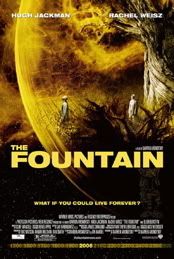
    Usually I reserve this space for unloading on whatever seems stuck between my two ears and is in need for some happy ending releasing. It’s also meant to be light, airy, refreshing and devoid of any serious emotion; that is unless I’m talking about THE FOUNTAIN, in which case, it is coming out on DVD in May so be forewarned. It has come to my attention, however, that there is something that has raised my ire and I am in need to discuss things for the way I see it and for what I believe is blatant thievery and a rip-off of what I do here.

    A long time ago, in December of 2005, I sent an e-mail to some individuals at Premiere a note with regard to finding out what I could do in order to get into their magazine. I thought, at the time, that the publication was one of only a few that catered to a certain film fan, not the casual fan who needs gossip mixed in their 5 paragraph essay-style reporting, and I believed it was their dedication to giving something more than just the glitz and glamour of your everyday type of entertainment magazine.

    And everything pointed in that direction when I inquired about freelance work at Premiere, if even Premiere.com, and, being green behind the ears of traditional print journalism goes, what I could do in order to be considered as a possible stringer of some kind. Basically, it was me begging but using a whole lot of superlatives in order to confuse and obfuscate the issue. It happened to work, coincidentally, and I was put into contact with a very nice, very eager beaver who wanted to talk with me. Her name is irrelevant but what she did was indescribable. When this woman at Premiere heard who I was, who recommended me and that, golly-gee, already wrote for a pretty successful movie web site, she treated me exceptionally nice. It was great. For the first time, upon the prodding of a fellow writer at Poop Shoot, I sucked in my gut and stood behind the work I did and told someone in the position to look at me, “I write well enough and have compelling work to prove it.”

    This was a first.

    I’ve written a book that I am quite proud of but have never hocked it here because it’s a little weird for me to boast about my abilities. Sure, I can, and have, sold everything underneath the sun, including Property/Casualty Insurance to people in the manufactured housing market which, while very difficult, was one of the best positions I’ve ever had. It’s hard work, selling, but when it comes to my work I don’t do so well. I do, however, have a great ability in selling the site I write for to someone who wants to know what it is. Whether it’s some PR flunky who has zero clue about Poop Shoot or Quick Stop I have turned being reticent into a persona that has stumped hard to being content here. And this contact of mine at Premiere was all ears to hear how and what I could do for their website in order to make it better than it was. We had phone tags, she would try to get a hold of me, I was trying to get a hold of her. We had went back and forth with dates to get together and we finally, finally, settled on a day and date to talk. I had notes, for God sakes, scribbled down on a piece of paper and as I rattled off what I’ve done to make Poop Shoot a nice diversion for those who visit me on a weekly basis and that I believed that it’s important to be relevant to the audience you’re trying to reach and that a Podcast with the Premiere imprint would do well in a landscape that was, until then, untapped by any meaningful alternative for a weekly outlet that would speak to the demographics. I went on and on. I could tell she was interested. “Uh-huh, go on” or “Yeah, anything else?” she said. I thought I hit a nerve, a good one, somewhere with her. I had envisioned being able to pay an electric bill with a paid story or even having a Premiere.com address. We talked and talked for a while about every idea I had until my well went dry. She was thankful and said she be in touch.

    “It was decided that we’re going to do everything in-house,” was what came back to me soon after we had our chat.

    She asked me to “keep in touch” in case there were any openings. I did. I was, and am, a sales guy and if I’m given that little sliver of door to get into I follow-up. She thanked me for my time, my energy and for keeping on top this as it sounded like I was really passionate about it. Yeah, everything that an ex-girlfriend would tell you to keep things on a serious tip was what I got. But, the thing of it is, I was fine with it. These things happen. Zero times zero doesn’t mean a whole lot when your list of paying gigs represent a big, thick O. I let the thought go and admitted to myself that even though I thought I had the winning lottery ticket it was better to have gone through it than just living my life without ever knowing what pitching my ideas to someone who was interested in hearing them was like.

    Like a guy who should have known better, when I followed-up my calls weren’t answered. My phone messages weren’t returned, my e-mail wasn’t responded to and it was only after a sensible time passed when I went from Johnny Persistent to Get A Clue, You Fuck. And so I did. I stopped calling or trying to get in.

    And then I see this. Premiere‘s answer to “Trailer Park.” It was downright upsetting when I saw what passed for their interpretation on what I’ve built, what Bob Klein started, really, because I know enough to give credit where credit is due, and frankly it’s just awful that when I wrote to the person who I initially talked to last year regarding what a trailer column could look like Premiere.com I got the same response I did after I was pumped for all the information I had: Nothing. Not an explanation about how “Yeah, it’s kind of similar” or “No, it’s not similar at all” in kind. I guess it’s good enough to thieve, crib and pass along your own ideas as yours just as long as you’re big enough. I, also, am fully aware that there might not be any kind of impropriety at all going on, however, I am also aware that brushing me off and not exchanging common courtesy when its extended doesn’t make them look good, either.

    I won’t bag on the writer who they have writing the column because I am sure she’s a nice person and doesn’t deserve any of my ire whatsoever, although she would do a lot better with it if she… Well, my ideas aren’t free; they are to everyone who is close enough to me to ask but what does a mega corp care about a little writer from Arizona who writes a weekly column without fail (Her column isn’t weekly, a shame) and who toils for free with only a stand-up editorial support system keeping him from slitting his wrists on the latest issue of Everyday With Rachel Ray that the wife keeps around the house?

    Enough to give the impression that they’ve pilfered an idea and have tried to make it their own. If the adage is to let the work speak for itself then I think it’s fairly clear that while I don’t have the balls to say I’m canceling my subscription (Again, it’s not the writers I have a problem with) but it just disappoints me to have been taken for a sucker without me being any the wiser.

    While the idea can be enjoyed anywhere enjoy the original taste of 100% goodness below.

    UPDATE: I have since been contacted by Premiere regarding this situation and I hope to give their side soon.

    ACROSS THE UNIVERSE (2007)

    Director: Julie Taymor
    Cast:
    Evan Rachel Wood, Joe Anderson, Dana Fuchs, Martin Luther, T.V. Carpio, Bono
    Release: T.B.A.
    Synopsis:
    A romantic musical told mainly through numerous Beatles songs performed by the characters. A young man from Liverpool comes to America during the Vietnam War to find his father. He winds up in Greenwich Village, where he falls in love with an American girl who has grown up sheltered in the suburbs. Together they experience the sweeping changes of America in the late 60’s.

    View Trailer:
    * Large (QuickTime)

    Prognosis: Negative. Hmm, what I find curious is that the description only mentions the Beatles as a cursory addition to this film when it’s really the single most important element to this trailer.

    I don’t understand the marketing, then. Is this a Beatles musical or is this a musical that just HAAAAPPPPENS to use Beatles music, in which case, the cost to license the tunes would’ve represented a large enough portion of the film’s budget if, in fact, the filmmakers had to pay for the use it. It’s a bit strange and so is the trailer if you’re high enough. This isn’t to say, though, that this is a bad trailer. It’s not at all but there are issues I have which should be clear as we get along in this review.

    Kind of going along the theme, and my postulation, that this film’s marketing suffers from an identity crisis of sorts we open on some dude, not just any dude, but a dude who is going for that wet hair, slo-mo, lip-synch that James Blunt and Chris Martin of Coldplay made famous in their respective videos of saccharine love. I don’t get why this unnamed guy is singing the song or what it has to do with a movie in general but I don’t feel one way or the other about it. I’m kind of just, well, bored by it. I get it, though, that the guy is emoting about some lass he likes but this is show business after all and I don’t see why I should part with my money for it.

    The next scene, though, the narrative really kicks in but it’s not so much a kick as it is one of those maneuvers where you wait until one of your buddies are walking in front of you and you give the foot they’ve just picked up a good old-fashioned boot that forces him to take a clomp-step and he punches you either in the shoulder or wang, depending on proximity. The story, I guess, is that this guy is going to school at an Ivy League institution and he’s a newcomer to America. The very fact that the guy’s name is Jude and the woman he’s interested in is named Lucy shouldn’t induce too much groaning but it does nonetheless.

    Cue “With A Little Help From My Friends”

    College chicks in their cheerleader bloomers are cavorting, other schoolboys are sliding down stone rails in jolly frivolity while one of the main instigators of the F-U-N that college people like to do, slides down a bowling alley while standing up. (Hey, is that Bono?)

    THEY LIVED WITHOUT RULES

    Cue “All You Need Is Love”

    Now we get these same people running like free spirits through a forest in loose fitting clothing. Free love is flowing like the wine I never had a chance to partake of and it’s all tre 60’s while skirting the very sharp line of self-parody and it feeling anachronistic. Our Limey gets himself a piece, good for him, damn near swallowing Evan Rachel Wood in the process.

    Now, here is the stuff I actually do like. The guy who welcomed the Brit happens to get shipped off to war and the trailer just explodes in a psychedelic pop of color, weirdness and oddity.

    Cue “Hey Jude”

    As you’re ralfing from the cheap sentimentality of our protagonist getting his heart broken the only relief is the laugher you feel at reading one of the cards that this movie is the of the, “MOST”¦ORIGINAL”¦EXHILARATING”¦SPECTACULAR”¦ GROUNDBREAKING”¦motion picture of the year.” Please. That is not for you to decide and it’s rather presumptuous and gauche to declare in all caps. I mean, yes, the set pieces look absolutely astounding with their construction and creativity but this trailer needs a better pitch than this.

    Cue “Across The Universe”

    THE NUMBER 23 (2007)

    Director: Joel Schumacher
    Cast: Jim Carrey, Virginia Madsen, Danny Huston, Logan Lerman, Maile Flanagan, Patricia Belcher, Lynn Collins, Rhona Mitra, Mark Pellegrino, Tara Karsians
    Release: February 23, 2007
    Synopsis: The psychological thriller THE NUMBER 23 stars Jim Carrey as a man whose life unravels after he comes into contact with an obscure book titled The Number 23. As he reads the book, he becomes increasingly convinced that it is based on his own life. His obsession with the number 23 starts to consume him, and he begins to realize the book forecasts far graver consequences for his life than he could have ever imagined.

    View Trailer:
    * Large (QuickTime)

    Prognosis: Positive. So, I’m watching SIDEWAYS.

    I’m being floored by the copious amounts of male nudity, the ass and wang combo that is so rare in today’s cinema, and being entertained quite nicely but I reflected on the backlash against the film that I am still scratching my head at even today. You can see this in more recent terms with regard to LITTLE MISS SUNSHINE. Some people are using that as a whipping post for decrying its pseudo intellectualism but for those who have an issue with the film’s overriding theme, as simplistic as it is, I think they would do well to stuff their narrow-minded comments up their collective bung holes. On that point, then, it was Virginia Madsen who really snuck up in that film and surprised me.

    Jim Carrey, as well, surprised me and pleased me with regard to his serious turn in ETERNAL SUNSHINE OF THE SPOTLESS MIND. Never has a movie been more poignant as it deals with love and loss, and the pursuit of trying to forget that person completely. The guy surprised me and I have nothing but love for that film.

    Fast forward to FUN WITH DICK AND JANE. I’d like to think I wouldn’t hold future projects against a performer but that movie was damn close in annihilating any goodwill I had for Jim.

    I am hoping this movie does a little more for me than DICK. The trailer does a lot though in promising this could be a return to form for Carrey, serious actor.

    As we come into the trailer, the singular moment of Virginia finding the used red book that is going to drive the plot for the rest of the movie is adequately captured. I am amazed at how forgiving I am at the ham-fisted presentation of information but it’s still good.

    Things ramp up even better as Carrey gets sucked into the world of reading really far into things dealing with the number 23. Now, even though we don’t get a real good idea as to why this book takes a serious foothold into his psyche but I’m along for the ride.

    “All numbers have a pattern”

    Now, while Carrey begins to descend into a PERFECT MIND-like obsession with tying all things back to 23, and ignoring the shit explanation by some scholarly wag about the nature of the number, even hinting that Satan is behind one meaning, I’m riveted to know where we’re going with all this.

    When the quick cuts start being slapped together, Jim mentioning the 19rd as the day when both Waco (P.S. Janet Reno lied to the American people. Enjoy being mindless sheep for whatever your Government tells you.) and Oklahoma City took place with April being the 4th month in that equation, all adding up to 23.

    And, lastly, what the hell is up with the Carrey donning the tats in the last moments of this trailer? It’s creepy as all hell, Virginia looking like a stand-in for Morticia Adams, and I am completely lost as to how it is supposed to fit into the overall theme of the movie.

    I know this flick, coming to us from Nipple-Gate himself, Joel Schumacher, is going to be more likely closer to mainstream with regard to how much you’re going to have to think I am giving thumbs-up to this trailer for the reason that I am genuinely contemplating spending some scratch on an original Schumacher.

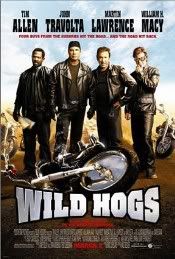
    WILD HOGS (2007)

    Director: Walt Becker
    Cast:
    Tim Allen, John Travolta, Martin Lawrence, William H. Macy, Marisa Tomei, Jill Hennessy, Ray Liotta
    Release: March 2, 2007
    Synopsis: Tim Allen, John Travolta, Martin Lawrence and William H. Macy hit the road in this rollicking comedy-adventure about a group of middle-aged friends who decide to rev up their routine suburban lives with a freewheeling motorcycle trip. Taking a long dreamed-of breather from their stressful jobs and family responsibilities, they can’t wait to feel the freedom of the open road.
    When this mis-matched foursome, who have grown far more used to the couch than the saddle, set out for this once-in-a-lifetime experience – they encounter a world that holds far more than they ever bargained for. The trip begins to challenge their wits and their luck, especially during a chance run-in with the Del Fuegos, a real-life biker gang who are less than amused with their novice approach. As they go looking for adventure, they soon find that they’ve embarked on a journey they will never forget.
    View Trailer:
    * Large (QuickTime)

    Prognosis: Can’t Someone Protest This Film? Perhaps Appeal To The Hague? I don’t do this often but I was struggling to find what angle to come in at this and I found something that perfectly couches the rest of the explanation below.

    [Taken from 1996’s TRAINSPOTTING. Used without permission but attributed thusly]

    Sick Boy: It’s certainly a phenomenon in all walks of life.

    Renton: What do you mean?

    Sick Boy: Well, at one time, you’ve got it… and then you lose it… and it’s gone forever. All walks of life: George Best, for example. Had it, lost it. Or David Bowie, or Lou Reed…

    Renton: Some of his solo stuff’s not bad.

    Sick Boy: No, it’s not bad, but it’s not great either. And in your heart you kind of know that although it sounds all right, it’s actually just… shite.

    I just don’t know what to make of this steaming pile of box office poison.

    When you’ve had guys who have obviously done well for themselves years ago in great films: PULP FICTION, FARGO, BOOMERANG (I know, it’s stretching) and even mass-consumed sitcom pap like Home Improvement was a commercial success by any staunch critic’s list of popular sitcoms in the 1990’s.

    Now, when you harness these guys who are on the downslide of their careers, Bill Macy being the one big pink elephant anomaly of the bunch, you have something that looks like a schmear of the thickest cream cheese and dick.

    I can appreciate, though, the opening. I can. This is a film that needs to connect with my parents, not so much me, so for that it wins points for being knowledgeable of who its audience is supposed to be and doesn’t reach any further. I mean, hell, Travolta giving shit to the leaf boy is the kind of absurd, sophomoric funny-funny that moms and dads love; it’s a great hook.

    Macy comes in, then, and notches the cock humor up a notch by having a big public display of misunderstanding not seen since the anticipated release of Windows Vista and its voice command capabilities. Again, it’s absurd, goes straight to the lowest common denominator and leads perfectly to Lawrence and Allen’s failed amusement park game where, surprise surprise, Allen gets a wayward softball in the nuts.

    Can’t we stop with the obligatory nut shots? Hasn’t America’s Funniest Home Videos taught us anything about the shelf-life for this kind of gag? I guess if you’re white and over 40 it never gets old.

    Speaking of which, I don’t know how we get from crotch shot to motorcycle ridin’ to the recent Top 40 chart topper, Collective Soul’s “Shine”, (Is that the best that some wag in the audio department could do? The song doesn’t even have anything to do with motorcycling yet, here it is, providing the soundtrack to our lives”¦) but I do know that the one laugh I will admit to having at the expense of this trailer is Bill Macy’s stunt double who wipes the fuck out after unsuccessfully executing a fist pump. (Physical humor that might be at the detriment to some sap’s health? Now that’s funny.)

    Awful stereotypes follow of what it’s like to ride a combustible engine with no windshield to protect you from cow crap or wayward birds (???) but I am ballasted by John C. McGinley’s appearance at the end of this thing; It’s hard to try and resist the power of this poorly ignored actor. He’s great but the movie looks like all sorts of ass.

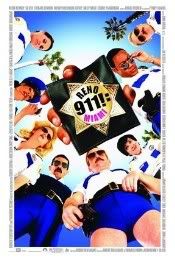
    RENO 911: MIAMI (2007)

    Director: Ben Garant
    Cast:
    Thomas Lennon, Carlos Alazraqui, Robert Ben Garant, Kerri Kenney-Silver, Wendi McLendon, Niecy Nash
    Release: February 23, 2007
    Synopsis: The brave men and women of the Washoe County Sheriff’s Department — the thin khaki line that keeps Reno, Nevada on the straight and narrow ““ star in their first feature film, based on the hit Comedy Central television series. The deputies of the Reno Sheriffs Department attend a law enforcement convention in Miami Beach, where the motley crew is charged with protecting the city after bioterrorists attack the convention.

    View Trailer:
    * Large (QuickTime)

    Prognosis: Made Me Laugh Over and Over. I am sorry, I am sorry. I am sorry.

    One of the best parts of Comic-Con 2006 was being allowed to be a fly on the proverbial cow patty that was an interview my EIC had with Thomas Lennon and Ben Garant. The two stars of Reno 911 couldn’t have been more affable and enjoyable to talk to on a Sunday morning. The guys go beyond just sharing a brain, they share something you rarely even see in normal life: a bond. They seemed genuinely pleased to be in one another’s company and you could see why the show does as well as it does. When you’re doing any sort of ensemble project it’s utterly necessary to have faith in one another and it showed.

    That said, the opening of this trailer is, perhaps, one of the best for a comedy I’ve seen in months. Forget all that voiceover bullshit at the beginning as throaty VoiceOver Guy tries to bait-and-switch, I think we all could agree that we’re all wise enough to know it’s a waste of all of our time to try and sell an action movie and then, ta-da, give us something else; it’s, frankly, in poor form and a piss poor attempt at comedic trickery. When we meet up with Dangle and Junior, Junior snapping out of a nap while behind the wheel, it’s not so much Dangle making it known that Junior shouldn’t be sleeping while driving, and it’s not so much the port-a-potty that they barrel into in one long tracking shot (because that was fucking hilarious) but it’s Dangle’s “nobody in it” that gets the payoff from me.

    Further, the task of bringing up everyone who isn’t familiar with the show up to rapid speed is done quite successfully with the chicken that’s on the loose as Dangle nearly blows his foot off, Junior’s comparison of Reno to Mayberry is done without a drip of irony and then a hazed Junior walking into a door jamb whilst carrying a cigarette between his lips completes the trifecta.

    I don’t know how else to say that even though the plot kind of hinges on the outrageous premise that a hotel has to be quarantined and that Reno 911’s cops are the only ones left able to patrol but the shot of the cars leaving the garage and one of them being T-boned inadvertently, probably Junior again, makes for some good humor.

    I, as well, enjoyed the snippet of Dangle investigating a noise complaint from the residence of “a Suge Knight” and the alligator moment that, for me anyway, surprised even me; the results of which are where the real comedy comes from and this doesn’t look to disappoint in any way.

    Plus, two things that would be awful if I had to explain why they were funny: Kerri Kenny’s mishap in the po-po helicopter and Junior’s “mishap” with a dead whale. Comedy platinum.

    I’m sorry I haven’t kept up with this show on my Tivo. This problem will be rectified immediately.

  • Toy Box: Toy Fair 2007 – Long Distance Love

    toybox.jpg

    This week is Toy Fair, or more specifically,Winter Toy Fair. This is traditionally the opportunity for the toy makers to get their goodies out in front of the retailers and press, and make all kinds of big announcements.

    The power of Toy Fair has diminished in recent years. This started with Toy Fair being split into two shows a couple years ago – a fall show designed primarly for the big retailers, and the more traditional winter show for smaller retailers and press. And then the San Diego Comic-Con started to erode the importance, first by duplicating much of the info, and then by supplanting the show entirely. This year it’s more evident, with important announcements of late year releases by even large companies like Hasbro and Mattel being held for SDCC.

    But Toy Fair is still important, especially for smaller companies. With retailers continuing to dry up at an alarming rate, Toy Fair may be the only chance smaller companies get to convince those remaining to carry their product. I’ll be doing a ‘state of the industry’ column once again this year in a couple weeks, and I’ll be discussing the changing face of Toy Fair more then. But for now, let’s just say it’s still Toy Fair.

    I didn’t go this year. My twins birthday is the 12th, which landed smack in the middle of this years dates, and as much as I love toys, I love them a whole lot more. But the coverage of Toy Fair by a wide variety of websites gets better and better every year, so let’s chat about what I (and you) have seen so far.

    Sideshow Collectibles

    One of my favorite companies, Sideshow always uses Toy Fair to the best advantage. They’ve announced over 30 new items through their site, and you can go there to get the full coverage right from the horse’s mouth.

    Unfortunately for the sixth scale collector’s, there’s not much Sideshow product so far. They are announcing a number of Medicom and Hot Toys figures though, including the uber cool (and probably uber expensive) Aliens Power Loader. Premium Format collectors get a crack at Elvis Presley, a new Buffy, and the very cool Darth Maul. And Sideshow is also showing off several of their new ‘diorama’ statues, including one for Star Wars and one for Lord of the Rings.

    Mcfarlane Toys

    McToys hasn’t been at a Toy Fair in the last 4 or 5 years, but they are returning this year. They’ve discussed the Simpsons movie line, but have yet to show any images. Likewise, they announced they’ll be doing figures for Beowulf, a new film based on the epic poem, but have no photos yet. However, they are showing several of the Lost series 2 figures, including Sawyer, Ecko, and Sun. While you can get some of the info at the official Mcfarlane site, I recommend Figures.com for shots of Ecko and the regular upcoming Simpsons figures.

    Mattel

    The big boys have a big showing this year, and Mattel has some great Four Horsemen sculpts in the DC Superheroes line, including Clayface (who you can see at Action Figure Insider) and Man-Bat (who you can see at Toy News International). Unfortunately, they aren’t showing much for Justice League or The Batman, but they have some other surprises, like Ratatouille. Action-Figure.com has a pretty good coverage of the overall Mattel line up.

    DC Direct

    While DCD is announcing several DC themed lines, their big announcement is around DC Unlimited, a new brand that will be covering non-superhero lines. They’re first two announcements are big ones – Afro Samurai and World of Warcraft. Wizard Universe has great shots up of both lines.

    Diamond Select

    DST has lots of new Buffy, Battlestar Galactica, and Stargate, but they’ve announced some new cool stuff too. There’s Mouse Guard, Back to the Future mini-mates, Marvel Zombies, and even Office Space! That’s sure to be the cubicle figures of the year.

    NECA

    NECA has some big licenses this year, including 300, and Harry Potter. Let’s jump back over to Figures.com to check out a ton of photos of all their lines. I’m particularly happy to see how great the Harry Potter stuff is looking. There’s also some good additions to the Pirates of the Caribbean and Nightmare Before Christmas lines, both big licenses for them.

    Marvel Toys

    One of the most anticipated lines this year is the Legendary Comic Book Heroes, from Marvel Toys. You know Marvel Toys…they used to be Toybiz back when they made Marvel toys. Now they’re Marvel Toys, and don’t make Marvel toys. Yea, I know.

    But they are making a fantastic set of action figures based on independent comic books, old and new. Check out Wizard Universe for some terrific photos and info. Many of the things we saw with Marvel Legends, including great articulation and Build A Figures, will continue with this series. Fans of books like Pitt, Monkeyman and O’Brien, Savage Dragon, Madman and others are going to be thrilled!

    Mezco

    For fans of Family Guy and South Park, Figures.com has some photos of the upcoming series. Mezco didn’t have much in the way of new announcements though, but at least we’ll be seeing the Hellboy animated Abe Sapien, and another wave of Attack of the Living Dead. They’ve also picked up New Line Horror line, and they’ll be doing a caricaturized version of old favorites like Freddy and Jason.

    Hasbro

    Marvelousnews.com has lots of coverage up of Hasbro’s Marvel lines, although far less was shown than many would have liked. The 12″ Dr. Doom in the Marvel Icons line up looks good, but that’s about it at this point.

    That’s about it for the highlights so far. As the show progresses through today and tomorrow, keep your eyes peeled on the above sites for additional coverage.

  • Comics in Context #165: Super Slayer

    comicsincontext4.jpg

    cic2007-02-09.jpgWhen Dr. Peter Coogan appeared at New York’s Museum of Comic and Cartoon Art last September to talk about his book Superhero: The Secret Origin of a Genre (MonkeyBrain Press, 2006), he said that of all the characters who possibly might be superheroes, he was most asked whether the Shadow and Joss Whedon’s Buffy the Vampire Slayer qualified under his definition. Coogan’s answer in both cases was no.

    I agree that the Shadow fits under the heading of pulp novel mystery men, rather than superheroes; indeed, he and Doc Savage are the foremost exemplars of the heroes of that genre.

    But what about Buffy? With her new Dark Horse comics series, recounting what Whedon says represents what could have been the “eighth season” of her seven-season television series, on the horizon, that question takes on new relevance. Now that her primary venue is comics, is Buffy a comics superhero?

    For the last two weeks I’ve been examining Coogan’s definition of the superhero in my column. Coogan establishes three major criteria for determining whether or not a character is a true superhero: a mission, which is altruistic, benefiting society rather than the hero, and long term; the super-powers; and a heroic identity, expressed through a codename and costume, and usually involving a secret identity.

    Buffy has a mission, certainly: she is the Slayer, the “Chosen One,” selected by destiny to battle vampires and other supernatural menaces. At the end of her television series, she succeeded in activating the super-powers of all other potential Slayers in the world. But even though there are now other people who can follow the Slayer’s mission, she continues to do so, from choice, and has become the other Slayers’ leader.

    Buffy has super-powers, which include superhuman strength and agility, and even that power Wolverine popularized, the ability to recover from injuries at superhuman speed.

    It’s in the area of identity that Coogan believes that Buffy falls short. He states that “Buffy has an identity as the Slayer. But this identity is not a superhero identity like Superman or Batman. This identity is not separate from her ordinary Buffy identity the way Superman is from Clark Kent, whose mild-mannered personality differs greatly from Superman’s heroic character. The Slayer is not a public identity in the ordinary superhero sense. . . .Buffy does not wear a costume, and while such a costume is not necessary, it is typical” (Superhero, p. 48).

    In discussing in his book why Luke Cage is a superhero, Coogan uncovered a precept which I have dubbed “declaration of intent”: Coogan demonstrated not only that Cage’s early editors and writers intended to make Cage a superhero, but the character himself expressed the intent to be a superhero. Last week I showed that a creator’s “declaration of intent” does not mean that his creation really is a superhero. The creator’s understanding of what a superhero is may be flawed. Hence, Tim Kring, the creator of NBC’s Heroes, believes it is a superhero show, but by Coogan’s definition, it isn’t. Nevertheless, as Coogan showed in his examination of Luke Cage, the intent of both the creator and the creation, as expressed in the work, is worth looking into.

    Coogan claims that “The producers of Buffy the Vampire Slayer do not seem to regard it as a superhero show” (p. 48). Perhaps that is so, but do they consider Buffy a superhero? Buffy’s creator, Joss Whedon, clearly thinks of her as a superhero. Consider this exchange from the interview that Brian Bendis recently conducted with Whedon for Wizard. First, Whedon says that, “People long before I started writing Astonishing X-Men pointed out the similarities between Buffy and the X-Men that I hadn’t even noticed. I hadn’t even noticed that all her friends had turned into superheroes.” (Whedon is referring to the fact that several of Buffy’s friends, who aided her in combatting supernatural foes, had supernatural powers as well; hence they formed a super-powered team.) A little later, Bendis says, “I actually, in the first seasons of Buffy, saw the similarities between Buffy and Spider-Man.” Whedon replies, “Yes,” and Bendis clarifies, “The early [Steve] Ditko years of Spider-Man,” and Whedon does not disagree.

    But it’s not just in retrospect that Whedon regards Buffy as a superhero. In interviews Whedon gave around the time he began writing the Astonishing X-Men comic (see “Comics in Context” #42-43), he stated that he has based Buffy in part on X-Men‘s teenage heroine Kitty Pryde. He told New York Magazine (June 7, 2004), “If there’s a bigger influence on Buffy than Kitty, I don’t know what it was. . . .She was an adolescent girl finding out she has great power and dealing with it”.

    In the Buffy television series there are frequent references to Buffy’s “super-powers,” as when in the episode “End of Days” her fellow Slayer Faith memorably and truthfully commented to Buffy, “Thank God we’re hot chicks with super-powers.” Buffy is explicitly called a “superhero” by her friend (and superhero comics buff) Xander in “The Harvest” (the second half of the two-parter that started the TV series) and by her mother Joyce in “Dead Man’s Party,” and is called “a superhero or something” by a supporting character in “Tabula Rasa.”

    In the episode “Inca Mummy Girl” Buffy’s “Watcher,” her mentor Giles, tells her, “Your secret identity is gonna be difficult enough to maintain while this exchange student is living with you.” (Since Whedon is a known Marvel aficionado, his use of the term “Watcher” seems to be a homage to Stan Lee and Jack Kirby’s Uatu the Watcher, a character from the superhero genre.)

    So Whedon explicitly endowed Buffy with a “secret identity.” As Coogan states, Buffy’s dual identity is not as clearly defined as Superman’s. Coogan notes that “The Slayer is not a public identity”; the public is not aware that there is a Slayer, or that vampires are real. But Whedon’s point is that Buffy leads an alternate life as the Slayer that she has to keep secret from public knowledge. Whereas Clark Kent has to prevent the public from learning he is Superman, Buffy is like a Clark Kent who has to prevent the public from even knowing there is a Superman. In the show’s early seasons Buffy even kept her Slayer career secret from her oblivious mom, Joyce. At the time this reminded me of Peter Parker’s efforts for years to conceal his Spider-Man identity from his equally oblivious Aunt May. Whedon’s acknowledgment of similarities between Buffy and Spider-Man may mean that this specific parallel was intentional.

    It strikes me that Buffy’s situation is also somewhat like that of Marvel’s Doctor Strange. Former surgeon Dr. Stephen Strange uses his real name in as Doctor Strange, Master of the Mystic Arts; again, his everyday identity and heroic persona are not as sharply differentiated as those of Superman and Clark Kent. But the general public of Marvel-Earth does not believe in magic, and considers Doctor Strange to be an eccentric, or even a charlatan. Only Strange’s allies–and enemies–know that he has actual magical abilities, and Strange considers it part of his mission to prevent the general populace from learning about the supernatural terrors from which he protects them.

    Buffy’s adversaries, notably the vampires, usually know her “civilian” name but refer to her as the Slayer; this further underlines the idea that she has a dual identity.

    Coogan contends that whereas Clark Kent and Superman have distinctly different personalities, Buffy’s personality is the same in her everyday life as it is when she acts as the Slayer. First, although the “mild-mannered” persona of Clark Kent is traditional (as in the Superman movies), there have been successful versions of Superman in which his personality is not noticeably different in his Clark Kent and Man of Steel personae: neither George Reeves on television nor John Byrne’s Superman in the comics feigned timidity or shyness as Clark. Second, there was a difference between Buffy’s personality as the Slayer and the way she behaved as an ordinary student. In high school and college, Buffy was usually more insecure and less assertive than she was as the independent, aggressive Slayer. In fact, I suspect it may have been a mistake when Whedon had Buffy drop out of college in the later seasons: without a “normal ” life to balance her Slayer career, her personality grew harder-edged, more solitary, and less appealing.

    Of course Buffy does not wear a distinctive costume, but she does characteristically wear a cross around her neck, which to some extent fills the functions of the superhero insignia that Coogan terms a “chevron.” Since vampires are repelled by the sight of a cross, Buffy’s cross signifies her role as vampire slayer. Moreover, although Whedon is not religious, Buffy’s cross inescapably suggests that she is on God’s side, or at least on the side of moral right, and perhaps even that her Slayer career is a spiritual quest.

    Let me tentatively suggest the following classifications for superhero double identities. Superman has a First Level Dual Identity, in which his heroic persona and everyday persona are clearly defined, distinct public identities: the general public does not know that Superman and Clark Kent are one and the same person. Mister Fantastic has a Second Level Dual Identity, in that the general public knows that his heroic identity (Mister Fantastic) and everyday identity (Reed Richards) belong to the same person. Buffy has a Third Level Dual Identity, in that the general public not only does not know that Buffy has a heroic persona (the Slayer), but does not even know that that heroic identity exists.

    In Superhero Coogan establishes that a genre can exert what he likens to a gravitational pull. Notice the effect of such “gravity” on the vampires that Buffy battles. In various ways Whedon downplays the supernatural nature of vampires. Compare Whedon’s vampires to that more traditional pop culture vampire, Barnabas Collins of Dark Shadows (see “Comics in Context” #11, 149). Barnabas can transform into a bat, and, by staring into people’s eyes, can place them under his mental control; Whedon’s vampires lack these powers. Even more importantly, Barnabas, as a vampire, is literally dead during the daylight hours, during which time he must lie in his coffin, and returns to his undead sort of life at dusk. Whedon’s vampires remain active during the day, although they must avoid direct sunlight, have no dependence on coffins (although Spike still made his home in a cemetery crypt), and can actually sleep rather than revert to true death during the daytime. But Barnabas, while his grip was indeed strong, was not usually portrayed as superhumanly strong. In contrast, Whedon continually emphasized that his vampires were superhumanly strong and agile, and nearly invulnerable. In other words, Whedon treated his vampires as if they were super-strong super-villains. While Buffy uses her stake to deliver the coup de grace, her principal weapon in combat is her own superhuman strength. Hence Buffy’s battles with vampires resemble fight scenes from the superhero genre. (The episode “Buffy vs. Dracula,” which pitted Buffy against a vampire with traditional supernatural attributes, was the exception to the rule that underlined how very different Whedon’s vampires are from the conventional model.)

    Then there are explicit references to the superhero genre within the Buffy television series. The “Trio” of wannabe villains in the sixth season refer to themselves as “supervillains,” and even invent a freeze gun reminiscent of the weaponry of numerous comics supervillains, notably Batman‘s Mr. Freeze and Flash‘s Captain Cold. In the sixth season Buffy’s friend Willow, a witch, becomes addicted to magic and turns into a villain. Not only has Whedon repeatedly referred to this version of Willow as “Dark Willow,” but one of the Trio, Andrew, explicitly says in one episode that Willow has gone “Dark Phoenix.” Hence the “Dark Willow” arc is an explicit homage to X-Men‘s “Dark Phoenix Saga,” one of the most celebrated storylines in the history of the superhero genre (see “Comics in Context” #134-135).

    I believe that Buffy the character does fit the definition of superhero. Nonetheless, Buffy the television series (or movie or comics series) is not part of the superhero genre.

    Earlier in his book Coogan stated that “If a character basically fits the mission-powers-identity definition, even with significant qualifications, and cannot be easily placed into another genre because of the preponderance of superhero conventions, the character is a superhero” (p. 40). This means that, according to Coogan’s rules, a character could fit the “MPI” definition yet still not be a superhero, if this character can indeed be “easily placed into another genre.” Therefore we must examine which genre provides the “preponderance” of genre conventions in the character’s series. We must not simply study the character, but the context in which that character exists. “Generic distinction,” Coogan asserts, “is a crucial element of the superhero. . . .” (p. 48).

    Coogan correctly argues that “the Slayer is a hero-type that predates the superhero, fitting firmly within the larger horror genre and specifically within the vampire sub-genre” (p. 48), and cites Dr. Van Helsing from Bram Stoker’s Dracula as the first version of this hero-type in literature. Marvel buff Whedon credits Kitty Pryde as an inspiration for Buffy, but surely the blonde vampire slayer Rachel Van Helsing from Marvel’s Tomb of Dracula was a direct influence. Come to think of it, Tomb of Dracula‘s small band of vampire hunters, led by an older British man, Quincy Harker, and including Rachel, resembles Buffy’s own vampire-hunting “Scooby Gang,” whose father figure is another Englishman, Giles. Coogan points out that “historically, the [vampire hunter] hero-type descends from actual vampire hunters, including the dhampir, the supposed male progeny of a vampire who is particularly able to detect and destroy vampires” (p. 48). That sounds like a sometime member of Harker’s band, Blade, who mother was attacked by a vampire while giving birth to him, and who wields stakes as weapons the same way that Buffy does. Janus, Dracula’s son in Tomb of Dracula who became his adversary, would also fall into this category of modern day dhampir.

    Though Coogan concedes that “the writers of Buffy draw on superhero conventions,” he also points out that “They also make references to Scooby Doo and the show fits within the Scooby Doo formula” (p. 48). Well, it does to the extent that Buffy has a band of friends and allies, all of whom are young, who help her combat supernatural evil; in a stroke of metafictional wit, they even refer to themselves as “Scoobies.” But the Scooby Doo formula entails a solving a mystery, and Buffy doesn’t follow the detective story pattern. The Scooby formula also entails exposing the supposed supernatural menace as a fraud, but in Buffy supernatural evil is indeed real.

    What Coogan is getting at is that the Buffy writers draw on conventions from various genres, including the superhero genre. Whedon has described Buffy as “My So-Called Life meets The X-Files“, and the show obviously draws on the high school/college comedy and “dramady” for its setting during the first four seasons. There are elements of science fiction, such as the cyborg Adam and robots like the Buffybot, and the Bondian superspy subgenre through the Initiative. Buffy is not just a vampire slayer, but a monster slayer, and thereby fits into a long line of characters going back to Gilgamesh and encompassing dragon slayers like St. George. Buffy is a television version of a bildungsroman, which is defied by the American Heritage Dictionary as “A novel whose principal subject is the moral, psychological, and intellectual development of a usually youthful main character.” Buffy’s fight scenes are obviously influenced by Asian martial arts movies. Wikipedia’s Buffy entry correctly observes that “The show blends different genres, including horror, martial arts, romance, melodrama, farce, comedy, and even, in one episode, musical comedy.” As noted on the BBC’s Buffy website, in the fifth season episode “Spiral,” the sequence in which Buffy, standing atop a moving RV, combats pursuing knights on horseback “is reportedly the Buffy production team’s homage to [the] classic Western film Stagecoach [1939].”

    Combining elements of different genres is a Joss Whedon trademark; his television series Firefly and its movie spinoff Serenity (2005) are fusions of science fiction with the Western genre. Whedon was more explicit in incorporating Western elements than was Gene Roddenberry, who famously pitched Star Trek as “Wagon Train to the stars”.

    But the “preponderant” genre conventions are those of the genre of supernatural horror and fantasy. Whedon has made that clear in his repeated descriptions of his original concept for Buffy, explaining that he took the genre formula of “the little blonde girl who goes into a dark alley and gets killed in every horror movie” and intended “to subvert that idea and create someone who was a hero.” (Billson, Anne, Buffy the Vampire Slayer [BFI TV Classics series] pp. 24-25).

    Whereas Coogan believes that Buffy is not a superhero, I’ve invented a special category for her, which I suspect reflects Whedon’s intentions for the character. To my mind, Buffy is a Displaced Superhero, which is to say that she is a superhero who operates outside the superhero genre. If someday, somehow, Whedon manages to do a Buffy-Batman or a Buffy-X-Men crossover, it will be interesting to see how well she fits into an actual superhero genre story.

    Having defined what he considers to be a true superhero, what then does Coogan do with all the characters, like Buffy, who have super-powers but don’t fit his definition? Having declared that Buffy is not a “superhero” (one word), Coogan states that she is instead a “super hero” (two words), “as are heroic characters from other genres that have extraordinary abilities such as the Shadow, the Phantom, Beowulf, or Luke Skywalker. They are superior to ordinary human beings and ordinary protagonists of more realistic fiction in significant ways.” However, “they are not superheroes, that is they are not the protagonists of superhero genre narratives” (pages 48-49).

    I see the point of Coogan’s distinction between “superheroes” (one word) and “super heroes” (two words), but his terminology presents problems. For one thing, the difference between the two terms does not work in spoken conversation, since you cannot hear whether there is a gap between the “super” and the “heroes.” Even in print (or on the computer screen), a simple typographical error can turn “super heroes” into “superheroes” or vice versa. Second, I understand that DC and Marvel have jointly trademarked both “superhero” (as one word) and “super hero” (as two words). DC and Marvel perceive no difference in meaning between the two forms of the term, so there is no legal distinction between them, either.

    At this point Coogan does something in his book that delighted me: he quotes from the late literary critic Northrop Frye’s Anatomy of Criticism (1957). I first encountered this book when I was in college and immediately recognized that his ideas could be applied to superhero fiction. (Another academic turned comics pro, Peter Gillis, paid tribute to Professor Frye by giving him a posthumous cameo in Defenders #133 [July 1984].)

    As Coogan recounts, Frye identified the hero of myth as “superior in kind both to other men and to the environment.” Then there is what Frye terms the literary mode of romance. Among the definitions that the American Heritage Dictionary gives for “romance” are “A long fictitious tale of heroes and extraordinary or mysterious events, usually set in a distant time or place” and “The class of literature constituted by such tales”; this is what Frye meant by the term. According to Frye, the hero of romance is “superior in degree to other men and to his environment,” but is still a human being, who “moves in a world in which the ordinary laws of nature are slightly suspended.” In the high mimetic mode, the hero is “superior in degree to other men but not to his natural environment,” the hero of the low mimetic mode is “one of us,” and the hero of the ironic mode is “inferior in power or intelligence to ourselves” (Anatomy of Criticism, pgs. 33-34).

    Coogan then declares that his “super heroes” (two words) are all “romance heroes.” Since, as he points out, nowadays the meaning of “romance” as love story is more common than its meaning as a tale of extraordinary adventure, calling these characters “romance heroes” would be confusing. So he calls them “super heroes” (two words) instead, which, as I’ve pointed out, is perhaps even more confusing.

    Moreover, by stating that his “super heroes” (two words) are “romance heroes,” Coogan may, perhaps inadvertently, be leading readers to think that true superheroes are not romance heroes. But I think that Frye’s definition of the romance hero as a human being who is “superior in degree to other men and to his environment,” and who “moves in a world in which the ordinary laws of nature are slightly suspended” is a nearly perfect description of the true superhero.

    A superhero’s superpowers account for his superiority to his “environment.” This slight “suspension” of the laws of nature could account for what Coogan calls “superhero physics,” whereby superpowers, which do not exist in the real world, can exist in the Marvel Universe, for example. Hence, for example, thanks to the way that physics works in the DC Universe, Superman can fly, thereby demonstrating his superiority to an element of his environment, the law of gravity.

    Frye’s description of the romance hero needs to be modified slightly to include those superheroes who are not literally human beings (like Superman, or the Silver Surfer, or the Vision), but all of them resemble Earth humans sufficiently, physically and psychologically, to be included. Also, as I’ve pointed out in previous installments, some superheroes, like Batman, lack actual super-powers; these characters are figuratively “superior in degree”: to other humans and to their environment.

    Frye’s theory of modes also enables me to show further why Neil Gaiman’s Morpheus is not a superhero. Morpheus fits Frye’s description of the hero of myth, who is “superior in kind both to other men and to the environment.” A superhero is “superior in degree” to other humans, due to his powers, but is still a human being. Morpheus is “superior in kind” to humans: he is not human, but is one of the Endless, a different, higher form of being.

    Elements of the superhero genre turn up at times in Gaiman’s Sandman, such as Element Girl and Doctor Dee (Justice League villain Doctor Destiny) in early issues, Batman and Clark Kent in “The Wake,” and the references to the Green Lantern and Superman mythos in Sandman: Endless Nights (see “Comics in Context” #17). But the predominant conventions in Gaiman’s Sandman are those of the fantasy genre.

    Notice how Gaiman treats the character of Lyta Hall, who was the superheroine Fury in Roy Thomas’s Infinity, Inc. series. The “gravitational” pull of the fantasy genre is so strong in Sandman that Lyta’s superheroic identity is never mentioned in Gaiman’s series, nor her superpowers. Perhaps, however, Gaiman made an unspoken in joke by having Lyta (a. k. a. Fury) send the Furies of Greek mythology to punish Morpheus.

    I also realized that the typical superhero is “superior in degree” to ordinary humans in his heroic identity, but in his alternate identity he is “one of us.” Superman is a romance hero, but as Clark Kent he is a “low mimetic” hero. Buffy is a romance hero when she acts as the Slayer, but when she is attending high school classes, she is acting as a low mimetic heroine.

    While Morpheus is a hero of myth, different in kind than humans, Gaiman’s Sandman series can be read as the story of how Morpheus discovers he has an emotional capacity that is not so different from that of humankind. The series begins with Morpheus as a captive, reduced to being a “naked man” in a glass cage. He comes to acknowledge his friendship for the human Hob Gadling; he feels guilt and responsibility over the fate of his human son Orpheus. Ultimately Morpheus forfeits an aspect of his godhood by surrendering to death (or his sister Death, if you prefer). His successor, the new Dream, is somehow simultaneously Lyta’s human son Daniel and Morpheus himself reborn.

    This is not to say that either Morpheus or the new Dream are superheroes. But notice that whereas a superhero typically has a double identity, one heroic and one that of a low mimetic “ordinary” human, the new Dream has a dual nature, making him simultaneously god and man. In the course of Sandman Morpheus discovers a “high mimetic” side to his nature, complete with a tragic flaw, enabling him to make himself vulnerable to death, sacrificing his life and becoming a tragic hero in the end.

    Jack Bauer of television’s 24 presents an interesting case. On the surface he is a low mimetic hero, “one of us,” an operative of a United States government agency. Audience members who prefer realism to explicit fantasy would therefore be more likely to accept Bauer; thus Bauer also fits into the democratic ideal of American society, wherein everyone is equal.

    In practice, however, Bauer is a high mimetic figure, “superior in degree to other men but not to his natural environment.” Bauer is unquestionably CTU’s top operative, who usually takes a leadership position in field operations. Bauer has saved America for five seasons going on six, and, though the show never actually says so out loud, it consistently presents Bauer as the only one who can defeat each season’s terrorist conspiracy. (Like Buffy or Anakin Skywalker or Neo in The Matrix, Bauer is, in effect, the Chosen One.) Since Bauer is not superior “to his natural environment,” he can be severely injured (as we have seen time and again on the show) or even killed. According to Frye, the hero of tragedy, such as Hamlet, is a high mimetic figure. This helps explain why each season of 24 usually ends tragically for Bauer: for example, his wife is killed, or he is forced into hiding, or he is captured and tortured by enemies.

    Ultimately, though, I think that Bauer is a romance hero, “superior in degree to other men and to his environment,” who “moves in a world in which the ordinary laws of nature are slightly suspended.” Not only does he repeatedly outfight and outshoot his opponents, but he recovers from even severe injuries at unusual speed. In one season Bauer was tortured so badly that his heart actually stopped: he literally died and returned to life. Heck, the “suspension” of the “ordinary laws of nature” even explains how Bauer can drive back in forth in Los Angeles so quickly, as if its notorious traffic didn’t exist!

    At present 24 and Heroes are on at the same time on Monday nights. One reason that I watch 24 rather than Heroes is that 24 feels to me much more like a heroic “romance” than Heroes, the supposed superhero series.

    Until and unless I find a better term, I am going to call the heroes of romance (as Frye defines it) “megaheroes.” This category encompasses all the characters that Coogan calls “super heroes” (two words) as well as true “superheroes” (one word). Superheroes therefore form a subset within the larger category of megaheroes.

    Having defined superheroes in his book, Coogan goes on to define supervillains. Here he takes what strikes me as a very different approach. In defining the superhero, Coogan went taken the approach that Superman is the first true superhero, who inaugurated the superhero genre. Therefore, Coogan sought to discover what distinguished Superman from his many megaheroic predecessors (drawing upon Judge Learned Hand’s perceptive court decision). In contrast, Coogan’s definition of the supervillain embraces characters from various different genres.

    In Coogan’s view the supervillain long predates the first superhero (Superman) and the superhero genre. Indeed, Coogan counts the monsters Khumbaba and the Bull of Heaven, both slain by the title character of the Babylonian Epic of Gilgamesh, as supervillains, thereby making the super-villain concept at least over three thousand years old! Another of Coogan’s supervillains is the monster Grendel from the Old English poem Beowulf (circa 700-1000 A. D.). (When the Beowulf movie co-written by Neil Gaiman comes out this fall, I will surely have much more to say about this early romance.) Coogan also identifies as a supervillain Sherlock Holmes’s archenemy Professor Moriarty, who was introduced in Arthur Conan Doyle’s “The Final Problem” (1893). (Oddly, Coogan states that Moriarty only appears in “The Final Problem” and “is mentioned again only in the novel The Valley of Fear“ [p. 71]. Rather, besides “The Final Problem,” Moriarty plays an active role, albeit behind the scenes, in The Valley of Fear, and is mentioned in five other Sherlock Holmes stories by Doyle, most notably “The Adventure of the Empty House” [1903], which describes how Holmes survived his battle with Moriarty at the Reichenbach Falls.)

    In his introduction to Superhero, Coogan explains that its chapter on “The Supervillain” grew out of his contribution to The Supervillain Book, which was published last year by Visible Ink Press; I was another of The Supervillain Book‘s contributing writers. The Supervillain Book likewise took the approach that supervillans are not restricted to the superhero genre, and included not just Professor Moriarty but James Bond villains like Blofeld and Goldfinger. When I was working on the book, I agreed with this idea.

    However, now that I’ve read Coogan’s Superhero, I’m not so sure. I suspect that just as true superheroes represent a subset of the category metaheroes, there are true supervillains who are part of the overall category of what I’ll call megavillains. Next week I’ll explain the distinction.

    ADVERTISEMENTS FOR MYSELF
    Now on sale from Image Comics is the second issue of The Official Handbook of the Invincible Universe, to which I was a contributing writer. Just seeing the cover, which is a homage to the covers to Mark Gruenwald’s original version of The Official Handbook of the Marvel Universe, made me smile.

    Copyright 2007 Peter Sanderson

  • Interview: Tanya Donelly

    By Christopher Stipp

    Archives? Right Here…

    In the end the letter would sit there until I finished this piece. More on that in just a moment.

    When I stumbled upon Belly, most known to many as the group who made “Feed The Tree” a part of so many mix tapes in the early 90’s, I was emerging from my chrysalis of musical ignorance. My diet, until then, consisted of a milquetoast cadre of hip-hop, rap, R&B and every bland, vanilla, soul-crushing Top 40 hit you could ostensibly name. It was my senior year in high school and I was, understandably so, teased and publicly harangued for my taste in music. When other students pined for tickets to see U2 during their Zooropa tour I was steeped in the rhythm and soul of the musical choreography put on by Janet Jackson when she came through town in support of her JANET album.

    It wasn’t until after I graduated high school, nearly 18 years of age, in the spring of 1993 when a friend took me to see 10,000 Maniacs at a huge outdoor amphitheater in Illinois. You want a definition of “watershed”? That was it. The musicianship, lyrical richness, passion, energy, all these things collided in my body and I knew I had a conversion of some profound kind.

    It wasn’t until a few weeks had passed when I leaned of the Maniacs’ demise. Just as I thought it would be a good idea to dip a toe into this brave new world it was all I could do to try and keep myself from slipping back into old BPM habits. You have to understand that it is not a joke when I say that I still hadn’t yet purchased a Rock album, not even after the Maniacs show, once in my life. Ever.

    But, it was Tanya Donelly who wrested my wallet free from my stingy pocket and it couldn’t have happened in the most odd way.
    It was strange but as I was channel surfing one afternoon Tanya gave an interview to a local reporter in Chicago about an upcoming show she was getting ready to do with her band Belly. During the story they played a clip from the “Feed The Tree” video. While I took enough notice that I’ve never forgotten about it, and this is the important part of the story, it didn’t do a whole lot for me. Nothing, in fact. What happened, though, during the following weeks is notable in that the news segment stayed with me. The clip replayed over and over again in my head. I was humming “Feed The Tree” to myself every now and then when it played on the radio. The tune had such internal resonance for me that Belly’s STAR would be the very first Rock album I would ever purchase in the USED section of a small record store and, to this day, represents where my musical renaissance began.

    I started purchasing mass quantities of CDs, eschewing the latest urban additions as if they were the ugly girlfriend I was happy to have cheated on, and I can tell you there has never been a time in my life, from the Summer of 1993 to the Summer of 1995 where I assimilated so many different variations on an alternative theme. From Juliana Hatfield, The Blake Babies, The Mighty Mighty Bosstones, Stone Temple Pilots, Pearl Jam, Soundgarden, Alice in Chains, to KMFDM, Curve, Elastica, Rage Against The Machine, I was just insatiable. Although, I never forgot about Belly and, in fact, I was voracious in my consumption. From $30 imports from Japan, a special order vinyl that had just one notable song on it that I just had to have and pestered some poor record store owner as to whether it arrived, rough sounding bootlegs of Belly shows, to say nothing of the singles, magazines, tickets, of buying everything at their merchandise table when they finally came back to Chicago, I was enamored to the point of fiscal bankruptcy when it came to Belly. The music just did something to me that I still can’t explain very well without sounding like a complete geek. It was the mixture of lyrics and melody that defied you to listen to a world that wasn’t controlled by Cock Rock Neanderthals who only wanted to sing about the superfluous nature of their “dark” and “misunderstood” lives. Tanya had a grip on these things and, instead, used her music to work out more thought-provoking issues.

    I remember standing in line, a line of one actually, during a bitterly cold October afternoon in 1995 as I kept my place in line for a show that would be one of Belly’s last. Determined to be the first person through that door to see the General Admission show, only to recede to the back bar area after the first song, it was at show I learned I had a condition that I didn’t know about: claustrophobia. However, I still remember the three times I did see the band to be on par with the arena rockers I would later measure everyone else against; being in a small club didn’t matter, it was more intimate and I remember Tanya always leaving the stage with a smile, not a sneer and splintered musical equipment, in her wake.

    The band’s demise shortly after the tour that year and Tanya’s eventual solo career has been one, for me anyway, of evolution. I think I would’ve grown embarrassed as I reflect on the amount of my spending, my stumping, my need to collect everything, my unadulterated support for a band that just played musical notes and chords if it wasn’t for the book I wrote that was inspired by those two years of self-exploration and unwavering devotion. Tanya evolved as well. She got married to the bassist of Juliana Hatfield’s band, Dean Fisher, had two children, Grace Bee Fisher and little Harriet Pearl Fisher, and still turns out some of the most evocative and melodic that no one I know seems to be listening to.
    Her latest, THIS HUNGRY LIFE, is a live album that puts to shame any live album you have in your collection for the simple fact that this is sold as a live album, yes, but it sounds unbelievably sharp. I would dare any casual listener to try and take a taste test of this album and, save for the clapping at the end of songs, try and pick out the imperfections. It’s that precise and it was good enough to get me riled up enough after sensing, again, no one cared about me talking about it in public, and I decided to see what I could do in devoting an entire column to Tanya and this work.

    It’s not often I get to talk to someone who has been the basis for so much of my own creative endeavors, who really is at the core, the nexus, of who I hold up as the litmus test for any artist who wants to preen, whine, play dress-up, break a guitar or two or do anything less than make great music and enjoy the station they’ve been given in life. In fact, I count this interview as the completion of a circle she started drawing for me in the ephemera almost 14 years ago; damn near ½ of my entire life on this planet.

    She was an absolute joy and delight to talk to, my hand was getting numb from inserting so many “(Laughs)” into the piece, as I played the part of journalist and geeky fanboy all at the same time; she managed to top Lost’s Josh Holloway as the person who exuded the greatest sense of joy while talking to me, a complete stranger. We talk about her music, her passions, her kids, her inspirations and I even manage to take a jab at her procrastination that, unless it was just great timing, yielded the motherload of every Belly nerd out there.

    It was at the end of the conversation, though, that Tanya inquired about the book I wrote and it’s involvement of her music in it. She insisted that she send payment for a copy of her own even after my heart sank as I tried to stop that nonsense (I would’ve sent every other copy I had for free), feeling not only like I was the kid in the Mean Joe Green Coke commercial who is overcome with gratitude for that sweaty jersey, but when that envelope came to my house it sat on my desk unopened until this week, only after the construction of this piece had been completed. It was only after the work was done did I ever feel entitled to enjoy the spoils of my labor and thankfully with Tanya’s consistent output of music she is still amazing me in a way that makes me feel 18 again when I wait for that special New Music Tuesday to roll around in anticipation of a new album and I can see what else is on her mind this time.

    Here’s to hoping she never stops trying to part me with my money.

    CHRISTOPHER STIPP: Hi, is Tanya there?

    TANYA DONELLY: Yup, that’s me.

    CS: This is Chris.

    DONELLY: Hi, how are you?

    CS: I’m fine. How are you doing?

    DONELLY: Doing very well, thanks”¦I’ve got a new baby.

    CS: Yes, congratulations on that.

    DONELLY: Thank you so much. There’s a lot of juggling going on in that department.

    CS: I just put my one-year old down for her morning nap.

    (Laughs)

    DONELLY: That’s what mine is doing right now.

    CS: And I don’t think she was really ready yet, either. I just knew this interview was coming up and said to her, “You’re going down within the next twenty minutes.”

    DONELLY: That’s what I did too. Hopefully that’ll work out.

    CS: It’s an odd thing, trying to coordinate their schedules around my schedule. Life doesn’t feel like it’s about me anymore but I’m fine with that. But let’s get into it with the fact that this album, THIS HUNGRY LIFE, has been out for a few months. I bought it the day it came out and have been loving listening to it ever since.

    DONELLY: Thank you very much.

    CS: And it’s weird insofar that when I heard this was going to be a live album I was expecting something less than what this record actually is. The clarity, sharpness and precision on THIS HUNGRY LIFE trumps any live recording in my collection.

    DONELLY: Well, we did the multiple takes of things. It was more that we wanted people to be there while we were recording so they suffered through us starting over sometimes, multiple takes and lots of tuning because that’s what I really wanted to do rather than just taping a show. I really wanted it to be people in the studio with me, sort of speak. It was fun.

    CS: Now, was it the ten core songs that eventually made it onto the album or were there other”¦

    DONELLY: No, we also did a set”¦We also recorded a set of”¦Because we went straight to Bellows Falls from touring the record before that so there’s actually live recordings of WHISKEY TANGO that we did on tour which I will probably put up on the site.

    CS: You know, since you went there, I did my homework preparing this interview and I know I’ve read that in a few places. “When I get to it”¦” “When I get to it”¦” What is up with”¦.

    (Laughs)

    DONELLY: I just have to give my web mistress just a ton of stuff and let her struggle with it. I’ll find some of the archived material and hand it over and”¦she can deal with it.

    CS: And, because I am an uber nerd, and I’ve been a fan for a long time, I’ve known that you’ve said you were looking to put out a children’s album. Where is that? I have a child that’s nearly four and I flatly REFUSE to allow the Wiggles anywhere near my stereo.

    DONELLY: I know!

    (Sighs)

    It’s just been”¦It’s the kind of thing where we put it together, a bunch of us, and then we were really excited about it at the time and then it just got passed over and passed over and passed over and everybody started losing their enthusiasm, which happens”¦The main thing people are saying is that it is all over the place. Too much different”¦I mean that’s what we liked about it.

    CS: Right.

    DONELLY: It’s very varied but it’s what labels don’t like. I guess”¦I don’t know”¦Children’s music, so we’re told, except for a few very lucky instances, children’s music doesn’t really sell well. Stuff like The Wiggles will because it’s completely catered”¦and this is not at all. This is like regular rock music with just lyrics that are appropriate. So, people are just having a hard time figuring out just how to market it. At this point, the woman who started the whole project, Chris Tappin, she’s probably going to put it up on CD Baby and we’re waiting to hear”¦she’s going to let me know if that happens and then I’m going to let people know.

    CS: Good. Good to hear. I am just not down with a lot of children’s music that’s out there.

    DONELLY: I know”¦

    Well, neither is my daughter. She just listened to what we listened to”¦she never really listened to the kids music, per se. In fact, the other day, just to give you a little window into her perspective on the world, I said as we were looking at something to listen to, I said, “Do you want to listen to The Beatles?” And she said, “Mom, that’s a little baby-ish for me.”

    CS: Geez”¦What is she really into then nowadays?

    DONELLY: She likes Blondie a lot. She likes Smoosh. You know who they are?

    CS: No.

    DONELLY: Is your oldest a girl?

    CS: Yup.

    DONELLY: You should check them out. It’s S-M-O-O-S-H. They’re an indie band of two sisters”¦and I don’t even want to say they’re four kids because they have a huge adult following. I wouldn’t even say it’s kid’s music, it’s just music that just happens to be made by kids. And they’re great.

    [Chris’ note: I hope this doesn’t get me on NBC’s To Catch A Predator but I checked them out and this is a really great band of girls who know how to rock the mic.]

    CS: Was that important to you as a parent when you became one, coming from a fairly rich musical pedigree, to give your kids a full exposure to different kinds of music?

    DONELLY: I was less focused on what I wanted her to listen to than what I did NOT want her to listen to. Our attitude from the beginning was if it’s driving us crazy, it’s not good for the family. (Laughs)

    So, we sort of played her the stuff we liked and she likes that. She likes that stuff”¦She’s a big Vic Chesnutt fan. She loved him”¦When she was little she called him “Vic Ketchup.” And Big Star, she really likes, and she also has her”¦she and her friends listen to things like “High School Musical.” She has to have SOMETHING that doesn’t belong to”¦has nothing to do with us.

    CS: Of course.

    DONELLY: Hanna Montana.

    CS: Not Hanna Montana. The child of Tanya Donelly and Dean Fisher “¦Hanna Montana.

    DONELLY: I just don’t say anything. You know, I listened to Shaun Cassidy when I was her age so”¦That’s the kind of stuff that you laugh at affectionately. It’s not harmful; there’s no harm in it. It doesn’t really bug me as long as she still”¦she’s good at compartmentalizing. (Laughs)

    CS: And that wasn’t difficult? Exposing her to that kind of music as a kid? I only ask because I’m thinking of mounting some kind of campaign to get my kid to listen to Wilco, Neko Case”¦

    DONELLY: No! It’s amazing how they get it. Like Gracie loves the fact that David Bowie is always dressed up. He’s cool, he’s a different person all the time, he dresses up, he has all these songs and characters. They get into that you know what I mean? They way that she listens to stuff”¦I find things in it that I had forgotten about when I was a kid. There’s so much that they can re-introduce YOU to when you’re introducing music to them.

    CS: One of the things, and it makes me feel old to say it, of being a fan now for fifteen years, the lyrical content of your music, while it has always been rich and melodic, there has always been a dark undercurrent of things you’ve said have been auto-biographical, things you’re dealing with, I’m speaking here presently of a great example off of THIS HUNGRY LIFE, “Kundalini Slide”. That’s a dark song but unbelievably deceptive with how delicate it sounds. Is motherhood helping to make sense of the world, life, in general?

    DONELLY: I think motherhood makes me focus on hope more than I did but it doesn’t but”¦it’s not a cure-all for what ails me or anyone in this world. I don’t know, that’s a tough one because sometimes I feel like it really changes the way I write and, other times, when I actually sit down and listen to stuff I’m like, “Nah, not really.” (Laughs) “Not so much.” But, I think that stuff stays in my music more than it used to now that I am functioning for people other than myself.

    And it still comes out. On a song like “Kundalini Slide” those concerns, I think, are more global than just my own little”¦shit. And I do tend to think more outside of myself, obviously, that’s what happens, as you know, so that manifests itself rather differently now, it’s more concerned for everyone else. “How can I fix things for my children?” It’s making sure that I function well for my children and do what I can to make this a better place.

    CS: And how is the writing process for you now? Do you have the same kind of groove, methodology, you’ve always had?

    DONELLY: No, it’s completely different because it’s so much more structured. Especially with two kids there’s no such thing as “˜drop everything and write’ anymore. I have no books in my diaper bag.

    (Laughs)

    I do what I can! You just don’t have the luxury anymore of saying, “I think I’ll write today.” It’s more like little scraps of paper everywhere and when I have time in the evening, if I’m not exhausted, I’ll put it together.

    CS: I believe you’re deserving of a lot of credit. Not so much for just creating the music you did that put you in the public sphere years ago but because you’ve been so prolific since then with your recordings you’ve released with the amount of responsibility you’ve had in the last few years. Has that been a conscious decision, to stay on top of your art?

    DONELLY: Yeah. We are very fortunate in that we’re still are managing to get by without day jobs. And I think that being the case it gives us the opportunity to still make this work. As a result, I can still release more than I might if I had to be working all the time.

    It sounds like you have a day that’s similar to mine”¦

    CS: Yeah, you’re right. I absolutely find that I am able to write better after everyone has gone to sleep. I do my column late at night or trade in eating a lunch to get in some good, solid writing. Just with trying to start my second book it has been very difficult because I just don’t have that kind of quality time anymore.

    DONELLY: Yeah, I know, I know. You just have to mourn that and go, “Alright, how do I get it done now?”

    And, speaking of that, I heard about your book but I haven’t had the chance to hunt it down”¦

    CS: Oh”¦You know, I’ll make this a brief story: It was written about six years ago, it had Belly as a sub-plot but only in the sense that I had the germ to write it when I learned of Belly’s demise. I almost am loathe to admit that my iPod is jammed full of Belly bootlegs, B-Sides, Singles, albums, tribute albums from other fans circa 1995, everything and anything; the band meant a lot, artistically, to me as a listener of music.

    DONELLY: Oh, that’s cool.

    CS: Yeah, but that’s also strays into Uber Nerd territory. The story itself, the core of which deals with the demise of things you never know about until it’s too late to do anything about, was just too tempting not to weave the band into the narrative.

    DONELLY: Wow, that’s amazing.

    CS: I self-published it, got a well-known artist to draw the cover for me and when it was all said and done I sent a copy your way, just as a cosmic way to say “Thanks” for the muse-like inspiration.

    DONELLY: You know, things used to be so”¦I’ll say that there isn’t hardly any filter between my mail and me.

    What is it called?

    CS: “Thank You, Goodnight.” At the end of the day it’s a story of people when it’s post-coming of age and they’re in that nebulous area of when it’s pre-adulthood. It was kismet when I wrote it because I did this all right before my first daughter was born.

    DONELLY: That is so great.

    CS: It’s amusing…We actually talked, twice before this, during Belly’s last tour in 1995. You did a show at the University of Illinois and then a show in Chicago a few days later in late October. The first time, at UOI, you were enjoying a book and I intruded lightly. And then, in Chicago, I was standing in line, the first, from about noon until show time. That’s borderline lame and sad at the same time. It’s damn near embarrassing for me to even think about.

    DONELLY: No, believe me. I have had plenty of those.

    (Laughs)

    I just spent the weekend with Gail [Greenwood, Belly’s former bassist] and we had a big, mushy, sentimental time so it’s completely ripe for this conversation.

    CS: How is she doing?

    DONELLY: She’s awesome. She’s great. She’s still making music with her mate but mostly she’s doing graphic design right now. They have a graphic design company that’s extremely successful. She’s just busy, busy, busy.

    CS: Since we’re kind of on the topic, I know you’ve said that there were so many other songs Belly has done that no one has heard and it’s come back to the line, “When I get the time”¦”

    DONELLY: Well, the main thing that I want to release are the demos. For STAR, which are actually Breeder’s demos, which, unfortunately, when I went back to try to mix it down the integrity of the tape is a little bit compromised”¦because they’re so freakin’ old”¦but I think Ivo Watts-Russell, who used to run 4AD, I think he has a CD of it. I’m going to see if I can wrestle that away from him and just put it up as-is.

    CS: I’d like to know…When I was looking back at the period when Belly was nominated for a Grammy, when you were probably at that critical and media saturation point where it was nonstop attention, and now you’re at the point where you can comfortably do whatever you want is there some acceptance of that time for what it was?

    DONELLY: Oh yeah. I do and for a long time I wrestled”¦there were a few years there where I was like, “Why am I so OK with this?” With the fact that I’m not famous anymore because I do have a tendency to push things down until they”¦start to form cysts.

    (Laughs)

    And so I thought, “Oh, here I go”¦” where I go around with my hippy-dippy face on and just say, “Oh, it’s OK. The universe has given me so much and I’m fine”¦” And I was trying to just, “Let’s get this out. Let’s weep. Let’s grieve.” And I did. Briefly.

    But, I am fine.

    And it took me years to kind of figure out, “Oh, I’m just fine and let’s accept the fact.” It’s not like I couldn’t handle fame anyway. I mean, that was so cool that I got to do that and we had such a blast and now I get to do other stuff that I wouldn’t be able to do if I was still doing that. I’m a full-time mother to my children and I still get to make music”¦I have time to write and time to do other things that I want to do and do projects with other people. And, you know, I really do feel like I’m fine and especially with raising kids I would rather do that under the radar, so to speak. I think everything has worked out.

    The only thing is”¦is sometimes I wish I could get this music to more people. That’s the only thing but it’s never a lifestyle issue for a second.

    CS: I think that’s one of the nicest things of being in the place I’m in today, after following the band as long as I have, for as much as I care about the music and what it means to me, is that I can honestly state that I don’t know of an artist who has matured and evolved as well as you have.

    DONELLY: Well, thank you. My gosh”¦

    CS: When you get down to it, you can be as experimental as you want, but it does all come down to the music and the quality of it.

    DONELLY: Yeah, I know, and that’s definitely true. And when you are in the thick of it and you’ve got A LOT of people involved in your music, it gets convoluted. You can have as much integrity as a person can have and you still have twenty people constantly in your ear telling you what’s going to happen next and your process and how you’re going to do it and when they need it and how they need it. It doesn’t matter how shut-in you try to be, it gets in there. And I don’t have to deal with that.

    CS: Did that happen with KING‘s creation?

    DONELLY: KING was not so much”¦not so much with KING because, at that point, everyone just trusted us implicitly because STAR was such a fluke. There was no buzz around STAR until it happened. The label was not like, “Oooh, this is going to be so amazing.” And because that was such a big surprise they essentially said, “Ok, just do it again.”

    And when Belly broke up, and with my first solo record, they sent me back in a few times, it was mixed a couple of times, they made me write more and take songs off and put songs on. They were very”¦on top of that one. Which, at the time, I was kind of in a panic myself, that was my year of panic, and then after that I calmed down.

    CS: Do you think you’re calmer about the process?

    DONELLY: Yeah, because music is in a very different place in my life now. It’s a part of my life, it’s not the theme anymore; it’s in there, it’s a part of a larger holistic picture now and it’s not the only thing that I have.

    CS: Is the process as therapeutic as it has been or is there a shift in it’s ability to”¦

    DONELLY: Oh, definitely. Absolutely therapeutic.

    Writing a song is still one of my greatest joys and it’s how I stay healthy”¦it’s like anything you do for your health. I need to do that and I enjoy doing it. It’s weird, and it’s such a great position to be in too, as the whole family is in on it. Dean and I write together and play together and Gracie is right there with her suggestions. It’s really nice because it’s part of our life together.

    CS: To that point, on one of my favorite songs “White Belly” is just saturated in darkness but it’s so melodic and peaceful to listen to. Do you take a song like that, something that’s really quite heavy and then try to find a way, pushing the content aside, to make it digestible?

    DONELLY: Yeah, you know, that’s a really good question because for years”¦and I think this one of those un-self-aware things that, when you’re young, because I said, “Oh, no, no, no, it’s just natural. It’s the way I write.” And I do think that to a certain extent that’s true. I’m much more attracted to melody even though the stuff I’m interested in singing about is not always pretty but I’m very attracted to melody. But, as a person”¦(Laughs)”¦the older I get the more I realize as a person I tend to, when I’m dealing with something, past or present, I do tend to do it in a very “How can we make this easy?” sort of way. I’m not a head-on, confrontational person. I’m more of a “Let’s all sit down and talk about it”, “Let’s go to the beach”, “Let’s figure this out,” kind of person. So, musically, that’s how it happens for me too. It goes, “I have to say something very ugly right now so I’m going to make it really pretty to listen to.”

    CS: And your husband, Dean, is an amazing musician as well. I remember seeing him play live when he toured with Juliana Hatfield, has he been a good sounding board for your music or do you have your own way of doing things?

    DONELLY: It depends on the song. He’s a great arranger.

    Some of the things I do pop out full-blown and there it is, that’s it, it’s done. And sometimes I definitely will say “Can you help me with this one?” and more and more, I have to say, he has become sort of the musical director when we’re recording. Like he and I will hash things out at home and he’ll actually do a lot of the showing people the song, what’s going on with it, because I’ve always got a baby on the hip or”¦I mean I haven’t handed it over completely but, to be honest, the places where I excel are more during the songwriting process and playing live and, as far as being in the studio goes, I have shorter and shorter patience with it.

    I’ll go in on the first day and say, “This is the song, this is what I kind of want to do”¦” and then Dean will hash things through and bring it back to me. He’s become sort of liaison in a way. Which works out GREAT for both of us because that the stuff he loves and I get to do the things I love and it just works out real well; it’s been very fortuitous that we have the kind of strength and interest we have.

    CS: You mentioned playing live. I know you’ve said you’ve had issues with stage fright in the past. Has that waned a little bit?

    DONELLY: It has, a little bit. I still get very nervous but I don’t get”¦(Laughs)”¦It’s not a pathological condition. I think it’s just more natural stage fright that anyone would have and it’s not so horrible as it used to be.

    CS: Any hint that you’re going to be touring a little bit more than you have been?

    DONELLY: Well, we’re going to do something in the summer, is what we’re going to do and I’m hoping”¦and I don’t know if I should”¦Kristen and I are sort of talking”¦ it’s SO beginning stages”¦and probably silly”¦but we’re trying to hash out something to experience something together this summer. Manly, because we miss each other and, also, I just think it would be fun for people and fun for us. I can’t see why it wouldn’t work out at this point. It would be mid- to late-summer we’re thinking.

    CS: And where is that children’s book of yours?

    DONELLY: That has fallen so far”¦

    CS: D.O.A?

    DONELLY: I just took it out a few weeks ago and I wrote another chapter and I kind of worked on some stuff and then I put it back and, at this point, that’s how it’s going. I have this image of myself, breastfeeding on the couch while I write my book. (Laughs) It’s not quite panning out.

    CS: Oh, come on. Did you really think that would work? I could have told you that years ago!

    DONELLY: It’s not going to work at all.

    CS: Then what’s the deal? They’re like ten pages long. I read them every night. It’s the biggest con in the book business. Just write ten sentences and you’re golden, you’re done”¦

    DONELLY: Right! But this is a young adults book.

    CS: Ah, OK”¦

    DONELLY: Not even young adults, more like ten to twelve year-old girls. Adventure girls kind of stuff. That one’s going to be a long time coming”¦Actually, at one point I was thinking, “I wonder if could make this a much littler kids book?” but there’s too much I wanted to do in it.

    CS: Any good inspirations, then? I know you’re a voracious reader”¦

    DONELLY: Yeah, Gracie is at the point where she’s starting to read really interesting stuff so I have been reading a lot of, I pre-read things for her, so I read a lot of interesting”¦There’s a lot of good young adult work out there.

    CS: Lemony Snicket?

    DONELLY: She doesn’t like that….She’s not crazy about that yet. She really wants to be but she gets creeped out.

    CS: What have you been into?

    DONELLY: I’ve been reading a lot of travel non-fiction lately just because I’m interested in the world right now and”¦I’ve been reading just really weird, weird stuff. Like I just finished a book on the Moors of al-Andalus. Something will pique my interest and I’ll go to the library and read a book on it. I’m mostly into non-fiction right now but the last real good piece of fiction I read was “The Curious Incident of the Dog in the Night-Time.” And I was just going to start the new John Irving book my mom just got me, “Until I Find You.”

    CS: Irving has been a rather strong writer. He’s produced a lot of good work.

    DONELLY: He wrote one of my very favorite books, “A Prayer for Owen Meany.” Some of his stuff I just really love.

    CS: Since I only had a couple more questions I just wanted to know, because I’m getting older and these things are getting harder to find, what new music should I be listening to? What has rocked your boat lately?

    DONELLY: What a bad question”¦only because it makes me feel so guilty. I really like the new Cat Power record.

    CS: I’m a huge Mazzy Star fan and a friend said based on that I should find something enjoyable on the album.

    DONELLY: Oh, you would. Absolutely. And, Joanna Newsom; I like all her stuff, actually.

    [Tanya asks Hattie what mom listens to. Other than a gurgle and a coo, no new information is forthcoming.]

    I know that my husband is a big jazz fan. He is a big everything fan.

    CS: Does he have like the big, expensive high fidelity set-up in the house?

    DONELLY: No. No, no, no. He’s not like that but he has been collecting a lot of stuff lately. What else? Hmm”¦What else? Those two are really the only things I can think of. I know, though, as soon as I get off the phone I am going to think”¦

    CS: Of a few, right. Gary Smith asked me that question and it put me in such a quandary because it’s hard for me, nowadays, to find good music. The musical landscape, when I open Rolling Stone [Evidenced by the current issue with Panic! At the Disco on the cover] and realize that I can’t relate to the mascara wearing boys preening and emo’ing their hearts out.

    DONELLY: Yeah, Dean keeps up with it. He’s impressive because he listens to all”¦he just got an iPod and he listens to everything, all kinds of stuff but, me, I don’t really as much. It’s annoying to say but I’ve been listening to a lot of African music.

    CS: Really? Like Ladysmith Black Mambazo?

    DONELLY: No, no”¦Yeah, a lot of compilations because, what I am doing right now, is trying to figure out what I like”¦OH! I know something! Joan as Police Woman. It’s my friend, Joan, Joan Wasser, who played violin on the record, the new record of mine and she has her own record out which is really beautiful. It’s called REAL LIFE. So, I have been, actually, listening to that. A lot of nepotism going on in our house.

    CS: Where do you see yourself evolving in the next few years, musically? To read your lyrics you’ve already run the gamut of life, death, religion and everything in between. Is there light at the end of all this or are there always those things which will gnaw at you?

    DONELLY: Oh everything, that’s going to happen. For the most part I am a person who walks in the sun in my daily life and the only place where I can process, aside from conversations with my husband, that’s where I process my anger. One thing I have been doing, though, is doing a project here and there with other people which may or may not see the light of day so I have to stop talking about all these possibilities.

    CS: Because it’s evident you can’t follow-up on anything you talk about!

    (Laughs)

    DONELLY: Exactly!

    (I laugh)

    CS: You’re awful and I have no problem saying that from the side of a frustrated fan who needs more good music in their lives. You’re a disappointment as a woman of inspiration to so many, namely me.

    DONELLY: It just takes me years to do these things but it’s fun because it brings out stuff I don’t usually do, that wouldn’t come out of me otherwise. More collaborations, maybe, in my future.

    CS: Well, thank you so much for talking with me, Tanya.

    DONELLY: Thank you so much.

  • Toy Box: Sideshow 12″ Legolas

    toybox.jpg

    Call me crazy, but I think the ladies of Sideshow are in charge of the sixth scale Lord of the Rings line. Why? Well, if the manly men were in charge the character selection might have started out a little different. Perhaps we would have seen Gimli, Gandalf, or Orc…most definitely an Arwen would have been in the early contention. But with Aragorn, Legolas, Boromir and Faramir starting things out, it’s like Middleearth as interpreted by the Chippendale dancers. Hey, I’m just saying.

    But even if they are the hunks of Hobbiton (and were featured in a calendar of the same name that was quite popular in the Shire), they’re still pretty damn key to the story. And they make for some great looking sixth scale figures.

    Legolas is the second figure to hit, just shipping over the last couple weeks. As usual, there’s a regular and an exclusive version, with the exclusive having not one but TWO extras this time: the Lothlorien cloak complete with elven broach, and an extra hand sculpted to hold an arrow in a stabbing pose.

    Expect to pay around $55 for Legolas, at least for the time being. While the exclusive is long gone from Sideshow’s site, you can get on the wait list, or find the regular version at a number of online stores. Check my Where To Buy section for some suggestions.

    If you have any comments or suggestions, just drop me a line at mwc@mwctoys.com. On to the review!

    Sideshow LOTR 12″ Legolas

    toybox_020607_1a.jpg

    Packaging – ****
    Once again, Sideshow pulls out all the stops. While all their packages are great, the work on the Star Wars and LOTR lines is exceptional. Plenty of photos, lots of text on both the general story line and specifics on Legolas’ background, and a beautiful presentation using a die cut flap on the front all add up to a great box.

    And yes, it’s collector friendly too. You can take Legolas out, play around with him, display him, and put him back some day for storage or sale if you so desire.

    My one complaint is the velcro closures on the flaps. Yep, I’ve been spoiled by the magnetic closures on the Star Wars boxes, and these are simply not as good. The top two velcro ‘dots’ pulled free from the box almost immediately, and that’s a fairly common problem. Still, you got to give them credit for producing some truly beautiful packages.

    toybox_020607_2.jpg

    Sculpting – ***1/2
    The sculpt is from Andy Bergholtz, one of Sideshow’s best sculptors. He’s since moved over to work exclusively for DC Direct, and I for one will miss his work on the sixth scale and Premium Format lines.

    This is some of his best work, which is saying quite a bit. Orlando Bloom as Legolas has been a consistently difficult likeness for companies to capture. Toybiz tried a number of times, including a sixth scale version, but never quite pulled off the perfect version. Weta tried as well with the Legolas bust, and I thought it was, well, weak. And you thought I was going to say “a bust”, didn’t you? Even NECA tried in the quarter scale figure line, and it was not the success their earlier Aragorn was.

    I’m going to lay down the claim that this is the best version we’ve gotten so far in any scale, and any format. That’s not to say he’s not without any issues, and he is a bit harder looking than in the films, especially Fellowship when Bloom was still quite young. If you look at him straight on, his ears do appear pushed out to far from his head, and the chin is slightly large. He also has a thin mold line across the top of his head, something that bugs me particularly at this price point and expectation level. While this might sound like a lot of problems – ears, chin, age – each is very minor, and the overall effect is not as great as I’d imagined. You do have to assume this Legolas is an older version than you’re used to though, which might be tough for some fans.

    The regular version also has four hand sculpts, each with a slightly different positioning of the fingers and thumbs. These are all designed to hold the weapons though, and there are no open hand poses.

    toybox_020607_3.jpg

    Paint – ****
    When Sideshow has production problems with the paint on their figures, I’m one that always complains. No matter how good the sculpt is, if you don’t back it up with amazing paint ops, you’ll disappoint the buyers. And the poor sculptors.

    This time, the paint work is excellent. First, there’s no slop what so ever. The hair line is perfect, the eyes are clean and straight, the lips are just the right shade, and the skin has just enough shading to add to the angular lines of the sculpt without becoming too obvious.

    Some folks may think Legolas is a little too tan, but I think that works better in this scale than light skin. Even if he is paler in the movie, pale skin in this smaller scale tends to look cheap and unrealistic.

    I’d also like to thank them for not putting any dark paint in the nostrils. That’s been a common thing lately for Gentle Giant with their mini-busts, and I really don’t like it. Here you can see that it’s not necessary to add that dark color to get the right amount of shadow.

    toybox_020607_12.jpg

    Articulation – ***
    The bulky tunic helps the underlying body here quite a bit, at least in terms of appearance. But the leggings simply can’t hide those skinny legs. Now, I realize that Orlando Bloom isn’t Ahnold, but he’s not Kermit either.

    The body does have all the articulation you’ve come to expect, with the exception of a good ball jointed neck. They really do need to improve this joint, if they expect to give us a body that rivals companies like Hot Toys or Medicom.

    toybox_020607_4.jpg

    The future of sixth scale bodies is NOT in more articulation though. Given all the standard joints (including a good ball jointed neck), and you have the expected body that will keep you even with the competition, but not give you the advantage. The advantage is going to come from developing the best body in terms of how that body ‘hangs’.

    You can have the exact same number of joints, but the better designed joints hang and pose more naturally. And it’s this natural appearance that will be the next big advancement in the market. Hot Toys, Medicom and Takara are working hard in this area, and have made some great strides. They have some work still to go, but Sideshow needs to begin pushing the envelope in this area to bring them up to the competition, and then hopefully take them to the next level.

    toybox_020607_5.jpg

    Outfit – ***1/2
    The outfit starts out with the nifty well made leggings, which fit tightly. Unfortunately, a tight fit does tend to mean that the appearance of the skinny Sideshow legs is highlighted.

    The shirt is made from a silk-like material, and is extremely well tailored. It has to be to fit well under the tunic, and not make the overall figure look too fat. The tunic, made from a very thin suede, is a bit poofy, but it’s not the fault of the shirt.

    The tunic has high quality snaps in front, and a great combination of light and dark colors. It’s not quite as tight of a fit as I’d like, but that’s a minor nit. It’s held tight at the waist with a thin leather belt, that has a plastic sculpted buckle and imprinted pattern.

    The boot and gauntlet sculpts look terrific, especially the boots. Sideshow has done some amazing boot sculpts in both the LOTR and Sideshow lines, and this pair does not disappointment. The intricate details are highlighted with some nice paint work on the silver designs.

    The right gauntlet is sculpted to hang down slightly over the right hand. This looks terrific. The left gauntlet is sculpted tighter at the wrist so that it can’t reach down onto the hand. This is another minor nit, but the difference in appearance bugs me. I’m not sure that it’s inaccurate from the films, but in person it looks odd to me.

    toybox_020607_6.jpg

    The Lothlorien cloak is perhaps my favorite cloak of the LOTR and Star Wars lines so far. It’s made from very thin cloth, and includes the thin wire in the hood for posing. The tailoring is excellent, and the hood poses well both on the shoulders and over the head. The big problem is the cheap looking elven brooch, which stands out against the green cloth. It’s not the quality of sculpt or paint detail that you’d expect, and is perhaps the one real disappointment here.

    toybox_020607_10.jpg

    Accessories – ****
    The figure comes with the standard base, emblazoned with the LOTR emblem. But you’ll be happy to know, if you’re like me, that the stand isn’t necessary to keep him standing in poses.

    toybox_020607_8.jpg

    The exclusive version comes with three hands, while the regular comes with two. These are sculpted in various finger/thumb poses, and are designed to hold the various weapons. They come off and go on easily, but the posts are long enough and tight enough to avoid the problems with them falling off with basic posing.

    The exclusive hand is designed to hold a single arrow in a stabbing pose, similar to what he did in the films. It’s a good sculpt, and looks quite a bit better in practice than I expected, but it’s probably not going to be the key pose for most folks.

    toybox_020607_11.jpg

    Legolas needs weapons of course, and he has his standard ones here. There’s a nicely scaled bow, with five individual arrows. There’s also his pair of elven knives, which are done in a rather unique way.

    There’s a pair that are full size, and there’s a pair of cut off knives, that are really just handles with stubs. These are designed to fit in the scabbards, and look good doing it. By doing this, they could make the scabbards and swords look terrific on his back, and yet give him a pair to hold as well. They aren’t quite perfect though, as they are scaled a little too small, and the handles are the incorrect silver color. Still, the sculpt detail is good, and the pair fitted into the back of his pack look great.

    toybox_020607_7.jpg

    Speaking of the quiver, it fits nicely on his back either with or without the cloak. The pleater straps fit over his left shoulder, with the single strap running around his body under his right arm and attaching to the quiver again on his back. There’s a small hook at the base of the quiver on the right side, and there’s a small hole punched in the single strap. Attach the quiver there, and it will look just like it does on the box.

    toybox_020607_9.jpg

    The bow and arrows are better scaled, with the exception of the string. It’s quite thin, and much smaller than it would be in reality in proportion to his hands and body. Still, it has enough bend to it to work with some interesting ‘aiming’ poses, and is affixed tightly to both end of the bow.

    The arrows fit easily in the quiver, and the actually look great threaded on the bow. Each has the small notch With the various hand sculpts, you can get some terrific poses with the bow and arrows.

    Fun Factor – **1/2
    These figures aren’t really designed to be toys, so a lower fun factor should be no surprise. Small parts like the belts and straps aren’t going to hold up to normal play, and these are designed to look great on the shelf, not the sandbox.

    Value – ***
    Most of the other LOTR figures coming out from Sideshow are $65. I’m not sure why Legolas managed to come in ten bucks cheaper, but he’s an excellent value. On top of just running $55 at the official site, the regular version can be hand for as little as $47 at many online stores. Considering the number of accessories and the quality of the outfit, that’s an excellent value, and could very well be worth another half star in this category.

    Things to Watch Out For –
    I’ve already gone over how to attach the sling on his back, but be mighty careful doing it. That itty bitty hole and small hook can easily get damaged. Other than that, this is a very sturdy figure for the level of detail and quality.

    toybox_020607_12.jpg

    Overall – ***1/2
    I had some issues with Aragorn’s sculpt and paint, issues that were largely due to manufacturing problems. It didn’t help that his leather jacket didn’t come out as well as the prototype, or his hair looked a bit like tootsie rolls. Still, he was a better figure in person than most photos made him appear.

    Legolas is a big step up from Aragorn. The excellent head sculpt is improved, not hurt, by the paint work, and there doesn’t appear to be any of the manufacturing quality issues. The costume and accessories have a few minor nits that hold him back from a perfect score – and I’ll keep harping on joint improvements – but if Faramir and Boromir are this good, fans are going to be mighty pleased.

    This line doesn’t seem to be selling as well as the Star Wars line, nor as well as you might expect a license like this to do. The exclusive Legolas was a run of just 1750, and the regular edition is just 3500. I’m betting that this is a line that collectors will be kicking themselves over in a few years, especially if the quality stays like this.

    Where to Buy –
    You’re going to most likely look to the online stores to pick this guy up, unless you want to pay inflated toy show prices:

    – Sideshow still has regular Boromir ( ) and the regular Legolas ( ) available, or you can get on the wait list for the exclusives.

    CornerStoreComics has Legolas at $46.74, which is a steal for this figure.

    Amazing Toyz matches that terrific price of $46.74!

    – and not to be outdone, Alter Ego Comics also has him at $46.74.

    – at only a penny more, you can pick him up for $46.75 at Fireside Collectibles.

    Dark Shadow Collectibles also has him at $46.75, in stock.

    Dark Figures has him for just $49.99.

    – and for those of you in the U.K., Forbidden Planet has him on sale at 35 pounds.

    Related Links:
    I’ve had a share of Legolas reviews, as well as other Sideshow LOTR reviews:

    – first, check out the sixth scale Aragorn and Premium Format Lurtz from Sideshow.

    – Dragons in Dreams did a version of Legolas in this scale as well. Some of the costume or accessories from that figure would do well with this Sideshow version.

    – Toybiz also did a nice rotocast 10″ version, that was very well done for the price point. They also did several 6″ scale versions, including this very early one, and a Two Towers style. I also reviewed their 12″ version over at the old Movie Poop Shoot.

    – And if you like you’re Legolas cute and tiny, check out the Mini-mates version.

  • Comics in Context #163: Are They On The List?

    comicsincontext4.jpg

    cic2007-02-02.jpgLast week I began my commentary on Peter Coogan’s book Superhero: The Secret Origin of a Genre (MonkeyBrain Press, 2006), in which he attempts to define both the superhero as a literary character and the superhero genre. He identifies three basic elements of the superhero, which he abbreviates as MPI: the mission, which benefits society and will typically last the length of the hero’s career; the powers; and the heroic identity, which is signified by a codename and costume, and which is usually accompanied by an alternate, secret identity.

    Coogan makes one important point almost in passing. Wondering what made the cover of Action Comics #1 (1938), featuring Superman lifting a car, so different from past pulp and comics covers, which featured “outlandish action,” he theorizes that “Most likely, it was Superman’s costume in conjunction with the display of superpowers in a contemporary setting. This setting did not distance the action as a more exotic setting, such as an African jungle or an alien world, would have done” (Superhero p. 36). Coogan’s emphasis here is on the costume as “marker” of the superhero genre. But the setting is important, too. A cover featuring a man without a superhero costume who was lifting a large object on an alien planet would indicate a science fiction adventure story, not a superhero tale.

    Over at his blog recently, former Marvel and DC writer Peter B. Gillis wondered about the Marvel and DC Universes: “How is it possible, I’d say, that in a world with antigravity, FTL travel, time travel, conscious computers, an alien contact every 2 1/2 weeks, and teleportation, that people still run around in gasoline powered cars with rubber tires?” Indeed, instead of using his anti-gravity discs for crime, why doesn’t the Wizard, one of the Fantastic Four’s enemies, mass produce them for sale to the general public? He’d become as rich as Bill Gates, and honestly. The Wizard would have also transformed the lives of ordinary people on Marvel-Earth possibly even more than the personal computer transformed our lives in the real world.

    Gillis propounds what he calls “the Fundamental Theorem of Superheroes: that A superhero strip is a story in which, whatever the science fiction or fantasy elements are in the main premise, the background is always everyday reality.” He then explains that if you “change the background too much, and the strip becomes science fiction or fantasy. Not that there’s anything wrong with that, but it stops being a superhero strip.” Moreover, superheroes “embody our myths and our self-images, or they fail. And therefore, for maximum effect, they should be us. And it gets harder to be us if you have a vastly different backdrop.” Gillis concludes that “you can play with the tensions all you want (and to good effect), but there’s no solving it. The superhero strip is basically like opera: there’s a contradiction built in to the form itself.”

    Last week I referred to opera as an artform in which one must accept the non-naturalistic convention that people sing rather than speak. The superhero genre is similarly founded on nonrealistic conventions, including the idea that superheroes and supervillains possess technology that is unavailable to the common man.

    For example, in Alan Moore’s recent series Albion, in which he resurrects characters from comics published by Britain’s IPC Media, the British government has locked up the various heroes and villains, as well as their advanced technology. It is explained that the government considered the technology too valuable to destroy, but too potentially dangerous to make publicly available. So here is Moore abiding by Gillis’s rule without even knowing about it, to ensure that the background of Albion remains an “everyday reality” like our own.

    So here’s another defining rule of the superhero genre, and I’d take it even further: a superhero story is typically set in an urban environment on Earth in the 20th or 21st century. Time travel stories and “Elseworlds” sagas that place superheroes in past centuries are by their very nature exceptions to the rule; they are not the normal settings for ongoing superhero series.

    One reason that Zorro is not a true superhero is that his stories are set in early 19th century California, and hence are historical romances. Zorro’s time is therefore not our own “everyday reality.” Zorro fits specifically into the tradition of the swashbuckler, a type of adventure hero associated with period settings, like Robin Hood and Captain Blood. There are even elements of Zorro stories which overlap with the Western (the California setting and pursuits by horseback, for example).

    Neil Gaiman’s 1602 (see “Comics in Context” #13, 18, 21, 25, 28, 33, 35, 36) transplants familiar Marvel superheroes and supervillains into the early 17th century, and persuasively shows how they could fit into the culture of that period. This is indeed a superhero series, but 1602‘s premise is that 17th century superheroes are anachronisms: the superheroes don’t belong there, and time must be set aright. 1602 thus acknowledges that it is an exception to a rule that is otherwise strict.

    The first two volumes of Alan Moore’s League of Extraordinary Gentlemen (see “Comics in Context” #22, 23) are set mainly in late Victorian London, another urban environment which serves as an effective counterpart to the New York (and such fictionalized analogues as Gotham City) in the modern superhero genre. The League has an overall mission (though some members–Mr. Hyde and Griffin, the Invisible Man–don’t have altruistic motives), some (Hyde and Griffin) have actual super-powers (while Captain Nemo has super-advanced technology), and some (Hyde and Griffin, and even Nemo) have codenames and dual identities. None of them wear unusual costumes, although Griffin’s bandages and Hyde’s bestial appearance are sufficiently iconic to count as substitutes. Significantly, Allan Quatermain and Mina Murray, the two core members, who will star in future installments, have neither codenames nor costumes nor superpowers (though they will acquire immortality). Moore intentionally portrays that the Victorian League as a precursor of modern superhero teams. But the League members are not true superheroes, though they are “extraordinary gentlemen” (and an extraordinary lady).

    The prime example of a superhero series set in a future time is DC’s Legion of Super-Heroes. Coogan points out that Legion is actually a “cross-genre” series that “blends the superhero and science fiction genres. It is set in the thirtieth century and features futuristic technology, space travel, alien races, other worlds, and a variety of other SF elements. . . . But it is clearly a superhero book” inasmuch as “The characters all have superpowers, wear costumes, have codenames, and the group’s founders sought to emulate. . .Superboy and Supergirl” (p. 52). Coogan might have added that the Legionnaires have an ongoing altruistic mission, and that many of their primary adversaries (such as the Fatal Five and Time Trapper) clearly qualify as supervillains.

    These various examples of series demonstrate that determining whether or not a certain character is a superhero may be a complex task. Coogan observes that “specific superheroes can exist who do not fully demonstrate these three elements [mission, powers, and identity], and heroes from other genres may exist who display all three elements to some degree but should not be regarded as superheroes” (pp. 39-40). It may be necessary to examine the context in which the character under examination exists. Coogan states that “If a character basically fits the mission-powers-identity definition, even with significant qualifications, and cannot easily be placed into another genre because of the preponderance of superhero-genre conventions, the character is a superhero” (p. 40). On the other hand, he asserts, “if a character largely fits the MPI qualifications of the definition, but can firmly and sensibly be placed within another genre, then the character is not a superhero. Typically, the identity convention (codename and costume) plays the greatest role of the three elements in helping to rule characters in or out” of the superhero genre (pp. 43-44).

    Hence, the “preponderance of superhero genre conventions” makes the Legion a superhero series perhaps more than a science fiction series. But the weakness of the “identity” element in League means its first two volumes are a pastiche of Victorian science fiction, but not a true superhero series.

    Since this column is titled “Comics in Context,” it should be no surprise that I quite like the idea of examining the context of a character in the story to determine whether or not he or she is a superhero. As I stated last week, this was the most eye-opening insight I got from Coogan’s book.

    For example, Coogan asserts that the Hulk is a superhero without a mission. In the traditional portrayal of the Hulk, he has not dedicated himself to fighting criminals and protecting the innocent: he merely seeks solitude and survival. What happens is that supervillains attack the Hulk, or he inadvertently stumbles across them, so he ends up battling them. Of course, the Hulk qualifies under the Identity and Powers categories. Moreover, Coogan points out, Hulk stories “are suffused with the conventions of the superhero genre: supervillains. . .superhero physics–the transformative power of gamma rays;” a sidekick “—Rick Jones, superteams-the Avengers and the Defenders,” and more (p. 41).

    But this poses the interesting dilemma of whether or not The Incredible Hulk live action television series of the 1970s was a true superhero show. There were no supervillains or superteams or sidekicks. Apart from the presence of the Hulk, the series seemed to be set in a thoroughly realistic world. What if we did not know that the Hulk was a lead character in Marvel’s line of superhero comics? Isn’t it possible that viewers of the show who did not read Marvel comics might have considered The Incredible Hulk to be a science fiction series, or even a horror series, since the Hulk is so obviously a variation on Dr. Jekyll and Mr. Hyde? Arguably, it was not until the later Hulk TV movies that guest starred Daredevil and Thor that the live action TV Hulk more clearly became a superhero series.

    Batman has no actual super-powers, but Coogan observes, he has the Mission and Identity, and “operates in a world brimming with the conventions of the superhero genre,” including supervillains, sidekicks, superteams, and the helpful authority figure, Commissioner Gordon. Here is where my own theory about non-superpowered superheroes comes into play. As I explained last time, Batman has adopted a persona and modus operandi that figuratively cast him as a superhuman being: he is metaphorically a bat in human form.

    In the case of the Fantastic Four, they have mission and powers, but Coogan contends that “elements of the identity convention [are] absent or weak” (p. 41): although they have codenames, they do not have secret identities. Coogan concludes that “The secret identity is a typical, but not necessary, convention for the genre” (p. 42). I would say that in the FF’s case, what is important is that the characters have real names and code names that signify the two sides of their lives: they are superheroes as well as people who are members of a family and have to contend with everyday problems. This duality is what is more important than actual secret identities, although a secret identity is often a practical measure necessary to ensure that the superhero can lead an everyday life as “one of us.”

    Coogan then provides an extended case study of Marvel’s Luke Cage, alias Power Man, who on first glance seems to be a 1970s-style blaxploitation hero with super-powers. Coogan notes that a superstrong character like Cage “could operate a detective/security agency within a science fiction or horror/SF milieu and not be considered a superhero” (p. 44). But Coogan then demonstrates in detail just why Cage is a true superhero.

    Cage has super-powers, and he acquires a code name, “Power Man,” which, as Coogan points out, not only denotes his superpowers, but includes the “racial subtext” of “black power” (p. 47). Oddly, Coogan overlooks the fact that Cage does not have a purely altruistic mission as most superheroes do: as the original title of his series stated, he is a “hero for hire,” a mercenary. Still, by this point, Cage has demonstrated he will not accept unethical assignments, and that he will risk his life to combat evil even when he isn’t being paid to do so.

    In Cage’s case Coogan makes an important point perhaps without fully realizing its significance. He observes that “The editors and writers at Marvel Comics took great care to place Luke Cage within the superhero genre by surrounding the character with superhero conventions and foregrounding these conventions” (p. 44). In the first story, a man who witnesses Cage stopping a criminal tells him that he “nailed him like a real super-hero!” Cage then goes to a costume shop where he acquires his familiar outfit. Although it does not look like a conventional superhero costume, Cage thinks of it that way, commenting, “It’s all part of the super-hero scene.” In a later issue Cage even adopts his codename “Power Man” explicitly in order to be taken as seriously as the more traditional superheroes.

    All of this suggests to me that another factor in determining whether or not a character is a superhero could be called “declaration of intent.” What Coogan has demonstrated here is that not only the editors and writers of the Luke Cage series, but also Luke Cage the character explicitly stated their intent that Cage would be a superhero.

    Reading Coogan’s book, I realized that there are other characters who do not strictly fit his three main criteria for superherodom, but who are unquestionably superheroes. Take Rogue of the X-Men. She has super-powers, and upon joining the X-Men, she accepted their mission (protecting “normal” humans from evil mutants, etc.) as her own. But her “identity” also seems weak. Not until her 2004 limited series, decades after her debut, was Rogue’s real name, Anna Marie, established, and her last name is still a mystery. According to Dictionary.com, her codename “Rogue” can mean “a dishonest, knavish person,” “a playfully mischievous person,” or “a tramp or vagabond.” The first and third definitions fit Rogue at earlier stages of her life, and the second only describes one aspect of her personality. So her codename doesn’t tell you much about her present personality and nothing about her powers.

    Her colorful skintight costumes suggest she is in the superhero business, but do not indicate her powers or mission or persona. Often she does not even wear an “X” insignia to denote her membership in the X-Men. (And what kind of insignia could possibly indicate her absorption powers?: A sponge?) She has changed costumes so often that one cannot identify specific colors with her costume as one can with Superman. Rogue’s iconic visual trademark is instead the white streak through her brown hair, but that indicates nothing that makes her a superhero.

    Not only does Rogue effectively lack a full “real name,” but she does not truly have a life apart from her role as a member of the X-Men. The personas of the victims of her absorption powers provided Rogue with a kind of alternate identities. Still, Rogue lacks the true sort of dual identity that conventionally characterizes the superhero.

    Obviously Rogue, as a super-powered member of the X-Men, is a superhero. But perhaps these inadequacies in “identity” are part of the reason that Rogue remains a supporting character in X-Men, and not a star. Rogue can star in occasional limited series, but not in her own ongoing series as Wolverine does. She is simply not as iconic a character as he is.

    In his book Coogan examines a number of characters, such as Adam Strange, the Punisher, and Shang-Chi, to determine whether or not they fall within the definition of superheroes. Inspired by his example, I decided to apply his approach to some other characters, in and out of comic books.

    What about DC Comics’ Zatanna? She has a costume, but it’s not a superhero costume. Her top hat, tails, and net stockings comprise a leggy feminine counterpart to the traditional stage magician’s costume. But like a superhero costume, Zatanna’s outfit denotes her biography, powers, and personality: she’s the daughter of a magician, wields magic herself, she’s a performer, and she’s sexy. Over the years there have been attempts to give her a superhero costume, but they’ve failed, in part because they did not convey her identity as well as her magician’s outfit does.

    Zatanna’s got powers, but she doesn’t have a codename or dual identity: Zatanna is her actual first name. As for mission, she is altruistic enough to fight alongside the Justice League, but she seems to spend most of her time as a stage performer; she doesn’t patrol cities looking for criminals as Batman and Spider-Man do. So just what makes her a superhero?

    I’d say it’s context. Coogan makes the intriguing point that Shang-Chi, the the protagonist of Marvel’s Master of Kung Fu, is “a martial arts hero operating in an older pulp-style universe as the son and enemy of Dr. Fu Manchu” (p. 55). I would add that Master of Kung Fu writer Doug Moench and artist Paul Gulacy updated that “pulp-style universe” into a world resembling that of the James Bond novels. However, Coogan asserts, when Shang-Chi operates as part of the Marvel Knights superhero team, he becomes a superhero. I’m not sure that membership in a superhero team is necessarily sufficient to make Shang-Chi a superhero; he still lacks actual super-powers, a codename, or a superhero-style costume. (Shang-Chi’s outfit is supposed to be traditional Chinese clothing.) But certainly being a member of Marvel Knights puts him in the superhero genre in those stories.

    Similarly, though the Punisher wears a costume, complete with chevron, and has a codename, Coogan believes that in his own stories he fits more into the subgenre of vengeful vigilantes that was founded by Don Pendleton’s The Executioner. And it’s true that even though the Punisher usually wears a costume, he has no super-powers and his solo stories usually are comparatively realistic crime stories, minus the exaggerations of the superhero genre. But when the Punisher appears in a superhero series like Daredevil or Spider-Man, Coogan contends that he too becomes a superhero (or, I’d say, a superantihero, or maybe a supervillain). Here I agree. When the Punisher interacts with superheroes, his own costume takes on more importance than it does in his solo stories, since it now marks him as one of the same kind as the likes of Spider-Man. Borrowing a metaphor from his colleague Randy Duncan, Coogan compares Shang-Chi and the Punisher to planetoids that can “get pulled by the gravity of writers and publishers into the superhero genre and out of their own genre systems” (p. 55).

    Coogan’s law of gravity applies well to Zatanna. First, Zatanna is the daughter of Zatara, a crimefighting magician from comics’ Golden Age, and who is not a true superhero but a knockoff of the comic strip character Mandrake the Magician. She was created to be Zatara’s younger, female counterpart, so she wasn’t truly conceived as being a superhero. Editor Julius Schwartz and writer Gardner Fox introduced Zatanna as a featured character in various superhero series: Hawkman, The Atom, Green Lantern, Elongated Man, and finally Justice League. She even became a member of the Justice League. So, following Coogan’s rule, Zatanna is a superhero because of the company she keeps. But significantly, Zatanna also functions well in DC’s Vertigo line of titles, not only because her powers are supernatural, but also because her costume is a variation on conventional formal wear, and does not necessarily mark her as a superhero. Hence, Zatanna is a superhero when she’s in a superhero story, but isn’t when she’s in a Vertigo book.

    How about the Spirit? His creator, Will Eisner, repeatedly contended that the Spirit was not a superhero. Interviewed in The Jack Kirby Collector #16 (1997), Eisner asserted that “They wanted an heroic character, a costumed character. They asked me if he’d have a costume. And I put a mask on him and said, “˜Yes, he has a costume!’ “ (Superman had debuted only two years before, in 1938, and was an enormous success.) So here is Eisner’s “declaration of intent” NOT to make the Spirit a superhero! But the author’s intent is not necessarily the decisive factor, as far as I’m concerned.

    Just giving the Spirit a mask doesn’t necessarily make him a superhero, either; he could be a masked avenger from the pulps, like the Shadow, or radio drama, like the Green Hornet, or even the comics, like the Golden Age Sandman in his original hat, suit and gas mask.

    How does Eisner’s Spirit fit Coogan’s three principal criteria? He has mission: the Spirit combats criminals purely for altruistic reasons. He’s not a member of the police force, and he makes no money off crimefighting. (Actually, I’m rather puzzled as to how he supports himself.)

    The Spirit also has a secret identity: his real name is Denny Colt. His codename, the Spirit, signifies his origin: seemingly killed by Dr. Cobra’s formula, Colt actually fell into suspended animation and then “returned” to life. One could say that the mysterious “Spirit” is haunting the criminals he pursues. The name “Spirit” might also suggest the character’s commitment to his ideals; he is not in crimefighting for material gain. (It occurs to me that the name “the Spirit” might even have been a knockoff of the name of the Saint, Leslie Charteris’s amateur sleuth who had been appearing in novels since 1928 and films since 1938, again only two years before the Spirit’s debut.)

    The Spirit’s costume does not signify his biography, powers, or mission. It’s not a typical superhero costume, anyway: it’s a conventional hat and suit, along with a mask and gloves, all blue, except for his tie, which is usually red.

    Ah, but here we can apply Coogan’s observation that a superhero’s costume typically has iconic colors, so that, for example, the combination of red, blue and yellow signify Superman. Isn’t the Spirit’s blue outfit similarly iconic?

    The Spirit, of course, lacks super-powers. Moreover, whereas, say, Batman is clearly superior in athletic ability and combat skills to most ordinary people. In contrast, Eisner repeatedly showed the Spirit getting beaten up, as if he were not that much better at fighting than his adversaries.

    Nevertheless, the Spirit’s origin story casts him as figuratively superhuman: as noted, he seemingly rises from the dead. Moreover, he continues the ghost motif by making his home underground in Wildwood Cemetery, as if he were an avenging spirit from the hereafter.

    Sometimes Eisner even depicts the Spirit as if he somehow has superhuman qualities. In reviewing Eisner’s story “Ten Minutes” about a hapless criminal named Freddy (in “Comics in Context” #68) I wrote, “But then Freddy sees the Spirit approaching in a mirror; the Spirit even calls Freddy by name. How does he know?” How did the Spirit know his name, or where to find him? I concluded, “This is the Spirit as the spirit of nemesis, all-knowing, unrelenting, inescapable.”

    Darwyn Cooke’s recent Batman/Spirit comic book surprised me by revealing so many similarities between the two heroes and their series: both have supervillains, secret underground lairs, fatherly authority figures in the police department, urban settings. In other words, Cooke emphasizes that the Spirit’s world has the same “preponderance of superhero-genre conventions” as Batman’s. Indeed (and here I issue a spoiler alert for the remainder of the paragraph), when the Spirit and Batman exchange masked identities towards the story’s end, Cooke makes his thesis plain.

    Moreover, the fact that the Spirit does not seem out of place interacting with Batman and his supporting cast of friends and foes may be an example of the “gravitational force” of the superhero genre. Even if the Spirit is not a superhero in Eisner’s stories, perhaps he becomes one when he interacts with Batman.

    If Eisner had lived long enough to see Cooke’s Batman/Spirit crossover, it would have been interesting to see how he would have reacted to it. Eisner did not always adamantly deny that the Spirit was a superhero. In the introduction to The Spirit Casebook, Eisner wrote that “The Spirit was for real; he was human, made of flesh and blood and therefore killable,” and yet also asserted that “He was simply a guy who had a perfectly acceptable trade–that of chasing and catching crooks. He was good at it. He got into the superhero business by accident; stumbled into it, you might say.” Just as Eisner perhaps stumbled into realizing that the Spirit is indeed a superhero.

    How about the successful new NBC series Heroes, whose title characters all possess superhuman powers? As far as Declaration of Intent goes, the show’s creator, Tim Kring, believes that Heroes is in the superhero genre. But, he told The New York Times (October 30, 2006), he had little knowledge of superhero comics, the prime source of superhero stories. “‘I was not a comic book nerd,’ Mr. Kring said, sipping an iced tea with lemonade in a restaurant near the studio lot here where Heroes is shot. ‘But the truth is that nowadays that world is so pervasive, especially when you have kids, that you go to movies in the summertime and that’s what you see. I didn’t really feel like I had to come from that world.’” (And just why do some people gratuitously insult part of their core audience?)

    So Kring taught himself about the superhero genre from film adaptations of comics series, rather than the primary sources themselves. Then it’s not surprising that his understanding of the genre is somewhat flawed. (Nonetheless, I’m amused to discover that the show’s official fan website, 9th Wonders, is done in the style of Stan Lee’s Marvel Bullpen Bulletins pages from the 1960s.)

    According to the Times article, Kring believed that “the idea of heroes” was “missing” from today’s world, and “That’s where the notion of superheroes came in, though he had no interest in anybody “˜donning a costume.’ Instead, he said, he wanted to make ordinary people suddenly extraordinary. “ Well, of course, Peter Parker was an “ordinary” person who became “suddenly extraordinary” when he gained the powers of Spider-Man, so in this respect Heroes isn’t different from traditional superhero sagas.

    How does Heroes fit Coogan’s three main criteria? Powers, yes. But identity, no. Although the super-powered characters keep their powers secret from the general public, they do not have secret identities, codenames, or costumes. More importantly, they don’t have heroic identities distinct from their everyday selves. Coogan mentions “the exaggeration inherent in the superhero genre” (p. 31). Part of that exaggeration lies in the concept that the adoption of alternate, heroic identities is a reasonable choice in the world of the superhero genre. In the world of Heroes, it seems, it isn’t.

    And what about mission? In Heroes some of the title characters are famously out to “Save the cheerleader, save the world,” presumably meaning saving New York City from being blown up, as has been prophesied. But these are only immediate goals. Another example of the larger than life exaggeration in the superhero genre is that the heroes are dedicated to career-long tasks of protecting other people and combatting injustice, at great risk to themselves and without recompense; there aren’t many people in the real world who are this selfless. As far as I know from the episodes I’ve seen, the title characters in Heroes don’t have that sort of ongoing mission as yet.

    To my mind, Heroes isn’t truly in the superhero genre; it’s actually a science fiction series. As far as superheroes are concerned, Heroes does not make the list.

    Next week I will turn to a particularly controversial question about who’s a superhero and who’s not: what about Buffy? And, for that matter, who’s a supervillain and who’s not?

    ADVERTISEMENTS FOR MYSELF
    Believe it or not, I have yet another book out. This is the Marvel Vault, from Becker and Mayer, and is a project similar to the Marvel Classic Super Heroes book I previously wrote for the company. Marvel Vault contains a history of Marvel Comics, written by Roy Thomas (who covered up to 1974) and myself (who did the rest), as well as reproductions of rare collectibles from the Golden Age onward. And the book is already in its second printing!

    -Copyright 2007 Peter Sanderson

  • Trailer Park: Celebrate 3 Years Straight of Trailer Park Columns With Something Zany.

    By Christopher Stipp

    Archives? Right Here…

    “What’s in a name? That which we call a rose
    By any other word would smell as sweet.”

    –From Romeo and Juliet (II, ii, 1-2)

    Back again.

    It’s been a busy time around these parts for a while with all the interviewing I have been doing, Lord knows I need to actually get on the stick to find a new day job that can pay my light bill (One of the perks of unemployment? Watching tons of Arrested Development on my TiVo), but I hope at least some of you found some merit in getting to know a lot of different people in the industry called film.

    It’s been a wild month and it actually sums up perfectly about why I have enjoyed my three years here at Quick Stop Entertainment/Poop Shoot. (Yeah, I liked the old name too but after hearing how the moniker hindered access to certain people I’ve now been able to talk to I am now in full agreement with Bill up there.) Gertrude Stein had nothing on Poop Shoot, I will tell you that much.

    Some of the greatest developments of my writing career came in 2006 and I have no one to thank more than my wife who has showed her constant support for the Sunday nights I spend working on this column by only asking “So, do you think you’ll actually get paid for this someday?” every once in a while. (Lord knows that having the chance to spend 1:1 time with some of my most inspiring artisans is almost compensation enough. Almost. Really.) Last year rocked my insignificant world fairly hard with everything I did and along with my lady I have to give thanks to every one of you who continue to make me a pit-stop on your Fridays/weekends/whenever you’ve read everything else on the Internet. I hope to continue with the work that has gone on ignored by most every film/entertainment based periodical I have sent samples to (More on that in the coming weeks) and am eager to see what unsuspecting entertainer I can foist my interviewing skills upon in the new year.

    I am eager, more than anything else I’ve done in years, to tease next week’s column where I was humbly thankful to speak to one of rock’s alternative contributors in the early 1990’s: Tanya Donelly. From The Throwing Muses, The Breeders, Belly to her own solo work I can’t remember a more satisfying conversation with someone that went on for as long as it did. I initially believed that interviewing musicians would necessitate a different approach than I take with other kinds of people but I am absolutely floored by how well the discussion went; one of the best interviews I’ve ever had the pleasure to participate in, without question. I wouldn’t normally be giving everyone reason to start their plans to avoid my column next week so early but consider this an early Christmas present.

    Now, before getting on with this week’s trailers I absolutely had this email with regard to the review I ran about the DREAMGIRLS trailer a few weeks ago. I admired this guy’s passion so much I just had to include it here for your perusal. Enjoy!

    Brandon C. writes:

    Mr. Stipp,

    Although I’m sure (or rather, I hope) I won’t be the first person to inform you of this, Dreamgirls is in no way based upon the story of Destiny’s Child. The film is an adaptation of a successful Broadway musical first staged in 1981, which was inspired by the history of Diana Ross & the Supremes and deals with the assimilation of black artists into the white pop music mainstream (similar to the days of Motown). The film’s script holds closer to its Supremes inspiration than the stage musical, and was not retooled to include any references to Destiny’s Child.

    The use of Beyoncé Knowles as the character of Deena Jones (essentially a Diana Ross pastiche) hasn’t much to do with her parallel experience as lead singer of Destiny’s Child, although it is alarming just how similar the Destiny’s Child story is to the Supremes’ story. This plot, and that character, were first presented when Knowles was only a few months old. On top of that, Beyoncé’s Deena character isn’t even the plot’s central figure: Jennifer Hudson’s character Effie is the character with most of the emotional weight and the big solo musical numbers.

    I have already seen the film and, while I enjoyed it very much (Hudson does a fine debut, and Eddie Murphy gives his best performance in at least a decade), I don’t assume you’d want to see the film any more after you’ve read all this, as its subject matter doesn’t seem to be within your scope of interests in the first place. I know your review is based upon only the trailer (which isn’t quite an accurate reflection of the actual film), and you’ve probably never heard of Dreamgirls before, but I would at least have assumed you’d heard of Diana Ross and/or the Supremes. For all I know, however, you may have already known all of this (especially after the plethora of media coverage of the film), and you may have just been attempting a comedic dismissal of the film.

    Regards,
    Brandon C.

    P.S. The hairstyle you referenced in your article as a “Jheri curl” is in fact a “conk”: a pompadour created by using lye to straighten an African-American male’s natural hair. A Jheri curl is a different hairstyle altogether (it is what Michael Jackson wore back when he was “Michael Jackson”). Conks were popular up until the late-1960s, while the chemicals used to create the Jheri curl hairstyle weren’t invented until the late 1970s.

    Some highlights from my letter back to Brandon:

    Brandon,

    I wanted to let you know that I really do appreciate your comments on the film proper. Additionally, I wanted to let you know that everything I wrote about what my impressions were of the movie were solely based on 1) the trailer/marketing department’s ability to convey what the movie is about and why I should see it and 2) to point out what a piss poor job they did in getting me excited about this musical.

    The column I write on trailers is supposed to point out the absurdity in what companies think is the best way to market a film, there are excellent examples of what I think when they do it right, but when they do it wrong I open up the sarcasm box and just unload on everything and anything I can make fun of.

    I am actually a huge fan of musicals. Hugh Jackman’s Oklahoma was a *fantastic* example of theater done right and certainly movies like CHICAGO helped bring musicals back into modern moviegoers’ consciousness when movies like WEST SIDE STORY dazzled as well as made money at the box office. I do plan on watching DREAMGIRLS, just so you know.

    So, long story short, I really do appreciate you writing in with your knowledge of the film and the origins of Jheri Curl; that really amazed me you either knew that off the top of your head or that you took the time to check that out.

    What I didn’t write back in the response is that his was the real in-depth response to a stance I took on a trailer. It’s amazing that a lot of people just take my opinion at face value for what I think but I am always appreciative when there is a little dissent within the ranks.

    Ooo…and what father would I be if I didn’t give a WGCI-old-school shout-out (“Yeah, this is Dawanna from the south side givin’ it up to my mannn, Shaun. Can you play “Rub Me The Right Way” by Johnny Gill….”) if I didn’t say Happy Birthday to my daughter, Ella, who turned 1 today. I happen to love this picture in all its raw natural-ness and it also happens to be one my wife is never too keen on me displaying in public BUT it is my column after all, not hers, so here you go. Happy Birthday, little lady, from dad.

    FANTASTIC FOUR: RISE OF THE SILVER SURFER (2007)

    Director: Tim Story
    Cast:
    Jessica Alba, Michael Chiklis, Chris Evans, Ioan Gruffudd, Andre Braugher
    Release: June 15, 2007
    Synopsis:
    Marvel’s first family of superheroes, The Fantastic Four, meets their greatest challenge yet in FANTASTIC FOUR: RISE OF THE SILVER SURFER as the enigmatic, intergalactic herald, The Silver Surfer, comes to Earth to prepare it for destruction. As the Silver Surfer races around the globe wreaking havoc, Reed, Sue, Johnny and Ben must unravel the mystery of the Silver Surfer and confront the surprising return of their mortal enemy, Dr. Doom, before all hope is lost.

    View Trailer:
    * Large (QuickTime)

    Prognosis: Not A Chance. I loved this film when it was called TERMINATOR 2.

    Really, have effects not evolved further than this kind of rendering that looks like it was cribbed from James Cameron’s outtakes?

    Let me try and cut and slice through what seems to be at issue with the way this trailer is executed. First and foremost, props to the trailer for creating an air of mystery right out of the gate with the mysterious flash entering the Earth’s atmosphere. Even if you don’t know that’s the Silver Surfer it still is fairly exciting with the uncertainty that bodes for the F4.

    Now, we pull back a bit, which is a bit jarring, and witness the wedding of Jessica Alba and that dude, with the elastic body, who I don’t know, really don’t know what else he’s been in, being married by Brian Posehn, hopefully he’ll serenade the duo later with a scorching rendition of “Metal by Numbers.”

    Now, things, obviously, turn to pot when the mystery blob does a fly-by, close enough to the wedding party, how convenient, and Mr. Guy Who I Don’t Know tells Chris Evans to go check that shit out. I will heartily admit that I have had no love for Chris Evans, I mean, really, am I the only person who hoped that Kim Basinger really would’ve received a bullet or two from Jason Statham, but Chris made F4 #1 watchable; he was genuinely humorous and self-centered, the way Johnny Storm should be played.

    Here, again, his quip is just as smart, if not predictable when asked to get his “flame on” while wearing a tux. It’s cheeky. And, just for a moment, I am hopeful that something unique is going to come out of this. I get my hopes up when the camera movement through a series of banks and turns races through skyscrapers of all sizes. It’s a genuinely fluid chase scene but seeing the Surfer plow straight into the side of a building, only to materialize a la T-1000, it’s like I had my nuts slapped by Andre The Giant; it hurts.

    The dogfight through a tunnel looks awfully animated and I don’t mean that in a cheerful exuberance sort of way, either. You can see the camera is blatenly sped-up as the two sliders and divers jockey for pole position over one another. The Surfer is further shown in all of his liquid metal glory, I am now convinced they got a cut rate on the software that can render anything to look like shimmering metal, T-2 is 15 years old so they MUST have got a screaming deal.

    I’m not really sure whether this application of an old technology really gets me going like I thought it would when the mere mention of The Silver Surfer in a movie, for me anyway, in the 1989 classic HOW I GOT INTO COLLEGE got me kind of excited to think of how this could have been only to figure out in 2007 that it could have looked like it does way back in 1991.

    Of course, T-2 didn’t ride a metallic surfboard that could have been used to asphyxiate his opponents into submission and I have to admit that does look like one advantage I’ve never pondered until Mr. Evans is led away from the ground and is allowed to free fall after he’s properly extinguished. We could have a movie here, people, if Evans is allowed to die but since this IS a franchise, don’t let your banker tell you otherwise, I am sure there is some explanation as to why his head didn’t explode from the compression and lack of oxygen.

    One can dream, though”¦

    EVAN ALMIGHTY (2007)

    Director: Tom Shadyac
    Cast: Steve Carell, Morgan Freeman, Lauren Graham, John Goodman, John Michael Higgins, Wanda Sykes, Jonah Hill, Johnny Simmons, Jimmy Bennett, Graham Phillips
    Release: June 22, 2007
    Synopsis: The last time we saw Evan Baxter (Steve Carell), he was being tormented by rival Bruce Nolan onscreen, live from their Buffalo TV station. But as time passed and Evan has made up with Bruce, he’s gone onto bigger and better things. Newly elected to Washington D.C. as a congressman, Evan has left Buffalo, New York in pursuit of a greater calling. But that calling isn’t serving in the illustrious ranks of America’s politics, but being summoned by the Almighty himself (Morgan Freeman), who has handed Evan the task of building a new ark, much as Noah did before. With time passing by and his family belittled by Evan’s newfound realization, Evan will have to do the work that God has given him in what promises to be an unusual adventure for a man who just wanted to serve his country, might actually be serving humanity.

    View Trailer:
    * Large (QuickTime)

    Prognosis: Nope. You know those movies where you start off with a bias and then by end you’re completely amazed that you honestly were won over by a singular performance?

    As you may have guessed, yeah, this isn’t one of them.

    I just haven’t been able to jump on the Steve Carell bandwagon or become a member of the He Can Do No Wrong superfan club and I don’t think it’s because there’s isn’t anything to like about him. He seems like a genuinely funny dude to a lot of people but sometimes comedy is like a musk given off by some people and I just do not like the funk he leaves in my nose. The Office, ANCHORMAN, everything just ricochets off my funny bone like high velocity dodge balls. Unfortunately, even this teaser trailer misses the mark with me.

    “Throughout history the Almighty has appeared unto a very few”¦”

    I am, as well, taking this thing to task for the idiotic presentation. Is there no other way to start a comedy trailer than getting that one Voiceover Guy to try and secretly give us his verbal left hook as we stare at his other curled fist, telling us of noble people who God has supposedly “talked” to personally. Flashes of Moses, Abraham, Joan of Arc and even Bruce flash by, too bad they didn’t have the low hanging balls to mention Muhammad, but we’re all waiting to see it, waiting, waiting, waiting and then, Steve pops up on the screen doing that tongue thing that my father thought was piss-your-pants hilarious from BRUCE ALMIGHTY.

    Cue Norman Greenbaum’s “Spirit In the Sky.”

    So, we’re supposed to believe that God has chosen Steve Carell, I would too if I saw what Jim Carrey would’ve demanded to be paid, and I guess it’s appropriate enough that this is the sweetest middle finger Universal could’ve ever given anyone but the slapstick here doesn’t seem funny.

    “Are you starting a Bee Gees tribute band?”

    Steve knows how to flop around in ways the Three Stooges would’ve been proud of but if this is supposed to be the costliest comedy in movie history I don’t see how Wanda Sykes, the greatest go-to comedienne that any studio could’ve asked for, she seems to be in so many movies as the brash loudmouth it almost appears to be scrawled on her resume as that’s the only part she ever plays, delivers the best line in this trailer.

    Even John Michael Higgins has a tough time with even making me grin. I don’t know if this due to the crap line he delivers or the poor choice of scene to display how he can really deliver but I’m disappointed.

    The disappointment only continues further by the end when Steve is trying to explain to his wife that the boat he’s been asked to build how it’s going to come in handy. Mumbling that it would be great to put on a lake or, as he sticks in “in case it floods or something” does not a joke make.

    I’m trying here, I really am. A lot of you have made The Office something for NBC to hang their hat on and Steve has really become the “It” jokester as of late but I just can’t see it. This trailer certainly doesn’t help.

    NORBIT (2007)

    Director: Brian Robbins
    Cast:
    Eddie Murphy, Thandie Newton, Eddie Griffin, Terry Crews, Clifton Powell, Cuba Gooding, Jr.
    Release: February 9, 2007
    Synopsis: Norbit (Eddie Murphy) has never had it easy. As a baby, he was abandoned on the steps of a Chinese restaurant/orphanage and raised by Mr. Wong (Eddie Murphy). Things get worse when he’s forced into marriage by the mean, junk food-chugging queen, Rasputia (Eddie Murphy). Just when Norbit’s hanging by his last thread, his childhood sweetheart, Kate (Thandie Newton), moves back to town. In the comedy “Norbit,” he’ll show them all that nice guys sometimes finish first.

    View Trailer:
    * Large (QuickTime)

    Prognosis: Not Even Close. What the hell happened to Eddie Murphy?

    I mean, seriously, I don’t like to seem I am just echoing what everyone else already knows but is dressing up like fat people the only way for him to really stretch his comedic reach? I know he probably made a lot of coin for his DADDY DAY CARE and that THE NUTTY PROFESSOR has bankrolled any other transvestite proclivities he may want to indulge in by offering this segment of the population rides to nowhere in particular, that is if you believe what the Globe and National Enquirer have reported. But, where is the Eddie Murphy that made DELIRIOUS or RAW?

    He’s gone and we have this pod person taking his place: an unfunny shill who’s on par with Tim Allen as the king and drag queen of crap film fare.

    That all said, however, it’s important to be impartial and as we open up I am all sorts of available to accept that there might be a funny or two in here. As we quickly go through Eddie’s history as a youth who is ditched out of a car, picked up by a Chinese proprietor of a restaurant/orphanage, yeah, real funny those writers are, I did laugh when Eddie’s younger self plays with a little duck only to have it taken away. It dies on the chopping block, the head tumbling down to his feet as he’s told to play with that instead.

    He’s then playing in the sandbox, some ruffians destroying what he built, only to have a very large girl take the twin attackers to task for doing so. She forces him to be his girlfriend as Peter Gabriel’s “Big Time” chimes in.

    I get it. The fat angle is where we’re going with this, right?

    Yeah, it is. For those needing some inclination of what this movie really is I can tell you just by seeing the first split screen: think of this flick as the unholy union of the unfunny parts of BOWFINGER and the gelatinous make-up that made the NUTTY PROFESSOR such a hit around the world.

    We’re then treated to Eddie’s fat woman character as she’s lounging in her bikini, yeah, it’s that bad, talking to her friend about how she’s all sorts of sexual as we’re treated to Eddie getting body slammed into his bed by his airborne lover, crushing their bed every single time. I don’t know whether to laugh or be afraid.

    The fat joke is then taken a notch higher as we’re treated to a rendition of the Pussycat Dolls’ “Don’t Cha” as Eddie’s fat lady hand washes a car and her plump make-up breasts push their way onto the car’s windshield. I guess it’s supposed to be funny.

    I did enjoy watching the She Eddie picking up her gut when asked at the entrance of a water park if she’s wearing bottoms; you get a full-on look that confirms, yes, she/he is. I don’t know whether I need to be disgusted or find it horrifying. I settled on disgusted.

    The sing-along at the very end of this trailer seems quite unnecessary to why I would want to pay to see this but, I guess, this whole trailer seems like a fair warning of what’s to come than anything else.

    Sigh. Eddie, we hardly knew ye.

    DAS LEBEN DER ANDEREEN, THE LIVES OF OTHERS (2006)

    Director: Florian Henckel von Donnersmarck
    Cast: Martina Gedeck, Ulrich Mühe, Sebastian Koch
    Release: February 9, 2007 (Limited)
    Synopsis: Florian Henckel von Donnersmarck’s movie debut focuses on the horrifying, sometimes unintentionally funny system of observation in the former East Germany. In the early 1980s, the successful dramatist Georg Dreyman and his longtime companion Christa-Maria Sieland, a popular actress, are big intellectual stars in the socialist state, although they secretly don’t always think loyal to the party line. One day, the Minister of Culture becomes interested in Christa, so the secret service agent Wiesler is instructed to observe and sound out the couple, but their life fascinates him more and more…

    View Trailer:
    * Large (QuickTime)

    Prognosis: Very Positive. I need to see this film.

    Sure, there seems to be a little similarity between what happened with that island girl and Tom Cruise in THE FIRM, if you ask me he was probably really disinterested from what I could tell talking to people in the know, but, beyond that, this is pure electricity.

    The only thing I really knew about what was going on in East Germany versus what was happening in West Germany is only what my media told me. It was all Communism, totalitarianism, oppression, repression and every other evil ““ssion you can link into a sentence. What leaped out at me, then, was not the awards that this film has won, and they’re especially well-placed, but the color palate and weight of the images that follows the initial moments of this trailer.

    If I am able to say it I would mention that the whole feel of this movie is like an onomatopoeia for what it was like in East Germany. The manhandling of an individual, no doubt the Stasi who took a page from Adolf Hitlers’s Book of Fashion and How To Look Good While Killing Fellow Countrymen, and the score that ripples right below the action on the screen is haunting.

    We get a few good words about what the police there were really in the business of doing, and it certainly helps those of us trying to determine to see this foreign flick whether it’s worth our time, and it nicely leads us to the crux of what this film is about in a way. Sure, we don’t know particulars but we know our protagonist is a playwright who has a hottie for a lady and the Stasi want then bugged, wired and everything else that help them delve into their lives.

    So, events are in motion: the man is followed, you have a perv on the other line who is drinking in these stranger’s private moments and we get a few well-chosen blurbs from the American media about why this film stands out against the rest.

    I think it’s also worth noting that the use of subtitles in the trailer is a bold choice; I, for one, do not have a problem with it but it certainly defines itself as a foreign language movie and hopefully prevents some dope from going and thinking it’s all in English.

    What intrigues me more about this film is that one of the listeners on the other end of this surveillance campaign seems genuinely moved by what he’s hearing and learning. A lot more is going on underneath the surface of some police officials wanting to keep tabs on a anti-government dissident but there’s the sense this movie is a dramatic piece wrapped up in a cat-and-mouse game. One of the last that would happen before the East Germans figured out what the rest of us already knew: oppression of a population can only last so long before change comes. Too bad North Korea, Turkmenistan and a lot of other Central Asian nation-states haven’t figured this out but a movie like this one could illustrate the absurdity of how futile it is to try and keep rose colored glasses on their society.

  • Toy Box: Fullmetal Alchemist – Alphonse Elric

    toybox.jpg

    So you say you’re not into anime or manga. Can’t get past the oversized puppy dog eyes, almost non-existent nose, and freakishly blocky hair. Or maybe you just don’t like to read when your watching a movie. Hey, I get it. I’m not a huge anime fan either. But even if you hate horror movies, youi know who Jason is. Even if you hate fantasy films, you best be able to indentify a Hobbit. And even when you hate anime, you oughtta know who the Fullmetal Alchemist is.

    If you don’t, I’ll give you the thirty second version. You remember the idea of alchemy? That was this wacky theory that you could transform other substances – most notably lead – into gold. In reality though, it was really the beginning of science, and the idea of turning lead into gold just happened to be the most obvious thing to try first.

    In the story of the Fullmetal Alchemist, two young boys live in a land called Ametris, where alchemy is a combination of real science and magic. The transmutation of many things into other things is possible, particularly when dealing with the most adept and capable alchemists. Edward and Alphonse Elric are two brothers, who at a young age, lose their mother to illness. They decide to pull a mighty tough act – human transmutation – to bring their mother back. They fail however, and Ed loses his left leg and Al loses his whole body in the attempt. Ed then tries desperately to save his brother, transmutating him into a suit of armor. He succeeds, but loses his right arm in the process. Ed gets prosthetic versions, and Al gets to be truly ‘full metal’. However, when Edward becomes an official alchemist, he gets the name “fullmetal” because of his stubborn attitude. Confused yet?

    Southern Island has partnered with Medicom to distribute their high end sixth scale versions of the brothers here in the States. These were out in the fall in Japan, but SI is now shipping them to buyers in the U.S. I reviewed the exceptional Edward figure earlier this week at MROTW, and tonight I’ll be looking at Al.

    Fullmetal Alchemist – Alphonse Edwards

    toybox_013007_1.jpg


    Packaging – ***1/2
    Medicom packaging tends to always be short on text, which is my biggest issue with it. Okay, so even what text it has I can’t actually read, but I’d like to see them giving a little better background on the characters.Still, this box has a terrific mechanical appearance in the color and graphics. The steel color works great with the license, and the collector friendly packaging – you can easily remove Al without any damage to the box or trays – is a basic expectation with figures in this price range.

    There’s some extra packaging material around Al’s neck, so be sure to pull that chunk of plastic out. It’s in there to protect the black paint from rubs, and it works well in that regard.

    toybox_013007_2.jpg

    Sculpting – ****
    Al is part of the VCD line from Medicom – Vinyl Collectible Doll. This line is predominately made up of superdeformed style figures, so many people mistakenly assume all VCD’s are super deformed. Not so, and Yoda is probably the best example of that NOT being true. Al is another in that same vein, designed in sixth scale but under the VCD logo because they’ve used the vinyl rotocast style of manufacturing.

    So yes, that means Al is hollow. Technically, so is the actual character, since he’s a suit of armor. That reduces his weight significantly, which is a huge plus when it comes to keeping him standing. However, like most rotocast toys, he does not have the same level of articulation.

    Back in the old days, another negative to rotocast was a lack in overall definition in the sculpt. Small details were lost, and figures came out looking more like dog chew toys. However, in recent years that’s not been the case. Companies like Mezco, Toybiz and Medicom have pioneered new methods of rotocast that have significantly improved the look of the sculpts. Al is a perfect example.

    toybox_013007_9.jpg

    While most of the armor is going to have a smooth texture – of course – the sharp points and lines are absolutely spot on. There’s nothing soft about this sculpt, from the feel of the materials to the definition of the details. And a great sculpt it is, capturing Al’s appearance extremely well.

    The sculpt is also designed with the limited articulation in mind, and the two work quite well together. The proportions are generally good, and his height is about 12 1/4 inches. This is perfect for the Ed figure that Medicom released, and he should stand about head height at Al’s elbow. Check out the end of the review for a comparison shot of these two together.

    However, because Ed is actually a little short (by about an inch), Al is also a little short. He’s supposed to be over 7′ tall, and in sixth scale this would really be around 14″. Still, because of his sheer bulk, he still looks great next to other sixth scale figures.

    toybox_013007_7.jpg

    Paint – ****
    When it comes to paint, there’s not a lot of variety here, but the important colors are done consistently and very cleanly.

    Of course, the steel color of his armor is the most critical, and it is bright, solid and very consistent. There’s no blemishes or variations in thickness, and this gives it a much more realistic appearance. While much of the figure is this blued steel color, there’s also some browns, whites and blacks mixed in. Everything has sharp clean lines, and excellent definition.

    toybox_013007_3.jpg

    Articulation – ***
    Being rotocast, there’s obviously less articulation than a standard sixth scale style figure. However, Medicom has done a great job getting enough joints in here to make him plenty poseable.

    The neck is a ball joint at the top, and can also turn inside the torso. The range is a bit limited by the design of the armor, but it still worked better than I had expected.

    Likewise, the cut shoulders and cut hips are designed in such a way as to provide a greater range of movement than you’d assume. Combine these joints with the pin knees and elbows, cut wrists, cut waist, and ball jointed ankles, and you get quite a bit of posing choices, including deep stances. The large feet and light weight nature of the figure allow him to stay standing without any additional support or assistance.

    toybox_013007_4.jpg

    Accessories – ***
    Unlike Edward, there’s not a lot in the extras department here. What is here is extremely well done however.

    There’s an extra set of hands, done in a knife hand style. The hands pop on easy enough, but be careful with the many points on Al’s armor. You won’t damage them, but they may damage you! They’re very sharp, and there’s a lot of them.

    There’s also the extra cylindrical head, and the head’s go on and off easier than you might first realize. I know I was trying very hard at first, but when you get them lined up just right, they slide right on and off. There’s no need to get cranking on them, but rather take your time and they’ll lift straight off and drop right back on again.

    There’s no display stand with this figure, but none is actually required. There’s also the loin cloth, which attaches to either hip, but is not removable. And no, I have no idea why he needs a loin cloth.

    toybox_013007_6.jpg

    Fun Factor – ***
    This is actually a great toy, and not just a pop culture collectible. Then again, any great pop culture collectibe based on action figures shouldn’t forget its roots. Medicom knows that, and has done a terrific job translating that understanding with this figure.

    Of course, the odds that this guy will end up in the backyard battling Spider-man are pretty slim. And if he did, the kid would probably put his eye out with one of the spikes. But that doesn’t mean he wouldn’t have a ton of fun before the terrible accident.

    toybox_013007_5.jpg

    Value – **
    Both Ed and Al are expensive figures, running about $25 more than you probably expect. Well, more than I expect. For regular buyers of imported Japanese figures, the price tag won’t be a shock – for buyers of $8 action figures, it might give them pause.

    We’ve seen some truly amazing rotocast work in the $70 – $80 range, and those were figures in a much larger scale and much smaller production runs. While you can’t deny the cool that is this figure, the price tag is going to be tough to swallow.

    Things to Watch Out For –
    Not much here. Try not to puncture yourself with his armor – and don’t let the kids hit the cat with him.

    Overall – ***
    Of this pair, Al is probably the more visually impressive figure, especially at first glance. He has bulk, he has shine, and who doesn’t love a suit of armor? But the hollow rotocast figure, with fewer accessories and less articulation, becomes less substantial in person. Of the pair, I’m more impressed with Ed.

    toybox_013007_8.jpg

    That being said, both are pretty damn cool collectibles for the big FMA fan. It’s unlikely you’ll ever find a better representation of these guys produced by anyone, but be prepared to part with some serious cash to add them to the collection.

    Where to Buy –
    Southern Island is the place to pick this guy up if you’re in the States. They have him as the exclusive distributors at $125.

    Related Links –
    Don’t miss my review of Edward as well!

  • Comics in Context #162: The Superhero Defined

    comicsincontext4.jpg

    cic2007-01-29.jpgOn January 10, 2007 The New York Sun ran an article titled “Bonding with a Superhero,” which turned out to be a review of Simon Binder’s book The Man Who Saved Britain, a study of James Bond. Is James Bond a superhero? The Sun copy editor who wrote that headline isn’t the only one who thinks so. The introduction to The Rough Guide to James Bond calls Bond “a superhero without superpowers,” a description that would place him in the same category as Batman and Captain America.

    Well, you might think, the people who labeled Bond a superhero haven’t thought seriously about what the word means. Nor has New York Post writer Brian Niemietz, who recently began a fashion article (Jan. 25, 2007) thus: “Joe Namath. Bruce Lee. Superman. Cher. All superheroes. All men in tights.” (Cher?)

    But then there’s the case of scholar John Shelton Lawrence, who, with Robert Jewett, wrote the book The Myth of the American Superhero (2002). In an interview for his publisher, Lawrence states that “Many of the great American superstars and superhero characters have built their franchises on roles that, like Spider-Man’s, show them circumventing laws and the leaders so that they can be saviors. Our book discusses Clint Eastwood, Mel Gibson, Sylvester Stallone, Charles Bronson, John Wayne, and many others.” (What, no Arnold Schwarzenegger?) Superman is on the cover of the book, but so is Eastwood in his Western guise as the Man with No Name. Lawrence even goes on to say, “We also discuss the more overtly religious program Touched by [an] Angel, which highlights psychological manipulation rather than violence. We don’t find Touched healthy either, because it is just one more way of dramatizing failed institutions and calling for intervention by disguised superheroes who will leave after they exercise their special powers.” If Lawrence has extended the definition of “superhero” to include not only Rambo and Western heroes, but the angels in the television series Touched by an Angel, then the term has become so broad as to lose any practical meaning. Is Harry Potter a superhero? Or Luke Skywalker? Or Aragorn? Or Jack Bauer? Or Dirty Harry? Or Yojimbo? Or Austin Powers?

    That’s one reason that Peter Coogan’s book Superhero: The Secret Origin of a Genre (MonkeyBrain Press, 2006) is a welcome and necessary addition to comics scholarship. Coogan’s name should be familiar to regular readers of this column, since he is one of the organizers of the Comic Arts Conference, an academic conference about comics that is held each year at the San Diego Comic Con. For many years he worked on his dissertation, which he revised and expanded into this Superhero book, whose principal purpose is to define the superhero genre.

    As Coogan writes, “The term superhero is often applied to all sorts of characters and people from Beowulf and Luke Skywalker to Tiger Woods and Michael Jordan. These applications come out of a metaphoric use of the term to describe characters and people who seem a step above others in their class, whether epic, science fiction, or sports.” Coogan notes that people metaphorically refer to George W. Bush as a “cowboy,” referencing the Western genre, but that “many people do not understand that referring to Tiger Woods as a superhero is similarly metaphoric. The difference [is that] the Western is well defined scholarly and popularly, but the superhero genre is not” (Coogan, Superhero, p. 259).

    This problem requires further explanation. Jordan and Woods are metaphorically superheroes because their athletic prowess is so far beyond that of ordinary people, or even of the majority of professional athletes in their field. But Woods and Jordan are not superhumans: they are actual people in the real world who cannot transcend the natural capabilities of a human being.

    Larger than life heroes of adventure fiction, whether it is Beowulf or a classic Western hero played by John Wayne, may not be explicitly portrayed as superhuman, but they nonetheless perform feats that real people would be unlikely to duplicate. For example, in the new season of 24, Jack Bauer arrives shortly after 6 AM from being tortured for twenty months in a Chinese prison; within the hour, terrorist mastermind Abu Fayed is jamming a knife into one of Jack’s nerve centers. But towards the end of the hour Jack kills his guard by biting his neck (Hey, was this an in-joke reference to Kiefer Sutherland’s role as a vampire in The Lost Boys?), and by the next hour Jack is back to racing around Los Angeles, battling terrorists, seemingly back at his physical and mental peak!

    In the case of Luke Skywalker, he literally, explicitly has super-powers, thanks to the Force. And so do the angels in Touched by an Angel, although their powers are supernatural in origin.

    So just how do we differentiate the characters whom we normally think of as superheroes, like Superman and Batman and Spider-Man, from these pretenders to the title? That is Coogan’s self-imposed mission: to provide “a look at that scholarly lacuna, an examination of the superhero genre as a genre” (Foreword p. iv) in order to “provide a basis for the study of superheroes and help to make more studies possible in the future” (p. 60).

    This is another reason that I find Coogan’s Superhero so welcome is that the current enthusiasm in mainstream cultural circles for comics tends to focus on alternative comics; in the main, with exceptions such as Watchmen, superhero comics, which make up the majority of American comic books over the last forty years, still aren’t taken seriously. So it is a joy for me to see Coogan devote this entire book to an academic (but highly accessible) study of the superhero genre: he simply accepts the idea that this body of work is worthy of serious study, without apologies or condescension. Although I disagree with it in certain areas, I believe that Coogan’s Superhero succeeds in being the essential basic text for studies of this genre. In clearly defining the genre, he better enables us to comprehend it.

    In the past I’ve wondered myself how exactly to define a superhero. The most obvious idea–that a superhero has superhuman powers–doesn’t work, inasmuch as the second best known comics superhero, Batman, has none. My solution was that a superhero is a protagonist who is either literally or figuratively superhuman: he or she either has super-powers or takes on the figurative aspect of the superhuman. For example, the Batman costumes himself as a bat: he is figuratively a bat in human form, and hence, figuratively, a being greater than an ordinary human being. Thus Batman is like a tribal shaman who dons a mask and costume resembling the appearance of an animal in order to figuratively take on that animal’s abilities. Similarly, Captain America has no super-powers (with a few minor exceptions: the “super-soldier serum” he took enabled him to survive for decades in suspended animation). But his costume and shield evoke the colors, stars, and stripes of the American flag. Figuratively, Captain America is the American flag in human form. Indeed, Captain America sees his mission as upholding and preserving what he considers American values. (Of course, there are also superheroes who are normal humans who wield artificial super-powers. Tony Stark dons the armor of Iron Man, whoch endows him with superpowers. Green Lantern has no physical super-powers, but commands the powers of his ring through metal concentration.)

    In classical mythology, figures like Hercules were demigods: sons an daughters of humans and gods, they were literally half-divine and half-human.
    Similarly, superheroes are combinations of the (literally or figuratively) superhuman and the (literally or figuratively) human.

    Spider-Man is Peter Parker, an otherwise ordinary human being who acquired superhuman powers. His is a typical case.

    But not all superheroes are literally human beings. Even the first, archetypal superhero, Superman, is an extraterrestrial, albeit one who looks exactly like an Earth human. Other superheroes include aliens who don’t look entirely human (the Silver Surfer, the Martian Manhunter), androids (the original Human Torch, the Vision), gods (Thor, Orion), and even animals (Mighty Mouse).

    Nonetheless, all of these non-human superheroes possess qualities that we associate with humanity. In most cases they look humanoid, if not exactly human: even Mighty Mouse is built more like a tiny human being than an actual mouse. Superman chooses to live among humanity as Clark Kent, an outwardly ordinary human being; the Martian Manhunter even uses his shapechanging powers to devise his own human persona, J’onn J’onzz. (In DC’s post-Crisis continuity, the Manhunter’s true form isn’t even humanoid, but, significantly, he shapeshifts into a green humanoid to serve as a superhero.) In Stan Lee and Jack Kirby’s stories, Thor literally became the human Don Blake in order to live among mortals. The original Human Torch and Orion may be an android and a “god,” respectively, but they look and act like humans with superpowers. When Jack Kirby introduced the Silver Surfer in Fantastic Four #48-50 (1966), the Surfer was an alien who discovered the value of humanity, and, arguably, began developing human emotions and sensitivity himself; significantly, Stan Lee subsequently retconned the Surfer into a very human-like alien who had been transformed into Kirby’s superpowered creation. Mighty Mouse has human intelligence and can talk (and sing); in Silver Age comics Krypto the Superdog had a human-level intellect, and on his animated TV series, he too can talk, even if humans can’t understand him. (Since in the Silver Age comics Krypto expressed himself through thought balloons, I thought of him as being like a superpowered Snoopy.)

    My own definition meant that I could even include Neil Gaiman’s Morpheus as a superhero. He is a superhuman protagonist of his series, he appears in human-like form, and one could regard Gaiman’s Sandman series as tracing Morpheus’s discovery of his own “humanity,” in the sense of his ability to empathize with others. At the beginning of the series the superhuman being Morpheus has been reduced to what his captor figuratively calls “a naked man in a cage.” At the series’ end Morpheus sacrifices his own life, and his successor as Dream is, significantly, a being who is simultaneously the former human Daniel Hall and Morpheus himself reborn, god and man as one. (I know that in his series Gaiman differentiates his Endless, like Dream, from “gods.” But if we specify only two categories, gods and humans, the endless fit into the former.)

    My definition decisively excludes the likes of Bond and Bauer and any hero played by John Wayne. However extraordinary James Bond’s talents may be, he is not presented as either literally or figuratively superhuman: he is a man with an ordinary name who is a salaried employee of the British government. Bond may have a codename, but he can’t dress up as a “007” the way that Bruce Wayne can costume himself as a bat in human form.

    My definition also enables me to differentiate between characters like Captain America and Nick Fury. Look at Silver Age Marvel stories by Lee, Kirby, and Jim Steranko, and you will find that Fury is capable of feats of combat that are just as spectacular as Cap’s. But Cap is a superhero, and Fury is not. Why? It’s a matter of self-presentation. As previously stated, Captain America is presented as the costumed personification of the American flag. But in Nick Fury, Agent of SHIELD, Lee, Kirby, and Steranko presented Fury as being as far from the conventional image of a glamorous Bondian superspy or a costumed superhero as possible. Lee and Kirby put him in ordinary business suits, not Bondian tuxedos; Steranko put Fury into skin-tight jumpsuits, but they still weren’t anything like superhero costumes. The point of the SHIELD series, which subsequent writers and artists appear to have forgotten, is that Fury is the proverbial fish out of water. Fury remains the unshaven, cigar-chomping, vulgar and unrefined, foul-mouthed (within Comics Code limitations), ill-mannered Army sergeant from Hell’s Kitchen, who has been thrust into a world of science fictional technology, costumed terrorists, and global conspiracies. Yet through his street smarts and the fisticuffs he learned growing up in the slums, Fury not only masters SHIELD but bests the likes of the Imperial Hydra. Fury is not a superman; he is the common man who triumphs over bureaucrats, elitists, and would-be dictators.

    While it was tempting to include Morpheus in the category of superheroes, I was uneasy about it, since if he is a superhero, he is of a very different sort than the costumed crimefighters we usually associate with the term. Moreover, my own definition would still include characters with superhuman abilities like Luke Skywalker and Harry Potter, and, alas, even those Touched by an Angel heroines.

    In defining the superhero I was focusing solely on the character of the superhero. What was eye-opening to me about Coogan’s book was that he looks not just at the character but at that character’s role and function in the story. Coogan is seeking not just to define the superhero but also to define the superhero genre. Hence, what makes a superhero is not just the character’s personal attributes but also the kind of story he or she is in. As Coogan states in his own definition, the superhero “is generically distinct, i.e., can be distinguished from characters of related genres (fantasy, science fiction, detective, etc.) by a preponderance of genre conventions” (p. 30).

    In formulating his own definition, Coogan refers to DC’s lawsuit against Victor Fox, who in 1939 published Wonder Man, whose title character was an imitation of Superman (and not to be confused with Marvel’s later character of the same name). The wonderfully named Judge Learned Hand, in ruling on the lawsuit, identified three defining characteristics of that new creation, the superhero. “These three elements–mission, powers, and identity,” according to Coogan, “establish the core of the genre” (p. 39).

    Hand stated that Superman and Wonder Man were each a “champion of the oppressed” who battles “evil and injustice” (p. 30). Coogan asserts that the superhero’s mission must be “prosocial and selfless” and “must not be intended to benefit or further his own agenda” (p. 31). Most superheroes do not combat wrongdoing in order to make money or gain some other kind of personal reward. Coogan points out that Hugo Danner, the protagonist of Philip Wylie’s 1930 novel Gladiator and a precursor of Superman, “uses his super-strength to earn a living as a circus strongman” (p. 31). Here’s another way of distinguishing Bond from a true superhero: however patriotic Bond is, he is assigned by his employer to combat the likes of Goldfinger.

    Coogan also maintains that the superhero has a “generalized mission” to safeguard all people from danger and to combat all criminals, and hence “to do good for the sake of doing good” (p. 254). If James Bond were fired by British intelligence, he presumably would not continue to combat international conspiracies on his own. Once Luke Skywalker and his allies overthrew the Empire, their mission was complete. But Bruce Wayne did not become the Batman to capture his parents’ killer, but to war on all criminals. In pre-Crisis continuity, when that killer, Joe Chill, was murdered, that did not make any difference to Batman’s commitment to continue fighting crime. Even more significantly, it was after he caught his uncle’s killer that Spider-Man chose to become a crimefighter. In the typical form of Joseph Campbell’s monomyth, the hero completes his mission and returns to his community. The superhero typically pursues a mission that will never end for him, as long as he is physically capable of continuing it: once the superhero captures one bad guy, he moves on to pursuing the next one.

    Coogan notes that this sort of mission is not unique to the superhero genre, and that it is shared by another of Superman’s precursors, the pulp hero Doc Savage. I’d add that Batman’s war on crime is just as endless as that of one of his own precursors, the Shadow, a crimefighting hero of both the pulps and radio, or that of another pulpish radio hero, the Green Hornet. Moreover, we can move beyond the pulps to find contemporary examples of the hero who does “good for the sake of doing good” in more contemporary material outside the superhero genre. Jack Bauer battles terrorists whether or not he is officially employed by CTU, the Counter-Terrorist Unit; in Season 6 he quits at the end of the 9 AM-to-10 AM episode, and then voluntarily resumes his mission once he sees the mushroom cloud from a nuclear bomb the terrorists set off. In the classic British television series The Avengers (see “Comics in Context” #52), John Steed may be a government agent, but Mrs. Emma Peel is described as a “talented amateur,” who therefore presumably combats threats to British security simply because she considers it the right thing to do. There’s even a tradition of the fictional gentleman detective, like Lord Peter Wimsey or The Thin Man‘s Nick Charles, who solves murders not for financial recompense but for the intellectual challenge and to right the scales of justice. So, as Coogan states, this sense of mission does not by itself separate the superhero genre from the others.

    Coogan’s next defining characteristic is superpowers, but, as I have already observed, superheroes need not possess actual superpowers. (Indeed, only one of the superheroes in Watchmen has super-powers.) Here I think my principle about superheroes either being literally or figuratively superhuman applies. And so does Coogan’s emphasis on the story in which the superhero protagonist appears. Batman has no super-powers, but some of his adversaries, like the shapeshifter Clayface, do, and they do not seem out of place in his stories. Captain America regularly battles superpowered opponents.

    It’s important that Coogan comments here on “the exaggeration inherent in the superhero genre” (p. 31). Coogan is referring specifically to superpowers, which don’t exist in the real world; elsewhere in the book he refers to “superhero physics,” meaning the ways in which scientific laws operate differently in superhero stories than they do in real life. (For example, just where does all that extra mass come from when Bruce Banner turns into the much larger and heavier Hulk?) I’d add that the “exaggeration” turns up in other forms as well. No one in the real world would dress up as a bat and devise all that high-tech equipment to fight crime for the rest of his life, but in the superhero genre, it is a reasonable choice of career. Hence even psychology is somewhat different in the world of superheroes. From Stan Lee onward, superhero writers have sought to show what would happen if superheroes existed in the real world. But despite any realistic elements, ultimately and necessarily the superhero genre portrays a world of the fantastic, far less naturalistic that of many other action-adventure subgenres.

    The superhero reader must accept these departures from strict realism as
    necessary conventions of the genre, just as the Looney Tunes fan accepts the convention that animals can talk (my colleague Fred Hembeck can’t accept that, so he’s not a Bugs Bunny fan), or the opera buff accepts the premise that people sing, rather than speak.

    One of those conventions that get in the way of some people’s acceptance of the superhero genre is the costume. The creators of the Smallville television series took as their guiding motto, “No flights, no tights.” (However, their version of Clark Kent eventually did fly, and this season they have introduced Green Arrow, in full costume; the demands of Superman history and the genre will out.) The makers of the X-Men movies outfitted them in undistinguished black uniforms rather than individualized, colorful costumes. SInce the villains in the first X-Men movie wore the same thing, there wasn’t even a visual distinction between the good guys and the bad guys. The absence of superhero-style costumes makes the X-Men movies look more like science fiction films, in visual terms, which, presumably, the filmmakers thought had a wider potential audience than superhero movies. And yet, the most critically and commercially successful Marvel movies are the Spider-Man films, which keep the title character in his familiar and distinctive red and blue costume. Maybe movie audiences aren’t as averse to costumes as filmmakers fear. (Unsurprisingly, Marvel Comics switched the X-Men into black uniforms after the first X-Men movie, but at least they had big “X” insignia, and inevitably Marvel ended up putting them back in superhero-style costumes. Similarly, in the 1980s Marvel put Spider-Man in a simple black costume with a white spider insignia, supposedly permanently, but thankfully, it did not last long.)

    Yet even Stan Lee and Jack Kirby initially decided not to put the Fantastic Four in costumes, in order to make the characters seem more realistic: Coogan quotes Lee as saying, “If our heroes were to live in the real world, then let them dress like real people” (p. 43). But as Coogan points out, Lee and Kirby quickly gave in to what Lee claimed was pressure from fan letters, and the F. F. acquired their costumes as soon as issue three. Even so, these costumes were simple blue uniforms, with the team’s “4” symbol as their only distinguishing feature. In the early 1960s Stan Lee seemed determined to find rationales for his new heroes wearing costumes. Iron Man’s costume was the source of his powers. The original X-Men all wore yellow and black (later blue) costumes that were effectively school uniforms. Spider-Man wore a fantastical costume because he initially went into show business. Thor’s costume was actually what passed for ordinary garb in Asgard. Doctor Strange’s robes suggest the Asian culture in which he trained, and his cloak and amulet are sources of mystical power. The Hulk just wore torn purple pants. The first new Marvel star who donned a superhero-style costume for crimefighting was Daredevil, the last of the major new heroes to be created in the early 1960s. By 1964, it appears, Lee had finally fully given in to the genre’s demands that superheroes wear distinctive costumes.

    According to Coogan, the third defining characteristic of the superhero genre is “the identity element,” which “comprises the codename and the costume, with the secret identity being a customary counterpart to the codename” (p. 32).

    This indicates that the superhero must have a “heroic identity” and a normal, everyday identity. Coogan focuses more on the heroic persona, but I believe that the other side of the dual identity may be almost as important. The dual identity fits my idea that the superhero is a contemporary version of the mythological demigod, who was half divine and half human. The typical superhero is superhuman in one identity, and is an ordinary human in his alternate persona. It is the superhero’s non-heroic identity, the fact that he identifies himself as being “one of us,” that presumably prevents him from using his powers to dominate “normal” people.

    Coogan holds that the heroic identity must express itself through the codename and costume: as he puts it, “heroic identities” must “firmly externalize either their alter ego’s inner character or biography” (p. 32).

    Hence, though the Scarlet Pimpernel pioneered the concept of the double identity in heroic adventure fiction, Coogan points out that “The Scarlet Pimpernel does not resemble the little roadside flower whose name he takes” (p. 32). Certainly the flower seems an unlikely symbol for the Pimpernel’s daring deeds, and though the Pimpernel is a master of disguise, he does not actually wear a distinctive costume that signifies his heroic persona.

    Johnston McCulley’s creation, Zorro, prefigures superheroes in many ways, including wearing a distinctive costume, and naming himself after an animal he has adopted as his personal symbol. But Coogan contends that “Zorro does not resemble the fox whose Spanish name he has taken, except perhaps in his ability to escape his pursuers” (p. 32). Well, certainly Zorro’s costume does not make him look like a fox, but Coogan has missed the main connection between Zorro and his personal fox totem: the fox, in fables, is the archetypal trickster, and Zorro is a trickster figure, as well. Not only does Zorro continually outwit his adversaries, but in the original The Mark of Zorro movie (1920), he even performs magic tricks in his everyday identity of Don Diego. Moreover, just as a real fox is a predatory animal, Zorro can be regarded as a figurative predator on evildoers. Certainly Zorro’s trademark “Z” is as much a symbol of his heroic identity as Superman’s “S” symbol or Batman’s bat symbol.

    Coogan credits the two leading pulp heroes, the Shadow and Doc Savage, with having names that express their character or biography: the Shadow is “a shadowy presence behind events” and “Doc Savage’s name combines. . .the skill and rationality of a doctor and the strength and fighting ability of a wild savage” (pgs. 32-33). But, Coogan declares, “A pulp hero’s costume does not emblematize the character’s identity” (p. 33), and though he acknowledges exceptions to this rule, Doc Savage and the Shadow are not among them.

    Then again, illustrator James Bama’s portraits of Doc Savage, with his close-cropped hair emphasizing his cranium, and his perennially ripped shirts, captures both the “doc’s” intellect and the “savage’s” combat ability. (Though Bama’s paintings came after the rise of the comics superhero, Doc’s ripped shirts go all the way back to the cover of Doc Savage Magazine #1 in 1933.) As for the Shadow, his black hat and costume not only make him look more like a living shadow, but black is also the symbolic color of death, which the Shadow metes out to criminals; the Shadow’s trademark red scarf adds the color of blood. Furthermore, the Shadow’s implacable, staring eyes and prominent, aquiline nose visually liken him to a bird of prey, hunting his victims, and this convey his personality. So Doc Savage and the Shadow were moving towards the idea of a costume which represents the hero’s personality and/or biography.

    As Coogan states, Superman and Batman each had both a codename and a costume that expressed his identity. Superman is indeed a superhuman man,
    and the “S” emblem on his costume symbolizes this fact. “Similarly, Batman’s costume proclaims him a bat man, just as Spider-Man’s webbed costume proclaims him a spider man. These costumes are iconic representations of the superhero identity” (p. 33).

    Borrowing a term from Jim Steranko, Coogan refers to the insignia on a superhero’s costume as a “chevron” and insists on its importance. “The chevron especially emphasizes the character’s codename and is itself a simplified statement of that identity” (p. 33). This makes sense. As one-time Superman editor Mike Carlin has pointed out, Superman’s costume is basically that of a circus strongman. It’s the chevron, the “S” insignia, that makes it a superhero costume, and perhaps the cape as well. “Capes” have become iconic signifiers for superheroes, as exemplified by the use of the term “cape killers” in Marvel’s Civil War.

    Similarly, it’s the “4” chevron that turns the Fantastic Four’s nondescript uniforms, which otherwise look like fairly normal clothing, into superhero costumes. The original X-Men’s 1960s uniforms don’t look like ordinary clothes, and the masks suggested they were superheroes, but it was the “X” insignia on their belts that expressed their identity. “X” suggested mystery, it was the first letter of founder Charles Xavier’s last name, and as Xavier explained in the first issue, each team member had an “x-tra” mutant power.
    In the case of the FF and X-Men, the chevron identifies the heroes as members of a team. Notice that Pixar’s The Incredibles (see “Comics in Context”#62) likewise puts its team members into similar costumes, each with an “i” chevron standing for “Incredibles,” and the final shot of the film, preceding the credits, is a close-up of Mr. Incredible’s chevron.

    Coogan points to Scott McCloud’s assertion in Understanding Comics that cartoons are more abstract than photorealistic pictures. Coogan states that “The superhero costume removes the specific details of a character’s ordinary appearance, leaving only a simplified idea that is represented in the colors and design of the costume” (p. 33). The chevron is a visual symbol of the superhero’s identity, and so is the costume. Even the colors become iconic symbols of the superhero’s identity. Coogan quotes McCloud directly: “Because costume colors remained exactly the same, panel after panel, they came to symbolize the characters in the mind of the readers” (Understanding Comics, p. 188). Hence, red and blue, and to a lesser extent yellow, are Superman’s colors.

    This suggests to me a reason why certain costumes changed color. Spider-Man’s costume was originally intended to be red and black, with blue highlights, but it soon evolved into red and deep blue; similarly, the original X-Men’s uniforms started out as black and yellow, and became blue and yellow. Perhaps the brighter red/blue and blue/yellow combinations made more impact on the readers in a color medium, and hence proved more memorable and iconic. Daredevil switched from a drab combination of yellow and black to red, which is not only more visually striking but also underlines the “devil” aspect of his name, just as his horns do.

    Coogan points out that a superhero’s body, if distinctive enough, can serve the same purpose as a costume. He quotes Stan Lee writing in his autobiography that in co-creating the Hulk, “Instead of a colorful costume, I’d give him colorful skin” (Lee, Excelsior! The Amazing Life of Stan Lee, p. 122). Stan Lee quickly altered the Hulk’s color from the dull gray of the first issue to bright green, which proved memorable and iconic: the Hulk has been called old Greenskin and the Green Goliath, indicating that the color is part of his identity. This explains why Marvel’s shifting the Hulk back to this gray color in the mid-1980s did not last. As I’ve stated in by “Rubber Band Theory of Cartoon Art” (see “Comics in Context” #75), if you stretch a character too far away from its core concepts, it will eventually snap back.

    Other superheroes whose distinctive physical appearances serve as the iconic equivalent of costumes include the Thing, the Beast, the Silver Surfer, and Metamorpho. Colossus and Nightcrawler of the X-Men don’t have costumes that proclaim their identity or biography, but Colossus’s metallic skin and Nightcrawler’s demonic physical appearance do.

    In contrast to the superheroes, Coogan asserts that the Shadow’s face “contains too many details to reach the level of the chevron’s abstraction” (p. 34). Perhaps this suggests a rationale for filmmakers’ aversion to superhero costumes. Live action film is less abstract than cartoons, and the iconic representation of a movie star’s persona is his actual face. But still, the Superman, Batman and Spider-Man movies demonstrate the iconic power of “abstract” costumes even in the realistic world of live action film.

    Coogan’s three defining elements–mission, powers, and identity–are extremely useful in distinguishing true superheroes from similar larger-than-life characters. Harry Potter and Luke Skywalker don’t have codenames, nor do they have costumes that express their identity. While they have goals (defeat Voldemort, defeat the Empire), they do not have lifelong missions like those of Superman (protect the Earth) or Batman (make war on all criminals). Morpheus lacks the prosocial mission, and though “Dream” is a sort of codename, it does not define a “heroic identity”. His black robes are not a costume that proclaims his identity; his helmet from the early issues perhaps did, but the series quickly discarded it. The angels from Touched by an Angel don’t come close to meeting the “MPI” standards.

    The three elements also may explain ways in which superhero movies and comics can go wrong. When filmmakers put the X-Men into those dreary black uniforms, they lost the characters’ iconic colors. Does the current trend of exposing superheroes’ secret identities, as with Spider-Man in Civil War, make sense considering the importance of dual identities to the genre?

    There are exceptions to Coogan’s rules, and there is another rule that I’ve picked up from another student of the superhero genre. And while I agree with Coogan’s definition for the superhero, I disagree strongly with his definition for the supervillain. Come back next week and you will see what I mean.

    ADVERTISEMENTS FOR MYSELF
    I have nothing new to publicize this week, but I thought instead I would address the criticism that I sometimes get that these columns are too long. On Thursday, January 25, I went to hear novelist Norman Mailer speak at a New York City Barnes & Noble. It was Mailer who wrote the 1959 collection of essays, Advertisements for Myself, whose title I have borrowed for this section of my column. At the reading, Mailer was asked how he knew when to stop writing. He replied that it was the same principle that he used in “boxing, Making love and climbing stairs”: when you’re “out of wind,” stop. Exactly right.

    Copyright 2007 Peter Sanderson

  • Trailer Park: HOMO ERECTUS and the Evolution of Modern Independent Film

    By Christopher Stipp

    Archives? Right Here”¦

    I am a fan of advertising.

    In the three plus years that I have been writing this column I have tried, desperately so, to deconstruct movie advertising’s biggest lasso that’s aimed at your wallets: trailers. I’ve always been attracted to this woefully neglected segment of the movie business as I’m constantly amazed we can have meaningful dialogue sessions about what this or that actor is getting paid or how much a production cost to shoot but we all might as well be troglodytes when it comes to having a meaning discussion about the obscene monies that are spent to try and get your attention.

    It warms the sub-cockles of my heart to see a trailer, then, like the one for HOMO ERECTUS: THE MOVIE that only balances the needs of an audience to know what the movie is about but to infuse some genuinely earned laughs and also warm that special region of our corporal vessels that can now appreciate an Ali Larter from Heroes in what I can only say is the greatest cavegirl costume in, well, ever. And the trailer has good laughs. When you don’t have a corporate sized budget you are handicapped in that your wallet can’t afford to have a Don LaFontaine voiceover your preview or have a house like Trailer Park to produce it. What’s here, then, is a solid representative sample of a little film that not only could, it looks like it has.

    What follows is a conversation I had with the film’s director, writer and actor, Adam Rifkin, after seeing the trailer and talking about things that caught my eye as well as letting Adam have the chance to explain about why he would visit a genre that really hasn’t been done since money-grubbing corporate ooze dripped over THE FLINTSTONES and hasn’t been funny since HISTORY OF THE WORLD and Sid Caesar showed how you could make the pre-historic amusing. You’ve also got elements of Woody Allen absurdity, dumb bo-hunk hilarity, the clubbing of ladies like seals which is always a good comedic device regardless of the time period and Gary Busey. Gary Busey, by the way, needs no modifiers; he is like the dice in a Yahtzee! tumbler after a vigorous shake: completely unpredictable when it comes to the outcome.

    It was my pleasure to talk to the man behind not only this film but of THE CHASE, THE DARK BACKWARD, PSYCHO COP RETURNS and scads of other productions that range from completely normal to films that obviously display his passion for the medium. When you have Ron Jeremy, David Carradine, Talia Shire, Busey, Larter and a cast that well exceeds a few dozen I imagine there are some stories behind how this little movie was an exercise in moviemaking, expediency, balancing and how it ended up being a part of Slamdance.

    See the trailer and believe that a man has the power to evolve”¦and take a beating, clubbing and a whooping for thinking he can.

    And, while you’re at it, take a look at a very special “video” cut by Mattt Potter for HOMO ERECTUS entitled “That Homo Ishbo” as it will re-affirm your very belief in the power of hot love, humanity, homo-eroticism and dingle berries.


    CHRISTOPHER STIPP: First of all, thank you for talking with me before you took off for Slamdance and, secondly, I really liked the trailer for the movie. It actually made me want to see the movie without giving away too much.

    ADAM RIFKIN: I appreciate it, thank you.

    STIPP: Seeing how it was an independent picture did you have to cut that trailer yourself or did you get help from Mr. Potter…

    RIFKIN: Mattt cut it. He’s been cutting all the media for us and he’s been doing a great job.

    STIPP: That guy. He initially sent me one of the trailers that was bat-shit crazy. It’s got all the quick clips”¦.

    RIFKIN: Right, right”¦

    STIPP: And it’s all, “DIRECTED BY”, “WRITTEN BY,” with completely unrelated action movies tossed in there and it drove me nuts. He’s asking me to look into this film and I couldn’t tell anything by the initial trailer he sent. So, thankfully, after he sent me over to your MySpace page I was thankfully able to get a great look at this movie. So after all this rigmarole of establishing what this film looks to be, tell me what this movie is really about.

    RIFKIN: The basic idea of the movie is that I play a somewhat philosophical, somewhat neurotic caveman who believes that we as a species have the ability to evolve way beyond sticks and stones to possibly great heights”¦but the rest of my tribe thinks I’m an idiot. I’ve got all these ideas for these inventions, all these ways I think I could make life better for ourselves and they just think I am out of my mind; because they like it the way it’s always been. And I’m madly in love with the beautiful cavegirl who is, in turn, madly in love with my big, great-looking, really dumb brother which has me completely heart-broken. Basically, it’s like navigating all those minefields but, at the same time, the whole tribe is gearing-up for war against a tribe on the other side of the mountain that is plotting an attack”¦so everything leads up to that.

    The idea, essentially, is that nothing has changed.

    Everything is the same then as it is now but hopefully it’s real funny. Also, there’s no grunting or anything like cavemen-speak. We talk completely normal dialogue, I wear my glasses in the movie, which is never mentioned”¦and it’s just inspired, as when I was young, loving the older Woody Allen movies, Mel Brooks movies”¦just inspired by those kinds of movies.

    STIPP: I was going to say it reminded me of HISTORY OF THE WORLD when I saw the trailer.

    RIFKIN: Yeah, HISTORY OF THE WORLD, exactly”¦HISTORY OF THE WORLD and BLAZING SADDLES, and BANANAS, LOVE AND DEATH, SLEEPER all those movies and just loving those movies is what gave me the kind of idea to do this movie.
    STIPP: And, on a sidebar, what happened to Woody Allen’s zanier sensibility? I think movies like PROOF and MATCH POINT and good, they’re decent, but they’re no BANANAS.

    RIFKIN: He even comments on that a lot in his own stuff, STARDUST MEMORIES in particular, and I am a huge Woody Allen fan by the way, huge fan, and LOVE AND DEATH is his transitional movie; it was still wacky but it started to get a little philosophical. And, right after that, he made ANNIE HALL, which won Best Picture, and it changed his career.

    I think, knowing what I know of him, just by being a fan of his, I think he needs to do what he feels inspired to do.

    STIPP: And are you trying to capture some of that Woody Allen absurdity in HOMO ERECTUS?

    RIFKIN: I don’t know if I would ever be able to do that but just loving those movies is what inspired me to want to make this movie.

    STIPP: And quite a big cast. This is not your average, no name, no recognition, independent movie. You’ve got Ron Jeremy, Ali Larter”¦and Gary Busey of all people!

    (Adam Laughs)

    RIFKIN: Yeah. David Carradine and Talia Shire play my parents. And, yup, Gary Busey plays the villain. Tom Arnold plays the first gay caveman to come out.

    STIPP: Oh, that’s him in the trailer! I thought that guy looked familiar.

    RIFKIN: That was Tom Arnold. Ali Larter, who is now in Heroes, which is great timing.

    It’s shocking to me that anyone showed up”¦in a movie opposite me because I’m not an actor. I never considered pursuing acting but, again, out of my love for Mel Brooks and Woody Allen I felt that in order to go for it and to do this movie in the way they made their movies I had to do it they way they did it. I mean, they always made these movies that they wrote and they directed and they starred in. That was the formula and I wanted to see if I could do it.

    It was a load of fun.

    Like I said, I’m not an actor and anyone who sees the movie will get evidence of that but everyone around me IS a real actor and they’re all real good and they helped me be better.

    STIPP: I am curious to know, being someone who saw one of your earlier films that I paid to see in the theaters and enjoyed in high school, THE CHASE, talk about how the difference between having a bigger budget for that than you doubt had for this movie. Any outside studio financing beyond what you kicked in?

    RIFKIN: No, not at all. This was made totally independent.

    (Laughs)

    Nobody would be crazy enough at a studio to put money behind a movie starring me. Maybe someday, hopefully, but not quite yet.

    What happened was this company out of Texas called Burnt Orange financed the movie and they are affiliated with the University of Texas in Austin. The film department there gets to work on the movies that come through this company. So, the basic idea is that they’ll finance a movie as long as you come and shoot it in Austin and, in exchange, they’ll give you all kinds of free PA’s and interns and things. All of the students get to work on the movie and they get to learn how movies get made at the same time. So, it all sort of works out real well. Austin was perfect for the setting because Austin has all kinds of caveman/nature settings and, what was funny, was we lucked out.

    Their production schedule is directly linked to the semester schedule so they needed to greenlight a movie by a certain date and they didn’t have (Laughs) a different movie in time. Our movie, by luck, they needed to greenlight something, otherwise they would’ve missed their semester, the timing was perfect.

    STIPP: Was there an oversight committee that watched what you were doing with their resources?

    RIFKIN: Oh yeah, they’re all down with it now but, at the beginning, they were like, “Well, we’ve got to a movie.” It’s just funny how it all worked out, timing wise, because if they had the luxury of time I am sure they would’ve talked themselves out of our movie.

    STIPP: With a cast this large, and with the budget being the size it was, how did you coordinate everyone’s schedules with regard you having to be done within a certain period?

    RIFKIN: That is an amazing question that I don’t really have a good answer for because I am as shocked as anybody that we got people to show up.

    I mean, David Carradine, for God’s sake; he’s legendary. And it wasn’t like anyone was saying, “OK, I’ll do it for the cash.” That’s not how it happened. Maybe”¦you know what”¦Maybe people got into the idea of dressing up like cavepeople. I don’t know.

    Listen, I’d like to believe they did it because they read the script and they thought it was funny but I HAVE to believe there was more at play here than meets the eye. If I was an actor, and I’m not, but if I were I would think, “Hey, this is a pretty short schedule, it would be fun to dress up in a caveman costume, I’ve got nothing to do for the next six weeks, I’ll do it.” I’d like to think this is how it went down but I don’t really know how I got them to show up, I swear to God.

    STIPP: And did everyone have to come from L.A.?

    RIFKIN: Some of them came from L.A. and some of them we cast in Austin.

    STIPP: And how long was the shoot?

    RIFKIN:
    It was four weeks in Austin and then we did a week of pick-ups in L.A. It was quick, I mean we had to move fast. And here’s what was really crazy….The locations were, every one of them, at least an hour or two hours outside of town. We had to drive two hours outside of town before the sun came up every morning and then, every location beyond that, we had to hike, like sometimes miles, in to these remote areas to get to where we actually shot”¦All done in the dark because we shot late in the year and we had very few hours of sun. We had to make sure that the second the sun started coming up we were shooting. It was crazy but somehow we pulled it all together. People just got into it. It was a mindset. They just became maniacs about just getting out there, getting on location and getting as much shot as possible. I didn’t have time to be nervous about the acting part because before I got down there I thought, “Jesus, how am I going to pull this off?” But, because we were so pressed for time, and racing against the clock so much, I just did not have the time to get nervous. I would just jump in front of the camera and do the lines, and jump behind the camera again and watch what we just shot and move on, and run to another location and “Ok, let’s shoot this” and then jump in front of the camera and say a line and it was insane. But it was fun.

    STIPP: And at anytime did the process of moviemaking turn into personal motivator after all this hustling?

    RIFKIN: Yeah, you know, but not a lot. For the most part everyone was pretty down for the challenge because we all had a big powwow before it started and we basically all said, “This is going to be like four weeks of insane hell but let’s all just go for it. Let’s just be maniacs and get it done. We can rest when it’s over.” For the most part, everyone was pretty down with it.

    And I will say that the locations were so pretty, and I’m not even like a nature guy, I’m from Chicago, I like the city, but the locations were so great that everyone was digging being out there in these nice locals.

    STIPP: I usually don’t ask the question, because I know I’ll get a pat answer, but what was it like working with Mr. Joshua, Gary Busey?

    RIFKIN: Oh my God, Gary Busey”¦ the best way I can describe him, of working with him, and he comes off really funny in the movie”¦ he’s difficult to wrangle. The best way to describe it would be what would happen if you brought a homeless person onto the set and tried to make him act professionally? I mean the guy has been in eight zillion movies but he’s”¦ a little bit kooky and it’s tough to know what you’re going to get and he doesn’t quite do the same thing twice and marches to the beat of his own drummer and, suffice to say, there’s some pretty crazy footage of him that didn’t make it into the movie, maybe we’ll cut something together.

    STIPP: And, Ali Larter. Who would’ve thought?

    RIFKIN: We totally lucked out. Aside from the fact we were thrilled to get her because she was perfect for the part, because she’s a legitimately good actress, but as soon as we finished the movie she booked Heroes which is obviously one of the biggest shows on TV right now. Amazing luck on everyone’s part.
    STIPP: Was she the one you wanted right from the get go?

    RIFKIN: When you’re going into a situation, casting a role like that, and you don’t have the money to pay whatever someone wants to have someone show up, you never know who is or is not going to be open to it. So, with our L.A. casting person we put the word out that we were making this movie to the agents of the people we thought were good for the role. And we got word back about whether we would open to Ali Larter, she was high on our list, would we be open to her because she was tickled by the idea that it was a caveman movie. I immediately said, “One-hundred percent. Absolutely. Stop sending it to anybody else and let’s play this out because she’s perfect for the role.” She’s been in a lot of things and I’ve always thought she was really solid. I was in Texas, though, while this was going on and Brad Wyman, the producer, in L.A. was the one who sat with her, explained to her who I was, what we were up to and then she and I had several phone conversations as she had some questions and I made her watch movies like LOVE AND DEATH, SLEEPER because she hadn’t seen those”¦and we got really lucky. She got the script, she said, “I’m game, let’s do it, what the hell. I’ve never done a movie like this before. It seems like fun.”

    STIPP: Now, I want to be able and see the whole thing. Where can we see the film?

    RIFKIN: Here’s where we stand right now: the movie was selected to premiere at the Slamdance film festival and it premieres this Wednesday night. Now, because it was made independently obviously we need to sell it to a distributor who’ll put the money up to release it at a theater near you.

    One place to get attention for an independent film is at a film festival like Slamdance. So, what we’re hoping is that we get some positive feedback, some positive attention, some positive buzz from our Slamdance screening and the more people who can check out the trailer, the better, because the more people that the distributor see are checking out the trailer, the higher the numbers are, in terms of views, and we can say, “Look at how many people are watching the trailer for a movie that’s just come out of the blue, that’s a small movie that doesn’t even have a distributor.” That’s big.

    STIPP: Now, I was told, by someone in the know, to ask about what Blumps are in your films. They seem to be like Sam Raimi’s yellow 1973 Oldsmobile Delta 88 cameos. Can you explain what Blumps are and why they’ve been a fixation in your films?

    RIFKIN:
    Blumps is a fictitious company that manufactures everything. Like Blumps Squeezable Bacon, Blumps Accordions or Blumps Washing Machines or Blumps Suppositories, whatever, and so the logo, the character, the face of Blumps is actually a painting of my grandmother’s face but it’s got that 1950’s smiley, happy, like everything’s happy if you buy our product kind of 1950’s vibe. So, since THE DARK BACKWARDS I have put Blumps, some sort of Blumps product, in every movie, to a lesser or greater degree.

    The challenge in HOMO ERECTUS, then, is that it is set in caveman times so where would you ever stick a product of any kind?

    STIPP: Right.

    RIFKIN: So, it is prominently displayed in HOMO ERECTUS but I can’t tell you where it is.

    STIPP: I have to find it.

    RIFKIN: Oh, it’s easy to find. You’ll see it, plain as day.

    STIPP: And when is THE DARK BACKWARD coming out on DVD?

    RIFKIN: DARK BACKWARD will finally come out in October of this year.

    STIPP: Really?

    RIFKIN: It’s been years but it is finally coming out October, 2007 and the disc is going to be loaded with extras.

    STIPP: Did you get Bill Paxton and Judd Nelson to contribute?

    RIFKIN:
    Absolutely. They did interviews and we made a documentary on the making of it and we did a screening and a Q&A afterwards and a whole bunch of other cool stuff.

    STIPP: Adam, that’s it from me. Thank you kindly for talking with me before you take off for Slamdance. Good luck to you on Wednesday.

    RIFKIN: Thank you so much.

    ##

  • Comics in Context #161: Walt The Auteur

    comicsincontext4.jpg

    cic2007-01-21.jpgThe new Mary Poppins stage musical is playing in Manhattan at the New Amsterdam Theatre, the former home of the legendary Ziegfeld Follies. The interior of the theater, beautifully restored by the Walt Disney Company, is a miracle of Art Nouveau splendor: my only regret when I saw Mary Poppins there was that I didn’t have the opportunity to explore the theater itself as I did when I saw The Lion King musical there a decade ago. In the theater’s lobby and elsewhere, Disney has placed photographs of various performers who appeared at the New Amsterdam in the Ziegfeld days, from W. C. Fields to Louise Brooks. But what most impresses me about the lobby are the relief sculptures along the walls, illustrating scenes from Shakespeare’s plays and Wagner’s cycle of operas, The Ring of the Nibelung. In short, at the New Amsterdam one finds the juxtaposition of high art and popular art, which is the theme of this week’s column.
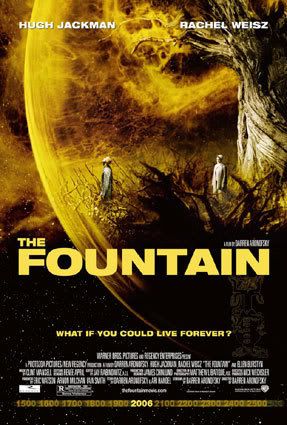
    Every year the Beat conducts a year-end survey at her blog and asks what the biggest story of that year was: I responded that for 2006 it was the considerable number of museum and gallery exhibitions devoted to comic and cartoon art. I’ve written extensively about the shows at the Jewish and Newark Museums and the Library of Congress. Here’s yet another one that I just learned about: “Il etait une fois,” translated as “Once upon a Time–Walt Disney: The Sources of Inspiration for the Disney Studios” which opened at the Grand Palais in Paris on September 16 of last year and just closed on January 15. The show reopens at the Montreal Museum of Fine Arts (or, if you prefer, the Musee des Beaux-Arts, Montreal) on March 8 and runs there until June 24.

    I doubt that I’ll be able to get up to Montreal to see it, and, as yet, there has been no announcement that the exhibition will travel to the United States. But an English language version of the show’s catalogue will be published by Prestel Publishing on February 28, and there are articles on the Internet that provide glimpses of the exhibit, such as the one at “Mice Age”.

    The fact that this Disney exhibition appeared at one of Paris’s leading museums but not in the United States seems to underline the old maxim that comics and cartoon art are taken more seriously in France than in America. But maybe France isn’t quite the enlightened paradise it may seem to comics aficionados from afar. I see that in the “Animated Views” interview with the show’s curator, Bruno Girveau, writer Ben Simon points out that “Bruno has fought long and hard to stage the show, coming up against the highbrow French art critics who were initially horrified to hear that, in the place which usually hangs works by Poussin and Chardin on the walls, he planned to excerpt Mickey Mouse clips!” Girveau contends that most of the critics liked the show once they saw it, but that those who didn’t like it could not get past their loathing of the contemporary Walt Disney Company to recognize the achievements of its founder: “So it’s difficult for them to forget all that ideology and see Disney as an artist.”

    In an article inspired by his viewing of the Grand Palais exhibition, Jonathan Jones, a writer for the British newspaper The Guardian, maintained that “to many people, buying a toy Pinocchio is as bad as feeding your child burgers” (Hey, wait a minute: I love hamburgers) and that “Hating Disney has become a cliche.” Jones asserts that “beneath the all-American facade, Walt Disney had a terrible secret: he was a true artist.”

    Moreover, Jones points out, as with any significant creative artist, one can find and follow personal themes that run through the body of his or her work. “You only have to watch a few Disney films, widely separated across the decades of his career, to recognize the consistent obsessions that can only have been the product of one man’s mind.”

    In his extraordinary new biography, Walt Disney: The Triumph of the American imagination (which I wrote about in last week’s column), Neal Gabler contends that Walt Disney had relatively little to do with the films, animated or not, that his studio made after Bambi (1942) until Mary Poppins (1964). It does appear that Disney did not devote anywhere near the degree of hands-on attention to those films that he did to the classics of the 1930s and early 1940s. But isn’t the real test of his involvement the degree to which the postwar films reflect his personal themes and concerns? When I heard Gabler speak about his book at the Barnes and Noble near Lincoln Center last December 5, he cautioned the audience that “as much as you might love” Disney’s 1950s animated films Alice in Wonderland (1951), Peter Pan (1953), Lady and the Tramp (1955), and Sleeping Beauty (1959), Disney himself has little to do with them. Has anyone done a serious critical analysis comparing the thematic content of the 1950s animated features to Disney’s earlier animated features? This is something that’s missing from Gabler’s book. Don’t most Disney aficionados sense, as I do, that the 1950s animated films reflect the same consistent artistic sensibility as the features from Snow White (1937) through Bambi, and that Walt Disney, even if he did not actually direct or write any of them, was the auteur of them all (to use the term from film criticism)? (I will concede that the 1960s animated features produced during the last years of Walt Disney’s life demonstrate increasingly less of his own sensibility.)

    Jones also argues that people do not look beyond the conventional stereotypical view of Disney’s work to give him credit for its true complexity of mood and vision. Jones points to the first “Silly Symphony” cartoon, Skeleton Dance (1929) “is American, deeply so, in the vein of Washington Irving and Edgar Allan Poe–a jazz-age honk of American gothic that brilliantly uses black and white silhouettes to create an archetypal midnight churchyard where the skeletons get out of their graves and dance.” Jones insightfully observes that “When Tim Burton does this sort of thing [as in The Nightmare before Christmas (1993) for the Disney studio, I presume], it’s hailed as a gothic subversion of the homeliness of Disney, but Disney subverted himself first.” And, illustrating his thesis that Disney’s personal obsessions, themes, and imagery persist through his oeuvre, Jones then notes that “When later he came to make Fantasia, the skeleton dance was echoed in the march of the mops carrying their buckets of water until Mickey chops, chops, chops them up.”

    The thesis of the “Once upon a Time” show is that in creating his great animated films, Walt Disney and his collaborators drew upon artistic influences from outside the animation medium. The Grand Palais’ website states that “Popular culture and highbrow culture typically ignore one another and the links between them have seldom been explored. Walt Disney’s feature-length animated films, from Snow White and the Seven Dwarfs in 1937, until The Jungle Book in 1967, are striking examples of reciprocal influence of these two cultures.” Note that the “Once upon a Time” show treats all the animated features the Disney studio produced during Walt Disney’s lifetimes as works of Walt Disney the auteur.

    According to the Grand Palais’ website “In 1935, Disney spent several weeks in Europe. . . . and took back to California as many illustrated books as he could, to build up a stock of images meant to inspire the Studios’ productions. . . .Original editions of the works of the illustrator J.J. Granville figured prominently, along with drawings by Gustave Doré and German artists such as Ludwig Richter Moritz von Schwind and Heinrich Kley. The English were represented by editions of Alice in Wonderland by Lewis Carroll and Peter Pan and Wendy by James M. Barrie, illustrated by Arthur Rackham or John Tenniel.”

    Likewise the exhibit finds links between live action films of the 1920s and 1930s and Walt Disney’s animated features. The website states that “German expressionist cinema had a more profound impact on Disney’s first long features: the influence of Friedrich Murnau’s Faust (1926) is omnipresent in several sequences of Fantasia,” notably the Night on Bald Mountain sequence. It seems that the Faust film too has a sequence in which a devil figure towers over a city while demons rise towards him. Over the last several years each time I’ve gone to see a rare screening of F. W. Murnau’s Faust at a New York revival theater, it’s been sold out. When Tower Records held its going out of business sale last year, the DVD of Murnau’s Faust was on my want list, but other bargain hunters had already snapped it up. Now that I know Murnau’s Faust was an influence on Fantasia (1940), I am even more intent on finally seeing it.

    Neither illustration nor film were widely considered to be serious art back in the 1930s and 1940s. But film is certainly considered an artform today, and illustration has increasing been gaining cultural respectability (see “Comics in Context” #132), and it does Walt Disney and his collaborators credit that they recognized their artistic importance well over a half century ago.

    Disney and his artists were also studying works that were then unquestionably in the realm of fine art. Like Gabler, “Once upon a Time” devotes considerable attention to Destino, Walt Disney’s 1940s collaboration with Surrealist artist Salvador Dali, which was finally completed in 2003 and will be released on DVD this year. According to the Grand Palais website, “Sleeping Beauty‘s castle was a cross between the illuminations of the Très Riches Heures du Duc de Berry, drawings by Viollet-le-Duc and the extravagant castles of Louis II of Bavaria. Forests took their inspiration from 15th-century Chinese painting, Japanese prints or American or English forests. Bird’s-eye views drew on the work of the American regionalist painters Grant Wood and Thomas Hart Benton. The influence of Gaspard Friedrich and Arnold Böcklin’s landscapes can be seen in Fantasia, and that of the Flemish and Italian primitives in the décors for Sleeping Beauty.” The exhibition even proposes that the “general silhouette” of the Wicked Queen from Snow White “seems to be derived from the column statue at the entrance to Naumberg Cathedral in Germany.” Not having visited the exhibit or read the catalogue, I cannot judge whether some of these resemblances between Disney’s animated films and works of fine art may be coincidental, but where there is this much artistic smoke, there must be fire.

    “Once upon a Time” appears to be arguing that if Disney and his artists studied so much artwork in other mediums, then their animated films must also be works of art. That doesn’t necessarily follow, but it does demonstrate that Disney and his collaborators had a more sophisticated appreciation of art than they have generally been given credit for, and that they had genuine artistic ambitions of their own.

    Reviewers of Gabler’s book have been amazed at his reminders of the high cultural esteem in which Walt Disney was held in his most creative period, the 1930s and early 1940s. Gabler recounts that Soviet film director Sergei Eisenstein “wrote that he was sometimes frightened watching Disney’s films–‘frightened because of some absolute perfection in what he does’ and because Disney seemed to know “˜all the most secret strands of human thought, images, ideas, feelings.’ Later, among other notables, architect Frank Lloyd Wright, novelist Aldous Huxley, and composer Igor Stravinsky would also visit [Disney and his studio]” (Gabler p. 204). Gabler notes that critic Gilbert Seldes, the champion of George Herriman’s Krazy Kat, wrote in Esquire in 1937 about that year’s Mickey Mouse cartoon The Band Concert “that none of “˜dozens of works produced in America at the same time in all the other arts can stand comparison with this one’” (p. 195). Gabler also quotes New York Times film critic Frank Nugent writing in 1937 that Snow White “is a classic, as important cinematically as The Birth of a Nation or the birth of Mickey Mouse” (p. 273). In 1943 Disney was even made a trustee of New York’s Museum of Modern Art. (MoMA did a wonderful Pixar retrospective recently, so why don’t they host “Once upon a Time” in New York?)

    This is indeed astounding: it seems that in the 1930s much of the cultural establishment was perfectly willing to recognize animation as art. In this chorus of praise for Disney, there is no sign of the prejudice that cartoon art is junk for kids that has been prevalent throughout my lifetime. Gabler chronicles how critics turned against Disney in the 1940s, and argues that Disney’s films had indeed suffered in quality. On the television program Theater Talk, shown in New York early January 13, Gabler theorized that the critics condescendingly considered Disney a latter-day “folk artist” and turned against him when he showed he had conscious artistic ambitions, as in Fantasia. I don’t know that either of these explanations is sufficient. Just why the cultural establishment turned so radically against Disney’s animated films in the 1940s and 1950s, and even animation in general (with exceptions such as the early UPA shorts, which were perceived as having what we might now call an indie sensibility) puzzles me. It also makes me wonder about the current new artistic respectability of the comics medium. Is this new attitude here to stay, or will a backlash eventually set in here, too?

    The greatest lesson I took from Gabler’s book is that Walt Disney, from the late 1920s into the early 1940s, thought and acted as a genuine artist, even if he did not use the term. “‘I can’t get into a rut or let my boys get into ruts,’ he would tell a reporter. “˜If we quit growing mentally and artistically, we will begin to die’. . . .Asked by one storyman if Walt felt they were taking full advantage of the cartoon medium, he riposted, “˜This is not the cartoon medium. It should not be limited to cartoons. We have worlds to conquer here. . . .We’ve got more in this medium than making people laugh” (p 300).
    With Fantasia (which was originally called The Concert Feature at the studio), Gabler declares, “This time he was explicitly bidding to join forces with high art and pry the cartoon from its origins in popular culture, where he felt it was doomed to be crude and juvenile. Walt would never have called himself an artist–he was too skeptical of culture and too plainspoken for that–but he did want to make art, if only because that was the natural evolution for him, and The Concert Feature was, he thought, certifiably art” (pgs. 300-301).

    This reminds me of Jules Feiffer’s contention that in the 1940s cartoonists working in comics, even Will Eisner, did not think of themselves as artists or of their work as art. At “The Golden Age of Comics,” a panel discussion held at the Jewish Museum last November 2, Feiffer explained that comics artists back then considered it pretentious and somehow unmanly to think of themselves as creating art. But the best of these cartoonists did indeed create art of enduring aesthetic worth, and examples of Golden Age artwork were hanging in the Museum as part of the exhibition “Superheroes: Good and Evil in American Comics.” Similarly, in the 1930s and 1940s Walt Disney may not have used the word “art” but that was what he was intent on creating through his animated films.

    As Gabler repeatedly shows, Walt Disney could be dictatorial, even tyrannical, and actually frightened his employees. In my experiences in the comics industry I’ve witnessed examples of how authoritarian bosses can wreck the morale of the creative end of a company. But another major point that Gabler makes about Walt Disney is how, in the 1930s and early 1940s, the studio’s most imaginative and innovative period, Disney more than compensated for his flawed people skills through impressing his co-workers as a visionary leader, even a “muse” according to Gabler (p. 242). “Despite the occasional griping and resentment that Walt was overbearing, mercurial, ungrateful, and impossible to please, all of which he was, no one at the studio doubted the overriding importance of his contribution” (p. 207). For one thing, “he was a superb storyteller, and Walt himself seemed to think it was his primary attribute” (p. 207). He was a master of gags and plot structure, and moreover, he had “the uncanny ability to inhabit the character and enter the situation” (p. 209). At story meetings Walt Disney would spontaneously perform the characters, and “everyone at the studio marveled ar his acting” (p. 209). Co-workers “cited Walt as an inspiration, setting standards, expecting perfection, drumming up enthusiasm, buoying spirits” (p. 210). “Finally, and perhaps most important,” Gabler concludes, “there was Walt’s ability not just to supervise but to coordinate the entire studio apparatus” to create a work of art along the lines he envisioned (p. 210-211). “Almost everyone at the studio admired how Walt, in either conducting then or flitting among them, forged them into a unit. . . .Among his employees, the sum total of all these attributes evoked unbounded admiration for the young man who possessed them” (p. 211).

    Gabler asserts that “By the mid-1930s the Disney studio operated like a cult, with a messianic figure inspiring a group of devoted, sometimes frenzied acolytes” (p. 212). This strikes me as too harsh an appraisal. I’m more kindly disposed, having glimpsed–and felt–in my own experience some of this sort of creative fervor that a community of young artists and writers can generate.

    What Gabler reveals about Walt Disney persuades me that Disney was a genuine creative genius. Yes, the word “genius” is too often applied to people who do not truly measure up in the strict definition of that term. But after reading Gabler’s book, I now believe that Disney was the real thing: a true genius, and most of his co-workers of the 1930s, consciously or unconsciously, seem to have recognized it.

    The Guardian‘s Jonathan Jones refers to the Mary Poppins movie as “this magical, and totally unAmerican child’s-eye vision of London as one of the films on which he lavished most attention, a film he was obsessed with making for 20 years, and turned into his final testament. If you want to know the real Walt Disney, watch Mary Poppins.” Gabler believes that Disney saw himself in the character of George Banks, the workaholic executive who rediscovers the child within himself. In last week’s column I delved further into this idea. Gabler recounts how as he grew older and his studio grew larger, Walt Disney increasingly became a corporate executive rather than a creative visionary. But towards the end of his life, Disney found renewed energy and inspiration in working on Mary Poppins. Gabler quotes Karen Dotrice, who played one of the children, as describing Disney as being “like a big kid” (p. 598). The parody court martial of Mr. Banks by the bank executives turns out to be an exorcism of the repressed, stodgy, corporate side of his personality. Banks’s old self dies, and a new self is born, who, appropriately, initially acts like a giddy “big kid” and returns home to “go fly a kite” with his family. Last week I wrote that this reminded me of the section of Gabler’s biography in which he describes Disney’s own midlife crisis: his disillusionment with animation and filmmaking following the studio strike and the financial failures of ambitious films like Fantasia. Disney discovered a new enthusiasm for trains big and small, and Gabler significantly refers to “the kind of delayed childhood he was now enjoying” (p. 475).

    Mr. Banks seizes the day and finds his own “delayed childhood.” But despite what New York Times critic Edward Rothstein says (Nov. 20, 2006), he doesn’t remain in emotional childhood, though the movie does not underscore this point. While flying the kite with his family, Mr. Banks encounters other bank executives who are also flying kites. (Mr. Banks’ psychological regeneration appears to have spread to his whole community.) They inform him that Mr. Dawes, Sr.. the ancient personification of the heartless world of the bank, has died, but though Mr. Banks immediately expresses regret, the other executives, including Mr. Dawes Sr.’s own son, aren’t at all unhappy about it. Mr. Dawes, Sr. died happy, as a result of laughing convulsively (and levitating, like Mary Poppins’ Uncle Albert) over the bad joke Mr. Banks told him (also from the Uncle Albert scene). Unlikely as it seems, the bank executives seem to think that Mr. Dawes, Sr.’s cheerful demise outweighs Mr. Banks’ alleged responsibility for the panic, and so they offer Mr. Banks a new, higher position at the bank, which he gratefully accepts.

    So Mr. Banks hasn’t ditched the responsibilities of adulthood, making a living and supporting his family, after all. Following the Joseph Campbell monomyth, Mr. Banks has undergone symbolic death (of his old workaholic, emotionally inhibited self) and rebirth (as a man more in touch with his emotions, a better husband and father, and even a more successful banker). It makes a certain sense that psychological rebirth would entail a brief return to symbolic childhood (flying the kite) before resuming the role of adult.

    Watching the movie again in December, I had not remembered the death of Mr. Dawes, Sr. and was amazed by the insertion of this dark note (even if the executives make light of it) into the film’s concluding festive mood. (A more noticeable disturbance of the general festivity comes with Mary Poppins’ acknowledgment that she has been utterly forgotten by their children in their joy at reconnecting with their redeemed father and mother. If Mr. Banks has regained his job and family, Mary Poppins has lost hers, for the moment, anyway. Suddenly I see Mary Poppins flying off at the end of the movie as an image similar to that of the door closing upon John Wayne at the end of The Searchers [1956]: each is a protagonist whose success in reuniting a family results in his or her own exclusion from it.) In effect Mr. Banks has inadvertently murdered Mr. Dawes, Sr. by telling him that killer joke. (Comedians do talk about “killing” the audience by making them laugh, an idiom that presumably helped inspire Monty Python’s “killer joke” sketch.) Here’s the mythic motif of the new ruler rising to power by slaying the old, only flimsily disguised. The new generation (well, middle-aged), represented by Mr. Banks, has seized power from the declining older generation, represented by Mr. Dawes, Sr.. But it’s significant that Mr. Banks did not intentionally seize power: he was not motivated by greed or ambition, but merited success by discovering his true self. Moreover, whether or not Disney and his collaborators intended it, Mr. Banks “slays” the old tyrant, thereby symbolically overcoming death, not by brute force but by a work of popular art, however humble, that embodies the spirit of comedy: a simple joke.

    On one level, the death of Mr. Dawes, Sr. could have represented for Disney his triumph over the bankers who for so long had controlled his fate and prevented him from doing the work he wanted. On another level, the death of Mr. Dawes, Sr. could represent the “death” of the side of Walt Disney that accepted corporate thinking but was also cruel and insensitive to his subordinates. Whether any of this was conscious on Disney’s part is a mystery.

    The Mary Poppins stage musical handles the Banks/bank subplot very differently: there is no Mr. Dawes, Sr. and therefore no implication that Mr. Banks is an unwitting murderer. The revision suggests that Julian Fellowes, who write the stage version’s book, may also be aware of the parallels between Walt Disney and Mr. Banks. Rothstein describes Fellowes’ version thus: Mr. Banks “ends up learning. . . that it is far better to approve loans for a kind factory builder who boasts of having no collateral other than his workers, than for a selfish oaf who simply plans to make money. Eventually everyone is convinced by Mary Poppins that anything is possible if you let it, nothing is ever set in stone, and that everyone should have fun and do good works. They join forces in a paean to this narcissistic cartoon of liberalism.” How about that last line? Rothstein succeeds in sounding like Stephen Colbert on one of his rants, except that Rothstein means it. What happens in the stage version is that Mr. Banks turns down a loan to a financial manipulator who has no goal greater than increasing his own wealth, and instead approves a loan to a visionary entrepreneur who intends to build a business that will benefit his workers as well as himself. In other words, the man who gets the loan is like the young Walt Disney himself, a man of vision who values and rewards his workers. In approving this loan, Mr. Banks demonstrates to the audience that he has a heart and thus the potential for redemption. But Mr. Banks is taking a gamble with this entrepreneur, and In the stage version, it is because the bank’s hierarchy disapproves of this decision that Mr. Banks’ job is in jeopardy. But at the show’s end it is revealed that the gamble paid off, and the visionary entrepreneur proved to be wildly successful. Now the bank’s promotion of Mr. Banks makes more sense. Doesn’t the entrepreneur’s success mirror the ultimate financial success of Walt Disney himself? Isn’t the attitude that Mr. Banks takes towards the loan in the stage musical just the sort of attitude that Walt Disney would have wished the banks would have taken towards him in the 1940s?

    Walt Disney did not remain stuck in his “delayed childhood” either. His passion for trains unexpectedly led him in a new creative direction. He wanted to build train tracks at his studio, then he wanted to build a small village that the train could travel around, and, ultimately, he conceived of Disneyland, a creation that rivals his animated features in importance. So that’s why that old-fashioned train chugs around Disneyland’s perimeter; this explains the monorail as well.

    In Disney’s Mary Poppins, both the movie and the stage version, flight becomes a symbol of transcendence, of rising above the rut in which one finds himself and achieving a new freedom. When Mr. Dawes, Sr. learns to laugh, he levitates. Liberated from the self-imposed structures of his old self, Mr. Banks flies a kite. As for Bert and Mary Poppins, they don;t have to achieve liberation; they already have it. Bert and his fellow chimney sweeps in the movie are propelled out of the chimneys like rockets. In one of the high points of the stage musical, Bert, played by Gavin Lee from the original London production, dances up the side of the proscenium, and then upside down along the top. (It’s true! And without the trickery employed by Fred Astaire when he danced on the ceiling in the 1951 movie Royal Wedding. This is really happening!)

    Now there’s one of the advantages of sitting up in the balcony of the New Amsterdam. Broadway prices have skyrocketed over the last several years: and now a normally priced orchestra seat can cost $110 and “premium” seats can cost twice or even four times as much! Thankfully, the New Amsterdam holds a very large number of seats, and so the balcony seats can be had for reasonable, and even surprisingly inexpensive, prices. So, sitting up towards the top of the theater, I had a really good view of Bert’s dance up, across, and back down the proscenium. But there was an even bigger surprise in store.

    At the end of the first act of the Mary Poppins musical at the New Amsterdam, she rises above the stage in flight, holding onto her umbrella, in the iconic image from Mary Shepard’s original illustrations from P. L. Travers’ book and from the end of the movie. Well, I wondered, why did they choose to use what I would have thought would be the climactic special effect of the show only halfway through? They must have something more spectacular in mind for the finale.

    And so they did. At the very end Mary Poppins again rises into the air, holding her umbrella. But this time she ascends outward over the audience, and to everyone’s amazement, rises higher and higher, and passed directly in front of the balcony, virtually right in front on my own seat, and little more than arm’s length away from me, and continued to ascend until she made her exit, somewhere at the very top of the theater! Now that is an unforgettable coup de theatre! (And I am almost as amazed by the fact that Ashley Brown, the actress playing Mary Poppins, somehow managed to get back on stage mere moments later for the curtain calls!)

    ADVERTISEMENTS FOR MYSELF
    “1986: The Year That Changed Comics,” my yearlong lecture series at the Museum of Comic and Cartoon Art in Manhattan, finally comes to an end on Monday evening, January 22, with Neil Gaiman’s first work in comics, Violent Cases, illustrated by Dave McKean. (It was actually published in 1987, but I figure they must have been working on it in 1986.) MoCCA and I are discussing possibilities for other lectures–either one-shots or series–that I could do there in the future. But for now, this is the last of my monthly MoCCA talks, so if you’re in the area, please stop by. (It’s free!)

    Copyright 2007 Peter Sanderson

  • Trailer Park: Alright, Already, With The Fountain…

    By Christopher Stipp

    Archives? Right Here”¦

    I swear as HEY-SOOS is my Lord and Saviour, he isn’t but I think saying that carries a lot of sachet with my Blue State constituency, this is the last time you’re going to hear anything from me regarding THE FOUNTAIN.

    Never mind that the interview I posted on Monday with Golden Globe nominated composer Clint Mansell was heartbreaking if for no other reason than having to endure Pepe Le Peu’s acceptance speech about why his middling little flick was even deserving of an award much less my attention as that croissant-eatin’ , baguette schmearin’, Virginia Slim smokin’ frog tried to appear all humble as we all know Clint was robbed in a Louisiana Purchase sort of way out of that meaningless globe thinggy.

    However, there is one award left in my possession that I won’t be giving away to anyone of French descent and that is the winner of a signed FOUNTAIN poster that I’ve unbelievably managed to keep in pristine condition since taking possession of it in November. I am not only glad to be getting rid of it but I am glad that is one more neuroses I won’t have to tend to once it leaves my home.

    There does need to be a winner, after all, and I have to tell you that this was a great contest for me if for no other reason than I was comforted by all the entries that let me know there WERE people who went to see this movie when it was in wide release. I am tired of the blank stares from people who don’t know what I am talking about when I mention THE FOUNTAIN’s merits as my top film for 2006 and I am hopeful that the DVD release of this movie will help people understand why it was a crime that there wasn’t more of a swell in support when there was a chance to save it from box office obscurity.

    Every one of you out there know what kind of pole-smokin’ I’ve done for this movie but what did other people say they appreciated about this little film that could so they could swipe an Aronofsky original from me? Read and appreciate the sentiments…Each one of you who entered gets a little blue foil star next to your name from me. I know it sucks cock that you didn’t win something but I am over the moon, to borrow such a crap phrase, that so many of you took the time to hammer out a response. I love you all. Sorta. Not really.

    2nd Runner-Up is John M. (Short, concise and captures the one singular moment in the movie where it all coalesces very well…)

    I’m sure you’ve gotten a lot of entries with this and I’m also sure that someone else has done a better job of putting it into words but I’m going with the scene where he buries the seed at her grave. For me it’s just the moment when the whole film comes together and simply kicks you in the gut more than the scene with Izzi’s death ever could.
    John M.

    1st Runner-Up is Jesse R. (Why couldn’t have Jesse been in my creative writing classes? No, instead I get people who think death is this finite emotion that only AFI or My Chemical Romance can capture. Pure brilliance here…)

    This is a movie that I have been watching the development from almost day one. I have the graphic novel and from reading that and watching the movie you can clearly see that this was a huge labor of love. There are short comings in the graphic novel namely how you can’t quite tell why the flash backs are important to the story except on a purely metaphorical stance.

    I do agree with you that The Fountain is one of the very best movies of 2006. There are very few movies currently created that transcend entertainment and become art, and not even art that gets the reply “that is pretty,” but real art that you gain more appreciation upon days after you have see it. It is impossible for me pick just one scene from the movie, that is like stating that eggs are the most important part of a cake. A movie is not just single scene as I am sure you know, but it is how they all interconnect that make them great. The Fountain is a perfect example of such a movie where every scene could be written in great detail describing the importance of it, and the psyche of how men think. Upon reflection of the movie I can narrow it down to two scenes at least that strikes me the most emotionally.

    The first one is when his wife wanted him to go for their traditional first walk in the snow, and instead he didn’t go because of his righteous duty to find her a cure. You see him there in the hallway about to leave; cocking his head to see his wife head out alone, the choice creep across the face and it silently hurts when he turns the other way.

    The scene shows the struggle men have with wanting to enjoy the moment verses fixing the current issue.

    The second scene is where he finishes reading her story, puts the book down and begins weeping. It reminds you of every time you realize what you had, what you gave up for your own selfish desires, and then it is too late. He grabs pen the she gave him, and starts redoing the wedding ring he lost. He is now committed completely to her and will not let anything else come between their love.

    In essence this movie is the epitome of the man’s emotional struggle when faced with losing his very soul mate.

    Jesse R.

    And The Big Weiner, 1st Place Winner, is Dave M. (What’s unique about Dave’s point of view is that he has the same level of passion for this film that I do and he’s able to not only look at one moment but how small pieces fit into the larger whole of this movie. I swear to God, ’cause I think there is some kind of God but I don’t think there was really a HEY-SOOS, if I have only a fraction of AintItCool’s readership I am thankful because I am pretty fucking sure there aren’t as many people as articulate and well-punctuated as Dave here; he really wasn’t exception, either. He’s the norm. Thank you, Dave, for being smart enough to string sentences together coherently and your comments are well appreciated.)

    As someone who loves the film, you know it’s impossible to pick one scene, so I’ll give you a couple and why they resonated with me.

    -The entire story thread where Tommy is trying to find a cure for Izzi. I’ve never been put in the position of losing someone as close to me as a spouse, but the thought of not only having to watch your wife die, but also being smart enough to possibly find a cure bring a heart-wrenching question. Do you spend the time left racing the clock for a cure, or do you spend it as quality time with that person and build memories. The scene where he takes Izzi’s book into the other room and just has a moment of collapse truly brought me to tears. For me, that one scene they play several times of her in long hair running is a glimpse of the picture he has of her and will always hold. When she passes, the complete deconstruction of the man is heartbreaking.

    -On the other side of the coin, at the end of the film when he resigns himself to dying was very powerful. A few people I know saw it as supremely depressing. I saw it as the ultimate release for Tommy. He’s been miserable being alive for so many years trying to save Izzi/The Tree that when he finally realizes that not only is he going to die, but he’s going to join Izzi again and that death isn’t necessarily the end of the road, he is truly relieved and happy. This is one point of the movie that is very open to interpretation, and that’s mine.

    -One other thing that must be mentioned is the score by Clint Mansell. After the emotional grinder that The Fountain is, to listen to the piano piece during the credits was a release for myself and really allowed me to process the movie. Absolutely beautiful.

    Dave M.

  • Toy Box: General Grievous Mini-Bust

    toybox.jpg

    Nothing like a little ice storm to get in your way. For us here in Michigan, ice storms are pretty common in the late fall and early spring – but not in January, when we’re usually buried in snow and single digit temperatures. But with this freaky winter, and temperatures staying right around freezing, we’re getting some weird stuff.

    So as the generator putters along outside, my laptop batteries all charged up, and my Internet connection live, I can still get my column together. Ain’t it amazing?

    I’ve been collecting the Gentle Giant Star Wars busts since the beginning, but I haven’t covered a lot of them with reviews. I’ve been doing more recently though, and the last few releases have been truly outstanding. Let’s check out the latest – General Grievous.

    If you have any questions or comments, drop me an email at mwc@mwctoys.com.

    “General Grievous Mini-bust from Gentle Giant”

    The good General, mostly machine with just enough flesh to be a problem, is definitely a master with the light saber. Generally, these sabers are taken from Jedi with extreme prejudice, so Grievous has earned his place as a big bad in the Star Wars universe.

    toybox_011507_1.jpg

    Packaging – ***
    Okay, they tried. They really did. But this is one very fragile bust, so reports of breakage in the box have been pretty widespread. Mine was fine, but I had to be extremely careful getting it out to ensure I didn’t snap off a small wire or edge piece as I was extracating it.

    toybox_011507_2.jpg

    This box is huge too – at least twice the size of a regular Star Wars mini-bust box. That’s because he comes packed with the complex arms off to either side inside the foam tray, making the box much, much wider than usual. I am glad for the small window though, which shows off at least the intricate face.

    There’s also the normal baseball card sized Certificate of Authenticity, and the edition number is printer there as well as on the bottom of the box. And if you’re curious, it’s an edition size of 7000, so shortages, at least to start, shouidn’t be an issue.

    Sculpting/Design – ****
    The one thing that always makes or breaks a bust or statue is the design – even a great sculpt can’t save a stupid or silly pose. Grievous created a particularly difficult situation, since the four long arms means the amount of space any particular pose might take up could get pretty out of hand. So what to do?

    Gentle Giane went with a rather interesting pose, that I don’t recall as screen accurate, but which fits the character well AND takes care of the issue of space conservation. The two left and right arms are actually sculpted as one, joining at a single shoulder joint. The two back arms are posed behind him, each holding a saber taken from a fallen Jedi, one green and one blue. The forward left arm holds a blaster at face height, preparing to level it on an opponent, almost old west style, while the forward right arm is empty, clutching at empty air in anger…or anticipation of the battle.

    toybox_011507_3.jpg

    The sculpt is simply fantastic, and this is one of the most intricate and elaborate designs of the entire mini-bust series – and that’s a lot of busts. I was amazed at the small detail work as I was trying to get this guy out of the package in one piece. There are tiny wires, tubes and small pointed edges everywhere, and the weathering and damage added to his armor looks extremely realistic.

    The difference between the fleshy eyes and outer metal skeleton is made apparant through different types of texturing, although in reality it’s all the same material. To go even further, they’ve used a very cool, translucent green resin for the inner flesh body, covering organs that can just barely be seen. It’s tough to get a good photo of this, but in person it’s quite striking.

    toybox_011507_7.jpg

    My only issue with the sculpt or design relates to how well the arms and sabers all fit together. There was a looseness in the fittings that is unusual for this line, and the two sabers don’t quite line up front to back or top to bottom with each other. It’s a fairly minor nit though, and one that doesn’t pull him down from the overall four star sculpt.

    Paint – ***1/2
    The paint is almost as impressive as the sculpt, with the best work running around the eyes. Weathering of the blaster, and the work on the saber hilts is also quite well done, and I’ve already mentioned the uber-cool translucent green resin that makes up the very interior of the body.

    toybox_011507_4.jpg

    The silver and black work on the tubing and wires is decent, but the work on the armor damage and weathering isn’t quite as nice as the rest of the work. It’s not a major problem though, and for the most part, this is an excellent paint job.

    Value – ***1/2
    I’m giving this guy a very high value rating, although he runs the standard $45 that most of the GG Star Wars busts do. However, with the complexity and attention to detail, this bust could have been priced much higher, and still warranted the green. For the money, this is one of the best mini-busts in the entire series.

    toybox_011507_5.jpg

    Overall – ****
    Wow! Two four star reviews in one week – one for the Premium Format John Wayne from Sideshow, and now this new Gentle Giant mini-bust. I waffled around a little bit over this score, almost dropping it to ***1/2 largely because of the slightly loose and sloppy connections between at the shoulders and light sabers. But in the end, I didn’t think those minor problems were enough to pull down the score. This guy is fantastic, one of the best they’ve done, and with the recent Chewbacca and Darth Maul, both of which were just as amazing, Gentle Giant has really gotten the year off to a bang.

    toybox_011507_6.jpg

    Where to Buy –
    Online is your best option, unless you have an LCS that carries them:

    Alter Ego Comics has him in stock for $46.75.

    CornerStoreComics.com has him in stock for $55.

    Related Links –
    I’ve been doing more of the Gentle Giant Star Wars busts lately:

    – the most recent was Chewbacca and Darth Maul.

    – and then there’s Qui-Gon, Palpatine, and Lando in his Skiff Disguise.

  • 10 Quick Questions: Clint Mansell – You Just Have To Dig Deeper Sometimes

    10quickquestions.jpg

    by Christopher Stipp

    One thing that has prevented me from straying into interviews with musicians is my ignorance of all things formal regarding the one art form I seem to have no trouble enjoying but little ability to comprehend.

    After listening to composer Clint Mansell talk in an interview about music being a fluid process, much like writing, that’s based more on feeling what works and what doesn’t, not even necessarily focusing on measurements or note placements, you feel like there could be a deeper understanding of film composing beyond the idea that it’s nothing more than gathering dozens of people in a room; as such, you’ve got to make sure you have that one guy with the thick fuzzy drum sticks hovering over many timpani. Clint just seemed like someone who is meeting old school film music with a nouveau approach that it sorely needed.

    Just listen to the REQUIEM FOR A DREAM soundtrack. It bends your will in thinking this music is a note by note, blow-by-blow, audible journey that could only accompany Darren Aronofsky’s vision of descents into disintegration. It’s just as hardcore as the film and anyone who thinks otherwise doesn’t get what Clint does better than his more classically trained peers.

    After receiving an award from the Chicago Film Critics Association recently for his work on THE FOUNTAIN, much respect has to go to The Kronos Quartet and Mogwai in the execution of Clint and Darren’s vision, he is also nominated for a Golden Globe that he way very well be picking up tonight should the stars, and Xibalba, be aligned in his favor.

    Regardless, though, of whether he wins or loses I had the sense by the end of our conversation Clint honestly is a rare breed who believes in the work and in the process of work. There are far to may individuals who concern themselves with the quantity and profile of the jobs they take in his line of work, certainly he deserves to be one of those people should he want to tout his precision with PI or REQUIEM even THE FOUNTAIN and screw any notions of impropriety, but Clint makes you believe that there should be more collaborators out there who feel as close to other people as Clint does about working Darren. I wish other people were more kind about the professional relationships they keep but it’s nothing short of inspiring and emboldening to hear Clint talk about the real work that happens behind the screen in making two of the most complex and emotionally rewarding movies that have come out in the past decade.

    To say that I’m disappointed with critics and viewers alike for their neglect of a film that had more heart than a comeback-kid who slaps on the gloves for “one more fight” would be a gross use of the word.

    CHRISTOPHER STIPP: First of all, congratulations, on the Chicago Film Critics award.

    CLINT MANSELL: Thank you very much. I am pleased that the film, the score, is getting some kind of recognition. I guess we were all kind of disappointed, really, with some of the reactions to the film. I don’t suppose”¦maybe we weren’t that surprised in retrospect.

    It’s just nice, though, that the film got recognized.

    STIPP: To give you an idea of where I’m coming from, I interviewed Darren the morning after I saw the film and mentioned that it was his directing and your score that genuinely elevated the movie from something great to something transcendent; it was the perfect marriage of both the audio and visual components. These two work in concert so well, Kronos Quartet and Mogwai deserving a heap of credit too, and I am curious to know, you coming from a pop, punk, electronic background, what bug bit you to get into film composing?

    MANSELL: I think it’s a natural progression for me, really, as a writer. I mean I wrote my first song about twenty years and I think writing is like a muscle, if you exercise it”¦it will grow and you’ll get better at doing it. It will take you places.

    I’m excited by music by other people’s music, it influences me, and makes me want to do better and takes me to different places when I listen to it. That is reflected in the music I want to write. When you get to work with someone like Darren, who I really connect with on an artistic level, as well as on a friendship level, but when he explains and tells me his ideas I feel like my possibilities are unlimited, you know? I can’t do whatever I want but if I can make it work within the context of the film, if we know it’s right, I can pretty much do what I want. The last thing Darren wants is something that sounds like a regular movie score.

    And like you were saying about the visuals and music working in concert”¦the way Darren tells his stories are not”¦the regular, run of the mill, act one, act two, act three type of events, you know, he’s looking to do something different and challenging if only to himself. I don’t think he’s particularly going, “The world needs me.” He’s going “Well, if I am going to do something it’s got to be worthwhile and say something to me and challenge me” knowing that’s what he instills in all of his collaborators.

    We’re not just here trying to get the best table at fucking Spago’s or something. We’re here trying to do something. We went out and did something that we felt was valuable and that’s the excitement of what we do and, also, the downside to that is when people don’t see it the way we see it; what doesn’t kill you makes you stronger, as they say, just move onwards and upwards.

    STIPP: And you have the Golden Globes on Monday. I’m curious to know, on a personal level, how you look at these awards. Are they a popularity contest or is there something special to it all?

    MANSELL: Well, who knows what the criteria is for these things. There’s a cynical way of looking at it and then there’s my view on it which is I’ve done something I’m really proud of with people I love and we did something that”¦for me, to get nominated or an award for this particular work I’ve done, given that the film wasn’t a critical success, wasn’t a box office success, it’s certainly not coming from a popularity contest point-of-view.

    If I got this award for something like some other films I’ve done, like SAHARA, which I something I’m proud of as well, I did good work on those but maybe I’d look at it differently because they’re more straight-ahead kind of films. So, for me, to have been nominated and the work recognized, I take it as a fantastic form of credit for the work we all did on the film.

    STIPP: Speaking to the point of how long this film took to come out can you talk about whether the ideas you had for this film’s score evolved as the project took its many turns? Did the score that’s in the movie end up being what you initially envisioned?

    MANSELL: No, [the score] became something completely different”¦because the film changed so much; we started this right after REQUIEM FOR A DREAM. I mean, yes, I am very proud for what I did on REQUIEM FOR A DREAM but there is no way I could have written the music for THE FOUNTAIN that I have now written back then.

    I mean I’ve done a lot of other work since then, some of it good, some of it pretty good, some of it has been shit”¦(laughs) It’s been a real learning experience; I’ve really exercised that creative muscle. And, also, because the film changed it became a much more intimate story on a much smaller scale.

    When we started out it we knew it was going to be this epic”¦there were these big battle scenes”¦and everything happens for a reason. I think a movie, the way it was back then, it would’ve made the movie a different animal. I’m not saying that would have been better or worse I just personally think that everything that happened got us to a better place in the telling of the story. The scale got a lot smaller, it got a lot more intimate.

    Eighteen months ago, during the editing process, we did the trailer, I wrote the trailer music for the first trailer, and that stuck more to the original guidelines of what we were thinking about; it was bigger, the music was bigger, the music was heavier, it was more epic. And that worked for the trailer because that’s the sort thing you want, you want it to leap off the screen, but when I took that music and then tried to cut it into the film just to try to see how it would work you could tell instantly that this was wrong. It was too big, it was too grand, it was too bombastic for the story we were now telling and that was when Kronos [Quartet] came back in again because I saw that I didn’t need a sixty piece orchestra, I just needed these four guys to do it.
    STIPP: Was there a time when The Kronos Quartet wasn’t going to be involved at all?

    MANSELL: I think, in our minds, we weren’t going to work with them because we didn’t think, REQUIEM worked so well, we just felt we weren’t going to top that. We thought maybe if we were lucky enough to make another two or three more pictures then we would go back to them but as the score developed and as it became more intimate and as I listened to bands like Mogwai, Godspeed You! Black Emperor and Sigur Ros it was sort of cinematic and orchestral but on a neo-classical level; it was a more modern approach to orchestrated music. And as I was blending the various elements it occurred to me to think about who would be the best in the world to play this and the answer is Kronos Quartet The answer is still the same, six years later. And although we hadn’t really been in touch with each other that much during that time, when I talked to David [Harrington] and the rest of Kronos it was weird”¦We had each gone off for six years and done different things but then when it was time to talk about THE FOUNTAIN we were all sort of converging on similar thoughts and when we showed them the movie and the music they got it instantly. It just seemed like the most organic thing. It was great.

    STIPP: The first thing that I thought of when I listen to the lead track on the soundtrack “The Last Man” I am not only reminded of how exquisitely beautiful Kronos can be but it is also neo-classical in a way that makes me think that this is the kind of classical music which seems entirely appropriate to be played in a symphony hall as well as in a CD player.

    MANSELL: Actually, Kronos is playing here on the 20th and they’re playing a suite from THE FOUNTAIN.

    STIPP: Really?

    MANSELL: Yeah, it’s pretty cool.

    STIPP: It translates perfectly, And as I was preparing for this interview I went back and listened to REQUIEM, the REQUIEM FOR A DREAM remix CD and then THE FOUNTAIN. I am struck by the capturing of mood on both the original REQUIEM and FOUNTAIN scores. REQUIEM, when I listen to it, is just haunting. There is no other emotion running through that work. Is that part of your writing, that you want to evoke something specific?

    MANSELL: I’d love to say that there was such disciplined and focused thoughts about it but I don’t really work like that.

    My way of working is just absorbing the film, absorbing what Darren’s saying to me”¦I just have to get to a place of really letting go. Some of the best things I’ve written, for me, have come at times when I have no recollection of writing them, if you know what I mean. It’s not like some kind of “Ooooh” spiritual transfer or anything like that but things happen when I give into it. That’s the only way I can describe it and that takes a lot of exposure to the film, to the work, which is why I think I do my best work with Darren. Not only because he’s a great filmmaker and he does things that inspire and challenge me but also, as well, I spend the most time in his world when we’re working on something.

    I mean six years of working on THE FOUNTAIN, obviously not working on it every day, but being able to take the time to”¦the research you can do over six years of different kinds of music that you can then filter through yourself to come up with something just kicks the shit out of getting on a film for six weeks, banging out some music and off you go. It’s a whole different thing and that’s the way it works for me.

    I mean I’m not classically trained, my musical theory is nothing really to write home about”¦it’s all about gut instinct and reaction and thoughts and absorbing the work. To me, that’s the only way it can be. I’m sure lots of other people work differently”¦there comes a point when you know what you’re doing right or wrong but if I’m in sort of sync with the film it’s telling me that it’s rubbish what I’m doing or it’s telling me that it’s right.

    STIPP: I was going to bring that up myself as you’ve said in one interview that, at one point, “the film just said “˜no.’” Is it organic, the process of getting to this point, or is it someone like Darren telling you that it just doesn’t fit?

    MANSELL: I think that it’s a learning experience.

    When you write for yourself in a band you can do anything you want. On a film, though, it’s somebody else you’re collaborating with and you’ve got to lose that preciousness, that preciousness you get when you do something yourself. The first few times when the other person says something like, “Nah, I don’t like it,” at least for me anyway, it plays on your insecurities and self-doubt. I’ve been very fortunate with Darren because we work so well together and it has never come to that point, it only seems to happen to me with other people”¦going away and doing other films for those six years was really helpful for me.

    I did a film, KNOCKAROUND GUYS, with these two great guys, Brian Koppelman and David Levien, both directors, and it was the first film I got because of PI, REQUIEM hadn’t come out yet and they were big fans of PI, and I was writing material for them. It was going really well, had a good time doing it, but there was this one piece of music that I kept saying, “No, no, no, it’s great.” And in the end it was Brian who eventually said, “Look, I know what you think it’s doing but believe you me it’s not doing it.” It was there I learned that if you rewrite something it’s always better than what you had before.

    You just have to dig deeper sometimes.

    If I don’t write for a while, the first few things I write about is shit because I’m writing on a very superficial level at that point but my memory is reminding me of things I’ve done which is better than what I’m doing right now and I’ve got to work harder, dig deeper”¦and I’m not saying it’s easy, because there are still times when I think I’ve done something I thought was pretty good and someone will say, “No.” But now I have the learned memory that that says, “Ok, you can do better, it will be better. You’ve just got to work harder.” If it was easy, everyone would be doing it. You’ve just got to get in there and not be frightened.

    STIPP: How do you get to that point where you just accept that not everything out of the gate you do will be brilliant or do you still get that twinge when someone disagrees with how you initially feel about something?

    MANSELL: I think that twinge goes hand in hand with the ego that’s necessary to think that you’ve got something to say and contribute anyway. If I was constantly going to go “No, no no. I think you’re right. It is shit” I would never do anything. There’s some basic desire that you’ve got stuff to put out there so when you’ve done something, and you’ve worked hard at it, and you get connected to it”¦I think there’s times when you can’t see the forest for the trees if somebody criticizes it but without that care and that passion maybe you wouldn’t be able to rise to the challenge anyway. I mean, I don’t know, I’m possibly making excuses for my own immaturity but part of the character that I am helps me create the music I do. Is there is a certain negative side to that? Yeah, I mean we all want to evolve and grow but at the same time that’s part of the equation, it helps me to do it in the first place.

    STIPP: Has it helped you get to a point in your relationship with Darren, that you have a comfortable back and forth openness?

    MANSELL: It’s funny because I think we argued more on this film than any other.

    STIPP: Really?

    MANSELL: Yeah, I mean not in a bad way. The way the score is, when I was mocking it up in demo form, it didn’t come across like it does now. A lot of the stuff was done on piano, it wasn’t done with strings but then we got it to Kronos and their strings just brought it to life. The Mogwai elements, while written by me, they were sort of estimating a Mogwai-ishness if you like. And when you put together those disparate elements it takes a while for it to gel without it sounding, not hokey”¦but melodically and thematically we were just trying to get the right vibe. It’s hard work when you take two fantastic artists you’re effectively trying to replicate with a computer. It took a little time but I knew where I was trying to take it but Darren was having trouble envisioning it from what I was giving him at the time.

    [SPOILER WARNING]

    So what I did was I did the whole end part of the film, where the star explodes and [Hugh] accepts his death, we mocked it up and I sent it to Mogwai. They basically recorded it themselves on top of my string arrangements. So, suddenly, we had Mogwai playing the stuff for real and when Darren heard that he said, “I got it now.”

    I could see it because I knew Mogwai were capable of but Darren’s obviously putting that trust in me to say, “Ok, show me.” I say that it’s very difficult to replicate an artist like Mogwai or Kronos in a computerized world but that all sort of dissipated when we heard it for real.

    STIPP: I think there’s an enormous dependence on the score just because of the first ten to fifteen minutes being so vital in creating a moment.

    MANSELL: Well, what we would do is that we were all in New York together for three months, Darren was editing across the hall, I was in the room opposite him, and every Friday we would watch a new cut of the film that they were working on all week, during the week they would give me the new edits and I would be re-working the music to those edits, writing new stuff, putting it in”¦And every Friday we would watch the film and go, “What’s working? What’s not working? Do we like this? Do we like that?” By doing that I think we really managed to get a groove between the edits and the music and the pace of the film and the growth of the film. It was pretty intense work but I think that really gave it its synchronicity.

    STIPP: I know, as a writer, there’s some danger of not bring able to recreate that moment that started it all after you’ve spent so long on a piece. How did you stay fresh on that moment Darren explained what this movie was going to be about?

    MANSELL: Well, I saw it evolving, going places.

    Working with Darren it’s not like he’s constantly chipping away at the one thing that’s not making any difference. We don’t get bogged down in little things because they’re taken care of as we go along. I mean I have worked on films where that has been an absolute nightmare. Where they’re editing, re-editing it, to the point where it’s like a ten-thousand pound gorilla in the room that no one acknowledges”¦besides the fact that the film is shit you can cut this film any way you like and nothing is going to help it. But it’s not like that with Darren. I mean things move forward, ideas progress because his films are rich in ideas.

    For me, there’s something new coming through that I need to address. I mean it’s questions like, “Have we made the link between this and that?” or “Between this scene and this scene?” We sit there with pens and colored paper, this color is this theme, that color is that theme, and we put it up against every scene in the film and judge the music accordingly. We constantly move things around, it’s like a gigantic jigsaw puzzle, and eventually you get to a place you think is right.

    One thing I wanted to get back to, about arguing, one thing that needs to be understood is here is how we worked: the studio wasn’t really privy to my developments of the score, they’d ask for it, but Darren won’t temp his films with other people’s work. So, it’s a slow process. We had a lot of music to draw from but, still. So, his stress levels were ten times more than mine were.

    STIPP: I know you’ve mentioned you don’t really read sheet music and Darren mentioned in passing with me that he was amazed at how precise Kronos was with regard to their knowledge of precise musical movements. Was there a language barrier between you and them?

    MANSELL: There was a little bit on REQUIEM but not with THE FOUNTAIN because I was more advanced than when I did REQUIEM. We were more aware of the process so we could present a much more musical job to them, if you like. Like, on REQUIEM we had a couple of issues of just getting it in sync with what I was trying to do, I mean we managed to do it, but it was done in an almost non-musical way. But the experience I’ve had on so many other films really helped me present a more professional approach, professional job to them.

    STIPP: I realize you don’t need me to say it but good luck, genuinely, Monday night at the Golden Globes.

    MANSELL: Thank you.

    ##

  • Comics in Context #160: Banks’ Holiday

    comicsincontext4.jpg

    cic-20070112.jpgThe triumph of Neal Gabler’s voluminous, thorough and fascinating new biography, Walt Disney: The Triumph of the American Imagination (Alfred A. Knopf, 2006), is that it so fully humanizes a figure whom many of us previously knew either from his public image, as the benign, fatherly host of his weekly television series, or as the enigmatic and sometimes dictatorial executive of later books on animation.
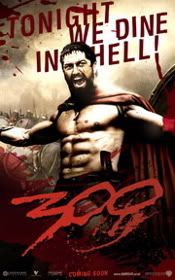
    In fact, there is one anecdote in Gabler’s vast tome that should allow any of us in the comics business to identify with DIsney. “Walt would recall an incident that happened on the back platform of the train when he first headed west to Los Angeles. He was making conversation with a man there who asked what Walt did. . . . “˜I make animated cartoons,” Walt told him, which was met with a steely disdain that Walt never forgot and that had led him to resolve that someday his cartoons would be afforded the same respect as live features” (p. 271).

    As regular readers know, I’m associated on a volunteer basis with the Museum of Comic and Cartoon Art in New York City, and one of the perks of being a museum staffer, albeit unpaid, is that I receive free admission to other museums. So last month I visited a Manhattan art museum, which shall be nameless, and presented by MoCCA ID card at the admissions desk. The man behind the counter read the name of the museum and scrunched up his face into an expression of, yes, steely disdain for the idea of a museum dedicated to, of all things, cartoons. Thanks to Gabler’s book, I can now console myself with the knowledge that even Walt Disney had to experience this prejudice against the artform. (And to be fair, last year I showed my MoCCA ID card to a woman at the admissions counter for the Whitney Museum of American Art, and she not only burst into enthusiasm, but asked if she could bring her art students to visit the museum. So, yes, the cultural climate is changing, if not as widely as I might hope.)

    Back in 2005 I wrote a number of columns about Lincoln Center’s retrospective of musical animated cartoons, and commented on how various people in animation were interested in the figure of the conductor (see “Comics in Context” #109 and 110). Mickey Mouse plays that role in The Band Concert (1935), among other cartoons, and as the Sorcerer’s Apprentice in Fantasia (1940), “conducts” the seas and the heavens as if they were orchestra members. Of course, at the end of that section of Fantasia, Mickey famously shakes hands with Leopold Stokowski, two conductors united. I suggested that Walt Disney, among others, regarded the conductor as a symbol of the filmmaker, directing the creation of a work of art.

    How rewarding to learn from Gabler’s book that I was right on target with Disney! “Walt himself compared the cartoons to a symphony, with him as the conductor who took all the employees–the storymen, the animators, the composers and musicians, the voice artists, the ink and paint girls–and got them to “˜produce one whole thing which is beautiful’” (p. 210).

    There is a great deal to say about Gabler’s biography of Disney, but this week I want to concentrate on the light it casts on a subject I wrote about a few weeks ago: Mary Poppins, in its incarnations as P. L. Travers’ original book, Walt Disney’s 1964 film adaptation, and the new stage musical on Broadway, based on both (see “Comics in Context” #158). Last time I concentrated on Ms. Poppins herself, but this time I’m turning to a character who is barely present in the original book, but who has the principal character arc in the movie and stage musical: Mr. George Banks, the father of Mary Poppins’ charges, Jane and Michael. As Variety theater critic David Rooney referred to Mr. Banks in his review of the Broadway version (Nov. 16, 2006) as “George whose sensitization is the story’s central journey.” In the course of the movie and play he changes from what writer Caitlan Flanagan called “a martinet banker” in her Dec. 19, 2005 New Yorker article about Travers, whose signature song in the stage version is “Precision and Order,” to an emotionally open and loving husband and father.

    The Mr. Banks arc is the Disney studio’s invention. Travers’ original book is episodic: Mary Poppins takes the children on one adventure after another, until finally we reach the end of the book and she leaves. The redemption of Mr. Banks gives the story of the movie and stage musical an overall structure. Moreover, through developing the character of Mr. Banks, Walt Disney and his collaborators on this family movie gave the adults in the audience someone with whose problems they could identify.

    It also solved another problem. As Flanagan explains, “The story of Mary Poppins depended on the premise that it was normal for a middle-class family to employ. . .a servant to raise the children. But to a large segment of Disney’s intended audience this idea would be bewildering or, at least, cold and unpalatable.”

    Travers expressed surprise at the movie’s notion that Mr. Banks was a bad father. Flanagan quotes her as writing, “What wand was waved to turn Mr. Banks . . . . from an anxious, ever-loving father into a man who could cheerfully tear into pieces a poem that his children had written?” But Flanagan earlier related that Travers’ father died when she was ten, that her mother was irresponsible, and that as a girl Travers turned instead to her unmarried Aunt Ellie, who “bossed everyone around, but her fierceness disguised a kindness she would have been embarrassed to admit” and who was the obvious model for Mary Poppins. Moreover, Flanagan asserts that “the fate of children whose parents can’t take care of them – haunted her [Travers] for the rest of her life.”

    Of Travers’ Mary Poppins books, I’ve only read the first, and it gives me the impression that Mr. and Mrs. Banks pay little attention to their children and are perfectly content to let Mary Poppins take the lion’s share of raising them. The children’s adventures with Mary Poppins thus become ventures into a secret world to which their parents are oblivious. So Walt Disney’s interpretation of Mr. Banks as a rather distant father seems reasonable to me. Richard Sherman, who with his brother Robert wrote the songs for the Mary Poppins movie, worked on its story with Walt Disney, and told Flanagan they realized, “You could make the father emotionally absent.” Hence, he told her, “We made it a story about a dysfunctional family,” Sherman said. “And in comes Mary Poppins – this necessary person – to heal them”

    Gabler points out that Walt Disney had been considering doing a Mary Poppins movie since the 1940s, and when the movie finally was being made, “Walt was energized. . . .It had been years since Walt was so personally invested in a film. . . he obviously connected with the film in ways that he had not connected with the studio’s recent releases” (pgs. 598-599).

    How did he connect? Gabler explains that Disney’s great early feature films, like Pinocchio (1940) and Dumbo (1941) are about children achieving maturity, taking on the “hallmarks of adulthood.” In contrast, he says, “Mary Poppins was a kind of reversion to childhood before responsibility, or, rather, a reaction to it. In a household that encouraged them to suppress their antic spirits and behave like adults, Poppins taught the children joy. . . If his earlier films had spoken to young Walt Disney’s need for empowerment, Poppins spoke to the older Walt Disney’s predicament as a corporate captain burdened with duties. . . ” (p. 599).

    It makes sense that as he grew older, the films that Walt Disney considered personal projects would change. I observed a similar phenomenon with George Lucas’s Star Wars movies (see “Comics in Context” #86). The original Star Wars trilogy, made by a young man, who, when he started them in 1977, was still striving for success, were about empowerment; they also embodied a young man’s optimism. The later trilogy, made by an older, successful man, who has become “a corporate captain” like Disney, reflects disillusionment, shows a new concern with mortality, and even approaches tragedy; the “New Hope” is left to the next generation, represented by the births of Luke and Leia at the end of Revenge of the Sith (2005). In contrast, Disney holds on to his optimism in Mary Poppins: the true central character, Mr. Banks, emerges from disillusionment into spiritual regeneration.

    Gabler asserts that Walt Disney “could certainly identify with Mr. Banks, the stodgy banker who has a child lurking inside him, and with Mary Poppins, the magical nanny who manages to emancipate that child” (p. 599). This is certainly true, and Gabler is particularly perceptive in recognizing that Disney could identify aspects of himself with more than one character in the story.

    If Walt Disney, consciously or unconsciously, molded Travers’ Mary Poppins into his own spiritual autobiography of sorts, then there are further depths to be plumbed.

    As many reviewers of Gabler’s book have remarked upon, Walt Disney was unconcerned with money except as a means for financing his future projects. But he was forced to become concerned about it. Astounding as it may seem to us today, when they are all nearly universally regarded as classics of America popular culture, Pinocchio, Fantasia (1940), and Bambi (1942) were all failures in their initial releases, and the Disney studio would have gone bankrupt if not for the film projects it undertook for the government during World War II. Moreover, as the Disney studio grew, it inevitably lost the sense of community it had in its earlier days, especially after the animators’ strike of 1941. Gabler describes Disney’s “transformation from a heedless entertainer to a cautious corporate leader” (p. 442) who “even looked different. The boyish young Walt Disney had dressed casually and flamboyantly,” but now “his suits were more likely to be solid blue or gray and conservatively cut. . .” (pgs. 441-2). One reason for all this, Gabler explains, was “the need to make films without also making mistakes. The studio couldn’t afford the risk.” Gabler maintains that Disney was growing more conservative anyway, in part “possibly” due to the fact that “he was in his mid-forties and no longer a reckless young visionary” (p. 442).

    Mr. Banks, of course, by Travers’ own admission, is dedicated to making money: “Now, the City was a place where Mr. Banks went every day–except Sundays, of course, and Bank Holidays–and while he was there he sat on a large chair in front of a large desk and made money” (p. 4).

    As his name suggests, the movie’s Mr. Banks’s ties his sense of identity to his job. In his book Gabler shows how bankers thwarted Disney’s dreams ands ambitions in the first decades of his studio. For example, after the strike, an executive of the studio’s creditor, the Bank of America, “concerned about what he saw as Walt’s profligacy,’ “ordered the studio to restrict itself to the production of shorts,” and moreover demanded “the creation of an “˜executive committee,’ including a bank representative” to govern the studio. “In effect, the studio was no longer Walt Disney’s fiefdom, He was now under the control of the businessmen” (p. 376). Did Disney the artist feel that by increasingly conforming to the demands of the corporate world, and indeed by making himself over into a conservative corporate executive, that he had joined the enemy’s side?

    Whether motivated by the need to make money or by his artistic ambitions, Disney was quite a workaholic who had trouble tearing himself away from his own figurative desk. Gabler quotes animator Ward Kimball about a train trip he took with Disney: “No matter what you were talking about, he’d get back to this goddamn studio. . . .He wanted to talk about it. This was HIM. This was his SEX! This was EVERYTHING. . .The orgasms were all here” (p. 473).

    It appears that Disney was indeed sublimating his libido into his work, at the expense of his family life. Gabler makes clear that Disney was emotionally distant from his wife, though he was quite close with his daughters. “But as much as he cherished his girls, and enjoyed spending time with them, there was something solitary about him when he wasn’t at the studio–something self-absorbed and distant” (p. 462). Gabler states that “Walt seemed to realize that he was hopelessly addicted to work at the expense of family and friends” (p. 282).

    There, too, is a link between Walt Disney and the movie’s Mr. Banks, who, as Sherman observed, is “emotionally absent” from his family. The stage musical goes even further. As Ben Brantley put it in his Nov. 17, 2006 review of the stage version for The New York Times, “Mr. Banks. . .learns to stop recoiling when his wife tries to kiss him and to value quality time with the kids over making money.”

    I also wonder if Disney, consciously or not, saw himself in Mr. Banks, not only in Disney’s relationship with his children, but in Disney’s relationship with his employees. Gabler perceives a paternal quality in Disney’s attitude towards the people who worked at the studio. At its best, in the 1930s, “if this was paternalism, it was paternalism in service of a higher principle. . . .He wanted an organization in which everyone would be selfless and happy” (p. 241). But Gabler also shows, especially as time went on, that Disney could be a martinet who terrified his employees. In Mr. Banks, before and after his transformation, perhaps we see Disney the distant, tyrannical “parent,” and Disney the benign, caring “father” to his staff.

    Gabler also tell us that Disney “always loved to forge people into a happy unit” (p. 240). That’s what Mr. Banks does at the end of the movie, when he reconciles with his family and invites them to join him in his new pastime of flying a kite. Here too is one of the links between Walt Disney and the character of Mary Poppins. Even if he didn’t do it enough, Disney loved spending time with his daughters, and Mary Poppins takes the children on one magical adventure after another. At the movie’s end, Mr. Banks, the character who more clearly represents Disney himself, takes on Mary Poppins’ role of companion to his children, and so there is no more need for her, and she departs.

    As a worker of magic, which often amazes and entertains the children, Mary Poppins can also be regarded as metaphorically representing the creative artist, making yet another connection between her and Disney himself. Bert is specifically identified in both Travers’ book and in the Disney movie as an artist, and one who creates a world within his painting with characters that come to life. So Bert effectively deals in animation, like Walt Disney himself.

    I also wonder if Disney, consciously or not, saw himself reflected in Mary Poppins’ characteristic sternness. Gabler shows repeatedly that Walt Disney was a difficult man to know, had few friends, did not show emotional warmth towards his employees, and, indeed, intimidated his staff, and could be cruel to people. Yet Gabler also makes clear that Disney had this “paternal” side and, at least before the strike, took unusual steps to promote his employees’ welfare and happiness. So could Disney have identified with his version of Mary Poppins, who masks her genuine caring for the children behind her forbidding facade? (Even Travers notes, when Maia, the star that took human form, parts from Mary Poppins, that Jane and Michael “could see in Mary Poppins’ eyes something that, if she were anybody else but Mary Poppins, might have been described as tears. . . “ [p. 194].) Mary Poppins’ severe demeanor could be used to rationalize always treating children sternly and never betraying emotion. So it is a relief that Disney’s Mary Poppins film ultimately depicts the transformed Mr. Banks’s open affection for his wife and children as its ideal. Mary Poppins, hiding her true feelings beneath a stern manner, was a necessary transitional figure in the family’s evolution, and is sent on her way once their “dysfunction” is cured.

    There is yet a fourth figure in the movie who may resemble a side of Disney and who is missing from the stage musical: the head of the bank, Mr. Dawes, Sr., an extraordinarily ancient man who can barely stand upright. (The closing credits reveal that Dick Van Dyke, who plays the young, spry Bart, doubles in the role of Mr. Dawes, Sr.. Van Dyke is unrecognizable beneath the banker’s old age makeup, and proved far better at altering his voice in this role than he was at adopting a Cockney accent for Bert. Surely I am far from the only person who, on first seeing the movie, did not realize that Van Dyke played the elder Dawes until the closing credits.) This is a man on the brink of death, who maintains his hold on the reins of power well past the time he should have passed them on to a new generation, namely Mr. Banks’s. Death thus symbolically rules the bank, whose vast emptiness might resemble a mausoleum.

    Despite Mr. Banks’s loyalty to the bank, the elder Mr. Dawes and his hierarchy show no loyalty in turn to him. In the movie Mr. Banks falls from his masters’ favor through sheer accident. When Mr. Banks brings his children to the bank and encourages Michael to open an account, Michael, understandably cowed by his surroundings, vehemently refuses. A customer overhears, leaps to the conclusion that something must be wrong with the bank, and her panic spreads, causing a run on the bank. For adults in the early 1960s who remembered the 1920s and 1930s, this sequence would conjure up the fears they felt during the Great Depression. Significantly, Frank Capra made two films that dramatized a similar situation: in American Madness (1932), a rumor foments panic and a run on the protagonist’s bank, and in It’s a Wonderful Life (1946), there is another fear-driven run on George Bailey’s savings and loan. In each of these Capra movies, the hero’s friends loyally rally to his support and prevent him from going under. In the Mary Poppins movie Mr. Dawes, Sr. and the rest of the bank’s hierarchy blames Mr. Banks for the panic and decide to fire him, or, to continue the death analogy, to terminate his employment. (Mr. Banks accepts responsibility for his children’s actions, but of course, the children were not really to blame. It’s the nameless customers who really started the panic, but they cannot be identified, and Mr. Dawes, Sr. and company apparently need a scapegoat.)

    In the movie, before returning to the bank to face the judgment of his superiors, Mr. Banks morosely ponders his imminent fate: to have his career cut short while he is in his “prime.” Again, this evokes memories of the Depression for Disney’s generation. For Disney himself it may have alluded to the times when his studio nearly went bankrupt, a fate that might have put an end to his career and artistic dreams. Pointedly, on his way to the bank, Mr. Banks passes by the Bird Woman who feeds the pigeons on the steps of St. Paul’s Cathedral (which is near the “City,” London’s banking district). Gabler reports that towards the end of his life, Disney would repeatedly summon the Sherman Brothers to play the song about the Bird Woman, “Feed the Birds,” for him. “Whether Walt related to the song because he related to the old woman’s loneliness, or whether in a life of grand gestures he appreciated her small one, or whether he recognized in her his own mortality, or whether the woman simply reminded him of his own mother, he never said. . . .But hearing the song, he would always cry” (p. 618). These all seem good explanations, and Gabler’s mention of mortality fits in with the idea of the bank as the realm of death.

    The Bird Woman is also a rather pathetic figure of destitution, and therefore may represent to Mr. Banks the specter of what he fears lies in wait for him once he has been terminated. Moreover, she is an icon of charity, feeding the birds despite her own poverty. Now that Mr. Banks is on the brink of financial ruin, he is himself in need of charity, but seems to realize he will find none from his judges at the bank.

    Despite Disney’s reputation for sugar-coating reality, it should be no surprise that his great films include moments of disturbing darkness, from the notorious death of Bambi’s mother to Mr. Banks’s descent into despair. Gabler quotes Disney as stating that “Life is composed of lights and shadows, and we would be untruthful, insincere, and saccharine if we tried to pretend there were no shadows” (p. 398).

    Clearly Disney could identify with Mr. Banks as the potential victim of a bank, just as he had been in real life. But if Mary Poppins was in part a psychodrama for Disney, then Disney may well have been the oppressor as well as the victim. Consciously or not, perhaps Disney saw part of himself in Mr. Dawes, Sr. According to Gabler, even before the studio strike, but as pressures from the Bank of America grew on him, Disney “displayed no hint of sentiment when it came to newer employees, especially as his dream of utopia faded under the glare of economic realities. . . .Walt thought nothing of firing someone who had outlived his usefulness, calling it “˜weeding out marginal people,’ or getting rid of “˜deadwood’” (p. 353). After the strike, Gabler reports, “Beyond the fear he inspired, Walt now displayed a vindictiveness occasionally even bordering on cruelty. . .” (p. 379). How bad did it get? This bad: Gabler quotes the recently deceased Richard Fleischer (who was not only a director who worked for Disney but was the son of his former rival Max) as recalling Disney telling him, “every once in a while I just fire everybody, then I hire them back in a couple of weeks. That way they don’t get too complacent. It keeps them on their toes” (p. 540). Mr. Banks identified himself with the bank until the bank turned against him. Through the elder Mr. Dawes, did Disney consciously or subconsciously recognize that his insensitivity towards employees mirrored the Bank of America’s coldness towards him?

    In the movie when Mr. Banks arrives at the bank to face his reckoning, he is subjected to a parody of the expulsion of a disgraced military officer: parts of his businessman’s “uniform,” such as his bowler hat and umbrella, are ritualistically ruined. It’s funny, but there is a dark edge to the scene; the man is being humiliated and symbolically reduced to nothing.

    Thus expelled from a harsh adult world, the movie’s Mr. Banks abruptly, giddily reverts to a kind of childhood, babbling “Supercalifragilisticexpialidocious,” telling a bad joke, and otherwise recapping motifs from earlier scenes involving Mary Poppins. It reminds me of Scrooge’s happy hysteria on awakening on Christmas Day, or George Bailey’s own delirious euphoria, following their respective visions. Soon Mr. Banks is rushing back home to go flying a kite with his children.

    Now that I have read Gabler’s book, Mr. Banks’s new enthusiasm for flying kites makes me think of Disney’s own passion for trains. Gabler tells how in the 1940s Disney’s artistic dreams were thwarted by a combination of factors, including the commercial failures of Pinocchio, Fantasia and Bambi; the strike that wrecked the studio’s sense of community; the financial constraints imposed on the studio by the bank; and even his sense that due to high costs and lack of sufficiently talented people, he could no longer make animated films that could equal his great work of the 1930s and early 1940s. Gabler reports that Disney’s wife Lillian “once claimed that after the war Walt had come close to another breakdown like the one he suffered in 1931, because he was working too hard, she said, though the better explanation was that he was depressed from his work showing so little result. . . ” (p. 465). Gabler aptly titles this chapter of his biography “Adrift.”

    But then Disney became fascinated, even obsessed, with trains: models, miniatures, and full size versions. “The train, like the animation, was to be all-consuming,” Gabler writes, “his escape from the animations, as the animations had been intended as an escape from reality” (p. 467). The trains became a substitute for animation as the object of his creative energies: “He had an object on which to lavish his affection. He had the pleasure of doing work exactly as he wanted and an opportunity to exercise the control that he had lost” (p. 467). This in turn led to Disney’s building a new house for himself, “where he could lay track for the railroad that consumed him” (p. 474). “The new house was partly a project, something to hold Walt’s attention, partly a haven to replace the studio as the trains had replaced the animation, and partly a way to secure himself against the assaults of the world by retreating to his family” (p. 474). That’s what Mr. Banks does when he is expelled from the bank: he returns to his family, who, he now recognizes, will still accept him even when the business world does not. Mr. Banks’s kite parallels Disney’s train.

    In his piece about Mary Poppins for The New York Times (Nov. 20, 2006), critic Edward Rothstein contends that the Mary Poppins movie “treated adulthood as if it should be another form of childhood. . . Life would be better if parents allowed themselves to dance like chimney sweeps and fly kites in the park. They shouldn’t just pay more attention to their children; they should become more like them.”

    And here is Rothstein’s key observation: “The movie’s liberatory spirit is, of course, out of the heart of the 1960s.” Now that is startling. What we think of the free-spirited Sixties is really the late Sixties. The Mary Poppins movie was released in 1964, and conventional wisdom, then and now, regarded Disney as conservative in outlook. But Rothstein’s observation fits with Gabler’s argument that “though Walt Disney was made to seem conservative–had made himself seem conservative because it fit the cultural ethos of the time–in his films, at least, he may not have been so very conservative after all, nor the barrier against the new America that he was often purported to be” (p. 615). Gabler contends that Disney’s movies “were surprisingly modern in outlook and not quite as innocuous as even Walt had declared them to be. The rock-ribbed Republican. . .also suspected authority and often questioned it, hated money and its acquisition, was wary of materialism, detested affectation. . . and all of those values had found their way into his movies and quite possibly into the mind-set of the generation who had been weaned on them” (p. 614). In the late 1960s the idea of turning one’s back on the establishment, rejecting the pursuit of materialism, and “dropping out” of the 9-to-5 life had become familiar and trendy; the movie version of Mr. Banks had already done all of this in 1964.

    Back on Dec. 5 in his blog, Neil Gaiman wrote, “And of course Mary Poppins is not — in the books — actually “˜practically perfect,’ although that’s her own opinion of herself. She’s conceited, dangerous, implacable and a force of nature. She teaches the Banks children nothing as banal as moral lessons, and I don’t believe that anybody is really emotionally transformed in the books, except for a handful of lucky people in the stories who are given the ability to run away from their lives or are set free from some kind of physical imprisonment (and that occurs more in the stories that Mary Poppins tells the children than in the stories themselves).” But those stories-within-stories supply thematic justification for Mr. Banks’s emotional transformation.

    Reading the first Mary Poppins book, I was taken with Mary Poppins’ tale of “The Dancing Cow” (in Chapter 5), concerning a Red Cow who “was very respectable” and who “always behaved like a perfect lady” (Odyssey paperback edition pgs. 66-67) and devotes herself to raising a succession of children. In other words it appears that she exactly lives up to society’s conventional standards of behavior for women back when P. L. Travers wrote the book: be ladylike and a good mother, and aspire to nothing else. Travers informs us further about the Red Cow that “All her days were exactly the same” and that “she felt that she could ask for nothing better than for all her days to be alike until she came to the end of them” (p. 67). It seems like a living death by boredom.

    However, Travers continues, “adventure. . .was stalking” the Red Cow (p. 67). One night, to the Red Cow’s own surprise, she “stood up suddenly and began to dance. She danced wildly and beautifully and in perfect time. . . .” The abruptness strikes me as being much like the movie’s Mr. Banks’ sudden shift from despair into childlike merriment. In each case pent-up emotions that they were not even aware of burst forth. Mr. Banks had previously thought that kite flying and words like “supercalifragilisticexpialidocious”: were silly, and the Red Cow tells herself, “I always thought dancing improper, but it can’t be since I myself am dancing. For I am a model cow.” And Mr. Banks, the proper businessman, similarly finds himself flying a kite.

    Moreover, just as Mr. Banks’ new euphoria verges on a hysterical lack of self-control, the Red Cow discovers that she is now unable to stop dancing. That’s the result of having repressed their inner drives for so long. I suppose that P. L. Travers made her cow red in homage to Hans Christian Andersen’s tale of “The Red Shoes,” whose wearer likewise cannot stop dancing. (So this is The Red Hooves?) It might seem as if the Red Cow will meet as tragic an end as Andersen’s heroine: in continual motion, the Red Cow cannot sleep and can barely eat. Nevertheless, she confesses, “it’s rather a pleasant feeling. . .as if laughter were running up and down inside me” (p. 73). The source of the Cow’s problem is a bright fallen star that has gotten caught on one of her horns. (Once again, the laws of science prove to be hogwash in Mary Poppins’ world.) The local King advises the Red Cow to try dislodging the star by jumping over the moon, as in the nursery rhyme. The Red Cow protests, “I am a decent, respectable animal and have been taught from my infancy that jumping was no occupation for a lady” (p. 75). Nonetheless, she overcomes her inhibitions, makes the jump, and it works: the star falls off, her dancing ceases, and she returns to her responsibility, the Red Calf, and “soon began to live her life just exactly as she had lived it before” (p. 78).

    And this doesn’t work. The Red Cow “began to feel uncomfortable and dissatisfied” and realizes that she misses dancing and “the happy feeling the star had given her” (p. 78). It gets worse: she loses her appetite, “her temper was atrocious. And she frequently burst into tears for no reason at all” (p. 78). (Reminds me of Disney’s own anger and depression.) Finally, the Red Cow embarks on a quest to find another fallen star. (If Victoria Page in the 1948 The Red Shoes movie begged, “Take off the Red Shoes,” the Red Cow wants their equivalent put back on.) But this happened “long ago” according to Mary Poppins (p. 66), and the Red Cow hasn’t found another fallen star yet.

    This fable may reflect Travers’ own ambiguous feelings about discipline, responsibility and propriety on one hand, and emotional release and self-expression on the other. As in “The Red Shoes,” the pursuit of pleasure to excess is destructive, but one lesson one might take from the Red Cow’s story is that once you free yourself from inhibition to follow your inner voice, it’s a mistake to go back to repression. The Red Cow’s story also suggests that you cannot count on more than one such opportunity for emotional freedom.

    Mr. Banks follows this principle by seizing the day at the movie’s and the musical’s endings, and I will have more to write about both Poppins and Disney next time.

    ADVERTISEMENTS FOR MYSELF
    There will be another Big Apple Con (http://www.bigapplecon.com/) at the Penn Plaza Pavilion (401 Seventh Ave. at 33rd St.) in Manhattan on Friday, January 19 and Saturday, January 20. I’ll be there on Saturday, when I’m scheduled to help interview Doom Patrol co-creator Arnold Drake and She-Hulk writer Dan Slott.

    Copyright 2007 Peter Sanderson

  • Trailer Park: The Best Trailers of 2006

    By Christopher Stipp

    Archives? Right Here…

    (So where the hell is the winner for the Darren Aronofsky signed FOUNTAIN poster contest? Good question and one that will be answered with a very special, after school edition, of the Trailer Park. Next Friday’s normal column will be supplanted with the entries that I received as Monday, this Monday, you can catch a fresh interview I did with Golden Globe nominated, and Chicago Film Critics award winning, composer Clint Mansell of THE FOUNTAIN, REQUIEM FOR A DREAM and PI fame. I would thank you for your consideration in this matter but I know we’re all adults here. Some with more pubes than others but adults nonetheless…)

    Now, I’ve regaled you with numbers 10-6 and now it’s time to finish out this list and toss you some fresh reviews while I’m at it.

    5. 300

    Of all the panels that I wasn’t expecting much out of during the 2006 Comic-Con this was one I didn’t have any preconception of prior to the lights going out and having my brain put through an adrenaline blender.
    The Nine Inch Nails score does a lot to carry the action of this flick forward but, really, it’s the trailer’s ability to capture the raw masculinity that makes me, first, question my sexuality if for a brief moment when Gerard “DEAR FRANKIE” Butler kicks some sap down a very large well while being all bombastic and, secondly, it’s the ladies that were initially topless in the Comic-Con footage but appropriately dressed here that pulls me back into where I really belong: on the front lines of a battle where I wouldn’t mind swinging a battle ax or two.

    There is so much to drink up as we barely, barely, get any sort of contextual basis for where the plot is going but I can honestly state that I don’t care that I don’t know what’s happening by the end of this thing. It’s the road to the destination that’s so engrossing here.

    From hordes of armies that I can’t keep straight about who is a friendly and who is an aggressor I get the distinct impression that it’s every man for himself. It’s a long lost, and forgotten, piece of our natural history about how we’ve come to where we are today but what’s shown here seems like a demonic mix of the absurd and the very real.

    I’ll be there with a heartily reinforced codpiece.

    4. BORAT

    I saw the trailer and knew what was coming just had to be good; the opening sequence was what really caught my attention. No voiceover, no quick cuts and no snappy soundtrack. In fact, this trailer eschews every modern hook to attract attention to itself and it’s this sticking to its uniqueness and knowing that is something different, refusing to sell itself any other way, that made me an interested suitor.
    It’s Sacha’s admission “it’s nice” about his home country of Kazakhstan that really got me wondering what in hell I was watching. Was this a mockumentary? A comedy? Both or just some odd hybrid that made ALI G IN DA HOUSE so shitty? It’s the latter that scared me just enough to keep watching and try to gauge whether this was going to be something worth paying for.

    His tour of his home, just a few seconds worth of the overall running time of this trailer, was what sold me immediately; it was what put this trailer on my top 5 of 2006 without ever seeing whether the movie lived up to the insanity. If you can’t see Sacha’s dedication to this character in that brief moment, his verbal cadence, his rhythm, the way he makes him genuine enough to believe he’s telling the truth, then you were probably a person deserving of the kind of treatment so many are now suing him for.

    The ending, with him telling us that he’s planning on coming to America, was enough evil portent to tell me that this was the basis for what was, no doubt, going to be Sacha’s foray into American culture. He did it so well in his HBO series and, coupled with this trailer, it’s the promise that there was more to follow, leaving me wanting more, that made this trailer so spectacular.
    Sometimes great movies can transcend our own lives in their own way, be it the ones that win awards or the ones that just mean more than any prize given to it.

    3. THE FOUNTAIN

    This film got me twice in the same place.

    There is a moment in this film that is so brutal, so honest and so effective that I believe it’s downright deplorable the movie didn’t make it onto anyone’s Top of 2006 list.

    The trailer was one of the best indicators that this film was not only to play Yahtzee! with your sensibilities but it was also going to reach. It was going to reach beyond what so many other films feel comfortable being corralled by and there isn’t anything standing between Darren’s promise of what will be and what is being sold.

    Such a rare delicacy to have someone’s unfettered presentation about what a film is going to be about without there being any kind of sugar coating but it’s frightening that we’re given just that. A real peek into what we’re going to have served up to us.

    If you can take the time to notice, as we transition from the 16th century to the 21st, there is a definite tonal shift that cleaves the two time periods perfectly. Even not knowing what was about to happen with this movie is irrelevant as the assumption that this was going to be a movie about the same guy, same woman, and spans hundreds of years, it would be perfectly correct and incorrect at the same time. The trailer doesn’t obfuscate even as we’re thrust into the year 2500. Even when I saw this trailer, and even the movie, you’re not sure what’s really happening until you get some context. The trailer, in retrospect, was being completely open and forthright; it wasn’t selling itself as being something it wasn’t.

    You get the entire movie’s emotional weight packed right in there but, like a Rubik’s Cube, if you don’t know how it all fits together you’re just grasping at something that’s not there. This trailer rewards the newest viewer and even amazes those who have even seen the film.

    Life and death have never been captured so effortlessly and with as much brevity than within these moments here.

    2. SUPERMAN RETURNS

    I can’t tell you how many piss poor reviews I read on this film.
    The words flop have only been used more in an Orlando, Florida Waffle House than were used to pinpoint the correct word to sum up years worth of work Singer did on this epic flick. I can tell you that the bad word-of-mouth kept me away from the theater and that I didn’t catch it until it made its way on DVD. I can see why my hesitation served me well.

    The trailer, though, definitely gets my vote for a film that had everything going for it and could not have been marketed any better,

    There was the hint that this film was going to break down walls and pummel humanity with this envisioning of a new Superman, one that was going to bring the pain, bring the noise, bring back a mannequin style of acting not seen since that Jake Lloyd kid did a number on us from PHANTOM MENACE. But you never would’ve known the latter based on what’s here.

    This film sings right from the beginning of this trailer, the second in the series that really bursts with pleasure, and it’s the hazy sequence where Spacey intrudes into the Fortress of Solitude and Supes snaps awake from his meditation where there was the indelible promise that there was going to be a fight here, a raison d’etre. Without making a smarmy remark about what we DID get, we put aside the usual accoutrements of getting more explosions stuffed in there and get a real serious look at the human side of this alien from another planet. With John Williams’ score underneath it all you, for once, felt this movie was going to marry the very serious with the very spectacular.

    Who knew?

    I mean, shit, the shredding of bullets on his chest, the ripping apart of a falling jetliner, the kinesthetic sense of physical weight as he stops himself on the ground, splitting it as he does so, this movie sold itself well as it could have for what we all ended up seeing on the screen.

    There are so many things that could have been changed about the eventual version we got but no one can deny the superiority of this trailer.

    1. SPIDER-MAN 3

    Director: Sam Raimi
    Cast:
    Tobey Maguire, Kirsten Dunst, James Franco, Thomas Haden Church, Topher Grace, Bryce Dallas Howard, Dylan Baker, Elizabeth Banks
    Release: May 4, 2007
    Synopsis:
    A strange black entity from another world bonds with Peter Parker and causes inner turmoil as he contends with new villains, temptations, and revenge.

    View Trailer:
    * Large (QuickTime)

    Prognosis: Best There Was In 2006. Pardon me for a moment while I wipe this explosion of geek goo out of my underwear.

    Sam Rami really knows what he’s doing with these films. Much like Peter Jackson and unlike Brett Ratner Sam realizes what makes these movies fill an economic and social niche at the multiplex. It would be easy, real easy, to write these films off as just fodder for a pyre that’s all too willing to use cultural hallmarks as burnable properties. Sam has had to tow a line that needs to be respectful of the mythos of Spider-Man while being accessible by throngs of people who want to be dazzled and entertained.

    His style of storytelling and filmmaking for SPIDER-MAN 1 and 2 have set records because he unlocked the barrier for entry for folks who would otherwise see a dude in blue and red tights and say “Pass.” Respect for the material and for the dweebs who have spent their hard earned lunch money bridged the other 50% of the equation to make these movies more than just hits. There could have been big issues if Sony decided to pull a X3, like New Line has now done with Jackson and THE HOBBIT, because there is something to be said for films that bookend and possess a definitive voice. Things from the 1st film carried over into the 2nd and, obviously, now in this 3rd chapter we need resolution and if Sam didn’t keep to his vision it would have been like reading a book with the final chapter scrawled in by someone who wasn’t the original author; it would be disconcerting to say the least but Sam realizes this and he explodes right back into things.

    What I like about this trailer the most, then, is that we come into this movie knowing there aren’t going to be the requisite gun battles and violence that is present in other films in mass quantities but this about the story and we get right into things without any needless exposition whatsoever.

    Sure, there’s a hokey pro-Spidey party going on when we begin but, you know what, there’s no Macy Gray, and that unto itself is a good thing. Also, we get all the players’ shining mugs as if to say, “Yes, they’re all back and, hey, we got Topher Grace.” Oddly, there is no sign of Ms. Bryce Howard, which I am confounded by, but it’s not addressed, either in any fashion.

    We get Pete trying to get his swerve on by laying his lady in his man-webbing, his voiceover letting us know he wants to get married. What’s great about this moment is that Pete’s next evolution of being Spider-Man lends itself quite nicely with the responsibilities of being a husband and it’s delicately addressed by Aunt May, the one constant that I’ve really enjoyed through the first two parts of these movies; she is the anchor that centers Pete and it is her moments that are especially inspiring as we go further on in these films.

    “DANGER Particle Physics Test Facility KEEP OUT”

    Okay, yes, that sign that Thomas Hayden Church passes by as he scales the fence as he tries to evade the cops is a bit obvious. I mean it’s really obvious. Have you ever seen a government facility keep its signage that gleaming white? Neither have I. But, as such, it does help the other people in the audience “get it” and the shot of Thomas losing his shit to that tri-beam is pretty fucking sweet. As is Spider-Man’s punch to his mid-section in mid-robbery only for Hayden to pump up that fist, with accompanying squishy sand sound, and knock the “˜Man right out of the getaway vehicle.

    “Revenge is like a poison”¦”

    The sound of the symbiote oozing its way onto Spider-Man’s body and the visual gooeyness of the Black Death is nothing short of brilliant. The contrast, the weight it seems to have, the sense that it has life, makes going to see this movie if only to witness what this is going to do all worth it. Can I get an amen?

    I don’t know what to make of The Sandman as Bag Lady in the subway or the black McFly hair slick that Parker is sporting after his “infection” but I can only shrug and be consumed by the other, other sub-plot of Franco coming correct in his quest to avenge his father’s death. That looks like it’s not going to have a pleasing ending but, really, if we want to stay true to the reality of the first two films then it won’t be sugar-coated.

    The quick cutting of all sorts of insane visual effects does a body good, namely mine, and while I can only wonder where Venom is or where Gwen Stacy fits into this picture (Um, isn’t this going to be a large part of the plot?) the trailer that we’re given is just a shot of adrenaline that’s been shoved past our chest plate and injected into the heart.

    Consider this the first real shot heard across the world.

    PRIMEVAL (2007)

    Director: Michael Katleman
    Cast:
    Dominic Purcell, Orlando Jones, Brooke Langton, Jurgen Prochnow
    Release: January 12, 2007
    Synopsis:
    In one of the most remote places on earth, a bloodthirsty serial killer has claimed over 300 victims, and is still at large to this day. Now, inspired by the true story of the world’s most prolific killer, comes PRIMEVAL, a nail-biting horror-thriller that follows an American news crew determined to capture this terrifying murderer alive. The danger begins as producer Tim Freeman (Purcell), cameraman Steven Johnson (Jones) and their rag-tag team set out on a journey up-river in search of their subject. But the deeper they probe into the mystery of this elusive assassin, the deadlier their trip becomes.

    View Trailer:
    * Large (QuickTime)

    Prognosis: Worst There Is (So Far) In 2007 Lame.

    What kind of world do we live in where this constitutes a respectable horror trailer?

    Right, it doesn’t, because this one sucks high tit. It’s not so much the spooky skulls that are prominently displayed in this trailer, because there are, but it IS so much the wasting of my time as I wait for something, anything, cool to happen. There isn’t anything to really be stricken by as this thing rolls on and on and on without so much of a blood dripping corpse.

    It pains me to say that the very beginning of this trailer may be the one reason why I’m not parting with my cash. The “Inspired by a True Story” is a respectable swing at the piñata which is my frontal lobe but it completely whiffs as we then open up onto a resplendent safari landscape. What the hell? Is this a movie of slasherific goodness or is this Sunday morning on the nature channel?

    Unfortunately, I can’t appropriately answer that question because the tweet-tweet of the birds, fuckin’ rhinos, fuckin’ giraffes, fuckin’ gazelles and, ooooooo, a thunder clap.

    “In one of the most remote locations on earth”¦”

    Yeah, so is my Johnson because I’m married, you douche.

    “Lives the world’s most prolific serial killer.”

    Nope. You’re forgetting about McDonald’s and their sinister ingredients, to say nothing of their guerilla marketing tactics as they rope kids into their incestuous fold.

    Oooo, again with the pseudo spookiness, but this time it’s the close up of a dirty skull.

    “He has claimed over 300 victims.”

    Lightweight.

    “Looks like another mass grave”¦”

    Um, have any of you read the history books about what Slobodan Milosevic perpetrated on the world stage? Tard.

    I could just go on and on with the far-reaching statements and superlatives that are tossed out there like balls hoping to make it into Bozo’s Buckets but it doesn’t work. The creepy voodoo guy conducting a ritual of some sort is a little cool, I have to admit, but where does that move the story? What does any of this have to do with the plot? Absolutely nothing, friends.

    In fact, as the trailer rolls on and on we aren’t allowed in anywhere close to knowing why any of us should pay to see this movie. There’s a lot of running through underbrush, we get a lot of ADD inspired quick clips and there’s even one of those dramatic pauses by Dominic Purcell that I am guessing is supposed to be “spooky.” It’s not, I’m bored and I am moving on to my cell bill; that’s a lot scarier than what may be in this movie.
    .

  • Marvel Legends – It’s a Hasbro World Now

    toybox.jpg

    It’s not the War in Iraq, or global warming, or even the current status of Britney Spears’ panties, but when Toybiz lost the iicense to produce Marvel action figures last year to Hasbro, it was big news. It was if you were a action figure collector anyway, especially if you were into Marvel Legends.

    Marvel Legends was a flagship line for Toybiz, and will most likely go down in history as their finest hour. They did good work elsewhere, no doubt, but with ML they not only produced great figures, they broke ground. And they did it all over 15 waves, several boxed sets, and countless variants.

    Hasbro announced that the line would continue – and fans had mixed emotions. Sort of like when your mother-in-law drives your new Lexus off a cliff. They wanted their ML’s…but would they be the same?

    The first wave is hitting shelves now, and includes Banshee, Hercules, Emma Frost, Planet Hulk, X-men 3 movie Beast, and Ultimate Iron Man. I have yet to find dear Emma, but tonight I’m covering three of the six – Banshee, Hercules and Beast. If you pick up the full set of six, you also get another Build A Figure (BAF) in the form of Annihulus. I’ll cover the other three over at MROTW once I manage to hunt down the old frosty chick.

    Marvel Legends wave 1 – Rise of the Hasbro

    The entire wave is sort of an oddball assortment. You have the X-men 3 Beast, designed to fit in with the other older movie figures, and not really with any other ML’s; you have Banshee, a second rate character we’ve probably gotten enough figures of already; and you’ve got Hercules, a goody design in the comics that looks more Gold Key than Marvel. But you can only fault Hasbro so much for the character selection – after 15 waves, they just might be running out of truly interesting characters to make.

    toybox_010807_1.jpg
    toybox_010807_3.jpg
    toybox_010807_4.jpg

    By the way, there’s a running change on Annihilus. As you can see above, in the first version he has pink on the arms, torso and upper legs. In the newer version, he has purple instead of pink. Keep an eye out for the two different colors, so you don’t get stuck with a half and half Annihilus!

    Packaging – ***1/2
    Toybiz had always used clamshells for the line, so the first thing you’ll notice on the peg is the switch back to a bubble/cardback type packaging. Of course, this isn’t as sturdy as the clamshells, but you won’t lose a finger opening it up.

    toybox_010807_2.jpg

    The artwork on the package is terrific, with some nice small comic artwork shots along the right side, and details about the BAF on the left outer edge of the bubble. Each of the cardbacks is personalized front and back to the character, with a short bio and further artwork on the reverse. These aren’t going to be particularly easy for the MOCers to store, but they are extremely attractive, especially for mass market packaging. Score one for Hasbro.

    Sculpting – Hercules, Beast ***1/2; Banshee ***
    One of the things that set the old ML’s apart was USUALLY better sculpts than other mass market lines. Now, note that I say ‘usually’, as there are some atrocious examples of Toybiz Marvel Legends, especially when it came to female characters. But in general, the sculpts were top notch, if not quite specialty market level.

    toybox_010807_9.jpg

    Thankfully, I think Hasbro is trying to keep up with the game. Of these three, Hercules is actually my favorite, although I think the quality of the work is most evident with Beast. The expression on Hercules is a little more goofy than I remember from the old Champions comic book series, but the level of detail in the face sculpt is quite impressive. The body is a little less detailed, but the costume is quite accurate, and small details like the flow of the ‘skirt’ and the rivets on the leggings are very good. He’s a good size too, standing at about 7 1/4 inches tall and fitting in well with past ML’s.

    toybox_010807_10.jpg

    The Beast face sculpt is really the best of the bunch, and is perhaps the BEST movie character sculpt from any of the X-men lines. It’s tough to tell in photos, since the overall dark blue tends to make seeing detail difficult, but there’s a ton in this sculpt, right down to the fur texturing. His one big issue is scale, and he’s much smaller than other ML figures, standing only 6 inches tall. The issue is a catch 22 for Hasbro. The X-men movie lines WERE smaller than Marvel Legends, so to make this figure fit in properly with the older lines, they had to shrink him down. However, they’re selling him in the ML wave, with an Annihilus BAF piece, so that there will be many folks who buy him that don’t have the older X-men series. Had they made him big enough to fit in with the ML’s, collectors of the X-men lines would have been mad. Making him small will piss off some of the ML collectors. Like I said, a catch 22.

    toybox_010807_8.jpg

    Banshee is my least favorite, not due to quality of the sculpt, but choice of expression. Yea, I know, that’s his gig, what with the yelling and all, but it still ends up looking dopey. The amount of detail in the hair, eyebrows and mouth is great, even with the sub par paint apps. He stands about 6 inches tall, making him fit in fairly well with the rest of the ML world.

    He has an odd issue with a seam at the side of his neck that’s worth noting as well. It’s actually the seam that runs all the way up his torso, and it’s more noticable in close ups than in person. His angled, long neck doesn’t help the general appearance either, and the hand sculpts just exaggerate the weird overall appearance.

    In general, seams seem to be a bigger issue for Hasbro than they were for Toybiz. There’s visible seams on all the figures, and even a long ‘burr’ down the front of Beast’s thigh. It was easy enough to remove, but does indicate that the manufacturing QC on these needs to be improved slightly. However, Toybiz had their fair share of manufacturing issues over the life of the ML line, and considering this is Hasbro’s first shot, you have to give them a little leeway. I’m calling this category a draw.

    Paint – Beast ***; Banshee **1/2; Hercules **
    Ah, but you know there had to be at least one category where Hasbro was not quite there yet. And if you’re looking for that category, then paint is it.

    toybox_010807_5.jpg

    Most of the pieces are cast in the actual color, rather than painted. This is most evident on Banshee, where the majority of the green and yellow is simplly cast, or the predominate blue and black colors of the Beast. It does give the figure a slightly cheaper appearance than being painted. On the plus side, there’s no issues with joints wearing off the paint over time.

    What paint ops are here are less complex. There’s some bleed, but in general the masking is good, and small details are clean and consistent. The paint work that is here is pretty much on par with solid mass market quality.

    toybox_010807_11.jpg

    Well, most of them anyway. They did try to do this weird wash on Hercules body, but I didn’t see any of them that it was actually consistent on. It ended up looking like he tried to use a really cheap fake sun tan lotion, and missed large sections of his torso and arms.

    toybox_010807_12.jpg

    The Beast also has an added dark wash on some areas of his fur, especially the front of his arms and the lower half of his torso. It’s not quite as disconcerting as Hercules funky orange torso, but it is further proof that Hasbro has a ways to go before they are getting the paint ops down. This one goes to Toybiz.

    Articulation – ****
    Many folks were concerned about the articulation once Hasbro took over. My concerns are completely gone. They’ve kept the majority of the original articulation, and improved it.

    toybox_010807_7.jpg

    They’ve gone with the pin neck joints, similar to the ones Toybiz used. I would have like ball joints of course, but I can live with this style.

    All of the figures have ball jointed shoulders and hips, double jointed knees and elbows, pin wrists, pin and rocker ankles, cut waist and pin chest joints. The only major joint that’s missing is the finger articulation, which I can do without for most 6″ scale figures. Beast also has the half foot pin joint, but it’s missing on Banshee and Hercules. That’s another one of those joints that I can probably do without, although once you get good, tight hips and knees, it becomes much more useful.

    Banshee also has cut forearms at the top of the gloves, and cut calves at the top of the boots, showing that Hasbro is willing to add even more articulation when it works with the sculpt. Another nice touch in combining sculpt and articulation is the design of the short rubber coat on the Beast. Obviously, this coat could easily completely restrict the ball joints, but Hasbro went out of their way to design it in such a way that there is almost no restriction at all. The material is soft enough to move with the arm, and there are slits in the jacket at the arm pits to allow the ball joint to move through it’s full range of movement.

    All of these joints have an excellent range of movement, and all are very tight and sturdy. They’ve used clicky joints throughout almost the entire figure, which I didn’t see in the recent Hasbro Ghost Rider figures. Unlike many of the Toybiz joints, especially knees and hips, none of these joints are floppy or loose, and I have absolutely no trouble getting the figures to hold great poses for long periods. The quality of the pins they’ve used is also quite good, and the figures have a much more solid, sturdy feel to them.

    toybox_010807_6.jpg

    This improved joint quality is also very noticable in the chest articulation. This is a joint that has been largely useless in the past, since it wouldn’t stay in any position other than dead center most of the time. All three of these figures can hold poses tilted well back or well foreward, and I have a new appreciation for the handiness of this particular point of articulation.

    Only time will tell if the joints can manage to stay tight, but the improvements in the range of movement and quality are a blessing. Even without the finger joints, I’m giving this one to Hasbro.

    Accessories – Hercules ***; Banshee, Beast **1/2
    The accessory count has dropped, if for no other reason than the lack of a comic with each figure. Unfortunately, there’s generally fewer additional accessories as well.

    Each figure does come with one or two pieces of the BAF, Annihilus. Once I find Emma and actually get him all together – she has his right arm and leg – I’ll have some photos, but he stands slightly larger than any of the rest of the wave at about ??? inches tall. Of the entire series, he has the best sculpt, and is the most interesting character. I suspect we’ll see quite a few Emmas, Beasts and Banshees sold just to complete the cool BAF.

    The Beast and Banshee don’t have any other accessories other than the BAF pieces. Beast comes with the left arm and leg, and Banshee has the large right wing. Hercules has the other wing, and these are quite big and made from a soft, rubbery material.

    Hercules does get a little extra score for having his sceptre, and you can remove his sash if you’d like. Banshee has removable ‘wings’, made from a very nice, high quality material, that have small pegs to attach to the arms, torso and legs. While these are technically an accessory I suppose, I think he’s a rather plain and uninteresting character without them. And since he will have that screaming expression for all of eternity on your shelf, he really needs them to make the expression work.

    Generally speaking, Toybiz gave us more accessories than this, so here’s a category for them.

    Fun Factor – Hercules, Beast ****; Banshee ***
    Kids are going to enjoy the sturdy articulation and good sculpting, while being less effected by the paint ops than you or I. Still, Banshee is likely to leave them a little cold with his exaggerated expression.

    toybox_010807_13.jpg

    Value – ***
    Hasbro has raised the price on these to ten bucks a pop, up from around $8 each from Toybiz. They dropped the comics, but kept the BAF. These are still an above average value on the current mass market, largely due to the cost of all that articulation, but they’ve dropped in value from the Toybiz days. Score one for Toybiz.

    toybox_010807_14.jpg

    Things to Watch Out For –
    Ah, it’s the same old same old – paint. Even though there’s not a lot here, you’ll still want to pick out the best examples on the peg, especially when it comes to Hercules. Find one with less orange wash, and you’ll be happier.

    Overall – Hercules, Beast ***; Banshee **1/2
    If you’re keeping score, that’s Paint, Accessories and Value going to Toybiz, with Packaging, Articulation going to Hasbro, and Sculpting and Fun Factor currently a wash. If I were to compare this wave against the very best of the Toybix ML’s, then Toybiz would win. Compare to the very worst, and Hasbro wins. In reality, this wave comes off just as good as an average Toybiz wave, which tends to tell me that Hasbro is certainly doing just as well and that any fears that these would be a huge drop off from past waves are now unfounded.

    toybox_010807_15.jpg

    For me, the most important note is around the sculpting and articulation. Of this entire wave, the only real dog in sculpt is Emma, and to be completely fair, the majority of Toybiz females were pretty damn ugly too. The sculpting looks solid, and will hopefully only improve over time, along with the quality of the paint. More importantly, the articulation is excellent, and I’m really happy to see the improvements in this area. Now they just need to improve the hand sculpt moving forward, if they are going to skip the finger articulation.

    I’ll be covering Planet Hulk and Ultimate Iron Man (both of which you see in some of the comparison photos above) as soon as I manage to find Emma, but until then, let me say that both are at the top of the wave, and Planet Hulk might just pull ***1/2 stars. Hercules would have, if not for the funky failed tanning experiment.

    Where to Buy –
    Mass market retailers should get these in, but without any important variants, going online might be your fastest route:

    CornerStoreComics has them in stock, with the exception of Emma, for individual sale at $12 each. They do have Emma if you buy the set of six for $70.

    Killer Toys has the singles for around $12 each, or the full set for $59, but I’m not sure if they have them in stock yet.

    Amazing Toyz has the full set of 6 in stock for $70.

    – and if you’re in the U.K., Forbidden Planet has them for about 10 pounds each.

    Related Links:
    I’ve had plenty of Marvel Legends reviews:

    – in the 12″ Icons line, there’s Spider-man and Beast, Wolverine and Venom.

    – The Face Offs series 1 (with Hulk/Leader in one review and the other two sets in another) and series 2 both had guest reviews.

    – there’s the guest review of the Fearsome Foes of Spider-man boxed set, Urban Legends box set, X-men Legends boxed set, and the Fantastic Four boxed set, along with my review of the Monsters boxed set.

    – The previous Sentinel BAF was guest reviewed.

    – then there’s the various series reviews, including the Wal-mart series, series 13, series 12, series 9 (including Galactus), series 8 Captain Marvel and Doc Ock, series 7 Vision, series 6 Juggernaut, Wolverine and Deadpool, series 5 Blade, Nick Fury, Sabertooth and Colossus, along with series 5 Red Skull, Silver Surfer and Mr. Fantastic, series 4 Goliath, Punisher, Beast, Gambit, and Elektra, series 3 Daredevil and then the rest of the series, series 2 Thing and Namor, and finally, from three and a half years ago, the series 1 review.

  • Game On! 1-6-2007: These Are a Few Of My Favorite Things…

    gameon.jpg

    Happy New Year, and a general Happy Holidays to all. Hopefully, for those that celebrate, a new game system has been delivered to all the good boys and girls out there and you’re spending most of your vacation time trying to conquer the water temple in TWILIGHT PRINCESS. In the meantime, I’m here once again with reviews galore of the latest entries in my all time favorite game series’ for you to feast your eyes upon, including Nintendo’s newest ZELDA epic. Unleash the hordes of shoppers and ready yourself for the Wii strap recalls, it’s game time.

    LEGENDARY

    zeldaTP.jpgFor those of you (those very few of you, I should say) who were worried that the two year wait for the sweet looking and finally adult version of Link would be all for naught and fraught with disappointment can now rest assured. THE LEGEND OF ZELDA: TWILIGHT PRINCESS, out now for both the Wii and the Gamecube, quite simply, will rock your fucking socks off, and never let you stop playing. And that’s only the BEGINNING of the good news.

    An epic adventure in the grandest scale, TWILIGHT PRINCESS has every thing a ZELDA fan could hope for: an intriguing plot, excellent control, diverse characters, and amazing gameplay. And the Wii version just makes it so much more immersive, with a control scheme that’s both intuitive and unique. While the analog nunchuck control Link’s movements, the Wii-mote provides slashes, jump attacks, targeting with slingshots and arrows, and more. The first time you go fishing by casting the line with the Wii-mote and reeling with the nunchuck is a surreal gaming experience.

    Many of the game’s weapons and items can be mapped to the D-pad and B-trigger of the Wii-mote. Select you item, press the button, and use. At first you’ll feel a little silly swinging the Wii-mote back and forth to slash, and shaking the nunchuck to do Link’s patented spin attack, but by using these controls together and Z-targeting, you’ll be bashing baddies in no time, and getting a much needed workout as well. Link’s attacks have never felt more intuitive, and as you progress he’ll learn even more skills and finishing moves that will surprise and enthrall players. There’re also plenty of new weapons as well, such as the Whirlwind Boomerang and the bizarre anti-gravity like boots”¦and all are useful in their own spectacular ways.

    The game features the typical style of ZELDA storytelling: something is amiss in the land of Hyrule, something has happened to Princess Zelda, and a young brave hero named Link is the answer to all the problems. New to this title is Link’s ability to travel between the real world, and the world of Twilight, a realm that mimics his own but shrouded in darkness where he is reverted into the form of a wolf. While in the Twilight, a mischievous creature named Midna guides you through the land, showing you where to go and what to get to change the land back to light, and you back into Link. But she also has her own agenda”¦

    zeldaTP2.jpg

    There’s so much going on in this game that a review such as mine honestly can’t do it the justice it deserves without spoiling much of the plot. This is made even more difficult due to the fact that the game is so damn long. At 60+ hours you’ll be spending quite a long time traversing its many fields, temples, dungeons and countryside in your efforts to lift the spell and free the Princess. And when it’s all done, you’ll want to jump right back and do it all again. It’s THAT damn good. If there’s one complaint I have with the game, it’s that there still is no voice work to speak of, other than a few choice words from Midna or the townsfolk Link meets. C’mon, Nintendo”¦it’s 2007. Let’s get some audio in here other than squeaks and grunts. Also, while the graphics suit the game well and look terrific, it still isn’t the best looking game out there”¦the Gamecube and Wii versions look practically the same.

    Do yourself a favor. If you haven’t yet found a Wii to play this on, get the Gamecube version. It’s the same game (though flipped so that Link is left handed again”¦the Wii version has him right handed so the Wii-mote actions make visual sense with what you’re performing) and it may be easier to find than a Wii system and the game. But if you have the means, this is the must own title for the system, and will keep you busy far into the fledgling console’s other offerings.

    One Gamer’s Opinion:
    kickass.jpg

    PORTABLE ASS-KICKERY

    mgspo.jpgAs many readers of my column will attest to, I am not only a big ZELDA fan, but also a huge METAL GEAR fan. Despite delving into the wacky and bizarre realms of science fiction, to me the Kojima productions games can do no wrong, and this is further proved by my love for METAL GEAR SOLID: PORTABLE OPS, out now on the PSP system.

    Taking place seven years after the events of MGS3: SNAKE EATER, we find “Naked Snake” (now christened “Big Boss”) in a secluded prison camp, for crimes his FOX unit has performed”¦while he wasn’t even a member any longer! With the assistance of a young Roy Campbell (a name that series fans will recognize and Solid Snake’s superior officer) he escapes and begins recruiting a team of solider to bring down the latest menace supplied by the rogue FOX unit, as well as the next Metal Gear terror.

    What this means to you, the gamer, is that there finally is a stellar stealth action title on the PSP, and one that shoves some new, unique gameplay ideas at you all the while. Despite its compact size, the adventure is quite large, though broken up into selective bites suited for quick playing on the go. As Snake travels, however, his inventory (to save screen space) is pared down to only four items at a time, forcing the player to take only what it absolutely necessary and to risk leaving behind other items that you may or may not need.

    As you progress through the story, you will “recruit” other soldiers to your mission. You can capture enemy soldiers and convince them to join you, or contact specific characters within the story to work for your cause. One of the coolest elements in the game, however, is the use of the PSP’s wireless capabilities. In picking up signals from specific wireless hotsopts, you can download new recruits directly to your memory card, to be used in both the single player and multiplayer games. Be careful, though”¦loose that agent in a multiplayer battle, and they’re lost for good”¦well, unless you can win them back or recruit them again. The game even utilizes the upcoming GPS attachment for the PSP to find WiFi hotspots with the best characters.

    mgspo2.jpg

    The story has all the earmarks of a MGS game, and even features the voice of David “Solid Snake” Hayter as the gruff lone commando. What’s more, the cutscenes feature brand new artwork from acclaimed painter (and artist of the METAL GEAR SOLID comics) Ashley Wood. All the major scenes of the story are done is this style, with slight animations to move the story along. It’s a unique presentation that suits the series well.

    However, as is often the problem with PSP games, the minimalist allowance of the buttons and lack of second analog stick tend to hamper the experience for some players. It’s not horrible, and the camera CAN be adjusted to an extent through liberal use of the shoulder buttons, but many will find the controls a bit of a learning curve. Personally, I found the way that everything was mapped quite streamlined from the console versions’ many options, but I have certainly heard my share of complaints about the control.

    When all’s said and done, however, this is one of the few games (besides a GTA off shoot) that will be destined to sell Sony’s ill fated handheld to more consumers. It’s got a great story, fantastic presentation, it’s fun and it showcases just how powerful and diverse the little machine can be. Plus, it fills in that all-important missing chapter between SNAKE EATER and the original METAL GEAR. Fans will definitely want to check this out.

    One Gamer’s Opinion:
    kickass.jpg

    PORTRAIT OF AWESOME

    castpor.jpgAnother series favorite of mine, CASTLEVANIA, has reached its 20th anniversary this year. As such, it’s newest entry, PORTRAIT OF RUIN on the Nintendo DS bring familiar play mechanics and graphics to the table, while providing some new and unique control and characters for gamers to explore with.

    Once again, Castle Dracula has appeared and it’s up to the wielder of the famed Vampire Killer whip to bring down the Lord of Darkness. This time, it’s during WWII and young Jonathan Morris (son of John Morris from CASTLEVANIA: BLOODLINES for the Sega Genesis) and his young witch-friend Charlotte to try and stop the blood suckers from returning. But Jonathan has a problem, since his bloodline isn’t directly that of the Belmont’s, he can’t wield the whip to its fullest extent of powers, hence why Charlotte tags along to help.

    As players traverse the many rooms of the castle, you can switch between either Jonathan or Charlotte, or even have them both fight at once as you take down familiar spooks and ghouls in the castle walls. Some puzzles require you to control both heroes, and you’ll be tasked with some of the series best battles that will utilize both protagonists’ skills. As the story progresses, the plot of who’ resurrecting the castle will be revealed (hint, it’s not Dracula, though of course he will probably show up) and both your characters will push themselves to the limits of their powers.

    One of the more interesting aspects of the “Metroid-vania” style of the branching maps in the game is the use of the titular portraits around the castle. Jonathan and Charlotte use these to travel to other realms in order to thwart the baddies’ mission of vampire rule. It’s through these doorways into other lands that separates this title from most other CASTLEVANIA games by not restricting it to the confines of the same castle walls we’ve become so familiar with.

    castpor2.jpg

    However, despite some new pseudo-co-op maneuvers and unique branching levels, there’s still a bit of recycling going on in the series, most notably with character sprites. Many of the characters you fight have been rehashed directly from last year’s DAWN OF SORROW, which slightly detracts from some of the look of the game. Still, it keeps it firmly in the CASTLEVANIA realm, and the familiarity with some of these creatures may be a benefit for fans on how to defeat them. Not all are rehashed either, there are plenty of new foes, but the familiar ones are VERY familiar.

    And while there are some multiplayer aspects to the game (including WiFi play ““ first for the series) the most obvious aspect; two-player co-op, is notably absent. Still, trading and buying items from friends or creating maps for the two of your to race through is still fun, but it could have been so much more. Plus, there’s even less touch screen interaction in this title than the last.

    As it stands, however, it once again proves that the 2D handheld CASTLEVANIA games stand up as the best in the series. Great story, cool plot twists, fun weapons and skills, and an all around great vampire bashing time. Whip it, good.

    One Gamer’s Opinion:
    kickass.jpg

    And thus we bring to an end my first column of the New Year. Next week we’ve got more, with PIMP MY RIDE, KARAOKE REVOLUTION: AMERICAN IDOL, SUPER SWING GOLF, DOA XTREME 2 and the new TONY HAWK titles. Plus, coming soon”¦video podcasts of the column (because, frankly”¦I’m getting tired of typing). See you in a few.

    THE GAME ON! RATING SYSTEM


    gameonratingscomplete.jpg

    Ratings From Greatest to Least:

    Kick Ass, Right On, Okay, Eh, and Stinker (aka CRAPTACULAR)

  • Comics in Context #159: The Da Vinci Comics Code

    comicsincontext4.jpg

    cic2007-01-05.gifSince I last wrote about the Library of Congress’s “Cartoon America” exhibition (in “Comics in Context” #157), the show has been extended until February 24, 2007, and I’ve also discovered the Library’s online version of the exhibit. The Library does not have the rights to display online all of the artwork in the show, but you can find a number of the pieces I previously described, including the Bambi concept drawing, the Betty Boop model sheet, the New York cartoons by Peter Arno and James Thurber, the Winsor McCay Gertie the Dinosaur drawing and Dream of the Rarebit Fiend strip, and the Charlie Brown soliloquy in Charles M. Schulz’s Peanuts.

    “Cartoon America” poses a very basic question to the viewer, which is made explicit in the interview with editorial cartoonist Pat Oliphant in the accompanying book Cartoon America: Comic Art in the Library of Congress (edited by Harry Katz and published by Harry N. Abrams). In an interview (p. 244) Oliphant says, “it’s a wretched word, cartooning, Without being precious, when you talk about cartooning, you don’t know what sort of cartooning you’re talking about. Are you talking about Disney? Are you talking about gags? Are you talking about illustrations? It’s an all-encompassing word, which drives me crazy.” What, then, is cartoon art?

    Originally, as Wikipedia states, the term “cartoon” meant “a full-size drawing made on paper as a study for a further drawings, such as a painting or tapestry. “ During the Renaissance, an artist who was going to paint a fresco would first do a full-scale drawing–the “cartoon”–as a guide. Hence, you may see preserved “cartoons” of this sort by Leonardo or Raphael exhibited in museums.

    Claypool Comics editor/writer/artist Richard Howell recently told me that cartooning involves “economy and exaggeration.” As we use the term nowadays, “cartoon” usually means a drawing that entails a degree of caricature, usually for humorous purpose, or an animated film. An editorial cartoon can be entirely serious, but it usually is drawn using caricature, exaggerating human features. Although an animated film need not necessarily be funny, it is popularly called a cartoon, just as comic books are called “comic,” even though most of them nowadays deal in genres other than comedy. As for “economy,” this word suggests that cartooning, even if it does not involve caricature, involves drawing figures and objects in a simplified manner rather than with detailed realism.

    So, is caricature a determining factor in whether or not something is cartoon art? This is something I wondered while exploring a new show at the Metropolitan Museum of Art, “Glitter and Doom: German Portraits from the 1920s,” which is dominated by expressionist works by Max Beckmann, Otto Dix, and George Grosz, and runs till February 19, 2007 (You can find an online version of this exhibition here). Most of these portraits are heavily caricatured, reflecting the artists’ opinions of German society in the years preceding the Nazis’ rise to power. These are all paintings and drawings, which the Metropolitan displays as works of fine art, but are they also arguably cartoons?

    But can you have cartoons without caricature? In the Cartoon America book (p. 248) the veteran editorial cartoonist Oliphant laments that “The great ones [cartoonists] could really draw, going back to [James] Gillray and [William] Hogarth… I grew up believing that cartooning was a noble profession. Unfortunately, these days nobody seems to care much about drawing. It’s a great loss to the profession. We have a whole state of cartoons that pay no attention at all to drawing. Like these people have never seen Charles Dana Gibson.” Gibson was best known for his “Gibson Girls,” drawings of beautiful “modern” women of the first years of the twentieth century; although Gibson’s work isn’t in the “Cartoon America” show, it does turn up in the book (see pages 14, 22 and 246). But there’s no trace of caricature in these drawings, which are done in a very naturalistic style, even if the women are idealized figures. Isn’t Gibson an illustrator rather than a cartoonist? Yet Gibson was included in the cartoonists’ “Hall of Fame” on Mort Walker’s Museum of Cartoon Art, and the “Cartoon America” show has an entire section devoted to illustration.

    This section has illustrations that involve a considerable degree of “cartooniness,” such as a “Raggedy Ann and Andy in the River“ by their creator, Johnny Gruelle (1880-1938). But other illustrations on display are wholly realistic, including a drawing (circa 1937) of Davy Crockett and settlers by Dean Cornwell (1892-1960), who was included in the Dahesh Museum’s “Stories to Tell” show on the Golden Age of American illustration (see “Comics in Context” #132).

    Then there are illustrations in the show that fall somewhere between these two poles. In “Alcohol, Death and the Devil“ (circa 1830-1840) by George Cruikshank (1792-1878), the illustrator of many of Charles Dickens’ novels, the fantastic figure personifying Alcohol–a scrawny man whose head is a skull, topped by serpents like Medusa’s–is nonetheless portrayed realistically enough to seem an ominous menace. The Devil, hovering behind Alcohol, has a simple, caricatured face that makes him seem more humorous than dangerous, and their potential victims, in the background, are drawn as simple cartoon figures, most of whom have only blank ovals for heads. (After visiting the Library of Congress, I went over to the National Gallery of Art, and there, in an exhibition titled “The Artist’s Vision: Romantic Traditions in Britain,” I found another Cruikshank piece. So here is an artist who has been claimed as both a practitioner of cartoon art and a creator of fine art!)

    In her 1918 work “Uncle Sam’s Girl-Shower” (Cartoon America p. 144 and here), pioneering female cartoonist/illustrator Nell Brinkley (1888-1944) comments on young women coming to work in Washington D. C. during World War I by depicting them floating down from the sky on the left of the picture. In a large panel to the right of center, one of Brinkley’s young women converses with Uncle Sam, a tall, elderly man who here is dressed in a conventional suit rather than his familiar stars-and-stripes costume. The women’s round, youthful faces with their simplified features are not only endearingly cute but are arguably cartoonish, but their figures and clothing are drawn quite realistically, in what the show’s website calls “a distinctive, fine-lined drawing style.” Moreover, Brinkley naturally portrays Uncle Sam as an old man that one could meet on the street in real life..

    The handsomest piece in this section is a 1922 story illustration (“The phone rang, and Hugh leapt to answer it.”) (Cartoon America p. 23 and here) by James Montgomery Flagg (1877-1960), another artist who was included in the Dahesh show. Husband Hugh’s smug sense of triumph is so broadly portrayed in his face and body language that it crosses the dividing line into caricature. But the emotions of his wife Polly, who seems vulnerable and beleaguered, are portrayed more subtly, and her face looks more naturalistic than her husband’s. Indeed, apart from Hugh’s broad facial expression and stance, the couple and their surroundings are drawn quite realistically. Flagg’s nuanced delineation of shadings and textures through fine linework seems to belong more to the world of fine art than to cartoons, which we tend to associate with broader strokes of the pen.

    The Cartoon America book includes two pieces by the Punch caricaturist Sir John Tenniel (1820-1914), who is best known today for his classic illustrations for the original editions of Lewis Carroll’s Alice books. Though neither of the Library’s pieces come from those books, Tenniel follows a similar strategy in them, juxtaposing the real and the unreal, the naturalistic and the caricatured. In “A Contented Maid” (1894) (p. 53), a rather dowdy, but relatively realistically drawn woman, is led past a naturalistic background by a pompous man who incongruously wears what seems like a jester’s costume. Through his exaggeratedly proud facial expression, gesture and stance, Tenniel “cartoons” this unlikely suitor. In the other example, “The Old Story” (1884) (p. 51), the division between the real and the caricatured is even stronger: here Red Riding Hood, realistically drawn, encounters the wolf, who stands upright and wears a full suit of clothes, including a top hat, and, like a good British gentleman, carries an umbrella. As he did with the White Rabbit and other talking animals in the Alice books, Tenniel pulls off the feat of turning the wolf into a caricature of a man while still making him look realistic enough to fit into the same naturalistic world as the human being in the picture.

    Since we’re investigating the connection between caricature and cartoon art, it’s appropriate that one of the six segments into which the “Cartoon America” show is divided is entitled “Caricature,” including works by theatrical caricaturist Al Hirschfeld and political caricaturist David Levene.

    In this section is a striking 1954 “Self-Portrait” (Cartoon America p. 229) by New Yorker artist Saul Steinberg (1914-1999), who depicts himself holding a bottle of ink in his right hand and a pen in his left, drawing an elaborate, calligraphic series of curlicues where his head should be. Steinberg is presenting his artwork, his creations, as his identity. He is suggesting that his head is full of artistic imagery. A possible implication is that the Steinberg of the picture has drawn his body as well, suggesting that he is his own creation: he has devised his own persona as artist: Max Fleischer’s Koko the Clown comes “Out of the Inkwell,” and in this picture, so does the artist. Perhaps Steinberg is suggesting that he has no identity apart from his work, an idea with dark implications. Since the calligraphy is more beautiful than the seemingly crudely drawn body, perhaps he is suggesting that art is superior to nature. This is a simple picture, which on the surface seems intended only to amuse, and yet it inspires so many interpretations.

    Here too can be found a 1743 etching by the British artist William Hogarth (1697-1764), whom the website calls “the father of English caricature,” entitled “Characters & Caricaturas” [sic] (Cartoon America p. 29 and here), in which he depicts over a hundred faces. The website explains that “Hogarth distinguished between characters (faces drawn from nature) and “˜caricaturas” (faces with exaggerated and grotesque features).” To demonstrate his point, along the bottom of the etching Hogarth drew copies of handsome faces by Raphael; alongside copies Hogarth drew of grotesquely caricatured faces by Leonardo da Vinci and another Italian Renaissance artist, Annibale Carracci. In his preface to the Cartoon America book, its editor Harry Katz asserts that “American cartoon art evolved from varied historical sources” including “Renaissance grotesques drawn by Leonardo da Vinci and Pier Leone Ghezzi [and] the English and French print satirists of the eighteenth century,” a category that includes Hogarth and James Gillray. (I reviewed the New York Public Library’s Gillray retrospective back in “Comics in Context” #72.)

    Consider: Leonardo is one of the foremost geniuses in human history, who turned his hand to numerous forms of the arts and sciences, and it also turns out that he is one of the fathers of modern cartoon art!

    Perhaps the biggest surprise that the Cartoon America book will have for readers is its revelation of how many significant figures in the history of fine art worked in cartoon art. In the book’s “A Brief History of American Cartooning,” which is actually lengthy and rewardingly informative, Katz explains that “It was the Englishman William Hogarth who, between 1720 and 1760, revived the art of caricature from the Renaissance, elevating comic art to an unprecedented seriousness of purpose.” (p. 29).

    Hogarth is a key figure in the history of comic and cartoon art in another way, which Katz misses but which Scott McCloud pointed out in his landmark book Understanding Comics. Hogarth was renowned for creating series of pictures which told a continuous story, such as his Marriage a la Mode, six paintings which today hang in the National Gallery, London, from which Hogarth made engravings. Such sequences of pictures by Hogarth were pioneering examples of what Will Eisner termed “sequential art,” the form more popularly called comics. According to the website Hogarth did “Characters and Caricaturas” in 1743 for the “subscription ticket” for the Marriage a la Mode engravings.

    Katz credits “the first political cartoon published in America” to one of the nation’s Founding Fathers: Benjamin Franklin, whose celebrated cartoon “Join, or Die” was published in The Pennsylvania Gazette on May 9, 1754 (shown in Cartoon America, p. 24). It pictures a snake broken into segments representing the pre-revolutionary American colonies. The cartoon doesn’t display any great drawing ability; what makes it powerful is its metaphorical concept. Franklin’s point is that the colonies must join forces to combat their adversaries in the French and indian War; otherwise the “snake” will perish.

    Though the snake has represented evil since the Book of Genesis, Franklin’s serpent was widely adopted by American patriots as a symbol of their country, including Paul Revere, whom Katz credits as another significant figure in the history of American cartooning. But the example of one of Revere’s cartoons (which he actually copied from a sketch by his brother) that Katz reprints in the Cartoon America book (p. 9) once again raises the question of what a cartoon is. “The Bloody Massacre,” first published on March 28, 1770, is a depiction of the infamous Boston Massacre of American patriots by British redcoats. The composition is fine, but the architecture in the background is drawn far more skillfully than the humans in the foreground. Revere isn’t practicing caricature here, but merely demonstrating the limitations of his primitive skill at drawing the human face and form.

    A friend of mine suggested to me that there is a difference between cartooning as a style and the cartoon as a format. But just what makes this a cartoon? Isn’t it rather a 1770 equivalent of today’s courtroom sketches, an effort to record an actual event through realistic illustration, a skill in which Revere was severely lacking?

    Making the connection between 18th century British cartooning and American cartooning clear, Katz points out that Gillray himself adopted Franklin’s image of the snake as a symbol of America for his 1782 cartoon about the British defeat at Yorktown, the final battle of the American Revolutionary War (p. 28).

    Another important figure in fine art whom Katz credits as a significant influence on the history of cartoon art is France’s Honore Daumier (1808-1879), who is renowned for utilizing caricature for social and political satire.

    A clear example of Daumier’s mastery of cartoon art is “Le ventre legislatif,” translated as “The Legislative Paunch” (Cartoon America, p. 118), created in 1834 as a print for subscribers to a journal called (appropriately) La Caricature. In it Daumier caricatures members of the French legislature as a collection of grotesques: smug, self-satisfied, bad-tempered, and obese. One of the legislators in the front row has an enormous, beak-like nose, making him look like a vulture wearing human clothing. That’s an image that later political cartoonists will use.

    But another print for La Caricature which Katz includes in the Cartoon America book (p.119) involves no caricature whatsoever. This is “Rue Transnonain, le 15 Avril 1834″ (which you can also find here), which depicts the aftermath of an incident in which French troops invaded a building suspected of housing an assassin and slaughtered the inhabitants. In this picture, all naturalistically portrayed, are several of the victims, notably the corpse of a man in a nightshirt lying on the floor, atop a small, dead child, with blood streaming from its head onto the floor. Daumier isn’t joking here: the power and the horror of this lithograph lie in its utter realism.

    It’s not “cartoony” in the least, but I suppose one might call it an editorial cartoon, in that it is a drawing that comments on a political issue of its time.
    But is every drawing–or print or painting–that makes a political point a cartoon? Is Pablo Picasso’s Guernica (1937), which criticizes the Nazi bombing of the town of Guernica during the Spanish Civil War, a cartoon? I’ve always thought so, since it involves caricature-like distortions of form. But what about Eugene Delacroix’s painting, Liberty Leading the People (1830)? I’d say no, and there’s no caricature involved, yet it uses a symbolic figure at its center, the woman representing Liberty, the same device traditionally employed by editorial cartoonists.

    Katz contends that Daumier was an influence on another major figure of the fine art world, the American artist Winslow Homer (1836-1910), and reprints his 1856 print, “Arguments of the Chivalry,” which records the notorious incident in which a Senator from South Carolina, Preston Brooks, beat his fellow Senator, Massachusetts’ Charles Sumner, with a cane in an argument over slavery (Cartoon America p. 37). This, too, seems to me to fit into the same area as courtroom sketches; Homer draws the people naturalistically, without any satiric exaggerations, and I cannot count this piece as a cartoon. If this is a cartoon, then any drawing on a political subject is a cartoon, and the term “cartoon” loses its distinctive meaning.

    Nonetheless, the Cartoon America book makes the point that there have been important figures in the fine art world who have also created cartoon art. Katz reprints pieces that are clearly cartoons by the Ashcan School painters George Luks (p. 50), who also worked on The Yellow Kid, and John Sloan (p. 60), as well as a drawing by Stuart Davis which straddles the border between cartoon art and illustration (p. 63). One could describe Davis’s simplified, stylized graphic approach towards elements in this drawing as moving towards abstraction and moving towards cartooning with equal justice. Remember that in the “Masters of American Comics” show, co-curator John Carlin often described aspects of its cartoons as abstract.

    In his essay about Lyonel Feininger’s comics work in the Cartoon America book, Art Spiegelman writes that “Only a handful of American painters of the period dabbled in cartooning–George Luks’ work on The Yellow Kid comes to mind–but lots of esteemed European modernists–Picasso, Toulouse-Lautrec, Gris, Kirchner, Kupka, and Grosz, to name just a few–drew cartoons for publication either at the beginnings of or throughout their careers” (p. 134). There are Picasso’s and George Grosz’s names again.

    The full title of the last of the six divisions of the “Cartoon America” exhibit is “The Ungentlemanly Art: Political Illustration,” and the brochure explains that Art Wood, the editorial cartoonist who compiled the collection from which the show is drawn, used the term “illustration” “to describe the enormous talent and craft that went into a work of art produced to capture a moment in time.” This just further muddies the waters as far as drawing a distinction between cartoon art and illustration, as well as possibly suggesting that these “political illustrations” are somehow superior works of art to gag cartoons or comic strips. the pieces on display in this segment of the show all engage in either the “exaggeration” or “economy” that marks them clearly as editorial cartoons.

    Among them is a piece by the great 19th century editorial cartoonist Thomas Nast (1840-1902), who not only popularized the elephant and donkey as symbols of the Republican and Democratic parties, but even defined the visual image of Santa Claus; all of these are examples of the power of cartoon art to affect the culture.

    The Nast cartoon in the show, “The Crown Covers a Multitude of Shortcomings“ (1888), mocks former Senator and Republican Presidential candidate James G. Blaine for his “crowning folly”. Nast cruelly undercuts Blaine’s considerable political stature by portraying him as a fat, ungainly figure with unkempt hair who seems to have a misshapen leg and walks with a cane. A sign behind him ironically refers to “a step in the direction of free trade”: Nast’s Blaine looks as if he might topple over if he took another step. To the left of Blaine, Nast has drawn a crown atop the derriere of some unidentified animal, as if Blaine had created a Bizarro World in which crowns no longer rest atop the heads of regal leaders.

    There is a more celebrated and powerful Nast cartoon in the Cartoon America book (p. 45), “Let Us Prey” (September 23, 1871), in which he caricatures his most notorious target, the corrupt New York political leader William M. “Boss” Tweed and his cronies as vultures with human heads, as if they were 19th century versions of the Harpies of Greek mythology.

    Contemporary political cartoonist Patrick Oliphant paid homage to Nast with his cartoon in the show, “Waiting for Reagan” (1982), in which he portrays various right wing critics of President Reagan as human-headed vultures. Oliphant’s version is arguably eerier, since he gives them eyes without pupils, surrounded by heavily shadowed sockets, rendering even their human faces inhuman. The Cartoon America book includes a 1965 cartoon, for which Oliphant won a Pulitzer Prize, showing Ho Chi Minh holding the corpse of a North Vietnamese civilian, in what may be an allusion to Michelangelo’s Pieta (p. 260).

    Most contemporary editorial cartoons that I see today are gag cartoons, but when I was growing up, my favorite editorial cartoonist was Herbert L. Block, alias Herblock (1919-2001), who worked in the Nast tradition of visual metaphor. Starting his career in 1929, he moved to The Washington Post in 1946 and continued drawing cartoons for that paper until his death at the start of the 21st century. Growing up, I would borrow Herblock’s books of collected cartoons from my local library to teach myself about history since World War II, and I looked forward to the publication of a new collection every presidential election year.

    There is a Herblock cartoon in the “Cartoon America” show and more in the book. But I was pleasantly surprised to discover on arriving at the Library of Congress that it was running a show of his work, “Enduring Outrage: Editorial Cartoons by Herblock,” which runs through January 20, 2007 in its aptly titled “American Treasures” gallery (and which has an online version). After his death, the Herb Block Foundation donated 14,000 of Block’s finished cartoons and over 50,000 of his preparatory sketches to the Library of Congress; “Enduring Outrage” presents only a select handful of this massive collection.

    Herblock’s symbolic figures can be familiar ones. In “The Gray Plague“ (January 29, 1967) he uses the traditional image of the Grim Reaper, a skeletal, robed figure carrying a scythe, to critique the potentially lethal effects of air pollution. What makes this cartoon powerful is the unusual way he uses the Reaper, who becomes a gigantic figure amid modern skyscrapers, towering above gridlocked traffic. Smoke pours from chimneys, and Herblock’s shading all through the cartoon suggests an atmosphere thick with smog and smoke. A cloud hovering above the street is labeled “Air Pollution,” and the Grim Reaper, likewise rising from the street, himself seems like an ominous cloud that has taken a macabre form. With his scythe, the Grim Reaper represents Death come to harvest the victims of pollution; he is a medieval figure within a contemporary setting.

    Another cartoon about pollution, “The Drums” (March 21, 1979), demonstrates the darkly ironic side of Herblock’s sense of humor. Here the Grim Reaper beats the tops of metal canisters marked “Radioactive Wastes” and “Toxic Chemicals,” as if he were playing bongo drums, as the contents of other dangerous canisters leak out into a lethal stream. The medieval image of the “Dance of Death” links Death with rhythmical movement, as if to music; here Herblock updates the musical metaphor.

    The most famous symbolic figure that Herblock created is a modern version of the Reaper: Mr. Atom, an anthropomorphic atomic bomb with a sinister brow, a five o’clock shadow, and hairy hands, making him look like a brutal, potentially violent thug. The image may seem obvious, but again, Herblock’s greatness lies in his inspired uses of this imagery. In a May 14, 1963 cartoon, Mr. Atom looms over the globe, placing his left hand upon it, as if it were his possession. With his right hand he snuffs out a candle, labeled “Test Ban Hopes.” In clever touches, the candle has already virtually melted into a pool of wax, and the puff of smoke from its extinguished flame takes the form of a mushroom cloud from an H-bomb explosion. The cartoon’s title, spoken by Mr. Atom, is a quotation from Shakespeare’s Macbeth: “. . .Out, out brief candle! LIfe’s but a walking shadow. . . .” The line is a chilling description of mortality. The epic scale of Herblock’s cartoon, picturing the Earth, shifts Shakespeare’s line from referring to Macbeth alone to involving all of humanity; simultaneously Shakespeare’s words lend Herblock’s darkly humorous cartoon a sense of profound drama.

    Herblock could not only chill his readers but also shock them. His January 13, 1993 cartoon “Bosnia“ echoes Daumier’s “Rue Transnonain, le 15 Avril 1834.” Block’s cartoon shows the corpses of a woman and a baby, with a pool of black blood linking their heads. The woman has been impaled by two enormous weapons: a knife marked “Milosevic Serbs” and an umbrella (such as British gentlemen traditionally carried) labeled “World Leaders.” In other words, Herblock blames not only the brutality of the Serbs but also the inaction by the proper, respectable diplomats and politicians of the rest of the world. Surprisingly, the woman’s body is half-naked. Perhaps Herblock was trying to emphasize her vulnerability (as Daumier did with the man in his nightshirt) or was alluding to the sexual assaults on women during the Bosnian war. Or perhaps Herblock was alluding to the fine art tradition of painting mythical or symbolic figures as partly or wholly nude, as with the topless figure of Liberty in Delacroix’s Liberty Leading the People. Block’s woman, after all, represents all the Serbs’ victims in the war in Bosnia.

    Herblock’s work is not just “enduring outrage” but “enduring art”: though he was responding to topical events, his work continues to be relevant to the present.

    Take, for example, his January 28, 1968 cartoon which shows Uncle Sam, literally up to his neck in water, holding a rifle above his head as he makes his way through a swamp labeled “Asia.” Herblock’s subject at the time was the Vietnam War, but the cartoon could equally serve as a comment on America’s current involvement in Iraq.

    Consider, too, another cartoon, from May 29, 1987, that involves no fantastic figures or settings, and nowadays takes on new relevance. Lying on a floor is a newspaper with the headline, “‘I think it’s better if the Iranians go to bed every night wondering what we might do.’–Reagan.” Herblock instead shows us a man , wearing a button labeled “U. S.” lying in bed in a darkened room lit only by his eyes, staring out in sleepless worry and dismay.

    So there are certainly many rewards to be found in the Library of Congress’s two current shows on cartoon art. There are many pieces I haven’t described, including fine examples in the comic strips section of Milton Caniff’s Terry and the Pirates (from 1942), Al Capp’s Li’l Abner (1943), Roy Crane’s Wash Tubbs (1935), Harold Gray’s Little Orphan Annie (1962), Johnny Hart’s B. C. (1969), Lynn Johnston’s For Better or for Worse (1983), Richard Outcault’s Buster Brown (a 1907 Sunday strip in which he meets Outcault’s Yellow Kid!), Alex Raymond’s Secret Agent X-9 (1934), and Cliff Sterrett’s Polly and Her Pals (1933).

    Yet although James H, Billington, the Librarian of Congress himself, bids us to “prepare to laugh, wince, and wonder at the best of the best of American cartoon art” in his foreword to the Cartoon America book (p. 10), there is a canyon-sized gap in both the show and the book. Where is the original artwork from comic books?

    DC Comics president Paul Levitz contributed a brief essay about comic books to the catalogue, but discusses them principally as objects of nostalgia. The book’s editor, Harry Katz, concedes in his afterword that “More work needs to be done toward acquiring drawings for Underground Comix, comic books, and graphic novels.” (p. 307). No kidding. How can a national collection of cartoon art lack any original artwork by Jack Kirby, to name just one of the missing? Since the American comic book as we know it began in 1935, the Library has seventy-two years worth of the history of this artform to catch up with. Aside from animation, comic books and graphic novels have arguably become the most significant form of cartoon art in the last few decades. Yet neither the “Cartoon America” show nor the book betray a real sense that they have missed out on something important. Katz’s “A Brief History of American Cartooning” concentrates almost entirely on editorial cartoons and comic strips. How strange that the show and the book keep trying to incorporate illustration under the heading of cartoon art while nearly ignoring the comic book medium. Art Spiegelman, Trina Robbins, and Chris Ware turn up as essay writers in the Cartoon America book, but it contains none of their own artwork.

    A seeming exception to this exclusion of comic book work is a chapter on the “Cartoons of 9/11.” Here are striking works by comic book artists Kieron Dwyer, Peter Kuper, and Sue Coe. There is a powerful piece by Will Eisner, “Reality 9/11″ from 9-11: Emergency Relief (2002), showing a man watching the devastation at Ground Zero on television: blood drips from the TV set, smoke billows out from the picture tube, and the man seems covered in ash (p. 303). There is even Alex Ross’s cover for DC Comics’ 9/11 Vol. 2 (2002), showing Superman and Krypto looking up in admiration at a poster of police, firemen, and medical workers (p. 306).

    But except for a Doonesbury 9/11 strip, all of the comics art reprinted in this chapter are single panel works, not sequential art at all! Indeed, these single panels are really editorial cartoons that were published in comic books rather than newspapers.

    The Alex Ross cover poses a final quandary regarding the definition of cartooning. Ross usually works in a style of heightened photorealism, influenced by illustration, and devoid of the “exaggeration and economy” associated with cartooning. In works like Marvels, Kingdom Come and the current Justice, Ross demonstrates that it is entirely possible to do comics that are not cartoon art.

    ADVERTISEMENTS FOR MYSELF
    To my surprise Marvel has just published yet another Essentials volume of The Official Handbook of the Marvel Universe, this one reprinting the 1989 Update limited series, on which I was the principal writer. An even bigger surprise was that, just in time for Christmas, I received a reprint royalty check for an Essentials volume of the Handbook! And I had resigned myself to never getting anything more out of any of these reprint books than a complimentary copy! Well, I was going to recommend that you buy the new reprint volume anyway, and now I have even more motivation to do so!

    I also recommend that you visit the blog of my friend and fellow former Marvel writer Peter B. Gillis, who just posted some characteristically insightful reflections on the current state of superhero comics, inspired by our encounter on Christmas.

    -Copyright 2007 Peter Sanderson

  • Toy Box: Stargate SG-1 Series 2

    toybox.jpg

    Before we get started with our regular festivities, I wanted to mention that you can vote for your favorite (and least favorite) collectibles this year once again in my People’s Pick Awards. The voting will be open for a few more days, so get your vote in now! Just click here to head over to the ballot – and be sure to sign up to win one of 8 cool prizes. Now on to our regularly scheduled program…

    The movie was okay…but not spectacular. But the Sci-fi channel was able to take a decent flick and turn it into a solid television show, running 9 years now! Nine years! I can’t get over that.

    Diamond Select Toys picked up the license for action figures last year, and fans were skeptical. DST has done a good job with the Buffy and Angel lines, although to say either hasn’t been without its bumps would be lying. Then they did Serenity, and fans weeped. So what would happen with Stargate?

    The good news is that series 1 was great, with much better sculpting, good articulation, and a nifty idea around getting all the pieces to build a diorama of the Stargate. Now wave 2 is hitting stores in the next month (this is an early review), and includes Teal’C, Carter and Thor. Like usual (for DST), they’ve stretched those three characters into a wave of six. In addition to the core three, there’s a chase variant Black Ops Teal’C and Previews Exclusive Jaffa Warrior Teal’C, along with a Replicator Carter. There’s also a Desert Camo Carter pictured on the cardback, but it’s wasn’t produced.

    Over at MROTW, I reviewed the three core characters last week, and here I’ll be covering the two variant Teal’C figures. If you have any questions or comments, drop me a line at mwc@mwctoys.com.

    “Jaffa Warrior Teal’C and Black Ops Teal’C”

    Each of the main characters – O’Neil, Jackson, Carter, and Teal’C will eventually have a black ops version. Teal’C also gets the Jaffa Warrior treatment, using the same body as the series 1 Serpent Guard.

    toybox_122606_1a1.jpg
    toybox_122606_1b1.jpg

    Packaging – ***
    The cardbacks are growing on me, but they still don’t knock my socks off. Decent graphics, reasonable text, but they lack the visual pop to snag your eye. Of course, since you’ll probably be stuck buying these online, it’s a moot point. The other minus here is the lack of instructions for putting together the Stargate. Some of the pieces fit together tightly, and you may be wondering if you’re doing it right or you’re about to break something. A basic visual instruction guide would have been a big help.

    toybox_122606_21.jpg

    Sculpting – ***1/2
    These are two slightly different versions of Teal’C, one with hair, and one without…and sporting the forehead symbol as part of his sculpt, not just an additional paint op. As I mentioned in my review of the regular Teal’C, I’m not a huge fan of the slightly confused expression, but of the three Teal’C versions, the black ops head sculpt, with hair, looks the best.

    toybox_122606_31.jpg

    Each of the body sculpts are very detailed, particularly the Jaffa Warrior version. All of the lines in the armor are sculpted in, right down to the small chain mail-like texturing. Like the other figures in the series, internal scale and proportions are very good, with no pin heads or bobble heads, and no odd lengths to the limbs.

    They’ve also added veins to his arms in the shirtless black ops version, and his t-shirt and pants fold and crease in a very realistic way across his body. Both figures stand absolutely great on their own, and both have hand sculpts designed to work with the widest variety of accessories.

    Paint – ***1/2
    The paint ops are extremely clean, although there is some slop on the Jaffa Warrior if you look *really* close. The white lines aren’t always perfect, but the eye of the camera is much more able to pick up on it than your own.

    toybox_122606_6.jpg

    The work on the faces is terrific, with no problems with the eyes, or poor cuts between the hair line and face. The skin tone is consistent and even, and even the lips (often a problem with male figures) are reasonably well done. Okay, so it looks like he has a bit of the old lipstick on, but it’s not a major issue on either figure.

    Articulation – ***1/2
    While neither figure is super articulated, they both have about as much articulation as possible, and still maintain realistic sculpts. On top of that, all the articulation has a good range of movement, and allows for useful posing. Other figures may have more points, but they are often worthless points.

    toybox_122606_41.jpg

    Both figures have the all mighty ball jointed neck, and both work great. Tilt, turn, forward, back – they do it all. They also have ball jointed shoulders, but the joints are only at the shoulder. They don’t allow for quite as much mobility as some other ball joints, but they have a better appearance.

    There’s cut biceps, pin elbows and cut wrists to allow them to hold weapons (like the staff) in both hands, and a cut waist, T hips, pin knees, and cut thighs to get some decent posing out of the legs. Some of the joints, like the cut biceps or thighs, can break the lines of the sculpt, but having them gives you a lot more options as well.

    Accessories – ***1/2
    DST has taken the concept of ‘reuse’ to whole new levels with this line, but they throw in enough accessories with every figure (plus one or two new ones) that it takes most of the sting off.

    toybox_122606_5a1.jpg

    The Black Ops version has his staff (with alternate, ‘open’ head), radio, P-90 rifle, zat and G.D.O. These accessories are all used in other figures as well, but they make sense with this character as well. His soft rubber vest is removable, and while the sculpt and fit are good, I tend to prefer the figures sans vests.

    He also comes with a huge, honkin’ butt kickin’ rifle, that looks great, but which I could never quite find a satisfactory way for him to hold. You may have better luck than I.

    toybox_122606_5b1.jpg

    The Jaffa Warrior version has the staff as well, with alternate staff head, the zat, and the funky ‘eyeball’, which I’ve been told by readers may be a ‘tek’, a stunning grenade. He also has a Goa’uld, the big bad of the show (although they aren’t all that big). These snake-like aliens get up inside your brain, and you don’t want that.

    Both figures come with a piece of the Stargate, the same piece as the regular Teal’C. DST was nice enough to put the same piece of the gate with all the same character, no matter how many variants, so if you only want one Teal’C, you don’t need to buy all three to build the gate.

    And the gate is damn cool, even if it isn’t in scale. It’s on the small side, but the figures look good displayed with it. And what can you expect when you’re already getting figures at a price range that is standard, and yet so much extra is in the package?

    Fun Factor – ***1/2
    Put together the great sculpts and paint with good articulation and a ton of cool, useful accessories, and you have some terrific toys. Sure, these are intended as ‘adult collectibles’, but they haven’t forgotten their roots in play.

    toybox_122606_8.jpg

    Value – Jaffa Warrior ***; Black Ops **1/2
    These are an excellent value in the current specialty market, running around $11 – $12 each. That’s if you find them, especially the black ops chase figure. He’ll end up costing you more from most places, because of his lower production run, and ends up with a lower value score because of it.

    toybox_122606_7.jpg

    Things to Watch Out For –
    Not a thing. These guys might not be intended for kids, but the figures themselves are sturdy enough to handle play anyway. The biggest problem is keeping track of the tiny accessories, but as a reasonably intelligent adult, I’m sure you can handle it. Better than I did, anyway.

    Overall – ***1/2
    Great sculpting, solid articulation, and cool accessories add up to one of my current favorite lines – and I’m not even a big fan of the show! If you are, you should be very happy with the treatment DST is giving the license, and I’m also hopeful this means there are no more Serenity debacles in their future.

    Where to Buy –
    Online is your best bet these days, although some local comic shops may carry them:

    Killer Toys has the regular set of three for $33, and the black ops Teal’c for $20.

    Time And Space Toys has been carrying all the figures, but are selling out quick. They still have the Previews exclusive Replicator Carter for $13, and they have preorders up for series 3 at just $60 for the set of 5 (includes the chase and previews exclusive!)

    Alter Ego Comics has this basic set of three figures available for $38.

    CornerStoreComics has the regular figures for $12 each, or a set of four (includes the Previews exclusive) for $44.

    Amazing Toyz also has the regulars for $12, or the set of 4 for $44.

    – and if you’re in the U.K., hit Forbidden Planet to pick them up for about 10 pounds each.

    Related Links:
    I reviewed most of the first series as well, with the exception of Jackson. I still gotta snag one now, to finish off my Stargate! And I reviewed the core 3 characters today at MROTW as well.

  • Trailer Park: The Best Trailers of 2006

    By Christopher Stipp

    Archives? Right Here…

    Quick Note: I will be getting to the winners of THE FOUNTAIN poster contest next week but I did want to take this moment to thank all of you, the readers, who have made this a real banner year for me. I am thankful and grateful for all the opportunities I was given to really bring this column further into something that I can find delight in doing every week (I haven’t missed a week since starting nearly 3 years ago) with my interviewing and long-form pieces I’ve been able to write for this site. I finally came to accept that I am half-way decent at my efforts to branch out and I want to continue that trend in ’07 by providing even more free content that you Inter-Tubers seem to consume so much of. So genuinely, from my heart, many thanks to you, the teeming dozen or so consistent readers I have been able to talk to every week with my writing. (Let’s all say a prayer in hope that I can earn more than $30 in the New Year)

    I hope all of you have a safe New Year’s Eve and keeping with my end of year goings-on in the Trailer Park it’s time to dim the lights, chill the ham and get down to the trailers that rocked my wiz-orld in 2006. Talk to you next year.

    10. THE LAKE HOUSE

    See this middle, extended phalange?

    It’s up for every critic that shredded this movie.

    I absolutely dug this trailer from start to finish. From Sandra’s opening monologue that really re-defined my view of her abilities as an actress; CRASH, come on, was wretched in the way she tried to vamp up her part of the upper-class white lady with a lot of racist anger. To top it off, she looks absolutely gorgeous.

    The plot is quickly put into motion the crux of the movie’s plot: “What if you lived two years apart?”

    I don’t know why but it was this tagline that hooked me. More than just mere science fiction, I believe this film’s premise was completely inventive. Someone took your average romantic film and infused it with a little something interesting.

    The halfway point of this trailer has Keane’s “Somewhere Only We Know” is instrumental in further defining how this film is going to pull off having the two leads be entirely separated from one another for the entire film, save two scenes. What’s more is that the leads are never even hinted at ever coming together; how easy would it have been to try and hose people to just insert a moment when they actually do?

    The trailer at almost the very end just explodes with nicely confusing moments that really pushed me over the edge in wanting to see what this film was all about. Judging by the box office I am still stumped at figuring out why no one else wanted to. The trailer is still a favorite of mine and one that superbly defined how this kind of film needed to be presented, even if people didn’t show up to support it.

    A-holes.

    9. TRUST THE MAN

    I don’t know why but this movie just struck some sort of nerve.
    With the opening you have the entire movie mapped out in front of you: man has friend. Man loves sex, craves it. Julianne Moore actually seems like she’s in a film to help propel the plot, not be the overreaching thumb of the hand that tries to outdo her fellow ensemble actors; she’s likeable, of all things.

    David Duchovny wins me over with his instant charm that’s on full display. The way his relationship with Billy Crudup, an individual who needs to be around more often in film, works, I would assert, comes through like a bullhorn in a bathroom stall. If you can believe the relationship all the rest is dependant on the writing.

    What’s more is the inclusion of James Blunt’s “Wisemen” which has the overall Grey’s Effect (It’s in the process of being trademarked.) of having the music carry the dramatic weight of the events that come after the midpoint, namely Billy and David’s relationship. And I think this is what gets me every single time I watch the trailer.

    The preview is excellent at promising a movie that will deal with relationships between men. In this age of female-fueled romantic comedies, i.e. RUMOR HAS IT, it is nice to know there might be a film that looks at the way men deal with each other when it deals with matters of the heart.

    8. CRANK
    Stop pointing your fingers and laughing, this movie was everything that the trailer said it was going to be.
    I have to commend this trailer for a lot of reasons but the one thing I’ve come back to every single time is that the narrative is established wonderfully within the first 15 seconds. Because you knew, up front, that Statham had his one-way ticket to death punched and that the Reaper was going to collect by the end of the flick it set the tone for everything that comes after.

    It’s easy to slap around these kinds of mindless, brainless, masturbatory male-oriented action flicks around but they serve such a vital role in the landscape of cinema. For every art project that a director wants to do that somehow defines what it is to be human in the grand tradition of Grecian drama you absolutely need to have movies that showcase the other side of human nature: the need to blow shit up.

    The trailer takes you on an ADD ride that, while it hinders most other trailers that want to seem “edgy” or exciting, absolutely adds to this film’s attraction. From Statham’s action-movie smoothness to the blatant absence of any kind of plot other than what was stated at the beginning you have a recipe for warm and fuzzy destruction.

    7. CASINO ROYALE

    Parkour.

    I think that’s one of the things that did it for me in this teaser trailer and why I selected it to be the one trailer I reviewed for Moving Pictures magazine, my first real published work.

    I will be honest when I say that I didn’t have feelings about Daniel Craig being the new Bond one way or the other. Sure, you had purists that tried to petition Craig’s presence in the role while also having the media report on every misstep the man had on set. Yes, he had his teeth kicked in and there was speculation he didn’t really know how to handle a gun but this teaser trailer locked me in for good. This was surprising even for me because I am usually very suspicious of teaser trailers as opposed to their two and a half minute brethren.

    When Craig takes on a bloke in the loo, and gives him a proper thrashing, I was absolutely sold. For me it was always an issue that the Pierce Brosnan years for the Bond series were kind of dull. There wasn’t a whole lot of fisticuffs or much in the way of substance, just ludicrous and implausible stunting and bad writing.

    This teaser exudes the kind of mystique and allure that a Bond movie should have in ample amounts. There is a reason why people can’t stop talking about how this film is really a return to form for the franchise and this teaser had everything you needed to know before everyone else said it.

    6. FEARLESS

    Do I really need to explain this one?

    Jet Li’s “supposed” last film of this variety is delicately but efficiently introduced with David Lo Pan of BIG TROUBLE IN LITTLE CHINA fame makes this history lesson real easy to understand: China gets occupied, white men want to overtly show how utterly awesome their strength is and Li comes in to school these guys while mopping their faces inside a fighting ring.

    There’s a delicate balance of how you sell this action movie that definitely has a solid heart and this trailer manages to do it. Li comes off as quietly effective at being this character with a largess that’s just indescribable. However, I can put into words the kind of eye-popping action that comes in the form of Li thrashing some nameless, faceless dude while holding an umbrella.

    Then there’s the duel of swords in the pool.

    The effect of showing these fight sequences works in marriage with the larger plotline of this movie having at least some kind of context in the real world. The overall feel of this trailer feels more like a dramatic action movie than just an all-out martial arts extravaganza. This being Jet’s last foray into the genre you would have thought he would have done it with enough panache and fanfare to make everyone stand-up and take notice. The nice part is that the trailer shows that Jet wanted to have a movie that was substantial, not exploitative. A class act.

    STAY TUNED NEXT WEEK FOR THE FINAL FIVE…And would someone clean up the yak that’s dried up on the carpet? Thanks.

  • 10 Quick Questions: Mary Elizabeth Winstead

    10quickquestions.jpg

    by Christopher Stipp

    I just couldn’t believe it.

    One of the best parts after I get done interviewing someone is deconstructing what I think is the essence of what was talked about. Be it someone who I thought kept yammering on about nothing in particular, someone who had nothing to offer but their breath or when someone says something insightful it has always been a unique experience. This brings us, then, to Mary.

    One of the very first things after I hung up the phone after we were done conversing about her new film BLACK CHRISTMAS, the one she’s starring in with Quentin Tarantino behind the lens, GRINDHOUSE, or the latest in the DIE HARD franchise, I was taken with how succinct and clear her answers were to my queries. It’s customary for there to be some gaps of silence as the person I’ve just asked a question to chews on what I’ve said and thinks about a response.

    Not Mary. Quite contrary.

    I had a roster of questions ready to go and she just shredded through them without even giving a moment’s hesitation. She sliced through the customary vagaries that many of her contemporaries toss out like speed bumps, usually asking me, “What was the question again?” Mary had an answer waiting for every one of my thoughts. She even schooled me on a well-known It was this extemporaneous back and forth that I so wish could happen with every interview I do but Mary deserves credit for just getting right into things, I admit that I wasn’t asking anything too personal that would cause a natural wall to go up, but I think it was her exuberance that I hope shines through in the coming exchange. From not ever hearing of her to seeing her on stage at the San Diego Comic-Con this past summer and being taken by her wide-eyed happiness it’s hard to think that she could end up being sliced and diced in this remake of a film that was filmed first by the man who would eventually bring me A CHRISTMAS STORY in 1983, a full year before Mary was even born.

    Man, did that just make me feel old. BLACK CHRISTMAS opens this Monday, December 25th.

    P.S. – Late breaking news. If you’d like to glimpse the wonderment that is GRINDHOUSE Yahoo! has just put up the exclusive teaser trailer on their site. Do yourself a favor, check it out.

    Christopher Stipp: Well, thanks for making time for me.

    Mary Elizabeth Winstead: Of course! No problem at all.

    Stipp: Let me right to it and ask what made you want to do another horror movie after FINAL DESTINATION 3?

    Winstead: It was interesting. I was actually somewhat hesitant and not because I have anything against horror movies, I’m actually a big horror movie fan, but I wasn’t sure it was the right thing to do, one horror movie on top of another horror movie. But I love Glen Morgan and [producer] James Wong and all of the crew of FINAL DESTINATION 3 so much and it was such a great experience doing that film so I couldn’t pass up the opportunity to go through it again with them.

    I figured it would be fun”¦Horror movies are such great things to film because every day is high adrenaline, high energy, so I figured why not.

    Stipp: That was something I was going to bring up later in the interview but since you’ve said it I’m curious to know how if there’s a difficulty to keep up that sense of dread or fear, take after take after take?

    Winstead: It can be a bit draining sometimes. It’s quite challenging. I think actors in horror movies get kind of a bad rap for not being the most talented actors out there but it’s one of the hardest thing to do, generating that fear, because it’s not easy to draw from. So, for me, I had to kind of start out by being emotional and thinking about things that really saddened me, and frightened me, like death and thinking about people I love dying and just drawing from that kind of emotion that would bring me to that fear. So it was definitely draining but, at the end of the day, it was very rewarding.

    Stipp: Could I ask if whether being in a slasher film like BLACK CHRISTMAS, where a guy stalks women in a sorority house, has any base in reality where some people think that this just perpetuates the notion of violence against women?

    Winstead: I don’t see this as being derogatory towards women. I think that horror films, especially slasher films, can be analyzed in so many different ways and have been. There’s the whole thing with the “final girl” and it’s really interesting because I was talking to Quentin Tarantino about it a few weeks ago of all the different studies and ways of viewing that.

    I don’t think it can be looked at in that one dimensional, close-minded way. So, I think it’s entertainment and it can be taken for however you want to take it.

    Stipp: Right. And now you’re going to be in GRINDHOUSE”¦ Another”¦

    Winstead: Yeah!

    [Laughs]

    Stipp: I swear one of my questions was going to be whether you were going to continue down this path and possibly remake PSYCHO COP or CHOPPING MALL.

    Winstead: I know!

    [Laughs]

    I’m not intentionally seeking out horror movies but I am not going to turn a good part down just because of its genre so I’m up for anything.

    Stipp: So how was working with Quentin and his envisioning of what a horror, splatter, exploitation flick should be and your experience on BLACK CHRISTMAS?

    Winstead: Quentin is really just all out fun.

    A lot of the scenes were comical and over the top and crazy so there wasn’t really any real lot of fear or emotion. Most of my scenes are just filled with dialogue with Rosario Dawson and Tracie Thoms, just hanging out and being girls, just having fun. And then it gets sort of twisted at a certain point but it’s still in this campy, fun way. So, every day we just laughing after every take. We were just howling. So, it wasn’t as dark as the other horror films I’ve done.

    Stipp: And I have to mention that I saw some of Robert’s footage during Comic-Con this past summer.

    Winstead: Oh, really? Nice”¦ The two of them together”¦it’s just a crazy, fun environment. I miss it, very much.

    Stipp: Being there, and being in the eye of the presentation during Comic-Con where you had hundreds of geeks just screaming and roaring what was it like to be a part of something like that? Being an actress I have to believe that you don’t get many opportunities to be front and center like that.

    Winstead: It was so crazy. For one thing, I was really surprised that I was even invited to be there. I figured it was just going to be Quentin and Robert, maybe Rosario, even the more well known stars of the film, so I was very excited that I was invited to even be on the panel. And, beyond that, I expected that I was just going to sit there silent the whole time and no one would know who I was. So it was really strange that I actually got questions from the audience about work I had done. That was such a shock to me. It was kind of the first time that I realized anyone out there actually knew my name and had seen my work before.

    [Laughs]

    It was really a fun, fun experience.

    Stipp: Do you get more of that with every project you take on? A little more public recognition? With SKY HIGH, you’ve got to have a cadre of small fans who’ve probably watched that thing again and again while now you’re also cultivating a more mature audience with BLACK CHRISTMAS and later on, GRINDHOUSE and DIE HARD 4.

    Winstead: Yeah, a little bit.

    I see it more online than anywhere else where you can see it growing like on web sites and message boards dedicated to you, which is so strange. So, it’s still in this sort of fantasy world to me and it doesn’t feel real. It’s like, “Oh, there are some people talking about me online.” Out in the real world, no one knows who I am.

    So, it’s strange to think that those are real people out there, people who have seen my work and are true fans. I have yet to meet a lot of them because I haven’t been to those kinds of conventions but every now and then I’ll get recognized on the street but most of the time it’s just double-takes from people who say, “You look familiar.” At a restaurant the other day the waiter said I looked like a girl from FINAL DESTINATION 3. But it’s not to a degree where I feel any level of fame yet.

    Stipp: Now, with this being the holiday season and BLACK CHRISTMAS being a warm movie you can take the whole family to, I recently took my family, namely my daughter, for the first time to see the Nutcracker. I found out that one of the first productions you really were involved with was the Nutcracker. I’m curious to know which part you played and whether you thought ballet was the route you were going to go in for the duration of your career.

    Winstead: I did, absolutely. As a child, I acted and I loved acting but ballet was my heart’s career choice. Over the years I’ve been almost every character in that production because I did a few years, I was Clara when I was 12, I was the mechanical doll, I was Chinese, Russian, I was the Snow Queen, I was everything. That was something I really loved and was passionate about it. I went to New York and did summer programs with the Joffrey Ballet School and, at one point, I just realized that it probably wasn’t going to go as far as I wanted to just because I was really tall for my age and it’s such a precise career as far as physicality”¦you have to fit into this mold. I didn’t want to put myself through that. I realized that the thing I loved most about it was the performance and being able to act and play characters on stage so I figured, “Why not just stick with that.”

    It was a nice training background for me and I miss it. I still try and take classes whenever I can.

    Stipp: Are your feet all jacked up or do they at least look good in a pair of flip-flops?

    [Laughs]

    Winstead: They’re nice! I think I got out of it just in time.

    I had some teachers at Joffrey who wouldn’t even let you pad your toe shoes because they want you to toughen up.

    Stipp: You’re kidding”¦

    Winstead: Any more years of that and I would be totally deformed looking. But I think I got away just in time.

    Stipp: Now, from GRINDHOUSE you’re hitting the screen again on July 4th of 2007 with DIE HARD 4.

    Winstead: Yes”¦.

    Stipp: Lucy McClane all grown up. And I know some people will knock it but Len Wiseman did a great job with UNDERWORLD. He made that movie knowing exactly what he wanted to get out of it. Are you finding he’s bringing that same sensibility to DIE HARD 4?

    Winstead: Well, it’s been fun so far. I am still working on it until the end of January. I haven’t yet gotten into some of my bigger stuff so it’s hard to say exactly as I’ve only done a few scenes here and there, I’m still just getting a feel for it but it’s been great because it has been a different experience for me. I’ve never done a big action movie. There so much focus on that [the action], and a little less on my own performance, that I kind of have to deal with that myself.

    [Laughs]

    As I try to bring what I can to the table with all that’s going on. There’s a lot more waiting around for the scenes to be set up because the explosions have to happen at the EXACT right time. The cars have to drive away at the exact right time. There’s so much more, technically, going on but Len is handling it so well. It would seem like it’s such a high stress type of job but he’s so calm, and so fun loving through it all. I think that’s a good sign of someone who knows what they’re doing, not letting it get you.

    Stipp: On the subject of where you really got some experience in front of a camera, namely television productions, a lot of actors recently who have traditionally been in film have been making the move to the small screen. Any ambitions to ever go back?

    Winstead: Not right now. I’m so excited to have been doing back-to-back films, it’s such an exciting and now thing for me, I really never thought it would happen for me because I was such a pilot kid growing up. I would come out, do a pilot, it wouldn’t get picked up, and I would do it again next year and I kind of felt like I was going to be doomed to repeat that for my entire career.

    But the fact that I have been able to do film after film after film”¦it’s been the best year ever. It’s made me really want to try and continue to focus on that. Maybe when I get a little bit older and I want to settle down and have a little more stability I think that would be a great thing to be on a TV show, have a steady income and have a steady place where you live and work. I think that’s a real attractive idea but, right now, while I can I might as well live a little crazier life and travel all over the place doing different films. We’ll see what happens.

    Stipp: Being a young actress, competing with other young actresses, is there an outside pressure to keep going at a film career while you’re able to have one, to not let this moment slip by?

    Winstead: I don’t really think of other actresses as competition, just because I feel like everyone is so different and everyone brings something completely different to the roles that they play so that when I am meeting for different roles, and I see another actress there, I don’t have that competitive edge like, “Oh, I’ve got to get it over her. I’ve got to do better than her.” I think that everyone is going to be liked or disliked for completely different reasons.

    But it is hard, when you hear on a pretty consistent basis, “Well, we need someone more famous. We need someone more famous.” That’s something I’ve been hearing for years but I’ve gotten to the point where now it’s, “Well, you’re almost there but not quite.” So, I’m still struggling with that but you have to keep working at it and hopefully you’ll get past that point, you WILL BE the person getting the roles and hopefully I’ll have paid my dues and deserve that moment when it comes for me.

    Stipp: So then do you have some more projects lined up as soon as DIE HARD 4 finishes?

    Winstead: Not yet.

    I’m taking meetings and reading scripts, just trying to find the best thing and hoping to take small steps ahead with each thing as I build up my career and try to get to the next level. I’m hoping to find the thing that will take me there.

    Stipp: Can you be more picky now?

    Winstead: Definitely, yeah.

    It’s an interesting place to be. For the first time in my career I am turning things down which I never imagined I would be doing. I would take almost anything as long as it wasn’t degrading to me as a person. If it was work, it was work and I was happy to do it. And I still feel that to a certain extent so it’s very hard for me to say no when someone wants to work with me. I’m just having to be smart about it and only choose films that are going to be a step ahead, not a step back.

    Stipp: And how do you get that feeling, from the script in your hands to what you think will actually be shot? In two different hands I think you could have two different movies based on the same source material.

    Winstead: Right, that’s true too. It can be very objective when you read a script and there have been scripts in the past where I thought, “That’s not a very good script. I think this movie is going to be pretty bad.” And then I see the movie and it turns out to be really great!

    And so it’s hard when I turn something down because I think, “What if it turns out to be the greatest thing ever?” You’ve just got to trust your instincts and go for it because, at the end of the day, if it does turn out to be a mistake, whatever. There’s always something else waiting at the end of the road.

    Stipp: And so what popped out at you when you read the script for BLACK CHRISTMAS? Or was it a pitch that began, “Stay with me, don’t laugh or say no but”¦it’s a remake”¦of a horror movie”¦”

    [Laughs]

    Winstead: Well, I really enjoyed the original BLACK CHRISTMAS. Olivia Hussey was one of the reasons I wanted to be an actress as a child because I did a school production of Romeo and Juliet and I watched her version of it everyday for almost a year and I just wanted to be her so she’s always been on my list of idols. Hence, being in a movie that’s a remake of one that she starred in was pretty cool and the character was something new for me, nothing I’ve ever played before, sort of a debutant socialite snob. I’ve always played like the Nice Girl or the Girl Everyone Likes so I thought it was different.

    Stipp: Last question: It’s Christmas time. What do you have planned?

    Winstead: I’m going home to North Carolina to see my family, I’ve got a big family, 5 kids in the family, and they all have kids for the most part so all of us are going to go and rent a Bed N’ Breakfast in Asheville, North Carolina. There’s all sorts of tourist-y things to do up there like crazy gingerbread house making contests and it’s just going to be nice.

    ##

  • Toy Box: He’s Such a Jughead…

    toybox.jpg

    During the Golden Age of comic books, back when Superman, Batman and Captain America were keeping the world safe for democracy, there was another comic book just about being a goofy teenager. Archie Andrews hit the pages of Pep Comics in 1941, as an attempt by the publisher to tap into the same crowd that liked the Mickey Rooney film character, Andy Hardy.

    Archie hung out with his homies, Veronica, Betty and of course, Jughead. His real first name is ‘Forsythe’, so it’s no wonder he prefered going by Jughead. Best known for being Archie’s best friend, and for his ability to eat huge quantities of food and yet never gain weight, and wearing his trademark crown.

    Diamond Select is doing a set of busts based on the Archie Comics, including Archie, Veronica, Betty, Reggie, and of course, Juggs. Each retails for around $40 – $45, and you should check your local comic shop or my suggestions at the end of the review for a retailer.

    “Archie Comics – Jughead Jones mini-bust”

    These mini-busts are considered ‘modern’ versions of the characters. I’m not sure what the modern moniker is supposed to mean, but the style does appear to have a slightly more recent feel.

    toybox_121906_1.jpg

    Packaging – ***
    As you might guess, he comes in a box. Like some of the recent Marvel Icons mini’s, he is packed in a plastic tray inside the box, rather than a styrofoam insert. The plastic tray seems to work well, and does allow for a clear view of the bust through the window in the box.

    toybox_121906_2.jpg

    There’s also a nicely done large scale Certificate of Authenticity, noting the edition number. The edition number is also on the bottom of the box, and on the back of the bust itself. Jughead was a limited run of just 600.

    Sculpting/Design – ***1/2
    The sculpt captures the look and feel of the books, with enough retro style to make fans happy. Old needle nose looks like his goofy self, although I’m more accostumed to seeing the crown sit off to one side of his head, rather than straight.

    toybox_121906_3.jpg

    Archie is wearing his usual turtleneck, and the bust reaches only to his waist. He has his hands stuffed into his pockets, another common trait of Jughead. The base itself is a drum with the Riverdale school flag. The drum base is used for all the busts, but is particularly good for Jughead, since he was the drummer in their band, The Archies.

    Of particular note is the DA he’s sporting in back. It’s been a long time since I’ve seen a DA, but I think it’s just about time for a comeback.

    Paint – ***
    The general quality of the paint is good, with very little in the way of poor definition, bleed or stray marks. Coverage over the large areas – like the skin or sweater – is even and consistent in coverage, and the colors themselves are also nice and consistent. I am thrown a bit by the blue sweater, as I remember him wearing orange most often, but he was a man of many styles. As long as the style involved a crown and a sweater with a big “s” on the front.

    toybox_121906_4.jpg

    One of the odd features here is that because the base of the bust under the drum is a) small and b) round, they’ve elected to print the relevant info (edition size, etc.) on the back of the drum. It looks good though, if unusual.

    Value – **1/2
    Most mini-busts in this scale – Jugs clocks in at about 6 1/4″ tall – run in this same $40 – $45 range. Of course, the small run size also tends to drive the price up, but it’s unlikely that anyone will get trampled in their efforts to snag one off the shelf. Archie fans are devoted, but outside that circle, poor Jughead is probably lost to antiquity.

    toybox_121906_5.jpg

    Things to Watch Out For –
    Zippo. Odds of anything breaking under normal use is pretty remote, and there’s nothing about this guy that isn’t self explanatory. Except why he didn’t like women. But I’m sure there’s been books written about what that REALLY means.

    toybox_121906_6.jpg

    Overall – ***
    One of the beautiful things about the current high end pop culture collectibles market is that just about any property or license is fair game. Things are getting made in bust, sixth scale, and statue formats that you never would have anticipated. Good old Jughead (along with Archie and the rest of the gang) are a wonderful example. If you’re not a lifetime fan of the old comics and radio show, then you’re probably not going to have any interest in the mini-busts. But if you are, your ship just came in.

    toybox_121906_7.jpg

    Where to buy –
    Your local comic shop might have these guys, or you can try:

    The Diamond Select Toys site itself has them available for sale at $45 each.

    – If you’re in the U.K., Forbidden Planet has him available at 35 pounds.

    Related Links –
    Honestly, I don’t have a single review to link to of any other Archie product. I’m not sure if that’s a good thing or a bad thing.