Author: admin

  • Game On! 7-31-2007: Game Related

    gameon.jpg

    Something strange has been happening lately. I know there’ve been new releases for games, but I haven’t been GETTING them. I’m SUPPOSED to, but lately, it’s like pulling teeth to actually get a hold of releases. Well, I’ve finally gotten my hands on a few of the newer titles”¦and, in the meantime, some new DVDs as well, that are sort of related to games, so let’s take a look at what we’ve got, shall we?

    THE 80S AIN’T WHAT THEY USED TO BE

    ghrocks.jpgAnyone who knows me, knows what a huge 80s music fan I am. And these same people also know what a huge GUITAR HERO fan I am. So, you’d think that the new expansion to the series, GUITAR HERO ENCORE: ROCKS THE 80S would be a perfect fit, no? Well, in many ways it is, and in many ways, just like the 80s, it’s light on substance, and you don’t get as much bang for your buck.

    First, let me be perfectly clear”¦this is an expansion. In fact, Red Octane has made it painfully plain that this isn’t anything more than just GHII with a fresh coat of neon paint. The venues are the same (just new colors). The characters are the same (well, you only get half of them, and the one’s you do get”¦well, they’re all 80s glam). Hell, even the loading screens and menus are the same. It’s the same damn UNLOCKABLES from GHII (well, guitars and finishes anyway”¦no new tracks and videos). And sadly, that’s the biggest problem with the title from the start”¦while it does offer 30 new tracks for your fretboard frenzies, it doesn’t offer much more.

    And those tracks”¦sure, the 80s had a LOT of great music”¦but great GUITAR music? Aside from a few hair metal bands, it’s a mixed bag. Sure, there’s some great tunes on here, but honestly, I think the choices of these tracks has some bearing on what will appear on GUITAR HERO III rather than what was popular in the 80s (why no Van Halen? Where’s BEAT IT? And why ONLY A LAD instead of WEIRD SCIENCE by Oingo Boingo?). Some are good (who knew a Winger song would be so hard to play) and some are questionable (somehow, I don’t think an 80s cover of RADAR LOVE or BALLROOM BLITZ should count). Worst of all, however, some are just downright BORING to play. I love Accept’s BALLS TO THE WALL and Quiet Riot’s METAL HEALTH as much as the next headbanger, but good LORD, they are dullsville to tap the strum bar to.

    ghrocksii.jpg

    Also, I know the 80s were full of things like this, but when have you ever heard a song fade out IN CONCERT? In the game, you’re supposedly playing alive show”¦so why should THE WARRIOR fade out at the end? Hell, the first four songs in the game EACH have sections where YOU’RE NOT PLAYING AT ALL. Sigh”¦Before I start sounding like I hate this game (well, it maybe too late for that”¦) I will say that once you get into the groove of things, it swings just the way it should. And if all the songs may not be familiar to you, some of them (especially the later ones) finally do get to be fun to play. Plus, it’s something to tide you over until the next installment. Still, for $50 (the price of a full game), it seems more like the decade of excess than ever…

    One Gamer’s Opinion:

    lib2_1.jpg

    ARGH-MAGEDDON

    mkwii.jpgI hate to say it, but even after all these years, I’m still a MORTAL KOMBAT fan. I even dug its late effort, MK: ARMAGEDDON when it was released on the Xbox and PS2. Now that it’s on the Wii, however, we have another addition to the “late to the party port” pile of games with tacked on waggle controls.

    The theory was simple: take the last entry and map all the special moves to motion sensing movements. Sounds simple, yes, but it’s execution is anything but. To do this, you’re supposed to hold down the B button on the wii-mote and make the appropriate motion. Unfortunately, the game never knows that you’ve made it. I’ll be standing there, swinging my arms back and forth wildly screaming “throw the damn spear!” while instead Scorpion is getting his ass handed to him by the CPU.

    mkwii2.jpg

    What’s worse is the normal attacks? They’re mapped to the D-PAD. Yes, that’s right. Up, down, left and right on the tiny d-pad at the top of the wii-mote are your punches and kicks. Joy.Still, at least they threw in a few specials for the Wii crowd, such as console exclusive fighter KHAMELON (from the N64 version of MK TRILOGY) as well as wii-mote driving in the (admittedly lackluster) side game MOTOR KOMBAT. Plus, there’s the option to use the classic of Gamecube controllers in the game…but that sort of defeats the purpose of the port, now doesn’t it?

    Sure, the graphics looks decent (for the Wii) and the character creation is pretty cool (I love all the copyright infringement options) but overall”¦this is a port that should have stood well enough alone.

    One Gamer’s Opinion:

    lib2_1.jpg

    DVD REVIEW: HOT FUZZ

    2d-dvd-hot-fuzz.JPGWait a sec”¦a DVD review”¦in a video game column? Yes, I know what you’re thinking”¦what does this have to do with games? Well, honestly, co-writers Edgar Wright and Simon Pegg (of SHAUN OF THE DEAD fame) are just like you and me, dear readers. They’re geeks, and they relish in their geekdom, making movies that they and their friends would enjoy, just as much as we would. HOT FUZZ is such a film, and while it’s not DIRECTLY based on a game, its influence is apparent.

    Building on the idea of a American buddy cop movie, but setting it a sleepy English village gives the filmmakers freedom to pay homage (and spoof) not only to the Michael Bay and Tony Scott blockbusters, but also the awesome British thrillers of the genre, including the original WICKER MAN. Helping this along is a huge cast of British cinema who’s who playing seemingly bit parts in what certainly unfolds into one of the biggest (and most hilarious) switcheroo’s ever. Top cop Nicholas Angel (Pegg) is so good that his superiors in London decide to ship him out to the quiet village of Sandford”¦mainly because his 400% arrest record is making the rest of them look bad. While in his new digs, he’s gone from chasing thugs to chasing swans, all until a mysterious string of “accidents” seem to point to something larger”¦and much more sinister.

    hot-fuzz-still-1.jpg

    Aiding and abetting is Angel’s clueless partner Danny Butterman (SHAUN OF THE DEAD’s Nick Frost), who’s desire for the “real” action he sees in film is only matched by his town’s complete lack of a need for it. While Danny dreams of living his favorite films (BAD BOYS II and POINT BREAK), Angel has, and his admiration for that is endearing”¦and one of the film’s buddy aspects that it plays so well on.

    hf-still.jpg

    Where the film really shines, however, is the way it mingles the drama and action so expertly. Just as with SHAUN OF THE DEAD’s horror, pathos, comedy and romance, HOT FUZZ takes the best moments from every cop movie you can think of, and lovingly pays homage and tribute to them. And yet it still does something unique and special with it, all while placing it in firmly in the world of comedy. If only American parodies could do that (I’m looking your way DATE MOVIE and EPIC MOVIE).While the film itself is hilarious and unique, the DVDs special features are truly for the fans of both the filmmakers and all things FUZZ. The audio commentary shows what geeks Pegg and Wright truly are, with Edgar spouting off the catalogue of films they watched, referenced and loved in their youth, and Simon stakes claim to how the film is set up like a video game.

    Simon: “Here’s the street level, then it’s the bar level.”

    Edgar: “Why didn’t they follow him?”
    Simon: “well, they have to do the supermarket level first”

    Also included is the featurette on the FUZZBALL RALLY, the US Tour the boys (Pegg, Wright and Frost) took the film on to promote it before its release. I was privileged enough to see it on the DC leg of the tour…

    ianpeggmedium.jpg

    …but unfortunately, did not end up on the DVD. Still, it’s a fantastic, candid documentary of three close friends and how much the American audiences embraced this film (including AIN’T IT COOL’s own Harry Knoweles and this site’s big bossman Kevin Smith).Sadly, while we get the FUZZBALL US doc, we know more features are available as Simon and Edgar allude to the “other commentaries” and features that are only available on the version across the pond in their one commentary on the US disc. Still, there’s the usual outtakes, deleted scenes, HOT FUNK (the airline version of the film, shown in snippets of excised expletives) and THE MAN WHO WOULD BE FUZZ (Simon and Nick doing their Michael Caine/Sean Connery impressions). Also, and this may be a bit nitpicky of me, but in the trailers section, the “UK TV SPOT #2″ and “DIRECTOR’S CUT TRAILER” are switched”¦but the fact that the awesome internet-only cut trailer was included at all is still awesome.

    Fans of SHAUN will have a lot to enjoy here, but both films stand strongly on their own. This is more of a movie for fans of the genre, just as SHAUN was, and no one seems to be a bigger fan than the filmmakers are themselves. Full of action, drama, mystery, and of course, gut-busting laughs, this is one of my favorite movies from this year, and already my favorite DVD. Now if only I could get the UK features”¦

    One Gamer’s Opinion:
    kickass.jpg

    (oh, and if the audio commentary wasn’t enough”¦on the webpage for the DVD, there’s a video game of the film! Check it out below.)

    http://www.hotfuzz.com/game/

    Till next time friends”¦


    THE GAME ON! RATING SYSTEM


    gameonratingscomplete.jpg

    Ratings From Greatest to Least:

    Kick Ass, Right On, Okay, Eh, and Stinker (aka CRAPTACULAR)

  • Trailer Park: Comic-Con 2007 Update

    By Christopher Stipp

    Archives? Right Here…
    Want an exclusive piece of information? Seth Rogan stated tonight that his version of THE GREEN HORNET will NOT be played for comedic relief; it will be written as a straight, legitimate action movie. Take it for what it is.

    OK, it’s Friday night, Saturday morning, 12:24 in the morning to be exact, and I have just come from the STAR WARS/WETA party to write a post.

    What, with my screening of SUPERBAD just hours ago to said party where I consumed exactly two appletinis and two-thirds of a Heineken before tarrying away to Wendy’s so that I could eat great even late before midnight, I just had to let you know that I have seen the coverage from the other sites out there and, believe you me, there is no comparison.

    Sure, you could follow the panels that have been written about, the information that’s been interpreted by other writers, but I figured something out this year with the help of esteemed EIC, Ken Plume: Video.

    I bought a $15 tripod and hooked it up to my camcorder and took off into the throngs of my 1:1’s today and the ones I’ll be covering tomorrow. I should mention that if you’re interested in what major celebrities are saying to other sites who have been privileged enough to secure their holiest of holies, please go elsewhere. You can learn a lot from what a lot of writers are saying about the panels. For example, I can tell you, categorically, that the Warner Bros. panel sucked. It sucked for reasons that I can’t even explain at this point. I would use other, more descriptive language, to describe the sucktitude of the panel but I won’t.

    I have audio.

    It’s something I figured out after four years of attending this Comic-Con. You’ve got to get the stories no one else will bring and since most every single major studio deemed it good enough to shaft and tank every exclusive request for an interview I thought it would be fun to try and scoop the scoopers. Why bother having some writer’s interpretation of the panel’s events distilled when you can have the straight poop.

    I have Zack Snyder’s audio of THE WATCHMEN panel; it’s just something no one else is going to bring you.

    I’ve got Kevin’s latest Q&A.

    I have a 1:1 video interview with Ben Garant and Thomas Lennon talking about BALLS OF FURY, where it ends up being hijacked by David Lo Pan himself, James Hong.

    I’ve got the SUPERBAD Q&A which was done after an exclusive screening and where yours truly even made a jackass out of himself by asking a question about the Michael Cera “incident” which I never bothered to check up on after the fact to find out that the “leaked” video was just a hoax (yeah, that was a real journalistic shining moment).

    I’ve got the lovely Missy Peregrym talking about her turn in HEROES and what her new series, THE REAPER, means to her career as an actress who’s simply trying to do whatever she can to stay out of the unemployment line. (She’s sensitive about these things…) She’s, perhaps, been the shining star of the Con so far.

    I’ve even got Blair Butler of G4 taking some minutes to talk to me about comic books, nerd-ism and the magic of the con.

    But, for now, you’ve all got to wait it out until I process all this raw footage. I’m not in the mood to do anything with it, I still have tomorrow to go. So far I’m looking at 1:1’s with the actors of MONSTER SQUAD, the director for SAW and a socio/political cartoonist who should be credited with being a voice for those of us who see our country devolving in ways that we can’t control on our own, Ted Rall.

    Comic-Con is quite exciting this year. I don’t care what the haters will have you believe, the Con is just as alive and well as it should be, regardless of the slack treatment I’m getting by those in charge of the talent.

    Wish you were here.

  • Comics in Context #187: All Hallows Eve

    comicsincontext4.jpg

    cic2007-07-27.jpgAlways looking for material for this column, I thought, why not go to one of the big bookstore events on Friday, July 20 for the midnight release of Harry Potter and the Deathly Hallows, the final book in J. K. Rowling’s series? The biggest bash in New York City was the one at the Barnes & Noble at Union Square, where Jim Dale, who performs the audio book versions of the Harry Potter series, would start doing readings at 10:30 PM. There would even be live owls in the store!

    When the previous book in the series was released, I was in San Diego for the 2005 Comic-Con International. Despite the fact that I was at a Borders bookstore within easy walking distance of the Convention Center, I had no trouble getting into the store, and only a reasonable wait in line to pick up a copy of the book (see “Comics in Context” #97). This wasn’t bad, considering that among the hundred thousand people attending the Con, there was surely a huge number of Potter fans.

    So I got to Union Square’s Barnes & Noble at 10:30 on Friday night and saw a long line stretching out the doors, which I followed to the end of the block, around the corner, down the block, around another corner, and midway down that side of the block, reaching the bookstore’s delivery entrance. It was obvious that these people weren’t being let in because the store was filled to legal capacity. That meant that none of these people would probably get in until the pre-release festivities were over at midnight, and a woman in line told me that everyone in line had already reserved a copy of the book. (I dfon’t recall seeing any small children in line. The people in line were mostly twentysomethings, who had presumably grown up reading the series and remained loyal to these “children’s books” which appeal to all ages.)

    I had decided not to go to this year’s San Diego Con and had felt relieved that I would not be braving the lines to the dreaded Hall H, site of the con’s movie panels. Now, I realized, the Hall H experience had come to New York. Would I wait outside for at last 90 minutes, probably longer, not to get in until the show was over? Not this time. I headed home.

    Besides, I had already had an experience appropriate for the release of Deathly Hallows. On the website of the book’s British publisher, Bloomsbury, there had been a webcast from the Natural History Museum in London, which is my favorite building in the city and whose Romanesque architecture makes it a good substitute for Harry’s school Hogwarts.
    The audience counted down to midnight (London time), and then Rowling read the first chapter of the new book aloud. She did it rather well, too, much better than the reading I heard her do at Radio City Music Hall last year (see “Comics in Context” #148). You can hear her Natural History Museum reading, too. She did it in the Museum’s Great Hall; I wonder what it would’ve been like seeing the Museum’s famous Diplodocus statue looming in the background, as if playing the role of one of the Potter series’ mythical beasts.

    The first chapter made for a suspenseful set piece, and made me thankful that I had refused to read any spoilers or reviews that had come out before the book’s official release. I realized that I was glad I hadn’t even known what the first chapter was about before hearing Rowling read it aloud. I wanted to be completely surprised about the direction the book would take from each chapter to the next. (And those of you who have not yet read Deathly Hallows and want to be similarly surprised should stop reading this week’s column now. In another paragraph I’m going to start discussing the plot, including the ending.)

    The New York Times, including its Public Editor, has been defending its decision to run Michiko Kakutani’s review of Hallows on Thursday, two days before the official release. The Times claims that the review did not give anything important away; I read the review after finishing the book, and it’s true that Kakutani concentrates on Rowling’s style rather than the specific contents. But, as film critic Nathan Lee observed in a Times Op-Ed about the controversy, every review by necessity gives away something, and Kakutani did state in her review that “at least half a dozen characters we have come to know die in these pages, and many others are wounded or tortured.” (Rowling had publicly stated that two major characters would die, but I immediately realized that that quota would be filled and exceeded just by killing off the principal villains, including Voldemort. In fact, I’m rather surprised that Lucius Malfoy survives in the book. Perhaps since he had fallen from Voldemort’s favor, Rowling didn’t want to kick him when he was down.)

    Moreover, it seems to me that by printing its review two days early, the Times was effectively giving its approval to the booksellers and Internet posters who had violated the official release date. The Times‘ tin ear as to the repercussions of its decision is demonstrated by the responses to the Public Editor’s defense, as you can read online.

    Journeying into Manhattan on Saturday, I sighted a fellow subway passenger holding a copy of Deathly Hallows. At a midtown Barnes & Noble, I simply walked up to the sales counter, where the cashier handed me a copy of Hallows from what must have been a considerable stack. It was a beautifully sunny day, so I headed over to Central Park, where I found two appropriate locations to start reading the book: first by the statue of Hans Christian Andersen, and then by the statue of Alice in Wonderland. Yes, this was far better than waiting outside Barnes & Noble past midnight and then taking the subway home around 1 or 2 A.M Saturday morning.

    Why should I write about Deathly Hallows in a column titled “Comics in Context”? First, I suspect that many, perhaps most of you are Potter readers and don’t mind. Second, one of my primary subjects in “Comics in Context” is the superhero genre, which is a form of the larger genre which the literary critic Northrop Frye called “romance,” meaning an adventure story involving heroes and villains who are larger than life. Rowling’s Harry Potter saga appears to have succeeded Star Wars as the dominant, most influential “romance” in popular culture.

    Where should I start in tackling a critique of Deathly Hallows? I decided to focus on the declaration by Time Magazine’s Lev Grossman (Thurs., July 12, 2007) that “If you want to know who dies in Harry Potter, the answer is easy: God.” He continued, “Harry Potter lives in a world free of any religion or spirituality of any kind. He lives surrounded by ghosts but has no one to pray to, even if he were so inclined, which he isn’t. Rowling has more in common with celebrity atheists like Christopher Hitchens than she has with [J.R.R.] Tolkien and [C.S.] Lewis”.

    I couldn’t recall any examples of prayer or religious services in the Harry Potter books, but I didn’t find Grossman’s pronouncement entirely convincing. Does the absence of references to religion on the printed page necessarily mean that the author and her hero don’t believe in God? What if Rowling thought that religious faith was too private a matter to insert openly into a children’s adventure saga? What if she thought it unwise to enunciate specific religious beliefs in her books when her audience consists of children and adults of many faiths, as well as agnostics and atheists? Besides, to be vulgar about it, although Rowling establishes the existence of lavatories in her fictional world (notably Moaning Myrtle’s hangout, the entrance to the Chamber of Secrets), she doesn’t depict her characters relieving themselves, though we may assume that they do. The Beat points out “the pervasiveness of Christian holidays” like Christmas and Easter in the Potter books; so maybe many of Rowling’s characters are praying and attending church when we’re not looking.

    In this same piece, the Beat includes a quotation from Rowling, who was asked by the Vancouver Sun (Oct. 26, 2000) whether she was a Christian. “‘Yes, I am,’ she says. “˜. . .Every time I’ve been asked if I believe in God, I’ve said yes, because I do, but no one ever really has gone any more deeply into it than that, and I have to say that does suit me, because if I talk too freely about that I think the intelligent reader, whether 10 or 60, will be able to guess what’s coming in the books.’” Rowling told another interviewer (CBCNewsWorld: Hot Type, July 13, 2000), “I do believe in God.” but “Magic in the sense in which it happens in my books. . . .I don’t believe in that. . .. This is so frustrating. Again, there is so much I would like to say, and come back when I’ve written book seven. But then maybe you won’t need to even say it ’cause you’ll have found it out anyway. You’ll have read it.” Grossman even reported in a previous article, “Interestingly, although Rowling is a member of the Church of Scotland, the books are free of references to God. On this point, Rowling is cagey. “˜Um. I don’t think they’re that secular,’ she says, choosing her words slowly” (Time, July 17, 2005). (For all three quotations, see here.)

    Intrigued, I did further research and discovered that there has been considerable analysis of Christian imagery and themes in the Harry Potter books, notably the work of scholar John Granger, the author of several books on the series. (Granger maintains his own website, and is interviewed here.)

    In her aforementioned blog entry, the Beat, who describes herself as “some kind of Zen Buddhist agnostic,” raises the question as to whether she would be “clubbed over the head” with Christianity in Deathly Hallows, but predicts that Rowling will take a more subtle approach.

    That proved to be correct. In the previous books the subtext of Christian imagery and themes that Granger has found completely escaped Grossman’s notice, and, it seems, that of most reviewers. Why would Rowling change her approach in the final book?

    Furthermore, the Beat makes a fine point in asserting that Rowling “understands that what many take as Christian symbols – blood, chalices, trees, etc etc – are actually universal symbols, many of them adopted from pagan faiths by the early Christian missionaries. “ I don’t know if Rowling has actually said so. But the Beat is right that many of these symbols are not restricted to Christianity.

    For example, one of the Christian symbols that Granger finds is Fawkes, Dumbledore’s phoenix. Due to its ability to die and resurrect itself, early Christian writers used the phoenix as a symbol of Christ. But the phoenix dates back to ancient Egyptian mythology, and also appears in ancient Greek mythology, Chinese mythology, and Russian folklore. The idea of a bird, a creature of the air, that can thus transcend death, appears to be an archetype that turns up in various cultures.

    (And is Jean Grey, the Phoenix of the superhero genre, a Christ figure? Well, she is well known for returning from the dead. And she did give her life to save the universe in Uncanny X-Men #137, although, significantly, that was not the ending that Chris Claremont and John Byrne intended for the “Dark Phoenix Saga.” I should ask them if their Phoenix was a Christ figure, but I expect they will look at me as if I have three heads and say no. But that doesn’t mean that she can’t be interpreted as such.)

    C. S. Lewis intended his book The Lion, the Witch and the Wardrobe (see “Comics in Context” #99) to embody Christian themes. In it, Aslan the lion is the Christ figure who undergoes literal death and resurrection. So if the Harry Potter series has Christian themes, then one might expect Harry to die and return to life in the final, climactic book. And indeed he does, although Rowling carefully leaves it up to the reader to decide whether Harry’s death and resurrection are literal or figurative, as we shall see.

    But death and resurrection is not uniquely a Christian motif. Osiris died and returned to life So did Dionysus. It is part of Joseph Campbell’s “hero’s journey” monomyth. Symbolic deaths and resurrections are everywhere in the romance (adventure) genre. Batman is left to die in an inescapable death trap; Batman escapes and triumphs over the villain. Virtually every two-part episode of the 1960s Batman TV show thus included symbolic death and resurrection.

    So if we are to detect Rowling’s Christianity in Deathly Hallows, we must look carefully. Is there a particular interpretation that she puts on archetypal symbols and the phases of Campbell’s monomyth that may specifically reflect her religious views?

    In Deathly Hallows we meet Xenophilius Lovegood, the father of Harry’s friend Luna. Both Lovegoods believe in all manner of things that are unlikely to be real. But on important matters, they tend to be correct.

    Xenophilius inevitably clashes with Hermione, who takes a wholly rational approach to the world, even to magic, and, it would seem, to literature as well.

    In his will Professor Dumbledore left Hermione his copy of The Tales of Beedle the Bard, a collection of children’s stories–the counterpart of Grimm’s fairy tales for the wizards’ community, it seems–for young wizards and witches, “in the hope that she will find it entertaining and instructive” (p. 126). Significantly, rationalist Hermione had never heard of these fantasy tales (pp. 134-135).

    Later, Xenophilius instructs Hermione to read one of the book’s stories, “The Tale of the Three Brothers,” aloud. Xenophilius then informs Hermione, Harry and Ron that the three magical objects in the story–the Elder Wand, the Resurrection Stone, and the Invisibility Cloak–are real, and that they are known as the Deathly Hallows.

    “”˜But there’s no mention of the words “Deathly Hallows” in the story,’ said Hermione.

    “”˜Well, of course not,’ said Xenophilius. . . . “˜That is a children’s tale, told to amuse rather than to instruct. Those of us who understand these matters, however, recognize that the ancient story refers to three objects, or Hallows, which, if united, will make the possessor master of Death’” (pp. 409-410).

    I suspect that here Rowling may be stating that though her Harry Potter books are “children’s tales,” primarily “told to amuse rather than to instruct,” that “those of us who understand these matters” recognize that they have deeper meanings, beneath the surface. Remember that Dumbledore wanted Hermione to regard Beedle’s book as simultaneously “entertaining” and “instructive.” Dumbledore wanted Hermione to discover those deeper meanings, and Rowling is thus encouraging those of her readers who are capable of literary analysis to do the same. And “The Tale of the Three Brothers” is about how to become “vanquisher” of death.

    Notice that Xenophilius is also saying that “The Tale of the Three Brothers” is about the Deathly Hallows even though it never uses that name. Grossman contends that the Potter books are atheistic works because Rowling never mentions God in them. Through Xenophilius, Rowling indicates that her books can deal with subjects without explicitly mentioning them by name.

    Hermione objects to the idea that there can be any truth within this children’s fable, whereupon Xenophilius scolds her, “You are, I gather, not unintelligent, but painfully limited. Narrow. Close-minded” (p. 410). That is because Hermione only believes in what can be proved by scientific methods.

    Soon afterwards, Hermione and Xenophilius get into an argument about the existence of the Resurrection Stone. She refuses to believe that any magic object exists that can raise the dead. “Well, how can that be real?” she demands.

    Xenophilius replies, “Prove that it is not.”

    This infuriates Hermione, who explodes, “you could claim that anything’s real if the only basis for believing in it is that nobody’s proved it doesn’t exist!”

    “”˜Yes, you could,’ said Xenophilius. “˜I am glad to see that you are opening your mind a little’” (pgs. 411-412). And as it turns out, the Resurrection Stone–and resurrection–do exist in the world of Deathly Hallows.

    However comedic this quarrel between Hermione and Xenophilius may be, it also makes a serious point. The philosopher Soren Kierkegaard acknowledged that there was no proof that there is a God, but took a “leap of faith” to believe that God exists. I am also reminded of the philosopher Blaise Pascal’s “wager”: not knowing whether or not God exists, Pascal chose to act as if God does exist, since if he’s right, he’d go to heaven.

    At least in his or her work, the fantasy writer is open to the idea that there may be a reality that cannot be detected by scientific means. The religious person believes in beings and things whose existence science cannot prove, such as God, heaven, and an afterlife. Xenophilius’s position–if you can’t prove something doesn’t exist, then it’s real–is a comic justification of faith.

    Is there a hereafter in the Potter books? There are ghosts, such as Nearly Headless Nick. Though ghosts in fiction traditionally frighten the living, the notion of ghosts is actually reassuring, since their existence indicates there is a life after death. So it makes sense that the ghosts at Hogwarts are friendly spirits.

    Just because an author uses ghosts in her stories doesn’t mean that she believes that ghosts exist or that there is an afterlife: the author may simply be working within a long literary tradition of the ghost story.

    Rowling has an unusual take on ghosts in the Potter books: their existence (and that of souls) proves nothing about whether or not there is a hereafter. In Harry Potter and the Order of the Phoenix (the book, but not the movie), following the death of his godfather Sirius Black, Harry seeks out Nearly Headless Nick to find out if it’s possible for Sirius to return from the grave. Nick informs Harry that only wizards can return as ghosts, but that Sirius will not, because he “will have. . . gone on.” Nick does not explain what that means because he does not know. “I was afraid of death,” he tells Harry; “I chose to remain behind. . . .I know nothing of the secrets of death” (Harry Potter and the Order of the Phoenix, p. 861). Rowling has said, significantly, that “there are some people who would not come back as ghosts because they are unafraid, or less afraid, of death”. This may suggest that Rowling considers it important to overcome a fear of death. Voldemort is driven by a fear of death, leading to his vain attempt at immortality by concealing portions of his soul in the various “horcruxes” which figure so prominently in Deathly Hallows‘ plot. (So would this make suicide bombers even more cold-blooded than the Harry Potter saga’s master villain?)

    In Harry Potter and the Goblet of Fire, what appear to be the souls of Voldemort’s victims, including Harry’s parents James and Lily, emerge from Voldemort’s wand. But the book informs us that these are “spirit echoes,” not the actual spirits of the deceased.

    The deceased headmasters of Hogwarts, including Dumbledore following his demise, appear in portraits in the headmaster’s office and can converse with the living. But Rowling has stated that “they are not as fully realized as ghosts. . . .the idea is that the previous headmasters and headmistresses leave behind a faint imprint of themselves. They leave their aura, almost, in the office and they can give some counsel to the present occupant, but it is not like being a ghost”. In a flashback via the Pensieve, the portrait of the deceased Dumbledore seems to me very much like the real Dumbledore as he discusses strategy with Snape, and not like a “faint imprint,” but I will bow to the author’s interpretation.

    Thus through most of the saga, Rowling emphasizes the finality of death. Even so, there are hints in the books before Hallows that there is indeed a hereafter.

    In Phoenix, Luna Lovegood tells Harry that she is confident she will “see” her deceased mother again (Phoenix p. 863). When Harry voices doubt, Luna reminds him that they heard voices behind a mysterious veil in an archway in the Ministry of Magic, a veil that seemingly separates the world of the living from the realm of the dead. The implication is that they heard the voices of the dead. At the time (Phoenix, p. 774) Hermione declared vehemently that she didn’t hear any voices from behind the veil. Here may be another case of a Lovegood, as a visionary, being aware of a reality that the rational Hermione denies.

    Moreover, as early as the first book in the series, Dumbledore, that font of wisdom, declared, “After all, to the well-organized mind, death is but the next great adventure” (Harry Potter and the Sorcerer’s Stone, p. 297).

    In “The Tale of the Three Brothers,” one of the brothers used the Resurrection Stone to resurrect the woman he loved. According to the tale, “Yet she was sad and cold, separated from him as by a veil” (Hallows p. 409); Rowling may well have chosen that last word as an allusion to the mysterious veil in Harry Potter and the Order of the Phoenix.

    The tale continues, “Though she had returned to the material world, she did not truly belong there and suffered” (Hallows, p. 409). Shortly afterwards, Harry speculates about using the Resurrection Stone to resurrect his parents and others, but then realizes, “But according to Beedle the Bard, they wouldn’t want to come back, would they?” (Hallows, p. 416).

    This reminds me of another hero of the “romance” genre, who has undergone literal death and resurrection not once but twice: Joss Whedon’s Buffy the Vampire Slayer. At the end of the fifth season, Buffy heroically sacrificed her life to save her sister and the world, and in the sixth season Buffy’s friends performed a spell that brought her back to life. But it turned out that initially Buffy did not want to be back in “the material world”: by resurrecting her, her friends had forcibly torn her soul out of a spiritual realm that Buffy called “heaven,” where she had achieved a transcendent bliss; it was actually painful for her to readjust to life on Earth. Whedon is known to be a Harry Potter fan (see “Comics in Context” #97-98); in this instance we find him and Rowling thinking alike, although Whedon is an atheist who only uses the afterlife as a fictional device.

    Not only does the Resurrection Stone prove to be real, but it causes Harry’s parents, his godfather Sirius Black, and his ally Remus Lupin, all deceased, to appear and accompany him as he goes to what Joseph Campbell would call Harry’s “supreme ordeal”: his death at the hands of Voldemort. The omniscient narrator observes, “he was about to join them. He was not really fetching them: They were fetching him” (p. 698). The narrator says that these figures “resembled most closely” the Tom Riddle (the young Voldemort) who manifested in the second book, Harry Potter and the Chamber of Secrets, and who “had been memory made nearly solid” (p. 699). But the books have established that that version of Riddle was actually a portion of the real Voldemort’s soul, placed into his younger self’s diary. The narrator states that these figures were “Less substantial than living bodies, but much more than ghosts” (p. 699): I read this as indicating that these are the actual spirits of James and Lily Potter, Sirius and Lupin, though they have not taken on new physical bodies.

    Here I am reminded of how the spirits of Obi-Wan Kenobi, Yoda and the redeemed Anakin Skywalker appear to the triumphant Luke at the close of Return of the Jedi. In Luke’s case the danger has passed. It’s a comforting idea that one’s parental figures would appear to him to ease his passage into death.

    Though Rowling’s narrator treats these four spirits as real, I wonder if Rowling is providing an alternate way of reading this sequence for the agnostics in her audience. Sirius’s spirit informs Harry, “We are part of you. . .Invisible to anyone else” (p. 700). That could suggest that the four spirits are actually figments of Harry’s imagination, or “memories made nearly solid.” Or Sirius could just be speaking metaphorically of the spirits’ personal connection to Harry as being “part of you,” and assuring him that his enemies will not see them. The passage can be read either way.

    Shortly thereafter Voldemort unleashes a Killing Curse at Harry, seemingly murdering him. Then, in chapter 35, Harry awakens within “unformed nothingness” (p. 706) that takes the form of an idealized version of King’s Cross, the real life London train station from which Harry travels to Hogwarts. If Rowling is intentionally putting Christian symbols into her work, then the name “King’s Cross” is blatantly one of them. As a train station, it is a place of transition; Joseph Campbell would call it one of the thresholds of his monomyth.

    In this seemingly astral version of King’s Cross, Harry encounters Dumbledore, who readily admits to being dead, but who repeatedly states that Harry is not dead. Dumbledore also explains why, by the rules of magic, Voldemort’s attempt to murder Harry failed.

    So Harry is not literally dead, but he is figuratively dead. Perhaps it is more precise to say that he is in a state between life and death, and that may be literally true, since Dumbledore says that Harry has the choice of whether to “go back” or to go “on.” (Again, Rowling is not defining what the hereafter is like.) Harry is in a place in which the living (himself) may interact with the dead (Dumbledore).

    It is part of the pattern of the Harry Potter novels that Harry has an conversation with Dumbledore, reflecting on that book’s adventure, at the end of each (except for the sixth, in which Dumbledore dies). In Chapter 35 of Hallows this part of the pattern reasserts itself, even though this time Dumbledore is dead. In Hallows this encounter is what Campbell called “atonement with the father,” a reconciliation between the protagonist and a father figure. This may be especially necessary in Hallows since in this book Harry has learned disturbing things about Dumbledore’s past and even come to have doubts about Dumbledore’s true intentions towards him; in Chapter 35 Dumbledore confesses to his failings but reassures Harry about his good intentions towards him.

    According to the Maricopa Center for Learning and Instruction’s description of Campbell’s monomyth, for the hero to undergo a transformation in this phase, “the person as he or she has been must be “˜killed’ so that the new self can come into being. Sometime this killing is literal. . . “. Scholar Lynne Milum, in describing Campbell’s Atonement, notes that “While he assists the hero through his journey, the father figure is mindful that the budding hero is destined to replace him.”. In their encounter in Chapter 35, Dumbledore acknowledges to Harry that “I have known, for some time now, that you are the better man” (p. 713) and that Harry has succeeded where Dumbledore failed, in becoming the “true master of death” (p. 720).

    The next step in Campbell’s monomyth is the hero’s “Apotheosis.” The Maricopa Center website explains that “When someone dies a physical death, or dies to the self to live in spirit, he or she moves beyond the pairs of opposites to a state of divine knowledge, love, compassion and bliss. . . .the person is in heaven and beyond all strife. A more mundane way of looking at this step is that it is a period of rest, peace and fulfillment before the hero begins the return.” This fits Chapter 35, in which Harry receives considerable knowledge from the now rather godlike Dumbledore about what has been happening.

    At this point in the monomyth, the hero receives the “Ultimate Boon.” With regard to this, Milum states that “Most prevalent is the recurring theme of Immortality. The hero achieves illumination that there is an indestructible life beyond the physical body. This Immortality is timeless and experienced in the here and now.” Well, certainly Harry has learned by meeting Dumbledore’s spirit that there is life beyond physical death.

    Moreover, the “Ultimate Boon” is that, in Dumbledore’s words, Harry has become “the true master of death, because the true master does not seek to run away from Death. He accepts that he must die,” which Voldemort does not (pp. 720-721).

    In Chapter 35 Rowling returns to the theme of the deeper meanings of children’s stories, or, perhaps, of fiction in general. Dumbledore exclaims that Voldemort’s “knowledge remained woefully incomplete, Harry!. . .Of house-elves and children’s tales, of love, loyalty and innocence, Voldemort knows and understands nothing!” (p. 709).

    In some cases, the next phase of the monomyth is the “Refusal of the Return.” Dumbledore tells Harry that the latter has a “choice” whether to “go back” or not. Since Harry has pictured this transitional realm as King’s Cross, he could “board a train” to go to the true hereafter. This is a nice parallel: Harry crossed a threshold in the first book by taking the train from King’s cross to Hogwarts, starting a new phase of his life, and he can make the transition to the next world by taking another train from this other King’s Cross. Harry is tempted: “it was warm and light and peaceful here, and he knew that he was heading back to pain and the fear of more loss” (p. 722). But, as Dumbledore puts it, it is “a worthy goal” to save others from Voldemort, and Harry decides to cross the threshold back to the land of the living.

    The chapter concludes with my favorite passage in the entire book. Harry asks Dumbledore, “Is this real? Or has this been happening in my head?” Dumbledore replies, “Of course it is happening inside your head, Harry, but why on earth should that mean that it is not real?” (p. 723).

    Here Rowling offers different ways of interpreting chapter 35. It may be that Harry has imagined this conversation with Dumbledore. This reminds me of Ratatouille (see last week’s column), in which the protagonist, Remy, imagines that the ghost of Auguste Gusteau, the deceased master chef whom he idolizes, appears to him and gives him advice. Thus the archetypal mentor figure of Campbell’s monomyth is presented as an aspect of the protagonist’s own psyche. Gusteau’s “ghost” is actually Remy’s own wisdom, emerging from his subconscious to provide him with counsel. It may be that in Chapter 35 that Harry is dreaming, and that he imagines Dumbledore providing him with answers that Harry’s subconscious mind has worked out on its own. Dumbledore’s final words therefore mean that even though Harry is imagining all this, the information that he has gained in this “dream” is still true.

    On the other hand, one could also read this final exchange in Chapter 35 quite differently. Dumbledore is pointing out that of course Harry is having this vision inside his head, but that Dumbledore’s spirit, and their conversation, and the knowledge Dumbledore imparts in their talk, are all real. (Of course, you could say that we all experience reality “in our heads” since we rely on our senses conveying information to our brains.)

    So Rowling gives us the option of thinking that Harry actually did communicate with the spirit of Dumbledore, and that there is life after death, or that Harry hallucinated it all, and that there might not be. In either case, the information that Harry gains in this experience is both “real” and correct.

    So Harry crosses the return threshold, in Campbell’s phrase, in order to become the leading figure of the forces of good in “The Battle of Hogwarts,” in which the entire school battles Voldemort’s forces of evil. Here I found myself thinking of the finale of season three of Buffy the Vampire Slayer. Like Harry, Buffy had been regarded with suspicion by many of her classmates. But in the final episode of the third season, Buffy leads her high school graduating class in combat against that season’s leading villain, the Mayor. Voldemort is a sorcerer with serpentine features who is accompanied by a large snake; the Mayor, in that climactic episode, transforms into a colossal serpent. I’m not saying that Rowling is imitating Whedon, but that in dealing with mythic archetypes, great creative minds can often think alike.

    It looks as if Rowling studies Campbell as closely as George Lucas does. But what makes Harry’s figurative death and resurrection specifically Christian? I believe that it’s the fact that Harry goes voluntarily to what he believes will be his death at Voldemort’s hands, in order to save the lives of others, or like Christ going to his crucifixion without resistance, in order to redeem humanity. For me, a key moment comes when Voldemort insists on parading Harry’s supposed corpse before the Hogwarts community. Rowling’s narrator notes that “it must be subjected to humiliation to prove Voldemort’s victory” (p. 726). Christ, too, was mocked and humiliated by his tormentors, through means such as the crown of thorns. As the Beat observed, Rowling is an admirer of C. S. Lewis’s Narnia books, and its Christ figure, Aslan the lion, in order to save a life, willingly surrenders himself to the evil White Witch, and allows himself to be humiliated (though such means of the shearing of his mane) and killed, before rising from the dead to destroy the white witch. Harry is clearly treading in Aslan’s–and Christ’s–path.

    Much earlier in Hallows, Harry, Hermione and Ron invade both the Ministry of Magic and the Gringotts bank; they are also captured and brought to Malfoy Manor. In each case Harry finds himself underground (below Atrium level at the MInistry, in a subterranean vault at Gringotts, and in the Malfoys’ basement). In Campbell’s terms, these are all descents into the underworld, or into the “belly of the beast” (and in Gringotts’ case, there is a literal beast: a dragon). When Harry and company escape from the Ministry and the Malfoys, they bring prisoners to freedom with them. I suspect that these are allusions to the “Harrowing of Hell,” whereby Christ, immediately after his death, descended into hell and freed souls of the just that had been imprisoned there. Even in his descent into Gringotts, Harry and company free a captive: the dragon whom the goblins kept chained underground.

    I have still more to say about Harry Potter and the Deathly Hallows, but this week’s column is running long, and this is a busy summer, with more topics waiting in the wings. I hope to return to Hallows in the future to address, among other questions, just why did so many people expect that Harry would die–and stay dead? I’m glad to see that J. K. Rowling has a far more positive outlook.

    Copyright 2007 Peter Sanderson

  • Trailer Park: Robert Vaughn

    By Christopher Stipp

    Archives? Right Here…

    Sometimes you just feel you’re in the presence of great knowledge when you talk to someone.

    Robert Vaughn has a list of film and television credits that span fifty years and spans multiple generations of people who grew up consuming television. I happen to be one of those people and it wasn’t until the A-TEAM came on in the 80’s when I was introduced to not only Robert but to the kind of history he brings to every production he’s in. Whether it’s acting alongside Mr. T or Steve McQueen or even modern day Gen X actors who are major talents across the pond there are just some things you’re never going to get around asking someone who has seen it all.

    And Robert has.

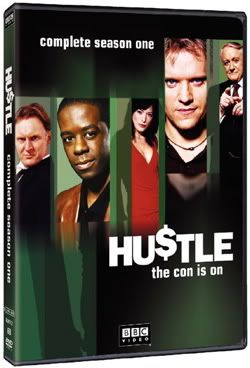
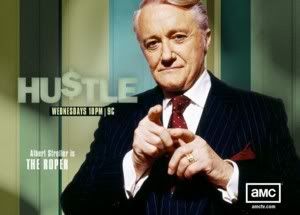
    From series that didn’t so well to the ones that did, Robert just will not relent. And it was this sense of enduring determination that has allowed him to strike ratings gold with his long successful series on the BBC with HUSTLE, a program that has finally found an outlet here, stateside, through AMC. Equal parts OCEAN’S ELEVEN, THE STING and a whole lot of snappy writing from the minds that brought the equally successful MI-5 to Americans, HUSTLE brims with intelligence while giving plenty enough to those who are in the mood for a show about modern day Robin Hoods. The show is fast, quick-paced and with four seasons equaling a total of 24 episodes you’re able to catch up with these cats in no time at all.

    Robert spoke to me regarding the show, his take on the state of modern television and how much longer he intends on staying in front of the camera.

    All four seasons can now be seen playing on AMC every Wednesday night at 10/9C and are now available to be purchased on DVD.

    CHRISTOPHER STIPP: Great series. I only learned about HUSTLE a week ago and”¦

    [Laughs]

    ROBERT VAUGHN: Really? It’s been out for four years.

    STIPP: I just don’t happen to live in England and haven’t heard anything about the series being brought over on AMC. I did want to say that the show is quite excellent and the fact that there are four seasons now on AMC really gives people a chance to get ensconced with what’s happening. I am curious to know, if you can answer it, why a full season represents six episodes on the BBC?

    VAUGHN: Quite simply, that’s all the United Kingdom can afford, in terms of producing a series to try it out. Let’s say here you shoot a pilot and someone feels strongly about it, really strong about it, they’ll order 22 more. Well, in Britain, the BBC has much lower budgets. They have to wait until they have a group of shows that total 24 before they can sell it internationally. It’s what they’ve done with us. It’s playing all over the Orient, Africa, Eastern Europe and so on.

    STIPP: It’s seems like it is here where if you can make it to five seasons, that’s the goal for any television show.

    VAUGHN: Right. And AMC didn’t buy HUSTLE for four seasons. They bought three seasons and the fourth one was completed in time for them to show it last year.

    STIPP: And what was Robert Wagner’s connection to the program? I saw him listed on IMDB for the show.

    VAUGHN: He’s listed as a guest star on the last show we did for the season. Of the 24 shows we’ve done we filmed 2 in America, one in Las Vegas and one in Los Angeles. The one from Los Angeles, RJ, as he’s called by his friends, was a guest star on the show. And we used him in connection with the publicity of the show because I’ve known him since he married Natalie Wood the first time. So they put us all on shows, like The View, where we were brought out as a team.
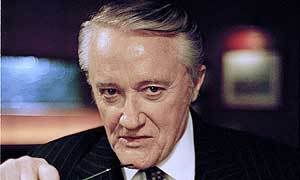
    STIPP: I’m fascinated by the show’s ethos, that you hustle those who don’t deserve it.

    VAUGHN: One of the things I learned early on in the first season of the show, and I came in three days after they had started shooting, is that when I started reading about people who have been hustled out of large amounts of money, wealthy people, never report it to police”¦out of embarrassment. These people, most of them, made their money by their wits and they don’t want made known that they’ve been outwitted.

    STIPP: So, do you think that’s the allure, that there are people who operate outside of the law, like modern day Robin Hoods, righting wrongs?

    VAUGHN: Yeah, the fact that they are living at the highest level possible when they are successful and, when they are not successful, are trying to scrape by, which we have done in the series. We have done shows where living conditions dropped dramatically because they had not been successful, recently, with conning people.

    [Laughs]

    Kind of like any job.

    STIPP: How do you keep things fresh without it seeming gimmicky?

    VAUGHN: It’s exactly as you mentioned earlier. It’s not like American television where you have to come up with 20 plus episodes with 20 plus scenarios for one season. It’s much easier for the producers to come up with 6 as opposed to 24.

    STIPP: How have you seen these characters evolve?

    VAUGHN: I think they got lucky. Casting is everything in TV as it is in movies. If there’s something wrong with 1 or 2 people in the cast, the show doesn’t work. Television is all about attracting people to the personalities within the show. And everybody seemed to like all of us. The black guy who was in the first three seasons, Adrian Lester, he was referred to as the black Olivier in England. He’s the star of theater, he’s done everything and had a huge following even prior to getting into HUSTLE. Marc [Warren] was on his way up and is famous because of this show. He had done some wonderful things prior to this, character work, he had never done something so consistent. And Jamie [Murray], who’s a very pretty girl, and looks like she’s Eurasian, she’s one hundred percent Irish. So, we’ve all caught on.

    One strange thing, and I did come into things one week after they started shooing the show, that happened after I began my work was that I started receiving these messages from these people I’ve come to know over the years, largely press people. They all wanted to know about my character, what I thought about it, what research I’ve done on it. And I explained exactly as I just told you, there was no research, I came in at the last minute. I’m getting all these questions and it was then when I started to talk, to myself, and said, “I’ll just make something up.” It was then when I said to people that, “Oh, it’s really like if Napoleon Solo from MAN FROM U.N.C.L.E. went and retired on his government pension but all those years of being exposed to jewelry and wealth and beautiful cars and beautiful women and casinos all over the world, like James Bond, realizes he can’t live on his pension. So, what they do would be in the confines of the law”¦” I was just making it up as I was going along. Everybody wrote it down as what was going on with my character.
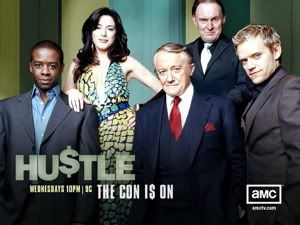
    STIPP: Was that part of the appeal? That could you revisit this sort of debonair kind of character?

    VAUGHN: I get scripts every year”¦Usually after 10 or 15 pages I close it. But I got sent three shows from a production company, called SPOOKS or MI-5 here, that company produced that show. I read the first script for the show and I continued to read the other two and my wife has never seen me read something like this all the way through. I said, “This is something really different.” My guess was right. Sometimes your guess can be wrong but I guess if everybody guessed right there’d be more shows on the air.

    STIPP: Are the English different when it comes to what they like out of their television? I guess you could see it from a sociological point of view and see what the two cultures really value but do they respond to things differently?

    VAUGHN: Well, the English seem to respond to our comedies but we don’t respond to all of theirs. Usually, comedies are harder to translate from one culture to the next but that’s not the case in England with what America exports over there. Or, in the case of ALL IN THE FAMILY, that was originally a British show.

    STIPP: Good point. Now, if you try and compare apples to apples, not that you can do it exactly, but you had a spate of con shows debuting on a variety channels here in America. I’m thinking of Ray Liotta’s failed show and the failed show on ABC, THE KNIGHTS OF PROSPERITY. What was the angle that made this show really connect with the audience?

    VAUGHN: I just don’t know. If I did know I could be a mega producer like Dick Wolf and be a billionaire. He’s the one who obviously knows because he has a formula that works.

    STIPP: The producers of HUSTLE tip their caps to the older productions like THE STING and even recent movies like OCEAN’S ELEVEN.

    VAUGHN: Well, that’s exactly the case of my television show, MAN FROM U.N.C.L.E., which rode the crest of the first three James Bond movies and it came on just as the third movie opened. There was just a huge interest in secret agents and spying.

    STIPP: Is there something to when people that the element of luck has something to with the success of a particular program?

    VAUGHN: I’m writing an autobiography and it was just last week”¦David McCallum, who was my co-star on U.N.C.L.E., they’re putting a DVD of all four seasons, and Warner Brothers, who are putting out the DVDs asked us to be sat down and be interviewed for this. It lasted about three hours and it was because of this where I went and thought about why U.N.C.L.E. was as successful as it was, when it was. There were a number of reasons. Mainly, it was because of the success of the Bond pictures. Next, David and I were successful in engaging a young audience. And, the next most important reason was the time slot. Because, when we went on the air, in 1964 we were on the verge of being cancelled two months after we started because our Nielsen ratings were so low. They changed our time slots from Tuesday night to Monday night but one of the things about that is that the show caught on with college students who were away at school. In those days, in regular houses, there was just one black and white set so when they came back, during the holidays, they were the ones controlling what was being watched.

    And so, the ratings suddenly went through the roof and, by the summer, when they re-ran the entire first season, it wound up being the number one show in the country almost a year after it almost canceled. It was mostly all due to college students and it the time slot was moved once more accordingly and the show remained a huge hit.
    STIPP: It’s just these little things that contribute to the overall success and not just one big factor.

    VAUGHN: I said yesterday when I was being interviewed for the U.N.C.L.E. DVD that this would not have happened in modern television. If the show is not a hit within the first two airings it is off the air. If the show, if U.N.C.L.E. would have been released now it would have been off the air permanently by October because networks do not take chances like that anymore.

    STIPP: How does that sit with you now? That there a possible gems that are simply not given enough room to find an audience?

    VAUGHN: And sometimes they’re not the most miserable show, either, but they’re put in one of the most miserable time slots. I mean ALL IN THE FAMILY is a good example of that. They did three pilots before they went on the air before they even had a crack at success. Everyone was terrified of that premise”¦glorify a bigot. But Norman [Campbell] kept coming back because he believed in it. The question of how long you’re willing to hang around, if you’ve got the money as Norman did, you’ve got to consider there are lot of other factors at play. In U.N.C.L.E., David had the ability to attract young girls and I attracted the older women, the women in their 20’s.

    [Laughs]

    STIPP: One of the other things I’ve found is that some really good television actors have, at one time, been good doing traditional theater. Have you found that to be the case?

    VAUGHN: Yeah, very much so. Before movies, before talkies even, almost any actor could be put up on screen but once talkies started to come into play there was a rush to hire traditionally trained actors because there’s a famous story about Valentino opening his mouth for the very first time on the screen and out came [in a high pitched squeal], “Hi, my name is”¦”

    [Laughs]

    But that was the reason why there was a rush to get well-trained actors on the screen. The whole dynamic changed.

    STIPP: In your fifty years as an actor you could be out enjoying your accomplishments away from the lens of a camera. What keeps you coming back?

    VAUGHN: Well, I’ve played Hamlet three times, I’d play Hamlet a 100 times if I wasn’t so old but it is the most extraordinary role ever written in the English language for an actor to play. But all my children are grown, I have a lovely home in the Connecticut countryside and I don’t leave it that often but when I find something that I like I leave it because I still enjoy doing the actual process of acting.

    As long as I am ambulatory I will be out there acting wherever I can.

    [Laughs]

    STIPP: That’s about as good as an end as there is. Thank you, Robert.

  • Comics in Context #186: Le Petit Chef

    comicsincontext4.jpg

    cic2007-07-23.jpgIn my childhood it was a special event when an animated feature film, almost always from the Disney studio, turned up in movie theaters. Nowadays, there are so many animated feature films these days that I wait to catch many of them when they reach cable TV.

    That’s where I recently saw Ice Age: The Meltdown, 2006’s sequel to Fox’s previous animated film about a mammoth, a sabertooth tiger, and other animals of the Pleistocene period, and it was just as well that I had waited. I don’t care for computer-animated animals or humans that look more plastic than organic, as the Ice Age animals do to me, and it seems less forgivable in the second Ice Age film (and, for that matter, the third Shrek), considering the successes other computer animated films (like The Incredibles) have made in this regard.

    I wonder if the premise of this second Ice Age, that the glaciers are melting, was inspired by the contemporary concerns with global warming. Yet considering that the end of the Ice Age made possible the worldwide growth of human civilization, why is the “meltdown” a bad thing?

    One of the Ice Age movies’ most popular characters is Scrat the squirrel who is in continual, vain pursuit of an elusive acorn. This squirrel’s treading in the Sisyphean path of Wile E. Coyote’s pursuit of the Roadrunner, but falls far short of the comedic invention and brilliant staging and timing of Chuck Jones’s Roadrunner cartoons. However, I did like Scrat’s brief visit to a hereafter especially designed for him in Meltdown.

    For me Ice Age: The Meltdown is an animated movie in which the celebrity voices pull me out of the story, preventing me from sufficiently suspending disbelief. That’s because the characters are too thinly conceived, so the familiar personalities of the celebrity voice actors overwhelm them.

    In contrast, I quite liked another 2006 animated film I caught on cable, DreamWorks Animation’s Over the Hedge, based on the newspaper comic strip of the same name. In large part this was specifically due to the voice casting: the voices may have been recognizable, but they were suited to the characters. This was especially important with the two lead roles. Bruce Willis’s typical screen persona fit the role of R.J., the trickster raccoon, who is something of a rascal but in the end loyal to his comrades. Similarly, Garry Shandling’s familiar comedy persona as a neurotic worrywart fit the part of Verne the cautious turtle.

    Regular readers know that I like to compare adaptations to their source material, whether it’s Fantastic Four: Rise of the Silver Surfer to Stan Lee and Jack Kirby’s “Galactus trilogy” (over the last two weeks) or the Disney Tarzan musical to Edgar Rice Burroughs’ first Tarzan novel (see “Comics in Context” #133).

    Several weeks ago I took a look at writer/illustrator William Joyce’s 1990 children’s book A Day with Wilbur Robinson, the source for this year’s Disney animated film Meet the Robinsons (see “Comics in Context” #174). The eccentric, futuristic family is taken from the book, but It turns out that the movie’s entire time travel plot was the moviemakers’ invention. Director Brad Anderson and the screenwriters wove their story around Joyce’s book, while leaving Joyce’s material essentially intact. This is an approach that I admire, since it simultaneously shows respectful fidelity to the original author’s work while still allowing the adapters considerable creativity.

    On the other hand, finally reading the late New Yorker cartoonist William Steig’s 1990 picture book Shrek! revealed how very different it is from the trilogy of DreamWorks Animation movies that are very loosely based upon it.

    Though supposedly ugly, the movie version of the ogre Shrek, when he isn’t scowling, looks like he could be turned into a cuddly doll that parents can buy for children (as indeed they can). I think he looks more visually appealing in the movies than the human characters do, who look like animated waxworks. In the first film Princess Fiona, the seemingly human leading lady, is revealed to transform into a green-skinned ogre like Shrek. But as an ogre she seems pleasantly plump, with facial features that are sweet and endearing rather than ugly: she thus becomes a cuddly doll, as well.

    In the book, however, Shrek is repellent in physical appearance, in behavior, and even in smell. Shrek is utterly antisocial, enjoys frightening people, and revels in his own repulsiveness. Steig’s story is a parody of Joseph Campbell’s hero’s journey. Unable to stand him any longer, Shrek’s parents kick him out, and he overcomes one opponent after another (by breathing fire at them, for example), until finally he reaches the princess, who never takes human form in Steig’s book. She is an ogre as repulsive in looks and behavior as he is. In other words, they are perfect for each other. Steig’s description of their meeting reads like sexual foreplay (“Shrek snapped at her nose. She nipped at his ear. They clawed their way into each other’s arms. Like fire and smoke, these two belonged together.”) In Steig’s parody of the hero’s wedding that concludes both a typical fairy tale and the typical Campbellian hero’s journey, he informs us, “And they lived horribly ever after, scaring the socks off all who who fell afoul of them.”

    The appeal of Steig’s Shrek is like that of Sesame Street‘s Oscar the Grouch or the Bizarro World in 1960s Superman comics. Through Shrek the reader can vicariously experience the release of not having to obey the rules, of not having to conform to standards of proper behavior, of letting one’s aggression loose, and being bad and not only getting away with it, but being rewarded. In short, Steig’s version of Shrek is a far stronger, more interesting, and more memorable character than the considerably watered-down Shrek of the movies. (See some examples from Steig’s Shrek! for yourself at http://www.williamsteig.com/shrek-int.htm).

    The Shrek movies and Steig’s Shrek! book both turn the traditional fairy tale upside down by making ogres the hero and heroine. The difference is that Steig’s ogres act like ogres. The movies turn Shrek into a conventionally lovable children’s hero, with a heart of gold beneath his bad temper, who risks his life to save the humans’ kingdom, and who by this year’s Shrek the Third has mellowed into dullness. The first Shrek movie, especially, seemed to be preaching racial tolerance, presenting ogres Shrek and Fiona as a sort of racial minority in the human world. Shrek may have green skin and these odd knobs on his head, the movie seemed to be saying, but he’s really a sweet, loving, and even heroic individual, Just Like Us. Steig’s point, on the other hand, was that his ogres aren’t Just Like Us, or stand-ins for minority groups, but rather, are like the nasty sides of our personalities that we don’t dare show in public. The Shrek movies sentimentalize the title character and his wife; the book Shrek! gleefully acknowledges the side of children–and adults–that would love to breathe fire at people who get in our way. Steig’s Shrek! gives its readers a harmless means of vicariously releasing that negative energy, and seeing the title character get rewarded for it. Indeed, in the book Shrek’s marriage to the ogre princess signals to the reader that he or she is not alone in having this shadow side: other people do, too.

    Steig’s Shrek even has a certain admirable integrity, in that he is true to himself, however nasty and gross that self may be. Steig also takes care that Shrek does not become truly evil. Steig’s Shrek even reminds me of Marvel’s own bad-tempered, green-skinned “ogre,” the Hulk, who nonetheless comes off as preferable in comparison to his adversaries.

    If Steig’s Shrek! follows a satiric version of Campbell’s hero’s journey, Shrek the Third founders by getting Campbell’s monomyth wrong. Early in the film we see Shrek trying to fulfill the role of a prince in Fiona’s royal family and clumsily failing at it. Steig’s Shrek, of course, would set all the regal costumes he was supposed to wear on fire with his breath and take pleasure in scaring all the courtiers away. But the movie Shrek fits into conventional society, and I have different expectations for this version of the character. So I assumed that this was a set-up, and that in the course of the film, Shrek would learn to adapt to his new role as prince. With great power must come great responsibility, right?

    Princess Fiona’s father, the king, who has been transformed from a human into a frog, is on his deathbed. Yes, that’s right, he is about to croak. The king’s dying wish is that Shrek become his successor. Shrek declines, in a clear case of what Campbell calls “refusing the call,” which will leads to disaster. (For example, Luke Skywalker initially refuses to go with Ben Kenobi, and insists on staying with his uncle and aunt, and then the Storm Troopers kill his relatives.) It also seems downright cruel to refuse the king’s dying wish. Instead, Shrek promises the dying king that he will find someone else to become the new monarch. I thought, okay, the film will be about how the movies’ socialized Shrek matures and learns to accept the responsibility that his father figure, the king, sought to give him. It is necessary that the son must in time assume the role of the father (as in, say, Disney’s Bambi).

    But no. The movie Shrek really does find someone else to take over the throne: the youth who becomes King Arthur.

    This isn’t how Campbell’s monomyth works! Luke Skywalker doesn’t go into space looking for someone else to become a Jedi Knight instead of himself. Harry Potter doesn’t try to talk Ron into becoming Voldemort’s archenemy so Harry can go back and live under the stairs at the Dursleys. Whereas Steig presented a mock heroic version of the monomyth, Shrek the Third proclaiming that ambition and taking responsibility are better left to Somebody Else. This does not make for a gripping plot or an inspiring protagonist.

    Arthur manages to quell the threat posed by most of the movie’s villains by sympathizing with their being treated as outcasts and persuading them to accept themselves. Any child watching this movie will surely realize that if he tried this tactic with schoolyard bullies, he would be beaten to a pulp. So much for this Arthur’s leadership abilities.

    At the end of the movie, Shrek and Fiona have moved back to Shrek’s cottage in the woods, abandoning their thrones, the kingdom of humans, and, it seems, any role in that society, But this isn’t the movie Shrek reverting to Steig’s antisocial version. Earlier in the movie, Shrek balked at the idea of becoming a father, and even had a nightmare about having a baby that vomits at hurricane force (enabling the filmmakers to put in the sort of gross bodily functions joke that seems inescapable in non-Pixar animated films these days). But by the film’s end, without explanation, Shrek has changed his mind, and has a trio of babies (his equivalent of Huey, Dewey, and Louie, I guess). In the book, Steig’s Shrek has a nightmare about babies, but this is part of Steig’s assault on sentimentality. The book’s Shrek has no tolerance for cuteness and doesn’t change his mind about babies; the movie Shrek dives right into a sea of sentimentality. Becoming a father is accepting responsibility, of course, but Shrek doesn’t seem to have any goal beyond that. It’s not even clear how he will support this new family. It’s as if he has combined parenthood with retirement; he’s a slacker with kids.

    In the July 28, 2007 issue of The New Yorker, film critic David Denby points out that contemporary romantic comedy movies are dominated by male slacker heroes who are “absolutely free of the desire to make an impression on the world and still [get] the girl.” Shrek the Third shows that the 21st century slacker hero has moved into animation, as well. Denby refers to these stories as “slacker-striver romances,” in which it’s the woman who has the real career. Yet Fiona gives up her “career” as princess to join Shrek in slacker parenthood.

    So there’s Shrek the Third‘s message for kids: ambition is for other people.
    When the call to adventure comes, refuse it. The movie Shrek is neither a true hero nor Steig’s distinctive antihero, but now merely a boring, unfunny disappointment. I think when the inevitable fourth Shrek movie comes out, I may wait to see it a year later on cable.

    On the other hand, the great new Disney/Pixar film, Ratatouille, is about an unlikely protagonist–a rat named Remy–with an even unlikelier dream–to become a great chef–which he both pursues and triumphantly achieves.

    As has been widely reported, Ratatouille‘s initial director was Jan Pinkava, who came up with the original story, but Pixar ended up reassigning the project to Brad Bird, writer-director of The Iron Giant (1999) and Pixar’s The Incredibles (2004) (See “Comics in Context” #62). It was Pinkava who apparently set the story’s principal themes: Ratatouille producer Brad Lewis told The Hollywood Reporter (Thurs. June 28, 2007) that “The story was boiling over with themes dealing with prejudice, family, following your passion, art and criticism.” before Bird took over. Nonetheless, Ratatouille in its finished form clearly fits thematically with Bird’s other animated feature films: Bird is Ratatouille‘s auteur.

    First, although Remy is specifically a chef, he represents any kind of creative artist. Bird acknowledged in an interview with Time Out Chicago that he was not himself a gourmet: “No, not at all. I am becoming more appreciative of good food every year, but I didn’t know that much about it going into this project and had to learn a lot”. On the website “The House Next Door,” Ryland Walker Knight argues that Remy as chef is specifically a metaphor for the filmmaker, even more specifically the director of an animated film. Knight points out that Remy thinks in visual images: “when he tastes something, the world disappears and a discothèque flurry of colors swirls around his head. He also imagines Chef Gusteau floating around his head as his own Jiminy Cricket, a figment of his imagination acting as guide and conscience.” Moreover, Remy directs his human ally, Linguini, in cooking by hiding beneath Linguini’s chef’s hat and pulling on his hair, as if they were the strings of a marionette, or, Knight says, “as would an animator bend characters to his or her will”. (I suppose that this could also be a less than complimentary visual metaphor for the way that an auteur director supervises the rest of the moviemaking team in implementing his creative vision.)

    But Ratatouille settles the matter when one of its characters, the critic Anton Ego, asserts that “Not everyone can be a great artist. But a great artist can come from anywhere.” In his June 29, 2007 review, New York Times critic A. O. Scott observes that this is the “moral” of the film. Though in this weekly column I have repeatedly disagreed with Scott’s reviews, I agree with his declaration that Ratatouille is “one of the most persuasive portraits of an artist ever committed to film”.

    Looking back to Bird’s The Iron Giant, I recall that it had an artist character, too: Dean, who builds sculptures out of scrap metal, and who becomes a father figure to the boy protagonist.

    The title characters of The Incredibles are a family of superheroes who are forced by the government to stop using their super-powers and live conventional lives. They can represent any people with talents who are prevented from employing those talents, and who are thus not allowed to fulfill their true potential. Bob Parr, a. k. a. Mr. Incredible, is compelled to work at a mind-numbing job in an insurance company. Isn’t this the artist’s nightmare: to be trapped in an unfulfilling office job, without any outlet for his creative imagination? In The Incredibles a conventional lifestyle is depicted as a dreary desk job. In Ratatouille the conventional life that Remy wants to escape is literally eating garbage alongside the other rats, whose taste buds are nowhere nearly as refined as his.

    There is an actual artist in The Incredibles: Edna “E” Mode, the woman who designs costumes for superheroes. Bird voiced the character himself, perhaps suggesting a degree of identification with her. Edna comes across as a critic as much as she does as an artist, continually dispensing her sardonic opinions. So her true counterpart in Ratatouille may be the fearsome critic Anton Ego, who ultimately becomes the title character’s ally.

    The Incredibles draws on a standard motif of the superhero genre: the individuals who seem outwardly ordinary but who secretly possess superhuman abilities. In The Iron Giant there is an even greater disparity between the role that the title character’s unknown builders designated for him and the role that the Iron Giant aspires to achieve. The Iron Giant is a colossal metal robot that bonds in friendship with the young boy Hogarth: in effect, the Iron Giant behaves in a “human” manner, often seeming like a child himself. Furthermore, the film reveals that the Iron Giant was built and programmed to be a war machine. But through his relationship with Hogarth, the Iron Giant rejects this programming. Instead, he follows a goal that Hogarth set for him, to use his enormous powers for good. Hogarth told the Giant about the comic book superhero Superman, and towards the film’s end the Giant becomes a superhero himself, uttering the name “Superman” as he saves a small New England town from a nuclear missile. (Iron Giant fans would enjoy taking a look at this picture over at the John Byrne Forum) The Iron Giant rejects the destiny for which he was created, and instead chooses his own.

    Similarly, in Ratatouille Remy might seem to be condemned by his very nature: he was born a rat. This film provides such a vivid, extreme metaphor for the dilemma of the creative individual whose opinions differ from the community around him. Remy’s community of rats, including his own father and brother, all literally eat garbage. Remy is the only one in his community who has more discerning taste and realizes that he can do better. And yet he is pressured by his family to follow the conventional behavior of the rat world, and not to act any differently. There is even social pressure in Remy to walk on all fours like the other rats, whereas he prefers to stand on his hind legs, to keep his forepaws clean enough to handle food hygienically. Bird told The Los Angeles Times (June 28, 2007), “Because our lead character is a rat who wants to move into the human world, let’s show him make that choice to be on two legs and let’s make him being on two legs something he has to hide from his dad and let’s show it as something that changes over the course of the film”.

    In the Time Out Chicago interview Bird described Dean, the sculptor in The Iron Giant, as a “beatnik.” (The film is set in the 1950s.) Dean is a nonconformist who seems to be something of an outsider in the small New England town that is the film’s setting. Remy is a nonconformist in the world of rats. But just as the people of that New England town assume on sight that the Iron Giant is a menace (as indeed he was designed to be), Remy is doomed by his outward appearance to be rejected by (most) humans. In one key scene in the film, Remy’s father shows him dead rats displayed in an exterminator’s window: this is how the human race treats their kind. Like The Iron Giant, Ratatouille asks if one can transcend the role that the world has assigned him. I just wrote a short piece about existentialism for a client, and now I see this existentialist theme–freeing oneself from restrictive tradition, taking control of one’s own life, creating one’s own identity–in Ratatouille.

    Remy’s inner self does not match his outer self, or rather it does not match the conventional assumptions that are made about that outer self. People assume, correctly, that rats are unclean and eat garbage. That is true about the rats in Ratatouille as well, but Remy, though he looks like the other rats, does not conform to those expectations.

    Remy fits the recurring archetype of the figure whose outward appearance disguises his inner virtues and talents. Clark Kent fits that mold, of course. Consider, too, Luke Skywalker’s reactions on first meeting Yoda, who initially seems like an eccentric, grotesque little troll. Or look at detective series like Columbo, in which the title character’s somewhat slovenly appearance and servile manner masks his high intelligence and steely will, or USA Network’s current series Monk, whose title character, beneath his obsessive compulsive phobias, is a brilliant detective.

    So Ratatouille is also about the limitations of judging by external appearances. In other words, it’s about prejudice. While working on this essay I found myself about to write that as a rat, Remy inspires “fear and hatred” from humans, and realized I was echoing a familiar description of mutants from Marvel’s X-Men, a series that is famously about bigotry. It’s as if Remy, with his own “special powers,” his sensitive sense of taste and his genius at cooking, is a mutant rat.

    Through its metaphor of the creatively gifted rat, Ratatouille suggests that innovation in the arts may come from persons or areas of culture that are not held in high regard by the mainstream. Certainly there is a long history of members of the cultural establishment rejecting not only innovative artwork but also the innovators themselves as outsiders who aren’t like Us.

    For example, think of how long comics were generally regarded in America to be a gutter medium, and those adults who perceived them as art were considered wrongheaded and downright strange. (We are all Remy.) Now, in the early 21st century, comics increasingly receive respect from mainstream culture. Ratatouille has received extraordinary critical acclaim, and yet in the Time Out Chicago interview, Bird observes the continuing prejudice against the animation medium: “People see it as a childish sort of hieroglyphics. They connect it with the comics on the funny pages, as something that’s only meant to be silly and can’t ever represent anything deep or serious.”

    In Jungian psychology, the “shadow” can not only represent dark, fearsome psychological forces but also creativity. So it makes psychological sense that an artistic innovator, an outsider, should take the form of a rat in the fable that is Ratatouille.

    I will have much more to say about Ratatouille in the near future, but right now it is time for me to turn to my new recurring feature.

    ATROCITY OF THE WEEK

    Actually, there are several. First, there is the posting of photographs of the entire text of Harry Potter and the Deadly Hallows days before its official release date. I do not understand how people rationalize violating copyright laws and steal intellectual property. Do they somehow think that because it’s possible for them to steal it, then it’s not really stealing? In the case of these photographs, I wonder at the obsessive lengths to which someone would go to demonstrate to the world that he or she is an asshole.

    Then on Thursday, July 19, two days before the release date, The New York Times published critic Michiko Kakutani’s review of the book, giving away elements of the plot. (I refuse to link to this.) This should give the Times‘s Public Editor, its in-house ombudsman, plenty to write about. And how would the Times feel if some mole smuggled Times articles to The Washington Post before the times published them?

    But the atrocity which I choose to treat at length is the cover to DC’s Showcase: Batgirl book of reprint stories about the version of Batgirl, alias Barbara Gordon, who was created in 1966. The cover shows Batgirl casually, perhaps obliviously, putting on makeup (even though she has her mask on) while in the background Batman and Robin are fighting for their lives against crooks. Presumably people at DC thought this was charmingly funny, while themselves being oblivious to the idea that female readers might find this cover insultingly misogynistic.

    One line of defense for the cover is that it not only refers to an actual Batman story of the 1960s, but that it reflects the attitude towards women in superhero comics during that unenlightened period long, long ago.

    I was a boy during that time, long, long ago, and I remember the story in question: it was “Batgirl’s Costume Cut-Ups” in Detective Comics #371 (January 1968), whose cover showed Batgirl declining to help Batman and Robin in a fight against bad guys because, she tells them, she has a “bigger” problem: “a run in my tights”. Should you read the story, you’ll find that Batgirl is actually slyly diverting the criminals’ attention to her shapely legs, or, as one of the crooks, apparently fond of slang that was outdated even then, puts it, her great “gams.” Batman and Robin are then able to kayo the distracted malefactors.

    I was one of the regular contributors to editor Julie Schwartz’s letter columns back then, and I distinctly recall writing a letter about how bad this story was. Today I suspect that it was Schwartz’s attempt at doing a humorous story for a change of pace, but the joke still fell flat. This story is stupid now and it was stupid then.

    It was also an anomaly. In her other 1960s appearances Schwartz’s new Batgirl characteristically dove right into fighting criminals. In the comics of the mid-1960s, Batgirl’s willingness to engage in direct physical combat was bold and daring. (William Dozier, producer of the 1960s Batman TV show, is said to have forbidden the TV Batgirl from punching people with her fists because he considered it “unladylike.” Instead, she executed dance-like kicks, drawing on actress Yvonne Craig’s Ballet Russes background.) Marvel’s superheroines of the time-Invisible Girl, Wasp, Scarlet Witch, Marvel Girl–didn’t engage in fisticuffs. In the early Fantastic Four stories Sue Storm’s original power, invisibility, basically enabled her to hide.

    For their period, Julie Schwartz’s Silver Age stories are actually surprisingly enlightened about women. Think of how Hawkman and Hawkgirl acted as equal partners, as spouses, as Thanagarian policemen, and as superheroes. Remember how Zatanna bravely traversed the world in search of her lost father. Consider how Schwartz and his collaborators presented several of the leading ladies of his series as career women: Iris West (The Flash) was a reporter (who did not snoop into secret identities), Jean Loring (The Atom) was a lawyer (who was perfectly sane, contrary to her depiction in Identity Crisis), and Carol Ferris (Green Lantern) ran a fictional counterpart to Boeing! Sue Dibny (The Elongated Man) was so intelligent and spirited a leading lady that her rape and murder in Identity Crisis seemed a cruel betrayal of the spirit of the classics of DC’s Silver Age. And I am of two minds about the fate that Alan Moore meted out to Barbara Gordon in Batman: The Killing Joke.

    There was a lot of nonsense going on in Mort Weisinger’s Lois Lane stories in the Silver Age, but Schwartz and his writers John Broome and Gardner Fox shouldn’t be tarred with the same brush. Rather than fixate on that run in Batgirl’s tights like that dopey crook, DC could easily have found cover art for Showcase: Batgirl that would have captured the character’s true, empowered spirit.

    ADVERTISEMENTS FOR MYSELF AND OTHERS

    In last week’s column I was singing the praises of Mystery Science Theater 3000. Now you can read Ken Plume’s interview with another member of the MST3K team, Kevin Murphy, who played Tom Servo and the erudite Professor Bobo, and who partnered with Mike Nelson in the RiffTrax demolition of the first Fantastic Four movie. While you’re at it, go read Ken’s earlier interview with Murphy’s MST3K colleague Trace Beaulieu, the original voice of Crow T. Robot and the living embodiment of the show’s archvillain Dr. Clayton Forrester.

    The July 23-Aug. 5, 2007 issue of TV Guide proclaims that “TV Guide hits Comic-Con International, the premier gathering of all things sci-fi and fantasy” (p. 29). Funny, I thought Comic-Con was primarily about, you know, comics (and what about WorldCon?). Well, this year I’m not going to Comic-Con, so you will be spared six to eight weeks of reports. Longtime readers will recall my past attempts to find the Marvel booth at the con. The Beat reports that this year Marvel will finally have a big booth in San Diego. And I still won’t see it. But I have plenty to write about here instead, as you will soon learn.

    But if you do attend this year’s Comic-Con, and are not crushed to death by the crowds, please stop by the Comic Art Conference Session #9, “Superheroes, Villains and Vixens: A Discussion of the Top Pop-Culture Icons of 20th-Century America,” whose panelists include Gina Misiroglu, co-editor on The Supervillain Book (Visible Ink Press), to which I contributed. It’s in Room 30AB on Saturday at 10:30 AM.

    One of this year’s special guests at Comic-Con, deservedly so, is Roy Thomas, one of the most important writers and editors in Marvel’s history. Mark Evanier will interview Roy during the “Spotlight on Roy Thomas” at 4:30 PM Saturday afternoon in Room 2. I understand that during the convention Roy will be doing a signing of The Marvel Vault (Perseus Books), the book on which he and I collaborated. Those of you with sufficiently large travel budgets should have Roy sign the Vault for you in San Diego, and then have me sign your copy at next April’s New York Comic-Con!

    Copyright 2007 Peter Sanderson

  • Trailer Park: Allison Janney

    By Christopher Stipp

    Archives? Right Here…

    Allison Janney is one of the first people I’ve ever talked to that has radiated a genuine sense of ease and openness. She also takes the cake for being the first person I’ve ever talked to regarding prescription medication for generalized anxiety with regard to flying.

    Allison’s career has been punctuated with Emmy wins (four, actually) for her work on The West Wing, is the only cast member from that show who has won more than one for her work, has starred in films like THE HOURS, THE ICE STORM but has integrated FINDING NEMO and PRIVATE PARTS into the mix and she’s managed to build a resume that many of her contemporaries only wish they could possess.

    Today, though, Allison’s turn as Prudy Pingleton in the newest incarnation of HAIRSPRAY is one of those parts that demonstrate her ability to draw on her dramatic roots and play a part that is equal measures absurd and comedic. I wish I could say that the conversation ranges from the mundane to the insightful much like every other interview I’ve conducted but Allison was up for some casual conversing regarding the film, about what she still has yet to accomplish in her career and the fact that, yes, she does speak in the 3rd person in a way that is completely endearing when it comes to declaring her ability to sing and dance. The conversation picks up in the midst of an explanation of whether she’s been doing a lot of traveling in support of her next job, a role in The Autumn Garden during the Williamstown Theater Festival.

    HAIRSPRAY opens today, July 20th.

    line2.gif

    ALLISON JANNEY: I’m doing a lot of back and forth these days.

    CHRISTOPHER STIPP: Nice flight. Isn’t that a five hour one?

    JANNEY: It’s four and a half out and five and a half back.

    STIPP: Joy”¦ Do you do well, flying?

    JANNEY: I’ve gotten better at it. I used to have a big fear but not anymore. It’s gotten better”¦maybe it’s the drugs. [Laughs] Maybe the drugs have gotten better. No, seriously, I’ve just been doing it so much that I’ve just let go of the fear a little bit.

    STIPP: I’m in the opposite position. I was doing well all my life and now, whammo.

    JANNEY: Really? Was there an incident or something?

    STIPP: I’m pretty sure it stemmed from becoming a father some years ago. I’m equally sure that there’s some psychoanalytical component going on there but the Ativan is the world’s best drug. Ever.

    JANNEY: Someone gave me a book, a pilot actually, when I did the Ellen DeGeneres Show, a pilot gave me his book”¦

    STIPP: I’ve got that one! It did nothing to help curb the irrationality. I think I’m a lost cause at this point.

    JANNEY: You have to ask yourself: Do you want fear or faith? Be fearful or faithful.

    STIPP: Yes. You’re absolutely right. But enough about my irrational fears of burning in a wreck of metal”¦Are you doing this flying to help support the film, doing promotions on both coasts?

    JANNEY: Actually, no. The premiere is tonight here in LA and I did a workshop in New York, and I did two weeks of that, I’m back for the premiere here tonight and I am going back to New York, renting a car, and heading up to the Williamstown Theater Festival; I’m going to be doing a play called The Autumn Garden. After that I come back here and then, hopefully, I’m going to be doing His Girl Friday at the Roundabout Theater this fall and through the spring. John Guare did an adaptation of it, in conjunction with The Front Page, which was a stage version of His Girl Friday and he kind of did an amalgam of those and we’re going to try and put it on if we can find the man who can play Walter.

    STIPP: Keeping busy in the theater.

    JANNEY: Yes and it’s making me happy, too. A lot of this movie stuff has been driving me crazy, so many things I’ve been attached to”¦I just wanted to do something that makes me feel good. I haven’t done any plays in seven years so I wanted to get back in doing that.

    STIPP: That’s interesting you bring that up. I’ve talked with a few different television actors who’ve said that they enjoy being able to do things like that in their off time when they’re not in production. Were you able to squeeze in any of that during your time on The West Wing?

    JANNEY: Well, I did little parts in movies during the break. One time, in the beginning, I did a play of Shakespeare in the Park in New York City but that was just after we filmed the pilot. Maybe it was the year after, I’m terrible with dates”¦but it was never really long enough to do any kind of serious theater because it couldn’t be any longer than a one month commitment.

    I just didn’t.

    A lot of times I would just get too tired. Work was so great but it was just so”¦so”¦

    STIPP: Exhausting?

    JANNEY: Yes. Yes. Exhausting”¦ and when you don’t get spend much time with any of your friends or family. So, when you get that time off”¦ you just want to do something other than work.

    STIPP: Like any other job, I take it.

    JANNEY: Yeah. And I really miss the theater. I’m just really excited to be able and do that again.

    STIPP: What’s your passion? Shakespeare, the modern playwrights”¦

    JANNEY: Shakespeare, I’ve done it. I went to study Shakespeare in London but I like doing revivals and modern new plays. I don’t have any specific genre that I like”¦But I am just a fan of other playwrights. There are so many different plays I like and there’s no one particular style that I think I excel at. I did Arthur Miller’s play A View from the Bridge and I loved that”¦Shaw I love”¦I can handle style pieces, I tend to like them better. I’d like to do a musical too.

    STIPP: Well, being in HAIRSPRAY”¦

    JANNEY: I hate to say that I’m the only character that doesn’t get to sing or dance. I can sing and dance but in this incarnation of Prudy they did not have her sing or dance.

    STIPP: I have yet to see the film but I’m surprised they changed that.

    JANNEY: Yup, they changed it from the play.

    STIPP: Why did they do it?

    JANNEY: I don’t know. I can’t speak for them. I have no idea why they decided to do that unless it was”¦I think to pad out the other parts they took away some stuff from Prudy”¦.I don’t know, really. You’d have to ask them. I will say that I was disappointed that Prudy Pingleton didn’t sing or dance and I know that Allison Janney is one talented actress.

    [Laughs]

    STIPP: I’m surprised you didn’t kick down some doors and wield those Emmy’s. I was a fan of the original when Prudy is walking into the wrong side of town. That whole montage is wonderful.

    JANNEY: I know! That was one of my favorite scenes and they took it away”¦John Travolta does that part now.

    STIPP: Huh?

    JANNEY: I know, believe me. They gave that part to John. She’s a little trimmed down in this version.

    STIPP: What else, besides cutting the heart out of the original, have they changed”¦

    [Laughs]

    JANNEY: It’s still there. Prudy still has some very fun moments. It’s really a cameo”¦it’s what I’d call it. Scott Whitman and Marc Shaiman and Adam Shankman, they’re friends of mine, so when Scotty called and asked “Will you come do this?” I just said, “Of course I would. I’d love to.” I hadn’t even read it”¦.Of course I’d do it”¦I kind of remembered what Prudy’s part was so when I read it I was like, “Wow, didn’t she have more to do?”

    [Laughs]

    I wanted to do it anyway because I love them and I had a great time doing it and I’m really happy to have been a part of it because it was so much fun.

    STIPP: How long were you on set?

    JANNEY: I literally had three days of shooting and they were each a month apart.

    STIPP: Why am I even talking to you? Are you sure you’re actually in the movie?

    [Laughs]

    JANNEY: I mean I really did just fly there, do one day, and then leave and then came back three weeks later and do another day. So everyone was like, “Oh”¦Yeah, hey!” It was a bizarre experience and I don’t feel like I made my HAIRSPRAY friends but I tell you, Nikki and Amanda were so great. They were the ones I worked with the most and I just adore those girls”¦They were just so great with me. We just bonded and instantly they were so welcoming and appreciative that I was there. They really made me feel welcome. I had a good time.

    STIPP: Were you able to see them in other numbers that you weren’t necessarily a part of?

    JANNEY: My very first day there I was able to see them do one of those really big numbers, Good Morning Baltimore, which was so exciting. It was thrilling.

    I just wanted to run through one take, dance and leap around. It’s great, I loved it.

    STIPP: Musicals are really making a comeback.

    JANNEY: I know!

    STIPP: I don’t know if you’ve seen it, the film called ONCE, it’s a musical that recently came out and has done especially well. It seems like people are genuinely open to seeing these kinds of films.

    JANNEY: ONCE? It’s a musical?

    STIPP: Yes. It’s a little film from Ireland and it’s perhaps one of the best movies I’ve seen this summer. Plus, it’s like 90 minutes. It’s short.

    JANNEY: Hmm, love that too”¦I haven’t seen anything.

    STIPP: Are you able to get out and catch a lot films?

    JANNEY: I try but I think I’ve gotten spoiled being a voting member of different unions so I get a lot of screeners. I’ve got my nice TV and I love to be at home. I’m a homebody. I’d rather see a movie at home than go out. Unless it’s like to go out and see something like a DIE HARD where the only reason to go is to see it on the big screen.

    STIPP: Have you seen anything of note?

    JANNEY: I haven’t seen OTHER PEOPLE’S LIVES but I’d like to. I’ve just been working.

    STIPP: And speaking of work, why did HAIRSPRAY lend itself to being remade? It seems like the original was especially good already. Did you have any reservations about dipping into the remake?

    JANNEY: No, not at all. I love Scott and Marc so much and I saw their Broadway production. No, I totally thought it would be all fun. And I think John Waters, he’s in it, I think he’s happy with it and what they did. But I think it’s one of those movies that”¦I mean look at GREASE. People are less interested in taking a risk and doing something new so why not take something that’s tried and true, put some music to it, stick it on the screen and see what happens.

    It seems like the American musical is an original invention so why not bring it to the big screen, that way people won’t have to go to Broadway to see a musical. They can go to their theater in Iowa and see a big Broadway musical.

    STIPP: I think, too, that Waters’ original was pretty good with the way he treated segregation. The film comes at a time in history before the pressure cookers of racial change. Is that still at the core of this movie?

    JANNEY: Yeah. Yeah, it is. And it still kind of works today too. At its heart it’s about people being afraid of what they don’t know. It’s a microcosm of what still goes on today. With different races, with different religions, different countries, it seems to be a message that people don’t ever learn.

    STIPP: Are people just incapable of learning or is this something that will be a part of the human experience?

    JANNEY: It just will. It may not be about black and white anymore but it will be something.

    STIPP: What keeps people coming back to musicals that are seemingly brought out from the closet year after year?

    JANNEY: I think that when you see something, like Grease, it’s a part of your past and when there’s a movie that comes out you have a relationship with it. People are more apt to seeing something that they have in their heart that they had a good experience with and experience it again. Or maybe they’ll feel like taking their kids and say something like, “I love this, maybe you’ll love this too.” There’s history attached to it.

    STIPP: Is there more of a leniency with actors being able to move to film, to television, to the theater?

    JANNEY: I think so, definitely. Especially as parts become more scarce. Actors might start saying, “You know”¦maybe TV isn’t so bad.” I think that most actors are scared of doing theater.

    STIPP: Really?

    JANNEY: Yeah. I think that Julia Roberts is brave to go and do theater. That’s how you really prove your weight as an actor is in the theater. And I feel like any great actor would be good in the theater and I think that everyone should do more theater. Most actors should not be afraid to jump in and do it but if you grow up doing television it’s like, “I’ve already done that scene. I don’t want to do it again.” People get lazy. But there’s so much fun in the repetition of the theater, you find new things, and there’s so much freedom in that structure and the relationship with the audience every night.

    STIPP: As a woman growing older in this business what do you have to say about the women coming up through this business? The ones who have to look young and act young while you, yourself, try and find the parts that will allow you to keep working in the way you’d like to?

    JANNEY: Well, it’s so different for every woman. I, because of my size”¦ I mean, when I was fifteen I was playing forty year-old women. My career has never been dependent on me looking young and beautiful so I don’t know what it’s like for those girls. It’s certainly going to be hard once that’s gone, so I think that the one thing that can be worked on is your acting and not so much what you look like. Really work on the craft of acting and if you really work on that craft time is kind to you, I think. But I think the women that last in this business are the ones that are really great actors. But that’s what I think!

    [Laughs]

    STIPP: And that’s a great way to end it. Thank you, so much, for the time.

    JANNEY: Well thank you, Chris. I’ll think about you on my next flight.

    STIPP: I’d say the same thing but the Ativan would wipe out any memory of you.

  • Toy Box: What you lookin’ at?

    toybox.jpg

    At first, the title of this review may not seem to make sense. With the Simpsons movie hitting in a couple weeks, Mcfarlane did the smart thing and got the toys out. I’ve already covered the four Movie Mayhem figures in the standard line up, but tonight I’ll look at the boxed set called… are you ready for it?… “What you lookin’ at?”.

    If you’re one of those folks that is extremely adverse to spoilers, and want to know absolutely nothing about a film before it comes out, stop reading now. This set doesn’t give away any more about the plot of the movie (as far as I can tell) than the trailers have, but I just want to be sure you’re fully away that one of the three figures in this diorama but be considered spoilerific by some of the more anal retentive movie goers.

    The set is hitting stores like FYE and Suncoast right now, but you can actually get a better deal online. I have some suggestions at the end of the review as always, and if you have any questions or comments drop me a line.

    “What You Lookin’ At?”

    I don’t know exactly what’s gone wrong in Springfield, but clearly something has. Just look at this playset and you can see that…why the Hell would Bart be fishing with Ned Flanders? Oh, the humanity!

    review_moviesimps_1.jpg

    Packaging – ***
    This set comes in a box, and like the clamshelled individual figures, Mcfarlane has gone small and compact. I’m a big fan of small and compact, and the movie graphics look great. This box also shows off the diorama pretty well, and it certainly protects it. The back of the package gives you some Simpsons trivia and shows some hand drawn cels from the film, which is a nice plus.

    review_moviesimps_2.jpg

    Sculpting – ***1/2
    Ned and Bart are standing behind what I originally thought was a bush, but now believe is a rock with mossy grass on it. They are peering over at the many eyed mutated squirrel in front, who has almost as many nasty sharp teeth as eyes. The sculpt on all three of these characters is great, managing to pull off the tricky switch from 2-D to 3-D with nary a hitch.

    review_moviesimps_3.jpg

    There’s the right amount of detail here for the style of animation, including the nicely done open faced spinning reel on Ned’s fishing pole, the nylon fishing line, and the size of Ned’s glasses. The scale between these figures is good, and if Ned were standing, he’d be about the same height as the Homer figures from Mcfarlane’s other releases (just over 4″ tall).

    review_moviesimps_6.jpg

    Clearly this is a very movie specific moment, and I’m cool with that. Their regular line should cover the show, but these figures should bring movie scenes to us as much as possible. I’m hoping that this particular scene is both memorable and critical to the plot of the show.

    Paint – ***
    The previous animated figures from Mcfarlane have been hit or miss in this category, but it looks like they went all out for the movie release. There’s still a spot of slop here or there, but the overall quality has gone up, and from looking at quite a few figures and dioramas on the shelves, the consistency of that quality also seems to have gone up.

    review_moviesimps_4.jpg

    There’s a liberal use of black outlining here, everywhere from Ned’s ears to Bart’s shoes. However, it works great on this set, and there’s only a bit of slop to be seen in these thin lines. Most of the slop that is here is on the base itself, in the paint work on the twigs and rocks, and not on the three figures.

    Articulation – *1/2
    There’s not much articulation here – remember, this is a ‘diorama’, and not really designed for a lot of posing. Bart has a cut neck, and Flanders has a cut neck and cut shoulders. That way you can get them in the best ‘shocked and in hiding’ pose possible.

    Accessories – ***
    How you score this area depends on what you consider the accessories. I’m grading it as though the base, rock and sign are the accessories, while the Bart, Flanders and squirrel are all the ‘figures’.

    The “No dumping” sign fits nicely in a peg hole on the base, and the large rock pops onto a couple large pegs in the center. The base isn’t quite as nicely painted as the figures, with some sloppy edges and bleed on several of the rocks and twigs, but there’s plenty of little details sculpted onto the ground. One of the things I like about this base is that unlike some of the earlier ones from Mcfarlane, it doesn’t feel crowded. Everything is here that needs to be here, and while it’s compact, it doesn’t seem cramped.

    The rock has some nice sculpted texturing too that doesn’t come through quite as well in photos as it does in person, hence my original confusion on what it was.

    review_moviesimps_5.jpg

    Talking Feature – ***
    There’s no ‘try me’ feature on the sound chip, because these don’t come with the 2 AAA batteries necessary to make them work. Obviously, the negative there is that you need to spend some more cash to get them to talk. There is a positive though, at least for the MIBers, who won’t have to worry about battery corrosion over time.

    The set says the following lines:

    Ned – “You know, whenever my boys bake up a batch of frownies, I take ’em fishing”; “Well, this certainly seems odd, but who am I to question the work of the Almight!”; “If you look real close, you can almost YEEAAGHH!”
    Bart – “Jabbity, jabbity, jab jab jab!”; “I’m troubled”;

    That’s a fair number of lines for the price tag, and clearly right from the movie. The speaker (and button to activate it) is right on top, allowing the sound to be loud and clear. There’s no static or gabled sound, and the overall quality of the feature is quite good. I’m not big on sound features when there are no classic lines – Lost is a great example – but the Simpsons have always been a perfect license for this sort of gimmick.

    Value – ***
    The single figures are running $12 – $15 each depending on where you pick them up. I already ragged on what a lousy value that is, but this set (with three figures, sound, and a nifty boulder) is only running $16 – $20. That’s a much better value than the single figures.

    Fun Factor – **
    The talking feature is fun for your co-workers, at least the first fifty times they press the button. But these are intended as pop culture collectibles, not ‘toys’. This isn’t a category that will effect my overall impression, since I know that going in, but you might feel quite a bit differently.

    Things to Watch Out For –
    If you’re picking them off the shelf, watch the paint, but from what I’ve seen – and I’ve actually seen quite a few of these now – the paint ops have been much more consistently good this time around.

    Overall – ***
    I haven’t been thrilled to death with some of the early Mcfarlane Simpsons work – the Ironic Punishment set was an unfortunate way to start off the line – but the movie figures have all really been well done. I’m enjoying these, and would love an entire Simpsons universe, like WOS, in this scale. We’ve got a snowball’s chance in Hell of that actually happening, but it’s nice to see that what we are getting has improved in quality. I can’t wait to see the Manimals set now, and I hope that the interest in this line will be at least strong enough to get a few more of these diorama sets out.

    Scoring Recap –
    Packaging – ***
    Sculpting – ***1/2
    Paint – ***
    Articulation – *1/2
    Accessories – ***
    Talking Feature – ***
    Fun Factor – **
    Value – ***
    Overall – ***

    Where to Buy –
    Online options include:

    Amazing Toyz has them in stock with most of the regular figures at $12 (I&S run $14) and the dioramas at $16.

    CornerStoreComics hast the singles at $12, but the only way to get I&S is to order the full set of 6 figures for $68. They also have the dioramas at $16.

    Clark Toys has most of the regular figures at $12 and the playsets at $18. For some reason they have Marge and Lisa at $30…?

    Related Links –
    I’ve covered an awful lot of Simpsons merchandise over the years. Hit this link for links to just about all of them!

  • Comics in Context #185: Get Off Of My Cloud

    comicsincontext4.jpg

    cic2007-07-09-01.jpgEvery summer I watch a good deal of the Wimbledon tennis championships, which this year were particularly plagued by rain, forcing continual delays. Repeatedly ESPN2 would show the sky overhead, as ominous clouds moved into view. And this year I found myself thinking, oh, look, it’s Galactus. The version from the new movie Fantastic Four: Rise of the Silver Surfer, that is.

    Why, this is the worst extraterrestrial threat to Wimbledon since the giant alien blancmange from Monty Python’s Flying Circus .

    Last weekend I visited the Brooklyn Museum and stopped by my favorite painting in its collection, Albert Bierstadt’s “A Storm in the Rocky Mountains, Mt. Rosalie” (1866). Take a look for yourself. If the moviemakers were going to cast a cloud as Galactus, why couldn’t they have made it look as threatening as this thunderhead?

    But as I explained last week would have preferred that the movie had given us the Stan Lee and Jack Kirby Galactus, that awe-inspiring god of wrath, rather than a puff of smoke with no dialogue, character or point of view.

    In their greatest multi-part story, the “Galactus trilogy” (Fantastic Four Vol. 1 #48-50, 1966), Lee and Kirby presented three godlike beings: Galactus, the benevolent but normally passive Uatu the Watcher, and the Silver Surfer, a science-fictional version of an angel, who becomes a self-sacrificing Christ figure. Last week I dealt with the first two, and this week I address the problems in the movie’s treatment of the third.

    One problem is that the film attempts but fails to resolve satisfactorily the contradiction between the conception of the Silver Surfer’s personality in Lee and Kirby’s “Galactus trilogy,” and the conception of the Surfer that Stan Lee evolved in the character’s series later in the 1960s.

    In the trilogy the Surfer initially seems utterly alien, devoid of empathy for the lives of ordinary mortals, and of any other emotions. The Surfer does not question the morality of Galactus’s intended destruction of the human race, nor does the Surfer feel any guilt upon his own role as Galactus’s accomplice. The Surfer seems to share his master’s opinion that humans are lesser beings than themselves, with no more value than ants. “Earth is but a twinkling dot. . .a paltry pebble. . .in the vastness of space,” the Surfer says. How could its inhabitants have any significance?

    By an incredible coincidence, which nonetheless fits the logic of a fable, the Surfer crash-lands into the home of Alicia Masters, the blind sculptress who was the girlfriend of Ben Grimm, the Fantastic Four’s Thing. It is the literally blind, metaphorically angelic Alicia who figuratively opens the Surfer’s eyes to the value of humanity. She argues on behalf of the human race’s worthiness to exist. But it is Alicia herself who is her own strongest argument. She treats the Surfer with kindness and concern when he falls into her home; he is impressed by her bravery in standing up to him. “Never have I heard such words. . .sensed such courage. . . or known this strange feeling. . .this new emotion!” the Surfer exclaims in wonder. ” There is a word some races use. . .that I have never understood. . .until now! At last. . .I know beauty!” The context indicates that he does not simply mean Alicia’s physical beauty; it is her personality that he finds beautiful. And in their meeting, Alicia is the spokeswoman and representative for the entire human race. In recognizing Alicia’s beauty, the Surfer perceives the “beauty” of humanity.

    Earlier Alicia had shown pity to the Surfer: “Your face!” she exclaims as she touches his visage; “Never have I sensed such unimaginable loneliness in a living being!” Perhaps when the Surfer was talking about Earth’s insignificance in the universe, consciously or not he was voicing his own sense of the meaninglessness of his existence. But now, through his interaction with Alicia, the Surfer discovers his empathy for the human race: “never have I felt this new sensation. . .this thing some call. . .pity!” Stan Lee’s line may strike you as purple and corny, but it captures the Surfer’s struggle to comprehend this new emotion awakening within him. Alicia not only opens the Surfer’s eyes to humanity’s worth, but also to his own capacity for emotion and even nobility. “Then you are not just a soulless monster!” she tells him. “You too have emotions! I knew it! I felt it from the first!” Earlier the Surfer told her that the concept of “nobility” was meaningless to him, but you can read it in the poetic quality of the language that Stan Lee gives him. By the end of Fantastic Four Vol. 1 #49, the Surfer is acting on that nobility, willing to challenge his master on behalf of a race of mortals who to him are represented by that one blind young woman.

    It is significant that it is Alicia who converts the Surfer to the side of humanity, not, for example, Fantastic Four leader Reed Richards. She is a woman, who in this story represents traditional “feminine” values, including compassion, mercy, and the life force. Moreover, whereas the Fantastic Four are warriors, Alicia is an artist. How fitting that an artist should open the eyes of this alien warrior to the concept of beauty.

    Except for the final issue, Stan Lee collaborated with artist John Buscema, not Jack Kirby, on The Silver Surfer comics series of the late 1960s. In it Lee radically altered the Surfer’s backstory. He revealed that the Surfer was once a mortal humanoid named Norrin Radd who lived on the paradise-like planet of Zenn-La, where he was passionately in love with a woman named Shalla Bal. In order to save his homeworld from Galactus, Norrin Radd agreed to become his herald, and to lead him to other worlds to devour; Galactus therefore transformed him into the Silver Surfer.

    The Surfer of the Galactus trilogy has never before experienced “pity.” The Norrin Radd of Silver Surfer Vol. 1 #1 feels “pity” and empathy for his fellow Zenn-Lavians that he gave up his world in order to save them. The Surfer of Fantastic Four #49 had not known what “beauty” is, but Norrin Radd of Silver Surfer #1 idealizes the gorgeous Shalla Bal. The Silver Surfer whom readers meet in Fantastic Four #48 seems devoid of emotion, and yet Norrin Radd in Silver Surfer #1 is a man of intense emotion, still longing for his lost love.

    In the Galactus trilogy the Surfer learns to aspire towards the virtues of humanity: he recognizes that the human race possess qualities that are missing from his own existence. The Surfer proves willing to sacrifice his own life in order to save the lives of this race of mortals he has learned to admire. In contrast, in Lee and Buscema’s Silver Surfer series, the Surfer seems morally superior to humanity, and is continually bemoaning the sins and failings of the human race. In the Galactus trilogy humanity, as represented by Alicia, is the Surfer’s teacher; in the Lee-Buscema Silver Surfer series, the Surfer is a moral paragon who has much to teach humanity.

    How can these two approaches to the Silver Surfer be reconciled? At Marvel it was finally established that “over time Galactus subtly altered the Surfer’s mind, submerging Radd’s emotions and repressing past memories“ which were reawakened by Alicia.

    Fantastic Four: Rise of the Silver Surfer puts the Surfer in the same position he occupies in the Galactus trilogy (as Galactus’s herald who ultimately rebels), but allows him to retain his past memories: at one point he identifies himself as Norrin Radd and says that he had to serve Galactus to save his own planet. Can we imagine the idealistic, highly sensitive Silver Surfer of the Lee-Buscema series waiting until the last third of the movie to decide that planetwide genocide is a bad thing? Could that version of the Surfer live with himself after helping Galactus destroy a long series of planets, as the movie informs us he did?

    These questions are especially important in that in the movie, rebelling against Galactus turns out to be no big deal. After all, the onscreen Galactus is just a cloud, and the Surfer manages to blow him up relatively easily and still succeed in surviving, apparently unharmed.

    But let’s say that the filmmakers regarded the Surfer as having so little conscience that he was willing to help destroy other planets as long as his native world was spared. So what brings about the Surfer’s decision to rebel against Galactus?

    In the movie the Surfer never encounters Alicia. That’s unfortunate, since it would have given Alicia (and Kerry Washington, the actress who plays her) a bigger, more significant role in the movie, and it is important in the Galactus trilogy that it is an ordinary person, not a superhero, who convinces the Surfer to spare the human race. Instead, the Surfer principally talks with Susan Storm, the Invisible Girl, a good alternate choice for representing traditionally “feminine” values.

    But there is no equivalent in the film to the persuasion scenes between Alicia and the Surfer in the comics. I hope that you can tell from my description of them, and the quotations I’ve excerpted, that Lee’s dialogue for these scenes has the potential for great dramatic power. They would have provided insight into the complexity of the Surfer’s personality and made clear why he switches sides. Furthermore, Alicia’s embodiment of the finest attributes of humanity and the awakening of the Surfer’s conscience could have been both moving and inspiring. Their scenes together could have been the heart of the film.

    But this was not to be. Although the filmmakers cast Laurence Fishburne as the voice of the Silver Surfer, they give him surprisingly little dialogue. In the comics Alicia can sense the Surfer’s nobility from the elevated language that Stan Lee gives him; I doubt that audiences can detect any such nobility in the sparsity of the movie Surfer’s dialogue. Lee was aiming at Shakespearean effects when he write for the Surfer; if only the screenwriters had similar ambitions.

    Indeed, the Lee-Kirby Surfer suffers a tragic fate. In the comics Galactus is far more difficult to overcome than a storm cloud. I see that Jack Kirby explicitly referred to the Surfer as a “fallen angel”. In the Galactus trilogy the Surfer is like an angel rebelling against God. But in this case, Lucifer’s counterpart, the Surfer is in the right. Unlike the Biblical Lucifer, the Surfer is humanity’s friend and defender, and Galactus, in the role of God, is out to destroy humanity. Despite his best efforts, the Surfer cannot defeat Galactus, just as Lucifer had no chance of overthrowing God.

    God punished Lucifer’s revolt by casting him from heaven into hell. Galactus punishes the Silver Surfer’s revolt by casting him from the heavens onto the Earth. Galactus removes the Surfer’s ability to travel through outer space. Lee and Kirby later altered this idea: the Surfer could still fly through outer space, but Galactus had erected an energy barrier around the Earth, attuned to the Surfer’s powers, imprisoning the Surfer there. For the Surfer, a creature of the heavens, this was like crippling a bird’s wings.

    Moreover, the Surfer’s fate can be interpreted as an intriguing variation on the position of Christ in the Gospels. In Christianity, God the Father and God the Son were in accord: the Son willingly lived on Earth as a man among other men, and willingly acceded to his crucifixion and death to redeem humanity. In the Galactus trilogy, the Surfer’s confinement to Earth, to live among humans, is presented as a terrible punishment. Indeed, the Surfer becomes more obviously a Christ figure in the Lee-Buscema series: a literally unearthly figure of spiritual purity, who seeks to do good, but meets with incomprehension, fear, and even hatred from much (but not all) of mankind.

    Does Rise of the Silver Surfer depict the Silver Surfer as a tragic figure? No. Does the film explore the Biblical analogies underlying Galactus and the Surfer? No, again.

    The filmmakers also miss the point when they have the Surfer defeat the Galactus cloud. It is significant that Lee and Kirby did not allow the Surfer to overcome Galactus. Rather, Lee and Kirby’s point was that it was humanity itself which ultimately had to stand up to Galactus, the god of wrath, and to force him to acknowledge its right to exist. The Surfer provides aid, but the human race must win its own battles. In the Galactus trilogy, the Surfer battles heroically but finally falls before Galactus. It is Reed Richards, armed with Galactus’s own weapon, the Ultimate Nullifier, who finally compels Galactus to leave Earth.

    Here is yet another problem with the Fantastic Four films. Pandering to American culture’s anti-intellectualism, these movies continually mock Reed Richards, a. k. a. Mr. Fantastic, the scientific genius who leads the team, as a nerd and a dork. In Rise of the Silver Surfer Reed finally asserts himself and tells off a general who has been pushing him around. But I cannot see the movies’ version of Reed summoning up enough of a sense of authority to successfully confront Lee and Kirby’s nearly omnipotent Galactus. Lee and Kirby might have Ben Grimm kid Reed from time to time, but they portrayed Richards’ towering intellect as worthy of admiration. Lee and Kirby depicted Reed Richards as a great leader and hero, never a fool, and at the climax of the Galactus trilogy, Richards effectively becomes humanity’s representative and leader, forcing their most formidable enemy to back down. A human being stares at God, and this time God blinks.

    As the Watcher, who can be interpreted as the benign aspect of God, tells Galactus, these “children”–the humans–have earned their right to live on this planet. The Galactus trilogy is a parable about humanity rising from “children” who live in fear to adults who take charge of their own lives. But in Rise of the Silver Surfer, it’s the Surfer who confronts Galactus, not any of us humans, and so the point is lost.

    Last week I stated that Fantastic Four: Rise of the Silver Surfer adapts three classic storylines from the comics. The third is the serial that runs from Fantastic Four Vol. 1 #56 through #60 (1966-1967), in which Doctor Doom steals the powers of the Silver Surfer. I’m particularly fond of this saga since Fantastic Four #58 was the first Fantastic Four comic I ever read. This storyline would have made a fine sequel to Rise of the Silver Surfer, but, no, the filmmakers cram it into Rise and bungle yet another classic Lee-Kirby story.

    As in the Galactus trilogy, this storyline includes a memorable persuasion scene. Remember that the Lee-Kirby version of the Surfer was entirely alien, without knowledge or experience of the ways of humanity. He was an innocent, who, among other things, did not comprehend the concept of deceit. Hence, upon arriving at Doctor Doom’s castle, he naively believes Doom’s spiel about being a benefactor of humanity, or at least gives Doom the benefit of the doubt. Lee and Kirby have fun with the scene, as Doom goes over the top: he wouldn’t deceive any of us, but the unearthly Surfer has no experience of lying. But the scene soon turns very serious: Doom grants the surfer a telescopic view of outer space, and while the Surfer is rapt with joy at the sight of his lost paradise, Doom attacks him from behind, using his technology to forcibly absorb the alien’s cosmic energies. (Now that I’m writing about it, I realize this is like a metaphorical rape scene.)

    If Galactus is God, and the Surfer is either Christ or a fallen angel, then Doctor Doom is metaphorically the Devil, who deceives and conquers the innocent Surfer. (Stan Lee would continue this theme, making it more explicit, when he introduced the Surfer’s literally demonic archfoe Mephisto in Silver Surfer Vol. 1 #3 in 1968.)

    cic2007-07-16-02.jpgThe metaphorical premise of the rest of this storyline becomes: What if the Devil became all-powerful? What if Evil proved to be unstoppable? Fantastic Four Vol. 1 #58, my first issue, demonstrates that the Fantastic Four cannot defeat Doctor Doom, whose power now overwhelms theirs; the following issues show Doom wreaking havoc across the entire world, whose nations are likewise helpless to stop him. Ultimately it is Reed Richards, through his great intellect, who brings about Doom’s defeat by finding a way to turn the power of Galactus (that energy barrier enveloping Earth) against him.

    In Rise there is no such dramatic persuasion scene: Doom does not trick the Surfer out of his power. In fact, in Rise the Surfer has no cosmic powers: the powers are said to be in his surfboard. All that Doctor Doom needs to do to steal those powers is hop on board. Thus the filmmakers diminish the Surfer. In the comics, by stealing his powers, Doctor Doom usurped the power of a god, while reducing the Surfer to the level of a helpless mortal. In the movie, the Surfer never had any innate godlike abilities to begin with. Presumably FF mailman Willie Lumpkin could have become cosmically powered if he stepped onto that cosmic surfboard. (Hey, now there’s a cameo role for Stan Lee that I wouldn’t mind seeing as a DVD special feature!)

    The movie also fails to establish that the FF could not defeat a cosmically-powered Doom through physical force. The running gag in which Johnny Storm temporarily absorbs his teammates’ powers finally pays off dramatically when he uses those extra powers to battle and defeat the cosmic Doctor Doom. (I get it: Johnny and Doom are both using someone else’s powers.) In effect, Johnny becomes like the Super-Skrull, the Lee-Kirby villain who possessed all the same powers as the FF. But that still shouldn’t be sufficient to stop someone with the full powers of the Silver Surfer circa FF Vol. 1 #48-60. Thus the movie muffs the idea of Evil as omnipotent and invincible.

    If you want to see that idea done right, watch for the final two episodes of the third series of the new Doctor Who, currently being telecast in the U.S. on the Sci-Fi Channel. Executive producer/writer Russell T. Davies’ epic, suspenseful, and thrilling series finales for Doctor Who should be required viewing for every director and screenwriter of superhero movies (See Ken Plume’s interview with Davies here.)

    The worst problem with the film’s Doom storyline is Doom himself. With the possible exception of Darkseid, Doctor Doom is the greatest villain of the superhero genre, and yet in these two FF movies he comes across as a lightweight. Early on in Rise we see, through deep shadows, that Doom’s face is scarred, as is in the comics, but soon his face gets fixed. At least Doom is apparently no longer made of organic metal, as he was in the first film, but the scarred face, symbolizing his soul, is essential to the character. Since he has no scars, it doesn’t make sense for him to war that metal mask later in the film. Moreover, though the movie states Doom is from Latveria (So why doesn’t he have an Eastern European accent?), it doesn’t establish that he is its monarch, dwelling in a medieval castle: hence, Doom’s suit of armor and medieval costume make no sense, either. Actor Julian McMahon is simply miscast: his voice isn’t resonant enough for Doom, and he doesn’t project the character’s genius, obsessiveness, regality, charisma, and sheer menace.

    How hard can it be to cast, write and direct a major supervillain correctly in the movies? There are so many examples of successful performances of megavillains: Ian McKellen’s Magneto; Christopher Lee’s Dracula, Saruman, and Count Dooku; Donald Pleasence’s Blofeld; and Anthony Hopkins’ Hannibal Lecter; and Peter Cushing’s Baron Von Frankenstein and Grand Moff Tarkin, to name just a few. There are those of us who think that Darth Vader was partly inspired by Lee and Kirby’s Doctor Doom. Would that the Fantastic Four movies would use Darth Vader as an inspiration for how to play Doctor Doom!

    First, the Daredevil (2003) movie squeezed Frank Miller’s long “Elektra Saga” into a single film and drained it of intelligence and passion. Then X-Men: The Last Stand (2006) botched Chris Claremont and John Byrne’s “Dark Phoenix Saga” (see “Comics in Context” #134135). Now Fantastic Four: Rise of the Silver Surfer screws up Lee and Kirby’s towering achievement, the Galactus trilogy. Why does this keep happening? It’s understandable that filmmakers are drawn to some of the greatest storylines in Marvel Comics history, but the resulting screen adaptations show no sign that anyone involved truly comprehended what made them work in the comics.

    I like to think that there are directors, screenwriters and producers out there, or people who will someday become directors, screenwriters, or producers, who know the original comics and are disappointed at how poorly the movies adapted them. Warner Brothers started its first series of Superman movies in 1978 and its first string of Batman films in 1989: both series degenerated into camp by the third installment. Now, in the first years of the new century, Warners has begun its Batman and Superman film series anew, in the hands of filmmakers who are intent on treating the material with understanding and respect and avoiding the mistakes of the past.

    Perhaps in fifteen or twenty years there will be new series of Fantastic Four, Spider-Man and X-Men movies for a new generation. Maybe there will be a new film adaptation of the Galactus trilogy, either in live action or animation, that will be faithful to Lee and Kirby’s masterpiece. Possibly two decades hence we will listen to the commentary track on that film’s DVD (or whatever format is current then), in which the director and writers explain how disappointed they were with Fantastic Four: Rise of the Silver Surfer, and how they were determined to get the Galactus trilogy right this time.

    It’ll be a long wait, but I’d like to think this would happen. Hey, did any of us back in the 1960s think that there would ever be a live action movie of the Galactus trilogy, even a bad one?

    As you may recall, I didn’t like the 2005 Fantastic Four movie, either (see “Comics in Context” #93). But I finally found a good reason for finally acquiring the FF DVD (besdides the superb documentary about Jack Kirby on the new “Extended Edition”).

    One was that I realized that watching the FF movie by itself is like eating a peanut butter and jelly sandwich without the jelly. The Fantastic Four movie is incomplete unless you are simultaneously listening to the RiffTrax audio commentary track that is designed to go with it.

    cic2007-07-16-03.jpgLike Quick Stop editor Ken Plume and other individuals of discerning taste, I was a devoted fan of Mystery Science Theater 3000 (www.mst3kinfo.com/), the award-winning television series which ran on the Comedy Channel, Comedy Central and the Sci-Fi Channel in succession from 1988 to 1999. (Reruns continued on the Sci-Fi Channel into 2004, and many episodes are now available on DVD.)

    MST3K specialized in transforming cinematic sow’s ears into postmodernist silk purses. Upon the foundation of an utterly godawful movie, usually an obscure, low budget genre film, MST3K‘s stable of writers built a dazzling structure of witty commentary, clever allusions to high and popular culture, jazz-like comedy riffs, and an appealingly ironic worldview. Thus the MST3K writer/performers converted the detritus of moviemaking into a dependably entertaining, and very often brilliant satire on American pop culture.

    In recent years MST3K head writer and longtime performer Michael J. Nelson has resurrected the show’s comedic sensibility through RiffTrax (http://www.rifftrax.com/). These are MP3 commentary tracks, written and performed by Nelson and often some of his former MST3K cohorts, mocking various movies. For an inexpensive fee, you can download a RiffTrax MP3 from the site, and then play it on your computer or iPod or whatever while watching a DVD of the film that is RiffTrax’s chosen victim. When the MP3 and the DVD are properly synchronized, the comments by Nelson and his colleagues will pop up in between lines of dialogue in the film that is under attack.

    Since this format doesn’t require obtaining the rights to the film being skewered, Nelson and company have been able to move upward to a better, bigger budget class of bad movies to heckle.

    Sometimes RiffTrax selects a target that is actually a good movie, like The Lord of the Rings: The Fellowship of the Ring (2001), but still imposes a perspective on it that turns it humorous: it had not occurred to me before listening to the Rings RiffTrax MP3 that Galadriel looks like an attendee at a Lilith Fair, or that the Balrog resembles Rowlf the Muppet if he had been set on fire.

    But RiffTrax, like MST3K, is at its best when its target is eminently deserving of being riffed to shreds. I have recently had the privilege of watching Fantastic Four with the appropriate RiffTrax commentary, and now I cannot imagine wanting to experience the film any other way.

    It’s like the way many individual issues of comic books these days provide unsatisfactory reading experiences because they’re ultimately meant to be collected and read in trade paperback form. Now I realize that the Fantastic Four movie wasn’t finished until Nelson and his colleague Kevin Murphy had recorded their commentary. If you listen to the FF RiffTrax MP3 without watching them, you won’t appreciate the jokes. If you watch the FF movie without the RiffTrax MP3, you probably won’t appreciate the movie. Put them together, and the magic happens.

    Except for a reference to Marvel’s What If. . .? comic, the FF commentary doesn’t indicate knowledge of the FF comics, which is a bit surprising since the full crew of MST3K writers were renowned for their seemingly encyclopedic knowledge of pop culture. Still, all that Nelson and Murphy need for this film are their well-trained eyes for absurdity. I needed their commentary to keep reminding me that Doctor Doom’s fearsome mask starts out in the movie as (believe it or not) a humanitarian award! (So charity isn’t pretty?) My favorite bit in the entire track is the comment on the cameo performance as FF mailman Willie Lumpkin by a certain familiar figure. But what I am most grateful for is that Nelson and Murphy share my feeling that the FF movie makes Johnny Storm, the Human Torch, utterly obnoxious, and they never let up on him. “Is Johnny really supposed to be the most loathsome character in all of fiction?” Murphy wonders aloud at one point.

    You can find out more about RiffTrax from Ken Plume’s Quick Stop interview with Michael J. Nelson, which includes the tale of Ken’s legendary bet with Avi Arad about the first FF movie, and one of Quick Stop’s holiday shopping columns. And Nelson, Murphy and MST3K veteran Bill Corbett (interviewed by Ken here) are also joining forces as the “Film Crew” to heckle various movies on DVDs released by Shout Factory. I won’t be attending this year’s San Diego Con, but if you go, you can see them there at 5:45 PM on Saturday.

    Meanwhile, I am looking forward to listening to the RiffTrax for the Daredevil flick and the first X-Men movie. And I hope there’ll be a RiffTrax treatment of Fantastic Four: Rise of the Silver Surfer to help us while away the years until a movie does the Galactus trilogy right.

    Copyright 2007 Peter Sanderson

  • Trailer Park: Adam De La Pena

    By Christopher Stipp

    Archives? Right Here…

    I wasted a lot of my life playing video games.

    I can tell you the simple joys of beating Castlevania or Metroid or the OG version of Mike Tyson’s Punch-Out and seeing the scroll of names, the designers and producers of the game itself, who I could thank for taking up every ounce of fresh free time I had. There is something rather strange about the time warp one goes through when you look at your watch after getting blasted, again, trying to make it past a level only to see hours evaporated like acetone.

    I never thought what it must have been like for the men and women who were behind the keyboard, cranking out the 1’s and 0’s that made up engrossing hours of entertainment. Some of the people who were great went on to create corporations and empires based on the adolescent need to escape while some of the others who were, well, not so great would wind up driving their Ford into the side of their employer’s building in retaliation for them not recognizing their genius. More on that later.

    Adam De La Pena, the man and myth behind Minoriteam and the whipping post of every whim that Gary Busey had in I’m With Busey, is back with Code Monkeys, an 8-bit show dedicated to sending up the lives of programmers and the things they have to endure at the hands of ignorant management while forging the path that so many would follow after the 80’s introduced home video gaming to young men everywhere.

    Adam was nice enough to take some time out of his hectic schedule, in between his brief stints in taking bets on Super Mario Brothers (more on that, as well, later), to explain how he got Steve Wozniak to add his voice to the program and whether programmers operate on a beta level different from the rest of us.

    CHRISTOPHER STIPP: So…Why the hell do I have to see the commercial every time some program on G4 goes to break? Is the show going to take over the network?

    ADAM DE LA PENA: I’ll tell you why the commercial is on all the time…It’s the only damn show on that network.

    [Laughs]

    Like”¦they don’t tell you anything when you’re doing television. It’s, “Hey, how many times is the show going to run?”

    The show is going to be running like 20 times! I think at point even I’m going to fucking hate it. But, really, they’re going to run the crap out of it. But at least there’s 13 of them and it’s not like it’s a 6 episode order. And the first episode”¦Did they send you a screener or anything like that?

    STIPP: No, no. This was kind of a last minute interview but I did make my way to the G4 site and then to Break.com where I was able to see the offered clips.

    DE LA PENA: Oh yeah, Break. The classiest site on the web?

    STIPP: Yeah, where you can see clips of Code Monkeys and then catch the brutality of some idiot kid on a skateboard landing on their face after some failed jump.

    DE LA PENA: Break”¦I was first like, “Uh”¦what’s this site?” And then I go on to learn that around 200,000 people have seen the whole thing. I was kind of shocked by that.

    STIPP: Wow.

    DE LA PENA: Yeah, it’s pretty high for people who’ve sat and watched the whole thing.

    STIPP: I did and I honestly thought it was really amusing. It’s kinetic but funny at the same time which I thing fits well with the ADD addled youth this program is aimed at.

    DE LA PENA: My biggest victory is that Neil Diamond is a character. My biggest victory. That and I’m able to tell the story of two guys, Dave and Jerry, where I play Dave. These guys work at a game company and they’re perfectly comfortable there, they like it, and then the company gets sold to a crazy Texas guy, Larry, who is based on this guy in the early days of the video game industry that didn’t know a thing about video games but then he goes on to own this code factory, his son told him to invest money in it, and it suddenly becomes Atari or ColecoVision.

    STIPP: And the episodes have a distinctive look to them; It’s not unlike video games that a lot of us Gen Xers grew up playing”¦

    DE LA PENA: Yes”¦ It’s a mixture of Photoshop After Effects and Final Cut. I wanted to do something without interference from anybody so I kind of did it by myself with my friends. We did it and we were going to just throw it up on the Web”¦and we had a 7 minute piece of animation that we were happy with and we showed it around. A bunch of people were actually interested in it but G4 made the best offer of like, “Look, we’re not the biggest network but your show will actually find a home here.” And that was the most important thing to me so we said, “Yeah, give us some money and we’ll do a bunch of episodes.”

    The thing is, they gave us money for a pilot, a half-hour pilot, and they were really cool about it. Essentially they made it clear like, “Just don’t screw up the pilot and it’s pretty much a forgone conclusion we’ll pick up the show.” So, the pilot, which is not really the first episode, because they can’t air the pilot because it would get a TV-14, which is something they can’t air on their network, we just went, “Fine, we’ll do another pilot.” I’m sure it’ll end up on the DVD or on the Internet.

    I think they had a problem with a scene where this monkey skull humps this girl”¦[I laugh]

    Yeah, a lot of horrible things happen in these episodes. But the pilot that does air has Steve Wozniak in it.

    STIPP: That must have been a big coup”¦How did you land him of all people?

    DE LA PENA: Here’s how I landed it: G4 gave us this list of all these people of we know, tech people, who would want to do the show. I was kind of like, “Yeah, ok, alright. But what about Steve Wozniak?” And they said, “Oh, we don’t know about him. He’s the founder of Apple”¦” Whatever. I literally found his number through some crazy chain on the Internet.

    STIPP: You’re kidding.

    DE LA PENA: I called it”¦And he answers the phone. Coolest guy in the world. Like no bullshit guy in the world, says he’d do it, and it was like the easiest thing to set up. We basically went to the Sunnyvale area, booked the recording studio, and the whole time I’m thinking, “He’s not going to show up.” He shows up, couldn’t be nicer, does an interview, does everything we ask for, says it’s one of the best things he’s ever done, being animated”¦He said, “It’s like when they asked me to program for Atari.” I was like, “What?!” “Yeah,” he said, “Like when I was making Pong”¦” And luckily I got this all on tape so no one can call “Bullshit” on me.

    It’s awesome because Steve is playing himself but, in the show, he wants to concentrate on Apple but Dave is convinced that computers are a passing fad, like MTV”¦And that Dave thinks Wozniak lacks vision.

    STIPP: What made you want to render the show’s visual appeal to that 80’s era, Atari/Intellivision style?

    DE LA PENA: Well, I spent the vast majority of my childhood, like I’m sure many of those same people who visit your site, watching TV”¦and a lot of people talk about the influences of TV and movies but I also spent a lot of time playing video games when I wasn’t directly watching TV. And I’ve only done 2 animated shows but I’ve always known that you’ve got to have a reason for how it looks, not the other way around. When you do an animated script you’ve to ask, “Why does this have to be animated?” But the reason for me why it was going to be in the style that it’s in is that the games that these guys make are reflective of the way the show progresses. It has a really strong look. For example, when I was doing Minoriteam it had this very strong, Jack Kirby influenced, limited animation style. And even Adult Swim, who was notorious for giving everyone their space was like, “Are you sure want to animate it this way?” The answer was, “Of course! We don’t want it to be Superfriends. This is it.” We stuck to it, we stuck to that animation style and I’m really happy we did because it gave the show the look that it did.

    STIPP: It was distinctive! Not to bag on Cartoon Network but after a certain hour of the night you could easily see how a lot of their various Japanimation incarnations could all run together and you wouldn’t even know what’s what.

    DE LA PENA: Yeah, and one of the things is that, on paper, if you just read it you would be like, “It’s crazy, I guess, but how is this different from any other office comedy?” And I think once the show comes out you’ll be able to see how the story ideas are really influenced by video games and pop culture more so than the standard sitcom crap that’s on TV.

    STIPP: And this show transpires in the 80’s? Are you going to be breaking out all the culture from back then or are you planning on incorporating modern”¦

    DE LA PENA: It takes place in the 80’s but it was really important to not be like really overt with it. For example, E.T. That was a huge moment but that game sucked and people were pissed that it sucked and developers made a lot of these kinds of games. It’s incorporating these kinds of things with original ideas like one of the running themes in the show is that Larry fires people who will become the best game programmers, designers, in the world. Like he fires Dave Jaffe, the God of War designer, when he’s a little kid. Dave Jaffe does his voice and says, “Larry, I have this great idea for a game called God of War.” And Larry says “I don’t need no war games” and literally kicks him in the head. So Larry goes on to fire some of the best designers in the world; Nolan Bushnell from Atari, Steve Wozniak, all of them, so that’s one of the running gags. But, also, we’re taking modern video games and putting them in an 80’s context. Like we’ve got the guys from Red vs. Blue and they’re in our prison episode, they play prison guards.

    STIPP: How did you sell the people on doing the show? Was it hard for them to go along with the idea?

    DE LA PENA: Not really. I hate going through agents or managers so I’ll try and call them up. Like, I called Nolan Bushnell’s number and talked to him and he was totally cool. Setting up the time was the only hard thing. Dave Jaffe couldn’t have been nicer. Dave literally said, “Oh, I think I have time on Saturday”¦I don’t know if I can do it Saturday”¦” The last e-mail he sent me was, “I think I’ll be in town on Saturday.” I was just working on Saturday with my friend and he just shows up and says, “Want to record now?” Uh, yeah, great, thanks for coming”¦Steve Wozniak was relatively easy, the Red Vs. Blue guys”¦they’ve been great. I mean, we’re going to have a lot of other guest stars but those are the real guest stars for us. We’re more about going after the video game designers than we are going after Molly Ringwald.

    STIPP: Since you’ve spent so much time surrounded by it, and since you’re probably like me with the way you grew up in the midst of all the evolution in video games, is there any one thing designers or programmers say about what’s changed for them as things have become more complex?
    DE LA PENA: Well, I’ve talked to a bunch of designers and they say, “Yeah, we really like the show because, back then, it really was one guy designing a game.” A lot of the guys who came through that are now managers of people who make these games. It used to be 1 or 2 guys putting out a Pitfall or a Castlevania.

    So, we have talked to designers who are still in the business that used to be around back in the day. And there’s this one guy who told us a great story that we’re using in the show”¦There was this one designer who was developing this one engine for game. He kept designing and kept designing, working all by himself for like months on end. They kept asking, “When’s it going to be done? When’s it going to be done?” “Ah! It’ll be done when it’s done!” he said. He was really cranky kind of guy. But they couldn’t wait! So, they bought an engine from another company, shipped the game, and never told him. He came out one day and was like, “What’s going on? I’m done with it.” And they said, “Well, we already shipped it.”

    The guy lost his mind.

    He ran out of the company, literally, and those who were there said all they saw was his tiny little Ford car running into the side of the building. But he kept working there later on. He was just a crazy guy and they put up with it.

    STIPP: Are programmers just a different breed of people?

    DE LA PENA: I don’t think they’re so different. I come from a directing and writing background and I can relate to locking myself in a room to work.

    Like, in Code Monkeys, we have lots of different types of programmers. There’s Todd who does nothing but Quest games; he has a horn helmet and works alone and he’s designed his room like a lair and he’s all about the future of video games. There’s Dave, who’s really the best programmer but who spends his time putting turds in microwaves and blowing them up. There’s Jerry who is always worried about the ship date, the video game industry is all about ship dates. I was told this one story about a bunch of game designers who went to Japan, they were all working like crazy to meet the ship date and once they did they all got hammered and drunk and crazy. Obliterated for like 2 days and then went back to work on the next game. It’s just like any other industry”¦crazy pressure.

    STIPP: Is there any loyalty to particular companies”¦

    DE LA PENA: What happened, and it’s really interesting, the companies that started out small and would eventually become the players like EA”¦the game designers wanted their names on the boxes like Steven Spielberg. They thought their work was that important and they were right. They did this and they were a one man show. They started wanting more and more and eventually realized they could go and start their own companies. So, I think what happened was that early video game companies didn’t treat them very well.

    STIPP: Did any of these guys point to any one thing that changed the industry on the whole?

    DE LA PENA: I would have to say that it would probably be the Atari system because it was the first mass distributed home system that everyone had to have. Before then, these guys were designing games for upright cabinets that kids were putting quarters in. Atari opened”¦made it possible for a lot of these guys to work on games in general”¦different types of games, different titles. After that it would probably be the NES. Things took a big leap.

    There were also things that were huge but just didn’t sell well for whatever reason. Like, the Sega had the Dreamcast system”¦Everything was incredible on the system but it just didn’t do well. The games, everything. It was just one of those things.

    So, I think that’s the kind of thing they would say, when games came into the home. Now I think it’s the ability to be connected with other game players. That’s huge.

    STIPP: Yeah. I think I’ve missed the boat on that because I haven’t really had the urge to be connected with kids from Guam.

    [Laughs]

    DE LA PENA: And you’re yelling at some kid in Puerto Rico you just beat the shit out of in Halo. The Internet is all about community but there’s these game clans that exist within games like Halo…really serious gamers.

    STIPP: Some of these people take these things way too seriously.

    DE LA PENA: Oh yeah. My friend literally has to, when he works, when he’s on a television show, or if he’s designing, he literally has to take his X-Box or whatever system he’s using”¦put the system in a box, tape the box up and send it to somebody’s house so he doesn’t use it.

    STIPP: Seriously?

    DE LA PENA: Because he would be consumed with it. One time we’re working and someone brought one in, like a GameCube or something, and he said, “What the fuck is that? Get it out of here! I can’t have it in the office!”

    STIPP: Do you still play?

    DE LA PENA: I do. Have I played in the last couple of months? No. But what we have been playing is a lot of the old games. I’ve always had an older system but now we’re really getting into the old NES games: Castlevania, Super Mario Brothers. Now we’re taking things a step further and now we’re playing for things like fastest time on the 1st level with the flag. We’re betting money and paychecks, which is getting sad. But it’s keeping everybody sane here so it’s good.

  • Game On! 7-11-2007: Typing is Fun!

    gameon.jpg

    How long has it been since I’ve actually REVIEWED some games, huh? Geez”¦ I’m such a lazy fucking bastard. I’ll play them sure, but writing”¦ eh”¦ podcasting is easier. Well, when I can get to EDITING the damn thing anyway. In the meantime, here’s a bunch of printed words about some games I’ve played. No, seriously.

    DEATH DOESN’T BECOME YOU

    Death Jr DSI was a big fan of the two previous entries in the DEATH JR series on PSP, so when I heard it was coming over to Nintendo’s handheld for a third, I was excited. Sadly, after playing through DEATH JR AND THE SCIENCE FAIR OF DOOM, I can’t say the wait was worth it.

    For starters, the graphics, obviously, just aren’t up to par with what the PSP can produce. Normally, this isn’t that much of sticking point: no one expects the DS to have the same kind of graphical output. However, the game looks REALLY blocky, more so than most DS titles, and it really hurts not only the look and feel of the game, but the hit and jump detection as well. Because of the game’s need to compensate visually for the graphics with a changing camera angle (often side scrolling, but switching to slightly overhead in some scenes) you’ll find yourself falling to your doom more times than you can count on your bony fingers.

    Death Jr DS screen

    Also, the dynamic of switching between Pandora (in ghost form) and DJ doesn’t quite work as well as one would hope either. The first time I began the game, I didn’t realize quite how Pandora was to keep the magic orbs gained by defeating foes (but touching them with the stylus). At first, I tried dragging them to Pandora, but that only served to launch them across the screen AWAY from her”¦a feat you need to do ONCE you’ve obtained them.Still, the game has its moments. The story, while nothing fantastic by DJ standards, does have some truly funny moments, and still looks like a Tim Burton wet dream. The audio leaves a bit to be desired however, as it’s just as poor as the graphics. When it comes right down to it, this is one best left alone, in the hopes that DJ’s eventual console debut has a bit of these types of problems fixed.

    One Gamer’s Opinion:

    lib2_1.jpg

    BOLL WII-VIL, GET RIGHT OUT OF YOUR HOME

    RE 4 WiiI’m not going to delve into the story again on this, the third iteration of RESIDENT EVIL 4(now the WII EDITION”¦or would that be RESIDENT WII-VIL?) but suffice to say, this is probably the best version of the game released yet. Two years later, however, it’s also now easier to see some faults.

    Wen the game debuted two years ago on the Gamecube, its graphics were some of the best we’ve seen on a home console system. While it still looks good, it’s finally starting to show it’s age. Not only that, but the fact that you can’t run and aim at the same time is REALLY more of an inconvenience than one would think. Or maybe we’ve just become to accustomed with GEARS OF WAR.

    This time around, the Wii Version is a combination of both the Cube and PS2 version, featuring the graphics of the former, and the extras of the latter. Ada’s bonus missions are included, as well as a trailer for the upcoming UMBRELLA CHRONICLES. Nice additions, but it would have been even nicer if you didn’t have to beat the game (again, for many) to unlock the Ada missions.

    RE 4 Wii Screen

    The new Wii version features what are both the best and worst aiming systems, all at the same time. You have a bit more of precision with aiming with the Wii-mote, but sadly, your view remains boxed in to just what you can see on screen. For example, if your foe is just off camera, moving the targeting reticule to the edge of the screen doesn’t slide it over to face your foe. You must move the camera with the analog stick AND aim with the Wii-mote”¦taking a bit more precision than necessary. Still, once they are in your sights, it’s a welcome addition to aim LIGHT GUN-style.Still, at thirty dollars, it’s nice to see that you won’t be paying too much more for the newly waggle controlled version of a game that’s still available for other systems at $20. A bit more improvement would have been nice, but honestly, let’s just move on to a NEW entry in the series.

    One Gamer’s Opinion:

    lib2_1.jpg

    FINALLY

    Final fantasy PSPOk, so as it has been said before”¦I’ve never really played any of the FINAL FANTASY games before the recently released XII. Thankfully, due to the series 20th anniversary, the opportunity to go back with the series’ classic beginnings has arisen again with the release of the first FINAL FANTASY on PSP.

    Strangely, however, this isn’t the first time the game has been re-released. Twice before now it was available (with the second game as well), once on PSOne, and once on GBA. Apparently, this version is the best of both of those, with the CG-I cut scenes of the PSOne version, and the slightly easier difficulty of the GBA. What this means is that you’ll get the same classically old school style sprites, simplistic turned based combat, and six character types to choose from for your four man party. What this also means, however, is that you’re also getting the same amount of fun as before.

    Honestly, as many RPGs that I’ve played over the years, I think I prefer the old school sprites and side view turned based battles to the overly complicated three dimensional games of the day. There’s just something so satisfying about heading to town, picking up an adventure, heading out across the land, exploring a dungeon, fighting a boss, then heading back to town with the spoils of your adventure. Thankfully, the PSP version’s widescreen handles the graphics with a shine and clarity that makes every moment worth watching, and it’s “save anywhere” system works perfectly for the portable players.

    Final fantasy PSP screen

    If you’ve played the game before, you’re not going to find anything new with this adventure, save for one extra dungeon, but for those of you more familiar with the games later on in the series, it’s nice to see how far they’ve come, and how it all began. And while it’s curious that this version doesn’t include the second game as the two previous re-releases have, it will be available separately at the end of July. We’ll see how that one fairs once it’s released.

    One Gamer’s Opinion:

    lib2_1.jpg

    CRAPTACULAR GAME OF THE WEEK

    Vampire Rain boxGoodness me. I didn’t think they made games that sucked as bad as VAMPIRE RAIN anymore. Especially considering how “next gen” is supposed to mean high quality, not just in terms of graphics and control, but gameplay and story as well. It begins with some promise, with a cool little CG-i cut scene at the opening of a woman walking the streets, stalked by a bloodthirsty “nightwalker”. Once you start playing the game, however, all that potential vanishes down the drain with the rest of the rainfall. In a game that looks like SYPHON FILTER meets BLADE, it’s amazing that your tasks are so menial and bland. Wow, you can avoid being spotted by a Vampire by simply walking behind a car, rather than just past the alley it’s in? The cut scenes take the biggest drag out of the coolness factor, as the voice acting is so horribly bad that I’m not sure whether it’s the translation, the writing, or BOTH that should take the blame. The in game graphics are the worst, however. While the cinemas are nice, the gameplay looks like first gen Xbox”¦and BAD first gen Xbox at that. Shame on Microsoft for charging a full $60 this obviously budget game.

    One Gamer’s Opinion:

    gameon5.jpg

    And that wraps up another bit of reviews. That summer blockbuster podcast I’ve been promising should be along soon”¦ work has been a bit of a bitch lately, so my time to edit has been limited. Soon though. In the meantime”¦ yeah, looks like I’ll be typing. Ah well”¦


    THE GAME ON! RATING SYSTEM


    gameonratingscomplete.jpg

    Ratings From Greatest to Least:

    Kick Ass, Right On, Okay, Eh, and Stinker (aka CRAPTACULAR)

  • Toy Box: A Few Words with Edward Wires

    toybox.jpg

    There are lots and lots of aspects to any one action figure that contribute to it’s overall appeal, or it’s overall unappeal. Week after week I harp on the aesthetics of the sculpt, the usefulness of the articulation, or the play value of the accessories. But the single factor that can make or break even the best work in every other category (or on the flipside, carry some pretty weak work in every other category) is the paint.

    Now obviously, the figure you get is painted by a machine or person working like a machine, doing the same few strokes over and over again. They use masks and forms and templates to get straight cuts and clean lines, and the final version may have fewer paint operations than expected. That’s often because cutting the paint is the quickest way to cut the unit cost at the last minute. But at the start of all this, at the very beginning, is a hand painted pre-production figure(s) that sets the stage for what they company HOPES the final product will look like. And when they want it to look it’s very best, they call in the man we’re talking with today.

    One of the finest artists in this field is Edward Wires. He has worked for just about every toy company past and present, including Hasbro, Mattel, Toybiz, Diamond Select, Palisades, DC Direct and Art Asylum. If you’ve ever marveled at a Marvel Legends prototype, then you’ve been marveling at Ed’s work. I sat down with EW to ask him a few questions:

    line.gif

    MWC: So Eddie, how did this all happen? Painting houses, painting cars, painting nudes – these are all things the common world understands. But how does a man end up painting toys for a living?

    WIRES: I grew up as the penultimate nerd (the term “fanboy” wouldn’t exist for at least another 10 or 15 years). Reading comics, collecting action figures, watching cartoons, jumping off my deck with a towel tied around my neck, and blowing up Star Wars vehicles. I also built model kits. Cars, planes, tanks, soldiers, knights, and then resin and vinyl character kits. It’s something I’ve been doing all my life. As I got older (and stopped blowing up everything I built), I really got into the rendering. Especially on monsters and creatures. And it’s one hobby I’ve always stuck to. Even now.

    MWC: What do your family and friends think of your work?

    WIRES: They all pretty much think it’s interesting and unique. And you have to understand, I was destined to be in construction, a plumber or a bartender (and there is absolutely nothing wrong with those professions. Did them all for years), so my family is especially surprised and excited. But of course, the hardest part is explaining to them exactly what I do. I guess they can’t wrap their heads around the fact that I don’t actually “play” with toys for a living.

    MWC: There are lots of talented people in the world, but your work stands out every time I see it. What is it that gives you that edge?

    WIRES: Thank you for that. Sincerely. I think though, it is because I am the epitome of the uber-nerd fanboy. I am completely immersed in the characters and comics, but at the same time I know this is a business and you are only as good as your latest project. I have a passion to do this, even after nine years, because it is not something I ever even dreamed existed as a profession, let alone as something I could make a career out of. And I have this obsessive compulsive personality (with a little bi-polar mixed in; ask anyone). And because of my love of toys, I want every piece I do (no matter what it is) to look like something I want to display in my collection.

    MWC: You’re good friends with sculptor Bill Mancuso. How has that influenced you? And do you get the chance to collaborate a lot?

    WIRES: We’ve been friends since first grade. He’s the one that encouraged me to put a portfolio together and do the comic-con thing. And after a whole summer of “No”, he encouraged me to go back the following summer and do it all over again. We’ve collaborated quite a bit on Palisades and Diamond projects.

    MWC: Are there types of work or styles of figures that you prefer working with?

    WIRES: I want to get my hands on everything. From flesh eating Trolls to Pokémon. In plastic, vinyl, or resin. Anime to portraiture. I want to work on everything for everyone. Like I said, I love this business and everything it has given me over the years. Of course, I like to work on the heavily rendered stuff the best, but that’s just icing on the cake.

    MWC: You’ve worked on hundreds of figures in dozens of lines – any favorites that stand out?

    WIRES: Believe it or not, I think I’ve actually past the thousands mark, and that to me is the greatest testament for my love of the industry. I mean sure, some projects are more challenging than others, but I’ve painted everything from fully rendered realistic to plastic coconut book danglers.

    I say it all the time, but Marvel Legends is my favorite. It is the be-all-end all of mass market action figures. And growing up a Marvel Zombie, I got to work on a line of toys, which for decades only existed in my head. And then when it became a reality, all of my, “if this ever happens I’m gonna do this”¦” got to be applied. I got to work on some of my favorite characters of all time, and make them look like they existed in the real world, while staying faithful to their comic incarnations. And that’s what I was asked to do. And after the first few series, the push went harder and further against the envelope to outdo the series before it. And I think everyone involved accomplished just that. Even with the splinter lines (“Classics”). Years from now, people will still be excited about these. And I got to be a part of that magic collaboration.

    One of the other things that stands out is the people I get to work with. I work with (and among) some of the most amazingly gifted and artistic people on the planet. Every single one of them adds something wonderful to my career.

    MWC: Everyone likes to talk about their favorite work, but what about the stuff you weren’t happy with? Any figures that just didn’t turn out the way you envisioned them, or didn’t live up to your own expectations of your work?

    WIRES: I can’t really think of anything. I mean yes, there are a few properties I wasn’t “in to”, or was indifferent to, but I approached them with the same excitement and enthusiasm as I would anything. I am just one cog in the gears that turn the wheel. And if someone is going to pay me money to paint something to look like their vision, I have to approach everything that way. After all, it is the toy “business”.

    As far as product not turning out the way I did it, I can’t control that. I used to get upset that I put all of this work into something, and then the product came out very flat, but I got paid for the job, and then costs had to be cut somewhere. Paint application is always the first to get “cut” because it is the easiest way to wrangle your production costs back in. Ultimately, I do my part of the process, and whatever happens after that isn’t up to me.

    MWC: What’s a day in the life of Eddie Wires really like?

    WIRES: It’s like a day of sunshine filled with marshmallow clouds and fruit roll-up rainbows. Shattered by the deafening chatter of machine gun fire and the screams of those maimed and wounded and”¦

    Sorry”¦

    It’s actually a lot less exciting than most people would think. I know there is this illusion that toy people live and work like rock stars and set their own hours and “hang out and play” all the time, and that is furthest from the truth.
    My day usually goes like this:

    Get up around 7am. After getting the whole wake up, coffee, etc, out of the way, it’s a true work day. Phone calls, emails, more phone calls, lots of painting (yes, I’ll admit it, that is exciting no matter how you slice it), phone, paint, phone, paint, take pictures, more email, then FedEx. Ahh yes. The sweet sweet delivery system with by whose clock we live and die.

    The actual breakdown of phase one could be pretty boring so I didn’t give a hit by hit account of it, but it is done pretty much every day. The only thing that really changes is what we’re actually working on.

    So, now the FedEx drop-off has passed. Get a cup of coffee and drive home in rush hour traffic (but this is great for getting back in touch with west coast clients). No time to relax though. There’s a short bit of a break here for about an hour or so. I have to spend some time with the wife Y’know? I’m glad she is so understanding on those nights when I can’t though.

    Then around 8 or 9pm after all of the phone calls and emails are done, this is when the real digging in honest to goodness no interruptions work gets done. Usually lasts til about till one or two in the morning. Another round of emails and voicemails and then it’s off to bed where I put something on the TV to fall asleep to.

    I generally work around 60 to 70 hours a week, and as much as 100 hours or more a week before a big show (toy fair, comic con, etc). During those last few days before the shows it generally goes; work six hours, sleep two, work six hours, and sleep 2. But I wouldn’t change it for anything in the world.

    MWC: Your experience has obviously taught you a great many tips and tricks to producing the best work. There are tons of customizers out there, and for many of them, getting the paint just right is the biggest battle. Any tips you can provide, or corrections to common mistakes that you see?

    WIRES: I am absolutely blown away and amazed at some of the customized work I see (and I am always checking this stuff out), but the best advice I can give to anyone is; Always challenge yourself to find what works for you. Experiment with different paints (brands), different brushes, different techniques. Be your own worst critic. Don’t be afraid to redo something, even if it means starting completely over. Don’t ever look at something sloppy and say, “Well, that’s the best I can do.” Redo it. And redo it again, until it looks flawless. Straight lines, logos, cut lines (where one color meets another) should all look flawless. Push yourself to get there. You’re having fun along the way anyway. Take critique and advice when it is given. Then apply that to what you’re doing. Then do that over and over again.

    “How do you get to Carnegie Hall?” Practice, practice, practice”¦

    MWC: No action figure message board is complete without at least one thread on dream lines. C’mon, admit it – you’ve posted in those threads before. What’s your dream line?

    WIRES: My absolute dream line would be a six inch Marvel Legends style line of”¦

    I love that format and scale, and it can be applied to anything; Indiana Jones, Star Wars, G.I.Joe. I would love to see (and get to work on) that.

    If I had answered this a year ago I would have said, “”¦style line of Conan, or Judge Dredd.” Someone in the heavens was listening to my wishes on that one. Wow. Now if I can just figure out how to get the other ones rolling.

    MWC: What’s the hardest aspect of your job?

    WIRES: The hardest part is the juggling. Work, life, work, marriage, work, yardwork, and all that jazz. I have so many interests outside of toys, and I just don’t have time to get to them. I used to play my guitar all the time, and now it actually has a layer of dust on it. I used to customize toys like crazy, now I have 3 filing cabinets full of “some day when I get around to it” projects. I love movies. I don’t get to really sit and watch them straight through anymore. It’s usually watching them for 30 or 40 minutes at a time over the course of several nights (sometimes I’ll buy a dvd, and before I even get a chance to watch it it is on broadcast cable), and in that time I have to spend time with my wife.

    And I’m not complaining, mind you. I’ve chosen this life. I can turn work down if I want a little more free time. But why would I do that? Everything tends to work out how it should anyway. Sorry to ramble there on that one”¦

    MWC: How does most of your work come in these days? Is it due to referrals within the industry, or do you still have to get out there and beat the bushes?

    WIRES: It’s about 50/50. I find myself on the phone a lot. I try to keep in touch with people (in the industry), even if I am not working with them. You never know when they’re going to get a job they don’t have time for, and they need to subcontract it out. Better to be fresh in their minds. And then other times I’ll get a call out of the blue from someone I’ve never talked to who got a referral from someone I haven’t talked to in a year to do a project. It’s all a big part of this roller coaster ride of the toy industry. But this is where you as an individual comes into play, and you get to put your best foot forward.

    MWC: I’m not a big fan of the personality test on Inside the Actor’s Studio, but there are two questions that are actually relevant here – what’s your favorite and least favorite color?

    WIRES: Favorite color is black, because it generally goes on in one coat. Least favorite color is black because if you make a mistake with it, any other color is going to take several coats to cover it up.

    MWC: You’re living the geek dream life. Any words of wisdom for those looking for that special place in the world?

    WIRES: You have to keep the fanboy locked up inside you. All of your knowledge of specific issues and character appearances will come in handy, but no one will want to hear it unless they specifically ask for it. You have to read up on what everybody is doing. You have to remember that this is not about you and unless it is asked for, you should keep your opinion to yourself. You are doing work for hire.

    In a nutshell, you have to be a well rounded person. You have to know more than just toys. You have to be able to hold your own in a conversation about anything and everything and be able to sell yourself at the same time. You have to be willing to take criticism and disappointment. You have to be able to network, and be willing to travel and spend money and cater to the needs of the company you are trying to get the work from. You have to be able to get the work done quickly, and efficiently at an affordable price. You have to be willing to learn all kinds of things you may not have an interest in. But, ultimately, you have to deliver. Against any and all odds. And you have to consistently deliver, so that the company or person who sends you the project has every confidence and assurance that you will get it done time and time again.

    MWC: What do you do when you’re not working?

    WIRES: I have rediscovered the joys of lifting weights and target shooting. I love reading and watching TV (thank gods for DVR) I play my guitar when I get the chance, but at the end of the day, as long as I get some time to spend each day with my wife, I’m happy.

    MWC: Any final thoughts, political rants, social commentaries, or general ramblings you’d like to get off your chest?

    WIRES: Oh I could on for hours about all of the above, but I’m not going to (but if you catch me in a bar after a few drinks; I just might).

    I just want to thank you for letting me share my little piece of the pie in this wacky world we call the toy industry. And I want to thank all of the kids (young and old) who buy the toys. Keep buying them, so we can keep making them.

    line.gif

    Thanks to Eddie for taking the time to talk with me. If you’d like to see more of Ed’s work, hit his website, or hit the San Diego Comic Con in two weeks, where there will be lots and lots of new prototypes on display sporting a coat from Mr. Wires!

  • Comics in Context #184: Clobbered Again

    comicsincontext4.jpg

    cic2007-07-09-01.jpgI really wanted to like the new movie Fantastic Four: Rise of the Silver Surfer. After watching the trailer, with its spectacular sequence of the Human Torch pursuing the Silver Surfer over the Manhattan skyline, I had hopes that this movie might be superior to the disappointingly humdrum previous FF film (see “Comics in Context” #93). Though I still cannot long look at the movies’ version of the Thing without thinking, “This looks like a guy in a monster suit,” the CGI Silver Surfer looks better, more convincing, and more eerily alien than I would have imagined.

    The early part of the new movie gave me further reason to hope. The depiction of the F. F. as hot new celebrities fit the team’s co-creators Stan Lee and Jack Kirby’s early work on the Fantastic Four comics. In the opening of Fantastic Four Vol. 1 #1 (1961) the general public does not recognize various team members, but by the start of the second issue the people of New York City treat their new superheroes as stars. The movie F.F.’s misadventures on a commercial air flight weren’t as funny as the filmmakers doubtless had hoped, but again they fit the style of Lee and Kirby’s early issues. In the 1960s Stan Lee, with or without Kirby, loved to bring his new superheroes down to Earth by having them cope with the mundane frustrations of every day life. In Fantastic Four Vol. 1 #9, Lee and Kirby had the FF, suffering from financial trouble, hitchhike cross-country; traveling coach in the new movie is a step up for them! I did wonder why the movie FF didn’t just take the Fantasti-Car, but it turned out that team leader Reed Richards hadn’t finished inventing it yet, and its debut onscreen is one of Rise‘s brighter moments. Similarly, there is a running plot device in which Johnny Storm accidentally and temporarily switches powers with his teammates, usually to comedic effect. That’s a clever idea, with some good funny payoffs, that Lee and Kirby could well have done in the comics had they thought of it first.

    But as I continued watching Rise of the Silver Surfer, my hopes for the film faded. To judge from the reviews I’ve read, fewer film critics appear to have read any of Lee and Kirby’s Fantastic Four, including their monumental “Galactus trilogy,” than I would have thought. Indeed, the old argument that comics should know their place, which is to be stupid, has reared its head once more in some reviews of Rise. Justin Chang in Variety contends that “At a time when tortured superheroes like Spider-Man, Superman and Batman would benefit from some serious psychotherapy, it’s almost refreshing to see a comic book caper as blithe, weightless and cheerfully dumb as Fantastic Four: Rise of the Silver Surfer.” (June 14, 2007). Kevin Maher of Britain’s The Times Online doesn’t regard that dumbness as a virtue: “Fantastic Four: Rise of the Silver Surfer is everything you’d expect from a movie that began in the pages of a 1960s comic book ““ garish, giddy, emotionally simplistic, boldly idiotic and mercifully short”. Here is yet another reason to doubt the idea that the classics of the comic book medium have become part of mainstream English-speaking culture.

    One critic who has read and appreciated Lee and Kirby’s “Galactus trilogy” is online reviewer James Berardinelli, who wrote that “For non comic book fans over the age of 13, Fantastic Four: Rise of the Silver Surfer is a tedious, incoherent bore. For comic book fans of any age, it is an atrocity – the cinematic desecration of one of the most storied and beloved of Marvel comic book epics”.

    Exactly, except for one thing: Rise actually poorly adapts three of the greatest Lee-Kirby stories, not one.

    The film does the least damage to the lead story of Fantastic Four Annual #3 (1965), “Bedlam at the Baxter Building,” better known as the wedding of FF teammates Reed Richards and Sue Storm. It is impossible to adapt this story into a live action FF film for legal reasons. Lee and Kirby’s “Bedlam” story is an unusual sort of wedding party; it is actually a celebration of the imaginative richness of the Marvel Universe that they, along with others such as Steve Ditko, had jointly created within (at that point) only four years. Seeking vengeance on his longtime rival Reed Richards, Doctor Doom uses a machine to compel what amounts to an army of super-villains to attack the Fantastic Four on Reed and Sue’s wedding day; almost all of New York City’s superheroes turn out to resist the invasion. Hence the story turns into a fast-paced series of battle scenes, with surprises for the readers every few panels, as yet another hero or villain from a different Marvel series makes his appearance. Even “girls’ comics” heroines Patsy Walker and Hedy Wolfe turn up as FF fans. In a time when “universe-wide” crossovers involving DC or Marvel’s major heroes and villains have become constant events, it may be difficult for readers to appreciate the impact that “Bedlam” would have had on comics fans in the 1960s, when a company’s characters had never appeared en masse before. Indeed, part of that impact came from the fact that “Bedlam” really was a special, one-time-only event: it wasn’t a multi-part story, and Lee and Kirby did not repeat this stunt of cramming every hero and villain into a single tale.

    The Marvel Universe–the interconnectiveness of its various series–is one of Marvel’s strengths. But Marvel has licensed the movie rights to different characters to different Hollywood studios, making it impossible to portray “the Marvel Universe” onscreen. Maybe now that Marvel is producing its own movies, there can be crossovers between the series for which it currently controls the film rights, like Iron Man and Avengers. But right now, you can’t expect Spider-Man, who works for Sony Pictures, to appear in one of Fox’s Fantastic Four movies.

    Of course, even apart from the expense, one couldn’t put all the characters from “Bedlam” into a single movie: moviegoers who weren’t staunch Marvel Comics fans wouldn’t know who they were. Moreover, if any other superheroes were in the wedding scene at the beginning of Rise, the film would have to explain why they didn’t help the FF combat the Silver Surfer. Still, wouldn’t it have been great if Fox had persuaded a few of the actors from the X-Men movies and Daredevil film (which were also from Fox) to make cameo appearances at the second wedding scene at the film’s end, even if their characters’ superhero identities were not acknowledged onscreen?

    Rise‘s only special guest cameo is by Stan Lee, who once again gets thrown out of Reed and Sue’s wedding, just as he and Jack Kirby were at the end of he wedding story in Fantastic Four Annual #3. This is a wonderful touch by the filmmakers. Stan Lee is such an entertaining showman on stage at conventions (see “Comics in Context” #168, 170171) that it has been a shame that most of his Hitchcockian cameos in Marvel-based movies have been silent. But they’re getting better. I liked Stan’s cameo in Spider-Man 3, talking to Peter Parker, and his cameos in the FF movies (including playing his own character, Willie Lumpkin, in the first) are by far the cleverest of his cameo roles.

    That final page from “Bedlam,” with Reed and Sue being pronounced man and wife, and Stan and Jack getting the boot, is on display “Stan Lee: A Retrospective,” the show I co-curated at the Museum of Comic and Cartoon Art (www.moccany.org). At the exhibit’s opening reception, Stan Lee, delighted to see this page again, told the guests that his cameo in Rise recreated that concluding scene, but swore us to secrecy in order to keep the gag secret until the movie opened. Indeed, for comics aficionados, that may be the high point of an otherwise disappointing film. James Berardinelli pointedly asked, “What does it say about a major motion picture when the Stan Lee cameo is the highlight? (That was the only time when I smiled.)”

    So, no, Rise doesn’t do FF Annual #3 right, but I understand why the filmmakers can’t. They incorporate the idea that a menace interrupts the wedding, and Stan Lee’s cameo, as nods to comics aficionados who know the original story. I can easily cut the filmmakers some slack on this.

    But not on their evisceration of Lee and Kirby’s “Galactus trilogy” (Fantastic Four Vol. 1 #48-50), the greatest multi-issue story in their entire body of work as collaborators with each other, and therefore one of the greatest storylines in the history of comics. (Their greatest single issue story was “This Man, This Monster” in the very next issue, Fantastic Four Vol. 1 #51).

    First, the Galactus trilogy is a story about the end of the world. Of course, there seems to be no end of mediocre superhero or spy or science fiction tales about a threat to all humanity or even to the existence of the planet. But so often these threats are what Alfred Hitchcock called MacGuffins, merely plot devices designed to send the hero into action. In contrast, the Galactus trilogy makes the end of the world a thematic focus.

    It starts with the people of New York City panicking at what they perceive as omens in the sky: flames and gigantic boulders. Lee and Kirby concoct science-fictional excuses for these apparitions, but they are obviously meant to evoke Biblical signs of an approaching apocalypse. I went to a Catholic grade school, and I can recall the nuns warning us naive students that the end of the world could come at any time, and that it would be preceded by signs in the heavens. (As a result, sighting unusual meteorological phenomena would shake me up back then.) The early Christians likewise believed that the end of the world could come at any time, quite possibly within their lifetimes, and today there are still those who believe that the “Rapture” may be imminent. In the Galactus trilogy Lee and Kirby depict the end of the world, not at some distant point in the future, but suddenly, unexpectedly, in the here and now.

    The end of the world is a recurring theme in Kirby’s work. Consider Lee and Kirby’s forecast of Ragnarok, the twilight of the Norse gods, which can be postponed but not permanently, in Tales of Asgard in Thor #127 (1966). Possibly alluding to Ragnarok, Kirby’s The New Gods begins with the apocalypse that destroyed the “old gods,” and gave rise to the “new gods” and their two worlds, one of which is named Apokolips; in the course of his “Fourth World” series Kirby predicts that his hero Orion will have his final confrontation with his evil father Darkseid on the “plain of Armagetto,” a reference to Armageddon. In Kirby’s Eternals, the Celestials, called the “space gods” descend to Earth, where one of them, Arishem the Judge, is to spend the next fifty years weighing whether or not to destroy humanity. Kirby’s Kamandi, the Last Boy on Earth, is postapocalyptic fiction, set in a future in which human civilization has been destroyed, and most humans have reverted to the condition of animals, having lost the use of language.

    For that matter the theme of the world’s end has been part of the superhero genre since Jerry Siegel and Joe Shuster presented the destruction of Krypton in Superman’s origin.

    The final book of the Bible is the Book of Revelation, also known as Apocalypse, the saga of the end of the world, filled with fantastical events, supernatural beings (such as the Four Horsemen) and monsters. Works of fantasy, science fiction and the superhero genre dealing with the world’s end are thus following in the tradition of the Bible’s own book of fantastic literature.

    I see that The Last Man (1826), by Mary Shelley, author of Frankenstein, is considered one of the earliest works of “apocalyptic fiction”: in it a plague wipes out all of humanity except for the title character, who proves to be immune.

    H. G. Wells’s The War of the Worlds (1898) conjures a vision of the near destruction of human civilization by extraterrestrial invaders. This apocalypse is averted only by the Martins’ susceptibility to microscopic disease germs, whose presence Wells’s narrator attributes to God’s providence. (Compare this to how Lee and Kirby’s Godlike Watcher guides the Human Torch to the “Ultimate Nullifier” device that, despite its tiny size, proves powerful enough to threaten the mighty Galactus.)

    Wells’s novel is considered to be an example of “invasion literature,” in which a nation is invaded by another. Such conquests happen in real life, but Wells’ War ups the ante by depicting events that could lead to the extinction of the entire human race.

    Once the atomic bomb gave humanity the capacity to render itself extinct, it is no wonder that apocalyptic fiction took on new relevance; thus, for example, the Cold War produced films in which the world verges towards nuclear war, as in Fail-Safe and Doctor Strangelove (both 1964).

    Similarly, in the current period of terrorist threats, in which we are all too aware that someday someone might set off an atomic weapon in New York City or another major city, it makes sense that people would turn to apocalyptic fiction to voice their fears.

    It strikes me that even Al Gore’s documentary An Inconvenient Truth (2006), with its warnings of “tipping points” past which ecological damage cannot be reversed or stopped, and its nightmarish forecasts of major cities being submerged beneath rising seas, is an example of what one might term apocalyptic nonfiction.

    But in those films the human race is responsible for its own potential destruction. The Galactus trilogy, like War of the Worlds, removes the responsibility for apocalypse from humanity. They instead posit more frightening scenarios: forces from outside will destroy the human race, and there is nothing that we can do to stop them. In the realm of supernatural fantasy, H P. Lovecraft creates a similar effect with his monstrous “gods” lurking in another reality, waiting to burst through the dimensional barriers to overwhelm our world.

    Fantastic Four: Rise of the Silver Surfer gets some of the sense of approaching apocalypse. Reed Richards and the U. S. government learn that
    each planet that the Silver Surfer has visited has been obliterated. (Just how they know this is a mystery, assuming that the Surfer and Galactus can travel faster than light through hyperspace, as in the comics. We cannot see planets in other solar systems as they are now, since light takes years to travel from there to Earth.) I was especially impressed by the gaping hole that the movie Surfer creates in London’s Thames River bank, an ominous sign of approaching Armageddon, indeed. (And how odd, considering that the FF are based in New York City, that London has a much stronger presence in their new film than New York.)

    However, Lee and Kirby made a point of repeatedly showing the general public’s reaction to the growing signs of approaching doom in the Galactus trilogy. This is very important for conveying a sense of the planet in what are potentially its final hours. Now when I think of the panel of Fantastic Four Vol. 1 #49 in which ordinary citizens look up in bewildered fear at Galactus building his doomsday machine atop the Baxter Building, I remember how I and many New Yorkers looked up at the smoking towers on September 11, 2001, wondering what disaster might come next.

    In Rise of the Silver Surfer we don’t see enough of the general population’s reaction to the approaching apocalypse; even the Fantastic Four seem to take it no more or less seriously than they would any other threat. The movie does not sufficiently dramatize the notion that this time the FF are really up against the ultimate threat, Doomsday itself.

    Another example of apocalyptic invasion fiction is the hugely popular movie Independence Day, a sort of update of The War of the Worlds in which aliens lay waste to much of civilization, but are finally bested by a computer virus, rather than a disease-carrying virus, narrowly avoiding the end of humankind. This movie came out in 1996, long afer the Cold War and before the 9/11 attacks. It was a time when Americans felt safe from war, so why wwere so many moviegoers eager to fantasize about the annihilation of human civilization?

    I suspect that the end of the world subconsciously servbes as a metaphor for one’s own death. After all, when you die, as far as you’re concerned, the world comes to an end. And this is a fate you are helpless to prevent.

    This brings us to the being who is responsible for bringing about what threatens to be the end of the world in the Galactus trilogy: Galactus himself. It has been frequenly reported that Galactus resulted from Stan Lee’s direction to Jack Kirby to have the Fantastic Four “fight God” (for example, here & here).

    The perennials question faced by the religious are, if God exists, why does He permit us to suffer? Beneath his science fiction trappings, Galactus is Lee and Kirby’s possible answer to the question: Galactus represents God as utterly insensitive to the fate of human beings. As Galactus tells the Fantastic Four, to a superior being like himself, they and other humans are comparable to ants. Galactus rhetorically asks, would you hesitate to step on an anthill? Galactus has decreed that all life on Earth, including humankind, must be destroyed, just as God has decreed that all human beings must inevitably die.

    Lee and Kirby make Galactus more grotesquely horrifying by making him into a god that actually feeds on humanity. Galactus does so indirectly, by draining the “life energies” of a planet, but the effect is the same: we must perish to satisfy his never-ending hunger. Galactus is a god who demands human sacrifices.

    A brilliant creation, Galactus has many aspects. You can regard him as an image of God as mankind’s enemy. But he is also like a fairy tale giant or ogre, who towers above the humans that he devours for his dinner (just as we tower above the ants). Children surely subconsciously associate giants with adults, who tower over them. Thus Galactus is also God as the ultimate cruel parent. Notice that in Fantastic Four Vol. 1 #50, Galactus tells the Watcher that allowing a human to possess the Ultimate Nullifier is like giving a dangerous weapon to a child, whereupon the Watcher observes that this world belongs to these “children.”

    Galactus is also Lee and Kirby’s greatest portrayal of the dark side of Friedrich Nietzche’s ubermensch, the superior being who considers himself above human morality, and “beyond good and evil.” Galactus repeatedly and explicitly states in the trilogy that he is not bound by concepts of good and evil.

    The superhero archetype represents a taming of the ubermensch figure: the superhero utilizes his superior abilities on behalf of his fellow man. The superhero typically risks his life to save the masses; Galactus will destroy the masses rather than risk his own death.

    The ubermensch connection suggests that Galactus might also be a authoritarian ruler blown up to cosmic proportions. Uncaring about the lives or wishes or morality of “lesser” beings, Galactus follows only his own will. He simultaneously regards himself as a superior being far worthier of existence than these human “ants,” and as a victim of his own physical needs, rationalizing genocide in order to temporarily satisfy his endless hunger. It’s appropriate that Lee and Kirby later pitted Galactus against another of their creations, Ego the Living Planet (in Thor #160-162,1969), whose name indicates that, like Galactus, he represents the dangers of egocentrism linked to absolute power. They are two of a kind. The fact that Jack Kirby felt that Galactus should have a “herald,” namely the Silver Surfer, suggests that Kirby thought of Galactus as a kind of monarch.

    Though I doubt that Lee and Kirby consciously intended it, you could also regard Galactus as the ultimate ecological threat, laying waste to planets, destroying their biospheres; or as a cosmic imperialist, caring nothing for the “natives” of the worlds he exploits for their resources. He is even like a cosmic vampire, driven by “hunger” to drain the life forces of entire biospheres, addicted to their energies.

    But if Galactus regards himself as so superior in kind to the mere mortals of Earth, why does he bother talking to the Fantastic Four? Why does he bother justifying his actions to them? To use Galactus’s own analogy, do we talk to the ants? Methinks the Devourer of Worlds doth protest too much. Whether or not Lee and Kirby intended it, I get the feeling from Galactus’s dialogue in the trilogy that he is a conscious or unconscious hypocrite. He seems to feel obliged to justify his behavior to the Fantastic Four, and perhaps to himself.

    The key sign of Galactus’s hypocrisy comes at the end of the trilogy in Fantastic Four Vol. 1 #50, in which he is thwarted for the first time in his long existence. Galactus declares that he bears no malice towards his opponents, but then literally strikes down the Silver Surfer, his herald who betrayed him, with energy beams from his eyes, stripping him of his ability to travel through outer space. Despite Galactus’s denial, this comes across as a brutal act of vengeance.

    It makes sense that when Lee and Kirby eventually gave Galactus an origin story (Thor #168-169, 1969), they revealed that he was once a humanoid mortal himself, who “died” in the (what else?) apocalyptic destruction of a previous universe, to be “reborn” in our own as the godlike Devourer of Worlds, a figure of death on a cosmic scale. It is then no wonder that Galactus had to devise rationalizations for his mass slaughters of beings who resemble what he once was.

    What an extraordinary creation Galactus is! But Lee and Kirby were able to depict the many sides of Galactus by portraying him as a being who could communicate with the Fantastic Four and the Slver Surfer. Through the dialogue that Stan Lee gave him, Galactus showed the readers his personality and philosophy, his views of himself, of his servant, the Silver Surfer, and of his potential human victims. But as film critic James Berardinelli points out, Fantastic Four: Rise of the Silver Surfer “turns one of the most ominous and dangerous of all villains into an interplanetary storm cloud.”

    That might still have worked, if, say, a stentorian voice had issued from the cloud (like the God of the Old Testament speaking from the burning bush), giving the Surfer orders and threatening the world. The Beat suggests that “the image of a vast purple glove coming out of the cloud would have been 10 to the 12th power times cooler than anything else in the movie. But that would also have taken imagination, and there is very little of that on display here”. Nope, this is just a humongous cloud, with no voice, no sign of intelligence (despite the Surfer claiming that it threatened to destroy his homeworld), and no apparent personality. It’s as if the big, dark cloud you see just before a thunderstorm had an agent and got itself a movie deal. Claypool Comics editor/writer/editor Richard Howell suggested to me that the movie Galactus is actually a big puff of smoke from Jack Kirby’s cigar. More likely it’s just a lot of hot air. Maybe the next Fantastic Four movie will depict the Frightful Four as a rock, a table lamp, a #2 pencil, and a turnip.

    One of the Beat’s readers e-mailed a comment that stated that the filmmakers intend to reveal what their Galactus really looks like in the projected Silver Surfer spinoff film. If that’s true, then, sorry, it’s still too late. I have no sympathy for doing the Galactus trilogy without giving Galactus a speaking part.

    There are actually three “gods” in the Galactus trilogy. The second is Uatu the Watcher, who represents a much more benign vision of God, as well as a different answer to the question of why there is suffering. Uatu is fond of the Fantastic Four and of the people of Earth, but he is bound by an oath of non-interference in human affairs, and merely observes from his post on the moon.

    In the Galactus trilogy Uatu intervenes in indirect ways to defend humankind from the threat of Galactus and the end of their world. Uatu never challenges Galactus directly, but initially attempts to hide Earth from Galactus’s herald, the Silver Surfer (through creating the aforementioned “omens” in the sky), and later guides the Human Torch to the key to defeating Galactus, the Ultimate Nullifier.

    Uatu is like a God who cares about the human race and watches over them, but for his own reasons does not intervene in their lives Uatu’s aid is confined to helping those who help themselves: he guides the Torch to the Ultimate Nullifier, but it is Johnny who must bring it back to Earth and Reed who must determine how to use it against Galactus. (Similarly, in the comics story of Reed and Sue’s wedding, the Watcher enables Reed to find the machine that ends the threat posed by the army of super-villains, but it is Reed who must figure out how to use it.) Significantly, in Stan Lee and Larry Lieber’s story of the origin of the alien race of Watchers (Tales of Suspense #53, 1964), when the Watchers directly participated in the development of one world’s civilization, they inadvertently brought about the planet’s devastation by nuclear war (another apocalypse). Uatu thus is a Godlike being who does not interfere in human affairs because he is well aware that he is not infallible. That is an intriguing answer to the question of why God does not make His presence more clearly felt in the world.

    On the second page of Fantastic Four Vol. 1 #49 Uatu and Galactus confront each other atop the FF’s headquarters, the Baxter Building. It is as if Uatu and Galactus each represent a different aspect of God, one benign and the other destructive, each looking at the other as if in a mirror. Like a futuristic war god, Galactus is garbed in armor and wears an immense helmet which conceals most of his humanoid features. (John Byrne would later establish that every race sees Galactus in its own image, and that he is not truly humanoid.) Uatu, whose garb resembles a Roman toga, does not seem warlike whatsoever, and his features are unmasked and open. Uatu is like a benevolent, paternal God, who informs Galactus that these “children”–the human race–have earned the right to life on their world. Uatu’s non-interference in the world of humans also means that he allows them freedom to govern their own lives.

    Uatu’s importance to the Galactus trilogy is generally underrated, but he plays an essential role in it. Uatu does not turn up in Fantastic Four: Rise of the Silver Surfer at all. Perhaps the filmmakers felt that putting three godlike beings in the movie would overshadow the Fantastic Four themselves.
    But the FF certainly hold their own as major players in the Galactus trilogy comics.

    Moreover, the concept of humans–even super-powered humans–finding themselves in the middle of a conflict between good and evil “gods” is a recurring motif in Jack Kirby’s body of work, whether those “gods” are Thor and Loki, or Uatu and Galactus, or the New Gods of New Genesis and the gods of Apokolips, or the Eternals and the Deviants.

    The third “god” in the Galactus trilogy is the Silver Surfer himself. He enters as a science-fictional version of an angel: a shining, literally unearthly figure, who flies through the air, not on wings but on the cosmic “surfboard” that Kirby gave him, which some film reviewers found laughable but which is nonetheless a powerful, iconic image. Like an angel, he is the servant of his God, who in this case is Galactus. At the trilogy’s beginning the Surfer is also an angel of death: he locates a world for his master to consume, and then signals him to come to destroy it. The movie gets this right, masking clear that the Surfer is a harbinger of the end of the world.

    By the end of the Galactus trilogy, the Surfer has evolved from angel of death into a Christ figure, seeking to bring salvation to humanity, opposing Galactus, a “god” of wrath. In the comics as the Surfer and Galactus duel with bolts of cosmic energies, they also battle with words, making their clash of philosophies clear. Fantastic Four: Rise of the Silver Surfer cannot come close to tapping the dramatic power of this confrontation in the comics. In the Lee-Kirby trilogy the Surfer passionately argues on behalf of humanity’s worthiness to survive as he wages battle against his former master. How can the movie Surfer inspire and even move us with speeches about his newfound love of the human race when he has no adversary to debate–only a cloud?

    Furthermore, the movie stumbles into a dangerous trap: Stan Lee’s and Jack Kirby’s differing interpretations of the Silver Surfer as a character, as we shall investigate next week.

    Copyright 2007 Peter Sanderson

  • Trailer Park: The Transformers Vs. Roger Ebert

    By Christopher Stipp

    Archives? Right Here…

    Because I’m too much of a puss to actively solicit this thing to publishers I was inspired to let people download my first novel and read it for free. Give it a preview, read the whole thing or, if you like what you see, send me some kind words. Download and read my first book “Thank You, Goodnight” for FREE.

    God love Roger Ebert.

    The man just is a workhorse with regard to film critism and while I vacationed in Chicago this week his review/article on THE TRANSFORMERS just serves to illuminate why you don’t have to be a stuffy intelectual to appreciate films that really do only serve one fan base that some would consider less than esteemed. Ebert slows things down, takes Bay’s kinetic visual orgasm down a notch and just speaks to why the film worked well enough to earn a three star review but why it did not achieve a fourth. His opinions were well-reasoned and actually removed any sense that this movie deserves to be treated like so many others that come out at this time of the year while couching everything in a casual tone that any bumpkin could relate to; it’s damn deceptive, as well, the way it seems like the review was written so fluidly. But that’s the reason why no one can come close to the man when it comes to film criticsm and why some pundits who are so sought after to appear on television shows once a week on Friday mornings are destined to become irrelevant and forgotten long after Ebert’s work soliders on within the literate community.

    I can’t help but wonder whether we’ll get to hear Ebert back in the balcony, his hands scooping and circling as he makes his point as to why Richard Roeper’s opinion misses the mark (Really, Richard, LEGALLY BLONDE 2? A thumb-up that will live in infamy.), and once again restore order to the force that is chock-full of quote-tards from Rolling Stone to The Today Show. Intellegence while speaking aloud doesn’t have to be seen as something to be avoided just to appease Ma and Pa Kettle in the Red and Blue states but as long as the man can keep churning out reviews like this one it’s nice to be able and consume some film crit that is not only palpatable but doesn’t suppose those going to see this movie are deserving of anything less than an honest critique.

    THE PLEASURE OF YOUR COMPANY; aka WEDDING DAZE; aka THE NEXT GIRL I SEE (2007)

    Director: Michael Ian Black
    Cast: Jason Biggs, Isla Fisher
    Release: August 17, 2007
    Synopsis:
    THE NEXT GIRL I SEE is a comedy that shows us that love has nothing to do with perfection. After losing the woman of his dreams, Anderson is convinced he’ll never fall in love again. But at the urging of his best friend, he spontaneously proposes to a dissatisfied waitress named Katie and an innocent dare evolves into the kind of love that both have been looking for all along.

    View Trailer:
    * Large (Flash)

    Prognosis: Negative. Quick Memo to those running the campaign for this film: Pick a fucking title. It would be one thing if I was the jabrone running things but since you, MGM, insist on sloppily running your website like it’s 1996 and because you have public material out there that calls this film WEDDING DAZE, THE PLEASURE OF YOUR COMPANY and/or THE NEXT GIRL I SEE spanning IMDB and your own corporate site there is just no way around the idea that no one really cares about this film as a profitable vehicle. It’s sad that you have to let other people know that too with your laziness.

    It’s rough when you want to like something but just can’t.

    You’d like to grab any moment as reason enough to forgive what’s, ostensibly, a not-so-good film but even this trailer is an exercise in having lots of opportunities to try and snag something worthwhile but every time I just couldn’t muster enough forgiveness.

    I didn’t appreciate, first of all, staring at Jason Biggs’ ass. I mean, really, did I really need to see his flashy red tuchas as it gingerly moves to and fro? On top of that I get that the premise of this comedy is just that: the guy’s almost-fiancé drops dead of a myocardial infarction and so he’s bummed as shit forever and day, even resorting to drinking pickle juice, until”¦da-da-daaaaa”¦he finds a complete stranger to propose to.

    But here’s the best part! After his buddy, that creepy guy from Six Feet Under, who still oozes that slimy vibe, picks the random girl Biggs proposes to, and of course she’s one of the hottest waitresses that have never ever worked at any IHOP I’ve been at, the girl says yes.

    Whoa! Comedy is sure to abound”¦

    Yeah, Isla Fisher was great in WEDDING CRASHERS but as the trailer progresses, and she squeals with that very same squeal that made her such a draw to CRASHERS in the first place, you begin to sense something is amiss with the whole premise. You see, as we get further with the trailer this becomes a MEET THE PARENTS-esque kind of narrative.

    The parents can’t believe that this crazy woman is now this dude’s fiancé, and vice versa, the quick bon mot tossed about by Isla’s mom asks us all, “Is he black?” Ha-ha, you dirty racist pig.

    Then there’s the lingering shot of Jason’s raw, white ass. He looks like he was being caught for doing something but we’re not given a peek as to why this moment was included as I’m not sure if his new lady friend stumbles upon him, the girl’s black-hating mother or even his creepy friend. I guess it was just inserted to be ribald but whatever.

    We then get treated to the wacky misadventures of getting to know one another, more parental awkwardness, some strange shenanigans while playing charades and I can’t help but feel a little queasy after Biggs shoots his wad, a pocket of toothpaste and saliva in his mouth, all over Isla’s face. I’m sure there are some people who would find that thing exotic or hot but I’m not having any of it. It’s just not amusing.

    If there is one moment, just one moment, that actually feels like something that belongs in a mass-market comedy it is the moment where Isla asks to feel a fellow bus riders’ belly in hopes of finding out how long the woman has been with child. It’s not until Biggs puts his face to the chick’s pooch that we get the line, “I’m not pregnant.” That represents one moment of why I would see the film but that’s just one.

    Like Booger trying to help Lane Meyer out in ONE CRAZY SUMMER, right before Jeremy Piven gets maced, I just can’t assist this trailer in any way.

    YOU KILL ME (2007)

    Director: John Dahl
    Cast: Ben Kingsley, Tea Leoni, Luke Wilson
    Release: June 22, 2007
    Synopsis: Frank Falenczyk (Ben Kingsley) is a man who loves his job. He just happens to be a hit man for his Polish mob family in Buffalo, New York. But Frank’s got a drinking problem and when he messes up a critical assignment that puts the family business in peril, his uncle (Philip Baker Hall) sends him to San Francisco to clean up his act. Played with gruff charm by Kingsley, Frank is not a touchy-feely kind of guy, but things start looking up for him. He gets a job at a mortuary, starts going to AA meetings and falls for Lauren (Téa Leoni), a quirky client he meets at the funeral home. Meanwhile, things aren’t going well in Buffalo where an upstart Irish gang is threatening the family business. When violence erupts, Frank is forced to return home and with an unlikely assist from Lauren, faces old rivals on new terms.

    View Trailer:
    * Large (QuickTime)

    Prognosis: Negative. I liked THE MATADOR.

    I realize that this was a flick that not many people were able to see but I can say that those who have saw a film that really tried to meld the axiom of “opposites attract” and pulled it off without it ever feeling terribly hokey. This seems like that kind of film: a mÈlange of situational writing mixed with some absolute absurdness.

    Never minding that two of the greatest character actors working today, the honorable Dennis Farina of Old Style fame and Philip Baker Hall of every crotchety old cop part there ever was, play swift parts in establishing Sir Ben Kingsley’s role as a drunken hit man.

    Regardless of you feelings about the premise on the whole I have to credit in swiftly going through what this story is about, establishing the reason why we’re here in the first place, and even making Ben seem like a funny fellow.

    There is a little bit of warmth in the dude’s ability to seem like a likable hit man even in the opening moments he has with Luke “Perennial Best Friend” Wilson. Forget the easy joke about Kingsley being in San Francisco and the near requisite gay joke but when he enters a funeral home to start his new job as what looks like someone who prepares the decedent prior to the viewing the moment is handled with some aplomb.

    While the narrative of the trailer suffers a bit from this point on, there is an odd moment between Tea Leoni and Ben where I think the two are flirting with one another (couldn’t he be her grandfather?) there is the moment where things come back up again where Ben confesses to his AA group that he in fact an alcoholic”¦and a hit man. Yes, it’s Middle America funny but it works.

    And just like the submarine this trailer is we go back down again where I think Ben actively trains Tea on how to kill someone through a sensi/student kind of relationship. At first I think she protests about what Ben does but then she’s fully complicit in the ways in which Ben murders other people for a living. It doesn’t make sense and that’s part of the problem with the trailer. It feels like it doesn’t know what it wants to be: a funny ha-ha flick or a quasi-comedy with another gay joke tossed in there for good measure.

    I can’t really pinpoint why this trailer just seems to lack any motivating call-to-action about why I should see it but I can say that it really fails to make me believe that Tea would have any romantic inkling for any other dude than one who is of her same age”¦or generation.

    So, barring the love story, what we have here is a film about a hit man trying to go clean and make a go at sober living but, in the end, I don’t think this is going to be any MATADOR. It could be a buddy comedy but I can’t justify anything here that could even be close as to something I would want to pay money to see.

    FIDO (2007)

    Director: Andrew Currie
    Cast:
    Carrie-Ann Moss, Billy Connolly, K’Sun Ray, Henry Czerny, Dylan Baker
    Release: June 15, 2007 (Limited)
    Synopsis: Welcome to Willard, a small town lost in the idyllic world of the 50’s, where the sun shines every day, everybody knows their neighbor, and rotting zombies deliver the mail. Years ago, the earth passed through a cloud of space dust, causing the dead to rise with a craving for human flesh. A war began, pitting the living against the dead. In the ensuing revolution, a corporation was born: ZomCon, who defeated the legions of undead, and domesticated the zombies, making them our industrial workers, our domestic servants – a productive part of society. ZomCon would like the people of Willard to believe they have everything under control… but do they? Timmy Robinson doesn’t think so. At eleven, Timmy already knows the world is phony baloney – Mom and Dad just won’t admit it. Now ZomCon’s head of security has moved in across the street, and Timmy’s Mom refuses to be the only housewife on the block who doesn’t have a zombie of her own. When she brings a zombie servant home, Timmy discovers a new best friend, and names him Fido. And even though Dad has a bad case of zombie-phobia, Timmy is determined to keep Fido, even if he does eat the odd person…

    View Trailer:
    * Large (QuickTime)

    Prognosis: Positive. Who would of thought that Billy Connolly would have come so far after being a replacement for Howard Hessman on HEAD OF THE CLASS? Not since Dan Schneider proved to the world that there is life after Ricky in BETTER OFF DEAD has that show produced such talent, you would’ve thought that he sunk everything with that video he made on the show to Timbuk 3’s “The Future’s So Bright I Gotta Wear Shades”.

    One of the things that have really taken a foothold in America’s zeitgeist in the last few years is our propensity for and attraction to zombie films. We’ve seen zombies running fast through malls in Zack Snyder’s DAWN OF THE DEAD, we’ve seen “˜em move a little slow but with a beat you can dance to in SHAUN OF THE DEAD and we’ve even seen them remade a couple of times in the 28 WEEKS/DAYS series. What’s been missing, though, has been a real mesh between comedy and abject weirdness.

    I believe this movie is exactly that.

    What’s delightful, and utterly funny, is how things start. Never mind setting things up, people, let’s just get right into things with Ritter from CLEAR AND PRESENT DANGER, a film that deserves to be on the low-end of many Best Of acton/thriller lists, with asking a class filled with kids how many of them have ever had to kill a zombie. It’s said with such smoothness that the accompanying image of a zombie, in a requisite belt and shoulder strap get-up, holding a stop sign to halt oncoming traffic so the same kids can safely cross the street is a one two punch. And it works wonderfully to capture you in wondering what the hell is going on.

    “What would we do without our zombies?”

    The voiceover that pipes in isn’t what you would expect to chime in. It’s nice British accent that poses the above question and it’s immediate of what this question is supposed to imply. Sociologically speaking, the zombies have a role of performing all the tasks that no one else wants to do and the bigger picture of what’s been on everyone’s lips in this electoral season couldn’t be clearer. From an entertainment point of view, it’s outrageously effective. These zombies are washing cars, serving food, dropping shit on the floor accidentally, getting yelled at and not making an effort to catch the ball in a game of catch.

    Never before has an embedded song been choicely picked as when The Ramones’ “I Wanna Be Sedated” starts up and when we get to the meat of what this movie is about. However, that’s not easily discernable considering that you already have a community that is using zombies as hired help.

    Between the quotes from other outlets who have seen the film there is an issue I have with trying to understand where the problems arise. Where is the crux of the drama that somehow changes this sleepy hollow into something more? Do the zombies end up attacking, turning on their masters?

    I think that between the quotes from others who have seen the film, the absurdity of having the youngest kid in the film taking a shovel to the rotting corpse of a zombie who he is obviously trying to do away with and the make-out session one human has with a member of the dead army is just part and parcel of a film that actually is going to take the recent obsession with zombies to the next level.

    THE KING OF KONG: A FISTFUL OF QUARTERS (2007)

    Director: Seth Gordon
    Cast: Billy Mitchell, Walter Day, Nicole Wiebe and Robert Mruczek
    Release: August 17, 2007
    Synopsis: A middle-school science teacher and a hot sauce mogul vie for the Guinness World Record on the arcade classic, Donkey Kong.

    View Trailer:
    * Large (QuickTime)

    Prognosis: Awesome. This has got to be one of the rad-est trailers to ever come down the pike. Ever.

    One of the great things about not having to impress a lot of people with your trailer, the fact that you need to make money is a mere afterthought to what you decide to do with your preview money, is that it leaves the door open to innovative and creative ideas; an idea, then, that I have never really seen, or executed, before is the regressive trailer.

    To feel like this is a movie straight from 1982 is an accomplishment, first of all, but to make the trailer also conform to the short attention spans of those watching these things is an amazement as well.

    One of the first things you recognize, apart from the Fat Boy Slim-like techno drop, and the douche wearing that silly ass puffy yellow trucker hat that was obviously the norm, I’m betting dollars to doughnuts he was also rocking some of those striped socks that were pulled up at calf level, is that the blend between old and new is seamless. From the cheesy synth music to the slick documentary style footage of old guys reflecting on their youthful days as kids whose only ability was to rock a joystick it’s truly engaging.

    I’m a little scared by dudes who sport some mullets, one of them who obviously owns a Remington beard trimmer and a copious amount of Just For Men beard darkening solution, but to hear them be straight-up serious about their sacrificing to be the best at video games is a little bittersweet.

    What’s more is that we move from pathetic to hilariousness when the classical music starts in with the scroll that tells us that there is a Donkey Kong record that has stood unchallenged for 20 years and that this is really a movie about Dweeb vs. Dweeb.

    The comedy that is these two dudes, one who should have found a more productive hobby in life in order to find a modicum of fame and another who should just cut that Goddamn mullet off his head, are going head to head in a race against”¦well, nothing really.

    This trailer is just a good time, flat out. It makes me want to spend my money to see it, it stirs up that good ol’ nostalgia of when I was a wee lad and all I had was an Intellivision, and it surely ends on a note that not even I could have seen coming. It’s the perfect storm of idiocy and the notion that this could be a breezy way to pass 90 minutes; in an era where things can get self-indulgent real fast this is a welcome addition to the summer.

  • Game On! 7-2-2007: Gamer News and Downloads

    gameon.jpg

    Has anyone noticed I’ve sort of eschewed the whole “intro” thing and gone straight into the news and reviews as of late? Huh”¦what’s up with that?

    Well, another week, and another set of downloadable goodies on the Wii and Xbox Live Arcade. Today on the Wii, we’re offered up three more oldies but goodies, SUPER MARIO BROS. 2 (NES), ECCO: TIDES OF TIME (Genesis) and DRAGON SPIRIT (Turbografix 16). On XBLA this Wednesday, we have the classic MISSILE COMMAND to look forward to, just in time for Independence Day. Kinda says something, doesn’t it?

    Also in the world of downloads, Tom Clancy fans may have noticed that the RAINBOW SIX: VEGAS map pack BLACK EDITION was offered and subsequently pulled, both last Wednesday. It seems it was mistakenly offered both too soon and for too much. As that was the same day that R6: VEGAS hit the PS3 (and, also offered the BLACK and previously offered RED EDITION maps included for free on the game’s disc) it’s timeliness and price were a bit of a hit to the fan’s hearts and wallets. Well Ubisoft didn’t want to hurt the Xbox loyal fans who already were playing the game to feel like the PS3 version got any perks over theirs”¦and thusly offered it again Saturday for the excellent price of FREE (much better than the previous 800 Microsoft points”¦$10 US). Apparently, this was their original intention. Not only that, but the previously offered RED EDITION will be dropped to the low, low price of FREE as well, next Saturday, July 7th. Not too shabby”¦

    For those couch-bound rockers waiting for the next fret-filled entry into the GUITAR HERO series to hit multiple consoles, PS2 fans are getting a bit of an add-on with the expansion game GUITAR HERO ENCORE: ROCKS THE 80’s. While not a sequel in anyway, this expansion offers the same modes from GHII but with more spandex and lip-liner than any “Just Say No” generation kid can handle. The latest tracks announced are as follows:

  • Caught in a Mosh (as made famous by Anthrax)
  • Balls to the Wall (as made famous by Accept)
  • Electric Eye (by Judas Priest)
  • Los Angeles (as made famous by X)
  • Police Truck (as made famous by Dead Kennedys)
  • We Got the Beat (as made famous by The Go Go’s)
  • (I Think I’m) Turning Japanese (as made famous by Vapors)
  • Seventeen (as made famous by Winger)
  • Because, it’s Midnite (by Limozeen)Previously announced tracks include:
  • Hold On Loosely (as made famous by .38 Special)
  • No One Like You (as made famous by Scorpions)
  • Only a Lad (as made famous by Oingo Boingo)
  • Ballroom Blitz (as made famous by Krokus)
  • The Warrior (by Scandal)
  • What I Like About You (as made famous by The Romantics)
  • Wrath Child (as made famous by Iron Maiden)
  • I Wanna Rock (by Twisted Sister)
  • I Ran (by Flock of Seagulls)
  • Round and Round (as made famous by Ratt)
  • Metal Health (as made famous by Quiet Riot)
  • Holy Diver (as made famous by Dio)
  • Heat Of The Moment (as made famous by Asia)
  • Radar Love (as made famous by White Lion)
  • 18 and Life (as made famous by Skid Row)
  • Bathroom Wall (as made famous by Faster Pussycat)
  • Lonely is the Night (as made famous by Billy Squier)
  • Nothing But a Good Time (as made famous by Poison)
  • Play With Me (as made famous by Extreme)
  • Shaken (as made famous by Eddie Money)
  • Synchronicity II (as made famous by The Police)Personally, as a fan of 80’s music, I’m looking forward to this more than the new GUITAR HERO III.And lastly today, following the European launch of HOT PIXEL, Atari today announced the release of a playable demo of the mini-game title for PSP, available for free download now www.yourPSP.com. The HOT PIXEL demo is the first demo from another publisher ever to be made available on the site. HOT PIXEL features 200 riotous mini-games taking inspiration from old school gaming and the new school digital lifestyle. The player guides his skate geek character through an “average” day in his pixilated digital world, taking on a series of increasingly weird and comic quick-fire mini-games ranging from the subtly eccentric to the wildly outrageous, borrowing some choice moments from Atari’s colorful video game past along the way. According to Atari, the demo features “one full episode of HOT PIXEL comprising 10 mini games and a boss battle featuring tasks thrown at the player include catching marshmallows, skateboard odd-one-out and staying on a diet in the face of an onslaught of hamburgers.” Let the craziness ensue.
  • Comics in Context #183: The Quality Of Mercy

    comicsincontext4.jpg

    cic2007-06-18-1.jpgLast week I wrote about how in Spider-Man 3 director Sam Raimi and his collaborators used the alien sentient “black costume” from the comics as a means of investigating the dark side of the title hero’s personality. When he wears it, the black costume draws out and magnifies Spider-Man’s his capacity for rage and violence and his egotism, which Raimi calls his “pride”. Later, Spider-Man’s dark side takes externalized form in the figure of Venom, the bonding of Peter Parker’s rival Eddie Brock (who in the film looks something like him) with the black costume.

    The “evil twin” is a standard motif of the superhero genre. But before the Marvel revolution of the 1960s, the heroes of the superhero genres, with few exceptions (such as the Sub-Mariner) were morally perfect, save for trivial faults like Barry Allen’s proclivity to be late whenever he wasn’t in costume as the Silver Age Flash.

    It was Marvel that introduced the concept that the superhero had an inner “dark side” against which he must struggle, whether it is the Thing “going bad” in Stan Lee and Jack Kirby’s Fantastic Four in the 1960s or Wolverine striving to overcome his “berserker rages” in Chris Claremont and Frank Miller’s 1982 Wolverine limited series. In the classic Marvel tradition the superhero can overcome his dark side and achieve, or at least progress towards, redemption, as Peter Parker/Spider-Man does in Spider-Man 3.

    Sam Raimi and his brother Ivan, who collaborated with him on the story for Spider-Man 3, intended to have the title character reevaluate his conception of both himself and his adversaries. In the previously quoted interview, Sam Raimi states that he and Ivan believe that Peter Parker “considers himself a hero and a sinless person versus these villains that he nabs. We felt it would be a great thing for him to learn a little less black and white view of life and that’s he not above these people. He’s not just the hero and they’re not just the villains. They were all human beings and that he himself might have some sin within him and that other human beings, the ones he calls criminals, have some humanity within them and that the best we can do in this world is to not strive for vengeance, but for forgiveness.”

    The need for forgiveness is the great theme of Spider-Man 3, although each review of the film that I’ve read so far ignores it. (Most of the rest of this week’s column is about the ending of Spider-Man 3, so consider yourselves given a spoiler alert.)

    Even before he dons the black costume, the Peter Parker of Spider-Man 3 engages in what Sam Raimi calls the sin of “pride,” becoming so swept up in his egocentric pleasure in the fame of his costumed persona to distance him from the woman he loves, Mary Jane Watson.

    Perhaps it’s not just pride that is Peter’s failing, but also an inability to see and understand things from another person’s point of view. In the early part of the movie, even as Spider-Man reaches a new height of popularity among the people of New York City, Mary Jane suffers a serious reversal in her career. She is fired from a starring role in a Broadway musical right after opening night, and soon thereafter ends up working as a singing waitress in obscurity, as if she had become a nonperson in the acting profession. The Beat perceptively pointed out the similarity to A Star Is Born (albeit with the sexes reversed), with one lover rising in his career while the other descends.

    When Mary Jane tries to explain her feelings about her career reversal to Peter, he cheerfully tells her that it’s not so bad, that it’s like the way Spider-Man used to be unpopular, but his fortunes changed for the better and so will hers. Peter is so swept up by his joy and, yes, pride, in Spider-Man’s new popularity that, despite his good intentions towards her, he is nonetheless oblivious to the emotional pain that she feels, that cannot easily be soothed by a blithe reassurance that things are bound to get better. Peter, as Spider-Man, has achieved the success, fame, and popularity that she presumably sought through her acting career. Now that she has failed, she presumably envies and perhaps resents Peter’s success, and his inadequate empathy for her runs the proverbial salt in her wound.

    Perhaps this is the Raimi brothers’ point: that the self-centeredness of pride precludes empathy for the feelings of other people. The prideful man feels that the world revolves around him alone.

    Although she does not go to the extremes that Peter does, under the influence of the black costume, Mary Jane arguably has similar character flaws. Why doesn’t she tell him about the bad reviews she received or that she was fired from the Broadway show? Is it her own pride? Moreover, she is so lost in her own sorrow over her failure in her own ambitions, that she doesn’t share Peter’s joy in Spider-Man’s new popularity. She shows him no more empathy and understanding than he does towards her.

    Mary Jane’s Broadway catastrophe doesn’t make sense. If her singing voice is supposedly too weak to carry past the first row, wouldn’t the director or producers or conductor or someone have noticed before opening night? Like during her audition? Weren’t there any preview performances? And if no one can hear her past the first row, then why do we see and hear the entire opening night audience applaud after her number? More importantly, don’t the movie’s writers know that for many years all Broadway musical performances have been electronically amplified? Even if Mary Jane had a weak, soft voice, she would have been outfitted with a microphone so that she could be heard clearly even in the back of the balcony.

    Furthermore, I’ve been following Broadway theater for decades, and I cannot recall ever reading that an actor was fired from a show immediately after the opening performance. The closest case I can think of was when British actor Henry Goodman was fired as Nathan Lane’s replacement in the Broadway musical version of The Producers, but that wasn’t because of Goodman’s singing ability, and it was during previews, not after the opening night for the new cast. For a leading actress to be fired the day after opening on Broadway is therefore so unusual that it would make headlines in New York newspapers, including The Daily Bugle. Doesn’t Peter Parker, Bugle freelance photojournalist, read the Bugle or some other paper? Wouldn’t he be interested in reading reviews of his girlfriend’s Broadway show? How could he not know that she had been badly reviewed and fired? Don’t Peter and Mary Jane have friends who would ask him about her being fired?

    Moreover, Spider-Man 2 established that Mary Jane already had a burgeoning career as a model (with her face omnipresent on posters in one scene) and on stage (as one of the ingenues in that production of The Importance of Being Earnest). It seems odd that she would immediately be reduced to being a singing waitress. Doesn’t she have an agent? And if her voice isn’t that good, why would she be hired as a singing waitress? It’s not as if she would have no competition for the job in a city full of young, unemployed musical performers.

    This is a paradox of the superhero genre. I, and moviegoers like me, am willing to suspend my disbelief sufficiently to accept a guy with super-strength who shoots webbing from his hands or a man who has been transformed into a sentient creature made of sand. But I won’t suspend disbelief when it comes to things from real life, like amplification in Broadway theaters.

    Furthermore, some coincidences are more credible than others in superhero fiction. One of the coincidences upon which Spider-Man’s origin is founded is that the Burglar whom Spider-Man refused to stop is the same man who later murders his Uncle Ben. This coincidence derives its dramatic power in the origin story from its very unlikeliness. It is improbable that Spider-Man would have previously encountered his uncle’s killer, but it is not impossible. Spider-Man could not have foreseen that the Burglar would kill Uncle Ben, but he should have recognized that the Burglar would have gone on to commit other crimes, perhaps including murder. It is powerfully ironic that the Burglar’s next victim turned out to be Peter’s own uncle. (The first movie implies that the wrestling arena that the Burglar robbed was close to the spot where he encountered Uncle Ben, thus making the coincidence more credible.)

    On the other hand, Spider-Man 3 presents a whopper of a coincidence: the meteor bearing the sentient symbiote just happens to land in Central Park right near Peter Parker.

    The comics made the symbiote’s presence on Earth seem more logical, at least for a fictional world in which interstellar travel is possible: Spider-Man brought the “black costume” back from the planet that was the setting of Marvel Super Heroes: Secret Wars. One can hardly expect Spider-Man 3 to recap that series; in fact, as far as we know from the Spider-Man movies, the world it depicts has neither interstellar travel nor other superheroes. (With the movie rights to different Marvel heroes parceled out to different studios, as yet we haven’t seen “the Marvel Universe” in which they co-exist depicted in a live action film.) With its three villains Spider-Man 3 is already fairly long, so I can understand that the filmmakers didn’t want to spend time on a lengthy explanation of how the symbiote found Spider-Man. But surely they could have done better than this. Since Peter Parker, in both the comics and the films, is a brilliant science student, what if he had seen the meteorite on display in a laboratory or a museum or even at his alma mater, Columbia University, and the symbiote, hidden within it, emerged upon sensing the presence of a being with superhuman powers?

    Even if the Broadway part of the movie’s plot is full of logical holes, what is more important is that it serves as a catalyst for distancing Peter and Mary Jane from one another. It is possible that Mary Jane reads too much into Peter’s friendship with Gwen Stacy in the movie and the fact that, as Spider-Man, he kisses her while suspended upside down, duplicating the famous kiss he gave MJ in the first film. On the other hand, once he is under the spell of the black costume, Peter flirts with Betty Brant and brings Gwen to the restaurant where Mary Jane works to make MJ jealous. Perhaps in watching Spider-Man kiss Gwen, Mary Jane recognized that Peter already was tempted to stray from fidelity, and the black costume amplified this tendency.

    It may also be that Mary Jane reacts so strongly to suspicions of Peter’s infidelity because she feels the temptation herself. As she drifts away from Peter, Mary Jane draws closer to her former boyfriend Harry Osborn, although one they kiss, she realizes she has gone too far.

    Before that kiss, there’s a charming sequence in which MJ and Harry spontaneously break into dancing the Twist. Both the Beat and The Village Voice have observed a retro feel to Spider-Man 3: consider, for example, that in her Broadway musical MJ sings an Irving Berlin standard, “They Say It’s Wonderful.” The Twist, which was popular from 1960 to 1962, was already dated when Mary Jane made her debut in the comics in 1966.

    In the past I have complained that the movies’ Mary Jane lacks an important element of her comics counterpart: the party girl side of her personality, which first attracted Peter to her, and through which she escapes her own sorrows, just as Peter escapes his through the persona of the wisecracking Spider-Man. In the 1960s Stan Lee and John Romita Sr.’s Mary Jane got a job as a go-go dancer, which suited that side of her personality (see the cover to Amazing Spider-Man Vol. 1 #59. I suspect that the Twist scene in Spider-Man 3 is Sam Raimi’s long overdue acknowledgment of that side of the comics’ Mary Jane.

    Under pressure from Harry, after he reverts to seeking vengeance on Spider-Man, Mary Jane breaks up with Peter. Harry has threatened to kill Peter if she didn’t, but her rejection still seems like a betrayal? (Why didn’t she just tell Peter that Harry was making her do it? Is this her pride yet again?) Later, after he brings Gwen to the restaurant where she works, Peter strikes MJ so hard she falls to the floor. It was inadvertent, but Peter nonetheless blames himself, and this is the turning point when he decides to rid himself of the black costume.

    In the film’s last scene, Peter and Mary Jane make a new start to their relationship. They are thus forgiving each other, and perhaps each is also trying to make up for his or her own behavior towards the other.

    More surprisingly, the movie extends forgiveness towards two of its villains.

    In the first Spider-Man movie Harry Osborn’s father Norman is the Green Goblin, who dies in combat with Spider-Man when he is inadvertently impaled by his own flying glider, as in the comics. Harry blames Spider-Man for his father’s death. (Note the parallel: Peter and Harry each seek vengeance for the death of a father figure.) In the second movie Doctor Octopus captures Spider-Man for Harry, who unmasks him. Harry also has a vision of his father, who, like the ghost of Hamlet’s father, urges him to avenge his death, and Harry discovers a secret room with the Goblin’s arsenal.

    Does Harry only imagine seeing and hearing his father’s ghost, in which case Harry is genuinely nuts? Or is the ghost of Norman Osborn real? I like the fact that Raimi keeps the matter ambiguous, whereas so many comics writers, intolerant of mystery, would insist on answering the question one way or the other. I don’t know if the filmmakers know this, but Norman appeared to Harry as a “ghost” in Spectacular Spider-Man #183 (1991). (At the time the comics writers and editors considered Norman to be dead, although, perhaps inevitably, he turned up alive years later.)

    Early in Spider-Man 3 there is a spectacular aerial battle between the vengeful Harry, mounted on one of the Green Goblin’s gliders, and Spider-Man. Although the movie does not give Harry a supervillain alias, licensing tie-ins refer to him as “the New Goblin” (such as in the title of Danny Fingeroth’s children’s book Spider-Man 3: The New Goblin, which you can find here). Once again I find myself wondering why the filmmakers could not do better. They didn’t put Harry in a Green Goblin costume, presumably to keep the emphasis on his true identity: when this Goblin attacks Spider-Man, it is Harry Osborn attacking his longtime friend Peter Parker, who, for the same reason, is unmasked in this fight scene. If he wore the Green Goblin’s mask and costume, Harry would be seen as taking on the identity of his father, instead, as he did in the comics. So that’s why they don’t call Harry the second Green Goblin. But I can’t improve upon New Yorker film critic Anthony Lane’s comment about “the New Goblin, whose name sounds like a small-circulation poetry magazine”. I would have called Harry the Hobgoblin, even though in the comics that was the name of a different imitator of the original Green Goblin.

    Severely injured in the battle, Harry develops amnesia, forgetting that Peter is Spider-Man and that Spider-Man supposedly killed his father. This seems too convenient for some reviewers to accept. But it is in the tradition of the Amazing Spider-Man comic books when Stan Lee wrote them, in which Norman Osborn repeatedly suffered amnesia, causing him to forget his Goblin identity and that Peter Parker was Spider-Man. In the comics Harry also blamed Spider-Man for his father’s death. learned that Peter Parker was Spider-Man, and became the second Green Goblin to avenge him; at one point Harry suffered a concussion, causing him to forget Spider-Man’s true identity.

    In the comics Norman Osborn had Multiple Personality Disorder: an explosion of a green chemical (that was later credited with endowing him with super-strength) gave Osborn an alternate personality, that of the Green Goblin. When Norman suffered amnesia, that alternate personality disappeared into his subconscious. Notice that when this first happened, in Amazing Spider-Man Vol. 1 #40 (1966), Spider-Man decided not to turn Osborn over to the police, and to conceal the fact that he was the Green Goblin. Spider-Man reasoned that, as the Goblin, Osborn was mentally ill, and that Osborn, now that he has been restored to his normal self, should not be held responsible for the actions of his mad, alternate personality. In other words, Spider-Man showed mercy towards the man who was arguably his greatest foe.

    Similarly, in Spider-Man 3, when Harry loses his memory of his actions as “the New Goblin,” Peter shows him forgiveness by once more treating him as his best friend.

    Oddly, it appears in the film that Peter had never told Mary Jane that Harry knew he was Spider-Man and posed a danger to him. Why not? Didn’t he think she could handle the knowledge? Didn’t it occur to Peter that Harry might menace Mary Jane as well, as indeed he does later in Spider-Man 3? Another aspect of the self-centeredness of Peter and Mary Jane in Spider-Man 3 is that they don’t communicate with each other about subjects of importance to them both, indicating a lack of trust. After all, at the end of the first movie Peter left MJ at the cemetery, telling himself his unwillingness to share his secret with her was for her own safety. In Spider-Man 2 Mary Jane learns that Peter is Spider-Man by accident, not because he decided to tell her.

    After Mary Jane kisses Harry but then immediately rejects him as a lover in Spider-Man 3, Harry’s full memories return, presumably because MJ’s rejection reawakened his resentment towards the man she does love, Peter Parker. Harry again becomes Peter’s enemy, threatening to kill him unless Mary Jane breaks up with Peter; Harry then boasts to Peter that Mary Jane now loves him instead. Under the black costume’s influence, Spider-Man engages in a brutal battle with Harry at his palatial apartment, ending in an explosion that might have killed him. Earlier Spider-Man had tried to kill the Sandman; now we see that Spider-Man has fallen so far into the “dark side” that he would leave his former best friend for dead. Harry survives, but half his face is scarred. Like the black costume for Spider-Man, this is a visual metaphor for the dark side of Harry’s soul, like the scars on Doctor Doom’s face, or, more to the point, the scarred half of Two-Face’s visage in Batman.

    Sam Raimi and company blame Harry’s hatred of Spider-Man on yet another lack of communication. In their exchanges with each other, Peter/Spider-Man never explained to Harry exactly how Norman Osborn died. In Spider-Man 3, Harry’s butler, who used to work for Norman, finally tells him that he examined Norman’s lethal wound and discovered it was caused by accident.

    This raises a batch of questions. Why did the butler wait until now, presumably years after Norman’s death, to tell Harry this? How could the butler, who presumably is not a physician, tell by looking at the wound that Spider-Man wasn’t responsible for causing it? When Spider-Man brought Norman’s body to the latter’s home, wouldn’t Harry have called doctors and morticians? If a butler could tell Norman was impaled accidentally, wouldn’t they have figured this out, too, and told Harry? What did Harry tell the police about his father’s death, and why didn’t he gave them hunt down Spider-Man as the accused killer? And if you were Norman Osborn’s butler, and knew he was the Green Goblin, wouldn’t you phone the police and then head for the hills?

    As a result of the butler’s confession, Harry realizes he was wrong about Spider-Man. Later, Spider-Man persuades Harry to team up with him, as the “New Goblin,” to save the woman they both love, Mary Jane, from her captors, Venom and the Sandman. Harry and Peter effectively forgive one another, help each other during the climactic battle with Sandman and Venom, and Harry dies heroically in combat.

    I found the conclusion of Harry’s story more satisfying in Spider-Man 3 than it was in the comics, where by the nature of endless comics continuity, it stretched out for decades, with Harry going back and forth between being Peter’s friend and Spider-Man’s enemy, as new writers and editors came and went. I prefer Harry’s redeeming himself through a heroic death in Spider-Man 3 to his death in bed, poisoned by the formula that had given him the Goblin’s powers, in Spectacular Spider-Man #200 (1993). But in the comics, too, Harry had redeemed himself just before his death by saving Mary Jane’s life, and was reconciled with Peter on his deathbed. Harry asks Peter for forgiveness and receives it in his final moments.

    The most dramatic–and surprising–act of forgiveness in Spider-Man 3 comes when Peter/Spider-Man forgives the Sandman for what one might well have considered the most unforgivable act in the Spider-Man mythos: the killing of Uncle Ben. According to Spider-Man 3, it was not the Burglar from the first film –and from Spider-Man’s comics origin in Amazing Fantasy #15 (1962)–who killed Peter’s Uncle Ben, but the Burglar’s partner-in-crime, Flint Marko, who later is accidentally transformed into the Sandman, a being whose body has been converted into a sand-like substance. Upon learning that Marko was the killer, Peter Parker is bent on vengeance, just as he was when he confronted the Burglar in the first movie. Under the influence of the black costume, Spider-Man’s vengeful rage turns literally murderous, and he attempts to kill the Sandman in their battle in the subway. To avenge a murder, Spider-Man is willing to become a murderer himself, although, as noted, the Sandman turns out to be virtually indestructible.

    The Sandman likewise tries to kill Spider-Man and in the movie’s final act teams up with Venom to endanger the life of Mary Jane. So Marko is hardly an innocent.

    Here I’d like to add that the Sandman is the only case I can think of in which the movie version of a superhero comics character represents an improvement on the comics original. Computer animation gives a better sense of what it would be like to see a human composed of sand (or a substance like it), and despite all the amazing ways that Jack Kirby and Steve Ditko portrayed the uses of Sandman’s powers, I feel that the Kong-sized sand giant of Spider-Man 3 tops them all.

    Towards the end of the film, the Sandman explains to Spider-Man, who is at that point unmasked, that he did not mean to kill Ben Parker: he was holding him up, but his partner, the Burglar, startled him, and Marko’s gun went off, killing Ben (as we see in flashback). Moreover, Marko says that he committed crimes in order to get money to pay for the medical treatment of his young daughter Penny, whom we saw earlier in the film. Peter believes Marko’s story, forgives him for Ben’s death, and allows him to escape. (So this time Spider-Man let Ben’s killer escape for what Sam Raimi and his co-writers believe is the right reason.)

    Forgiveness may seem to be an odd theme for a work in the superhero genre, which so often features villains who incarnate evil in human form. It is inconceivable that, say, Jack Kirby’s supreme villain Darkseid should ever be forgiven for his crimes.

    Nonetheless, forgiveness is a recurring theme in Stan Lee’s Silver Age comics. As I mentioned, there is the mercy that Spider-Man shows to Norman Osborn, once his Green Goblin personality has been suppressed. Before that, Lee and Ditko presented the case of Daily Bugle reporter Frederick Foswell, who was secretly Spider-Man’s foe, the criminal mastermind called the Big Man (in Amazing Spider-Man Vol. 1 #10, 1964). But after Foswell served time in prison, Bugle publisher J. Jonah Jameson gave him a second chance, Foswell went straight, and he ultimately repaid Jameson by dying heroically in saving his life (in Amazing Spider-Man Vol. 1 #52, 1967). But in Marvel’s Silver Age comics redemption did not necessarily require that the repentant character die in expiation of his sins.
    Lee also showed forgiveness to three of his early supervillains, Hawkeye, Quicksilver and the Scarlet Witch, by having them reform and become members of his superhero team, the Avengers.

    Sam Raimi and company may be aware of the Sandman’s own journey towards redemption in the comics. Various writers have pointed to Tom DeFalco’s story in Marvel Two-in-One #86 (1982), in which the Sandman becomes friends with his former enemy, the Thing. But it was Roy Thomas who first showed a morally decent side to the Sandman by revealing in Marvel Team-Up #1 (1972) this hardened criminal’s devotion to his aged mother, Mrs. Baker. Marko’s young daughter Penny is the movie’s counterpart for Mrs. Baker.

    Looking back, we can now see that Raimi’s theme of forgiveness and redemption was emerging in Spider-Man 2. There was Peter’s confession to Aunt May that he had let the Burglar escape before he killed Uncle Ben; stunned at first, May later forgives Peter. Raimi even allows the film’s villain, Doctor Octopus, one of Spider-Man’s greatest archfoes in the comics, to become reconciled with Peter/Spider-Man and to redeem himself through sacrificing his life to save New York City.

    If you carefully read Doctor Octopus’s origin story in the comics, you will see that, as with Norman Osborn, the explosive accident that endowed him with super-powers also gave him an alternate, evil personality. Norman Osborn and Dr. Otto Octavius are like Dr. Jekyll; the Green Goblin and Doctor Octopus are their Mr. Hydes (see “Comics in Context” #45). In Spider-Man 3 the black costume draws out a Hyde-like side of Peter Parker’s personality. Both Spider-Man 2 and 3 have as a supporting character Dr. Curt Connors, who in the comics transformed into his own version of Mr. Hyde, the Lizard; presumably this fate likewise awaits him in a future Spider-Man movie.

    In the comics the fact that Doctor Octopus has a dual personality has usually been forgotten. A striking exception is Fantastic Four #267 (1984), in which writer/artist John Byrne showed Dr. Otto Octavius having reverted to his original personality and then shifting back into his villainous persona.

    In Spider-Man 2 Dr. Octavius likewise has a dual personality. The movie establishes that it is his mechanical tentacles, which have artificial intelligence, which affect his mind, turning him into the villainous Doctor Octopus. This anticipates the way that the black costume affects Spider-Man’s mind in the third movie.

    Extending forgiveness to all the Spider-Man films’ villains might suggest a different sort of fantasy world, in which no one is truly evil. But there are exceptions to Raimi’s sense of mercy. In the final act of Spider-Man 3, Eddie Brock is forcibly separated from the “black costume,” but Brock freely chooses to reunite with the symbiote, thereby bringing his final punishment–being obliterated along with the symbiote in an explosion–upon himself. If Norman Osborn’s ghost is real, then Norman is unrepentant even in death.

    Watching the movie, I felt that Sandman got off too easily. Spider-Man/Peter believes Marko’s story that he accidentally shot Uncle Ben. But why should Peter take Marko’s word for it? The Sandman had just done his best to kill Spider-Man, though perhaps Peter feels they are even, since Spider-Man tried earlier to destroy Marko. But would a judge let Marko off for accidental murder, or for attempting to kill Spider-Man, or for endangering the life of Mary Jane, or for wreaking havoc in New York City? Even if the Sandman is trying to get money for his daughter’s medical care, that doesn’t legally excuse his robberies. So now Spider-Man has let the Sandman go, as he did the Burglar, and the Sandman may well commit further robberies. And what if the Sandman kills someone else, even if inadvertently, in the course of future battles with the police?

    My biggest problem with making the Sandman into Uncle Ben’s killer is that it subverts one of the most important elements of the Spider-Man concept: his motivation.

    Stan Lee and Steve Ditko’s first Spider-Man story (Amazing Fantasy#15, August, 1962) is a sort of pop tragedy. Afflicted by hubris, disdaining the problems of other people, Spider-Man allows that fleeing Burglar to escape capture. After Peter’s beloved Uncle Ben is murdered, Spider-Man captures the killer, only to discover that he is the same Burglar he earlier allowed to escape. Looking into the Burglar’s face becomes like looking into a mirror: Spider-Man recognizes that he–Peter Parker–bears partial responsibility for what amounts to patricide, the murder of his own father figure. Raimi contends that Peter Parker regards himself as “sinless”: the whole point of Spider-Man’s origin is that Peter Parker discovers he is a sinner.

    But by establishing that it was the Sandman who actually slew Uncle Ben, Raimi and his collaborators absolve Spider-Man of guilt for this primal crime. If the Burglar was responsible for Ben’s death, it was only indirectly and accidentally, by startling Marko, who then fired his gun. If the Burglar had not been present, maybe something else would have startled the clearly nervous Marko. Uncle Ben might well have been killed even if the Burglar hadn’t been present. Capturing the Burglar beforehand might have made no difference.

    This undercuts what Stan Lee himself tells Peter Parker in his cameo in Spider-Man 3: that “one man can make a difference.” Instead, this scenario suggests that Ben Parker was doomed to die no matter what Peter had done. (By the way, when I saw the movie, it was gratifying to hear the audience burst into applause as they recognized Stan Lee on screen.)

    One of the factors that distinguishes Spider-Man as a character is the fact that he is driven by guilt. His war on crime is a neverending effort to expiate his sin of failing to prevent Ben’s murder. Sam Raimi acknowledged this in an interview: “with each criminal he brings to justice he’s trying to pay down this debt of guilt he feels about the death of Uncle Ben.” Whenever Peter Parker has doubts about his mission, or attempts to abandon it, as in Stan Lee’s own “Spider-Man No More” story in Amazing Spider-Man #50 (July, 1967), he recalls his origin, his failure to act, the death of Uncle Ben, and his discovery of his own guilt. The moment when Spider-Man recognizes Uncle Ben’s killer as the Burglar he previously allowed to escape is the moment of Peter Parker’s true loss of innocence, and the moment that Spider-Man as crimefighter is born. It is such a psychologically powerful story that Spider-Man writers in comics and other media retell it decade after decade for new generations.

    In Raimi’s Spider-Man 2 Peter Parker gives up being Spider-Man, but returns to his costumed role when he realizes that he cannot stand by and allow innocent people to come to harm. So perhaps Raimi would argue that Peter does not need Uncle Ben’s death as his motivation to remain committed to his mission. But certainly Peter’s guilt over his father figure’s murder is more dramatically and psychologically powerful.

    Raimi also stated that in Spider-Man 3 Peter Parker learns that life is less simple than he believed: “There are so many more truths than the simple truths of good or bad. . . . For instance, that man didn’t kill his uncle as he had thought. It was another man.” But Spider-Man 3 actually makes its hero’s psychology simpler than it is in the comics. Since “it was another man” whom he had never met who killed Uncle Ben, Spider-Man bears no responsibility for his uncle’s death.

    In the movie Peter/Spider-Man symbolically exorcises the dark side of his personality when he tears off the black costume, it attaches itself to his “evil twin” Eddie Brock, and Venom is blown up into nothingness. It is as if Peter Parker has regained his lost innocence, something that never happens in reality. But in the comics it was indeed the Burglar who killed Uncle Ben, Peter recognizes his own sinful part in being the Burglar’s enabler, and Peter will carry the burden of that guilt for the rest of his life. In the comics Spider-Man learned that with great power must come great responsibility, not only to do good, but to acknowledge and expiate the evil within himself.

    Copyright 2007 Peter Sanderson

  • Trailer Park: Mary Elizabeth Winstead

    By Christopher Stipp

    Archives? Right Here…

    It’s just nice to talk to someone who has a firm grasp on things.

    Mary Elizabeth Winstead is starring as Lucy McClane, all grown up and ready to become a target for Timothy Olyphant’s crazed masterplan, and is heading into summer that has already seen her starring in Quentin Tarantino’s GRINDHOUSE and now she’s a part of a franchise that has earned Fox hundreds of millions of dollars as one of the most financially profitable film franchises in action movie history.

    Much could be made of the tabloid exposure surrounding Bruce Willis’ personal life or how the filmmakers have decided that PG-13 is the way John McClain will be coming into your life but, at the center of it all, there is an actress who is just stepping onto fresh ground as she tries to do her job, and do it well, with those same millions at stake. If she felt any kind of pressure to perform better than usual or is still reeling from being thrust into world of wire cable stunts and maximum violence you won’t be able to read in between the lines here. What does come into view, though, is that Mary has one of the most insightful heads on her shoulders of all her peers even after weathering the Internet scorn of hundreds who think that Yippie Kai-Yay should be followed with a few explicatives and that Death Proof wasn’t as good as Planet Terror.

    To hear Elizabeth say it, there’s just too much to be learned when you’re on the set of a big budget bonanza like LIVE FREE OR DIE HARD but there is something to be learned regardless. When you hear of other young actors unable to conform to simply arriving on the set on time Mary just thinks about the part as any other person should: a job. A job that could or could not be there soon after the director has said cut or just as the confetti at last week’s premiere at Radio City Music Hall has been swept away. Mary has nothing to be worried about, however, as she starts work on her leading role in MAKE IT HAPPEN, set to start filming later this summer.

    Her role as Lucy McClane can be seen in LIVE FREE OR DIE HARD, which opened on Wednesday.

    CHRISTOPHER STIPP: The more I read about your part as Lucy McClane the more I hear that your part was on the verge of not even being part of the movie. What changed?

    MARY ELIZABETH WINSTEAD: I’m not really sure. I know that there were some people who really against having that character in the film and then there were a couple of people, including the director, and a couple of the writers who really pushed for there being some family member in peril; that’s what McClane’s about. He’s not necessarily about saving the world. He’s about saving his family, his loved ones, so if you don’t have that then what’s he doing? I also know Len Wiseman really pushed for the character to be in there and”¦I’m glad he did.

    [Laughs]

    I got a job.

    STIPP: And that job, if numbers are to be believed, made you a part of a billion dollar franchise. While you were making this project what made you realize this wasn’t your average independent feature?

    WINSTEAD: It was entirely different for me”¦just the whole feel of the set was intimidating. It just felt like this was a big movie. There was so much going on all the time and also there wasn’t that sense, like on a smaller movie, that kind of intense pressure to get it done, get it done on time and get it in a small number of takes. Whereas this felt like we’ve got all the time in the world. “Let’s make it perfect if it takes forever.” There was pressure to get everything right but not so much the time crunch pressure.

    There were a lot of days of just hanging out in the trailer, hanging out on set and maybe not even shooting anything until the very last hour of the day. It was a very different environment.

    STIPP: I would’ve guessed the exact opposite considering that there was a finite date you had to get this movie out by, July 4th, and even then the movie is opening earlier than originally intended.

    WINSTEAD: You would think so but it all worked out. They did it. At times it didn’t seem like anything was getting done because it was such a slow process, like when you have all these action sequences mapped out and if anybody thinks something’s off then”¦you’ve to go home and rethink it. You just can’t change one piece because then everything else falls apart. It was definitely an interesting process to watch.

    STIPP: Bruce mentioned this film having a more old-school stunt kind of feel to it. Were you privy to see how Len went about pulling this off?

    WINSTEAD: Yeah. I wish I had been there for some of the bigger sequences. I know I didn’t get to be around the bigger stunts because I was in the smaller parts because in the movie I’m kidnapped and trapped in a small space. But really it was so cool to see him in action and see how he works. He really pays attention to every detail and he really liked to make sure that everything that happened in the movie, and every decision was made, every move, was something John McClane would do.

    STIPP: And of course, now that I’m thinking about it, what kind of discussion nowadays would be complete if we didn’t discuss how that feeds into Internet nerds crying fowl over the fact that the movie is PG-13.

    WINSTEAD: Right.

    STIPP: A lot of people, who were probably all dudes in their teens and early 20’s, got real heated over this.

    WINSTEAD: You know, I understand”¦part of the initial appeal of DIE HARD was that kind of edge that it had to it. Where it was almost un-P.C. in a way, this character who would say things and do things that were almost shocking, heroic in a way. But I think that he still has that. He still says things that shock you a little bit. And there’s even a scene where he and Maggie Q are fighting to the death”¦and watching him beat this woman”¦

    [I laugh]

    It’s not a fluffy thing. It’s kind of hard to watch. You’re going, “Wow, this is kind of intense. I’m not sure if I should even be rooting for him at this moment.” He’s beating up a girl. You have to take a moment and wonder if it’s something that’s really P.C. So I feel like that’s all something that’s kind of in the DIE HARD spirit. John McClane is going to do whatever he’s got to do to protect his family and it works. For the people who have seen it, even though it’s PG-13, they’re saying, “I get it. I get it.” You can still make this kind of movie without the F-bomb. And that’s all that’s missing, really, to me. He just doesn’t swear as much. For me, that doesn’t take anything away from the film because I’m not sitting there going, “Man, he should’ve used the F-word! It would’ve been so much better!” You just don’t think of it that way.

    STIPP: Even Willis decided to drop your name in an interview recently. To quote Willis: “Mary Elizabeth Winstead really did her homework on the character, and not only shows up with that kind of “˜fuck you’ attitude, she gets some laughs with it.” I’m curious to know”¦did you really show up and bring it with that “˜fuck you’ attitude?
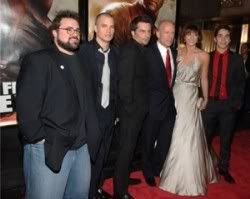
    [Laughs]

    WINSTEAD: I was really”¦I was cast at the last minute. I didn’t even really meet anyone beforehand: Len, Bruce or anybody. I was just sort of cast from a tape. I went in and saw the casting director months beforehand and suddenly they had seen some of my work and decided they wanted me for the role but I really didn’t know what they wanted. The script was very different from when I initially auditioned. The character was very different and it was a much bigger part. I was unsure of what they saw in me, it was a different casting process, but I knew that I couldn’t be some whiny, teenage daughter. It would have been really uninteresting.

    I went back and watched all the other films. I just paid attention to Bruce’s mannerisms and that kind of Jersey attitude and the way he talks and moves. And his smirk, that sparkle in his eye. I knew I couldn’t do all of that. I couldn’t be John McClane but I thought it would be pretty cool if I could incorporate some of that into this young girl character and give her some of that tough, wise-ass attitude. I tried to do what I could.

    It’s cool if people notice it because it wasn’t something that we talked about too much beforehand but it’s cool that it came out that way.

    STIPP: When you went back to watch the movies”¦much in the same way that there were popular folk heroes of the 19th century”¦What has made John McClane, the impetus for so many rip-offs in the 90’s, such an endearing and enduring character in action movies?

    WINSTEAD: There’s just something so entertaining about a character that he created. I think part of it is that he’s the reluctant hero and that, while he’s in the midst of everything, is just really angry that he’s having to save the day, that he’s having to take care of people, that he’s having to kill people. He wasn’t born to do that. It’s not his job but he’s put into this position where no one else is doing it and he has to step up. I also think there’s something entertaining about watching this hero that’s sort of hating it all along the way. Being a wise-ass”¦it’s just a more real character than the typical heroes that we see in action films who are so perfect and they always seem to be bouncing back effortlessly but when he gets knocked down it’s really hard for him to get back up. You can see his pain and you can see, even in this one, he’s getting older and it’s getting more difficult. You see all that and it kind of makes you root for him even more.

    STIPP: The learning process on the set. I have to assume that this being one of the biggest films you’ve ever done, and there are some actresses who get soured on the big budget blockbuster once they do them, but what did you take away from the experience.

    WINSTEAD:
    It was kind of overwhelming while I was in it.

    I didn’t see the big picture of it all. I was focused on doing my job and trying to do it well because there was so much more happening on that film than I even understood. It was kind of outside of my realm of understanding. I just had my little part to do and do it well and that was really all I could focus on. Now that I’ve stepped away from it and I’m part of this great”¦huge”¦film that everybody is really loving and going to the premiere and seeing the reactions of the fans and how much they love it and how sort of proud they were to be a part of the premiere. It’s just so amazing to be a part of a film that reaches so many people and excites them so I definitely would love to continue to do a movie every now and then that’s of that kind of stature and scale because it really is an amazing feeling when you get to step back and see what kind of big deal it is.

    STIPP: Did Bruce impart anything worthwhile that you could apply to your own acting?

    WINSTEAD: Watching him work was amazing to me because he’s incredibly subtle but it seems so much when you watch him on the screen. He’s so charismatic and it conveys so much with just the look in his eyes and that little smirk on his face”¦that sort of deadpan delivery. It’s amazing how effortless it is for him. And then, at the premiere, he would give these small tidbits of knowledge and wisdom. I was really overwhelmed, all I could do was take deep breaths and just say “This is insane”, and he just kept telling me to just take it in and appreciate it because you never know when you’re going to get another experience quite like that”¦and go back to your normal life the next day and you’re going to look back and think, “Wow, I was just at one of the biggest premieres at Radio City Music Hall.”

    He’s just a really cool, laidback guy. He doesn’t try to impress himself on to you, try to tell you what you should do with your career, how you should behave but it was nice to be around him, be in awe of him at all times.

    STIPP: It’s been a busy year for you with not only this but with GRINDHOUSE as well and has it informed your sense of how you want to take your career, going forward?

    WINSTEAD: Yeah. I’ve just been having such a great time sort of playing these supporting roles in these great films where I get to be completely different. I’m just been so appreciative that I’ve had these kind of little nuggets of just really fun, interesting roles to play. I just want to do that as much as I can, find my way onto more great sets. GRINDHOUSE was one of the greatest experiences ever, just to be on the set with Quentin Tarantino who’s the most enthusiastic, joyous person to work with”¦and to see his child-like excitement about being on set and making a movie”¦I just kind of want that same thing. Just to have as much fun as possible and work.

    STIPP: How are you handling, then, the preparations as the leading lady for your next film, MAKE IT HAPPEN?

    WINSTEAD: It was a character that I was really drawn to”¦being from the dance world myself. Being able to play a dancer was really exciting for me and I feel like a lot of the dance movies that have come out in the last 10 years, not all, but some of them have been airy, sweet and simple. I’m just hoping to bring a more realistic edge to the character and show the more real-life”¦things that happen when you’re trying to become a dancer. My sister is a professional dancer and I used to be a dancer for a lot of my life and it’s really a tough life to live. I just want to show the less sweet side to it even though it will be a classic dance movie, a feel good girl movie. But I think we give it a little more interesting edge to it as well. It’s a challenge I’m taking on and I’ll see whether I can run with it.

    STIPP: I was kind of surprised to see that one of your aspirations was to do a romantic comedy. Not surprise as if it’s a bad thing but you usually hear the words “art film” or “passion project” when you ask an actress what she’d like to do, going forward.

    WINSTEAD: I think it would be a lot of fun. I also think it’s a lot more challenging than people would think. That’s why it’s really hard to find a really good romantic comedy because it’s really hard. A lot of great actors have a hard time doing that because there’s so much that goes into chemistry and comedic timing and I really kind of want to hone my skills as a comedic actress because I really admire that kind of performing.

    And I’d really like to do a great art film but I don’t necessarily think that they’re all that great. Just because something is independent and dark and twisted does it make a good film. I’m not going to search out those kind of films”¦I’m going to search out films that are well written, well-crafted and that have interesting characters.

  • Toy Box: Ratatouille PVC figures

    toybox.jpg

    There are a lot of big movies hitting this summer. Which is sort of like the doctor saying ‘This might sting a bit’ before he amputates your right leg with nothing but a rag in your mouth and a bottle of whisky to make you feel better. Most (but not all) of these big summer blockbusters are sequels. And most are going to suck golf balls through a straw.

    But hitting this weekend is one I’ve really been looking forward to, Ratatouille. Pixar’s latest film comes with less hype than last year’s Cars, and comes down a far less traveled story road. This is all about Remy, a little rat who longs to be a great chef in the city of great chefs, Paris. Early reviews are in, and so far every one loves it.

    Last year’s Cars produced one of the hottest line of movie toys in years. Mattel continues to crank out the die cast cars, and kids and collectors continue to snap them up, a year after the movie hit. I don’t think Pixar and Mattel have any hopes that Ratatouille could possible produce the same situation, but you never know – remember how quickly that damn talking Buzz Lightyear disappeared after Toy Story hit movie screens.

    Mattel has gone light with this movie, producing a basic set of action figures that look more like oversized Happy Meal toys than seven dollar figures, some animatronic Remy’s (including a RC version), and some PVC sets. I’ll be looking at the main PVC set tonight. Disney is doing another set of action figures to be sold only at their stores, but from early photos, I’m not holding my breathe on these.

    If you have any comments or questions, feel free to drop me a line at mwc@mwctoys.com. Now let’s look at those little buggers:

    Ratatouille PVC set

    toybox_062607_1b.jpg

    This PVC set contains 7 characters – Remy, Emile and Django (rats), and Linguini, Colette, Skinner and Gusteau (humans). There are also two playsets so far, which include another PVC each and which appear to be in scale (sort of) with these. I can’t comment for sure yet though, because I haven’t gotten one of these sets yet. I suspect I will though this week, along with the main animatronic Remy. I think once the movie hits, Remy is going to disappear quickly.

    toybox_062607_1.jpg

    Packaging – ***
    While the box isn’t fancy, it does match up to the license well in color and graphics. It’s also collector friendly without trying, and you can easily remove the figures and put them back later if you are so inclined. I like boxes as well for the ability to store them, and there’s very little wasted space here.

    toybox_062607_2.jpg

    Sculpting – People ***1/2; Rats ***
    I have to say that I haven’t seen any of the product so far capture the look of the rats perfectly. That being said, these PVC’s are the best I’ve seen so far. The rats aren’t in scale of course, standing about up to the waist of the humans, but considering how small the PVC’s are to begin with, that’s certainly forgivable. The expressions are good, and there’s decent detail here for the material and scale.

    toybox_062607_3a.jpg

    The humans are better than the rats, and look much more like their on screen counterparts. Like the Incredibles, this is a Pixar movie with a lot more humans in it than usual, but it looks like the style of animation is up to the task.

    Overall the figures range in height from Remy, the shortest at about 2 inches tall in the chef hat, to the tallest, Linquini, at 4 1/2 inches.

    Paint – ***
    There are a ton of paint ops here, and you won’t see any serious small detail work. But the eyes are uniformly clean and straight, there’s little to no bleed between colors, and there’s even some nice dry brushing on the fur of Django. The paint work isn’t perfect, and there’s the usual sloppy lines around some of the shoelaces, eyebrows and hair lines. But considering the scale and the cost, the paint work ain’t bad.

    toybox_062607_1c.jpg

    Gusteau is a bit different. He’s cast in a translucent plastic, due to his, uh, ‘nature’ in the film. If you don’t know about him yet though, I won’t spoil it for you. Clear figures are always cool looking, but the downside is that the sculpt is very hard to make out.

    Articulation – Bupkis
    Did I mention these were PVC’s? Yea, I know, but I also like to include this category because occasionally there is a point or two of articulation, even with small PVC’s. That’s not the case here though, but this lack of articulation will have no effect on my personal overall score.

    toybox_062607_6.jpg

    It does appear that the neck on Colette and Linquini *might* be meant to turn, but mine seemed a bit stuck. The PVC is soft enough that tearing the head off is a very likely outcome, so I left things alone and figured it was best that way.

    Accessories – **
    Yep, these are PVC’s with accessories, so even a low score adds to the overall, since a Bupkis is assumed. The humans each include a small plastic display base, which is good since they can’t really stand without it. Making this a separate piece instead of part of the basic mold is also good, because if I’m a kid I might not want the base with me all the time. Of course, this also gives them one more thing to lose.

    The fork and pile of…pickles? Tomato slices? Whatever it is…both of these come out of the hands of the other rats, and are also technically accessories. Sure, they look a *little* funny in those poses without them, but it’s not so far off that you actually couldn’t use them that way.

    toybox_062607_5.jpg

    Fun Factor – ***1/2
    PVC’s are fun stuff, even without any articulation. Little green army men were the play staple of many a kid’s toybox, and they were even posed in some God awful ways. Did anyone like the ones that were laying down?

    toybox_062607_4.jpg

    There isn’t a lot of conflict with these characters, so action figures wouldn’t do all that well. These decorative figures, which can also be fun out in the sandbox or in the bathtub, are probably the best bet. They also go well with playsets, and I’m hoping we see more than just the two currently out.

    Value – **1/2
    At $15 for 7 PVC figures, you’re getting a pretty average value. These aren’t exceptional by no means, but they’re a sight better than those PVC sets that are so popular at the Disney stores and just as expensive (unless they’re having a sale) as these are.

    toybox_062607_7.jpg

    Things to Watch Out For –
    Not a thing. They’re sturdy, well made, and very consistent.

    Overall – ***
    If you’re looking for some decent Ratatouille merchandise, I think your best bet are these PVC’s along with the playsets, at least at this point. The larger Mattel action figures are sad at best, and the early photos of the Disney figures doesn’t do much to alter my opinion on those either. You get a decent bang for your buck with these smaller figures, and both kids and adult fans can enjoy them.

    Where to Buy –
    I picked them up at Toys R Us, which appears to be the only retailer carrying much of anything for this flick. If you love the movie, I’d pick up the talking Remy early. I suspect he’s going to pull a Buzz Lightyear and disappear quick once the masses figure out how good the film is.

  • Comics in Context #182: The Red And The Black

    comicsincontext4.jpg

    cic2007-06-18-1.jpgWriting this column nearly every week, I continually notice things that relate to installments I’ve already written, or to ones I’m planning to write.

    For example, in the June 20 issue of The New York Times, columnist Thomas J. Friedman wrote about the masked members of Hamas, and about how masks can be both empowering and intimidating. Friedman also included a quotation by Oscar Wilde about masks that I found applicable to secret identities in the superhero genre. Here’s a longer version of Wilde’s characteristically paradoxical observation: “Man is least himself when he talks in his own person. Give him a mask, and he will tell you the truth”. Hence the Batman is more “real” than Bruce Wayne, and through their costumed personas, Clark Kent and Peter Parker can express aspects of their personalities that are concealed in their everyday lives.

    This week I also watched Fritz Lang’s RKO film While the City Sleeps (1956) on Turner Classic Movies. The villain is a serial killer (played by Drew Barrymore’s dad) who turns out to be a fan of “so-called comic books,” a phrase used in the movie twice. It is one thing to be informed by books and documentaries about the attacks on comic books in the 1950s (see “Comics in Context” #95, 180). It is quite another to be ambushed unexpectedly with a slander against comics readers while watching a movie from that period. In the same year that DC Comics editor Julius Schwartz launched comics’ Silver Age, RKO Radio Pictures was instructing the moviegoing public that reading crime comics could turn you into a serial killer.

    This seems a wee bit hypocritical of RKO and Mr. Lang. It is explained in the film that “comic books” are bad because they show readers how to commit crimes. The movie repeatedly demonstrates how one can surreptitiously adjust the “button lock” on an apartment door in order to break into the apartment later and kill the lady who lives there.

    It’s also ironic that Fritz Lang, the director of this anti-comics movie, was the pioneer of the supervillain (as defined by Dr. Peter Coogan) in cinema (see “Comics in Context” #165) and his most celebrated film, Metropolis (1927), apparently inspired the name of Superman’s home city. (And would the name of Superboy‘s leading lady have been devised by combining the names of Fritz Lang and 1940s movie star Lana Turner?)

    It turns out that Paul Dini was right (see “Comics in Context” #180): Boomerang has stopped showing even the pre-1948 Warner Brothers animated cartoons that the network’s parent Turner Broadcasting bought years ago, and has replaced its nightly Looney Tunes show with an MGM cartoon anthology. In the past I’ve praised Turner Classic Movies’ Cartoon Alley, which showcases classic Hollywood cartoons, including pre-1948 Warners shorts. I see from TCM’s online schedules that Cartoon Alley will cease at the end of July. Is this ominous?

    Perhaps not. Recently on the Internet radio program Stu’s Show, animation historian Jerry Beck indicated that the classic Warners cartoons vanished from Boomerang because negotiations are afoot to show them Somewhere Else. But where?

    In the season finale of NBC’s 30 Rock, Tina Fey’s character, Liz, has a cell phone that rings to the tune of the “Ride of the Valkyries.” Hearing this, another character, Phoebe, asks Liz if she likes Wagner. Liz says no, it’s a reference to Bugs Bunny, whereupon she and her friend Jenna merrily start chanting “Kill the wabbit!” I wonder, since the classic Warners cartoons are no longer on TV every day, if in twenty years a sitcom would portray two thirtysomething women knowing who Bugs Bunny is, much less quoting a specific Bugs Bunny cartoon (Chuck Jones’s 1957 What’s Opera, Doc?; see “Comics in Context” #102). At least these cartoons have been coming out on DVD, enabling parents to introduce them to their kids.

    I am pleased that, after running the first two seasons of the animated Justice League series on a seemingly endless loop, Boomerang has finally begun showing its superior continuation, Justice League Unlimited. I hadn’t seen any of the “Cadmus” arc episodes before, in which the American government regards the Justice League as a possible menace. The episode I saw several days ago, “The Doomsday Sanction,” lived up to the arc’s high reputation. I was surprised and especially impressed by its conclusion, in which Batman agrees that the League could become a threat to the world, thus echoing the Batman of Kingdom Come and his counterpart, Nighthawk, in Mark Gruenwald’s Squadron Supreme (see “Comics in Context” #150), all of them wary of even well-intentioned individuals possessing near-absolute power.

    This week I also realized I had forgotten to mention one of the celebrities I sighted at the premiere for Spider-Man 3 in Astoria, Queens (see “Comics in Context” #181): Micky Dolenz, who first came to fame in the same decade that Spider-Man did, the 1960s, as a member of the Monkees. (You can find pictures of Dolenz at the premiere at www.gettyimages.com). I suppose this supports J. Michael Straczynski’s theory in his run writing Amazing Spider-Man that Spider-Man keeps attracting other characters with animal totems.

    The premiere was on Monday, April 30, as part of both the Tribeca Film Festival and “Spider-Man Week in New York,” as officially declared by New York Mayor (and possible presidential candidate) Michael Bloomberg. I resumed attending “Spider-Man Week” activities on Saturday.

    The New York Public Library’s Humanities and Social Sciences Library (the famed building on 42nd Street and Fifth Avenue, guarded by the iconic lion statues) was displaying what was billed as “The Ultimate Spider-Man Comic Collection.” (No, there were no copies of Marvel’s Ultimate Spider-Man on exhibit.) The building is visible in the first Spider-Man movie, when Uncle Ben drops Peter off in front of the library, but I was still surprised that the library was participating in this big public relations spectacular promoting Spider-Man 3.

    It was even more of a surprise because back in the mid-1990s I did research into the number of American libraries that collected comic books, and there were relatively few, with only a few noteworthy collections such as those at Ohio State and Michigan State Universities. Back then the New York Public Library’s website conceded it had a few boxes of old comics, but otherwise discouraged people from researching comics there. Matters have radically changed at America’s libraries over the following years.

    In the McGraw Rotunda, a few flights up and outside the main reading room stood a few glass cases holding seventeen vintage Spider-Man comic books, primarily copies of those written by Stan Lee during the Silver Age of the 1960s: Amazing Spider-Man Vol. 1 #32 (January, 1966) was the earliest, and Amazing Spider-Man Annual #21 (1987), featuring the wedding of Peter Parker and Mary Jane Watson, was the most recent. You could easily see many of these comics in the dealer’s room in a large convention. I own copies of many of these comics. I again found myself reflecting that since nowadays museums and libraries display original printed comic books, why, I could turn my own comics collection into a museum exhibit! Moreover, the labels I’d write for my books would be more informative and analytical than the ones that the New York Public Library provided, which were content to credit the writer and artist, summarize the story, and quote some dialogue. As for literary or artistic analysis, there was none. In short, the New York Library’s exhibit was far from “ultimate.” I also found myself wishing that the people crowded around these glass cases knew about my Stan Lee retrospective exhibit down at the Museum of Comic and Cartoon Art, which is far more enlightening about the cultural import of Marvel in the 1960s, if I do say so myself (www.moccany.org).

    My visit to the Library and perusal of the “Ultimate” exhibit took maybe fifteen minutes tops, much of which was consumed going up and down staircases. But upon exiting the Library, I entered a nearby discount DVD store, where I found and bought The Jean Renoir Collector’s Edition, an inexpensive three-disc collection of seven of the great director’s lesser-known films. So, visiting the Library hadn’t been a waste of time, after all.

    Then I headed up to the American Museum of Natural History, which was contributing to “Spider-Man Week” with an exhibit called “Spiders: Alive!“ in what the museum now calls its “Grand Gallery” (it’s well designed, but hardly grand) on the first floor. On Tuesday the Beat, who always knows about such matters in advance, saw “Spiders: Alive!” when Tobey Maguire, Spidey himself, was making a personal appearance there. When I got there on Saturday afternoon, I had to content myself with the exhibit itself consisting of a row of glass cases holding rather large tarantulas. One of them was called the “Goliath birdeater tarantula,” which should give you some idea of its size.

    A lengthy wall text asserted, among other things, that in endowing Spider-Man with the ability to shoot webbing, Spider-Man’s creators “must” have been inspired by a relatively little known kind of spider that can cast its webbing over a victim. Couldn’t the museum have contacted Stan Lee and asked him?
    I rather think that if Stan Lee and Steve Ditko had been aware of this particular species of spider, Lee would have mentioned it in an interview, or even in “Secrets of Spider-Man” in the first Amazing Spider-Man Annual (1964).

    Just because a scholar can find a real-world analogue to something in a creative writer’s work doesn’t mean that the writer “must” have been aware of the connection. Frank Miller put a scientist named Beaker in Elektra: Assassin. Years ago, I asked him if he named Elektra‘s Beaker after Dr. Bunsen Honeydew’s assistant Beaker on The Muppet Show: Miller replied he had never heard of the Muppet Beaker.

    Unfortunately, as comics attract more interest from mainstream culture, we are probably going to see more of these unfounded scholarly assumptions.

    For the magazine of Britain’s Tate art museums, academic John Carlin, co-curator of the “Masters of American Comics” exhibition, wrote a mostly excellent essay about members of the high art canon whose work foreshadows that of twentieth century comics artists. Like Alan Moore, artist Bryan Talbot, and myself (see “Comics in Context” #72), Carlin has noticed the similarities between the godlike and heroic figures drawn by the British artist William Blake (1757-1827) and those of contemporary comics. Ignoring Joe Simon’s and Stan Lee’s roles as co-creators, Carlin writes that “Echoes of his [Blake’s] flattened muscular style reverberate throughout the comic’s heroic phase, particularly by artists such as Jack Kirby (1917-1994), creator of Captain America, The Hulk, X-Men and the overall look of Marvel Comics. . . .Kirby used techniques pioneered by Blake to create a realistic sense of epic action through the combination of muscular figures with exaggerated patterned backgrounds. . . .” Was Kirby aware of Blake’s work? If so, it hasn’t yet been revealed in print, to my knowledge. Read that passage carefully, and you’ll see that Carlin is saying that Kirby and Blake used the same “techniques,” and not necessarily that Kirby was aware that Blake had used them. But someone could easily misread this to draw the latter conclusion. Carlin also misses a major (if probably coincidental) similarity between Blake and Kirby: each created his own mythology of fictional deities and heroes.

    On the other hand, Danny Fingeroth recently pointed out to me that the full name of the Sub-Mariner’s creator Bill Everett was William Blake Everett. It turns out he was William Blake’s descendant, so perhaps Blake influenced the creation of one of Marvel’s first superheroes. (See this).

    Going through “Spiders: Alive!” likewise took no more than ten to fifteen minutes, much of which was spent waiting for people in front of each glass case to move aside so I could get a look. The big spiders were interesting for a short look, but not worth the long trip into Manhattan.

    However, just off the Grand Gallery was the newly opened Spitzer Hall of Human Origins, a handsomely designed new exhibit of fossils of mankind’s prehistoric ancestors, which I visited for the first time. (Over the decades since I first visited the museum, this is the third version of this gallery, which was once devoted to human biology, but it is by the far the best.) Up on the fourth floor I visited for the first time the museum’s newly opened and restored Audubon Gallery, which retains the look of a museum hall from the 1930s. John James Audubon is famous as a painter of birds, but the gallery displayed his lesser known but remarkable portraits of North American mammals, and as an X-Men enthusiast, I was delighted to see a stuffed wolverine, mounted as if roaring at the visitors. So the trip to the Museum had been well worth it, after all.

    I intended the high point of this particular Saturday to be my viewing Spider-Man 3 itself, which I saw at Manhattan’s enormous Ziegfeld Theatre, and this time I was not disappointed. Director Sam Raimi’s Spider-Man movies are by far the best of the early 21st century wave of superhero genre movies. Richard Donner’s Superman movies (including the excellent new Superman II: The Richard Donner Cut on DVD) and Tim Burton’s first Batman film give the Raimi Spider-Man movies heavy competition for the honor of the best live action movie based on superheroes that originated in comics. I’m tempted to name The Incredibles, an animated film which is not based on a comics series, as the most successful realization of the superhero genre in a feature film (see “Comics in Context” #62). But the Raimi Spider-Man has now maintained its high level of achievement for three films in a row, whereas Warners’ 1980s Superman and 1990s Batman live action film series plummeted into uninspired camp by their third installments.

    Much as I loved the first two Spider-Man films, I had trepidations before seeing the third. Sam Raimi is clearly a devotee of the Spider-Man comics of the 1960s, when Stan Lee, Steve Ditko and John Romita., Sr. defined the character, his world, and the series’ themes. Perhaps Raimi is an enthusiast for the superhero comics of the Silver Age, the years from 1956 to 1970, in general. To me Spider-Man and Spider-Man 2 were standard bearers for what I have dubbed the neo-Silver movement in the genre, the effort to resurrect the heroic, inspiring, entertaining spirit of the Silver Age comics while updating it for a 21st century audience. But Spider-Man 3 was said to feature Venom, one of the iconic figures of the darker comics of the 1990s, when the genre, to my mind, was losing its way. With Spider-Man 3, it looked as if the movie series might be taking a leap from the Silver Age into the era of the Grim and the Gritty.

    For readers who do not already know, in the comics Venom ultimately derives from the new black costume that Spider-Man acquired on an alien planet in the landmark 1984-1985 crossover series Marvel Super Heroes: Secret Wars. Whether or not the Powers That Be originally intended the black costume to replace Spider-Man’s traditional red and blue one permanently, I have no idea But it certainly seemed that way at the time, boosting sales of Amazing Spider-Man #252, in which it first appeared, as surely they had intended. The black costume was nevertheless a mistake: not only was it less interesting than Steve Ditko’s original design, but the wisecracking, web-slinging Spider-Man should be represented by brighter colors than a somber black. It was yet another instance in which the discerning superheroes aficionado had to wait patiently for the Rubber Band Theory of Cartoon Art (see “Comics in Context” #75) to take effect. Eventually, Spider-Man got his original costume design back.

    The black costume was revealed to be a sentient alien creature which bonded to its host and was taking mental control of Peter Parker as he slept, though it did not affect his personality when he was awake. Parker finally rid himself of the alien symbiote, and eventually reassumed his red and blue costume whenever he went into action as Spider-Man. Hating Parker for rejecting it, the symbiote bonded with disgruntled reporter Eddie Brock, who also hated Parker, forming the menace called Venom.

    Visually Venom was a new variation on that archetypal figure, the superhero’s evil twin. But in the comics Venom was more massive than Spider-Man, with the steroid-style musculature seen on so many superhero genre characters in the 1990s. Venom also had a long, lascivious tongue, and students of the subtext of the cover for Heroes for Hire #13 (see “Comics in Context” #179) should be able to work out what that means. Venom also used to fantasize about not only killing Spider-Man and other victims, but also devouring them. In short, Venom was an utterly repulsive villain, and such was the mindset of tens of thousands of Marvel readers in the 1990s that they therefore embraced him as a hero. Apparently readers identified with this vicious, insane, musclebound cannibal. (Would I want to associate with readers like this? I don’t think so.) Venom starred in one miniseries after another, and since Venom had become a hero of sorts, Marvel felt obliged to create a new, even nastier version of the character, Carnage, whose human host was a serial killer. Now, you may think that it was harmless for Venom to talk about cannibalism, since he didn’t actually practice it. But in retrospect we can see that Venom set the stage for The Ultimates‘ version of the Hulk, who really does eat his enemies.

    So you can see why I was not happy that Venom had found his way into Sam Raimi’s movie trilogy. It turns out that this wasn’t Raimi’s idea, either. According to Raimi’s interview at Comic Book Resources, he and his brother Ivan had already concocted a story for the third movie with the Sandman as the main villain. “When we were done, Avi Arad, my partner and president of Marvel at the time, came to me and said “˜Sam, you’re not paying attention to the fans enough.. . .You’ve made two movies now with your favorite villains and now you’re about to make another one with your favorite villains. The fans love Venom. He is the fan-favorite. All Spider-Man readers love Venom. Even though you came from ’70s Spider-Man, this is what the kids are thinking about. . . .’” Raimi told the Hall H crowd last year that “I had been objecting to the lack of humanity [in Venom].” But Arad and Alvin Sargent, a screenwriter on Spider-Man 2 and 3, educated Raimi in Venom lore, with the result that “‘”¦ in studying him I gained an appreciation for him,’ said Raimi. “˜Venom has always been a character that the fans love”¦ that’s why he’s in here’”.

    I’m a Spider-Man fan, and I don’t love Venom, and I believe I have company in this respect. Moreover, Venom debuted in Amazing Spider-Man #299 (April, 1988) and his heyday was in the 1990s, when most of his miniseries were published. Raimi has reported that he did see e-mails from fans who wanted Venom to have a big role in the movie. But although the character is still around in the comics, I notice that a 2000 attempt to relaunch him in a regular series lasted only eighteen issues. Venom is really a creature of the period of the comics speculator boom, which now seems long ago. In contrast, Raimi’s choices for the villains of the first two Spider-Man movies, the original Green Goblin and Doctor Octopus, both Lee-Ditko creations, retain their hold on comics fans’ imaginations after over forty years.

    Spider-Man 3 ends up with three major villains–the Sandman, presumably to satisfy Raimi’s fondness for the Lee-Ditko characters; Harry Osborn as “the New Goblin,” continuing Harry’s character arc from the first two movies (and echoing the 1970s Spider-Man comics, in which Harry succeeded his father as the Green Goblin); and Venom, whose presence keeps Avi Arad happy. Some reviewers thought this was too many villains for a single film, but I think that the screenplay makes them all fit, giving a part of satisfactory size to each. Then again, I’m not an admirer of Brock/Venom, and I can see that his fans might think that he got insufficient time and development onscreen: Eddie doesn’t become Venom until the film’s final act.

    But had Arad not pushed Raimi to include Venom, Spider-Man 3 would have been a very different movie. The black costume–the symbiote–drives the plot. Peter Parker in the black costume plays a much more significant role in the story than Eddie Brock in the black costume does. Arguably Spider-Man 3 actually has four villains, and the foremost of these is Spider-Man himself in the black costume.

    One of the principal themes of the superhero genre is the duality of the human personality. This duality can take the form of the division between the conventional introvert who blends into society (Clark Kent, Peter Parker) and his other identity, the heroic individualist who stands out from the society he protects (Superman, Spider-Man). Often the duality is that of the “good” and “evil” or violent sides within the same individual, as exemplified by characters like the Hulk and Two-Face. In other cases, a superhero’s “evil twin” or counterpart represents the hero’s own dark, evil or violent side. Thus, Venom, as noted above, is metaphorically Spider-Man’s “evil twin.”

    Raimi makes the “evil twin” connection visually stronger by depicting his Venom without the exaggerated, gargantuan physique, making him look the same size as Spider-Man. (Though Raimi retains Venom’s sharp teeth, he omits Venom’s serpentine tongue and cannibalistic tendencies, probably out of good taste.) Moreover, Raimi cast Topher Grace, an actor who somewhat resembles Tobey Maguire, as Eddie Brock, further reinforcing the “evil twin” visual imagery. Did any of you see Maguire’s appearance on the Late Show with David Letterman on May 1 to promote Spider-Man 3? Initially Grace came out, pretending to be Maguire, until the real Maguire appeared, feigning anger, and supplanted him in Letterman’s guest chair. Whether or not they consciously intended it, the gag reinforced the “evil twin” imagery of the film.

    For the middle section of Spider-Man 3, however, Spider-Man becomes his own evil twin when he dons the black costume. The black costume gives Raimi an opportunity that the Spider-Man comics writers did not take back in the 1980s: the sentient costume affects Peter Parker’s mind, drawing out the darker side of his personality.

    This “Dark Spider-Man” storyline fits into Marvel tradition: it does not just resemble X-Men‘s “Dark Phoenix Saga” from the 1980s, which was adapted into X-Men: The Last Stand (see “Comics in Context” #134-135), but also Stan Lee and Jack Kirby’s own work from the Silver Age of the 1960s. The duality of Bruce Banner and the Hulk provide an obvious example. But I think especially of the two Lee-Kirby Fantastic Four storylines in which Ben Grimm, the Thing, temporarily went “bad” after his mind was tampered with (first by the Wizard in issues #41-43, and then by the Mad Thinker in #68-71).

    The “Dark Spider-Man” storyline can also be seen as an extrapolation of an aspect of Stan Lee and Steve Ditko’s Spider-Man origin tale in Amazing Fantasy #15 (1962) that Raimi had omitted in adapting it in his first Spider-Man movie. In the movie when Peter Parker first encounters the Burglar (who will later be identified as the killer of Peter’s Uncle Ben), Peter has just been cheated out of the money due him from a wrestling promoter. After the Burglar robs the promoter, Peter lets him escape, as a petty act of vengeance against the promoter. In Lee and Ditko’s origin story, Spider-Man’s motivation for refusing to halt the Burglar is quite different. Having become a show business sensation in his masked identity, the formerly introverted, humble Peter Parker has let Spider-Man’s newfound fame go to his head. The egotistical Spider-Man simply can’t be bothered to (minimally) risk his neck by using his powers to try to stop a mundane robbery. In Lee and Ditko’s compact origin tale, this phase of Spider-Man’s personality lasts only a few pages: the murder of Uncle Ben, and the subsequent discovery that the same Burglar he let escape had killed him, shocks Peter out of his moral complacency. In Marvel’s What If. . .? Vol. 1 #46 (August,1984), Peter B. Gillis wrote a remarkable story, “What If Spider-Man’s Uncle Ben Had Lived?”, in which the swell-headed Spider-Man stays in show biz and evolves into a full-fledged, archetypal Hollywood asshole.

    In effect, Raimi uses Spider-Man 3 to go back and explore the effects of fame’s temptations on Peter Parker. Raimi told one interviewer that “in this story, Peter Parker falls victim to his own pride. He starts to believe all the press clippings about himself, that he’s really this hero and someone great”. It’s interesting that Raimi characterizes Peter’s Achilles heel as pride. Pride was the sin that brought about the fall of Lucifer; overweening pride, or hubris, is the characteristic flaw of the protagonists of classical Greek tragedy.

    In part because Spider-Man is now acclaimed as a hero in New York City (which rarely happens in the comics), Peter doesn’t sufficiently empathize with his girlfriend Mary Jane over the sudden downturn in her career. At first Peter seems touchingly overwhelmed at watching the enthusiastic crowds gathering for the city’s celebration of Spider-Man, hosted by Gwen Stacy, but once he’s in costume, he gets carried away by the occasion, letting Gwen kiss him as he hangs upside down, shocking Mary Jane, who considers that to be “their” kiss (from the first movie). At this point Raimi’s Peter/Spider-Man is not as self-centered as Lee and Ditko’s Spider-Man was at the midpoint of his origin story, but he’s lost perspective enough to be oblivious to the serious damage he is wreaking on his relationship with Mary Jane.

    The black costume’s psychological effect intensifies these egotistical tendencies in Peter/Spider-Man: it loosens his moral inhibitions, and reduces his empathy towards others, so much that in a subterranean battle with the Sandman, Spider-Man actually tries to kill him. The dialogue makes this explicit. Of course, the Sandman, whose body has been converted to a sand-like substance, is virtually indestructible, so Spider-Man’s effort is in vain. Nonetheless, I was surprised that the movie allowed Spider-Man to go that far: he would have succeeded in killing almost anyone else in the same situation. Raimi seems surprised, too, telling an interviewer that “I didn’t like watching Spider-Man go bad. It was unpleasant and I kept worrying, “˜Gee, do I really have to do this to show how rageful and vengeful he is? Do we really have to show how pride can destroy you?’ But, my brother kept telling me, “˜Yes, because he’s going to find himself again.’”.

    Recently I rewatched portions of Ethan and Joel Coen’s The Hudsucker Proxy (1994), which they co-write with Sam Raimi. Set in the late 1950s, its protagonist is Norvell Barnes, an innocent young man (and something of a fool) who becomes the head of a major company and unexpectedly becomes a great success, thanks to his invention, the wildly popular hula hoop. Barnes gets carried away with his power and success, unwittingly distancing himself from the woman who loves him. Graduate students of the future, here is the link between Raimi the screenwriter of The Hudsucker Proxy and Sam Raimi the auteur of Spider-Man 3! And although Danny Fingeroth has cautioned me against quoting Wikipedia, I feel I should mention that its entry on The Hudsucker Proxy observes that “A scene in the Sam Raimi directed film Spider-Man in which Norman Osborn (Willem Dafoe) addresses his board members is shot in an almost identical fashion to a similar scene in The Hudsucker Proxy and even reuses the same dialogue from the film: “˜Costs are down, revenues are up, and our stock has never been higher.’”

    After Peter angrily strikes Mary Jane (which drew a gasp from the audience when I saw the movie), the damage he has been doing to their relationship takes a physical form. Like his recognition of the captured Burglar in the Lee-Ditko origin story, this shocks Peter out of his previous pattern of behavior. In a church, Peter literally tears the black costume from his body, as church bells sound. This scene echoes a sequence from the original black costume storyline in the comics, in which the sound of church bells weakens the symbiote. In the movie, however, since the black costume represents Spider-Man’s own “dark side,” the church bells sequence comes off more as a metaphorical exorcism of evil.

    But it’s only a partial exorcism. The evil that was within Peter Parker now takes physical form as something outside him when the black costume attaches itself to his rival and semi-lookalike Eddie Brock, becoming Venom. (I suppose that you could say that in the movie, Peter in the black costume was the first Venom, and Brock in black is the second.) Peter’s internal struggle against his dark side, which ended with his rearing off the costume, is succeeded by an external struggle against his dark side, as metaphorically incarnated by Brock as Venom. Separated from Peter, the “dark side” embodied by Venom is now free of his conscience. Brock, the symbiote’s new host, is portrayed throughout the film as having a shallower personality than Parker. This makes Brock less interesting and developed as a character, but it fits his role in the movie. Whether as Venom or as his normal human self, the movie’s Brock is less a person than a representation of Peter Parker without his strong moral sense.

    Since Peter, in the black costume, wreaked emotional harm on Mary Jane and finally physically struck her, it makes sense that his dark side, now represented by Brock/Venom, endangers her very life. Ultimately, using the church bells’ sounds again, Spider-Man performs a further “exorcism,” this time utterly destroying Venom, who is literally blown into nothingness.

    In the comics of the late 1980s and early 1990s, Venom became a hero of sorts, reflecting the depressed moral standards of the Grim and Gritty era. In contrast, Spider-Man 3 introduces Venom in order to exorcise him. Peter Parker descends into the hell within his own psyche, represented by the black costume, only to reemerge and win redemption. That potential for redemption is what keeps Spider-Man 3 firmly in the neo-Silver movement, just like the previous two Spider-films.

    In the previously quoted interview, Raimi states that he and his brother Ivan, who collaborated on Spider-Man 3‘s story, wanted their protagonist to learn that “he himself might have some sin within him and that other human beings, the ones he calls criminals, have some humanity within them”. In Spider-Man 3 the black costume brings out the “sin” within Peter Parker.

    But why would this be a new discovery for Peter? In the comics Peter Parker has recognized the “sin” within himself since the end of Amazing Fantasy #15, as I shall explain next time.

    ADVERTISEMENTS FOR MYSELF

    I will be appearing at the Big Apple Con (www.bigapplecon.com) at Manhattan’s Penn Plaza Pavilion on Saturday, June 23, where I will be interviewing comics writer/artist Walter Simonson (Thor, Elric, Hawkgirl, Fantastic Four and more) and possibly artist Paul Gulacy (Master of Kung Fu, Catwoman, Sabre, Squadron Supreme, and others). Big Apple attendees will be able to take a shuttle bus down to the annual MoCCA Art Fest (www.moccany.org) at the Puck Building. Fest attendees, in turn, can walk two blocks to MOCCA itself, where the Fest’s panels will be held, and can look in on the exhibit I co-curated there, “Stan Lee: A Retrospective.” (I will probably drop in there myself!)

    Copyright 2007 Peter Sanderson

  • Trailer Park: 1 Year Later at Quick Stop Entertainment

    By Christopher Stipp

    Archives? Right Here”¦

    About a year ago I was in this space, introducing myself all over again to a batch of readers both new and old. There was a time between when Movie Poop Shoot.com ceased to be and when Quick Stop Entertainment.com took its place. It was an odd time, scraping one site entirely to make way for a new one, but I just went with it, thinking that there just had to be better things around the proverbial corner.

    I couldn’t have been more right.

    It wasn’t that Movie Poop Shoot needed to be torn down to bring up Quick Stop in its place because I can’t be more proud or happy about the kind of work that was churned out on a daily basis. I can’t speak for my own writing but I know that of the authors there who had a weekly presence I felt a sense of innate satisfaction that was once a joke in a movie had metamorphosed into an Internet juggernaut that challenged everyone’s sensibilities and assumptions about what you were going to get when you visited a site with the word “poop” in it; to be perfectly honest there was that issue to contend with on any given day.

    My world of part-time movie trailer critiquing took a sharp left turn when I thought that broadening the column’s purview could yield some interesting fruit if I took a unique angle on the interview process. When I started out doing it I wasn’t interested in the people out to promote things that were about to hit within the week, I was more interested in those who were in the process of creating, getting some kind of insight into why someone’s movie was going to be good. So, I dipped my toe in it and found I could do it. All modesty aside, it’s still up for debate whether I’m any good at it. The point is, though, I’ve always wanted to keep this column evolving and when Quick Stop started a year ago I really made a concerted effort to try and enhance what I brought to the table. I hustled, I called, I made appointments, I endured the weekly ignoring by publicists (and unless you’re one of the one’s who’ve actually returned an e-mail or phone call, you’re all rotten little people who’ve got no grip on being human and are all suffering from a lack of sexual satisfaction in your personal lives) and agents alike, no person was above giving me the Heisman.

    Herr EIC, Ken Plume, has been an instrumental key in making these problems a little less than mere quibbles. He’s had an enormous amount of experience in the cold shoulder business and has been a rock when I’ve needed to be convinced that flying to LA and strapping C4 to some flunky’s face was not an acceptable response to being told we’re just not the right kind of outlet for an actor to appear on and then have them pop up elsewhere on a shitageously inferior site.

    That’s the other thing, too.

    Ken has been grand about instilling a sense of purpose in what I’ve done in this space. I know what happens here will never change the world in any meaningful way, that because I run interviews with people who have projects none of you will ever watch I should still do it anyway because of what it could mean later on and I know, without any kind of doubt, he’s been right about thinking that it’s their loss as well when all I get is static on the other end of the line. For a good example of how we dealt with Fox and everyone else who let me know that they were going to be in desperate need of publicity when BORAT was getting its geek premiere last July at Comic-Con. I mean, to put this in greater perspective, I was one of the first to ever give this movie a resoundingly positive review months before its release but it was all for naught when lamer heads prevailed and Fox ordered a press blackout of sorts, Rolling Stone did an excellent piece on Sacha Cohen when the great comedic wave was crashing all around the public sphere, and we did what anyone else who were jilted would do: we did our own thing without their help. 10 Quick Questions was born out of this and it’s, perhaps, one of the greatest interviews I never had the chance to do. Since then we’ve grown the format a little bit more here and there but I still love the piece on the whole and I’m sure you would agree after you read this:

    KEN PLUME: Do you have any comment at all about Bruno, an individual who has just scored a 42 million dollar paycheck from Universal, is going to be developing a movie based on a show that looks suspiciously close to what you do?

    BORAT:

    borat-02.jpg

    KEN PLUME: And, a follow-up, how do you feel about Austrians in general?

    BORAT:

    borat-02.jpg

    KEN PLUME: Your English is remarkably polished for a man that comes from a country where formal education doesn’t seem to be a priority. How did you get a grip on the basic Anglo particulars of the world outside of a totalitarian regime?

    BORAT:

    borat-02.jpg

    KEN PLUME: Some people have leveled some pretty serious allegations that your quest across America has shown a lot of your subjects to be poor representations of Americans in general and that you purposely selected targets to get the greatest comedic reaction. How do respond to that?

    BORAT:

    borat-02.jpg

    KEN PLUME: Looking at the movie now what do you think is the starkest realization you can make about what this film represents?

    BORAT:

    borat-02.jpg

    KEN PLUME: What was like trying to convince Larry Charles to go along with you on this journey of yours and was there any hesitation on his part to get involved in this production?

    BORAT:

    borat-02.jpg

    KEN PLUME: What kind of frustrations did you have to overcome in order to be able shoot the kind of film you wanted with the money you had and was there any give-and-take with managing your needs with the needs of the studio?

    BORAT:

    borat-02.jpg

    KEN PLUME: Why do you think people, even I, are having a visceral reaction to this film’s material in general?

    BORAT:

    borat-02.jpg

    KEN PLUME: I am amazed by the groundswell of interest this movie has garnered as the film’s release date has come closer but do you think that your job, as an artist, is to simply reflect what you see or was there a germ in your mind about what you suspected you’d find when you plotted this film’s progression from pre-production to post?

    BORAT:

    borat-02.jpg

    KEN PLUME: Kazakhstan is situated right above Uzbekistan, the site for one of the bloodiest anti-government protests in Central Asia, hundreds of innocent people literally mowed down by government forces as the nation’s dictator, Islam Karimov, gave the directive to do so. Uzbekistan is enjoying the benefits of working with the United States by allowing detainees to be “interrogated” and “questioned,” and no doubt tortured, on Uzbek soil. Do you think Kazakhstan has the huevos to step up, do what’s right, one-up those Uzbekian lightweights and show them what oppression really means?

    BORAT:

    borat-02.jpg

    ##We’d like to thank Fox Online Publicity for all of their help in setting up this interview.

    ##

    Just unmitigated magic right there, kids. Never let it be said I don’t have it in me to take the piss out of a situation every now and then.

    As well, there are some legitimate interviews who have really helped make this first year at Quick Stop worth all the effort I put into it on a weekly basis. Two people, actually, come to my mind as those who embody the essence of the conversational style in which I conduct my interviews: Darren Aronofsky and Andy Dick. The two couldn’t be more diametrically different from one another but if you were to look at the substance of each interview you could see that the thing I desperately try to do with every interview is keep it conversational. No, I don’t care about finding out gossipy bullshit. No, I don’t really care to know their stance on human rights in China. No, I could care less about what any individual does with their money. What matters, though, and this is key, is I start every interview with a genuine interest in the person and in the work itself. From there, I have a sheet of notes and pointers but everything is based by the sentence that has come before it. There’s nothing worse, and I am guilty of it, than shoehorning your question into a conversation. It should float to the surface naturally, on its own, and if you’ve done your work beforehand there are ways of making sure it slides in without a bump in speech.

    From Andy Dick, then, there was a comment I made about the way in which his comedy comes off in general and of what people have come to ask of the man who, publicly, has been seen as a live wire:

    CS: And people expect a certain kind of “Dickness,” if I may say so, and”¦

    DICK: Yeah! They expect a certain vulgarity, a certain clowny goofiness but, to be honest with you, my roots are in grounded subtlety. My comedy roots really, believe it or not, are in grounded, subtle, almost sweet, and precious, comedy moments that are very real. Like Bob Newhart, Shelley Berman, Mike Nichols and Elaine May. I was trained at Second City and ImprovOlympic where the motto is, “Truth in Comedy.” The comedy there was very grounded in reality.

    I was just recording an episode of the Simpsons yesterday, playing myself. They said to me”¦I just have one line”¦and I just basically am Andy Dick trying to fit into the Blue Collar Comedy Tour and my line is, “Oh, I’m blue collar, I’m totally blue collar, my dad owns a shovel.” And I did it just like that. Really quiet. And they went, “Um, ok. Bigger! You can’t be too big in a cartoon.” And I’m like, “Ok. I’m blue collar. I’m TOTALLY blue collar, my dad owns a SHOVEL!”

    They’re like, “Really Andy Dick it up! Andy Dick it up! Bigger!”
    “I’M BLUE COLLAR. I’M TOTALLY BLUE COLLAR, MY DAD OWNS A SHOVEL!”

    And they’re like, “We love it.” What happens is the media, the people, the producers, the directors, the industry, the town, the audience, pushes you, pushes you, pushes you to be bigger, bigger, bigger. It’s up to the actor or the artist to say, “You know what? This is all you’re getting. Because this is how I want to be. This is how I want the character to be. This is all you’re getting.”

    And that’s why, a lot of the times, the big actors are so great”¦they’re so subtle. But sometimes it’s just because being big or being excitable is not in their repertoire. They’re just too cool for school. But, other times, it’s because they’re great actors and they’re making a conscious choice to keep it real and keep it subtle. Once “the guys upstairs” see that you can do the big stuff they don’t want you to be subtle. They just want you to be big, loud and goofy.

    I was watching Robin Williams last night on Leno. He started off funny and manic and he got more and more manic until, by the end, he was screaming so much and so loud that he popped his throat. You could hear that he hurt his vocal chords.

    CS: God”¦

    DICK: That’s what happens. The audience laughs at your manic-ness and they’re going to stop laughing unless you up the ante and go even more crazy and that’s a trap we fall into as comedians. We’re so desperate to get that laugh that we’ll just keep screaming louder, dancing harder and faster until we’re sweating and panting with blisters on our feet and vocal chords. Yeah, it’s a problem that I have.

    ###

    This interview has always stayed with me because I cannot look at the man and not think back to when he told me this about what other people in power want from him. He has to do it because it pays the bills but it’s just unbelievingly frank and open talk like this that makes all the transcribing of audio after the interview is done, worthwhile. I may not catch these things on the fly but uncovering these gems are a blessing when you get them.

    So, too, then with the crowning achievement this past year with one of the best, and again, no superlative bullcrap aside, written, acted and directed movies in the past decade. Only given fifteen minutes from Darren, where nearly a year before I was laughed off the phone when he made the rounds to tell people how the editing was going, and I tried to be one of the sites to get some phone time with the man as the words “poop shoot” surely sunk my chances of that happening, when the film finally came out I still hang my writing hat on those little minutes. To hear Darren speak about his work so casually, to not have any front of being the kind of auteur that could probably afford to do so, you start to admire the guy’s sheer tenacity as an individual, as a person, to stay with a project long after he could have easily given it up with nary any person denying that he every right to do so. He’s just a person who wanted to do something and he’s a person who believes in the idea that death is something a lot of people in the western world would just care not to deal with. His comments about what the movie, at its core, means just sum up why it is that I am one of the luckiest people to be here writing for this site:

    STIPP: Do you think”¦myself I have two daughters, and it wasn’t until I had them when I started to feel pings of my own mortality. I’m scared to do a lot of things and I think I have a problem with death. As you were working on this did you find that, as a society, we have a problem with death? With talking about it, accepting it?

    ARONOFSKY: I think we’ve completely hidden it”¦Ignore it and face it with complete hubris even though it’s going to win. Eventually it wins over everyone.

    We just completely deny it.

    That was the interesting thing”¦When me and Rachel and Hugh would go to these hospices we would meet these caretakers and doctors and they would all say something astounding which was a lot of these young people when they got closer to death”¦something amazing started to happen to them; something similar [to what happens] to Izzie in the sense that they started to see something infinite in the finite reality in front of them but they had no vocabulary to talk about it. They had no way of explaining of what was going on because there’s just no education, and there’s no spiritual support structure in the west to help us with it.

    So, as they’re going down this path the ironic thing is that the families, who are healthy, are so indoctrinated into western medicine and science are like, “You’ve got to fight. You’ve got to keep fighting. You’ve got to fight.”
    Even when, at a certain point, there is no more of a fight. It’s over.

    And that’s the line that’s really hard; it’s when it’s ok to let go because, ultimately, it IS ok to let go because eventually we’re all going to die. But a lot of these people, a lot of these families, become really really tough and what happens, the tragedy of it all, that the person who’s dying actually dies in a much more lonely place because they can’t at all communicate with their families. And THAT, to me was the tragedy. That informed the whole plot of the film.

    In THE FOUNTAIN you have Izzie who is actually approaching some type of understanding and trying to reach her husband who is just doing the typical, normal response of like, “No, I’m going to solve this problem. I’m going to fix it and you’ve got to keep fighting.”

    So, I think in the west right now we’re completely cut off from having any type of tool or any way of understanding that what makes us human and what makes us alive is that we will die and mortality is actually a part of our humanity”¦and that dying can actually be a part of our spiritual path.

    [Darren smiles]

    How about that? Stick that in your pipe and smoke it.

    ###

    Darren was just affable in ways that defy common US Weekly logic but make perfect sense in this realm here: we’re all just people. Some celebutards would have you believe it is all about the money and the glitz and the horrible stories about how wonderful it was to work with this or that person. At the core of it all, none of that matters but what can matter is how one person’s art, diffused through their personality, means something to them.

    I toil in these things called interviews and I’m happy that I have one of the best gigs going as a reviewer of movie trailers but it’s every one of you out there who point and click that make it worthwhile and it’s the support of Ken Plume and everything that he’s done this year to try and make this a place worth visiting every day that just keep me coming back every week, regardless of how much I am positive there is no one reading this column judging by the lack of reader mail, to bring you my thoughts on the matter.

    So, Happy 1st Anniversary, Quick Stop. May the publicists be friendlier this year, may the interview subjects be more plentiful and may God help me to try and land that one person from the thing from that film that’s opening next week which may or may not end up being huge…

  • Game On! 6-20-2007: Where The Hell Have I Been?

    gameon.jpg

    So, where the hell have I been?

    Well, quite simply, I’ve been sick. And while sick, I’ve really not had much energy to play games, let alone write and report on them. Hence the month gap between columns, and even more importantly, the reason behind May’s missing video podcast. But fret not dear readers, I’m back at full health, and full of vim and vigor, ready to bring you news and reviews for you gaming needs here at QuickStopEntertainment.com.

    And yes”¦there’s a new podcast on the way too”¦

    So, let’s just get right down to it with some news from the world of gaming:

    First up, and most exciting for me, Konami has just announced CONTRA 4, due out later this year for the Nintendo DS. Here’s the official word from the source:

    Contra 4 takes place two years after the events of Contra III: The Alien Wars. After saving earth from invasion by Red Falcon, Bill Rizer and Lance Bean are confronted with a new extraterrestrial menace: the terrifying Black Viper. Joined by hard-boiled mercenaries Mad Dog and Scorpion, the warriors must once again wage war against an entire army of invaders.

    Refining the 2D side-scrolling genre the series established 20 years ago, Contra 4 delivers pure action at a fever pitch as players jump, shoot, and dodge oncoming hazards. Utilizing a new dual screen presentation, the action spans both screens of the Nintendo DS, giving players the opportunity to battle across expansive environments in which death can come from any direction. The use of both screens for the game’s core action also allows for massive boss battles as players try to seek and destroy the weak points of sky-high enemies. A first for the series, Contra 4 introduces a grappling hook accessory that lets players grab onto elements of the environment directly above them. Whether using it to avoid oncoming dangers or attack from a strategic vantage point, the grappling hook allows for new combat situations and dramatic set pieces that underscore the game’s adrenaline-soaked pedigree.

    I, for one, am THRILLED about this news, as the Contra series is one of my all time favorites. In other news, Midway today announced that JOHN WOO PRESENTS: STRANGLEHOLD, the video game sequel to his film HARD BOILED, will receive a collector’s edition on Xbox 360, in addition to the previously announced PS3 version. For the PS3 version, the Blu-Ray game disc will also feature the film HARD BOILED directly on the same disc”¦not only marking the first game/movie hybrid on the format, but also the first time the film will be released on Blu-Ray as well. For the Xbox 360 version, sadly, fans won’t get the original film, but they will get a cool bonus disc featuring:

    * Poetry In Slow Motion – Behind-the-scenes documentary on Midway bringing the style of John Woo to video games.
    * Extended Cinematic Sequences – Extended scenes which didn’t make it into the final game.
    * MTV Studio Visit – Follow MTV visit with the game team during crunch time.
    * The Vision of Stranglehold – See the progression from concept art to final game.
    * The Sound of Stranglehold – An insiders look at sounds design.

    A bonus disc full of featurettes may not be as exciting as a full-length film, but for those of you interested in the inner-workings of how the game is made, this may be your choice over the other option.

    As is popular with movie releases, game companies release game tie-ins for the blockbuster features, in hopes of some of that crossover revenue. The HARRY POTTER series does well for EA, but this year, with all the new consoles out there, EA is hitting all of them with a game based on the new film, THE ORDER OF THE PHOENIX. So much so, in fact, that EA is offering fans a chance to win a version of the game on the Nintendo Wii. To enter, find the Harry Potter promotion in the main flash box on the EA.com homepage, and click “Sign up” to enter your information. Simple enough. The game itself is due in stores next week, and I should hopefully have a review of at least the Wii version for you folks (where gamers can use the Wii-mote as, yes, a magic wand.)

    Now, seeing as I was sick, I didn’t get much chance to go out and get games to review. Thanks to downloads, however, that wasn’t much of a problem. Xbox Live Arcade provided me with two awesome games over the past few weeks that kept me playing through the pain.

    First, MAD TRACKS, by D3 Publishing, takes the classic kart racing dynamic, applies it to penny racers, and adds an element new to the genre: spring powered motors. As you race, your rubber band bound spring winds down. If it’ wound down all the way, you racer slow, and ever crawls to a halt while waiting to wind up again. This allows for strategy when racing, forcing players to lay off the throttle at certain points, and not just blast through areas.

    Of course, the tracks aren’t typical either. You go from standard table top racers (these are toy cars after all) to separate challenges involving knocking billiard balls into holes, and various battle arenas. There are 15 challenges in all, with over thirty available later, through two separate expansion downloads. With typical power ups such as oil slicks and rocket launchers, plus newer fun like freeze rays and EMP blasts, as well as 4 player split screen and Xbox Live play, this is one racer that offers more than just”¦well”¦racing.

    The courses are fun and diverse, and the dynamic of keeping your spring motor under surveillance during heated battles or photo finish races adds a certain amount of strategy to what would normally be just your typical “hit the gas, win the day” type of races. The graphics are sharp and colorful, and really emphasize that these are small-scale toys in big real size worlds. The variety of the challenges is nice too, so there’s always something cool to tackle. It’s not the greatest game ever made, but it’s serves it’s fun purpose, and what’s more important than that?

    With classic gaming in mind, once again the Xbox Live Arcade service has offered and oldy but goody. However, instead of just re-releasing the title with slightly updated character models, the developers at Ubisoft has gone one step further with their release of PRINCE OF PERSIA CLASSIC. Here’s they’ve completely remade the classic SNES game, but with graphics that replicate the look of the newer POP games, most closely, those of THE SANDS OF TIME.

    But the graphics aren’t the only thing to get an overhaul. Gameplay has been drastically improved, to make the game a bit more accessible for modern audiences. I for one could never even make it halfway through the originals’ first stage, and here, the jump physics and animations have been improved, and accidental deaths have been brought to a minimum. The fighting has been refined too, as parrying blows is essential for success. Essentially, the whole game has been completely overhauled, while still staying true to the main focus of the original, which is escaping the prison, and rescuing the princess.

    After all, isn’t that the fun of games anyway? Well, it is here anyway, and I couldn’t be happier. POP CLASSIC is old school gameplay with new school graphics and presentation. You’ll still die a lot, but you at least won’t be blaming it on stumble jump animation or poor control. This time, it’s just dumb mistakes on your part.

    That said, I think we’re finished with this return to the column. The podcast is getting finished up, and since we missed May’s, will probably be presented in two parts to cover all the stuff from last month and this month. We’ll see you next time.

  • Toy Box: Hasbro Marvel Legends Series 2

    toybox.jpg

    toybox_061907_8.jpg

    When Hasbro first obtained the Marvel license, one of the issues that plenty of folks were hoping would be corrected by them was distribution. Toybiz did a mighty fine job on Marvel Legends, but it seemed to be a complete crap shoot as to when – and often, if – your store would ever get them in. One chain might get them in weeks before another, and worse, one area of the country could see them months before another. That was just downright annoying, and Hasbro managed to avoid any of those issues with their first wave of ML figures.Unfortunately, with wave 2 it seems that they are swimming in the same pool of distribution muck as was Toybiz. I finally…FINALLY…found a full set of these after other parts of the country have been happily playing along with them for months now. Prior to this, I had one sighting of one of the eight figures at a local Wal-mart, and that was weeks ago. The third wave is actually due to hit anytime, but I won’t be holding my breathe to see them any time soon.

    toybox_061907_1a.jpg

    Hasbro Marvel Legends Series 2 – She-Hulk, Xorn, X3 Juggernaut and Ultimate Wolverine

    toybox_061907_1d.jpg

    There are eight figures in total in this second wave. I’ll be covering four here today (She Hulk, Xorn, Ultimate Wolverine and Juggernaut), with the other four being covered tonight at my other site, MROTW. Those four would include Thor, X3 Jean Gray, Yellowjacket and Quicksilver. Collect all eight and you can put together the Build A Figure (BAF) of the Blob.

    toybox_061907_1c.jpg

    These are now hitting Target’s in pretty decent quantities, but it’s still very hit or miss which stores have them. At ten bucks a pop, you’ll be dropping a wad of cash to get all the pieces to the fat guy, and I’m not sure any BAF is worth eighty bucks.

    toybox_061907_1b.jpg

    Packaging – ***1/2
    I know some folks have hated the new packages, but I’m still a fan. There’s a ton of personalization here, with plenty of character specific graphics on the front of each. The bubble/cardback design is so sturdy it’s practicallly a clamshell, yet you can rip into it without a knife. Yea, they’re still a bit oversized and a bitch for any MOCers to store, but generally speaking, I like the direction.

    toybox_061907_2.jpg

    Sculpting – Xorn ***1/2; She Hulk, Ultimate Wolverine, Juggernaut ***
    The majority of the sculpts are solid, but the paint work doesn’t support many of them. That’s too bad, since folks can get a bad impression of the sculpt work from a quick glance.

    toybox_061907_3a.jpg

    Juggs is a perfect example. I think the head sculpt is actually quite good, but it’s very hard to see under the awful eyebrows and hair. It appears that they managed to pull off the actual actor’s likeness, certainly as well as they did with series 1 Beast, but it’s tough to tell. He’s sculpted in the smaller scale of the X-men movie lines (at just under 7 inches tall he might seem to big, but remember, he was huge in the movie), and has some pretty interesting unique hand sculpts.

    toybox_061907_3b.jpg

    The Wolverine almost has the constipated look, but they managed to get away from it a bit by going with some seriously snarling eyes and eyebrows. I really like the expression, which is unusual for something so extreme, but with the awful paint work again it’s hard to be sure how good the sculpt really is. His scale is in line with other recent Wolverines, making him smaller than the regular figures, but he’s not quite as tiny as some recent versions, standing about 6 inches tall. The sculpted claws look good, although they suffer from the usual plastic warping.

    toybox_061907_3c.jpg

    She Hulk has a beautiful face sculpt, showing that you can make pretty female ML figures, but she’s got a bit of the NECA hair going on. It looks worse in close ups though than it does in person, and has some good detail for this scale. Again, they’ve done some nice sculpting on the hands, and she’s at a good height for posing with the rest of the series at about 7 1/4 inches tall.

    toybox_061907_3d.jpg

    Last but not least in anyway is Xorn. He’s my fav of the bunch in this category, with some very nice detail work on the helmet, underlying face, and even the chain/chest. Again, there’s some paint issues, but at least on this figure I could see past most of them to find the underlying quality of the sculpt. His hands have unique poses too, which is a huge plus. None of these figures have simple fist or open hand poses that are just reused. Instead, they all have interesting and different poses, unique to their characters. Xorn stands just a hair over 6 inches tall, falling into the middle range of figures.

    Paint – Xorn, She Hulk ***; Ultimate Wolverine **; Juggernaut *1/2
    Ah yes, the paint. With the first wave, the big complaint with the paint was largely with what was NOT painted. The shiny, cast-in-the-color plastics used for large areas tended to be cheap looking. Unfortunately, the paint ops that we do get this time around are often poorly executed.

    Of the set, my She Hulk and Xorn had the fewest issues. There’s still a bit of slop here and there, and the dry brushing they added to She Hulk’s hair may or may not have been such a terrific idea. But the eyes, lips, hairlines and other small details are relatively clean. This isn’t the kind of work that would stand up next to good specialty market toys, but it’s reasonable when compared to most other mass market stuff.

    Xorn’s Magneto face isn’t quite as nice as the rest of him though, with the color cast plastic skin looking a bit too shiny and cheap. I don’t expect most folks to pose him without the helmet though, since it makes up so much of his personality. It’s also extremely well painted, with a nice dark wash used to bring out the sculpting details and very clean lines around the eyes.

    toybox_061907_4.jpg

    Ah, but then we get Wolverine and Juggernaut. Juggs has two eyebrows the size of snakes, writhing over his eye sockets. Add to that the expression of surprise in which they’ve been painted, and you have a recipe for ruining any sculpt underneath. Ah, but his bad paint job doesn’t end there. Take off the helmet and you get Hasbro’s attempt at his uber short buzz cut. It appears as though they’ve dipped his bald pate in crap. Literally. And they didn’t even take the time to do it evenly.

    Move down to his torso, and you get some awful work on the chest, arm and belly hair. Again, it looks more like dirt than hair, and given the choice, I’d vote to skip it altogether on this figure.

    Wolverine’s only saving grace is actually his arm hair. This is something that is normally poorly done, and you can look no further than the aforementioned Juggs for proof. But I really like how they handled the very small lines of hair on his arms, and it confuses me as to why they could do this, but couldn’t handle Jugg’s eyebrows.

    Unfortunately, Wolverine’s face paint drags the figure back down again. The hair line isn’t just uneven, I have a whole side edge that’s missing paint! The eyes, brows and teeth are all sloppy, and he’s certainly not a ten buck figure with this kind of work.

    To add to all the issues with the small details across the line, there’s still the issue of the casting the plastic in the color of choice. On Xorn and She Hulk this works out better than it does on Wolverine and Juggernaut, and I think that’s because the color that works the worst in this type of casting is normal skin tone. Since those two figures don’t have any (I’m pretending you’re leaving Xorn’s helmet on), they end up looking better.

    Articulation – Xorn, Ultimate Wolverine ***; She Hulk **1/2; Juggernaut **
    Marvel Legends have always set some sort of standard – good and bad – when it comes to articulation. If you hate articulation in your ‘action’ figures, then these aren’t for you. But if you like to see what can be done in this scale with a great design, you’re looking in the right place.

    toybox_061907_5a.jpg

    All of these figures have very similar articulation – ball jointed shoulders and hips, double jointed knees, pin and post elbows, pin and swivle ankles, pin wrists, cut waist, clicky chest, and even a psuedo ball jointed neck. I say psuedo, because these are the standard ML necks that have a pin, so that the head can tilt forward and backward along with turning. However, unlike a true ball joint, there’s no tilt. I’ll point out any additions or reductions in this sort of standard set up as I mention each figure.

    Once again, Juggernaut was the biggest disappointment in this area He’s got all those joints, no problem, and in fact adds cut calves to the picture, but I had one Hell of a time getting any sort of reasonable poses. The legs and hips were the biggest issue, and even with the ball joints they simply wouldn’t move into reasonable places. You can have all the articulation in the world, but if you have trouble just finding a pose that can keep the figure standing, that’s not good. And while he adds the cut leg articulation, he has only pin elbows with no peg inserted into the bicep.

    toybox_061907_5b.jpg

    Wolverine didn’t have nearly the same issues with posing. He loses the joint on the arm side of the shoulder ball (clearly for aesthetic reasons), but has the peg and pin elbow to allow the lower arm to turn. There’s no swivel to the ankle, and because of the design of the boots it operates only as a cut joint.

    toybox_061907_5c.jpg

    She Hulk has some serious issues with her leg articulation as well, although eventually I was able to get them to work in a few poses. The arms and hands were much better at posing, but she loses the arm side joint at the shoulder ball, the cut waist, and even the rocker aspect of the ankle. Her hair pretty much completely removes the usefulness of the neck joint, but that’s not particularly uncommon. Still, she’s one of the least articulated Marvel Legends so far.

    toybox_061907_5d.jpg

    Finally, there’s Xorn. Like Wolverine, he poses pretty well, but there was still more effort involved in getting the leg joints in just the right place to keep him standing and make him look interesting. He adds a cut joint at the calves, along with double jointed elbows.

    The articulation is a huge selling point for this line of figures, and I do believe that Hasbro has improved the quality of the joints themselves. They stick less, and are far less likely to rip or break under tension. Still, the joints have to actually work for them to be much of any real use, and quite a few of these figures have real issues when it comes to finding multiple great looking poses.

    Accessories – Ultimate Wolverine, Juggernaut, Xorn **1/2; She Hulk **
    For most of these figures, there’s really only one accessory – their piece of the Blob. This BAF is much smaller than past BAF’s at just 8 1/2 inches tall (compare that to Sentinal’s height of 15 inches!), but he’s still pretty damn cool once you get him all together.

    toybox_061907_6.jpg

    Of course, that’s the trick. You’ll need to spend eighty bucks plus tax and/or shipping to get him, so that’s mighty expensive for a figure. On top of that, if you’re not interested in building the Blob, than what accessories are here are useless to you.

    Once you get past the basic Blob parts, there are a couple more accessories. Juggernaut and Xorn both have removable helmets, so I’m boosting they’re score slightly because of it. Wolverine also gets a slight boost here, because he gets both large halves of the torso, making up in plastic what he lacks in amount.

    Fun Factor – ***
    Okay, they aren’t so perfect for collectors, but kids will still find these great fun. That is if they actually know who any of them are. I supposed that the Movie Juggs has potential, but considering that he’s the lamest of these four, it’s certainly wasted potential.

    Value – *1/2
    Ten bucks? What did I pay ten bucks for? A basic mass produced action figure with really one accessory – a chunk of the blob. And considering how much smaller this BAF is then BAF’s of waves gone by, I gotta say that we’re getting charged at least two bucks, maybe three, too much. Unless you spend eighty bucks, the accessory is completely worthless to you, so for the person just looking for a couple of these guys, they’re getting seriously pinched.

    Things to Watch Out For –
    Paint of course. Some of the joints were stuck, but they are sturdy enough that freeing them up shouldn’t raise too much of a risk.

    toybox_061907_8.jpg

    Overall – Xorn ***; She Hulk, Ultimate Wolverine **1/2; Juggernaut **
    Of this set, Xorn was the only one I thought really stood out. I don’t mind adding him to the line up, and for such a B (or C or D) character, he really was a nice surprise. I’m not thrilled with the head underneath the mask, but I’ll only be displaying him that way anyhoo.

    She Hulk is going to be well liked by lots of folks, at least until they take her out of the package. I finally did find a pose I like, but the articulation really made her a tough poser. Still, it’s not like we’ve been treated to any better versions of her in this scale.

    If your a huge Wolverine fan, grab this Ultimate version. He’s nothing to be staying up late and writing long letters home over, but the sculpt and articulation are solid. If you can find one with a reasonable paint job, all the better for you.

    And Juggernaut? Unless you absolutely have to get all the X3 figures you can lay your hands on, skip him. Bad paint and worse articulation annoyed the Hell out of me. Who really liked this character design all that much anyway?

    But if you want the Blob – and there are good reasons to want the Blob – then you’ll just have to stomach buying the full set and find something to do with the ones that are bad (Juggs) or merely uninteresting (see the other review for a good example). As with series 1, the very best figure in the full bunch is the one you have to buy all of them to get.

    toybox_061907_7.jpg

    Where to Buy –
    As I said earlier, your best bet right now is the local Target store.

    Related Links –
    I’ve had more than a few ML reviews:

    – Let’s start with the reviews of series 1, first at MROTW and then here at QSE.

    – you’ll want to check out my review of the other four figures at MROTW.

    – Hasbro has also released several of the 12″ Marvel Legends Icons, including Punisher and Doom, and my favorite, Thor.
    And if you still pine for the days Toybiz –

    – in the 12″ Icons line, there’s Spider-man and Beast, Wolverine and Venom.

    – The Face Offs series 1 (with Hulk/Leader in one review and the other two sets in another) and series 2 both had guest reviews.

    – there’s the guest review of the Fearsome Foes of Spider-man boxed set, Urban Legends box set, X-men Legends boxed set, and the Fantastic Four boxed set, along with my review of the Monsters boxed set.

    – The previous Sentinel BAF was guest reviewed.

    – then there’s the various series reviews, including the Wal-mart series, series 13, series 12, series 9 (including Galactus), series 8 Captain Marvel and Doc Ock, series 7 Vision, series 6 Juggernaut, Wolverine and Deadpool, series 5 Blade, Nick Fury, Sabertooth and Colossus, along with series 5 Red Skull, Silver Surfer and Mr. Fantastic, series 4 Goliath, Punisher, Beast, Gambit, and Elektra, series 3 Daredevil and then the rest of the series, series 2 Thing and Namor, and finally, from three and a half years ago, the series 1 review.

  • Comics in Context #181: Tobey Or Not Tobey

    comicsincontext4.jpg

    cic2007-06-18-1.jpgOver the last two installments of this column, I have described the premiere of the documentary Will Eisner: Portrait of a Sequential Artist at this spring’s Tribeca Film Festival in Manhattan. But that was not the only comics-related film premiere during the festival. Only four days later, on Monday, April 30, the festival presented its most stellar event: the American premiere of Spider-Man 3!.

    This provided me with the unexpected opportunity to make up for my sole major disappointment in my trip last summer to the San Diego Comic Con. Regular readers will recall that I attempted to see the Spider-Man 3 panel featuring the movie’s director Sam Raimi, with most of the leading cast members appearing as surprise guests (though the “surprise” was an open secret). The panel was scheduled for the brobdingnagian Hall H, which holds 6500 people; even so, I waited in line for two hours and twenty minutes, only getting in once the panel was over and a filmmaker named K. Smith had taken the stage instead (see “Comics in Context” #146).

    But here is my newly learned lesson that I wish to share with you, my readers: you need not play Hall H’s cruel game of thwarted hopes if you wish to see celebrities from superhero movies. Not if you live in New York City, anyway.

    As I explained a few installments ago, Tribeca is a section of lower Manhattan, but this year the Tribeca Film Festival has expanded to venues ranging far beyond its nominal location. In fact, the Spider-Man 3 premiere wasn’t even in Manhattan, but in Queens, inasmuch as this is Peter Parker’s home borough.

    Ideally, Columbia Pictures and the Tribeca Film Festival should have held the premiere in Forest Hills, the Queens neighborhood in which Peter grew up, but presumably there aren’t any theaters big enough there. Instead, the premiere was held in another Queens neighborhood, Astoria, at the UA Kaufman Astoria 14, a multiplex that I’ve visited numerous times, often to see films I’ve reviewed for this column. The theater is hardly in a glamorous area of the city, but it is right next to the legendary Kaufman Astoria Studios, where the Marx Brothers made their first movies–The Cocoanuts (1929) and Animal Crackers (1930), both adaptations of Broadway shows the Brothers starred in–and where Sesame Street has long been shot.

    On the morning of the premiere, the Spider-Man 3 cast were also scheduled to appear on the Today show on the plaza outside its Rockefeller Center studio. But considering that Today always attracts a big crowd, in order to get a decent spot on the plaza from which I could see the cast, I would probably have had to leave home before dawn, and I am not a morning person. So instead I woke up at a reasonable time and watched on television.

    This meant that I didn’t get to see in person New York’s Mayor Michael Bloomberg proclaim “Spider-Man in New York Week” on the Today show plaza, but I’d already seen him in person when he declared “King Kong Day” in Times Square (see “Comics in Context” #121).

    Why would Peter Jackson’s King Kong get only a day while Spider-Man 3 got a week? My guess is that it’s because Jackson recreated Depression-era New York City on sets and in computers, whereas Raimi has filmed much of his Spider-Man films in actual New York City locations. Raimi presumably recognizes the traditional importance of New York City to Marvel stories and that there is a specific look to this city that cannot easily be replicated elsewhere. The Fantastic Four and X-Men movies are shot in Canada, and their versions of “New York” come off as anonymous Big Cities. Raimi shoots parts of the Spider-Man movies elsewhere, as well. Did any of you spot the building in the background of one sequence in Spider-Man 3 that clearly bears the word “Cleveland”?

    In proclaiming “Spider-Man in New York Week” Mayor Bloomberg was surely saying thank you to Raimi and Columbia Pictures for shooting so much of the three Spider-Man movies in New York City. In doing so Raimi and Columbia were spending considerable money in the city and employing large numbers of local citizens. Their success in filming here would presumably encourage other moviemakers to do the same.

    Also, New York City looks spectacular in the Spider-Man movies, which thus serve to attract more tourists here. (I’ve been working on a travel guide to Marvel’s fictionalized New York City for Simon and Schuster. Once the book is out, comics fans who visit the city will easily be able to spend a day just exploring Manhattan, finding locations used in Marvel stories in both the comics and the movies.)

    The Spider-Man 3 cast’s appearances on Today and the premiere at the Tribeca Film Festival were only two of the many events that comprised “Spider-Man Week in New York“ which, according to its official press release, was “the result of a partnership between Columbia Pictures and NYC & Company, the City’s tourism, marketing and events organization.” There were Spider-Man-related–or spider-related–events at the Bronx Zoo, the Central Park Zoo, Toys “˜R’ Us in Times Square, the New York Botanical Garden, and the Museum of the Moving Image, as well as commercial venues such as Burger Kings, Toys “R” Us in Times Square, the Trapeze School New York (for a substitute for web-swinging), SuperCuts (for redheads like Mary Jane only) and even the Crunch health clubs, as well as a closing night concert of raps about Spider-Man (!) at Harlem’s Apollo Theatre.

    I am somewhat surprised that Columbia would spend all this time and money publicizing a movie that I would have thought would be a guaranteed blockbuster. But Spider-Man 3 is said to be the most expensive movie of all time, so presumably Columbia believed it should throw even more money into publicity to make sure it didn’t flop.

    Of course, New York City is the home of Marvel Comics, and there are more editors, writers and artists who have worked on Spider-Man comics in the New York area than anywhere else on Earth. So you might expect that this citywide celebration of Spider-Man would make use of these talented people. Wouldn’t it have been wonderful to have veteran Spider-Man artists drawing sketches at some of these events, or have panels at museums, libraries, or the Tribeca Film Festival at which longtime Spider-Man writers, artists and editors reminisced about the character? People who played major roles in creating or developing characters and storylines on which Spider-Man 3 was based–like Danny Fingeroth or Jim Salicrup or Tom DeFalco, all based in the NYC area–could have been publicly interviewed about their contributions to Spider-Man history.

    But, of course, almost none of this happened. Marvel editor in chief Joe Quesada appeared on a Tribeca Film Festival panel, Ultimate Spider-Man editor Ralph Macchio got to speak at the New York Public Library, and Spider-scribe Peter David’s Midtown Comics signing of his Spider-Man 3 novelization was listed as an official “Spider-Man Week in New York” event. But that’s it.

    Some of you may be wondering about “Stan Lee: A Retrospective,” the exhibition I co-curated at the Museum of Comic and Cartoon Art (www.moccany.org) in Manhattan. Wouldn’t a museum show about the career of Spider-Man’s co-creator have been a perfect addition to the exhibits that were part of “Spider-Man Week in New York”? MoCCA was in contact with the “Spider-Man Week” organizers and did what it could to be included, but “Spider-Man Week” did not put the Stan show on its official list, and I don’t know why. Surely Stan Lee has more to do with Spider-Man than SuperCuts does.

    The Tribeca Film Festival premiere was the grand finale to a marathon of Spider-Man 3 premieres that began in Tokyo, the home base of Columbia’s parent company Sony, and went around the world to London, Paris, and several other European cities. This reminds me of how for years I was told that only American comics fans were interested in superheroes, and that in Europe and Japan, where, I was informed, everyone read comics, and, it was implied, comics readers had more sophisticated tastes, no one cared about that genre. The worldwide popularity of the Spider-Man movies demonstrate that is no longer true and perhaps never was.

    I was unable to find any information on the Internet about when on Monday the Spider-Man 3 premiere in Queens. But I knew that Kirsten Dunst, who plays Mary Jane, was scheduled to appear on the Late Show with David Letterman that night. I also knew that Letterman tapes at 5:30 PM Mondays through Wednesdays, and tapes two shows on Thursday. So, I reasoned, since the movie can’t start until after Ms. Dunst gets out to the theater in Queens, I should probably get over to the Kaufman Astoria multiplex by 6:30 PM.

    This was perfectly logical, but founded on a major error. I did not know, or had forgotten, that Letterman had altered his taping schedule and now shoots two episodes on Monday: the Monday night show at 4:30 PM, and the Friday night show at 7 PM. So the episode with Ms. Dunst would have stopped shooting at 5:30 PM!

    Even so, the fates were with me. I arrived outside the multiplex at 6:30 PM, which was exactly when the red carpet entrances began. (In fact, months later I discovered that the official Spider-Man 3 blog began online coverage of the premiere at 6:30 PM that night.)

    As a member of the press (a freelancer for Publishers Weekly), I tried weeks earlier to arrange to attend the premiere screening, but did not expect to get a press pass and did not. That was fine: I was content to see the movie later in the week, once it had officially opened. Like probably all of you, I’d watched on television as actors make their arrivals on the red carpet at the Oscars and another events, but I’d never seen red carpet arrivals in person. This was my chance.

    Exiting the subway at the Steinway Street stop, I headed up the street to a large parking lot behind a P. C. Richard & Son electronics store. To one side of the parking lot, separated from it by a side street, was the Kaufman Astoria multiplex. There was already a large, enthusiastic crowd lining the sidewalk across from the multiplex, but it was only two to four people deep, so I would have no problem seeing the arrivals.

    There was also perfect weather: after wintry weather that had extended well into April, this afternoon was sunny and pleasantly warm. It was one of those nearly summery days that New York City always gets towards the end of April.

    The rest of the crowd and I were standing at the edge of the sidewalk across the side street from the multiplex. Directly in front of us was an open corridor, large enough to enable the occasional automobile to pass through, along the street. Beyond this corridor was another corridor along the street, this one reserved for the paparazzi, who scurried about snapping pictures of the arriving cast members. Beyond the paparazzi was, of course, the red carpet, or, rather, the black carpet, a reference to the alien black costume that Spider-Man wears for much of the movie. Over the black carpet stretched rod-like structures, some red, some black. I assumed that they were meant to signify webbing, but later read that they were supposed to represent a spider’s legs.

    Beyond the red carpet, in a grandstand against the walls of the theater, sat the members of the Port Chester High School Marching Band, who also appear in the movie at the Spider-Man celebration hosted by Gwen Stacy. The band members wore particularly unusual hats, which looked to me like crosses between safari pith helmets and World War I German army helmets.

    I had positioned myself across from and just to the right of the band members. Down to my left, across the street, was the entrance to the theater; to my right was the end of the street, guarded by policemen, where limousines dropped off the arriving guests. This proved to be a good spot from which to see the cast members as they started down the black carpet.

    Here I learned what it is you don’t see when you watch red carpet arrivals on television. The arriving celebrity will stand and pose for the photographers, then walk several feet down the carpet, and stand and pose again, for a different set of paparazzi. Making one’s way down a red–or black–carpet is a series of stops and starts.

    Watching the arrivals I had an epiphany: though the actors and actresses on the black carpet were spectacularly dressed, coiffed and made up for the occasion, I realized that I know people who are basically just as attractive as some of these performers. I wonder what these friends of mine would look like if they had movie premiere makeovers. This is a heartening thought: beauty in real life can equal beauty on the screen.

    Also, I’d never realized before that there appears to be a hierarchy of sorts to red/black carpet arrivals. The arrival festivities took roughly an hour and a half, but the two lead actors, Tobey Maguire and Kirsten Dunst, did not turn up until after the halfway point, nor did director Sam Raimi. Otherwise I did not have a sense that cast members were arriving according to their placement in the credits. But it makes sense that the two leads would not be the first to show up; this way, the red/black carpet arrivals build towards their appearances.

    So whom did I see? I didn’t spot every cast member or other celebrity who was there (such as director Ang Lee, who, I would hope, learned where he went wrong with Hulk by watching Raimi’s Spider-Man 3). But early on I saw Thomas Haden Church, who plays the Sandman, and (I think) Topher Grace, who portrays Eddie Brock, who ultimately becomes Venom. Though he was among the first arrivals, Church did not duck into the theater but remained outside a long time, taking the opportunity to do interviews with the members of the press along the black carpet.

    There was Theresa Russell, looking youthful and glamorous, who briefly plays the Sandman’s wife (not a character from the comics) in the movie (here & here). I wonder if casting Russell in a Spider-Man movie is a subtle in-joke, inasmuch as her most famous performance was in the title role of the 1987 thriller Black Widow. (And look at the color of her gown in the photos.)

    A friend whom I met in graduate school thought I was “wasting my life” by going into comics. (My bank account might indicate he’s right, though my heart says he’s wrong.) In contrast, he became a theater professor, one of whose students, Molly Lazer, whom I recently met, is now a Marvel editor. Another of his students, Elizabeth Banks, plays Betty Brant in the Spider-Man movies. As I watched Ms. Banks pose for the paparazzi at the premiere, I contemplated life’s ironies (here & here).

    In Spider-Man 3 Kirsten Dunst plays Mary Jane with the character’s trademark red hair, while Bryce Dallas Howard is an astounding doppleganger of John Romita Sr.’s depiction of Gwen Stacy, complete with her long blonde hair. In real life, at the premiere, Dunst had blonde hair and Howard was a redhead. It as if they had exchanged hair color for the movie. Then again, why not, considering that they have also exchanged the character’s functions? In the movies it is MJ who is Peter’s first true love and who dangles from bridges, and Gwen who has seemingly turned supermodel. Look at Howard’s red hair, sparkling eyes, and smile: she could be a doppleganger of the comics’ MJ, too!

    I saw Cliff Robertson, who plays Uncle Ben, but didn’t realize who it was until later. Just recently I once again watched the end of The Best Man (1964), in which Robertson played a scowling presidential candidate based on Richard Nixon. No wonder I didn’t recognize him as the senior citizen with the big, beaming smile at the premiere.

    You probably don’t know the name Mageina Tovah, but you’d recognize her as the daughter of Mr. Ditkovich, Peter Parker’s appropriately named landlord. Dressed very differently than in the movie, Ms. Tovah took a giddy glee in posing for the paparazzi on the black carpet, as if it was her first time doing it, as indeed it might have been.

    I admire Raimi’s casting of actors who can look so much like the characters from the Spider-Man comics, and James Cromwell as Captain George Stacy is another example of this. This portrait of Cromwell at the premiere conceals his fashion faux pas: the tiny ponytail he wore at the back of his head.

    The crowd’s excitement was audible when Kirsten Dunst arrived, having changed from the outfit she had worn at the Letterman taping into what I thought was a sleek, silver Versace dress which I assumed was ankle-length. I could only see her from the waist up, missing the fact that it was actually a very becoming minidress. The day of the premiere was Dunst’s 25th birthday. According to a newspaper report, there were fans at the premiere who sang “Happy Birthday” to her, but she ignored them. Well, I didn’t hear the singing, so I expect that she didn’t either. It wasn’t a quiet occasion.

    Shrieks from the crowd alerted me to the appearance of Tobey Maguire, who did something that none of the other cast members did. As if he were Bill Clinton campaigning for president, Maguire came over to the crowd of spectators and moved his way down the line, smiling and shaking hands with delighted fans as he went: he looked delighted, too (here & here).

    As I mentioned earlier, there were a few rows of people in front of me, but even so, I ended up being only several feet away from Maguire as he moved past. Had I succeeded in getting into the Spider-Man 3 panel in Hall H, I still wouldn’t have gotten a seat anywhere near the cast. From most seats in Hall H, they would have looked like tiny dots on the dais, and I would have spent most of the time watching them on the enormous overhead videoscreens. Here outside the Kaufman Astoria theater, I had a fine view of each cast member as he or she came by, and a real life closeup of Maguire. This set me thinking.

    Barring unforeseen developments, I won’t be attending this year’s San Diego Comic Con. Having been there the last two years, I don’t feel the impetus to go this time, and I can’t say that I will miss standing in line for Hall H. Quick Stop editor Ken Plume has informed me that he’s not going either, the San Diego crowds having swelled beyond his level of tolerance. And, of course, Quick Stop contributor Fred Hembeck never goes.

    But wait! What about this news report that the “Nickelodeon Resort by Marriott,” including a water park, will open in San Diego in 2010, and include “live entertainment featuring costumed Nickelodeon characters such as SpongeBob SquarePants”? Do I foresee a cross-country road trip in Fred’s future?

    After Maguire had showed up, the Port Chester Marching Band finally burst into action, playing the Spider-Man theme from this first animated series (“Spider-Man, Spider-Man/Does whatever a spider can”), as they do in the movie as well. (How interesting that the composers for the Spider-Man movies haven’t devised a memorable Spider-Man theme to take the place of the TV theme in the public imagination, the way that John Williams and Danny Elfman did in the movies for Superman and Batman. At the end of the music, a cannon beside them abruptly, loudly fired–how did I miss noticing this earlier?–and showered the area, including we onlookers, with red and black confetti. I picked up a handful and stuffed it into my bag as souvenirs.

    Director Sam Raimi finally arrived, and Ken Plume’s buddy, former Marvel Studios chairman Avi Arad was nearby. Mr. Arad bet that the first Fantastic Four movie would make Ken cry; Ken didn’t, and won a five dollar bill from him that Mr. Plume prizes as if it were Scrooge McDuck’s Number One dime. If only Ken had been at the Spider-Man 3 premiere: he could have made another bet with Mr. Arad on Fantastic Four: Rise of the Silver Surfer.

    I’ve read enough about movie premieres to know that other celebrities besides the cast members attend, and there were a few who made it out to Queens. The spectators were audibly pleased to see Susan Sarandon, with kids in tow. To me she looked the most beautiful woman at the premiere, and that’s an inspiring thought for us Boomers (here & here).

    At one point the members of the Port Chester Marching Band grew more excited than they had during the entire time I was there. The object of their glee was an African-American man in dark glasses who strode down the black carpet. I speculated that this man must be a popular musician, perhaps a hiphop artist, but hiphop is not one of my areas of expertise. I know the names of very few rappers: P. Diddy, and that’s about it. Looking over photos of the premiere the next day on the Net, I discovered it really was Sean Combs, a. k. a. P. Diddy. My miniscule level of knowledge of contemporary African-American music had proved equal to the task.

    By this point there were still people arriving in tuxedos and gowns, but I didn’t recognize any of them, and I presume they were Sony and Columbia executives or people who worked behind the scenes on the movie.

    Since this premiere was taking place in New York City, the home of the comics industry, I wondered if I might see anyone I recognized who was associated with Spider-Man comics. Wouldn’t it have been grand to see Stan Lee or John Romita, Sr. walk down the black carpet? But no, it was not to be. If any comics people had been invited to this premiere, I didn’t see or recognize them.

    You can find plenty of more photographs of the Spider-Man 3 stars arriving on the black carpet from CBS’s coverage and Broadway World‘s.

    Towards 8 PM, it was still daylight, but it had become clear that all the recognizable celebrities had come and gone into the theater. The paparazzi packed up and moved out, and the crowd of onlookers took the hint and began to disperse. I moved down towards the entrance of the theater and saw Thomas Haden Church still conscientiously giving interviews, but, looking through the glass doors from across the street, I could see that the people in the lobby were being motioned to go further inside. The show was evidently about to begin.

    I looked about, and, to my surprise, saw not a scrap of the confetti that had littered the sidewalk only minutes before. Had it all blown away? But there wasn’t a strong wind? Had everyone picked up confetti as mementos as I had? That seemed unlikely. It couldn’t have all dissolved–like Spider-Man’s webbing–could it?

    Then I spotted one lone red scrap of confetti left on the sidewalk. I quickly snatched it up, and the sidewalk was bare, as if the movie premiere, having moved into the multiplex, was vanishing without a trace from the outside world. I headed over to the subway and home.

    As for the movie, I saw Spider-Man 3 on the following Saturday. And you’ll find out what I thought of it in the coming weeks.

    ATROCITY OF THE WEEK

    cic2007-06-18-2.jpgThis week’s honoree is Kyle Smith, film critic for The New York Post, who wrote in his June 14, 2007 review of Fantastic Four: Rise of the Silver Surfer that “Like all comic books, these [FF] movies operate on a fifth grade level. . . .”. That’s “all comic books,” including the works of Art Spiegelman, Will Eisner, Chris Ware, Marjane Satrapi, Alan Moore, Neil Gaiman, Harvey Pekar, and anyone else you can think of. But wait, there’s more: Smith says that the Fantastic Four movies “operate on a fifth grade level, only in this case without shame. Good and evil play catch with their power rays and zoom through the skies without any strenuously phony efforts to be “˜dark,’ “˜allegorical’ or “˜relevant.’ Which is why I’d rather watch the ka-powing Batman 1960s TV show than any X-Men movie.” So, according to Smith, all comics are juvenile material that should not attempt depth or sophistication.

    Smith has performed a service for us. With all the growing recognition and acclaim of comics as an artform in recent years, it is important to be reminded that the old prejudices against comics are still out there and still very much active. The people who disdain the medium may not be as vocal as its advocates, but they haven’t gone away.

    We also have two runners-up. In his June 14 Chicago Tribune review of Rise of the Silver Surfer, Michael Phillips says that “It is passable comic book stuff, dumb and loud”. That, apparently, is what he expects comic books to be. If, say, Love and Rockets ever gets turned into a movie, it had better be noisy enough to satisfy him.

    And another! This is from Kevin Maher’s June 14 review of Rise of the Silver Surfer from the UK’s Times Online: “At last! A comic-book blockbuster that doesn’t feel the need to justify its own existence with ponderous philosophical subtext and bloated running times. Instead, Fantastic Four: Rise of the Silver Surfer is everything you’d expect from a movie that began in the pages of a 1960s comic book ““ garish, giddy, emotionally simplistic, boldly idiotic and mercifully short”.

    Yes, it’s still another critic who believes that comics can only be garbage. Well, as I write this, I haven’t yet seen the new Fantastic Four movie, which may well be as awful as the previous one (although the trailers look great). But, having lectured on Stan Lee and Jack Kirby’s “Galactus trilogy” at New York University and the Museum of Comic and Cartoon Art, I can assure you that their original storyline about Galactus and the Silver Surfer has subtexts that are far from either “simplistic” or “idiotic,” as I shall explain in my forthcoming review of the film.

    ADVERTISEMENTS FOR MYSELF

    There are now two new additions to “Stan Lee: A Retrospective,” the exhibit that I co-curated at New York City’s Museum of Comic and Cartoon Art (www.moccany.org.). Longtime Spider-Man editor Jim Salicrup has recorded an audio tour for the exhibit. Rather than repeating the information provided by the “story cards” I wrote for the exhibit, Jim’s highly entertaining narration serves as the perfect complement to them, drawing upon his long personal association with Stan both at Marvel and at Stan Lee Media.

    Moreover, on a videoscreen, MoCCA visitors can watch Stan Lee himself touring the exhibition, commenting on each item on display, at the opening night party, thanks to Comicology TV. Attentive viewers will even catch glimpses of me among the appreciative onlookers.

    When the Stan show opened, MoCCA was also holding “Saturday Morning,” a comprehensive retrospective of television animation from the 1950s on, curated by Matt Murray. This was a superb show, with a wide array of animation art, video and collectibles, ranging from Crusader Rabbit to SpongeBob SquarePants, that would stir fond memories in anyone born in the last sixty years, and Matt’s highly informative story cards providing detailed background.

    “Saturday Morning” has closed, but there are now two other shows sharing museum space with the Stan Lee retrospective. One is “A Face like Mine,” an exhibit of original comics art featuring African-American characters, curated by Dr. William Foster. It was Foster who organized the small exhibit of comics art about African-Americans that I saw at Geppi’s Entertainment Museum (see “Comics in Context” #177). But while the Geppi dealt mainly with well known characters like Marvel’s Black Panther and Will Eisner’s Ebony, I find Dr. Foster’s MoCCA show more interesting, since it principally deals with interesting works, ranging from vintage comic strips to current independent comics, that I hadn’t previously known about. (Coincidentally, the Stan show includes an Avengers page featuring an African-American character he and Don Heck created, Dr. William Foster, who later became the superhero Black Goliath. But, to answer the recurring question, that Bill Foster was created forty years ago, and hence was not named after the real life scholar.)

    The other current MoCCA exhibit is the latest in the museum’s “New York Artists Showcase” series, which features local New York City talent. In this case, it’s the aforementioned Jim Salicrup, who is also a MoCCA trustee. Though Stan Lee is certainly an exception to the rule, editors usually remain behind the scenes, and readers may not know exactly what their contributions are. This exhibit, “Salicrup’s Section,” persuasively demonstrates the importance of Jim’s role as editor at Marvel and other companies, including his current work at PaperCutz. Here you’ll discover the major part he played in the creation of Venom, for example. (But was he invited to the Spider-Man 3 premiere? No.) There are facts revealed on the story cards that not even I knew: for example, that Jim was replaced as X-Men editor when he refused to kill off Jean Grey at the end of “The Dark Phoenix Saga.”) Plus there is original art on display from various people Jim has worked with over the years, including Jack Kirby, Steve Ditko, John Byrne, Todd McFarlane, and Fearless Fred Hembeck!

    The annual MoCCA Art Fest, a mini-convention primarily showcasing alternative and independent comics, will be held on the weekend of June 23 and 24 at the Puck Building in Manhattan’s SoHo. This year the Art Fest’s panels will take place at MoCCA, only a few blocks away. So, anyone coming into town for the Art Fest will have the opportunity to take in the museum’s three current exhibits as well. It now looks as if the Stan Lee retrospective will continue into early August.

    Copyright 2007 Peter Sanderson

  • 10 Quick Questions: Jim Mahfood

    10quickquestions.jpg

    by Christopher Stipp

    Archives? Right Here…

    Note Bene: I have decided that instead of putting off and putting off and putting off my vow to somehow market my first novel I would let people download and read it for free. Give it a preview, read the whole thing or, if you like what you see, send me some kind words or an order for the actual book. Download and read my first book “Thank You, Goodnight” for FREE. [With a cover drawn by Jim Mahfood]

    I hated history.

    Really, I was homogeneously unable to follow the whole ethos of “those who cannot remember the past somethin’ somethin’ or another” but there was one of only a few things that has always stayed with me since 7th grade World History class: the de’ Medicis.

    While I’ll keep the Cliff’s Notes version here brief it is important for the reading of this interview to see that the actions of a once powerful family that lived and reigned around Florence, Italy, around the 13th century and ruled well into the 15th, helped to flood Renaissance art into the streets of that boot-shaped land. They were well-known for a lot of artistic sponsorships, money was no issue for an artist with a whim and a financial need, and it’s something that I’ve always hoped to young talents within the comic book industry, with Mahfood being a recipient of some kind to help keep the man’s art churning out into the world.

    You see eggheads get the MacArthur “Genius” grant, a free $500,000 to keep on keepin’ on with your artistic bad ass self, but you never see it bestowed on artisans who choose to toil in the folk art of comic books. I’ve always equated those who possess the ability to transcend the mundane and static into something that can resonate with the human spirit with those who possess a tuning fork for the souls of the rest of us but, unfortunately, bigger eggheads with even bigger checkbooks deem otherwise.
    So, that brings us to Jim. An accomplished comic book artist and writer who has a penchant for the askew and whose work is infused with the kind of black and white punch that’s usually reserved for those who have thousands of colors within their artistic quill. His work is funny. It can make you laugh with the absurdity that it sometimes espouses but when Mahfood suggests that more cool people get together to help offset all the straight-lace, right-wingers who seem to be repopulating at bunny-like proportions there is a thin line of truth in the sentiment that you cannot deny.

    His work can get political. A weekly contributor to Phoenix’s New Times magazine Jim can take a hot-button topic, peel it back, and get to the quick about what’s really at issue in the community on any given day. He hits more than he misses and, even when he does, it’s just comforting to know that the man who pioneered Smoke Dog and Zombie Kid can still rock the political mic more consistently than the constituents who suppose their elected overlords are doing everything “in their best interest.”

    The man who took pity on a lowly novelist who needed a great cover and didn’t want anyone else to create it but him, Jim Mahfood was a class act who laid it out and helped me put a tight cover to my first book. There’s a lot to be said about fanboys but there’s something else entirely to owning mass quantities of one person’s work and just hoping that there could be something you could do someday to say thanks. In a way, being able to interview Jim last year during Comic-Con was a way for me to delve deeper into the reasons why I dig the man’s work so much and, as I hope you see, there’s a real sense of humor, of perspective and drive that hopefully ensures he’s the premiere black and white funkmaster of the comic book scene.

    Sure, he can keep going on his own but isn’t there a wealthy family out there that can help this man save the world, one live art event at a time?

    CHRISTOPHER STIPP: How many “˜Cons does this make for you?

    JIM MAHFOOD: Probably”¦ Probably over a lot. A lot of “˜Cons. 50 or so”¦ I’ve been doing them for about almost 10 years. I do about 5 to 6 a year. It’s starting to wear, the wear and tear is getting to me. I mean, they’re great, San Diego is great but”¦5 days? 5 days is way too long. The other shows, like Chicago, are 3 days and that’s cool; see everybody, you’re in you’re out, you make your money but this is a little obnoxious. However, it’s only once a year so”¦

    STIPP: But you’re on the front lines selling your own stuff. There’s a little bit of excitement, I could be way wrong, but you’re the one who’s written and drawn your work and here you are, selling to the public. Like the modern day DJ who’s selling their mix CDs out of the back of their trunk. Is that the way you want to keep it or do you have designs of someday hooking up with a big corporation like a DC or Marvel and have a cush gig just sitting at well-manicured tables for an hour or so just signing things?
    MAHFOOD: Well, they don’t have the balls to do anything fun or cool or interesting, I think. Their stuff is OK but I’ve just been on my own, doing my own thing because I have complete control over it; I get to write it, draw it, design it, the way I want and I’ve always been attracted to art and music that’s been driven by one single person.

    Like, my favorite musicians and DJs are the guys who write, produce and perform their own music and my favorite artists are the guys who have their own distinct stamp or style like, for example, Crumb or Mignola or Scott Morse. And I think that’s what’s selling this stuff, like the things that they do, what I do, is almost like a brand. The style is the brand. “Oh, I recognize your style,” that’s the kind of thing people say. They aren’t like, “Oh, your Spider-Man is cool.” What they’re saying is, “I like what *you* do.” “I like your vision, your writing, etc”¦” And that’s reflective of my own tastes and personality and sensibility. Certain people are attracted to that and some aren’t but that’s just the kind of art that I’m attracted to: people who have a voice and have something to say.


    Unique. Uniqueness is key. Like I will never be the greatest artist of all time, the best storyteller or have the best layouts but that doesn’t matter to me. What matters is being unique. Just being an individual and not drawing like anyone else is what matters. That’s what I’m trying to do.

    STIPP: Who are your peers that you look toward for inspiration?

    MAHFOOD: Definitely my whole crew of buddies that I do art with like Scott Morse, Dave Crosland, Mike Huddleston, Jose Garibaldi“¦I grew up loving Ninja Turtles when it first came out, it was so different. Crumb stuff, the Hernandez Brothers, Jamie Hewlett who did Tank Girl and all the Gorillaz artwork, just guys who their own unique thing that they alone do.

    I’ve never really been into mainstream superhero artists not because those that are working on them are bad artists”¦it just doesn’t strike me. I like things that make you go, “Wow, that’s different.”

    STIPP: How are you evolving as an artist? I just finished your Classic 40oz. One thing I noticed about your work years ago was how sharp the artwork was. Not just in the ephemeral sense but, quite literally, the drawings had a tight attention to detail. And now, when you look at your work there is a looseness, a roundish feel, to what you’re doing. Is that something you’re consciously thinking about?

    MAHFOOD: Yeah, but it’s also something that unconsciously evolves on its own, too. The more you do it, you hope, the better you get and things start to work themselves out but, yeah, I definitely consciously started going”¦going from portraiture kinds of things to straight up Peanuts style. Where the drawings of me and my friends have round heads and little arms and little legs because I think it looks funnier, for one, and also I don’t take myself seriously enough to do realistic portrait work of me and my friends; it would be too weird.
    So, I went and depicted them as these cute little cartoon characters, kind of like as buffoons. It’s cartoony and it’s supposed to be funny. And that’s one of the main things about my work, I am a huge fan of comedy and humor and I try to put comedy and humor into everything I do. I don’t think I could ever do a serious, hardcore detective book or a serious western”¦I mean it’s cool, it’s interesting, but, for me, I just don’t take myself, in my heart, seriously enough to do those sorts of things. I just like humor. I like to make people smile or chuckle. The world is depressing enough as it is but with my art I want people to be, “Oh, that’s interesting”¦It’s funny”¦It has something to say.”

    STIPP: On that same token, I like what you’re doing with the weekly space you’re being given every week in the Phoenix New Times. It’s very political in a way; whatever issue is brewing within Phoenix’s border that week you somehow spin it into something amusing or thought-provoking.
    MAHFOOD: Yeah, totally.

    The weekly is more of an exercise because, since it’s a weekly, I have to throw out an idea every week”¦the idea and the art are done really quickly. I spend about an hour on them. I do them”¦right before they’re due and it’s more like an exercise of, “Here’s something that’s going on and here’s me commenting on it.” It’s literally supposed to be read within five seconds. The art isn’t that detailed because they don’t print them that big and the people who happen to land on that Letters page just glance through it and it’s just gotten to the point that instead of drawing intricate word balloons and lots of dialogue it’s simply five panels and, “Ah, yeah, funny.”

    If you look at these things from the beginning there’s like 10 panels, whole lots of word balloons, it’s all very heavy diatribes but now, for me, it’s a looser idea of, “Let’s put out 10 ideas instead of one really detailed, convoluted, idea.” And there’s so much to comment on nowadays.

    STIPP: How do you keep up with what’s happening in Phoenix if you don’t really live there anymore?

    MAHFOOD: I live in LA and do the local Phoenix weekly, yeah. I just go to the Phoenix New Times.com and just read up on Phoenix news. I’m also good friends with the editor there and she will sometimes just hit me up like, “Would you mind, you should consider having your comic be about this hot topic right now.” She’ll send me the info, I’ll read it and I’ll comment about it.

    It’s not heavily researched at all. It’s just me reacting to it. It’s like, here’s this fucked up story about the Phoenix cops and here’s me reacting to it. But it’s cool, man, because it was really challenging in the beginning but now I’m getting used to it and I really enjoy having a weekly because it keeps me on my toes. I’ve never done one before and every week it’s a new idea that gets put out there. Like, if one of them isn’t funny, or it doesn’t work very well, it doesn’t matter because I’ll have another chance next week. So, it’s almost like a safety net because every week I don’t have to blow people’s minds because the next week I can compensate for it”¦.Which”¦.may be a very bad way of looking at it.

    (Laughs)

    STIPP: Are you finding some political satisfaction in taking a stance every week for the people to interpret?

    MAHFOOD: Oh yeah. I’ve always wanted to do that. I’ve always been a huge fan since I was a little kid of political satire in a cartoon-y format. Huge fan of Mad Magazine, Cracked, Saturday Night Live, HUGE fan of Bloom County the comic strip…Opus, Bill the Cat”¦huge fan of all that stuff.

    The thing is”¦I’m not that smart or that politically savvy. I don’t watch CNN. I don’t really read the paper but I have an overall idea of all the crazy shit that’s going on and I feel like I am able to comment about it because it’s me writing, drawing and doing it all. People might think I’m crazy or they might agree with me so either way”¦It’s something I really enjoy. I couldn’t imagine doing art and not having a comment on the world and society we live in.

    Like, in art school, in illustration class, we had to do shit like paint a shampoo bottle, photo realistically. Exercises like that always drove me crazy because I knew I would never use that in my artistic life. I just could never imagine being just an illustrator”¦illustrating cars or something. For me, it’s always been like, “There has to be a message in it”¦there has to be substance in it”¦there has to be more than just this surface bullshit.” There has to be some substance to it. There has to be something that draws people in and I think that might be one of the selling points to my art: the fan base that I have seem to be interested in the overall picture of, “I dig your art”¦but I also kind of dig the ideas and the humor and the writing”¦I kind of dig your whole vibe.” And, so, that’s what I’ve tried to establish. These are my books, this is my world and it’s not based on anything else.

    It’s my funky version of the world.

    STIPP: Do you ever question yourself?

    MAHFOOD: Oh yeah. All the time. I sometimes think I’m just a huge hack. But something will happen where I do a piece, I’ll do a live art thing or a Stupid Comic and it’ll kind of gel and I’ll look at it the next day and go, “Oh, I’m kind of happy with that.”

    The other thing, too, is, looking back, which I hate to do, I hate anything I’ve done that’s over a year old, when I look back at my old stuff the only good thing about doing that is that it lets me know I’ve evolved and that I’m better now. Because I really am trying to evolve the art style, the drawing, and trying to push it, trying to push the design, the compositions of it, just by hanging out with guys, real bad asses, like Scott and Mike Huddleston. If you’re an artist and you surround yourself with guys who are better than you, you just learn and absorb from them. You borrow from them. Like, I used to hang out at Scott’s studio when he lived there in LA. I would just go there and see what he was working on, watch him work, and borrow and absorb what he was doing. Not steal it, take it and apply it to my style and do it differently. It’s like if you’re a DJ and you sample. Don’t just lift and sample the most obvious drum beat”¦go dig into the weird, obscure shit. Take it and make it into something really exciting.

    STIPP: What is it about music that seems to be infused within your artwork?

    MAHFOOD: Just like the attitude and the feeling of the music. I get a really specific feeling and attitude feeling towards things like hip-hop and hip-hop culture and funk and jazz. It has a particular rhythm and vibe that it gives off to me. I was around it ever since I was a kid. Like my mom raised us on records. She was always playing records like Michael Jackson, Earth, Wind and Fire and also like rock n’ roll, Neil Diamond and Queen”¦it’s just always been”¦I’ve always just sat in my room and drawn and listened to music. I never really watched TV and drew, I’ve never had talk radio on”¦I’ve just always out on music as a kid, locked myself in my room, and drew. And it became a soundtrack to what I was drawing. If I was angry, or doing something aggressive, I’d put on punk rock or if I was doing something more inspired I’d put on hip-hop. Music always has intrigued and fascinated me. So, I’ve tried to develop a visual style that conveys my reaction to music and”¦it might work and it might not work.

    And the live art, the live art is a literal reaction to music because we are literally painting and drawing what we’re feeling while the music is going on, loud as fuck, pumping through our bodies, our eardrums, like when Scott and I paint live we don’t talk about what we’re going to do, we don’t plan it out. We just go up and we do it. It just comes out, it’s like an exorcism”¦and it’s like this subconscious, crazy shit just comes out and when a piece is done sometimes you step back and it’s like, “Whoa. Wait. Where did that come from?” But it just came out. It is what it is.

    It’s like improvisational jazz. You know, when Miles Davis would just get up there and just play. And freestyle.

    STIPP: How do you see yourself progressing as an artist? When you look at yourself, what is driving you day-after-day?

    MAHFOOD: Well, I always want to do comics in some form or another, and I always will, but I would love to be able and take the live art thing on an international tour. Get a bunch of artists, get a bunch of DJs, get it sponsored by, like, a shoe company or a marker company or some hip company and literally take it around the world and do comic book stores, signings during the days, and then live art in clubs at night.

    It would be a dream for me. So, it’s starting to catch on and blow up and it’s, hopefully, leading to that. It may take a little while to get sponsors but I already have like artists and DJs all ready to go. It’s just organizing it and figuring out how to do it.

  • Toy Box: VOTC Bossk

    toybox.jpg

    Last week, we checked out the mini-bust for one Star Wars bounty hunter, Zuckuss. We have ourselves a theme going here, with another review of a Star Wars bounty hunter this week. This time it’s Bossk, and it’s his new Vintage Original Trilogy Collection (VOTC) version just hitting stores.

    The first series of VOTC figures was part of the 2006 Galactic Hunt. If you bought the full series, you could send in for a George Lucas figure. Big whoop. If you pick up this second series, you get a much cooler mail away. Buy all six figures (or any combination of six figures), place the gold stickers inside each package on the redemption form, and send it in. Hasbro will send you back a set of the six metal coins for these VOTC figures, plus a seventh Toy Fair exclusive coin, all in a nifty box! I’m tempted to pick up the other five figures just to snag the coin set, which is the perfect example of an excellent mail away offer.

    You can find these guys at regular retailers right now for a whopping $12 each. Target is where I picked mine up, but you can snag them online as well if need be.

    VOTC Bossk

    toybox_061207_1.jpg

    Packaging – ****
    If you love vintage figures, you’re going to love this packaging. There’s an outer clamshell designed to keep the interior vintage style package safe and sound. This outer clamshell is heat sealed unfortunately, which means you’ll have to cut it open and not be able to reuse it.

    toybox_061207_2.jpg

    Inside is a terrific vintage style bubble/cardback. Anyone who has fond memories of picking the original line up off the pegs will enjoy the flashback these provide.

    toybox_061207_2b.jpg

    Inside the package is the small gold sticker and redemption certificate, both inside a small plastic bag and taped to the clamshell. Remember to pull these out before you toss the packaging.

    Sculpting – ****
    On occasion, I hear from collectors that complain that I’m too hard on sixth scale figures, busts and statues for the sculpt. That it’s difficult to capture detail and appearance at that small of a scale. But if that’s true, how is it possible for Hasbro to manage to do this amazing of a sculpt at this tiny scale? This figure is just under 4″ tall, yet has excellent skin texture and scaling.

    toybox_061207_3.jpg

    The figure has several outfit pieces that are separate pieces and added later. The suit straps are done in a softer material, and hang fairly well on his body. His hands are sculpted to hold the gun, and he stands great on his own as well.

    All the VOTC figures have been above average, but Bossk is clearly one of the nicest of the series. For fans of this particular bounty hunter, he’s the perfect version.

    Paint – ***1/2
    The paint isn’t *quite* as strong as the sculpt, but it’s still strong. There’s a nice wash on some of the outfit, along with a good use of paint to bring out the details in the skin and face.

    toybox_061207_4.jpg

    The teeth aren’t quite perfect, and there’s a little bit of slop. But considering how small the scale is, it’s still a tremendously impressive job.

    Articulation – ****
    This is the most impressive set of joints in this scale I’ve seen, using what they’ve learned with some previous figures and engineering all the joints to work extremely well.

    toybox_061207_5.jpg

    There’s a ball jointed neck that tilts and turns extremely well. There’s ball jointed shoulders, cut forearms, and the pin/socket elbows that allow both forward and backward motion along with turning 360 degrees.

    The knees work the same way, with a very good range of movement. The ankles are pin joints, and there’s a great ball joint at the chest. Finally, he has the usual T hips, but the uniform straps would reduce the usefulness of any sort of ball joint here.

    That’s some truly impressive articulation, and the fact that all the joints work extremely well is icing on the joint cake.

    Accessories – ***
    Bossk comes with one accessory, his blaster. It fits nicely in his sculpted hands, and he can hold it in one or both. The strap that holds it around his shoulders is formed into a rather large loop, and it’s somewhat stiff plastic so that it doesn’t easily conform to his body. It looks much better in his hands, and that’s the way most folks will display him.

    toybox_061207_6.jpg

    Fun Factor – ****
    This figure practically defines fun. Excellent sculpt and paint, with terrific articulation, all in a sturdy package that won’t break easily under normal play. What could make it better? This guy is an alien! He practically screams “play with me”.

    Value – *1/2
    Unfortunately, the one category that hurts this figure is Value. At $12, he’s definitely overpriced. Eight bucks I can see, and even ten wouldn’t be terrible, but at twelve it might be hard to convince folks to pick him up, especially after most of the first wave ended up on clearance.

    toybox_061207_7.jpg

    Things to Watch Out For:
    Nothing with the figure, but don’t forget to snag the small gold sticker and redemption certificate from inside the bubble before you toss out the packaging.

    Overall – ***1/2
    This was *almost* a four star figure. Had the price been more in line with the regular line, he would have easily gotten four stars. With the amazing sculpt and great paint and articulation, this is easily the finest version of Bossk we’ve ever gotten, and one of the nicest figures in the whole line up.

    But at $12, you really are paying a huge premium. Even at eight bucks, I’d give this guy the full score, but at this high of a price tag there’s no way I can do it and still sleep at night. Okay, I’d still sleep just fine, but you get the idea.

    Where to Buy –
    You can find these guys at Target stores, but for a terrific online option for all things Star Wars, check out Andrew’s Toyz.

    Related Links –
    The latest reviews of the smaller figures I’ve done include the 30th Anniversary Galactic Marine, Lava Miner, concept Stormtrooper, and Airborne Trooper; Hem Dazon; Foul Moudama; and the Firespeeder Pilot.

  • Comics in Context #180: Tribute At Tribeca

    comicsincontext4.jpg

    cic2007-06-08-01.jpgIn the brief sample of their documentary Will Eisner: Portrait of a Sequential Artist that director Andrew D. Cooke and writer Jon B. Cooke showed at comics-related events when it was still a work in progress, there was a clip from Orson Welles’ Citizen Kane (1941)–the panning shot of the exterior of Susan Alexander Kane’s night club–to make a case for its influence on Eisner’s work in comics. As I began recounting last time, I attended the world premiere of the completed documentary at Manhattan’s Tribeca Film Festival on April 26 (but not actually in Tribeca; the theater was in the East Village). That Kane clip was the only part that I remembered from the work-in-progress sampler, so the Cooke brothers had obviously considerably revised even that partial early draft of their film.

    When I left off last time I was covering the film’s lengthy treatment of the question of Ebony, the Spirit’s young African-American sidekick. Jules Feiffer, who was Eisner’s assistant on The Spirit in the late 1940s and early 1950s, found Ebony a “stereotype,” Eisner says that, in the context of the culture of that time, it “never occurred to me” that “I was violating black sensibilities,” and Art Spiegelman points out that as The Spirit continued, Eisner portrayed African-Americans in a non-stereotypical manner. This seems to me a balanced approach to the issue that explains Eisner’s attitude in the 1940s, albeit not getting him off the hook, and shows him learning from his mistakes.

    This is part of a deservedly long section of the film that serves as an appreciation of The Spirit, complete with a cameo by Stan Lee declaring he was “blown away” by the series’ celebrated splash pages. Feiffer hails The Spirit as “full of imagination,” “full of life,” with “urban energy,” and contends that the Spirit was a “Jewish hero disguised as Irish.” A bearded Frank Miller turns up to point out that The Spirit combined “great realism” with “cartoony characters” such as Commissioner Dolan. (I wonder if and how Miller will manage to duplicate that combination in his forthcoming Spirit movie.)

    Suddenly Adolf Hitler appears in the film, to the accompaniment of Beethoven’s Ninth Symphony, in the fashion of Stanley Kubrick’s A Clockwork Orange (1971). After the film shows us that Eisner satirized Hitler in The Spirit before the United States entered World War II, we are informed that Eisner was drafted. The movie explains that at that time everyone was “patriotic” and “eager” to join the army; this is an attitude that audiences will find unfamiliar, considering the current Iraq conflict and memories of the Vietnam War. Then there is the unexpected sight of soldier Will Eisner holding a gun, at Fort Dix, I think. But Eisner was soon making comics, not war: Eisner recounts how he started doing comics explaining equipment maintenance to soldiers. He even ended up being transferred to the Pentagon.

    Following the war, Eisner returned to The Spirit, and Miller comments that the “handcuffs came off”: Miller states that Eisner’s Spirit stories were “movies on paper,” and comments that “perhaps only [Milton] Caniff”–Eisner’s hero–“could compete.” (In recent years when people tell me that today’s “decompressed storytelling” in comics is “cinematic,” I always respond that Eisner’s Spirit is an example of truly cinematic comics. Now I can quote Miller in support of my case.) Onscreen Eisner asserts that the movies of the 1930s and 1940s had an “impact” on people’s “reading habits,” by which I expect that he meant that the films accustomed them to visual storytelling. Here is where the Citizen Kane clip appears, and Miller states that Welles’ influence on Eisner is unquestionable. (Certainly, The Spirit and Kane have much in common, but I wish the documentary had footage of Eisner himself acknowledging the influence.) The resemblance of The Spirit to the film noir of the period is also mentioned. Was Eisner consciously influenced by those movies? Or were Eisner and the noir filmmakers simply responding to the same influences from German expressionism in film and theater from the 1920s and 1930s?

    Miller returns to describe and praise Eisner’s various femme fatales in The Spirit: this may foreshadow an emphasize on these characters in Miller’s Spirit movie. Providing a feminist take on the same characters, Trina Robbins appears in the documentary to contend that their “shady pasts” actually “made them stronger.”

    Then the late Kurt Vonnegut comes onto the screen and asserts that Eisner made a “radical” change by introducing “genuine agony” into the comics pages: he “showed pain, real pain.” I don’t know that Eisner should be credited as the first cartoonist to do this. His hero Milton Caniff had already broken the conventions of comic strips by killing off heroine Raven Sherman in Terry and the Pirates, an act with an impact comparable to that of the death of Gwen Stacy decades later in Marvel comics. Certainly much of the violence in Chester Gould’s Dick Tracy, in which death was hardly unknown, looked as if it really hurt. The Cookes accompany Vonnegut’s statement with a series of images of the Spirit bleeding from his mouth, showing pain. Perhaps a better phrasing would be that Eisner gave the Spirit a vulnerability that was unexpected in comics heroes. He was no invulnerable Superman, nor was he like Tracy, capable of being hurt but nonetheless unstoppable. These onscreen images of the Spirit show him not only physically but emotionally affected by pain, as people would be in real life: he is both iconic hero and vulnerable everyman.

    Spiegelman’s remark that in later stories “the Spirit became almost a walk-on in the lives of people in the city” leads to Eisner’s onscreen comments about his “favorite story,” “The Story of Gerhard Shnobble,” which I quoted several weeks ago (see “Comics in Context” #176). It is a fable about a little man, rejected by his employers, who discovers he has a unique talent that gives him joy: he can literally fly. But while soaring through the air, he is inadvertently shot down during a battle between the Spirit and some crooks, none of whom saw him fly; indeed, nobody did but the readers (see “Comics in Context” #68). In the film Eisner explains that “Shnobble” is about “people who go through life, do great things, have moments of glory no one knows about.” We can therefore regard Shnobble as a secular patron saint of the creative artist who never receives the public recognition his work deserves, and I previously speculated that in the 1940s Eisner might have regarded himself in that category. Now I wonder if, consciously or not, Eisner might also have been thinking of his father, an artist whose career was unsuccessful, in creating Shnobble.

    Then comes an excerpt from Eisner’s “Shop Talk” interview with artist Neal Adams, who points out that virtually no one entered the comic book business in the late 1950s and early 1960s; Eisner comments that it was a “dead time.” This may amaze younger viewers of the film, inasmuch as so many publishers are now delving into graphic novels, but the film explains why.

    Comics (and mystery novel) writer Max Allan Collins appears onscreen and asserts that the comics “market” “adjusted” itself to “GIs” who were reading comics, leading to “new genres” in comics. That’s a point I’d never seen made before, and it certainly helps explain why the superhero genre faded after World War II, and EC’s horror, crime, science fiction, and war comics, presumably appealing to a somewhat older audience, arose.

    Since the public regarded comic books as fare for children, these edgier comics led to controversy. Miller returns onscreen to refer to the foremost opponent of comic books in the 1950s, whose “name,” he remarks, is “not worth mentioning.” (There’s a pun there, placed intentionally or not.) The movie immediately puts Dr. Fredric Wertham’s name and visage onscreen, earning a laugh from the audience. There follows the familiar clip of EC publisher William Gaines testifying before Congress, contending that attempting to explain the appeal of his comics is like trying to explain “the sublimity of love to a frigid old maid.” This is a dependable laugh line whenever I see it used in a documentary, and the Tribeca audience loudly responded, though, of course, Congress was not amused at the time.

    In response to the furor, the comics industry established its “Comics Code,” which comics historian Gerard Jones says onscreen “drove almost all readers over the age of twelve out” of comic books. The late Gil Kane reappears to recall that as a result there was “less work” in comics, and that “no one new came into” the business, bringing this segment of the documentary full circle.

    The Spirit came to an end in the early 1950s, too, but for different reasons. Eisner claims onscreen that the cost of newsprint was “skyrocketing,” making the Spirit mini-comic books in Sunday newspapers too expensive. Feiffer states that Eisner had “lost interest” in The Spirit, and the filmmakers reinforce that point by inserting an interview clip in which Eisner states that “My main thing is innovation.” Hence he would soon leave The Spirit and newspaper comics for a new project that would occupy the next two decades of his career.

    Moving chronologically, the film next introduces Eisner’s wife Ann, whom he married in 1950, and who even briefly takes over the narration at this point. Explaining her taste in men, she observes that so many people become “lawyers” or “doctors,” or “businessmen,” which she finds “boring”; Eisner the cartoonist, she states, was “not boring.”

    Once again I have reason to admire this documentary’s clever segues and juxtapositions, since now we see Eisner and Feiffer together onscreen at a 1997 event held to commemorate Eisner’s eightieth birthday. In the clip Feiffer declares that he has no interest in the period that Eisner devoted to the U. S. Army’s P.S. The Preventative Maintenance Monthly, which used comics for educational purposes, or, as Feiffer puts it, “this boring stuff.” (Well, I like the initials in the title.)

    In the film Denis Kitchen points out that P. S. had a circulation greater than that of the average comic book. (When Eisner died, a few obituaries I read placed more emphasis on P. S. than on The Spirit, presumably because the former had the far larger audience in its day; The Spirit was actually carried by relatively few papers.) Ann Eisner returns to comment that she didn’t understand how her husband could explain preventative maintenance of army equipment in P. S. since “Will couldn’t repair anything himself,” a gag that works even if it isn’t that surprising.

    But though Eisner worked on P. S. for twenty-one years, the filmmakers understandably don’t seem to find much interest in it and pass over this period quickly. Although the film does not say so, the P. S. period seems to represent Eisner the businessman taking precedence over Eisner the creative artist. If Eisner’s interest was in “innovation,” how much was he innovating by the end of his two decades on P. S.?

    The film does show Feiffer stating that it “pained me” that after Eisner ended The Spirit it was as if “The Spirit never happened.” In other words, The Spirit was forgotten over the years that Eisner was working for the military. I believe Feiffer is right. When I was growing up, I would read books about the history of newspaper comics from my local library, and they never mentioned The Spirit. Was it because so few papers had carried it, or because it was more like a comic book than a conventional comic strip?

    It was because the series had been forgotten, Feiffer says in the film, that he wrote about The Spirit in his 1965 landmark book The Great Comic Book Heroes (see “Comics in Context” #26). (That, indeed, is where I first learned about The Spirit, although I would not see any more of it until Warren Publishing began its Spirit reprint magazine in 1974. And thus, strange as it may seem today, treasures of comics art once disappeared entirely from sight.)

    Eisner amusingly remarks in the film that seeing his Spirit work back in print gave him “second thoughts about being a “fershtukiner businessman.” In different clips Eisner, Kitchen, and Spiegelman recount the story of Eisner’s visit to Phil Seuling’s 1972 New York comics convention, which proved to be a turning point in Eisner’s life, and by extension a turning point in the history of American comics. Their accounts serve as reminders of the gaping generation gap that emerged in the late 1960s and early 1970s, wider than any generational shift since. Spiegelman recalls Eisner at the con as a “guy in a suit,” obviously implying he looked out of place; the bald Eisner jokes on camera that “I never trusted anybody with a lot of hair,” which is what Kitchen and many other underground cartoonists had back then. (Nonetheless, we see in a photo from the time that Eisner had a mustache, so he wasn’t utterly immune to fashions of the period.)

    At this comics convention Eisner received his first exposure to underground comics, and, we are informed, picked up a comic by S. Clay Wilson. known for his explicit treatment of sex and violence, first. Though they were later to become friends, it seems that Eisner and Spiegelman quarreled over the wilson comic: Spiegelman says on camera that he got “very defensive” and this initial encounter with Eisner “didn’t go very well.” But Kitchen sent Eisner a package of other undergrounds, and Eisner wrote back that he “loved” them. In the film Eisner says that he found the underground comics “revolutionary.” We are informed that Eisner then sold part of his educational comics company so that he “could now afford to spend a whole year” doing the kind of comics he wanted.

    Ann Eisner returns onscreen to say there was a “risk” in her husband’s turning away from what he earlier called in the film the “industrial usage of comics,” but that they said “what the heck.” Will Eisner on camera likens this point in his career to the 1940s, when he took a big risk by starting The Spirit. Eisner was in his early fifties when he attended that 1972 convention. As I’ve commented in the past (“Comics in Context” #81), Eisner proved that creativity in comics is not the sole possession of the young, that the middle-aged can build upon their accumulated experience and wisdom to take further creative leaps, and that it is entirely possible to have a “third act” in one’s creative career. By pioneering the American graphic novel in his “third act,” Eisner arguably had greater influence on the history of American comics than he had had even with the medium’s own equivalent of Citizen Kane, The Spirit.

    This account of how Eisner changed the course of his career in midlife and ended up changing the course of the American comics artform as well parallels the familiar story of how Stan Lee, a decade earlier, was on the verge of quitting the comics business but instead founded the Marvel revolution (see “Comics in Context” #15-16). In Stan Lee’s case, he seems to have been going through what we would now call a midlife crisis as a result of creative frustration. Come to think of it, according to Neal Gabler’s biography, Walt Disney also seems to have gone through a midlife crisis for similar reasons: thwarted in his ambitions to produce further animated features that could artistically equal his first ones, Disney instead found a new creative outlet in Disneyland (see “Comics in Context” #160161). I wonder if Eisner’s change of career course in the 1970s was also influenced by a kind of midlife crisis. Creative frustration may have been a cause: how fulfilling were P. S. and his other “industrial” comics after over two decades? And maybe another cause was personal loss.

    Perhaps the most remarkable part of the Cookes’ documentary is Eisner’s onscreen comments about the real life basis for the title story of his first “graphic novel,” A Contract with God (see “Comics in Context” #69), which concerns a rabbi’s reaction to the death of his young daughter. Not until the final years of his life did Eisner speak to interviewers about the death of his own daughter from leukemia when she was sixteen, as he did for Bob Andelman’s biography Will Eisner: A Spirited Life (http://aspiritedlife.com/) and this documentary. In the film Eisner says that before doing A Contract with God he and his wife “had just gone through years of tragic events that made me question God’s contract with me.” Eisner says he had been “in a rage over it” and did not speak to anyone about his daughter’s death.

    What is interesting psychologically about this is that in the film Eisner admits that “in hindsight” his daughter’s death “probably had an influence on the book,” but that he did not realize this when he was working on Contract. The influence seems so obvious–both Eisner and the protagonist of Contract lost beloved daughters–yet Eisner at the time was oblivious to it. In the last installment of this column, I wrote about how a creative artist may not consciously be aware of the meaning of his own work. Here is a perfect example. Not only did Eisner not speak to anyone about his daughter’s death for years, but it seems that he also subconsciously blocked off his own realization that the daughter of Contract‘s protagonist represented his own. To what extent did Eisner recognize that the protagonist was partly an autobiographical portrait? In my own review of Contract, I pointed out that the rabbi in Contract forsakes his calling and becomes a businessman, just as Eisner stopped the pursuit of innovative comics in The Spirit to become a businessman doing “industrial” comics for two decades.

    Contract is also a reworking, probably unconscious, of the Biblical story of Abraham and Isaac, but in Contract God does not ultimately spare the life of the father’s beloved child. But like the Biblical story, Contract is the story of a test: how does the father react? Contract‘s protagonist fails in his attempted return to his religious faith; Eisner, on the other hand, succeeded in returning to his muse through Contract.

    In the film Eisner recalls how he tried to persuade New York publishers to publish A Contract with God, but “none of them got it.” As the years pass, this anecdote will surely become an archetypal tale of the blindness of the cultural establishment to the new artform being birthed in front of them.
    Eisner never shows anger in the film’s interview excerpts: he seems to have reached peace of mind, whether about his daughter’s death or obstacles in his career. The rejections of Contract had become the subject of humor for him. He recalls onscreen that, seeking to describe Contract to a man at Bantam Books, he dubbed it a “graphic novel.” “You know this is still a comic,” Eisner reports the man replying.

    The Cookes’ documentary implies that A Contract with God, first published in October 1978, was the first graphic novel, and that Eisner originated the term in that encounter with the Bantam representative. It seems that Eisner thought he had invented the phrase, but it was actually coined back in 1964 by comics enthusiast Richard Kyle in 1964. The phrase “graphic novel” appeared in 1972 on the cover of DC Comics’ The Sinister House of Secret Love #2 and that term, or “graphic album” was used by various other works preceding Contract. Moreover, Contract the book is a collection of short stories in comics form, including the title tale, not a single “novel.” The graphic novel form goes back to the works of Swiss cartoonist Rodolphe Topffer in the early 19th century.

    So the documentary is misleading about the origin of the graphic novel, but it is nonetheless correct in creating the impression that Eisner was the foremost pioneer of the contemporary American graphic novel, in that Contract and his subsequent “graphic novels” demonstrated that comics could deal with serious themes, be aimed at an adult audience, and be successfully published in book form. Even if Eisner did not originate the term, his use of the phrase gave it the momentum that has resulted, nearly thirty years later, in its widespread acceptance by the cultural mainstream.

    The power of names should not be underestimated. “Comics” suggested “funnybooks,” humor for children. in popularizing the term “graphic novel,” Eisner was offering a viable alternative name for comics in book form, which made them sound more sophisticated and artistically ambitious. That change in name helped enable people to overcome the stereotypes associated with the word “comics.”

    As far as I know, Eisner did originate the term “sequential art” as an alternative to “comics” as the name of the artform. In naming their documentary Will Eisner: Portrait of a Sequential Artist, the Cookes are continuing his work in “rebranding” the medium. If the documentary gets sufficient exposure, perhaps the mainstream culture will adopt this phrase as well.

    What I especially admired in the film’s treatment of Contract was that, in showing the sequence in which the protagonist weeps over his daughter’s death and then defiantly challenges God, the movie’s jazz score disappears. There is no spoken narration, either. The abrupt silence, as the audience studies the sequence onscreen, after having heard Eisner speak about his own daughter’s death, has a powerful dramatic impact.

    The documentary then shows a number of clips of other comics professionals speaking about the importance of Contract to the history of comics. Neil Gaiman, for example, says that when Contract was published, “suddenly the people who were writing Supergirl had nothing to say to me anymore.” A number of interview clips, such as Gaiman’s, were shot at a San Diego Comic Con. Years ago, I co-wrote a documentary titled Super Heroes that was shown on the Learning Channel, and some of the filming was done at the 1998 San Diego Con, but the constant background noise rendered most of it unusable; so I admire the fact that the Cookes somehow solved the problem.

    In the Cookes’ film Frank Miller says that Contract showed “for the first time” that “what I did” was not restricted to publication in “periodicals”: instead, comics could be published in book form “that would sit on a shelf, forever.”

    As I stated above, Eisner’s use of the terms “graphic novel” and “sequential art” made the artform known as “comics” or “the funnies” seem more serious and sophisticated, more adult than juvenile. Similarly, the publication of Contract in bound book format was a statement that comics need not be ephemeral. The culture was used to seeing comics in newspapers, destined to be discarded, or in traditional “pamphlet”-style comic books, which seemed equally disposable. It’s because comics are now widely available in hardcover or paperback book formats that conventional bookstores now stock them and that libraries carry them. Just like DVDs for film, the book format has provided an impetus for reprinting classic comics of the past, making them available to new generations. As Miller observed, books collecting comics can be easily and compactly stored on bookshelves. An interest in comics no longer requires long boxes and Mylar bags and turning over a room of one’s house to the collection. I suspect that, before the rise of trade paperbacks and graphic novels, many comics aficionados might have wearied of collecting comics simply because they took up so much space. Moreover, if a book of comics can reside on a bookshelf next to a book of prose, there is an implication that one medium is as good as the other.

    So, ultimately, Contract was just as important for the format in which it was published and for the name Eisner gave that format, as it was for demonstrating that comics could deal with serious moral, psychological, and even religious issues.

    In the movie Art Spiegelman notes that he was already working on Maus (see “Comics in Context” #64) when Contract came out. This suggests an intriguing alternative history: if Eisner had not done Contract, would it have been Spiegelman who got the credit for creating the first contemporary graphic novel dealing with serious subject matter?

    The final section of the movie shows how Eisner inspired generations of comics professionals, with Brian Azzarello, Peter Bagge, Kyle Baker, Peter Kuper, Scott McCloud, and Adrian Tomine praising him on camera. (Notice that it’s mostly pros primarily associated with alternative comics in this segment; I wish more “mainstream” pros had been included.) There’s also a clip of Eisner behaving with appealing modesty at the Eisner Awards ceremony at the 2004 San Diego Con. This is the kind of biographical film that will make you wish you had known its subject personally.

    Spiegelman returns as narrator at the close, stating that through Eisner’s example “comics has entered the hall of the Muses with the other arts.” Well, great work is great work, whether or not it has been recognized as such, and there were great cartoonists before Eisner; perhaps it’s more appropriate to say that through Eisner’s efforts, there is now far more widespread awareness that comics belongs in the hall of the Muses. And the screening ended with loud, sustained applause greeting the credit for the director. (The Thursday and Saturday screenings must have inspired good word ofd mouth, since the Big Apple Con’s Allan Rosenberg informs me that the final screening, on a Sunday morning, attracted many comics professionals.)

    I used to say that another film that I co-wrote, Sex, Lies and Superheroes, was the best documentary on comics that you’ve never seen. But now, far and away, that description belongs to Will Eisner: Portrait of a Sequential Artist. It didn’t have a distributor at the time of its premiere, but I hope that it finds one, or that somehow the Cookes can release it on DVD. (And wouldn’t it make a great special feature for the DVD of Miller’s forthcoming Spirit movie?) And if the Cookes are looking for their next documentary subject, I have one word: Kirby.

    ADVERTISEMENTS FOR OTHER PEOPLE

    The mainstream media are covering comics on a regular basis, and I’ve now been interviewed about cartoon and comics art by the BBC, CBS, and MSNBC.
    So I’ve begun to wonder: will I ever turn up in the newspaper of record, The New York Times? Technically, I have, since my name was listed last fall in a Barnes & Noble ad for doing a signing of DK Publishing’s Marvel Encyclopedia. But what I’m hoping for is to be mentioned–or even interviewed–in an actual Times newspaper article. Mind you, there are plenty of comics pros whom the Times has not seen fit to write about until it runs their obituaries, from Jack Kirby and Gil Kane to Dave Cockrum and Marshall Rogers. It would be nice if the Times ran my name while I am still alive to see it.

    It turns out that I am not the first Quick Stop contributor (apart, of course, from Mr. Smith himself) to get his name in the Times. On May 26 Paul Dini, co-auteur of Quick Stop’s video feature “Monkey Talk“, turned up in Times comics specialist George Gene Gustines’ article about how the comics industry is beginning to adopt the “show runner” concept from television. (You can find the article and accompanying photos here, although you probably won’t be able to access it unless you’re a Times Select subscriber).

    Whereas in filmmaking the director is God, writers dominate the making of television series. The head writer or head writers also act as “show runners” who not only supervise the other writers, but the production of the series. Hence Joss Whedon was the show runner on Buffy the Vampire Slayer, and Damon Lindehof and Carlton Cuse are the show runners on Lost, a series on which Paul used to work. It makes sense that Whedon is now the show runner (or, as he puts it, “executive producer”), on Dark Horse’s new Buffy comics series, which I enjoy and may write about later this year. Scott Rosenberg, head of Platinum Studios, has consciously adopted the “show runner” term, referring to the people in charge of producing comics as “comic runners.”

    Just as he was a story editor on animated series like the 1990s Batman, Paul Dini is now the story editor on DC’s weekly series Countdown. He told Gustines, “Each week I go over the beats of the upcoming issue with the editor and the writers.” Not only is he the head writer, in charge of the series’ overall outline, but he also reviews scripts by other writers on the series.

    I’m not certain how this role differs from that of a hands-on comics editor who effectively co-plots the stories, as the late Julius Schwartz did, or who considerably rewrites scripts, as Stan Lee used to do. This also reminds me of the old, supposedly obsolete writer-editor system at DC and Marvel in the 1970s and 1980s, wherein “star” writers edited their own series. So if the story editor supervises the creative aspect of the story, does that leave the just-plain editor to just deal with mundane managerial tasks? In the 1980s DC and Marvel both eventually got rid of writer-editors so that the in-house editors could exert full creative authority over the books. Maybe the “comic runner” is yet another example of my Rubber Band Theory of Comics, whereby ideas that the comics companies declare dead forever inevitably bounce back, given sufficient time (see “Comics in Context” #75). The Hollywood terminology may be a new disguise for an old way of creating comics.

    cic2007-06-08-02.jpgWell, Paul certainly deserves recognition in the pages of The New York Times. The paper not only quoted Paul, but ran a photograph of him. And his wife and “Monkey Talk” co-conspirator Misty Lee is in the picture, which is rather sweet. And the monkeys are in the picture, too.

    Wait a minute! I can easily accept the fact that Paul and Misty got into the Times before I did. But Rashy!?! I’ve been beaten to immortality in the Times by Paul’s talking monkey Rashy?!? (Rashy beat Fred Hembeck, too!) This is further proof that there is a God, and He has a really ironic sense of humor concerning my life. Or that He likes “Monkey Talk.”

    Ah, well, you should go watch “Monkey Talk” and listen to Paul and Misty’s podcasts at their website (http://dinicartoons.com/). And you should also follow this link to Paul’s blog, where on June 2 he write about the closing of the Warners Animation building, the latest sign that what he rightly describes as a “Silver Age” of Hollywood animation (including Disney features like The Lion King to Warners animated series of the late 1980s and 1990s) has come to an end after nearly twenty years. (Warners Animation survives in another building, but, it seems, in reduced form.) Paul blames “studio cement-heads” who junked 2D animation, thinking 3D computer animation was the “key to riches” and who meddled in the creation of stories. He also points to an overabundance of cheap animated series driving out the better crafted, most expensive series: “if more kids are watching Pokemon, the business edict is clear–buy more Pokemon.” And how often have I told you that Pikachu is really Cthulhu in disguise, sucking out the brains of unwary young viewers?

    Paul points out that this Silver Age of animation was “largely guided by creators who had grown up on the legacy of Classic Disney, Warner Bros., Tex Avery and pre-1965 Hanna-Barbera.” Well, then, maybe a new generation will arise that is similarly inspired by these classic works. Or maybe not. On the subject of the classic Warners animated shorts, Paul wrote on his blog on May 7 that “It’s a damn shame they don’t run those cartoons on TV any more.” This is an overstatement: it’s the post-1948 Warners theatrical cartoons that are off the air, but that’s bad enough. He continues, “Each Christmas several cartoonists I know do free character sketches at a holiday event for underprivileged children. Every year fewer and fewer kids ask for the classic Warner characters. Last year one of the artists was warming up by doing a sketch of Bugs Bunny and none of the kids knew who he was.” Damn.

    I’m sorry I was unable to complete this column by my regular deadline last week: on the day I had set aside to write it, I suddenly learned that DC Comics was holding a memorial for Dave Cockrum that very afternoon, and felt I should attend. I will be writing about the memorial in weeks to come.

    Copyright 2007 Peter Sanderson