
 In his book Disguised as Clark Kent, which I’ve been reviewing over the last several weeks, Danny Fingeroth writes about the effect of Jewish-American culture in originating and developing the superhero genre. But this does not account for every major superhero of the Golden Age (1930s-1940s) and Silver Age (1950s-1960s) of American comic books.
For instance, Fingeroth contends that the closest that the original Captain Marvel, whose creators weren’t Jewish, comes to embodying “a Jewish concept” is the fact that the “S” in his magic word “Shazam” stands for King Solomon, whose wisdom the hero possesses (Fingeroth, Disguised as Clark Kent, p. 64) . The other letters stand for deities and heroes in Greek and Roman mythology. Perhaps Solomon was included because the god of wisdom in the Olympian pantheon is female, Athena, called Minerva by the Romans, so maybe the captain’s creators wanted him to derive all his powers from male mythic figures. Of course, Solomon is part of the Christian Bible as a figure in the Old Testament.
Captain Marvel’s mentor Shazam, with his robes and long white beard, conforms to the archetypal image of an old wizard, such as Merlin. Shazam also looks like the common image of an Old Testament prophet. But the fact that Shazam was eventually identified as a sorcerer from ancient Egypt complicates that interpretation.
Fingeroth states that “In the post-World War II era of Superman stories, the metaphorical relationship between the Holocaust of European Jewry and the destruction of Krypton can more clearly be seen. He continues that “the longing for a lost world that could not be returned to was, of course, part and parcel of the exodus of the Jews from Eastern Europe” (Fingeroth p. 44).
Under the editorship of Mort Weisinger, Krypton was portrayed as a futuristic paradise, combining the benefits of advanced science with natural wonders, such as the Jewel Mountains and the Fire Falls. Fingeroth points out that Weisinger edited “Superman Returns to Krypton” (Superman #61, 1949), in which Superman not only first discovered his alien origin, but also “became an untouchable phantom returning to Krypton for a brief glimpse of his parents’ life in the past” (Fingeroth p. 66). Later, Fingeroth recalls, Weisinger and writer Jerry Siegel, Superman’s co-creator, “elaborated on” the theme in the similarly titled “Superman’s Return to Krypton” in Superman #141 (1960). As Fingeroth recounts that in the latter story Superman falls in love with “a Kryptonian woman”–beautiful actress Lyla Lerrol– whom “he would be unable to save when the doomed planet inevitably exploded” (Fingeroth p. 83).
There’s even more to the story than that. Through a trick of fate, Superman finds himself on the planet Krypton at a point before his own birth. Thus Superman is able to fulfill the fantasy of being reunited with his parents and leading the kind of life he would have had if he had grown up on Krypton: although he does not tell Jor-El and Lara he is their son from the future, he becomes Jor-El’s assistant and thus a member of their household. Superman seems to forget all about Lois Lane when he romances Lyla Lerrol, but then again, at this point Superman thinks he will never see Lois again. Superman thus falls in love instead with a fellow Kryptonian, a member of his own community. Of course, he also resumes his Kryptonian name, Kal-El, giving up both of his Earth identities.
Although Fingeroth points out that Lyla Lerrol is doomed, he overlooks the chilling point that in this story, Superman himself seems doomed to perish in the destruction of Krypton. Back on Krypton, with its red sun. Superman has lost his super-powers and is unable to leave the planet. Hence he is metaphorically like a Jew who has been transported back in time and space to Europe in the 1930s, knowing that the Holocaust is coming and unable to prevent himself from becoming its victim. Only through another improbable twist of fate does Superman escape Krypton before its annihilation.
Later in the book, Fingeroth discusses a Silver Age contribution to the Superman mythos: the Bottle City of Kandor, a Kryptonian city that had been reduced in size and stolen by the evil Brainiac, and thus survived the destruction of the planet. Superman recovered the miniaturized city and placed it in his Fortress of Solitude (whose name arguably alludes to Superman’s status as an alien on Earth), which Fingeroth correctly describes as “the survivor’s living museum to the memory of Krypton. He was now no longer fully alone and could revisit a piece of the culture and society from which he had been simultaneously saved and exiled” (Fingeroth p. 83).
Two years ago when I was listening to a BBC radio program “Is Superman Jewish?” (see “Comics in Context” #75: “The Rubber Band Theory of Cartoon Art”). I was startled when it made the argument that Kandor represented the nation of Israel: a community of Jews, small compared to the millions who once lived in Europe, that survived after the Holocaust.
Something that Fingeroth does not address is that the Weisinger-era Superman exhibits mixed feelings towards the “Old Country” of Krypton? What, after all, is Superman’s greatest weakness? It’s Kryptonite, which literally consists of chunks of his alien homeland, radically transformed into a substance whose very presence can kill him. Did Weisinger and Siegel subconsciously think of Kryptonite as representing Europe, which once was home but had transformed into the site of the Holocaust, a place of death?
What about the familiar trope in Superman stories in which Clark Kent becomes weakened by the presence of Kryptonite, which thus threatens not only to kill him but to expose his dual identity as Superman? In other words, the Kryptonite would metaphorically destroy the disguise by which Superman had assimilated into American society, revealing Kent’s true racial background as a Kryptonian, and literally bring about his death.
Then there’s the Phantom Zone, which is a science fiction analogue to hell, in which immaterial phantoms of Kryptonian criminals–science fictional versions of damned souls–wait for the opportunity to escape back to the world of the living and wreak havoc on Earth. If Superman mourns the loss of his parents and of the Kryptonian population in general, here are Kryptonians whom he does not want to see return to “life.”
But it was also important in the Weisinger-era stories that Superman could, from time to time, visit the people of his native race in Kandor, and that he
discovered and bonded with a relative who had also miraculously escaped the end of Krypton: his cousin Kara, alias Supergirl.
Yet in the mid-1980s the powers that be at DC Comics decreed that Superman must be the sole survivor of Krypton. Supergirl was brutally killed off in Crisis on Infinite Earths (1985), and in the reboot of the Superman mythos, Supergirl was an artificially created being, not a Kryptonian, Kandor was no longer a city of Kryptonians, and when three Kryptonians from the Phantom Zone showed up, they were swiftly executed by Superman himself.
Arguably, making Superman the sole living member of his native race strengthens the theme of holocaust survivor that has such cultural resonance for Jewish-Americans. But perhaps deleting the other Kryptonian survivors from official continuity actually demonstrates how far Superman had moved from its Jewish-American roots by the mid-1980s. The new generation of editors and writers felt no motivation to show Superman longing for his homeworld or bonding with fellow survivors of his race.
Had the Superman creative teams of the 1980s and 1990s missed out on an important element of Superman’s appeal? Isn’t Superman and Supergirl bonding together as family members and fellow immigrants like, say, the X-Men as minority members who band together to form their own community?
According to my “Rubber Band Theory” of comics, if a character or series is stretched too far away from its essential concepts, it will eventually snap back into something resembling its original shape. Thus, DC has reintroduced a Supergirl who is Superman’s Kryptonian cousin into the official continuity, brought back the Phantom Zone criminals, and has even reinstated Superman’s Kryptonian-born Superdog, Krypto, into the current canon.
But I notice that the current versions of the Superman mythos still have not truly returned to the Weisinger-era treatment of the Man of Steel’s Kryptonian heritage. In Mark Waid’s revisionist Superman: Birthright, Krypton had an aggressively militaristic culture, though this is not considered canonical, if it ever truly was. (It is hard to tell what DC currently considers to be canonical regarding Superman’s origin.)
In the television series Smallville the young Clark Kent has recently met two positive Kryptonian figures: his cousin Kara and his mother Lara (or some sort of reasonable facsimile thereof; the show contends that the real Lara is dead, but the Lara who showed up in the November 15, 2007 episode titled “Blue” seems indistinguishable from the real thing). But almost every other Kryptonian who has shown up in Smallville has been a menace, including Kara’s dad Zor-El (or a reasonable facsimile thereof), who in that same episode attempted to carry out the genocide of the human race. Even Clark’s birth father Jor-El (or the you-know-what thereof) seems to be there primarily to make arbitrary demands and impose punishments on Clark. It’s no wonder that Smallville’s Clark feels no loyalty or connection to Krypton.
Fingeroth moves on to the subject of Marvel in the 1960s, which began its Silver Age with the Fantastic Four. He correctly observes that Ben Grimm, the Thing, demonstrates “the classic Jewish use of humor to offset tragedy,” which takes the form of his entrapment within a monstrous body (Fingeroth p. 97).
Doesn’t the Thing’s body, which looks as if it were made of rocks or bricks, also link him with the golem, which is made of clay? Stan Lee and Jack Kirby may not have consciously intended such a connection. But consider the Thing’s savage temper in the early issues of Fantastic Four, and the fact that Lee and Kirby did two long storylines in which the Thing temporarily went bad, turning violently against his teammates (in FF #41-43 and 68-71). Weren’t these reminiscent of the uncontrollable, destructive potential of the golem?
In recent years Marvel has explicitly identified Ben Grimm as Jewish. Fingeroth notes that the “evidence” that Grimm is Jewish was a celebrated drawing that Kirby had done showing the Thing wearing a yarmulke and prayer shawl. Fingeroth persuasively argues that Kirby may have intended the drawing simply as a joke, and observes that he did a similar drawing of the Hulk similarly garbed. Still, Kirby and Lee did establish that the Thing was somehow connected with “Yancy Street,” which was obviously based on Delancey Street, which is in what was a largely Jewish section of Manhattan. John Byrne not only established that Ben was once a member of the Yancy Street Gang (in The Thing #1, July 1983), but also hinted that he was Jewish by giving him an Uncle Jake (short for Jacob), and establishing that Ben’s middle initial, J.,” likewise stood for Jacob.
I was quite surprised when Fingeroth revealed the Jewish themes behind Lee and Kirby’s Fantastic Four storylines concerning Prince Namor the Sub-Mariner: “He began a quest to find his people [the Atlanteans] in their diaspora and lead them back to some renewed version of their “˜ancient homeland,’ echoing the biblical Jews’ search for their God-promised land, as well as their expulsion from that land and the Zionist quest to re-find it” (Fingeroth p. 97).
Fingeroth also draws the readers’ attention to the romantic triangle in the early Fantastic Four, with Namor and FF leader Reed Richards as rivals for “the blond-haired, blue-eyed Susan Storm” (Fingeroth, p. 97). Let me spell it out further: here was Namor, the racial outsider, competing for the affections of an (apparent) WASP, and being portrayed as a more virile and passionate Alpha Male than the rather introverted (apparent) WASP Reed Richards.
And there’s still more that Fingeroth does not get into here. In Fantastic Four #4, Namor finds what he considers evidence that his Atlantean people were at least partly wiped out by nuclear tests conducted by humans of the surface world. In other words, the Atlanteans may have been the victims of genocide. (Later stories not only established that much of the Atlantean race had survived but that it was a single human supervillain named Destiny who was responsible for the massacre of the Atlanteans, not Americans or the surface world in general.)
And how does Namor react to the evidence of genocide? He launches an attack on New York City, raising a monster from the ocean depths to level buildings in Manhattan. (Nowadays, of course, Namor would be termed a terrorist.) Although Lee and Kirby clearly sympathize with Namor’s anger over the loss of his people, they also are clearly opposed to his assault on New York City.
Consciously or not, Lee and Kirby were dealing with a recurring theme in their early Silver Age Marvel stories: how does one morally combat persecution?
Obviously, Lee and Kirby presented Captain America as heroic in battling the Nazis. But they also indicate that Namor went too far in attacking Manhattan in FF #4, and later in leading an Atlantean invasion of the surface world in Fantastic Four Annual #1.
This issue underlies Fingeroth’s discussion of the Fantastic Four’s archenemy Doctor Doom, whom Lee and Kirby establish in Fantastic Four Annual #2 as having been born a gypsy in the fictional Eastern European country of Latveria. Both of Doom’s parents died as a result of persecution. Fingeroth points out that in real life the gypsies suffered “collective persecution similar to the Jews, including destruction in Nazi death camps”; hence Doom is “a surrogate sufferer on behalf of his American Jewish creators’ European counterparts” (Fingeroth pgs. 97-98).
In response to the persecution of his people, “Doom took on the tactics of his oppressors, deciding that the only way to save the world was to dominate it. This is a fantasy of power–of refusing ever again to be a victim–which, coming from Jewish creators, is tinged with meaning” (Fingeroth p. 98).
In Doom’s origin story, it was a Latverian baron who drove Doom’s father to his death; as an adult Doom makes himself monarch of Latveria. Yet although Doom regards himself as a benevolent ruler of the Latverian people, he is nonetheless a tyrant bent on world conquest. If the Latverian aristocracy regarded gypsies as inferiors, Doctor Doom regards the entire human race as his inferiors, whom he deserves to rule. Believing that he was battling his enemy, Doctor Doom became the enemy of all humanity.
To my mind Doctor Doom represents the dark side of the Old World attempting to conquer the New World as represented by the Fantastic Four. Doom is Europe; the FF are America. Doom represents the old order of absolute monarchy–or absolute dictatorship; the Fantastic Four embody freedom. This explains why Doom, although he is the master of advanced science, nonetheless wears a suit of armor, vaguely medieval robes, and lives in a castle: he embodies the repressive forces of the past, which Europeans fled to America to escape.
Of course, Lee and Kirby made this theme about extremism in response to persecution most explicit through the character of Magneto in X-Men. Fingeroth points to the scene in X-Men #4 (March 1964) in which Magneto rescues his fellow mutants Quicksilver and the Scarlet Witch from an angry Eastern European mob. Fingeroth asserts that this “”˜raging villagers” motif. . . would resonate especially with Jews in view of the history of Eastern European anti-Semitism, specifically the mob violence of the pogroms, as well as the Holocaust in general” (Fingeroth p. 117).
But Magneto decides that the only way to assure the freedom of his people, the emerging race of mutants, is to seize control of the planet from the majority population. Like the Nazis, Magneto believes in a “master race”: they believed it was Aryans, Magneto believes it is mutants. Therefore, it should be no surprise that, as Fingeroth points out, Magneto even adopts the trappings of Nazism: in X-Men #4 Magneto has his underling Mastermind create the illusion of “a jackbooted army, garbed in Nazi-like uniforms” to help them conquer a small country (Fingeroth p. 117).
In this same issue Lee and Kirby present their alternative to Magneto’s strategy for overcoming racial persecution: Magneto and Professor Charles Xavier, founder of the X-Men, debate their differing approaches. Xavier has what was later called his “dream” of a society in which mutants and non-mutants coexist in harmony. The X-Men famously fight to protect non-mutant humans from “evil mutants” like Magneto who seek to harm or dominate them. Moreover, the 1960s issues of X-Men continually tell the readers that the X-Men risk their lives to protect “normal” humans even though those “normal” humans “fear and distrust” mutants. That reminds me of the Christian maxim to “turn the other cheek”: to return good for evil. Xavier’s optimistic strategy is that by helping the majority of the human race, mutants will finally win their acceptance.
Back on the subject of the Fantastic Four, Fingeroth perceives that in Lee and Kirby’s great “Galactus trilogy” (FF #48-50), Galactus is like “the vengeful deity of the Old Testament, preparing to unleash the flood of the Noah story” (Fingeroth p. 98). I found it interesting that Fingeroth refers to the Watcher in that storyline as a rabbinically wise entity” (Fingeroth p. 98). As regular readers know, I think that in the trilogy the Watcher instead represents an alternative vision of God as a benevolent paternal figure (see “Comics in Context” #184: “Clobbered Again” and #185: “Get Off of My Cloud”).
Fingeroth briefly refers to the “Hebraic-sounding names” like Arishem in Jack Kirby’s The Eternals, a series that was recently one of the subjects of “Comics in Context” #194, 195, 196, 197, 198, 199. It’s amusing to learn that Zuras’s name is a blend of Zeus and “the Hebrew/Yiddish tsuris (the ts is pronounced like a z) meaning trouble or woe” (Fingeroth p. 98), though I don’t know if that combination has any special meaning. Perhaps it means that you’d better not get Zuras angry at you. Fingeroth also states that the name of one of the Celestials, Oneg, means “joy or pleasure” in Hebrew. It’s too bad that Kirby never showed us why he gave Oneg that particular name. (Could Oneg be Sersi’s Celestial patron?)
Fingeroth also deals briefly with Kirby’s “Fourth World” books such as The New Gods at DC Comics, pointing out that the character Izaya (better known as Highfather) is named after the Old Testament prophet Isaiah. Fingeroth doesn’t mention that Izaya also looks very much the part of an Old Testament prophet, complete with white beard, robes, and staff, and that he communicates with “the Source,” who, at least metaphorically, is God Himself.
Fingeroth also claims that in the “Fourth World” books Darkseid’s planet Apokolips resembles “Nazi-dominated Europe,” and notes Kirby’s name for a place called “Armagetto” (Fingeroth p. 99). The latter combines “Armageddon” and “ghetto” into what Lewis Carroll would call a portmanteau word, and should alert us that Kirby makes use of Christian as well as Jewish cultural references. I believe that Darkseid is an analogue to both Satan and fascist dictators like Hitler, and that Apokolips is both a planetwide forced labor camp and a metaphor for hell. The flames of Apokolips’s fire pits evoke factories, hell, and perhaps even the Nazi death camps.
Here’s something else about the Fourth World books: Kirby created Forager and his people, who were long considered to be an inferior race by the New Gods of New Genesis. Here’s a clear parallel to the experience of being in a minority group. Kirby called Forager’s people the “bugs,” which may renmind you abo ut last week’s column, in which I explained how Jerry Seinfeld uses bees as metaphorical Jews in Bee Movie.
In turning to Spider-Man, Fingeroth initially diappointed me by repeating the contemporary conventional line that Spider-Man’s civilian self, Peter Parker “was a nerd” (Fingeroth p. 99). Back in 1962, when Spider-Man debuted, the words “nerd” and “geek” were not nearly as commonly used as they are now and certainly never turned up in Stan Lee’s Spider-Man scripts in the 1960s. Oh, the introverted, studious Peter Parker could be described back then as a bookworm or a wallflower, but such terms didn’t carry the nasty implications of being somehow subhuman that “nerd” and “geek” do. (And for those of you who think that “nerd” and “geek” are complimentary terms, I have no patience with you.) Years ago John Byrne told me that the early Peter Parker wasn’t depicted as a “nerd” but as the “good son,” who did what he was supposed to at school and at home. Indeed, take a look at the opening page of Stan Lee and Steve Ditko’s first Spider-Man story in Amazing Fantasy #15 (1962), and it’s clear that the supposedly cool kids who are mocking Parker are superficial fools.
But then Fingeroth more than redeems himself by going right to the heart of Spider-Man’s appeal: “But what Lee and Ditko understood was that to any outsider–nerd, Jew, teenager–in his own eyes, and in the eyes of those who love him, he is not a freak, but is perfectly normal (as Jack Kerouac put it, the hero of his own movie), with a good reason for every seemingly odd thing that he does. . . . It was an exhortation to not judge anyone until you understand what he has been through. Spider-Man is a call to not give in to prejudice, to literally not “˜pre-judge’ anyone” (Fingeroth pgs. 99-100) This is the best written and most insightful paragraph in the entire book.
Next Fingeroth writes about the similarity between Spider-Man and Charles Schulz’s Charlie Brown. Now, this interests me because Fingeroth’s book is about New York Jewish creators of superheroes and Schulz was famously a Midwestern Protestant. Yet Peter Parker and Charlie Brown are very much alike: continually suffering from bad luck and lack of appreciation and angst. Different cultural influences produced similar results.
As David Michaelis’s new biography Schulz and Peanuts reveals, Schulz had his own reasons for feeling himself to be an outsider, who was insufficiently appreciated or loved. Fingeroth states that Spider-Man artist Steve Ditko and his successor John Romita, Sr., “both of whom were significantly involved in plotting the Spider-Man stories they worked on–weren’t Jews, but they were of immigrant descent–Slavic and Italian, respectively”–and hence could comprehend the same feeling of alienation from society, which, after all, “is individually a part of the human condition” to one extent or another for everyone (Fingeroth p. 101).
Perhaps, too, there was something about the zeitgeist of the conformist, consumerist 1950s that led Stan Lee, Steve Ditko and Charles Schulz to create such similar protagonists as Peter Parker and Charlie Brown. In a culture that glorified success as the American dream, Charlie Brown and Peter Parker personified the supposed loser as hero, who struggles on despite failure, self-doubt, lack of appreciation, and endless hard luck.
In his book Michaelis shows that Charlie Brown and Snoopy represent the two poles of Charles Schulz’s creative persona, but he does not efficiently emphasize how Snoopy’s joie de vivre and ability to transcend the limitations of his role in life (as a dog) balance out Charlie Brown’s melancholy and continual frustrations.
A former Spider-Man editor and writer, Fingeroth points out a similar balance in Stan Lee’s Silver Age Spider-Man stories, not between two different characters but between the ups and downs of Spider-Man’s existence. “Despite the dramatics, he was having fun. in Spider-Man the balance between angst and action, between introspection and exuberance, was skillfully maintained. It was a balance that succeeding generations of comics creators and filmmakers would struggle to get right” (Fingeroth p. 101). I believe that Sam Raimi gets the balance right in his Spider-Man movies, but the balance has long been lost in this grim and gritty world of 21st century superhero comics.
As for the Hulk, although Fingeroth comments “that the Hulk wanders from place to place, seeking acceptance, like the proverbial Wandering Jew, there seems little else about the character that one can identify as evoking Jewish themes, despite the fact that he is sometimes referred to as “˜the Green Golem’” (Fingeroth p. 102). I haven’t seen that many references to the Hulk as a “golem,” although Roy Thomas should be credited with drawing an explicit parallel between the Hulk and the golem way back in Incredible Hulk #134 (December 1970). Of course, the Hulk has frequently been called the Green Goliath,” and hey, that’s an Old Testament reference! And so is Henry Pym’ former identity as the giant-size Goliath.
Returning to Captain America, Fingeroth explains that Lee and Kirby established that the Captain had been in suspended animation since the last days of World War II in Europe. “The ostensibly WASP superhero had metamorphosed into the most metaphorically Jewish aspect of his existence,” Fingeroth writes: “Captain America was a survivor. The people he had known before the war, especially the comrade he cared so much about, were gone” (Fingeroth p. 104).
That “comrade” is Captain America’s young sidekick Bucky Barnes, who was (as far as Lee and Kirby were concerned) killed before the Captain’s eyes just before he went into suspended animation. Fingeroth could have done more with this. Captain America was like a surrogate father to Bucky. In losing him, Captain America is like any World War II survivor who lost a member of his family in the war or in the Holocaust. And, as Fingeroth remarks, Captain America unmistakably suffers from survivor’s guilt in Lee and Kirby’s stories, mourning the loss of Bucky and blaming himself. (This, by the way, is one reason why it was a mistake to resurrect Bucky: that survivor’s guilt is key to the characterization of Captain America in modern comics.)
Fingeroth explains further that due to spending years in suspended animation, the revived Captain America is “physically in his twenties, but his alienation and psychological trauma make him older” (Fingeroth p. 104). Fingeroth sees the Captain’s condition as a metaphor for the situation that that Lee and Kirby found themselves in in the 1960s, as men who “even if you feel energetic and enthused by life,” have nevertheless become middle-aged and find a new generation arising that questions the value system of their elders (Fingeroth, p. 106).
This, of course, doesn’t specifically reflect Jewish culture, but the universal condition of growing older, something that Danny and I can now better understand than we did when we entered the comics profession. It strikes me, though, that Captain America was revived in the 1960s by two middle-aged men, Stan Lee and Jack Kirby, as a child of the Great Depression who came of age in World War II, was thrust by fate into the radically different world of the 1960s, but holds fast to the patriotic vision of his youth. But since then, Captain America has usually been written by young men who haven’t experienced moving into middle age. Can younger writers really understand the personality that Lee and Kirby gave the Captain? I cannot imagine Lee and Kirby writing that infamous recent scene in which a young reporter told the soon-to-be-seemingly-assassinated Captain that he did not understand America because he didn’t frequent YouTube or NASCAR events.
Captain America is like Rip Van Winkle as a superhero: the man who awoke after sleeping for years to find that the world had changed almost unrecognizably. Then again, Hawkeye used to call him “Methuselah,” and hey, there’s another Old Testament reference!
I still have more to say about Danny Fingeroth’s Disguised as Clark Kent (and you can read my interview with him) . But other subjects, like the new Beowulf movie, clamor for my attention, so I shall turn to some of them after Thanksgiving.
ADVERTISEMENTS FOR MYSELF
One of the highlights of 2008 in the world of comics art is bound to be the February publication of Kirby: King of Comics by Mark Evanier. You can read my interview with Mark about his book in the November 13, 2007 edition of Publishers Weekly‘s Comics Week.
In the near future I will be reviewing Alan Moore and Kevin O’Neill’s new The League of Extraordinary Gentlemen: Black Dossier here in “Comics in Context.” For help in understanding Moore’s profusion of cultural and historical references, be sure to consult Jess Nevins’s indispensable list of Black Dossier annotations. (I’ve contributed several annotations to his list myself!) The annotations will become part of Nevins’ forthcoming Impossible Territories: The Unofficial Companion to the Black Dossier, which MonkeyBrain Press will publish in July 2008.
One of my own cultural references is the title of the section of “Comics in Context” about my own current projects, “Advertisements for Myself,” which I named after a 1959 book by Norman Mailer, who passed away on Saturday, November 10 of this year. In my student days I was greatly impressed by Mailer’s ventures into “New Journalism” with his 1968 books The Armies of the Night and Miami and the Siege of Chicago. Thinking about him after his death, I realized that these books, without my consciously realizing it, had influenced my own novelistic approach to writing reports about comics conventions, memorials, and other events in “Comics in Context”–even waiting in line (and in vain) on a frigid day to try to get into a theater to watch a discussion between Joss Whedon and Stephen Sondheim (see “Comics in Context” #77: “Gone with the Steam”).
–Copyright 2007 Peter Sanderson

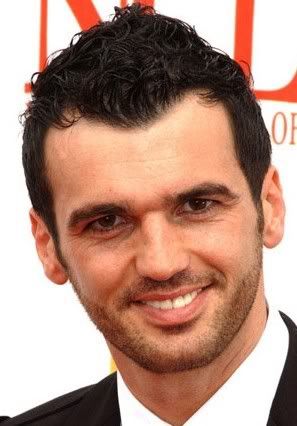 It’s a juggernaut of a show and when approached to interview one of the show’s dancers, Tony Dovolani, I took it as an opportunity to try and get a true insider’s take about why this show works as well as it does. Tony actually got his limelight start on the big screen with his turn in 2004’s SHALL WE DANCE and has since performed in over 50 episodes of Dancing With The Stars.
 DOVOLANI: Dancing is a sport. This is the part that people don’t realize. Dancing is a sport. It takes physical ability, it takes adrenaline, it takes so much. I remember one year Emmit Smith and Jerry Rice, they said that some of these things were harder to do that playing football. Because this is something that you use muscles you’ve never used before in your life. And all of a sudden”¦.that’s why the body changes so much because you use parts you don’t normally use in everyday life. And it works in such a way that you really don’t feel it until you look in the mirror and 4 weeks later you say, “What’s happened to my body?” Because it changed so quickly. It’s not because they are dieting because they aren’t. They are actually eating more than before because they are putting so many hours in and dancing stretches the muscles and elongates and so on. All of a sudden they feel completely different. And it’s funny, Jane said to me the other day, since her operation on her back, and even before, she was never really able to just get off the bed. And now, she bounces off the bed. “I get up and all my muscles just feel youthful again. ” It’s really amazing.
 CS: One thing you can help shed some like on is one of the connections I’ve drawn is that my teacher was from an Eastern Bloc country ““ what is it about the international appeal of dance? It seems to appeal to people overseas and they come here and it’s something that is prevalent in many studios I’ve been in.
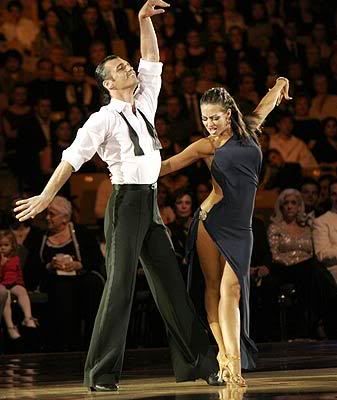 CS: When I watch the show and see the cut scenes and watch the celebrities doing their routines and watching them failing and getting back up and doing it again ““ weekly ““ how many hours are celebrities (other than last night I heard someone only put 6 hours into it) whereas others worked all week on it.


 Over the last few weeks I have been examining Danny Fingeroth’s new book, Disguised as Clark Kent, which examines how the superhero genre reflects the Jewish-American background of many of the genre’s founders. As a lapsed Catholic, I have no trouble spotting the religious imagery in say, fellow Catholic Frank Miller’s Daredevil: Born Again, but I can use the help of Fingeroth’s book in understanding how Jewish-American culture influenced the work of Stan Lee (who wrote the book’s introduction), for example.
 For a game that’s been done and redone so many times before its release, TIMESHIFT has finally hits shelves, and unless you knew of its delays, doesn’t show it too much. Out now for Xbox 360 and PC, and due on PS3 next month, the game (originally due a few years ago on the ORIGINAL Xbox) has gone from a handsome hero voiced by Dennis Quaid to a faceless, voiceless anybody in a super suit. However, the game that surrounds said hero is actually more interesting than it started out to be, and that’s thanks to a suped up graphics engine, and a better handle on how to utilize the titular time shifting powers.

 For a game that’s steeped in controversy, for once, it’s kind of backfired on Rockstar Games. MANHUNT 2, out now for PS2, PSP and Wii, originally got the dreaded AO rating from the ESRB. After some careful edits, the game was re-evaluated and given the M rating”¦but at the cost of what makes the game enjoyable to most; the brutality of the killings. Here, the story of Leo Kasper and Daniel Lamb has them slaying all those who get in their way as they try to escape the trappings of an experiment gone wrong, but no one knows HOW they kill. Every execution is just SLIGHTLY out of the camera’s view, and effects like shake and blur are done to such an extreme that identification is practically nil. Add to that is the Wii version’s motion guides in the top left corner of each kill, and you’re unable to watch the action at ALL. Which, sadly, is the only reason people play this series. The plot in this one isn’t as engaging (no video game version of THE MOST DANGEROUS GAME this time around) which only makes the game seem to want to be shocking, but has that looming censorship over head. There’s rumors that the PSP and PS2 version can be hacked to remove the kill filters, but that still wouldn’t seem to make the game any more playable. Still, for some general craziness, it does have some merit, as the environments, and especially the enemies, are even more fucked up than before. If you’re sadistic enough (and no, not in THAT way) you just might enjoy the pain of MANHUNT 2.

 The VF series is the bastard child of the fighting game genre, and it doesn’t deserve that. It may not have the unique characters of TEKKEN, or the reversals and “bump mapping” of the DOA series, but what it does have is one of the deepest fighting engines found in games today. Sure, button mashing can get you through the matches, but if you take the time, you can find that all of the fighters have a deep move set, with combos and crunchers that take weeks to master. That, fueled with the game’s quest mode, will have fighters customizing their avatars with new costumes and accessories, then taking them online to the smoothest lag free smackdowns around. The game looks amazing, plays amazing, and is one of the best one-on-one fighting experiences since”¦well, since VIRTUA FIGHTER 4: EVOLUTION. A definite buy.

 Square-Enix likes handheld systems. They also like their old games. Both of these are to our benefit, as two of their greatest strategy games have found their way to the PSP and DS. FINAL FANTASY TACTICS: WAR OF THE LIONS is just as good as you remember on PSOne, but now includes gorgeous cut scenes, new job classes, and some stellar multiplayer options. All the tactical strategizing is back, and while the game can be a bit unforgiving in areas, that shouldn’t stop tactics fans from picking this up, even if you’ve blazed through it before.
 FRONT MISSION, on DS, takes the little-seen SNES title and ads touch screen control to customize your mechs and battle it out pseudo RTS style, with multiplayer options galore. The story of post-apocalypse “wanzer” mechs will find it’s bigger audience here, and the game is a perfect fit for quick battles on the go, alone or with friends, though the single player does take a bit to get moving. Once it sets trough, however, its deep customization will take hold and not let up. Both are solid re-releases that first timers and long time fans will want to grab.
 I know it’s been out for a while, but something must be said about KENGO: LEGEND OF THE 9, and that something is this: who bothered, and why? The game is broken from start to finish, and if anyone has picked up the box they must immediately cleanse their hands, lest the game infect them. A sloppy story mode (rehashed from different POVS for each character), a broken fighting engine (two attack types that EVERYONE blocks) and graphics that look like FIRST GEN Xbox should make this game suffer the same fate as the game’s protagonists; a quick death due to shoddy hit detection and blocking. Yeesh.


 Last week I began my commentary on Danny Fingeroth’s new book Disguised as Clark Kent: Jews, Comics, and the Creation of the Superhero. The book demonstrates that Fingeroth, a former editor and writer at Marvel Comics, has realized two principles that, in my experience, most mainstream superhero comics editors and writers don’t grasp.
 Director: Goran Dukic
  How time flies when you’re having fun. I started writing “Comics in Context” back in the summer of 2003, and now I’ve reached this column’s bicentennial. Each installment runs at least 5000 words, so by now I’ve written over a million words for “Comics in Context.”
 And it was too bad for the gay student when they weren’t so cool because you just had a bunch of guys staring at him calling him names. It must have been a really rotten way to go through school. The Larry Craig thing. No one seems to talk about the bigger problem: that we have a problem with homophobia in this country. But that was interesting.
 “What do you think about the news? What do you think about what Seymour Hersh said in the Times…” and he says, “Pal, I look at the USA Today in the lunchroom and read the Sports section. ” If they get the news maybe on the radio while they are going through traffic if they listen to it…so they don’t have the time.
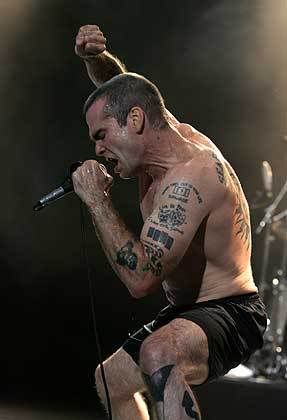 You see how amazing the cutting edge of technology is as far as what a surgeon can do re-constructively. These guys get the most amazing care and they deserve it, of course. But it’s hard to take. Do that for 5 to 6 hours and get back to me. And I’ve been to those hospitals many times and hopefully I’ll be there in early October. Whenever I’m in DC, where I come from, I’ll let the USO know a week in advance. “I can give you half the day here or here.” But if you need me, put me in coach, I’m ready to play. And sometimes they can arrange it sometimes they don’t need me. So it’s like a wait and see and they let me know a week before. So it’s made the military, all those voices, a very personal thing to me because now I get their letters. I meet them at shows. Like some guy will write me, “Hey, I met you in Iraq a few years ago and you are coming to my town” ““ hey, give me your name and I’ll put you on the guest list. I always put them on the guest list. But that military ““ of the fifty shows coming up I have military coming to at least 15 so far. And more will write as the tour goes on I’m sure. “Hey you hooked up my buddy man, can you hook me up? ” Yeah, sure. And I’ve been doing that for years now.
 CS: Do you think that kind of openness that kind of laissez faire ““ come as you go – still exists in America or is this a culture that is now based on fear?
 ROLLINS: OK, well where I get my information is I love to read printed journalism I like to read stuff on the Internet. I like to listen to the radio and hear other people talk, different politicians. I try to find non agenda journalists. I have to read and read between the lines. I cross reference and think “What’s the motivation? Why does America go into this country and do that? What’s the motivation?” Just follow the money and you can save yourself a lot of aggravation and a lot of time. So, with that in mind, that’s how I read the news. I put it all through a business filter.


 Chapter Six of Neil Gaiman’s Eternals series begins by forging the first known connection between the works of Jack Kirby and the collaborations of W. S. Gilbert and Arthur Sullivan. Kirby created the original Eternals series in the 1970s, and Chapter Six’s title, “Modified Rapture,” is a famous line from Gilbert and Sullivan’s 1885 comic opera The Mikado.
 I was able to talk to Chris prior to his appearance at the San Diego Comic-Con and it was a conversation that certainly spans many of the titles that IDW has been publishing lately but this was a conversation that I hope illuminates a little about the day-to-day operations an EIC has to go through in making sure the product that is released is good and how it’s fun to be king when you’re able to visit the set of 30 DAYS OF NIGHT on the underside of the world and witness the comic book finally coming to life.
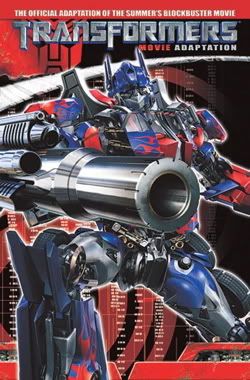 RYALL: They were in place before. Like when you buy a book at bookstores like Borders or Barnes and Noble ““ those books are returnable. So if the movie didn’t do that well then those books would have come back to us. I think because the movie did do so well, made people want to actually pick them up. We did a special one for Target and that one actually sold out in a couple weeks…We gave away a million and a half copies of the comic of the video game and gave away millions at movie theaters. So, yeah, all those things have just been stuff that we never really had an opportunity to do before on that scale. It’s kinda nice.
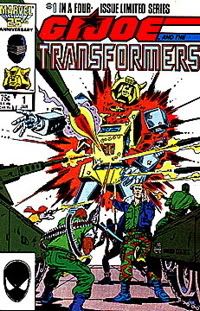 CS: I liked the GI Joe and Transformers story arc circa 1980 something…
 CS: So, you are basing it on the screenplay then?
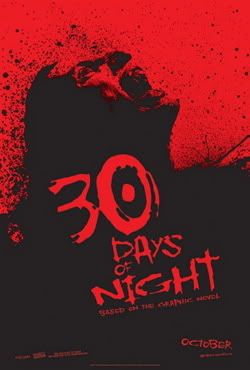 CS: Was it just as a spectator or did you get to offer any input into anything?
 CS: And certainly one of the things that I will publicly say that I admire about you is that you were constantly producing on a deadline whether it was One Hand Clapping or the TV listings that you set the example for everyone else on MoviePoopShoot.com that deadlines can be hit no matter how busy you think you are. Do you think that’s translated to what you are doing over at IDW?


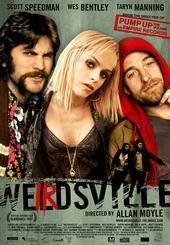 From FAY GRIM, DIGGERS, CLOSING ESCROW, CASHBACK and now
  Director: Terry George
 Director: Steve Hickner, Simon Smith Cast: (voices) Jerry Seinfeld, Renée Zellweger, Matthew Broderick, John Goodman, Chris Rock, Megan Mullally, Kathy Bates, Alan Arkin, Patrick Warburton
 Director: Jon Favreau


 That all said, I did want to make mention of a DVD that should be on everyone’s Netflix queue or in every hand when you go into a Blockbuster: AWAY FROM HER. Directed and written by Sarah Polley, which was based on a short story by the wickedly sharp Alice Munro, for those who have an appreciation for novels should pick up Munro’s
  Director: Justin Theroux
 Director: Craig Gillespie
 Director: Justin Lin


 To be sure, the game’s online portion is top notch. Multiplayer matchmaking is a breeze (well, once you take into account that everyone and their grandmother is playing the damn game) and settling in for team slayer, deathmatch or the like on any of the 11 included maps is really pretty fun. A recent Xbox 360 system update allows for “clan support” and inter-game features like checking out how your friends have progressed, and watching some of their video feeds.
 One of the reasons, though, that I genuinely looked forward to Comic-Con this year, and how it was honestly one of the most satisfying trips I’ve taken to San Diego, was that Missy is always an entertaining interview; she’s completely honest about what she’s doing, she’s never at a loss to tell it like it is and I can’t help but be amazed by the joie de vivre she possesses.

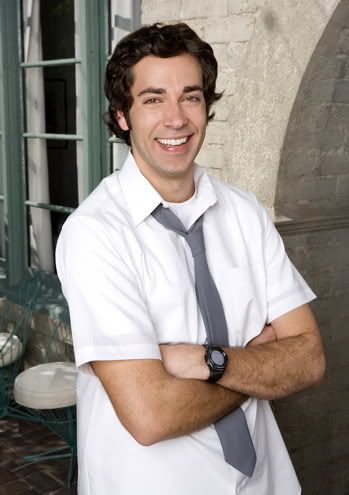 It was an interview like this that reinforced the sense that there is something to learn about the human condition as it pertains to being able to talk to someone whose face was plastered on thousands of hotel keys, billboards and is on television on an hourly basis as his network hangs their dollars making sure everyone gets familiar with a man named Chuck.
 CS: Obviously the promotions on NBC have been just as crazy.
 I think television is coming into a place where people are expecting more but studios are still expecting it to be shot in an 8 day typical hour long fashion, and it’s not…It’s not realistic.
 CS: Absolutely. I know the answer will be “Great!” but, really, talk to me about how you and Joshua Gomez have come together and made the chemistry work between the two of you because I will honestly say, and I wouldn’t b.s. you if I didn’t believe it, that these two guys have a good relationship with one another; best friends, in a way. You believe it”¦.you know?
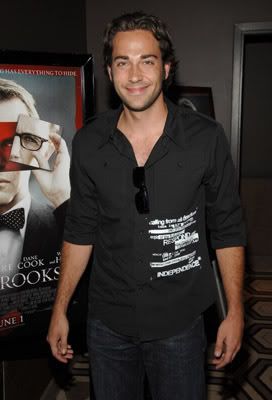 CS: And you are also now with Adam Baldwin who some would say he peaked with SERENITY but I would say MY BODYGUARD.
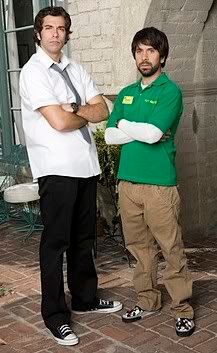 LEVI: I never once felt like it was a weight or a burden. I always felt like what an amazing opportunity. What a great gift. I’ve been around people that have that opportunity and squander it. You know, people that treat crew badly or less than what they deserve and I feel like when you are given that place you are given this great gift to be able to really just love and appreciate and support your cast and your crew and it’s incredible how far it goes when your crew and your cast feels like you the lead or the star or whatever that you care about them or that you take the time to just say “Good Morning” even, it’s sad how many people don’t do that and how detrimental it is to a show and
