Hello, my name is D. K. Holm, and I am a cinemaholic.
I’ve liked movies since I was a kid. I quasi-studied film in college. When I got out of college, I helped start a film magazine (Cinemonkey; it lasted three issues). Ten years after that I got a job reviewing movies for an “alternative” weekly. And ten years after that, I left that paper for another, the late, lamented PDXS, where I worked for another four years. After a brief interregnum, I landed at MoviePoopShoot.com, which this week mutates, to the relief of a nation, into QuickStopEntertainment.com. So I’ve been at this game for a long time, without necessarily progressing, advancing, or improving.
And why did I stick with it? Because I am a cinemaholic. I need to have movies in my life. I need to be viewing them (preferably for free), commentating on them, saving them (hoarding them is more like it), and then turning around and watching more movies. When I am not viewing a DVD or sitting in a movie theater I am reading about movies, either in Variety, Sight and Sound, or in a new film book from an academic press. One thing I am currently not inclined to do is make them, primarily because it is too fucking hard. Now, I’ve been in a couple of movies but “¦ well, for that you can consult my IMDB page.
So consequently, you, the QuickStopEntertainment browser, are the beneficiary. In this column, a blend of all the stuff I was doing at MPS, I’ll cover current big screen releases, DVDs, film books, TV shows I’ve been watching, and whatever else film related comes into my head. Let the quick stops begin!
Taking the Red Pill
A SCANNER DARKLY
[nota bene: The following review, by necessity, contains some spoilers! If you don’t want to know the ending of the movies mentioned, don’t read on.]
Keanu Reeves is taking the pill again. Over the past several years, Reeves has evolved into the premiere sci-fi film anchor, the guy whose presence gets the film made. He alternates these parts with roles in romantic comedies (House by the Lake is opening near-simultaneously) which probably pay the bills that allow him to appear in Constantine, the Matrix movies, and Johnny Mnemonic (though now Reeves is moving into the crime film genre).
One wonders if the long gestating A Scanner Darkly, based on the cult novel by Philip K. Dick that many people have tried to film over the past two decades, would have gotten off the ground without Reeves’s presence.
The result is that Richard Linklater’s film is about 25 per cent science fiction, 50 per cent stoner tale, 100 per cent animated and 100 per cent live action (because of the rotoscoping process, which requires live action footage that is then drawn over frame by frame at a cost of what is broadcast as 500 person hours per frame). I was curious to see if the rotoscoping process was even necessary to the story, but yes, it is, as it allows fantastical moments to be seamlessly installed into the narrative, moments such as various hallucinations and the bizarre technology that Dick imagined, such as the electronic suit that undercover cops use to cloud their identity, and which allows the key characters to shift personas.
 |
Dick’s source novel is ambitious, flawed, heartfelt, and paranoid all at once and the movie is a reasonably accurate adaptation of the source text, even down to the valedictory list of drug causalities that Dick included at the end of his novel. It concerns Bob Arctor (Reeves), one of Dick’s characteristically jangly named characters (Anderton?). Bob lives in a suburban ranch house in southern California, which he shares with a few other stoners, Barris (Robert Downey, Jr.), in an exquisite performance), and Luckman (the cleverly cast Woody Harrelson). “Stoners” is probably not the proper term, as they take a speed like drug. A frequent visitor is Freck (Rory Cochrane), the very definition of an addict, with hyperactive eyes and mobile hair that hides and reveals his face like a curtain. But Bob is also known as Fred, to the police surveillance team he works for, We first meet Fred, really a cloaked Bob, giving a talk to a business group about the problems of undercover life and the evils of drugs, especially a deadly new drug called Substance D, nicknamed simply Death. It reminds me of the Red Death drug in Scorsese’s Bringing Out the Dead, but is really the speed that Dick and numerous friends were taking back in the 1970s, though Dick anticipated the current Meth crisis. Bob eventually ends up as “Bruce,” working the fields that create Substance D for the corporation, New Path, which rules the whole endless cycle of abuse, from addition to recovery to supply and back again. Meanwhile, Bob loves Donna (Winona Ryder), a fellow addict whom he wrestles internally over betraying, and who is sexually frigid, though that proves to be associated with her own secret life.
 |
Dick’s vision of corporate criminality, one basically of fascism in its true definition, in which business and government join hands, is a product of the paranoid 1970s, just like the films Parallax View The Conversation, and Blow Out, but no less plausible for that. After a long series of directors attached to A Scanner Darkly over the decades (including, Terry Gilliam and, I think, Brian De Palma), Linklater, it turns out, proves to be the perfect helmer for the project (the film is co-produced by Steven Soderbergh, who, given his affection for ’70s cinema, might also been a good choice). Linklater is also a child of the 1970s and feels the paranoia in his bones. He also simply knows drug culture, at least cinematically. With three perfectly cast actors at the heart of the film, who each represent in their own way aspects of popular drug culture, real or imagined, this is a film that feels true, observed, prescient and retrospective at the same time. Despite, or maybe because of, the rotoscoping shield, the actors give their best performances in years.
 |
The trailer says the film is set seven years in the future, but it feels like “now,” and the ’70s at the same time. Surely we have all been to a house like Bob’s. Dirty, cramped, cluttered, where the couch is the center of activity, where food scraps in the kitchen age like archeological finds, and no one seems to have any visible means of support. The non-stop “party” gravitates from couch to back yard and back depending on the weather, the light, and the underlying sociological rules of engagement. The urge is to be always “on” but without the confidence that anyone is listening and almost always in slow motion, and occasionally someone will marshal their resources and come out with a speculative riff that has everyone howling with laughter, and which, if you’re lucky, you remember enough to put into a novel or screenplay later. Linklater, under the influence of Dick, captures this quality of life perfectly, along with its subsidiary settings, the broad bright streets of suburban arteries that serve malls and the diner. These characters have no background, no past, no future. They are collections of base animal needs augmented with intellectual pretensions.
 |
A home away from home the car, and it is curious to see how car-oriented the movie is (I didn’t get that sense from the book). The automobile represents vitality, man’s god-given right to go where he chooses. It’s an emblem of social and financial success. But like almost everything else in the film, the car is ultimately unreliable, even though all you really need it for is to go get more drugs. The car is there to suggest that, in this drug culture, mobility doesn’t matter much, and the car grows literally and figuratively etiolated as the drug users slump deeper into inactivity. (Animals and cats is another theme or visual motif of the film.)
 |
An important component of both Dick and Linklater’s Scanner is the “vision of the future” in which we are all monitored at all times, a state of being that doesn’t seem so “future.” Bob goes to “work” where he sits in from of a console of monitors that show his own life passing before his eyes, via the numerous cameras hidden in his house, and he also sees what goes on when he isn’t there, such as the odd drug overdose. Science fiction that was yet plausible when the book was published, this now feels like “reality,” and it is difficult to conceive of this kind of monitoring lessening. All that saves us from complete 1984-style observation is the X factor, the human element, i.e., the kind of incompetence that we see at airports and in military strikes and police stings.
 |
On the one hand the sci-fi elements have a Cronenberg-level viscosity, but on another broad level A Scanner Darkly is really just another movie about the workaday world, like Clockwatchers, American Beauty or Office Space (I call this genre, if it is one, Heroic Alienation). Bob is a guy doing a job, stuck with friends who don’t work and drain him of his resources, and with a girl friend who won’t fuck him We finally get to see Ryder’s rack on screen, by the way; it’s just that it’s rendered as a cartoon. But that is also the point of the rotoscoping. It puts you another step away from the characters, which allows you to view them “objectively,” while paradoxically making them seem cozier, the way that cartoons appeal to the kid in us. I think that this is a film that people will be watching over and over in years to come, because they characters feel familiar and the setting is so real (and also because of Downey’s performance).
 |
Linklater had the remarkable, Soderberghian happenstance of having two films at Cannes this year. Though he didn’t win anything, the fact symbolized his progress since Slackers. It’s a prolific career but also one like Michael Winterbottom’s (or indeed Soderbergh’s) in which you never know what kind of film he’s going to make next. That’s because, like these other two directors, Linklater has a big appetite: for films of all kinds, for knowledge, for people of all kinds.

Linklater will go down in history, of course, for popularizing the term “slacker” and giving a taxonomy for the type. In fact in the audio commentary track to Slacker (The Criterion Collection, No. 247, 1991, 100 minutes, color, NR, full frame, DD stereo in English with English subtitles, static musical menu with 32-chapter scene selection, 68-page insert with transfer info, pix, credits, memorabilia, and essays, two discs, dual disc folder in a slip case, $39.95, released on Tuesday, September 14, 2004), Linklater gives the best ever definition of a slacker, which he calls an “active non-participant,” which is perfect (he says this in chapter eight). Linklater also makes the key point that slackers are, contrary to popular belief, not lazy or inert. All the kids in the film have something going, be it a JFK conspirary book, or a band, or a street hustle, or something. What’s also amazing is that, though the film was shot in July and August of 1989, everyone in it looks like you could run into them on the way to today’s neighborhood coffee shop.
Indeed, the movie is blessed. At one point, a girl comes up to try and sell two of the slackers Madonna’s pap smear. Fortunately, Linklater and his collaborators picked Madonna for the job, and not some other contemporaneous flash in the pan, for it is she who has lasted.
In fact, overall, Linklater is inspiring. For one thing he appears to be a legitimately nice guy, from the sound of his own audio commentary track and from what others say about him (I met Linklater once, in a cigarette-residue filled club called the X-Ray café long gone now, though there is a film about this club that I happen to be in – when he was promoting Dazed and Confused; it gave me the chance to ask him why there was a car with Oregon license plates in Slacker [it turned out to be his parent’s car, borrowed for the shot, and they now live in Oregon]). And he did it, he actually got it done, gather a cast and crew and got them all to work on his script.

And he seems to be “one of us.” Like me, for example, he is a big fan of Ulysses, which one of the characters reads from. Also, like me, he doesn’t like to do anything, and on the yak track he says that the indolent guy in the bathrobe in chapter 12, who doesn’t like to leave his house, doesn’t like to go hiking or to the lake, or any other kind of “premeditated fun” (except fucking) is just like him, Linklater. Well, his views reflect mine as well.
If you have grown to love this film as I have, Criterion’s two-disc set is a must-have. Aside from the movie itself, which has three audio commentary tracks (Linklater’s, the cast’s and the crew’s), the set has a wealth of supplements. On disc one, there is “No Longer Not Yet” (script excerpts), “Showing Life” (audition interviews, with a text intro by casting director Anne Walker-McBay, itself reprinted from the Slacker book), “Taco-and-a-Half After 10,” a compilation of home movies made during the filming, “Les Amis,” the trailer for a film-in-progress about one of the film’s locations, the trailer, and ” Shooting From the Hip,” a gallery containing more than 100 stills and snapshots from the shoot. Linklater’s commentary track is one of the best, ever.

Disc Two provides a wonderful archive of earlier Linklater films along with his views on “slacker culture.” This disc has two films, the feature length It’s Impossible to Learn to Plow by Reading Books (with a director commentary) and the short film Woodshock . In addition there is the working script to the film, which includes additional scenes, information about the Austin Film Society, which Linklater co-founded, the film’s trailer, and footage from the 10th anniversary Slackerreunion.
Austin, Texas must be a great place to live. You’ve got the seat of state government lodged in a college town; you’ve got Whole Foods, Harry Knowles, the South by Southwest festival, Robert Rodriguez and, once a year or so, Tarantino in town to show films from his personal collection. You’ve got Austin City Limits, Mexican free-tailed bats, Charles Whitman, and the Zilker Tree.
The Zilker Tree, a lighted faux Christmas tree, figures in Linklater’s next film, Dazed and Confused (The Criterion Collection, No. 336, 1993, 102 minutes, color, NR, 1.85:1 enhanced, DD 5.1 and DD stereo in English with English subtitles, DTS Surround, static musical menu with 32-chapter scene selection, 72-page insert with chapter titles, transfer info, pix, credits, memorabilia, and essays, plus a mini poster, two discs, dual disc folder in a slip case, $39.95, released on Tuesday, June 6, 2006), by all accounts a terrible experience for the director (it’s his, if you will, Mall Rats). Universal promised to release a director’s version of the film, but came out only with a bare bones disc in 1998 and a “flashback edition” in 2004, with nine deleted scenes, some faux PSAs, and a few other extras. This mammoth Criterion set supersedes all previous discs.

Write what you know, they say, and what Americans know is high school. Thus, from American Graffiti to That ’70s Show and about a million After School Specials. For most Americans high school is the defining moment, and for the underclass, high school is perhaps the most traumatizing event of their lives, like being in a concentration camp. Both factions never get over it. I suspect, from his chat on the Dazed disc, that in his HS years Linklater was part of the elite (he was on the football team, for example), so here, history is being written by the winner, though also an observant, sympathetic one. When it first came out, the buzz on the film was that Dazed was “amorphous” with too many characters, and that the ritual humiliation of younger kids by older was emblematic of the totalitarian nature of small town American life.
In the last chapter of Slacker‘s audio commentary track, Linklater gives a poignant, realistic account of what he learned about being a director, what he learned about himself, and how the personas clashed and / or helped each other. Slacker cost only about $20 thousand, but a studio paid $6 million for Dazed with all the attendant interference, and Linklater needed everything he learned to get through the trauma. I’m sorry that happened to him, but in the process Linklater managed to create a minor masterpiece of Americana while also mastering another key element of the director’s craft, casting. Look at the list of people that Linklater discovered or highlighted for this movie: Parker Posey, Matthew McConaughey, Anthony Rapp, Milla Jovovich, Joey Lauren Adams, Ben Affleck, Nicky Katt and Renée Zellweger (who doesn’t have any lines, but walks around a lot). The film is probably not quite a the cusp yet where you watch it and go, Wow, is she in this?!

Disc No. 1 has an amiable commentary from Linklater, and 25 minutes worth of deleted scenes, some with the visuals only (First National Bank, “Banned From the School,” Smoking in the Girls’ Room, “When They Lost, We Lost, “Narcing on a Friend, Family Plot, “Are the Good Times Worth It?,” “Where’s My Drugs, Man?,” Eighth Graders, Going Into Ninth, “You Little Slut!,” Parents Without Plans, Global Thermonuclear War, Cutting in the Keg Line, Bumfuckville, Tailgate, “Knew Then What I Know Now,” Way Me the Show to Go Home), and the original theatrical trailer. The deleteds tend to make the finished film less “philosophical.”

Disc No. 2 comes in three large sections. It kicks off with an hour long documentary “Making Dazed,” which aired on American Movie Classics. It’s a very, very good retrospective “making of,” celebrating the film while also being frank about production issues, and much of the other footage on this second disc consists of outtakes from this project. Casting director Don Phillips is revealed as a key component here, as he found most of the film’s young actors, as he did on Fast Times at Ridgemont High. “Making” is followed by an auditions reel (Michelle Burke, Rory Cochrane, Adam Goldberg, Cole Hauser, Christin Hinojosa, Nicky Katt, Jason London, Deena Martin, Matthew McConaughey, Anthony Rapp, Marissa Ribisi, Wiley Wiggins), and concludes with “Beer Bust at the Moon Tower,” a compilation of mixed material, on set footage and the actors being interviewed in character. It starts out with “Character Interviews,” which were used during rehearsal, each actor improvising in their roles (Sabrina Davis, Don Dawson, Cynthia Dunn, Randall “Pink” Floyd, Jodi Kramer, Mitch Kramer, Darla Marks, Mike Newhouse, Fred O’Bannion, Benny O’Donnell, Tony Olson, Ron Slater, Shavonne Wright). This is followed by “Cast & Director Interviews,” shot during the length of the production (Linklater Before Shooting Parker Posey, Ben Affleck (1992), Affleck & Cole Hauser, Nicky Katt & Adam Goldberg, Rory Cochrane, Wiley Wiggins and Catherine Martin, Wiley Wiggins, Michelle Burke and Christine Harnos, Christin Hinojosa, Linklater at End of Shoot, Linklater, Matthew McConaughey and Don Phillips). Finally, there is “Behind-the-Scenes Footage” (Every Other Decade, Muscle-Car Driving Lessons, The Costumes, The Boys, The Girls, “Love Those Redheads,” Retaliation on O’Bannion, Buying Beer, Crest Hotel, Picture Day, Start Acting,” The Props, Wiley’s First Day Back at School, Reunion Clips), a wide collection of all kinds of material that includes rehearsals, costume checks, interviews, and finally some reunion clips (of which I could have used a lot more, both here and in “Making Dazed“).

I want to say that Linklater has evolved into one of our best directors, but he started out pretty damn strong, as even his “student” films show, and his career, in its diversity, puts him up with Soderbergh, Winterbottom, Rodriguez, and Tarantino. What these directors have in common is that they are all like Howard Hawks. Within the studio system, Hawks made among the best entries in almost all the genres, including mysteries, aviation, comedies, slapstick, and westerns. These guys are like Hawks, making the best examples of the films in the wider range of genres that exist now, political films, neo-noir, comic book adaptations, and so on. We are all Hawksians now.

 As I do every July 4th, I spent part of the afternoon, 129 minutes to be exact, watching Mr. Smith Goes to Washington. It strikes me as the perfect patriotic note to strike. And it includes the whole scale in its confrontation of back home idealism with big city cynicism. You can believe in Mr. Smith while laughing along with the wised up reporters and political operatives who use or observe him. Director Frank Capra pushes the buttons so well that I never fail to cry,especially at the parts that are the most treacly, such as when Smith first visits the Lincoln Memorial and watches a little kid read the Gerrysburg Address as an elderly African-American (old enough to remember the Civil War?) comes up and takes off his hat.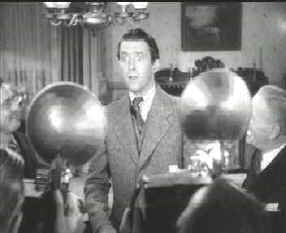

 Sometime in the mid-1960s, Forest J. Ackerman, the editor of Famous Monsters of Filmland, indirectly introduced two of his readers, both aspiring horror filmmakers, to one another. David Allen ran an ad in FM asking to hear from anyone out there interested in stop motion animation. Dennis Muren, living not far away from the home base of FM in the San Gabriel Valley, responded. The two boys visited, became friends, and later collaborated on a low budget film, working under the lowest of low budgets, a mere $6000 dollars, back when $6000 dollars was a lot of money.


 Disc two features a video interview with Muren, and an edited assembly of interview segments with of the actors from the show, Bonner, Hewitt, and James Duron. “Monstrous Origins” includes outtakes, deleted scenes (include a pool-side party scene that features a vixen worthy of Russ Meyer), and some monster test footage. Zorgon: The H-Bomb Beast from Hell, from 1972, is a silent eight and a half minute short film with some of the same people who worked on Equinox, plus Rick Baker. “David Allen Appreciation” is a section of the disc that contains The Magic Treasure, an early animated fairy tale by Allen, which comes with a textual history, and Allen’s King Kong homage Volkswagen commercial, plus test footage. “Equiphemera” gathers together an exhaustive gallery of stills, on set shots, promotional material, and so forth, under the headings, Origins of *The Equinox, On Location, Designing the Demonic: Special Effects, Publicity and Promotion, Beyond the Barrier, David Allen’s Kong, and Buried **Treasure. The final grouping, “Trailer and Radio Spots,” contains one 1970 trailer and two radio ads.


 But like many a cultural star, such as Jack Kerouac or David Lynch, Cohen is not much like what his fans take him to be. Far from the scruffy, hedonistic rocker or folkie, Cohen has always been a well-coifed, sartorially splendid specimen whose garb was at odds with the brooding sex-and-religion-obsessed songs he sang, or spoke-sang to be more accurate, the songs themselves born of his play with language as well as a deep depression he struggled with from the age of nine, when his father died (a trust fund financed Cohen’s artistic career). The depression lifted only when he submitted himself to the strict monk’s life of the Mount Baldy Zen Center but it reigned in his mental climate despite the fact of his liaisons with such beauties as Marianne Jensen, Suzanne Elrod, Rebecca De Mornay, and Anjani Thomas (he even banged Janis Joplin, and then wrote a song about it, “Chelsea Hotel No. 2”).


 The recent special edition The Omen (Fox Home Entertainment, No. 29 in its Collector’s Edition series, 1978, 111 minutes, color, R, 2.35:1 enhanced, two single sided dual layered discs, Dolby Digital Mono, Dolby Digital 5.1 in English, Spanish, and French, with English and Spanish subtitles, animated musical menu with 36-chapter scene selection, 6-page insert with chapter titles, trivia, pix, dual DVD keep case, $26.96, released on Tuesday, June 20, 2006; supersedes a DVD published in September 2000) disc’s celebratants, such as Wes Craven, recall how topnotch the film was. However, I recall that Omen was rather mocked by reviewers. Ebert in the Chicago Sun-Times wrote “The Omen takes all of this terribly seriously, as befits the genre that gave us Rosemary’s Baby and The Exorcist. What Jesus was to the 1950s movie epic, the devil is to the 1970s, and so all of this material is approached with the greatest solemnity, not only in the performances but also in the photography, the music and the very looks on people’s faces.” and Bill Kelley in Cinefantastique (Vol. 7, No. 3) perhaps put it best when he noted that it was a “flabby series of mechanical vignettes.” Some, like Kelley, thought that the sequel, directed by actor-turned-director Don Taylor, was better, which no doubt had to be bitterness and gall to Donner whose insight had established the future franchise’s credentials.

 As is well known, The Hills Have Eyes tells of the Carter family, driving across country on vacation. It’s a large extended family. There is the patriarch, former cop Big Bob Carter (Ted Levine), and his wife, Ethel (Kathleen Quinlan). They have three children and two dogs, which are a matched pair of guard dogs. The kids are Lynn (Vinessa Shaw of a memorable scene in Eyes Wide Shut), married to cellular phone shop owner (and liberal democrat) Doug Bukowski (Aaron Stanford), daughter Brenda (Emilie de Ravin, of Lost, and here lost again), and Bobby (Dan Byrd), the youngest, and the one who most takes after Big Bob. The two Bobs get a lot of mileage from teasing Doug for his politics and pacifism. Doug and Lynn have a baby. The new version hews closely to the original. Out in the New Mexico desert, the family finds itself stranded far from help. Dad goes one way, back to the gas station they just stopped at, Doug the other direction, which leads him to the crater of an A-Bomb test, now used as the dumping ground of a family of mutants, who stalk the family, kill the dad, rape one daughter and kill another, and steal the baby. The surviving family members plot their rescue and revenge.
 The unrated The Hills Have Eyes (Fox Home Entertainment, 2006, 108 minutes, color, NR, 2.35:1 enhanced, one single sided dual layered disc, Dolby Digital 2.0, Dolby Digital 5.1 in English and Spanish, with English and Spanish subtitles, animated musical menu, keep case, $29.95, released on Tuesday, June 20, 2006; published simultaneously with the R rated version) comes on an excellent disc with a great transfer and sound. There are two audio commentary tracks, the first with director Aja, art director and co-screenwriter Levasseur, and producer Marianne Maddalena, who are all very cozy with each other. The second track is from Craven and producer Peter Locke, who also starred in the first one. They mostly talk about doing the first one, so this would make an excellent voice over accompaniment to the first film. In addition, there is the 50-minute “Surviving the Hills: Making of The Hills Have Eyes, a better than average making of, plus seven “Production Diaries, with a play all option, which shows among other things how certain stunts were accomplished from conception to filming. Finally, there is the music video, “Leave the Broken Hearts,” by the Finalists.
 The guy in this case is Jake Huard (James Franco), who in a variation on the source works in the steelyards across the bay and who is honoring his dead mother by joining the school. Except that he doesn’t seem to really want to join. He’s not a very good student and threatens the success of his bunkmates by his anger and inattention. His indifference to his goal is one of the many mysteries lodged in this ultimately incoherent text. Jake’s trainer is Cole (Tyrese Gibson), a Marine imported for the nonce and an expert boxer, as is Jake to a certain degree (more on this in a second). The love interest is not a townie, but another naval officer, the shiny haired Ali (Jordana Brewster), who looks less like Deborah Winger than a woman from another naval drama, Demi Moore in A Few Good Men.
 Justin Lin directed the film. It’s difficult to come up with a
  There are also two brief makings ofs, one of them focusing on the Brigades, the boxing tournament that turns out to be the main thrust of the film. There are seven deleted scenes, one of which is a longer version of the “first day” sequence, and which is better than the one in the movie, but which was truncated because, as they say on the optional commentary, they wanted to focus on Jake, exactly the wrong thing to do, especially since they don’t really do that anyway. Other deleteds show Jake smoking in the rain at his mother’s grave, and at the bedside of his suicidal friend. Editor Fred Raskin joins Lin and writer Collard for a chat over the film in which they sound like they loved working with each other and everyone else so very much. If nothing else, I guess, Annapolis proved that Lin could helm a big studio financed feature, if that’s what he wants to do for the rest of his life. Maybe, though, he’s like the characters in Better Luck Tomorrow, who on the surface are successful by society’s standards but behind the scenes are subversive and anarchic.
 There are two things I thought about while watching Commander in Chief: Part 1, Inaugural Edition (Buena Vista-Touchstone Television, 2005, 427 minutes, color, two single sided dual layered discs, 1.78:1 enhanced, DD 5.1 in English, with English subtitles, static musical menu with 10-chapter scene selection per episode, 10 episodes, keep case, $39.95, released on Tuesday, June 27, 2006). One was, why is this (now-cancelled) show not as good as The West Wing (now also-cancelled). And when did the studios come up with the idea of divvying up TV seasons into half-season chunks, priced at a level that ends up costing you twice what a season of shows went for?


 Alerted by a movie talk forum to the glories of Running Scared, I moved the disc to the head of the queue. Then I popped it into the DVD tray without even looking at the box, so I viewed it with only the knowledge that it was an urban crime film of exceeding violence starring Paul Walker; no director or writer research, no awareness of the other cast members.


 For example, on June 16th, Roger Ebert dropped out of sight again to undergo further surgery on a recurrent problem, a cancerous growth in his salivary gland. In the introduction to one of his recent yearly compilations, Ebert wrote movingly of his disease and its impact on his job and on his spirit. Ebert has been a friend to this site in the past, and I wish him well. Curiously, I’ve become something of a “defender” of Ebert of late. Here’s the background. When I was younger, and Ebert was first on national TV (on PBS), finding the Pulitzer Prize winning writer’s columns wasn’t so easy, so in evaluating the man all one had to go on was the prize itself and his TV persona, in which he was, then anyway, aggressive, smart, and with a debater’s cunning for his opponent’s weak spots. Only later, when his annual review compilations began to appear, and then with the advent of the WWW, could a curious reader not living in Chicago, or with access to cumbersome library copies of the Sun Times, dive into his prose. Thus in recent years I’ve become quite a fan of Ebert the daily journalist. At the risk of insulting the TV Ebert, the print Ebert is a much better reviewer than the TV version would lead you to think Â


 Back in the 1970s there was a vogue for “mechanic” novels, thrillers in which an operative acted outside the law to thwart crime and communism. The first was Don Pendleton’s The Executioner series, in which Mack Bolen methodically took out the Mafia around the world in vengeance for the accidental death of his family. This was followed by Wayne Murphy and Richard Sapir’s The Destroyer, featuring ex-Jersey cop Remo Williams, which appears to be the most popular and most long lasting. But the best of the genre was The Inquisitor, a delightful series about the Pope’s hitman, who, after every assignment, had to do penance in the dungeons of Vatican City (killing remains a sin, you see). Though there were only a few in the series – The Devil in Kansas, The Last Time I saw Hell, Nuplex Red, His Eminence, Death and The Midas Coffin – they were funny, a highly satiric take on the “mechanic” genre and of at contemporary culture itself (although the Destroyer series has its satiric edge). Though credited to Simon Quinn, Inquisitor books were really written by a very young Martin Cruz Smith,      Â


