Author: Aaron

  • Soapbox: Gleeful

    soapbox-header.png

    Gleeful

    lucyline.gif

    There are a number of rules and codes that I try to live my life by and to be fair; I’ve broken most of them. But the one rule that I rend to follow as often as possible is “if it’s good enough for Joss Whedon, its good enough for me”. I’ve watched most everything that Joss has been involved in and I have to admit that it took the involvement of Joss Whedon and Neil Patrick Harris to get me to finally watch an episode of Glee, despite the encouragement of my friends since the start of the show. Joss Whedon is the man responsible for two of the best forty five minute musicals in history. My friends know my tastes; this is why they’re my friends, so when they told me that I’d love Glee I should have known that they were right. My friends know that I’m a fan of musicals and indeed it’s only because of my friends that I was lucky enough to have been exposed to musicals at all.

    Like most things in my life, my exposure to musicals is due to the folk from the View Askew Message Board. In 2007, when tickets were bought for Kevin Smith’s 37th birthday party in New Jersey, plans were immediately made, and one of those plans was to stay in New York with some friends for a few days before going to New Jersey to connect with the main contingent of Boardies.

    I’ve always been a huge supporter of the principle of compromise. Well, I’m a supporter of the part of compromise where I get to do the stuff that I want to do. The part of the compromise where I have to do what someone else wants to do; I’m not the hugest fan of that part. In New York with my friends before Prom, I certainly got to do a lot of stuff that I wanted to do, the funnest part of which was a brilliant night in a pub called “O’Lunney’s” on West 45th Street just off Times Square. But the time came as all times must when I had to do something that I didn’t want to do, and what I did not want to do was to endure Legally Blonde: The Musical. I’d love to be able to say that I was graceful in compromise, but I wasn’t. I really didn’t want to go to see the musical and even though I’d already paid for the ticket, when the time came to go to the venue I was trying my best to think of ways to get out of having to endure the show and even the possibility of faking a heart attack wasn’t out of the question.

    generic-broadway

    I mean, if I was being forced to sit through a musical, wouldn’t you think that at least I’d be forced to sit through a good musical. Legally Blonde was a musical based on… Legally Blonde and lets call a spade a spade here, it’s not exactly Shakespeare. But all narrative problems aside, Legally Blonde: The Musical is what every musical should be, it’s incredibly enjoyable. Within ten minutes of the show having started, I was in love with the show and by the time the main cast started doing a fair approximation of Riverdance, there was a good chance that my heart would explode with joy. When the show ended I was fully converted, and for the next week I took every opportunity possible during the festivities leading up to Prom to tell people about this life changing experience. Also, I couldn’t stop myself from singing part of the opening track of the show. “Never Say Goodbye” is the song that will forever remind me of Prom night but “Omigod You Guys”, the song that opened the Legally Blonde show is the official song of that whole holiday for me.

    Folk who know me can attest to the fact that when I find something that I like, I’m not shy about talking about it to anyone who’ll listen and I spent a long time telling every person that I met about how much I enjoyed the show, how surprised I was by that fact and how I was looking forward to seeing more musicals in the future. And I think that by the time March of 2008 rolled around and I was in Orlando with the same group of friends, my musical-hysteria had just about died down. So you can imagine my surprise when I walked into the kitchen of the condo I was staying in with my friends and I saw a custom made “Legally Simon” magnet stuck to the door of the fridge.

    legally-simon

    To make matters worse (or possibly better), I found out that a whole batch of these magnets had been produced and were being handed out to the rest of the group later that same night. Despite my initial embarrassment at seeing this particular image of myself, it’s become a reminder of a great time with good friends and I’m fairly proud of the fact that every single time I’ve gone overseas since then and have been invited in to a friend’s house, a Legally Simon magnet has been there to greet me. That makes me smile almost as much as the original musical did.

    Since then, I’ve been lucky enough to see a few more musicals with my friends. I’ve been able to see The Wedding Singer, Flashdance, Legally Blonde (again), Avenue Q and most recently, Wicked. Wicked stands out a little bit from the rest of the group in that it almost is Shakespearean in its themes and narrative, based on the fantastic book by Gregory Maguire. It’s been recently announced that a movie based on the musical version of Wicked is currently in development and we can only hope that the powers that be have enough common sense to cast Idina Menzel in the role of Elphaba.

    wicked

    Musicals on-screen don’t have the same impact that a stage musical has, and no matter the quality of the acting or the singing or the production values of what you see on screen, you just can’t beat the feeling of being part of an audience and getting caught up in the emotion of the moment. Having said that, every so often the on-screen musical does come close.

    Before providing me with a reason to watch Glee, Joss Whedon already had two very successful forty five minute musicals under his belt. One was the “Once More With Feeling” episode of Buffy The Vampire Slayer and the other was Doctor Horrible. The episode of Buffy in particular is notable for taking a group of actors, most of which had little or no musical experience (or talent) and being able to produce what it arguably one of the best episodes of the series’ seven year run. We knew that the songs would be catchy and we knew that it would be funny in places, what we didn’t suspect at all was that that one episode of would bring to bare the inner secrets of almost every character and turn the songs into confessions. Also… it has a training montage.

    If OMWF was a risk for Whedon, then his next attempt at a musical, Doctor Horrible was possibly an even bigger risk, but it was also a bigger success. The initial internet release proved to be wildly popular. It was followed by releases on CD, MP3 download, DVD as well as prequel stories in comic form. It’s also been confirmed that a sequel of some description is in the pipeline. Nobody was quite sure what to expect when Doctor Horrible first went live on the internet, but it only took one viewing to fall in love with Neil Patrick Harris’ not so villainous villain and Nathan Fillion’s not so heroic hero. Personally the biggest revelations from the first Act of Doctor Horrible were that the man who played Malcolm Reynolds could play sleazy so well and that he is a pretty great singer. “A Man’s Gotta Do”, the song that Nathan Fillion and Neil Patrick Harris share towards the end of Act One actually led to me almost being arrested one night on a busy Dublin road. Let’s just say that Nathan Fillion is a much better crooner than I could ever hope to be, and when a police man asks you what you’re doing, telling him that you’re trying to do an A-Flat isn’t the best answer to give.

    drhorrible

    But despite my slight Whedon-related brush with the law, it did take the combined presence of Joss Whedon and Neil Patrick Harris to finally convince me to watch an episode of Glee. And through the entire episode, I couldn’t help but smile. More than any other on-screen musical that I’ve come across, Glee embodies Broadway and almost makes you feel like you’re watching a stage production, wrapped in the awe and the emotion of a crowd of people. It’s cheesy at times, and in fairness, for every four or five amazing songs there’s the occasional clunker. But that, in my opinion, just adds to the authentic and spontaneous feeling that the show has, making it like Broadway-in-a-box. Glee does exactly what a musical is supposed to. It makes you feel gleeful.

    Simon Fitzgerald

  • BIG BROTHER Blog Report: Day 34

    soapbox-header.png

    Day 34

    lucyline.gif

    Never has a love so pure been so frustrating to watch.

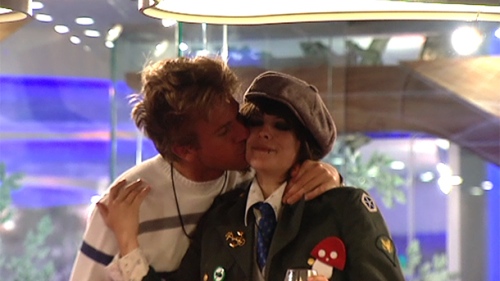
    John James and Josie have had a weird relationship from the beginning. It’s been kind of like watching a brother and sister relationship grow. Except that the older sister wouldn’t mind a shag from the younger brother and the younger brother doesn’t understand the tingly feeling he gets around his big sis. Like I said, it’s been a weird relationship.

    I mentioned in my opening Big Brother blog entry on this site that on first inspection Josie would probably get labeled the house “frumpy one” but I was, happily, wrong. I’ve liked Josie’s personality from the off, she seems fun. I only worried about how she would be viewed because the other housemates were skinny model types. I like to think of it as a vindication of the male species that all the blokes took a shine to Josie. In fact the only person to fancy any of the other girls was… another girl, Shabby.

    John James was the leader for Josie’s affection but a close second was Nathan. Oh yeah, Nathan is gone. Oh well.

    josie

    “Do you fink I’m flurtin’ wi’ you or summit?”

    It’s been evident for a while that Josie and John James have like-liked each other. There has been mutterings back and forth with other housemates about it. Josie even refers to JJ as her husband and it’s one of the only names anyone is allowed to call him without a strop being thrown.

    What has been harder to judge was when they were going to talk openly about how they feel or even, god forbid, make a move.

    Thinking back, I would have said that they haven’t even admitted to themselves their feelings for each other until last night’s show. It seemed to genuinely be the first time either of them spoke about how much the other means to them. But it was like pulling teeth.

    I was on the edge of my seat screaming at them to be grown-ups and talk honestly to eachother. Instead there was just some retarding mumblings and shouts. Neither of them acting around each other the way they were acting apart. Neither of them saying to each other what they were saying apart.

    I likened the situation to being at school and two friends wanted to date but they were two young and shy to admit this fact to the other. Resulting in one or both picking a fight because of their frustration.

    talk

    The distance between us

    I know I made fun of Shabby having the hormonal tantrums of a teenager but once again we’re seeing teenage traits in these grown-up housemates. They’re mad about each other but they’re going about it like kids. IT MAKES ME WANT TO SCREAM!

    But, alls well that ends well. In a cringe-tastic scene, where Big Brother had to basically hold their hands and say “do you like her?”, “…yeah”. “Do you like him?”, “…yeah”. “Then shut the fuck up and snog already”.

    And when they were cuddling and making up the coup de grace of the childlike behavior for me was John James’ expression when he tried to tell Josie how much he liked her. Rather than actually say the words “you know I’m mad about you” he just gave a “you know” and a dumb expression.

    And then Josie went back to sucking her thumb.

    ARGH! Why do they do this to me?

    sleep

    Just like me they long to be close to you

    Aaron Poole
    Follow Aaron on Twitter – @AaronFever

  • Hands Down #9

    handsdownheader.png

    Welcome to Hands Down, FRED’s own look into the world of the folks that frequent this sordid world of geekery. Follow Aaron, Brian and Colin (and a menagerie on the way) as they traverse the light fantastic or some such nonsense… What? It’s an online fortnightly comic strip, what kind of description did you expect?

    lucyline.gif

    no9websized

    VISIT THE HANDS DOWN ARCHIVES

    Follow Hands Down on Twitter

    Written by Aaron Poole. Art by John Merker & J.K. Hulon. Copyright 2010.

  • Essential Sounds (2010/07/10)

    soapbox-header.png

    Essential Sounds (2010/07/10)

    lucyline.gif

    Fear not fellow music lovers for I am back after my slight absence, I have returned to do what I do best. Yes I am here to syringe your ears with the best cuts of new music this wonderful world has to offer. This is Essential Sounds, this is the soundtrack to your week.

    1. Don’t Turn The Lights On by Chromeo

    Kicking us off this week is the Canadian electro funk duo Chromeo, it seems like a lifetime ago since they delivered their seminal album Fancy Footwork. But fret no longer for they have returned with a very solid and fresh sounding single which boasts a rattling bass line somewhat akin to that of Michael Jacksons “Wanna Be Starting Something”. Strangely enough Chromeo indeed are starting something here with a song which clearly holds the 80’s close to its heart. Yet with shimmering synth work similar to Kraftwerk and an eerie swelling of glass pads “Don’t Turn The Lights On” truly is a mixed bag of magic.

    chromeo

    2. Lets Get Lost by Beck & Bat For Lashes

    Surfing on the current crest of unique collaborations the world has been treated to this offering from Beck and Bat For Lashes. On paper it seems as if the pair might not work well together but upon hearing the track its obvious to see the duo click together on every level. First of all the core strength of the song lies within the understated percussion and the vocal delivery of Natasha Khan (Bat For Lashes) this alone creates a very haunting atmosphere which is evolved further by the presence of Beck. The combination of both voices makes for a distinct cocktail of sound which seductively slips underneath the listeners skin. Seeing as the track was recorded for the recently released Twilight Eclipse soundtrack it seems as if this is a one off but fingers are crossed for the pair to work together again.

    bats-for-lashes

    3. I Need Air by Magnetic Man

    Anybody looking to dip their toe in to the ever expanding pool that is the Dub Step scene could do no wrong by checking out my third recommendation for this week. Magnetic Man is essentially the All Stars Team of the genre, consisting of super producers Benga, Skream and Artwork “I Need Air” is the latest offering from the group and in the eyes of Essential Sounds is an instant classic. With a rhythm that moves along with mechanical precision and alternating keys and synth leads the song cuts through the listeners brainwaves like an audible version of cult classic arcade game Ikaruga. Despite the on par and versatile instrumentation its the vocoded vocals which is the synthetic heart of the song. Magnetic Man have not only delivered an essential sound but a glimpse into the future, and the future looks beautiful.

    magnetic-man

    4. Albatross by The Besnard Lakes

    From the opening bars of sickly sweet shoe gazing guitar tones the psychedelic journey that is “Albatross” by The Besnard Lakes begins. With rumbling drums and the enchanting vocals of Olga Goreas we are sucked into a blissful and sun kissed world of summer loving. The vocal harmonies give this number a cosmic like beach boys feel which burns out into a kaleidoscopic progression of brass instrumentation. This is very much the indie sound of Summer so if your in the absence of sunny day’s slip this number on and slide away into a sonic paradise.

    besnard-lakes

    5. Your Body Is A Machine by The Good Natured

    Imagine a middle ground between La Roux and Florence and The Machine and you’re likely to find The Good Natured. Up beat and up tempo there is an air of mystery to the sweet delivery within Your Body Is A Machine. It’s joyful enough to be a mainstream hit but yet its mixed bag of instrumentation gives it musical credence. Ranging from almost like tribal like drum patterns to indie disco guitar riffs and overlapping harmonies. This is a dangerously infectious piece of indie pop which could make even the coldest cynic sparkle with happiness. You have been warned this lady will bleeding through speakers across the country before you know it.

    good-natured-002

    Mal Foster

  • Soapbox: 5 Zombie Novels You Must Read

    soapbox-header.png

    Five Zombie Novels you MUST read

    lucyline.gif

    We all love zombie movies, but what about zombie novels? For your reading pleasure, I have compiled a list of some great zombie novels that are definitely worth a read. After all, what says summer more than cracking open a warm brain cold beer and reading a great book by the pool?

    zombiewalk_468x604

    5. The Zombie Survival Guide by Max Brooks

    A must read for any Zombie fan, this book is great for a number of reasons – though I should note that it is an actual survival guide. Even though you will usually find it in the humor section of your local bookstore, this was not the author’s intention. It is not a joke, and Max Brooks has though of everything from which weapons and equipment are most effective against the undead to the very particulars of how you should actually go about surviving a full-blown zombie invasion. This book is really great to read before reading any other zombie novels, as it will give you all sorts of insight into how you would react in some of the situations faced by the protagonists – which can prove to be a lot of fun if you have as active an imagination as I do.

    *Max Brooks has also recently released The Zombie Survival Guide: Recorded Attacks which is a graphic novel version of the last section of the Zombie Survival Guide that describes attacks recorded throughout history.

    4. Day by Day Armageddon by J.L Bourne

    This novel surprised the hell out of me, as I picked it up for about $3.99 at my local grocery store. After sitting on my shelf a few months, I finally picked this book up and was surprised to find that I couldn’t put it down! Written in diary format, it follows the exploits of a U.S naval soldier (on leave at the beginning of the outbreak) in his fight to survive in a post-apocalyptic world. This novel came across as very realistic, and rightly so I suppose, because the author himself is a U.S Naval Officer currently on active duty.

    For a sample chapter (.PDF download) or to pre-order the sequel Day by Day Armageddon: Beyond Exile visit the author’s website here.

    3. The Morningstar Strain: Plague of the Dead by Z.A Recht

    Z.A Recht’s zombies are truly terrifying, and truly unique. For a first novel, this book is quite impressive and having read the sequel I can say that it is just as good. In this series, the infected become something similar to the zombies portrayed in the films 28 Days Later and 28 Weeks Later – fast zombies. They are infected, but not technically undead – Z.A Recht’s characters refer to these as “sprinters”. In this world, there are also typical Romero zombies – which are created when a “sprinter” dies. After about an hour, the dead “sprinter” rises as a “shambler” – making for a truly terrifying reality where zombies must be killed not once, but twice.

    *The Morningstar Saga: Thunder and Ashes is the second installation in Z.A Recht’s Morningstar series. It is now available everywhere.

    2. Cell by Stephen King

    As the greatest horror writer of all time, Stephen King does zombies right. In this novel, a pulse is sent over the world’s major cell phone networks which turns any user into a mindless murderer. As these “phoners” band together in increasingly large groups, our protagonist (and some friends) realize that they also possess a “hive mind” or “collective consciousness”. What ensues is a very dark, post-apocalyptic tale that is almost the exact opposite of The Stand – my favorite Stephen King novel – which is also post-apocalyptic in nature but also extremely hopeful. All in all, Cell is a great read, and offers everything you would expect from a master of horror such as Stephen King.

    1. World War Z by Max Brooks

    It will come as no surprise that Max Brooks’ novel World War Z is a fantastic and compelling read. The story follows a man and his “labor of love” in compiling as many first had accounts of the zombie war as is possible ten or so years after the fact. Each character that is interviewed gives a short testimonial of what happened to them, and how they survived World War Z. These stories are fantastic, compelling, horrifying, political and global in scope – no matter who you are or where you come from you will be able to relate to somebody interviewed in this fantastic work of fiction. Though this project has been in development for some time, World War Z will be adapted for the big screen – view the teaser trailer here.

    Mary Hoffman

  • BIG BROTHER Blog Report: Day 28

    soapbox-header.png

    Day 28

    lucyline.gif

    Sunshine is gone… Nobody cares. I could pretend that it’s worth talking about but I’m just glad the show has lost some dead weight. But low, what’s this? We’ve also lost Shabby? Now there is something to talk about.

    In what was quite possibly the most drawn out exit in the history of the show Scabby Katchagoogoo finally took her ball and left. It was as dramatic as you would have expected from the “independent” actress but there were a few points that surprised me.

    It seemed that while Shabby had enough, so had the other housemates. Ife spotted another bitchy remark that the dark twins Shabby and Caoimhe made towards her and it appeared to have come at a moment that really hurt her. Essentially, you get the impression that Ife had been acting reserved during her time inside the house and started to let go with an act of freedom (basically, she danced about a bit). When she caught the two putting that act down with the words “cringe” Ife acted out. And fair play to her, I say. She caught them being bitches and the two were unprepared for her outburst. Now they’re on the ropes.

    What I think was the knock out blow was when Nathan, who also has been pretty quiet up to now, told Shabby to fuck off when she butted her nose into a conversation between him and Josie. You can see the anger in Nathan as it seemed he finally got his frustration out. And you know what? She shrunk, instantly. Shabby has been a “larger than life” character stampeding around the house with anger and ignorance. Nathan is probably the first person to tell her in no uncertain terms to shut the fuck up. It worked too! Brilliant.

    article-1277282050896-0a25b886000005dc-911169_466x310

    The Sound Of Silence

    I found it fascinating that up until this point, Shabby and Caoimhe were inseparable. Solid as a rock. But for some reason Caoimhe became very distant on this last day together. Whether she was separating herself because she was tired of the connection with the house’s most hated person, she thought Shabby was turning her into someone she didn’t want to be or if she needed some time apart just to sort herself out… who knows. It quite possibly could have been nothing but a coincidence but it makes me wonder about Caoimhe and her motivations. I don’t necessarily like my conclusions but we’ll see how that pans out.

    So now that the witch is gone, who will step up and fill the void? Well John James is up for eviction, but if he stays I think he’ll became a dominant force again. He genuinely seems to be growing as a person as the weeks go by and I swear to god if he doesn’t kiss Josie before he leaves I’ll go nuts.

    Nathan, after ascerting his dominance over Shabby, will become a controversial figure. He’s not a guy who holds his tongue easily and when he speaks it’s with a certain level of venom. He could change things up.

    Corin seems to be getting more and more attention. Her “loving mum” figure in the house is starting to be tested along with her patience. As people start to turn to her for friendship she seems to be rejecting most of them. This could make her isolated in this world that heavily relies on group interaction.

    e6268b4c4459288f3aeeb6c6398f0ce3_extralarge

    A Kiss Goodbye

    I’m not sure. This is a real game changer. Shabby took up so much of the show’s attention and dialogue that people are really going to reshuffle themselves in their group dynamics now that the space is there. This should be fascinating.

    Aaron Poole
    Follow Aaron on Twitter – @AaronFever

  • Review: The White Ribbon

    soapbox-header.png

    The White Ribbon

    lucyline.gif

    thewhiteribbonblu-rayI left the auditorium of the Montgomery arthouse theater that showed Michael Haneke’s Palme D’Or-winning feature, The White Ribbon, a few months ago with a knot in my stomach that formed about 30 minutes into the film and only tightened for the next two hours. When I stumbled back into my car, I sat that for a moment and began to hyperventilate for a minute or so as my gut finally loosened and the flood of emotion I’d choked back for fear of having a public meltdown came pouring out in ragged breath and shaking hands. Never have I had such a reaction to a film; The White Ribbon did not so much grab me as throttle the life from my throat, and I hesitate to think what it says about me that I could go through such an ordeal and confidently say I loved it.

    The film’s narration, delivered by the schoolteacher (and, in what is perhaps a self-reflexive nod, the piano teacher) of the small, fictitious German village of Eichwald, recalls that of Barry Lyndon: his address overshares detail and often beats the action to the punch, if not precluding it entirely. One may not even trust the narration; “I don’t know if the story I want to tell you is entirely true,” the teacher confides in us at the start. How could he? He’s in a Haneke film, after all; The White Ribbon is a horror film that, with only the briefest and most somber of exceptions, never shows its horrors on-screen. However, unlike the deliberate coldness of CachŽ, or the condescension of Funny Games, The White Ribbon depicts violence in humanistic tones: in this film is an Austrian’s attempt to figure out how the generation that preceded his could have come to accept Nazism, and as such it contains an earnestness bereft of the director’s other films.

    The first major action of the film — and the only significant act that is entirely shown — features the town doctor riding his horse into a nearly invisible wire strung across the entrance to his manor that breaks the beast’s leg and severely injures the man. He spends much of the next year in a hospital 30 km away, while his children quietly persevere. The mysteriousness of this incident – be it a prank or an attack of darker intentions – stands as the opening salvo of acts of increasing brutality and shock that mount upon the villagers. Children are kidnapped and beaten, a barn catches fire, a weakened and overworked female harvester is killed in an accident in the sawmill. Each of these instances of violence, injury and death seems self-contained, but Haneke, with his static yet probing camera, observes how those incidents not only converge but how they each alter the lives of others. No such incident, whether accidental or the result of human violence, can affect only one person.

    Adding to the level of discomfort, perhaps even the violence, in the community is the town pastor (Burghart Klau§ner), a hard-line Protestant who rails against the evils affecting the village and harshly abuses his children. For reasons that remain unclear, he punishes his eldest son and daughter by thrashing them with a cane, and he ties the titular ribbons on them as symbols of the innocence and purity they fail to embody. Those ribbons thus become an ironic metaphor of shackles placed upon them by their father for transgressions so ill-defined they might merely stem from the kids’ existence. Later, he even shames the boy, Martin, further by intimidating the boy to stop masturbating by telling a comically ludicrous yet terrifyingly grave story of another child who withered away and died from impure touching. This pastor’s behavior, his hypocritical wrath and judgment, recalls the stepfather in Fanny and Alexander, who was of course based on Bergman’s own father.

    white-ribbon-table

    The entire film is Bergmanesque, really, from Christian Berger’s crisp black-and-white photography to the theatrical placement, the detailed (yet historically inaccurate) set design and emotional distance peppered with the odd, unstoppably affecting close-up. The chief connection, of course, involves religion. The pastor is one of the most ruthless people in the village, and the children he beats go on to enact violence themselves. When his mother gives birth, Martin swears and punches his slightly younger brother, as if the thought of another child being raised and tortured in this house in unbearable, or that he simply does not want more competition. As God’s representative, he inflames the tempers of not only his children but the townspeople; he routinely attributes grandiose levels of evil to mendacity and other minor sins while his own use of physical and psychological torture never gives him a moment’s inner conflict.

    Tracing this line a bit further, one could then accept the pastor’s superior, the harsh, distant baron who rules the town, as a God substitute. He does not allow his subjects, particularly the poor, migrant farmers most reliant upon him, to ever really interact with him, and he even literally works some of them to death for his own profit. When his son is taken and severely beaten, (make the connection yourself), the Baron abandons the village, a cold reversal of the Biblical sacrifice of the son. He does not return for winter services that year, which the villagers interpret as “a sign of anger.” When the pastor details that ridiculous masturbation story to Martin, the boy stands in front a cross in a clear reference to the key shot in Bergman’s Winter Light. But where that film suggested the nonexistence of God, the implication of The White Ribbon is that He does exist; He’s just an avaricious, self-absorbed bastard.

    white-ribbon-cross

    I do not think, however, that Haneke is really targeting God. Rather, he is attacking the idea of God as created by those entrusted to teach His word. The pastor does not come close to inhabiting the numerous atrocities committed in His name over the centuries, but his violent nature informs the wrathful image the villagers have of the Lord. Matthew 18:18 states that “whatever you bind on earth will be bound in heaven,” so the God who treats Eichwald so cruelly is the result of the cruelty that forged Him. Curiously, I think of Jessica Rabbit from Who Framed Roger Rabbit: “I’m not bad. I’m just drawn that way.”

    Religion openly factors into the attacks, when the particularly repulsive attack on a mentally disabled boy is accompanied by a note that says the unidentified assailant shall continue to accost children as a means of atoning for their parents’ sins. The note references the barbarous passage of Exodus 20:5, which reads, “”You shall not bow down to them or worship them; for I, the Lord your God, am a jealous God, punishing the children for the sin of the fathers to the third and fourth generation of those who hate me.” The next verse mentions that God will bless those who obey Him for a thousand generations, but the thought that He would take out his fury on the children of the wicked simply for being born is abhorrent.

    The verse’s use in this context raises a question: who is really being punished in The White Ribbon? The attack on young Sigi splinters the village across battle lines, between rich and poor as well as young and old. The adults beat their children to strengthen them, and those meant to help and advise them are either abusive (the pastor) or neglectful (the teacher). Even the doctor proves to be a monster, perhaps the worst of the all, when he returns; his kindness toward the other kids in the village belies the despicable, unspeakable ways in which he torments his midwife/mistress and his own children. The doctor’s return collides so viciously with the longing and sorrow his children felt in his absence that he completely shifts the dynamic of their characters from loyal and loving children to codependent victims who do not have the power to change their lives and thus accept the conditions of their existence as best they can within traditional family behavior. The other kids in town are no better than the adults: the toughened children of the pastor and the Baron’s steward eerily follow the trail of violence in the town under the pretense of helping the injured children and those of the injured adults as if an arthouse Children of the Corn. When someone brings to the attention of the pastor, who heretofore railed against the evils of the town children incessantly, he manages to locate a reserve of untapped hypocrisy to muster outrage at such an implication. How could anyone accuse the children? They’re so innocent! Why, I even tied ribbons on them to remind them of how they’re supposed to be!

    white-ribbon-fire

    The only rhythm to the attacks is that the weak are injured, which causes the strong to fear for themselves and thus take harsher measures against the weak, whom they set up as scapegoats. Thus, we see the young generation being hardened by horror, and that group of stronger children who follow the incidents around town will clearly grow into the sort of people who will embrace fascism in the detritus of Weimar Germany. It’s plainly visible in Martin, who precariously walks the rails of a high bridge after his father beats him. When the schoolteacher catches him, Martin explains his behavior as a test of God’s love; this moment demonstrates how the pastor’s psychological warfare against the child’s notion of his own spiritual worth leads him to desperately act out to see if God still loves him, but there’s an almost Nietzschian arrogance in the response, as if this “proof” of God’s decision to keep Martin alive proves his superiority. Like the religious angle of the film, however, I would hesitate to assign the film’s violence to an explanation so simple as anti-fascism. Haneke himself placed the cycle of violence depicted in the film in the larger context of terrorism that such abuse breeds. For Haneke, children have suffered so much violence against them and perpetuated so much of their own that setting them in the fabricated glass cage of “innocence” is as detrimental as it is hypocritical. We turn our heads from this corruption so that these children grow up to repeat the cycle, especially when they live under an authoritarian system like the Baron’s (or Hitler’s).

    Admittedly, that theme gives The White Ribbon a perilously clichŽd premise, but anyone who truly pays attention to a film will know that what’s being said counts for a lot less than how the filmmaker is saying it. The director does not show the violence, only the lead-up and the aftermath, studying how the acts affect others and how others continue to harm. Whenever a parent takes a cane to hit a child, Haneke stops his camera outside the room to spare us the sight. He does not, however, spare us the sound, the thwack of leather tearing air and ripping flesh as the most horrifying screams echo through the halls. The music is ominous and portentous, yet it is all diegetic, played by the sealed-off bourgeoisie who pound out such dolorous songs to distract themselves from the events plaguing the town even as the music itself makes it impossible to think of anything else. The sound design, deathly quiet and punctuated by the deafening sound of creaking wood and bloodcurdling screams, is every bit as impeccable as the cinematography, which itself gives away Haneke’s method. By using color film and converting it in post-production to monochrome, Berger and Haneke prove that their intent with the film is not to recreate the period and delve into the characters but study them from a modern point-of-view. When Haneke cuts from the pastor intimidating his son with the masturbation story to a shot of the doctor screwing the midwife without passion just so he can get a jump (it’s not even for something so seemingly quaint as pain suppression), the director underlines, with his typical dark humor, the insanity of instilling fear over something as harmless as self-love in the face of these cruel affairs conducted by the adults — besides, is one-sided sexual gratification really so different from masturbation anyway?

    white_ribbon_bird

    That coldness might tie The White Ribbon to the director’s usual detachment, but here he only condescends to the characters, and not the audience. There is a despair to this film, from the color being sucked out of its film stock to the flawless stoicism of the child actors, as Haneke attempts to show how deeply the corruption runs, how even children are being warped by a system of fascistic power-grabs that long preceded the National Socialist Party. And because he is willing to show the scope of society’s oppression, Haneke is also shrewd enough to remind everyone that goodness still exists. Watch how he turns the overdone sentimentality of a young child, in this case the doctor’s boy, asking about the meaning of death into something unique, heartbreaking, rewarding and even a bit scary by having the older sister, in her father’s absence, try to explain this to the boy, whose birth cost their mother her life and whose father’s uncertain state hangs over them both. Or, consider the scene where the pastor’s young son gives him a bird that he nursed back to life as a replacement for his dad’s lost pet, and how the pastor is quietly shamed by this act of the true innocence in which he does not really believe, that he commodifes with tacky symbolism and thus devalues until, for the rest, it becomes meaningless. These glimmers of hope can survive, but the sad truth is that the only way to do so, at least in the near future, is to simply flee the forces that identify humanity as a weakness and attack it. Who could blame the runners? Horror, like the other main forms of storytelling (action, comedy and drama), allows us to confront our fears in a safe environment. But Haneke does not allow us to simply accept these evils and move beyond them; he withholds the payoff, confronting us with the cracks in our society, not just the Nazis’, and thus we are made to actually retain and ruminate upon what we see. Maybe that’s why I had a panic attack in the parking lot.

    Blu-Ray Specs

    white_ribbon_hay

    It is rare for me to have the opportunity to see a film like The White Ribbon in theaters, so I actually had a frame of reference for the film’s look on celluloid. Christian Berger’s cinematography was one of the great delights of 2009, at once the most beautiful work of the year and the best suited to tell a story that makes you constantly want to look away, using its extreme clarity to heighten the discomfort. Sony’s Blu-Ray magnificently captures this aspect of the film, and the picture quality of the disc surely ranks among the 10 finest in my collection. Detail is so fine that you could count the individual stems in hay bales and make out individual licks of fire in the memorable shot of the barn burning. It also handles the nuance of the film’s use of whites, blacks and grays, never crushing or making the blacks murky to ensure clarity of the softer tones. Audio doesn’t play a huge role in the film other than for dialogue and the horrible ambience of whip cracks and masked screams from behind closed doors, but the Blu-Ray faithfully recreates this soundtrack. Still, what sinks in most in the audio track are the terrible silences. Also included is a track that plays dialogue in the original German but redubs the narration in English, also in DTS-HD Master Audio. The film arrives in its original 1:85:1 aspect ratio.

    Special Features

    The White Ribbon comes with such a rich supply of extras that A) you might mistake it for a release from a specialty distributor like Kino or Criterion and B) you’ll notice the absence of a commentary track even more. But I happen to agree with the decision not to have a track; I spent nearly 2500 words on the review of the film itself, and there are still mysteries and details for me to pore over some more. Besides, part of the draw of Haneke’s films is that he does not attempt to resolve everything.

    In any case, the extras that do make the disc outweigh any nagging desire for a commentary. A 40-minute “making-of” delves thoroughly into the picture from conception and thematic vision to production and all the specifics of behind-the-scenes shooting. My Life, a 50-minute piece, focuses on Haneke’s entire career, a shrewd move considering the attention brought by The White Ribbon‘s Palme D’Or win. Though a tad saggy, the documentary provides a fine oversight of Haneke’s corpus, his themes and his personal life. And if you’re still not satisfied, Sony chucks in an interview with the director that focuses mainly on this film and fleshes out both the docs a bit more. The footage of the film’s premiere in Cannes is overkill, however; such extras only ever mean anything when placed at the end of a making-of for a film with a storied production and a filmmaker who either needed a good Cannes reception as validation of the strain the film took on everyone or as the magical surprise of a young pup unexpectedly finding his or her film received jubilantly at the greatest film festival in the world. Despite the film’s prize win, there’s not enough interesting material concerning The White Ribbon at Cannes to warrant 20 minutes of red carpet and press conference footage. All these features are in standard 480p, though included trailers of the film and a number of other Sony Pictures Classics films making the rounds come in 1080p.

    Bottom Line

    While I managed to keep my composure on a second watch, The White Ribbon remains one of the most unsettling films I’ve ever seen, a picture that manages to circumnavigate its didacticism by complicating its themes and burying them behind a stark yet mysterious structure. The picture quality alone recommends the disc, the first black-and-white film since Sin City that could pass for reference-grade material (and this wasn’t shot on HD). Rounded out with a solid batch of extras, The White Ribbon stands easily as one of the finest home video releases of the year, for those who have the fortitude to withstand it.

    white-ribbon-children

    Jake Cole is a journalism student at Auburn University, where he regularly avoids people in favor of writing about film, television and music on his blog, Not Just Movies. He aspires to be a critic, partially out of his love for film but mainly because he’s always dreamed of living a life of extreme poverty.

  • BIG BROTHER Blog Report: Day 22

    soapbox-header.png

    Day 22

    lucyline.gif

    Dear Shabby… where do I begin?

    First let me say that I feel for you. You’re in love and you don’t know how to handle it. You came to the Big Brother house in order to garner the attention you so desperately need to validate your life. What you weren’t expecting was to find the sexual man-jaw of Caoimhe. You can’t be blamed. It’s not your fault. The way you’ve reacted to this however…

    article-1290857-0a41a0a4000005dc-413_468x321

    Ok, so I’ve said from the get-go that I dislike Shabby, but I have to admit she has made this year enjoyable to watch because of her mental shenanigans. I spoke last time out about her teenage hormones and it’s nice when she goes ahead and backs me up by throwing the biggest tantrum I’ve ever seen from a woman in her mid-twenties.

    The day started with Ife begging for tobacco in the diary room. Big Brother cleverly told her that they would give her two pouches of tobacco for a list of personal items from the housemates. One of which was Shabby’s “lucky” hat.

    Ife gathered the housemates and laid out the decent proposal. Everyone was reasonable about it, even the non-smokers which is fair play because I know I would have held them to ransom. Shabby… well she had a different reaction…

    article-0-0a42fda9000005dc-343_468x341

    The great irony is that Shabby was previously complaining (and continued to afterwards) about how all the housemates, except her, are selfish and only looking out for themselves. Shabby would not give up her hat (at least not without a fight… with herself) for something that not only she would get but her fellow housemates too.

    The term “I am nothing without this hat” is something you don’t hear everyday. But the days that you do are always good.

    What helped to exacerbate things was Shabby’s one true love, Caoimhe, had no sympathy for her and was telling Shabby to essentially “get over it”. Well, that’s not something that Shabby does well and advising her to do this might result in…

    image-7-for-big-brother-the-best-pictures-from-the-house-today-22nd-june-gallery-227477281

    There is nothing sadder than a sad lesbian rich kid.

    I’ll be away at my brother’s wedding this weekend so I won’t be able to talk about the eviction until Monday. Hopefully Shabby doesn’t stab anyone in the middle of the night between now and then.

    Aaron Poole
    Follow Aaron on Twitter – @AaronFever

  • Review: Walkabout

    soapbox-header.png

    Walkabout

    lucyline.gif

    walkabout-bdA common refrain mentioned in reviews of immaculately shot films states, “You could take a frame of this movie and hang it in an art gallery.” When you think about it, it’s a silly rave, as cinema comprises 24 photographs a second, and numerous photographs contain a painterly quality. Naturally, the films where this line can be most readily applied enjoy the contributions of cinematographers with the keenest sense of landscape and portrait photography. Ergo, the beauty of Walkabout should come as no surprise, given director/cinematographer Nicolas Roeg’s involvement; case in point, this is the man as responsible, if not more so, for the look of David Lean’s gorgeous epic Lawrence of Arabia whie serving as assistant director as the film’s actual cinematographer or Lean himself.

    I say should, because not even a few glimpses of the film in online trailers could prepare me for the jaw-dropping, deeply atmospheric majesty of Roeg’s natural compositions. The story of two schoolchildren abandoned in the Australian Outback, Walkabout emphasizes the harshness of the climate and its alien appearance to sheltered, city-dwelling children by heightening the reddish hue of the soil until the endless desert comes to resemble the Martian landscape, a light science fiction touch echoed when the frequency of the two kids’ portable radio modulates in otherworldly tones over a shot of the Moon. Cleaned up for Criterion’s restoration, the tone poetry of Walkabout‘s alternately beautiful and terrifying landscapes and carefully edited close-ups make a case not for hanging some of its frames in a museum — and some shots, like those of an Aboriginal boy standing utterly immobile in front of a setting sun, could be in an instant — but to show the entire thing in as many art galleries as possible, achieving its full power in the manner in which it is meant to be exhibited. After all, who would ever cut up a painting just because one section of it was so good it could be placed in its own exhibit?

    The children, named Peter and Mary in James Vance Marshall’s source novel but left nameless here, are first seen back in Sydney without a care in the world. They even swim in a pool located just off the bank of Port Jackson, as if choosing the chemical blue of their artificial bubble over Australia’s natural water supply mere feet away. Their father, a geologist, looks on with a strange look on his face, and we know something is wrong. The next day, he takes the kids for a picnic out in the bush, where he suddenly snaps and shoots at his children before torching his car and committing suicide. The girl (Jenny Agutter) protects her younger brother (Roeg’s son, Luc) from the truth, and the two move away from the vehicle, deeper into unforgiving terrain. After several days’ worth of stumbling around searching for oases, the two find a Aboriginal boy (David Gulpilil) on his walkabout. The young man does not speak English, and the white children do not know his language, but the three stick together, the Aborigine leading them through the Outback, seemingly just glad for the company.

    walkabout1

    From this simple setup comes a film that packs numerous meanings, many of them conflicting if not mutually exclusive, densely packing its trim 100 minutes — and this is the unedited version — with evocative editing, powerful imagery and minimal but devastating performances from all three young actors. The source novel is considered a children’s classic in Australia, but Roeg reworks the material into a looser and much darker realm. Where the children of the book find themselves in the Outback after surviving a plane crash, the suicide of their father in the film creates a more shocking foundation for the kids’ growth. Here, they need the Aborigine not simply for physical guidance back to their people but emotional and spiritual rehabilitation for their trauma.

    Rather than shoot the Outback in flat, documentary-like framing, Roeg brings an improvisatory feel to his setting, filming whatever grabbed his fancy and editing together images of landscapes made vibrant and alive by heatwaves, broken up by shots of wildlife. Lizards skittering across the ground, bugs swarming over the carcasses of the creatures that did not survive the terrain, the tiny lifeforms that mingle with the humans and the larger mammals serve to make the Outback at once deathly tranquil and constantly teeming. Occasionally, Roeg and his team clearly saw something interesting and found themselves lacking the proper scope or film stock, but the resulting picture, distorted almost beyond recognition in heavy grain. Yet these shots are as gorgeous, in their way, as the crystalline extreme long shots and sudden, higher-quality zooms, and the various forms that the images take recast the Outback in a borderline surreal light. Indeed, the film that popped into my mind most often while watching Walkabout was The Night of the Hunter, another surreal fairy tale about children taking in a world much bigger and stranger than they can fully process while outrunning death (and another kid’s film that’s far too twisted for children).

    As the two white children follow the lean, jovial black teen through the bush, Roeg gently brings to light the nascent sexuality of the older teens. Eyeline matches of the Aborigine checking out the girl’s sun-scorched, sore legs with more than just friendly care and the girl ogling his sweat-glistened muscles plant wisps of desire in the minds of those who have never truly felt it before. Fittingly, the setting of Walkabout serves almost as an ironic visualization of the terror of sexual awakening, a barren wasteland where parents not up for the job of explaining the most crucial, confusing and frightening stage of physical and emotional development in a person’s life abandon their kids to simply figure it out as best they can. When Agutter swims in a pond naked in the film’s most famous sequence, her playful splashes are not simply a means of cooling off in the harsh desert but of flirtatious display to the Aborigine. (Unbeknown to her, the girl’s brother sees her as well, perhaps setting off the first confused feelings that will root the eventual growth of hormones that currently ensnare the older children). Roeg further emphasizes the sexual nature of the film with cutaways to other groups of people in the Outback: a team of Western researchers looks for a downed weather balloon, or at least that was their assigned task. In reality, the men of the team ogle the lone female among them, trying so hard to peek down her lab coat that their heads practically sway with the wind-blown blouse. When the woman even adjusts in her seat, her nylons scratch against each other with hilariously deafening sound, causing the men to whip around and ignore everything else. Heck, even the music that the two city kids primarily receive on their radio is rock, the most blatantly sexual music around.

    walkabout2

    Yet Roeg introduces a larger, more complex and far more despairing theme of broken communication between people. The Aborigine and the white children can communicate basic ideas like “water” and “rest” through pantomime, but the two teenagers cannot confess their budding feelings for each other. Again, Roeg’s asides function as thematic support rather than simple tangents: some of the men in the research team speak Italian and do not seem to contribute much to the English-speaking scientists. The three children later pass a small village where a white Australian essentially forces Aborigine children into slave labor. The people likely cannot understand him, and his falsely avuncular attitude belies a disregard for the natives. When his mistress arrives, he heads in to his home to bed her, and his actions with the white woman are as perfunctory and walled-off as his taskmaster behavior with the natives he “employs.”

    But Roeg does not simply suggest walls of communication between races or sexes. That is facile material for hack stand-up comedians. No, Roeg puts forward the dark notion that we are all locked into the parameters of our social programming. Rather than portray native society as noble and pure and European civilization as corrupt and arrogant, Roeg focuses on the traits all humans share, for better and worse. The Aboriginal boy spears an animal and clubs it to death, and before the audience can think to call his actions barbaric, the director intercuts shots of a white butcher back in the city casually chopping up meat with a cleaver. The Aborigine shows an amount of respect for his surroundings by eating what he kills, but he also engages in a fair amount of bloodsport, almost cheerily chasing around animals and killing them to prove his ability to dominate in the wild (and possibly impress his new companions). Only when white poachers blaze through in a jeep, casually firing on every animal in the vicinity and driving off as quickly as they arrived does the upbeat feeling of the boy’s spree suddenly feel cold.

    The sexual tension between the older boy and girl, of course, is the biggest indication of the subtle ways in which we are all connected, yet Roeg still fashions a film about people who cannot break through barriers that separate them, barriers that have nothing to do with language, as shown by the girl figuring out the Aboriginal word for “water.” What separates them is their entire perception of the world, and because of that they can never be together. In the film’s best, most stunningly shot and most heartbreaking sequence, the Aborigine attempts to communicate his love for the girl in the only way he knows how: a mating dance. As the girl walks through an abandoned barn, Roeg pulls the camera back and up to show the boy following parallel from behind a wall, occasionally slipping past windows and door frames. Finally, he dons tribal paint and engages in an intricate but mysterious dance, so focused that the confused girl fearfully rejects him without realizing his intentions. The next morning, the boy has hanged himself from a nearby tree. The book kills the native through a flu virus that the inoculated Western children carry but do not catch. A surprisingly open display of anti-imperialist sentiment, this ending has a touch of didacticism that Roeg eschews. In his vision, the boy is driven to despair by the epiphany that he cannot reach and touch someone who’s standing right next to him. Perhaps that explains the father’s explosion at the beginning: a geologist sent into the Outback to study it, he found only a place so vast and unique that it broke his conception of the world and took his sanity in the process.

    One should not hunt too desperately for a clear meaning, however. To assign a flat reading to so open a visual poem would be reductive and counterproductive to the movie’s atmospheric presentation. The combination of still landscapes and bustling shots of scuttling lifeforms allows Roeg to use the Outback as its own dimension, a place that isolates its travelers from the social ties that bind them before introducing a whole wave of creatures to force people into finding a more universal outlook; remember that Roeg often punctuates the action and emotion with a eerily perfect shot of nearby life matching what was just seen or felt. Unfortunately, humans lack the mental fortitude to survive such a reprogramming, so they either kill themselves or escape back to their previous lives.

    Ergo, Roeg throws in a completely different perspective at the end that radically alters the perception of the film, that of nostalgia. The girl, grown up and married, has long since returned to Sydney and readjusted to “normal” life. But when her husband returns home and excitedly launches into boring details of his upcoming promotion in an uninteresting bureaucracy, she flashes back to her time in the wild, swimming naked with her brother and the boy.

    walkabout3

    This nostalgic remembrance obviously suggests that, for all the Outback’s danger and all the tragedy it foisted upon her, it remains a symbol of freedom and uninhibited growth for the girl. The use of ethereal recordings of children’s songs, both delicate and foreboding, throughout the kids’ adventure in the Outback underscores this: these reworked nursery rhymes look to the past past even as these kids are being pushed permanently away from those simpler days into adulthood. What becomes clear in this penultimate scene, however, is that even adulthood is a false promise: truly great films about maturation cannot play to adolescents, because you can’t understand what is to grow up until you’ve been through the ordeal yourself and figure out that adulthood is really no different than childhood. That’s why the boy, who realized that his future was his past, killed himself in hopeless depression, while the girl can withstand this epiphany because she only understands the dark truth in retrospect. In a world comprising areas that have either been Westernized or ruined by Westernized nations, the untamed Outback of Walkabout may be the last place on Earth that can force us to confront this, and that’s more terrifying than all the spiders, snakes and crocodiles that roam the area.

    Walkabout was one of Criterion’s earliest DVD transfers, back in the pre-anamorphic days as the company was just moving out of laserdisc production. This restoration, however, disproves almost single-handedly the fallacious argument that Blu-Ray is meant only for modern films shot on high-definition video. There is such joy in watching the upgrade of a visual film, visual not in the sense of flash and sizzle but of a story told through the images. Walkabout, like Terrence Malick’s Days of Heaven or Stanley Kubrick’s 2001: A Space Odyssey, almost feels like a new film with a good scrubbing. The reds of the Outback soil are brought out to emphasize its alien atmosphere, the greens of oasis plants looking even more tantalizing and relieving when spotted among the dust. To finally have the film in widescreen only compounds the sumptuous pleasures of the images, now that we can finally appreciate the full expanse of Roeg’s compositions. Audio quality is not as key a sticking point, but Criterion brings out the atmospherics of the track nicely. The most notable improvement in the sound department is the clearer mixing of John Barry’s score, separating the strings from the brass and parsing out the diegetic sounds of animal noises so that nothing ever gets drowned out by another sound.

    The extras are not as impressive as some other Criterion sets, but most of the features are newly included rather than a simple port-over from the old DVD. Interviews with Luc Roeg, now a film producer, and Jenny Agutter discuss the film’s legacy and some of the themes, while the old commentary track between Agutter and the director gets wonderfully in-depth about the shooting process and some of the meanings of the film. The best draw, however, is a 2002 documentary about the life of Gulpilil, who became the go-to symbol of Aboriginal life in the movies following his performance (see him in Crocodile Dundee and Australia). Gulpilil’s life is a colorful and turbulent journey that cannot be condensed into a single hour, but the documentary is terrific icing on the cake of this beautiful disc.

    Jake Cole is a journalism undergraduate at Auburn University who routinely writes about film, television and music on his blog, June 30, 2010

  • Soapbox: Adaptation

    soapbox-header.png

    The Tricky Question

    lucyline.gif

    Sorry for the lack of columns recently, but a bout of illness and a rush at work has meant that most other things have fallen by the wayside. But I am here once again, ready to tackle subjects relating to books and literature. And boy do I have a good one for my triumphant return: Is there such a thing as a GOOD book to film adaptation?

    People tend to just accept that a book will always trump a film based on the book. The justification is that a film has to condense a lot of the content to fit it into a two hour movie and this in turn dilutes the story. Then you have people arguing that an actor/actress assigned to certain roles don’t marry together with the descriptions given in the book of that character. Or, and this is even worse, that the scriptwriters add in scenes that didn’t exist in the original text.

    And online lists of good books turned into bad movies, or bad books turned into worse films or good films that made amazing films have been compiled and argued over for years.

    I have to admit, I have complained about all of these in the past. As a book lover, I am precious about what I read. I devour it, spend days immersing myself in the world on the page before me, emote with the characters and have that same feeling of closure they do at the novel’s end. So when a book has been “destroyed” by Hollywood writers, I can get a bit uppity about it.

    Currently I am reading Shutter Island by Dennis Lehane, which as the majority will know was released as a movie starring Leonardo DiCaprio and directed by Martin Scorsese earlier this year. Although I am enjoying the book, I saw the film first and will forever picture DiCaprio as Teddy Daniels, which is another of my Hollywood making books into movies bugbears.

    Anyway, one thing I noticed when reading Shutter Island was how close to the text the movie’s writers had stuck. Paragraphs of dialogue had been carefully transferred over to the screenplay, scenes lovingly retained and the general tone of the story complemented. And this filled me with hope that there were some good adaptations out there.

    The early Harry Potter books definitely fall into this category. Philosopher’s Stone and Chamber of Secrets were practically copied verbatim, with Prisoner of Azkaban moving slightly away from JK Rowling’s original offering. However, by Goblet of Fire, the size of the novels had increased substantially and this meant that the film’s writers had to cut out chunks of story, raising angry protests from fans claiming they had “taken out the best bits”. And by Order of the Phoenix the writers were including scenes not featured in the books.

    Part of the problem that writers have in translating novels onto the screen is that there isn’t the same structure. Books include characters’ internal thoughts and feelings and often have a narrative voice running throughout. A film (on the whole) can’t do that, so there are often internal monologues which are chopped by editors.

    Although hated by a lot of people, the first Twilight movie stayed loyal to the books. In the second movie, a lot was changed because in the books Edward Cullen disappears for about 400 pages and the screenplay writers were no doubt fearful about what a room full of Twi-hards would do when they discovered Robert Pattinson missing for about two hours of the movie. And this is another reason for changes to the story – a character minor in a series of books becomes popular, so the movies’ writers concoct new storylines that expand the role.

    And although a comic and not a novel, Sin City was amazing in it’s dedication to stay true to the original artwork and dialogue. There were points in the film that I recognised as exact copies of panels from the comics, which really blew my mind. I can’t help but feel that it helps immensely if the director is a true fan of the work they are recreating on screen.

    However, on the flipside of this is the horrendously bad reimagings. In particular I am thinking of Jurassic Park, where characters who die in the first book survive until the end of the third film. Park creator John Hammond is turned into a grandfatherly twinkly eyed old so-and-so, as opposed to the money-grabbing egotistical character of the books. Many scenes (particularly action scenes) were cut, and it dumbs down the paelentological jargon used in the book.

    Other adaptations seem to take merely the name of the book and little in the way of story (yes, I am looking at you Fever Pitch). The Nick Hornby novel was about football in England and it spoke of the agony of being a fan of a sports team and watching your team lose. The Farrelly Brothers took it, added in that idiot Jimmy Fallon, turned football into baseball and removed any and all of the soul in the story. You never understood truly what being a fan meant to Fallon’s character.

    So, as to whether movie adaptations of books can ever be very good, the answer is yes, but more often that not they won’t. There is too much compression of the story, distortion of characters and studio interference that will often sully even the most loving of projects by screenplay writers.

    Katy Gordon

  • BIG BROTHER Blog Report: Day 19

    soapbox-header.png

    Day 14

    lucyline.gif

    Govan got kicked out on Friday night with 72% of the vote. A real landslide and one I wasn’t expecting at all. This blindness to the hatred towards him may be due to the point that I don’t watch any of the peripheral shows.

    I don’t watch Big Mouth and I don’t watch Little Brother. Partly because I like making my own mind up about the housemates so I don’t like hearing what a Hollyoaks actor thinks about them and partly because they keep giving out information of what will be on the next show. I know the idea of spoilers on a reality TV show is a strange one, but they manage to do it anyway.

    It’s possible that if I had watched these sister shows to Big Brother I might have seen this coming but I’m still shocked that it wasn’t Dave or Ben going. Especially Dave after he aired his opinions that gay marriage is immoral. Maybe it was naive of me to think that this and his all round boringness was enough to oust him but either way I was wrong. The same with Ben, he has been pinned as the bad guy a few times in the week leading up to the eviction but it seems (and I’m glad) that the public managed to see through that. Shabby and Govan were on a mission to deflect anger towards Ben and it’s only fair that their efforts failed, and backfired in the case of Govan.

    ben1

    I was as shocked as you, Ben

    It was hard not to feel some sympathy towards Govan though as he panicked about the outside world’s treatment of himself and his family now that it was pretty obvious that he is gay. It can be easy to forget that despite often thinking that the world is a more tolerant and understanding place that there is still a large amount of homophobia out in the world. Saying that, it was stupid of Govan to only realize this problem two weeks into being on Big Brother. You’d think he would have understood this months ago or at the very least gave it a thought. I guess it’s that kind of lack of forethought that got Govan evicted in the first place.

    He constantly ratted people out and I guess that winds people up more than a schemer. It’s like prison rules. You can do anything except snitch!

    Not much has happened since Govan’s eviction but I did feel sorry for Sunshine which is a miracle in itself. The food got taken away during the week due to Shabby’s constant meddling and discussion of nominations. But, on eviction day the housemates got given some pizzas. Considering Sunshine is a vegan they gave her two small vegan pizzas and a packet of crisps. You’d swear by the housemates’ reaction she was given a four course meal.

    It was all pretty pathetic and spiraled down fast. The long and short of it was they moaned at her because she didn’t give her crisps to everyone else despite the fact that she shared her pizza with the housemates. I thought this was selfish on their parts and not Sunshine’s but I’ve been told by my girlfriend that I’m in the minority on that one. It seems I have found a soulmate in the food stakes. It’s mine and you can’t have it!

    image-2-for-big-brother-the-best-pictures-from-the-house-today-28th-june-gallery-458251795

    Bonkers

    Aaron Poole
    Follow Aaron on Twitter – @AaronFever

  • Hands Down #8

    handsdownheader.png

    Welcome to Hands Down, FRED’s own look into the world of the folks that frequent this sordid world of geekery. Follow Aaron, Brian and Colin (and a menagerie on the way) as they traverse the light fantastic or some such nonsense… What? It’s an online fortnightly comic strip, what kind of description did you expect?

    lucyline.gif

    comic-81

    VISIT THE HANDS DOWN ARCHIVES

    Follow Hands Down on Twitter

    Written by Aaron Poole. Art by John Merker. Copyright 2010.

  • Musical MySpace Tour #10

    myspacemusic.png

    I’m back! For those wondering (all twelve of you) where this column had disappeared to, the answer is a sad and lonely one. I didn’t receive any friend requests!

    It’s true, this column is dependent on bands spamming me and for two months… no one bothered. I was tempted to review some bands I was already friends with but that would have been cheating (and it would have resulted in one of these being 100% positive and I couldn’t do that to you). So I had to play the waiting game. And now, just like buses and a group of men in a porno, they’ve all come at once.

    I actually got 8 requests in the space of two weeks so now I have to try and catch up with myself. It’s a mad, mad world.

    Considering it’s been so long, I should probably remind everyone why this exists:
    I decided to review every band/musician/DJ that tries to add me as a friend on MySpace in order to cast an ear on artists who want to be heard and make them take the responsibility for the (mostly crap) music I’m exposed to on a regular basis.

    Sure, it got a little less regular recently but still…
    ————————————————————————
    julietsrescueJULIET’S RESCUE
    www.myspace.com/julietsrescue

    It’s been a long time since I had a band to review so this was a nice one to start with. Juliet’s Rescue are a five piece from Kildare, Ireland. Now, admittedly they do that pet peeve of mine which is sing like they’re American. But, if you take one look at the lead singer you can tell, well, that’s just his thing. So just this once I’m not going to bitch about it and just take the music on it’s own merit.

    Of the four songs presented I have to single out “A Decent Proposal” as the stand-out track. It’s all very listenable and “Make Yourself A Hero” would probably get in my head a lot more (as it has done) but “A Decent Proposal” is probably their most grown-up song. They’re a fun band and I think if I was a teenager I would turn into a groupie but it’s like finding Limp Bizkit when you’re in your 30s, some bands have to be found when you’re a teenager or you’ll never have that connection with them. Which is why I’m singling out “A Decent Proposal” because I think, if it played on the radio, I’d be interested.

    I mentioned them being a band for younger folk and I don’t mean that in a bad way. We all know the deal. There is a demographic for certain music. And it’s kind of the problem with critiquing music in general, not all music is for you. Juliet’s Rescue are a good band. Solid music, decent lyrics, they’re solid. But, I’m not moved by them and I don’t think that’s a slight on the band. It’s just not for me.

    Although, it doesn’t help when you could be the guitarist’s father. What is he? Twelve? For those wondering, he’s the guy second from the right. Look at him! Bless. One day, when he grows up, he’ll probably punch me in the face for this. But I figure I’ve got several years before this happens. In the mean time… coochie coochie coo!

    Presentation = 4/5
    Content = Great looking page but I would have liked more music, it also froze a lot on me
    Music = 4/5
    Friend Request = DENIED!

    ————————————————————————–
    leeKOOPR
    www.myspace.com/koopr

    When I first took a look at Koopr’s page I saw the top hat, the band lineup of guitarist and drummer, and the “quirky” style. The term “cheap White Stripes” couldn’t be further from my brain, I assure you. But if I was a lesser man, a man of bitter mind, then maybe I would have said that. Or worse.

    When I played “Selling Secrets For A Smile” my fears were not put at ease. It had the distinct familiarity of recent Jack White side projects. My poisoned pen was at the ready (not a euphemism I swear). Not that it’s a bad song, it’s good but it’s just too similar to other artists for me. It even reminded me a lot of past Musical MySpace Tour alumni MTM. You want your music to stand out and this didn’t do that.

    However, things quickly mellow out and KOOPR save themselves. To go from “Selling Secrets For A Smile” to “Get It Right” you’d be forgiven for thinking you’re listening to two different bands. But the next two songs follow “Get It Right”s lead and you finally get an idea to what KOOPR really are.

    There are still problems. In their little bio page they say that Bill Hicks’ “Relentless” is their favourite album. I’m not going to put down Bill Hicks’ but it’s not music and no matter how cool you think it is to be “different” they would have annoyed me less if they just didn’t mention it.

    The lyrics are OK but to be honest I feel they drag the music down. Instrumentally I can’t really fault these guys much. Is it mean to say I wished he’d just shut up? Who am I kidding? This is the Musical MySpace tour. If I didn’t say something dickish I’d be fired.

    In the end I guess the style is destroying my enjoyment of the substance. I think the page design is fancy but it doesn’t match their good songs like “dissolve”. It’s a false sense of identity and I can’t get with that.

    Presentation = 4/5
    Content = They could have done with a video, it might have helped
    Music = 2/5
    Friend Request = DENIED!

    ————————————————————————
    gemmaGEMMA MEWSE
    www.myspace.com/gemmamewse

    Gemma Mewse is a woman of her time. Or is that location? It’s hard to tell. Following in the footsteps of other fantastic female singer/songwriters from Britain in the last five years or so Gemma is a woman of acerbic lyrics and musings rather than the power ballad, love song singing ladies of old. This is a good thing.

    I was a little frustrated to see only one song is available in full on her playlist. However, she does give us a few videos of full songs so I guess it evens out. The song we have in full is called “Numpty”. It’s a sharp tongued hate letter that gets your foot tapping. It’s things like this that can get me behind Ms Mewse.

    She also comes up with lyrics of some nice sharp wit. The song “Stranger Things” contains this little ditty that I quite appreciate “doesnt mean that its retro just cause it says so on the label”. Not much in the large scale of things, but it’s the little notches of personality that gets me excited by musicians. An opinion or a passion that isn’t just “hey lets all love each other” or “it’s a rockin’ world”.

    Now, I’d be remiss not to mention that, as stated earlier, we have heard this sort of thing a lot recently. Kate Nash and company have been towing this line for a while now. Does Gemma Mewse stand out from this crowd? Unfortunately not. She would still be a support act rather than a headliner. But it’s early days and she’s a young woman with a good voice. She’s only 18 for crying out loud! With a good starting base like this she could go on to bigger things. Lets check in again next year.

    Presentation = 2/5
    Content = Lots of videos but the page needs a better layout
    Music = 3/5
    Friend Request = DENIED!

    ————————————————————————–
    eddieEDDIEKITSNER
    www.myspace.com/eddiekitsner

    No, it’s not a typo. Eddie Harris is “eddiekitsner”. As far as DJ names go, it’s the worst I’ve ever come across. But is his music the worst I’ve come across?

    It’s mostly horrible. I could go into the repetitive crap that’s on offer here but it’s just not worth it. Bad, home-made rubbish. I’d rather spend my time reviewing something people might enjoy so I’ll leave it at this.

    On a side note: I’ve never understood the obsession DJs have with girls in bikinis. His profile picture is one and there are more with his logo painted on top throughout. Maybe it’s just the feminist in me but it rubs me up the wrong way. Nothing I can’t stand more than a chauvinist culture.

    Presentation = 2/5
    Content = Arse
    Music = 1/5
    Friend Request = DENIED!

    ————————————————————————
    sherlock-omzSHERLOCK OMZ
    www.myspace.com/sherlockomz

    I love some good hip-hop in my Friend Request inbox. It always gives me something a little bit different to listen to than all the generic rock bands out there in the MySpace space. I love some of the UK hip-hop I’ve heard recently too as Dizzee Rascal and friends have been making some of the American stuff seem passé.

    Sherlock Omz isn’t British hip-hop though, he’s faux gangster rap from the 90s. And that’s frustrating because if he took himself a little less seriously then this could be listenable. The guy has some decent rhymes mixed in with some god-awful ones. One line gave me a good chuckle though “I’m downing competition like pints in my local”. See, if he had more stuff like that I’d love it!

    In the one song that he seems to relax with, called “Motion Spitures”, Omz finally finds a groove. Despite it being a two minute song with what only sounds like one verse it at least has the fun vibe that is severely lacking elsewhere. Also, yeah, you like weed. We get it. You can stop mentioning now.

    I can’t recommend checking out his videos enough. For those who are fans of “Its So Cold In The D” there are treats that await you. I love music videos made with no money and these are… beyond description. Thank me later… Oh but try not to vomit from the terrible layout of the page.

    Presentation = 1/5
    Content = Loads here but whether it’s worth the eye explosion is another thing
    Music = 2/5
    Friend Request = DENIED!

    ————————————————————————

    Aaron Poole
    If you want to be in the firing line for one of Aaron’s reviews, send a friend request to www.myspace.com/aaronhbp and he will reload for next time.

  • BIG BROTHER Blog Report: Day 14

    soapbox-header.png

    Day 14

    lucyline.gif

    The nominations this week are Dave, Govan, Shabby and Ben. At the time of writing this that could change as the housemates will do a task to avoid eviction so I won’t get into the voting too much.

    There is only one thing on my mind today: Crazy lesbian love.

    From day 1 I’ve had a problem with Shabby. This was initially based on her upper-class squatter, “independent actress” (you were in Casualty love, that’s not independent), suspenders and hat wearing nonsense. She tries too hard to be “wacky” and it drives me up the wall. It’s false and it’s pretentious which in turn is exactly how I feel about her.

    However, what I didn’t expect to see from her was all her teenage hormones flow out in a mess on national television. You see Shabby is in love with her best friend, her best friend has a boyfriend. It’s super kinky lesbian/straight girl forbidden love. And she can’t stand it anymore.

    shabby-caoimhe

    Love me, love me, say that you’ll love me

    Now it would be mean of me to point out that Caoimhe looks like a white Grace Jones. That her manlike features and large breasts are the perfect storm for lesbian attention grabbing. That Caoimhe is a clit-teaser leading her friend on purely for the attention and the fact that she is a whore for anything that moves. It would be mean of me to say such things so I won’t. But it doesn’t mean I’m not thinking it.

    I don’t really feel bad for Shabby in this scenario either. I’ve noted here before that I feel she’s a raving lunatic but I didn’t realise why before. She has either regressed or always was about 6 years younger than her age. Wild mood swings, constantly horny. I can sympathize with having these symptoms (I’m self aware) but she’s crossing over into creepy territory.

    On more than one occasion now Shabby has cornered Caoimhe alone and confessed her feelings. The first time she did this was pretty funny considering how Ife set the whole thing up but if Shabby was a grown up about it in the first place it never would have become such a big deal. Since then she hasn’t shut up expressing her undying love.

    The Tree of Temptation (brilliant) gave Shabby a task to stick with Ben and be super nice to him for a day. The prize: a romantic meal with a fellow housemate. It was no surprise that Shabby was going to choose Caoimhe for this but it was highly inappropriate considering A) Caoimhe has a serious boyfriend and B) She’s a friend you’ve just admitted to fancying. It’s just got the words awkward written all over it. And it was.

    bigb-meal_0610

    Would you like some of my fish taco?

    But what I thought was hilarious about it all was afterward Shabby couldn’t contain the secret of her task and risked a nasty punishment by confessing her mission to Caoimhe. What was the point in doing it? Shabby needed to tell Caoimhe what she did for her because Shabby thought it was an amazing gesture of love.

    Pathetic.

    Will this affect her chances of eviction? Probably not. I’m sure the public are probably lapping up all the unrequited love. It’s soap opera stuff. But I personally think that it’s getting a bit weird now. It’s almost as bad as Mario and Ben

    Almost.

    I’ll be back when someone has been kicked out.

    Aaron Poole
    Follow Aaron on Twitter – @AaronFever

  • In Praise Of… DUNE (1984)

    soapbox-header.png

    In Praise Of… DUNE (1984)

    lucyline.gif

    As all good geeks are well aware, 1982 is considered a high water mark for genre films. It may not have translated into box office mojo, but that year gave us an unbelievable string of classics: Tron, Blade Runner, The Dark Crystal, Star Trek II: The Wrath of Khan, E.T., The Thing, Poltergeist, and, yeah, OK, The Secret of Nimh. But I like to remember another special year of Hollywood Science Fiction and Fantasy, one that gets a little short changed in light of that roster of beauties, but holds a special place in my heart: 1984. Orwell’s signature year gave us Ghostbusters, Indiana Jones and the Temple of Doom, Star Trek III: The Search for Spock, Gremlins, The Adventures of Buckaroo Banzai Across the 8th Dimension, 2010 and David Lynch’s much maligned box office bomb, DUNE.

    dune-movie

    Now, once again, I’m not here to go into the full history of trying to bring Frank Herbert’s epic science fiction masterpiece to the silver screen. I’m just here to tell you why I love it. Besides, there’s plenty of info out there to find, and it’s all pretty fascinating. (Let’s just say it’s a blessing and a shame we never got to see Jodorowsky’s version. Salvador Dali may well have been a genius, but his insistence on playing the Emperor while sitting on a huge gold toilet may have been a sign of the muse waving goodbye.) There are many who’ve always thought that the book was best left alone, that it was an impossible thing to translate into a motion picture. I disagree, they’re different animals, and with the proper care a “difficult” book can make the transition well. The same was always said about Watchmen, and I happen to think that Zach Snyder did an amazing job. It’s a miracle to me that he got to make an uncompromising version of the story, with R rated violence and non-heroic characters, all with studio money. Lynch was in over his head, no doubt. But I can’t imagine the insanity that must have gone on at the studio before, after and during the production of DUNE. And what came out the other side was probably as good or better than could have ever been expected.

    None of that was on my mind when I went to the theater that day back in December of 1984. I’d known about DUNE mainly through my mother, who was an avid reader of science fiction and fantasy from the time she was in her teens. I’d always gathered that it was probably too cerebral for me, and was probably more concerned with mythology than slam bang action and adventure. Earlier that year, around early May, I picked up a copy of the magazine “Fantastic Films”, and it was dedicated to the summer of ’84 movies and beyond. I used to pore over its pages every other day, I read every article and obsessed over the many photographs in the features. I was busting to see Temple of Doom and Ghostbusters, but DUNE was a close third. It was the last article in the magazine, and the pictures really did my head in. They seemed to be depicting a world I’d never seen before in a sci fi movie, and really captured my imagination. Plus, it had Sting in it, which I thought was pretty cool. (Come on, he was alright in The Police.)

    When we walked into the theater, we were each handed a standard 8 1/2 x 11″ sheet of paper. I figured it was like a mini program, a flyer that told a bit about the film. (This is a now legendary piece of movie memorabilia, never before or since attempted. Talk about the people at Universal shaking in their boots!) When we got to our seats, we had a better look at it, and realized it was a glossary of terms used in the DUNE Universe. And it was double sided. Crap, I thought, this is just what I’d feared; this movie’s going to be too damn smart for me. I was 14 at the time, and was, ya know, an above average 14 year old. (I have two older brothers, there’s a nearly 10-year gap there, and consequently I grew up pretty quickly.) But with this one promotional item I was sure I’d be lost for the next 2 or 3 hours.

    And then something amazing happened. A young Virginia Madsen showed up on screen, and speaking directly to the camera, gave us a quick history of the universe we were about to enter, it’s feuding houses, and most importantly, the Arrakis born spice, Melange. And then, from the moment the DUNE logo hit the screen and Brian Eno’s theme blared out at us, I was hooked. This was a different kind of story, a different kind of science fiction. This was epic, with characters and settings that truly were like nothing else I’d seen in a movie. I was as obsessed with the Star Wars galaxy as every other kid in the world, but by the time we got to the end of Return of the Jedi, it was so familiar and so often emulated in other works, that it became sort of “old hat” for me. This thing I was watching was taking me someplace else entirely, and it would seem, at just the right time.

    Now, here’s where I’ll get side tracked a bit to give some peripheral information, and then I’ll get back to the reasons I like the movie so much. In hindsight it’s clear that Universal were obviously hoping for a Lucas-like franchise with this thing, especially as there is a series of books that Herbert had written about these characters, but god knows why. I mean, there was a bit of a merchandising bonanza for DUNE, which I find as intriguing as the mechanics of the film. It’s simply bizarre to me that so many companies wanted on board the DUNE wagon. There were coloring books, activity books, action figures, model kits, trading cards, story books, tee shirts, stickers, toy guns and best of all a big rubber sandworm toy, which is unintentionally hilarious. As my friend Brian Heiler of Plaidstallions.com is so fond of saying, “I can’t believe the studio thought Baron Harkonnen was going to be the next Darth Vader.” This was most definitely NOT a kid’s movie, which would appear to be just one of a dozen ways it was doomed from the start.

    dune-sandworm

    If you’ve never read the book, I can tell you, it IS dense. It’s something akin to The Lord of the Rings in that Herbert created a language and mythology that went back thousands of years. It’s also very long. Trying to make a commercial blockbuster out of it while retaining the qualities that made it legendary to begin with would have been headache number 7 on that “doomed” list for Lynch. It’s written so that characters are constantly talking to themselves in two and three page long inner monologues. A lot of information is conveyed this way, so the film script would have been never ending. Lynch’s solution was to let us hear the character’s thoughts as scenes played out, which was jarring for audiences. But I think they were lost long before the first monologue played out. There is an awful lot of information to keep track of.

    So, back to the film. I’m not gonna say it’s a stone cold classic. It’s not a “great” film. It’s not in my Top Five, or Top Twenty. The effects are a bit dodgy, some of the acting and writing is “wooden”| for certain, and the climax is so rushed you can practically hear the studio accountants ripping huge chunks out of the script. But there’s something about it that I absolutely love. It’s kind of bat shit insane (one of many reasons I’m obsessed with Flash Gordon. That article will be coming soon, oh don’t you worry…) Let’s start with the producer, the legendary Dino De Laurentis. The prolific Italian is better known for his failures and questionable choices than he is for quality, but no one could accuse the man of a lack of passion. The set and costume design is mind blowingly good, starting with the Emperor’s throne room and the meeting of the Spice Guild Navigators, who’s leader, the Third Stage Guild Navigator, is a giant slug like creature floating in a tank, with a mouth shaped like, well, a vagina. (This is the first “proper” scene in the film, and god knows what weird movie people thought they’d wandered into.) But let’s get to the main cast: the whole story rests on the capable shoulders of then unknown Kyle MacLachlan, but he handles the burden nicely, and is fortunate to be supported by the likes of Jurgen Prochnow, Jose Ferrer, Kenneth McMillan, Patrick Stewart, Max Von Sydow, Francesca Annis, Brad Dourif, Linda Hunt, Sting, Richard Jordan, Dean Stockwell and Sean Young. (And if you look closely, you’ll even catch David Lynch himself making a cameo as a Fremen spice miner.) Holy crap! It’s like A Bridge Too Far for nerds! Clearly this was meant to be “event” movie making.

    Obviously hoping to replicate some of Queen’s soundtrack success for Flash Gordon, Dino got pop group Toto to handle the chores. (Eh, let’s just say they’re no Queen.) The previously mentioned costumes were designed by Bob Ringwood, who a few years later would dress the Batman for Tim Burton, and every set seems to be made of marble and brass. But I’m not doing any of the dressing justice; everything is just different. Nothing in this universe looks like anything we’d seen before in a science fiction film. The guns look like rectangular bronze and black “boxes”; Feyd and Rabban’s outfits are like S and M meets rock star; the ships are in Moebius territory and put most sci fi vehicles to shame; and the sandworms (though effects wise are incredibly dated) were designed by the great Carlo Rambaldi, responsible for Elliot’s best friend, E.T.

    With a script adapted by Lynch himself, (with many “Lynchian” moments snuck in; the Baron getting the pus extracted from his facial blemishes, fondling and then murdering a slave boy comes to mind), and the peripheral character actors in the film are extraordinary, very Fellini-esque, there’s no way any of the above should work at all. It’s like a bunch of great athletes from different sports got together and decided to start playing jai lai professionally. But it DOES work. This dense, epic story translates into a 2 hours plus movie with style. It’s compact when it needs to be, and it earmarks the key moments of the book just fine, and if you’re on the ride with it, it never drags. It never feels like all out escapist fare, but then again the source material wasn’t. The mistake anyone would make in going into it (as Universal must have been hoping), is thinking it’s going to be another good guys vs. bad guys adventure like Star Wars, or Avatar. It will take you to other worlds, but it’ll make you think while you’re on the trip. I know Sci Fi Channel attempted to improve on Lynch’s vision by making mini series out of the first two Herbert books, but, while not awful, they’re hopelessly studio bound and clearly “made for TV”. A re launch has been in the works for years, with director after director jumping ship, due to “creative differences” and studio madness. Frankly, I think people are finally catching up with the Lynch film, and trying to figure out how to attempt anything better than what we’ve already been given. If this is the only version of DUNE we get, as far as I’m concerned, it’s THE version of DUNE. And I love every spiced up, Eno sound tracked grain of sand in it. If you’ve never given it a chance, or hated it years ago and have dismissed it, I beg you to give it another spin. For me, it’s as unique a vision of science fiction and fantasy as anything George, Ridley or Peter have come up with, and I think it’s time David was let in from the cold and joined their club. Be seeing you…

    Jason Lenzi

  • BIG BROTHER Blog Report: Day 10

    soapbox-header.png

    Day 10

    lucyline.gif

    Davina opened my eyes to something last night during the eviction show. The first evicted housemates in all 11 seasons of Big Brother UK have been women. I’m not necessarily shocked by this but I am intrigued. What’s the root cause of this?

    Rachael was the first to go last night. Despite the fact the crowd was chanting “Get Sunshine out” (which she heard and will no doubt result in a mental breakdown over the next few days) Rachael was an unsurprising evictee if you thought about it.

    The first night as people were being chosen for the show Big Brother showed the housemates’ VTs to the crowd. Rachael, who referred to herself more than once as being the best looking person she knows, had the pleasure of the crowd turning on her after just 30 seconds. It was a beautiful thing to behold as a girl on the high of being chosen for the show is quickly torn back down live in front of millions watching. It’s part of what fascinates me about Big Brother and it’s part of what’s wrong with Big Brother too.

    rachael

    Why does everyone hate me?

    I was going to try and dissect the “women out” phenomena by trying to find a connecting link between all of the first evictees. But the problem is, there really isn’t one. Other than the XX chromosome connection. So what is the real connection?

    As Davina rightly pointed out during the post eviction interview, the larger portion of Big Brother voters are female. Now I could draw conclusions from this alone and resort to old theories about how women hate women and women hate beautiful women even more but I feel like it’s too obvious an answer, although I’m not ruling it out.

    I think we also have to look at why women are always nominated by the housemates over men in the early stages. The public can’t vote these women out unless they’re up for eviction in the first place. The house was split evenly with seven men and seven women, so why were 3 girls on the chopping block? If we take the stereotype that women hate beautiful women, then why did Rachael not get nominated by any women in the house? She only became available for eviction when David replaced himself with her.

    There has been a theory over the years that men are intimidated by intellectual women. I think we can all agree that this theory is not applicable here. Did David replace himself with her because she walked around in her knickers a lot and his predilection for christian values meant he had a problem with her?

    article-1286686-0a06d577000005dc-392_468x370

    Too cheeky for you?

    The only thing I can really take from it is that whatever it is that causes this coincidence of female evictions, it’s probably what has driven John James insane for the last week. His moods and reactions to Rachael have been so extreme that it has to be a primal instinct within him to hate her. And maybe that primal reaction is within much of the public.

    Am I reading too much into this? After all Rachael only got 37% of the vote so she’s obviously not a runaway loser but she was one of three women available for eviction so maybe the public was spoiled for choice.

    It does however point towards a worrying trend that the 3 loudest and most opinionated women in the house were the ones in trouble this week. Is there something we’re not admitting to ourselves?

    Aaron Poole
    Follow Aaron on Twitter – @AaronFever

  • Soapbox: Conventional

    soapbox-header.png

    Conventional

    lucyline.gif

    When I went to the Wizard World convention in Long Beach in LA in 2005, one of the first things that I did was to make sure that I knew where the convention was being held and what the quickest, easiest route to the convention centre was. As soon as I had that figured out, my next course of action was to find a convenient pub. There was a pub straight across the road from the Long Beach Convention Centre called “The Auld Dubliner” and given the fact that I’m a young Dubliner, I had to at least give the place a try to see what it was like. The bartender was from Donegal and as soon as I spoke to him, he new that I was from Dublin. And just like that, I found myself a home for the time that I’d be in LA, especially considering the fact that I’d be in LA on the 17th of March for Paddy’s Day. Being an Irishman in an Irish bar on Paddy’s Day in LA is pretty cool, but knowing the bar staff in that bar would be even better, so I made it my business to get to know the folk tending bar in the few days running up to Paddy’s Day.

    I arrived in LA on the 12th of March and the convention didn’t start until the 18th so I had a fair bit of time between hitting LA and going to the convention. I kept myself busy by touring around, going sightseeing, going to malls, seeing whatever was in the cinema at the time, even if that meant having to sit in a cinema in Disney and watch Keanu Reeves play John Constantine. It also meant that I got to spend a lot of time in The Auld Dubliner in the run up to Paddy’s Day. By the time that the evening of the 16th of March rolled around, I had only had a pint in one other place besides The Auld Dubliner, and that was in the ESPN sports bar in Downtown Disney. Normally sports bars aren’t my favourite place to drink a pint, but I felt that reading a pile of comics in the sports bar while drinking a pint would be nerdy enough that I could be comfortable there. So on the night of the 16th, after a huge dinner and more than a couple of bottles of beer, I decided that I should see a bit more of LA, and I decided that the best possible way to do that was to go on a pub crawl up the main street leading away from the convention centre back towards Pacific Coast Highway where my hotel was located.

    It really did seem like a good idea at the time.

    Despite the fact that I use the term “pub crawl”, very few of the places that I visited after leaving The Auld Dubliner were actually pubs. I was in restaurants; I was in night clubs and about two hours after embarking on the pub craw… I ended up in an amusement arcade. At this point, I have to admit that there’s a period of time I just do not remember. I remember going in to the arcade because for some reason, I had to show the guy at the front door my I.D. in order to get in to the amusement arcade. It was all bright lights and loud noises and even though there was almost no chance of getting a drink in there, I couldn’t resist going in. To this day, I do not remember any of what happened in that place. After showing my I.D. to the bouncer, the next thing I remember is leaving the arcade carrying a giant stuffed panda. I don’t know if I won it, stole it or bought it but somehow I ended up leaving the arcade with a giant stuffed panda. I decided pretty much straight away that his name was Peter.

    The pub crawl was based on a left-to-right pattern, wherein I’d go from one side of the street to another. This was harder than it sounds because, as a Dublin native, I’m used to just crossing the road whenever there is a chance to do so and not pay much heed to traffic lights or pedestrian crossings. In LA, crossing the road whenever and wherever you please will just get you and your panda shouted at. But both myself and Peter managed to make it across the road unscathed and we wound up in front of the next stop on the pub crawl… Hooters.

    Despite whatever attraction that Hooters may or may not have had for the twenty five year old me, it was the next stop on the zig-zag pub crawl so I had to go in for at least one drink. I thought that getting some food might be a good idea too, but I still wasn’t sure if Peter the Panda was a vegetarian yet. When I went in, I got a table and put Peter in the seat opposite to me. I purposely got a smaller table with seats rather than a table with stools as at that stage of the evening the chances of either of us being able to balance on a stool were fairly slim.

    After a couple of drinks, a small meal and some pretty one sided conversation, I decided that the next brilliant idea would be to buy Peter a Hooters t-shirt. There was no particular reason for this other than I was quite drunk and I thought it’d be funny. After buying the t-shirt and wrestling it on to Peter, I revelled in just how funny I was and lapped up the laughs and compliments that we were both getting from the staff. It was going pretty well until heavy set lady with a Southern accent decided that she didn’t like the idea of a panda bear wearing human clothes. It was pretty ironic though; she looked more than a little bit like a bear herself.

    With no hint of amusement or even curiosity, the woman wanted to know why Peter was wearing a t-shirt. She didn’t want to know why he was sitting at a table with me, she didn’t want to know why he wasn’t drinking his beer and she didn’t want to know if Peter was a vegetarian. It actually turns out that he was, I had to eat all of the food myself. No, the only thing she wanted to know was why Peter was wearing a t-shirt and when she asked, she asked aggressively. I looked at her for a second and told her that it was part of a protest against the fur trade. “I’m a member of PETA” I told her, and Peter was Peter The PETA Panda. The reason that Peter was wearing the t-shirt, apparently, was to demonstrate how silly it was for people to wear animal fur by showing how silly an animal looked wearing human clothes.

    I thought it was funny.

    The bear-looking lady took huge offence to this. She started talking about freedom to wear whatever she wants and America being a land of liberty and then she started yelling at me, telling me that I should go back to whatever country I came from because the fur trade isn’t going anywhere. Now, I have no strong feelings on the fur trade one way or the other, but all of a sudden I felt passionate about it in a very loud, very vocal way. But most of all I think, I was just annoyed that the bear-looking lady didn’t think I was funny.

    So I stood up and voiced my new found opinion on the fur trade. I don’t think that I ended up winning the argument, because I got kicked out of Hooters and was told never to return. To make it even worse, the bear-looking lady was allowed to stay in the restaurant and when I got outside and realised that Peter was still inside, I wasn’t allowed to go back in and get him. One thing that I’ve learned over the years is that it’s never a good idea to argue with staff in a restaurant or a bar when you’ve had a few drinks. It never works out well for anybody. So I decided to cut my losses, leave Peter to the tender mercies of the bear-looking lady and head back to The Auld Dubliner where I should probably have stayed in the first place.

    When I got back to The Auld Dubliner, the seat that I was in earlier that day was still free, so I sat back down, and ordered another drink. It would have been like I never left but for the fact that the barman told me that Seth Green had just been in the pub. He arrived about ten minutes after I left and departed a few minutes before I got back.

    Paddy’s Day came and went as it always does. The day was full of beer and laughter and stodgy food and more beer and introductions and new friendships. It was exactly the kind of day that I hoped it would be.

    For anyone who over indulges on St. Patrick’s Day, I can fully endorse going to a comic convention in blistering heat as a hangover cure. The first day of Wizard World LA 2005 was on the 18th of March and it was an amazing day. It was the first time that I’d ever been to a full scale comic convention and I was a bit overwhelmed by it all at first but it felt good to be in the company of like minded folk. Every so often though, it was nice to be able to leave the Convention Centre and head over to the pub to get a breath of fresh air and a pint and a bite to eat.

    At the end of the first day, I went back to the pub purely to get some dinner and then I was planning to head back to the hotel and collapse from tiredness. But halfway through my dinner, someone came up to the bar to book a table for himself and a group of friends. I recognised the guy from the convention floor so I was paying a bit more attention than usual to what he was saying and who he was booking for. When he said that the booking was for “Marvel Comics” and plans that I had to leave the pub early disappeared. Waiting an hour to see who was going to come in for dinner wasn’t a huge difficulty as I had bought a lot of stuff at the convention that day. I had a lot of books and comics to read, though as time went on, I tried to make sure that anything I read was a Marvel comic.

    When the crew from Marvel Comics started arriving, their table wasn’t ready for them yet so Victor the barman told them that they could wait at the bar next to where I was sitting, have a few drinks and Victor would call them when the table was clear. There’s a time to be restrained and there’s a time to step up and make yourself noticed. This was one of the times when you have to step up. I introduced myself to the nearest person who turned out to be one of the Spiderman editors at the time, Axel Alonso. We chatted for a while and as more folk started to arrive, he introduced me around to his friends. Some of the names I recognised, some of them I didn’t. Somehow I became the focus of attention and I talked about how I enjoyed the convention, about how it’s so different to anything that we’d have in Ireland, how I met Kevin Smith for the first time that day, etc. But I started to run out of things to say, and when that happens, I always fall back to the same thing. I start telling stories. So I told them the story of me falling flat on my fact the day previous in the pub while trying to do my Michael Flatley impression and I told them the story of Peter the Panda. It was just then that Joe Quesada walked in to join the group and at the same time Victor came up to let them know that their table was clear for them.

    Over the next two days of the convention, I saw some of the same crowd at panels and booths or just walking around the convention floor and they always made the effort to acknowledge me or say hi or stop to chat briefly. I’ve written before about how living the Nerd Life has certain advantages over living life the ordinary life of the masses and another advantage that being a nerd brings is that the people who we admire are very accessible to us. There’s any number of comic conventions in America during the course of the year where you can meet your heroes and they’re almost always friendly and courteous and willing to make time for a photo or an autograph. Being treated with respect by people you admire just makes you admire them more.

    The next comic convention that I went to was the first annual Dublin City Comic Convention, being held in Temple Bar Music Centre at the end of November in 2006. The most notable guests at the convention were Mark Millar and Bryan Hitch who were riding high on the success of The Ultimates. And in a uniquely Irish twist, the convention kicked off on the Friday night with a pub quiz in which Millar and Hitch were competing. Needless to say, they won the quiz. But given the amount of beer that I drank that night, I sort of feel like I won too.

    After nowhere near enough sleep, I went back into Temple Bar the next morning for the convention and the differences between the LA convention and the Dublin convention were enormous. The LA convention was a mass of stands and stalls selling everything from replica weapons to bootleg DVDs to t-shirts to videogames to comics. Comic creators were giving panels about their craft, Joss Whedon was talking about Wonder Woman and The Hulk was walking around the convention floor stopping to talk to anyone who approached him. The Dublin convention consisted of vendors crammed into the main dance hall of the Temple Bar music centre, selling their wares off tables that looked like they were about to collapse. Bryan Hitch was signing autographs on the stage in the dance hall and Mark Millar was signing autographs in an adjacent corridor. All along the queue for a Millar autograph, lesser known comic artists were sitting at tables trying to get people to buy their original art. I was very happy with the fact that I got a page of original art from the Angel: Masks one shot from IDW that was drawn by a native Dubliner named Stephen Thompson. That was looking like it was going to be the highlight of the day, until I finally got to meet Millar.

    I had two books with me that I wanted Millar to sign, and even if he had signed them, handed them back to me and moved on to the next person, I would have been happy enough, but he made the effort to say hi and ask me how I was doing, was I having a good time, was I at the quiz the night before. Then he absolutely shocked me by telling me that he recognised me, and not only did he recognise me, he was able to tell me that he remembered me from Wizard World in LA the previous year. It was pretty amazing. There’s people that I interact with every day that wouldn’t recognise me if I met them on the street, but even after twenty months and probably meeting a few thousand other people, Millar still remembered me.

    Being a nerd and being a comic book fan is rewarding in and of itself. Validation from others isn’t something that we need, we do what we do because we enjoy it and it makes us happy and that’s more than enough reason for doing anything. But I do think that the nerd community is pretty unique in the respect that the professionals give to the fans, partly because a lot of the professionals started out as ordinary fans themselves. And to be honest, a certain level of respect is something that I’ve come to expect when I’m lucky enough to come face to face with the people that I admire. But sometimes you get more than you hoped for. Sometimes all it takes is meeting the right person at the right time and a story about a panda named Peter.

    Simon Fitzgerald

  • BIG BROTHER Blog Report: Day 8

    soapbox-header.png

    Day 8

    lucyline.gif

    Bye bye Rachael, Rachael good bye. Brilliant. I’m bloody chuffed with Dave. Ok she is not gone yet, but I have a good feeling about it. Hold on, I’m getting ahead of myself here. Let me go back a bit.

    So here was me expecting to tell you all my thoughts on this week’s nominations. Sunshine (unsuprising), Dave (also not very surprising) and Shabby (I hate her with the power of a thousand suns but I thought she was settling in well in the house so I was shocked by that one). But when Big Brother anounced the nomination results the housemates weren’t given long to think about it before being rushed into a task to save themselves from eviction.

    The nominated three had to dress up in mouse outfits and grab some cheese over spinning wheels in the fastest time. I could explain the task better but what they were doing was not as important as the result of what they did.

    Dave did the task the fastest and won. He was told he was saved from nomination but had to choose another housemate to replace him on the chopping block.

    Having to make this decision in front of them all was fascinating to watch. You could really see him think and panic about who to pick. An awkward situation which wasn’t made any easier by the likes of Shabby telling him to pick someone he doesn’t like and saying “I know exactly who I would pick”. Harsh.

    He eventually went with Rachael. An understandable decision as he did nominate her and she’s an absolute cow. She instantly bursts into tears and makes a real scene of it. Govan storms off like a child. Nathan was one of the few people who had a brain and said “well, he had to pick someone”. While I got a good giggle out of it, it was a terrible situation to be in and guilt tripping David was going to get you anywhere.

    Still. I’m happy.

    mouse-in-house

    Looks like this mouse will stay in the house

    As per usual, nominations effect people in different ways. Sunshine seems to have just taken the news and gotten on with it. She’s been almost likeable since being told. I did say almost. But Shabby, well, she’s losing her mind.

    In what seemed to be a very normal conversation, Ben was talking to Shabby about how he could never tell if her reactions to things were her being genuine or just being a bit dramatic for the fun of it. He seemed to say it in a friendly way and mentioned because she was an actress this can be a common trait.

    Well, you’d swear he just called her a pig fucker. She flipped the lid and seemed like she was going to resort to punching him. While this act could have won her the whole show she instead resorted to being a stroppy teenager and telling him to go away.

    Fair enough, she got insulted by the comment, although I don’t really see how, but she made such a production of it that Shabby confirmed his sentiment. I hope someday she’ll see the irony in her statement that (paraphrasing) “acting is just my job it doesn’t have anything to do with my personality”.

    What disgusted me most though was that she made Ben beg for forgiveness. And she still acted like he was the scum of the earth after hours of his grovelling.

    8992080

    Psycho killer: Qu’est que c’est

    I realise I do a lot of bitching during this blog, however one person who really impressed me this week is John James. He doesn’t have book smarts but he seems to have people smarts.

    While the man’s brain consists mostly of candyfloss he has managed to figure out a few people and their motivations.

    I won’t go into his little fight with Rachael because I feel he let himself down a bit there but he managed to point out a lot of truths during the rest of the day.

    He successfully pointed out that Ben put up with Shabby’s tantrum because he is desperate to be liked by everyone in the house. He also correctfully called Rachael out on being the snarky arogant monster that she really is too. He even had the self knowledge that the only reason Rachael fancied him was because he wasn’t talking to her. The man is a regular Freud, but you know, without all the mother sex.

    untitled

    Man of the people / Man of the stupid people

    Although the mother/sex thing might not be completely out of the window. Josie, (a very homely, down to earth, motherly type figure) seems to be winning the battle for his affections. He has regularly flirted with her and seems to have no problems admitting openly that he likes her.

    The most unlikely of romance? Maybe not, he seems to be a bit of useless man around the house. Remember the pizzas? So Josie might be the type of girl that can look after him. I’m probably being unfair and it’s something purer than that.

    Probably not.

    Aaron Poole
    Follow Aaron on Twitter – @AaronFever

  • Review: HAPPY TOGETHER

    soapbox-header.png

    Happy Together

    lucyline.gif

    happytogethercoverThe various filters, speeds and exposures through which Wong Kar-Wai presents his films would for most other directors seem little more than affectations. Indeed, on a purely aesthetic level, Wong’s films might not look so out of place when stacked next to a Tony Scott feature. But the ends to which Wong uses his stylistic touches separate him from the more flash-oriented players. His is the cinema of the broken heart, defined by elliptical structures and vibrant cinematography courtesy of Christopher Doyle (one wonders if his absence on Wong’s latest feature, My Blueberry Nights, was as much to blame for the director’s first stumble in nearly 15 years as his decision to make it his first English-language film). One of the most visible and most-beloved figures in contemporary art cinema, Wong’s precisely framed pictures stand out because of the universality of their emotion: when a shot freezes on an action as innocuous as a handshake or speeds into a blur as masses swarm around central characters in bustling urban areas, we do not see these effects but feel them.

    Wong is a postmodernist of the heart, breaking up the narrative to get inside the memories of characters in a way that stresses the emotional, not intellectual, nature of metaphysics. It’s an approach that’s never been equaled, and the only time any other film managed to tap into that same emotional vein of fractured narrative, it took two auteurs – Michael Gondry and Charlie Kaufman – to approach the level of lonely ol’ Wong. His characters, whether located in the past (the anti-wuxia film Ashes of Time, the “Chinese Graffiti” throwback Days of Being Wild), the present or even the future (2046), search for love against vast backdrops. In most of his films, Wong places his characters in the middle of swarming urban environments, sweltering working class slums that are always the poorest financial and the richest cultural area of any metropolis.

    Chungking Express took place in the titular, multinational sector of Hong Kong that erased cultural borders to make the tales of pain, loss, and vague, necessary hope look as universal as they felt, and Happy Together takes matters one step further. The story of two quarreling gay lovers, Happy Together whisks its Chinese leads to Argentina, using natural wonders (Iguazu Falls) and rundown cities (Buenos Aires) as a fitting background for the deteriorating relationship between the calm, gentle Lai Yiu-fai (Tony Leung) and the dynamo Ho Po-Wing (Leslie Cheung).

    Opening with a splash of color as the couple leaves Hong Kong for Argentina, the film cuts harshly to black-and-white as the two enter into what we learn is but the latest of a series of devastating breakups instigated by Ho’s adulterous, abusive behavior and reconciled by his ability to win back Lai each time by sheepishly begging, “Let’s start over.” Mirroring Lai’s despair, the monochrome captures Ho’s almost psychopathic torture of his lover in crisp detail; unwilling to return immediately to Hong Kong, Lai gets a job at a local nightclub, where Ho routinely visits with a new man in tow each time. Some of these moments are almost too much to bear, watching the look on Leung’s face turn to pure agony as his love mocks him. Just as Lai nears the breaking point, Ho shows up at his doorstep, battered, bloodied and barely conscious.

    happy_together_1

    At this stage, Happy Together reverts to full color, using the wide variety of canted angles, odd focal lenses and splashes of color to communicate both Lai’s excitement of nursing his ex, whose mangled hands are bandaged in place, back to health, as well as the stomach-churning undercurrent of understanding Lai won’t let himself recognize, a knowledge that Ho will still manipulate and coerce him back into misery. Wong’s precise casting allows the audience to better understand the divide between these two characters: Cheung, who appeared in Wong’s Days of Being Wild, where he also toyed with his image as a founding member of Cantopop, plays Ho like a rock star without the stardom, a balls-out loon with thirsts incapable of being slaked. Leung, on the other hand, is one of the most subdued and affecting of any actor of any nationality (or generation, for that mater). His strength lies not in the explosive movements that Cheung brilliantly unleashes but in the internalization of his feelings and thoughts until they bubble into his eyes, where they become unmistakable and devastating. To see Lai hurt is to see Leung hurt, which only compounds the effect of the poor man’s tribulations on the audience. Lai attempts to shield himself, resisting Ho’s physical and emotional teases, but his desires get the best of himself and he reenters into a romance with Ho, restarting the cycle.

    Though the situation rapidly deteriorates, Wong maintains the use of color stock, revealing that the depressing starkness of black-and-white actually protected us somewhat from facing the full brunt of the realities of heartbreak. Yet the director softens Lai’s misery when he has the protagonist leave the nightclub to get work at a Chinese restaurant. There he meets Chang (Chang Chen), a Chinese ex-pat whom he befriends. Chang is everything that Ho isn’t: like Lai, he is calm and measured, a placid individual just looking for normalcy. So tuned to Lai’s frequency is he that Chang gets his own voiceover lines, in which he discusses his life and his budding friendship with Lai. He might even be gay: an attractive female co-worker makes a pass at him, but Chang lightly rebuffs her, explaining his actions to Lai with the excuse that he dislikes her voice. Chang prefers women’s voices to be “deep and low,” and when Lai sets down the phone to quickly perform and errand, Chang sees this and rushes to the phone as if checking the line just so Lai can brush against him when he returns to grab the receiver.

    ht2

    As Ho continues to push his relationship with Lai to its latest breaking point, Lai’s bond with Chang strengthens. Chang relates how he got exceptional hearing from an eye problem he suffered as a child that strengthened his other senses. “”I couldn’t see,” he says, “so I listened.” Thus, he is more empathetic and understanding of Lai, who’d long ago been blinded by the supernova of Ho’s diva-like radiance. Though their relationship never progresses to the romantic stage — at least so far as Wong shows us — the intimacy between the two, at last fully reciprocated for Lai, gives the beleaguered lover the courage to finally break from Ho for the last time. Once he does, however, he finds that Chang has left Buenos Aires, off to see another Argentine landmark.

    Now alone after closing one door and having the other closed on him, Lai spirals into his darkest depression yet, stooping to meaningless sex in bathrooms and theaters to dull the pain. The sex in Happy Together constantly degenerates, from the passionate intercourse that opens the film to the loathing — much of it self-directed — in Lai’s later tryst with Ho. Finally, it becomes anonymous, something that Lai, once the person who longed for love, engages in for the visceral kick. The like-minded Chang’s “rejection” of him edges Lai closer to Ho’s characteristics, and his usage of cheap sex without stakes gives Lai an insight into Ho’s behavior. Lai’s shift toward Ho’s mannerisms is contrasted with Ho himself, who rails against his ex for the break-up but, secreted away from prying eyes, bursts into uncontrollable sobs of regret. Perhaps Ho’s flaw was not Machiavellian evil but an inability to properly express his feelings, which we can plainly see in private hem much closer to Lai’s typical mindset.

    It’s tempting, and oh-so facile, to compare the film to Midnight Cowboy, that other story of the perils of gay love in society. Yet that film relied on naturalistic acting to tell an otherwise oversimplified and unrealistic story, while Wong uses poetic aestheticism to spin a believable tale. Too, Midnight Cowboy forced one of its characters to die for the film’s homoeroticism, a sort of false redemption that spoke more to its pulled punches and attempt to play to more conservative audiences. Wong, on the other hand, uses the physical pain inflicted upon one his gay characters to examine the emotional, even existential, plights of the pair. Furthermore, Wong presents this tumultuous love affair as the sort of turbulent romance that couples of any sexual preference could experience. Schlesinger condemned his latent homosexuals for their sin, while Wong, without ever breaking out a soapbox, demonstrates how gay love should not be separated from what some obsolete members of society consider to be “true” love. Ho and Chang could easily be two ladies vying, whether they know it or not, for Lai’s attention — in fact, the structure of an exploding, id-driven hedonist and the supportive, empathetic emotional rock standing at polar ends from a confused but ultimately affable protagonist somewhat prefigures an equally devastating account of broken love, Two Lovers.

    However, as enthralling as the narrative is, Wong uses his characters for more than a mere love story. One of the film’s first shots, of Lai and Ho heading out to Argentina, shows a customs official stamping a passport. The dated stamps recall the expiration dates used in Chungking Express, a thinly-veiled reference to Hong Kong’s looming “expiration date” as a British colony before its handover to China three years later. Here, however, the characters openly come to symbolize Hong Kong’s transition. Lai and Ho represent the relationship between Hong Kong and the British power that once controlled it. British rule had its benefits — Wong, after all, is working with considerably more freedom than his contemporaries in the rest of China received — but the crown also exploited and manipulated the colony. It’s possible, then, that the Chang, less adventurous and inspirational but sturdier and more relatable to Lai, represents the China that would reacquisition Hong Kong in the same year. On the flip side is Chang, whose Taiwanese heritage reveals that he has his own unexamined issues dealing with colonization and cultural appropriation, in his case stemming from Chinese aggression.

    ht_waterfall

    This subtext might explain why the central idea of Happy Together is displacement, as Hong Kong fits neither with England nor, with its use of Cantonese over Mandarin, much of the rest of China. Lai, the clearest representative of an uncertain Hong Kong, wanders between two partners, weighing his pros and cons when with one and feeling utterly alone when completely separated from both. Lai says that his “happiest days” with Ho occurred when the more careless man got himself attacked and had to rely on Lai, thus forcing the volatile lover to calm down. Following World War II, Hong Kong recovered almost instantly from Japanese occupation as Mao’s Cultural Revolution led many of China’s businesses to relocate their industries to Hong Kong. While Britain was busy waging battles in India to delay the inevitable, Hong Kong enjoyed prosperity and development. But the desire to be a part of their own people must have weighed on the denizens of Hong Kong, and for all the fear of change there is an anxiousness to get away from Britain (Ho) to be with the more similar China (Chang). Hong Kong was one of the last British colonies that the once-mighty empire retained, and its transfer affected both. No wonder, then, that Ho breaks down so completely; he’s crying not only for his own loss but the end of the final chapter of British imperialism as that nation’s avatar.

    Though the story occurs in Argentina, Lai’s actions bring him closer and closer to a return to Hong Kong to set aside his feelings of displacement and anomie: first he works as the doorman of the nightclub, always standing outside the club looking in, before moving to the kitchen of a Chinese restaurant and, finally, to a slaughterhouse, where he notes that the odd hours re-tune his body to Hong Kong time. His time with Chang, beside prompting the final split with Ho, also inspire Lai to return home, where he must face penance for stealing his father’s money to finance his trip. The film’s original Chinese title, Chun gwong cha sit, is an idiomatic expression meaning “to expose something indecent,” less a reference to its display of homosexuality and more to its demonstration that indecent love is far more complex and harmful a situation than which genders are involved. The English title, taken from the Turtles hit that appears in the film as a cover by Danny Chung, is more germane to portraying the actual depths of the love story. At first it is a bitter ironic headline above the acrimony between partners, but Lai’s infatuation with Chang and their compatibility suggest that the title really applies more to their relationship. By traveling to the waterfalls before returning to Hong Kong and subsequently stopping in Taipei to take a photo of Chang from his family’s shop, Lai sets up a pursuit of Chang and the possibility for stable love between the two as they reenter China. Lai and Chang, the symbols of Hong Kong and China, respectively, may indeed find happiness together, forming a symbiotic bond that advances them both. Who could have guessed this emotional gut-punch could end with such a hopeful implication?

    Happy Together has been released on Blu-Ray by the fine folks at Kino International, and the results are revelatory. Previous home video releases, including Kino’s previous two, flattened and cropped editions, have largely been awful (check out screengrab comparisons at DVD Beaver to see the horrendous quality of so many editions), but Kino’s restoration here is astonishing.

    The rich, often surreal color tones are captured in perfect clarity and the soundtrack, though not an essential part of the package, is well-balanced. On its own, the work on the film qualifies Kino’s BD as one of the best Blu-Ray releases of the year, and, frankly, Happy Together isn’t as packed with extras as one might expect from either Criterion or Eureka! However, the two included features, an interview with Wong for the Museum of the Moving Image and Buenos Aires Zero Degree: The Making of Happy Together, a combination behind-the-scenes doc/deleted scenes collection that shows how Wong brought a crew to South America without a script and originally shot a three-hour film with numerous subplots that were dropped, are exemplary. The documentary offers a great insight into Wong’s process of drawing a very specific emotional thread from judiciously editing a jumble of unformed narrative, while the interview provides a fair overview of Wong’s attitudes and influences that feels far shorter than its 45 minutes due to Wong’s disarming, amusing nature. Complete with trailers for the film and Wong’s previous feature, Fallen Angels (also available on a terrific Blu-Ray from Kino), Happy Together belongs in any cinephile’s collection, and it’s a great entry point into Wong’s complicated but visceral, deeply felt style. One of the video highlights of the year.

    Jake Cole is a journalism undergraduate at Auburn University who routinely writes about film, television and music on his blog, Not Just Movies. He aspires to become a critic upon graduation, but nobody’s had the heart to explain to him that criticism is dead. Should be a nasty surprise.

  • Hands Down #7

    handsdownheader.png

    Welcome to Hands Down, FRED’s own look into the world of the folks that frequent this sordid world of geekery. Follow Aaron, Brian and Colin (and a menagerie on the way) as they traverse the light fantastic or some such nonsense… What? It’s an online fortnightly comic strip, what kind of description did you expect?

    lucyline.gif

    handsdown-seven-window

    VISIT THE HANDS DOWN ARCHIVES

    Follow Hands Down on Twitter

    Written by Aaron Poole. Art by John Merker. Copyright 2010.

  • BIG BROTHER Blog Report: Day 4

    soapbox-header.png

    Day 4

    lucyline.gif

    They’re only in the house a couple of days and already the bitching has begun.

    For those who think that only the first season of Big Brother was a “social experiment” and the rest isn’t, you’re doing it wrong. I always find the interaction of people in group scenarios extremely fascinating on a psychological level and this year the battle lines are getting drawn pretty early.

    I mentioned in my first report that Govan was likely to create a partnership with somebody in order to gain a little power in the house. Early indicators seems that it will be Beyonce/Rachael. Which is not a bad choice for him, she seems eager to bitch about everyone in there and likes to throw her weight around a little bit.

    It all started when the housemates made their first shopping list. Sunshine was trying to stress that food should be bought with the little money that they had (crazy concept, I know) and the Rachael-Govan monster had a little rant about it behind her back in the kitchen. They claim it wasn’t fair that, as a vegan, Sunshine got her own food. To a certain extent I agree with that as her veganism is a choice and not a health requirement but all she was asking for was food, not a new dress or something. I have no issue with Rachael and Govan being a little bit annoyed by it but they were talking about it as if they deserved a medal for not making it an argument.

    This carried on to when Rachael found out that they didn’t buy any tokens to use with hair dryers and straighteners. The hair dresser nearly shit herself over the idea that she might have to tie her hair up for a few days.

    To go from acting high and mighty about “buying for the group” during the shopping list while looking down her nose at Sunshine for asking for something personal to then moaning to everyone that they should have spent money on her hair is a pretty big drop in standards in a short period of time. Rachael is painting herself as a selfish prima-donna and I don’t think she even realises it.

    <article-0-09f87b2c000005dc-41_468x314

    Yeah, keep quiet, you might last longer.

    The housemates won their shopping budget with the first house task. They were suspended 40 metres in the air as they sat around a dinner table. One housemate needed to stay in the house and scared-of-her-own-shadow Sunshine asked to stay grounded because she is “medically” unable to stand heights. Right. Anyway, after their sky lunch Sunshine had to draw newspaper quotes in a Pictionary sort of game. For every quote they guessed right, they would get more money for their shopping budget.

    I have to give her some credit, Sunshine did a decent job with some awkward phrases. One was “squatter” and I know I would have gone a much ruder route than she did, so fair play.

    One thing that made me roll my eyes though was John James during this task. He is literally as dumb as a bag of bricks. You can sometimes see the brass cogs turning in his head as he tries to spell his own name. Keep an eye on him as the days go by because he’s really going to make a show of himself. He kept asking if one phrase had anything to do with Australia. I don’t know why other than it’s probably one of 18 words he knows.

    bb51

    Does it have anything to do with me?

    Poor old Mario. I have to admit, I’m starting to fall in love with this guy. First night there, while talking to Caoimhe he was asked if he liked anyone in the house. He said plastic man Ben was nice. Caoimhe then makes a pretty rude gesture for someone you know less than 24 hours and asked Ben if he was gay. He said no. Instant rejection for poor Mario. Some nice pay back arrived for Caoimhe when Ben claimed he thought she was gay. Sorry dear, but that haircut is doing you no favours so you’ll have to accept that one.

    Mario has been sneaking about as the mole fantastically. He has lied through his teeth about the whole ordeal but not once has he come across as a sneak or deceiver. Everyone is buying it hook line and sinker because of his doe eyes and softy exterior. All the while he has been planting evidence of a different mole and throwing food into the pool. He’s the perfect pick for this, even if he was picked out of a hat.

    I said before that this task is possibly going to make him a show winner and I still stand by it. He is getting plenty of screen time at a stage that we’re still getting to know the housemates and he gets to have some good stuff with The Tree. For anyone who saw the Celebrity Big Brother season last Christmas will tell you, The Tree is a fantastically funny inanimate object.

    Here’s hoping he passes this task and sticks around because it would be a terrible shame to lose him.

    image-6-for-big-brother-the-best-pictures-from-the-house-today-10th-june-gallery-240160054

    Mario, man of the people/man of the mole people

    Quick round up of my other thoughts:

    1) Stop talking about cameramen. They’re there to film you, its not a big conspiracy, it’s the fucking show. We don’t care.
    2) I still hope Shabby dies somehow.
    3) They need to stop imitating Josie’s voice, it’s kind of cruel. And an ear ache.
    4) Where did Ife go? You’d forget she was in there.

    I’ll be back with more nattering during the week.

    Aaron Poole
    Follow Aaron on Twitter – @AaronFever

  • Soapbox: Wait For It…

    soapbox-header.png

    Wait For It…

    lucyline.gif

    The thing about a lot of mysteries is that once the mystery has been solved and the questions have been answered, the source of the mystery isn’t fun any more. For five years now, we’ve been waiting for the mystery of Ted Mosby’s wife to be solved. We’ve looked for clues sifting through red herrings and yellow umbrellas, all the time waiting for any information that might bring us a step closer to finding out who The Mother of Ted’s children is. But How I Met Your Mother isn’t about the mystery and it isn’t about the answer. It’s about the story and it always has been.

    group

    The original idea behind HIMYM (I’m lazy so I’ll be using the abbreviation from here on) “was let’s write about our friends and the stupid stuff we did in New York” and the mystery behind who the titular Mother is grew from the central idea of telling funny stories. The mystery element of the show that has become such a big part of what the show is will never out shine the fact that HIMYM is a show about a guy telling his story to his kids, and a few years from now when the mystery has been solved and we know all the answers we’ll still be going back to watch re-runs because the story of How is more important and more entertaining than the mystery of Who.

    But a little speculation never did anyone any harm and the easiest thing to speculate about (in my opinion) is the timeline. Old Ted is telling the story to his kids in the year 2030 and his kids look as if they are in their mid to late teens. Some of the stories that Old Ted tells his kids are pretty explicit and he does seem like a pretty liberal father but I can’t imagine that he’d tell the story of Barney’s “Perfect Week” to kids any younger than that. So if we take it that Ted has his first child no later than 2014, we can safely say that his first child is conceived somewhere in 2013 or early 2014. Upon the return of HIMYM to our screens later this year, that’ll give Ted roughly three years to meet The Mother, court her, get married and conceive a child. Assuming that Ted doesn’t have a shotgun wedding, it’s very possible and indeed likely that Old Ted will at least get to the point in his story where Ted starts dating The Mother in the upcoming season. And unless Ted gets his storytelling style from Will Hayes in Definitely Maybe, he won’t try to disguise the name of The Mother. But even if he does, the famous yellow umbrella will (I assume) be a dead give away.

    umbrella1

    At the start of Season Three of HIMYM, Old Ted tells the kids in voice over that although they know the short version of how Ted met The Mother, the one involving the yellow umbrella where we see a visual of the umbrella blowing in the wind down an empty street, there is a longer version of the story which details how Ted became the man he needed to be in order to meet The Mother. Or to put it another way… Ted is actually the least interesting character in the show.

    It seems at times that Ted’s sole purpose in the show is to observe his friends’ shenanigans so that he can tell the sometimes inappropriate stories to his kids years later. Like Xander Harris in Buffy, Ted is “the one who sees”. But Xander gets better dialogue. Ted is basically the sitcom version of an “everyman” and though he does have his fair share of wacky shenanigans, the people around him do manage to provide most of the laughs and the emotional core of the series. We already know what happens with a lot of Ted’s story; he meets someone, he gets married and he has two kids.

    Now that’s not to say that Ted hasn’t had his fair share of shenanigans, namely the Pineapple Incident and the night of the Paddy’s Day party, but they both involve a lot of alcohol and the encouragement of Barney. On a side note, even though he’s a fictional character, Ted’s vomit-free streak from ninety three up until he puked on himself in “Jenkins” is very impressive. That’s the kind of thing that an Irishman really appreciates and it does make me wonder exactly how much of the characters are based on the real life experiences of the show’s creators.

    One aspect of the show that is definitely based on the creators’ real life experiences that is also impressive to this Irishman is the fact that the main hang out for this show’s group of friends is based on a real life pub in New York City. It always seems more realistic than another group of Friends who hung out in a coffee house outside Central Park. The pub in HIMYM, McLaren’s, is based on a real life pub in New York City called McGee’s and McGee’s even gets name checked in the show by Marshall near the end of Season 4 when he produces a bar graph of his favourite pies and a pie chart of his favourite bars. It may seem like a silly scenario, but it’s just one of many, many silly scenarios that the writers put Marshall Erickson into… but more on that later. On the pie chart, McGee’s was listed as Marshall’s second favourite bar. I’ve been lucky enough to have been to McGee’s twice, and given the fact that it’s just around the corner from the office of DC Comics, I think I’d agree that it’s my second favourite pub in New York too. From the time I spent in McGee’s I could tell that it’s just the kind of place where someone in their late twenties would accumulate a lot of stories with his close friends.

    mclarens

    As he’s observing the lives of his friends, each of the four people in the world that ted is closest to have an impact on his life in different ways. They say that we are all the product of the people in our lives, so it makes sense that the four people in the world that Ted spends most of his time with would have such a profound effect on him.

    You can say a lot about Barney Stinson, but what he gives to Ted is the idea of getting as much joy out of life as possible. Barney’s not afraid to take chances in life, and that inspiration might be just what Ted needs in order to take the chance that leads to a life with his future wife. Barney’s character has to walk a very tight line in his constant pursuit of sexual partners. There is an element to his character that’s not a million miles away from the sub-human “writer” Tucker Max. Part of what makes Barney’s character so likeable is the way he’s portrayed by Neil Patrick Harris who makes Barney appear as roguish without ever coming across as evil or cruel. Also, Barney does have a heart and he shows every once in a while that he cares a huge deal about his friends, whether he’s trying to reunite Marshall and Lily, fighting off tears at their wedding or rushing across town to see Ted after he’s hit by a taxi. By his own admission, when Barney gets sad, he stops being sad and starts being awesome instead (true story), but much like Dr House, when Barney does display his honest emotions it usually hits home. And if you’ll allow me to return to a bit of speculation, it’s entirely possible that before the end of the series, we will finally see Barney follow his heart and end up with the one woman he’s truly loved in his life, Robin. In any of the scenes of the gang in the future, we never see Barney and we never see Robin, we never hear about how either of them ended up but we do know that they are part of the kids’ lives as Old Ted refers to them as “Uncle Barney” and “Aunt Robin”.

    Since Robin was introduced to the show and to the group of friends, her primary focus has always been on her career. She’s never been afraid to try her hand at anything that she thinks would forward her career from fluff news to working a job that required her to start at four in the morning. While Robin has occasionally made sacrifices in order to be with her friends, she’s never given up and she’s never backed down from a job. This is what she gives to Ted, apart from occasional “benefits” that is, she teaches him that anything in life that’s important is worth fighting for. Even though we never see Robin in the future, Old Ted tells us that she has travelled the world and has lived in many different countries. This is another dream of Robin’s that she never gave up on and presumably it’s one that links in with her career as a reporter. I’m also assuming that, even though we don’t see her, Robin is a part of the kids’ lives despite the amount of time she has spent overseas.

    During the second season of the show, the producers wisely decided to film a scene with the future kids that is directly involved with the big reveal of who The Mother is. Whether the filmed scene actually reveals who The Mother is or whether it is just a scene of the kids reacting to the information that Old Ted gives them isn’t known yet but nothing stays a secret forever and there’s a very good chance that even though there was a minimal crew on hand for the actual filming something will eventually leak out before the big reveal is aired. The logic behind filming the kids’ reaction to this part of Ted’s story was that the kids had to look the same age at the start of the story as they do at the end of the story as the telling of the story can’t realistically take any more than a few days and at this stage, the original footage of the kids is well over five years old. Lyndsey Fonseca who plays Ted’s daughter has certainly got older looking over the past five years and this year has had….a lot of exposure in two hit movies, Hot Tub Time Machine and Kick Ass. But you can be sure of one thing, whoever The Mother is and no matter when the reveal is made, The Mother has passed Lily’s Front Porch Test.

    Lily has always been the mother of the group, trying to get Barney to admit his feelings for Robin, helping Ted stand up to his boss, and going as far as acting as Slap Bet Commissioner. Even in her professional life, she manages to be an authority figure as a school teacher, often bringing in her friends to give (often ignored) life lessons to the kids in her class. Lily shows Ted how to be a parent, long before Ted becomes a parent himself. Lily really steps up as the parent of the group after she accepts Marshall’s proposal of engagement, and it’s Lily’s engagement to Marshall that prompts Ted to begin his search for a wife.

    wedding

    Jason Segal’s Marshall Erickson is the heart and soul of the show. Marshall loves Lily without question or doubt and is never afraid to show that. There’s no other woman in the world for Marshall, and even when he tries to fantasize about other women, he has to kill off Fantasy Lily before Fantasy Marshall can be with another Fantasy Woman. Despite any protestations from Barney, Marshall is Ted’s best friend and in a lot of ways, he’s Ted’s conscience. Marshall is open to everything that life has to offer him and sees the world in an open, honest, accepting way, which means that the writers can get Jason Segal to do almost anything and make it seem plausible. Over the years, we’ve seen Marshall give a lecture about The Cock-A-Mouse, sing his way through paying his bills, get addicted to visual aids, struggle to “read a magazine” in work, dance to such a degree that he gets iliopsoas tendinitis (or Dancer’s Hip), and on one occasion he nearly made me cry when he got rid of his Fiero. Nearly. More than any of the other characters in the show, Marshall has the biggest influence on who Ted will become, on who he has to become in order to meet The Mother. Marshall is loyal, trusting, romantic, and will go to the ends of the earth for the people he loves, even if that means knocking out Doug the bartender despite his initial reluctance.

    None of the characters in the show ever seem to be really stuck for money, and it seems like Old Ted has been able to afford to give his kids everything that they need in life. But he knows that one of the greatest things that he can give his kids is the story of his life and of how they came to be.

    Old Ted has learned that people will leave you, money comes and goes and that things that you own end up owning you. But stories last forever, all you have to do is tell them.

    Simon Fitzgerald

  • Soapbox: Heavy Drain

    soapbox-header.png

    Pretending Emo Is Primo

    lucyline.gif

    Step one to appreciating Steven Kilpatrick (that’s me-lazy wave included) is to understand that I used to be bitter, then I became an idealist, then I got into graduate school pursuing my dream-and now I’m bitter and educated. Well-at least, I hope, a little more educated than I was before.

    Of course, Flannery O’Conner would tell you that colleges haven’t stifled enough of us writers over the years, so take that education with a grain of salt. Either way, color me tentatively unstifled and let’s move on to the good stuff.

    I’m still here to talk about video games. However, my take on gaming is directly influenced by those years of snooty pedagogical training about craft and fiction. Imagine Daniel Craig strapped to a bottomless chair being hit in the testicles with John Gardner’s On Becoming a Novelist and you pretty much know what grad school is like.

    on_getting_your_balls_hit

    None of that may matter to you as a reader, but it has mattered to a few people I’ve spoken with about games, as gaming grows up to be big and strong. You see, gamers are very proud at the moment-very proud of how the industry, the content and caliber of games is maturing. The problem is that we hold this maturation to the standard of other video games and not to the standard of culture.

    What the hell am I talking about?

    This week I’m talking about Heavy Rain. It’s had its balls critically cradled and moistened for the last couple of months and I can only attribute this lapse in judgment-this appetite for the mediocre-to a starvation of style.

    I’m going to say this as gently as possible: Heavy Rain is no good. It’s what hungry people see on islands in Looney Toons cartoons. Because there’s no other alternative, they see a giant talking piece of meat and they salivate for it. Sadly, when the boat comes, drags these people back to society and the real entree arrives, there are going to be a lot of critics wishing they could take back the praise they’ve given to this false idol of “Emotional and Mature Gaming,” which must, by now, be a registered trade-mark of game writers who don’t know what the fuck they’re talking about.

    castaway_yum

    I suppose, if you spend your summers staring down people dressed as Cloud from Final Fantasy VII-or interacting with the people who still play Halo 3 online-certainly your bar for maturity has probably lowered over the years. Still, were we willing to step outside, let out eyes adjust to the bloom of a mid-day sun, and remember the world as it is-and not as we’ve created it-then can’t we all agree that we face tougher real decisions each day than the ones presented in Heavy Rain? That emotional weight that’s honest and has nothing to do with forced camera angles, mysterious slamming doors, plot twists and bleeding?

    I’m attempting to discuss a very complicated issue without spoiling a not-too-complicated game. Every plot point feels like something they left out of a daily soap opera or maybe cut from the next Saw sequel. In fact, if I had to compare this game to anything it would be a really crappy spinoff of the Saw series-only without the immediacy or energy. This is especially unforgivable since this is packaged as a sixty dollar PS3 game. Yes, I know that the game director says not to think of it as a game-and certainly it isn’t a very good one, so I’m half way there-but he wants us to instead think of this as an interactive film.

    I wouldn’t pay sixty dollars to own any single film-let alone a film that plays out like an off-off-off-Broadway production of Saw XVIII staring someone’s gym coach who always wanted to act-even if that play is presented in a Brechtian way (i.e. the audience is part of the show).

    I’ve met a lot of younger gamers who seem enthralled by this game and I can only assume they respect the narrative because they cheated on all of their English exams in high school. I do this for a living and even I skipped out on The Great Gatsby and Heart of Darkness when I was in high school. There was a time, I must confess, when I thought Smallville was epic storytelling (forgive me Stanley Kubrick). I sympathize.

    Still, it doesn’t help explain why so many of our older gamers fall into the same trap. I promise you, if you watched the narrative for Heavy Rain as a film alone-you would feel cheated of even a ten dollar theater ticket. The plot twists are predictable, heavy handed (ooh, look at that car circling the cul-du-sac five-thousand times when nothing else is going on-it’s probably nothing!)

    Apart from that, the game doesn’t give us anything new. It is being hailed as ground breaking, but it’s actually a step back in many ways.

    -Creepy Camera angles? We’ve been enjoying those since the 90s thanks to Resident Evil.
    -Games as Interactive movies? Adventure titles have been paving that street for even longer (and with far more intuitive control schemes).
    -Even the consequences have the feel of the old “Choose Your Own Adventure” books-only instead of holding your fingers between the pages so that you can go back, you just create a new save.

    Speaking of that, you also don’t have to learn a new way to read a choose your own adventure book just to get from page to page. There are times in Heavy Rain when I’d be on my way to some destination, the camera angle would change (in a super artsy way I’m sure) and suddenly I’d be veering off like a drunk driver. Narrative is never as hard to keep in focus as when your characters seem confused about how to maneuver around their own homes.

    Can you imagine any book where paragraphs repeated themselves based on whether you blinked at the wrong time? No? How about a movie that randomly rewound for three seconds? No? Ok, then this isn’t an interactive story-it’s a game and it isn’t doing the game part right.

    I love the ambition of the creator to a point (though he seems to regard games in general as a child’s medium). I could pen an entire grumpy rant about his definition of gaming and gamers-but I won’t today. For now I’ll stick to what he didn’t-gaming.

    Extra Lives:

    Life One:
    I wanted to try something different for my second submission (and future pieces should they arrive) and include two little tag sections to my column. Not everything has to be so heavy and important, so what I hope to do is include the extra lives section and then after that a “Continue” section with a closing about what I expect to form an opinion on soon. I think we’ll go with the traditional three lives and if I have something really important I might add a cheesy “1-Up” bullet.

    Life Two:
    I’m a trophy/achievement whore like anyone else these days. Usually I know when to put the controller down and say, “You know what, I don’t need that lame ass achievement.” I walked away from the Wolfenstein “Break 1,000 crates” trophy based on the, “if it’s not fun, I’m not earning it,” rule I created. Not exactly rocket science.

    However, I broke this rule twice this week using the same method. The first instance didn’t earn me a trophy, but it did net me about 23,000 experience points in Borderlands. There’s a meta-achievement within the game called, “I Fired Every Bullet Ever,” which you earn by firing 100,000 times.

    My second one was for the game Darksiders. If you ride your horse for 100 miles, you get a trophy called Dark Rider. Now-this is only a bronze trophy so it would be practically shameful to have earned it legitimately-though I imagine my shame is pretty resonant anyway.

    I earned them both by taking one of my fiancee’s hair ties and wrapping it around my controller (if you know what I mean). In Borderlands I just hopped in a car (which has unlimited ammo) put the band on R2 and turned off my surround sound and let it shoot for a few hours. For Darksiders I found a giant area for my horse to run around in and had the hair tie hold down the analogue stick at just the right angle to run in circles. The
    achievement should be called, “Why I Hate NASCAR.”

    dark_cheaters

    I’m not telling you this because I’m proud-I just think I should be held accountable.

    Life Three:
    I did end up with a little redemption this week. Despite the low resolution graphics, the lack of mature narrative and the complete absence of trophies or achievements of any kind (nothing at all to increase my E-Peen rating) I was able to enjoy Super Mario Galaxy 2 for hours. Turns out, if the game is good enough you don’t need to supplement it with bragging rights.

    Continue?:
    E3 is happening next week so there’s a lot to be curious about. I have to admit though-I’m especially interested in hearing about Screen Paper 2.0. EGMi publisher Steve Harris claims that they’re working on a non-flash version of their Screen Paper technology so that they can get EGMi going on the iPad. There’s supposed to be an announcement near or during E3 regarding this update. I know, I know, “what about Epic Mickey!?”

    Warren Spector can take care of himself.

    Until next time.

    Steven Kilpatrick

  • BIG BROTHER Blog Report: Day 1

    soapbox-header.png

    Day 1

    lucyline.gif

    Here we go again.

    Big Brother UK has reached it’s 11th and final series. For those not in the UK and Ireland, you may not realise the kind of juggernaut this has been on television for the last decade. It has defined a long trend in broadcasting changes, been front page news on innumerable occasions, caused international incidents, raised nobodies to celebrities and tore them back down again. Like it or loathe it (and the people have been picking sides with conviction since day one) you can’t get away from it. At it’s best, it’s a tool for social education and at worst its trash television made to shatter dreams. For the next 13 weeks it’s going to dominate a lot of the press and airwaves.

    I bloody love it. And I feel it’s final bow needs to be talked about.

    The UK set up is very different from the American one for many reasons but two key reasons in particular:

    1) Housemates are forbidden from discussing nominations.
    This is important because the US version is very tactical and seems to be more about “alliances” than friendships or having a good time.

    2) The housemates (minimum of two) who have received the most nominations for eviction will be voted out by the public.
    Now here is where the game really changes because not only are the housemates being watched by the public but they’re also being judged by them. Harshly, too. The pantomime of eviction nights are a cruel thing but part of the beauty of the show. These fame hungry lunatics are driven so demented by whether or not they are being received favourably by the outside world that they start to lose grip of their actions inside the house and things start to get nutty from there.

    Add to this the belief that they’re all going to be stars once they leave the house (which in reality is a really slim chance as very few previous housemates are doing anything more than their old jobs or sitting on their arses) and you get a mindset that is more of a ticking time bomb of delusion rather than one of rational thought.

    Last night the new housemates entered. The style in which they brought them in changed from previous years. A group of 81 hapless hopefuls were assembled and 13 were chosen on the night. They didn’t really mention why they did this clearly but it was an obvious ploy to stop their housemates being leaked to the press before the night itself.

    The 14th housemate was then chosen at random out of a tombola and given a special task for the first week. As seen in previous seasons the housemates have often theorized that a mole would be planted in the house to confuse them, well this year BB decided to be pretty blatant about it and made the poor man dress in a mole outfit, wear a sign saying “I am a mole” and made him sleep in a mole hutch. His task is to not be fingered as a mole. They weren’t joking when they called it his impossible mission.

    But, I’m getting ahead of myself here. It was launch night so I’m going to give you my first impressions of our cast and save the house antics for another day.

    Here’s my run down. Be aware, I’m going to be blunt.

    Ben

    ben

    Nob nob nobby nob nob. Extremely posh but in denial about it. Probably isn’t even in denial but he knows that the public who watch this show won’t like his upbringing (we’re a bitter bunch) so is trying to claim he is a man of the people. He has worked behind the scenes on a few reality shows so I’m surprised they let him on. Won’t last very long. He’ll most likely walk out after somebody gets aggressive with him. It’s a shame because he’ll probably be fascinating to watch considering he’ll be the only one in there with table manners.

    Caoimhe

    caoimhe

    Bollocks, I was hoping there wouldn’t be an Irish entry this year. Made all the worse by the fact that she’s a southside Dublin girl (ask an Irish man about “D4 girls” and stand back). She seems instantly dislikeable but my girlfriend thought she was pretty. I don’t agree with my girlfriend on this though. The only plus to having her around is she’ll probably snog the first guy who shows her interest and her name is hilariously confusing to the Brits. One snag, she pronounces her own name wrong. She says its “kee-vah” but in reality its “Quee-veh”. Lame.

    Corin

    corin

    “OhmygodlikeJordanismyhero”. Blech. Slapped up like a glamour model and all the class of one too. What was fun though is that as soon as she said she wanted to be like Katie Price the crowd instantly started to “boo” her. She claimed defiantly that she didn’t care what people think but unfortunately my dear they control you on a show like this so you better care. They’ll probably love her by the end though as the British public get retarded over a “tart-with-a-heart” character.

    Dave

    david

    As soon as I saw the monk outfit I knew I didn’t like him. Used to be an alcohol and drug abuser until he claims he felt the joy of god and has been getting “high” with the help of the lord ever since. Apparently has big holy raves on a regular basis. This seems to be just a way for him to try and promote his little church of godoholics so good luck to him. He could be comedy but his laugh seems forced and he’ll most likely turn out to be boring once he stops trying so hard.

    Govan

    govan

    Token queen of the house. He might get crushed in the first few weeks if he’s not careful. Seems like he could be a nice bloke though. He’ll need to get a “bestie” soon as it seems he loves a good gossip and that will go begging if he doesn’t create a harem around himself. His “bff” pick will be crucial to how far he’ll go in the house.

    Ife

    ife

    Pronounced “Iffy” and sure to give the tabloid writers a heart attack with joy for all the possibilities they can have with her in headlines. She could turn into a wreck the head though as her introduction hinted at a need to be singer. The fame hunger can make people seem desperate and sad sometimes so hopefully she can keep that in check and not wind everyone up with constant attention seeking tactics. “Look at me singing!” “sign me up to a contract!”.

    John James

    john-james

    Asshole. I’m calling it now. Loves himself and doesn’t care about anything else. He has already claimed he won’t clean up and that ALWAYS ends badly on this show. Will probably try and get off with 2 or 3 girls in the house after a few drinks and will no doubt get himself into endless trouble. I actually just want to punch his pouting face. ARGH!

    Josie

    josie

    My tip to win it (yes it’s only the first night but you can usually call these things early). “Bubbly” country bumpkin and fattest girl in the house. She’s a shoe in. I would like to clarify that she’s not remotely fat but she seems to be the only person who isn’t a stick insect in the house so unfortunately she’s landed with that role this year. She’ll get lots of love for this fact alone from the largely gay/female public. They love the ones who are “just like us” so if she can act a bit dim and be nice to everyone she can’t lose this.

    Mario

    mario

    Poor sod got landed with the mole task. Seems to be doing his job well though so far. I felt very sympathetic towards him as he seemed like a deer in headlights upon getting the news. This might be the sort of exposure he needed to do well in the competition though because he may have been a background player without this attention. He has no “wacky” angle to play up otherwise. Likeable fellow though.

    Nathan

    nathan

    Mancunian geeeeeeeeezer. Could rub people up the wrong way if he stays as “in your face” as he seemed at first. Another “joe soap” who could go far as long as he doesn’t rock the boat but I get the impression he could start a few arguments and might get a bit aggressive after the booze starts to flow. And yes, I’m being completely judgemental and stereotyping the guy. But it’s the first night.

    BeyonSORRY I mean Rachael

    rachael

    I’m gonna call her Beyonce for the rest of the show and I don’t care. Was happy to tell people she was a hairstylist on the night but seemed a bit embarrassed to talk about her work as a Beyonce impersonator. Prettiest in the house and she’ll fight to keep that title. Already seems to be getting derision from the females watching as our host Davina couldn’t stop making catty remarks about her. She could be the attention of the house for several reasons so I think we’re going to be talking about her for some time to come.

    Shabby

    shabby

    I hate her. For several primal reasons but mostly because she’s trying too hard. “LOOK AT ME, I’M CRA-RAAAAAAY-ZAY”. Ridiculous toff who squats in houses because she’s so arty. Honestly, there is bile building up in me just thinking about her. If we were in medieval times she’d probably run half the country. I would have put her head on a stick or died trying.

    Steve

    steven

    Probably the bookies favourite and for good reason. Amputee from fighting for his country with 8 kids, you try and vote the guy off without looking like a heartless scumbag! Has an easy ride to the final unless he fucks it up by being a bully to someone. I felt a little uncomfortable though during his entrance. This year BB has a “carnival” sort of theme and when a guy with no legs is standing there, waving to a crowd, it was all too literal of a “freak show” to me. It was an awkward decision.

    Sunshine

    yvette

    Her real name is Yvette but she’s another toff (this year is full of upper/middle class kids) who thinks she is a free spirit. She thinks this mostly because she has had a free ride in life. These sort of folks invariably get voted off by the public at a first chance. We may not have the money in our family like you do “Sunshine” but we have phone credit and that means you’re fucked, darling.

    So there you have it. My opening thoughts on our players for this final game. I’ll be back after Friday night’s show. Stay tuned!

    Aaron Poole
    Follow Aaron on Twitter – @AaronFever

  • In Praise Of… SPILT MILK by Jellyfish

    soapbox-header.png

    In Praise Of… “Spilt Milk” by Jellyfish

    lucyline.gif

    For my inaugural entry on this fine site (sophomore entry, if you count my introduction), I can think of no better example of something I love wholeheartedly (well, nearly) that seemed to pass most folks right by than the second album by the band Jellyfish, ‘Spilt Milk’. While most music aficionados will be clued into the band and their output, your average Joe has no idea who they are or what blissful melodies and sublime guitar pop they were capable of. To those people, I say, that’s just really sad. But fret not! I’m here to help, and point you to one of the best musical secrets of the past 20 years. If you follow my instructions and run out and get a copy after reading this column, you’ll thank me. And your heart and your ears will be thanking you for a long time to come.

    But before we get to my first love fest here on FRED, I should explain what I’m NOT trying to do within this essay. Jellyfish burned extra brightly but half as long, to misquote Mr. Tyrell, and I wish they’d at some point get it all together and make another record. (When I was a producer on VH1’s Bands Reunited I constantly campaigned to go after them, which always fell on deaf ears). But this won’t be about the history of the band, it’s politics, label frustrations, post band work or what cool people have dropped their name in interviews. All of that, I’m sure, you can get on dozens of other sites, far more informed than I am. No, this is just going to be about one man’s unabashed love for another group of men with musical talent.

    I’m not positive when it was when I first heard of Jellyfish, but I seem to recall seeing a video or two from their first album, Bellybutton, in 1992 when they were getting loads of airplay on MTV. The song “The King is Half Undressed” was a minor hit, but I didn’t take much notice of them, and never got the record. (I picked it up much later, it’s a fine album, but their follow up is miles ahead of it). A year later, their second effort Spilt Milk was released. I’m not sure what drew me to it, and I certainly hadn’t heard anything off of it. I seem to recall bringing the CD to the counter at a Sam Goody in Minneapolis, and the guy behind it giving me a “thumbs up”. “Great record”, he said. “Really? What’s it like?” I asked. “Well, it’s kind of like the album that Queen and The Beatles never made.” If he had said it had pictures of nude women on the CD face and the case folded out and could be made into a working robot I couldn’t have slapped my hard earned rupees down fast enough. But surely he was being a bit too enthusiastic, no? Beatle-esque was a term bandied about pretty frequently, but I’d never heard a band that sounded even remotely close to Queen. I wasn’t sure there was anyone with courage enough to try. And then I stuck that little shiny disc into the car’s CD player, and was floored from track one onwards.

    Now, admittedly, your enjoyment of this record may have a lot to do with how you feel about several bands: the previously mentioned Beatles and Queen, Breakfast in America era Supertramp, The Beach Boys, Wings and Badfinger. (I remember when Alex Ross and I first started our epic phone calls; it wasn’t long before the subject of music came up. By the sheer number and types of bands we were both into, it wasn’t long before one of us asked the other about Jellyfish and Spilt Milk. It was an “instant bond”, if you will). So, if you have a seething hatred of any of the above, you may want to stop reading. To be clear, you don’t have to LOVE any of those artists to dig this album, but I thought it fair to warn you anyway. As you can probably ascertain already, I’m a Beatles fanatic, and Queen are a top ten favorite. The rest I enjoy, but in dribs and drabs. So, now that we’ve gotten the pedigree of Jellyfish out of the way, what about the record?

    jellyfish-spilt-milk

    The album starts off with a slow, quiet build. Fittingly, the first track is called “Hush”. It really takes it’s time, with what sounds like notes being played on a tinkly child’s piano, before the curtain comes back and beautiful, layered near acapela harmonies sing a sort of lullaby. It’s a little over two minutes, and ends with a “Good night” from the guys, and then the tinkly piano fades out. It’s a strange way to BEGIN a record, wishing us good night and singing us to sleep. But its soon apparent that nothing on this record is ordinary.

    Once “Hush” has drifted off to dreamland, guitars and drums come crashing in, signifying the start of track 2, “Joining a Fan Club”. “She turned the night light on and blew him a kiss/He stared back through his green Crayola eyes”, is the first line, and the first of the slightly tongue in cheek lyrical moments through out the record. The song seems to be sung from the perspective of a teenage girl infatuated with a pop star, but man, the tune is all over the place. It’s essentially three different songs, because it manages to get so many different tempos going, similar to McCartney’s “Uncle Albert/Admiral Halsey” or Queen’s “Bicycle Race”. As it starts to wrap up, our teen seems to be getting over the crush, saying “Joining a fan club, it’s a big mistake/ I still get heartburn, when I think about all of the stamps I ate”. Things may not have gone well for the pop idol, as he crashes his car and we’re told to “say a prayer for a fallen star”. Great tune.

    Next up is “Sabrina, Paste and Plato”, and our tinkly little piano comes in again, backing our narrator who seems to be in grade school and telling us about his crush. Its another great song, pure pop, but bordering on sickly sweet. The best way to describe it, and I’m no expert on such things, is that it wouldn’t be out of place in a musical the way the story’s told to us. There’s even a chorus of children towards the end, singing what sounds a bit like a nursery rhyme.

    The next two tracks are my favorites on the record, and in my alternate reality they’d have both been chart toppers. First up is “New Mistake”, which might have been the first single, I don’t recall. It’s such pure pop beauty that every single time I hear it; it’s as fresh as the first listen. There are few tunes that can do that to me, songs that I literally never get sick of. The Beatles, sure, goes without saying. But even with the Fabs, there are times when I wish I could ‘un hear’ the stuff because I know it so well. I try and give myself breaks from them from time to time, so I can take it all in again. But every now and again, there are songs so perfect and timeless that I could hear ’em every day and still keep smiling, without necessarily being an obsessive of the rest of the artist’s output. “Baker Street” by Gerry Rafferty is one, ‘Roll to Me”, by Del Amirti comes to mind as well. And “New Mistake” is on that list.

    The song is basically about getting a girl pregnant, but it could be about landing on Jupiter for all I care. Drums kick the song off, acoustic and electric guitars bring in the melody, the bass line is magnificent. The verses give way to a chorus that sounds like something by Supertramp or any number of acts from the late 70s, with an added edge. It even has the same rhythm flourishes that are in the opening of “the Logical Song”. Without gushing too much more, it has to be heard to be appreciated, but if you fall in love with it, I promise it’ll deliver a smile every time.

    Track 5 is my other favorite, and my feelings for it are so close to “New Mistake” that I feel like I’m cheating on it. “Glutton of Sympathy” begins with faint sounds of crickets, leads to a quiet vocal and acoustic guitar. Andy Sturmer’s voice does soft and loud equally well on the album, and his work on this tune alone is sublime. When the chorus comes, the full band kicks in and there are more gorgeous Beatle-esque (you knew that word was coming at some point) harmonies, pleading with whoever is being sung to. The bridge has another favorite line, “Indecision won’t you ever make up your mind?” and gives us a nice mini guitar solo, more harmonies, then Sturmer’s pleading “Will you never cease to be/the Glutton of Sympathy?” before descending to a beautiful close. Those last two tracks could have been a double A side, for my money.

    “The Ghost at Number One” was another single off the record, and it’s a belter. Loud guitars, that damn tinkly piano again in the choruses, and enough pop harmony to make Brian Wilson blush. I think the song is about deceased artists making it to Number 1 on the charts, which is sort of really about the labels exploiting the artists for monetary gain. It’s got a bite and bile to it that’s missing from the record up to this point, and it’s heavier than what’s come before too. It’s a nice punch to the gut in the record, which is needed, and brings me to another great point. The album is laid out so near perfectly, track wise, that other bands could study it when planning their masterpieces.
    The “side one” closer is “Bye, Bye, Bye”, and suddenly we’re at a traditional Jewish wedding. The middle section is right out of “Fiddler on the Roof”. It’s a great way to close the first half of the album, and sounds absolutely nothing like anything that’s come before it. Again, it sounds most like it belongs in a Broadway show, but in a good way.

    The next track, and “side two” opener, is “All is Forgiven”. Guitar feedback signals the onslaught of pounding drums and a cacophony of notes; it’s a whirling tornado of a tune, the noisiest on the record. It took me years to get into it, but when I started to notice the payoff of the song following it, I began to appreciate it more. “Russian Hill” is absolutely gorgeous, the kind of song Nick Drake might have written in a much more minimalist way. The strings and harmonies get me every time.

    The rest of the record is wonderful, don’t get me wrong, but it doesn’t hold the appeal for me that those first nine songs do. I realize as I’m writing this that it will become apparent to anyone reading that I’m no record critic. But I guess that’s the point of what I’m trying to do with this column, just give my gut reactions to items from different mediums. You know, the old, “don’t know much about art but I know what I like” defense.

    Anyway, back to the record. If Spilt Milk has a flaw, an Achilles Heel, it’s one track keeping it from being a perfect record, it’s “He’s My Best Friend”. It’s an ode to the singer’s penis, and while the tune itself is as eminently hum-able as anything they ever did, the lyrics bring it into comedy album territory. Yes, that’s right, dear readers. Just a few short years after XTC gave us the classic “Pink Thing”, another great band decided to give us a love song to male genitalia. I give them a pass, though; every band has a “Revolution #9” in their arsenal.

    “Too Much, Too Little, Too Late” and “Brighter Day” are the album closers, and take us from a fond farewell to a bizarre parade/carnival, complete with horns, cymbals and a marching band drive. All in about 10 minutes. As the last notes fade out via strings and harp, we’re taken back to the quiet hush of where we came in, and the band float off into the distance. I’m not sure how long the end came after this record’s release, I only hope it was as amicable as those things can be. I like to think the door’s still open for these geniuses to work together again.

    If any of this has been of interest, and you eventually get the record and enjoy it, be sure to track down the clutch of B sides Jellyfish released as well. “Worthless Heart” is a beautiful demo, one can only imagine how it eventually would have been filled out, and “Family Tree” is the “shoulda-been-on-the-album” tune, the best song Free never recorded.

    I hope you’ve enjoyed this little voyage, and that maybe I’ve turned a few more people out there on to this great band. It’s probably one of the albums I give a spin at least a couple of times a month, whether it’s turned up loud in the car or on in the background at home whilst surfing the internet. Because of the miracle of the iPod age and the death of the album, there are artists I love (The Jam, The Kinks, Neil Finn, Radiohead), whose output I keep on shuffle, never minding so much that the songs are all over the place. I’m as guilty as anyone. But Jellyfish’s Spilt Milk is one of the rare ones that I need to hear from beginning to end. I’d love it if any of you out there can hip me to something similar in your lives. Let’s bring the album back to life together. Be seeing you…

    Jason Lenzi